WO2023122581A2 - Ikaros zinc finger family degraders and uses thereof - Google Patents
Ikaros zinc finger family degraders and uses thereof Download PDFInfo
- Publication number
- WO2023122581A2 WO2023122581A2 PCT/US2022/082011 US2022082011W WO2023122581A2 WO 2023122581 A2 WO2023122581 A2 WO 2023122581A2 US 2022082011 W US2022082011 W US 2022082011W WO 2023122581 A2 WO2023122581 A2 WO 2023122581A2
- Authority
- WO
- WIPO (PCT)
- Prior art keywords
- compound
- pharmaceutically acceptable
- acceptable salt
- alkyl
- aryl
- Prior art date
- Legal status (The legal status is an assumption and is not a legal conclusion. Google has not performed a legal analysis and makes no representation as to the accuracy of the status listed.)
- Ceased
Links
Classifications
-
- C—CHEMISTRY; METALLURGY
- C07—ORGANIC CHEMISTRY
- C07D—HETEROCYCLIC COMPOUNDS
- C07D401/00—Heterocyclic compounds containing two or more hetero rings, having nitrogen atoms as the only ring hetero atoms, at least one ring being a six-membered ring with only one nitrogen atom
- C07D401/02—Heterocyclic compounds containing two or more hetero rings, having nitrogen atoms as the only ring hetero atoms, at least one ring being a six-membered ring with only one nitrogen atom containing two hetero rings
- C07D401/12—Heterocyclic compounds containing two or more hetero rings, having nitrogen atoms as the only ring hetero atoms, at least one ring being a six-membered ring with only one nitrogen atom containing two hetero rings linked by a chain containing hetero atoms as chain links
-
- C—CHEMISTRY; METALLURGY
- C07—ORGANIC CHEMISTRY
- C07D—HETEROCYCLIC COMPOUNDS
- C07D401/00—Heterocyclic compounds containing two or more hetero rings, having nitrogen atoms as the only ring hetero atoms, at least one ring being a six-membered ring with only one nitrogen atom
- C07D401/02—Heterocyclic compounds containing two or more hetero rings, having nitrogen atoms as the only ring hetero atoms, at least one ring being a six-membered ring with only one nitrogen atom containing two hetero rings
- C07D401/04—Heterocyclic compounds containing two or more hetero rings, having nitrogen atoms as the only ring hetero atoms, at least one ring being a six-membered ring with only one nitrogen atom containing two hetero rings directly linked by a ring-member-to-ring-member bond
-
- A—HUMAN NECESSITIES
- A61—MEDICAL OR VETERINARY SCIENCE; HYGIENE
- A61K—PREPARATIONS FOR MEDICAL, DENTAL OR TOILETRY PURPOSES
- A61K31/00—Medicinal preparations containing organic active ingredients
- A61K31/33—Heterocyclic compounds
- A61K31/395—Heterocyclic compounds having nitrogen as a ring hetero atom, e.g. guanethidine or rifamycins
- A61K31/435—Heterocyclic compounds having nitrogen as a ring hetero atom, e.g. guanethidine or rifamycins having six-membered rings with one nitrogen as the only ring hetero atom
- A61K31/44—Non condensed pyridines; Hydrogenated derivatives thereof
- A61K31/445—Non condensed piperidines, e.g. piperocaine
- A61K31/4523—Non condensed piperidines, e.g. piperocaine containing further heterocyclic ring systems
- A61K31/454—Non condensed piperidines, e.g. piperocaine containing further heterocyclic ring systems containing a five-membered ring with nitrogen as a ring hetero atom, e.g. pimozide, domperidone
-
- A—HUMAN NECESSITIES
- A61—MEDICAL OR VETERINARY SCIENCE; HYGIENE
- A61K—PREPARATIONS FOR MEDICAL, DENTAL OR TOILETRY PURPOSES
- A61K31/00—Medicinal preparations containing organic active ingredients
- A61K31/33—Heterocyclic compounds
- A61K31/395—Heterocyclic compounds having nitrogen as a ring hetero atom, e.g. guanethidine or rifamycins
- A61K31/435—Heterocyclic compounds having nitrogen as a ring hetero atom, e.g. guanethidine or rifamycins having six-membered rings with one nitrogen as the only ring hetero atom
- A61K31/44—Non condensed pyridines; Hydrogenated derivatives thereof
- A61K31/445—Non condensed piperidines, e.g. piperocaine
- A61K31/4523—Non condensed piperidines, e.g. piperocaine containing further heterocyclic ring systems
- A61K31/4545—Non condensed piperidines, e.g. piperocaine containing further heterocyclic ring systems containing a six-membered ring with nitrogen as a ring hetero atom, e.g. pipamperone, anabasine
-
- A—HUMAN NECESSITIES
- A61—MEDICAL OR VETERINARY SCIENCE; HYGIENE
- A61K—PREPARATIONS FOR MEDICAL, DENTAL OR TOILETRY PURPOSES
- A61K31/00—Medicinal preparations containing organic active ingredients
- A61K31/33—Heterocyclic compounds
- A61K31/395—Heterocyclic compounds having nitrogen as a ring hetero atom, e.g. guanethidine or rifamycins
- A61K31/435—Heterocyclic compounds having nitrogen as a ring hetero atom, e.g. guanethidine or rifamycins having six-membered rings with one nitrogen as the only ring hetero atom
- A61K31/47—Quinolines; Isoquinolines
- A61K31/4709—Non-condensed quinolines and containing further heterocyclic rings
-
- A—HUMAN NECESSITIES
- A61—MEDICAL OR VETERINARY SCIENCE; HYGIENE
- A61K—PREPARATIONS FOR MEDICAL, DENTAL OR TOILETRY PURPOSES
- A61K45/00—Medicinal preparations containing active ingredients not provided for in groups A61K31/00 - A61K41/00
- A61K45/06—Mixtures of active ingredients without chemical characterisation, e.g. antiphlogistics and cardiaca
-
- A—HUMAN NECESSITIES
- A61—MEDICAL OR VETERINARY SCIENCE; HYGIENE
- A61P—SPECIFIC THERAPEUTIC ACTIVITY OF CHEMICAL COMPOUNDS OR MEDICINAL PREPARATIONS
- A61P35/00—Antineoplastic agents
-
- C—CHEMISTRY; METALLURGY
- C07—ORGANIC CHEMISTRY
- C07D—HETEROCYCLIC COMPOUNDS
- C07D401/00—Heterocyclic compounds containing two or more hetero rings, having nitrogen atoms as the only ring hetero atoms, at least one ring being a six-membered ring with only one nitrogen atom
- C07D401/14—Heterocyclic compounds containing two or more hetero rings, having nitrogen atoms as the only ring hetero atoms, at least one ring being a six-membered ring with only one nitrogen atom containing three or more hetero rings
-
- C—CHEMISTRY; METALLURGY
- C07—ORGANIC CHEMISTRY
- C07D—HETEROCYCLIC COMPOUNDS
- C07D405/00—Heterocyclic compounds containing both one or more hetero rings having oxygen atoms as the only ring hetero atoms, and one or more rings having nitrogen as the only ring hetero atom
- C07D405/14—Heterocyclic compounds containing both one or more hetero rings having oxygen atoms as the only ring hetero atoms, and one or more rings having nitrogen as the only ring hetero atom containing three or more hetero rings
-
- C—CHEMISTRY; METALLURGY
- C07—ORGANIC CHEMISTRY
- C07D—HETEROCYCLIC COMPOUNDS
- C07D471/00—Heterocyclic compounds containing nitrogen atoms as the only ring hetero atoms in the condensed system, at least one ring being a six-membered ring with one nitrogen atom, not provided for by groups C07D451/00 - C07D463/00
- C07D471/02—Heterocyclic compounds containing nitrogen atoms as the only ring hetero atoms in the condensed system, at least one ring being a six-membered ring with one nitrogen atom, not provided for by groups C07D451/00 - C07D463/00 in which the condensed system contains two hetero rings
- C07D471/08—Bridged systems
-
- A—HUMAN NECESSITIES
- A61—MEDICAL OR VETERINARY SCIENCE; HYGIENE
- A61K—PREPARATIONS FOR MEDICAL, DENTAL OR TOILETRY PURPOSES
- A61K2300/00—Mixtures or combinations of active ingredients, wherein at least one active ingredient is fully defined in groups A61K31/00 - A61K41/00
Definitions
- IKAROS ZINC FINGER FAMILY DEGRADERS AND USES THEREOF CROSS-REFERENCES TO RELATED APPLICATIONS [0001] This application claims priority to U.S. Provisional Application No. 63/292,617, filed December 22, 2021, which is incorporated herein in its entirety for all purposes.
- FIELD [0002] The present disclosure relates to compounds that bind to and act as degraders of an IKAROS Family Zinc Finger (IKZF) protein, such as IKZF2 (Helios) and/or IKZF4 (Eos).
- IKZF2 IKZF2
- IKZF4 IKZF4
- the disclosure further relates to the use of the compounds for the treatment and/or prophylaxis of diseases and/or conditions associated with one or more IKZF proteins, e.g., an IKZF2 and/or IKZF4 associated disease or condition where reduction of IKZF2 and/or IKZF4 protein levels can ameliorate the disease or disorder.
- IKZF2 and/or IKZF4 associated disease or condition where reduction of IKZF2 and/or IKZF4 protein levels can ameliorate the disease or disorder.
- the IKAROS family of transcription factors includes five members: Ikaros (IKZF1), Helios (IKZF2), Aiolos (IKZF3), Eos (IKZF4), and Pegasus (IKZF5).
- Helios is about 50% identical with Ikaros, Aiolos, and Eos, and binds to the same DNA consensus site. When co- expressed in cells these four IKZF proteins can heterodimerize with each other. While Ikaros, Helios, and Aiolos are predominantly expressed in hematopoietic cells, Eos and Pegasus are more widely expressed across different tissues.
- Tregs Regulatory T cells
- Treg activity can also repress antitumor immune responses.
- Helios is believed to be required to maintain a stable Treg phenotype, especially in the context of inflammatory tumor microenvironments.
- Genetic Helios knockout in Tregs has been shown to reduce Treg immunosuppressive activity and induce an effector T cell phenotype.
- a first generation of small molecule Helios degraders has shown similar effects. As such Helios has emerged as a promising immuno-oncology target.
- Helios degraders are expected to be useful for the treatment of chronic viral infections, which are also characterized by the presence of elevated levels of activated Tregs.
- a need remains for Helios degraders with desirable selectivity, potency, metabolic stability, or reduced detrimental effects.
- the present disclosure provides compounds useful as degraders of IKAROS Family Zinc Finger (IKZF) protein 2 (IKZF2; Helios). The disclosure further relates to the use of the compounds for the treatment and/or prophylaxis of diseases and/or conditions through binding and degradation of IKZF2 protein by said compounds.
- IKZF IKAROS Family Zinc Finger
- R 1 is C1-6 alkyl, C1-6 haloalkyl, C3-14 cycloalkyl, 4 to 14 membered heterocyclyl having 1-2 heteroatoms selected from nitrogen, oxygen, and sulfur, C6-14 aryl, or 6 to 14 membered heteroaryl having 1-2 heteroatoms selected from nitrogen, oxygen, and sulfur, wherein each alkyl, cycloalkyl, heterocyclyl, aryl, or heteroaryl is optionally substituted with one to four Z 1 , which can be the same or different; R 2 is hydrogen or C 1-3 alkyl; X 1 and X 2 are each independently hydrogen, fluoro, or chloro; Y is hydrogen; each Z 1 is independently cyano, hydroxy, oxo, imino, halogen, C 1-6 alkyl, C 1-6 haloalkyl, C 3-10 cycloalkyl, 4
- compositions comprising a compound provided herein, or pharmaceutically acceptable salt thereof, and a pharmaceutically acceptable excipient or carrier.
- the pharmaceutical compositions comprise a therapeutically effective amount of a compound provided herein, or pharmaceutically acceptable salt thereof, and a pharmaceutically acceptable excipient or carrier.
- the pharmaceutical compositions provided herein further comprise one or more (e.g., one, two, three, four, one or two, one to three, or one to four) additional therapeutic agents, or pharmaceutically acceptable salts thereof.
- the pharmaceutical compositions further comprise a therapeutically effective amount of the one or more (e.g., one, two, three, four, one or two, one to three, or one to four) additional therapeutic agents, or pharmaceutically acceptable salts thereof.
- the present disclosure provides methods of degrading IKZF2 protein in a subject in need thereof, comprising administering to the subject a therapeutically effective amount of a compound provided herein (e.g., a compound of Formula (I), (Ia), (IIa), (IIb), (IIc), (IId), (IIe-1), (IIe-2), (IIf), (IIg), (IIIa), (IIIb), (IIIc), (IIId), or (IIIe), or pharmaceutically acceptable salt thereof, or a pharmaceutical composition provided herein.
- a compound provided herein e.g., a compound of Formula (I), (Ia), (IIa), (IIb), (IIc), (IId), (IIe-1), (IIe-2
- the present disclosure provides methods of treating a patient having an IKZF2 protein mediated condition, comprising administering to the patient a therapeutically effective amount of a compound provided herein (e.g., a compound of Formula (I), (Ia), (IIa), (IIb), (IIc), (IId), (IIe-1), (IIe-2), (IIf), (IIg), (IIIa), (IIIb), (IIIc), (IIId), or (IIIe), or pharmaceutically acceptable salt thereof, or a pharmaceutical composition provided herein.
- a compound provided herein e.g., a compound of Formula (I), (Ia), (IIa), (IIb), (IIc), (IId), (IIe-1), (IIe-2), (IIf), (IIg), (IIIa), (IIIb), (IIIc), (IIId), or (IIIe), or pharmaceutically acceptable salt thereof, or a pharmaceutical composition provided herein.
- the present disclosure relates to degraders of IKAROS Family Zinc Finger (IKZF) proteins, such as IKZF2 (Helios).
- IKZF2 IKZF2 (Helios).
- the disclosure also relates to compositions and methods relating to IKZF2 protein degraders and the use of such compounds for treatment and/or prophylaxis of IKZF2-mediated diseases and conditions.
- the disclosure also relates to compositions and methods of treating and/or preventing cancer or viral infections that include an IKZF2 protein degrader in combination with one or more additional therapeutic agents.
- a dash at the front or end of a chemical group is a matter of convenience; chemical groups may be depicted with or without one or more dashes without losing their ordinary meaning.
- a wavy line drawn through a line in a structure indicates a point of attachment of a group. Unless chemically or structurally required, no directionality is indicated or implied by the order in which a chemical group is written or named.
- a solid line coming out of the center of a ring indicates that the point of attachment for a substituent on the ring can be at any ring atom.
- R a in the below structure can be attached to any of the five carbon ring atoms or R a can replace the hydrogen attached to the nitrogen ring atom: .
- C u-v indicates that the following group has from u to v carbon atoms.
- C1-6 alkyl indicates that the alkyl group has from 1 to 6 carbon atoms.
- x-y membered rings wherein x and y are numerical ranges, such as “3 to12-membered heterocyclyl”, refers to a ring containing x-y atoms (e.g., 3-12), of which up to 80% may be heteroatoms, such as N, O, S, P, and the remaining atoms are carbon.
- certain commonly used alternative chemical names may or may not be used.
- a divalent group such as a divalent “alkyl” group, a divalent “aryl” group, etc.
- a divalent group such as a divalent “alkyl” group, a divalent “aryl” group, etc.
- a compound disclosed herein” or “a compound of the present disclosure” or “a compound provided herein” or “a compound described herein” refers to the compounds of Formula (I), (Ia), (IIa), (IIb), (IIc), (IId), (IIe-1), (IIe-2), (IIf), (IIg), (IIIa), (IIIb), (IIIc), (IIId), or (IIIe). Also included are the specific compounds of Examples 1 to 98 provided herein. [0022] Reference to “about” a value or parameter herein includes (and describes) embodiments that are directed to that value or parameter per se. In certain embodiments, the term “about” includes the indicated amount ⁇ 10%.
- the term “about” includes the indicated amount ⁇ 5%. In certain other embodiments, the term “about” includes the indicated amount ⁇ 1%. Also, to the term “about X” includes description of “X”. Also, the singular forms “a” and “the” include plural references unless the context clearly dictates otherwise. Thus, e.g., reference to “the compound” includes a plurality of such compounds and reference to “the assay” includes reference to one or more assays and equivalents thereof known to those skilled in the art. [0023] “Alkyl” refers to an unbranched or branched saturated hydrocarbon chain.
- alkyl has 1 to 20 carbon atoms (i.e., C1-20 alkyl), 1 to 8 carbon atoms (i.e., C1-8 alkyl), 1 to 6 carbon atoms (i.e., C1-6 alkyl), 1 to 4 carbon atoms (i.e., C1-4 alkyl), or 1 to 3 carbon atoms (i.e., C1-3 alkyl).
- alkyl groups include methyl, ethyl, propyl, isopropyl, n-butyl, sec-butyl, iso-butyl, tert-butyl, pentyl, 2-pentyl, isopentyl, neopentyl, hexyl, 2-hexyl, 3-hexyl, and 3- methylpentyl.
- butyl includes n-butyl (i.e., -(CH 2 ) 3 CH 3 ), sec-butyl (i.e., -CH(CH3)CH2CH3), isobutyl (i.e., -CH2CH(CH3)2) and tert-butyl (i.e., -C(CH3)3); and “propyl” includes n-propyl (i.e., -(CH 2 ) 2 CH 3 ) and isopropyl (i.e., -CH(CH 3 ) 2 ).
- Haloalkyl refers to an alkyl as defined herein, wherein one or more hydrogen atoms of the alkyl are independently replaced by a halo substituent, which may be the same or different.
- C 1-4 haloalkyl is a C 1-4 alkyl wherein one or more of the hydrogen atoms of the C1-4 alkyl have been replaced by a halo substituent.
- haloalkyl groups include but are not limited to fluoromethyl, fluorochloromethyl, difluoromethyl, difluorochloromethyl, trifluoromethyl, 1,1,1-trifluoroethyl and pentafluoroethyl.
- Alkenyl refers to an aliphatic group containing at least one carbon-carbon double bond and having from 2 to 20 carbon atoms (i.e., C2-20 alkenyl), 2 to 8 carbon atoms (i.e., C2-8 alkenyl), 2 to 6 carbon atoms (i.e., C 2-6 alkenyl), or 2 to 4 carbon atoms (i.e., C 2-4 alkenyl).
- alkenyl groups include ethenyl, propenyl, butadienyl (including 1,2-butadienyl and 1,3- butadienyl).
- Alkynyl refers to an aliphatic group containing at least one carbon-carbon triple bond and having from 2 to 20 carbon atoms (i.e., C 2-20 alkynyl), 2 to 8 carbon atoms (i.e., C 2-8 alkynyl), 2 to 6 carbon atoms (i.e., C2-6 alkynyl), or 2 to 4 carbon atoms (i.e., C2-4 alkynyl).
- alkynyl also includes those groups having one triple bond and one double bond.
- R is hydrogen, alkyl, cycloalkyl, heterocyclyl, aryl, heteroalkyl, or heteroaryl; each of which may be optionally substituted, as defined herein.
- Examples of acyl include formyl, acetyl, cylcohexylcarbonyl, cyclohexylmethyl- carbonyl, and benzoyl.
- Amino refers to the group -NR y R z wherein R y and R z are independently selected from the group consisting of hydrogen, alkyl, haloalkyl, aryl, heteroaryl, cycloalkyl, or heterocyclyl; each of which may be optionally substituted.
- Imino refers to a group containing a carbon-nitrogen double bond having the structure wherein R 1 , R 2 , and R 3 are independently selected from the group consisting of hydrogen, alkyl, haloalkyl, aryl, heteroaryl, cycloalkyl, or heterocyclyl; each of which may be optionally substituted.
- Aryl refers to an aromatic carbocyclic group having a single ring (e.g., monocyclic) or multiple rings (e.g., bicyclic or tricyclic), including fused systems, wherein at least one of the rings is aromatic.
- an aryl group has 6 to 20 carbon atoms, 6 to 14 carbon atoms, or 6 to 12 carbon atoms.
- Aryl includes a phenyl radical.
- Aryl also includes multiple fused ring systems (e.g., ring systems comprising 2, 3 or 4 rings) having 9 to 20 carbon atoms, e.g., 9 to 16 carbon atoms, in which at least one ring is aromatic and wherein the other rings may be aromatic or not aromatic (i.e., carbocycle).
- Such multiple fused ring systems are optionally substituted with one or more (e.g., 1, 2 or 3) oxo groups on any carbocycle portion of the multiple ring system.
- a certain atom-range membered aryl e.g., 6-10 membered aryl
- the atom range is for the total ring atoms of the aryl.
- a 6-membered aryl would include phenyl and a 10-membered aryl would include naphthyl and 1,2,3,4-tetrahydronaphthyl.
- aryl groups include, but are not limited to, phenyl, indenyl, naphthyl, 1,2,3,4-tetrahydronaphthyl, anthracenyl, and the like.
- Aryl does not encompass or overlap in any way with heteroaryl defined below. If one or more aryl groups are fused with a heteroaryl ring, the resulting ring system is heteroaryl.
- “Cyano” or “carbonitrile” refers to the group -CN.
- Cycloalkyl refers to a saturated or partially saturated cyclic alkyl group having a single ring or multiple rings including fused, bridged, and spiro ring systems.
- cycloalkyl includes cycloalkenyl groups (i.e., the cyclic group having at least one double bond).
- cycloalkyl has from 3 to 20 ring carbon atoms (i.e., C 3-20 cycloalkyl), 3 to 12 ring carbon atoms (i.e., C3-12 cycloalkyl), 3 to 10 ring carbon atoms (i.e., C3-10 cycloalkyl), 3 to 8 ring carbon atoms (i.e., C 3-8 cycloalkyl), or 3 to 6 ring carbon atoms (i.e., C 3-6 cycloalkyl).
- Examples of cycloalkyl groups include cyclopropyl, cyclobutyl, cyclopentyl, and cyclohexyl.
- fused refers to a ring which is bound to an adjacent ring.
- the fused ring system is a heterocyclyl.
- the fused ring system is a oxabicyclohexanyl.
- the fused ring system is .
- “Bridged” refers to a ring fusion wherein non-adjacent atoms on a ring are joined by a divalent substituent, such as alkylenyl group, an alkylenyl group containing one or two heteroatoms, or a single heteroatom. Quinuclidinyl and admantanyl are examples of bridged ring systems.
- the bridged ring is a bicyclopentyl (e.g., bicyclo[1.1.1]pentyl), bicycloheptyl (e.g., bicyclo[2.2.1]heptyl, bicyclo[3.1.1]heptyl), or bicyclooctyl (e.g., , [0035] “Spiro” refers to a ring substituent which is joined by two bonds at the same carbon atom. Examples of spiro groups include 1,1-diethylcyclopentane, dimethyl-dioxolane, and 4-benzyl-4- methylpiperidine, wherein the cyclopentane and piperidine, respectively, are the spiro substituents.
- bicyclopentyl e.g., bicyclo[1.1.1]pentyl
- bicycloheptyl e.g., bicyclo[2.2.1]heptyl, bicyclo[3.1.1]heptyl
- the spiro substituent is a spiropentanyl (spiro[a.b]pentanyl), spirohexanyl, spiroheptanyl, spirooctyl (e.g., spiro[2.5]octyl), spirononanyl (e.g., spiro[3.5]nonanyl), spirodecanyl (e.g., spiro[4.5]decanyl), or spiroundecanyl (e.g., spiro[5.5]undecanyl).
- spiropentanyl spiro[a.b]pentanyl
- spirohexanyl e.g., spiro[2.5]octyl
- spirooctyl e.g., spiro[2.5]octyl
- spirononanyl e.g., spiro[3.5
- the spiro substituent is , [0036] “Halogen” or “halo” includes fluoro, chloro, bromo, and iodo. [0037] “Heteroaryl” refers to an aromatic group, including groups having an aromatic tautomer or resonance structure, having a single ring, multiple rings, or multiple fused rings, with at least one heteroatom in the ring. The term includes single aromatic rings of from about 1 to 6 carbon atoms and about 1-4 heteroatoms selected from the group consisting of oxygen, nitrogen and sulfur in the rings. The sulfur and nitrogen atoms may also be present in an oxidized form provided the ring is aromatic.
- Such rings include but are not limited to pyridyl, pyrimidinyl, oxazolyl or furyl.
- the term also includes multiple ring systems (e.g. ring systems comprising 2 or 3 rings) wherein a heteroaryl group, as defined above, can be fused with one or more heteroaryls (e.g. naphthyridinyl), carbocycles (e.g. 5,6,7,8-tetrahydroquinolyl) or aryls (e.g. indazolyl) to form a multiple fused ring.
- Such multiple fused rings may be optionally substituted with one or more (e.g. 1, 2 or 3) oxo groups on the carbocycle portions of the condensed ring.
- heteroaryl multiple fused ring can be at any position of the ring including a heteroaryl, aryl or a carbocycle portion of the ring.
- exemplary heteroaryls include but are not limited to pyridyl, pyrrolyl, pyrazinyl, pyrimidinyl, pyridazinyl, pyrazolyl, thienyl, indolyl, imidazolyl, oxazolyl, thiazolyl, furyl, oxadiazolyl, thiadiazolyl, quinolyl, isoquinolyl, benzothiazolyl, benzoxazolyl, indazolyl, quinoxalyl, quinazolyl, 5,6,7,8-tetrahydroisoquinolinyl benzofuranyl, benzimidazolyl and thianaphthenyl.
- heteroaryl is .
- Heteroaryl does not encompass or overlap with aryl as defined above.
- “Heterocyclyl” or “heterocyclic ring” or “heterocycle” refers to a single saturated or partially unsaturated ring or a multiple ring system. The term includes single saturated or partially unsaturated ring (e.g. 3, 4, 5, 6 or 7-membered ring) from about 1 to 6 carbon atoms and from about 1 to 3 heteroatoms selected from the group consisting of oxygen, nitrogen and sulfur in the ring.
- the ring may be substituted with one or more (e.g. 1, 2 or 3) oxo groups and the sulfur and nitrogen atoms may also be present in their oxidized forms.
- Such rings include but are not limited to azetidinyl, tetrahydrofuranyl or piperidinyl.
- the term also includes multiple fused ring systems (e.g. ring systems comprising 2 or 3 rings) wherein a heterocycle group (as defined above) can be connected to two adjacent atoms (fused heterocycle) with one or more heterocycles (e.g. decahydronapthyridinyl ), heteroaryls (e.g. 1,2,3,4-tetrahydronaphthyridinyl), carbocycles (e.g. decahydroquinolyl) or aryls.
- a heterocycle group as defined above
- heterocycles e.g. decahydronapthyridinyl
- heteroaryls e.g. 1,2,3,4-tetrahydronaphthyridinyl
- carbocycles e.g. decahydroquinolyl
- aryls e.g
- heterocycle multiple fused ring can be at any position of the ring including a heterocyle, heteroaryl, aryl or a carbocycle portion of the ring.
- exemplary heterocycles include, but are not limited to aziridinyl, azetidinyl, pyrrolidinyl, piperidinyl, homopiperidinyl, morpholinyl, thiomorpholinyl, piperazinyl, tetrahydrofuranyl, dihydrooxazolyl, tetrahydropyranyl, tetrahydrothiopyranyl, 1,2,3,4-tetrahydroquinolyl, benzoxazinyl, dihydrooxazolyl, chromanyl, 1,2-dihydropyridinyl, 2,3-dihydrobenzofuranyl, 1,3-benzodioxolyl and 1,4-benzodioxany
- substituted means that any one or more hydrogen atoms on the designated atom or group is replaced with one or more substituents other than hydrogen, provided that the designated atom’s normal valence is not exceeded.
- the one or more substituents include, but are not limited to, alkyl, alkenyl, alkynyl, alkoxy, acyl, amino, amido, amidino, aryl, azido, carbamoyl, carboxyl, carboxyl ester, cyano, guanidino, halo, haloalkyl, heteroalkyl, heteroaryl, heterocyclyl, hydroxy, hydrazino, imino, oxo, nitro, alkylsulfinyl, sulfonic acid, alkylsulfonyl, thiocyanate, thiol, thione, or combinations thereof.
- the above definitions are not intended to include impermissible substitution patterns (e.g., methyl substituted with 5 fluorines or heteroaryl groups having two adjacent oxygen ring atoms). Such impermissible substitution patterns are well known to the skilled artisan.
- substituted may describe other chemical groups defined herein.
- substituted aryl includes, but is not limited to, “alkylaryl.” Unless specified otherwise, where a group is described as optionally substituted, any substituents of the group are themselves unsubstituted.
- substituted alkyl refers to an alkyl group having one or more substituents including hydroxyl, halo, amino, alkoxy, cycloalkyl, heterocyclyl, aryl, and heteroaryl.
- substituted cycloalkyl refers to a cycloalkyl group having one or more substituents including alkyl, haloalkyl, cycloalkyl, heterocyclyl, aryl, heteroaryl, amino, alkoxy, halo, oxo, and hydroxyl
- substituted heterocyclyl refers to a heterocyclyl group having one or more substituents including alkyl, amino, haloalkyl, heterocyclyl, cycloalkyl, aryl, heteroaryl, alkoxy, halo, oxo, and hydroxyl
- substituted aryl refers to an aryl group having one or more substituents including halo, alkyl, amino, haloalkyl, cycloalkyl, heterocyclyl, heteroaryl, alkoxy, and cyano
- substituted heteroaryl refers to an heteroaryl group having one or more substituents including alkyl, amino, haloalkyl,
- the one or more substituents may be further substituted with halo, alkyl, haloalkyl, hydroxyl, alkoxy, cycloalkyl, heterocyclyl, aryl, or heteroaryl, each of which is substituted.
- the substituents may be further substituted with halo, alkyl, haloalkyl, alkoxy, hydroxyl, cycloalkyl, heterocyclyl, aryl, or heteroaryl, each of which is unsubstituted.
- a substituted cycloalkyl, a substituted heterocyclyl, a substituted aryl, and/or a substituted heteroaryl includes a cycloalkyl, a heterocyclyl, an aryl, and/or a heteroaryl that has a substituent on the ring atom to which the cycloalkyl, heterocyclyl, aryl, and/or heteroaryl is attached to the rest of the compound.
- the cyclopropyl is substituted with a methyl group: .
- the compounds of the present disclosure can be in the form of a pharmaceutically acceptable salt.
- pharmaceutically acceptable salts refers to salts prepared from pharmaceutically acceptable non-toxic bases or acids, including inorganic bases or acids and organic bases or acids.
- the compounds of the present disclosure can be in the form of a pharmaceutically acceptable salt.
- pharmaceutically acceptable salts refers to salts prepared from pharmaceutically acceptable non-toxic bases or acids, including inorganic bases or acids and organic bases or acids.
- the disclosure also comprises their corresponding pharmaceutically or toxicologically acceptable salts, in particular their pharmaceutically utilizable salts.
- the compounds of the present disclosure which contain acidic groups can be present on these groups and can be used according to the disclosure, for example, as alkali metal salts, alkaline earth metal salts or ammonium salts.
- salts include sodium salts, potassium salts, calcium salts, magnesium salts or salts with ammonia or organic amines such as, for example, ethylamine, ethanolamine, triethanolamine, amino acids, or other bases known to persons skilled in the art.
- the compounds of the present disclosure which contain one or more basic groups, i.e., groups which can be protonated, can be present and can be used according to the disclosure in the form of their addition salts with inorganic or organic acids.
- acids include hydrogen chloride, hydrogen bromide, phosphoric acid, sulfuric acid, nitric acid, methanesulfonic acid, p-toluenesulfonic acid, naphthalenedisulfonic acids, oxalic acid, acetic acid, tartaric acid, lactic acid, salicylic acid, benzoic acid, formic acid, propionic acid, pivalic acid, diethylacetic acid, malonic acid, succinic acid, pimelic acid, fumaric acid, maleic acid, malic acid, sulfaminic acid, phenylpropionic acid, gluconic acid, ascorbic acid, isonicotinic acid, citric acid, adipic acid, and other acids known to persons skilled in the art.
- the disclosure also includes, in addition to the salt forms mentioned, inner salts or betaines (zwitterions).
- inner salts or betaines can be obtained by customary methods which are known to the person skilled in the art like, for example, by contacting these with an organic or inorganic acid or base in a solvent or dispersant, or by anion exchange or cation exchange with other salts.
- the present disclosure also includes all salts of the compounds of the present disclosure which, owing to low physiological compatibility, are not directly suitable for use in pharmaceuticals but which can be used, for example, as intermediates for chemical reactions or for the preparation of pharmaceutically acceptable salts.
- Acids and bases useful for reaction with an underlying compound to form pharmaceutically acceptable salts are known to one of skill in the art.
- methods of preparing pharmaceutically acceptable salts from an underlying compound are known to one of skill in the art and are disclosed in for example, Berge, at al. Journal of Pharmaceutical Science, Jan.1977 vol.66, No.1, and other sources.
- compounds disclosed herein may be subject to tautomerism.
- tautomerism e.g., keto-enol tautomerism
- the individual forms like, e.g., the keto and enol form, are each within the scope of the disclosure as well as their mixtures in any ratio.
- stereoisomers like, e.g., enantiomers, cis/trans isomers, diastereomers, conformers, and the like.
- protecting group refers to a moiety of a compound that masks or alters the properties of a functional group or the properties of the compound as a whole. Chemical protecting groups and strategies for protection/deprotection are well known in the art.
- the compounds of the present disclosure may be present in the form of solvates, such as those which include as solvate water, or pharmaceutically acceptable solvates, such as alcohols, in particular ethanol.
- a “solvate” is formed by the interaction of a solvent and a compound.
- optical isomers, racemates, or other mixtures thereof of the compounds described herein or a pharmaceutically acceptable salt or a mixture thereof can be separated by methods well known in the art, e.g., by liquid chromatography. In those situations, the single enantiomer or diastereomer, i.e., optically active form, can be obtained by asymmetric synthesis or by resolution.
- a “stereoisomer” refers to a compound made up of the same atoms bonded by the same bonds but having different three-dimensional structures, which are not interchangeable.
- the present invention contemplates various stereoisomers and mixtures thereof and includes “enantiomers,” which refers to two stereoisomers whose molecules are nonsuperimposeable mirror images of one another.
- “Diastereomers” are stereoisomers that have at least two asymmetric atoms, but which are not mirror-images of each other.
- Optically active (+) and (-), (R)- and (S)-, or (D)- and (L)- isomers may be prepared using chiral synthons or chiral reagents, or resolved using conventional techniques, for example, chromatography and fractional crystallization.
- Conventional techniques for the preparation/isolation of individual enantiomers include chiral synthesis from a suitable optically pure precursor or resolution of the racemate (or the racemate of a salt or derivative) using, for example, chiral high-pressure liquid chromatography (HPLC).
- compositions provided herein that include a compound described herein or pharmaceutically acceptable salts, isomer, or a mixture thereof may include racemic mixtures, or mixtures containing an enantiomeric excess of one enantiomer or single diastereomers or diastereomeric mixtures. All such isomeric forms of these compounds are expressly included herein the same as if each and every isomeric form were specifically and individually listed.
- Any formula or structure given herein is also intended to represent unlabeled forms as well as isotopically labeled forms of the compounds. Isotopically labeled compounds have structures depicted by the formulas given herein except that one or more atoms are replaced by an atom having a selected atomic mass or mass number.
- isotopes examples include isotopes of hydrogen, carbon, nitrogen, oxygen, phosphoros, fluorine and chlorine, such as, but not limited to 2 H (deuterium, D), 3 H (tritium), 11 C, 13 C, 14 C, 15 N, 18 F, 31 P, 32 P, 35 S, 36 Cl and 125 I.
- isotopically labeled compounds of the present disclosure for example those into which radioactive isotopes such as 3 H, 13 C and 14 C are incorporated.
- Such isotopically labelled compounds may be useful in metabolic studies, reaction kinetic studies, detection or imaging techniques, such as positron emission tomography (PET) or single-photon emission computed tomography (SPECT) including drug or substrate tissue distribution assays or in radioactive treatment of patients.
- Isotopically labeled compounds of this disclosure and prodrugs thereof can generally be prepared by carrying out the procedures disclosed in the schemes or in the examples and preparations described below by substituting a readily available isotopically labeled reagent for a non-isotopically labeled reagent.
- the disclosure also includes “deuterated analogs” of compounds disclosed herein, in which from 1 to n hydrogens attached to a carbon atom is/are replaced by deuterium, in which n is the number of hydrogens in the molecule.
- deuterium in which from 1 to n hydrogens attached to a carbon atom is/are replaced by deuterium, in which n is the number of hydrogens in the molecule.
- Such compounds may exhibit increased resistance to metabolism and thus be useful for increasing the half-life of any compound of Formula (I) when administered to a mammal, e.g., a human. See, e.g., Foster, “Deuterium Isotope Effects in Studies of Drug Metabolism,” Trends Pharmacol. Sci. 5(12):524-527 (1984).
- Such compounds are synthesized by means well known in the art, for example by employing starting materials in which one or more hydrogens have been replaced by deuterium.
- Deuterium labelled or substituted therapeutic compounds of the disclosure may have beneficial DMPK (drug metabolism and pharmacokinetics) properties, relating to distribution, metabolism and excretion (ADME). Substitution with heavier isotopes such as deuterium may afford certain therapeutic advantages resulting from greater metabolic stability, for example increased in vivo half-life, reduced dosage requirements and/or an improvement in therapeutic index. An 18 F labeled compound may be useful for PET or SPECT studies. [0062] The concentration of such a heavier isotope, specifically deuterium, may be defined by an isotopic enrichment factor. In the compounds of this disclosure any atom not specifically designated as a particular isotope is meant to represent any stable isotope of that atom.
- the present disclosure provides pharmaceutical compositions comprising a compound of the present disclosure, or a prodrug compound thereof, or a pharmaceutically acceptable salt or solvate thereof as active ingredient together with a pharmaceutically acceptable carrier.
- “Pharmaceutical composition” means one or more active ingredients, and one or more inert ingredients that make up the carrier, as well as any product which results, directly or indirectly, from combination, complexation or aggregation of any two or more of the ingredients, or from dissociation of one or more of the ingredients, or from other types of reactions or interactions of one or more of the ingredients. Accordingly, the pharmaceutical compositions of the present disclosure can encompass any composition made by admixing at least one compound of the present disclosure and a pharmaceutically acceptable carrier.
- “pharmaceutically acceptable carrier” includes excipients or agents such as solvents, diluents, dispersion media, coatings, antibacterial and antifungal agents, isotonic and absorption delaying agents and the like that are not deleterious to the disclosed compound or use thereof.
- excipients or agents such as solvents, diluents, dispersion media, coatings, antibacterial and antifungal agents, isotonic and absorption delaying agents and the like that are not deleterious to the disclosed compound or use thereof.
- the use of such carriers and agents to prepare compositions of pharmaceutically active substances is well known in the art (see, e.g., Remington’s Pharmaceutical Sciences, Mace Publishing Co., Philadelphia, PA 17th Ed. (1985); and Modern Pharmaceutics, Marcel Dekker, Inc. 3rd Ed. (G.S. Banker & C.T. Rhodes, Eds.).
- IC 50 or “EC 50 ” refers to the inhibitory concentration required to achieve 50% of the maximum desired effect. In many cases here the maximum desired effect is the degradation of IKZF2 protein. This term is obtained using an in vitro protein degradation assay, such as a HiBiT protein tagging assay, evaluating the concentration-dependent degradation of IKZF2 protein. “D max ” refers to the maximum protein (e.g., IKZF2 or IKZF1 protein) degradation at the highest compound concentration tested in the assay. [0067] “Treatment” or “treating” is an approach for obtaining beneficial or desired results including clinical results.
- Beneficial or desired clinical results may include one or more of the following: a) inhibiting the disease or condition (e.g., decreasing one or more symptoms resulting from the disease or condition, and/or diminishing the extent of the disease or condition); b) slowing or arresting the development of one or more clinical symptoms associated with the disease or condition (e.g., stabilizing the disease or condition, preventing or delaying the worsening or progression of the disease or condition, and/or preventing or delaying the spread (e.g., metastasis) of the disease or condition); and/or c) relieving the disease, that is, causing the regression of clinical symptoms (e.g., ameliorating the disease state, providing partial or total remission of the disease or condition, enhancing effect of another medication, delaying the progression of the disease, increasing the quality of life, and/or prolonging survival.
- a) inhibiting the disease or condition e.g., decreasing one or more symptoms resulting from the disease or condition, and/or diminishing the extent of the disease or condition
- the term “treatment” or “treating” means administering a compound or pharmaceutically acceptable salt of Formula (I), (Ia), (IIa), (IIb), (IIc), (IId), (IIe-1), (IIe-2), (IIf), (IIg), (IIIa), (IIIb), (IIIc), (IIId), or (IIIe) for the purpose of: (i) delaying the onset of a disease, that is, causing the clinical symptoms of the disease not to develop or delaying the development thereof; (ii) inhibiting the disease, that is, arresting the development of clinical symptoms; and/or (iii) relieving the disease, that is, causing the regression of clinical symptoms or the severity thereof.
- IKZF associated disease or condition means a reduction of IKZF protein levels (e.g., IKZF2 or IKZF4 protein levels) can ameliorate the disease or disorder.
- IKZF associated disease or condition in an IKZF associated disease or condition degradation of IKZF2 protein can ameliorate the disease or disorder.
- IKZF associated disease or condition degradation of IKZF2 protein and one or more additional IKZF proteins can ameliorate the disease or disorder.
- IKZF associated disease or condition degradation of IKZF4 protein can ameliorate the disease or disorder.
- Subject refers to an animal, such as a mammal (including a human), that has been or will be the object of treatment, observation or experiment. The methods described herein may be useful in human therapy and/or veterinary applications. In some embodiments, the subject is a mammal. In some embodiments, the subject is a human.
- a therapeutically effective amount or “effective amount” of a compound described herein or a pharmaceutically acceptable salt, tautomer, stereoisomer, mixture of stereoisomers, prodrug, or deuterated analog thereof means an amount sufficient to effect treatment when administered to a subject, to provide a therapeutic benefit such as amelioration of symptoms or slowing of disease progression.
- a therapeutically effective amount may be an amount sufficient to decrease a symptom of a disease or condition responsive to IKZF2 degraders.
- the therapeutically effective amount may vary depending on the subject, and disease or condition being treated, the weight and age of the subject, the severity of the disease or condition, and the manner of administering, which can readily be determined by one or ordinary skill in the art.
- a “degrader” or “protein degrader” refers to any agent that is capable of binding to and inducing the degradation of a protein.
- protein degraders are believed to induce targeted protein degradation through recruitment of the cellular ubiquitinylation and proteasomal protein degradation machinery.
- an “IKZF2 degrader” or “IKZF2 protein degrader” refers to any agent that is capable of binding to and inducing the degradation of IKZF2 protein.
- the IKZF2 degrader is IKZF2 selective.
- the IKZF2 degrader can induce degradation of IKZF2 protein and one or more additional IKZF2 proteins (e.g., IKZF1 or IKZF4).
- IKZF2 also known as Helios, is an IKAROS family zinc finger transcription factor commonly believed to be required to maintain a stable Treg cell phenotype, especially in inflammatory tumor microenvironments.
- IKZF2 or Helios protein is encoded by the IKZF2 gene.
- Exemplary reference sequences for IKZF2 include the NCBI Reference Sequences NP_001072994 (human protein), NP_035900 (mouse protein), NM_001079526 (human mRNA), and NM_0011770 (mouse mRNA).
- Related family members include IKZF1 (Ikaros; NCBI Gene ID: 10320 (human); 22778 (mouse)) and IKZF4 (Eos; NCBI Gene ID: 64375 (human); 22781 (mouse).
- IKZF e.g., IKZF2
- IKZF protein degradation is measured using a HiBiT protein tagging assay, such as the Nano Glo® HiBiT Extracellular Detection System (Promega).
- R 1 is C1-6 alkyl, C1-6 haloalkyl, C3-14 cycloalkyl, 4 to 14 membered heterocyclyl having 1-2 heteroatoms selected from nitrogen, oxygen, and sulfur, C 6-14 aryl, or 6 to 14 membered heteroaryl having 1-2 heteroatoms selected from nitrogen, oxygen, and sulfur, wherein each alkyl, cycloalkyl, heterocyclyl, aryl, or heteroaryl is optionally substituted with one to four Z 1 , which can be the same or different; R 2 is hydrogen or C 1-3 alkyl; X 1 and X 2 are each independently hydrogen, fluoro, or chloro; Y is hydrogen; each Z 1 is independently cyano, hydroxy, oxo, imino, halogen, C1-6 alkyl, C1-6 haloalkyl
- the compound is of Formula (Ia): .
- X 1 and X 2 are each hydrogen.
- Y is deuterium or hydrogen. In some embodiments Y is deuterium.
- R 1 is C1-6 alkyl, C3-12 cycloalkyl, 4 to 12 membered heterocyclyl having a heteroatom selected from nitrogen and oxygen, C 6-14 aryl, or 6 to 10 membered heteroaryl having a heteroatom selected from nitrogen and oxygen, wherein each alkyl, cycloalkyl, heterocyclyl, aryl, or heteroaryl is optionally substituted with one to four Z 1 , which can be the same or different; R 2 is hydrogen or C1-3 alkyl; X 1 and X 2 are each hydrogen; Y is hydrogen; each Z 1 is independently cyano, hydroxy, oxo, halogen, C1-6 alkyl, C3-6 cycloalkyl, -O-Z 1A , -NH(Z 1A ), -C(O)-Z 1A ; -C(O)-NH 2 , -C(O)-
- R 1 is C1-6 alkyl, C3-12 cycloalkyl, 4 to 12 membered heterocyclyl having a heteroatom selected from nitrogen and oxygen, C6-10 aryl, or 6 to 10 membered heteroaryl having a heteroatom selected from nitrogen and oxygen, wherein each alkyl, cycloalkyl, heterocyclyl, aryl, or heteroaryl is optionally substituted with one to four Z 1 , which can be the same or different; R 2 is hydrogen or C1-3 alkyl; X 1 and X 2 are each hydrogen; Y is hydrogen; each Z 1 is independently cyano, hydroxy, oxo, halogen, C1-6 alkyl, -O-Z 1A , -NH(Z 1A ), -C(O)-Z 1A ; -C(O)-NH 2 , -C(O)-NH-(Z 1A ),
- the compound is of Formula (IIa): wherein R 1 is unsubstituted.
- R 1 is C1-6 alkyl, C3-12 cycloalkyl, 4 to 12 membered heterocyclyl having a heteroatom selected from nitrogen and oxygen, C6-14 aryl, or 6 to 10 membered heteroaryl having a heteroatom selected from nitrogen and oxygen, wherein each alkyl, cycloalkyl, heterocyclyl, aryl, or heteroaryl is unsubstituted.
- R 1 is C1-3 alkyl, C4-11 cycloalkyl, 6-7 membered heterocyclyl having a heteroatom selected from nitrogen and oxygen, C 14 aryl, 10 membered heteroaryl having a heteroatom selected from nitrogen and oxygen, wherein each alkyl, cycloalkyl, heterocyclyl, aryl, or heteroaryl is unsubstituted.
- R 1 is C1-6 alkyl, C3-12 cycloalkyl, 4 to 12 membered heterocyclyl having a heteroatom selected from nitrogen and oxygen, C6-10 aryl, or 6 to 10 membered heteroaryl having a heteroatom selected from nitrogen and oxygen, wherein each alkyl, cycloalkyl, heterocyclyl, aryl, or heteroaryl is unsubstituted.
- R 1 is C 1-3 alkyl, C 4-11 cycloalkyl, 6-7 membered heterocyclyl having a heteroatom selected from nitrogen and oxygen, C10 aryl, 10 membered heteroaryl having a heteroatom selected from nitrogen and oxygen, wherein each alkyl, cycloalkyl, heterocyclyl, aryl, or heteroaryl is unsubstituted.
- R 1 is , , [0081]
- the compound of Formula (I), or pharmaceutically acceptable salt thereof the compound is of Formula (IIb), , wherein Z 1 is unsubstituted.
- R 1 is C 1-6 alkyl, C 3-12 cycloalkyl, 4 to 12 membered heterocyclyl having a heteroatom selected from nitrogen and oxygen, C6-10 aryl, or 6 to 10 membered heteroaryl having a heteroatom selected from nitrogen and oxygen, wherein each alkyl, cycloalkyl, heterocyclyl, aryl, or heteroaryl is substituted with one Z 1 ;
- Z 1 is independently cyano, hydroxy, oxo, halogen, C 1-6 alkyl, C 3-6 cycloalkyl, -O-Z 1A , -NH(Z 1A ), -C(O)-Z 1A ; -C(O)-NH2, -C(O)-NH-(Z 1A ), -C(O)-O-Z 1A , C6-10 aryl, or 6-10 membered heteroaryl having a
- R 1 is C1-6 alkyl, C3-12 cycloalkyl, 4 to 12 membered heterocyclyl having a heteroatom selected from nitrogen and oxygen, C 6-10 aryl, or 6 to 10 membered heteroaryl having a heteroatom selected from nitrogen and oxygen, wherein each alkyl, cycloalkyl, heterocyclyl, aryl, or heteroaryl is substituted with one Z 1 ;
- Z 1 is independently cyano, hydroxy, oxo, halogen, C1-6 alkyl, -O-Z 1A , -NH(Z 1A ), -C(O)-Z 1A ; -C(O)-NH 2 , -C(O)-NH-(Z 1A ), -C(O)-O-Z 1A , C 6-10 aryl, or 6-10 membered heteroaryl having a heteroatom selected from nitrogen and oxygen, wherein
- R 1 is C 1-3 alkyl, C 4-6 cycloalkyl or 6 membered heterocyclyl having a nitrogen, wherein each alkyl, cycloalkyl, or heterocyclyl is substituted with one Z 1 ;
- Z 1 is cyano, hydroxy, C1-6 alkyl, C3-6 cycloalkyl, -O-Z 1A , -NH(Z 1A ), -C(O)-Z 1A ; -C(O)-NH2, C6-10 aryl, or 6-10 membered heteroaryl having a nitrogen, wherein each alkyl, aryl, or heteroaryl is unsubstituted; and each Z 1A is independently C 1-3 alkyl, or phenyl, wherein each alkyl or phenyl is unsubstituted.
- R 1 is C 1-3 alkyl, C 4-6 cycloalkyl or 6 membered heterocyclyl having a nitrogen, wherein each alkyl, cycloalkyl, or heterocyclyl is substituted with one Z 1 ;
- Z 1 is cyano, hydroxy, C1-6 alkyl, -O-Z 1A , -NH(Z 1A ), -C(O)-Z 1A ; -C(O)-NH2, C6-10 aryl, or 6-10 membered heteroaryl having a nitrogen, wherein each alkyl, aryl, or heteroaryl is unsubstituted; and each Z 1A is independently C 1-3 alkyl, or phenyl, wherein each alkyl or phenyl is unsubstituted.
- R 1 is . , , , , , o
- R 1 is , . , , , , [0088]
- the compound is of Formula (IIIa), , wherein Z 1A is unsubstituted.
- R 1 is cyclohexyl; and Z 1A is unsubstituted C 1-3 alkyl or unsubstituted phenyl.
- -R 1 -O-Z 1A is
- the compound is of Formula (IIIb), , wherein Z 1A is unsubstituted.
- R 1 -CO-Z 1A is some embodiments of a compound of Formula (IIIb), or pharmaceutically acceptable salt thereof, -R 1 -CO-Z 1A is .
- the compound is of Formula (IIIc), , wherein Z 1A is unsubstituted.
- R 1 is C1-6 alkyl, C3-12 cycloalkyl, 4 to 12 membered heterocyclyl having a heteroatom selected from nitrogen and oxygen, C6-10 aryl, or 6 to 10 membered heteroaryl having a heteroatom selected from nitrogen and oxygen, wherein each alkyl, cycloalkyl, heterocyclyl, aryl, or heteroaryl is substituted with one Z 1 ;
- Z 1 is cyano, hydroxy, oxo, halogen, C1-6 alkyl, -O-Z 1A , -NH(Z 1A ), -C(O)-Z 1A ; -C(O)-NH2, -C(O)-NH-(Z 1A ), -C(O)-O-Z 1A , C 6-10 aryl, or 6-10 membered heteroaryl having a heteroatom selected from nitrogen and oxygen, wherein each alkyl
- R 1 is C 1-6 alkyl, C 3-12 cycloalkyl, 4 to 12 membered heterocyclyl having a heteroatom selected from nitrogen and oxygen, C6-10 aryl, or 6 to 10 membered heteroaryl having a heteroatom selected from nitrogen and oxygen, wherein each alkyl, cycloalkyl, heterocyclyl, aryl, or heteroaryl is substituted with one Z 1 ;
- Z 1 is cyano, hydroxy, oxo, halogen, C 1-6 alkyl, -O-Z 1A , -NH(Z 1A ), -C(O)-Z 1A ; -C(O)-NH 2 , -C(O)-NH-(Z 1A ), -C(O)-O-Z 1A , C6-10 aryl, or 6-10 membered heteroaryl having a heteroatom selected from nitrogen and oxygen, wherein
- R 1 is C1-6 alkyl, C3-12 cycloalkyl, or 4 to 12 membered heterocyclyl having an oxygen, or 6 to 10 membered heteroaryl having a nitrogen, wherein each alkyl, cycloalkyl, or heterocyclyl, is substituted with one Z 1 ;
- Z 1 is C 1-3 alkyl, or C 6-10 aryl, wherein each alkyl or aryl is substituted with one Z 1A ;
- Z 1A is cyano, hydroxy, halogen, or C 6-10 aryl, wherein each alkyl or aryl is unsubstituted.
- R 1 is C1-6 alkyl, C3-12 cycloalkyl, or 4 to 12 membered heterocyclyl having an oxygen, or 6 to 10 membered heteroaryl having a nitrogen, wherein each alkyl, cycloalkyl, or heterocyclyl, is substituted with one Z 1 ;
- Z 1 is C1-3 alkyl, C6-10 aryl, or 6 to 10 membered heteroaryl having 1 to 2 nitrogens, wherein each alkyl, aryl, or heteroaryl is substituted with one Z 1A ;
- Z 1A is cyano, hydroxy, halogen, or C6-10 aryl, wherein each alkyl or aryl is unsubstituted.
- R 1 is ethyl, cyclopentyl, cyclohexyl, bicyclo[2.2.1]heptyl, pyrrolidyl, piperidyl, or tetrahydroquinolinyl, each substituted with one Z 1 ;
- Z 1 is methyl, ethyl, or phenyl, each substituted with one Z 1A ;
- Z 1A is cyano, hydroxy, chloro, fluoro, phenyl, pyrazolyl, pyridyl, or indazolyl, each unsubstituted.
- R 1 is ethyl, cyclopentyl, cyclohexyl, pyrrolidyl, piperidyl, or tetrahydroquinolinyl, each substituted with one Z 1 ;
- Z 1 is methyl, ethyl, or phenyl, each substituted with one Z 1A ; and
- Z 1A is cyano, hydroxy, chloro, or phenyl, each unsubstituted.
- -R 1 -Z 1 -Z 1A is
- -R 1 -Z 1 -Z 1A is , , , ,
- the compound of Formula (I), or pharmaceutically acceptable salt thereof is of Formula (IId), , wherein Z 1B is unsubstituted.
- -R 1 -Z 1 -Z 1A -Z 1B is
- -R 1 -Z 1 -Z 1A -Z 1B is .
- the compound is of Formula (IIId), wherein Z 1B is unsubstituted.
- -R 1 -C(O)-NH-Z 1A -Z 1B is .
- the compound of Formula (I) or (IId), or pharmaceutically acceptable salt thereof is of Formula (IIIe), , wherein Z 1B is unsubstituted.
- the compound of Formula (I), or pharmaceutically acceptable salt thereof is a compound of Formula (IIe-1), , (IIe-1) wherein Z 1 is unsubstituted.
- R 1 is C 1-6 alkyl, C 3-12 cycloalkyl, 4 to 12 membered heterocyclyl having a heteroatom selected from nitrogen and oxygen, C6-10 aryl, or 6 to 10 membered heteroaryl having a heteroatom selected from nitrogen and oxygen, wherein each alkyl, cycloalkyl, heterocyclyl, aryl, or heteroaryl is substituted with two Z 1 , which can be the same or different; and each Z 1 is independently cyano, hydroxy, oxo, halogen, C 1-6 alkyl, -C(O)-NH 2 , C 6-10 aryl, or 6-10 membered heteroaryl having a heteroatom selected from nitrogen and oxygen, wherein each alkyl, aryl, or heteroaryl is unsubstituted.
- R 1 is C 1-3 alkyl, cyclohexyl, oxaspiro[4.5]decanyl, each substituted with two Z 1 , which can be the same or different; and each Z 1 is independently hydroxy, fluoro, unsubstituted methy or unsubstituted phenyl.
- R 1 is C1-3 alkyl or cyclohexyl, each substituted with two Z 1 , which can be the same or different; and each Z 1 is independently hydroxy, fluoro, or unsubstituted phenyl.
- -R 1 (Z 1 )2 is
- the compound of Formula (I), or pharmaceutically acceptable salt thereof is a compound of Formula (IIe-2), , (IIe-2) wherein Z 1 is unsubstituted.
- -R 1 (Z 1 )3 is bicyclo[3.1.1]heptyl substituted with three Z 1 , wherein each Z 1 is unsubstituted methyl.
- the compound is of Formula (IIf), , wherein Z 1A is unsubstituted.
- R 1 is C1-6 alkyl, C3-12 cycloalkyl, 4 to 12 membered heterocyclyl having a heteroatom selected from nitrogen and oxygen, C6-10 aryl, or 6 to 10 membered heteroaryl having a heteroatom selected from nitrogen and oxygen, wherein each alkyl, cycloalkyl, heterocyclyl, aryl, or heteroaryl is substituted two Z 1 , which can be the same or different; each Z 1 is independently cyano, hydroxy, oxo, halogen, C1-6 alkyl, -O-Z 1A , -NH(Z 1A ), -C(O)-Z 1A ; -C(O)-NH 2 , -C(O)-NH-(Z 1A ), -C(O)-O-Z 1A , C 6-10 aryl, or 6-10 membered heteroaryl having a heteroatom selected from
- R 1 is piperidyl substituted with two Z 1 selected from methyl, phenyl, oxo, -C(O)O-CH3, and fluoro, wherein the methyl is substituted with phenyl.
- R 1 is piperidyl substituted with two Z 1 selected from methyl, oxo, and fluoro, wherein the methyl is substituted with phenyl.
- -R 1 (Z 1 )(Z 1 -Z 1A ) is
- the compound is of Formula (IIg), , wherein Z 1A is unsubstituted.
- -R 1 -Z 1 (Z 1A )3) is [0118]
- R 1 is [0119] In some embodiments of the compound of Formula (I) or (Ia), or pharmaceutically acceptable salt thereof, R 1 is unsubstituted C1-3 alkyl.
- R 1 is C1-3 alkyl, optionally substituted with 1 to 2 Z 1 , which can be the same or different; each Z 1 is independently hydroxy, C 6-10 aryl, or 6-10 membered heteroaryl having a nitrogen, wherein each aryl is optionally substituted with one Z 1A ; and Z 1A is halogen.
- R 1 is methyl, ethyl, or isopropyl, optionally substituted with 1 to 2 Z 1 , which can be the same or different; each Z 1 is independently hydroxy, phenyl, indolyl, or tetrahydronaphtyl, wherein each phenyl is optionally substituted with one Z 1A ; and Z 1A is chloro.
- R 1 is ,
- R 1 is unsubstituted C 4-6 cycloalkyl.
- R 1 is C4-6 cycloalkyl optionally substituted with 1 to 2 Z 1 , which can be the same or different; each Z 1 is independently cyano, hydroxy, halogen, C 1-6 alkyl, -O-Z 1A , -NH(Z 1A ), -C(O)-NH2, or C6-10 aryl, wherein each alkyl or aryl is optionally substituted with one to three Z 1A , which can be the same or different; and each Z 1A is independently cyano, hydroxy, halogen, C1-6 alkyl, or C6-10 aryl, wherein each alkyl or aryl is unsubstituted.
- R 1 is cyclobutyl, cyclopentyl or cyclohexyl, each optionally substituted with 1 to 2 Z 1 , which can be the same or different; each Z 1 is independently cyano, hydroxy, fluoro, C 1-4 alkyl, -O-Z 1A , -NH(Z 1A ), -C(O)-NH2, or phenyl, wherein each alkyl is optionally substituted with one to three Z 1A , which can be the same or different; and each Z 1A is independently cyano, hydroxy, halogen, C1-3 alkyl, or phenyl, wherein each alkyl or phenyl is unsubstituted. In some embodiments R 1 is
- R 1 is
- the C3-12 cycloalkyl of R 1 is a bicyclic C5-11 cycloalkyl ring. In some embodiments the bicyclic C 5-11 cycloalkyl ring of R 1 is unsubstituted. In some embodiments the bicyclic C5-11 cycloalkyl ring of R 1 is a bridged cycloalkyl ring. In some embodiments R 1 is a bicyclo[1.1.1]pentyl, bicyclo[2.2.1]heptyl, bicyclo[3.1.1]heptyl, or bicyclo[2.2.2]octyl.
- the bicyclic C5-11 cycloalkyl of R 1 is a spiro bicyclic ring.
- R 1 is a spiro[2.5]octyl, spiro[3.5]nonanyl, spiro[4.5]decanyl, or spiro[5.5]undecanyl.
- R 1 is In some embodiments R 1 is [0123] In some embodiments in the compound of Formula (I) or (Ia), or pharmaceutically acceptable salt thereof, R 1 is 5 to 12 membered heterocyclyl having a heteroatom selected from nitrogen and oxygen, wherein the heterocyclyl is unsubstituted.
- R 1 is 5 to 12 membered heterocyclyl having a heteroatom selected from nitrogen and oxygen, optionally substituted with 1 to 2 Z 1 , which can be the same or different; each Z 1 is independently oxo, halogen, C 1-6 alkyl, -NH(Z 1A ), -C(O)-Z 1A ; -C(O)-NH-(Z 1A ), -C(O)-O-Z 1A , C6-10 aryl, or 6-10 membered heteroaryl having a nitrogen, wherein each alkyl, aryl, or heteroaryl is optionally substituted with one Z 1A ; Z 1A is halogen, C1-6 alkyl, or C6-10 aryl, wherein each alkyl or aryl is optionally substituted with one Z 1B ; and Z 1B is halogen or unsubstituted C6-10 ary
- R 1 is pyrrolidyl, piperidyl, or tetrahydropyranyl, optionally substituted with 1 to 2 Z 1 , which can be the same or different.
- each Z 1 is independently oxo, fluoro, C 1-3 alkyl, -NH(Z 1A ), -C(O)-Z 1A ; -C(O)-NH-(Z 1A ), -C(O)-O-Z 1A , phenyl, or pyridyl, wherein each alkyl, phenyl, or pyridyl is optionally substituted with one Z 1A ;
- Z 1A is C 1-3 alkyl or phenyl, wherein each alkyl or phenyl is optionally substituted with one Z 1B ; and
- Z 1B is chloro or unsubstituted phenyl.
- R 1 is , ,
- R 1 is a bicyclic ring. In some embodiments R 1 is a bridged bicyclic ring. In some embodiments R 1 is azabicyclo[2.2.1]heptanyl. In some embodiments R 1 is . In some embodiments R 1 is a spiro bicyclic ring. In some embodiments R 1 is a oxaspiro[3.5]nonanyl or oxaspiro[5.5]undecanyl. In some embodiments R 1 is I [0125] In some embodiments of the compound of Formula (I) or (Ia), or pharmaceutically acceptable salt thereof R 1 is a 6 to 10 membered aryl.
- the aryl of R 1 is unsubstituted.
- the 6 to 10 membered aryl of R 1 is a bicyclic aryl ring.
- the bicyclic aryl ring of R 1 is tetrahydronaphthyl.
- R 1 is .
- R 1 is a 6 to 10 membered heteroaryl or heterocyclyl having a heteroatom selected from nitrogen and oxygen. In some embodiments the 6 to 10 membered heteroaryl or heterocyclyl of R 1 is unsubstituted.
- the 6 to 10 membered heteroaryl or heterocyclyl of R 1 is a bicyclic ring optionally substituted with one Z 1 ; Z 1 is C1-3 alkyl optionally substituted with one Z 1A ; and Z 1A is unsubstituted C6-10 aryl.
- the 6 to 10 membered heteroaryl or heterocyclyl of R 1 is tetrahydroquinolinyl or chromanyl optionally substituted with one Z 1 ; Z 1 is methyl optionally substituted with one Z 1A ; and Z 1A is unsubstituted phenyl.
- each Z 1 is independently cyano, hydroxy, oxo, halogen, C 1-6 alkyl, -O-Z 1A , -C(O)-Z 1A , -C(O)-NH2, -C(O)-NH(Z 1A ), -C(O)-O-Z 1A , 6 to 10 membered aryl, or 5-10 membered heteroaryl having a heteroatom selected from nitrogen and oxygen.
- each Z 1 is independently cyano, hydroxy, oxo, fluoro, methyl, ethyl, propyl, n-butyl, -O-Z 1A , -C(O)-Z 1A , -C(O)-NH2, -C(O)-NH(Z 1A ), -C(O)-O-Z 1A , phenyl, pyridinyl, indolyl, tetryhydroquinolinyl, or chromanyl.
- each alkyl, aryl, and heteroaryl of Z 1 is unsubstituted.
- each methyl, ethyl, propyl, n-butyl, phenyl, pyridinyl, indolyl, tetryhydroquinolinyl, or chromanyl is unsubstituted.
- each Z 1A is independently hydroxy, halogen, C 1-6 alkyl, or 6 to 10 membered aryl, wherein each alkyl or aryl is optionally substituted with Z 1B . In some embodiments Z 1B is unsubstituted.
- each Z 1A is independently hydroxy, fluoro, chloro, methyl, ethyl, propyl, phenyl, wherein each methyl, ethyl, propyl, or phenyl is optionally substituted with one Z 1B .
- Z 1B is 6 to 10 membered aryl.
- Z 1B is phenyl.
- Z 1B is halogen.
- Z 1B is chloro.
- R 2 is hydrogen.
- R 2 is C 1-3 alkyl. In some embodiments R 2 is methyl.
- the compound of Formula (I) or (IIa), or pharmaceutically acceptable salt thereof is , ,
- the compound of Formula (I) or (IIb), or pharmaceutically acceptable salt thereof is ,
- the compound of Formula (I) or (IIb), or pharmaceutically acceptable salt thereof is , or a pharmaceutically acceptable salt thereof.
- the compound of Formula (I), (IIb), or (IIIa), or pharmaceutically a , or a pharmaceutically acceptable salt thereof is , or a pharmaceutically acceptable salt thereof.
- the compound of Formula (I), (IIb), or (IIIa), or pharmaceutically acceptable salt thereof is , or a pharmaceutically acceptable salt thereof.
- the compound of Formula (I) (IIb), or (IIIb), or pharmaceutically acceptable salt thereof is or a pharmaceutically acceptable salt thereof.
- the compound of Formula (I), (IIb), or (IIIb), or pharmaceutically acceptable salt thereof is , or a pharmaceutically acceptable salt thereof.
- the compound of Formula (I) (IIb), or (IIIc), or pharmaceutically acceptable salt thereof is or a pharmaceutically acceptable salt thereof.
- the compound of Formula (I) or (IIc), or pharmaceutically acceptable salt thereof is
- the compound of Formula (I) or (IIc), or pharmaceutically acceptable salt thereof is , [0142] In some embodiments the compound of Formula (I) or (IId), or pharmaceutically acceptable salt thereof, is pharmaceutically acceptable salt thereof. [0143] In some embodiments the compound of Formula (I) or (IId), or pharmaceutically acceptable salt thereof, is or a pharmaceutically acceptable salt thereof. [0144] In some embodiments the compound of Formula (I) (IId), or (IIId), or pharmaceutically acceptable salt thereof, is selected from pharmaceutically acceptable salt thereof. [0145] In some embodiments the compound of Formula (I) (IId) or (IIIe), or pharmaceutically acceptable salt thereof, is pharmaceutically acceptable salt thereof. [0146] In some embodiments the compound of Formula (I) or (IIe-1), or pharmaceutically acceptable salt thereof, is
- the compound of Formula (I) or (IIe-1), or pharmaceutically acceptable salt thereof is , or a pharmaceutically acceptable salt thereof.
- the compound of Formula (I) or (IIe-2), or pharmaceutically acceptable salt thereof is , or a pharmaceutically acceptable salt thereof.
- the compound of Formula (I) or (IIf), or pharmaceutically acceptable salt thereof is , o pharmaceutically acceptable salt thereof.
- the compound of Formula (I) or (IIf), or pharmaceutically acceptable salt thereof is ,
- the compound of Formula (I) or (IIg), or pharmaceutically acceptable salt thereof is , or a pharmaceutically acceptable salt thereof.
- the compound of Formula (I) or (IIg), or pharmaceutically acceptable salt thereof is ,
- compositions comprising at least one compound of the present disclosure, or a prodrug compound thereof, or a pharmaceutically acceptable salt or solvate thereof as active ingredient together with a pharmaceutically acceptable carrier.
- the pharmaceutical composition of the present disclosure may additionally comprise one or more other compounds as active ingredients like a prodrug compound or other enzyme inhibitors.
- compositions are suitable for oral, rectal, topical, parenteral (including subcutaneous, intramuscular, and intravenous), ocular (ophthalmic), pulmonary (nasal or buccal inhalation) or nasal administration, although the most suitable route in any given case will depend on the nature and severity of the conditions being treated and on the nature of the active ingredient. They may be conveniently presented in unit dosage form and prepared by any of the methods well-known in the art of pharmacy.
- the compounds of the present disclosure can be combined as the active ingredient in intimate admixture with a pharmaceutical carrier according to conventional pharmaceutical compounding techniques.
- the carrier may take a wide variety of forms depending on the form of preparation desired for administration, e.g., oral or parenteral (including intravenous).
- any of the usual pharmaceutical media may be employed, such as, for example, water, glycols, oils, alcohols, flavoring agents, preservatives, coloring agents and the like in the case of oral liquid preparations, such as, for example, suspensions, elixirs and solutions; or carriers such as starches, sugars, microcrystalline cellulose, diluents, granulating agents, lubricants, binders, disintegrating agents and the like in the case of oral solid preparations such as, for example, powders, hard and soft capsules and tablets, with the solid oral preparations being preferred over the liquid preparations.
- tablets and capsules represent the most advantageous oral dosage unit form in which case solid pharmaceutical carriers are employed. If desired, tablets may be coated by standard aqueous or non-aqueous techniques. Such compositions and preparations should contain at least 0.1 percent of active compound. The percentage of active compound in these compositions may, of course, be varied and may conveniently be between about 2 percent to about 60 percent of the weight of the unit. The amount of active compound in such therapeutically useful compositions is such that an effective dosage will be obtained.
- the active compounds can also be administered intranasally as, for example, liquid drops or spray.
- the tablets, pills, capsules, and the like may also contain a binder such as gum tragacanth, acacia, corn starch or gelatin; excipients such as dicalcium phosphate; a disintegrating agent such as corn starch, potato starch, alginic acid; a lubricant such as magnesium stearate; and a sweetening agent such as sucrose, lactose or saccharin.
- a dosage unit form is a capsule, it may contain, in addition to materials of the above type, a liquid carrier such as a fatty oil.
- a liquid carrier such as a fatty oil.
- Various other materials may be present as coatings or to modify the physical form of the dosage unit. For instance, tablets may be coated with shellac, sugar or both.
- a syrup or elixir may contain, in addition to the active ingredient, sucrose as a sweetening agent, methyl and propylparabens as preservatives, a dye and a flavoring such as cherry or orange flavor.
- the compounds of the present disclosure may also be used as salts with various countercations to yield an orally available formulation.
- the compounds of the present disclosure may also be administered parenterally. Solutions or suspensions of these active compounds can be prepared in water suitably mixed with a surfactant such as hydroxy-propylcellulose. Dispersions can also be prepared in glycerol, liquid polyethylene glycols and mixtures thereof in oils.
- the pharmaceutical forms suitable for injectable use include sterile aqueous solutions or dispersions and sterile powders for the extemporaneous preparation of sterile injectable solutions or dispersions. In all cases, the form must be sterile and must be fluid to the extent that easy syringability exists. It must be stable under the conditions of manufacture and storage and must be preserved against the contaminating action of microorganisms such as bacteria and fungi.
- the carrier can be a solvent or dispersion medium containing, for example, water, ethanol, polyol (e.g., glycerol, propylene glycol and liquid polyethylene glycol), suitable mixtures thereof, and vegetable oils.
- Any suitable route of administration may be employed for providing a mammal, especially a human, with an effective dose of a compound of the present disclosure.
- oral, rectal, topical, parenteral, ocular, pulmonary, nasal, and the like may be employed.
- Dosage forms include tablets, troches, dispersions, suspensions, solutions, capsules, creams, ointments, aerosols, and the like.
- compounds of the present disclosure are administered orally.
- kits that include a compound of the disclosure, or a pharmaceutically acceptable salt, tautomer, stereoisomer, mixture of stereoisomers, prodrug, or deuterated analog thereof, and suitable packaging.
- a kit further includes instructions for use.
- a kit includes a compound of the disclosure, or a pharmaceutically acceptable salt, tautomer, stereoisomer, mixture of stereoisomers, prodrug, or deuterated analog thereof, and a label and/or instructions for use of the compounds in the treatment of the indications, including the diseases or conditions, described herein.
- kits for manufacture that include a compound described herein or a pharmaceutically acceptable salt, tautomer, stereoisomer, mixture of stereoisomers, prodrug, or deuterated analog thereof in a suitable container.
- the container may be a vial, jar, ampoule, preloaded syringe, and intravenous bag.
- Treatment Methods and Uses [0166] The disclosure further relates to the use of compounds disclosed herein for the treatment and/or prophylaxis of diseases and/or conditions through binding and degradation of an IKZF protein (e.g., IKZF2 and/or IKZF4 protein) by said compounds.
- an IKZF protein e.g., IKZF2 and/or IKZF4 protein
- the present disclosure relates to the use of said compounds for the preparation of a medicament for the treatment and/or prophylaxis of an IKZF associated disease and/or condition through binding and degradation of an IKZF protein (e.g., IKZF2 and/or IKZF4 protein) by said compounds.
- an IKZF protein e.g., IKZF2 and/or IKZF4 protein
- the IKZF associated disease or condition is alleviated by selective degradation of IKZF2 protein.
- the IKZF associated disease or condition is alleviated by degradation of IKZF2 protein.
- the IKZF associated disease or condition is alleviated by degradation of IKZF2 protein and one or more additional IKZF proteins (e.g., IKZF1 and/or IKZF4 proteins). In some embodiments, the IKZF associated disease or condition is alleviated by degradation of IKZF4 protein. [0167] In some embodiments the IKZF associated disease and/or condition is an IKZF2 associated disease and/or condition. In some embodiments the IKZF2 associated disease or condition is alleviated by selective degradation of IKZF2 protein.
- the IKZF2 associated disease and/or condition is alleviated by degradation of IKZF2 protein and one or more additional IKZF proteins (e.g., IKZF1 and/or IKZF4 proteins).
- IKZF1 and/or IKZF4 proteins e.g., IKZF1 and/or IKZF4 proteins.
- an IKZF protein e.g., IKZF2 protein
- a method of treating and/or preventing an IKZF protein comprising administering to the patient a therapeutically effective amount of a compound of Formula (I), (Ia), (IIa), (IIb), (IIc), (IId), (IIe-1), (IIe-2), (IIf), (IIg), (IIIa), (IIIb), (IIIc), (IIId), or (IIIe), or pharmaceutically acceptable salt thereof, or a composition comprising a compound of Formula (I), (Ia), (IIa), (IIb), (IIc), (IId), (IIe-1), (IIe-2), (IIf), (IIg), (IIIa), (IIIb), (IIIc), (IIId), or (IIIe), or a pharmaceutically acceptable salt thereof.
- a method of degrading an IKZF protein comprising administering to a patient in need thereof (e.g., a patient having an IKZF2 protein associated disease or condition) a therapeutically effective amount of a compound of Formula (I), (Ia), (IIa), (IIb), (IIc), (IId), (IIe-1), (IIe-2), (IIf), (IIg), (IIIa), (IIIb), (IIIc), (IIId), or (IIIe), or a pharmaceutically acceptable salt thereof, or a composition comprising a compound of Formula (I), (Ia), (IIa), (IIb), (IIc), (IId), (IIe-1), (IIe-2), (IIf), (IIg), (IIIa), (IIIb), (IIIc), (IIId), or (IIIe), or a pharmaceutically acceptable salt thereof.
- a method of reducing the proliferation of a cell comprising contacting the cell with a compound of Formula (I), (Ia), (IIa), (IIb), (IIc), (IId), (IIe- 1), (IIe-2), (IIf), (IIg), (IIIa), (IIIb), (IIIc), (IIId), or (IIIe), or a pharmaceutically acceptable salt thereof, and reducing IKZF protein (e.g., IKZF2 protein) levels in the cell.
- a compound of Formula (I), (Ia), (IIa), (IIb), (IIc), (IId), (IIe- 1), (IIe-2), (IIf), (IIg), (IIIa), (IIIb), (IIIc), (IIId), or (IIIe) or a pharmaceutically acceptable salt thereof, and reducing IKZF protein (e.g., IKZF2 protein) levels in the cell.
- IKZF protein e.g.,
- a method of reducing IKFZ protein e.g., IKZF2 protein
- a patient in need thereof e.g., a patient having an IKZF2 associated disease or condition
- administering comprising administering to the patient a therapeutically effective amount of a compound of Formula (I), (Ia), (IIa), (IIb), (IIc), (IId), (IIe-1), (IIe-2), (IIf), (IIg), (IIIa), (IIIb), (IIIc), (IIId), or (IIIe), or a pharmaceutically acceptable salt thereof, or a composition comprising a compound of Formula (I), (Ia), (IIa), (IIb), (IIc), (IId), (IIe-1), (IIe-2), (IIf), (IIg), (IIIa), (IIIb), (IIIc), (IIId), or (IIIe), or a pharmaceutically acceptable salt thereof.
- the IKZF protein (e.g., IKZF2 protein) associated disease or condition includes cancer.
- the cancer is a hematological cancer.
- the cancer includes a solid tumor.
- the cancer includes a malignant tumor.
- the cancer includes a metastatic cancer.
- the cancer is resistant or refractory to one or more anticancer therapies.
- greater than about 50% of the cancer cells detectably express one or more cell surface immune checkpoint receptors (e.g., so-called “hot” cancer or tumor).
- cancer cells detectably express one or more cell surface immune checkpoint receptors (e.g., so called “warm” cancer or tumor). In some embodiments, less than about 1% of the cancer cells detectably express one or more cell surface immune checkpoint receptors (e.g., so called “cold” cancer or tumor).
- the IKZF protein (e.g., IKZF2 protein) associated disease or condition is a hematological cancer, e.g., a leukemia (e.g., Acute Myelogenous Leukemia (AML), Acute Lymphoblastic Leukemia (ALL), B-cell ALL, Myelodysplastic Syndrome (MDS), myeloproliferative disease (MPD), Chronic Myelogenous Leukemia (CML), Chronic Lymphocytic Leukemia (CLL), undifferentiated leukemia), a lymphoma (e.g., small lymphocytic lymphoma (SLL), mantle cell lymphoma (MCL), follicular lymphoma (FL), T-cell lymphoma, B- cell lymphoma, diffuse large B-cell lymphoma (DLBCL), marginal zone lymphoma (MZL), Waldestrom’s macroglobulinemia (WM)) and/or
- a leukemia e
- the IKZF protein (e.g., IKZF2 protein) associated disease or condition is an epithelial tumor (e.g., a carcinoma, a squamous cell carcinoma, a basal cell carcinoma, a squamous intraepithelial neoplasia), a glandular tumor (e.g., an adenocarcinoma, an adenoma, an adenomyoma), a mesenchymal or soft tissue tumor (e.g., a sarcoma, a rhabdomyosarcoma, a leiomyosarcoma, a liposarcoma, a fibrosarcoma, a dermatofibrosarcoma, a neurofibrosarcoma, a fibrous histiocytoma, an angiosarcoma, an angiomyxoma, a leiomyoma, a chondrom
- an epithelial tumor
- the IKZF protein (e.g., IKZF2 protein) associated disease or condition includes a solid tumor in or arising from a tissue or organ, such as: • bone (e.g., adamantinoma, aneurysmal bone cysts, angiosarcoma, chondroblastoma, chondroma, chondromyxoid fibroma, chondrosarcoma, chordoma, dedifferentiated chondrosarcoma, enchondroma, epithelioid hemangioendothelioma, fibrous dysplasia of the bone, giant cell tumour of bone, haemangiomas and related lesions, osteoblastoma, osteochondroma, osteosarcoma, osteoid osteoma, osteoma, periosteal chondroma, Desmoid tumor, Ewing sarcoma); • lips and oral cavity (e.g., odontogenic fibros, a, cho
- the IKZF protein (e.g., IKZF2 protein) associated disease or condition is a cancer selected from a lung cancer, a colorectal cancer, a breast cancer, a prostate cancer, a cervical cancer, a pancreatic cancer and a head and neck cancer.
- the cancer is metastatic.
- the IKZF protein (e.g., IKZF2 protein) associated disease or condition is a cancer selected from non-small lung cancer (NSCLC), melanoma, triple-negative breast cancer (TNBC), nasopharyngeal cancer (NPC), microsatellite stable colorectal cancer (mssCRC), thymoma, and gastrointestinal stromal tumor (GIST).
- NSCLC non-small lung cancer
- TNBC triple-negative breast cancer
- NPC nasopharyngeal cancer
- mssCRC microsatellite stable colorectal cancer
- GIST gastrointestinal stromal tumor
- the cancer is metastatic.
- Dosage [0179] The effective dosage of active ingredient employed may vary depending on the particular compound employed, the mode of administration, the condition being treated and the severity of the condition being treated. Such dosage may be ascertained readily by a person skilled in the art.
- an IKZF protein e.g., IKZF2 protein
- the compounds of the present disclosure are administered at a daily dosage of from about 0.1 milligram to about 300 milligram per kilogram of animal body weight.
- the compounds of the present disclosure are given as a single daily dose or in divided doses two to six times a day, or in sustained release form.
- the total daily dosage is from about 1 milligram to about 1000 milligrams, or from about 1 milligram to about 50 milligrams.
- the total daily dose will generally be from about 0.1 milligrams to about 200 milligrams.
- This dosage regimen may be adjusted to provide the optimal therapeutic response.
- the total daily dosage is from about 1 milligram to about 900 milligrams, about 1 milligram to about 800 milligrams, about 1 milligram to about 700 milligrams, about 1 milligram to about 600 milligrams, about 1 milligram to about 400 milligrams, about 1 milligram to about 300 milligrams, about 1 milligram to about 200 milligrams, about 1 milligram to about 100 milligrams, about 1 milligram to about 50 milligrams, about 1 milligram to about 20 milligram, or about 1 milligram to about 10 milligrams.
- the compounds of the present application or the compositions thereof may be administered once, twice, three, or four times daily, using any suitable mode described above. Also, administration or treatment with the compounds may be continued for a number of days; for example, commonly treatment would continue for at least 7 days, 14 days, or 28 days, for one cycle of treatment. Treatment cycles are frequently alternated with resting periods of about 1 to 28 days, commonly about 7 days or about 14 days, between cycles. The treatment cycles, in other embodiments, may also be continuous. [0182] In some embodiments, the methods provided herein comprise administering to the subject an initial daily dose of about 1 to 800 mg of a compound described herein and increasing the dose by increments until clinical efficacy is achieved.
- Increments of about 5, 10, 25, 50, or 100 mg can be used to increase the dose.
- the dosage can be increased daily, every other day, twice per week, or once per week.
- a compound of Formula (I), (Ia), (IIa), (IIb), (IIc), (IId), (IIe-1), (IIe-2), (IIf), (IIg), (IIIa), (IIIb), (IIIc), (IIId), or (IIIe), provided herein, or pharmaceutically acceptable salt thereof is administered in combination with one or more additional therapeutic agents to treat or prevent a disease or condition disclosed herein.
- the one or more additional therapeutic agents are one, two, three, or four additional therapeutic agents.
- the one or more additional therapeutic agents are one additional therapeutic agent. In some embodiments, the one or more additional therapeutic agents are two additional therapeutic agents. In some embodiments, the one or more additional therapeutic agents are three additional therapeutic agents. In some embodiments, the one or more additional therapeutic agents are four additional therapeutic agents. [0184] In some embodiments, the pharmaceutical compositions provided herein have a compound of Formula (I), (Ia), (IIa), (IIb), (IIc), (IId), (IIe-1), (IIe-2), (IIf), (IIg), (IIIa), (IIIb), (IIIc), (IIId), or (IIIe) provided herein, or pharmaceutically acceptable salt thereof, and one or more additional therapeutic agents.
- the one or more additional therapeutic agents are one, two, three, or four additional therapeutic agents. In some embodiments, the one or more additional therapeutic agents are one additional therapeutic agent. In some embodiments, the one or more additional therapeutic agents are two additional therapeutic agents. In some embodiments, the one or more additional therapeutic agents are three additional therapeutic agents. In some embodiments, the one or more additional therapeutic agents are four additional therapeutic agents.
- the one or more additional therapeutic agents include, e.g., an inhibitory immune checkpoint blocker or inhibitor, a stimulatory immune checkpoint stimulator, agonist or activator, a chemotherapeutic agent, an anti-cancer agent, a radiotherapeutic agent, an anti-neoplastic agent, an anti-proliferation agent, an anti-angiogenic agent, an anti-inflammatory agent, an immunotherapeutic agent, a therapeutic antigen-binding molecule (e.g., a mono- and multi-specific antibody, or fragment thereof, in any format, such as DART®, Duobody®, BiTE®, BiKE, TriKE, XmAb®, TandAb®, scFv, Fab, Fab derivative), a bi-specific antibody, a non- immunoglobulin antibody mimetic (e.g., including adnectin, affibody, affilin, affimer, affitin, alphabody, anticalin, peptide apta
- the one or more additional therapeutic agents include, e.g., an inhibitor, agonist, antagonist, ligand, modulator, stimulator, blocker, activator or suppressor of a target (e.g., polypeptide or polynucleotide), such as: 2'-5'-oligoadenylate synthetase (OAS1; NCBI Gene ID: 4938); 5'-3' exoribonuclease 1 (XRN1; NCBI Gene ID: 54464); 5'-nucleotidase ecto (NT5E, CD73; NCBI Gene ID: 4907); ABL proto-oncogene 1, non-receptor tyrosine kinase (ABL1, BCR-ABL, c-ABL, v-ABL; NCBI Gene ID: 25); absent in melanoma 2 (AIM2; NCBI Gene ID: 9447); acetyl-CoA acyl
- a target e.g., polypeptide
- the one or more additional therapeutic agents include, e.g., an agent targeting 5'-nucleotidase ecto (NT5E or CD73; NCBI Gene ID: 4907); adenosine A2A receptor (ADORA2A; NCBI Gene ID: 135); adenosine A 2B receptor (ADORA2B; NCBI Gene ID: 136); C-C motif chemokine receptor 8 (CCR8, CDw198; NCBI Gene ID: 1237); cytokine inducible SH2 containing protein (CISH; NCBI Gene ID: 1154); diacylglycerol kinase alpha (DGKA, DAGK, DAGK1 or DGK-alpha; NCBI Gene ID: 1606); fms like tyrosine kinase 3 (FLT3, CD135; NCBI Gene ID: 2322); integrin associated protein (IAP, CD47; NCBI Gene ID: 961); interleukin e e 3 (F
- a compound of Formula (I), (Ia), (IIa), (IIb), (IIc), (IId), (IIe-1), (IIe-2), (IIf), (IIg), (IIIa), (IIIb), (IIIc), (IIId), or (IIIe) provided herein, or pharmaceutically acceptable salt thereof, is administered with one or more blockers or inhibitors of inhibitory immune checkpoint proteins or receptors and/or with one or more stimulators, activators or agonists of one or more stimulatory immune checkpoint proteins or receptors.
- Blockade or inhibition of inhibitory immune checkpoints can positively regulate T-cell or NK cell activation and prevent immune escape of cancer cells within the tumor microenvironment. Activation or stimulation of stimulatory immune check points can augment the effect of immune checkpoint inhibitors in cancer therapeutics.
- the immune checkpoint proteins or receptors regulate T cell responses (e.g., reviewed in Xu, et al., J Exp Clin Cancer Res. (2016) 37:110).
- the immune checkpoint proteins or receptors regulate NK cell responses (e.g., reviewed in Davis, et al., Semin Immunol. (2017) 31:64–75 and Chiossone, et al., Nat Rev Immunol. (2016) 18(11):671-688).
- Treg regulatory T-cells
- Treg depletion can alleviate their suppression of antitumor immune responses and have anticancer effects (e.g., reviewed in Plitas and Rudensky, Annu. Rev. Cancer Biol. (2020) 4:459-77; Tanaka and Sakaguchi, Eur. J. Immunol. (2019) 49:1140-1146).
- immune checkpoint proteins or receptors examples include CD27 (NCBI Gene ID: 939), CD70 (NCBI Gene ID: 970); CD40 (NCBI Gene ID: 958), CD40LG (NCBI Gene ID: 959); CD47 (NCBI Gene ID: 961), SIRPA (NCBI Gene ID: 140885); CD48 (SLAMF2; NCBI Gene ID: 962), transmembrane and immunoglobulin domain containing 2 (TMIGD2, CD28H; NCBI Gene ID: 126259), CD84 (LY9B, SLAMF5; NCBI Gene ID: 8832), CD96 (NCBI Gene ID: 10225), CD160 (NCBI Gene ID: 11126), MS4A1 (CD20; NCBI Gene ID: 931), CD244 (SLAMF4; NCBI Gene ID: 51744); CD276 (B7H3; NCBI Gene ID: 80381); V-set domain containing T cell activ
- a compound of Formula (I), (Ia), (IIa), (IIb), (IIc), (IId), (IIe-1), (IIe-2), (IIf), (IIg), (IIIa), (IIIb), (IIIc), (IIId), or (IIIe) provided herein, or pharmaceutically acceptable salt thereof, is administered with one or more blockers or inhibitors of one or more T- cell inhibitory immune checkpoint proteins or receptors.
- T-cell inhibitory immune checkpoint proteins or receptors include CD274 (CD274, PDL1, PD-L1); programmed cell death 1 ligand 2 (PDCD1LG2, PD-L2, CD273); programmed cell death 1 (PDCD1, PD1, PD-1); cytotoxic T-lymphocyte associated protein 4 (CTLA4, CD152); CD276 (B7H3); V-set domain containing T cell activation inhibitor 1 (VTCN1, B7H4); V-set immunoregulatory receptor (VSIR, B7H5, VISTA); immunoglobulin superfamily member 11 (IGSF11, VSIG3); TNFRSF14 (HVEM, CD270), TNFSF14 (HVEML); CD272 (B and T lymphocyte associated (BTLA)); PVR related immunoglobulin domain containing (PVRIG, CD112R); T cell immunoreceptor with Ig and ITIM domains (TIGIT); lymphocyte activating 3 (LAG3, CD223); hepatitis A virus
- the compound or pharmaceutically acceptable salt thereof provided herein is administered with one or more agonist or activators of one or more T-cell stimulatory immune checkpoint proteins or receptors.
- T-cell stimulatory immune checkpoint proteins or receptors include without limitation CD27, CD70; CD40, CD40LG; inducible T cell costimulator (ICOS, CD278); inducible T cell costimulator ligand (ICOSLG, B7H2); TNF receptor superfamily member 4 (TNFRSF4, OX40); TNF superfamily member 4 (TNFSF4, OX40L); TNFRSF9 (CD137), TNFSF9 (CD137L); TNFRSF18 (GITR), TNFSF18 (GITRL); CD80 (B7- 1), CD28; nectin cell adhesion molecule 2 (NECTIN2, CD112); CD226 (DNAM-1); CD244 (2B4, SLAMF4), Poliovirus receptor (PVR) cell adhesion molecule (PVR, CD155).
- a compound of Formula (I), (Ia), (IIa), (IIb), (IIc), (IId), (IIe-1), (IIe-2), (IIf), (IIg), (IIIa), (IIIb), (IIIc), (IIId), or (IIIe) provided herein, or pharmaceutically acceptable salt thereof, is administered with one or more blockers or inhibitors of one or more NK-cell inhibitory immune checkpoint proteins or receptors.
- NK-cell inhibitory immune checkpoint proteins or receptors include killer cell immunoglobulin like receptor, three Ig domains and long cytoplasmic tail 1 (KIR, CD158E1); killer cell immunoglobulin like receptor, two Ig domains and long cytoplasmic tail 1 (KIR2DL1); killer cell immunoglobulin like receptor, two Ig domains and long cytoplasmic tail 2 (KIR2DL2); killer cell immunoglobulin like receptor, two Ig domains and long cytoplasmic tail 3 (KIR2DL3); killer cell immunoglobulin like receptor, three Ig domains and long cytoplasmic tail 1 (KIR3DL1); killer cell lectin like receptor C1 (KLRC1, NKG2A, CD159A); killer cell lectin like receptor D1 (KLRD1, CD94), killer cell lectin like receptor G1 (KLRG1; CLEC15A, MAFA, 2F1); sialic acid binding Ig like lectin 7 (SIGLEC7); and sialic acid binding I
- NK-cell stimulatory immune checkpoint proteins or receptors include CD16, CD226 (DNAM-1); CD244 (2B4, SLAMF4); killer cell lectin like receptor K1 (KLRK1, NKG2D, CD314); SLAM family member 7 (SLAMF7). See, e.g., Davis, et al., Semin Immunol. (2017) 31:64–75; Fang, et al., Semin Immunol. (2017) 31:37-54; and Chiossone, et al., Nat Rev Immunol.
- the one or more immune checkpoint inhibitors comprise a proteinaceous (e.g., antibody or fragment thereof, or antibody mimetic) inhibitor of PD-L1 (CD274), PD-1 (PDCD1), CTLA4, or TIGIT.
- the one or more immune checkpoint inhibitors comprise a small organic molecule inhibitor of PD-L1 (CD274), PD-1 (PDCD1), CTLA4, or TIGIT.
- the one or more immune checkpoint inhibitors comprise a proteinaceous (e.g., antibody or fragment thereof, or antibody mimetic) inhibitor of LAG3.
- inhibitors of CTLA4 include ipilimumab, tremelimumab, BMS-986218, AGEN1181, zalifrelimab (AGEN1884), BMS-986249, MK-1308, REGN-4659, ADU-1604, CS-1002 (ipilimumab biosimilar), BCD-145, APL-509, JS-007, BA- 3071, ONC-392, AGEN-2041, HBM-4003, JHL-1155, KN-044, CG-0161, ATOR-1144, PBI- 5D3H5, BPI-002, as well as multi-specific inhibitors FPT-155 (CTLA4/PD-L1/CD28), PF- 06936308 (PD-1/ CTLA4), MGD-019 (PD-1/CTLA4), KN-046 (PD-1/CTLA4), MEDI-5752 (CTLA4/PD-1), XmAb-20717
- inhibitors of PD-L1 (CD274) or PD-1 (PDCD1) that can be co-administered include pembrolizumab, nivolumab, cemiplimab, pidilizumab, AMP-224, MEDI0680 (AMP- 514), spartalizumab, atezolizumab, avelumab, durvalumab, BMS-936559, cosibelimab (CK-301), sasanlimab (PF-06801591), tislelizumab (BGB-A317), GLS-010 (WBP-3055), AK-103 (HX- 008), AK-105, CS-1003, HLX-10, retifanlimab (MGA-012), BI-754091, balstilimab (AGEN- 2034), AMG-404, toripalimab (JS-001), cetrelimab (JNJ-6
- the PD-L1 inhibitor is a small molecule inhibitor, such as CA-170, GS-4224, GS-4416 and lazertinib (GNS-1480; PD-L1/EGFR).
- examples of inhibitors of TIGIT that can be co-administered include tiragolumab (RG-6058), vibostolimab, domvanalimab (AB154), AB308, BMS-986207, AGEN-1307, COM-902, or etigilimab.
- Examples of inhibitors of LAG3 that can be co-administered include leramilimab (LAG525).
- Treg regulatory T-cell
- Treg depletion can alleviate their suppression of antitumor immune responses and have anticancer effects. See, e.g., Plitas and Rudensky, Annu. Rev. Cancer Biol. (2020) 4:459-77; Tanaka and Sakaguchi, Eur. J. Immunol. (2019) 49:1140-1146.
- a compound of Formula (I), (Ia), (IIa), (IIb), (IIc), (IId), (IIe-1), (IIe-2), (IIf), (IIg), (IIIa), (IIIb), (IIIc), (IIId), or (IIIe) provided herein, or pharmaceutically acceptable salt thereof, provided herein is administered with one or more inhibitors of Treg activity or a Treg depleting agent. Treg inhibition or depletion can augment the effect of immune checkpoint inhibitors in cancer therapeutics.
- compound or pharamaceutically acceptable salt thereof provided herein is administered with one or more Treg inhibitors.
- the Treg inhibitor can suppress the migration of Tregs into the tumor microenvironment. In some embodiments Treg inhibitor can reduce the immunosuppressive function of Tregs. In some embodiments, the Treg inhibitor can modulate the cellular phenotype and induce production of proinflammatory cytokines.
- Exemplary Treg inhibitors include, without limitation, CCR4 (NCBI Gene ID: 1233) antagonists and degraders of Ikaros zinc-finger proteins (e.g., Ikaros (IKZF1; NCBI Gene ID: 10320), Helios (IKZF2; NCBI Gene ID: 22807), Aiolos (IKZF3; NCBI Gene ID: 22806), and Eos (IKZF4; NCBI Gene ID: 64375).
- a compound or pharmaceutically acceptable salt thereof provided herein is administered with one or more Treg depleting agents.
- the Treg depleting agent is an antibody.
- the Treg depleting antibody has antibody- dependent cytotoxic (ADCC) activity.
- the Treg depleting antibody is Fc- engineered to possess an enhanced ADCC activity.
- the Treg depleting antibody is an antibody-drug conjugate (ADC).
- Illustrative targets for Treg depleting agents include without limitation CD25 (IL2RA; NCBI Gene ID: 3559), CTLA4 (CD152; NCBI Gene ID: 1493); GITR (TNFRSF18; NCBI Gene ID: 8784); 4-1BB (CD137; NCBI Gene ID: 3604), OX-40 (CD134; NCBI Gene ID: 7293), LAG3 (CD223; NCBI Gene ID: 3902), TIGIT (NCBI Gene ID: 201633), CCR4 (NCBI Gene ID: 1233), and CCR8 (NCBI Gene ID: 1237).
- CD25 IL2RA
- CTLA4 CD152; NCBI Gene ID: 1493
- GITR TNFRSF18; NCBI Gene ID: 8784
- 4-1BB CD137; NCBI Gene ID: 3604
- OX-40 CD134; NCBI Gene ID: 7293
- LAG3 CD223; NCBI Gene ID: 3902
- TIGIT NCBI Gene ID: 201633
- CCR4 NCBI Gene
- the Treg inhibitor or Treg depleting agent that can be co- administered comprises an antibody or antigen-binding fragment thereof that selectively binds to a cell surface receptor selected from the group consisting of C-C motif chemokine receptor 4 (CCR4), C-C motif chemokine receptor 7 (CCR7), C-C motif chemokine receptor 8 (CCR8), C- X-C motif chemokine receptor 4 (CXCR4; CD184), TNFRSF4 (OX40), TNFRSF18 (GITR, CD357), TNFRSF9 (4-1BB, CD137), cytotoxic T-lymphocyte associated protein 4 (CTLA4, CD152), programmed cell death 1 (PDCD1, PD-1), Sialyl Lewis x (CD15s), CD27, ectonucleoside triphosphate diphosphohydrolase 1 (ENTPD1; CD39), protein tyrosine phosphatase receptor type C (PTPRC; CD45), neural cell adhe
- CCR4 C-
- Treg depleting anti-CCR8 antibodies that can be administered include without limitation JTX-1811 (GS-1811) (Jounce Therapeutics, Gilead Sciences), BMS-986340 (Bristol Meyers Squibb), S-531011 (Shionogi), FPA157 (Five Prime Therapeutics), SRF-114 (Surface Oncology), HBM1022 (Harbor BioMed), IO-1 (Oncurious), and antibodies disclosed in WO2021163064, WO2020138489, and WO2021152186.
- Examples of Treg depleting anti-CCR4 antibodies that can be administered include mogamulizumab.
- Inhibiting, depleting, or reprogramming of non-stimulatory myeloid cells in the tumor microenvironment can enhance anti-cancer immune responses (see, e.g., Binnewies et al., Nat. Med. (2016) 24(5): 541-550; WO2016049641).
- Illustrative targets for depleting or reprogramming non-stimmulatory myeloid cells include triggering receptors expressed on myeloid cells, TREM-1 (CD354, NCBI Gene ID: 54210) and TREM-2 (NCBI Gene ID: 54209).
- a compound or pharmaceutically acceptable salt thereof provided herein is administered with one or more myeloid cell depleting or reprogramming agents, such as an anti-TREM-1 antibody (e.g. PY159; antibodies disclosed in WO2019032624) or an anti-TREM-2 antibody (e.g., PY314; antibodies disclosed in WO2019118513).
- an anti-TREM-1 antibody e.g. PY159; antibodies disclosed in WO2019032624
- an anti-TREM-2 antibody e.g., PY314; antibodies disclosed in WO2019118513
- a compound of Formula (I), (Ia), (IIa), (IIb), (IIc), (IId), (IIe-1), (IIe-2), (IIf), (IIg), (IIIa), (IIIb), (IIIc), (IIId), or (IIIe) provided herein, or pharmaceutically acceptable salt thereof, is administered with agents targeting a cluster of differentiation (CD) marker.
- CD cluster of differentiation
- CD marker targeting agents that can be co-administered include without limitation A6, AD-IL24, neratinib, tucatinib (ONT 380), mobocertinib (TAK-788), tesevatinib, trastuzumab (HERCEPTIN®), trastuzumab biosimimar (HLX-02), margetuximab, BAT-8001, pertuzumab (Perjeta), pegfilgrastim, RG6264, zanidatamab (ZW25), cavatak, AIC-100, tagraxofusp (SL-401), HLA-A2402/HLA-A0201 restricted epitope peptide vaccine, dasatinib, imatinib, nilotinib, sorafenib, lenvatinib mesylate, ofranergene obadenovec, cabozantinib malate, AL-8326, ZLJ-
- the CD marker targeting agents that can be co-administered include small molecule inhibitors, such as PBF-1662, BLZ-945, pemigatinib (INCB-054828), rogaratinib (BAY-1163877), AZD4547, roblitinib (FGF-401), quizartinib dihydrochloride, SX- 682, AZD-5069, PLX-9486, avapritinib (BLU-285), ripretinib (DCC-2618), imatinib mesylate, JSP-191, BLU-263, CD117-ADC, AZD3229, telatinib, vorolanib, GO-203-2C, AB-680, PSB- 12379, PSB-12441, PSB-12425, CB-708, HM-30181A, motixafortide (BL-8040), LY2510924, burixafor (BL-8040), LY
- the CD marker targeting agent that can be co-administered include small molecule agonists, such as interleukin 2 receptor subunit gamma, eltrombopag, rintatolimod, poly-ICLC (NSC-301463), Riboxxon, Apoxxim, RIBOXXIM®, MCT-465, MCT- 475, G100, PEPA-10, eftozanermin alfa (ABBV-621), E-6887, motolimod, resiquimod, selgantolimod (GS-9688), VTX-1463, NKTR-262, AST-008, CMP-001, cobitolimod, tilsotolimod, litenimod, MGN-1601, BB-006, IMO-8400, IMO-9200, agatolimod, DIMS-9054, DV-1079, lefitolimod (MGN-1703), CYT-003, and PUL-042.
- small molecule agonists such as
- the CD marker targeting agent that can be co-administered include antibodies, such as tafasitamab (MOR208; MorphoSys AG), Inebilizumab (MEDI-551), obinutuzumab, IGN-002, rituximab biosimilar (PF-05280586), varlilumab (CDX-1127), AFM-13 (CD16/CD30), AMG330, otlertuzumab (TRU-016), isatuximab, felzartamab (MOR-202), TAK- 079, TAK573, daratumumab (DARZALEX®), TTX-030, selicrelumab (RG7876), APX-005M, ABBV-428, ABBV-927, mitazalimab (JNJ-64457107), lenziluma, alemtuzuma, emactuzumab, AMG-820, FPA-
- antibodies such as t
- the CD marker targeting agent that can be co-administered include cell therapies, such as CD19-ARTEMIS, TBI-1501, CTL-119 huCART-19 T cells, l iso-cel, lisocabtagene maraleucel (JCAR-017), axicabtagene ciloleucel (KTE-C19, Yescarta®), axicabtagene ciloleucel (KTE-X19), US7741465, US6319494, UCART-19, tabelecleucel (EBV- CTL), T tisagenlecleucel-T (CTL019), CD19CAR-CD28-CD3zeta-EGFRt-expressing T cells, CD19/4-1BBL armored CAR T cell therapy, C-CAR-011, CIK-CAR.CD19, CD19CAR-28-zeta T cells, PCAR-019, MatchCART, DSCAR-01, IM19 CAR-T,
- cell therapies such as CD
- CD47 Cluster of Differentiation 47 (CD47) Inhibitors
- a compound of Formula (I), (Ia), (IIa), (IIb), (IIc), (IId), (IIe-1), (IIe-2), (IIf), (IIg), (IIIa), (IIIb), (IIIc), (IIId), or (IIIe) provided herein, or pharmaceutically acceptable salt thereof is administered with an inhibitor of CD47 (IAP, MER6, OA3; NCBI Gene ID: 961).
- CD47 inhibitors examples include anti-CD47 mAbs (Vx-1004), anti-human CD47 mAbs (CNTO-7108), CC-90002, CC-90002-ST-001, humanized anti-CD47 antibody or a CD47- blocking agent, NI-1701, NI-1801, RCT-1938, ALX148, SG-404, SRF-231, and TTI-621.
- Additional exemplary anti-CD47 antibodies include CC-90002, magrolimab (Hu5F9-G4), AO- 176 (Vx-1004), letaplimab (IBI-188) (letaplimab), lemzoparlimab (TJC-4), SHR-1603, HLX-24, LQ-001, IMC-002, ZL-1201, IMM-01, B6H12, GenSci-059, TAY-018, PT-240, 1F8-GMCSF, SY-102, KD-015, ALX-148, AK-117, TTI-621, TTI-622, or compounds disclosed in WO199727873, WO199940940, WO2002092784, WO2005044857, WO2009046541, WO2010070047, WO2011143624, WO2012170250, WO2013109752, WO2013119714, WO2014087248, WO2015191861, WO2016022971, WO201602
- the CD47 inhibitor is RRx-001, DSP-107, VT-1021, IMM-02, SGN-CD47M, or SIRPa ⁇ Fc ⁇ CD40L (SL-172154). In some embodiments the CD47 inhibitor is magrolimab.
- the CD47 inhibitor is a bispecific antibodies targeting CD47, such as IBI-322 (CD47/PD-L1), IMM-0306 (CD47/CD20), TJ-L1C4 (CD47/PD-L1), HX-009 (CD47/PD-1), PMC-122 (CD47/PD-L1), PT-217, (CD47/DLL3), IMM-26011 (CD47/FLT3), IMM-0207 (CD47/VEGF), IMM-2902 (CD47/HER2), BH29xx (CD47/PD-L1), IMM-03 (CD47/CD20), IMM-2502 (CD47/PD-L1), HMBD-004B (CD47/BCMA), HMBD-004A (CD47/CD33), TG-1801 (NI-1701), or NI-1801.
- CD47 such as IBI-322 (CD47/PD-L1), IMM-0306 (CD47/CD20), TJ-L1C4 (CD47/PD
- SIRP ⁇ Targeting Agents [0212] In some embodiments a compound of Formula (I), (Ia), (IIa), (IIb), (IIc), (IId), (IIe-1), (IIe-2), (IIf), (IIg), (IIIa), (IIIb), (IIIc), (IIId), or (IIIe) provided herein, or pharmaceutically acceptable salt thereof, is administered with a SIRP ⁇ targeting agent (NCBI Gene ID: 140885; UniProt P78324).
- SIRP ⁇ targeting agent NCBI Gene ID: 140885; UniProt P78324
- SIRP ⁇ targeting agents examples include SIRP ⁇ inhibitors, such as AL-008, RRx-001, and CTX-5861, and anti-SIRP ⁇ antibodies, such as FSI-189 (GS-0189), ES-004, BI-765063, ADU1805, CC-95251, Q-1801 (SIRP ⁇ /PD-L1).
- SIRP ⁇ inhibitors such as AL-008, RRx-001, and CTX-5861
- anti-SIRP ⁇ antibodies such as FSI-189 (GS-0189), ES-004, BI-765063, ADU1805, CC-95251, Q-1801
- SIRP ⁇ -targeting agents of use are described, for example, in WO200140307, WO2002092784, WO2007133811, WO2009046541, WO2010083253, WO2011076781, WO2013056352, WO2015138600, WO2016179399, WO2016205042, WO2017178653, WO2018026600, WO2018057669, WO2018107058, WO2018190719, WO2018210793, WO2019023347, WO2019042470, WO2019175218, WO2019183266, WO2020013170 and WO2020068752.
- a compound of Formula (I), (Ia), (IIa), (IIb), (IIc), (IId), (IIe-1), (IIe-2), (IIf), (IIg), (IIIa), (IIIb), (IIIc), (IIId), or (IIIe) provided herein, or pharmaceutically acceptable salt thereof, is administered with a FLT3R agonist.
- the compound provided herein, or pharmaceutically acceptable salt thereof is administered with a FLT3 ligand.
- the compound provided herein, or pharmaceutically acceptable salt thereof is administered with a FLT3L-Fc fusion protein, e.g., as described in WO2020263830. In some embodiments the compound provided herein, or pharmaceutically acceptable salt thereof, is administered with GS-3583 or CDX-301. In some embodiments the compound provided herein, or pharmaceutically acceptable salt thereof, is administered with GS- 3583.
- TNF Receptor Superfamily Member Agonists or Activators
- a compound of Formula (I), (Ia), (IIa), (IIb), (IIc), (IId), (IIe-1), (IIe-2), (IIf), (IIg), (IIIa), (IIIb), (IIIc), (IIId), or (IIIe) provided herein, or pharmaceutically acceptable salt thereof is administered with an agonist of one or more TNF receptor superfamily (TNFRSF) members, e.g., an agonist of one or more of TNFRSF1A (NCBI Gene ID: 7132), TNFRSF1B (NCBI Gene ID: 7133), TNFRSF4 (OX40, CD134; NCBI Gene ID: 7293), TNFRSF5 (CD40; NCBI Gene ID: 958), TNFRSF6 (FAS, NCBI Gene ID: 355), TNFRSF7 (CD27, NCBI Gene ID: 939), TNFRSF1A (NCBI Gene ID: 7132
- Example anti-TNFRSF4 (OX40) antibodies that can be co-administered include MEDI6469, MEDI6383, tavolixizumab (MEDI0562), MOXR0916, PF-04518600, RG-7888, GSK-3174998, INCAGN1949, BMS-986178, GBR-8383, ABBV-368, and those described in WO2016179517, WO2017096179, WO2017096182, WO2017096281, and WO2018089628.
- Example anti-TNFRSF5 (CD40) antibodies that can be co-administered include RG7876, SEA-CD40, APX-005M, and ABBV-428.
- the anti-TNFRSF7 (CD27) antibody varlilumab (CDX-1127) is co-administered.
- Example anti-TNFRSF9 (4-1BB, CD137) antibodies that can be co-administered include urelumab, utomilumab (PF-05082566), AGEN-2373, and ADG-106.
- the anti-TNFRSF17 (BCMA) antibody GSK-2857916 is co-administered.
- Example anti-TNFRSF18 (GITR) antibodies that can be co-administered include MEDI1873, FPA-154, INCAGN-1876, TRX-518, BMS-986156, MK-1248, GWN-323, and those described in WO2017096179, WO2017096276, WO2017096189, and WO2018089628.
- an antibody, or fragment thereof, co-targeting TNFRSF4 (OX40) and TNFRSF18 (GITR) is co-administered.
- Bi-specific antibodies targeting TNFRSF family members that can be co-administered include PRS-343 (CD-137/HER2), AFM26 (BCMA/CD16A), AFM-13 (CD16/CD30), odronextamab (REGN-1979; CD20/CD3), AMG-420 (BCMA/CD3), INHIBRX-105 (4- 1BB/PDL1), FAP-4-IBBL (4-1BB/FAP), plamotamab (XmAb-13676; CD3/CD20), RG-7828 (CD20/CD3), CC-93269 (CD3/BCMA), REGN-5458 (CD3/BCMA), and IMM-0306 (CD47/CD20).
- PRS-343 CD-137/HER2
- AFM26 BCMA/CD16A
- AFM-13 CD16/CD30
- odronextamab REGN-1979; CD20/CD3
- AMG-420 BCMA/CD3
- INHIBRX-105 (4- 1BB/PD
- TGF ⁇ Antagonists [0222]
- the TGF ⁇ antagonist is a TGF ⁇ -specific antibody.
- TGF ⁇ -specific antibodies can be prepared and characterized using methods known to those of skill in the art, such as those described in PCT International Application Publication No. WO 2018/129329 and in U.S. Patent No.9,518,112.
- the TGF ⁇ antagonist binds to a TGF ⁇ latency-associated peptide (LAP), e.g., TGF ⁇ 1-LAP.
- LAP TGF ⁇ latency-associated peptide
- TGF ⁇ 1-LAP-specific antibodies can be prepared and characterized using methods known to those of skill in the art, such as those described in U.S. Patent No. 8,198,412 or U.S. Patent No. 10,017,567.
- the TGF ⁇ antagonist binds to TGF ⁇ (e.g., TGF ⁇ 1) in a context independent manner (e.g., independent of the presentation of TGF ⁇ in a specific tissue or organ).
- the TGF ⁇ antagonist binds to TGF ⁇ (e.g., TGF ⁇ 1) in a context-dependent manner.
- the TGF ⁇ antagonist blocks activation of latent TGF ⁇ (e.g., latent TGF ⁇ 1) that is localized in extracellular matrix, e.g., in connective tissue of the liver. In some embodiments, the TGF ⁇ antagonist blocks activation of latent TGF ⁇ (e.g., latent TGF ⁇ 1) that is localized in the thymus, a lymph node, or in a tumor microenvironment (e.g., in a patient having liver cancer). In some embodiments, the TGF ⁇ antagonist blocks activation of latent TGF ⁇ (e.g., latent TGF ⁇ 1) by Latent TGF ⁇ Binding Protein (LTBP).
- LTBP Latent TGF ⁇ Binding Protein
- the TGF ⁇ antagonist blocks activation of latent TGF ⁇ (e.g., latent TGF ⁇ 1) by Glycoprotein-A Repetitions Predominant protein (GARP), as described, e.g., in U.S. Patent No. 10,000,572.
- the TGF ⁇ antagonist is ARGX-115.
- the TGF ⁇ antagonist is SK-181.
- the TGF ⁇ antagonist is an anti-latency- associated peptide (LAP) antibody that specifically binds to a LAP-TGF ⁇ complex.
- the anti-LAP antibody specifically binds to LAP-TGF ⁇ complexes in extracellular matrix (ECM), e.g., of connective tissue in the liver.
- ECM extracellular matrix
- the anti-LAP antibody specifically binds to LAP-TGF ⁇ complexes on the surfaces of certain immunosuppressive cell types, such as regulatory T cells (Tregs), tumor-associated macrophages, or myeloid-derived suppressor cells, e.g., in a tumor microenvironment.
- the anti-LAP antibody is a TLS-01 antibody.
- the anti-LAP antibody specifically binds to LAP- TGF ⁇ complexes in any context.
- the anti-LAP antibody is a TLS-02 antibody.
- the TGF ⁇ antagonist comprises a TGF ⁇ receptor.
- the TGF ⁇ antagonist is a TGF ⁇ receptor-Fc fusion protein.
- the TGF ⁇ antagonist is an antibody comprising a TGF ⁇ receptor.
- TGF ⁇ antagonists comprising a TGF ⁇ receptor that can be useful in connection with the compositions and methods provided herein have been described, e.g., in PCT International Publication Nos. WO 2019/113123 A1 and WO 2019/113464 A1.
- a compound of Formula (I), (Ia), (IIa), (IIb), (IIc), (IId), (IIe-1), (IIe-2), (IIf), (IIg), (IIIa), (IIIb), (IIIc), (IIId), or (IIIe) provided herein, or pharmaceutically acceptable salt thereof, is administered with a bi-specific T-cell engager (e.g., not having an Fc) or an anti-CD3 bi-specific antibody (e.g., having an Fc).
- Illustrative anti-CD3 bi-specific antibodies or BiTEs that can be co-administered include duvortuxizumab (JNJ-64052781; CD19/CD3), AMG-211 (CEA/CD3), AMG-160 (PSMA/CD3), RG7802 (CEA/CD3), ERY-974 (CD3/GPC3), PF-06671008 (Cadherins/CD3), APVO436 (CD123/CD3), flotetuzumab (CD123/CD3), odronextamab (REGN-1979; CD20/CD3), MCLA-117 (CD3/CLEC12A), JNJ- 0819 (heme/CD3), JNJ-7564 (CD3/heme), AMG-757 (DLL3-CD3), AMG-330 (CD33/CD3), AMG-420 (BCMA/CD3), AMG-427 (FLT3/CD3), AMG-562 (CD19/CD3), AMG
- the anti-CD3 binding bi-specific molecules may or may not have an Fc.
- Illustrative bi-specific T-cell engagers that can be co- administered target CD3 and a tumor-associated antigen as described herein, including, e.g., CD19 (e.g., blinatumomab); CD33 (e.g., AMG330); CEA (e.g., MEDI-565); receptor tyrosine kinase- like orphan receptor 1 (ROR1) (Gohil, et al., Oncoimmunology. (2017) May 17;6(7):e1326437); PD-L1 (Horn, et al., Oncotarget.
- a compound of Formula (I), (Ia), (IIa), (IIb), (IIc), (IId), (IIe-1), (IIe-2), (IIf), (IIg), (IIIa), (IIIb), (IIIc), (IIId), or (IIIe) provided herein, or pharmaceutically acceptable salt thereof, is administered with a bi-specific NK-cell engager (BiKE) or a tri-specific NK-cell engager (TriKE) (e.g., not having an Fc) or bi-specific antibody (e.g., having an Fc) against an NK cell activating receptor, e.g., CD16A, C-type lectin receptors (CD94/NKG2C
- Illustrative anti-CD16 bi-specific antibodies, BiKEs or TriKEs that can be co- administered include AFM26 (BCMA/CD16A) and AFM-13 (CD16/CD30).
- the anti-CD16 binding bi-specific molecules may or may not have an Fc.
- Illustrative bi-specific NK- cell engagers that can be co-administered target CD16 and one or more tumor-associated antigens as described herein, including, e.g., CD19, CD20, CD22, CD30, CD33, CD123, EGFR, EpCAM, ganglioside GD2, HER2/neu, HLA Class II and FOLR1.
- BiKEs and TriKEs are described, e.g., in Felices, et al., Methods Mol Biol. (2016) 1441:333–346; Fang, et al., Semin Immunol. (2017) 31:37-54.
- MCL1 apoptosis regulator BCL2 family member (MCL1) Inhibitors
- a compound of Formula (I), (Ia), (IIa), (IIb), (IIc), (IId), (IIe-1), (IIe-2), (IIf), (IIg), (IIIa), (IIIb), (IIIc), (IIId), or (IIIe) provided herein, or pharmaceutically acceptable salt thereof is administered with an inhibitor of MCL1 apoptosis regulator, BCL2 family member (MCL1, TM; EAT; MCL1L; MCL1S; Mcl-1; BCL2L3; MCL1-ES; bcl2-L-3; mcl1/EAT; NCBI Gene ID: 4170).
- MCL1 inhibitors examples include tapotoclax (AMG-176), AMG-397, S-64315, AZD-5991, 483-LM, A-1210477, UMI-77, JKY-5-037, PRT-1419, GS- 9716, and those described in WO2018183418, WO2016033486, and WO2017147410.
- a compound of Formula (I), (Ia), (IIa), (IIb), (IIc), (IId), (IIe-1), (IIe-2), (IIf), (IIg), (IIIa), (IIIb), (IIIc), (IIId), or (IIIe) provided herein, or pharmaceutically acceptable salt thereof, is administered with an inhibitor of protein tyrosine phosphatase non- receptor type 11 (PTPN11; BPTP3, CFC, JMML, METCDS, NS1, PTP-1D, PTP2C, SH-PTP2, SH-PTP3, SHP2; NCBI Gene ID: 5781).
- PTPN11 protein tyrosine phosphatase non- receptor type 11
- SHP2 inhibitors include TNO155 (SHP- 099), RMC-4550, JAB-3068, RMC-4630, and those described in WO2018172984 and WO2017211303.
- HPK1 Hematopoietic Progenitor Kinase 1 (HPK1) Inhibitors and Degraders
- a compound of Formula (I), (Ia), (IIa), (IIb), (IIc), (IId), (IIe-1), (IIe-2), (IIf), (IIg), (IIIa), (IIIb), (IIIc), (IIId), or (IIIe) provided herein, or pharmaceutically acceptable salt thereof, is administered with an inhibitor of mitogen-activated protein kinase kinase kinase kinase kinase 1 (MAP4K1, HPK1; NCBI Gene ID: 11184).
- Hematopoietic Progenitor Kinase 1 (HPK1) inhibitors include without limitation, those described in WO2020092621, WO2018183956, WO2018183964, WO2018167147, WO2018049152, WO2020092528, WO2016205942, WO2016090300, WO2018049214, WO2018049200, WO2018049191, WO2018102366, WO2018049152, and WO2016090300.
- Apoptosis Signal-Regulating Kinase (ASK) Inhibitors [0228] In some embodiments a compound of Formula (I), (Ia), (IIa), (IIb), (IIc), (IId), (IIe-1), (IIe-2), (IIf), (IIg), (IIIa), (IIIb), (IIIc), (IIId), or (IIIe)provided herein, or pharmaceutically acceptable salt thereof, is administered with an ASK inhibitor, e.g., mitogen-activated protein kinase kinase kinase 5 (MAP3K5; ASK1, MAPKKK5, MEKK5; NCBI Gene ID: 4217).
- ASK inhibitor e.g., mitogen-activated protein kinase kinase kinase 5 (MAP3K5; ASK1, MAPKKK5, MEKK5; NCBI Gene ID: 4217).
- ASK1 inhibitors include those described in WO2011008709 (Gilead Sciences) and WO 2013112741 (Gilead Sciences).
- Bruton Tyrosine Kinase (BTK) Inhibitors [0229] In some embodiments a compound of Formula (I), (Ia), (IIa), (IIb), (IIc), (IId), (IIe-1), (IIe-2), (IIf), (IIg), (IIIa), (IIIb), (IIIc), (IIId), or (IIIe) provided herein, or pharmaceutically acceptable salt thereof, is administered with an inhibitor of Bruton tyrosine kinase (BTK, AGMX1, AT, ATK, BPK, IGHD3, IMD1, PSCTK1, XLA; NCBI Gene ID: 695).
- BTK Bruton tyrosine kinase
- BTK inhibitors include (S)-6-amino-9-(1-(but-2-ynoyl)pyrrolidin-3-yl)-7-(4-phenoxyphenyl)- 7H-purin-8(9H)-one, acalabrutinib (ACP-196), zanubrutinib (BGB-3111), CB988, HM71224, ibrutinib, M-2951 (evobrutinib), M7583, tirabrutinib (ONO-4059), PRN-1008, spebrutinib (CC- 292), TAK-020, vecabrutinib, ARQ-531, SHR-1459, DTRMWXHS-12, PCI-32765, and TAS- 5315.
- Cyclin-dependent Kinase (CDK) Inhibitors [0230] In some embodiments a compound of Formula Formula Formula (I), (Ia), (IIa), (IIb), (IIc), (IId), (IIe-1), (IIe-2), (IIf), (IIg), (IIIa), (IIIb), (IIIc), (IIId), or (IIIe) provided herein, or pharmaceutically acceptable salt thereof, is administered with an inhibitor of cyclin dependent kinase 1 (CDK1, CDC2; CDC28A; P34CDC2; NCBI Gene ID: 983); cyclin dependent kinase 2 (CDK2, CDKN2; p33(CDK2); NCBI Gene ID: 1017); cyclin dependent kinase 3 (CDK3, ; NCBI Gene ID: 1018); cyclin dependent kinase 4 (CDK4, CMM3; PSK-J3; NCBI Gene ID: 1019); cyclin dependent kinase 6 (
- Inhibitors of CDK 1, 2, 3, 4, 6, 7 and/or 9 include abemaciclib, alvocidib (HMR-1275, flavopiridol), AT-7519, dinaciclib, ibrance, FLX-925, LEE001, palbociclib, samuraciclib, ribociclib, rigosertib, selinexor, UCN-01, SY1365, CT-7001, SY-1365, G1T38, milciclib, trilaciclib, simurosertib hydrate (TAK931), and TG-02.
- DDR Discoidin Domain Receptor
- a compound of Formula (I), (Ia), (IIa), (IIb), (IIc), (IId), (IIe-1), (IIe-2), (IIf), (IIg), (IIIa), (IIIb), (IIIc), (IIId), or (IIIe) provided herein, or pharmaceutically acceptable salt thereof is combined with an inhibitor of discoidin domain receptor tyrosine kinase 1 (DDR1, CAK, CD167, DDR, EDDR1, HGK2, MCK10, NEP, NTRK4, PTK3, PTK3A, RTK6, TRKE; NCBI Gene ID: 780); and/or discoidin domain receptor tyrosine kinase 2 (DDR2, MIG20a, NTRKR3, TKT, TYRO10, WRCN; NCBI Gene ID: 4921).
- DDR inhibitors examples include dasatinib and those disclosed in WO2014/047624 (Gilead Sciences), US 2009-0142345 (Takeda Pharmaceutical), US 2011-0287011 (Oncomed Pharmaceuticals), WO 2013/027802 (Chugai Pharmaceutical), and WO2013/034933 (Imperial Innovations).
- a compound of Formula (I), (Ia), (IIa), (IIb), (IIc), (IId), (IIe-1), (IIe-2), (IIf), (IIg), (IIIa), (IIIb), (IIIc), (IIId), or (IIIe) provided herein, or pharmaceutically acceptable salt thereof, is administered with a targeted E3 ligase ligand conjugate.
- Such conjugates have a target protein binding moiety and an E3 ligase binding moiety (e.g., an inhibitor of apoptosis protein (IAP) (e.g., XIAP, c-IAP1, c-IAP2, NIL-IAP, Bruce, and surviving) E3 ubiquitin ligase binding moiety, Von Hippel-Lindau E3 ubiquitin ligase (VHL) binding moiety, a cereblon E3 ubiquitin ligase binding moiety, mouse double minute 2 homolog (MDM2) E3 ubiquitin ligase binding moiety),and can be used to promote or increase the degradation of targeted proteins, e.g., via the ubiquitin pathway.
- IAP apoptosis protein
- VHL Von Hippel-Lindau E3 ubiquitin ligase
- MDM2 mouse double minute 2 homolog
- the targeted E3 ligase ligand conjugates comprise a targeting or binding moiety that targets or binds a protein described herein, and an E3 ligase ligand or binding moiety.
- the targeted E3 ligase ligand conjugates comprise a targeting or binding moiety that targets or binds a protein selected from Cbl proto-oncogene B (CBLB; Cbl-b, Nbla00127, RNF56; NCBI Gene ID: 868) and hypoxia inducible factor 1 subunit alpha (HIF1A; NCBI Gene ID: 3091).
- the targeted E3 ligase ligand conjugates comprise a kinase inhibitor (e.g., a small molecule kinase inhibitor, e.g., of BTK and an E3 ligase ligand or binding moiety. See, e.g., WO2018098280.
- a kinase inhibitor e.g., a small molecule kinase inhibitor, e.g., of BTK and an E3 ligase ligand or binding moiety. See, e.g., WO2018098280.
- the targeted E3 ligase ligand conjugates comprise a binding moiety targeting or binding to Interleukin-1 (IL-1) Receptor-Associated Kinase-4 (IRAK-4); Rapidly Accelerated Fibrosarcoma (RAF, such as c-RAF, A-RAF and/or B-RAF), c-Met/p38, or a BRD protein; and an E3 ligase ligand or binding moiety.
- IL-1 Interleukin-1
- IRAK-4 Rapidly Accelerated Fibrosarcoma
- RAF such as c-RAF, A-RAF and/or B-RAF
- c-Met/p38 c-Met/p38
- BRD protein e.g., WO2019099926, WO2018226542, WO2018119448, WO2018223909, WO2019079701.
- E3 ligase ligand conjugates that can be co-administered are described, e.g., in WO2018237026, WO2019084026, WO2019084030, WO2019067733, WO2019043217, WO2019043208, and WO2018144649.
- Histone Deacetylase (HDAC) Inhibitors [0233] In some embodiments a compound of Formula (I), (Ia), (IIa), (IIb), (IIc), (IId), (IIe-1), (IIe-2), (IIf), (IIg), (IIIa), (IIIb), (IIIc), (IIId), or (IIIe) provided herein, or pharmaceutically acceptable salt thereof, is administered with an inhibitor of a histone deacetylase, e.g., histone deacetylase 9 (HDAC9, HD7, HD7b, HD9, HDAC, HDAC7, HDAC7B, HDAC9B, HDAC9FL, HDRP, MITR; Gene ID: 9734).
- HDAC9, HD7, HD7b, HD9, HDAC, HDAC7, HDAC7B, HDAC9B, HDAC9FL, HDRP, MITR; Gene ID: 9734 histone deacetylase 9
- HDAC inhibitors include abexinostat, ACY-241, AR-42, BEBT-908, belinostat, CKD-581, CS-055 (HBI-8000), CUDC-907 (fimepinostat), entinostat, givinostat, mocetinostat, panobinostat, pracinostat, quisinostat (JNJ-26481585), resminostat, ricolinostat, SHP-141, valproic acid (VAL-001), vorinostat, tinostamustine, remetinostat, and entinostat.
- Indoleamine-pyrrole-2,3-dioxygenase (IDO1) inhibitors [0234]
- a compound of Formula (I), (Ia), (IIa), (IIb), (IIc), (IId), (IIe-1), (IIe-2), (IIf), (IIg), (IIIa), (IIIb), (IIIc), (IIId), or (IIIe) provided herein, or pharmaceutically acceptable salt thereof is administered with an inhibitor of indoleamine 2,3-dioxygenase 1 (IDO1; NCBI Gene ID: 3620).
- IDO1 inhibitors examples include BLV-0801, epacadostat, linrodostat (F-001287, BMS-986205), GBV-1012, GBV-1028, GDC-0919, indoximod, NKTR-218, NLG- 919-based vaccine, PF-06840003, pyranonaphthoquinone derivatives (SN-35837), resminostat, SBLK-200802, and shIDO-ST, EOS-200271, KHK-2455, and LY-3381916.
- a compound of Formula (I), (Ia), (IIa), (IIb), (IIc), (IId), (IIe-1), (IIe-2), (IIf), (IIg), (IIIa), (IIIb), (IIIc), (IIId), or (IIIe) provided herein, or pharmaceutically acceptable salt thereof is administered with an inhibitor of Janus kinase 1 (JAK1, JAK1A, JAK1B, JTK3; NCBI Gene ID: 3716); Janus kinase 2 (JAK2, JTK10, THCYT3; NCBI Gene ID: 3717); and/or Janus kinase 3 (JAK3, JAK-3, JAK3_HUMAN, JAKL, L-JAK, LJAK; NCBI Gene ID: 3718).
- Janus kinase 1 JAK1, JAK1A, JAK1B, JTK3; NCBI Gene ID: 3716
- Janus kinase 2 JAK2, JTK10, TH
- JAK inhibitors include AT9283, AZD1480, baricitinib, BMS-911543, fedratinib, filgotinib (GLPG0634), gandotinib (LY2784544), INCB039110 (itacitinib), lestaurtinib, momelotinib (CYT0387), ilginatinib maleate (NS-018), pacritinib (SB1518), peficitinib (ASP015K), ruxolitinib, tofacitinib (formerly tasocitinib), INCB052793, and XL019.
- LOXL Lysyl Oxidase-Like Protein
- a compound of Formula (I), (Ia), (IIa), (IIb), (IIc), (IId), (IIe-1), (IIe-2), (IIf), (IIg), (IIIa), (IIIb), (IIIc), (IIId), or (IIIe) provided herein, or pharmaceutically acceptable salt thereof is administered with an inhibitor of a LOXL protein, e.g., LOXL1 (NCBI Gene ID: 4016), LOXL2 (NCBI Gene ID: 4017), LOXL3 (NCBI Gene ID: 84695), LOXL4 (NCBI Gene ID: 84171), and/or LOX (NCBI Gene ID: 4015).
- LOXL1 NCBI Gene ID: 4016
- LOXL2 NCBI Gene ID: 4017
- LOXL3 NCBI Gene ID: 84695
- LOXL4 NCBI Gene ID: 8417
- LOXL2 inhibitors include the antibodies described in WO 2009017833 (Arresto Biosciences), WO 2009035791 (Arresto Biosciences), and WO 2011097513 (Gilead Biologics).
- Matrix Metalloprotease (MMP) Inhibitors [0237] In some embodiments a compound of Formula (I), (Ia), (IIa), (IIb), (IIc), (IId), (IIe-1), (IIe-2), (IIf), (IIg), (IIIa), (IIIb), (IIIc), (IIId), or (IIIe) provided herein, or pharmaceutically acceptable salt thereof, is administered with an inhibitor of a matrix metallopeptidase (MMP), e.g., an inhibitor of MMP1 (NCBI Gene ID: 4312), MMP2 (NCBI Gene ID: 4313), MMP3 (NCBI Gene ID: 4314), MMP7 (NCBI Gene ID: 4316), MMP8 (NCBI Gene ID: 4317),
- MMP9 inhibitors include marimastat (BB-2516), cipemastat (Ro 32-3555), GS-5745 (andecaliximab), and those described in WO 2012027721 (Gilead Biologics).
- RAS and RAS Pathway Inhibitors [0238] In some embodiments a compound of Formula (I), (Ia), (IIa), (IIb), (IIc), (IId), (IIe-1), (IIe-2), (IIf), (IIg), (IIIa), (IIIb), (IIIc), (IIId), or (IIIe) provided herein, or pharmaceutically acceptable salt thereof, is administered with an inhibitor of KRAS proto-oncogene, GTPase (KRAS; a.k.a., NS; NS3; CFC2; RALD; K-Ras; KRAS1; KRAS2; RASK2; KI-RAS; C-K-RAS; K-RAS2
- the Ras inhibitors can inhibit Ras at either the polynucleotide (e.g., transcriptional inhibitor) or polypeptide (e.g., GTPase enzyme inhibitor) level.
- the inhibitors target one or more proteins in the Ras pathway, e.g., inhibit one or more of EGFR, Ras, Raf (A-Raf, B-Raf, C-Raf), MEK (MEK1, MEK2), ERK, PI3K, AKT and mTOR.
- K-Ras inhibitors that can be co-administered include sotorasib (AMG-510), COTI-219, ARS-3248, WDB-178, BI-3406, BI-1701963, SML-8-73-1 (G12C), adagrasib (MRTX-849), ARS-1620 (G12C), SML-8-73-1 (G12C), Compound 3144 (G12D), Kobe0065/2602 (Ras GTP), RT11, MRTX-849 (G12C) and K-Ras(G12D)-selective inhibitory peptides, including KRpep-2and KRpep-2d .
- Illustrative KRAS mRNA inhibitors include anti-KRAS U1 adaptor, AZD-4785, siG12D-LODERTM, and siG12D exosomes.
- Illustrative MEK inhibitors that can be co-administered include binimetinib, cobimetinib, PD- 0325901, pimasertib, RG-7304, selumetinib, trametinib, and those described below and herein.
- Illustrative Raf dimer inhibitors that can be co-administered include BGB-283, HM-95573, LXH- 254, LY-3009120, RG7304 and TAK-580.
- Illustrative ERK inhibitors that can be co- administered include LTT-462, LY-3214996, MK-8353, ravoxertinib and ulixertinib.
- Illustrative Ras GTPase inhibitors that can be co-administered include rigosertib.
- Illustrative PI3K inhibitors that can be co-administered include idelalisib (Zydelig®), alpelisib, buparlisib, pictilisib, inavolisib (RG6114), ASN-003.
- Illustrative AKT inhibitors that can be co-administered include capivasertib and GSK2141795.
- Illustrative PI3K/mTOR inhibitors that can be co-administered include dactolisib, omipalisib, voxtalisib. gedatolisib, GSK2141795, GSK-2126458, inavolisib (RG6114), sapanisertib, ME-344, sirolimus (oral nano-amorphous formulation, cancer), racemetyrosine (TYME-88 (mTOR/cytochrome P450 3A4)), temsirolimus (TORISEL®, CCI- 779), CC-115, onatasertib (CC-223), SF-1126, and PQR-309 (bimiralisib).
- Ras-driven cancers having CDKN2A mutations can be inhibited by co- administration of the MEK inhibitor selumetinib and the CDK4/6 inhibitor palbociclib. See, e.g., Zhou, et al., Cancer Lett. 2017 Nov 1;408:130-137.
- K-RAS and mutant N-RAS can be reduced by the irreversible ERBB1/2/4 inhibitor neratinib. See, e.g., Booth, et al., Cancer Biol Ther.2018 Feb 1;19(2):132-137.
- Mitogen-activated Protein Kinase (MEK) Inhibitors [0239] In some embodiments a compound of Formula (I), (Ia), (IIa), (IIb), (IIc), (IId), (IIe-1), (IIe-2), (IIf), (IIg), (IIIa), (IIIb), (IIIc), (IIId), or (IIIe) provided herein, or pharmaceutically acceptable salt thereof, is administered with an inhibitor of mitogen-activated protein kinase kinase 7 (MAP2K7, JNKK2, MAPKK7, MEK, MEK 7, MKK7, PRKMK7, SAPKK-4, SAPKK4; NCBI Gene ID: 5609).
- mitogen-activated protein kinase kinase 7 mitogen-activated protein kinase 7
- MEK inhibitors include antroquinonol, binimetinib, cobimetinib (GDC-0973, XL-518), MT-144, selumetinib (AZD6244), sorafenib, trametinib (GSK1120212), uprosertib + trametinib, PD-0325901, pimasertib, LTT462, AS703988, CC- 90003, and refametinib.
- Phosphatidylinositol 3-kinase (PI3K) Inhibitors [0240] In some embodiments a compound of Formula (I), (Ia), (IIa), (IIb), (IIc), (IId(IIe-1), (IIe- 2), (IIf), (IIg), (IIIa), (IIIb), (IIIc), (IIId), or (IIIe) provided herein, or pharmaceutically acceptable salt thereof, is administered with an inhibitor of a phosphatidylinositol-4,5-bisphosphate 3-kinase catalytic subunit, e.g., phosphatidylinositol-4,5-bisphosphate 3-kinase catalytic subunit alpha (PIK3CA, CLAPO, CLOVE, CWS5, MCAP, MCM, MCMTC, PI3K, PI3K-alpha, p110-alpha; NCBI Gene ID: 5290); phosphatidylinosito
- the PI3K inhibitor is a pan-PI3K inhibitor.
- PI3K inhibitors include ACP-319, AEZA-129, AMG-319, AS252424, AZD8186, BAY 10824391, BEZ235, buparlisib (BKM120), BYL719 (alpelisib), CH5132799, copanlisib (BAY 80-6946), duvelisib, GDC-0032, GDC-0077, GDC-0941, GDC-0980, GSK2636771, GSK2269557, idelalisib (Zydelig®), INCB50465, IPI-145, IPI-443, IPI-549, KAR4141, LY294002, LY3023414, MLN1117, OXY111A, PA799, PX-866, RG7604, rigosertib, RP5090, RP6530, SRX3177, t
- Spleen Tyrosine Kinase (SYK) Inhibitors [0241] In some embodiments a compound of Formula (I), (Ia), (IIa), (IIb), (IIc), (IId), (IIe-1), (IIe-2), (IIf), (IIg), (IIIa), (IIIb), (IIIc), (IIId), or (IIIe) provided herein, or pharmaceutically acceptable salt thereof, is administered with an inhibitor of spleen associated tyrosine kinase (SYK, p72-Syk, NCBI Gene ID: 6850).
- SYK spleen associated tyrosine kinase
- SYK inhibitors include 6-(1H-indazol-6- yl)-N-(4-morpholinophenyl)imidazo[1,2-a]pyrazin-8-amine, BAY-61-3606, cerdulatinib (PRT- 062607), entospletinib, fostamatinib (R788), HMPL-523, NVP-QAB 205 AA, R112, R343, tamatinib (R406), gusacitinib (ASN-002), and those described in US8450321 (Gilead Connecticut) and US20150175616.
- TLR Toll-Like Receptor Agonists
- a compound of Formula (I), (Ia), (IIa), (IIb), (IIc), (IId), (IIe-1), (IIe-2), (IIf), (IIg), (IIIa), (IIIb), (IIIc), (IIId), or (IIIe) provided herein, or pharmaceutically acceptable salt thereof is administered with an agonist of a toll-like receptor (TLR), e.g., an agonist of TLR1 (NCBI Gene ID: 7096), TLR2 (NCBI Gene ID: 7097), TLR3 (NCBI Gene ID: 7098), TLR4 (NCBI Gene ID: 7099), TLR5 (NCBI Gene ID: 7100), TLR6 (NCBI Gene ID: 10333), TLR7 (NCBI Gene ID: 51284), TLR8 (NCBI Gene ID: 51311), TLR9 (NCBI Gene ID: 54106), and/or TLR10 (NCBI Gene ID: 7096), T
- Example TLR7 agonists that can be co- administered include DS-0509, GS-9620 (vesatolimod), vesatolimod analogs, LHC-165, TMX- 101 (imiquimod), GSK-2245035, resiquimod, DSR-6434, DSP-3025, IMO-4200, MCT-465, MEDI-9197, 3M-051, SB-9922, 3M-052, Limtop, TMX-30X, TMX-202, RG-7863, RG-7795, BDB-001, DSP-0509, and the compounds disclosed in US20100143301 (Gilead Sciences), US20110098248 (Gilead Sciences), and US20090047249 (Gilead Sciences), US20140045849 (Janssen), US20140073642 (Janssen), WO2014056953 (Janssen), WO2014076221 (Janssen), WO2014128189 (Janssen), US20140350031 (J
- TLR7/TLR8 agonist that can be co-administered is NKTR-262.
- Example TLR8 agonists that can be co-administered include E-6887, IMO-4200, IMO-8400, IMO-9200, MCT-465, MEDI-9197, motolimod, resiquimod, GS-9688, VTX-1463, VTX-763, 3M-051, 3M-052, and the compounds disclosed in US20140045849 (Janssen), US20140073642 (Janssen), WO2014/056953 (Janssen), WO2014/076221 (Janssen), WO2014/128189 (Janssen), US20140350031 (Janssen), WO2014/023813 (Janssen), US20080234251 (Array Biopharma), US20080306050 (Array Biopharma), US20100029585 (Ventirx Pharma), US20110092485 (Ventirx Pharma), US20110118
- Example TLR9 agonists that can be co-administered include AST-008, CMP-001, IMO-2055, IMO-2125, litenimod, MGN-1601, BB-001, BB-006, IMO-3100, IMO-8400, IR-103, IMO-9200, agatolimod, DIMS-9054, DV-1079, DV-1179, AZD- 1419, leftolimod (MGN-1703), CYT-003, CYT-003-QbG10 and PUL-042.
- TLR3 agonist examples include rintatolimod, poly-ICLC, RIBOXXON®, Apoxxim, RIBOXXIM®, IPH-33, MCT-465, MCT-475, and ND-1.1.
- Tyrosine-kinase Inhibitors [0243]
- a compound of Formula (I), (Ia), (IIa), (IIb), (IIc), (IId), (IIe-1), (IIe-2), (IIf), (IIg), (IIIa), (IIIb), (IIIc), (IIId), or (IIIe) provided herein, or pharmaceutically acceptable salt thereof, is administered with a tyrosine kinase inhibitor (TKI).
- TKIs may target epidermal growth factor receptors (EGFRs) and receptors for fibroblast growth factor (FGF), platelet-derived growth factor (PDGF), and vascular endothelial growth factor (VEGF).
- EGFRs epidermal growth factor receptors
- FGF fibroblast growth factor
- PDGF platelet-derived growth factor
- VEGF vascular endothelial growth factor
- TKIs include without limitation afatinib, ARQ-087 (derazantinib), asp5878, AZD3759, AZD4547, bosutinib, brigatinib, cabozantinib, cediranib, crenolanib, dacomitinib, dasatinib, dovitinib, E-6201, erdafitinib, erlotinib, gefitinib, gilteritinib (ASP-2215), FP-1039, HM61713, icotinib
- Exemplary EGFR targeting agents include neratinib, tucatinib (ONT-380), tesevatinib, mobocertinib (TAK-788), DZD-9008, varlitinib, abivertinib (ACEA-0010), EGF816 (nazartinib), olmutinib (BI-1482694), osimertinib (AZD-9291), AMG- 596 (EGFRvIII/CD3), lifirafenib (BGB-283), vectibix, lazertinib (LECLAZA®), and compounds disclosed in Booth, et al., Cancer Biol Ther.
- Antibodies targeting EGFR include without limitation modotuximab, cetuximab sarotalocan (RM-1929), seribantumab, necitumumab, depatuxizumab mafodotin (ABT-414), tomuzotuximab, depatuxizumab (ABT-806), and cetuximab.
- a compound of Formula (I), (Ia), (IIa), (IIb), (IIc), (IId), (IIe-1), (IIe-2), (IIf), (IIg), (IIIa), (IIIb), (IIIc), (IIId), or (IIIe) provided herein, or pharmaceutically acceptable salt thereof, is administered with a chemotherapeutic agent or anti-neoplastic agent.
- chemotherapeutic agent or “chemotherapeutic” (or “chemotherapy” in the case of treatment with a chemotherapeutic agent) is meant to encompass any non-proteinaceous (e.g., non-peptidic) chemical compound useful in the treatment of cancer.
- chemotherapeutic agents include but not limited to: alkylating agents such as thiotepa and cyclophosphamide (CYTOXAN®); alkyl sulfonates such as busulfan, improsulfan, and piposulfan; aziridines such as benzodepa, carboquone, meturedepa, and uredepa; ethylenimines and methylamelamines including altretamine, triethylenemelamine, triethylenephosphoramide, triethylenethiophosphoramide, and trimemylolomelamine; acetogenins, e.g., bullatacin and bullatacinone; a camptothecin, including synthetic analog topotecan; bryostatin, callystatin; CC- 1065, including its adozelesin, carzelesin, and bizelesin synthetic analogs; cryptophycins, particularly cryptophycin 1 and cryptophycin 8;dolastat
- Anti-Hormonal Agents [0246] Also included in the definition of “chemotherapeutic agent” are anti-hormonal agents such as anti-estrogens and selective estrogen receptor modulators (SERMs), inhibitors of the enzyme aromatase, anti-androgens, and pharmaceutically acceptable salts, acids or derivatives of any of the above that act to regulate or inhibit hormone action on tumors.
- SERMs selective estrogen receptor modulators
- anti-estrogens and SERMs examples include tamoxifen (including NOLVADEXTM), raloxifene, droloxifene, 4-hydroxytamoxifen, trioxifene, keoxifene, LY117018, onapristone, and toremifene (FARESTON®).
- Examples include 4(5)-imidazoles, aminoglutethimide, megestrol acetate (MEGACE®), exemestane, formestane, fadrozole, vorozole (RIVISOR®), letrozole (FEMARA®), and anastrozole (ARIMIDEX®).
- anti-androgens include apalutamide, abiraterone, enzalutamide, flutamide, galeterone, nilutamide, bicalutamide, leuprolide, goserelin, ODM-201, APC-100, ODM-204, enobosarm (GTX-024), darolutamide, and IONIS-AR-2.5Rx (antisense).
- An example progesterone receptor antagonist includes onapristone. Additional progesterone targeting agents include TRI-CYCLEN LO (norethindrone + ethinyl estradiol), norgestimate + ethinylestradiol (Tri-Cyclen) and levonorgestrel.
- a compound of Formula (I), (Ia), (IIa), (IIb), (IIc), (IId), (IIe-1), (IIe-2), (IIf), (IIg), (IIIa), (IIIb), (IIIc), (IIId), or (IIIe) provided herein, or pharmaceutically acceptable salt thereof, is administered with an anti-angiogenic agent.
- Anti-angiogenic agents that can be co-administered include retinoid acid and derivatives thereof, 2-methoxyestradiol, ANGIOSTATIN®, ENDOSTATIN®, regorafenib, necuparanib, suramin, squalamine, tissue inhibitor of metalloproteinase-1, tissue inhibitor of metalloproteinase-2, plasminogen activator inhibitor-1, plasminogen activator inbibitor-2, cartilage-derived inhibitor, paclitaxel (nab- paclitaxel), platelet factor 4, protamine sulphate (clupeine), sulphated chitin derivatives (prepared from queen crab shells), sulphated polysaccharide peptidoglycan complex (sp-pg), staurosporine, modulators of matrix metabolism including proline analogs such as l-azetidine-2-carboxylic acid (LACA), cishydroxyproline, d,I-3,4-dehydroproline
- anti-angiogenesis agents include antibodies, preferably monoclonal antibodies against these angiogenic growth factors: beta-FGF, alpha-FGF, FGF-5, VEGF isoforms, VEGF-C, HGF/SF, and Ang-1/Ang-2.
- anti-VEGFA antibodies that can be co-administered include bevacizumab, vanucizumab, faricimab, dilpacimab (ABT-165; DLL4/VEGF), or navicixizumab (OMP-305B83; DLL4/VEGF).
- a compound of Formula (I), (Ia), (IIa), (IIb), (IIc), (IId), (IIe-1), (IIe-2), (IIf), (IIg), (IIIa), (IIIb), (IIIc), (IIId), or (IIIe) provided herein, or pharmaceutically acceptable salt thereof, is administered with an anti-fibrotic agent.
- Anti-fibrotic agents that can be co-administered include the compounds such as beta-aminoproprionitrile (BAPN), as well as the compounds disclosed in US4965288 relating to inhibitors of lysyl oxidase and their use in the treatment of diseases and conditions associated with the abnormal deposition of collagen and US4997854 relating to compounds which inhibit LOX for the treatment of various pathological fibrotic states, which are herein incorporated by reference.
- BAPN beta-aminoproprionitrile
- Exemplary anti-fibrotic agents also include the primary amines reacting with the carbonyl group of the active site of the lysyl oxidases, and more particularly those which produce, after binding with the carbonyl, a product stabilized by resonance, such as the following primary amines: emylenemamine, hydrazine, phenylhydrazine, and their derivatives; semicarbazide and urea derivatives; aminonitriles such as BAPN or 2-nitroethylamine; unsaturated or saturated haloamines such as 2-bromo-ethylamine, 2-chloroethylamine, 2-trifluoroethylamine, 3- bromopropylamine, and p-halobenzylamines; and selenohomocysteine lactone.
- primary amines reacting with the carbonyl group of the active site of the lysyl oxidases, and more particularly those which produce, after binding with the carbonyl, a product
- anti-fibrotic agents are copper chelating agents penetrating or not penetrating the cells.
- Exemplary compounds include indirect inhibitors which block the aldehyde derivatives originating from the oxidative deamination of the lysyl and hydroxylysyl residues by the lysyl oxidases.
- Examples include the thiolamines, particularly D-penicillamine, and its analogs such as 2-amino-5-mercapto-5-methylhexanoic acid, D-2-amino-3-methyl-3-((2-acetamidoethyl)dithio) butanoic acid, p-2-amino-3-methyl-3-((2-aminoethyl)dithio)butanoic acid, sodium-4-((p-1- dimethyl-2-amino-2-carboxyethyl)dithio)butane sulphurate, 2-acetamidoethyl-2- acetamidoethanethiol sulphanate, and sodium-4-mercaptobutanesulphinate trihydrate.
- a compound of Formula (I), (Ia), (IIa), (IIb), (IIc), (IId), (IIe-1), (IIe-2), (IIf), (IIg), (IIIa), (IIIb), (IIIc), (IIId), or (IIIe) provided herein, or pharmaceutically acceptable salt thereof, is administered with an anti-inflammatory agent.
- Example anti- inflammatory agents include without limitation inhibitors of one or more of arginase (ARG1 (NCBI Gene ID: 383), ARG2 (NCBI Gene ID: 384)), carbonic anhydrase (CA1 (NCBI Gene ID: 759), CA2 (NCBI Gene ID: 760), CA3 (NCBI Gene ID: 761), CA4 (NCBI Gene ID: 762), CA5A (NCBI Gene ID: 763), CA5B (NCBI Gene ID: 11238), CA6 (NCBI Gene ID: 765), CA7 (NCBI Gene ID: 766), CA8 (NCBI Gene ID: 767), CA9 (NCBI Gene ID: 768), CA10 (NCBI Gene ID: 56934), CA11 (NCBI Gene ID: 770), CA12 (NCBI Gene ID: 771), CA13 (NCBI Gene ID: 377677), CA14 (NCBI Gene ID: 23632)), prostaglandin-endoperoxide synthase 1 (PTGS1, COX- 1; NCBI Gene ID:
- the inhibitor is a dual inhibitor, e.g., a dual inhibitor of COX-2/COX-1, COX-2/SEH, COX-2/CA, COX-2/5-LOX.
- a dual inhibitor of COX-2/COX-1, COX-2/SEH, COX-2/CA, COX-2/5-LOX examples include mofezolac, GLY-230, and TRK-700.
- inhibitors of prostaglandin-endoperoxide synthase 2 include diclofenac, meloxicam, parecoxib, etoricoxib, AP-101, celecoxib, AXS-06, diclofenac potassium, DRGT-46, AAT-076, meisuoshuli, lumiracoxib, meloxicam, valdecoxib, zaltoprofen, nimesulide, anitrazafen, apricoxib, cimicoxib, deracoxib, flumizole, firocoxib, mavacoxib, NS-398, pamicogrel, parecoxib, robenacoxib, rofecoxib, rutecarpine, tilmacoxib, and zaltoprofen.
- Examples of dual COX1/COX2 inhibitors that can be co-administered include HP-5000, lornoxicam, ketorolac tromethamine, bromfenac sodium, ATB-346, HP-5000.
- Examples of dual COX-2/carbonic anhydrase (CA) inhibitors that can be co-administered include polmacoxib and imrecoxib.
- Examples of inhibitors of secreted phospholipase A2, prostaglandin E synthase (PTGES, PGES; Gene ID: 9536) that can be co-administered include LY3023703, GRC 27864, and compounds described in WO2015158204, WO2013024898, WO2006063466, WO2007059610, WO2007124589, WO2010100249, WO2010034796, WO2010034797, WO2012022793, WO2012076673, WO2012076672, WO2010034798, WO2010034799, WO2012022792, WO2009103778, WO2011048004, WO2012087771, WO2012161965, WO2013118071, WO2013072825, WO2014167444, WO2009138376, WO2011023812, WO2012110860, WO2013153535, WO2009130242, WO2009146696, WO2013186692,
- Metformin has further been found to repress the COX2/PGE2/STAT3 axis, and can be co-administered. See, e.g., Tong, et al., Cancer Lett. (2017) 389:23-32; and Liu, et al., Oncotarget. (2016) 7(19):28235-46.
- inhibitors of carbonic anhydrase include acetazolamide, methazolamide, dorzolamide, zonisamide, brinzolamide and dichlorphenamide.
- a dual COX- 2/CA1/CA2 inhibitor that can be co-administered includes CG100649.
- Examples of inhibitors of arachidonate 5-lipoxygenase (ALOX5, 5-LOX; NCBI Gene ID: 240) that can be co-administered include meclofenamate sodium, zileuton.
- Examples of inhibitors of soluble epoxide hydrolase 2 (EPHX2, SEH; NCBI Gene ID: 2053) that can be co-administered include compounds described in WO2015148954.
- Dual inhibitors of COX-2/SEH that can be co-administered include compounds described in WO2012082647.
- Dual inhibitors of SEH and fatty acid amide hydrolase (FAAH; NCBI Gene ID: 2166) that can be co-administered include compounds described in WO2017160861.
- Examples of inhibitors of mitogen-activated protein kinase kinase kinase 8 (MAP3K8, tumor progression loci-2, TPL2; NCBI Gene ID: 1326) that can be co-administered include GS- 4875, GS-5290, BHM-078 and those described in WO2006124944, WO2006124692, WO2014064215, WO2018005435, Teli, et al., J Enzyme Inhib Med Chem.
- a compound of Formula (I), (Ia), (IIa), (IIb), (IIc), (IId), (IIe-1), (IIe-2), (IIf), (IIg), (IIIa), (IIIb), (IIIc), (IIId), or (IIIe) provided herein, or pharmaceutically acceptable salt thereof, is administered with an agent that promotes or increases tumor oxygenation or reoxygenation, or prevents or reduces tumor hypoxia.
- Illustrative agents that can be co-administered include, e.g., Hypoxia inducible factor-1 alpha (HIF-1 ⁇ ) inhibitors, such as PT-2977, PT-2385; VEGF inhibitors, such as bevasizumab, IMC-3C5, GNR-011, tanibirumab, LYN-00101, ABT-165; and/or an oxygen carrier protein (e.g., a heme nitric oxide and/or oxygen binding protein (HNOX)), such as OMX-302 and HNOX proteins described in WO2007137767, WO2007139791, WO2014107171, and WO2016149562.
- HNF-1 ⁇ Hypoxia inducible factor-1 alpha
- HIF-1 ⁇ Hypoxia inducible factor-1 alpha
- VEGF inhibitors such as bevasizumab, IMC-3C5, GNR-011, tanibirumab, LYN-00101, ABT-165
- an oxygen carrier protein
- a compound of Formula (I), (Ia), (IIa), (IIb), (IIc), (IId), (IIe-1), (IIe-2), (IIf), (IIg), (IIIa), (IIIb), (IIIc), (IIId), or (IIIe) provided herein, or pharmaceutically acceptable salt thereof, is administered with an immunotherapeutic agent.
- the immunotherapeutic agent is an antibody.
- Example immunotherapeutic agents that can be co- administered include abagovomab, AB308, ABP-980, adecatumumab, afutuzumab, alemtuzumab, altumomab, amatuximab, anatumomab, arcitumomab, atezolizumab, bavituximab, bectumomab, bevacizumab, bivatuzumab, blinatumomab, brentuximab, camidanlumab, cantuzumab, catumaxomab, CC49, cetuximab, citatuzumab, cixutumumab, clivatuzumab, conatumumab, dacetuzumab, dalotuzumab, daratumumab, detumomab, dinutuximab, domvanalimab, drozit
- Rituximab can be used for treating indolent B-cell cancers, including marginal-zone lymphoma, WM, CLL, and small lymphocytic lymphoma. A combination of rituximab and chemotherapy agents is especially effective.
- the exemplified therapeutic antibodies can be further labeled or combined with a radioisotope particle such as indium-111, yttrium-90 (90Y-clivatuzumab), or iodine-131.
- the immunotherapeutic agent that can be co-administered is an antibody-drug conjugate (ADC).
- Illustrative ADCs that can be co-administered include without limitation drug-conjugated antibodies, fragments thereof, or antibody mimetics targeting the proteins or antigens listed above and herein.
- Example ADCs that can be co-administered include gemtuzumab, brentuximab, belantamab (e.g., belantamab mafodotin), camidanlumab (e.g., camidanlumab tesirine), trastuzumab (e.g., trastuzumab deruxtecan; trasuzumab emtansine), inotuzumab, glembatumumab, anetumab, mirvetuximab (e.g., mirvetuximab soravtansine), depatuxizumab, vadastuximab, labetuzumab, ladiratuzumab (e.g., ladiratuzum
- ADCs that can be co-administered are described, e.g., in Lambert, et al., Adv Ther (2017) 34:1015–1035 and in de Goeij, Current Opinion in Immunology (2016) 40:14–23.
- Illustrative therapeutic agents that can be conjugated to the drug-conjugated antibodies, fragments thereof, or antibody mimetics include without limitation monomethyl auristatin E (MMAE), monomethyl auristatin F (MMAF), a calicheamicin, ansamitocin, maytansine or an analog thereof (e.g., mertansine/emtansine (DM1), ravtansine/soravtansine (DM4)), an anthracyline (e.g., doxorubicin, daunorubicin, epirubicin, idarubicin), pyrrolobenzodiazepine (PBD) DNA cross-linking agent SC-DR002 (D6.5), duocarmycin, a microtubule inhibitors (MTI) (e.g., a taxane, a vinca alkaloid, an epothilone), a pyrrolobenz
- the therapeutic agent conjugated to the drug-conjugated antibody is a topoisomerase I inhibitor (e.g., a camptothecin analog, such as irinotecan or its active metabolite SN38).
- the therapeutic agents e.g., anticancer or antineoplastic agents
- the conjugated immune checkpoint inhibitor is a conjugated small molecule inhibitor of CD274 (PDL1, PD-L1), programmed cell death 1 (PDCD1, PD1, PD- 1) or CTLA4.
- the conjugated small molecule inhibitor of CD274 or PDCD1 is selected from the group consisting of GS-4224, GS-4416, INCB086550 and MAX10181.
- the conjugated small molecule inhibitor of CTLA4 comprises BPI-002.
- the ADCs that can be co-administered include an antibody targeting tumor-associated calcium signal transducer 2 (TROP-2; TACSTD2; EGP-1; NCBI Gene ID: 4070).
- Illustrative anti-TROP-2 antibodies include without limitation TROP2-XPAT (Amunix), BAT-8003 (Bio-Thera Solutions), TROP-2-IR700 (Chiome Bioscience), datopotamab deruxtecan (Daiichi Sankyo, AstraZeneca), GQ-1003 (Genequantum Healthcare, Samsung BioLogics), DAC-002 (Hangzhou DAC Biotech, Shanghai Junshi Biosciences), sacituzumab govitecan (Gilead Sciences), E1-3s (Immunomedics/Gilead, IBC Pharmaceuticals), TROP2- TRACTr (Janux Therapeutics), LIV-2008 (LivTech/Chiome, Yakult Honsha, Shanghai Henlius BioTech), LIV-2008b (LivTech/Chiome), anti-TROP-2a (Oncoxx), anti-TROP-2b (Oncoxx), OXG-64 (Oncoxx), OXS-55 (Oncoxx), humanized anti-T
- the anti-Trop-2 antibody is selected from hRS7, Trop-2- XPAT, and BAT-8003.
- the anti-Trop-2 antibody is hRS7.
- hRS7 is as disclosed in U.S. Pat. Nos.7,238,785; 7,517,964 and 8,084,583, which are incorporated herein by reference.
- the antibody-drug conjugate comprises an anti-Trop-2 antibody and an anticancer agent linked by a linker.
- the linker includes the linkers disclosed in USPN 7,999,083.
- the linker is CL2A.
- the drug moiety of antibody-drug conjugate is a chemotherapeutic agent.
- the chemotherapeutic agent is selected from doxorubcin (DOX), epirubicin, morpholinodoxorubicin (morpholino-DOX), cyanomorpholino- doxorubicin (cyanomorpholinoDOX), 2-pyrrolino-doxorubicin (2-PDOX), CPT, 10-hydroxy camptothecin, SN-38, topotecan, lurtotecan, 9-aminocamptothecin, 9-nitrocamptothecin, taxanes, geldanamycin, ansamycins, and epothilones.
- the chemotherapeutic moiety is SN-38.
- the antibody and/or fusion protein provided herein is administered with sacituzumab govitecan.
- the ADCs that can be co-administered include an antibody targeting carcinoembryonic antigen-related cell adhesion molecule 1 (CEACAM1; CD66a; NCBI Gene ID: 634).
- CEACAM1 an antibody targeting carcinoembryonic antigen-related cell adhesion molecule 1
- the CEACAM1 antibody is hMN-14 (e.g., as described in WO1996011013).
- the CEACAM1-ADC is as described in WO2010093395 (anti-CEACAM-1-CL2A-SN38).
- the antibody and/or fusion protein provided herein is administered with the CEACAM1-ADC IMMU-130.
- the ADCs that can be co-administered include an antibody targeting MHC class II cell surface receptor encoded by the human leukocyte antigen complex (HLA-DR).
- HLA-DR antibody is hL243 (e.g., as described in WO2006094192).
- HLA-DR-ADC is as described in WO2010093395 (anti-HLA-DR-CL2A-SN38).
- the antibody and/or fusion protein provided herein is administered with the HLA-DR-ADC IMMU-140.
- a compound of Formula (I), (Ia), (IIa), (IIb), (IIc), (IId), (IIe-1), (IIe-2), (IIf), (IIg), (IIIa), (IIIb), (IIIc), (IIId), or (IIIe) provided herein, or pharmaceutically acceptable salt thereof, is administered with a cancer gene therapy and cell therapy.
- Cancer gene therapies and cell therapies include the insertion of a normal gene into cancer cells to replace a mutated or altered gene; genetic modification to silence a mutated gene; genetic approaches to directly kill the cancer cells; including the infusion of immune cells designed to replace most of the patient’s own immune system to enhance the immune response to cancer cells, or activate the patient’s own immune system (T cells or Natural Killer cells) to kill cancer cells, or find and kill the cancer cells; genetic approaches to modify cellular activity to further alter endogenous immune responsiveness against cancer.
- a compound of Formula (I), (Ia), (IIa), (IIb), (IIc), (IId), (IIe-1), (IIe-2), (IIf), (IIg), (IIIa), (IIIb), (IIIc), (IIId), or (IIIe) provided herein, or pharmaceutically acceptable salt thereof, is administered with one or more cellular therapies.
- Illustrative cellular therapies include without limitation co-administration of one or more of a population of natural killer (NK) cells, NK-T cells, T cells, cytokine-induced killer (CIK) cells, macrophage (MAC) cells, tumor infiltrating lymphocytes (TILs) and/or dendritic cells (DCs).
- the cellular therapy entails a T cell therapy, e.g., co-administering a population of alpha/beta TCR T cells, gamma/delta TCR T cells, regulatory T (Treg) cells and/or TRuCTM T cells.
- the cellular therapy entails a NK cell therapy, e.g., co-administering NK-92 cells.
- a cellular therapy can entail the co-administration of cells that are autologous, syngeneic or allogeneic to the subject.
- the cellular therapy entails co-administering cells comprising chimeric antigen receptors (CARs).
- the CAR comprises a tumor antigen-binding domain.
- T cell therapies the T cell receptors (TCRs) are engineered to target tumor derived peptides presented on the surface of tumor cells.
- the CAR comprises an antigen binding domain, a transmembrane domain, and an intracellular signaling domain.
- the intracellular domain comprises a primary signaling domain, a costimulatory domain, or both of a primary signaling domain and a costimulatory domain.
- the primary signaling domain comprises a functional signaling domain of one or more proteins selected from the group consisting of CD3 zeta, CD3 gamma, CD3 delta, CD3 epsilon, common FcR gamma (FCERIG), FcR beta (Fc Epsilon Rlb), CD79a, CD79b, Fcgamma RIIa, DAP10, and DAP12.
- a functional signaling domain of one or more proteins selected from the group consisting of CD3 zeta, CD3 gamma, CD3 delta, CD3 epsilon, common FcR gamma (FCERIG), FcR beta (Fc Epsilon Rlb), CD79a, CD79b, Fcgamma RIIa, DAP10, and DAP12.
- the costimulatory domain comprises a functional domain of one or more proteins selected from the group consisting of CD27, CD28, 4-1BB(CD137), OX40, CD30, CD40, PD-1, ICOS, CD2, CD7, LIGHT, NKG2C, B7-H3, a ligand that specifically binds with CD83, CDS, ICAM-1, GITR, BAFFR, HVEM (LIGHTR), SLAMF7, NKp80 (KLRFI), CD160, CD19, CD4, CD8alpha, CD8beta, IL2R beta, IL2R gamma, IL7R alpha, ITGA4, VLA1, CD49a, ITGA4, IA4, CD49D, ITGA6, VLA-6, CD49f, ITGAD, ITGAE, CD103, ITGAL, CD1A (NCBI Gene ID: 909), CD1B (NCBI Gene ID: 910), CD1C (NCBI Gene ID: 911), CD
- the transmembrane domain comprises a transmembrane domain of a protein selected from the group consisting of the alpha, beta or zeta chain of the T-cell receptor, CD28, CD3 epsilon, CD45, CD4, CD5, CD8, CD9, CD16, CD22, CD33, CD37, CD64, CD80, CD86, CD134, CD137, CD154, KIRDS2, OX40, CD2, CD27, ICOS (CD278), 4- 1BB(CD137), GITR, CD40, BAFFR, HVEM (LIGHTR), SLAMF7, NKp80 (KLRF1), CD160, CD19, IL2R beta, IL2R gamma, IL7R, ITGA1, VLA1, CD49a, ITGA4, IA4, CD49D, ITGA6, VLA-6, CD49f, ITGAD, CD1A, CD1B, CD1C, CD1D, CD1E, ITGAE,
- the TCR or CAR antigen binding domain or the immunotherapeutic agent described herein binds a tumor-associated antigen (TAA).
- TAA tumor-associated antigen
- the tumor-associated antigen is selected from the group consisting of: CD19; CD123; CD22; CD30; CD171; CS-1 (also referred to as CD2 subset 1, CRACC, SLAMF7, CD319, and 19A24); C-type lectin-like molecule-1 (CLL-1 or CLECLI); CD33; epidermal growth factor receptor variant III (EGFRvlll); ganglioside G2 (GD2); ganglioside GD3 ( ⁇ NeuSAc(2- 8) ⁇ NeuSAc(2-3) ⁇ DGaip(1-4)bDGIcp(1-1)Cer); ganglioside GM3 ( ⁇ NeuSAc(2-3) ⁇ DGalp(1- 4) ⁇ DGlcp(1-1)Cer); TNF receptor superfamily member 17 (TNFRSF17, BCMA); Tn antigen ((Tn Ag) or (GaINAcu-Ser/Thr)); prostate-specific membrane antigen (PSMA); receptor tyrosine kinase
- the target is an epitope of the tumor associated antigen presented in an MHC.
- the tumor antigen is selected from CD150, 5T4, ActRIIA, B7, TNF receptor superfamily member 17 (TNFRSF17, BCMA), CA-125, CCNA1, CD123, CD126, CD138, CD14, CD148, CD15, CD19, CD20, CD200, CD21, CD22, CD23, CD24, CD25, CD26, CD261, CD262, CD30, CD33, CD362, CD37, CD38, CD4, CD40, CD40L, CD44, CD46, CD5, CD52, CD53, CD54, CD56, CD66a-d, CD74, CD8, CD80, CD92, CE7, CS-1, CSPG4, ED-B fibronectin, EGFR, EGFRvIII, EGP-2, EGP-4, EPHa2, ErbB2, ErbB3, ErbB4, FBP, HER1-HER2 in combination
- the antigen binding domain binds to an epitope of a target or tumor associated antigen (TAA) presented in a major histocompatibility complex (MHC) molecule.
- TAA tumor associated antigen
- MHC major histocompatibility complex
- the TAA is a cancer testis antigen.
- the cancer testis antigen is selected from the group consisting of acrosin binding protein (ACRBP; CT23, OY-TES-1, SP32; NCBI Gene ID: 84519), alpha fetoprotein (AFP; AFPD, FETA, HPAFP; NCBI Gene ID: 174); A-kinase anchoring protein 4 (AKAP4; AKAP 82, AKAP-4, AKAP82, CT99, FSC1, HI, PRKA4, hAKAP82, p82; NCBI Gene ID: 8852), ATPase family AAA domain containing 2 (ATAD2; ANCCA, CT137, PRO2000; NCBI Gene ID: 29028), kinetochore scaffold 1 (KNL1; AF15Q14, CASC5, CT29, D40, MCPH4, PPP1R55, Spc7, hKNL-1, hSpc105; NCBI Gene ID: 57082), centrosomal protein 55 (CEP55; C10or
- T cell receptors TCRs
- MHC major histocompatibility complex
- TCRs and TCR-like antibodies that bind to an epitope of NY-ESO-1 presented in an MHC are described, e.g., in Stewart-Jones, et al., Proc Natl Acad Sci USA. 2009 Apr 7;106(14):5784-8; WO2005113595, WO2006031221, WO2010106431, WO2016177339, WO2016210365, WO2017044661, WO2017076308, WO2017109496, WO2018132739, WO2019084538, WO2019162043, WO2020086158 and WO2020086647.
- TCRs and TCR-like antibodies that bind to an epitope of PRAME presented in an MHC are described, e.g., in WO2011062634, WO2016142783, WO2016191246, WO2018172533, WO2018234319 and WO2019109821.
- TCRs and TCR-like antibodies that bind to an epitope of a MAGE variant presented in an MHC are described, e.g., in WO2007032255, WO2012054825, WO2013039889, WO2013041865, WO2014118236, WO2016055785, WO2017174822, WO2017174823, WO2017174824, WO2017175006, WO2018097951, WO2018170338, WO2018225732 and WO2019204683.
- Illustrative TCRs and TCR-like antibodies that bind to an epitope of alpha fetoprotein (AFP) presented in an MHC are described, e.g., in WO2015011450.
- TCRs and TCR-like antibodies that bind to an epitope of SSX2 presented in an MHC are described, e.g., in WO2020063488.
- Illustrative TCRs and TCR-like antibodies that bind to an epitope of KK-LC-1 (CT83) presented in an MHC are described, e.g., in WO2017189254.
- Examples of cell therapies include: Algenpantucel-L, Sipuleucel-T, (BPX-501) rivogenlecleucel US9089520, WO2016100236, AU-105, ACTR-087, activated allogeneic natural killer cells CNDO-109-AANK, MG-4101, AU-101, BPX-601, FATE-NK100, LFU-835 hematopoietic stem cells, Imilecleucel-T, baltaleucel-T, PNK-007, UCARTCS1, ET-1504, ET- 1501, ET-1502, ET-190, CD19-ARTEMIS, ProHema, FT-1050-treated bone marrow stem cell therapy, CD4CARNK-92 cells, CryoStim, AlloStim, lentiviral transduced huCART-meso cells, CART-22 cells, EGFRt/19-28z/4-1BBL CAR T cells, autologous 4H11-28z/fIL-12
- the one or more additional co-administered therapeutic agents can be categorized by their mechanism of action, e.g., into the following groups: • agents targeting adenosine deaminase, such as pentostatin or cladribine; • agents targeting ATM, such as AZD1390; • agents targeting MET, such as savolitinib, capmatinib, tepotinib, ABT-700, AG213, JNJ- 38877618 (OMO-1), merestinib, HQP-8361, BMS-817378, or TAS-115; • agents targeting mitogen-activated protein kinase, such as antroquinonol, binimetinib, cobimetinib, selumetinib, trametinib, uprosertib, mirdametinib (PD-0325901), pimasertib, refametinib, or
- agents targeting thymidine kinase such as aglatimagene besadenovec (ProstAtak, PancAtak, GliAtak, GMCI, or AdV-tk); • agents targeting targeting an interleukin pathway, such as pegilodecakin (AM-0010) (pegylated IL10), CA-4948 (IRAK4 inhibitor); • agents targeting cytochrome P450 family members, such as letrozole, anastrozole, aminoglutethimide, megestrol acetate (MEGACE®), exemestane, formestane, fadrozole, vorozole (RIVISOR®), letrozole (FEMARA®), or anastrozole (ARIMIDEX®); • agents targeting CD73, such as a CD73 inhibitor (e.g., quemliclustat (AB680)) or an anti- CD73 antibody (e.g.,
- Some chemotherapy agents are suitable for treating lymphoma or leukemia. These agents include aldesleukin, alvocidib, amifostine trihydrate, aminocamptothecin, antineoplaston A10, antineoplaston AS2-1, anti-thymocyte globulin, arsenic trioxide, Bcl-2 family protein inhibitor ABT-263, beta alethine, BMS-345541, bortezomib (VELCADE®), bortezomib (VELCADE®, PS-341), bryostatin 1, bulsulfan, campath-1H, carboplatin, carfilzomib (Kyprolis®), carmustine, caspofungin acetate, CC-5103, chlorambucil, CHOP (cyclophosphamide, doxorubicin, vincristine, and prednisone), cisp
- Radioimmunotherapy wherein a monoclonal antibody is combined with a radioisotope particle, such as indium-111, yttrium-90, and iodine-131.
- a radioisotope particle such as indium-111, yttrium-90, and iodine-131.
- combination therapies include, but are not limited to, iodine-131 tositumomab (BEXXAR®), yttrium-90 ibritumomab tiuxetan (ZEVALIN®), and BEXXAR® with CHOP.
- BEXXAR® iodine-131 tositumomab
- ZEVALIN® yttrium-90 ibritumomab tiuxetan
- BEXXAR® with CHOP.
- the abovementioned therapies can be supplemented or combined with stem cell transplantation or treatment.
- Therapeutic procedures include peripheral blood stem cell transplantation, autologous hematopoietic stem cell transplantation, autologous bone marrow transplantation, antibody therapy, biological therapy, enzyme inhibitor therapy, total body irradiation, infusion of stem cells, bone marrow ablation with stem cell support, in vitro-treated peripheral blood stem cell transplantation, umbilical cord blood transplantation, immunoenzyme technique, low-LET cobalt-60 gamma ray therapy, bleomycin, conventional surgery, radiation therapy, and nonmyeloablative allogeneic hematopoietic stem cell transplantation.
- Non-Hodgkin’s lymphomas Combination Therapy Treatment of non-Hodgkin’s lymphomas (NHL), especially those of B cell origin, includes using monoclonal antibodies, standard chemotherapy approaches (e.g., CHOP (cyclophosphamide, doxorubicin, vincristine, and prednisone), CVP (cyclophosphamide, vincristine, and prednisone), FCM (fludarabine, cyclophosphamide, and mitoxantrone), MCP (Mitoxantrone, Chlorambucil, Prednisolone), all optionally including rituximab (R) and the like), radioimmunotherapy, and combinations thereof, especially integration of an antibody therapy with chemotherapy.
- standard chemotherapy approaches e.g., CHOP (cyclophosphamide, doxorubicin, vincristine, and prednisone), CVP (cyclophosphamide, vincristine, and pre
- Examples of unconjugated monoclonal antibodies for the treatment of NHL/B-cell cancers include rituximab, alemtuzumab, human or humanized anti-CD20 antibodies, lumiliximab, anti-TNF-related apoptosis-inducing ligand (anti-TRAIL), bevacizumab, galiximab, epratuzumab, SGN-40, and anti-CD74.
- Examples of experimental antibody agents used in treatment of NHL/B-cell cancers include ofatumumab, ha20, PRO131921, alemtuzumab, galiximab, SGN-40, CHIR-12.12, epratuzumab, lumiliximab, apolizumab, milatuzumab, and bevacizumab.
- Examples of standard regimens of chemotherapy for NHL/B-cell cancers include CHOP, FCM, CVP, MCP, R-CHOP (rituximab, cyclophosphamide, doxorubicin, vincristine, and prednisone), R-FCM, R-CVP, and R MCP.
- Examples of radioimmunotherapy for NHL/B-cell cancers include yttrium-90 ibritumomab tiuxetan (ZEVALIN®) and iodine-131 tositumomab (BEXXAR®).
- Mantle Cell Lymphoma Combination Therapy [0290] Therapeutic treatments for mantle cell lymphoma (MCL) include combination chemotherapies such as CHOP, hyperCVAD, and FCM. These regimens can also be supplemented with the monoclonal antibody rituximab to form combination therapies R-CHOP, hyperCVAD-R, and R-FCM.
- any of the abovementioned therapies may be combined with stem cell transplantation or ICE in order to treat MCL.
- An alternative approach to treating MCL is immunotherapy.
- One immunotherapy uses monoclonal antibodies like rituximab.
- a modified approach to treat MCL is radioimmunotherapy, wherein a monoclonal antibody is combined with a radioisotope particle, such as iodine-131 tositumomab (BEXXAR®) and yttrium-90 ibritumomab tiuxetan (ZEVALIN®).
- BEXXAR® is used in sequential treatment with CHOP.
- Other approaches to treating MCL include autologous stem cell transplantation coupled with high-dose chemotherapy, administering proteasome inhibitors such as bortezomib (VELCADE® or PS-341), or administering antiangiogenesis agents such as thalidomide, especially in combination with rituximab.
- Another treatment approach is administering drugs that lead to the degradation of Bcl-2 protein and increase cancer cell sensitivity to chemotherapy, such as oblimersen, in combination with other chemotherapeutic agents.
- a further treatment approach includes administering mTOR inhibitors, which can lead to inhibition of cell growth and even cell death.
- Non-limiting examples are sirolimus, temsirolimus (TORISEL®, CCI-779), CC-115, CC-223, SF-1126, PQR-309 (bimiralisib), voxtalisib, GSK-2126458, and temsirolimus in combination with RITUXAN®, VELCADE®, or other chemotherapeutic agents.
- TORISEL® temsirolimus
- CCI-779 CCI-779
- CC-115 CC-223, SF-1126
- PQR-309 bimiralisib
- voxtalisib voxtalisib
- GSK-2126458 temsirolimus in combination with RITUXAN®, VELCADE®, or other chemotherapeutic agents.
- Other recent therapies for MCL have been disclosed.
- Such examples include flavopiridol, palbociclib (PD0332991), R-roscovitine (selicicilib, CYC202), styryl sulphones, obatoclax (GX15-070), TRAIL, Anti-TRAIL death receptors DR4 and DR5 antibodies, temsirolimus (TORISEL®, CCl-779), everolimus (RAD001), BMS-345541, curcumin, SAHA, thalidomide, lenalidomide (REVLIMID®, CC-5013), and geldanamycin (17 AAG).
- WM Macroglobulinemia Combination Therapy
- therapeutic agents used to treat Waldenstrom’s Macroglobulinemia include aldesleukin, alemtuzumab, alvocidib, amifostine trihydrate, aminocamptothecin, antineoplaston A10, antineoplaston AS2-1, anti-thymocyte globulin, arsenic trioxide, autologous human tumor- derived HSPPC-96, Bcl-2 family protein inhibitor ABT-263, beta alethine, bortezomib (VELCADE®), bryostatin 1, busulfan, campath-1H, carboplatin, carmustine, caspofungin acetate, CC-5103, cisplatin, clofarabine, cyclophosphamide, cyclosporine, cytarabine, denileukin diftitox, dexamethasone, docetaxel, dolastatin 10, dox
- Examples of therapeutic procedures used to treat WM include peripheral blood stem cell transplantation, autologous hematopoietic stem cell transplantation, autologous bone marrow transplantation, antibody therapy, biological therapy, enzyme inhibitor therapy, total body irradiation, infusion of stem cells, bone marrow ablation with stem cell support, in vitro-treated peripheral blood stem cell transplantation, umbilical cord blood transplantation, immunoenzyme techniques, low-LET cobalt-60 gamma ray therapy, bleomycin, conventional surgery, radiation therapy, and nonmyeloablative allogeneic hematopoietic stem cell transplantation.
- Diffuse Large B-cell Lymphoma Combination Therapy
- Therapeutic agents used to treat diffuse large B-cell lymphoma include cyclophosphamide, doxorubicin, vincristine, prednisone, anti-CD20 monoclonal antibodies, etoposide, bleomycin, many of the agents listed for WM, and any combination thereof, such as ICE and RICE.
- therapeutic agents used to treat DLBCL include rituximab (Rituxan®), cyclophosphamide, doxorubicin hydrochloride (hydroxydaunorubicin), vincristine sulfate (Oncovin®), prednisone, bendamustine, ifosfamide, carboplatin, etoposide, ibrutinib, polatuzumab vedotin piiq, bendamustine, copanlisib, lenalidomide (Revlimid®), dexamethasone, cytarabine, cisplatin, Yescarta®, Kymriah®, Polivy®(polatuzumab vedotin), BR (bendamustine (Treanda®), gemcitabine, oxiplatin, oxaliplatin, tafasitamab, polatuzumab, cyclopho
- therapeutic agents used to treat DLBCL include R- CHOP (rituximab + cyclophosphamide + doxorubicin hydrochloride (hydroxydaunorubicin)+ vincristine sulfate (Oncovin®), + prednisone), rituximab + bendamustine, R-ICE (Rituximab + Ifosfamide + Carboplatin + Etoposide), rituximab + lenalomide, R-DHAP (rituximab + dexamethasone + high-dose cytarabine (Ara C) + cisplatin), Polivy®(polatuzumab vedotin) +BR (bendamustine (Treanda®) and rituximab (Rituxan®), R-GemOx (Gemcitabine + oxaliplatin + rituximab), Tafa-L
- therapeutic agents used to treat DLBCL include tafasitamab, glofitamab, epcoritamab, Lonca-T (loncastuximab tesirine), Debio-1562, polatuzumab, Yescarta, JCAR017, ADCT-402, brentuximab vedotin, MT-3724, odronextamab , Auto-03, Allo-501A, or TAK-007.
- Chronic Lymphocytic Leukemia Combination Therapy [0300]
- Therapeutic agents used to treat chronic lymphocytic leukemia (CLL) include chlorambucil, cyclophosphamide, fludarabine, pentostatin, cladribine, doxorubicin, vincristine, prednisone, prednisolone, alemtuzumab, many of the agents listed for WM, and combination chemotherapy and chemoimmunotherapy, including the following common combination regimens: CVP, R-CVP, ICE, R-ICE, FCR, and FR.
- HR MDS High Risk Myelodysplastic Syndrome
- Therapeutic agents used to treat HR MDS include azacitidine (Vidaza®), decitabine (Dacogen®), lenalidomide (Revlimid®), cytarabine, idarubicin, daunorubicin, and combinations thereof. In some embodiments combinations include cytarabine + daunorubicin and cytarabine + idarubicin.
- therapeutic agents used to treat HR MDS include pevonedistat, venetoclax, sabatolimab, guadecitabine, rigosertib, ivosidenib, enasidenib, selinexor, BGB324, DSP-7888, or SNS-301.
- Low Risk Myelodysplastic Syndrome (LR MDS) Combination Therapy include lenalidomide, azacytidine, and combinations thereof.
- therapeutic agents used to treat LR MDS include roxadustat, luspatercept, imetelstat, LB-100, or rigosertib.
- AML Acute Myeloid Leukemia
- Therapautic agents used to treat AML include cytarabine, idarubicin, daunorubicin, midostaurin (Rydapt®), venetoclax, azacitidine, ivasidenib, gilteritinib, enasidenib, low-dose cytarabine (LoDAC), mitoxantrone, fludarabine, granulocyte-colony stimulating factor, idarubicin, gilteritinib (Xospata®), enasidenib (Idhifa®), ivosidenib (Tibsovo®), decitabine (Dacogen®), mitoxantrone, etoposide, Gemtuzumab ozogamicin (Mylotarg®), glasdegib (Daurismo®), and combinations thereof.
- therapeutic agents used to treat AML include FLAG- Ida (fludarabine, cytarabine (Ara-C), granulocyte- colony stimulating factor (G-CSF) and idarubicin), cytarabine + idarubicin, cytarabine + daunorubicin + midostaurin, venetoclax + azacitidine, cytarabine + daunorubicin, or MEC (mitoxantrone, etoposide, and cytarabine).
- therapeutic agents used to treat AML include pevonedistat, venetoclax, sabatolimab, eprenetapopt, or lemzoparlimab.
- Multiple Myeloma (MM) Combination Therapy [0304]
- Therapeutic agents used to treat MM include lenalidomide, bortezomib, dexamethasone, daratumumab (Darzalex®), pomalidomide, Cyclophosphamide, Carfilzomib (Kyprolis®), Elotuzumab (Empliciti), and combinations thereof.
- therapeutic agents used to treat MM include RVS (lenalidomide + bortezomib + dexamethasone), RevDex (lenalidomide plus dexamethasone), CYBORD (Cyclophosphamide+Bortezomib+Dexamethasone), Vel/Dex (bortezomib plus dexamethasone), or PomDex (Pomalidomide + low-dose dexamethasone).
- therapeutic agents used to treat MM include JCARH125, TAK-573, belantamab-m, ide-cel (CAR-T).
- Therapeutic agents used to treat breast cancer include albumin-bound paclitaxel, anastrozole, atezolizumab, capecitabine, carboplatin, cisplatin, cyclophosphamide, docetaxel, doxorubicin, epirubicin, everolimus, exemestane, fluorouracil, fulvestrant, gemcitabine, Ixabepilone, lapatinib, letrozole, methotrexate, mitoxantrone, paclitaxel, pegylated liposomal doxorubicin, pertuzumab, tamoxifen, toremifene, trastuzumab, vinorelbine, and any combinations thereof.
- therapeutic agents used to treat breast cancer include trastuzumab (Herceptin ® ), pertuzumab (Perjeta ® ), docetaxel, carboplatin, palbociclib (Ibrance ® ), letrozole, trastuzumab emtansine (Kadcyla ® ), fulvestrant (Faslodex ® ), olaparib (Lynparza ® ), eribulin, tucatinib, capecitabine, lapatinib, everolimus (Afinitor ® ), exemestane, eribulin mesylate (Halaven ® ), and combinations thereof.
- therapeutic agents used to treat breast cancer include trastuzumab + pertuzumab + docetaxel, trastuzumab + pertuzumab + docetaxel + carboplatin, palbociclib + letrozole, tucatinib + capecitabine, lapatinib + capecitabine, palbociclib + fulvestrant, or everolimus + exemestane.
- therapeutic agents used to treat breast cancer include trastuzumab deruxtecan (Enhertu ® ), datopotamab deruxtecan (DS-1062), enfortumab vedotin (Padcev ® ), balixafortide, elacestrant, or a combination thereof.
- therapeutic agents used to treat breast cancer include balixafortide + eribulin.
- Triple Negative Breast Cancer (TNBC) Combination Therapy [0306]
- Therapeutic agents used to treat TNBC include atezolizumab, cyclophosphamide, docetaxel, doxorubicin, epirubicin, fluorouracil, paclitaxel, and combinations thereof.
- therapeutic agents used to treat TNBC include olaparib (Lynparza ® ), atezolizumab (Tecentriq ® ), paclitaxel (Abraxane ® ), eribulin, bevacizumab (Avastin ® ), carboplatin, gemcitabine, eribulin mesylate (Halaven ® ), sacituzumab govitecan (Trodelvy ® ), pembrolizumab (Keytruda ® ), cisplatin, doxorubicin, epirubicin, or a combination thereof.
- therapeutic agents to treat TNBC include atezolizumab + paclitaxel, bevacizumab + paclitaxel, carboplatin + paclitaxel, carboplatin + gemcitabine, or paclitaxel + gemcitabine.
- therapeutic agents used to treat TNBC include eryaspase, capivasertib, alpelisib, rucaparib + nivolumab, atezolumab + paclitaxel + gemcitabine+ capecitabine + carboplatin, ipatasertib + paclitaxel, ladiratuzumab vedotin + pembrolimab, durvalumab + DS-8201a, trilaciclib + gemcitabine +carboplatin.
- therapeutic agents used to treat TNBC include trastuzumab deruxtecan (Enhertu ® ), datopotamab deruxtecan (DS-1062), enfortumab vedotin (Padcev ® ), balixafortide, adagloxad simolenin, nelipepimut-s (NeuVax ® ), nivolumab (Opdivo ® ), rucaparib, toripalimab (Tuoyi ® ), camrelizumab, capivasertib, durvalumab (Imfinzi ® ), and combinations thereof.
- therapeutic agents use to treat TNBC include nivolumab + rucaparib, bevacizumab (Avastin ® ) + chemotherapy, toripalimab + paclitaxel, toripalimab + albumin-bound paclitaxel, camrelizumab + chemotherapy, pembrolizumab + chemotherapy, balixafortide + eribulin, durvalumab + trastuzumab deruxtecan, durvalumab + paclitaxel, or capivasertib + paclitaxel.
- nivolumab + rucaparib bevacizumab (Avastin ® ) + chemotherapy
- toripalimab + paclitaxel toripalimab + albumin-bound paclitaxel
- camrelizumab + chemotherapy pembrolizumab + chemotherapy
- balixafortide + eribulin durvalumab + trastuzumab deruxtecan
- Bladder Cancer Combination Therapy [0307] Therapeutic agents used to treat bladder cancer include datopotamab deruxtecan (DS- 1062), trastuzumab deruxtecan (Enhertu ® ), erdafitinib, eganelisib, lenvatinib, bempegaldesleukin (NKTR-214), or a combination thereof.
- DS- 1062 datopotamab deruxtecan
- Enhertu ® trastuzumab deruxtecan
- erdafitinib eganelisib
- lenvatinib bempegaldesleukin
- therapeutic agents used to treat bladder cancer include eganelisib + nivolumab, pembrolizumab (Keytruda ® ) + enfortumab vedotin (Padcev ® ), nivolumab + ipilimumab, duravalumab + tremelimumab, lenvatinib + pembrolizumab, enfortumab vedotin (Padcev ® ) + pembrolizumab, and bempegaldesleukin + nivolumab.
- CRC Colorectal Cancer
- Therapeutic agents used to treat CRC include bevacizumab, capecitabine, cetuximab, fluorouracil, irinotecan, leucovorin, oxaliplatin, panitumumab, ziv-aflibercept, and any combinations thereof.
- therapeutic agents used to treat CRC include bevacizumab (Avastin ® ), leucovorin, 5-FU, oxaliplatin (FOLFOX), pembrolizumab (Keytruda ® ), FOLFIRI, regorafenib (Stivarga ® ), aflibercept (Zaltrap ® ), cetuximab (Erbitux ® ), Lonsurf (Orcantas ® ), XELOX, FOLFOXIRI, or a combination thereof.
- bevacizumab Avastin ®
- leucovorin 5-FU
- FOLFOX oxaliplatin
- pembrolizumab Keytruda ®
- FOLFIRI fluorafenib
- tivarga ® aflibercept
- cetuximab Erbitux ®
- Lonsurf Orcantas ®
- XELOX FOLFOXIRI
- therapeutic agents used to treat CRC include bevacizumab + leucovorin + 5-FU + oxaliplatin (FOLFOX), bevacizumab + FOLFIRI, bevacizumab + FOLFOX, aflibercept + FOLFIRI, cetuximab + FOLFIRI, bevacizumab + XELOX, and bevacizumab + FOLFOXIRI.
- FOLFOX leucovorin + 5-FU + oxaliplatin
- therapeutic agents used to treat CRC include binimetinib + encorafenib + cetuximab, trametinib + dabrafenib + panitumumab, trastuzumab + pertuzumab, napabucasin + FOLFIRI + bevacizumab, nivolumab + ipilimumab.
- Therapeutic agents used to treat esophageal and esophagogastric junction cancer include capecitabine, carboplatin, cisplatin, docetaxel, epirubicin, fluoropyrimidine, fluorouracil, irinotecan, leucovorin, oxaliplatin, paclitaxel, ramucirumab, trastuzumab, and any combinations thereof.
- therapeutic agents used to treat gastroesophageal junction cancer (GEJ) include herceptin, cisplatin, 5-FU, ramicurimab, or paclitaxel.
- therapeutic agents used to treat GEJ cancer include ALX-148, AO-176, or IBI-188.
- Gastric Cancer Combination Therapy [0310] Therapeutic agents used to treat gastric cancer include capecitabine, carboplatin, cisplatin, docetaxel, epirubicin, fluoropyrimidine, fluorouracil, Irinotecan, leucovorin, mitomycin, oxaliplatin, paclitaxel, ramucirumab, trastuzumab, and any combinations thereof.
- Therapeutic agents used to treat head & neck cancer include afatinib, bleomycin, capecitabine, carboplatin, cetuximab, cisplatin, docetaxel, fluorouracil, gemcitabine, hydroxyurea, methotrexate, nivolumab, paclitaxel, pembrolizumab, vinorelbine, and any combinations thereof.
- Therapeutic agents used to treat head and neck squamous cell carcinoma include pembrolizumab, carboplatin, 5-FU, docetaxel, cetuximab (Erbitux ® ), cisplatin, nivolumab (Opdivo ® ), and combinations thereof.
- therapeutic agents used to treat HNSCC include pembrolizumab + carboplatin + 5-FU, cetuximab + cisplatin + 5-FU, cetuximab + carboplatin + 5-FU, cisplatin + 5-FU, and carboplatin + 5-FU.
- therapeutic agents used to treat HNSCC include durvalumab, durvalumab + tremelimumab, nivolumab + ipilimumab, rovaluecel, pembrolizumab, pembrolizumab + epacadostat, GSK3359609 + pembrolizumab, lenvatinib + pembrolizumab, retifanlimab, retifanlimab + enobituzumab, ADU- S100 + pembrolizumab, epacadostat + nivolumab+ ipilimumab/lirilumab.
- Non-Small Cell Lung Cancer Combination Therapy include afatinib, albumin-bound paclitaxel, alectinib, atezolizumab, bevacizumab, bevacizumab, cabozantinib, carboplatin, cisplatin, crizotinib, dabrafenib, docetaxel, erlotinib, etoposide, gemcitabine, nivolumab, paclitaxel, pembrolizumab, pemetrexed, ramucirumab, trametinib, trastuzumab, vandetanib, vemurafenib, vinblastine, vinorelbine, and any combinations thereof.
- NSCLC non-small cell lung cancer
- therapeutic agents used to treat NSCLC include alectinib (Alecensa ® ), dabrafenib (Tafinlar ® ), trametinib (Mekinist ® ), osimertinib (Tagrisso ® ), entrectinib (Tarceva ® ), crizotinib (Xalkori ® ), pembrolizumab (Keytruda ® ), carboplatin, pemetrexed (Alimta ® ), nab-paclitaxel (Abraxane ® ), ramucirumab (Cyramza ® ), docetaxel, bevacizumab (Avastin ® ), brigatinib, gemcitabine, cisplatin, afatinib (Gilotrif ® ), nivolumab (Opdivo ® ), gefitinib (Iressa
- therapeutic agents used to treat NSCLC include dabrafenib + trametinib, pembrolizumab + carboplatin + pemetrexed, pembrolizumab + carboplatin + nab-paclitaxel, ramucirumab + docetaxel, bevacizumab + carboplatin + pemetrexed, pembrolizumab + pemetrexed + carboplatin, cisplatin + pemetrexed, bevacizumab + carboplatin + nab-paclitaxel, cisplatin + gemcitabine, nivolumab + docetaxel, carboplatin + pemetrexed, carboplatin + nab-paclitaxel, or pemetrexed + cisplatin + carboplatin.
- therapeutic agents used to NSCLC include datopotamab deruxtecan (DS-1062), trastuzumab deruxtecan (Enhertu ® ), enfortumab vedotin (Padcev ® ), durvalumab, canakinumab, cemiplimab, nogapendekin alfa, avelumab, tiragolumab, domvanalimab, vibostolimab, ociperlimab, or a combination thereof.
- therapeutic agents used to treat NSCLC include datopotamab deruxtecan + pembrolizumab, datopotamab deruxtecan + durvalumab, durvalumab + tremelimumab, pembrolizumab + lenvatinib + pemetrexed, pembrolizumab + olaparib, nogapendekin alfa (N-803) + pembrolizumab, tiragolumab + atezolizumab, vibostolimab + pembrolizumab, or ociperlimab + tislelizumab.
- SCLC Small Cell Lung Cancer Combination Therapy
- therapeutic agents used to treat small cell lung cancer include atezolizumab, bendamustime, carboplatin, cisplatin, cyclophosphamide, docetaxel, doxorubicin, etoposide, gemcitabine, ipillimumab, irinotecan, nivolumab, paclitaxel, temozolomide, topotecan, vincristine, vinorelbine, and any combinations thereof.
- therapeutic agents used to treat SCLC include atezolizumab, carboplatin, cisplatin, etoposide, paclitaxel, topotecan, nivolumab, durvalumab, trilaciclib, or combinations thereof.
- therapeutic agents used to treat SCLC include atezolizumab + carboplatin + etoposide, atezolizumab + carboplatin, atezolizumab + etoposide, or carboplatin + paclitaxel.
- Therapeutic agents used to treat ovarian cancer include 5-flourouracil, albumin bound paclitaxel, altretamine, anastrozole, bevacizumab, capecitabine, carboplatin, cisplatin, cyclophosphamide, docetaxel, doxorubicin, etoposide, exemestane, gemcitabine, ifosfamide, irinotecan, letrozole, leuprolide acetate, liposomal doxorubicin, megestrol acetate, melphalan, olaparib, oxaliplatin, paclitaxel, pazopanib, pemetrexed, tamoxifen, topotecan, vinorelbine, and any combinations thereof.
- Therapeutic agents used to treat pancreatic cancer include 5-FU, leucovorin, oxaliplatin, irinotecan, gemcitabine, nab-paclitaxel (Abraxane ® ), FOLFIRINOX, and combinations thereof.
- therapeutic agents used to treat pancreatic cancer include 5-FU + leucovorin + oxaliplatin + irinotecan, 5-FU + nanoliposomal irinotecan, leucovorin + nanoliposomal irinotecan, and gemcitabine + nab-paclitaxel.
- Therapeutic agents used to treat prostate cancer include enzalutamide (Xtandi ® ), leuprolide, trifluridine, tipiracil (Lonsurf), cabazitaxel, prednisone, abiraterone (Zytiga ® ), docetaxel, mitoxantrone, bicalutamide, LHRH, flutamide, ADT, sabizabulin (Veru-111), and combinations thereof.
- therapeutic agents used to treat prostate cancer include enzalutamide + leuprolide, trifluridine + tipiracil (Lonsurf), cabazitaxel + prednisone, abiraterone + prednisone, docetaxel + prednisone, mitoxantrone + prednisone, bicalutamide + LHRH, flutamide + LHRH, leuprolide + flutamide , and abiraterone + prednisone + ADT.
- the antibody and/or fusion protein provided herein is administered with one or more therapeutic agents selected from a PI3K inhibitor, a Trop-2 binding agent, CD47 antagonist, a SIRP ⁇ antagonist, a FLT3R agonist, a PD-1 antagonist, a PD-L1 antagonist, an MCL1 inhibitor, a CCR8 binding agent, an HPK1 antagonist, a DGK ⁇ inhibitor, a CISH inhibitor, a PARP-7 inhibitor, a Cbl-b inhibitor, a KRAS inhibitor (e.g., a KRAS G12C or G12D inhibitor), a KRAS degrader, a beta-catenin degrader, a helios degrader, a CD73 inhibitor, an adenosine receptor antagonist, a TIGIT antagonist, a TREM1 binding agent, a TREM2 binding agent, a CD137 agonist, a GITR binding agent, an OX40 binding
- a PI3K inhibitor e.g., a
- the antibody and/or fusion protein provided herein is administered with one or more therapeutic agents selected from a PI3K ⁇ inhibitor (e.g., idealisib), an anti-Trop- 2 antibody drug conjugate (e.g., sacituzumab govitecan, datopotamab deruxtecan (DS-1062)), an anti-CD47 antibody or a CD47-blocking agent (e.g., magrolimab, DSP-107, AO-176, ALX-148, letaplimab (IBI-188), lemzoparlimab, TTI-621, TTI-622), an anti-SIRP ⁇ antibody (e.g., GS- 0189), a FLT3L-Fc fusion protein (e.g., GS-3583), an anti-PD-1 antibody (pembrolizumab, nivolumab, zimberelimab), a small molecule PD-L1 inhibitor (e.g., a PI3K ⁇ inhibitor
- the antibody and/or fusion protein provided herein is administered with one or more therapeutic agents selected from idealisib, sacituzumab govitecan, magrolimab, GS-0189, GS-3583, zimberelimab, GS-4224, GS-9716, GS-6451, quemliclustat (AB680), etrumadenant (AB928), domvanalimab, AB308, PY159, PY314, AGEN-1223, AGEN-2373, axicabtagene ciloleucel and brexucabtagene autoleucel.
- idealisib sacituzumab govitecan
- magrolimab GS-0189
- GS-3583 zimberelimab
- GS-4224 zimberelimab
- GS-9716 GS-6451
- quemliclustat etrumadenant
- AB928 etrumadenant
- Intermediate 1.1 may be reacted with a suitable alkenyl metallated coupling partner (1.2) (where M is -B, -Sn, -Zn, -Si, or -Mg) to produce Intermediate 1.3.
- Intermediate 1.3 may then be reacted under suitable oxidation conditions (e.g. NaIO 4 with catalytic K 2 OsO 4 •2H 2 O, O 3 then Me2S) to generate Intermediate 1.4.
- Intermediate 2.1 may be reacted with a suitable alkenyl metallated coupling partner (1.2) (where M is -B, -Sn, -Zn, -Si, or -Mg) to produce Intermediate 2.2.
- Intermediate 2.2 may then be reacted under suitable oxidation conditions (e.g. NaIO 4 with catalytic K 2 OsO 4 •2H 2 O, O 3 then Me2S) to generate Intermediate 2.3.
- suitable oxidation conditions e.g. NaIO 4 with catalytic K 2 OsO 4 •2H 2 O, O 3 then Me2S
- Intermediate 2.1 may be reacted with a suitable metallated coupling partner (3.1) (where M is -B, -Sn, -Zn, -Si, or -Mg) to produce Intermediate 3.2.
- Intermediate 4.1 can be reacted with a suitable aldehyde or ketone (4.3) in the presence of a suitable reducing reagent (e.g., NaBH 4 , Na(OAc) 3 BH, Na(CN) 3 BH) to produce Compounds I.a.
- a suitable reducing reagent e.g., NaBH 4 , Na(OAc) 3 BH, Na(CN) 3 BH
- Compounds 1.a can be assembled by the combination of Compounds 4.1 with an Intermediate 4.4, where X is a leaving group (e.g.
- a Compound 1.a can be reacted with a suitable aldehyde or ketone (5.1) in the presence of a suitable reducing reagent (e.g., NaBH4, Na(OAc)3BH, Na(CN)3BH) to produce a Compound I.b.
- a suitable aldehyde or ketone e.g., NaBH4, Na(OAc)3BH, Na(CN)3BH
- a Compound 1.b can be assembled by the combination of a Compound I.a with an Intermediate 5.2, where X is a leaving group (e.g. Cl, Br, I, OTs, OMs), in the presence or absence of a base (e.g., N,N-diisopropylethylamine, triethylamine, K 2 CO 3 , CsCO 3 ) in an inert solvent (e.g. DMF, acetonitrile) at r.t. or elevated temperature.
- a base e.g., N,N-diisopropylethylamine, triethylamine, K 2 CO 3 , CsCO 3
- an inert solvent e.g. DMF, acetonitrile
- a Compound 1.3 can be reacted with a suitable primary or secondary amine (6.1) in the presence of a suitable reducing reagent (e.g., NaBH4, Na(OAc)3BH, Na(CN)3BH) to produce a Compound I.b.
- a suitable reducing reagent e.g., NaBH4, Na(OAc)3BH, Na(CN)3BH
- a Compound 2.3 can be reacted with a suitable primary or secondary amine (6.1) in the presence of a suitable reducing reagent (e.g., NaBH4, Na(OAc)3BH, Na(CN)3BH) to produce a Compound 7.1.
- suitable conditions e.g.
- a base e.g., N,N-diisopropylethylamine, triethylamine, K2CO3, CsCO3
- an inert solvent e.g. DMF, acetonitrile
- Step 1 Preparation of 3-(1-oxo-5-vinylisoindolin-2-yl)piperidine-2,6-dione. 3-(5- bromo-1-oxoisoindolin-2-yl)piperidine-2,6-dione (7.0 g, 21.7 mmol) and Pd(PPh3)2Cl2 (1.52 g, 2.17 mmol) were combined in 1,4-dioxane (87 mL) and tributyl(vinyl)stannane (9.5 mL, 32.5 mmol) was added.
- Step 1 Preparation of 3-(1-oxo-5-vinylisoindolin-2-yl)-1-((2-(trimethylsilyl)ethoxy) methyl)piperidine-2,6-dione.
- Step 2 Preparation of 2-(2,6-dioxo-1-((2-(trimethylsilyl)ethoxy)methyl)piperidin-3- yl)-1-oxoisoindoline-5-carbaldehyde (I-2). K 2 OsO4 .
- Step 1 3-(5-(hydroxymethyl)-1-oxoisoindolin-2-yl)-1-((2-(trimethylsilyl)ethoxy) methyl)piperidine-2,6-dione.
- (Tributylstannyl)methanol (1.06g, 1.5 eq) was added to 3-(5- bromo-1-oxoisoindolin-2-yl)-1-((2-(trimethylsilyl)ethoxy)methyl)piperidine-2,6-dione (1g, 1 eq) in DMF (10 mL).
- Step 2 3-(5-(hydroxymethyl)-1-oxoisoindolin-2-yl)piperidine-2,6-dione.
- Step 3 3-(5-(chloromethyl)-1-oxoisoindolin-2-yl)piperidine-2,6-dione (I-3). 3-(5- (hydroxymethyl)-1-oxoisoindolin-2-yl)piperidine-2,6-dione (0.385 g, 1 eq) was suspended in dichloromethane (5 mL) and thionyl chloride (0.2 g, 1.2 eq) was added.
- Step 1 Preparation of tert-butyl (R)-(1-benzoylpiperidin-3-yl)carbamate.
- Tert-butyl (R)-piperidin-3-ylcarbamate 300 mg, 1.50 mmol
- dichloromethane 10 mL
- benzoyl chloride 200 ⁇ L, 1.72 mmol
- Step 2 Preparation of (R)-(3-aminopiperidin-1-yl)(phenyl)methanone.
- tert-butyl (1,2,3,4-tetrahydroquinolin-3-yl)carbamate 500 mg, 2.01 mmol was taken up in 1,2-dichloroethane (10 mL) and benzaldehyde (224 ⁇ L, 2.42 mmol) was added followed by acetic acid (345 ⁇ L, 6.04 mmol). The reaction was stirred at r.t. for 30 minutes then sodium trioacetoxyborohydride was added (1.28 g, 6.04 mmol) and the reaction continued at r.t. for 6 hours.
- Step 1 Preparation of tert-butyl (R)-(1-(2-chlorobenzyl)piperidin-3-yl)carbamate.
- Tert-butyl (R)-piperidin-3-ylcarbamate 300 mg, 1.50 mmol
- dichloromethane 10 mL
- 2-chlorobenzaldehyde 220 ⁇ L, 1.96 mmol
- triethylamine 300 ⁇ L, 2.15 mmol
- the reaction mixture was stirred at room temperature for 30 min before sodium triacetoxyborohydride (698 mg, 3.30 mmol) was added.
- Step 1 Preparation of (R)-(1-bromoethyl)benzene.
- (1S)-1-phenylethanol (500 mg, 4.09 mmol) dissolved in toluene (6 mL) was cooled to 0 °C and then treated with dropwise addition of phosphorus tribromide (120 ⁇ L, 1.28 mmol).
- the reaction mixture was warmed to room temperature. After stirring for 2 h, the reaction mixture was cooled to 0 °C and quenched by the addition of saturated sodium bicarbonate solution. The aqueous phase was then extracted with dichloromethane.
- Step 2 Preparation of tert-butyl ((R)-1-((S)-1-phenylethyl)piperidin-3- yl)carbamate.
- tert-butyl ((1R,3S)-3-aminocyclohexyl)carbamate (519 mg, 2.42 mmol), iodobenzene (270 ⁇ L, 2.42 mmol), sodium tert-butoxide (349 mg, 3.63 mmol), Pd2(dba)3 (111 mg, 0.12 mmol), and XantPhos (141 mg, 0.24 mmol) were taken up in toluene (5.0 mL) and the mixture sparged with argon for 5 minutes. The reaction vial was then sealed and heated to 80 oC for 5 hours.
- Step 2 Preparation of (1S,3R)-N 1 -phenylcyclohexane-1,3-diamine (I-13).
- Step-1 Preparation of tert-butyl ((1R,3S)-3-phenoxycyclohexyl)carbamate.
- iodobenzene 225 mg, 1.1 mmol
- tert-butyl ((1R,3S)-3-hydroxycyclohexyl)carbamate 285 mg, 1.32 mmol
- (Ir[dF(CF3)ppy]2(dtbpy))PF6 (12.4 mg, 0.01 mmol
- NiCl2.diglyme (12.1 mg, 0.05 mmol
- 4,4'-Di-tert-butyl-2,2'-dipyridyl (14.8 mg, 0.05 mmol) and, DMF (3 mL) followed by 2,2,6,6-tetramethylpiperidine (0.38 mL, 2.2 mmol).
- the reaction was stirred at room temperature in a photoreactor (450 nm wavelength) for 19 h.
- the reaction mixture was then quenched with water and ethyl acetate was added. It was then filtered through celite to clear the gelatinous material. Filtrate layers were separated, and aqueous layer extracted again with ethyl acetate. Combined organics were washed with water followed by brine and then dried over Na 2 SO 4 .
- the crude product was purified via silica gel chromatography (MeOH/EtOAc/Hexane) to give the title product as a solid.
- Step-2 Preparation of (1R,3S)-3-phenoxycyclohexan-1-amine trifluoroacetic acid salt (I-15).
- the reaction mixture was evaporated in vacuo and purified via silica gel chromatography (eluent: MeOH/DCM gradient) to give the title compound as a solid.
- Step-1 Preparation of tert-butyl ((1,3-cis)-3-((1H-pyrazol-1- yl)methyl)cyclohexyl)carbamate.
- tert-Butyl ((1,3-cis)-3-(bromomethyl)cyclohexyl)carbamate 700 mg, 2.40 mmol
- K2CO3 (662 mg, 4.79 mmol) were combined in DMF (12 mL) and the reaction was stirred at r.t. overnight. Following this time, the reaction was stopped and Et 2 O and water were added to the reaction.
- Step-2 Preparation of (1,3-cis)-3-((1H-pyrazol-1-yl)methyl)cyclohexan-1-amine.
- Step 2 Preparation of tert-butyl ((3R)-1-(2,2,2-trifluoro-1-phenylethyl)piperidin-3- yl)carbamate.
- Example 1 3-(5-(((1-benzylpiperidin-4-yl)amino)methyl)-1-oxoisoindolin-2-yl)piperidine-2,6- dione (Example 1): 1-benzylpiperidin-4-one (122 mg, 0.646 mmol), glacial acetic acid (0.055 ml, 0.969 mmol), and Na(OAc) 3 BH (205 mg, 0.969 mmol) were added to a stirring solution of 3- (5-(aminomethyl)-1-oxoisoindolin-2-yl)piperidine-2,6-dione hydrochloride (100 mg, 0.323 mmol) in DCE (5 ml) at 0 °C.
- the reaction mixture was stirred at room temperature for 30 minutes before sodium triacetoxyborohydride (100 mg, 0.472 mmol) was added.
- the reaction mixture was quenched with trifluoroacetic acid (590 ⁇ L, 7.71 mmol) and concentrated. The residue was re-dissolved in ethyl acetate and washed with water and brine. The organic layer was dried over sodium sulfate and filtered.
- Step 2 3-(1-oxo-5-((((1,4-cis)-4-phenylcyclohexyl)amino)methyl)isoindolin-2- yl)piperidine-2,6-dione
- a vial was charged with 3-(1-oxo-5-((((1S,4S)-4- phenylcyclohexyl)amino)methyl)isoindolin-2-yl)-1-((2-(trimethylsilyl)ethoxy)methyl) piperidine-2,6-dione (69.8 mg, 0.124 mmol) and DCM (0.698 mL).
- Trifluoroacetic acid (0.190 mL, 2.48 mmol) was then added, and the reaction was mixed at room temperature for 1 h. Following this time, the reaction was concentrated in vacuo. The residue was then taken up in DCM (0.70 mL) and cooled to 0 °C. Triethylamine (0.138 mL, 0.993 mmol) was then added slowly, followed by N,N′-dimethylethylenediamine (0.0160 mL, 0.149 mmol). The reaction was then allowed to warm to room temperature and mixed for 17 h. Following this time, the reaction was concentrated in vacuo.
- Example 49 is a mixture of Example 49(a): 3-(5-((((1R,2R)-2-hydroxycyclohexyl)amino)methyl)-1-oxoisoindolin-2-yl)piperidine- 2,6-dione and Example 49(b): 3-(5-((((1S,2S)-2-hydroxycyclohexyl)amino)methyl)-1- oxoisoindolin-2-yl)piperidine-2,6-dione). [0383] The following Examples were made using the general route described in Procedure 9 and are shown below in Table 7.
- Example 93 is a mixture of Example 93(a): (1R,3R)-3-(((2-(2,6- dioxopiperidin-3-yl)-1-oxoisoindolin-5-yl)methyl)amino)cyclohexane-1-carbonitrile and Example 93(b): (1S,3S)-3-(((2-(2,6-dioxopiperidin-3-yl)-1-oxoisoindolin-5-yl)methyl)amino) cyclohexane-1-carbonitrile.
- the following Examples were made using the general route described in Procedure 14 and are shown below in Table 11. To prepare the below Examples, different reagents/starting materials were used than some of those described in Procedure 14 and are noted in the last column of Table 11 – “Changes to Procedure 14: Different Reagents/Starting Materials”.
- Step-1 Preparation of tert-butyl (1,4,6-cis)-6-(((2-(2,6-dioxopiperidin-3-yl)-1- oxoisoindolin-5-yl)methyl)amino)-2-azabicyclo[2.2.1]heptane-2-carboxylate.
- Step-2 Preparation of 3-(5-((((1,4,6-cis)-2-azabicyclo[2.2.1]heptan-6- yl)amino)methyl)-1-oxoisoindolin-2-yl)piperidine-2,6-dione (Example 98).
- Example 150 3-(5-(((1-cyclopropylcyclohexyl)amino)methyl)-1-oxoisoindolin-2-yl)piperidine- 2,6-dione (Example 150) I-3 (50.0 mg, 0.17 mmol) was taken up in DMF (1.5 mL) and 1- cyclopropylcyclohexanamine HCl (90 mg, 0.51 mmol) was added. The reaction mixture was heated under microwave irradiation at 150 C for 45 minutes.
- reaction mixture was filtered through a syringe filter and purified directly by RP-HPLC (eluent: MeCN/water gradient with 0.1% TFA) to yield the product (Example 150) as the trifluoracetate salt.
- ES/MS 396.1 (M+H + ).
- Step 1 tert-Butyl (3S)-3-(((2-(2,6-dioxopiperidin-3-yl)-1-oxoisoindolin-5- yl)methyl)amino)-3-methylpiperidine-1-carboxylate.
- Step 2 3-(5-((((S)-3-methylpiperidin-3-yl)amino)methyl)-1-oxoisoindolin-2- yl)piperidine-2,6-dione.
- Trifluoroacetic acid (57 ⁇ L, 0.74 mmol) was added to a stirring solution of tert-butyl (3S)-3-(((2-(2,6-dioxopiperidin-3-yl)-1-oxoisoindolin-5-yl)methyl)amino)-3- methylpiperidine-1-carboxylate (70 mg, 0.15 mmol) in CH 2 Cl 2 (5 mL) and the reaction mixture stirred at r.t. for 1 h. The reaction mixture was then concentrated in vacuo to give the title product as the trifluoroacetate salt which was used in the subsequent reaction without further purification.
- Step 3 3-(5-((((S)-1-benzyl-3-methylpiperidin-3-yl)amino)methyl)-1-oxoisoindolin- 2-yl)piperidine-2,6-dione (Example 155).
- Step 1 tert-Butyl ((1S,2S)-2-(((2-(2,6-dioxopiperidin-3-yl)-1-oxoisoindolin-5- yl)methyl)amino)cyclopentyl)carbamate.
- tert-Butyl N-[(1S,2S)-2-aminocyclopentyl] carbamate (164 mg, 0.82 mmol), DIPEA (0.58 mL, 3.42 mmol) were added to a solution of I-3 (200 mg, 0.683 mmol) in DMF (3 mL) and the resulting mixture was heated to 65 °C overnight.
- Step 2 (9H-fluoren-9-yl)methyl ((1S,2S)-2-((tert-butoxycarbonyl)amino) cyclopentyl)((2-(2,6-dioxopiperidin-3-yl)-1-oxoisoindolin-5-yl)methyl)carbamate.
- Step 3 (9H-fluoren-9-yl)methyl ((1S,2S)-2-aminocyclopentyl)((2-(2,6- dioxopiperidin-3-yl)-1-oxoisoindolin-5-yl)methyl)carbamate.
- Trifluoroacetic acid (40 ⁇ L, 0.523 mmol) was added to a stirring solution of (9H-fluoren-9-yl)methyl ((1S,2S)-2-((tert- butoxycarbonyl)amino)cyclopentyl)((2-(2,6-dioxopiperidin-3-yl)-1-oxoisoindolin-5-yl)methyl) carbamate (71 mg, 0.105 mmol) in CH2Cl2 (5 mL). The reaction was stirred at r.t. for 1 h then concentrated in vacuo to give the title product which was used in the next step without further purification.
- Step 4 (9H-fluoren-9-yl)methyl ((1S,2S)-2-(benzylamino)cyclopentyl)((2-(2,6- dioxopiperidin-3-yl)-1-oxoisoindolin-5-yl)methyl)carbamate.
- Step 5 3-(5-((((1S,2S)-2-(benzylamino)cyclopentyl)amino)methyl)-1-oxoisoindolin- 2-yl)piperidine-2,6-dione (Example 157) Piperidine (31 ⁇ L, 0.315 mmol) was added to a stirring solution of (9H-fluoren-9-yl)methyl ((1S,2S)-2-(benzylamino)cyclopentyl)((2-(2,6- dioxopiperidin-3-yl)-1-oxoisoindolin-5-yl)methyl)carbamate (70.2 mg, 0.105 mmol) in DMF (3 mL) and the reaction mixture was stirred at r.t.
- Step 2 3-(5-((((1S,2R)-2-(methoxymethyl)cyclohexyl)amino)methyl)-1-oxoisoindolin-2- yl)piperidine-2,6-dione (Example 158).
- Example 159 Biological Assays and Data
- HiBiT technology Promega was used to develop the quantitative assays to measure the cellular IKZFs level by tagging an 11 amino acid HiBit peptides VSGWRLFKKIS (SEQ ID NO:1) to the protein of interest.
- Reporter plasmids were generated by fusing a linker sequence (GSSGGSSG; SEQ ID NO:2) followed by the HiBiT tag at the C terminus of IKZF1 and IKZF2.
- the fusion fragments were subsequently cloned into pcDNA5 pcDNATM5/FRT/TO plasmids (Thermo Fisher, cat #V652020) downstream of the Tetracycline operator.
- the resulting plasmids were co-transfected with pOG44 Flp-Recombinase Expression Vector (Thermo Fisher, cat #V600520) into Flp-InTM T-REx HEK293 line (Thermo Fisher, cat #R78077) and a stable cell pool was selected by adding 100 ⁇ g/ml of Hygromycin (Thermo Fisher, cat #10687010).
- the reporter cell enabled Tet-On inducible reporter expression from a single copy of the integrated gene.
Landscapes
- Chemical & Material Sciences (AREA)
- Organic Chemistry (AREA)
- Health & Medical Sciences (AREA)
- Veterinary Medicine (AREA)
- General Health & Medical Sciences (AREA)
- Medicinal Chemistry (AREA)
- Public Health (AREA)
- Pharmacology & Pharmacy (AREA)
- Life Sciences & Earth Sciences (AREA)
- Animal Behavior & Ethology (AREA)
- Epidemiology (AREA)
- General Chemical & Material Sciences (AREA)
- Nuclear Medicine, Radiotherapy & Molecular Imaging (AREA)
- Chemical Kinetics & Catalysis (AREA)
- Pharmaceuticals Containing Other Organic And Inorganic Compounds (AREA)
- Medicines That Contain Protein Lipid Enzymes And Other Medicines (AREA)
- Medicinal Preparation (AREA)
- Medicines Containing Antibodies Or Antigens For Use As Internal Diagnostic Agents (AREA)
Abstract
Description


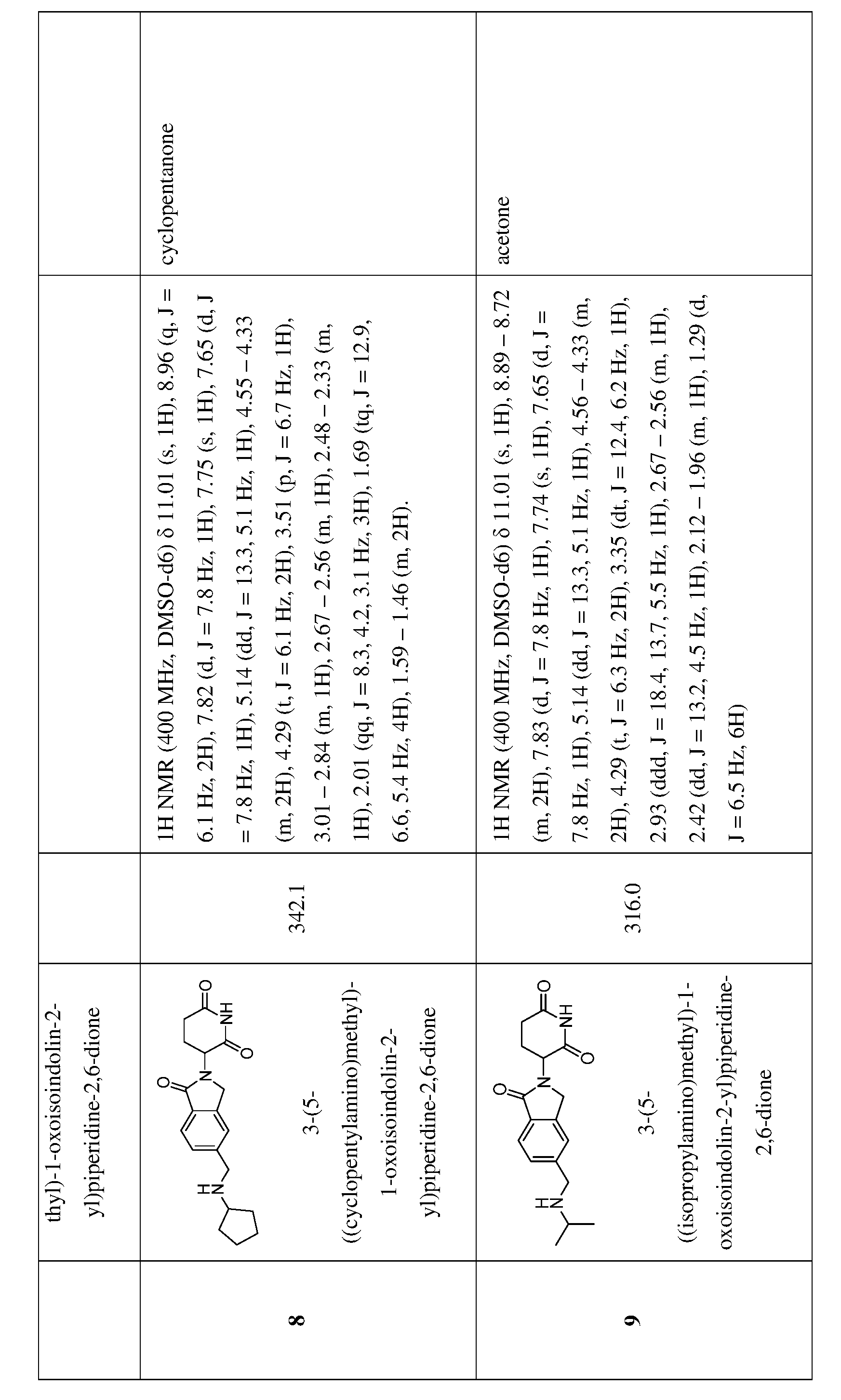


Claims


Priority Applications (6)
| Application Number | Priority Date | Filing Date | Title |
|---|---|---|---|
| EP22847510.9A EP4452414A2 (en) | 2021-12-22 | 2022-12-20 | Ikaros zinc finger family degraders and uses thereof |
| CA3239528A CA3239528A1 (en) | 2021-12-22 | 2022-12-20 | Ikaros zinc finger family degraders and uses thereof |
| AU2022419982A AU2022419982A1 (en) | 2021-12-22 | 2022-12-20 | Ikaros zinc finger family degraders and uses thereof |
| JP2024535416A JP2024546851A (en) | 2021-12-22 | 2022-12-20 | IKAROS ZINC FINGER FAMILY DEGRADANT AND USES THEREOF |
| KR1020247024309A KR20240123836A (en) | 2021-12-22 | 2022-12-20 | Icarus zinc finger family decomposers and their uses |
| CN202280085161.8A CN118488946A (en) | 2021-12-22 | 2022-12-20 | IKAROS zinc finger family degradation agent and application thereof |
Applications Claiming Priority (2)
| Application Number | Priority Date | Filing Date | Title |
|---|---|---|---|
| US202163292617P | 2021-12-22 | 2021-12-22 | |
| US63/292,617 | 2021-12-22 |
Publications (2)
| Publication Number | Publication Date |
|---|---|
| WO2023122581A2 true WO2023122581A2 (en) | 2023-06-29 |
| WO2023122581A3 WO2023122581A3 (en) | 2023-08-10 |
Family
ID=85076046
Family Applications (1)
| Application Number | Title | Priority Date | Filing Date |
|---|---|---|---|
| PCT/US2022/082011 Ceased WO2023122581A2 (en) | 2021-12-22 | 2022-12-20 | Ikaros zinc finger family degraders and uses thereof |
Country Status (10)
| Country | Link |
|---|---|
| US (1) | US20240124412A1 (en) |
| EP (1) | EP4452414A2 (en) |
| JP (1) | JP2024546851A (en) |
| KR (1) | KR20240123836A (en) |
| CN (1) | CN118488946A (en) |
| AR (1) | AR127821A1 (en) |
| AU (1) | AU2022419982A1 (en) |
| CA (1) | CA3239528A1 (en) |
| TW (2) | TW202500557A (en) |
| WO (1) | WO2023122581A2 (en) |
Cited By (1)
| Publication number | Priority date | Publication date | Assignee | Title |
|---|---|---|---|---|
| US12097261B2 (en) | 2021-05-07 | 2024-09-24 | Kymera Therapeutics, Inc. | CDK2 degraders and uses thereof |
Families Citing this family (1)
| Publication number | Priority date | Publication date | Assignee | Title |
|---|---|---|---|---|
| CN118488948A (en) * | 2021-12-22 | 2024-08-13 | 吉利德科学公司 | IKAROS zinc finger family degraders and their uses |
Citations (320)
| Publication number | Priority date | Publication date | Assignee | Title |
|---|---|---|---|---|
| US4943593A (en) | 1988-02-25 | 1990-07-24 | Merrell Dow Pharmaceuticals Inc. | Inhibitors of lysyl oxidase |
| US4965288A (en) | 1988-02-25 | 1990-10-23 | Merrell Dow Pharmaceuticals Inc. | Inhibitors of lysyl oxidase |
| US4997854A (en) | 1989-08-25 | 1991-03-05 | Trustees Of Boston University | Anti-fibrotic agents and methods for inhibiting the activity of lysyl oxidase in-situ using adjacently positioned diamine analogue substrates |
| US5021456A (en) | 1988-02-25 | 1991-06-04 | Merrell Dow Pharmaceuticals Inc. | Inhibitors of lysyl oxidase |
| US5059714A (en) | 1988-02-25 | 1991-10-22 | Merrell Dow Pharmaceuticals Inc. | Inhibitors of lysyl oxidase |
| WO1992003459A1 (en) | 1990-08-27 | 1992-03-05 | Sloan-Kettering Institute For Cancer Research | LIGAND FOR THE c-KIT RECEPTOR AND METHODS OF USE THEREOF |
| US5120764A (en) | 1988-11-01 | 1992-06-09 | Merrell Dow Pharmaceuticals Inc. | Inhibitors of lysyl oxidase |
| WO1992021766A1 (en) | 1991-05-25 | 1992-12-10 | Boehringer Mannheim Gmbh | Monoclonal antibodies against c-kit |
| US5182297A (en) | 1988-02-25 | 1993-01-26 | Merrell Dow Pharmaceuticals Inc. | Inhibitors of lysyl oxidase |
| US5252608A (en) | 1988-02-25 | 1993-10-12 | Merrell Dow Pharmaceuticals Inc. | Inhibitors of lysyl oxidase |
| WO1996011013A1 (en) | 1994-10-05 | 1996-04-18 | Immunomedics, Inc. | Cdr-grafted type iii anti-cea humanized mouse monoclonal antibodies |
| WO2001040307A1 (en) | 1999-11-30 | 2001-06-07 | Eberhard-Karls-Universität Tübingen Universitätsklinikum | Antibodies against signal regulator proteins |
| US6319494B1 (en) | 1990-12-14 | 2001-11-20 | Cell Genesys, Inc. | Chimeric chains for receptor-associated signal transduction pathways |
| WO2002092784A2 (en) | 2001-05-15 | 2002-11-21 | Emory University | POLYNUCLEOTIDES AND POLYPEPTIDES RELATING TO THE MODULATION OF SIRP α-CD47 |
| WO2003074566A2 (en) | 2002-03-01 | 2003-09-12 | Immunomedics, Inc. | Rs7 antibodies |
| WO2004080462A1 (en) | 2003-03-10 | 2004-09-23 | Eisai Co., Ltd. | c-Kit KINASE INHIBITOR |
| US20040248871A1 (en) | 2001-08-03 | 2004-12-09 | Jean Farjanel | Use of lysyl oxidase inhibitors for cell culture and tissue engineering |
| WO2005020921A2 (en) | 2003-08-29 | 2005-03-10 | Exelixis, Inc. | C-kit modulators and methods of use |
| WO2005113595A2 (en) | 2004-05-19 | 2005-12-01 | Avidex Ltd | High affinity ny-eso t cell receptor |
| WO2005113556A1 (en) | 2004-05-13 | 2005-12-01 | Icos Corporation | Quinazolinones as inhibitors of human phosphatidylinositol 3-kinase delta |
| WO2006009755A2 (en) | 2004-06-17 | 2006-01-26 | Plexxikon, Inc. | Azaindoles modulating c-kit activity and uses therefor |
| WO2006031221A1 (en) | 2004-09-13 | 2006-03-23 | Government Of The United States Of America, Represented By The Secretary, Department Of Health And Human Services | Compositions comprising t cell receptors and methods of use thereof |
| WO2006063466A1 (en) | 2004-12-17 | 2006-06-22 | Merck Frosst Canada Ltd. | 2-(phenyl or heterocyclic)-1h-phenantrho[9,10-d]imidazoles as mpges-1 inhibitors |
| US20060193865A1 (en) | 2002-12-13 | 2006-08-31 | Immunomedics, Inc. | Camptothecin-binding moiety conjugates |
| WO2006094192A2 (en) | 2005-03-03 | 2006-09-08 | Immunomedics, Inc. | Humanized l243 antibodies |
| WO2006124692A2 (en) | 2005-05-18 | 2006-11-23 | Wyeth | 3-cyanoquinoline inhibitors of tpl2 kinase and methods of making and using the same |
| WO2006124944A1 (en) | 2005-05-18 | 2006-11-23 | Wyeth | 4, 6-diamino-[1,7] naphthyridine-3-carbonitrile inhibitors of tpl2 kinase and methods of making and using the same |
| WO2007032255A1 (en) | 2005-09-13 | 2007-03-22 | Mie University | T-cell receptor and nucleic acid encoding the receptor |
| WO2007059610A1 (en) | 2005-11-23 | 2007-05-31 | Merck Frosst Canada Ltd. | 2-(phenyl or heterocyclic)-1h-phenantrho[9,10-d]imidazoles as mpges-1 inhibitors |
| WO2007078034A1 (en) | 2006-01-06 | 2007-07-12 | Amorepacific Corporation | A composition for inhibiting the c-kit portein containing benzimidazole amine derivatives or aminoquinoline derivatives |
| WO2007092403A1 (en) | 2006-02-06 | 2007-08-16 | Osi Pharmaceuticals, Inc. | N-phenylbenzotriazolyl c-kit inhibitors |
| WO2007095749A1 (en) | 2006-02-24 | 2007-08-30 | Arius Research Inc. | Cytotoxicity mediation of cells evidencing surface expression of trop-2 |
| WO2007127317A2 (en) | 2006-04-24 | 2007-11-08 | Amgen Inc. | Humanized c-kit antibody |
| WO2007124589A1 (en) | 2006-05-02 | 2007-11-08 | Merck Frosst Canada Ltd. | Methods for treating or preventing neoplasias |
| WO2007133811A2 (en) | 2006-05-15 | 2007-11-22 | Viral Logic Systems Technology Corp. | Cd47 related compositions and methods for treating immunological diseases and disorders |
| WO2007139791A2 (en) | 2006-05-22 | 2007-12-06 | The Regents Of The University Of California | Compositions and methods for the delivery of oxygen |
| WO2007137767A1 (en) | 2006-05-30 | 2007-12-06 | Manuli Rubber Industries S.P.A. | Hose fitting for hydraulic, industrial and air-conditioning applications, having improved tightness characteristics |
| WO2008005877A2 (en) | 2006-06-30 | 2008-01-10 | Board Of Regents, The University Of Texas System | Inhibitors of c-kit and uses thereof |
| WO2008071173A1 (en) | 2006-12-12 | 2008-06-19 | Eberhard Karls Universität Tübingen | Preparations for inhibiting prostaglandin e2 synthesis |
| US20080234251A1 (en) | 2005-08-19 | 2008-09-25 | Array Biopharma Inc. | 8-Substituted Benzoazepines as Toll-Like Receptor Modulators |
| US20080306050A1 (en) | 2005-08-19 | 2008-12-11 | Array Biopharma Inc. | Aminodiazepines as Toll-Like Receptor Modulators |
| WO2009017833A2 (en) | 2007-08-02 | 2009-02-05 | Arresto Biosciences | Methods and compositions for treatment and diagnosis of fibrosis, tumor invasion, angiogenesis, and metastasis |
| US20090047249A1 (en) | 2007-06-29 | 2009-02-19 | Micheal Graupe | Modulators of toll-like receptor 7 |
| WO2009046541A1 (en) | 2007-10-11 | 2009-04-16 | University Health Network | MODULATION OF SIRPα - CD47 INTERACTION FOR INCREASING HUMAN HEMATOPOIETIC STEM CELL ENGRAFTMENT AND COMPOUNDS THEREFOR |
| WO2009064250A1 (en) | 2007-11-15 | 2009-05-22 | Astrazeneca Ab | Bis-(sulfonylamino) derivatives in therapy 065 |
| WO2009064251A1 (en) | 2007-11-15 | 2009-05-22 | Astrazeneca Ab | Bis-(sulfonylamino) derivatives in therapy 066 |
| US20090142345A1 (en) | 2005-03-15 | 2009-06-04 | Takeda Pharmaceutical Company Limited | Prophylactic/therapeutic agent for cancer |
| WO2009082347A1 (en) | 2007-12-20 | 2009-07-02 | Astrazeneca Ab | Bis- (sulf onylamino) derivatives for use in therapy |
| WO2009103778A1 (en) | 2008-02-19 | 2009-08-27 | Novasaid Ab | Compounds and methods |
| WO2009117985A1 (en) | 2008-06-12 | 2009-10-01 | Medeon Pharmaceuticals Gmbh | Pirinixic acid derivatives as prostglandin e2 synthesis inhibitors for treating inflammatory diseases |
| WO2009117987A2 (en) | 2008-03-26 | 2009-10-01 | Universität Tübingen | Use of boswellia acids and synthetic boswellia acid derivatives for inhibiting microsomal prostanglandin e2 synthase and cathepsin g |
| WO2009130242A1 (en) | 2008-04-23 | 2009-10-29 | Novasaid Ab | Low molecular weight derivatives and use thereof in treatment of prostaglandin e synthase related diseases |
| WO2009138376A1 (en) | 2008-05-14 | 2009-11-19 | Aziende Chimiche Riunite Angelini Francesco A.C.R.A.F. S.P.A. | 3-aminocarbazole compound, pharmaceutical composition containing it and preparation method therefor |
| WO2009146696A1 (en) | 2008-06-07 | 2009-12-10 | Universität Tübingen | Use of indole-3-carboxylic esters for inhibiting microsomal prostaglandin e2 synthase |
| US20100029585A1 (en) | 2008-08-01 | 2010-02-04 | Howbert J Jeffry | Toll-like receptor agonist formulations and their use |
| WO2010034799A1 (en) | 2008-09-25 | 2010-04-01 | Boehringer Ingelheim International Gmbh | 3h-imidaz0 [4, 5-b] pyridine- 6 -carboxamides as anti -inflammatory agents |
| US20100143301A1 (en) | 2008-12-09 | 2010-06-10 | Gilead Sciences, Inc. | Modulators of toll-like receptors |
| US7741465B1 (en) | 1992-03-18 | 2010-06-22 | Zelig Eshhar | Chimeric receptor genes and cells transformed therewith |
| WO2010070047A1 (en) | 2008-12-19 | 2010-06-24 | Novartis Ag | Soluble polypeptides for use in treating autoimmune and inflammatory disorders |
| WO2010083253A2 (en) | 2009-01-14 | 2010-07-22 | Viral Logic Systems Technology Corp. | Cd47 related compositions and methods for treating immunological diseases and disorders |
| WO2010093395A1 (en) | 2009-02-13 | 2010-08-19 | Immunomedics, Inc. | Immunoconjugates with an intracellularly-cleavable linkage |
| WO2010100249A1 (en) | 2009-03-05 | 2010-09-10 | Boehringer Ingelheim International Gmbh | 3h-imidazo [4, 5 -c] pyridine- 6 -carboxamides as anti- inflammatory agents |
| WO2010106431A2 (en) | 2009-03-20 | 2010-09-23 | Ludwig Institute For Cancer Research Ltd | High affinity t-cell receptor-like ny-eso-1 peptide antibodies, methods, and uses thereof |
| WO2011008709A1 (en) | 2009-07-13 | 2011-01-20 | Gilead Sciences, Inc. | Apoptosis signal-regulating kinase inhibitors |
| WO2011023812A1 (en) | 2009-08-27 | 2011-03-03 | Novasaid Ab | Microsomal prostaglandin e synthase-1 (mpges1) inhibitors |
| US20110092485A1 (en) | 2009-08-18 | 2011-04-21 | Ventirx Pharmaceuticals, Inc. | Substituted benzoazepines as toll-like receptor modulators |
| WO2011048004A1 (en) | 2009-10-23 | 2011-04-28 | Boehringer Ingelheim International Gmbh | Inhibitors of the microsomal prostaglandin e2 synthase-1 |
| US20110098248A1 (en) | 2009-10-22 | 2011-04-28 | Gilead Sciences, Inc. | Modulators of toll-like receptors |
| US20110118235A1 (en) | 2009-08-18 | 2011-05-19 | Ventirx Pharmaceuticals, Inc. | Substituted benzoazepines as toll-like receptor modulators |
| WO2011062634A2 (en) | 2009-11-18 | 2011-05-26 | Mannkind Corporation | Monoclonal antibodies and diagnostic uses thereof |
| WO2011068845A1 (en) | 2009-12-02 | 2011-06-09 | Immunomedics, Inc. | Combining radioimmunotherapy and antibody-drug conjugates for improved cancer therapy |
| WO2011076781A1 (en) | 2009-12-22 | 2011-06-30 | Novartis Ag | Tetravalent cd47-antibody constant region fusion protein for use in therapy |
| WO2011097513A1 (en) | 2010-02-04 | 2011-08-11 | Gilead Biologics, Inc | Antibodies that bind to lysyl oxidase-like 2 (loxl2) and methods of use therefor |
| WO2011143624A2 (en) | 2010-05-14 | 2011-11-17 | The Board Of Trustees Of The Leland Stanford Junior University | Humanized and chimeric monoclonal antibodies to cd47 |
| US20110287011A1 (en) | 2008-08-12 | 2011-11-24 | Oncomed Pharmaceuticals, Inc. | DDR1-Binding Agents and Methods of Use Thereof |
| WO2012022793A1 (en) | 2010-08-20 | 2012-02-23 | Boehringer Ingelheim International Gmbh | New compounds |
| WO2012022792A1 (en) | 2010-08-20 | 2012-02-23 | Boehringer Ingelheim International Gmbh | 2-(arylamino)-3h-imidazo[4,5-b]pyridine-6-carboxamide derivatives and their use as mpges-1 inhibitors |
| WO2012027721A2 (en) | 2010-08-27 | 2012-03-01 | Gilead Biologics, Inc | Antibodies to matrix metalloproteinase 9 |
| US20120082658A1 (en) | 2010-10-01 | 2012-04-05 | Ventirx Pharmaceuticals, Inc. | Methods for the Treatment of Allergic Diseases |
| WO2012054825A1 (en) | 2010-10-22 | 2012-04-26 | The United States Of America, As Represented By The Secretary, Department Of Health And Human Services | Anti-mage-a3 t cell receptors and related materials and methods of use |
| US8198412B2 (en) | 2003-09-04 | 2012-06-12 | Riken | Antibodies that recognize cutting edge within the TGF-β activation controlling region |
| WO2012079000A1 (en) | 2010-12-09 | 2012-06-14 | The Trustees Of The University Of Pennsylvania | Use of chimeric antigen receptor-modified t cells to treat cancer |
| WO2012076673A1 (en) | 2010-12-10 | 2012-06-14 | Boehringer Ingelheim International Gmbh | 6-amino-2-phenylamino-1h-benzimidazole-5-carboxamide- derivatives and their use as microsomal prostaglandin e2 synthase-1 inhibitors |
| WO2012076672A1 (en) | 2010-12-10 | 2012-06-14 | Boehringer Ingelheim International Gmbh | 2 -aminobenz imidazole derivatives useful in the treatment of inflammation |
| WO2012082647A2 (en) | 2010-12-13 | 2012-06-21 | The Regents Of The University Of California | PYRAZOLE INHIBITORS OF COX-2 AND sEH |
| WO2012087771A1 (en) | 2010-12-21 | 2012-06-28 | Eli Lilly And Company | Novel imidazole-2-benzamide compounds useful for the treatment of osteoarthritis |
| WO2012110860A1 (en) | 2011-02-17 | 2012-08-23 | Glenmark Pharmaceuticals S.A. | TRICYCLIC COMPOUNDS AS mPGES-1 INHIBITORS |
| US20120219615A1 (en) | 2010-10-01 | 2012-08-30 | The Trustees Of The University Of Pennsylvania | Therapeutic Use of a TLR Agonist and Combination Therapy |
| WO2012154480A1 (en) | 2011-05-12 | 2012-11-15 | ImClone, LLC | c-KIT ANTIBODIES AND USES THEREOF |
| WO2012161965A1 (en) | 2011-05-26 | 2012-11-29 | Eli Lilly And Company | Novel imidazole derivatives useful for the treatment of arthritis |
| WO2012170250A1 (en) | 2011-06-07 | 2012-12-13 | Radiation Control Technologies, Inc. | Morpholino oligonucleotides capable of inhibiting cd47-mediated cellular damage and uses thereof |
| US20130039861A1 (en) | 2005-04-06 | 2013-02-14 | Immunomedics, Inc. | Dye Conjugated Peptides for Fluorescent Imaging |
| WO2013024898A1 (en) | 2011-08-18 | 2013-02-21 | 日本新薬株式会社 | Heterocyclic derivative and pharmaceutical drug |
| WO2013027802A1 (en) | 2011-08-23 | 2013-02-28 | 中外製薬株式会社 | Novel anti-ddr1 antibody having anti-tumor activity |
| WO2013034933A1 (en) | 2011-09-08 | 2013-03-14 | Imperial Innovations Limited | Anti ddr1 antibodies, their uses and methods identifying them |
| WO2013039889A1 (en) | 2011-09-15 | 2013-03-21 | The United States Of America, As Represented By The Secretary, Department Of Health And Human Services | T cell receptors recognizing hla-a1- or hla-cw7-restricted mage |
| WO2013041865A1 (en) | 2011-09-22 | 2013-03-28 | Immunocore Limited | T cell receptors |
| WO2013052699A2 (en) | 2011-10-04 | 2013-04-11 | Gilead Calistoga Llc | Novel quinoxaline inhibitors of pi3k |
| WO2013056352A1 (en) | 2011-10-19 | 2013-04-25 | University Health Network | Antibodies and antibody fragments targeting sirp-alpha and their use in treating hematologic cancers |
| US8435529B2 (en) | 2002-06-14 | 2013-05-07 | Immunomedics, Inc. | Combining radioimmunotherapy and antibody-drug conjugates for improved cancer therapy |
| US8435539B2 (en) | 2004-02-13 | 2013-05-07 | Immunomedics, Inc. | Delivery system for cytotoxic drugs by bispecific antibody pretargeting |
| WO2013068946A2 (en) | 2011-11-11 | 2013-05-16 | Rinat Neuroscience Corp. | Antibodies specific for trop-2 and their uses |
| WO2013072825A1 (en) | 2011-11-16 | 2013-05-23 | Glenmark Pharmaceuticals S.A. | Phtalazinone derivatives as mpegs -1 inhibitors |
| US8450321B2 (en) | 2008-12-08 | 2013-05-28 | Gilead Connecticut, Inc. | 6-(1H-indazol-6-yl)-N-[4-(morpholin-4-yl)phenyl]imidazo-[1,2-A]pyrazin-8-amine, or a pharmaceutically acceptable salt thereof, as a SYK inhibitor |
| WO2013077458A1 (en) | 2011-11-22 | 2013-05-30 | 株式会社リブテック | Anti-human trop-2 antibody exhibiting antitumor activity in vivo |
| WO2013109752A1 (en) | 2012-01-17 | 2013-07-25 | The Board Of Trustees Of The Leland Stanford Junior University | High affinity sirp-alpha reagents |
| WO2013112741A1 (en) | 2012-01-27 | 2013-08-01 | Gilead Sciences, Inc. | Apoptosis signal-regulating kinase inhibitor |
| WO2013116562A1 (en) | 2012-02-03 | 2013-08-08 | Gilead Calistoga Llc | Compositions and methods of treating a disease with (s)-4 amino-6-((1-(5-chloro-4-oxo-3-phenyl-3,4-dihydroquinazolin-2-yl)ethyl)amino)pyrimidine-5-carbonitrile |
| WO2013118071A1 (en) | 2012-02-09 | 2013-08-15 | Glenmark Pharmaceuticals S.A. | BICYCLIC COMPOUNDS AS mPGES-1 INHIBITORS |
| WO2013119714A1 (en) | 2012-02-06 | 2013-08-15 | Inhibrx Llc | Cd47 antibodies and methods of use thereof |
| US20130251673A1 (en) | 2011-12-21 | 2013-09-26 | Novira Therapeutics, Inc. | Hepatitis b antiviral agents |
| WO2013153535A1 (en) | 2012-04-13 | 2013-10-17 | Glenmark Pharmaceuticals S.A. | TRICYCLIC COMPOUNDS AS mPGES-1 INHIBITORS |
| WO2013186692A1 (en) | 2012-06-15 | 2013-12-19 | Glenmark Pharmaceuticals S.A. | TRIAZOLONE COMPOUNDS AS mPGES-1 INHIBITORS |
| US20140045849A1 (en) | 2011-04-08 | 2014-02-13 | David McGowan | Pyrimidine derivatives for the treatment of viral infections |
| WO2014023813A1 (en) | 2012-08-10 | 2014-02-13 | Janssen R&D Ireland | Alkylpyrimidine derivatives for the treatment of viral infections and further diseases |
| US20140066432A1 (en) | 2011-01-12 | 2014-03-06 | James Jeffry Howbert | Substituted Benzoazepines As Toll-Like Receptor Modulators |
| WO2014039714A2 (en) | 2012-09-06 | 2014-03-13 | Plexxikon Inc. | Compounds and methods for kinase modulation, and indications therefor |
| US20140073642A1 (en) | 2011-05-18 | 2014-03-13 | Janssen R&D Ireland | Quinazoline derivatives for the treatment of viral infections and further diseases |
| US20140088085A1 (en) | 2011-01-12 | 2014-03-27 | Array Biopharma, Inc | Substituted Benzoazepines As Toll-Like Receptor Modulators |
| WO2014047624A1 (en) | 2012-09-24 | 2014-03-27 | Gilead Sciences, Inc. | Anti-ddr1 antibodies |
| WO2014056953A1 (en) | 2012-10-10 | 2014-04-17 | Janssen R&D Ireland | Pyrrolo[3,2-d]pyrimidine derivatives for the treatment of viral infections and other diseases |
| WO2014064215A1 (en) | 2012-10-24 | 2014-05-01 | INSERM (Institut National de la Santé et de la Recherche Médicale) | TPL2 KINASE INHIBITORS FOR PREVENTING OR TREATING DIABETES AND FOR PROMOTING β-CELL SURVIVAL |
| WO2014076221A1 (en) | 2012-11-16 | 2014-05-22 | Janssen R&D Ireland | Heterocyclic substituted 2-amino-quinazoline derivatives for the treatment of viral infections |
| WO2014087248A2 (en) | 2012-12-03 | 2014-06-12 | Novimmune S.A. | Anti-cd47 antibodies and methods of use thereof |
| WO2014100620A2 (en) | 2012-12-21 | 2014-06-26 | Plexxikon Inc. | Compounds and methods for kinase modulation, and indications therefor |
| WO2014100765A1 (en) | 2012-12-21 | 2014-06-26 | Gilead Calistoga Llc | Substituted pyrimidine aminoalkyl-quinazolones as phosphatidylinositol 3-kinase inhibitors |
| WO2014100767A1 (en) | 2012-12-21 | 2014-06-26 | Gilead Calistoga Llc | Isoquinolinone or quinazolinone phosphatidylinositol 3-kinase inhibitors |
| WO2014107171A1 (en) | 2013-01-07 | 2014-07-10 | Omniox, Inc. | Polymeric forms of h-nox proteins |
| WO2014118236A2 (en) | 2013-01-29 | 2014-08-07 | Max-Delbrück-Centrum Für Moledulare Medizin (Mdc) Berlin-Buch | High avidity antigen recognizing constructs |
| WO2014128189A1 (en) | 2013-02-21 | 2014-08-28 | Janssen R&D Ireland | 2-aminopyrimidine derivatives for the treatment of viral infections |
| US20140275167A1 (en) | 2013-03-12 | 2014-09-18 | Novira Therapeutics, Inc. | Hepatitis b antiviral agents |
| WO2014163684A1 (en) | 2013-04-03 | 2014-10-09 | Ibc Pharmaceuticals, Inc. | Combination therapy for inducing immune response to disease |
| WO2014167444A1 (en) | 2013-04-08 | 2014-10-16 | Glenmark Pharmaceuticals S.A. | SUBSTITUTED BICYCLIC COMPOUNDS AS mPGES-1 INHIBITORS |
| US20140350031A1 (en) | 2012-02-08 | 2014-11-27 | Janssen R&D Ireland | Piperidino-pyrimidine derivatives for the treatment of viral infections |
| WO2014201409A1 (en) | 2013-06-14 | 2014-12-18 | Gilead Sciences, Inc. | Phosphatidylinositol 3-kinase inhibitors |
| WO2015011450A1 (en) | 2013-07-26 | 2015-01-29 | Adaptimmune Limited | T cell receptors |
| WO2015059618A1 (en) | 2013-10-22 | 2015-04-30 | Glenmark Pharmaceuticals S.A. | SUBSTITUTED PYRIMIDINE COMPOUNDS AS mPGES-1 INHIBITORS |
| US20150175616A1 (en) | 2013-12-23 | 2015-06-25 | Gilead Sciences, Inc. | Syk inhibitors |
| WO2015098099A1 (en) | 2013-12-25 | 2015-07-02 | 第一三共株式会社 | Anti-trop2 antibody-drug conjugate |
| US9089520B2 (en) | 2010-05-21 | 2015-07-28 | Baylor College Of Medicine | Methods for inducing selective apoptosis |
| WO2015134536A1 (en) | 2014-03-04 | 2015-09-11 | Plexxikon Inc. | Compounds and methods for kinase modulation, and indications therefor |
| WO2015138600A2 (en) | 2014-03-11 | 2015-09-17 | The Board Of Trustees Of The Leland Stanford Junior University | Anti sirp-alpha antibodies and bi-specific macrophage enhancing antibodies |
| WO2015148954A1 (en) | 2014-03-27 | 2015-10-01 | Eicosis, Llc | Potent soluble epoxide hydrolase inhibitors |
| WO2015157386A1 (en) | 2014-04-10 | 2015-10-15 | Seattle Children's Hospital (dba Seattle Children's Research Institute) | Production of engineered t-cells by sleeping beauty transposon coupled with methotrexate selection |
| WO2015158204A1 (en) | 2014-04-14 | 2015-10-22 | 上海恒瑞医药有限公司 | Amide derivatives and pharmaceutically acceptable salts thereof, preparation method therefor and medicinal application thereof |
| WO2015191861A1 (en) | 2012-12-12 | 2015-12-17 | Vasculox Inc. | Therapeutic cd47 antibodies |
| WO2016023040A1 (en) | 2014-08-08 | 2016-02-11 | Alexo Therapeutics International | Sirp-alpha variant constructs and uses thereof |
| WO2016022971A1 (en) | 2014-08-08 | 2016-02-11 | The Board Of Trustees Of The Leland Stanford Junior University | Sirp alpha-antibody fusion proteins |
| WO2016024021A1 (en) | 2014-08-15 | 2016-02-18 | Merck Patent Gmbh | Sirp-alpha immunoglobulin fusion proteins |
| WO2016033570A1 (en) | 2014-08-28 | 2016-03-03 | Juno Therapeutics, Inc. | Antibodies and chimeric antigen receptors specific for cd19 |
| WO2016033486A1 (en) | 2014-08-29 | 2016-03-03 | Amgen Inc. | Tetrahydronaphthalene derivatives that inhibit mcl-1 protein |
| WO2016049641A1 (en) | 2014-09-28 | 2016-03-31 | The Regents Of The University Of California | Modulation of stimulatory and non-stimulatory myeloid cells |
| WO2016055785A1 (en) | 2014-10-08 | 2016-04-14 | Adaptimmune Limited | T cell receptors |
| WO2016069374A1 (en) | 2014-10-29 | 2016-05-06 | Eli Lilly And Company | Novel carboxylic acid compounds useful for inhibiting microsomal prostaglandin e2 synthase-1 |
| WO2016069376A1 (en) | 2014-10-29 | 2016-05-06 | Eli Lilly And Company | Novel methyl-piperidine compounds useful for inhibiting microsomal prostaglandin e2 synthase-1 |
| WO2016081423A1 (en) | 2014-11-18 | 2016-05-26 | Janssen Pharmaceutica Nv | Cd47 antibodies, methods, and uses |
| WO2016090300A1 (en) | 2014-12-05 | 2016-06-09 | Genentech, Inc. | Methods and compositions for treating cancer using pd-1 axis antagonists and hpk1 antagonists |
| WO2016100236A2 (en) | 2014-12-15 | 2016-06-23 | Bellicum Pharmaceuticals, Inc. | Methods for controlled elimination of therapeutic cells |
| WO2016109415A1 (en) | 2014-12-30 | 2016-07-07 | Celgene Corporation | Anti-cd47 antibodies and uses thereof |
| WO2016141328A2 (en) | 2015-03-04 | 2016-09-09 | Sorrento Therapeutics, Inc. | Antibody therapeutics that bind cd47 |
| WO2016142783A2 (en) | 2015-03-10 | 2016-09-15 | Leiden University Medical Center | T-cell receptors directed against the preferentially expressed antigen of melanoma and uses thereof |
| WO2016149562A2 (en) | 2015-03-17 | 2016-09-22 | Omniox, Inc. | Modulation of tumor immunity by protein-mediated 02 delivery |
| US20160296633A1 (en) | 2013-07-23 | 2016-10-13 | Immunomedics, Inc. | Combining anti-hla-dr or anti-trop-2 antibodies with microtubule inhibitors, parp inhibitors, bruton kinase inhibitors or phosphoinositide 3-kinase inhibitors significantly improves therapeutic outcome in cancer |
| WO2016179399A1 (en) | 2015-05-06 | 2016-11-10 | The Board Of Trustees Of The Leland Stanford Junior University | High affinity cd47 analogs |
| WO2016179517A1 (en) | 2015-05-07 | 2016-11-10 | Agenus Inc. | Anti-ox40 antibodies and methods of use thereof |
| WO2016177339A1 (en) | 2015-05-06 | 2016-11-10 | 广州市香雪制药股份有限公司 | T cell receptor for recognizing ny-eso-1 antigen short-chain polypeptide |
| US9492566B2 (en) | 2012-12-13 | 2016-11-15 | Immunomedics, Inc. | Antibody-drug conjugates and uses thereof |
| WO2016191246A2 (en) | 2015-05-22 | 2016-12-01 | Memorial Sloan-Kettering Cancer Center | T cell receptor-like antibodies specific for a prame peptide |
| WO2016188449A1 (en) | 2015-05-27 | 2016-12-01 | 江苏春申堂药业有限公司 | Single-domain antibody targeting cd47 |
| WO2016196388A1 (en) | 2015-05-29 | 2016-12-08 | Juno Therapeutics, Inc. | Composition and methods for regulating inhibitory interactions in genetically engineered cells |
| US9518112B2 (en) | 2012-03-08 | 2016-12-13 | Ludwig Institute For Cancer Research Ltd | TGF-β1 specific antibodies and methods and uses thereof |
| WO2016205042A1 (en) | 2015-06-16 | 2016-12-22 | The Board Of Trustees Of The Leland Stanford Junior University | SIRPα AGONIST ANTIBODY |
| WO2016205942A1 (en) | 2015-06-25 | 2016-12-29 | University Health Network | Hpk1 inhibitors and methods of using same |
| WO2016210365A2 (en) | 2015-06-24 | 2016-12-29 | Eureka Therapeutics, Inc. | Constructs targeting ny-eso-1 peptide/mhc complexes and uses thereof |
| WO2017002776A1 (en) | 2015-06-29 | 2017-01-05 | 第一三共株式会社 | Method for selectively manufacturing antibody-drug conjugate |
| US20170021017A1 (en) | 2012-08-14 | 2017-01-26 | Ibc Pharmaceuticals, Inc. | Combination therapy for inducing immune response to disease |
| WO2017027422A1 (en) | 2015-08-07 | 2017-02-16 | Alexo Therapeutics Inc. | Constructs having a sirp-alpha domain or variant thereof |
| WO2017044661A1 (en) | 2015-09-09 | 2017-03-16 | Immune Design Corp. | Ny-eso-1 specific tcrs and methods of use thereof |
| WO2017049251A2 (en) | 2015-09-18 | 2017-03-23 | Tioma Therapeutics, Inc. | Therapeutic cd47 antibodies |
| WO2017049166A1 (en) | 2015-09-17 | 2017-03-23 | Novartis Ag | Car t cell therapies with enhanced efficacy |
| WO2017053423A1 (en) | 2015-09-21 | 2017-03-30 | Erasmus University Medical Center | Anti-cd47 antibodies and methods of use |
| WO2017076308A1 (en) | 2015-11-04 | 2017-05-11 | 广州市香雪制药股份有限公司 | Tcr for identifying ny-eso-1 antigen oligopeptide |
| WO2017096281A1 (en) | 2015-12-02 | 2017-06-08 | Agenus Inc. | Anti-ox40 antibodies and methods of use thereof |
| WO2017096179A1 (en) | 2015-12-02 | 2017-06-08 | Agenus Inc. | Antibodies and methods of use thereof |
| WO2017096189A1 (en) | 2015-12-02 | 2017-06-08 | Agenus Inc. | Anti-gitr antibodies and methods of use thereof |
| WO2017096276A1 (en) | 2015-12-02 | 2017-06-08 | Agenus Inc. | Anti-gitr antibodies and methods of use thereof |
| WO2017096182A1 (en) | 2015-12-03 | 2017-06-08 | Agenus Inc. | Anti-ox40 antibodies and methods of use thereof |
| WO2017109496A1 (en) | 2015-12-22 | 2017-06-29 | Immunocore Limited | T cell receptors specific for the ny-eso-1 tumor antigen-hla-a*02 complex |
| WO2017121771A1 (en) | 2016-01-11 | 2017-07-20 | Blink Biomedical Sas | Humanized, mouse or chimeric anti-cd47 monoclonal antibodies |
| US20170209594A1 (en) | 2015-06-25 | 2017-07-27 | Immunomedics, Inc. | Synergistic effect of anti-trop-2 antibody-drug conjugate in combination therapy for triple-negative breast cancer when used with microtubule inhibitors or parp inhibitors |
| WO2017147410A1 (en) | 2016-02-25 | 2017-08-31 | Amgen Inc. | Compounds that inhibit mcl-1 protein |
| WO2017160861A1 (en) | 2016-03-15 | 2017-09-21 | The Regents Of The University Of California | Inhibitors for soluble epoxide hydrolase (seh) and fatty acid amide hydrolase (faah) |
| WO2017167182A1 (en) | 2016-04-01 | 2017-10-05 | 合肥中科普瑞昇生物医药科技有限公司 | Selective c-kit kinase inhibitor |
| WO2017174824A1 (en) | 2016-04-08 | 2017-10-12 | Adaptimmune Limited | T cell receptors |
| WO2017174822A1 (en) | 2016-04-08 | 2017-10-12 | Adaptimmune Limited | T cell receptors |
| WO2017174823A1 (en) | 2016-04-08 | 2017-10-12 | Adaptimmune Limited | T cell receptors |
| WO2017175006A1 (en) | 2016-04-08 | 2017-10-12 | Immunocore Limited | T cell receptors |
| WO2017178653A2 (en) | 2016-04-14 | 2017-10-19 | Ose Immunotherapeutics | NEW ANTI-SIRPa ANTIBODIES AND THEIR THERAPEUTIC APPLICATIONS |
| WO2017189254A1 (en) | 2016-04-26 | 2017-11-02 | The United States Of America, As Represented By The Secretary, Department Of Health And Human Services | Anti-kk-lc-1 t cell receptors |
| WO2017194634A1 (en) | 2016-05-10 | 2017-11-16 | Universite Pierre Et Marie Curie (Paris 6) | Agonist agents of cd47 inducing programmed cell death and their use in the treatments of diseases associated with defects in programmed cell death |
| WO2017196793A1 (en) | 2016-05-09 | 2017-11-16 | Celgene Corporation | Cd47 antibodies and methods of use thereof |
| WO2017211303A1 (en) | 2016-06-07 | 2017-12-14 | Jacobio Pharmaceuticals Co., Ltd. | Novel heterocyclic derivatives useful as shp2 inhibitors |
| WO2017215585A1 (en) | 2016-06-17 | 2017-12-21 | 长春金赛药业股份有限公司 | Anti-cd47 monoclonal antibody and application thereof |
| WO2018005435A1 (en) | 2016-06-30 | 2018-01-04 | Gilead Sciences, Inc. | 4,6-diaminoquinazolines as cot modulators and methods of use thereof |
| WO2018026600A1 (en) | 2016-08-03 | 2018-02-08 | The Board Of Trustees Of The Leland Stanford Junior University | Disrupting fc receptor engagement on macrophages enhances efficacy of anti-sirpalpha antibody therapy |
| WO2018036428A1 (en) | 2016-08-22 | 2018-03-01 | 广东纳路纳米科技有限公司 | Metal nanowire-oxidation-resistant material combined transparent conductive film and preparation therefor |
| WO2018049191A1 (en) | 2016-09-09 | 2018-03-15 | Incyte Corporation | Pyrazolopyridone derivatives as hpk1 modulators and uses thereof for the treatment of cancer |
| WO2018049152A1 (en) | 2016-09-09 | 2018-03-15 | Incyte Corporation | Pyrazolopyrimidine derivatives as hpk1 modulators and uses thereof for the treatment of cancer |
| WO2018049214A1 (en) | 2016-09-09 | 2018-03-15 | Incyte Corporation | Pyrazolopyridine derivatives as hpk1 modulators and uses thereof for the treatment of cancer |
| WO2018049200A1 (en) | 2016-09-09 | 2018-03-15 | Incyte Corporation | Pyrazolopyridine derivatives as hpk1 modulators and uses thereof for the treatment of cancer |
| WO2018057669A1 (en) | 2016-09-21 | 2018-03-29 | Alexo Therapeutics Inc. | Antibodies against signal-regulatory protein alpha and methods of use |
| US20180110772A1 (en) | 2012-12-13 | 2018-04-26 | Immunomedics, Inc. | Therapy for metastatic urothelial cancer with the antibody-drug conjugate, sacituzumab govitecan (immu-132) |
| WO2018075857A1 (en) | 2016-10-20 | 2018-04-26 | I-Mab | Novel cd47 monoclonal antibodies and uses thereof |
| WO2018075960A1 (en) | 2016-10-21 | 2018-04-26 | Tioma Therapeutics, Inc. | Therapeutic cd47 antibodies |
| WO2018089508A2 (en) | 2016-11-08 | 2018-05-17 | Ablexis, Llc | Anti-cd47 antibodies |
| WO2018089628A1 (en) | 2016-11-09 | 2018-05-17 | Agenus Inc. | Anti-ox40 antibodies, anti-gitr antibodies, and methods of use thereof |
| WO2018097951A1 (en) | 2016-11-22 | 2018-05-31 | The United States Of America, As Represented By The Secretary, Department Of Health And Human Services | Anti-mage-a3/a6 antibodies |
| WO2018095428A1 (en) | 2016-11-28 | 2018-05-31 | 江苏恒瑞医药股份有限公司 | Cd47 antibody, antigen-binding fragment and medical use thereof |
| WO2018102366A1 (en) | 2016-11-30 | 2018-06-07 | Ariad Pharmaceuticals, Inc. | Anilinopyrimidines as haematopoietic progenitor kinase 1 (hpk1) inhibitors |
| WO2018107058A1 (en) | 2016-12-09 | 2018-06-14 | Alector Llc | Anti-sirp-alpha antibodies and methods of use thereof |
| US10000572B2 (en) | 2013-08-01 | 2018-06-19 | Université Catholique de Louvain | Method for inhibiting the immune suppressive function of human T regulatory cells by administering an anti-GARP monoclonal antibody |
| WO2018112136A1 (en) | 2016-12-15 | 2018-06-21 | Ariad Pharmaceuticals, Inc. | Aminothiazole compounds as c-kit inhibitors |
| WO2018112140A1 (en) | 2016-12-15 | 2018-06-21 | Ariad Pharmaceuticals, Inc. | Benzimidazole compounds as c-kit inhibitors |
| WO2018119448A1 (en) | 2016-12-23 | 2018-06-28 | Arvinas, Inc. | Compounds and methods for the targeted degradation of rapidly accelerated fibrosarcoma polypeptides |
| US20180185351A1 (en) | 2012-12-13 | 2018-07-05 | Immunomedics, Inc. | Therapy of small-cell lung cancer (sclc) with a topoisomerase-i inhibiting antibody-drug conjugate (adc) targeting trop-2 |
| US10017567B2 (en) | 2015-01-14 | 2018-07-10 | The Brigham And Women's Hospital, Inc. | Treatment of cancer with anti-LAP monoclonal antibodies |
| WO2018129329A1 (en) | 2017-01-06 | 2018-07-12 | Scholar Rock, Inc. | ISOFORM-SPECIFIC, CONTEXT-PERMISSIVE TGFβ1 INHIBITORS AND USE THEREOF |
| WO2018132739A2 (en) | 2017-01-13 | 2018-07-19 | Agenus Inc. | T cell receptors that bind to ny-eso-1 and methods of use thereof |
| WO2018137705A1 (en) | 2017-01-26 | 2018-08-02 | Zai Lab (Shanghai) Co., Ltd. | Cd47 antigen binding unit and uses thereof |
| WO2018144649A1 (en) | 2017-01-31 | 2018-08-09 | Arvinas, Inc. | Cereblon ligands and bifunctional compounds comprising the same |
| WO2018167147A1 (en) | 2017-03-15 | 2018-09-20 | F. Hoffmann-La Roche Ag | Azaindoles as inhibitors of hpk1 |
| WO2018170338A2 (en) | 2017-03-15 | 2018-09-20 | Fred Hutchinson Cancer Research Center | High affinity mage-a1-specific tcrs and uses thereof |
| US20180271992A1 (en) | 2017-03-27 | 2018-09-27 | Immunomedics, Inc. | Treatment of high trop-2 expressing triple negative breast cancer (tnbc) with sacituzumab govitecan (immu-132) overcomes homologous recombination repair (hrr) rescue mediated by rad51 |
| WO2018172984A1 (en) | 2017-03-23 | 2018-09-27 | Jacobio Pharmaceuticals Co., Ltd. | Novel heterocyclic derivatives useful as shp2 inhibitors |
| WO2018172533A2 (en) | 2017-03-23 | 2018-09-27 | Immatics Biotechnologies Gmbh | T cell receptors and immune therapy using the same against prame positive cancers |
| WO2018183956A1 (en) | 2017-03-30 | 2018-10-04 | Genentech, Inc. | Naphthyridines as inhibitors of hpk1 |
| WO2018183964A1 (en) | 2017-03-30 | 2018-10-04 | Genentech, Inc. | Isoquinolines as inhibitors of hpk1 |
| WO2018183418A1 (en) | 2017-03-30 | 2018-10-04 | Amgen Inc. | Compounds that inhibit mcl-1 protein |
| WO2018190719A2 (en) | 2017-04-13 | 2018-10-18 | Aduro Biotech Holdings, Europe B.V. | Anti-sirp alpha antibodies |
| WO2018195321A1 (en) | 2017-04-20 | 2018-10-25 | Gilead Sciences, Inc. | Pd-1/pd-l1 inhibitors |
| WO2018210793A2 (en) | 2017-05-16 | 2018-11-22 | Synthon Biopharmaceuticals B.V. | ANTI-SIRPα ANTIBODIES |
| WO2018217227A1 (en) | 2017-05-24 | 2018-11-29 | Immunomedics, Inc. | Novel anti-pd-1 checkpoint inhibitor antibodies that block binding of pd-l1 to pd-1 |
| WO2018225732A1 (en) | 2017-06-05 | 2018-12-13 | 国立大学法人三重大学 | Antigen-binding protein recognizing mage-a4-derived peptide |
| WO2018226542A1 (en) | 2017-06-09 | 2018-12-13 | Arvinas, Inc. | Modulators of proteolysis and associated methods of use |
| WO2018223909A1 (en) | 2017-06-05 | 2018-12-13 | 成都海创药业有限公司 | Chimeric molecule and preparation therefor and use thereof |
| WO2018234319A1 (en) | 2017-06-20 | 2018-12-27 | Immunocore Limited | LYMPHOCYTE T RECEPTORS |
| WO2018233575A1 (en) | 2017-06-20 | 2018-12-27 | 华兰生物工程股份有限公司 | Blocking CD47 Nanobody and use thereof |
| WO2018237026A1 (en) | 2017-06-20 | 2018-12-27 | C4 Therapeutics, Inc. | N/o-linked degrons and degronimers for protein degradation |
| WO2019023347A1 (en) | 2017-07-26 | 2019-01-31 | Forty Seven, Inc. | Anti-sirp-alpha antibodies and related methods |
| WO2019027903A1 (en) | 2017-08-02 | 2019-02-07 | Phanes Therapeutics, Inc. | Anti-cd47 antibodies and uses thereof |
| US20190048095A1 (en) | 2017-08-11 | 2019-02-14 | Bio-Thera Solutions, Ltd. | Compounds and methods for the treatment of trop2 positive diseases |
| WO2019032624A1 (en) | 2017-08-08 | 2019-02-14 | Pionyr Immunotherapeutics, Inc. | Compositions and methods for disabling meyloid cells expressing trem1 |
| WO2019034895A1 (en) | 2017-08-18 | 2019-02-21 | Ultrahuman Four Limited | Binding agents |
| WO2019038717A1 (en) | 2017-08-23 | 2019-02-28 | Novartis Ag | 3-(1-oxoisoindolin-2-yl)piperidine-2,6-dione derivatives and uses thereof |
| WO2019042119A1 (en) | 2017-09-01 | 2019-03-07 | 北京智仁美博生物科技有限公司 | Antibody against human cd47 and use thereof |
| WO2019042285A1 (en) | 2017-08-29 | 2019-03-07 | 信达生物制药(苏州)有限公司 | Anti-cd47 antibody and use thereof |
| WO2019042470A1 (en) | 2017-09-04 | 2019-03-07 | 华东理工大学 | BLOCKER OF CD47/SIRPα AND APPLICATION THEREOF |
| WO2019043208A1 (en) | 2017-09-04 | 2019-03-07 | F. Hoffmann-La Roche Ag | Dihydroquinolinones |
| WO2019043217A1 (en) | 2017-09-04 | 2019-03-07 | F. Hoffmann-La Roche Ag | Dihydrobenzimidazolones |
| WO2019067733A1 (en) | 2017-09-27 | 2019-04-04 | Vividion Therapeutics, Inc. | Compounds and methods of modulating protein degradation |
| WO2019079701A1 (en) | 2017-10-20 | 2019-04-25 | Dana-Farber Cancer Institute, Inc. | Heterobifunctional compounds with improved specificityfor the bromodomain of brd4 |
| WO2019084538A1 (en) | 2017-10-27 | 2019-05-02 | Board Of Regents, The University Of Texas System | Tumor specific antibodies and t-cell receptors and methods of identifying the same |
| WO2019084030A1 (en) | 2017-10-24 | 2019-05-02 | Genentech, Inc. | (4-hydroxypyrrolidin-2-yl)-hydroxamate compounds and methods of use thereof |
| WO2019084026A1 (en) | 2017-10-24 | 2019-05-02 | Genentech, Inc. | (4-hydroxypyrrolidin-2-yl)-heterocyclic compounds and methods of use thereof |
| WO2019086573A1 (en) | 2017-11-01 | 2019-05-09 | Hummingbird Bioscience Holdings Pte. Ltd. | Cd47 antigen-binding molecules |
| WO2019099926A1 (en) | 2017-11-17 | 2019-05-23 | Arvinas, Inc. | Compounds and methods for the targeted degradation of interleukin-1 receptor-associated kinase 4 polypeptides |
| WO2019103203A1 (en) | 2017-11-24 | 2019-05-31 | 주식회사 젬백스앤카엘 | Novel peptide and composition comprising same |
| WO2019108733A2 (en) | 2017-12-01 | 2019-06-06 | Seattle Genetics, Inc. | Cd47 antibodies and uses thereof for treating cancer |
| WO2019109821A1 (en) | 2017-12-06 | 2019-06-13 | 广东香雪精准医疗技术有限公司 | High-affinity t cell receptor against prame |
| WO2019113464A1 (en) | 2017-12-08 | 2019-06-13 | Elstar Therapeutics, Inc. | Multispecific molecules and uses thereof |
| WO2019113123A1 (en) | 2017-12-04 | 2019-06-13 | Precithera, Inc. | TGF-ß RECEPTOR FUSION PROTEINS AND OTHER TGF-ß ANTAGONISTS FOR REDUCING TGF-ß SIGNALING |
| WO2019118513A1 (en) | 2017-12-12 | 2019-06-20 | Pionyr Immunotherapeutics, Inc. | Anti-trem2 antibodies and related methods |
| WO2019138367A1 (en) | 2018-01-12 | 2019-07-18 | Aurigene Discovery Technologies Limited | 1,2,4-oxadiazole compounds as inhibitors of cd47 signalling pathways |
| WO2019144895A1 (en) | 2018-01-24 | 2019-08-01 | Nanjing Legend Biotech Co., Ltd. | Anti-cd47 antibodies that do not cause significant red blood cell agglutination |
| US20190248917A1 (en) | 2016-02-10 | 2019-08-15 | Immunomedics, Inc. | Combination of abcg2 inhibitors with sacituzumab govitecan (immu-132) overcomes resistance to sn-38 in trop-2 expressing cancers |
| WO2019155067A1 (en) | 2018-02-09 | 2019-08-15 | Ultrahuman Five Limited | C-kit antibodies |
| WO2019160882A1 (en) | 2018-02-13 | 2019-08-22 | Gilead Sciences, Inc. | Pd-1/pd-l1 inhibitors |
| WO2019157843A1 (en) | 2018-02-14 | 2019-08-22 | 上海洛启生物医药技术有限公司 | Cd47 single-domain antibody and use thereof |
| WO2019162043A1 (en) | 2018-02-26 | 2019-08-29 | Medigene Immunotherapies Gmbh | Nyeso tcr |
| WO2019173692A2 (en) | 2018-03-09 | 2019-09-12 | Agenus Inc. | Anti-cd73 antibodies and methods of use thereof |
| WO2019175218A1 (en) | 2018-03-13 | 2019-09-19 | Ose Immunotherapeutics | Use of anti-human sirpa v1 antibodies and method for producing anti-sirpa v1 antibodies |
| WO2019179366A1 (en) | 2018-03-20 | 2019-09-26 | Wuxi Biologics (Shanghai) Co. Ltd. | Novel anti-cd47 antibodies |
| WO2019183266A1 (en) | 2018-03-21 | 2019-09-26 | ALX Oncology Inc. | Antibodies against signal-regulatory protein alpha and methods of use |
| WO2019185717A1 (en) | 2018-03-27 | 2019-10-03 | UltraHuman Two Limited | Cd47 binding agents |
| WO2019184912A1 (en) | 2018-03-27 | 2019-10-03 | 信达生物制药(苏州)有限公司 | Anti-cd47 antibody and uses thereof |
| WO2019201236A1 (en) | 2018-04-17 | 2019-10-24 | 杭州尚健生物技术有限公司 | Fusion protein binding to cd47 protein and application thereof |
| WO2019204683A1 (en) | 2018-04-19 | 2019-10-24 | Board Of Regents, The University Of Texas System | T cell receptors with mage-b2 specificity and uses thereof |
| US10501555B2 (en) | 2014-12-04 | 2019-12-10 | Abruzzo Theranostic S.R.L. | Humanized anti-trop-2 monoclonal antibodies and uses thereof |
| WO2019238012A1 (en) | 2018-06-11 | 2019-12-19 | 康诺亚生物医药科技(成都)有限公司 | Antibody capable of blocking cd47-sirpa interaction and application thereof |
| WO2019241732A1 (en) | 2018-06-15 | 2019-12-19 | Accurus Biosciences, Inc. | Blocking antibodies against cd47 and methods of use thereof |
| WO2020009725A1 (en) | 2018-07-05 | 2020-01-09 | Trican Biotechnology Co., Ltd | Human anti-cd47 antibodies and uses thereof |
| WO2020012334A1 (en) | 2018-07-10 | 2020-01-16 | Novartis Ag | 3-(5-hydroxy-1-oxoisoindolin-2-yl)piperidine-2,6-dione derivatives and their use in the treatment of ikaros family zinc finger 2 (ikzf2)-dependent diseases |
| WO2020014643A1 (en) | 2018-07-13 | 2020-01-16 | Gilead Sciences, Inc. | Pd-1/pd-l1 inhibitors |
| WO2020013170A1 (en) | 2018-07-10 | 2020-01-16 | 国立大学法人神戸大学 | ANTI-SIRPα ANTIBODY |
| WO2020016662A2 (en) | 2018-07-09 | 2020-01-23 | Abmart Inc. | Antibodies specific to trophoblast antigen 2 (trop2) |
| WO2020019135A1 (en) | 2018-07-23 | 2020-01-30 | 中国科学院微生物研究所 | Anti-cd47 antibody and use thereof |
| WO2020036977A1 (en) | 2018-08-13 | 2020-02-20 | Arch Oncology, Inc. | Therapeutic cd47 antibodies |
| WO2020043188A1 (en) | 2018-08-31 | 2020-03-05 | 南京圣和药业股份有限公司 | Anti-cd47 antibody and application thereof |
| WO2020063488A1 (en) | 2018-09-26 | 2020-04-02 | 广东香雪精准医疗技术有限公司 | T-cell receptor recognizing ssx2 antigen |
| WO2020068752A1 (en) | 2018-09-27 | 2020-04-02 | Celgene Corporation | SIRPα BINDING PROTEINS AND METHODS OF USE THEREOF |
| WO2020076105A1 (en) | 2018-10-10 | 2020-04-16 | 주식회사 노벨티노빌리티 | Novel anti-c-kit antibody |
| WO2020086158A2 (en) | 2018-09-05 | 2020-04-30 | The Regents Of The University Of California | Composition of ny-eso-1-specific t cell receptors restricted on multiple major histocompatibility complex molecules |
| WO2020086647A1 (en) | 2018-10-23 | 2020-04-30 | Regeneron Pharmaceuticals, Inc. | Ny-eso-1 t cell receptors and methods of use thereof |
| WO2020092621A1 (en) | 2018-10-31 | 2020-05-07 | Gilead Sciences, Inc. | Substituted 6-azabenzimidazole compounds as hpk1 inhibitors |
| WO2020092528A1 (en) | 2018-10-31 | 2020-05-07 | Gilead Sciences, Inc. | Substituted 6-azabenzimidazole compounds having hpk1 inhibitory activity |
| WO2020094670A1 (en) | 2018-11-05 | 2020-05-14 | Synaffix B.V. | Antibody-conjugates for targeting of tumours expressing trop-2 |
| WO2020117759A1 (en) | 2018-12-03 | 2020-06-11 | Dana-Farber Cancer Institute, Inc. | Small molecule degraders of helios and methods of use |
| WO2020130125A1 (en) | 2018-12-21 | 2020-06-25 | 第一三共株式会社 | Combination of antibody-drug conjugate and kinase inhibitor |
| WO2020138489A1 (en) | 2018-12-27 | 2020-07-02 | 塩野義製薬株式会社 | Novel anti-ccr8 antibody |
| CN111534585A (en) | 2020-03-23 | 2020-08-14 | 至本医疗科技(上海)有限公司 | Method for immunotherapy prognosis of non-small cell lung cancer (NSCLC) patient |
| WO2020240467A1 (en) | 2019-05-29 | 2020-12-03 | Daiichi Sankyo Company, Limited | Dosage of an antibody-drug conjugate |
| WO2020249063A1 (en) | 2019-06-13 | 2020-12-17 | Bio-Thera Solutions, Ltd. | Methods for the treatment of trop2 positive diseases |
| WO2020257648A1 (en) | 2019-06-20 | 2020-12-24 | Fred Hutchinson Cancer Research Center | Microlumenal targeting of cancer cells |
| WO2020263830A1 (en) | 2019-06-25 | 2020-12-30 | Gilead Sciences, Inc. | Flt3l-fc fusion proteins and methods of use |
| CN112321715A (en) | 2020-11-03 | 2021-02-05 | 博奥信生物技术(南京)有限公司 | anti-TROP 2 nano antibody and preparation method and application thereof |
| US20210093730A1 (en) | 2019-10-01 | 2021-04-01 | Immunomedics, Inc. | Biomarkers for antibody-drug conjugate monotherapy or combination therapy |
| WO2021101919A1 (en) | 2019-11-19 | 2021-05-27 | Bristol-Myers Squibb Company | Compounds useful as inhibitors of helios protein |
| WO2021130638A1 (en) | 2019-12-24 | 2021-07-01 | Carna Biosciences, Inc. | Diacylglycerol kinase modulating compounds |
| WO2021152186A2 (en) | 2020-06-26 | 2021-08-05 | Bayer Aktiengesellschaft | Ccr8 antibodies for therapeutic applications |
| WO2021163064A2 (en) | 2020-02-14 | 2021-08-19 | Jounce Therapeutics, Inc. | Antibodies and fusion proteins that bind to ccr8 and uses thereof |
Family Cites Families (9)
| Publication number | Priority date | Publication date | Assignee | Title |
|---|---|---|---|---|
| US8877780B2 (en) * | 2006-08-30 | 2014-11-04 | Celgene Corporation | 5-substituted isoindoline compounds |
| SI2358697T1 (en) * | 2008-10-29 | 2016-02-29 | Celgene Corporation | Isoindoline compounds for use in the treatment of cancer. |
| WO2019241274A1 (en) * | 2018-06-13 | 2019-12-19 | Biotheryx, Inc. | Aminoamide compounds |
| EP3813829A4 (en) * | 2018-06-29 | 2021-12-08 | Dana Farber Cancer Institute, Inc. | LIGANDS FOR CEREBLON (CRB) |
| TW202110818A (en) * | 2019-05-24 | 2021-03-16 | 美商拜歐斯瑞克斯公司 | Compounds targeting proteins and pharmaceutical compositions thereof, and their therapeutic applications |
| AU2020410514A1 (en) * | 2019-12-18 | 2022-06-30 | Novartis Ag | 3-(5-methoxy-1-oxoisoindolin-2-yl)piperidine-2,6-dione derivatives and uses thereof |
| TW202140441A (en) * | 2020-03-23 | 2021-11-01 | 美商必治妥美雅史谷比公司 | Substituted oxoisoindoline compounds |
| WO2021222542A1 (en) * | 2020-04-30 | 2021-11-04 | President And Fellows Of Harvard College | 5-amino-2-piperidinon-3-yl-1-oxoisoindoline derivatives for degradation of ikzf2 degraders |
| US20240294489A1 (en) * | 2020-08-03 | 2024-09-05 | Captor Therapeutics S.A. | Low molecular weight protein degraders and their applications |
-
2022
- 2022-12-20 JP JP2024535416A patent/JP2024546851A/en active Pending
- 2022-12-20 AU AU2022419982A patent/AU2022419982A1/en active Pending
- 2022-12-20 CA CA3239528A patent/CA3239528A1/en active Pending
- 2022-12-20 WO PCT/US2022/082011 patent/WO2023122581A2/en not_active Ceased
- 2022-12-20 KR KR1020247024309A patent/KR20240123836A/en active Pending
- 2022-12-20 CN CN202280085161.8A patent/CN118488946A/en active Pending
- 2022-12-20 US US18/068,700 patent/US20240124412A1/en active Pending
- 2022-12-20 EP EP22847510.9A patent/EP4452414A2/en active Pending
- 2022-12-21 TW TW113135051A patent/TW202500557A/en unknown
- 2022-12-21 TW TW111149135A patent/TWI858469B/en active
- 2022-12-22 AR ARP220103555A patent/AR127821A1/en not_active Application Discontinuation
Patent Citations (331)
| Publication number | Priority date | Publication date | Assignee | Title |
|---|---|---|---|---|
| US4943593A (en) | 1988-02-25 | 1990-07-24 | Merrell Dow Pharmaceuticals Inc. | Inhibitors of lysyl oxidase |
| US4965288A (en) | 1988-02-25 | 1990-10-23 | Merrell Dow Pharmaceuticals Inc. | Inhibitors of lysyl oxidase |
| US5021456A (en) | 1988-02-25 | 1991-06-04 | Merrell Dow Pharmaceuticals Inc. | Inhibitors of lysyl oxidase |
| US5059714A (en) | 1988-02-25 | 1991-10-22 | Merrell Dow Pharmaceuticals Inc. | Inhibitors of lysyl oxidase |
| US5182297A (en) | 1988-02-25 | 1993-01-26 | Merrell Dow Pharmaceuticals Inc. | Inhibitors of lysyl oxidase |
| US5252608A (en) | 1988-02-25 | 1993-10-12 | Merrell Dow Pharmaceuticals Inc. | Inhibitors of lysyl oxidase |
| US5120764A (en) | 1988-11-01 | 1992-06-09 | Merrell Dow Pharmaceuticals Inc. | Inhibitors of lysyl oxidase |
| US4997854A (en) | 1989-08-25 | 1991-03-05 | Trustees Of Boston University | Anti-fibrotic agents and methods for inhibiting the activity of lysyl oxidase in-situ using adjacently positioned diamine analogue substrates |
| WO1992003459A1 (en) | 1990-08-27 | 1992-03-05 | Sloan-Kettering Institute For Cancer Research | LIGAND FOR THE c-KIT RECEPTOR AND METHODS OF USE THEREOF |
| US6319494B1 (en) | 1990-12-14 | 2001-11-20 | Cell Genesys, Inc. | Chimeric chains for receptor-associated signal transduction pathways |
| WO1992021766A1 (en) | 1991-05-25 | 1992-12-10 | Boehringer Mannheim Gmbh | Monoclonal antibodies against c-kit |
| US7741465B1 (en) | 1992-03-18 | 2010-06-22 | Zelig Eshhar | Chimeric receptor genes and cells transformed therewith |
| WO1996011013A1 (en) | 1994-10-05 | 1996-04-18 | Immunomedics, Inc. | Cdr-grafted type iii anti-cea humanized mouse monoclonal antibodies |
| WO2001040307A1 (en) | 1999-11-30 | 2001-06-07 | Eberhard-Karls-Universität Tübingen Universitätsklinikum | Antibodies against signal regulator proteins |
| WO2002092784A2 (en) | 2001-05-15 | 2002-11-21 | Emory University | POLYNUCLEOTIDES AND POLYPEPTIDES RELATING TO THE MODULATION OF SIRP α-CD47 |
| US20040248871A1 (en) | 2001-08-03 | 2004-12-09 | Jean Farjanel | Use of lysyl oxidase inhibitors for cell culture and tissue engineering |
| WO2003074566A2 (en) | 2002-03-01 | 2003-09-12 | Immunomedics, Inc. | Rs7 antibodies |
| US7517964B2 (en) | 2002-03-01 | 2009-04-14 | Immunomedics, Inc. | RS7 antibodies |
| US7238785B2 (en) | 2002-03-01 | 2007-07-03 | Immunomedics, Inc. | RS7 antibodies |
| US8084583B2 (en) | 2002-03-01 | 2011-12-27 | Immunomedics, Inc. | RS7 antibodies |
| US8435529B2 (en) | 2002-06-14 | 2013-05-07 | Immunomedics, Inc. | Combining radioimmunotherapy and antibody-drug conjugates for improved cancer therapy |
| US20060193865A1 (en) | 2002-12-13 | 2006-08-31 | Immunomedics, Inc. | Camptothecin-binding moiety conjugates |
| WO2004080462A1 (en) | 2003-03-10 | 2004-09-23 | Eisai Co., Ltd. | c-Kit KINASE INHIBITOR |
| WO2005020921A2 (en) | 2003-08-29 | 2005-03-10 | Exelixis, Inc. | C-kit modulators and methods of use |
| US8198412B2 (en) | 2003-09-04 | 2012-06-12 | Riken | Antibodies that recognize cutting edge within the TGF-β activation controlling region |
| US8435539B2 (en) | 2004-02-13 | 2013-05-07 | Immunomedics, Inc. | Delivery system for cytotoxic drugs by bispecific antibody pretargeting |
| WO2005113556A1 (en) | 2004-05-13 | 2005-12-01 | Icos Corporation | Quinazolinones as inhibitors of human phosphatidylinositol 3-kinase delta |
| WO2005113595A2 (en) | 2004-05-19 | 2005-12-01 | Avidex Ltd | High affinity ny-eso t cell receptor |
| WO2006009755A2 (en) | 2004-06-17 | 2006-01-26 | Plexxikon, Inc. | Azaindoles modulating c-kit activity and uses therefor |
| WO2006031221A1 (en) | 2004-09-13 | 2006-03-23 | Government Of The United States Of America, Represented By The Secretary, Department Of Health And Human Services | Compositions comprising t cell receptors and methods of use thereof |
| WO2006063466A1 (en) | 2004-12-17 | 2006-06-22 | Merck Frosst Canada Ltd. | 2-(phenyl or heterocyclic)-1h-phenantrho[9,10-d]imidazoles as mpges-1 inhibitors |
| WO2006094192A2 (en) | 2005-03-03 | 2006-09-08 | Immunomedics, Inc. | Humanized l243 antibodies |
| US20090142345A1 (en) | 2005-03-15 | 2009-06-04 | Takeda Pharmaceutical Company Limited | Prophylactic/therapeutic agent for cancer |
| US20130039861A1 (en) | 2005-04-06 | 2013-02-14 | Immunomedics, Inc. | Dye Conjugated Peptides for Fluorescent Imaging |
| WO2006124944A1 (en) | 2005-05-18 | 2006-11-23 | Wyeth | 4, 6-diamino-[1,7] naphthyridine-3-carbonitrile inhibitors of tpl2 kinase and methods of making and using the same |
| WO2006124692A2 (en) | 2005-05-18 | 2006-11-23 | Wyeth | 3-cyanoquinoline inhibitors of tpl2 kinase and methods of making and using the same |
| US20080234251A1 (en) | 2005-08-19 | 2008-09-25 | Array Biopharma Inc. | 8-Substituted Benzoazepines as Toll-Like Receptor Modulators |
| US20080306050A1 (en) | 2005-08-19 | 2008-12-11 | Array Biopharma Inc. | Aminodiazepines as Toll-Like Receptor Modulators |
| WO2007032255A1 (en) | 2005-09-13 | 2007-03-22 | Mie University | T-cell receptor and nucleic acid encoding the receptor |
| WO2007059610A1 (en) | 2005-11-23 | 2007-05-31 | Merck Frosst Canada Ltd. | 2-(phenyl or heterocyclic)-1h-phenantrho[9,10-d]imidazoles as mpges-1 inhibitors |
| WO2007078034A1 (en) | 2006-01-06 | 2007-07-12 | Amorepacific Corporation | A composition for inhibiting the c-kit portein containing benzimidazole amine derivatives or aminoquinoline derivatives |
| WO2007092403A1 (en) | 2006-02-06 | 2007-08-16 | Osi Pharmaceuticals, Inc. | N-phenylbenzotriazolyl c-kit inhibitors |
| WO2007095749A1 (en) | 2006-02-24 | 2007-08-30 | Arius Research Inc. | Cytotoxicity mediation of cells evidencing surface expression of trop-2 |
| WO2007127317A2 (en) | 2006-04-24 | 2007-11-08 | Amgen Inc. | Humanized c-kit antibody |
| WO2007124589A1 (en) | 2006-05-02 | 2007-11-08 | Merck Frosst Canada Ltd. | Methods for treating or preventing neoplasias |
| WO2007133811A2 (en) | 2006-05-15 | 2007-11-22 | Viral Logic Systems Technology Corp. | Cd47 related compositions and methods for treating immunological diseases and disorders |
| WO2007139791A2 (en) | 2006-05-22 | 2007-12-06 | The Regents Of The University Of California | Compositions and methods for the delivery of oxygen |
| WO2007137767A1 (en) | 2006-05-30 | 2007-12-06 | Manuli Rubber Industries S.P.A. | Hose fitting for hydraulic, industrial and air-conditioning applications, having improved tightness characteristics |
| WO2008005877A2 (en) | 2006-06-30 | 2008-01-10 | Board Of Regents, The University Of Texas System | Inhibitors of c-kit and uses thereof |
| WO2008071173A1 (en) | 2006-12-12 | 2008-06-19 | Eberhard Karls Universität Tübingen | Preparations for inhibiting prostaglandin e2 synthesis |
| US20090047249A1 (en) | 2007-06-29 | 2009-02-19 | Micheal Graupe | Modulators of toll-like receptor 7 |
| WO2009035791A1 (en) | 2007-08-02 | 2009-03-19 | Arresto Biosciences | Lox and l0xl2 inhibitors and uses thereof |
| WO2009017833A2 (en) | 2007-08-02 | 2009-02-05 | Arresto Biosciences | Methods and compositions for treatment and diagnosis of fibrosis, tumor invasion, angiogenesis, and metastasis |
| WO2009046541A1 (en) | 2007-10-11 | 2009-04-16 | University Health Network | MODULATION OF SIRPα - CD47 INTERACTION FOR INCREASING HUMAN HEMATOPOIETIC STEM CELL ENGRAFTMENT AND COMPOUNDS THEREFOR |
| WO2009064251A1 (en) | 2007-11-15 | 2009-05-22 | Astrazeneca Ab | Bis-(sulfonylamino) derivatives in therapy 066 |
| WO2009064250A1 (en) | 2007-11-15 | 2009-05-22 | Astrazeneca Ab | Bis-(sulfonylamino) derivatives in therapy 065 |
| WO2009082347A1 (en) | 2007-12-20 | 2009-07-02 | Astrazeneca Ab | Bis- (sulf onylamino) derivatives for use in therapy |
| WO2009103778A1 (en) | 2008-02-19 | 2009-08-27 | Novasaid Ab | Compounds and methods |
| WO2009117987A2 (en) | 2008-03-26 | 2009-10-01 | Universität Tübingen | Use of boswellia acids and synthetic boswellia acid derivatives for inhibiting microsomal prostanglandin e2 synthase and cathepsin g |
| WO2009130242A1 (en) | 2008-04-23 | 2009-10-29 | Novasaid Ab | Low molecular weight derivatives and use thereof in treatment of prostaglandin e synthase related diseases |
| WO2009138376A1 (en) | 2008-05-14 | 2009-11-19 | Aziende Chimiche Riunite Angelini Francesco A.C.R.A.F. S.P.A. | 3-aminocarbazole compound, pharmaceutical composition containing it and preparation method therefor |
| WO2009146696A1 (en) | 2008-06-07 | 2009-12-10 | Universität Tübingen | Use of indole-3-carboxylic esters for inhibiting microsomal prostaglandin e2 synthase |
| WO2009117985A1 (en) | 2008-06-12 | 2009-10-01 | Medeon Pharmaceuticals Gmbh | Pirinixic acid derivatives as prostglandin e2 synthesis inhibitors for treating inflammatory diseases |
| US20100029585A1 (en) | 2008-08-01 | 2010-02-04 | Howbert J Jeffry | Toll-like receptor agonist formulations and their use |
| US20110287011A1 (en) | 2008-08-12 | 2011-11-24 | Oncomed Pharmaceuticals, Inc. | DDR1-Binding Agents and Methods of Use Thereof |
| WO2010034799A1 (en) | 2008-09-25 | 2010-04-01 | Boehringer Ingelheim International Gmbh | 3h-imidaz0 [4, 5-b] pyridine- 6 -carboxamides as anti -inflammatory agents |
| WO2010034797A1 (en) | 2008-09-25 | 2010-04-01 | Boehringer Ingelheim International Gmbh | 1h-benzimidazole-5-carboxamides as anti-inflammatory agents |
| WO2010034798A1 (en) | 2008-09-25 | 2010-04-01 | Boehringer Ingelheim International Gmbh | 3h-imidazo [4, 5-c] pyridine-6-carboxamides as anti -inflammatory agents |
| WO2010034796A1 (en) | 2008-09-25 | 2010-04-01 | Boehringer Ingelheim International Gmbh | 1h-benz imidazole-5-carboxamides as anti-inflammatory agents |
| US8450321B2 (en) | 2008-12-08 | 2013-05-28 | Gilead Connecticut, Inc. | 6-(1H-indazol-6-yl)-N-[4-(morpholin-4-yl)phenyl]imidazo-[1,2-A]pyrazin-8-amine, or a pharmaceutically acceptable salt thereof, as a SYK inhibitor |
| US20100143301A1 (en) | 2008-12-09 | 2010-06-10 | Gilead Sciences, Inc. | Modulators of toll-like receptors |
| WO2010070047A1 (en) | 2008-12-19 | 2010-06-24 | Novartis Ag | Soluble polypeptides for use in treating autoimmune and inflammatory disorders |
| WO2010083253A2 (en) | 2009-01-14 | 2010-07-22 | Viral Logic Systems Technology Corp. | Cd47 related compositions and methods for treating immunological diseases and disorders |
| WO2010093395A1 (en) | 2009-02-13 | 2010-08-19 | Immunomedics, Inc. | Immunoconjugates with an intracellularly-cleavable linkage |
| WO2010100249A1 (en) | 2009-03-05 | 2010-09-10 | Boehringer Ingelheim International Gmbh | 3h-imidazo [4, 5 -c] pyridine- 6 -carboxamides as anti- inflammatory agents |
| WO2010106431A2 (en) | 2009-03-20 | 2010-09-23 | Ludwig Institute For Cancer Research Ltd | High affinity t-cell receptor-like ny-eso-1 peptide antibodies, methods, and uses thereof |
| WO2011008709A1 (en) | 2009-07-13 | 2011-01-20 | Gilead Sciences, Inc. | Apoptosis signal-regulating kinase inhibitors |
| US20110118235A1 (en) | 2009-08-18 | 2011-05-19 | Ventirx Pharmaceuticals, Inc. | Substituted benzoazepines as toll-like receptor modulators |
| US20110092485A1 (en) | 2009-08-18 | 2011-04-21 | Ventirx Pharmaceuticals, Inc. | Substituted benzoazepines as toll-like receptor modulators |
| WO2011023812A1 (en) | 2009-08-27 | 2011-03-03 | Novasaid Ab | Microsomal prostaglandin e synthase-1 (mpges1) inhibitors |
| US20110098248A1 (en) | 2009-10-22 | 2011-04-28 | Gilead Sciences, Inc. | Modulators of toll-like receptors |
| WO2011048004A1 (en) | 2009-10-23 | 2011-04-28 | Boehringer Ingelheim International Gmbh | Inhibitors of the microsomal prostaglandin e2 synthase-1 |
| WO2011062634A2 (en) | 2009-11-18 | 2011-05-26 | Mannkind Corporation | Monoclonal antibodies and diagnostic uses thereof |
| WO2011068845A1 (en) | 2009-12-02 | 2011-06-09 | Immunomedics, Inc. | Combining radioimmunotherapy and antibody-drug conjugates for improved cancer therapy |
| WO2011076781A1 (en) | 2009-12-22 | 2011-06-30 | Novartis Ag | Tetravalent cd47-antibody constant region fusion protein for use in therapy |
| WO2011097513A1 (en) | 2010-02-04 | 2011-08-11 | Gilead Biologics, Inc | Antibodies that bind to lysyl oxidase-like 2 (loxl2) and methods of use therefor |
| WO2011143624A2 (en) | 2010-05-14 | 2011-11-17 | The Board Of Trustees Of The Leland Stanford Junior University | Humanized and chimeric monoclonal antibodies to cd47 |
| US9089520B2 (en) | 2010-05-21 | 2015-07-28 | Baylor College Of Medicine | Methods for inducing selective apoptosis |
| WO2012022793A1 (en) | 2010-08-20 | 2012-02-23 | Boehringer Ingelheim International Gmbh | New compounds |
| WO2012022792A1 (en) | 2010-08-20 | 2012-02-23 | Boehringer Ingelheim International Gmbh | 2-(arylamino)-3h-imidazo[4,5-b]pyridine-6-carboxamide derivatives and their use as mpges-1 inhibitors |
| WO2012027721A2 (en) | 2010-08-27 | 2012-03-01 | Gilead Biologics, Inc | Antibodies to matrix metalloproteinase 9 |
| US20120082658A1 (en) | 2010-10-01 | 2012-04-05 | Ventirx Pharmaceuticals, Inc. | Methods for the Treatment of Allergic Diseases |
| US20120219615A1 (en) | 2010-10-01 | 2012-08-30 | The Trustees Of The University Of Pennsylvania | Therapeutic Use of a TLR Agonist and Combination Therapy |
| WO2012054825A1 (en) | 2010-10-22 | 2012-04-26 | The United States Of America, As Represented By The Secretary, Department Of Health And Human Services | Anti-mage-a3 t cell receptors and related materials and methods of use |
| WO2012079000A1 (en) | 2010-12-09 | 2012-06-14 | The Trustees Of The University Of Pennsylvania | Use of chimeric antigen receptor-modified t cells to treat cancer |
| WO2012076672A1 (en) | 2010-12-10 | 2012-06-14 | Boehringer Ingelheim International Gmbh | 2 -aminobenz imidazole derivatives useful in the treatment of inflammation |
| WO2012076673A1 (en) | 2010-12-10 | 2012-06-14 | Boehringer Ingelheim International Gmbh | 6-amino-2-phenylamino-1h-benzimidazole-5-carboxamide- derivatives and their use as microsomal prostaglandin e2 synthase-1 inhibitors |
| WO2012082647A2 (en) | 2010-12-13 | 2012-06-21 | The Regents Of The University Of California | PYRAZOLE INHIBITORS OF COX-2 AND sEH |
| WO2012087771A1 (en) | 2010-12-21 | 2012-06-28 | Eli Lilly And Company | Novel imidazole-2-benzamide compounds useful for the treatment of osteoarthritis |
| US20140066432A1 (en) | 2011-01-12 | 2014-03-06 | James Jeffry Howbert | Substituted Benzoazepines As Toll-Like Receptor Modulators |
| US20140088085A1 (en) | 2011-01-12 | 2014-03-27 | Array Biopharma, Inc | Substituted Benzoazepines As Toll-Like Receptor Modulators |
| WO2012110860A1 (en) | 2011-02-17 | 2012-08-23 | Glenmark Pharmaceuticals S.A. | TRICYCLIC COMPOUNDS AS mPGES-1 INHIBITORS |
| US20140045849A1 (en) | 2011-04-08 | 2014-02-13 | David McGowan | Pyrimidine derivatives for the treatment of viral infections |
| WO2012154480A1 (en) | 2011-05-12 | 2012-11-15 | ImClone, LLC | c-KIT ANTIBODIES AND USES THEREOF |
| US20140073642A1 (en) | 2011-05-18 | 2014-03-13 | Janssen R&D Ireland | Quinazoline derivatives for the treatment of viral infections and further diseases |
| WO2012161965A1 (en) | 2011-05-26 | 2012-11-29 | Eli Lilly And Company | Novel imidazole derivatives useful for the treatment of arthritis |
| WO2012170250A1 (en) | 2011-06-07 | 2012-12-13 | Radiation Control Technologies, Inc. | Morpholino oligonucleotides capable of inhibiting cd47-mediated cellular damage and uses thereof |
| WO2013024898A1 (en) | 2011-08-18 | 2013-02-21 | 日本新薬株式会社 | Heterocyclic derivative and pharmaceutical drug |
| WO2013027802A1 (en) | 2011-08-23 | 2013-02-28 | 中外製薬株式会社 | Novel anti-ddr1 antibody having anti-tumor activity |
| WO2013034933A1 (en) | 2011-09-08 | 2013-03-14 | Imperial Innovations Limited | Anti ddr1 antibodies, their uses and methods identifying them |
| WO2013039889A1 (en) | 2011-09-15 | 2013-03-21 | The United States Of America, As Represented By The Secretary, Department Of Health And Human Services | T cell receptors recognizing hla-a1- or hla-cw7-restricted mage |
| WO2013041865A1 (en) | 2011-09-22 | 2013-03-28 | Immunocore Limited | T cell receptors |
| WO2013052699A2 (en) | 2011-10-04 | 2013-04-11 | Gilead Calistoga Llc | Novel quinoxaline inhibitors of pi3k |
| WO2013056352A1 (en) | 2011-10-19 | 2013-04-25 | University Health Network | Antibodies and antibody fragments targeting sirp-alpha and their use in treating hematologic cancers |
| WO2013068946A2 (en) | 2011-11-11 | 2013-05-16 | Rinat Neuroscience Corp. | Antibodies specific for trop-2 and their uses |
| WO2013072825A1 (en) | 2011-11-16 | 2013-05-23 | Glenmark Pharmaceuticals S.A. | Phtalazinone derivatives as mpegs -1 inhibitors |
| US9427464B2 (en) | 2011-11-22 | 2016-08-30 | Chiome Bioscience Inc. | Anti-human TROP-2 antibody having an antitumor activity in vivo |
| WO2013077458A1 (en) | 2011-11-22 | 2013-05-30 | 株式会社リブテック | Anti-human trop-2 antibody exhibiting antitumor activity in vivo |
| US20130251673A1 (en) | 2011-12-21 | 2013-09-26 | Novira Therapeutics, Inc. | Hepatitis b antiviral agents |
| WO2013109752A1 (en) | 2012-01-17 | 2013-07-25 | The Board Of Trustees Of The Leland Stanford Junior University | High affinity sirp-alpha reagents |
| WO2013112741A1 (en) | 2012-01-27 | 2013-08-01 | Gilead Sciences, Inc. | Apoptosis signal-regulating kinase inhibitor |
| WO2013116562A1 (en) | 2012-02-03 | 2013-08-08 | Gilead Calistoga Llc | Compositions and methods of treating a disease with (s)-4 amino-6-((1-(5-chloro-4-oxo-3-phenyl-3,4-dihydroquinazolin-2-yl)ethyl)amino)pyrimidine-5-carbonitrile |
| WO2013119714A1 (en) | 2012-02-06 | 2013-08-15 | Inhibrx Llc | Cd47 antibodies and methods of use thereof |
| US20140350031A1 (en) | 2012-02-08 | 2014-11-27 | Janssen R&D Ireland | Piperidino-pyrimidine derivatives for the treatment of viral infections |
| WO2013118071A1 (en) | 2012-02-09 | 2013-08-15 | Glenmark Pharmaceuticals S.A. | BICYCLIC COMPOUNDS AS mPGES-1 INHIBITORS |
| US9518112B2 (en) | 2012-03-08 | 2016-12-13 | Ludwig Institute For Cancer Research Ltd | TGF-β1 specific antibodies and methods and uses thereof |
| WO2013153535A1 (en) | 2012-04-13 | 2013-10-17 | Glenmark Pharmaceuticals S.A. | TRICYCLIC COMPOUNDS AS mPGES-1 INHIBITORS |
| WO2013186692A1 (en) | 2012-06-15 | 2013-12-19 | Glenmark Pharmaceuticals S.A. | TRIAZOLONE COMPOUNDS AS mPGES-1 INHIBITORS |
| WO2014023813A1 (en) | 2012-08-10 | 2014-02-13 | Janssen R&D Ireland | Alkylpyrimidine derivatives for the treatment of viral infections and further diseases |
| US20170021017A1 (en) | 2012-08-14 | 2017-01-26 | Ibc Pharmaceuticals, Inc. | Combination therapy for inducing immune response to disease |
| WO2014039714A2 (en) | 2012-09-06 | 2014-03-13 | Plexxikon Inc. | Compounds and methods for kinase modulation, and indications therefor |
| WO2014047624A1 (en) | 2012-09-24 | 2014-03-27 | Gilead Sciences, Inc. | Anti-ddr1 antibodies |
| WO2014056953A1 (en) | 2012-10-10 | 2014-04-17 | Janssen R&D Ireland | Pyrrolo[3,2-d]pyrimidine derivatives for the treatment of viral infections and other diseases |
| WO2014064215A1 (en) | 2012-10-24 | 2014-05-01 | INSERM (Institut National de la Santé et de la Recherche Médicale) | TPL2 KINASE INHIBITORS FOR PREVENTING OR TREATING DIABETES AND FOR PROMOTING β-CELL SURVIVAL |
| WO2014076221A1 (en) | 2012-11-16 | 2014-05-22 | Janssen R&D Ireland | Heterocyclic substituted 2-amino-quinazoline derivatives for the treatment of viral infections |
| WO2014087248A2 (en) | 2012-12-03 | 2014-06-12 | Novimmune S.A. | Anti-cd47 antibodies and methods of use thereof |
| WO2015191861A1 (en) | 2012-12-12 | 2015-12-17 | Vasculox Inc. | Therapeutic cd47 antibodies |
| US20180185351A1 (en) | 2012-12-13 | 2018-07-05 | Immunomedics, Inc. | Therapy of small-cell lung cancer (sclc) with a topoisomerase-i inhibiting antibody-drug conjugate (adc) targeting trop-2 |
| US20180110772A1 (en) | 2012-12-13 | 2018-04-26 | Immunomedics, Inc. | Therapy for metastatic urothelial cancer with the antibody-drug conjugate, sacituzumab govitecan (immu-132) |
| US9492566B2 (en) | 2012-12-13 | 2016-11-15 | Immunomedics, Inc. | Antibody-drug conjugates and uses thereof |
| US20210069343A1 (en) | 2012-12-13 | 2021-03-11 | Immunomedics, Inc. | Antibody-drug conjugates and uses thereof |
| WO2014100767A1 (en) | 2012-12-21 | 2014-06-26 | Gilead Calistoga Llc | Isoquinolinone or quinazolinone phosphatidylinositol 3-kinase inhibitors |
| WO2014100765A1 (en) | 2012-12-21 | 2014-06-26 | Gilead Calistoga Llc | Substituted pyrimidine aminoalkyl-quinazolones as phosphatidylinositol 3-kinase inhibitors |
| WO2014100620A2 (en) | 2012-12-21 | 2014-06-26 | Plexxikon Inc. | Compounds and methods for kinase modulation, and indications therefor |
| WO2014107171A1 (en) | 2013-01-07 | 2014-07-10 | Omniox, Inc. | Polymeric forms of h-nox proteins |
| WO2014118236A2 (en) | 2013-01-29 | 2014-08-07 | Max-Delbrück-Centrum Für Moledulare Medizin (Mdc) Berlin-Buch | High avidity antigen recognizing constructs |
| WO2014128189A1 (en) | 2013-02-21 | 2014-08-28 | Janssen R&D Ireland | 2-aminopyrimidine derivatives for the treatment of viral infections |
| US20140275167A1 (en) | 2013-03-12 | 2014-09-18 | Novira Therapeutics, Inc. | Hepatitis b antiviral agents |
| WO2014163684A1 (en) | 2013-04-03 | 2014-10-09 | Ibc Pharmaceuticals, Inc. | Combination therapy for inducing immune response to disease |
| WO2014167444A1 (en) | 2013-04-08 | 2014-10-16 | Glenmark Pharmaceuticals S.A. | SUBSTITUTED BICYCLIC COMPOUNDS AS mPGES-1 INHIBITORS |
| WO2014201409A1 (en) | 2013-06-14 | 2014-12-18 | Gilead Sciences, Inc. | Phosphatidylinositol 3-kinase inhibitors |
| US20160296633A1 (en) | 2013-07-23 | 2016-10-13 | Immunomedics, Inc. | Combining anti-hla-dr or anti-trop-2 antibodies with microtubule inhibitors, parp inhibitors, bruton kinase inhibitors or phosphoinositide 3-kinase inhibitors significantly improves therapeutic outcome in cancer |
| US20170274093A1 (en) | 2013-07-23 | 2017-09-28 | Immunomedics, Inc. | Combining anti-hla-dr or anti-trop-2 antibodies with microtubule inhibitors, parp inhibitors, bruton kinase inhibitors or phosphoinositide 3-kinase inhibitors significantly improves therapeutic outcome in cancer |
| WO2015011450A1 (en) | 2013-07-26 | 2015-01-29 | Adaptimmune Limited | T cell receptors |
| US10000572B2 (en) | 2013-08-01 | 2018-06-19 | Université Catholique de Louvain | Method for inhibiting the immune suppressive function of human T regulatory cells by administering an anti-GARP monoclonal antibody |
| WO2015059618A1 (en) | 2013-10-22 | 2015-04-30 | Glenmark Pharmaceuticals S.A. | SUBSTITUTED PYRIMIDINE COMPOUNDS AS mPGES-1 INHIBITORS |
| US20150175616A1 (en) | 2013-12-23 | 2015-06-25 | Gilead Sciences, Inc. | Syk inhibitors |
| US9850312B2 (en) | 2013-12-25 | 2017-12-26 | Daiichi Sankyo Company, Limited | Anti-TROP2 antibody-drug conjugate |
| WO2015098099A1 (en) | 2013-12-25 | 2015-07-02 | 第一三共株式会社 | Anti-trop2 antibody-drug conjugate |
| WO2015134536A1 (en) | 2014-03-04 | 2015-09-11 | Plexxikon Inc. | Compounds and methods for kinase modulation, and indications therefor |
| WO2015138600A2 (en) | 2014-03-11 | 2015-09-17 | The Board Of Trustees Of The Leland Stanford Junior University | Anti sirp-alpha antibodies and bi-specific macrophage enhancing antibodies |
| WO2015148954A1 (en) | 2014-03-27 | 2015-10-01 | Eicosis, Llc | Potent soluble epoxide hydrolase inhibitors |
| WO2015157386A1 (en) | 2014-04-10 | 2015-10-15 | Seattle Children's Hospital (dba Seattle Children's Research Institute) | Production of engineered t-cells by sleeping beauty transposon coupled with methotrexate selection |
| WO2015158204A1 (en) | 2014-04-14 | 2015-10-22 | 上海恒瑞医药有限公司 | Amide derivatives and pharmaceutically acceptable salts thereof, preparation method therefor and medicinal application thereof |
| WO2016022971A1 (en) | 2014-08-08 | 2016-02-11 | The Board Of Trustees Of The Leland Stanford Junior University | Sirp alpha-antibody fusion proteins |
| WO2016023040A1 (en) | 2014-08-08 | 2016-02-11 | Alexo Therapeutics International | Sirp-alpha variant constructs and uses thereof |
| WO2016024021A1 (en) | 2014-08-15 | 2016-02-18 | Merck Patent Gmbh | Sirp-alpha immunoglobulin fusion proteins |
| WO2016033570A1 (en) | 2014-08-28 | 2016-03-03 | Juno Therapeutics, Inc. | Antibodies and chimeric antigen receptors specific for cd19 |
| WO2016033486A1 (en) | 2014-08-29 | 2016-03-03 | Amgen Inc. | Tetrahydronaphthalene derivatives that inhibit mcl-1 protein |
| WO2016049641A1 (en) | 2014-09-28 | 2016-03-31 | The Regents Of The University Of California | Modulation of stimulatory and non-stimulatory myeloid cells |
| WO2016055785A1 (en) | 2014-10-08 | 2016-04-14 | Adaptimmune Limited | T cell receptors |
| WO2016069374A1 (en) | 2014-10-29 | 2016-05-06 | Eli Lilly And Company | Novel carboxylic acid compounds useful for inhibiting microsomal prostaglandin e2 synthase-1 |
| WO2016069376A1 (en) | 2014-10-29 | 2016-05-06 | Eli Lilly And Company | Novel methyl-piperidine compounds useful for inhibiting microsomal prostaglandin e2 synthase-1 |
| WO2016081423A1 (en) | 2014-11-18 | 2016-05-26 | Janssen Pharmaceutica Nv | Cd47 antibodies, methods, and uses |
| US10501555B2 (en) | 2014-12-04 | 2019-12-10 | Abruzzo Theranostic S.R.L. | Humanized anti-trop-2 monoclonal antibodies and uses thereof |
| WO2016090300A1 (en) | 2014-12-05 | 2016-06-09 | Genentech, Inc. | Methods and compositions for treating cancer using pd-1 axis antagonists and hpk1 antagonists |
| WO2016100236A2 (en) | 2014-12-15 | 2016-06-23 | Bellicum Pharmaceuticals, Inc. | Methods for controlled elimination of therapeutic cells |
| WO2016109415A1 (en) | 2014-12-30 | 2016-07-07 | Celgene Corporation | Anti-cd47 antibodies and uses thereof |
| US10017567B2 (en) | 2015-01-14 | 2018-07-10 | The Brigham And Women's Hospital, Inc. | Treatment of cancer with anti-LAP monoclonal antibodies |
| WO2016141328A2 (en) | 2015-03-04 | 2016-09-09 | Sorrento Therapeutics, Inc. | Antibody therapeutics that bind cd47 |
| WO2016142783A2 (en) | 2015-03-10 | 2016-09-15 | Leiden University Medical Center | T-cell receptors directed against the preferentially expressed antigen of melanoma and uses thereof |
| WO2016149562A2 (en) | 2015-03-17 | 2016-09-22 | Omniox, Inc. | Modulation of tumor immunity by protein-mediated 02 delivery |
| WO2016179399A1 (en) | 2015-05-06 | 2016-11-10 | The Board Of Trustees Of The Leland Stanford Junior University | High affinity cd47 analogs |
| WO2016177339A1 (en) | 2015-05-06 | 2016-11-10 | 广州市香雪制药股份有限公司 | T cell receptor for recognizing ny-eso-1 antigen short-chain polypeptide |
| WO2016179517A1 (en) | 2015-05-07 | 2016-11-10 | Agenus Inc. | Anti-ox40 antibodies and methods of use thereof |
| WO2016191246A2 (en) | 2015-05-22 | 2016-12-01 | Memorial Sloan-Kettering Cancer Center | T cell receptor-like antibodies specific for a prame peptide |
| WO2016188449A1 (en) | 2015-05-27 | 2016-12-01 | 江苏春申堂药业有限公司 | Single-domain antibody targeting cd47 |
| WO2016196388A1 (en) | 2015-05-29 | 2016-12-08 | Juno Therapeutics, Inc. | Composition and methods for regulating inhibitory interactions in genetically engineered cells |
| WO2016205042A1 (en) | 2015-06-16 | 2016-12-22 | The Board Of Trustees Of The Leland Stanford Junior University | SIRPα AGONIST ANTIBODY |
| WO2016210365A2 (en) | 2015-06-24 | 2016-12-29 | Eureka Therapeutics, Inc. | Constructs targeting ny-eso-1 peptide/mhc complexes and uses thereof |
| US20170209594A1 (en) | 2015-06-25 | 2017-07-27 | Immunomedics, Inc. | Synergistic effect of anti-trop-2 antibody-drug conjugate in combination therapy for triple-negative breast cancer when used with microtubule inhibitors or parp inhibitors |
| WO2016205942A1 (en) | 2015-06-25 | 2016-12-29 | University Health Network | Hpk1 inhibitors and methods of using same |
| WO2017002776A1 (en) | 2015-06-29 | 2017-01-05 | 第一三共株式会社 | Method for selectively manufacturing antibody-drug conjugate |
| WO2017027422A1 (en) | 2015-08-07 | 2017-02-16 | Alexo Therapeutics Inc. | Constructs having a sirp-alpha domain or variant thereof |
| WO2017044661A1 (en) | 2015-09-09 | 2017-03-16 | Immune Design Corp. | Ny-eso-1 specific tcrs and methods of use thereof |
| WO2017049166A1 (en) | 2015-09-17 | 2017-03-23 | Novartis Ag | Car t cell therapies with enhanced efficacy |
| WO2017049251A2 (en) | 2015-09-18 | 2017-03-23 | Tioma Therapeutics, Inc. | Therapeutic cd47 antibodies |
| WO2017053423A1 (en) | 2015-09-21 | 2017-03-30 | Erasmus University Medical Center | Anti-cd47 antibodies and methods of use |
| WO2017076308A1 (en) | 2015-11-04 | 2017-05-11 | 广州市香雪制药股份有限公司 | Tcr for identifying ny-eso-1 antigen oligopeptide |
| WO2017096276A1 (en) | 2015-12-02 | 2017-06-08 | Agenus Inc. | Anti-gitr antibodies and methods of use thereof |
| WO2017096189A1 (en) | 2015-12-02 | 2017-06-08 | Agenus Inc. | Anti-gitr antibodies and methods of use thereof |
| WO2017096179A1 (en) | 2015-12-02 | 2017-06-08 | Agenus Inc. | Antibodies and methods of use thereof |
| WO2017096281A1 (en) | 2015-12-02 | 2017-06-08 | Agenus Inc. | Anti-ox40 antibodies and methods of use thereof |
| WO2017096182A1 (en) | 2015-12-03 | 2017-06-08 | Agenus Inc. | Anti-ox40 antibodies and methods of use thereof |
| WO2017109496A1 (en) | 2015-12-22 | 2017-06-29 | Immunocore Limited | T cell receptors specific for the ny-eso-1 tumor antigen-hla-a*02 complex |
| WO2017121771A1 (en) | 2016-01-11 | 2017-07-20 | Blink Biomedical Sas | Humanized, mouse or chimeric anti-cd47 monoclonal antibodies |
| US20190248917A1 (en) | 2016-02-10 | 2019-08-15 | Immunomedics, Inc. | Combination of abcg2 inhibitors with sacituzumab govitecan (immu-132) overcomes resistance to sn-38 in trop-2 expressing cancers |
| WO2017147410A1 (en) | 2016-02-25 | 2017-08-31 | Amgen Inc. | Compounds that inhibit mcl-1 protein |
| WO2017160861A1 (en) | 2016-03-15 | 2017-09-21 | The Regents Of The University Of California | Inhibitors for soluble epoxide hydrolase (seh) and fatty acid amide hydrolase (faah) |
| WO2017167182A1 (en) | 2016-04-01 | 2017-10-05 | 合肥中科普瑞昇生物医药科技有限公司 | Selective c-kit kinase inhibitor |
| WO2017175006A1 (en) | 2016-04-08 | 2017-10-12 | Immunocore Limited | T cell receptors |
| WO2017174822A1 (en) | 2016-04-08 | 2017-10-12 | Adaptimmune Limited | T cell receptors |
| WO2017174824A1 (en) | 2016-04-08 | 2017-10-12 | Adaptimmune Limited | T cell receptors |
| WO2017174823A1 (en) | 2016-04-08 | 2017-10-12 | Adaptimmune Limited | T cell receptors |
| WO2017178653A2 (en) | 2016-04-14 | 2017-10-19 | Ose Immunotherapeutics | NEW ANTI-SIRPa ANTIBODIES AND THEIR THERAPEUTIC APPLICATIONS |
| WO2017189254A1 (en) | 2016-04-26 | 2017-11-02 | The United States Of America, As Represented By The Secretary, Department Of Health And Human Services | Anti-kk-lc-1 t cell receptors |
| WO2017196793A1 (en) | 2016-05-09 | 2017-11-16 | Celgene Corporation | Cd47 antibodies and methods of use thereof |
| WO2017194634A1 (en) | 2016-05-10 | 2017-11-16 | Universite Pierre Et Marie Curie (Paris 6) | Agonist agents of cd47 inducing programmed cell death and their use in the treatments of diseases associated with defects in programmed cell death |
| WO2017211303A1 (en) | 2016-06-07 | 2017-12-14 | Jacobio Pharmaceuticals Co., Ltd. | Novel heterocyclic derivatives useful as shp2 inhibitors |
| WO2017215585A1 (en) | 2016-06-17 | 2017-12-21 | 长春金赛药业股份有限公司 | Anti-cd47 monoclonal antibody and application thereof |
| WO2018005435A1 (en) | 2016-06-30 | 2018-01-04 | Gilead Sciences, Inc. | 4,6-diaminoquinazolines as cot modulators and methods of use thereof |
| WO2018026600A1 (en) | 2016-08-03 | 2018-02-08 | The Board Of Trustees Of The Leland Stanford Junior University | Disrupting fc receptor engagement on macrophages enhances efficacy of anti-sirpalpha antibody therapy |
| WO2018036428A1 (en) | 2016-08-22 | 2018-03-01 | 广东纳路纳米科技有限公司 | Metal nanowire-oxidation-resistant material combined transparent conductive film and preparation therefor |
| WO2018049200A1 (en) | 2016-09-09 | 2018-03-15 | Incyte Corporation | Pyrazolopyridine derivatives as hpk1 modulators and uses thereof for the treatment of cancer |
| WO2018049214A1 (en) | 2016-09-09 | 2018-03-15 | Incyte Corporation | Pyrazolopyridine derivatives as hpk1 modulators and uses thereof for the treatment of cancer |
| WO2018049152A1 (en) | 2016-09-09 | 2018-03-15 | Incyte Corporation | Pyrazolopyrimidine derivatives as hpk1 modulators and uses thereof for the treatment of cancer |
| WO2018049191A1 (en) | 2016-09-09 | 2018-03-15 | Incyte Corporation | Pyrazolopyridone derivatives as hpk1 modulators and uses thereof for the treatment of cancer |
| WO2018057669A1 (en) | 2016-09-21 | 2018-03-29 | Alexo Therapeutics Inc. | Antibodies against signal-regulatory protein alpha and methods of use |
| WO2018075857A1 (en) | 2016-10-20 | 2018-04-26 | I-Mab | Novel cd47 monoclonal antibodies and uses thereof |
| WO2018075960A1 (en) | 2016-10-21 | 2018-04-26 | Tioma Therapeutics, Inc. | Therapeutic cd47 antibodies |
| WO2018089508A2 (en) | 2016-11-08 | 2018-05-17 | Ablexis, Llc | Anti-cd47 antibodies |
| WO2018089628A1 (en) | 2016-11-09 | 2018-05-17 | Agenus Inc. | Anti-ox40 antibodies, anti-gitr antibodies, and methods of use thereof |
| WO2018097951A1 (en) | 2016-11-22 | 2018-05-31 | The United States Of America, As Represented By The Secretary, Department Of Health And Human Services | Anti-mage-a3/a6 antibodies |
| WO2018095428A1 (en) | 2016-11-28 | 2018-05-31 | 江苏恒瑞医药股份有限公司 | Cd47 antibody, antigen-binding fragment and medical use thereof |
| WO2018102366A1 (en) | 2016-11-30 | 2018-06-07 | Ariad Pharmaceuticals, Inc. | Anilinopyrimidines as haematopoietic progenitor kinase 1 (hpk1) inhibitors |
| WO2018107058A1 (en) | 2016-12-09 | 2018-06-14 | Alector Llc | Anti-sirp-alpha antibodies and methods of use thereof |
| WO2018112136A1 (en) | 2016-12-15 | 2018-06-21 | Ariad Pharmaceuticals, Inc. | Aminothiazole compounds as c-kit inhibitors |
| WO2018112140A1 (en) | 2016-12-15 | 2018-06-21 | Ariad Pharmaceuticals, Inc. | Benzimidazole compounds as c-kit inhibitors |
| WO2018119448A1 (en) | 2016-12-23 | 2018-06-28 | Arvinas, Inc. | Compounds and methods for the targeted degradation of rapidly accelerated fibrosarcoma polypeptides |
| WO2018129329A1 (en) | 2017-01-06 | 2018-07-12 | Scholar Rock, Inc. | ISOFORM-SPECIFIC, CONTEXT-PERMISSIVE TGFβ1 INHIBITORS AND USE THEREOF |
| WO2018132739A2 (en) | 2017-01-13 | 2018-07-19 | Agenus Inc. | T cell receptors that bind to ny-eso-1 and methods of use thereof |
| WO2018137705A1 (en) | 2017-01-26 | 2018-08-02 | Zai Lab (Shanghai) Co., Ltd. | Cd47 antigen binding unit and uses thereof |
| WO2018144649A1 (en) | 2017-01-31 | 2018-08-09 | Arvinas, Inc. | Cereblon ligands and bifunctional compounds comprising the same |
| WO2018170338A2 (en) | 2017-03-15 | 2018-09-20 | Fred Hutchinson Cancer Research Center | High affinity mage-a1-specific tcrs and uses thereof |
| WO2018167147A1 (en) | 2017-03-15 | 2018-09-20 | F. Hoffmann-La Roche Ag | Azaindoles as inhibitors of hpk1 |
| WO2018172533A2 (en) | 2017-03-23 | 2018-09-27 | Immatics Biotechnologies Gmbh | T cell receptors and immune therapy using the same against prame positive cancers |
| WO2018172984A1 (en) | 2017-03-23 | 2018-09-27 | Jacobio Pharmaceuticals Co., Ltd. | Novel heterocyclic derivatives useful as shp2 inhibitors |
| US20180271992A1 (en) | 2017-03-27 | 2018-09-27 | Immunomedics, Inc. | Treatment of high trop-2 expressing triple negative breast cancer (tnbc) with sacituzumab govitecan (immu-132) overcomes homologous recombination repair (hrr) rescue mediated by rad51 |
| WO2018183956A1 (en) | 2017-03-30 | 2018-10-04 | Genentech, Inc. | Naphthyridines as inhibitors of hpk1 |
| WO2018183418A1 (en) | 2017-03-30 | 2018-10-04 | Amgen Inc. | Compounds that inhibit mcl-1 protein |
| WO2018183964A1 (en) | 2017-03-30 | 2018-10-04 | Genentech, Inc. | Isoquinolines as inhibitors of hpk1 |
| WO2018190719A2 (en) | 2017-04-13 | 2018-10-18 | Aduro Biotech Holdings, Europe B.V. | Anti-sirp alpha antibodies |
| WO2018195321A1 (en) | 2017-04-20 | 2018-10-25 | Gilead Sciences, Inc. | Pd-1/pd-l1 inhibitors |
| WO2018210793A2 (en) | 2017-05-16 | 2018-11-22 | Synthon Biopharmaceuticals B.V. | ANTI-SIRPα ANTIBODIES |
| WO2018217227A1 (en) | 2017-05-24 | 2018-11-29 | Immunomedics, Inc. | Novel anti-pd-1 checkpoint inhibitor antibodies that block binding of pd-l1 to pd-1 |
| WO2018223909A1 (en) | 2017-06-05 | 2018-12-13 | 成都海创药业有限公司 | Chimeric molecule and preparation therefor and use thereof |
| WO2018225732A1 (en) | 2017-06-05 | 2018-12-13 | 国立大学法人三重大学 | Antigen-binding protein recognizing mage-a4-derived peptide |
| WO2018226542A1 (en) | 2017-06-09 | 2018-12-13 | Arvinas, Inc. | Modulators of proteolysis and associated methods of use |
| WO2018234319A1 (en) | 2017-06-20 | 2018-12-27 | Immunocore Limited | LYMPHOCYTE T RECEPTORS |
| WO2018237026A1 (en) | 2017-06-20 | 2018-12-27 | C4 Therapeutics, Inc. | N/o-linked degrons and degronimers for protein degradation |
| WO2018233575A1 (en) | 2017-06-20 | 2018-12-27 | 华兰生物工程股份有限公司 | Blocking CD47 Nanobody and use thereof |
| WO2019023347A1 (en) | 2017-07-26 | 2019-01-31 | Forty Seven, Inc. | Anti-sirp-alpha antibodies and related methods |
| WO2019027903A1 (en) | 2017-08-02 | 2019-02-07 | Phanes Therapeutics, Inc. | Anti-cd47 antibodies and uses thereof |
| WO2019032624A1 (en) | 2017-08-08 | 2019-02-14 | Pionyr Immunotherapeutics, Inc. | Compositions and methods for disabling meyloid cells expressing trem1 |
| US20190048095A1 (en) | 2017-08-11 | 2019-02-14 | Bio-Thera Solutions, Ltd. | Compounds and methods for the treatment of trop2 positive diseases |
| WO2019034895A1 (en) | 2017-08-18 | 2019-02-21 | Ultrahuman Four Limited | Binding agents |
| WO2019038717A1 (en) | 2017-08-23 | 2019-02-28 | Novartis Ag | 3-(1-oxoisoindolin-2-yl)piperidine-2,6-dione derivatives and uses thereof |
| WO2019042285A1 (en) | 2017-08-29 | 2019-03-07 | 信达生物制药(苏州)有限公司 | Anti-cd47 antibody and use thereof |
| WO2019042119A1 (en) | 2017-09-01 | 2019-03-07 | 北京智仁美博生物科技有限公司 | Antibody against human cd47 and use thereof |
| WO2019042470A1 (en) | 2017-09-04 | 2019-03-07 | 华东理工大学 | BLOCKER OF CD47/SIRPα AND APPLICATION THEREOF |
| WO2019043217A1 (en) | 2017-09-04 | 2019-03-07 | F. Hoffmann-La Roche Ag | Dihydrobenzimidazolones |
| WO2019043208A1 (en) | 2017-09-04 | 2019-03-07 | F. Hoffmann-La Roche Ag | Dihydroquinolinones |
| WO2019067733A1 (en) | 2017-09-27 | 2019-04-04 | Vividion Therapeutics, Inc. | Compounds and methods of modulating protein degradation |
| WO2019079701A1 (en) | 2017-10-20 | 2019-04-25 | Dana-Farber Cancer Institute, Inc. | Heterobifunctional compounds with improved specificityfor the bromodomain of brd4 |
| WO2019084030A1 (en) | 2017-10-24 | 2019-05-02 | Genentech, Inc. | (4-hydroxypyrrolidin-2-yl)-hydroxamate compounds and methods of use thereof |
| WO2019084026A1 (en) | 2017-10-24 | 2019-05-02 | Genentech, Inc. | (4-hydroxypyrrolidin-2-yl)-heterocyclic compounds and methods of use thereof |
| WO2019084538A1 (en) | 2017-10-27 | 2019-05-02 | Board Of Regents, The University Of Texas System | Tumor specific antibodies and t-cell receptors and methods of identifying the same |
| WO2019086573A1 (en) | 2017-11-01 | 2019-05-09 | Hummingbird Bioscience Holdings Pte. Ltd. | Cd47 antigen-binding molecules |
| WO2019099926A1 (en) | 2017-11-17 | 2019-05-23 | Arvinas, Inc. | Compounds and methods for the targeted degradation of interleukin-1 receptor-associated kinase 4 polypeptides |
| WO2019103203A1 (en) | 2017-11-24 | 2019-05-31 | 주식회사 젬백스앤카엘 | Novel peptide and composition comprising same |
| WO2019108733A2 (en) | 2017-12-01 | 2019-06-06 | Seattle Genetics, Inc. | Cd47 antibodies and uses thereof for treating cancer |
| WO2019113123A1 (en) | 2017-12-04 | 2019-06-13 | Precithera, Inc. | TGF-ß RECEPTOR FUSION PROTEINS AND OTHER TGF-ß ANTAGONISTS FOR REDUCING TGF-ß SIGNALING |
| WO2019109821A1 (en) | 2017-12-06 | 2019-06-13 | 广东香雪精准医疗技术有限公司 | High-affinity t cell receptor against prame |
| WO2019113464A1 (en) | 2017-12-08 | 2019-06-13 | Elstar Therapeutics, Inc. | Multispecific molecules and uses thereof |
| WO2019118513A1 (en) | 2017-12-12 | 2019-06-20 | Pionyr Immunotherapeutics, Inc. | Anti-trem2 antibodies and related methods |
| WO2019138367A1 (en) | 2018-01-12 | 2019-07-18 | Aurigene Discovery Technologies Limited | 1,2,4-oxadiazole compounds as inhibitors of cd47 signalling pathways |
| WO2019144895A1 (en) | 2018-01-24 | 2019-08-01 | Nanjing Legend Biotech Co., Ltd. | Anti-cd47 antibodies that do not cause significant red blood cell agglutination |
| WO2019155067A1 (en) | 2018-02-09 | 2019-08-15 | Ultrahuman Five Limited | C-kit antibodies |
| WO2019160882A1 (en) | 2018-02-13 | 2019-08-22 | Gilead Sciences, Inc. | Pd-1/pd-l1 inhibitors |
| WO2019157843A1 (en) | 2018-02-14 | 2019-08-22 | 上海洛启生物医药技术有限公司 | Cd47 single-domain antibody and use thereof |
| WO2019162043A1 (en) | 2018-02-26 | 2019-08-29 | Medigene Immunotherapies Gmbh | Nyeso tcr |
| WO2019173692A2 (en) | 2018-03-09 | 2019-09-12 | Agenus Inc. | Anti-cd73 antibodies and methods of use thereof |
| WO2019175218A1 (en) | 2018-03-13 | 2019-09-19 | Ose Immunotherapeutics | Use of anti-human sirpa v1 antibodies and method for producing anti-sirpa v1 antibodies |
| WO2019179366A1 (en) | 2018-03-20 | 2019-09-26 | Wuxi Biologics (Shanghai) Co. Ltd. | Novel anti-cd47 antibodies |
| WO2019183266A1 (en) | 2018-03-21 | 2019-09-26 | ALX Oncology Inc. | Antibodies against signal-regulatory protein alpha and methods of use |
| WO2019185717A1 (en) | 2018-03-27 | 2019-10-03 | UltraHuman Two Limited | Cd47 binding agents |
| WO2019184912A1 (en) | 2018-03-27 | 2019-10-03 | 信达生物制药(苏州)有限公司 | Anti-cd47 antibody and uses thereof |
| WO2019201236A1 (en) | 2018-04-17 | 2019-10-24 | 杭州尚健生物技术有限公司 | Fusion protein binding to cd47 protein and application thereof |
| WO2019204683A1 (en) | 2018-04-19 | 2019-10-24 | Board Of Regents, The University Of Texas System | T cell receptors with mage-b2 specificity and uses thereof |
| WO2019238012A1 (en) | 2018-06-11 | 2019-12-19 | 康诺亚生物医药科技(成都)有限公司 | Antibody capable of blocking cd47-sirpa interaction and application thereof |
| WO2019241732A1 (en) | 2018-06-15 | 2019-12-19 | Accurus Biosciences, Inc. | Blocking antibodies against cd47 and methods of use thereof |
| WO2020009725A1 (en) | 2018-07-05 | 2020-01-09 | Trican Biotechnology Co., Ltd | Human anti-cd47 antibodies and uses thereof |
| WO2020016662A2 (en) | 2018-07-09 | 2020-01-23 | Abmart Inc. | Antibodies specific to trophoblast antigen 2 (trop2) |
| WO2020013170A1 (en) | 2018-07-10 | 2020-01-16 | 国立大学法人神戸大学 | ANTI-SIRPα ANTIBODY |
| WO2020012334A1 (en) | 2018-07-10 | 2020-01-16 | Novartis Ag | 3-(5-hydroxy-1-oxoisoindolin-2-yl)piperidine-2,6-dione derivatives and their use in the treatment of ikaros family zinc finger 2 (ikzf2)-dependent diseases |
| WO2020014643A1 (en) | 2018-07-13 | 2020-01-16 | Gilead Sciences, Inc. | Pd-1/pd-l1 inhibitors |
| WO2020019135A1 (en) | 2018-07-23 | 2020-01-30 | 中国科学院微生物研究所 | Anti-cd47 antibody and use thereof |
| WO2020036977A1 (en) | 2018-08-13 | 2020-02-20 | Arch Oncology, Inc. | Therapeutic cd47 antibodies |
| WO2020043188A1 (en) | 2018-08-31 | 2020-03-05 | 南京圣和药业股份有限公司 | Anti-cd47 antibody and application thereof |
| WO2020086158A2 (en) | 2018-09-05 | 2020-04-30 | The Regents Of The University Of California | Composition of ny-eso-1-specific t cell receptors restricted on multiple major histocompatibility complex molecules |
| WO2020063488A1 (en) | 2018-09-26 | 2020-04-02 | 广东香雪精准医疗技术有限公司 | T-cell receptor recognizing ssx2 antigen |
| WO2020068752A1 (en) | 2018-09-27 | 2020-04-02 | Celgene Corporation | SIRPα BINDING PROTEINS AND METHODS OF USE THEREOF |
| WO2020076105A1 (en) | 2018-10-10 | 2020-04-16 | 주식회사 노벨티노빌리티 | Novel anti-c-kit antibody |
| WO2020086647A1 (en) | 2018-10-23 | 2020-04-30 | Regeneron Pharmaceuticals, Inc. | Ny-eso-1 t cell receptors and methods of use thereof |
| WO2020092621A1 (en) | 2018-10-31 | 2020-05-07 | Gilead Sciences, Inc. | Substituted 6-azabenzimidazole compounds as hpk1 inhibitors |
| WO2020092528A1 (en) | 2018-10-31 | 2020-05-07 | Gilead Sciences, Inc. | Substituted 6-azabenzimidazole compounds having hpk1 inhibitory activity |
| WO2020094670A1 (en) | 2018-11-05 | 2020-05-14 | Synaffix B.V. | Antibody-conjugates for targeting of tumours expressing trop-2 |
| WO2020117759A1 (en) | 2018-12-03 | 2020-06-11 | Dana-Farber Cancer Institute, Inc. | Small molecule degraders of helios and methods of use |
| WO2020130125A1 (en) | 2018-12-21 | 2020-06-25 | 第一三共株式会社 | Combination of antibody-drug conjugate and kinase inhibitor |
| WO2020138489A1 (en) | 2018-12-27 | 2020-07-02 | 塩野義製薬株式会社 | Novel anti-ccr8 antibody |
| WO2020240467A1 (en) | 2019-05-29 | 2020-12-03 | Daiichi Sankyo Company, Limited | Dosage of an antibody-drug conjugate |
| WO2020249063A1 (en) | 2019-06-13 | 2020-12-17 | Bio-Thera Solutions, Ltd. | Methods for the treatment of trop2 positive diseases |
| WO2020257648A1 (en) | 2019-06-20 | 2020-12-24 | Fred Hutchinson Cancer Research Center | Microlumenal targeting of cancer cells |
| WO2020263830A1 (en) | 2019-06-25 | 2020-12-30 | Gilead Sciences, Inc. | Flt3l-fc fusion proteins and methods of use |
| US20210093730A1 (en) | 2019-10-01 | 2021-04-01 | Immunomedics, Inc. | Biomarkers for antibody-drug conjugate monotherapy or combination therapy |
| WO2021101919A1 (en) | 2019-11-19 | 2021-05-27 | Bristol-Myers Squibb Company | Compounds useful as inhibitors of helios protein |
| WO2021130638A1 (en) | 2019-12-24 | 2021-07-01 | Carna Biosciences, Inc. | Diacylglycerol kinase modulating compounds |
| WO2021163064A2 (en) | 2020-02-14 | 2021-08-19 | Jounce Therapeutics, Inc. | Antibodies and fusion proteins that bind to ccr8 and uses thereof |
| CN111534585A (en) | 2020-03-23 | 2020-08-14 | 至本医疗科技(上海)有限公司 | Method for immunotherapy prognosis of non-small cell lung cancer (NSCLC) patient |
| WO2021152186A2 (en) | 2020-06-26 | 2021-08-05 | Bayer Aktiengesellschaft | Ccr8 antibodies for therapeutic applications |
| CN112321715A (en) | 2020-11-03 | 2021-02-05 | 博奥信生物技术(南京)有限公司 | anti-TROP 2 nano antibody and preparation method and application thereof |
Non-Patent Citations (34)
| Title |
|---|
| "Remington's Pharmaceutical Sciences", 1985, MACE PUBLISHING CO |
| BERGE, JOURNAL OF PHARMACEUTICAL SCIENCE, vol. 66, no. 1, January 1977 (1977-01-01) |
| BINNEWIES ET AL., NAT. MED., vol. 24, no. 5, 2018, pages 541 - 550 |
| BOOTH ET AL., CANCER BIOL THER, vol. 19, no. 2, 1 February 2018 (2018-02-01), pages 132 - 137 |
| CANCER DISCOV, no. 1, 9 January 2019 (2019-01-09), pages 8 |
| CHIOSSONE ET AL., NAT REV IMMUNOL, vol. 18, no. 11, 2018, pages 671 - 688 |
| CHIOSSONE ET AL., NAT REV IMMUNOL., vol. 18, no. 11, 2018, pages 671 - 688 |
| DAVIS ET AL., SEMIN IMMUNOL, vol. 31, 2017, pages 37 - 54 |
| FELICES ET AL., METHODS MOL BIOL, vol. 1441, 2016, pages 333 - 346 |
| FIESER ET AL.: "Fiesers'' Reagents for organic Synthesis", 2000, JOHN WILEY & SONS |
| FOSTER: "Deuterium Isotope Effects in Studies of Drug Metabolism", TRENDS PHARMACOL, vol. 5, no. 12, 1984, pages 524 - 527, XP025943358, DOI: 10.1016/0165-6147(84)90534-0 |
| GANGWALL ET AL., CURR TOP MED CHEM, vol. 13, no. 9, 2013, pages 1015 - 35 |
| GARIEPY J. ET AL., 106TH ANNU MEET AM ASSOC IMMUNOLOGISTS (AAI, 9 May 2019 (2019-05-09) |
| GIBBS ET AL., TRENDS CANCER, vol. 4, no. 10, October 2018 (2018-10-01), pages 701 - 712 |
| GOEIJ, CURRENT OPINION IN IMMUNOLOGY, vol. 40, 2016, pages 14 - 23 |
| HORN ET AL., ONCOTARGET, vol. 8, no. 35, 3 August 2017 (2017-08-03), pages 57964 - 57980 |
| HU ET AL., BIOORG MED CHEM LETT, vol. 21, no. 16, 2011, pages 4758 - 61 |
| J. MARCH: "Advanced Organic Chemistry", 1992, JOHN WILEY AND SONS |
| KAILA ET AL., BIOORG MED CHEM, vol. 15, no. 19, 2007, pages 6425 - 42 |
| LAMBERT ET AL., ADV THER, vol. 34, 2017, pages 1015 - 1035 |
| LIU ET AL., ONCOTARGET, vol. 7, no. 19, 2016, pages 28235 - 46 |
| PLITASRUDENSKY, ANNU. REV. CANCER BIOL, vol. 4, 2020, pages 459 - 77 |
| STEWART-JONES ET AL., PROC NATL ACAD SCI USA., vol. 106, no. 14, 7 April 2009 (2009-04-07), pages 5784 - 8 |
| T. EICHERS. HAUPTMANN: "The Chemistry of Heterocycles; Structures, Reactions, Synthesis and Application", 2003, JOHN WILEY & SONS |
| TANAKASAKAGUCHI, EUR. J. IMMUNOL, vol. 49, 2019, pages 1140 - 1146 |
| TANAKASAKAGUCHI, EUR. J. IMMUNOL., vol. 49, 2019, pages 1140 - 1146 |
| TELI ET AL., J ENZYME INHIB MED CHEM, vol. 27, no. 4, 2012, pages 558 - 70 |
| THEODORA W. GREENE: "Protective Groups in Organic Chemistry", 1991, JOHN WILEY & SONS, INC. |
| TONG ET AL., CANCER LETT, vol. 389, 2017, pages 23 - 32 |
| WANG ET AL., NATURE CHEMICAL BIOLOGY, vol. 17, 2021, pages 711 - 717 |
| WU ET AL., BIOORG MED CHEM LETT, vol. 19, no. 13, 2009, pages 3485 - 8 |
| XU ET AL., J EXP CLIN CANCER RES, vol. 37, 2018, pages 110 |
| YANG ET AL., CANCER LETT, vol. 403, 10 September 2017 (2017-09-10), pages 224 - 230 |
| ZHOU ET AL., CANCER LETT., vol. 408, 1 November 2017 (2017-11-01), pages 130 - 137 |
Cited By (1)
| Publication number | Priority date | Publication date | Assignee | Title |
|---|---|---|---|---|
| US12097261B2 (en) | 2021-05-07 | 2024-09-24 | Kymera Therapeutics, Inc. | CDK2 degraders and uses thereof |
Also Published As
| Publication number | Publication date |
|---|---|
| JP2024546851A (en) | 2024-12-26 |
| CA3239528A1 (en) | 2023-06-29 |
| EP4452414A2 (en) | 2024-10-30 |
| US20240124412A1 (en) | 2024-04-18 |
| TW202500557A (en) | 2025-01-01 |
| WO2023122581A3 (en) | 2023-08-10 |
| AU2022419982A1 (en) | 2024-06-06 |
| TW202341981A (en) | 2023-11-01 |
| AR127821A1 (en) | 2024-02-28 |
| TWI858469B (en) | 2024-10-11 |
| CN118488946A (en) | 2024-08-13 |
| KR20240123836A (en) | 2024-08-14 |
Similar Documents
| Publication | Publication Date | Title |
|---|---|---|
| US11897862B2 (en) | IKAROS zinc finger family degraders and uses thereof | |
| US20250163030A1 (en) | Pyridizin-3(2h)-one derivatives | |
| US20250154172A1 (en) | Prmt5 inhibitors and uses thereof | |
| JP2025129253A (en) | IKAROS ZINC FINGER FAMILY DEGRADING AGENTS AND USES THEREOF | |
| TWI858469B (en) | Ikaros zinc finger family degraders and uses thereof | |
| AU2024297978A1 (en) | Parp7 inhibitors | |
| US20250376484A1 (en) | Prmt5 inhibitors and uses thereof | |
| HK40119283A (en) | Ikaros zinc finger family degraders and uses thereof | |
| HK40098966A (en) | Ikaros zinc finger family degraders and uses thereof | |
| HK40098966B (en) | Ikaros zinc finger family degraders and uses thereof | |
| HK40114166A (en) | Ikaros zinc finger family degraders and uses thereof |
Legal Events
| Date | Code | Title | Description |
|---|---|---|---|
| 121 | Ep: the epo has been informed by wipo that ep was designated in this application |
Ref document number: 22847510 Country of ref document: EP Kind code of ref document: A2 |
|
| WWE | Wipo information: entry into national phase |
Ref document number: 2022419982 Country of ref document: AU Ref document number: AU2022419982 Country of ref document: AU |
|
| ENP | Entry into the national phase |
Ref document number: 3239528 Country of ref document: CA |
|
| ENP | Entry into the national phase |
Ref document number: 2022419982 Country of ref document: AU Date of ref document: 20221220 Kind code of ref document: A |
|
| WWE | Wipo information: entry into national phase |
Ref document number: 2024535416 Country of ref document: JP |
|
| WWE | Wipo information: entry into national phase |
Ref document number: 202280085161.8 Country of ref document: CN |
|
| ENP | Entry into the national phase |
Ref document number: 20247024309 Country of ref document: KR Kind code of ref document: A |
|
| WWE | Wipo information: entry into national phase |
Ref document number: 202417054824 Country of ref document: IN |
|
| NENP | Non-entry into the national phase |
Ref country code: DE |
|
| ENP | Entry into the national phase |
Ref document number: 2022847510 Country of ref document: EP Effective date: 20240722 |