WO2023097211A1 - Methods for enhancing immune checkpoint inhibitor therapy - Google Patents
Methods for enhancing immune checkpoint inhibitor therapy Download PDFInfo
- Publication number
- WO2023097211A1 WO2023097211A1 PCT/US2022/080312 US2022080312W WO2023097211A1 WO 2023097211 A1 WO2023097211 A1 WO 2023097211A1 US 2022080312 W US2022080312 W US 2022080312W WO 2023097211 A1 WO2023097211 A1 WO 2023097211A1
- Authority
- WO
- WIPO (PCT)
- Prior art keywords
- peptide
- seq
- cyclic
- ici
- immune checkpoint
- Prior art date
- Legal status (The legal status is an assumption and is not a legal conclusion. Google has not performed a legal analysis and makes no representation as to the accuracy of the status listed.)
- Ceased
Links
Classifications
-
- A—HUMAN NECESSITIES
- A61—MEDICAL OR VETERINARY SCIENCE; HYGIENE
- A61K—PREPARATIONS FOR MEDICAL, DENTAL OR TOILETRY PURPOSES
- A61K38/00—Medicinal preparations containing peptides
- A61K38/16—Peptides having more than 20 amino acids; Gastrins; Somatostatins; Melanotropins; Derivatives thereof
- A61K38/17—Peptides having more than 20 amino acids; Gastrins; Somatostatins; Melanotropins; Derivatives thereof from animals; from humans
- A61K38/1703—Peptides having more than 20 amino acids; Gastrins; Somatostatins; Melanotropins; Derivatives thereof from animals; from humans from vertebrates
- A61K38/1709—Peptides having more than 20 amino acids; Gastrins; Somatostatins; Melanotropins; Derivatives thereof from animals; from humans from vertebrates from mammals
- A61K38/1729—Cationic antimicrobial peptides, e.g. defensins
-
- A—HUMAN NECESSITIES
- A61—MEDICAL OR VETERINARY SCIENCE; HYGIENE
- A61K—PREPARATIONS FOR MEDICAL, DENTAL OR TOILETRY PURPOSES
- A61K38/00—Medicinal preparations containing peptides
- A61K38/04—Peptides having up to 20 amino acids in a fully defined sequence; Derivatives thereof
- A61K38/12—Cyclic peptides, e.g. bacitracins; Polymyxins; Gramicidins S, C; Tyrocidins A, B or C
-
- A—HUMAN NECESSITIES
- A61—MEDICAL OR VETERINARY SCIENCE; HYGIENE
- A61K—PREPARATIONS FOR MEDICAL, DENTAL OR TOILETRY PURPOSES
- A61K39/00—Medicinal preparations containing antigens or antibodies
- A61K39/395—Antibodies; Immunoglobulins; Immune serum, e.g. antilymphocytic serum
-
- A—HUMAN NECESSITIES
- A61—MEDICAL OR VETERINARY SCIENCE; HYGIENE
- A61K—PREPARATIONS FOR MEDICAL, DENTAL OR TOILETRY PURPOSES
- A61K39/00—Medicinal preparations containing antigens or antibodies
- A61K39/395—Antibodies; Immunoglobulins; Immune serum, e.g. antilymphocytic serum
- A61K39/39533—Antibodies; Immunoglobulins; Immune serum, e.g. antilymphocytic serum against materials from animals
- A61K39/3955—Antibodies; Immunoglobulins; Immune serum, e.g. antilymphocytic serum against materials from animals against proteinaceous materials, e.g. enzymes, hormones, lymphokines
-
- A—HUMAN NECESSITIES
- A61—MEDICAL OR VETERINARY SCIENCE; HYGIENE
- A61P—SPECIFIC THERAPEUTIC ACTIVITY OF CHEMICAL COMPOUNDS OR MEDICINAL PREPARATIONS
- A61P35/00—Antineoplastic agents
-
- C—CHEMISTRY; METALLURGY
- C07—ORGANIC CHEMISTRY
- C07K—PEPTIDES
- C07K14/00—Peptides having more than 20 amino acids; Gastrins; Somatostatins; Melanotropins; Derivatives thereof
- C07K14/435—Peptides having more than 20 amino acids; Gastrins; Somatostatins; Melanotropins; Derivatives thereof from animals; from humans
- C07K14/46—Peptides having more than 20 amino acids; Gastrins; Somatostatins; Melanotropins; Derivatives thereof from animals; from humans from vertebrates
- C07K14/47—Peptides having more than 20 amino acids; Gastrins; Somatostatins; Melanotropins; Derivatives thereof from animals; from humans from vertebrates from mammals
- C07K14/4701—Peptides having more than 20 amino acids; Gastrins; Somatostatins; Melanotropins; Derivatives thereof from animals; from humans from vertebrates from mammals not used
- C07K14/4723—Cationic antimicrobial peptides, e.g. defensins
-
- C—CHEMISTRY; METALLURGY
- C07—ORGANIC CHEMISTRY
- C07K—PEPTIDES
- C07K16/00—Immunoglobulins [IGs], e.g. monoclonal or polyclonal antibodies
- C07K16/18—Immunoglobulins [IGs], e.g. monoclonal or polyclonal antibodies against material from animals or humans
- C07K16/28—Immunoglobulins [IGs], e.g. monoclonal or polyclonal antibodies against material from animals or humans against receptors, cell surface antigens or cell surface determinants
- C07K16/2803—Immunoglobulins [IGs], e.g. monoclonal or polyclonal antibodies against material from animals or humans against receptors, cell surface antigens or cell surface determinants against the immunoglobulin superfamily
- C07K16/2818—Immunoglobulins [IGs], e.g. monoclonal or polyclonal antibodies against material from animals or humans against receptors, cell surface antigens or cell surface determinants against the immunoglobulin superfamily against CD28 or CD152
-
- C—CHEMISTRY; METALLURGY
- C07—ORGANIC CHEMISTRY
- C07K—PEPTIDES
- C07K7/00—Peptides having 5 to 20 amino acids in a fully defined sequence; Derivatives thereof
- C07K7/64—Cyclic peptides containing only normal peptide links
-
- A—HUMAN NECESSITIES
- A61—MEDICAL OR VETERINARY SCIENCE; HYGIENE
- A61K—PREPARATIONS FOR MEDICAL, DENTAL OR TOILETRY PURPOSES
- A61K39/00—Medicinal preparations containing antigens or antibodies
- A61K2039/505—Medicinal preparations containing antigens or antibodies comprising antibodies
Definitions
- the present disclosure is directed to the treatment of cancer, in particular immunotherapeutic interventions.
- Immunotherapeutic approaches to treating cancer exploit elements of the patient’ s own immune system to treat the disease.
- Such immunotherapies can involve the administration of antibodies, cytokines, and/or cells retrieved from the patient and treated prior to readministration.
- Antibodies utilized in immune checkpoints inhibitor therapy are typically directed to cell surface markers expressed by tumor cells, in order to activate the body’s complement system or otherwise identify the cells to the immune system.
- such antibodies can be directed to cell surface receptors on cancer cells or T cells that result would normally down regulate T- cell activity against cancer cells (e.g., PD-1, PD-L1).
- Antibodies used for this purpose include Alemtuzumab (a monoclonal antibody directed to CD52, and which activates complement), Atezomlizumab (a monoclonal antibody directed to PD-L1 and which interferes with T-cell deactivation), and Ilipimumab (a monoclonal antibody directed to CTLA4, shifting the T-cell balance towards cytotoxicity).
- use of these therapeutic antibodies is associated with unwanted side effects, including precipitation of autoimmune disease, increased rate of infections, and neurological disorders.
- Immunotherapies utilizing cells involve removal of cells from the patient, activation and expansion of the cells in culture, and return of the activated cells to the patient.
- ProvengeTM is used to treat prostate cancer, and involves the removal of antigen presenting dendritic cells from the blood by leukapheresis, incubating them with a fusion protein made from elements of GM-CSF and a prostatic acid phosphatase, and reinfusing. The resulting improved presentation of cancer- specific antigens to the immune system is intended to improve the immune response.
- CAR-T inhibitors remove T cells and genetically modifies them to express a chimeric receptor that specifically recognizes target cancer cells. These modified T cells are returned to the patient, where it is hoped that they selectively target the cancer cells.
- Unfortunately, such approaches are expensive and time consuming, can cause flu-like symptoms, and have produced mixed results.
- Cyclic peptides which can be naturally occurring (e.g., 9-defensins) or synthetic (e.g., analogs of naturally occurring cyclic peptides) have been found to enhance the effects of immune checkpoint inhibitors in the treatment of cancer. Described herein are compositions and methods in which such cyclic peptides are utilized (e.g., at 0.01 mg/kg to 15 mg/kg) in combination with an immune checkpoint inhibitor in order to provide more effective treatment of cancer than is provided by the cyclic peptide or the immune checkpoint inhibitor alone.
- Embodiments of the inventive concept include methods of treating cancer by administering an effective amount of a cyclic peptide (e.g., 0.01 mg/kg to 15 mg/kg) and an effective amount of an immune checkpoint inhibitor (ICI, such as antibody directed to PD-1) to a patient in need of treatment for cancer.
- a cyclic peptide can be an analog of a 9-defensin.
- Suitable analogs include peptide 1 (SEQ ID NO. 1), peptide 2 (SEQ ID NO. 2), peptide 3 (SEQ ID NO. 3), peptide 4 (SEQ ID NO. 4), peptide 5 (SEQ ID NO. 5), peptide 6 (SEQ ID NO.
- a cyclic peptide can be a naturally occurring 9-defensin, such as peptide 17 (SEQ ID NO. 17), peptide 18 (SEQ ID NO. 18), peptide 19 (SEQ ID NO.
- peptide 20 (SEQ ID NO. 20), peptide 21 (SEQ ID NO. 21), peptide 22 (SEQ ID NO. 22), peptide 23 (SEQ ID NO. 23), peptide 24 (SEQ ID NO. 24), peptide 25 (SEQ ID NO. 25), peptide 26 (SEQ ID NO. 26), peptide 27 (SEQ ID NO. 27), peptide 28 (SEQ ID NO. 28), peptide 29 (SEQ ID NO. 29), peptide 30 (SEQ ID NO. 30), peptide 31 (SEQ ID NO. 31), peptide 32 (SEQ ID NO. 32), and peptide 33 (SEQ ID NO. 33).
- Such treatment can include or provide induction of tumor (e.g., melanoma ) regression, prevention of tumor (e.g., melanoma or colon cancer ) reoccurrence, suppression of myeloid-derived suppressor cell infiltration into a tumor microenvironment, and/or augmentation of CD8+ T cell responses in the tumor microenvironment when used in combination with the ICI.
- tumor e.g., melanoma
- prevention of tumor e.g., melanoma or colon cancer
- suppression of myeloid-derived suppressor cell infiltration into a tumor microenvironment e.g., melanoma or colon cancer
- CD8+ T cell responses in the tumor microenvironment when used in combination with the ICI.
- use of the cyclic peptides permits a reduction in the dosage of the ICI relative to the amount of ICI administered without the peptide while retaining effectiveness.
- use of the cyclic peptide reduces or eliminates side effects associated with administration of the ICI (e
- Embodiments of the inventive concept include methods of enhancing immune checkpoint inhibitor therapy by administering an effective amount of a cyclic peptide (0.01 mg/kg to 15 mg/kg) with the immune checkpoint inhibitor (ICI, such as antibody directed to PD-1) to a patient in need of treatment for cancer.
- a cyclic peptide can be an analog of a 9-defensin.
- Suitable analogs include peptide 1 (SEQ ID NO. 1), peptide 2 (SEQ ID NO. 2), peptide 3 (SEQ ID NO. 3), peptide 4 (SEQ ID NO. 4), peptide 5 (SEQ ID NO. 5), peptide 6 (SEQ ID NO.
- a cyclic peptide can be a naturally occurring 9-defensin, such as peptide 17 (SEQ ID NO. 17), peptide 18 (SEQ ID NO. 18), peptide 19 (SEQ ID NO.
- peptide 20 (SEQ ID NO. 20), peptide 21 (SEQ ID NO. 21), peptide 22 (SEQ ID NO. 22), peptide 23 (SEQ ID NO. 23), peptide 24 (SEQ ID NO. 24), peptide 25 (SEQ ID NO. 25), peptide 26 (SEQ ID NO. 26), peptide 27 (SEQ ID NO. 27), peptide 28 (SEQ ID NO. 28), peptide 29 (SEQ ID NO. 29), peptide 30 (SEQ ID NO. 30), peptide 31 (SEQ ID NO. 31), peptide 32 (SEQ ID NO. 32), and peptide 33 (SEQ ID NO. 33).
- the enhancement provided by the cyclic peptide is a reduction in the dosage of the ICI relative to the amount of ICI administered without the peptide while retaining effectiveness. In some embodiments the enhancement provided by the cyclic peptide is reduction or elimination of side effects associated with administration of the ICI (e.g., by permitting a reduction in the amount of ICI needed).
- Embodiments of the inventive concept include a pharmaceutical composition that provide a cyclic peptide (e.g., 0.01 mg/kg to 15 mg/kg) in an amount effective to enhance an immune checkpoint therapy.
- a cyclic peptide can be an analog of a 0- defensin.
- Suitable analogs include peptide 1 (SEQ ID NO. 1), peptide 2 (SEQ ID NO. 2), peptide 3 (SEQ ID NO. 3), peptide 4 (SEQ ID NO. 4), peptide 5 (SEQ ID NO. 5), peptide 6 (SEQ ID NO. 6), peptide 7 (SEQ ID NO. 7), peptide 8 (SEQ ID NO.
- a cyclic peptide can be a naturally occurring 9-defensin, such as peptide 17 (SEQ ID NO. 17), peptide 18 (SEQ ID NO. 18), peptide 19 (SEQ ID NO. 19), peptide 20 (SEQ ID NO. 20), peptide 21 (SEQ ID NO.
- Such a pharmaceutical composition can include an immune checkpoint inhibitor, such as an antibody to PD-1.
- Embodiments of the inventive concept include the use of a cyclic peptide in treating cancer in a patient.
- an effective amount of a cyclic peptide e.g., 0.01 mg/kg to 15 mg/kg
- an immune checkpoint inhibitor ICI, such as an antibody directed to PD-1.
- a cyclic peptide can be an analog of a 9-defensin.
- Suitable analogs include peptide 1 (SEQ ID NO. 1), peptide 2 (SEQ ID NO. 2), peptide 3 (SEQ ID NO. 3), peptide 4 (SEQ ID NO. 4), peptide 5 (SEQ ID NO. 5), peptide 6 (SEQ ID NO. 6), peptide 7 (SEQ ID NO. 7), peptide 8 (SEQ ID NO.
- a cyclic peptide can be a naturally occurring 9-defensin, such as peptide 17 (SEQ ID NO. 17), peptide 18 (SEQ ID NO. 18), peptide 19 (SEQ ID NO. 19), peptide 20 (SEQ ID NO. 20), peptide 21 (SEQ ID NO.
- Such uses can include induction of tumor (e.g., melanoma) regression, prevention of tumor (e.g., melanoma or colon cancer) reoccurrence, suppression of myeloid-derived suppressor cell infiltration into a tumor microenvironment, augmenting CD8+ T cell responses in the tumor microenvironment when used in combination with the ICI, reducing dosage of the ICI relative to the amount of ICI administered without the peptide while retaining effectiveness, and/or reducing or eliminating side effects associated with administration of the ICI.
- tumor e.g., melanoma
- prevention of tumor e.g., melanoma or colon cancer
- suppression of myeloid-derived suppressor cell infiltration into a tumor microenvironment e.g., melanoma or colon cancer
- suppression of myeloid-derived suppressor cell infiltration into a tumor microenvironment e.g., melanoma or colon cancer
- suppression of myeloid-derived suppressor cell infiltration into a tumor microenvironment
- Embodiments of the inventive concept include use of a cyclic peptide to enhance immune checkpoint inhibitor therapy, wherein an effective amount of a cyclic peptide (e.g., 0.01 mg/kg to 15 mg/kg) is provided in combination with an immune checkpoint inhibitor (ICI, such as an antibody directed to PD-1).
- a cyclic peptide can be an analog of a 9- defensin.
- Suitable analogs include peptide 1 (SEQ ID NO. 1), peptide 2 (SEQ ID NO. 2), peptide 3 (SEQ ID NO. 3), peptide 4 (SEQ ID NO. 4), peptide 5 (SEQ ID NO. 5), peptide 6 (SEQ ID NO. 6), peptide 7 (SEQ ID NO. 7), peptide 8 (SEQ ID NO. 8), peptide 9 (SEQ ID NO.
- a cyclic peptide can be a naturally occurring 9-defensin, such as peptide 17 (SEQ ID NO. 17), peptide 18 (SEQ ID NO. 18), peptide 19 (SEQ ID NO. 19), peptide 20 (SEQ ID NO. 20), peptide 21 (SEQ ID NO. 21), peptide 22 (SEQ ID NO.
- Such enhancements include reducing dosage of the ICI relative to the amount of ICI administered without the peptide while retaining effectiveness and/or reducing or eliminating side effects associated with administration of the ICI.
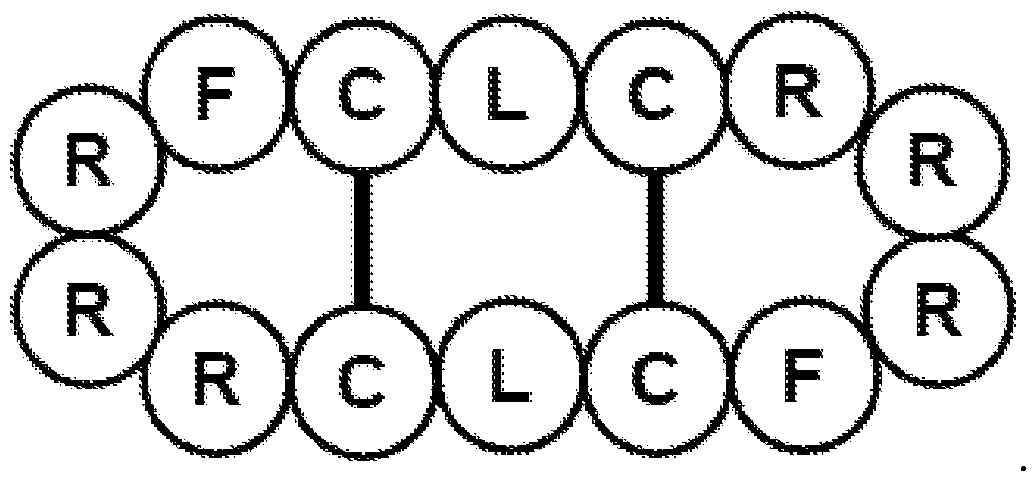
- Embodiments of the inventive concept include a cyclic peptide consisting of peptide 2 (SEQ ID NO. 2) and having the following structure:
- Such embodiments can include a pharmaceutical composition that includes peptide 2 and a pharmaceutically acceptable excipient.
- Embodiments of the inventive concept include a kit that includes a cyclic peptide and an immune checkpoint inhibitor (ICI, such as an antibody to PD-1).
- a cyclic peptide can be an analog of a 9-defensin.
- Suitable analogs include peptide 1 (SEQ ID NO. 1), peptide 2 (SEQ ID NO. 2), peptide 3 (SEQ ID NO. 3), peptide 4 (SEQ ID NO. 4), peptide 5 (SEQ ID NO. 5), peptide 6 (SEQ ID NO. 6), peptide 7 (SEQ ID NO. 7), peptide 8 (SEQ ID NO. 8), peptide 9 (SEQ ID NO.
- a cyclic peptide can be a naturally occurring 9-defensin, such as peptide 17 (SEQ ID NO. 17), peptide 18 (SEQ ID NO. 18), peptide 19 (SEQ ID NO. 19), peptide 20 (SEQ ID NO. 20), peptide 21 (SEQ ID NO. 21), peptide 22 (SEQ ID NO.
- the cyclic peptide is provided in an amount effective to enhance activity of the immune checkpoint inhibitor (e.g., 0.01 mg/kg to 15 mg/kg). In some embodiments the cyclic peptide and the immune checkpoint inhibitor are comingled. Such a kit can include instructions for use of the cyclic peptide in combination with the immune checkpoint inhibitor to treat cancer.
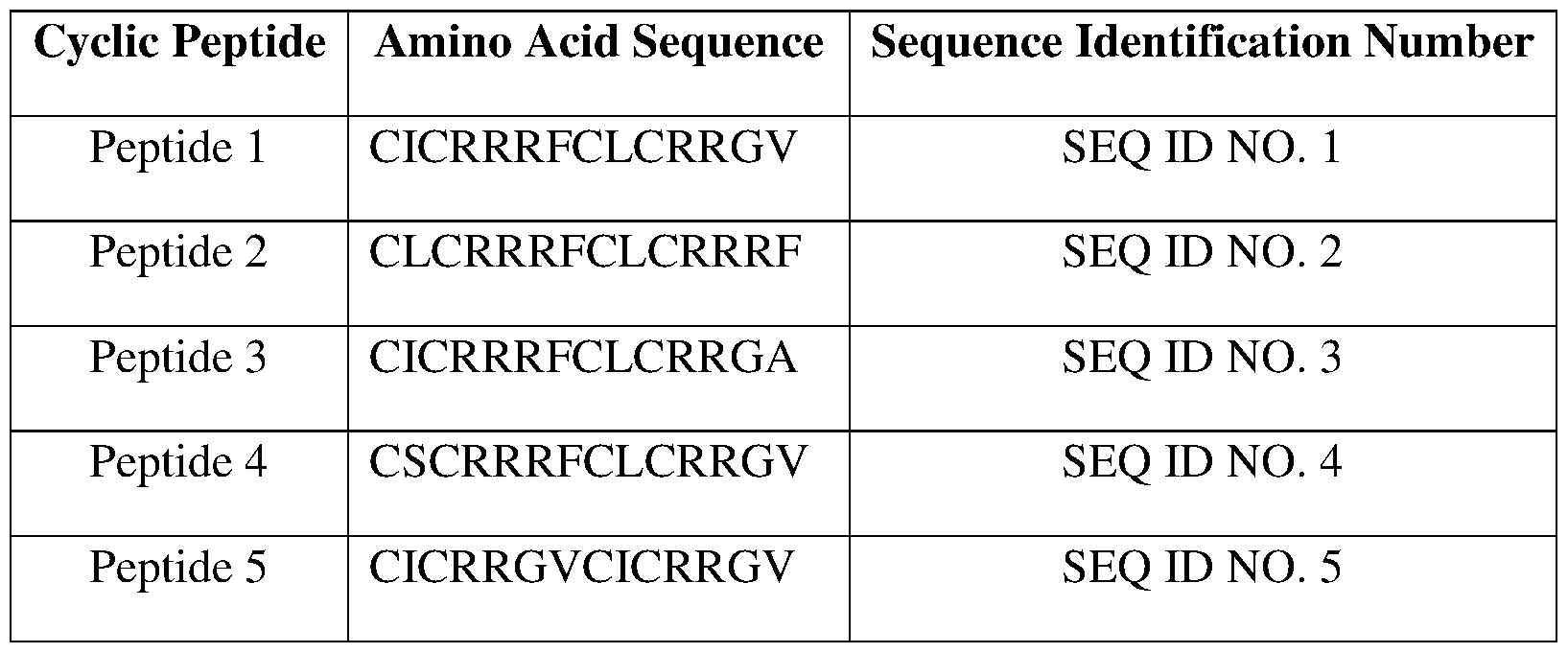
- FIG. 1 shows exemplary cyclic peptide 1 (SEQ ID NO. 1), peptide 2 (SEQ ID NO. 2), and peptide 3 (SEQ ID NO. 3).
- FIG. 2 shows additional exemplary cyclic peptides peptide 4 (SEQ ID NO. 4), peptide 5 (SEQ ID NO. 5), peptide 6 (SEQ ID NO. 6), peptide 7 (SEQ ID NO. 7), peptide 8 (SEQ ID NO. 8), peptide 9 (SEQ ID NO. 9), peptide 10 (SEQ ID NO. 10), peptide 11 (SEQ ID NO. 11), peptide 12 (SEQ ID NO. 12), and peptide 13 (SEQ ID NO. 13).
- SEQ ID NO. 4 shows additional exemplary cyclic peptides peptide 4 (SEQ ID NO. 4), peptide 5 (SEQ ID NO. 5), peptide 6 (SEQ ID NO. 6), peptide 7 (SEQ ID NO. 7), peptide 8 (SEQ ID NO. 8), peptide 9 (SEQ ID NO. 9), peptide 10 (SEQ ID NO. 10), peptide 11 (SEQ ID NO. 11), peptide 12
- FIG. 3 shows a typical protocol for co-administration of a cyclic peptide described herein and an immune checkpoint inhibitor (ICI), in this instance anti-PD-1.
- ICI immune checkpoint inhibitor
- FIG. 4 shows cumulative survival curves resulting from the indicated treatments (efficacy for treatment with peptide 1 (SEQ ID NO. 1) and an anti-PD-1 versus saline or anti-PD-1 alone (P ⁇ 0.005).
- FIG. 5 shows the results on tumor growth in mice treated with peptide 1 (SEQ ID NO. 1) in combination with an anti-PD-1 antibody (an IgG2a kappa isotype, clone: RMP1-14, obtained from BioXcell).
- FIG. 6 shows a protocol for cotherapy of a cyclic peptide described herein with an anti- PD-1 antibody.
- FIG. 7 shows results of monotherapy with peptide 1 (SEQ ID NO. 1), peptide 2 (SEQ ID NO. 2), or peptide 3 (SEQ ID NO. 3), cotherapy with peptide 1 (SEQ ID NO. 1), peptide 2 (SEQ ID NO. 2), or peptide 3 (SEQ ID NO. 3) in combination with an anti-PD-1 monoclonal antibody, and monotherapy with the anti-PD- 1 monoclonal antibody in mice that had been challenged with MC38 mouse colon adenocarcinoma cells.
- FIG. 8 shows tumors in naive control mice formed by challenged with MC38 mouse colon adenocarcinoma cells.
- the lower panel of FIG. 8 shows results from when mice rendered MC38 tumor-free (as in FIG. 7) were rechallenged with MC38 cells and observed for the tumor development for 30 days after rechallenge.
- FIG. 9 shows the results of treatment with 4 doses of an indicated cyclic peptide (0.1 mg/kg), 4 doses of an indicated cyclic peptide with 3 doses of an anti-PD-1 monoclonal antibody(l mg/kg), or saline (control) in C57BL/6 mice implanted subcutaneously with 5 x 10⁶ MC38 colon adenocarcinoma cells.
- FIG. 10 shows results of treatment with a cyclic peptide (0.1 mg/kg) with 3 doses of anti- PD-1 monoclonal antibody (1 mg/kg), or saline in mice.
- FIG. 11 shows results of treatment with peptide 1 (SEQ ID NO. 1), 2, or 3 in combination with anti-PD-1 antibody (Panel A of FIG. 11).
- Panel B shows the results of the combination therapy on expression of exhaustion marker TIM3 on CD8+ T cells.
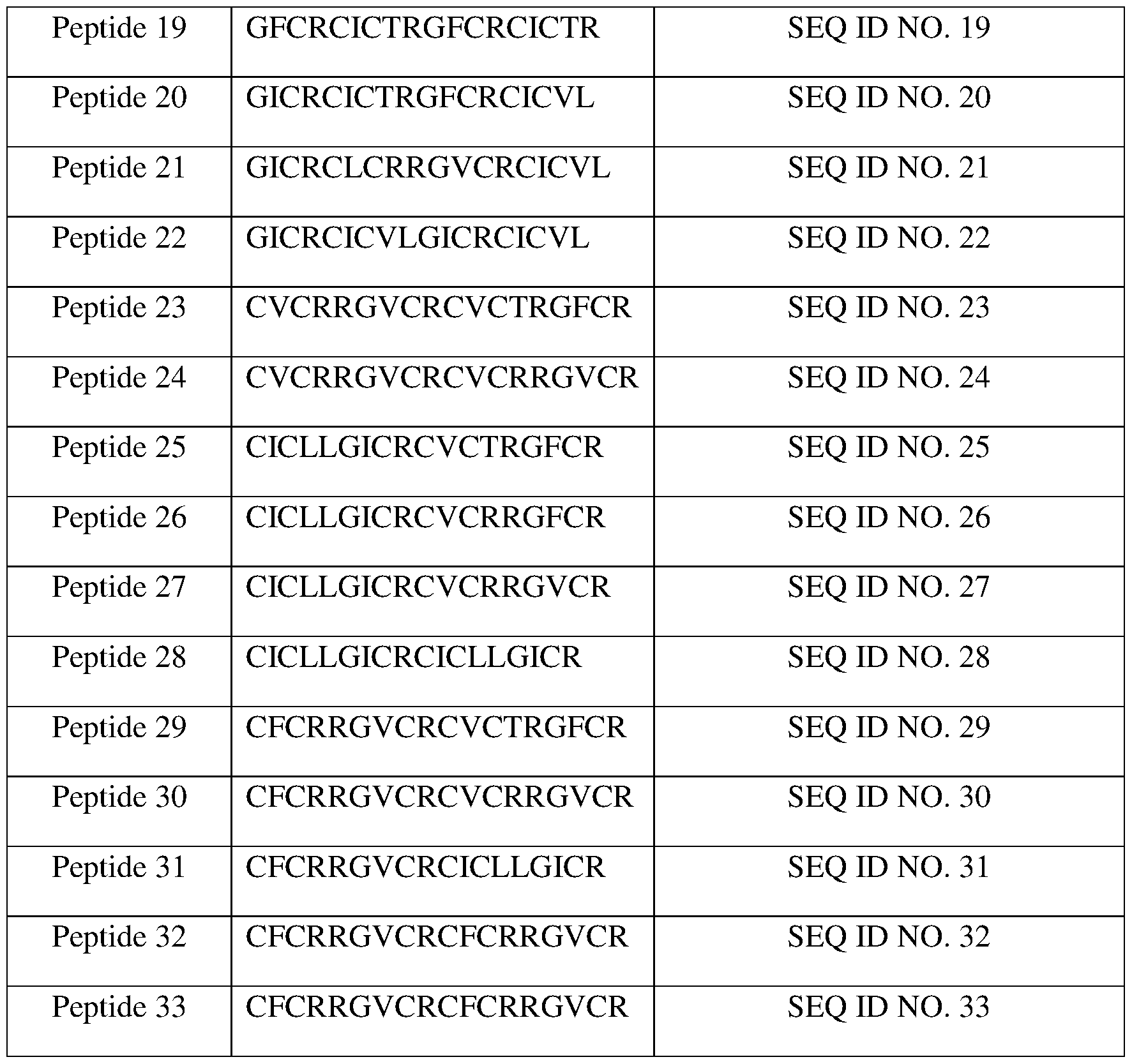
- FIGs. 12A to 12H show the structures of cyclic peptides peptide 17 (SEQ ID NO. 17), peptide 18 (SEQ ID NO. 18), peptide 19 (SEQ ID NO. 19), peptide 20 (SEQ ID NO. 20), peptide 21 (SEQ ID NO. 21), peptide 22 (SEQ ID NO. 22), peptide 23 (SEQ ID NO. 23), peptide 24 (SEQ ID NO. 24), peptide 25 (SEQ ID NO. 25), peptide 26 (SEQ ID NO. 26), peptide 27 (SEQ ID NO. 27), peptide 28 (SEQ ID NO. 28), peptide 29 (SEQ ID NO. 29), peptide 30 (SEQ ID NO. 17), peptide 18 (SEQ ID NO. 18), peptide 19 (SEQ ID NO. 19), peptide 20 (SEQ ID NO. 20), peptide 21 (SEQ ID NO. 21), peptide 22 (SEQ ID NO. 22), peptide 23 (SEQ
- FIG. 13 shows a typical protocol for co-administration of a cyclic peptide (in this instance peptide 17 (SEQ ID NO. 17)) and an ICI.
- FIG. 14 shows cumulative survival curves resulting from the indicated treatments shown in FIG. 13 (efficacy for treatment with peptide 17 and an anti-PD-1 versus saline or anti-PD-1 alone (P ⁇ 0.005).
- Synthetic and naturally occurring cyclic peptides and their use in enhancing immune checkpoint inhibitor therapy are described herein.
- Such synthetic cyclic peptides can be effective at doses ranging from 0.001 mg/kg to 50 mg/kg, 0.005mg/kg to 30 mg/kg, 0.01 mg/kg to 15 mg/kg, or intermediate ranges.
- Suitable cyclic peptides can be produced by known peptide synthesis methods, such as those described in Gunasekera et al., Int J Pept Res Ther (2013) 19:43-54.
- an effective synthetic or naturally occurring cyclic peptide is one that improves the effects of anti-cancer therapy (e.g., reduction in tumor mass or number of cancer cells, inhibition of cancer cell proliferation, reduction of metastasis, increased survival time, prevention of re-occurrence, etc.) with an immune checkpoint inhibitor at concentrations attainable in a human being following administration by oral administration, injection, infusion, inhalation, and/or application to an ocular or mucus membrane.
- methods of the inventive concept can utilize an effective amount of an effective synthetic or naturally occurring cyclic peptide in cotherapy with an immune checkpoint inhibitor in the treatment of cancer.
- an effective amount is an amount of an synthetic or naturally occurring cyclic peptide that is sufficient to improve the effects of immune checkpoint inhibitor therapy in the treatment of cancer.
- Such effective synthetic or naturally occurring cyclic peptides can be identified using methods as detailed below.
- effective amounts of such effective synthetic or naturally occurring cyclic peptides can be determined using methods as detailed below.
- such a cyclic peptides can be a 9-defensin or an analog of a 0- defensin.
- An analog of a 0-defensin analog can be a cyclic peptide having about 40%, 50%, 60%, 70%, 80%, 90% or greater sequence identity with a naturally occurring O-defensin peptide sequence.
- a 0-defensin analog can incorporate one, two, three, or more core features of a naturally occurring 0-defensin. Exemplary core features include cyclic structure, the presence of one, two, three, or more disulfide bonds within the peptide (e.g., between pairs of cysteines of the analog), having a positive charge when in solution under physiological conditions, and the presence of beta pleated sheet secondary structure.
- Such 0-defensin analogs can include 10, 11, 12, 13, 14, 15, 16, 17, 18, 19, 20, or more than 20 amino acids, and in some embodiments can incorporate non-naturally occurring amino acids.
- An analog of a 9-defensin can include one or more L-amino acid(s), one or more D-amino acid(s), and/or a mixture of L- and D- amino acids.
- non-peptide bonds can be utilized between adjacent amino acid residues of a 9-defensin analog.
- 0-defensin analogs can represent one or more deletion or substitution of amino acids of a naturally occurring 0-defensin sequence.
- 0-defensin analogs can include grafting or conjugation of non-peptide moieties, for example polyethylene glycol and/or other hydrophilic polymers, cell-receptor targeting moieties, and/or moieties that aid in processing/purification.
- any one embodiment may represent a single combination of elements, the disclosed subject matter is considered to include any or all possible combinations of the disclosed elements. Thus, if one embodiment comprises elements A, B, and C, and a second embodiment comprises elements B and D, then the present disclosure is also considered to include other remaining combinations of A, B, C, or D, even if not explicitly disclosed.
- the numbers expressing quantities of ingredients, properties such as concentration, reaction conditions, and so forth, used to describe and claim certain embodiments are to be understood as being modified in some instances by the term “about.” Accordingly, in some embodiments, the numerical parameters set forth in the written description and attached claims are approximations that can vary depending upon the desired properties sought to be obtained by a particular embodiment. In some embodiments, the numerical parameters should be construed in light of the number of reported significant digits and by applying ordinary rounding techniques. Notwithstanding that the numerical ranges and parameters setting forth the broad scope of some embodiments are approximations, the numerical values set forth in the specific examples are reported as precisely as practicable. The numerical values presented in some embodiments may contain certain errors necessarily resulting from the standard deviation found in their respective testing measurements.
- Such cyclic peptides include a “CXC box” structure defined by two pairs of cysteines, joined by a pair of disulfide bonds that span the cyclic structure. Otherwise adjacent cysteines within the CXC box are separated by a single hydrophobic amino acid, or in some embodiments by a positively charged amino acid such as arginine.
- Such peptides also include multiple arginines, and in preferred embodiments at least one arginine triplet consisting of three immediately adjacent arginines.
- These cyclic peptides have a net positive charge at neutral pH. Examples of structures of suitable synthetic cyclic peptides that are analogs of naturally occurring cyclic peptides are shown in FIG. 1 (peptide 1 (SEQ ID NO. 1), peptide 2 (SEQ ID NO. 2), and peptide 3) and in FIG. 2 (peptides 4 to 13). Structures of suitable naturally occurring cyclic peptides are shown in FIGs. 12A to 12H.
- Suitable cyclic peptides that can be used in methods of the inventive concept can be naturally occurring cyclic peptides (e.g., RTD-1) and/or analogs of naturally occurring cyclic peptides.
- Suitable analogs of naturally occurring cyclic peptides include peptide 1 (SEQ ID NO. 1), peptide 2 (SEQ ID NO. 2), peptide 3 (SEQ ID NO. 3), peptide 4 (SEQ ID NO. 4), peptide 5 (SEQ ID NO. 5), peptide 6 (SEQ ID NO. 6), peptide 7 (SEQ ID NO. 7), peptide 8 (SEQ ID NO. 8), peptide 9 (SEQ ID NO.
- peptide 10 SEQ ID NO. 10
- peptide 11 SEQ ID NO. 11
- peptide 12 SEQ ID NO. 12
- peptide 13 SEQ ID NO. 13
- peptide 14 SEQ ID NO. 14
- peptide 15 SEQ ID NO. 15
- peptide 16 SEQ ID NO. 16
- suitable cyclic peptides can be naturally occurring, and isolated from natural sources as described in Garcia et al., Infection and Immunity (2008) 76:5883-5891.
- such naturally occurring cyclic peptides can be produced by synthetic methods, such as those described in Gunasekera et al., Int J Pept Res Ther (2013) 19:43-54.
- Examples of suitable naturally occurring cyclic peptides are provided in Table 2. It should be appreciated that while the sequences provided in Table 2 are provided as linear text, the peptides represented are cyclic (i.e., without a free amino and/or carboxyl terminus).
- cyclic peptides can augment ICI therapy by counteracting immunosuppressive pathways in the tumor microenvironment (TME).
- TME tumor microenvironment
- naturally occurring and cyclic peptides can inhibit immunosuppressive cytokines, inhibit infiltration of tumor-promoting myeloid-derived suppressor cells (MDSCs) into the TME, recruit cytotoxic T cells, and reduce T cell exhaustion.
- MDSCs tumor-promoting myeloid-derived suppressor cells
- Immune checkpoint inhibitors include, but are not limited to, anti-natural killer cell receptor 2B4 (2B4), anti-B- and T-lymphocyte attenuator (BTLA), anti-CD160 antigen (CD160), anti-cytotoxic T-lymphocyte protein 4 (CTLA-4), anti-lymphocyte activation gene 3 protein (LAG-3), anti-programmed cell death protein 1 (PD-1), anti-T-cell immunoglobulin mucin receptor 3 (TIM-3), or anti-T-cell immunoreceptor with Ig and ITIM domains (TIGIT) agents/inhibitor s .
- BTLA anti-natural killer cell receptor 2B4
- CTLA-4 anti-cytotoxic T-lymphocyte protein 4
- LAG-3 anti-lymphocyte activation gene 3 protein
- PD-1 anti-programmed cell death protein 1
- TIM-3 anti-T-cell immunoglobulin mucin receptor 3
- TAGIT anti-T-cell immunoreceptor with Ig and ITIM domains
- immune checkpoint inhibitors include, but are not limited to anti- 2B4, anti-BTLA, anti-CD160, anti-CTLA-4, anti-LAG-3, anti-PD-1, anti-TIM-3, or anti-TIGIT antibodies.
- immune checkpoint inhibitors include, but are not limited to anti-2B4, anti-BTLA, anti-CD160, anti-CTLA-4, anti-LAG-3, anti-TIM-3, or anti-TIGIT antibodies.
- Inhibitors to immune checkpoint ligands include, but are not limited to, anti-CD48 antigen (CD48), anti-CD80 antigen (CD80), anti-CD86 antigen (CD86), anti-CD112 antigen (CD112), anti-CD155 antigen (CD155), anti-carcinoembryonic antigen-related cell adhesion molecule 1 (CEACAM1), anti-fibrinogen-like protein 1 (FGL1), anti-galectin-9 (Gal-9), anti- HLA class I histocompatibility antigen, alpha chain B (HLA-B), anti-HLA class I histocompatibility antigen, alpha chain C (HLA-C), anti-HLA class I histocompatibility antigen, alpha chain E (HLA-E), anti-HLA class I histocompatibility antigen, alpha chain G (HLA-G), anti-high mobility group protein Bl (HMG1), anti-herpesvirus entry mediator A (HVEM), antiprogrammed
- a cyclic peptide as described herein is administered in combination with an inhibitor to an immune checkpoint ligand other than a PD-L1/2 ligand.
- inhibitors to immune checkpoint ligands include, but are not limited to anti- CD48, anti-CD80, anti-CD86, anti-CD112, anti-CD155, anti-CEACAMl, anti-FGLl, anti-Gal-9, anti-HLA-B, anti-HLA-C, anti-HLA-E, anti-HLA-G, anti-HMGl, anti-HVEM, anti-PD-Ll, and anti-PD-L2 antibodies.
- inhibitors to immune checkpoint ligands include, but are not limited to anti-CD48, anti-CD80, anti-CD86, anti-CD112, anti-CD155, anti- CEACAMl, anti-FGLl, anti-Gal-9, anti-HLA-B, anti-HLA-C, anti-HLA-E, anti-HLA-G, anti- HMGl, and anti-HVEM.
- 2B4 refers to the natural killer cell (2B4) receptor.
- Other names include NK cell activation-ligand (NAIL), NK cell type I receptor protein 2B4, signaling lymphocytic activation molecule 4 (SLAM4), and CD244 (cluster of differentiation 244).
- 2B4 has at least one ligand, CD48 (cluster of differentiation 48).
- targeting 2B4 restores immune function in the tumor microenvironment.
- the anti-2B4 or anti- CD48 agent is an antibody, a peptide, a small molecule or a nucleic acid.
- the anti-2B4 agent is an anti-2B4 antibody.
- the anti-CD48 agent is an anti-CD48 antibody.
- Anti-2B4 antibody refers to an antibody directed towards the natural killer cell (2B4) receptor. In some embodiments, an anti-2B4 antibody binds an epitope of 2B4 which blocks the binding of 2B4 to any one or more of its putative ligands. In some embodiments, an anti-2B4 antibody binds an epitope of a 2B4 protein which blocks the binding of 2B4 to CD48. “Anti- CD48 antibody” refers to an antibody directed towards CD48 antigen (CD48).
- antibody and “antibodies” as used herein is inclusive of all types of immunoglobulins, including IgG, IgM, IgA, IgD, and IgE, or active fragments thereof, that may be appropriate for the medical uses disclosed herein.
- the antibodies may be monoclonal or polyclonal and may be of any species of origin, including, for example, mouse, rat, rabbit, horse, or human.
- Antibody fragments that retain specific binding to the protein or epitope, for example, 2B4 or CD48, bound by the antibody used in the present disclosure are included within the scope of the term “antibody.”
- the antibodies may be chimeric or humanized, particularly when they are used for therapeutic purposes. Antibodies and antibody fragments may be obtained or prepared using various methods.
- BTLA refers to B- and T-lymphocyte attenuator (BTLA) receptor.
- Other names include B- and T-lymphocyte-associated protein and CD272 (cluster of differentiation 272).
- BTLA has at least one ligand, herpesvirus entry mediator A (HVEM).
- HVEM herpesvirus entry mediator A
- targeting BTLA restores immune function in the tumor microenvironment.
- the anti-BTLA or anti-HVEM agent is an antibody, a peptide, a small molecule or a nucleic acid.
- Anti-BTLA antibody refers to an antibody directed towards the B- and T-lymphocyte attenuator (BTLA) receptor.
- an anti-BTLA antibody binds an epitope of BTLA which blocks the binding of BTLA to any one or more of its putative ligands.
- an anti-BTLA antibody binds an epitope of a BTLA protein which blocks the binding of BTLA to HVEM.
- Anti-HVEM antibody refers to an antibody directed towards herpesvirus entry mediator A (HVEM).
- CD 160 refers to CD 160 antigen (CD 160) receptor.
- Other names include natural killer cell receptor BY55 (BY55) and CD160 (cluster of differentiation 160).
- CD 160 has at least two ligands, herpesvirus entry mediator A (HVEM) and major histocompatibility complex (MHC) class I proteins including HLA class I histocompatibility antigen, alpha chain B (HLA-B), HLA class I histocompatibility antigen, alpha chain C (HLA- C), HLA class I histocompatibility antigen, alpha chain E (HLA-E), and HLA class I histocompatibility antigen, alpha chain G (HLA-G).
- HVEM herpesvirus entry mediator A
- MHC major histocompatibility complex
- targeting CD160 restores immune function in the tumor microenvironment.
- the anti-CD160, anti-HLA-B, anti-HLA-C, anti-HLA-E, anti- HLA-G, or anti-HVEM agent is an antibody, a peptide, a small molecule or a nucleic acid.
- the anti-CD160 agent is an anti-CD160 antibody.
- the anti-HLA-B agent is an anti-HLA-B antibody.
- the anti- HLA-C agent is an anti-HLA-C antibody.
- the anti-HLA-E agent is an anti-HLA-E antibody.
- the anti-HLA-G agent is an anti-HLA-G antibody.
- the anti-HVEM agent is an anti-HVEM antibody.
- Anti-CD160 antibody refers to an antibody directed towards the CD 160 antigen (CD 160) receptor. In some embodiments, an anti-CD160 antibody binds an epitope of CD 160 which blocks the binding of CD 160 to any one or more of its putative ligands. In some embodiments, an anti-CD160 antibody binds an epitope of a CD 160 protein which blocks the binding of CD160 to HLA-B, HLA-C, HLA-E, HLA-G, or HVEM. “Anti- HLA-B antibody” refers to an antibody directed towards HLA class I histocompatibility antigen, alpha chain B (HLA-B).
- Anti- HLA-C antibody refers to an antibody directed towards HLA class I histocompatibility antigen, alpha chain C (HLA-C).
- Anti- HLA-E antibody refers to an antibody directed towards HLA class I histocompatibility antigen, alpha chain E (HLA-E).
- Anti- HLA-G antibody refers to an antibody directed towards HLA class I histocompatibility antigen, alpha chain G (HLA-G).
- CTLA-4 refers to cytotoxic T-lymphocyte protein 4 (CTLA-4) receptor.
- CTLA-4 cytotoxic T-lymphocyte-associated antigen 4
- CTLA-4 has at least two ligands, T-lymphocyte activation antigen CD80 (CD80) and T-lymphocyte activation antigen CD86 (CD86).
- targeting CTLA-4 restores immune function in the tumor microenvironment.
- the anti-CTLA-4, anti-CD80, or anti-CD86 agent is an antibody, a peptide, a small molecule or a nucleic acid.
- the anti-CTLA-4 agent is an anti-CTLA-4 antibody.
- the anti-CD80 agent is an anti-CD80 antibody.
- the anti- CD86 agent is an anti-CD86 antibody.
- Anti-CTLA-4 antibody refers to an antibody directed towards the cytotoxic T-lymphocyte protein 4 (CTLA-4) receptor.
- CTLA-4 antibody binds an epitope of CTLA-4 which blocks the binding of CTLA-4 to any one or more of its putative ligands.
- an anti-CTLA-4 antibody binds an epitope of a CTLA-4 protein which blocks the binding of CTLA-4 to CD80 or CD86.
- Anti- CD80 antibody refers to an antibody directed towards CD80 antigen (CD80).
- Anti-CD86 antibody refers to an antibody directed towards CD86 antigen (CD80).
- LAG-3 refers to lymphocyte activation gene 3 protein (LAG-3) receptor.
- Other names include CD223 (cluster of differentiation 223).
- LAG-3 has at least two ligands, fibrinogen-like protein 1 (FGL1) and major histocompatibility complex (MHC) class II proteins.
- FGL1 fibrinogen-like protein 1
- MHC major histocompatibility complex
- targeting CD 160 restores immune function in the tumor microenvironment.
- the anti-LAG-3, anti-FGLl, or anti-MHC class II agent is an antibody, a peptide, a small molecule or a nucleic acid.
- the anti-LAG-3 agent is an anti-LAG-3 antibody.
- the anti-FGLl agent is an anti-FGLl antibody.
- the anti- MHC class II agent is an anti-MHC class II antibody.
- Anti- LAG-3 antibody refers to an antibody directed towards the lymphocyte activation gene 3 protein (LAG-3) receptor.
- an anti- LAG-3 antibody binds an epitope of LAG-3 which blocks the binding of LAG-3 to any one or more of its putative ligands.
- an anti- LAG-3 antibody binds an epitope of a LAG-3 protein which blocks the binding of LAG-3 to FGL1, or MHC class II.
- Anti-FGLl antibody refers to an antibody directed towards fibrinogen-like protein 1 (FGL1).
- Anti-MHC class II antibody refers to an antibody directed towards major histocompatibility complex (MHC) class II protein.
- PD-1 refers to the Programmed Death 1 (PD-1) receptor. Other names include programmed cell death protein 1 and CD279 (cluster of differentiation 279). PD-1 has two ligands, PD-L1 and PD-L2. In some embodiments, targeting PD-1 restores immune function in the tumor microenvironment.
- PD-L1 or “PDL1” refers to the programmed death ligand 1 (PD-L1).
- P-L2 or “PDL2” refers to the programmed death ligand 2 (PD-L2).
- the anti-PD-1 or anti-PDL-1 agent is an antibody, a peptide, a small molecule or a nucleic acid.
- the anti PD-1 agent for use in combination with compound described herein is nivolumab, pembrolizumab, atezolizumab, durvalumab, pidilizumab, avelumab, TSR-042, PDR-001, tislelizumab (BGB-A317), cemiplimab (REGN2810), LY- 3300054, JNJ-63723283, MGA012, BL754091, IBL3O8, camrelizumab (HR-301210), BCD- 100, JS-001, CX-072, BGB-A333, AMP-514 (MEDI-0680), AGEN- 2034, CSIOOI, Sym-021, SHR-1316, PF-06801591, LZM009, KN-035, AB 122, genolimzumab (CBT-501), FAZ-053, CK-301, AK 104, or GLS-01
- the anti PD-1 agent is an anti PD-1 antibody.
- Anti-PD-1 antibody refers to an antibody directed towards programmed death protein 1 (PD1).
- an anti-PD-1 antibody binds an epitope of PD-1 which blocks the binding of PD-1 to any one or more of its putative ligands.
- an anti-PDl antibody binds an epitope of a PD-1 protein which blocks the binding of PD-1 to PD-L1 and/or PD-L2.
- Exemplary anti-PD-1 antibodies include but are not limited to: nivolumab/MDX- 1106/BMS-9300/ON01152, a fully human lgG4 anti-PD-1 monoclonal antibody; pidilizumab (MDV9300/CT-011), a humanized IgGl monoclonal antibody; pembrolizumab (MK-3475/ pembrolizumab/lambrolizumab), a humanized monoclonal IgG4 antibody; durvalumab (MEDI- 4736) and atezolizumab.
- the anti-PD-1 antibody is nivolumab (OPDIVO®, Bristol-Myers Squibb), pembrolizumab (KEYTRUDA®, Merck), cemiplimab (Libtayo), labrolizumab (Merck), or BGB-A317.
- the anti-PDl antibody is an antibody set forth in U.S. Patent Nos. 7,029,674, 7,488,802, 7,521,051, 8,008,449, 8,354,509, 8,617,546, 8,709,417, or WO2014/179664.
- the anti PD-1 agent for use in combination is atezolizumab, avelumab, AMP-224, MEDI-0680, RG-7446, GX-P2, durvalumab, KY-1003, KD-033, MSB- 0010718C, TSR-042, ALN-PDL, STI-A1014, CX- 072, BMS-936559, KN035, CK-301 (Checkpoint Therapeutics), AUNP12, CA-170 (Aurigene/Curis), MEDI4736, MSB0010718C, MDX 1105-01, or BMS-986189.
- the anti PD-L1 agent is an anti PD-L1 antibody.
- Anti-PD-Ll antibody refers to an antibody directed towards programmed death ligand 1 (PD-L1).
- Anti-PD- Ll antibodies include: avelumab; BMS-936559, a fully human IgG4 antibody; atezolizumab (MPDL3280A/RG-7446), a human monoclonal antibody; MEDI4736; MSB0010718C, and
- the anti-PD-Ll antibody is avelumab (Bavencio®, Merck KGA/Pfizer), durvalumab (AstraZeneca) and atezolizumab (TECENTRIQ®, Roche).
- Additional exemplary antibodies include, but are not limited to, the antibodies set forth in U.S. Patent Nos. 8,217,149, 8,383,796, 8,552,154 and 8,617,546.
- Peptide anti-PD-l/PD-Ll agents include AUNP12 (a 29-mer peptide by Aurigene and Laboratoires Pierre Fabre), CA-170 (Aurigene/Curis), BMS-986189 (a macrocyclic peptide by BMS).
- Small molecule anti-PD-l/PD-Ll agents include those described in WG/2020/086556, WG/2020/014643, WO/2019/204609, WO/2019/160882, WO/2018/195321, WO2018026971, US20180044329, US20180044305, US20180044304, US20180044303, US20180044350, US20180057455, US20180057486, US20180045142, WO20180044963, WO2018044783, W02018009505, WO20180044329, WO2017066227, WO2017087777, US20170145025, WO2017079669, W02017070089, US2017107216, WO2017222976, US20170262253, WO2017205464, US20170320875, WO2017192961, WO2017112730, US20170174679, WO2017106634, WO2017202744, WO2017202275, WO2017202273,
- TIM-3 refers to T-cell immunoglobulin mucin receptor 3 (TIM-3) receptor.
- Other names include hepatitis A virus cellular receptor 2 (HAVcr-2), T-cell immunoglobulin and mucin domain-containing protein 3 (TIMD-3), T-cell membrane protein 3, and CD366 (cluster of differentiation 366).
- TIM-3 has at least three ligands, galectin-9 (Gal-9), high mobility group protein B l (HMG1), and carcinoembryonic antigen-related cell adhesion molecule 1 (CEACAM1). In some embodiments, targeting TIM-3 restores immune function in the tumor microenvironment.
- the anti-TIM-3, anti-Gal-9, anti-HMGl, or anti-CEACAMl agent is an antibody, a peptide, a small molecule or a nucleic acid.
- the anti- TIM-3 agent is an anti-TIM-3 antibody.
- the anti-Gal-9 agent is an anti- Gal-9 antibody.
- the anti-HMGl agent is an anti-HMGl antibody.
- the anti-CEACAMl agent is an anti-CEACAMl antibody.
- Anti-TIM-3 antibody refers to an antibody directed towards the T-cell immunoglobulin mucin receptor 3 (TIM-3) receptor. In some embodiments, an anti-TIM-3 antibody binds an epitope of TIM-3 which blocks the binding of TIM-3 to any one or more of its putative ligands. In some embodiments, an anti-TIM-3 antibody binds an epitope of a TIM-3 protein which blocks the binding of TIM-3 to Gal-9, HMG1, or CEACAM1. “Anti-Gal-9 antibody” refers to an antibody directed towards galectin 9 (Gal-9). “Anti-HMGl antibody” refers to an antibody directed towards high mobility group protein Bl (HMG1). “Anti-CEACAMl antibody” refers to an antibody directed towards carcinoembryonic antigen-related cell adhesion molecule 1 (CEACAM1).
- TIGIT refers to T-cell immunoreceptor with Ig and ITIM domains (TIGIT) receptor.
- Other names include V-set and immunoglobulin domain-containing protein 9 (VSIG9) and V-set and transmembrane domain-containing protein 3 (VSTM3).
- TIGIT has at least two ligands, CD112 (cluster of differentiation 112) and CD155 (cluster of differentiation 155). In some embodiments, targeting TIGIT restores immune function in the tumor microenvironment.
- the anti-TIGIT, anti-CD112, or CD155 agent is an antibody, a peptide, a small molecule or a nucleic acid.
- the anti-TIGIT agent is an anti-TIGIT antibody.
- the anti-CD112 agent is an anti-CD112 antibody.
- the anti-CD155 agent is an anti-CD155 antibody.
- Anti-TIGIT antibody refers to an antibody directed towards the T-cell immunoreceptor with Ig and ITIM domains (TIGIT) receptor.
- an anti-TIGIT antibody binds an epitope of TIGIT which blocks the binding of TIGIT to any one or more of its putative ligands.
- an anti-TIGIT antibody binds an epitope of a TIGIT protein which blocks the binding of TIGIT to CD112 or CD155.
- Anti-CDl 12 antibody refers to an antibody directed towards CD112 (cluster of differentiation 112).
- Anti-CD155 antibody refers to an antibody directed towards CD155 (cluster of differentiation 155).
- ICI therapy directed to PD-1 expression can be augmented using cyclic peptides, including naturally occurring cyclic peptides and analogs of naturally occurring cyclic peptides.
- a typical protocol useful for identifying or characterizing effective analogs of naturally occurring cyclic peptides or naturally occurring cyclic peptides is shown in FIG. 3.
- IP intraperitoneal
- anti-PD-1 antibodies include, but are not limited to, MEDI0680, nivolumab, pembrolizumab, cemiplimab, atezolizumab, dostarlimab, durvalumab, and avelumab. Results for analogs of naturally occurring cyclic peptides Peptide 1 (SEQ ID NO. 1) and Peptide 2 (SEQ ID NO. 2) using a protocol as shown in FIG.
- FIG. 4 shows cumulative survival curves resulting from the indicated treatments (efficacy for peptide treatment with anti-PD-1 versus saline or anti-PD-1 alone P ⁇ 0.005).
- cotherapy with anti-PD-1 and cyclic peptides enhances anti-PD-1 therapy, and in fact provides an effect that exceeds the summation of effects provided by ant-PDl or the cyclic peptides as monotherapies.
- surviving mice were re-challenged with B 16K1 cells on day 65 (arrow). Surprisingly, none of these mice developed tumors.
- Enhancement was also found of the efficacy of anti-PD-1 therapy in a mouse colon cancer model by coadministration of a cyclic peptide as described herein.
- a typical protocol for identifying or characterizing effective analogs of naturally occurring cyclic peptides or effective naturally occurring cyclic peptides is shown in FIG. 6.
- mice were challenged with MC38 mouse colon adenocarcinoma cells and treated with peptide 1 (SEQ ID NO. 1), peptide 2 (SEQ ID NO. 2), or peptide 3 (SEQ ID NO. 3) alone, peptide 1 (SEQ ID NO. 1), peptide 2 (SEQ ID NO. 2), or peptide 3 (SEQ ID NO. 3) in combination with an anti-PD-1 monoclonal antibody, or with the anti-PD-1 monoclonal antibody alone. Results are shown in FIG. 7.
- peptide 1 SEQ ID NO. 1
- peptide 2 SEQ ID NO. 2
- peptide 3 SEQ ID NO. 3
- Such combination therapy provided an effect that exceeds the summation of effects provided by ant-PDl or the cyclic peptide as monotherapies.
- rechallenge studies with melanoma indicated that combination therapy with the synthetic cyclic peptide and ICI was effective at preventing reoccurrence on re-introduction of cancer cells.
- Use of cyclic peptides in combination anti-PD-1 ICI also effectively immunized mice to rechallenge with MC38 colon cancer cells. Results of these studies are shown in FIG. 8.
- MC38 cells formed tumors in naive control mice.
- the lower panel of FIG. 8 shows results from when mice rendered MC38 tumor- free (as in FIG.
- cyclic peptides can suppress myeloid-derived suppressor cell (MDSC) infiltration into the tumor microenvironment.
- C57BL/6 mice were implanted subcutaneously with 5 x 10 6 MC38 colon adenocarcinoma cells, and subsequently treated with 4 doses of the indicated cyclic peptide (0.1 mg/kg), 4 doses of the indicated a cyclic peptide with 3 doses of an anti-PD-1 monoclonal antibody(l mg/kg), or saline (control).
- Tumors were harvested at day 13 and the percent of myeloid-derived suppressor cells (MDSCs) was quantified by FACS. The data were analyzed using the Mann- Whitney test, and are shown in FIG. 9.
- peptide 1 SEQ ID NO. 1
- peptide 2 SEQ ID NO. 2
- peptide 3 SEQ ID NO. 3
- cyclic peptides e.g., peptide 1 (SEQ ID NO. 1), peptide 2 (SEQ ID NO. 2), peptide 3) can provide a less toxic and potentially more effective treatment in a broad range of oncologic indications in which suppression of MDSCs is a treatment goal.
- cyclic peptides in combination with ICI (e.g., an anti- PD-1 monoclonal antibody) can enhance infiltration of cytotoxic T cells into the tumor microenvironment.
- C57BL/6 mice were implanted subcutaneously with 5 x 10 6 MC38 colon adenocarcinoma cells. Mice were treated with 4 doses of the indicated cyclic peptide (0.1 mg/kg), 4 doses of the indicated cyclic peptide (0.1 mg/kg) with 3 doses of anti-PD-1 monoclonal antibody (1 mg/kg), or saline (control). Tumors were harvested at day 13 and percent of CD8+ T cells was quantified by FACS. Results are shown in FIG. 10.
- each combination of cyclic peptide with anti-PD-1 monoclonal antibody increased CD8+ T cells, reaching statistical significance (Mann- Whitney test) with peptide 1.
- the effects of such combination therapy exceeded the effect of anti-PD-1 monoclonal antibody monotherapy and monotherapies with the respective cyclic peptides.
- cyclic peptides used in combination with an ICI can augment CD8+ T cell responses in the tumor microenvironment (TME).
- TEE tumor microenvironment
- T cell activity in the tumor microenvironment is an important component of the beneficial effect of treatment with a synthetic cyclic peptide, with or without concomitant use of immune checkpoint therapy.
- cyclic peptides e.g., peptide 1 (SEQ ID NO. 1), peptide 2 (SEQ ID NO. 2), peptide 3
- members of this family of peptide drugs can render ICI efficacious in patients that are currently not successfully treated with current ICI therapy.
- combination therapy can produce remissions of longer duration than are possible with ICI treatment in the absence of synthetic cyclic peptides, and that such combination therapy can enable new remission in patients whose disease initially responded but then progressed on ICI therapy.
- ICI cyclic peptide combination therapy can be useful as an adjuvant therapy in some oncologic indications.
- cyclic peptides can significantly potentiate a broad range of the effects of immune checkpoint therapy. Accordingly, it is believed that cotherapy with one or more cyclic peptides (e.g., peptide 1 (SEQ ID NO. 1), peptide 2 (SEQ ID NO. 2), peptide 3) can permit the use of ICI at lower doses that are currently in use. Such lower doses can reduce the occurrence and/or severity of side effects or adverse immune effects associated with ICI therapy.
- Cyclic peptides e.g., peptide 1 (SEQ ID NO. 1), peptide 2 (SEQ ID NO.
- peptide 3 may have the effect of down-regulating pro -inflammatory cytokines, such as TNFa and IL-6. It is believed that cyclic peptides can provide a lower toxicity option for down-regulation of TNF- alpha and IL-6 in oncologic indications.
- suitable cyclic peptides can be naturally occurring cyclic peptides.
- Suitable naturally occurring cyclic peptides include 9-defensins. It is believed that such naturally occurring cyclic peptides can augment ICI therapy by counteracting immunosuppressive pathways in the tumor microenvironment (TME).
- TME tumor microenvironment
- Studies with 9-defensins and synthetic analogs of 9-defensins indicate that such cyclic peptides can inhibit immunosuppressive cytokines, inhibit infiltration of tumor-promoting myeloid-derived suppressor cells (MDSCs) into the TME, recruit cytotoxic T cells, and reduce T cell exhaustion.
- MDSCs tumor-promoting myeloid-derived suppressor cells
- ICI therapy directed to PD-1 expression can be augmented using naturally occurring cyclic octadecapeptides (such as peptide 17 (SEQ ID NO. 17), peptide 18 (SEQ ID NO. 18), peptide 19 (SEQ ID NO. 19), peptide 20 (SEQ ID NO. 20), peptide 21 (SEQ ID NO. 21), peptide 22 (SEQ ID NO. 22), peptide 23 (SEQ ID NO. 23), peptide 24 (SEQ ID NO. 24), peptide 25 (SEQ ID NO. 25), peptide 26 (SEQ ID NO. 26), peptide 27 (SEQ ID NO. 27), peptide 28 (SEQ ID NO.
- naturally occurring cyclic octadecapeptides such as peptide 17 (SEQ ID NO. 17), peptide 18 (SEQ ID NO. 18), peptide 19 (SEQ ID NO. 19), peptide 20 (SEQ ID NO. 20), peptide 21 (SEQ ID NO. 21),
- FIGS. 12A-H A typical protocol for identifying an effective naturally occurring cyclic peptide (i.e., one that is effective in enhancing the effects of immune checkpoint therapy) or analog of a naturally occurring cyclic peptide is shown in FIG. 13.
- FIG. 14 shows cumulative survival curves resulting from the indicated treatments as shown in FIG. 13. As shown, treatment with anti-PD-1 antibody alone is not distinguishable from saline. Similarly, treatment with peptide 17 (SEQ ID NO. 17) alone had no discernible effect (data not shown). In contrast, combination therapy with peptide 17 (SEQ ID NO.
- cyclic octadecapeptides e.g., peptide 17 (SEQ ID NO. 17), peptide 18 (SEQ ID NO. 18), peptide 19 (SEQ ID NO. 19), peptide 20 (SEQ ID NO. 20), peptide 21 (SEQ ID NO. 21), peptide 22 (SEQ ID NO. 22), peptide 23 (SEQ ID NO. 23), peptide 24 (SEQ ID NO. 24), peptide 25 (SEQ ID NO. 25), peptide 26 (SEQ ID NO. 26), peptide 27 (SEQ ID NO. 27), peptide 28 (SEQ ID NO. 28), peptide 29 (SEQ ID NO.
- peptide 30 SEQ ID NO. 30
- peptide 31 SEQ ID NO. 31
- peptide 32 SEQ ID NO. 32
- peptide 33 SEQ ID NO. 33
- the disclosed methods may be used to treat or prevent cancer, including metastatic cancer.
- Cancer is a group of related diseases that may include sustained proliferative signaling, evasion of growth suppressors, resistance to cell death, enablement of replicative immortality, induction of angiogenesis, and the activation of invasion and metastasis.
- the disclosed methods may enhance or elicits an immune response against a cancer in the subject.
- the immune response may lead to an increase in one or more of leukocytes, lymphocytes, monocytes, and eosinophils.
- Cancer that may be treated by the disclosed methods, includes, but is not limited to, astrocytoma, adrenocortical carcinoma, appendix cancer, basal cell carcinoma, bile duct cancer, bladder cancer, bone cancer, brain cancer, brain stem cancer, brain stem glioma, breast cancer, cervical cancer, colon cancer, colorectal cancer, cutaneous T-cell lymphoma, diffuse intrinsic pontine glioma, ductal cancer, endometrial cancer, ependymoma, Ewing’s sarcoma, esophageal cancer, eye cancer, fibrosarcoma, gallbladder cancer, gastric cancer, gastrointestinal cancer, germ cell tumor, glioma, hepatocellular cancer, histiocytosis, Hodgkin lymphoma, hypopharyngeal cancer, intraocular melanoma, Kaposi sarcoma, kidney cancer, laryngeal cancer, leukemia, liver cancer, lung cancer, lymph
- the cancer that may be treated by the disclosed methods is melanoma, renal cancer, prostate cancer, ovarian cancer, breast cancer, glioma, lung cancer, soft tissue carcinoma, soft tissue sarcoma, osteosarcoma, or pancreatic cancer.
- the cancer is a solid tumor.
- the cancer is a soft tissue carcinoma.
- the cancer is a fibrosarcoma.
- the cancer is diffuse intrinsic pontine glioma.
- the cancer is a metastatic cancer.
- the cyclic peptides described herein are formulated into pharmaceutical compositions.
- Pharmaceutical compositions are formulated in a conventional manner using one or more pharmaceutically acceptable inactive ingredients that facilitate processing of the active compounds into preparations that are used pharmaceutically. Proper formulation is dependent upon the route of administration chosen.
- a summary of pharmaceutical compositions described herein is found, for example, in Remington: The Science and Practice of Pharmacy, Nineteenth Ed (Easton, Pa.: Mack Publishing Company, 1995); Hoover, John E., Remington’s Pharmaceutical Sciences, Mack Publishing Co., Easton, Pennsylvania 1975; Liberman, H.A.
- the compounds described herein are administered either alone or in combination with pharmaceutically acceptable carriers, excipients or diluents, in a pharmaceutical composition.
- Administration of the compounds and compositions described herein can be effected by any method that enables delivery of the compounds to the site of action.
- enteral routes including oral, gastric or duodenal feeding tube, rectal suppository and rectal enema
- parenteral routes injection or infusion, including intraarterial, intracardiac, intradermal, intraduodenal, intramedullary, intramuscular, intraosseous, intraperitoneal, intrathecal, intravascular, intravenous, intravitreal, epidural and subcutaneous), inhalational, transdermal, transmucosal, sublingual, buccal and topical (including epicutaneous, dermal, enema, eye drops, ear drops, intranasal, vaginal) administration, although the most suitable route may depend upon for example the condition and disorder of the recipient.
- compounds described herein can be administered locally to the area in need of treatment, by for example, local infusion during surgery, topical application such as creams or ointments, injection, catheter, or implant.
- topical application such as creams or ointments, injection, catheter, or implant.
- the administration can also be by direct injection at the site of a diseased tissue or organ.
- compositions suitable for oral administration are presented as discrete units such as capsules, cachets or tablets each containing a predetermined amount of the active ingredient; as a powder or granules; as a solution or a suspension in an aqueous liquid or a non-aqueous liquid; or as an oil-in-water liquid emulsion or a water-in-oil liquid emulsion.
- the active ingredient is presented as a bolus, electuary or paste.
- compositions which can be used orally include tablets, push-fit capsules made of gelatin, as well as soft, sealed capsules made of gelatin and a plasticizer, such as glycerol or sorbitol. Tablets may be made by compression or molding, optionally with one or more accessory ingredients. Compressed tablets may be prepared by compressing in a suitable machine the active ingredient in a free-flowing form such as a powder or granules, optionally mixed with binders, inert diluents, or lubricating, surface active or dispersing agents. Molded tablets may be made by molding in a suitable machine a mixture of the powdered compound moistened with an inert liquid diluent.
- the tablets are coated or scored and are formulated so as to provide slow or controlled release of the active ingredient therein. All formulations for oral administration should be in dosages suitable for such administration.
- the push-fit capsules can contain the active ingredients in admixture with filler such as lactose, binders such as starches, and/or lubricants such as talc or magnesium stearate and, optionally, stabilizers.
- the active compounds may be dissolved or suspended in suitable liquids, such as fatty oils, liquid paraffin, or liquid polyethylene glycols. In some embodiments, stabilizers are added. Dragee cores are provided with suitable coatings.
- concentrated sugar solutions may be used, which may optionally contain gum arabic, talc, polyvinyl pyrrolidone, carbopol gel, polyethylene glycol, and/or titanium dioxide, lacquer solutions, and suitable organic solvents or solvent mixtures.
- Dyestuffs or pigments may be added to the tablets or Dragee coatings for identification or to characterize different combinations of active compound doses.
- compositions are formulated for parenteral administration by injection, e.g., by bolus injection or continuous infusion.
- Formulations for injection may be presented in unit dosage form, e.g., in ampoules or in multi-dose containers, with an added preservative.
- the compositions may take such forms as suspensions, solutions or emulsions in oily or aqueous vehicles, and may contain formulatory agents such as suspending, stabilizing and/or dispersing agents.
- compositions may be presented in unit-dose or multidose containers, for example sealed ampoules and vials, and may be stored in powder form or in a freeze-dried (lyophilized) condition requiring only the addition of the sterile liquid carrier, for example, saline or sterile pyrogen-free water, immediately prior to use.
- sterile liquid carrier for example, saline or sterile pyrogen-free water
- Extemporaneous injection solutions and suspensions may be prepared from sterile powders, granules and tablets of the kind previously described.
- compositions for parenteral administration include aqueous and nonaqueous (oily) sterile injection solutions of the active compounds which may contain antioxidants, buffers, bacteriostats and solutes which render the formulation isotonic with the blood of the intended recipient; and aqueous and non-aqueous sterile suspensions which may include suspending agents and thickening agents.
- Suitable lipophilic solvents or vehicles include fatty oils such as sesame oil, or synthetic fatty acid esters, such as ethyl oleate or triglycerides, or liposomes.
- Aqueous injection suspensions may contain substances which increase the viscosity of the suspension, such as sodium carboxymethyl cellulose, sorbitol, or dextran.
- the suspension may also contain suitable stabilizers or agents which increase the solubility of the compounds to allow for the preparation of highly concentrated solutions.
- compositions described herein may include other agents conventional in the art having regard to the type of formulation in question, for example those suitable for oral administration may include flavoring agents.
- Embodiments of the inventing concept include an immune checkpoint inhibitor and a cyclic peptide that is effective in enhancing the effects of the immune checkpoint inhibitor in treating cancer.
- a kit can include the immune checkpoint inhibitor and the cyclic peptide in a comingled form (e.g., the same formulation).
- a kit can provide the immune checkpoint inhibitor and the cyclic peptide as separate formulations.
- Such kits can include instructions for use.
- Such instructions can, for example, provide a treatment protocol in which effective amounts of an effective cyclic peptide are provided to a person in need of treatment for cancer in combination with an immune checkpoint inhibitor,
- the cyclic peptide and the immune checkpoint inhibitor are administered on the same schedule, and can be co-administered.
- the cyclic peptide and the immune checkpoint inhibitor are administered on different schedules. Such different schedules can be provide a period of time over which both the cyclic peptide and the immune checkpoint inhibitor are administered. Alternatively, such different schedules can provide a period of time over which either the cyclic peptide is administered or the immune checkpoint inhibitor is administered.
- Such schedules can provide the cyclic peptide and/or the immune checkpoint inhibitor continuously (e.g., by infusion) or periodically.
- a periodic schedule can provide the cyclic peptide and/or the immune checkpoint inhibitor once an hour, every two hours, every three hours, every four hours, four times a day, three times a day, twice a day, once daily, every two days, every three days, once a week, every two weeks, every three weeks, once a month, every two months, every three months, every four months, twice a year, annually, or at longer intervals.
- cyclic peptides such as, but not limited to, peptide 1 (SEQ ID NO. 1), peptide 2 (SEQ ID NO. 2), peptide 3) will have utility that extends to a broad range of cancers and stages beyond the scope of the current data.
Landscapes
- Health & Medical Sciences (AREA)
- Chemical & Material Sciences (AREA)
- Life Sciences & Earth Sciences (AREA)
- Medicinal Chemistry (AREA)
- General Health & Medical Sciences (AREA)
- Organic Chemistry (AREA)
- Immunology (AREA)
- Pharmacology & Pharmacy (AREA)
- Animal Behavior & Ethology (AREA)
- Public Health (AREA)
- Proteomics, Peptides & Aminoacids (AREA)
- Veterinary Medicine (AREA)
- Epidemiology (AREA)
- Engineering & Computer Science (AREA)
- Bioinformatics & Cheminformatics (AREA)
- Biophysics (AREA)
- Biochemistry (AREA)
- Molecular Biology (AREA)
- Gastroenterology & Hepatology (AREA)
- Genetics & Genomics (AREA)
- Zoology (AREA)
- Mycology (AREA)
- Microbiology (AREA)
- Endocrinology (AREA)
- Toxicology (AREA)
- Chemical Kinetics & Catalysis (AREA)
- General Chemical & Material Sciences (AREA)
- Nuclear Medicine, Radiotherapy & Molecular Imaging (AREA)
- Marine Sciences & Fisheries (AREA)
- Medicines That Contain Protein Lipid Enzymes And Other Medicines (AREA)
- Medicines Containing Antibodies Or Antigens For Use As Internal Diagnostic Agents (AREA)
Abstract
Description



Claims
Priority Applications (4)
| Application Number | Priority Date | Filing Date | Title |
|---|---|---|---|
| EP22826571.6A EP4452294A1 (en) | 2021-11-24 | 2023-04-21 | Methods for enhancing immune checkpoint inhibitor therapy |
| CN202380018531.0A CN119183381A (en) | 2021-11-24 | 2023-04-21 | Approaches to enhance immune checkpoint inhibitor therapy |
| AU2022396413A AU2022396413A1 (en) | 2021-11-24 | 2023-04-21 | Methods for enhancing immune checkpoint inhibitor therapy |
| US18/669,253 US20240293507A1 (en) | 2021-11-24 | 2024-05-20 | Methods for Enhancing Immune Checkpoint Inhibitor Therapy |
Applications Claiming Priority (6)
| Application Number | Priority Date | Filing Date | Title |
|---|---|---|---|
| US202163283152P | 2021-11-24 | 2021-11-24 | |
| US202163283155P | 2021-11-24 | 2021-11-24 | |
| US202163283158P | 2021-11-24 | 2021-11-24 | |
| US63/283,155 | 2021-11-24 | ||
| US63/283,152 | 2021-11-24 | ||
| US63/283,158 | 2021-11-24 |
Related Child Applications (1)
| Application Number | Title | Priority Date | Filing Date |
|---|---|---|---|
| US18/669,253 Continuation US20240293507A1 (en) | 2021-11-24 | 2024-05-20 | Methods for Enhancing Immune Checkpoint Inhibitor Therapy |
Publications (2)
| Publication Number | Publication Date |
|---|---|
| WO2023097211A1 true WO2023097211A1 (en) | 2023-06-01 |
| WO2023097211A9 WO2023097211A9 (en) | 2023-11-02 |
Family
ID=84537573
Family Applications (1)
| Application Number | Title | Priority Date | Filing Date |
|---|---|---|---|
| PCT/US2022/080312 Ceased WO2023097211A1 (en) | 2021-11-24 | 2022-11-22 | Methods for enhancing immune checkpoint inhibitor therapy |
Country Status (5)
| Country | Link |
|---|---|
| US (1) | US20240293507A1 (en) |
| EP (1) | EP4452294A1 (en) |
| CN (1) | CN119183381A (en) |
| AU (1) | AU2022396413A1 (en) |
| WO (1) | WO2023097211A1 (en) |
Cited By (1)
| Publication number | Priority date | Publication date | Assignee | Title |
|---|---|---|---|---|
| CN120478620A (en) * | 2025-07-03 | 2025-08-15 | 内蒙古医科大学 | Application of human beta defensin-1 combined alpha PD-1 antibody in preparation of medicines for treating or preventing colon cancer immune regulation |
Families Citing this family (1)
| Publication number | Priority date | Publication date | Assignee | Title |
|---|---|---|---|---|
| IL299481A (en) * | 2020-06-26 | 2023-02-01 | Univ Southern California | Preparations and methods for treating fungal infections |
Citations (46)
| Publication number | Priority date | Publication date | Assignee | Title |
|---|---|---|---|---|
| DE21341C (en) | Ta F. HARVEY in Dowlas, Grafschaft Glamorgan, England | Innovations in wind heating devices | ||
| CA14089A (en) | 1882-01-28 | Price, William H. | Improvements on screw plates | |
| US7029674B2 (en) | 2001-04-02 | 2006-04-18 | Wyeth | Methods for downmodulating immune cells using an antibody to PD-1 |
| US7488802B2 (en) | 2002-12-23 | 2009-02-10 | Wyeth | Antibodies against PD-1 |
| US8008449B2 (en) | 2005-05-09 | 2011-08-30 | Medarex, Inc. | Human monoclonal antibodies to programmed death 1 (PD-1) and methods for treating cancer using anti-PD-1 antibodies alone or in combination with other immunotherapeutics |
| US8217149B2 (en) | 2008-12-09 | 2012-07-10 | Genentech, Inc. | Anti-PD-L1 antibodies, compositions and articles of manufacture |
| US8354509B2 (en) | 2007-06-18 | 2013-01-15 | Msd Oss B.V. | Antibodies to human programmed death receptor PD-1 |
| US8383796B2 (en) | 2005-07-01 | 2013-02-26 | Medarex, Inc. | Nucleic acids encoding monoclonal antibodies to programmed death ligand 1 (PD-L1) |
| US8552154B2 (en) | 2008-09-26 | 2013-10-08 | Emory University | Anti-PD-L1 antibodies and uses therefor |
| US8617546B2 (en) | 2008-10-02 | 2013-12-31 | Seoul National University Industry Foundation | Anticancer agent comprising anti-PD-1 antibody or anti-PD-L1 antibody |
| US8709417B2 (en) | 2009-09-30 | 2014-04-29 | Memorial Sloan-Kettering Cancer Center | Combination immunotherapy for the treatment of cancer |
| WO2014179664A2 (en) | 2013-05-02 | 2014-11-06 | Anaptysbio, Inc. | Antibodies directed against programmed death-1 (pd-1) |
| WO2016039749A1 (en) | 2014-09-11 | 2016-03-17 | Bristol-Myers Squibb Company | Macrocyclic inhibitors of the pd-1/pd-l1 and cd80 (b7-1)/pd-li protein/protein interactions |
| WO2016041511A1 (en) | 2014-09-19 | 2016-03-24 | Yen-Ta Lu | Benzo-heterocyclic compounds and their applications |
| WO2016142833A1 (en) | 2015-03-10 | 2016-09-15 | Aurigene Discovery Technologies Limited | 1,2,4-oxadiazole and thiadiazole compounds as immunomodulators |
| WO2016142886A2 (en) | 2015-03-10 | 2016-09-15 | Aurigene Discovery Technologies Limited | 3-substituted-1,2,4-oxadiazole and thiadiazole compounds as immunomodulators |
| WO2016142894A1 (en) | 2015-03-10 | 2016-09-15 | Aurigene Discovery Technologies Limited | 3-substituted 1,3,4-oxadiazole and thiadiazole compounds as immunomodulators |
| WO2016142852A1 (en) | 2015-03-10 | 2016-09-15 | Aurigene Discovery Technologies Limited | 1,3,4-oxadiazole and thiadiazole compounds as immunomodulators |
| WO2016142835A1 (en) | 2015-03-10 | 2016-09-15 | Aurigene Discovery Technologies Limited | Therapeutic cyclic compounds as immunomodulators |
| WO2017035453A1 (en) * | 2015-08-26 | 2017-03-02 | The Johns Hopkins University | Compositions and methods for treating solid tumors |
| US20170107216A1 (en) | 2015-10-19 | 2017-04-20 | Incyte Corporation | Heterocyclic compounds as immunomodulators |
| WO2017066227A1 (en) | 2015-10-15 | 2017-04-20 | Bristol-Myers Squibb Company | Compounds useful as immunomodulators |
| WO2017079669A1 (en) | 2015-11-04 | 2017-05-11 | Incyte Corporation | Pharmaceutical compositions and methods for indoleamine 2,3-dioxygenase inhibition and indications therefor |
| US20170145025A1 (en) | 2015-11-19 | 2017-05-25 | Incyte Corporation | Heterocyclic compounds as immunomodulators |
| WO2017106634A1 (en) | 2015-12-17 | 2017-06-22 | Incyte Corporation | N-phenyl-pyridine-2-carboxamide derivatives and their use as pd-1/pd-l1 protein/protein interaction modulators |
| US20170174679A1 (en) | 2015-12-22 | 2017-06-22 | Incyte Corporation | Heterocyclic compounds as immunomodulators |
| WO2017118762A1 (en) | 2016-01-08 | 2017-07-13 | Rijksuniversiteit Groningen | Inhibitors of the pd-1/pd-l1 protein/protein interaction |
| US20170262253A1 (en) | 2016-03-09 | 2017-09-14 | Spotify Ab | System and method for color beat display in a media content environment |
| WO2017180769A1 (en) | 2016-04-13 | 2017-10-19 | Capten Therapeutics Inc. | Small molecules for immunogenic treatment of cancer |
| US20170320875A1 (en) | 2016-05-06 | 2017-11-09 | Incyte Corporation | Heterocyclic compounds as immunomodulators |
| WO2017202744A1 (en) | 2016-05-26 | 2017-11-30 | Merck Patent Gmbh | Pd-1 / pd-l1 inhibitors for cancer treatment |
| WO2017202275A1 (en) | 2016-05-23 | 2017-11-30 | 中国医学科学院药物研究所 | Bromo benzyl ether derivative, preparation method therefor, and pharmaceutical composition and uses thereof |
| WO2017205464A1 (en) | 2016-05-26 | 2017-11-30 | Incyte Corporation | Heterocyclic compounds as immunomodulators |
| WO2017222976A1 (en) | 2016-06-20 | 2017-12-28 | Incyte Corporation | Heterocyclic compounds as immunomodulators |
| WO2018009505A1 (en) | 2016-07-08 | 2018-01-11 | Bristol-Myers Squibb Company | 1,3-dihydroxy-phenyl derivatives useful as immunomodulators |
| WO2018026971A1 (en) | 2016-08-03 | 2018-02-08 | Arising International, Llc | Symmetric or semi-symmetric compounds useful as immunomodulators |
| US20180045142A1 (en) | 2016-08-12 | 2018-02-15 | Rolls-Royce Corporation | Expandable exhaust cone |
| US20180057455A1 (en) | 2016-09-01 | 2018-03-01 | Bristol-Myers Squibb Company | Compounds useful as immunomodulators |
| US20180057486A1 (en) | 2016-08-29 | 2018-03-01 | Incyte Corporation | Heterocyclic compounds as immunomodulators |
| WO2018044329A1 (en) | 2016-09-01 | 2018-03-08 | Facebook, Inc. | Systems and methods for dynamically providing video content based on declarative instructions |
| WO2018195321A1 (en) | 2017-04-20 | 2018-10-25 | Gilead Sciences, Inc. | Pd-1/pd-l1 inhibitors |
| WO2019160882A1 (en) | 2018-02-13 | 2019-08-22 | Gilead Sciences, Inc. | Pd-1/pd-l1 inhibitors |
| WO2019204609A1 (en) | 2018-04-19 | 2019-10-24 | Gilead Sciences, Inc. | Pd-1/pd-l1 inhibitors |
| WO2020014643A1 (en) | 2018-07-13 | 2020-01-16 | Gilead Sciences, Inc. | Pd-1/pd-l1 inhibitors |
| WO2020076925A1 (en) * | 2018-10-09 | 2020-04-16 | Dat Tran | Compositions and methods for enhancing systemic deliverability, tolerability, and efficacy of cationic macrocyclic peptides |
| WO2020086556A1 (en) | 2018-10-24 | 2020-04-30 | Gilead Sciences, Inc. | Pd-1/pd-l1 inhibitors |
-
2022
- 2022-11-22 WO PCT/US2022/080312 patent/WO2023097211A1/en not_active Ceased
-
2023
- 2023-04-21 AU AU2022396413A patent/AU2022396413A1/en active Pending
- 2023-04-21 CN CN202380018531.0A patent/CN119183381A/en active Pending
- 2023-04-21 EP EP22826571.6A patent/EP4452294A1/en active Pending
-
2024
- 2024-05-20 US US18/669,253 patent/US20240293507A1/en active Pending
Patent Citations (61)
| Publication number | Priority date | Publication date | Assignee | Title |
|---|---|---|---|---|
| CA14089A (en) | 1882-01-28 | Price, William H. | Improvements on screw plates | |
| DE21341C (en) | Ta F. HARVEY in Dowlas, Grafschaft Glamorgan, England | Innovations in wind heating devices | ||
| US7029674B2 (en) | 2001-04-02 | 2006-04-18 | Wyeth | Methods for downmodulating immune cells using an antibody to PD-1 |
| US7488802B2 (en) | 2002-12-23 | 2009-02-10 | Wyeth | Antibodies against PD-1 |
| US7521051B2 (en) | 2002-12-23 | 2009-04-21 | Medimmune Limited | Methods of upmodulating adaptive immune response using anti-PD-1 antibodies |
| US8008449B2 (en) | 2005-05-09 | 2011-08-30 | Medarex, Inc. | Human monoclonal antibodies to programmed death 1 (PD-1) and methods for treating cancer using anti-PD-1 antibodies alone or in combination with other immunotherapeutics |
| US8383796B2 (en) | 2005-07-01 | 2013-02-26 | Medarex, Inc. | Nucleic acids encoding monoclonal antibodies to programmed death ligand 1 (PD-L1) |
| US8354509B2 (en) | 2007-06-18 | 2013-01-15 | Msd Oss B.V. | Antibodies to human programmed death receptor PD-1 |
| US8552154B2 (en) | 2008-09-26 | 2013-10-08 | Emory University | Anti-PD-L1 antibodies and uses therefor |
| US8617546B2 (en) | 2008-10-02 | 2013-12-31 | Seoul National University Industry Foundation | Anticancer agent comprising anti-PD-1 antibody or anti-PD-L1 antibody |
| US8217149B2 (en) | 2008-12-09 | 2012-07-10 | Genentech, Inc. | Anti-PD-L1 antibodies, compositions and articles of manufacture |
| US8709417B2 (en) | 2009-09-30 | 2014-04-29 | Memorial Sloan-Kettering Cancer Center | Combination immunotherapy for the treatment of cancer |
| WO2014179664A2 (en) | 2013-05-02 | 2014-11-06 | Anaptysbio, Inc. | Antibodies directed against programmed death-1 (pd-1) |
| WO2016039749A1 (en) | 2014-09-11 | 2016-03-17 | Bristol-Myers Squibb Company | Macrocyclic inhibitors of the pd-1/pd-l1 and cd80 (b7-1)/pd-li protein/protein interactions |
| WO2016041511A1 (en) | 2014-09-19 | 2016-03-24 | Yen-Ta Lu | Benzo-heterocyclic compounds and their applications |
| US20180044304A1 (en) | 2015-03-10 | 2018-02-15 | Aurigene Discovery Technologies Limited | 1,3,4-oxadiazole and thiadiazole compounds as immunomodulators |
| WO2016142886A2 (en) | 2015-03-10 | 2016-09-15 | Aurigene Discovery Technologies Limited | 3-substituted-1,2,4-oxadiazole and thiadiazole compounds as immunomodulators |
| WO2016142894A1 (en) | 2015-03-10 | 2016-09-15 | Aurigene Discovery Technologies Limited | 3-substituted 1,3,4-oxadiazole and thiadiazole compounds as immunomodulators |
| WO2016142852A1 (en) | 2015-03-10 | 2016-09-15 | Aurigene Discovery Technologies Limited | 1,3,4-oxadiazole and thiadiazole compounds as immunomodulators |
| WO2016142835A1 (en) | 2015-03-10 | 2016-09-15 | Aurigene Discovery Technologies Limited | Therapeutic cyclic compounds as immunomodulators |
| US20180044329A1 (en) | 2015-03-10 | 2018-02-15 | Aurigene Discovery Technologies Limited | 3-substituted-1,2,4-oxadiazole and thiadiazole compounds as immunomodulators |
| WO2016142833A1 (en) | 2015-03-10 | 2016-09-15 | Aurigene Discovery Technologies Limited | 1,2,4-oxadiazole and thiadiazole compounds as immunomodulators |
| US20180044303A1 (en) | 2015-03-10 | 2018-02-15 | Pottayil Govindan N. Sasikumar | 1,2,4-oxadiazole and thiadiazole compounds as immunomodulators |
| US20180044350A1 (en) | 2015-03-10 | 2018-02-15 | Pottayil Govindan Nair Sasikumar | Therapeutic cyclic compounds as immunomodulators |
| US20180044305A1 (en) | 2015-03-10 | 2018-02-15 | Aurigene Discovery Technologies Limited | 3-substituted 1,3,4-oxadiazole and thiadiazole compounds as immunomodulators |
| WO2017035453A1 (en) * | 2015-08-26 | 2017-03-02 | The Johns Hopkins University | Compositions and methods for treating solid tumors |
| WO2017066227A1 (en) | 2015-10-15 | 2017-04-20 | Bristol-Myers Squibb Company | Compounds useful as immunomodulators |
| WO2017070089A1 (en) | 2015-10-19 | 2017-04-27 | Incyte Corporation | Heterocyclic compounds as immunomodulators |
| US20170107216A1 (en) | 2015-10-19 | 2017-04-20 | Incyte Corporation | Heterocyclic compounds as immunomodulators |
| WO2017079669A1 (en) | 2015-11-04 | 2017-05-11 | Incyte Corporation | Pharmaceutical compositions and methods for indoleamine 2,3-dioxygenase inhibition and indications therefor |
| WO2017087777A1 (en) | 2015-11-19 | 2017-05-26 | Incyte Corporation | Heterocyclic compounds as immunomodulators |
| US20170145025A1 (en) | 2015-11-19 | 2017-05-25 | Incyte Corporation | Heterocyclic compounds as immunomodulators |
| WO2017106634A1 (en) | 2015-12-17 | 2017-06-22 | Incyte Corporation | N-phenyl-pyridine-2-carboxamide derivatives and their use as pd-1/pd-l1 protein/protein interaction modulators |
| WO2017112730A1 (en) | 2015-12-22 | 2017-06-29 | Incyte Corporation | Heterocyclic compounds as immunomodulators |
| US20170174679A1 (en) | 2015-12-22 | 2017-06-22 | Incyte Corporation | Heterocyclic compounds as immunomodulators |
| WO2017118762A1 (en) | 2016-01-08 | 2017-07-13 | Rijksuniversiteit Groningen | Inhibitors of the pd-1/pd-l1 protein/protein interaction |
| US20170262253A1 (en) | 2016-03-09 | 2017-09-14 | Spotify Ab | System and method for color beat display in a media content environment |
| WO2017180769A1 (en) | 2016-04-13 | 2017-10-19 | Capten Therapeutics Inc. | Small molecules for immunogenic treatment of cancer |
| WO2017192961A1 (en) | 2016-05-06 | 2017-11-09 | Incyte Corporation | Heterocyclic compounds as immunomodulators |
| US20170320875A1 (en) | 2016-05-06 | 2017-11-09 | Incyte Corporation | Heterocyclic compounds as immunomodulators |
| WO2017202276A1 (en) | 2016-05-23 | 2017-11-30 | 中国医学科学院药物研究所 | Phenylate derivative, preparation method therefor, and pharmaceutical composition and uses thereof |
| WO2017202273A1 (en) | 2016-05-23 | 2017-11-30 | 中国医学科学院药物研究所 | Benzyl phenyl ether derivative, preparation method therefor, and pharmaceutical composition and uses thereof |
| WO2017202274A1 (en) | 2016-05-23 | 2017-11-30 | 中国医学科学院药物研究所 | Nicotinyl alcohol ether derivative, preparation method therefor, and pharmaceutical composition and uses thereof |
| WO2017202275A1 (en) | 2016-05-23 | 2017-11-30 | 中国医学科学院药物研究所 | Bromo benzyl ether derivative, preparation method therefor, and pharmaceutical composition and uses thereof |
| WO2017205464A1 (en) | 2016-05-26 | 2017-11-30 | Incyte Corporation | Heterocyclic compounds as immunomodulators |
| WO2017202744A1 (en) | 2016-05-26 | 2017-11-30 | Merck Patent Gmbh | Pd-1 / pd-l1 inhibitors for cancer treatment |
| WO2017222976A1 (en) | 2016-06-20 | 2017-12-28 | Incyte Corporation | Heterocyclic compounds as immunomodulators |
| WO2018009505A1 (en) | 2016-07-08 | 2018-01-11 | Bristol-Myers Squibb Company | 1,3-dihydroxy-phenyl derivatives useful as immunomodulators |
| WO2018026971A1 (en) | 2016-08-03 | 2018-02-08 | Arising International, Llc | Symmetric or semi-symmetric compounds useful as immunomodulators |
| US20180045142A1 (en) | 2016-08-12 | 2018-02-15 | Rolls-Royce Corporation | Expandable exhaust cone |
| US20180057486A1 (en) | 2016-08-29 | 2018-03-01 | Incyte Corporation | Heterocyclic compounds as immunomodulators |
| WO2018044783A1 (en) | 2016-08-29 | 2018-03-08 | Incyte Corporation | Heterocyclic compounds as immunomodulators |
| US20180057455A1 (en) | 2016-09-01 | 2018-03-01 | Bristol-Myers Squibb Company | Compounds useful as immunomodulators |
| WO2018044329A1 (en) | 2016-09-01 | 2018-03-08 | Facebook, Inc. | Systems and methods for dynamically providing video content based on declarative instructions |
| WO2018044963A1 (en) | 2016-09-01 | 2018-03-08 | Bristol-Myers Squibb Company | Biaryl compounds useful as immunomodulators |
| WO2018195321A1 (en) | 2017-04-20 | 2018-10-25 | Gilead Sciences, Inc. | Pd-1/pd-l1 inhibitors |
| WO2019160882A1 (en) | 2018-02-13 | 2019-08-22 | Gilead Sciences, Inc. | Pd-1/pd-l1 inhibitors |
| WO2019204609A1 (en) | 2018-04-19 | 2019-10-24 | Gilead Sciences, Inc. | Pd-1/pd-l1 inhibitors |
| WO2020014643A1 (en) | 2018-07-13 | 2020-01-16 | Gilead Sciences, Inc. | Pd-1/pd-l1 inhibitors |
| WO2020076925A1 (en) * | 2018-10-09 | 2020-04-16 | Dat Tran | Compositions and methods for enhancing systemic deliverability, tolerability, and efficacy of cationic macrocyclic peptides |
| WO2020086556A1 (en) | 2018-10-24 | 2020-04-30 | Gilead Sciences, Inc. | Pd-1/pd-l1 inhibitors |
Non-Patent Citations (8)
| Title |
|---|
| "Pharmaceutical Dosage Forms and Drug Delivery Systems", 1999, LIPPINCOTT WILLIAMS & WILKINS |
| "Pharmaceutical Dosage Forms", 1980, MARCEL DECKER |
| "Remington: The Science and Practice of Pharmacy", 1995, MACK PUBLISHING COMPANY |
| GARCIA ET AL., INFECTION AND IMMUNITY, vol. 76, 2008, pages 5883 - 5891 |
| GUNASEKERA ET AL., INT J PEPT RES THER, vol. 19, 2013, pages 43 - 54 |
| HE MENGYING ET AL: "Immune Checkpoint Inhibitor-Based Strategies for Synergistic Cancer Therapy", ADVANCED HEALTHCARE MATERIALS, vol. 10, no. 9, 1 May 2021 (2021-05-01), DE, pages 2002104, XP093024852, ISSN: 2192-2640, Retrieved from the Internet <URL:https://onlinelibrary.wiley.com/doi/full-xml/10.1002/adhm.202002104> DOI: 10.1002/adhm.202002104 * |
| HOOVER, JOHN E.: "Remington's Pharmaceutical Sciences", 1975, MACK PUBLISHING CO. |
| STRZELECKA PAULINA ET AL: "Simplified, serine-rich theta-defensin analogues as antitumour peptides", CHEMICAL BIOLOGY & DRUG DESIGN, vol. 90, no. 1, 1 July 2017 (2017-07-01), pages 52 - 63, XP093024848, ISSN: 1747-0277, Retrieved from the Internet <URL:https://api.wiley.com/onlinelibrary/tdm/v1/articles/10.1111%2Fcbdd.12927> DOI: 10.1111/cbdd.12927 * |
Cited By (1)
| Publication number | Priority date | Publication date | Assignee | Title |
|---|---|---|---|---|
| CN120478620A (en) * | 2025-07-03 | 2025-08-15 | 内蒙古医科大学 | Application of human beta defensin-1 combined alpha PD-1 antibody in preparation of medicines for treating or preventing colon cancer immune regulation |
Also Published As
| Publication number | Publication date |
|---|---|
| AU2022396413A1 (en) | 2024-11-07 |
| EP4452294A1 (en) | 2024-10-30 |
| CN119183381A (en) | 2024-12-24 |
| WO2023097211A9 (en) | 2023-11-02 |
| US20240293507A1 (en) | 2024-09-05 |
Similar Documents
| Publication | Publication Date | Title |
|---|---|---|
| Kumar et al. | Cancer immunotherapy with check point inhibitor can cause autoimmune adverse events due to loss of Treg homeostasis | |
| US20240293507A1 (en) | Methods for Enhancing Immune Checkpoint Inhibitor Therapy | |
| JP5798919B2 (en) | Compositions and methods of use of PD-1 antagonists | |
| KR101050829B1 (en) | Anticancer agents comprising an anti-PD-1 antibody or an anti-PD-L1 antibody | |
| AU2016257334B2 (en) | Combination of a CD30xCD16 antibody with a PD-1 antagonist for therapy | |
| CN105744955B (en) | Compositions comprising anti-CEACAM 1 antibodies and anti-PD antibodies for cancer treatment | |
| Collongues et al. | Current and future treatment approaches for neuromyelitis optica | |
| JP7252627B2 (en) | Antibodies and methods for depleting regulatory B10 cells and their use in combination with immune checkpoint inhibitors | |
| US20110280877A1 (en) | Inhibition of B7-H1/CD80 interaction and uses thereof | |
| AU2018277559A1 (en) | Compositions comprising a combination of an anti-LAG-3 antibody, a PD-1 pathway inhibitor, and an immunotherapeutic agent | |
| WO2019110815A1 (en) | Control and modulation of the function of gene-modified chimeric antigen receptor t cells with dasatinib and other tyrosine kinase inhibitors | |
| NO317020B1 (en) | Immunostimulatory monoclonal antibodies | |
| Ding et al. | New biologic therapy for systemic lupus erythematosus | |
| WO2015069697A2 (en) | Combination therapy | |
| JP2023505067A (en) | Pharmaceutical composition for treating cancer, comprising fusion protein containing IL-2 protein and CD80 protein, and immune checkpoint inhibitor | |
| CN112351795A (en) | Combination anticancer therapy using anticancer agents and antibodies targeting complexes containing atypical HLA-I and neoantigens | |
| Raskin et al. | Recurrent dysphasia due to nivolumab-induced encephalopathy with presence of Hu autoantibody | |
| Ibanez et al. | Intravenous immunoglobulin preparations and autoimmune disorders: mechanisms of action | |
| WO2017070137A1 (en) | Combination of ck2 inhibitors and immune checkpoint modulators for cancer treatment | |
| Jia et al. | High expression of CD28 enhanced the anti-cancer effect of siRNA-PD-1 through prompting the immune response of melanoma-bearing mice | |
| HK40120666A (en) | Methods for enhancing immune checkpoint inhibitor therapy | |
| US20210277135A1 (en) | Ox-40 agonist, pd-1 pathway inhibitor and ctla-4 inhibitor combination for use in a method of treating a cancer or a solid tumor | |
| Mobergslien et al. | Cancer cell-binding peptide fused Fc domain activates immune effector cells and blocks tumor growth | |
| KR20220051153A (en) | Composition for Inhibiting Activity of Regulatory T Cell comprising peptides which specificallly binds to Neuropilin 1 | |
| WO2018085698A1 (en) | Beta-alethine, immune modulators, and uses thereof |
Legal Events
| Date | Code | Title | Description |
|---|---|---|---|
| 121 | Ep: the epo has been informed by wipo that ep was designated in this application |
Ref document number: 22826571 Country of ref document: EP Kind code of ref document: A1 |
|
| WPC | Withdrawal of priority claims after completion of the technical preparations for international publication |
Ref document number: 63/283,152 Country of ref document: US Date of ref document: 20230925 Free format text: WITHDRAWN AFTER TECHNICAL PREPARATION FINISHED Ref document number: 63/283,155 Country of ref document: US Date of ref document: 20230925 Free format text: WITHDRAWN AFTER TECHNICAL PREPARATION FINISHED Ref document number: 63/283,158 Country of ref document: US Date of ref document: 20230925 Free format text: WITHDRAWN AFTER TECHNICAL PREPARATION FINISHED |
|
| WWE | Wipo information: entry into national phase |
Ref document number: 202427048211 Country of ref document: IN Ref document number: AU2022396413 Country of ref document: AU |
|
| NENP | Non-entry into the national phase |
Ref country code: DE |
|
| ENP | Entry into the national phase |
Ref document number: 2022826571 Country of ref document: EP Effective date: 20240724 |
|
| ENP | Entry into the national phase |
Ref document number: 2022396413 Country of ref document: AU Date of ref document: 20230421 Kind code of ref document: A |