WO2023062188A1 - Subcutaneous administration of cd19-binding t cell engaging antibodies - Google Patents
Subcutaneous administration of cd19-binding t cell engaging antibodies Download PDFInfo
- Publication number
- WO2023062188A1 WO2023062188A1 PCT/EP2022/078638 EP2022078638W WO2023062188A1 WO 2023062188 A1 WO2023062188 A1 WO 2023062188A1 EP 2022078638 W EP2022078638 W EP 2022078638W WO 2023062188 A1 WO2023062188 A1 WO 2023062188A1
- Authority
- WO
- WIPO (PCT)
- Prior art keywords
- cell
- treatment
- polypeptide construct
- cell engaging
- patient
- Prior art date
- Legal status (The legal status is an assumption and is not a legal conclusion. Google has not performed a legal analysis and makes no representation as to the accuracy of the status listed.)
- Ceased
Links
Classifications
-
- C—CHEMISTRY; METALLURGY
- C07—ORGANIC CHEMISTRY
- C07K—PEPTIDES
- C07K16/00—Immunoglobulins [IGs], e.g. monoclonal or polyclonal antibodies
- C07K16/18—Immunoglobulins [IGs], e.g. monoclonal or polyclonal antibodies against material from animals or humans
- C07K16/28—Immunoglobulins [IGs], e.g. monoclonal or polyclonal antibodies against material from animals or humans against receptors, cell surface antigens or cell surface determinants
- C07K16/2803—Immunoglobulins [IGs], e.g. monoclonal or polyclonal antibodies against material from animals or humans against receptors, cell surface antigens or cell surface determinants against the immunoglobulin superfamily
-
- A—HUMAN NECESSITIES
- A61—MEDICAL OR VETERINARY SCIENCE; HYGIENE
- A61K—PREPARATIONS FOR MEDICAL, DENTAL OR TOILETRY PURPOSES
- A61K40/00—Cellular immunotherapy
- A61K40/30—Cellular immunotherapy characterised by the recombinant expression of specific molecules in the cells of the immune system
- A61K40/33—Antibodies; T-cell engagers
-
- A—HUMAN NECESSITIES
- A61—MEDICAL OR VETERINARY SCIENCE; HYGIENE
- A61K—PREPARATIONS FOR MEDICAL, DENTAL OR TOILETRY PURPOSES
- A61K40/00—Cellular immunotherapy
- A61K40/40—Cellular immunotherapy characterised by antigens that are targeted or presented by cells of the immune system
- A61K40/41—Vertebrate antigens
- A61K40/42—Cancer antigens
- A61K40/4202—Receptors, cell surface antigens or cell surface determinants
- A61K40/421—Immunoglobulin superfamily
- A61K40/4211—CD19 or B4
-
- A—HUMAN NECESSITIES
- A61—MEDICAL OR VETERINARY SCIENCE; HYGIENE
- A61K—PREPARATIONS FOR MEDICAL, DENTAL OR TOILETRY PURPOSES
- A61K47/00—Medicinal preparations characterised by the non-active ingredients used, e.g. carriers or inert additives; Targeting or modifying agents chemically bound to the active ingredient
- A61K47/02—Inorganic compounds
-
- A—HUMAN NECESSITIES
- A61—MEDICAL OR VETERINARY SCIENCE; HYGIENE
- A61K—PREPARATIONS FOR MEDICAL, DENTAL OR TOILETRY PURPOSES
- A61K47/00—Medicinal preparations characterised by the non-active ingredients used, e.g. carriers or inert additives; Targeting or modifying agents chemically bound to the active ingredient
- A61K47/06—Organic compounds, e.g. natural or synthetic hydrocarbons, polyolefins, mineral oil, petrolatum or ozokerite
- A61K47/16—Organic compounds, e.g. natural or synthetic hydrocarbons, polyolefins, mineral oil, petrolatum or ozokerite containing nitrogen, e.g. nitro-, nitroso-, azo-compounds, nitriles, cyanates
- A61K47/18—Amines; Amides; Ureas; Quaternary ammonium compounds; Amino acids; Oligopeptides having up to five amino acids
- A61K47/183—Amino acids, e.g. glycine, EDTA or aspartame
-
- A—HUMAN NECESSITIES
- A61—MEDICAL OR VETERINARY SCIENCE; HYGIENE
- A61K—PREPARATIONS FOR MEDICAL, DENTAL OR TOILETRY PURPOSES
- A61K47/00—Medicinal preparations characterised by the non-active ingredients used, e.g. carriers or inert additives; Targeting or modifying agents chemically bound to the active ingredient
- A61K47/06—Organic compounds, e.g. natural or synthetic hydrocarbons, polyolefins, mineral oil, petrolatum or ozokerite
- A61K47/26—Carbohydrates, e.g. sugar alcohols, amino sugars, nucleic acids, mono-, di- or oligo-saccharides; Derivatives thereof, e.g. polysorbates, sorbitan fatty acid esters or glycyrrhizin
-
- A—HUMAN NECESSITIES
- A61—MEDICAL OR VETERINARY SCIENCE; HYGIENE
- A61K—PREPARATIONS FOR MEDICAL, DENTAL OR TOILETRY PURPOSES
- A61K47/00—Medicinal preparations characterised by the non-active ingredients used, e.g. carriers or inert additives; Targeting or modifying agents chemically bound to the active ingredient
- A61K47/30—Macromolecular organic or inorganic compounds, e.g. inorganic polyphosphates
- A61K47/36—Polysaccharides; Derivatives thereof, e.g. gums, starch, alginate, dextrin, hyaluronic acid, chitosan, inulin, agar or pectin
- A61K47/40—Cyclodextrins; Derivatives thereof
-
- A—HUMAN NECESSITIES
- A61—MEDICAL OR VETERINARY SCIENCE; HYGIENE
- A61K—PREPARATIONS FOR MEDICAL, DENTAL OR TOILETRY PURPOSES
- A61K9/00—Medicinal preparations characterised by special physical form
- A61K9/0012—Galenical forms characterised by the site of application
- A61K9/0019—Injectable compositions; Intramuscular, intravenous, arterial, subcutaneous administration; Compositions to be administered through the skin in an invasive manner
-
- A—HUMAN NECESSITIES
- A61—MEDICAL OR VETERINARY SCIENCE; HYGIENE
- A61P—SPECIFIC THERAPEUTIC ACTIVITY OF CHEMICAL COMPOUNDS OR MEDICINAL PREPARATIONS
- A61P35/00—Antineoplastic agents
- A61P35/02—Antineoplastic agents specific for leukemia
-
- C—CHEMISTRY; METALLURGY
- C07—ORGANIC CHEMISTRY
- C07K—PEPTIDES
- C07K16/00—Immunoglobulins [IGs], e.g. monoclonal or polyclonal antibodies
- C07K16/18—Immunoglobulins [IGs], e.g. monoclonal or polyclonal antibodies against material from animals or humans
- C07K16/28—Immunoglobulins [IGs], e.g. monoclonal or polyclonal antibodies against material from animals or humans against receptors, cell surface antigens or cell surface determinants
- C07K16/2803—Immunoglobulins [IGs], e.g. monoclonal or polyclonal antibodies against material from animals or humans against receptors, cell surface antigens or cell surface determinants against the immunoglobulin superfamily
- C07K16/2809—Immunoglobulins [IGs], e.g. monoclonal or polyclonal antibodies against material from animals or humans against receptors, cell surface antigens or cell surface determinants against the immunoglobulin superfamily against the T-cell receptor (TcR)-CD3 complex
-
- A—HUMAN NECESSITIES
- A61—MEDICAL OR VETERINARY SCIENCE; HYGIENE
- A61K—PREPARATIONS FOR MEDICAL, DENTAL OR TOILETRY PURPOSES
- A61K39/00—Medicinal preparations containing antigens or antibodies
- A61K2039/505—Medicinal preparations containing antigens or antibodies comprising antibodies
-
- A—HUMAN NECESSITIES
- A61—MEDICAL OR VETERINARY SCIENCE; HYGIENE
- A61K—PREPARATIONS FOR MEDICAL, DENTAL OR TOILETRY PURPOSES
- A61K39/00—Medicinal preparations containing antigens or antibodies
- A61K2039/54—Medicinal preparations containing antigens or antibodies characterised by the route of administration
-
- A—HUMAN NECESSITIES
- A61—MEDICAL OR VETERINARY SCIENCE; HYGIENE
- A61K—PREPARATIONS FOR MEDICAL, DENTAL OR TOILETRY PURPOSES
- A61K39/00—Medicinal preparations containing antigens or antibodies
- A61K2039/545—Medicinal preparations containing antigens or antibodies characterised by the dose, timing or administration schedule
-
- A—HUMAN NECESSITIES
- A61—MEDICAL OR VETERINARY SCIENCE; HYGIENE
- A61K—PREPARATIONS FOR MEDICAL, DENTAL OR TOILETRY PURPOSES
- A61K2239/00—Indexing codes associated with cellular immunotherapy of group A61K40/00
- A61K2239/31—Indexing codes associated with cellular immunotherapy of group A61K40/00 characterized by the route of administration
-
- A—HUMAN NECESSITIES
- A61—MEDICAL OR VETERINARY SCIENCE; HYGIENE
- A61K—PREPARATIONS FOR MEDICAL, DENTAL OR TOILETRY PURPOSES
- A61K2239/00—Indexing codes associated with cellular immunotherapy of group A61K40/00
- A61K2239/38—Indexing codes associated with cellular immunotherapy of group A61K40/00 characterised by the dose, timing or administration schedule
-
- A—HUMAN NECESSITIES
- A61—MEDICAL OR VETERINARY SCIENCE; HYGIENE
- A61K—PREPARATIONS FOR MEDICAL, DENTAL OR TOILETRY PURPOSES
- A61K2239/00—Indexing codes associated with cellular immunotherapy of group A61K40/00
- A61K2239/46—Indexing codes associated with cellular immunotherapy of group A61K40/00 characterised by the cancer treated
- A61K2239/48—Blood cells, e.g. leukemia or lymphoma
-
- C—CHEMISTRY; METALLURGY
- C07—ORGANIC CHEMISTRY
- C07K—PEPTIDES
- C07K2317/00—Immunoglobulins specific features
- C07K2317/30—Immunoglobulins specific features characterized by aspects of specificity or valency
- C07K2317/31—Immunoglobulins specific features characterized by aspects of specificity or valency multispecific
-
- C—CHEMISTRY; METALLURGY
- C07—ORGANIC CHEMISTRY
- C07K—PEPTIDES
- C07K2317/00—Immunoglobulins specific features
- C07K2317/60—Immunoglobulins specific features characterized by non-natural combinations of immunoglobulin fragments
- C07K2317/62—Immunoglobulins specific features characterized by non-natural combinations of immunoglobulin fragments comprising only variable region components
- C07K2317/622—Single chain antibody (scFv)
-
- C—CHEMISTRY; METALLURGY
- C07—ORGANIC CHEMISTRY
- C07K—PEPTIDES
- C07K2317/00—Immunoglobulins specific features
- C07K2317/70—Immunoglobulins specific features characterized by effect upon binding to a cell or to an antigen
- C07K2317/73—Inducing cell death, e.g. apoptosis, necrosis or inhibition of cell proliferation
-
- C—CHEMISTRY; METALLURGY
- C07—ORGANIC CHEMISTRY
- C07K—PEPTIDES
- C07K2319/00—Fusion polypeptide
- C07K2319/31—Fusion polypeptide fusions, other than Fc, for prolonged plasma life, e.g. albumin
Definitions
- the present invention relates to a method for the treatment of patients suffering from blood cancer, in particular from leukemia or lymphoma using the subcutaneous administration of a T cell engager comprising a CD19-binding domain.
- Cancer immunotherapies require a target antigen firmly bound to the surface of cancer cells in order to be active.
- immunotherapeutics comprising cancer target-antigen specific binding domains can directly deliver a deadly signal to the cancer cell or indirectly by, for example, recruiting a cytotoxic T cell, if it is a T-cell engaging drug (T cell engager).
- T cell engager T-cell engaging drug
- a target antigen is abundantly present and accessible on every cancer cell and is absent, shielded or much less abundant on normal cells.
- a target antigen may be restricted to a certain lineage of normal cells and cancer cells derived therefrom, wherein the depletion of target antigen-positive normal cells is tolerable e.g., because of their recovery from target antigen-negative stem cells.
- antibodies which may form one of class of immunotherapeutics, and other therapeutics that comprise domains of antibodies or other commonly known derivatives of antibodies and fragments thereof, are effective means in treating many disorders, in particular cancer, their administration is not necessarily devoid of side effects.
- Adverse effects may cause a reversible or irreversible change in the health status of a patient.
- adverse effects could potentially be harmful and lead to an interruption of a critically important therapy, it is highly desirable to avoid them.
- AEs adverse effects
- SAEs serious adverse effects
- adverse effects can be classified in 5 grades in accordance with the Common Terminology Criteria for Adverse Events (CTCAE) version 4.
- Grade 1 relates to mild AE, Grade 2 to moderate AE, Grade 3 to severe AE, Grade 4 to lifethreatening or disabling AE, while Grade 5 means death related to AE.
- An adverse effect observed in antibody therapy is the occurrence of infusion-related side effects, such as the cytokine release syndrome (“CRS”).
- CRS cytokine release syndrome
- Other adverse side effects described to be associated with CRS are fatigue, vomiting, tachycardia, hypertension, back pain, but also central nervous system neurological reactions (CNS reactions), such as seizures, encephalopathy, cerebral edema, aseptic meningitis, and headache.
- CRS reactions central nervous system neurological reactions
- Side effects that occur timely distinct side from CRS often days later, are neurological side effects. While symptoms of CRS and neurological adverse events may resemble each other, their occurrence is quite different as known in the field.
- Blinatumomab is a B cell malignancy-directed, recombinant bispecific singlechain CD19xCD3 T cell engager that binds to CD 19 on the surface of almost all B cells and B tumor cells and concomitantly can engage a T cell, thereby triggering the T-cell to kill the target B cell or B tumor cell.
- Blinatumomab consists of four immunoglobulin variable domains assembled into a single polypeptide chain. Two of the variable domains form the binding site for CD 19, a cell surface antigen expressed on most B cells and B tumor cells. The other two variable domains form the binding site for the CD3 complex on T cells.
- Blinatumomab (trade name: Blincyto®) is designed to direct the body's cytotoxic, or cell-destroying, T cells against tumor cells, and is the first BiTE® (Bispecific T cell engager) molecule that received market approval.
- Blincyto is given by infusion (drip) into a vein using a pump device.
- Blincyto is infused continuously during a treatment cycle of four weeks. Each cycle is separated by a two-week treatment-free interval. Patients who have no signs of cancer after two cycles may be treated with up to three additional cycles of Blincyto if the benefits outweigh the risks for the patient.
- MRD minimal residual disease
- the dose depends on the patient’s body weight.
- Blincyto is infused continuously during a treatment cycle of four weeks. After receiving the first induction cycle patients may be treated for up to three additional treatment cycles, each one given after a two-week treatment-free interval.
- blinatumomab One mode of administration to address these issues would be the subcutaneous administration of blinatumomab.
- Subcutaneous administration helps preventing cIV infusion pump-related such as overdoses caused by incorrect pump settings and occlusion of intravenous lines.
- clinical trials have been initiated to administer blinatumomab subcutaneously (e.g., in clinical studies NCT02961881 and NCT04521231), safe and efficient dosing regimen to treat patients accordingly in terms of acceptable dosing regimen were so far unknown.
- one of the main objectives underlying the present invention was the provision of a safe and efficient way of administering blinatumomab with tolerable side effects, for example no or only low and manageable CRS symptoms, by way of subcutaneous administration that does not require lengthy, i.e., costly, and psychologically challenging hospital-dependent treatments.
- outpatient treatments with portable devices that are often difficult to handle can equally be avoided by the inventive methods, which can also be performed in community settings rather than in hospitals. This would lead to an overall improvement of patient convenience and their health-related quality of life.
- a drug such as blinatumomab
- Extending the pharmacokinetic profile means that interval between the administration of two individual doses of the drug can be extended.
- the activation and distribution profdes of the T cells should not rapidly peak and then decline but increase at a slower rate and reach plateau-like profdes. This would be preferable from a viewpoint of avoiding or reducing adverse events such as CRS and/or neurotoxic side effects.
- the present invention relates to a method of treating or ameliorating a lymphoma or a leukemia in a patient using a T cell engaging polypeptide construct binding to CD 19 and comprising the steps:
- first quantity As used herein, the terms “first quantity”, “second quantity”, etc., define the individual amounts of a drug, e.g., blinatumomab, that is administered at a given point in time.
- a drug e.g., blinatumomab
- combined “quantities” of the drug will be administered over a period of time, which, for the sake of the present disclosure, is defined as a “predetermined period” preceded by a specific number.
- predetermined period preceded by a specific number.
- the present invention relates to a method according to any preceding embodiment, wherein said first treatment cycle is preceded by and/or followed by at least one additional treatment cycle.
- the additional treatment cycle may either precede the first treatment cycle or follow said cycle or both.
- the medication administered in the first treatment cycle is identical to the medication in the preceding and/or following cycles.
- the medication in these cycles may be administered using a different or the same administration mode, i.e. the drug may be administered subcutaneously as in the first treatment cycle, or it may be administered, for example, intravenously.
- the medication comprises the administration of a B-cell depleting agent, particularly a T cell engager such as blinatumomab.
- the present invention relates to a method according to any of the preceding embodiments, wherein a third predetermined treatment-free period precedes and/or follows said first treatment cycle.
- the present invention relates to a method according to any of the preceding embodiments, wherein a fourth predetermined treatment-free period follows said first predetermined period.
- the present invention relates to a method according to any of the preceding embodiments, wherein the first quantity is administered in 2 to 9 doses.
- the present invention relates to a method according to any of the preceding embodiments, wherein the first predetermined period is 5 to 9 days, particularly 7 days.
- the present invention relates to a method according to any of the preceding embodiments, wherein the first quantity is either 10 to 80 pg, 20 to 80 pg, particularly 30 to 75 pg.
- the present invention relates to a method according to any of the preceding 1 st to 6 th embodiments, wherein the first quantity is either lOOpg to 800 pg, 200 to 700 pg, particularly about 112pg, 225pg, 450pg, or 675pg.
- the present invention relates to a method according to any of the preceding 1 a to 7 th embodiments, wherein the second predetermined period is 1 to 28 days, particularly 1 to 21 days.
- the present invention relates to a method according to any of the preceding 1 st to 7 th and 9 th embodiments, wherein the second quantity is 200 to 300 pg, particularly 225 to 275 pg, more particularly 250 pg.
- the present invention relates to a method according to any of the preceding 1 sl to 7 th , and 9 th to 10 th embodiments, wherein the second quantity is administered 2 to 5 times weekly, particularly 3 times weekly.
- the present invention relates to a method according to any of the preceding 1 st to 7 th , and 9 th to 11 th embodiments, wherein the quantity administered in the at least one subsequent cycle is 200 to 300 pg, particularly 225 to 275 pg, more particularly 250 pg.
- the present invention relates to a method according to any of the preceding 1 st to 7 th , and 9 th to 12 th embodiments, wherein the quantity in the at least one subsequent cycle is administered 2 to 5 times weekly, preferably 3 times weekly, which optionally is administered subcutaneously.
- the present invention relates to a method according to any of the preceding embodiments, wherein the T cell engaging polypeptide construct binds to CD3.
- the present invention relates to a method according to any of the preceding embodiments, wherein the T cell engaging polypeptide construct binds to human and macaque CD3, particularly to the epsilon chain of the CD3 complex.
- the present invention relates to a method according to any of the preceding embodiments, wherein the T cell engaging polypeptide construct is a single chain polypeptide.
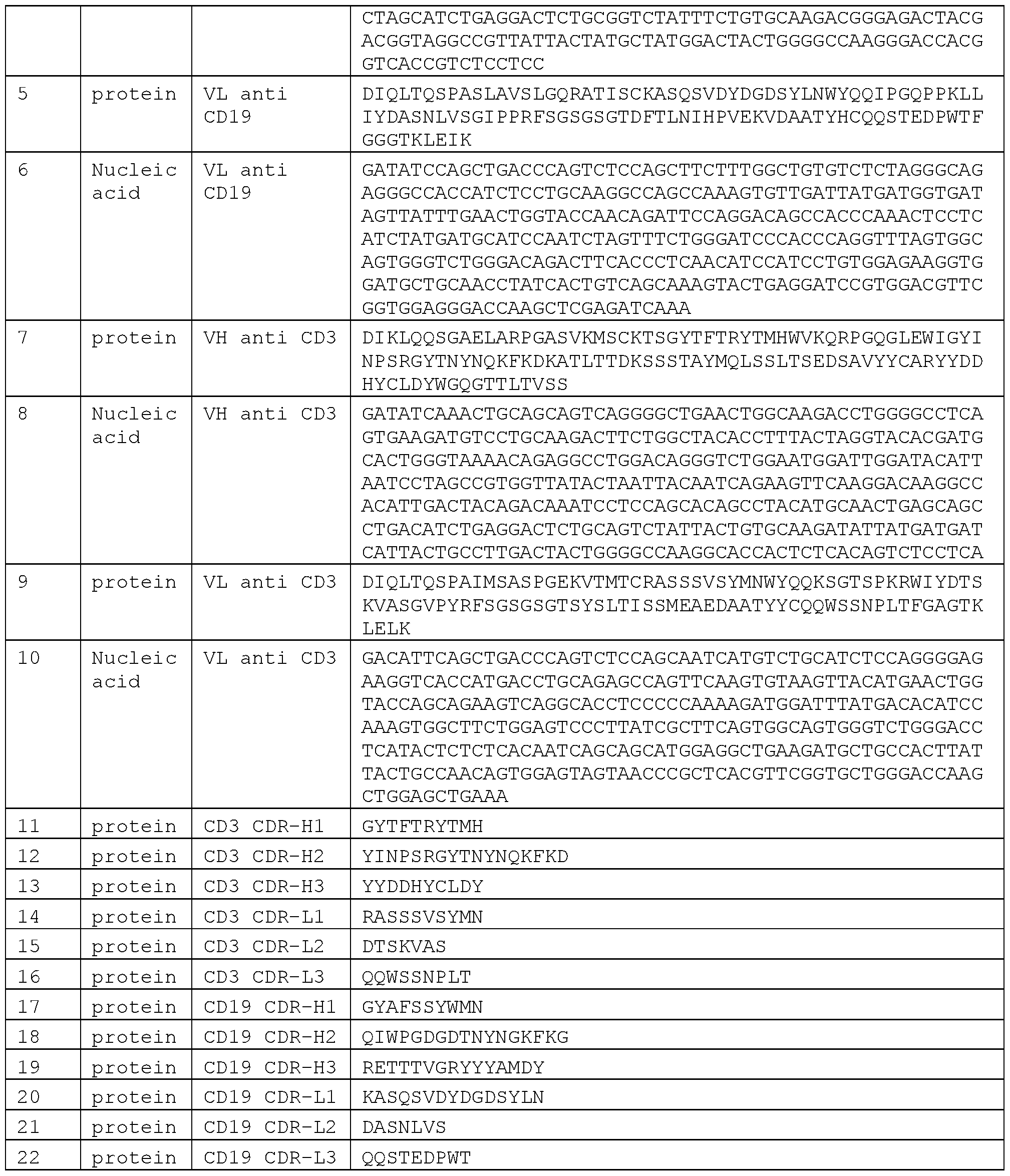
- the present invention relates to a method according to any of the preceding embodiments, wherein the T cell engaging polypeptide construct comprises the CDR regions depicted in SEQ ID NOs: 11 to 22.
- the present invention relates to a method according to any of the preceding embodiments, wherein the T cell engaging polypeptide construct comprises the VH and VL regions depicted in SEQ ID NOs: 3, 5, 7, and 9.
- the present invention relates to a method according to any of the preceding embodiments, wherein the lymphoma or leukemia is selected from the group comprising Non-Hodgkin Lymphoma and Acute Lymphoblastic Leukemia.
- the present invention relates to a method according to any of the preceding embodiments, wherein the patient has been subject to at least one of the following treatments preceding the subcutaneous administration scheme set forth in any of the preceding embodiments, wherein said preceding treatments is selected from the group comprising cIV administration of a B-cell depleting agent, particularly of blinatumomab, administration with a CD19-specific CAR T-cell therapy, and/or administration of a CD20-targeting agent, optionally preceded or in combination with a chemotherapy.
- the present invention relates to a method according to any of the preceding 1 st to 7 th , 9 th to 20 th embodiments, wherein the first quantity is 30 to 50 pg, particularly 40 pg and the patient suffers from (relapsed/refractory) B-cell precursor acute lymphoblastic leukemia.
- the present invention relates to a method according to any of the preceding 1 st to 6 th , and 8 th , 14 th to 20 th embodiments, wherein patient suffers from (relapsed/refractory, R/R) indolent Non-Hodgkin’ s Lymphoma.
- the present invention relates to a method of treating an adult patient suffering from Relapsed or Refractory B Cell Precursor Acute Lymphoblastic Leukemia (R/RB-ALL) with blinatumomab comprising the steps:
- said patient receives 40 pg of SC blinatumomab once daily on days 1-7 and then 250 pg 3 times weekly (MWF) on days 8-26;
- the present invention relates to a method of treating an adult patient suffering from Relapsed or Refractory B Cell Precursor Acute Lymphoblastic Leukemia (R/RB-ALL) with blinatumomab comprising the steps:
- said patient receives 120 pg of SC blinatumomab once daily on days 1-7 and then 250 pg 3 times weekly (MWF) on days 8-26;
- the present invention relates to a method of treating an adult patient suffering from Relapsed or Refractory B Cell Precursor Acute Lymphoblastic Leukemia (R/RB-ALL) with blinatumomab comprising the steps:
- the present invention relates to a method of treating an adult patient suffering from Relapsed or Refractory B Cell Precursor Acute Lymphoblastic Leukemia (R/RB-ALL) with blinatumomab comprising the steps:
- said patient receives 500 pg of SC blinatumomab once daily on days 1-7 and then 1000 pg 3 times weekly (MWF) on days 8-26;
- the present invention relates to a method of treating an adult patient suffering from relapsed or refractory indolent Non-Hodgkin’s Lymphoma (NHL) with blinatumomab comprising the steps:
- said patient receives about 675 pg blinatumomab subcutaneously in three doses on days 1, 3 and 5;
- a cIV step-dosing run-in period of three weeks wherein the patient is administered 9 pg/d during the first week, followed by 28 pg/d during the second week, and 112 pg/d in the third week;
- blinatumomab treatment-free period optionally followed by an additional 3 to 6 weeks long treatment cycle with blinatumomab, wherein the patient receives 9 pg/d during the first week, followed by 28 pg/d during the second week, and 112 pg/d in the third week.
- the present invention relates to uses of the herein described B cell-depleting agents, particularly blinatumumab, in the preparation of a medicament wherein said medicament is suitably adapted or prepared for administration to a patient in need thereof according to any of the above-mentioned methods / dosing regimen.
- the present invention relates to apparatus that either comprising a containment device or that can be connected with such a containment device, wherein the containment device (e.g., a syringe, a vessel, etc.) comprises an of the herein described B cell-depleting agents, particularly blinatumumab, suitably adapted or prepared for administration to a patient in need thereof according to any of the above- mentioned methods / dosing regimen.
- the containment device e.g., a syringe, a vessel, etc.
- the containment device e.g., a syringe, a vessel, etc.
- the containment device e.g., a syringe, a vessel, etc.
- the containment device e.g., a syringe, a vessel, etc.
- the containment device e.g., a syringe, a vessel, etc.
- the containment device e.g.,
- kits-of-parts that comprise dosage units suitably adapted or prepared for administration to a patient in need thereof according to any of the above-mentioned methods / dosing regimen.
- kits may comprise an injection device, e.g., a syringe, injection needles, vessels comprising liquids for reconstitution of freeze-dried active agents and/or additives, particularly for blinatumumab, or ready-prepared formulations in individual dosage units.
- Individual dosage units may be color-coded to select the appropriate dose to be administered at a given time-point of the inventive dosing regimen.
- kits may also comprise technical information in form of hard copies or in digitalized form.
- B cell non-Hodgkin lymphoma or “B cell derived non-Hodgkin lymphoma” comprises both indolent and aggressive B cell non-Hodgkin lymphoma (B NHL).
- B NHL indolent or aggressive B cell non- Hodgkin lymphoma
- Indolent B NHL are low malignant lymphomas.
- Aggressive B-NHL are high malignant lymphomas.
- the B cell non-Hodgkin lymphoma may be a follicular lymphoma, lymphoplasmacytic lymphoma, marginal zone cell lymphoma, mantle cell lymphoma (MCL), diffuse large B cell lymphoma (DLBCL), Burkitt’s lymphoma, small lymphocytic lymphoma (SLL/CLL) and any other B cell derived subtype.
- B cell leukemia as used herein may advantageously be any B cell leukaemia (e.g., chronic lymphocytic leukaemia or acute lymphocytic leukaemia).
- indolent non-Hodgkin B cell lymphoma may be treated with a T cell engaging polypeptide construct directed against both human CD3 and human CD 19 as demonstrated in the examples below.
- ALL Acute lymphoblastic leukemia
- ALL acute lymphoblastic leukemia
- ALL also known as acute lymphocytic leukemia or acute lymphoid leukemia
- ALL generally refers to an acute form of leukemia which is typically characterized by the overproduction and/or accumulation of cancerous, immature white blood cells (also referred to as lymphoblasts).
- ALL includes acute, refractory and relapsed ALL.
- refractory ALL as used herein means resistance of the ALL to conventional or standard ALL therapy, such as chemotherapy and/or hematopoietic stem cell transplantation (HSCT), i.e., the conventional or standard ALL therapy is not able to ultimately cure all ALL patients.
- HSCT hematopoietic stem cell transplantation
- relapsed ALL denotes the return of signs and symptoms of the ALL disease after a patient has enjoyed a remission.
- an ALL patient may go into remission with no sign or symptom of the ALL, remains in remission for a couple of years, but then suffers a relapse and has to be treated once again for ALL.
- ALL as used herein also includes minimal residual disease (MRD) in a patient with ALL, i.e., the presence of a small numbers of cancerous lymphoblasts remaining in the patient during treatment, or after treatment when the patient is in remission.
- MRD minimal residual disease
- ALL generally encompasses B-cell ALL and T-cell ALL.
- cancer is used herein interchangeably with the term “malignant” to designate cells that are not self-limited in their growth, are capable of invading into adjacent tissues, and may be capable of spreading to distant tissues (metastasizing).
- B-cell ALL including B-precursor ALL, such as pro-B ALL, pre-B ALL, or common ALL (cALL), and mature B-cell ALL (Burkitt leukemia).
- ALL includes both pediatric ALL and adult ALL.
- the means and methods of the present invention are in particular envisaged to be useful for treatment of relapsed and/or refractory adult B-precursor ALL.
- patient includes all mammals, but is not limited to mouse, rat, dog, horse, camel, primates, etc., primates being preferred and humans, including children and adults, being most preferred.
- subject is used interchangeably with the term “patient”. What is disclosed with reference to a “patient” herein also applies to a group of patients, mutatis mutandis.
- the term "pediatric ALL” or “pediatric ALL patient” as referred to herein denotes children aged from one month to 18 years.
- the indicated age is to be understood as the age of the children at diagnosis of the ALL disease.
- Both time intervals specifically include the upper limit and also the lower limit. This means that for example a time interval "from one month to 18 years” includes “one month” and "18 years”.
- WO 2010/052013 provides means and methods for treating pediatric or childhood ALL, particularly refractory and/or relapsed pediatric ALL.
- adult ALL or “adult ALL patient” as referred to herein denotes adults aged more than 18 years, i.e. patients aged 19, 20, 21, 22, 23, 24, 25, 30, 35, 40, or 50 years or more. Even patients with 70, 75, 80, 85, 90, 100 years or older may be treated by the methods and means of the invention.
- the indicated age is to be understood as the age of the adult at diagnosis of the ALL disease.
- WO 2010/052014 provides means and methods for treating adult ALL.
- a T cell engaging polypeptide construct may comprise at least one domain that binds to a target on a T cell surface, e.g., a part of the CD3 molecule.
- Another domain of the T cell engaging polypeptide construct may comprise at least one domain that binds to a structure on a cell that should be attacked by a T cell.
- An exemplary structure on the surface of such a cell e.g. a cancer cell, may comprise a protein such as a tumor-associated antigen.
- the T cell engaging polypeptide construct It is important for the mechanism of action of the T cell engaging polypeptide construct that it brings a T cell into proximity with another cell that expresses said structure on the surface of such a cell, e.g. a cancer cell, that expresses a tumor-associated antigen, that the T cell exerts cytolytic actions (e.g. secretes perforin or other substances produced by cytotoxic T cells, which are known in the art).
- cytolytic actions e.g. secretes perforin or other substances produced by cytotoxic T cells, which are known in the art.
- An example of a T cell engaging polypeptide construct is a bispecific T cell engager also known in the art as BiTE® molecule (which is a registered trademark of Amgen Inc.).
- the T cell engaging polypeptide construct may also be a protein that is expressed by the cytolytic T cell.
- the protein may be a non-naturally expressed T-cell receptor that is expressed as result of genetic engineering, which binds, e.g. to a tumor-associated antigen.
- T cell engaging polypeptide construct is commonly used in the context of CAR-T cell therapy.
- T cell engaging polypeptide construct means that it refers to a construct that is not normally found in nature, i.e. it was designed and produced using technological means. It is also possible that the polypeptide construct comprises non-peptidic elements, e.g. elements that are not comprised of amino acids, for example organic molecules that are toxins, linker molecules that consist of molecules that are not amino acids, or half-life extending moieties such as biotin.
- NK cell engaging polypeptides which activate NK cells to exert their cytolytic potential upon formation of a close enough contact between a target cell and an NK cell.
- the polypeptide binds to a target antigen such as CD 19 and to an NK cell-specific antigen establishing a proximity between target cell and effector cell that permits an activated NK cell to effectively lyse or otherwise kill the target cell.
- bispecific T cell engager or “single chain bispecific T cell engager” or related terms in accordance with the present invention mean T cell engager constructs resulting from joining at least two antibody variable regions in a single polypeptide chain devoid of the constant and/or Fc portion(s) present in full immunoglobulins.
- a "linker” as used herein connects V domains of the same specificity, whereas a “spacer” as used herein connects V domains of different specificities.
- a bispecific single chain T cell engager may be a construct with a total of two antibody variable regions, for example two VH regions, each capable of specifically binding to a separate antigen, and connected with one another through a short (usually less than 10 amino acids) synthetic polypeptide spacer such that the two antibody variable regions with their interposed spacer exist as a single contiguous polypeptide chain.
- Another example of a bispecific single chain T cell engager may be a single polypeptide chain with three antibody variable regions.
- two antibody variable regions may make up an scFv, wherein the two antibody variable regions are connected to one another via a synthetic polypeptide linker, the latter often being genetically engineered to be minimally immunogenic while remaining maximally resistant to proteolysis.
- This scFv is capable of specifically binding to a particular antigen, and is connected to a further antibody variable region, for example a VH region, capable of binding to a different antigen than that bound by the scFv.
- a bispecific single chain T cell engager may be a single polypeptide chain with four antibody variable regions.
- the first two antibody variable regions may form one scFv capable of binding to one antigTeen, whereas the second VH region and VL region may form a second scFv capable of binding to another antigen.
- individual antibody variable regions of one specificity may advantageously be separated by a synthetic polypeptide linker as described above, whereas the respective scFvs may advantageously be separated by a short polypeptide spacer as described above.
- Non-limiting examples of bispecific single chain T cell engagers as well as methods for producing them are shown in WO 99/54440, WO 2004/106381, Mack, J. Immunol.
- T cell engaging molecules that have more than one domain that binds to a tumor-associated antigen. This means that at least two domains can bind to at least two antigenic sides on the same or different tumor associated targets.
- the T cell engaging part of the respective molecule may bind to at least two antigens expressed by a T cell (or, as the case may be, an NK cell). These two antigens may be identical, e.g. two identical antigens on two identical cell surface proteins or two different antigens on either the same protein or on different proteins may be bound. It is noted that T cell engagers according to the present invention may comprise a half-life extending domain, such as disclosed, for example, in W02017/134140, particularly those disclosed in the claims and in Figure 1, which explicitly refers to certain Fc constructs, and T cell engagers comprising a human serum albumin component.
- human CD3 denotes an antigen that is expressed on human T cells as part of the multimolecular T cell receptor complex, the CD3 consisting of five different chains: CD3-epsilon, CD3-gamma, CD3-delta, CD3-eta and CD3 zeta.
- Clustering of CD3 on T cells e.g. by anti-CD3 antibodies leads to T cell activation similar to the binding of an antigen but independent from the clonal specificity of the T cell subset, as described above.
- a bispecific single chain T cell engager polypeptide construct specifically binding with one of its specificities the human CD3 antigen relates to a CD3 -specific construct capable of binding to the human CD3 complex expressed on human T cells and capable of inducing elimination/lysis of target cells, wherein such target cells carry/display an antigen which is bound by the other, non-CD3 -binding portion of the bispecific single chain T cell engager.
- CD3-specific binders e.g. a bispecific single chain T cell engager polypeptide construct as administered according to the pharmaceutical means and methods of the invention leads to activation of T cells as known in the art; see e.g.
- a construct appropriate for the pharmaceutical means and methods of the invention is advantageously able to eliminate/lyse target cells in vivo and/or in vitro.
- Corresponding target cells comprise cells expressing a tumor antigen, such as CD 19, which is recognized by the second specificity (i.e. the non-CD3 -binding portion of the bispecific single chain T cell engager) of the mentioned construct.
- said second specificity is for human CD19 which has already been described in WO 99/54440 or WO 2004/106381.
- each antigen-specific portion of the bispecific single chain T cell engager comprises an antibody VH region and an antibody VL region.
- Advantageous variants of this bispecific single chain T cell engager are from N terminus to C terminus:
- the term “specifically binding” or related terms such as “specificity” is/are to be understood as being characterized primarily by two parameters: a qualitative parameter (the binding epitope, or where an antibody or an inventive T cell engager binds) and a quantitative parameter (the binding affinity, or how strongly this antibody binds where it does).
- a qualitative parameter the binding epitope, or where an antibody or an inventive T cell engager binds
- a quantitative parameter the binding affinity, or how strongly this antibody binds where it does.
- Which epitope is bound by an antibody can advantageously be determined by e.g. FACS methodology, ELISA, peptide-spot epitope mapping, or mass spectroscopy.
- the strength of antibody or an inventive T cell engager binding to a particular epitope may advantageously be determined by e.g. known Biacore and/or ELISA methodologies.
- a combination of such techniques allows the calculation of a signal: noise ratio as a representative measure of binding specificity.
- the signal represents the strength of antibody or T cell engager binding to the epitope of interest
- the noise represents the strength of antibody or T cell engager binding to other, non-related epitopes differing from the epitope of interest.
- a signaknoise ratio of, for example at least 50, but preferably about 80 for a respective epitope of interest as determined e.g. by Biacore, ELISA or FACS may be taken as an indication that the antibody evaluated binds the epitope of interest in a specific manner, i.e. is a "specific binder".
- binding to/interacting with may also relate to a conformational epitope, a structural epitope or a discountinuous epitope consisting of two regions of the human target molecules or parts thereof.
- a conformational epitope is defined by two or more discrete amino acid sequences separated in the primary sequence which come together on the surface of the molecule when the polypeptide folds to the native protein (Sela, (1969) Science 166, 1365 and Laver, (1990) Cell 61, 553-6).
- discontinuous epitope means in context of the invention non-linear epitopes that are assembled from residues from distant portions of the polypeptide chain. These residues come together on the surface of the molecule when the polypeptide chain folds into a three-dimensional structure to constitute a conformational/structural epitope.
- the uses and methods of the present invention involve administration of a (therapeutically effective amount of) B cell depleting agent to a patient (or a group of patients).
- the uses and methods of the present invention relate to T cell engaging polypeptide constructs, which are the B-cell depleting agents principally used in the context of the present invention.
- the B-cell depleting agent can be transdermally, and preferably, subcutaneously.
- subcutaneous administration is used within the context of the claimed uses and methods unless reference is made to steps in the method that either precede or follow a cycle of subcutaneously administering the T cell engager polypeptide construct.
- terapéuticaally effective amount is meant an amount of the B-cell depleting agent that elicits a desired therapeutic effect, e.g., alleviation or amelioration (complete or partial) of the symptoms or condition of the patient (or group of patients), or any other desired improvement in the patient's (or group of patients’) symptoms, disease or condition.
- a desired therapeutic effect e.g., alleviation or amelioration (complete or partial) of the symptoms or condition of the patient (or group of patients), or any other desired improvement in the patient's (or group of patients’) symptoms, disease or condition.
- the exact amount dose may depend on, e.g., age, body weight, general health, sex, diet, drug interaction and the severity of the condition, as will be ascertainable with routine experimentation by those skilled in the art.
- B cell depleting agent in general refers to an agent capable of reducing and/or controlling the number of B-cells in a patient, and particularly to T cell engaging polypeptide constructs
- B- cell includes progenitor (or pre-pro) B cells, early pro (or pre-pre)-B cells, late pro (or pre-pre)-B cells, large pre-B cells, small pre-B cells, immature B cells and mature B cells.
- B cell depletion can be partial or complete, i.e. affect all B-cells or subpopulations of B- cells.
- Preferred B-cell depleting agents for use in the methods of the invention can reduce (or maintain) the level of B-cells in the blood of a patient (or group of patients) within a predefined period of time to one B-cell/ml serum or less as ascertainable by the skilled person using routine experimentation as described herein. It is in particular envisaged that B-cell depleting agents used in the methods of the invention are capable of depleting peripheral CD 19+ B-cells.
- B-cell depleting agents include, without limitation, costimulation blockers (abatacept and 7-related protein-1), cytokines (tocilizumab and baminercept), B cell receptor-targeted agents (abetimus and edratide), agents targeting CD20, CD22, CD 19, CD40-CD40L, B cell activating factor belonging to the TNF family (BAFF) or A proliferation-inducing ligand (APRIL).
- exemplary B-cell depleting agents useful in the methods of the invention include anti- CD20 agents (e.g., anti-CD20 antibodies such as rituximab, ofatumumab, ocrelizumab, veltuzumab, tositumomab, ibritumomab), anti-CD25 agents (e.g., anti-CD25 antibodies such as alemtuzumab), BAFF inhibitors (e.g., belimumab, atacicept), anti-CD154 agents (e.g.
- anti-CD20 agents e.g., anti-CD20 antibodies such as rituximab, ofatumumab, ocrelizumab, veltuzumab, tositumomab, ibritumomab
- anti-CD25 agents e.g., anti-CD25 antibodies such as alemtuzumab
- BAFF inhibitors e.g., belimumab
- anti-CD154 antibodies such as ruplizumab, toralizumab), anti-CD19 agents (e.g., MDX-1342), anti-CD22 agents (e.g., epratuzumab) and anti -thymocyte globulin (ATG).
- agents targeting CD 19 and CD22 are envisaged, such as bispecific CD19xCD22 single chain polypeptides, and particularly blinatumomab. Without wishing to be bound by theory, it is thought that blinatumomab transiently links CD19 + B cells to CD3 + T-cells, thereby inducing T-cell mediated serial lysis of B-cells and concomitant T- cell proliferation.
- Blinatumomab comprises the
- anti-CD3 CDRs of the heavy chain shown as CD3 CDR-H1 in SEQ ID NO: 11 GYTFTRYTMH
- CD3 CDR-H2 in SEQ ID NO: 12 YINPSRGYTNYNQKFKD
- CD3 CDR-H3 in SEQ ID NO: 13 YYDDHYCLDY
- Blinatumomab comprises the
- CD 19 binding variable heavy chain shown in SEQ ID NO: 3 (nucleotide sequence is shown in SEQ ID NO: 4); and/or
- CD3 binding variable heavy chain shown in SEQ ID NO: 7 (nucleotide sequence is shown in SEQ ID NO: 8); and/or (d) CD3 binding variable light chain shown in SEQ ID NO: 9 (nucleotide sequence is shown in SEQ ID NO: 10).
- Blinatumomab comprises an amino acid sequence selected from the group consisting of
- An alternative to Blinatumomab as B-cell depleting agent is a CD3 x CD 19 antibody, wherein the CD3 binding molecule thereof preferably comprises a VL region comprising CDR-L1, CDR-L2 and CDR-L3 selected from:
- CDR-L1 as depicted in SEQ ID NO: 153 of WO 2008/119567
- CDR-L2 as depicted in SEQ ID NO: 154 of WO 2008/119567
- CDR-L3 as depicted in SEQ ID NO: 155 of WO 2008/119567
- VH region comprising CDR-H 1, CDR-H2 and CDR-H3 selected from: (a) CDR-H1 as depicted in SEQ ID NO: 12 of WO 2008/119567, CDR-H2 as depicted in SEQ ID NO: 13 of WO 2008/119567 and CDR-H3 as depicted in SEQ ID NO: 14 of WO 2008/119567;
- CDR-H1 as depicted in SEQ ID NO: 156 of WO 2008/119567
- CDR-H2 as depicted in SEQ ID NO: 157 of WO 2008/119567
- CDR-H3 as depicted in SEQ ID NO: 158 of WO 2008/119567
- CDR-H1 as depicted in SEQ ID NO: 174 of WO 2008/119567
- CDR-H2 as depicted in SEQ ID NO: 175 of WO 2008/119567
- CDR-H3 as depicted in SEQ ID NO: 176 of WO 2008/119567.
- the CD3 binding molecule of a CD3 x CD19 antibody may preferably comprise a VL region selected from the group consisting of a VL region as depicted in SEQ ID NO: 35, 39, 125, 129, 161 or 165 of WO 2008/119567; and/or comprise a VH region selected from the group consisting of a VH region as depicted in SEQ ID NO: 15, 19, 33, 37, 51, 55, 69, 73, 87, 91, 105, 109, 123, 127, 141, 145, 159, 163, 177 or 181 of WO 2008/119567.
- the CD3 binding molecule of a CD3 x CD19 antibody may preferably comprise a VL region and a VH region selected from the group consisting of:
- the CD3 binding molecule of a CD3 x CD19 antibody may preferably comprise an amino acid sequence selected from the group consisting of SEQ ID NOs: 23, 25, 41, 43, 59, 61, 77, 79, 95, 97, 113, 115, 131, 133, 149, 151, 167, 169, 185 or 187 of WO 2008/119567.
- the CD 19 binding molecule of a CD 19 x CD3 antibody is preferably characterized by the VH and/or VL regions or CDRs as described herein for Blinatumomab.
- a B-cell depleting agent is suitable for use in the inventive methods is readily ascertainable by the skilled person in the art using routine experimentation.
- the choice of a suitable B-cell depleting agent can depend on the type of leukemia or lymphoma to be treated, and in particular the expression profde of the expanded B-cell population(s). For example, if the the leukemia is ALL and is characterized by an expanding CD19 + B cell population, use of a B-cell depleting agent targeting CD 19 is likely to be useful.
- B-cell numbers can be evaluated through several techniques available in the art, e.g. using the white blood cell (WBC, or leukocytes) count and differential.
- WBC white blood cell
- White blood cells can be counted manually in hemocytometes (Neubauer chamber) or with automated counters.
- a drop of blood can be thinly spread over a glass slide, air dried, and stained with a Romanofsky stain, most commonly the Wright or May-Grunewald-Giemsa technique. Cells are then counted and classified using morphologic examination and/or histochemistry as described in Blumenreich MS. The White Blood Cell and Differential Count. In: Walker HK, Hall WD, Hurst JW, editors.
- leukocytes are isolated from a blood sample and stained with fluorescent-labeled antibodies against lymphocyte cell surface markers and subsequently analyzed by flow cytometry as described in the appended examples. Percentages of each type of lymphocyte are multiplied with absolute lymphocyte numbers to calculate absolute cell numbers for each lymphocyte subpopulation.
- the number of B-cells in the blood of the treated patient (or treated group of patients) remains or falls below one B-cell/ml serum within a predefined period of time after the initial treatment with said B-cell depleting agent.
- the initial treatment with the applied B-cell depleting agent preferably means the first treatment with said applied B-cell depleting agent, i.e. the patient (or group of patients) has not received the applied B-cell depleting agent before. Said patient (or group of patients) may, however, have received further ALL treatments as described elsewhere herein before. It is also conceivable that the patient (or group of patients) has received another B-cell depleting agent before the initial treatment with the applied B-cell depleting agent.
- a second B-cell depleting agent may be used.
- the initial treatment with the second B-cell depleting agent will then start on the first day of treating the patient (or group of patients) with the second B-cell depleting agent. That is, it is conceivable to apply the methods of the invention repeatedly (i.e., in several cycles) with different B-cell depleting agents, the “initial treatment” starting at the day of first treatment with the B-cell depleting agent of the respective cycle.
- B- cell depleting agent also includes the same B-cell depleting agent as used in a preceding cycle, but in a different formulation, concentrations, or the like. It is also conceivable to repeat several cycles of treatment with the same B-cell depleting agent until the desired level of B-cells in the blood of the patient (or group of patients) is achieved.
- the “predefined period of time” in which the number of B-cells remains or falls below one B-cell/ml serum is envisaged to be 15 days or less, i.e. 14, 13, 12, 11, 10, 9, 8, 7, 6, 5, 4, 3 days or less.
- the length of the predefined period of time is ascertainable by the skilled person in the art and may depend on the applied B-cell depleting agent, its concentration, treatment regimen, the type of leukemia or lymphoma, e.g. ALL, to be treated, and the like. Without wishing to be bound by theory, it is thought that when the number of B-cells can be adjusted to the desired number of one B-cell/ml serum or less within the predefined period of time, subsequent treatment is likely to be effective.
- Subsequent treatment may comprise further treatment with the B-cell depleting agent applied in the inventive method, with another B-cell depleting agent, further treatment as described herein or combinations thereof after the B-cell numbers have been successfully reduced to (or maintained at) one B-cell per ml/serum or less within the predefined period of time. It is in general also conceivable that no subsequent treatment is necessary.
- the methods of the invention therefore allow stratification of patients (or groups of patients), i.e.
- patients sorting patients (or groups of patients) into those who may or may benefit from subsequent therapy. Also, it is envisaged that patients (or groups of patients) in which the number of B-cells in the blood can be reduced to or maintained at one B-cell/ml serum or less within the predefined period of time are likely to benefit from subsequent ALL therapy, while patients in which the number of B-cells in the blood exceeds one B-cell/ml serum within the predefined period of time, are not likely to benefit from subsequent therapy.
- the number of B-cells in the blood of a patient (or group of patients) having received a B-cell depleting agent is monitor ed/determined after a first predefined period of time after the initial treatment with said B cell depleting agent.
- Means and methods for determining/monitoring the number of B-cells in the blood of a patient (or group of patients) have been defined elsewhere herein.
- the first period of time is shorter than the predefined period of time as defined elsewhere herein, and is preferably between 2 and 14 days, i.e. 2, 3, 4, 5, 6, 7, 8, 9, 10, 11, 12, 13, or 14 days.
- Step (b) of the inventive method is useful in determining whether or not the patient is responsive to the administration of said B-cell depleting agent, i.e. in stratifying patients in to those likely to benefit from subsequent treatment after the first predefined period of time and those who are not. If the number of B -cells remains or falls below one B cell/ml serum within said first predefined period of time, then subsequent treatment is likely to be therapeutically effective.
- the B-cell depleting agent e.g. fails to reduce or maintain the number of B-cells at the desired level of one B-cell/ml serum or less within the first predefined period of time, then the B-cell depleting agent can be adjusted such that the number of B- cells in the blood of the patient (or group of patients) remains or falls below one B cell/ml serum within a predefined period of time of preferably 15 days or less after the initial treatment with said B cell depleting agent.
- the first predefined period of time and the predefined period of time can be of any length, as long as the first predefined period of time is shorter than the predefined period of time. Both periods of time start with the first day of initial treatment with the B-cell depleting agent applied in the inventive methods, i.e. on the same day.
- the skilled practitioner will readily be able to determine the desired length of the first predefined period of time, depending on, e.g., the B-cell depleting agent, its concentration, formulation, treatment regiment, the type, the physical constitution and findings of the patient (or group of patients), and the predefined period of time.
- Methods of the invention may further involve “adjusting” the B-cell depleting agent.
- the term “adjusting” refers to an intentional modification of the B-cell depleting agent in order to achieve a number one B-cell/ml serum or less in the treated patient (or group of patients).
- the number of B-cells in the blood of an patient is used to adjust the dosage or treatment regimen with the B-cell depleting agent such that the number of B-cells in the blood of said patient remains or falls below one B cell/ml serum within a (first) predefined period of time after the initial treatment with said B cell depleting agent.
- the adjustment (intentional modification) may involve modification of the dosage, treatment regimen, formulation, or the like.
- B-cell depleting agent may be administered, or the B-cell depleting agent may be administered for a prolonged period of time.
- the exact dosage of B-cell depleting will depend on the purpose of the treatment (e.g. remission maintenance vs. acute flare of disease), route of administration, age, body weight, general health, sex, diet, time of administration, drug interaction and the severity of the condition, and will be ascertainable by one skilled in the art using known techniques.
- any modification is conceivable as long as it preferably results in the number of B-cells in the blood of the treated patient (group of patients) being reduced to or maintained at a number of one B-cell/ml serum or less within the predefined period of time.
- the modification may also include additionally applying further treatments as described herein, and/or administering another B-cell depleting agent.
- Hematopoietic stem cell transplantation is a common ALL treatment.
- the term generally refers to transplantation of hematopoietic stem cells, usually derived from bone marrow or blood, and comprises autologous (i.e., the stem cells are derived from the patient) and allogeneic (i.e., the stem cells are derived from a donor) HSCT.
- autologous i.e., the stem cells are derived from the patient
- allogeneic HSCT is generally preferred. It is also envisaged that the uses and methods of the present invention can be applied before or after HSCT, or both, or in between two HSCT treatments.
- chemotherapeutic treatment refers to a treatment with an antineoplastic agent or the combination of more than one of these agents into a standardized treatment regimen.
- chemotherapeutic treatment comprises any antineoplastic agent including small sized organic molecules, peptides, oligonucleotides and the like.
- Agents included in the definition of chemotherapy are, without limitation, alkylating agents, e.g.
- methotrexate pemetrexed, fluorouracil, capecitabine, cytarabine, gemcitabine, decitabine, Vidaza, fludarabine, nelarabine, cladribine, clofarabine, pentostatin, thioguanine, mercaptopurine; anti-microtubule agents e.g. vincristine, vinblastine, vinorelbine, vindesine, vinflunine, paclitaxel, docetaxel, podophyllotoxin; topoisomerase inhibitors, e.g.
- irinotecan topotecan, etoposide, doxorubicin, mitoxantrone, teniposide, novobiocin, merbarone, aclarubicin; cytotoxic antibiotics, e.g. actinomycin, bleomycin, plicamycin, mitomycin, doxorubicin, daunorubicin, epirubicin, idarubicin, pirarubicin, aclarubicin, and mitoxantrone.
- cytotoxic antibiotics e.g. actinomycin, bleomycin, plicamycin, mitomycin, doxorubicin, daunorubicin, epirubicin, idarubicin, pirarubicin, aclarubicin, and mitoxantrone.
- Further treatment also includes radiation therapy.
- CNS treatment or prophylaxis is also envisaged in order to prevent malignant cells from spreading in the CNS, e.g. by intrathecal chemotherapy and/or radiation therapy of the brain and spinal cord.
- treatment in all its grammatical forms includes therapeutic or prophylactic treatment of leukemia and lymphoma, e.g. of ALL or NHL.
- a “therapeutic or prophylactic treatment” comprises prophylactic treatments aimed at the complete prevention of clinical and/or pathological manifestations or therapeutic treatment aimed at amelioration or remission of clinical and/or pathological manifestations.
- treatment thus also includes the amelioration or prevention of leukemia and lymphoma, e.g. ALL.
- treatment as used herein means in the broadest sense medical procedures or applications that are intended to relieve illness.
- the administration of a B-cell depleting agent (prepared for administration to a patient) as described herein is for the treatment, amelioration or elimination of leukemia or lymphoma in patients.
- a pharmaceutical composition particularly refers to a composition suitable for administering to a human or animal, i.e., a composition containing components which are pharmaceutically acceptable.
- a pharmaceutical composition comprises a B-cell depleting agent together with one or more pharmaceutical excipients.
- the composition may also comprise further agents as described elsewhere herein.
- compositions of the invention preferably comprise a therapeutically effective amount of B-cell depleting agent and can be formulated in various forms, e.g.
- ointment in solid, liquid, gaseous or lyophilized form and may be, inter alia, in the form of an ointment, a cream, transdermal patches, a gel, powder, a tablet, solution, an aerosol, granules, pills, suspensions, emulsions, capsules, syrups, liquids, elixirs, extracts, tincture or fluid extracts or in a form which is particularly suitable for the desired method of administration.
- the subcutaneous formulation according to the present invention comprises, in addition to the T cell engaging polypeptide construct, potassium phosphate (preferably 10 mM), sucrose (preferably 2 % (w/v)), mannitol (preferably 4 % (w/v)), sulfobutylether betacyclodextrin (preferably 1 % (w/v)), polysorbate 80 (preferably 0.01 % (w/v)), pH 7.0.
- potassium phosphate preferably 10 mM
- sucrose preferably 2 % (w/v)
- mannitol preferably 4 % (w/v)
- sulfobutylether betacyclodextrin preferably 1 % (w/v)
- polysorbate 80 preferably 0.01 % (w/v)
- the subcutaneous formulation according to the present invention comprises, in addition to the T cell engaging polypeptide construct, L- glutamic acid (preferably 10 mM), sucrose (9% (w/v)), polysorbate 80 (preferably 0.01% (w/v)), pH 4.2.
- Example 1 A Phase lb Study of Blinatumomab Regimen Including Subcutaneous (SC) Administration in Relapsed/Refractory (R/R) Indolent Non -Hodgkin’s Lymphoma (NHL)
- Patients taking part in this study are >18 y with indolent NHL (follicular, marginal zone, lymphoplasmacytic, mantle cell, or small lymphocytic) that was primary refractory (1+ prior line), relapsed (within 1 y of first response), or that had responded to initial therapy for >1 y and relapsed after 2+ lines, including an anti-CD20 monoclonal antibody.
- indolent NHL follicular, marginal zone, lymphoplasmacytic, mantle cell, or small lymphocytic
- the primary endpoint determined was safety and tolerability of SC blinatumomab; secondary endpoints included pharmacokinetics (PK), estimating the maximum tolerated dose (MTD), i.e., the highest dose at which ⁇ 1/6 pts had a dose-limiting toxicity (DLT), and efficacy (NCT 02961881).
- PK pharmacokinetics
- MTD maximum tolerated dose
- DLT dose-limiting toxicity
- NCT 02961881 efficacy
- Patients (n 29) had a median (range) age of 64 (42-75) years, 55% were male, 90% Caucasian, with follicular LIIIA (76%), marginal zone (10%), mantle cell (10%) and lymphoplasmacytic lymphoma (3%) subtypes; no patients had prior allo- hematopoietic stem cell transplant (HSCT), 38% had prior auto-HSCT.
- HSCT allo- hematopoietic stem cell transplant
- 5 discontinued (D/C) blinatumomab due to AEs (n 3), patient request (1), and disease progression (1); 26 patients completed the study; patients received a median (range) of 5 (3-10) doses.
- AEs leading to D/C in SC treatment included neurologic events of aphasia and seizure.
- DLTs Dose-Limiting-Toxicities
- MTD Maximum tolerated dose
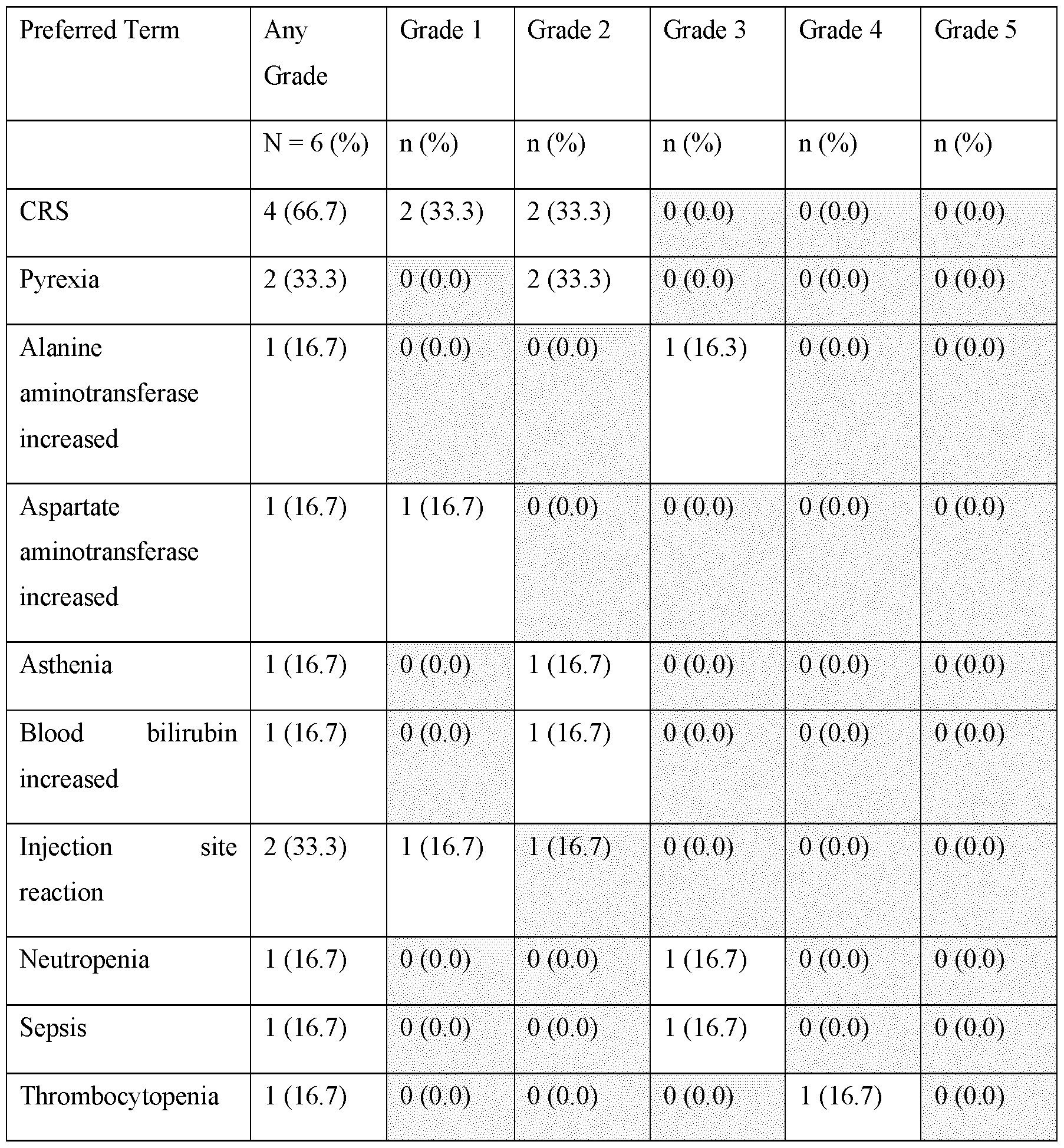
- cytokine release syndrome 4; 0.
- One patient had grade 1 injection site erythema. Anti-blinatumomab antibodies have not been detected.
- Example 2 Subcutaneous Administration of Blinatumomab in Patients with Relapsed/Refractory B-cell Precursor Acute Lymphoblastic Leukemia
- Relapsed disease including untreated relapse (any stage) refractory relapse, or relapse after first salvage therapy, relapse after allogeneic hematopoietic stem cell transplant
- Each cycle was 34 days long and included a 26-day treatment period and an 8-day treatment-free interval.
- patients received either 40 pg, 120 pg, 250 pg, 500 pg or the Maximum Tolerated Dose (MTD) 3 times weekly of SC blinatumomab once daily (QD) on days 1-7 and then 250 pg 3 times weekly (MWF) on days 8-26 in Cohorts 1 and 2, 500 pg in Cohort 3, 1000 pg in Cohort 4, or the MTD; in subsequent cycles, patients received 250 pg (Cohorts 1 and 2), 500 pg (Cohort 3), 1000 pg (Cohort 4), 3 times weekly or the MTD at 2 times weekly during the treatment period (as depicted in Figure 2).
- MTD Maximum Tolerated Dose
- FIG. 4 A) shows an inventive dose escalation scheme that is used when patients do not show any DLT (doselimiting toxicity) of CRS.
- a de- escalation scheme is used (as shown in Fig. 4 B)). For example, when a patient experiences a DLT of CRS in cohort 2, it is possible to de-escalate the doses according to the scheme shown in cohorts 2.1 and 2.2 in Figure 4 B).
- Blinatumomab serum concentrations, lymphocyte numbers, and serum cytokine concentrations were assessed before each dose and at regular intervals post-dose in treatment cycles 1 and 2 as per protocol.
- a complete remission is defined as less than 5% blasts in the bone marrow no evidence of disease full recovery of peripheral blood counts platelet count > 100,000/pl absolute neutrophil count > 1,000/pl
- a complete remission with partial hematological recovery is defined as less than 5% blasts in the bone marrow no evidence of disease partial recovery of peripheral blood counts platelet count > 50,000/ pl and absolute neutrophil count > 500/ pl
- a complete remission with incomplete hematological recovery is defined as less than 5% blasts in the bone marrow no evidence of disease and incomplete recovery of peripheral blood counts platelet count > 100,000/pl or absolute neutrophil count > 1000/pl (but not both)
- a minimal residual disease (MRD) response is defined as the detection of less than 10-4 leukemic cells detectable by flow cytometry or PCR
- Figure 3 shows the change in pharmacodynamic markers in response to SC blinatumomab treatment.
- peripheral immune cell CD3+ CD8+CD69+ T cells
- FIG 3a, 3b A decline in CD 19+ B cell numbers to below the detection limit was noted within ⁇ 48 hours of start of treatment
- Fig 3c A transient elevation in cytokine (IL-6, IL-10, IFN-y) levels which peaked at ⁇ 6-24 hours post dose was noted (Fig 3d shows changes in IFN-y levels following start of treatment).
- Cohort 4 Eight patients were enrolled. Several weeks after the initiation of Cohort 4, and as observed in Cohorts 1-3, the subjects in this clinical study are negative for anti-blinatumomab antibodies. There is also no increased immunogenicity in the subcutaneous setting compared with continuous intravenous (cIV) administration. Current anti-drug antibody (ADA) rate in this study is consistent with the historical ADA rate to blinatumomab (cIV) across several clinical studies, and aggregate data across dose escalation shows no evidence for immunogenicity to subcutaneously administered blinatumomab.
- ADA anti-drug antibody
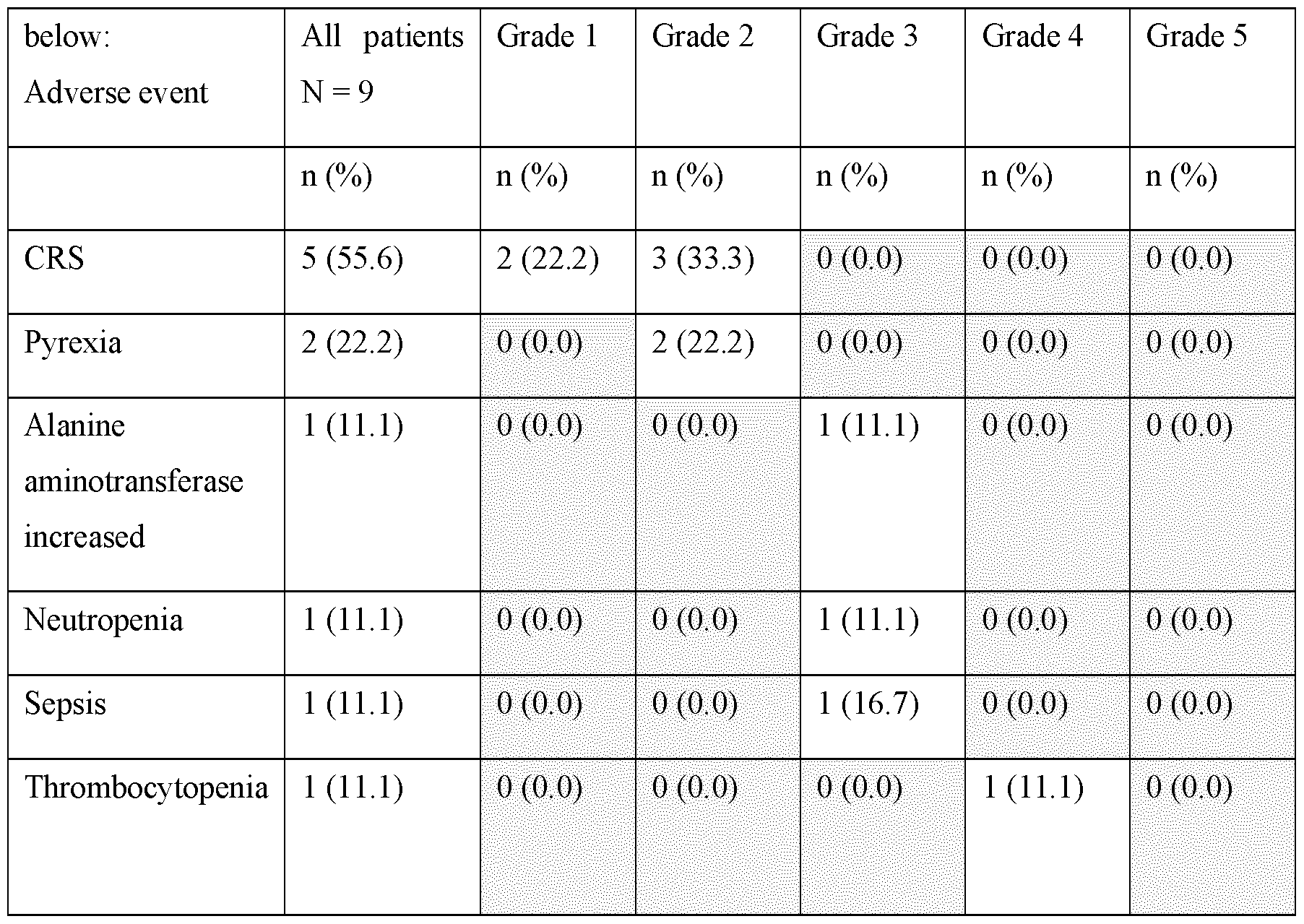
- cohort 4 500 pg subcutaneous on days 1-7, i.e., week 1; 1000 pg subcutaneously administered 3 times weekly in weeks 2 to 4) no dose-limiting toxicities (DLTs) have been observed. Of the 7/8 DLT evaluable subjects (early September 2022), 5 completed at least 1 cycle, and 5/7 (71%) DLT-evaluable subjects showed complete remissions (MRD negative). No clinically significant vital sign findings and laboratory findings (e.g., haematological, chemistry, coagulation, urinalysis, CSF analysis) were noted.
- DLTs dose-limiting toxicities
- TIW dosing 3.1- and 3.2-fold increases in mean Cmax and AUC, respectively, for a 4-fold increase in dose from 250 pg to 1000 pg at steady state following day 10 dosing.
- NT Neurotoxicity NE non evaluable aCRS occurred within first 3 days of treatment. bOne Cohort 4 subject experienced a Gr 3 CRS (after DI dose) and Gr 3 NT (after 5th TIW dose)
Landscapes
- Health & Medical Sciences (AREA)
- Chemical & Material Sciences (AREA)
- Immunology (AREA)
- Life Sciences & Earth Sciences (AREA)
- Organic Chemistry (AREA)
- General Health & Medical Sciences (AREA)
- Medicinal Chemistry (AREA)
- Veterinary Medicine (AREA)
- Public Health (AREA)
- Animal Behavior & Ethology (AREA)
- Pharmacology & Pharmacy (AREA)
- Molecular Biology (AREA)
- Proteomics, Peptides & Aminoacids (AREA)
- Biochemistry (AREA)
- Genetics & Genomics (AREA)
- Biophysics (AREA)
- Epidemiology (AREA)
- Chemical Kinetics & Catalysis (AREA)
- General Chemical & Material Sciences (AREA)
- Hematology (AREA)
- Oncology (AREA)
- Nuclear Medicine, Radiotherapy & Molecular Imaging (AREA)
- Engineering & Computer Science (AREA)
- Oil, Petroleum & Natural Gas (AREA)
- Inorganic Chemistry (AREA)
- Dermatology (AREA)
- Medicines That Contain Protein Lipid Enzymes And Other Medicines (AREA)
- Medicines Containing Antibodies Or Antigens For Use As Internal Diagnostic Agents (AREA)
- Peptides Or Proteins (AREA)
- Medicinal Preparation (AREA)
Abstract
Description


Claims
Priority Applications (12)
| Application Number | Priority Date | Filing Date | Title |
|---|---|---|---|
| US18/704,120 US20250282864A1 (en) | 2021-10-15 | 2022-10-14 | Subcutaneous administration of cd19-binding t cell engagers |
| CR20240206A CR20240206A (en) | 2021-10-15 | 2022-10-14 | Subcutaneous administration of cd19-binding t cell engaging antibodies |
| MX2024004617A MX2024004617A (en) | 2021-10-15 | 2022-10-14 | SUBCUTANEOUS ADMINISTRATION OF CD19-BINDING T LYMPHOCYTE-ENGAGING ANTIBODIES. |
| EP22805799.8A EP4415829A1 (en) | 2021-10-15 | 2022-10-14 | Subcutaneous administration of cd19-binding t cell engaging antibodies |
| CN202280064962.6A CN118076386A (en) | 2021-10-15 | 2022-10-14 | Subcutaneous administration of T cell engaging antibodies that bind CD19 |
| CA3235228A CA3235228A1 (en) | 2021-10-15 | 2022-10-14 | Subcutaneous administration of cd19-binding t cell engagers |
| JP2024521807A JP2024537288A (en) | 2021-10-15 | 2022-10-14 | Subcutaneous administration of CD19-binding T cell-attracting antibodies |
| PE2024000826A PE20241619A1 (en) | 2021-10-15 | 2022-10-14 | SUBCUTANEOUS ADMINISTRATION OF CD19-BINDING T-CELL ENGAGED ANTIBODIES |
| AU2022364154A AU2022364154A1 (en) | 2021-10-15 | 2022-10-14 | Subcutaneous administration of cd19-binding t cell engaging antibodies |
| IL311714A IL311714A (en) | 2021-10-15 | 2022-10-14 | Subcutaneous administration of cd19-binding t cell engaging antibodies |
| KR1020247015416A KR20240099263A (en) | 2021-10-15 | 2022-10-14 | Subcutaneous administration of CD19 binding T cell engaging antibodies |
| CONC2024/0006099A CO2024006099A2 (en) | 2021-10-15 | 2024-05-14 | Subcutaneous administration of cd19-binding t-cell coupling antibodies |
Applications Claiming Priority (4)
| Application Number | Priority Date | Filing Date | Title |
|---|---|---|---|
| US202163256056P | 2021-10-15 | 2021-10-15 | |
| US63/256,056 | 2021-10-15 | ||
| US202163281992P | 2021-11-22 | 2021-11-22 | |
| US63/281,992 | 2021-11-22 |
Publications (1)
| Publication Number | Publication Date |
|---|---|
| WO2023062188A1 true WO2023062188A1 (en) | 2023-04-20 |
Family
ID=84360007
Family Applications (1)
| Application Number | Title | Priority Date | Filing Date |
|---|---|---|---|
| PCT/EP2022/078638 Ceased WO2023062188A1 (en) | 2021-10-15 | 2022-10-14 | Subcutaneous administration of cd19-binding t cell engaging antibodies |
Country Status (15)
| Country | Link |
|---|---|
| US (1) | US20250282864A1 (en) |
| EP (1) | EP4415829A1 (en) |
| JP (1) | JP2024537288A (en) |
| KR (1) | KR20240099263A (en) |
| AU (1) | AU2022364154A1 (en) |
| CA (1) | CA3235228A1 (en) |
| CL (1) | CL2024001075A1 (en) |
| CO (1) | CO2024006099A2 (en) |
| CR (1) | CR20240206A (en) |
| IL (1) | IL311714A (en) |
| MX (1) | MX2024004617A (en) |
| PE (1) | PE20241619A1 (en) |
| TW (1) | TW202332695A (en) |
| UY (1) | UY39983A (en) |
| WO (1) | WO2023062188A1 (en) |
Cited By (2)
| Publication number | Priority date | Publication date | Assignee | Title |
|---|---|---|---|---|
| WO2025101672A1 (en) | 2023-11-06 | 2025-05-15 | City Of Hope | Methods comprising oncolytic viruses expressing cd19t and bispecific t cell engagers |
| WO2025181224A1 (en) | 2024-03-01 | 2025-09-04 | Amgen Research (Munich) Gmbh | Cd19-selective t cell engaging molecule for treating autoimmune diseases/ autoimmune conditions |
Citations (8)
| Publication number | Priority date | Publication date | Assignee | Title |
|---|---|---|---|---|
| WO1999054440A1 (en) | 1998-04-21 | 1999-10-28 | Micromet Gesellschaft Für Biomedizinische Forschung Mbh | CD19xCD3 SPECIFIC POLYPEPTIDES AND USES THEREOF |
| WO2004106381A1 (en) | 2003-05-31 | 2004-12-09 | Micromet Ag | Pharmaceutical compositions comprising bispecific anti-cd3, anti-cd19 antibody constructs for the treatment of b-cell related disorders |
| WO2008119567A2 (en) | 2007-04-03 | 2008-10-09 | Micromet Ag | Cross-species-specific cd3-epsilon binding domain |
| WO2010052014A1 (en) | 2008-11-07 | 2010-05-14 | Micromet Ag | Treatment of acute lymphoblastic leukemia |
| WO2010052013A1 (en) | 2008-11-07 | 2010-05-14 | Micromet Ag | Treatment of pediatric acute lymphoblastic leukemia |
| WO2016036678A1 (en) * | 2014-09-02 | 2016-03-10 | Medimmune, Llc | Formulations of bispecific antibodies |
| WO2017095267A1 (en) * | 2015-12-01 | 2017-06-08 | Общество С Ограниченной Ответственностью "Международный Биотехнологический Центр "Генериум" (Ооо "Мбц "Генериум") | Bispecific antibodies against cd3*cd19 |
| WO2017134140A1 (en) | 2016-02-03 | 2017-08-10 | Amgen Research (Munich) Gmbh | Bispecific t cell engaging antibody constructs |
-
2022
- 2022-10-14 WO PCT/EP2022/078638 patent/WO2023062188A1/en not_active Ceased
- 2022-10-14 CA CA3235228A patent/CA3235228A1/en active Pending
- 2022-10-14 MX MX2024004617A patent/MX2024004617A/en unknown
- 2022-10-14 PE PE2024000826A patent/PE20241619A1/en unknown
- 2022-10-14 TW TW111139062A patent/TW202332695A/en unknown
- 2022-10-14 JP JP2024521807A patent/JP2024537288A/en active Pending
- 2022-10-14 IL IL311714A patent/IL311714A/en unknown
- 2022-10-14 UY UY0001039983A patent/UY39983A/en unknown
- 2022-10-14 EP EP22805799.8A patent/EP4415829A1/en active Pending
- 2022-10-14 US US18/704,120 patent/US20250282864A1/en active Pending
- 2022-10-14 CR CR20240206A patent/CR20240206A/en unknown
- 2022-10-14 KR KR1020247015416A patent/KR20240099263A/en active Pending
- 2022-10-14 AU AU2022364154A patent/AU2022364154A1/en active Pending
-
2024
- 2024-04-11 CL CL2024001075A patent/CL2024001075A1/en unknown
- 2024-05-14 CO CONC2024/0006099A patent/CO2024006099A2/en unknown
Patent Citations (8)
| Publication number | Priority date | Publication date | Assignee | Title |
|---|---|---|---|---|
| WO1999054440A1 (en) | 1998-04-21 | 1999-10-28 | Micromet Gesellschaft Für Biomedizinische Forschung Mbh | CD19xCD3 SPECIFIC POLYPEPTIDES AND USES THEREOF |
| WO2004106381A1 (en) | 2003-05-31 | 2004-12-09 | Micromet Ag | Pharmaceutical compositions comprising bispecific anti-cd3, anti-cd19 antibody constructs for the treatment of b-cell related disorders |
| WO2008119567A2 (en) | 2007-04-03 | 2008-10-09 | Micromet Ag | Cross-species-specific cd3-epsilon binding domain |
| WO2010052014A1 (en) | 2008-11-07 | 2010-05-14 | Micromet Ag | Treatment of acute lymphoblastic leukemia |
| WO2010052013A1 (en) | 2008-11-07 | 2010-05-14 | Micromet Ag | Treatment of pediatric acute lymphoblastic leukemia |
| WO2016036678A1 (en) * | 2014-09-02 | 2016-03-10 | Medimmune, Llc | Formulations of bispecific antibodies |
| WO2017095267A1 (en) * | 2015-12-01 | 2017-06-08 | Общество С Ограниченной Ответственностью "Международный Биотехнологический Центр "Генериум" (Ооо "Мбц "Генериум") | Bispecific antibodies against cd3*cd19 |
| WO2017134140A1 (en) | 2016-02-03 | 2017-08-10 | Amgen Research (Munich) Gmbh | Bispecific t cell engaging antibody constructs |
Non-Patent Citations (16)
| Title |
|---|
| "Clinical Methods: The History, Physical, and Laboratory Examinations", 1990 |
| AMGEN: "A Phase 1b Open-Label Study Investigating the Safety and Pharmacokinetics of Administration of Subcutaneous Blinatumomab for the Treatment of Relapsed/Refractory Indolent Non-Hodgkin's Lymphoma - NCT02961881", CLINICALTRIALS.GOV, 11 November 2016 (2016-11-11), XP093018498, Retrieved from the Internet <URL:https://clinicaltrials.gov/ct2/show/study/NCT02961881?term=NCT02961881&draw=2&rank=1> [retrieved on 20230127] * |
| AMGEN: "A Study of Subcutaneous Blinatumomab Administration in Acute Lymphoblastic Leukemia (ALL) Patients - nct04521231", CLINICALTRIALS.GOV, 20 August 2000 (2000-08-20), XP093018550, Retrieved from the Internet <URL:https://clinicaltrials.gov/ct2/show/NCT04521231?term=nct04521231&draw=2&rank=1> [retrieved on 20230127] * |
| BRIIHL, J. IMMUNOL., vol. 166, 2001, pages 2420 - 2426 |
| HUMMEL HORST-DIETER ET AL: "Pasotuxizumab, a BiTE immune therapy for castration-resistant prostate cancer: Phase I, dose-escalation study findings", IMMUNOTHERAPY, vol. 13, no. 2, 1 February 2021 (2021-02-01), GB, pages 125 - 141, XP055868015, ISSN: 1750-743X, DOI: 10.2217/imt-2020-0256 * |
| KUFER, CANCER IMMUNOL. IMMUNOTHER., vol. 45, 1997, pages 193 - 7 |
| LAVER, CELL, vol. 61, 1990, pages 553 - 6 |
| LOFFLER, BLOOD, vol. 95, no. 6, 2000, pages 2098 - 103 |
| MACK, J. IMMUNOL., vol. 158, 1997, pages 3965 - 70 |
| MACK, PNAS, vol. 92, 1995, pages 7021 - 5 |
| MARTÍNEZ SÁNCHEZ PILAR ET AL: "Safety and Efficacy of Subcutaneous (SC) Blinatumomab for the Treatment of Adults with Relapsed or Refractory B Cell Precursor Acute Lymphoblastic Leukemia (R/R B-ALL)", BLOOD, vol. 138, no. Supplement 1, 5 November 2021 (2021-11-05), US, pages 2303 - 2303, XP093018212, ISSN: 0006-4971, Retrieved from the Internet <URL:https://ashpublications.org/blood/article/138/Supplement%201/2303/478470/Safety-and-Efficacy-of-Subcutaneous-SC> DOI: 10.1182/blood-2021-150018 * |
| SCHLERETH BERND ET AL: "Feasibility of repeated subcutaneous delivery supports a new route of administration for treating cancer patients with EpCAM-specific BiTE antibody", AMERICAN ASSOCIATION FOR CANCER RESEARCH. PROCEEDINGS OF THE ANNUAL MEETING, AMERICAN ASSOCIATION FOR CANCER RESEARCH, US, vol. 49, 1 April 2008 (2008-04-01), pages 567, XP009175471, ISSN: 0197-016X * |
| SELA, SCIENCE, vol. 166, 1969, pages 1365 |
| VIARDOT ANDREAS ET AL: "Concepts in immuno-oncology: tackling B cell malignancies with CD19-directed bispecific T cell engager therapies", ANNALS OF HEMATOLOGY, BERLIN, DE, vol. 99, no. 10, 27 August 2020 (2020-08-27), pages 2215 - 2229, XP037240639, ISSN: 0939-5555, [retrieved on 20200827], DOI: 10.1007/S00277-020-04221-0 * |
| WONG H ET AL: "Encouraging pharmacokinetic (PK)/pharmacodynamic (PD) results of subcutaneous (SC) blinatumomab in relapsed or refractory (R/R) indolent non-hodgkin's lymphoma (I-NHL) and r/r acute lymphoblastic leukemia (ALL) patients (PTS) indicate that patient convenient SC dosing is a viable alternative to cont", CLINICAL PHARMACOLOGY AND THERAPEUTICS, vol. 111, no. S1, 7 February 2022 (2022-02-07), US, XP093018547, ISSN: 0009-9236, Retrieved from the Internet <URL:https://onlinelibrary.wiley.com/doi/full-xml/10.1002/cpt.2521> DOI: 10.1002/cpt.2521 * |
| ZUGMAIER GERHARD ET AL: "Clinical overview of anti-CD19 BiTE and ex vivo data from anti-CD33 BiTE as examples for retargeting T cells in hematologic malignancies", MOLECULAR IMMUNOLOGY, PERGAMON, GB, vol. 67, no. 2, 13 April 2015 (2015-04-13), pages 58 - 66, XP029246900, ISSN: 0161-5890, DOI: 10.1016/J.MOLIMM.2015.02.033 * |
Cited By (2)
| Publication number | Priority date | Publication date | Assignee | Title |
|---|---|---|---|---|
| WO2025101672A1 (en) | 2023-11-06 | 2025-05-15 | City Of Hope | Methods comprising oncolytic viruses expressing cd19t and bispecific t cell engagers |
| WO2025181224A1 (en) | 2024-03-01 | 2025-09-04 | Amgen Research (Munich) Gmbh | Cd19-selective t cell engaging molecule for treating autoimmune diseases/ autoimmune conditions |
Also Published As
| Publication number | Publication date |
|---|---|
| JP2024537288A (en) | 2024-10-10 |
| EP4415829A1 (en) | 2024-08-21 |
| CL2024001075A1 (en) | 2024-08-09 |
| UY39983A (en) | 2023-04-14 |
| PE20241619A1 (en) | 2024-08-07 |
| MX2024004617A (en) | 2024-06-19 |
| IL311714A (en) | 2024-05-01 |
| CO2024006099A2 (en) | 2024-05-20 |
| KR20240099263A (en) | 2024-06-28 |
| AU2022364154A1 (en) | 2024-04-04 |
| US20250282864A1 (en) | 2025-09-11 |
| TW202332695A (en) | 2023-08-16 |
| CR20240206A (en) | 2024-11-08 |
| CA3235228A1 (en) | 2023-04-20 |
Similar Documents
| Publication | Publication Date | Title |
|---|---|---|
| US20220088196A1 (en) | Means and Methods for Treating Tumorous Diseases | |
| EP3292153B1 (en) | Combination of a cd30xcd16a antibody with an anti-pd-1 antagonistic antibody for therapy | |
| US20250282864A1 (en) | Subcutaneous administration of cd19-binding t cell engagers | |
| AU2020267378A1 (en) | Methods of administering chimeric antigen receptor immunotherapy | |
| WO2020232165A1 (en) | Bispecific anti-cd3 x cd20 antibodies and uses thereof | |
| CN115916818A (en) | Anti-CD19 antibodies and multispecific binding proteins | |
| TW202340259A (en) | Dosage regimens for anti-cd19 agents and uses thereof | |
| CA3224890A1 (en) | Lag-3 antagonist therapy for hematological cancer | |
| CN118076386A (en) | Subcutaneous administration of T cell engaging antibodies that bind CD19 | |
| EP3298042A1 (en) | B-cell depletion as a diagnostic marker | |
| CN118324910A (en) | Application of CCR8 Antibody | |
| AU2013202905A1 (en) | Means and Methods for the Treatment of Tumorous Diseases |
Legal Events
| Date | Code | Title | Description |
|---|---|---|---|
| 121 | Ep: the epo has been informed by wipo that ep was designated in this application |
Ref document number: 22805799 Country of ref document: EP Kind code of ref document: A1 |
|
| WWE | Wipo information: entry into national phase |
Ref document number: 2022364154 Country of ref document: AU Ref document number: 809186 Country of ref document: NZ Ref document number: AU2022364154 Country of ref document: AU |
|
| WWE | Wipo information: entry into national phase |
Ref document number: 202280064962.6 Country of ref document: CN Ref document number: 311714 Country of ref document: IL |
|
| ENP | Entry into the national phase |
Ref document number: 2022364154 Country of ref document: AU Date of ref document: 20221014 Kind code of ref document: A |
|
| WWE | Wipo information: entry into national phase |
Ref document number: 2401002264 Country of ref document: TH |
|
| ENP | Entry into the national phase |
Ref document number: 2024521807 Country of ref document: JP Kind code of ref document: A |
|
| WWE | Wipo information: entry into national phase |
Ref document number: 3235228 Country of ref document: CA |
|
| WWE | Wipo information: entry into national phase |
Ref document number: 12024550896 Country of ref document: PH |
|
| WWE | Wipo information: entry into national phase |
Ref document number: 000826-2024 Country of ref document: PE Ref document number: MX/A/2024/004617 Country of ref document: MX |
|
| REG | Reference to national code |
Ref country code: BR Ref legal event code: B01A Ref document number: 112024007289 Country of ref document: BR |
|
| WWE | Wipo information: entry into national phase |
Ref document number: DZP2024000377 Country of ref document: DZ |
|
| WWE | Wipo information: entry into national phase |
Ref document number: 202417037994 Country of ref document: IN Ref document number: NC2024/0006099 Country of ref document: CO |
|
| WWE | Wipo information: entry into national phase |
Ref document number: 2022805799 Country of ref document: EP |
|
| NENP | Non-entry into the national phase |
Ref country code: DE |
|
| WWP | Wipo information: published in national office |
Ref document number: NC2024/0006099 Country of ref document: CO |
|
| WWE | Wipo information: entry into national phase |
Ref document number: 11202402441Q Country of ref document: SG |
|
| ENP | Entry into the national phase |
Ref document number: 2022805799 Country of ref document: EP Effective date: 20240515 |
|
| ENP | Entry into the national phase |
Ref document number: 112024007289 Country of ref document: BR Kind code of ref document: A2 Effective date: 20240415 |
|
| WWP | Wipo information: published in national office |
Ref document number: 18704120 Country of ref document: US |