WO2023061930A1 - Therapeutic rna for lung cancer - Google Patents
Therapeutic rna for lung cancer Download PDFInfo
- Publication number
- WO2023061930A1 WO2023061930A1 PCT/EP2022/078081 EP2022078081W WO2023061930A1 WO 2023061930 A1 WO2023061930 A1 WO 2023061930A1 EP 2022078081 W EP2022078081 W EP 2022078081W WO 2023061930 A1 WO2023061930 A1 WO 2023061930A1
- Authority
- WO
- WIPO (PCT)
- Prior art keywords
- amino acid
- acid sequence
- seq
- rna
- nucleotide sequence
- Prior art date
- Legal status (The legal status is an assumption and is not a legal conclusion. Google has not performed a legal analysis and makes no representation as to the accuracy of the status listed.)
- Ceased
Links
Classifications
-
- A—HUMAN NECESSITIES
- A61—MEDICAL OR VETERINARY SCIENCE; HYGIENE
- A61K—PREPARATIONS FOR MEDICAL, DENTAL OR TOILETRY PURPOSES
- A61K39/00—Medicinal preparations containing antigens or antibodies
- A61K39/0005—Vertebrate antigens
- A61K39/0011—Cancer antigens
- A61K39/001166—Adhesion molecules, e.g. NRCAM, EpCAM or cadherins
-
- A—HUMAN NECESSITIES
- A61—MEDICAL OR VETERINARY SCIENCE; HYGIENE
- A61K—PREPARATIONS FOR MEDICAL, DENTAL OR TOILETRY PURPOSES
- A61K39/00—Medicinal preparations containing antigens or antibodies
- A61K39/0005—Vertebrate antigens
- A61K39/0011—Cancer antigens
- A61K39/001184—Cancer testis antigens, e.g. SSX, BAGE, GAGE or SAGE
-
- A—HUMAN NECESSITIES
- A61—MEDICAL OR VETERINARY SCIENCE; HYGIENE
- A61K—PREPARATIONS FOR MEDICAL, DENTAL OR TOILETRY PURPOSES
- A61K39/00—Medicinal preparations containing antigens or antibodies
- A61K39/0005—Vertebrate antigens
- A61K39/0011—Cancer antigens
- A61K39/001184—Cancer testis antigens, e.g. SSX, BAGE, GAGE or SAGE
- A61K39/001186—MAGE
-
- A—HUMAN NECESSITIES
- A61—MEDICAL OR VETERINARY SCIENCE; HYGIENE
- A61K—PREPARATIONS FOR MEDICAL, DENTAL OR TOILETRY PURPOSES
- A61K39/00—Medicinal preparations containing antigens or antibodies
- A61K39/0005—Vertebrate antigens
- A61K39/0011—Cancer antigens
- A61K39/001184—Cancer testis antigens, e.g. SSX, BAGE, GAGE or SAGE
- A61K39/001189—PRAME
-
- A—HUMAN NECESSITIES
- A61—MEDICAL OR VETERINARY SCIENCE; HYGIENE
- A61K—PREPARATIONS FOR MEDICAL, DENTAL OR TOILETRY PURPOSES
- A61K39/00—Medicinal preparations containing antigens or antibodies
- A61K39/385—Haptens or antigens, bound to carriers
-
- A—HUMAN NECESSITIES
- A61—MEDICAL OR VETERINARY SCIENCE; HYGIENE
- A61K—PREPARATIONS FOR MEDICAL, DENTAL OR TOILETRY PURPOSES
- A61K39/00—Medicinal preparations containing antigens or antibodies
- A61K39/395—Antibodies; Immunoglobulins; Immune serum, e.g. antilymphocytic serum
- A61K39/39533—Antibodies; Immunoglobulins; Immune serum, e.g. antilymphocytic serum against materials from animals
- A61K39/39566—Antibodies; Immunoglobulins; Immune serum, e.g. antilymphocytic serum against materials from animals against immunoglobulins, e.g. anti-idiotypic antibodies
-
- A—HUMAN NECESSITIES
- A61—MEDICAL OR VETERINARY SCIENCE; HYGIENE
- A61K—PREPARATIONS FOR MEDICAL, DENTAL OR TOILETRY PURPOSES
- A61K45/00—Medicinal preparations containing active ingredients not provided for in groups A61K31/00 - A61K41/00
- A61K45/06—Mixtures of active ingredients without chemical characterisation, e.g. antiphlogistics and cardiaca
-
- A—HUMAN NECESSITIES
- A61—MEDICAL OR VETERINARY SCIENCE; HYGIENE
- A61K—PREPARATIONS FOR MEDICAL, DENTAL OR TOILETRY PURPOSES
- A61K9/00—Medicinal preparations characterised by special physical form
- A61K9/0012—Galenical forms characterised by the site of application
- A61K9/0019—Injectable compositions; Intramuscular, intravenous, arterial, subcutaneous administration; Compositions to be administered through the skin in an invasive manner
-
- A—HUMAN NECESSITIES
- A61—MEDICAL OR VETERINARY SCIENCE; HYGIENE
- A61P—SPECIFIC THERAPEUTIC ACTIVITY OF CHEMICAL COMPOUNDS OR MEDICINAL PREPARATIONS
- A61P35/00—Antineoplastic agents
-
- C—CHEMISTRY; METALLURGY
- C07—ORGANIC CHEMISTRY
- C07K—PEPTIDES
- C07K16/00—Immunoglobulins [IGs], e.g. monoclonal or polyclonal antibodies
- C07K16/18—Immunoglobulins [IGs], e.g. monoclonal or polyclonal antibodies against material from animals or humans
- C07K16/28—Immunoglobulins [IGs], e.g. monoclonal or polyclonal antibodies against material from animals or humans against receptors, cell surface antigens or cell surface determinants
- C07K16/2803—Immunoglobulins [IGs], e.g. monoclonal or polyclonal antibodies against material from animals or humans against receptors, cell surface antigens or cell surface determinants against the immunoglobulin superfamily
- C07K16/2818—Immunoglobulins [IGs], e.g. monoclonal or polyclonal antibodies against material from animals or humans against receptors, cell surface antigens or cell surface determinants against the immunoglobulin superfamily against CD28 or CD152
-
- A—HUMAN NECESSITIES
- A61—MEDICAL OR VETERINARY SCIENCE; HYGIENE
- A61K—PREPARATIONS FOR MEDICAL, DENTAL OR TOILETRY PURPOSES
- A61K39/00—Medicinal preparations containing antigens or antibodies
- A61K2039/505—Medicinal preparations containing antigens or antibodies comprising antibodies
-
- A—HUMAN NECESSITIES
- A61—MEDICAL OR VETERINARY SCIENCE; HYGIENE
- A61K—PREPARATIONS FOR MEDICAL, DENTAL OR TOILETRY PURPOSES
- A61K39/00—Medicinal preparations containing antigens or antibodies
- A61K2039/51—Medicinal preparations containing antigens or antibodies comprising whole cells, viruses or DNA/RNA
- A61K2039/53—DNA (RNA) vaccination
-
- A—HUMAN NECESSITIES
- A61—MEDICAL OR VETERINARY SCIENCE; HYGIENE
- A61K—PREPARATIONS FOR MEDICAL, DENTAL OR TOILETRY PURPOSES
- A61K39/00—Medicinal preparations containing antigens or antibodies
- A61K2039/54—Medicinal preparations containing antigens or antibodies characterised by the route of administration
-
- A—HUMAN NECESSITIES
- A61—MEDICAL OR VETERINARY SCIENCE; HYGIENE
- A61K—PREPARATIONS FOR MEDICAL, DENTAL OR TOILETRY PURPOSES
- A61K39/00—Medicinal preparations containing antigens or antibodies
- A61K2039/555—Medicinal preparations containing antigens or antibodies characterised by a specific combination antigen/adjuvant
- A61K2039/55511—Organic adjuvants
- A61K2039/55555—Liposomes; Vesicles, e.g. nanoparticles; Spheres, e.g. nanospheres; Polymers
-
- A—HUMAN NECESSITIES
- A61—MEDICAL OR VETERINARY SCIENCE; HYGIENE
- A61K—PREPARATIONS FOR MEDICAL, DENTAL OR TOILETRY PURPOSES
- A61K39/00—Medicinal preparations containing antigens or antibodies
- A61K2039/60—Medicinal preparations containing antigens or antibodies characteristics by the carrier linked to the antigen
- A61K2039/6031—Proteins
- A61K2039/6037—Bacterial toxins, e.g. diphteria toxoid [DT], tetanus toxoid [TT]
-
- A—HUMAN NECESSITIES
- A61—MEDICAL OR VETERINARY SCIENCE; HYGIENE
- A61K—PREPARATIONS FOR MEDICAL, DENTAL OR TOILETRY PURPOSES
- A61K39/00—Medicinal preparations containing antigens or antibodies
- A61K2039/60—Medicinal preparations containing antigens or antibodies characteristics by the carrier linked to the antigen
- A61K2039/6031—Proteins
- A61K2039/605—MHC molecules or ligands thereof
-
- A—HUMAN NECESSITIES
- A61—MEDICAL OR VETERINARY SCIENCE; HYGIENE
- A61K—PREPARATIONS FOR MEDICAL, DENTAL OR TOILETRY PURPOSES
- A61K39/00—Medicinal preparations containing antigens or antibodies
- A61K2039/70—Multivalent vaccine
-
- A—HUMAN NECESSITIES
- A61—MEDICAL OR VETERINARY SCIENCE; HYGIENE
- A61K—PREPARATIONS FOR MEDICAL, DENTAL OR TOILETRY PURPOSES
- A61K39/00—Medicinal preparations containing antigens or antibodies
- A61K2039/80—Vaccine for a specifically defined cancer
- A61K2039/86—Lung
-
- C—CHEMISTRY; METALLURGY
- C12—BIOCHEMISTRY; BEER; SPIRITS; WINE; VINEGAR; MICROBIOLOGY; ENZYMOLOGY; MUTATION OR GENETIC ENGINEERING
- C12N—MICROORGANISMS OR ENZYMES; COMPOSITIONS THEREOF; PROPAGATING, PRESERVING, OR MAINTAINING MICROORGANISMS; MUTATION OR GENETIC ENGINEERING; CULTURE MEDIA
- C12N2830/00—Vector systems having a special element relevant for transcription
- C12N2830/50—Vector systems having a special element relevant for transcription regulating RNA stability, not being an intron, e.g. poly A signal
Definitions
- This disclosure relates to the field of RNA to treat lung cancer, in particular non-small-cell lung carcinoma (NSCLC).
- Lung cancer is the third most frequent malignancy in women and the second most frequent malignancy in men.
- NSCLC accounts for about 85% of all lung cancers.
- compositions, uses, and methods for treatment of lung cancers are disclosed herein.
- Administration of therapeutic RNAs to a patient having lung cancer disclosed herein can reduce tumor size, prolong time to progressive disease, and/or protect against metastasis and/or recurrence of the tumor and ultimately extend survival time.
- the present invention generally embraces the immunotherapeutic treatment of a subject comprising the administration of RNA, i.e., vaccine RNA, encoding a set of amino acid sequences, i.e., vaccine antigens, each of said amino acid sequences comprising a tumor antigen, an immunogenic variant thereof, or an immunogenic fragment of the tumor antigen or the immunogenic variant thereof, i.e., an antigenic peptide or protein.
- the vaccine antigen comprises an epitope of a tumor antigen for inducing an immune response against the tumor antigen in the subject.
- RNA encoding vaccine antigen is administered to provide (following expression of the polynucleotide by appropriate target cells) antigen for induction, i.e., stimulation, priming and/or expansion, of an immune response which is targeted to target antigen (tumor antigen) or a procession product thereof.
- the immune response which is to be induced according to the present disclosure is a T cell-mediated immune response.
- the immune response is an anti-cancer, in particular anti-lung cancer immune response such as an anti-non-small-cell lung carcinoma (NSCLC) immune response.
- the vaccine RNA treatment described herein is combined with additional treatments comprising administration of a further therapeutic agent other than the vaccine RNA described herein.
- such further therapeutic agent comprises one or more immune checkpoint inhibitors, one or more chemotherapeutic agents, or a combination thereof.
- the vaccine described herein comprises as the active principle single-stranded RNA that may be translated into the respective protein upon entering cells of a recipient.
- the RNA may contain one or more structural elements optimized for maximal efficacy of the RNA with respect to stability and translational efficiency (5' cap, 5' UTR, 3' UTR, poly(A)-tail). In one embodiment, the RNA contains all of these elements.
- beta-S-ARCA(Dl) m2 7,2 ' °GppSpG
- the 5'-UTR sequence of the human alpha-globin mRNA optionally with an optimized 'Kozak sequence' to increase translational efficiency may be used.
- 3'-UTR sequence a combination of two sequence elements (Fl element) derived from the "amino terminal enhancer of split" (AES) mRNA (called F) and the mitochondrial encoded 12S ribosomal RNA (called I) placed between the coding sequence and the poly(A)-tail to assure higher maximum protein levels and prolonged persistence of the mRNA may be used. These were identified by an ex vivo selection process for sequences that confer RNA stability and augment total protein expression (see WO 2017/060314, herein incorporated by reference).
- a poly(A)-tail measuring 110 nucleotides in length, consisting of a stretch of 30 adenosine residues, followed by a 10 nucleotide linker sequence (of random nucleotides) and another 70 adenosine residues may be used.
- This poly(A)-tail sequence was designed to enhance RNA stability and translational efficiency.
- a vaccine antigen described herein comprises an amino acid sequence which breaks immunological tolerance.
- the amino acid sequence which breaks immunological tolerance may be fused to the C-terminus of the vaccine sequence, i.e., antigenic peptide or protein, either directly or separated by a linker.
- the amino acid sequence which breaks immunological tolerance may link the antigenic peptide or protein and a MITD as further described below.
- the amino acid sequence which breaks immunological tolerance may be RNA encoded.
- the antigen-targeting RNAs are applied together with RNA coding for an amino acid sequence which breaks immunological tolerance.
- RNA coding for an amino acid sequence which breaks immunological tolerance may contain structural elements optimized for maximal efficacy of the RNA with respect to stability and translational efficiency (5' cap, 5' UTR, 3' UTR, poly(A)-tail) described above for the antigenencoding RNA.
- the amino acid sequence which breaks immunological tolerance comprises helper epitopes.
- the helper epitopes may be tetanus toxoid- derived, e.g., P2P16 amino acid sequences derived from the tetanus toxoid (TT) of Clostridium tetani. These sequences may support to overcome self-tolerance mechanisms for efficient induction of immune responses to self-antigens by providing tumor-unspecific T-cell help during priming.
- the tetanus toxoid heavy chain includes epitopes that can bind promiscuously to MHC class II alleles and induce CD4+ memory T cells in almost all tetanus vaccinated individuals.
- TT helper epitopes with tumor-associated antigens is known to improve the immune stimulation compared to the application of tumor-associated antigen alone by providing CD4+ mediated T-cell help during priming.
- two peptide sequences known to contain promiscuously binding helper epitopes may be used to ensure binding to as many MHC class II alleles as possible, e.g., P2 and P16.
- sec secretory signal peptide
- MITD MHC class I trafficking domain
- HLA-B51 haplotype A2, B27/B51, Cw2/Cw3
- Sec may correspond to the 78 bp fragment coding for the secretory signal peptide, which guides translocation of the nascent polypeptide chain into the endoplasmatic reticulum.
- MITD may correspond to the transmembrane and cytoplasmic domain of the MHC class I molecule, also called MHC class I trafficking domain.
- Antigens such as CLDN6 having their own secretory signal peptide and transmembrane domain may not require addition of fusion tags. Sequences coding for short linker peptides predominantly consisting of the amino acids glycine (G) and serine (S), as commonly used for fusion proteins may be used as GS/Linkers.
- the vaccine RNA may be complexed with liposomes to generate serum-stable RNA-lipoplexes (RNA(LIP)) for intravenous (i.v.) administration.
- RNA(LIP) serum-stable RNA-lipoplexes
- RNA(LIP) serum-stable RNA-lipoplexes
- APCs antigen-presenting cells
- RNA lipoplex particles may be prepared using liposomes that may be obtained by injecting a solution of lipids in ethanol into water or a suitable aqueous phase.
- the aqueous phase has an acidic pH.
- the aqueous phase comprises acetic acid, e.g., in an amount of about 5 mM.
- Liposomes may be used for preparing RNA lipoplex particles by mixing the liposomes with RNA.
- the liposomes and RNA lipoplex particles comprise at least one cationic lipid and at least one additional lipid.
- the at least one cationic lipid comprises l,2-di-O-octadecenyl-3- trimethylammonium propane (DOTMA).
- the at least one additional lipid comprises l,2-di-(9Z-octadecenoyl)-sn-glycero-3-phosphoethanolamine (DOPE).
- the at least one cationic lipid comprises l,2-di-O-octadecenyl-3- trimethylammonium propane (DOTMA) and the at least one additional lipid comprises 1,2-di- (9Z-octadecenoyl)-sn-glycero-3-phosphoethanolamine (DOPE).
- the liposomes and RNA lipoplex particles comprise l,2-di-O-octadecenyl-3-trimethylammonium propane (DOTMA) and l,2-di-(9Z-octadecenoyl)-sn-glycero-3-phosphoethanolamine (DOPE).
- DOTMA l,2-di-O-octadecenyl-3-trimethylammonium propane
- DOPE l,2-di-(9Z-octadecenoyl)-sn-glycero-3-phosphoethanolamine
- the molar ratio of the at least one cationic lipid to the at least one additional lipid is about 2:1.
- the charge ratio of positive charges to negative charges in the RNA lipoplex particles is from about 1.6:2 to about 1:2, or about 1.6:2 to about 1.1:2.
- the charge ratio of positive charges to negative charges in the RNA lipoplex particles at physiological pH is about 1.6:2.0, about 1.5:2.0, about 1.4:2.0, about 1.3:2.0, about 1.2:2.0, about 1.1:2.0, or about 1:2.0.
- vaccine RNA is co-formulated as lipoplex particles with an RNA encoding an amino acid sequence which breaks immunological tolerance.
- the invention relates to a composition or medical preparation comprising: (a) at least one RNA, wherein the at least one RNA encodes the following amino acid sequences:
- Kita-kyushu lung cancer antigen 1 Kita-kyushu lung cancer antigen 1 (KK-LC-1), an immunogenic variant thereof, or an immunogenic fragment of the KK-LC-1 or the immunogenic variant thereof;
- MAGE-A4 Melanoma antigen 4
- a further therapeutic agent selected from an immune checkpoint inhibitor, a chemotherapeutic agent, or a combination thereof.
- the at least one RNA further encodes one or both of the following amino acid sequences:
- the at least one RNA further encodes: (vi) an amino acid sequence comprising Melanoma antigen Cl (MAGE-CI), an immunogenic variant thereof, or an immunogenic fragment of the MAGE-CI or the immunogenic variant thereof.
- MAGE-CI Melanoma antigen Cl
- the at least one RNA encodes:
- Kita-kyushu lung cancer antigen 1 Kita-kyushu lung cancer antigen 1 (KK-LC-1), an immunogenic variant thereof, or an immunogenic fragment of the KK-LC-1 or the immunogenic variant thereof;
- MAGE-A4 Melanoma antigen 4
- immunogenic variant thereof an immunogenic fragment of the MAGE-A4 or the immunogenic variant thereof;
- MAGE-CI Melanoma antigen Cl
- each of the amino acid sequences under (i), (ii), (iii), (iv), (v), (vi), or (vii) is encoded by a separate RNA.
- the RNA encoding the amino acid sequence under (i) comprises the nucleotide sequence of SEQ ID NO: 3 or 4, or a nucleotide sequence having at least 99%, 98%, 97%, 96%, 95%, 90%, 85%, or 80% identity to the nucleotide sequence of SEQ ID NO: 3 or 4; and/or (ii) the amino acid sequence under (i) comprises the amino acid sequence of SEQ ID NO: 1 or 2, or an amino acid sequence having at least 99%, 98%, 97%, 96%, 95%, 90%, 85%, or 80% identity to the amino acid sequence of SEQ ID NO: 1 or 2.
- the RNA encoding the amino acid sequence under (ii) comprises the nucleotide sequence of SEQ ID NO: 7 or 8, or a nucleotide sequence having at least 99%, 98%, 97%, 96%, 95%, 90%, 85%, or 80% identity to the nucleotide sequence of SEQ ID NO: 7 or 8; and/or
- the amino acid sequence under (ii) comprises the amino acid sequence of SEQ ID NO: 5 or 6, or an amino acid sequence having at least 99%, 98%, 97%, 96%, 95%, 90%, 85%, or 80% identity to the amino acid sequence of SEQ ID NO: 5 or 6.
- the RNA encoding the amino acid sequence under (iii) comprises the nucleotide sequence of SEQ ID NO: 11 or 12, or a nucleotide sequence having at least 99%, 98%, 97%, 96%, 95%, 90%, 85%, or 80% identity to the nucleotide sequence of SEQ ID NO: 11 or 12; and/or
- the amino acid sequence under (iii) comprises the amino acid sequence of SEQ ID NO: 9 or 10, or an amino acid sequence having at least 99%, 98%, 97%, 96%, 95%, 90%, 85%, or 80% identity to the amino acid sequence of SEQ ID NO: 9 or 10.
- the RNA encoding the amino acid sequence under (iv) comprises the nucleotide sequence of SEQ ID NO: 15 or 16, or a nucleotide sequence having at least 99%, 98%, 97%, 96%, 95%, 90%, 85%, or 80% identity to the nucleotide sequence of SEQ ID NO: 15 or 16; and/or
- the amino acid sequence under (iv) comprises the amino acid sequence of SEQ ID NO: 13 or 14, or an amino acid sequence having at least 99%, 98%, 97%, 96%, 95%, 90%, 85%, or 80% identity to the amino acid sequence of SEQ ID NO: 13 or 14.
- the RNA encoding the amino acid sequence under (v) comprises the nucleotide sequence of SEQ ID NO: 19 or 20, or a nucleotide sequence having at least 99%, 98%, 97%, 96%, 95%, 90%, 85%, or 80% identity to the nucleotide sequence of SEQ ID NO: 19 or 20; and/or
- the amino acid sequence under (v) comprises the amino acid sequence of SEQ ID NO: 17 or 18, or an amino acid sequence having at least 99%, 98%, 97%, 96%, 95%, 90%, 85%, or 80% identity to the amino acid sequence of SEQ ID NO: 17 or 18.
- the RNA encoding the amino acid sequence under (vi) comprises the nucleotide sequence of SEQ ID NO: 23 or 24, or a nucleotide sequence having at least 99%, 98%, 97%, 96%, 95%, 90%, 85%, or 80% identity to the nucleotide sequence of SEQ ID NO: 23 or 24; and/or
- the amino acid sequence under (vi) comprises the amino acid sequence of SEQ ID NO: 21 or 22, or an amino acid sequence having at least 99%, 98%, 97%, 96%, 95%, 90%, 85%, or 80% identity to the amino acid sequence of SEQ ID NO: 21 or 22.
- the RNA encoding the amino acid sequence under (vii) comprises the nucleotide sequence of SEQ ID NO: 27 or 28, or a nucleotide sequence having at least 99%, 98%, 97%, 96%, 95%, 90%, 85%, or 80% identity to the nucleotide sequence of SEQ ID NO: 27 or 28; and/or
- the amino acid sequence under (vii) comprises the amino acid sequence of SEQ ID NO: 25 or 26, or an amino acid sequence having at least 99%, 98%, 97%, 96%, 95%, 90%, 85%, or 80% identity to the amino acid sequence of SEQ ID NO: 25 or 26.
- At least one amino acid sequence under (i), (ii), (iii), (iv), (v), (vi), or (vii) comprises an amino acid sequence which breaks immunological tolerance and/or at least one RNA is co-administered with RNA encoding an amino acid sequence which breaks immunological tolerance.
- each amino acid sequence under (i), (ii), (iii), (iv), (v), (vi), or (vii) comprises an amino acid sequence which breaks immunological tolerance and/or each RNA is co-administered with RNA encoding an amino acid sequence which breaks immunological tolerance.
- the amino acid sequence which breaks immunological tolerance comprises helper epitopes, preferably tetanus toxoid-derived helper epitopes.
- the RNA encoding the amino acid sequence which breaks immunological tolerance comprises the nucleotide sequence of SEQ ID NO: 34, or a nucleotide sequence having at least 99%, 98%, 97%, 96%, 95%, 90%, 85%, or 80% identity to the nucleotide sequence of SEQ ID NO: 34; and/or
- the amino acid sequence which breaks immunological tolerance comprises the amino acid sequence of SEQ ID NO: 33, or an amino acid sequence having at least 99%, 98%, 97%, 96%, 95%, 90%, 85%, or 80% identity to the amino acid sequence of SEQ ID NO: 33.
- At least one of the amino acid sequences under (i), (ii), (iii), (iv), (v), (vi), or (vii) is encoded by a coding sequence which is codon-optimized and/or the G/C content of which is increased compared to wild type coding sequence, wherein the codon-optimization and/or the increase in the G/C content preferably does not change the sequence of the encoded amino acid sequence.
- each of the amino acid sequences under (i), (iiL (iii), (iv), (v), (vi), or (vii) is encoded by a coding sequence which is codon-optimized and/or the G/C content of which is increased compared to wild type coding sequence, wherein the codon-optimization and/or the increase in the G/C content preferably does not change the sequence of the encoded amino acid sequence.
- At least one RNA is a modified RNA, in particular a stabilized mRNA.
- at least one RNA comprises a modified nucleoside in place of at least one uridine.
- at least one RNA comprises a modified nucleoside in place of each uridine.
- each RNA comprises a modified nucleoside in place of at least one uridine.
- each RNA comprises a modified nucleoside in place of each uridine.
- the modified nucleoside is independently selected from pseudouridine (i
- At least one RNA comprises the 5' cap m2 7 ' 2 O Gpp s p(5')G. In one embodiment, each RNA comprises the 5' cap m2 7 ' 2 0 Gpp s p(5')G.
- At least one RNA comprises a 5' UTR comprising the nucleotide sequence of SEQ ID NO: 35, or a nucleotide sequence having at least 99%, 98%, 97%, 96%, 95%, 90%, 85%, or 80% identity to the nucleotide sequence of SEQ ID NO: 35.
- each RNA comprises a 5' UTR comprising the nucleotide sequence of SEQ ID NO: 35, or a nucleotide sequence having at least 99%, 98%, 97%, 96%, 95%, 90%, 85%, or 80% identity to the nucleotide sequence of SEQ ID NO: 35.
- At least one amino acid sequence under (i), (ii), (iii), (iv), (v), (vi), or (vii) comprises an amino acid sequence enhancing antigen processing and/or presentation.
- each amino acid sequence under (iii), (iv), (v), (vi), or (vii) comprises an amino acid sequence enhancing antigen processing and/or presentation.
- each amino acid sequence under (i), (ii), (iii), (iv), (v), (vi), or (vii) comprises an amino acid sequence enhancing antigen processing and/or presentation.
- the amino acid sequence enhancing antigen processing and/or presentation comprises an amino acid sequence corresponding to the transmembrane and cytoplasmic domain of a MHC molecule, preferably a MHC class I molecule.
- the RNA encoding the amino acid sequence enhancing antigen processing and/or presentation comprises the nucleotide sequence of SEQ ID NO: 32, or a nucleotide sequence having at least 99%, 98%, 97%, 96%, 95%, 90%, 85%, or 80% identity to the nucleotide sequence of SEQ ID NO: 32; and/or
- the amino acid sequence enhancing antigen processing and/or presentation comprises the amino acid sequence of SEQ ID NO: 31, or an amino acid sequence having at least 99%, 98%, 97%, 96%, 95%, 90%, 85%, or 80% identity to the amino acid sequence of SEQ ID NO: 31.
- the amino acid sequence enhancing antigen processing and/or presentation further comprises an amino acid sequence coding for a secretory signal peptide.
- the RNA encoding the secretory signal peptide comprises the nucleotide sequence of SEQ ID NO: 30, or a nucleotide sequence having at least 99%, 98%, 97%, 96%, 95%, 90%, 85%, or 80% identity to the nucleotide sequence of SEQ ID NO: 30; and/or
- the secretory signal peptide comprises the amino acid sequence of SEQ ID NO: 29, or an amino acid sequence having at least 99%, 98%, 97%, 96%, 95%, 90%, 85%, or 80% identity to the amino acid sequence of SEQ ID NO: 29.
- At least one RNA comprises a 3' UTR comprising the nucleotide sequence of SEQ ID NO: 36, or a nucleotide sequence having at least 99%, 98%, 97%, 96%, 95%, 90%, 85%, or 80% identity to the nucleotide sequence of SEQ ID NO: 36.
- each RNA comprises a 3' UTR comprising the nucleotide sequence of SEQ ID NO: 36, or a nucleotide sequence having at least 99%, 98%, 97%, 96%, 95%, 90%, 85%, or 80% identity to the nucleotide sequence of SEQ ID NO: 36.
- At least one RNA comprises a poly-A sequence. In one embodiment, each RNA comprises a poly-A sequence. In one embodiment, the poly-A sequence comprises at least 100 nucleotides. In one embodiment, the poly-A sequence comprises or consists of the nucleotide sequence of SEQ ID NO: 37.
- the RNA is formulated as a liquid, formulated as a solid, or a combination thereof. In one embodiment, the RNA is formulated for injection. In one embodiment, the RNA is formulated for intravenous administration.
- the RNA is formulated or is to be formulated as lipoplex particles.
- the RNA lipoplex particles are obtainable by mixing the RNA with liposomes.
- at least one RNA encoding an amino acid sequence under (i), (ii), (iii), (iv), (v), (vi), and/or (vii) is co-formulated or is to be co-formulated as lipoplex particles with RNA encoding an amino acid sequence which breaks immunological tolerance.
- each RNA encoding an amino acid sequence under (i), (ii), (Hi), (iv), (v), (vi), and/or (vii) is coformulated or is to be co-formulated as lipoplex particles with RNA encoding an amino acid sequence which breaks immunological tolerance.
- the RNA encoding an amino acid sequence under (i), (ii), (iii), (iv), (v), (vi), and/or (vii) is co-formulated or is to be co-formulated as lipoplex particles with the RNA encoding an amino acid sequence which breaks immunological tolerance at a ratio of about 4:1 to about 16:1, about 6:1 to about 14:1, about 8:1 to about 12:1, or about 10:1.
- composition or medical preparation comprises:
- RNA encoding an amino acid sequence comprising the amino acid sequence of SEQ ID NO: 14;
- RNA encoding an amino acid sequence comprising the amino acid sequence of SEQ ID NO: 22.
- composition or medical preparation comprises:
- RNA comprising the nucleotide sequence of SEQ ID NO: 4;
- RNA comprising the nucleotide sequence of SEQ ID NO: 8;
- RNA comprising the nucleotide sequence of SEQ ID NO: 12;
- RNA comprising the nucleotide sequence of SEQ ID NO: 16;
- RNA comprising the nucleotide sequence of SEQ ID NO: 20;
- RNA comprising the nucleotide sequence of SEQ ID NO: 24.
- the composition or medical preparation comprises one or more chemotherapeutic agents.
- the composition or medical preparation comprises a taxane such as docetaxel and/or paclitaxel, a folate antimetabolite such as pemetrexed, a platinum compound such as cisplatin and/or carboplatin, or a combination thereof.
- the composition or medical preparation comprises docetaxel.
- the composition or medical preparation comprises docetaxel and ramucirumab.
- the composition or medical preparation comprises docetaxel and nintedanib.
- the composition or medical preparation comprises paclitaxel. In certain embodiments, the composition or medical preparation comprises paclitaxel and a platinum compound such as cisplatin and/or carboplatin. In certain embodiments, the composition or medical preparation comprises pemetrexed. In certain embodiments, the composition or medical preparation comprises pemetrexed and a platinum compound such as cisplatin and/or carboplatin. In certain embodiments, the composition or medical preparation comprises comprises cisplatin. In certain embodiments, the composition or medical preparation comprises carboplatin.
- the composition or medical preparation comprises cemiplimab (LIBTAYO, REGN281O), nivolumab (OPDIVO; BMS- 936558), pembrolizumab (KEYTRUDA; MK-3475), pidilizumab (CT-011), spartalizumab (PDR001), MEDI0680 (AMP-514), dostarlimab (TSR-042), cetrelimab (JNJ 63723283), toripalimab (JS001), AMP-224 (GSK-2661380), PF-06801591, tislelizumab (BGB-A317), ABBV- 181, Bl 754091, or SHR-1210.
- the composition or medical preparation comprises cemiplimab. In certain embodiments, the composition or medical preparation comprises an anti-PD-Ll antibody. In certain embodiments, the composition or medical preparation comprises atezolizumab (TECENTRIQ; RG7446; MPDL3280A; R05541267), durvalumab (MEDI4736), BMS-936559, avelumab (bavencio), lodapolimab (LY3300054), CX- 072 (Proclaim-CX-072), FAZ053, KN035, or MDX-1105.
- TECENTRIQ TECENTRIQ
- RG7446 RG7446
- MPDL3280A MPDL3280A
- R05541267 durvalumab
- BMS-936559 avelumab (bavencio)
- lodapolimab LY3300054
- CX- 072 Proclaim-CX-072
- the composition or medical preparation comprises one or more chemotherapeutic agents and one or more immune checkpoint inhibitors.
- the composition or medical preparation comprises cisplatin and an immune checkpoint inhibitor.
- the composition or medical preparation comprises carboplatin and an immune checkpoint inhibitor.
- the composition or medical preparation comprises a combination of paclitaxel and cisplatin and/or carboplatin (e.g., a combination of paclitaxel and cisplatin, a combination of paclitaxel and carboplatin, or a combination of paclitaxel, cisplatin and carboplatin) and an immune checkpoint inhibitor.
- the composition or medical preparation comprises a combination of pemetrexed and cisplatin and/or carboplatin (e.g., a combination of pemetrexed and cisplatin, a combination of pemetrexed and carboplatin, or a combination of pemetrexed, cisplatin and carboplatin) and an immune checkpoint inhibitor.
- the immune checkpoint inhibitor comprises an antibody selected from an anti- PD-1 antibody, an anti-PD-Ll antibody and a combination thereof.
- the immune checkpoint inhibitor comprises an anti-PD-1 antibody.
- the immune checkpoint inhibitor comprises cemiplimab (LIBTAYO, REGN2810), nivolumab (OPDIVO; BMS-936558), pembrolizumab (KEYTRUDA; MK-3475), pidilizumab (CT- 011), spartalizumab (PDR001), MEDI0680 (AMP-514), dostarlimab (TSR-042), cetrelimab (JNJ 63723283), toripalimab (JS001), AMP-224 (GSK-2661380), PF-06801591, tislelizumab (BGB- A317), ABBV-181, Bl 754091, or SHR-1210.
- the immune checkpoint inhibitor comprises cemiplimab. In certain embodiments, the immune checkpoint inhibitor comprises an anti-PD-Ll antibody. In certain embodiments, the immune checkpoint inhibitor comprises atezolizumab (TECENTRIQ; RG7446; MPDL3280A; R05541267), durvalumab (MEDI4736), BMS-936559, avelumab (bavencio), lodapolimab (LY3300054), CX-072 (Proclaim- CX-072), FAZ053, KN035, or MDX-1105. In certain embodiments, the composition or medical preparation comprises one or more chemotherapeutic agents and cemiplimab.
- the composition or medical preparation comprises cisplatin and cemiplimab. In certain embodiments, the composition or medical preparation comprises carboplatin and cemiplimab. In certain embodiments, the composition or medical preparation comprises a combination of paclitaxel and cisplatin and/or carboplatin (e.g., a combination of paclitaxel and cisplatin, a combination of paclitaxel and carboplatin, or a combination of paclitaxel, cisplatin and carboplatin) and cemiplimab.
- a combination of paclitaxel and cisplatin and/or carboplatin e.g., a combination of paclitaxel and cisplatin, a combination of paclitaxel and carboplatin, or a combination of paclitaxel, cisplatin and carboplatin
- the composition or medical preparation comprises a combination of pemetrexed and cisplatin and/or carboplatin (e.g., a combination of pemetrexed and cisplatin, a combination of pemetrexed and carboplatin, or a combination of pemetrexed, cisplatin and carboplatin) and cemiplimab.
- carboplatin e.g., a combination of pemetrexed and cisplatin, a combination of pemetrexed and carboplatin, or a combination of pemetrexed, cisplatin and carboplatin
- cemiplimab comprises an antibody selected from:
- the heavy chain comprises the amino acid sequence:
- the light chain comprises the amino acid sequence:
- an antibody comprising: (a) a heavy chain variable region (VH) that comprises a CDR-1 comprising the amino acid sequence FTFSNFG, a CDR-2 comprising the amino acid sequence ISGGGRDT, and a CDR-3 comprising the amino acid sequence VKWGNIYFDY, and (b) a light chain variable region (VL) that comprises a CDR-1 comprising the amino acid sequence LSINTF, a CDR-2 comprising the amino acid sequence AAS, and a CDR-3 comprising the amino acid sequence QQSSNTPFT.
- VH heavy chain variable region
- VL light chain variable region
- the composition or medical preparation is a pharmaceutical composition.
- the pharmaceutical composition further comprises one or more pharmaceutically acceptable carriers, diluents and/or excipients.
- the medical preparation is a kit.
- the RNAs and the further therapeutic agent are in separate vials.
- composition or medical preparation further comprises instructions for use of the composition or medical preparation for treating or preventing lung cancer.
- the composition or medical preparation is for pharmaceutical use.
- the pharmaceutical use comprises a therapeutic or prophylactic treatment of a disease or disorder.
- the therapeutic or prophylactic treatment of a disease or disorder comprises treating or preventing lung cancer.
- the composition or medical preparation is for administration to a human.
- the invention relates to a method of treating lung cancer in a subject comprising administering: (a) at least one RNA to the subject, wherein the at least one RNA encodes the following amino acid sequences:
- Kita-kyushu lung cancer antigen 1 Kita-kyushu lung cancer antigen 1 (KK-LC-1), an immunogenic variant thereof, or an immunogenic fragment of the KK-LC-1 or the immunogenic variant thereof;
- MAGE-A4 Melanoma antigen 4
- a further therapeutic agent selected from an immune checkpoint inhibitor, a chemotherapeutic agent, or a combination thereof.
- the at least one RNA further encodes one or both of the following amino acid sequences:
- the at least one RNA further encodes: (vi) an amino acid sequence comprising Melanoma antigen Cl (MAGE-CI), an immunogenic variant thereof, or an immunogenic fragment of the MAGE-CI or the immunogenic variant thereof.
- MAGE-CI Melanoma antigen Cl
- the at least one RNA encodes:
- Kita-kyushu lung cancer antigen 1 Kita-kyushu lung cancer antigen 1 (KK-LC-1), an immunogenic variant thereof, or an immunogenic fragment of the KK-LC-1 or the immunogenic variant thereof;
- MAGE-A4 Melanoma antigen 4
- immunogenic variant thereof an immunogenic fragment of the MAGE-A4 or the immunogenic variant thereof;
- MAGE-CI Melanoma antigen Cl
- each of the amino acid sequences under (i), (ii), (iii), (iv), (v), (vi), or (vii) is encoded by a separate RNA.
- the RNA encoding the amino acid sequence under (i) comprises the nucleotide sequence of SEQ. ID NO: 3 or 4, or a nucleotide sequence having at least 99%, 98%, 97%, 96%, 95%, 90%, 85%, or 80% identity to the nucleotide sequence of SEQ ID NO: 3 or 4; and/or (ii) the amino acid sequence under (i) comprises the amino acid sequence of SEQ ID NO: 1 or 2, or an amino acid sequence having at least 99%, 98%, 97%, 96%, 95%, 90%, 85%, or 80% identity to the amino acid sequence of SEQ ID NO: 1 or 2.
- the RNA encoding the amino acid sequence under (ii) comprises the nucleotide sequence of SEQ ID NO: 7 or 8, or a nucleotide sequence having at least 99%, 98%, 97%, 96%, 95%, 90%, 85%, or 80% identity to the nucleotide sequence of SEQ ID NO: 7 or 8; and/or
- the amino acid sequence under (ii) comprises the amino acid sequence of SEQ ID NO: 5 or 6, or an amino acid sequence having at least 99%, 98%, 97%, 96%, 95%, 90%, 85%, or 80% identity to the amino acid sequence of SEQ ID NO: 5 or 6.
- the RNA encoding the amino acid sequence under (iii) comprises the nucleotide sequence of SEQ ID NO: 11 or 12, or a nucleotide sequence having at least 99%, 98%, 97%, 96%, 95%, 90%, 85%, or 80% identity to the nucleotide sequence of SEQ ID NO: 11 or 12; and/or
- the amino acid sequence under (iii) comprises the amino acid sequence of SEQ ID NO: 9 or 10, or an amino acid sequence having at least 99%, 98%, 97%, 96%, 95%, 90%, 85%, or 80% identity to the amino acid sequence of SEQ ID NO: 9 or 10.
- the RNA encoding the amino acid sequence under (iv) comprises the nucleotide sequence of SEQ ID NO: 15 or 16, or a nucleotide sequence having at least 99%, 98%, 97%, 96%, 95%, 90%, 85%, or 80% identity to the nucleotide sequence of SEQ ID NO: 15 or 16; and/or
- the amino acid sequence under (iv) comprises the amino acid sequence of SEQ ID NO: 13 or 14, or an amino acid sequence having at least 99%, 98%, 97%, 96%, 95%, 90%, 85%, or 80% identity to the amino acid sequence of SEQ ID NO: 13 or 14.
- the RNA encoding the amino acid sequence under (v) comprises the nucleotide sequence of SEQ ID NO: 19 or 20, or a nucleotide sequence having at least 99%, 98%, 97%, 96%, 95%, 90%, 85%, or 80% identity to the nucleotide sequence of SEQ ID NO: 19 or 20; and/or
- the amino acid sequence under (v) comprises the amino acid sequence of SEQ ID NO: 17 or 18, or an amino acid sequence having at least 99%, 98%, 97%, 96%, 95%, 90%, 85%, or 80% identity to the amino acid sequence of SEQ ID NO: 17 or 18.
- the RNA encoding the amino acid sequence under (vi) comprises the nucleotide sequence of SEQ ID NO: 23 or 24, or a nucleotide sequence having at least 99%, 98%, 97%, 96%, 95%, 90%, 85%, or 80% identity to the nucleotide sequence of SEQ ID NO: 23 or 24; and/or
- the amino acid sequence under (vi) comprises the amino acid sequence of SEQ ID NO: 21 or 22, or an amino acid sequence having at least 99%, 98%, 97%, 96%, 95%, 90%, 85%, or 80% identity to the amino acid sequence of SEQ ID NO: 21 or 22.
- the RNA encoding the amino acid sequence under (vii) comprises the nucleotide sequence of SEQ ID NO: 27 or 28, or a nucleotide sequence having at least 99%, 98%, 97%, 96%, 95%, 90%, 85%, or 80% identity to the nucleotide sequence of SEQ ID NO: 27 or 28; and/or
- the amino acid sequence under (vii) comprises the amino acid sequence of SEQ ID NO: 25 or 26, or an amino acid sequence having at least 99%, 98%, 97%, 96%, 95%, 90%, 85%, or 80% identity to the amino acid sequence of SEQ ID NO: 25 or 26.
- At least one amino acid sequence under (i), (ii), (iii), (iv), (v), (vi), or (vii) comprises an amino acid sequence which breaks immunological tolerance and/or at least one RNA is co-administered with RNA encoding an amino acid sequence which breaks immunological tolerance.
- each amino acid sequence under (i), (ii), (iii), (iv), (v), (vi), or (vii) comprises an amino acid sequence which breaks immunological tolerance and/or each RNA is co-administered with RNA encoding an amino acid sequence which breaks immunological tolerance.
- the amino acid sequence which breaks immunological tolerance comprises helper epitopes, preferably tetanus toxoid-derived helper epitopes.
- the RNA encoding the amino acid sequence which breaks immunological tolerance comprises the nucleotide sequence of SEQ ID NO: 34, or a nucleotide sequence having at least 99%, 98%, 97%, 96%, 95%, 90%, 85%, or 80% identity to the nucleotide sequence of SEQ ID NO: 34; and/or
- the amino acid sequence which breaks immunological tolerance comprises the amino acid sequence of SEQ ID NO: 33, or an amino acid sequence having at least 99%, 98%, 97%, 96%, 95%, 90%, 85%, or 80% identity to the amino acid sequence of SEQ ID NO: 33.
- At least one of the amino acid sequences under (i), (ii), (iii), (iv), (v), (vi), or (vii) is encoded by a coding sequence which is codon-optimized and/or the G/C content of which is increased compared to wild type coding sequence, wherein the codon-optimization and/or the increase in the G/C content preferably does not change the sequence of the encoded amino acid sequence.
- each of the amino acid sequences under (i), (ii), (iii), (iv), (v), (vi), or (vii) is encoded by a coding sequence which is codon-optimized and/orthe G/C content of which is increased compared to wild type coding sequence, wherein the codon-optimization and/or the increase in the G/C content preferably does not change the sequence of the encoded amino acid sequence.
- At least one RNA is a modified RNA, in particular a stabilized mRNA.
- at least one RNA comprises a modified nucleoside in place of at least one uridine.
- at least one RNA comprises a modified nucleoside in place of each uridine.
- each RNA comprises a modified nucleoside in place of at least one uridine.
- each RNA comprises a modified nucleoside in place of each uridine.
- the modified nucleoside is independently selected from pseudouridine (i ), Nl-methyl-pseudouridine (mlip), and 5-methyl-uridine (m5U).
- At least one RNA comprises the 5' cap m2 7 ' 2 ' °Gpp s p(5 , )G. In one embodiment, each RNA comprises the 5' cap m2 7 ' 2 O Gpp s p(5')G.
- At least one RNA comprises a 5' UTR comprising the nucleotide sequence of SEQ ID NO: 35, or a nucleotide sequence having at least 99%, 98%, 97%, 96%, 95%, 90%, 85%, or 80% identity to the nucleotide sequence of SEQ ID NO: 35.
- each RNA comprises a 5' UTR comprisingthe nucleotide sequence of SEQ ID NO: 35, or a nucleotide sequence having at least 99%, 98%, 97%, 96%, 95%, 90%, 85%, or 80% identity to the nucleotide sequence of SEQ ID NO: 35.
- At least one amino acid sequence under (i), (ii), (iii), (iv), (v), (vi), or (vii) comprises an amino acid sequence enhancing antigen processing and/or presentation.
- each amino acid sequence under (iii), (iv), (v), (vi), or (vii) comprises an amino acid sequence enhancing antigen processing and/or presentation.
- each amino acid sequence under (i), (ii), (iii), (iv), (v), (vi), or (vii) comprises an amino acid sequence enhancing antigen processing and/or presentation.
- the amino acid sequence enhancing antigen processing and/or presentation comprises an amino acid sequence corresponding to the transmembrane and cytoplasmic domain of a MHC molecule, preferably a MHC class I molecule.
- the RNA encoding the amino acid sequence enhancing antigen processing and/or presentation comprises the nucleotide sequence of SEQ ID NO: 32, or a nucleotide sequence having at least 99%, 98%, 97%, 96%, 95%, 90%, 85%, or 80% identity to the nucleotide sequence of SEQ ID NO: 32; and/or
- the amino acid sequence enhancing antigen processing and/or presentation comprises the amino acid sequence of SEQ ID NO: 31, or an amino acid sequence having at least 99%, 98%, 97%, 96%, 95%, 90%, 85%, or 80% identity to the amino acid sequence of SEQ ID NO: 31.
- the amino acid sequence enhancing antigen processing and/or presentation further comprises an amino acid sequence coding for a secretory signal peptide.
- the RNA encoding the secretory signal peptide comprises the nucleotide sequence of SEQ ID NO: 30, or a nucleotide sequence having at least 99%, 98%, 97%, 96%, 95%, 90%, 85%, or 80% identity to the nucleotide sequence of SEQ ID NO: 30; and/or
- the secretory signal peptide comprises the amino acid sequence of SEQ ID NO: 29, or an amino acid sequence having at least 99%, 98%, 97%, 96%, 95%, 90%, 85%, or 80% identity to the amino acid sequence of SEQ ID NO: 29.
- At least one RNA comprises a 3' UTR comprising the nucleotide sequence of SEQ ID NO: 36, or a nucleotide sequence having at least 99%, 98%, 97%, 96%, 95%, 90%, 85%, or 80% identity to the nucleotide sequence of SEQ ID NO: 36.
- each RNA comprises a 3' UTR comprising the nucleotide sequence of SEQ ID NO: 36, or a nucleotide sequence having at least 99%, 98%, 97%, 96%, 95%, 90%, 85%, or 80% identity to the nucleotide sequence of SEQ ID NO: 36.
- At least one RNA comprises a poly-A sequence. In one embodiment, each RNA comprises a poly-A sequence. In one embodiment, the poly-A sequence comprises at least 100 nucleotides. In one embodiment, the poly-A sequence comprises or consists of the nucleotide sequence of SEQ ID NO: 37.
- the RNA is administered by injection. In one embodiment, the RNA is administered by intravenous administration.
- the RNA is formulated as lipoplex particles.
- the RNA lipoplex particles are obtainable by mixing the RNA with liposomes.
- at least one RNA encoding an amino acid sequence under (i), (ii), (iii), (iv), (v), (vi), and/or (vii) is co-formulated as lipoplex particles with RNA encoding an amino acid sequence which breaks immunological tolerance.
- each RNA encoding an amino acid sequence under (i), (ii), (iii), (iv), (v), (vi), and/or (vii) is co-formulated as lipoplex particles with RNA encoding an amino acid sequence which breaks immunological tolerance.
- the RNA encoding an amino acid sequence under (i), (ii), (iii), (iv), (v), (vi), and/or (vii) is coformulated as lipoplex particles with the RNA encoding an amino acid sequence which breaks immunological tolerance at a ratio of about 4:1 to about 16:1, about 6:1 to about 14:1, about 8:1 to about 12:1, or about 10:1.
- the method comprises administering:
- RNA encoding an amino acid sequence comprising the amino acid sequence of SEQ ID NO: 14;
- RNA encoding an amino acid sequence comprising the amino acid sequence of SEQ ID NO: 22.
- the method comprises administering:
- RNA comprising the nucleotide sequence of SEQ ID NO: 4;
- RNA comprising the nucleotide sequence of SEQ ID NO: 8;
- RNA comprising the nucleotide sequence of SEQ ID NO: 12;
- RNA comprising the nucleotide sequence of SEQ ID NO: 16;
- RNA comprising the nucleotide sequence of SEQ ID NO: 20;
- RNA comprising the nucleotide sequence of SEQ ID NO: 24.
- the method comprises administering one or more chemotherapeutic agents.
- the method comprises administering a taxane such as docetaxel and/or paclitaxel, a folate antimetabolite such as pemetrexed, a platinum compound such as cisplatin and/or carboplatin, or a combination thereof.
- the method comprises administering docetaxel.
- the method comprises administering docetaxel and ramucirumab.
- the method comprises administering docetaxel and nintedanib.
- the method comprises administering paclitaxel.
- the method comprises administering paclitaxel and a platinum compound such as cisplatin and/or carboplatin. In certain embodiments, the method comprises administering pemetrexed. In certain embodiments, the method comprises administering pemetrexed and a platinum compound such as cisplatin and/or carboplatin. In certain embodiments, the method comprises administering comprises cisplatin. In certain embodiments, the method comprises administering carboplatin.
- the method comprises administering one or more immune checkpoint inhibitors. In certain embodiments, the method comprises administering an antibody selected from an anti-PD-1 antibody, an anti-PD-Ll antibody and a combination thereof. In certain embodiments, the method comprises administering an anti-PD-1 antibody.
- the method comprises administering cemiplimab (LIBTAYO, REGN2810), nivolumab (OPDIVO; BMS-936558), pembrolizumab (KEYTRUDA; MK-3475), pidilizumab (CT-011), spartalizumab (PDR001), MEDI0680 (AMP-514), dostarlimab (TSR-042), cetrelimab (JNJ 63723283), toripalimab (JS001), AMP-224 (GSK-2661380), PF-06801591, tislelizumab (BGB-A317), ABBV-181, Bl 754091, or SHR-1210.
- cemiplimab LIBTAYO, REGN2810
- OPDIVO pembrolizumab
- KEYTRUDA pembrolizumab
- pidilizumab CT-011
- PDR001 spartalizumab
- the method comprises administering cemiplimab. In certain embodiments, the method comprises administering an anti-PD-Ll antibody. In certain embodiments, the method comprises administering atezolizumab (TECENTRIQ; RG7446; MPDL3280A; R05541267), durvalumab (MEDI4736), BMS-936559, avelumab (bavencio), lodapolimab (LY3300054), CX-072 (Proclaim- CX-072), FAZ053, KN035, or MDX-1105. In certain embodiments, the method comprises administering one or more chemotherapeutic agents and one or more immune checkpoint inhibitors.
- the method comprises administering cisplatin and an immune checkpoint inhibitor. In certain embodiments, the method comprises administering carboplatin and an immune checkpoint inhibitor. In certain embodiments, the method comprises administering a combination of paclitaxel and cisplatin and/or carboplatin (e.g., a combination of paclitaxel and cisplatin, a combination of paclitaxel and carboplatin, or a combination of paclitaxel, cisplatin and carboplatin) and an immune checkpoint inhibitor.
- a combination of paclitaxel and cisplatin and/or carboplatin e.g., a combination of paclitaxel and cisplatin, a combination of paclitaxel and carboplatin, or a combination of paclitaxel, cisplatin and carboplatin
- the method comprises administering a combination of pemetrexed and cisplatin and/or carboplatin (e.g., a combination of pemetrexed and cisplatin, a combination of pemetrexed and carboplatin, or a combination of pemetrexed, cisplatin and carboplatin) and an immune checkpoint inhibitor.
- the immune checkpoint inhibitor comprises an antibody selected from an anti-PD-1 antibody, an anti-PD-Ll antibody and a combination thereof.
- the immune checkpoint inhibitor comprises an anti-PD-1 antibody.
- the immune checkpoint inhibitor comprises cemiplimab (LIBTAYO, REGN2810), nivolumab (OPDIVO; BMS-936558), pembrolizumab (KEYTRUDA; MK-3475), pidilizumab (CT-011), spartalizumab (PDR001), MEDI0680 (AMP-514), dostarlimab (TSR-042), cetrelimab (JNJ 63723283), toripalimab (JS001), AMP-224 (GSK-2661380), PF-06801591, tislelizumab (BGB-A317), ABBV-181, Bl 754091, or SHR-1210.
- the immune checkpoint inhibitor comprises cemiplimab. In certain embodiments, the immune checkpoint inhibitor comprises an anti-PD-Ll antibody. In certain embodiments, the immune checkpoint inhibitor comprises atezolizumab (TECENTRIQ; RG7446; MPDL3280A; R05541267), durvalumab (MEDI4736), BMS-936559, avelumab (bavencio), lodapolimab (LY3300054), CX- 072 (Proclaim-CX-072), FAZ053, KN035, or MDX-1105.
- TECENTRIQ TECENTRIQ
- RG7446 RG7446
- MPDL3280A MPDL3280A
- R05541267 durvalumab
- BMS-936559 avelumab (bavencio)
- lodapolimab LY3300054
- CX- 072 Proclaim-CX-072
- the method comprises administering one or more chemotherapeutic agents and cemiplimab. In certain embodiments, the method comprises administering cisplatin and cemiplimab. In certain embodiments, the method comprises administering carboplatin and cemiplimab. In certain embodiments, the method comprises administering a combination of paclitaxel and cisplatin and/or carboplatin (e.g., a combination of paclitaxel and cisplatin, a combination of paclitaxel and carboplatin, or a combination of paclitaxel, cisplatin and carboplatin) and cemiplimab.
- a combination of paclitaxel and cisplatin and/or carboplatin e.g., a combination of paclitaxel and cisplatin, a combination of paclitaxel and carboplatin, or a combination of paclitaxel, cisplatin and carboplatin
- the method comprises administering a combination of pemetrexed and cisplatin and/or carboplatin (e.g., a combination of pemetrexed and cisplatin, a combination of pemetrexed and carboplatin, or a combination of pemetrexed, cisplatin and carboplatin) and cemiplimab.
- a combination of pemetrexed and cisplatin and/or carboplatin e.g., a combination of pemetrexed and cisplatin, a combination of pemetrexed and carboplatin, or a combination of pemetrexed, cisplatin and carboplatin
- cemiplimab e.g., a combination of pemetrexed and cisplatin, a combination of pemetrexed and carboplatin, or a combination of pemetrexed, cisplatin and carboplatin
- cemiplimab comprises an antibody selected from:
- the heavy chain comprises the amino acid sequence:
- the light chain comprises the amino acid sequence:
- an antibody comprising the six CDR sequences from SEQ ID NO:62 and SEQ ID NO:63 (e.g., the three heavy chain CDRs from SEQ ID NO:62 and the three light chain CDRs from SEQ ID NO:63);
- an antibody comprising: (a) a heavy chain variable region (VH) that comprises a CDR-1 comprising the amino acid sequence FTFSNFG, a CDR-2 comprising the amino acid sequence ISGGGRDT, and a CDR-3 comprising the amino acid sequence VKWGNIYFDY, and (b) a light chain variable region (VL) that comprises a CDR-1 comprising the amino acid sequence LSINTF, a CDR-2 comprising the amino acid sequence AAS, and a CDR-3 comprising the amino acid sequence QQSSNTPFT.
- VH heavy chain variable region
- VL light chain variable region
- the subject is a human.
- RNA described herein e.g.,
- RNA encoding an amino acid sequence comprising Melanoma antigen A3 (MAGE-A3), an immunogenic variant thereof, or an immunogenic fragment of the MAGE-A3 or the immunogenic variant thereof;
- RNA encoding an amino acid sequence comprising Melanoma antigen Cl (MAGE-CI), an immunogenic variant thereof, or an immunogenic fragment of the MAGE-CI or the immunogenic variant thereof;
- NY-ESO-1 New York esophageal squamous cell carcinoma-1
- Embodiments of the RNA for the use are as described herein, e.g., in respect of the composition or medical preparation or the method of the invention.
- Figure 1 RNA expression intensities of target genes in 881 NSCLC tumors and 37 normal tissue sites.
- LOAD lung adenocarcinoma
- LUSC lung squamous cell carcinoma
- rpkm normal tissue sites in reads per kilobase million
- Figure 2 Tumor percentage expressing the targets and cumulative coverage across 881 NSCLC tumors.
- RNA sequencing expression data and cutoff for positive tumors were included to compare individual target expressing tumor percentage and cumulative coverage achieved by target combination.
- the top numbers represented present, absent and target-expressing values.
- the targets were ranked from left to right by the highest added value to increase the cumulative coverage.
- Figure 3 Tumor fractions expressing at least two, three or more targets dependent on four different target sets across 881 NSCLC tumors.
- the 5 core target set includes KK-LC-1, MAGEA3, PRAME, MAGEA4, and CLDN6 as a minimal set of targets that covers about 60% of tumors with at least two out of the 5 targets.
- the two 6 target sets includes either MAGECI or NY-ESO-1.
- the 7 target set includes all given targets.
- Figure 4 RNA expression of targets in 164 NSCLC and other lung tumors, and 43 normal tissue sites.
- Expression values were calculated from quantitative real-time PCR data of lung adenocarcinoma (LUAD), lung squamous cell carcinoma (LUSC), other lung tumors, and normal tissue sites. Normalized expression values are given in arbitrary units (a.u.).
- Figure 5 Tumor percentage expressing the targets and cumulative coverage across 164 NSCLC and other lung tumors. qRT-PCR expression data and target-specific cutoffs for positive tumors were included to compare individual target expressing tumor percentage and cumulative coverage achieved by target combination. The top numbers represented present, absent and target-expressing values. The targets were ranked from left to right by the highest added value to increase the cumulative coverage.
- Figure 6 Tumor fractions expressing at least two, three or more targets dependent on four different target sets across 164 NSCLC and other lung tumors.
- the 5 core target set includes KK-LC-1, MAGEA3, PRAME, MAGEA4, and CLDN6 as a minimal set of targets that covers about 60% of tumors with at least two out of the 5 targets.
- the two 6 target sets includes either MAGECI or NY-ESO-1.
- the 7 target set includes all given targets.
- Figure 7 Induction of antigen-specific T cells in the spleen by MAGEA3-, KK-LC-1-, CLDN6-, NY-ESO-1-, MAGEA4-, PRAME- and MAGECl-coding RNA.
- Splenocytes obtained five days after the final immunization were re-stimulated with either a peptide pool spanning the respective human protein or with an irrelevant control peptide.
- MAGECI RNA splenocytes stimulation was performed using electroporated cultivated mouse BMDCs, electroporated with either antigen-coding RNA for MAGECI or irrelevant RNA as negative control. Dots represent individual animals; horizontal bars indicate the mean ⁇ SD of the three animals.
- FIG. 8 Vaccine-induced CD8 + and CD4 + T-cell responses against KKLC1, CLDN6 (A) and PRAME (B). Ex vivo T-cell responses of patient W05YAH (A) and AW8VMT (B) pre (VI) and post (F(J) 8 vaccinations were measured after pulsing PBMCs with individual TAA PepMix. Negative control, PBMCs/cells only: PBMCs incubated with medium; positive control, PBMCs incubated with anti-CD3 antibody.
- Figure 9 Overview of the process for analyzing gene expression by RT-qPCR.
- Figure 10 De novo antigen-specific CD8 + T cell induction by BNT116 in human HLA-transgenic, A2/DR1 mice
- the induction of antigen-specific T cells was analyzed on Day 20 by IFN-y production of splenocytes after ex vivo restimulation with BNT116 peptide mixes, or P2P16P17 peptide mix, spanning the helper epitopes P2P16, by ELISpot. Controls were restimulated with irrelevant human cytomegalovirus (hCMV) pp6549s-504 peptide. Individual data points represent means of triplicates per mouse. Horizontal lines and error bars indicate the mean of each group ⁇ SEM. Restimulation of splenocytes from one mouse in the PRAME RNA-LPX immunized group with PRAME PepMix resulted in IFN-y spot numbers too numerous to count.
- hCMV human cytomegalovirus
- ANOVA analysis of variance
- CTM clinical trial material
- ELISpot enzyme-linked immune absorbent spot
- hCMV human cytomegalovirus
- IFN interferon
- IV intravenous
- RNA- LPX ribonucleic acid lipoplex.
- Figure 11 De novo induction of antigen-specific T cells in human HLA-transgenic A2/DR1 mice by BNT116 administered within a single injection.
- Mice receiving BNT116 according to process 1 were dosed with 10.8 pg per mouse
- mice receiving BNT116 according to process 2 were dosed with 9.2 pg per mouse.
- the induction of antigenspecific T cells was analyzed on Day 20 by IFN-y production of splenocytes after ex vivo restimulation with BNT116 peptide mixes, or P2P16P17 peptide mix, spanning the helper epitopes P2P16, by ELISpot. Control wells were restimulated with irrelevant human cytomegalovirus (hCMV) pp65495-504 peptide. Individual data points represent means of triplicates per mouse. Horizontal lines and error bars indicate the mean of each group ⁇ SEM.
- the term “comprising” is used in the context of the present document to indicate that further members may optionally be present in addition to the members of the list introduced by “comprising”. It is, however, contemplated as a specific embodiment of the present disclosure that the term “comprising” encompasses the possibility of no further members being present, i.e., for the purpose of this embodiment "comprising” is to be understood as having the meaning of "consisting of”.
- Physiological pH refers to a pH of about 7.5.
- ionic strength refers to the mathematical relationship between the number of different kinds of ionic species in a particular solution and their respective charges.
- ionic strength I is represented mathematically by the formula in which c is the molar concentration of a particular ionic species and z the absolute value of its charge. The sum 1 is taken over all the different kinds of ions (i) in solution.
- the term "ionic strength" in one embodiment relates to the presence of monovalent ions.
- divalent ions in particular divalent cations
- their concentration or effective concentration (presence of free ions) due to the presence of chelating agents is in one embodiment sufficiently low so as to prevent degradation of the RNA.
- the concentration or effective concentration of divalent ions is below the catalytic level for hydrolysis of the phosphodiester bonds between RNA nucleotides.
- the concentration of free divalent ions is 20 pM or less.
- freeze-drying relates to the solidification of a liquid, usually with the removal of heat.
- lyophilizing or “lyophilization” refers to the freeze-drying of a substance by freezing it and then reducing the surrounding pressure to allow the frozen medium in the substance to sublimate directly from the solid phase to the gas phase.
- spray-drying refers to spray-drying a substance by mixing (heated) gas with a fluid that is atomized (sprayed) within a vessel (spray dryer), where the solvent from the formed droplets evaporates, leading to a dry powder.
- cryoprotectant relates to a substance that is added to a formulation in order to protect the active ingredients during the freezing stages.
- lyoprotectant relates to a substance that is added to a formulation in order to protect the active ingredients during the drying stages.
- the term "reconstitute” relates to adding a solvent such as water to a dried product to return it to a liquid state such as its original liquid state.
- isolated means altered or removed from the natural state.
- a nucleic acid or a peptide naturally present in a living animal is not “isolated”, but the same nucleic acid or peptide partially or completely separated from the coexisting materials of its natural state is “isolated”.
- An isolated nucleic acid or protein can exist in substantially purified form, or can exist in a non-native environment such as, for example, a host cell.
- recombinant in the context of the present disclosure means "made through genetic engineering". In one embodiment, a “recombinant object” in the context of the present disclosure is not occurring naturally.
- naturally occurring refers to the fact that an object can be found in nature.
- a peptide or nucleic acid that is present in an organism (including viruses) and can be isolated from a source in nature and which has not been intentionally modified by man in the laboratory is naturally occurring.
- found in nature means "present in nature” and includes known objects as well as objects that have not yet been discovered and/or isolated from nature, but that may be discovered and/or isolated in the future from a natural source.
- the term “particle” relates to a structured entity formed by molecules or molecule complexes. In one embodiment, the term “particle” relates to a micro- or nano-sized structure, such as a micro- or nano-sized compact structure.
- RNA lipoplex particle relates to a particle that contains lipid, in particular cationic lipid, and RNA. Electrostatic interactions between positively charged liposomes and negatively charged RNA results in complexation and spontaneous formation of RNA lipoplex particles. Positively charged liposomes may be generally synthesized using a cationic lipid, such as DOTMA, and additional lipids, such as DOPE. In one embodiment, a RNA lipoplex particle is a nanoparticle.
- each RNA species e.g. RNA encoding the different vaccine antigens
- each individual particulate formulation will comprise one RNA species.
- the individual particulate formulations may be present as separate entities, e.g. in separate containers.
- Such formulations are obtainable by providing each RNA species separately (typically each in the form of an RNA-containing solution) together with a particle-forming agent, thereby allowing the formation of particles.
- Respective particles will contain exclusively the specific RNA species that is being provided when the particles are formed (individual particulate formulations).
- a composition such as a pharmaceutical composition comprises more than one individual particle formulation.
- Respective pharmaceutical compositions are referred to as mixed particulate formulations.
- Mixed particulate formulations according to the invention are obtainable by forming, separately, individual particulate formulations, as described above, followed by a step of mixing of the individual particulate formulations.
- a formulation comprising a mixed population of RNA-containing particles is obtainable (for illustration: e.g. a first population of particles may contain RNA encoding a vaccine antigen, and a second formulation of particles may contain RNA encoding a different vaccine antigen).
- Individual particulate populations may be together in one container, comprising a mixed population of individual particulate formulations.
- it is possible that different RNA species of the pharmaceutical composition e.g.
- RNA encoding a vaccine antigen and RNA encoding a different vaccine antigen are formulated together as a combined particulate formulation.
- Such formulations are obtainable by providing a combined formulation (typically combined solution) of different RNA species together with a particle-forming agent, thereby allowing the formation of particles.
- a combined particulate formulation will typically comprise particles which comprise more than one RNA species.
- different RNA species are typically present together in a single particle.
- nanoparticle refers to a particle comprising RNA and at least one cationic lipid and having an average diameter suitable for intravenous administration.
- average diameter refers to the mean hydrodynamic diameter of particles as measured by dynamic light scattering (DLS) with data analysis using the so-called cumulant algorithm, which provides as results the so-called Zaverage with the dimension of a length, and the polydispersity index (PI), which is dimensionless (Koppel, D., J. Chem. Phys. 57, 1972, pp 4814-4820, ISO 13321).
- PI polydispersity index
- polydispersity index is used herein as a measure of the size distribution of an ensemble of particles, e.g., nanoparticles.
- the polydispersity index is calculated based on dynamic light scattering measurements by the so-called cumulant analysis.
- ethanol injection technique refers to a process, in which an ethanol solution comprising lipids is rapidly injected into an aqueous solution through a needle. This action disperses the lipids throughout the solution and promotes lipid structure formation, for example lipid vesicle formation such as liposome formation.
- the RNA lipoplex particles described herein are obtainable by adding RNA to a colloidal liposome dispersion. Using the ethanol injection technique, such colloidal liposome dispersion is, in one embodiment, formed as follows: an ethanol solution comprising lipids, such as cationic lipids like DOTMA and additional lipids, is injected into an aqueous solution under stirring.
- the RNA lipoplex particles described herein are obtainable without a step of extrusion.
- extruding refers to the creation of particles having a fixed, cross- sectional profile. In particular, it refers to the downsizing of a particle, whereby the particle is forced through filters with defined pores.
- an "instructional material” or “instructions” includes a publication, a recording, a diagram, or any other medium of expression which can be used to communicate the usefulness of the compositions and methods of the invention.
- the instructional material of the kit of the invention may, for example, be affixed to a container which contains the compositions of the invention or be shipped together with a container which contains the compositions. Alternatively, the instructional material may be shipped separately from the container with the intention that the instructional material and the compositions be used cooperatively by the recipient.
- the term "vaccine” refers to a composition that induces an immune response upon inoculation into a subject.
- the induced immune response provides therapeutic immunity.
- Lung cancer also known as lung carcinoma, is a malignant lung tumor characterized by uncontrolled cell growth in tissues of the lung. This growth can spread beyond the lung by the process of metastasis into nearby tissue or other parts of the body. Lung cancer is the third most frequent malignancy in women and the second most frequent malignancy in men and is the most common cause of cancer-related death in men and second most common in women after breast cancer. Lung cancers are carcinomas - malignancies that arise from epithelial cells.
- Lung carcinomas are categorized by the size and appearance of the malignant cells seen by a histopathologist under a microscope. For therapeutic purposes, two broad classes are distinguished: non-small-cell lung carcinoma (NSCLC) and small-cell lung carcinoma (SCLC).
- NSCLC non-small-cell lung carcinoma
- SCLC small-cell lung carcinoma
- the three main subtypes of NSCLC are adenocarcinoma, squamous-cell carcinoma, and largecell carcinoma. Rare subtypes include pulmonary enteric adenocarcinoma.
- lung cancers are adenocarcinoma, which usually comes from peripheral lung tissue. Squamous-cell carcinoma causes about 30% of lung cancers. They typically occur close to large airways. A hollow cavity and associated cell death are commonly found at the center of the tumor. Nearly 9% of lung cancers are large-cell carcinoma. These are so named because the cancer cells are large, with excess cytoplasm, large nuclei, and conspicuous nucleoli.
- co-administered or “co-administration” or the like as used herein refers to administration of two or more agents concurrently, simultaneously, or essentially at the same time, either as part of a single formulation or as multiple formulations that are administered by the same or different routes. "Essentially at the same time” as used herein means within about 1 minute, 5 minutes, 10 minutes, 15 minutes, 30 minutes, 1 hour, 2 hours, or 6 hours period of each other.
- the disclosure describes nucleic acid sequences and amino acid sequences having a certain degree of identity to a given nucleic acid sequence or amino acid sequence, respectively (a reference sequence).
- sequence identity between two nucleic acid sequences indicates the percentage of nucleotides that are identical between the sequences.
- Sequence identity between two amino acid sequences indicates the percentage of amino acids that are identical between the sequences.
- the terms “% identical”, “% identity” or similar terms are intended to refer, in particular, to the percentage of nucleotides or amino acids which are identical in an optimal alignment between the sequences to be compared. Said percentage is purely statistical, and the differences between the two sequences may be but are not necessarily randomly distributed over the entire length of the sequences to be compared. Comparisons of two sequences are usually carried out by comparing the sequences, after optimal alignment, with respect to a segment or “window of comparison", in order to identify local regions of corresponding sequences.
- the optimal alignment for a comparison may be carried out manually or with the aid of the local homology algorithm by Smith and Waterman, 1981, Ads App. Math. 2, 482, with the aid of the local homology algorithm by Neddleman and Wunsch, 1970, J. Mol. Biol. 48, 443, with the aid of the similarity search algorithm by Pearson and Lipman, 1988, Proc. Natl Acad. Sci. USA 88, 2444, or with the aid of computer programs using said algorithms (GAP, BESTFIT, FASTA, BLAST P, BLAST N and TFASTA in Wisconsin Genetics Software Package, Genetics Computer Group, 575 Science Drive, Madison, Wis.).
- NCBI National Center for Biotechnology Information
- the algorithm parameters used for BLASTN algorithm on the NCBI website include: (i) Expect Threshold set to 10; (ii) Word Size set to 28; (iii) Max matches in a query range set to 0; (iv) Match/Mismatch Scores set to 1, -2; (v) Gap Costs set to Linear; and (vi) the filter for low complexity regions being used.
- the algorithm parameters used for BLASTP algorithm on the NCBI website include: (i) Expect Threshold set to 10; (ii) Word Size set to 3; (iii) Max matches in a query range set to 0; (iv) Matrix set to BLOSUM62; (v) Gap Costs set to Existence: 11 Extension: 1; and (vi) conditional compositional score matrix adjustment.
- Percentage identity is obtained by determining the number of identical positions at which the sequences to be compared correspond, dividing this number by the number of positions compared (e.g., the number of positions in the reference sequence) and multiplying this result by 100.
- the degree of identity is given for a region which is at least about 50%, at least about 60%, at least about 70%, at least about 80%, at least about 90% or about 100% of the entire length of the reference sequence.
- the degree of identity is given for at least about 100, at least about 120, at least about 140, at least about 160, at least about 180, or about 200 nucleotides, in some embodiments in continuous nucleotides.
- the degree of identity is given for the entire length of the reference sequence.
- Nucleic acid sequences or amino acid sequences having a particular degree of identity to a given nucleic acid sequence or amino acid sequence, respectively, may have at least one functional property of said given sequence, e.g., and in some instances, are functionally equivalent to said given sequence.
- One important property includes an immunogenic property, in particular when administered to a subject.
- a nucleic acid sequence or amino acid sequence having a particular degree of identity to a given nucleic acid sequence or amino acid sequence is functionally equivalent to the given sequence.
- RNA encompasses without limitation, double stranded RNA, single stranded RNA, isolated RNA such as partially purified RNA, essentially pure RNA, synthetic RNA, recombinantly produced RNA, as well as modified RNA that differs from naturally occurring RNA by the addition, deletion, substitution and/or alteration of one or more nucleotides. Such alterations may refer to addition of nonnucleotide material to internal RNA nucleotides or to the end(s) of RNA. It is also contemplated herein that nucleotides in RNA may be non-standard nucleotides, such as chemically synthesized nucleotides or deoxynucleotides. For the present disclosure, these altered RNAs are considered analogs of naturally-occurring RNA.
- the RNA is messenger RNA (mRNA) that relates to a RNA transcript which encodes a peptide or protein.
- mRNA generally contains a 5’-untranslated region (5'-UTR), a peptide coding region and a 3'- untranslated region (3'-UTR).
- the RNA is produced by in vitro transcription or chemical synthesis.
- the mRNA is produced by in vitro transcription using a DNA template where DNA refers to a nucleic acid that contains deoxyribonucleotides.
- RNA is in vitro transcribed RNA (IVT-RNA) and may be obtained by in vitro transcription of an appropriate DNA template.
- the promoter for controlling transcription can be any promoter for any RNA polymerase.
- a DNA template for in vitro transcription may be obtained by cloning of a nucleic acid, in particular cDNA, and introducing it into an appropriate vector for in vitro transcription.
- the cDNA may be obtained by reverse transcription of RNA.
- the RNA may have modified nucleosides. In some embodiments, the RNA comprises a modified nucleoside in place of at least one (e.g., every) uridine.
- uracil describes one of the nucleobases that can occur in the nucleic acid of RNA.
- the structure of uracil is:
- uridine describes one of the nucleosides that can occur in RNA.
- uridine The structure of uridine is:
- UTP (uridine 5'-triphosphate) has the following structure:
- Pseudo-UTP (pseudouridine 5'-triphosphate) has the following structure:
- Pseudouridine is one example of a modified nucleoside that is an isomer of uridine, where the uracil is attached to the pentose ring via a carbon-carbon bond instead of a nitrogencarbon glycosidic bond.
- ml4J Nl-methyl-pseudouridine
- Nl-methyl-pseudo-UTP has the following structure:
- m5U 5-methyl-uridine
- one or more uridine in the RNA described herein is replaced by a modified nucleoside.
- the modified nucleoside is a modified uridine.
- the modified uridine replacing uridine is pseudouridine (ip), Nl- methyl-pseudouridine (mlip), or 5-methyl-uridine (m5U).
- the modified nucleoside replacing one or more, e.g., all, uridine in the RNA may be any one or more of 3-methyl-uridine (m 3 U), 5-methoxy-uridine (mo 5 U), 5-aza- uridine, 6-aza-uridine, 2-thio-5-aza-uridine, 2-thio-uridine (s 2 U), 4-thio-uridine (s 4 U), 4-thio- pseudouridine, 2-thio-pseudouridine, 5-hydroxy-uridine (ho 5 U), 5-aminoallyl-uridine, 5-halo- uridine (e.g., 5-iodo-uridineor 5-bromo-uridine), uridine 5-oxyacetic acid (cmo 5 U), uridine 5- oxyacetic acid methyl ester (mcmo 5 U), 5-carboxymethyl-uridine (cm 5 U), 1-carboxymethyl- pseudouridine, 5-carboxyhydroxymethyl-uridine (chm 5 U), 5-carbox
- At least one RNA comprises a modified nucleoside in place of at least one uridine. In some embodiments, at least one RNA comprises a modified nucleoside in place of each uridine. In some embodiments, each RNA comprises a modified nucleoside in place of at least one uridine. In some embodiments, each RNA comprises a modified nucleoside in place of each uridine.
- the modified nucleoside is independently selected from pseudouridine (ip), Nl-methyl-pseudouridine (mlip), and 5-methyl-uridine (m5U).
- the modified nucleoside comprises pseudouridine (up).
- the modified nucleoside comprises Nl-methyl-pseudouridine (mlip).
- the modified nucleoside comprises 5-methyl-uridine (m5U).
- at least one RNA may comprise more than one type of modified nucleoside, and the modified nucleosides are independently selected from pseudouridine (up), Nl-methyl-pseudouridine (mlip), and 5- methyl-uridine (m5U).
- the modified nucleosides comprise pseudouridine (ip) and Nl-methyl-pseudouridine (mlip). In some embodiments, the modified nucleosides comprise pseudouridine (ip) and 5-methyl-uridine (m5U). In some embodiments, the modified nucleosides comprise Nl-methyl-pseudouridine (mlip) and 5-methyl-uridine (m5U). In some embodiments, the modified nucleosides comprise pseudouridine (up), Nl- methyl-pseudouridine (mlip), and 5-methyl-uridine (m5U).
- the RNA comprises other modified nucleosides or comprises further modified nucleosides, e.g., modified cytidine.
- modified cytidine in the RNA 5- methylcytidine is substituted partially or completely, preferably completely, for cytidine.
- the RNA comprises 5-methylcytidine and one or more selected from pseudouridine (ip), Nl-methyl-pseudouridine (mlip), and 5-methyl-uridine (m5U).
- the RNA comprises 5-methylcytidine and Nl-methyl-pseudouridine (mlip).
- the RNA comprises 5-methylcytidine in place of each cytidine and Nl- methyl-pseudouridine (mlip) in place of each uridine.
- the RNA according to the present disclosure comprises a 5'-cap.
- the RNA of the present disclosure does not have uncapped 5’-triphosphates.
- the RNA may be modified by a 5’- cap analog.
- the term "5*-cap” refers to a structure found on the 5'-end of an mRNA molecule and generally consists of a guanosine nucleotide connected to the mRNA via a 5'- to 5'-triphosphate linkage. In one embodiment, this guanosine is methylated at the 7-position.
- RNA with a 5'-cap or 5'-cap analog may be achieved by in vitro transcription, in which the 5'-cap is co-transcriptionally expressed into the RNA strand, or may be attached to RNA post-transcriptionally using capping enzymes.
- the building block cap for RNA is m2 7 ' 3, °Gppp(mi 2 ' °)ApG (also sometimes referred to as m2 7 ' 3 °G(5')ppp(5')m 2 ' °ApG), which has the following structure:
- Capl RNA which comprises RNA and m2 7 ' 3 °G(5')ppp(5')m 2 ' °ApG:
- the RNA is modified with "CapO" structures using, in one embodiment, the cap analog anti-reverse cap (ARCA Cap (m? 7,3 °G(5')ppp(5')G)) with the structure:
- CapO RNA comprising RNA and m2 7 ' 3 °G(5')ppp(5')G:
- the "CapO" structures are generated using the cap analog Beta-S-ARCA
- CapO RNA comprising Beta-S-ARCA (m2 7 ' 2 °G(5')ppSp(5')G) and RNA:
- a particularly preferred Cap comprises the 5'-cap m2 7,2 O G(5')ppSp(5')G.
- at least one RNA described herein comprises the 5'-cap m2 7 ' 2 °G(5')ppSp(5')G.
- each RNA described herein comprises the 5'-cap m2 7 ' 2 °G(5')ppSp(5')G.
- RNA according to the present disclosure comprises a 5'-UTR and/or a 3'-UTR.
- untranslated region relates to a region in a DNA molecule which is transcribed but is not translated into an amino acid sequence, or to the corresponding region in an RNA molecule, such as an mRNA molecule.
- An untranslated region (UTR) can be present 5' (upstream) of an open reading frame (5'-UTR) and/or 3' (downstream) of an open reading frame (3'-UTR).
- a 5'-UTR if present, is located at the 5'-end, upstream of the start codon of a protein-encoding region.
- a 5'-UTR is downstream of the 5'-cap (if present), e.g., directly adjacent to the 5'-cap.
- a 3'-UTR if present, is located at the 3'-end, downstream of the termination codon of a protein-encoding region, but the term "3'-UTR" does preferably not include the poly-A sequence. Thus, the 3'-UTR is upstream of the poly-A sequence (if present), e.g., directly adjacent to the poly-A sequence.
- a particularly preferred 5'-UTR comprises the nucleotide sequence of SEQ ID NO: 35.
- a particularly preferred 3'-UTR comprises the nucleotide sequence of SEQ ID NO: 36.
- At least one RNA comprises a 5'-UTR comprising the nucleotide sequence of SEQ ID NO: 35, or a nucleotide sequence having at least 99%, 98%, 97%, 96%, 95%, 90%, 85%, or 80% identity to the nucleotide sequence of SEQ ID NO: 35.
- each RNA comprises a 5'-UTR comprising the nucleotide sequence of SEQ ID NO: 35, or a nucleotide sequence having at least 99%, 98%, 97%, 96%, 95%, 90%, 85%, or 80% identity to the nucleotide sequence of SEQ ID NO: 35.
- At least one RNA comprises a 3'-UTR comprising the nucleotide sequence of SEQ ID NO: 36, or a nucleotide sequence having at least 99%, 98%, 97%, 96%, 95%, 90%, 85%, or 80% identity to the nucleotide sequence of SEQ ID NO: 36.
- each RNA comprises a 3'-UTR comprising the nucleotide sequence of SEQ ID NO: 36, or a nucleotide sequence having at least 99%, 98%, 97%, 96%, 95%, 90%, 85%, or 80% identity to the nucleotide sequence of SEQ ID NO: 36.
- the RNA according to the present disclosure comprises a 3'-poly(A) sequence.
- poly-A tail or “poly-A sequence” refers to an uninterrupted or interrupted sequence of adenylate residues which is typically located at the 3'-end of an RNA molecule.
- Poly-A tails or poly-A sequences are known to those of skill in the art and may follow the 3'-UTR in the RNAs described herein.
- An uninterrupted poly-A tail is characterized by consecutive adenylate residues. In nature, an uninterrupted poly-A tail is typical.
- RNAs disclosed herein can have a poly-A tail attached to the free 3'-end of the RNA by a templateindependent RNA polymerase after transcription or a poly-A tail encoded by DNA and transcribed by a template-dependent RNA polymerase.
- a poly-A tail of about 120 A nucleotides has a beneficial influence on the levels of RNA in transfected eukaryotic cells, as well as on the levels of protein that is translated from an open reading frame that is present upstream (5') of the poly-A tail (Heitkamp et al., 2006, Blood, vol. 108, pp. 4009-4017).
- the poly-A tail may be of any length.
- a poly-A tail comprises, essentially consists of, or consists of at least 20, at least 30, at least 40, at least 80, or at least 100 and up to 500, up to 400, up to 300, up to 200, or up to 150 A nucleotides, and, in particular, about 120 A nucleotides.
- nucleotides in the poly-A tail typically at least 75%, at least 80%, at least 85%, at least 90%, at least 95%, at least 96%, at least 97%, at least 98%, or at least 99% by number of nucleotides in the poly-A tail are A nucleotides, but permits that remaining nucleotides are nucleotides other than A nucleotides, such as U nucleotides (uridylate), G nucleotides (guanylate), or C nucleotides (cytidylate).
- consists of means that all nucleotides in the poly-A tail, i.e., 100% by number of nucleotides in the poly-A tail, are A nucleotides.
- a nucleotide or “A” refers to adenylate.
- a poly-A tail is attached during RNA transcription, e.g., during preparation of in vitro transcribed RNA, based on a DNA template comprising repeated dT nucleotides (deoxythymidylate) in the strand complementary to the coding strand.
- the DNA sequence encoding a poly-A tail (coding strand) is referred to as poly(A) cassette.
- the poly(A) cassette present in the coding strand of DNA essentially consists of dA nucleotides, but is interrupted by a random sequence of the four nucleotides (dA, dC, dG, and dT). Such random sequence may be 5 to 50, 10 to 30, or 10 to 20 nucleotides in length.
- a cassette is disclosed in WO 2016/005324 Al, hereby incorporated by reference. Any poly(A) cassette disclosed in WO 2016/005324 Al may be used in the present invention.
- a poly(A) cassette that essentially consists of dA nucleotides, but is interrupted by a random sequence having an equal distribution of the four nucleotides (dA, dC, dG, dT) and having a length of e.g., 5 to 50 nucleotides shows, on DNA level, constant propagation of plasmid DNA in E. coli and is still associated, on RNA level, with the beneficial properties with respect to supporting RNA stability and translational efficiency is encompassed. Consequently, in some embodiments, the poly-A tail contained in an RNA molecule described herein essentially consists of A nucleotides, but is interrupted by a random sequence of the four nucleotides (A, C, G, U). Such random sequence may be 5 to 50, 10 to 30, or 10 to 20 nucleotides in length.
- no nucleotides other than A nucleotides flank a poly-A tail at its 3'- end, i.e., the poly-A tail is not masked or followed at its 3'-end by a nucleotide other than A.
- a poly-A tail comprises the sequence of SEQ ID NO: 37.
- At least one RNA comprises a poly-A tail.
- each RNA comprises a poly-A tail.
- the poly-A tail may comprise at least 20, at least 30, at least 40, at least 80, or at least 100 and up to 500, up to 400, up to 300, up to 200, or up to 150 nucleotides.
- the poly-A tail may essentially consist of at least 20, at least 30, at least 40, at least 80, or at least 100 and up to 500, up to 400, up to 300, up to 200, or up to 150 nucleotides.
- the poly-A tail may consist of at least 20, at least 30, at least 40, at least 80, or at least 100 and up to 500, up to 400, up to 300, up to 200, or up to 150 nucleotides. In some embodiments, the poly-A tail may comprise the poly-A tail shown in SEQ ID NO: 37. In some embodiments, the poly-A tail comprises at least 100 nucleotides. In some embodiments, the poly-A tail comprises about 150 nucleotides. In some embodiments, the poly-A tail comprises about 120 nucleotides.
- At least one RNA comprises a poly-A tail comprising the nucleotide sequence of SEQ ID NO: 37, or a nucleotide sequence having at least 99%, 98%, 97%, 96%, 95%, 90%, 85%, or 80% identity to the nucleotide sequence of SEQ ID NO: 37.
- each RNA comprises a poly-A tail comprising the nucleotide sequence of SEQ ID NO: 37, or a nucleotide sequence having at least 99%, 98%, 97%, 96%, 95%, 90%, 85%, or 80% identity to the nucleotide sequence of SEQ ID NO: 37.
- transcription relates to a process, wherein the genetic code in a DNA sequence is transcribed into RNA. Subsequently, the RNA may be translated into peptide or protein.
- the term “transcription” comprises “in vitro transcription”, wherein the term “in vitro transcription” relates to a process wherein RNA, in particular mRNA, is in vitro synthesized in a cell-free system, preferably using appropriate cell extracts.
- cloning vectors are applied for the generation of transcripts. These cloning vectors are generally designated as transcription vectors and are according to the present invention encompassed by the term "vector”.
- the RNA used in the present invention preferably is in vitro transcribed RNA (IVT-RNA) and may be obtained by in vitro transcription of an appropriate DNA template.
- the promoter for controlling transcription can be any promoter for any RNA polymerase.
- RNA polymerases are the T7, T3, and SP6 RNA polymerases.
- the in vitro transcription according to the invention is controlled by a T7 or SP6 promoter.
- a DNA template for in vitro transcription may be obtained by cloning of a nucleic acid, in particular cDNA, and introducing it into an appropriate vector for in vitro transcription.
- the cDNA may be obtained by reverse transcription of RNA.
- RNA With respect to RNA, the term "expression” or “translation” relates to the process in the ribosomes of a cell by which a strand of mRNA directs the assembly of a sequence of amino acids to make a peptide or protein.
- RNA lipoplex particles after administration of the RNA described herein, e.g., formulated as RNA lipoplex particles, at least a portion of the RNA is delivered to a target cell. In one embodiment, at least a portion of the RNA is delivered to the cytosol of the target cell. In one embodiment, the RNA is translated by the target cell to produce the peptide or protein it enodes. In one embodiment, the target cell is a spleen cell. In one embodiment, the target cell is an antigen presenting cell such as a professional antigen presenting cell in the spleen. In one embodiment, the target cell is a dendritic cell or macrophage. RNA lipoplex particles described herein may be used for delivering RNA to such target cell.
- the present disclosure also relates to a method for delivering RNA to a target cell in a subject comprising the administration of the RNA lipoplex particles described herein to the subject.
- the RNA is delivered to the cytosol of the target cell.
- the RNA is translated by the target cell to produce the peptide or protein encoded by the RNA.
- RNA encodes means that the RNA, if present in the appropriate environment, such as within cells of a target tissue, can direct the assembly of amino acids to produce the peptide or protein it encodes during the process of translation.
- RNA is able to interact with the cellular translation machinery allowing translation of the peptide or protein.
- a cell may produce the encoded peptide or protein intracellularly (e.g., in the cytoplasm and/or in the nucleus), may secrete the encoded peptide or protein, or may produce it on the surface.
- peptide comprises oligo- and polypeptides and refers to substances which comprise about two or more, about 3 or more, about 4 or more, about 6 or more, about 8 or more, about 10 or more, about 13 or more, about 16 or more, about 20 or more, and up to about 50, about 100 or about 150, consecutive amino acids linked to one another via peptide bonds.
- protein refers to large peptides, in particular peptides having at least about 151 amino acids, but the terms "peptide” and “protein” are used herein usually as synonyms.
- an antigen relates to an agent comprising an epitope against which an immune response can be generated.
- the term “antigen” includes, in particular, proteins and peptides.
- an antigen is presented by cells of the immune system such as antigen presenting cells like dendritic cells or macrophages.
- An antigen or a processing product thereof such as a T-cell epitope is in one embodiment bound by a T- or B-cell receptor, or by an immunoglobulin molecule such as an antibody. Accordingly, an antigen or a processing product thereof may react specifically with antibodies or T lymphocytes (T cells).
- an antigen is a disease-associated antigen, such as a tumor antigen and an epitope is derived from such antigen.
- disease-associated antigen is used in its broadest sense to refer to any antigen associated with a disease.
- a disease-associated antigen is a molecule which contains epitopes that will stimulate a host's immune system to make a cellular antigen-specific immune response and/or a humoral antibody response against the disease. The disease-associated antigen or an epitope thereof may therefore be used for therapeutic purposes.
- Disease- associated antigens may be associated with cancer, typically tumors.
- tumor antigen refers to a constituent of cancer cells which may be derived from the cytoplasm, the cell surface and the cell nucleus. In particular, it refers to those antigens which are produced intracellularly or as surface antigens on tumor cells.
- a tumor antigen disclosed herein may be CLDN6 (SEQ ID NO: 1), KK-LC-1 (SEQ ID NO: 5), MAGE- A3 (SEQ ID NO: 9), MAGE-A4 (SEQ ID NO: 13), PRAME (SEQ ID NO: 17), MAGE-CI (SEQ ID NO: 21) or NY-ESO-1 (SEQ ID NO: 25).
- epitope refers to a part or fragment a molecule such as an antigen that is recognized by the immune system.
- the epitope may be recognized by T cells, B cells or antibodies.
- An epitope of an antigen may include a continuous or discontinuous portion of the antigen and may be between about 5 and about 100 amino acids in length. In one embodiment, an epitope is between about 10 and about 25 amino acids in length.
- epitope includes T-cell epitopes.
- T-cell epitope refers to a part or fragment of a protein that is recognized by a T cell when presented in the context of MHC molecules.
- major histocompatibility complex and the abbreviation "MHC” includes MHC class I and MHC class II molecules and relates to a complex of genes which is present in all vertebrates. MHC proteins or molecules are important for signaling between lymphocytes and antigen presenting cells or diseased cells in immune reactions, wherein the MHC proteins or molecules bind peptide epitopes and present them for recognition by T-cell receptors on T cells.
- the proteins encoded by the MHC are expressed on the surface of cells, and display both self-antigens (peptide fragments from the cell itself) and non-self-antigens (e.g., fragments of invading microorganisms) to a T cell.
- the binding peptides are typically about 8 to about 10 amino acids long although longer or shorter peptides may be effective.
- the binding peptides are typically about 10 to about 25 amino acids long and are in particular about 13 to about 18 amino acids long, whereas longer and shorter peptides may be effective.
- the RNA encodes at least one epitope.
- the epitope is derived from a tumor antigen as described herein.
- the amino acid sequence comprising a tumor antigen, an immunogenic variant thereof, or an immunogenic fragment of the tumor antigen or the immunogenic variant thereof described herein is encoded by a coding sequence which is codon-optimized and/or the G/C content of which is increased compared to wild type coding sequence.
- a coding sequence which is codon-optimized and/or the G/C content of which is increased compared to wild type coding sequence.
- the codonoptimization and/or the increase in the G/C content preferably does not change the sequence of the encoded amino acid sequence.
- coding regions are preferably codon-optimized for optimal expression in a subject to be treated using the RNA molecules described herein. Codon-optimization is based on the finding that the translation efficiency is also determined by a different frequency in the occurrence of tRNAs in cells. Thus, the sequence of RNA may be modified such that codons for which frequently occurring tRNAs are available are inserted in place of "rare codons".
- the guanosine/cytosine (G/C) content of the coding region of the RNA described herein is increased compared to the G/C content of the corresponding coding sequence of the wild type RNA, wherein the amino acid sequence encoded by the RNA is preferably not modified compared to the amino acid sequence encoded by the wild type RNA.
- This modification of the RNA sequence is based on the fact that the sequence of any RNA region to be translated is important for efficient translation of that mRNA. Sequences having an increased G (guanosine)/C (cytosine) content are more stable than sequences having an increased A (adenosine)/U (uracil) content.
- codons which contain A and/or U nucleotides can be modified by substituting these codons by other codons, which code for the same amino acids but contain no A and/or U or contain a lower content of A and/or U nucleotides.
- the G/C content of the coding region of the RNA described herein is increased by at least 10%, at least 20%, at least 30%, at least 40%, at least 50%, at least 55%, or even more compared to the G/C content of the coding region of the wild type RNA.
- compositions or medical preparations described herein comprise RNA encoding a claudin 6 (CLDN6) vaccine antigen, RNA encoding a Kita-kyushu lung cancer antigen 1 (KK-LC-1) vaccine antigen, RNA encoding a Melanoma antigen A3 (MAGE-A3) vaccine antigen, RNA encoding a Melanoma antigen 4 (MAGE-A4) vaccine antigen, RNA encoding a Preferentially Expressed Antigen In Melanoma (PRAME) vaccine antigen, and one or both of RNA encoding a Melanoma antigen Cl (MAGE-CI) vaccine antigen and RNA encoding a New York esophageal squamous cell carcinoma-1 (NY-ESO-1) vaccine antigen.
- CLDN6 claudin 6
- KK-LC-1 Kita-kyushu lung cancer antigen 1
- MAGE-A3 Melanoma antigen A3
- MAGE-A4 Melanoma anti
- compositions or medical preparations described herein comprise RNA encoding a claudin 6 (CLDN6) vaccine antigen, RNA encoding a Kita-kyushu lung cancer antigen 1 (KK-LC-1) vaccine antigen, RNA encoding a Melanoma antigen A3 (MAGE-A3) vaccine antigen, RNA encoding a Melanoma antigen 4 (MAGE-A4) vaccine antigen, RNA encoding a Preferentially Expressed Antigen In Melanoma (PRAME) vaccine antigen, and RNA encoding a Melanoma antigen Cl (MAGE-CI) vaccine antigen.
- CLDN6 claudin 6
- KK-LC-1 Kita-kyushu lung cancer antigen 1
- MAGE-A3 Melanoma antigen A3
- MAGE-A4 Melanoma antigen 4
- PRAME Preferentially Expressed Antigen In Melanoma
- MAGE-CI Melanoma antigen Cl
- methods described herein comprise administration of RNA encoding a claudin 6 (CLDN6) vaccine antigen, RNA encoding a Kita-kyushu lung cancer antigen 1 (KK-LC-1) vaccine antigen, RNA encoding a Melanoma antigen A3 (MAGE-A3) vaccine antigen, RNA encoding a Melanoma antigen 4 (MAGE-A4) vaccine antigen, RNA encoding a Preferentially Expressed Antigen In Melanoma (PRAME) vaccine antigen, and one or both of RNA encoding a Melanoma antigen Cl (MAGE-CI) vaccine antigen and RNA encoding a New York esophageal squamous cell carcinoma-1 (NY-ESO-1) vaccine antigen.
- CLDN6 claudin 6
- KK-LC-1 Kita-kyushu lung cancer antigen 1
- MAGE-A3 Melanoma antigen A3
- MAGE-A4 Melanoma antigen 4
- methods described herein comprise administration of RNA encoding a claudin 6 (CLDN6) vaccine antigen, RNA encoding a Kita-kyushu lung cancer antigen 1 (KK-LC-1) vaccine antigen, RNA encoding a Melanoma antigen A3 (MAGE-A3) vaccine antigen, RNA encoding a Melanoma antigen 4 (MAGE-A4) vaccine antigen, RNA encoding a Preferentially Expressed Antigen In Melanoma (PRAME) vaccine antigen, and RNA encoding a Melanoma antigen Cl (MAGE-CI) vaccine antigen.
- CLDN6 claudin 6
- KK-LC-1 Kita-kyushu lung cancer antigen 1
- MAGE-A3 Melanoma antigen A3
- MAGE-A4 Melanoma antigen 4
- PRAME Preferentially Expressed Antigen In Melanoma
- MAGE-CI Melanoma antigen Cl
- CLDN6 The human claudin 6 gene (CLDN6) is localized on chromosome 16 and contains two isoforms which encode a protein of 220 amino acids. CLDN6 is highly conserved among species, and belongs to the group of claudins which consists of at least 27 members. In general, claudins, including CLDN6, are important for epithelial barrier regulation and belong to the group of tight junction molecules. CLDN6 contains four transmembrane domains, two extracellular loops, intracellular N- and C-termini, and a PDZ-binding domain, and has been shown to play a role in maintaining permeability barriers and trans-epithelial resistance in epidermal cells. Additionally, CLDN6 appears to be required for normal blastocyst formation. In one embodiment, CLDN6 has the amino acid sequence according to SEQ ID NO: 1.
- a claudin 6 (CLDN6) vaccine antigen comprises an amino acid sequence comprising CLDN6, an immunogenic variant thereof, or an immunogenic fragment of the CLDN6 or the immunogenic variant thereof, and may have an amino acid sequence comprising the amino acid sequence of SEQ ID NO: 1 or 2, or an amino acid sequence having at least 99%, 98%, 97%, 96%, 95%, 90%, 85%, or 80% identity to the amino acid sequence of SEQ ID NO: 1 or 2.
- RNA encoding a CLDN6 vaccine antigen may comprise the nucleotide sequence of SEQ ID NO: 3 or 4, or a nucleotide sequence having at least 99%, 98%, 97%, 96%, 95%, 90%, 85%, or 80% identity to the nucleotide sequence of SEQ ID NO: 3 or 4; and/or (ii) may encode an amino acid sequence comprising the amino acid sequence of SEQ ID NO: 1 or 2, or an amino acid sequence having at least 99%, 98%, 97%, 96%, 95%, 90%, 85%, or 80% identity to the amino acid sequence of SEQ ID NO: l or 2.
- KK-LC-1 vaccine antigen may comprise the nucleotide sequence of SEQ ID NO: 3 or 4, or a nucleotide sequence having at least 99%, 98%, 97%, 96%, 95%, 90%, 85%, or 80% identity to the amino acid sequence of SEQ ID NO: 3 or 4; and/or (ii) may encode an amino acid sequence comprising
- Kita-kyushu lung cancer antigen 1 (KK-LC-1), also cancer/testis antigen 83, CT83, CXorf61, is a protein and tumor antigen from the group of cancer/testis antigens.
- KK-LC-1 has a length of 113 amino acids.
- KK-LC-1 is rarely found as a tumor antigen in healthy cells (except in immune privileged spermatocytes), but is often expressed in various tumors, e.g. non-small cell lung cancer.
- KK-LC-1 has the amino acid sequence according to SEQ ID NO: 5.
- a Kita-kyushu lung cancer antigen 1 (KK-LC-1) vaccine antigen comprises an amino acid sequence comprising KK-LC-1, an immunogenic variant thereof, or an immunogenic fragment of the KK-LC-1 or the immunogenic variant thereof, and may have an amino acid sequence comprising the amino acid sequence of SEQ ID NO: 5 or 6, or an amino acid sequence having at least 99%, 98%, 97%, 96%, 95%, 90%, 85%, or 80% identity to the amino acid sequence of SEQ ID NO: 5 or 6.
- RNA encoding a KK-LC-1 vaccine antigen may comprise the nucleotide sequence of SEQ ID NO: 7 or 8, or a nucleotide sequence having at least 99%, 98%, 97%, 96%, 95%, 90%, 85%, or 80% identity to the nucleotide sequence of SEQ ID NO: 7 or 8; and/or (ii) may encode an amino acid sequence comprising the amino acid sequence of SEQ ID NO: 5 or 6, or an amino acid sequence having at least 99%, 98%, 97%, 96%, 95%, 90%, 85%, or 80% identity to the amino acid sequence of SEQ ID NO: 5 or 6.
- MAGE-A3 The human Melanoma antigen A3 (MAGE-A3) gene is a member of the melanoma-associated antigen gene family. The members of this family encode proteins with 50 to 80% sequence identity to each other.
- the MAGEA genes are clustered at chromosomal location Xq28. They have been implicated in some hereditary disorders, such as dyskeratosis congenita. The normal function of MAGE-A3 in healthy cells is unknown.
- MAGE-A3 has the amino acid sequence according to SEQ ID NO: 9.
- a Melanoma antigen A3 (MAGE-A3) vaccine antigen comprises an amino acid sequence comprising MAGE-A3, an immunogenic variant thereof, or an immunogenic fragment of the MAGE-A3 or the immunogenic variant thereof, and may have an amino acid sequence comprising the amino acid sequence of SEQ ID NO: 9 or 10, or an amino acid sequence having at least 99%, 98%, 97%, 96%, 95%, 90%, 85%, or 80% identity to the amino acid sequence of SEQ ID NO: 9 or 10.
- RNA encoding a MAGE-A3 vaccine antigen may comprise the nucleotide sequence of SEQ ID NO: 11 or 12, or a nucleotide sequence having at least 99%, 98%, 97%, 96%, 95%, 90%, 85%, or 80% identity to the nucleotide sequence of SEQ ID NO: 11 or 12; and/or (ii) may encode an amino acid sequence comprising the amino acid sequence of SEQ ID NO: 9 or 10, or an amino acid sequence having at least 99%, 98%, 97%, 96%, 95%, 90%, 85%, or 80% identity to the amino acid sequence of SEQ ID NO: 9 or 10.
- MAGE-A4 The human Melanoma antigen 4 (MAGE-A4) gene is a member of the MAGEA gene family.
- the members of this family encode proteins with 50 to 80% sequence identity to each other.
- the MAGEA genes are clustered at chromosomal location Xq28. They have been implicated in some hereditary disorders, such as dyskeratosis congenita.
- MAGE-A4 has the amino acid sequence according to SEQ ID NO: 13.
- a Melanoma antigen 4 (MAGE-A4) vaccine antigen comprises an amino acid sequence comprising MAGE-A4, an immunogenic variant thereof, or an immunogenic fragment of the MAGE-A4 or the immunogenic variant thereof, and may have an amino acid sequence comprising the amino acid sequence of SEQ ID NO: 13 or 14, or an amino acid sequence having at least 99%, 98%, 97%, 96%, 95%, 90%, 85%, or 80% identity to the amino acid sequence of SEQ ID NO: 13 or 14.
- RNA encoding a MAGE-A4 vaccine antigen may comprise the nucleotide sequence of SEQ ID NO: 15 or 16, or a nucleotide sequence having at least 99%, 98%, 97%, 96%, 95%, 90%, 85%, or 80% identity to the nucleotide sequence of SEQ ID NO: 15 or 16; and/or (ii) may encode an amino acid sequence comprising the amino acid sequence of SEQ ID NO: 13 or 14, or an amino acid sequence having at least 99%, 98%, 97%, 96%, 95%, 90%, 85%, or 80% identity to the amino acid sequence of SEQ ID NO: 13 or 14.
- PRAME vaccine antigen may comprise the nucleotide sequence of SEQ ID NO: 15 or 16, or a nucleotide sequence having at least 99%, 98%, 97%, 96%, 95%, 90%, 85%, or 80% identity to the amino acid sequence of SEQ ID NO: 13 or 14.
- PRAME The human preferentially expressed in melanoma (PRAME) gene is localized on chromosome 22 and contains eight isoforms out of which seven encode for an identical protein of 509 amino acids, while the eighth isoform lacks the first 16 amino acids.
- Localization studies using FLAG- or GFP-tagged PRAME suggest a nuclear localization of the protein.
- PRAME plays a critical role in apoptosis and cell proliferation. Further functional studies revealed that PRAME inhibits retinoic acid receptor signaling and thereby elicits its role in apoptosis and differentiation.
- PRAME belongs to a multigene family consisting of 32 PRAME- like genes and pseudogenes.
- PRAME has the amino acid sequence according to SEQ ID NO: 17.
- a Preferentially Expressed Antigen In Melanoma (PRAME) vaccine antigen comprises an amino acid sequence comprising PRAME, an immunogenic variant thereof, or an immunogenic fragment of the PRAME or the immunogenic variant thereof, and may have an amino acid sequence comprising the amino acid sequence of SEQ. ID NO: 17 or 18, or an amino acid sequence having at least 99%, 98%, 97%, 96%, 95%, 90%, 85%, or 80% identity to the amino acid sequence of SEQ ID NO: 17 or 18.
- RNA encoding a PRAME vaccine antigen may comprise the nucleotide sequence of SEQ ID NO: 19 or 20, or a nucleotide sequence having at least 99%, 98%, 97%, 96%, 95%, 90%, 85%, or 80% identity to the nucleotide sequence of SEQ ID NO: 19 or 20; and/or (ii) may encode an amino acid sequence comprising the amino acid sequence of SEQ ID NO: 17 or 18, or an amino acid sequence having at least 99%, 98%, 97%, 96%, 95%, 90%, 85%, or 80% identity to the amino acid sequence of SEQ ID NO: 17 or 18.
- MAGE-CI Melanoma antigen Cl
- CT7 cancer/testis antigen 7
- MAGE-CI has a length of 1,142 amino acids and a mass of 123,643 Da. It is phosphorylated on up to four serines, S63, S207, S382 and S1063. MAGE-CI has anti-apoptotic properties and binds to NY-ESO-1. It does not occur in healthy cells (except in immune-privileged spermatocytes), but is often expressed in tumors, e.g. multiple myelomas. There it is formed by malignant plasma cells.
- MAGE-CI has the amino acid sequence according to SEQ ID NO: 21.
- a Melanoma antigen Cl (MAGE-CI) vaccine antigen comprises an amino acid sequence comprising MAGE-CI, an immunogenic variant thereof, or an immunogenic fragment of the MAGE-CI or the immunogenic variant thereof, and may have an amino acid sequence comprising the amino acid sequence of SEQ ID NO: 21 or 22, or an amino acid sequence having at least 99%, 98%, 97%, 96%, 95%, 90%, 85%, or 80% identity to the amino acid sequence of SEQ ID NO: 21 or 22.
- RNA encoding a MAGE-CI vaccine antigen may comprise the nucleotide sequence of SEQ ID NO: 23 or 24, or a nucleotide sequence having at least 99%, 98%, 97%, 96%, 95%, 90%, 85%, or 80% identity to the nucleotide sequence of SEQ ID NO: 23 or 24; and/or (ii) may encode an amino acid sequence comprising the amino acid sequence of SEQ ID NO: 21 or 22, or an amino acid sequence having at least 99%, 98%, 97%, 96%, 95%, 90%, 85%, or 80% identity to the amino acid sequence of SEQ ID NO: 21 or 22.
- New York esophageal squamous cell carcinoma-1 also cancer/testis antigen 1, LAGE2 or LAGE2B
- CTAG1B is a protein that in humans is encoded by the CTAG1B gene.
- CTAG1B is located on the long arm of chromosome X (Xq28).
- the gene encodes a 180-amino acid polypeptide, expressed from 18 weeks during embryonic development until birth in human fetal testis. It is also strongly expressed in spermatogonia and in primary spermatocytes of adult testis, but not in post-meiotic cells or testicular somatic cells.
- NY-ESO-1 belongs to the family of Cancer Testis Antigens (CTA) that are expressed in a variety of malignant tumours at the mRNA and protein levels, but also restricted to testicular germ cells in normal adult tissues.
- CTA Cancer Testis Antigens
- NY-ESO-1 has the amino acid sequence according to SEQ ID NO: 25.
- a New York esophageal squamous cell carcinoma-1 (NY-ESO-1) vaccine antigen comprises an amino acid sequence comprising NY-ESO-1, an immunogenic variant thereof, or an immunogenic fragment of the NY-ESO-1 or the immunogenic variant thereof, and may have an amino acid sequence comprising the amino acid sequence of SEQ ID NO: 25 or 26, or an amino acid sequence having at least 99%, 98%, 97%, 96%, 95%, 90%, 85%, or 80% identity to the amino acid sequence of SEQ ID NO: 25 or 26.
- RNA encoding a NY-ESO-1 vaccine antigen may comprise the nucleotide sequence of SEQ ID NO: 27 or 28, or a nucleotide sequence having at least 99%, 98%, 97%, 96%, 95%, 90%, 85%, or 80% identity to the nucleotide sequence of SEQ ID NO: 27 or 28; and/or (ii) may encode an amino acid sequence comprising the amino acid sequence of SEQ ID NO: 25 or 26, or an amino acid sequence having at least 99%, 98%, 97%, 96%, 95%, 90%, 85%, or 80% identity to the amino acid sequence of SEQ ID NO: 25 or 26.
- Amino acid sequences derived from tetanus toxoid of Clostridium tetani may be employed to overcome self-tolerance mechanisms in order to efficiently mount an immune response to self-antigens by providing T-cell help during priming.
- tetanus toxoid heavy chain includes epitopes that can bind promiscuously to MHC class II alleles and induce CD4 + memory T cells in almost all tetanus vaccinated individuals.
- TT tetanus toxoid
- CD8 + T cells To reduce the risk of stimulating CD8 + T cells with the tetanus sequences which might compete with the intended induction of tumor antigen-specific T-cell response, not the whole fragment C of tetanus toxoid is used as it is known to contain CD8 + T-cell epitopes.
- Two peptide sequences containing promiscuously binding helper epitopes were selected alternatively to ensure binding to as many MHC class II alleles as possible.
- the well-known epitopes p2 QYIKANSKFIGITEL; TT830-844
- pl6 MTNSVDDALINSTKIYSYFPSVISKVNQGAQG; TT578-609 were selected.
- the p2 epitope was already used for peptide vaccination in clinical trials to boost anti-melanoma activity.
- RNA vaccines encoding both a tumor antigen plus promiscuously binding tetanus toxoid sequences lead to enhanced CD8 + T-cell responses directed against the tumor antigen and improved break of tolerance.
- Immunomonitoring data from patients vaccinated with vaccines including those sequences fused in frame with the tumor antigen-specific sequences reveal that the tetanus sequences chosen are able to induce tetanus-specific T-cell responses in almost all patients.
- an amino acid sequence which breaks immunological tolerance is fused, either directly or through a linker, e.g., a linker having the amino acid sequence GGSGGGGSGG, to the antigenic peptide or protein, i.e., CLDN6 (SEQ ID NO: 1), KK- LC-1 (SEQ ID NO: 5), MAGE-A3 (SEQ ID NO: 9), MAGE-A4 (SEQ ID NO: 13), PRAME (SEQ ID NO: 17), MAGE-CI (SEQ ID NO: 21) or NY-ESO-1 (SEQ ID NO: 25), a variant thereof, or a fragment thereof.
- a linker e.g., a linker having the amino acid sequence GGSGGGGSGG
- amino acid sequences which break immunological tolerance are preferably located at the C-terminus of the antigenic peptide or protein (and optionally at the N-terminus of the amino acid sequence enhancing antigen processing and/or presentation, wherein the amino acid sequence which breaks immunological tolerance and the amino acid sequence enhancing antigen processing and/or presentation may be fused either directly or through a linker, e.g., a linker having the amino acid sequence GSSGGGGSPGGGSS), without being limited thereto.
- Amino acid sequences which break immunological tolerance as defined herein preferably improve T cell responses.
- the amino acid sequence which breaks immunological tolerance as defined herein includes, without being limited thereto, sequences derived from tetanus toxoid-derived helper sequences p2 and pl6 (P2P16), in particular a sequence comprising the amino acid sequence of SEQ ID NO: 33 or a functional variant thereof.
- an amino acid sequence which breaks immunological tolerance comprises the amino acid sequence of SEQ ID NO: 33, an amino acid sequence having at least 99%, 98%, 97%, 96%, 95%, 90%, 85%, or 80% identity to the amino acid sequence of SEQ ID NO: 33, or a functional fragment of the amino acid sequence of SEQ ID NO: 33, or the amino acid sequence having at least 99%, 98%, 97%, 96%, 95%, 90%, 85%, or 80% identity to the amino acid sequence of SEQ ID NO: 33.
- an amino acid sequence which breaks immunological tolerance comprises the amino acid sequence of SEQ ID NO: 33.
- the tumor-antigen RNAs may be co-administered with a separate RNA coding for TT helper epitope during vaccination.
- the TT helper epitope coding RNA may be added to each of the antigen- coding RNAs before preparation. In this way, mixed lipoplex nanoparticles are formed comprising both, antigen and helper epitope coding RNA in order to deliver both compounds to a given APC.
- compositions described herein may comprise RNA encoding Tetanus Toxoid-derived Helper Sequences p2 and pl6 (P2P16).
- methods described herein may comprise administration of RNA encoding Tetanus Toxoid-derived Helper Sequences p2 and pl6 (P2P16).
- composition such as a pharmaceutical composition
- particles such as lipoplex particles comprising:
- RNA encoding an amino acid sequence which breaks immunological tolerance.
- composition is useful in a method of inducing an immune response against the vaccine antigen and thus, against a disease-associated antigen.
- a further aspect relates to a method of inducing an immune response comprising administering particles such as lipoplex particles comprising:
- RNA encoding an amino acid sequence which breaks immunological tolerance.
- the amino acid sequence which breaks immunological tolerance comprises helper epitopes, preferably tetanus toxoid-derived helper epitopes.
- the RNA encoding a vaccine antigen is co-formulated as particles such as lipoplex particles with the RNA encoding an amino acid sequence which breaks immunological tolerance at a ratio of about 4:1 to about 16:1, about 6:1 to about 14:1, about 8:1 to about 12:1, or about 10:1.
- a signal peptide is fused, either directly or through a linker, e.g., a linker having the amino acid sequence GGSGGGGSGG, to the antigenic peptide or protein, e.g., MAGE-A3 (SEQ ID NO: 9), PRAME (SEQ ID NO: 17), MAGE-CI (SEQ ID NO: 21) or NY-ESO-1 (SEQ ID NO: 25), a variant thereof, or a fragment thereof.
- a linker e.g., a linker having the amino acid sequence GGSGGGGSGG
- Such signal peptides are sequences, which typically exhibit a length of about 15 to 30 amino acids and are preferably located at the N-terminus of the antigenic peptide or protein, without being limited thereto.
- Signal peptides as defined herein preferably allow the transport of the antigenic peptide or protein as encoded by the RNA into a defined cellular compartment, preferably the cell surface, the endoplasmic reticulum (ER) or the endosomal-lysosomal compartment.
- the signal peptide sequence as defined herein includes, without being limited thereto, the signal peptide sequence derived from the sequence encoding the human MHC class I complex (HLA-B51, haplotype A2, B27/B51, Cw2/Cw3), and preferably corresponds to the 78 bp fragment coding for the secretory signal peptide, which guides translocation of the nascent polypeptide chain into the endoplasmatic reticulum, and includes, in particular a sequence comprising the amino acid sequence of SEQ ID NO: 29 or a functional variant thereof.
- a signal sequence comprises the amino acid sequence of SEQ ID NO: 29, an amino acid sequence having at least 99%, 98%, 97%, 96%, 95%, 90%, 85%, or 80% identity to the amino acid sequence of SEQ ID NO: 29, or a functional fragment of the amino acid sequence of SEQ ID NO: 29, or the amino acid sequence having at least 99%, 98%, 97%, 96%, 95%, 90%, 85%, or 80% identity to the amino acid sequence of SEQ ID NO: 29.
- a signal sequence comprises the amino acid sequence of SEQ ID NO: 29.
- Such signal peptides are preferably used in order to promote secretion of the encoded antigenic peptide or protein. More preferably, a signal peptide as defined herein is fused to an encoded antigenic peptide or protein as defined herein.
- the RNA described herein comprises at least one coding region encoding an antigenic peptide or protein and a signal peptide, said signal peptide preferably being fused to the antigenic peptide or protein, more preferably to the N-terminus of the antigenic peptide or protein as described herein.
- an amino acid sequence enhancing antigen processing and/or presentation is fused, either directly or through a linker to the antigenic peptide or protein, e.g., MAGE-A3 (SEQ ID NO: 9), MAGE-A4 (SEQ ID NO: 13), PRAME (SEQ ID NO: 17), MAGE-CI (SEQ ID NO: 21) or NY-ESO-1 (SEQ ID NO: 25), a variant thereof, or a fragment thereof.
- amino acid sequences which enhance antigen processing and/or presentation are preferably located at the C-terminus of the antigenic peptide or protein (and optionally at the C-terminus of the amino acid sequence breaking immunological tolerance, wherein the amino acid sequence which breaks immunological tolerance and the amino acid sequence enhancing antigen processing and/or presentation may be fused either directly or through a linker, e.g., a linker having the amino acid sequence GSSGGGGSPGGGSS), without being limited thereto.
- Amino acid sequences enhancing antigen processing and/or presentation as defined herein preferably improve antigen processing and presentation.
- the amino acid sequence enhancing antigen processing and/or presentation as defined herein includes, without being limited thereto, sequences derived from the human MHC class I complex (HLA- B51, haplotype A2, B27/B51, Cw2/Cw3), in particular a sequence comprising the amino acid sequence of SEQ ID NO: 31 or a functional variant thereof.
- an amino acid sequence enhancing antigen processing and/or presentation comprises the amino acid sequence of SEQ ID NO: 31, an amino acid sequence having at least 99%, 98%, 97%, 96%, 95%, 90%, 85%, or 80% identity to the amino acid sequence of SEQ ID NO: 31, or a functional fragment of the amino acid sequence of SEQ ID NO: 31, or the amino acid sequence having at least 99%, 98%, 97%, 96%, 95%, 90%, 85%, or 80% identity to the amino acid sequence of SEQ ID NO: 31.
- an amino acid sequence enhancing antigen processing and/or presentation comprises the amino acid sequence of SEQ ID NO: 31.
- amino acid sequences enhancing antigen processing and/or presentation are preferably used in order to promote antigen processing and/or presentation of the encoded antigenic peptide or protein. More preferably, an amino acid sequence enhancing antigen processing and/or presentation as defined herein is fused to an encoded antigenic peptide or protein as defined herein.
- the RNA described herein comprises at least one coding region encoding an antigenic peptide or protein and an amino acid sequence enhancing antigen processing and/or presentation, said amino acid sequence enhancing antigen processing and/or presentation preferably being fused to the antigenic peptide or protein, more preferably to the C-terminus of the antigenic peptide or protein as described herein.
- hAg-Kozak 5'-UTR sequence of the human alpha-globin mRNA with an optimized 'Kozak sequence' to increase translational efficiency.
- sec/MlTD Fusion-protein tags derived from the sequence encoding the human MHC class I complex (HLA-B51, haplotype A2, B27/B51, Cw2/Cw3), which have been shown to improve antigen processing and presentation.
- Sec corresponds to the 78 bp fragment coding for the secretory signal peptide, which guides translocation of the nascent polypeptide chain into the endoplasmatic reticulum.
- MITD corresponds to the transmembrane and cytoplasmic domain of the MHC class I molecule, also called MHC class I trafficking domain.
- Antigen Sequences encoding the respective tumor antigen.
- Glycine-serine linker (GS): Sequences coding for short linker peptides predominantly consisting of the amino acids glycine (G) and serine (S), as commonly used for fusion proteins.
- P2P16 Sequence coding for tetanus toxoid-derived helper epitopes to break immunological tolerance.
- Fl element The 3'-UTR is a combination of two sequence elements derived from the "amino terminal enhancer of split" (AES) mRNA (called F) and the mitochondrial encoded 12S ribosomal RNA (called I). These were identified by an ex vivo selection process for sequences that confer RNA stability and augment total protein expression.
- AES amino terminal enhancer of split
- A30L70 A poly(A)-tail measuring 110 nucleotides in length, consisting of a stretch of 30 adenosine residues, followed by a 10 nucleotide linker sequence and another 70 adenosine residues designed to enhance RNA stability and translational efficiency in dendritic cells.
- vaccine RNA described herein has the structure: beta-S-ARCA(Dl)-hAg-Kozak-Antigen-GS(2)-P2P16-FI-A30L70
- vaccine antigen described herein has the structure: Antigen-GS(2)-P2P16
- vaccine RNA described herein has the structure: beta-S-ARCA(Dl)-hAg-Kozak-Antigen-GS(2)-P2P16-GS(3)-MITD-FI-A30L70
- vaccine antigen described herein has the structure: Antigen-GS(2)-P2P16-GS(3)-MITD
- vaccine RNA described herein has the structure: beta-S-ARCA(Dl)-hAg-Kozak-sec-GS(l)-Antigen-GS(2)-P2P16-GS(3)-MITD-FI-A30L70
- vaccine antigen described herein has the structure: sec-GS(l)-Antigen-GS(2)-P2P16-GS(3)-MITD
- hAg-Kozak comprises the nucleotide sequence of SEQ ID NO: 35.
- Antigen comprises an amino acid sequence selected from the group consisting of an amino acid sequence of CLDN6 (SEQ ID NO: 1), an amino acid sequence of KK- LC-1 (SEQ ID NO: 5), an amino acid sequence of MAGE-A3 (SEQ ID NO: 9), an amino acid sequence of MAGE-A4 (SEQ ID NO: 13), an amino acid sequence of PRAME (SEQ ID NO: 17), an amino acid sequence of MAGE-CI (SEQ ID NO: 21) and an amino acid sequence of NY-ESO- 1 (SEQ ID NO: 25).
- sec comprises the amino acid sequence of SEQ ID NO: 29.
- P2P16 comprises the amino acid sequence of SEQ ID NO: 33.
- MITD comprises the amino acid sequence of SEQ ID NO: 31.
- GS(1) comprises the amino acid sequence GGSGGGGSGG.
- GS(2) comprises the amino acid sequence GGSGGGGSGG.
- GS(3) comprises the amino acid sequence GSSGGGGSPGGGSS.
- Fl comprises the nucleotide sequence of SEQ ID NO: 36.
- A30L70 comprises the nucleotide sequence of SEQ ID NO: 37.
- “Fragment” with reference to an amino acid sequence (peptide or protein), relates to a part of an amino acid sequence, i.e. a sequence which represents the amino acid sequence shortened at the N-terminus and/or C-terminus.
- a fragment shortened at the C-terminus is obtainable e.g. by translation of a truncated open reading frame that lacks the 3'-end of the open reading frame.
- a fragment shortened at the N-terminus (C- terminal fragment) is obtainable e.g. by translation of a truncated open reading frame that lacks the 5'-end of the open reading frame, as long as the truncated open reading frame comprises a start codon that serves to initiate translation.
- a fragment of an amino acid sequence comprises e.g. at least 50 %, at least 60 %, at least 70 %, at least 80%, at least 90% of the amino acid residues from an amino acid sequence.
- a fragment of an amino acid sequence preferably comprises at least 6, in particular at least 8, at least 12, at least 15, at least 20, at least 30, at least 50, or at least 100 consecutive amino acids from an amino acid sequence.
- variant herein is meant an amino acid sequence that differs from a parent amino acid sequence by virtue of at least one amino acid modification.
- the parent amino acid sequence may be a naturally occurring or wild type (WT) amino acid sequence, or may be a modified version of a wild type amino acid sequence.
- WT wild type
- the variant amino acid sequence has at least one amino acid modification compared to the parent amino acid sequence, e.g., from 1 to about 20 amino acid modifications, and preferably from 1 to about 10 or from 1 to about 5 amino acid modifications compared to the parent.
- wild type or “WT” or “native” herein is meant an amino acid sequence that is found in nature, including allelic variations.
- a wild type amino acid sequence, peptide or protein has an amino acid sequence that has not been intentionally modified.
- variants of an amino acid sequence comprise amino acid insertion variants, amino acid addition variants, amino acid deletion variants and/or amino acid substitution variants.
- variant includes all mutants, splice variants, posttranslationally modified variants, conformations, isoforms, allelic variants, species variants, and species homologs, in particular those which are naturally occurring.
- variant includes, in particular, fragments of an amino acid sequence.
- Amino acid insertion variants comprise insertions of single or two or more amino acids in a particular amino acid sequence. In the case of amino acid sequence variants having an insertion, one or more amino acid residues are inserted into a particular site in an amino acid sequence, although random insertion with appropriate screening of the resulting product is also possible.
- Amino acid addition variants comprise amino- and/or carboxy-terminal fusions of one or more amino acids, such as 1, 2, 3, 5, 10, 20, 30, 50, or more amino acids.
- Amino acid deletion variants are characterized by the removal of one or more amino acids from the sequence, such as by removal of 1, 2, 3, 5, 10, 20, 30, 50, or more amino acids. The deletions may be in any position of the protein.
- Amino acid deletion variants that comprise the deletion at the N-terminal and/or C-terminal end of the protein are also called N-terminal and/or C- terminal truncation variants.
- Amino acid substitution variants are characterized by at least one residue in the sequence being removed and another residue being inserted in its place. Preference is given to the modifications being in positions in the amino acid sequence which are not conserved between homologous proteins or peptides and/or to replacing amino acids with other ones having similar properties.
- amino acid changes in peptide and protein variants are conservative amino acid changes, i.e., substitutions of similarly charged or uncharged amino acids.
- a conservative amino acid change involves substitution of one of a family of amino acids which are related in their side chains.
- Naturally occurring amino acids are generally divided into four families: acidic (aspartate, glutamate), basic (lysine, arginine, histidine), non-polar (alanine, valine, leucine, isoleucine, proline, phenylalanine, methionine, tryptophan), and uncharged polar (glycine, asparagine, glutamine, cysteine, serine, threonine, tyrosine) amino acids. Phenylalanine, tryptophan, and tyrosine are sometimes classified jointly as aromatic amino acids.
- conservative amino acid substitutions include substitutions within the following groups: glycine, alanine; valine, isoleucine, leucine; aspartic acid, glutamic acid; asparagine, glutamine; serine, threonine; lysine, arginine; and phenylalanine, tyrosine.
- the degree of similarity, preferably identity between a given amino acid sequence and an amino acid sequence which is a variant of said given amino acid sequence will be at least about 80%, 81%, 82%, 83%, 84%, 85%, 86%, 87%, 88%, 89%, 90%, 91%, 92%, 93%, 94%, 95%, 96%, 97%, 98%, or 99%.
- the degree of similarity or identity is given preferably for an amino acid region which is at least about 50%, at least about 60%, at least about 70%, at least about 80%, at least about 90% or about 100% of the entire length of the reference amino acid sequence.
- the degree of similarity or identity is given preferably for at least about 100, at least about 120, at least about 140, at least about 160, at least about 180, or about 200 amino acids, preferably continuous amino acids. In preferred embodiments, the degree of similarity or identity is given for the entire length of the reference amino acid sequence.
- Sequence similarity indicates the percentage of amino acids that either are identical or that represent conservative amino acid substitutions.
- Sequence identity indicates the percentage of amino acids that are identical between the sequences.
- a fragment or variant of an amino acid sequence is preferably a "functional fragment” or “functional variant".
- the term "functional fragment” or “functional variant” of an amino acid sequence relates to any fragment or variant exhibiting one or more functional properties identical or similar to those of the amino acid sequence from which it is derived, i.e., it is functionally equivalent.
- one particular function is one or more immunogenic activities displayed by the amino acid sequence from which the fragment or variant is derived.
- the modifications in the amino acid sequence of the parent molecule or sequence do not significantly affect or alter the characteristics of the molecule or sequence.
- the function of the functional fragment or functional variant may be reduced but still significantly present, e.g., immunogenicity of the functional variant may be at least 50%, at least 60%, at least 70%, at least 80%, or at least 90% of the parent molecule or sequence.
- immunogenicity of the functional fragment or functional variant may be enhanced compared to the parent molecule or sequence.
- amino acid sequence "derived from” a designated amino acid sequence (peptide, protein or polypeptide) refers to the origin of the first amino acid sequence.
- amino acid sequence which is derived from a particular amino acid sequence has an amino acid sequence that is identical, essentially identical or homologous to that particular sequence or a fragment thereof.
- Amino acid sequences derived from a particular amino acid sequence may be variants of that particular sequence or a fragment thereof.
- the antigens suitable for use herein may be altered such that they vary in sequence from the naturally occurring or native sequences from which they were derived, while retaining the desirable activity of the native sequences.
- a peptide and protein antigen described herein when provided to a subject by administration of RNA encoding the antigen, i.e., a vaccine antigen, preferably results in stimulation, priming and/or expansion of T cells in the subject.
- Said stimulated, primed and/or expanded T cells are preferably directed against the target antigen, in particular the target antigen expressed by diseased cells, tissues and/or organs, i.e., the disease-associated antigen.
- a vaccine antigen may comprise the disease-associated antigen, or a fragment or variant thereof.
- such fragment or variant is immunologically equivalent to the disease-associated antigen.
- fragment of an antigen or “variant of an antigen” means an agent which results in stimulation, priming and/or expansion of T cells which stimulated, primed and/or expanded T cells target the disease-associated antigen, in particular when expressed on the surface of diseased cells, tissues and/or organs.
- the vaccine antigen administered according to the disclosure may correspond to or may comprise the disease-associated antigen, may correspond to or may comprise a fragment of the disease-associated antigen or may correspond to or may comprise an antigen which is homologous to the disease-associated antigen or a fragment thereof.
- the vaccine antigen administered according to the disclosure comprises a fragment of the disease-associated antigen or an amino acid sequence which is homologous to a fragment of the disease-associated antigen
- said fragment or amino acid sequence may comprise an epitope of the disease-associated antigen or a sequence which is homologous to an epitope of the disease-associated antigen, wherein the T cells bind to said epitope.
- an antigen may comprise an immunogenic fragment of the disease-associated antigen or an amino acid sequence being homologous to an immunogenic fragment of the disease-associated antigen.
- An "immunogenic fragment of an antigen" according to the disclosure preferably relates to a fragment of an antigen which is capable of stimulating, priming and/or expanding T cells.
- the vaccine antigen (similar to the disease-associated antigen) provides the relevant epitope for binding by T cells. It is also preferred that the vaccine antigen (similar to the disease-associated antigen) is expressed on the surface of a cell such as an antigen-presenting cell so as to provide the relevant epitope for binding by the T cells.
- the vaccine antigen according to the invention may be a recombinant antigen.
- immunologically equivalent means that the immunologically equivalent molecule such as the immunologically equivalent amino acid sequence exhibits the same or essentially the same immunological properties and/or exerts the same or essentially the same immunological effects, e.g., with respect to the type of the immunological effect.
- immunologically equivalent is preferably used with respect to the immunological effects or properties of antigens or antigen variants.
- an amino acid sequence is immunologically equivalent to a reference amino acid sequence, if said amino acid sequence when exposed to T cells binding to the reference amino acid sequence or cells expressing the reference amino acid sequence induces an immune reaction having a specificity of reacting with the reference amino acid sequence, in particular stimulation, priming and/or expansion of T cells.
- a molecule which is immunologically equivalent to an antigen exhibits the same or essentially the same properties and/or exerts the same or essentially the same effects regarding the stimulation, priming and/or expansion of T cells as the antigen to which the T cells are targeted.
- Activation refers to the state of a T cell that has been sufficiently stimulated to induce detectable cellular proliferation. Activation can also be associated with induced cytokine production, and detectable effector functions.
- activated T cells refers to, among other things, T cells that are undergoing cell division.
- the term "priming" refers to a process wherein a T cell has its first contact with its specific antigen and causes differentiation into effector T cells.
- clonal expansion refers to a process wherein a specific entity is multiplied.
- the term is preferably used in the context of an immunological response in which lymphocytes are stimulated by an antigen, proliferate, and the specific lymphocyte recognizing said antigen is amplified.
- clonal expansion leads to differentiation of the lymphocytes.
- RNA encoding a vaccine antigen may be administered formulated as particles, e.g., protein and/or lipid particles.
- the RNA described herein may be present in RNA lipoplex particles.
- the RNA lipoplex particles and compositions comprising RNA lipoplex particles described herein are useful for delivery of RNA to a target tissue after parenteral administration, in particular after intravenous administration.
- the RNA lipoplex particles may be prepared using liposomes that may be obtained by injecting a solution of the lipids in ethanol into water or a suitable aqueous phase. In one embodiment, the aqueous phase has an acidic pH.
- the aqueous phase comprises acetic acid, e.g., in an amount of about 5 mM.
- the liposomes and RNA lipoplex particles comprise at least one cationic lipid and at least one additional lipid.
- the at least one cationic lipid comprises l,2-di-O-octadecenyl-3- trimethylammonium propane (DOTMA) and/or l,2-dioleoyl-3-trimethylammonium-propane (DOTAP).
- DOTMA l,2-di-O-octadecenyl-3- trimethylammonium propane
- DOTAP l,2-dioleoyl-3-trimethylammonium-propane
- the at least one additional lipid comprises l,2-di-(9Z- octadecenoyl)-sn-glycero-3-phosphoethanolamine (DOPE), cholesterol (Choi) and/or 1,2- dioleoyl-sn-glycero-3-phosphocholine (DOPC).
- the at least one cationic lipid comprises l,2-di-O-octadecenyl-3-trimethylammonium propane (DOTMA) and the at least one additional lipid comprises l,2-di-(9Z-octadecenoyl)-sn-glycero-3- phosphoethanolamine (DOPE).
- DOPE 1,2- dioleoyl-sn-glycero-3-phosphocholine
- the liposomes and RNA lipoplex particles comprise l,2-di-O-octadecenyl-3-trimethylammonium propane (DOTMA) and l,2-di-(9Z- octadecenoyl)-sn-glycero-3-phosphoethanolamine (DOPE).
- DOTMA l,2-di-O-octadecenyl-3-trimethylammonium propane
- DOPE l,2-di-(9Z- octadecenoyl)-sn-glycero-3-phosphoethanolamine
- RNA lipoplex particles having a net negative charge may be used to preferentially target spleen tissue or spleen cells such as antigen- presenting cells, in particular dendritic cells. Accordingly, following administration of the RNA lipoplex particles, RNA accumulation and/or RNA expression in the spleen occurs. Thus, RNA lipoplex particles of the disclosure may be used for expressing RNA in the spleen. In an embodiment, after administration of the RNA lipoplex particles, no or essentially no RNA accumulation and/or RNA expression in the lung and/or liver occurs.
- RNA lipoplex particles of the disclosure may be used for expressing RNA in such antigen presenting cells.
- the antigen presenting cells are dendritic cells and/or macrophages.
- RNA lipoplex particles described herein have an average diameter that in one embodiment ranges from about 200 nm to about 1000 nm, from about 200 nm to about 800 nm, from about 250 to about 700 nm, from about 400 to about 600 nm, from about 300 nm to about 500 nm, or from about 350 nm to about 400 nm.
- the RNA lipoplex particles have an average diameter that ranges from about 250 nm to about 700 nm.
- the RNA lipoplex particles have an average diameter that ranges from about 300 nm to about 500 nm.
- the RNA lipoplex particles have an average diameter of about 400 nm.
- RNA lipoplex particles described herein exhibit a polydispersity index less than about 0.5, less than about 0.4, or less than about 0.3.
- the RNA lipoplex particles can exhibit a polydispersity index in a range of about 0.1 to about 0.3.
- the lipid solutions, liposomes and RNA lipoplex particles described herein include a cationic lipid.
- a "cationic lipid” refers to a lipid having a net positive charge. Cationic lipids bind negatively charged RNA by electrostatic interaction to the lipid matrix. Generally, cationic lipids possess a lipophilic moiety, such as a sterol, an acyl or diacyl chain, and the head group of the lipid typically carries the positive charge.
- cationic lipids include, but are not limited to l,2-di-O-octadecenyl-3-trimethylammonium propane (DOTMA), dimethyldioctadecylammonium (DDAB); l,2-dioleoyl-3-trimethylammonium propane (DOTAP); l,2-dioleoyl-3-dimethylammonium-propane (DODAP); l,2-diacyloxy-3- dimethylammonium propanes; l,2-dialkyloxy-3- dimethylammonium propanes; dioctadecyldimethyl ammonium chloride (DODAC), 2,3-di(tetradecoxy)propyl-(2- hydroxyethyl)-dimethylazanium (DMRIE), l,2-dimyristoyl-sn-glycero-3-ethylphosphocholine (DMEPC), l,2-dimyristoyl-3-trimethylam
- an additional lipid may be incorporated to adjust the overall positive to negative charge ratio and physical stability of the RNA lipoplex particles.
- the additional lipid is a neutral lipid.
- a neutral lipid refers to a lipid having a net charge of zero.
- neutral lipids include, but are not limited to, l,2-di-(9Z-octadecenoyl)-sn- glycero-3-phosphoethanolamine (DOPE), l,2-dioleoyl-sn-glycero-3-phosphocholine (DOPC), diacylphosphatidyl choline, diacylphosphatidyl ethanol amine, ceramide, sphingoemyelin, cephalin, cholesterol, and cerebroside.
- the additional lipid is DOPE, cholesterol and/or DOPC.
- the RNA lipoplex particles include both a cationic lipid and an additional lipid.
- the cationic lipid is DOTMA and the additional lipid is DOPE.
- the amount of the at least one cationic lipid compared to the amount of the at least one additional lipid may affect important RNA lipoplex particle characteristics, such as charge, particle size, stability, tissue selectivity, and bioactivity of the RNA.
- the molar ratio of the at least one cationic lipid to the at least one additional lipid is from about 10:0 to about 1:9, about 4:1 to about 1:2, or about 3:1 to about 1:1.
- the molar ratio may be about 3:1, about 2.75:1, about 2.5:1, about 2.25:1, about 2:1, about 1.75:1, about 1.5:1, about 1.25:1, or about 1:1.
- the molar ratio of the at least one cationic lipid to the at least one additional lipid is about 2:1.
- the electric charge of the RNA lipoplex particles of the present disclosure is the sum of the electric charges present in the at least one cationic lipid and the electric charges present in the RNA.
- the charge ratio is the ratio of the positive charges present in the at least one cationic lipid to the negative charges present in the RNA.
- concentration of RNA and the at least one cationic lipid amount can be determined using routine methods by one skilled in the art.
- the charge ratio of positive charges to negative charges in the RNA lipoplex particles is from about 1.6:2 to about 1:2, or about 1.6:2 to about 1.1:2. In specific embodiments, the charge ratio of positive charges to negative charges in the RNA lipoplex particles at physiological pH is about 1.6:2.0, about 1.5:2.0, about 1.4:2.0, about 1.3:2.0, about 1.2:2.0, about 1.1:2.0, or about 1:2.0.
- RNA lipoplex particles having such charge ratio may be used to preferentially target spleen tissue or spleen cells such as antigen-presenting cells, in particular dendritic cells. Accordingly, in one embodiment, following administration of the RNA lipoplex particles, RNA accumulation and/or RNA expression in the spleen occurs. Thus, RNA lipoplex particles of the disclosure may be used for expressing RNA in the spleen. In an embodiment, after administration of the RNA lipoplex particles, no or essentially no RNA accumulation and/or RNA expression in the lung and/or liver occurs.
- RNA lipoplex particles of the disclosure may be used for expressing RNA in such antigen presenting cells.
- the antigen presenting cells are dendritic cells and/or macrophages.
- compositions described herein may comprise salts such as sodium chloride.
- sodium chloride functions as an ionic osmolality agent for preconditioning RNA prior to mixing with the at least one cationic lipid.
- Certain embodiments contemplate alternative organic or inorganic salts to sodium chloride in the present disclosure.
- Alternative salts include, without limitation, potassium chloride, dipotassium phosphate, monopotassium phosphate, potassium acetate, potassium bicarbonate, potassium sulfate, potassium acetate, disodium phosphate, monosodium phosphate, sodium acetate, sodium bicarbonate, sodium sulfate, sodium acetate, lithium chloride, magnesium chloride, magnesium phosphate, calcium chloride, and sodium salts of ethylenediaminetetraacetic acid (EDTA).
- EDTA ethylenediaminetetraacetic acid
- compositions comprising RNA lipoplex particles described herein comprise sodium chloride at a concentration that preferably ranges from 0 mM to about 500 mM, from about 5 mM to about 400 mM, or from about 10 mM to about 300 mM.
- compositions comprising RNA lipoplex particles comprise an ionic strength corresponding to such sodium chloride concentrations.
- compositions described herein may comprise a stabilizer to avoid substantial loss of the product quality and, in particular, substantial loss of RNA activity during freezing, lyophilization, spray-drying or storage such as storage of the frozen, lyophilized or spray-dried composition.
- the stabilizer is a carbohydrate.
- carbohydrate refers to and encompasses monosaccharides, disaccharides, trisaccharides, oligosaccharides, and polysaccharides.
- the stabilizer is mannose, glucose, sucrose or trehalose.
- the RNA lipoplex particle compositions described herein have a stabilizer concentration suitable for the stability of the composition, in particular for the stability of the RNA lipoplex particles and for the stability of the RNA.
- the RNA lipoplex particle compositions described herein have a pH suitable for the stability of the RNA lipoplex particles and, in particular, for the stability of the RNA. In one embodiment, the RNA lipoplex particle compositions described herein have a pH from about 5.5 to about 7.5.
- compositions that include buffer are provided.
- the use of buffer maintains the pH of the composition during manufacturing, storage and use of the composition.
- the buffer may be sodium bicarbonate, monosodium phosphate, disodium phosphate, monopotassium phosphate, dipotassium phosphate, [tris(hydroxymethyl)methylamino]propanesulfonic acid (TAPS), 2-(Bis(2- hydroxyethyl)amino)acetic acid (Bicine), 2-Amino-2-(hydroxymethyl)propane-l,3-diol (Tris), N-(2-Hydroxy-l,l-bis(hydroxymethyl)ethyl)glycine (Tricine), 3-[[l,3-dihydroxy-2- (hydroxymethyl)propan-2-yl]amino]-2-hydroxypropane-l-sulfonic acid (TAPSO), 2-[4-(2- hydroxyethy
- the buffer has a concentration from about 2.5 mM to about 15 mM.
- Chelating agents refer to chemical compounds that are capable of forming at least two coordinate covalent bonds with a metal ion, thereby generating a stable, water-soluble complex. Without wishing to be bound by theory, chelating agents reduce the concentration of free divalent ions, which may otherwise induce accelerated RNA degradation in the present disclosure.
- chelating agents include, without limitation, ethylenediaminetetraacetic acid (EDTA), a salt of EDTA, desferrioxamine B, deferoxamine, dithiocarb sodium, penicillamine, pentetate calcium, a sodium salt of pentetic acid, succimer, trientine, nitrilotriacetic acid, trans-diaminocyclohexanetetraacetic acid (DCTA), diethylenetriaminepentaacetic acid (DTPA), bis(aminoethyl)glycolether-N,N,N',N'-tetraacetic acid, iminodiacetic acid, citric acid, tartaric acid, fumaric acid, or a salt thereof.
- the chelating agent is EDTA or a salt of EDTA.
- the chelating agent is EDTA disodium dihydrate.
- the EDTA is at a concentration from about 0.05 mM to about 5 mM.
- the composition of the present disclosure is a liquid or a solid.
- a solid include a frozen form or a lyophilized form.
- the composition is a liquid.
- the composition of the present disclosure comprises RNA encoding vaccine antigen as described herein, a buffering agent, such as HEPES, a cationic lipid, such as DOTMA, a helper lipid, such as DOPE, a stabilizer, such as EDTA, an osmolality agent, such as sodium chloride, a cryoprotectant, such as sucrose, and a solvent, such as water for injection.
- a buffering agent such as HEPES
- a cationic lipid such as DOTMA
- DOPE helper lipid
- an osmolality agent such as sodium chloride
- a cryoprotectant such as sucrose
- a solvent such as water for injection
- the cationic lipid, such as DOTMA, and the helper lipid, such as DOPE complex the RNA.
- the cationic lipid, such as DOTMA, and the helper lipid, such as DOPE form RNA lipoplex particles with the RNA.
- the composition of the present disclosure comprises
- additional treatments may be administered to a patient in combination with the treatments using vaccine RNA described herein.
- additional treatments include one or more selected from, e.g., radiation therapy, surgery, hyperthermia therapy and administration of a further therapeutic agent other than the vaccine RNA described herein.
- further therapeutic agent comprises one or more immune checkpoint inhibitors, one or more chemotherapeutic agents, or a combination thereof.
- immune checkpoint refers to regulators of the immune system, and, in particular, co-stimulatory and inhibitory signals that regulate the amplitude and quality of T cell receptor recognition of an antigen.
- the immune checkpoint is an inhibitory signal.
- the inhibitory signal is the interaction between PD- 1 and PD-L1 and/or PD-L2.
- the inhibitory signal is the interaction between CTLA-4 and CD80 or CD86 to displace CD28 binding.
- the inhibitory signal is the interaction between LAG-3 and MHC class II molecules.
- the inhibitory signal is the interaction between TIM-3 and one or more of its ligands, such as galectin 9, PtdSer, HMGB1 and CEACAM1. In certain embodiments, the inhibitory signal is the interaction between one or several KIRs and their ligands. In certain embodiments, the inhibitory signal is the interaction between TIGIT and one or more of its ligands, PVR, PVRL2 and PVRL3. In certain embodiments, the inhibitory signal is the interaction between CD94/NKG2A and HLA-E. In certain embodiments, the inhibitory signal is the interaction between VISTA and its binding partner(s). In certain embodiments, the inhibitory signal is the interaction between one or more Siglecs and their ligands.
- the inhibitory signal is the interaction between one or more Siglecs and their ligands.
- the inhibitory signal is the interaction between GARP and one or more of it ligands. In certain embodiments, the inhibitory signal is the interaction between CD47 and SIRPa. In certain embodiments, the inhibitory signal is the interaction between PVRIG and PVRL2. In certain embodiments, the inhibitory signal is the interaction between CSF1R and CSF1. In certain embodiments, the inhibitory signal is the interaction between BTLA and HVEM. In certain embodiments, the inhibitory signal is part of the adenosinergic pathway, e.g., the interaction between A2AR and/or A2BR and adenosine, produced by CD39 and CD73. In certain embodiments, the inhibitory signal is the interaction between B7-H3 and its receptor and/or B7-H4 and its receptor. In certain embodiments, the inhibitory signal is mediated by IDO, CD20, NOX or TDO.
- the "Programmed Death-1 (PD-1)" receptor refers to an immuno-inhibitory receptor belonging to the CD28 family. PD-1 is expressed predominantly on previously activated T cells in vivo, and binds to two ligands, PD-L1 (also known as B7-H1 or CD274) and PD-L2 (also known as B7-DC or CD273).
- PD-1 as used herein includes human PD-1 (hPD-1), variants, isoforms, and species homologs of hPD-1, and analogs having at least one common epitope with hPD-1.
- P-L1 Programmed Death Ligand-1
- PD-L1 is one of two cell surface glycoprotein ligands for PD-1 (the other being PD-L2) that downregulates T cell activation and cytokine secretion upon binding to PD-1.
- the term "PD-L1” as used herein includes human PD-L1 (hPD- Ll), variants, isoforms, and species homologs of hPD-Ll, and analogs having at least one common epitope with hPD-Ll.
- PD-L2 includes human PD-L2 (hPD- L2), variants, isoforms, and species homologs of hPD-L2, and analogs having at least one common epitope with hPD-L2.
- the ligands of PD-1 (PD-L1 and PD-L2) are expressed on the surface of antigen-presenting cells, such as dendritic cells or macrophages, and other immune cells. Binding of PD-1 to PD-L1 or PD-L2 results in downregulation of T cell activation. Cancer cells expressing PD-L1 and/or PD-L2 are able to switch off T cells expressing PD-1 what results in suppression of the anticancer immune response.
- Cytotoxic T Lymphocyte Associated Antigen-4 (CTLA-4) is a T cell surface molecule and is a member of the immunoglobulin superfamily. This protein downregulates the immune system by binding to CD80 (B7-1) and CD86 (B7-2).
- CTLA- 4 as used herein includes human CTLA-4 (hCTLA-4), variants, isoforms, and species homologs of hCTLA-4, and analogs having at least one common epitope with hCTLA-4.
- CTLA- 4 is a homolog of the stimulatory checkpoint protein CD28 with much higher binding affinity for CD80 and CD86.
- CTLA4 is expressed on the surface of activated T cells and its ligands are expressed on the surface of professional antigen-presenting cells. Binding of CTLA-4 to its ligands prevents the co-stimulatory signal of CD28 and produces an inhibitory signal. Thus, CTLA-4 downregulates T cell activation.
- T cell Immunoreceptor with Ig and ITIM domains (TIGIT, also known as WUCAM or Vstm3) is an immune receptor on T cells and Natural Killer (NK) cells and binds to PVR (CD155) on DCs, macrophages etc., and PVRL2 (CD112; nectin-2) and PVRL3 (CD113; nectin-3) and regulates T cell-mediated immunity.
- TIGIT includes human TIGIT (hTIGIT), variants, isoforms, and species homologs of hTIGIT, and analogs having at least one common epitope with hTIGIT.
- PVR includes human PVR (hPVR), variants, isoforms, and species homologs of hPVR, and analogs having at least one common epitope with hPVR.
- PVRL2 includes human PVRL2 (hPVRL2), variants, isoforms, and species homologs of hPVRL2, and analogs having at least one common epitope with hPVRL2.
- PVRL3 includes human PVRL3 (hPVRL3), variants, isoforms, and species homologs of hPVRL3, and analogs having at least one common epitope with hPVRL3.
- B7 family refers to inhibitory ligands with undefined receptors.
- the B7 family encompasses B7-H3 and B7-H4, both upregulated on tumor cells and tumor infiltrating cells.
- B7-H3 and B7-H4 as used herein include human B7-H3 (hB7-H3) and human B7- H4 (hB7-H4), variants, isoforms, and species homologs thereof, and analogs having at least one common epitope with B7-H3 and B7-H4, respectively.
- B and T Lymphocyte Attenuator (BTLA, also known as CD272) is a TNFR family member expressed in Thl but not Th2 cells. BTLA expression is induced during activation of T cells and is in particular expressed on surfaces of CD8+ T cells.
- BTLA as used herein includes human BTLA (hBTLA), variants, isoforms, and species homologs of hBTLA, and analogs having at least one common epitope with hBTLA.
- BTLA expression is gradually downregulated during differentiation of human CD8+ T cells to effector cell phenotype. Tumor-specific human CD8+ T cells express high levels of BTLA.
- HVEM Herpesvirus entry mediator
- TNFRSF14 TNFRSF14 or CD270
- HVEM human HVEM
- variants variants
- isoforms and species homologs of hHVEM
- analogs having at least one common epitope with hHVEM.
- BTLA-HVEM complexes negatively regulate T cell immune responses.
- KIRs KIRs are receptors for MHC Class I molecules on NK T cells and NK cells that are involved in differentiation between healthy and diseased cells. KIRs bind to human leukocyte antigen (HLA) A, B and C, what suppresses normal immune cell activation.
- HLA human leukocyte antigen
- KIRs as used herein includes human KIRs (hKIRs), variants, isoforms, and species homologs of hKIRs, and analogs having at least one common epitope with a hKIR.
- HLA as used herein includes variants, isoforms, and species homologs of HLA, and analogs having at least one common epitope with a HLA.
- KIR as used herein in particular refers to KIR2DL1, KIR2DL2, and/or KIR2DL3.
- LAG-3 Lymphocyte Activation Gene-3 (LAG-3) (also known as CD223) is an inhibitory receptor associated with inhibition of lymphocyte activity by binding to MHC class II molecules. This receptor enhances the function of Treg cells and inhibits CD8+ effector T cell function leading to immune response suppression. LAG-3 is expressed on activated T cells, NK cells, B cells and DCs.
- LAG-3 as used herein includes human LAG-3 (hLAG-3), variants, isoforms, and species homologs of hLAG-3, and analogs having at least one common epitope.
- T Cell Membrane Protein-3 (TIM-3) (also known as HAVcr-2) is an inhibitory receptor involved in the inhibition of lymphocyte activity by inhibition of Thl cell responses. Its ligand is galectin 9 (GAL9), which is upregulated in various types of cancers. Other TIM-3 ligands include phosphatidyl serine (PtdSer), High Mobility Group Protein 1 (HMGB1) and Carcinoembryonic Antigen Related Cell Adhesion Molecule 1 (CEACAM1).
- PtdSer phosphatidyl serine
- HMGB1 High Mobility Group Protein 1
- CEACAM1 Carcinoembryonic Antigen Related Cell Adhesion Molecule 1
- TIM-3 as used herein includes human TIM3 (hTIM-3), variants, isoforms, and species homologs of hTIM-3, and analogs having at least one common epitope.
- GAL9 as used herein includes human GAL9 (hGAL9), variants, isoforms, and species homologs of hGAL9, and analogs having at least one common epitope.
- PdtSer as used herein includes variants and analogs having at least one common epitope.
- HMGB1 as used herein includes human HMGB1 (hHMGBl), variants, isoforms, and species homologs of hHMGBl, and analogs having at least one common epitope.
- CEACAM1 as used herein includes human CEACAM1 (hCEACAMl), variants, isoforms, and species homologs of hCEACAMl, and analogs having at least one common epitope.
- CD94/NKG2A is an inhibitory receptor predominantly expressed on the surface of natural killer cells and of CD8+ T cells.
- the term "CD94/NKG2A” as used herein includes human CD94/NKG2A (hCD94/NKG2A), variants, isoforms, and species homologs of hCD94/NKG2A, and analogs having at least one common epitope.
- the CD94/NKG2A receptor is a heterodimer comprising CD94 and NKG2A. It suppresses NK cell activation and CD8+ T cell function, probably by binding to ligands such as HLA-E.
- CD94/NKG2A restricts cytokine release and cytotoxic response of natural killer cells (NK cells), Natural Killer T cells (NK-T cells) and T cells (a/P and y/6). NKG2A is frequently expressed in tumor infiltrating cells and HLA-E is overexpressed in several cancers.
- IDO Indoleamine 2,3-dioxygenase
- IDO is a tryptophan catabolic enzyme with immune-inhibitory properties.
- the term "IDO” as used herein includes human IDO (hIDO), variants, isoforms, and species homologs of hIDO, and analogs having at least one common epitope.
- IDO is the rate limiting enzyme in tryptophan degradation catalyzing its conversion to kynurenine. Therefore, IDO is involved in depletion of essential amino acids. It is known to be involved in suppression of T and NK cells, generation and activation of Tregs and myeloid- derived suppressor cells, and promotion of tumor angiogenesis. IDO is overexpressed in many cancers and was shown to promote immune system escape of tumor cells and to facilitate chronic tumor progression when induced by local inflammation.
- ATP is converted to adenosine by the ectonucleotidases CD39 and CD73 resulting in inhibitory signaling through adenosine binding by one or more of the inhibitory adenosine receptors "Adenosine A2A Receptor" (A2AR, also known as ADORA2A) and “Adenosine A2B Receptor” (A2BR, also known as ADORA2B).
- Adenosine is a nucleoside with immunosuppressive properties and is present in high concentrations in the tumor microenvironment restricting immune cell infiltration, cytotoxicity and cytokine production.
- adenosine signaling is a strategy of cancer cells to avoid host immune system clearance.
- Adenosine signaling through A2AR and A2BR is an important checkpoint in cancer therapy that is activated by high adenosine concentrations typically present in the tumor microenvironment.
- CD39, CD73, A2AR and A2BR are expressed by most immune cells, including T cells, invariant natural killer cells, B cells, platelets, mast cells and eosinophils.
- Adenosine signaling through A2AR and A2BR counteracts T cell receptor mediated activation of immune cells and results in increased numbers of Tregs and decreased activation of DCs and effector T cells.
- CD39 as used herein includes human CD39 (hCD39), variants, isoforms, and species homologs of hCD39, and analogs having at least one common epitope.
- CD73 as used herein includes human CD73 (hCD73), variants, isoforms, and species homologs of hCD73, and analogs having at least one common epitope.
- A2AR as used herein includes human A2AR (hA2AR), variants, isoforms, and species homologs of hA2AR, and analogs having at least one common epitope.
- A2BR as used herein includes human A2BR (hA2BR), variants, isoforms, and species homologs of hA2BR, and analogs having at least one common epitope.
- V-domain Ig suppressor of T cell activation (VISTA, also known as C10orf54) bears homology to PD-L1 but displays a unique expression pattern restricted to the hematopoietic compartment.
- VISTA includes human VISTA (hVISTA), variants, isoforms, and species homologs of hVISTA, and analogs having at least one common epitope. VISTA induces T cell suppression and is expressed by leukocytes within tumors.
- Siglec The "Sialic acid binding immunoglobulin type lectin” family members recognize sialic acids and are involved in distinction between “self' and “non-self".
- the term "Siglecs” as used herein includes human Siglecs (hSiglecs), variants, isoforms, and species homologs of hSiglecs, and analogs having at least one common epitope with one or more hSiglecs.
- the human genome contains 14 Siglecs of which several are involved in immunosuppression, including, without limitation, Siglec-2, Siglec-3, Siglec-7 and Siglec-9.
- Siglec receptors bind glycans containing sialic acid, but differ in their recognition of the linkage regiochemistry and spatial distribution of sialic residues. The members of the family also have distinct expression patterns. A broad range of malignancies overexpress one or more Siglecs.
- CD20 is an antigen expressed on the surface of B and T cells. High expression of CD20 can be found in cancers, such as B cell lymphomas, hairy cell leukemia, B cell chronic lymphocytic leukemia, and melanoma cancer stem cells.
- the term "CD20” as used herein includes human CD20 (hCD20), variants, isoforms, and species homologs of hCD20, and analogs having at least one common epitope.
- GARP Glycoprotein A repetitions predominant
- hGARP human GARP
- variants isoforms
- species homologs of hGARP and analogs having at least one common epitope.
- GARP is expressed on lymphocytes including Treg cells in peripheral blood and tumor infiltrating T cells at tumor sites. It probably binds to latent "transforming growth factor 0" (TGF-P). Disruption of GARP signaling in Tregs results in decreased tolerance and inhibits migration of Tregs to the gut and increased proliferation of cytotoxic T cells.
- CD47 is a transmembrane protein that binds to the ligand “signal-regulatory protein alpha” (SIRPa).
- SIRPa signal-regulatory protein alpha
- CD47 signaling is involved in a range of cellular processes including apoptosis, proliferation, adhesion and migration.
- CD47 is overexpressed in many cancers and functions as "don't eat me” signal to macrophages. Blocking CD47 signaling through inhibitory anti-CD47 or anti- SIRPa antibodies enables macrophage phagocytosis of cancer cells and fosters the activation of cancer-specific T lymphocytes.
- PVRIG Polyovirus receptor related immunoglobulin domain containing
- CD112R Polypeptide-binds to "Poliovirus receptor-related 2"
- PVRIG and PVRL2 are overexpressed in a number of cancers. PVRIG expression also induces TIGIT and PD-1 expression and PVRL2 and PVR (a TIGIT ligand) are co-overexpressed in several cancers. Blockade of the PVRIG signaling pathway results in increased T cell function and CD8+ T cell responses and, therefore, reduced immune suppression and elevated interferon responses.
- PVRIG includes human PVRIG (hPVRIG), variants, isoforms, and species homologs of hPVRIG, and analogs having at least one common epitope with hPVRIG.
- PVRL2 as used herein includes hPVRL2, as defined above.
- CSF1R is a myeloid growth factor receptor that binds CSF1. Blockade of the CSF1R signaling can functionally reprogram macrophage responses, thereby enhancing antigen presentation and anti-tumor T cell responses.
- CSF1R as used herein includes human CSF1R (hCSFIR), variants, isoforms, and species homologs of hCSFIR, and analogs having at least one common epitope with hCSFIR.
- CSF1 as used herein includes human CSF1 (hCSFl), variants, isoforms, and species homologs of hCSFl, and analogs having at least one common epitope with hCSFl.
- NOX Neurosuppressive reactive oxygen species
- NOXI Five NOX enzymes (NOXI to NOX5) have been found to be involved in cancer development and immunosuppression. Elevated ROS levels have been detected in almost all cancers and promote many aspects of tumor development and progression. NOX produced ROS dampens NK and T cell functions and inhibition of NOX in myeloid cells improves antitumor functions of adjacent NK cells and T cells.
- NOX includes human NOX (hNOX), variants, isoforms, and species homologs of hNOX, and analogs having at least one common epitope with hNOX.
- TDO Tryptophan-2,3-dioxygenase
- TDO represents an alternative route to IDO in tryptophan degradation and is involved in immune suppression. Since tumor cells may catabolize tryptophan via TDO instead of IDO, TDO may represent an additional target for checkpoint blockade. Indeed, several cancer cell lines have been found to upregulate TDO and TDO may complement IDO inhibition.
- TDO includes human TDO (hTDO), variants, isoforms, and species homologs of hTDO, and analogs having at least one common epitope with hTDO.
- immune checkpoint proteins mediate immune checkpoint signaling.
- checkpoint proteins directly or indirectly regulate T cell activation, T cell proliferation and/or T cell function. Cancer cells often exploit these checkpoint pathways to protect themselves from being attacked by the immune system.
- the function of checkpoint proteins, which is modulated according to the present disclosure is typically the regulation of T cell activation, T cell proliferation and/or T cell function. Immune checkpoint proteins thus regulate and maintain self-tolerance and the duration and amplitude of physiological immune responses.
- immune checkpoint proteins belong to the B7:CD28 family or to the tumor necrosis factor receptor (TNFR) super family and, by binding to specific ligands, activate signaling molecules that are recruited to the cytoplasmic domain (Suzuki et al., 2016, Jap J Clin One, 46:191-203).
- the term "immune checkpoint modulator” or “checkpoint modulator” refers to a molecule or to a compound that modulates the function of one or more checkpoint proteins. Immune checkpoint modulators are typically able to modulate self-tolerance and/or the amplitude and/or the duration of the immune response. Preferably, the immune checkpoint modulator used according to the present disclosure modulates the function of one or more human checkpoint proteins and is, thus, a "human checkpoint modulator”. In a preferred embodiment, the human checkpoint modulator as used herein is an immune checkpoint inhibitor.
- immune checkpoint inhibitor refers to a molecule that totally or partially reduces, inhibits, interferes with or negatively modulates one or more checkpoint proteins or that totally or partially reduces, inhibits, interferes with or negatively modulates expression of one or more checkpoint proteins.
- the immune checkpoint inhibitor binds to one or more checkpoint proteins.
- the immune checkpoint inhibitor binds to one or more molecules regulating checkpoint proteins.
- the immune checkpoint inhibitor binds to precursors of one or more checkpoint proteins e.g., on DNA- or RNA-level. Any agent that functions as a checkpoint inhibitor according to the present disclosure can be used.
- the term "partially” as used herein means at least 5%, 10%, 15%, 20%, 25%, 30%, 35%, 40%, 45%, 50%, 55%, 60%, 65%, 70%, 75%, 80%, 85%, 90%, 95%, 96%, 97%, 98% or 99% in the level, e.g., in the level of inhibition of a checkpoint protein.
- the immune checkpoint inhibitor suitable for use in the methods disclosed herein is an antagonist of inhibitory signals, e.g., an antibody which targets, for example, PD-1, PD-L1, CTLA-4, LAG-3, B7-H3, B7-H4, or TIM-3. These ligands and receptors are reviewed in Pardoll, D., Nature. 12: 252-264, 2012. Further immune checkpoint proteins that can be targeted according the disclosure are described herein.
- the immune checkpoint inhibitor prevents inhibitory signals associated with the immune checkpoint.
- the immune checkpoint inhibitor is an antibody, or fragment thereof that disrupts inhibitory signaling associated with the immune checkpoint.
- the immune checkpoint inhibitor is a small molecule inhibitor that disrupts inhibitory signaling.
- the immune checkpoint inhibitor is a peptide-based inhibitor that disrupts inhibitory signaling.
- the immune checkpoint inhibitor is an inhibitory nucleic acid molecule that disrupts inhibitory signaling.
- the immune checkpoint inhibitor is an antibody, fragment thereof, or antibody mimic, that prevents the interaction between checkpoint blocker proteins, e.g., an antibody, or fragment thereof that prevents the interaction between PD-1 and PD-L1 or PD-L2.
- the immune checkpoint inhibitor is an antibody, fragment thereof, or antibody mimic, that prevents the interaction between CTLA-4 and CD80 or CD86.
- the immune checkpoint inhibitor is an antibody, fragment thereof, or antibody mimic, that prevents the interaction between LAG-3 and its ligands, or TIM-3 and its ligands.
- the immune checkpoint inhibitor prevents inhibitory signaling through CD39 and/or CD73 and/or the interaction of A2AR and/or A2BR with adenosine. In certain embodiments, the immune checkpoint inhibitor prevents interaction of B7-H3 with its receptor and/or of B7-H4 with its receptor. In certain embodiments, the immune checkpoint inhibitor prevents the interaction of BTLA with its ligand HVEM. In certain embodiments, the immune checkpoint inhibitor prevents the interaction of one or more KIRs with their respective ligands. In certain embodiments, the immune checkpoint inhibitor prevents the interaction of LAG-3 with one or more of its ligands.
- the immune checkpoint inhibitor prevents the interaction of TIM-3 with one or more of its ligands Galectin-9, PtdSer, HMGB1 and CEACAM1. In certain embodiments, the immune checkpoint inhibitor prevents the interaction of TIG IT with one or more of its ligands PVR, PVRL2 and PVRL3. In certain embodiments, the immune checkpoint inhibitor prevents the interaction of CD94/NKG2A with HLA-E. In certain embodiments, the immune checkpoint inhibitor prevents the interaction of VISTA with one or more of its binding partners. In certain embodiments, the immune checkpoint inhibitor prevents the interaction of one or more Siglecs and their respective ligands. In certain embodiments, the immune checkpoint inhibitor prevents CD20 signaling.
- the immune checkpoint inhibitor prevents the interaction of GARP with one or more of its ligands. In certain embodiments, the immune checkpoint inhibitor prevents the interaction of CD47 with SIRPa. In certain embodiments, the immune checkpoint inhibitor prevents the interaction of PVRIG with PVRL2. In certain embodiments, the immune checkpoint inhibitor prevents the interaction of CSF1R with CSF1. In certain embodiments, the immune checkpoint inhibitor prevents NOX signaling. In certain embodiments, the immune checkpoint inhibitor prevents IDO and/or TDO signaling.
- Inhibiting or blocking of inhibitory immune checkpoint signaling results in preventing or reversing immune-suppression and establishment or enhancement of T cell immunity against cancer cells.
- inhibition of immune checkpoint signaling reduces or inhibits dysfunction of the immune system.
- inhibition of immune checkpoint signaling renders dysfunctional immune cells less dysfunctional.
- inhibition of immune checkpoint signaling renders a dysfunctional T cell less dysfunctional.
- disfunction refers to a state of reduced immune responsiveness to antigenic stimulation.
- the term includes the common elements of both exhaustion and/or anergy in which antigen recognition may occur, but the ensuing immune response is ineffective to control infection or tumor growth. Dysfunction also includes a state in which antigen recognition is retarded due to dysfunctional immune cells.
- Dysfunctional refers to an immune cell that is in a state of reduced immune responsiveness to antigen stimulation. Dysfunctional includes unresponsive to antigen recognition and impaired capacity to translate antigen recognition into downstream T cell effector functions, such as proliferation, cytokine production (e.g., IL-2) and/or target cell killing.
- energy refers to the state of unresponsiveness to antigen stimulation resulting from incomplete or insufficient signals delivered through the T cell receptor (TCR). T cell anergy can also result upon stimulation with antigen in the absence of co-stimulation, resulting in the cell becoming refractory to subsequent activation by the antigen even in the context of co-stimulation. The unresponsive state can often be overridden by the presence of IL-2. Anergic T cells do not undergo clonal expansion and/or acquire effector functions.
- exhaust refers to immune cell exhaustion, such as T cell exhaustion as a state of T cell dysfunction that arises from sustained TCR signaling that occurs during many chronic infections and cancer. It is distinguished from anergy in that it arises not through incomplete or deficient signaling, but from sustained signaling. Exhaustion is defined by poor effector function, sustained expression of inhibitory receptors and a transcriptional state distinct from that of functional effector or memory T cells. Exhaustion prevents optimal control of diseases (e.g., infection and tumors). Exhaustion can result from both extrinsic negative regulatory pathways (e.g., immunoregulatory cytokines) as well as cell intrinsic negative regulatory pathways (inhibitory immune checkpoint pathways, such as described herein).
- extrinsic negative regulatory pathways e.g., immunoregulatory cytokines
- cell intrinsic negative regulatory pathways inhibitory immune checkpoint pathways, such as described herein.
- Enhancing T cell function means to induce, cause or stimulate a T cell to have a sustained or amplified biological function, or renew or reactivate exhausted or inactive T cells.
- enhancing T cell function include increased secretion of y-interferon from CD8+ T cells, increased proliferation, increased antigen responsiveness (e.g., tumor clearance) relative to such levels before the intervention.
- the level of enhancement is as least 5%, 10%, 15%, 20%, 25%, 30%, 35%, 40%, 45%, 50%, 55%, 60%, 65%, 70%, 75%, 80%, 85%, 90%, 95%, 100%, 110%, 120%, 130%, 140%, 150%, 200%, or more. Manners of measuring this enhancement are known to one of ordinary skill in the art.
- the immune checkpoint inhibitor may be an inhibitory nucleic acid molecule.
- inhibitory nucleic acid or “inhibitory nucleic acid molecule” as used herein refers to a nucleic acid molecule, e.g., DNA or RNA, that totally or partially reduces, inhibits, interferes with or negatively modulates one or more checkpoint proteins.
- Inhibitory nucleic acid molecules include, without limitation, oligonucleotides, siRNA, shRNA, antisense DNA or RNA molecules, and aptamers (e.g., DNA or RNA aptamers).
- oligonucleotide refers to a nucleic acid molecule that is able to decrease protein expression, in particular expression of a checkpoint protein, such as the checkpoint proteins described herein.
- Oligonucleotides are short DNA or RNA molecules, typically comprising from 2 to 50 nucleotides. Oligonucleotides maybe single-stranded or double-stranded.
- a checkpoint inhibitor oligonucleotide may be an antisense-oligonucleotide.
- Antisense-oligonucleotides are single-stranded DNA or RNA molecules that are complementary to a given sequence, in particular to a sequence of the nucleic acid sequence (or a fragment thereof) of a checkpoint protein.
- Antisense RNA is typically used to prevent protein translation of mRNA, e.g., of mRNA encoding a checkpoint protein, by binding to said mRNA.
- Antisense DNA is typically used to target a specific, complementary (coding or noncoding) RNA. If binding takes place, such a DNA/RNA hybrid can be degraded by the enzyme RNase H.
- morpholino antisense oligonucleotides can be used for gene knockdowns in vertebrates.
- Kryczek et al., 2006 (J Exp Med, 203:871-81) designed B7-H4- specific morpholinos that specifically blocked B7-H4 expression in macrophages, resulting in increased T cell proliferation and reduced tumor volumes in mice with tumor associated antigen (TAA)-specific T cells.
- TAA tumor associated antigen
- siRNA or "small interfering RNA” or “small inhibitory RNA” are used interchangeably herein and refer to a double-stranded RNA molecule with a typical length of 20-25 base pairs that interferes with expression of a specific gene, such as a gene coding for a checkpoint protein, with a complementary nucleotide sequence.
- siRNA interferes with mRNA therefore blocking translation, e.g., translation of an immune checkpoint protein.
- Transfection of exogenous siRNA may be used for gene knockdown, however, the effect maybe only transient, especially in rapidly dividing cells. Stable transfection may be achieved, e.g., by RNA modification or by using an expression vector.
- siRNA sequences may also be modified to introduce a short loop between the two strands resulting in a "small hairpin RNA” or "shRNA".
- shRNA can be processed into a functional siRNA by Dicer.
- shRNA has a relatively low rate of degradation and turnover. Accordingly, the immune checkpoint inhibitor may be a shRNA.
- aptamer refers to a single-stranded nucleic acid molecule, such as DNA or RNA, typically in a length of 25-70 nucleotides that is capable of binding to a target molecule, such as a polypeptide.
- the aptamer binds to an immune checkpoint protein such as the immune checkpoint proteins described herein.
- an aptamer according to the disclosure can specifically bind to an immune checkpoint protein or polypeptide, or to a molecule in a signaling pathway that modulates the expression of an immune checkpoint protein or polypeptide.
- the generation and therapeutic use of aptamers is well known in the art (see, e.g., US 5,475,096).
- small molecule inhibitor or “small molecule” are used interchangeably herein and refer to a low molecular weight organic compound, usually up to 1000 daltons, that totally or partially reduces, inhibits, interferes with, or negatively modulates one or more checkpoint proteins as described above.
- small molecular inhibitors are usually synthesized by organic chemistry, but may also be isolated from natural sources, such as plants, fungi, and microbes.
- the small molecular weight allows a small molecule inhibitor to rapidly diffuse across cell membranes.
- various A2AR antagonists known in the art are organic compounds having a molecular weight below 500 daltons.
- the immune checkpoint inhibitor may be an antibody, an antigen-binding fragment thereof, an antibody mimic or a fusion protein comprising an antibody portion with an antigen-binding fragment of the required specificity.
- Antibodies or antigen-binding fragments thereof are as described herein.
- Antibodies or antigen-binding fragments thereof that are immune checkpoint inhibitors include in particular antibodies or antigen-binding fragments thereof that bind to immune checkpoint proteins, such as immune checkpoint receptors or immune checkpoint receptor ligands.
- Antibodies or antigen-binding fragments may also be conjugated to further moieties, as described herein.
- antibodies or antigen-binding fragments thereof are chimerized, humanized or human antibodies.
- immune checkpoint inhibitor antibodies or antigen-binding fragments thereof are antagonists of immune checkpoint receptors or of immune checkpoint receptor ligands.
- an antibody that is an immune checkpoint inhibitor is an isolated antibody.
- the antibody that is an immune checkpoint inhibitor or the antigen-binding fragment thereof according to the present disclosure may also be an antibody that cross-competes for antigen binding with any known immune checkpoint inhibitor antibody.
- an immune checkpoint inhibitor antibody cross-competes with one or more of the immune checkpoint inhibitor antibodies described herein. The ability of antibodies to cross-compete for binding to an antigen indicates that these antibodies may bind to the same epitope region of the antigen or when binding to another epitope sterically hinder the binding of known immune checkpoint inhibitor antibodies to that particular epitope region.
- crosscompeting antibodies may have functional properties very similar to those they are crosscompeting with as they are expected to block binding of the immune checkpoint to its ligand either by binding to the same epitope or by sterically hindering the binding of the ligand.
- Cross-competing antibodies can be readily identified based on their ability to cross-compete with one or more of known antibodies in standard binding assays such as Surface Plasmon Resoncance analysis, ELISA assays or flow cytometry (see, e.g., WO 2013/173223).
- antibodies or antigen binding fragments thereof that cross-compete for binding to a given antigen with, or bind to the same epitope region of a given antigen as, one or more known antibodies are monoclonal antibodies.
- these cross-competing antibodies can be chimeric antibodies, or humanized or human antibodies.
- Such chimeric, humanized or human monoclonal antibodies can be prepared and isolated by methods well known in the art.
- the checkpoint inhibitor may also be in the form of the soluble form of the molecules (or variants thereof) themselves, e.g., a soluble PD-L1 or PD-L1 fusion.
- more than one checkpoint inhibitor can be used, wherein the more than one checkpoint inhibitors are targeting distinct checkpoint pathways or the same checkpoint pathway.
- the more than one checkpoint inhibitors are distinct checkpoint inhibitors.
- more than one distinct checkpoint inhibitor in particular at least 2, 3, 4, 5, 6, 7, 8, 9 or 10 distinct checkpoint inhibitors are used, preferably 2, 3, 4 or 5 distinct checkpoint inhibitors are used, more preferably 2, 3 or 4 distinct checkpoint inhibitors are used, even more preferably 2 or 3 distinct checkpoint inhibitors are used and most preferably 2 distinct checkpoint inhibitors are used.
- Preferred examples of combinations of distinct checkpoint inhibitors include combination of an inhibitor of PD-1 signaling and an inhibitor of CTLA-4 signaling, an inhibitor of PD-1 signaling and an inhibitor of TIG IT signaling, an inhibitor of PD-1 signaling and an inhibitor of B7-H3 and/or B7-H4 signaling, an inhibitor of PD-1 signaling and an inhibitor of BTLA signaling, an inhibitor of PD-1 signaling and an inhibitor of KIR signaling, an inhibitor of PD-1 signaling and an inhibitor of LAG-3 signaling, an inhibitor of PD-1 signaling and an inhibitor of TIM-3 signaling, an inhibitor of PD-1 signaling and an inhibitor of CD94/NKG2A signaling, an inhibitor of PD-1 signaling and an inhibitor of IDO signaling, an inhibitor of PD-1 signaling and an inhibitor of adenosine signaling, an inhibitor of PD-1 signaling and an inhibitor of VISTA signaling, an inhibitor of PD-1 signaling and an inhibitor of Siglec signaling, an inhibitor of PD-1 signaling and
- the inhibitory immunoregulator is a component of the PD-1/PD-L1 or PD-1/PD-L2 signaling pathway. Accordingly, certain embodiments of the disclosure provide for administering to a subject a checkpoint inhibitor of the PD-1 signaling pathway.
- the checkpoint inhibitor of the PD-1 signaling pathway is a PD-1 inhibitor.
- the checkpoint inhibitor of the PD-1 signaling pathway is a PD-1 ligand inhibitor, such as a PD-L1 inhibitor or a PD-L2 inhibitor.
- the checkpoint inhibitor of the PD-1 signaling pathway is an antibody or an antigen-binding portion thereof that disrupts the interaction between the PD- 1 receptor and one or more of its ligands, PD-L1 and/or PD-L2.
- Antibodies which bind to PD-1 and disrupt the interaction between PD-1 and one or more of its ligands are known in the art.
- the antibody or antigen-binding portion thereof binds specifically to PD-1.
- the antibody or antigen-binding portion thereof binds specifically to PD-L1 and inhibits its interaction with PD-1, thereby increasing immune activity.
- the antibody or antigen-binding portion thereof binds specifically to PD-L2 and inhibits its interaction with PD-1, thereby increasing immune activity.
- the inhibitory immunoregulator is a component of the CTLA-4 signaling pathway. Accordingly, certain embodiments of the disclosure provide for administering to a subject a checkpoint inhibitor of the CTLA-4 signaling pathway. In certain embodiments, the checkpoint inhibitor of the CTLA-4 signaling pathway is a CTLA-4 inhibitor. In certain embodiments, the checkpoint inhibitor of the CTLA-4 signaling pathway is a CTLA-4 ligand inhibitor.
- the inhibitory immunoregulator is a component of the TIG IT signaling pathway. Accordingly, certain embodiments of the disclosure provide for administering to a subject a checkpoint inhibitor of the TIGIT signaling pathway.
- the checkpoint inhibitor of the TIGIT signaling pathway is a TIGIT inhibitor. In certain embodiments, the checkpoint inhibitor of the TIGIT signaling pathway is a TIGIT ligand inhibitor.
- the inhibitory immunoregulator is a component of the B7 family signaling pathway.
- the B7 family members are B7-H3 and B7-H4.
- Certain embodiments of the disclosure provide for administering to a subject a checkpoint inhibitor of B7-H3 and/or B7-4. Accordingly, certain embodiments of the disclosure provide for administering to a subject an antibody or an antigen-binding portion thereof that targets B7-H3 or B7-H4.
- the B7 family does not have any defined receptors but these ligands are upregulated on tumor cells or tumor-infiltrating cells. Preclinical mouse models have shown that blockade of these ligands can enhance anti-tumor immunity.
- the inhibitory immunoregulator is a component of the BTLA signaling pathway. Accordingly, certain embodiments of the disclosure provide for administering to a subject a checkpoint inhibitor of the BTLA signaling pathway.
- the checkpoint inhibitor of the BTLA signaling pathway is a BTLA inhibitor. In certain embodiments, the checkpoint inhibitor of the BTLA signaling pathway is a HVEM inhibitor.
- the inhibitory immunoregulator is a component of one or more KIR signaling pathways. Accordingly, certain embodiments of the disclosure provide for administering to a subject a checkpoint inhibitor of one or more KIR signaling pathways. In certain embodiments, the checkpoint inhibitor of one or more KIR signaling pathways is a KIR inhibitor. In certain embodiments, the checkpoint inhibitor one or more KIR signaling pathways is a KIR ligand inhibitor.
- the KIR inhibitor according to the present disclosure may be an anti-KIR antibody that binds to KIR2DL1, KIR2DL2, and/or KIR2DL3.
- the inhibitory immunoregulator is a component of the LAG-3 signaling pathway. Accordingly, certain embodiments of the disclosure provide for administering to a subject a checkpoint inhibitor of LAG-3 signaling.
- the checkpoint inhibitor of the LAG-3 signaling pathway is a LAG-3 inhibitor. In certain embodiments, the checkpoint inhibitor of the LAG-3 signaling pathway is a LAG-3 ligand inhibitor.
- the inhibitory immunoregulator is a component of the TIM-3 signaling pathway. Accordingly, certain embodiments of the disclosure provide for administering to a subject a checkpoint inhibitor of the TIM-3 signaling pathway. In certain embodiments, the checkpoint inhibitor of the TIM-3 signaling pathway is a TIM-3 inhibitor. In certain embodiments, the checkpoint inhibitor of the TIM-3 signaling pathway is a TIM-3 ligand inhibitor.
- the inhibitory immunoregulator is a component of the CD94/NKG2A signaling pathway. Accordingly, certain embodiments of the disclosure provide for administering to a subject a checkpoint inhibitor of the CD94/NKG2A signaling pathway. In certain embodiments, the checkpoint inhibitor of the CD94/NKG2A signaling pathway is a CD94/NKG2A inhibitor. In certain embodiments, the checkpoint inhibitor of the CD94/NKG2A signaling pathway is a CD94/NKG2A ligand inhibitor.
- the inhibitory immunoregulator is a component of the IDO signaling pathway. Accordingly, certain embodiments of the disclosure provide for administering to a subject a checkpoint inhibitor of the IDO signaling pathway, e.g., an IDO inhibitor.
- the inhibitory immunoregulator is a component of the adenosine signaling pathway. Accordingly, certain embodiments of the disclosure provide for administering to a subject a checkpoint inhibitor of the adenosine signaling pathway.
- the checkpoint inhibitor of the adenosine signaling pathway is a CD39 inhibitor.
- the checkpoint inhibitor of the adenosine signaling pathway is a CD73 inhibitor.
- the checkpoint inhibitor of the adenosine signaling pathway is an A2AR inhibitor.
- the checkpoint inhibitor of the adenosine signaling pathway is an A2BR inhibitor.
- the inhibitory immunoregulator is a component of the VISTA signaling pathway. Accordingly, certain embodiments of the disclosure provide for administering to a subject a checkpoint inhibitor of the VISTA signaling pathway. In certain embodiments, the checkpoint inhibitor of the VISTA signaling pathway is a VISTA inhibitor.
- the inhibitory immunoregulator is a component of one or more Siglec signaling pathways. Accordingly, certain embodiments of the disclosure provide for administering to a subject a checkpoint inhibitor of one or more Siglec signaling pathways. In certain embodiments, the checkpoint inhibitor of one or more Siglec signaling pathways is a Siglec inhibitor. In certain embodiments, the checkpoint inhibitor of one or more Siglec signaling pathways is a Siglec ligand inhibitor.
- the inhibitory immunoregulator is a component of the CD20 signaling pathway. Accordingly, certain embodiments of the disclosure provide for administering to a subject a checkpoint inhibitor of the CD20 signaling pathway. In certain embodiments, the checkpoint inhibitor of the CD20 signaling pathway is a CD20 inhibitor.
- the inhibitory immunoregulator is a component of the GARP signaling pathway. Accordingly, certain embodiments of the disclosure provide for administering to a subject a checkpoint inhibitor of the GARP signaling pathway. In certain embodiments, the checkpoint inhibitor of the GARP signaling pathway is a GARP inhibitor.
- the inhibitory immunoregulator is a component of the CD47 signaling pathway. Accordingly, certain embodiments of the disclosure provide for administering to a subject a checkpoint inhibitor of the CD47 signaling pathway.
- the checkpoint inhibitor of the CD47 signaling pathway is a CD47 inhibitor. In certain embodiments, the checkpoint inhibitor of the CD47 signaling pathway is a SIRPa inhibitor.
- the inhibitory immunoregulator is a component of the PVRIG signaling pathway. Accordingly, certain embodiments of the disclosure provide for administering to a subject a checkpoint inhibitor of the PVRIG signaling pathway. In certain embodiments, the checkpoint inhibitor of the PVRIG signaling pathway is a PVRIG inhibitor. In certain embodiments, the checkpoint inhibitor of the PVRIG signaling pathway is a PVRIG ligand inhibitor.
- the inhibitory immunoregulator is a component of the CSF1R signaling pathway. Accordingly, certain embodiments of the disclosure provide for administering to a subject a checkpoint inhibitor of the CSF1R signaling pathway. In certain embodiments, the checkpoint inhibitor of the CSF1R signaling pathway is a CSF1R inhibitor. In certain embodiments, the checkpoint inhibitor of the CSF1R signaling pathway is a CSF1 inhibitor.
- the inhibitory immunoregulator is a component of the NOX signaling pathway. Accordingly, certain embodiments of the disclosure provide for administering to a subject a checkpoint inhibitor of the NOX signaling pathway, e.g., a NOX inhibitor.
- the inhibitory immunoregulator is a component of the TDO signaling pathway. Accordingly, certain embodiments of the disclosure provide for administering to a subject a checkpoint inhibitor of the TDO signaling pathway, e.g., a TDO inhibitor.
- Exemplary PD-1 inhibitors include, without limitation, anti-PD-1 antibodies such as BGB-A317 (BeiGene; see US 8,735,553, WO 2015/35606 and US 2015/0079109), cemiplimab (Regeneron; see WO 2015/112800) and lambrolizumab (e.g., disclosed as hPD109A and its humanized derivatives h409Al, h409A16 and h409A17 in WO2008/156712), AB137132 (Abeam), EH12.2H7 and RMP1-14 (#BE0146; Bioxcell Lifesciences Pvt.
- anti-PD-1 antibodies such as BGB-A317 (BeiGene; see US 8,735,553, WO 2015/35606 and US 2015/0079109), cemiplimab (Regeneron; see WO 2015/112800) and lambrolizumab (e.g., disclosed as hPD109A and its humanized derivatives h
- JS001 TAIZHOU JUNSHI PHARMA; see Si-Yang Liu et al., 2007, J. Hematol. Oncol. 70: 136
- AMP-224 GSK-2661380; cf.
- STI-1110 Suddeno Therapeutics; see WO 2014/194302), AGEN2034 (Agenus; see WO 2017/040790), MGA012 (Macrogenics; see WO 2017/19846), IBI308 (Innovent; see WO 2017/024465, WO 2017/025016, WO 2017/132825, and WO 2017/133540), anti-PD-1 antibodies as described, e.g., in US 7,488,802, US 8,008,449, US 8,168,757, WO 03/042402, WO 2010/089411 (further disclosing anti-PD-Ll antibodies), WO 2010/036959, WO 2011/159877 (further disclosing antibodies against TIM-3), WO 2011/082400, WO 2011/161699, WO 2009/014708, WO 03/099196, WO 2009/114335, WO 2012/145493 (further disclosing antibodies against PD-
- the PD-1 inhibitor is nivolumab (OPDIVO; BMS-936558), pembrolizumab (KEYTRUDA; MK-3475), pidilizumab (CT-011), PDR001, MEDI0680 (AMP-514), TSR-042, REGN2810, JS001, AMP-224 (GSK-2661380), PF-06801591, BGB-A317, Bl 754091, or SHR-1210.
- Exemplary PD-1 ligand inhibitors are PD-L1 inhibitors and PD-L2 inhibitors and include, without limitation, anti-PD-Ll antibodies such as MEDI4736 (durvalumab; AstraZeneca; see WO 2011/066389), MSB-0010718C (see US 2014/0341917), YW243.55.S70 (see SEQ ID NO: 20 of WO 2010/077634 and US 8,217,149), MIH1 (Affymetrix eBioscience; cf.
- anti-PD-Ll antibodies such as MEDI4736 (durvalumab; AstraZeneca; see WO 2011/066389), MSB-0010718C (see US 2014/0341917), YW243.55.S70 (see SEQ ID NO: 20 of WO 2010/077634 and US 8,217,149), MIH1 (Affymetrix eBioscience; cf.
- CTLA-4 inhibitors include, without limitation, the monoclonal antibodies ipilimumab (Yervoy; Bristol Myers Squibb) and tremelimumab (Pfizer/Medlmmune), trevilizumab, AGEN-1884 (Agenus) and ATOR-1015, the anti-CTLA4 antibodies disclosed in WO 2001/014424, US 2005/0201994, EP 1212422, US 5,811,097, US 5,855,887, US 6,051,227, US 6,682,736, US 6,984,720, WO 01/14424, WO 00/37504, US 2002/0039581, US 2002/086014, WO 98/42752, US 6,207,156, US 5,977,318, US 7,109,003, and US 7,132,281, the dominant negative proteins abatacept (Orencia; see EP 2 855 533 ), which comprises the Fe region of IgG 1 fused to the CTLA-4 ECD, and belatacept (Nulf
- CTLA-4 ligand inhibitors are described in Pile et aL, 2015 (Encyclopedia of Inflammatory Diseases, M. Parnham (ed.), doi: 10.1007/978-3-0348-0620- 6_20).
- Exemplary checkpoint inhibitors of the TIGIT signaling pathway include, without limitation, anti-TIGIT antibodies, such as BMS-986207, COM902 (CGEN-15137; Compugen), AB154 (Arcus Biosciences) or etigilimab (OMP-313M32; OncoMed Pharmaceuticals), or the antibodies disclosed in W02017/059095, in particular "MAB10", US 2018/0185482, WO 2015/009856, and US 2019/0077864.
- anti-TIGIT antibodies such as BMS-986207, COM902 (CGEN-15137; Compugen), AB154 (Arcus Biosciences) or etigilimab (OMP-313M32; OncoMed Pharmaceuticals
- W02017/059095 in particular "MAB10", US 2018/0185482, WO 2015/009856, and US 2019/0077864.
- Exemplary checkpoint inhibitors of B7-H3 include, without limitation, the Fc-optimized monoclonal antibody enoblituzumab (MGA271; Macrogenics; see US 2012/0294796) and the anti-B7-H3 antibodies MGD009 (Macrogenics) and pidilizumab (see US 7,332,582).
- Exemplary B7-H4 inhibitors include, without limitation, antibodies as described in Dangaj et al., 2013 (Cancer Research 73:4820-9) and in Smith et al., 2014 (Gynecol Oncol, 134:181-189), WO 2013/025779 (e.g., 2D1 encoded by SEQ ID NOs: 3 and 4, 2H9 encoded by SEQ ID NO: 37 and 39, and 2E11 encoded by SEQ ID NOs: 41 and 43) and in WO 2013/067492 (e.g., an antibody with an amino acid sequence selected from SEQ ID NOs: 1-8), morpholino antisense oligonucleotides, e.g., as described by Kryczek et al., 2006 (J Exp Med, 203:871-81), or soluble recombinant forms of B7-H4, such as disclosed in US 2012/0177645.
- WO 2013/025779 e.g., 2
- Exemplary BTLA inhibitors include, without limitation, the anti-BTLA antibodies described in Crawford and Wherry, 2009 (J Leukocyte Biol 86:5-8), WO 2011/014438 (e.g., 4C7 or an antibody comprising heavy and light chains according to SEQ ID NOs: 8 and 15 and/or SEQ ID NOs: 11 and 18), WO 2014/183885 (e.g., the antibody deposited under the number CNCM I- 4752) and US 2018/155428.
- WO 2011/014438 e.g., 4C7 or an antibody comprising heavy and light chains according to SEQ ID NOs: 8 and 15 and/or SEQ ID NOs: 11 and 18
- WO 2014/183885 e.g., the antibody deposited under the number CNCM I- 4752
- US 2018/155428 e.g., the antibody deposited under the number CNCM I- 4752
- Checkpoint inhibitors of KIR signaling include, without limitation, the monoclonal antibodies lirilumab (1-7F9; I PH 2102; see see US 8,709,411), IPH4102 (Innate Pharma; see Marie-Cardine et al., 2014, Cancer 74(21): 6060-70), anti-KIR antibodies as disclosed, e.g., in US 2018/208652, US 2018/117147, US 2015/344576, WO 2005/003168, WO 2005/009465, WO 2006/072625, WO 2006/072626, WO 2007/042573, WO 2008/084106 (e.g., an antibody comprising heavy and light chains according to SEQ ID NOs: 2 and 3), WO 2010/065939, WO 2012/071411, WO 2012/160448 and WO 2014/055648.
- WO 2010/065939 WO 2012/071411, WO 2012/160448 and WO 2014/055648.
- LAG-3 inhibitors include, without limitation, the anti-LAG-3 antibodies BMS-986016 (Bristol-Myers Squibb; see WO 2014/008218 and WO 2015/116539), 25F7 (see US2011/0150892), IMP731 (see WO 2008/132601), H5L7BW (cf.
- W02014140180 MK-4280 (28G-10; Merck; see WO 2016/028672), REGN3767 (Regneron/Sanofi), BAP050 (see WO 2017/019894), IMP-701 (LAG-525; Novartis) Sym022 (Symphogen), TSR-033 (Tesaro), MGD013 (a bispecific DART antibody targeting LAG-3 and PD-1 developed by MacroGenics), BI754111 (Boehringer Ingelheim), FS118 (a bispecific antibody targeting LAG-3 and PD-1 developed by F-star), GSK2831781 (GSK) and antibodies as disclosed in WO 2009/044273, WO 2008/132601, WO 2015/042246, EP 2 320 940, US 2019/169294, US 2019/169292, WO 2016/028672, WO 2016/126858, WO 2016/200782, WO 2015/200119, WO 2017/220569, WO 2017/087589, WO 2017
- TIM-3 inhibitors include, without limitation, antibodies targeting TIM-3 such as F38-2E2 (BioLegend), cobolimab (TSR-022; Tesaro), LY3321367 (Eli Lilly), MBG453 (Novartis) and antibodies as disclosed in, e.g., WO 2013/006490, WO 2018/085469 (e.g., antibodies comprising heavy and light chain sequences encoded by nucleic acid sequences according to SEQ ID NOs: 3 and 4), WO 2018/106588, WO 2018/106529 (e.g., an antibody comprising heavy and light chain sequences according to SEQ ID NOs: 8-11).
- antibodies targeting TIM-3 such as F38-2E2 (BioLegend), cobolimab (TSR-022; Tesaro), LY3321367 (Eli Lilly), MBG453 (Novartis) and antibodies as disclosed in, e.g., WO 2013/006490, WO 2018/08
- TIM-3 ligand inhibitors include, without limitation, CEACAM1 inhibitors such as the anti- CEACAM1 antibody CM10 (cCAM Biotherapeutics; see WO 2013/054331), antibodies disclosed in WO 2015/075725 (e.g., CM-24, 26H7, 5F4, TEC-11, 12-140-4, 4/3/17, COL-4, F36- 54, 34B1, YG-C28F2, D14HD11, M8.7.7, D11-AD11, HEA81, B 1.
- CEACAM1 inhibitors such as the anti- CEACAM1 antibody CM10 (cCAM Biotherapeutics; see WO 2013/054331), antibodies disclosed in WO 2015/075725 (e.g., CM-24, 26H7, 5F4, TEC-11, 12-140-4, 4/3/17, COL-4, F36- 54, 34B1, YG-C28F2, D14HD11, M8.7.7, D11-AD11, HEA81
- CD94/NKG2A inhibitors include, without limitation, monalizumab (IPH2201; Innate Pharma) and the antibodies and method for their production as disclosed in US 9,422,368 (e.g., humanized Z199; see EP 2628753), EP 3 193929 and WO2016/032334 (e.g., humanized Z270; see EP 2 628 753).
- IDO inhibitors include, without limitation, exiguamine A, epacadostat (INCB024360; InCyte; see US 9,624,185), indoximod (Newlink Genetics; CAS#: 110117-83-4), NLG919 (Newlink Genetics/Genentech; CAS#: 1402836-58-1), GDC-0919 (Newlink Genetics/Genentech; CAS#: 1402836-58-1), F001287 (Flexus Biosciences/BMS; CAS#: 2221034-29-1), KHK2455 (Cheong et al., 2018, Expert Opin Ther Pat.
- CD39 inhibitors include, without limitation, A001485 (Arcus Biosciences), PSB 069 (CAS#: 78510-31-3) and the anti-CD39 monoclonal antibody IPH5201 (Innate Pharma; see Perrot et al., 2019, Cell Reports 8:2411-2425.E9).
- CD73 inhibitors include, without limitation, anti-CD73 antibodies such as CPI-006 (Corvus Pharmaceuticals), MEDI9447 (Medlmmune; see W02016075099), IPH5301 (Innate Pharma; see Perrot et al., 2019, Cell Reports 8:2411-2425.
- A2AR inhibitors include, without limitation, small molecule inhibitors such as istradefylline (KW-6002; CAS#: 155270-99-8), PBF-509 (Palobiopharma), ciforadenant (CPI-444: Corvus Pharma/Genentech; CAS#: 1202402-40-1), ST1535 ([2butyl-9-methyl-8-(2H-l,2,3-triazol 2-yl)- 9H-purin-6-xylamine]; CAS#: 496955-42-1), ST4206 (see Stasi et al., 2015, Europ J Pharm 761:353-361; CAS#: 1246018-36-9), tozadenant (SYN115; CAS#: 870070-55-6), V81444 (see WO 2002/055082), preladenant (SCH420814; Merck; CAS#: 377727-87-2), vipadenant (BIIB014; CAS#: 442908-10
- A2BR inhibitors include, without limitation, AB928 (a dual A2AR/A2BR small molecule inhibitor; Arcus Biosciences), MRS 1706 (CAS#: 264622-53-9), GS6201 (CAS#: 752222-83-6) and PBS 1115 (CAS#: 152529-79-8).
- VISTA inhibitors include, without limitation, anti-VISTA antibodies such as JNJ-61610588 (onvatilimab; Janssen Biotech) and the small molecule inhibitor CA-170 (anti-PD-Ll/L2 and anti-VISTA small molecule; CAS#: 1673534-76-3).
- anti-VISTA antibodies such as JNJ-61610588 (onvatilimab; Janssen Biotech) and the small molecule inhibitor CA-170 (anti-PD-Ll/L2 and anti-VISTA small molecule; CAS#: 1673534-76-3).
- Siglec inhibitors include, without limitation, the anti-Sigle-7 antibodies disclosed in US 2019/023786 and WO 2018/027203 (e.g., an antibody comprising a variable heavy chain region according to SEQ ID NO: 1 and a variable light chain region according to SEQ ID NO: 15), the anti-Siglec-2 antibody inotuzumab ozogamicin (Besponsa; see US 8,153,768 and US 9,642,918), the anti-Siglec-3 antibody gemtuzumab ozogamicin (Mylotarg; see US 9,359,442) or the anti-Siglec-9 antibodies disclosed in US 2019/062427, US 2019/023786, WO 2019/011855, WO 2019/011852 (e.g., an antibody comprising the CDRs according to SEQ ID NOs: 171-176, or 3 and 4, or 5 and 6, or 7 and 8, or 9 and 10, or 11 and 12, or 13 and 14, or 15 and 16, or 17 and 18, or 19 and 20, or 21 and 22, or
- CD20 inhibitors include, without limitation, anti-CD20 antibodies such as rituximab (RITUXAN; IDEC-102; IDEC-C2B8; see US 5,843,439), ABP 798 (rituximab biosimilar), ofatumumab (2F2; see W02004/035607), obinutuzumab, ocrelizumab (2h7; see WO 2004/056312), ibritumomab tiuxetan (Zevalin), tositumomab, ublituximab (LFB-R603; LFB Biotechnologies) and the antibodies disclosed in US 2018/0036306 (e.g., an antibody comprising light and heavy chains according to SEQ ID NOs: 1-3 and 4-6, or 7 and 8, or 9 and 10).
- anti-CD20 antibodies such as rituximab (RITUXAN; IDEC-102; IDEC-C2B8; see US 5,843,43
- GARP inhibitors include, without limitation, anti-GARP antibodies such as ARGX-115 (arGEN- X) and the antibodies and methods for their production as disclosed in US 2019/127483, US 2019/016811, US 2018/327511, US 2016/251438, EP 3 253 796.
- anti-GARP antibodies such as ARGX-115 (arGEN- X) and the antibodies and methods for their production as disclosed in US 2019/127483, US 2019/016811, US 2018/327511, US 2016/251438, EP 3 253 796.
- CD47 inhibitors include, without limitation, anti-CD47 antibodies such as HuF9-G4 (Stanford University/Forty Seven), CC-90002/INBRX-103 (Celgene/lnhibrx), SRF231 (Surface Oncology), IBI188 (Innovent Biologies), AO-176 (Arch Oncology), bispecific antibodies targeting CD47 including TG-1801 (NI-1701; bispecific monoclonal antibody targeting CD47 and CD19; Novimmune/TG Therapeutics) and NI-1801 (bispecific monoclonal antibody targeting CD47 and mesothelin; Novimmune), and CD47 fusion proteins such as ALX148 (ALX Oncology; see Kauder et al., 2019, PLoS One, doi: 10.1371/journal. pone.0201832).
- anti-CD47 antibodies such as HuF9-G4 (Stanford University/Forty Seven), CC-90002/INBRX-103 (Celgene/
- SIRPa inhibitors include, without limitation, anti-SIRPa antibodies such as OSE-172 (Boehringer Ingelheim/OSE), FSI-189 (Forty Seven), anti-SIRPa fusion proteins such as TTI-621 and TTI-662 (Trillium Therapeutics; see WO 2014/094122).
- anti-SIRPa antibodies such as OSE-172 (Boehringer Ingelheim/OSE), FSI-189 (Forty Seven), anti-SIRPa fusion proteins such as TTI-621 and TTI-662 (Trillium Therapeutics; see WO 2014/094122).
- PVRIG inhibitors include, without limitation, anti-PVRIG antibodies such as COM701 (CGEN- 15029) and antibodies and method for their manufacture as disclosed in, e.g., WO 2018/033798 (e.g., CHA.7.518.1H4(S241P), CHA.7.538.1.2.H4(S241P), CPA.9.086H4(S241P), CPA.9.083H4(S241P), CHA.9.547.7.H4(S241P), CHA.9.547.13.H4(S241P) and antibodies comprising a variable heavy domain according to SEQ ID NO: 5 and a variable light domain according to SEQ ID NO: 10 of WO 2018/033798 or antibodies comprising a heavy chain according to SEQ ID NO:9 and a light chain according to SEQ ID NO: 14; WO 2018/033798 further discloses anti-TIGIT antibodies and combination therapies with anti-TIGIT and anti- PVRIG antibodies), W02016
- CSF1R inhibitors include, without limitation, anti-CSFIR antibodies cabiralizumab (FPA008; FivePrime; see WO 2011/140249, WO 2013/169264 and WO 2014/036357), IMC-CS4 (EiiLilly), emactuzumab (R05509554; Roche), RG7155 (WO 2011/70024, WO 2011/107553, WO 2011/131407, WO 2013/87699, WO 2013/119716, WO 2013/132044) and the small molecule inhibitors BLZ945 (CAS#: 953769-46-5) and pexidartinib (PLX3397; Selleckchem; CAS#: 1029044-16-3).
- anti-CSFIR antibodies cabiralizumab (FPA008; FivePrime; see WO 2011/140249, WO 2013/169264 and WO 2014/036357
- IMC-CS4 EdiiLilly
- emactuzumab
- CSF1 inhibitors include, without limitation, anti-CSFl antibodies disclosed in EP 1 223980 and Weir et al., 1996 (J Bone Mineral Res 11: 1474-1481), WO 2014/132072, and antisense DNA and RNA as disclosed in WO 2001/030381.
- NOX inhibitors include, without limitation, NOXI inhibitors such as the small molecule ML171 (Gianni et al., 2010, ACS Chem Biol 5(10):981-93, NOS31 (Yamamoto et al., 2018, Biol Pharm Bull.
- N0X2 inhibitors such as the small molecules ceplene (histamine dihydrochloride; CAS#: 56-92-8), BJ-1301 (Gautam et al., 2017, Mol Cancer Ther 16(10):2144-2156; CAS#: 1287234-48-3) and inhibitors described by Lu et al., 2017, Biochem Pharmacol 143:25-38, NOX4 inhibitors such as the small molecule inhibitors VAS2870 (Altenhofer et al., 2012, Cell Mol Life Sciences 69(14):2327-2343), diphenylene iodonium (CAS#: 244-54-2) and GKT137831 (CAS#: 1218942-37-0; see Tang et al., 2018, 19(10):578-585).
- TDO inhibitors include, without limitation, 4-(indol-3-yl)-pyrazole derivatives (see US 9,126,984 and US 2016/0263087), 3-indol substituted derivatives (see WO 2015/140717, WO 2017/025868, WO 2016/147144), 3-(indol-3-yl)-pyridine derivatives (see US 2015/0225367 and WO 2015/121812), dual IDO/TDO antagonist, such as small molecule dual IDO/TDO inhibitors disclosed in WO 2015/150097, WO 2015/082499, WO 2016/026772, WO 2016/071283, WO 2016/071293, WO 2017/007700, and the small molecule inhibitor CB548 (Kim, C, et al., 2018, Annals Oncol 29 (suppl_8): viii400-viii441).
- the immune checkpoint inhibitor is an inhibitor of an inhibitory checkpoint protein but preferably not an inhibitor of a stimulatory checkpoint protein.
- a number of CTLA-4, PD-1, TIGIT, B7-H3, B7-H4, BTLA, KIR, LAG-3, TIM-3, CD94/NKG2A, IDO, A2AR, A2BR, VISTA, Siglec, CD20, CD39, CD73, GARP, CD47, PVRIG, CSF1R, NOX and TDO inhibitors and inhibitors of respective ligands are known and several of them are already in clinical trials or even approved.
- alternative immune checkpoint inhibitors may be developed.
- known inhibitors of the preferred immune checkpoint proteins may be used as such or analogues thereof may be used, in particular chimerized, humanized or human forms of antibodies and antibodies cross-competing with any of the antibodies described herein.
- immune checkpoint targets can also be targeted by antagonists or antibodies, provided that the targeting results in the stimulation of an immune response such as an anti-tumor immune response as reflected in an increase in T cell proliferation, enhanced T cell activation, and/or increased cytokine production (e.g., IFN-y, IL2).
- Checkpoint inhibitors may be administered in any manner and by any route known in the art. The mode and route of administration will depend on the type of checkpoint inhibitor to be used.
- Checkpoint inhibitors may be administered in the form of any suitable pharmaceutical composition as described herein.
- Checkpoint inhibitors may be administered in the form of nucleic acid, such DNA or RNA molecules, encoding an immune checkpoint inhibitor, e.g., an inhibitory nucleic acid molecule or an antibody or fragment thereof.
- an immune checkpoint inhibitor e.g., an inhibitory nucleic acid molecule or an antibody or fragment thereof.
- antibodies can be delivered encoded in expression vectors, as described herein.
- Nucleic acid molecules can be delivered as such, e.g., in the form of a plasmid or mRNA molecule, or complexed with a delivery vehicle, e.g., a liposome, lipoplex or nucleic-acid lipid particles.
- Checkpoint inhibitors may also be administered via an oncolytic virus comprising an expression cassette encoding the checkpoint inhibitor.
- Checkpoint inhibitors may also be administered by administration of endogeneic or allogeneic cells able to express a checkpoint inhibitor, e.g., in the form of a cell based therapy.
- the term "cell based therapy” refers to the transplantation of cells (e.g., T lymphocytes, dendritic cells, or stem cells) expressing an immune checkpoint inhibitor into a subject for the purpose of treating a disease or disorder (e.g., a cancer disease).
- the cell based therapy comprises genetically engineered cells.
- the genetically engineered cells express an immune checkpoint inhibitor, such as described herein.
- the genetically engineered cells express an immune checkpoint inhibitor that is an inhibitory nucleic acid molecule, such as a siRNA, shRNA, an oligonucleotide, antisense DNA or RNA, an aptamer, an antibody or a fragment thereof or a soluble immune checkpoint protein or fusion.
- an immune checkpoint inhibitor that is an inhibitory nucleic acid molecule, such as a siRNA, shRNA, an oligonucleotide, antisense DNA or RNA, an aptamer, an antibody or a fragment thereof or a soluble immune checkpoint protein or fusion.
- Genetically engineered cells may also express further agents that enhance T cell function. Such agents are known in the art.
- Cell based therapies for the use in inhibition of immune checkpoint signaling are disclosed, e.g., in WO 2018/222711, herein incorporated by reference in its entirety.
- oncolytic virus refers to a virus capable of selectively replicating in and slowing the growth or inducing the death of a cancerous or hyperproliferative cell, either in vitro or in vivo, while having no or minimal effect on normal cells.
- An oncolytic virus for the delivery of an immune checkpoint inhibitor comprises an expression cassette that may encode an immune checkpoint inhibitor that is an inhibitory nucleic acid molecule, such as a siRNA, shRNA, an oligonucleotide, antisense DNA or RNA, an aptamer, an antibody or a fragment thereof or a soluble immune checkpoint protein or fusion.
- the oncolytic virus preferably is replication competent and the expression cassette is under the control of a viral promoter, e.g., synthetic early/late poxvirus promoter.
- exemplary oncolytic viruses include vesicular stomatitis virus (VSV), rhabdoviruses (e.g., picornaviruses such as Seneca Valley virus; SVV- 001), coxsackievirus, parvovirus, Newcastle disease virus (NDV), herpes simplex virus (HSV; OncoVEX GMCSF), retroviruses (e.g., influenza viruses), measles virus, reovirus, Sinbis virus, vaccinia virus, as exemplarily described in WO 2017/209053 (including Copenhagen, Western Reserve, Wyeth strains), and adenovirus (e.g., Delta-24, Delta-24-RGD, ICOVIR-5, ICOVIR-7, Onyx-015, ColoAdl, H101, AD5/3-D24-GMCSF).
- Oncolytic viruses comprising a soluble form of an immune checkpoint inhibitor and methods for their use are disclosed in WO 2018/022831, herein incorporated by reference in its entirety.
- Oncolytic viruses can be used as attenuated viruses.
- vaccine RNA is administered together, i.e., coadministered, with a checkpoint inhibitor to a subject, e.g., a patient.
- the checkpoint inhibitor and the vaccine RNA are administered as a single composition to the subject.
- the checkpoint inhibitor and the vaccine RNA are administered concurrently (as separate compositions at the same time) to the subject.
- the checkpoint inhibitor and the vaccine RNA are administered separately to the subject.
- the checkpoint inhibitor is administered before the vaccine RNA to the subject.
- the checkpoint inhibitor is administered after the vaccine RNA to the subject.
- the checkpoint inhibitor and the vaccine RNA are administered to the subject on the same day.
- the checkpoint inhibitor and the vaccine RNA are administered to the subject on different days.
- Chemotherapy is a type of cancer treatment that uses one or more anti-cancer drugs (chemotherapeutic agents), usually as part of a standardized chemotherapy regimen.
- chemotherapy has come to connote non-specific usage of intracellular poisons to inhibit mitosis. The connotation excludes more selective agents that block extracellular signals (signal transduction).
- therapies with specific molecular or genetic targets, which inhibit growth-promoting signals from classic endocrine hormones (primarily estrogens for breast cancer and androgens for prostate cancer) are now called hormonal therapies.
- other inhibitions of growth-signals like those associated with receptor tyrosine kinases are referred to as targeted therapy.
- drugs constitutes systemic therapy for cancer in that they are introduced into the blood stream and are therefore in principle able to address cancer at any anatomic location in the body.
- Systemic therapy is often used in conjunction with other modalities that constitute local therapy (i.e. treatments whose efficacy is confined to the anatomic area where they are applied) for cancer such as radiation therapy, surgery or hyperthermia therapy.
- chemotherapeutic agents are cytotoxic by means of interfering with cell division (mitosis) but cancer cells vary widely in their susceptibility to these agents. To a large extent, chemotherapy can be thought of as a way to damage or stress cells, which may then lead to cell death if apoptosis is initiated.
- Chemotherapeutic agents include alkylating agents, antimetabolites, anti-microtubule agents, topoisomerase inhibitors, and cytotoxic antibiotics.
- Alkylating agents have the ability to alkylate many molecules, including proteins, RNA and DNA.
- the subtypes of alkylating agents are the nitrogen mustards, nitrosoureas, tetrazines, aziridines, cisplatins and derivatives, and non-classical alkylating agents.
- Nitrogen mustards include mechlorethamine, cyclophosphamide, melphalan, chlorambucil, ifosfamide and busulfan.
- Nitrosoureas include N-Nitroso-N-methylurea (MNU), carmustine (BCNU), lomustine (CCNU) and semustine (MeCCNU), fotemustine and streptozotocin.
- Tetrazines include dacarbazine, mitozolomide and temozolomide.
- Aziridines include thiotepa, mytomycin and diaziquone (AZQ).
- Cisplatin and derivatives include cisplatin, carboplatin and oxaliplatin. They impair cell function by forming covalent bonds with the amino, carboxyl, sulfhydryl, and phosphate groups in biologically important molecules.
- Non-classical alkylating agents include procarbazine and hexamethylmelamine. In one particularly preferred embodiment, the alkylating agent is cyclophosphamide.
- Anti-metabolites are a group of molecules that impede DNA and RNA synthesis. Many of them have a similar structure to the building blocks of DNA and RNA. Anti-metabolites resemble either nucleobases or nucleosides, but have altered chemical groups. These drugs exert their effect by either blocking the enzymes required for DNA synthesis or becoming incorporated into DNA or RNA. Subtypes of the anti-metabolites are the anti-folates, fluoropyrimidines, deoxynucleoside analogues and thiopurines. The anti-folates include methotrexate and pemetrexed. The fluoropyrimidines include fluorouracil and capecitabine.
- the deoxynucleoside analogues include cytarabine, gemcitabine, decitabine, azacitidine, fludarabine, nelarabine, cladribine, clofarabine, and pentostatin.
- the thiopurines include thioguanine and mercaptopurine.
- Anti-microtubule agents block cell division by preventing microtubule function.
- the vinca alkaloids prevent the formation of the microtubules, whereas the taxanes prevent the microtubule disassembly.
- Vinca alkaloids include vinorelbine, vindesine, and vinflunine.
- Taxanes include docetaxel (Taxotere) and paclitaxel (Taxol).
- Topoisomerase inhibitors are drugs that affect the activity of two enzymes: topoisomerase I and topoisomerase II and include irinotecan, topotecan, camptothecin, etoposide, doxorubicin, mitoxantrone, teniposide, novobiocin, merbarone, and aclarubicin.
- the cytotoxic antibiotics are a varied group of drugs that have various mechanisms of action.
- the common theme that they share in their chemotherapy indication is that they interrupt cell division.
- the most important subgroup is the anthracyclines (e.g., doxorubicin, daunorubicin, epirubicin, idarubicin, pirarubicin, and aclarubicin) and the bleomycins; other prominent examples include mitomycin C, mitoxantrone, and actinomycin.
- a chemotherapeutic agent for use herein comprises a taxane such as docetaxel and/or paclitaxel, a folate antimetabolite such as pemetrexed, a deoxynucleoside analogue such as gemcitabine, a vinca alkaloid such as vinorelbine, a platinum compound such as cisplatin and/or carboplatin, or a combination thereof.
- a chemotherapeutic agent for use herein comprises a taxane such as docetaxel and/or paclitaxel, a folate antimetabolite such as pemetrexed, a platinum compound such as cisplatin and/or carboplatin, or a combination thereof.
- Taxanes are a class of diterpene compounds that were first derived from natural sources such as plants of the genus Taxus, but some have been synthesized artificially. The principal mechanism of action of the taxane class of drugs is the disruption of microtubule function, thereby inhibiting the process of cell division. Taxanes include docetaxel (Taxotere) and paclitaxel (Taxol).
- docetaxel refers to a compound having the following formula:
- paclitaxel refers to a compound having the following formula:
- Folate antimetabolites are a class of antimetabolites that antagonise the actions of folic acid (vitamin B9). Folic acid's primary function in the body is as a cofactor to various methyltransferases involved in serine, methionine, thymidine and purine biosynthesis. Consequently, antifolates inhibit cell division, DNA/RNA synthesis and repair and protein synthesis. The majority of antifolates work by inhibiting dihydrofolate reductase (DHFR).
- DHFR dihydrofolate reductase
- Pemetrexed is a folate antimetabolite which inhibits three enzymes used in purine and pyrimidine synthesis, thymidylate synthase (TS), dihydrofolate reductase (DHFR), and glycinamide ribonucleotide formyltransferase (GARFT).
- TS thymidylate synthase
- DHFR dihydrofolate reductase
- GARFT glycinamide ribonucleotide formyltransferase
- pemetrexed refers to the compound N-[4-2-(2-Amino- 4,7-dihydro-4-oxo-lH-pyrrolo[2,3-d]pyrimidin-5-yl)ethyl]benzoyl]-l-glutamic acid (e.g., as disodium salt) of the following formula:
- platinum compound refers to compounds containing platinum in their structure such as platinum complexes. In some embodiments, this term refers to such compounds as used in platinum-based chemotherapy. In some embodiments, this term includes compounds such as cisplatin, carboplatin and oxaliplatin. In some embodiments, a platinum compound is cisplatin and/or carboplatin.
- the term "cisplatin” or “cisplatinum” refers to the compound cis- diamminedichloroplatinum(ll) (CDDP) of the following formula:
- the term “carboplatin” refers to the compound cis-diammine(l,l- cyclobutanedicarboxylato)platinum(ll) of the following formula:
- oxaliplatin refers to a compound which is a platinum compound that is complexed to a diaminocyclohexane carrier ligand of the following formula:
- oxaliplatin refers to the compound [(lR,2R)-cyclohexane- l,2-diamine](ethanedioato-0,0')platinum(ll).
- Oxaliplatin for injection is also marketed under the trade name Eloxatine.
- the vaccine RNA described herein is combined with one or more chemotherapeutic agents (e.g., in a medical preparation and/or treatment as described herein).
- the chemotherapeutic agent comprises a taxane such as docetaxel and/or paclitaxel, a folate antimetabolite such as pemetrexed, a platinum compound such as cisplatin and/or carboplatin, or a combination thereof.
- the chemotherapeutic agent comprises docetaxel.
- the lung cancer may be second line or higher non-small-cell lung carcinoma (NSCLC).
- the chemotherapeutic agent comprises docetaxel and is used in combination with ramucirumab.
- the lung cancer may be of any histologic subtype.
- the chemotherapeutic agent comprises docetaxel and is used in combination with nintedanib.
- the lung cancer may be an adenocarcinoma.
- the chemotherapeutic agent comprises paclitaxel.
- the chemotherapeutic agent comprises paclitaxel and is used in combination with a platinum compound such as cisplatin and/or carboplatin.
- the chemotherapeutic agent comprises pemetrexed.
- the chemotherapeutic agent comprises pemetrexed and is used in combination with a platinum compound such as cisplatin and/or carboplatin.
- the chemotherapeutic agent comprises cisplatin.
- the chemotherapeutic agent comprises carboplatin.
- the vaccine RNA described herein is combined with one or more immune checkpoint inhibitors (e.g., in a medical preparation and/or treatment as described herein).
- the immune checkpoint inhibitor comprises an antibody selected from an anti-PD-1 antibody, an anti-PD-Ll antibody and a combination thereof.
- the immune checkpoint inhibitor comprises an anti-PD-1 antibody.
- the anti-PD-1 antibody comprises cemiplimab (LIBTAYO, REGN2810), nivolumab (OPDIVO; BMS-936558), pembrolizumab (KEYTRUDA; MK-3475), pidilizumab (CT- 011), spartalizumab (PDR001), MEDI0680 (AMP-514), dostarlimab (TSR-042), cetrelimab (JNJ 63723283), toripalimab (JS001), AMP-224 (GSK-2661380), PF-06801591, tislelizumab (BGB- A317), ABBV-181, Bl 754091, or SHR-1210.
- the immune checkpoint inhibitor comprises cemiplimab.
- the immune checkpoint inhibitor comprises an antibody comprising a heavy chain and a light chain sequence, wherein:
- the heavy chain comprises the amino acid sequence:
- the light chain comprises the amino acid sequence:
- the immune checkpoint inhibitor comprises an antibody comprising the six CDR sequences from SEQ ID NO:62 and SEQ ID NO:63 (e.g., the three heavy chain CDRs from SEQ ID NO:62 and the three light chain CDRs from SEQ ID NO:63). In certain embodiments, the immune checkpoint inhibitor comprises an antibody comprising the heavy chain variable domain from SEQ ID NO:62 and the light chain variable domain from SEQ ID NO:63.
- the immune checkpoint inhibitor comprises an antibody comprising: (a) a heavy chain variable region (VH) that comprises a CDR-1 comprising the amino acid sequence FTFSNFG, a CDR-2 comprising the amino acid sequence ISGGGRDT, and a CDR-3 comprising the amino acid sequence VKWGNIYFDY, and (b) a light chain variable region (VL) that comprises a CDR-1 comprising the amino acid sequence LSINTF, a CDR-2 comprising the amino acid sequence AAS, and a CDR-3 comprising the amino acid sequence QQSSNTPFT.
- VH heavy chain variable region
- VL light chain variable region
- the immune checkpoint inhibitor comprises an anti-PD-Ll antibody.
- the anti-PD-Ll antibody comprises atezolizumab (TECENTRIQ; RG7446; MPDL3280A; R05541267), durvalumab (MEDI4736), BMS-936559, avelumab (bavencio), lodapolimab (LY3300054), CX-072 (Proclaim-CX-072), FAZ053, KN035, or MDX- 1105.
- the vaccine RNA described herein is combined with one or more chemotherapeutic agents and one or more immune checkpoint inhibitors (e.g., in a medical preparation and/or treatment as described herein).
- the chemotherapeutic agent comprises a chemotherapeutic agent as described above for the vaccine RNA/chemotherapeutic agent combination.
- the chemotherapeutic agent comprises cisplatin.
- the chemotherapeutic agent comprises carboplatin.
- the chemotherapeutic agent comprises a combination of paclitaxel and cisplatin and/or carboplatin (e.g., a combination of paclitaxel and cisplatin, a combination of paclitaxel and carboplatin, or a combination of paclitaxel, cisplatin and carboplatin).
- the lung cancer may be squamous carcinoma.
- the chemotherapeutic agent comprises a combination of pemetrexed and cisplatin and/or carboplatin (e.g., a combination of pemetrexed and cisplatin, a combination of pemetrexed and carboplatin, or a combination of pemetrexed, cisplatin and carboplatin).
- the lung cancer may be non-squamous carcinoma.
- the immune checkpoint inhibitor comprises an immune checkpoint inhibitor as described above for the vaccine RNA/immune checkpoint inhibitor combination.
- the chemotherapeutic agent comprises cisplatin
- the immune checkpoint inhibitor comprises an antibody selected from:
- the heavy chain comprises the amino acid sequence:
- the light chain comprises the amino acid sequence:
- an antibody comprising the six CDR sequences from SEQ ID NO:62 and SEQ ID NO:63 (e.g., the three heavy chain CDRs from SEQ ID NO:62 and the three light chain CDRs from SEQ ID NO:63);
- an antibody comprising: (a) a heavy chain variable region (VH) that comprises a CDR-1 comprising the amino acid sequence FTFSNFG, a CDR-2 comprising the amino acid sequence ISGGGRDT, and a CDR-3 comprising the amino acid sequence VKWGNIYFDY, and (b) a light chain variable region (VL) that comprises a CDR-1 comprising the amino acid sequence LSINTF, a CDR-2 comprising the amino acid sequence AAS, and a CDR-3 comprising the amino acid sequence QQSSNTPFT.
- VH heavy chain variable region
- VL light chain variable region
- the chemotherapeutic agent comprises carboplatin
- the immune checkpoint inhibitor comprises an antibody selected from:
- the heavy chain comprises the amino acid sequence:
- the light chain comprises the amino acid sequence:
- an antibody comprising the six CDR sequences from SEQ ID NO:62 and SEQ ID NO:63 (e.g., the three heavy chain CDRs from SEQ ID NO:62 and the three light chain CDRs from SEQ ID NO:63);
- an antibody comprising: (a) a heavy chain variable region (VH) that comprises a CDR-1 comprising the amino acid sequence FTFSNFG, a CDR-2 comprising the amino acid sequence ISGGGRDT, and a CDR-3 comprising the amino acid sequence VKWGNIYFDY, and (b) a light chain variable region (VL) that comprises a CDR-1 comprising the amino acid sequence LSINTF, a CDR-2 comprising the amino acid sequence AAS, and a CDR-3 comprising the amino acid sequence QQSSNTPFT.
- VH heavy chain variable region
- VL light chain variable region
- the chemotherapeutic agent comprises a combination of paclitaxel and cisplatin and/or carboplatin
- the immune checkpoint inhibitor comprises an antibody selected from:
- the heavy chain comprises the amino acid sequence:
- PPKPKDTLMI SRTPEVTCVV VDVSQEDPEV QFNWYVDGVE VHNAKTKPRE EQFNSTYRVV SVLTVLHQDW LNGKEYKCKV SNKGLPSSIE KTISKAKGQP REPQVYTLPP SQEEMTKNQV SLTCLVKGFY PSDIAVEWES NGQPENNYKT TPPVLDSDGS FFLYSRLTVD KSRWQEGNVF SCSVMHEALH NHYTQKSLSL SLGK (SEQ ID NO:62), and
- the light chain comprises the amino acid sequence:
- an antibody comprising the six CDR sequences from SEQ ID NO:62 and SEQ ID NO:63 (e.g., the three heavy chain CDRs from SEQ ID NO:62 and the three light chain CDRs from SEQ ID NO:63);
- an antibody comprising: (a) a heavy chain variable region (VH) that comprises a CDR-1 comprising the amino acid sequence FTFSNFG, a CDR-2 comprising the amino acid sequence ISGGGRDT, and a CDR-3 comprising the amino acid sequence VKWGNIYFDY, and (b) a light chain variable region (VL) that comprises a CDR-1 comprisingthe amino acid sequence LSINTF, a CDR-2 comprising the amino acid sequence AAS, and a CDR-3 comprising the amino acid sequence QQSSNTPFT.
- VH heavy chain variable region
- VL light chain variable region
- the lung cancer may be squamous carcinoma.
- the chemotherapeutic agent comprises a combination of pemetrexed and cisplatin and/or carboplatin
- the immune checkpoint inhibitor comprises an antibody selected from:
- the heavy chain comprises the amino acid sequence:
- the light chain comprises the amino acid sequence:
- an antibody comprising the six CDR sequences from SEQ ID NO:62 and SEQ ID NO:63 ⁇ e.g., the three heavy chain CDRs from SEQ ID NO:62 and the three light chain CDRs from SEQ ID NO:63);
- an antibody comprising: (a) a heavy chain variable region (VH) that comprises a CDR-1 comprising the amino acid sequence FTFSNFG, a CDR-2 comprising the amino acid sequence ISGGGRDT, and a CDR-3 comprising the amino acid sequence VKWGNIYFDY, and (b) a light chain variable region (VL) that comprises a CDR-1 comprising the amino acid sequence LSINTF, a CDR-2 comprising the amino acid sequence AAS, and a CDR-3 comprising the amino acid sequence QQSSNTPFT.
- VH heavy chain variable region
- VL light chain variable region
- the lung cancer may be non-squamous carcinoma.
- the vaccine RNA described herein optionally combined with one or more chemotherapeutic agents and/or one or more immune checkpoint inhibitors as described herein, is combined with other agents as described herein, in particular other anticancer agents (e.g., in a medical preparation and/or treatment as described herein).
- Ramucirumab (LY3009806, IMC-1121B, trade name Cyramza) is a fully human monoclonal antibody (IgGl) developed for the treatment of solid tumors.
- Ramucirumab is a direct VEGFR2 antagonist, that binds with high affinity to the extracellular domain of VEGFR2 and blocks the binding of natural VEGFR ligands (VEGF-A, VEGF-C and VEGF-D). Binding of ramucirumab to VEGFR2 leads to inhibition of VEGF-mediated tumor angiogenesis.
- ramucirumab comprises an antibody comprising a heavy chain and a light chain sequence, wherein:
- the heavy chain comprises the amino acid sequence:
- VVSVLTVLHQ DWLNGKEYKC KVSNKALPAP IEKTISKAKG QPREPQVYTL PPSREEMTKN QVSLTCLVKG FYPSDIAVEW ESNGQPENNY KTTPPVLDSD GSFFLYSKLT VDKSRWQQGN VFSCSVMHEA LHNHYTQKSL SLSPGK (SEQ ID N0:70), and
- the light chain comprises the amino acid sequence:
- ramucirumab comprises an antibody comprising the six CDR sequences from SEQ ID NO:70 and SEQ ID NO:71 (e.g., the three heavy chain CDRs from SEQ ID N0:70 and the three light chain CDRs from SEQ ID NO:71). In certain embodiments, ramucirumab comprises an antibody comprising the heavy chain variable domain from SEQ ID NQ:70 and the light chain variable domain from SEQ ID NO:71.
- Nintedanib sold under the brand names Ofev and Vargatef, is an oral medication used for the treatment of idiopathic pulmonary fibrosis and along with other medications for some types of non-small-cell lung cancer.
- Nintedanib competitively inhibits both nonreceptor tyrosine kinases (nRTKs) and receptor tyrosine kinases (RTKs).
- nRTK targets of nintedanib include Lek, Lyn, and Src.
- RTK targets of nintedanib include platelet-derived growth factor receptor (PDGFR) a and 0; fibroblast growth factor receptor (FGFR) 1, 2, and 3; vascular endothelial growth factor receptor (VEGFR) 1, 2, and 3; and FLT3.
- PDGFR platelet-derived growth factor receptor
- FGFR fibroblast growth factor receptor
- VEGFR vascular endothelial growth factor receptor
- nintedanib refers to a compound of the following formula:
- the agents described herein may be administered in pharmaceutical compositions or medicaments and may be administered in the form of any suitable pharmaceutical composition.
- the pharmaceutical composition described herein is an immunogenic composition for inducing an immune response against lung cancer in a subject.
- the immunogenic composition is a vaccine.
- RNA encoding a vaccine antigen may be administered in a pharmaceutical composition which may comprise a pharmaceutically acceptable carrier and may optionally comprise one or more adjuvants, stabilizers etc.
- the pharmaceutical composition is for therapeutic or prophylactic treatments, e.g., for use in treating or preventing lung cancer.
- RNA described herein e.g., formulated as RNA lipoplex particles, is useful as or for preparing pharmaceutical compositions or medicaments for therapeutic or prophylactic treatments.
- compositions of the present disclosure may be administered in the form of any suitable pharmaceutical composition.
- composition relates to a formulation comprising a therapeutically effective agent, preferably together with pharmaceutically acceptable carriers, diluents and/or excipients. Said pharmaceutical composition is useful for treating, preventing, or reducing the severity of a disease or disorder by administration of said pharmaceutical composition to a subject.
- a pharmaceutical composition is also known in the art as a pharmaceutical formulation.
- the pharmaceutical composition comprises the RNA described herein, e.g., formulated as RNA lipoplex particles.
- the pharmaceutical compositions of the present disclosure preferably comprise one or more adjuvants or may be administered with one or more adjuvants.
- adjuvant relates to a compound which prolongs, enhances or accelerates an immune response.
- Adjuvants comprise a heterogeneous group of compounds such as oil emulsions (e.g., Freund's adjuvants), mineral compounds (such as alum), bacterial products (such as Bordetella pertussis toxin), or immune-stimulating complexes.
- oil emulsions e.g., Freund's adjuvants
- mineral compounds such as alum
- bacterial products such as Bordetella pertussis toxin
- immune-stimulating complexes include, without limitation, LPS, GP96, CpG oligodeoxynucleotides, growth factors, and cyctokines, such as monokines, lymphokines, interleukins, chemokines.
- the chemokines may be IL-1, IL-2, IL-3, IL- 4, IL-5, IL-6, IL-7, IL-8, IL-9, IL-10, IL-12, INFa, INF-y, GM-CSF, LT-a.
- Further known adjuvants are aluminium hydroxide, Freund's adjuvant or oil such as Montanide® ISA51.
- Other suitable adjuvants for use in the present disclosure include lipopeptides, such as Pam3Cys.
- compositions according to the present disclosure are generally applied in a "pharmaceutically effective amount" and in “a pharmaceutically acceptable preparation".
- pharmaceutically acceptable refers to the non-toxicity of a material which does not interact with the action of the active component of the pharmaceutical composition.
- the term "pharmaceutically effective amount” refers to the amount which achieves a desired reaction or a desired effect alone or together with further doses.
- the desired reaction preferably relates to inhibition of the course of the disease. This comprises slowing down the progress of the disease and, in particular, interrupting or reversing the progress of the disease.
- the desired reaction in a treatment of a disease may also be delay of the onset or a prevention of the onset of said disease or said condition.
- compositions described herein will depend on the condition to be treated, the severeness of the disease, the individual parameters of the patient, including age, physiological condition, size and weight, the duration of treatment, the type of an accompanying therapy (if present), the specific route of administration and similar factors. Accordingly, the doses administered of the compositions described herein may depend on various of such parameters. In the case that a reaction in a patient is insufficient with an initial dose, higher doses (or effectively higher doses achieved by a different, more localized route of administration) may be used.
- an effective amount comprises an amount sufficient to cause a tumor/lesion to shrink. In some embodiments, an effective amount is an amount sufficient to decrease the growth rate of a tumor (such as to suppress tumor growth). In some embodiments, an effective amount is an amount sufficient to delay tumor development. In some embodiments, an effective amount is an amount sufficient to prevent or delay tumor recurrence. In some embodiments, an effective amount is an amount sufficient to increase a subject's immune response to a tumor, such that tumor growth and/or size and/or metastasis is reduced, delayed, ameliorated, and/or prevented. An effective amount can be administered in one or more administrations.
- administration of an effective amount may: (i) reduce the number of cancer cells; (ii) reduce tumor size; (iii) inhibit, retard, slow to some extent and may stop cancer cell infiltration into peripheral organs; (iv) inhibit (e.g., slow to some extent and/or block or prevent) metastasis; (v) inhibit tumor growth; (vi) prevent or delay occurrence and/or recurrence of tumor; and/or (vii) relieve to some extent one or more of the symptoms associated with the cancer.
- compositions of the present disclosure may contain salts, buffers, preservatives, and optionally other therapeutic agents.
- the pharmaceutical compositions of the present disclosure comprise one or more pharmaceutically acceptable carriers, diluents, and/or excipients.
- Suitable preservatives for use in the pharmaceutical compositions of the present disclosure include, without limitation, benzalkonium chloride, chlorobutanol, paraben, and thimerosal.
- excipient refers to a substance which may be present in a pharmaceutical composition of the present disclosure but is not an active ingredient. Examples of excipients, include without limitation, carriers, binders, diluents, lubricants, thickeners, surface active agents, preservatives, stabilizers, emulsifiers, buffers, flavoring agents, or colorants.
- the term "diluent” relates a diluting and/or thinning agent. Moreover, the term “diluent” includes any one or more of fluid, liquid, or solid suspension and/or mixing media. Examples of suitable diluents include ethanol, glycerol, and water.
- carrier refers to a component which may be natural, synthetic, organic, inorganic in which the active component is combined in order to facilitate, enhance or enable administration of the pharmaceutical composition.
- a carrier as used herein may be one or more compatible solid or liquid fillers, diluents or encapsulating substances, which are suitable for administration to subject. Suitable carrier include, without limitation, sterile water, Ringer, Ringer lactate, sterile sodium chloride solution, isotonic saline, polyalkylene glycols, hydrogenated naphthalenes and, in particular, biocompatible lactide polymers, lactide/glycolide copolymers or polyoxyethylene/polyoxy-propylene copolymers.
- the pharmaceutical composition of the present disclosure includes isotonic saline.
- compositions for therapeutic use are well known in the pharmaceutical art, and are described, for example, in Remington's Pharmaceutical Sciences, Mack Publishing Co. (A. R Gennaro edit. 1985).
- compositions can be selected with regard to the intended route of administration and standard pharmaceutical practice.
- compositions described herein may be administered intravenously, intraarterially, subcutaneously, intradermally, intranodullary or intramuscularly.
- the pharmaceutical composition is formulated for local administration or systemic administration.
- Systemic administration may include enteral administration, which involves absorption through the gastrointestinal tract, or parenteral administration.
- parenteral administration refers to the administration in any manner other than through the gastrointestinal tract, such as by intravenous injection.
- the pharmaceutical composition is formulated for systemic administration.
- the systemic administration is by intravenous administration.
- RNA described herein e.g., formulated as RNA lipoplex particles, may be used in the therapeutic or prophylactic treatment of diseases in which provision of amino acid sequences encoded by the RNA to a subject results in a therapeutic or prophylactic effect.
- disease refers to an abnormal condition that affects the body of an individual.
- a disease is often construed as a medical condition associated with specific symptoms and signs.
- a disease may be caused by factors originally from an external source, such as infectious disease, or it may be caused by internal dysfunctions, such as autoimmune diseases.
- "disease” is often used more broadly to refer to any condition that causes pain, dysfunction, distress, social problems, or death to the individual afflicted, or similar problems for those in contact with the individual. In this broader sense, it sometimes includes injuries, disabilities, disorders, syndromes, infections, isolated symptoms, deviant behaviors, and atypical variations of structure and function, while in other contexts and for other purposes these may be considered distinguishable categories. Diseases usually affect individuals not only physically, but also emotionally, as contracting and living with many diseases can alter one's perspective on life, and one's personality.
- treatment relates to the management and care of a subject for the purpose of combating a condition such as a disease or disorder.
- the term is intended to include the full spectrum of treatments for a given condition from which the subject is suffering, such as administration of the therapeutically effective compound to alleviate the symptoms or complications, to delay the progression of the disease, disorder or condition, to alleviate or relief the symptoms and complications, and/or to cure or eliminate the disease, disorder or condition as well as to prevent the condition, wherein prevention is to be understood as the management and care of an individual for the purpose of combating the disease, condition or disorder and includes the administration of the active compounds to prevent the onset of the symptoms or complications.
- terapéutica treatment relates to any treatment which improves the health status and/or prolongs (increases) the lifespan of an individual.
- Said treatment may eliminate the disease in an individual, arrest or slow the development of a disease in an individual, inhibit or slow the development of a disease in an individual, decrease the frequency or severity of symptoms in an individual, and/or decrease the recurrence in an individual who currently has or who previously has had a disease.
- prophylactic treatment or “preventive treatment” relate to any treatment that is intended to prevent a disease from occurring in an individual.
- the terms “prophylactic treatment” or “preventive treatment” are used herein interchangeably.
- the terms “individual” and “subject” are used herein interchangeably. They refer to a human or another mammal (e.g., mouse, rat, rabbit, dog, cat, cattle, swine, sheep, horse, or primate) that can be afflicted with or is susceptible to a disease or disorder (e.g., cancer) but may or may not have the disease or disorder.
- the individual is a human being.
- the terms “individual” and “subject” do not denote a particular age, and thus encompass adults, elderlies, children, and newborns.
- the "individual” or “subject” is a "patient”.
- patient means an individual or subject for treatment, in particular a diseased individual or subject.
- the aim is to provide an immune response against cancer cells expressing one or more tumor antigens, and to treat a cancer disease involving cells expressing one or more tumor antigens.
- the cancer is lung cancer.
- the cancer is non-small cell lung cancer, e.g., advanced or metastasized non-small cell lung cancer, such as non-squamous and squamous cell carcinoma.
- the cancer is unresectable Stage III or metastatic Stage IV NSCLC.
- the tumor antigens are CLDN6, KK-LC-1, MAGE-A3, MAGE-A4, PRAME, and optionally one or both of MAGE-CI and NY-ESO-1.
- a pharmaceutical composition comprising RNA may be administered to a subject to elicit an immune response against one or more antigens or one or more epitopes encoded by the RNA in the subject which may be therapeutic or partially or fully protective.
- RNA may be administered to a subject to elicit an immune response against one or more antigens or one or more epitopes encoded by the RNA in the subject which may be therapeutic or partially or fully protective.
- a person skilled in the art will know that one of the principles of immunotherapy and vaccination is based on the fact that an immunoprotective reaction to a disease is produced by immunizing a subject with an antigen or an epitope, which is immunologically relevant with respect to the disease to be treated. Accordingly, pharmaceutical compositions described herein are applicable for inducing or enhancing an immune response. Pharmaceutical compositions described herein are thus useful in a prophylactic and/or therapeutic treatment of a disease involving an antigen or epitope, in particular lung cancer.
- immune response refers to an integrated bodily response to an antigen or a cell expressing an antigen and refers to a cellular immune response and/or a humoral immune response.
- a cellular immune response includes, without limitation, a cellular response directed to cells expressing an antigen and being characterized by presentation of an antigen with class I or class II MHC molecule.
- the cellular response relates to T lymphocytes, which may be classified as helper T cells (also termed CD4+ T cells) that play a central role by regulating the immune response or killer cells (also termed cytotoxic T cells, CD8 + T cells, or CTLs) that induce apoptosis in infected cells or cancer cells.
- helper T cells also termed CD4+ T cells
- killer cells also termed cytotoxic T cells, CD8 + T cells, or CTLs
- administering a pharmaceutical composition of the present disclosure involves stimulation of an anti-tumor CD8 + T-cell response against cancer cells expressing one or more tumor antigens.
- the tumor antigens are presented with class I MHC molecule.
- an immune response that may be protective, preventive, prophylactic, and/ortherapeutic.
- inducing] an immune response may indicate that no immune response against a particular antigen was present before induction or it may indicate that there was a basal level of immune response against a particular antigen before induction, which was enhanced after induction. Therefore, “induces [or inducing] an immune response” includes “enhances [or enhancing] an immune response”.
- immunotherapy relates to the treatment of a disease or condition by inducing, or enhancing an immune response.
- immunotherapy includes antigen immunization or antigen vaccination.
- immuno or “vaccination” describe the process of administering an antigen to an individual with the purpose of inducing an immune response, for example, for therapeutic or prophylactic reasons.
- RNA lipoplex particles as described herein targeting spleen tissue are administered.
- the RNA encodes a peptide or protein comprising an antigen or an epitope as described, for example, herein.
- the RNA is taken up by antigen-presenting cells in the spleen such as dendritic cells to express the peptide or protein.
- an immune response may be generated against the antigen or epitope resulting in a prophylactic and/or therapeutic treatment of a disease involving the antigen or epitope.
- the immune response induced by the RNA lipoplex particles described herein comprises presentation of an antigen or fragment thereof, such as an epitope, by antigen presenting cells, such as dendritic cells and/or macrophages, and activation of cytotoxic T cells due to this presentation.
- antigen presenting cells such as dendritic cells and/or macrophages
- cytotoxic T cells due to this presentation.
- peptides or proteins encoded by the RNAs or procession products thereof may be presented by major histocompatibility complex (MHC) proteins expressed on antigen presenting cells.
- MHC major histocompatibility complex
- the RNA in the RNA lipoplex particles described herein following administration, is delivered to the spleen and/or is expressed in the spleen.
- the RNA lipoplex particles are delivered to the spleen for activating splenic antigen presenting cells.
- Antigen presenting cells may be professional antigen presenting cells or non-professional antigen presenting cells.
- the professional antigen presenting cells may be dendritic cells and/or macrophages, even more preferably splenic dendritic cells and/or splenic macrophages.
- RNA lipoplex particles or a pharmaceutical composition comprising RNA lipoplex particles as described herein for inducing or enhancing an immune response, preferably an immune response against lung cancer.
- systemically administering RNA lipoplex particles or a pharmaceutical composition comprising RNA lipoplex particles as described herein results in targeting and/or accumulation of the RNA lipoplex particles or RNA in the spleen and not in the lung and/or liver.
- RNA lipoplex particles release RNA in the spleen and/or enter cells in the spleen.
- systemically administering RNA lipoplex particles or a pharmaceutical composition comprising RNA lipoplex particles as described herein delivers the RNA to antigen presenting cells in the spleen.
- the antigen presenting cells in the spleen are dendritic cells or macrophages.
- macrophage refers to a subgroup of phagocytic cells produced by the differentiation of monocytes. Macrophages which are activated by inflammation, immune cytokines or microbial products nonspecifically engulf and kill foreign pathogens within the macrophage by hydrolytic and oxidative attack resulting in degradation of the pathogen. Peptides from degraded proteins are displayed on the macrophage cell surface where they can be recognized by T cells, and they can directly interact with antibodies on the B-cell surface, resulting in T- and B-cell activation and further stimulation of the immune response. Macrophages belong to the class of antigen presenting cells. In one embodiment, the macrophages are splenic macrophages.
- dendritic cell refers to another subtype of phagocytic cells belonging to the class of antigen presenting cells.
- dendritic cells are derived from hematopoietic bone marrow progenitor cells. These progenitor cells initially transform into immature dendritic cells. These immature cells are characterized by high phagocytic activity and low T-cell activation potential. Immature dendritic cells constantly sample the surrounding environment for pathogens such as viruses and bacteria. Once they have come into contact with a presentable antigen, they become activated into mature dendritic cells and begin to migrate to the spleen or to the lymph node.
- Immature dendritic cells phagocytose pathogens and degrade their proteins into small pieces and upon maturation present those fragments at their cell surface using MHC molecules. Simultaneously, they upregulate cellsurface receptors that act as co-receptors in T-cell activation such as CD80, CD86, and CD40 greatly enhancing their ability to activate T cells. They also upregulate CCR7, a chemotactic receptor that induces the dendritic cell to travel through the blood stream to the spleen or through the lymphatic system to a lymph node. Here they act as antigen-presenting cells and activate helper T cells and killer T cells as well as B cells by presenting them antigens, alongside non-antigen specific co-stimulatory signals. Thus, dendritic cells can actively induce a T-cell- or B-cell-related immune response. In one embodiment, the dendritic cells are splenic dendritic cells.
- antigen presenting cell is a cell of a variety of cells capable of displaying, acquiring, and/or presenting at least one antigen or antigenic fragment on (or at) its cell surface.
- Antigen-presenting cells can be distinguished in professional antigen presenting cells and non-professional antigen presenting cells.
- the term "professional antigen presenting cells” relates to antigen presenting cells which constitutively express the Major Histocompatibility Complex class II (MHC class II) molecules required for interaction with naive T cells. If a T cell interacts with the MHC class II molecule complex on the membrane of the antigen presenting cell, the antigen presenting cell produces a co-stimulatory molecule inducing activation of the T cell.
- Professional antigen presenting cells comprise dendritic cells and macrophages.
- non-professional antigen presenting cells relates to antigen presenting cells which do not constitutively express MHC class II molecules, but upon stimulation by certain cytokines such as interferon-gamma.
- exemplary, non-professional antigen presenting cells include fibroblasts, thymic epithelial cells, thyroid epithelial cells, glial cells, pancreatic beta cells or vascular endothelial cells.
- Antigen processing refers to the degradation of an antigen into procession products, which are fragments of said antigen (e.g., the degradation of a protein into peptides) and the association of one or more of these fragments (e.g., via binding) with MHC molecules for presentation by cells, such as antigen presenting cells to specific T cells.
- disease involving an antigen or “disease involving an epitope” refers to any disease which implicates an antigen or epitope, e.g., a disease which is characterized by the presence of an antigen or epitope.
- the disease involving an antigen or epitope can be a cancer disease or simply cancer.
- the antigen may be a disease-associated antigen, such as a tumor-associated antigen and the epitope may be derived from such antigen.
- cancer disease refers to or describe the physiological condition in an individual that is typically characterized by unregulated cell growth.
- cancers include, but are not limited to, carcinoma, lymphoma, blastoma, sarcoma, and leukemia.
- examples of such cancers include bone cancer, blood cancer lung cancer, liver cancer, pancreatic cancer, skin cancer, cancer of the head or neck, cutaneous or intraocular melanoma, uterine cancer, ovarian cancer, rectal cancer, cancer of the anal region, stomach cancer, colon cancer, breast cancer, prostate cancer, uterine cancer, carcinoma of the sexual and reproductive organs, Hodgkin's Disease, cancer of the esophagus, cancer of the small intestine, cancer of the endocrine system, cancer of the thyroid gland, cancer of the parathyroid gland, cancer of the adrenal gland, sarcoma of soft tissue, cancer of the bladder, cancer of the kidney, renal cell carcinoma, carcinoma of the renal pelvis, neoplasms of the central nervous system (CNS), neuroectodermal cancer, spinal axis tumors, glioma, meningioma, and pituitary adenoma.
- CNS central nervous system
- cancer is non-small cell lung cancer, e.g., advanced or metastasized non-small cell lung cancer, such as non-squamous and squamous cell carcinoma.
- the cancer is unresectable Stage III or metastatic Stage IV NSCLC.
- the term "cancer" according to the disclosure also comprises cancer metastases.
- the pharmaceutical composition is administered with an immunotherapeutic agent.
- immunotherapeutic agent relates to any agent that may be involved in activating a specific immune response and/or immune effector function(s).
- the present disclosure contemplates the use of an antibody as an immunotherapeutic agent.
- antibodies are capable of achieving a therapeutic effect against cancer cells through various mechanisms, including inducing apoptosis, block components of signal transduction pathways or inhibiting proliferation of tumor cells.
- the antibody is a monoclonal antibody.
- a monoclonal antibody may induce cell death via antibody-dependent cell mediated cytotoxicity (ADCC), or bind complement proteins, leading to direct cell toxicity, known as complement dependent cytotoxicity (CDC).
- ADCC antibody-dependent cell mediated cytotoxicity
- CDC complement dependent cytotoxicity
- anti-cancer antibodies and potential antibody targets (in brackets) which may be used in combination with the present disclosure include: Abagovomab (CA-125), Abciximab (CD41), Adecatumumab (EpCAM), Afutuzumab (CD20), Alacizumab pegol (VEGFR2), Altumomab pentetate (CEA), Amatuximab (MORAb- 009), Anatumomab mafenatox (TAG-72), Apolizumab (HLA-DR), Arcitumomab (CEA), Atezolizumab (PD-L1), Bavituximab (phosphatidylserine
- the immunotherapeutic agent is a PD-1 axis binding antagonist.
- a PD-1 axis binding antagonist includes but is not limited to a PD-1 binding antagonist, a PD-L1 binding antagonist and a PD-L2 binding antagonist.
- Alternative names for "PD-1” include CD279 and SLEB2.
- Alternative names for "PD-L1” include B7-H1, B7-4, CD274, and B7-H.
- Alternative names for "PD-L2" include B7-DC, Btdc, and CD273.
- the PD-1 binding antagonist is a molecule that inhibits the binding of PD-1 to its ligand binding partners.
- the PD-1 ligand binding partners are PD-L1 and/or PD-L2.
- a PD-L1 binding antagonist is a molecule that inhibits the binding of PD-L1 to its binding partners.
- PD-L1 binding partners are PD-1 and/or B7- 1.
- the PD-L2 binding antagonist is a molecule that inhibits the binding of PD-L2 to its binding partners.
- the PD-L2 binding partner is PD-1.
- the PD-1 binding antagonist may be an antibody, an antigen binding fragment thereof, an immunoadhesin, a fusion protein, or oligopeptide.
- the PD-1 binding antagonist is an anti-PD-1 antibody (e.g., a human antibody, a humanized antibody, or a chimeric antibody).
- an anti-PD-1 antibody include, without limitation, MDX-1106 (Nivolumab, OPDIVO), Merck 3475 (MK-3475, Pembrolizumab, KEYTRUDA), MEDI-0680 (AMP- 514), PDR001, REGN2810, BGB-108, and BGB-A317.
- the PD-1 binding antagonist is an immunoadhesin that includes an extracellular or PD-1 binding portion of PD-L1 or PD-L2 fused to a constant region.
- the PD-1 binding antagonist is AMP-224 (also known as B7-DCIg, is a PD-L2- Fc), which is fusion soluble receptor described in W02010/027827 and WO201 1/066342.
- the PD-1 binding antagonist is an anti-PD-Ll antibody, including, without limitation, YW243.55. S70, MPDL3280A (Atezolizumab), MEDI4736 (Durvalumab), MDX-1105, and MSB0010718C (Avelumab).
- the immunotherapeutic agent is a PD-1 binding antagonist.
- the PD-1 binding antagonist is an anti-PD-Ll antibody.
- the anti-PD-Ll antibody is Atezolizumab.
- RNA described herein e.g., formulated as RNA lipoplex particles
- IV intravenous
- RNA described herein e.g., formulated as RNA lipoplex particles
- RNA described herein is administered at a dose of between 20 pg and 200 pg, e.g., between 30 pg and 100 pg, for example between 60 pg and 90 pg.
- RNA described herein may be administered at a dose of about 30 pg, 40 pg, 50 pg, 60 pg, 70 pg, 80 pg, or 90 pg.
- RNA described herein e.g., formulated as RNA lipoplex particles, comprises RNA encoding MAGEA3, RNA encoding CLDN6, RNA encoding KK-LC-1, RNA encoding PRAME, RNA encoding MAGE-A4, and RNA encoding MAGE-CI in equimolar amounts.
- a treatment described herein comprises one or more cycles. In one embodiment, a treatment described herein comprises multiple cycles, e.g., 3 or more cycles, 4 or more cycles, 5 or more cycles, 6 or more cycles, 7 or more cycles, 8 or more cycles, 9 or more cycles, 10 or more cycles, 11 or more cycles, 12 or more cycles, 13 or more cycles, 14 or more cycles, or 15 or more cycles. In one embodiment, the length of a cycle is between 14 and 28 days, e.g., about 21 days.
- a treatment described herein comprises one or more cycles, e.g., 2 cycles, wherein RNA described herein, e.g., formulated as RNA lipoplex particles, is administered several times on different days of a cycle.
- the length of a cycle may be 21 days and the RNA may be administered on days 1, 8 and 15 of a cycle.
- a treatment described herein comprises one or more cycles, e.g., 2, 3, 4, 5, 6, 7, 8, 9, 10 or even more cycles, wherein RNA described herein, e.g., formulated as RNA lipoplex particles, is administered only on a single day of a cycle.
- the length of a cycle may be 21 days and the RNA may be administered on day 1 of a cycle.
- a treatment described herein comprises multiple cycles, comprising one or more cycles, e.g., 2 cycles, wherein RNA described herein, e.g., formulated as RNA lipoplex particles, is administered several times on different days of a cycle (e.g., the length of a cycle may be 21 days and the RNA may be administered on days 1, 8 and 15 of a cycle), followed by one or more cycles, e.g., 2, 3, 4, 5, 6, 7, 8, 9, 10 or even more cycles, wherein RNA described herein, e.g., formulated as RNA lipoplex particles, is administered only on a single day of a cycle (e.g., the length of a cycle may be 21 days and the RNA may be administered on day 1 of a cycle).
- RNA is administered on Day 1 only.
- the amount of RNA on Day 1 of Cycle 1 may be 60 pg, and the amount of RNA on all subsequent applications (Cycle 1 Days 8 and 15, Cycle 2 Days 1, 8 and 15 and from Cycle 3 onwards) may be 90 pg.
- the RNA described herein is administered in combination with an anti- PD-1 antibody, an anti-PD-Ll antibody, or a combination thereof, e.g., cemiplimab.
- the patient to be treated is a PD-1/PD-L1 inhibitor refractory/relapsed patient.
- the patient is refractory to or relapsing after prior treatment with a PD- 1/PD-L1 inhibitor for metastasized stage of NSCLC.
- the patient is a patient with advanced/metastatic NSCLC who is not eligible for chemotherapy and treatment-naive for the advanced/metastatic stage of disease.
- an anti-PD-1 antibody, an anti-PD-Ll antibody, or a combination thereof, e.g., cemiplimab is administered at the approved dose every 3 weeks (Q3W) on Day 1, e.g., approximately 30 minutes after the RNA.
- cemiplimab is administered at the approved dose of 350 mg IV every 3 weeks (Q3W) on Day 1, e.g., approximately 30 minutes after the RNA.
- the RNA described herein is administrered in combination with a taxane, e.g., docetaxel.
- a taxane e.g., docetaxel.
- prior therapy included, if eligible, at least one PD 1/PD- L1 inhibitor and one platinum-based chemotherapy regimen.
- the taxane e.g., docetaxel
- the taxane is administered at the approved dose Q3W on Day 2.
- docetaxel is administered at the approved dose of 75 mg/m2 IV Q3W on Day 2.
- recommended prophylactic steroid pre-medication starts on Day 2 at earliest 18 h after the RNA application on Day 1.
- no pre-medication with steroids is allowed on the day prior to docetaxel.
- Example 1 Identification of a set of immunogenic targets for use in treating non-small cell lung cancer
- RNA sequencing data of non-small cell lung cancer and healthy tissues was explored in order to select for the most frequently and tumor-specifically expressed target genes.
- These targets should be expressed in a significant number of tumors, weakly expressed or absent in essential organs like brain and heart, and lower expressed compared to tumors or absent in other human tissues except of reproductive or gynecological tissues.
- Selection and filtering of genes based on above-mentioned criteria aims at enlarging the probability that the target can induce immunogenicity (not recognized as self-antigen) with a limited toxicity (not represented in essential organs).
- Targets were evaluated for the two main subtypes of non-small cell lung cancer, lung adenocarcinoma and squamous cell carcinoma, and finally selected to address both disease subtypes.
- RNA reads were aligned to the hgl9 reference genome and transcriptome, and gene expression was determined by comparison with UCSC known genes transcript and exon coordinates, followed by normalization to RPKM units (Mortazavi, A. et al., Nature methods 5, 621-628 (2008); Langmead, B.
- Targets were selected by comparing expression in tumor and normal tissues, and to achieve a high coverage across the tumor cohorts. Target-expressing tumors were defined by expression value > 1 rpkm.
- qRT-PCR analysis using the Fluidigm BiomarkTM Platform 164 fresh frozen primary lung cancer tissue samples were used. In total 91 fresh frozen normal tissue samples from 43 different tissue types were used for qRT-PCR analysis.
- RNA was isolated from tissues using the Qiagen RNeasy Lipid Tissue Mini Kit according to the manufacturer's instructions. RNA was converted to cDNA by first strand cDNA synthesis using the TAKARA - PrimeScriptTM RT Reagent Kit with gDN A Eraser according to the manufacturer's instructions.
- qRT-PCR analysis using the Fluidigm detection system was done according to the manufacturer's instructions. After normalization to the housekeeping genes HPRT1, HMBS, and TBP, relative RNA expression was quantified using AACt calculation. A calibrator of 18.2 corresponding to 30 (maximal number of cycles used in the PCR) minus the mean of the HPRT1 housekeeping gene value of the normal tissue samples was used in this analysis. Primers used in the analysis are listed in Table 1. Technical replicates, including different cDNA syntheses were summarized by using the median expression values. Relative expression of the gene of interest in normal tissue reveals the median expression value, if more than one tissue sample of the same tissue type was analyzed. Target-expressing tumors were defined by specific cutoffs dependent on the expression intensities in critical normal tissues (Table 1).
- RNA-Seq data Public and in-house generated RNA-Seq gene expression data from 3809 normal tissue samples, 881 non-small-cell lung carcinoma (NSCLC) samples including 466 lung adenocarcinoma (LUAD) and 415 squamous cell lung carcinoma (LUSC) samples were used to generate expression heatmaps ( Figure 1). For most of the targets strong RNA expression was detected in a large fraction of NSCLC tissues, but only in few normal tissues like testis and placenta. Except of testis and placenta, PRAME RNA expression was also detected in adrenal gland, kidney, ovary and pituitary gland that should be carefully monitored in future clinical studies.
- NSCLC non-small-cell lung carcinoma
- LAD lung adenocarcinoma
- LUSC squamous cell lung carcinoma
- tumor percentage was calculated for individual targets, as well as for cumulative coverage in target combinations ( Figure 2).
- MAGEA3 alone was expressed in 66% of tumors.
- the coverage increased with additional four targets up to 84% of tumors expressing one or more targets.
- the fraction of tumors were calculated expressing at least two, three or more targets ( Figure 3). Tumor fractions increased in sets with higher number of targets e.g. about 10% more tumors expressing four and more targets that indicated added value of targets like MAGECI, NY-ESO-1 or both.
- RNA expression intensities of 164 NSCLC and other lung tumors, and 43 normal tissue sites were used to generate expression heatmaps ( Figure 4). Strong RNA expression was detected in many lung tumor tissues, but only in few normal tissues like testis and placenta, epididymis and uterus.
- tumor percentage was calculated for individual targets, as well as for cumulative coverage in target combinations (Figure 5).
- MAGEA3 alone was expressed in 56% of tumors.
- the coverage increased with additional four targets up to 80% of tumors expressing one or more targets.
- the fraction of tumors were calculated expressing at least two, three or more targets ( Figure 6). Tumor fractions increased in sets with higher number of targets e.g. about 10% more tumors expressing four and more targets that indicated added value of targets like MAGECI, NY-ESO-1 or both.
- the objective of the present study was to investigate and select immunotherapy targets.
- the antigens KK-LC-1, MAGEA3, PRAME, MAGEA4, CLDN6, MAGECI and NY-ESO-1 were selected as targets for the development of a recombinant RNA vaccine against non-small cell lung cancer.
- RNA-Seq data and qRT-PCR data indicated abundant expression of the seven targets in both subtypes, lung adenocarcinoma and squamous cell carcinoma. Based on the tumor fraction expressing at least one of seven targets up to four of five patients with NSCLC might benefit from a vaccination approach. Vaccination of the targets MAGECI and NY-ESO-1 less frequently expressed in tumors might have a benefit in the context of an increased fraction of patients expressing two or more targets and because of previously observed immunogenicity. The transcription profile in normal tissues of most of the targets did not indicate a risk for severe organ toxicity upon vaccination.
- Example 2 In vivo induction of antigen-specific T cells The aim of the present study was to confirm the in vivo induction of antigen-specific T cells by the RNA batches coding for MAGEA3, KK-LC-1, CLDN6, NY-ESO-1, MAGEA4, and PRAME produced under GMP-conditions mentioned above as well as to assess immunogenicity of in vitro transcribed RNA coding for MAGECI produced under R&D conditions.
- RNAs were tested in vivo in mice using intravenously (i.v.) injected liposome-formulated RNA-LPX. The antigen sequences are embedded into processing and presentation enhancing domains.
- transgenic A2/DR1 mice engineered to express the human HLA-A*0201 and HLA-DRB1*O1 molecules, but no endogenous, i.e. murine, MHC class I and class II molecules were used to examine the induction of T cells reactive against HLA- restricted epitopes.
- the A2/DR1 mouse resembles a model to display T-cell immunogenicity and most frequent human MHC-alleles.
- Human MHC-transgenic mice (A2/DR1 mice) were used to examine the generation of T cells reactive against H LA-restricted epitopes in vivo. Seven groups of three to five mice were immunized three or four times on days 1, 8, 15, and 22 by i.v. injection of RNA-LPX coding for the above-mentioned antigens using the liposomes shown below. The animals were euthanized after a further five days either on day 20 or day 27 and spleens were removed to prepare a single-cell suspension of splenocytes. The immunogenicity of the used RNA-LPX was tested using splenocytes restimulated with pools of respective peptides.
- MAGECI RNA In case of MAGECI RNA, the immunogenicity was tested using splenocytes restimulated with bone marrow- derived dendritic cells (BMDCs) electroporated with in vitro transcribed MAGECI RNA. IFN-y secretion of specific T cells was determined by ELISPOT assays. ConA was used as a positive control to test for the functionality of the assay. As negative controls, medium only and irrelevant peptides or in vitro transcribed RNA coding for irrelevant antigen that are not recognized by the T cells were used.
- BMDCs bone marrow- derived dendritic cells
- RNA-LPX For the preparation of RNA-LPX, the test items were thawed, and all reagents were brought to ambient temperature (15-25 °C). All materials were RNase-free. RNA stock solution, water, 1.5 mM NaCI, and liposomes were used to inject up to five mice (200 pL/mouse) including one surplus mouse. A vial with RNA was prepared, water was added and the diluted RNA was vortexed, after which 1.5 M NaCI was added followed by additional vortexing.
- Liposomes were added to the resulting mixture to obtain the respective amount of isotonic solution of RNA- LPX with a charge ratio of 1.3:2 (liposome:RNA), and the tube was inverted two to four times and incubated for 10 minutes at ambient temperature.
- the resulting solution was a slightly opaque RNA-LPX dispersion.
- the particle size in the resulting RNA-LPX dispersions was investigated by photon-correlation spectroscopy. Test System
- HLA-A2.1+/+/HLA-DR1+/+ double transgenic H-2 class I (02mO)-/class II (IA pbO)-KO mice
- mice were bred in BioNTech SE's animal facility as specified in section 0. All experiments and protocols were approved by the local authorities (animal welfare testing authorization - Rhineland-Palatinate Regulatory Authority No. 23 177-07/G 14-12-088), conducted according to the FELASA recommendations and in compliance with EC Directive 2010/63/EU. Only animals with an unobjectionable health status were selected for testing procedures. With the aid of the lab animal colony management system PyRAT (Scionics Computer Innovation GmbH, Dresden, Germany), each animal was registered upon arrival or birth and tracked until euthanasia. Each cage was labelled with a cage card indicating the mouse strain, gender, date of birth, and number of animals per cage. At the start of the experiment, additional information was added, including the project and license numbers, the start of the experiment, and details on interventions. Where necessary for identification, animals were arbitrarily numbered with ear marks.
- mice were housed in BioNTech SE's animal facility under barrier and specific pathogen free conditions in individually ventilated cages (Sealsafe GM500 IVC Green Line, TECNIPLAST, HohenpeiBenberg, Germany; 500 cm 2 ) with a maximum of five animals per cage.
- the temperature and relative humidity in the cages and animal unit were kept at 20 to 24 °C and 45 to 55%, respectively, and the air changed in the cages at a rate of 75 changes/h.
- the cages with dust-free bedding made of debarked chopped aspen wood (Abedd LAB & VET Service GmbH, Vienna, Austria, product code: LTE E-001) were changed weekly.
- Routine animal monitoring was performed daily and included inspection for dead animals and control of food and water supplies. Each animal's health was closely assessed at least once weekly regarding body weight, fur condition, activity, body temperature, behavior, clinical signs, automutilation, signs of fighting and breathing.
- test-item formulations were injected retro-orbitally under isoflurane anesthesia in a fixed volume of 200 piL.
- Spleens were removed after euthanization and single cell suspensions were prepared as follows: The removed organs are pressed through a 70 pm cell mesh using the plunger of a syringe to release the cells from the organ into a tube. After washing with PBS the cell pellet is incubated with erythrocyte lysis buffer, washed in PBS and passed again through a 70 pm cell mesh. In the end the cells are resuspended in medium and counted.
- the IFN-y ELISPOT assay was used to measure IFN-y release of in vitro re-stimulated T cells as an indicator for the induction of antigen-specific T cells.
- peptides were dissolved in cell culture grade DMSO to a final concentration of 1-2 mg/mL. From this peptide solution, either 2 or 4 pL (4 pg) were transferred into a 1.5 ml tube and filled to 1,000 pL with media to give a final concentration of 4 pg/mL. 100 pL of peptide solution were pipetted into each well containing 100 pL of single splenocyte single cell suspension (final concentration of peptides per well: 2 pg/mL).
- Isolated splenocytes at 5xl0 5 cells/well in 200 pL were stimulated in a 96-well plate using peptide pools (15 mers, overlapping by 11 amino acids; 2 pg/mL) spanning the respective human proteins for approximately 20 h at 37 °C.
- peptide pools 15 mers, overlapping by 11 amino acids; 2 pg/mL
- splenocytes were incubated with 2 pg/mL tetanus toxoid derived peptides (P2, P16, and P17) as well as irrelevant CMV peptide.
- splenocytes stimulation was performed using electroporated cultivated mouse BMDCs isolated form bone marrow.
- Cultivated mouse BMDCs were electroporated with antigen-coding RNA for MAGECI and as negative control with RNAs coding for GAGEC2.
- a total of 5 x 10 4 electroporated BMDCs/well in 100 pL were incubated with 5 x 10 5 splenocytes for 20 h at 37 °C.
- splenocytes were incubated with medium alone as a negative control or with 2 pg/mL ConA as an internal positive control test, illustrating the functionality of the assay.
- splenocytes obtained from immunized A2/DR1 mice five days after the final RNA-LPX injections, the in vivo induction of antigen-specific T cells was determined by ELISPOT analysis.
- splenocytes were re-stimulated with a peptide pool (15 mers, overlapping by 11 amino acids) spanning the respective human proteins or electroporated BMDCs.
- Example 3 In vivo induction of antigen-specific T cells To determine the immunogenicity of the RNA encoded tumor-associated antigens (TAAs) we analyzed T-cell responses in pre- and post-vaccination blood samples of patients using IFNy- ELISPOT assay.
- TAAs tumor-associated antigens
- Multiscreen filter plates (Merck Millipore), pre-coated with antibodies specific for IFNy (ELISpotPro kit Mabtech) were washed with PBS and blocked with X-VIVO 15 (Lonza) containing 2% human serum albumin (CSL-Behring) for 1-5 hours.
- X-VIVO 15 Lionza
- CSL-Behring human serum albumin
- 3 x 10 5 cells/well CD4- or CD8-depleted PBMCs plus 3 x 10 4 CD8 + or CD4 + T-cells / well were used as CD8 and CD4 effectors, respectively. Tests were performed in triplicate or duplicate and included positive and negative controls, i.e. PBMCs incubated with anti-CD3 and with medium alone, respectively.
- Example 4 Survey of tumor-associated antigens (TAA) using RT-qPCR in combination with PD-L1 expression analysis using immunohistochemistry staining in a retrospective cohort of clinical tumor samples of patients with non-small cell lung cancer
- Targets for the lung cancer project were selected based on several sources that used different methods to assess gene expression. While TCGA (The Cancer Genome Atlas) aggregated RNASeq data generated by high throughput NGS, RT-qPCR (Reverse transcription-quantitative real-time polymerase chain reaction) was used on smaller cohorts to verify the findings with more sensitive and specific assays. The datasets showed different TAA (Tumor-associated antigen) frequency profiles and coverages in the evaluated subtypes, which are within the expectable margin of variation for the datasets. These datasets did not include data beyond the expression of the selected TAAs. To strengthen our data, a cohort of ⁇ 200 samples was obtained from clinical routine and analysed for TAA as well as PD-L1 expression. Mutational data was collected from the clinical data.
- TAA Tumor-associated antigen
- the objective of the study was to generate data on TAA and PD-L1 expression in a set of lung adenocarcinoma, lung squamous cell carcinoma and large cell neuroendocrine carcinoma samples.
- Key question was the percent coverage of samples analyzed with the selected TAAs (at least one expressed) in general and in combination with PD-L1 expression and/or driver mutations.
- the study intended to collect initially 200 samples, thereof as many large cell neuroendocrine carcinoma (LCNEC) samples as possible and equal numbers of lung adenocarcinoma (LLIAD) and lung squamous cell carcinoma (LIISC) samples. Where possible, metastases paired with primary tumor samples assessing differences in TAA expression were analyzed. For all samples, PD-L1 expression was assessed using an IHC IVD. Samples were for coverage with the selected TAAs in groups defined by subtype and/or biomarker profile.
- RT-qPCR Reverse transcription-quantitative real-time polymerase chain reaction
- RT-qPCR reverse transcription and qPCR are combined in one reaction.
- a specific reverse transcription happens using the specific reverse primers and later PCR amplification proceeds using DNA polymerase.
- a master mix is prepared containing assay mix, enzyme mix (includes reverse transcriptase, DNA polymerase, buffer and dNTPs) and water.
- the master mix is dispensed into the wells of a 96 well plate, and RNA sample and appropriate controls (PC and NC) are added.
- the test includes three triplex assay mixes containing three individual assays/targets.
- hydrolysis probe technology is adopted using different fluorescence dyes (FAM, HEX, ATTO647N) to distinguish the assays of the triplex reaction.
- RT-qPCR is performed on BioRad's CFX96 instrument. RT-qPCR runs for patient analysis will later only use reagents of one kit lot (and not mix reagents of different kit lots).
- patient's tumor samples are provided on sections and used for PD-L1 analyses.
- the sections are labelled for PD-L1 staining (PD-L1 (SP263) Assay (Ventana)) with the Benchmark conform labels including the patient ID and Biosampling ID.
- PD-L1 SP263 Assay (Ventana)
- Benchmark conform labels including the patient ID and Biosampling ID.
- Stained sections are digitalized (Whole slide imaging) for storage using a section scanner as detailed in SOP-010-165_Axio Scan.Zl - Slidescanner or a comparable device.
- an image of the section label is saved as part of the digitalized slide file.
- the digitalized section images are automatically assigned a file name that corresponds to the section ID
- the PD-L1 scoring of the sample is determined by a pathologist.
- TPS tumor proportion score
- IC+ Immune cell score
- CPS combined positivity score
- TPS Number of positive tumor cells, lymphocytes and macrophages/ number of viable cells xlOO
- FFPE paraffin-embedded
- Cohort size was aimed at 200 specimens. LCNEC and metastases and their primary tumors if available were prioritized. Cohort was to be filled with equal numbers of LUSC and LUAD samples.
- the final cohort was composed of 170 primary tumor specimens and 18 metastasis specimens. A total of 4 specimens returned an invalid measurement, due to insufficient amplifiable RNA quantities (2 primary, 2 metastatic samples). Some subtypes were not within our scope and were excluded from individual analysis. The relevant cohort was thus composed of 74 lung adeno carcinoma (LUAD) primary and 13 LUAD metastases, 59 lung squamous cell carcinoma (LUSC) specimens and 26 large cell neuroendocrine carcinoma (LCNEC) specimens. Groups (primary/metastasis by subtype) smaller than 10 specimens were not considered for conclusions.
- LUAD lung adeno carcinoma
- LUSC lung squamous cell carcinoma
- LNEC large cell neuroendocrine carcinoma
- RNA extracted from patient FFPE tumor samples is analyzed for mRNA expression of the tumor-associated antigens CLDN6, CT83, MAGEA3, MAGEA4, MAGECI and PRAME.
- gene-specific RT-qPCR assays have been developed and will be used for R&D analysis.
- RNA is then bound to beads under facilitating buffer conditions, beads are fixed by magnetic force before removing supernantant at each step from binding, during each of the three washing steps and also at final elution.
- RNA is analyzed via one-step RT-qPCR, where the mRNA is first reverse transcribed into complementary DNA (cDNA) and then amplified by qPCR, using gene- and isoform-specific primers and probes.
- the RT-qPCR is performed on the CFX96 instrument (BioRad). Established positive and negative controls (PC and NC) are analyzed within each RT-qPCR run to determine the validity of the run and also -in case of the PC- to function as a calibrator in analysis. Only valid runs are analyzed.
- the RT-qPCR assays are established as triplex assays allowing analysis of three targets per reaction.
- the assays within one reaction are distinguished by different fluorescent dyes of the probes (FAM, HEX and ATTO647N, see table below).
- Primary analysis output is a quantification cycle (Cq) value for each target, which is the point where the signal crosses a defined threshold above background signal.
- the Cq is a measure forthe amount of target molecules in the sample before PCR amplification. Triplicate measurements are performed for each assay per sample, and the median Cq is used for calculations.
- Cq quantification cycle
- Triplicate measurements are performed for each assay per sample, and the median Cq is used for calculations.
- the mean of the median Cqs of the three RGs is calculated, from here on named "Combined Reference” (CombRef), which also serves for normalization of target gene expression against different RNA input amounts.
- the dCq of the sample is further normalized against the dCq of the PC as a calibrator, by subtracting the dCq PC from the dCq sample to obtain the final test result as delta delta Cq (ddCq).
- the (semi-) quantitative ddCq value of the target can additionally be classified into positive or negative.
- the ddCq cutoffs were defined based on expression analysis of lung cancer samples compared to gene expression in normal lung and other normal tissues.
- FIG. 9 shows an overview of the process.
- TAA expression as determined by RT-qPCR was measured in 184 of 188 specimens. As some specimens' subtypes were not within our scope or too small in number to draw conclusions on that particular subtype, analysis focused on the targeted subtypes lung adenocarcinoma (LUAD), lung squamous cell carcinoma (LUSC) and large cell neuroendocrine carcinoma (LCNEC). Metastases were only obtained for LUAD in sufficient amount.
- LAD lung adenocarcinoma
- LUSC lung squamous cell carcinoma
- LNEC large cell neuroendocrine carcinoma
- TAA The frequency of expression of a particular TAA varies by subtype of the tumor and also between primary tumor and metastasis. While CLDN6 shows expression only in approximately one of 20 LUSC or LCNEC tumors, it still contributes to maximizing coverage across all tumors. Some TAAs appear to be more frequent in metastasis of LUAD than in their primary tumor, namely MAGEA4 and CT83. This allows to address metastases without further selection. Neuroendocrine carcinoma, although quite a different tissue, is also covered.
- Table 4 Coverage of tumors with sixTAAs investigated. Depicted are percentages of tumors expressing 1, 2, and up to 6 of the TAAs simultaneously.
- TAAs show a broad coverage of lung cancer tumors. While 82% of LUAD primaries are covered by our set in this cohort, coverage als the corresponding metastasis is 100%. LUSC and LCNEC show coverage of 92 or even 98%. Importantly all Subgroups show >60% coverage with 2 targets and around 50% coverage with 3 targets.
- Example 5 In vivo antigen-specific T cell expansion induced by BNT116 in a humanized MHC mouse model
- RNA-LPX De novo induction of tumor antigen-specific T cells by RNA-LPX in vivo was demonstrated with BNT116 in a humanized MHC mouse model.
- BNT116 comprises six RNA-LPXs, wherein the RNA in each of the RNA-LPX is a single-stranded, 5'-capped non-nucleoside-modified uridine- containing mRNA.
- RNAs comprise RBL003.3 (SEQ ID NO: 12, encoding MAGEA3), RBL005.3 (SEQ ID NO: 4, encoding CLDN6), RBL007.2 (SEQ ID NO: 8, encoding KK-LC-1), RBLO12.2 (SEQ ID NO: 20, encoding PRAME), RBL027.2 (SEQ ID NO: 16, encoding MAGE-A4), and RBL035.2 (SEQ ID NO: 24, encoding MAGE-CI)
- A2/DR1 mice transgenic for the HLA-A*0201 and -DRB1*O1 and deficient of endogenous MHC class I and II serve as a model for investigation of T cell immunogenicity on the most frequent human HLA alleles (i.e., HLA-A2.1 and HLA-DR1).
- A2/DR1 mice were vaccinated IV three times with RNA-LPX encoding MAGE-A3, CLDN6, KK- LC-1, PRAME, MAGE-A4, or MAGE-CI (RBL003.3, RBL005.3, RBL007.2, RBL012.2, RBL027.2, or RBL035.2 [RBL003.3: research-grade material; all other RNAs: clinical trial material], respectively), on Day 1, 8 and 15.
- splenocytes were ex vivo restimulated with peptide mixes covering the entire lengths of each BNT116 antigen, or with P2P16P17 peptides, spanning the helper epitopes P2P16.
- IFN-y production was determined in an enzyme-linked immune absorbent spot (ELISpot) assay.
- Controls were restimulated with irrelevant human cytomegalovirus (hCMV) pp65495-so4 peptide.
- hCMV human cytomegalovirus
- the general health and well-being of the mice were monitored with careful observation of activity, body condition, and physical abnormalities. Individual weights were taken for all mice at Day 1, 8, 15 and 20 of the experiments.
- Vaccination against all six BNT116 antigens resulted in antigen-specific T cell immunity.
- the number of IFN-y spots produced by T cells induced by MAGE-A3, PRAME and CLDN6 RNA-LPX and restimulated with cognate peptide mix was statistically significantly higher than the number of IFN-y spots produced by T cells from the same mice when restimulated with irrelevant control peptide.
- the numbers of T cells secreting IFN-y in response to KK-LC-1, MAGE-A4 and MAGE-CI RNA-LPX was clearly increased compared to the controls but did not reach statistical significance.
- T cell functionality induced by vaccination with RNA-LPXs was further demonstrated in an in vivo cytotoxicity assay, where labeled splenocytes pulsed with the known HLA-A*0201- specific peptides for MAGE-A3 serving as targets were efficiently lysed by the induced antigenspecific CD8+ T cells.
- Example 6 Clinical Trial Evaluating the Safety, Tolerability and Preliminary Efficacy of BNT116 Alone and in Combinations in Patients With Advanced Non-small Cell Lung Cancer
- a First-in-human (FIH) trial for BNT116 is conducted aiming to establish the safety profile and a safe dose for BNT116 monotherapy as well as for BNT116 in combination with cemiplimab or in combination with docetaxel in patients with advanced or metastasized non-small cell lung cancer (NSCLC).
- the trial comprises several cohorts for dose confirmation in monotherapy as well as in combinations.
- DoR Duration of response
- DCR Disease control rate
- SD stable disease
- Duration of disease control defined as the time from initial detection of stable disease or response until first objective tumor progression according to RECIST vl.l [ Time Frame: up to 27 months]
- PFS Progression-free survival
- Patients in Cohorts 2 and 4 must be able to tolerate additional anti-PD-1 therapy (i.e., did not permanently discontinue anti-programmed death protein 1 (PD-1) I programmed death ligand 1 (PD-L1) therapy due to toxicity) and must have recovered to stage 1 or 0 from any previous PD-l/PD-Ll-related toxicity or be on a stable hormone substitute therapy.
- Patients in Cohorts 2 and 3 must have an Eastern Cooperative Oncology Group performance status (ECOG-PS) ⁇ 1. Patients in Cohort 1 and 4 with an ECOG-PS of 0-2 are eligible.
- ECOG-PS Eastern Cooperative Oncology Group performance status
- Patients' prior therapy must have included at least a PD-1/PD-L1 inhibitor and a platinum-based chemotherapy regimen as well as one other line of systemic therapy (except if a patient is not candidate for a platinum-based chemotherapy and/or PD- 1/PD-L1 inhibitor and/or another line of systemic therapy).
- TPS tumor proportion score
- Patients' prior therapy must have included at least a PD-1/PD-L1 inhibitor and a platinum-based chemotherapy regimen (except if a patient is not candidate for a platinum-based chemotherapy and/or PD-1/PD-L1 inhibitor).
- Patients' who are not candidates for chemotherapy as first-line treatment for the advanced or metastasized stage of NSCLC may be enrolled if presenting with PD-L1 expression: TPS >1% in tumor cells.
Landscapes
- Health & Medical Sciences (AREA)
- Life Sciences & Earth Sciences (AREA)
- Chemical & Material Sciences (AREA)
- Medicinal Chemistry (AREA)
- General Health & Medical Sciences (AREA)
- Public Health (AREA)
- Veterinary Medicine (AREA)
- Pharmacology & Pharmacy (AREA)
- Animal Behavior & Ethology (AREA)
- Immunology (AREA)
- Epidemiology (AREA)
- Mycology (AREA)
- Microbiology (AREA)
- Oncology (AREA)
- Organic Chemistry (AREA)
- General Chemical & Material Sciences (AREA)
- Chemical Kinetics & Catalysis (AREA)
- Nuclear Medicine, Radiotherapy & Molecular Imaging (AREA)
- Dermatology (AREA)
- Proteomics, Peptides & Aminoacids (AREA)
- Genetics & Genomics (AREA)
- Biophysics (AREA)
- Molecular Biology (AREA)
- Biochemistry (AREA)
- Engineering & Computer Science (AREA)
- Bioinformatics & Cheminformatics (AREA)
- Pharmaceuticals Containing Other Organic And Inorganic Compounds (AREA)
- Medicines That Contain Protein Lipid Enzymes And Other Medicines (AREA)
- Medicines Containing Antibodies Or Antigens For Use As Internal Diagnostic Agents (AREA)
- Acyclic And Carbocyclic Compounds In Medicinal Compositions (AREA)
- Peptides Or Proteins (AREA)
Abstract
Description


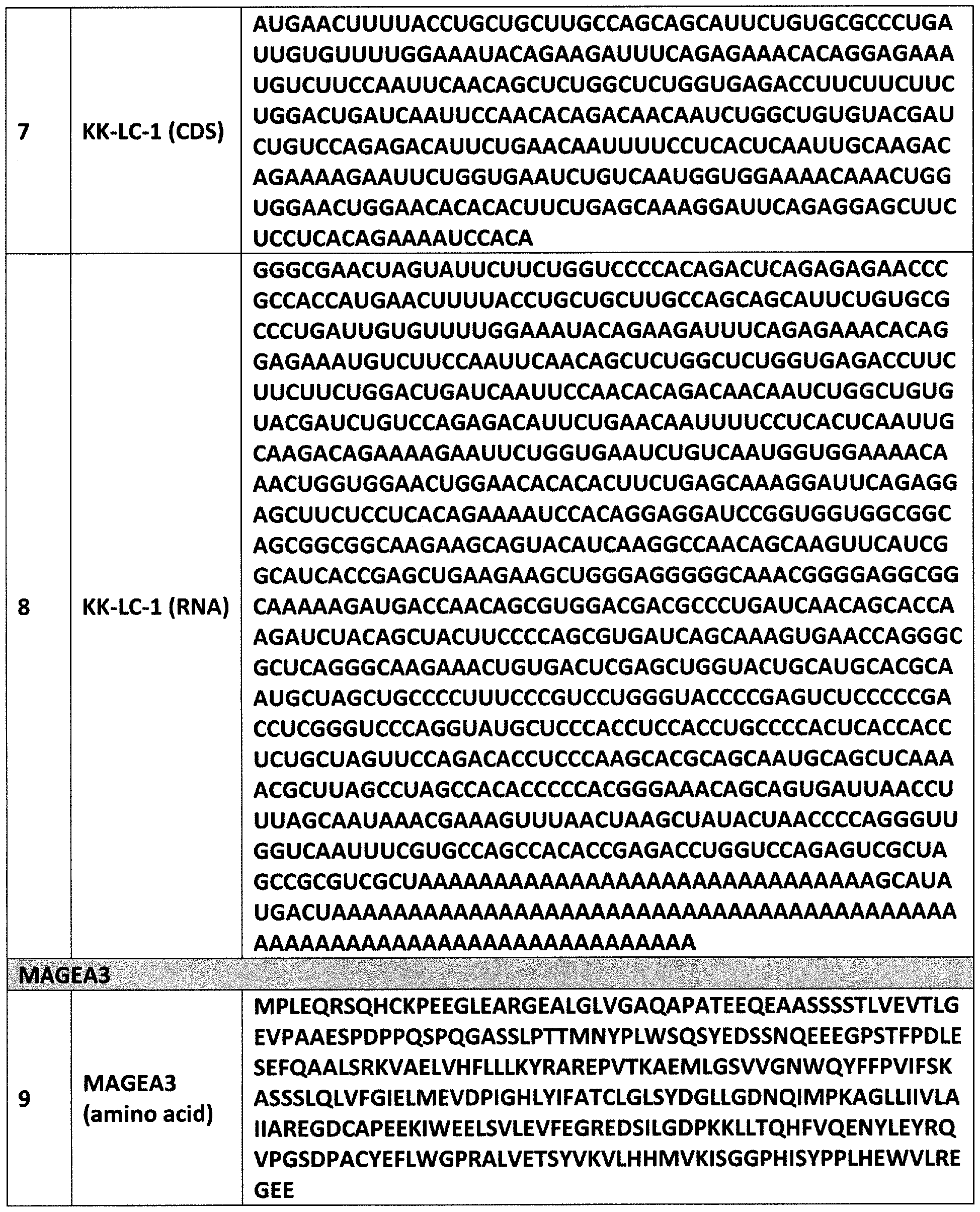

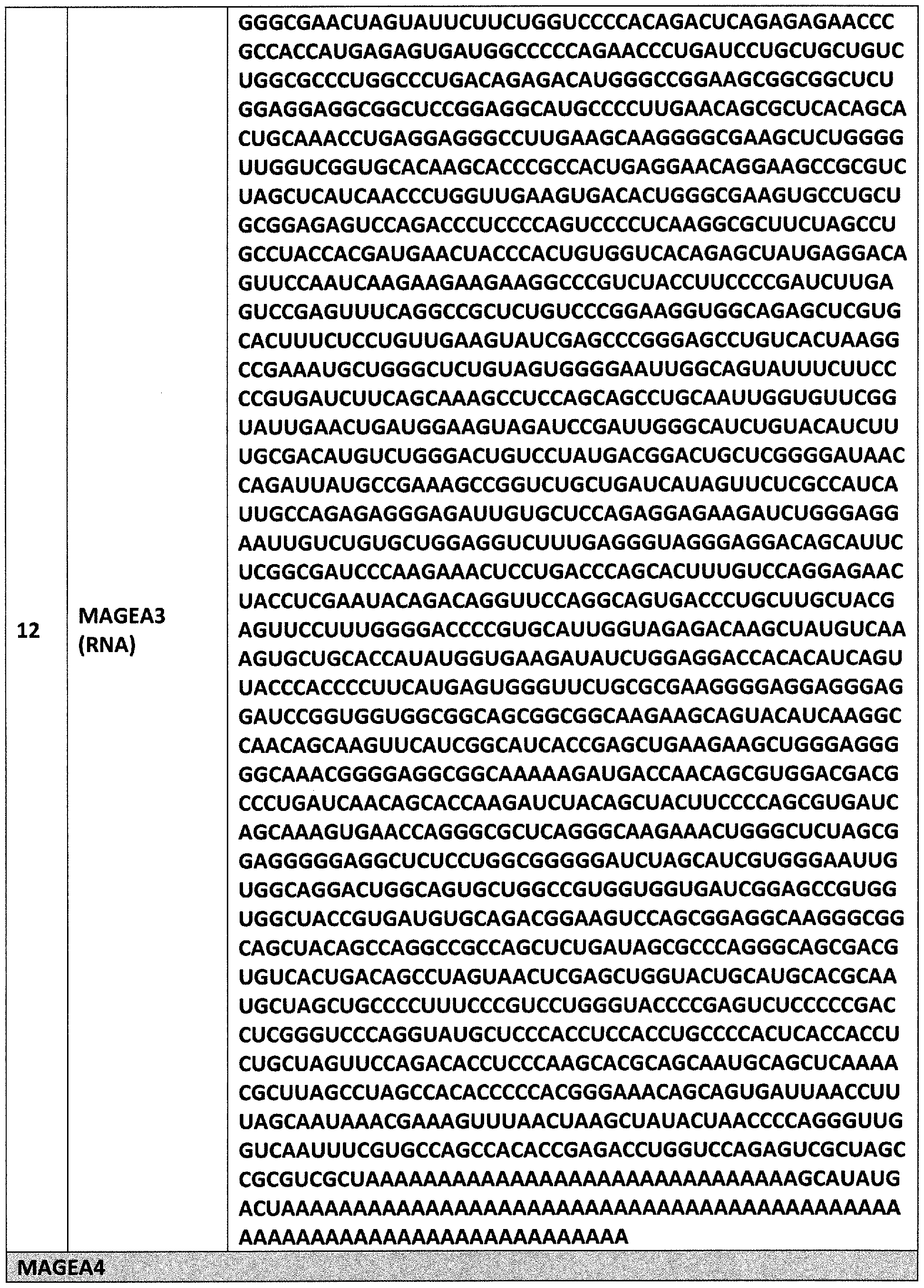
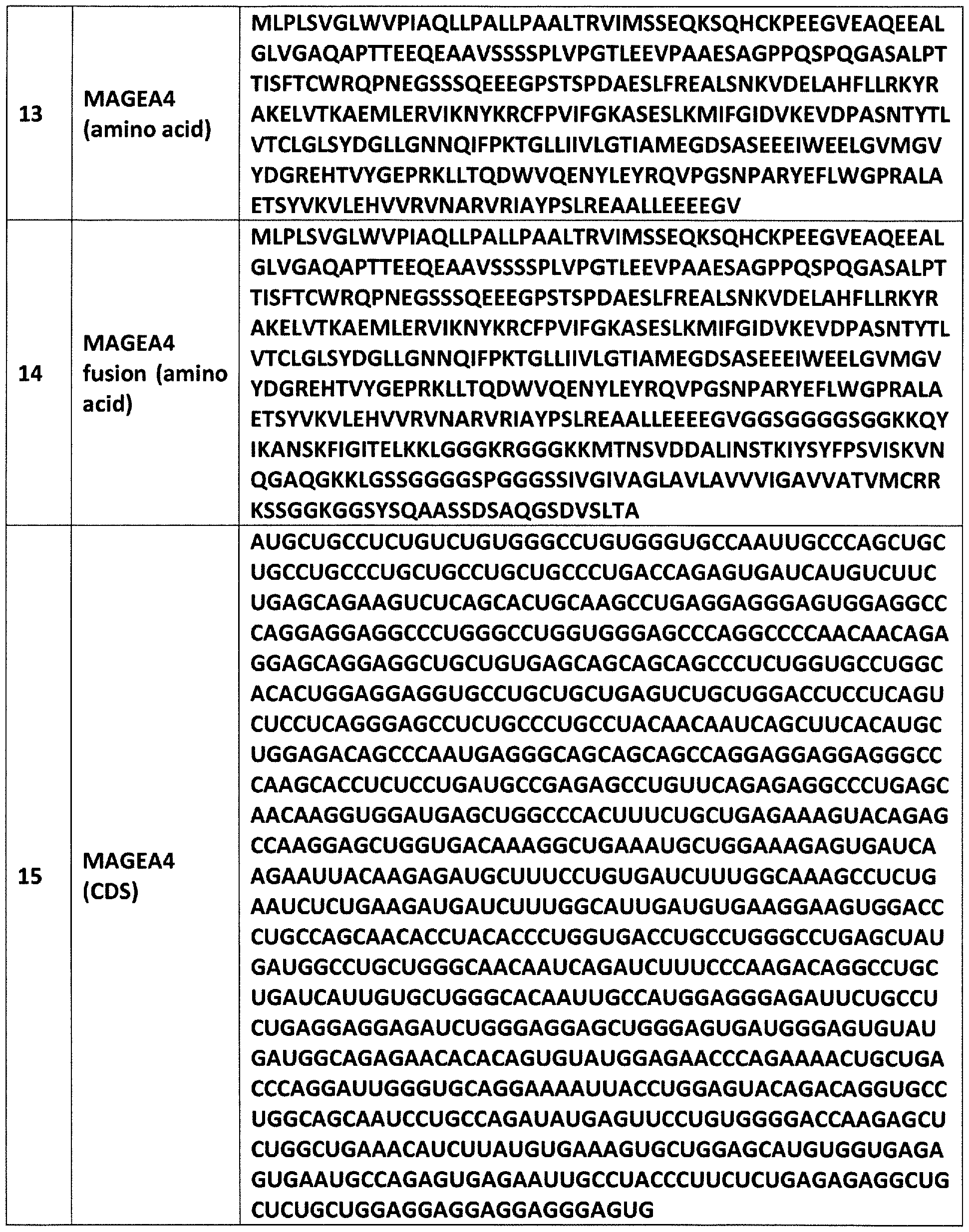


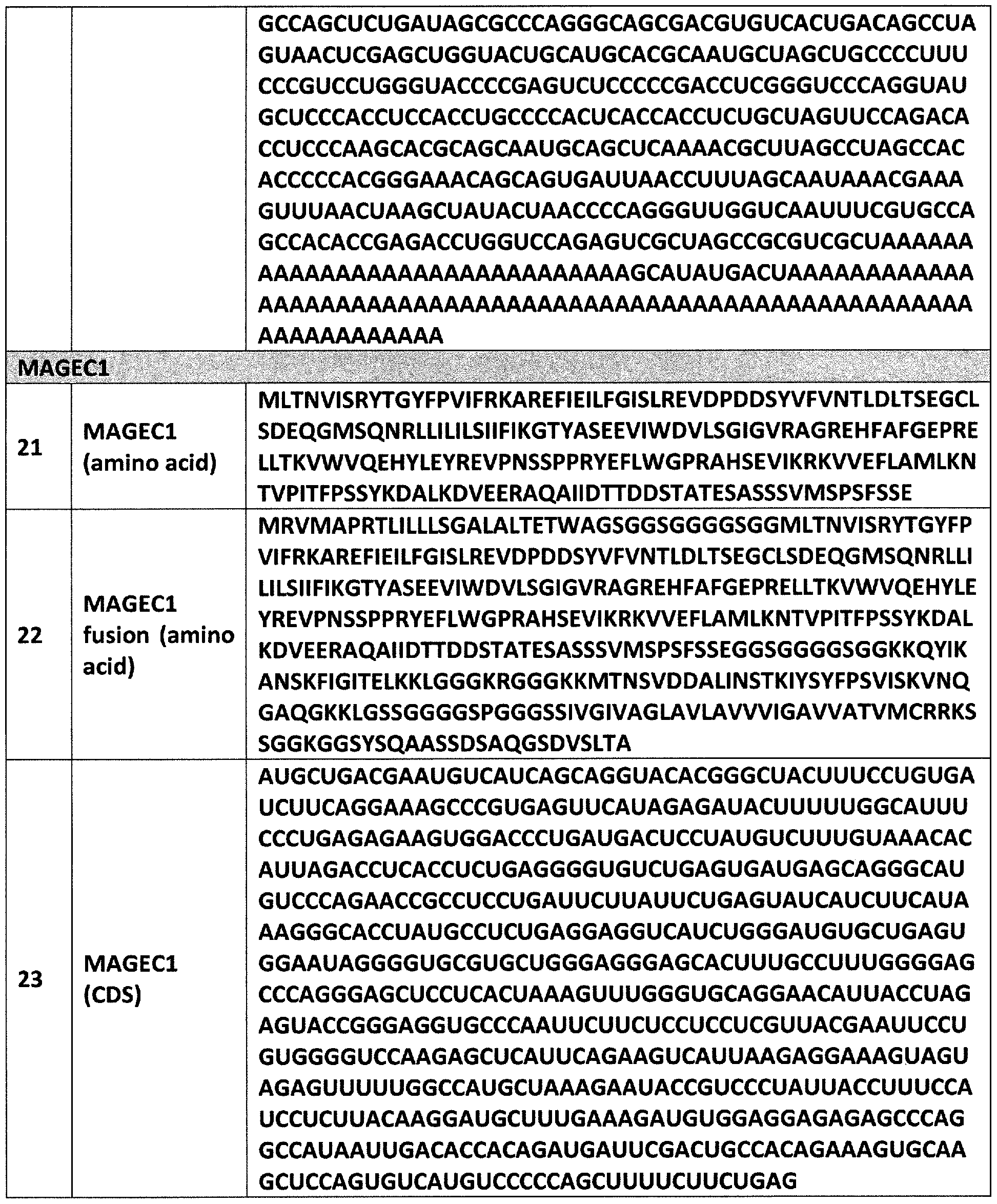


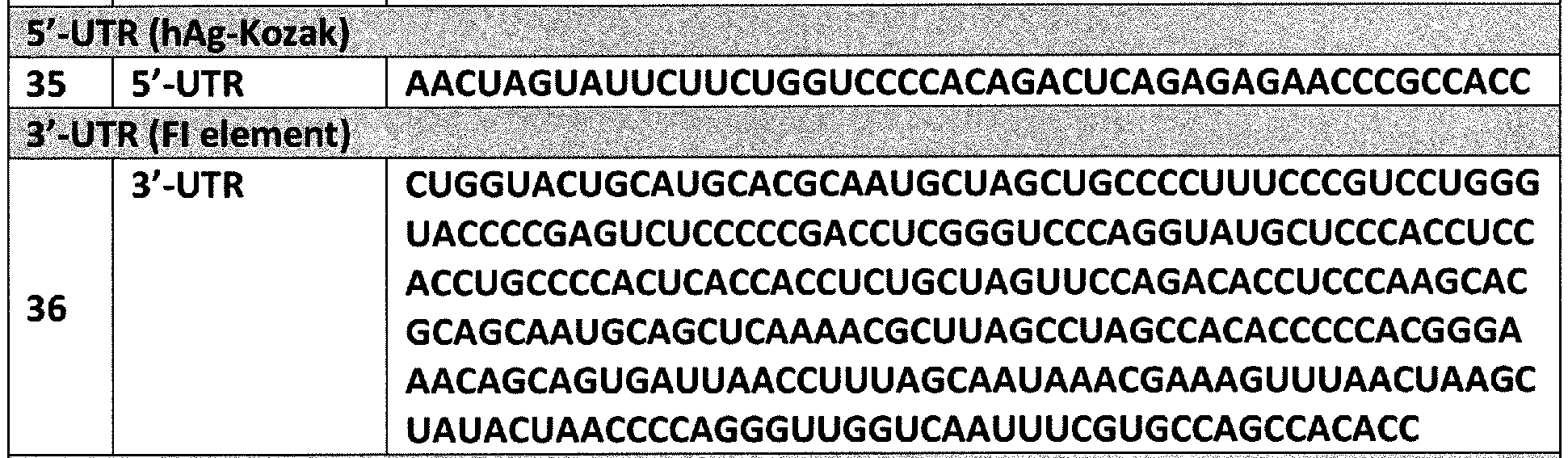


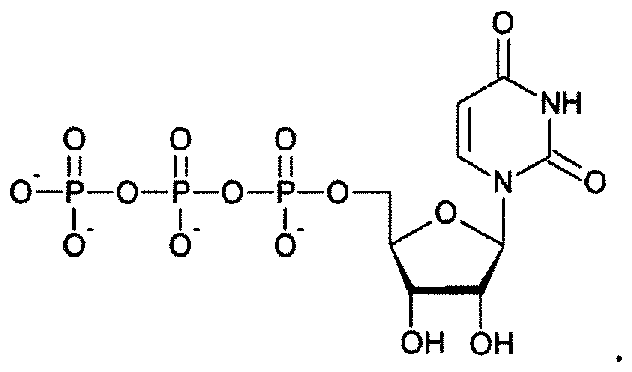


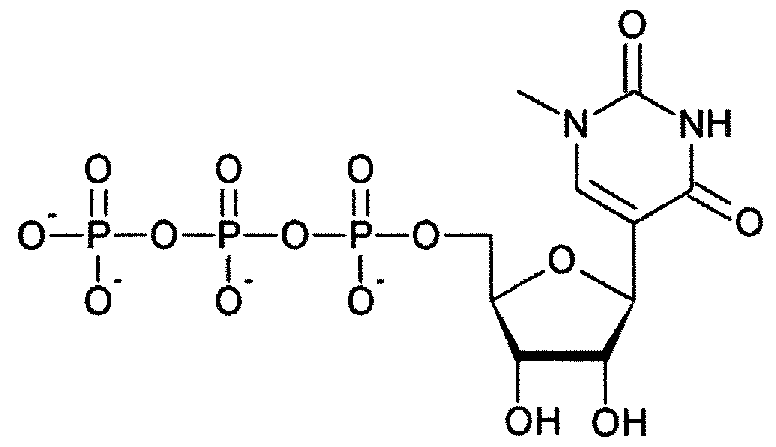
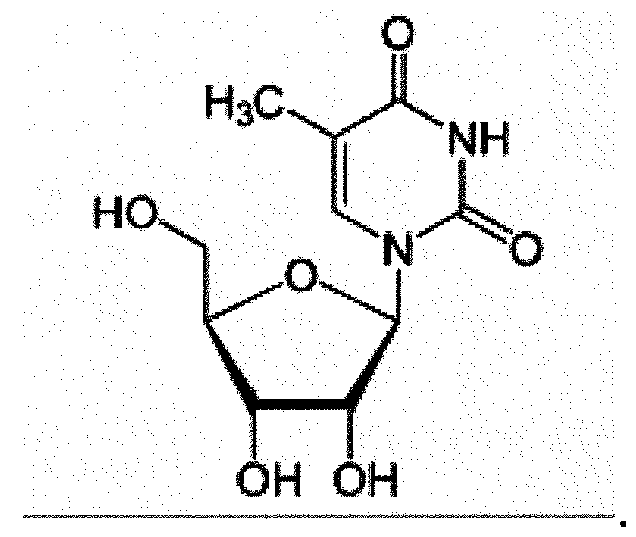


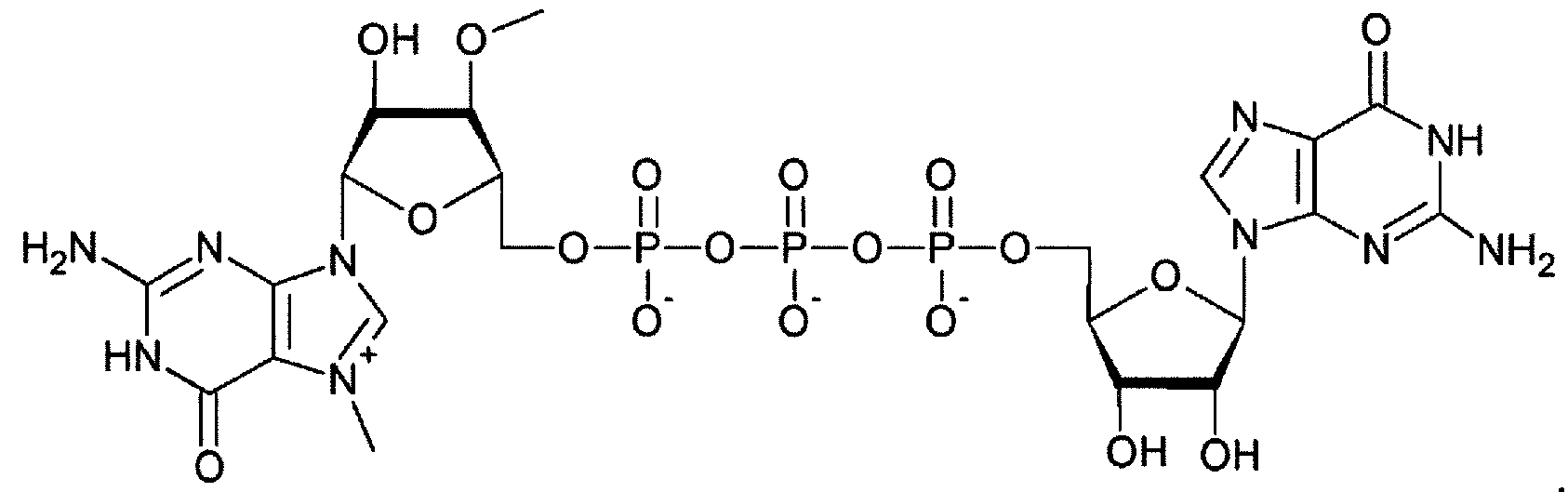

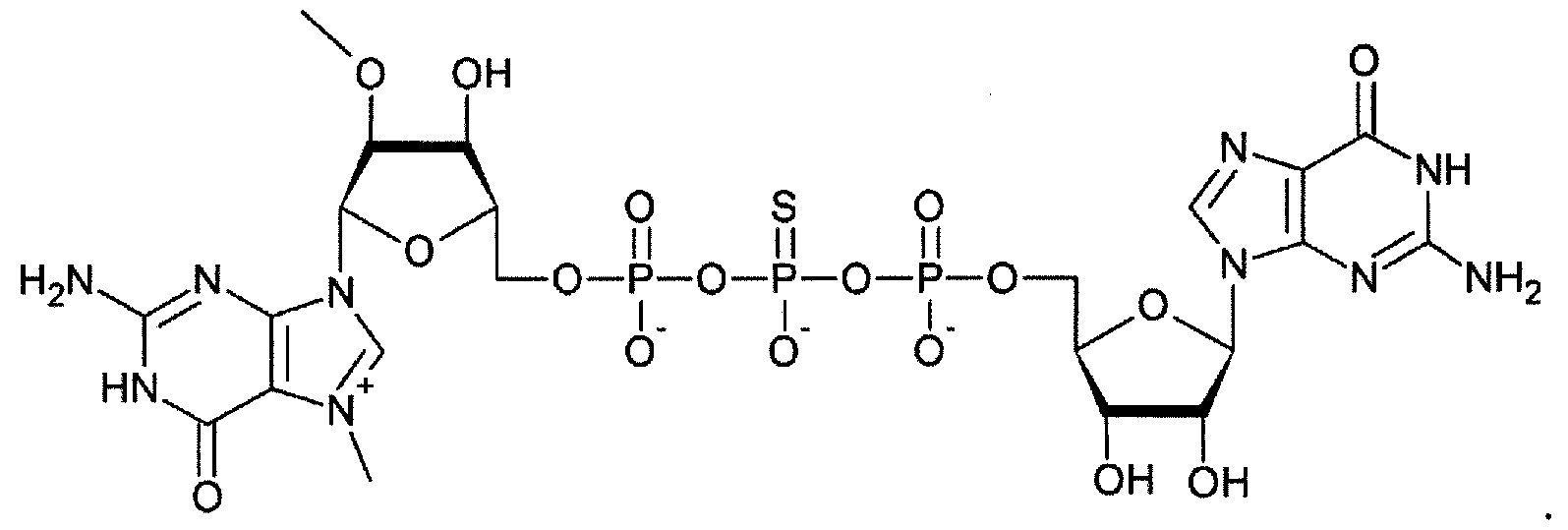

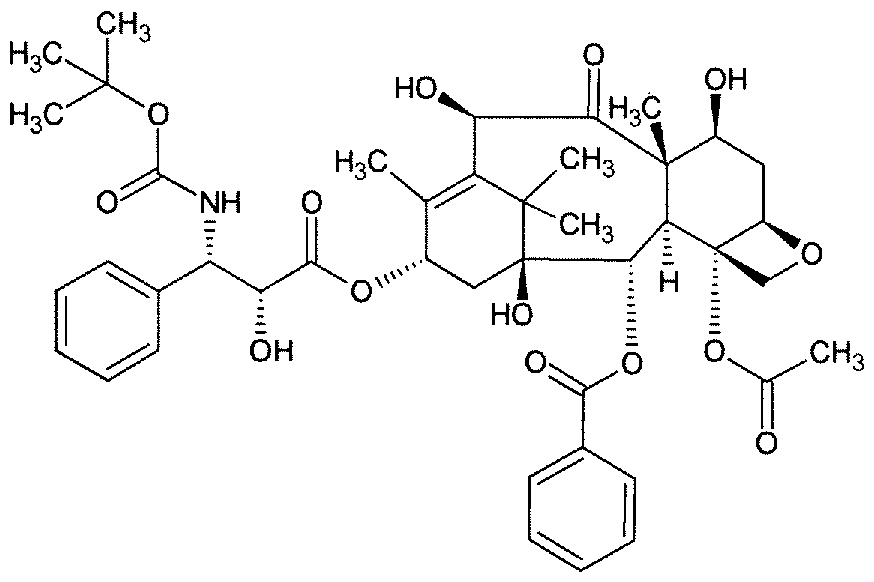


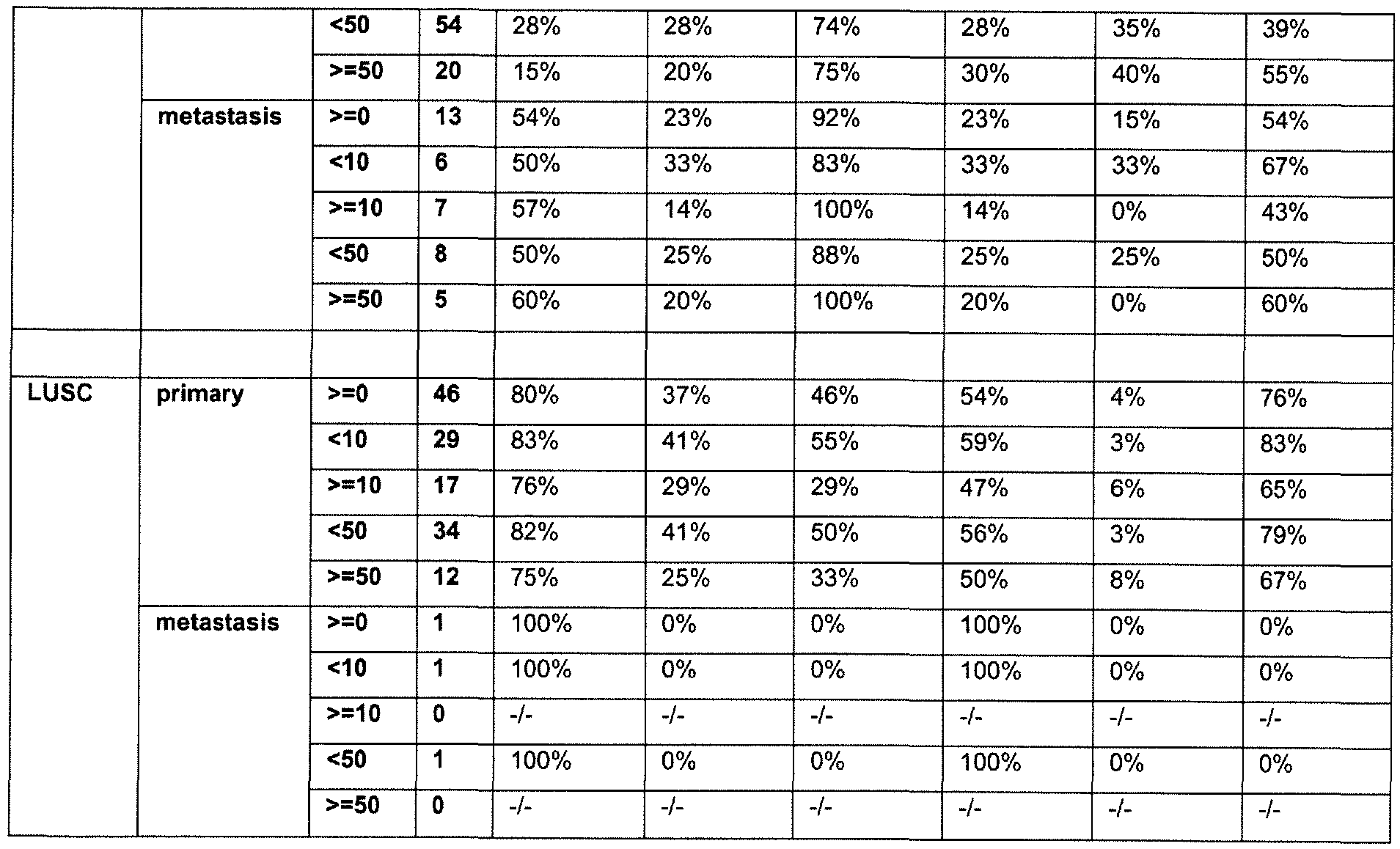


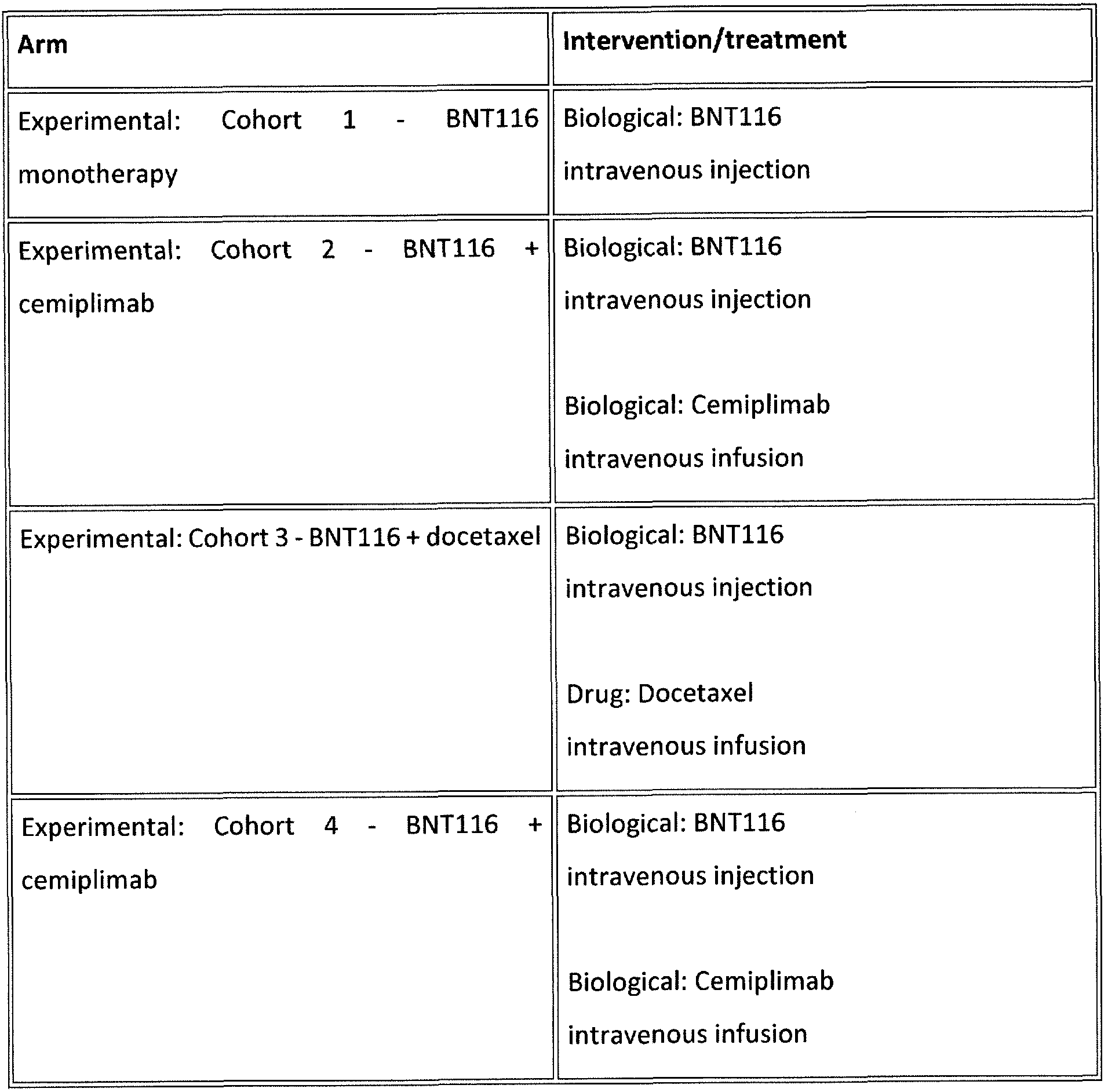
Claims
Priority Applications (9)
| Application Number | Priority Date | Filing Date | Title |
|---|---|---|---|
| AU2022362640A AU2022362640A1 (en) | 2021-10-11 | 2022-10-10 | Therapeutic rna for lung cancer |
| IL312025A IL312025A (en) | 2021-10-11 | 2022-10-10 | Therapeutic RNA for lung cancer |
| MX2024004418A MX2024004418A (en) | 2021-10-11 | 2022-10-10 | Therapeutic rna for lung cancer. |
| CA3234910A CA3234910A1 (en) | 2021-10-11 | 2022-10-10 | Therapeutic rna for lung cancer |
| EP22802064.0A EP4415750A1 (en) | 2021-10-11 | 2022-10-10 | Therapeutic rna for lung cancer |
| JP2024521852A JP2024537297A (en) | 2021-10-11 | 2022-10-10 | RNA for the treatment of lung cancer |
| US18/699,947 US20250295746A1 (en) | 2021-10-11 | 2022-10-10 | Therapeutic rna for lung cancer |
| KR1020247012047A KR20240109616A (en) | 2021-10-11 | 2022-10-10 | Therapeutic RNA for lung cancer |
| CN202280079010.1A CN118434442A (en) | 2021-10-11 | 2022-10-10 | Therapeutic RNA for lung cancer |
Applications Claiming Priority (4)
| Application Number | Priority Date | Filing Date | Title |
|---|---|---|---|
| EPPCT/EP2021/078026 | 2021-10-11 | ||
| EP2021078026 | 2021-10-11 | ||
| EPPCT/EP2022/050136 | 2022-01-05 | ||
| EP2022050136 | 2022-01-05 |
Publications (1)
| Publication Number | Publication Date |
|---|---|
| WO2023061930A1 true WO2023061930A1 (en) | 2023-04-20 |
Family
ID=84332231
Family Applications (1)
| Application Number | Title | Priority Date | Filing Date |
|---|---|---|---|
| PCT/EP2022/078081 Ceased WO2023061930A1 (en) | 2021-10-11 | 2022-10-10 | Therapeutic rna for lung cancer |
Country Status (11)
| Country | Link |
|---|---|
| US (1) | US20250295746A1 (en) |
| EP (1) | EP4415750A1 (en) |
| JP (1) | JP2024537297A (en) |
| KR (1) | KR20240109616A (en) |
| AR (1) | AR127324A1 (en) |
| AU (1) | AU2022362640A1 (en) |
| CA (1) | CA3234910A1 (en) |
| IL (1) | IL312025A (en) |
| MX (1) | MX2024004418A (en) |
| TW (1) | TW202333802A (en) |
| WO (1) | WO2023061930A1 (en) |
Cited By (2)
| Publication number | Priority date | Publication date | Assignee | Title |
|---|---|---|---|---|
| WO2025202495A1 (en) * | 2024-03-28 | 2025-10-02 | BioNTech SE | Combination therapy comprising therapeutic rna cancer vaccines and anti-ctla4 antibodies for cancer treatment |
| WO2025242815A1 (en) * | 2024-05-23 | 2025-11-27 | CureVac SE | Immunotherapy of squamous cell carcinoma |
Citations (200)
| Publication number | Priority date | Publication date | Assignee | Title |
|---|---|---|---|---|
| US5475096A (en) | 1990-06-11 | 1995-12-12 | University Research Corporation | Nucleic acid ligands |
| US5811097A (en) | 1995-07-25 | 1998-09-22 | The Regents Of The University Of California | Blockade of T lymphocyte down-regulation associated with CTLA-4 signaling |
| WO1998042752A1 (en) | 1997-03-21 | 1998-10-01 | Brigham And Women's Hospital Inc. | Immunotherapeutic ctla-4 binding peptides |
| US5843439A (en) | 1992-11-13 | 1998-12-01 | Anderson; Darrell R. | Therapeutic application of chimeric and radiolabeled antibodies to human B lymphocyte restricted differentiation antigen for treatment of B cell lymphoma |
| US5855887A (en) | 1995-07-25 | 1999-01-05 | The Regents Of The University Of California | Blockade of lymphocyte down-regulation associated with CTLA-4 signaling |
| US5977318A (en) | 1991-06-27 | 1999-11-02 | Bristol Myers Squibb Company | CTLA4 receptor and uses thereof |
| US6051227A (en) | 1995-07-25 | 2000-04-18 | The Regents Of The University Of California, Office Of Technology Transfer | Blockade of T lymphocyte down-regulation associated with CTLA-4 signaling |
| WO2000037504A2 (en) | 1998-12-23 | 2000-06-29 | Pfizer Inc. | Human monoclonal antibodies to ctla-4 |
| WO2001014424A2 (en) | 1999-08-24 | 2001-03-01 | Medarex, Inc. | Human ctla-4 antibodies and their uses |
| WO2001030381A2 (en) | 1999-10-28 | 2001-05-03 | Hofbauer, Reinhold | Use of csf-1 inhibitors |
| US20020039581A1 (en) | 2000-01-27 | 2002-04-04 | Carreno Beatriz M. | Antibodies against CTLA4 and uses therefor |
| US20020086014A1 (en) | 1999-08-24 | 2002-07-04 | Korman Alan J. | Human CTLA-4 antibodies and their uses |
| WO2002055082A1 (en) | 2001-01-10 | 2002-07-18 | Vernalis Research Limited | Pyrazolo[3,4-d]pyrimidine derivatives and their use as purinergic receptor antagonists |
| WO2003042402A2 (en) | 2001-11-13 | 2003-05-22 | Dana-Farber Cancer Institute, Inc. | Agents that modulate immune cell activation and methods of use thereof |
| WO2003099196A2 (en) | 2002-05-23 | 2003-12-04 | Cure Tech Ltd. | Humanized immunomodulatory monoclonal antibodies for the treatment of neoplastic disease or immunodeficiency |
| US6682736B1 (en) | 1998-12-23 | 2004-01-27 | Abgenix, Inc. | Human monoclonal antibodies to CTLA-4 |
| WO2004035607A2 (en) | 2002-10-17 | 2004-04-29 | Genmab A/S | Human monoclonal antibodies against cd20 |
| US6750334B1 (en) | 1996-02-02 | 2004-06-15 | Repligen Corporation | CTLA4-immunoglobulin fusion proteins having modified effector functions and uses therefor |
| WO2004056312A2 (en) | 2002-12-16 | 2004-07-08 | Genentech, Inc. | Immunoglobulin variants and uses thereof |
| US6808710B1 (en) | 1999-08-23 | 2004-10-26 | Genetics Institute, Inc. | Downmodulating an immune response with multivalent antibodies to PD-1 |
| WO2005003168A2 (en) | 2003-07-02 | 2005-01-13 | Novo Nordisk A/S | Methods for the production and cytotoxicity evaluation of kir2dl nk-receptor antibodies |
| WO2005009465A1 (en) | 2003-07-24 | 2005-02-03 | Innate Pharma | Methods and compositions for increasing the efficiency of therapeutic antibodies using nk cell potentiating compounds |
| WO2006072625A2 (en) | 2005-01-06 | 2006-07-13 | Novo Nordisk A/S | Anti-kir combination treatments and methods |
| WO2006072626A1 (en) | 2005-01-06 | 2006-07-13 | Novo Nordisk A/S | Kir-binding agents and methods of use thereof |
| US7109003B2 (en) | 1998-12-23 | 2006-09-19 | Abgenix, Inc. | Methods for expressing and recovering human monoclonal antibodies to CTLA-4 |
| WO2006121168A1 (en) | 2005-05-09 | 2006-11-16 | Ono Pharmaceutical Co., Ltd. | Human monoclonal antibodies to programmed death 1(pd-1) and methods for treating cancer using anti-pd-1 antibodies alone or in combination with other immunotherapeutics |
| WO2007042573A2 (en) | 2005-10-14 | 2007-04-19 | Innate Pharma | Compositions and methods for treating proliferative disorders |
| WO2008084106A1 (en) | 2007-01-11 | 2008-07-17 | Novo Nordisk A/S | Anti-kir antibodies, formulations, and uses thereof |
| WO2008132601A1 (en) | 2007-04-30 | 2008-11-06 | Immutep | Cytotoxic anti-lag-3 monoclonal antibody and its use in the treatment or prevention of organ transplant rejection and autoimmune disease |
| WO2008156712A1 (en) | 2007-06-18 | 2008-12-24 | N. V. Organon | Antibodies to human programmed death receptor pd-1 |
| WO2009014708A2 (en) | 2007-07-23 | 2009-01-29 | Cell Genesys, Inc. | Pd-1 antibodies in combination with a cytokine-secreting cell and methods of use thereof |
| US7488802B2 (en) | 2002-12-23 | 2009-02-10 | Wyeth | Antibodies against PD-1 |
| WO2009044273A2 (en) | 2007-10-05 | 2009-04-09 | Immutep | Use of recombinant lag-3 or the derivatives thereof for eliciting monocyte immune response |
| WO2009101611A1 (en) | 2008-02-11 | 2009-08-20 | Curetech Ltd. | Monoclonal antibodies for tumor treatment |
| WO2009114335A2 (en) | 2008-03-12 | 2009-09-17 | Merck & Co., Inc. | Pd-1 binding proteins |
| US7635757B2 (en) | 1999-08-23 | 2009-12-22 | Dana-Farber Cancer Institute, Inc. | B7-4 Antibodies and uses therefor |
| US20090317368A1 (en) | 1999-11-30 | 2009-12-24 | Lieping Chen | B7-h1, a novel immunoregulatory molecule |
| WO2010012557A1 (en) | 2008-08-01 | 2010-02-04 | Emitec Gesellschaft Für Emissionstechnologie Mbh | Method for operating an exhaust-gas system with lambda regulation |
| WO2010027827A2 (en) | 2008-08-25 | 2010-03-11 | Amplimmune, Inc. | Targeted costimulatory polypeptides and methods of use to treat cancer |
| WO2010036959A2 (en) | 2008-09-26 | 2010-04-01 | Dana-Farber Cancer Institute | Human anti-pd-1, pd-l1, and pd-l2 antibodies and uses therefor |
| WO2010065939A1 (en) | 2008-12-05 | 2010-06-10 | Indiana University Research & Technology Corporation | Combination therapy to enhace nk cell mediated cytotoxicty |
| WO2010077634A1 (en) | 2008-12-09 | 2010-07-08 | Genentech, Inc. | Anti-pd-l1 antibodies and their use to enhance t-cell function |
| WO2010089411A2 (en) | 2009-02-09 | 2010-08-12 | Universite De La Mediterranee | Pd-1 antibodies and pd-l1 antibodies and uses thereof |
| WO2011014438A1 (en) | 2009-07-31 | 2011-02-03 | N.V. Organon | Fully human antibodies to btla |
| WO2011015347A1 (en) | 2009-08-05 | 2011-02-10 | Biontech Ag | Vaccine composition comprising 5'-cap modified rna |
| US7943743B2 (en) | 2005-07-01 | 2011-05-17 | Medarex, Inc. | Human monoclonal antibodies to programmed death ligand 1 (PD-L1) |
| EP2320940A2 (en) | 2008-08-11 | 2011-05-18 | Medarex, Inc. | Human antibodies that bind lymphocyte activation gene-3 (lag-3), and uses thereof |
| WO2011066342A2 (en) | 2009-11-24 | 2011-06-03 | Amplimmune, Inc. | Simultaneous inhibition of pd-l1/pd-l2 |
| WO2011066389A1 (en) | 2009-11-24 | 2011-06-03 | Medimmmune, Limited | Targeted binding agents against b7-h1 |
| WO2011070024A1 (en) | 2009-12-10 | 2011-06-16 | F. Hoffmann-La Roche Ag | Antibodies binding preferentially human csf1r extracellular domain 4 and their use |
| WO2011082400A2 (en) | 2010-01-04 | 2011-07-07 | President And Fellows Of Harvard College | Modulators of immunoinhibitory receptor pd-1, and methods of use thereof |
| WO2011107553A1 (en) | 2010-03-05 | 2011-09-09 | F. Hoffmann-La Roche Ag | Antibodies against human csf-1r and uses thereof |
| WO2011131407A1 (en) | 2010-03-05 | 2011-10-27 | F. Hoffmann-La Roche Ag | Antibodies against human csf-1r and uses thereof |
| WO2011140249A2 (en) | 2010-05-04 | 2011-11-10 | Five Prime Therapeutics, Inc. | Antibodies that bind csf1r |
| WO2011159877A2 (en) | 2010-06-18 | 2011-12-22 | The Brigham And Women's Hospital, Inc. | Bi-specific antibodies against tim-3 and pd-1 for immunotherapy in chronic immune conditions |
| WO2011161699A2 (en) | 2010-06-25 | 2011-12-29 | Aurigene Discovery Technologies Limited | Immunosuppression modulating compounds |
| US8153768B2 (en) | 2002-05-02 | 2012-04-10 | Wyeth Holdings Corporation | Calicheamicin derivative-carrier conjugates |
| WO2012071411A2 (en) | 2010-11-22 | 2012-05-31 | Innate Pharma Sa | Nk cell modulating treatments and methods for treatment of hematological malignancies |
| US20120177645A1 (en) | 2009-08-31 | 2012-07-12 | Solomon Langermann | Methods and compositions for the inhibition of transplant rejection |
| WO2012145493A1 (en) | 2011-04-20 | 2012-10-26 | Amplimmune, Inc. | Antibodies and other molecules that bind b7-h1 and pd-1 |
| US20120294796A1 (en) | 2010-03-04 | 2012-11-22 | Macrogenics, Inc. | Antibodies Reactive with B7-H3 and Uses Thereof |
| WO2012160448A2 (en) | 2011-05-25 | 2012-11-29 | Innate Pharma, S.A. | Anti-kir antibodies for the treatment of inflammatory disorders |
| WO2013006490A2 (en) | 2011-07-01 | 2013-01-10 | Cellerant Therapeutics, Inc. | Antibodies that specifically bind to tim3 |
| WO2013019906A1 (en) | 2011-08-01 | 2013-02-07 | Genentech, Inc. | Methods of treating cancer using pd-1 axis binding antagonists and mek inhibitors |
| WO2013025779A1 (en) | 2011-08-15 | 2013-02-21 | Amplimmune, Inc. | Anti-b7-h4 antibodies and their uses |
| WO2013054331A1 (en) | 2011-10-11 | 2013-04-18 | Tel Hashomer Medical Research Infrastructure And Services Ltd. | Antibodies to carcinoembryonic antigen-related cell adhesion molecule (ceacam) |
| WO2013067492A1 (en) | 2011-11-03 | 2013-05-10 | The Trustees Of The University Of Pennsylvania | Isolated b7-h4 specific compositions and methods of use thereof |
| WO2013087699A1 (en) | 2011-12-15 | 2013-06-20 | F. Hoffmann-La Roche Ag | Antibodies against human csf-1r and uses thereof |
| WO2013119716A1 (en) | 2012-02-06 | 2013-08-15 | Genentech, Inc. | Compositions and methods for using csf1r inhibitors |
| EP2628753A1 (en) | 2008-01-24 | 2013-08-21 | Novo Nordisk A/S | Humanized anti-human NKG2A monoclonal antibody |
| WO2013132044A1 (en) | 2012-03-08 | 2013-09-12 | F. Hoffmann-La Roche Ag | Combination therapy of antibodies against human csf-1r and uses thereof |
| WO2013143683A1 (en) | 2012-03-26 | 2013-10-03 | Biontech Ag | Rna formulation for immunotherapy |
| WO2013169264A1 (en) | 2012-05-11 | 2013-11-14 | Five Prime Therapeutics, Inc. | Methods of treating conditions with antibodies that bind colony stimulating factor 1 receptor (csf1r) |
| WO2013173223A1 (en) | 2012-05-15 | 2013-11-21 | Bristol-Myers Squibb Company | Cancer immunotherapy by disrupting pd-1/pd-l1 signaling |
| WO2013181634A2 (en) | 2012-05-31 | 2013-12-05 | Sorrento Therapeutics Inc. | Antigen binding proteins that bind pd-l1 |
| WO2014008218A1 (en) | 2012-07-02 | 2014-01-09 | Bristol-Myers Squibb Company | Optimization of antibodies that bind lymphocyte activation gene-3 (lag-3), and uses thereof |
| WO2014036357A1 (en) | 2012-08-31 | 2014-03-06 | Five Prime Therapeutics, Inc. | Methods of treating conditions with antibodies that bind colony stimulating factor 1 receptor (csf1r) |
| WO2014055648A1 (en) | 2012-10-02 | 2014-04-10 | Bristol-Myers Squibb Company | Combination of anti-kir antibodies and anti-pd-1 antibodies to treat cancer |
| US8735553B1 (en) | 2013-09-13 | 2014-05-27 | Beigene, Ltd. | Anti-PD1 antibodies and their use as therapeutics and diagnostics |
| WO2014100079A1 (en) | 2012-12-21 | 2014-06-26 | Merck Sharp & Dohme Corp. | Antibodies that bind to human programmed death ligand 1 (pd-l1) |
| WO2014094122A1 (en) | 2012-12-17 | 2014-06-26 | Trillium Therapeutics Inc. | Treatment of cd47+ disease cells with sirp alpha-fc fusions |
| WO2014132072A1 (en) | 2013-02-28 | 2014-09-04 | University Court Of The University Of Edinburgh | Csf1 therapeutics |
| WO2014140180A1 (en) | 2013-03-15 | 2014-09-18 | Glaxosmithkline Intellectual Property Development Limited | Anti-lag-3 binding proteins |
| WO2014159562A1 (en) | 2013-03-14 | 2014-10-02 | Bristol-Myers Squibb Company | Combination of dr5 agonist and anti-pd-1 antagonist and methods of use |
| WO2014165082A2 (en) | 2013-03-13 | 2014-10-09 | Medimmune, Llc | Antibodies and methods of detection |
| WO2014179664A2 (en) | 2013-05-02 | 2014-11-06 | Anaptysbio, Inc. | Antibodies directed against programmed death-1 (pd-1) |
| US20140341917A1 (en) | 2011-11-28 | 2014-11-20 | Merck Patent Gmbh | Anti-pd-l1 antibodies and uses thereof |
| WO2014183885A1 (en) | 2013-05-17 | 2014-11-20 | INSERM (Institut National de la Santé et de la Recherche Médicale) | Antagonist of the btla/hvem interaction for use in therapy |
| WO2014194302A2 (en) | 2013-05-31 | 2014-12-04 | Sorrento Therapeutics, Inc. | Antigen binding proteins that bind pd-1 |
| WO2014207748A1 (en) | 2013-06-27 | 2014-12-31 | Alexander Biro | Soluble ctla-4 molecules and derivatives thereof for treatment of minimal change disease |
| WO2015009856A2 (en) | 2013-07-16 | 2015-01-22 | Genentech, Inc. | Methods of treating cancer using pd-1 axis binding antagonists and tigit inhibitors |
| WO2015024666A1 (en) * | 2013-08-21 | 2015-02-26 | Curevac Gmbh | Composition and vaccine for treating lung cancer |
| WO2015042246A1 (en) | 2013-09-20 | 2015-03-26 | Bristol-Myers Squibb Company | Combination of anti-lag-3 antibodies and anti-pd-1 antibodies to treat tumors |
| EP2855533A1 (en) | 2013-03-15 | 2015-04-08 | Momenta Pharmaceuticals, Inc. | Methods related to ctla4-fc fusion proteins |
| WO2015061668A1 (en) | 2013-10-25 | 2015-04-30 | Dana-Farber Cancer Institute, Inc. | Anti-pd-l1 monoclonal antibodies and fragments thereof |
| WO2015075725A1 (en) | 2013-11-25 | 2015-05-28 | Ccam Biotherapeutics Ltd. | Compositions comprising anti-ceacam1 and anti-pd antibodies for cancer therapy |
| WO2015082499A2 (en) | 2013-12-03 | 2015-06-11 | Iomet Pharma Ltd | Pharmaceutical compound |
| WO2015085847A1 (en) | 2013-12-12 | 2015-06-18 | 上海恒瑞医药有限公司 | Pd-1 antibody, antigen-binding fragment thereof, and medical application thereof |
| US20150203848A1 (en) | 2014-01-21 | 2015-07-23 | City Of Hope | Ctla-4 aptamer sirna species |
| US20150203579A1 (en) | 2014-01-23 | 2015-07-23 | Regeneron Pharmaceuticals, Inc. | Human Antibodies to PD-1 |
| WO2015109124A2 (en) | 2014-01-15 | 2015-07-23 | Kadmon Corporation, Llc | Immunomodulatory agents |
| WO2015112805A1 (en) | 2014-01-23 | 2015-07-30 | Regeneron Pharmaceuticals, Inc. | Human antibodies to pd-l1 |
| WO2015112900A1 (en) | 2014-01-24 | 2015-07-30 | Dana-Farber Cancer Institue, Inc. | Antibody molecules to pd-1 and uses thereof |
| WO2015116539A1 (en) | 2014-01-28 | 2015-08-06 | Bristol-Myers Squibb Company | Anti-lag-3 antibodies to treat hematological malignancies |
| US20150225367A1 (en) | 2014-02-12 | 2015-08-13 | Iteos Therapeutics | Novel 3-(indol-3-yl)-pyridine derivatives, pharmaceutical compositions and methods for use |
| US9126984B2 (en) | 2013-11-08 | 2015-09-08 | Iteos Therapeutics | 4-(indol-3-yl)-pyrazole derivatives, pharmaceutical compositions and methods for use |
| WO2015140717A1 (en) | 2014-03-18 | 2015-09-24 | Iteos Therapeutics | Novel 3-indol substituted derivatives, pharmaceutical compositions and methods for use |
| WO2015150097A1 (en) | 2014-04-04 | 2015-10-08 | Iomet Pharma Ltd | Indole derivatives for use in medicine |
| US20150320859A1 (en) | 2012-05-31 | 2015-11-12 | Genentech, Inc. | Methods of treating cancer using pd-l1 axis binding antagonists and vegf antagonists |
| WO2015173267A1 (en) | 2014-05-13 | 2015-11-19 | Medimmune Limited | Anti-b7-h1 and anti-ctla-4 antibodies for treating non-small cell lung cancer |
| WO2015173764A1 (en) | 2014-05-15 | 2015-11-19 | Iteos Therapeutics | Pyrrolidine-2,5-dione derivatives, pharmaceutical compositions and methods for use as ido1 inhibitors |
| WO2015179654A1 (en) | 2014-05-22 | 2015-11-26 | Mayo Foundation For Medical Education And Research | Distinguishing antagonistic and agonistic anti b7-h1 antibodies |
| WO2015181342A1 (en) | 2014-05-29 | 2015-12-03 | Spring Bioscience Corporation | Pd-l1 antibodies and uses thereof |
| US20150344576A1 (en) | 2004-07-01 | 2015-12-03 | Novo Nordisk A/S - Novo Alle | Human anti-kir antibodies |
| WO2015200119A1 (en) | 2014-06-26 | 2015-12-30 | Macrogenics, Inc. | Covalently bonded diabodies having immunoreactivity with pd-1 and lag-3, and methods of use thereof |
| WO2016000619A1 (en) | 2014-07-03 | 2016-01-07 | Beigene, Ltd. | Anti-pd-l1 antibodies and their use as therapeutics and diagnostics |
| WO2016007235A1 (en) | 2014-07-11 | 2016-01-14 | Genentech, Inc. | Anti-pd-l1 antibodies and diagnostic uses thereof |
| WO2016005324A1 (en) | 2014-07-11 | 2016-01-14 | Biontech Rna Pharmaceuticals Gmbh | Stabilization of poly(a) sequence encoding dna sequences |
| WO2016022630A1 (en) | 2014-08-05 | 2016-02-11 | Jiping Zha | Anti-pd-l1 antibodies |
| WO2016028672A1 (en) | 2014-08-19 | 2016-02-25 | Merck Sharp & Dohme Corp. | Anti-lag3 antibodies and antigen-binding fragments |
| WO2016026772A1 (en) | 2014-08-19 | 2016-02-25 | Iomet Pharma Ltd | Pharmaceutical compound |
| WO2016032334A1 (en) | 2014-08-28 | 2016-03-03 | Academisch Ziekenhuis Leiden H.O.D.N. Lumc | Cd94/nkg2a and/or cd94/nkg2b antibody, vaccine combinations |
| WO2016061142A1 (en) | 2014-10-14 | 2016-04-21 | Novartis Ag | Antibody molecules to pd-l1 and uses thereof |
| WO2016071293A2 (en) | 2014-11-03 | 2016-05-12 | Iomet Pharma Ltd | Pharmaceutical compound |
| WO2016071283A1 (en) | 2014-11-03 | 2016-05-12 | Iomet Pharma Ltd | Inhibitors of tryptophan-2,3-dioxygenase or indoleamine-2,3-dioxygenase |
| WO2016075099A1 (en) | 2014-11-10 | 2016-05-19 | Medimmune Limited | Binding molecules specific for cd73 and uses thereof |
| US9359442B2 (en) | 2002-11-07 | 2016-06-07 | Immunogen Inc. | Anti-CD33 antibodies and methods for treatment of acute myeloid leukemia using the same |
| WO2016111645A1 (en) | 2015-01-09 | 2016-07-14 | Agency For Science, Technology And Research | Anti-pd-l1 antibodies |
| WO2016126858A2 (en) | 2015-02-03 | 2016-08-11 | Anaptysbio, Inc. | Antibodies directed against lymphocyte activation gene 3 (lag-3) |
| WO2016134333A1 (en) | 2015-02-19 | 2016-08-25 | Compugen Ltd. | Anti-pvrig antibodies and methods of use |
| WO2016134335A2 (en) | 2015-02-19 | 2016-08-25 | Compugen Ltd. | Pvrig polypeptides and methods of treatment |
| US20160251438A1 (en) | 2013-08-01 | 2016-09-01 | Argen-X N.V. | Anti-garp protein and uses thereof |
| US20160263087A1 (en) | 2013-11-08 | 2016-09-15 | Iteos Therapeutics | Novel 4-(indol-3-yl)-pyrazole derivatives, pharmaceutical compositions and methods for use |
| WO2016147144A1 (en) | 2015-03-17 | 2016-09-22 | Pfizer Inc. | Novel 3-indol substituted derivatives, pharmaceutical compositions and methods for use |
| US20160272708A1 (en) | 2013-06-26 | 2016-09-22 | Shanghai Junshi Biosciences Inc. | Anti-pd-1 antibody and use thereof |
| WO2016149201A2 (en) | 2015-03-13 | 2016-09-22 | Cytomx Therapeutics, Inc. | Anti-pdl1 antibodies, activatable anti-pdl1 antibodies, and methods of use thereof |
| WO2016160792A1 (en) | 2015-03-30 | 2016-10-06 | Stcube & Co., Inc. | Antibodies specific to glycosylated pd-l1 and methods of use thereof |
| WO2016181348A1 (en) | 2015-05-14 | 2016-11-17 | Pfizer Inc. | Combinations comprising a pyrrolidine-2,5-dione ido1 inhibitor and an anti-body |
| WO2016200782A1 (en) | 2015-06-08 | 2016-12-15 | Macrogenics, Inc. | Lag-3-binding molecules and methods of use thereof |
| WO2016197367A1 (en) | 2015-06-11 | 2016-12-15 | Wuxi Biologics (Shanghai) Co. Ltd. | Novel anti-pd-l1 antibodies |
| WO2017007700A1 (en) | 2015-07-06 | 2017-01-12 | Iomet Pharma Ltd. | Pharmaceutical compound |
| WO2017015560A2 (en) | 2015-07-22 | 2017-01-26 | Sorrento Therapeutics, Inc. | Antibody therapeutics that bind lag3 |
| WO2017019894A1 (en) | 2015-07-29 | 2017-02-02 | Novartis Ag | Combination therapies comprising antibody molecules to lag-3 |
| WO2017019846A1 (en) | 2015-07-30 | 2017-02-02 | Macrogenics, Inc. | Pd-1-binding molecules and methods use thereof |
| WO2017020858A1 (en) | 2015-08-06 | 2017-02-09 | Wuxi Biologics (Shanghai) Co. Ltd. | Novel anti-pd-l1 antibodies |
| WO2017020801A1 (en) | 2015-07-31 | 2017-02-09 | 苏州康宁杰瑞生物科技有限公司 | Single domain antibody for programmed death-ligand (pd-l1) and derived protein thereof |
| WO2017024465A1 (en) | 2015-08-10 | 2017-02-16 | Innovent Biologics (Suzhou) Co., Ltd. | Pd-1 antibodies |
| WO2017025498A1 (en) | 2015-08-07 | 2017-02-16 | Pieris Pharmaceuticals Gmbh | Novel fusion polypeptide specific for lag-3 and pd-1 |
| WO2017025868A1 (en) | 2015-08-10 | 2017-02-16 | Pfizer Inc. | 3-indol substituted derivatives, pharmaceutical compositions and methods for use |
| WO2017034916A1 (en) | 2015-08-24 | 2017-03-02 | Eli Lilly And Company | Pd-l1 ("programmed death-ligand 1") antibodies |
| WO2017040790A1 (en) | 2015-09-01 | 2017-03-09 | Agenus Inc. | Anti-pd-1 antibodies and methods of use thereof |
| EP3146979A1 (en) | 2005-10-28 | 2017-03-29 | University Court of The University of Dundee | Siglec-9 binding agents |
| WO2017059095A1 (en) | 2015-10-01 | 2017-04-06 | Potenza Therapeutics, Inc. | Anti-tigit antigen-binding proteins and methods of use thereof |
| WO2017060314A2 (en) | 2015-10-07 | 2017-04-13 | Biontech Rna Pharmaceuticals Gmbh | 3' utr sequences for stabilization of rna |
| WO2017062888A1 (en) | 2015-10-09 | 2017-04-13 | Regeneron Pharmaceuticals, Inc. | Anti-lag3 antibodies and uses thereof |
| US9624185B1 (en) | 2016-01-20 | 2017-04-18 | Yong Xu | Method for preparing IDO inhibitor epacadostat |
| US9642918B2 (en) | 2011-12-16 | 2017-05-09 | Pfizer Inc. | Combination of inotuzumab ozogamicin and torisel for the treatment of cancer |
| WO2017087901A2 (en) | 2015-11-19 | 2017-05-26 | Sutro Biopharma, Inc. | Anti-lag3 antibodies, compositions comprising anti-lag3 antibodies and methods of making and using anti-lag3 antibodies |
| WO2017087589A2 (en) | 2015-11-18 | 2017-05-26 | Merck Sharp & Dohme Corp. | Pd1 and/or lag3 binders |
| WO2017106129A1 (en) | 2015-12-16 | 2017-06-22 | Merck Sharp & Dohme Corp. | Anti-lag3 antibodies and antigen-binding fragments |
| EP3193929A1 (en) | 2014-09-16 | 2017-07-26 | Innate Pharma | Treatment regimens using anti-nkg2a antibodies |
| WO2017132825A1 (en) | 2016-02-02 | 2017-08-10 | 华为技术有限公司 | Emission power verification method, user equipment, and base station |
| WO2017133540A1 (en) | 2016-02-02 | 2017-08-10 | Innovent Biologics (Suzhou) Co., Ltd. | Pd-1 antibodies |
| WO2017149143A1 (en) | 2016-03-04 | 2017-09-08 | Agency For Science, Technology And Research | Anti-lag-3 antibodies |
| US20170260271A1 (en) | 2014-05-13 | 2017-09-14 | Chugai Seiyaku Kabushiki Kaisha | T Cell-Redirected Antigen-Binding Molecule For Cells Having Immunosuppression Function |
| EP3230319A1 (en) | 2014-12-09 | 2017-10-18 | Rinat Neuroscience Corporation | Anti-pd-1 antibodies and methods of use thereof |
| US20170306014A1 (en) | 2014-09-10 | 2017-10-26 | Innate Pharma | Cross reactive siglec antibodies |
| WO2017198741A1 (en) | 2016-05-18 | 2017-11-23 | Boehringer Ingelheim International Gmbh | Anti pd-1 and anti-lag3 antibodies for cancer treatment |
| WO2017209053A1 (en) | 2016-05-30 | 2017-12-07 | アステラス製薬株式会社 | New genetically-modified vaccinia virus |
| EP3253796A1 (en) | 2015-02-03 | 2017-12-13 | Université Catholique de Louvain | Anti-garp protein and uses thereof |
| WO2017220555A1 (en) | 2016-06-20 | 2017-12-28 | F-Star Beta Limited | Lag -3 binding members |
| WO2017220569A1 (en) | 2016-06-20 | 2017-12-28 | F-Star Delta Limited | Binding molecules binding pd-l1 and lag-3 |
| WO2017219995A1 (en) | 2016-06-23 | 2017-12-28 | 江苏恒瑞医药股份有限公司 | Lag-3 antibody, antigen-binding fragment thereof, and pharmaceutical application thereof |
| WO2018017864A2 (en) | 2016-07-20 | 2018-01-25 | Oncomed Pharmaceuticals, Inc. | Pvrig-binding agents and uses thereof |
| WO2018022831A1 (en) | 2016-07-28 | 2018-02-01 | Musc Foundation For Research Development | Methods and compositions for the treatment of cancer combining an anti-smic antibody and immune checkpoint inhibitors |
| US20180036306A1 (en) | 2016-08-08 | 2018-02-08 | Acetylon Pharmaceuticals Inc. | Methods of use and pharmaceutical combinations of histone deacetylase inhibitors and cd20 inhibitory antibodies |
| WO2018027203A1 (en) | 2016-08-05 | 2018-02-08 | Allakos, Inc. | Anti-siglec-7 antibodies for the treatment of cancer |
| WO2018034227A1 (en) | 2016-08-15 | 2018-02-22 | 国立大学法人北海道大学 | Anti-lag-3 antibody |
| WO2018033798A1 (en) | 2016-08-17 | 2018-02-22 | Compugen Ltd. | Anti-tigit antibodies, anti-pvrig antibodies and combinations thereof |
| WO2018071500A1 (en) | 2016-10-11 | 2018-04-19 | Agenus Inc. | Anti-lag-3 antibodies and methods of use thereof |
| WO2018069500A2 (en) | 2016-10-13 | 2018-04-19 | Symphogen A/S | Anti-lag-3 antibodies and compositions |
| US20180117147A1 (en) | 2012-10-23 | 2018-05-03 | Bristol-Myers Squibb Company | Combination of anti-kir and anti-ctla-4 antibodies to treat cancer |
| WO2018083087A2 (en) | 2016-11-02 | 2018-05-11 | Glaxosmithkline Intellectual Property (No.2) Limited | Binding proteins |
| WO2018085469A2 (en) | 2016-11-01 | 2018-05-11 | Anaptysbio, Inc. | Antibodies directed against t cell immunoglobulin and mucin protein 3 (tim-3) |
| US20180155428A1 (en) | 2009-03-17 | 2018-06-07 | Université D'aix Marseille | BTLA Antibodies and Uses Thereof |
| WO2018103501A1 (en) | 2016-12-08 | 2018-06-14 | 上海优卡迪生物医药科技有限公司 | Human pd-1 knockdown sirna, recombinant expression car-t vector, preparation method thereof, and application of same |
| WO2018106588A1 (en) | 2016-12-08 | 2018-06-14 | Eli Lilly And Company | Anti-tim-3 antibodies for combination with anti-pd-1 antibodies |
| WO2018106529A1 (en) | 2016-12-08 | 2018-06-14 | Eli Lilly And Company | Anti-tim-3 antibodies for combination with anti-pd-l1 antibodies |
| WO2018110555A1 (en) | 2016-12-13 | 2018-06-21 | アステラス製薬株式会社 | Anti-human cd73 antibody |
| US20180185482A1 (en) | 2017-01-05 | 2018-07-05 | Gensun Biopharma Inc. | Checkpoint regulator antagonists |
| US20180327511A1 (en) | 2015-09-24 | 2018-11-15 | Daiichi Sankyo Company, Limited | Anti-garp antibody |
| WO2018222711A2 (en) | 2017-05-30 | 2018-12-06 | Bristol-Myers Squibb Company | Compositions comprising a combination of an anti-lag-3 antibody, a pd-1 pathway inhibitor, and an immunotherapeutic agent |
| WO2019000146A1 (en) | 2017-06-26 | 2019-01-03 | 深圳市博奥康生物科技有限公司 | Sirna of human programmed cell death receptor 1 and use thereof |
| WO2019011855A1 (en) | 2017-07-10 | 2019-01-17 | Innate Pharma | Siglec-9-neutralizing antibodies |
| WO2019011852A1 (en) | 2017-07-10 | 2019-01-17 | Innate Pharma | Combination therapy using antibody to human siglec-9 and antibody to human nkg2a for treating cancer |
| US20190023786A1 (en) | 2016-01-12 | 2019-01-24 | Palleon Pharmaceuticals Inc. | Use of siglec-7 or siglec-9 antibodies for the treatment of cancer |
| US20190062427A1 (en) | 2015-10-29 | 2019-02-28 | Alector Llc | Anti-siglec-9 antibodies and methods of use thereof |
| US20190077864A1 (en) | 2015-05-28 | 2019-03-14 | Oncomed Pharmaceuticals, Inc. | Tigit-binding agents and uses thereof |
| US20190127483A1 (en) | 2016-03-30 | 2019-05-02 | Musc Foundation For Research Development | Methods for treatment and diagnosis of cancer by targeting glycoprotein a repetitions predominant (garp) and for providing effective immunotherapy alone or in combination |
| WO2020234410A1 (en) * | 2019-05-20 | 2020-11-26 | Biontech Rna Pharmaceuticals Gmbh | Therapeutic rna for ovarian cancer |
-
2022
- 2022-10-07 TW TW111138241A patent/TW202333802A/en unknown
- 2022-10-10 EP EP22802064.0A patent/EP4415750A1/en active Pending
- 2022-10-10 KR KR1020247012047A patent/KR20240109616A/en active Pending
- 2022-10-10 US US18/699,947 patent/US20250295746A1/en active Pending
- 2022-10-10 CA CA3234910A patent/CA3234910A1/en active Pending
- 2022-10-10 WO PCT/EP2022/078081 patent/WO2023061930A1/en not_active Ceased
- 2022-10-10 MX MX2024004418A patent/MX2024004418A/en unknown
- 2022-10-10 AU AU2022362640A patent/AU2022362640A1/en active Pending
- 2022-10-10 IL IL312025A patent/IL312025A/en unknown
- 2022-10-10 JP JP2024521852A patent/JP2024537297A/en active Pending
- 2022-10-11 AR ARP220102754A patent/AR127324A1/en unknown
Patent Citations (228)
| Publication number | Priority date | Publication date | Assignee | Title |
|---|---|---|---|---|
| US5475096A (en) | 1990-06-11 | 1995-12-12 | University Research Corporation | Nucleic acid ligands |
| US5977318A (en) | 1991-06-27 | 1999-11-02 | Bristol Myers Squibb Company | CTLA4 receptor and uses thereof |
| US5843439A (en) | 1992-11-13 | 1998-12-01 | Anderson; Darrell R. | Therapeutic application of chimeric and radiolabeled antibodies to human B lymphocyte restricted differentiation antigen for treatment of B cell lymphoma |
| US5811097A (en) | 1995-07-25 | 1998-09-22 | The Regents Of The University Of California | Blockade of T lymphocyte down-regulation associated with CTLA-4 signaling |
| US5855887A (en) | 1995-07-25 | 1999-01-05 | The Regents Of The University Of California | Blockade of lymphocyte down-regulation associated with CTLA-4 signaling |
| US6051227A (en) | 1995-07-25 | 2000-04-18 | The Regents Of The University Of California, Office Of Technology Transfer | Blockade of T lymphocyte down-regulation associated with CTLA-4 signaling |
| US6750334B1 (en) | 1996-02-02 | 2004-06-15 | Repligen Corporation | CTLA4-immunoglobulin fusion proteins having modified effector functions and uses therefor |
| US6207156B1 (en) | 1997-03-21 | 2001-03-27 | Brigham And Women's Hospital, Inc. | Specific antibodies and antibody fragments |
| WO1998042752A1 (en) | 1997-03-21 | 1998-10-01 | Brigham And Women's Hospital Inc. | Immunotherapeutic ctla-4 binding peptides |
| US6682736B1 (en) | 1998-12-23 | 2004-01-27 | Abgenix, Inc. | Human monoclonal antibodies to CTLA-4 |
| US7109003B2 (en) | 1998-12-23 | 2006-09-19 | Abgenix, Inc. | Methods for expressing and recovering human monoclonal antibodies to CTLA-4 |
| WO2000037504A2 (en) | 1998-12-23 | 2000-06-29 | Pfizer Inc. | Human monoclonal antibodies to ctla-4 |
| US7132281B2 (en) | 1998-12-23 | 2006-11-07 | Amgen Fremont Inc. | Methods and host cells for producing human monoclonal antibodies to CTLA-4 |
| US7635757B2 (en) | 1999-08-23 | 2009-12-22 | Dana-Farber Cancer Institute, Inc. | B7-4 Antibodies and uses therefor |
| US6808710B1 (en) | 1999-08-23 | 2004-10-26 | Genetics Institute, Inc. | Downmodulating an immune response with multivalent antibodies to PD-1 |
| US20020086014A1 (en) | 1999-08-24 | 2002-07-04 | Korman Alan J. | Human CTLA-4 antibodies and their uses |
| WO2001014424A2 (en) | 1999-08-24 | 2001-03-01 | Medarex, Inc. | Human ctla-4 antibodies and their uses |
| US20050201994A1 (en) | 1999-08-24 | 2005-09-15 | Medarex, Inc. | Human CTLA-4 antibodies and their uses |
| EP1212422A2 (en) | 1999-08-24 | 2002-06-12 | Medarex, Inc. | Human ctla-4 antibodies and their uses |
| US6984720B1 (en) | 1999-08-24 | 2006-01-10 | Medarex, Inc. | Human CTLA-4 antibodies |
| EP1223980A2 (en) | 1999-10-28 | 2002-07-24 | Hofbauer, Reinhold | Use of csf-1 inhibitors |
| WO2001030381A2 (en) | 1999-10-28 | 2001-05-03 | Hofbauer, Reinhold | Use of csf-1 inhibitors |
| US20090317368A1 (en) | 1999-11-30 | 2009-12-24 | Lieping Chen | B7-h1, a novel immunoregulatory molecule |
| US20020039581A1 (en) | 2000-01-27 | 2002-04-04 | Carreno Beatriz M. | Antibodies against CTLA4 and uses therefor |
| WO2002055082A1 (en) | 2001-01-10 | 2002-07-18 | Vernalis Research Limited | Pyrazolo[3,4-d]pyrimidine derivatives and their use as purinergic receptor antagonists |
| WO2003042402A2 (en) | 2001-11-13 | 2003-05-22 | Dana-Farber Cancer Institute, Inc. | Agents that modulate immune cell activation and methods of use thereof |
| US8153768B2 (en) | 2002-05-02 | 2012-04-10 | Wyeth Holdings Corporation | Calicheamicin derivative-carrier conjugates |
| WO2003099196A2 (en) | 2002-05-23 | 2003-12-04 | Cure Tech Ltd. | Humanized immunomodulatory monoclonal antibodies for the treatment of neoplastic disease or immunodeficiency |
| US7332582B2 (en) | 2002-05-23 | 2008-02-19 | Curetech Ltd. | Humanized immunomodulatory monoclonal antibodies for the treatment of neoplastic disease or immunodeficiency |
| WO2004035607A2 (en) | 2002-10-17 | 2004-04-29 | Genmab A/S | Human monoclonal antibodies against cd20 |
| US9359442B2 (en) | 2002-11-07 | 2016-06-07 | Immunogen Inc. | Anti-CD33 antibodies and methods for treatment of acute myeloid leukemia using the same |
| WO2004056312A2 (en) | 2002-12-16 | 2004-07-08 | Genentech, Inc. | Immunoglobulin variants and uses thereof |
| US7488802B2 (en) | 2002-12-23 | 2009-02-10 | Wyeth | Antibodies against PD-1 |
| WO2005003168A2 (en) | 2003-07-02 | 2005-01-13 | Novo Nordisk A/S | Methods for the production and cytotoxicity evaluation of kir2dl nk-receptor antibodies |
| WO2005009465A1 (en) | 2003-07-24 | 2005-02-03 | Innate Pharma | Methods and compositions for increasing the efficiency of therapeutic antibodies using nk cell potentiating compounds |
| US20150344576A1 (en) | 2004-07-01 | 2015-12-03 | Novo Nordisk A/S - Novo Alle | Human anti-kir antibodies |
| WO2006072625A2 (en) | 2005-01-06 | 2006-07-13 | Novo Nordisk A/S | Anti-kir combination treatments and methods |
| WO2006072626A1 (en) | 2005-01-06 | 2006-07-13 | Novo Nordisk A/S | Kir-binding agents and methods of use thereof |
| US8008449B2 (en) | 2005-05-09 | 2011-08-30 | Medarex, Inc. | Human monoclonal antibodies to programmed death 1 (PD-1) and methods for treating cancer using anti-PD-1 antibodies alone or in combination with other immunotherapeutics |
| US8779105B2 (en) | 2005-05-09 | 2014-07-15 | Medarex, L.L.C. | Monoclonal antibodies to programmed death 1 (PD-1) |
| WO2006121168A1 (en) | 2005-05-09 | 2006-11-16 | Ono Pharmaceutical Co., Ltd. | Human monoclonal antibodies to programmed death 1(pd-1) and methods for treating cancer using anti-pd-1 antibodies alone or in combination with other immunotherapeutics |
| US7943743B2 (en) | 2005-07-01 | 2011-05-17 | Medarex, Inc. | Human monoclonal antibodies to programmed death ligand 1 (PD-L1) |
| WO2007042573A2 (en) | 2005-10-14 | 2007-04-19 | Innate Pharma | Compositions and methods for treating proliferative disorders |
| EP3146979A1 (en) | 2005-10-28 | 2017-03-29 | University Court of The University of Dundee | Siglec-9 binding agents |
| WO2008084106A1 (en) | 2007-01-11 | 2008-07-17 | Novo Nordisk A/S | Anti-kir antibodies, formulations, and uses thereof |
| US20180208652A1 (en) | 2007-01-11 | 2018-07-26 | Novo Nordisk A/S | Anti-kir antibodies, formulations, and uses thereof |
| WO2008132601A1 (en) | 2007-04-30 | 2008-11-06 | Immutep | Cytotoxic anti-lag-3 monoclonal antibody and its use in the treatment or prevention of organ transplant rejection and autoimmune disease |
| US8354509B2 (en) | 2007-06-18 | 2013-01-15 | Msd Oss B.V. | Antibodies to human programmed death receptor PD-1 |
| WO2008156712A1 (en) | 2007-06-18 | 2008-12-24 | N. V. Organon | Antibodies to human programmed death receptor pd-1 |
| WO2009014708A2 (en) | 2007-07-23 | 2009-01-29 | Cell Genesys, Inc. | Pd-1 antibodies in combination with a cytokine-secreting cell and methods of use thereof |
| WO2009044273A2 (en) | 2007-10-05 | 2009-04-09 | Immutep | Use of recombinant lag-3 or the derivatives thereof for eliciting monocyte immune response |
| EP2205257A2 (en) | 2007-10-05 | 2010-07-14 | Immutep | Use of recombinant lag-3 or the derivatives thereof for eliciting monocyte immune response |
| EP2628753A1 (en) | 2008-01-24 | 2013-08-21 | Novo Nordisk A/S | Humanized anti-human NKG2A monoclonal antibody |
| US9422368B2 (en) | 2008-01-24 | 2016-08-23 | Novo Nordisk A/S | Humanized anti-human NKG2A monoclonal antibody |
| WO2009101611A1 (en) | 2008-02-11 | 2009-08-20 | Curetech Ltd. | Monoclonal antibodies for tumor treatment |
| WO2009114335A2 (en) | 2008-03-12 | 2009-09-17 | Merck & Co., Inc. | Pd-1 binding proteins |
| US8168757B2 (en) | 2008-03-12 | 2012-05-01 | Merck Sharp & Dohme Corp. | PD-1 binding proteins |
| WO2010012557A1 (en) | 2008-08-01 | 2010-02-04 | Emitec Gesellschaft Für Emissionstechnologie Mbh | Method for operating an exhaust-gas system with lambda regulation |
| EP2320940A2 (en) | 2008-08-11 | 2011-05-18 | Medarex, Inc. | Human antibodies that bind lymphocyte activation gene-3 (lag-3), and uses thereof |
| US20110150892A1 (en) | 2008-08-11 | 2011-06-23 | Medarex, Inc. | Human antibodies that bind lymphocyte activation gene-3 (lag-3) and uses thereof |
| WO2010027827A2 (en) | 2008-08-25 | 2010-03-11 | Amplimmune, Inc. | Targeted costimulatory polypeptides and methods of use to treat cancer |
| WO2010036959A2 (en) | 2008-09-26 | 2010-04-01 | Dana-Farber Cancer Institute | Human anti-pd-1, pd-l1, and pd-l2 antibodies and uses therefor |
| WO2010065939A1 (en) | 2008-12-05 | 2010-06-10 | Indiana University Research & Technology Corporation | Combination therapy to enhace nk cell mediated cytotoxicty |
| US8709411B2 (en) | 2008-12-05 | 2014-04-29 | Novo Nordisk A/S | Combination therapy to enhance NK cell mediated cytotoxicity |
| WO2010077634A1 (en) | 2008-12-09 | 2010-07-08 | Genentech, Inc. | Anti-pd-l1 antibodies and their use to enhance t-cell function |
| US8217149B2 (en) | 2008-12-09 | 2012-07-10 | Genentech, Inc. | Anti-PD-L1 antibodies, compositions and articles of manufacture |
| WO2010089411A2 (en) | 2009-02-09 | 2010-08-12 | Universite De La Mediterranee | Pd-1 antibodies and pd-l1 antibodies and uses thereof |
| US20180155428A1 (en) | 2009-03-17 | 2018-06-07 | Université D'aix Marseille | BTLA Antibodies and Uses Thereof |
| WO2011014438A1 (en) | 2009-07-31 | 2011-02-03 | N.V. Organon | Fully human antibodies to btla |
| WO2011015347A1 (en) | 2009-08-05 | 2011-02-10 | Biontech Ag | Vaccine composition comprising 5'-cap modified rna |
| US20120177645A1 (en) | 2009-08-31 | 2012-07-12 | Solomon Langermann | Methods and compositions for the inhibition of transplant rejection |
| WO2011066342A2 (en) | 2009-11-24 | 2011-06-03 | Amplimmune, Inc. | Simultaneous inhibition of pd-l1/pd-l2 |
| WO2011066389A1 (en) | 2009-11-24 | 2011-06-03 | Medimmmune, Limited | Targeted binding agents against b7-h1 |
| WO2011070024A1 (en) | 2009-12-10 | 2011-06-16 | F. Hoffmann-La Roche Ag | Antibodies binding preferentially human csf1r extracellular domain 4 and their use |
| WO2011082400A2 (en) | 2010-01-04 | 2011-07-07 | President And Fellows Of Harvard College | Modulators of immunoinhibitory receptor pd-1, and methods of use thereof |
| US20120294796A1 (en) | 2010-03-04 | 2012-11-22 | Macrogenics, Inc. | Antibodies Reactive with B7-H3 and Uses Thereof |
| WO2011107553A1 (en) | 2010-03-05 | 2011-09-09 | F. Hoffmann-La Roche Ag | Antibodies against human csf-1r and uses thereof |
| WO2011131407A1 (en) | 2010-03-05 | 2011-10-27 | F. Hoffmann-La Roche Ag | Antibodies against human csf-1r and uses thereof |
| WO2011140249A2 (en) | 2010-05-04 | 2011-11-10 | Five Prime Therapeutics, Inc. | Antibodies that bind csf1r |
| WO2011159877A2 (en) | 2010-06-18 | 2011-12-22 | The Brigham And Women's Hospital, Inc. | Bi-specific antibodies against tim-3 and pd-1 for immunotherapy in chronic immune conditions |
| WO2011161699A2 (en) | 2010-06-25 | 2011-12-29 | Aurigene Discovery Technologies Limited | Immunosuppression modulating compounds |
| WO2012071411A2 (en) | 2010-11-22 | 2012-05-31 | Innate Pharma Sa | Nk cell modulating treatments and methods for treatment of hematological malignancies |
| WO2012145493A1 (en) | 2011-04-20 | 2012-10-26 | Amplimmune, Inc. | Antibodies and other molecules that bind b7-h1 and pd-1 |
| WO2012160448A2 (en) | 2011-05-25 | 2012-11-29 | Innate Pharma, S.A. | Anti-kir antibodies for the treatment of inflammatory disorders |
| WO2013006490A2 (en) | 2011-07-01 | 2013-01-10 | Cellerant Therapeutics, Inc. | Antibodies that specifically bind to tim3 |
| US9724413B2 (en) | 2011-08-01 | 2017-08-08 | Genentech, Inc. | Methods of treating cancer using PD-1 axis binding antagonists and MEK inhibitors |
| WO2013019906A1 (en) | 2011-08-01 | 2013-02-07 | Genentech, Inc. | Methods of treating cancer using pd-1 axis binding antagonists and mek inhibitors |
| WO2013025779A1 (en) | 2011-08-15 | 2013-02-21 | Amplimmune, Inc. | Anti-b7-h4 antibodies and their uses |
| WO2013054331A1 (en) | 2011-10-11 | 2013-04-18 | Tel Hashomer Medical Research Infrastructure And Services Ltd. | Antibodies to carcinoembryonic antigen-related cell adhesion molecule (ceacam) |
| WO2013067492A1 (en) | 2011-11-03 | 2013-05-10 | The Trustees Of The University Of Pennsylvania | Isolated b7-h4 specific compositions and methods of use thereof |
| US20140341917A1 (en) | 2011-11-28 | 2014-11-20 | Merck Patent Gmbh | Anti-pd-l1 antibodies and uses thereof |
| WO2013087699A1 (en) | 2011-12-15 | 2013-06-20 | F. Hoffmann-La Roche Ag | Antibodies against human csf-1r and uses thereof |
| US9642918B2 (en) | 2011-12-16 | 2017-05-09 | Pfizer Inc. | Combination of inotuzumab ozogamicin and torisel for the treatment of cancer |
| WO2013119716A1 (en) | 2012-02-06 | 2013-08-15 | Genentech, Inc. | Compositions and methods for using csf1r inhibitors |
| WO2013132044A1 (en) | 2012-03-08 | 2013-09-12 | F. Hoffmann-La Roche Ag | Combination therapy of antibodies against human csf-1r and uses thereof |
| WO2013143683A1 (en) | 2012-03-26 | 2013-10-03 | Biontech Ag | Rna formulation for immunotherapy |
| WO2013169264A1 (en) | 2012-05-11 | 2013-11-14 | Five Prime Therapeutics, Inc. | Methods of treating conditions with antibodies that bind colony stimulating factor 1 receptor (csf1r) |
| WO2013173223A1 (en) | 2012-05-15 | 2013-11-21 | Bristol-Myers Squibb Company | Cancer immunotherapy by disrupting pd-1/pd-l1 signaling |
| WO2013181634A2 (en) | 2012-05-31 | 2013-12-05 | Sorrento Therapeutics Inc. | Antigen binding proteins that bind pd-l1 |
| US20150320859A1 (en) | 2012-05-31 | 2015-11-12 | Genentech, Inc. | Methods of treating cancer using pd-l1 axis binding antagonists and vegf antagonists |
| WO2014008218A1 (en) | 2012-07-02 | 2014-01-09 | Bristol-Myers Squibb Company | Optimization of antibodies that bind lymphocyte activation gene-3 (lag-3), and uses thereof |
| WO2014036357A1 (en) | 2012-08-31 | 2014-03-06 | Five Prime Therapeutics, Inc. | Methods of treating conditions with antibodies that bind colony stimulating factor 1 receptor (csf1r) |
| WO2014055648A1 (en) | 2012-10-02 | 2014-04-10 | Bristol-Myers Squibb Company | Combination of anti-kir antibodies and anti-pd-1 antibodies to treat cancer |
| US20180117147A1 (en) | 2012-10-23 | 2018-05-03 | Bristol-Myers Squibb Company | Combination of anti-kir and anti-ctla-4 antibodies to treat cancer |
| WO2014094122A1 (en) | 2012-12-17 | 2014-06-26 | Trillium Therapeutics Inc. | Treatment of cd47+ disease cells with sirp alpha-fc fusions |
| WO2014100079A1 (en) | 2012-12-21 | 2014-06-26 | Merck Sharp & Dohme Corp. | Antibodies that bind to human programmed death ligand 1 (pd-l1) |
| WO2014132072A1 (en) | 2013-02-28 | 2014-09-04 | University Court Of The University Of Edinburgh | Csf1 therapeutics |
| WO2014165082A2 (en) | 2013-03-13 | 2014-10-09 | Medimmune, Llc | Antibodies and methods of detection |
| WO2014159562A1 (en) | 2013-03-14 | 2014-10-02 | Bristol-Myers Squibb Company | Combination of dr5 agonist and anti-pd-1 antagonist and methods of use |
| EP2855533A1 (en) | 2013-03-15 | 2015-04-08 | Momenta Pharmaceuticals, Inc. | Methods related to ctla4-fc fusion proteins |
| WO2014140180A1 (en) | 2013-03-15 | 2014-09-18 | Glaxosmithkline Intellectual Property Development Limited | Anti-lag-3 binding proteins |
| WO2014179664A2 (en) | 2013-05-02 | 2014-11-06 | Anaptysbio, Inc. | Antibodies directed against programmed death-1 (pd-1) |
| WO2014183885A1 (en) | 2013-05-17 | 2014-11-20 | INSERM (Institut National de la Santé et de la Recherche Médicale) | Antagonist of the btla/hvem interaction for use in therapy |
| WO2014194302A2 (en) | 2013-05-31 | 2014-12-04 | Sorrento Therapeutics, Inc. | Antigen binding proteins that bind pd-1 |
| US20160272708A1 (en) | 2013-06-26 | 2016-09-22 | Shanghai Junshi Biosciences Inc. | Anti-pd-1 antibody and use thereof |
| WO2014207748A1 (en) | 2013-06-27 | 2014-12-31 | Alexander Biro | Soluble ctla-4 molecules and derivatives thereof for treatment of minimal change disease |
| WO2015009856A2 (en) | 2013-07-16 | 2015-01-22 | Genentech, Inc. | Methods of treating cancer using pd-1 axis binding antagonists and tigit inhibitors |
| US20190016811A1 (en) | 2013-08-01 | 2019-01-17 | Ludwig Institute For Cancer Research Ltd | Anti-garp protein and uses thereof |
| US20160251438A1 (en) | 2013-08-01 | 2016-09-01 | Argen-X N.V. | Anti-garp protein and uses thereof |
| WO2015024666A1 (en) * | 2013-08-21 | 2015-02-26 | Curevac Gmbh | Composition and vaccine for treating lung cancer |
| US20150079109A1 (en) | 2013-09-13 | 2015-03-19 | Beigene, Ltd. | Anti-PD1 Antibodies and their Use as Therapeutics and Diagnostics |
| WO2015035606A1 (en) | 2013-09-13 | 2015-03-19 | Beigene, Ltd. | Anti-pd1 antibodies and their use as therapeutics and diagnostics |
| US8735553B1 (en) | 2013-09-13 | 2014-05-27 | Beigene, Ltd. | Anti-PD1 antibodies and their use as therapeutics and diagnostics |
| WO2015042246A1 (en) | 2013-09-20 | 2015-03-26 | Bristol-Myers Squibb Company | Combination of anti-lag-3 antibodies and anti-pd-1 antibodies to treat tumors |
| WO2015061668A1 (en) | 2013-10-25 | 2015-04-30 | Dana-Farber Cancer Institute, Inc. | Anti-pd-l1 monoclonal antibodies and fragments thereof |
| US20160263087A1 (en) | 2013-11-08 | 2016-09-15 | Iteos Therapeutics | Novel 4-(indol-3-yl)-pyrazole derivatives, pharmaceutical compositions and methods for use |
| US9126984B2 (en) | 2013-11-08 | 2015-09-08 | Iteos Therapeutics | 4-(indol-3-yl)-pyrazole derivatives, pharmaceutical compositions and methods for use |
| WO2015075725A1 (en) | 2013-11-25 | 2015-05-28 | Ccam Biotherapeutics Ltd. | Compositions comprising anti-ceacam1 and anti-pd antibodies for cancer therapy |
| WO2015082499A2 (en) | 2013-12-03 | 2015-06-11 | Iomet Pharma Ltd | Pharmaceutical compound |
| WO2015085847A1 (en) | 2013-12-12 | 2015-06-18 | 上海恒瑞医药有限公司 | Pd-1 antibody, antigen-binding fragment thereof, and medical application thereof |
| WO2015109124A2 (en) | 2014-01-15 | 2015-07-23 | Kadmon Corporation, Llc | Immunomodulatory agents |
| US20150203848A1 (en) | 2014-01-21 | 2015-07-23 | City Of Hope | Ctla-4 aptamer sirna species |
| WO2015112805A1 (en) | 2014-01-23 | 2015-07-30 | Regeneron Pharmaceuticals, Inc. | Human antibodies to pd-l1 |
| US20150203579A1 (en) | 2014-01-23 | 2015-07-23 | Regeneron Pharmaceuticals, Inc. | Human Antibodies to PD-1 |
| WO2015112800A1 (en) | 2014-01-23 | 2015-07-30 | Regeneron Pharmaceuticals, Inc. | Human antibodies to pd-1 |
| WO2015112900A1 (en) | 2014-01-24 | 2015-07-30 | Dana-Farber Cancer Institue, Inc. | Antibody molecules to pd-1 and uses thereof |
| WO2015116539A1 (en) | 2014-01-28 | 2015-08-06 | Bristol-Myers Squibb Company | Anti-lag-3 antibodies to treat hematological malignancies |
| US20150225367A1 (en) | 2014-02-12 | 2015-08-13 | Iteos Therapeutics | Novel 3-(indol-3-yl)-pyridine derivatives, pharmaceutical compositions and methods for use |
| WO2015121812A1 (en) | 2014-02-12 | 2015-08-20 | Iteos Therapeutics | Novel 3-(indol-3-yl)-pyridine derivatives, pharmaceutical compositions and methods for use |
| WO2015140717A1 (en) | 2014-03-18 | 2015-09-24 | Iteos Therapeutics | Novel 3-indol substituted derivatives, pharmaceutical compositions and methods for use |
| WO2015150097A1 (en) | 2014-04-04 | 2015-10-08 | Iomet Pharma Ltd | Indole derivatives for use in medicine |
| US20170260271A1 (en) | 2014-05-13 | 2017-09-14 | Chugai Seiyaku Kabushiki Kaisha | T Cell-Redirected Antigen-Binding Molecule For Cells Having Immunosuppression Function |
| WO2015173267A1 (en) | 2014-05-13 | 2015-11-19 | Medimmune Limited | Anti-b7-h1 and anti-ctla-4 antibodies for treating non-small cell lung cancer |
| WO2015173764A1 (en) | 2014-05-15 | 2015-11-19 | Iteos Therapeutics | Pyrrolidine-2,5-dione derivatives, pharmaceutical compositions and methods for use as ido1 inhibitors |
| WO2015179654A1 (en) | 2014-05-22 | 2015-11-26 | Mayo Foundation For Medical Education And Research | Distinguishing antagonistic and agonistic anti b7-h1 antibodies |
| WO2015181342A1 (en) | 2014-05-29 | 2015-12-03 | Spring Bioscience Corporation | Pd-l1 antibodies and uses thereof |
| WO2015200119A1 (en) | 2014-06-26 | 2015-12-30 | Macrogenics, Inc. | Covalently bonded diabodies having immunoreactivity with pd-1 and lag-3, and methods of use thereof |
| US20190169292A1 (en) | 2014-06-26 | 2019-06-06 | Macrogenics, Inc. | Covalently Bonded Diabodies Having Immunoreactivity with PD-1 and LAG-3, and Methods of Use Thereof |
| WO2016000619A1 (en) | 2014-07-03 | 2016-01-07 | Beigene, Ltd. | Anti-pd-l1 antibodies and their use as therapeutics and diagnostics |
| WO2016007235A1 (en) | 2014-07-11 | 2016-01-14 | Genentech, Inc. | Anti-pd-l1 antibodies and diagnostic uses thereof |
| WO2016005324A1 (en) | 2014-07-11 | 2016-01-14 | Biontech Rna Pharmaceuticals Gmbh | Stabilization of poly(a) sequence encoding dna sequences |
| WO2016022630A1 (en) | 2014-08-05 | 2016-02-11 | Jiping Zha | Anti-pd-l1 antibodies |
| WO2016026772A1 (en) | 2014-08-19 | 2016-02-25 | Iomet Pharma Ltd | Pharmaceutical compound |
| WO2016028672A1 (en) | 2014-08-19 | 2016-02-25 | Merck Sharp & Dohme Corp. | Anti-lag3 antibodies and antigen-binding fragments |
| WO2016032334A1 (en) | 2014-08-28 | 2016-03-03 | Academisch Ziekenhuis Leiden H.O.D.N. Lumc | Cd94/nkg2a and/or cd94/nkg2b antibody, vaccine combinations |
| US20170306014A1 (en) | 2014-09-10 | 2017-10-26 | Innate Pharma | Cross reactive siglec antibodies |
| EP3193929A1 (en) | 2014-09-16 | 2017-07-26 | Innate Pharma | Treatment regimens using anti-nkg2a antibodies |
| WO2016061142A1 (en) | 2014-10-14 | 2016-04-21 | Novartis Ag | Antibody molecules to pd-l1 and uses thereof |
| WO2016071293A2 (en) | 2014-11-03 | 2016-05-12 | Iomet Pharma Ltd | Pharmaceutical compound |
| WO2016071283A1 (en) | 2014-11-03 | 2016-05-12 | Iomet Pharma Ltd | Inhibitors of tryptophan-2,3-dioxygenase or indoleamine-2,3-dioxygenase |
| WO2016075099A1 (en) | 2014-11-10 | 2016-05-19 | Medimmune Limited | Binding molecules specific for cd73 and uses thereof |
| EP3230319A1 (en) | 2014-12-09 | 2017-10-18 | Rinat Neuroscience Corporation | Anti-pd-1 antibodies and methods of use thereof |
| WO2016111645A1 (en) | 2015-01-09 | 2016-07-14 | Agency For Science, Technology And Research | Anti-pd-l1 antibodies |
| WO2016126858A2 (en) | 2015-02-03 | 2016-08-11 | Anaptysbio, Inc. | Antibodies directed against lymphocyte activation gene 3 (lag-3) |
| EP3253796A1 (en) | 2015-02-03 | 2017-12-13 | Université Catholique de Louvain | Anti-garp protein and uses thereof |
| WO2016134335A2 (en) | 2015-02-19 | 2016-08-25 | Compugen Ltd. | Pvrig polypeptides and methods of treatment |
| WO2016134333A1 (en) | 2015-02-19 | 2016-08-25 | Compugen Ltd. | Anti-pvrig antibodies and methods of use |
| WO2016149201A2 (en) | 2015-03-13 | 2016-09-22 | Cytomx Therapeutics, Inc. | Anti-pdl1 antibodies, activatable anti-pdl1 antibodies, and methods of use thereof |
| WO2016147144A1 (en) | 2015-03-17 | 2016-09-22 | Pfizer Inc. | Novel 3-indol substituted derivatives, pharmaceutical compositions and methods for use |
| WO2016160792A1 (en) | 2015-03-30 | 2016-10-06 | Stcube & Co., Inc. | Antibodies specific to glycosylated pd-l1 and methods of use thereof |
| WO2016181348A1 (en) | 2015-05-14 | 2016-11-17 | Pfizer Inc. | Combinations comprising a pyrrolidine-2,5-dione ido1 inhibitor and an anti-body |
| US20190077864A1 (en) | 2015-05-28 | 2019-03-14 | Oncomed Pharmaceuticals, Inc. | Tigit-binding agents and uses thereof |
| WO2016200782A1 (en) | 2015-06-08 | 2016-12-15 | Macrogenics, Inc. | Lag-3-binding molecules and methods of use thereof |
| WO2016197367A1 (en) | 2015-06-11 | 2016-12-15 | Wuxi Biologics (Shanghai) Co. Ltd. | Novel anti-pd-l1 antibodies |
| WO2017007700A1 (en) | 2015-07-06 | 2017-01-12 | Iomet Pharma Ltd. | Pharmaceutical compound |
| WO2017015560A2 (en) | 2015-07-22 | 2017-01-26 | Sorrento Therapeutics, Inc. | Antibody therapeutics that bind lag3 |
| WO2017019894A1 (en) | 2015-07-29 | 2017-02-02 | Novartis Ag | Combination therapies comprising antibody molecules to lag-3 |
| WO2017019846A1 (en) | 2015-07-30 | 2017-02-02 | Macrogenics, Inc. | Pd-1-binding molecules and methods use thereof |
| WO2017020802A1 (en) | 2015-07-31 | 2017-02-09 | 苏州康宁杰瑞生物科技有限公司 | Single domain antibody for programmed death-ligand (pd-l1) and derived protein thereof |
| WO2017020801A1 (en) | 2015-07-31 | 2017-02-09 | 苏州康宁杰瑞生物科技有限公司 | Single domain antibody for programmed death-ligand (pd-l1) and derived protein thereof |
| WO2017020858A1 (en) | 2015-08-06 | 2017-02-09 | Wuxi Biologics (Shanghai) Co. Ltd. | Novel anti-pd-l1 antibodies |
| WO2017020291A1 (en) | 2015-08-06 | 2017-02-09 | Wuxi Biologics (Shanghai) Co. Ltd. | Novel anti-pd-l1 antibodies |
| WO2017025498A1 (en) | 2015-08-07 | 2017-02-16 | Pieris Pharmaceuticals Gmbh | Novel fusion polypeptide specific for lag-3 and pd-1 |
| WO2017025868A1 (en) | 2015-08-10 | 2017-02-16 | Pfizer Inc. | 3-indol substituted derivatives, pharmaceutical compositions and methods for use |
| WO2017024465A1 (en) | 2015-08-10 | 2017-02-16 | Innovent Biologics (Suzhou) Co., Ltd. | Pd-1 antibodies |
| WO2017025016A1 (en) | 2015-08-10 | 2017-02-16 | Innovent Biologics (Suzhou) Co., Ltd. | Pd-1 antibodies |
| WO2017034916A1 (en) | 2015-08-24 | 2017-03-02 | Eli Lilly And Company | Pd-l1 ("programmed death-ligand 1") antibodies |
| WO2017040790A1 (en) | 2015-09-01 | 2017-03-09 | Agenus Inc. | Anti-pd-1 antibodies and methods of use thereof |
| US20180327511A1 (en) | 2015-09-24 | 2018-11-15 | Daiichi Sankyo Company, Limited | Anti-garp antibody |
| WO2017059095A1 (en) | 2015-10-01 | 2017-04-06 | Potenza Therapeutics, Inc. | Anti-tigit antigen-binding proteins and methods of use thereof |
| WO2017060314A2 (en) | 2015-10-07 | 2017-04-13 | Biontech Rna Pharmaceuticals Gmbh | 3' utr sequences for stabilization of rna |
| WO2017062888A1 (en) | 2015-10-09 | 2017-04-13 | Regeneron Pharmaceuticals, Inc. | Anti-lag3 antibodies and uses thereof |
| US20190062427A1 (en) | 2015-10-29 | 2019-02-28 | Alector Llc | Anti-siglec-9 antibodies and methods of use thereof |
| WO2017087589A2 (en) | 2015-11-18 | 2017-05-26 | Merck Sharp & Dohme Corp. | Pd1 and/or lag3 binders |
| WO2017087901A2 (en) | 2015-11-19 | 2017-05-26 | Sutro Biopharma, Inc. | Anti-lag3 antibodies, compositions comprising anti-lag3 antibodies and methods of making and using anti-lag3 antibodies |
| WO2017106129A1 (en) | 2015-12-16 | 2017-06-22 | Merck Sharp & Dohme Corp. | Anti-lag3 antibodies and antigen-binding fragments |
| US20190023786A1 (en) | 2016-01-12 | 2019-01-24 | Palleon Pharmaceuticals Inc. | Use of siglec-7 or siglec-9 antibodies for the treatment of cancer |
| US9624185B1 (en) | 2016-01-20 | 2017-04-18 | Yong Xu | Method for preparing IDO inhibitor epacadostat |
| WO2017133540A1 (en) | 2016-02-02 | 2017-08-10 | Innovent Biologics (Suzhou) Co., Ltd. | Pd-1 antibodies |
| WO2017132825A1 (en) | 2016-02-02 | 2017-08-10 | 华为技术有限公司 | Emission power verification method, user equipment, and base station |
| WO2017149143A1 (en) | 2016-03-04 | 2017-09-08 | Agency For Science, Technology And Research | Anti-lag-3 antibodies |
| US20190127483A1 (en) | 2016-03-30 | 2019-05-02 | Musc Foundation For Research Development | Methods for treatment and diagnosis of cancer by targeting glycoprotein a repetitions predominant (garp) and for providing effective immunotherapy alone or in combination |
| WO2017198741A1 (en) | 2016-05-18 | 2017-11-23 | Boehringer Ingelheim International Gmbh | Anti pd-1 and anti-lag3 antibodies for cancer treatment |
| WO2017209053A1 (en) | 2016-05-30 | 2017-12-07 | アステラス製薬株式会社 | New genetically-modified vaccinia virus |
| WO2017220569A1 (en) | 2016-06-20 | 2017-12-28 | F-Star Delta Limited | Binding molecules binding pd-l1 and lag-3 |
| WO2017220555A1 (en) | 2016-06-20 | 2017-12-28 | F-Star Beta Limited | Lag -3 binding members |
| WO2017219995A1 (en) | 2016-06-23 | 2017-12-28 | 江苏恒瑞医药股份有限公司 | Lag-3 antibody, antigen-binding fragment thereof, and pharmaceutical application thereof |
| WO2018017864A2 (en) | 2016-07-20 | 2018-01-25 | Oncomed Pharmaceuticals, Inc. | Pvrig-binding agents and uses thereof |
| WO2018022831A1 (en) | 2016-07-28 | 2018-02-01 | Musc Foundation For Research Development | Methods and compositions for the treatment of cancer combining an anti-smic antibody and immune checkpoint inhibitors |
| WO2018027203A1 (en) | 2016-08-05 | 2018-02-08 | Allakos, Inc. | Anti-siglec-7 antibodies for the treatment of cancer |
| US20180036306A1 (en) | 2016-08-08 | 2018-02-08 | Acetylon Pharmaceuticals Inc. | Methods of use and pharmaceutical combinations of histone deacetylase inhibitors and cd20 inhibitory antibodies |
| US20190169294A1 (en) | 2016-08-15 | 2019-06-06 | National University Corporation Hokkaido University | Anti-lag-3 antibody |
| WO2018034227A1 (en) | 2016-08-15 | 2018-02-22 | 国立大学法人北海道大学 | Anti-lag-3 antibody |
| WO2018033798A1 (en) | 2016-08-17 | 2018-02-22 | Compugen Ltd. | Anti-tigit antibodies, anti-pvrig antibodies and combinations thereof |
| WO2018071500A1 (en) | 2016-10-11 | 2018-04-19 | Agenus Inc. | Anti-lag-3 antibodies and methods of use thereof |
| WO2018069500A2 (en) | 2016-10-13 | 2018-04-19 | Symphogen A/S | Anti-lag-3 antibodies and compositions |
| WO2018085469A2 (en) | 2016-11-01 | 2018-05-11 | Anaptysbio, Inc. | Antibodies directed against t cell immunoglobulin and mucin protein 3 (tim-3) |
| WO2018083087A2 (en) | 2016-11-02 | 2018-05-11 | Glaxosmithkline Intellectual Property (No.2) Limited | Binding proteins |
| WO2018106588A1 (en) | 2016-12-08 | 2018-06-14 | Eli Lilly And Company | Anti-tim-3 antibodies for combination with anti-pd-1 antibodies |
| WO2018106529A1 (en) | 2016-12-08 | 2018-06-14 | Eli Lilly And Company | Anti-tim-3 antibodies for combination with anti-pd-l1 antibodies |
| WO2018103501A1 (en) | 2016-12-08 | 2018-06-14 | 上海优卡迪生物医药科技有限公司 | Human pd-1 knockdown sirna, recombinant expression car-t vector, preparation method thereof, and application of same |
| WO2018110555A1 (en) | 2016-12-13 | 2018-06-21 | アステラス製薬株式会社 | Anti-human cd73 antibody |
| US20180185482A1 (en) | 2017-01-05 | 2018-07-05 | Gensun Biopharma Inc. | Checkpoint regulator antagonists |
| WO2018222711A2 (en) | 2017-05-30 | 2018-12-06 | Bristol-Myers Squibb Company | Compositions comprising a combination of an anti-lag-3 antibody, a pd-1 pathway inhibitor, and an immunotherapeutic agent |
| WO2019000146A1 (en) | 2017-06-26 | 2019-01-03 | 深圳市博奥康生物科技有限公司 | Sirna of human programmed cell death receptor 1 and use thereof |
| WO2019011855A1 (en) | 2017-07-10 | 2019-01-17 | Innate Pharma | Siglec-9-neutralizing antibodies |
| WO2019011852A1 (en) | 2017-07-10 | 2019-01-17 | Innate Pharma | Combination therapy using antibody to human siglec-9 and antibody to human nkg2a for treating cancer |
| WO2020234410A1 (en) * | 2019-05-20 | 2020-11-26 | Biontech Rna Pharmaceuticals Gmbh | Therapeutic rna for ovarian cancer |
Non-Patent Citations (46)
| Title |
|---|
| "Helvetica Chimica Acta", 1995, CH-4010, article "A multilingual glossary of biotechnological terms: (IUPAC Recommendations" |
| "Molecular Cloning: A Laboratory Manual", 1989, COLD SPRING HARBOR LABORATORY PRESS |
| "Remington's Pharmaceutical Sciences", 1985, MACK PUBLISHING CO. |
| ALLARD ET AL., IMMUNOL REV., vol. 276, no. 1, 2018, pages 121 - 144 |
| ALTENHOFER ET AL., CELL MOL LIFE SCIENCES, vol. 69, no. 14, 2012, pages 2327 - 2343 |
| BECKER ET AL., CANCER RESEARCH, vol. 78, 2018, pages 3691 - 3691 |
| BRIGNONE ET AL., J. IMMUNOL., vol. 179, 2007, pages 4202 - 4211 |
| CAMPBELL, J. D. ET AL., NAT. GENET., vol. 48, 2016, pages 607 - 616 |
| CAS, no. 1029044-16-3 |
| CAS, no. 139180-30-6 |
| CHEONG ET AL., EXPERT OPIN THER PAT., vol. 28, no. 4, 2018, pages 317 - 330 |
| CRAWFORDWHERRY, J LEUKOCYTE BIOL, vol. 86, 2009, pages 5 - 8 |
| DANGAJ ET AL., CANCER RESEARCH, vol. 73, 2013, pages 4820 - 9 |
| GAUTAM ET AL., MOL CANCER THER, vol. 16, no. 10, 2017, pages 2144 - 2156 |
| GIANNI ET AL., ACS CHEM BIOL, vol. 5, no. 10, 2010, pages 981 - 93 |
| HARDY ET AL., CANCER RES., vol. 54, no. 22, 1994, pages 5793 - 6 |
| HOLTKAMP ET AL., BLOOD, vol. 108, 2006, pages 4009 - 4017 |
| KAUDER ET AL., PLOS ONE, 2019 |
| KIM, C ET AL., ANNALS ONCOL, vol. 29, 2018, pages viii400 - viii441 |
| KOPPEL, D., J. CHEM. PHYS., vol. 57, 1972, pages 4814 - 4820 |
| KRYCZEK ET AL., J EXP MED, vol. 203, 2006, pages 871 - 81 |
| LANGMEAD, B. ET AL., GENOME BIOLOGY, vol. 10, 2009, pages R25 |
| LI ET AL., INT J MOL SCI, vol. 17, no. 7, 2016, pages 1151 |
| LU ET AL., BIOCHEM PHARMACOL, vol. 143, 2017, pages 25 - 38 |
| MARIE-CARDINE ET AL., CANCER, vol. 74, no. 21, pages 6060 - 70 |
| MORTAZAVI, A. ET AL., NATURE METHODS, vol. 5, 2008, pages 621 - 628 |
| NATURE GENETICS, vol. 45, 2013, pages 580 - 585 |
| NATURE, vol. 511, 2014, pages 543 - 550 |
| NEDDLEMANWUNSCH, J. MOL. BIOL., vol. 48, 1970, pages 443 |
| PARDOLL, D., NATURE, vol. 489, 2012, pages 519 - 525 |
| PEARSONLIPMAN, PROC. NATL ACAD. SCI. USA, vol. 88, 1988, pages 2444 |
| PERROT ET AL., CELL REPORTS, vol. 8, no. E9, 2019, pages 2411 - 2425 |
| POPOLI ET AL., NEUROPSYCHOPHARM, vol. 22, 2000, pages 522 - 529 |
| SASIKUMARRAMACHANDRA, BIODRUGS, vol. 32, no. 5, 2018, pages 481 - 497 |
| SHAABANI ET AL., EXPERT OP THER PAT., vol. 28, no. 9, 2018, pages 665 - 678 |
| SHERIDAN, NAT BIOTECHNOL, vol. 33, 2015, pages 321 - 322 |
| SI-YANG ET AL., J. HEMATOL. ONCOL., vol. 70, 2017, pages 136 |
| SI-YANG LIU ET AL., J. HEMATOL. ONCOL., vol. 70, 2007, pages 136 |
| SMITH ET AL., GYNECOL ONCOL, vol. 134, 2014, pages 181 - 189 |
| SMITHWATERMAN, ADS APP. MATH., vol. 2, 1981, pages 482 |
| STASI ET AL., EUROP J PHARM, vol. 761, 2015, pages 353 - 361 |
| SUZUKI ET AL., JAP J CLIN ONC, vol. 46, 2016, pages 191 - 203 |
| WATT ET AL., BLOOD, vol. 98, 2001, pages 1469 - 1479 |
| WEIR ET AL., J BONE MINERAL RES, vol. 11, 1996, pages 1474 - 1481 |
| YAMAMOTO ET AL., BIOL PHARM BULL, vol. 41, no. 3, 2018, pages 419 - 426 |
| ZHANG ET AL., CELL DISCOV, vol. 3, 2017, pages 17004 |
Cited By (3)
| Publication number | Priority date | Publication date | Assignee | Title |
|---|---|---|---|---|
| WO2025202495A1 (en) * | 2024-03-28 | 2025-10-02 | BioNTech SE | Combination therapy comprising therapeutic rna cancer vaccines and anti-ctla4 antibodies for cancer treatment |
| WO2025201659A1 (en) * | 2024-03-28 | 2025-10-02 | BioNTech SE | Combination therapy comprising therapeutic rna cancer vaccines and anti-ctla4 antibodies for cancer treatment |
| WO2025242815A1 (en) * | 2024-05-23 | 2025-11-27 | CureVac SE | Immunotherapy of squamous cell carcinoma |
Also Published As
| Publication number | Publication date |
|---|---|
| US20250295746A1 (en) | 2025-09-25 |
| TW202333802A (en) | 2023-09-01 |
| KR20240109616A (en) | 2024-07-11 |
| AU2022362640A1 (en) | 2024-05-02 |
| EP4415750A1 (en) | 2024-08-21 |
| MX2024004418A (en) | 2024-07-24 |
| IL312025A (en) | 2024-06-01 |
| JP2024537297A (en) | 2024-10-10 |
| CA3234910A1 (en) | 2023-04-20 |
| AR127324A1 (en) | 2024-01-10 |
Similar Documents
| Publication | Publication Date | Title |
|---|---|---|
| JP7625568B2 (en) | Cancer Vaccines | |
| CA2978980C (en) | Lipid particle formulations for delivery of rna and water-soluble therapeutically effective compounds to a target cell | |
| JP7740988B2 (en) | Therapeutic RNA for prostate cancer | |
| US20250262293A1 (en) | Therapeutic rna for hpv-positive cancer | |
| JP2025122023A (en) | Therapeutic RNA for ovarian cancer | |
| US20250295746A1 (en) | Therapeutic rna for lung cancer | |
| JP2025131724A (en) | Treatments including interleukin 2 (IL2) and interferon (IFN) | |
| RS58794B1 (en) | Rna formulation for immunotherapy | |
| JP2024537298A (en) | RNA for the treatment of lung cancer | |
| RU2832172C2 (en) | Therapeutic rna for ovarian cancer | |
| CN118434442A (en) | Therapeutic RNA for lung cancer | |
| WO2024046572A1 (en) | Chimeric antigen receptor-modified cells for the treatment of cldn6 expressing cancer | |
| HK40095244A (en) | Therapeutic rna for hpv-positive cancer | |
| JP2023518935A (en) | Antigen-specific T-cell receptors and T-cell epitopes |
Legal Events
| Date | Code | Title | Description |
|---|---|---|---|
| 121 | Ep: the epo has been informed by wipo that ep was designated in this application |
Ref document number: 22802064 Country of ref document: EP Kind code of ref document: A1 |
|
| WWE | Wipo information: entry into national phase |
Ref document number: 312025 Country of ref document: IL |
|
| ENP | Entry into the national phase |
Ref document number: 2024521852 Country of ref document: JP Kind code of ref document: A |
|
| WWE | Wipo information: entry into national phase |
Ref document number: MX/A/2024/004418 Country of ref document: MX Ref document number: 3234910 Country of ref document: CA |
|
| WWE | Wipo information: entry into national phase |
Ref document number: 810101 Country of ref document: NZ Ref document number: AU2022362640 Country of ref document: AU |
|
| REG | Reference to national code |
Ref country code: BR Ref legal event code: B01A Ref document number: 112024007025 Country of ref document: BR |
|
| ENP | Entry into the national phase |
Ref document number: 2022362640 Country of ref document: AU Date of ref document: 20221010 Kind code of ref document: A |
|
| WWE | Wipo information: entry into national phase |
Ref document number: 202447036097 Country of ref document: IN |
|
| WWE | Wipo information: entry into national phase |
Ref document number: 2022802064 Country of ref document: EP Ref document number: 2024109750 Country of ref document: RU |
|
| NENP | Non-entry into the national phase |
Ref country code: DE |
|
| ENP | Entry into the national phase |
Ref document number: 2022802064 Country of ref document: EP Effective date: 20240513 |
|
| WWE | Wipo information: entry into national phase |
Ref document number: 202280079010.1 Country of ref document: CN |
|
| WWE | Wipo information: entry into national phase |
Ref document number: 11202402475V Country of ref document: SG |
|
| ENP | Entry into the national phase |
Ref document number: 112024007025 Country of ref document: BR Kind code of ref document: A2 Effective date: 20240410 |
|
| WWP | Wipo information: published in national office |
Ref document number: 2024109750 Country of ref document: RU |
|
| WWP | Wipo information: published in national office |
Ref document number: 18699947 Country of ref document: US |
|
| WWW | Wipo information: withdrawn in national office |
Ref document number: 2024109750 Country of ref document: RU |