[go: up one dir, main page]

WO2023048758A1 - Dried nanoparticle compositions - Google Patents

Dried nanoparticle compositions Download PDF

Info

Publication number
WO2023048758A1
WO2023048758A1 PCT/US2022/013508 US2022013508W WO2023048758A1 WO 2023048758 A1 WO2023048758 A1 WO 2023048758A1 US 2022013508 W US2022013508 W US 2022013508W WO 2023048758 A1 WO2023048758 A1 WO 2023048758A1
Authority
WO
WIPO (PCT)
Prior art keywords
composition
lipid carrier
nucleic acid
rna
oil
Prior art date
Legal status (The legal status is an assumption and is not a legal conclusion. Google has not performed a legal analysis and makes no representation as to the accuracy of the status listed.)
Ceased
Application number
PCT/US2022/013508
Other languages
French (fr)
Inventor
Steven Gregory REED
Darrick Albert CARTER
Amit Praful Khandhar
Current Assignee (The listed assignees may be inaccurate. Google has not performed a legal analysis and makes no representation or warranty as to the accuracy of the list.)
HDT Bio Corp
Original Assignee
HDT Bio Corp
Priority date (The priority date is an assumption and is not a legal conclusion. Google has not performed a legal analysis and makes no representation as to the accuracy of the date listed.)
Filing date
Publication date
Application filed by HDT Bio Corp filed Critical HDT Bio Corp
Priority to AU2022352486A priority Critical patent/AU2022352486A1/en
Priority to KR1020247012267A priority patent/KR20240088845A/en
Priority to JP2024518361A priority patent/JP2024535351A/en
Priority to CA3232566A priority patent/CA3232566A1/en
Priority to CN202280077669.3A priority patent/CN118284410A/en
Priority to EP22873329.1A priority patent/EP4404919A4/en
Publication of WO2023048758A1 publication Critical patent/WO2023048758A1/en
Priority to US18/609,128 priority patent/US12233160B2/en
Anticipated expiration legal-status Critical
Priority to US19/022,633 priority patent/US20250161214A1/en
Ceased legal-status Critical Current

Links

Classifications

    • AHUMAN NECESSITIES
    • A61MEDICAL OR VETERINARY SCIENCE; HYGIENE
    • A61KPREPARATIONS FOR MEDICAL, DENTAL OR TOILETRY PURPOSES
    • A61K9/00Medicinal preparations characterised by special physical form
    • A61K9/48Preparations in capsules, e.g. of gelatin, of chocolate
    • A61K9/50Microcapsules having a gas, liquid or semi-solid filling; Solid microparticles or pellets surrounded by a distinct coating layer, e.g. coated microspheres, coated drug crystals
    • A61K9/51Nanocapsules; Nanoparticles
    • A61K9/5107Excipients; Inactive ingredients
    • A61K9/5123Organic compounds, e.g. fats, sugars
    • AHUMAN NECESSITIES
    • A61MEDICAL OR VETERINARY SCIENCE; HYGIENE
    • A61KPREPARATIONS FOR MEDICAL, DENTAL OR TOILETRY PURPOSES
    • A61K9/00Medicinal preparations characterised by special physical form
    • A61K9/10Dispersions; Emulsions
    • A61K9/107Emulsions ; Emulsion preconcentrates; Micelles
    • A61K9/1075Microemulsions or submicron emulsions; Preconcentrates or solids thereof; Micelles, e.g. made of phospholipids or block copolymers
    • AHUMAN NECESSITIES
    • A61MEDICAL OR VETERINARY SCIENCE; HYGIENE
    • A61KPREPARATIONS FOR MEDICAL, DENTAL OR TOILETRY PURPOSES
    • A61K31/00Medicinal preparations containing organic active ingredients
    • A61K31/70Carbohydrates; Sugars; Derivatives thereof
    • A61K31/7088Compounds having three or more nucleosides or nucleotides
    • A61K31/7105Natural ribonucleic acids, i.e. containing only riboses attached to adenine, guanine, cytosine or uracil and having 3'-5' phosphodiester links
    • AHUMAN NECESSITIES
    • A61MEDICAL OR VETERINARY SCIENCE; HYGIENE
    • A61KPREPARATIONS FOR MEDICAL, DENTAL OR TOILETRY PURPOSES
    • A61K31/00Medicinal preparations containing organic active ingredients
    • A61K31/70Carbohydrates; Sugars; Derivatives thereof
    • A61K31/7088Compounds having three or more nucleosides or nucleotides
    • A61K31/711Natural deoxyribonucleic acids, i.e. containing only 2'-deoxyriboses attached to adenine, guanine, cytosine or thymine and having 3'-5' phosphodiester links
    • AHUMAN NECESSITIES
    • A61MEDICAL OR VETERINARY SCIENCE; HYGIENE
    • A61KPREPARATIONS FOR MEDICAL, DENTAL OR TOILETRY PURPOSES
    • A61K47/00Medicinal preparations characterised by the non-active ingredients used, e.g. carriers or inert additives; Targeting or modifying agents chemically bound to the active ingredient
    • A61K47/06Organic compounds, e.g. natural or synthetic hydrocarbons, polyolefins, mineral oil, petrolatum or ozokerite
    • AHUMAN NECESSITIES
    • A61MEDICAL OR VETERINARY SCIENCE; HYGIENE
    • A61KPREPARATIONS FOR MEDICAL, DENTAL OR TOILETRY PURPOSES
    • A61K47/00Medicinal preparations characterised by the non-active ingredients used, e.g. carriers or inert additives; Targeting or modifying agents chemically bound to the active ingredient
    • A61K47/06Organic compounds, e.g. natural or synthetic hydrocarbons, polyolefins, mineral oil, petrolatum or ozokerite
    • A61K47/08Organic compounds, e.g. natural or synthetic hydrocarbons, polyolefins, mineral oil, petrolatum or ozokerite containing oxygen, e.g. ethers, acetals, ketones, quinones, aldehydes, peroxides
    • A61K47/12Carboxylic acids; Salts or anhydrides thereof
    • AHUMAN NECESSITIES
    • A61MEDICAL OR VETERINARY SCIENCE; HYGIENE
    • A61KPREPARATIONS FOR MEDICAL, DENTAL OR TOILETRY PURPOSES
    • A61K47/00Medicinal preparations characterised by the non-active ingredients used, e.g. carriers or inert additives; Targeting or modifying agents chemically bound to the active ingredient
    • A61K47/06Organic compounds, e.g. natural or synthetic hydrocarbons, polyolefins, mineral oil, petrolatum or ozokerite
    • A61K47/26Carbohydrates, e.g. sugar alcohols, amino sugars, nucleic acids, mono-, di- or oligo-saccharides; Derivatives thereof, e.g. polysorbates, sorbitan fatty acid esters or glycyrrhizin
    • AHUMAN NECESSITIES
    • A61MEDICAL OR VETERINARY SCIENCE; HYGIENE
    • A61KPREPARATIONS FOR MEDICAL, DENTAL OR TOILETRY PURPOSES
    • A61K9/00Medicinal preparations characterised by special physical form
    • A61K9/14Particulate form, e.g. powders, Processes for size reducing of pure drugs or the resulting products, Pure drug nanoparticles
    • A61K9/141Intimate drug-carrier mixtures characterised by the carrier, e.g. ordered mixtures, adsorbates, solid solutions, eutectica, co-dried, co-solubilised, co-kneaded, co-milled, co-ground products, co-precipitates, co-evaporates, co-extrudates, co-melts; Drug nanoparticles with adsorbed surface modifiers
    • A61K9/143Intimate drug-carrier mixtures characterised by the carrier, e.g. ordered mixtures, adsorbates, solid solutions, eutectica, co-dried, co-solubilised, co-kneaded, co-milled, co-ground products, co-precipitates, co-evaporates, co-extrudates, co-melts; Drug nanoparticles with adsorbed surface modifiers with inorganic compounds
    • AHUMAN NECESSITIES
    • A61MEDICAL OR VETERINARY SCIENCE; HYGIENE
    • A61KPREPARATIONS FOR MEDICAL, DENTAL OR TOILETRY PURPOSES
    • A61K9/00Medicinal preparations characterised by special physical form
    • A61K9/14Particulate form, e.g. powders, Processes for size reducing of pure drugs or the resulting products, Pure drug nanoparticles
    • A61K9/141Intimate drug-carrier mixtures characterised by the carrier, e.g. ordered mixtures, adsorbates, solid solutions, eutectica, co-dried, co-solubilised, co-kneaded, co-milled, co-ground products, co-precipitates, co-evaporates, co-extrudates, co-melts; Drug nanoparticles with adsorbed surface modifiers
    • A61K9/145Intimate drug-carrier mixtures characterised by the carrier, e.g. ordered mixtures, adsorbates, solid solutions, eutectica, co-dried, co-solubilised, co-kneaded, co-milled, co-ground products, co-precipitates, co-evaporates, co-extrudates, co-melts; Drug nanoparticles with adsorbed surface modifiers with organic compounds
    • AHUMAN NECESSITIES
    • A61MEDICAL OR VETERINARY SCIENCE; HYGIENE
    • A61KPREPARATIONS FOR MEDICAL, DENTAL OR TOILETRY PURPOSES
    • A61K9/00Medicinal preparations characterised by special physical form
    • A61K9/14Particulate form, e.g. powders, Processes for size reducing of pure drugs or the resulting products, Pure drug nanoparticles
    • A61K9/19Particulate form, e.g. powders, Processes for size reducing of pure drugs or the resulting products, Pure drug nanoparticles lyophilised, i.e. freeze-dried, solutions or dispersions
    • AHUMAN NECESSITIES
    • A61MEDICAL OR VETERINARY SCIENCE; HYGIENE
    • A61KPREPARATIONS FOR MEDICAL, DENTAL OR TOILETRY PURPOSES
    • A61K9/00Medicinal preparations characterised by special physical form
    • A61K9/48Preparations in capsules, e.g. of gelatin, of chocolate
    • A61K9/50Microcapsules having a gas, liquid or semi-solid filling; Solid microparticles or pellets surrounded by a distinct coating layer, e.g. coated microspheres, coated drug crystals
    • A61K9/51Nanocapsules; Nanoparticles
    • A61K9/5107Excipients; Inactive ingredients
    • A61K9/5115Inorganic compounds
    • CCHEMISTRY; METALLURGY
    • C12BIOCHEMISTRY; BEER; SPIRITS; WINE; VINEGAR; MICROBIOLOGY; ENZYMOLOGY; MUTATION OR GENETIC ENGINEERING
    • C12NMICROORGANISMS OR ENZYMES; COMPOSITIONS THEREOF; PROPAGATING, PRESERVING, OR MAINTAINING MICROORGANISMS; MUTATION OR GENETIC ENGINEERING; CULTURE MEDIA
    • C12N15/00Mutation or genetic engineering; DNA or RNA concerning genetic engineering, vectors, e.g. plasmids, or their isolation, preparation or purification; Use of hosts therefor
    • C12N15/09Recombinant DNA-technology
    • C12N15/87Introduction of foreign genetic material using processes not otherwise provided for, e.g. co-transformation
    • C12N15/88Introduction of foreign genetic material using processes not otherwise provided for, e.g. co-transformation using microencapsulation, e.g. using amphiphile liposome vesicle
    • BPERFORMING OPERATIONS; TRANSPORTING
    • B82NANOTECHNOLOGY
    • B82YSPECIFIC USES OR APPLICATIONS OF NANOSTRUCTURES; MEASUREMENT OR ANALYSIS OF NANOSTRUCTURES; MANUFACTURE OR TREATMENT OF NANOSTRUCTURES
    • B82Y5/00Nanobiotechnology or nanomedicine, e.g. protein engineering or drug delivery

Definitions

  • compositions wherein the compositions are dried compositions.
  • compositions wherein the compositions comprise: a lipid carrier, wherein the lipid carrier is a nanoemulsion comprising a hydrophobic core, one or more inorganic nanoparticles and one or more lipids; one or more nucleic acids; and at least one cryoprotectant.
  • pharmaceutical compositions wherein the pharmaceutical compositions comprise: the dried composition reconstituted in a suitable diluent and a pharmaceutically acceptable carrier.
  • kits wherein the kits comprise a pharmaceutical composition comprising the dried composition provided herein; and a delivery system for administration to a subject.
  • vaccine delivery systems wherein the vaccine delivery systems comprise: the pharmaceutical composition and optionally, one or more vaccine adjuvants.
  • methods for generating an immune response in a subject comprising: administering a therapeutically effective amount of a pharmaceutical composition provided herein to the subject.
  • methods of treating or preventing a disease in a subject comprising: administering a therapeutically effective amount of the pharmaceutical composition to the subject.
  • methods of imaging and/or tracking delivery of one or more nucleic acids in a subject the methods comprising: administering a therapeutically effective amount of the pharmaceutical composition to the subject.
  • lipid carrier is a nanoemulsion comprising a hydrophobic core, optionally one or more inorganic nanoparticles and one or more lipids; (b) incorporating one or more nucleic acid into the lipid carrier to form a lipid carrier- nucleic acid complex; (c) adding at least one cryoprotectant to the lipid carrier-nucleic acid complex to form a formulation; and (d) lyophilizing the formulation to form a lyophilized composition.
  • lipid carrier is a nanoemulsion comprising a hydrophobic core, optionally one or more inorganic nanoparticles and one or more lipids; (b) incorporating one or more nucleic acid into the lipid carrier to form a lipid carrier- nucleic acid complex; (c) adding at least one cryoprotectant to the lipid carrier-nucleic acid complex to form a formulation; and (d) spray drying the formulation to form a spray-dried composition.
  • lipid carrier is a nanoemulsion comprising a hydrophobic core, optionally one or more inorganic nanoparticles, and one or more lipids
  • lipid carrier-nucleic acid complex incorporating one or more nucleic acid into the said lipid carrier to form a lipid carrier-nucleic acid complex
  • cryoprotectant adding at least one cryoprotectant to the lipid carrier-nucleic acid complex to form a formulation; lyophilizing the formulation to form a lyophilized composition; and (d) reconstituting the lyophilized composition in a suitable diluent.
  • lipid carrier is a nanoemulsion comprising a hydrophobic core, optionally one or more inorganic nanoparticles, and one or more lipids
  • lipid carrier-nucleic acid complex incorporating one or more nucleic acid into the said lipid carrier to form a lipid carrier-nucleic acid complex
  • cryoprotectant adding at least one cryoprotectant to the lipid carrier-nucleic acid complex to form a formulation
  • spray drying the formulation to form a spray-dried composition
  • reconstituting the spray-dried composition in a suitable diluent.
  • dried compositions wherein the dried compositions comprise: a sorbitan fatty acid ester, an ethoxylated sorbitan ester, a cationic lipid, an immune stimulant, and an RNA.
  • dried compositions wherein the dried compositions comprise: sorbitan monostearate, polyoxyethylene (20) sorbitan monooleate, DOTAP, an immune stimulant, and a RNA.
  • dried compositions wherein the dried compositions comprise: (a) a lipid carrier, wherein the lipid carrier is a nanoemulsion comprising a hydrophobic core and one or more lipids; (b) optionally one or more nucleic acid; and (c) at least one sugar present in amount of (i) at least about 50% by weight of the dried composition, or (ii) present in an amount of least 50 mg.
  • pharmaceutical compositions wherein the pharmaceutical compositions comprise: a dried composition provided herein reconstituted in a suitable diluent; and a pharmaceutically acceptable carrier.
  • kits comprising: a pharmaceutical composition provided herein and a delivery system for administration to a subject.
  • methods for generating an immune response in a subject comprising: administering to the subject a therapeutically effective amount of the pharmaceutical composition provided herein.
  • methods of treating or preventing a disease in a subject comprising: administering to the subject a therapeutically effective amount of the pharmaceutical composition provided herein.
  • methods of imaging and/or tracking delivery of one or more nucleic acids in a subject wherein the methods comprise: administering a therapeutically effective amount of the pharmaceutical composition described herein.
  • FIGURES 1A-1C show schematic representations of nanoparticle (NP) carriers.
  • FIG.1A shows an oil-in-water emulsion.
  • FIG.1B shows a nanostructured lipid carrier (NLC).
  • FIG.1C shows a nanoparticle having an inorganic nanoparticle in liquid oil.
  • FIGURE 3 illustrates the appearance of cake for the nanostructured lipid carrier (NLC) and lipid carrier formulations in the indicated sugar compositions after 24 hours at 25 degrees Celsius and 42 degrees Celsius after lyophilization cycle #1.
  • FIGURE 4 illustrates the appearance of nanostructured lipid carrier (NLC) and lipid carrier formulations in the indicated sugar compositions at 24 hours at 25 degrees Celsius and 42 degrees Celsius after lyophilization cycle #1.
  • FIGURES 5A-5B illustrate the particle size of reconstituted cakes one day after storage at 25 degrees Celsius or 42 degrees Celsius in the indicated sugar compositions after lyophilization cycle #1.
  • FIGURES 6A-6B illustrate the RNA integrity by agarose gel electrophoresis in the indicated sugar composition after lyophilization cycle #1 for lipid carrier + RNA and NLC + RNA formulations.
  • FIG. 6A shows the RNA integrity by agarose gel electrophoresis in the indicated sugar composition after lyophilization cycle #1 for lipid carrier + RNA formulations.
  • FIG. 6B shows the RNA integrity by agarose gel electrophoresis in the indicated sugar composition after lyophilization cycle #1 for lipid carrier + RNA and NLC + RNA formulations.
  • FIGURES 7A-7G illustrate the SEAP expression in BHK21 cells in the indicated sugar compositions after lyophilization cycle #1 for the lipid carrier + repRNA and NLC + repRNA-SEAP formulations.
  • FIG.7A shows the Relative Luminescence Units (RLU) for the lipid carrier + repRNA-SEAP in 10% trehalose.
  • FIG.7B shows the Relative Luminescence Units (RLU) for the lipid carrier + repRNA-SEAP in 5% mannitol.
  • FIG.7C shows the Relative Luminescence Units (RLU) for the lipid carrier + repRNA-SEAP in 10% sucrose.
  • FIG.7A shows the Relative Luminescence Units (RLU) for the lipid carrier + repRNA-SEAP in 10% trehalose.
  • FIG.7B shows the Relative Luminescence Units (RLU) for the lipid carrier + repRNA-SEAP in 5% mannitol.
  • FIG.7C shows the Relative
  • FIG. 7D shows the Relative Luminescence Units (RLU) for the lipid carrier + repRNA-SEAP in 20% sucrose.
  • FIG. 7E shows the Relative Luminescence Units (RLU) for the lipid carrier + repRNA-SEAP in 5% glucose.
  • FIG. 7F shows the Relative Luminescence Units (RLU) for the lipid carrier + repRNA-SEAP in 10% maltose.
  • FIG.7G shows the Relative Luminescence Units (RLU) for the NLC + repRNA-SEAP in 10% sucrose.
  • FIGURES 10A-10B illustrate the particle size of reconstituted cakes one day after storage in the indicated sugar composition after lyophilization cycle #3.
  • FIG.10A shows the points change in PDI of reconstituted formulations in the indicated sugar composition.
  • FIG. 10B shows the log 10 fold-change in particle size relative to lipid carrier + RNA fresh complex.
  • FIGURE 11 illustrates the RNA integrity by agarose gel electrophoresis in the indicated sugar composition after lyophilization cycle #3.
  • FIGURE 12 illustrates the SEAP expression in BHK21 cells in the indicated sugar composition after lyophilization cycle #3.
  • FIGURES 13A-13B show that miglyol-lipid carrier formulation induces enhanced repRNA protein production in macrophages.
  • FIG.13A shows the absorption spectra of various formulations with Nano Luciferase encoding replicon RNA in the first experiment.
  • FIG.13B shows the absorption spectra of various formulations with Nano Luciferase encoding replicon RNA in the second experiment.
  • FIGURES 14A-14B show reduced TNF-alpha ( ⁇ ) production in macrophages with miglyol formulation.
  • FIG.14A shows the production of TNF-alpha for various formulations in the first experiment.
  • FIG.14B shows the production of TNF-alpha for various formulations in the second experiment.
  • FIGURES 15A-15B show the correlation between enhanced protein production and low TNF-alpha production in macrophages with miglyol formulation.
  • FIG.15A show the correlation between sec-NanoLuc and TNF-alpha for various formulations in the first experiment.
  • FIG.15B show the correlation between sec-NanoLuc and TNF-alpha for various formulations in the second experiment.
  • FIGURES 16A-16F illustrate the SEAP levels in BALB/c mice injected intramuscularly with varying iterations of lipid carrier-formulated DNA SEAP.
  • FIG. 16A show the Relative Luminescence Units (RLU) at Day 4.
  • FIG. 16B show the Relative Luminescence Units (RLU) at Day 6.
  • FIG.16C show the Relative Luminescence Units (RLU) at Day 8.
  • FIG.16D is a copy of the Relative Luminescence Units (RLU) at Day 4.
  • FIG.16E is a copy of Relative Luminescence Units (RLU) at Day 6.
  • FIG.16F is a copy of the Relative Luminescence Units (RLU) at Day 8.
  • FIGURE 17 is a bar chart with measurements of Z-average measurement and polydispersity index (PDI) on the Y-axis and group number on the X-axis for conditions 1 to 14.
  • FIGURES 18A-18B show dot charts showing anti-D614G IgG levels for conditions 1 to 14.
  • FIG.18A shows a dot chart with IgG ( ⁇ g/ml) on the Y-axis, group number on the X-axis for conditions 1 to 14. Measurements were recorded at day 14 for anti-D614G (1:40 dilution) IgG responses.
  • FIGURE 19 shows a dot chart at day 28 with anti-D614G (1:200 dilution) IgG ( ⁇ g/ml) measurements on the Y-axis and indications of storage conditions on the X-axis.
  • compositions comprise a lipid nanoparticle carrier optionally complexed with a nucleic acid.
  • composition is freeze dried.
  • a reference to “A and/or B”, when used in conjunction with open-ended language such as “comprising” can refer, in one embodiment, to A only (optionally including elements other than B); in another embodiment, to B only (optionally including elements other than A); in yet another embodiment, to both A and B (optionally including other elements); etc.
  • “or” should be understood to have the same meaning as “and/or” as defined above.
  • compositions of the present disclosure can comprise, consist essentially of, or consist of, the components disclosed.
  • “optional” or “optionally” means that the subsequently described circumstance may or may not occur, so that the description includes instances where the circumstance occurs and instances where it does not.
  • the term “about” or “approximately” means a range of up to ⁇ 20 %, of a given value.
  • N nitrogen
  • P nucleic acid phosphate
  • modified nucleotide refers to a nucleotide that contains one or more chemical modifications (e.g., substitutions) in or on the nitrogenous base of the nucleoside (e.g., cytosine (C), thymine (T) or uracil (U), adenine (A) or guanine (G)).
  • C cytosine
  • T thymine
  • U uracil
  • A adenine
  • G guanine
  • any concentration range, percentage range, ratio range, or integer range provided herein is to be understood to include the value of any integer within the recited range and, when appropriate, fractions thereof (such as one tenth and one hundredth of an integer), unless otherwise indicated.
  • any number range recited herein relating to any physical feature, such as polymer subunits, size or thickness are to be understood to include any integer within the recited range, unless otherwise indicated.
  • Nanoparticle Carrier Systems Provided herein are various compositions comprising a nanoparticle or a plurality of nanoparticles. Nanoparticles also referred to herein as carriers or abbreviated as NPs. Nanoparticles provided herein may be an organic, inorganic, or a combination of inorganic and organic materials that are less than about 1 micrometer ( ⁇ m) in diameter. In some embodiments, nanoparticles provided herein are used as a delivery system for a bioactive agent provided herein.
  • a dried composition comprising a lipid carrier, wherein the lipid carrier is a nanoemulsion comprising a hydrophobic core, one or more inorganic nanoparticles and one or more lipids; one or more nucleic acid; and at least one cryoprotectant.
  • the composition can be spray-dried or lyophilized using techniques known in the art.
  • the composition is thermally stable. For example, the composition is thermally stable at about 25 degrees Celsius, about 45 degrees Celsius, about -20 degrees Celsius, and at about 2 degrees Celsius to about 8 degrees Celsius.
  • the composition is thermally stable for at least 1 week, at least 2 weeks, and/or at least 1 month.
  • sublimation or primary drying
  • secondary drying is then performed, to sublime the bound water, taking the material down to a desired residual moisture level.
  • Spray drying may be used, it is often a faster process and involves conversion of a liquid formulation into a dry powder in a single step. The solution is atomized into fine droplets, which are quickly dried straight in large chamber using a warm gas. The resulting dry particles may be then collected with a cyclone. Additional drying techniques include, for example, spray freeze drying and supercritical fluid drying.
  • RNA can be complexed independent of the particles, and the particle can be designed to have magnetic signals, such as useable for MRI or other imaging techniques. RNA is protected by the particles and they drive expression of numerous types of protein including antigens off of the protected RNA when given to cells or a living being.
  • Various nanoparticles and formulations of nanoparticles i.e., nanoemulsions are employed. Exemplary nanoparticles are illustrated in FIGS. 1A-1C.
  • Nanoparticles provided herein can include but are not limited to: oil in water emulsions, nanostructured lipid carriers (NLCs), cationic nanoemulsions (CNEs), vesicular phospholipid gels (VPG), polymeric nanoparticles, cationic lipid nanoparticles, liposomes, gold nanoparticles, solid lipid nanoparticles (LNPs or SLNs), mixed phase core NLCs, ionizable lipid carriers, magnetic carriers, polyethylene glycol (PEG)- functionalized carriers, cholesterol-functionalized carriers, polylactic acid (PLA)-functionalized carriers, and polylactic-co-glycolic acid (PLGA)- functionalized lipid carriers.
  • NLCs nanostructured lipid carriers
  • CNEs cationic nanoemulsions
  • VPG vesicular phospholipid gels
  • polymeric nanoparticles cationic lipid nanoparticles
  • liposomes gold nanoparticles
  • FIG. 1A illustrates a nanostructured lipid carrier (NLCs) which can comprise a blend of solid organic lipids (e.g., trimyristin) and liquid oil (e.g., squalene).
  • NLCs nanostructured lipid carrier
  • the solid lipid is dispersed in the liquid oil.
  • the entire nanodroplet is dispersed in the aqueous (water) phase.
  • the nanoparticle comprises inorganic nanoparticles, as illustrated in FIG.1C (not to scale), as solid inorganic nanoparticles (e.g., iron oxide nanoparticles) dispersed in liquid oil.
  • the entire nanodroplet is then dispersed as a colloid in the aqueous (water) phase.
  • the nanoparticles provided herein are dispersed in an aqueous solution.
  • Non- limiting examples of aqueous solutions include water (e.g., sterilized, distilled, deionized, ultra- pure, RNAse-free, etc.), saline solutions (e.g., Kreb’s, Ascaris, Dent’s, Tet’s saline), or 1% (w/v) dimethyl sulfoxide (DMSO) in water.
  • a lipid carrier is a nanoemulsion that comprises a hydrophobic core, one or more inorganic nanoparticles and one or more lipids.
  • the hydrophobic core of the lipid carrier comprises an oil. In some embodiments, the oil is in liquid phase.
  • the nanoparticles provided herein comprise a hydrophilic surface.
  • the hydrophilic surface comprises a cationic lipid.
  • the hydrophilic surface comprises an ionizable lipid.
  • the nanoparticle comprises a membrane.
  • the membrane comprises a cationic lipid.
  • the nanoparticles provided herein comprise a cationic lipid.
  • Exemplary cationic lipids for inclusion in the hydrophilic surface include, without limitation: l,2-dioleoyloxy-3 (trimethylammonium)propane (DOTAP), 3 ⁇ -[ ⁇ — (N',N'- dimethylaminoethane) carbamoyl]cholesterol (DC Cholesterol), dimethyldioctadecylammonium (DDA); l,2-dimyristoyl 3- trimethylammoniumpropane(DMTAP),dipalmitoyl(C16:0)trimethyl ammonium propane (DPTAP), distearoyltrimethylammonium propane (DSTAP), N-[l-(2,3- dioleyloxy)propyl]N,N,Ntrimethylammonium, chloride (DOTMA), N,N-dioleoyl-N,N- dimethylammonium chloride (DODAC), l,2-dioleoyl-sn-glycero-3-eth
  • lipids include, but are not limited to, the phosphatidylcholines (PCs), phosphatidylethanolamines (PEs), phosphatidylglycerol (PGs); and PEGylated lipids including PEGylated version of any of the above lipids (e.g., DSPE-PEGs).
  • the nanoparticle provided herein comprises DOTAP.
  • the nanoparticle provided herein comprises an oil.
  • the oil is in liquid phase.
  • oils that can be used include ⁇ -tocopherol, coconut oil, grapeseed oil, lauroyl polyoxylglyceride, mineral oil, monoacylglycerol, palm kernel oil, olive oil, paraffin oil, peanut oil, propolis, squalene, squalane, solanesol, soy lecithin, soybean oil, sunflower oil, a triglyceride, or vitamin E.
  • the nanoparticle provided herein comprises a triglyceride.
  • Exemplary triglycerides include but are not limited to: capric triglycerides, caprylic triglycerides, a caprylic and capric triglycerides, triglyceride esters, and myristic acid triglycerins.
  • the nanoparticles provided herein comprise a liquid organic material and a solid inorganic material.
  • the nanoparticle provided herein comprises an inorganic particle.
  • the inorganic particle is a solid inorganic particle.
  • the nanoparticle provided herein comprises the inorganic particle within the hydrophobic core.
  • the oil is in solid phase. In some embodiments, the oil comprises solanesol.
  • the nanoparticle provided herein comprises a metal.
  • the nanoparticle provided herein comprises a metal within the hydrophobic core.
  • the metal can be without limitation, a metal salt, a metal oxide, a metal hydroxide, or a metal phosphate.
  • the nanoparticle provided herein comprises aluminum oxide (Al2O3), aluminum oxyhydroxide, iron oxide (Fe3O4, Fe2O3, FeO, or combinations thereof), titanium dioxide, silicon dioxide (SiO 2 ), aluminum hydroxyphosphate (Al(OH) x (PO 4 ) y ), calcium phosphate (Ca 3 (PO 4 ) 2 ), calcium hydroxyapatite (Ca 10 (PO 4 ) 6 (OH) 2 ), iron gluconate, or iron sulfate.
  • the inorganic particles may be formed from one or more same or different metals (any metals including transition metal). In some embodiments, the inorganic particle is a transition metal oxide.
  • the transition metal is magnetite (Fe 3 O 4 ), maghemite (y- Fe2O3), wüstite (FeO), or hematite (alpha ( ⁇ )- Fe2O3).
  • the metal is aluminum hydroxide or aluminum oxyhydroxide, and a phosphate-terminated lipid or a surfactant, such as oleic acid, oleylamine, SDS, TOPO or DSPA is used to coat the inorganic solid nanoparticle before it is mixed with the liquid oil to form the hydrophobic core.
  • the metal can comprise a paramagnetic, a superparamagnetic, a ferrimagnetic or a ferromagnetic compound.
  • the metal is a superparamagnetic iron oxide (Fe 3 O 4 ).
  • the nanoparticle provided herein comprises a cationic lipid, an oil, and an inorganic particle.
  • the nanoparticle provided herein comprises DOTAP; squalene and/or glyceryl trimyristate-dynasan; and iron oxide.
  • the nanoparticle provided herein further comprises a surfactant.
  • the nanoparticles provided herein comprise a cationic lipid, an oil, an inorganic particle, and a surfactant.
  • Surfactants are compounds that lower the surface tension between two liquids or between a liquid and a solid component of the nanoparticles provided herein.
  • Surfactants can be hydrophobic, hydrophilic, or amphiphilic.
  • the nanoparticle provided herein comprises a hydrophobic surfactant.
  • hydrophobic surfactants that can be employed include but are not limited to: sorbitan monolaurate (SPAN® 20), sorbitan monopalmitate (SPAN® 40), sorbitan monostearate (SPAN® 60), sorbitan tristearate (SPAN® 65), sorbitan monooleate (SPAN® 80), and sorbitan trioleate (SPAN® 85).
  • Suitable hydrophobic surfactants include those having a hydrophilic-lipophilic balance (HLB) value of 10 or less, for instance, 5 or less, from 1 to 5, or from 4 to 5.
  • the hydrophobic surfactant can be a sorbitan ester having an HLB value from 1 to 5, or from 4 to 5.
  • the nanoparticle provided herein comprises a hydrophilic surfactant, also called an emulsifier.
  • the nanoparticle provided herein comprises polysorbate. Polysorbates are oily liquids derived from ethoxylated sorbitan (a derivative of sorbitol) esterified with fatty acids.
  • the nanoparticle or lipid carrier provided herein comprises a hydrophilic surfactant.
  • hydrophilic surfactants that can be employed include but are not limited to: polysorbates such as TWEEN®, Kolliphor, Scattics, Alkest, or Canarcel; polyoxyethylene sorbitan ester (polysorbate); polysorbate 80 (polyoxyethylene sorbitan monooleate, or TWEEN® 80); polysorbate 60 (polyoxyethylene sorbitan monostearate, or TWEEN® 60); polysorbate 40 (polyoxyethylene sorbitan monopalmitate, or TWEEN® 40); and polysorbate 20 (polyoxyethylene sorbitan monolaurate, or TWEEN® 20).
  • the hydrophilic surfactant is polysorbate 80.
  • Nanoparticles provided herein comprises a hydrophobic core surrounded by a lipid membrane (e.g., a cationic lipid such as DOTAP).
  • the hydrophobic core comprises: one or more inorganic particles; a phosphate-terminated lipid; and a surfactant.
  • Inorganic solid nanoparticles described herein may be surface modified before mixing with the liquid oil. For instance, if the surface of the inorganic solid nanoparticle is hydrophilic, the inorganic solid nanoparticle may be coated with hydrophobic molecules (or surfactants) to facilitate the miscibility of the inorganic solid nanoparticle with the liquid oil in the “oil” phase of the nanoemulsion particle.
  • the inorganic particle is coated with a capping ligand, the phosphate-terminated lipid, and/or the surfactant.
  • the hydrophobic core comprises a phosphate-terminated lipid.
  • Exemplary phosphate-terminated lipids that can be employed include but are not limited to: trioctylphosphine oxide (TOPO) or distearyl phosphatidic acid (DSPA).
  • the hydrophobic core comprises surfactant is a phosphorous-terminated surfactant, a carboxylate-terminated surfactant, a sulfate-terminated surfactant, or an amine-terminated surfactant.
  • Typical carboxylate-terminated surfactants include oleic acid.
  • Typical amine terminated surfactants include oleylamine.
  • the surfactant is distearyl phosphatidic acid (DSPA), oleic acid, oleylamine or sodium dodecyl sulfate (SDS).
  • the inorganic solid nanoparticle is a metal oxide such as an iron oxide, and a surfactant, such as oleic acid, oleylamine, SDS, DSPA, or TOPO, is used to coat the inorganic solid nanoparticle before it is mixed with the liquid oil to form the hydrophobic core.
  • the hydrophobic core comprises: one or more inorganic particles containing at least one metal hydroxide or oxyhydroxide particle optionally coated with a phosphate- terminated lipid, a phosphorous-terminated surfactant, a carboxylate- terminated surfactant, a sulfate-terminated surfactant, or an amine-terminated surfactant; and a liquid oil containing naturally occurring or synthetic squalene; a cationic lipid comprising DOTAP; a hydrophobic surfactant comprising a sorbitan ester selected from the group consisting of: sorbitan monostearate, sorbitan monooleate, and sorbitan trioleate; and a hydrophilic surfactant comprising a polysorbate.
  • the hydrophobic core comprises: one or more inorganic nanoparticles containing aluminum hydroxide or aluminum oxyhydroxide nanoparticles optionally coated with TOPO, and a liquid oil containing naturally occurring or synthetic squalene; the cationic lipid DOTAP; a hydrophobic surfactant comprising sorbitan monostearate; and a hydrophilic surfactant comprising polysorbate 80.
  • the hydrophobic core consists of: one or more inorganic particles containing at least one metal hydroxide or oxyhydroxide particle optionally coated with a phosphate- terminated lipid, a phosphorous-terminated surfactant, a carboxylate- terminated surfactant, a sulfate-terminated surfactant, or an amine-terminated surfactant; and a liquid oil containing naturally occurring or synthetic squalene; a cationic lipid comprising DOTAP; a hydrophobic surfactant comprising a sorbitan ester selected from the group consisting of: sorbitan monostearate, sorbitan monooleate, and sorbitan trioleate; and a hydrophilic surfactant comprising a polysorbate.
  • the hydrophobic core consists of: one or more inorganic nanoparticles containing aluminum hydroxide or aluminum oxyhydroxide nanoparticles optionally coated with TOPO, and a liquid oil containing naturally occurring or synthetic squalene; the cationic lipid DOTAP; a hydrophobic surfactant comprising sorbitan monostearate; and a hydrophilic surfactant comprising polysorbate 80.
  • the nanoparticle provided herein can comprise from about 0.2% to about 40% w/v squalene, from about 0.001% to about 10% w/v iron oxide nanoparticles, from about 0.2% to about 10 % w/v DOTAP, from about 0.25% to about 5% w/v sorbitan monostearate, and from about 0.5% to about 10% w/v polysorbate 80.
  • the nanoparticle provided herein from about 2% to about 6% w/v squalene, from about 0.01% to about 1% w/v iron oxide nanoparticles, from about 0.2% to about 1 % w/v DOTAP, from about 0.25% to about 1% w/v sorbitan monostearate, and from about 0.5%) to about 5% w/v polysorbate 80.
  • the nanoparticle provided herein can comprise from about 0.2% to about 40% w/v squalene, from about 0.001% to about 10% w/v aluminum hydroxide or aluminum oxyhydroxide nanoparticles, from about 0.2% to about 10 % w/v DOTAP, from about 0.25% to about 5% w/v sorbitan monostearate, and from about 0.5% to about 10% w/v polysorbate 80.
  • the nanoparticle provided herein can comprise from about 2% to about 6% w/v squalene, from about 0.01% to about 1% w/v aluminum hydroxide or aluminum oxyhydroxide nanoparticles, from about 0.2% to about 1 % w/v DOTAP, from about 0.25% to about 1% w/v sorbitan monostearate, and from about 0.5%) to about 5% w/v polysorbate 80.
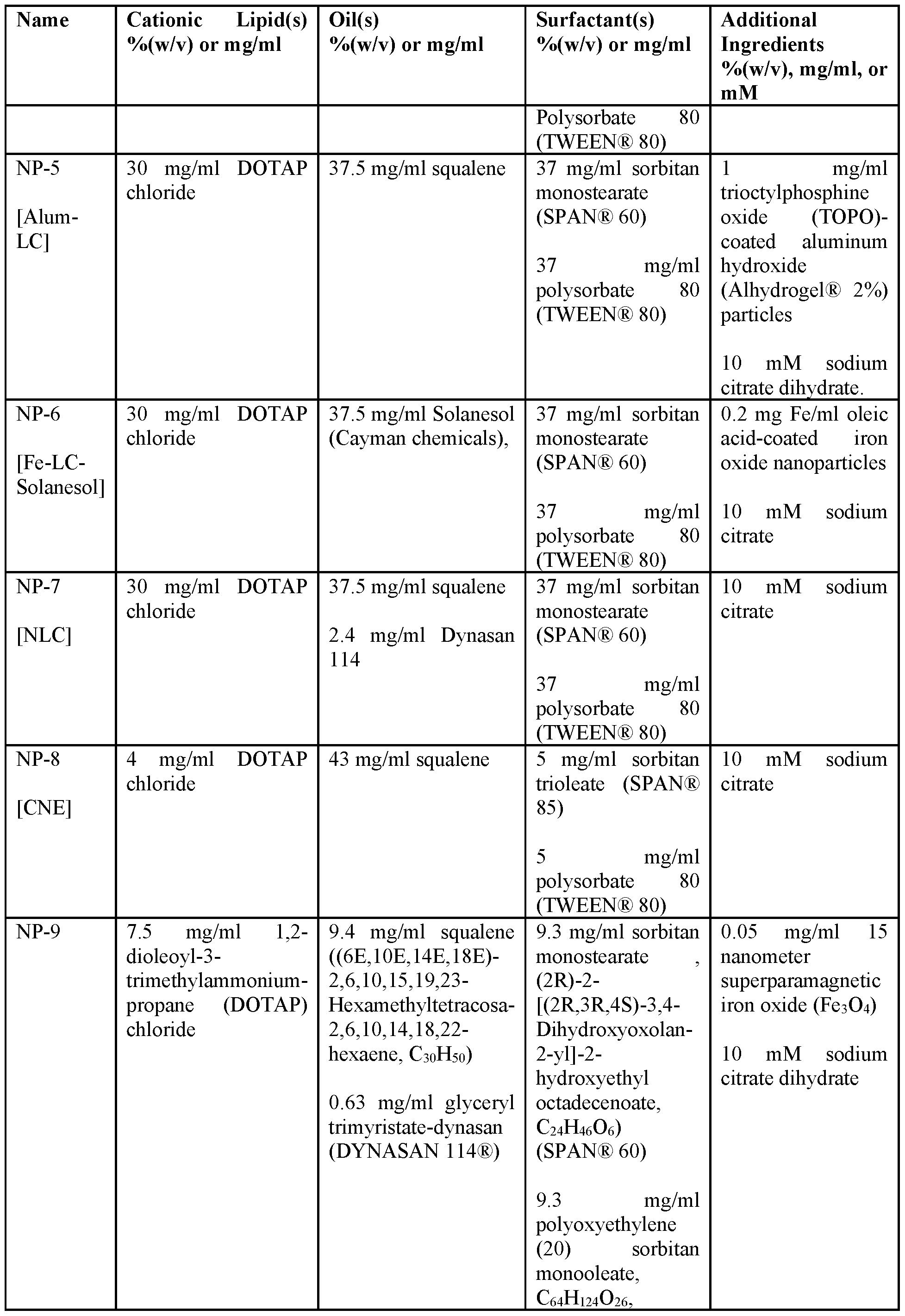
  • a composition described herein comprises at least one nanoparticle formulation as described in Table 1.
  • a composition described herein comprises any one of NP-1 to NP-30.
  • a composition described herein comprises any one of NP-1 to NP-31.
  • the nanoparticles provided herein are admixed with a nucleic acid provided herein.
  • nanoparticles provided herein are made by homogenization and ultrasonication techniques. Table 1. Nanoparticle Formulations. [0075] In some embodiments, nanoparticles provided herein comprise: sorbitan monostearate (e.g., SPAN® 60), polysorbate 80 (e.g., TWEEN® 80), DOTAP, squalene, and no solid particles.
  • nanoparticles provided herein comprise: sorbitan monostearate (e.g., SPAN® 60), polysorbate 80 (e.g., TWEEN® 80), DOTAP, squalene, and iron oxide particles.
  • nanoparticles provided herein comprise an immune stimulant.
  • the immune stimulant is squalene.
  • the immune stimulant is a medium chain triglyceride.
  • the immune stimulant is Miglyol 810 or Miglyol 812.
  • Miglyol 810 is a triglyceride ester of saturated caprylic and capric fatty acids and glycerol.
  • Miglyol 812 is a triglyceride ester of saturated coconut/palmkernel oil derived caprylic and capric fatty acids and plant derived glycerol.
  • the immune stimulant can decrease the total amount of protein produced, but can increase the immune response to a composition provided herein (e.g., when delivered as a vaccine). In some embodiments, the immune stimulant can increase the total amount of protein produced, but can decrease the immune response to a composition provided herein.
  • Nanoparticles provided herein can be of various average diameters in size.
  • nanoparticles provided herein have an average diameter (z- average hydrodynamic diameter, measured by dynamic light scattering) ranging from about 20 nanometers (nm) to about 200 nm. In some embodiments, the z-average diameter of the nanoparticle ranges from about 20 nm to about 150 nm, from about 20 nm to about 100 nm, from about 20 nm to about 80 nm, from about 20 nm to about 60 nm.
  • the z- average diameter of the nanoparticle ranges from about 40 nm to about 200 nm, from about 40 nm to about 150 nm, from about 40 nm to about 100 nm, from about 40 nm to about 90 nm, from about 40 nm to about 80 nm, or from about 40 nm to about 60 nm. In one embodiment, the z- average diameter of the nanoparticle is from about 40 nm to about 80 nm. In some embodiments, the z-average diameter of the nanoparticle is from about 40 nm to about 60 nm. In some embodiments, the nanoparticle is up to 100 nm in diameter.
  • the nanoparticle is 50 to 70 nm in diameter. In some embodiments, the nanoparticle is 40 to 80 nm in diameter.
  • the inorganic particle (e.g., iron oxide) within the hydrophobic core of the nanoparticle can be an average diameter (number weighted average diameter) ranging from about 3 nm to about 50 nm. For instance, the inorganic particle can have an average diameter of about 5 nm, about 10 nm, about 15 nm, about 20 nm, about 25 nm, about 30 nm, about 35 nm, about 40 nm, about 45 nm, or about 50 nm.
  • Nanoparticles provided herein may be characterized by the polydispersity index (PDI), which is an indication of their quality with respect to size distribution.
  • PDI polydispersity index
  • average polydispersity index (PDI) of the nanoparticles provided herein ranges from about 0.1 to about 0.5.
  • the average PDI of the nanoparticles can range from about 0.2 to about 0.5, from about 0.1 to about 0.4, from about 0.2 to about 0.4, from about 0.2 to about 0.3, or from about 0.1 to about 0.3.
  • the nanoparticles provided herein comprise an oil-to- surfactant molar ratio ranging from about 0.1:1 to about 20:1, from about 0.5:1 to about 12:1, from about 0.5:1 to about 9:1, from about 0.5:1 to about 5:1, from about 0.5:1 to about 3:1, or from about 0.5:1 to about 1:1.
  • the nanoparticles provided herein comprise a hydrophilic surfactant-to-lipid ratio ranging from about 0.1:1 to about 2:1, from about 0.2:1 to about 1.5:1, from about 0.3:1 to about 1:1, from about 0.5:1 to about 1:1, or from about 0.6:1 to about 1:1.
  • the nanoparticles provided herein comprise a hydrophobic surfactant-to-lipid ratio ranging from about 0.1:1 to about 5:1, from about 0.2:1 to about 3:1, from about 0.3:1 to about 2:1, from about 0.5:1 to about 2:1, or from about 1:1 to about 2:1.
  • the nanoparticles provided herein comprise from about 0.2% to about 40% w/v liquid oil, from about 0.001% to about 10% w/v inorganic solid nanoparticle, from about 0.2% to about 10% w/v lipid, from about 0.25% to about 5% w/v hydrophobic surfactant, and from about 0.5% to about 10% w/v hydrophilic surfactant.
  • the lipid comprises a cationic lipid
  • the oil comprises squalene
  • the hydrophobic surfactant comprises sorbitan ester.
  • nanoparticles provided herein comprise a ratio of the esters that yields a hydrophilic-lipophilic balance between 8 and 11.
  • nucleic acids provided herein are incorporated, associated with, or complexed a lipid carrier provided herein to form a lipid carrier-nucleic acid complex.
  • the lipid carrier-nucleic acid complex is formed via non-covalent interactions or via reversible covalent interactions.
  • Nucleic Acids [0079]
  • a composition described herein comprise one or more nucleic acids.
  • the nucleic acid a DNA or an RNA.
  • RNAs can be associated with the lipid carrier particles for delivery, including RNAs that modulate innate immune responses, RNAs that encode proteins or antigens, silencing RNAs, microRNAs, tRNAs, self-replicating RNAs, etc.
  • the RNA is a self-replicating RNA.
  • compositions comprising a nanoparticle and a nucleic acid.
  • the nucleic acid is in complex with the nanoparticle.
  • the nucleic acid is in complex with the membrane of the nanoparticle.
  • the nucleic acid is in complex with the hydrophilic surface of the nanoparticle. In some embodiments, the nucleic acid is within the nanoparticle. In some embodiments, the nucleic acid is within the hydrophobic core. [0081] In some embodiments, the one or more nucleic acid encodes an RNA or DNA polymerase. In some embodiments, the one or more nucleic acid encodes an RNA dependent RNA polymerase. In some embodiments, one or more nucleic acid encode an element for self- replication, such as an RNA polymerase (e.g., a VEEV polymerase).
  • an RNA polymerase e.g., a VEEV polymerase
  • the self-replicating nucleotide generally contains at least one or more genes selected from the group consisting of viral replicases, viral proteases, viral helicases and other nonstructural viral proteins, and also comprises 5′- and 3′-end cis-active replication sequences, and an antigenic sequence encoding a cancer-associated protein.
  • a subgenomic promoter that directs expression of the heterologous sequence(s) can be included in the self-replicating nucleotide sequence.
  • a heterologous sequence may be fused in frame to other coding regions in the self-replicating RNA and/or may be under the control of an internal ribosome entry site (IRES).
  • the self-replicating nucleotide sequence is a self- replicating RNA molecule.
  • Self-replicating RNA molecules of the disclosure can be designed so that the self-replicating RNA molecule cannot induce production of infectious viral particles. This can be achieved, for example, by omitting one or more viral genes encoding structural proteins that are necessary for the production of viral particles in the self-replicating RNA.
  • RNA molecules of the disclosure can be designed to induce production of infectious viral particles that are attenuated or virulent, or to produce viral particles that are capable of a single round of subsequent infection.
  • a self-replicating RNA molecule can, when delivered to a vertebrate cell even without any proteins, lead to the production of multiple daughter RNAs by transcription from itself (or from an antisense copy of itself).
  • the self-replicating RNA can be directly translated after delivery to a cell, and this translation provides a RNA-dependent RNA polymerase which then produces transcripts from the delivered RNA.
  • the delivered RNA leads to the production of multiple daughter RNAs.
  • These transcripts are antisense relative to the delivered RNA and may be translated themselves to provide in situ expression of encoded cancer- associated protein, or may be transcribed to provide further transcripts with the same sense as the delivered RNA which are translated to provide in situ expression of the encoded cancer- associated protein(s).
  • a self-replicating RNA can contain chemical modifications in or on the sugar moiety of the nucleoside (e.g., ribose, deoxyribose, modified ribose, modified deoxyribose, six-membered sugar analog, or open-chain sugar analog), or the phosphate.
  • the self-replicating RNA molecules of the disclosure can contain one or more modified nucleotides and therefore have improved stability and be resistant to degradation and clearance in vivo, and other advantages.
  • self-replicating RNA molecules that contain modified nucleotides avoid or reduce stimulation of endosomal and cytoplasmic immune receptors when the self-replicating RNA is delivered into a cell. This permits self-replication, amplification and expression of protein to occur. This also reduces safety concerns relative to self-replicating RNA that does not contain modified nucleotides, because the self-replicating RNA that contains modified nucleotides reduce activation of the innate immune system and subsequent undesired consequences (e.g., inflammation at injection site, irritation at injection site, pain, and the like).
  • RNA molecules produced as a result of self-replication are recognized as foreign nucleic acids by the cytoplasmic immune receptors.
  • self- replicating RNA molecules that contain modified nucleotides provide for efficient amplification of the RNA in a host cell and expression of cancer-associated protein, as well as adjuvant effects.
  • the RNA sequence can be modified with respect to its codon usage, for example, to increase translation efficacy and half-life of the RNA.
  • a poly A tail (e.g., of about 30 adenosine residues or more) may be attached to the 3′ end of the RNA to increase its half-life.
  • the 5′ end of the RNA may be capped with a modified ribonucleotide with the structure m7G (5′) ppp (5′) N (cap 0 structure) or a derivative thereof, which can be incorporated during RNA synthesis or can be enzymatically engineered after RNA transcription (e.g., by using Vaccinia Virus Capping Enzyme (VCE) consisting of mRNA triphosphatase, guanylyl-transferase and guanine-7-methyltransferase, which catalyzes the construction of N7-monomethylated cap 0 structures).
  • VCE Vaccinia Virus Capping Enzyme
  • Cap structure can provide stability and translational efficacy to the RNA molecule.
  • modified nucleotide refers to a nucleotide that contains one or more chemical modifications (e.g., substitutions) in or on the nitrogenous base of the nucleoside (e.g., cytosine (C), thymine (T) or uracil (U), adenine (A) or guanine (G)).
  • a self-replicating RNA molecule can contain chemical modifications in or on the sugar moiety of the nucleoside (e.g., ribose, deoxyribose, modified ribose, modified deoxyribose, six- membered sugar analog, or open-chain sugar analog), or the phosphate.
  • the self-replicating RNA molecules can contain at least one modified nucleotide that, preferably, is not part of the 5′ cap (e.g., in addition to the modification that are part of the 5′′ cap).
  • the self-replicating RNA molecule can contain a modified nucleotide at a single position, can contain a particular modified nucleotide (e.g., pseudouridine, N6- methyladenosine, 5-methylcytidine, 5-methyluridine) at two or more positions, or can contain two, three, four, five, six, seven, eight, nine, ten or more modified nucleotides (e.g., each at one or more positions).
  • the self-replicating RNA molecules comprise modified nucleotides that contain a modification on or in the nitrogenous base, but do not contain modified sugar or phosphate moieties.
  • nucleotides in a self- replicating RNA molecule are modified nucleotides.
  • 0.001%-25%, 0.01%-25%, 0.1%-25%, or 1%-25% of the nucleotides in a self-replicating RNA molecule are modified nucleotides.
  • between 0.001% and 99% or 100% of a particular unmodified nucleotide in a self-replicating RNA molecule is replaced with a modified nucleotide.
  • nucleotides in the self-replicating RNA molecule that contain uridine can be modified, such as by replacement of uridine with pseudouridine.
  • the desired amount (percentage) of two, three, or four particular nucleotides (nucleotides that contain uridine, cytidine, guanosine, or adenine) in a self-replicating RNA molecule are modified nucleotides.
  • 0.001%-25%, 0.01%-25%, 0.1%-25, or 1%-25% of a particular nucleotide in a self-replicating RNA molecule are modified nucleotides.
  • 0.001%-20%, 0.001%-15%, 0.001%-10%, 0.01%-20%, 0.01%-15%, 0.1%-25, 0.01%-10%, 1%-20%, 1%-15%, 1%-10%, or about 5%, about 10%, about 15%, about 20% of a particular nucleotide in a self-replicating RNA molecule are modified nucleotides.
  • less than 100% of the nucleotides in a self-replicating RNA molecule are modified nucleotides. It is also preferred that less than 100% of a particular nucleotide in a self-replicating RNA molecule are modified nucleotides.
  • RNA molecules comprise at least some unmodified nucleotides.
  • Modified nucleobases which can be incorporated into modified nucleosides and nucleotides and be present in the RNA molecules include: m5C (5-methylcytidine), m5U (5- methyluridine), m6A (N6-methyladenosine), s2U (2-thiouridine), Um (2′-O-methyluridine), m1A (1-methyladenosine); m2A (2-methyladenosine); Am (2-1-O-methyladenosine); ms2m6A (2-methylthio-N6-methyladenosine); i6A (N6-isopentenyladenosine); ms2i6A (2- methylthio-N6isopentenyladenosine); io6A (N6-(cis-hydroxyisopentenyl)adenosine); ms2i
  • RNA molecules optionally the self-replicating RNA molecule, comprises phosphoramidate, phosphorothioate, and/or methylphosphonate linkages.
  • Self-replicating RNA molecules that comprise at least one modified nucleotide can be prepared using any suitable method. Several suitable methods are known in the art for producing RNA molecules that contain modified nucleotides.
  • a self-replicating RNA molecule that contains modified nucleotides can be prepared by transcribing (e.g., in vitro transcription) a DNA that encodes the self-replicating RNA molecule using a suitable DNA- dependent RNA polymerase, such as T7 phage RNA polymerase, SP6 phage RNA polymerase, T3 phage RNA polymerase, and the like, or mutants of these polymerases which allow efficient incorporation of modified nucleotides into RNA molecules.
  • the transcription reaction will contain nucleotides and modified nucleotides, and other components that support the activity of the selected polymerase, such as a suitable buffer, and suitable salts.
  • nucleotide analogs into a self-replicating RNA may be engineered, for example, to alter the stability of such RNA molecules, to increase resistance against RNases, to establish replication after introduction into appropriate host cells (“infectivity” of the RNA), and/or to induce or reduce innate and adaptive immune responses.
  • infectious of the RNA
  • the presence and/or quantity of one or more modified nucleotides in a self- replicating RNA molecule can be determined using any suitable method.
  • a self- replicating RNA can be digested to monophosphates (e.g., using nuclease P1) and dephosphorylated (e.g., using a suitable phosphatase such as CIAP), and the resulting nucleosides analyzed by reversed phase HPLC (e.g., using a YMC Pack ODS-AQ column (5 micron, 4.6 ⁇ 250 mm) and elute using a gradient, 30% B (0-5 min) to 100% B (5-13 min) and at 100% B (13-40) min, flow Rate (0.7 ml/min), UV detection (wavelength: 260 nm), column temperature (30° C.).
  • monophosphates e.g., using nuclease P1
  • dephosphorylated e.g., using a suitable phosphatase such as CIAP
  • reversed phase HPLC e.g., using a YMC Pack ODS-AQ column (5 micron, 4.6 ⁇ 250 mm) and elute using a
  • the self-replicating RNA may be associated with a delivery system.
  • the self- replicating RNA may be administered with or without an adjuvant.
  • the one or more nucleic acid may be incorporated/associated/complexed with the lipid carrier to form a lipid carrier-nucleic acid complex.
  • the lipid carrier-nucleic acid complex is formed via non-covalent interactions or via reversible covalent interactions.
  • compositions provided herein comprise one or more nucleic acids.
  • compositions provided herein comprise two or more nucleic acids. In some embodiments, compositions provided herein comprise at least one DNA. In some embodiments, compositions provided herein comprise at least one RNA. In some embodiments, compositions provided herein comprise at least one DNA and at least one RNA. In some embodiments, nucleic acids provided herein are present in an amount of above 5 ng to about 1 mg. In some embodiments, nucleic acids provided herein are present in an amount of up to about 25, 50, 75, 100, 150, 175 ng. In some embodiments, nucleic acids provided herein are present in an amount of up to about 1 mg.
  • nucleic acids provided herein are present in an amount of about 0.05 ⁇ g, 0.1 ⁇ g, 0.2 ⁇ g, 0.5, ⁇ g 1 ⁇ g, 5 ⁇ g, 10 ⁇ g, 12.5 ⁇ g, 15 ⁇ g, 25 ⁇ g, 40 ⁇ g, 50 ⁇ g, 100 ⁇ g, 200 ⁇ g, 300 ⁇ g, 400 ⁇ g, 500 ⁇ g, 600 ⁇ g, 700 ⁇ g, 800 ⁇ g, 900 ⁇ g, 1 mg.
  • nucleic acids provided herein are present in an amount of 0.05 ⁇ g, 0.1 ⁇ g, 0.2 ⁇ g, 0.5, ⁇ g 1 ⁇ g, 5 ⁇ g, 10 ⁇ g, 12.5 ⁇ g, 15 ⁇ g, 25 ⁇ g, 40 ⁇ g, 50 ⁇ g, 100 ⁇ g, 200 ⁇ g, 300 ⁇ g, 400 ⁇ g, 500 ⁇ g, 600 ⁇ g, 700 ⁇ g, 800 ⁇ g, 900 ⁇ g, 1 mg. In some embodiments, nucleic acids provided herein are present in an amount of about 5 ⁇ g, about 10 ⁇ g, about 25 ⁇ g, about 50 ⁇ g, or about 100 ⁇ g.
  • nucleic acids provided herein are present in an amount of up to about 5 ⁇ g, about 10 ⁇ g, about 25 ⁇ g, about 50 ⁇ g, or 100 ⁇ g.
  • the nucleic acid is at least about 200, 250, 500, 750, 1000, 2000, 3000, 4000, 5000, 6000, 7000, 8000, 9000, 10,000, 11,000, 12,000, 13,000, 14,000, 15,000, 16,000, 17,000, 18,000, 19,000, or 20,000 nucleotides in length.
  • the nucleic acid is up to about 7000, 8000, 9000, 10,000, 11,000, 12,000, 13,000, 14,000, 15,000, 16,000, 17,000, 18,000, 19,000, or 20,000 nucleotides in length. In some embodiments, the nucleic acid is about 7500, 10,000, 15,000, or 20,000 nucleotides in length.
  • Cryoprotectants [00100] In some embodiments, compositions and methods provided herein comprise at least one cryoprotectant. Exemplary cryoprotectants for inclusion are, but not limited to, sucrose, maltose, trehalose, mannitol, or glucose, and any combinations thereof.
  • additional or alternative cryoprotectant for inclusion is sorbitol, ribitol, erthritol, threitol, ethylene glycol, or fructose.
  • additional or alternative cryoprotectant for inclusion is dimethyl sulfoxide (DMSO), glycerol, propylene glycol, ethylene glycol, 3-O-methyl-D-glucopyranose (3-OMG), polyethylene glycol (PEG), 1,2- propanediol, acetamide, trehalose, formamide, sugars, proteins, and carbohydrates.
  • the cryoprotectant is present at about 1% w/v to about 20% w/v, preferably about 10% w/v to at about 20% w/v, and more preferably at about 10% w/v.
  • the cryoprotectant is sucrose.
  • the cryoprotectant is maltose.
  • the cryoprotectant is trehalose.
  • the cryoprotectant is mannitol.
  • the cryoprotectant is glucose.
  • the cryoprotectant is present in an amount of about 10, 20, 30, 40, 50, 60, 70, 80, 90, 100, 110, 120, 130, 140, 150, 160, 170, 180, 190, 200, 210, 220, 230, 240, 250, 260, 270, 280, 290, 300, 325, 350, 375, 400, 450, 500 or more mg.
  • the cryoprotectant is present in an amount of about 50 to about 500 mg.
  • the cryoprotectant is present in an amount of about 200 to about 300 mg.
  • the cryoprotectant is present in an amount of about 250 mg.
  • the cryoprotectant is present in amount of a lyophilized composition by weight of at least 50, 55, 60, 65, 70, 75, 80, 85, 90, 95 or more percent. In some embodiments, the cryoprotectant is present in amount of a lyophilized composition by weight of about 95%. In some embodiments, the cryoprotectant is present in amount of a lyophilized composition by weight of 80 to 98%, 85 to 98%, 90 to 98%, or 94 to 96%. In some embodiments, the cryoprotectant is a sugar. In some embodiments, the sugar is sucrose, maltose, trehalose, mannitol, or glucose. In some embodiments, the sugar is sucrose.
  • the sucrose is present in an amount of about 10, 20, 30, 40, 50, 60, 70, 80, 90, 100, 110, 120, 130, 140, 150, 160, 170, 180, 190, 200, 210, 220, 230, 240, 250, 260, 270, 280, 290, 300, 325, 350, 375, 400, 450, 500 or more mg.
  • the sucrose is present in an amount of about 50 to about 500 mg.
  • the sucrose is present in an amount of about 200 to about 300 mg.
  • the sucrose is present in an amount of about 250 mg.
  • the sucrose is present in amount of a lyophilized composition by weight of at least 50, 55, 60, 65, 70, 75, 80, 85, 90, 95 or more percent. In some embodiments, the sucrose is present in amount of a lyophilized composition by weight of about 95%. In some embodiments, the sucrose is present in amount of a lyophilized composition by weight of 80 to 98%, 85 to 98%, 90 to 98%, or 94 to 96%. [00101] In some embodiments, compositions provided herein are thermally stable. A composition is considered thermally stable when the composition resists the action of heat or cold and maintains its properties, such as the ability to protect a nucleic acid molecule from degradation at given temperature.
  • compositions and vaccines provided herein are thermally stable at about 25 degrees Celsius or standard room temperature. In some embodiments, compositions and vaccines provided herein are thermally stable at about 45 degrees Celsius. In some embodiments, compositions and vaccines provided herein are thermally stable at about - 20 degrees Celsius. In some embodiments, compositions and vaccines provided herein are thermally stable at about 2 degrees Celsius to about 8 degrees Celsius.
  • compositions and vaccines provided herein are thermally stable at a temperature of at least about -80 degrees Celsius, at least about- 20 degrees Celsius, at least about 0 degrees Celsius, at least about 2 degrees Celsius, at least about 4 degrees Celsius, at least about 6 degrees Celsius, at least about 8 degrees Celsius, at least about 10 degrees Celsius, at least about 20 degrees Celsius, at least about 25 degrees Celsius, at least about 30 degrees Celsius, at least about 37 degrees Celsius, up to 45 degrees Celsius.
  • compositions and vaccines provided herein are thermally stable for at least about 5 day, at least about 1 week, at least about 2 weeks, at least about 1 month, up to 3 months.
  • compositions and vaccines provided herein are stored at a temperature of at least about 40 C up to 37 degrees Celsius for at least about 5 day, at least about 1 week, at least about 2 weeks, at least about 1 month, up to 3 months. In some embodiments, compositions and vaccines provided herein are stored at a temperature of at least about 20 degrees Celsius up to 25 degrees Celsius for at least about 5 day, at least about 1 week, at least about 2 weeks, at least about 1 month, up to 3 months.
  • Combination Compositions [00102] Provided herein are compositions comprising a nucleic acid described herein and a lipid carrier described herein. In some embodiments, the lipid carrier comprises NP-1. In some embodiments, the lipid carrier comprises NP-2.
  • the lipid carrier comprises NP-3. In some embodiments, the lipid carrier comprises NP-4. In some embodiments, the lipid carrier comprises NP-5. In some embodiments, the lipid carrier comprises NP-6. In some embodiments, the lipid carrier comprises NP-7. In some embodiments, the lipid carrier comprises NP-8. In some embodiments, the lipid carrier comprises NP-9. In some embodiments, the lipid carrier comprises NP-10. In some embodiments, the lipid carrier comprises NP-11. In some embodiments, the lipid carrier comprises NP-12. In some embodiments, the lipid carrier comprises NP-13. In some embodiments, the lipid carrier comprises NP-14. In some embodiments, the lipid carrier 30 comprises NP-15.
  • the lipid carrier comprises NP-16. In some embodiments, the lipid carrier comprises NP-17. In some embodiments, the lipid carrier comprises NP-18. In some embodiments, the lipid carrier comprises NP-18. In some embodiments, the lipid carrier comprises NP-19. In some embodiments, the lipid carrier comprises NP-20. In some embodiments, the lipid carrier comprises NP-21. In some embodiments, the lipid carrier comprises NP-22. In some embodiments, the lipid carrier comprises NP-23 In some embodiments, the lipid carrier comprises NP-24. In some embodiments, the lipid carrier comprises NP-25. In some embodiments, the lipid carrier comprises NP-26. In some embodiments, the lipid carrier comprises NP-27.
  • the lipid carrier comprises NP-28. In some embodiments, the lipid carrier comprises NP-28. In some embodiments, the lipid carrier comprises NP-29. In some embodiments, the lipid carrier comprises NP-30. In some embodiments, the lipid carrier comprises NP-31. In some embodiments, the lipid carrier comprises any of NP-1 to NP-31 and a cryoprotectant. In some embodiments, the cryoprotectant is a sugar described herein.
  • Compositions provided herein can be characterized by an nitrogen:phosphate (N:P) molar ratio. The N:P ratio is determined by the amount of cationic lipid in the nanoparticle which contain nitrogen and the amount of nucleic acid used in the composition which contain negatively charged phosphates.
  • N:P nitrogen:phosphate
  • a molar ratio of the lipid carrier to the nucleic acid can be chosen to increase the delivery efficiency of the nucleic acid, increase the ability of the nucleic acid- carrying nanoemulsion composition to elicit an immune response to the antigen, increase the ability of the nucleic acid-carrying nanoemulsion composition to elicit the production of antibody titers to the antigen in a subject.
  • compositions provided herein have a molar ratio of the lipid carrier to the nucleic acid can be characterized by the nitrogen- to-phosphate molar ratio, which can range from about 0.01:1 to about 1000:1, for instance, from about 0.2:1 to about 500:1, from about 0.5:1 to about 150:1, from about 1:1 to about 150:1, from about 1:1 to about 125:1, from about 1:1 to about 100:1, from about 1:1 to about 50:1, from about 1:1 to about 50:1, from about 5:1 to about 50:1, from about 5:1 to about 25:1, or from about 10:1 to about 20:1
  • the molar ratio of the lipid carrier to the nucleic acid characterized by the nitrogen-to-phosphate (N:P) molar ratio, ranges from about 1:1 to about 150:1, from about 5:1 to about 25:1, or from about 10:1 to about 20:1.
  • the N:P molar ratio of the nanoemulsion composition is about 15:1.
  • the nanoparticle comprises a nucleic acid provided herein covalently attached to the membrane.
  • Compositions provided herein can be characterized by an oil-to-surfactant molar ratio.
  • the oil-to-surfactant ratio is the molar ratio of squalene: cationic lipid, hydrophobic surfactant, and hydrophilic surfactant.
  • the oil-to- surfactant ratio is the molar ratio of squalene: DOTAP, hydrophobic surfactant, and hydrophilic surfactant.
  • the oil-to-surfactant ratio is the molar ratio of squalene: DOTAP, sorbitan monostearate, and polysorbate 80. In some embodiments, the oil-to surfactant molar ratio ranges from about 0.1:1 to about 20:1, from about 0.5:1 to about 12:1, from about 0.5:1 to about 9:1, from about 0.5:1 to about 5:1, from about 0.5:1 to about 3:1, or from about 0.5:1 to about 1:1.
  • the oil-to-surfactant molar ratio is at least about 0.1:1, at least about 0.2:1, at least about 0.3:1, at least about 0.4:1, at least about 0.5:1, at least about 0.6:1, at least about 0.7:1. In some embodiments, the oil-to surfactant molar ratio is at least about 0.4:1 up to 1:1.
  • Compositions provided herein can be characterized by hydrophilic surfactant-to- cationic lipid ratio.
  • the hydrophilic surfactant-to-cationic lipid ratio ranges from about 0.1:1 to about 2:1, from about 0.2:1 to about 1.5:1, from about 0.3:1 to about 1:1, from about 0.5:1 to about 1:1, or from about 0.6:1 to about 1:1.
  • Compositions provided herein can be characterized by hydrophobic surfactant-to-lipid (e.g., cationic lipid) ratio.
  • the hydrophobic surfactant-to-lipid ratio ranges from about 0.1:1 to about 5:1, from about 0.2:1 to about 3:1, from about 0.3:1 to about 2:1, from about 0.5:1 to about 2:1, or from about 1:1 to about 2:1.
  • the cationic lipid is DOTAP.
  • a dried composition comprising a sorbitan fatty acid ester, an ethoxylated sorbitan ester, a cationic lipid, an immune stimulant, and an RNA.
  • the dried composition comprises sorbitan monostearate (e.g., SPAN® 60), polysorbate 80 (e.g., TWEEN® 80), DOTAP, an immune stimulant, and an RNA.
  • sorbitan monostearate e.g., SPAN® 60
  • polysorbate 80 e.g., TWEEN® 80
  • DOTAP an immune stimulant
  • an RNA RNA.
  • Pharmaceutical Compositions [00106] In one aspect, the disclosure provides a pharmaceutical composition comprising lipid carriers and, optionally, nucleic acids described herein.
  • the pharmaceutical composition can comprise a pharmaceutically acceptable carrier or excipient.
  • pharmaceutically acceptable carrier or excipient includes solvents, dispersion media, coatings, antibacterial and antifungal agents, isotonic and absorption delaying agents, etc., compatible with pharmaceutical administration.
  • the pharmaceutical composition comprises the dried composition reconstituted in a suitable diluent and a pharmaceutically acceptable carrier.
  • the diluent is aqueous.
  • the diluent is water.
  • kits comprising the pharmaceutical composition and a delivery system for administration to a subject.
  • the subject can be a mammal. In preferred aspects, the subject is human.
  • the disclosure provides a vaccine delivery system comprising the compositions comprising the pharmaceutical composition, as described herein, and optionally one or more vaccine adjuvant.
  • the composition can be delivered to a cell.
  • the cell can be in a subject in need.
  • the nucleic acid is a protein antigen or encodes a protein antigen
  • the composition carrying the nucleic acid can elicit an immune response in the subject against the antigen.
  • the composition may do so by eliciting antibody titers to the antigen in the subject, for instance, by inducing neutralizing antibody titers in the subject.
  • the disclosure also relates to a method for generating an immune response in a subject, comprising administering a therapeutically effective amount of the pharmaceutical composition to the subject.
  • the composition containing the lipid carrier when administered in an effective amount to the subject, can elicit an immune response to the antigen equal to or greater than the immune response elicited when the nucleic acid is administered to the subject without the lipid carrier.
  • the hydrophobic surfactants in the nanoemulsion composition may contribute to increase the ability of the nanoemulsion composition to deliver a nucleic acid to the cell or to increase the ability of the nanoemulsion composition carrying a nucleic acid to elicit an immune response in the subject against the antigen (when the nucleic acid is a protein antigen or encodes a protein antigen).
  • the hydrophobic surfactants in the nanoemulsion composition may contribute to increase the ability of the nanoemulsion composition carrying a nucleic acid.
  • Another aspect of the disclosure relates to a method of treating or preventing an infection or disease in a subject, comprising administering a therapeutically effective amount of the pharmaceutical composition to the subject.
  • the inorganic solid nanoparticles when containing a reporter element detectable via imaging methods, the resulting nanoemulsion particles can be imaged and tracked after the nanoemulsion particles are administered in the body.
  • the inorganic solid nanoparticle may contain a reporter element detectable via magnetic resonance imaging (MRI), such as a paramagnetic, superparamagnetic, ferrimagnetic or ferromagnetic compound.
  • MRI magnetic resonance imaging
  • one aspect of the disclosure also relates to a method of imaging and/or tracking a nucleic acid delivery in a subject, comprising administering a therapeutically effective amount of the pharmaceutical composition to the subject.
  • the disclosure also provides methods for preparing and reconstituting a lyophilized composition and a spray-dried composition. [00118] In some aspects of the disclosure, the compositions and methods are useful in treating a variety of diseases and disclosures. [00119] Non-limiting examples of infections may include viral and non-viral infections.
  • viral infections include, but not limited to Human Papillomavirus (HPV), Herpes Simplex Virus (HSV), Varicella-Zoster Virus (VZV), influenza virus, types and subtypes of influenza virus, Yellow Fever Virus (YFV), Zika Virus, West Nile Virus, Chikungunya Virus, Dengue, Respiratory Syncytial Virus (RSV), Human Immunodeficiency Virus (HIV), Severe Acute Respiratory Syndrome Coronavirus 2 (SARS-CoV-2) and its variants.
  • HPV Human Papillomavirus
  • HSV Herpes Simplex Virus
  • VZV Varicella-Zoster Virus
  • influenza virus types and subtypes of influenza virus
  • YFV Yellow Fever Virus
  • RSV Respiratory Syncytial Virus
  • HSV Human Immunodeficiency Virus
  • SARS-CoV-2 Severe Acute Respiratory Syndrome Coronavirus 2
  • the composition and methods comprises one or more nucleic acid that encodes an antigen, wherein the antigen is derived from a bacterial infection, a bacterial disease, a viral infection, a viral disease, a protozoan infection, a protozoan disease, a non-communicable disease, one or more cancers, or an autoimmune disease.
  • the antigen is derived from a virus.
  • the virus is selected from the group consisting of Human Papillomavirus (HPV), Herpes Simplex Virus (HSV), Varicella-Zoster Virus (VZV), influenza virus, types and subtypes of influenza virus, Yellow Fever Virus (YFV), Zika Virus, West Nile Virus, Chikungunya Virus, Dengue, Respiratory Syncytial Virus (RSV), Human Immunodeficiency Virus (HIV), Severe Acute Respiratory Syndrome Coronavirus 2 (SARS-CoV-2) and its variants.
  • HPV Human Papillomavirus
  • HSV Herpes Simplex Virus
  • VZV Varicella-Zoster Virus
  • influenza virus types and subtypes of influenza virus
  • YFV Yellow Fever Virus
  • RSV Respiratory Syncytial Virus
  • HAV Human Immunodeficiency Virus
  • SARS-CoV-2 Severe Acute Respiratory Syndrome Coronavirus 2
  • the dried compositions of the disclosure may be used to deliver a nucleic acid (e.g., an RNA, optionally a self-replicating RNA) to a cell or a subject, e.g., a mammal, including but not limited to humans, dogs, cats, livestock (e.g., cows, sheep, goats, pigs), horses, and the like.
  • a nucleic acid e.g., an RNA, optionally a self-replicating RNA
  • a cell or a subject e.g., a mammal, including but not limited to humans, dogs, cats, livestock (e.g., cows, sheep, goats, pigs), horses, and the like.
  • Exemplary amounts of total nucleic acid for incorporation in a composition described herein includes about 1, 2, 2.5, 5, 7.5, 10, 12.5, 15, 20, 25, 30, 35, 40, 45, 50 micrograms ( ⁇ g) or more
  • a formulation described herein is prepared in a single container for administration
  • a formulation described herein is prepared in two containers for administration, separating the formulation from the nanoparticle carrier.
  • “container” includes vessel, vial, ampule, tube, cup, box, bottle, flask, jar, dish, well of a single-well or multi-well apparatus, reservoir, tank, or the like, or other device in which the herein disclosed compositions may be placed, stored and/or transported, and accessed to remove the contents.
  • Examples of such containers include glass and/or plastic sealed or re-sealable tubes and ampules, including those having a rubber septum or other sealing means that is compatible with withdrawal of the contents using a needle and syringe.
  • the containers are RNase free.
  • the dried composition is lyophilized. In some embodiments, the dried composition is spray-dried. [00127] In some embodiments, the lyophilized composition is reconstituted by the methods described herein. In other embodiments, the spray-dried composition is reconstituted by the methods described herein. [00128] In some embodiments, pharmaceutical compositions provided here are in a form which allows for the composition to be administered to a subject. In some embodiments, the pharmaceutical composition is in the form of a solid, semi-solid, liquid or gas (aerosol). [00129] To deliver the nucleic acid to a cell or a subject, any suitable administration route may be employed.
  • the pharmaceutical composition described herein is formulated for administration and/or for use in administration via an intratumoral, subcutaneous, intradermal, intramuscular, inhalation/intranasal, intravenous, intraperitoneal, intracranial, or intrathecal route.
  • the pharmaceutical composition is administered parenterally.
  • the pharmaceutical composition is administered percutaneously.
  • the pharmaceutical composition is administered intramuscularly.
  • the pharmaceutical composition is administered intradermally.
  • the pharmaceutical composition is administered transdermally.
  • the pharmaceutical composition is administered subcutaneously.
  • the pharmaceutical composition is administered intranasally, e.g., via a nasal sprayer.
  • the pharmaceutical composition is administered orally, e.g., via drops.
  • any suitable dosage form may be used for delivery of the pharmaceutical composition described herein.
  • the pharmaceutical composition is provided in an injectable dosage form, such as a solution or suspension.
  • the composition is provided in a dosage form which may be delivered via an inhaler, such as a solution, suspension, or powder, wherein the dosage form is formulated for delivery via an inhaler such as a metered-dose inhaler, a soft-mist inhaler, a nebulizer, or a dry powder inhaler.
  • the composition is provided in a dosage form which may be delivered nasally, such as a solution, suspension, or powder, wherein the dosage form is formulated for nasal delivery via an atomizer or nasal pump bottle, or other suitable device for delivery of nasally administered pharmaceutical compositions.
  • a dosage form which may be delivered nasally, such as a solution, suspension, or powder, wherein the dosage form is formulated for nasal delivery via an atomizer or nasal pump bottle, or other suitable device for delivery of nasally administered pharmaceutical compositions.
  • any pharmaceutically acceptable carriers, preservatives, and/or other excipients may be used in a dosage form described herein for delivery of compositions of the present disclosure.
  • the disclosure also provides dried compositions that do not contain one or more inorganic nanoparticles.
  • the dried composition comprises a sorbitan fatty acid ester, an ethoxylated sorbitan ester, a cationic lipid, an immune stimulant and a RNA.
  • the dried composition comprises sorbitan monostearate, polyoxyethylene (20) sorbitan monooleate, DOTAP, an immune stimulant, and a RNA.
  • the immune stimulant can decrease the total amount of protein produced, but can increase the immune response to a vaccine.
  • the immune stimulant can increase the total amount of protein produced, but can decrease the immune response to a vaccine.
  • the immune stimulant is squalene.
  • the immune stimulant is a caprylic/capric triglyceride (MIGLYOL® 810) or a triglyceride ester of saturated coconut/palmkernel oil derived caprylic and capric fatty acids and plant derived glycerol (MIGLYOL® 812N).
  • MIGLYOL® 810 a caprylic/capric triglyceride
  • MIGLYOL® 812N triglyceride ester of saturated coconut/palmkernel oil derived caprylic and capric fatty acids and plant derived glycerol
  • dried compositions wherein the compositions are lyophilized
  • dried compositions wherein the compositions are spray-dried.
  • dried compositions wherein the dried compositions are thermally stable.
  • the dried compositions are thermally stable at about 25 degrees Celsius.
  • dried compositions wherein the dried compositions are thermally stable at about 45 degrees Celsius.
  • dried compositions wherein the dried compositions are thermally stable at about -20 degrees Celsius.
  • dried compositions wherein the dried compositions are thermally stable from about 2 degrees Celsius to about 8 degrees Celsius.
  • dried compositions wherein the dried compositions are thermally stable for at least 1 week, at least 2 weeks, and/or at least 1 month.
  • dried compositions wherein the hydrophobic core of the composition comprises an oil.
  • the oil comprises at least one of ⁇ -tocopherol, lauroyl polyoxylglyceride, monoacylglycerol, propolis, squalene, mineral oil, grapeseed oil, olive oil, paraffin oil, peanut oil, soybean oil, sunflower oil, soy lecithin, triglyceride, vitamin E, a caprylic/capric triglyceride, a triglyceride ester of saturated coconut/palmkernel oil derived caprylic and capric fatty acids and plant derived glycerol, dihydroisosqualene (DHIS), farnesene and squalane.
  • DHIS dihydroisosqualene
  • compositions wherein the one or more inorganic nanoparticles is selected from the group consisting of: a metal salt, metal oxide, metal hydroxide, metal phosphate, and any combinations thereof. Further provided herein are dried compositions, wherein the one or more lipids is selected from the group consisting of: cationic lipids, anionic lipids, neutral lipids, and any combinations thereof. Further provided herein are dried compositions, wherein the one or more lipids is a cationic lipid.
  • compositions wherein the cationic lipid is selected from the group consisting of: l,2-dioleoyloxy-3-(trimethylammonium)propane (DOTAP); 3 ⁇ -[ ⁇ -(N',N'- dimethylaminoethane)-carbamoyl]cholesterol (DC Cholesterol); dimethyldioctadecylammonium (DDA); l,2-dimyristoyl-3-trimethylammoniumpropane (DMTAP), dipalmitoyl(C16:0)trimethyl ammonium propane (DPTAP); distearoyltrimethylammonium propane (DSTAP); N-[l-(2,3- dioleyloxy)propyl]- N,N,Ntrimethylammonium chloride (DOTMA); N,N-dioleoyl-N,N- dimethylammonium chloride (DODAC); l,2-dioleoyl-sn-
  • DOTAP
  • dried compositions wherein the lipid carrier optionally comprises at least one surfactant.
  • the at least one surfactant is selected from the group consisting of: a hydrophobic surfactant, a hydrophilic surfactant, and any combinations
  • the hydrophobic surfactant comprises a sorbitan ester.
  • compositions wherein the sorbitan ester is selected from the group consisting of: sorbitan monolaurate, sorbitan monopalmitate, sorbitan monostearate, sorbitan tristearate, sorbitan monooleate, and sorbitan trioleate; and the hydrophilic surfactant comprises a polysorbate.
  • the lipid carrier has a z-average hydrodynamic diameter ranging from about 40 nm to about 150 nm, with an average polydispersity index ranging from about 0.1 to about 0.4.
  • dried compositions wherein the one or more nucleic acid is an RNA.
  • RNA is a self-replicating RNA.
  • dried compositions wherein the one or more nucleic acid is incorporated or complexed with the lipid carrier to form a lipid carrier-nucleic acid complex.
  • dried compositions wherein the lipid carrier-nucleic acid complex is formed via non-covalent interactions or via reversible covalent interactions.
  • dried compositions wherein the molar ratio of the lipid carrier to the one or more nucleic acids, characterized by the nitrogen-to-phosphate (N:P) molar ratio, ranges from about 1:1 to about 150:1.
  • compositions wherein the at least one cryoprotectant is selected from the group consisting of: sucrose, maltose, trehalose, mannitol, glucose, and any combinations thereof. Further provided herein are dried compositions, wherein the at least one cryoprotectant is sucrose. Further provided herein are dried compositions, wherein the at least one cryoprotectant is at about 1% w/v to about 20% w/v. Further provided herein are dried compositions, wherein the at least one cryoprotectant is at about 1% w/v to about 40% w/v. Further provided herein are dried compositions, wherein the at least one cryoprotectant is at about 10% w/v to about 20% w/v.
  • compositions wherein the at least one cryoprotectant is at about 10% w/v.
  • the one or more inorganic nanoparticles comprises aluminum oxide (Al 2 O 3 ), aluminum oxyhydroxide, iron oxide, titanium dioxide, silicon dioxide (SiO2), aluminum hydroxyphosphate (Al(OH)x(PO4)y), calcium phosphate (Ca3(PO4)2), calcium hydroxyapatite (Ca10(PO4)6(OH)2), iron gluconate, or iron sulfate.
  • compositions wherein the one or more inorganic nanoparticles comprises magnetite (Fe 3 O 4 ), maghemite (y-Fe 2 O 3 ), wüstite (FeO), or hematite (alpha ( ⁇ )- Fe 2 O 3 ), or combinations thereof.
  • the pharmaceutical compositions comprise: a dried composition provided herein reconstituted in a suitable diluent; and a pharmaceutically acceptable carrier.
  • the suitable diluent is aqueous.
  • pharmaceutical compositions wherein the suitable diluent is water.
  • kits comprising a pharmaceutical composition provided herein or a dried composition provided herein; and a delivery system for administration to a subject.
  • vaccine delivery systems comprisin the vaccine delivery systems comprise: a pharmaceutical composition provided herein and optionally, one or more vaccine adjuvants.
  • methods for generating an immune response in a subject comprising: administering to the subject a therapeutically effective amount of a pharmaceutical composition provided herein.
  • methods of treating or preventing a disease in a subject comprising: administering to the subject a therapeutically effective amount of the pharmaceutical composition provided herein.
  • methods of imaging and/or tracking delivery of one or more nucleic acids in a subject comprising: administering to the subject a therapeutically effective amount of the pharmaceutical composition provided herein.
  • methods for preparing a lyophilized compositions comprising: (a) obtaining a lipid carrier, wherein the lipid carrier is a nanoemulsion comprising a hydrophobic core, optionally one or more inorganic nanoparticles and one or more lipids; (b) incorporating one or more nucleic acid into the lipid carrier to form a lipid carrier- nucleic acid complex; (c) adding at least one cryoprotectant to the lipid carrier-nucleic acid complex to form a formulation; and (d) lyophilizing the formulation to form a lyophilized composition.
  • lipid carrier is a nanoemulsion comprising a hydrophobic core, optionally one or more inorganic nanoparticles and one or more lipids; (b) incorporating one or more nucleic acid into the lipid carrier to form a lipid carrier- nucleic acid complex; (c) adding at least one cryoprotectant to the lipid carrier-nucleic acid complex to form a formulation; and (d) spray drying the formulation to form a spray-dried composition.
  • lipid carrier is a nanoemulsion comprising a hydrophobic core, optionally one or more inorganic nanoparticles, and one or more lipids
  • lipid carrier-nucleic acid complex incorporating one or more nucleic acid into the said lipid carrier to form a lipid carrier-nucleic acid complex
  • cryoprotectant adding at least one cryoprotectant to the lipid carrier-nucleic acid complex to form a formulation; lyophilizing the formulation to form a lyophilized composition; and (d) reconstituting the lyophilized composition in a suitable diluent.
  • the suitable diluent is aqueous. Further provided herein are methods, wherein the suitable diluent is water. Further provided herein are methods, wherein the lyophilized composition is thermally stable. Further provided herein are methods, wherein the lyophilized composition is thermally stable for at least 1 week, at least 2 weeks, and/or at least 1 month. Further provided herein are methods, wherein the lyophilized composition is thermally stable at about 25 degrees Celsius. Further provided herein are methods, wherein the lyophilized composition is thermally stable at about 45 degrees Celsius. Provided herein are methods, wherein the lyophilized composition is thermally stable at about - 20 degrees Celsius.
  • compositions wherein the lyophilized composition is thermally stable at about 2 degrees Celsius to about 8 degrees Celsius.
  • the one or more inorganic nanoparticles comprises aluminum oxide (Al 2 O 3 ), aluminum oxyhydroxide, iron oxide, titanium dioxide, silicon dioxide (SiO 2 ), aluminum hydroxyphosphate (Al(OH) x (PO 4 ) y ), calcium phosphate (Ca3(PO4)2), calcium hydroxyapatite (Ca10(PO4)6(OH)2), iron gluconate, or iron sulfate.
  • compositions wherein the one or more inorganic nanoparticles comprises magnetite (Fe 3 O 4 ), maghemite (y-Fe 2 O 3 ), wüstite (FeO), or hematite (alpha ( ⁇ )- Fe2O3), or combinations thereof.
  • magnetite Fe 3 O 4
  • maghemite y-Fe 2 O 3
  • wüstite FeO
  • hematite alpha ( ⁇ )- Fe2O3
  • lipid carrier is a nanoemulsion comprising a hydrophobic core, optionally one or more inorganic nanoparticles, and one or more lipids
  • lipid carrier-nucleic acid complex incorporating one or more nucleic acid into the said lipid carrier to form a lipid carrier-nucleic acid complex
  • cryoprotectant adding at least one cryoprotectant to the lipid carrier-nucleic acid complex to form a formulation
  • spray drying the formulation to form a spray-dried composition
  • reconstituting the spray-dried composition in a suitable diluent.
  • the diluent is aqueous. Further provided herein are methods, wherein the diluent is water. Further provided herein are methods, wherein the lyophilized composition is thermally stable. Further provided herein are methods, wherein the lyophilized composition is thermally stable at about 25 degrees Celsius. Further provided herein are methods, wherein the lyophilized composition is thermally stable at about 45 degrees Celsius. Provided herein are methods, wherein the lyophilized composition is thermally stable at about - 20 degrees Celsius. Further provided herein are methods, wherein the lyophilized composition is thermally stable at about 2 degrees Celsius to about 8 degrees Celsius. Further provided herein are methods, wherein the hydrophobic core comprises an oil.
  • the oil comprises at least one of ⁇ -tocopherol, lauroyl polyoxylglyceride, monoacylglycerol, propolis, squalene, mineral oil, grapeseed oil, olive oil, paraffin oil, peanut oil, soybean oil, sunflower oil, soy lecithin, triglyceride, vitamin E, a caprylic/capric triglyceride, a triglyceride ester of saturated coconut/palmkernel oil derived caprylic and capric fatty acids and plant derived glycerol, dihydroisosqualene (DHIS), farnesene and squalane.
  • DHIS dihydroisosqualene
  • the one or more lipids is selected from the group consisting of cationic lipids, anionic lipids, neutral lipids, and any combinations thereof. Further provided herein are methods, wherein the one or more lipids comprises a cationic lipid.
  • the cationic lipid is selected from the group consisting of l,2-dioleoyloxy-3-(trimethylammonium)propane (DOTAP); 3 ⁇ -[ ⁇ -(N',N'-dimethylaminoethane)-carbamoyl]cholesterol (DC Cholesterol); dimethyldioctadecylammonium (DDA); l,2-dimyristoyl-3-trimethylammoniumpropane (DMTAP), dipalmitoyl(C16:0)trimethyl ammonium propane (DPTAP); distearoyltrimethylammonium propane (DSTAP); N-[l-(2,3- dioleyloxy)propyl]- N,N,Ntrimethylammonium chloride (DOTMA); N,N-dioleoyl-N,N- dimethylammonium chloride (DODAC); l,2-dioleoyl-sn-gly
  • DOTAP l,
  • the lipid carrier optionally comprises one or more surfactant.
  • the one or more surfactant is selected from the group consisting of hydrophobic surfactant, hydrophilic surfactant, and any combinations thereof.
  • the hydrophobic surfactant comprises a sorbitan ester selected from the group consisting of sorbitan monolaurate, sorbitan monopalmitate, sorbitan monostearate, sorbitan tristearate, sorbitan monooleate, and sorbitan trioleate; and the hydrophilic surfactant comprises a polysorbate.
  • the lipid carrier has a z-average hydrodynamic diameter ranging from about 40 nm to about 150 nm, with an average polydispersity index ranging from about 0.1 to about 0.4.
  • the one or more nucleic acid is an RNA.
  • the RNA is a self-replicating RNA.
  • the one or more nucleic acid is incorporated or complexed with the lipid carrier to form a lipid carrier- nucleic acid complex.
  • the lipid carrier-nucleic acid complex is formed via non-covalent interactions or via reversible covalent interactions.
  • the at least one cryoprotectant is selected from the group consisting of sucrose, maltose, trehalose, mannitol, glucose, and any combinations thereof. Further provided herein are methods, wherein the at least one cryoprotectant is sucrose. Further provided herein are methods, wherein the at least one cryoprotectant is at about 1% w/v to at about 20% w/v. Further provided herein are methods, wherein the at least one cryoprotectant is at about 10% w/v to at about 20% w/v. Further provided herein are methods, wherein the at least one cryoprotectant is at about 10% w/v.
  • compositions wherein the one or more inorganic nanoparticles comprises aluminum oxide (Al2O3), aluminum oxyhydroxide, iron oxide, titanium dioxide, silicon dioxide (SiO2), aluminum hydroxyphosphate (Al(OH) x (PO 4 ) y ), calcium phosphate (Ca 3 (PO 4 ) 2 ), calcium hydroxyapatite (Ca 10 (PO 4 ) 6 (OH) 2 ), iron gluconate, or iron sulfate.
  • Al2O3 aluminum oxide
  • Al oxyhydroxide iron oxide
  • iron oxide titanium dioxide
  • silicon dioxide SiO2
  • Al(OH) x (PO 4 ) y aluminum hydroxyphosphate
  • Ca 3 (PO 4 ) 2 calcium phosphate
  • Ca 10 (PO 4 ) 6 (OH) 2 calcium hydroxyapatite
  • iron gluconate or iron sulfate.
  • compositions wherein the one or more inorganic nanoparticles comprises magnetite (Fe3O4), maghemite (y-Fe 2 O 3 ), wüstite (FeO), or hematite (alpha ( ⁇ )- Fe 2 O 3 ), or combinations thereof.
  • the dried compositions comprise: a sorbitan fatty acid ester, an ethoxylated sorbitan ester, a cationic lipid, an immune stimulant, and an RNA.
  • dried compositions wherein the sorbitan fatty acid ester is sorbitan monostearate.
  • dried compositions wherein the ethoxylated sorbitan ester is polyoxyethylene (20) sorbitan monooleate.
  • dried compositions wherein the cationic lipid is DOTAP.
  • dried compositions wherein the immune stimulant is squalene.
  • dried compositions wherein Further provided herein are dried compositions, wherein the ratio of the esters yields a hydrophilic-lipophilic balance between 8 and 11.
  • compositions wherein the ratio of esters and lipids yields a particle size between 40 nm and 70 nm.
  • the one or more inorganic nanoparticles comprises aluminum oxide (Al2O3), aluminum oxyhydroxide, iron oxide, titanium dioxide, silicon dioxide (SiO 2 ), aluminum hydroxyphosphate (Al(OH) x (PO 4 ) y ), calcium phosphate (Ca 3 (PO 4 ) 2 ), calcium hydroxyapatite (Ca10(PO4)6(OH)2), iron gluconate, or iron sulfate.
  • compositions wherein the one or more inorganic nanoparticles comprises magnetite (Fe3O4), maghemite (y- Fe 2 O 3 ), wüstite (FeO), or hematite (alpha ( ⁇ )- Fe 2 O 3 ), or combinations thereof.
  • the dried compositions comprise: sorbitan monostearate, polyoxyethylene (20) sorbitan monooleate, DOTAP, an immune stimulant, and a RNA.
  • dried compositions wherein the immune stimulant decreases the total amount of protein produced, but increases the immune response to the vaccine.
  • dried compositions wherein the dried composition comprises: sorbitan monostearate, polyoxyethylene (20) sorbitan monooleate, DOTAP, and squalene and no solid particles. Further provided herein are dried compositions, wherein the ratio of the esters yields a hydrophilic-lipophilic balance between 8 and 11. Further provided herein are dried compositions, wherein the particle size is between 30 nm and 200 nm. Further provided herein are dried compositions, wherein the N:P ratio is between 5 and 35. Further provided herein are dried compositions, wherein the immune stimulant increases the total amount of protein produced, but decreases the immune response to the vaccine.
  • compositions wherein the immune stimulant is at least one of caprylic/capric triglyceride or a triglyceride ester of saturated coconut/palmkernel oil derived caprylic and capric fatty acids and plant derived glycerol.
  • the one or more inorganic nanoparticles comprises aluminum oxide (Al 2 O 3 ), aluminum oxyhydroxide, iron oxide, titanium dioxide, silicon dioxide (SiO 2 ), aluminum hydroxyphosphate (Al(OH)x(PO4)y), calcium phosphate (Ca3(PO4)2), calcium hydroxyapatite (Ca10(PO4)6(OH)2), iron gluconate, or iron sulfate.
  • compositions wherein the one or more inorganic nanoparticles comprises magnetite (Fe 3 O 4 ), maghemite (y-Fe2O3), wüstite (FeO), or hematite (alpha ( ⁇ )- Fe2O3), or combinations thereof.
  • dried compositions wherein the dried compositions comprise: (a) a lipid carrier, wherein the lipid carrier is a nanoemulsion comprising a hydrophobic core and one or more lipids; (b) optionally one or more nucleic acid; and (c) at least one sugar present in amount of (i) at least about 50% by weight of the dried composition, or (ii) present in an amount of least 50 mg.
  • compositions wherein the composition is lyophilized. Further provided herein are compositions, wherein the compositions are thermally stable at about 25 degrees Celsius. Further provided herein are compositions, wherein the compositions are thermally stable at about 45 degrees Celsius. Further provided herein are compositions, wherein the compositions are thermally stable at about -20 degrees Celsius. Further provided herein are compositions, wherein the compositions are thermally stable at about 2 degrees Celsius to about 8 degrees Celsius. Further provided herein are compositions, wherein the compositions are thermally stable for at least 1 week, at least 2 weeks, and/or at least 1 month. Further provided herein are compositions, wherein the hydrophobic core comprises an oil.
  • compositions wherein the oil comprises at least one of ⁇ -tocopherol, lauroyl polyoxylglyceride, monoacylglycerol, propolis, squalene, mineral oil, grapeseed oil, olive oil, paraffin oil, peanut oil, soybean oil, sunflower oil, soy lecithin, triglyceride, vitamin E, a caprylic/capric triglyceride, a triglyceride ester of saturated coconut/palmkernel oil derived caprylic and capric fatty acids and plant derived glycerol, dihydroisosqualene (DHIS), farnesene and squalane.
  • DHIS dihydroisosqualene
  • compositions wherein the one or more lipids is selected from the group consisting of cationic lipids, anionic lipids, neutral lipids, and any combinations thereof. Further provided herein are compositions, wherein the one or more lipids comprises a cationic lipid.
  • compositions wherein the cationic lipid is selected from the group consisting of l,2- dioleoyloxy-3-(trimethylammonium)propane (DOTAP); 3 ⁇ -[ ⁇ -(N',N'-dimethylaminoethane)- carbamoyl]cholesterol (DC Cholesterol); dimethyldioctadecylammonium (DDA); l,2- dimyristoyl-3-trimethylammoniumpropane (DMTAP), dipalmitoyl(C16:0)trimethyl ammonium propane (DPTAP); distearoyltrimethylammonium propane (DSTAP); N-[l-(2,3- dioleyloxy)propyl]-N,N,Ntrimethylammonium chloride (DOTMA); N,N-dioleoyl-N,N- dimethylammonium chloride (DODAC); l,2-dioleoyl-sn-glycero
  • DOTAP
  • compositions wherein the lipid carrier comprises at least one surfactant.
  • the at least one surfactant is selected from the group consisting of: a hydrophobic surfactant, a hydrophilic surfactant, and any combinations thereof.
  • the hydrophobic surfactant comprises a sorbitan ester selected from the group consisting of sorbitan monolaurate, sorbitan monopalmitate, sorbitan monostearate, sorbitan tristearate, sorbitan monooleate, and sorbitan trioleate; and the hydrophilic surfactant comprises a polysorbate.
  • compositions wherein the lipid carrier has a z-average hydrodynamic diameter ranging from about 40 nm to about 150 nm, with an average polydispersity index ranging from about 0.1 to about 0.4.
  • the one or more nucleic acid is DNA.
  • compositions, wherein the one or more nucleic acid is RNA.
  • compositions, wherein the RNA is a self-replicating RNA.
  • compositions, wherein the hydrophobic core comprises one or more inorganic nanoparticles.
  • compositions wherein the one or more inorganic nanoparticles is selected from the group consisting of: a metal salt, metal oxide, metal hydroxide, metal phosphate, and any combinations thereof.
  • compositions wherein the one or more nucleic acid is incorporated or complexed with the lipid carrier to form a lipid carrier-nucleic acid complex.
  • compositions, wherein the lipid carrier-nucleic acid complex is formed via non-covalent interactions or via reversible covalent interactions.
  • compositions wherein a molar ratio of the lipid carrier to the one or more nucleic acids, characterized by the nitrogen-to-phosphate (N:P) molar ratio, ranges from about 1:1 to about 150:1.
  • the at least one sugar is selected from the group consisting of sucrose, maltose, trehalose, mannitol, glucose, and any combinations thereof.
  • compositions wherein the at least one sugar is present in an amount of at least about 50, 60, 70, 80, 90, 100, 110, 120, 130, 140, 150, 160, 170, 180, 190, 200, 210, 220, 230, 240, 250, 260, 270, 280, 290, 300 or more mg. Further provided herein are compositions, wherein the at least one sugar is present in an amount of 50 mg to 250 mg. Further provided herein are compositions, wherein the at least one sugar is present in an amount of at least about 250 mg. Further provided herein are compositions, wherein the sugar is present in amount of the composition by weight of at least 50, 55, 60, 65, 70, 75, 80, 85, 90, 95% or more.
  • compositions wherein the sugar is present in amount of the composition by weight of 80 to 98%, optionally 94 to 96%. Further provided herein are compositions, wherein the sugar is present in amount of the composition by weight of about 95%. Further provided herein are compositions, wherein the at least one sugar comprises sucrose.
  • compositions wherein the one or more inorganic nanoparticles comprises aluminum oxide (Al2O3), aluminum oxyhydroxide, iron oxide, titanium dioxide, silicon dioxide (SiO2), aluminum hydroxyphosphate (Al(OH) x (PO 4 ) y ), calcium phosphate (Ca 3 (PO 4 ) 2 ), calcium hydroxyapatite (Ca 10 (PO 4 ) 6 (OH) 2 ), iron gluconate, or iron sulfate.
  • Al2O3 aluminum oxide
  • Al oxyhydroxide iron oxide
  • iron oxide titanium dioxide
  • silicon dioxide SiO2
  • Al(OH) x (PO 4 ) y aluminum hydroxyphosphate
  • Ca 3 (PO 4 ) 2 calcium phosphate
  • Ca 10 (PO 4 ) 6 (OH) 2 calcium hydroxyapatite
  • iron gluconate or iron sulfate.
  • compositions wherein the one or more inorganic nanoparticles comprises magnetite (Fe3O4), maghemite (y- Fe 2 O 3 ), wüstite (FeO), or hematite (alpha ( ⁇ )- Fe 2 O 3 ), or combinations thereof.
  • Fe3O4 magnetite
  • y- Fe 2 O 3 maghemite
  • wüstite FeO
  • hematite alpha ( ⁇ )- Fe 2 O 3
  • compositions comprising: a nucleic acid present in an amount of up to about 200 micrograms ( ⁇ g); a cationic lipid present in a concentration of up to about 1.5 mg/ml; iron oxide present in a concentration of up to about 0.01 mg/ml; squalene present in a concentration of up to about 1.88 mg/ml; sorbitan monostearate present in a concentration of up to about 1.86 mg/ml; polysorbate 80 present in a concentration of up to about 1.86 mg/ml; sucrose present in a concentration of up to about 50 mg/ml; and optionally, citric acid monohydrate present in a concentration of up to about 2.1 mg/ml.
  • compositions wherein the nucleic acid is RNA or DNA. Further provided herein are compositions wherein the nucleic acid is RNA and present in an amount of up to about 50 ⁇ g.
  • kits wherein the kits comprise a pharmaceutical composition provided herein and a delivery system for administration to a subject. Further provided herein are kits, wherein the kits comprise two or more separate units comprising the lipid carrier and the nucleic acid, respectively. Further provided herein are kits, wherein the kits comprise a unit that comprises the lipid carrier and the nucleic acid.
  • kits wherein the kits further comprise a unit comprising a reagent for hydration of the dried composition
  • the reagent for hydration comprises water.
  • methods for generating an immune response in a subject comprising: administering to the subject a therapeutically effective amount of the pharmaceutical composition provided herein.
  • methods of treating or preventing a disease in a subject comprising: administering to the subject a therapeutically effective amount of the pharmaceutical composition provided herein.
  • Agents include: squalene, sorbitan monostearate, (SPAN® 60), polyoxyethylene (20) sorbitan monooleate (TWEEN® 80), DOTAP chloride, iron oxide nanoparticles and sodium citrate dihydrate.
  • chloroform was added to iron oxide nanoparticles with a number-weighted average diameter of 5 nm. Chloroform was allowed to evaporate in a fume hood leaving behind a dry coating of iron oxide nanoparticles.
  • SPAN® 60, squalene, and DOTAP chloride were added to prepare the “oil” phase. The oil phase was sonicated 30 minutes in a water bath pre-heated to 60o C.
  • the “aqueous” phase was prepared by adding TWEEN® 80 to sodium citrate dihydrate solution prepared with Milli-Q water. The aqueous phase was stirred for 30 minutes to allow complete dissolution of TWEEN® 80. After complete dissolution of TWEEN® 80, the aqueous phase was transferred to a beaker and incubated in a water bath pre- heated to 60o C. To the heated oil phase, the pre-heated aqueous phase was added. The mixture was immediately emulsified using a VWR 200 homogenizer (VWR International) until a homogenous colloid with a milk-like appearance was produced.
  • VWR 200 homogenizer VWR International
  • the colloid was subsequently processed by passaging the fluid through a Y-type interaction chamber of a LM10 microfluidizer at 20,000 psi.
  • the fluid was passaged until the z-average hydrodynamic diameter, measured by dynamic light scattering (Malvern Zetasizer Nano S), was 59 nm with a 0.2 polydispersity index.
  • the microfluidized lipid carrier sample was terminally filtered with a 200 nm pore-size polyethersulfone (PES) syringe filter.
  • PES polyethersulfone
  • Lipid carrier + RNA-SEAP complexes were prepared and aliquoted in triplicate for lyophilization.
  • Fe-lipid carrier described elsewhere herein includes 37.5 mg/ml squalene (SEPPIC), 37 mg/ml SPAN® 60 (Millipore Sigma), 37 mg/ml TWEEN® 80 (Fisher Chemical), 30 mg/ml DOTAP chloride (LIPOID), 0.2 mg Fe/ml 12 nm oleic acid-coated iron oxide nanoparticles (Imagion Biosystems, San Diego, CA, USA) and 10 mM sodium citrate dihydrate (Fisher Chemical). The liquid samples were saved for comparison. Samples were collected and selected for reconstitution. The appearance of the lyophilized cakes was then recorded.
  • Lipid carrier “DS” is the bulk solution at 30 mg DOTAP/ml and refers to Fe-lipid carrier formulation, whose preparation is described in Example 8.
  • Lipid carrier “DS” (30 mg DOTAP/ml) 10-fold was diluted in each diluent to make 3 mg DOTAP/ml lipid carrier “DP”, except in 50% sucrose composition lipid carrier 5- fold was diluted to make 2 X 6 mg DOTAP/ml lipid carrier “DP”.
  • RNA concentration in liquid formulation was 50 ng/ul, complexed with lipid carrier at N:P of 15. This simulates 25 ⁇ g RNA dose per vial.
  • Table 7 disclose the preparation of pre-complex lipid carrier complex. The unused lipid carrier was stored at 2-8 degrees Celsius.
  • Table 8 discloses the preparation of pre-complex nanostructured lipid carrier (NLC) complex. The NLCs were used as control. The unused NLC was stored at 2-8 degrees Celsius for fresh complex controls.
  • Table 8 Pre-complex NLC preparation.
  • the preparation of RNA pre-complex is disclosed in Table 9. The RNA stock was prepared.
  • RNA pre-complex About 7.5 ml or 0.63 ml for 50% sucrose per aliquot were split and stored at - 80 degrees Celsius.
  • Table 9 Preparation of RNA pre-complex.
  • the preparation of lipid carrier-RNA complex is disclosed in Table 9. The RNA stock was prepared. The volume of diluted RNA was (+5%) and diluted lipid carrier was (+5%) per complexing per lyophilization (lyo) cycle.
  • Complexes of lipid carrier + RNA or NLC + RNA were prepared by mixing 1:1 by volume each diluted formulation listed in the above described Table 8 and Table 9, with the corresponding “Composition ID” diluted RNA disclosed in Table 10.
  • Example 3 Particle size measurements.
  • the formulation was diluted 100-fold by adding 900 ⁇ l milliQ water to 10 ⁇ l GLB51-F04-20-02 in a disposable sizing cuvette DTS0012. Vortex and bubbles were removed by lightly tapping cuvette. Particle size was measured by MALDS method in the zetasizer ULTRA. A minimum of 5 measurements were collected. Average z-average diameter and average PDI were recorded from back scattering (173o) measurements.
  • Example 4 RNA integrity by agarose gel electrophoresis.
  • Samples were prepared by diluting 50 ng/ ⁇ l complex 5-fold to 10 ng/ ⁇ l in nuclease free water: 12 ⁇ l complex + 48 ⁇ l water. 60 ⁇ l of phenol:chloroform was added and invert 10-15 times to extract RNA. Centrifuged for 15 minutes to remove 10 ⁇ l supernatant and combined with 10 ⁇ l glyoxal load dye, followed by denaturing of RNA by heating to 50 degrees Celsius for 30 min. Loaded 10 ⁇ l per lane.
  • Example 5 SEAP expression in BHK21 cells.
  • Cell transfection A 96-well plate was pre-seeded with 1.5 x 10 5 cells/mL one day prior to transfection.
  • RNA lipid carrier mixtures and 50 ⁇ L of Opti-MEMTM (Thermo Fisher Scientific, Waltham, MA USA) were added to the BHK21 (baby hamster kidney fibroblast) cells. Cells were incubated for 4 hours. RNA:lipid carrier and Opti-MEMTM media was removed by pipetting and replaced with DMEM growth media. Cells were incubated overnight.
  • SEAP Reporter Assay Kit TM Novus Biologicals NPB2-25285
  • Fe-lipid carrier described elsewhere herein includes 37.5 mg/ml squalene (SEPPIC), 37 mg/ml SPAN® 60 (Millipore Sigma), 37 mg/ml TWEEN® 80 (Fisher Chemical), 30 mg/ml DOTAP chloride (LIPOID), 0.2 mg Fe/ml 12 nm oleic acid-coated iron oxide nanoparticles (Imagion Biosystems) and 10 mM sodium citrate dihydrate (Fisher Chemical).
  • SEPPIC 37.5 mg/ml squalene
  • SPAN® 60 Millipore Sigma
  • TWEEN® 80 Fesher Chemical
  • LIPOID DOTAP chloride
  • Fe/ml 12 nm oleic acid-coated iron oxide nanoparticles Imagion Biosystems
  • 10 mM sodium citrate dihydrate Fesher Chemical
  • FIGS.2-4 illustrate the appearance of lyophilized cake in the indicated sugar composition after lyophilization cycle #1.
  • the particle size of reconstituted cakes one day after storage in the indicated sugar composition at 25 degrees Celsius or 42 degrees Celsius after lyophilization cycle #1 was measured as in FIGS.4A-4B.
  • Liquid described in Table 11 refers to the equivalent liquid (un-lyophilized) formulation of the lyophilized formulation.
  • Table 11 Mean z-average Diameter and Mean PDI lyophilization cycle #1.
  • RNA integrity by agarose gel electrophoresis after lyophilization cycle #1 [00174] The RNA integrity by agarose gel electrophoresis in the indicated sugar composition after lyophilization cycle #1 is illustrated in FIGS.6A-6B for the lipid carrier + RNA and NLC + RNA formulations.
  • FIG. 6A shows the RNA integrity by agarose gel electrophoresis in the indicated sugar composition after lyophilization cycle #1 for lipid carrier + RNA formulations.
  • FIG.6B shows the RNA integrity by agarose gel electrophoresis in the indicated sugar composition after lyophilization cycle #1 for lipid carrier + RNA and NLC + RNA formulations.
  • FIG.6A shows that the liquid formulation of lipid carrier + RNA-SEAP complex in 10% sucrose stored for 24 hours at 42 degrees Celsius resulted in significant decrease in RNA band intensity suggesting accelerated degradation when stored as a liquid but not when stored in the dried lyophilized form.
  • the lyophilization preserved RNA integrity in the liquid lipid carrier + RNA formulation at 42 degrees Celsius storage.
  • SEAP expression in BHK21 cells after lyophilization cycle #1 [00177] The SEAP expression in BHK21 cells in the indicated sugar compositions after lyophilization cycle #1 for the lipid carrier + repRNA and NLC + repRNA-SEAP formulations is illustrated in FIGs.7A-7G.
  • FIG.7A shows the Relative Luminescence Units (RLU) for the lipid carrier + repRNA-SEAP in 10% trehalose.
  • FIG.7B shows the Relative Luminescence Units (RLU) for the lipid carrier + repRNA-SEAP in 5% mannitol.
  • FIG.7C shows the Relative Luminescence Units (RLU) for the lipid carrier + repRNA-SEAP in 10% sucrose.
  • FIG. 7D shows the Relative Luminescence Units (RLU) for the lipid carrier + repRNA-SEAP in 20% sucrose.
  • FIG. 7E shows the Relative Luminescence Units (RLU) for the lipid carrier + repRNA-SEAP in 5% glucose.
  • FIG. 7F shows the Relative Luminescence Units (RLU) for the lipid carrier + repRNA-SEAP in 10% maltose.
  • FIG.7G shows the Relative Luminescence Units (RLU) for the NLC + repRNA-SEAP in 10% sucrose.
  • RLU Relative Luminescence Units
  • FIG. 7B lyophilized lipid carrier + RNA-SEAP containing 5% mannitol
  • FIG. 7E 5% glucose
  • FIG.8 shows that the integrity of lipid carrier + RNA-SEAP in 5% glucose was significantly compromised after 6 days at 25 degrees Celsius and 1 month at 25 degrees Celsius. Integrity of NLC + RNA-SEAP in 10% sucrose was partially compromised after 6 days at 25 degrees Celsius and significantly compromised after 1 month at 25 degrees Celsius. Integrity of all other formulations was preserved after 1 month at 25 degrees Celsius. [00180] FIG.
  • FIG. 8 shows that all sucrose and glucose containing formulations progressively shrank after 24 hours, 3 days and 1 month storage at 42 degrees Celsius. Integrity of all other formulations was preserved after 1 month at 42 degrees Celsius.
  • Example 7 Characterization data after cycle #3.
  • FIGS. 10A-10B The particle size of reconstituted cakes one day after storage at 25 degrees Celsius or 42 degrees Celsius in the indicated sugar composition after lyophilization cycle #3 was measured as in FIGS. 10A-10B.
  • FIGS. 10A-10B illustrate the particle size of reconstituted cakes one day after storage in the indicated sugar composition after lyophilization cycle #3.
  • FIG.10A shows the points change in PDI of reconstituted formulations in the indicated sugar composition.
  • FIG.10B shows the log10 fold-change in particle size relative to lipid carrier + RNA fresh complex.
  • Mean size and size distribution values are shown in Table 12. All lyophilized formulations stored at 25 degrees Celsius or 42 degrees Celsius for one month resulted in an increase in complex size after reconstitution.
  • Lipid carrier + RNA-SEAP prepared in 20% sucrose resulted in the smallest fold-change in particle size and minimal change in PDI relative to the liquid formulation stored at 5 degrees Celsius for one month as shown in FIGS. 10A- 10B.
  • RNA integrity by agarose gel electrophoresis after lyophilization cycle #3 [00183] The RNA integrity by agarose gel electrophoresis in the indicated sugar composition after lyophilization cycle #3 is illustrated in FIG.11. Both liquid and lyophilized formulations were stored for one month at 25 degrees Celsius and 42 degrees Celsius. FIG. 11 shows that the % optical density (OD) of bands normalized to RNA-SEAP extracted from freshly prepared lipid carrier + RNA-SEAP in 10% sucrose. All samples, liquid or lyophilized, stored for 1 month at 42 degrees Celsius showed no detectable RNA band indicating complete degradation of RNA-SEAP.
  • RNA-SEAP in 10% sucrose and lipid carrier + RNA-SEAP in 5% mannitol
  • all lyophilized lipid carrier + RNA-SEAP formulations protected RNA-SEAP better at 25 degrees Celsius for 1 month than lipid carrier + RNA-SEAP stored in liquid form at 5 degrees Celsius for 1 month.
  • Lipid carrier + RNA-SEAP in 10% sucrose stored as a liquid at 25 degrees Celsius for 1 month was completely.
  • RNA-SEAP was at 50% OD relative to fresh complex and 23% OD when stored at 5 degrees Celsius in liquid form.
  • lipid carrier + RNA-SEAP formulated in 20% sucrose or 10% maltose significantly preserved RNA-SEAP after 1 month storage at 25 degrees Celsius.
  • SEAP expression in BHK21 cells after lyophilization cycle #3 [00184] The SEAP expression in BHK21 cells in the indicated sugar composition after lyophilization cycle #3 is illustrated in FIG. 12. Mean SEAP expression levels shown for a single RNA transfection dose of 12.5 ng/well. For comparison, cells were transfected with freshly prepared lipid carrier + RNA-SEAP in 10% sucrose (upper dotted line), as shown in FIG. 12.
  • lipid carrier + RNA-SEAP in 10% sucrose stored at 42 degrees Celsius for 1 month served as a comparison for measuring the effect of degraded RNA on in vitro protein expression (lower dotted line). Expression from all lyophilized samples stored at 42 degrees Celsius for 1 month was at or below the expression level of lipid carrier + RNA-SEAP in 10% sucrose stored in liquid form for 1 month at 42 degrees Celsius. Lyophilized lipid carrier + RNA-SEAP complexes in 10% sucrose, 20% sucrose, 10% trehalose and 10% maltose stored for 1 month at 25 degrees Celsius resulted in higher SEAP expression than the same compositions stored for 1 month in liquid form at 5 degrees Celsius.
  • Example 8 Immune response in macrophages.
  • lipid carrier and repRNA were prepared and analyzed to assay innate immune response of the lipid carrier in macrophages. Protein expression and stimulation of TNF production in THP-1 macrophages was studied. [00186] Initially, the THP-1 monocytes were differentiated into macrophages using phorbol 12-myristate 13-acetate (PMA). The cells were then transfected with various formulations with Nano Luciferase encoding replicon RNA (SEQ ID NO: 2). The cell culture media was then assessed for NanoLuc and TNF expression. [00187] The formulations and their characteristics such as particle size and PDI that were used in this assay are described in Table 13.
  • the concentration of repRNA encoding NanoLuc was 909 ng/ul and maintained at -80 degrees Celsius.
  • MIGLYOL® 812 N a triglyceride ester of saturated coconut/palm-kernel oil derived caprylic and capric fatty acids and plant derived glycerol was used in this assay.
  • Table 13 Formulations.
  • Fe-lipid carrier formulation (prepared at 100 ml scale): Fe-lipid carrier formulation comprise 37.5 mg/ml squalene (SEPPIC), 37 mg/ml SPAN® 60 (Millipore Sigma), 37 mg/ml TWEEN® 80 (Fisher Chemical), 30 mg/ml DOTAP chloride (LIPOID), 0.2 mg Fe/ml 12 nm oleic acid-coated iron oxide nanoparticles (Imagion Biosystems) and 10 mM sodium citrate dihydrate (Fisher Chemical).
  • the aqueous phase was prepared by dissolving 19.5 grams TWEEN® 80 in 500 ml of 10 mM sodium citrate buffer prepared in nuclease free water.92 ml of the aqueous phase was transferred to a separate glass bottle and heated to 65 degrees Celsius for 30 minutes. The oil phase was mixed with the 92 ml of aqueous phase by adding the warm oil phase to the warm aqueous phase.
  • the mixture was emulsified using a VWR 200 homogenizer (VWR International) and the resulting crude emulsion was processed by passaging through a M110P microfluidizer (Microfluidics) at 30,000 psi equipped with a F12Y 75 ⁇ m diamond interaction chamber and an auxiliary H30Z-200 ⁇ m ceramic interaction chamber until the z-average hydrodynamic diameter – measured by dynamic light scattering (Malvern Zetasizer Nano S) – reached 40-80 nm with a 0.1-0.25 polydispersity index (PDI).
  • the microfluidized formulation was terminally filtered with a 200 nm pore-size polyethersulfone (PES) filter and stored at 2-8 degrees Celsius.
  • PES polyethersulfone
  • High Fe-lipid carrier formulation (prepared at 100 ml scale): High Fe-lipid carrier formulation comprise 37.5 mg/ml squalene (SEPPIC), 37 mg/ml SPAN® 60 (Millipore Sigma), 37 mg/ml TWEEN® 80 (Fisher Chemical), 30 mg/ml DOTAP chloride (LIPOID), 1 mg Fe/ml 15 nm oleic acid-coated iron oxide nanoparticles (Imagion Biosystems) and 10 mM sodium citrate dihydrate (Fisher Chemical).
  • the aqueous phase was prepared by dissolving 19.5 grams TWEEN® 80 in 500 ml of 10 mM sodium citrate buffer prepared in nuclease free water.92 ml of the aqueous phase was transferred to a separate glass bottle and heated to 65 degrees Celsius for 30 minutes. The oil phase was mixed with the 92 ml of aqueous phase by adding the warm oil phase to the warm aqueous phase.
  • the mixture was emulsified using a VWR 200 homogenizer (VWR International) and the resulting crude emulsion was processed by passaging through a M110P microfluidizer (Microfluidics) at 30,000 psi equipped with a F12Y 75 ⁇ m diamond interaction chamber and an auxiliary H30Z-200 ⁇ m ceramic interaction chamber until the z-average hydrodynamic diameter – measured by dynamic light scattering (Malvern Zetasizer Nano S) – reached 40-80 nm with a 0.1-0.3 polydispersity index (PDI).
  • the microfluidized formulation was terminally filtered with a 200 nm pore-size polyethersulfone (PES) filter and stored at 2-8 degrees Celsius.
  • PES polyethersulfone
  • Fe-lipid carrier miglyol formulation (prepared at 100 ml scale): Fe-lipid carrier miglyol formulation comprise 37.5 mg/ml MIGLYOL® 812 N (IOI Oleo GmbH, Hamburg, Germany), 37 mg/ml SPAN® 60 (Millipore Sigma), 37 mg/ml TWEEN® 80 (Fisher Chemical), 30 mg/ml DOTAP chloride (LIPOID), 0.2 mg Fe /ml 15 nm oleic acid-coated iron oxide nanoparticles (Imagion Biosystems) and 10 mM sodium citrate dihydrate (Fisher Chemical).1 ml of 20 mg Fe/ml 15 nm diameter oleic acid-coated iron oxide nanoparticles in chloroform (Imagion Biosystems, Lot# 95-127) were washed three times by magnetically separating in a 4:1 acetone:
  • the volatile solvents acetone and chloroform
  • acetone and chloroform were allowed to completely evaporate in a fume hood leaving behind a coating of dried oleic acid iron oxide nanoparticles.
  • 3.75 grams squalene, 3.7 grams SPAN® 60, and 3 grams DOTAP were added to produce the oil phase.
  • the oil phase was sonicated for 45 minutes in a 65 degrees Celsius water bath.
  • the aqueous phase was prepared by dissolving 19.5 grams TWEEN® 80 in 500 ml of 10 mM sodium citrate buffer prepared in nuclease free water.92 ml of the aqueous phase was transferred to a separate glass bottle and heated to 65 degrees Celsius for 30 minutes.
  • the oil phase was mixed with the 92 ml of aqueous phase by adding the warm oil phase to the warm aqueous phase.
  • the mixture was emulsified using a VWR 200 homogenizer (VWR International) and the resulting crude emulsion was processed by passaging through a M110P microfluidizer (Microfluidics) at 30,000 psi equipped with a F12Y 75 ⁇ m diamond interaction chamber and an auxiliary H30Z-200 ⁇ m ceramic interaction chamber until the z-average hydrodynamic diameter – measured by dynamic light scattering (Malvern Zetasizer Nano S) – reached 40-80 nm with a 0.1-0.3 polydispersity index (PDI).
  • VWR 200 homogenizer VWR International
  • M110P microfluidizer Microfluidics
  • microfluidized formulation was terminally filtered with a 200 nm pore-size polyethersulfone (PES) filter and stored at 2- 8 degrees Celsius. Iron concentration was determined by ICP-OES. DOTAP concentration was measured by RP-HPLC.
  • PES polyethersulfone
  • High Fe-lipid carrier miglyol formulation (prepared at 100 ml scale): High Fe-lipid carrier miglyol formulation comprise 37.5 mg/ml MIGLYOL® 812 N (IOI Oleo GmbH), 37 mg/ml SPAN® 60 (Millipore Sigma), 37 mg/ml TWEEN® 80 (Fisher Chemical), 30 mg/ml DOTAP chloride (LIPOID), 1 mg/ml 15 nm oleic acid-coated iron oxide nanoparticles (Imagion Biosystems) and 10 mM sodium citrate dihydrate (Fisher Chemical).5 ml of 20 mg Fe/ml 15 nm diameter oleic acid-coated iron oxide nanoparticles in chloroform (Imagion Biosystems, Lot# 95-127) were washed three times by magnetically separating in a 4:1 acetone:chloroform (v/v) solvent mixture.
  • MIGLYOL® 812 N IOI Oleo GmbH
  • SPAN® 60 Mill
  • the volatile solvents acetone and chloroform
  • acetone and chloroform were allowed to completely evaporate in a fume hood leaving behind a coating of dried oleic acid iron oxide nanoparticles.
  • 3.75 grams squalene, 3.7 grams SPAN® 60, and 3 grams DOTAP were added to produce the oil phase.
  • the oil phase was sonicated for 45 minutes in a 65 degrees Celsius water bath.
  • the aqueous phase was prepared by dissolving 19.5 grams TWEEN® 80 in 500 ml of 10 mM sodium citrate buffer prepared in nuclease free water. 92 ml of the aqueous phase was transferred to a separate glass bottle and heated to 65 degrees Celsius for 30 minutes.
  • the oil phase was mixed with the 92 ml of aqueous phase by adding the warm oil phase to the warm aqueous phase.
  • the mixture was emulsified using a VWR 200 homogenizer (VWR International) and the resulting crude emulsion was processed by passaging through a M110P microfluidizer (Microfluidics) at 30,000 psi equipped with a F12Y 75 ⁇ m diamond interaction chamber and an auxiliary H30Z-200 ⁇ m ceramic interaction chamber until the z-average hydrodynamic diameter – measured by dynamic light scattering (Malvern Zetasizer Nano S) – reached 40-80 nm with a 0.1-0.3 polydispersity index (PDI).
  • VWR 200 homogenizer VWR International
  • M110P microfluidizer Microfluidics
  • microfluidized formulation was terminally filtered with a 200 nm pore-size polyethersulfone (PES) filter and stored at 2-8 degrees Celsius. Iron concentration was determined by ICP-OES. DOTAP concentration was measured by RP-HPLC.
  • PES polyethersulfone
  • Alum-lipid carrier formulation (prepared at 100 ml scale): Alum-lipid carrier formulation comprise 37.5 mg/ml squalene (SEPPIC), 37 mg/ml SPAN® 60 (Millipore Sigma), 37 mg/ml TWEEN® 80 (Fisher Chemical), 30 mg/ml DOTAP chloride (LIPOID), 1 mg Al/ml TOPO-coated Alhydrogel® (aluminum oxyhydroxide) particles (Croda) and 10 mM sodium citrate. 10 ml of Alhydrogel was washed three times in methanol by centrifuging at 1000 rpm for 20 minutes.
  • Alhydrogel was dispersed in 10 ml methanol and to this dispersion was added 1 ml of 250 mg/ml trioctylphosphine oxide (TOPO) and incubated overnight in a 37 degrees Celsius orbital shaker. Excess TOPO was removed by additional methanol washes and then dispersed in 11 ml methanol. Methanol was allowed to evaporate overnight in the fume hood leaving behind a dry layer of TOPO-Alhydrogel. To this dry TOPO-Alhydrogel layer, 3.75 grams squalene, 3.7 grams SPAN® 60, and 3 grams DOTAP were added to produce the oil phase. The oil phase was sonicated for 45 minutes in a 65 degrees Celsius water bath.
  • TOPO trioctylphosphine oxide
  • the aqueous phase was prepared by dissolving 19.5 grams TWEEN® 80 in 500 ml of 10 mM sodium citrate buffer prepared in nuclease free water.92 ml of the aqueous phase was transferred to a separate glass bottle and heated to 65 degrees Celsius for 30 minutes. The oil phase was mixed with the 92 ml of aqueous phase by adding the warm oil phase to the warm aqueous phase.
  • the mixture was emulsified using a VWR 200 homogenizer (VWR International) and the resulting crude emulsion was processed by passaging through a M110P microfluidizer (Microfluidics) at 30,000 psi equipped with a F12Y 75 ⁇ m diamond interaction chamber and an auxiliary H30Z-200 ⁇ m ceramic interaction chamber until the z-average hydrodynamic diameter – measured by dynamic light scattering (Malvern Zetasizer Nano S) – reached 40-80 nm with a 0.1-0.3 polydispersity index (PDI).
  • the microfluidized formulation was terminally filtered with a 200 nm pore-size polyethersulfone (PES) filter and stored at 2-8 degrees Celsius.
  • PES polyethersulfone
  • Fe-lipid carrier solanesol formulation (prepared at 100 ml scale): Fe-lipid carrier solanesol formulation comprise 37.5 mg/ml Solanesol (Cayman chemicals), 37 mg/ml SPAN® 60 (Millipore Sigma), 37 mg/ml TWEEN® 80 (Fisher Chemical), 30 mg/ml DOTAP chloride (LIPOID), 0.2 mg Fe/ml oleic acid-coated iron oxide nanoparticles (Imagion Biosystems) and 10 mM sodium citrate.1 ml of 20 mg Fe/ml 15 nm diameter oleic acid-coated iron oxide nanoparticles in chloroform (Imagion Biosystems, Lot# 95-133) were washed three times by magnetically separating in a 4:1 acetone:chloroform (v/v) solvent mixture.
  • the volatile solvents acetone and chloroform
  • acetone and chloroform were allowed to completely evaporate in a fume hood leaving behind a coating of dried oleic acid iron oxide nanoparticles.
  • 3.75 grams solanesol, 3.7 grams SPAN® 60, and 3 grams DOTAP were added to produce the oil phase.
  • the oil phase was sonicated for 45 minutes in a 65 degrees Celsius water bath.
  • the aqueous phase was prepared by dissolving 19.5 grams TWEEN® 80 in 500 ml of 10 mM sodium citrate buffer prepared in nuclease free water.92 ml of the aqueous phase was transferred to a separate glass bottle and heated to 65 degrees Celsius for 30 minutes.
  • the oil phase was mixed with the 92 ml of aqueous phase by adding the warm oil phase to the warm aqueous phase.
  • the mixture was emulsified using a VWR 200 homogenizer (VWR International) and the resulting crude emulsion was processed by passaging through a M110P microfluidizer (Microfluidics) at 30,000 psi equipped with a F12Y 75 ⁇ m diamond interaction chamber and an auxiliary H30Z-200 ⁇ m ceramic interaction chamber.
  • the microfluidized formulation was terminally filtered with a 200 nm pore-size polyethersulfone (PES) filter and stored at 2-8 degrees Celsius. Iron concentration was determined by ICP-OES.
  • NLC formulation (prepared at 100 ml scale): NLC formulation comprise 37.5 mg/ml squalene (SEPPIC), 37 mg/ml SPAN® 60 (Millipore Sigma), 37 mg/ml TWEEN® 80 (Fisher Chemical), 30 mg/ml DOTAP chloride (LIPOID), 2.4 mg/ml Dynasan 114 (IOI Oleo GmbH) and 10 mM sodium citrate.
  • SEPPIC serum-phosphate
  • SPAN® 60 Millipore Sigma
  • TWEEN® 80 Fisher Chemical
  • LIPOID DOTAP chloride
  • Dynasan 114 IOI Oleo GmbH
  • the oil phase was sonicated for 45 minutes in a 65 degrees Celsius water bath.
  • the aqueous phase was prepared by dissolving 19.5 grams TWEEN® 80 in 500 ml of 10 mM sodium citrate buffer prepared in nuclease free water. 92 ml of the aqueous phase was transferred to a separate glass bottle and heated to 65 degrees Celsius for 30 minutes.
  • the oil phase was mixed with the 92 ml of aqueous phase by adding the warm oil phase to the warm aqueous phase.
  • the mixture was emulsified using a VWR 200 homogenizer (VWR International) and the resulting crude emulsion was processed by passaging through a M110P microfluidizer (Microfluidics) at 30,000 psi equipped with a F12Y 75 ⁇ m diamond interaction chamber and an auxiliary H30Z-200 ⁇ m ceramic interaction chamber until the z-average hydrodynamic diameter – measured by dynamic light scattering (Malvern Zetasizer Nano S) – reached 40-80 nm with a 0.1-0.3 polydispersity index (PDI).
  • the microfluidized formulation was terminally filtered with a 200 nm pore-size polyethersulfone (PES) filter and stored at 2-8 degrees Celsius.
  • PES polyethersulfone
  • CNE formulation (prepared at 100 ml scale): CNE formulation comprise 43 mg/ml squalene (SEPPIC), 5 mg/ml SPAN® 85 (Millipore Sigma), 5 mg/ml TWEEN® 80 (Fisher Chemical), 4 mg/ml DOTAP chloride (LIPOID) and 10 mM sodium citrate.
  • SEPPIC serum-derived neuropeptide
  • SPAN® 85 Millipore Sigma
  • TWEEN® 80 Fisher Chemical
  • 4 mg/ml DOTAP chloride LIPOID
  • 10 mM sodium citrate 10 mM sodium citrate.
  • the aqueous phase was prepared by dissolving 2.6 grams TWEEN® 80 in 500 ml of 10 mM sodium citrate buffer prepared in nuclease free water.95 ml of the aqueous phase was transferred to a separate glass bottle and heated to 65 degrees Celsius for 30 minutes. The oil phase was mixed with the 95 ml of aqueous phase by adding the warm oil phase to the warm aqueous phase.
  • the mixture was emulsified using a VWR 200 homogenizer (VWR International) and the resulting crude emulsion was processed by passaging through a M110P microfluidizer (Microfluidics) at 30,000 psi equipped with a F12Y 75 ⁇ m diamond interaction chamber and an auxiliary H30Z-200 ⁇ m ceramic interaction chamber until the z-average hydrodynamic diameter – measured by dynamic light scattering (Malvern Zetasizer Nano S) – reached 100 ⁇ 10 nm with a 0.05-0.1 polydispersity index (PDI).
  • the microfluidized formulation was terminally filtered with a 200 nm pore-size polyethersulfone (PES) filter and stored at 2-8 degrees Celsius.
  • PES polyethersulfone
  • DOTAP and Squalene concentration were measured by RP- HPLC.
  • the treatment groups were prepared. Eight of those groups were NanoLuc repRNA groups, with 600 ng dose per well was prepared using the Fe-lipid carrier, High Fe- lipid carrier, Fe-lipid carrier miglyol, High Fe-lipid carrier miglyol, Alum-lipid carrier, Fe-lipid carrier solanesol (SLN), NLC, and CNE formulations. The untreated group did not have NanoLuc.
  • the various formulations were prepared by diluting NanoLuc repRNA to 8 ng/ ⁇ L in 2.2 mL of RNAse-free water.
  • lipid carrier formulations and RNA master mix was complexed by adding 250 ⁇ L of each diluted formulation with 250 ⁇ L of diluted RNA, and mixed by pipetting up and down.
  • Cell transfections were carried out by seeding 7 x 10 5 THP-1s per well in a 24 well plate. 80 ⁇ M of PMA per well was added and incubated at 37 degrees Celsius. The next day, the PMA-containing media was removed and replaced with cRPMI for an hour before transfection. The samples were then serially diluted in Opti-MEMTM to make a 10-point 1.5- fold dilution series starting at 0.45 ng/ ⁇ L. The culture media was then removed from the plates by pipetting.
  • Opti-MEMTM and 150 ⁇ L of the complexed formulation was added to the plate in duplicate.
  • the empty wells were given 450 ⁇ L of Opti-MEMTM only.
  • the samples were removed from the plate by pipetting and replaced with 500 ⁇ L of growth media.
  • the plate was then incubated overnight at 37 degrees Celsius.
  • the growth media was harvested the next day and stored at -80 degrees Celsius. Downstream assays were conducted.
  • the luciferase assay was performed by first diluting the Nano-Glo luciferase assay reagent 1:50 in buffer.
  • ELISA assay was performed to evaluate the TNF-alpha protein level in the media using the Human TNF-alpha DuoSet ELISA by R&D Systems according to the manufacturer’s protocol.
  • the 96-well microplate was coated with anti-TNF capture antibody. The plate was blocked and then media samples were added directly without dilution.
  • the assay demonstrates that the liquid formulation comprising of lipid carrier and Miglyol induced higher protein production off the replicon, as shown in the first assay in FIG. 13A and in the second assay in FIG.13B. A reduced innate immune response was detected, as measured by TNF-alpha secretion and is shown in the first assay in FIG.
  • FIGS. 16A-16F illustrate the SEAP levels in BALB/c mice injected intramuscularly with varying iterations of lipid carrier-formulated DNA SEAP.
  • FIG. 16A shows the Relative Luminescence Units (RLU) at Day 4.
  • FIG. 16B shows the Relative Luminescence Units (RLU) at Day 6.
  • FIG. 16C shows the Relative Luminescence Units (RLU) at Day 8.
  • FIG. 16D is a copy of the Relative Luminescence Units (RLU) at Day 4.
  • FIG.16E is a copy of Relative Luminescence Units (RLU) at Day 6.
  • FIG. 16F is a copy of the Relative Luminescence Units (RLU) at Day 8.
  • FIG. 17 is a bar chart with measurements of Z-average measurement and polydispersity index (PDI) on the Y-axis and group number on the X-axis for conditions 1 to 14.
  • PDI polydispersity index
  • FIGS.18A-18B are dot charts with IgG ( ⁇ g/ml) on the Y-axis, group number on the X-axis for conditions 1 to 14, and recordings shown for measurements at day 14 anti- D614G (1:40 dilution) and day 28 anti-D614G (1:200 dilution), respectively.
  • FIG.19 shows a dot chart at day 28 with anti-D614G (1:200 dilution) IgG ( ⁇ g/ml) measurements on the Y-axis and indications of storage conditions on the X-axis.
  • the formulation comprising of lipid carrier and miglyol could be a potential formulation in therapeutic applications, such as, but not limited to anti-viral therapy and cancer therapy.
  • a high protein production and low immunostimluation are desired, such as, but not limited to the in vivo production of a therapeutic protein or antibody.
  • Example 9 DNA (SEAP) bioactivity in mice. [00209] This example studies the impact of an injected dose on bioactivity of lipid carrier and DNA (SEAP) in BALB/c mice. The kinetics, duration and magnitude were studied.
  • DNA encoding SEAP (vendor: Aldevron; catalog no.: gWiz-SEAP, lot no.: 38611), 5 mg/mL at – 20 degrees Celsius, repRNA encoding SEAP (SEQ ID NO: 1), 2217 ⁇ g/mL at – 80 degrees Celsius and a lipid carrier formulation (30 mg DOTAP/ml) at 4 degrees Celsius was used in this example.
  • C57BL/6 mice were inoculated as described in the treatment groups listed in Table 14, after which SEAP levels were measured in serum.
  • DNA-SEAP or RNA-SEAP was diluted according to the volumes set forth in Table 15 to prepare the formulations for Groups 1-7.
  • Table 15 Preparation of formulation: Dilution of RNA/DNA.
  • the concentrations of diluted DNA or RNA prior to complexing with the lipid carrier was as follows (measured by NanoDrop spec): Groups 1, 4 and 5 contains about 820 ⁇ g/ml DNA; Groups 2 and 3 contained about 480 ⁇ g/ml DNA; and Groups 6 and 7 contained about 43 ⁇ g/ml RNA.
  • Formulations for Groups 1-6 were diluted with 100 mM citrate as set forth in Table 16 below.
  • Table 16 Dilution of lipid carrier formulations.
  • FIGS.16A-16F illustrate the SEAP levels in BALB/c mice injected intramuscularly with varying iterations of lipid carrier-formulated DNA SEAP.
  • lipid carrier formulations aide target protein production over delivery of DNA alone, particularly after day 6 following injection. Additionally, this example shows that inclusion of miglyol enhances protein production from an RNA replicon over lipid carrier formulations lacking miglyol.
  • Example 10 Lipid carrier without inorganic core formulation.
  • the lipid carrier without inorganic core formulation was prepared at 100 ml scale.
  • the lipid carrier without inorganic core comprises 37.5 mg/ml squalene (SEPPIC), 37 mg/ml SPAN® 60 (Millipore Sigma), 37 mg/ml TWEEN® 80 (Fisher Chemical), 30 mg/ml DOTAP chloride (LIPOID) and 10 mM sodium citrate.
  • SEPPIC Session Proliferative Protein
  • SPAN® 60 Millipore Sigma
  • TWEEN® 80 Fesher Chemical
  • DOTAP chloride LIPOID
  • the aqueous phase was prepared by dissolving 19.5 grams TWEEN® 80 in 500 ml of 10 mM sodium citrate buffer prepared in nuclease free water.96 ml of the aqueous phase was transferred to a separate glass bottle and heated to 65 degrees Celsius for 30 minutes. The oil phase was mixed with the 96 ml of aqueous phase by adding the warm oil phase to the warm aqueous phase.
  • the mixture was emulsified using a VWR 200 homogenizer (VWR International) and the resulting crude emulsion was processed by passaging through a M110P microfluidizer (Microfluidics) at 30,000 psi equipped with a F12Y 75 ⁇ m diamond interaction chamber and an auxiliary H30Z- 200 ⁇ m ceramic interaction chamber until the z-average hydrodynamic diameter – measured by dynamic light scattering (Malvern Zetasizer Nano S) – reached 40-80 nm with a 0.1-0.3 polydispersity index (PDI).
  • VWR 200 homogenizer VWR International
  • M110P microfluidizer Microfluidics
  • F12Y 75 ⁇ m diamond interaction chamber 30,000 psi equipped with a F12Y 75 ⁇ m diamond interaction chamber and an auxiliary H30Z- 200 ⁇ m ceramic interaction chamber until the z-average hydrodynamic diameter – measured by dynamic light scattering (Malvern Zetasizer Nano S) – reached 40
  • Example 11 Additional nanoparticle formulations [00139] Additional nanoparticle formulations are produced according to the following tables (Table 18 and Table 19). Table 18: mRNA Vaccine Formulation. Table 19: Lyophilized mRNA Vaccine Formulation.
  • Example 16 Evaluation of lyophilized COVID vaccines in mice
  • the following was performed to assay activity of lyophilized NP-1 with replicon RNA encoded SARS-CoV-2 spike antigen sequence, physicochemical properties of reconstituted vaccines, potency, and immunogenicity. Briefly, materials in Table 20 were used. Table 20. Materials. [00218] Preparation of formulation complexes. Compositions of lipid nanoparticle / RNA complexes were prepared in this assay as shown below in Table 21.
  • NP-1 or NP-7 and repRNAs were complexed at a N-to-P ratio of 15 and complexed to obtain a final repRNA concentration of 50 mg/ml or 100 mg/ml (“2X” material), and 10% or 20% w/v sucrose content, respectively.
  • Complexed material with 10% sucrose (50 mg/ml repRNA) contained 5 mM sodium citrate while that with 20% sucrose (100 mg/ml repRNA) contained 10 mM citrate.
  • Complexes were filled in 2 ml sterile, depyrogenated and baked vials.
  • Complexes with 10% sucrose were filled at 0.7 ml per vial and 20% sucrose at 0.35 ml per vial.
  • Vials were then either lyophilized and stored or stored as is in liquid form. Storage temperature was 25 degrees C or 42 degrees C for 1 week. Quantity of lyophilized and liquid vials per composition is summarized in Table 21. Table 21. Lyophilized and liquid compositions. [00219] Lyophilization cycle. An SP VirTis Advantage Pro tray and batch lyophilizer with inert gas fill and stoppering capability was used. Summary of the lyophilization cycle is shown in Table 22 below. After end of cycle, vials were backfilled with nitrogen at 48 torr and stoppered, before equilibrating to room pressure. Table 22. Lyophilization cycle. [00220] Condition groups. A summary of 14 groups analyzed in this assay is provided in Table 23 below.
  • NP-1/repRNA and NP-7 + repRNA Liquid formulations of NP-1/repRNA and NP-7 + repRNA in 10% sucrose or 20% sucrose, stored for 1 week at NP-1/repRNA and NP-7 + repRNA, resulted in partial or full degradation of repRNA product, respectively.
  • Lyophilization of NP-1/repRNA and NP-7 + repRNA in 10% sucrose or 20% sucrose preserved repRNA integrity after 1 week storage at NP- 1/repRNA and NP-7 + repRNA.
  • [00224] Potency Assay Lyophilized NP-1/WT-S in 10% sucrose stored for 1 week at 25 degrees C produced a dose-dependent expression of spike protein in transfected BHK cells.
  • the expression profile was similar to freshly complexed NP-1/WT-S. 1 week storage at 42 degrees C of lyophilized NP-1/WT-S in 10% sucrose significantly reduced in vitro protein expression. Liquid NP-1/WT-S in 10% sucrose stored for 1 week at 25 degrees C or 42 degrees C did not produce spike protein in BHK cells. (Data not shown.) [00225] Anti-D614G spike IgG responses by ELISA. Serum anti-D614G spike IgG levels was assessed on days 14 and 28 post-prime shown below in FIGS.18A and 18B, respectively. Mouse sera were assayed in an anti-D614G spike ELISA at 1:40 (day 14) or 1:200 (day 28) dilution.
  • Serum IgG level in ⁇ g/ml was interpolated from a 4PL standard curve generated by a known concentration of mouse IgG standard.
  • Day 28 post-prime anti-D614G IgG response After 1 week at 25 degrees C, liquid NP-1/WT-S in 10% sucrose resulted in a statistically significant reduction in anti-spike IgG compared to the freshly prepared NP-1/WT-S positive control. There was no significant difference in mean IgG levels between freshly prepared NP-1/WT-S and lyophilized NP-1/WT- S in 10% sucrose stored for 1 week at 25 degrees C.

Landscapes

  • Health & Medical Sciences (AREA)
  • Chemical & Material Sciences (AREA)
  • Engineering & Computer Science (AREA)
  • Life Sciences & Earth Sciences (AREA)
  • Bioinformatics & Cheminformatics (AREA)
  • General Health & Medical Sciences (AREA)
  • Pharmacology & Pharmacy (AREA)
  • Medicinal Chemistry (AREA)
  • Epidemiology (AREA)
  • Veterinary Medicine (AREA)
  • Public Health (AREA)
  • Animal Behavior & Ethology (AREA)
  • Biomedical Technology (AREA)
  • Molecular Biology (AREA)
  • Genetics & Genomics (AREA)
  • Nanotechnology (AREA)
  • Physics & Mathematics (AREA)
  • Biochemistry (AREA)
  • Optics & Photonics (AREA)
  • General Engineering & Computer Science (AREA)
  • Inorganic Chemistry (AREA)
  • Biotechnology (AREA)
  • Biophysics (AREA)
  • Wood Science & Technology (AREA)
  • Zoology (AREA)
  • Organic Chemistry (AREA)
  • Oil, Petroleum & Natural Gas (AREA)
  • General Chemical & Material Sciences (AREA)
  • Chemical Kinetics & Catalysis (AREA)
  • Plant Pathology (AREA)
  • Microbiology (AREA)
  • Crystallography & Structural Chemistry (AREA)
  • Medical Informatics (AREA)
  • Dispersion Chemistry (AREA)
  • Medicinal Preparation (AREA)
  • Pharmaceuticals Containing Other Organic And Inorganic Compounds (AREA)
  • Micro-Organisms Or Cultivation Processes Thereof (AREA)
  • Medicines That Contain Protein Lipid Enzymes And Other Medicines (AREA)

Abstract

Provided herein are dried compositions and methods for preparing such compositions for use in delivery of a nucleic acid to a subject. The dried composition may comprise a lipid carrier, wherein the lipid carrier is a nanoemulsion comprising a hydrophobic core, optionally one or more inorganic nanoparticles and one or more lipids, one or more nucleic acid, and at least one cryoprotectant. Methods of using these dried compositions for treatment are also provided.

Description
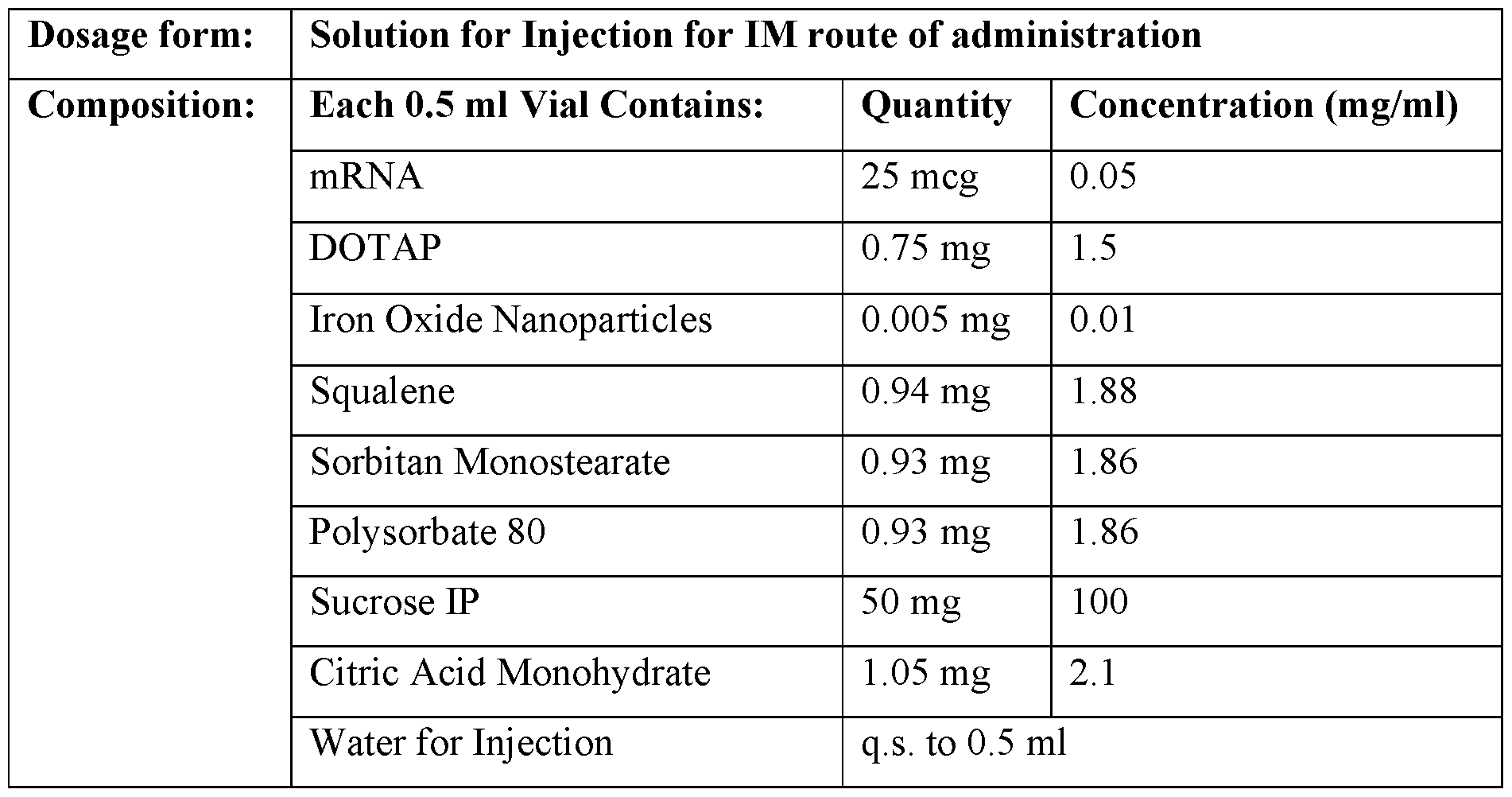
DRIED NANOPARTICLE COMPOSITIONS CROSS-REFERENCE [0001] This application claims the benefit of priority to U.S. Provisional Patent Application No. 63/247,172, filed September 22, 2021, and U.S. Provisional Patent Application No. 63/297,449, filed January 7, 2022, the contents of each of which is incorporated herein by reference in their entirety. SEQUENCE LISTING [0001.1] The instant application contains a Sequence Listing which has been submitted electronically in ASCII format and is hereby incorporated by reference in its entirety. Said ASCII copy, created on January 18, 2022, is named 201953-712601_SL.txt and is 3,396 bytes in size. BACKGROUND [0002] A variety of therapeutic and prophylactic products, including vaccines, are available for diseases. A challenge in the industry for such products is stability. Many of such products must be maintained at cold temperatures, requiring costly cooling units or liquid nitrogen, to retain stability. Thus, there is a need for manufacturing solutions, compositions, and their use, where the therapeutic and prophylactic products are stable with minimal cooling needs or at room temperature. BRIEF SUMMARY [0003] Provided herein are compositions, wherein the compositions are dried compositions. Provided herein are compositions, wherein the compositions comprise: a lipid carrier, wherein the lipid carrier is a nanoemulsion comprising a hydrophobic core, one or more inorganic nanoparticles and one or more lipids; one or more nucleic acids; and at least one cryoprotectant. [0004] Further provided herein are pharmaceutical compositions, wherein the pharmaceutical compositions comprise: the dried composition reconstituted in a suitable diluent and a pharmaceutically acceptable carrier. [0005] Further provided herein are kits, wherein the kits comprise a pharmaceutical composition comprising the dried composition provided herein; and a delivery system for administration to a subject. [0006] Further provided herein are vaccine delivery systems, wherein the vaccine delivery systems comprise: the pharmaceutical composition and optionally, one or more vaccine adjuvants. [0007] Further provided herein are methods for generating an immune response in a subject, the methods comprising: administering a therapeutically effective amount of a pharmaceutical composition provided herein to the subject. [0008] Further provided herein are methods of treating or preventing a disease in a subject, the methods comprising: administering a therapeutically effective amount of the pharmaceutical composition to the subject. [0009] Further provided herein are methods of imaging and/or tracking delivery of one or more nucleic acids in a subject, the methods comprising: administering a therapeutically effective amount of the pharmaceutical composition to the subject. [0010] Further provided herein are methods for preparing a lyophilized compositions, the methods comprising: (a) obtaining a lipid carrier, wherein the lipid carrier is a nanoemulsion comprising a hydrophobic core, optionally one or more inorganic nanoparticles and one or more lipids; (b) incorporating one or more nucleic acid into the lipid carrier to form a lipid carrier- nucleic acid complex; (c) adding at least one cryoprotectant to the lipid carrier-nucleic acid complex to form a formulation; and (d) lyophilizing the formulation to form a lyophilized composition. [0011] Further provided herein are methods for preparing a spray-dried composition, the methods comprising: (a) obtaining a lipid carrier, wherein the lipid carrier is a nanoemulsion comprising a hydrophobic core, optionally one or more inorganic nanoparticles and one or more lipids; (b) incorporating one or more nucleic acid into the lipid carrier to form a lipid carrier- nucleic acid complex; (c) adding at least one cryoprotectant to the lipid carrier-nucleic acid complex to form a formulation; and (d) spray drying the formulation to form a spray-dried composition. [0012] Further provided herein are methods for reconstituting a lyophilized composition, the methods comprising: (a) obtaining a lipid carrier, wherein the lipid carrier is a nanoemulsion comprising a hydrophobic core, optionally one or more inorganic nanoparticles, and one or more lipids; (b) incorporating one or more nucleic acid into the said lipid carrier to form a lipid carrier-nucleic acid complex; (c) adding at least one cryoprotectant to the lipid carrier-nucleic acid complex to form a formulation; lyophilizing the formulation to form a lyophilized composition; and (d) reconstituting the lyophilized composition in a suitable diluent. [0013] Further provided herein are methods for reconstituting a spray-dried composition, the methods comprising: (a) obtaining a lipid carrier, wherein the lipid carrier is a nanoemulsion comprising a hydrophobic core, optionally one or more inorganic nanoparticles, and one or more lipids; (b) incorporating one or more nucleic acid into the said lipid carrier to form a lipid carrier-nucleic acid complex; (c) adding at least one cryoprotectant to the lipid carrier-nucleic acid complex to form a formulation; (d) spray drying the formulation to form a spray-dried composition; and (e) reconstituting the spray-dried composition in a suitable diluent. [0014] Further provided herein are dried compositions, wherein the dried compositions comprise: a sorbitan fatty acid ester, an ethoxylated sorbitan ester, a cationic lipid, an immune stimulant, and an RNA. [0015] Further provided herein are dried compositions, wherein the dried compositions comprise: sorbitan monostearate, polyoxyethylene (20) sorbitan monooleate, DOTAP, an immune stimulant, and a RNA. [0016] Further provided here are dried compositions, wherein the dried compositions comprise: (a) a lipid carrier, wherein the lipid carrier is a nanoemulsion comprising a hydrophobic core and one or more lipids; (b) optionally one or more nucleic acid; and (c) at least one sugar present in amount of (i) at least about 50% by weight of the dried composition, or (ii) present in an amount of least 50 mg. [0017] Further provided herein are pharmaceutical compositions, wherein the pharmaceutical compositions comprise: a dried composition provided herein reconstituted in a suitable diluent; and a pharmaceutically acceptable carrier. [0018] Further provided herein are kits, wherein the kits comprise: a pharmaceutical composition provided herein and a delivery system for administration to a subject. [0019] Further provided herein are methods for generating an immune response in a subject, wherein the methods comprise: administering to the subject a therapeutically effective amount of the pharmaceutical composition provided herein. [0020] Further provided herein are methods of treating or preventing a disease in a subject, wherein the methods comprise: administering to the subject a therapeutically effective amount of the pharmaceutical composition provided herein. [0021] Further provided herein are methods of imaging and/or tracking delivery of one or more nucleic acids in a subject, wherein the methods comprise: administering a therapeutically effective amount of the pharmaceutical composition described herein. BRIEF DESCRIPTION OF THE DRAWINGS [0022] FIGURES 1A-1C show schematic representations of nanoparticle (NP) carriers. FIG.1A shows an oil-in-water emulsion. FIG.1B shows a nanostructured lipid carrier (NLC). FIG.1C shows a nanoparticle having an inorganic nanoparticle in liquid oil. [0023] FIGURE 2 illustrates the appearance of cake for the nanostructured lipid carrier (NLC) and lipid carrier formulations in the indicated sugar compositions at time = 0 hours after lyophilization cycle # 1. [0024] FIGURE 3 illustrates the appearance of cake for the nanostructured lipid carrier (NLC) and lipid carrier formulations in the indicated sugar compositions after 24 hours at 25 degrees Celsius and 42 degrees Celsius after lyophilization cycle #1. [0025] FIGURE 4 illustrates the appearance of nanostructured lipid carrier (NLC) and lipid carrier formulations in the indicated sugar compositions at 24 hours at 25 degrees Celsius and 42 degrees Celsius after lyophilization cycle #1. [0026] FIGURES 5A-5B illustrate the particle size of reconstituted cakes one day after storage at 25 degrees Celsius or 42 degrees Celsius in the indicated sugar compositions after lyophilization cycle #1. FIG.5A shows the fold-change relative to liquid formulation at time = 0 hours in the indicated sugar compositions. FIG. 5B shows the points change relative to liquid formulation at time = 0 hours in PDI in the indicated sugar compositions. [0027] FIGURES 6A-6B illustrate the RNA integrity by agarose gel electrophoresis in the indicated sugar composition after lyophilization cycle #1 for lipid carrier + RNA and NLC + RNA formulations. FIG. 6A shows the RNA integrity by agarose gel electrophoresis in the indicated sugar composition after lyophilization cycle #1 for lipid carrier + RNA formulations. FIG. 6B shows the RNA integrity by agarose gel electrophoresis in the indicated sugar composition after lyophilization cycle #1 for lipid carrier + RNA and NLC + RNA formulations. [0028] FIGURES 7A-7G illustrate the SEAP expression in BHK21 cells in the indicated sugar compositions after lyophilization cycle #1 for the lipid carrier + repRNA and NLC + repRNA-SEAP formulations. FIG.7A shows the Relative Luminescence Units (RLU) for the lipid carrier + repRNA-SEAP in 10% trehalose. FIG.7B shows the Relative Luminescence Units (RLU) for the lipid carrier + repRNA-SEAP in 5% mannitol. FIG.7C shows the Relative Luminescence Units (RLU) for the lipid carrier + repRNA-SEAP in 10% sucrose. FIG. 7D shows the Relative Luminescence Units (RLU) for the lipid carrier + repRNA-SEAP in 20% sucrose. FIG. 7E shows the Relative Luminescence Units (RLU) for the lipid carrier + repRNA-SEAP in 5% glucose. FIG. 7F shows the Relative Luminescence Units (RLU) for the lipid carrier + repRNA-SEAP in 10% maltose. FIG.7G shows the Relative Luminescence Units (RLU) for the NLC + repRNA-SEAP in 10% sucrose. [0029] FIGURE 8 illustrates the appearance of lipid carrier + RNA-SEAP cakes at various time points (time = 0 hours, after 6 days at 25 degrees Celsius and after 1 month at 25 degrees Celsius) in the indicated sugar composition after lyophilization cycle #1. [0030] FIGURE 9 illustrates the appearance of lipid carrier + RNA-SEAP cakes at various time points (time = 0 hours, after 24 hours at 42 degrees Celsius and after 3 days at 42 degrees Celsius and after 1 month at 42 degrees Celsius) in the indicated sugar composition after lyophilization cycle #1. [0031] FIGURES 10A-10B illustrate the particle size of reconstituted cakes one day after storage in the indicated sugar composition after lyophilization cycle #3. FIG.10A shows the points change in PDI of reconstituted formulations in the indicated sugar composition. FIG. 10B shows the log10 fold-change in particle size relative to lipid carrier + RNA fresh complex. [0032] FIGURE 11 illustrates the RNA integrity by agarose gel electrophoresis in the indicated sugar composition after lyophilization cycle #3. [0033] FIGURE 12 illustrates the SEAP expression in BHK21 cells in the indicated sugar composition after lyophilization cycle #3. [0034] FIGURES 13A-13B show that miglyol-lipid carrier formulation induces enhanced repRNA protein production in macrophages. FIG.13A shows the absorption spectra of various formulations with Nano Luciferase encoding replicon RNA in the first experiment. FIG.13B shows the absorption spectra of various formulations with Nano Luciferase encoding replicon RNA in the second experiment. [0035] FIGURES 14A-14B show reduced TNF-alpha (α) production in macrophages with miglyol formulation. FIG.14A shows the production of TNF-alpha for various formulations in the first experiment. FIG.14B shows the production of TNF-alpha for various formulations in the second experiment. [0036] FIGURES 15A-15B show the correlation between enhanced protein production and low TNF-alpha production in macrophages with miglyol formulation. FIG.15A show the correlation between sec-NanoLuc and TNF-alpha for various formulations in the first experiment. FIG.15B show the correlation between sec-NanoLuc and TNF-alpha for various formulations in the second experiment. [0037] FIGURES 16A-16F illustrate the SEAP levels in BALB/c mice injected intramuscularly with varying iterations of lipid carrier-formulated DNA SEAP. FIG. 16A show the Relative Luminescence Units (RLU) at Day 4. FIG. 16B show the Relative Luminescence Units (RLU) at Day 6. FIG.16C show the Relative Luminescence Units (RLU) at Day 8. FIG.16D is a copy of the Relative Luminescence Units (RLU) at Day 4. FIG.16E is a copy of Relative Luminescence Units (RLU) at Day 6. FIG.16F is a copy of the Relative Luminescence Units (RLU) at Day 8. [0038] FIGURE 17 is a bar chart with measurements of Z-average measurement and polydispersity index (PDI) on the Y-axis and group number on the X-axis for conditions 1 to 14. [0039] FIGURES 18A-18B show dot charts showing anti-D614G IgG levels for conditions 1 to 14. FIG.18A shows a dot chart with IgG (µg/ml) on the Y-axis, group number on the X-axis for conditions 1 to 14. Measurements were recorded at day 14 for anti-D614G (1:40 dilution) IgG responses. FIG. 18B shows a dot chart with IgG (µg/ml) on the Y-axis, group number on the X-axis for conditions 1 to 14. Measurements were recorded at day 28 for anti-D614G (1:200 dilution) IgG responses. [0040] FIGURE 19 shows a dot chart at day 28 with anti-D614G (1:200 dilution) IgG (µg/ml) measurements on the Y-axis and indications of storage conditions on the X-axis. [0041] Various aspects now will be described more fully hereinafter. Such aspects may, however, be embodied in many different forms and should not be construed as limited to the embodiments set forth herein; rather, these embodiments are provided so that this disclosure will be thorough and complete, and will fully convey its scope to those skilled in the art. DETAILED DESCRIPTION [0042] Provided herein are methods for the generation of therapeutically relevant compositions having enhanced stability profiles. In some embodiments, the compositions comprise a lipid nanoparticle carrier optionally complexed with a nucleic acid. In further embodiments, the composition is freeze dried. Definitions [0043] All definitions, as defined and used herein, should be understood to control over dictionary definitions, definitions in documents incorporated by reference, and/or ordinary meanings of the defined terms. [0044] All references, patents and patent applications disclosed herein are incorporated by reference with respect to the subject matter for which each is cited, which in some cases may encompass the entirety of the document. All references disclosed herein, including patent references and non-patent references, are hereby incorporated by reference in their entirety as if each was incorporated individually. However, where a patent, patent application, or publication containing express definitions is incorporated by reference, those express definitions should be understood to apply to the incorporated patent, patent application, or publication in which they are found, and not necessarily to the text of this application, in particular the claims of this application, in which instance, the definitions provided herein are meant to supersede. [0045] The indefinite articles “a” and “an,” as used herein in the specification and in the claims, unless clearly indicated to the contrary, should be understood to mean “at least one.” [0046] The phrase “and/or,” as used herein in the specification and in the claims, should be understood to mean “either or both” of the elements so conjoined, i.e., elements that are conjunctively present in some cases and disjunctively present in other cases. Multiple elements listed with “and/or” should be construed in the same fashion, i.e., “one or more” of the elements so conjoined. Other elements may optionally be present other than the elements specifically identified by the “and/or” clause, whether related or unrelated to those elements specifically identified. Thus, as a non-limiting example, a reference to “A and/or B”, when used in conjunction with open-ended language such as “comprising” can refer, in one embodiment, to A only (optionally including elements other than B); in another embodiment, to B only (optionally including elements other than A); in yet another embodiment, to both A and B (optionally including other elements); etc. [0047] As used herein in the specification and in the claims, “or” should be understood to have the same meaning as “and/or” as defined above. For example, when separating items in a list, “or” or “and/or” shall be interpreted as being inclusive, i.e., the inclusion of at least one, but also including more than one, of a number or list of elements, and, optionally, additional unlisted items. Only terms clearly indicated to the contrary, such as “only one of” or “exactly one of,” or, when used in the claims, “consisting of,” will refer to the inclusion of exactly one element of a number or list of elements. In general, the term “or” as used herein shall only be interpreted as indicating exclusive alternatives (i.e. “one or the other but not both”) when preceded by terms of exclusivity, such as “either,” “one of,” “only one of,” or “exactly one of.” “Consisting essentially of,” when used in the claims, shall have its ordinary meaning as used in the field of patent law. [0048] The compositions of the present disclosure can comprise, consist essentially of, or consist of, the components disclosed. [0049] As used herein, “optional” or “optionally” means that the subsequently described circumstance may or may not occur, so that the description includes instances where the circumstance occurs and instances where it does not. [0050] As used herein, the term “about” or “approximately” means a range of up to ± 20 %, of a given value. Where particular values are described in the application and claims, unless otherwise stated, the term “about” is implicit and in this context means within an acceptable error range for the particular value. [0051] As used herein, the term “N/P ratio (or N:P)” refers to the ratio of positively- chargeable polymer amine (N = nitrogen) groups to negatively-charged nucleic acid phosphate (P) groups. The N/P character of a polymer/nucleic acid complex can influence many other properties such as its net surface charge, size, and stability. [0052] As used herein, “modified nucleotide” refers to a nucleotide that contains one or more chemical modifications (e.g., substitutions) in or on the nitrogenous base of the nucleoside (e.g., cytosine (C), thymine (T) or uracil (U), adenine (A) or guanine (G)). [0053] Where a range of values is provided herein, it is understood that each intervening value, to the tenth of the unit of the lower limit unless the context clearly dictates otherwise, between the upper and lower limit of that range and any other stated or intervening value in that stated range is encompassed within the disclosure. The upper and lower limits of these smaller ranges may independently be included in the smaller ranges is also encompassed within the disclosure, subject to any specifically excluded limit in the stated range. Where the stated range includes one or both of the limits, ranges excluding either or both of those included limits are also included in the disclosure. For example, any concentration range, percentage range, ratio range, or integer range provided herein is to be understood to include the value of any integer within the recited range and, when appropriate, fractions thereof (such as one tenth and one hundredth of an integer), unless otherwise indicated. Also, any number range recited herein relating to any physical feature, such as polymer subunits, size or thickness, are to be understood to include any integer within the recited range, unless otherwise indicated. Nanoparticle Carrier Systems [0054] Provided herein are various compositions comprising a nanoparticle or a plurality of nanoparticles. Nanoparticles also referred to herein as carriers or abbreviated as NPs. Nanoparticles provided herein may be an organic, inorganic, or a combination of inorganic and organic materials that are less than about 1 micrometer (µm) in diameter. In some embodiments, nanoparticles provided herein are used as a delivery system for a bioactive agent provided herein. [0055] In some embodiments, provided is a dried composition comprising a lipid carrier, wherein the lipid carrier is a nanoemulsion comprising a hydrophobic core, one or more inorganic nanoparticles and one or more lipids; one or more nucleic acid; and at least one cryoprotectant. The composition can be spray-dried or lyophilized using techniques known in the art. The composition is thermally stable. For example, the composition is thermally stable at about 25 degrees Celsius, about 45 degrees Celsius, about -20 degrees Celsius, and at about 2 degrees Celsius to about 8 degrees Celsius. The composition is thermally stable for at least 1 week, at least 2 weeks, and/or at least 1 month. [0056] Provided here are methods for freeze drying compositions described herein. In some embodiments, sublimation, or primary drying, takes place at this point, to remove the unbound water; secondary drying is then performed, to sublime the bound water, taking the material down to a desired residual moisture level. Given that the water at this stage is bound to the target rather than unbound, more energy is typically required to drive this process. Spray drying may be used, it is often a faster process and involves conversion of a liquid formulation into a dry powder in a single step. The solution is atomized into fine droplets, which are quickly dried straight in large chamber using a warm gas. The resulting dry particles may be then collected with a cyclone. Additional drying techniques include, for example, spray freeze drying and supercritical fluid drying. [0057] The disclosure provides use of a lipid carrier as carriers of one or more nucleic acids, such as RNA. In particular, a solid inorganic core in a lipid matrix with a charged coating in a buffer is disclosed. The use of these nanoparticles has numerous advantages: RNA can be complexed independent of the particles, and the particle can be designed to have magnetic signals, such as useable for MRI or other imaging techniques. RNA is protected by the particles and they drive expression of numerous types of protein including antigens off of the protected RNA when given to cells or a living being. [0058] Various nanoparticles and formulations of nanoparticles (i.e., nanoemulsions) are employed. Exemplary nanoparticles are illustrated in FIGS. 1A-1C. Nanoparticles provided herein can include but are not limited to: oil in water emulsions, nanostructured lipid carriers (NLCs), cationic nanoemulsions (CNEs), vesicular phospholipid gels (VPG), polymeric nanoparticles, cationic lipid nanoparticles, liposomes, gold nanoparticles, solid lipid nanoparticles (LNPs or SLNs), mixed phase core NLCs, ionizable lipid carriers, magnetic carriers, polyethylene glycol (PEG)- functionalized carriers, cholesterol-functionalized carriers, polylactic acid (PLA)-functionalized carriers, and polylactic-co-glycolic acid (PLGA)- functionalized lipid carriers. [0059] Oil in water emulsions, as illustrated in FIG.1A (not to scale), are stable, immiscible fluids containing an oil droplet dispersed in water or aqueous phase. FIG. 1B (not to scale) illustrates a nanostructured lipid carrier (NLCs) which can comprise a blend of solid organic lipids (e.g., trimyristin) and liquid oil (e.g., squalene). In NLCs, the solid lipid is dispersed in the liquid oil. The entire nanodroplet is dispersed in the aqueous (water) phase. In some embodiments, the nanoparticle comprises inorganic nanoparticles, as illustrated in FIG.1C (not to scale), as solid inorganic nanoparticles (e.g., iron oxide nanoparticles) dispersed in liquid oil. The entire nanodroplet is then dispersed as a colloid in the aqueous (water) phase. In some embodiments, the nanoparticles provided herein are dispersed in an aqueous solution. Non- limiting examples of aqueous solutions include water (e.g., sterilized, distilled, deionized, ultra- pure, RNAse-free, etc.), saline solutions (e.g., Kreb’s, Ascaris, Dent’s, Tet’s saline), or 1% (w/v) dimethyl sulfoxide (DMSO) in water. [0060] Provided herein are various compositions and methods comprising a lipid carrier. The lipid carrier is a nanoemulsion that comprises a hydrophobic core, one or more inorganic nanoparticles and one or more lipids. The hydrophobic core of the lipid carrier comprises an oil. In some embodiments, the oil is in liquid phase. [0061] In some embodiments, the nanoparticles provided herein comprise a hydrophilic surface. In some embodiments, the hydrophilic surface comprises a cationic lipid. In some embodiments, the hydrophilic surface comprises an ionizable lipid. In some embodiments, the nanoparticle comprises a membrane. In some embodiments, the membrane comprises a cationic lipid. In some embodiments, the nanoparticles provided herein comprise a cationic lipid. Exemplary cationic lipids for inclusion in the hydrophilic surface include, without limitation: l,2-dioleoyloxy-3 (trimethylammonium)propane (DOTAP), 3β-[Ν— (N',N'- dimethylaminoethane) carbamoyl]cholesterol (DC Cholesterol), dimethyldioctadecylammonium (DDA); l,2-dimyristoyl 3- trimethylammoniumpropane(DMTAP),dipalmitoyl(C16:0)trimethyl ammonium propane (DPTAP), distearoyltrimethylammonium propane (DSTAP), N-[l-(2,3- dioleyloxy)propyl]N,N,Ntrimethylammonium, chloride (DOTMA), N,N-dioleoyl-N,N- dimethylammonium chloride (DODAC), l,2-dioleoyl-sn-glycero-3-ethylphosphocholine (DOEPC), l,2-dioleoyl-3-dimethylammonium-propane (DODAP), and 1,2- dilinoleyloxy-3- dimethylaminopropane (DLinDMA),1,1’-((2-(4-(2-((2-(bis(2-hydroxydodecyl)amino)ethyl)(2- hydroxydodecyl)amino)ethyl)piperazin-1-yl)ethyl)azanediyl)bis(dodecan-2-ol) (C12-200), 306Oi10, tetrakis(8-methylnonyl) 3,3′,3″,3‴-(((methylazanediyl) bis(propane-3,1 diyl))bis (azanetriyl))tetrapropionate, 9A1P9, decyl (2-(dioctylammonio)ethyl) phosphate; A2-Iso5- 2DC18, ethyl 5,5-di((Z)-heptadec-8-en-1-yl)-1-(3-(pyrrolidin-1-yl)propyl)-2,5-dihydro-1H- imidazole-2-carboxylate; ALC-0315, ((4-hydroxybutyl)azanediyl)bis(hexane-6,1-diyl)bis(2- hexyldecanoate); ALC-0159, 2-[(polyethylene glycol)-2000]-N,N-ditetradecylacetamide; β- sitosterol, (3S,8S,9S,10R,13R,14S,17R)-17-((2R,5R)-5-ethyl-6-methylheptan-2-yl)-10,13- dimethyl-2,3,4,7,8,9,10,11,12,13,14,15,16,17-tetradecahydro-1H-cyclopenta[a]phenanthren-3- ol; BAME-O16B, bis(2-(dodecyldisulfanyl)ethyl) 3,3′-((3-methyl-9-oxo-10-oxa-13,14-dithia- 3,6-diazahexacosyl)azanediyl)dipropionate; BHEM-Cholesterol, 2- (((((3S,8S,9S,10R,13R,14S,17R)-10,13-dimethyl-17-((R)-6-methylheptan-2-yl)- 2,3,4,7,8,9,10,11,12,13,14,15,16,17-tetradecahydro-1H-cyclopenta[a]phenanthren-3- yl)oxy)carbonyl)amino)-N,N-bis(2-hydroxyethyl)-N-methylethan-1-aminium bromide; cKK- E12, 3,6-bis(4-(bis(2-hydroxydodecyl)amino)butyl)piperazine-2,5-dione; DC-Cholesterol, 3β- [N-(N′,N′-dimethylaminoethane)-carbamoyl]cholesterol; DLin-MC3-DMA, (6Z,9Z,28Z,31Z)- heptatriaconta-6,9,28,31-tetraen-19-yl 4-(dimethylamino) butanoate; DOPE, 1,2-dioleoyl-sn- glycero-3-phosphoethanolamine; DOSPA, 2,3-dioleyloxy-N-[2-(sperminecarboxamido)ethyl]- N,N-dimethyl-1-propanaminium trifluoroacetate; DSPC, 1,2-distearoyl-sn-glycero-3- phosphocholine; ePC, ethylphosphatidylcholine; FTT5, hexa(octan-3-yl) 9,9′,9″,9‴,9″″,9‴″- ((((benzene-1,3,5-tricarbonyl)yris(azanediyl)) tris (propane-3,1-diyl)) tris(azanetriyl))hexanonanoate; Lipid H (SM-102), heptadecan-9-yl 8-((2-hydroxyethyl)(6-oxo- 6- (undecyloxy)hexyl)amino) octanoate; OF-Deg-Lin, (((3,6-dioxopiperazine-2,5- diyl)bis(butane-4,1-diyl))bis(azanetriyl))tetrakis(ethane-2,1-diyl) (9Z,9′Z,9″Z,9‴Z,12Z,12′Z,12″Z,12‴Z)-tetrakis (octadeca-9,12-dienoate); PEG2000-DMG, (R)- 2,3-bis(myristoyloxy)propyl-1-(methoxy poly(ethylene glycol)2000) carbamate; TT3, or N1,N3,N5-tris(3-(didodecylamino)propyl)benzene-1,3,5-tricarboxamide. Other examples for suitable classes of lipids include, but are not limited to, the phosphatidylcholines (PCs), phosphatidylethanolamines (PEs), phosphatidylglycerol (PGs); and PEGylated lipids including PEGylated version of any of the above lipids (e.g., DSPE-PEGs). In some embodiments, the nanoparticle provided herein comprises DOTAP. [0062] In some embodiments, the nanoparticle provided herein comprises an oil. In some embodiments, the oil is in liquid phase. Non-limiting examples of oils that can be used include α-tocopherol, coconut oil, grapeseed oil, lauroyl polyoxylglyceride, mineral oil, monoacylglycerol, palm kernel oil, olive oil, paraffin oil, peanut oil, propolis, squalene, squalane, solanesol, soy lecithin, soybean oil, sunflower oil, a triglyceride, or vitamin E. In some embodiments, the nanoparticle provided herein comprises a triglyceride. Exemplary triglycerides include but are not limited to: capric triglycerides, caprylic triglycerides, a caprylic and capric triglycerides, triglyceride esters, and myristic acid triglycerins. [0063] In some embodiments, the nanoparticles provided herein comprise a liquid organic material and a solid inorganic material. In some embodiments, the nanoparticle provided herein comprises an inorganic particle. In some embodiments, the inorganic particle is a solid inorganic particle. In some embodiments, the nanoparticle provided herein comprises the inorganic particle within the hydrophobic core. In some embodiments, the oil is in solid phase. In some embodiments, the oil comprises solanesol. [0064] In some embodiments, the nanoparticle provided herein comprises a metal. In some embodiments, the nanoparticle provided herein comprises a metal within the hydrophobic core. The metal can be without limitation, a metal salt, a metal oxide, a metal hydroxide, or a metal phosphate. In some embodiments, the nanoparticle provided herein comprises aluminum oxide (Al2O3), aluminum oxyhydroxide, iron oxide (Fe3O4, Fe2O3, FeO, or combinations thereof), titanium dioxide, silicon dioxide (SiO2), aluminum hydroxyphosphate (Al(OH)x(PO4)y), calcium phosphate (Ca3(PO4)2), calcium hydroxyapatite (Ca10(PO4)6(OH)2), iron gluconate, or iron sulfate. The inorganic particles may be formed from one or more same or different metals (any metals including transition metal). In some embodiments, the inorganic particle is a transition metal oxide. In some embodiments, the transition metal is magnetite (Fe3O4), maghemite (y- Fe2O3), wüstite (FeO), or hematite (alpha (α)- Fe2O3). In some embodiments, the metal is aluminum hydroxide or aluminum oxyhydroxide, and a phosphate-terminated lipid or a surfactant, such as oleic acid, oleylamine, SDS, TOPO or DSPA is used to coat the inorganic solid nanoparticle before it is mixed with the liquid oil to form the hydrophobic core. [0065] In some embodiments, the metal can comprise a paramagnetic, a superparamagnetic, a ferrimagnetic or a ferromagnetic compound. In some embodiments, the metal is a superparamagnetic iron oxide (Fe3O4). [0066] In some embodiments, the nanoparticle provided herein comprises a cationic lipid, an oil, and an inorganic particle. In some embodiments, the nanoparticle provided herein comprises DOTAP; squalene and/or glyceryl trimyristate-dynasan; and iron oxide. In some embodiments, the nanoparticle provided herein further comprises a surfactant. Thus, in some embodiments, the nanoparticles provided herein comprise a cationic lipid, an oil, an inorganic particle, and a surfactant. [0067] Surfactants are compounds that lower the surface tension between two liquids or between a liquid and a solid component of the nanoparticles provided herein. Surfactants can be hydrophobic, hydrophilic, or amphiphilic. In some embodiments, the nanoparticle provided herein comprises a hydrophobic surfactant. Exemplary hydrophobic surfactants that can be employed include but are not limited to: sorbitan monolaurate (SPAN® 20), sorbitan monopalmitate (SPAN® 40), sorbitan monostearate (SPAN® 60), sorbitan tristearate (SPAN® 65), sorbitan monooleate (SPAN® 80), and sorbitan trioleate (SPAN® 85). Suitable hydrophobic surfactants include those having a hydrophilic-lipophilic balance (HLB) value of 10 or less, for instance, 5 or less, from 1 to 5, or from 4 to 5. For instance, the hydrophobic surfactant can be a sorbitan ester having an HLB value from 1 to 5, or from 4 to 5. In some embodiments, the nanoparticle provided herein comprises a hydrophilic surfactant, also called an emulsifier. [0068] In some embodiments, the nanoparticle provided herein comprises polysorbate. Polysorbates are oily liquids derived from ethoxylated sorbitan (a derivative of sorbitol) esterified with fatty acids. In some embodiments, the nanoparticle or lipid carrier provided herein comprises a hydrophilic surfactant. Exemplary hydrophilic surfactants that can be employed include but are not limited to: polysorbates such as TWEEN®, Kolliphor, Scattics, Alkest, or Canarcel; polyoxyethylene sorbitan ester (polysorbate); polysorbate 80 (polyoxyethylene sorbitan monooleate, or TWEEN® 80); polysorbate 60 (polyoxyethylene sorbitan monostearate, or TWEEN® 60); polysorbate 40 (polyoxyethylene sorbitan monopalmitate, or TWEEN® 40); and polysorbate 20 (polyoxyethylene sorbitan monolaurate, or TWEEN® 20). In one embodiment, the hydrophilic surfactant is polysorbate 80. [0069] Nanoparticles provided herein comprises a hydrophobic core surrounded by a lipid membrane (e.g., a cationic lipid such as DOTAP). In some embodiments, the hydrophobic core comprises: one or more inorganic particles; a phosphate-terminated lipid; and a surfactant. [0070] Inorganic solid nanoparticles described herein may be surface modified before mixing with the liquid oil. For instance, if the surface of the inorganic solid nanoparticle is hydrophilic, the inorganic solid nanoparticle may be coated with hydrophobic molecules (or surfactants) to facilitate the miscibility of the inorganic solid nanoparticle with the liquid oil in the “oil” phase of the nanoemulsion particle. In some embodiments, the inorganic particle is coated with a capping ligand, the phosphate-terminated lipid, and/or the surfactant. In some embodiments the hydrophobic core comprises a phosphate-terminated lipid. Exemplary phosphate-terminated lipids that can be employed include but are not limited to: trioctylphosphine oxide (TOPO) or distearyl phosphatidic acid (DSPA). In some embodiments, the hydrophobic core comprises surfactant is a phosphorous-terminated surfactant, a carboxylate-terminated surfactant, a sulfate-terminated surfactant, or an amine-terminated surfactant. Typical carboxylate-terminated surfactants include oleic acid. Typical amine terminated surfactants include oleylamine. In some embodiments, the surfactant is distearyl phosphatidic acid (DSPA), oleic acid, oleylamine or sodium dodecyl sulfate (SDS). In some embodiments, the inorganic solid nanoparticle is a metal oxide such as an iron oxide, and a surfactant, such as oleic acid, oleylamine, SDS, DSPA, or TOPO, is used to coat the inorganic solid nanoparticle before it is mixed with the liquid oil to form the hydrophobic core. [0071] In some embodiments, the hydrophobic core comprises: one or more inorganic particles containing at least one metal hydroxide or oxyhydroxide particle optionally coated with a phosphate- terminated lipid, a phosphorous-terminated surfactant, a carboxylate- terminated surfactant, a sulfate-terminated surfactant, or an amine-terminated surfactant; and a liquid oil containing naturally occurring or synthetic squalene; a cationic lipid comprising DOTAP; a hydrophobic surfactant comprising a sorbitan ester selected from the group consisting of: sorbitan monostearate, sorbitan monooleate, and sorbitan trioleate; and a hydrophilic surfactant comprising a polysorbate. [0072] In some embodiments, the hydrophobic core comprises: one or more inorganic nanoparticles containing aluminum hydroxide or aluminum oxyhydroxide nanoparticles optionally coated with TOPO, and a liquid oil containing naturally occurring or synthetic squalene; the cationic lipid DOTAP; a hydrophobic surfactant comprising sorbitan monostearate; and a hydrophilic surfactant comprising polysorbate 80. [0073] In some embodiments, the hydrophobic core consists of: one or more inorganic particles containing at least one metal hydroxide or oxyhydroxide particle optionally coated with a phosphate- terminated lipid, a phosphorous-terminated surfactant, a carboxylate- terminated surfactant, a sulfate-terminated surfactant, or an amine-terminated surfactant; and a liquid oil containing naturally occurring or synthetic squalene; a cationic lipid comprising DOTAP; a hydrophobic surfactant comprising a sorbitan ester selected from the group consisting of: sorbitan monostearate, sorbitan monooleate, and sorbitan trioleate; and a hydrophilic surfactant comprising a polysorbate. In some embodiments, the hydrophobic core consists of: one or more inorganic nanoparticles containing aluminum hydroxide or aluminum oxyhydroxide nanoparticles optionally coated with TOPO, and a liquid oil containing naturally occurring or synthetic squalene; the cationic lipid DOTAP; a hydrophobic surfactant comprising sorbitan monostearate; and a hydrophilic surfactant comprising polysorbate 80. In some embodiments, the nanoparticle provided herein can comprise from about 0.2% to about 40% w/v squalene, from about 0.001% to about 10% w/v iron oxide nanoparticles, from about 0.2% to about 10 % w/v DOTAP, from about 0.25% to about 5% w/v sorbitan monostearate, and from about 0.5% to about 10% w/v polysorbate 80. In some embodiments the nanoparticle provided herein from about 2% to about 6% w/v squalene, from about 0.01% to about 1% w/v iron oxide nanoparticles, from about 0.2% to about 1 % w/v DOTAP, from about 0.25% to about 1% w/v sorbitan monostearate, and from about 0.5%) to about 5% w/v polysorbate 80. In some embodiments, the nanoparticle provided herein can comprise from about 0.2% to about 40% w/v squalene, from about 0.001% to about 10% w/v aluminum hydroxide or aluminum oxyhydroxide nanoparticles, from about 0.2% to about 10 % w/v DOTAP, from about 0.25% to about 5% w/v sorbitan monostearate, and from about 0.5% to about 10% w/v polysorbate 80. In some embodiments, the nanoparticle provided herein can comprise from about 2% to about 6% w/v squalene, from about 0.01% to about 1% w/v aluminum hydroxide or aluminum oxyhydroxide nanoparticles, from about 0.2% to about 1 % w/v DOTAP, from about 0.25% to about 1% w/v sorbitan monostearate, and from about 0.5%) to about 5% w/v polysorbate 80. [0074] In some embodiments, a composition described herein comprises at least one nanoparticle formulation as described in Table 1. In some embodiments, a composition described herein comprises any one of NP-1 to NP-30. In some embodiments, a composition described herein comprises any one of NP-1 to NP-31. In some embodiments, the nanoparticles provided herein are admixed with a nucleic acid provided herein. In some embodiments, nanoparticles provided herein are made by homogenization and ultrasonication techniques. Table 1. Nanoparticle Formulations.
Figure imgf000016_0001
Figure imgf000017_0001
Figure imgf000018_0001
Figure imgf000019_0001
Figure imgf000020_0001
Figure imgf000021_0001
[0075] In some embodiments, nanoparticles provided herein comprise: sorbitan monostearate (e.g., SPAN® 60), polysorbate 80 (e.g., TWEEN® 80), DOTAP, squalene, and no solid particles. In some embodiments, nanoparticles provided herein comprise: sorbitan monostearate (e.g., SPAN® 60), polysorbate 80 (e.g., TWEEN® 80), DOTAP, squalene, and iron oxide particles. In some embodiments, nanoparticles provided herein comprise an immune stimulant. In some embodiments, the immune stimulant is squalene. In some embodiments, the immune stimulant is a medium chain triglyceride. In some embodiments, the immune stimulant is Miglyol 810 or Miglyol 812. Miglyol 810 is a triglyceride ester of saturated caprylic and capric fatty acids and glycerol. Miglyol 812 is a triglyceride ester of saturated coconut/palmkernel oil derived caprylic and capric fatty acids and plant derived glycerol. In some embodiments, the immune stimulant can decrease the total amount of protein produced, but can increase the immune response to a composition provided herein (e.g., when delivered as a vaccine). In some embodiments, the immune stimulant can increase the total amount of protein produced, but can decrease the immune response to a composition provided herein. [0076] Nanoparticles provided herein can be of various average diameters in size. In some embodiments, nanoparticles provided herein have an average diameter (z- average hydrodynamic diameter, measured by dynamic light scattering) ranging from about 20 nanometers (nm) to about 200 nm. In some embodiments, the z-average diameter of the nanoparticle ranges from about 20 nm to about 150 nm, from about 20 nm to about 100 nm, from about 20 nm to about 80 nm, from about 20 nm to about 60 nm. In some embodiments, the z- average diameter of the nanoparticle) ranges from about 40 nm to about 200 nm, from about 40 nm to about 150 nm, from about 40 nm to about 100 nm, from about 40 nm to about 90 nm, from about 40 nm to about 80 nm, or from about 40 nm to about 60 nm. In one embodiment, the z- average diameter of the nanoparticle is from about 40 nm to about 80 nm. In some embodiments, the z-average diameter of the nanoparticle is from about 40 nm to about 60 nm. In some embodiments, the nanoparticle is up to 100 nm in diameter. In some embodiments, the nanoparticle is 50 to 70 nm in diameter. In some embodiments, the nanoparticle is 40 to 80 nm in diameter. In some embodiments, the inorganic particle (e.g., iron oxide) within the hydrophobic core of the nanoparticle can be an average diameter (number weighted average diameter) ranging from about 3 nm to about 50 nm. For instance, the inorganic particle can have an average diameter of about 5 nm, about 10 nm, about 15 nm, about 20 nm, about 25 nm, about 30 nm, about 35 nm, about 40 nm, about 45 nm, or about 50 nm. [0077] Nanoparticles provided herein may be characterized by the polydispersity index (PDI), which is an indication of their quality with respect to size distribution. In some embodiments, average polydispersity index (PDI) of the nanoparticles provided herein ranges from about 0.1 to about 0.5. In some embodiments, the average PDI of the nanoparticles can range from about 0.2 to about 0.5, from about 0.1 to about 0.4, from about 0.2 to about 0.4, from about 0.2 to about 0.3, or from about 0.1 to about 0.3. [0078] In some embodiments, the nanoparticles provided herein comprise an oil-to- surfactant molar ratio ranging from about 0.1:1 to about 20:1, from about 0.5:1 to about 12:1, from about 0.5:1 to about 9:1, from about 0.5:1 to about 5:1, from about 0.5:1 to about 3:1, or from about 0.5:1 to about 1:1. In some embodiments, the nanoparticles provided herein comprise a hydrophilic surfactant-to-lipid ratio ranging from about 0.1:1 to about 2:1, from about 0.2:1 to about 1.5:1, from about 0.3:1 to about 1:1, from about 0.5:1 to about 1:1, or from about 0.6:1 to about 1:1. In some embodiments, the nanoparticles provided herein comprise a hydrophobic surfactant-to-lipid ratio ranging from about 0.1:1 to about 5:1, from about 0.2:1 to about 3:1, from about 0.3:1 to about 2:1, from about 0.5:1 to about 2:1, or from about 1:1 to about 2:1. In some embodiments, the nanoparticles provided herein comprise from about 0.2% to about 40% w/v liquid oil, from about 0.001% to about 10% w/v inorganic solid nanoparticle, from about 0.2% to about 10% w/v lipid, from about 0.25% to about 5% w/v hydrophobic surfactant, and from about 0.5% to about 10% w/v hydrophilic surfactant. In some embodiments, the lipid comprises a cationic lipid, and the oil comprises squalene, and/or the hydrophobic surfactant comprises sorbitan ester. In some embodiments, nanoparticles provided herein comprise a ratio of the esters that yields a hydrophilic-lipophilic balance between 8 and 11. In some embodiments, nucleic acids provided herein are incorporated, associated with, or complexed a lipid carrier provided herein to form a lipid carrier-nucleic acid complex. In some embodiments, the lipid carrier-nucleic acid complex is formed via non-covalent interactions or via reversible covalent interactions. Nucleic Acids [0079] In some embodiments, a composition described herein comprise one or more nucleic acids. In some embodiments, the nucleic acid a DNA or an RNA. A variety of RNAs can be associated with the lipid carrier particles for delivery, including RNAs that modulate innate immune responses, RNAs that encode proteins or antigens, silencing RNAs, microRNAs, tRNAs, self-replicating RNAs, etc. In specific aspects of the disclosure, the RNA is a self-replicating RNA. [0080] Provided herein are compositions comprising a nanoparticle and a nucleic acid. In some embodiments, the nucleic acid is in complex with the nanoparticle. In some embodiments, the nucleic acid is in complex with the membrane of the nanoparticle. In some embodiments, the nucleic acid is in complex with the hydrophilic surface of the nanoparticle. In some embodiments, the nucleic acid is within the nanoparticle. In some embodiments, the nucleic acid is within the hydrophobic core. [0081] In some embodiments, the one or more nucleic acid encodes an RNA or DNA polymerase. In some embodiments, the one or more nucleic acid encodes an RNA dependent RNA polymerase. In some embodiments, one or more nucleic acid encode an element for self- replication, such as an RNA polymerase (e.g., a VEEV polymerase). [0082] The self-replicating nucleotide generally contains at least one or more genes selected from the group consisting of viral replicases, viral proteases, viral helicases and other nonstructural viral proteins, and also comprises 5′- and 3′-end cis-active replication sequences, and an antigenic sequence encoding a cancer-associated protein. A subgenomic promoter that directs expression of the heterologous sequence(s) can be included in the self-replicating nucleotide sequence. If desired, a heterologous sequence may be fused in frame to other coding regions in the self-replicating RNA and/or may be under the control of an internal ribosome entry site (IRES). [0083] In various embodiments, the self-replicating nucleotide sequence is a self- replicating RNA molecule. Self-replicating RNA molecules of the disclosure can be designed so that the self-replicating RNA molecule cannot induce production of infectious viral particles. This can be achieved, for example, by omitting one or more viral genes encoding structural proteins that are necessary for the production of viral particles in the self-replicating RNA. For example, when the self-replicating RNA molecule is based on an alpha virus, such as Sindbis virus (SIN), Semliki forest virus and Venezuelan equine encephalitis virus (VEE), one or more genes encoding viral structural proteins, such as capsid and/or envelope glycoproteins, can be omitted. If desired, self-replicating RNA molecules of the disclosure can be designed to induce production of infectious viral particles that are attenuated or virulent, or to produce viral particles that are capable of a single round of subsequent infection. [0084] A self-replicating RNA molecule can, when delivered to a vertebrate cell even without any proteins, lead to the production of multiple daughter RNAs by transcription from itself (or from an antisense copy of itself). The self-replicating RNA can be directly translated after delivery to a cell, and this translation provides a RNA-dependent RNA polymerase which then produces transcripts from the delivered RNA. Thus, the delivered RNA leads to the production of multiple daughter RNAs. These transcripts are antisense relative to the delivered RNA and may be translated themselves to provide in situ expression of encoded cancer- associated protein, or may be transcribed to provide further transcripts with the same sense as the delivered RNA which are translated to provide in situ expression of the encoded cancer- associated protein(s). [0085] If desired, a self-replicating RNA can contain chemical modifications in or on the sugar moiety of the nucleoside (e.g., ribose, deoxyribose, modified ribose, modified deoxyribose, six-membered sugar analog, or open-chain sugar analog), or the phosphate. [0086] The self-replicating RNA molecules of the disclosure can contain one or more modified nucleotides and therefore have improved stability and be resistant to degradation and clearance in vivo, and other advantages. Without wishing to be bound by any particular theory, it is believed that self-replicating RNA molecules that contain modified nucleotides avoid or reduce stimulation of endosomal and cytoplasmic immune receptors when the self-replicating RNA is delivered into a cell. This permits self-replication, amplification and expression of protein to occur. This also reduces safety concerns relative to self-replicating RNA that does not contain modified nucleotides, because the self-replicating RNA that contains modified nucleotides reduce activation of the innate immune system and subsequent undesired consequences (e.g., inflammation at injection site, irritation at injection site, pain, and the like). It is also believed that the RNA molecules produced as a result of self-replication are recognized as foreign nucleic acids by the cytoplasmic immune receptors. Thus, self- replicating RNA molecules that contain modified nucleotides provide for efficient amplification of the RNA in a host cell and expression of cancer-associated protein, as well as adjuvant effects. [0087] The RNA sequence can be modified with respect to its codon usage, for example, to increase translation efficacy and half-life of the RNA. A poly A tail (e.g., of about 30 adenosine residues or more) may be attached to the 3′ end of the RNA to increase its half-life. The 5′ end of the RNA may be capped with a modified ribonucleotide with the structure m7G (5′) ppp (5′) N (cap 0 structure) or a derivative thereof, which can be incorporated during RNA synthesis or can be enzymatically engineered after RNA transcription (e.g., by using Vaccinia Virus Capping Enzyme (VCE) consisting of mRNA triphosphatase, guanylyl-transferase and guanine-7-methyltransferase, which catalyzes the construction of N7-monomethylated cap 0 structures). Cap structure can provide stability and translational efficacy to the RNA molecule. The 5′ cap of the RNA molecule may be further modified by a 2′-O-Methyltransferase which results in the generation of a cap 1 structure (m7Gppp [m2′-O] N), which may further increases translation efficacy. A cap 1 structure may also increase in vivo potency. [0088] As used herein, “modified nucleotide” refers to a nucleotide that contains one or more chemical modifications (e.g., substitutions) in or on the nitrogenous base of the nucleoside (e.g., cytosine (C), thymine (T) or uracil (U), adenine (A) or guanine (G)). If desired, a self-replicating RNA molecule can contain chemical modifications in or on the sugar moiety of the nucleoside (e.g., ribose, deoxyribose, modified ribose, modified deoxyribose, six- membered sugar analog, or open-chain sugar analog), or the phosphate. [0089] The self-replicating RNA molecules can contain at least one modified nucleotide that, preferably, is not part of the 5′ cap (e.g., in addition to the modification that are part of the 5″ cap). Accordingly, the self-replicating RNA molecule can contain a modified nucleotide at a single position, can contain a particular modified nucleotide (e.g., pseudouridine, N6- methyladenosine, 5-methylcytidine, 5-methyluridine) at two or more positions, or can contain two, three, four, five, six, seven, eight, nine, ten or more modified nucleotides (e.g., each at one or more positions). Preferably, the self-replicating RNA molecules comprise modified nucleotides that contain a modification on or in the nitrogenous base, but do not contain modified sugar or phosphate moieties. [0090] In some examples, between 0.001% and 99% or 100% of the nucleotides in a self- replicating RNA molecule are modified nucleotides. For example, 0.001%-25%, 0.01%-25%, 0.1%-25%, or 1%-25% of the nucleotides in a self-replicating RNA molecule are modified nucleotides. [0091] In other examples, between 0.001% and 99% or 100% of a particular unmodified nucleotide in a self-replicating RNA molecule is replaced with a modified nucleotide. For example, about 1% of the nucleotides in the self-replicating RNA molecule that contain uridine can be modified, such as by replacement of uridine with pseudouridine. In other examples, the desired amount (percentage) of two, three, or four particular nucleotides (nucleotides that contain uridine, cytidine, guanosine, or adenine) in a self-replicating RNA molecule are modified nucleotides. For example, 0.001%-25%, 0.01%-25%, 0.1%-25, or 1%-25% of a particular nucleotide in a self-replicating RNA molecule are modified nucleotides. In other examples, 0.001%-20%, 0.001%-15%, 0.001%-10%, 0.01%-20%, 0.01%-15%, 0.1%-25, 0.01%-10%, 1%-20%, 1%-15%, 1%-10%, or about 5%, about 10%, about 15%, about 20% of a particular nucleotide in a self-replicating RNA molecule are modified nucleotides. [0092] It is preferred that less than 100% of the nucleotides in a self-replicating RNA molecule are modified nucleotides. It is also preferred that less than 100% of a particular nucleotide in a self-replicating RNA molecule are modified nucleotides. Thus, preferred self- replicating RNA molecules comprise at least some unmodified nucleotides. [0093] Modified nucleobases which can be incorporated into modified nucleosides and nucleotides and be present in the RNA molecules include: m5C (5-methylcytidine), m5U (5- methyluridine), m6A (N6-methyladenosine), s2U (2-thiouridine), Um (2′-O-methyluridine), m1A (1-methyladenosine); m2A (2-methyladenosine); Am (2-1-O-methyladenosine); ms2m6A (2-methylthio-N6-methyladenosine); i6A (N6-isopentenyladenosine); ms2i6A (2- methylthio-N6isopentenyladenosine); io6A (N6-(cis-hydroxyisopentenyl)adenosine); ms2io6A (2-methylthio-N6-(cis-hydroxyisopentenyl) adenosine); g6A (N6- glycinylcarbamoyladenosine); t6A (N6-threonyl carbamoyladenosine); ms2t6A (2-methylthio- N6-threonyl carbamoyladenosine); m6t6A (N6-methyl-N6-threonylcarbamoyladenosine); hn6A (N6-hydroxynorvalylcarbamoyl adenosine); ms2hn6A (2-methylthio-N6- hydroxynorvalyl carbamoyladenosine); Ar(p) (2′-O-ribosyladenosine (phosphate)); I (inosine); m1I (1-methylinosine); m′Im (1,2′-O-dimethylinosine); m3C (3-methylcytidine); Cm (2T-O- methylcytidine); s2C (2-thiocytidine); ac4C (N4-acetylcytidine); f5C (5-fonnylcytidine); m5Cm (5,2-O-dimethylcytidine); ac4Cm (N4acetyl2TOmethylcytidine); k2C (lysidine); m1G (1-methylguanosine); m2G (N2-methylguanosine); m7G (7-methylguanosine); Gm (2′-O- methylguanosine); m22G (N2,N2-dimethylguanosine); m2Gm (N2,2′-O-dimethylguanosine); m22Gm (N2,N2,2′-O-trimethylguanosine); Gr(p) (2′-O-ribosylguanosine (phosphate)); yW (wybutosine); o2yW (peroxywybutosine); OHyW (hydroxywybutosine); OHyW* (undermodified hydroxywybutosine); imG (wyosine); mimG (methylguanosine); Q (queuosine); oQ (epoxyqueuosine); galQ (galtactosyl-queuosine); manQ (mannosyl- queuosine); preQo (7-cyano-7-deazaguanosine); preQi (7-aminomethyl-7-deazaguanosine); G* (archaeosine); D (dihydrouridine); m5Um (5,2′-O-dimethyluridine); s4U (4-thiouridine); m5s2U (5-methyl-2-thiouridine); s2Um (2-thio-2′-O-methyluridine); acp3U (3-(3-amino-3- carboxypropyl)uridine); hoSU (5-hydroxyuridine); moSU (5-methoxyuridine); cmo5U (uridine 5-oxyacetic acid); mcmo5U (uridine 5-oxyacetic acid methyl ester); chm5U (5- (carboxyhydroxymethyl)uridine)); mchm5U (5-(carboxyhydroxymethyl)uridine methyl ester); mcm5U (5-methoxycarbonyl methyluridine); mcm5Um (S-methoxycarbonylmethyl-2-O- methyluridine); mcm5s2U (5-methoxycarbonylmethyl-2-thiouridine); nm5s2U (5- aminomethyl-2-thiouridine); mnm5U (5-methylaminomethyluridine); mnm5s2U (5- methylaminomethyl-2-thiouridine); mnm5se2U (5-methylaminomethyl-2-selenouridine); ncm5U (5-carbamoylmethyl uridine); ncm5Um (5-carbamoylmethyl-2′-O-methyluridine); cmnm5U (5-carboxymethylaminomethyluridine); cnmm5Um (5-carboxymethylaminomethyl- 2-L-Omethyluridine); cmnm5s2U (5-carboxymethylaminomethyl-2-thiouridine); m62A (N6,N6-dimethyladenosine); Tm (2′-O-methylinosine); m4C (N4-methylcytidine); m4Cm (N4,2-O-dimethylcytidine); hm5C (5-hydroxymethylcytidine); m3U (3-methyluridine); cm5U (5-carboxymethyluridine); m6Am (N6,T-O-dimethyladenosine); rn62Am (N6,N6,O-2- trimethyladenosine); m2′7G (N2,7-dimethylguanosine); m2′2′7G (N2,N2,7- trimethylguanosine); m3Um (3,2T-O-dimethyluridine); m5D (5-methyldihydrouridine); f5Cm (5-formyl-2′-O-methylcytidine); m1Gm (1,2′-O-dimethylguanosine); m′Am (1,2-O-dimethyl adenosine) irinomethyluridine); tm5s2U (S-taurinomethyl-2-thiouridine)); imG-14 (4- demethyl guanosine); imG2 (isoguanosine); ac6A (N6-acetyladenosine), hypoxanthine, inosine, 8-oxo-adenine, 7-substituted derivatives thereof, dihydrouracil, pseudouracil, 2- thiouracil, 4-thiouracil, 5-aminouracil, 5-(C1-C6)-alkyluracil, 5-methyluracil, 5-(C2-C6)- alkenyluracil, 5-(C2-C6)-alkynyluracil, 5-(hydroxymethyl)uracil, 5-chlorouracil, 5- fluorouracil, 5-bromouracil, 5-hydroxycytosine, 5-(C1-C6)-alkylcytosine, 5-methylcytosine, 5- (C2-C6)-alkenylcytosine, 5-(C2-C6)-alkynylcytosine, 5-chlorocytosine, 5-fluorocytosine, 5- bromocytosine, N2-dimethylguanine, 7-deazaguanine, 8-azaguanine, 7-deaza-7-substituted guanine, 7-deaza-7-(C2-C6)alkynylguanine, 7-deaza-8-substituted guanine, 8- hydroxyguanine, 6-thioguanine, 8-oxoguanine, 2-aminopurine, 2-amino-6-chloropurine, 2,4- diaminopurine, 2,6-diaminopurine, 8-azapurine, substituted 7-deazapurine, 7-deaza-7- substituted purine, 7-deaza-8-substituted purine, hydrogen (abasic residue), m5C, m5U, m6A, s2U, W, or 2′-O-methyl-U. Any one or any combination of these modified nucleobases may be included in the self-replicating RNA of the disclosure. Many of these modified nucleobases and their corresponding ribonucleosides are available from commercial suppliers. [0094] In some embodiments, the RNA molecule, optionally the self-replicating RNA molecule, comprises phosphoramidate, phosphorothioate, and/or methylphosphonate linkages. [0095] Self-replicating RNA molecules that comprise at least one modified nucleotide can be prepared using any suitable method. Several suitable methods are known in the art for producing RNA molecules that contain modified nucleotides. For example, a self-replicating RNA molecule that contains modified nucleotides can be prepared by transcribing (e.g., in vitro transcription) a DNA that encodes the self-replicating RNA molecule using a suitable DNA- dependent RNA polymerase, such as T7 phage RNA polymerase, SP6 phage RNA polymerase, T3 phage RNA polymerase, and the like, or mutants of these polymerases which allow efficient incorporation of modified nucleotides into RNA molecules. The transcription reaction will contain nucleotides and modified nucleotides, and other components that support the activity of the selected polymerase, such as a suitable buffer, and suitable salts. The incorporation of nucleotide analogs into a self-replicating RNA may be engineered, for example, to alter the stability of such RNA molecules, to increase resistance against RNases, to establish replication after introduction into appropriate host cells (“infectivity” of the RNA), and/or to induce or reduce innate and adaptive immune responses. [0096] The presence and/or quantity of one or more modified nucleotides in a self- replicating RNA molecule can be determined using any suitable method. For example, a self- replicating RNA can be digested to monophosphates (e.g., using nuclease P1) and dephosphorylated (e.g., using a suitable phosphatase such as CIAP), and the resulting nucleosides analyzed by reversed phase HPLC (e.g., using a YMC Pack ODS-AQ column (5 micron, 4.6×250 mm) and elute using a gradient, 30% B (0-5 min) to 100% B (5-13 min) and at 100% B (13-40) min, flow Rate (0.7 ml/min), UV detection (wavelength: 260 nm), column temperature (30° C.). Buffer A (20 mM acetic acid-ammonium acetate pH 3.5), buffer B (20 mM acetic acid-ammonium acetate pH 3.5/methanol [90/10])). [0097] The self-replicating RNA may be associated with a delivery system. The self- replicating RNA may be administered with or without an adjuvant. [0098] The one or more nucleic acid may be incorporated/associated/complexed with the lipid carrier to form a lipid carrier-nucleic acid complex. The lipid carrier-nucleic acid complex is formed via non-covalent interactions or via reversible covalent interactions. [0099] In some embodiments, compositions provided herein comprise one or more nucleic acids. In some embodiments, compositions provided herein comprise two or more nucleic acids. In some embodiments, compositions provided herein comprise at least one DNA. In some embodiments, compositions provided herein comprise at least one RNA. In some embodiments, compositions provided herein comprise at least one DNA and at least one RNA. In some embodiments, nucleic acids provided herein are present in an amount of above 5 ng to about 1 mg. In some embodiments, nucleic acids provided herein are present in an amount of up to about 25, 50, 75, 100, 150, 175 ng. In some embodiments, nucleic acids provided herein are present in an amount of up to about 1 mg. In some embodiments, nucleic acids provided herein are present in an amount of about 0.05 µg, 0.1 µg, 0.2 µg, 0.5, µg 1 µg, 5 µg, 10 µg, 12.5 µg, 15 µg, 25 µg, 40 µg, 50 µg, 100 µg, 200 µg, 300 µg, 400 µg, 500 µg, 600 µg, 700 µg, 800 µg, 900 µg, 1 mg. In some embodiments, nucleic acids provided herein are present in an amount of 0.05 µg, 0.1 µg, 0.2 µg, 0.5, µg 1 µg, 5 µg, 10 µg, 12.5 µg, 15 µg, 25 µg, 40 µg, 50 µg, 100 µg, 200 µg, 300 µg, 400 µg, 500 µg, 600 µg, 700 µg, 800 µg, 900 µg, 1 mg. In some embodiments, nucleic acids provided herein are present in an amount of about 5 µg, about 10 µg, about 25 µg, about 50 µg, or about 100 µg. In some embodiments, nucleic acids provided herein are present in an amount of up to about 5 µg, about 10 µg, about 25 µg, about 50 µg, or 100 µg. In some embodiments, the nucleic acid is at least about 200, 250, 500, 750, 1000, 2000, 3000, 4000, 5000, 6000, 7000, 8000, 9000, 10,000, 11,000, 12,000, 13,000, 14,000, 15,000, 16,000, 17,000, 18,000, 19,000, or 20,000 nucleotides in length. In some embodiments, the nucleic acid is up to about 7000, 8000, 9000, 10,000, 11,000, 12,000, 13,000, 14,000, 15,000, 16,000, 17,000, 18,000, 19,000, or 20,000 nucleotides in length. In some embodiments, the nucleic acid is about 7500, 10,000, 15,000, or 20,000 nucleotides in length. Cryoprotectants [00100] In some embodiments, compositions and methods provided herein comprise at least one cryoprotectant. Exemplary cryoprotectants for inclusion are, but not limited to, sucrose, maltose, trehalose, mannitol, or glucose, and any combinations thereof. In some embodiments, additional or alternative cryoprotectant for inclusion is sorbitol, ribitol, erthritol, threitol, ethylene glycol, or fructose. In some embodiments, additional or alternative cryoprotectant for inclusion is dimethyl sulfoxide (DMSO), glycerol, propylene glycol, ethylene glycol, 3-O-methyl-D-glucopyranose (3-OMG), polyethylene glycol (PEG), 1,2- propanediol, acetamide, trehalose, formamide, sugars, proteins, and carbohydrates. In some embodiments, the cryoprotectant is present at about 1% w/v to about 20% w/v, preferably about 10% w/v to at about 20% w/v, and more preferably at about 10% w/v. In certain aspects of the disclosure, the cryoprotectant is sucrose. In some aspects of the disclosure, the cryoprotectant is maltose. In some aspects of the disclosure, the cryoprotectant is trehalose. In some aspects of the disclosure, the cryoprotectant is mannitol. In some aspects of the disclosure, the cryoprotectant is glucose. In some embodiments, the cryoprotectant is present in an amount of about 10, 20, 30, 40, 50, 60, 70, 80, 90, 100, 110, 120, 130, 140, 150, 160, 170, 180, 190, 200, 210, 220, 230, 240, 250, 260, 270, 280, 290, 300, 325, 350, 375, 400, 450, 500 or more mg. In some embodiments, the cryoprotectant is present in an amount of about 50 to about 500 mg. In some embodiments, the cryoprotectant is present in an amount of about 200 to about 300 mg. In some embodiments, the cryoprotectant is present in an amount of about 250 mg. In some embodiments, the cryoprotectant is present in amount of a lyophilized composition by weight of at least 50, 55, 60, 65, 70, 75, 80, 85, 90, 95 or more percent. In some embodiments, the cryoprotectant is present in amount of a lyophilized composition by weight of about 95%. In some embodiments, the cryoprotectant is present in amount of a lyophilized composition by weight of 80 to 98%, 85 to 98%, 90 to 98%, or 94 to 96%. In some embodiments, the cryoprotectant is a sugar. In some embodiments, the sugar is sucrose, maltose, trehalose, mannitol, or glucose. In some embodiments, the sugar is sucrose. In some embodiments, the sucrose is present in an amount of about 10, 20, 30, 40, 50, 60, 70, 80, 90, 100, 110, 120, 130, 140, 150, 160, 170, 180, 190, 200, 210, 220, 230, 240, 250, 260, 270, 280, 290, 300, 325, 350, 375, 400, 450, 500 or more mg. In some embodiments, the sucrose is present in an amount of about 50 to about 500 mg. In some embodiments, the sucrose is present in an amount of about 200 to about 300 mg. In some embodiments, the sucrose is present in an amount of about 250 mg. In some embodiments, the sucrose is present in amount of a lyophilized composition by weight of at least 50, 55, 60, 65, 70, 75, 80, 85, 90, 95 or more percent. In some embodiments, the sucrose is present in amount of a lyophilized composition by weight of about 95%. In some embodiments, the sucrose is present in amount of a lyophilized composition by weight of 80 to 98%, 85 to 98%, 90 to 98%, or 94 to 96%. [00101] In some embodiments, compositions provided herein are thermally stable. A composition is considered thermally stable when the composition resists the action of heat or cold and maintains its properties, such as the ability to protect a nucleic acid molecule from degradation at given temperature. In some embodiments, compositions and vaccines provided herein are thermally stable at about 25 degrees Celsius or standard room temperature. In some embodiments, compositions and vaccines provided herein are thermally stable at about 45 degrees Celsius. In some embodiments, compositions and vaccines provided herein are thermally stable at about - 20 degrees Celsius. In some embodiments, compositions and vaccines provided herein are thermally stable at about 2 degrees Celsius to about 8 degrees Celsius. In some embodiments, compositions and vaccines provided herein are thermally stable at a temperature of at least about -80 degrees Celsius, at least about- 20 degrees Celsius, at least about 0 degrees Celsius, at least about 2 degrees Celsius, at least about 4 degrees Celsius, at least about 6 degrees Celsius, at least about 8 degrees Celsius, at least about 10 degrees Celsius, at least about 20 degrees Celsius, at least about 25 degrees Celsius, at least about 30 degrees Celsius, at least about 37 degrees Celsius, up to 45 degrees Celsius. In some embodiments, compositions and vaccines provided herein are thermally stable for at least about 5 day, at least about 1 week, at least about 2 weeks, at least about 1 month, up to 3 months. In some embodiments, compositions and vaccines provided herein are stored at a temperature of at least about 4⁰ C up to 37 degrees Celsius for at least about 5 day, at least about 1 week, at least about 2 weeks, at least about 1 month, up to 3 months. In some embodiments, compositions and vaccines provided herein are stored at a temperature of at least about 20 degrees Celsius up to 25 degrees Celsius for at least about 5 day, at least about 1 week, at least about 2 weeks, at least about 1 month, up to 3 months. Combination Compositions [00102] Provided herein are compositions comprising a nucleic acid described herein and a lipid carrier described herein. In some embodiments, the lipid carrier comprises NP-1. In some embodiments, the lipid carrier comprises NP-2. In some embodiments, the lipid carrier comprises NP-3. In some embodiments, the lipid carrier comprises NP-4. In some embodiments, the lipid carrier comprises NP-5. In some embodiments, the lipid carrier comprises NP-6. In some embodiments, the lipid carrier comprises NP-7. In some embodiments, the lipid carrier comprises NP-8. In some embodiments, the lipid carrier comprises NP-9. In some embodiments, the lipid carrier comprises NP-10. In some embodiments, the lipid carrier comprises NP-11. In some embodiments, the lipid carrier comprises NP-12. In some embodiments, the lipid carrier comprises NP-13. In some embodiments, the lipid carrier comprises NP-14. In some embodiments, the lipid carrier 30 comprises NP-15. In some embodiments, the lipid carrier comprises NP-16. In some embodiments, the lipid carrier comprises NP-17. In some embodiments, the lipid carrier comprises NP-18. In some embodiments, the lipid carrier comprises NP-18. In some embodiments, the lipid carrier comprises NP-19. In some embodiments, the lipid carrier comprises NP-20. In some embodiments, the lipid carrier comprises NP-21. In some embodiments, the lipid carrier comprises NP-22. In some embodiments, the lipid carrier comprises NP-23 In some embodiments, the lipid carrier comprises NP-24. In some embodiments, the lipid carrier comprises NP-25. In some embodiments, the lipid carrier comprises NP-26. In some embodiments, the lipid carrier comprises NP-27. In some embodiments, the lipid carrier comprises NP-28. In some embodiments, the lipid carrier comprises NP-28. In some embodiments, the lipid carrier comprises NP-29. In some embodiments, the lipid carrier comprises NP-30. In some embodiments, the lipid carrier comprises NP-31. In some embodiments, the lipid carrier comprises any of NP-1 to NP-31 and a cryoprotectant. In some embodiments, the cryoprotectant is a sugar described herein. Compositions provided herein can be characterized by an nitrogen:phosphate (N:P) molar ratio. The N:P ratio is determined by the amount of cationic lipid in the nanoparticle which contain nitrogen and the amount of nucleic acid used in the composition which contain negatively charged phosphates. A molar ratio of the lipid carrier to the nucleic acid can be chosen to increase the delivery efficiency of the nucleic acid, increase the ability of the nucleic acid- carrying nanoemulsion composition to elicit an immune response to the antigen, increase the ability of the nucleic acid-carrying nanoemulsion composition to elicit the production of antibody titers to the antigen in a subject. In some embodiments, compositions provided herein have a molar ratio of the lipid carrier to the nucleic acid can be characterized by the nitrogen- to-phosphate molar ratio, which can range from about 0.01:1 to about 1000:1, for instance, from about 0.2:1 to about 500:1, from about 0.5:1 to about 150:1, from about 1:1 to about 150:1, from about 1:1 to about 125:1, from about 1:1 to about 100:1, from about 1:1 to about 50:1, from about 1:1 to about 50:1, from about 5:1 to about 50:1, from about 5:1 to about 25:1, or from about 10:1 to about 20:1 In some embodiments, the molar ratio of the lipid carrier to the nucleic acid, characterized by the nitrogen-to-phosphate (N:P) molar ratio, ranges from about 1:1 to about 150:1, from about 5:1 to about 25:1, or from about 10:1 to about 20:1. In some embodiments, the N:P molar ratio of the nanoemulsion composition is about 15:1. In some embodiments, the nanoparticle comprises a nucleic acid provided herein covalently attached to the membrane. [00103] Compositions provided herein can be characterized by an oil-to-surfactant molar ratio. In some embodiments, the oil-to-surfactant ratio is the molar ratio of squalene: cationic lipid, hydrophobic surfactant, and hydrophilic surfactant. In some embodiments, the oil-to- surfactant ratio is the molar ratio of squalene: DOTAP, hydrophobic surfactant, and hydrophilic surfactant. In some embodiments, the oil-to-surfactant ratio is the molar ratio of squalene: DOTAP, sorbitan monostearate, and polysorbate 80. In some embodiments, the oil-to surfactant molar ratio ranges from about 0.1:1 to about 20:1, from about 0.5:1 to about 12:1, from about 0.5:1 to about 9:1, from about 0.5:1 to about 5:1, from about 0.5:1 to about 3:1, or from about 0.5:1 to about 1:1. In some embodiments, the oil-to-surfactant molar ratio is at least about 0.1:1, at least about 0.2:1, at least about 0.3:1, at least about 0.4:1, at least about 0.5:1, at least about 0.6:1, at least about 0.7:1. In some embodiments, the oil-to surfactant molar ratio is at least about 0.4:1 up to 1:1. [00104] Compositions provided herein can be characterized by hydrophilic surfactant-to- cationic lipid ratio. In some embodiments, the hydrophilic surfactant-to-cationic lipid ratio ranges from about 0.1:1 to about 2:1, from about 0.2:1 to about 1.5:1, from about 0.3:1 to about 1:1, from about 0.5:1 to about 1:1, or from about 0.6:1 to about 1:1. Compositions provided herein can be characterized by hydrophobic surfactant-to-lipid (e.g., cationic lipid) ratio. In some embodiments, the hydrophobic surfactant-to-lipid ratio ranges from about 0.1:1 to about 5:1, from about 0.2:1 to about 3:1, from about 0.3:1 to about 2:1, from about 0.5:1 to about 2:1, or from about 1:1 to about 2:1. In some embodiments, the cationic lipid is DOTAP. [00105] Further provided herein is a dried composition comprising a sorbitan fatty acid ester, an ethoxylated sorbitan ester, a cationic lipid, an immune stimulant, and an RNA. Further provided herein are dried compositions, wherein the dried composition comprises sorbitan monostearate (e.g., SPAN® 60), polysorbate 80 (e.g., TWEEN® 80), DOTAP, an immune stimulant, and an RNA. Pharmaceutical Compositions [00106] In one aspect, the disclosure provides a pharmaceutical composition comprising lipid carriers and, optionally, nucleic acids described herein. Optionally, the pharmaceutical composition can comprise a pharmaceutically acceptable carrier or excipient. As used herein the term “pharmaceutically acceptable carrier or excipient” includes solvents, dispersion media, coatings, antibacterial and antifungal agents, isotonic and absorption delaying agents, etc., compatible with pharmaceutical administration. [00107] The pharmaceutical composition comprises the dried composition reconstituted in a suitable diluent and a pharmaceutically acceptable carrier. The diluent is aqueous. In preferred aspects, the diluent is water. [00108] The disclosure also provides kits comprising the pharmaceutical composition and a delivery system for administration to a subject. The subject can be a mammal. In preferred aspects, the subject is human. [00109] In another aspect, the disclosure provides a vaccine delivery system comprising the compositions comprising the pharmaceutical composition, as described herein, and optionally one or more vaccine adjuvant. [00110] By complexation of the lipid carrier with the nucleic acid, the composition can be delivered to a cell. The cell can be in a subject in need. For instance, when the nucleic acid is a protein antigen or encodes a protein antigen, the composition carrying the nucleic acid can elicit an immune response in the subject against the antigen. The composition may do so by eliciting antibody titers to the antigen in the subject, for instance, by inducing neutralizing antibody titers in the subject. [00111] The disclosure also relates to a method for generating an immune response in a subject, comprising administering a therapeutically effective amount of the pharmaceutical composition to the subject. [00112] In one embodiment, the composition containing the lipid carrier, when administered in an effective amount to the subject, can elicit an immune response to the antigen equal to or greater than the immune response elicited when the nucleic acid is administered to the subject without the lipid carrier. [00113] Without being bound by theory, the hydrophobic surfactants in the nanoemulsion composition may contribute to increase the ability of the nanoemulsion composition to deliver a nucleic acid to the cell or to increase the ability of the nanoemulsion composition carrying a nucleic acid to elicit an immune response in the subject against the antigen (when the nucleic acid is a protein antigen or encodes a protein antigen). For instance, the hydrophobic surfactants in the nanoemulsion composition may contribute to increase the ability of the nanoemulsion composition carrying a nucleic acid. [00114] Another aspect of the disclosure relates to a method of treating or preventing an infection or disease in a subject, comprising administering a therapeutically effective amount of the pharmaceutical composition to the subject. [00115] As discussed above, the inorganic solid nanoparticles, when containing a reporter element detectable via imaging methods, the resulting nanoemulsion particles can be imaged and tracked after the nanoemulsion particles are administered in the body. For instance, the inorganic solid nanoparticle may contain a reporter element detectable via magnetic resonance imaging (MRI), such as a paramagnetic, superparamagnetic, ferrimagnetic or ferromagnetic compound. [00116] Accordingly, one aspect of the disclosure also relates to a method of imaging and/or tracking a nucleic acid delivery in a subject, comprising administering a therapeutically effective amount of the pharmaceutical composition to the subject. [00117] The disclosure also provides methods for preparing and reconstituting a lyophilized composition and a spray-dried composition. [00118] In some aspects of the disclosure, the compositions and methods are useful in treating a variety of diseases and disclosures. [00119] Non-limiting examples of infections may include viral and non-viral infections. Examples of viral infections include, but not limited to Human Papillomavirus (HPV), Herpes Simplex Virus (HSV), Varicella-Zoster Virus (VZV), influenza virus, types and subtypes of influenza virus, Yellow Fever Virus (YFV), Zika Virus, West Nile Virus, Chikungunya Virus, Dengue, Respiratory Syncytial Virus (RSV), Human Immunodeficiency Virus (HIV), Severe Acute Respiratory Syndrome Coronavirus 2 (SARS-CoV-2) and its variants. [00120] Examples of diseases include cancer associated with melanoma-associated antigen A gene such as MAGE-A1, MAGE-A3 and tyrosinase-related protein (TYRP) gene such as TYRP-1. [00121] In some aspects of the disclosure, the composition and methods comprises one or more nucleic acid that encodes an antigen, wherein the antigen is derived from a bacterial infection, a bacterial disease, a viral infection, a viral disease, a protozoan infection, a protozoan disease, a non-communicable disease, one or more cancers, or an autoimmune disease. [00122] In some aspects, the antigen is derived from a virus. The virus is selected from the group consisting of Human Papillomavirus (HPV), Herpes Simplex Virus (HSV), Varicella-Zoster Virus (VZV), influenza virus, types and subtypes of influenza virus, Yellow Fever Virus (YFV), Zika Virus, West Nile Virus, Chikungunya Virus, Dengue, Respiratory Syncytial Virus (RSV), Human Immunodeficiency Virus (HIV), Severe Acute Respiratory Syndrome Coronavirus 2 (SARS-CoV-2) and its variants. Administration and Dosage [00123] In an aspect, the dried compositions of the disclosure may be used to deliver a nucleic acid (e.g., an RNA, optionally a self-replicating RNA) to a cell or a subject, e.g., a mammal, including but not limited to humans, dogs, cats, livestock (e.g., cows, sheep, goats, pigs), horses, and the like. Exemplary amounts of total nucleic acid for incorporation in a composition described herein includes about 1, 2, 2.5, 5, 7.5, 10, 12.5, 15, 20, 25, 30, 35, 40, 45, 50 micrograms (µg) or more [00124] In some embodiments, a formulation described herein is prepared in a single container for administration. In some embodiments, a formulation described herein is prepared in two containers for administration, separating the formulation from the nanoparticle carrier. [00125] As used herein, “container” includes vessel, vial, ampule, tube, cup, box, bottle, flask, jar, dish, well of a single-well or multi-well apparatus, reservoir, tank, or the like, or other device in which the herein disclosed compositions may be placed, stored and/or transported, and accessed to remove the contents. Examples of such containers include glass and/or plastic sealed or re-sealable tubes and ampules, including those having a rubber septum or other sealing means that is compatible with withdrawal of the contents using a needle and syringe. In some implementations, the containers are RNase free. [00126] In preferred embodiments, the dried composition is lyophilized. In some embodiments, the dried composition is spray-dried. [00127] In some embodiments, the lyophilized composition is reconstituted by the methods described herein. In other embodiments, the spray-dried composition is reconstituted by the methods described herein. [00128] In some embodiments, pharmaceutical compositions provided here are in a form which allows for the composition to be administered to a subject. In some embodiments, the pharmaceutical composition is in the form of a solid, semi-solid, liquid or gas (aerosol). [00129] To deliver the nucleic acid to a cell or a subject, any suitable administration route may be employed. In some embodiments, the pharmaceutical composition described herein is formulated for administration and/or for use in administration via an intratumoral, subcutaneous, intradermal, intramuscular, inhalation/intranasal, intravenous, intraperitoneal, intracranial, or intrathecal route. In some embodiments, the pharmaceutical composition is administered parenterally. In some embodiments, the pharmaceutical composition is administered percutaneously. In other embodiments, the pharmaceutical composition is administered intramuscularly. In other embodiments, the pharmaceutical composition is administered intradermally. In other embodiments, the pharmaceutical composition is administered transdermally. In other embodiments, the pharmaceutical composition is administered subcutaneously. In other embodiments, the pharmaceutical composition is administered intranasally, e.g., via a nasal sprayer. In other embodiments, the pharmaceutical composition is administered orally, e.g., via drops. [00130] In an aspect, any suitable dosage form may be used for delivery of the pharmaceutical composition described herein. In some embodiments, the pharmaceutical composition is provided in an injectable dosage form, such as a solution or suspension. [00131] In other embodiments, the composition is provided in a dosage form which may be delivered via an inhaler, such as a solution, suspension, or powder, wherein the dosage form is formulated for delivery via an inhaler such as a metered-dose inhaler, a soft-mist inhaler, a nebulizer, or a dry powder inhaler. [00132] In other embodiments, the composition is provided in a dosage form which may be delivered nasally, such as a solution, suspension, or powder, wherein the dosage form is formulated for nasal delivery via an atomizer or nasal pump bottle, or other suitable device for delivery of nasally administered pharmaceutical compositions. [00133] In an aspect, any pharmaceutically acceptable carriers, preservatives, and/or other excipients may be used in a dosage form described herein for delivery of compositions of the present disclosure. [00134] The disclosure also provides dried compositions that do not contain one or more inorganic nanoparticles. The dried composition comprises a sorbitan fatty acid ester, an ethoxylated sorbitan ester, a cationic lipid, an immune stimulant and a RNA. In specific aspects, the dried composition comprises sorbitan monostearate, polyoxyethylene (20) sorbitan monooleate, DOTAP, an immune stimulant, and a RNA. [00135] In some aspects, the immune stimulant can decrease the total amount of protein produced, but can increase the immune response to a vaccine. In some aspects, the immune stimulant can increase the total amount of protein produced, but can decrease the immune response to a vaccine. In some aspects, the immune stimulant is squalene. In some aspects, the immune stimulant is a caprylic/capric triglyceride (MIGLYOL® 810) or a triglyceride ester of saturated coconut/palmkernel oil derived caprylic and capric fatty acids and plant derived glycerol (MIGLYOL® 812N). Exemplary Embodiments [00136] Provided herein are dried compositions, wherein the dried compositions comprise: (a) a lipid carrier, wherein the lipid carrier is a nanoemulsion comprising a hydrophobic core, one or more inorganic nanoparticles and one or more lipids; (b) one or more nucleic acids; and (c) at least one cryoprotectant. Further provided herein are dried compositions, wherein the compositions are lyophilized Further provided herein are dried compositions, wherein the compositions are spray-dried. Further provided herein are dried compositions, wherein the dried compositions are thermally stable. Provided herein are dried compositions, wherein the dried compositions are thermally stable at about 25 degrees Celsius. Provided herein are dried compositions, wherein the dried compositions are thermally stable at about 45 degrees Celsius. Provided herein are dried compositions, wherein the dried compositions are thermally stable at about -20 degrees Celsius. Provided herein are dried compositions, wherein the dried compositions are thermally stable from about 2 degrees Celsius to about 8 degrees Celsius. Further provided herein are dried compositions, wherein the dried compositions are thermally stable for at least 1 week, at least 2 weeks, and/or at least 1 month. Further provided herein are dried compositions, wherein the hydrophobic core of the composition comprises an oil. Further provided herein are dried compositions, wherein the oil comprises at least one of α-tocopherol, lauroyl polyoxylglyceride, monoacylglycerol, propolis, squalene, mineral oil, grapeseed oil, olive oil, paraffin oil, peanut oil, soybean oil, sunflower oil, soy lecithin, triglyceride, vitamin E, a caprylic/capric triglyceride, a triglyceride ester of saturated coconut/palmkernel oil derived caprylic and capric fatty acids and plant derived glycerol, dihydroisosqualene (DHIS), farnesene and squalane. Further provided herein are dried compositions, wherein the one or more inorganic nanoparticles is selected from the group consisting of: a metal salt, metal oxide, metal hydroxide, metal phosphate, and any combinations thereof. Further provided herein are dried compositions, wherein the one or more lipids is selected from the group consisting of: cationic lipids, anionic lipids, neutral lipids, and any combinations thereof. Further provided herein are dried compositions, wherein the one or more lipids is a cationic lipid. Further provided herein are dried compositions, wherein the cationic lipid is selected from the group consisting of: l,2-dioleoyloxy-3-(trimethylammonium)propane (DOTAP); 3β-[Ν-(N',N'- dimethylaminoethane)-carbamoyl]cholesterol (DC Cholesterol); dimethyldioctadecylammonium (DDA); l,2-dimyristoyl-3-trimethylammoniumpropane (DMTAP), dipalmitoyl(C16:0)trimethyl ammonium propane (DPTAP); distearoyltrimethylammonium propane (DSTAP); N-[l-(2,3- dioleyloxy)propyl]- N,N,Ntrimethylammonium chloride (DOTMA); N,N-dioleoyl-N,N- dimethylammonium chloride (DODAC); l,2-dioleoyl-sn-glycero-3-ethylphosphocholine (DOEPC); l,2-dioleoyl-3- dimethylammonium-propane (DODAP); and 1,2-dilinoleyloxy-3-dimethylaminopropane (DLin-DMA); 1,1’-((2-(4-(2-((2-(bis(2-hydroxydodecyl)amino)ethyl) (2- hydroxydodecyl)amino)ethyl)piperazin-1-yl)ethyl)azanediyl)bis(dodecan-2-ol) (C12-200), 37 1,2- dioleoyl-sn-glycero-3-phosphoethanolamine (DOPE); N-decyl-N,N-dimethyldecan-1- aminium bromide (DDAB); 2,3-dioleyloxy-N-[2-(sperminecarboxamido)ethyl]-N,N- dimethyl-1- propanaminium trifluoroacetate (DOSPA); ethylphosphatidylcholine (ePC); and any combinations thereof. Further provided herein are dried compositions, wherein the lipid carrier optionally comprises at least one surfactant. Further provided herein are dried compositions, wherein the at least one surfactant is selected from the group consisting of: a hydrophobic surfactant, a hydrophilic surfactant, and any combinations Further provided herein are dried compositions, wherein the hydrophobic surfactant comprises a sorbitan ester. Further provided herein are dried compositions, wherein the sorbitan ester is selected from the group consisting of: sorbitan monolaurate, sorbitan monopalmitate, sorbitan monostearate, sorbitan tristearate, sorbitan monooleate, and sorbitan trioleate; and the hydrophilic surfactant comprises a polysorbate. Further provided herein are dried compositions, wherein the lipid carrier has a z-average hydrodynamic diameter ranging from about 40 nm to about 150 nm, with an average polydispersity index ranging from about 0.1 to about 0.4. Further provided herein are dried compositions, wherein the one or more nucleic acid is an RNA. Further provided herein are dried compositions, wherein the RNA is a self-replicating RNA. Further provided herein are dried compositions, wherein the one or more nucleic acid is incorporated or complexed with the lipid carrier to form a lipid carrier-nucleic acid complex. Further provided herein are dried compositions, wherein the lipid carrier-nucleic acid complex is formed via non-covalent interactions or via reversible covalent interactions. Further provided herein are dried compositions, wherein the molar ratio of the lipid carrier to the one or more nucleic acids, characterized by the nitrogen-to-phosphate (N:P) molar ratio, ranges from about 1:1 to about 150:1. Further provided herein are dried compositions, wherein the at least one cryoprotectant is selected from the group consisting of: sucrose, maltose, trehalose, mannitol, glucose, and any combinations thereof. Further provided herein are dried compositions, wherein the at least one cryoprotectant is sucrose. Further provided herein are dried compositions, wherein the at least one cryoprotectant is at about 1% w/v to about 20% w/v. Further provided herein are dried compositions, wherein the at least one cryoprotectant is at about 1% w/v to about 40% w/v. Further provided herein are dried compositions, wherein the at least one cryoprotectant is at about 10% w/v to about 20% w/v. Further provided herein are dried compositions, wherein the at least one cryoprotectant is at about 10% w/v. Further provided herein are compositions, wherein the one or more inorganic nanoparticles comprises aluminum oxide (Al2O3), aluminum oxyhydroxide, iron oxide, titanium dioxide, silicon dioxide (SiO2), aluminum hydroxyphosphate (Al(OH)x(PO4)y), calcium phosphate (Ca3(PO4)2), calcium hydroxyapatite (Ca10(PO4)6(OH)2), iron gluconate, or iron sulfate. Further provided herein are compositions, wherein the one or more inorganic nanoparticles comprises magnetite (Fe3O4), maghemite (y-Fe2O3), wüstite (FeO), or hematite (alpha (α)- Fe2O3), or combinations thereof. [00137] Further provided herein are pharmaceutical compositions, wherein the pharmaceutical compositions comprise: a dried composition provided herein reconstituted in a suitable diluent; and a pharmaceutically acceptable carrier. Further provided herein are pharmaceutical compositions, wherein the suitable diluent is aqueous. Further provided herein are pharmaceutical compositions, wherein the suitable diluent is water. [00138] Further provided herein are kits, wherein the kits comprise a pharmaceutical composition provided herein or a dried composition provided herein; and a delivery system for administration to a subject. [00139] Further provided herein are vaccine delivery systems, wherein the vaccine delivery systems comprise: a pharmaceutical composition provided herein and optionally, one or more vaccine adjuvants. [00140] Further provided herein are methods for generating an immune response in a subject, the methods comprising: administering to the subject a therapeutically effective amount of a pharmaceutical composition provided herein. [00141] Further provided herein are methods of treating or preventing a disease in a subject, the methods comprising: administering to the subject a therapeutically effective amount of the pharmaceutical composition provided herein. [00142] Further provided herein are methods of imaging and/or tracking delivery of one or more nucleic acids in a subject, the methods comprising: administering to the subject a therapeutically effective amount of the pharmaceutical composition provided herein. [00143] Further provided herein are methods for preparing a lyophilized compositions, the methods comprising: (a) obtaining a lipid carrier, wherein the lipid carrier is a nanoemulsion comprising a hydrophobic core, optionally one or more inorganic nanoparticles and one or more lipids; (b) incorporating one or more nucleic acid into the lipid carrier to form a lipid carrier- nucleic acid complex; (c) adding at least one cryoprotectant to the lipid carrier-nucleic acid complex to form a formulation; and (d) lyophilizing the formulation to form a lyophilized composition. [00144] Further provided herein are methods for preparing a spray-dried composition, the methods comprising: (a) obtaining a lipid carrier, wherein the lipid carrier is a nanoemulsion comprising a hydrophobic core, optionally one or more inorganic nanoparticles and one or more lipids; (b) incorporating one or more nucleic acid into the lipid carrier to form a lipid carrier- nucleic acid complex; (c) adding at least one cryoprotectant to the lipid carrier-nucleic acid complex to form a formulation; and (d) spray drying the formulation to form a spray-dried composition. [00145] Further provided herein are methods for reconstituting a lyophilized composition, the methods comprising: (a) obtaining a lipid carrier, wherein the lipid carrier is a nanoemulsion comprising a hydrophobic core, optionally one or more inorganic nanoparticles, and one or more lipids; (b) incorporating one or more nucleic acid into the said lipid carrier to form a lipid carrier-nucleic acid complex; (c) adding at least one cryoprotectant to the lipid carrier-nucleic acid complex to form a formulation; lyophilizing the formulation to form a lyophilized composition; and (d) reconstituting the lyophilized composition in a suitable diluent. Further provided herein are methods, wherein the suitable diluent is aqueous. Further provided herein are methods, wherein the suitable diluent is water. Further provided herein are methods, wherein the lyophilized composition is thermally stable. Further provided herein are methods, wherein the lyophilized composition is thermally stable for at least 1 week, at least 2 weeks, and/or at least 1 month. Further provided herein are methods, wherein the lyophilized composition is thermally stable at about 25 degrees Celsius. Further provided herein are methods, wherein the lyophilized composition is thermally stable at about 45 degrees Celsius. Provided herein are methods, wherein the lyophilized composition is thermally stable at about - 20 degrees Celsius. Further provided herein are methods, wherein the lyophilized composition is thermally stable at about 2 degrees Celsius to about 8 degrees Celsius. Further provided herein are compositions, wherein the one or more inorganic nanoparticles comprises aluminum oxide (Al2O3), aluminum oxyhydroxide, iron oxide, titanium dioxide, silicon dioxide (SiO2), aluminum hydroxyphosphate (Al(OH)x(PO4)y), calcium phosphate (Ca3(PO4)2), calcium hydroxyapatite (Ca10(PO4)6(OH)2), iron gluconate, or iron sulfate. Further provided herein are compositions, wherein the one or more inorganic nanoparticles comprises magnetite (Fe3O4), maghemite (y-Fe2O3), wüstite (FeO), or hematite (alpha (α)- Fe2O3), or combinations thereof. [00146] Further provided herein are methods for reconstituting a spray-dried composition, the methods comprising: (a) obtaining a lipid carrier, wherein the lipid carrier is a nanoemulsion comprising a hydrophobic core, optionally one or more inorganic nanoparticles, and one or more lipids; (b) incorporating one or more nucleic acid into the said lipid carrier to form a lipid carrier-nucleic acid complex; (c) adding at least one cryoprotectant to the lipid carrier-nucleic acid complex to form a formulation; (d) spray drying the formulation to form a spray-dried composition; and (e) reconstituting the spray-dried composition in a suitable diluent. Further provided herein are methods, wherein the diluent is aqueous. Further provided herein are methods, wherein the diluent is water. Further provided herein are methods, wherein the lyophilized composition is thermally stable. Further provided herein are methods, wherein the lyophilized composition is thermally stable at about 25 degrees Celsius. Further provided herein are methods, wherein the lyophilized composition is thermally stable at about 45 degrees Celsius. Provided herein are methods, wherein the lyophilized composition is thermally stable at about - 20 degrees Celsius. Further provided herein are methods, wherein the lyophilized composition is thermally stable at about 2 degrees Celsius to about 8 degrees Celsius. Further provided herein are methods, wherein the hydrophobic core comprises an oil. Further provided herein are methods, wherein the oil comprises at least one of α-tocopherol, lauroyl polyoxylglyceride, monoacylglycerol, propolis, squalene, mineral oil, grapeseed oil, olive oil, paraffin oil, peanut oil, soybean oil, sunflower oil, soy lecithin, triglyceride, vitamin E, a caprylic/capric triglyceride, a triglyceride ester of saturated coconut/palmkernel oil derived caprylic and capric fatty acids and plant derived glycerol, dihydroisosqualene (DHIS), farnesene and squalane. Further provided herein are methods, wherein the one or more lipids is selected from the group consisting of cationic lipids, anionic lipids, neutral lipids, and any combinations thereof. Further provided herein are methods, wherein the one or more lipids comprises a cationic lipid. Further provided herein are methods, wherein the cationic lipid is selected from the group consisting of l,2-dioleoyloxy-3-(trimethylammonium)propane (DOTAP); 3β-[Ν-(N',N'-dimethylaminoethane)-carbamoyl]cholesterol (DC Cholesterol); dimethyldioctadecylammonium (DDA); l,2-dimyristoyl-3-trimethylammoniumpropane (DMTAP), dipalmitoyl(C16:0)trimethyl ammonium propane (DPTAP); distearoyltrimethylammonium propane (DSTAP); N-[l-(2,3- dioleyloxy)propyl]- N,N,Ntrimethylammonium chloride (DOTMA); N,N-dioleoyl-N,N- dimethylammonium chloride (DODAC); l,2-dioleoyl-sn-glycero-3-ethylphosphocholine (DOEPC); l,2-dioleoyl-3- dimethylammonium-propane (DODAP); and 1,2-dilinoleyloxy-3-dimethylaminopropane (DLin-DMA); 1,1’-((2-(4-(2-((2-(bis(2-hydroxydodecyl)amino)ethyl) (2- hydroxydodecyl)amino)ethyl)piperazin-1-yl)ethyl)azanediyl)bis(dodecan-2-ol) (C12-200), 1,2- dioleoyl-sn-glycero-3-phosphoethanolamine (DOPE); N-decyl-N,N-dimethyldecan-1- aminium bromide (DDAB); 2,3-dioleyloxy-N-[2-(sperminecarboxamido)ethyl]-N,N- dimethyl-1- propanaminium trifluoroacetate (DOSPA); ethylphosphatidylcholine (ePC); and any combinations thereof. Further provided herein are methods, wherein the lipid carrier optionally comprises one or more surfactant. Further provided herein are methods, wherein the one or more surfactant is selected from the group consisting of hydrophobic surfactant, hydrophilic surfactant, and any combinations thereof. Further provided herein are methods, wherein the hydrophobic surfactant comprises a sorbitan ester selected from the group consisting of sorbitan monolaurate, sorbitan monopalmitate, sorbitan monostearate, sorbitan tristearate, sorbitan monooleate, and sorbitan trioleate; and the hydrophilic surfactant comprises a polysorbate. Further provided herein are methods, wherein the lipid carrier has a z-average hydrodynamic diameter ranging from about 40 nm to about 150 nm, with an average polydispersity index ranging from about 0.1 to about 0.4. Further provided herein are methods, wherein the one or more nucleic acid is an RNA. Further provided herein are methods, wherein the RNA is a self-replicating RNA. Further provided herein are methods, wherein the one or more nucleic acid is incorporated or complexed with the lipid carrier to form a lipid carrier- nucleic acid complex. Further provided herein are methods, wherein the lipid carrier-nucleic acid complex is formed via non-covalent interactions or via reversible covalent interactions. Further provided herein are methods, wherein the at least one cryoprotectant is selected from the group consisting of sucrose, maltose, trehalose, mannitol, glucose, and any combinations thereof. Further provided herein are methods, wherein the at least one cryoprotectant is sucrose. Further provided herein are methods, wherein the at least one cryoprotectant is at about 1% w/v to at about 20% w/v. Further provided herein are methods, wherein the at least one cryoprotectant is at about 10% w/v to at about 20% w/v. Further provided herein are methods, wherein the at least one cryoprotectant is at about 10% w/v. Further provided herein are compositions, wherein the one or more inorganic nanoparticles comprises aluminum oxide (Al2O3), aluminum oxyhydroxide, iron oxide, titanium dioxide, silicon dioxide (SiO2), aluminum hydroxyphosphate (Al(OH)x(PO4)y), calcium phosphate (Ca3(PO4)2), calcium hydroxyapatite (Ca10(PO4)6(OH)2), iron gluconate, or iron sulfate. Further provided herein are compositions, wherein the one or more inorganic nanoparticles comprises magnetite (Fe3O4), maghemite (y-Fe2O3), wüstite (FeO), or hematite (alpha (α)- Fe2O3), or combinations thereof. [00147] Further provided herein are dried compositions, wherein the dried compositions comprise: a sorbitan fatty acid ester, an ethoxylated sorbitan ester, a cationic lipid, an immune stimulant, and an RNA. Further provided herein are dried compositions, wherein the sorbitan fatty acid ester is sorbitan monostearate. Further provided herein are dried compositions, wherein the ethoxylated sorbitan ester is polyoxyethylene (20) sorbitan monooleate. Provided herein are dried compositions, wherein the cationic lipid is DOTAP. Further provided herein are dried compositions, wherein the immune stimulant is squalene. Further provided herein are dried compositions, wherein Further provided herein are dried compositions, wherein the ratio of the esters yields a hydrophilic-lipophilic balance between 8 and 11. Provided herein are dried compositions, wherein the ratio of esters and lipids yields a particle size between 30 nm and 200 nm. Further provided herein are dried compositions, wherein the ratio of esters and lipids yields a particle size between 40 nm and 70 nm. Further provided herein are compositions, wherein the one or more inorganic nanoparticles comprises aluminum oxide (Al2O3), aluminum oxyhydroxide, iron oxide, titanium dioxide, silicon dioxide (SiO2), aluminum hydroxyphosphate (Al(OH)x(PO4)y), calcium phosphate (Ca3(PO4)2), calcium hydroxyapatite (Ca10(PO4)6(OH)2), iron gluconate, or iron sulfate. Further provided herein are compositions, wherein the one or more inorganic nanoparticles comprises magnetite (Fe3O4), maghemite (y- Fe2O3), wüstite (FeO), or hematite (alpha (α)- Fe2O3), or combinations thereof. [00148] Further provided herein are dried compositions, wherein the dried compositions comprise: sorbitan monostearate, polyoxyethylene (20) sorbitan monooleate, DOTAP, an immune stimulant, and a RNA. Further provided herein are dried compositions, wherein the immune stimulant decreases the total amount of protein produced, but increases the immune response to the vaccine. Further provided herein are dried compositions, wherein the dried composition comprises: sorbitan monostearate, polyoxyethylene (20) sorbitan monooleate, DOTAP, and squalene and no solid particles. Further provided herein are dried compositions, wherein the ratio of the esters yields a hydrophilic-lipophilic balance between 8 and 11. Further provided herein are dried compositions, wherein the particle size is between 30 nm and 200 nm. Further provided herein are dried compositions, wherein the N:P ratio is between 5 and 35. Further provided herein are dried compositions, wherein the immune stimulant increases the total amount of protein produced, but decreases the immune response to the vaccine. Further provided herein are dried compositions, wherein the immune stimulant is at least one of caprylic/capric triglyceride or a triglyceride ester of saturated coconut/palmkernel oil derived caprylic and capric fatty acids and plant derived glycerol. Further provided herein are compositions, wherein the one or more inorganic nanoparticles comprises aluminum oxide (Al2O3), aluminum oxyhydroxide, iron oxide, titanium dioxide, silicon dioxide (SiO2), aluminum hydroxyphosphate (Al(OH)x(PO4)y), calcium phosphate (Ca3(PO4)2), calcium hydroxyapatite (Ca10(PO4)6(OH)2), iron gluconate, or iron sulfate. Further provided herein are compositions, wherein the one or more inorganic nanoparticles comprises magnetite (Fe3O4), maghemite (y-Fe2O3), wüstite (FeO), or hematite (alpha (α)- Fe2O3), or combinations thereof. [00149] Further provided here are dried compositions, wherein the dried compositions comprise: (a) a lipid carrier, wherein the lipid carrier is a nanoemulsion comprising a hydrophobic core and one or more lipids; (b) optionally one or more nucleic acid; and (c) at least one sugar present in amount of (i) at least about 50% by weight of the dried composition, or (ii) present in an amount of least 50 mg. Further provided herein are compositions, wherein the composition is lyophilized. Further provided herein are compositions, wherein the compositions are thermally stable at about 25 degrees Celsius. Further provided herein are compositions, wherein the compositions are thermally stable at about 45 degrees Celsius. Further provided herein are compositions, wherein the compositions are thermally stable at about -20 degrees Celsius. Further provided herein are compositions, wherein the compositions are thermally stable at about 2 degrees Celsius to about 8 degrees Celsius. Further provided herein are compositions, wherein the compositions are thermally stable for at least 1 week, at least 2 weeks, and/or at least 1 month. Further provided herein are compositions, wherein the hydrophobic core comprises an oil. Further provided herein are compositions, wherein the oil comprises at least one of α-tocopherol, lauroyl polyoxylglyceride, monoacylglycerol, propolis, squalene, mineral oil, grapeseed oil, olive oil, paraffin oil, peanut oil, soybean oil, sunflower oil, soy lecithin, triglyceride, vitamin E, a caprylic/capric triglyceride, a triglyceride ester of saturated coconut/palmkernel oil derived caprylic and capric fatty acids and plant derived glycerol, dihydroisosqualene (DHIS), farnesene and squalane. Further provided herein are compositions, wherein the one or more lipids is selected from the group consisting of cationic lipids, anionic lipids, neutral lipids, and any combinations thereof. Further provided herein are compositions, wherein the one or more lipids comprises a cationic lipid. Further provided herein are compositions, wherein the cationic lipid is selected from the group consisting of l,2- dioleoyloxy-3-(trimethylammonium)propane (DOTAP); 3β-[Ν-(N',N'-dimethylaminoethane)- carbamoyl]cholesterol (DC Cholesterol); dimethyldioctadecylammonium (DDA); l,2- dimyristoyl-3-trimethylammoniumpropane (DMTAP), dipalmitoyl(C16:0)trimethyl ammonium propane (DPTAP); distearoyltrimethylammonium propane (DSTAP); N-[l-(2,3- dioleyloxy)propyl]-N,N,Ntrimethylammonium chloride (DOTMA); N,N-dioleoyl-N,N- dimethylammonium chloride (DODAC); l,2-dioleoyl-sn-glycero-3-ethylphosphocholine (DOEPC); l,2-dioleoyl-3- dimethylammonium-propane (DODAP); and 1,2-dilinoleyloxy-3- dimethylaminopropane (DLin-DMA); 1,1’-((2-(4-(2-((2-(bis(2-hydroxydodecyl)amino)ethyl) (2-hydroxydodecyl)amino)ethyl)piperazin-1-yl)ethyl)azanediyl)bis(dodecan-2-ol) (C12-200), 1,2- dioleoyl-sn-glycero-3-phosphoethanolamine (DOPE); N-decyl-N,N-dimethyldecan-1- aminium bromide (DDAB); 2,3-dioleyloxy-N-[2-(sperminecarboxamido)ethyl]-N,N- dimethyl-1- propanaminium trifluoroacetate (DOSPA); ethylphosphatidylcholine (ePC); and any combinations thereof. Further provided herein are compositions, wherein the lipid carrier comprises at least one surfactant. Further provided herein are compositions, wherein the at least one surfactant is selected from the group consisting of: a hydrophobic surfactant, a hydrophilic surfactant, and any combinations thereof. Further provided herein are compositions, wherein the hydrophobic surfactant comprises a sorbitan ester selected from the group consisting of sorbitan monolaurate, sorbitan monopalmitate, sorbitan monostearate, sorbitan tristearate, sorbitan monooleate, and sorbitan trioleate; and the hydrophilic surfactant comprises a polysorbate. Further provided herein are compositions, wherein the lipid carrier has a z-average hydrodynamic diameter ranging from about 40 nm to about 150 nm, with an average polydispersity index ranging from about 0.1 to about 0.4. Further provided herein are compositions, wherein the one or more nucleic acid is DNA. Further provided herein are compositions, wherein the one or more nucleic acid is RNA. Further provided herein are compositions, wherein the RNA is a self-replicating RNA. Further provided herein, are compositions, wherein the hydrophobic core comprises one or more inorganic nanoparticles. Further provided herein are compositions, wherein the one or more inorganic nanoparticles is selected from the group consisting of: a metal salt, metal oxide, metal hydroxide, metal phosphate, and any combinations thereof. Further provided herein are compositions, wherein the one or more nucleic acid is incorporated or complexed with the lipid carrier to form a lipid carrier-nucleic acid complex. Further provided herein are compositions, wherein the lipid carrier-nucleic acid complex is formed via non-covalent interactions or via reversible covalent interactions. Further provided herein are compositions, wherein a molar ratio of the lipid carrier to the one or more nucleic acids, characterized by the nitrogen-to-phosphate (N:P) molar ratio, ranges from about 1:1 to about 150:1. Further provided herein are compositions, wherein the at least one sugar is selected from the group consisting of sucrose, maltose, trehalose, mannitol, glucose, and any combinations thereof. Further provided herein are compositions, wherein the at least one sugar is present in an amount of at least about 50, 60, 70, 80, 90, 100, 110, 120, 130, 140, 150, 160, 170, 180, 190, 200, 210, 220, 230, 240, 250, 260, 270, 280, 290, 300 or more mg. Further provided herein are compositions, wherein the at least one sugar is present in an amount of 50 mg to 250 mg. Further provided herein are compositions, wherein the at least one sugar is present in an amount of at least about 250 mg. Further provided herein are compositions, wherein the sugar is present in amount of the composition by weight of at least 50, 55, 60, 65, 70, 75, 80, 85, 90, 95% or more. Further provided herein are compositions, wherein the sugar is present in amount of the composition by weight of 80 to 98%, optionally 94 to 96%. Further provided herein are compositions, wherein the sugar is present in amount of the composition by weight of about 95%. Further provided herein are compositions, wherein the at least one sugar comprises sucrose. Further provided herein are compositions, wherein the one or more inorganic nanoparticles comprises aluminum oxide (Al2O3), aluminum oxyhydroxide, iron oxide, titanium dioxide, silicon dioxide (SiO2), aluminum hydroxyphosphate (Al(OH)x(PO4)y), calcium phosphate (Ca3(PO4)2), calcium hydroxyapatite (Ca10(PO4)6(OH)2), iron gluconate, or iron sulfate. Further provided herein are compositions, wherein the one or more inorganic nanoparticles comprises magnetite (Fe3O4), maghemite (y- Fe2O3), wüstite (FeO), or hematite (alpha (α)- Fe2O3), or combinations thereof. [00150] Further provided herein are compositions comprising: a nucleic acid present in an amount of up to about 200 micrograms (µg); a cationic lipid present in a concentration of up to about 1.5 mg/ml; iron oxide present in a concentration of up to about 0.01 mg/ml; squalene present in a concentration of up to about 1.88 mg/ml; sorbitan monostearate present in a concentration of up to about 1.86 mg/ml; polysorbate 80 present in a concentration of up to about 1.86 mg/ml; sucrose present in a concentration of up to about 50 mg/ml; and optionally, citric acid monohydrate present in a concentration of up to about 2.1 mg/ml. Further provided herein are compositions wherein the nucleic acid is RNA or DNA. Further provided herein are compositions wherein the nucleic acid is RNA and present in an amount of up to about 50 µg. [00151] Further provided herein are kits, wherein the kits comprise a pharmaceutical composition provided herein and a delivery system for administration to a subject. Further provided herein are kits, wherein the kits comprise two or more separate units comprising the lipid carrier and the nucleic acid, respectively. Further provided herein are kits, wherein the kits comprise a unit that comprises the lipid carrier and the nucleic acid. Further provided herein are kits, wherein the kits further comprise a unit comprising a reagent for hydration of the dried composition Further provided herein are kits, wherein the reagent for hydration comprises water. [00152] Further provided herein are methods for generating an immune response in a subject, wherein the methods comprise: administering to the subject a therapeutically effective amount of the pharmaceutical composition provided herein. [00153] Further provided herein are methods of treating or preventing a disease in a subject, wherein the methods comprise: administering to the subject a therapeutically effective amount of the pharmaceutical composition provided herein. [00154] Further provided herein are methods of imaging and/or tracking delivery of one or more nucleic acids in a subject, wherein the methods comprise: administering a therapeutically effective amount of the pharmaceutical composition described herein. [00155] The following examples are set forth to illustrate more clearly the principle and practice of embodiments disclosed herein to those skilled in the art and are not to be construed as limiting the scope of any claimed embodiments. Unless otherwise stated, all parts and percentages are on a weight basis. EXAMPLES Example 1. General production techniques and materials employed [00156] The following materials were used in the manufacturing of a lipid carrier, wherein the lipid carrier is a nanoemulsion comprising a hydrophobic core, one or more inorganic nanoparticles and one or more lipids. [00157] Agents include: squalene, sorbitan monostearate, (SPAN® 60), polyoxyethylene (20) sorbitan monooleate (TWEEN® 80), DOTAP chloride, iron oxide nanoparticles and sodium citrate dihydrate. In general, to iron oxide nanoparticles with a number-weighted average diameter of 5 nm, chloroform was added. Chloroform was allowed to evaporate in a fume hood leaving behind a dry coating of iron oxide nanoparticles. To the iron oxide nanoparticles, SPAN® 60, squalene, and DOTAP chloride were added to prepare the “oil” phase. The oil phase was sonicated 30 minutes in a water bath pre-heated to 60º C. Separately, in a 1 liter glass bottle, the “aqueous” phase was prepared by adding TWEEN® 80 to sodium citrate dihydrate solution prepared with Milli-Q water. The aqueous phase was stirred for 30 minutes to allow complete dissolution of TWEEN® 80. After complete dissolution of TWEEN® 80, the aqueous phase was transferred to a beaker and incubated in a water bath pre- heated to 60º C. To the heated oil phase, the pre-heated aqueous phase was added. The mixture was immediately emulsified using a VWR 200 homogenizer (VWR International) until a homogenous colloid with a milk-like appearance was produced. The colloid was subsequently processed by passaging the fluid through a Y-type interaction chamber of a LM10 microfluidizer at 20,000 psi. The fluid was passaged until the z-average hydrodynamic diameter, measured by dynamic light scattering (Malvern Zetasizer Nano S), was 59 nm with a 0.2 polydispersity index. The microfluidized lipid carrier sample was terminally filtered with a 200 nm pore-size polyethersulfone (PES) syringe filter. Example 2. Preparation of lipid carrier + RNA-Secreted Embryonic Alkaline Phosphatase (SEAP) complex. [00158] Lipid carrier + RNA-SEAP complexes were prepared and aliquoted in triplicate for lyophilization. Fe-lipid carrier described elsewhere herein includes 37.5 mg/ml squalene (SEPPIC), 37 mg/ml SPAN® 60 (Millipore Sigma), 37 mg/ml TWEEN® 80 (Fisher Chemical), 30 mg/ml DOTAP chloride (LIPOID), 0.2 mg Fe/ml 12 nm oleic acid-coated iron oxide nanoparticles (Imagion Biosystems, San Diego, CA, USA) and 10 mM sodium citrate dihydrate (Fisher Chemical). The liquid samples were saved for comparison. Samples were collected and selected for reconstitution. The appearance of the lyophilized cakes was then recorded. All lyophilized cakes were then reconstituted in 0.7 ml milliQ water. The physicochemical properties of the reconstituted material including measurement of (i) particle size, (ii) size distribution, (iii) RNA integrity, (iv) DOTAP and squalene content, and (v) in vitro protein expression were then measured. The results are set forth below. Table 2 discloses the materials used in the preparation of lipid carrier + RNA-SEAP complex. Table 2: Materials for the preparation of lipid carrier + RNA-SEAP complex.
Figure imgf000049_0001
[00159] The conditions for lyophilization are set forth as below in Tables 3 to 5. Table 3: Lyophilization cycle # 1.
Figure imgf000049_0002
Figure imgf000050_0001
Table 4: Lyophilization cycle # 2.
Figure imgf000050_0002
Table 5: Lyophilization cycle # 3.
Figure imgf000050_0003
- 49 - [00160] Preparation of diluents: The diluents comprising the sugar and citrate were prepared as outlined in Table 6. Each sugar was weighed out in a 50 ml RNase free conical tube. About 35-40 ml of nuclease free water was added to dissolve the sugar and slight heat and sonication was used, as needed. Pipette-in 0.5 ml of 1M Na-citrate, pH = 6 solution. After all sugar has dissolved and solution is clear, Q.S. with nuclease free water to 50 ml mark in conical tube. Filter diluents with 0.22 µm STERIFLIP® and screw on cap aseptically to maintain sterility. Table 6: Preparation of diluents.
Figure imgf000051_0001
[00161] Preparation of pre-complex formulation: Lipid carrier "DS" is the bulk solution at 30 mg DOTAP/ml and refers to Fe-lipid carrier formulation, whose preparation is described in Example 8. [00162] Lipid carrier “DS” (30 mg DOTAP/ml) 10-fold was diluted in each diluent to make 3 mg DOTAP/ml lipid carrier “DP”, except in 50% sucrose composition lipid carrier 5- fold was diluted to make 2 X 6 mg DOTAP/ml lipid carrier “DP”. The target RNA concentration in liquid formulation was 50 ng/ul, complexed with lipid carrier at N:P of 15. This simulates 25 µg RNA dose per vial. Table 7 disclose the preparation of pre-complex lipid carrier complex. The unused lipid carrier was stored at 2-8 degrees Celsius. Table 7: Pre-complex lipid carrier preparation.
Figure imgf000052_0001
[00163] Table 8 discloses the preparation of pre-complex nanostructured lipid carrier (NLC) complex. The NLCs were used as control. The unused NLC was stored at 2-8 degrees Celsius for fresh complex controls. Table 8: Pre-complex NLC preparation.
Figure imgf000052_0002
[00164] The preparation of RNA pre-complex is disclosed in Table 9. The RNA stock was prepared. About 7.5 ml or 0.63 ml for 50% sucrose per aliquot were split and stored at - 80 degrees Celsius. Table 9: Preparation of RNA pre-complex.
Figure imgf000052_0003
[00165] The preparation of lipid carrier-RNA complex is disclosed in Table 9. The RNA stock was prepared. The volume of diluted RNA was (+5%) and diluted lipid carrier was (+5%) per complexing per lyophilization (lyo) cycle. [00166] Complexes of lipid carrier + RNA or NLC + RNA were prepared by mixing 1:1 by volume each diluted formulation listed in the above described Table 8 and Table 9, with the corresponding “Composition ID” diluted RNA disclosed in Table 10. The complexes were equilibrated for 30 minutes at room temperature before subjecting to the lyophilization cycles or long-term storage conditions. Table 10: Preparation of lipid carrier-RNA pre-complex.
Figure imgf000053_0001
Example 3: Particle size measurements. [00167] The formulation was diluted 100-fold by adding 900 µl milliQ water to 10 µl GLB51-F04-20-02 in a disposable sizing cuvette DTS0012. Vortex and bubbles were removed by lightly tapping cuvette. Particle size was measured by MALDS method in the zetasizer ULTRA. A minimum of 5 measurements were collected. Average z-average diameter and average PDI were recorded from back scattering (173º) measurements. Example 4: RNA integrity by agarose gel electrophoresis. [00168] Samples were prepared by diluting 50 ng/µl complex 5-fold to 10 ng/µl in nuclease free water: 12 µl complex + 48 µl water. 60 µl of phenol:chloroform was added and invert 10-15 times to extract RNA. Centrifuged for 15 minutes to remove 10 µl supernatant and combined with 10 µl glyoxal load dye, followed by denaturing of RNA by heating to 50 degrees Celsius for 30 min. Loaded 10 µl per lane. Example 5: SEAP expression in BHK21 cells. [00169] Cell transfection: A 96-well plate was pre-seeded with 1.5 x 10⁵ cells/mL one day prior to transfection. On the day of transfection, the growth media was removed from the plate by pipetting. 50 µL RNA:lipid carrier mixtures and 50 µL of Opti-MEM™ (Thermo Fisher Scientific, Waltham, MA USA) were added to the BHK21 (baby hamster kidney fibroblast) cells. Cells were incubated for 4 hours. RNA:lipid carrier and Opti-MEM™ media was removed by pipetting and replaced with DMEM growth media. Cells were incubated overnight. [00170] Evaluation of SEAP expression in supernatants: SEAP Reporter Assay KitTM (Novus Biologicals NPB2-25285) kit was used to measure SEAP levels in supernatants. Supernatants were analyzed undiluted according to manufacturer’s recommended protocol. Example 6: Characterization data after cycle #1. [00171] All lyophilized cakes showed good integrity at time = 0 hr after cycle# 1. Integrity of lipid carrier + RNA-SEAP in 5% glucose was partially compromised after 24 hours at 25 degrees Celsius. Integrity of all other formulations was preserved. Fe-lipid carrier described elsewhere herein includes 37.5 mg/ml squalene (SEPPIC), 37 mg/ml SPAN® 60 (Millipore Sigma), 37 mg/ml TWEEN® 80 (Fisher Chemical), 30 mg/ml DOTAP chloride (LIPOID), 0.2 mg Fe/ml 12 nm oleic acid-coated iron oxide nanoparticles (Imagion Biosystems) and 10 mM sodium citrate dihydrate (Fisher Chemical). Cakes from NLC + RNA-SEAP in 10% sucrose and lipid carrier + RNA-SEAP in 5% glucose formulations shrank noticeably after 24 hours at 42 degrees Celsius. Integrity of all other formulations was preserved. FIGS.2-4 illustrate the appearance of lyophilized cake in the indicated sugar composition after lyophilization cycle #1. FIG. 2 illustrates the appearance of NLC and lipid carrier cake in the indicated sugar composition at time = 0 hr. FIG.3 illustrates the appearance of NLC and lipid carrier cake in the indicated sugar composition after 24 hr at t = 25 degrees Celsius and 42 degrees Celsius. FIG. 4 illustrates the appearance of NLC and lipid carrier cake in the indicated sugar composition at 24 hr at t = 25 degrees Celsius and 42 degrees Celsius. [00172] The particle size of reconstituted cakes one day after storage in the indicated sugar composition at 25 degrees Celsius or 42 degrees Celsius after lyophilization cycle #1 was measured as in FIGS.4A-4B. FIG.5A shows the fold-change in particle size relative to liquid formulation at time = 0 hr in the indicated sugar compositions. FIG. 5B shows the points change in PDI of reconstituted lyophilized formulations relative to their corresponding liquid formulations in the indicated sugar compositions. Mean size and size distribution values are shown in Table 11. All reconstituted lyophilized formulations resulted in an increase in lipid carrier + RNA complex size after reconstitution. All reconstituted formulations containing sucrose as a cryoprotectant resulted in minimal PDI change at time = 0 hr and 24 hours at 25 degrees Celsius. [00173] Lyophilization (t=0) described in Table 11 refers to the lyophilized formulation reconstituted on the same day as completion of the lyophilization cycle. Liquid described in Table 11 refers to the equivalent liquid (un-lyophilized) formulation of the lyophilized formulation. Table 11: Mean z-average Diameter and Mean PDI lyophilization cycle #1.
Figure imgf000055_0001
RNA integrity by agarose gel electrophoresis after lyophilization cycle #1: [00174] The RNA integrity by agarose gel electrophoresis in the indicated sugar composition after lyophilization cycle #1 is illustrated in FIGS.6A-6B for the lipid carrier + RNA and NLC + RNA formulations. FIG. 6A shows the RNA integrity by agarose gel electrophoresis in the indicated sugar composition after lyophilization cycle #1 for lipid carrier + RNA formulations. FIG.6B shows the RNA integrity by agarose gel electrophoresis in the indicated sugar composition after lyophilization cycle #1 for lipid carrier + RNA and NLC + RNA formulations. [00175] Lyophilized cakes at 25 degrees Celsius and 42 degrees Celsius were stored for 24 hours before reconstitution. All lyophilized samples after reconstitution and phenol:chloroform extraction of RNA-SEAP from lipid carrier + RNA-SEAP showed a defined RNA band that coincided with the naked RNA-SEAP positive control, as shown in FIGS.6A- 6B. FIG.6A shows that the liquid formulation of lipid carrier + RNA-SEAP complex in 10% sucrose stored for 24 hours at 42 degrees Celsius resulted in significant decrease in RNA band intensity suggesting accelerated degradation when stored as a liquid but not when stored in the dried lyophilized form. [00176] The lyophilization preserved RNA integrity in the liquid lipid carrier + RNA formulation at 42 degrees Celsius storage. SEAP expression in BHK21 cells after lyophilization cycle #1: [00177] The SEAP expression in BHK21 cells in the indicated sugar compositions after lyophilization cycle #1 for the lipid carrier + repRNA and NLC + repRNA-SEAP formulations is illustrated in FIGs.7A-7G. FIG.7A shows the Relative Luminescence Units (RLU) for the lipid carrier + repRNA-SEAP in 10% trehalose. FIG.7B shows the Relative Luminescence Units (RLU) for the lipid carrier + repRNA-SEAP in 5% mannitol. FIG.7C shows the Relative Luminescence Units (RLU) for the lipid carrier + repRNA-SEAP in 10% sucrose. FIG. 7D shows the Relative Luminescence Units (RLU) for the lipid carrier + repRNA-SEAP in 20% sucrose. FIG. 7E shows the Relative Luminescence Units (RLU) for the lipid carrier + repRNA-SEAP in 5% glucose. FIG. 7F shows the Relative Luminescence Units (RLU) for the lipid carrier + repRNA-SEAP in 10% maltose. FIG.7G shows the Relative Luminescence Units (RLU) for the NLC + repRNA-SEAP in 10% sucrose. [00178] For comparison, cells were transfected with freshly prepared lipid carrier + RNA- SEAP in the indicated sugar composition. As an additional stability comparison, cells were transfected with liquid formulation of lipid carrier + RNA-SEAP in 10% sucrose stored at 25 degrees Celsius for 24 hours or 42 degrees Celsius for 24 hours. The latter condition served as a comparison for measuring the effect of degraded RNA on in vitro protein expression. FIG. 7A-7G illustrate that all lyophilized formulations reconstituted at time = 0 hr or after 24 hours at 25 degrees Celsius resulted in no change in the RNA dose-dependent expression profile relative to the corresponding freshly prepared lipid carrier + RNA-SEAP complex. Lipid carrier + RNA-SEAP in 10% sucrose (FIG.7C) stored for 24 hours at 42 degrees Celsius in a liquid formulation resulted in significantly decreased SEAP expression compared to the lyophilized formulation.10% trehalose (FIG.7A), 20% sucrose (FIG.7D) and 10% maltose (FIG.7F) also preserved potency of RNA-SEAP, as measured by SEAP expression, after 24 hours storage at 42 degrees Celsius. Finally, at 42 degrees Celsius, lyophilized lipid carrier + RNA-SEAP containing 5% mannitol (FIG. 7B) or 5% glucose (FIG. 7E) resulted in a noticeable decrease in the dose-dependent expression profile of SEAP relative to their corresponding freshly prepared liquid formulations. For comparison, NLC was prepared with RNA-SEAP in 10% sucrose (FIG.7G). Appearance of Lipid carrier + RNA-SEAP cakes after lyophilization cycle #1: [00179] FIG. 8 and FIG. 9 show the appearance of lipid carrier + RNA-SEAP cakes in the indicated sugar composition at various time points after cycle #1. All lyophilized cakes showed good integrity at time = 0 hr after cycle # 1. FIG.8 illustrates the appearance of lipid carrier + RNA-SEAP cakes at various time points (time = 0 hr, after 6 days at 25 degrees Celsius and after 1 month at 25 degrees Celsius) in the indicated sugar composition after lyophilization cycle #1. FIG.8 shows that the integrity of lipid carrier + RNA-SEAP in 5% glucose was significantly compromised after 6 days at 25 degrees Celsius and 1 month at 25 degrees Celsius. Integrity of NLC + RNA-SEAP in 10% sucrose was partially compromised after 6 days at 25 degrees Celsius and significantly compromised after 1 month at 25 degrees Celsius. Integrity of all other formulations was preserved after 1 month at 25 degrees Celsius. [00180] FIG. 9 illustrates the appearance of lipid carrier + RNA-SEAP cakes at various time points (time = 0 hr, after 24 days at 42 degrees Celsius and after 3 days at 42 degrees Celsius and after 1 month at 42 degrees Celsius) in the indicated sugar composition after lyophilization cycle #1. FIG. 8 shows that all sucrose and glucose containing formulations progressively shrank after 24 hours, 3 days and 1 month storage at 42 degrees Celsius. Integrity of all other formulations was preserved after 1 month at 42 degrees Celsius. Example 7: Characterization data after cycle #3. Particle size after lyophilization cycle #3: [00181] The particle size of reconstituted cakes one day after storage at 25 degrees Celsius or 42 degrees Celsius in the indicated sugar composition after lyophilization cycle #3 was measured as in FIGS. 10A-10B. FIGS. 10A-10B illustrate the particle size of reconstituted cakes one day after storage in the indicated sugar composition after lyophilization cycle #3. FIG.10A shows the points change in PDI of reconstituted formulations in the indicated sugar composition. FIG.10B shows the log10 fold-change in particle size relative to lipid carrier + RNA fresh complex. [00182] Mean size and size distribution values are shown in Table 12. All lyophilized formulations stored at 25 degrees Celsius or 42 degrees Celsius for one month resulted in an increase in complex size after reconstitution. Lipid carrier + RNA-SEAP prepared in 20% sucrose resulted in the smallest fold-change in particle size and minimal change in PDI relative to the liquid formulation stored at 5 degrees Celsius for one month as shown in FIGS. 10A- 10B. Table 12: Mean z-average diameter and mean PDI after lyophilization cycle #3.
Figure imgf000058_0001
Figure imgf000059_0001
RNA integrity by agarose gel electrophoresis after lyophilization cycle #3: [00183] The RNA integrity by agarose gel electrophoresis in the indicated sugar composition after lyophilization cycle #3 is illustrated in FIG.11. Both liquid and lyophilized formulations were stored for one month at 25 degrees Celsius and 42 degrees Celsius. FIG. 11 shows that the % optical density (OD) of bands normalized to RNA-SEAP extracted from freshly prepared lipid carrier + RNA-SEAP in 10% sucrose. All samples, liquid or lyophilized, stored for 1 month at 42 degrees Celsius showed no detectable RNA band indicating complete degradation of RNA-SEAP. Except for NLC + RNA-SEAP in 10% sucrose and lipid carrier + RNA-SEAP in 5% mannitol, all lyophilized lipid carrier + RNA-SEAP formulations protected RNA-SEAP better at 25 degrees Celsius for 1 month than lipid carrier + RNA-SEAP stored in liquid form at 5 degrees Celsius for 1 month. Lipid carrier + RNA-SEAP in 10% sucrose stored as a liquid at 25 degrees Celsius for 1 month was completely. In comparison, when stored at 25 degrees Celsius in lyophilized form RNA-SEAP was at 50% OD relative to fresh complex and 23% OD when stored at 5 degrees Celsius in liquid form. lipid carrier + RNA-SEAP formulated in 20% sucrose or 10% maltose significantly preserved RNA-SEAP after 1 month storage at 25 degrees Celsius. SEAP expression in BHK21 cells after lyophilization cycle #3: [00184] The SEAP expression in BHK21 cells in the indicated sugar composition after lyophilization cycle #3 is illustrated in FIG. 12. Mean SEAP expression levels shown for a single RNA transfection dose of 12.5 ng/well. For comparison, cells were transfected with freshly prepared lipid carrier + RNA-SEAP in 10% sucrose (upper dotted line), as shown in FIG. 12. Cells transfected with liquid formulation of lipid carrier + RNA-SEAP in 10% sucrose stored at 42 degrees Celsius for 1 month served as a comparison for measuring the effect of degraded RNA on in vitro protein expression (lower dotted line). Expression from all lyophilized samples stored at 42 degrees Celsius for 1 month was at or below the expression level of lipid carrier + RNA-SEAP in 10% sucrose stored in liquid form for 1 month at 42 degrees Celsius. Lyophilized lipid carrier + RNA-SEAP complexes in 10% sucrose, 20% sucrose, 10% trehalose and 10% maltose stored for 1 month at 25 degrees Celsius resulted in higher SEAP expression than the same compositions stored for 1 month in liquid form at 5 degrees Celsius. Example 8: Immune response in macrophages. [00185] Various formulations of lipid carrier and repRNA were prepared and analyzed to assay innate immune response of the lipid carrier in macrophages. Protein expression and stimulation of TNF production in THP-1 macrophages was studied. [00186] Initially, the THP-1 monocytes were differentiated into macrophages using phorbol 12-myristate 13-acetate (PMA). The cells were then transfected with various formulations with Nano Luciferase encoding replicon RNA (SEQ ID NO: 2). The cell culture media was then assessed for NanoLuc and TNF expression. [00187] The formulations and their characteristics such as particle size and PDI that were used in this assay are described in Table 13. The concentration of repRNA encoding NanoLuc was 909 ng/ul and maintained at -80 degrees Celsius. MIGLYOL® 812 N, a triglyceride ester of saturated coconut/palm-kernel oil derived caprylic and capric fatty acids and plant derived glycerol was used in this assay. Table 13: Formulations. ol
Figure imgf000060_0001
Figure imgf000061_0001
[00188] Fe-lipid carrier formulation (prepared at 100 ml scale): Fe-lipid carrier formulation comprise 37.5 mg/ml squalene (SEPPIC), 37 mg/ml SPAN® 60 (Millipore Sigma), 37 mg/ml TWEEN® 80 (Fisher Chemical), 30 mg/ml DOTAP chloride (LIPOID), 0.2 mg Fe/ml 12 nm oleic acid-coated iron oxide nanoparticles (Imagion Biosystems) and 10 mM sodium citrate dihydrate (Fisher Chemical). 1 ml of 20 mg Fe/ml 12 nm diameter oleic acid- coated iron oxide nanoparticles in chloroform (Imagion Biosystems, lot# 95-127) were washed three times by magnetically separating in a 4:1 acetone:chloroform (v/v) solvent mixture. After the third wash, the volatile solvents (acetone and chloroform) were allowed to completely evaporate in a fume hood leaving behind a coating of dried oleic acid iron oxide nanoparticles. To this iron oxide coating, 3.75 grams squalene, 3.7 grams SPAN® 60, and 3 grams DOTAP were added to produce the oil phase. The oil phase was sonicated for 45 minutes in a 65 degrees Celsius water bath. Separately, the aqueous phase was prepared by dissolving 19.5 grams TWEEN® 80 in 500 ml of 10 mM sodium citrate buffer prepared in nuclease free water.92 ml of the aqueous phase was transferred to a separate glass bottle and heated to 65 degrees Celsius for 30 minutes. The oil phase was mixed with the 92 ml of aqueous phase by adding the warm oil phase to the warm aqueous phase. The mixture was emulsified using a VWR 200 homogenizer (VWR International) and the resulting crude emulsion was processed by passaging through a M110P microfluidizer (Microfluidics) at 30,000 psi equipped with a F12Y 75 µm diamond interaction chamber and an auxiliary H30Z-200 μm ceramic interaction chamber until the z-average hydrodynamic diameter – measured by dynamic light scattering (Malvern Zetasizer Nano S) – reached 40-80 nm with a 0.1-0.25 polydispersity index (PDI). The microfluidized formulation was terminally filtered with a 200 nm pore-size polyethersulfone (PES) filter and stored at 2-8 degrees Celsius. Iron concentration was determined by ICP-OES. DOTAP and Squalene concentration were measured by RP-HPLC. [00189] High Fe-lipid carrier formulation (prepared at 100 ml scale): High Fe-lipid carrier formulation comprise 37.5 mg/ml squalene (SEPPIC), 37 mg/ml SPAN® 60 (Millipore Sigma), 37 mg/ml TWEEN® 80 (Fisher Chemical), 30 mg/ml DOTAP chloride (LIPOID), 1 mg Fe/ml 15 nm oleic acid-coated iron oxide nanoparticles (Imagion Biosystems) and 10 mM sodium citrate dihydrate (Fisher Chemical). 5 ml of 20 mg Fe/ml 15 nm diameter oleic acid- coated iron oxide nanoparticles in chloroform (Imagion Biosystems, Lot# 95-133) were washed three times by magnetically separating in a 4:1 acetone:chloroform (v/v) solvent mixture. After the third wash, the volatile solvents (acetone and chloroform) were allowed to completely evaporate in a fume hood leaving behind a coating of dried oleic acid iron oxide nanoparticles. To this iron oxide coating, 3.75 grams squalene, 3.7 grams SPAN® 60, and 3 grams DOTAP were added to produce the oil phase. The oil phase was sonicated for 45 minutes in a 65 degrees Celsius water bath. Separately, the aqueous phase was prepared by dissolving 19.5 grams TWEEN® 80 in 500 ml of 10 mM sodium citrate buffer prepared in nuclease free water.92 ml of the aqueous phase was transferred to a separate glass bottle and heated to 65 degrees Celsius for 30 minutes. The oil phase was mixed with the 92 ml of aqueous phase by adding the warm oil phase to the warm aqueous phase. The mixture was emulsified using a VWR 200 homogenizer (VWR International) and the resulting crude emulsion was processed by passaging through a M110P microfluidizer (Microfluidics) at 30,000 psi equipped with a F12Y 75 µm diamond interaction chamber and an auxiliary H30Z-200 μm ceramic interaction chamber until the z-average hydrodynamic diameter – measured by dynamic light scattering (Malvern Zetasizer Nano S) – reached 40-80 nm with a 0.1-0.3 polydispersity index (PDI). The microfluidized formulation was terminally filtered with a 200 nm pore-size polyethersulfone (PES) filter and stored at 2-8 degrees Celsius. Iron concentration was determined by ICP-OES. DOTAP and Squalene concentration were measured by RP-HPLC. [00190] Fe-lipid carrier miglyol formulation (prepared at 100 ml scale): Fe-lipid carrier miglyol formulation comprise 37.5 mg/ml MIGLYOL® 812 N (IOI Oleo GmbH, Hamburg, Germany), 37 mg/ml SPAN® 60 (Millipore Sigma), 37 mg/ml TWEEN® 80 (Fisher Chemical), 30 mg/ml DOTAP chloride (LIPOID), 0.2 mg Fe /ml 15 nm oleic acid-coated iron oxide nanoparticles (Imagion Biosystems) and 10 mM sodium citrate dihydrate (Fisher Chemical).1 ml of 20 mg Fe/ml 15 nm diameter oleic acid-coated iron oxide nanoparticles in chloroform (Imagion Biosystems, Lot# 95-127) were washed three times by magnetically separating in a 4:1 acetone:chloroform (v/v) solvent mixture. After the third wash, the volatile solvents (acetone and chloroform) were allowed to completely evaporate in a fume hood leaving behind a coating of dried oleic acid iron oxide nanoparticles. To this iron oxide coating, 3.75 grams squalene, 3.7 grams SPAN® 60, and 3 grams DOTAP were added to produce the oil phase. The oil phase was sonicated for 45 minutes in a 65 degrees Celsius water bath. Separately, the aqueous phase was prepared by dissolving 19.5 grams TWEEN® 80 in 500 ml of 10 mM sodium citrate buffer prepared in nuclease free water.92 ml of the aqueous phase was transferred to a separate glass bottle and heated to 65 degrees Celsius for 30 minutes. The oil phase was mixed with the 92 ml of aqueous phase by adding the warm oil phase to the warm aqueous phase. The mixture was emulsified using a VWR 200 homogenizer (VWR International) and the resulting crude emulsion was processed by passaging through a M110P microfluidizer (Microfluidics) at 30,000 psi equipped with a F12Y 75 µm diamond interaction chamber and an auxiliary H30Z-200 μm ceramic interaction chamber until the z-average hydrodynamic diameter – measured by dynamic light scattering (Malvern Zetasizer Nano S) – reached 40-80 nm with a 0.1-0.3 polydispersity index (PDI). The microfluidized formulation was terminally filtered with a 200 nm pore-size polyethersulfone (PES) filter and stored at 2- 8 degrees Celsius. Iron concentration was determined by ICP-OES. DOTAP concentration was measured by RP-HPLC. [00191] High Fe-lipid carrier miglyol formulation (prepared at 100 ml scale): High Fe-lipid carrier miglyol formulation comprise 37.5 mg/ml MIGLYOL® 812 N (IOI Oleo GmbH), 37 mg/ml SPAN® 60 (Millipore Sigma), 37 mg/ml TWEEN® 80 (Fisher Chemical), 30 mg/ml DOTAP chloride (LIPOID), 1 mg/ml 15 nm oleic acid-coated iron oxide nanoparticles (Imagion Biosystems) and 10 mM sodium citrate dihydrate (Fisher Chemical).5 ml of 20 mg Fe/ml 15 nm diameter oleic acid-coated iron oxide nanoparticles in chloroform (Imagion Biosystems, Lot# 95-127) were washed three times by magnetically separating in a 4:1 acetone:chloroform (v/v) solvent mixture. After the third wash, the volatile solvents (acetone and chloroform) were allowed to completely evaporate in a fume hood leaving behind a coating of dried oleic acid iron oxide nanoparticles. To this iron oxide coating, 3.75 grams squalene, 3.7 grams SPAN® 60, and 3 grams DOTAP were added to produce the oil phase. The oil phase was sonicated for 45 minutes in a 65 degrees Celsius water bath. Separately, the aqueous phase was prepared by dissolving 19.5 grams TWEEN® 80 in 500 ml of 10 mM sodium citrate buffer prepared in nuclease free water. 92 ml of the aqueous phase was transferred to a separate glass bottle and heated to 65 degrees Celsius for 30 minutes. The oil phase was mixed with the 92 ml of aqueous phase by adding the warm oil phase to the warm aqueous phase. The mixture was emulsified using a VWR 200 homogenizer (VWR International) and the resulting crude emulsion was processed by passaging through a M110P microfluidizer (Microfluidics) at 30,000 psi equipped with a F12Y 75 µm diamond interaction chamber and an auxiliary H30Z-200 μm ceramic interaction chamber until the z-average hydrodynamic diameter – measured by dynamic light scattering (Malvern Zetasizer Nano S) – reached 40-80 nm with a 0.1-0.3 polydispersity index (PDI). The microfluidized formulation was terminally filtered with a 200 nm pore-size polyethersulfone (PES) filter and stored at 2-8 degrees Celsius. Iron concentration was determined by ICP-OES. DOTAP concentration was measured by RP-HPLC. [00192] Alum-lipid carrier formulation (prepared at 100 ml scale): Alum-lipid carrier formulation comprise 37.5 mg/ml squalene (SEPPIC), 37 mg/ml SPAN® 60 (Millipore Sigma), 37 mg/ml TWEEN® 80 (Fisher Chemical), 30 mg/ml DOTAP chloride (LIPOID), 1 mg Al/ml TOPO-coated Alhydrogel® (aluminum oxyhydroxide) particles (Croda) and 10 mM sodium citrate. 10 ml of Alhydrogel was washed three times in methanol by centrifuging at 1000 rpm for 20 minutes. After the third wash, Alhydrogel was dispersed in 10 ml methanol and to this dispersion was added 1 ml of 250 mg/ml trioctylphosphine oxide (TOPO) and incubated overnight in a 37 degrees Celsius orbital shaker. Excess TOPO was removed by additional methanol washes and then dispersed in 11 ml methanol. Methanol was allowed to evaporate overnight in the fume hood leaving behind a dry layer of TOPO-Alhydrogel. To this dry TOPO-Alhydrogel layer, 3.75 grams squalene, 3.7 grams SPAN® 60, and 3 grams DOTAP were added to produce the oil phase. The oil phase was sonicated for 45 minutes in a 65 degrees Celsius water bath. Separately, the aqueous phase was prepared by dissolving 19.5 grams TWEEN® 80 in 500 ml of 10 mM sodium citrate buffer prepared in nuclease free water.92 ml of the aqueous phase was transferred to a separate glass bottle and heated to 65 degrees Celsius for 30 minutes. The oil phase was mixed with the 92 ml of aqueous phase by adding the warm oil phase to the warm aqueous phase. The mixture was emulsified using a VWR 200 homogenizer (VWR International) and the resulting crude emulsion was processed by passaging through a M110P microfluidizer (Microfluidics) at 30,000 psi equipped with a F12Y 75 µm diamond interaction chamber and an auxiliary H30Z-200 μm ceramic interaction chamber until the z-average hydrodynamic diameter – measured by dynamic light scattering (Malvern Zetasizer Nano S) – reached 40-80 nm with a 0.1-0.3 polydispersity index (PDI). The microfluidized formulation was terminally filtered with a 200 nm pore-size polyethersulfone (PES) filter and stored at 2-8 degrees Celsius. Aluminum concentration was determined by ICP-OES. DOTAP and Squalene concentration were measured by RP-HPLC. [00193] Fe-lipid carrier solanesol formulation (prepared at 100 ml scale): Fe-lipid carrier solanesol formulation comprise 37.5 mg/ml Solanesol (Cayman chemicals), 37 mg/ml SPAN® 60 (Millipore Sigma), 37 mg/ml TWEEN® 80 (Fisher Chemical), 30 mg/ml DOTAP chloride (LIPOID), 0.2 mg Fe/ml oleic acid-coated iron oxide nanoparticles (Imagion Biosystems) and 10 mM sodium citrate.1 ml of 20 mg Fe/ml 15 nm diameter oleic acid-coated iron oxide nanoparticles in chloroform (Imagion Biosystems, Lot# 95-133) were washed three times by magnetically separating in a 4:1 acetone:chloroform (v/v) solvent mixture. After the third wash, the volatile solvents (acetone and chloroform) were allowed to completely evaporate in a fume hood leaving behind a coating of dried oleic acid iron oxide nanoparticles. To this iron oxide coating, 3.75 grams solanesol, 3.7 grams SPAN® 60, and 3 grams DOTAP were added to produce the oil phase. The oil phase was sonicated for 45 minutes in a 65 degrees Celsius water bath. Separately, the aqueous phase was prepared by dissolving 19.5 grams TWEEN® 80 in 500 ml of 10 mM sodium citrate buffer prepared in nuclease free water.92 ml of the aqueous phase was transferred to a separate glass bottle and heated to 65 degrees Celsius for 30 minutes. The oil phase was mixed with the 92 ml of aqueous phase by adding the warm oil phase to the warm aqueous phase. The mixture was emulsified using a VWR 200 homogenizer (VWR International) and the resulting crude emulsion was processed by passaging through a M110P microfluidizer (Microfluidics) at 30,000 psi equipped with a F12Y 75 µm diamond interaction chamber and an auxiliary H30Z-200 μm ceramic interaction chamber. The microfluidized formulation was terminally filtered with a 200 nm pore-size polyethersulfone (PES) filter and stored at 2-8 degrees Celsius. Iron concentration was determined by ICP-OES. DOTAP and solanesol concentration were measured by RP-HPLC. [00194] NLC formulation (prepared at 100 ml scale): NLC formulation comprise 37.5 mg/ml squalene (SEPPIC), 37 mg/ml SPAN® 60 (Millipore Sigma), 37 mg/ml TWEEN® 80 (Fisher Chemical), 30 mg/ml DOTAP chloride (LIPOID), 2.4 mg/ml Dynasan 114 (IOI Oleo GmbH) and 10 mM sodium citrate. To a 200 ml beaker 3.75 grams squalene, 3.7 grams SPAN® 60, 0.24 grams Dynasan 114 and 3 grams DOTAP were added to produce the oil phase. The oil phase was sonicated for 45 minutes in a 65 degrees Celsius water bath. Separately, the aqueous phase was prepared by dissolving 19.5 grams TWEEN® 80 in 500 ml of 10 mM sodium citrate buffer prepared in nuclease free water. 92 ml of the aqueous phase was transferred to a separate glass bottle and heated to 65 degrees Celsius for 30 minutes. The oil phase was mixed with the 92 ml of aqueous phase by adding the warm oil phase to the warm aqueous phase. The mixture was emulsified using a VWR 200 homogenizer (VWR International) and the resulting crude emulsion was processed by passaging through a M110P microfluidizer (Microfluidics) at 30,000 psi equipped with a F12Y 75 µm diamond interaction chamber and an auxiliary H30Z-200 μm ceramic interaction chamber until the z-average hydrodynamic diameter – measured by dynamic light scattering (Malvern Zetasizer Nano S) – reached 40-80 nm with a 0.1-0.3 polydispersity index (PDI). The microfluidized formulation was terminally filtered with a 200 nm pore-size polyethersulfone (PES) filter and stored at 2-8 degrees Celsius. DOTAP and Squalene concentration were measured by RP-HPLC. [00195] CNE formulation (prepared at 100 ml scale): CNE formulation comprise 43 mg/ml squalene (SEPPIC), 5 mg/ml SPAN® 85 (Millipore Sigma), 5 mg/ml TWEEN® 80 (Fisher Chemical), 4 mg/ml DOTAP chloride (LIPOID) and 10 mM sodium citrate. To a 200 ml beaker 4.3 grams squalene, 0.5 grams SPAN® 85, and 0.4 grams DOTAP were added to produce the oil phase. The oil phase was sonicated for 45 minutes in a 65 degrees Celsius water bath. Separately, the aqueous phase was prepared by dissolving 2.6 grams TWEEN® 80 in 500 ml of 10 mM sodium citrate buffer prepared in nuclease free water.95 ml of the aqueous phase was transferred to a separate glass bottle and heated to 65 degrees Celsius for 30 minutes. The oil phase was mixed with the 95 ml of aqueous phase by adding the warm oil phase to the warm aqueous phase. The mixture was emulsified using a VWR 200 homogenizer (VWR International) and the resulting crude emulsion was processed by passaging through a M110P microfluidizer (Microfluidics) at 30,000 psi equipped with a F12Y 75 µm diamond interaction chamber and an auxiliary H30Z-200 μm ceramic interaction chamber until the z-average hydrodynamic diameter – measured by dynamic light scattering (Malvern Zetasizer Nano S) – reached 100±10 nm with a 0.05-0.1 polydispersity index (PDI). The microfluidized formulation was terminally filtered with a 200 nm pore-size polyethersulfone (PES) filter and stored at 2-8 degrees Celsius. DOTAP and Squalene concentration were measured by RP- HPLC. [00196] The treatment groups were prepared. Eight of those groups were NanoLuc repRNA groups, with 600 ng dose per well was prepared using the Fe-lipid carrier, High Fe- lipid carrier, Fe-lipid carrier miglyol, High Fe-lipid carrier miglyol, Alum-lipid carrier, Fe-lipid carrier solanesol (SLN), NLC, and CNE formulations. The untreated group did not have NanoLuc. [00197] The various formulations were prepared by diluting NanoLuc repRNA to 8 ng/µL in 2.2 mL of RNAse-free water. The lipid carrier formulations and RNA master mix was complexed by adding 250 µL of each diluted formulation with 250 µL of diluted RNA, and mixed by pipetting up and down. [00198] Cell transfections were carried out by seeding 7 x 10⁵ THP-1s per well in a 24 well plate. 80 µM of PMA per well was added and incubated at 37 degrees Celsius. The next day, the PMA-containing media was removed and replaced with cRPMI for an hour before transfection. The samples were then serially diluted in Opti-MEM™ to make a 10-point 1.5- fold dilution series starting at 0.45 ng/µL. The culture media was then removed from the plates by pipetting. 450 µL of Opti-MEM™ and 150 µL of the complexed formulation was added to the plate in duplicate. The empty wells were given 450 µL of Opti-MEM™ only. After four hours, the samples were removed from the plate by pipetting and replaced with 500 µL of growth media. The plate was then incubated overnight at 37 degrees Celsius. The growth media was harvested the next day and stored at -80 degrees Celsius. Downstream assays were conducted. [00199] The luciferase assay was performed by first diluting the Nano-Glo luciferase assay reagent 1:50 in buffer. 25 µL of supernatant was removed and mixed with 25 µL of Nano-Glo reagent in a 96-well plate. This was incubated at room temperature for 3 minutes. The luminescence was read. [00200] ELISA assay was performed to evaluate the TNF-alpha protein level in the media using the Human TNF-alpha DuoSet ELISA by R&D Systems according to the manufacturer’s protocol. The 96-well microplate was coated with anti-TNF capture antibody. The plate was blocked and then media samples were added directly without dilution. After addition of the biotinylated detection antibody, SA-HRP, and substrate, the absorbance was read at 450 nm on a SPECTRAMAX® i3 (Molecular Devices, LLC, San Jose CA, USA) plate reader. [00201] All studies in this example were done in duplicates. Results from the duplicates are presented as first experiment and second experiment respectively. [00202] The assay demonstrates that the liquid formulation comprising of lipid carrier and Miglyol induced higher protein production off the replicon, as shown in the first assay in FIG. 13A and in the second assay in FIG.13B. A reduced innate immune response was detected, as measured by TNF-alpha secretion and is shown in the first assay in FIG. 14A and in the second assay in FIG.14B. [00203] The correlation between enhanced protein production and low TNF-alpha stimulation was observed with Miglyol lipid carrier formulation, as shown in the first assay in FIG.15A and in the second assay in FIG.15B. The solanesol induced slightly lower protein production, but potentially higher TNF production, shown in the first assay in FIG.15A and in the second assay in FIG.15B. [00204] FIGS. 16A-16F illustrate the SEAP levels in BALB/c mice injected intramuscularly with varying iterations of lipid carrier-formulated DNA SEAP. FIG. 16A shows the Relative Luminescence Units (RLU) at Day 4. FIG. 16B shows the Relative Luminescence Units (RLU) at Day 6. FIG. 16C shows the Relative Luminescence Units (RLU) at Day 8. FIG. 16D is a copy of the Relative Luminescence Units (RLU) at Day 4. FIG.16E is a copy of Relative Luminescence Units (RLU) at Day 6. FIG. 16F is a copy of the Relative Luminescence Units (RLU) at Day 8. [00205] FIG. 17 is a bar chart with measurements of Z-average measurement and polydispersity index (PDI) on the Y-axis and group number on the X-axis for conditions 1 to 14. [00206] FIGS.18A-18B are dot charts with IgG (µg/ml) on the Y-axis, group number on the X-axis for conditions 1 to 14, and recordings shown for measurements at day 14 anti- D614G (1:40 dilution) and day 28 anti-D614G (1:200 dilution), respectively. [00207] FIG.19 shows a dot chart at day 28 with anti-D614G (1:200 dilution) IgG (µg/ml) measurements on the Y-axis and indications of storage conditions on the X-axis. [00208] No other major differences between formulations were observed. This suggests that the formulation comprising of lipid carrier and miglyol (Fe-lipid carrier miglyol) could be a potential formulation in therapeutic applications, such as, but not limited to anti-viral therapy and cancer therapy. In such therapeutic applications, a high protein production and low immunostimluation are desired, such as, but not limited to the in vivo production of a therapeutic protein or antibody. Example 9: DNA (SEAP) bioactivity in mice. [00209] This example studies the impact of an injected dose on bioactivity of lipid carrier and DNA (SEAP) in BALB/c mice. The kinetics, duration and magnitude were studied. Materials: DNA encoding SEAP (vendor: Aldevron; catalog no.: gWiz-SEAP, lot no.: 38611), 5 mg/mL at – 20 degrees Celsius, repRNA encoding SEAP (SEQ ID NO: 1), 2217 µg/mL at – 80 degrees Celsius and a lipid carrier formulation (30 mg DOTAP/ml) at 4 degrees Celsius was used in this example. C57BL/6 mice were inoculated as described in the treatment groups listed in Table 14, after which SEAP levels were measured in serum. Table 14: Treatment groups.
Figure imgf000068_0001
Figure imgf000069_0001
[00210] Seven different formulations were prepared and administered intramuscularly across the seven treatment groups (Groups 1-7). DNA-SEAP or RNA-SEAP was diluted according to the volumes set forth in Table 15 to prepare the formulations for Groups 1-7. Table 15: Preparation of formulation: Dilution of RNA/DNA.
Figure imgf000069_0002
[00211] The concentrations of diluted DNA or RNA prior to complexing with the lipid carrier was as follows (measured by NanoDrop spec): Groups 1, 4 and 5 contains about 820 µg/ml DNA; Groups 2 and 3 contained about 480 µg/ml DNA; and Groups 6 and 7 contained about 43 µg/ml RNA. Formulations for Groups 1-6 were diluted with 100 mM citrate as set forth in Table 16 below. Table 16: Dilution of lipid carrier formulations.
Figure imgf000069_0003
Figure imgf000070_0001
[00212] The above formulations were complexed by adding 250 µl diluted lipid carrier to 250 µl diluted DNA or RNA. The resulting complexed formulations were incubated on ice for at least 30 minutes. Table 17 sets forth the schedule for this assay. Table 17: Schedule.
Figure imgf000070_0002
[00213] Mice were bled at regular intervals and serum was prepared immediately and stored at -80 degrees Celsius until analyses for SEAP activity. [00214] To evaluate SEAP levels in serum, all serum samples were thawed at the same time and SEAP detection was conducted. FIGS.16A-16F illustrate the SEAP levels in BALB/c mice injected intramuscularly with varying iterations of lipid carrier-formulated DNA SEAP. Mice were bled at regular intervals, serum prepared and stored until analysis by SEAP assay. Data are displayed as a mean and SE (n = 5 per group). [00215] As can be seen from FIGS.16A-16F, lipid carrier formulations aide target protein production over delivery of DNA alone, particularly after day 6 following injection. Additionally, this example shows that inclusion of miglyol enhances protein production from an RNA replicon over lipid carrier formulations lacking miglyol. Example 10: Lipid carrier without inorganic core formulation. [00216] The lipid carrier without inorganic core formulation was prepared at 100 ml scale. The lipid carrier without inorganic core comprises 37.5 mg/ml squalene (SEPPIC), 37 mg/ml SPAN® 60 (Millipore Sigma), 37 mg/ml TWEEN® 80 (Fisher Chemical), 30 mg/ml DOTAP chloride (LIPOID) and 10 mM sodium citrate. To a 200 ml beaker 3.75 grams squalene, 3.7 grams SPAN® 60, and 3.0 grams DOTAP were added to produce the oil phase. The oil phase was sonicated for 45 minutes in a 65 degrees Celsius water bath. Separately, the aqueous phase was prepared by dissolving 19.5 grams TWEEN® 80 in 500 ml of 10 mM sodium citrate buffer prepared in nuclease free water.96 ml of the aqueous phase was transferred to a separate glass bottle and heated to 65 degrees Celsius for 30 minutes. The oil phase was mixed with the 96 ml of aqueous phase by adding the warm oil phase to the warm aqueous phase. The mixture was emulsified using a VWR 200 homogenizer (VWR International) and the resulting crude emulsion was processed by passaging through a M110P microfluidizer (Microfluidics) at 30,000 psi equipped with a F12Y 75 µm diamond interaction chamber and an auxiliary H30Z- 200 μm ceramic interaction chamber until the z-average hydrodynamic diameter – measured by dynamic light scattering (Malvern Zetasizer Nano S) – reached 40-80 nm with a 0.1-0.3 polydispersity index (PDI). The microfluidized formulation without inorganic core formulation was terminally filtered with a 200 nm pore-size polyethersulfone (PES) filter and stored at 2-8 degrees Celsius. DOTAP and Squalene concentration were measured by RP-HPLC. Example 11: Additional nanoparticle formulations [00139] Additional nanoparticle formulations are produced according to the following tables (Table 18 and Table 19). Table 18: mRNA Vaccine Formulation.
Figure imgf000071_0001
Table 19: Lyophilized mRNA Vaccine Formulation.
Figure imgf000072_0001
Example 16: Evaluation of lyophilized COVID vaccines in mice [00217] The following was performed to assay activity of lyophilized NP-1 with replicon RNA encoded SARS-CoV-2 spike antigen sequence, physicochemical properties of reconstituted vaccines, potency, and immunogenicity. Briefly, materials in Table 20 were used. Table 20. Materials.
Figure imgf000072_0002
[00218] Preparation of formulation complexes. Compositions of lipid nanoparticle / RNA complexes were prepared in this assay as shown below in Table 21. NP-1 or NP-7 and repRNAs were complexed at a N-to-P ratio of 15 and complexed to obtain a final repRNA concentration of 50 mg/ml or 100 mg/ml (“2X” material), and 10% or 20% w/v sucrose content, respectively. Complexed material with 10% sucrose (50 mg/ml repRNA) contained 5 mM sodium citrate while that with 20% sucrose (100 mg/ml repRNA) contained 10 mM citrate. Complexes were filled in 2 ml sterile, depyrogenated and baked vials. Complexes with 10% sucrose were filled at 0.7 ml per vial and 20% sucrose at 0.35 ml per vial. Vials were then either lyophilized and stored or stored as is in liquid form. Storage temperature was 25 degrees C or 42 degrees C for 1 week. Quantity of lyophilized and liquid vials per composition is summarized in Table 21. Table 21. Lyophilized and liquid compositions.
Figure imgf000073_0001
[00219] Lyophilization cycle. An SP VirTis Advantage Pro tray and batch lyophilizer with inert gas fill and stoppering capability was used. Summary of the lyophilization cycle is shown in Table 22 below. After end of cycle, vials were backfilled with nitrogen at 48 torr and stoppered, before equilibrating to room pressure. Table 22. Lyophilization cycle.
Figure imgf000073_0002
Figure imgf000074_0001
[00220] Condition groups. A summary of 14 groups analyzed in this assay is provided in Table 23 below. Groups 1 and 4, as indicated in the storage column, were prepared fresh to serve as positive controls for comparison with standard protocol for vaccine preparation. Table 23. Condition groups.
Figure imgf000074_0002
[00221] Immunogenicity assay. Induction of anti-spike IgG responses were evaluated in 6 to 8 weeks old female C57Bl/6 mice. A group size of 5 mice was used. The schedule is shown in Table 24. Table 24. Immunogenicity schedule.
Figure imgf000075_0001
[00222] After 1 week of storage in 25 degrees C or 42 degrees C stability chamber, lyophilized nanoparticle/RNA complexes were reconstituted in 0.7 ml sterile milliQ water and gently swirled until no particles were visible to the naked eye. Particle size (z-average) and size distribution (PDI) of the complexes was measured and is summarized in FIG. 17, with group designations shown in Table 25. Particle size and PDI of freshly prepared NP-1/WT-S complex (group 1) was 76.8 nm and 0.223, respectively. After reconstitution, lyophilized samples (groups 7-14) grew by an average of 45% (+/-11%). Summary of % change in z- average relative to group 1 is included in Table 25. Table 25. Percent % change in z-average.
Figure imgf000075_0002
[00223] Agarose gel electrophoresis of phenol-chloroform extracted repRNA. Liquid formulations of NP-1/repRNA and NP-7 + repRNA in 10% sucrose or 20% sucrose, stored for 1 week at NP-1/repRNA and NP-7 + repRNA, resulted in partial or full degradation of repRNA product, respectively. (Data not shown.) Lyophilization of NP-1/repRNA and NP-7 + repRNA in 10% sucrose or 20% sucrose preserved repRNA integrity after 1 week storage at NP- 1/repRNA and NP-7 + repRNA. (Data not shown.) [00224] Potency Assay. Lyophilized NP-1/WT-S in 10% sucrose stored for 1 week at 25 degrees C produced a dose-dependent expression of spike protein in transfected BHK cells. The expression profile was similar to freshly complexed NP-1/WT-S. 1 week storage at 42 degrees C of lyophilized NP-1/WT-S in 10% sucrose significantly reduced in vitro protein expression. Liquid NP-1/WT-S in 10% sucrose stored for 1 week at 25 degrees C or 42 degrees C did not produce spike protein in BHK cells. (Data not shown.) [00225] Anti-D614G spike IgG responses by ELISA. Serum anti-D614G spike IgG levels was assessed on days 14 and 28 post-prime shown below in FIGS.18A and 18B, respectively. Mouse sera were assayed in an anti-D614G spike ELISA at 1:40 (day 14) or 1:200 (day 28) dilution. Serum IgG level in µg/ml was interpolated from a 4PL standard curve generated by a known concentration of mouse IgG standard. [00226] Day 28 post-prime anti-D614G IgG response. After 1 week at 25 degrees C, liquid NP-1/WT-S in 10% sucrose resulted in a statistically significant reduction in anti-spike IgG compared to the freshly prepared NP-1/WT-S positive control. There was no significant difference in mean IgG levels between freshly prepared NP-1/WT-S and lyophilized NP-1/WT- S in 10% sucrose stored for 1 week at 25 degrees C. [00227] After 1 week at 42 degrees C, lyophilized NP-1/WT-S in 10% sucrose induced 100% seroconversion but mean IgG level was significantly reduced compared to freshly prepared NP-1/WT-S. Summary mean +/- standard deviation IgG concentration data from day 28 post-immunization, including p-values determined by ordinary one-way ANOVA comparing against the freshly prepared NP-1/WT-S positive control, shown in Table 26. P < 0.05 are considered statistically significant differences. Table 26. Mean IgG at 1:200 serum dilution.
Figure imgf000076_0001
Figure imgf000077_0001
[00228] Comparison of fresh versus lyophilized formulations. Day 28 post-prime anti- D614G spike IgG concentration in serum is shown in FIG.19. Statistical differences between mean IgG values were determined by ordinary one-way ANOVA with Dunnett's multiple comparisons test. All groups compared to freshly prepared NP-1/RNA in 10% sucrose. No significant difference was shown between freshly prepared NP-1/RNA and lyophilized NP- 1/RNA in 10% sucrose stored for 7 days at 25 degrees C. At 42 degrees C, lyophilized NP- 1/RNA in 10% or 20% sucrose induced significantly lower anti-spike IgG compared to freshly prepared NP-1/RNA. Lyophilized NP-1/RNA in 20% sucrose, and stored at 25 degrees C or 42 degrees C, induced significantly lower IgG than freshly prepared NP-1/WT-S. Lyophilized NP-1/Delta-S in 10% or 20% sucrose, and stored at 25 degrees C, induced similar mean IgG (statistically not significant) than freshly prepared NP-1/WT-S. [00229] All references disclosed herein, including patent references and non-patent references, are hereby incorporated by reference in their entirety as if each was incorporated individually. It is to be understood that the terminology used herein is for the purpose of describing specific embodiments only and is not intended to be limiting. It is further to be understood that unless specifically defined herein, the terminology used herein is to be given its traditional meaning as known in the relevant art.
SEQUENCES
Figure imgf000078_0001
- 77 -

Claims

CLAIMS What is claimed is: 1. A dried composition comprising: (a) a lipid carrier, wherein the lipid carrier is a nanoemulsion comprising a hydrophobic core, one or more inorganic nanoparticles, and one or more lipids; (b) one or more nucleic acid; and (c) at least one cryoprotectant.
2. The composition of claim 1, wherein the composition is lyophilized.
3. The composition of claim 1, wherein the composition is spray-dried.
4. The composition of claim 1, wherein the composition is thermally stable.
5. The composition of claim 1, wherein the composition is thermally stable at about 25 degrees Celsius.
6. The composition of claim 1, wherein the composition is thermally stable at about 45 degrees Celsius.
7. The composition of claim 1, wherein the composition is thermally stable at about -20 degrees Celsius.
8. The composition of claim 1, wherein the composition is thermally stable at about 2 degrees Celsius to about 8 degrees Celsius.
9. The composition of claim 1, wherein the composition is thermally stable for at least 1 week, at least 2 weeks, and/or at least 1 month.
10. The composition of claim 1, wherein the hydrophobic core comprises an oil.
11. The composition of claim 10, wherein the oil comprises at least one of α- tocopherol, lauroyl polyoxylglyceride, monoacylglycerol, propolis, squalene, mineral oil, grapeseed oil, olive oil, paraffin oil, peanut oil, soybean oil, sunflower oil, soy lecithin, triglyceride, vitamin E, a caprylic/capric triglyceride, a triglyceride ester of saturated coconut/palmkernel oil derived caprylic and capric fatty acids and plant derived glycerol, dihydroisosqualene (DHIS), farnesene and squalane.
12. The composition of claim 1, wherein the one or more inorganic nanoparticles is selected from the group consisting of a metal salt, metal oxide, metal hydroxide, metal phosphate, and any combinations thereof.
13. The composition of claim 1, wherein the one or more lipids is selected from the group consisting of cationic lipids, anionic lipids, neutral lipids, and any combinations thereof.
14. The composition of claim 13, wherein the one or more lipids is a cationic lipid.
15. The composition of claim 14, wherein the cationic lipid is selected from the group consisting of: l,2-dioleoyloxy-3-(trimethylammonium)propane (DOTAP); 3β-[Ν-(N',N'- dimethylaminoethane)-carbamoyl]cholesterol (DC Cholesterol); dimethyldioctadecylammonium (DDA); l,2-dimyristoyl-3-trimethylammoniumpropane (DMTAP), dipalmitoyl(C16:0)trimethyl ammonium propane (DPTAP); distearoyltrimethylammonium propane (DSTAP); N-[l-(2,3- dioleyloxy)propyl]- N,N,Ntrimethylammonium chloride (DOTMA); N,N-dioleoyl-N,N- dimethylammonium chloride (DODAC); l,2-dioleoyl-sn-glycero-3-ethylphosphocholine (DOEPC); l,2-dioleoyl-3- dimethylammonium-propane (DODAP); and 1,2-dilinoleyloxy-3-dimethylaminopropane (DLin-DMA); 1,1’-((2-(4-(2-((2-(bis(2-hydroxydodecyl)amino)ethyl) (2- hydroxydodecyl)amino)ethyl)piperazin-1-yl)ethyl)azanediyl)bis(dodecan-2-ol) (C12-200), 1,2- dioleoyl-sn-glycero-3-phosphoethanolamine (DOPE); N-decyl-N,N-dimethyldecan-1- aminium bromide (DDAB); 2,3-dioleyloxy-N-[2-(sperminecarboxamido)ethyl]-N,N- dimethyl-1- propanaminium trifluoroacetate (DOSPA); ethylphosphatidylcholine (ePC); and any combinations thereof.
16. The composition of claim 1, wherein the lipid carrier optionally comprises at least one surfactant.
17. The composition of claim 16, wherein the at least one surfactant is selected from the group consisting of: a hydrophobic surfactant, a hydrophilic surfactant, and any combinations thereof.
18. The composition of claim 17, wherein the hydrophobic surfactant comprises a sorbitan ester selected from the group consisting of: sorbitan monolaurate, sorbitan monopalmitate, sorbitan monostearate, sorbitan tristearate, sorbitan monooleate, and sorbitan trioleate; and the hydrophilic surfactant comprises a polysorbate.
19. The composition of claim 1, wherein the lipid carrier has a z-average hydrodynamic diameter ranging from about 40 nm to about 150 nm, with an average polydispersity index ranging from about 0.1 to about 0.4.
20. The composition of claim 1, wherein the one or more nucleic acid is a RNA.
21. The composition of claim 20, wherein the RNA is a self-replicating RNA.
22. The composition of claim 1, wherein the one or more nucleic acid is incorporated or complexed with the lipid carrier to form a lipid carrier-nucleic acid complex.
23. The composition of claim 22, wherein the lipid carrier-nucleic acid complex is formed via non-covalent interactions or via reversible covalent interactions.
24. The composition of claim 1, wherein the molar ratio of the lipid carrier to the one or more nucleic acids, characterized by the nitrogen-to-phosphate (N:P) molar ratio, ranges from about 1:1 to about 150:1.
25. The composition of claim 1, wherein the at least one cryoprotectant is selected from the group consisting of sucrose, maltose, trehalose, mannitol, glucose, and any combinations thereof.
26. The composition of claim 25, wherein the at least one cryoprotectant is sucrose.
27. The composition of claim 1, wherein the at least one cryoprotectant is at about 1% w/v to at about 40% w/v.
28. The composition of claim 27, wherein the at least one cryoprotectant is at about 10% w/v to at about 20% w/v.
29. The composition of claim 27, wherein the at least one cryoprotectant is at about 10% w/v.
30. A pharmaceutical composition comprising the composition of any one of claims 1 to 29 reconstituted in a suitable diluent and a pharmaceutically acceptable carrier.
31. The pharmaceutical composition of claim 30, wherein the diluent is aqueous.
32. The pharmaceutical composition of claim 30, wherein the diluent is water.
33. A kit comprising the pharmaceutical composition of claim 30 and a delivery system for administration to a subject.
34. A vaccine delivery system comprising the pharmaceutical composition of claim 30 and optionally one or more vaccine adjuvants.
35. A method for generating an immune response in a subject, comprising administering a therapeutically effective amount of the pharmaceutical composition of claim 30 to the subject.
36. A method of treating or preventing a disease in a subject, comprising administering a therapeutically effective amount of the pharmaceutical composition of claim 30 to the subject.
37. A method of imaging and/or tracking delivery of one or more nucleic acids in a subject, comprising administering a therapeutically effective amount of the pharmaceutical composition of claim 30 to the subject.
38. A method for preparing a lyophilized composition comprising: (a) obtaining a lipid carrier, wherein the lipid carrier is a nanoemulsion comprising a hydrophobic core, optionally one or more inorganic nanoparticles, and one or more lipids; (b) incorporating one or more nucleic acid into the lipid carrier to form a lipid carrier-nucleic acid complex; (c) adding at least one cryoprotectant to the lipid carrier-nucleic acid complex to form a formulation; and (d) lyophilizing the formulation to form a lyophilized composition.
39. A method for preparing a spray-dried composition comprising: (a) obtaining a lipid carrier, wherein the lipid carrier is a nanoemulsion comprising a hydrophobic core, optionally one or more inorganic nanoparticles, and one or more lipids; (b) incorporating one or more nucleic acid into the lipid carrier to form a lipid carrier-nucleic acid complex; (c) adding at least one cryoprotectant to the lipid carrier-nucleic acid complex to form a formulation; and (d) spray drying the formulation to form a spray-dried composition.
40. A method for reconstituting a lyophilized composition comprising: (a) obtaining a lipid carrier, wherein the lipid carrier is a nanoemulsion comprising a hydrophobic core, optionally one or more inorganic nanoparticles, and one or more lipids; (b) incorporating one or more nucleic acid into the said lipid carrier to form a lipid carrier-nucleic acid complex; (c) adding at least one cryoprotectant to the lipid carrier-nucleic acid complex to form a formulation; (d) lyophilizing the formulation to form a lyophilized composition; and (e) reconstituting the lyophilized composition in a suitable diluent.
41. A method for reconstituting a spray-dried composition comprising: (a) obtaining a lipid carrier, wherein the lipid carrier is a nanoemulsion comprising a hydrophobic core, optionally one or more inorganic nanoparticles, and one or more lipids; (b) incorporating one or more nucleic acid into the said lipid carrier to form a lipid carrier-nucleic acid complex; (c) adding at least one cryoprotectant to the lipid carrier-nucleic acid complex to form a formulation; (d) spray drying the formulation to form a spray-dried composition; and (e) reconstituting the spray-dried composition in a suitable diluent.
42. The method of claims 40 and 41, wherein the diluent is aqueous.
43. The method of claims 40 and 41, wherein the diluent is water.
44. The method of claims 38 and 40, wherein the lyophilized composition is thermally stable.
45. The method of claims 38 and 40, wherein the lyophilized composition is thermally stable at about 25 degrees Celsius.
46. The method of claims 38 and 40, wherein the lyophilized composition is thermally stable at about 45 degrees Celsius.
47. The method of claims 38 and 40, wherein the lyophilized composition is thermally stable at about -20 degrees Celsius.
48. The method of claims 38 and 40, wherein the lyophilized composition is thermally stable at about 2 degrees Celsius to about 8 degrees Celsius.
49. The method of claims 38 and 40, wherein the lyophilized composition is thermally stable for at least 1 week, at least 2 weeks, and/or at least 1 month.
50. The method of claims 38-41, wherein the hydrophobic core comprises an oil.
51. The method of claim 50, wherein the oil comprises at least one of α-tocopherol, lauroyl polyoxylglyceride, monoacylglycerol, propolis, squalene, mineral oil, grapeseed oil, olive oil, paraffin oil, peanut oil, soybean oil, sunflower oil, soy lecithin, triglyceride, vitamin E, a caprylic/capric triglyceride, a triglyceride ester of saturated coconut/palmkernel oil derived caprylic and capric fatty acids and plant derived glycerol, dihydroisosqualene (DHIS), farnesene and squalane.
52. The method of claims 38-41, wherein the one or more inorganic nanoparticles is selected from the group consisting of a metal salt, metal oxide, metal hydroxide, metal phosphate, and any combinations thereof.
53. The method of claims 38-41, wherein the one or more lipids is selected from the group consisting of cationic lipids, anionic lipids, neutral lipids, and any combinations thereof.
54. The method of claims 38-41, wherein the one or more lipids is a cationic lipid.
55. The method of claim 54, wherein the cationic lipid is selected from the group consisting of l,2-dioleoyloxy-3-(trimethylammonium)propane (DOTAP); 3β-[Ν-(N',N'- dimethylaminoethane)-carbamoyl]cholesterol (DC Cholesterol); dimethyldioctadecylammonium (DDA); l,2-dimyristoyl-3-trimethylammoniumpropane (DMTAP), dipalmitoyl(C16:0)trimethyl ammonium propane (DPTAP); distearoyltrimethylammonium propane (DSTAP); N-[l-(2,3- dioleyloxy)propyl]- N,N,Ntrimethylammonium chloride (DOTMA); N,N-dioleoyl-N,N- dimethylammonium chloride (DODAC); l,2-dioleoyl-sn-glycero-3-ethylphosphocholine (DOEPC); l,2-dioleoyl-3- dimethylammonium-propane (DODAP); and 1,2-dilinoleyloxy-3-dimethylaminopropane (DLin-DMA); 1,1’-((2-(4-(2-((2-(bis(2-hydroxydodecyl)amino)ethyl) (2- hydroxydodecyl)amino)ethyl)piperazin-1-yl)ethyl)azanediyl)bis(dodecan-2-ol) (C12-200), 1,2- dioleoyl-sn-glycero-3-phosphoethanolamine (DOPE); N-decyl-N,N-dimethyldecan-1- aminium bromide (DDAB); 2,3-dioleyloxy-N-[2-(sperminecarboxamido)ethyl]-N,N- dimethyl-1- propanaminium trifluoroacetate (DOSPA); ethylphosphatidylcholine (ePC); and any combinations thereof.
56. The method of claims 38-41, wherein the lipid carrier optionally comprises one or more surfactant.
57. The method of claim 56, wherein the one or more surfactant is selected from the group consisting of hydrophobic surfactant, hydrophilic surfactant, and any combinations thereof.
58. The method of claim 57, wherein the hydrophobic surfactant comprises a sorbitan ester selected from the group consisting of sorbitan monolaurate, sorbitan monopalmitate, sorbitan monostearate, sorbitan tristearate, sorbitan monooleate, and sorbitan trioleate; and the hydrophilic surfactant comprises a polysorbate.
59. The method of claims 38-41, wherein the lipid carrier has a z-average hydrodynamic diameter ranging from about 40 nm to about 150 nm, with an average polydispersity index ranging from about 0.1 to about 0.4.
60. The method of claims 38-41, wherein the one or more nucleic acid is an RNA.
61. The method of claim 60, wherein the RNA is a self-replicating RNA.
62. The method of claims 38-41, wherein the one or more nucleic acid is incorporated or complexed with the lipid carrier to form a lipid carrier-nucleic acid complex.
63. The method of claim 62, wherein the lipid carrier-nucleic acid complex is formed via non-covalent interactions or via reversible covalent interactions.
64. The method of claims 38-41, wherein the at least one cryoprotectant is selected from the group consisting of sucrose, maltose, trehalose, mannitol, glucose, and any combinations thereof.
65. The method of claim 64, wherein the at least one cryoprotectant is sucrose.
66. The method of claims 38-41, wherein the at least one cryoprotectant is at about 1% w/v to at about 20% w/v.
67. The method of claim 66, wherein the at least one cryoprotectant is at about 10% w/v to at about 20% w/v.
68. The method of claim 66, wherein the at least one cryoprotectant is at about 10% w/v.
69. A dried composition comprising a sorbitan fatty acid ester, an ethoxylated sorbitan ester, a cationic lipid, an immune stimulant and a RNA.
70. The composition of claim 69, wherein the sorbitan fatty acid ester is sorbitan monostearate.
71. The composition of claim 69, wherein the ethoxylated sorbitan ester is polyoxyethylene (20) sorbitan monooleate.
72. The composition of claim 69, wherein the cationic lipid is DOTAP.
73. The composition of claim 69, wherein the immune stimulant is squalene.
74. The composition of claim 69, wherein the ratio of the esters yields a hydrophilic-lipophilic balance between 8 and 11.
75. The composition of claim 69, wherein the ratio of esters and lipids yields a particle size between 30 nm and 200 nm.
76. The composition of claim 69, wherein the ratio of esters and lipids yields a particle size between 40 nm and 70 nm.
77. A dried composition comprising sorbitan monostearate, polyoxyethylene (20) sorbitan monooleate, DOTAP, an immune stimulant, and a RNA.
78. The composition of claims 69-77, wherein the immune stimulant decreases the total amount of protein produced, but increases the immune response to the vaccine.
79. The composition of claim 77, comprising sorbitan monostearate, polyoxyethylene (20) sorbitan monooleate, DOTAP, and squalene and no solid particles.
80. The composition of claim 77, wherein the ratio of the esters yields a hydrophilic-lipophilic balance between 8 and 11.
81. The composition of claim 77, wherein the particle size is between 30 nm and 200 nm.
82. The composition of claim 77, wherein the N:P ratio is between 5 and 35.
83. The composition of claims 69 and 77, wherein the immune stimulant increases the total amount of protein produced, but decreases the immune response to the vaccine.
84. The composition of claim 83, wherein the immune stimulant is a caprylic/capric triglyceride or a triglyceride ester of saturated coconut/palmkernel oil derived caprylic and capric fatty acids and plant derived glycerol.
85. A dried composition comprising: a) a lipid carrier, wherein the lipid carrier is a nanoemulsion comprising a hydrophobic core, and one or more lipids; b) optionally one or more nucleic acid; and c) at least one sugar present in amount of (i) at least about 50% by weight of the dried composition, or (ii) present in an amount of least about 50 mg.
86. The composition of claim 85, wherein the composition is lyophilized.
87. The composition of claim 85, wherein the composition is thermally stable at about 25 degrees Celsius.
88. The composition of claim 85, wherein the composition is thermally stable at about 45 degrees Celsius.
89. The composition of claim 85, wherein the composition is thermally stable at about -20 degrees Celsius.
90. The composition of claim 85, wherein the composition is thermally stable at about 2 degrees Celsius to about 8 degrees Celsius.
91. The composition of claim 85, wherein the composition is thermally stable for at least 1 week, at least 2 weeks, and/or at least 1 month.
92. The composition of claim 85, wherein the hydrophobic core comprises an oil.
93. The composition of claim 92, wherein the oil comprises at least one of α- tocopherol, lauroyl polyoxylglyceride, monoacylglycerol, propolis, squalene, mineral oil, grapeseed oil, olive oil, paraffin oil, peanut oil, soybean oil, sunflower oil, soy lecithin, triglyceride, vitamin E, a caprylic/capric triglyceride, a triglyceride ester of saturated coconut/palmkernel oil derived caprylic and capric fatty acids and plant derived glycerol, dihydroisosqualene (DHIS), farnesene and squalane.
94. The composition of claim 85, wherein the one or more lipids is selected from the group consisting of cationic lipids, anionic lipids, neutral lipids, and any combinations thereof.
95. The composition of claim 94, wherein the one or more lipids comprises a cationic lipid.
96. The composition of claim 94, wherein the cationic lipid is selected from the group consisting of l,2-dioleoyloxy-3-(trimethylammonium)propane (DOTAP); 3β-[Ν-(N',N'- dimethylaminoethane)-carbamoyl]cholesterol (DC Cholesterol); dimethyldioctadecylammonium (DDA); l,2-dimyristoyl-3-trimethylammoniumpropane (DMTAP), dipalmitoyl(C16:0)trimethyl ammonium propane (DPTAP); distearoyltrimethylammonium propane (DSTAP); N-[l-(2,3- dioleyloxy)propyl]- N,N,Ntrimethylammonium chloride (DOTMA); N,N-dioleoyl-N,N- dimethylammonium chloride (DODAC); l,2-dioleoyl-sn-glycero-3-ethylphosphocholine (DOEPC); l,2-dioleoyl-3- dimethylammonium-propane (DODAP); and 1,2-dilinoleyloxy-3-dimethylaminopropane (DLin-DMA); 1,1’-((2-(4-(2-((2-(bis(2-hydroxydodecyl)amino)ethyl) (2- hydroxydodecyl)amino)ethyl)piperazin-1-yl)ethyl)azanediyl)bis(dodecan-2-ol) (C12-200), 1,2- dioleoyl-sn-glycero-3-phosphoethanolamine (DOPE); N-decyl-N,N-dimethyldecan-1- aminium bromide (DDAB); 2,3-dioleyloxy-N-[2-(sperminecarboxamido)ethyl]-N,N- dimethyl-1- propanaminium trifluoroacetate (DOSPA); ethylphosphatidylcholine (ePC); and any combinations thereof.
97. The composition of claim 85, wherein the lipid carrier comprises at least one surfactant.
98. The composition of claim 97, wherein the at least one surfactant is selected from the group consisting of a hydrophobic surfactant, a hydrophilic surfactant, and any combinations thereof.
99. The composition of claim 98, wherein the hydrophobic surfactant comprises a sorbitan ester selected from the group consisting of sorbitan monolaurate, sorbitan monopalmitate, sorbitan monostearate, sorbitan tristearate, sorbitan monooleate, and sorbitan trioleate; and the hydrophilic surfactant comprises a polysorbate.
100. The composition of claim 85, wherein the lipid carrier has a z-average hydrodynamic diameter ranging from about 40 nm to about 150 nm, with an average polydispersity index ranging from about 0.1 to about 0.4.
101. The composition of claim 85, wherein the one or more nucleic acid is DNA.
102. The composition of claim 85, wherein the one or more nucleic acid is RNA.
103. The composition of claim 102, wherein the RNA is a self-replicating RNA.
104. The composition of claim 85, wherein the one or more nucleic acid is incorporated or complexed with the lipid carrier to form a lipid carrier-nucleic acid complex.
105. The composition of claim 104, wherein the lipid carrier-nucleic acid complex is formed via non-covalent interactions or via reversible covalent interactions.
106. The composition of claim 85, wherein a molar ratio of the lipid carrier to the one or more nucleic acids, characterized by the nitrogen-to-phosphate (N:P) molar ratio, ranges from about 1:1 to about 150:1.
107. The composition of any one of claims 85 to 106, wherein the at least one sugar is selected from the group consisting of sucrose, maltose, trehalose, mannitol, glucose, and any combinations thereof.
108. The composition of any one of claims 85 to 107, wherein the at least one sugar is present in an amount of at least about 50, 60, 70, 80, 90, 100, 110, 120, 130, 140, 150, 160, 170, 180, 190, 200, 210, 220, 230, 240, 250, 260, 270, 280, 290, 300 or more mg.
109. The composition of claim 85, wherein the at least one sugar is present in an amount of 50 mg to 250 mg.
110. The composition of claim 85, wherein the at least one sugar is present in an amount of at least about 250 mg.
111. The composition of any one of claims 85 to 107, wherein the sugar is present in amount of the composition by weight of at least 50, 55, 60, 65, 70, 75, 80, 85, 90, 95% or more.
112. The composition of claim 85, wherein the sugar is present in amount of the composition by weight of 80 to 98%, optionally 94 to 96%.
113. The composition of claim 85, wherein the sugar is present in amount of the composition by weight of about 95%.
114. The composition of any one of claims 85 to 113, wherein the at least one sugar comprises sucrose.
115. The composition of any one of claims 85 to 113, wherein the hydrophobic core comprises one or more inorganic nanoparticles.
116. The composition of claim 115, wherein the one or more inorganic nanoparticles is selected from the group consisting of a metal salt, metal oxide, metal hydroxide, metal phosphate, and any combinations thereof.
117. The composition of claim 115, wherein the one or more inorganic nanoparticles comprises aluminum oxide (Al2O3), aluminum oxyhydroxide, iron oxide, titanium dioxide, silicon dioxide (SiO2), aluminum hydroxyphosphate (Al(OH)x(PO4)y), calcium phosphate (Ca3(PO4)2), calcium hydroxyapatite (Ca10(PO4)6(OH)2), iron gluconate, or iron sulfate.
118. The composition of claim 115, wherein the one or more inorganic nanoparticles comprises magnetite (Fe3O4), maghemite (y-Fe2O3), wüstite (FeO), or hematite (alpha (α)- Fe2O3), or combinations thereof.
119. A composition comprising: a nucleic acid present in an amount of up to about 200 micrograms (µg); a cationic lipid present in a concentration of up to about 1.5 mg/ml; iron oxide present in a concentration of up to about 0.01 mg/ml; squalene present in a concentration of up to about 1.88 mg/ml; sorbitan monostearate present in a concentration of up to about 1.86 mg/ml; polysorbate 80 present in a concentration of up to about 1.86 mg/ml; sucrose present in a concentration of up to about 50 mg/ml; and optionally, citric acid monohydrate present in a concentration of up to about 2.1 mg/ml.
120. The composition of claim 119, wherein the nucleic acid is RNA or DNA.
121. The composition of claim 119, wherein the nucleic acid is RNA and present in an amount of up to about 50 µg.
122. A pharmaceutical composition comprising the composition of any one of claims 85 to 118 reconstituted in a suitable diluent and a pharmaceutically acceptable carrier, or the composition of any one of claims 119 to 121.
123. The pharmaceutical composition of claim 122, wherein the diluent is aqueous.
124. The pharmaceutical composition of claim 123, wherein the diluent is water.
125. A kit comprising the pharmaceutical composition of claim 122 and a delivery system for administration to a subject.
126. A method for generating an immune response in a subject, comprising administering a therapeutically effective amount of the pharmaceutical composition of claim 123 to the subject.
127. A method of treating or preventing a disease in a subject, comprising administering a therapeutically effective amount of the pharmaceutical composition of claim 120 to the subject.
128. A method of imaging and/or tracking delivery of one or more nucleic acids in a subject, comprising administering a therapeutically effective amount of the pharmaceutical composition of claim 122 to the subject.
PCT/US2022/013508 2021-09-22 2022-01-24 Dried nanoparticle compositions Ceased WO2023048758A1 (en)

Priority Applications (8)

Application Number Priority Date Filing Date Title
AU2022352486A AU2022352486A1 (en) 2021-09-22 2022-01-24 Dried nanoparticle compositions
KR1020247012267A KR20240088845A (en) 2021-09-22 2022-01-24 Dried Nanoparticle Composition
JP2024518361A JP2024535351A (en) 2021-09-22 2022-01-24 Dry Nanoparticle Composition
CA3232566A CA3232566A1 (en) 2021-09-22 2022-01-24 Dried nanoparticle compositions
CN202280077669.3A CN118284410A (en) 2021-09-22 2022-01-24 Dried nanoparticle composition
EP22873329.1A EP4404919A4 (en) 2021-09-22 2022-01-24 DRIED NANOPARTICLE COMPOSITIONS
US18/609,128 US12233160B2 (en) 2021-09-22 2024-03-19 Dried nanoparticle compositions
US19/022,633 US20250161214A1 (en) 2021-09-22 2025-01-15 Dried nanoparticle compositions

Applications Claiming Priority (4)

Application Number Priority Date Filing Date Title
US202163247172P 2021-09-22 2021-09-22
US63/247,172 2021-09-22
US202263297449P 2022-01-07 2022-01-07
US63/297,449 2022-01-07

Related Child Applications (1)

Application Number Title Priority Date Filing Date
US18/609,128 Continuation US12233160B2 (en) 2021-09-22 2024-03-19 Dried nanoparticle compositions

Publications (1)

Publication Number Publication Date
WO2023048758A1 true WO2023048758A1 (en) 2023-03-30

Family

ID=85721060

Family Applications (1)

Application Number Title Priority Date Filing Date
PCT/US2022/013508 Ceased WO2023048758A1 (en) 2021-09-22 2022-01-24 Dried nanoparticle compositions

Country Status (7)

Country Link
US (2) US12233160B2 (en)
EP (1) EP4404919A4 (en)
JP (1) JP2024535351A (en)
KR (1) KR20240088845A (en)
AU (1) AU2022352486A1 (en)
CA (1) CA3232566A1 (en)
WO (1) WO2023048758A1 (en)

Cited By (1)

* Cited by examiner, † Cited by third party
Publication number Priority date Publication date Assignee Title
EP4405372A4 (en) * 2021-09-22 2026-01-14 Hdt Bio Corp SARS-CoV-2 RNA vaccine compositions and methods of use

Families Citing this family (2)

* Cited by examiner, † Cited by third party
Publication number Priority date Publication date Assignee Title
WO2025085881A1 (en) * 2023-10-20 2025-04-24 Eli Lilly And Company Nanoparticles and formulations thereof for delivering therapeutic agents throughout the central nervous system
GB202408358D0 (en) * 2024-06-11 2024-07-24 Uncommon Bio Ltd Methods and compositions for transfecting cells

Citations (4)

* Cited by examiner, † Cited by third party
Publication number Priority date Publication date Assignee Title
WO2007024826A2 (en) * 2005-08-23 2007-03-01 Celsion Corporation Method of storing nanoparticle formulations
US20170189368A1 (en) * 2009-12-11 2017-07-06 Pfizer Inc. Stable formulations for lyophilizing therapeutic particles
WO2018232257A1 (en) * 2017-06-15 2018-12-20 Infectious Disease Research Institute Nanostructured lipid carriers and stable emulsions and uses thereof
US20210128583A1 (en) * 2015-10-16 2021-05-06 Marinus Pharmaceuticals, Inc. Injectable neurosteroid formulations containing nanoparticles

Family Cites Families (71)

* Cited by examiner, † Cited by third party
Publication number Priority date Publication date Assignee Title
JP2002537102A (en) 1999-02-26 2002-11-05 カイロン コーポレイション Microemulsion with adsorbed polymer and fine particles
WO2001021810A1 (en) 1999-09-17 2001-03-29 Aventis Pasteur Limited Chlamydia antigens and corresponding dna fragments and uses thereof
ATE499948T1 (en) 2001-01-12 2011-03-15 Novartis Vaccines & Diagnostic NUCLEIC ACID MUCOSAL IMMUNIZATION
AU2002327614B2 (en) 2001-09-06 2007-12-06 Alphavax, Inc. Alphavirus replicon vector systems
AU2003297038A1 (en) 2002-12-13 2004-07-09 Fox Chase Cancer Center Replication of hepatitis c virus in non-hepatic epithelial and mouse hepatic cells
WO2005026735A2 (en) 2003-09-18 2005-03-24 Genmab A/S Differentially expressed tumour-specific polypeptides for use in the diagnosis and treatment of cancer
WO2005107760A1 (en) 2004-04-30 2005-11-17 Irm Llc Compounds and compositions as inducers of keratinocyte differentiation
DE602005012382D1 (en) 2004-05-18 2009-03-05 Alphavax Inc TC-83 DERIVED ALPHAVIRUS VECTORS, PARTICLES AND METHOD
EP1954252B1 (en) * 2005-12-02 2016-02-03 GlaxoSmithKline Biologicals SA Nanoparticles for use in immunogenic compositions
EP2484375B1 (en) 2006-09-26 2018-05-23 Infectious Disease Research Institute Vaccine composition containing synthetic adjuvant
US8486414B2 (en) 2007-04-04 2013-07-16 Infectious Disease Research Institute Immunogenic compositions comprising Mycobacterium tuberculosis polypeptides and fusions thereof
WO2009049083A1 (en) 2007-10-09 2009-04-16 Washington University In St. Louis Particles for imaging
US9370558B2 (en) 2008-02-13 2016-06-21 President And Fellows Of Harvard College Controlled delivery of TLR agonists in structural polymeric devices
KR20110036075A (en) * 2008-07-23 2011-04-06 바라트 쎄럼스 앤드 백신스 리미티드 Stable injectable oil-in-water docetacell nanoemulsion
WO2010098861A1 (en) 2009-02-24 2010-09-02 The Scripps Research Institute Reengineering mrna primary structure for enhanced protein production
RU2732574C2 (en) 2009-06-05 2020-09-21 Инфекшес Дизиз Рисерч Инститьют Synthetic glucopyranosyl lipoid adjuvants
WO2011156761A1 (en) 2010-06-10 2011-12-15 University Of Washington Through Its Center For Commercialization Methods and systems for adenovirus interaction with desmoglein 2 (dsg2)
US9555136B2 (en) 2010-06-21 2017-01-31 University Of Washington Through Its Center For Commercialization Coated magnetic nanoparticles
EP2590625B1 (en) 2010-07-06 2017-09-20 GlaxoSmithKline Biologicals SA Cationic oil-in-water emulsions
US9655845B2 (en) 2011-07-06 2017-05-23 Glaxosmithkline Biologicals, S.A. Oil-in-water emulsions that contain nucleic acids
US9101669B2 (en) 2012-01-31 2015-08-11 Postech Academy-Industry Foundation Self-assembed conjugate and use thereof
HUE065746T2 (en) 2012-08-03 2024-06-28 Access To Advanced Health Inst Preparations and methods for the treatment of active mycobacterium tuberculosis infection
US20160000886A1 (en) 2013-02-22 2016-01-07 President And Fellows Of Harvard College Nanostructured active therapeutic vehicles and uses thereof
US9775894B2 (en) 2013-07-09 2017-10-03 University Of Washington Through Its Center For Commercialization Methods and compositions for activation of innate immune responses through RIG-I like receptor signaling
RU2546249C2 (en) 2013-08-07 2015-04-10 Силезиа Груп Пте. Лтд. Composition for amplification of transgene expression in eucariotic cells, and method for increasing generation of target protein coded with transgene
EP3089754B1 (en) 2013-12-31 2021-04-21 Infectious Disease Research Institute Single vial vaccine formulations
PL3981437T3 (en) 2014-04-23 2025-02-24 Modernatx, Inc. Nucleic acid vaccines
SG11201705820UA (en) 2015-01-16 2017-08-30 Nat Inst Advanced Ind Science & Tech Gene expression system using stealthy rna, and gene introduction/expression vector including said rna
US10293058B2 (en) 2015-04-22 2019-05-21 Curevac Ag RNA containing composition for treatment of tumor diseases
CN106176599A (en) 2015-05-06 2016-12-07 江苏天士力帝益药业有限公司 A kind of Cabazitaxel fat milk injection and preparation method thereof
US11364292B2 (en) 2015-07-21 2022-06-21 Modernatx, Inc. CHIKV RNA vaccines
WO2017070624A1 (en) 2015-10-22 2017-04-27 Modernatx, Inc. Tropical disease vaccines
LT3386484T (en) 2015-12-10 2022-06-10 Modernatx, Inc. Compositions and methods for delivery of therapeutic agents
CN106880592B (en) * 2015-12-15 2021-04-06 江苏恒瑞医药股份有限公司 Trabectedin nanoemulsion and preparation method thereof
DE102017206254B4 (en) 2016-04-13 2024-07-11 Dialog Semiconductor (Uk) Limited DC-DC conversion for multi-cell batteries
EP3443107A1 (en) 2016-04-13 2019-02-20 Synthetic Genomics, Inc. Recombinant arterivirus replicon systems and uses thereof
KR102483033B1 (en) 2016-05-16 2022-12-30 액세스 투 어드밴스드 헬스 인스티튜트 PEGylated Liposomes and Uses Thereof
BR112018073690B1 (en) 2016-05-16 2022-05-24 Infectious Disease Research Institute Formulation containing tlr agonist and methods of use
WO2017205225A2 (en) 2016-05-21 2017-11-30 Infectious Disease Research Institute Compositions and methods for treating secondary tuberculosis and nontuberculous mycobacterium infections
MX393217B (en) 2016-06-01 2025-03-11 Infectious Disease Res Inst Nanoalum particles containing a sizing agent
EP3468537A1 (en) 2016-06-14 2019-04-17 Modernatx, Inc. Stabilized formulations of lipid nanoparticles
WO2018022957A1 (en) 2016-07-29 2018-02-01 Tarveda Therapeutics, Inc. T cell binding conjugates and methods of use
KR20180025701A (en) 2016-09-01 2018-03-09 (주)아모레퍼시픽 Composition for melanin-enhancing comprising specific small interfering rna
CA3036218A1 (en) 2016-09-16 2018-03-22 Infectious Disease Research Institute Vaccines comprising mycobacterium leprae polypeptides for the prevention, treatment, and diagnosis of leprosy
BR112019007433A2 (en) 2016-10-17 2019-07-02 Synthetic Genomics Inc recombinant virus replicon systems and uses thereof
WO2018081638A1 (en) 2016-10-27 2018-05-03 The Trustees Of The University Of Pennsylvania Nucleoside-modified rna for inducing an adaptive immune response
WO2018147710A1 (en) 2017-02-13 2018-08-16 단디바이오사이언스 주식회사 Nanoemulsion comprising imidazoquinoline-based material and use thereof
WO2019140001A1 (en) 2018-01-09 2019-07-18 Vanderbilt University Pattern recognition receptor agonist prodrugs and methods of use thereof
CA3089024A1 (en) 2018-01-19 2019-07-25 Janssen Pharmaceuticals, Inc. Induce and enhance immune responses using recombinant replicon systems
RU2020128838A (en) 2018-02-02 2022-03-03 Юниверсити Оф Вашингтон COMPOSITIONS AND METHODS FOR INDUCING SIGNAL TRANSMISSION OF A PROTEIN CONTAINING A TRI-WAY MOTIF, 16 (TRIM16)
JP2022515782A (en) 2018-12-19 2022-02-22 ニュークレイン リミテッド ライアビリティ カンパニー Devices and methods for molecular diagnostics
WO2020146690A1 (en) 2019-01-10 2020-07-16 Massachusetts Institute Of Technology Methods for in vitro evolution of rna replicons
US11406699B2 (en) 2019-03-22 2022-08-09 George Mason University Alphavirus and compositions, methods, and kits related thereto
US12318436B2 (en) 2019-05-25 2025-06-03 Access To Advanced Health Institute Composition and method for spray drying an adjuvant vaccine emulsion
GB201908729D0 (en) 2019-06-18 2019-07-31 Imp College Innovations Ltd RNA construct
KR20220038415A (en) 2019-07-26 2022-03-28 벤더르빌트 유니버시티 Human monoclonal antibody to enterovirus D68
WO2021067480A1 (en) 2019-10-02 2021-04-08 University Of Washington Compositions and methods for treatment of hepatitis b virus infection
WO2021072112A1 (en) 2019-10-09 2021-04-15 Hdt Bio Corp. Detection of desmoglein-2 in cancers of epithelial origin
CA3157508A1 (en) 2019-10-14 2022-04-22 The Regents Of The University Of California Nano-enabled immunotherapy in cancer
EP4103210A4 (en) 2020-02-14 2024-03-20 Altimmune Inc IMMUNOGENIC COMPOSITIONS AGAINST CORONAVIRUS AND THEIR USES
US20210283242A1 (en) 2020-03-02 2021-09-16 Heat Biologics, Inc. Immune-mediated coronavirus treatments
WO2021178886A1 (en) 2020-03-06 2021-09-10 Thomas Jefferson University Coronavirus disease (covid-19) vaccine
EP4117725A4 (en) 2020-03-09 2024-05-29 Arcturus Therapeutics, Inc. CORONAVIRUS VACCINE METHODS AND COMPOSITIONS
GB2605538B (en) 2020-03-23 2024-06-26 Hdt Bio Corp Compositions and methods for delivery of RNA
CN115867658A (en) 2020-04-17 2023-03-28 Vlp治疗公司 Coronavirus vaccine
WO2022051022A1 (en) 2020-09-04 2022-03-10 Infectious Disease Research Institute Co-lyophilized rna and nanostructured lipid carrier
CN117120087A (en) 2020-12-23 2023-11-24 高级健康研究所 Solanesol vaccine auxiliary and preparation method thereof
IN202121031414A (en) 2021-07-13 2023-01-13
IN202121038492A (en) 2021-08-25 2023-03-03
CA3232725A1 (en) 2021-09-22 2023-03-30 Steven Gregory REED Cancer therapy compositions and uses thereof
WO2023056202A2 (en) 2021-09-22 2023-04-06 Hdt Bio Corp. Compositions and methods for enhanced protein production

Patent Citations (4)

* Cited by examiner, † Cited by third party
Publication number Priority date Publication date Assignee Title
WO2007024826A2 (en) * 2005-08-23 2007-03-01 Celsion Corporation Method of storing nanoparticle formulations
US20170189368A1 (en) * 2009-12-11 2017-07-06 Pfizer Inc. Stable formulations for lyophilizing therapeutic particles
US20210128583A1 (en) * 2015-10-16 2021-05-06 Marinus Pharmaceuticals, Inc. Injectable neurosteroid formulations containing nanoparticles
WO2018232257A1 (en) * 2017-06-15 2018-12-20 Infectious Disease Research Institute Nanostructured lipid carriers and stable emulsions and uses thereof

Non-Patent Citations (1)

* Cited by examiner, † Cited by third party
Title
MARCUS MICHAL, KARNI MOSHE, BARANES KOBY, LEVY ITAY, ALON NOA, MARGEL SHLOMO, SHEFI ORIT: "Iron oxide nanoparticles for neuronal cell applications: uptake study and magnetic manipulations", JOURNAL OF NANOBIOTECHNOLOGY, vol. 14, no. 1, 1 December 2016 (2016-12-01), XP093056046, DOI: 10.1186/s12951-016-0190-0 *

Cited By (1)

* Cited by examiner, † Cited by third party
Publication number Priority date Publication date Assignee Title
EP4405372A4 (en) * 2021-09-22 2026-01-14 Hdt Bio Corp SARS-CoV-2 RNA vaccine compositions and methods of use

Also Published As

Publication number Publication date
EP4404919A1 (en) 2024-07-31
KR20240088845A (en) 2024-06-20
US20240216274A1 (en) 2024-07-04
US12233160B2 (en) 2025-02-25
JP2024535351A (en) 2024-09-30
US20250161214A1 (en) 2025-05-22
AU2022352486A1 (en) 2024-04-11
CA3232566A1 (en) 2023-03-30
EP4404919A4 (en) 2025-08-20

Similar Documents

Publication Publication Date Title
Ramachandran et al. Delivery strategies for mRNA vaccines
US12233160B2 (en) Dried nanoparticle compositions
US12527742B2 (en) Methods for manufacturing a liposome encapsulated RNA
JP5940064B2 (en) Immunization of large mammals with low doses of RNA
US12533318B2 (en) Jet mixing lipid nanoparticle manufacturing process
US12485163B2 (en) Cancer therapy compositions and uses thereof
KR20250034434A (en) Self-amplifying RNA encoding influenza virus antigens
US20250295751A1 (en) Rna vaccines against infectious diseases
US20250228930A1 (en) Sars-cov-2 rna vaccine compositions and methods of use
CN118284410A (en) Dried nanoparticle composition
KR20250140103A (en) Nucleic acids and their uses
US20250152736A1 (en) Immune system modulators and uses thereof
CN118302154A (en) RNA vaccines against infectious diseases
US20240269256A1 (en) Compositions and methods for enhanced antigen binding proteins
CN118613491A (en) SARS-COV-2 RNA vaccine compositions and methods of use
RU2852319C1 (en) Immunogenic composition against influenza
WO2025184356A1 (en) Vaccines and compositions against gamma herpesviruses
HK40103442A (en) Immunogenic composition against influenza

Legal Events

Date Code Title Description
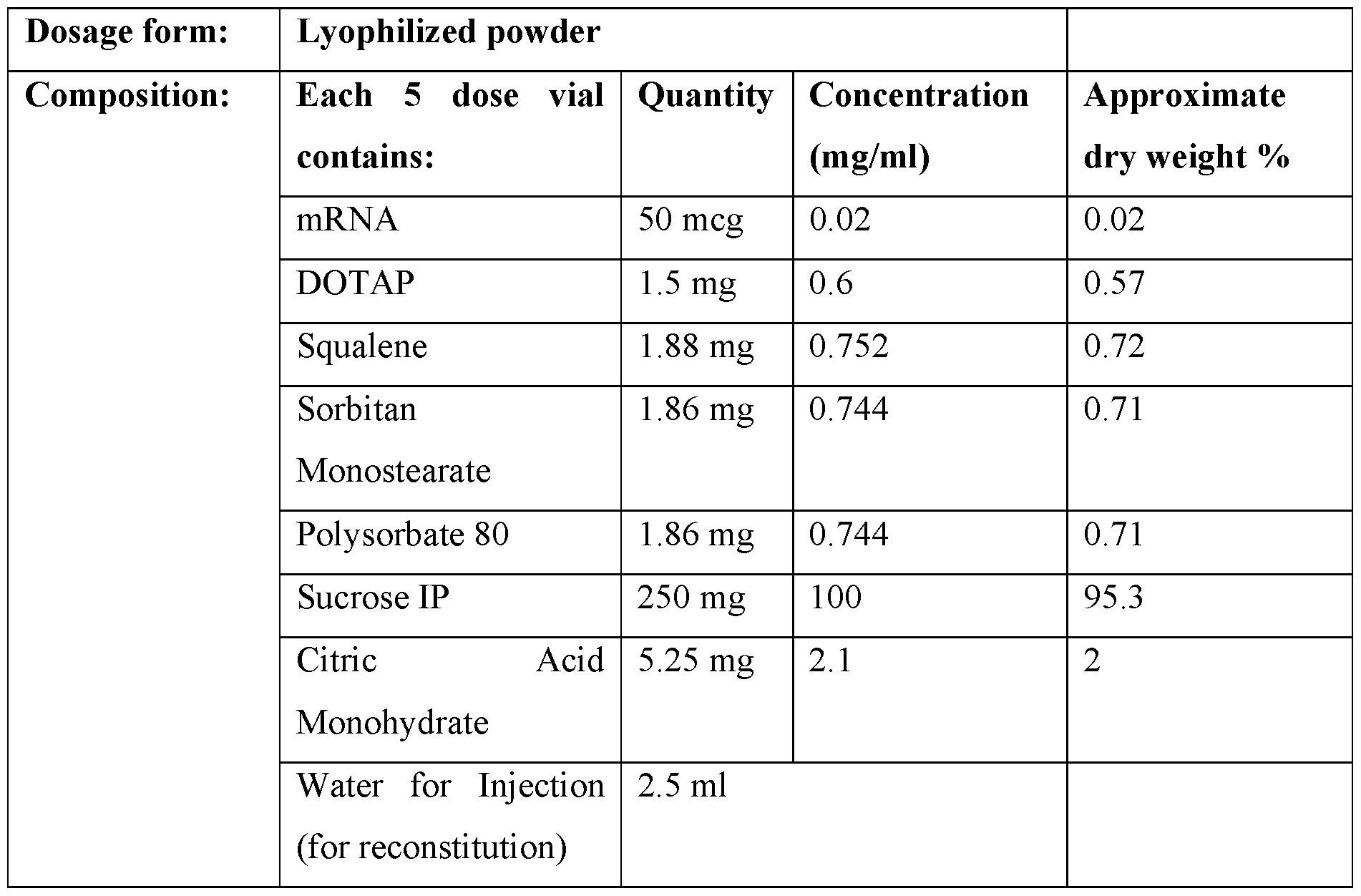
121 Ep: the epo has been informed by wipo that ep was designated in this application

Ref document number: 22873329

Country of ref document: EP

Kind code of ref document: A1

WWE Wipo information: entry into national phase

Ref document number: 3232566

Country of ref document: CA

ENP Entry into the national phase

Ref document number: 2024518361

Country of ref document: JP

Kind code of ref document: A

WWE Wipo information: entry into national phase

Ref document number: 2022352486

Country of ref document: AU

Ref document number: AU2022352486

Country of ref document: AU

WWE Wipo information: entry into national phase

Ref document number: 202417026887

Country of ref document: IN

REG Reference to national code

Ref country code: BR

Ref legal event code: B01A

Ref document number: 112024005662

Country of ref document: BR

ENP Entry into the national phase

Ref document number: 2022352486

Country of ref document: AU

Date of ref document: 20220124

Kind code of ref document: A

WWE Wipo information: entry into national phase

Ref document number: 2022873329

Country of ref document: EP

NENP Non-entry into the national phase

Ref country code: DE

ENP Entry into the national phase

Ref document number: 2022873329

Country of ref document: EP

Effective date: 20240422

WWE Wipo information: entry into national phase

Ref document number: 202280077669.3

Country of ref document: CN

ENP Entry into the national phase

Ref document number: 112024005662

Country of ref document: BR

Kind code of ref document: A2

Effective date: 20240321