WO2022079211A1 - Glycoconjugates - Google Patents
Glycoconjugates Download PDFInfo
- Publication number
- WO2022079211A1 WO2022079211A1 PCT/EP2021/078536 EP2021078536W WO2022079211A1 WO 2022079211 A1 WO2022079211 A1 WO 2022079211A1 EP 2021078536 W EP2021078536 W EP 2021078536W WO 2022079211 A1 WO2022079211 A1 WO 2022079211A1
- Authority
- WO
- WIPO (PCT)
- Prior art keywords
- moiety
- group
- payload
- glycoconjugate
- seq
- Prior art date
- Legal status (The legal status is an assumption and is not a legal conclusion. Google has not performed a legal analysis and makes no representation as to the accuracy of the status listed.)
- Ceased
Links
Classifications
-
- A—HUMAN NECESSITIES
- A61—MEDICAL OR VETERINARY SCIENCE; HYGIENE
- A61P—SPECIFIC THERAPEUTIC ACTIVITY OF CHEMICAL COMPOUNDS OR MEDICINAL PREPARATIONS
- A61P35/00—Antineoplastic agents
-
- A—HUMAN NECESSITIES
- A61—MEDICAL OR VETERINARY SCIENCE; HYGIENE
- A61K—PREPARATIONS FOR MEDICAL, DENTAL OR TOILETRY PURPOSES
- A61K47/00—Medicinal preparations characterised by the non-active ingredients used, e.g. carriers or inert additives; Targeting or modifying agents chemically bound to the active ingredient
- A61K47/50—Medicinal preparations characterised by the non-active ingredients used, e.g. carriers or inert additives; Targeting or modifying agents chemically bound to the active ingredient the non-active ingredient being chemically bound to the active ingredient, e.g. polymer-drug conjugates
- A61K47/51—Medicinal preparations characterised by the non-active ingredients used, e.g. carriers or inert additives; Targeting or modifying agents chemically bound to the active ingredient the non-active ingredient being chemically bound to the active ingredient, e.g. polymer-drug conjugates the non-active ingredient being a modifying agent
- A61K47/54—Medicinal preparations characterised by the non-active ingredients used, e.g. carriers or inert additives; Targeting or modifying agents chemically bound to the active ingredient the non-active ingredient being chemically bound to the active ingredient, e.g. polymer-drug conjugates the non-active ingredient being a modifying agent the modifying agent being an organic compound
- A61K47/549—Sugars, nucleosides, nucleotides or nucleic acids
-
- A—HUMAN NECESSITIES
- A61—MEDICAL OR VETERINARY SCIENCE; HYGIENE
- A61K—PREPARATIONS FOR MEDICAL, DENTAL OR TOILETRY PURPOSES
- A61K47/00—Medicinal preparations characterised by the non-active ingredients used, e.g. carriers or inert additives; Targeting or modifying agents chemically bound to the active ingredient
- A61K47/50—Medicinal preparations characterised by the non-active ingredients used, e.g. carriers or inert additives; Targeting or modifying agents chemically bound to the active ingredient the non-active ingredient being chemically bound to the active ingredient, e.g. polymer-drug conjugates
- A61K47/51—Medicinal preparations characterised by the non-active ingredients used, e.g. carriers or inert additives; Targeting or modifying agents chemically bound to the active ingredient the non-active ingredient being chemically bound to the active ingredient, e.g. polymer-drug conjugates the non-active ingredient being a modifying agent
- A61K47/68—Medicinal preparations characterised by the non-active ingredients used, e.g. carriers or inert additives; Targeting or modifying agents chemically bound to the active ingredient the non-active ingredient being chemically bound to the active ingredient, e.g. polymer-drug conjugates the non-active ingredient being a modifying agent the modifying agent being an antibody, an immunoglobulin or a fragment thereof, e.g. an Fc-fragment
- A61K47/6801—Drug-antibody or immunoglobulin conjugates defined by the pharmacologically or therapeutically active agent
- A61K47/6803—Drugs conjugated to an antibody or immunoglobulin, e.g. cisplatin-antibody conjugates
- A61K47/68035—Drugs conjugated to an antibody or immunoglobulin, e.g. cisplatin-antibody conjugates the drug being a pyrrolobenzodiazepine
-
- A—HUMAN NECESSITIES
- A61—MEDICAL OR VETERINARY SCIENCE; HYGIENE
- A61K—PREPARATIONS FOR MEDICAL, DENTAL OR TOILETRY PURPOSES
- A61K47/00—Medicinal preparations characterised by the non-active ingredients used, e.g. carriers or inert additives; Targeting or modifying agents chemically bound to the active ingredient
- A61K47/50—Medicinal preparations characterised by the non-active ingredients used, e.g. carriers or inert additives; Targeting or modifying agents chemically bound to the active ingredient the non-active ingredient being chemically bound to the active ingredient, e.g. polymer-drug conjugates
- A61K47/51—Medicinal preparations characterised by the non-active ingredients used, e.g. carriers or inert additives; Targeting or modifying agents chemically bound to the active ingredient the non-active ingredient being chemically bound to the active ingredient, e.g. polymer-drug conjugates the non-active ingredient being a modifying agent
- A61K47/68—Medicinal preparations characterised by the non-active ingredients used, e.g. carriers or inert additives; Targeting or modifying agents chemically bound to the active ingredient the non-active ingredient being chemically bound to the active ingredient, e.g. polymer-drug conjugates the non-active ingredient being a modifying agent the modifying agent being an antibody, an immunoglobulin or a fragment thereof, e.g. an Fc-fragment
- A61K47/6835—Medicinal preparations characterised by the non-active ingredients used, e.g. carriers or inert additives; Targeting or modifying agents chemically bound to the active ingredient the non-active ingredient being chemically bound to the active ingredient, e.g. polymer-drug conjugates the non-active ingredient being a modifying agent the modifying agent being an antibody, an immunoglobulin or a fragment thereof, e.g. an Fc-fragment the modifying agent being an antibody or an immunoglobulin bearing at least one antigen-binding site
- A61K47/6851—Medicinal preparations characterised by the non-active ingredients used, e.g. carriers or inert additives; Targeting or modifying agents chemically bound to the active ingredient the non-active ingredient being chemically bound to the active ingredient, e.g. polymer-drug conjugates the non-active ingredient being a modifying agent the modifying agent being an antibody, an immunoglobulin or a fragment thereof, e.g. an Fc-fragment the modifying agent being an antibody or an immunoglobulin bearing at least one antigen-binding site the antibody targeting a determinant of a tumour cell
- A61K47/6855—Medicinal preparations characterised by the non-active ingredients used, e.g. carriers or inert additives; Targeting or modifying agents chemically bound to the active ingredient the non-active ingredient being chemically bound to the active ingredient, e.g. polymer-drug conjugates the non-active ingredient being a modifying agent the modifying agent being an antibody, an immunoglobulin or a fragment thereof, e.g. an Fc-fragment the modifying agent being an antibody or an immunoglobulin bearing at least one antigen-binding site the antibody targeting a determinant of a tumour cell the tumour determinant being from breast cancer cell
-
- A—HUMAN NECESSITIES
- A61—MEDICAL OR VETERINARY SCIENCE; HYGIENE
- A61K—PREPARATIONS FOR MEDICAL, DENTAL OR TOILETRY PURPOSES
- A61K47/00—Medicinal preparations characterised by the non-active ingredients used, e.g. carriers or inert additives; Targeting or modifying agents chemically bound to the active ingredient
- A61K47/50—Medicinal preparations characterised by the non-active ingredients used, e.g. carriers or inert additives; Targeting or modifying agents chemically bound to the active ingredient the non-active ingredient being chemically bound to the active ingredient, e.g. polymer-drug conjugates
- A61K47/51—Medicinal preparations characterised by the non-active ingredients used, e.g. carriers or inert additives; Targeting or modifying agents chemically bound to the active ingredient the non-active ingredient being chemically bound to the active ingredient, e.g. polymer-drug conjugates the non-active ingredient being a modifying agent
- A61K47/68—Medicinal preparations characterised by the non-active ingredients used, e.g. carriers or inert additives; Targeting or modifying agents chemically bound to the active ingredient the non-active ingredient being chemically bound to the active ingredient, e.g. polymer-drug conjugates the non-active ingredient being a modifying agent the modifying agent being an antibody, an immunoglobulin or a fragment thereof, e.g. an Fc-fragment
- A61K47/6889—Conjugates wherein the antibody being the modifying agent and wherein the linker, binder or spacer confers particular properties to the conjugates, e.g. peptidic enzyme-labile linkers or acid-labile linkers, providing for an acid-labile immuno conjugate wherein the drug may be released from its antibody conjugated part in an acidic, e.g. tumoural or environment
-
- C—CHEMISTRY; METALLURGY
- C12—BIOCHEMISTRY; BEER; SPIRITS; WINE; VINEGAR; MICROBIOLOGY; ENZYMOLOGY; MUTATION OR GENETIC ENGINEERING
- C12P—FERMENTATION OR ENZYME-USING PROCESSES TO SYNTHESISE A DESIRED CHEMICAL COMPOUND OR COMPOSITION OR TO SEPARATE OPTICAL ISOMERS FROM A RACEMIC MIXTURE
- C12P19/00—Preparation of compounds containing saccharide radicals
- C12P19/18—Preparation of compounds containing saccharide radicals produced by the action of a glycosyl transferase, e.g. alpha-, beta- or gamma-cyclodextrins
-
- C—CHEMISTRY; METALLURGY
- C12—BIOCHEMISTRY; BEER; SPIRITS; WINE; VINEGAR; MICROBIOLOGY; ENZYMOLOGY; MUTATION OR GENETIC ENGINEERING
- C12P—FERMENTATION OR ENZYME-USING PROCESSES TO SYNTHESISE A DESIRED CHEMICAL COMPOUND OR COMPOSITION OR TO SEPARATE OPTICAL ISOMERS FROM A RACEMIC MIXTURE
- C12P21/00—Preparation of peptides or proteins
- C12P21/005—Glycopeptides, glycoproteins
Definitions
- glycoconjugates comprising glycosylated cell-binding agents conjugated to pyrrolobenzodiazepine (PBD) payloads.
- PBD pyrrolobenzodiazepine
- Glycoconjugates of particular interest include conjugates where the cell-binding agent is an antibody and the payload comprises a cytotoxic pyrrolobenzodiazepine (PBD) moiety, with the PBD moiety conjugated to the antibody via an oligosaccharide linker.
- PBD cytotoxic pyrrolobenzodiazepine
- the disclosure also relates to methods for preparing the glycoconjugates, along with methods for their use.
- BACKGROUND Antibody Therapy Antibody therapy has been established for the targeted treatment of subjects with cancer, immunological and angiogenic disorders (Carter, P. (2006) Nature Reviews Immunology 6:343-357).
- ADC antibody-drug conjugates
- cytotoxic or cytostatic agents i.e. drugs to kill or inhibit tumour cells in the treatment of cancer
- targets delivery of the drug moiety to tumours, and intracellular accumulation therein targets delivery of the drug moiety to tumours, and intracellular accumulation therein, whereas systemic administration of these unconjugated drug agents may result in unacceptable levels of toxicity to normal cells (Xie et al (2006) Expert. Opin. Biol. Ther.
- ADC A common mode for preparing ADCs is the conjugation of the payload (eg. A drug-linker molecule) to the side chain of antibody amino acid lysine or cysteine.
- the payload eg. A drug-linker molecule
- the kinetics of lysine addition means conjugation at this residue takes place preferentially at lysine side chains with high steric accessibility and low pKa, making the site-specificity of the reaction difficult to control.
- More site specificity is offered by conjugating to cysteines, since there are typically no free cysteine sulfhydryl groups present in a wild-type antibody under normal conditions. This allows for methods where free sulfhydryl groups can be introduced into the antibody molecule by, for example, selective reduction of existing cysteine of the introduction of additional cysteines through protein engineering. In both case, payloads can be effectively conjugated to the freed sulfhydryl groups using, for example, electrophilic alkylation based on maleimide addition.
- Conjugation via glycans is a potentially versatile strategy for ADC generation, as – for example – all IgG antibodies expressed in mammalian or yeast cell cultures bear a N-linked glycan moiety on the Fc portion of each heavy chain.
- this methodology presents a number of challenges.
- glycans are typically present as a complex mixture of isoforms, which may contain different levels of galactosylation (G0, G1, G2) and fucosylation (G0F, G1F, G2F) which may in turn lead to undesirable heterogeneity in conjugation stoichiometry.
- DAR Drug-to-Antibody Ratio
- the present authors beleive that these properties arise in part due to the presence and location of the negatively charged sialic residue. For some payloads this was found to be associated with improved glycoconjugate efficacy as compared to uncharged sugar moieties in the same position.
- the present authors further determined that the advantageous –[GlcNAc]–[Gal]–[Sia]– glycoconjugates could be manufactured using readily-available enzyme catalysts.
- the wild-type human ⁇ 4GalT1 galactosyl-transferase was able to efficiently transfer a galactose residue onto a ⁇ 1-6 fucosylated GlcNAc residue, despite that reaction not occurring in the natural system in which this enzyme is found.
- the galactosylated oligosaccharide resulting from that reaction was also readily susceptible to the addition of an alkynyl or azido-modified sialic acid by the wild-type ST6Gal1sialyltransferase.
- Sd(A P )x is a sialic acid derivative, such as a sialic acid derivative having the formula: wherein: QQ is hydrogen or a conjugated payload; ZZ is hydroxyl or a conjugated payload; YY is hydroxyl or a conjugated payload; and/or XX is hydroxyl or a conjugated payload; and wherein at least one of QQ, ZZ, YY, and XX is a conjugated payload.
- the glycoconjugate has the formula: or wherein: QQ is hydrogen or a conjugated payload; ZZ is hydroxyl or a conjugated payload; YY is hydroxyl or a conjugated payload; and/or XX is hydroxyl or a conjugated payload; and wherein at least one of QQ, ZZ, YY, and XX is a conjugated payload.
- Sug is linked to the GlcNAc at the GlcNAc C6, preferably in an ⁇ 1-6 configuration.
- Sug is a fucose moiety, such as a fucose moiety having the structure:
- the glycoconjugate has a conjugated payload at position QQ.
- the glycoconjugate has a conjugated payload at position QQ. In some cases the glycoconjugate has a conjugated payload at position ZZ. In some cases the glycoconjugate has a conjugated payload at each of positions QQ and ZZ. QQ and ZZ may be the same or different.
- the GlcNAc moiety is linked to the cell-binding agent via the GlcNAc C1 carbon. In some cases the CBA-N-GlcNAc linkage is in the beta anomeric configuration.
- the GlcNAc moiety may be ⁇ -linked to an asparagine residue in the peptide backbone.
- the GlcNAc is preferably conjugated to the antibody at the asparagine 297 (Asn297) residue according to the EU index as set forth in Kabat.
- the CBA may be a protein, such as a therapeutic protein, an antibody, and/or a Fc fusion protein.
- An antibody may be monoclonal and/or of the IgG isotype, such as the IgG1 subclass.
- Anantibody may be an intact antibody.
- a Fc fusion protein may comprise a Fc domain is of the IgG isotype, such as the IgG1 subclass.
- the CBA may specifically bind a target antigen selected from the group comprising of: BMPR1B, E16, STEAP1, 0772P,MPF, Napi3b, Sema 5b, PSCA hlg, ETB, MSG783, STEAP2, TrpM4, CRIPTO, CD21, CD79b, FcRH2, HER2, NCA, MDP, IL20R-alpha, Brevican, EphB2R, ASLG659, PSCA, GEDA, BAFF-R, CD22, CD79a, CXCR5, HLA-DOB, P2X5, CD72, LY64, FcRH1, IRTA2, TENB2, PSMA, SST, ITGAV, ITGB6, CEACAM5, MET, MUC1, CA9, EGFRvIII, CD33, CD19, IL2RA, AX
- the payload is a ‘PBD payload’. That is, the payload is, comprises, or releases upon metabolism a PBD compound, as defined in the section herein entitled “PBD compound”. In some cases the payload has a linker moiety linking the CBA and the remainder of the payload.
- the linker may comprise an ionizable group such as: an acidic group/moiety, such as, for example, -CO 2 H, -NHSO 2 NH 2 , -NHSO 2 NHR where R is an alkyl moiety, -SO 3 H, sialic acid, glutamic acid, a glutamic acid sidechain, aspartic acid, an aspartic acid sidechain, and the like, and salts or ionic groups/moieties formed therefrom; or a basic group/moiety, such as, for example, an amine group/moiety (e.g., a primary amine group, a secondary amine moiety, or a tertiary amine moiety), guanidinium group, and the like, and salts or ionic groups/moieties formed therefrom; with the proviso that no carbonyl is adjacent (e.g., alpha) to a -NHSO 2 NH- moiety or -NHSO 2 NH 2 group.
- R
- the conjugated payload is a conjugated PBD drug-linker payload as defined in the section herein titled “PBD drug-linker embodiments”.
- the present disclosure provides a method for the preparation of the glycoconjugate of the first aspect, the method comprising the steps of: (i) providing a Sd(A F ) x acceptor having the formula: wherein CBA, GlcNAc, Sug, Gal, and y are defined as above; and (ii) contacting the Sd(A F ) x acceptor with a compound of the formula Sd(A F ) x –P* in the presence of a glycosyltransferase to produce a glycosylated cell-binding agent, wherein: Sd(A F ) x is as defined as for Sd(A P ) x above, except that “A F ” represents a functional group A F instead of a conjugated payload A P ; and P* is a nucleoside phosphat
- nucleoside phosphate moiety is one of adenosine, guanosine, uridine, cytidine, or thymidine; such as, a nucleoside phosphate moiety selected from the group consisting of: UDP, GDP, TDP, CDP, and CMP.
- the Sd(A F ) x acceptor above is provided by a process comprising the steps of: a) providing a Gal acceptor having the formula: , wherein CBA, GlcNAc, Sug, b, and y are defined as described elsewhere herein for glycosylated cell-binding agents; and b) contacting the Gal acceptor with a compound of the formula Gal–P* in the presence of a galactosyltransferase, wherein Gal and P* are as defined above; optionally wherein, c) the Gal acceptor is produced by contacting with a glycosidase a oligoglycosylated cell-binding agent having the formula: wherein CHO is a carbohydrate moiety.
- the Sd(A F ) x acceptor has only one terminal galactose moiety. In some cases the Sd(A F ) x acceptor has only two terminal galactose moieties. In some cases the Sd(A F ) x acceptor has only three terminal galactose moieties. In some cases the Sd(A F ) x acceptor has only four terminal galactose moieties.
- the glycosyltransferase may be a sialyltransferase, such as human beta-galactoside alpha- 2,6-sialyltransferase 1 (ST6Gal1).
- the sialyltransferase has the sequence set out in SEQ ID NO.1, 4, or 7.
- the glycosidase may be an endoglycosidase, such as Endo S as disclosed in Collin, M. and Olsén, A. (2001). The EMBO Journal. 20, 3046-3055.
- the endoglycosidase has the sequence set out in SEQ ID NO.3, 6, or 9.
- the galactosyltransferase may be human beta-1,4-galactosyltransferase 1 (B4GalT1).
- the galactosyltransferase has the sequence set out in SEQ ID NO.2, 5, or 8.
- the present disclosure provides the use of the glycosylated cell-binding agent of the third aspect in the production of the glycoconjugate according to the first aspect.
- the present disclosure provides a glycoconjugate of any the first aspect for use in a method of treatment.
- the method of treatment is a method of treating a proliferative disorder, such as cancer.
- the cancer may be selected from the group consisting of: histocytoma, glioma, astrocyoma, neuroblastoma, osteoma, lung cancer, gastrointestinal cancer, bowel cancer, colon cancer, breast carcinoma, ovarian carcinoma, prostate cancer, testicular cancer, liver cancer, kidney cancer, bladder cancer, pancreas cancer, renal cancer, brain cancer, sarcoma, liposarcoma, osteosarcoma, Kaposi's sarcoma, melanoma, lymphomas, myeloma, and leukemias.
- methods of treating a proliferative disorder (optionally as defined in the fifth aspect), the method comprising administering an effective amount of a glycoconjugate of the first aspect.
- glycoconjugates of the first aspect in the manufacture of a medicament for the treatment of a proliferative disorder (optionally as defined in the fifth aspect) are also disclosed herein.
- DETAILED DESCRIPTION Glycoconjugates The present disclosure concerns glycoconjugates in which a cell-binding agent is conjugated to a payload via a short glycan moiety on the heavy chain of the antibody.
- the present disclosure relates to glycoconjugates wherein the glycan moiety is the trisaccharide – [GlcNAc]–[Gal]–[Sia]–, wherein the GlcNAc residue (a term used interchangeably herein with GlcNac moiety) is optionally branched with a sugar residue such as a fucose residue.
- the cell-binding agent is an antibody or a FC fusion protein; for example, an IgG antibody or a Fc fusion protein comprising an IgG Fc domain.
- Glycoconjugates wherein the payload comprises a cytotoxic pyrrolobenzodiazepine (PBD) compound are also of particular interest.
- the average number of payloads per CBA (that is “y”) is in the range 1 to 4. In some embodiments the range is selected from 1 to 2, 1 to 3, 2 to 4, 3-6 or 4-8.
- the GlcNAc moiety is typically conjugated to the CBA via the GlcNAc C1 carbon. Preferably the CBA-N-GlcNAc linkage is in the beta anomeric configuration.
- the glycoconjugates are typically produced and/or modified using enzyme catalysed processes. Accordingly, the saccharide molecules and moieties described herein (eg. “GlcNAc”, “Sug”, “Gal”) typically have the properites and configuration that allows for their efficient use by the enzyme catalysts. Preferably the saccharide molecules and moieties such as “GlcNAc”, “Sug”, and “Gal” described herein are ‘D’ enantiomers. In some preferred embodiments, the glycoconjugate has the formula: or
- the GlcNAc moiety can be bound to the CBA with an ⁇ -N- glycosidic linkage:
- the cell-binding agent is a peptide or polypeptide (such as an antibody), or comprises a peptide or polypeptide portion
- the oligosaccharide may be conjugated to the antibody through an asparagine side chain via an ⁇ -N-glycosidic bond:
- the CBA is an antibody.
- the GlcNAc moiety is conjugated to the antibody at the asparagine 297 (Asn297) residue according to the EU index as set forth in Kabat.
- y 1, the GlcNAc moiety may be conjugated to one of the Asn297 residues in the Fc domain.
- y 2
- a GlcNAc moiety is conjugated to each of the two Asn297 residues in the Fc domain.
- the GlcNAc moiety may be conjugated to the asparagine residue corresponding to Asn297 of the unmodified antibody.
- the glycoconjugate has a conjugated payload at position QQ. In some of these embodiments all of XX, YY, and ZZ are hydroxyl. In some other preferred embodiments the glycoconjugate has a conjugated payload at position ZZ. In some of these embodiments QQ is hydrogen and XX and YY are hydroxyl. In some embodiments the glycoconjugate has a conjugated payload at each of positions QQ and ZZ. QQ and ZZ may be the same or different.In some of these embodiments XX and YY are hydroxyl. Provided herein are highly homogenous glycoconjugates, meaning that each individual CBA has the same glycan structures conjugated to the CBA (ie.
- At least 75%, such as at least 80%, at least 85%, at least 90%, at least 95%, at least 97.5%, or at least 99% of the individual CBA molecules in the composition bear an identical glycan structure (ie. are the same glycoform).
- the CBA is an antibody and in which the oligosaccharide is glycosylated to Asn297
- at least 75%, at least 80%, at least 85%, at least 90%, at least 95%, at least 97.5%, or at least 99% of the antibodies may bear an identical glycan structure at Asn297.
- Payload loading The payload loading (p) is the average number of payloads per CBA, e.g. antibody.
- the average number of payloads per CBA in preparations from conjugation reactions may be characterized by conventional means such as UV, reverse phase HPLC, HIC, mass spectroscopy, ELISA assay, and electrophoresis.
- the quantitative distribution of CBA in terms of p may also be determined.
- ELISA the averaged value of p in a particular preparation of CBA may be determined (Hamblett et al (2004) Clin. Cancer Res.10:7063-7070; Sanderson et al (2005) Clin. Cancer Res. 11:843-852).
- the distribution of p values is not discernible by the CBA-antigen binding and detection limitation of ELISA.
- ELISA assay for detection of glycoconjugates does not determine where the payloads are attached to the CBA, such as the heavy chain or light chain fragments of antibodies, or the particular amino acid residues.
- separation, purification, and characterization of homogeneous CBA where p is a certain value from CBA with other payload loadings may be achieved by means such as reverse phase HPLC or electrophoresis.
- Such techniques are also applicable to other types of conjugates.
- p is limited by the number of attachment sites on the CBA, eg. the number of azide groups.
- the CBA may have only one or two azide groups to which the payload may be attached.
- the loading ratio of a CBA may be controlled in several different manners, including: (i) limiting the molar excess of payload intermediate or linker reagent relative to CBA, and (ii) limiting the conjugation reaction time or temperature. Where more than one nucleophilic or electrophilic group of the CBA reacts with a payload intermediate, or linker reagent followed by payload reagent, then the resulting product is a mixture of glycoconjugates with a distribution of payloads attached to a CBA, e.g.1, 2, 3, etc.
- Liquid chromatography methods such as polymeric reverse phase (PLRP) and hydrophobic interaction (HIC) may separate compounds in the mixture by p value.
- Preparations of CBA with a single drug loading value (p) may be isolated, however, these single loading value CBAs may still be heterogeneous mixtures because the payloads may be attached, via the linker, at different sites on the CBA.
- the glycoconjugate compositions described herein include mixtures of glycoconjugate compounds where the CBA has one or more payloads and where the payloads may be attached to the antibody at various conjugation sites.
- the average number of payloads per CBA is in the range 1 to 4. In some embodiments the range is selected from 1 to 2 or 2 to 4.
- Cell Binding Agents A cell binding agent may be of any kind, and include peptides and non-peptides. Suitable agents include antibodies or a fragment of an antibody that contains at least one binding site, Fc fusion proteins, lymphokines, hormones, hormone mimetics, vitamins, growth factors, nutrient-transport molecules, or any other cell binding molecule or substance. Preferred CBAs include proteins and peptides, including therapeutic proteins or peptides.
- Antibodies and Fc fusion proteins are particularly preferred CBAs.
- the CBAs typically bind cells through specific binding of one or more antigens expressed by the target cell. These antigens are herein termed ‘target antigens’ and are typically expressed on the surface of the target cell.
- target antigens are herein termed ‘target antigens’ and are typically expressed on the surface of the target cell.
- target antigens As used herein to describe cell-binding agents, “specifically binds [target antigen]” means that the CBA binds the antigen with a higher affinity than a non-specific partner such as Bovine Serum Albumin (BSA, Genbank accession no. CAA76847, version no. CAA76847.1 GI:3336842, record update date: Jan 7, 201102:30 PM).
- BSA Bovine Serum Albumin
- the CBA binds the antigen with an association constant (K a ) at least 2, 3, 4, 5, 10, 20, 50, 100, 200, 500, 1000, 2000, 5000, 10 4 , 10 5 or 10 6 -fold higher than the antibody’s association constant for BSA, when measured at physiological conditions.
- the CBAs of the disclosure typically bind the antigen with a high affinity.
- the CBA can bind the antigen with a K D equal to or less than about 10 -6 M, such as equal to or less than one of 1 x 10 -6 , 10- 7 , 10 -8 , 10 -9 ,10 -10 , 10 -11 , 10 -12 , 10- 13 or 10 -14 .
- Target antigens in some aspects, is selected from the group consisting of: (1) BMPR1B (bone morphogenetic protein receptor-type IB) Nucleotide Genbank accession no. NM_001203 Genbank version no. NM_001203.2 GI:169790809 Genbank record update date: Sep 23, 201202:06 PM Polypeptide Genbank accession no. NP_001194 Genbank version no.
- BMPR1B bone morphogenetic protein receptor-type IB
- NP_001194.1 GI:4502431 Genbank record update date: Sep 23, 201202:06 PM Cross-references ten Dijke,P., et al Science 264 (5155): 101-104 (1994), Oncogene 14 10 (11):1377-1382 (1997)); WO2004/063362 (Claim 2); WO2003/042661 (Claim 12); US2003/134790-A1 (Page 38-39); WO2002/102235 (Claim 13; Page 296); WO2003/055443 (Page 91-92); WO2002/99122 (Example 2; Page 528-530); WO2003/029421 (Claim 6); WO2003/024392 (Claim 2; Fig 112); WO2002/98358 (Claim 1; Page 183); WO2002/54940 (Page 100-101); WO2002/59377(Page 349-350); WO2002/30268 (Claim 27; Page 376); 15
- Napi3b NAPI-3B, NPTIIb, SLC34A2, solute carrier family 34 (sodium phosphate), member 2, type II sodium-dependent phosphate transporter 3b) Nucleotide Genbank accession no. NM_006424 Genbank version no.
- NM_006424.2 GI:110611905 Genbank record update date: Jul 22, 201203:39 PM Polypeptide Genbank accession no. NP_006415 Genbank version no. NP_006415.2 GI:110611906 Genbank record update date: Jul 22, 201203:39 PM Cross references J. Biol. Chem.277 (22):19665-19672 (2002), Genomics 62 (2):281-284 (1999), Feild, J.A., et al (1999) Biochem. Biophys. Res. Commun.
- Sema 5b (FLJ10372, KIAA1445, Mm.42015, SEMA5B, SEMAG, Semaphorin 5b Hlog, 25 sema domain, seven thrombospondin repeats (type 1 and type 1-like), transmembrane domain (TM) and short cytoplasmic domain, (semaphorin) 5B)
- MSG783 (10) Nucleotide Genbank accession no. NM_017763 Genbank version no. NM_017763.4 GI:167830482 Genbank record update date: Jul 22, 201212:34 AM Polypeptid e Genbank accession no. NP_060233 Genbank version no.
- STEAP2 (HGNC_8639, IPCA-1, PCANAP1, STAMP1, STEAP2, STMP, prostate cancer associated gene 1, prostate cancer associated protein 1, six transmembrane epithelial antigen of prostate 2, six transmembrane prostate protein)
- TrpM4 (BR22450, FLJ20041, TRPM4, TRPM4B, transient receptor potential cation 5 channel, subfamily M, member 4) Nucleotide Genbank accession no. NM_017636 Genbank version no. NM_017636.3 GI:304766649 Genbank record update date: Jun 29, 201211:27 AM Polypeptide Genbank accession no. NP_060106 Genbank version no. NP_060106.2 GI:21314671 Genbank record update date: Jun 29, 201211:27 AM Cross references Xu, X.Z., et al Proc. Natl. Acad. Sci. U.S.A.
- CRIPTO (CR, CR1, CRGF, CRIPTO, TDGF1, teratocarcinoma-derived growth factor) Nucleotide Genbank accession no. NM_003212 Genbank version no. NM_003212.3 GI:292494881 Genbank record update date: Sep 23, 201202:27 PM Polypeptide Genbank accession no. NP_003203 Genbank version no. NP_003203.1 GI:4507425 Genbank record update date: Sep 23, 201202:27 PM Cross references Ciccodicola, A., et al EMBO J. 8 (7):1987-1991 (1989), Am. J. Hum. Genet.
- CD21 (CR2 (Complement receptor 2) or C3DR (C3d/Epstein Barr virus receptor) or Hs.73792) Nucleotide Genbank accession no M26004 Genbank version no. M26004.1 GI:181939 Genbank record update date: Jun 23, 201008:47 AM Polypeptide Genbank accession no. AAA35786 Genbank version no. AAA35786.1 GI:181940 Genbank record update date: Jun 23, 201008:47 AM Cross references Fujisaku et al (1989) J. Biol. Chem. 264 (4):2118-2125); Weis J.J., et al J. Exp. Med. 167, 1047-1066, 1988; Moore M., et al Proc. Natl.
- an antibody comprising CDRs having overall at least 80% sequence identity to CDRs having amino acid sequences of SEQ ID NO:3 (CDR-H1), SEQ ID NO:4 (CDR-H2), SEQ ID NO:5 (CDR-H3), SEQ ID NO:104 and/or SEQ ID NO:6 (CDR- L1), SEQ ID NO:7 (CDR-L2), and SEQ ID NO:8 (CDR-L3), wherein the anti-HER2 antibody or anti-HER2 binding fragment has reduced immunogenicity as compared to an antibody having a VH of SEQ ID NO:1 and a VL of SEQ ID NO:2.
- Biogen US20100119511
- ATCC accession numbers: PTA-10355, PTA-10356, PTA-10357, PTA-10358 For example, a purified antibody molecule that binds to HER2 comprising a all six CDR's from an antibody selected from the group consisting of BIIB71F10 (SEQ ID NOs:11, 13), BIIB69A09 (SEQ ID NOs:15, 17); BIIB67F10 (SEQ ID NOs:19, 21); BIIB67F11 (SEQ ID NOs:23, 25), BIIB66A12 (SEQ ID NOs:27, 29), BIIB66C01 (SEQ ID NOs:31, 33), BIIB65C10 (SEQ ID NOs:35, 37), BIIB65H09 (SEQ ID NOs:39, 41) and BIIB65B03 (SEQ ID NOs:43, 45), or CDRs which are identical or which have no more than two
- US2011/0159014 for example, an antibody having a light chain variable domain comprising the hypervariable regions of SEQ ID NO: 1”.
- an antibody having a heavy chain variable domain comprising the hypervariable regions of SEQ ID NO: 2.
- US20090187007 Glycotope TrasGEX antibody http://www.glycotope.com/pipeline For example, see International Joint Cancer Institute and Changhai Hospital Cancer Cent: HMTI-Fc Ab - Gao J., et al BMB Rep.2009 Oct 31;42(10):636- 41.
- MDP (DPEP1) Nucleotide Genbank accession no BC017023 Genbank version no. BC017023.1 GI:16877538 Genbank record update date: Mar 6, 201201:00 PM Polypeptide Genbank accession no. AAH17023 Genbank version no. AAH17023.1 GI:16877539 Genbank record update date: Mar 6, 201201:00 PM Cross references Proc. Natl. Acad. Sci. U.S.A. 99 (26):16899-16903 (2002)); WO2003/016475 (Claim 1); WO2002/64798 (Claim 33; Page 85- 87); JP05003790 (Fig 6-8); WO99/46284 (Fig 9); MIM:179780.
- IL20R-alpha (IL20Ra, ZCYTOR7) Nucleotide Genbank accession no AF184971 Genbank version no. AF184971.1 GI:6013324 Genbank record update date: Mar 10, 201010:00 PM Polypeptide Genbank accession no. AAF01320 Genbank version no. AAF01320.1 GI:6013325 Genbank record update date: Mar 10, 201010:00 PM Cross references Clark H.F., et al Genome Res.13, 2265-2270, 2003; Mungall A.J., et al Nature 425, 805-811, 2003; Blumberg H., et al Cell 104, 9-19, 2001; Dumoutier L., et al J.
- PSCA Prostate stem cell antigen precursor
- CD79a (CD79A, CD79alpha), immunoglobulin-associated alpha, a B cell-specific protein that covalently interacts with Ig beta (CD79B) and forms a complex on the surface with Ig M 35 molecules, transduces a signal involved in B-cell differentiation), pI: 4.84, MW: 25028 TM: 2 [P] Gene Chromosome: 19q13.2).
- CXCR5 Burkitt's lymphoma receptor 1, a G protein-coupled receptor that is activated by the CXCL13 chemokine, functions in lymphocyte migration and humoral defense, plays a 10 role in HIV-2 infection and perhaps development of AIDS, lymphoma, myeloma, and leukemia); 372 aa, pI: 8.54 MW: 41959 TM: 7 [P] Gene Chromosome: 11q23.3, Nucleotide Genbank accession no NM_001716 Genbank version no.
- HLA-DOB Beta subunit of MHC class II molecule (Ia antigen) that binds peptides and 20 presents them to CD4+ T lymphocytes); 273 aa, pI: 6.56, MW: 30820.TM: 1 [P] Gene Chromosome: 6p21.3) Nucleotide Genbank accession no NM_002120 Genbank version no. NM_002120.3 GI:118402587 Genbank record update date: Sep 8, 201204:46 PM Polypeptide Genbank accession no. NP_002111 Genbank version no.
- P2X5 Purinergic receptor P2X ligand-gated ion channel 5, an ion channel gated by extracellular ATP, may be involved in synaptic transmission and neurogenesis, deficiency may contribute to the pathophysiology of idiopathic detrusor instability); 422 aa), pI: 7.63, MW: 47206 TM: 1 [P] Gene Chromosome: 17p13.3).
- NP_002552.2 GI:28416933 Genbank record update date: Jun 27, 201212:41 AM Cross references Le et al (1997) FEBS Lett.418(1-2):195-199; WO2004/047749; WO2003/072035 (claim 10); Touchman et al (2000) Genome Res. 10:165-173; WO2002/22660 (claim 20); WO2003/093444 (claim 1); WO2003/087768 (claim 1); WO2003/029277 (page 82) (32) CD72 (B-cell differentiation antigen CD72, Lyb-2); 359 aa, pI: 8.66, MW: 40225, TM: 1 5 [P] Gene Chromosome: 9p13.3).
- LY64 Lymphocyte antigen 64 (RP105), type I membrane protein of the leucine rich repeat (LRR) family, regulates B-cell activation and apoptosis, loss of function is associated with increased disease activity in patients with systemic lupus erythematosis); 661 aa, pI: 6.20, MW: 74147 TM: 1 [P] Gene Chromosome: 5q12).
- FcRH1 Fc receptor-like protein 1, a putative receptor for the immunoglobulin Fc domain that contains C2 type Ig-like and ITAM domains, may have a role in B-lymphocyte 20 differentiation); 429 aa, pI: 5.28, MW: 46925 TM: 1 [P] Gene Chromosome: 1q21-1q22) Nucleotide Genbank accession no NM_052938 Genbank version no. NM_052938.4 GI:226958543 Genbank record update date: Sep 2, 201201:43 PM Polypeptide Genbank accession no. NP_443170 Genbank version no.
- IRTA2 Immunoglobulin superfamily receptor translocation associated 2, a putative immunoreceptor with possible roles in B cell development and lymphomagenesis; deregulation of the gene by translocation occurs in some B cell malignancies
- TENB2 (TMEFF2, tomoregulin, TPEF, HPP1, TR, putative transmembrane 35 proteoglycan, related to the EGF/heregulin family of growth factors and follistatin); 374 aa) Nucleotide Genbank accession no AF179274 Genbank version no. AF179274.2 GI:12280939 Genbank record update date: Mar 11, 201001:05 AM Polypeptide Genbank accession no. AAD55776 Genbank version no.
- HB-12101 ATCC accession No. HB-12109, ATCC accession No. HB-12127 and ATCC accession No. HB-12126.
- Proscan a monoclonal antibody selected from the group consisting of 8H12, 3E11, 17G1, 29B4, 30C1 and 20F2 (US 7,811,564; Moffett S., et al Hybridoma (Larchmt). 2007 Dec;26(6):363-72).
- Cytogen monoclonal antibodies 7E11-C5 (ATCC accession No. HB 10494) and 9H10-A4 (ATCC accession No. HB11430) – US 5,763,202
- GlycoMimetics NUH2 - ATCC accession No.
- HB 9762 (US 7,135,301) Human Genome Science: HPRAJ70 - ATCC accession No. 97131 (US 6,824,993); Amino acid sequence encoded by the cDNA clone (HPRAJ70) deposited as American Type Culture Collection ("ATCC") Deposit No.97131 Medarex: Anti-PSMA antibodies that lack fucosyl residues - US 7,875,278 Mouse anti-PSMA antibodies include the 3F5.4G6, 3D7.1.1, 4E10-1.14, 3E11, 4D8, 3E6, 3C9, 2C7, 1G3, 3C4, 3C6, 4D4, 1G9, 5C8B9, 3G6, 4C8B9, and monoclonal antibodies.
- Hybridomas secreting 3F5.4G6, 3D7.1.1, 4E10-1.14, 3E11, 4D8, 3E6, 3C9, 2C7, 1G3, 3C4, 3C6, 4D4, 1G9, 5C8B9, 3G6 or 4C8B9 have been publicly deposited and are described in U.S. Pat. No. 6,159,508. Relevant hybridomas have been publicly deposited and are described in U.S. Pat. No.6,107,090. Moreover, humanized anti-PSMA antibodies, including a humanized version of J591, are described in further detail in PCT Publication WO 02/098897.
- mouse anti-human PSMA antibodies have been described in the art, such as mAb 107- 1A4 (Wang, S. et al. (2001) Int. J. Cancer 92:871-876) and mAb 2C9 (Kato, K. et al. (2003) Int. J. Urol. 10:439-444).
- human anti-PSMA monoclonal antibodies include the 4A3, 7F12, 8C12, 8A11, 16F9, 2A10, 2C6, 2F5 and 1C3 antibodies, isolated and structurally characterized as originally described in PCT Publications WO 01/09192 and WO 03/064606 and in U.S. Provisional Application Ser.
- SST Somatostatin Receptor; note that there are5 subtypes
- SSTR2 Somatostatin receptor 2
- NM_000888.3 GI:9966771 Genbank record update date: Jun 27, 201212:46 AM Polypeptide Genbank accession no. NP_000879 Genbank version no. NP_000879.2 GI:9625002 Genbank record update date: Jun 27, 201212:46 AM Cross references Sheppard D.J., et al Biol. Chem.265 (20), 11502-11507 (1990) Other information Official Symbol: ITGB6 Other Designations: integrin beta-6 ANTIBODIES Biogen: US 7,943,742 - Hybridoma clones 6.3G9 and 6.8G6 were deposited with the ATCC, accession numbers ATCC PTA-3649 and -3645, respectively.
- the antibody comprises the same heavy and light chain polypeptide sequences as an antibody produced by hybridoma 6.1A8, 6.3G9, 6.8G6, 6.2B1, 6.2B10, 6.2A1, 6.2E5, 7.1G10, 7.7G5, or 7.1C5.
- an antibody having human heavy chain and human light chain variable regions comprising the amino acid sequences shown in SEQ ID NO: 7 and SEQ ID NO: 8.
- CEACAM5 Other Aliases: CD66e, CEA Other Designations: meconium antigen 100 ANTIBODIES AstraZeneca-MedImmune:US 20100330103; US20080057063; US20020142359 - for example an antibody having complementarity determining regions (CDRs) with the following sequences: heavy chain; CDR1 - DNYMH, CDR2 - WIDPENGDTE YAPKFRG, CDR3 - LIYAGYLAMD Y; and light chain CDR1 - SASSSVTYMH, CDR2 - STSNLAS, CDR3 - QQRSTYPLT.
- CDRs complementarity determining regions
- CDR1 comprises KASQDVGTSVA (SEQ ID NO: 20); CDR2 comprises WTSTRHT (SEQ ID NO: 21); and CDR3 comprises QQYSLYRS (SEQ ID NO: 22); and the CDRs of the heavy chain variable region of said anti-CEA antibody comprise: CDR1 comprises TYWMS (SEQ ID NO: 23); CDR2 comprises EIHPDSSTINYAPSLK
- Amgen/Pfizer US20050054019 for example, an antibody comprising a heavy chain having the amino acid sequences set forth in SEQ ID NO: 2 where X2 is glutamate and X4 is serine and a light chain having the amino acid sequence set forth in SEQ ID NO: 4 where X8 is alanine, without the signal sequences; an antibody comprising a heavy chain having the amino acid sequences set forth in SEQ ID NO: 6 and a light chain having the amino acid sequence set forth in SEQ ID NO: 8, without the signal sequences; an antibody comprising a heavy chain having the amino acid sequences set forth in SEQ ID NO: 10 and a light chain having the amino acid sequence set forth in SEQ ID NO: 12, without the signal sequences; or an antibody comprising a heavy chain having the amino acid sequences set forth in SEQ ID NO: 14 and a light chain having the amino acid sequence set forth in SEQ ID NO: 16, without the signal sequences.
- Novartis: US20090175860 for example, an antibody comprising the sequences of CDR1, CDR2 and CDR3 of heavy chain 4687, wherein the sequences of CDR1, CDR2, and CDR3 of heavy chain 4687 are residues 26-35, 50-65, and 98-102, respectively, of SEQ ID NO: 58; and the sequences of CDR1, CDR2, and CDR3 of light chain 5097, wherein the sequences of CDR1, CDR2, and CDR3 oflight chain 5097 are residues 24-39,55-61, and 94-100 of SEQ ID NO: 37.
- PTA-5286Monoclonal antibody MJ-171 hybridoma cell line MJ-171 ATCC accession no. PTA-5287; monoclonal antibody MJ-172: hybridoma cell line MJ-172 ATCC accession no. PTA-5288; or monoclonal antibody MJ-173: hybridoma cell line MJ-173 ATCC accession no. PTA-5302 Immunomedics: US 6,653,104 Ramot Tel Aviv Uni: US7,897,351 Regents Uni. CA: US 7,183,388; US20040005647; US20030077676.
- EGFRvIII Epidermal growth factor receptor (EGFR), transcript variant 3, Nucleotide Genbank accession no. NM_201283 Genbank version no. NM_201283.1 GI:41327733 Genbank record update date: Sep 30, 201201:47 PM Polypeptide Genbank accession no. NP_958440 Genbank version no.
- an antibody comprising a heavy chain amino acid sequence comprising: CDR1 consisting of a sequence selected from the group consisting of the amino acid sequences for the CDR1 region of antibodies 13.1.2 (SEQ ID NO: 138), 131 (SEQ ID NO: 2), 170 (SEQ ID NO: 4), 150 (SEQ ID NO: 5), 095 (SEQ ID NO: 7), 250 (SEQ ID NO: 9), 139 (SEQ ID NO: 10), 211 (SEQ ID NO: 12), 124 (SEQ ID NO: 13), 318 (SEQ ID NO: 15), 342 (SEQ ID NO: 16), and 333 (SEQ ID NO: 17); CDR2 consisting of a sequence selected from the group consisting of the amino acid sequences for the CDR2 region of antibodies 13.1.2 (SEQ ID NO: 138), 131 (SEQ ID NO: 2), 170 (SEQ ID NO: 4), 150 (SEQ ID NO: 5), 095 (SEQ ID NO: 7), 250
- an antibody having at least one of the heavy or light chain polypeptides comprises an amino acid sequence that is at least 90% identical to the amino acid sequence selected from the group consisting of: SEQ ID NO: 2, SEQ ID NO: 19, SEQ ID NO: 142, SEQ ID NO: 144, and any combination thereof.
- US20090156790 (Amgen) For example, antibody having heavy chain polypeptide and a light chain polypeptide, wherein at least one of the heavy or light chain polypeptides comprises an amino acid sequence that is at least 90% identical to the amino acid sequence selected from the group consisting of: SEQ ID NO: 2, SEQ ID NO: 19, SEQ ID NO: 142, SEQ ID NO: 144, and any combination thereof.
- an antibody heavy chain amino acid sequence selected from the group consisting of the heavy chain amino acid sequence of antibody 13.1.2 (SEQ ID NO: 138), 131 (SEQ ID NO: 2), 170 (SEQ ID NO: 4), 150 (SEQ ID NO: 5), 095 (SEQ ID NO: 7), 250 (SEQ ID NO: 9), 139 (SEQ ID NO: 10), 211 (SEQ ID NO: 12), 124 (SEQ ID NO: 13), 318 (SEQ ID NO: 15), 342 (SEQ ID NO: 16), and 333 (SEQ ID NO: 17).
- MR1-1 (US7,129,332; Duke)
- a variant antibody having the sequence of SEQ ID NO.18 with the substitutions S98P-T99Y in the CDR3 VH, and F92W in CDR3 VL. L8A4, H10, Y10 (Wikstrand CJ., et al Cancer Res.1995 Jul 15;55(14):3140-8; Duke) US20090311803 (Harvard University)
- SEQ ID NOs: 3 & 9 for light chain and heavy chain respectively US6,129,915 (Schering)
- CD33 (CD33 molecule) Nucleotide Genbank accession no. M_23197 Genbank version no. NM_23197.1 GI:180097 Genbank record update date: Jun 23, 201008:47 AM Polypeptide Genbank accession no. AAA51948 Genbank version no. AAA51948.1 GI:188098 Genbank record update date: Jun 23, 201008:47 AM Cross-references Simmons D., et al J.
- CD33 antigen gp67
- gp67 myeloid cell surface antigen CD33
- sialic acid binding Ig-like lectin 3 sialic acid-binding Ig-like lectin ANTIBODIES H195 (Lintuzumab)- Raza A., et al Leuk Lymphoma.2009 Aug;50(8):1336-44; US6,759,045 (Seattle Genetics/Immunomedics)
- mAb OKT9 Sutherland, D.R. et al.
- CD19 (CD19 molecule) Nucleotide Genbank accession no. NM_001178098 Genbank version no. NM_001178098.1 GI:296010920 Genbank record update date: Sep 10, 201212:43 AM Polypeptide Genbank accession no. NP_001171569 Genbank version no. NP_001171569.1 GI:296010921 Genbank record update date: Sep 10, 201212:43 AM Cross-references Tedder TF., et al J.
- an antibody comprising the sequence of hA19Vk (SEQ ID NO:7) and the sequence of hA19VH (SEQ ID NO:10) US7,902,338 (Immunomedics)
- an antibody or antigen-binding fragment thereof that comprises the light chain complementarity determining region CDR sequences CDR1 of SEQ ID NO: 16 (KASQSVDYDGDSYLN); CDR2 of SEQ ID NO: 17 (DASNLVS); and CDR3 of SEQ ID NO: 18 (QQSTEDPWT) and the heavy
- an antibody having an antigen binding site comprises at least one domain which comprises CDR1 having the amino acid sequence
- NM175060 Nucleotide Genbank accession no. NM175060 Genbank version no. NM175060.2 GI:371123930 Genbank record update date: Apr 01, 201203:34 PM Polypeptide Genbank accession no. NP_778230 Genbank version no.
- NM_007244 Genbank version no. NM_007244.2 GI:154448885 Genbank record update date: Jun 28, 201212:39 PM Polypeptide Genbank accession no. NP_009175 Genbank version no. NP_009175.2 GI:154448886 Genbank record update date: Jun 28, 201212:39 PM Cross-references Dickinson D.P., et al Invest. Ophthalmol. Vis.
- NCAM1 Other Aliases: CD56, MSK39, NCAM Other Designations: antigen recognized by monoclonal antibody 5.1H11; neural cell adhesion molecule, NCAM ANTIBODIES Immunogen: HuN901 (Smith SV., et al Curr Opin Mol Ther.2005 Aug;7(4):394-401) For example, see humanized from murine N901 antibody. See Fig. 1b and 1e of Roguska, M.A., et al.
- HAVCR1 Other Aliases: HAVCR, HAVCR-1, KIM-1, KIM1, TIM, TIM-1, TIM1, TIMD-1, TIMD1
- CD20 – MS4A1 (membrane-spanning 4-domains, subfamily A, member 1) Nucleotide Genbank accession no. M27394 Genbank version no. M27394.1 GI:179307 Genbank record update date: Nov 30, 200911:16 AM Polypeptide Genbank accession no. AAA35581 Genbank version no. AAA35581.1 GI:179308 Genbank record update date: Nov 30, 200911:16 AM Cross-references Tedder T.F., et al Proc. Natl. Acad. Sci.
- GSK/Genmab Ofatumumab - Nightingale G., et al Ann Pharmacother.2011 Oct;45(10):1248- 55.
- Immunomedics Veltuzumab - Goldenberg DM., et al Leuk Lymphoma.2010 May;51(5):747- 55.
- Tenascin C – TNC Nucleotide Genbank accession no. NM_002160 Genbank version no.
- FAP Fibroblast activation protein, alpha
- NP_036374.1 GI:7110719 Genbank record update date: Sep 30, 201201:48 PM Cross-references Fedi P. et al J. Biol. Chem.274 (27), 19465-19472 (1999) Other information Official Symbol: DKK1 Other Aliases: UNQ492/PRO1008, DKK-1, SK Other Designations: dickkopf related protein-1; dickkopf-1 like; dickkopf-like protein 1; dickkopf-related protein 1; hDkk-1 ANTIBODIES Novartis: BHQ880 (Fulciniti M., et al Blood.2009 Jul 9;114(2):371-379) For example, see US20120052070A1 SEQ ID NOs: 100 and 108.
- CD52 (CD52 molecule) Nucleotide Genbank accession no. NM_001803 Genbank version no. NM_001803.3 GI:1519245483 Genbank record update date: May 1, 201902:13 AM Polypeptide Genbank accession no. NP_001794 Genbank version no. NP_001794.2 GI:68342030 Genbank record update date: May 1, 201902:13 AM Cross-references Xia M.Q., et al Eur. J.
- CD52 Other Aliases CDW52 Other Designations: CAMPATH-1 antigen; CD52 antigen (CAMPATH-1 antigen); CDW52 antigen (CAMPATH-1 antigen); cambridge pathology 1 antigen; epididymal secretory protein E5; he5; human epididymis-specific protein 5 ANTIBODIES Alemtuzumab (Campath) - Skoetz N., et al Cochrane Database Syst Rev. 2012 Feb 15;2:CD008078.
- DB00087 (BIOD00109, BTD00109) (85) CS1 - SLAMF7 (SLAM family member 7) Nucleotide Genbank accession no. NM_021181 Genbank version no. NM_021181.3 GI:1993571 Genbank record update date: Jun 29, 201211:24 AM Polypeptide Genbank accession no. NP_067004 Genbank version no.
- NP_067004.3 GI:19923572 Genbank record update date: Jun 29, 201211:24 AM Cross-references Boles K.S., et al Immunogenetics 52 (3-4), 302-307 (2001) Other information Official Symbol: SLAMF7 Other Aliases: UNQ576/PRO1138, 19A, CD319, CRACC, CS1 Other Designations: 19A24 protein; CD2 subset 1; CD2-like receptor activating cytotoxic cells; CD2-like receptor-activating cytotoxic cells; membrane protein FOAP-12; novel LY9 (lymphocyte antigen 9) like protein; protein 19A ANTIBODIES BMS: elotuzumab/HuLuc63 (Benson DM., et al J Clin Oncol.2012 Jun 1;30(16):2013-2015) For example, see US20110206701 SEQ ID NOs: 9, 10, 11, 12, 13, 14, 15 and 16.
- the cell-binding agent is a Fc fusion protein.
- Fc fusion protein is used herein to refer to a fusion protein comprising an immunoglobin Fc domain fused to another peptide.
- the fused peptide may be any other proteinaceous molecule of interest, such as a binding moiety, a ligand that activates upon interaction with a cell-surface receptor, a peptidic antigen against a challenging pathogen, or a ‘bait’ protein to identify binding partners assembled in a protein microarray.
- the fused partners have significant therapeutic potential, and they are attached to an Fc-domain to endow the fusions with a number of additional beneficial biological and pharmacological properties.
- the presence of the Fc domain typically markedly increases their plasma half-life, which prolongs therapeutic activity. From a biophysical perspective, the Fc domain folds independently and can improve the solubility and stability of the fused peptide both in vitro and in vivo.
- the Fc region allows for easy cost-effective purification by protein-G/A affinity chromatography during manufacture.
- the Fc domain will typically also bear an N-linked glycan which can be modified and conjugates to form a clycoconjugate as described herein.
- the use of a Fc fusion as the CBA provides an elegant method of forming a glycoconjugate comprising the payloads described herein conjugated to a proteinaceous molecule of interest that in its non Fc-fusion form does not comprise a suitable N-linked glycan.
- Fc domains can be assigned to different "classes.” There are five major antibody classes form which Fc domains are derived: IgA, IgD, IgE, IgG, and IgM, and several of these may be further divided into "subclasses" (isotypes), e.g., lgG1 , lgG2, lgG3, lgG4, IgA, and lgA2.
- the IgG isotype is preferred, in particular the IgG1 sub-type.
- the heavy-chain constant domains that correspond to the different classes of antibodies are called ⁇ , ⁇ , ⁇ , ⁇ , and ⁇ , respectively.
- the cell-binding agent is an antibody.
- antibody herein is used in the broadest sense and specifically covers monoclonal antibodies, polyclonal antibodies, dimers, multimers, multispecific antibodies ⁇ e.g., bispecific antibodies), and antibody fragments, so long as they exhibit the desired biological activity (Miller et al (2003) Jour, of Immunology 170:4854-4861 ).
- Antibodies may be murine, human, humanized, chimeric, or derived from other species.
- An antibody is a protein generated by the immune system that is capable of recognizing and binding to a specific antigen.
- a target antigen generally has numerous binding sites, also called epitopes, recognized by CDRs on multiple antibodies. Each antibody that specifically binds to a different epitope has a different structure. Thus, one antigen may have more than one corresponding antibody.
- An antibody includes a fu II-length immunoglobulin molecule or an immunologically active portion of a full-length immunoglobulin molecule, i.e., a molecule that contains an antigen binding site that immunospecifically binds an antigen of a target of interest or part thereof, such targets including but not limited to, cancer cell or cells that produce autoimmune antibodies associated with an autoimmune disease.
- the immunoglobulin can be of any type (e.g. IgG, IgE, IgM, IgD, and IgA), class (e.g. lgG1, lgG2, lgG3, lgG4, lgA1 and lgA2) or subclass of immunoglobulin molecule.
- the immunoglobulins can be derived from any species, including human, murine, or rabbit origin.
- “Antibody fragments” comprise a portion of a full length antibody, generally the antigen binding or variable region thereof. Examples of antibody fragments include Fab, Fab', F(ab')2, and scFv fragments; diabodies; linear antibodies; fragments produced by a Fab expression library, anti-idiotypic (anti-Id) antibodies, CDR (complementary determining region), and epitope- binding fragments of any of the above which immunospecifically bind to cancer cell antigens, viral antigens or microbial antigens, single-chain antibody molecules; and multispecific antibodies formed from antibody fragments.
- monoclonal antibody refers to an antibody obtained from a population of substantially homogeneous antibodies, i.e. the individual antibodies comprising the population are identical except for possible naturally occurring mutations that may be present in minor amounts. Monoclonal antibodies are highly specific, being directed against a single antigenic site. Furthermore, in contrast to polyclonal antibody preparations which include different antibodies directed against different determinants (epitopes), each monoclonal antibody is directed against a single determinant on the antigen. In addition to their specificity, the monoclonal antibodies are advantageous in that they may be synthesized uncontaminated by other antibodies.
- the modifier "monoclonal” indicates the character of the antibody as being obtained from a substantially homogeneous population of antibodies, and is not to be construed as requiring production of the antibody by any particular method.
- the monoclonal antibodies to be used in accordance with the present disclosure may be made by the hybridoma method first described by Kohler et al (1975) Nature 256:495, or may be made by recombinant DNA methods (see, US 4816567).
- the monoclonal antibodies may also be isolated from phage antibody libraries using the techniques described in Clackson et al (1991) Nature, 352:624-628; Marks et al (1991) J. Mol.
- the monoclonal antibodies herein specifically include "chimeric" antibodies in which a portion of the heavy and/or light chain is identical with or homologous to corresponding sequences in antibodies derived from a particular species or belonging to a particular antibody class or subclass, while the remainder of the chain(s) is identical with or homologous to corresponding sequences in antibodies derived from another species or belonging to another antibody class or subclass, as well as fragments of such antibodies, so long as they exhibit the desired biological activity (US 4816567; and Morrison et al (1984) Proc. Natl. Acad. Sci.
- Chimeric antibodies include "primatized” antibodies comprising variable domain antigen-binding sequences derived from a non-human primate (e.g. Old World Monkey or Ape) and human constant region sequences.
- An "intact antibody” herein is one comprising a VL and VH domains, as well as a light chain constant domain (CL) and heavy chain constant domains, CH1 , CH2 and CH3.
- the constant domains may be native sequence constant domains (e.g. human native sequence constant domains) or amino acid sequence variant thereof.
- the intact antibody may have one or more "effector functions" which refer to those biological activities attributable to the Fc region (a native sequence Fc region or amino acid sequence variant Fc region) of an antibody.
- antibody effector functions include C1 q binding; complement dependent cytotoxicity; Fc receptor binding; antibody-dependent cell-mediated cytotoxicity (ADCC); phagocytosis; and down regulation of cell surface receptors such as B cell receptor and BCR.
- intact antibodies can be assigned to different "classes.” There are five major classes of intact antibodies: IgA, IgD, IgE, IgG, and IgM, and several of these may be further divided into "subclasses" (isotypes), e.g., lgG1, lgG2, lgG3, lgG4, IgA, and lgA2.
- the IgG isotype is preferred, in particular the IgG1 sub-type.
- the heavy-chain constant domains that correspond to the different classes of antibodies are called ⁇ , ⁇ , ⁇ , ⁇ , and ⁇ , respectively.
- the subunit structures and three-dimensional configurations of different classes of immunoglobulins are well known. Techniques to reduce the in vivo immunogenicity of a non-human antibody or antibody fragment include those termed "humanisation".
- a “humanized antibody” refers to a polypeptide comprising at least a portion of a modified variable region of a human antibody wherein a portion of the variable region, preferably a portion substantially less than the intact human variable domain, has been substituted by the corresponding sequence from a non-human species and wherein the modified variable region is linked to at least another part of another protein, preferably the constant region of a human antibody.
- the expression “humanized antibodies” includes human antibodies in which one or more complementarity determining region (“CDR”) amino acid residues and/or one or more framework region (“FW" or "FR”) amino acid residues are substituted by amino acid residues from analogous sites in rodent or other non-human antibodies.
- humanized antibody also includes an immunoglobulin amino acid sequence variant or fragment thereof that comprises an FR having substantially the amino acid sequence of a human immunoglobulin and a CDR having substantially the amino acid sequence of a non-human immunoglobulin.
- “Humanized” forms of non-human (e.g., murine) antibodies are chimeric antibodies that contain minimal sequence derived from non-human immunoglobulin. Or, looked at another way, a humanized antibody is a human antibody that also contains selected sequences from non-human (e.g. murine) antibodies in place of the human sequences.
- a humanized antibody can include conservative amino acid substitutions or non-natural residues from the same or different species that do not significantly alter its binding and/or biologic activity.
- Such antibodies are chimeric antibodies that contain minimal sequence derived from non-human immunoglobulins.
- humanisation techniques including 'CDR grafting', 'guided selection', 'deimmunization', 'resurfacing' (also known as 'veneering'), 'composite antibodies', 'Human String Content Optimisation' and framework shuffling.
- the antibody may be an intact antibody.
- the antibody may be humanised, deimmunised or resurfaced.
- the antibody may be a fully human monoclonal IgG1 antibody, preferably IgG1, ⁇ .
- the numbering of amino acid positions in Immunoglobulin (Ig) molecules is according to the numbering system of the EU index as set forth in Kabat et al. (1991, NIH Publication 91-3242, National Technical Information Service, Springfield, VA, hereinafter "Kabat”).
- the "EU index as set forth in Kabat” refers to the residue numbering of the human IgG 1 EU antibody as described in Kabat et al. supra.
- sequence alignment programs such as NCBI BLAST® (http://blast.ncbi.nlm.nih.gov/Blast.cgi) to align the sequences with IgG1 to determine which residues of the desired isoform correspond to the Kabat positions described herein.
- the payload is conjugated to the N-linked glycan attached to an asparagine residue located at the position corresponding to 297 of IgG1 according to the EU index as set forth in Kabat.
- Saccharides The general terms "sugar”, “sugar residue”, “sugar moiety”, and “saccharide” are used interchangeably herein used to indicate a monosaccharide, for example glucose (Glc), galactose (Gal), mannose (Man) and fucose (Fuc).
- the term “Sug” is used in the general formula herein to designate an otherwise unspecified sugar moiety.
- Sug is linked to the GlcNAc via glycosidic bond to the GlcNAc C6, preferably in an ⁇ 1-6 configuration.
- Sug is a fucose moiety.
- the GlcNAc bears ⁇ 1-6 fucose.
- the fucose moiety has the structure:
- the compositions comprise glycoconjugates where at least 90%, at least 95%, at least 98%, or at least 99% of the glycoconjugates have a Sug conjugated to the GlcNAc C6.
- the compositions comprise glycoconjugates where at least 90%, at least 95%, at least 98%, or at least 99% of the glycoconjugates have a hydroxylt group at the GlcNAc C6 (ie. there is no sug conjugated to the GLcNAc C6).
- Sugar derivative The term "sugar derivative" is used herein to indicate a derivative of a monosaccharide sugar, i.e.
- a monosaccharide sugar comprising substituents and/or functional groups.
- a sugar derivative include amino sugars and sugar acids, e.g. glucosamine (GlcN), galactosamine (GalN), Neuraminic acid (NeuN), N-acetylglucosamine (GlcNAc), N- acetylgalactosamine (GalNAc), N-acetylneuraminic acid (NeuNAc) and N-acetylmuramic acid (MurNAc), glucuronic acid (GlcA), and iduronic acid (IdoA).
- the glycoconjugates are typically produced and/or modified using enzyme catalysed processes.
- sugar derivatives described herein typically have the properites and configuration that allows for their efficient use by the enzyme catalysts.
- suage derivatives such as “GlcNAc”, “Sug”, and “Gal” described herein are ‘D’ enantiomers.
- sugar derivative is also used herein to indicate compounds herein described with the label “Sd(A F/P ) x ”, wherein Sd is a sugar or a sugar derivative, and wherein Sd comprises x groups A F/P .
- a F/P may denote either unconjugated functional groups (A F ) or, post-conjugation, the conjugated payloads (A P ) bonded to Sd.
- Sd(A F/P ) x comprises 1, 2, 3, or 4 groups A F/P .
- Sialic acid derivative In some preferred embodiments Sd(A P ) x is a sialic acid derivative, wherein “sialic acid” is a generic term for N- and/or O-substituted derivatives of NeuN, such as Neu5Ac (NeuN acylated on the amine group found on C5).
- the sialic acid derivative has the formula: wherein: QQ is hydrogen or a conjugated payload; ZZ is hydroxyl or a conjugated payload; YY is hydroxyl or a conjugated payload; and/or XX is hydroxyl or a conjugated payload; and wherein at least one of QQ, ZZ, YY, and XX is a conjugated payload.
- the sialic acid derivative has the formula: wherein: QQ is hydrogen or a functional group A; ZZ is hydroxyl or a functional group A; YY is hydroxyl or a functional group A; and/or XX is hydroxyl or a functional group A; and wherein at least one of QQ, ZZ, YY, and XX is a functional group A.
- Payload is a ‘PBD payload’. That is, the payload is, comprises, or releases upon metabolism a PBD compound, as defined below in the section entitled “PBD compound”.
- conjugate chemistry described herein above allows the glycosylated cell-binding agents described herein to be conjugated to a wide-range of PBD payloads.
- a preferred class of PBD payload comprise a PBD drug moiety, with the conjugation of the drug to the cell-binding agent allowing the PBD drug to be delivered to the bound target cell with a high degree of precision.
- Conjugated drug-Linkers As noted above the conjugated payload comprises, or releases upon metabolism, a PBD compound.
- the conjugated payload may comprise, or releases upon metabolism, multiple PBD compounds. In some embodiments one or more of the PBD compounds is linked to the sugar derivative (Sd) via a linker.
- a linker moiety a so-called ‘PBD drug-linker’ payload
- multiple PBD drug moities can be conjugated to the same linker that is conjugated to Sd, the resultant conjugates having the formula: In some embodiments, multiple PBD drug moities can be conjugated to the same linker, and multiple linkers can be conjugated to Sd, the resultant conjugates having the formula: Accordingly, in some exemplary embodiments Sd(A P ) x has one functional group A P that is a drug-linker payload at position QQ, thus: In some exemplary embodiments Sd(A P ) x has one functional group A P that is a drug-linker payload at position ZZ, thus: In yet further embodiments, the payload (e.g., drug) is linked to the sialoside at position QQ and position ZZ. The payload and linkers may be the same or different. PBD drug-linkers embodiments In some embodiments the conjugated PBD drug-linker payload has a formula selected from the group consisting of:
- R 6 is selected from H, R, OH, OR, SH, SR, NH 2 , NHR, NRR’, nitro, Me 3 Sn and halo
- R 6’ is selected from H, R, OH, OR, SH, SR, NH 2 , NHR, NRR’, nitro, Me 3 Sn and halo
- R 9 is selected from H, R, OH, OR, SH, SR, NH 2 , NHR, NRR’, nitro, Me 3 Sn and halo
- R 9’ is selected from H, R, OH, OR, SH, SR, NH 2 , NHR, NRR’, nitro, Me 3 Sn and halo
- Y is selected from O, S, or NH
- Y’ is selected from O, S, or NH
- R 2 is selected from the group consisting of: (ia) C 5-10 aryl group, optionally substituted by one or more substituents selected from the
- R T’ is selected from formulae B1, B2, B3, B4, B5, B6, and B7: (B1) (B2)
- n is an integer selected in the range of 0 to 48; R B4 is a C 1-6 alkylene group; Q is: , where Q X is such that Q is an amino-acid residue, a dipeptide residue, a tripeptide residue, or a non-peptide moiety defined as PM in WO2015/095124; R L4 is a linker for connection to Sd(A P ) x .
- G LL is selected from: where CBA indicates where the group is bound to Sd(A P ) x .
- Linker embodiments In some preferred embodiments the linker moiety comprises an ionizable group such as: ⁇ an acidic group/moiety, such as, for example, -CO 2 H, -NHSO 2 NH 2 , -NHSO 2 NHR where R is an alkyl moiety, -SO 3 H, sialic acid, glutamic acid, a glutamic acid sidechain, aspartic acid, an aspartic acid sidechain, and the like, and salts or ionic groups/moieties formed therefrom; or ⁇ a basic group/moiety, such as, for example, an amine group/moiety (e.g., a primary amine group, a secondary amine moiety, or a tertiary amine moiety), guanidinium group, and the like, and salts or ionic groups/moieties formed therefrom
- the drug-linker has a structure chosen from: wherein n is 1–8, including all integer values and range there between (e.g., 1, 2, 3, 4, 5, 6, 7, or 8); and wherein the wavy line with ‘CBA’ indicates the connection of the linker to the portion of the glycoconjugate comprising the CBA, and the other wavy line indicates the connection of the linker to the remainder of the payload.
- a branched linker may be used to increase the number of drug moieities attached, so as to achieve a higher DAR.
- Unconjugated PBD drug-linkers As discussed herein, the glycoconjugates described herein may be synthesised by conjugating the glycosylated cell-binding agents described herein with suitable unconjugated payloads. Thus, the glycoconjugates comprising the conjugated PBD drug-linkers described above in the section entitled “Conjugated PBD drug-linkers” may be synthesised by conjugating the glycosylated cell-binding agents described herein with the unconjugated PBD- drug-linkers described below.
- the unconjugated PBD drug-linker payload has a formula selected from the group consisting of: wherein: all the substituents are defined as set out above in the section entitled “Conjugated PBD drug- linkers”; apart from, the substituent G LL which is replaced with the substituent G L and selected from the group consisting of: PBD compounds
- a PBD (pyrrolobenzodiazepine) compound is a compound comprising the following substructure: wherein any atom may be further substituted with any functional group.
- the PBD compound is a PBD dimer. PBD dimers have been shown to form sequence selective, non-distorting and potently cytotoxic DNA interstrand cross-links in the minor groove of DNA.
- PBD is able to bind to, and form interstrand cross-links in the minor groove of target cell DNA.
- General PBD compounds of use in the present disclosure may be, comprise, or release upon metabolism a compound of formula I: wherein: [C6] R 6 is selected from H, R, OH, OR, SH, SR, NH 2 , NHR, NRR’, nitro, Me 3 Sn and halo; R 6’ is selected from H, R, OH, OR, SH, SR, NH 2 , NHR, NRR’, nitro, Me 3 Sn and halo; [C9] R 9 is selected from H, R, OH, OR, SH, SR, NH 2 , NHR, NRR’, nitro, Me 3 Sn and halo; R 9’ is selected from H, R, OH, OR, SH, SR, NH 2 , NHR, NRR’, nitro, Me 3 Sn and halo; [Y] Y is selected from O, S, or
- PBD-compound is, comprises, or releases upon metabolism a compound selected from the group consisting of:
- the PBD-compound RelE is particularly preferred.
- Alternative definition of linkers Linkers bind the payload with the remainder of the sialic acid derivative, and the conjugated payload may also be depicted as follows: wherein payload is a PBD compound, Het represents a heterocyclic system (such as a group derived from a heterocyclic compound, which moiety has from 3 to 20 ring atoms), L 1 is selected from null (i.e. a single bond) or sublinker from Het to payload, L 2 is selected from null (i.e.
- x1 is an integer selected from 1, 2, 3, 4, 5, 6, 7, or 8
- x2 is an integer selected from 1, 2, 3, 4, 5, 6, 7, or 8
- x3 is an integer selected from 1, 2, 3, 4, 5, 6, 7, or 8.
- the payloads can be the same or different.
- heterocycle systems include fused polycyclic heterocycle systems. wherein H represents a heterocyclic ring, and A represents a carbocyclic or heterocyclic ring, preferably a ring having 8 atoms in the ring skeleton.
- Exemplary 8-atoms rings include cyclooctane, cyclooctene, aza-cyclooctane, aza-cyclooctene, 2-azacyclooctanone and unsaturated derivatives thereof.
- the 8-atom ring can be fused to one or more aromatic rings.
- the heterocyclic ring represented by H 1 may be formed from cycloaddition reaction between (a) either a 1,3 dipole or 1,2,4,5 tetrazine and (b) either a strained alkyne or strained alkene.
- Preferred strained alkynes include cyclooctyne and preferred strained alkenes include trans- cyclooctene.
- Heterocyclic rings include, but are not limited to, triazoles, 1,2 pyridazines, oxazoles, isooxazoles, oxadiazoles, and saturated and partially unsaturated analogs of such rings. In some embodiments (eg.,
- the heterocyclic system can have the formula: wherein x is as defined above, R H1 is selected from H, C 1-4 alkyl, C 5-20 aryl, C 1-4 alkyl-C 5-20 aryl, and may together with L 1 or L 2 form a ring; R H2 is selected from H, C 1-4 alkyl, C 5-20 aryl, C 1-4 alkyl-C 5-20 aryl, and represents a single or double bond.
- the A ring can have the formula: wherein R A1 , R A1’ , R A2 , R A2’ , R A3 , R A3’ , R A4 , and R A4’ are independently selected from null, H, F, Cl, Br, I, C 1-4 alkyl, C 1-4 alkoxy, C 5-20 aryl; and wherein any one of R A1 , R A1’ , R A2 , R A2’ , R A3 , R A3’ , R A4 , and R A4’ can be L 1 or L 2 ; wherein any two or more of R A1 , R A1’ , R A2 , R A2’ , R A3 , R A3’ , R A4 , and R A4’ can together form a ring; for instance R A1 and R A2 , as well as R A3 and R A4 and can each together form an aromatic ring, while R A1’ , R A2’
- W can be a group having the formula: wherein L 1/2 represents either L 1 or L 2 ; with the proviso that when one of W, R A1 , R A1’ , R A2 , R A2’ , R A3 , R A3’ , R A4 , and R A4’ includes L 1 , none of W, R A1 , R A1’ , R A2 , R A2’ , R A3 , R A3’ , R A4 , and R A4’ includes L 1 , none of W, R A1 , R A1’ , R A2 , R A2’ , R A3 , R A3’ , R A4 , and R A4’ includes L 2 ; and when one of W, R A1 , R A1’ , R A2 , R A2’ , R A3 , R A3’ , R A4 , and R A4’ includes L 2 , none of W, R A1 , R A1’
- the A ring can have the formula: Although not depicted above, it is understood that if L 1 is connected to 8-atom ring, L 2 will be connected to the Heterocycle, and vice versa. In some embodiments, L 2 can be null (i.e.
- any two or more of L2 1 , L2 2 , L2 3 , L2 4 , L2 5 , and L2 6 can together form a ring.
- L2 6 is NHC(O)NH
- L2 6 is heterocyclyl or heteroaryl, for instance a triazole, a 1,2 pyridazine, an oxazole, an isooxazole, an oxadiazole, and saturated and partially unsaturated analogs thereof.
- L2 1 is arylene, for instance 1,4-phenylene.
- L2 1 is null, OC(O)NH, C 1-8 alkylene, preferably C 1-3 alkylene or arylene, for instance 1,4-phenylene
- L2 2 is null or C 1-8 alkylene, preferably C 1-3 alkylene
- L2 4 is null or poly(ethylene)
- L2 5 is null or C 1- 8 alkylene, preferably C 1-3 alkylene
- L2 6 is null or heterocyclyl or heteroaryl, for instance a triazole, a 1,2 pyridazine, an oxazole, an isooxazole, an oxadiazole, and saturated and partially unsaturated analogs thereof.
- L2 1 is OC(O)NH
- each of L2 2 , L2 3 , L2 4 , L2 5 , and L2 6 is null.
- certain selections for x, L2 1 , L2 2 , L2 3 , L2 4 , L2 5 , and L2 6 will produce embodiments having the following partial structures:
- L 1 , payload, R h2 , A, QQ, ZZ, YY, and XX are as defined above.
- QQ, ZZ, YY, and XX can be a conjugated payload, having the same of different payload, and the same or different linker.
- L1 1 , L1 2 , L1 3 , L1 4 , L1 5 , and L1 6 can together form a ring.
- L1 3 can be a branched C 1-8 alkylene, arylene, heteroaryl, or heterocyclyl group.
- L1 3 can be a phenyl group having the formula: wherein y1 is any substitution number permitted by valence.
- x1 can be 1, 2, 3, 4, or 5. The skilled person recognizes that other possible L1 3 groups will give rise to different x1 possibilities.
- L1 3 can be a branched alkylene, e.g., a methylene having the formula: or a methine having the formula:
- L1 3 can include a polymeric group, for instance a poly(glycerol) having the formula: a polyacetal having the formula: wherein y is from 1-1,000; and R 456 is selected from hydrogen or a moiety of Formula (456): and the number of times that R 456 is the moiety of Formula 456 is less than 30.
- a cleavable L 1 group will include at least one functional group that undergoes bond-breaking under environmental conditions.
- Cleavable groups include acid-sensitive groups, redox sensitive groups, and enzyme-cleavable groups, for instance, protease cleavable groups.
- Exemplary acid-sensitive groups include Schiff bases/imines, hydrazones, boronic esters, and acetals.
- Exemplary redox-sensitive groups include thioacetals, oxalate esters, disulfides, peptides, and diselenide groups.
- Exemplary enzyme cleavable groups include peptide fragments Val-Lys, Val-Ala, Val-Arg, Phe-Lys, and Val-Cit.
- L 1 can include a self-immolative spacer.
- a self-immolative spacer refers to a chemical moiety bonded to a selectively cleavable group, wherein activation of the cleavable group results in a cascade of reactions that ultimately liberates the payload from the spacer.
- Exemplary self-immolative spacers include p-aminobenzyl alcohols, p-hydroxybenzyl alcohols, 2-aminoimidazol-5-methanol moieties, ortho- or para-aminobenzylacetals, aminobutyric acid amides, 1,2 diamino ethylene, 1,3 diaminopropylene
- L 1 can include a self-immolative spacer, cleavable group, and optional additional linker, e.g., a conjugate having the formula: wherein R SIP is one or more self-immolative spacers, R CL is a cleavable group, and R L1 , when present, is an additional linker, x1.5 is an integer selected from 1, 2, 3, 4, 5, 6,
- the payload can be bonded to L 1 or R SIP via a carbamate group, e.g., wherein X is a nitrogen atom in the payload, and X z is O, NH, or NC 1-4 alkyl.
- Benzyl self- immolating spacers depicted above may be further substituted one or more times by electron withdrawing groups like nitro, fluoro, trifluoromethyl, and the like.
- R ea1 and R ea2 can be independently selected from H, C 1-4 alkyl, or (CH 2 CH 2 O) n CH 2 CH 2 OH, wherein n is from 0, 1, 2, or 3.
- R CL is a peptidyl residue, e.g., wherein z is 1 or 0, z1 is 1 or 0,
- R CC is H, peptidyl, C 1-6 alkyl, C 3-6 cycloalkyl, C 5-20 aryl or C 3- 20 heterocyclyl,
- R aa1 , R aa2 , and R aa3 are independently selected from H, C 1-6 alkyl optionally substituted with phenyl, COOH, NH 2 , COHNH 2 , NHC(O)NH 2 .
- z1 is 0 and R aa1 is isopropyl and R aa2 is (-CH 2 ) 4 NH 2 , (-CH 2 ) 3 NHC(O)NH 2 , (-CH 2 ) 3 NHC(NH)NH 2 , or CH 3 .
- z1 is 0 and R aa1 is benzyl and R aa2 is (-CH 2 ) 4 NH 2 .
- z1 is 1, R aa1 is isopropyl, R aa2 is (-CH 2 ) 3 NHC(O)NH 2 , and R aa3 is (- CH 2 )COOH.
- the peptidyl residues may have the following formula: , wherein R cc , z, z1, R aa1 , R aa2 , R aa3 , R SIP are as defined above.
- R SIP can be a 4-aminobenzyl alcohol having the formula, exemplified below when z1 is 0:
- R SIP can be a 4-aminobenzyl alcohol when z1 is 1.
- R CL is a peptide group having the formula:
- R CL can be a gluconic acid residue, for instance:
- the cleavable group can be a disulfide: wherein R ds1 and R ds2 are independently selected from H and C 1-4 alkyl. In some instances, R ds1 and R ds2 are both hydrogen, or R ds1 and R ds2 are both methyl. In other instances R ds1 is hydrogen and R ds2 is C 1-4 alkyl.
- R L1 groups include alkyl chains (CH 2 ) n where n is from 2-20, 2-10, 5-10, 5-15, 10-15, or 10-20, aryl rings, cycloalkyl rings (especially cyclohexyl), polyethylene glycols (CH 2 CH 2 O) m wherein m is from 1-30, 5-30, 10-30, 15-30, 1-15, 2-10, 5-10 or 5-15.
- R L1 can be a combination of two or more of the enumerated groups.
- the present disclosure provides a method for the preparation of the glycoconjugates described herein, the method comprising the steps of: (i) providing a Sd(A F ) x acceptor having the formula: wherein CBA, GlcNAc, Sug, Gal, b, and y are defined as described elsewhere herein for glycoconjugates ; and (ii) contacting the Sd(A F ) x acceptor with a compound of the formula Sd(A F ) x –P* in the presence of a glycosyltransferase to yeild a glycosylated cell-binding agent, wherein: Sd(A F ) x is as defined as described elsewhere herein except that “A F ” represents a functional group A F instead of a conjugated payload A P ; and P* is a nucleoside phosphate moiety; and (iii) reacting the glycosylated
- the GlcNAc moiety is conjugated to the antibody at the asparagine 297 (Asn297) residue according to the EU index as set forth in Kabat.
- the GlcNAc moiety may be conjugated to one of the Asn297 residues in the Fc domain.
- y is 2
- a GlcNAc moiety is conjugated to each of the two Asn297 residues in the Fc domain.
- the GlcNAc moiety may be conjugated to the asparagine residue corresponding to Asn297 of the unmodified antibody.
- the compound of the formula Sd(A F ) x -P* has the formula: wherein: P* is a nucleoside phosphate moiety; and QQ is hydrogen or a functional group A F ; ZZ is hydroxyl or a functional group A F ; YY is hydroxyl or a functional group A F ; and/or XX is hydroxyl or a functional group A F ; and wherein at least one of QQ, ZZ, YY, and XX is a functional group A F .
- G L is as defined in the section herein titled ‘Unconjugated PBD drug-linkers’.
- the compound “payload–G L ” is an unconjugated PBD drug-linker payload as defined in the section herein titled ‘Unconjugated PBD drug- linkers’.
- the Sd(A F ) x acceptor above maybe provided by a number of different methods, such as de novo glycosylation of a previously unglcycosylated site on a CBA, or modification of extant CBA glycans. In the either of the de novo or extant routes, glycosylation and modification may be performed via chemical synthesis, enzymatic processing, or a mixture of the two.
- the Sd(A F ) x acceptor above is provided by modifying extant CBA glycans.
- the process of modifying extant glycans is often termed ‘glycan remodelling’ or simply ‘remodelling’.
- remodelling is performed mostly, if not exclusively, with enzymes, since these catalysts are characterized by high specificity, high activity, and suitability for use under the conditions suitable for CBA biomolecule stability.
- the Sd(A F ) x acceptor above is provided by a method comprising the steps of: a) providing a Gal acceptor having the formula: wherein CBA, GlcNAc, Sug, b, and y are defined as described elsewhere herein for glycoconjugates; and b) contacting the Gal acceptor with a compound of the formula Gal–P* in the presence of a galactosyltransferase, wherein Gal and P* are as defined above; optionally wherein, c) the Gal acceptor is produced by contacting with a glycosidase a oligoglycosylated cell-binding agent having the formula: wherein CHO is a carbohydrate moiety.
- the Gal acceptor has the formula: In some embodiments the Gal acceptor is connected to the CBA through an ⁇ -N-glycosidic bond with the formula: In embodiments where the cell-binding agent is a peptide or polypeptide (such as an antibody), or comprises a peptide or polypeptide portion, the GlcNAc moiety may be conjugated to the antibody through an asparagine side chain via an ⁇ -N-glycosidic bond with the formula: In preferred embodiments the CBA is an antibody. In some cases the GlcNAc moiety is conjugated to the antibody at the asparagine 297 (Asn297) residue according to the EU index as set forth in Kabat.
- the GlcNAc moiety may be conjugated to one of the Asn297 residues in the Fc domain. In embodiments wherein y is 2, a GlcNAc moiety is conjugated to each of the two Asn297 residues in the Fc domain. In embodiments where the antibody has been modified – for example by chain elongation or truncation – the GlcNAc moiety may be conjugated to the asparagine residue corresponding to Asn297 of the unmodified antibody.
- the antibody is remodeled such that a GlcNAc moiety (with or without the C6 Sug) is linked to Asn297 (either on one or both heavy chains), and no other glycan structures are present on the antibody.
- the contacting the Sd(A F ) x acceptor with a compound of the formula Sd(A F )x–P* in the presence of a glycosyltransferase described in part (ii), above, will typically transfer Sd(A F ) x onto terminal Galactose residues with high efficiency.
- the number of terminal galactose residues available on the Sd(A F ) x acceptor is tightly controlled so as to control the number and location of Sd(A F ) x moieties that are transferred onto the glycosylated cell-binding agent.
- Control of the number and location of Sd(A F ) x moieties is important for controlling the number and location of payload moieties that are conjugated to the glycosylated cell-binding agent in the subsequent payload-conjugation reaction.
- the Sd(A F ) x acceptor has only 1 terminal galactose moiety.
- y 1 and the CBA has no other terminal galactose residues that are accessible to (ie. can react with) the glycosyltransferase catalyst used in step (ii).
- the CBA is an antibody (such as IgG, in particular IgG1) that has one N-glycan on each of the two heavy-chain constant regions (typically conjugated to the aspatragine-297 residue according to the EU index as set forth in Kabat).
- the Sd(A F ) x acceptor has only 4 terminal galactose moieties.
- oligoglycosylated cell-binding agent such as an antibody
- the present disclosure provides method for the preparation of the glycoconjugates described herein, the method comprising the steps of: (a) to (e) above, wherein steps (b), (c), and (d) are performed in the same reaction volume.
- the Gal acceptor product of step (b) is not purified from the reaction volume before it is contacted with the galactosyltransferase of step (c).
- the Sd(A F ) x acceptor product of step (c) is not purified from the reaction volume before it is contacted with the glycosyltransferase of step (d).
- all of the steps (b), (c), and (d) are performed at the same time. In some embodiments all of steps (b), (c), and (d) are performed in parallel. In some embodiments all of steps (b), (c), and (d) are performed in sequence.
- step (b) comprises at least a 6 hour incubation, for example at least a at least a 12 hour incubation, 24 hour incubation, at least a 36 hour incubation, or at least a 48 hour incubation. In some embodiments step (b) comprises an incubation of between 24 and 48 hours, such as about 36 hours. In some embodiments step (c) comprises at least a 6 hour incubation, for example at least a at least a 12 hour incubation, 24 hour incubation, at least a 36 hour incubation, or at least a 48 hour incubation. In some embodiments step (c) comprises an incubation of between 24 and 48 hours, such as about 36 hours.
- step (d) comprises at least a 6 hour incubation, for example at least a at least a 12 hour incubation, 24 hour incubation, at least a 36 hour incubation, or at least a 48 hour incubation. In some embodiments step (d) comprises an incubation of between 24 and 48 hours, such as about 36 hours. In some embodiments, the incubations are at at least 15 0 C, such as at least 20 0 C, at least 25 0 C, at least 30 0 C, or least 35 0 C. Preferably the incubations are at no more than 50 0 C, such as no more than 45 0 C, or no more than 40 0 C.
- the incubations are between 30 and 45 0 C, such as about 37 0 C.
- the method further comprises the additional step (d’) between steps (d) and (e), wherein step (d’) comprises the addition of further Sd(A F ) x –P* and/or glycosyltransferase.
- step (d’) comprises the addition of further Sd(A F ) x –P* and/or glycosyltransferase.
- the further Sd(A F ) x –P* and/or glycosyltransferase are added to the products of step (d).
- the further Sd(A F ) x – P* and/or glycosyltransferase are added on completion of the incubation of step (d).
- the further Sd(A F ) x –P* and/or glycosyltransferase are added at least a 6 hours, such as at least 12 hours, at least 24 hours, at least 36 hours, or at least a 48 hours after the Sd(AF)x acceptor product of step (c) is first contacted with a compound of the formula Sd(AF)x–P* in the presence of a glycosyltransferase in step (d).
- step (d’) comprises at least a 6 hour incubation, for example at least a at least a 12 hour incubation, 24 hour incubation, at least a 36 hour incubation, or at least a 48 hour incubation. In some embodiments step (d’) comprises an incubation of between 24 and 48 hours, such as about 36 hours.
- the incubation is at at least 15 0 C, such as at least 20 0 C, at least 25 0 C, at least 30 0 C, or least 35 0 C.
- the incubation is at no more than 50 0 C, such as no more than 45 0 C, or no more than 40 0 C.
- the incubation is between 30 and 45 0 C, such as about 37 0 C.
- Functional groups A In some embodiments, each of the one or more of the x functional groups A F is independently selected from the group consisting of an azido group, an alkynyl group, and a keto group.
- Sd(A F ) x has one functional group A F that is an azide group at position QQ, thus: In some exemplary embodiments Sd(A F ) x has one functional group A F that is an azide group at position ZZ, thus: In some exemplary embodiments Sd(A F ) x has one functional group A F that is an alkynyl group at position QQ, thus: In some exemplary embodiments Sd(A F ) x has one functional group A F that is an alkynyl group at position ZZ, thus: In some exemplary embodiments Sd(A F ) x has one functional group A F that is a keto group at position QQ, thus: In some exemplary embodiments Sd(A F ) x has one functional group A F that is a keto group at position ZZ, thus: Nucleoside phosphates Nucleoside phosphates play roles in a range of biochemical reactions, including acting as short-term stores and transporters of chemical energy (eg.
- ATP and GTP themselves being the monomer building blocks of the nucleoside polymers that encode genetic information, and — when bonded to certain classes of other compounds – forming activated intermediates in a variety of anabolic reactions.
- One of the anabolic processes that involves activated intermediates comprising nucleoside phosphates is glycosylation, where conjugates of nucleoside phosphates and monosaccharides (so-called ‘nucleotide sugars’) act as glycosyl donors in glycosylation reactions catalysed by glycosyltransferase enzymes.
- glycosyl moieties which can be arranged in a huge array of different linkages, branching structures, and chain length.
- Nucleotide sugars utilised in nature typically have the formula Sd-P*, where Sd is a sugar moiety or a sugar derivative moiety as defined herein and P* is a nucleoside phosphate moiety.
- Sd is a sugar moiety or a sugar derivative moiety as defined herein
- P* is a nucleoside phosphate moiety.
- the nucleoside element of the nucleoside phosphate moiety is one of adenosine, guanosine, uridine, cytidine, or thymidine.
- the nucleoside element is then conjugated to Sd via one or more phosphate groups; typically there are two sequential phosphate groups, although the — for example – nucleotide sugar CMP- ⁇ -D-Neu5Ac comprises only a single phosphate group.
- phosphate groups typically there are two sequential phosphate groups, although the — for example – nucleotide sugar CMP- ⁇ -D-Neu5Ac comprises only a single phosphate group.
- nucleotide sugars in humans which are known to act as glycosyl donors these are: Uridine Diphosphate based: UDP- ⁇ -D-Glc, UDP- ⁇ -D-Gal, UDP- ⁇ -D-GalNAc, UDP- ⁇ -D-GlcNAc, UDP- ⁇ -D- GlcA, UDP- ⁇ -D-Xyl.
- some glycosyl transferases are able to utilise nucleoside sugar substrates where the sugar has been modified with one or more non-naturally occurring groups (see, for example, WO2014/065661, and Li et al., Angew Chem Int Ed Engl., 2014, Jul 7;53(28):7179- 82).
- P* is a nucleoside phosphate moiety wherein the nucleoside element of the nucleoside phosphate moiety is one of adenosine, guanosine, uridine, cytidine, or thymidine.
- P* has two sequential phosphate groups.
- P* has a single phosphate group.
- P* is selected from UDP, GDP, TDP, CDP, and CMP.
- Gal-P* as used herein refers to UDP-Gal, for example UDP- ⁇ -D-Gal.
- P forms part of a nucleotide sugar of formula Sd-P*, wherein Sd is a sugar moiety or a sugar derivative moiety as defined herein.
- P* forms part of a nucleotide sugar of formula Sd(A F ) x –P*, wherein Sd(A F ) x is as defined herein for glycoconjugates.
- Sd(A F ) x –P* has the formula: Enzymes
- remodelling is performed mostly, if not exclusively, with enzymes, since these catalysts are characterized by high specificity, high activity, and suitability for use under the conditions suitable for CBA biomolecule stability.
- a suitable acceptor typically a glycan moiety present on a CBA
- glycosidases – enzymes which cleave the bond between a glycosyl moiety and another moiety are broad classes of enzymes, with the diversity already noted for the glycosyltransferases matched by similarly diverse and specific glycosidases. Since enzymes are themselves chiral molecules, they typically react preferably with substrate molecules having a chirality (ie.
- the saccharide molecules and moieties described herein typically have the properties and configuration that allow for their efficient use by the enzyme catalysts.
- the saccharide molecules and moieties such as “GlcNAc”, “Sug”, and “Gal” described herein are ‘D’ enantiomers.
- Sd(A F/P )x is a sialic acid derivative, wherein “sialic acid” is a generic term for N- and/or O-substituted derivatives of NeuN, such as Neu5Ac (NeuN acylated on the amine group found on C5) or Neu9Ac (NeuN acylated on the amine group found on C9).
- the preferred glycosyltransferase is a sialyltransferase.
- the sialyltransferase may be derived from mammals, fishes, amphibians, birds, invertebrates, or bacteria.
- the sialyltransferase is an ⁇ -(2,3)-sialyltransferase. In another embodiment, the sialyltransferase is an ⁇ -(2,6)-sialyltransferase. In yet another embodiment, the sialyltransferase is an ⁇ -(2,8)-sialyltransferase. In a preferred embodiment, the sialyltransferase is an ⁇ -(2,6)-sialyltransferase, preferably a ⁇ - galactoside ⁇ -(2,6)-sialyltransferase 1 (ST6Gal 1).
- the sialyltransferase is a mammalian sialyltransferase.
- the sialyltransferase rat ⁇ -galactoside ⁇ -2,6-sialyltransferase 1 (ST6Gal 1); Pasteurella multocida ⁇ -(2,3)-sialyltransferase; or CMP-N-acetylneuraminate- ⁇ -galactosamide- ⁇ -2,3- sialyltransferase (ST3Gal IV).
- the glycosylation with the Sd(A F )x–P* may be carried out in a suitable buffer solution, such as for example phosphate, buffered saline (e.g. phosphate-buffered saline, tris-buffered saline), citrate, HEPES, tris and glycine.
- a suitable buffer solution such as for example phosphate, buffered saline (e.g. phosphate-buffered saline, tris-buffered saline), citrate, HEPES, tris and glycine.
- Suitable buffers are known in the art.
- the buffer solution is phosphate-buffered saline (PBS) or tris buffer.
- the glycosylation is preferably performed at a temperature in the range of about 4 to about 50° C., more preferably in the range of about 10 to about 45° C., even more preferably in the range of about 20 to about 40° C., and most preferably in the range of about 30 to about 37° C.
- the glycosylation can be carried out at a pH in the range of about 5 to about 9, preferably in the range of about 5.5 to about 8.5, more preferably in the range of about 6 to about 8. Most preferably, the glycosylation is performed at a pH in the range of about 7 to about 8.
- the sialyltransferase is human beta-galactoside alpha-2,6- sialyltransferase 1 (ST6Gal1).
- the sialyltransferase has the amino acid disclosed in Uniprot accession number P15907-1. In some embodiments the sialyltransferase has the amino acid set out in SEQ ID NO.1. In some embodiments the sialyltransferase has the amino acid set out in SEQ ID NO.4. In some embodiments the sialyltransferase has the amino acid set out in SEQ ID NO.7.
- the sialyltransferase is a polypeptide having sialyltransferase activity and comprising a sequence having at least 70% sequence identity to SEQ ID NO.1, 4, or 7, such as at least 80%, at least 90%, at least 95%, at least 98%, or 100% identity to SEQ ID NO.1, 4, or 7.
- the methods of preparing a gluycoconjugate described herein also recite the use in step (b) above of a galactosyltransferase.
- the galactosyltransferase is human beta-1,4-galactosyltransferase 1 (B4GalT1).
- the galactosyltransferase has the amino acid disclosed in Uniprot accession number P15291-1. In some embodiments the galactosyltransferase has the amino acid set out in SEQ ID NO.2. In some embodiments the sialyltransferase has the amino acid set out in SEQ ID NO.5. In some embodiments the sialyltransferase has the amino acid set out in SEQ ID NO.8.
- the sialyltransferase is a polypeptide having sialyltransferase activity and comprising a sequence having at least 70% sequence identity to SEQ ID NO.2, 5, or 8, such as at least 80%, at least 90%, at least 95%, at least 98%, or 100% identity to SEQ ID NO.2, 5, or 8.
- Glycosidases The methods of preparing a glycosylated cell-binding agent described herein also recite the use in step (c) above of a glycosidase.
- the glycosidase is an endoglycosidase.
- the endoglycosidase is Endo S as disclosed in Collin, M. and Olsén, A.
- the endoglycosidase has the amino acid disclosed in Uniprot accession number Q9APG4-1. In some embodiments the endoglycosidase has the amino acid set out in SEQ ID NO.3. In some embodiments the sialyltransferase has the amino acid set out in SEQ ID NO.6. In some embodiments the sialyltransferase has the amino acid set out in SEQ ID NO.9.
- the sialyltransferase is a polypeptide having sialyltransferase activity and comprising a sequence having at least 70% sequence identity to SEQ ID NO.3, 6, or 9, such as at least 80%, at least 90%, at least 95%, at least 98%, or 100% identity to SEQ ID NO.3, 6, or 9.
- the remodeling is performed using an endoglycosidase, for instance endoglycosidases classified into EC3.2.1.96.
- the endoglycosidase includes endo- ⁇ -N-acetylglucosaminidase D (endoglycosidase D, Endo-D, or endo-D), endo- ⁇ -N-acetylglucosaminidase H (endoglycosidase H, Endo-H, or endo-H), endoglycosidase S (EndoS, Endo-S, or endo-S), endo- ⁇ -N-acetylglucosaminidase M (endoglycosidase M, Endo- M, or endo-M), endo- ⁇ -N-acetylglucosaminidase LL (endoglycosidase LL, EndoLL, Endo-LL, or endo-LL), endo- ⁇ -N-acetylglucosaminidase F1 (endoglycosidase F1, Endo-F1, or endo- F
- endoglycosidases can be used in the remodeling step.
- several endoglycosidases can be a combination of endoglycosidases having different substrate specificity that are classified into EC3.2.1.96.
- Exemplary combinations include endoglycosidase D and endoglycosidase S; endoglycosidase S and endoglycosidase LL; endoglycosidase D and endoglycosidase LL; endoglycosidase D and endoglycosidase H; endoglycosidase S and endoglycosidase H; endoglycosidase F1 and endoglycosidase F2; endoglycosidase F1 and endoglycosidase F3; endoglycosidase F2 and endoglycosidase F3; endoglycosidase D, endoglycosidase S and endoglycosidase LL; endoglycosidase D, endoglycosidase S and endoglycosidase H
- the remodeling may be carried out in a suitable buffer solution, such as for example phosphate, buffered saline (e.g. phosphate-buffered saline, tris-buffered saline), citrate, HEPES, tris and glycine.
- a suitable buffer solution such as for example phosphate, buffered saline (e.g. phosphate-buffered saline, tris-buffered saline), citrate, HEPES, tris and glycine.
- Suitable buffers are known in the art.
- the buffer solution is phosphate-buffered saline (PBS) or tris buffer.
- PBS phosphate-buffered saline
- the remodeling is preferably performed at a temperature in the range of about 4 to about 50° C., more preferably in the range of about 10 to about 45° C., even more preferably in the range of about 20 to about 40° C., and most preferably in the range
- the remodeling can be carried out at a pH in the range of about 5 to about 9, preferably in the range of about 5.5 to about 8.5, more preferably in the range of about 6 to about 8. Most preferably, the process is performed at a pH in the range of about 7 to about 8.
- Carbohydrate moiety In an oligoglycosylated cell-binding agent of the formula cell-binding agent having the formula:
- the element [CHO] represents a carbohydrate moiety.
- the carbohydrate moiety may be a monosaccharide, disaccharide, trisaccharide, or longer oligomer of polymer of sugars or sugar derivatives.
- the constituent sugar or sugar derivative units may be linked to each other in any orientation of linkage, and may form structures with two, three, or more branches.
- the present disclosure provides for the use of the glycosylated cell-binding agent as defined herein in the production of a glycoconjugate as defined herein.
- the carbohydrate moiety represents the remainder of the native N-linked glycan present on the antuibody prior to the remodelling methods described herein.
- the reaction between the glycosylated cell-binding agent and compound of the formula payload–G L may be performed in an aqueous buffer solution, such as for example phosphate, buffered saline (e.g. phosphate-buffered saline, tris-buffered saline), citrate, HEPES, tris and glycine.
- the buffer solution is phosphate-buffered saline (PBS) or tris buffer.
- the reaction may be carried out at a temperature between about 4 to about 50°C, more preferably between about 10 to about 45°C, even more preferably between about 20 to about 40°C, and most preferably in the range of about 30 to about 37°C.
- the reaction may be carried out at a pH in the range of about 5 to about 9, preferably in the range of about 5.5 to about 8.5, more preferably in the range of about 6 to about 8. Most preferably, the reaction is carried out at a pH in the range of about 7 to about 8.
- the first compound can include mixtures of the 2,6 and 2,3 linked glycosylated cell-binding agent described herein.
- the glycosylated cell-binding agent can be substantially only the 2,6 linked oligosaccharide, or substantially on the 2,3 linked oligosaccharide. In some embodiments, the glycosylated cell-binding agent can be at least 90%, at least 95%, at least 98%, or at least 99% of the 2,6 linked oligosaccharide, while in other embodiments, the glycosylated cell-binding agent can be at least 90%, at least 95%, at least 98%, or at least 99% of the 2,3 linked oligosaccharide.
- a method of treatment comprising administering to a subject in need of treatment a therapeutically-effective amount of a glycoconjugate described herein.
- therapeutically effective amount is an amount sufficient to show benefit to a patient. Such benefit may be at least amelioration of at least one symptom.
- the actual amount administered, and rate and time-course of administration, will depend on the nature and severity of what is being treated. Prescription of treatment, e.g. decisions on dosage, is within the responsibility of general practitioners and other medical doctors.
- a glycoconjugate described herein may be administered alone or in combination with other treatments, either simultaneously or sequentially dependent upon the condition to be treated. Examples of treatments and therapies include, but are not limited to, chemotherapy (the administration of active agents, including, e.g.
- chemotherapeutic agent is a chemical compound useful in the treatment of cancer, regardless of mechanism of action.
- Classes of chemotherapeutic agents include, but are not limited to: alkylating agents, antimetabolites, spindle poison plant alkaloids, cytotoxic/antitumor antibiotics, topoisomerase inhibitors, antibodies, photosensitizers, and kinase inhibitors.
- Chemotherapeutic agents include compounds used in “targeted therapy” and conventional chemotherapy.
- chemotherapeutic agents include: erlotinib (TARCEVA®, Genentech/OSI Pharm.), docetaxel (TAXOTERE®, Sanofi-Aventis), 5-FU (fluorouracil, 5-fluorouracil, CAS No. 51-21-8), gemcitabine (GEMZAR®, Lilly), PD-0325901 (CAS No. 391210-10-9, Pfizer), cisplatin (cis-diamine, dichloroplatinum(II), CAS No. 15663-27-1), carboplatin (CAS No.
- paclitaxel TAXOL®, Bristol-Myers Squibb Oncology, Princeton, N.J.
- trastuzumab HERCEPTIN®, Genentech
- temozolomide 4-methyl-5-oxo- 2,3,4,6,8- pentazabicyclo [4.3.0] nona-2,7,9-triene- 9-carboxamide, CAS No.85622-93-1, TEMODAR®, TEMODAL®, Schering Plough
- tamoxifen ((Z)-2-[4-(1,2-diphenylbut-1-enyl)phenoxy]-N,N- dimethylethanamine, NOLVADEX®, ISTUBAL®, VALODEX®
- doxorubicin ADRIAMYCIN®
- chemotherapeutic agents include: oxaliplatin (ELOXATIN®, Sanofi), bortezomib (VELCADE®, Millennium Pharm.), sutent (SUNITINIB®, SU11248, Pfizer), letrozole (FEMARA®, Novartis), imatinib mesylate (GLEEVEC®, Novartis), XL-518 (Mek inhibitor, Exelixis, WO 2007/044515), ARRY-886 (Mek inhibitor, AZD6244, Array BioPharma, Astra Zeneca), SF-1126 (PI3K inhibitor, Semafore Pharmaceuticals), BEZ-235 (PI3K inhibitor, Novartis), XL-147 (PI3K inhibitor, Exelixis), PTK787/ZK 222584 (Novartis), fulvestrant (FASLODEX®, AstraZeneca), leucovorin (folinic acid), rapamycin (siroli
- calicheamicin calicheamicin gamma1I, calicheamicin omegaI1 (Angew Chem. Intl. Ed. Engl. (1994) 33:183- 186); dynemicin, dynemicin A; bisphosphonates, such as clodronate; an esperamicin; as well as neocarzinostatin chromophore and related chromoprotein enediyne antibiotic chromophores), aclacinomysins, actinomycin, authramycin, azaserine, bleomycins, cactinomycin, carabicin, carminomycin, carzinophilin, chromomycinis, dactinomycin, daunorubicin, detorubicin, 6-diazo-5-oxo-L-norleucine, morpholino-doxorubicin, cyanomorpholino-doxorubicin, 2-pyrrolino-dox
- chemotherapeutic agent include: (i) anti-hormonal agents that act to regulate or inhibit hormone action on tumors such as anti-estrogens and selective estrogen receptor modulators (SERMs), including, for example, tamoxifen (including NOLVADEX®; tamoxifen citrate), raloxifene, droloxifene, 4-hydroxytamoxifen, trioxifene, keoxifene, LY117018, onapristone, and FARESTON® (toremifine citrate); (ii) aromatase inhibitors that inhibit the enzyme aromatase, which regulates estrogen production in the adrenal glands, such as, for example, 4(5)-imidazoles, aminoglutethimide, MEGASE® (megestrol acetate), AROMASIN® (exemestane; Pfizer), formestanie, fadrozole, RIVISOR® (vorozole), FEMARA® (letrozole),
- SERMs
- chemotherapeutic agent therapeutic antibodies such as alemtuzumab (Campath), bevacizumab (AVASTIN®, Genentech); cetuximab (ERBITUX®, Imclone); panitumumab (VECTIBIX®, Amgen), rituximab (RITUXAN®, Genentech/Biogen Idec), ofatumumab (ARZERRA®, GSK), pertuzumab (PERJETA TM , OMNITARGTM, 2C4, Genentech), trastuzumab (HERCEPTIN®, Genentech), tositumomab (Bexxar, Corixia), and the antibody drug conjugate, gemtuzumab ozogamicin (MYLOTARG®, Wyeth).
- therapeutic antibodies such as alemtuzumab (Campath), bevacizumab (AVASTIN®, Genentech); cetuximab (ERBITUX®, Imclone);
- Humanized monoclonal antibodies with therapeutic potential as chemotherapeutic agents in combination with the glycoconjugates described herein include: alemtuzumab, apolizumab, aselizumab, atlizumab, bapineuzumab, bevacizumab, bivatuzumab mertansine, cantuzumab mertansine, cedelizumab, certolizumab pegol, cidfusituzumab, cidtuzumab, daclizumab, eculizumab, efalizumab, epratuzumab, erlizumab, felvizumab, fontolizumab, gemtuzumab ozogamicin, inotuzumab ozogamicin, ipilimumab, labetuzumab, lintuzumab, matuzumab, mepolizumab, motavizumab, motovizum
- compositions according to the present disclosure may comprise, in addition to the active ingredient, i.e. a conjugate compound, a pharmaceutically acceptable excipient, carrier, buffer, stabiliser or other materials well known to those skilled in the art. Such materials should be non-toxic and should not interfere with the efficacy of the active ingredient.
- the precise nature of the carrier or other material will depend on the route of administration, which may be oral, or by injection, e.g. cutaneous, subcutaneous, or intravenous.
- Pharmaceutical compositions for oral administration may be in tablet, capsule, powder or liquid form.
- a tablet may comprise a solid carrier or an adjuvant.
- Liquid pharmaceutical compositions generally comprise a liquid carrier such as water, petroleum, animal or vegetable oils, mineral oil or synthetic oil.
- Physiological saline solution dextrose or other saccharide solution or glycols such as ethylene glycol, propylene glycol or polyethylene glycol may be included.
- a capsule may comprise a solid carrier such a gelatin.
- the active ingredient will be in the form of a parenterally acceptable aqueous solution which is pyrogen-free and has suitable pH, isotonicity and stability.
- isotonic vehicles such as Sodium Chloride Injection, Ringer's Injection, Lactated Ringer's Injection.
- the glycoconjugates of the disclosure may be used to provide a payload at a target location.
- the target location is a proliferative cell population.
- the CBA specifically binds a target antigen present on a proliferative cell population.
- the target antigen is absent or present at a reduced level in a non-proliferative cell population compared to the amount of antigen present in the proliferative cell population, for example a tumour cell population.
- the linker portion of the payload connecting the payload to the CBA may be cleaved so as to release the payload compound.
- the glycoconjugate may be used to selectively provide part or all of a payload compound to the target location.
- the linker portion may be cleaved by an enzyme present at the target location.
- the target location may be in vitro, in vivo or ex vivo.
- the glycoconjugates of the present disclosure include those with utility for anticancer activity.
- the drug has a cytotoxic effect when it is released form the CBA.
- the biological activity of the drug moiety is thus modulated by conjugation to a CBA.
- the glycoconjugates of the disclosure can selectively deliver an effective dose of a cytotoxic agent to tumor tissue whereby greater selectivity, i.e. a lower efficacious dose, may be achieved.
- the present invention provides a glycoconjugate as described herein for use in therapy.
- a glycoconjugate compound as described herein for use in the treatment of a proliferative disease provides a second aspect of the present disclosure.
- One of ordinary skill in the art is readily able to determine whether or not a candidate glycoconjugate treats a proliferative condition for any particular cell type.
- proliferative disease pertains to an unwanted or uncontrolled cellular proliferation of excessive or abnormal cells which is undesired, such as, neoplastic or hyperplastic growth, whether in vitro or in vivo.
- proliferative conditions include, but are not limited to, benign, pre-malignant, and malignant cellular proliferation, including but not limited to, neoplasms and tumours (e.g. histocytoma, glioma, astrocyoma, neuroblastoma, osteoma), cancers (e.g.
- lung cancer small cell lung cancer, gastrointestinal cancer, bowel cancer, colon cancer, breast carinoma, ovarian carcinoma, prostate cancer, testicular cancer, liver cancer, kidney cancer, bladder cancer, pancreas cancer, renal cancer, brain cancer, sarcoma, liposarcoma, osteosarcoma, Kaposi's sarcoma, melanoma), lymphomas, leukemias, myeloma, psoriasis, bone diseases, fibroproliferative disorders (e.g. of connective tissues), infectious disease, and atherosclerosis.
- Any type of cell may be treated, including but not limited to, lung, gastrointestinal (including, e.g.
- disorders of particular interest include, but are not limited to cancers, including metastatic cancers and metastatic cancer cells, such as circulating tumour cells, which may be found circulating in body fluids such as blood or lymph.
- Cancers of particular interest include: Hepatocellular carcinoma, hepatoblastoma, non small cell lung cancer, small cell lung cancer, colon cancer, breast cancer, gastric cancer, pancreatic cancer, neuroblastoma, adrenal gland cancer, pheochromocytoma, paraganglioma, thyroid medullary carcinoma, skeletal muscle cancer, liposarcoma, glioma, Wilms tumor, neuroendocrine tumors, Acute Myeloid Leukemia and Myelodysplastic syndrome.
- Other disorders of interest include any condition in which a target antigen is overexpressed, or wherein antagonism of a target antigen will provide a clinical benefit.
- the glycoconjugate compound may include immune disorders, infectious disease, cardiovascular disorders, thrombosis, diabetes, immune checkpoint disorders, fibrotic disorders (fibrosis), or proliferative diseases such as cancer, particularly metastatic cancer.
- the glycoconjugate compound may be used (e.g., administered) alone, it is often preferable to present it as a composition or formulation.
- the composition is a pharmaceutical composition (e.g., formulation, preparation, medicament) comprising a glycoconjugate compound, as described herein, and a pharmaceutically acceptable carrier, diluent, or excipient.
- the composition is a pharmaceutical composition comprising at least one glycoconjugate compound, as described herein, together with one or more other pharmaceutically acceptable ingredients well known to those skilled in the art, including, but not limited to, pharmaceutically acceptable carriers, diluents, excipients, adjuvants, fillers, buffers, preservatives, anti-oxidants, lubricants, stabilisers, solubilisers, surfactants (e.g., wetting agents), masking agents, colouring agents, flavouring agents, and sweetening agents.
- the composition further comprises other active agents, for example, other therapeutic or prophylactic agents. Suitable carriers, diluents, excipients, etc. can be found in standard pharmaceutical texts.
- Another aspect of the present disclosure pertains to methods of making a pharmaceutical composition
- a pharmaceutical composition comprising admixing at least one [ 11 C]-radiolabelled conjugate or conjugate-like compound, as defined herein, together with one or more other pharmaceutically acceptable ingredients well known to those skilled in the art, e.g., carriers, diluents, excipients, etc.
- each unit contains a predetermined amount (dosage) of the active compound.
- pharmaceutically acceptable pertains to compounds, ingredients, materials, compositions, dosage forms, etc., which are, within the scope of sound medical judgment, suitable for use in contact with the tissues of the subject in question (e.g., human) without excessive toxicity, irritation, allergic response, or other problem or complication, commensurate with a reasonable benefit/risk ratio.
- Each carrier, diluent, excipient, etc. must also be “acceptable” in the sense of being compatible with the other ingredients of the formulation.
- the formulations may be prepared by any methods well known in the art of pharmacy.
- Such methods include the step of bringing into association the active compound with a carrier which constitutes one or more accessory ingredients.
- the formulations are prepared by uniformly and intimately bringing into association the active compound with carriers (e.g., liquid carriers, finely divided solid carrier, etc.), and then shaping the product, if necessary.
- the formulation may be prepared to provide for rapid or slow release; immediate, delayed, timed, or sustained release; or a combination thereof.
- Formulations suitable for parenteral administration include aqueous or non- aqueous, isotonic, pyrogen-free, sterile liquids (e.g., solutions, suspensions), in which the active ingredient is dissolved, suspended, or otherwise provided (e.g., in a liposome or other microparticulate).
- Such liquids may additional contain other pharmaceutically acceptable ingredients, such as anti-oxidants, buffers, preservatives, stabilisers, bacteriostats, suspending agents, thickening agents, and solutes which render the formulation isotonic with the blood (or other relevant bodily fluid) of the intended recipient.
- excipients include, for example, water, alcohols, polyols, glycerol, vegetable oils, and the like.
- suitable isotonic carriers for use in such formulations include Sodium Chloride Injection, Ringer's Solution, or Lactated Ringer's Injection.
- concentration of the active ingredient in the liquid is from about 1 ng/ml to about 10 ⁇ g/ml, for example from about 10 ng/ml to about 1 ⁇ g/ml.
- the formulations may be presented in unit-dose or multi-dose sealed containers, for example, ampoules and vials, and may be stored in a freeze-dried (lyophilised) condition requiring only the addition of the sterile liquid carrier, for example water for injections, immediately prior to use.
- sterile liquid carrier for example water for injections
- Extemporaneous injection solutions and suspensions may be prepared from sterile powders, granules, and tablets.
- DOSAGE It will be appreciated by one of skill in the art that appropriate dosages of the conjugate compound, and compositions comprising the conjugate compound, can vary from patient to patient. Determining the optimal dosage will generally involve the balancing of the level of therapeutic benefit against any risk or deleterious side effects.
- the selected dosage level will depend on a variety of factors including, but not limited to, the activity of the particular compound, the route of administration, the time of administration, the rate of excretion of the compound, the duration of the treatment, other drugs, compounds, and/or materials used in combination, the severity of the condition, and the species, sex, age, weight, condition, general health, and prior medical history of the patient.
- the amount of compound and route of administration will ultimately be at the discretion of the physician, veterinarian, or clinician, although generally the dosage will be selected to achieve local concentrations at the site of action which achieve the desired effect without causing substantial harmful or deleterious side- effects.
- Administration can be effected in one dose, continuously or intermittently (e.g., in divided doses at appropriate intervals) throughout the course of treatment.
- a suitable dose of the active compound is in the range of about 100 ng to about 25 mg (more typically about 1 ⁇ g to about 10 mg) per kilogram body weight of the subject per day.
- the active compound is a salt, an ester, an amide, a prodrug, or the like
- the amount administered is calculated on the basis of the parent compound and so the actual weight to be used is increased proportionately.
- the active compound is administered to a human patient according to the following dosage regime: about 100 mg, 3 times daily. In one embodiment, the active compound is administered to a human patient according to the following dosage regime: about 150 mg, 2 times daily. In one embodiment, the active compound is administered to a human patient according to the following dosage regime: about 200 mg, 2 times daily. However in one embodiment, the conjugate compound is administered to a human patient according to the following dosage regime: about 50 or about 75 mg, 3 or 4 times daily. In one embodiment, the conjugate compound is administered to a human patient according to the following dosage regime: about 100 or about 125 mg, 2 times daily.
- the dosage amounts described above may apply to the glycoconjugate (including the payload and/or the linker to the antibody) or to the effective amount of payload provided, for example the amount of payload that is releasable from the CBA (in cases where release of part or all of the payload is required for efficacy).
- the appropriate dosage of the glycoconjugates described herein will depend on the type of disease to be treated, as defined above, the severity and course of the disease, whether the molecule is administered for preventive or therapeutic purposes, previous therapy, the patient's clinical history and response to the antibody, and the discretion of the attending physician.
- the molecule is suitably administered to the patient at one time or over a series of treatments.
- ⁇ g/kg to 15 mg/kg (e.g.0.1-20 mg/kg) of molecule is an initial candidate dosage for administration to the patient, whether, for example, by one or more separate administrations, or by continuous infusion.
- a typical daily dosage might range from about 1 ⁇ g/kg to 100 mg/kg or more, depending on the factors mentioned above.
- An exemplary dosage of glycoconjugate to be administered to a patient is in the range of about 0.1 to about 10 mg/kg of patient weight. For repeated administrations over several days or longer, depending on the condition, the treatment is sustained until a desired suppression of disease symptoms occurs.
- An exemplary dosing regimen comprises a course of administering an initial loading dose of about 4 mg/kg, followed by additional doses every week, two weeks, or three weeks of a glycoconjugate. Other dosage regimens may be useful. The progress of this therapy is easily monitored by conventional techniques and assays.
- TREATMENT The term “treatment,” as used herein in the context of treating a condition, pertains generally to treatment and therapy, whether of a human or an animal (e.g., in veterinary applications), in which some desired therapeutic effect is achieved, for example, the inhibition of the progress of the condition, and includes a reduction in the rate of progress, a halt in the rate of progress, regression of the condition, amelioration of the condition, and cure of the condition.
- prophylactic measure i.e., prophylaxis, prevention
- therapeutically-effective amount pertains to that amount of an active compound, or a material, composition or dosage from comprising an active compound, which is effective for producing some desired therapeutic effect, commensurate with a reasonable benefit/risk ratio, when administered in accordance with a desired treatment regimen.
- prophylactically-effective amount pertains to that amount of an active compound, or a material, composition or dosage from comprising an active compound, which is effective for producing some desired prophylactic effect, commensurate with a reasonable benefit/risk ratio, when administered in accordance with a desired treatment regimen.
- the subject/patient may be an animal, mammal, a placental mammal, a marsupial (e.g., kangaroo, wombat), a monotreme (e.g., duckbilled platypus), a rodent (e.g., a guinea pig, a hamster, a rat, a mouse), murine (e.g., a mouse), a lagomorph (e.g., a rabbit), avian (e.g., a bird), canine (e.g., a dog), feline (e.g., a cat), equine (e.g., a horse), porcine (e.g., a pig), ovine (e.g., a sheep), bovine (e.g., a cow), a primate, simian (e.g., a monkey or ape), a monkey (e.g., marmose
- a rodent e
- Substituents The phrase “optionally substituted” as used herein, pertains to a parent group which may be unsubstituted or which may be substituted. Unless otherwise specified, the term “substituted” as used herein, pertains to a parent group which bears one or more substituents.
- substituted is used herein in the conventional sense and refers to a chemical moiety which is covalently attached to, or if appropriate, fused to, a parent group.
- substituents are well known, and methods for their formation and introduction into a variety of parent groups are also well known. Examples of substituents are described in more detail below.
- C 1-12 alkyl refers to a monovalent moiety obtained by removing a hydrogen atom from a carbon atom of a hydrocarbon compound having from 1 to 12 carbon atoms, which may be aliphatic or alicyclic, and which may be saturated or unsaturated (e.g. partially unsaturated, fully unsaturated).
- C 1-4 alkyl as used herein, pertains to a monovalent moiety obtained by removing a hydrogen atom from a carbon atom of a hydrocarbon compound having from 1 to 4 carbon atoms, which may be aliphatic or alicyclic, and which may be saturated or unsaturated (e.g. partially unsaturated, fully unsaturated).
- alkyl includes the sub-classes alkenyl, alkynyl, cycloalkyl, etc., discussed below.
- saturated alkyl groups include, but are not limited to, methyl (C 1 ), ethyl (C 2 ), propyl (C 3 ), butyl (C 4 ), pentyl (C 5 ), hexyl (C 6 ) and heptyl (C 7 ).
- saturated linear alkyl groups include, but are not limited to, methyl (C 1 ), ethyl (C 2 ), n-propyl (C 3 ), n-butyl (C 4 ), n-pentyl (amyl) (C 5 ), n-hexyl (C 6 ) and n-heptyl (C 7 ).
- saturated branched alkyl groups include iso-propyl (C 3 ), iso-butyl (C 4 ), sec-butyl (C 4 ), tert-butyl (C 4 ), iso-pentyl (C 5 ), and neo-pentyl (C 5 ).
- C 2-12 Alkenyl refers to an alkyl group having one or more carbon-carbon double bonds.
- C 2-12 alkynyl refers to an alkyl group having one or more carbon-carbon triple bonds.
- unsaturated alkynyl groups include, but are not limited to, ethynyl (-C ⁇ CH) and 2-propynyl (propargyl, -CH 2 -C ⁇ CH).
- C 3-12 cycloalkyl refers to an alkyl group which is also a cyclyl group; that is, a monovalent moiety obtained by removing a hydrogen atom from an alicyclic ring atom of a cyclic hydrocarbon (carbocyclic) compound, which moiety has from 3 to 7 carbon atoms, including from 3 to 7 ring atoms.
- cycloalkyl groups include, but are not limited to, those derived from: saturated monocyclic hydrocarbon compounds: cyclopropane (C 3 ), cyclobutane (C 4 ), cyclopentane (C 5 ), cyclohexane (C 6 ), cycloheptane (C 7 ), methylcyclopropane (C 4 ), dimethylcyclopropane (C 5 ), methylcyclobutane (C 5 ), dimethylcyclobutane (C 6 ), methylcyclopentane (C 6 ), dimethylcyclopentane (C 7 ) and methylcyclohexane (C 7 ); unsaturated monocyclic hydrocarbon compounds: cyclopropene (C 3 ), cyclobutene (C 4 ), cyclopentene (C 5 ), cyclohexene (C 6 ), methylcyclopropene (C 4 ), dimethylcyclopropene (C 5 ), methylcycloprop
- C 3-20 heterocyclyl refers to a monovalent moiety obtained by removing a hydrogen atom from a ring atom of a heterocyclic compound, which moiety has from 3 to 20 ring atoms, of which from 1 to 10 are ring heteroatoms.
- each ring has from 3 to 7 ring atoms, of which from 1 to 4 are ring heteroatoms.
- the prefixes e.g. C 3-20 , C 3-7 , C 5-6 , etc. denote the number of ring atoms, or range of number of ring atoms, whether carbon atoms or heteroatoms.
- C 5-6 heterocyclyl pertains to a heterocyclyl group having 5 or 6 ring atoms.
- monocyclic heterocyclyl groups include, but are not limited to, those derived from: N 1 : aziridine (C 3 ), azetidine (C 4 ), pyrrolidine (tetrahydropyrrole) (C 5 ), pyrroline (e.g., 3-pyrroline, 2,5-dihydropyrrole) (C 5 ), 2H-pyrrole or 3H-pyrrole (isopyrrole, isoazole) (C 5 ), piperidine (C 6 ), dihydropyridine (C 6 ), tetrahydropyridine (C 6 ), azepine (C 7 ); O 1 : oxirane (C 3 ), oxetane (C 4 ), oxolane (tetrahydrofuran) (C 5 ), oxole (
- substituted monocyclic heterocyclyl groups include those derived from saccharides, in cyclic form, for example, furanoses (C 5 ), such as arabinofuranose, lyxofuranose, ribofuranose, and xylofuranse, and pyranoses (C 6 ), such as allopyranose, altropyranose, glucopyranose, mannopyranose, gulopyranose, idopyranose, galactopyranose, and talopyranose.
- furanoses C 5
- arabinofuranose such as arabinofuranose, lyxofuranose, ribofuranose, and xylofuranse
- pyranoses C 6
- allopyranose altropyranose
- glucopyranose glucopyranose
- mannopyranose gulopyranose
- idopyranose galactopyranose
- C 5-20 aryl refers to a monovalent moiety obtained by removing a hydrogen atom from an aromatic ring atom of an aromatic compound, which moiety has from 3 to 20 ring atoms.
- C 5-7 aryl pertains to a monovalent moiety obtained by removing a hydrogen atom from an aromatic ring atom of an aromatic compound, which moiety has from 5 to 7 ring atoms and the term “C 5-10 aryl”, as used herein, pertains to a monovalent moiety obtained by removing a hydrogen atom from an aromatic ring atom of an aromatic compound, which moiety has from 5 to 10 ring atoms.
- each ring has from 5 to 7 ring atoms.
- the prefixes e.g. C 3-20 , C 5-7 , C 5-6 , C 5-10 , etc.
- the term “C 5-6 aryl” as used herein pertains to an aryl group having 5 or 6 ring atoms.
- the ring atoms may be all carbon atoms, as in “carboaryl groups”. Examples of carboaryl groups include, but are not limited to, those derived from benzene (i.e.
- phenyl (C 6 ), naphthalene (C 10 ), azulene (C 10 ), anthracene (C 14 ), phenanthrene (C 14 ), naphthacene (C 18 ), and pyrene (C 16 ).
- aryl groups which comprise fused rings include, but are not limited to, groups derived from indane (e.g.2,3-dihydro-1H-indene) (C 9 ), indene (C 9 ), isoindene (C 9 ), tetraline (1,2,3,4-tetrahydronaphthalene (C 10 ), acenaphthene (C 12 ), fluorene (C 13 ), phenalene (C 13 ), acephenanthrene (C 15 ), and aceanthrene (C 16 ).
- the ring atoms may include one or more heteroatoms, as in “heteroaryl groups”.
- Examples of monocyclic heteroaryl groups include, but are not limited to, those derived from: N 1 : pyrrole (azole) (C 5 ), pyridine (azine) (C 6 ); O 1 : furan (oxole) (C 5 ); S 1 : thiophene (thiole) (C 5 ); N 1 O 1 : oxazole (C 5 ), isoxazole (C 5 ), isoxazine (C 6 ); N 2 O 1 : oxadiazole (furazan) (C 5 ); N 3 O 1 : oxatriazole (C 5 ); N 1 S 1 : thiazole (C 5 ), isothiazole (C 5 ); N 2 : imidazole (1,3-diazole) (C 5 ), pyrazole (1,2-diazole) (C 5 ), pyridazine (1,2-diazine) (C 6 ), pyrimidine
- heteroaryl which comprise fused rings include, but are not limited to: C 9 (with 2 fused rings) derived from benzofuran (O 1 ), isobenzofuran (O 1 ), indole (N 1 ), isoindole (N 1 ), indolizine (N 1 ), indoline (N 1 ), isoindoline (N 1 ), purine (N 4 ) (e.g., adenine, guanine), benzimidazole (N 2 ), indazole (N 2 ), benzoxazole (N 1 O 1 ), benzisoxazole (N 1 O 1 ), benzodioxole (O 2 ), benzofurazan (N 2 O 1 ), benzotriazole (N 3 ), benzothiofuran (S 1 ), benzothiazole (N 1 S 1 ), benzothiadiazole (N 2 S); C 10 (with 2 fused rings) derived from chromene (O 1
- R is an ether substituent, for example, a C 1-7 alkyl group (also referred to as a C 1-7 alkoxy group, discussed below), a C 3-20 heterocyclyl group (also referred to as a C 3-20 heterocyclyloxy group), or a C 5-20 aryl group (also referred to as a C 5-20 aryloxy group), preferably a C 1-7 alkyl group.
- Alkoxy -OR, wherein R is an alkyl group, for example, a C 1-7 alkyl group.
- C 1-7 alkoxy groups include, but are not limited to, -OMe (methoxy), -OEt (ethoxy), -O(nPr) (n- propoxy), -O(iPr) (isopropoxy), -O(nBu) (n-butoxy), -O(sBu) (sec-butoxy), -O(iBu) (isobutoxy), and -O(tBu) (tert-butoxy).
- Acetal -CH(OR 1 )(OR 2 ), wherein R 1 and R 2 are independently acetal substituents, for example, a C 1-7 alkyl group, a C 3-20 heterocyclyl group, or a C 5-20 aryl group, preferably a C 1-7 alkyl group, or, in the case of a “cyclic” acetal group, R 1 and R 2 , taken together with the two oxygen atoms to which they are attached, and the carbon atoms to which they are attached, form a heterocyclic ring having from 4 to 8 ring atoms.
- R 1 and R 2 are independently acetal substituents, for example, a C 1-7 alkyl group, a C 3-20 heterocyclyl group, or a C 5-20 aryl group, preferably a C 1-7 alkyl group, or, in the case of a “cyclic” acetal group, R 1 and R 2 , taken together with the two oxygen atoms to which they are attached, and the carbon
- acetal groups include, but are not limited to, -CH(OMe) 2 , -CH(OEt) 2 , and -CH(OMe)(OEt).
- hemiacetal groups include, but are not limited to, -CH(OH)(OMe) and -CH(OH)(OEt).
- Ketal -CR(OR 1 )(OR 2 ), where R 1 and R 2 are as defined for acetals, and R is a ketal substituent other than hydrogen, for example, a C 1-7 alkyl group, a C 3-20 heterocyclyl group, or a C 5-20 aryl group, preferably a C 1-7 alkyl group.
- Examples ketal groups include, but are not limited to, - C(Me)(OMe) 2 , -C(Me)(OEt) 2 , -C(Me)(OMe)(OEt), -C(Et)(OMe) 2 , -C(Et)(OEt) 2 , and -C(Et)(OMe)(OEt).
- hemiacetal groups include, but are not limited to, -C(Me)(OH)(OMe), -C(Et)(OH)(OMe), -C(Me)(OH)(OEt), and -C(Et)(OH)(OEt).
- Oxo (keto, -one): O.
- Thione (thioketone): S.
- Imino (imine): NR, wherein R is an imino substituent, for example, hydrogen, C 1-7 alkyl group, a C 3-20 heterocyclyl group, or a C 5-20 aryl group, preferably hydrogen or a C 1-7 alkyl group.
- Formyl (carbaldehyde, carboxaldehyde): -C( O)H.
- R is an acyl substituent, for example, a C 1-7 alkyl group (also referred to as C 1-7 alkylacyl or C 1-7 alkanoyl), a C 3-20 heterocyclyl group (also referred to as C 3-20 heterocyclylacyl), or a C 5-20 aryl group (also referred to as C 5-20 arylacyl), preferably a C 1-7 alkyl group.
- Carboxy (carboxylic acid): -C( O)OH.
- Thiocarboxy (thiocarboxylic acid): -C( S)SH.
- Thiolocarboxy (thiolocarboxylic acid): -C( O)SH.
- Thionocarboxy (thionocarboxylic acid): -C( S)OH.
- Acyloxy (reverse ester): -OC( O)R, wherein R is an acyloxy substituent, for example, a C 1-7 alkyl group, a C 3-20 heterocyclyl group, or a C 5-20 aryl group, preferably a C 1-7 alkyl group.
- R is an acyloxy substituent, for example, a C 1-7 alkyl group, a C 3-20 heterocyclyl group, or a C 5-20 aryl group, preferably a C 1-7 alkyl group.
- Oxycarboyloxy: -OC( O)OR, wherein R is an ester substituent, for example, a C 1-7 alkyl group, a C 3-20 heterocyclyl group, or a C 5-20 aryl group, preferably a C 1-7 alkyl group.
- R 1 and R 2 are independently amino substituents, for example, hydrogen, a C 1-7 alkyl group (also referred to as C 1-7 alkylamino or di-C 1-7 alkylamino), a C 3-20 heterocyclyl group, or a C 5-20 aryl group, preferably H or a C 1-7 alkyl group, or, in the case of a “cyclic” amino group, R 1 and R 2 , taken together with the nitrogen atom to which they are attached, form a heterocyclic ring having from 4 to 8 ring atoms.
- R 1 and R 2 are independently amino substituents, for example, hydrogen, a C 1-7 alkyl group (also referred to as C 1-7 alkylamino or di-C 1-7 alkylamino), a C 3-20 heterocyclyl group, or a C 5-20 aryl group, preferably H or a C 1-7 alkyl group, or, in the case of a “cyclic” amino group, R 1 and R 2 ,
- Amino groups may be primary (-NH 2 ), secondary (-NHR 1 ), or tertiary (-NHR 1 R 2 ), and in cationic form, may be quaternary (- + NR 1 R 2 R 3 ).
- Examples of amino groups include, but are not limited to, -NH 2 , -NHCH 3 , -NHC(CH 3 ) 2 , -N(CH 3 ) 2 , -N(CH 2 CH 3 ) 2 , and -NHPh.
- Examples of cyclic amino groups include, but are not limited to, aziridino, azetidino, pyrrolidino, piperidino, piperazino, morpholino, and thiomorpholino.
- Amido (carbamoyl, carbamyl, aminocarbonyl, carboxamide): -C( O)NR 1 R 2 , wherein R 1 and R 2 are independently amino substituents, as defined for amino groups.
- Thioamido (thiocarbamyl): -C( S)NR 1 R 2 , wherein R 1 and R 2 are independently amino substituents, as defined for amino groups.
- R 1 is an amide substituent, for example, hydrogen, a C 1-7 alkyl group, a C 3-20 heterocyclyl group, or a C 5-20 aryl group, preferably hydrogen or a C 1-7 alkyl group
- R 1 is an amide substituent, for example, hydrogen, a C 1-7 alkyl group, a C 3-20 heterocyclyl group, or a C 5-20 aryl group,
- ureido groups include, but are not limited to, -NHCONH 2 , - NHCONHMe, -NHCONHEt, -NHCONMe 2 , -NHCONEt 2 , -NMeCONH 2 , - NMeCONHMe, -NMeCONHEt, -NMeCONMe 2 , and -NMeCONEt 2 .
- Guanidino: -NH-C( NH)NH 2 .
- C 1-7 alkylthio groups include, but are not limited to, -SCH 3 and -SCH 2 CH 3 .
- Examples of C 1-7 alkyl disulfide groups include, but are not limited to, -SSCH 3 and -SSCH 2 CH 3 .
- Sulfine (sulfinyl, sulfoxide): -S( O)R, wherein R is a sulfine substituent, for example, a C 1-7 alkyl group, a C 3-20 heterocyclyl group, or a C 5-20 aryl group, preferably a C 1-7 alkyl group.
- R is a sulfine substituent, for example, a C 1-7 alkyl group, a C 3-20 heterocyclyl group, or a C 5-20 aryl group, preferably a C 1-7 alkyl group.
- Sulfinic acid (sulfino): -S( O)OH, -SO 2 H.
- Sulfonic acid (sulfo): -S( O) 2 OH, -SO 3 H.
- Sulfinate (sulfinic acid ester): -S( O)OR; wherein R is a sulfinate substituent, for example, a C 1-7 alkyl group, a C 3-20 heterocyclyl group, or a C 5-20 aryl group, preferably a C 1-7 alkyl group.
- Sulfonate (sulfonic acid ester): -S( O) 2 OR, wherein R is a sulfonate substituent, for example, a C 1-7 alkyl group, a C 3-20 heterocyclyl group, or a C 5-20 aryl group, preferably a C 1-7 alkyl group.
- Sulfinyloxy: -OS( O)R, wherein R is a sulfinyloxy substituent, for example, a C 1-7 alkyl group, a C 3-20 heterocyclyl group, or a C 5-20 aryl group, preferably a C 1-7 alkyl group.
- Sulfonyloxy: -OS( O) 2 R, wherein R is a sulfonyloxy substituent, for example, a C 1-7 alkyl group, a C 3-20 heterocyclyl group, or a C 5-20 aryl group, preferably a C 1-7 alkyl group.
- Sulfamyl (sulfamoyl; sulfinic acid amide; sulfinamide): -S( O)NR 1 R 2 , wherein R 1 and R 2 are independently amino substituents, as defined for amino groups.
- Sulfonamido sulfinamoyl; sulfonic acid amide; sulfonamide
- Sulfonamino: -NR 1 S( O) 2 R, wherein R 1 is an amino substituent, as defined for amino groups, and R is a sulfonamino substituent, for example, a C 1-7 alkyl group, a C 3-20 heterocyclyl group, or a C 5-20 aryl group, preferably a C 1-7 alkyl group.
- Sulfinamino: -NR 1 S( O)R, wherein R 1 is an amino substituent, as defined for amino groups, and R is a sulfinamino substituent, for example, a C 1-7 alkyl group, a C 3-20 heterocyclyl group, or a C 5-20 aryl group, preferably a C 1-7 alkyl group.
- phosphino groups include, but are not limited to, -PH 2 , -P(CH 3 ) 2 , -P(CH 2 CH 3 ) 2 , -P(t-Bu) 2 , and -P(Ph) 2 .
- Phosphonic acid (phosphono): -P( O)(OH) 2 .
- Phosphate (phosphonooxy ester): -OP( O)(OR) 2 , where R is a phosphate substituent, for example, -H, a C 1-7 alkyl group, a C 3-20 heterocyclyl group, or a C 5-20 aryl group, preferably -H, a C 1-7 alkyl group, or a C 5-20 aryl group.
- Phosphorous acid -OP(OH) 2 .
- Phosphite -OP(OR) 2 , where R is a phosphite substituent, for example, -H, a C 1-7 alkyl group, a C 3-20 heterocyclyl group, or a C 5-20 aryl group, preferably -H, a C 1-7 alkyl group, or a C 5-20 aryl group.
- phosphite groups include, but are not limited to, -OP(OCH 3 ) 2 , -OP(OCH 2 CH 3 ) 2 , -OP(O-t-Bu) 2 , and -OP(OPh) 2 .
- Phosphoramidite -OP(OR 1 )-NR 2 2 , where R 1 and R 2 are phosphoramidite substituents, for example, -H, a (optionally substituted) C 1-7 alkyl group, a C 3-20 heterocyclyl group, or a C 5-20 aryl group, preferably -H, a C 1-7 alkyl group, or a C 5-20 aryl group.
- Examples of phosphoramidite groups include, but are not limited to, -OP(OCH 2 CH 3 )-N(CH 3 ) 2 , -OP(OCH 2 CH 3 )-N(i-Pr) 2 , and -OP(OCH 2 CH 2 CN)-N(i-Pr) 2 .
- Alkylene C 3-12 alkylene refers to a bidentate moiety obtained by removing two hydrogen atoms, either both from the same carbon atom, or one from each of two different carbon atoms, of a hydrocarbon compound having from 3 to 12 carbon atoms (unless otherwise specified), which may be aliphatic or alicyclic, and which may be saturated, partially unsaturated, or fully unsaturated.
- alkylene includes the sub-classes alkenylene, alkynylene, cycloalkylene, etc., discussed below.
- linear saturated C 3-12 alkylene groups include, but are not limited to, -(CH 2 ) n - where n is an integer from 3 to 12, for example, -CH 2 CH 2 CH 2 - (propylene), -CH 2 CH 2 CH 2 CH 2 - (butylene), -CH 2 CH 2 CH 2 CH 2 CH 2 - (pentylene) and -CH 2 CH 2 CH 2 CH- 2 CH 2 CH 2 CH 2 - (heptylene).
- Examples of branched saturated C 3-12 alkylene groups include, but are not limited to, -CH(CH 3 )CH 2 -, -CH(CH 3 )CH 2 CH 2 -, -CH(CH 3 )CH 2 CH 2 CH 2 -, -CH 2 CH(CH 3 )CH 2 -, -CH 2 CH(C H 3 )CH 2 CH 2 -, -CH(CH 2 CH 3 )-, -CH(CH 2 CH 3 )CH 2 -, and -CH 2 CH(CH 2 CH 3 )CH 2 -.
- Examples of alicyclic saturated C 3-12 alkylene groups include, but are not limited to, cyclopentylene (e.g. cyclopent-1,3-ylene), and cyclohexylene (e.g. cyclohex-1,4-ylene).
- C 3-12 cycloalkylenes examples include, but are not limited to, cyclopentenylene (e.g.4-cyclopenten-1,3-ylene), cyclohexenylene (e.g. 2-cyclohexen-1,4-ylene; 3-cyclohexen-1,2-ylene; 2,5-cyclohexadien-1,4-ylene).
- cyclopentenylene e.g.4-cyclopenten-1,3-ylene
- cyclohexenylene e.g. 2-cyclohexen-1,4-ylene; 3-cyclohexen-1,2-ylene; 2,5-cyclohexadien-1,4-ylene.
- a reference to carboxylic acid also includes the anionic (carboxylate) form (-COO-), a salt or solvate thereof, as well as conventional protected forms.
- a reference to an amino group includes the protonated form (-N + HR 1 R 2 ), a salt or solvate of the amino group, for example, a hydrochloride salt, as well as conventional protected forms of an amino group.
- a reference to a hydroxyl group also includes the anionic form (-O-), a salt or solvate thereof, as well as conventional protected forms. Salts It may be convenient or desirable to prepare, purify, and/or handle a corresponding salt of the active compound, for example, a pharmaceutically-acceptable salt.
- a salt may be formed with a suitable cation.
- suitable inorganic cations include, but are not limited to, alkali metal ions such as Na + and K + , alkaline earth cations such as Ca 2+ and Mg 2+ , and other cations such as Al +3 .
- suitable organic cations include, but are not limited to, ammonium ion (i.e.
- substituted ammonium ions e.g. NH 3 R + , NH 2 R 2 + , NHR 3 + , NR 4 + .
- substituted ammonium ions are those derived from: ethylamine, diethylamine, dicyclohexylamine, triethylamine, butylamine, ethylenediamine, ethanolamine, diethanolamine, piperazine, benzylamine, phenylbenzylamine, choline, meglumine, and tromethamine, as well as amino acids, such as lysine and arginine.
- An example of a common quaternary ammonium ion is N(CH 3 ) 4 + .
- a salt may be formed with a suitable anion.
- suitable inorganic anions include, but are not limited to, those derived from the following inorganic acids: hydrochloric, hydrobromic, hydroiodic, sulfuric, sulfurous, nitric, nitrous, phosphoric, and phosphorous.
- Suitable organic anions include, but are not limited to, those derived from the following organic acids: 2-acetyoxybenzoic, acetic, ascorbic, aspartic, benzoic, camphorsulfonic, cinnamic, citric, edetic, ethanedisulfonic, ethanesulfonic, fumaric, glucheptonic, gluconic, glutamic, glycolic, hydroxymaleic, hydroxynaphthalene carboxylic, isethionic, lactic, lactobionic, lauric, maleic, malic, methanesulfonic, mucic, oleic, oxalic, palmitic, pamoic, pantothenic, phenylacetic, phenylsulfonic, propionic, pyruvic, salicylic, stearic, succinic, sulfanilic, tartaric, toluenesulfonic, trifluoroacetic acid and valeric.
- Suitable polymeric organic anions include, but are not limited to, those derived from the following polymeric acids: tannic acid, carboxymethyl cellulose.
- Solvates It may be convenient or desirable to prepare, purify, and/or handle a corresponding solvate of the active compound.
- the term “solvate” is used herein in the conventional sense to refer to a complex of solute (e.g. active compound, salt of active compound) and solvent. If the solvent is water, the solvate may be conveniently referred to as a hydrate, for example, a mono- hydrate, a di-hydrate, a tri-hydrate, etc.
- PBD compounds where a solvent adds across the imine bond of the PBD moiety, which is illustrated below where the solvent is water or an alcohol (R A OH, where R A is C 1-4 alkyl): These forms can be called the carbinolamine and carbinolamine ether forms of the PBD.
- R A OH where R A is C 1-4 alkyl
- carbinolamine and carbinolamine ether forms of the PBD The balance of these equilibria depend on the conditions in which the compounds are found, as well as the nature of the moiety itself. These particular compounds may be isolated in solid form, for example, by lyophilisation.
- Certain compounds described herein may exist in one or more particular geometric, optical, enantiomeric, diasteriomeric, epimeric, atropic, stereoisomeric, tautomeric, conformational, or anomeric forms, including but not limited to, cis- and trans-forms; E- and Z-forms; c-, t-, and r- forms; endo- and exo-forms; R-, S-, and meso-forms; D- and L-forms; d- and l-forms; (+) and (-) forms; keto-, enol-, and enolate-forms; syn- and anti-forms; synclinal- and anticlinal-forms; ⁇ - and ⁇ -forms; axial and equatorial forms; boat-, chair-, twist-, envelope-, and halfchair-forms; and combinations thereof, hereinafter collectively referred to as “isomers” (or “isomeric forms”).
- chiral refers to molecules which have the property of non-superimposability of the mirror image partner, while the term “achiral” refers to molecules which are superimposable on their mirror image partner.
- stereoisomers refers to compounds which have identical chemical constitution, but differ with regard to the arrangement of the atoms or groups in space.
- Diastereomer refers to a stereoisomer with two or more centers of chirality and whose molecules are not mirror images of one another. Diastereomers have different physical properties, e.g. melting points, boiling points, spectral properties, and reactivities. Mixtures of diastereomers may separate under high resolution analytical procedures such as electrophoresis and chromatography.
- Enantiomers refer to two stereoisomers of a compound which are non-superimposable mirror images of one another. Stereochemical definitions and conventions used herein generally follow S. P. Parker, Ed., McGraw-Hill Dictionary of Chemical Terms (1984) McGraw-Hill Book Company, New York; and Eliel, E. and Wilen, S., “Stereochemistry of Organic Compounds”, John Wiley & Sons, Inc., New York, 1994. The compounds described herein may contain asymmetric or chiral centers, and therefore exist in different stereoisomeric forms.
- a compound prefixed with (+) or d is dextrorotatory.
- these stereoisomers are identical except that they are mirror images of one another.
- a specific stereoisomer may also be referred to as an enantiomer, and a mixture of such isomers is often called an enantiomeric mixture.
- a 50:50 mixture of enantiomers is referred to as a racemic mixture or a racemate, which may occur where there has been no stereoselection or stereospecificity in a chemical reaction or process.
- the terms “racemic mixture” and “racemate” refer to an equimolar mixture of two enantiomeric species, devoid of optical activity.
- isomers are structural (or constitutional) isomers (i.e. isomers which differ in the connections between atoms rather than merely by the position of atoms in space).
- a reference to a methoxy group, -OCH 3 is not to be construed as a reference to its structural isomer, a hydroxymethyl group, -CH 2 OH.
- a reference to ortho- chlorophenyl is not to be construed as a reference to its structural isomer, meta-chlorophenyl.
- a reference to a class of structures may well include structurally isomeric forms falling within that class (e.g. C 1-7 alkyl includes n-propyl and iso-propyl; butyl includes n-, iso-, sec-, and tert-butyl; methoxyphenyl includes ortho-, meta-, and para-methoxyphenyl).
- C 1-7 alkyl includes n-propyl and iso-propyl
- butyl includes n-, iso-, sec-, and tert-butyl
- methoxyphenyl includes ortho-, meta-, and para-methoxyphenyl
- keto-, enol-, and enolate-forms as in, for example, the following tautomeric pairs: keto/enol (illustrated below), imine/enamine, amide/imino alcohol, amidine/amidine, nitroso/oxime, thioketone/enethiol, N-nitroso/hyroxyazo, and nitro/aci-nitro.
- tautomer or “tautomeric form” refers to structural isomers of different energies which are interconvertible via a low energy barrier.
- proton tautomers also known as prototropic tautomers
- prototropic tautomers include interconversions via migration of a proton, such as keto-enol and imine-enamine isomerizations.
- Valence tautomers include interconversions by reorganization of some of the bonding electrons.
- isotopic substitutions specifically included in the term “isomer” are compounds with one or more isotopic substitutions.
- H may be in any isotopic form, including 1 H, 2 H (D), and 3 H (T);
- C may be in any isotopic form, including 12 C, 13 C, and 14 C;
- O may be in any isotopic form, including 16 O and 18 O; and the like.
- isotopes examples include isotopes of hydrogen, carbon, nitrogen, oxygen, phosphorous, fluorine, and chlorine, such as, but not limited to 2 H (deuterium, D), 3 H (tritium), 11 C, 13 C, 14 C, 15 N, 18 F, 31 P, 32 P, 35 S, 36 Cl, and 125 I.
- Various isotopically labeled disclosed compounds for example those into which radioactive isotopes such as 3H, 13C, and 14C are incorporated.
- Such isotopically labelled compounds may be useful in metabolic studies, reaction kinetic studies, detection or imaging techniques, such as positron emission tomography (PET) or single-photon emission computed tomography (SPECT) including drug or substrate tissue distribution assays, or in radioactive treatment of patients.
- Deuterium labelled or substituted therapeutic disclosed compounds may have improved DMPK (drug metabolism and pharmacokinetics) properties, relating to distribution, metabolism, and excretion (ADME). Substitution with heavier isotopes such as deuterium may afford certain therapeutic advantages resulting from greater metabolic stability, for example increased in vivo half-life or reduced dosage requirements.
- An 18F labeled compound may be useful for PET or SPECT studies.
- Isotopically labeled disclosed compounds and prodrugs thereof can generally be prepared by carrying out the procedures disclosed in the schemes or in the examples and preparations described below by substituting a readily available isotopically labeled reagent for a non-isotopically labeled reagent.
- substitution with heavier isotopes, particularly deuterium may afford certain therapeutic advantages resulting from greater metabolic stability, for example increased in vivo half-life or reduced dosage requirements or an improvement in therapeutic index. It is understood that deuterium in this context is regarded as a substituent.
- the concentration of such a heavier isotope, specifically deuterium may be defined by an isotopic enrichment factor.
- any atom not specifically designated as a particular isotope is meant to represent any stable isotope of that atom.
- a reference to a particular compound includes all such isomeric forms, including (wholly or partially) racemic and other mixtures thereof.
- Methods for the preparation (e.g. asymmetric synthesis) and separation (e.g. fractional crystallisation and chromatographic means) of such isomeric forms are either known in the art or are readily obtained by adapting the methods taught herein, or known methods, in a known manner.
- Glycoforms As used herein, the term ‘glycoform’ is used to refer to a glycosylated molecule (typically a glycoprotein) having a particular and specific glycosylation pattern.
- GlcNAc A-acetyl-glucosamine
- Man mannose
- Gal galactose
- Fuc fucose
- Sia sialic acid
- PBD / DBP PL1603.
- CBA is a Cell Binding Agent
- GlcNAc is a N-acetyl-glucosamine moiety
- Gal is a galactose mo
- the glycoconjugate of any preceding statement having the formula: wherein: QQ is hydrogen or a conjugated payload; ZZ is hydroxyl or a conjugated payload; YY is hydroxyl or a conjugated payload; and/or XX is hydroxyl or a conjugated payload; and wherein at least one of QQ, ZZ, YY, and XX is a conjugated payload 8.
- glycoconjugate of statement 7 wherein the cell-binding agent is a protein, or comprises a protein portion, and wherein the GlcNAc moiety is conjugated to the cell-binding agent through an asparagine side chain via an ⁇ -N-glycosidic bond with the formula:
- the glycoconjugate of statement 10 wherein the cell-binding agent is a protein, or comprises a protein portion, and wherein the GlcNAc moiety is conjugated to the cell-binding agent through an asparagine side chain via an ⁇ -N-glycosidic bond with the formula: 13.
- the glycoconjugate of either one of statements 13 or 14, wherein the fucose moiety has the structure: 16.
- the glycoconjugate of any preceding statement, wherein x 1.
- the glycoconjugate of any preceding statement, wherein y 1, 2, 3, or 4. 22.
- the glycoconjugate of any preceding statement, wherein y 2. 23.
- the glycoconjugate of any preceding statement, wherein y 1 to 2, 1 to 3, 2 to 4, 3-6 or 4-8.
- 24. The glycoconjugate of any preceding statement, wherein the CBA is a protein.
- 25. The glycoconjugate of statement 24, wherein the protein is a therapeutic protein.
- 26. The glycoconjugate of any preceding statement, wherein the CBA is a Fc fusion protein.
- 27. The glycoconjugate of statement 26, wherein the Fc domain is of the IgG isotype.
- 28. The glycoconjugate of either one of statements 26 or 27, wherein the Fc domain is of the IgG1 subclass. 29.
- 29. The glycoconjugate of any preceding statement, wherein the CBA is an antibody.
- 33. The glycoconjugate of any one of statements 29 to 32, wherein the GlcNAc moiety is conjugated to the antibody at the asparagine 297 (Asn297) residue according to the EU index as set forth in Kabat. 34.
- the glycoconjugate of any preceding statement wherein the GlcNAc moiety is conjugated to the CBA via the GlcNAc C1 carbon.
- 36. The glycoconjugate of any preceding statement, wherein the CBA-N-GlcNAc linkage is in the beta anomeric configuration.
- 37. The glycoconjugate of any one of statements 24 to 36, wherein the GlcNAc moiety is ⁇ -linked to an asparagine residue in the protein backbone. 38.
- the CBA specifically binds a target antigen selected from the group comprising of: BMPR1B, E16, STEAP1, 0772P,MPF, Napi3b, Sema 5b, PSCA hlg, ETB, MSG783, STEAP2, TrpM4, CRIPTO, CD21, CD79b, FcRH2, HER2, NCA, MDP, IL20R-alpha, Brevican, EphB2R, ASLG659, PSCA, GEDA, BAFF- R, CD22, CD79a, CXCR5, HLA-DOB, P2X5, CD72, LY64, FcRH1, IRTA2, TENB2, PSMA, SST, ITGAV, ITGB6, CEACAM5, MET, MUC1, CA9, EGFRvIII, CD33, CD19, IL2RA, AXL, CD30, BCMA, CT Ags, CD174, CLEC14A, GRP78
- a target antigen selected from the group compris
- the glycoconjugate of any one of statements 1 to 45, wherein the conjugated payload, A P is a drug-linker comprising a drug moiety conjugated to the cell-binding agent via a linker moiety, the glycoconjugate having the formula: 47.
- R 6 is selected from H, R, OH, OR, SH, SR, NH 2 , NHR, NRR’, nitro, Me 3 Sn and halo
- R 6’ is selected from H, R, OH, OR, SH, SR, NH 2 , NHR, NRR’, nitro, Me 3 Sn and halo
- R 9 is selected from H, R, OH, OR, SH, SR, NH 2 , NHR, NRR’, nitro, Me 3 Sn and halo
- R 9’ is selected from H, R, OH, OR, SH, SR, NH 2 , NHR, NRR’, nitro, Me 3 Sn and halo
- Y is selected from O, S, or NH
- Y’ is selected from O, S, or NH
- R 2 is selected from the group consisting of: (ia) C 5-10 aryl group, optionally substituted by one or more substituents selected from the
- Z 1 is a C 1-3 alkylene group
- Z 2 is a C 1-3 alkylene group
- Z 3 is a C 1-3 alkylene group
- Z 4 is a C 1-3 alkylene group
- Z 5 is a C 1-3 alkylene group
- n is an integer between 0 and 48
- Q is: , where Q X is such that Q is an amino-acid residue, a dipeptide residue, a tripeptide residue, or a non-peptide moiety defined as PM in WO2015/095124
- R L3’ is a linker for connection to the Sd moiety
- R T R T is: wherein T and T’ ’ are independently selected from a single bond or a C 1-9 alkylene, which chain may be interrupted by one or more heteroatoms e.g.
- R T’ is selected from formulae B1, B2, B3, B4, B5, B6, and B7: n is an integer selected in the range of 0 to 48; R B4 is a C 1-6 alkylene group; Q is: , where Q X is such that Q is an amino-acid residue, a dipeptide residue, a tripeptide residue, or a non-peptide moiety defined as PM in WO2015/095124; R L4 is a linker for connection to the Sd moiety. 50.
- a method for the preparation of the glycoconjugate of any one of statements 1 to 52 comprising the steps of: (i) providing a glycosylated cell-binding agent; (ii) reacting the glycosylated cell-binding agent of (i) with a compound of the formula payload–G L , wherein the payload is as defined in any one of statements 1 to 52 and G L is linker group reactive with the functional group of the glycosylated cell-binding agent 54.
- G L is selected from the group consisting of:
- CBA is a Cell Binding Agent
- GlcNAc is a N-acetyl-glucosamine moiety
- Gal is a galactose moiety
- Sd(A F ) x
- the method of statement 55, wherein b 0. 57.
- the method of statement 55, wherein b 1.
- the method of statement 58, wherein the sialic acid derivative has the formula: wherein: QQ is hydrogen or a functional group A F ; ZZ is hydroxyl or a functional group A F ; YY is hydroxyl or a functional group A F ; and/or XX is hydroxyl or a functional group A F ; and wherein at least one of QQ, ZZ, YY, and XX is a functional group A F . 60.
- QQ is hydrogen or a functional group A F ; ZZ is hydroxyl or a functional group A F ; YY is hydroxyl or a functional group A F ; and/or XX is hydroxyl or a functional group A F ; and wherein at least one of QQ, ZZ, YY, and XX is a functional group A F .
- 62. The method of any one of statements 55 to 61, wherein Sug is a fucose moiety.
- 63 The method of statement 62, wherein the fucose moiety has the structure: 64.
- the method of any one of statements 59 to 63, wherein the glycosylated cell-binding agent of has a functional group A F at position QQ. 65.
- any one of statements 55 to 85 wherein the glycosylated cell-binding agent is provided by a method comprising the steps of: (i) providing a Sd(A F ) x acceptor having the formula: wherein CBA, GlcNAc, Sug, b, Gal, and y are defined as in of any one of statements 55 to 85; and (ii) contacting the Sd(A F ) x acceptor with a compound of the formula Sd(A F ) x –P* in the presence of a glycosyltransferase, wherein: Sd(A F ) x is as defined in any one of statements 55 to 85; and P* is a nucleoside phosphate moiety. 89.
- the method of statement 88 wherein the Sd(A F ) x acceptor has the formula: 90.
- the method of statement 86, wherein the GlcNAc moiety is connected to the CBA through a ⁇ -N-glycosidic bond to give a Sd(A F ) x acceptor having the formula: 91.
- the method of statement 88, wherein the cell-binding agent is a protein, or comprises a protein portion, and wherein the GlcNAc moiety is conjugated to the cell-binding agent through an asparagine side chain via an ⁇ -N-glycosidic bond to give a Sd(A F ) x acceptor having the formula: 92.
- nucleoside element of the nucleoside phosphate moiety is one of adenosine, guanosine, uridine, cytidine, or thymidine.
- nucleoside element of the nucleoside phosphate moiety is selected from the group consisting of: UDP, GDP, CDP, and CMP.
- any one of statements 88 to 95, wherein the Sd(A F ) x acceptor is provided by a process comprising the steps of: a) providing a Gal acceptor having the formula: wherein CBA, GlcNAc, Sug, b, and y are defined as in statement 1; and b) contacting the Gal acceptor with a compound of the formula Gal–P* in the presence of a galactosyltransferase, wherein Gal is a Galactose moiety and P* is a nucleoside phosphate moiety; optionally wherein, c) the Gal acceptor is produced by contacting with a glycosidase a oligoglycosylated cell-binding agent having the formula: wherein CHO is a carbohydrate moiety.
- sialyltransferase is ⁇ -(2,6)-sialyltransferase.
- 106 The method of statement 105, wherein the sialyltransferase is a ⁇ -galactoside ⁇ -(2,6)- sialyltransferase 1 (ST6Gal 1).
- 107 The method of statement 101, wherein the sialyltransferase is ⁇ -(2,8)-sialyltransferase.
- sialyltransferase is a human sialyltransferase.
- the method of statement 108, wherein the sialyltransferase is a rat sialyltransferase.
- the method of statement 101, wherein the sialyltransferase is a polypeptide having sialyltransferase activity and comprising a sequence having at least 70% sequence identity SEQ ID NO.1, SEQ ID NO.4, or SEQ ID NO.7. 112.
- the method of statement 101, wherein the sialyltransferase has the sequence set out in SEQ ID NO.1, SEQ ID NO.4, or SEQ ID NO.7. 113.
- endoglycosidase is endo- ⁇ -N- acetylglucosaminidase D, endo- ⁇ -N-acetylglucosaminidase H, endoglycosidase S, endo- ⁇ -N- acetylglucosaminidase M, endo- ⁇ -N-acetylglucosaminidase LL, endo- ⁇ -N- acetylglucosaminidase F1, endo- ⁇ -N-acetylglucosaminidase F2, or endo- ⁇ -N- acetylglucosaminidase F3.
- glycosidase is: endoglycosidase D and endoglycosidase S; endoglycosidase S and endoglycosidase LL; endoglycosidase D and endoglycosidase LL; endoglycosidase D and endoglycosidase H; endoglycosidase S and endoglycosidase H; endoglycosidase F1 and endoglycosidase F2; endoglycosidase F1 and endoglycosidase F3; endoglycosidase F2 and endoglycosidase F3; endoglycosidase D, endoglycosidase S and endoglycosidase LL; endoglycosidase D, endoglycosidase D, endoglycosi
- the method of statement 122, wherein the galactosyltransferase has the sequence set out in SEQ ID NO.2, SEQ ID NO.5, or SEQ ID NO.8. 125.
- 126. A glycoconjugate of any one of statements 1 to 52 for use in a method of treating a proliferative disorder.
- 127. A method of treating a proliferative disorder, the method comprising administering an effective amount of a glycoconjugate of any one of statements 1 to 52 to a subject.
- 128. Use of a glycoconjugate of any one of statements 1 to 52 in the manufacture of a medicament for the treatment of a proliferative disorder.
- 129. The glycoconjugate, method, or use of any one of statements 126 to 128, wherein the proliferative disorder is cancer. 130.
- the glycoconjugate, method, or use of statement 129 wherein the cancer is selected from the group consisting of: histocytoma, glioma, astrocyoma, neuroblastoma, osteoma, lung cancer, gastrointestinal cancer, bowel cancer, colon cancer, breast carinoma, ovarian carcinoma, prostate cancer, testicular cancer, liver cancer, kidney cancer, bladder cancer, pancreas cancer, renal cancer, brain cancer, sarcoma, liposarcoma, osteosarcoma, Kaposi's sarcoma, melanoma, lymphomas, myeloma, and leukemias.
- the cancer is selected from the group consisting of: histocytoma, glioma, astrocyoma, neuroblastoma, osteoma, lung cancer, gastrointestinal cancer, bowel cancer, colon cancer, breast carinoma, ovarian carcinoma, prostate cancer, testicular cancer, liver cancer, kidney cancer, bladder cancer, pancreas cancer,
- steps (b), (c), and (d) are performed at the same time.
- steps (b), (c), and (d) comprise an incubation of between 24 and 48 hours, such as about 36 hours.
- steps (b), (c), and (d) comprise an incubation of between 24 and 48 hours, such as about 36 hours.
- steps (b), (c), and (d) comprise an incubation of between 24 and 48 hours, such as about 36 hours.
- steps (b), (c), and (d) comprise an incubation of between 24 and 48 hours, such as about 36 hours.
- the incubation is at about 37 0 C. 138.
- step (d’) comprises the addition of further Sd(A F ) x –P* and/or glycosyltransferase.
- step (d) comprises an incubation of between 24 and 48 hours, such as about 36 hours.
- step (d’ comprises an incubation of between 24 and 48 hours, such as about 36 hours.
- Example 1 Synthesis of drug-linker payload, PL1603
- the PL1603 drug-linker was synthesised for use as a payload suitable for conjugation to the glycosylated antibody intermediates described herein. Synthesis method See Figure 1. SG3305 (600 mg, 1.0 eq), Endo-BCN-PGE4-acid (1.2 eq) and EDCl-HCl (1.2eq) were taken up in DCM (15 vol, 2% MeOH) and stirred at 0-5 °C. (The synthesis of Endo-BCN-PEG4 is decribed in, for example, WO2016/053107 at page 142.
- Endo-BCN-PEG4 is also commercially available from, for example, Broadpharm®.
- the synthesis of SG3305 is described in, for example, Tiberghein et al., ACS Med Chem Lett 20167(11) 983-987 [DOI: 10.1021/acsmedchemlett.6b00062])
- the reaction was quenched with purified water (10 vol).
- the mixture was partitioned and the organic layer was washed with brine, dried over sodium sulphate and concentrated under reduced pressure to give crude PL1603 (650 mg, 93.2%, 73.57 % HPLC purity).
- the conjugation reaction was incubated in a 20°C water bath for 66 hours.
- a DAR by PLRP of 1.4 was achieved (batch SON160-16).
- the resulting glycoconjugate is herein termed ‘Her-PL1603-App1’. See Figure 2, step (iii).
- Example 3 Antibody remodelling and conjugation, Approach 2 Rationale for new approach In Approach 1, the activity of the recombinant sialyltransferase ST6Gal1 to the ⁇ (1,3)- and ⁇ (1,6)-arm of the biantennary N-glycan of the Fc region of antibodies can be differential by controlling the ratio of CMP-sialic acid and antibody. This can result in ADCs having DAR2 or DAR4. However, the careful controlling of the reaction stoichiometry that is required impacts on product reproducibility between batches. Accordingly, alternative oligosaccharide structures were investigated with the aim of identifying oligosaccharide structures that were both obtainable using available synthetic methods and offered advantageous glycoconjugate properties.
- meningitis (4.0 U) and the inorganic pyrophosphatase from S. deriae (2.0 U) were added and the reaction mixture was incubated at 37 o C with shaking. The progress of the reaction was monitored by TLC (isopropanol: 20 mM NH 4 OH, 4:1, v:v), which after 3 h indicated completion of the reaction. Ethanol (80 mL) was added and the mixture was kept on ice for 2 h prior to centrifugation. The supernatant was decanted and the pellet (mostly inorganic salts) was re-suspended in EtOH (30 mL), cooled on ice for 1 h and centrifuged.
- sialylation of the IgG was performed in 50 mM cacodylate, 14 mg/mL of IgG, 8 mM CMP-Neu5N 3 , 90 ⁇ g/ml BSA, 90 U/mL calf intestine alkaline phosphatase and 0.4 mg/mL GFP-ST6Gal I at pH 7.6 and incubated at 37°C for 4 days followed by Protein A Sepharose Column purification and buffer exchanging to 50 mM cacodylate. The extent of sialylation was monitored by LC-MS as described previously using a Shimadzu LCMS-IT-TOF Mass Spectrometer.
- the conjugation reaction was incubated in a 20°C water bath overnight. A DAR of 1.8 was achieved (batch SON180-19) with purification by PLRP.
- the conjugation reaction in approach 2 is notable for being considerably faster than the corresponding approach 1. This goes against initial expectations, which were that the termini of the longer glycans would be more accessible and so easier to modify. In fact, the data shows that the shorter glycans of approach 2 were more readily modifiable.
- the resulting glycoconjugate is herein termed ‘Her-PL1603-App2’. See Figure 3, step (iv).
- Example 4 Glycoconjugate properties Physical properties Her-PL1603-App1 and Her-PL1603-App2 were analysed by hydrophobic Interaction Chromatography.
- cytotoxicity was also assessed for ‘Her2xADC’ [Her2-C220 conjugated to the PBD drug-linker SG3249 (Tesirine) at the C220 residue] and B12-C220-SG3249 [the B12 antibody conjugated to the PBD drug-linker SG3249 (Tesirine) at the C220 residue].
- Her-PL1603-App1 and Her-PL1603-App2 were found to have similar cytotoxicity to each other and also to the benchmark Her2xADC. Significantly less cell kill was observed with the non-Her2-binding B12 control ADC.
- In-vivo efficacy The in vivo efficacy of the Her-PL1603-App1 and Her-PL1603-App2 conjugates was measured in the breast cancer Her2+ve BT474 xenograft model. For comparison, in vivo efficacy was also assessed for ‘Her2xADC’.
- mice Female severe combined immunodeficient mice (Fox Chase SCID®, CB17/Icr- Prkdcscid/IcrIcoCrl, Charles River) were ten weeks old with a body weight (BW) range of 16.1 to 21.8 g on Day 1 of the study.
- BW body weight
- each test mouse received a 1 mm 3 BT474 fragment implanted subcutaneously in the right flank, and tumor growth was monitored as the average size approached the target range of 100 to 150 mm 3 .
- Tumor weight may be estimated with the assumption that 1 mg is equivalent to 1 mm 3 of tumor volume.
- Day 1 of the study the animals were sorted into groups each consisting of ten mice with individual tumor volumes of 75 to 172 mm 3 and group mean tumor volumes of 119–121 mm 3 .
- drugs were administered intravenously (i.v.) in a single injection (qd x 1) via tail vein injection.
- the dosing volume was 0.2 mL per 20 grams of body weight (10 mL/kg), and was scaled to the body weight of each individual animal.
- Bodyweights and food consumption were monitored frequently with in-life sampling for clinical pathology (blood on days 8 and 21) and repeated sampling for pharmacokinetics.
- necropsy macroscopic observations were taken with selected organs weighed and retained for possible histopathology.
- Her2xADC was evaluated at 1.5 mg/kg, single intravenous injection to male Sprague Dawley rats was associated with reduced overall body weight gain (overall bodyweight gain was 39% lower), associated with reduced food consumption.
- Her-PL1603-App2 was clinically well tolerated at 2 & 4 mg/kg. Bodyweight gain was dose- dependently reduced (overall bodyweight gain was 55% lower at 4 mg/kg), consistent with reduced food consumption. Several haematology parameters were reduced on day 8 (reticulocytes (-52%), white blood cells (-68%) and platelets (-22%)), with evidence of recovery by day 21. At necropsy, dose-dependent reductions in thymus, liver and spleen weights and increased lung weights were noted, with two animals presenting with pale kidneys at 4 mg/kg. The maximum tolerated dose (MTD) for Her2xADC was 1.5 mg/kg (the highest dose tested).
- MTD maximum tolerated dose
- the maximum tolerated dose (MTD) for Her-PL1603-App1 was lower than 4 mg/kg.
- the maximum tolerated dose (MTD) for Her-PL1603-App2 was 4 mg/kg.
- Therapeutic index The Therapeutic Index (TI) of the ADCs may be calculated by first determining the Human equivalent dose of the MED and MTD and then dividing the HED of the MTD by the HED of the MED, as shown below:
- Her-PL1603-App2 exhibits a Therapeutic Index of at least twice that of Her-PL1603-App1.
- Her-PL1603-App2 exhibits a Therapeutic Index of about 6 times that of Her2xADC.
- PK Pharmacokinetics
- the samples were analysed for total human IgG and PBD conjugated IgG as described in Zammarchi Blood vol 131 (10), 1094-11052018.
- Figure 6A shows comparable PK profiles of Her2-PL1603-App1 for total IgG and PBD-IgG at 4 mg, which shows the conjugate is highly stable.
- Figure 6B shows comparable PK profiles of Her2-PL1603-App2 for total IgG and PBD-IgG both at 2 and 4 mg, which shows the conjugate is highly stable. Further comments on properties A further advantage of ‘Approach 2’ as described above in Examples 1-4 is that it is easier to control the DAR at 2. In earlier approaches employing an intact glycan, it was more difficult to control the DAR at 2, necessitating careful control of reaction conditions. In addition, Approach 2 abolishes Fc(gamma) receptor activity which is an advantage for a number of ADC applications.
- Example 5 One-Pot Remodelling
- the enzymes used were produced in CHO cell as recombinant proteins at Evitria (https://www.evitria.com) and purified in-house at ADC-Therapeutics (Sequences shown below as SEQ ID NO.4 (ST6Gal1), SEQ ID NO.5 (Beta4Gal), and SEQ ID NO.6 (EndoS),).
- Other reagents were: UDP-Galactose (Merck Life Sciences UK Limited.
- control sample Endo S/Beta4Gal was incubated for the same length of time as the Endo S/Beta4Gal/ST6Gal1+A ST6Gal1/CMP-Sialic acid sample.
- the samples were again purified via Protein A chromatography and analysed by LCMS.
Landscapes
- Health & Medical Sciences (AREA)
- Life Sciences & Earth Sciences (AREA)
- Engineering & Computer Science (AREA)
- Bioinformatics & Cheminformatics (AREA)
- Chemical & Material Sciences (AREA)
- General Health & Medical Sciences (AREA)
- Animal Behavior & Ethology (AREA)
- Pharmacology & Pharmacy (AREA)
- Medicinal Chemistry (AREA)
- Public Health (AREA)
- Veterinary Medicine (AREA)
- Epidemiology (AREA)
- Organic Chemistry (AREA)
- Immunology (AREA)
- Cell Biology (AREA)
- General Chemical & Material Sciences (AREA)
- Chemical Kinetics & Catalysis (AREA)
- Wood Science & Technology (AREA)
- Zoology (AREA)
- Biochemistry (AREA)
- Molecular Biology (AREA)
- Oncology (AREA)
- Nuclear Medicine, Radiotherapy & Molecular Imaging (AREA)
- Microbiology (AREA)
- Biotechnology (AREA)
- General Engineering & Computer Science (AREA)
- Genetics & Genomics (AREA)
- Peptides Or Proteins (AREA)
- Medicinal Preparation (AREA)
Abstract
This disclosure relates to glycoconjugates comprising glycosylated cell-binding agents conjugated to pyrrolobenzodiazepine (PBD) payloads. Glycoconjugates of particular interest include conjugates where the cell-binding agent is an antibody and the payload comprises a cytotoxic pyrrolobenzodiazepine (PBD) moiety, with the PBD moiety conjugated to the antibody via an oligosaccharide linker. The disclosure also relates to methods for preparing the glycoconjugates, along with methods for their use.
Description
GLYCOCONJUGATES EARLIER APPLICATION This application claims priority from United States provisional application number US63/092641, filed 16 October 2020. The priority application is hereby incorporated by reference in its entirety and for any and all purposes as if fully set forth herein. FIELD This disclosure relates to glycoconjugates comprising glycosylated cell-binding agents conjugated to pyrrolobenzodiazepine (PBD) payloads. Glycoconjugates of particular interest include conjugates where the cell-binding agent is an antibody and the payload comprises a cytotoxic pyrrolobenzodiazepine (PBD) moiety, with the PBD moiety conjugated to the antibody via an oligosaccharide linker. The disclosure also relates to methods for preparing the glycoconjugates, along with methods for their use. BACKGROUND Antibody Therapy Antibody therapy has been established for the targeted treatment of subjects with cancer, immunological and angiogenic disorders (Carter, P. (2006) Nature Reviews Immunology 6:343-357). The use of antibody-drug conjugates (ADC), i.e. immunoconjugates, for the local delivery of cytotoxic or cytostatic agents, i.e. drugs to kill or inhibit tumour cells in the treatment of cancer, targets delivery of the drug moiety to tumours, and intracellular accumulation therein, whereas systemic administration of these unconjugated drug agents may result in unacceptable levels of toxicity to normal cells (Xie et al (2006) Expert. Opin. Biol. Ther. 6(3):281-291; Kovtun et al (2006) Cancer Res.66(6):3214-3121; Law et al (2006) Cancer Res. 66(4):2328-2337; Wu et al (2005) Nature Biotech.23(9):1137-1145; Lambert J. (2005) Current Opin. in Pharmacol. 5:543-549; Hamann P. (2005) Expert Opin. Ther. Patents 15(9):1087- 1103; Payne, G. (2003) Cancer Cell 3:207-212; Trail et al (2003) Cancer Immunol. Immunother.52:328-337; Syrigos and Epenetos (1999) Anticancer Research 19:605-614). The field has been advanced by the emergence of new classes of potent toxins, such as taxanes, calicheamycins, maytansins, pyrrolobenzodiazepines, duocarmycins and auristatins. The low nanomolar to picomolar toxicity of these substances has provided significant advantages over earlier generations of toxins. Another technological advance involves the use of optimized linkers that are hydrolysable in the cytoplasm, resistant or susceptible to proteases, or resistant to multi-drug resistance efflux pumps that are associated with highly cytotoxic drugs. A common mode for preparing ADCs is the conjugation of the payload (eg. A drug-linker molecule) to the side chain of antibody amino acid lysine or cysteine. The kinetics of lysine addition means conjugation at this residue takes place preferentially at lysine side chains with high steric accessibility and low pKa, making the site-specificity of the reaction difficult to control. More site specificity is offered by conjugating to cysteines, since there are typically no
free cysteine sulfhydryl groups present in a wild-type antibody under normal conditions. This allows for methods where free sulfhydryl groups can be introduced into the antibody molecule by, for example, selective reduction of existing cysteine of the introduction of additional cysteines through protein engineering. In both case, payloads can be effectively conjugated to the freed sulfhydryl groups using, for example, electrophilic alkylation based on maleimide addition. This method allows for efficient and site-selective generation of conjugates. However, given the benefits of high product homogeneity and conjugates with high resistance to off-target release of payload, research has continued to identify conjugation methods offering further improvements over sulfhydryl alkylation. Azide, hydroxylamine, and hydrazine conjugations One alternative conjugation technology makes use of azide chemistry (N3 groups, also referred to as azido groups). In particular, azide groups are able to undergo selective cycloaddition with terminal alkynes (copper-catalyzed) or with cyclic alkynes (copper free, with the reaction promoted by ring strain). The triazoles resulting from reaction with alkynes are particularly resistant to hydrolysis and other degradation pathways. This reaction has been shown to have utility in the production of ADCs (see, for example, WO2014/065661, and Li et al., Angew Chem Int Ed Engl., 2014, Jul 7;53(28):7179-82). Potential use in ADC production has also been discussed for ketones plus either hydroxylamines or hydrazines (see WO2014/065661). Glycoconjugates A number of strategies exist for introducing the above functional groups into conjugate precursors have been discussed. One strategy that has been demonstrated to yield safe and effective ADCs involves conjugation of the payload to the glycan moiety of a glycosylated cell- binding agent, such as an antibody (see, for example, WO/2018/146189). Conjugation via glycans is a potentially versatile strategy for ADC generation, as – for example – all IgG antibodies expressed in mammalian or yeast cell cultures bear a N-linked glycan moiety on the Fc portion of each heavy chain. However, this methodology presents a number of challenges. For example, glycans are typically present as a complex mixture of isoforms, which may contain different levels of galactosylation (G0, G1, G2) and fucosylation (G0F, G1F, G2F) which may in turn lead to undesirable heterogeneity in conjugation stoichiometry. Accordingly, existing methods often employ one or more ‘glycan remodelling’ steps in which enzymes are used to trim and/or add carbohydrate moieties in order to homogenise the glycan structures as much as possible prior to conjugation with the payload (see WO 2007/133855, WO2014/065661, and Li et al., Angew Chem Int Ed Engl., 2014, Jul 7; 53(28):7179-82). However, the huge variety of possible sugar moieties, linkages, branching, chain length, and modifying enzymes available mean there is a vast genus of possible final structures of the glycan moiety. The final size and structure of the glycan influences many key properties of the final glycoconjugate (eg. drug-antibody-ratio, conjugate hydrophilicity, conjugate hydrodynamic etc.) many of which cannot be reliably predicted a priori. Accordingly, research into advantageous glycan configurations is ongoing. Once the glycoprotein has been remodelled there are several possible strategies for conjugation to a payload. For example, numerous methods have been described involving the
condensation of the homogenised glycoprotein with singly or multiply azide or alkyne- functionalised saccharides to yield activated glycoprotein intermediates which are then conjugated to payloads using the above-described chemistry (for additional detail see discussion in, for example, WO2014/06566, Li et al., Angew Chem Int Ed Engl., 2014, Jul 7; 53(28):7179-82, and the references cited therein). The above methods have been demonstrated to yield glycoconjugates having in vivo anti- cancer efficacy (see, for example, WO/2018/146189). Nonetheless, research to further improve the properties of such glycoconjugates across a range of cell-binding agents and payloads is ongoing. SUMMARY The present authors have investigated the properties of a range of oligosaccharide structures were investigated with the aim of identifying oligosaccharide structures that both (1) allowed for advantageous glycoconjugate properties, and (2) were readily amenable to commercial- scale manufacture. During their investigation, the authors discovered that glycoconjugates having a relatively short trisaccharide moiety of –[GlcNAc]–[Gal]–[Sia]– between cell-binding agent and payload had a range of advantageous properties. For example, compared to otherwise similar glycoconjugates having larger glycan moieties this class of glycoconjugates was unexpectedly found to: have higher hydrophilicity and solubility; significantly faster kinetics of conjugation; significantly more efficacious in vivo (despite similar in vitro activity); better control / consistency of achieving Drug-to-Antibody Ratio (DAR) = 2; and significantly improved tolerability of treatment by subjects. Without wishing to be bound by theory, the present authors beleive that these properties arise in part due to the presence and location of the negatively charged sialic residue. For some payloads this was found to be associated with improved glycoconjugate efficacy as compared to uncharged sugar moieties in the same position. The present authors further determined that the advantageous –[GlcNAc]–[Gal]–[Sia]– glycoconjugates could be manufactured using readily-available enzyme catalysts. In particular, it was unexpectedly found that the wild-type human β4GalT1 galactosyl-transferase was able to efficiently transfer a galactose residue onto a α1-6 fucosylated GlcNAc residue, despite that reaction not occurring in the natural system in which this enzyme is found. The galactosylated oligosaccharide resulting from that reaction was also readily susceptible to the addition of an alkynyl or azido-modified sialic acid by the wild-type ST6Gal1sialyltransferase. Accordingly, in a first aspect the present disclosure provides a glycoconjugate having the formula:
 wherein: CBA is a Cell Binding Agent; GlcNAc is a N-acetyl-glucosamine moiety; Sug is a sugar moiety, wherein b = 1 or 0; Gal is a galactose moiety; Sd(AP)x is a sugar derivative comprising x conjugated payloads AP, wherein x = 1, 2, 3, or 4; and wherein y = 1 to 20. In some cases b = 0. In other cases b = 1. Preferably the saccharide molecules and moieties such as “GlcNAc”, “Sug”, and “Gal” described herein are ‘D’ enantiomers. In some cases Sd(AP)x is a sialic acid derivative, such as a sialic acid derivative having the formula:
 wherein: QQ is hydrogen or a conjugated payload; ZZ is hydroxyl or a conjugated payload; YY is hydroxyl or a conjugated payload; and/or XX is hydroxyl or a conjugated payload; and wherein at least one of QQ, ZZ, YY, and XX is a conjugated payload. In some cases the glycoconjugate has the formula:
 or
or
 wherein: QQ is hydrogen or a conjugated payload; ZZ is hydroxyl or a conjugated payload; YY is hydroxyl or a conjugated payload; and/or XX is hydroxyl or a conjugated payload; and wherein at least one of QQ, ZZ, YY, and XX is a conjugated payload. Typically Sug is linked to the GlcNAc at the GlcNAc C6, preferably in an α1-6 configuration. In some cases Sug is a fucose moiety, such as a fucose moiety having the structure:
 In some case the glycoconjugate has a conjugated payload at position QQ. In some cases the glycoconjugate has a conjugated payload at position QQ. In some cases the glycoconjugate has a conjugated payload at position ZZ. In some cases the glycoconjugate has a conjugated payload at each of positions QQ and ZZ. QQ and ZZ may be the same or different. In some x = 1. In some cases x = 2. In some cases y = 1, 2, 3, or 4. In some cases y = 2. In some cases y = 1 to 2, 1 to 3, 2 to 4, 3-6 or 4-8. In some cases the GlcNAc moiety is linked to the cell-binding agent via the GlcNAc C1 carbon. In some cases the CBA-N-GlcNAc linkage is in the beta anomeric configuration. In cases where the cell-binding agent is a peptide, the GlcNAc moiety may be α-linked to an asparagine residue in the peptide backbone. In cases where the cell-binding agent is an antibody, the GlcNAc is preferably conjugated to the antibody at the asparagine 297 (Asn297) residue according to the EU index as set forth in Kabat. The CBA may be a protein, such as a therapeutic protein, an antibody, and/or a Fc fusion protein. An antibody may be monoclonal and/or of the IgG isotype, such as the IgG1 subclass. Anantibody may be an intact antibody. A Fc fusion protein may comprise a Fc domain is of the IgG isotype, such as the IgG1 subclass.
The CBA may specifically bind a target antigen selected from the group comprising of: BMPR1B, E16, STEAP1, 0772P,MPF, Napi3b, Sema 5b, PSCA hlg, ETB, MSG783, STEAP2, TrpM4, CRIPTO, CD21, CD79b, FcRH2, HER2, NCA, MDP, IL20R-alpha, Brevican, EphB2R, ASLG659, PSCA, GEDA, BAFF-R, CD22, CD79a, CXCR5, HLA-DOB, P2X5, CD72, LY64, FcRH1, IRTA2, TENB2, PSMA, SST, ITGAV, ITGB6, CEACAM5, MET, MUC1, CA9, EGFRvIII, CD33, CD19, IL2RA, AXL, CD30, BCMA, CT Ags, CD174, CLEC14A, GRP78 – HSPA5, CD70, Stem Cell specific antigens, ASG-5, ENPP3, PRR4, GCC – GUCY2C, Liv-1 – SLC39A6, 5T4, CD56 – NCMA1, CanAg, FOLR1, GPNMB, TIM-1 – HAVCR1, RG-1, B7-H4 – VTCN1, PTK7, CD37, CD138, CD74, Claudins, EGFR, Her3, RON - MST1R, EPHA2, CD20 – MS4A1, Tenascin C – TNC, FAP, DKK-1, CD52, CS1 - SLAMF7, Endoglin, Annexin A1, V- CAM (CD106), DLK-1, KAAG1, IL13RA2, Endosialin, CD48, LRRC15, SLAMF6, and PLAC1. The payload is a ‘PBD payload’. That is, the payload is, comprises, or releases upon metabolism a PBD compound, as defined in the section herein entitled “PBD compound”. In some cases the payload has a linker moiety linking the CBA and the remainder of the payload. The linker may comprise an ionizable group such as: an acidic group/moiety, such as, for example, -CO2H, -NHSO2NH2, -NHSO2NHR where R is an alkyl moiety, -SO3H, sialic acid, glutamic acid, a glutamic acid sidechain, aspartic acid, an aspartic acid sidechain, and the like, and salts or ionic groups/moieties formed therefrom; or a basic group/moiety, such as, for example, an amine group/moiety (e.g., a primary amine group, a secondary amine moiety, or a tertiary amine moiety), guanidinium group, and the like, and salts or ionic groups/moieties formed therefrom; with the proviso that no carbonyl is adjacent (e.g., alpha) to a -NHSO2NH- moiety or -NHSO2NH2 group. In some cases the conjugated payload is a conjugated PBD drug-linker payload as defined in the section herein titled “PBD drug-linker embodiments”. In a third aspect, the present disclosure provides a method for the preparation of the glycoconjugate of the first aspect, the method comprising the steps of: (i) providing a Sd(AF)x acceptor having the formula:
In some case the glycoconjugate has a conjugated payload at position QQ. In some cases the glycoconjugate has a conjugated payload at position QQ. In some cases the glycoconjugate has a conjugated payload at position ZZ. In some cases the glycoconjugate has a conjugated payload at each of positions QQ and ZZ. QQ and ZZ may be the same or different. In some x = 1. In some cases x = 2. In some cases y = 1, 2, 3, or 4. In some cases y = 2. In some cases y = 1 to 2, 1 to 3, 2 to 4, 3-6 or 4-8. In some cases the GlcNAc moiety is linked to the cell-binding agent via the GlcNAc C1 carbon. In some cases the CBA-N-GlcNAc linkage is in the beta anomeric configuration. In cases where the cell-binding agent is a peptide, the GlcNAc moiety may be α-linked to an asparagine residue in the peptide backbone. In cases where the cell-binding agent is an antibody, the GlcNAc is preferably conjugated to the antibody at the asparagine 297 (Asn297) residue according to the EU index as set forth in Kabat. The CBA may be a protein, such as a therapeutic protein, an antibody, and/or a Fc fusion protein. An antibody may be monoclonal and/or of the IgG isotype, such as the IgG1 subclass. Anantibody may be an intact antibody. A Fc fusion protein may comprise a Fc domain is of the IgG isotype, such as the IgG1 subclass.
The CBA may specifically bind a target antigen selected from the group comprising of: BMPR1B, E16, STEAP1, 0772P,MPF, Napi3b, Sema 5b, PSCA hlg, ETB, MSG783, STEAP2, TrpM4, CRIPTO, CD21, CD79b, FcRH2, HER2, NCA, MDP, IL20R-alpha, Brevican, EphB2R, ASLG659, PSCA, GEDA, BAFF-R, CD22, CD79a, CXCR5, HLA-DOB, P2X5, CD72, LY64, FcRH1, IRTA2, TENB2, PSMA, SST, ITGAV, ITGB6, CEACAM5, MET, MUC1, CA9, EGFRvIII, CD33, CD19, IL2RA, AXL, CD30, BCMA, CT Ags, CD174, CLEC14A, GRP78 – HSPA5, CD70, Stem Cell specific antigens, ASG-5, ENPP3, PRR4, GCC – GUCY2C, Liv-1 – SLC39A6, 5T4, CD56 – NCMA1, CanAg, FOLR1, GPNMB, TIM-1 – HAVCR1, RG-1, B7-H4 – VTCN1, PTK7, CD37, CD138, CD74, Claudins, EGFR, Her3, RON - MST1R, EPHA2, CD20 – MS4A1, Tenascin C – TNC, FAP, DKK-1, CD52, CS1 - SLAMF7, Endoglin, Annexin A1, V- CAM (CD106), DLK-1, KAAG1, IL13RA2, Endosialin, CD48, LRRC15, SLAMF6, and PLAC1. The payload is a ‘PBD payload’. That is, the payload is, comprises, or releases upon metabolism a PBD compound, as defined in the section herein entitled “PBD compound”. In some cases the payload has a linker moiety linking the CBA and the remainder of the payload. The linker may comprise an ionizable group such as: an acidic group/moiety, such as, for example, -CO2H, -NHSO2NH2, -NHSO2NHR where R is an alkyl moiety, -SO3H, sialic acid, glutamic acid, a glutamic acid sidechain, aspartic acid, an aspartic acid sidechain, and the like, and salts or ionic groups/moieties formed therefrom; or a basic group/moiety, such as, for example, an amine group/moiety (e.g., a primary amine group, a secondary amine moiety, or a tertiary amine moiety), guanidinium group, and the like, and salts or ionic groups/moieties formed therefrom; with the proviso that no carbonyl is adjacent (e.g., alpha) to a -NHSO2NH- moiety or -NHSO2NH2 group. In some cases the conjugated payload is a conjugated PBD drug-linker payload as defined in the section herein titled “PBD drug-linker embodiments”. In a third aspect, the present disclosure provides a method for the preparation of the glycoconjugate of the first aspect, the method comprising the steps of: (i) providing a Sd(AF)x acceptor having the formula:
 wherein CBA, GlcNAc, Sug, Gal, and y are defined as above; and (ii) contacting the Sd(AF)x acceptor with a compound of the formula Sd(AF)x–P* in the presence of a glycosyltransferase to produce a glycosylated cell-binding agent, wherein: Sd(AF)x is as defined as for Sd(AP)x above, except that “AF” represents a functional group AF instead of a conjugated payload AP; and P* is a nucleoside phosphate moiety; and
(iii) reacting the glycosylated cell-binding agent of (ii) with a compound of the formula payload–GL, wherein the payload is as above and GL is linker group reactive with the functional group AF of the glycosylated cell-binding agent. In some cases functional group AF is an azido group. In some cases a functional group AF is an alkynyl group. In some case GL is selected from the group defined herein. In some cases, the nucleoside phosphate moiety is one of adenosine, guanosine, uridine, cytidine, or thymidine; such as, a nucleoside phosphate moiety selected from the group consisting of: UDP, GDP, TDP, CDP, and CMP. In some cases, the Sd(AF)x acceptor above is provided by a process comprising the steps of: a) providing a Gal acceptor having the formula:
wherein CBA, GlcNAc, Sug, Gal, and y are defined as above; and (ii) contacting the Sd(AF)x acceptor with a compound of the formula Sd(AF)x–P* in the presence of a glycosyltransferase to produce a glycosylated cell-binding agent, wherein: Sd(AF)x is as defined as for Sd(AP)x above, except that “AF” represents a functional group AF instead of a conjugated payload AP; and P* is a nucleoside phosphate moiety; and
(iii) reacting the glycosylated cell-binding agent of (ii) with a compound of the formula payload–GL, wherein the payload is as above and GL is linker group reactive with the functional group AF of the glycosylated cell-binding agent. In some cases functional group AF is an azido group. In some cases a functional group AF is an alkynyl group. In some case GL is selected from the group defined herein. In some cases, the nucleoside phosphate moiety is one of adenosine, guanosine, uridine, cytidine, or thymidine; such as, a nucleoside phosphate moiety selected from the group consisting of: UDP, GDP, TDP, CDP, and CMP. In some cases, the Sd(AF)x acceptor above is provided by a process comprising the steps of: a) providing a Gal acceptor having the formula:
 , wherein CBA, GlcNAc, Sug, b, and y are defined as described elsewhere herein for glycosylated cell-binding agents; and b) contacting the Gal acceptor with a compound of the formula Gal–P* in the presence of a galactosyltransferase, wherein Gal and P* are as defined above; optionally wherein, c) the Gal acceptor is produced by contacting with a glycosidase a oligoglycosylated cell-binding agent having the formula:
 wherein CHO is a carbohydrate moiety. In some cases the Sd(AF)x acceptor has only one terminal galactose moiety. In some cases the Sd(AF)x acceptor has only two terminal galactose moieties. In some cases the Sd(AF)x acceptor has only three terminal galactose moieties. In some cases the Sd(AF)x acceptor has only four terminal galactose moieties. The glycosyltransferase may be a sialyltransferase, such as human beta-galactoside alpha- 2,6-sialyltransferase 1 (ST6Gal1). In some cases the sialyltransferase has the sequence set out in SEQ ID NO.1, 4, or 7. The glycosidase may be an endoglycosidase, such as Endo S as
disclosed in Collin, M. and Olsén, A. (2001). The EMBO Journal. 20, 3046-3055. In some cases the endoglycosidase has the sequence set out in SEQ ID NO.3, 6, or 9. The galactosyltransferase may be human beta-1,4-galactosyltransferase 1 (B4GalT1). In some cases the galactosyltransferase has the sequence set out in SEQ ID NO.2, 5, or 8. In a fourth aspect the present disclosure provides the use of the glycosylated cell-binding agent of the third aspect in the production of the glycoconjugate according to the first aspect. In a fifth aspect, the present disclosure provides a glycoconjugate of any the first aspect for use in a method of treatment. In some cases the method of treatment is a method of treating a proliferative disorder, such as cancer. The cancer may be selected from the group consisting of: histocytoma, glioma, astrocyoma, neuroblastoma, osteoma, lung cancer, gastrointestinal cancer, bowel cancer, colon cancer, breast carcinoma, ovarian carcinoma, prostate cancer, testicular cancer, liver cancer, kidney cancer, bladder cancer, pancreas cancer, renal cancer, brain cancer, sarcoma, liposarcoma, osteosarcoma, Kaposi's sarcoma, melanoma, lymphomas, myeloma, and leukemias. Also provided herein are methods of treating a proliferative disorder (optionally as defined in the fifth aspect), the method comprising administering an effective amount of a glycoconjugate of the first aspect. Uses of a glycoconjugate of the first aspect in the manufacture of a medicament for the treatment of a proliferative disorder (optionally as defined in the fifth aspect) are also disclosed herein. DETAILED DESCRIPTION Glycoconjugates The present disclosure concerns glycoconjugates in which a cell-binding agent is conjugated to a payload via a short glycan moiety on the heavy chain of the antibody. In particular, the present disclosure relates to glycoconjugates wherein the glycan moiety is the trisaccharide – [GlcNAc]–[Gal]–[Sia]–, wherein the GlcNAc residue (a term used interchangeably herein with GlcNac moiety) is optionally branched with a sugar residue such as a fucose residue. Embodiments of particular interest include glycoconjugates wherein the cell-binding agent is an antibody or a FC fusion protein; for example, an IgG antibody or a Fc fusion protein comprising an IgG Fc domain. Glycoconjugates wherein the payload comprises a cytotoxic pyrrolobenzodiazepine (PBD) compound are also of particular interest. Accordingly, in a first aspect the present disclosure provides a glycoconjugate having the formula:
wherein CHO is a carbohydrate moiety. In some cases the Sd(AF)x acceptor has only one terminal galactose moiety. In some cases the Sd(AF)x acceptor has only two terminal galactose moieties. In some cases the Sd(AF)x acceptor has only three terminal galactose moieties. In some cases the Sd(AF)x acceptor has only four terminal galactose moieties. The glycosyltransferase may be a sialyltransferase, such as human beta-galactoside alpha- 2,6-sialyltransferase 1 (ST6Gal1). In some cases the sialyltransferase has the sequence set out in SEQ ID NO.1, 4, or 7. The glycosidase may be an endoglycosidase, such as Endo S as
disclosed in Collin, M. and Olsén, A. (2001). The EMBO Journal. 20, 3046-3055. In some cases the endoglycosidase has the sequence set out in SEQ ID NO.3, 6, or 9. The galactosyltransferase may be human beta-1,4-galactosyltransferase 1 (B4GalT1). In some cases the galactosyltransferase has the sequence set out in SEQ ID NO.2, 5, or 8. In a fourth aspect the present disclosure provides the use of the glycosylated cell-binding agent of the third aspect in the production of the glycoconjugate according to the first aspect. In a fifth aspect, the present disclosure provides a glycoconjugate of any the first aspect for use in a method of treatment. In some cases the method of treatment is a method of treating a proliferative disorder, such as cancer. The cancer may be selected from the group consisting of: histocytoma, glioma, astrocyoma, neuroblastoma, osteoma, lung cancer, gastrointestinal cancer, bowel cancer, colon cancer, breast carcinoma, ovarian carcinoma, prostate cancer, testicular cancer, liver cancer, kidney cancer, bladder cancer, pancreas cancer, renal cancer, brain cancer, sarcoma, liposarcoma, osteosarcoma, Kaposi's sarcoma, melanoma, lymphomas, myeloma, and leukemias. Also provided herein are methods of treating a proliferative disorder (optionally as defined in the fifth aspect), the method comprising administering an effective amount of a glycoconjugate of the first aspect. Uses of a glycoconjugate of the first aspect in the manufacture of a medicament for the treatment of a proliferative disorder (optionally as defined in the fifth aspect) are also disclosed herein. DETAILED DESCRIPTION Glycoconjugates The present disclosure concerns glycoconjugates in which a cell-binding agent is conjugated to a payload via a short glycan moiety on the heavy chain of the antibody. In particular, the present disclosure relates to glycoconjugates wherein the glycan moiety is the trisaccharide – [GlcNAc]–[Gal]–[Sia]–, wherein the GlcNAc residue (a term used interchangeably herein with GlcNac moiety) is optionally branched with a sugar residue such as a fucose residue. Embodiments of particular interest include glycoconjugates wherein the cell-binding agent is an antibody or a FC fusion protein; for example, an IgG antibody or a Fc fusion protein comprising an IgG Fc domain. Glycoconjugates wherein the payload comprises a cytotoxic pyrrolobenzodiazepine (PBD) compound are also of particular interest. Accordingly, in a first aspect the present disclosure provides a glycoconjugate having the formula:
 wherein:
CBA is a Cell Binding Agent; GlcNAc is a N-acetyl-glucosamine moiety; Sug is a sugar moiety, wherein b = 1 or 0; Gal is a galactose moiety; Sd(AP)x is a sugar derivative comprising x conjugated payloads AP, wherein x = 1, 2, 3, or 4; and wherein y = 1 to 20. In some embodiments b = 0. In some embodiments b = 1. In some embodiments, the average number of payloads per CBA (that is “y”) is in the range 1 to 4. In some embodiments the range is selected from 1 to 2, 1 to 3, 2 to 4, 3-6 or 4-8. The GlcNAc moiety is typically conjugated to the CBA via the GlcNAc C1 carbon. Preferably the CBA-N-GlcNAc linkage is in the beta anomeric configuration. As described elsewhere herein, the glycoconjugates are typically produced and/or modified using enzyme catalysed processes. Accordingly, the saccharide molecules and moieties described herein (eg. “GlcNAc”, “Sug”, “Gal”) typically have the properites and configuration that allows for their efficient use by the enzyme catalysts. Preferably the saccharide molecules and moieties such as “GlcNAc”, “Sug”, and “Gal” described herein are ‘D’ enantiomers. In some preferred embodiments, the glycoconjugate has the formula:
wherein:
CBA is a Cell Binding Agent; GlcNAc is a N-acetyl-glucosamine moiety; Sug is a sugar moiety, wherein b = 1 or 0; Gal is a galactose moiety; Sd(AP)x is a sugar derivative comprising x conjugated payloads AP, wherein x = 1, 2, 3, or 4; and wherein y = 1 to 20. In some embodiments b = 0. In some embodiments b = 1. In some embodiments, the average number of payloads per CBA (that is “y”) is in the range 1 to 4. In some embodiments the range is selected from 1 to 2, 1 to 3, 2 to 4, 3-6 or 4-8. The GlcNAc moiety is typically conjugated to the CBA via the GlcNAc C1 carbon. Preferably the CBA-N-GlcNAc linkage is in the beta anomeric configuration. As described elsewhere herein, the glycoconjugates are typically produced and/or modified using enzyme catalysed processes. Accordingly, the saccharide molecules and moieties described herein (eg. “GlcNAc”, “Sug”, “Gal”) typically have the properites and configuration that allows for their efficient use by the enzyme catalysts. Preferably the saccharide molecules and moieties such as “GlcNAc”, “Sug”, and “Gal” described herein are ‘D’ enantiomers. In some preferred embodiments, the glycoconjugate has the formula:
 or
or


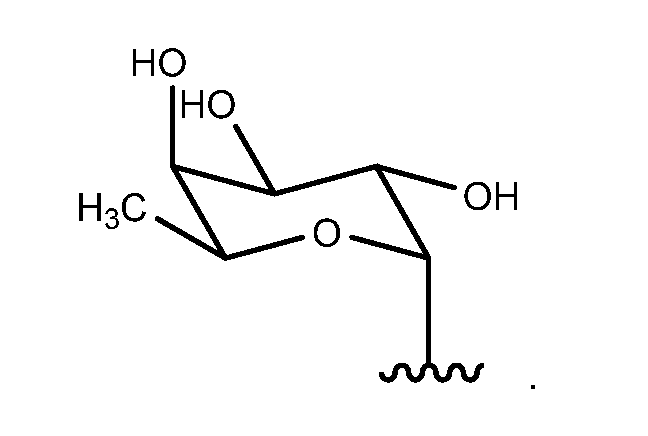


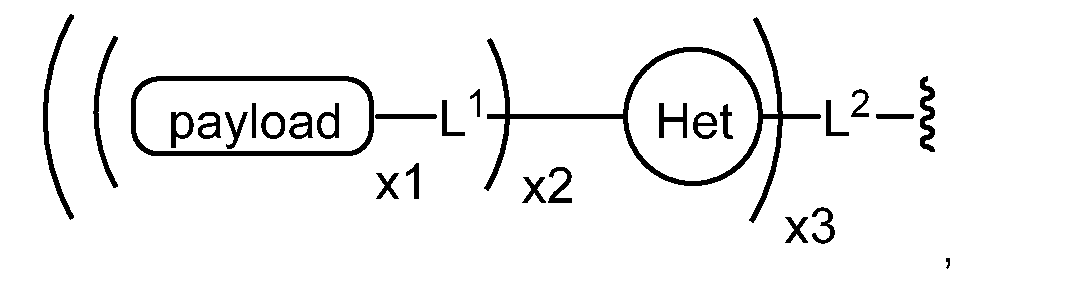


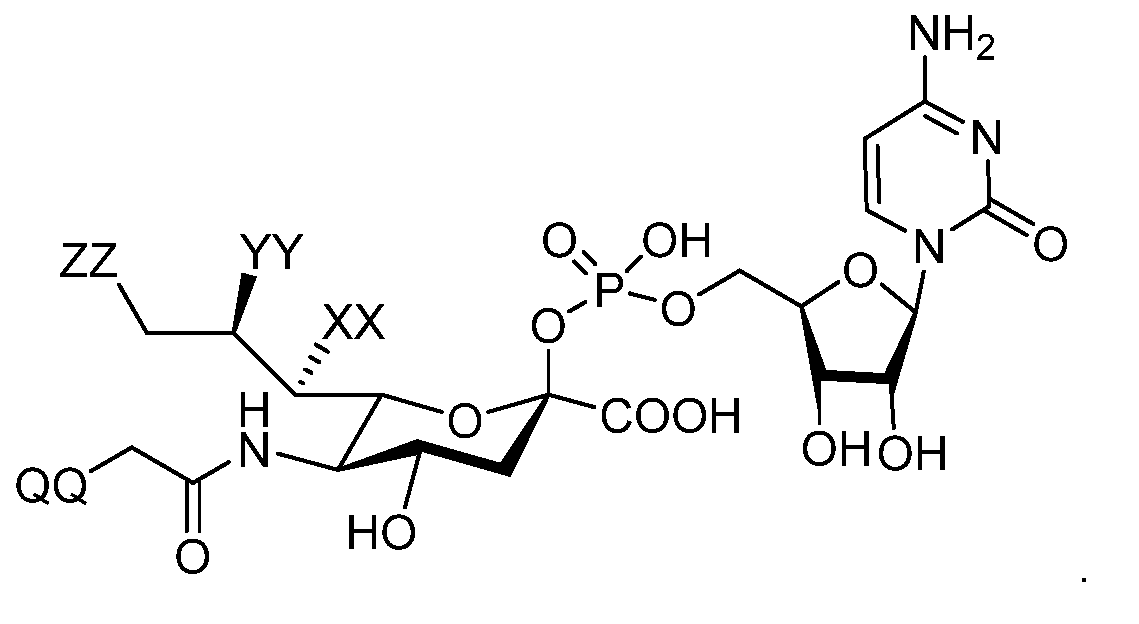

DEFINITIONS Substituents The phrase “optionally substituted” as used herein, pertains to a parent group which may be unsubstituted or which may be substituted. Unless otherwise specified, the term “substituted” as used herein, pertains to a parent group which bears one or more substituents. The term “substituent” is used herein in the conventional sense and refers to a chemical moiety which is covalently attached to, or if appropriate, fused to, a parent group. A wide variety of substituents are well known, and methods for their formation and introduction into a variety of parent groups are also well known. Examples of substituents are described in more detail below. C1-12 alkyl: The term “C1-12 alkyl” as used herein, pertains to a monovalent moiety obtained by removing a hydrogen atom from a carbon atom of a hydrocarbon compound having from 1 to 12 carbon atoms, which may be aliphatic or alicyclic, and which may be saturated or unsaturated (e.g. partially unsaturated, fully unsaturated). The term “C1-4 alkyl” as used herein, pertains to a monovalent moiety obtained by removing a hydrogen atom from a carbon atom of a hydrocarbon compound having from 1 to 4 carbon atoms, which may be aliphatic or alicyclic, and which may be saturated or unsaturated (e.g. partially unsaturated, fully unsaturated). Thus, the term “alkyl” includes the sub-classes alkenyl, alkynyl, cycloalkyl, etc., discussed below. Examples of saturated alkyl groups include, but are not limited to, methyl (C1), ethyl (C2), propyl (C3), butyl (C4), pentyl (C5), hexyl (C6) and heptyl (C7). Examples of saturated linear alkyl groups include, but are not limited to, methyl (C1), ethyl (C2), n-propyl (C3), n-butyl (C4), n-pentyl (amyl) (C5), n-hexyl (C6) and n-heptyl (C7). Examples of saturated branched alkyl groups include iso-propyl (C3), iso-butyl (C4), sec-butyl (C4), tert-butyl (C4), iso-pentyl (C5), and neo-pentyl (C5). C2-12 Alkenyl: The term “C2-12 alkenyl” as used herein, pertains to an alkyl group having one or more carbon-carbon double bonds. Examples of unsaturated alkenyl groups include, but are not limited to, ethenyl (vinyl, - CH=CH2), 1-propenyl (-CH=CH-CH3), 2-propenyl (allyl, -CH-CH=CH2), isopropenyl (1- methylvinyl, -C(CH3)=CH2), butenyl (C4), pentenyl (C5), and hexenyl (C6). C2-12 alkynyl: The term “C2-12 alkynyl” as used herein, pertains to an alkyl group having one or more carbon-carbon triple bonds. Examples of unsaturated alkynyl groups include, but are not limited to, ethynyl (-C≡CH) and 2-propynyl (propargyl, -CH2-C≡CH). C3-12 cycloalkyl: The term “C3-12 cycloalkyl” as used herein, pertains to an alkyl group which is also a cyclyl group; that is, a monovalent moiety obtained by removing a hydrogen atom from
an alicyclic ring atom of a cyclic hydrocarbon (carbocyclic) compound, which moiety has from 3 to 7 carbon atoms, including from 3 to 7 ring atoms. Examples of cycloalkyl groups include, but are not limited to, those derived from: saturated monocyclic hydrocarbon compounds: cyclopropane (C3), cyclobutane (C4), cyclopentane (C5), cyclohexane (C6), cycloheptane (C7), methylcyclopropane (C4), dimethylcyclopropane (C5), methylcyclobutane (C5), dimethylcyclobutane (C6), methylcyclopentane (C6), dimethylcyclopentane (C7) and methylcyclohexane (C7); unsaturated monocyclic hydrocarbon compounds: cyclopropene (C3), cyclobutene (C4), cyclopentene (C5), cyclohexene (C6), methylcyclopropene (C4), dimethylcyclopropene (C5), methylcyclobutene (C5), dimethylcyclobutene (C6), methylcyclopentene (C6), dimethylcyclopentene (C7) and methylcyclohexene (C7); and saturated polycyclic hydrocarbon compounds: norcarane (C7), norpinane (C7), norbornane (C7). C3-20 heterocyclyl: The term “C3-20 heterocyclyl” as used herein, pertains to a monovalent moiety obtained by removing a hydrogen atom from a ring atom of a heterocyclic compound, which moiety has from 3 to 20 ring atoms, of which from 1 to 10 are ring heteroatoms. Preferably, each ring has from 3 to 7 ring atoms, of which from 1 to 4 are ring heteroatoms. In this context, the prefixes (e.g. C3-20, C3-7, C5-6, etc.) denote the number of ring atoms, or range of number of ring atoms, whether carbon atoms or heteroatoms. For example, the term “C5-6heterocyclyl”, as used herein, pertains to a heterocyclyl group having 5 or 6 ring atoms. Examples of monocyclic heterocyclyl groups include, but are not limited to, those derived from: N1: aziridine (C3), azetidine (C4), pyrrolidine (tetrahydropyrrole) (C5), pyrroline (e.g., 3-pyrroline, 2,5-dihydropyrrole) (C5), 2H-pyrrole or 3H-pyrrole (isopyrrole, isoazole) (C5), piperidine (C6), dihydropyridine (C6), tetrahydropyridine (C6), azepine (C7); O1: oxirane (C3), oxetane (C4), oxolane (tetrahydrofuran) (C5), oxole (dihydrofuran) (C5), oxane (tetrahydropyran) (C6), dihydropyran (C6), pyran (C6), oxepin (C7); S1: thiirane (C3), thietane (C4), thiolane (tetrahydrothiophene) (C5), thiane (tetrahydrothiopyran) (C6), thiepane (C7); O2: dioxolane (C5), dioxane (C6), and dioxepane (C7); O3: trioxane (C6); N2: imidazolidine (C5), pyrazolidine (diazolidine) (C5), imidazoline (C5), pyrazoline (dihydropyrazole) (C5), piperazine (C6); N1O1: tetrahydrooxazole (C5), dihydrooxazole (C5), tetrahydroisoxazole (C5), dihydroisoxazole (C5), morpholine (C6), tetrahydrooxazine (C6), dihydrooxazine (C6), oxazine (C6); N1S1: thiazoline (C5), thiazolidine (C5), thiomorpholine (C6); N2O1: oxadiazine (C6); O1S1: oxathiole (C5) and oxathiane (thioxane) (C6); and, N1O1S1: oxathiazine (C6). Examples of substituted monocyclic heterocyclyl groups include those derived from saccharides, in cyclic form, for example, furanoses (C5), such as arabinofuranose,
lyxofuranose, ribofuranose, and xylofuranse, and pyranoses (C6), such as allopyranose, altropyranose, glucopyranose, mannopyranose, gulopyranose, idopyranose, galactopyranose, and talopyranose. C5-20 aryl: The term “C5-20 aryl”, as used herein, pertains to a monovalent moiety obtained by removing a hydrogen atom from an aromatic ring atom of an aromatic compound, which moiety has from 3 to 20 ring atoms. The term “C5-7 aryl”, as used herein, pertains to a monovalent moiety obtained by removing a hydrogen atom from an aromatic ring atom of an aromatic compound, which moiety has from 5 to 7 ring atoms and the term “C5-10 aryl”, as used herein, pertains to a monovalent moiety obtained by removing a hydrogen atom from an aromatic ring atom of an aromatic compound, which moiety has from 5 to 10 ring atoms. Preferably, each ring has from 5 to 7 ring atoms. In this context, the prefixes (e.g. C3-20, C5-7, C5-6, C5-10, etc.) denote the number of ring atoms, or range of number of ring atoms, whether carbon atoms or heteroatoms. For example, the term “C5-6 aryl” as used herein, pertains to an aryl group having 5 or 6 ring atoms. The ring atoms may be all carbon atoms, as in “carboaryl groups”. Examples of carboaryl groups include, but are not limited to, those derived from benzene (i.e. phenyl) (C6), naphthalene (C10), azulene (C10), anthracene (C14), phenanthrene (C14), naphthacene (C18), and pyrene (C16). Examples of aryl groups which comprise fused rings, at least one of which is an aromatic ring, include, but are not limited to, groups derived from indane (e.g.2,3-dihydro-1H-indene) (C9), indene (C9), isoindene (C9), tetraline (1,2,3,4-tetrahydronaphthalene (C10), acenaphthene (C12), fluorene (C13), phenalene (C13), acephenanthrene (C15), and aceanthrene (C16). Alternatively, the ring atoms may include one or more heteroatoms, as in “heteroaryl groups”. Examples of monocyclic heteroaryl groups include, but are not limited to, those derived from: N1: pyrrole (azole) (C5), pyridine (azine) (C6); O1: furan (oxole) (C5); S1: thiophene (thiole) (C5); N1O1: oxazole (C5), isoxazole (C5), isoxazine (C6); N2O1: oxadiazole (furazan) (C5); N3O1: oxatriazole (C5); N1S1: thiazole (C5), isothiazole (C5); N2: imidazole (1,3-diazole) (C5), pyrazole (1,2-diazole) (C5), pyridazine (1,2-diazine) (C6), pyrimidine (1,3-diazine) (C6) (e.g., cytosine, thymine, uracil), pyrazine (1,4-diazine) (C6); N3: triazole (C5), triazine (C6); and, N4: tetrazole (C5). Examples of heteroaryl which comprise fused rings, include, but are not limited to: C9 (with 2 fused rings) derived from benzofuran (O1), isobenzofuran (O1), indole (N1), isoindole (N1), indolizine (N1), indoline (N1), isoindoline (N1), purine (N4) (e.g., adenine, guanine), benzimidazole (N2), indazole (N2), benzoxazole (N1O1), benzisoxazole (N1O1), benzodioxole (O2), benzofurazan (N2O1), benzotriazole (N3), benzothiofuran (S1), benzothiazole (N1S1), benzothiadiazole (N2S);
C10 (with 2 fused rings) derived from chromene (O1), isochromene (O1), chroman (O1), isochroman (O1), benzodioxan (O2), quinoline (N1), isoquinoline (N1), quinolizine (N1), benzoxazine (N1O1), benzodiazine (N2), pyridopyridine (N2), quinoxaline (N2), quinazoline (N2), cinnoline (N2), phthalazine (N2), naphthyridine (N2), pteridine (N4); C11 (with 2 fused rings) derived from benzodiazepine (N2); C13 (with 3 fused rings) derived from carbazole (N1), dibenzofuran (O1), dibenzothiophene (S1), carboline (N2), perimidine (N2), pyridoindole (N2); and, C14 (with 3 fused rings) derived from acridine (N1), xanthene (O1), thioxanthene (S1), oxanthrene (O2), phenoxathiin (O1S1), phenazine (N2), phenoxazine (N1O1), phenothiazine (N1S1), thianthrene (S2), phenanthridine (N1), phenanthroline (N2), phenazine (N2). The above groups, whether alone or part of another substituent, may themselves optionally be substituted with one or more groups selected from themselves and the additional substituents listed below. Halo: -F, -Cl, -Br, and -I. Hydroxy: -OH. Ether: -OR, wherein R is an ether substituent, for example, a C1-7 alkyl group (also referred to as a C1-7 alkoxy group, discussed below), a C3-20 heterocyclyl group (also referred to as a C3-20 heterocyclyloxy group), or a C5-20 aryl group (also referred to as a C5-20 aryloxy group), preferably a C1-7alkyl group. Alkoxy: -OR, wherein R is an alkyl group, for example, a C1-7 alkyl group. Examples of C1-7 alkoxy groups include, but are not limited to, -OMe (methoxy), -OEt (ethoxy), -O(nPr) (n- propoxy), -O(iPr) (isopropoxy), -O(nBu) (n-butoxy), -O(sBu) (sec-butoxy), -O(iBu) (isobutoxy), and -O(tBu) (tert-butoxy). Acetal: -CH(OR1)(OR2), wherein R1 and R2 are independently acetal substituents, for example, a C1-7 alkyl group, a C3-20 heterocyclyl group, or a C5-20 aryl group, preferably a C1-7 alkyl group, or, in the case of a “cyclic” acetal group, R1 and R2, taken together with the two oxygen atoms to which they are attached, and the carbon atoms to which they are attached, form a heterocyclic ring having from 4 to 8 ring atoms. Examples of acetal groups include, but are not limited to, -CH(OMe)2, -CH(OEt)2, and -CH(OMe)(OEt). Hemiacetal: -CH(OH)(OR1), wherein R1 is a hemiacetal substituent, for example, a C1-7 alkyl group, a C3-20 heterocyclyl group, or a C5-20 aryl group, preferably a C1-7 alkyl group. Examples of hemiacetal groups include, but are not limited to, -CH(OH)(OMe) and -CH(OH)(OEt). Ketal: -CR(OR1)(OR2), where R1 and R2 are as defined for acetals, and R is a ketal substituent other than hydrogen, for example, a C1-7 alkyl group, a C3-20 heterocyclyl group, or a C5-20 aryl group, preferably a C1-7 alkyl group. Examples ketal groups include, but are not limited to, - C(Me)(OMe)2, -C(Me)(OEt)2, -C(Me)(OMe)(OEt), -C(Et)(OMe)2, -C(Et)(OEt)2, and -C(Et)(OMe)(OEt).
Hemiketal: -CR(OH)(OR1), where R1 is as defined for hemiacetals, and R is a hemiketal substituent other than hydrogen, for example, a C1-7 alkyl group, a C3-20 heterocyclyl group, or a C5-20 aryl group, preferably a C1-7 alkyl group. Examples of hemiacetal groups include, but are not limited to, -C(Me)(OH)(OMe), -C(Et)(OH)(OMe), -C(Me)(OH)(OEt), and -C(Et)(OH)(OEt). Oxo (keto, -one): =O. Thione (thioketone): =S. Imino (imine): =NR, wherein R is an imino substituent, for example, hydrogen, C1-7 alkyl group, a C3-20 heterocyclyl group, or a C5-20 aryl group, preferably hydrogen or a C1-7 alkyl group. Examples of imino groups include, but are not limited to, =NH, =NMe, =NEt, and =NPh. Formyl (carbaldehyde, carboxaldehyde): -C(=O)H. Acyl (keto): -C(=O)R, wherein R is an acyl substituent, for example, a C1-7 alkyl group (also referred to as C1-7 alkylacyl or C1-7 alkanoyl), a C3-20 heterocyclyl group (also referred to as C3-20 heterocyclylacyl), or a C5-20 aryl group (also referred to as C5-20 arylacyl), preferably a C1-7 alkyl group. Examples of acyl groups include, but are not limited to, -C(=O)CH3 (acetyl), -C(=O)CH2CH3 (propionyl), -C(=O)C(CH3)3 (t-butyryl), and -C(=O)Ph (benzoyl, phenone). Carboxy (carboxylic acid): -C(=O)OH. Thiocarboxy (thiocarboxylic acid): -C(=S)SH. Thiolocarboxy (thiolocarboxylic acid): -C(=O)SH. Thionocarboxy (thionocarboxylic acid): -C(=S)OH. Imidic acid: -C(=NH)OH. Hydroxamic acid: -C(=NOH)OH. Ester (carboxylate, carboxylic acid ester, oxycarbonyl): -C(=O)OR, wherein R is an ester substituent, for example, a C1-7 alkyl group, a C3-20 heterocyclyl group, or a C5-20 aryl group, preferably a C1-7 alkyl group. Examples of ester groups include, but are not limited to, -C(=O)OCH3, -C(=O)OCH2CH3, -C(=O)OC(CH3)3, and -C(=O)OPh. Acyloxy (reverse ester): -OC(=O)R, wherein R is an acyloxy substituent, for example, a C1-7 alkyl group, a C3-20 heterocyclyl group, or a C5-20 aryl group, preferably a C1-7 alkyl group. Examples of acyloxy groups include, but are not limited to, -OC(=O)CH3 (acetoxy), -OC(=O)CH2CH3, -OC(=O)C(CH3)3, -OC(=O)Ph, and -OC(=O)CH2Ph.
Oxycarboyloxy: -OC(=O)OR, wherein R is an ester substituent, for example, a C1-7 alkyl group, a C3-20 heterocyclyl group, or a C5-20 aryl group, preferably a C1-7 alkyl group. Examples of ester groups include, but are not limited to, -OC(=O)OCH3, -OC(=O)OCH2CH3, -OC(=O)OC(CH3)3, and -OC(=O)OPh. Amino: -NR1R2, wherein R1 and R2 are independently amino substituents, for example, hydrogen, a C1-7 alkyl group (also referred to as C1-7 alkylamino or di-C1-7 alkylamino), a C3-20 heterocyclyl group, or a C5-20 aryl group, preferably H or a C1-7 alkyl group, or, in the case of a “cyclic” amino group, R1 and R2, taken together with the nitrogen atom to which they are attached, form a heterocyclic ring having from 4 to 8 ring atoms. Amino groups may be primary (-NH2), secondary (-NHR1), or tertiary (-NHR1R2), and in cationic form, may be quaternary (- +NR1R2R3). Examples of amino groups include, but are not limited to, -NH2, -NHCH3, -NHC(CH3)2, -N(CH3)2, -N(CH2CH3)2, and -NHPh. Examples of cyclic amino groups include, but are not limited to, aziridino, azetidino, pyrrolidino, piperidino, piperazino, morpholino, and thiomorpholino. Amido (carbamoyl, carbamyl, aminocarbonyl, carboxamide): -C(=O)NR1R2, wherein R1 and R2 are independently amino substituents, as defined for amino groups. Examples of amido groups include, but are not limited to, -C(=O)NH2, -C(=O)NHCH3, -C(=O)N(CH3)2, -C(=O)NHCH2CH3, and -C(=O)N(CH2CH3)2, as well as amido groups in which R1 and R2, together with the nitrogen atom to which they are attached, form a heterocyclic structure as in, for example, piperidinocarbonyl, morpholinocarbonyl, thiomorpholinocarbonyl, and piperazinocarbonyl. Thioamido (thiocarbamyl): -C(=S)NR1R2, wherein R1 and R2 are independently amino substituents, as defined for amino groups. Examples of amido groups include, but are not limited to, -C(=S)NH2, -C(=S)NHCH3, -C(=S)N(CH3)2, and -C(=S)NHCH2CH3. Acylamido (acylamino): -NR1C(=O)R2, wherein R1 is an amide substituent, for example, hydrogen, a C1-7 alkyl group, a C3-20 heterocyclyl group, or a C5-20 aryl group, preferably hydrogen or a C1-7 alkyl group, and R2 is an acyl substituent, for example, a C1-7 alkyl group, a C3-20 heterocyclyl group, or a C5-20aryl group, preferably hydrogen or a C1-7 alkyl group. Examples of acylamide groups include, but are not limited to, -NHC(=O)CH3 , -NHC(=O)CH2CH3, and -NHC(=O)Ph. R1 and R2 may together form a cyclic structure, as in, for example, succinimidyl, maleimidyl, and phthalimidyl:
 Aminocarbonyloxy: -OC(=O)NR1R2, wherein R1 and R2 are independently amino substituents, as defined for amino groups. Examples of aminocarbonyloxy groups include, but are not limited to, -OC(=O)NH2, -OC(=O)NHMe, -OC(=O)NMe2, and -OC(=O)NEt2.
Ureido: -N(R1)CONR2R3 wherein R2 and R3 are independently amino substituents, as defined for amino groups, and R1 is a ureido substituent, for example, hydrogen, a C1-7 alkyl group, a C3-20 heterocyclyl group, or a C5-20 aryl group, preferably hydrogen or a C1-7 alkyl group. Examples of ureido groups include, but are not limited to, -NHCONH2, - NHCONHMe, -NHCONHEt, -NHCONMe2, -NHCONEt2, -NMeCONH2, - NMeCONHMe, -NMeCONHEt, -NMeCONMe2, and -NMeCONEt2. Guanidino: -NH-C(=NH)NH2. Tetrazolyl: a five membered aromatic ring having four nitrogen atoms and one carbon atom,
Aminocarbonyloxy: -OC(=O)NR1R2, wherein R1 and R2 are independently amino substituents, as defined for amino groups. Examples of aminocarbonyloxy groups include, but are not limited to, -OC(=O)NH2, -OC(=O)NHMe, -OC(=O)NMe2, and -OC(=O)NEt2.
Ureido: -N(R1)CONR2R3 wherein R2 and R3 are independently amino substituents, as defined for amino groups, and R1 is a ureido substituent, for example, hydrogen, a C1-7 alkyl group, a C3-20 heterocyclyl group, or a C5-20 aryl group, preferably hydrogen or a C1-7 alkyl group. Examples of ureido groups include, but are not limited to, -NHCONH2, - NHCONHMe, -NHCONHEt, -NHCONMe2, -NHCONEt2, -NMeCONH2, - NMeCONHMe, -NMeCONHEt, -NMeCONMe2, and -NMeCONEt2. Guanidino: -NH-C(=NH)NH2. Tetrazolyl: a five membered aromatic ring having four nitrogen atoms and one carbon atom,
 Imino: =NR, wherein R is an imino substituent, for example, for example, hydrogen, a C1-7 alkyl group, a C3-20 heterocyclyl group, or a C5-20 aryl group, preferably H or a C1-7alkyl group. Examples of imino groups include, but are not limited to, =NH, =NMe, and =NEt. Amidine (amidino): -C(=NR)NR2, wherein each R is an amidine substituent, for example, hydrogen, a C1-7 alkyl group, a C3-20 heterocyclyl group, or a C5-20 aryl group, preferably H or a C1-7 alkyl group. Examples of amidine groups include, but are not limited to, -C(=NH)NH2, -C(=NH)NMe2, and -C(=NMe)NMe2. Nitro: -NO2. Nitroso: -NO. Azido: -N3. Cyano (nitrile, carbonitrile): -CN. Isocyano: -NC. Cyanato: -OCN. Isocyanato: -NCO. Thiocyano (thiocyanato): -SCN. Isothiocyano (isothiocyanato): -NCS. Sulfhydryl (thiol, mercapto): -SH. Thioether (sulfide): -SR, wherein R is a thioether substituent, for example, a C1-7 alkyl group (also referred to as a C1-7alkylthio group), a C3-20 heterocyclyl group, or a C5-20 aryl group,
preferably a C1-7 alkyl group. Examples of C1-7 alkylthio groups include, but are not limited to, -SCH3 and -SCH2CH3. Disulfide: -SS-R, wherein R is a disulfide substituent, for example, a C1-7 alkyl group, a C3-20 heterocyclyl group, or a C5-20 aryl group, preferably a C1-7 alkyl group (also referred to herein as C1-7 alkyl disulfide). Examples of C1-7 alkyl disulfide groups include, but are not limited to, -SSCH3 and -SSCH2CH3. Sulfine (sulfinyl, sulfoxide): -S(=O)R, wherein R is a sulfine substituent, for example, a C1-7 alkyl group, a C3-20 heterocyclyl group, or a C5-20 aryl group, preferably a C1-7 alkyl group. Examples of sulfine groups include, but are not limited to, -S(=O)CH3 and -S(=O)CH2CH3. Sulfone (sulfonyl): -S(=O)2R, wherein R is a sulfone substituent, for example, a C1-7 alkyl group, a C3-20 heterocyclyl group, or a C5-20 aryl group, preferably a C1-7 alkyl group, including, for example, a fluorinated or perfluorinated C1-7 alkyl group. Examples of sulfone groups include, but are not limited to, -S(=O)2CH3 (methanesulfonyl, mesyl), -S(=O)2CF3 (triflyl), -S(=O)2CH2CH3 (esyl), -S(=O)2C4F9 (nonaflyl), -S(=O)2CH2CF3 (tresyl), -S(=O)2CH2CH2NH2 (tauryl), -S(=O)2Ph (phenylsulfonyl, besyl), 4- methylphenylsulfonyl (tosyl), 4-chlorophenylsulfonyl (closyl), 4-bromophenylsulfonyl (brosyl), 4-nitrophenyl (nosyl), 2-naphthalenesulfonate (napsyl), and 5-dimethylamino-naphthalen-1- ylsulfonate (dansyl). Sulfinic acid (sulfino): -S(=O)OH, -SO2H. Sulfonic acid (sulfo): -S(=O)2OH, -SO3H. Sulfinate (sulfinic acid ester): -S(=O)OR; wherein R is a sulfinate substituent, for example, a C1-7 alkyl group, a C3-20 heterocyclyl group, or a C5-20 aryl group, preferably a C1-7 alkyl group. Examples of sulfinate groups include, but are not limited to, -S(=O)OCH3 (methoxysulfinyl; methyl sulfinate) and -S(=O)OCH2CH3 (ethoxysulfinyl; ethyl sulfinate). Sulfonate (sulfonic acid ester): -S(=O)2OR, wherein R is a sulfonate substituent, for example, a C1-7 alkyl group, a C3-20 heterocyclyl group, or a C5-20 aryl group, preferably a C1-7 alkyl group. Examples of sulfonate groups include, but are not limited to, -S(=O)2OCH3 (methoxysulfonyl; methyl sulfonate) and -S(=O)2OCH2CH3 (ethoxysulfonyl; ethyl sulfonate). Sulfinyloxy: -OS(=O)R, wherein R is a sulfinyloxy substituent, for example, a C1-7 alkyl group, a C3-20 heterocyclyl group, or a C5-20 aryl group, preferably a C1-7 alkyl group. Examples of sulfinyloxy groups include, but are not limited to, -OS(=O)CH3 and -OS(=O)CH2CH3. Sulfonyloxy: -OS(=O)2R, wherein R is a sulfonyloxy substituent, for example, a C1-7 alkyl group, a C3-20 heterocyclyl group, or a C5-20 aryl group, preferably a C1-7 alkyl group. Examples of sulfonyloxy groups include, but are not limited to, -OS(=O)2CH3 (mesylate) and -OS(=O)2CH2CH3 (esylate).
Sulfate: -OS(=O)2OR; wherein R is a sulfate substituent, for example, a C1-7 alkyl group, a C3- 20 heterocyclyl group, or a C5-20 aryl group, preferably a C1-7 alkyl group. Examples of sulfate groups include, but are not limited to, -OS(=O)2OCH3 and -SO(=O)2OCH2CH3. Sulfamyl (sulfamoyl; sulfinic acid amide; sulfinamide): -S(=O)NR1R2, wherein R1 and R2 are independently amino substituents, as defined for amino groups. Examples of sulfamyl groups include, but are not limited to, -S(=O)NH2, -S(=O)NH(CH3), -S(=O)N(CH3)2, -S(=O)NH(CH2CH3), -S(=O)N(CH2CH3)2, and -S(=O)NHPh. Sulfonamido (sulfinamoyl; sulfonic acid amide; sulfonamide): -S(=O)2NR1R2, wherein R1 and R2 are independently amino substituents, as defined for amino groups. Examples of sulfonamido groups include, but are not limited to, -S(=O)2NH2, -S(=O)2NH(CH3), -S(=O)2N(CH3)2, -S(=O)2NH(CH2CH3), -S(=O)2N(CH2CH3)2, and -S(=O)2NHPh. Sulfamino: -NR1S(=O)2OH, wherein R1 is an amino substituent, as defined for amino groups. Examples of sulfamino groups include, but are not limited to, -NHS(=O)2OH and -N(CH3)S(=O)2OH. Sulfonamino: -NR1S(=O)2R, wherein R1 is an amino substituent, as defined for amino groups, and R is a sulfonamino substituent, for example, a C1-7 alkyl group, a C3-20 heterocyclyl group, or a C5-20 aryl group, preferably a C1-7 alkyl group. Examples of sulfonamino groups include, but are not limited to, -NHS(=O)2CH3 and -N(CH3)S(=O)2C6H5. Sulfinamino: -NR1S(=O)R, wherein R1 is an amino substituent, as defined for amino groups, and R is a sulfinamino substituent, for example, a C1-7 alkyl group, a C3-20 heterocyclyl group, or a C5-20 aryl group, preferably a C1-7 alkyl group. Examples of sulfinamino groups include, but are not limited to, -NHS(=O)CH3 and -N(CH3)S(=O)C6H5. Phosphino (phosphine): -PR2, wherein R is a phosphino substituent, for example, -H, a C1-7 alkyl group, a C3-20 heterocyclyl group, or a C5-20 aryl group, preferably -H, a C1-7 alkyl group, or a C5-20 aryl group. Examples of phosphino groups include, but are not limited to, -PH2, -P(CH3)2, -P(CH2CH3)2, -P(t-Bu)2, and -P(Ph)2. Phospho: -P(=O)2. Phosphinyl (phosphine oxide): -P(=O)R2, wherein R is a phosphinyl substituent, for example, a C1-7 alkyl group, a C3-20 heterocyclyl group, or a C5-20 aryl group, preferably a C1-7 alkyl group or a C5-20 aryl group. Examples of phosphinyl groups include, but are not limited to, -P(=O)(CH3)2, -P(=O)(CH2CH3)2, -P(=O)(t-Bu)2, and -P(=O)(Ph)2. Phosphonic acid (phosphono): -P(=O)(OH)2. Phosphonate (phosphono ester): -P(=O)(OR)2, where R is a phosphonate substituent, for example, -H, a C1-7 alkyl group, a C3-20 heterocyclyl group, or a C5-20 aryl group, preferably -H,
a C1-7 alkyl group, or a C5-20 aryl group. Examples of phosphonate groups include, but are not limited to, -P(=O)(OCH3)2, -P(=O)(OCH2CH3)2, -P(=O)(O-t-Bu)2, and -P(=O)(OPh)2. Phosphoric acid (phosphonooxy): -OP(=O)(OH)2. Phosphate (phosphonooxy ester): -OP(=O)(OR)2, where R is a phosphate substituent, for example, -H, a C1-7 alkyl group, a C3-20 heterocyclyl group, or a C5-20 aryl group, preferably -H, a C1-7 alkyl group, or a C5-20 aryl group. Examples of phosphate groups include, but are not limited to, -OP(=O)(OCH3)2, -OP(=O)(OCH2CH3)2, -OP(=O)(O-t-Bu)2, and -OP(=O)(OPh)2. Phosphorous acid: -OP(OH)2. Phosphite: -OP(OR)2, where R is a phosphite substituent, for example, -H, a C1-7 alkyl group, a C3-20 heterocyclyl group, or a C5-20 aryl group, preferably -H, a C1-7 alkyl group, or a C5-20 aryl group. Examples of phosphite groups include, but are not limited to, -OP(OCH3)2, -OP(OCH2CH3)2, -OP(O-t-Bu)2, and -OP(OPh)2. Phosphoramidite: -OP(OR1)-NR2 2, where R1 and R2 are phosphoramidite substituents, for example, -H, a (optionally substituted) C1-7 alkyl group, a C3-20 heterocyclyl group, or a C5-20 aryl group, preferably -H, a C1-7 alkyl group, or a C5-20 aryl group. Examples of phosphoramidite groups include, but are not limited to, -OP(OCH2CH3)-N(CH3)2, -OP(OCH2CH3)-N(i-Pr)2, and -OP(OCH2CH2CN)-N(i-Pr)2. Phosphoramidate: -OP(=O)(OR1)-NR2 2, where R1 and R2 are phosphoramidate substituents, for example, -H, a (optionally substituted) C1-7 alkyl group, a C3-20 heterocyclyl group, or a C5-20 aryl group, preferably -H, a C1-7 alkyl group, or a C5-20 aryl group. Examples of phosphoramidate groups include, but are not limited to, -OP(=O)(OCH2CH3)- N(CH3)2, -OP(=O)(OCH2CH3)-N(i-Pr)2, and -OP(=O)(OCH2CH2CN)-N(i-Pr)2. Alkylene C3-12 alkylene: The term “C3-12 alkylene”, as used herein, pertains to a bidentate moiety obtained by removing two hydrogen atoms, either both from the same carbon atom, or one from each of two different carbon atoms, of a hydrocarbon compound having from 3 to 12 carbon atoms (unless otherwise specified), which may be aliphatic or alicyclic, and which may be saturated, partially unsaturated, or fully unsaturated. Thus, the term “alkylene” includes the sub-classes alkenylene, alkynylene, cycloalkylene, etc., discussed below. Examples of linear saturated C3-12 alkylene groups include, but are not limited to, -(CH2)n- where n is an integer from 3 to 12, for example, -CH2CH2CH2- (propylene), -CH2CH2CH2CH2- (butylene), -CH2CH2CH2CH2CH2- (pentylene) and -CH2CH2CH2CH-2CH2CH2CH2- (heptylene). Examples of branched saturated C3-12 alkylene groups include, but are not limited to, -CH(CH3)CH2-, -CH(CH3)CH2CH2-, -CH(CH3)CH2CH2CH2-, -CH2CH(CH3)CH2-, -CH2CH(C H3)CH2CH2-, -CH(CH2CH3)-, -CH(CH2CH3)CH2-, and -CH2CH(CH2CH3)CH2-.
Examples of linear partially unsaturated C3-12 alkylene groups (C3-12 alkenylene, and alkynylene groups) include, but are not limited to, -CH=CH-CH2-, -CH2- CH=CH2-, -CH=CH-CH2-CH2-, -CH=CH-CH2-CH2-CH2-, -CH=CH-CH=CH-, -CH=CH-CH=CH- CH2-, -CH=CH-CH=CH-CH2-CH2-, -CH=CH-CH2-CH=CH-, -CH=CH-CH2-CH2-CH=CH-, and - CH2-C≡C-CH2-. Examples of branched partially unsaturated C3-12 alkylene groups (C3-12 alkenylene and alkynylene groups) include, but are not limited to, -C(CH3)=CH-, -C(CH3)=CH-CH2-, -CH=CH-CH(CH3)- and -C≡C-CH(CH3)-. Examples of alicyclic saturated C3-12 alkylene groups (C3-12 cycloalkylenes) include, but are not limited to, cyclopentylene (e.g. cyclopent-1,3-ylene), and cyclohexylene (e.g. cyclohex-1,4-ylene). Examples of alicyclic partially unsaturated C3-12 alkylene groups (C3-12 cycloalkylenes) include, but are not limited to, cyclopentenylene (e.g.4-cyclopenten-1,3-ylene), cyclohexenylene (e.g. 2-cyclohexen-1,4-ylene; 3-cyclohexen-1,2-ylene; 2,5-cyclohexadien-1,4-ylene). Includes Other Forms Unless otherwise specified, included in the definitions herein are the well-known ionic, salt, solvate, and protected forms of these substituents. For example, a reference to carboxylic acid (-COOH) also includes the anionic (carboxylate) form (-COO-), a salt or solvate thereof, as well as conventional protected forms. Similarly, a reference to an amino group includes the protonated form (-N+HR1R2), a salt or solvate of the amino group, for example, a hydrochloride salt, as well as conventional protected forms of an amino group. Similarly, a reference to a hydroxyl group also includes the anionic form (-O-), a salt or solvate thereof, as well as conventional protected forms. Salts It may be convenient or desirable to prepare, purify, and/or handle a corresponding salt of the active compound, for example, a pharmaceutically-acceptable salt. Examples of pharmaceutically acceptable salts are discussed in Berge, et al., J. Pharm. Sci., 66, 1-19 (1977). For example, if the compound is anionic, or has a functional group which may be anionic (e.g. -COOH may be -COO-), then a salt may be formed with a suitable cation. Examples of suitable inorganic cations include, but are not limited to, alkali metal ions such as Na+ and K+, alkaline earth cations such as Ca2+ and Mg2+, and other cations such as Al+3. Examples of suitable organic cations include, but are not limited to, ammonium ion (i.e. NH4 +) and substituted ammonium ions (e.g. NH3R+, NH2R2 +, NHR3 +, NR4 +). Examples of some suitable substituted ammonium ions are those derived from: ethylamine, diethylamine, dicyclohexylamine, triethylamine, butylamine, ethylenediamine, ethanolamine, diethanolamine, piperazine, benzylamine, phenylbenzylamine, choline, meglumine, and tromethamine, as well as amino acids, such as lysine and arginine. An example of a common quaternary ammonium ion is N(CH3)4 +.
If the compound is cationic, or has a functional group which may be cationic (e.g. -NH2 may be -NH3 +), then a salt may be formed with a suitable anion. Examples of suitable inorganic anions include, but are not limited to, those derived from the following inorganic acids: hydrochloric, hydrobromic, hydroiodic, sulfuric, sulfurous, nitric, nitrous, phosphoric, and phosphorous. Examples of suitable organic anions include, but are not limited to, those derived from the following organic acids: 2-acetyoxybenzoic, acetic, ascorbic, aspartic, benzoic, camphorsulfonic, cinnamic, citric, edetic, ethanedisulfonic, ethanesulfonic, fumaric, glucheptonic, gluconic, glutamic, glycolic, hydroxymaleic, hydroxynaphthalene carboxylic, isethionic, lactic, lactobionic, lauric, maleic, malic, methanesulfonic, mucic, oleic, oxalic, palmitic, pamoic, pantothenic, phenylacetic, phenylsulfonic, propionic, pyruvic, salicylic, stearic, succinic, sulfanilic, tartaric, toluenesulfonic, trifluoroacetic acid and valeric. Examples of suitable polymeric organic anions include, but are not limited to, those derived from the following polymeric acids: tannic acid, carboxymethyl cellulose. Solvates It may be convenient or desirable to prepare, purify, and/or handle a corresponding solvate of the active compound. The term “solvate” is used herein in the conventional sense to refer to a complex of solute (e.g. active compound, salt of active compound) and solvent. If the solvent is water, the solvate may be conveniently referred to as a hydrate, for example, a mono- hydrate, a di-hydrate, a tri-hydrate, etc. The disclosure describes PBD compounds where a solvent adds across the imine bond of the PBD moiety, which is illustrated below where the solvent is water or an alcohol (RAOH, where RA is C1-4 alkyl):
Imino: =NR, wherein R is an imino substituent, for example, for example, hydrogen, a C1-7 alkyl group, a C3-20 heterocyclyl group, or a C5-20 aryl group, preferably H or a C1-7alkyl group. Examples of imino groups include, but are not limited to, =NH, =NMe, and =NEt. Amidine (amidino): -C(=NR)NR2, wherein each R is an amidine substituent, for example, hydrogen, a C1-7 alkyl group, a C3-20 heterocyclyl group, or a C5-20 aryl group, preferably H or a C1-7 alkyl group. Examples of amidine groups include, but are not limited to, -C(=NH)NH2, -C(=NH)NMe2, and -C(=NMe)NMe2. Nitro: -NO2. Nitroso: -NO. Azido: -N3. Cyano (nitrile, carbonitrile): -CN. Isocyano: -NC. Cyanato: -OCN. Isocyanato: -NCO. Thiocyano (thiocyanato): -SCN. Isothiocyano (isothiocyanato): -NCS. Sulfhydryl (thiol, mercapto): -SH. Thioether (sulfide): -SR, wherein R is a thioether substituent, for example, a C1-7 alkyl group (also referred to as a C1-7alkylthio group), a C3-20 heterocyclyl group, or a C5-20 aryl group,
preferably a C1-7 alkyl group. Examples of C1-7 alkylthio groups include, but are not limited to, -SCH3 and -SCH2CH3. Disulfide: -SS-R, wherein R is a disulfide substituent, for example, a C1-7 alkyl group, a C3-20 heterocyclyl group, or a C5-20 aryl group, preferably a C1-7 alkyl group (also referred to herein as C1-7 alkyl disulfide). Examples of C1-7 alkyl disulfide groups include, but are not limited to, -SSCH3 and -SSCH2CH3. Sulfine (sulfinyl, sulfoxide): -S(=O)R, wherein R is a sulfine substituent, for example, a C1-7 alkyl group, a C3-20 heterocyclyl group, or a C5-20 aryl group, preferably a C1-7 alkyl group. Examples of sulfine groups include, but are not limited to, -S(=O)CH3 and -S(=O)CH2CH3. Sulfone (sulfonyl): -S(=O)2R, wherein R is a sulfone substituent, for example, a C1-7 alkyl group, a C3-20 heterocyclyl group, or a C5-20 aryl group, preferably a C1-7 alkyl group, including, for example, a fluorinated or perfluorinated C1-7 alkyl group. Examples of sulfone groups include, but are not limited to, -S(=O)2CH3 (methanesulfonyl, mesyl), -S(=O)2CF3 (triflyl), -S(=O)2CH2CH3 (esyl), -S(=O)2C4F9 (nonaflyl), -S(=O)2CH2CF3 (tresyl), -S(=O)2CH2CH2NH2 (tauryl), -S(=O)2Ph (phenylsulfonyl, besyl), 4- methylphenylsulfonyl (tosyl), 4-chlorophenylsulfonyl (closyl), 4-bromophenylsulfonyl (brosyl), 4-nitrophenyl (nosyl), 2-naphthalenesulfonate (napsyl), and 5-dimethylamino-naphthalen-1- ylsulfonate (dansyl). Sulfinic acid (sulfino): -S(=O)OH, -SO2H. Sulfonic acid (sulfo): -S(=O)2OH, -SO3H. Sulfinate (sulfinic acid ester): -S(=O)OR; wherein R is a sulfinate substituent, for example, a C1-7 alkyl group, a C3-20 heterocyclyl group, or a C5-20 aryl group, preferably a C1-7 alkyl group. Examples of sulfinate groups include, but are not limited to, -S(=O)OCH3 (methoxysulfinyl; methyl sulfinate) and -S(=O)OCH2CH3 (ethoxysulfinyl; ethyl sulfinate). Sulfonate (sulfonic acid ester): -S(=O)2OR, wherein R is a sulfonate substituent, for example, a C1-7 alkyl group, a C3-20 heterocyclyl group, or a C5-20 aryl group, preferably a C1-7 alkyl group. Examples of sulfonate groups include, but are not limited to, -S(=O)2OCH3 (methoxysulfonyl; methyl sulfonate) and -S(=O)2OCH2CH3 (ethoxysulfonyl; ethyl sulfonate). Sulfinyloxy: -OS(=O)R, wherein R is a sulfinyloxy substituent, for example, a C1-7 alkyl group, a C3-20 heterocyclyl group, or a C5-20 aryl group, preferably a C1-7 alkyl group. Examples of sulfinyloxy groups include, but are not limited to, -OS(=O)CH3 and -OS(=O)CH2CH3. Sulfonyloxy: -OS(=O)2R, wherein R is a sulfonyloxy substituent, for example, a C1-7 alkyl group, a C3-20 heterocyclyl group, or a C5-20 aryl group, preferably a C1-7 alkyl group. Examples of sulfonyloxy groups include, but are not limited to, -OS(=O)2CH3 (mesylate) and -OS(=O)2CH2CH3 (esylate).
Sulfate: -OS(=O)2OR; wherein R is a sulfate substituent, for example, a C1-7 alkyl group, a C3- 20 heterocyclyl group, or a C5-20 aryl group, preferably a C1-7 alkyl group. Examples of sulfate groups include, but are not limited to, -OS(=O)2OCH3 and -SO(=O)2OCH2CH3. Sulfamyl (sulfamoyl; sulfinic acid amide; sulfinamide): -S(=O)NR1R2, wherein R1 and R2 are independently amino substituents, as defined for amino groups. Examples of sulfamyl groups include, but are not limited to, -S(=O)NH2, -S(=O)NH(CH3), -S(=O)N(CH3)2, -S(=O)NH(CH2CH3), -S(=O)N(CH2CH3)2, and -S(=O)NHPh. Sulfonamido (sulfinamoyl; sulfonic acid amide; sulfonamide): -S(=O)2NR1R2, wherein R1 and R2 are independently amino substituents, as defined for amino groups. Examples of sulfonamido groups include, but are not limited to, -S(=O)2NH2, -S(=O)2NH(CH3), -S(=O)2N(CH3)2, -S(=O)2NH(CH2CH3), -S(=O)2N(CH2CH3)2, and -S(=O)2NHPh. Sulfamino: -NR1S(=O)2OH, wherein R1 is an amino substituent, as defined for amino groups. Examples of sulfamino groups include, but are not limited to, -NHS(=O)2OH and -N(CH3)S(=O)2OH. Sulfonamino: -NR1S(=O)2R, wherein R1 is an amino substituent, as defined for amino groups, and R is a sulfonamino substituent, for example, a C1-7 alkyl group, a C3-20 heterocyclyl group, or a C5-20 aryl group, preferably a C1-7 alkyl group. Examples of sulfonamino groups include, but are not limited to, -NHS(=O)2CH3 and -N(CH3)S(=O)2C6H5. Sulfinamino: -NR1S(=O)R, wherein R1 is an amino substituent, as defined for amino groups, and R is a sulfinamino substituent, for example, a C1-7 alkyl group, a C3-20 heterocyclyl group, or a C5-20 aryl group, preferably a C1-7 alkyl group. Examples of sulfinamino groups include, but are not limited to, -NHS(=O)CH3 and -N(CH3)S(=O)C6H5. Phosphino (phosphine): -PR2, wherein R is a phosphino substituent, for example, -H, a C1-7 alkyl group, a C3-20 heterocyclyl group, or a C5-20 aryl group, preferably -H, a C1-7 alkyl group, or a C5-20 aryl group. Examples of phosphino groups include, but are not limited to, -PH2, -P(CH3)2, -P(CH2CH3)2, -P(t-Bu)2, and -P(Ph)2. Phospho: -P(=O)2. Phosphinyl (phosphine oxide): -P(=O)R2, wherein R is a phosphinyl substituent, for example, a C1-7 alkyl group, a C3-20 heterocyclyl group, or a C5-20 aryl group, preferably a C1-7 alkyl group or a C5-20 aryl group. Examples of phosphinyl groups include, but are not limited to, -P(=O)(CH3)2, -P(=O)(CH2CH3)2, -P(=O)(t-Bu)2, and -P(=O)(Ph)2. Phosphonic acid (phosphono): -P(=O)(OH)2. Phosphonate (phosphono ester): -P(=O)(OR)2, where R is a phosphonate substituent, for example, -H, a C1-7 alkyl group, a C3-20 heterocyclyl group, or a C5-20 aryl group, preferably -H,
a C1-7 alkyl group, or a C5-20 aryl group. Examples of phosphonate groups include, but are not limited to, -P(=O)(OCH3)2, -P(=O)(OCH2CH3)2, -P(=O)(O-t-Bu)2, and -P(=O)(OPh)2. Phosphoric acid (phosphonooxy): -OP(=O)(OH)2. Phosphate (phosphonooxy ester): -OP(=O)(OR)2, where R is a phosphate substituent, for example, -H, a C1-7 alkyl group, a C3-20 heterocyclyl group, or a C5-20 aryl group, preferably -H, a C1-7 alkyl group, or a C5-20 aryl group. Examples of phosphate groups include, but are not limited to, -OP(=O)(OCH3)2, -OP(=O)(OCH2CH3)2, -OP(=O)(O-t-Bu)2, and -OP(=O)(OPh)2. Phosphorous acid: -OP(OH)2. Phosphite: -OP(OR)2, where R is a phosphite substituent, for example, -H, a C1-7 alkyl group, a C3-20 heterocyclyl group, or a C5-20 aryl group, preferably -H, a C1-7 alkyl group, or a C5-20 aryl group. Examples of phosphite groups include, but are not limited to, -OP(OCH3)2, -OP(OCH2CH3)2, -OP(O-t-Bu)2, and -OP(OPh)2. Phosphoramidite: -OP(OR1)-NR2 2, where R1 and R2 are phosphoramidite substituents, for example, -H, a (optionally substituted) C1-7 alkyl group, a C3-20 heterocyclyl group, or a C5-20 aryl group, preferably -H, a C1-7 alkyl group, or a C5-20 aryl group. Examples of phosphoramidite groups include, but are not limited to, -OP(OCH2CH3)-N(CH3)2, -OP(OCH2CH3)-N(i-Pr)2, and -OP(OCH2CH2CN)-N(i-Pr)2. Phosphoramidate: -OP(=O)(OR1)-NR2 2, where R1 and R2 are phosphoramidate substituents, for example, -H, a (optionally substituted) C1-7 alkyl group, a C3-20 heterocyclyl group, or a C5-20 aryl group, preferably -H, a C1-7 alkyl group, or a C5-20 aryl group. Examples of phosphoramidate groups include, but are not limited to, -OP(=O)(OCH2CH3)- N(CH3)2, -OP(=O)(OCH2CH3)-N(i-Pr)2, and -OP(=O)(OCH2CH2CN)-N(i-Pr)2. Alkylene C3-12 alkylene: The term “C3-12 alkylene”, as used herein, pertains to a bidentate moiety obtained by removing two hydrogen atoms, either both from the same carbon atom, or one from each of two different carbon atoms, of a hydrocarbon compound having from 3 to 12 carbon atoms (unless otherwise specified), which may be aliphatic or alicyclic, and which may be saturated, partially unsaturated, or fully unsaturated. Thus, the term “alkylene” includes the sub-classes alkenylene, alkynylene, cycloalkylene, etc., discussed below. Examples of linear saturated C3-12 alkylene groups include, but are not limited to, -(CH2)n- where n is an integer from 3 to 12, for example, -CH2CH2CH2- (propylene), -CH2CH2CH2CH2- (butylene), -CH2CH2CH2CH2CH2- (pentylene) and -CH2CH2CH2CH-2CH2CH2CH2- (heptylene). Examples of branched saturated C3-12 alkylene groups include, but are not limited to, -CH(CH3)CH2-, -CH(CH3)CH2CH2-, -CH(CH3)CH2CH2CH2-, -CH2CH(CH3)CH2-, -CH2CH(C H3)CH2CH2-, -CH(CH2CH3)-, -CH(CH2CH3)CH2-, and -CH2CH(CH2CH3)CH2-.
Examples of linear partially unsaturated C3-12 alkylene groups (C3-12 alkenylene, and alkynylene groups) include, but are not limited to, -CH=CH-CH2-, -CH2- CH=CH2-, -CH=CH-CH2-CH2-, -CH=CH-CH2-CH2-CH2-, -CH=CH-CH=CH-, -CH=CH-CH=CH- CH2-, -CH=CH-CH=CH-CH2-CH2-, -CH=CH-CH2-CH=CH-, -CH=CH-CH2-CH2-CH=CH-, and - CH2-C≡C-CH2-. Examples of branched partially unsaturated C3-12 alkylene groups (C3-12 alkenylene and alkynylene groups) include, but are not limited to, -C(CH3)=CH-, -C(CH3)=CH-CH2-, -CH=CH-CH(CH3)- and -C≡C-CH(CH3)-. Examples of alicyclic saturated C3-12 alkylene groups (C3-12 cycloalkylenes) include, but are not limited to, cyclopentylene (e.g. cyclopent-1,3-ylene), and cyclohexylene (e.g. cyclohex-1,4-ylene). Examples of alicyclic partially unsaturated C3-12 alkylene groups (C3-12 cycloalkylenes) include, but are not limited to, cyclopentenylene (e.g.4-cyclopenten-1,3-ylene), cyclohexenylene (e.g. 2-cyclohexen-1,4-ylene; 3-cyclohexen-1,2-ylene; 2,5-cyclohexadien-1,4-ylene). Includes Other Forms Unless otherwise specified, included in the definitions herein are the well-known ionic, salt, solvate, and protected forms of these substituents. For example, a reference to carboxylic acid (-COOH) also includes the anionic (carboxylate) form (-COO-), a salt or solvate thereof, as well as conventional protected forms. Similarly, a reference to an amino group includes the protonated form (-N+HR1R2), a salt or solvate of the amino group, for example, a hydrochloride salt, as well as conventional protected forms of an amino group. Similarly, a reference to a hydroxyl group also includes the anionic form (-O-), a salt or solvate thereof, as well as conventional protected forms. Salts It may be convenient or desirable to prepare, purify, and/or handle a corresponding salt of the active compound, for example, a pharmaceutically-acceptable salt. Examples of pharmaceutically acceptable salts are discussed in Berge, et al., J. Pharm. Sci., 66, 1-19 (1977). For example, if the compound is anionic, or has a functional group which may be anionic (e.g. -COOH may be -COO-), then a salt may be formed with a suitable cation. Examples of suitable inorganic cations include, but are not limited to, alkali metal ions such as Na+ and K+, alkaline earth cations such as Ca2+ and Mg2+, and other cations such as Al+3. Examples of suitable organic cations include, but are not limited to, ammonium ion (i.e. NH4 +) and substituted ammonium ions (e.g. NH3R+, NH2R2 +, NHR3 +, NR4 +). Examples of some suitable substituted ammonium ions are those derived from: ethylamine, diethylamine, dicyclohexylamine, triethylamine, butylamine, ethylenediamine, ethanolamine, diethanolamine, piperazine, benzylamine, phenylbenzylamine, choline, meglumine, and tromethamine, as well as amino acids, such as lysine and arginine. An example of a common quaternary ammonium ion is N(CH3)4 +.
If the compound is cationic, or has a functional group which may be cationic (e.g. -NH2 may be -NH3 +), then a salt may be formed with a suitable anion. Examples of suitable inorganic anions include, but are not limited to, those derived from the following inorganic acids: hydrochloric, hydrobromic, hydroiodic, sulfuric, sulfurous, nitric, nitrous, phosphoric, and phosphorous. Examples of suitable organic anions include, but are not limited to, those derived from the following organic acids: 2-acetyoxybenzoic, acetic, ascorbic, aspartic, benzoic, camphorsulfonic, cinnamic, citric, edetic, ethanedisulfonic, ethanesulfonic, fumaric, glucheptonic, gluconic, glutamic, glycolic, hydroxymaleic, hydroxynaphthalene carboxylic, isethionic, lactic, lactobionic, lauric, maleic, malic, methanesulfonic, mucic, oleic, oxalic, palmitic, pamoic, pantothenic, phenylacetic, phenylsulfonic, propionic, pyruvic, salicylic, stearic, succinic, sulfanilic, tartaric, toluenesulfonic, trifluoroacetic acid and valeric. Examples of suitable polymeric organic anions include, but are not limited to, those derived from the following polymeric acids: tannic acid, carboxymethyl cellulose. Solvates It may be convenient or desirable to prepare, purify, and/or handle a corresponding solvate of the active compound. The term “solvate” is used herein in the conventional sense to refer to a complex of solute (e.g. active compound, salt of active compound) and solvent. If the solvent is water, the solvate may be conveniently referred to as a hydrate, for example, a mono- hydrate, a di-hydrate, a tri-hydrate, etc. The disclosure describes PBD compounds where a solvent adds across the imine bond of the PBD moiety, which is illustrated below where the solvent is water or an alcohol (RAOH, where RA is C1-4 alkyl):
 These forms can be called the carbinolamine and carbinolamine ether forms of the PBD. The balance of these equilibria depend on the conditions in which the compounds are found, as well as the nature of the moiety itself. These particular compounds may be isolated in solid form, for example, by lyophilisation. Isomers Certain compounds described herein may exist in one or more particular geometric, optical, enantiomeric, diasteriomeric, epimeric, atropic, stereoisomeric, tautomeric, conformational, or anomeric forms, including but not limited to, cis- and trans-forms; E- and Z-forms; c-, t-, and r- forms; endo- and exo-forms; R-, S-, and meso-forms; D- and L-forms; d- and l-forms; (+) and (-) forms; keto-, enol-, and enolate-forms; syn- and anti-forms; synclinal- and anticlinal-forms;
α- and β-forms; axial and equatorial forms; boat-, chair-, twist-, envelope-, and halfchair-forms; and combinations thereof, hereinafter collectively referred to as “isomers” (or “isomeric forms”). The term “chiral” refers to molecules which have the property of non-superimposability of the mirror image partner, while the term “achiral” refers to molecules which are superimposable on their mirror image partner. The term “stereoisomers” refers to compounds which have identical chemical constitution, but differ with regard to the arrangement of the atoms or groups in space. “Diastereomer” refers to a stereoisomer with two or more centers of chirality and whose molecules are not mirror images of one another. Diastereomers have different physical properties, e.g. melting points, boiling points, spectral properties, and reactivities. Mixtures of diastereomers may separate under high resolution analytical procedures such as electrophoresis and chromatography. “Enantiomers” refer to two stereoisomers of a compound which are non-superimposable mirror images of one another. Stereochemical definitions and conventions used herein generally follow S. P. Parker, Ed., McGraw-Hill Dictionary of Chemical Terms (1984) McGraw-Hill Book Company, New York; and Eliel, E. and Wilen, S., “Stereochemistry of Organic Compounds”, John Wiley & Sons, Inc., New York, 1994. The compounds described herein may contain asymmetric or chiral centers, and therefore exist in different stereoisomeric forms. It is intended that all stereoisomeric forms of the compounds described herein, including but not limited to, diastereomers, enantiomers and atropisomers, as well as mixtures thereof such as racemic mixtures, form part of the present disclosure. Many organic compounds exist in optically active forms, i.e., they have the ability to rotate the plane of plane-polarized light. In describing an optically active compound, the prefixes D and L, or R and S, are used to denote the absolute configuration of the molecule about its chiral center(s). The prefixes d and l or (+) and (-) are employed to designate the sign of rotation of plane-polarized light by the compound, with (-) or l meaning that the compound is levorotatory. A compound prefixed with (+) or d is dextrorotatory. For a given chemical structure, these stereoisomers are identical except that they are mirror images of one another. A specific stereoisomer may also be referred to as an enantiomer, and a mixture of such isomers is often called an enantiomeric mixture. A 50:50 mixture of enantiomers is referred to as a racemic mixture or a racemate, which may occur where there has been no stereoselection or stereospecificity in a chemical reaction or process. The terms “racemic mixture” and “racemate” refer to an equimolar mixture of two enantiomeric species, devoid of optical activity. Note that, except as discussed below for tautomeric forms, specifically excluded from the term “isomers”, as used herein, are structural (or constitutional) isomers (i.e. isomers which differ in the connections between atoms rather than merely by the position of atoms in space). For example, a reference to a methoxy group, -OCH3, is not to be construed as a reference to its structural isomer, a hydroxymethyl group, -CH2OH. Similarly, a reference to ortho-
chlorophenyl is not to be construed as a reference to its structural isomer, meta-chlorophenyl. However, a reference to a class of structures may well include structurally isomeric forms falling within that class (e.g. C1-7 alkyl includes n-propyl and iso-propyl; butyl includes n-, iso-, sec-, and tert-butyl; methoxyphenyl includes ortho-, meta-, and para-methoxyphenyl). The above exclusion does not pertain to tautomeric forms, for example, keto-, enol-, and enolate-forms, as in, for example, the following tautomeric pairs: keto/enol (illustrated below), imine/enamine, amide/imino alcohol, amidine/amidine, nitroso/oxime, thioketone/enethiol, N-nitroso/hyroxyazo, and nitro/aci-nitro.
These forms can be called the carbinolamine and carbinolamine ether forms of the PBD. The balance of these equilibria depend on the conditions in which the compounds are found, as well as the nature of the moiety itself. These particular compounds may be isolated in solid form, for example, by lyophilisation. Isomers Certain compounds described herein may exist in one or more particular geometric, optical, enantiomeric, diasteriomeric, epimeric, atropic, stereoisomeric, tautomeric, conformational, or anomeric forms, including but not limited to, cis- and trans-forms; E- and Z-forms; c-, t-, and r- forms; endo- and exo-forms; R-, S-, and meso-forms; D- and L-forms; d- and l-forms; (+) and (-) forms; keto-, enol-, and enolate-forms; syn- and anti-forms; synclinal- and anticlinal-forms;
α- and β-forms; axial and equatorial forms; boat-, chair-, twist-, envelope-, and halfchair-forms; and combinations thereof, hereinafter collectively referred to as “isomers” (or “isomeric forms”). The term “chiral” refers to molecules which have the property of non-superimposability of the mirror image partner, while the term “achiral” refers to molecules which are superimposable on their mirror image partner. The term “stereoisomers” refers to compounds which have identical chemical constitution, but differ with regard to the arrangement of the atoms or groups in space. “Diastereomer” refers to a stereoisomer with two or more centers of chirality and whose molecules are not mirror images of one another. Diastereomers have different physical properties, e.g. melting points, boiling points, spectral properties, and reactivities. Mixtures of diastereomers may separate under high resolution analytical procedures such as electrophoresis and chromatography. “Enantiomers” refer to two stereoisomers of a compound which are non-superimposable mirror images of one another. Stereochemical definitions and conventions used herein generally follow S. P. Parker, Ed., McGraw-Hill Dictionary of Chemical Terms (1984) McGraw-Hill Book Company, New York; and Eliel, E. and Wilen, S., “Stereochemistry of Organic Compounds”, John Wiley & Sons, Inc., New York, 1994. The compounds described herein may contain asymmetric or chiral centers, and therefore exist in different stereoisomeric forms. It is intended that all stereoisomeric forms of the compounds described herein, including but not limited to, diastereomers, enantiomers and atropisomers, as well as mixtures thereof such as racemic mixtures, form part of the present disclosure. Many organic compounds exist in optically active forms, i.e., they have the ability to rotate the plane of plane-polarized light. In describing an optically active compound, the prefixes D and L, or R and S, are used to denote the absolute configuration of the molecule about its chiral center(s). The prefixes d and l or (+) and (-) are employed to designate the sign of rotation of plane-polarized light by the compound, with (-) or l meaning that the compound is levorotatory. A compound prefixed with (+) or d is dextrorotatory. For a given chemical structure, these stereoisomers are identical except that they are mirror images of one another. A specific stereoisomer may also be referred to as an enantiomer, and a mixture of such isomers is often called an enantiomeric mixture. A 50:50 mixture of enantiomers is referred to as a racemic mixture or a racemate, which may occur where there has been no stereoselection or stereospecificity in a chemical reaction or process. The terms “racemic mixture” and “racemate” refer to an equimolar mixture of two enantiomeric species, devoid of optical activity. Note that, except as discussed below for tautomeric forms, specifically excluded from the term “isomers”, as used herein, are structural (or constitutional) isomers (i.e. isomers which differ in the connections between atoms rather than merely by the position of atoms in space). For example, a reference to a methoxy group, -OCH3, is not to be construed as a reference to its structural isomer, a hydroxymethyl group, -CH2OH. Similarly, a reference to ortho-
chlorophenyl is not to be construed as a reference to its structural isomer, meta-chlorophenyl. However, a reference to a class of structures may well include structurally isomeric forms falling within that class (e.g. C1-7 alkyl includes n-propyl and iso-propyl; butyl includes n-, iso-, sec-, and tert-butyl; methoxyphenyl includes ortho-, meta-, and para-methoxyphenyl). The above exclusion does not pertain to tautomeric forms, for example, keto-, enol-, and enolate-forms, as in, for example, the following tautomeric pairs: keto/enol (illustrated below), imine/enamine, amide/imino alcohol, amidine/amidine, nitroso/oxime, thioketone/enethiol, N-nitroso/hyroxyazo, and nitro/aci-nitro.
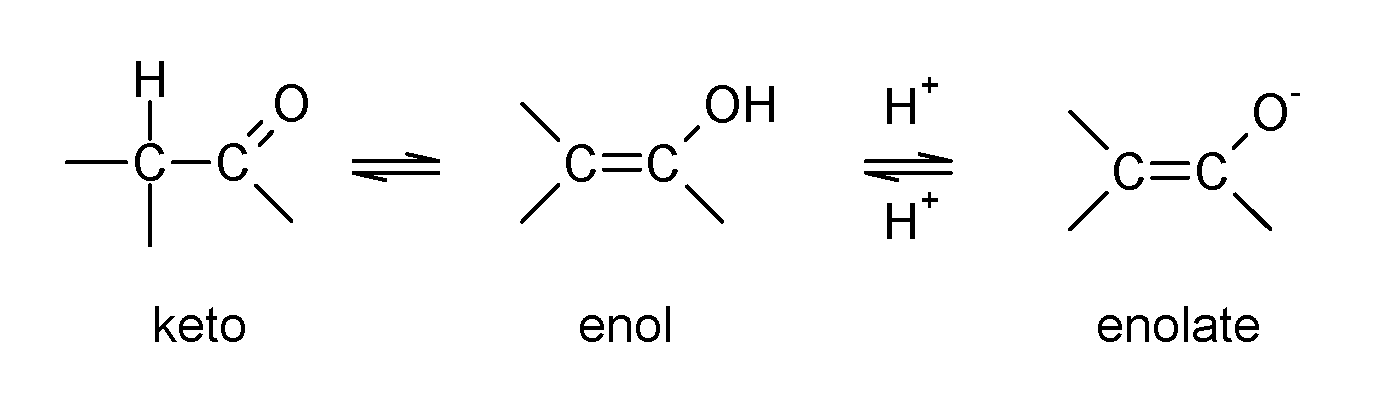 The term “tautomer” or “tautomeric form” refers to structural isomers of different energies which are interconvertible via a low energy barrier. For example, proton tautomers (also known as prototropic tautomers) include interconversions via migration of a proton, such as keto-enol and imine-enamine isomerizations. Valence tautomers include interconversions by reorganization of some of the bonding electrons. Note that specifically included in the term “isomer” are compounds with one or more isotopic substitutions. For example, H may be in any isotopic form, including 1H, 2H (D), and 3H (T); C may be in any isotopic form, including 12C, 13C, and 14C; O may be in any isotopic form, including 16O and 18O; and the like. Examples of isotopes that can be incorporated into disclosed compounds include isotopes of hydrogen, carbon, nitrogen, oxygen, phosphorous, fluorine, and chlorine, such as, but not limited to 2H (deuterium, D), 3H (tritium), 11C, 13C, 14C, 15N, 18F, 31P, 32P, 35S, 36Cl, and 125I. Various isotopically labeled disclosed compounds, for example those into which radioactive isotopes such as 3H, 13C, and 14C are incorporated. Such isotopically labelled compounds may be useful in metabolic studies, reaction kinetic studies, detection or imaging techniques, such as positron emission tomography (PET) or single-photon emission computed tomography (SPECT) including drug or substrate tissue distribution assays, or in radioactive treatment of patients. Deuterium labelled or substituted therapeutic disclosed compounds may have improved DMPK (drug metabolism and pharmacokinetics) properties, relating to distribution, metabolism, and excretion (ADME). Substitution with heavier isotopes such as deuterium may afford certain therapeutic advantages resulting from greater metabolic stability, for example increased in vivo half-life or reduced dosage requirements. An 18F labeled compound may be useful for PET or SPECT studies. Isotopically labeled disclosed compounds and prodrugs thereof can generally be prepared by carrying out the procedures disclosed in the schemes or in the examples and preparations described below by substituting a readily available isotopically labeled reagent for a non-isotopically labeled reagent. Further, substitution with heavier isotopes, particularly deuterium (i.e., 2H or D) may afford certain therapeutic advantages resulting from greater metabolic stability, for example increased in
vivo half-life or reduced dosage requirements or an improvement in therapeutic index. It is understood that deuterium in this context is regarded as a substituent. The concentration of such a heavier isotope, specifically deuterium, may be defined by an isotopic enrichment factor. In the disclosed compounds any atom not specifically designated as a particular isotope is meant to represent any stable isotope of that atom. Unless otherwise specified, a reference to a particular compound includes all such isomeric forms, including (wholly or partially) racemic and other mixtures thereof. Methods for the preparation (e.g. asymmetric synthesis) and separation (e.g. fractional crystallisation and chromatographic means) of such isomeric forms are either known in the art or are readily obtained by adapting the methods taught herein, or known methods, in a known manner. Glycoforms As used herein, the term ‘glycoform’ is used to refer to a glycosylated molecule (typically a glycoprotein) having a particular and specific glycosylation pattern. Accordingly, if two molecules are described as being the same glycoform both molecules have identical patterns of glycosylation, including location of glycan attachment as well as structure, composition, and linkage of the glycan structures themselves. BRIEF DESCRIPTION OF THE FIGURES Embodiments and experiments illustrating the principles of the disclosure will now be discussed with reference to the accompanying figures in which: Figure 1. Synthesis of PL1603 Figure 2. Glycosylation remodelling and conjugation according to Approach 1. GlcNAc = A-acetyl-glucosamine, Man = mannose, Gal = galactose, Fuc = fucose, Sia = sialic acid, PBD / DBP = PL1603. Reaction conditions: (i) UDP-Galactose, galactosyltransferase, MOPS buffer (50 mM, 20 mM MnCl2, pH 7.2), 24 h; (ii) CMP-Neu5N3, ST6Gal1 sialyltransferase, 1% BSA, alkaline phosphatase, cacodylate buffer (50 mM, pH 7.6), 24 h; (iii) PL1603. Figure 3. Glycosylation remodelling and conjugation according to Approach 2. GlcNAc = A-acetyl-glucosamine, Man = mannose, Gal = galactose, Fuc = fucose, Sia = sialic acid, PBD / DBP = PL1603. Reaction conditions: (i-1) EndoS; (i-2) EndoS / BtFucH; (ii) UDP-Galactose, β4GalT1, MOPS buffer (50 mM, 20 mM MnCl2, pH 7.2), 1% BSA, 1.3% alkaline phosphatase;
(iii) CMP-Neu5N3, cacodylate buffer (50 mM, pH 7.6), 1% BSA, 1.3% alkaline phosphatase; (iv) PL1603. Figure 4. HIC profile of Her-PL1603-App1 and Her-PL1603-App2 Figure 5. In vivo efficacy of Her-PL1603-App1 and Her-PL1603-App2 versus the benchmark Her2xADC Figure 6. Pharmacokinetics (PK) of Her-PL1603-App1 and Her-PL1603-App2 in rats
The term “tautomer” or “tautomeric form” refers to structural isomers of different energies which are interconvertible via a low energy barrier. For example, proton tautomers (also known as prototropic tautomers) include interconversions via migration of a proton, such as keto-enol and imine-enamine isomerizations. Valence tautomers include interconversions by reorganization of some of the bonding electrons. Note that specifically included in the term “isomer” are compounds with one or more isotopic substitutions. For example, H may be in any isotopic form, including 1H, 2H (D), and 3H (T); C may be in any isotopic form, including 12C, 13C, and 14C; O may be in any isotopic form, including 16O and 18O; and the like. Examples of isotopes that can be incorporated into disclosed compounds include isotopes of hydrogen, carbon, nitrogen, oxygen, phosphorous, fluorine, and chlorine, such as, but not limited to 2H (deuterium, D), 3H (tritium), 11C, 13C, 14C, 15N, 18F, 31P, 32P, 35S, 36Cl, and 125I. Various isotopically labeled disclosed compounds, for example those into which radioactive isotopes such as 3H, 13C, and 14C are incorporated. Such isotopically labelled compounds may be useful in metabolic studies, reaction kinetic studies, detection or imaging techniques, such as positron emission tomography (PET) or single-photon emission computed tomography (SPECT) including drug or substrate tissue distribution assays, or in radioactive treatment of patients. Deuterium labelled or substituted therapeutic disclosed compounds may have improved DMPK (drug metabolism and pharmacokinetics) properties, relating to distribution, metabolism, and excretion (ADME). Substitution with heavier isotopes such as deuterium may afford certain therapeutic advantages resulting from greater metabolic stability, for example increased in vivo half-life or reduced dosage requirements. An 18F labeled compound may be useful for PET or SPECT studies. Isotopically labeled disclosed compounds and prodrugs thereof can generally be prepared by carrying out the procedures disclosed in the schemes or in the examples and preparations described below by substituting a readily available isotopically labeled reagent for a non-isotopically labeled reagent. Further, substitution with heavier isotopes, particularly deuterium (i.e., 2H or D) may afford certain therapeutic advantages resulting from greater metabolic stability, for example increased in
vivo half-life or reduced dosage requirements or an improvement in therapeutic index. It is understood that deuterium in this context is regarded as a substituent. The concentration of such a heavier isotope, specifically deuterium, may be defined by an isotopic enrichment factor. In the disclosed compounds any atom not specifically designated as a particular isotope is meant to represent any stable isotope of that atom. Unless otherwise specified, a reference to a particular compound includes all such isomeric forms, including (wholly or partially) racemic and other mixtures thereof. Methods for the preparation (e.g. asymmetric synthesis) and separation (e.g. fractional crystallisation and chromatographic means) of such isomeric forms are either known in the art or are readily obtained by adapting the methods taught herein, or known methods, in a known manner. Glycoforms As used herein, the term ‘glycoform’ is used to refer to a glycosylated molecule (typically a glycoprotein) having a particular and specific glycosylation pattern. Accordingly, if two molecules are described as being the same glycoform both molecules have identical patterns of glycosylation, including location of glycan attachment as well as structure, composition, and linkage of the glycan structures themselves. BRIEF DESCRIPTION OF THE FIGURES Embodiments and experiments illustrating the principles of the disclosure will now be discussed with reference to the accompanying figures in which: Figure 1. Synthesis of PL1603 Figure 2. Glycosylation remodelling and conjugation according to Approach 1. GlcNAc = A-acetyl-glucosamine, Man = mannose, Gal = galactose, Fuc = fucose, Sia = sialic acid, PBD / DBP = PL1603. Reaction conditions: (i) UDP-Galactose, galactosyltransferase, MOPS buffer (50 mM, 20 mM MnCl2, pH 7.2), 24 h; (ii) CMP-Neu5N3, ST6Gal1 sialyltransferase, 1% BSA, alkaline phosphatase, cacodylate buffer (50 mM, pH 7.6), 24 h; (iii) PL1603. Figure 3. Glycosylation remodelling and conjugation according to Approach 2. GlcNAc = A-acetyl-glucosamine, Man = mannose, Gal = galactose, Fuc = fucose, Sia = sialic acid, PBD / DBP = PL1603. Reaction conditions: (i-1) EndoS; (i-2) EndoS / BtFucH; (ii) UDP-Galactose, β4GalT1, MOPS buffer (50 mM, 20 mM MnCl2, pH 7.2), 1% BSA, 1.3% alkaline phosphatase;
(iii) CMP-Neu5N3, cacodylate buffer (50 mM, pH 7.6), 1% BSA, 1.3% alkaline phosphatase; (iv) PL1603. Figure 4. HIC profile of Her-PL1603-App1 and Her-PL1603-App2 Figure 5. In vivo efficacy of Her-PL1603-App1 and Her-PL1603-App2 versus the benchmark Her2xADC Figure 6. Pharmacokinetics (PK) of Her-PL1603-App1 and Her-PL1603-App2 in rats
STATEMENTS OF INVENTION 1. A glycoconjugate having the formula:
 wherein: CBA is a Cell Binding Agent; GlcNAc is a N-acetyl-glucosamine moiety; Sug is a sugar moiety, wherein b = 1 or 0; Gal is a galactose moiety; Sd(AP)x is a sugar derivative comprising x conjugated payloads A, wherein x = 1, 2, 3, or 4; wherein y = 1 to 20; and wherein the payload AP is, comprises, or releases upon metabolism, a PBD compound, such as a PBD dimer; optionally wherein GlcNAc, Gal, Sug, and/or Sd(AP)x are D enantiomers. 2. The glycoconjugate of statement 1, wherein the PBD compound is a compound of formula I:
 wherein: [C6] R6 is selected from H, R, OH, OR, SH, SR, NH2, NHR, NRR’, nitro, Me3Sn and halo; R6’ is selected from H, R, OH, OR, SH, SR, NH2, NHR, NRR’, nitro, Me3Sn and halo; [C9] R9 is selected from H, R, OH, OR, SH, SR, NH2, NHR, NRR’, nitro, Me3Sn and halo; R9’ is selected from H, R, OH, OR, SH, SR, NH2, NHR, NRR’, nitro, Me3Sn and halo; [Y] Y is selected from O, S, or NH; Y’ is selected from O, S, or NH; [C2]
when there is a double bond present between C2 and C3, R2 is selected from the group consisting of: (ia) C5-10 aryl group, optionally substituted by one or more substituents selected from the group comprising: halo, nitro, cyano, hydroxy, ether, carboxy, ester, C1-7 alkyl, C3-7 heterocyclyl and bis-oxy-C1-3 alkylene; (ib) C1-5 saturated aliphatic alkyl; (ic) C3-6 saturated cycloalkyl; (id)
wherein: [C6] R6 is selected from H, R, OH, OR, SH, SR, NH2, NHR, NRR’, nitro, Me3Sn and halo; R6’ is selected from H, R, OH, OR, SH, SR, NH2, NHR, NRR’, nitro, Me3Sn and halo; [C9] R9 is selected from H, R, OH, OR, SH, SR, NH2, NHR, NRR’, nitro, Me3Sn and halo; R9’ is selected from H, R, OH, OR, SH, SR, NH2, NHR, NRR’, nitro, Me3Sn and halo; [Y] Y is selected from O, S, or NH; Y’ is selected from O, S, or NH; [C2]
when there is a double bond present between C2 and C3, R2 is selected from the group consisting of: (ia) C5-10 aryl group, optionally substituted by one or more substituents selected from the group comprising: halo, nitro, cyano, hydroxy, ether, carboxy, ester, C1-7 alkyl, C3-7 heterocyclyl and bis-oxy-C1-3 alkylene; (ib) C1-5 saturated aliphatic alkyl; (ic) C3-6 saturated cycloalkyl; (id)
 , wherein each of R11, R12 and R13 are independently selected from H, C1-3 saturated alkyl, C2-3 alkenyl, C2-3 alkynyl and cyclopropyl, where the total number of carbon atoms in the R2 group is no more than 5; (ie)
 , wherein one of R15a and R15b is H and the other is selected from: phenyl, which phenyl is optionally substituted by a group selected from halo, methyl, methoxy; pyridyl; and thiophenyl; and (if)
 , where R14 is selected from: H; C1-3 saturated alkyl; C2-3 alkenyl; C2-3 alkynyl; cyclopropyl; phenyl, which phenyl is optionally substituted by a group selected from halo, methyl, methoxy; pyridyl; and thiophenyl; when there is a single bond present between C2 and C3, R2 is selected from H, OH, F, diF and
 , where R16a and R16b are independently selected from H, F, C1-4 saturated alkyl, C2-3 alkenyl, which alkyl and alkenyl groups are optionally substituted by a group selected from C1-4 alkyl amido and C1-4 alkyl ester; or, when one of R16a and R16b is H, the other is selected from nitrile and a C1-4 alkyl ester; [C2’] when there is a double bond present between C2’ and C3’, R2’ is selected from the group consisting of: (iia) C5-10 aryl group, optionally substituted by one or more substituents selected from the group comprising: halo, nitro, cyano, hydroxy, ether, carboxy, ester, C1-7 alkyl, C3-7 heterocyclyl and bis-oxy-C1-3 alkylene; (iib) C1-5 saturated aliphatic alkyl; (iic) C3-6 saturated cycloalkyl;
(iid)
, where R16a and R16b are independently selected from H, F, C1-4 saturated alkyl, C2-3 alkenyl, which alkyl and alkenyl groups are optionally substituted by a group selected from C1-4 alkyl amido and C1-4 alkyl ester; or, when one of R16a and R16b is H, the other is selected from nitrile and a C1-4 alkyl ester; [C2’] when there is a double bond present between C2’ and C3’, R2’ is selected from the group consisting of: (iia) C5-10 aryl group, optionally substituted by one or more substituents selected from the group comprising: halo, nitro, cyano, hydroxy, ether, carboxy, ester, C1-7 alkyl, C3-7 heterocyclyl and bis-oxy-C1-3 alkylene; (iib) C1-5 saturated aliphatic alkyl; (iic) C3-6 saturated cycloalkyl;
(iid)
 , wherein each of R21, R22 and R23 are independently selected from H, C1- 3 saturated alkyl, C2-3 alkenyl, C2-3 alkynyl and cyclopropyl, where the total number of carbon atoms in the R12 group is no more than 5; (iie)
 , wherein one of R25a and R25b is H and the other is selected from: phenyl, which phenyl is optionally substituted by a group selected from halo, methyl, methoxy; pyridyl; and thiophenyl; and (iif)
 , where R24 is selected from: H; C1-3 saturated alkyl; C2-3 alkenyl; C2-3 alkynyl; cyclopropyl; phenyl, which phenyl is optionally substituted by a group selected from halo, methyl, methoxy; pyridyl; and thiophenyl; when there is a single bond present between C2’ and C3’, R2’ is selected from H, OH, F, diF and 26a 26b
 , where R and R are independently selected from H, F, C1-4 saturated alkyl, C2-3 alkenyl, which alkyl and alkenyl groups are optionally substituted by a group selected from C1-4 alkyl amido and C1-4 alkyl ester; or, when one of R26a and R26b is H, the other is selected from nitrile and a C1-4 alkyl ester; [C7] R7 is selected from H, R, OH, OR, SH, SR, NH2, NHR, NHRR’, nitro, Me3Sn and halo; R7’ is selected from H, R, OH, OR, SH, SR, NH2, NHR, NHRR’, nitro, Me3Sn and halo; [R”] R″ is a C3-12 alkylene group, which chain may be interrupted by one or more heteroatoms, e.g. O, S, NRN2 (where RN2 is H or C1-4 alkyl), and/or aromatic rings, e.g. benzene or pyridine; [N10-C11] (a) R10 is H, and R11a is OH or ORA, where RA is C1-4 alkyl; or (b) R10 and R11a form a nitrogen-carbon double bond between the nitrogen and carbon atoms to which they are bound; or (c) R10 is H and R11a is SOzM, where z is 2 or 3 and M is a monovalent pharmaceutically acceptable cation; or (d) R10 is H and R11a is H; or (e) R11a is OH or ORA, where RA is C1-4 alkyl and R10 is selected from:
(e-i) (e-ii)
, where R and R are independently selected from H, F, C1-4 saturated alkyl, C2-3 alkenyl, which alkyl and alkenyl groups are optionally substituted by a group selected from C1-4 alkyl amido and C1-4 alkyl ester; or, when one of R26a and R26b is H, the other is selected from nitrile and a C1-4 alkyl ester; [C7] R7 is selected from H, R, OH, OR, SH, SR, NH2, NHR, NHRR’, nitro, Me3Sn and halo; R7’ is selected from H, R, OH, OR, SH, SR, NH2, NHR, NHRR’, nitro, Me3Sn and halo; [R”] R″ is a C3-12 alkylene group, which chain may be interrupted by one or more heteroatoms, e.g. O, S, NRN2 (where RN2 is H or C1-4 alkyl), and/or aromatic rings, e.g. benzene or pyridine; [N10-C11] (a) R10 is H, and R11a is OH or ORA, where RA is C1-4 alkyl; or (b) R10 and R11a form a nitrogen-carbon double bond between the nitrogen and carbon atoms to which they are bound; or (c) R10 is H and R11a is SOzM, where z is 2 or 3 and M is a monovalent pharmaceutically acceptable cation; or (d) R10 is H and R11a is H; or (e) R11a is OH or ORA, where RA is C1-4 alkyl and R10 is selected from:
(e-i) (e-ii)
 (e-iii) , where RZ is selected from: (z-i)
 (z-ii) OC(=O)CH3; (z-iii) NO2; (z-iv) OMe; (z-v) glucoronide; (z-vi) -C(=O)-X1-NHC(=O)X2-NH-RZC, where -C(=O)-X1- NH- and -C(=O)-X2-NH- represent natural amino acid residues and RZC is selected from Me, OMe, OCH2CH2OMe; (a) R20 is H, and R21a is OH or ORA, where RA is C1-4 alkyl; or (b) R20 and R21a form a nitrogen-carbon double bond between the nitrogen and carbon atoms to which they are bound; or (c) R20 is H and R21a is SOzM, where z is 2 or 3 and M is a monovalent pharmaceutically acceptable cation; or (d) R20 is H and R21a is H; or (e) R21a is OH or ORA, where RA is C1-4 alkyl and R20 is selected from: Ph (e-i)
 (e-ii)
 (e-iii) , where RZ is selected from: (z-i)
 (z-ii) OC(=O)CH3; (z-iii) NO2; (z-iv) OMe; (z-v) glucoronide; (z-vi) -C(=O)-X1-NHC(=O)X2-NH-RZC, where -C(=O)-X1- NH- and -C(=O)-X2-NH- represent natural amino acid residues and RZC is selected from Me, OMe, and OCH2CH2OMe. 3. The glycoconjugate of either one of statements 1 or 2, wherein b = 0. 4. The glycoconjugate of either one of statements 1 or 2, wherein b = 1. 5. The glycoconjugate of any preceding statement, wherein Sd(AP)x is a sialic acid derivative. 6. The glycoconjugate of statement 5, wherein the sialic acid derivative has the formula:
 wherein: QQ is hydrogen or a conjugated payload; ZZ is hydroxyl or a conjugated payload; YY is hydroxyl or a conjugated payload; and/or XX is hydroxyl or a conjugated payload;
and wherein at least one of QQ, ZZ, YY, and XX is a conjugated payload. 7. The glycoconjugate of any preceding statement having the the formula:
wherein: QQ is hydrogen or a conjugated payload; ZZ is hydroxyl or a conjugated payload; YY is hydroxyl or a conjugated payload; and/or XX is hydroxyl or a conjugated payload;
and wherein at least one of QQ, ZZ, YY, and XX is a conjugated payload. 7. The glycoconjugate of any preceding statement having the the formula:
 wherein: QQ is hydrogen or a conjugated payload; ZZ is hydroxyl or a conjugated payload; YY is hydroxyl or a conjugated payload; and/or XX is hydroxyl or a conjugated payload; and wherein at least one of QQ, ZZ, YY, and XX is a conjugated payload 8. The glycoconjugate of statement 7, wherein the GlcNAc moiety is bonded to the CBA with an α-N-glycosidic linkage and has the formula:
 . 9. The glycoconjugate of statement 7, wherein the cell-binding agent is a protein, or comprises a protein portion, and wherein the GlcNAc moiety is conjugated to the cell-binding agent through an asparagine side chain via an α-N-glycosidic bond with the formula:


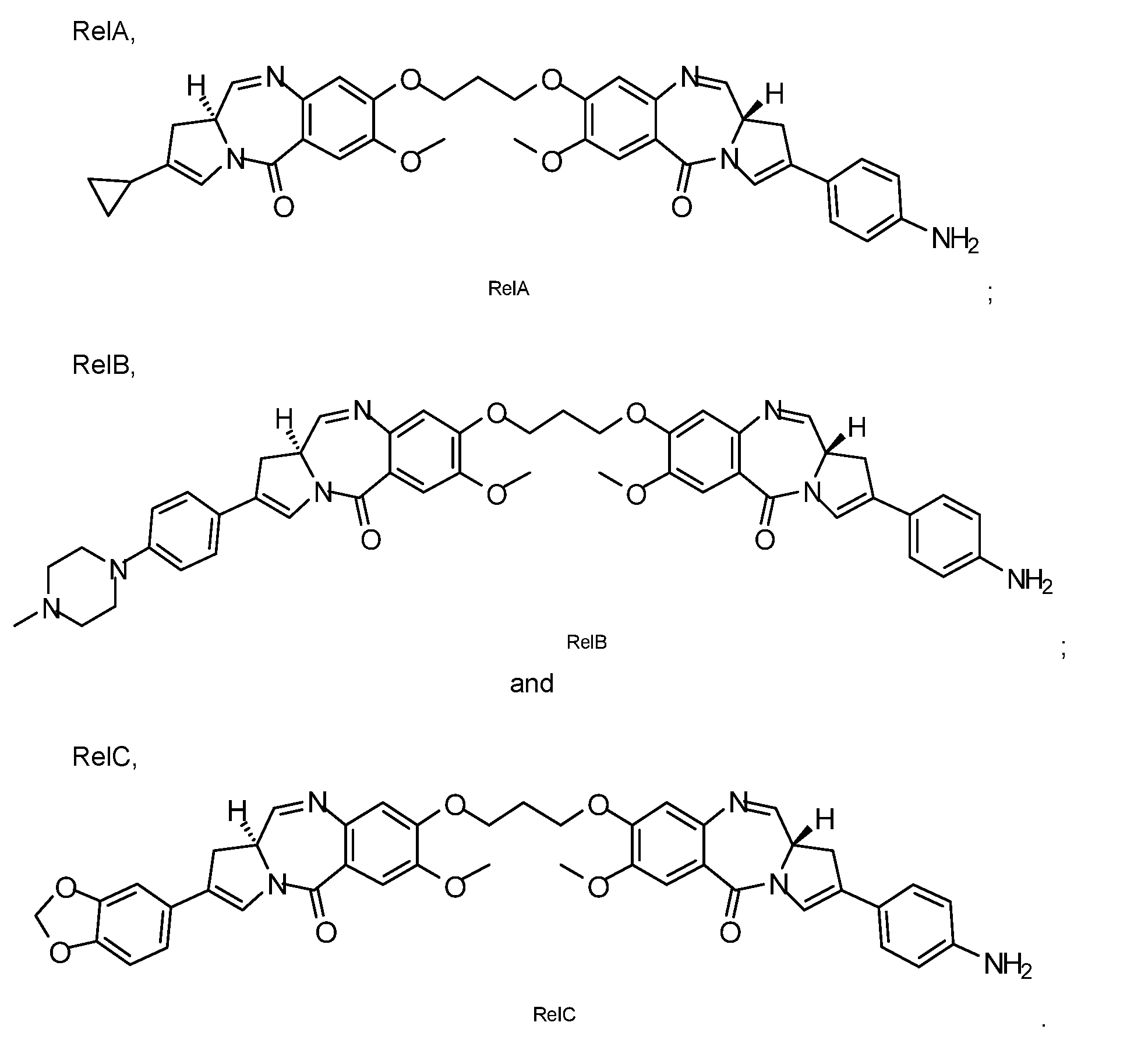


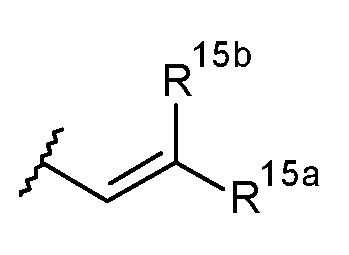


EXAMPLES Example 1: Synthesis of drug-linker payload, PL1603 The PL1603 drug-linker was synthesised for use as a payload suitable for conjugation to the glycosylated antibody intermediates described herein. Synthesis method See Figure 1. SG3305 (600 mg, 1.0 eq), Endo-BCN-PGE4-acid (1.2 eq) and EDCl-HCl (1.2eq) were taken up in DCM (15 vol, 2% MeOH) and stirred at 0-5 °C. (The synthesis of Endo-BCN-PEG4 is decribed in, for example, WO2016/053107 at page 142. Endo-BCN-PEG4 is also commercially available from, for example, Broadpharm®. The synthesis of SG3305 is described in, for example, Tiberghein et al., ACS Med Chem Lett 20167(11) 983-987 [DOI: 10.1021/acsmedchemlett.6b00062]) Upon completion of reaction, the reaction was quenched with purified water (10 vol). The mixture was partitioned and the organic layer was washed with brine, dried over sodium sulphate and concentrated under reduced pressure to give crude PL1603 (650 mg, 93.2%, 73.57 % HPLC purity). Crude PL1603 (400 mg) was purified by RP-HPLC (C18, MeCN:H2O) and product containing fractions were combined and lyophilised to give PL1603 as a white solid (130 mg, 33 %, 94.61 % HPLC purity). Example 2: Antibody remodelling and conjugation, Approach 1 Antibody remodelling The N-linked oligosaccharides on the Herceptin antibody were remodelled according to the methods described in Li et al.2014 (Angew Chem Int Ed Engl., 2014, Jul 7; 53(28):7179-82). See Figure 2, steps (i) and (ii). Conjugation 9.2 mg/ml of the remodelled Herceptin in 50 mM Cacodylate buffer pH 7.6 was conjugated by the addition of 20 molar equivalents of PL1603 (10 mM stock in DMA, structure provided in Figure 1) and DMA to a final Co solvent level of 20 % v/v. The conjugation reaction was incubated in a 20°C water bath for 66 hours. A DAR by PLRP of 1.4 was achieved (batch SON160-16). The resulting glycoconjugate is herein termed ‘Her-PL1603-App1’.
See Figure 2, step (iii). Example 3: Antibody remodelling and conjugation, Approach 2 Rationale for new approach In Approach 1, the activity of the recombinant sialyltransferase ST6Gal1 to the α(1,3)- and α(1,6)-arm of the biantennary N-glycan of the Fc region of antibodies can be differential by controlling the ratio of CMP-sialic acid and antibody. This can result in ADCs having DAR2 or DAR4. However, the careful controlling of the reaction stoichiometry that is required impacts on product reproducibility between batches. Accordingly, alternative oligosaccharide structures were investigated with the aim of identifying oligosaccharide structures that were both obtainable using available synthetic methods and offered advantageous glycoconjugate properties. A key discovery was the unexpected ability of wild-type human β4GalT1 galactosyl- transferase to transfer a galactose residue onto a α1-6 fucosylated GlcNAc residue. This reaction does not occur in nature. Moreover, it was found that the resulting galcatosylated oligosaccharide could be further modified with the addition of an azido-modified sialic acid by the ST6Gal1sialyltransferase. Antibody remodelling The N-linked oligosaccharides on the Herceptin antibody were remodelled according to the following method: Endo S. treatment. Trimming of IgG glycan was undergone using Endo S cloned from Streptococcus pyogenes and overexpressed as a fusion to the chitin binding domain in E. coli. (New England BioLabs). To the IgG antibody (10 mg/mL) in 30 mM histidine, 200 mM sorbitol and 0.02% tween-20, Endo S (0.13 mL, 100kU/mL) in 10 mM Tris, 25 mM NaCl, 2.5 mM EDTA, 2.5 mM CaCl2, 25 mM sodium acetate was added. The resulting solution was incubated for approximately 48 hours at 37 °C followed by Protein A Sepharose Column (GE Healthcare) purification, buffer exchanging and concentrated into 1.2 mL of 50 mM MOPS containing 20 mM MnCl2. Galactosylation of the IgG Galactosylation of IgG bearing truncated N-glycan was achieved by addition of β-1,4- galactosyl transferase (200 μg/mL) to the Endo S treatment resulting material in 50 mM MOPS, 20 mM MnCl2, 10 mM UDP-galactose, pH 7.2, 80 μg/mL BSA, 85 U/mL calf intestine alkaline phosphatase and incubation at 37°C for 70h. To ensure complete galactosylation, an additional aliquot of UDP-galactose and galactosyl transferase were added to the reaction and incubated at 37°C for an additional 24h.The galactosylated IgG was purified using a Protein A Sepharose Column and the solution was exchanged in 50 mM cacodylate, pH 7.6 using an Amicon 10 kDa cutoff spin concentrator (Millipore).
Synthesis of CMP-Neu5N3 and CMP-Neu9N3 Sialic acid aldolase (0.2U/µL, 5µL), and CMP-sialic acid synthetase (0.2U/µL, 5µL) were added to a mixture of N-azidoacetyl-D-mannosamine (5 mg, 0.019 mmol) in tris-HCl buffer (100mM, pH 8.9, 20mM MgCl2, 1.9 mL), containing sodium pyruvate (10.5 mg, 0.095 mmol) and CTP (10 mg, 0.019 mmol). The tube was incubated at 37 oC, and progress of the reaction was monitored by TLC (EtOH : aq. NH4HCO3 (1 M) 7:3, v:v), which after 5 hour indicated completion of the reaction. EtOH (3 mL) was added, and the precipitate was removed by centrifugation and the supernatant was concentrated under reduced pressure. The residue was redissolved in distilled water (500 µL) followed by lyophilization to provide a crude material that was applied to a Biogel fine P-2 column (50* 1 cm, eluted with 0.1 M NH4HCO3 at 4o C in dark.). The product was detected by TLC, and appropriate fractions were combined and lyophilized to provide CMP-Neu5N3 as an amorphous white solid (10.1 mg, 81%). 1H NMR (300 MHz, d2o) δ 7.82 (d, J = 7.5 Hz, 1H, H-6, cyt), 5.97 (d, J = 7.6 Hz, 1H, H-5, cyt), 5.84 (d, J = 4.2 Hz, 1H, H-1, rib), 4.18 (dd, J = 7.4, 4.4 Hz, 2H, H-2 + H-3, rib), 4.14 – 4.04 (m, 4H, H-4 + H-5 rib, H-6 Neu), 4.04 – 3.97 (m, 1H, H-4), 3.95 (s, 2H, N3CH2CO ), 3.87 (t, J = 10.2 Hz, 1H, H-5), 3.82 – 3.74 (m, 1H, H-8), 3.72 (m, 1H, H-9a), 3.49 (d, J = 11.8 Hz, 1H, H- 9b), 3.30 (d, J = 9.5 Hz, 1H, H-7), 2.36 (dd, J = 13.3, 4.6 Hz, 1H, H-3eq), 1.51 (td, J = 12.0, 5.6 Hz, 1H, H-3ax). HRMS (ESI): m/z calcd for C20H30N7O16P [M-H]-: 654.1414; found: 653.9477. CMP-Neu9N3 was prepared following the reported procedure. CTP (126 mg, 0.24 mmol) was added to a solution of 5-Acetamido-9-azido-3,5,9-tri-deoxy-D-glycero-D-galacto-2- nonulosonic acid (50 mg, 0.15 mmol) in a Tris–HCl buffer (0.1 M, 9 mL, pH 8.9) containing MgCl2 (20 mM). The recombinant CMP-sialic acid synthetase from N. meningitis (4.0 U) and the inorganic pyrophosphatase from S. cererisiae (2.0 U) were added and the reaction mixture was incubated at 37 oC with shaking. The progress of the reaction was monitored by TLC (isopropanol: 20 mM NH4OH, 4:1, v:v), which after 3 h indicated completion of the reaction. Ethanol (80 mL) was added and the mixture was kept on ice for 2 h prior to centrifugation. The supernatant was decanted and the pellet (mostly inorganic salts) was re-suspended in EtOH (30 mL), cooled on ice for 1 h and centrifuged. The combined ethanol extracts were concentrated in vacuo providing crude material (168 mg). Ethanol (1.8 mL) was slowly added to the material dissolved in H2O (0.2 mL) and precipitation occurred immediately. The mixture was kept on ice for 2 h. Next, the supernatant was removed after centrifugation and the white pellet was dried and purified on a column of extra-fine Biogel P-2 eluted with 0.1 M NH4HCO3 at 4 oC. The appropriate fractions were detected by UV and TLC (as above), collected, concentrated in vacuo (bath temperature <25 oC) and lyophilized to afford CMP-Neu9N3 (60 mg, 62%). 1H NMR (D2O containing 0.1 M NH4HCO3, 600 MHz): δ 7.82 (d, 1H, J5,6 = 7.8 Hz, H-6, cyt), 5.97 (d, 1H, J5,6 = 7.8 Hz, H-5, cyt), 5.82 (d, 1H, J1,2 = 4.8 Hz, H-1 rib), 4.17 (t, 1H, J = 4.8), 4.13 (t, 1H, J = 4.8 Hz), 4.08 (m, 3H,), 3.99 (d, 1H, J=12.0 Hz), 3.90 (m, 2H), 3.78 (t, 1H), 3.49 (dd, 1H, J = 2.4, 13.2 Hz, H-9a), 3.35 (dd, 1H, J = 6.0, 13.2 Hz, H-9b), 3.31 (dd, 1H, J = 9.6 Hz), 2.33 (dd, 1H, J3eq,4 = 4.8 Hz, J3eq,3ax = 13.2 Hz, H-3eq), 1.90 (s, 3H, Me), 1.55 (ddd, 1H, J3ax,P = 6.0 Hz, J3ax,3eq = 13.2 Hz, J3ax,4 = 12.0 Hz, H-3ax); 13C NMR (D2O, containing 0.1 M NH4HCO3, 600 MHz): δ 174.2, 170.4, 166.0, 160.7, 141.4, 96.5, 88.8, 82.9, 74.2, 71.5, 69.3, 69.1, 67.4,
64.9, 53.0, 51.7, 41.0, 22.0; ESI-MS: calcd for C20H28N7O15P2- [M+H]-: m/z: 638.1470; found 638.1421. Sialylation of the IgG The sialylation of galactosylated IgG was performed in 50 mM cacodylate, 14 mg/mL of IgG, 8 mM CMP-Neu5N3, 90μg/ml BSA, 90 U/mL calf intestine alkaline phosphatase and 0.4 mg/mL GFP-ST6Gal I at pH 7.6 and incubated at 37°C for 4 days followed by Protein A Sepharose Column purification and buffer exchanging to 50 mM cacodylate. The extent of sialylation was monitored by LC-MS as described previously using a Shimadzu LCMS-IT-TOF Mass Spectrometer. Following every 48 hours incubation, the sample was buffer exchanged with 50 mM cacodylate, pH7.6 using an Amicon 10 kDa cutoff spin concentrator to remove CMP, an inhibitor of ST6Gal I and an additional aliquot of CMP-Neu5N3 and α2-6 sialyltransferase were added back to this washed preparation. Conjugation 10 mg/ml of the remodelled Herceptin in 50 mM Cacodylate buffer pH 7.6 was conjugated by the addition of 7.5 molar equivalents of PL1603 (10 mM stock in DMA, structure provided in Figure 3) and DMA to a final Co solvent level of 20 % v/v. The conjugation reaction was incubated in a 20°C water bath overnight. A DAR of 1.8 was achieved (batch SON180-19) with purification by PLRP. The conjugation reaction in approach 2 is notable for being considerably faster than the corresponding approach 1. This goes against initial expectations, which were that the termini of the longer glycans would be more accessible and so easier to modify. In fact, the data shows that the shorter glycans of approach 2 were more readily modifiable. The resulting glycoconjugate is herein termed ‘Her-PL1603-App2’. See Figure 3, step (iv). Example 4: Glycoconjugate properties Physical properties Her-PL1603-App1 and Her-PL1603-App2 were analysed by hydrophobic Interaction Chromatography. This was carried out using column a MabPac HIC-Butyl, 5μm, 4.6x100mm column (Thermo, #882558, lot 01425138, serial nb 001303) with a MabPac HIC-Butyl, 5 μm, 4.6 x 10mm Guard cartridge: (Thermo, #882559, lot 1425011). With a Mobile Phase A of 1.5 M (NH4)2SO4, 25 mM NaPO4 (pH 7.4) and a Mobile Phase B of 80% 25 mM NaPO4 (pH 7.4), 20% CH3CN. The assay was run at 0.8 ml per minute and a column temperature of 25°C. A 10 µl sample load at 1 mg/ml was used for the analysis.
The HIC showed a distinct difference between the two ADCs, with Her-PL1603-App1 separating into multiple hydrophobic species, whilst Her-PL1603-App2 eluted as one more hydrophilic peak (see Figure 4). The increased hydrophilicity of Her-PL1603-App2 over Her-PL1603-App1 is prima facie surprising in view of the fact that Her-PL1603-App2 has considerably fewer sugar residues than Her-PL1603-App1 (compare Figures 2 and 3). Sugar residues are very hydrophilic moieties, so the expectation is that increasing their number would increase overall molecule hydrophilicity. The fact that this is not the case here suggests a more complex interaction is occurring between the antibody, oligosaccharide, and drug-linker elements of the ADC. In-vitro binding to Her2 Her2 is the cognate antigen of the Herceptin antibody. Binding of Her-PL1603-App1 and Her- PL1603-App2 was determined by ELISA. Maxisorp ELISA plates were coated with 0.5 µg/mL recombinant human Her2 at room temperature, before blocking with 3% BSA. Sample titrations were prepared in assay buffer (0.1% BSA/0.05% tween) between 66.6 and 0.016 nM in quartering dilutions. Samples were then incubated on the antigen coated plate for 1 hour. A mouse anti-human antibody conjugated to HRP was used fo detection (Sanquin M1328) and incubated for 1 hour before washing and adding the detection agent, TMB for 10 minutes before stopping the reaction with HCl. Binding absorbance data was acquired on the Spectramax plate reader at 450 nm. For comparison, Her2 binding was also assessed for ‘Her-C220’ [an unconjugated version of Herceptin in which 3 of the 4 interchain cysteines have been substituted for either V (in the heavy chain) or S (in the light chain) ] and B12 [an unconjugated monoclonal antibody against the HIV-1 protein; usd here as a control].
 The two ADCs bound to Her2 with similar affinity. In-vitro cytotoxicity The in vitro cytotoxicity of Her-PL1603-App1 and Her-PL1603-App2 against Her2+ve N87 cells was determined. A “thaw and go” cytotox assay was used to determine the cytoxicity, N87 cells were taken from cryogenic storage and seeded to 5 x 10⁴ cells/mL (5 x 10³ cells/well)
on an EDGE plate then incubated for a minimum of 2 hours at 37°C/5% CO2/absolute humidity. An 11 point, 1 in 4 serial titration of the test and control samples was prepared in duplicate from 500 nM to 0.4768 pM with a final negative control. The titrated samples were added to the EDGE plate containing cells and incubated for 5 days at 37°C/5% CO2/absolute humidity. Celltiter Aqueous One solution was added and the plate was incubated at 37°C/5% CO2/absolute humidity for a final time, before measuring absorbance at 490 nm using the SpectraMax plate reader. For comparison, cytotoxicity was also assessed for ‘Her2xADC’ [Her2-C220 conjugated to the PBD drug-linker SG3249 (Tesirine) at the C220 residue] and B12-C220-SG3249 [the B12 antibody conjugated to the PBD drug-linker SG3249 (Tesirine) at the C220 residue].
The two ADCs bound to Her2 with similar affinity. In-vitro cytotoxicity The in vitro cytotoxicity of Her-PL1603-App1 and Her-PL1603-App2 against Her2+ve N87 cells was determined. A “thaw and go” cytotox assay was used to determine the cytoxicity, N87 cells were taken from cryogenic storage and seeded to 5 x 10⁴ cells/mL (5 x 10³ cells/well)
on an EDGE plate then incubated for a minimum of 2 hours at 37°C/5% CO2/absolute humidity. An 11 point, 1 in 4 serial titration of the test and control samples was prepared in duplicate from 500 nM to 0.4768 pM with a final negative control. The titrated samples were added to the EDGE plate containing cells and incubated for 5 days at 37°C/5% CO2/absolute humidity. Celltiter Aqueous One solution was added and the plate was incubated at 37°C/5% CO2/absolute humidity for a final time, before measuring absorbance at 490 nm using the SpectraMax plate reader. For comparison, cytotoxicity was also assessed for ‘Her2xADC’ [Her2-C220 conjugated to the PBD drug-linker SG3249 (Tesirine) at the C220 residue] and B12-C220-SG3249 [the B12 antibody conjugated to the PBD drug-linker SG3249 (Tesirine) at the C220 residue].
 Her-PL1603-App1 and Her-PL1603-App2 were found to have similar cytotoxicity to each other and also to the benchmark Her2xADC. Significantly less cell kill was observed with the non-Her2-binding B12 control ADC. In-vivo efficacy The in vivo efficacy of the Her-PL1603-App1 and Her-PL1603-App2 conjugates was measured in the breast cancer Her2+ve BT474 xenograft model. For comparison, in vivo efficacy was also assessed for ‘Her2xADC’. Female severe combined immunodeficient mice (Fox Chase SCID®, CB17/Icr- Prkdcscid/IcrIcoCrl, Charles River) were ten weeks old with a body weight (BW) range of 16.1 to 21.8 g on Day 1 of the study. On the day of tumor implant, each test mouse received a 1 mm3 BT474 fragment implanted subcutaneously in the right flank, and tumor growth was monitored as the average size approached the target range of 100 to 150 mm3. Tumors were measured in two dimensions using calipers, and volume was calculated using the formula: Tumor Volume (mm3) = w2 x l/2 where w = width and l = length, in mm, of the tumor. Tumor weight may be estimated with the assumption that 1 mg is equivalent to 1 mm3 of tumor volume.
Thirty-six days after tumor implantation, designated as Day 1 of the study, the animals were sorted into groups each consisting of ten mice with individual tumor volumes of 75 to 172 mm3 and group mean tumor volumes of 119–121 mm3. On Day 1 of the study, drugs were administered intravenously (i.v.) in a single injection (qd x 1) via tail vein injection. The dosing volume was 0.2 mL per 20 grams of body weight (10 mL/kg), and was scaled to the body weight of each individual animal. Tumors were measured using calipers twice per week, and each animal was euthanized when its tumor reached the endpoint volume of 1000 mm3 or at the end of the study (Day 59), whichever came first. Results are shown in Figure 5. The minimal efficacious dose (MED) of Her2xADC and Her-PL1603-App1 was >0.6 mg/kg, while the MED for Her-PL1603-App2 was determined to be 0.3 mg/kg. Tolerability: Rat toxicology study Her2xADC, Her-PL1603-App1 and Her-PL1603-App2 were evaluated in a single intravenous dose rat tolerability study. Male sprague-dawley rats (n=3 / group) were dosed at 4 mg/kg with Her-PL1603-App1 or 2 & 4 mg/kg with Her-PL1603-App2 on day 1, with necropsy on day 21 following dosing. Bodyweights and food consumption were monitored frequently with in-life sampling for clinical pathology (blood on days 8 and 21) and repeated sampling for pharmacokinetics. At necropsy, macroscopic observations were taken with selected organs weighed and retained for possible histopathology. Her2xADC was evaluated at 1.5 mg/kg, single intravenous injection to male Sprague Dawley rats was associated with reduced overall body weight gain (overall bodyweight gain was 39% lower), associated with reduced food consumption. White blood cell numbers were reduced on day 8 (-61%), with evidence of recovery by day 21. At necropsy, reduced thymus, spleen, testes and prostate/seminal vesicle weights and increased adrenal gland weight were observed. Her-PL1603-App1 was poorly tolerated at 4 mg/kg, resulting in early euthanasia 11 days after dosing in 2 out of 3 animals. Bodyweight gain was markedly reduced in these animals, with none of the expected weight gain after dosing. Several haematology parameters were markedly reduced on day 8 (reticulocytes (-93%), white blood cells (-86%) and platelets (- 66%)), with no evidence of recovery. Her-PL1603-App2 was clinically well tolerated at 2 & 4 mg/kg. Bodyweight gain was dose- dependently reduced (overall bodyweight gain was 55% lower at 4 mg/kg), consistent with reduced food consumption. Several haematology parameters were reduced on day 8 (reticulocytes (-52%), white blood cells (-68%) and platelets (-22%)), with evidence of recovery by day 21. At necropsy, dose-dependent reductions in thymus, liver and spleen weights and increased lung weights were noted, with two animals presenting with pale kidneys at 4 mg/kg. The maximum tolerated dose (MTD) for Her2xADC was 1.5 mg/kg (the highest dose tested).
The maximum tolerated dose (MTD) for Her-PL1603-App1 was lower than 4 mg/kg. The maximum tolerated dose (MTD) for Her-PL1603-App2 was 4 mg/kg. Therapeutic index The Therapeutic Index (TI) of the ADCs may be calculated by first determining the Human equivalent dose of the MED and MTD and then dividing the HED of the MTD by the HED of the MED, as shown below:
Her-PL1603-App1 and Her-PL1603-App2 were found to have similar cytotoxicity to each other and also to the benchmark Her2xADC. Significantly less cell kill was observed with the non-Her2-binding B12 control ADC. In-vivo efficacy The in vivo efficacy of the Her-PL1603-App1 and Her-PL1603-App2 conjugates was measured in the breast cancer Her2+ve BT474 xenograft model. For comparison, in vivo efficacy was also assessed for ‘Her2xADC’. Female severe combined immunodeficient mice (Fox Chase SCID®, CB17/Icr- Prkdcscid/IcrIcoCrl, Charles River) were ten weeks old with a body weight (BW) range of 16.1 to 21.8 g on Day 1 of the study. On the day of tumor implant, each test mouse received a 1 mm3 BT474 fragment implanted subcutaneously in the right flank, and tumor growth was monitored as the average size approached the target range of 100 to 150 mm3. Tumors were measured in two dimensions using calipers, and volume was calculated using the formula: Tumor Volume (mm3) = w2 x l/2 where w = width and l = length, in mm, of the tumor. Tumor weight may be estimated with the assumption that 1 mg is equivalent to 1 mm3 of tumor volume.
Thirty-six days after tumor implantation, designated as Day 1 of the study, the animals were sorted into groups each consisting of ten mice with individual tumor volumes of 75 to 172 mm3 and group mean tumor volumes of 119–121 mm3. On Day 1 of the study, drugs were administered intravenously (i.v.) in a single injection (qd x 1) via tail vein injection. The dosing volume was 0.2 mL per 20 grams of body weight (10 mL/kg), and was scaled to the body weight of each individual animal. Tumors were measured using calipers twice per week, and each animal was euthanized when its tumor reached the endpoint volume of 1000 mm3 or at the end of the study (Day 59), whichever came first. Results are shown in Figure 5. The minimal efficacious dose (MED) of Her2xADC and Her-PL1603-App1 was >0.6 mg/kg, while the MED for Her-PL1603-App2 was determined to be 0.3 mg/kg. Tolerability: Rat toxicology study Her2xADC, Her-PL1603-App1 and Her-PL1603-App2 were evaluated in a single intravenous dose rat tolerability study. Male sprague-dawley rats (n=3 / group) were dosed at 4 mg/kg with Her-PL1603-App1 or 2 & 4 mg/kg with Her-PL1603-App2 on day 1, with necropsy on day 21 following dosing. Bodyweights and food consumption were monitored frequently with in-life sampling for clinical pathology (blood on days 8 and 21) and repeated sampling for pharmacokinetics. At necropsy, macroscopic observations were taken with selected organs weighed and retained for possible histopathology. Her2xADC was evaluated at 1.5 mg/kg, single intravenous injection to male Sprague Dawley rats was associated with reduced overall body weight gain (overall bodyweight gain was 39% lower), associated with reduced food consumption. White blood cell numbers were reduced on day 8 (-61%), with evidence of recovery by day 21. At necropsy, reduced thymus, spleen, testes and prostate/seminal vesicle weights and increased adrenal gland weight were observed. Her-PL1603-App1 was poorly tolerated at 4 mg/kg, resulting in early euthanasia 11 days after dosing in 2 out of 3 animals. Bodyweight gain was markedly reduced in these animals, with none of the expected weight gain after dosing. Several haematology parameters were markedly reduced on day 8 (reticulocytes (-93%), white blood cells (-86%) and platelets (- 66%)), with no evidence of recovery. Her-PL1603-App2 was clinically well tolerated at 2 & 4 mg/kg. Bodyweight gain was dose- dependently reduced (overall bodyweight gain was 55% lower at 4 mg/kg), consistent with reduced food consumption. Several haematology parameters were reduced on day 8 (reticulocytes (-52%), white blood cells (-68%) and platelets (-22%)), with evidence of recovery by day 21. At necropsy, dose-dependent reductions in thymus, liver and spleen weights and increased lung weights were noted, with two animals presenting with pale kidneys at 4 mg/kg. The maximum tolerated dose (MTD) for Her2xADC was 1.5 mg/kg (the highest dose tested).
The maximum tolerated dose (MTD) for Her-PL1603-App1 was lower than 4 mg/kg. The maximum tolerated dose (MTD) for Her-PL1603-App2 was 4 mg/kg. Therapeutic index The Therapeutic Index (TI) of the ADCs may be calculated by first determining the Human equivalent dose of the MED and MTD and then dividing the HED of the MTD by the HED of the MED, as shown below:
 Her-PL1603-App2 exhibits a Therapeutic Index of at least twice that of Her-PL1603-App1. Her-PL1603-App2 exhibits a Therapeutic Index of about 6 times that of Her2xADC. Pharmacokinetics (PK) of Her-PL1603-App1 and Her-PL1603-App2 in rats Plasma samples of rats dosed with a single dose of 2 and or 4 mg/kg of Her-PL1603-App1 and Her-PL1603-App2 and samples were taken 1, 3, 6, 48, 72, 168, 336 and 480 h after dosing. The samples were analysed for total human IgG and PBD conjugated IgG as described in Zammarchi Blood vol 131 (10), 1094-11052018. Figure 6A shows comparable PK profiles of Her2-PL1603-App1 for total IgG and PBD-IgG at 4 mg, which shows the conjugate is highly stable. Figure 6B shows comparable PK profiles of Her2-PL1603-App2 for total IgG and PBD-IgG both at 2 and 4 mg, which shows the conjugate is highly stable. Further comments on properties A further advantage of ‘Approach 2’ as described above in Examples 1-4 is that it is easier to control the DAR at 2. In earlier approaches employing an intact glycan, it was more difficult to control the DAR at 2, necessitating careful control of reaction conditions. In addition, Approach 2 abolishes Fc(gamma) receptor activity which is an advantage for a number of ADC applications.
Example 5: One-Pot Remodelling The enzymes used were produced in CHO cell as recombinant proteins at Evitria (https://www.evitria.com) and purified in-house at ADC-Therapeutics (Sequences shown below as SEQ ID NO.4 (ST6Gal1), SEQ ID NO.5 (Beta4Gal), and SEQ ID NO.6 (EndoS),). Other reagents were: UDP-Galactose (Merck Life Sciences UK Limited. Cat: U4500-25MG ) CMP-Sialic acid (Merck Life Sciences UK Limited Cat: 5052230001 ) CIAP (Calf Intestinal Alkaline Phosphatase) (ThermoFisher Cat: 18009019) Initial experiments focused on a one pot reaction, ensuring that the Endo S and Beta 4GAL (β-1,4-galactosyl transferase) resulted in full galactosylation. To this end three aliquots were set-up under the following conditions: 1. 2mls of antibody, buffer swapped in 50Kd Mw Amicon into 50mM MOPS/ 20mM MgCl2 and adjusted to 10mg/ml (~1.8mls) 2. STGA6 & Beta-Gal buffer swapped into 50mM MOPS/ 20mM MgCl2 and quantified by OD280 3. 3x500 ul Aliquots of the Ab created (5mgs of Ab in total) 4. To all Aliquots 25ug of Endo S added (0.5%) 5. To all Aliquots 5ul of CIAP per 1mL Ab @10mg/mL (ie 2.5uL) 6. To all Aliquots add 50ul of 300mM UDP-Galactose=10mM (dissolved in 150ulMgCl2/MOPS buffer) per 1mL Ab @10mg/mL added (50ul/ml) (Merck Life Sciences UK Limited. Cat: U4500-25MG ) 7. To all Aliquots beta4Gal was added to 2.5% (125ug/5mg of Ab) 8. To Aliquots 2&3 add a further 2.5ul CIAP 9. Add to aliquot 2&3 add CMP-Sialic acid to 4mM (from 25mM solution) ie 80ul in 500ul (Merck Life Sciences UK Limited Cat: 5052230001 ) 10. Add to aliquot 2&3 ST6GAL1 to 5% ie 250ugs in 500ul 11. Samples incubated for 36 hours at 37oC 12. A further 5ul CIP Aliquot, 50ul UDP-Galactose (dissolve in 150ul of MOPS/MgCl2) & 33ul Beta4 Gal added to Aliquot 3 13. All aliquots incubated for a further 24hrs 14. Samples purified up using Protein A spin columns (Thermo) and quantified by OD280. The three aliquots were analysed by LCMS and showed that the Aliquot 1, Endo S and Beta4Gal treated, had 100% galactosylation, Aliquot 2, Endo S/Beta4Gal/ST6Gal1, showed 92% Galactosylation with 34% sialylation and Aliquot 3, Endo S/Beta4Gal/ST6Gal1 plus additional Beta4Gal/UDP-Galactose showing 100% galactosylation and 35% sialylation. The data indicated that additional Beta4Gal/UDP-Galactose addition was not needed and that the first two steps of the process could be a one-pot reaction.
The degree of sialylation of 35% was not considered sufficient, and potentially caused by the “poisoning” of the reaction by CMP. To attempt to overcome this a second set of reactions were set-up where a similar protocol was followed, except after 36 hours, one sample had additional ST6Gal1 and CMP-Sialic added and left for an additional for 36 hours at 37oC. The control sample Endo S/Beta4Gal, was incubated for the same length of time as the Endo S/Beta4Gal/ST6Gal1+A ST6Gal1/CMP-Sialic acid sample. The samples were again purified via Protein A chromatography and analysed by LCMS. As before the, the one pot reaction of Endo S and Beta4Gal resulted in 100% galactosylation, the reaction with the additional ST6Gal1 and CMP-Sialic acid showed 88% sialylation, compared to the previous 35% incorporation, showing that potential “poisoning” by the CMP can be overcome by the addition of additional ST6Gal1 and CMP-Sialic acid and that the process is able to be run as a one-pot process without additional clean-up between stages.
Her-PL1603-App2 exhibits a Therapeutic Index of at least twice that of Her-PL1603-App1. Her-PL1603-App2 exhibits a Therapeutic Index of about 6 times that of Her2xADC. Pharmacokinetics (PK) of Her-PL1603-App1 and Her-PL1603-App2 in rats Plasma samples of rats dosed with a single dose of 2 and or 4 mg/kg of Her-PL1603-App1 and Her-PL1603-App2 and samples were taken 1, 3, 6, 48, 72, 168, 336 and 480 h after dosing. The samples were analysed for total human IgG and PBD conjugated IgG as described in Zammarchi Blood vol 131 (10), 1094-11052018. Figure 6A shows comparable PK profiles of Her2-PL1603-App1 for total IgG and PBD-IgG at 4 mg, which shows the conjugate is highly stable. Figure 6B shows comparable PK profiles of Her2-PL1603-App2 for total IgG and PBD-IgG both at 2 and 4 mg, which shows the conjugate is highly stable. Further comments on properties A further advantage of ‘Approach 2’ as described above in Examples 1-4 is that it is easier to control the DAR at 2. In earlier approaches employing an intact glycan, it was more difficult to control the DAR at 2, necessitating careful control of reaction conditions. In addition, Approach 2 abolishes Fc(gamma) receptor activity which is an advantage for a number of ADC applications.
Example 5: One-Pot Remodelling The enzymes used were produced in CHO cell as recombinant proteins at Evitria (https://www.evitria.com) and purified in-house at ADC-Therapeutics (Sequences shown below as SEQ ID NO.4 (ST6Gal1), SEQ ID NO.5 (Beta4Gal), and SEQ ID NO.6 (EndoS),). Other reagents were: UDP-Galactose (Merck Life Sciences UK Limited. Cat: U4500-25MG ) CMP-Sialic acid (Merck Life Sciences UK Limited Cat: 5052230001 ) CIAP (Calf Intestinal Alkaline Phosphatase) (ThermoFisher Cat: 18009019) Initial experiments focused on a one pot reaction, ensuring that the Endo S and Beta 4GAL (β-1,4-galactosyl transferase) resulted in full galactosylation. To this end three aliquots were set-up under the following conditions: 1. 2mls of antibody, buffer swapped in 50Kd Mw Amicon into 50mM MOPS/ 20mM MgCl2 and adjusted to 10mg/ml (~1.8mls) 2. STGA6 & Beta-Gal buffer swapped into 50mM MOPS/ 20mM MgCl2 and quantified by OD280 3. 3x500 ul Aliquots of the Ab created (5mgs of Ab in total) 4. To all Aliquots 25ug of Endo S added (0.5%) 5. To all Aliquots 5ul of CIAP per 1mL Ab @10mg/mL (ie 2.5uL) 6. To all Aliquots add 50ul of 300mM UDP-Galactose=10mM (dissolved in 150ulMgCl2/MOPS buffer) per 1mL Ab @10mg/mL added (50ul/ml) (Merck Life Sciences UK Limited. Cat: U4500-25MG ) 7. To all Aliquots beta4Gal was added to 2.5% (125ug/5mg of Ab) 8. To Aliquots 2&3 add a further 2.5ul CIAP 9. Add to aliquot 2&3 add CMP-Sialic acid to 4mM (from 25mM solution) ie 80ul in 500ul (Merck Life Sciences UK Limited Cat: 5052230001 ) 10. Add to aliquot 2&3 ST6GAL1 to 5% ie 250ugs in 500ul 11. Samples incubated for 36 hours at 37oC 12. A further 5ul CIP Aliquot, 50ul UDP-Galactose (dissolve in 150ul of MOPS/MgCl2) & 33ul Beta4 Gal added to Aliquot 3 13. All aliquots incubated for a further 24hrs 14. Samples purified up using Protein A spin columns (Thermo) and quantified by OD280. The three aliquots were analysed by LCMS and showed that the Aliquot 1, Endo S and Beta4Gal treated, had 100% galactosylation, Aliquot 2, Endo S/Beta4Gal/ST6Gal1, showed 92% Galactosylation with 34% sialylation and Aliquot 3, Endo S/Beta4Gal/ST6Gal1 plus additional Beta4Gal/UDP-Galactose showing 100% galactosylation and 35% sialylation. The data indicated that additional Beta4Gal/UDP-Galactose addition was not needed and that the first two steps of the process could be a one-pot reaction.
The degree of sialylation of 35% was not considered sufficient, and potentially caused by the “poisoning” of the reaction by CMP. To attempt to overcome this a second set of reactions were set-up where a similar protocol was followed, except after 36 hours, one sample had additional ST6Gal1 and CMP-Sialic added and left for an additional for 36 hours at 37oC. The control sample Endo S/Beta4Gal, was incubated for the same length of time as the Endo S/Beta4Gal/ST6Gal1+A ST6Gal1/CMP-Sialic acid sample. The samples were again purified via Protein A chromatography and analysed by LCMS. As before the, the one pot reaction of Endo S and Beta4Gal resulted in 100% galactosylation, the reaction with the additional ST6Gal1 and CMP-Sialic acid showed 88% sialylation, compared to the previous 35% incorporation, showing that potential “poisoning” by the CMP can be overcome by the addition of additional ST6Gal1 and CMP-Sialic acid and that the process is able to be run as a one-pot process without additional clean-up between stages.

SEQUENCE LISTING PART OF THE DESCRIPTION


Claims
CLAIMS 1. A glycoconjugate having the formula:
 wherein: CBA is a Cell Binding Agent; GlcNAc is a N-acetyl-glucosamine moiety; Sug is a sugar moiety, wherein b = 1 or 0; Gal is a galactose moiety; Sd(AP)x is a sugar derivative comprising x conjugated payloads A, wherein x = 1, 2, 3, or 4; wherein y = 1 to 20; and wherein the payload AP is, comprises, or releases upon metabolism, a PBD compound such as a PBD dimer; optionally wherein GlcNAc, Gal, Sug, and/or Sd(AP)x are D enantiomers.
2. The glycoconjugate of claim 1, wherein Sd(AP)x is a sialic acid derivative.
3. The glycoconjugate of claim 2, wherein the sialic acid derivative has the formula:
 wherein: QQ is hydrogen or a conjugated payload; ZZ is hydroxyl or a conjugated payload; YY is hydroxyl or a conjugated payload; and/or XX is hydroxyl or a conjugated payload; and wherein at least one of QQ, ZZ, YY, and XX is a conjugated payload.
4. The glycoconjugate of any preceding claim having the the formula:

5. The glycoconjugate of any one of claims 1 to 4 having the the formula:
 wherein: QQ is hydrogen or a conjugated payload; ZZ is hydroxyl or a conjugated payload; YY is hydroxyl or a conjugated payload; and/or XX is hydroxyl or a conjugated payload; and wherein at least one of QQ, ZZ, YY, and XX is a conjugated payload.
6. The glycoconjugate of any preceding claim, wherein Sug is a fucose moiety.
7. The glycoconjugate of claim 6, wherein the fucose moiety has the structure:

8. The glycoconjugate of any one of claims 3 to 7, having a conjugated payload at position QQ or ZZ, wherein x = 1.
9. The glycoconjugate of any preceding claim having a conjugated payload at each of positions QQ and ZZ, wherein x = 2; optionally wherein the payload at each of QQ and ZZ is the same.
10. The glycoconjugate of any preceding claim, wherein y = 2.
11. The glycoconjugate of any preceding claim, wherein the CBA is a Fc fusion protein or an antibody.
12. The glycoconjugate of claim 11, wherein the GlcNAc moiety is conjugated to the Fc fusion protein or antibody at the asparagine 297 (Asn297) residue according to the EU index as set forth in Kabat.
13. The glycoconjugate of any preceding claim, wherein the payload is, comprises, or releases upon metabolism a PBD compound selected from the group consisting of:


14. The glycoconjugate of any one of claims 1 to 13, wherein the conjugated payload, AP, is a drug-linker comprising a drug moiety conjugated to the cell-binding agent via a linker moiety, the glycoconjugate having the formula:

15. The glycoconjugate of claim 14, wherein each linker independently is a linker of formula Z1 or Z2:
 wherein r = 0 or 1, a = 0 to 5, b = 0 to 16, c = 0 or 1, d = 0 to 5, GLL is a linking moiety through which the linker is bound to the Sd moiety, the wavy line indicates where the linker is bound to the drug moiety, and one of X10, X11, X12, X13 and X14 may be selected from:
 the remainder being a single bond.
16. The glycoconjugate of claims 15, wherein GLL is selected from:
 where CBA indicates where the group is bound to Sd(AP)x.

17. A method for the preparation of the glycoconjugate of any one of claims 1 to 16, the method comprising the steps of: (i) providing a glycosylated cell-binding agent; (ii) reacting the glycosylated cell-binding agent of (i) with a compound of the formula payload–GL, wherein the payload is as defined in any one of claims 1 to 16 and GL is linker group reactive with the functional group of the glycosylated cell-binding agent
18. The method of claim 17, wherein GL is selected from the group consisting of:

19. The method of either one of claims 17 or 18, wherein the provided glycosylated cell- binding agent is a glycosylated cell-binding agent having the formula:
 wherein: CBA is a Cell Binding Agent; GlcNAc is a N-acetyl-glucosamine moiety; Sug is a sugar moiety, wherein b = 1 or 0; Gal is a galactose moiety; Sd(AF)x is a sugar derivative comprising x functional groups AF, wherein AF is independently selected from the group consisting of an azido group, an alkynyl group, and a keto group, and wherein x = 1, 2, 3, or 4; and wherein y = 1 to 20.
20. The method of clam 19, wherein Sd(AF)x is a sialic acid derivative having the formula:
 wherein: QQ is hydrogen or a functional group AF; ZZ is hydroxyl or a functional group AF; YY is hydroxyl or a functional group AF; and/or XX is hydroxyl or a functional group AF; and wherein at least one of QQ, ZZ, YY, and XX is a functional group AF.
21. The method of any one of claims 17 to 20, wherein the glycosylated cell-binding agent is provided by a method comprising the steps of: (i) providing a Sd(AF)x acceptor having the formula:
 wherein CBA, GlcNAc, Sug, b, Gal, and y are defined as in of any one of claims 17 to 20; and (ii) contacting the Sd(AF)x acceptor with a compound of the formula Sd(AF)x–P* in the presence of a glycosyltransferase, wherein: Sd(AF)x is as defined in any one of claims 17 to 20; and P* is a nucleoside phosphate moiety.
22. The method of any one of claims 88 to 92, wherein the nucleoside element of the nucleoside phosphate moiety is selected from the group consisting of: UDP, GDP, TDP, CDP, and CMP.
23. The method of either one of claims 21 or 22, wherein the Sd(AF)x acceptor is provided by a process comprising the steps of: a) providing a Gal acceptor having the formula:
 wherein CBA, GlcNAc, Sug, b, and y are defined as in claim 1; and
b) contacting the Gal acceptor with a compound of the formula Gal–P* in the presence of a galactosyltransferase, wherein Gal is a Galactose moiety and P* is a nucleoside phosphate moiety; optionally wherein, c) the Gal acceptor is produced by contacting with a glycosidase a oligoglycosylated cell-binding agent having the formula:
wherein CBA, GlcNAc, Sug, b, and y are defined as in claim 1; and
b) contacting the Gal acceptor with a compound of the formula Gal–P* in the presence of a galactosyltransferase, wherein Gal is a Galactose moiety and P* is a nucleoside phosphate moiety; optionally wherein, c) the Gal acceptor is produced by contacting with a glycosidase a oligoglycosylated cell-binding agent having the formula:
 wherein CHO is a carbohydrate moiety.
24. The method of any one of claims 21 to 23, wherein the Sd(AF)x acceptor has only two terminal galactose moieties.
25. The method of any one of claims 21 to 24, wherein the glycosyltransferase is a sialyltransferase.
26. The method of claim 25, wherein the sialyltransferase is a polypeptide having sialyltransferase activity and comprising a sequence having at least 70% sequence identity SEQ ID NO.1, SEQ ID NO.4, or SEQ ID NO.7.
27. The method of any one of claims 21 to 26, wherein the glycosidase is an endoglycosidase.
28. The method of claim 27, wherein the endoglycosidase is a polypeptide having endoglycosidase activity and comprising a sequence having at least 70% sequence identity SEQ ID NO.3, SEQ ID NO.6, or SEQ ID NO.9.
29. The method of any one of claims 21 to 28, wherein the galactosyltransferase is a polypeptide having galactosyltransferase activity and comprising a sequence having at least 70% sequence identity SEQ ID NO.2, SEQ ID NO.5, or SEQ ID NO.8.
30. A glycoconjugate of any one of claims 1 to 16 for use in a method of treatment.
31. A glycoconjugate of any one of claims 1 to 16 for use in a method of treating a proliferative disorder.
32. A method of treating a proliferative disorder, the method comprising administering an effective amount of a glycoconjugate of any one of claims 1 to 16 to a subject.
33. Use of a glycoconjugate of any one of claims 1 to 16 in the manufacture of a medicament for the treatment of a proliferative disorder.
34. The glycoconjugate, method, or use of any one of claims 31 to 33, wherein the proliferative disorder is cancer.
35. The glycoconjugate, method, or use of claim 34, wherein the cancer is selected from the group consisting of: histocytoma, glioma, astrocyoma, neuroblastoma, osteoma, lung cancer, gastrointestinal cancer, bowel cancer, colon cancer, breast carinoma, ovarian carcinoma, prostate cancer, testicular cancer, liver cancer, kidney cancer, bladder cancer, pancreas cancer, renal cancer, brain cancer, sarcoma, liposarcoma, osteosarcoma, Kaposi's sarcoma, melanoma, lymphomas, myeloma, and leukemias.
36. A method for the preparation of a glycoconjugate, the method comprising the steps of: a) providing an oligoglycosylated cell-binding agent having the formula:
 wherein CBA is a Cell Binding Agent; GlcNAc is a N-acetyl-glucosamine moiety; Sug is a sugar moiety, wherein b = 1 or 0; y = 1 to 20; and CHO is a carbohydrate moiety; b) contacting the oligoglycosylated cell-binding agent with a glycosidase to produce a Gal acceptor having the formula:
 c) contacting the Gal acceptor with a compound of the formula Gal–P* in the presence of a galactosyltransferase to produce a Sd(AF)x acceptor having the formula:
 wherein Gal is a galactose moiety, and P* is a nucleoside phosphate moiety;
d) contacting the Sd(AF)x acceptor with a compound of the formula Sd(AF)x–P* in the presence of a glycosyltransferase to produce a glycosylated cell-binding agent having the formula:
wherein Gal is a galactose moiety, and P* is a nucleoside phosphate moiety;
d) contacting the Sd(AF)x acceptor with a compound of the formula Sd(AF)x–P* in the presence of a glycosyltransferase to produce a glycosylated cell-binding agent having the formula:
 wherein: Sd(AF)x is a sugar derivative comprising x functional groups AF, wherein x = 1, 2, 3, or 4; e) reacting the glycosylated cell-binding agent with a compound of the formula payload–GL, wherein the payload is as according to any one of statements 39 to 52 and GL is a linker group reactive with the functional group AF of the glycosylated cell-binding agent, to produce a glycoconjugate having the formula:
 wherein: Sd(AP)x is a sugar derivative comprising x conjugated payloads AP, wherein x = 1, 2, 3, or 4; wherein steps (b), (c), and (d) are performed in the same reaction volume.
37. The method according to claim 36, wherein the Gal acceptor product of step (b) is not purified from the reaction volume before it is contacted with the galactosyltransferase of step (c); and wherein the Sd(AF)x acceptor product of step (c) is not purified from the reaction volume before it is contacted with the glycosyltransferase of step (d).
38. The method according to either one of claims 36 or 37, wherein steps (b), (c), and (d) are performed at the same time.
39. The method according to any one of claims 36 to 38, wherein steps (b), (c), and (d) comprise an incubation of between 24 and 48 hours, such as about 36 hours.
40. The method according to any one of claims 36 to 39, wherein the method further comprises an additional step (d’) between steps (d) and (e), wherein step (d’) comprises the addition of further Sd(AF)x–P* and/or glycosyltransferase.
41. The method according to claim 40, wherein the further Sd(AF)x–P* and/or glycosyltransferase are added on completion of the incubation of step (d).
Priority Applications (1)
| Application Number | Priority Date | Filing Date | Title |
|---|---|---|---|
| US18/248,335 US20230372528A1 (en) | 2020-10-16 | 2021-10-14 | Glycoconjugates |
Applications Claiming Priority (2)
| Application Number | Priority Date | Filing Date | Title |
|---|---|---|---|
| US202063092641P | 2020-10-16 | 2020-10-16 | |
| US63/092,641 | 2020-10-16 |
Publications (1)
| Publication Number | Publication Date |
|---|---|
| WO2022079211A1 true WO2022079211A1 (en) | 2022-04-21 |
Family
ID=78179443
Family Applications (1)
| Application Number | Title | Priority Date | Filing Date |
|---|---|---|---|
| PCT/EP2021/078536 Ceased WO2022079211A1 (en) | 2020-10-16 | 2021-10-14 | Glycoconjugates |
Country Status (2)
| Country | Link |
|---|---|
| US (1) | US20230372528A1 (en) |
| WO (1) | WO2022079211A1 (en) |
Cited By (6)
| Publication number | Priority date | Publication date | Assignee | Title |
|---|---|---|---|---|
| WO2023161296A1 (en) * | 2022-02-22 | 2023-08-31 | Adc Therapeutics Sa | Conjugation method involving a transglutaminase at the fc region comprising a trimmed n-glycan |
| WO2025032555A1 (en) | 2023-08-10 | 2025-02-13 | Beigene Switzerland Gmbh | Bioactive conjugates, preparation method and use thereof |
| WO2025032556A1 (en) | 2023-08-10 | 2025-02-13 | Beigene Switzerland Gmbh | Bioactive conjugates, preparation method and use thereof |
| EP4241789A4 (en) * | 2020-12-08 | 2025-04-02 | Nona Biosciences (Shanghai) Co., Ltd. | Protein-drug conjugate and site-specific conjugating method |
| WO2025096716A1 (en) | 2023-11-01 | 2025-05-08 | Incyte Corporation | Anti-mutant calreticulin (calr) antibody-drug conjugates and uses thereof |
| WO2025214466A1 (en) * | 2024-04-12 | 2025-10-16 | BeiGene Guangzhou Biologics Manufacturing Co., Ltd. | Targeted pyrrolobenzodiazapine conjugates |
Citations (106)
| Publication number | Priority date | Publication date | Assignee | Title |
|---|---|---|---|---|
| US4816567A (en) | 1983-04-08 | 1989-03-28 | Genentech, Inc. | Recombinant immunoglobin preparations |
| US5047507A (en) | 1988-01-05 | 1991-09-10 | Research Corporation Technologies, Inc. | Monoclonal antibodies with specificity affinity for human carcinoembryonic antigen |
| US5472693A (en) | 1993-02-16 | 1995-12-05 | The Dow Chemical Company | Family of anti-carcinoembryonic antigen chimeric antibodies |
| US5686292A (en) | 1995-06-02 | 1997-11-11 | Genentech, Inc. | Hepatocyte growth factor receptor antagonist antibodies and uses thereof |
| US5736137A (en) | 1992-11-13 | 1998-04-07 | Idec Pharmaceuticals Corporation | Therapeutic application of chimeric and radiolabeled antibodies to human B lymphocyte restricted differentiation antigen for treatment of B cell lymphoma |
| US5763202A (en) | 1988-06-03 | 1998-06-09 | Cytogen Corporation | Methods of detecting prostate carcinoma using a monoclonal antibody to a new antigenic marker in epithelial prostatic cells alone or with a monoclonal antibody to an antigen of LNCaP cells |
| US5877293A (en) | 1990-07-05 | 1999-03-02 | Celltech Therapeutics Limited | CDR grafted anti-CEA antibodies and their production |
| US5891996A (en) | 1972-09-17 | 1999-04-06 | Centro De Inmunologia Molecular | Humanized and chimeric monoclonal antibodies that recognize epidermal growth factor receptor (EGF-R); diagnostic and therapeutic use |
| US5955075A (en) | 1992-03-11 | 1999-09-21 | Institute Of Virology, Slovak Academy Of Sciences | Method of inhibiting tumor growth using antibodies to MN protein |
| US6013772A (en) | 1986-08-13 | 2000-01-11 | Bayer Corporation | Antibody preparations specifically binding to unique determinants of CEA antigens or fragments thereof and use of the antibody preparations in immunoassays |
| US6054297A (en) | 1991-06-14 | 2000-04-25 | Genentech, Inc. | Humanized antibodies and methods for making them |
| US6107090A (en) | 1996-05-06 | 2000-08-22 | Cornell Research Foundation, Inc. | Treatment and diagnosis of prostate cancer with antibodies to extracellur PSMA domains |
| US6129915A (en) | 1997-02-13 | 2000-10-10 | Schering Aktiengesellschaft | Epidermal growth factor receptor antibodies |
| US6150508A (en) | 1996-03-25 | 2000-11-21 | Northwest Biotherapeutics, Inc. | Monoclonal antibodies specific for the extracellular domain of prostate-specific membrane antigen |
| US6159508A (en) | 1996-12-19 | 2000-12-12 | Adore-A-Pet, Ltd. | Xylitol-containing non-human foodstuff and method |
| WO2001009192A1 (en) | 1999-07-29 | 2001-02-08 | Medarex, Inc. | Human monoclonal antibodies to prostate specific membrane antigen |
| US6217866B1 (en) | 1988-09-15 | 2001-04-17 | Rhone-Poulenc Rorer International (Holdings), Inc. | Monoclonal antibodies specific to human epidermal growth factor receptor and therapeutic methods employing same |
| US6235883B1 (en) | 1997-05-05 | 2001-05-22 | Abgenix, Inc. | Human monoclonal antibodies to epidermal growth factor receptor |
| US6333405B1 (en) | 1996-10-31 | 2001-12-25 | The Dow Chemical Company | High affinity humanized anti-CEA monoclonal antibodies |
| US6383487B1 (en) | 1990-03-16 | 2002-05-07 | Novartis Ag | Methods of treatment using CD25 binding molecules |
| US20020142359A1 (en) | 1996-05-04 | 2002-10-03 | Copley Clive Graham | Monoclonal antibody to CEA, conjugates comprising said antibody, and their therapeutic use in an adept system |
| WO2002098897A2 (en) | 2001-06-01 | 2002-12-12 | Cornell Research Foundation, Inc. | Modified antibodies to prostate-specific membrane antigen and uses thereof |
| WO2003031464A2 (en) * | 2001-10-10 | 2003-04-17 | Neose Technologies, Inc. | Remodeling and glycoconjugation of peptides |
| US20030077676A1 (en) | 2001-03-30 | 2003-04-24 | University Of California, Davis Technology Transfer Center | Anti-MUC-1 single chain antibodies for tumor targeting |
| WO2003034903A2 (en) | 2001-10-23 | 2003-05-01 | Psma Development Company, L.L.C. | Psma antibodies and protein multimers |
| US6590088B1 (en) | 1996-07-19 | 2003-07-08 | Human Genome Sciences, Inc. | CD33-like protein |
| WO2003064606A2 (en) | 2002-01-28 | 2003-08-07 | Medarex, Inc. | Human monoclonal antibodies to prostate specific membrane antigen (psma) |
| US6653104B2 (en) | 1996-10-17 | 2003-11-25 | Immunomedics, Inc. | Immunotoxins, comprising an internalizing antibody, directed against malignant and normal cells |
| US20040005647A1 (en) | 2001-03-30 | 2004-01-08 | The Regents Of The University Of California | Anti-MUC-1 single chain antibodies for tumor targeting |
| US20040018198A1 (en) | 2001-12-03 | 2004-01-29 | Jean Gudas | Antibodies against carbonic anydrase IX (CA IX) tumor antigen |
| US6716966B1 (en) | 1999-08-18 | 2004-04-06 | Altarex Corp. | Therapeutic binding agents against MUC-1 antigen and methods for their use |
| US6730300B2 (en) | 1996-03-20 | 2004-05-04 | Immunomedics, Inc. | Humanization of an anti-carcinoembryonic antigen anti-idiotype antibody and use as a tumor vaccine and for targeting applications |
| US20040115193A1 (en) | 2002-03-01 | 2004-06-17 | Immunomedics, Inc. | Internalizing anti-CD-74 antibodies and methods of use |
| US6759045B2 (en) | 2000-08-08 | 2004-07-06 | Immunomedics, Inc. | Immunotherapy for chronic myelocytic leukemia |
| US20040166544A1 (en) | 2003-02-13 | 2004-08-26 | Morton Phillip A. | Antibodies to c-Met for the treatment of cancers |
| US6824993B2 (en) | 1995-06-06 | 2004-11-30 | Human Genome Sciences, Inc. | Antibodies that bind human prostate specific G-protein receptor HPRAJ70 |
| US20050031623A1 (en) | 2002-02-21 | 2005-02-10 | Jaromir Pastorek | Soluble form of carbonic anhydrase IX (s-CA IX), assays to detect s-CA IX, CA IX's coexpression with HER-2/neu/c-erbB-2, and CA IX-specific monoclonal antibodies to non-immunodominant epitopes |
| US20050037431A1 (en) | 2003-06-06 | 2005-02-17 | Genentech, Inc. | Methods and compositions for modulating HGF/Met |
| US20050054019A1 (en) | 2003-08-04 | 2005-03-10 | Michaud Neil R. | Antibodies to c-Met |
| US20050053608A1 (en) | 2003-06-27 | 2005-03-10 | Richard Weber | Antibodies directed to the deletion mutants of epidermal growth factor receptor and uses thereof |
| US20050233960A1 (en) | 2003-12-11 | 2005-10-20 | Genentech, Inc. | Methods and compositions for inhibiting c-met dimerization and activation |
| US20060018899A1 (en) | 2004-07-22 | 2006-01-26 | Genentech, Inc. | HER2 antibody composition |
| US20060035907A1 (en) | 2004-02-23 | 2006-02-16 | Christensen James G | Methods of treating abnormal cell growth using c-MET and m-TOR inhibitors |
| US20060083736A1 (en) | 2004-10-15 | 2006-04-20 | Seattle Genetics, Inc. | Anti-CD70 antibody and its use for the treatment and prevention of cancer and immune disorders |
| US20060134104A1 (en) | 2004-08-05 | 2006-06-22 | Genentech, Inc. | Humanized anti-cmet antagonists |
| US7109304B2 (en) | 2003-07-31 | 2006-09-19 | Immunomedics, Inc. | Humanized anti-CD19 antibodies |
| US7135301B2 (en) | 2001-06-21 | 2006-11-14 | Glycomimetics, Inc. | Detection and treatment of prostate cancer |
| US20060270594A1 (en) | 2005-03-25 | 2006-11-30 | Genentech, Inc. | Methods and compositions for modulating hyperstabilized c-met |
| US7147850B2 (en) | 1999-08-18 | 2006-12-12 | Altarex Medical Corp. | Therapeutic binding agents against MUC-1 antigen and methods for their use |
| US7163681B2 (en) | 2000-08-07 | 2007-01-16 | Centocor, Inc. | Anti-integrin antibodies, compositions, methods and uses |
| US7202346B2 (en) | 2002-07-03 | 2007-04-10 | Immunogen Inc. | Antibodies to non-shed Muc1 and Muc16, and uses thereof |
| WO2007044515A1 (en) | 2005-10-07 | 2007-04-19 | Exelixis, Inc. | Azetidines as mek inhibitors for the treatment of proliferative diseases |
| US7230084B2 (en) | 1998-05-20 | 2007-06-12 | Immunomedics, Inc. | Therapeutic using a bispecific antibody |
| WO2007133855A2 (en) | 2006-03-27 | 2007-11-22 | University Of Maryland Biotechnology Institute | Glycoprotein synthesis and remodeling by enzymatic transglycosylation |
| US7300644B2 (en) | 1996-05-03 | 2007-11-27 | Immunomedics, Inc. | Targeted combination immunotherapy |
| US20070274991A1 (en) | 2006-03-31 | 2007-11-29 | Way Jeffrey C | Treatment of tumors expressing mutant EGF receptors |
| US20080057063A1 (en) | 2006-08-03 | 2008-03-06 | Julie Rinkenberger | Antibodies Directed to AlphaVBeta6 and Uses Thereof |
| US7462696B2 (en) | 2001-10-18 | 2008-12-09 | Bayer Pharmaceutical Corporation | Human antibodies that have MN binding and cell adhesion-neutralizing activity |
| US7465449B2 (en) | 2002-03-13 | 2008-12-16 | Biogen Idec Ma Inc. | Anti-αvβ6 antibodies |
| US7534431B2 (en) | 2003-01-31 | 2009-05-19 | Immunomedics, Inc. | Methods and compositions for administering therapeutic and diagnostic agents |
| US20090162382A1 (en) | 2002-03-01 | 2009-06-25 | Bernett Matthew J | Optimized ca9 antibodies and methods of using the same |
| US20090169550A1 (en) | 2007-12-21 | 2009-07-02 | Genentech, Inc. | Therapy of rituximab-refractory rheumatoid arthritis patients |
| US7557189B2 (en) | 2002-11-07 | 2009-07-07 | Immunogen Inc. | Anti-CD33 antibodies and method for treatment of acute myeloid leukemia using the same |
| US20090175863A1 (en) | 2007-12-26 | 2009-07-09 | Elmar Kraus | Agents targeting cd138 and uses thereof |
| US20090175860A1 (en) | 2006-03-30 | 2009-07-09 | Novartis Ag | Compositions and Methods of Use for Antibodies of c-Met |
| US20090232810A1 (en) | 2007-12-26 | 2009-09-17 | Elmar Kraus | Immunoconjugates targeting cd138 and uses thereof |
| US20090252738A1 (en) | 2002-08-23 | 2009-10-08 | Novartis Vaccines And Diagnostics, Inc. | Compositions and methods of therapy for cancers characterized by expression of the tumor-associated antigen mn/ca ix |
| US20090304721A1 (en) | 2005-09-07 | 2009-12-10 | Medlmmune, Inc | Toxin conjugated eph receptor antibodies |
| US7674605B2 (en) | 2006-06-07 | 2010-03-09 | Bioalliance C.V. | Antibodies recognizing a carbohydrate containing epitope on CD-43 and CEA expressed on cancer cells and methods using same |
| US7691375B2 (en) | 2004-07-02 | 2010-04-06 | Wilex Ag | Adjuvant theraphy of G250-expressing tumors |
| US20100115639A1 (en) | 2007-07-12 | 2010-05-06 | Liliane Goetsch | Antibodies inhibiting c-met dimerization and uses thereof |
| US20100119511A1 (en) | 2008-10-31 | 2010-05-13 | Biogen Idec Ma Inc. | Light targeting molecules and uses thereof |
| US20100129369A1 (en) | 2008-11-21 | 2010-05-27 | Julian Davies | c-Met Antibodies |
| EP1827492B1 (en) | 2004-11-30 | 2010-08-11 | Curagen Corporation | Antibodies directed to gpnmb and uses thereof |
| US7811564B2 (en) | 2003-01-28 | 2010-10-12 | Proscan Rx Pharma | Prostate cancer diagnosis and treatment |
| WO2010128087A2 (en) | 2009-05-06 | 2010-11-11 | Biotest Ag | Uses of immunoconjugates targeting cd138 |
| US7875278B2 (en) | 2005-02-18 | 2011-01-25 | Medarex, Inc. | Monoclonal antibodies against prostate specific membrane antigen (PSMA) lacking in fucosyl residues |
| US20110028129A1 (en) | 2009-10-13 | 2011-02-03 | Hutchison James W | Proximity Triggered Profile-Based Wireless Matching |
| US7897351B2 (en) | 2001-03-29 | 2011-03-01 | Ramot At Tel-Aviv University Ltd. | Peptides and antibodies to MUC 1 proteins |
| US7902338B2 (en) | 2003-07-31 | 2011-03-08 | Immunomedics, Inc. | Anti-CD19 antibodies |
| US7919273B2 (en) | 2008-07-21 | 2011-04-05 | Immunomedics, Inc. | Structural variants of antibodies for improved therapeutic characteristics |
| US20110097262A1 (en) | 2008-12-02 | 2011-04-28 | Liliane Goetsch | NOVEL ANTI-cMET ANTIBODY |
| US20110104176A1 (en) | 2009-10-30 | 2011-05-05 | Samsung Electronics Co., Ltd. | Antibody specifically binding to c-met and use thereof |
| US7943742B2 (en) | 2005-07-08 | 2011-05-17 | Biogen Idec Ma Inc. | Anti-αvβ6 antibodies and uses thereof |
| US20110123537A1 (en) | 2007-11-02 | 2011-05-26 | Wilex Ag | Binding epitopes for g250 antibody |
| US20110129481A1 (en) | 2009-11-27 | 2011-06-02 | Samsung Electronics Co., Ltd. | Antibody specifically binding to c-Met and methods of use |
| US7968687B2 (en) | 2007-10-19 | 2011-06-28 | Seattle Genetics, Inc. | CD19 binding agents and uses thereof |
| US7968685B2 (en) | 2004-11-09 | 2011-06-28 | Philogen S.P.A. | Antibodies against Tenascin-C |
| US20110159014A1 (en) | 2002-04-10 | 2011-06-30 | Lowman Henry B | Anti-her2 antibody variants |
| US20110171208A1 (en) | 2008-04-11 | 2011-07-14 | Trubion Pharmaceuticals, Inc. | Cd37 immunotherapeutic and combination with bifunctional chemotherapeutic thereof |
| US7982017B2 (en) | 2007-12-18 | 2011-07-19 | Bioalliance C.V. | Antibodies recognizing a carbohydrate containing epitope on CD-43 and CEA expressed on cancer cells and methods using same |
| US20110177095A1 (en) | 2009-12-16 | 2011-07-21 | Abbott Biotherapeutics Corporation | Anti-her2 antibodies and their uses |
| US20110189085A1 (en) | 2002-10-08 | 2011-08-04 | Immunomedics, Inc. | Antibody Therapy |
| US20110206701A1 (en) | 2008-10-31 | 2011-08-25 | Daniel Afar | Use of anti-cs1 antibodies for treatment of rare lymphomas |
| US20110217305A1 (en) | 2010-03-04 | 2011-09-08 | Symphogen A/S | Anti-her2 antibodies and compositions |
| US8021856B2 (en) | 1998-04-20 | 2011-09-20 | Roche Glycart Ag | Antibody glycosylation variants having increased antibody-dependent cellular cytotoxicity |
| US20110239316A1 (en) | 2008-12-02 | 2011-09-29 | Liliane Goetsch | ANTI-cMET ANTIBODY |
| US20120052070A1 (en) | 2009-05-07 | 2012-03-01 | Novartis Ag | Compositions and methods of use for binding molecules to dickkopf-1 or dickkopf-4 or both |
| US20120082664A1 (en) | 2006-08-14 | 2012-04-05 | Bernett Matthew J | Optimized antibodies that target cd19 |
| WO2014006566A1 (en) | 2012-07-02 | 2014-01-09 | Heliatek Gmbh | Electrode arrangement for optoelectronic components |
| WO2014065661A1 (en) | 2012-10-23 | 2014-05-01 | Synaffix B.V. | Modified antibody, antibody-conjugate and process for the preparation thereof |
| WO2015095124A1 (en) | 2013-12-16 | 2015-06-25 | Genentech Inc. | Peptidomimetic compounds and antibody-drug conjugates thereof |
| WO2015157446A1 (en) * | 2014-04-08 | 2015-10-15 | University Of Georgia Research Foundation Inc. | Site-specific antibody-drug glycoconjugates and methods |
| WO2016053107A1 (en) | 2014-10-03 | 2016-04-07 | Synaffix B.V. | Sulfamide linker, conjugates thereof, and methods of preparation |
| WO2018146189A1 (en) | 2017-02-08 | 2018-08-16 | Adc Therapeutics Sa | Pyrrolobenzodiazepine-antibody conjugates |
| US10395894B2 (en) | 2017-08-31 | 2019-08-27 | Lam Research Corporation | Systems and methods for achieving peak ion energy enhancement with a low angular spread |
-
2021
- 2021-10-14 WO PCT/EP2021/078536 patent/WO2022079211A1/en not_active Ceased
- 2021-10-14 US US18/248,335 patent/US20230372528A1/en not_active Abandoned
Patent Citations (133)
| Publication number | Priority date | Publication date | Assignee | Title |
|---|---|---|---|---|
| US5891996A (en) | 1972-09-17 | 1999-04-06 | Centro De Inmunologia Molecular | Humanized and chimeric monoclonal antibodies that recognize epidermal growth factor receptor (EGF-R); diagnostic and therapeutic use |
| US4816567A (en) | 1983-04-08 | 1989-03-28 | Genentech, Inc. | Recombinant immunoglobin preparations |
| US6013772A (en) | 1986-08-13 | 2000-01-11 | Bayer Corporation | Antibody preparations specifically binding to unique determinants of CEA antigens or fragments thereof and use of the antibody preparations in immunoassays |
| US5047507A (en) | 1988-01-05 | 1991-09-10 | Research Corporation Technologies, Inc. | Monoclonal antibodies with specificity affinity for human carcinoembryonic antigen |
| US5763202A (en) | 1988-06-03 | 1998-06-09 | Cytogen Corporation | Methods of detecting prostate carcinoma using a monoclonal antibody to a new antigenic marker in epithelial prostatic cells alone or with a monoclonal antibody to an antigen of LNCaP cells |
| US6217866B1 (en) | 1988-09-15 | 2001-04-17 | Rhone-Poulenc Rorer International (Holdings), Inc. | Monoclonal antibodies specific to human epidermal growth factor receptor and therapeutic methods employing same |
| US6521230B1 (en) | 1990-03-16 | 2003-02-18 | Novartis Ag | CD25 binding molecules |
| US6383487B1 (en) | 1990-03-16 | 2002-05-07 | Novartis Ag | Methods of treatment using CD25 binding molecules |
| US5877293A (en) | 1990-07-05 | 1999-03-02 | Celltech Therapeutics Limited | CDR grafted anti-CEA antibodies and their production |
| US6054297A (en) | 1991-06-14 | 2000-04-25 | Genentech, Inc. | Humanized antibodies and methods for making them |
| US5955075A (en) | 1992-03-11 | 1999-09-21 | Institute Of Virology, Slovak Academy Of Sciences | Method of inhibiting tumor growth using antibodies to MN protein |
| US5736137A (en) | 1992-11-13 | 1998-04-07 | Idec Pharmaceuticals Corporation | Therapeutic application of chimeric and radiolabeled antibodies to human B lymphocyte restricted differentiation antigen for treatment of B cell lymphoma |
| US5472693A (en) | 1993-02-16 | 1995-12-05 | The Dow Chemical Company | Family of anti-carcinoembryonic antigen chimeric antibodies |
| US5686292A (en) | 1995-06-02 | 1997-11-11 | Genentech, Inc. | Hepatocyte growth factor receptor antagonist antibodies and uses thereof |
| US6824993B2 (en) | 1995-06-06 | 2004-11-30 | Human Genome Sciences, Inc. | Antibodies that bind human prostate specific G-protein receptor HPRAJ70 |
| US6730300B2 (en) | 1996-03-20 | 2004-05-04 | Immunomedics, Inc. | Humanization of an anti-carcinoembryonic antigen anti-idiotype antibody and use as a tumor vaccine and for targeting applications |
| US6150508A (en) | 1996-03-25 | 2000-11-21 | Northwest Biotherapeutics, Inc. | Monoclonal antibodies specific for the extracellular domain of prostate-specific membrane antigen |
| US7300644B2 (en) | 1996-05-03 | 2007-11-27 | Immunomedics, Inc. | Targeted combination immunotherapy |
| US20020142359A1 (en) | 1996-05-04 | 2002-10-03 | Copley Clive Graham | Monoclonal antibody to CEA, conjugates comprising said antibody, and their therapeutic use in an adept system |
| US7666425B1 (en) | 1996-05-06 | 2010-02-23 | Cornell Research Foundation, Inc. | Treatment and diagnosis of prostate cancer |
| US6107090A (en) | 1996-05-06 | 2000-08-22 | Cornell Research Foundation, Inc. | Treatment and diagnosis of prostate cancer with antibodies to extracellur PSMA domains |
| US6590088B1 (en) | 1996-07-19 | 2003-07-08 | Human Genome Sciences, Inc. | CD33-like protein |
| US6653104B2 (en) | 1996-10-17 | 2003-11-25 | Immunomedics, Inc. | Immunotoxins, comprising an internalizing antibody, directed against malignant and normal cells |
| US6417337B1 (en) | 1996-10-31 | 2002-07-09 | The Dow Chemical Company | High affinity humanized anti-CEA monoclonal antibodies |
| US6333405B1 (en) | 1996-10-31 | 2001-12-25 | The Dow Chemical Company | High affinity humanized anti-CEA monoclonal antibodies |
| US6159508A (en) | 1996-12-19 | 2000-12-12 | Adore-A-Pet, Ltd. | Xylitol-containing non-human foodstuff and method |
| US6129915A (en) | 1997-02-13 | 2000-10-10 | Schering Aktiengesellschaft | Epidermal growth factor receptor antibodies |
| US6235883B1 (en) | 1997-05-05 | 2001-05-22 | Abgenix, Inc. | Human monoclonal antibodies to epidermal growth factor receptor |
| US8021856B2 (en) | 1998-04-20 | 2011-09-20 | Roche Glycart Ag | Antibody glycosylation variants having increased antibody-dependent cellular cytotoxicity |
| US7230084B2 (en) | 1998-05-20 | 2007-06-12 | Immunomedics, Inc. | Therapeutic using a bispecific antibody |
| WO2001009192A1 (en) | 1999-07-29 | 2001-02-08 | Medarex, Inc. | Human monoclonal antibodies to prostate specific membrane antigen |
| US7147850B2 (en) | 1999-08-18 | 2006-12-12 | Altarex Medical Corp. | Therapeutic binding agents against MUC-1 antigen and methods for their use |
| US6716966B1 (en) | 1999-08-18 | 2004-04-06 | Altarex Corp. | Therapeutic binding agents against MUC-1 antigen and methods for their use |
| US7163681B2 (en) | 2000-08-07 | 2007-01-16 | Centocor, Inc. | Anti-integrin antibodies, compositions, methods and uses |
| US7550142B2 (en) | 2000-08-07 | 2009-06-23 | Centocor, Inc. | Anti-integrin antibodies, compositions, methods and uses |
| US6759045B2 (en) | 2000-08-08 | 2004-07-06 | Immunomedics, Inc. | Immunotherapy for chronic myelocytic leukemia |
| US7897351B2 (en) | 2001-03-29 | 2011-03-01 | Ramot At Tel-Aviv University Ltd. | Peptides and antibodies to MUC 1 proteins |
| US20030077676A1 (en) | 2001-03-30 | 2003-04-24 | University Of California, Davis Technology Transfer Center | Anti-MUC-1 single chain antibodies for tumor targeting |
| US20040005647A1 (en) | 2001-03-30 | 2004-01-08 | The Regents Of The University Of California | Anti-MUC-1 single chain antibodies for tumor targeting |
| US7183388B2 (en) | 2001-03-30 | 2007-02-27 | The Regents Of The University Of California | Anti-MUC-1 single chain antibodies for tumor targeting |
| WO2002098897A2 (en) | 2001-06-01 | 2002-12-12 | Cornell Research Foundation, Inc. | Modified antibodies to prostate-specific membrane antigen and uses thereof |
| US7135301B2 (en) | 2001-06-21 | 2006-11-14 | Glycomimetics, Inc. | Detection and treatment of prostate cancer |
| WO2003031464A2 (en) * | 2001-10-10 | 2003-04-17 | Neose Technologies, Inc. | Remodeling and glycoconjugation of peptides |
| US7462696B2 (en) | 2001-10-18 | 2008-12-09 | Bayer Pharmaceutical Corporation | Human antibodies that have MN binding and cell adhesion-neutralizing activity |
| US7850971B2 (en) | 2001-10-23 | 2010-12-14 | Psma Development Company, Llc | PSMA antibodies and protein multimers |
| WO2003034903A2 (en) | 2001-10-23 | 2003-05-01 | Psma Development Company, L.L.C. | Psma antibodies and protein multimers |
| US20080286284A1 (en) | 2001-10-23 | 2008-11-20 | Psma Development Company, Llc | Compositions of PSMA antibodies |
| US20040033229A1 (en) | 2001-10-23 | 2004-02-19 | Maddon Paul J. | PSMA antibodies and protein multimers |
| US20040018198A1 (en) | 2001-12-03 | 2004-01-29 | Jean Gudas | Antibodies against carbonic anydrase IX (CA IX) tumor antigen |
| WO2003064606A2 (en) | 2002-01-28 | 2003-08-07 | Medarex, Inc. | Human monoclonal antibodies to prostate specific membrane antigen (psma) |
| US20080176310A1 (en) | 2002-02-21 | 2008-07-24 | Jaromir Pastorek | Soluble Form of Carbonic Anhydrase IX (s-CA IX), Assays to Detect s-CA IX, CA IX's Coexpression with HER-2/neu/c-erbB-2, and CA IX-Specific Monoclonal Antibodies to Non-Immunodominant Epitopes |
| US7816493B2 (en) | 2002-02-21 | 2010-10-19 | Institute Of Virology Of The Slovak Academy Of Sciences | Soluble form of carbonic anhydrase IX (S-CA IX), assays to detect s-CA IX, CA IX'S coexpression with HER-2/NEU/C-ERBB-2, and CA IX-specific monoclonal antibodies to non-immunodominant epitopes |
| US20050031623A1 (en) | 2002-02-21 | 2005-02-10 | Jaromir Pastorek | Soluble form of carbonic anhydrase IX (s-CA IX), assays to detect s-CA IX, CA IX's coexpression with HER-2/neu/c-erbB-2, and CA IX-specific monoclonal antibodies to non-immunodominant epitopes |
| US20080176258A1 (en) | 2002-02-21 | 2008-07-24 | Jaromir Pastorek | Soluble Form of Carbonic Anhydrase IX (s-CA IX), Assays to Detect s-CA IX, CA IX's Coexpression with HER-2/neu/c-erbB-2, and CA IX-Specific Monoclonal Antibodies to Non-Immunodominant Epitopes |
| US20080177046A1 (en) | 2002-02-21 | 2008-07-24 | Jaromir Pastorek | Soluble Form of Carbonic Anhydrase IX (s-CA IX), Assays to Detect s-CA IX, CA IX's Coexpression with Her-2/neu/c-erbB-2, and CA IX-Specific Monoclonal Antibodies to Non-Immunodominant Epitopes |
| US20090162382A1 (en) | 2002-03-01 | 2009-06-25 | Bernett Matthew J | Optimized ca9 antibodies and methods of using the same |
| US20040115193A1 (en) | 2002-03-01 | 2004-06-17 | Immunomedics, Inc. | Internalizing anti-CD-74 antibodies and methods of use |
| US7465449B2 (en) | 2002-03-13 | 2008-12-16 | Biogen Idec Ma Inc. | Anti-αvβ6 antibodies |
| US20110159014A1 (en) | 2002-04-10 | 2011-06-30 | Lowman Henry B | Anti-her2 antibody variants |
| US7202346B2 (en) | 2002-07-03 | 2007-04-10 | Immunogen Inc. | Antibodies to non-shed Muc1 and Muc16, and uses thereof |
| US20090252738A1 (en) | 2002-08-23 | 2009-10-08 | Novartis Vaccines And Diagnostics, Inc. | Compositions and methods of therapy for cancers characterized by expression of the tumor-associated antigen mn/ca ix |
| US20110189085A1 (en) | 2002-10-08 | 2011-08-04 | Immunomedics, Inc. | Antibody Therapy |
| US7557189B2 (en) | 2002-11-07 | 2009-07-07 | Immunogen Inc. | Anti-CD33 antibodies and method for treatment of acute myeloid leukemia using the same |
| US7811564B2 (en) | 2003-01-28 | 2010-10-12 | Proscan Rx Pharma | Prostate cancer diagnosis and treatment |
| US7534431B2 (en) | 2003-01-31 | 2009-05-19 | Immunomedics, Inc. | Methods and compositions for administering therapeutic and diagnostic agents |
| US20040166544A1 (en) | 2003-02-13 | 2004-08-26 | Morton Phillip A. | Antibodies to c-Met for the treatment of cancers |
| US20060035278A9 (en) | 2003-06-06 | 2006-02-16 | Genentech, Inc. | Methods and compositions for modulating HGF/Met |
| US20070129301A1 (en) | 2003-06-06 | 2007-06-07 | Kirchhofer Daniel K | Methods and compositions for modulating hgf/met |
| US20050037431A1 (en) | 2003-06-06 | 2005-02-17 | Genentech, Inc. | Methods and compositions for modulating HGF/Met |
| US20090240038A1 (en) | 2003-06-27 | 2009-09-24 | Amgen Fremont Inc. | Antibodies directed to the deletion mutants of epidermal growth factor receptor and uses thereof |
| US20090175887A1 (en) | 2003-06-27 | 2009-07-09 | Amgen Fremont Inc. | Antibodies directed to the deletion mutants of epidermal growth factor receptor and uses thereof |
| US20050059087A1 (en) | 2003-06-27 | 2005-03-17 | Richard Weber | Antibodies directed to the deletion mutants of epidermal growth factor receptor and uses thereof |
| US20050053608A1 (en) | 2003-06-27 | 2005-03-10 | Richard Weber | Antibodies directed to the deletion mutants of epidermal growth factor receptor and uses thereof |
| US20100111979A1 (en) | 2003-06-27 | 2010-05-06 | Amgen Fremont Inc. | Antibodies directed to the deletion mutants of epidermal growth factor receptor and uses thereof |
| US20090155282A1 (en) | 2003-06-27 | 2009-06-18 | Amgen Fremont Inc. | Antibodies directed to the deletion mutants of epidermal growth factor receptor and uses thereof |
| US20090156790A1 (en) | 2003-06-27 | 2009-06-18 | Amgen Fremont Inc. | Antibodies directed to the deletion mutants of epidermal growth factor receptor and uses thereof |
| US7902338B2 (en) | 2003-07-31 | 2011-03-08 | Immunomedics, Inc. | Anti-CD19 antibodies |
| US7109304B2 (en) | 2003-07-31 | 2006-09-19 | Immunomedics, Inc. | Humanized anti-CD19 antibodies |
| US20100040629A1 (en) | 2003-08-04 | 2010-02-18 | Abgenix, Inc. | Antibodies to c-Met |
| US20050054019A1 (en) | 2003-08-04 | 2005-03-10 | Michaud Neil R. | Antibodies to c-Met |
| US20070098707A1 (en) | 2003-12-11 | 2007-05-03 | Genentech, Inc. | Methods and Compositions for Inhibiting C-MET Dimerization and Activation |
| US20050233960A1 (en) | 2003-12-11 | 2005-10-20 | Genentech, Inc. | Methods and compositions for inhibiting c-met dimerization and activation |
| US20100016241A1 (en) | 2003-12-11 | 2010-01-21 | Genentech, Inc. | Methods and compositions for inhibiting c-met dimerization and activation |
| US20060035907A1 (en) | 2004-02-23 | 2006-02-16 | Christensen James G | Methods of treating abnormal cell growth using c-MET and m-TOR inhibitors |
| US7691375B2 (en) | 2004-07-02 | 2010-04-06 | Wilex Ag | Adjuvant theraphy of G250-expressing tumors |
| US20060018899A1 (en) | 2004-07-22 | 2006-01-26 | Genentech, Inc. | HER2 antibody composition |
| US20070092520A1 (en) | 2004-08-05 | 2007-04-26 | Genentech, Inc. | Humanized Anti-CMET Antagonists |
| US20060134104A1 (en) | 2004-08-05 | 2006-06-22 | Genentech, Inc. | Humanized anti-cmet antagonists |
| US20060083736A1 (en) | 2004-10-15 | 2006-04-20 | Seattle Genetics, Inc. | Anti-CD70 antibody and its use for the treatment and prevention of cancer and immune disorders |
| US7968685B2 (en) | 2004-11-09 | 2011-06-28 | Philogen S.P.A. | Antibodies against Tenascin-C |
| EP1827492B1 (en) | 2004-11-30 | 2010-08-11 | Curagen Corporation | Antibodies directed to gpnmb and uses thereof |
| US7875278B2 (en) | 2005-02-18 | 2011-01-25 | Medarex, Inc. | Monoclonal antibodies against prostate specific membrane antigen (PSMA) lacking in fucosyl residues |
| US20060270594A1 (en) | 2005-03-25 | 2006-11-30 | Genentech, Inc. | Methods and compositions for modulating hyperstabilized c-met |
| US20100028337A1 (en) | 2005-03-25 | 2010-02-04 | Genentech, Inc. | Methods and compositions for modulating hyperstabilized c-met |
| US7943742B2 (en) | 2005-07-08 | 2011-05-17 | Biogen Idec Ma Inc. | Anti-αvβ6 antibodies and uses thereof |
| US20090304721A1 (en) | 2005-09-07 | 2009-12-10 | Medlmmune, Inc | Toxin conjugated eph receptor antibodies |
| WO2007044515A1 (en) | 2005-10-07 | 2007-04-19 | Exelixis, Inc. | Azetidines as mek inhibitors for the treatment of proliferative diseases |
| WO2007133855A2 (en) | 2006-03-27 | 2007-11-22 | University Of Maryland Biotechnology Institute | Glycoprotein synthesis and remodeling by enzymatic transglycosylation |
| US20090175860A1 (en) | 2006-03-30 | 2009-07-09 | Novartis Ag | Compositions and Methods of Use for Antibodies of c-Met |
| US20070274991A1 (en) | 2006-03-31 | 2007-11-29 | Way Jeffrey C | Treatment of tumors expressing mutant EGF receptors |
| US20090311803A1 (en) | 2006-03-31 | 2009-12-17 | Way Jeffrey C | Treatment Of Tumors Expressing Mutant EGF Receptors |
| US7674605B2 (en) | 2006-06-07 | 2010-03-09 | Bioalliance C.V. | Antibodies recognizing a carbohydrate containing epitope on CD-43 and CEA expressed on cancer cells and methods using same |
| US20080057063A1 (en) | 2006-08-03 | 2008-03-06 | Julie Rinkenberger | Antibodies Directed to AlphaVBeta6 and Uses Thereof |
| US20100330103A1 (en) | 2006-08-03 | 2010-12-30 | Astrazeneca Ab | Antibodies Directed to Alpha V Beta 6 And Uses Thereof |
| US20120082664A1 (en) | 2006-08-14 | 2012-04-05 | Bernett Matthew J | Optimized antibodies that target cd19 |
| US20100115639A1 (en) | 2007-07-12 | 2010-05-06 | Liliane Goetsch | Antibodies inhibiting c-met dimerization and uses thereof |
| US7968687B2 (en) | 2007-10-19 | 2011-06-28 | Seattle Genetics, Inc. | CD19 binding agents and uses thereof |
| US20110123537A1 (en) | 2007-11-02 | 2011-05-26 | Wilex Ag | Binding epitopes for g250 antibody |
| US7982017B2 (en) | 2007-12-18 | 2011-07-19 | Bioalliance C.V. | Antibodies recognizing a carbohydrate containing epitope on CD-43 and CEA expressed on cancer cells and methods using same |
| US20090169550A1 (en) | 2007-12-21 | 2009-07-02 | Genentech, Inc. | Therapy of rituximab-refractory rheumatoid arthritis patients |
| US20090175863A1 (en) | 2007-12-26 | 2009-07-09 | Elmar Kraus | Agents targeting cd138 and uses thereof |
| US20090232810A1 (en) | 2007-12-26 | 2009-09-17 | Elmar Kraus | Immunoconjugates targeting cd138 and uses thereof |
| US20110171208A1 (en) | 2008-04-11 | 2011-07-14 | Trubion Pharmaceuticals, Inc. | Cd37 immunotherapeutic and combination with bifunctional chemotherapeutic thereof |
| US7919273B2 (en) | 2008-07-21 | 2011-04-05 | Immunomedics, Inc. | Structural variants of antibodies for improved therapeutic characteristics |
| US20100119511A1 (en) | 2008-10-31 | 2010-05-13 | Biogen Idec Ma Inc. | Light targeting molecules and uses thereof |
| US20110206701A1 (en) | 2008-10-31 | 2011-08-25 | Daniel Afar | Use of anti-cs1 antibodies for treatment of rare lymphomas |
| US20100129369A1 (en) | 2008-11-21 | 2010-05-27 | Julian Davies | c-Met Antibodies |
| US20110097262A1 (en) | 2008-12-02 | 2011-04-28 | Liliane Goetsch | NOVEL ANTI-cMET ANTIBODY |
| US20110239316A1 (en) | 2008-12-02 | 2011-09-29 | Liliane Goetsch | ANTI-cMET ANTIBODY |
| WO2010128087A2 (en) | 2009-05-06 | 2010-11-11 | Biotest Ag | Uses of immunoconjugates targeting cd138 |
| US20120052070A1 (en) | 2009-05-07 | 2012-03-01 | Novartis Ag | Compositions and methods of use for binding molecules to dickkopf-1 or dickkopf-4 or both |
| US20110028129A1 (en) | 2009-10-13 | 2011-02-03 | Hutchison James W | Proximity Triggered Profile-Based Wireless Matching |
| US20110104176A1 (en) | 2009-10-30 | 2011-05-05 | Samsung Electronics Co., Ltd. | Antibody specifically binding to c-met and use thereof |
| US20110129481A1 (en) | 2009-11-27 | 2011-06-02 | Samsung Electronics Co., Ltd. | Antibody specifically binding to c-Met and methods of use |
| US20110177095A1 (en) | 2009-12-16 | 2011-07-21 | Abbott Biotherapeutics Corporation | Anti-her2 antibodies and their uses |
| US20110217305A1 (en) | 2010-03-04 | 2011-09-08 | Symphogen A/S | Anti-her2 antibodies and compositions |
| WO2014006566A1 (en) | 2012-07-02 | 2014-01-09 | Heliatek Gmbh | Electrode arrangement for optoelectronic components |
| WO2014065661A1 (en) | 2012-10-23 | 2014-05-01 | Synaffix B.V. | Modified antibody, antibody-conjugate and process for the preparation thereof |
| WO2015095124A1 (en) | 2013-12-16 | 2015-06-25 | Genentech Inc. | Peptidomimetic compounds and antibody-drug conjugates thereof |
| WO2015157446A1 (en) * | 2014-04-08 | 2015-10-15 | University Of Georgia Research Foundation Inc. | Site-specific antibody-drug glycoconjugates and methods |
| WO2016053107A1 (en) | 2014-10-03 | 2016-04-07 | Synaffix B.V. | Sulfamide linker, conjugates thereof, and methods of preparation |
| WO2018146189A1 (en) | 2017-02-08 | 2018-08-16 | Adc Therapeutics Sa | Pyrrolobenzodiazepine-antibody conjugates |
| US10395894B2 (en) | 2017-08-31 | 2019-08-27 | Lam Research Corporation | Systems and methods for achieving peak ion energy enhancement with a low angular spread |
Non-Patent Citations (93)
| Title |
|---|
| "Genbank accession", Database accession no. AAP32295 |
| "Genbank", Database accession no. NP_001035120 |
| "McGraw-Hill Dictionary of Chemical Terms", 1984, MCGRAW-HILL BOOK COMPANY |
| "Remington's Pharmaceutical Sciences.", 2000, LIPPINCOTT, WILLIAMS & WILKINS |
| "Uniprot", Database accession no. Q9APG4-1 |
| ABDULLA NE. ET AL., BIODRUGS, vol. 26, no. 2, 1 April 2012 (2012-04-01), pages 71 - 82 |
| AL-KATIB AM. ET AL., CLIN CANCER RES., vol. 15, no. 12, 15 June 2009 (2009-06-15), pages 4038 - 45 |
| ANGEW CHEM. INTL. ED. ENGL., vol. 33, 1994, pages 183 - 186 |
| ARGILES G. ET AL., FUTURE ONCOL, vol. 8, no. 4, April 2012 (2012-04-01), pages 373 - 89 |
| BENSON DM. ET AL., J CLIN ONCOL, vol. 30, no. 16, 1 June 2012 (2012-06-01), pages 2013 - 2015 |
| BERGE, J. PHARM. SCI., vol. 66, pages 1 - 19 |
| BERKOVA Z. ET AL., EXPERT OPIN INVESTIG DRUGS, vol. 19, no. 1, January 2010 (2010-01-01), pages 141 - 9 |
| BROADBRIDGE VT. ET AL., EXPERT REV ANTICANCER THER, vol. 12, no. 5, May 2012 (2012-05-01), pages 555 - 65 |
| BURCHELL J. ET AL., CANCER RES., vol. 47, 1987, pages 5476 - 5482 |
| CARDARELLI PM. ET AL., CANCER IMMUNOL IMMUNOTHER, vol. 59, no. 2, February 2010 (2010-02-01), pages 257 - 65 |
| CARTER, P., NATURE REVIEWS IMMUNOLOGY, vol. 6, 2006, pages 343 - 357 |
| CAS , no. 391210-10-9 |
| CAS, no. 41575-94-4 |
| CLACKSON ET AL., NATURE, vol. 352, 1991, pages 624 - 628 |
| COLLIN, M.OLSEN, A., THE EMBO JOURNAL, vol. 20, 2001, pages 3046 - 3055 |
| DIJOSEPH JF., CANCER IMMUNOL IMMUNOTHER, vol. 54, no. 1, January 2005 (2005-01-01), pages 11 - 24 |
| ELIEL, E.WILEN, S.: "Handbook of Pharmaceutical Excipients", 1994, JOHN WILEY & SONS, INC. |
| FENG TANG ET AL: "One-pot N-glycosylation remodeling of IgG with non-natural sialylglycopeptides enables glycosite-specific and dual-payload antibodydrug conjugates", ORGANIC & BIOMOLECULAR CHEMISTRY, vol. 14, no. 40, 1 January 2016 (2016-01-01), pages 9501 - 9518, XP055705410, ISSN: 1477-0520, DOI: 10.1039/C6OB01751G * |
| FULCINITI M. ET AL., BLOOD, vol. 114, no. 2, 9 July 2009 (2009-07-09), pages 3688 - 3696 |
| GAO J. ET AL., BMB REP, vol. 42, no. 10, 31 October 2009 (2009-10-31), pages 636 - 41 |
| GOLDENBERG DM. ET AL., EXPERT REV ANTICANCER THER, vol. 6, no. 10, 2006, pages 1341 - 53 |
| GOLDENBERG DM. ET AL., LEUK LYMPHOMA, vol. 51, no. 5, May 2010 (2010-05-01), pages 747 - 55 |
| GUPTA P. ET AL., BMC BIOTECHNOL, vol. 10, 7 October 2010 (2010-10-07), pages 72 |
| HAMANN P., EXPERT OPIN. THER. PATENTS, vol. 15, no. 9, 2005, pages 1087 - 1103 |
| HAMBLETT ET AL., CLIN. CANCER RES., vol. 10, 2004, pages 7063 - 7070 |
| HAN DG. ET AL., NAN FANG YI KE DA XUE XUE BAO, vol. 30, no. 1, January 2010 (2010-01-01), pages 25 - 9 |
| HEIDER KH. ET AL., BLOOD, vol. 118, no. 15, 13 October 2011 (2011-10-13), pages 4159 - 68 |
| HERBST R. ET AL., J PHARMACOL EXP THER, vol. 335, no. 1, October 2010 (2010-10-01), pages 213 - 22 |
| HOOGENBOOM,H.R. ET AL., J IMMUNOL, vol. 144, 1990, pages 3211 - 3217 |
| HOU S. ET AL., MOL CANCER THER, November 2011 (2011-11-01), pages 10 |
| IMUTERAN- IVANOV PK. ET AL., BIOTECHNOL J, vol. 2, no. 7, July 2007 (2007-07-01), pages 863 - 70 |
| JANEWAY, CTRAVERS, P.WALPORT, M., SHLOMCHIK: "Handbook of Pharmaceutical Additives", 2001, SYNAPSE INFORMATION RESOURCES, INC. |
| JIAO Y. ET AL., MOL BIOTECHNOL., vol. 31, no. 1, September 2005 (2005-09-01), pages 41 - 54 |
| KABAT ET AL.: "National Technical Information Service", 1991, NIH PUBLICATION |
| KATO, K. ET AL., INT. J. UROL., vol. 10, 2003, pages 439 - 444 |
| KENNETT RH. ET AL., CURR OPIN MOL THER, vol. 5, no. 1, February 2003 (2003-02-01), pages 70 - 5 |
| KNAPPIK, A. ET AL., J MOL BIOL, vol. 296, no. 1, February 2000 (2000-02-01), pages 57 - 86 |
| KOHLER ET AL., NATURE, vol. 256, 1975, pages 495 |
| KOVTUN ET AL., CANCERRES., vol. 66, no. 4, 2006, pages 2328 - 2337 |
| KUGLER M. ET AL., PROTEIN ENG DES SEL, vol. 22, no. 3, March 2009 (2009-03-01), pages 135 - 47 |
| LAMBERT J., CURRENT OPIN. IN PHARMACOL., vol. 5, 2005, pages 543 - 549 |
| LANG P. ET AL., BLOOD, vol. 103, no. 10, 15 May 2004 (2004-05-15), pages 3982 - 5 |
| LEE JW. ET AL., CLIN CANCER RES., vol. 16, no. 9, 1 May 2010 (2010-05-01), pages 2562 - 2570 |
| LI ET AL., ANGEW CHEM INT ED ENGL., vol. 53, no. 28, 7 July 2014 (2014-07-07), pages 7179 - 82 |
| LIU HQ. ET AL., XI BAO YU FEN ZI MIAN YI XUE ZA ZHI, vol. 26, no. 5, May 2010 (2010-05-01), pages 456 - 8 |
| LONBERG, CURR. OPINION, vol. 20, no. 4, 2008, pages 450 - 459 |
| LU RM. ET AL., BIOMATERIALS, vol. 32, no. 12, April 2011 (2011-04-01), pages 3265 - 74 |
| MARKS ET AL., J. MOL. BIOL., vol. 222, 1991, pages 581 - 597 |
| MILLER ET AL., JOUR, OF IMMUNOLOGY, vol. 170, 2003, pages 4854 - 4861 |
| MOFFETT S. ET AL., HYBRIDOMA (LARCHMT)., vol. 26, no. 6, December 2007 (2007-12-01), pages 363 - 72 |
| MORRISON ET AL., PROC. NATL. ACAD. SCI. USA, vol. 81, 1984, pages 6851 - 6855 |
| NIGHTINGALE G. ET AL., ANN PHARMACOTHER, vol. 45, no. 10, October 2011 (2011-10-01), pages 1248 - 55 |
| OFLAZOGLU, E. ET AL., CLIN CANCER RES., vol. 14, no. 19, 1 October 2008 (2008-10-01), pages 6171 - 80 |
| OHMAN L. ET AL., TUMOUR BIOL, vol. 23, no. 2, March 2002 (2002-03-01), pages 61 - 9 |
| PACCHIANA G. ET AL., J BIOL CHEM., vol. 285, no. 46, 12 November 2010 (2010-11-12), pages 36149 - 57 |
| PAYNE, G., CANCER CELL, vol. 3, 2003, pages 207 - 212 |
| PEDRETTI M. ET AL., LUNG CANCER, vol. 64, no. 1, April 2009 (2009-04-01), pages 28 - 33 |
| PETRUL HM. ET AL., MOL CANCER THER., vol. 11, no. 2, February 2012 (2012-02-01), pages 340 - 9 |
| RAMAKRISHNAN MS. ET AL., MABS, vol. 1, no. 1, January 2009 (2009-01-01), pages 41 - 8 |
| RAZA A. ET AL., LEUK LYMPHOMA, vol. 50, no. 8, August 2009 (2009-08-01), pages 1336 - 44 |
| RECH AJ. ET AL., ANN N Y ACAD SCI, vol. 1174, September 2009 (2009-09-01), pages 99 - 106 |
| ROGUSKA, M.A. ET AL., PROC NATL ACAD SCI USA, vol. 91, 1994, pages 969 - 973 |
| SANDERSON ET AL., CLIN. CANCER RES., vol. 11, 2005, pages 843 - 852 |
| SCHNEIDER,C. ET AL., J BIOL CHEM, vol. 257, 1982, pages 8516 - 8522 |
| SCHOEBERL B. ET AL., CANCER RES., vol. 70, no. 6, 15 March 2010 (2010-03-15), pages 2485 - 2494 |
| SKOETZ N. ET AL., COCHRANE DATABASE SYST REV, vol. 15, no. 2, February 2012 (2012-02-01), pages CD008078 |
| SMITH SV. ET AL., CURR OPIN MOL THER, vol. 7, no. 4, August 2005 (2005-08-01), pages 394 - 401 |
| SORENSEN AL. ET AL., GLYCOBIOLOGY, vol. 16, no. 2, 2006, pages 96 - 107 |
| SUTHERLAND, D.R. ET AL., PROC NATL ACAD SCI USA, vol. 78, no. 7, 1981, pages 4515 - 4519 |
| SYRIGOSEPENETOS, ANTICANCER RESEARCH, vol. 19, 1999, pages 605 - 614 |
| THIE H. ET AL., PLOS ONE, vol. 6, no. 1, 14 January 2011 (2011-01-14), pages e15921 |
| TIBERGHEIN ET AL., ACS MED CHEM LETT, vol. 7, no. 11, 2016, pages 983 - 987 |
| TRAIL ET AL., CANCER IMMUNOL. IMMUNOTHER., vol. 52, 2003, pages 328 - 337 |
| TSE KF. ET AL., CLIN CANCER RES., vol. 12, no. 4, 15 February 2006 (2006-02-15), pages 1373 - 82 |
| VON LUKOWICZ T. ET AL., J NUCL MED., vol. 48, no. 4, April 2007 (2007-04-01), pages 582 - 7 |
| WANG H. ET AL., FASEB J., vol. 26, no. 1, January 2012 (2012-01-01), pages 73 - 80 |
| WANG, S. ET AL., INT. J. CANCER, vol. 92, 2001, pages 871 - 876 |
| WHITEMAN KR ET AL., CANCER RES, vol. 72, 15 April 2012 (2012-04-15), pages 4625 |
| WIKSTRAND CJ. ET AL., CANCER RES., vol. 55, no. 14, 15 July 1995 (1995-07-15), pages 3140 - 8 |
| WOLF P. ET AL., PROSTATE, vol. 70, no. 5, 1 April 2010 (2010-04-01), pages 562 - 9 |
| WU ET AL., NATURE BIOTECH, vol. 23, no. 9, 2005, pages 1137 - 1145 |
| XIE ET AL., EXPERT. OPIN. BIOL. THER., vol. 6, no. 3, 2006, pages 281 - 291 |
| XU C. ET AL., PLOS ONE, vol. 5, no. 3, 10 March 2010 (2010-03-10), pages e9625 |
| YE X. ET AL., ONCOGENE, vol. 29, no. 38, 23 September 2010 (2010-09-23), pages 5254 - 64 |
| ZALEVSKY J. ET AL., BLOOD, vol. 113, no. 16, 16 April 2009 (2009-04-16), pages 3735 - 43 |
| ZALUTUMUMAB - RIVERA F. ET AL., EXPERT OPIN BIOL THER, vol. 9, no. 5, May 2009 (2009-05-01), pages 667 - 74 |
| ZHANG J. ET AL., J DRUG TARGET, vol. 18, no. 9, November 2010 (2010-11-01), pages 675 - 8 |
| ZHAO X. ET AL., BLOOD, vol. 110, 2007, pages 2569 - 2577 |
Cited By (6)
| Publication number | Priority date | Publication date | Assignee | Title |
|---|---|---|---|---|
| EP4241789A4 (en) * | 2020-12-08 | 2025-04-02 | Nona Biosciences (Shanghai) Co., Ltd. | Protein-drug conjugate and site-specific conjugating method |
| WO2023161296A1 (en) * | 2022-02-22 | 2023-08-31 | Adc Therapeutics Sa | Conjugation method involving a transglutaminase at the fc region comprising a trimmed n-glycan |
| WO2025032555A1 (en) | 2023-08-10 | 2025-02-13 | Beigene Switzerland Gmbh | Bioactive conjugates, preparation method and use thereof |
| WO2025032556A1 (en) | 2023-08-10 | 2025-02-13 | Beigene Switzerland Gmbh | Bioactive conjugates, preparation method and use thereof |
| WO2025096716A1 (en) | 2023-11-01 | 2025-05-08 | Incyte Corporation | Anti-mutant calreticulin (calr) antibody-drug conjugates and uses thereof |
| WO2025214466A1 (en) * | 2024-04-12 | 2025-10-16 | BeiGene Guangzhou Biologics Manufacturing Co., Ltd. | Targeted pyrrolobenzodiazapine conjugates |
Also Published As
| Publication number | Publication date |
|---|---|
| US20230372528A1 (en) | 2023-11-23 |
Similar Documents
| Publication | Publication Date | Title |
|---|---|---|
| EP2968585B1 (en) | Pyrrolobenzodiazepines and conjugates thereof | |
| EP2935268B1 (en) | Pyrrolobenzodiazepines and conjugates thereof | |
| EP3191490B1 (en) | Pyrrolobenzodiazepines and conjugates thereof | |
| EP3579882B1 (en) | Pyrrolobenzodiazepine-antibody conjugates | |
| US10188746B2 (en) | Pyrrolobenzodiazepines and conjugates thereof | |
| AU2013366490B9 (en) | Unsymmetrical pyrrolobenzodiazepines-dimers for use in the treatment of proliferative and autoimmune diseases | |
| US20230372528A1 (en) | Glycoconjugates | |
| HK40015149A (en) | Pyrrolobenzodiazepine-antibody conjugates | |
| HK40015149B (en) | Pyrrolobenzodiazepine-antibody conjugates | |
| HK1219651B (en) | Pyrrolobenzodiazepines and conjugates thereof | |
| HK1216638B (en) | Pyrrolobenzodiazepines and conjugates thereof |
Legal Events
| Date | Code | Title | Description |
|---|---|---|---|
| 121 | Ep: the epo has been informed by wipo that ep was designated in this application |
Ref document number: 21791386 Country of ref document: EP Kind code of ref document: A1 |
|
| NENP | Non-entry into the national phase |
Ref country code: DE |
|
| 122 | Ep: pct application non-entry in european phase |
Ref document number: 21791386 Country of ref document: EP Kind code of ref document: A1 |