WO2018116703A1 - Display control device, display control method, and computer program - Google Patents
Display control device, display control method, and computer program Download PDFInfo
- Publication number
- WO2018116703A1 WO2018116703A1 PCT/JP2017/041077 JP2017041077W WO2018116703A1 WO 2018116703 A1 WO2018116703 A1 WO 2018116703A1 JP 2017041077 W JP2017041077 W JP 2017041077W WO 2018116703 A1 WO2018116703 A1 WO 2018116703A1
- Authority
- WO
- WIPO (PCT)
- Prior art keywords
- user
- information
- display control
- state
- mobile terminal
- Prior art date
- Legal status (The legal status is an assumption and is not a legal conclusion. Google has not performed a legal analysis and makes no representation as to the accuracy of the status listed.)
- Ceased
Links
Images






Classifications
-
- A—HUMAN NECESSITIES
- A63—SPORTS; GAMES; AMUSEMENTS
- A63B—APPARATUS FOR PHYSICAL TRAINING, GYMNASTICS, SWIMMING, CLIMBING, OR FENCING; BALL GAMES; TRAINING EQUIPMENT
- A63B24/00—Electric or electronic controls for exercising apparatus of preceding groups; Controlling or monitoring of exercises, sportive games, training or athletic performances
- A63B24/0062—Monitoring athletic performances, e.g. for determining the work of a user on an exercise apparatus, the completed jogging or cycling distance
-
- A—HUMAN NECESSITIES
- A61—MEDICAL OR VETERINARY SCIENCE; HYGIENE
- A61B—DIAGNOSIS; SURGERY; IDENTIFICATION
- A61B5/00—Measuring for diagnostic purposes; Identification of persons
- A61B5/103—Measuring devices for testing the shape, pattern, colour, size or movement of the body or parts thereof, for diagnostic purposes
- A61B5/11—Measuring movement of the entire body or parts thereof, e.g. head or hand tremor or mobility of a limb
-
- A—HUMAN NECESSITIES
- A61—MEDICAL OR VETERINARY SCIENCE; HYGIENE
- A61B—DIAGNOSIS; SURGERY; IDENTIFICATION
- A61B5/00—Measuring for diagnostic purposes; Identification of persons
- A61B5/103—Measuring devices for testing the shape, pattern, colour, size or movement of the body or parts thereof, for diagnostic purposes
- A61B5/11—Measuring movement of the entire body or parts thereof, e.g. head or hand tremor or mobility of a limb
- A61B5/1116—Determining posture transitions
-
- A—HUMAN NECESSITIES
- A61—MEDICAL OR VETERINARY SCIENCE; HYGIENE
- A61B—DIAGNOSIS; SURGERY; IDENTIFICATION
- A61B5/00—Measuring for diagnostic purposes; Identification of persons
- A61B5/103—Measuring devices for testing the shape, pattern, colour, size or movement of the body or parts thereof, for diagnostic purposes
- A61B5/11—Measuring movement of the entire body or parts thereof, e.g. head or hand tremor or mobility of a limb
- A61B5/1118—Determining activity level
-
- A—HUMAN NECESSITIES
- A61—MEDICAL OR VETERINARY SCIENCE; HYGIENE
- A61B—DIAGNOSIS; SURGERY; IDENTIFICATION
- A61B5/00—Measuring for diagnostic purposes; Identification of persons
- A61B5/68—Arrangements of detecting, measuring or recording means, e.g. sensors, in relation to patient
- A61B5/6801—Arrangements of detecting, measuring or recording means, e.g. sensors, in relation to patient specially adapted to be attached to or worn on the body surface
- A61B5/6802—Sensor mounted on worn items
- A61B5/681—Wristwatch-type devices
-
- A—HUMAN NECESSITIES
- A61—MEDICAL OR VETERINARY SCIENCE; HYGIENE
- A61B—DIAGNOSIS; SURGERY; IDENTIFICATION
- A61B5/00—Measuring for diagnostic purposes; Identification of persons
- A61B5/74—Details of notification to user or communication with user or patient; User input means
- A61B5/742—Details of notification to user or communication with user or patient; User input means using visual displays
-
- A—HUMAN NECESSITIES
- A61—MEDICAL OR VETERINARY SCIENCE; HYGIENE
- A61B—DIAGNOSIS; SURGERY; IDENTIFICATION
- A61B5/00—Measuring for diagnostic purposes; Identification of persons
- A61B5/74—Details of notification to user or communication with user or patient; User input means
- A61B5/742—Details of notification to user or communication with user or patient; User input means using visual displays
- A61B5/7435—Displaying user selection data, e.g. icons in a graphical user interface
-
- A—HUMAN NECESSITIES
- A63—SPORTS; GAMES; AMUSEMENTS
- A63B—APPARATUS FOR PHYSICAL TRAINING, GYMNASTICS, SWIMMING, CLIMBING, OR FENCING; BALL GAMES; TRAINING EQUIPMENT
- A63B24/00—Electric or electronic controls for exercising apparatus of preceding groups; Controlling or monitoring of exercises, sportive games, training or athletic performances
- A63B24/0003—Analysing the course of a movement or motion sequences during an exercise or trainings sequence, e.g. swing for golf or tennis
- A63B24/0006—Computerised comparison for qualitative assessment of motion sequences or the course of a movement
-
- G—PHYSICS
- G06—COMPUTING OR CALCULATING; COUNTING
- G06F—ELECTRIC DIGITAL DATA PROCESSING
- G06F3/00—Input arrangements for transferring data to be processed into a form capable of being handled by the computer; Output arrangements for transferring data from processing unit to output unit, e.g. interface arrangements
- G06F3/01—Input arrangements or combined input and output arrangements for interaction between user and computer
- G06F3/017—Gesture based interaction, e.g. based on a set of recognized hand gestures
-
- G—PHYSICS
- G06—COMPUTING OR CALCULATING; COUNTING
- G06F—ELECTRIC DIGITAL DATA PROCESSING
- G06F3/00—Input arrangements for transferring data to be processed into a form capable of being handled by the computer; Output arrangements for transferring data from processing unit to output unit, e.g. interface arrangements
- G06F3/01—Input arrangements or combined input and output arrangements for interaction between user and computer
- G06F3/03—Arrangements for converting the position or the displacement of a member into a coded form
- G06F3/033—Pointing devices displaced or positioned by the user, e.g. mice, trackballs, pens or joysticks; Accessories therefor
- G06F3/0346—Pointing devices displaced or positioned by the user, e.g. mice, trackballs, pens or joysticks; Accessories therefor with detection of the device orientation or free movement in a 3D space, e.g. 3D mice, 6-DOF [six degrees of freedom] pointers using gyroscopes, accelerometers or tilt-sensors
-
- G—PHYSICS
- G06—COMPUTING OR CALCULATING; COUNTING
- G06F—ELECTRIC DIGITAL DATA PROCESSING
- G06F3/00—Input arrangements for transferring data to be processed into a form capable of being handled by the computer; Output arrangements for transferring data from processing unit to output unit, e.g. interface arrangements
- G06F3/01—Input arrangements or combined input and output arrangements for interaction between user and computer
- G06F3/03—Arrangements for converting the position or the displacement of a member into a coded form
- G06F3/041—Digitisers, e.g. for touch screens or touch pads, characterised by the transducing means
- G06F3/0416—Control or interface arrangements specially adapted for digitisers
-
- G—PHYSICS
- G06—COMPUTING OR CALCULATING; COUNTING
- G06F—ELECTRIC DIGITAL DATA PROCESSING
- G06F3/00—Input arrangements for transferring data to be processed into a form capable of being handled by the computer; Output arrangements for transferring data from processing unit to output unit, e.g. interface arrangements
- G06F3/01—Input arrangements or combined input and output arrangements for interaction between user and computer
- G06F3/048—Interaction techniques based on graphical user interfaces [GUI]
- G06F3/0487—Interaction techniques based on graphical user interfaces [GUI] using specific features provided by the input device, e.g. functions controlled by the rotation of a mouse with dual sensing arrangements, or of the nature of the input device, e.g. tap gestures based on pressure sensed by a digitiser
- G06F3/0488—Interaction techniques based on graphical user interfaces [GUI] using specific features provided by the input device, e.g. functions controlled by the rotation of a mouse with dual sensing arrangements, or of the nature of the input device, e.g. tap gestures based on pressure sensed by a digitiser using a touch-screen or digitiser, e.g. input of commands through traced gestures
-
- G—PHYSICS
- G06—COMPUTING OR CALCULATING; COUNTING
- G06Q—INFORMATION AND COMMUNICATION TECHNOLOGY [ICT] SPECIALLY ADAPTED FOR ADMINISTRATIVE, COMMERCIAL, FINANCIAL, MANAGERIAL OR SUPERVISORY PURPOSES; SYSTEMS OR METHODS SPECIALLY ADAPTED FOR ADMINISTRATIVE, COMMERCIAL, FINANCIAL, MANAGERIAL OR SUPERVISORY PURPOSES, NOT OTHERWISE PROVIDED FOR
- G06Q30/00—Commerce
- G06Q30/02—Marketing; Price estimation or determination; Fundraising
-
- G—PHYSICS
- G06—COMPUTING OR CALCULATING; COUNTING
- G06Q—INFORMATION AND COMMUNICATION TECHNOLOGY [ICT] SPECIALLY ADAPTED FOR ADMINISTRATIVE, COMMERCIAL, FINANCIAL, MANAGERIAL OR SUPERVISORY PURPOSES; SYSTEMS OR METHODS SPECIALLY ADAPTED FOR ADMINISTRATIVE, COMMERCIAL, FINANCIAL, MANAGERIAL OR SUPERVISORY PURPOSES, NOT OTHERWISE PROVIDED FOR
- G06Q30/00—Commerce
- G06Q30/02—Marketing; Price estimation or determination; Fundraising
- G06Q30/0207—Discounts or incentives, e.g. coupons or rebates
-
- G—PHYSICS
- G06—COMPUTING OR CALCULATING; COUNTING
- G06Q—INFORMATION AND COMMUNICATION TECHNOLOGY [ICT] SPECIALLY ADAPTED FOR ADMINISTRATIVE, COMMERCIAL, FINANCIAL, MANAGERIAL OR SUPERVISORY PURPOSES; SYSTEMS OR METHODS SPECIALLY ADAPTED FOR ADMINISTRATIVE, COMMERCIAL, FINANCIAL, MANAGERIAL OR SUPERVISORY PURPOSES, NOT OTHERWISE PROVIDED FOR
- G06Q50/00—Information and communication technology [ICT] specially adapted for implementation of business processes of specific business sectors, e.g. utilities or tourism
- G06Q50/10—Services
- G06Q50/22—Social work or social welfare, e.g. community support activities or counselling services
-
- G—PHYSICS
- G06—COMPUTING OR CALCULATING; COUNTING
- G06V—IMAGE OR VIDEO RECOGNITION OR UNDERSTANDING
- G06V40/00—Recognition of biometric, human-related or animal-related patterns in image or video data
- G06V40/20—Movements or behaviour, e.g. gesture recognition
- G06V40/23—Recognition of whole body movements, e.g. for sport training
-
- G—PHYSICS
- G16—INFORMATION AND COMMUNICATION TECHNOLOGY [ICT] SPECIALLY ADAPTED FOR SPECIFIC APPLICATION FIELDS
- G16H—HEALTHCARE INFORMATICS, i.e. INFORMATION AND COMMUNICATION TECHNOLOGY [ICT] SPECIALLY ADAPTED FOR THE HANDLING OR PROCESSING OF MEDICAL OR HEALTHCARE DATA
- G16H20/00—ICT specially adapted for therapies or health-improving plans, e.g. for handling prescriptions, for steering therapy or for monitoring patient compliance
- G16H20/30—ICT specially adapted for therapies or health-improving plans, e.g. for handling prescriptions, for steering therapy or for monitoring patient compliance relating to physical therapies or activities, e.g. physiotherapy, acupressure or exercising
-
- A—HUMAN NECESSITIES
- A61—MEDICAL OR VETERINARY SCIENCE; HYGIENE
- A61B—DIAGNOSIS; SURGERY; IDENTIFICATION
- A61B5/00—Measuring for diagnostic purposes; Identification of persons
- A61B5/02—Detecting, measuring or recording for evaluating the cardiovascular system, e.g. pulse, heart rate, blood pressure or blood flow
- A61B5/0205—Simultaneously evaluating both cardiovascular conditions and different types of body conditions, e.g. heart and respiratory condition
-
- A—HUMAN NECESSITIES
- A61—MEDICAL OR VETERINARY SCIENCE; HYGIENE
- A61B—DIAGNOSIS; SURGERY; IDENTIFICATION
- A61B5/00—Measuring for diagnostic purposes; Identification of persons
- A61B5/02—Detecting, measuring or recording for evaluating the cardiovascular system, e.g. pulse, heart rate, blood pressure or blood flow
- A61B5/024—Measuring pulse rate or heart rate
- A61B5/02438—Measuring pulse rate or heart rate with portable devices, e.g. worn by the patient
Definitions
- the present disclosure relates to a display control device, a display control method, and a computer program.
- Patent Literature 1 discloses a technique that can maintain and improve motivation for a user to continue the action because an action such as an exercise that the user has once started is continuously executed. ing.
- Patent Document 1 discloses a technique for continuously executing an action once started by a user. However, Patent Literature 1 does not disclose a technique for prompting the user to change from a certain state when the user is in a certain state.
- the present disclosure proposes a new and improved display control apparatus, display control method, and computer program capable of changing the content of information obtained from the user's state according to the user's behavior.
- an acquisition unit that acquires user activity information, and presents first information obtained from a user state based on the activity information acquired by the acquisition unit, and responds to the user's behavior
- a display processing unit that performs a process of changing the content of the presented first information.
- the user's activity information is acquired, and the first information obtained from the user's state based on the acquired activity information is presented, and presented according to the user's behavior
- a display control method including: a processor performing a process of changing the content of the first information.
- the computer obtains the user's activity information, presents the first information obtained from the user's state based on the obtained activity information, and responds to the user's action.
- a computer program is provided for executing the process of changing the content of the presented first information.
- a new and improved display control apparatus, display control method, and computer capable of changing the content of information obtained from the user's state according to the user's behavior A program can be provided.
- Embodiment of the present disclosure [1.1. Overview] Before describing the embodiment of the present disclosure in detail, an outline of the embodiment of the present disclosure will be described.
- the present disclosurer detects the state of the user, and when it is determined that the certain state has continued for a predetermined time, prompts the user to change (transform) from the current state.
- the present disclosurer detects the state of the user, and if it is determined that a certain state has continued for a predetermined time, the presenter makes a change (transformation) from the current state to the user. It came to devise the technology that can be encouraged.
- FIG. 1 is an explanatory diagram illustrating an example of the overall configuration of a health management system 1 according to an embodiment of the present disclosure.
- FIG. 1 is an explanatory diagram illustrating an example of the overall configuration of a health management system 1 according to an embodiment of the present disclosure.
- an overall configuration example of the health management system 1 according to the embodiment of the present disclosure will be described with reference to FIG.
- the health management system 1 includes a collection device 100, a mobile terminal 200, and a server 300.
- the collection device 100 is a device that collects information about the user's body, and can be attached to the user's body, particularly the wrist.
- the collection apparatus 100 may have a wearable device form, for example.
- the collection device 100 is illustrated as a wristwatch-type wearable device intended to be worn on the user's wrist, but the form of the collection device 100 is not limited to the wristwatch-type wearable device. .
- the collection device 100 collects information related to the user's body such as the user's heart rate and heart rate fluctuation. For example, the collection apparatus 100 captures a change in blood flow by irradiating light of LED (Light Emitting Diode) to the user's skin, and measures the user's pulse wave from the change in blood flow. The collection device 100 can collect information about the user's body, such as the user's heart rate and heart rate fluctuation, by measuring the user's pulse wave.
- LED Light Emitting Diode
- the collection device 100 includes an acceleration sensor and collects sensing data output from the acceleration sensor.
- the mobile terminal 200 is a terminal having a communication function that is carried by the user.
- the mobile terminal 200 may have a form such as a smartphone or a tablet terminal.
- the portable terminal 200 acquires information and sensing data related to the user's body from the collection device 100 by wireless communication with the collection device 100.
- the portable terminal 200 has a function of presenting information for changing the state of the user if the state of the user continues for a predetermined time based on the acquired information and data.
- various information from the collection device 100 may be received not by the mobile terminal 200 but by a laptop or desktop personal computer.
- the server 300 is a device that acquires information from the mobile terminal 200 or provides information to the mobile terminal 200 through communication with the mobile terminal 200.
- the server 300 may have a form in which a plurality of devices are connected to each other via a network and are regarded as one device from the mobile terminal 200.
- the server 300 acquires information about the user's body and sensing data acquired by the mobile terminal 200, and if the user's state continues for a predetermined time, the server 300 carries information for presenting information for changing the state. Provided to the terminal 200.
- the mobile terminal 200 By acquiring information about the user's body and sensing data from the collection apparatus 100, the mobile terminal 200 (or the server 300) can estimate the user's activity state with high accuracy.
- the mobile terminal 200 uses information related to the user's body and sensing data to determine whether the user is resting, sitting, standing, doing light exercise, exercising vigorously, It is possible to estimate the state of the user and the like and measure the time of each state.
- the health management system 1 illustrates an example in which the health management system 1 according to the embodiment of the present disclosure includes the collection device 100, the mobile terminal 200, and the server 300. It is not limited to.
- the processing described below may be performed by the collection device 100 alone or by the mobile terminal 200 alone, a combination of the collection device 100 and the mobile terminal 200, or a combination of the collection device 100 and the server 300.
- the combination of the mobile terminal 200 and the server 300 may be performed.
- FIG. 2 is an explanatory diagram illustrating a functional configuration example of the collection apparatus 100 according to the embodiment of the present disclosure.
- the functional configuration example of the collection apparatus 100 according to the embodiment of the present disclosure will be described with reference to FIG.
- the collection device 100 includes a touch panel display 102, an exercise state sensor 104, a communication unit 106, a storage unit 108, a speaker 110, a microphone 112, and a control unit 120. , And is configured.
- the control unit 120 includes a determination unit 122, a recognition unit 124, a display control unit 126, and a voice control unit 128.
- Each component of the collection device 100 illustrated in FIG. 2 can be configured by hardware or a central processing unit such as a CPU and a program for causing the central processing unit to function.
- the collection apparatus 100 may not include the touch panel display 102, the communication unit 106, the speaker 110, and the microphone 112.
- the touch panel display 102 is a display device provided with a touch panel, and is configured to be able to detect contact with a user's finger or the like.
- the motion state sensor 104 includes, for example, a heart rate sensor and an acceleration sensor. Sensing data output from the motion state sensor 104 is sent to the control unit 120.
- the communication unit 106 communicates with other devices under the control of the control unit 120 to exchange information.
- the communication unit 106 includes hardware having a communication function, for example, a communication circuit.
- the storage unit 108 includes, for example, a ROM, a flash memory, and the like, and stores a computer program that operates on the collection apparatus 100, various information, and the like.
- the determination unit 122 of the control unit 120 determines, based on the detection value of the motion state sensor 104, whether the user's state is sitting, standing, light exercise, intense exercise, or the like. .
- the determination unit 122 can also determine the time when the user's state has changed from the sitting position to the standing position and the number of times the user's state has changed from the sitting position to the standing position within a predetermined time (for example, one day).
- the recognizing unit 124 recognizes the user's state based on the determination result of the determining unit 122 and also recognizes the continuous time in which the user's state has continued.
- the display control unit 126 performs processing for displaying the processing results by the determination unit 122 and the recognition unit 124 on the touch panel display 102.
- the voice control unit 128 performs a process for outputting the processing results of the determination unit 122 and the recognition unit 124 as sound from the speaker 110.
- the exercise state sensor 104 may include a sensor that detects other biological information such as a body temperature sensor, and the determination unit 122 may determine the exercise state using a plurality of biological information such as a heartbeat and body temperature.
- FIG. 3 is an explanatory diagram illustrating a functional configuration example of the mobile terminal 200 according to the embodiment of the present disclosure.
- a functional configuration example of the mobile terminal 200 according to the embodiment of the present disclosure will be described with reference to FIG.
- the mobile terminal 200 includes a touch panel display 202, an exercise state sensor 204, a communication unit 206, a storage unit 208, a speaker 210, a microphone 212, and a control unit 220. , And is configured.
- the control unit 220 includes a determination unit 222, a recognition unit 224, a display control unit 226, and a voice control unit 228.
- Each component of the mobile terminal 200 shown in FIG. 3 can be configured by hardware or a central processing unit such as a CPU and a program for causing the central processing unit to function.
- the touch panel display 202 is a display device that includes a touch panel, and is configured to detect contact with a user's finger or the like.
- the exercise state sensor 204 includes, for example, a heart rate sensor and an acceleration sensor. Sensing data output from the motion state sensor 204 is sent to the control unit 220.
- the communication unit 206 is an example of an acquisition unit according to the present disclosure, and performs communication with another device under the control of the control unit 220 to execute exchange of information.
- the communication unit 206 includes hardware having a communication function, for example, a communication circuit.
- the storage unit 208 is configured by, for example, a ROM, a flash memory, and the like, and stores a computer program that operates on the mobile terminal 200, various information, and the like.
- the determination unit 222 of the control unit 220 determines, based on the detection value of the motion state sensor 204, whether the user's state is sitting, standing, light exercise, intense exercise, or the like. .
- the determination unit 222 can also determine the time when the user's state has changed from the sitting position to the standing position and the number of times the user's state has changed from the sitting position to the standing position within a predetermined time (for example, one day). Further, the determination unit 222 determines how long the user is in that state from the detection value of the motion state sensor 204 and information acquired from the collection device 100, for example, the biological information of the user wearing the collection device 100. I can do it.
- the recognizing unit 224 recognizes the user's state based on the determination result of the determining unit 222 and also recognizes the continuous time in which the user's state has continued.
- the display control unit 226 is an example of a display processing unit of the present disclosure, and performs a process for displaying the processing results by the determination unit 222 and the recognition unit 224 on the touch panel display 202.
- the display control unit 226 outputs information for changing the state of the user determined by the determination unit 222. Specific output examples of information will be described later.
- the voice control unit 228 performs processing for outputting the processing results by the determination unit 222 and the recognition unit 224 as voice from the speaker 210.
- the exercise state sensor 204 may include a sensor that detects other biological information such as a body temperature sensor, and the recognition unit 224 may determine the exercise state using a plurality of biological information such as a heartbeat and a body temperature.
- FIG. 4 is an explanatory diagram illustrating a functional configuration example of the server 300 according to the embodiment of the present disclosure.
- a functional configuration example of the server 300 according to the embodiment of the present disclosure will be described with reference to FIG.
- the server 300 includes a determination unit 310, a recognition unit 320, a storage unit 330, and a communication unit 340.
- the determination unit 310 determines whether the user's state is sitting or standing. Judge whether you are in the middle, light exercise, intense exercise, etc.
- the determination unit 222 can also determine the time when the user's state has changed from the sitting position to the standing position and the number of times the user's state has changed from the sitting position to the standing position within a predetermined time (for example, one day).
- the recognizing unit 320 recognizes the user's state based on the determination result of the determining unit 310 and also recognizes the continuous time in which the user's state has continued.
- the storage unit 330 includes, for example, a ROM, a flash memory, an HDD, and the like, and stores a computer program that operates on the server 300, various information, and the like.
- the communication unit 340 communicates with other devices to exchange information.
- the communication unit 340 includes hardware having a communication function, for example, a communication circuit.
- the function configuration example of the server 300 according to the embodiment of the present disclosure has been described above. Next, an operation example of the health management system 1 according to the embodiment of the present disclosure will be described.
- the application executed by the mobile terminal 200 according to the present embodiment includes a screen for displaying a state of a user who wears the collection device 100 on the body, a coupon or a point provided based on the behavior of the user who wears the collection device 100 on the body For example, a screen for displaying an event related to a user wearing the collection apparatus 100 on the body, and the like.
- FIG. 5 is an explanatory diagram illustrating an example of a screen that displays a state of a user who wears the collection apparatus 100 on the body.
- the screen shown in FIG. 5 includes areas 401 to 406.
- An area 401 is an area for switching screens. When the user touches “My Page” in the area 401, the mobile terminal 200 switches to the screen shown in FIG.
- An area 402 is an area for displaying information on a physical activity amount (body activity amount) of a user who wears the collection apparatus 100 on the body.
- the area 403 is an area for displaying information on the user's mental activity level (heart activity level).
- An area 404 is an area for displaying the number of steps of the user.
- An area 405 is an area for displaying the user's heart rate.
- An area 406 is an area for displaying the user's sleep time.
- All of the information shown in the areas 402 to 406 is information presented as a result of the state being determined by the determination unit 222 based on the information collected by the collection apparatus 100 and the time and number of times being recognized by the recognition unit 224. It is.
- FIG. 6 is an explanatory diagram showing an example of a screen that displays coupons and points provided based on user behavior.
- the screen shown in FIG. 6 includes areas 401 and 411 to 413.
- An area 411 displays information for identifying the user (ID, barcode, etc.).
- An area 412 is an area for displaying the current point of the user.
- the area 413 is an area for displaying a reward such as a coupon provided based on the user's behavior.
- FIG. 7 is an explanatory diagram showing an example of a screen that displays events related to the user.
- the screen shown in FIG. 7 includes areas 401 and 421.
- the portable terminal 200 switches to the screen shown in FIG.
- the area 421 is an area for displaying events related to the user in a calendar format.
- the screen (health creation action proposal screen) that prompts the user to change from the current behavior in order to provide rewards such as coupons and points based on the behavior of the user, as shown in FIG.
- the display control at the time of doing will be described.
- FIG. 8 is an explanatory diagram illustrating an operation example of the mobile terminal 200 according to the embodiment of the present disclosure.
- an operation example of the mobile terminal 200 according to the present embodiment will be described with reference to FIG.
- the mobile terminal 200 periodically acquires information from the collection device 100, and determines whether the acquired information satisfies the behavior modification necessary conditions (step S101). For example, the determination unit 222 executes the determination in step S101.
- Examples of behavior modification requirements include sitting behavior lasting for a predetermined period of time, tension lasting for a predetermined period of time, intense exercise lasting for a predetermined period of time, an increase in the number of steps per predetermined period of time being a predetermined number of steps or less It was less than the time, or a predetermined time passed after getting up.
- the mobile terminal 200 waits until the information acquired from the collection device 100 satisfies the behavior modification requirement (step S101, No), and when the information acquired from the collection device 100 satisfies the behavior modification requirement (step S101, Yes). Then, a push notification for prompting behavior change is performed (step S102). An example of the push notification will be described later. Then, the mobile terminal 200 determines whether or not an input for opening a push notification has been performed (step S103).
- the portable terminal 200 waits until an input for opening a push notification is made (No at Step S103), and when an input for opening a push notification is made (Yes at Step S103), the portable terminal 200 displays a health promotion action proposal screen. It is displayed (step S104). A display example of the health promotion action proposal screen will be described in detail later.
- the portable terminal 200 determines whether or not the “execute later” button displayed on the health creation action proposal screen has been pressed (step S105). If the “execute later” button is pressed (step S105, Yes), the portable terminal 200 returns to the determination process of whether or not the action modification necessary condition in step S101 is satisfied. If the “execute later” button is not pressed (step S105, No), the mobile terminal 200 determines whether the “execute” button is pressed within a predetermined time (step S106).
- step S106 If the “execute” button is not pressed within the predetermined time (step S106, No), the portable terminal 200 returns to the determination process of whether or not the action modification necessary condition in step S101 is satisfied. If the “execute” button is pressed within a predetermined time (step S106, Yes), the mobile terminal 200 displays a reward for providing a reward to the user (step S107).
- 9A to 9D are explanatory diagrams showing examples of user interfaces displayed on the portable terminal 200 by the series of operations of FIG.
- an example in which a 15-minute walk is proposed to the user when it is detected that the user is sitting for a predetermined time has been detected.
- FIG. 9A is an example of a screen displayed on the mobile terminal 200 when the mobile terminal 200 makes a push notification for urging behavior change because the information acquired from the collection device 100 satisfies the behavior change necessary conditions.
- the push notification may be displayed on the lock screen if the user is not operating the mobile terminal 200, and may be displayed on the operating screen if the user is operating the mobile terminal 200.
- FIG. 9A shows a state in which the push notification indicated by reference numeral 430 is displayed on the mobile terminal 200. Note that the push notification is not limited to display on the screen.
- the mobile terminal 200 may make a push notification by voice or vibration.
- the push notification method may be selectable by the user according to the application settings. For example, each of the collection device 100 and the portable terminal 200 may be able to select whether notification is made by display on a display, notification by sound output from a speaker, or notification by vibration of a vibrator. Further, the push notification method may change depending on the distance relationship between the collection device 100 and the mobile terminal 200. For example, when the user wears the collection device 100 and the distance between the collection device 100 and the mobile terminal 200 is a predetermined value or more, the notification may be performed only by the collection device 100.
- FIG. 9B is a display example of the health creation action proposal screen performed in step S104 of FIG.
- the health creation action proposal screen shown in FIG. 9B includes an area 431 for displaying an action that the user wants to perform, a button 432 for “execute”, a button 433 for “execute later”, a coupon An image 434 is displayed.
- the area 431 indicates that the user wants to take a 15-minute walk.
- Information presented in the area 431 is information for changing the state of the user determined by the determination unit 222. For example, when the determination unit 222 determines that the user has been in the sitting state for 2 hours, the region 431 is requested to take a 15-minute walk.
- the portable terminal 200 displays a screen shown in FIG.
- the portable terminal 200 transitions from the health-making action proposal screen to another arbitrary screen.
- the mobile terminal 200 displays the coupon image 434 in a translucent state at this time.
- the portable terminal 200 may be in a state where the coupon image 434 is not visible at this time.
- the mobile terminal 200 clearly displays the coupon image 434 as in a screen shown in FIG. 9C described later.
- FIG. 9C is an example of the reward display performed in step S107 of FIG. 8, and is an example of a screen displayed by the mobile terminal 200 when the user presses the button 433 of FIG.
- an area 431 for displaying an action desired by the user an area 435 for displaying the remaining time
- a coupon image 434 are displayed.
- the time displayed in the area 435 elapses (the remaining time decreases)
- the position of the stopwatch hand displayed on the screen changes.
- the portable terminal 200 displays the coupon image 434 clearly.
- the mobile terminal 200 displays, in the area 413, a coupon to be provided to the user through this 15-minute walk, as shown in FIG. 9D.
- FIG. 8 shows another example of a screen displayed on the mobile terminal 200 by a series of operations in FIG. 10A to 10D are explanatory diagrams showing examples of user interfaces displayed on the portable terminal 200 by the series of operations of FIG.
- an example will be described in which, when it is detected that the user is in a tension state for a predetermined time, a deep breath for 3 minutes is proposed to the user.
- FIG. 10A is an example of a screen displayed on the mobile terminal 200 when the mobile terminal 200 makes a push notification for urging behavior change because the information acquired from the collection device 100 satisfies the behavior change necessary condition.
- FIG. 10A shows a state in which the push notification indicated by reference numeral 430 is displayed on the mobile terminal 200.
- FIG. 10B is a display example of the health-making action proposal screen performed in step S104 of FIG.
- the health creation action proposal screen shown in FIG. 10B includes an area 431 for displaying an action that the user wants to perform, a button 432 that displays “execute”, a button 433 that displays “execute later”, a coupon An image 434 is displayed.
- the area 431 indicates that the user wants to take a deep breath for 3 minutes.
- the portable terminal 200 displays a screen shown in FIG.
- the portable terminal 200 transitions from the health-making action proposal screen to another arbitrary screen.
- FIG. 10C is an example of the reward display performed in step S107 of FIG. 8, and is an example of a screen displayed on the mobile terminal 200 when the user presses the button 433 of FIG.
- an area 431 for displaying an action desired by the user an area 435 for displaying the remaining time, and a coupon image 434 are displayed.
- the time displayed in area 435 elapses (decreases)
- the position of the stopwatch hand displayed on the screen changes.
- the portable terminal 200 displays the coupon image 434 clearly.
- the mobile terminal 200 displays a coupon to be provided to the user in the area 413 as shown in FIG.
- the mobile terminal 200 can present an action for changing the state of the user based on the information transmitted from the collection device 100.
- the mobile terminal 200 may determine whether or not the presented action has been performed by the user, and provide the user with a coupon or a point only when the presented action is actually performed by the user.
- FIG. 11 is an explanatory diagram illustrating an operation example of the mobile terminal 200 according to the embodiment of the present disclosure.
- an operation example of the mobile terminal 200 according to the present embodiment will be described with reference to FIG.
- the mobile terminal 200 periodically acquires information from the collection device 100, and determines whether the acquired information satisfies the behavior modification necessary conditions (step S111). For example, the determination unit 222 executes the determination in step S101.
- the portable terminal 200 waits until the information acquired from the collection device 100 satisfies the behavior modification requirement (step S111, No), and when the information acquired from the collection device 100 satisfies the behavior modification requirement (step S111, Yes). Then, a push notification for prompting behavior change is performed (step S112). And the portable terminal 200 judges whether the input which opens a push notification was performed (step S113).
- the portable terminal 200 waits until an input for opening a push notification is made (No at Step S123), and when an input for opening a push notification is made (Yes at Step S113), the portable terminal 200 displays a health promotion action proposal screen. It is displayed (step S114).
- the portable terminal 200 determines whether or not the “execute later” button displayed on the health creation action proposal screen has been pressed (step S115). If the “execute later” button is pressed (Yes in step S115), the mobile terminal 200 returns to the determination process of whether or not the action modification necessary condition in step S111 is satisfied. If the “execute later” button is not pressed (No in step S115), the mobile terminal 200 determines whether the “execute” button is pressed within a predetermined time (step S116).
- step S116, No the portable terminal 200 returns to the determination process of whether or not the action modification necessary condition in step S111 is satisfied. If the “execute” button is pressed within a predetermined time (step S116, Yes), the mobile terminal 200 determines whether or not an action is actually executed for the presented action (step S117). The process of step S117 is executed by the determination unit 222, for example. Further, the mobile terminal 200 determines whether or not an action is actually executed for the presented action based on information transmitted from the collection device 100. For example, the mobile terminal 200 may determine that the user is not taking a deep breath if the heart rate per minute is equal to or greater than a predetermined value even though the mobile terminal 200 has been suggested to take a deep breath.
- step S117, No If no action is actually executed for the presented action (step S117, No), the mobile terminal 200 returns to the determination process of whether or not the action modification necessary condition of step S111 is satisfied. If an action is actually executed for the presented action (step S117, Yes), the mobile terminal 200 performs a reward display for providing a reward to the user (step S118).
- the mobile terminal 200 may change the display of the coupon according to the execution degree of the action.
- FIG. 12A to 12D are explanatory diagrams showing examples of user interfaces displayed on the mobile terminal 200.
- FIG. 12B When proposing 3 minutes of deep breathing to the user, if it is found from the information transmitted from the collection device 100 that the user is taking deep breathing according to the suggestion, the mobile terminal 200 performs the deep breathing execution time. Accordingly, the coupon image 434 is clearly displayed little by little. However, when the user interrupts deep breathing on the way, the mobile terminal 200 displays that the action of deep breathing is interrupted, as shown in FIG. 12B.
- the portable terminal 200 clearly displays the coupon image 434 little by little according to the execution time of the deep breathing again as shown in FIG. 12C. Then, when the user completes a deep breath for 3 minutes, the portable terminal 200 displays the coupon image 434 completely clearly as shown in FIG. 12D.
- the proposal that the mobile terminal 200 presents when a certain state of the user continues for a predetermined time may be a coupon that can be used for a limited time.
- 13A and 13B are explanatory diagrams illustrating examples of user interfaces displayed on the mobile terminal 200.
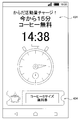
- FIG. 13A For example, when it is detected that the user is in a tension state for a predetermined time, the mobile terminal 200 performs a push notification as illustrated in FIG. 13A. When the user selects this push notification, as shown in FIG. 13B, the mobile terminal 200 displays a screen that presents a coupon that frees coffee for a predetermined time. In this way, by presenting a coupon for which coffee is free for a predetermined time, the mobile terminal 200 can cause the user to take an action to change the mood.
- FIG. 14A and 14B are explanatory diagrams showing examples of user interfaces displayed on the mobile terminal 200.
- FIG. 14A when it is detected that the user is in a tension state for a predetermined time, the mobile terminal 200 performs a push notification as shown in FIG. 14A.
- the mobile terminal 200 displays a screen that presents a coupon for which massage is free for a predetermined time. In this way, by presenting a coupon for which massage is free for a predetermined time, the mobile terminal 200 can make the user take an action to change the mood.
- the mobile terminal 200 may change the presentation for changing the user's state according to the user's past behavior. For example, if it is known from the user's past behavior that the user has fallen short of exercise, the mobile terminal 200 can use the fitness club free of charge for a predetermined time as a presentation for changing the user's state. May be presented. Also, for example, if it is determined from the user's past behavior that the user has a long sitting position and is likely to have low back pain, the mobile terminal 200 provides a massage store as a presentation for changing the user's state. May present a coupon that can be used free of charge for a predetermined time.
- the mobile terminal 200 displays the movie theater for a predetermined time as a presentation for changing the user's state. You may only present coupons that can be used for free.
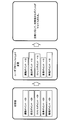
- the mobile terminal 200 points items for determining the user's state in advance, reduces the points of each item according to the user's action, and makes a presentation for improving items with a large amount of decrease.
- the initial value of the point can be changed according to the user profile (gender, age, medical history, work content, meal content and time, etc.).
- FIG. 15 is an explanatory diagram showing an example of user item points.
- the example which pointed about five items, exercise, sitting position, stress, meal, and sleep is shown.
- the number and contents of items are not limited to such examples.
- the initial values are all the same value (20 in this case), but the initial values of the items may be different.
- FIG. 15 also shows an example in which each item is changed according to the user's profile. The points of each item of the user may be held in the mobile terminal 200 or may be held in the server 300.
- the portable terminal 200 reduces the point of each item. For example, when the user's rest time continues for a predetermined time, the exercise point and the sitting position point decrease by a predetermined amount. For example, if the number of steps increased per predetermined time by the user is equal to or less than a predetermined number, the exercise points are decreased by a predetermined amount. Further, for example, when the user's sitting behavior continues for a predetermined time, the sitting point is decreased by a predetermined amount. Further, for example, when the user's tension state continues for a predetermined time, the stress points are decreased by a predetermined amount. Also, for example, if the user does not eat breakfast, the meal points are reduced by a predetermined amount.
- the sleep points are decreased by a predetermined amount. Further, for example, when a predetermined time elapses after the user wakes up, the sleep points decrease by a predetermined amount. Further, for example, when the meeting attended by the user continues for a predetermined time or more, the exercise point, the sitting position point, and the stress point are decreased by a predetermined amount.
- FIG. 16 and FIG. 17 are explanatory diagrams showing a correspondence relationship between an action that the user wants to perform and a point condition for presenting the action.
- the mobile terminal 200 presents the user with a 10-minute walk.
- the exercise point decreases to 18 points
- the sitting point decreases to 10 points
- the stress point decreases to 15 points
- the meal point decreases to 16 points
- the mobile terminal 200 presents the user to take a deep breath for 3 minutes.
- the exercise point is 18 points
- the sitting point is 10 points
- the stress point is 5 points
- the sleep point is 15 points
- the mobile terminal 200 presents the user with an extension of 1 minute.
- the mobile terminal 200 presents a fitness club coupon to the user.
- the exercise point is 18 points
- the sitting position point is 10 points
- the stress point is 15 points
- the meal point is 16 points
- the mobile terminal 200 presents a coupon for a massage shop.
- the exercise point decreases to 18 points
- the sitting position point decreases to 10 points
- the stress point decreases to 5 points
- the sleep point decreases to 15 points
- the mobile terminal 200 presents a movie theater coupon.
- the point of each reduced item is reset to an initial value (or a value set according to the user's profile) when the user executes the action presented on the mobile terminal 200.
- the mobile terminal 200 can change the content of the presentation for changing the user state by converting the user state into points.
- FIG. 18 is an explanatory diagram illustrating an example of content presented by the mobile terminal 200 in accordance with a change in the user's point and the change.
- the initial value of the point of each item of a certain user is set as indicated by reference numeral 601 in FIG. That is, the initial value of the exercise point is 15 points, the initial value of the sitting position is 20 points, the initial value of the stress point is 18 points, the initial value of the meal point is 12 points, and the initial value of the sleep point is 17 points. .
- the points of each item of the user change as indicated by reference numeral 602. That is, the sitting position point changes to 10 points and the sleeping point changes to 15 points.
- the mobile terminal 200 Since the sitting point is 10 points, the mobile terminal 200 presents that the user wants the user to take a deep breath for 3 minutes. When it is notified that the user takes a deep breath for 3 minutes or the information from the collection device 100 detects that the user has taken a deep breath for 3 minutes, the mobile terminal 200 presents a free coffee voucher to the user. At the same time, the point of each item is reset to the initial value.
- the mobile terminal 200 subtracts the points of each item according to the action performed by the user, and when the condition is met, the mobile terminal 200 presents the action that the user wants to perform and the reward obtained by the user by the action. Can be presented.
- the mobile terminal 200 may perform point subtraction using the user's schedule information or present an action desired by the user.
- the user's schedule information may be registered in the mobile terminal 200 or may be registered in the server 300 (or another server).
- the reward provided to the user can be changed according to the location information.
- the mobile terminal 200 may provide a coupon that can be used at a slightly distant place instead of the coupon that can be used at the nearest place in order to prompt the user to change their mood.
- the mobile terminal 200 may provide a coupon that can be used at a location of 300 meters instead of a coupon that can be used at a location of 100 meters from the current location of the user.
- a mobile terminal 200 capable of presenting information is provided.
- the mobile terminal 200 determines that a certain state has continued for a predetermined time, the mobile terminal 200 presents an action for changing from the state and a reward such as a coupon or a point provided to the user when the action is performed. Can do.
- each step in the processing executed by each device in this specification does not necessarily have to be processed in chronological order in the order described as a sequence diagram or flowchart.
- each step in the processing executed by each device may be processed in an order different from the order described as the flowchart, or may be processed in parallel.
- An acquisition unit for acquiring user activity information The first information obtained from the user state based on the activity information acquired by the acquisition unit is presented, and the content of the presented first information is changed according to the user's behavior.
- a display processing unit A display control device.
- the display control device determines the state of the user by using the biological information of the user acquired as the activity information by the acquisition unit.
- the display control apparatus according to (7), wherein the determination unit determines the state of the user using information regarding the movement of the user acquired by the acquisition unit as the activity information.
- the display control device according to any one of (5) to (9), wherein the determination unit performs an operation using the activity information with respect to the pointed state of the user.
- the display control unit presents the first information when the point of the user satisfies a predetermined condition.
Landscapes
- Engineering & Computer Science (AREA)
- Health & Medical Sciences (AREA)
- Life Sciences & Earth Sciences (AREA)
- Business, Economics & Management (AREA)
- Physics & Mathematics (AREA)
- Theoretical Computer Science (AREA)
- General Health & Medical Sciences (AREA)
- General Physics & Mathematics (AREA)
- Strategic Management (AREA)
- General Engineering & Computer Science (AREA)
- Development Economics (AREA)
- Finance (AREA)
- Accounting & Taxation (AREA)
- Medical Informatics (AREA)
- Biophysics (AREA)
- Public Health (AREA)
- Human Computer Interaction (AREA)
- Marketing (AREA)
- General Business, Economics & Management (AREA)
- Economics (AREA)
- Animal Behavior & Ethology (AREA)
- Surgery (AREA)
- Molecular Biology (AREA)
- Heart & Thoracic Surgery (AREA)
- Biomedical Technology (AREA)
- Pathology (AREA)
- Veterinary Medicine (AREA)
- Physical Education & Sports Medicine (AREA)
- Game Theory and Decision Science (AREA)
- Entrepreneurship & Innovation (AREA)
- Tourism & Hospitality (AREA)
- Primary Health Care (AREA)
- Oral & Maxillofacial Surgery (AREA)
- Dentistry (AREA)
- Physiology (AREA)
- Human Resources & Organizations (AREA)
- Epidemiology (AREA)
- Child & Adolescent Psychology (AREA)
- Computer Vision & Pattern Recognition (AREA)
- Psychiatry (AREA)
Abstract
Description
本開示は、表示制御装置、表示制御方法及びコンピュータプログラムに関する。 The present disclosure relates to a display control device, a display control method, and a computer program.
人間にとって、適正な運動を行ったり、適度に休息をとったりすることは、心身の健康のために重要である。例えば、特許文献1には、ユーザが一旦始めた運動等の行為が継続して実行されるために、ユーザに対してその行為の継続に対するモチベーションを維持・向上させることが可能な技術が開示されている。
For human beings, proper exercise and proper rest are important for mental and physical health. For example,
特許文献1には、ユーザが一旦始めた行為が継続して実行されるための技術は開示されている。しかし、ユーザがある状態になっている際に、ユーザをその状態から変容させることを促すための技術については、上記特許文献1には開示されていない。
そこで、本開示では、ユーザの状態から得られる情報の提示内容を、ユーザの行動に応じて変化させることが可能な、新規かつ改良された表示制御装置、表示制御方法及びコンピュータプログラムを提案する。 Therefore, the present disclosure proposes a new and improved display control apparatus, display control method, and computer program capable of changing the content of information obtained from the user's state according to the user's behavior.
本開示によれば、ユーザの活動情報を取得する取得部と、前記取得部により取得された前記活動情報に基づいたユーザの状態から得られる第1の情報を提示し、前記ユーザの行動に応じて、提示した前記第1の情報の内容を変化させる処理を行う表示処理部と、を備える、表示制御装置が提供される。 According to the present disclosure, an acquisition unit that acquires user activity information, and presents first information obtained from a user state based on the activity information acquired by the acquisition unit, and responds to the user's behavior And a display processing unit that performs a process of changing the content of the presented first information.
また本開示によれば、ユーザの活動情報を取得することと、取得された前記活動情報に基づいたユーザの状態から得られる第1の情報を提示し、前記ユーザの行動に応じて、提示した前記第1の情報の内容を変化させる処理をプロセッサが行うことと、を含む、表示制御方法が提供される。 Further, according to the present disclosure, the user's activity information is acquired, and the first information obtained from the user's state based on the acquired activity information is presented, and presented according to the user's behavior A display control method is provided, including: a processor performing a process of changing the content of the first information.
また本開示によれば、コンピュータに、ユーザの活動情報を取得することと、取得された前記活動情報に基づいたユーザの状態から得られる第1の情報を提示し、前記ユーザの行動に応じて、提示した前記第1の情報の内容を変化させる処理を行うことと、を実行させる、コンピュータプログラムが提供される。 According to the present disclosure, the computer obtains the user's activity information, presents the first information obtained from the user's state based on the obtained activity information, and responds to the user's action. A computer program is provided for executing the process of changing the content of the presented first information.
以上説明したように本開示によれば、ユーザの状態から得られる情報の提示内容を、ユーザの行動に応じて変化させることが可能な、新規かつ改良された表示制御装置、表示制御方法及びコンピュータプログラムを提供することが出来る。 As described above, according to the present disclosure, a new and improved display control apparatus, display control method, and computer capable of changing the content of information obtained from the user's state according to the user's behavior A program can be provided.
なお、上記の効果は必ずしも限定的なものではなく、上記の効果とともに、または上記の効果に代えて、本明細書に示されたいずれかの効果、または本明細書から把握され得る他の効果が奏されてもよい。 Note that the above effects are not necessarily limited, and any of the effects shown in the present specification, or other effects that can be grasped from the present specification, together with or in place of the above effects. May be played.
以下に添付図面を参照しながら、本開示の好適な実施の形態について詳細に説明する。なお、本明細書及び図面において、実質的に同一の機能構成を有する構成要素については、同一の符号を付することにより重複説明を省略する。 Hereinafter, preferred embodiments of the present disclosure will be described in detail with reference to the accompanying drawings. In addition, in this specification and drawing, about the component which has the substantially same function structure, duplication description is abbreviate | omitted by attaching | subjecting the same code | symbol.
なお、説明は以下の順序で行うものとする。
1.本開示の実施の形態
1.1.概要
1.2.システム構成例
1.3.機能構成例
1.4.動作例及び表示例
2.まとめ
The description will be made in the following order.
1. Embodiment of the present disclosure 1.1. Outline 1.2. System configuration example 1.3. Functional configuration example 1.4. Operation example and display example Summary
<1.本開示の実施の形態>
[1.1.概要]
本開示の実施の形態について詳細に説明する前に、本開示の実施の形態の概要について説明する。
<1. Embodiment of the present disclosure>
[1.1. Overview]
Before describing the embodiment of the present disclosure in detail, an outline of the embodiment of the present disclosure will be described.
人間にとって、適正な運動を行ったり、適度に休息をとったりすることは、心身の健康のために重要である。人間は1日の中で座位、立位、運動などの状態を繰り返し行っている。そして、座位の状態である時間が長く続くほど、人の健康状態は悪化する。例えば、十分な運動を行っていても、運動していない時間帯に椅子に座り続けていると、座位の状態が長く続くため健康状態は悪化してしまう。 For human beings, proper exercise and proper rest are important for mental and physical health. Humans repeatedly perform sitting, standing and exercising during the day. And the longer the time in the sitting position, the worse the human health condition. For example, even if you are doing enough exercise, if you keep sitting in a chair during a time when you are not exercising, the state of sitting will continue for a long time and your health will deteriorate.
また、作業中に適度な休息を取ることが生産性の向上に繋がるという研究結果もある。 There are also research results that taking a moderate rest during work leads to improved productivity.
従って、人間のある活動状態が長く続いたら、その活動状態から別の状態への転換(変容)を定期的に行わせることで、その人間にとって生産性を向上させることが出来るだけでなく、ひいてはその人間の心身の健康状態の向上にも繋がりうる。 Therefore, if a person's active state lasts for a long time, not only can he improve productivity for the human by periodically changing (transforming) from that active state to another state, It can also lead to the improvement of human mental and physical health.
そこで本件開示者は、上述した点に鑑みて、ユーザの状態を検出し、ある状態が所定時間継続したと判断すると、そのユーザに対して、その現在の状態からの転換(変容)を促すことが可能な技術について鋭意検討を行った。その結果、本件開示者は、以下で説明するように、ユーザの状態を検出し、ある状態が所定時間継続したと判断すると、そのユーザに対して、その現在の状態からの転換(変容)を促すことが可能な技術を考案するに至った。 Therefore, in view of the above-described points, the present disclosurer detects the state of the user, and when it is determined that the certain state has continued for a predetermined time, prompts the user to change (transform) from the current state. We have intensively studied the technology that can be used. As a result, as described below, the present disclosurer detects the state of the user, and if it is determined that a certain state has continued for a predetermined time, the presenter makes a change (transformation) from the current state to the user. It came to devise the technology that can be encouraged.
以上、本開示の実施の形態の概要を説明した。 The outline of the embodiment of the present disclosure has been described above.
[1.2.システム構成例]
次に、本開示の実施の形態に係るシステムの構成例を説明する。図1は、本開示の実施の形態に係る健康管理システム1の全体構成例を示す説明図である。以下、図1を用いて本開示の実施の形態に係る健康管理システム1の全体構成例について説明する。
[1.2. System configuration example]
Next, a configuration example of the system according to the embodiment of the present disclosure will be described. FIG. 1 is an explanatory diagram illustrating an example of the overall configuration of a
図1に示したように、本開示の実施の形態に係る健康管理システム1は、収集装置100と、携帯端末200と、サーバ300と、を含んで構成される。
As illustrated in FIG. 1, the
収集装置100は、ユーザの身体に関する情報を収集する装置であり、例えばユーザの身体、特に手首に装着されうる。収集装置100としては、例えばウェアラブルデバイスの形態を有しうる。図1では、ユーザの手首に装着されることを目的とした腕時計型のウェアラブルデバイスとして収集装置100が図示されているが、収集装置100の形態は腕時計型のウェアラブルデバイスに限定されるものではない。
The
収集装置100は、例えばユーザの心拍数や心拍の揺らぎ等のユーザの身体に関する情報を収集する。収集装置100は、例えば、LED(Light Emitting Diode)の光をユーザの肌に照射することで血流量の変化を捉え、血流量の変化からユーザの脈波を計測する。収集装置100は、ユーザの脈波を計測することで、ユーザの心拍数や心拍の揺らぎ等の、ユーザの身体に関する情報を収集できる。
The
また収集装置100は、加速度センサを備えて、加速度センサから出力されるセンシングデータを収集する。
The
携帯端末200は、ユーザが携帯する、通信機能を有する端末である。携帯端末200は、例えばスマートフォン、タブレット型端末等の形態を有しうる。携帯端末200は、収集装置100との間の無線通信によって、収集装置100からユーザの身体に関する情報やセンシングデータを取得する。そして携帯端末200は、取得した情報やデータに基づき、そのユーザの状態が所定時間継続していれば、その状態を変容させるための情報を提示する機能を有する。
The
なお、収集装置100からの様々な情報を受け取るのは、携帯端末200ではなく、ラップトップ型またはデスクトップ型のパーソナルコンピュータでもよい。
Note that various information from the
サーバ300は、携帯端末200との間の通信によって、携帯端末200から情報を取得したり、携帯端末200に情報を提供したりする装置である。サーバ300は、複数の装置が相互にネットワークで接続されていることによって携帯端末200からは1つのデバイスと見なされている形態であってもよい。サーバ300は、携帯端末200が取得した、ユーザの身体に関する情報やセンシングデータを取得して、ユーザの状態が所定時間継続していれば、その状態を変容させる情報を提示させるための情報を携帯端末200に提供する。
The
収集装置100からユーザの身体に関する情報やセンシングデータを取得することで、携帯端末200(またはサーバ300)は、ユーザの活動状態を高精度に推測することができる。携帯端末200は、ユーザの身体に関する情報やセンシングデータを用いて、ユーザが安静状態なのか、座っているのか、立っているのか、軽い運動をしているのか、激しい運動をしているのか、等のユーザの状態を推測すると共に、それぞれの状態の時間を計測することができる。
By acquiring information about the user's body and sensing data from the
なお図1では、本開示の実施の形態に係る健康管理システム1は、収集装置100と、携帯端末200と、サーバ300と、を含んで構成される例を示したが、本開示は係る例に限定されるものでは無い。以下で説明する処理は、収集装置100単体で行われていても良く、携帯端末200単体で行われても良く、収集装置100と携帯端末200との組み合わせ、収集装置100とサーバ300との組み合わせ、携帯端末200とサーバ300との組み合わせ、によって行われても良い。
1 illustrates an example in which the
以上、本開示の実施の形態に係る健康管理システム1の全体構成例について説明した。続いて、本開示の実施の形態に係る各装置の機能構成例について説明する。
The overall configuration example of the
[1.3.機能構成例]
図2は、本開示の実施の形態に係る収集装置100の機能構成例を示す説明図である。以下、図2を用いて本開示の実施の形態に係る収集装置100の機能構成例について説明する。
[1.3. Functional configuration example]
FIG. 2 is an explanatory diagram illustrating a functional configuration example of the
図2に示すように、本実施形態に係る収集装置100は、タッチパネルディスプレイ102と、運動状態センサ104と、通信部106と、記憶部108と、スピーカ110と、マイク112と、制御部120と、を有して構成される。また制御部120は、判断部122と、認識部124と、表示制御部126、音声制御部128を有して構成されている。なお、図2に示す収集装置100の各構成要素は、ハードウェア、またはCPUなどの中央演算処理装置とこれを機能させるためのプログラムから構成されることができる。なお、収集装置100は、タッチパネルディスプレイ102、通信部106、スピーカ110、マイク112を備えていなくても良い。
As illustrated in FIG. 2, the
タッチパネルディスプレイ102は、タッチパネルを備えた表示デバイスであり、ユーザの指などの接触を検出することが可能なように構成されている。
The
運動状態センサ104は、例えば心拍数センサと加速度センサと、を含む。運動状態センサ104が出力するセンシングデータは制御部120に送られる。
The
通信部106は、制御部120の制御の元で他の装置との間で通信を行って情報の授受を実行する。通信部106は、通信機能を有するハードウェア、例えば通信回路を含んで構成される。記憶部108は、例えばROM、フラッシュメモリ等で構成され、収集装置100で動作するコンピュータプログラムや各種情報などを記憶する。
The
制御部120の判断部122は、運動状態センサ104の検出値から、ユーザの状態が座位であるか、立位であるか、軽い運動しているか、激しい運動をしているか、等を判断する。判断部122は、ユーザの状態が座位から立位に変わった時刻、及び所定時間(例えば1日)内にユーザの状態が座位から立位に変わった回数をも判断することができる。認識部124は、判断部122の判断結果に基づいて、ユーザの状態を認識するとともに、そのユーザの状態が継続した連続時間を認識する。
The
表示制御部126は、判断部122、認識部124による処理結果をタッチパネルディスプレイ102に表示するための処理を行う。音声制御部128は、判断部122、認識部124による処理結果をスピーカ110から音声として出力するための処理を行う。なお、運動状態センサ104は、体温センサなど他の生体情報を検出するセンサを含んでいても良く、判断部122は心拍や体温など複数の生体情報を用いて運動状態を判定しても良い。
The
以上、本開示の実施の形態に係る収集装置100の機能構成例について説明した。次に、本開示の実施の形態に係る携帯端末200の機能構成例について説明する。
Heretofore, the functional configuration example of the
図3は、本開示の実施の形態に係る携帯端末200の機能構成例を示す説明図である。以下、図3を用いて本開示の実施の形態に係る携帯端末200の機能構成例について説明する。
FIG. 3 is an explanatory diagram illustrating a functional configuration example of the
図3に示すように、本実施形態に係る携帯端末200は、タッチパネルディスプレイ202と、運動状態センサ204と、通信部206と、記憶部208と、スピーカ210と、マイク212と、制御部220と、を有して構成される。また制御部220は、判断部222と、認識部224と、表示制御部226、音声制御部228を有して構成されている。なお、図3に示す携帯端末200の各構成要素は、ハードウェア、またはCPUなどの中央演算処理装置とこれを機能させるためのプログラムから構成されることができる。
As illustrated in FIG. 3, the
タッチパネルディスプレイ202は、タッチパネルを備えた表示デバイスであり、ユーザの指などの接触を検出することが可能なように構成されている。
The
運動状態センサ204は、例えば心拍数センサと加速度センサと、を含む。運動状態センサ204が出力するセンシングデータは制御部220に送られる。
The
通信部206は、本開示の取得部の一例であり、制御部220の制御の元で他の装置との間で通信を行って情報の授受を実行する。通信部206は、通信機能を有するハードウェア、例えば通信回路を含んで構成される。記憶部208は、例えばROM、フラッシュメモリ等で構成され、携帯端末200で動作するコンピュータプログラムや各種情報などを記憶する。
The
制御部220の判断部222は、運動状態センサ204の検出値から、ユーザの状態が座位であるか、立位であるか、軽い運動しているか、激しい運動をしているか、等を判断する。判断部222は、ユーザの状態が座位から立位に変わった時刻、及び所定時間(例えば1日)内にユーザの状態が座位から立位に変わった回数をも判断することができる。また判断部222は、運動状態センサ204の検出値や、収集装置100から取得した情報、例えば収集装置100を身に付けているユーザの生体情報から、ユーザがどの時間その状態にいるかを判断することが出来る。認識部224は、判断部222の判断結果に基づいて、ユーザの状態を認識するとともに、そのユーザの状態が継続した連続時間を認識する。
The
表示制御部226は、本開示の表示処理部の一例であり、判断部222、認識部224による処理結果をタッチパネルディスプレイ202に表示するための処理を行う。本実施形態では、表示制御部226は、判断部222が判断したユーザの状態を変容させるための情報を出力する。具体的な情報の出力例は後述する。音声制御部228は、判断部222、認識部224による処理結果をスピーカ210から音声として出力するための処理を行う。なお、運動状態センサ204は、体温センサなど他の生体情報を検出するセンサを含んでいても良く、認識部224は心拍や体温など複数の生体情報を用いて運動状態を判定しても良い。
The
以上、本開示の実施の形態に係る携帯端末200の機能構成例について説明した。次に、本開示の実施の形態に係るサーバ300の機能構成例について説明する。
The function configuration example of the
図4は、本開示の実施の形態に係るサーバ300の機能構成例を示す説明図である。以下、図4を用いて本開示の実施の形態に係るサーバ300の機能構成例について説明する。
FIG. 4 is an explanatory diagram illustrating a functional configuration example of the
図4に示したように、本開示の実施の形態に係るサーバ300は、判断部310と、認識部320と、記憶部330と、通信部340と、を含んで構成される。
As shown in FIG. 4, the
判断部310は、収集装置100または携帯端末200から送られて、通信部340で受信した、運動状態センサ104(または運動状態センサ204)の検出値から、ユーザの状態が座位であるか、立位であるか、軽い運動しているか、激しい運動をしているか、等を判断する。判断部222は、ユーザの状態が座位から立位に変わった時刻、及び所定時間(例えば1日)内にユーザの状態が座位から立位に変わった回数をも判断することができる。認識部320は、判断部310の判断結果に基づいて、ユーザの状態を認識するとともに、そのユーザの状態が継続した連続時間を認識する。
Based on the detection value of the exercise state sensor 104 (or the exercise state sensor 204) sent from the
記憶部330は、例えばROM、フラッシュメモリ、HDD等で構成され、サーバ300で動作するコンピュータプログラムや各種情報などを記憶する。通信部340は、他の装置との間で通信を行って情報の授受を実行する。通信部340は、通信機能を有するハードウェア、例えば通信回路を含んで構成される。
The
以上、本開示の実施の形態に係るサーバ300の機能構成例について説明した。次に、本開示の実施の形態に係る健康管理システム1の動作例について説明する。
The function configuration example of the
[1.4.動作例及び表示例]
以下の説明では、収集装置100を身体に装着したユーザ(以下単に「ユーザ」も表記する)の状態を携帯端末200が表示する場合について示す。本実施形態に係る健康管理システム1の動作例を詳細に説明する前に、携帯端末200が実行するアプリケーションのユーザインタフェースの例について説明する。
[1.4. Operation example and display example]
In the following description, a case where the
図5~7は、本実施形態に係る携帯端末200が実行するアプリケーションのユーザインタフェースの例を示す説明図である。本実施形態に係る携帯端末200が実行するアプリケーションは、収集装置100を身体に装着したユーザの状態を表示する画面、収集装置100を身体に装着したユーザの行動に基づいて提供されるクーポンやポイントなどを表示する画面、収集装置100を身体に装着したユーザが関係するイベントを表示する画面、等を有する。
5 to 7 are explanatory diagrams showing examples of user interfaces of applications executed by the
図5は、収集装置100を身体に装着したユーザの状態を表示する画面の例を示す説明図である。図5に示した画面は、領域401~406を含む。領域401は、画面を切り替えるための領域である。領域401の「マイページ」をユーザが触ると、携帯端末200は図5に示した画面に切り替える。領域402は、収集装置100を身体に装着したユーザの身体的な活動量(からだ活動量)の情報を表示する領域である。領域403は、ユーザの精神的な活動量(こころ活動量)の情報を表示する領域である。領域404は、ユーザの歩数を表示する領域である。領域405は、ユーザの心拍数を表示する領域である。領域406は、ユーザの睡眠時間を表示する領域である。
FIG. 5 is an explanatory diagram illustrating an example of a screen that displays a state of a user who wears the
領域402~406に示した情報は、いずれも、収集装置100が収集した情報に基づいて判断部222によって状態が判断され、認識部224によって時間や回数などが認識された結果、提示される情報である。
All of the information shown in the
図6は、ユーザの行動に基づいて提供されるクーポンやポイントなどを表示する画面の例を示す説明図である。図6に示した画面は、領域401、411~413を含む。領域401の「クーポン」をユーザが触ると、携帯端末200は図6に示した画面に切り替える。領域411は、ユーザを識別する情報(IDやバーコード等)を表示する領域である。領域412は、ユーザの現在のポイントを表示する領域である。領域413は、ユーザの行動に基づいて提供されるクーポンなどのリワードを表示する領域である。
FIG. 6 is an explanatory diagram showing an example of a screen that displays coupons and points provided based on user behavior. The screen shown in FIG. 6 includes
図7は、ユーザが関係するイベントを表示する画面の例を示す説明図である。図7に示した画面は、領域401、421を含む。領域401の「カレンダー」をユーザが触ると、携帯端末200は図7に示した画面に切り替える。領域421は、ユーザが関係するイベントをカレンダー形式で表示する領域である。
FIG. 7 is an explanatory diagram showing an example of a screen that displays events related to the user. The screen shown in FIG. 7 includes
以下では、主に、図6に示した、ユーザの行動に基づいてクーポンやポイントなどのリワードを提供するために、ユーザに現在の行動からの変容を促す画面(健康作りアクション提案画面)を表示する際の表示制御について説明する。 In the following, the screen (health creation action proposal screen) that prompts the user to change from the current behavior in order to provide rewards such as coupons and points based on the behavior of the user, as shown in FIG. The display control at the time of doing will be described.
図8は、本開示の実施の形態に係る携帯端末200の動作例を示す説明図である。以下、図8を用いて本実施形態に係る携帯端末200の動作例について説明する。
FIG. 8 is an explanatory diagram illustrating an operation example of the
携帯端末200は、収集装置100から定期的に情報を取得しており、取得した情報が行動変容必要条件を満たしたかどうか判断する(ステップS101)。このステップS101の判断は例えば判断部222が実行する。
The
行動変容必要条件の例として、座位行動が所定時間続いた、緊張状態が所定時間続いた、激しい運動が所定時間続いた、所定時間あたりの増加歩数が所定の歩数以下だった、睡眠時間が所定時間未満であった、起床から所定時間経過した、などがある。 Examples of behavior modification requirements include sitting behavior lasting for a predetermined period of time, tension lasting for a predetermined period of time, intense exercise lasting for a predetermined period of time, an increase in the number of steps per predetermined period of time being a predetermined number of steps or less It was less than the time, or a predetermined time passed after getting up.
携帯端末200は、収集装置100から取得した情報が行動変容必要条件を満たすまで待機し(ステップS101、No)、収集装置100から取得した情報が行動変容必要条件を満たすと(ステップS101、Yes)、行動変容を促すプッシュ通知を行う(ステップS102)。プッシュ通知の例については後述する。そして携帯端末200は、プッシュ通知を開く入力が行われたかどうか判断する(ステップS103)。
The
携帯端末200は、プッシュ通知を開く入力が行われるまで待機し(ステップS103、No)、プッシュ通知を開く入力が行われると(ステップS103、Yes)、携帯端末200は、健康作りアクション提案画面を表示する(ステップS104)。健康作りアクション提案画面の表示例は後に詳述する。
The
携帯端末200は、健康作りアクション提案画面に表示される「あとで実行する」ボタンが押されたかどうかを判断する(ステップS105)。「あとで実行する」ボタンが押されれば(ステップS105、Yes)、携帯端末200はステップS101の行動変容必要条件を満たしたかどうかの判断処理に戻る。「あとで実行する」ボタンが押されなければ(ステップS105、No)、続いて携帯端末200は、「実行する」ボタンが所定時間内に押されたかどうかを判断する(ステップS106)。
The
「実行する」ボタンが所定時間内に押されなければ(ステップS106、No)、携帯端末200はステップS101の行動変容必要条件を満たしたかどうかの判断処理に戻る。「実行する」ボタンが所定時間内に押されれば(ステップS106、Yes)、携帯端末200は、ユーザに対してリワードを提供するためのリワード表示を行う(ステップS107)。
If the “execute” button is not pressed within the predetermined time (step S106, No), the
図9A~9Dは、図8の一連の動作によって携帯端末200に表示されるユーザインタフェースの例を示す説明図である。ここでは、ユーザが座位状態にあることが所定時間継続していることが検出された場合に、ユーザに15分間の散歩を提案する例を説明する。
9A to 9D are explanatory diagrams showing examples of user interfaces displayed on the
図9Aは、収集装置100から取得した情報が行動変容必要条件を満たしたので、携帯端末200が行動変容を促すプッシュ通知を行った際の、携帯端末200に表示される画面の例である。プッシュ通知は、ユーザが携帯端末200を操作していなければロック画面に表示され、ユーザが携帯端末200を操作していれば操作中の画面に表示されうる。図9Aには、符号430で示したプッシュ通知が携帯端末200に表示される様子が示されている。なお、プッシュ通知は、画面への表示に限定されるものではない。携帯端末200は、音声や振動によってプッシュ通知を行っても良い。
FIG. 9A is an example of a screen displayed on the
プッシュ通知の方法は、アプリケーションの設定によってユーザが選択できるようにしても良い。例えば、ディスプレイへの表示によって通知するか、スピーカからの音声出力によって通知するか、バイブレータの振動によって通知するかを、収集装置100と携帯端末200のそれぞれで選択できるようにしても良い。またプッシュ通知の方法は、収集装置100と携帯端末200との距離関係によって変化しても良い。例えば、ユーザが収集装置100を身に付けており、収集装置100と携帯端末200との間の距離が所定値以上離れると、通知は収集装置100のみで行われるようにしても良い。
The push notification method may be selectable by the user according to the application settings. For example, each of the
図9Bは、図8のステップS104によって行われる健康作りアクション提案画面の表示例である。図9Bに示した健康作りアクション提案画面には、ユーザに行って欲しい行動を表示する領域431、「実行する」と表示されたボタン432、「あとで実行する」と表示されたボタン433、クーポン画像434が表示されている。ここでは、ユーザに15分間の散歩を行って欲しいことが領域431に提示されている。領域431に提示される情報は、判断部222が判断したユーザの状態を変容させるための情報である。例えば、ユーザが2時間座位状態を継続していると判断部222が判断した場合に、領域431には15分間の散歩を行って欲しいことが提示される。ユーザがボタン432を押すと、携帯端末200は後述する図9Cに示した画面を表示する。ユーザがボタン433を押すと、携帯端末200は、健康作りアクション提案画面から別の任意の画面に遷移する。
FIG. 9B is a display example of the health creation action proposal screen performed in step S104 of FIG. The health creation action proposal screen shown in FIG. 9B includes an
携帯端末200は、この時点ではクーポン画像434を半透明で表示している。携帯端末200は、クーポン画像434をこの時点では全く見えない状態としていてもよい。ユーザが領域431で提示されている行動を実行したことを検出すると、携帯端末200は、後述する図9Cに示した画面のように、クーポン画像434を明瞭に表示する。
The
図9Cは、図8のステップS107によって行われるリワード表示の例であり、図8のボタン433をユーザが押した際に携帯端末200が表示する画面の例である。図9Cに示した画面には、ユーザに行って欲しい行動を表示する領域431、残り時間を表示する領域435、クーポン画像434が表示されている。領域435に表示されている時間が経過する(残り時間が少なくなっていく)に連れて、画面に表示されるストップウォッチの針の位置が変化する。また、携帯端末200は、クーポン画像434を明瞭に表示する。
FIG. 9C is an example of the reward display performed in step S107 of FIG. 8, and is an example of a screen displayed by the
15分が経過すると、携帯端末200は、図9Dに示したように、この15分間の散歩によってユーザに提供するクーポンを領域413に表示する。
When 15 minutes have elapsed, the
図8の一連の動作によって携帯端末200に表示される画面の別の例を示す。図10A~10Dは、図8の一連の動作によって携帯端末200に表示されるユーザインタフェースの例を示す説明図である。ここでは、ユーザが緊張状態にあることが所定時間継続していることが検出された場合に、ユーザに3分間の深呼吸を提案する例を説明する。
8 shows another example of a screen displayed on the
図10Aは、収集装置100から取得した情報が行動変容必要条件を満たしたので、携帯端末200が行動変容を促すプッシュ通知を行った際の、携帯端末200に表示される画面の例である。図10Aには、符号430で示したプッシュ通知が携帯端末200に表示される様子が示されている。
FIG. 10A is an example of a screen displayed on the
図10Bは、図8のステップS104によって行われる健康作りアクション提案画面の表示例である。図10Bに示した健康作りアクション提案画面には、ユーザに行って欲しい行動を表示する領域431、「実行する」と表示されたボタン432、「あとで実行する」と表示されたボタン433、クーポン画像434が表示されている。ここでは、ユーザに3分間の深呼吸を行って欲しいことが領域431に提示されている。ユーザがボタン432を押すと、携帯端末200は後述する図10Cに示した画面を表示する。ユーザがボタン433を押すと、携帯端末200は、健康作りアクション提案画面から別の任意の画面に遷移する。
FIG. 10B is a display example of the health-making action proposal screen performed in step S104 of FIG. The health creation action proposal screen shown in FIG. 10B includes an
図10Cは、図8のステップS107によって行われるリワード表示の例であり、図8のボタン433をユーザが押した際に携帯端末200が表示する画面の例である。図9Cに示した画面には、ユーザに行って欲しい行動を表示する領域431、残り時間を表示する領域435、クーポン画像434が表示されている。領域435に表示されている時間が経過する(少なくなっていく)に連れて、画面に表示されるストップウォッチの針の位置が変化する。また、携帯端末200は、クーポン画像434を明瞭に表示する。
FIG. 10C is an example of the reward display performed in step S107 of FIG. 8, and is an example of a screen displayed on the
そして、ボタン433をユーザが押してから3分が経過すると、携帯端末200は、図10Dに示したように、この3分間の深呼吸によってユーザに提供するクーポンを領域413に表示する。
Then, when 3 minutes elapses after the user presses the
このように、携帯端末200は、収集装置100から送信された情報に基づいて、ユーザに状態を変容させるための行動を提示することが出来る。
Thus, the
携帯端末200は、提示した行動がユーザによって行われたかどうかを判断し、提示した行動がユーザによって実際に行われた場合に限り、クーポンやポイントをユーザに提供するようにしてもよい。
The
図11は、本開示の実施の形態に係る携帯端末200の動作例を示す説明図である。以下、図11を用いて本実施形態に係る携帯端末200の動作例について説明する。
FIG. 11 is an explanatory diagram illustrating an operation example of the
携帯端末200は、収集装置100から定期的に情報を取得しており、取得した情報が行動変容必要条件を満たしたかどうか判断する(ステップS111)。このステップS101の判断は例えば判断部222が実行する。
The
携帯端末200は、収集装置100から取得した情報が行動変容必要条件を満たすまで待機し(ステップS111、No)、収集装置100から取得した情報が行動変容必要条件を満たすと(ステップS111、Yes)、行動変容を促すプッシュ通知を行う(ステップS112)。そして携帯端末200は、プッシュ通知を開く入力が行われたかどうか判断する(ステップS113)。
The
携帯端末200は、プッシュ通知を開く入力が行われるまで待機し(ステップS123、No)、プッシュ通知を開く入力が行われると(ステップS113、Yes)、携帯端末200は、健康作りアクション提案画面を表示する(ステップS114)。
The
携帯端末200は、健康作りアクション提案画面に表示される「あとで実行する」ボタンが押されたかどうかを判断する(ステップS115)。「あとで実行する」ボタンが押されれば(ステップS115、Yes)、携帯端末200はステップS111の行動変容必要条件を満たしたかどうかの判断処理に戻る。「あとで実行する」ボタンが押されなければ(ステップS115、No)、続いて携帯端末200は、「実行する」ボタンが所定時間内に押されたかどうかを判断する(ステップS116)。
The
「実行する」ボタンが所定時間内に押されなければ(ステップS116、No)、携帯端末200はステップS111の行動変容必要条件を満たしたかどうかの判断処理に戻る。「実行する」ボタンが所定時間内に押されれば(ステップS116、Yes)、携帯端末200は、提示した行動に対して実際にアクションが実行されたかどうかを判断する(ステップS117)。ステップS117の処理は、例えば判断部222が実行する。また携帯端末200は、提示した行動に対して実際にアクションが実行されたかどうかを、収集装置100から送信される情報に基づいて判断する。一例を挙げれば、携帯端末200は、深呼吸を行うことを提示したのに1分間あたりの心拍数が所定値以上となっていれば、ユーザは深呼吸を行っていないと判断しても良い。
If the “execute” button is not pressed within the predetermined time (step S116, No), the
提示した行動に対して実際にアクションが実行されていなければ(ステップS117、No)、携帯端末200はステップS111の行動変容必要条件を満たしたかどうかの判断処理に戻る。提示した行動に対して実際にアクションが実行されれば(ステップS117、Yes)、携帯端末200は、ユーザに対してリワードを提供するためのリワード表示を行う(ステップS118)。
If no action is actually executed for the presented action (step S117, No), the
このように、提示した行動が実際に行われた場合に、クーポンやポイントをユーザに提供する際に、携帯端末200は、行動の実行度合いに応じてクーポンの表示を変化させても良い。
As described above, when the presented action is actually performed, when providing the user with a coupon or a point, the
図12A~12Dは、携帯端末200に表示されるユーザインタフェースの例を示す説明図である。ユーザに対して3分間の深呼吸を提案した場合に、ユーザがその提案に応じて深呼吸を行っていることが収集装置100から送信された情報から分かれば、携帯端末200は、その深呼吸の実行時間に応じてクーポン画像434を少しずつ明瞭に表示する。しかし、ユーザが途中で深呼吸を中断していると、携帯端末200は、図12Bに示したように、深呼吸というアクションが中断中である旨の表示を行う。
12A to 12D are explanatory diagrams showing examples of user interfaces displayed on the
その後ユーザが深呼吸を再開すると、携帯端末200は、再び図12Cに示したように、その深呼吸の実行時間に応じてクーポン画像434を少しずつ明瞭に表示する。そして、ユーザが3分間の深呼吸を完了すると、携帯端末200は、図12Dに示したように、クーポン画像434を完全に明瞭に表示する。
Then, when the user resumes deep breathing, the
ユーザのある状態が所定時間継続した場合に携帯端末200が提示する提案は、時間限定で使用できるクーポンであっても良い。図13A、13Bは、携帯端末200に表示されるユーザインタフェースの例を示す説明図である。例えば、ユーザが緊張状態にあることが所定時間継続していることを検出すると、携帯端末200は、図13Aに示したようなプッシュ通知を行う。ユーザがこのプッシュ通知を選択すると、携帯端末200は、図13Bに示したように、所定時間の間だけコーヒーが無料になるクーポンを提示する画面を表示する。このように所定時間の間だけコーヒーが無料になるクーポンを提示することで、携帯端末200は、ユーザに対して気分転換をさせるための行動を取らせることが出来る。
The proposal that the
図14A、14Bは、携帯端末200に表示されるユーザインタフェースの例を示す説明図である。例えば、ユーザが緊張状態にあることが所定時間継続していることを検出すると、携帯端末200は、図14Aに示したようなプッシュ通知を行う。ユーザがこのプッシュ通知を選択すると、携帯端末200は、図14Bに示したように、所定時間の間だけマッサージが無料になるクーポンを提示する画面を表示する。このように所定時間の間だけマッサージが無料になるクーポンを提示することで、携帯端末200は、ユーザに対して気分転換をさせるための行動を取らせることが出来る。
14A and 14B are explanatory diagrams showing examples of user interfaces displayed on the
携帯端末200は、ユーザの過去の行動に応じて、ユーザの状態を変容させるための提示を変化させても良い。例えば、ユーザの過去の行動から、そのユーザが運動不足に陥っていることが分かれば、携帯端末200は、ユーザの状態を変容させるための提示として、フィットネスクラブが所定時間だけ無料で利用できるクーポンを提示しても良い。また例えば、ユーザの過去の行動から、そのユーザは座位状態が長く、腰痛を持っている可能性が高いと判断すれば、携帯端末200は、ユーザの状態を変容させるための提示として、マッサージ店が所定時間だけ無料で利用できるクーポンを提示しても良い。また例えば、ユーザの過去の行動から、そのユーザが精神的に疲労している可能性が高いと判断すれば、携帯端末200は、ユーザの状態を変容させるための提示として、映画館が所定時間だけ無料で利用できるクーポンを提示しても良い。
The
ユーザの過去の行動に応じて、ユーザの状態を変容させるための提示の中身を変化させる場合の動作例を示す。携帯端末200は、予めユーザの状態を判断するための項目をポイント化しておき、ユーザの行動に応じて各項目のポイントを減少させて、減少量の多い項目を改善させるための提示を行う。そのポイントは、ユーザのプロファイル(性別、年齢、病歴、仕事の内容、食事の内容及び時間、等)に応じて初期値が変更されうる。
An example of operation when the content of the presentation for changing the user's state is changed according to the user's past behavior is shown. The
図15は、ユーザの項目のポイント化の例を示す説明図である。ここでは、運動、座位、ストレス、食事、睡眠の5つの項目についてポイント化した例が示されている。項目の数や内容は係る例に限定されるものではない。初期値はいずれも同じ値(ここでは20)としているが、各項目の初期値は異なっていても良い。そして図15には、各項目をユーザのプロファイルに応じて変更している例も示されている。このユーザの各項目のポイントは携帯端末200に保持されていても良いし、サーバ300に保持されていても良い。
FIG. 15 is an explanatory diagram showing an example of user item points. Here, the example which pointed about five items, exercise, sitting position, stress, meal, and sleep is shown. The number and contents of items are not limited to such examples. The initial values are all the same value (20 in this case), but the initial values of the items may be different. FIG. 15 also shows an example in which each item is changed according to the user's profile. The points of each item of the user may be held in the
そして、ユーザが行った行動に応じて、携帯端末200は各項目のポイントを減少させていく。例えば、ユーザの安静時間が所定時間続くと、運動ポイント及び座位ポイントが所定量減少する。また例えば、ユーザの所定時間あたりの増加歩数が所定数以下であれば、運動ポイントが所定量減少する。また例えば、ユーザの座位行動が所定時間続くと、座位ポイントが所定量減少する。また例えば、ユーザの緊張状態が所定時間続くと、ストレスポイントが所定量減少する。また例えば、ユーザが朝食を食べていないと、食事ポイントが所定量減少する。また例えば、ユーザの睡眠時間が所定時間未満であれば、睡眠ポイントが所定量減少する。また例えば、ユーザの起床から所定時間経過すると、睡眠ポイントが所定量減少する。また例えば、ユーザが出席した会議が所定時間以上継続すると、運動ポイント、座位ポイント及びストレスポイントが所定量減少する。
And according to the action which the user performed, the
そして、ユーザの各項目のポイントが条件を満たすと、携帯端末200は、その条件に応じた行動を提示する画面を表示する。図16及び図17は、ユーザに行って欲しい行動と、その行動を提示するためのポイントの条件との対応関係を示す説明図である。例えば、運動ポイント及び座位ポイントが10ポイントまで低下すると、携帯端末200は、ユーザに10分間の散歩を行うことを提示する。また例えば、運動ポイントが18ポイント、座位ポイントが10ポイント、ストレスポイントが15ポイント、食事ポイントが16ポイントまで低下すると、携帯端末200は、ユーザに3分間の深呼吸を行うことを提示する。また例えば、運動ポイントが18ポイント、座位ポイントが10ポイント、ストレスポイントが5ポイント、睡眠ポイントが15ポイントまで低下すると、携帯端末200は、ユーザに1分間の伸びを行うことを提示する。
Then, when the point of each item of the user satisfies the condition, the
また例えば、運動ポイント及び座位ポイントが10ポイントまで低下すると、携帯端末200は、ユーザにフィットネスクラブのクーポンを提示する。また例えば、運動ポイントが18ポイント、座位ポイントが10ポイント、ストレスポイントが15ポイント、食事ポイントが16ポイントまで低下すると、携帯端末200は、マッサージ店のクーポンを提示する。また例えば、運動ポイントが18ポイント、座位ポイントが10ポイント、ストレスポイントが5ポイント、睡眠ポイントが15ポイントまで低下すると、携帯端末200は、映画館のクーポンを提示する。
Also, for example, when the exercise point and the sitting position point are reduced to 10 points, the
低下した各項目のポイントは、携帯端末200に提示された行動をユーザが実行することで初期値(またはユーザのプロファイルに応じて設定された値)にリセットされる。
The point of each reduced item is reset to an initial value (or a value set according to the user's profile) when the user executes the action presented on the
このように、ユーザの状態をポイント化することで、携帯端末200は、ユーザの状態を変容させるための提示の中身を変化させることができる。
As described above, the
ポイントの変化及び提案する行動の一例を示す。図18は、ユーザのポイントの変化及びその変化に応じて携帯端末200が提示する内容の例を示す説明図である。
An example of changes in points and suggested actions will be shown. FIG. 18 is an explanatory diagram illustrating an example of content presented by the
あるユーザの各項目のポイントの初期値が、図18の符号601のように設定されたとする。すなわち、運動ポイントの初期値が15ポイント、座位ポイントの初期値が20ポイント、ストレスポイントの初期値が18ポイント、食事ポイントの初期値が12ポイント、睡眠ポイントの初期値が17ポイントであるとする。
Suppose that the initial value of the point of each item of a certain user is set as indicated by
そのユーザのある日の睡眠時間が5時間であり、6時に起床し、出社後に座位状態が60分継続すると、そのユーザの各項目のポイントが符号602のように変化する。すなわち、座位ポイントが10ポイントに、睡眠ポイントが15ポイントに、それぞれ変化する。
When the user sleeps for 5 hours on one day, gets up at 6 o'clock and continues sitting for 60 minutes after going to work, the points of each item of the user change as indicated by
座位ポイントが10ポイントになったので、携帯端末200は、ユーザに行って欲しい行動として3分間の深呼吸を行うことを提示する。ユーザが3分間の深呼吸を行うことが通知されるか、または収集装置100からの情報によってユーザが3分間の深呼吸を行ったことを検出すると、携帯端末200は、ユーザにコーヒーの無料券を提示するとともに、各項目のポイントを初期値にリセットする。
Since the sitting point is 10 points, the
携帯端末200は、このように、ユーザが行った行動に応じて各項目のポイントを減算し、条件に合致すると、ユーザに行って欲しい行動を提示すると共に、その行動によってユーザが得られるリワードを提示することができる。
In this way, the
携帯端末200は、ユーザのスケジュール情報を用いてポイントの減算を行ったり、ユーザに行って欲しい行動を提示したりしても良い。ユーザのスケジュール情報は、携帯端末200に登録されているものであっても良く、サーバ300(または別のサーバ)に登録されているものであっても良い。
The
ユーザに提供されるリワードは、位置情報に応じて変化されうる。その際、携帯端末200は、ユーザに気分転換を促すため、最も近い場所で利用できるクーポンではなく、少し離れた場所で利用できるクーポンを提供しても良い。例えば、コーヒーの無料券を提供する場合、携帯端末200は、ユーザの現在位置から100メートルの場所で利用できるクーポンではなく、300メートルの場所で利用できるクーポンを提供しても良い。
The reward provided to the user can be changed according to the location information. At that time, the
<2.まとめ>
以上説明したように本開示の実施の形態によれば、ユーザの状態を検出し、ある状態が所定時間継続したと判断すると、そのユーザに対して、その現在の状態からの変容を促すための情報を提示することが可能な携帯端末200が提供される。携帯端末200は、ユーザが所定時間、ある状態が継続したと判断すると、その状態から変容させるための行動や、その行動を行った際にユーザに提供するクーポンやポイント等のリワードを提示することができる。
<2. Summary>
As described above, according to the embodiment of the present disclosure, when a user's state is detected and it is determined that a certain state has continued for a predetermined time, the user is prompted to change from the current state. A
本明細書の各装置が実行する処理における各ステップは、必ずしもシーケンス図またはフローチャートとして記載された順序に沿って時系列に処理する必要はない。例えば、各装置が実行する処理における各ステップは、フローチャートとして記載した順序と異なる順序で処理されても、並列的に処理されてもよい。 Each step in the processing executed by each device in this specification does not necessarily have to be processed in chronological order in the order described as a sequence diagram or flowchart. For example, each step in the processing executed by each device may be processed in an order different from the order described as the flowchart, or may be processed in parallel.
また、各装置に内蔵されるCPU、ROMおよびRAMなどのハードウェアを、上述した各装置の構成と同等の機能を発揮させるためのコンピュータプログラムも作成可能である。また、該コンピュータプログラムを記憶させた記憶媒体も提供されることが可能である。また、機能ブロック図で示したそれぞれの機能ブロックをハードウェアで構成することで、一連の処理をハードウェアで実現することもできる。 In addition, it is possible to create a computer program for causing hardware such as CPU, ROM, and RAM incorporated in each device to exhibit functions equivalent to the configuration of each device described above. A storage medium storing the computer program can also be provided. Moreover, a series of processes can also be realized by hardware by configuring each functional block shown in the functional block diagram with hardware.
以上、添付図面を参照しながら本開示の好適な実施形態について詳細に説明したが、本開示の技術的範囲はかかる例に限定されない。本開示の技術分野における通常の知識を有する者であれば、特許請求の範囲に記載された技術的思想の範疇内において、各種の変更例または修正例に想到し得ることは明らかであり、これらについても、当然に本開示の技術的範囲に属するものと了解される。 The preferred embodiments of the present disclosure have been described in detail above with reference to the accompanying drawings, but the technical scope of the present disclosure is not limited to such examples. It is obvious that a person having ordinary knowledge in the technical field of the present disclosure can come up with various changes or modifications within the scope of the technical idea described in the claims. Of course, it is understood that it belongs to the technical scope of the present disclosure.
また、本明細書に記載された効果は、あくまで説明的または例示的なものであって限定的ではない。つまり、本開示に係る技術は、上記の効果とともに、または上記の効果に代えて、本明細書の記載から当業者には明らかな他の効果を奏しうる。 In addition, the effects described in this specification are merely illustrative or illustrative, and are not limited. That is, the technology according to the present disclosure can exhibit other effects that are apparent to those skilled in the art from the description of the present specification in addition to or instead of the above effects.
なお、以下のような構成も本開示の技術的範囲に属する。
(1)
ユーザの活動情報を取得する取得部と、
前記取得部により取得された前記活動情報に基づいたユーザの状態から得られる第1の情報を提示し、前記ユーザの行動に応じて、提示した前記第1の情報の内容を変化させる処理を行う表示処理部と、
を備える、表示制御装置。
(2)
前記表示処理部は、前記第1の情報と共に、前記ユーザの状態を変容させる行動を示す第2の情報を提示する、前記(1)に記載の表示制御装置。
(3)
前記表示処理部は、前記第1の情報の提示後に、前記ユーザの活動内容に応じて、提示した前記第1の情報の内容を変化させる処理を行う、前記(2)に記載の表示制御装置。
(4)
前記表示処理部は、前記ユーザによる前記第2の情報として示した行動の実行に応じて、前記第1の情報の内容を変化させる処理を行う、前記(3)に記載の表示制御装置。
(5)
前記活動情報に基づいた前記ユーザの状態を判断する判断部をさらに備える、前記(2)~(4)のいずれかに記載の表示制御装置。
(6)
前記表示処理部は、前記第2の情報として、前記判断部が判定した前記ユーザの状態を変容させる情報を提示する、前記(5)に記載の表示制御装置。
(7)
前記判断部は、前記取得部が前記活動情報として取得したセンシングデータを用いて前記ユーザの状態を判断する、前記(5)または(6)に記載の表示制御装置。
(8)
前記判断部は、前記取得部が前記活動情報として取得した前記ユーザの生体情報を用いて前記ユーザの状態を判断する、前記(7)に記載の表示制御装置。
(9)
前記判断部は、前記取得部が前記活動情報として取得した前記ユーザの移動に関する情報を用いて前記ユーザの状態を判断する、前記(7)に記載の表示制御装置。
(10)
前記判断部は、ポイント化された前記ユーザの状態に対して前記活動情報を用いた演算を行う、前記(5)~(9)に記載の表示制御装置。
(11)
前記表示制御部は、前記ユーザのポイントが所定の条件を満たした場合に前記第1の情報を提示する、前記(10)に記載の表示制御装置。
(12)
前記表示処理部は、前記第1の情報として、前記ユーザに提供するクーポンを提示する、前記(1)~(12)のいずれかに記載の表示制御装置。
(13)
前記表示処理部は、前記クーポンとして、所定の時間の間でだけ使用可能なクーポンを提示する、前記(12)に記載の表示制御装置。
(14)
前記表示処理部は、前記クーポンとして、所定の場所でだけ使用可能なクーポンを提示する、前記(13)に記載の表示制御装置。
(15)
ユーザの活動情報を取得することと、
取得された前記活動情報に基づいたユーザの状態から得られる第1の情報を提示し、前記ユーザの行動に応じて、提示した前記第1の情報の内容を変化させる処理をプロセッサが行うことと、
を含む、表示制御方法。
(16)
コンピュータに、
ユーザの活動情報を取得することと、
取得された前記活動情報に基づいたユーザの状態から得られる第1の情報を提示し、前記ユーザの行動に応じて、提示した前記第1の情報の内容を変化させる処理を行うことと、
を実行させる、コンピュータプログラム。
The following configurations also belong to the technical scope of the present disclosure.
(1)
An acquisition unit for acquiring user activity information;
The first information obtained from the user state based on the activity information acquired by the acquisition unit is presented, and the content of the presented first information is changed according to the user's behavior. A display processing unit;
A display control device.
(2)
The display control device according to (1), wherein the display processing unit presents, along with the first information, second information indicating an action for changing the state of the user.
(3)
The display control device according to (2), wherein the display processing unit performs a process of changing the content of the presented first information in accordance with the activity content of the user after the presentation of the first information. .
(4)
The display control device according to (3), wherein the display processing unit performs a process of changing the content of the first information in accordance with the execution of the action indicated as the second information by the user.
(5)
The display control device according to any one of (2) to (4), further including a determination unit that determines a state of the user based on the activity information.
(6)
The display control device according to (5), wherein the display processing unit presents information that changes the state of the user determined by the determination unit as the second information.
(7)
The display control device according to (5) or (6), wherein the determination unit determines the state of the user using sensing data acquired by the acquisition unit as the activity information.
(8)
The display control device according to (7), wherein the determination unit determines the state of the user by using the biological information of the user acquired as the activity information by the acquisition unit.
(9)
The display control apparatus according to (7), wherein the determination unit determines the state of the user using information regarding the movement of the user acquired by the acquisition unit as the activity information.
(10)
The display control device according to any one of (5) to (9), wherein the determination unit performs an operation using the activity information with respect to the pointed state of the user.
(11)
The display control device according to (10), wherein the display control unit presents the first information when the point of the user satisfies a predetermined condition.
(12)
The display control device according to any one of (1) to (12), wherein the display processing unit presents a coupon to be provided to the user as the first information.
(13)
The display control device according to (12), wherein the display processing unit presents a coupon that can be used only for a predetermined time as the coupon.
(14)
The display control device according to (13), wherein the display processing unit presents a coupon that can be used only at a predetermined location as the coupon.
(15)
Getting user activity information,
The processor presents first information obtained from the user state based on the acquired activity information, and the processor performs a process of changing the content of the presented first information according to the user's behavior; ,
Including a display control method.
(16)
On the computer,
Getting user activity information,
Presenting the first information obtained from the user's state based on the acquired activity information, and performing a process of changing the content of the presented first information according to the user's behavior;
A computer program that executes
100 収集装置
200 携帯端末
300 サーバ
100
Claims (16)
前記取得部により取得された前記活動情報に基づいたユーザの状態から得られる第1の情報を提示し、前記ユーザの行動に応じて、提示した前記第1の情報の内容を変化させる処理を行う表示処理部と、
を備える、表示制御装置。 An acquisition unit for acquiring user activity information;
The first information obtained from the user state based on the activity information acquired by the acquisition unit is presented, and the content of the presented first information is changed according to the user's behavior. A display processing unit;
A display control device.
取得された前記活動情報に基づいたユーザの状態から得られる第1の情報を提示し、前記ユーザの行動に応じて、提示した前記第1の情報の内容を変化させる処理をプロセッサが行うことと、
を含む、表示制御方法。 Getting user activity information,
The processor presents first information obtained from the user state based on the acquired activity information, and the processor performs a process of changing the content of the presented first information according to the user's behavior; ,
Including a display control method.
ユーザの活動情報を取得することと、
取得された前記活動情報に基づいたユーザの状態から得られる第1の情報を提示し、前記ユーザの行動に応じて、提示した前記第1の情報の内容を変化させる処理を行うことと、
を実行させる、コンピュータプログラム。 On the computer,
Getting user activity information,
Presenting the first information obtained from the user's state based on the acquired activity information, and performing a process of changing the content of the presented first information according to the user's behavior;
A computer program that executes
Priority Applications (4)
| Application Number | Priority Date | Filing Date | Title |
|---|---|---|---|
| JP2018557616A JP7124710B2 (en) | 2016-12-22 | 2017-11-15 | Display control device, display control method and computer program |
| CN201780072826.0A CN110114836A (en) | 2016-12-22 | 2017-11-15 | Display control unit, display control method and computer program |
| US16/349,092 US20190275373A1 (en) | 2016-12-22 | 2017-11-15 | Display control device, display control method, and computer program |
| EP17883257.2A EP3561760A4 (en) | 2016-12-22 | 2017-11-15 | DISPLAY CONTROL DEVICE, DISPLAY CONTROL METHOD, AND COMPUTER PROGRAM |
Applications Claiming Priority (2)
| Application Number | Priority Date | Filing Date | Title |
|---|---|---|---|
| JP2016248887 | 2016-12-22 | ||
| JP2016-248887 | 2016-12-22 |
Publications (1)
| Publication Number | Publication Date |
|---|---|
| WO2018116703A1 true WO2018116703A1 (en) | 2018-06-28 |
Family
ID=62626375
Family Applications (1)
| Application Number | Title | Priority Date | Filing Date |
|---|---|---|---|
| PCT/JP2017/041077 Ceased WO2018116703A1 (en) | 2016-12-22 | 2017-11-15 | Display control device, display control method, and computer program |
Country Status (5)
| Country | Link |
|---|---|
| US (1) | US20190275373A1 (en) |
| EP (1) | EP3561760A4 (en) |
| JP (1) | JP7124710B2 (en) |
| CN (1) | CN110114836A (en) |
| WO (1) | WO2018116703A1 (en) |
Cited By (5)
| Publication number | Priority date | Publication date | Assignee | Title |
|---|---|---|---|---|
| JP2020149251A (en) * | 2019-03-12 | 2020-09-17 | Kddi株式会社 | Information presentation devices, programs and methods that transform the user's steady behavior |
| JP2021051458A (en) * | 2019-09-24 | 2021-04-01 | 沖電気工業株式会社 | Information processing system, information processing device, method, and program |
| JP2021076916A (en) * | 2019-11-05 | 2021-05-20 | 株式会社日立製作所 | Psychological state measurement system and psychological state measurement method |
| JP2021125166A (en) * | 2020-02-10 | 2021-08-30 | 本田技研工業株式会社 | Information processing equipment, information processing system and information processing method |
| JP2024040411A (en) * | 2020-08-07 | 2024-03-25 | 株式会社 ディー・エヌ・エー | System, method, and program for delivering live video |
Families Citing this family (1)
| Publication number | Priority date | Publication date | Assignee | Title |
|---|---|---|---|---|
| WO2019008771A1 (en) * | 2017-07-07 | 2019-01-10 | りか 高木 | Guidance process management system for treatment and/or exercise, and program, computer device and method for managing guidance process for treatment and/or exercise |
Citations (4)
| Publication number | Priority date | Publication date | Assignee | Title |
|---|---|---|---|---|
| JP2006131040A (en) | 2004-11-04 | 2006-05-25 | Gp Daikyo Corp | Car back door |
| JP2014038432A (en) * | 2012-08-14 | 2014-02-27 | Ntt Docomo Inc | Server, system and method for distributing coupon on the basis of biological information |
| JP2016116743A (en) * | 2014-12-22 | 2016-06-30 | カシオ計算機株式会社 | Exercise support device, exercise support method, and program |
| JP2016118946A (en) * | 2014-12-22 | 2016-06-30 | セイコーエプソン株式会社 | Exercise assignment providing system, printer and control method for exercise assignment providing system |
Family Cites Families (7)
| Publication number | Priority date | Publication date | Assignee | Title |
|---|---|---|---|---|
| JP2001344352A (en) * | 2000-05-31 | 2001-12-14 | Toshiba Corp | Life support apparatus, life support method, and advertisement information providing method |
| CN101159626A (en) * | 2005-07-11 | 2008-04-09 | 华为技术有限公司 | A monitoring device, monitoring system and monitoring method |
| CN101093389B (en) * | 2006-06-23 | 2011-12-21 | 鸿富锦精密工业(深圳)有限公司 | Device and method for preventing fatigue of user of using display device |
| JP2010264088A (en) * | 2009-05-15 | 2010-11-25 | Rakuraku Service:Kk | Health-promoting program |
| CN101609598A (en) * | 2009-07-15 | 2009-12-23 | 无锡爱睿芯电子有限公司 | Health-reminding device and method based on the GPS location |
| CN101635013A (en) * | 2009-08-18 | 2010-01-27 | 腾讯科技(深圳)有限公司 | Client side and system with health prompt function |
| JP5741964B2 (en) * | 2012-12-19 | 2015-07-01 | カシオ計算機株式会社 | Sensor data extraction system, sensor data extraction method, and sensor data extraction program |
-
2017
- 2017-11-15 US US16/349,092 patent/US20190275373A1/en not_active Abandoned
- 2017-11-15 CN CN201780072826.0A patent/CN110114836A/en not_active Withdrawn
- 2017-11-15 WO PCT/JP2017/041077 patent/WO2018116703A1/en not_active Ceased
- 2017-11-15 EP EP17883257.2A patent/EP3561760A4/en not_active Withdrawn
- 2017-11-15 JP JP2018557616A patent/JP7124710B2/en active Active
Patent Citations (4)
| Publication number | Priority date | Publication date | Assignee | Title |
|---|---|---|---|---|
| JP2006131040A (en) | 2004-11-04 | 2006-05-25 | Gp Daikyo Corp | Car back door |
| JP2014038432A (en) * | 2012-08-14 | 2014-02-27 | Ntt Docomo Inc | Server, system and method for distributing coupon on the basis of biological information |
| JP2016116743A (en) * | 2014-12-22 | 2016-06-30 | カシオ計算機株式会社 | Exercise support device, exercise support method, and program |
| JP2016118946A (en) * | 2014-12-22 | 2016-06-30 | セイコーエプソン株式会社 | Exercise assignment providing system, printer and control method for exercise assignment providing system |
Non-Patent Citations (1)
| Title |
|---|
| See also references of EP3561760A4 |
Cited By (9)
| Publication number | Priority date | Publication date | Assignee | Title |
|---|---|---|---|---|
| JP2020149251A (en) * | 2019-03-12 | 2020-09-17 | Kddi株式会社 | Information presentation devices, programs and methods that transform the user's steady behavior |
| JP7080570B2 (en) | 2019-03-12 | 2022-06-06 | Kddi株式会社 | Information presentation devices, programs and methods that transform the user's steady behavior |
| JP2021051458A (en) * | 2019-09-24 | 2021-04-01 | 沖電気工業株式会社 | Information processing system, information processing device, method, and program |
| JP7379996B2 (en) | 2019-09-24 | 2023-11-15 | 沖電気工業株式会社 | Information processing system, information processing device, method and program |
| JP2021076916A (en) * | 2019-11-05 | 2021-05-20 | 株式会社日立製作所 | Psychological state measurement system and psychological state measurement method |
| JP7401264B2 (en) | 2019-11-05 | 2023-12-19 | 株式会社ハピネスプラネット | Psychological state measurement system and method for measuring psychological state |
| JP2021125166A (en) * | 2020-02-10 | 2021-08-30 | 本田技研工業株式会社 | Information processing equipment, information processing system and information processing method |
| JP7446120B2 (en) | 2020-02-10 | 2024-03-08 | 本田技研工業株式会社 | Information processing device, information processing system, and information processing method |
| JP2024040411A (en) * | 2020-08-07 | 2024-03-25 | 株式会社 ディー・エヌ・エー | System, method, and program for delivering live video |
Also Published As
| Publication number | Publication date |
|---|---|
| JPWO2018116703A1 (en) | 2019-10-24 |
| US20190275373A1 (en) | 2019-09-12 |
| EP3561760A4 (en) | 2019-12-25 |
| CN110114836A (en) | 2019-08-09 |
| JP7124710B2 (en) | 2022-08-24 |
| EP3561760A1 (en) | 2019-10-30 |
Similar Documents
| Publication | Publication Date | Title |
|---|---|---|
| US20220291820A1 (en) | Sedentary Notification Management System for Portable Biometric Devices | |
| US20240163589A1 (en) | System and method for communicating biofeedback to a user through a wearable device | |
| WO2018116703A1 (en) | Display control device, display control method, and computer program | |
| JP6803299B2 (en) | System and method | |
| US10758179B2 (en) | Stress-measuring system | |
| US20170243508A1 (en) | Generation of sedentary time information by activity tracking device | |
| US10080530B2 (en) | Periodic inactivity alerts and achievement messages | |
| US20190069839A1 (en) | Sleep management method | |
| US11690522B2 (en) | Heartrate tracking techniques | |
| US9881511B1 (en) | Monitoring and motivating health habits | |
| US20170239523A1 (en) | Live presentation of detailed activity captured by activity tracking device | |
| WO2013093712A1 (en) | Wake-up system | |
| CN108348157B (en) | Heart Rate Detection Using a Multipurpose Capacitive Touch Sensor | |
| WO2019131252A1 (en) | Information processing device, information processing method, and information processing program | |
| WO2024136870A1 (en) | Computer application for health behavior goal selection, monitoring, and recommendations | |
| JP2023036500A (en) | Information processing system, server, information processing method and program | |
| JP2023036508A (en) | Information processing system, server, information processing method, and program | |
| JP2023076797A (en) | Information processing system, server, information processing method and program | |
| Ranjan et al. | Human Context Sensing in Smart Cities | |
| JP2023036501A (en) | Information processing system, server, information processing method, and program | |
| Yumak et al. | Survey of sensor-based wellness applications |
Legal Events
| Date | Code | Title | Description |
|---|---|---|---|
| 121 | Ep: the epo has been informed by wipo that ep was designated in this application |
Ref document number: 17883257 Country of ref document: EP Kind code of ref document: A1 |
|
| ENP | Entry into the national phase |
Ref document number: 2018557616 Country of ref document: JP Kind code of ref document: A |
|
| NENP | Non-entry into the national phase |
Ref country code: DE |
|
| ENP | Entry into the national phase |
Ref document number: 2017883257 Country of ref document: EP Effective date: 20190722 |