WO2018027524A1 - Pd-1 antibody formulation - Google Patents
Pd-1 antibody formulation Download PDFInfo
- Publication number
- WO2018027524A1 WO2018027524A1 PCT/CN2016/094094 CN2016094094W WO2018027524A1 WO 2018027524 A1 WO2018027524 A1 WO 2018027524A1 CN 2016094094 W CN2016094094 W CN 2016094094W WO 2018027524 A1 WO2018027524 A1 WO 2018027524A1
- Authority
- WO
- WIPO (PCT)
- Prior art keywords
- concentration
- antibody
- present
- formulation
- pharmaceutical formulation
- Prior art date
- Legal status (The legal status is an assumption and is not a legal conclusion. Google has not performed a legal analysis and makes no representation as to the accuracy of the status listed.)
- Ceased
Links
Classifications
-
- C—CHEMISTRY; METALLURGY
- C07—ORGANIC CHEMISTRY
- C07K—PEPTIDES
- C07K16/00—Immunoglobulins [IGs], e.g. monoclonal or polyclonal antibodies
- C07K16/18—Immunoglobulins [IGs], e.g. monoclonal or polyclonal antibodies against material from animals or humans
- C07K16/28—Immunoglobulins [IGs], e.g. monoclonal or polyclonal antibodies against material from animals or humans against receptors, cell surface antigens or cell surface determinants
- C07K16/2803—Immunoglobulins [IGs], e.g. monoclonal or polyclonal antibodies against material from animals or humans against receptors, cell surface antigens or cell surface determinants against the immunoglobulin superfamily
- C07K16/2818—Immunoglobulins [IGs], e.g. monoclonal or polyclonal antibodies against material from animals or humans against receptors, cell surface antigens or cell surface determinants against the immunoglobulin superfamily against CD28 or CD152
-
- A—HUMAN NECESSITIES
- A61—MEDICAL OR VETERINARY SCIENCE; HYGIENE
- A61K—PREPARATIONS FOR MEDICAL, DENTAL OR TOILETRY PURPOSES
- A61K39/00—Medicinal preparations containing antigens or antibodies
- A61K39/395—Antibodies; Immunoglobulins; Immune serum, e.g. antilymphocytic serum
- A61K39/39591—Stabilisation, fragmentation
-
- A—HUMAN NECESSITIES
- A61—MEDICAL OR VETERINARY SCIENCE; HYGIENE
- A61K—PREPARATIONS FOR MEDICAL, DENTAL OR TOILETRY PURPOSES
- A61K47/00—Medicinal preparations characterised by the non-active ingredients used, e.g. carriers or inert additives; Targeting or modifying agents chemically bound to the active ingredient
- A61K47/06—Organic compounds, e.g. natural or synthetic hydrocarbons, polyolefins, mineral oil, petrolatum or ozokerite
- A61K47/26—Carbohydrates, e.g. sugar alcohols, amino sugars, nucleic acids, mono-, di- or oligo-saccharides; Derivatives thereof, e.g. polysorbates, sorbitan fatty acid esters or glycyrrhizin
-
- A—HUMAN NECESSITIES
- A61—MEDICAL OR VETERINARY SCIENCE; HYGIENE
- A61P—SPECIFIC THERAPEUTIC ACTIVITY OF CHEMICAL COMPOUNDS OR MEDICINAL PREPARATIONS
- A61P35/00—Antineoplastic agents
-
- C—CHEMISTRY; METALLURGY
- C07—ORGANIC CHEMISTRY
- C07K—PEPTIDES
- C07K2317/00—Immunoglobulins specific features
- C07K2317/90—Immunoglobulins specific features characterized by (pharmaco)kinetic aspects or by stability of the immunoglobulin
- C07K2317/94—Stability, e.g. half-life, pH, temperature or enzyme-resistance
Definitions
- the present invention relates to the field of medicine. More particularly, the present invention relates to a pharmaceutical formulation of an anti-human programmed cell death 1 (anti-PD-1) antibody.
- This anti-PD-1 antibody pharmaceutical formulation is expected to be useful in treating cancers that respond to anti-PD-1 antibodies as a monotherapy and in combination with chemotherapy and other cancer therapeutics.
- compositions of anti-PD-1 antibodies are needed for the treatment of patients with cancer. Certain concentrations of anti-PD-1 antibodies are needed for pharmaceutical formulations so that the antibody can be delivered intra-venously to the patient.
- This pharmaceutical formulation with a certain concentration of the anti-PD-1 antibody must maintain physical and chemical stability of the anti-PD-1 antibody over long periods of time in storage.
- the formulation should not only maintain stability of the anti-PD-1 antibody for periods of time at room temperature, but maintain stability under possible fluctuations in temperature and under potential exposures to light.
- Anti-PD-1 antibodies used in the present pharmaceutical formulations are disclosed in PCT/CN2015/086494. Those antibodies were discovered to be prone to chemical instability, including oxidation, when stored over a long period of time and under various environmental conditions. Thus, pharmaceutical formulations for anti-PD-1 antibodies are needed that avoid these observed problems and also demonstrate stability during extended shelf life.
- the present invention provides a pharmaceutical formulation comprising an anti-PD-1 antibody at a concentration in the range of about 5 mg/mL to about 15 mg/mL, citrate at a concentration of about 15 mM to about 25 mM, histidine at a concentration of about 20 mM to about 30 mM, mannitol at a concentration of about 130 mM to about 165 mM, sodium chloride at a concentration of about 45 mM to about 55 mM, edetate at a concentration of about 0.01 mM to about 0.03 mM, polysorbate 20 or polysorbate 80 at a concentration in the range of about 0.01%to about 0.03%, and pH of about 5.5 to about 6.5, wherein the anti-PD-1 antibody comprises two light chains (LCs) and two heavy chains (HCs) , wherein the amino acid sequence of both LCs is SEQ ID NO: 2 and the amino acid sequence of both HCs is the same and is either SEQ ID NO: 3 or SEQ ID NO
- the present invention also provides a pharmaceutical formulation comprising an anti-PD-1 antibody at a concentration of about 10 mg/mL, citrate at a concentration of about 15 mM to about 25 mM, histidine at a concentration of about 20 mM to about 30 mM, mannitol at a concentration of about 130 mM to about 165 mM, sodium chloride at a concentration of about 45 mM to about 55 mM, edetate at a concentration of about 0.01 mM to about 0.03 mM, polysorbate 20 or polysorbate 80 at a concentration in the range of about 0.01%to about 0.03%, and pH of about 5.5 to about 6.5, wherein the anti-PD-1 antibody comprises two light chains (LCs) and two heavy chains (HCs) , wherein the amino acid sequence of both LCs is SEQ ID NO: 2 and the amino acid sequence of both HCs is the same and is either SEQ ID NO: 3 or SEQ ID NO: 4.
- LCs light chains
- the present invention also provides a pharmaceutical formulation comprising an anti-PD-1 antibody at a concentration in the range of about 5 mg/mL to about 15 mg/mL, citrate at a concentration of about 20 mM, histidine at a concentration of about 20 mM to about 30 mM, mannitol at a concentration of about 130 mM to about 165 mM, sodium chloride at a concentration of about 45 mM to about 55 mM, edetate at a concentration of about 0.01 mM to about 0.03 mM, polysorbate 20 or polysorbate 80 at a concentration in the range of about 0.01%to about 0.03%, and pH of about 5.5 to about 6.5, wherein the anti-PD-1 antibody comprises two light chains (LCs) and two heavy chains (HCs) , wherein the amino acid sequence of both LCs is SEQ ID NO: 2 and the amino acid sequence of both HCs is the same and is either SEQ ID NO: 3 or SEQ ID NO: 4.
- LCs
- the present invention also provides a pharmaceutical formulation comprising an anti-PD-1 antibody at a concentration in the range of about 5 mg/mL to about 15 mg/mL, citrate at a concentration of about 15 mM to about 25 mM, histidine at a concentration of about 25 mM, mannitol at a concentration of about 130 mM to about 165 mM, sodium chloride at a concentration of about 45 mM to about 55 mM, edetate at a concentration of about 0.01 mM to about 0.03 mM, polysorbate 20 or polysorbate 80 at a concentration in the range of about 0.01%to about 0.03%, and pH of about 5.5 to about 6.5, wherein the anti-PD-1 antibody comprises two light chains (LCs) and two heavy chains (HCs) , wherein the amino acid sequence of both LCs is SEQ ID NO: 2 and the amino acid sequence of both HCs is the same and is either SEQ ID NO: 3 or SEQ ID NO: 4.
- LCs
- the present invention also provides a pharmaceutical formulation comprising an anti-PD-1 antibody at a concentration in the range of about 5 mg/mL to about 15 mg/mL, citrate at a concentration of about 15 mM to about 25 mM, histidine at a concentration of about 20 mM to about 30 mM, mannitol at a concentration of about 140 mM, sodium chloride at a concentration of about 45 mM to about 55 mM, edetate at a concentration of about 0.01 mM to about 0.03 mM, polysorbate 20 or polysorbate 80 at a concentration in the range of about 0.01%to about 0.03%, and pH of about 5.5 to about 6.5, wherein the anti-PD-1 antibody comprises two light chains (LCs) and two heavy chains (HCs) , wherein the amino acid sequence of both LCs is SEQ ID NO: 2 and the amino acid sequence of both HCs is the same and is either SEQ ID NO: 3 or SEQ ID NO: 4.
- LCs light
- the present invention also provides a pharmaceutical formulation comprising an anti-PD-1 antibody at a concentration in the range of about 5 mg/mL to about 15 mg/mL, citrate at a concentration of about 15 mM to about 25 mM, histidine at a concentration of about 20 mM to about 30 mM, mannitol at a concentration of about 130 mM to about 165 mM, sodium chloride at a concentration of about 50 mM, edetate at a concentration of about 0.01 mM to about 0.03 mM, polysorbate 20 or polysorbate 80 at a concentration in the range of about 0.01%to about 0.03%, and pH of about 5.5 to about 6.5, wherein the anti-PD-1 antibody comprises two light chains (LCs) and two heavy chains (HCs) , wherein the amino acid sequence of both LCs is SEQ ID NO: 2 and the amino acid sequence of both HCs is the same and is either SEQ ID NO: 3 or SEQ ID NO: 4.
- LCs
- the present invention provides a pharmaceutical formulation comprising an anti-PD-1 antibody at a concentration in the range of about 5 mg/mL to about 15 mg/mL, citrate at a concentration of about 15 mM to about 25 mM, histidine at a concentration of about 20 mM to about 30 mM, mannitol at a concentration of about 130 mM to about 165 mM, sodium chloride at a concentration of about 45 mM to about 55 mM, edetate at a concentration of about 0.02 mM, polysorbate 20 or polysorbate 80 at a concentration in the range of about 0.01%to about 0.03%, and pH of about 5.5 to about 6.5, wherein the anti-PD-1 antibody comprises two light chains (LCs) and two heavy chains (HCs) , wherein the amino acid sequence of both LCs is SEQ ID NO: 2 and the amino acid sequence of both HCs is the same and is either SEQ ID NO: 3 or SEQ ID NO: 4.
- LCs light chains
- the present invention also provides a pharmaceutical formulation comprising an anti-PD-1 antibody at a concentration in the range of about 5 mg/mL to about 15 mg/mL, citrate at a concentration of about 15 mM to about 25 mM, histidine at a concentration of about 20 mM to about 30 mM, mannitol at a concentration of about 130 mM to about 165 mM, sodium chloride at a concentration of about 45 mM to about 55 mM, edetate at a concentration of about 0.01 mM to about 0.03 mM, polysorbate 20 or polysorbate 80 at a concentration of about 0.02%, and pH of about 5.5 to about 6.5, wherein the anti-PD-1 antibody comprises two light chains (LCs) and two heavy chains (HCs) , wherein the amino acid sequence of both LCs is SEQ ID NO: 2 and the amino acid sequence of both HCs is the same and is either SEQ ID NO: 3 or SEQ ID NO: 4.
- LCs light chains
- the present invention also provides a pharmaceutical formulation comprising an anti-PD-1 antibody at a concentration in the range of about 5 mg/mL to about 15 mg/mL, citrate at a concentration of about 15 mM to about 25 mM, histidine at a concentration of about 20 mM to about 30 mM, mannitol at a concentration of about 130 mM to about 165 mM, sodium chloride at a concentration of about 45 mM to about 55 mM, edetate at a concentration of about 0.01 mM to about 0.03 mM, polysorbate 20 or polysorbate 80 at a concentration in the range of about 0.01%to about 0.03%, and pH of about 6.0, wherein the anti-PD-1 antibody comprises two light chains (LCs) and two heavy chains (HCs) , wherein the amino acid sequence of both LCs is SEQ ID NO: 2 and the amino acid sequence of both HCs is the same and is either SEQ ID NO: 3 or SEQ ID NO: 4.
- the present invention also provides a pharmaceutical formulation comprising an anti-PD-1 antibody at a concentration of about 10 mg/mL, citrate at a concentration of about 20 mM, histidine at a concentration of about 25 mM, mannitol at a concentration of about 140 mM, sodium chloride at a concentration of about 50 mM, edetate at a concentration of about 0.02 mM, polysorbate-80 at a concentration of about 0.02%, and pH at about 6.0, wherein the anti-PD-1 antibody comprises two light chains (LCs) and two heavy chains (HCs) , wherein the amino acid sequence of both LCs is SEQ ID NO: 2 and the amino acid sequence of both HCs is the same and is either SEQ ID NO: 3 or SEQ ID NO: 4.
- LCs light chains
- HCs heavy chains
- the present invention also provides a pharmaceutical formulation comprising an anti-PD-1 antibody at a concentration of about 10 mg/mL, citrate at a concentration of about 20 mM, histidine at a concentration of about 25 mM, mannitol at a concentration of about 140 mM, sodium chloride at a concentration of about 50 mM, edetate at a concentration of about 0.02 mM, polysorbate-20 at a concentration of about 0.02%, and pH at about 6.0, wherein the anti-PD-1 antibody comprises two light chains (LCs) and two heavy chains (HCs) , wherein the amino acid sequence of both LCs is SEQ ID NO: 2 and the amino acid sequence of both HCs is the same and is either SEQ ID NO: 3 or SEQ ID NO: 4.
- LCs light chains
- HCs heavy chains
- the present invention also provides a pharmaceutical formulation that comprises a concentration of anti-PD-1 antibody of about 5 mg/mL to about 15 mg/mL. In another embodiment, the present invention provides a pharmaceutical formulation that comprises a concentration of anti-PD-1 antibody of about 5 mg/mL. In another embodiment, the present invention provides a pharmaceutical formulation that comprises a concentration of anti-PD-1 antibody of about 10 mg/mL. In another embodiment, the present invention provides a pharmaceutical formulation that comprises a concentration of anti-PD-1 antibody of about 15 mg/mL.
- the present invention also provides a pharmaceutical formulation that is buffered with citrate in the range of about 15 mM to about 25 mM. In another embodiment, the present invention provides a pharmaceutical formulation that is buffered with citrate in the range of 15 mM to 25 mM. In another embodiment, the present invention provides a pharmaceutical formulation that is buffered with citrate at a concentration of about 15 mM, about 20 mM, or about 25 mM. In a further embodiment, the present invention provides a pharmaceutical formulation that is buffered with citrate at a concentration of about 20 mM.
- the present invention provides a pharmaceutical formulation that is buffered with histidine in the range of 20 mM to 30 mM. In another embodiment, the present invention provides a pharmaceutical formulation that is buffered with histidine at a concentration of about 20 mM, about 25 mM, or about 30 mM. In a further embodiment, the present invention provides a pharmaceutical formulation that is buffered with histidine at a concentration of about 25 mM.
- the present invention also provides a pharmaceutical formulation that comprises a concentration of mannitol of about 130 mM to about 165 mM.
- the present invention provides a pharmaceutical formulation that comprises a concentration of mannitol of about 130 mM, about 135 mM, about 140 mM, about 145 mM, about 150 mM, about 155 mM, about 160 mM, or about 165 mM.
- the present invention provides a pharmaceutical formulation that comprises a concentration of mannitol of about 140 mM.
- the present invention also provides a pharmaceutical formulation that comprises a concentration of NaCl of about 45 mM to about 55 mM. In another embodiment, the present invention provides a pharmaceutical formulation that comprises a concentration of NaCl of about 45 mM, about 50 mM, or about 55 mM. In a further embodiment, the present invention provides a pharmaceutical formulation that comprises a concentration of NaCl of about 50 mM.
- the present invention also provides a pharmaceutical formulation that comprises a concentration of edetate of about 0.01 mM to about 0.03 mM. In another embodiment, the present invention provides a pharmaceutical formulation that comprises a concentration of disodium edetate of about 0.01 mM, about 0.015 mM, about 0.02 mM, about 0.025 mM, or about 0.03 mM. In a further embodiment, the present invention provides a pharmaceutical formulation that comprises a concentration of disodium edetate of about 0.02 mM.
- the present invention also provides a pharmaceutical formulation that comprises a concentration of polysorbate-80 or polysorbate-20 of about 0.01%to about 0.03%. In another embodiment, the present invention provides a pharmaceutical formulation that comprises a concentration of polysorbate-80 of about 0.01%, about 0.015%, about 0.02%, about 0.025%, or about 0.03%. In a further embodiment, the present invention provides a pharmaceutical formulation that comprises a concentration of polysorbate-80 of about 0.02%.
- the present invention also provides a pharmaceutical formulation within a pH range of about 5.5 to about 6.5. In another embodiment, the present invention provides a pharmaceutical formulation that comprises a pH of about 5.5, about 6.0, or about 6.5. In a further embodiment, the present invention provides a pharmaceutical formulation that comprises a pH of about 6.0.
- the anti-PD-1 antibody comprises an antibody comprising two light chains (LCs) and two heavy chains (HCs) , wherein each LC is the amino acid sequence of SEQ ID NO: 2 and each HC is the amino acid sequence of SEQ ID NO: 3 or the amino acid sequence of SEQ ID NO: 4;
- the anti-PD-1 antibody at a concentration of about 5 mg/mL to about 15 mg/mL;
- the anti-PD-1 antibody at a concentration of about 10 mg/mL
- polysorbate-80 is at a concentration of about 0.01%to about 0.03%
- polysorbate-80 is at a concentration of about 0.02%
- polysorbate-20 is at a concentration of about 0.01%to about 0.03%
- polysorbate-20 is at a concentration of about 0.02%
- citrate is at a concentration of about 15 mM to about 25 mM
- citrate is at a concentration of about 20 mM
- histidine is at a concentration of about 20 mM to about 30 mM;
- histidine is at a concentration of about 25 mM
- mannitol is at a concentration of about 130 mM to about 165 mM;
- mannitol is at a concentration of about 140 mM
- sodium chloride is at a concentration of about 45 mM to about 55 mM;
- sodium chloride is at a concentration of about 50 mM
- edetate is at a concentration in the range of about 0.01 to about 0.03 mM.
- edetate is at a concentration of about 0.02 mM
- histidine is at a concentration of about 25 mM and citrate at a concentration of about 20 mM.
- the pH is 5.5 to 6.5.
- the pH is about 6.0.
- the present invention provides a method of treating cancers that may respond to anti-PD-1 antibodies comprising administering to a patient in need thereof an effective amount of a pharmaceutical formulation described herein.
- the method of treating cancer comprising administering to a patient in need thereof an effective amount of a pharmaceutical formulation of the present invention, wherein the cancer is selected from the group of melanoma, lung cancer, head and neck cancer, colorectal cancer, pancreatic cancer, gastric cancer, kidney cancer, bladder cancer, prostate cancer, breast cancer, ovarian cancer, or hepatocellular carcinoma.
- the present invention provides a method of treating melanoma comprising administering to a patient in need thereof an effective amount of a pharmaceutical formulation of the present invention.
- the present invention provides a method of treating lung cancer comprising administering to a patient in need thereof an effective amount of a pharmaceutical formulation of the present invention. Also, the present invention provides a method of treating head and neck comprising administering to a patient in need thereof an effective amount of a pharmaceutical formulation of the present invention. Also, the present invention provides a method of treating colorectal cancer comprising administering to a patient in need thereof an effective amount of a pharmaceutical formulation of the present invention. Also, the present invention provides a method of treating pancreatic cancer comprising administering to a patient in need thereof an effective amount of a pharmaceutical formulation of the present invention. Also, the present invention provides a method of treating gastric cancer comprising administering to a patient in need thereof an effective amount of a pharmaceutical formulation of the present invention.
- the present invention provides a method of treating kidney cancer comprising administering to a patient in need thereof an effective amount of a pharmaceutical formulation of the present invention. Also, the present invention provides a method of treating bladder cancer comprising administering to a patient in need thereof an effective amount of a pharmaceutical formulation of the present invention. Also, the present invention provides a method of treating prostate cancer comprising administering to a patient in need thereof an effective amount of a pharmaceutical formulation of the present invention. Also, the present invention provides a method of treating breast cancer comprising administering to a patient in need thereof an effective amount of a pharmaceutical formulation of the present invention. Also, the present invention provides a method of treating ovarian cancer comprising administering to a patient in need thereof an effective amount of a pharmaceutical formulation of the present invention.
- the present invention provides a method of treating hepatocellular carcinoma comprising administering to a patient in need thereof an effective amount of a pharmaceutical formulation of the present invention.
- the present invention provides the pharmaceutical formulation of the present invention for use in treating cancer.
- the present invention provides the pharmaceutical formulation of the present invention for use in the treatment of melanoma, lung cancer, head and neck cancer, colorectal cancer, pancreatic cancer, gastric cancer, kidney cancer, bladder cancer, prostate cancer, breast cancer, ovarian cancer, or hepatocellular carcinoma. More particularly, the present invention provides the pharmaceutical formulation of the present invention for use in the treatment of melanoma. Also, the present invention provides the pharmaceutical formulation of the present invention for use in the treatment of lung cancer.
- the present invention provides the pharmaceutical formulation of the present invention for use in the treatment of head and neck cancer. Also, the present invention provides the pharmaceutical formulation of the present invention for use in the treatment of colorectal cancer. Also, the present invention provides the pharmaceutical formulation of the present invention for use in the treatment of gastric cancer. Also, the present invention provides the pharmaceutical formulation of the present invention for use in the treatment of colorectal cancer. Also, the present invention provides the pharmaceutical formulation of the present invention for use in the treatment of kidney cancer. Also, the present invention provides the pharmaceutical formulation of the present invention for use in the treatment of bladder cancer. Also, the present invention provides the pharmaceutical formulation of the present invention for use in the treatment of prostate cancer. Also, the present invention provides the pharmaceutical formulation of the present invention for use in the treatment of breast cancer. Also, the present invention provides the pharmaceutical formulation of the present invention for use in the treatment of ovarian cancer. Also, the present invention provides the pharmaceutical formulation of the present invention for use in the treatment of hepatocellular carcinoma.
- the pharmaceutical formulations of the present invention comprise citrate.
- Citrate can be made using one or more of citric acid, trisodium citrate dihydrate, and citric acid monohydrate; or citric acid monohydrate, sodium phosphate dibasic, and citric acid.
- citrate can be made comprising sodium citrate monobasic, citric acid trisodium salt, or sodium citrate tribasic hydrate.
- citrate is made with sodium citrate dihydrate and citric acid.
- Other counterions besides sodium may be used.
- the pharmaceutical formulations of the present invention comprise edetate.
- edetate is edetate disodium (EDTA. 2Na) .
- Antibody 1 is an anti-PD-1 antibody comprising two light chains (LCs) and two heavy chains (HCs) , wherein the amino acid sequence of each LC is SEQ ID NO: 2 and the amino acid sequence of each HC is SEQ ID NO: 3.
- Antibody 2 is an anti-PD-1 antibody comprising two light chains (LCs) and two heavy chains (HCs) , wherein the amino acid sequence of each LC is SEQ ID NO: 2 and the amino acid sequence of each HC is SEQ ID NO: 4.
- An anti-PD-1 antibody for use in the formulations of the present invention can be produced using techniques well known in the art, e.g., recombinant technologies, phage display technologies, synthetic technologies, or combinations of such technologies or other technologies readily known in the art. Methods for producing and purifying antibodies and antigen-binding fragments are well known in the art and can be found, for example, in Harlow and Lane (1988) Antibodies, A Laboratory Manual, Cold Spring Harbor Laboratory Press, Cold Spring Harbor, New York, chapters 5-8 and 15, ISBN 0-87969-314-2.
- Antibodies 1 and 2 can be prepared in mammalian expression systems that are commonly used for industrial-scale cell culture using ordinary skill in the antibody art. As expressed in such common mammalian expression systems, such as CHO or NS0, the expressed antibodies will have the expected disulfide bonds within and between the chains. Furthermore, the antibodies will be glycosylated within CH2.
- an antibody in solution must have sufficient chemical stability and physical stability.
- Oxidation, deamidation, and hydrolysis are examples of chemical stability issues that an antibody can have in a formulation.
- Aggregation and gel formation are examples of physical stability issues that an antibody can have in a formulation.
- a pharmaceutical formulation of an antibody is considered stable if the degree of degradation, modification, aggregation, loss of biological activity and the like, of the antibody therein is acceptably controlled and does not increase unacceptably with time. Stability may be assessed by methods well-known in the art, including measurement of a sample's light scattering, apparent attenuation of light (absorbance, or optical density) , size of aggregates or other polymerized forms of the antibody (e.g.
- SEC size exclusion chromatography
- DSC differential scanning calorimetry
- the present invention provides a method of treating cancers that may respond to anti-PD-1 antibodies comprising administering to a patient in need thereof an effective amount of a pharmaceutical formulation described herein.
- An effective amount of the anti-PD-1 antibody formulation of the present invention is the quantity that when administered to a patient in need of treatment results in the desired therapeutic effect without causing unacceptable side-effects when administered to a subject with increased PD-1 levels.
- Solid buffer ingredients are weighed and transferred to a beaker to which 80%of the target volume of dd H 2 O is added and the mixture is stirred with a magnetic stirrer to dissolve the ingredients. After all ingredients are dissolved, the pH of the solution is adjusted to 6.0 using 2 M citric acid and dd H 2 O is added to achieve the target volume. Polysorbate 80 is then prepared at 20 mg/mL using the initial buffer to attain a 100x concentration of polysorbate 80. Antibody samples are concentrated to about 15 mg/mL using an Amicon Ultra-30K centrifugal filter at 3800 g. Concentrated antibody samples are subjected to 6-7 rounds of buffer-exchange in the initial buffer.
- Buffer exchanged antibody samples are diluted with the initial buffer and 100x polysorbate 80 to achieve a final concentration of 10 mg/mL of antibody and 0.2 mg/mL of polysorbate 80. Samples are sterile filtered with 0.22 ⁇ m filter to obtain the final drug product.
- samples of Antibody 1 are analyzed in citrate buffer at varying pH.
- the citrate buffer is prepared at 10 mM in double-distilled water (dd H 2 O) and the pH of the buffer is adjusted to a pH of 4, 5, 6, 7 or 8.
- Antibody 1 is diluted at 5 mg/mL in the various pH adjusted citrate buffers and is incubated at 37 °C for 10 days.
- the samples are tested at Day 0 and Day 10 via SEC-HPLC (Size Exclusion Chromatography-High Performance Liquid Chromatography) as per the Pharmacopoeia of the People's Republic of China, (Edition 2010, Section 3, Appendix IIIB) , and are detected via hydrophilic silica gel size exclusion columns, and sample purity is measured by area normalization.
- the Day 0 main peak area % was 98.65%.
- Antibody 1 solution formulations are prepared according to Table 4.
- Phosphate buffer and Citrate buffer are prepared in dd H 2 O at 20 mM.
- Various test excipients as shown in Table 4 are tested to determine the optimal formulation for Antibody 1. Excipients are added to the various buffers and the pH is adjusted to 6.0 for each sample. Test samples are incubated at 25°C for up to three months.
- Samples are tested for stability at Day 0, and at Months 1 and 3via CEX-HPLC (Ion Exchange Chromatography-High Performance Liquid Chromatography) as per the Pharmacopoeia of the People's Republic of China, (Edition 2010, Section three, Appendix IIIB) , and is detected with cation columns, and sample purity is measured by area normalization. The results are illustrated in Table 5.
- CEX-HPLC Ion Exchange Chromatography-High Performance Liquid Chromatography
- Each tested formulation comprised 10 mg/mL of Antibody 1, 50 mM sodium chloride, and 0.02%polysorbate, and each had its pH adjusted to 6.0.
- formulation test samples F2 and F6 have a slower increase in acidic species, which not only indicates that the formulation of F2 and F6 provided a more stable environment for Antibody 1 when compared to the other formulations tested, but surprisingly showed that the unique combination of polysorbate 80, mannitol and histidine in citrate buffer provide enhanced stability for Antibody 1.
- test samples F2 and F6 are duplicated to test for light sensitivity testing of Antibody 1.
- Test samples F2 and F6 containing Antibody 1 at 10 mg/mL are exposed to a high intensity fluorescent light (5000 Lux) at 25°C for 10 days.
- the samples are tested for stability at Day 0, Day 5 and Day 10 using CEX-HPLC and SEC-HPLC technology.
- test sample F6 provides greater anti-oxidative properties for Antibody 1 when compared to formulation test sample F2 and consequently resulting in enhanced stability and anti-oxidation properties for Antibody 1.
- Biologic drug products are stored at 5°C ⁇ 3 °C to minimize chemical and physical degradation over the shelf-life of a product.
- Antibody 1 at 10 mg/mL is tested for long-term stability in the formulation F6.
- Antibody 1 is aseptically dispensed in to vials, and is sealed with rubber stoppers and plastic covers and is incubated at 2°C to about 8°C for 11 months. The samples are tested for stability at Day 0 and at 3, 6 and 11 month time points using CEX-HPLC and SEC-HPLC technology
- Antibody 1 at 10 mg/mL is tested for freeze-thaw stability in the formulation F6.
- Antibody 1 in the aforementioned formulation in Example 5 is aseptically dispensed in to glass vials, and is sealed with rubber stoppers and plastic covers and is incubated at -80 °C followed by a thaw cycle at room temperature. The freeze-thaw cycle is repeated up to 6 times for the same sample. The samples are tested for stability prior to freezing, and at the 3 rd and 6 th thaw cycles, using CEX-HPLC and SEC-HPLC technology.
- a new and unique formulation with an unexpected combination of ingredients that provide properties which can improve the physical and chemical stability of the anti-PD-1 antibody, by providing anti-oxidative properties, extending shelf life, and potentially enhancing the clinical safety of the antibody.
- a unique formulation which enables the anti-PD-1 antibody to maintain chemical and physical stability under strenuous conditions, and varying temperatures ranging from 2-8°C, 25°C, 37°C and -80°C.
Landscapes
- Health & Medical Sciences (AREA)
- Chemical & Material Sciences (AREA)
- Immunology (AREA)
- Life Sciences & Earth Sciences (AREA)
- Medicinal Chemistry (AREA)
- General Health & Medical Sciences (AREA)
- Organic Chemistry (AREA)
- Biochemistry (AREA)
- Molecular Biology (AREA)
- Pharmacology & Pharmacy (AREA)
- Veterinary Medicine (AREA)
- Public Health (AREA)
- Animal Behavior & Ethology (AREA)
- Chemical Kinetics & Catalysis (AREA)
- Genetics & Genomics (AREA)
- General Chemical & Material Sciences (AREA)
- Biophysics (AREA)
- Epidemiology (AREA)
- Engineering & Computer Science (AREA)
- Proteomics, Peptides & Aminoacids (AREA)
- Oil, Petroleum & Natural Gas (AREA)
- Microbiology (AREA)
- Bioinformatics & Cheminformatics (AREA)
- Mycology (AREA)
- Nuclear Medicine, Radiotherapy & Molecular Imaging (AREA)
- Medicines Containing Antibodies Or Antigens For Use As Internal Diagnostic Agents (AREA)
- Medicinal Preparation (AREA)
- Peptides Or Proteins (AREA)
Abstract
Provided herein are pharmaceutical formulations for anti-PD-1 antibodies.
Description
The present invention relates to the field of medicine. More particularly, the present invention relates to a pharmaceutical formulation of an anti-human programmed cell death 1 (anti-PD-1) antibody. This anti-PD-1 antibody pharmaceutical formulation is expected to be useful in treating cancers that respond to anti-PD-1 antibodies as a monotherapy and in combination with chemotherapy and other cancer therapeutics.
Pharmaceutical formulations of anti-PD-1 antibodies are needed for the treatment of patients with cancer. Certain concentrations of anti-PD-1 antibodies are needed for pharmaceutical formulations so that the antibody can be delivered intra-venously to the patient. This pharmaceutical formulation with a certain concentration of the anti-PD-1 antibody must maintain physical and chemical stability of the anti-PD-1 antibody over long periods of time in storage. For use of the anti-PD-1 antibody worldwide under conditions that can vary significantly, the formulation should not only maintain stability of the anti-PD-1 antibody for periods of time at room temperature, but maintain stability under possible fluctuations in temperature and under potential exposures to light.
Anti-PD-1 antibodies used in the present pharmaceutical formulations are disclosed in PCT/CN2015/086494. Those antibodies were discovered to be prone to chemical instability, including oxidation, when stored over a long period of time and under various environmental conditions. Thus, pharmaceutical formulations for anti-PD-1 antibodies are needed that avoid these observed problems and also demonstrate stability during extended shelf life.
Accordingly, the present invention provides a pharmaceutical formulation comprising an anti-PD-1 antibody at a concentration in the range of about 5 mg/mL to about 15 mg/mL, citrate at a concentration of about 15 mM to about 25 mM, histidine at a concentration of about 20 mM to about 30 mM, mannitol at a concentration of about 130 mM to about 165 mM, sodium chloride at a concentration of about 45 mM to about 55 mM, edetate at a concentration of about 0.01 mM to about 0.03 mM, polysorbate 20 or polysorbate 80 at a concentration in the range of about 0.01%to about 0.03%, and pH of about 5.5 to about 6.5, wherein the anti-PD-1 antibody comprises two light chains (LCs) and two heavy chains (HCs) , wherein the amino acid sequence of both LCs is SEQ ID
NO: 2 and the amino acid sequence of both HCs is the same and is either SEQ ID NO: 3 or SEQ ID NO: 4.
The present invention also provides a pharmaceutical formulation comprising an anti-PD-1 antibody at a concentration of about 10 mg/mL, citrate at a concentration of about 15 mM to about 25 mM, histidine at a concentration of about 20 mM to about 30 mM, mannitol at a concentration of about 130 mM to about 165 mM, sodium chloride at a concentration of about 45 mM to about 55 mM, edetate at a concentration of about 0.01 mM to about 0.03 mM, polysorbate 20 or polysorbate 80 at a concentration in the range of about 0.01%to about 0.03%, and pH of about 5.5 to about 6.5, wherein the anti-PD-1 antibody comprises two light chains (LCs) and two heavy chains (HCs) , wherein the amino acid sequence of both LCs is SEQ ID NO: 2 and the amino acid sequence of both HCs is the same and is either SEQ ID NO: 3 or SEQ ID NO: 4.
The present invention also provides a pharmaceutical formulation comprising an anti-PD-1 antibody at a concentration in the range of about 5 mg/mL to about 15 mg/mL, citrate at a concentration of about 20 mM, histidine at a concentration of about 20 mM to about 30 mM, mannitol at a concentration of about 130 mM to about 165 mM, sodium chloride at a concentration of about 45 mM to about 55 mM, edetate at a concentration of about 0.01 mM to about 0.03 mM, polysorbate 20 or polysorbate 80 at a concentration in the range of about 0.01%to about 0.03%, and pH of about 5.5 to about 6.5, wherein the anti-PD-1 antibody comprises two light chains (LCs) and two heavy chains (HCs) , wherein the amino acid sequence of both LCs is SEQ ID NO: 2 and the amino acid sequence of both HCs is the same and is either SEQ ID NO: 3 or SEQ ID NO: 4.
The present invention also provides a pharmaceutical formulation comprising an anti-PD-1 antibody at a concentration in the range of about 5 mg/mL to about 15 mg/mL, citrate at a concentration of about 15 mM to about 25 mM, histidine at a concentration of about 25 mM, mannitol at a concentration of about 130 mM to about 165 mM, sodium chloride at a concentration of about 45 mM to about 55 mM, edetate at a concentration of about 0.01 mM to about 0.03 mM, polysorbate 20 or polysorbate 80 at a concentration in the range of about 0.01%to about 0.03%, and pH of about 5.5 to about 6.5, wherein the anti-PD-1 antibody comprises two light chains (LCs) and two heavy chains (HCs) , wherein the amino acid sequence of both LCs is SEQ ID NO: 2 and the amino acid sequence of both HCs is the same and is either SEQ ID NO: 3 or SEQ ID NO: 4.
The present invention also provides a pharmaceutical formulation comprising an anti-PD-1 antibody at a concentration in the range of about 5 mg/mL to about 15 mg/mL, citrate at a concentration of about 15 mM to about 25 mM, histidine at a concentration of about 20 mM to about 30 mM, mannitol at a concentration of about 140 mM, sodium chloride at a concentration of about 45 mM to about 55 mM, edetate at a concentration of about 0.01 mM to about 0.03 mM, polysorbate 20 or polysorbate 80 at a concentration in the range of about 0.01%to about 0.03%, and pH of about 5.5 to about 6.5, wherein the anti-PD-1 antibody comprises two light chains (LCs) and two heavy chains (HCs) , wherein the amino acid sequence of both LCs is SEQ ID NO: 2 and the amino acid sequence of both HCs is the same and is either SEQ ID NO: 3 or SEQ ID NO: 4.
The present invention also provides a pharmaceutical formulation comprising an anti-PD-1 antibody at a concentration in the range of about 5 mg/mL to about 15 mg/mL, citrate at a concentration of about 15 mM to about 25 mM, histidine at a concentration of about 20 mM to about 30 mM, mannitol at a concentration of about 130 mM to about 165 mM, sodium chloride at a concentration of about 50 mM, edetate at a concentration of about 0.01 mM to about 0.03 mM, polysorbate 20 or polysorbate 80 at a concentration in the range of about 0.01%to about 0.03%, and pH of about 5.5 to about 6.5, wherein the anti-PD-1 antibody comprises two light chains (LCs) and two heavy chains (HCs) , wherein the amino acid sequence of both LCs is SEQ ID NO: 2 and the amino acid sequence of both HCs is the same and is either SEQ ID NO: 3 or SEQ ID NO: 4.
The present invention provides a pharmaceutical formulation comprising an anti-PD-1 antibody at a concentration in the range of about 5 mg/mL to about 15 mg/mL, citrate at a concentration of about 15 mM to about 25 mM, histidine at a concentration of about 20 mM to about 30 mM, mannitol at a concentration of about 130 mM to about 165 mM, sodium chloride at a concentration of about 45 mM to about 55 mM, edetate at a concentration of about 0.02 mM, polysorbate 20 or polysorbate 80 at a concentration in the range of about 0.01%to about 0.03%, and pH of about 5.5 to about 6.5, wherein the anti-PD-1 antibody comprises two light chains (LCs) and two heavy chains (HCs) , wherein the amino acid sequence of both LCs is SEQ ID NO: 2 and the amino acid sequence of both HCs is the same and is either SEQ ID NO: 3 or SEQ ID NO: 4.
The present invention also provides a pharmaceutical formulation comprising an anti-PD-1 antibody at a concentration in the range of about 5 mg/mL to about 15 mg/mL,
citrate at a concentration of about 15 mM to about 25 mM, histidine at a concentration of about 20 mM to about 30 mM, mannitol at a concentration of about 130 mM to about 165 mM, sodium chloride at a concentration of about 45 mM to about 55 mM, edetate at a concentration of about 0.01 mM to about 0.03 mM, polysorbate 20 or polysorbate 80 at a concentration of about 0.02%, and pH of about 5.5 to about 6.5, wherein the anti-PD-1 antibody comprises two light chains (LCs) and two heavy chains (HCs) , wherein the amino acid sequence of both LCs is SEQ ID NO: 2 and the amino acid sequence of both HCs is the same and is either SEQ ID NO: 3 or SEQ ID NO: 4.
The present invention also provides a pharmaceutical formulation comprising an anti-PD-1 antibody at a concentration in the range of about 5 mg/mL to about 15 mg/mL, citrate at a concentration of about 15 mM to about 25 mM, histidine at a concentration of about 20 mM to about 30 mM, mannitol at a concentration of about 130 mM to about 165 mM, sodium chloride at a concentration of about 45 mM to about 55 mM, edetate at a concentration of about 0.01 mM to about 0.03 mM, polysorbate 20 or polysorbate 80 at a concentration in the range of about 0.01%to about 0.03%, and pH of about 6.0, wherein the anti-PD-1 antibody comprises two light chains (LCs) and two heavy chains (HCs) , wherein the amino acid sequence of both LCs is SEQ ID NO: 2 and the amino acid sequence of both HCs is the same and is either SEQ ID NO: 3 or SEQ ID NO: 4.
The present invention also provides a pharmaceutical formulation comprising an anti-PD-1 antibody at a concentration of about 10 mg/mL, citrate at a concentration of about 20 mM, histidine at a concentration of about 25 mM, mannitol at a concentration of about 140 mM, sodium chloride at a concentration of about 50 mM, edetate at a concentration of about 0.02 mM, polysorbate-80 at a concentration of about 0.02%, and pH at about 6.0, wherein the anti-PD-1 antibody comprises two light chains (LCs) and two heavy chains (HCs) , wherein the amino acid sequence of both LCs is SEQ ID NO: 2 and the amino acid sequence of both HCs is the same and is either SEQ ID NO: 3 or SEQ ID NO: 4.
The present invention also provides a pharmaceutical formulation comprising an anti-PD-1 antibody at a concentration of about 10 mg/mL, citrate at a concentration of about 20 mM, histidine at a concentration of about 25 mM, mannitol at a concentration of about 140 mM, sodium chloride at a concentration of about 50 mM, edetate at a concentration of about 0.02 mM, polysorbate-20 at a concentration of about 0.02%, and
pH at about 6.0, wherein the anti-PD-1 antibody comprises two light chains (LCs) and two heavy chains (HCs) , wherein the amino acid sequence of both LCs is SEQ ID NO: 2 and the amino acid sequence of both HCs is the same and is either SEQ ID NO: 3 or SEQ ID NO: 4.
In an embodiment, the present invention also provides a pharmaceutical formulation that comprises a concentration of anti-PD-1 antibody of about 5 mg/mL to about 15 mg/mL. In another embodiment, the present invention provides a pharmaceutical formulation that comprises a concentration of anti-PD-1 antibody of about 5 mg/mL. In another embodiment, the present invention provides a pharmaceutical formulation that comprises a concentration of anti-PD-1 antibody of about 10 mg/mL. In another embodiment, the present invention provides a pharmaceutical formulation that comprises a concentration of anti-PD-1 antibody of about 15 mg/mL.
In an embodiment, the present invention also provides a pharmaceutical formulation that is buffered with citrate in the range of about 15 mM to about 25 mM. In another embodiment, the present invention provides a pharmaceutical formulation that is buffered with citrate in the range of 15 mM to 25 mM. In another embodiment, the present invention provides a pharmaceutical formulation that is buffered with citrate at a concentration of about 15 mM, about 20 mM, or about 25 mM. In a further embodiment, the present invention provides a pharmaceutical formulation that is buffered with citrate at a concentration of about 20 mM.
In another embodiment, the present invention provides a pharmaceutical formulation that is buffered with histidine in the range of 20 mM to 30 mM. In another embodiment, the present invention provides a pharmaceutical formulation that is buffered with histidine at a concentration of about 20 mM, about 25 mM, or about 30 mM. In a further embodiment, the present invention provides a pharmaceutical formulation that is buffered with histidine at a concentration of about 25 mM.
In an embodiment, the present invention also provides a pharmaceutical formulation that comprises a concentration of mannitol of about 130 mM to about 165 mM. In another embodiment, the present invention provides a pharmaceutical formulation that comprises a concentration of mannitol of about 130 mM, about 135 mM, about 140 mM, about 145 mM, about 150 mM, about 155 mM, about 160 mM, or about
165 mM. In a further embodiment, the present invention provides a pharmaceutical formulation that comprises a concentration of mannitol of about 140 mM.
In an embodiment, the present invention also provides a pharmaceutical formulation that comprises a concentration of NaCl of about 45 mM to about 55 mM.. In another embodiment, the present invention provides a pharmaceutical formulation that comprises a concentration of NaCl of about 45 mM, about 50 mM, or about 55 mM. In a further embodiment, the present invention provides a pharmaceutical formulation that comprises a concentration of NaCl of about 50 mM.
In an embodiment, the present invention also provides a pharmaceutical formulation that comprises a concentration of edetate of about 0.01 mM to about 0.03 mM. In another embodiment, the present invention provides a pharmaceutical formulation that comprises a concentration of disodium edetate of about 0.01 mM, about 0.015 mM, about 0.02 mM, about 0.025 mM, or about 0.03 mM. In a further embodiment, the present invention provides a pharmaceutical formulation that comprises a concentration of disodium edetate of about 0.02 mM.
In an embodiment, the present invention also provides a pharmaceutical formulation that comprises a concentration of polysorbate-80 or polysorbate-20 of about 0.01%to about 0.03%. In another embodiment, the present invention provides a pharmaceutical formulation that comprises a concentration of polysorbate-80 of about 0.01%, about 0.015%, about 0.02%, about 0.025%, or about 0.03%. In a further embodiment, the present invention provides a pharmaceutical formulation that comprises a concentration of polysorbate-80 of about 0.02%.
In an embodiment, the present invention also provides a pharmaceutical formulation within a pH range of about 5.5 to about 6.5. In another embodiment, the present invention provides a pharmaceutical formulation that comprises a pH of about 5.5, about 6.0, or about 6.5. In a further embodiment, the present invention provides a pharmaceutical formulation that comprises a pH of about 6.0.
Certain pharmaceutical formulations are preferred. The following enumerated selections describe such preferred classes:
1) the anti-PD-1 antibody comprises an antibody comprising two light chains (LCs) and two heavy chains (HCs) , wherein each LC is the amino acid
sequence of SEQ ID NO: 2 and each HC is the amino acid sequence of SEQ ID NO: 3 or the amino acid sequence of SEQ ID NO: 4;
2) the anti-PD-1 antibody at a concentration of about 5 mg/mL to about 15 mg/mL;
3) the anti-PD-1 antibody at a concentration of about 10 mg/mL;
4) polysorbate-80 is at a concentration of about 0.01%to about 0.03%
5) polysorbate-80 is at a concentration of about 0.02%
6) polysorbate-20 is at a concentration of about 0.01%to about 0.03%;
7) polysorbate-20 is at a concentration of about 0.02%
8) citrate is at a concentration of about 15 mM to about 25 mM;
9) citrate is at a concentration of about 20 mM;
10) histidine is at a concentration of about 20 mM to about 30 mM;
11) histidine is at a concentration of about 25 mM;
12) mannitol is at a concentration of about 130 mM to about 165 mM;
13) mannitol is at a concentration of about 140 mM;
14) sodium chloride is at a concentration of about 45 mM to about 55 mM;
15) sodium chloride is at a concentration of about 50 mM;
16) edetate is at a concentration in the range of about 0.01 to about 0.03 mM.
17) edetate is at a concentration of about 0.02 mM;
18) histidine is at a concentration of about 25 mM and citrate at a concentration of about 20 mM.
19) the pH is 5.5 to 6.5.
20) the pH is about 6.0.
In addition, the present invention provides a method of treating cancers that may respond to anti-PD-1 antibodies comprising administering to a patient in need thereof an effective amount of a pharmaceutical formulation described herein. Furthermore, the method of treating cancer comprising administering to a patient in need thereof an effective amount of a pharmaceutical formulation of the present invention, wherein the cancer is selected from the group of melanoma, lung cancer, head and neck cancer, colorectal cancer, pancreatic cancer, gastric cancer, kidney cancer, bladder cancer, prostate cancer, breast cancer, ovarian cancer, or hepatocellular carcinoma. More particularly, the present invention provides a method of treating melanoma comprising
administering to a patient in need thereof an effective amount of a pharmaceutical formulation of the present invention. Also, the present invention provides a method of treating lung cancer comprising administering to a patient in need thereof an effective amount of a pharmaceutical formulation of the present invention. Also, the present invention provides a method of treating head and neck comprising administering to a patient in need thereof an effective amount of a pharmaceutical formulation of the present invention. Also, the present invention provides a method of treating colorectal cancer comprising administering to a patient in need thereof an effective amount of a pharmaceutical formulation of the present invention. Also, the present invention provides a method of treating pancreatic cancer comprising administering to a patient in need thereof an effective amount of a pharmaceutical formulation of the present invention. Also, the present invention provides a method of treating gastric cancer comprising administering to a patient in need thereof an effective amount of a pharmaceutical formulation of the present invention. Also, the present invention provides a method of treating kidney cancer comprising administering to a patient in need thereof an effective amount of a pharmaceutical formulation of the present invention. Also, the present invention provides a method of treating bladder cancer comprising administering to a patient in need thereof an effective amount of a pharmaceutical formulation of the present invention. Also, the present invention provides a method of treating prostate cancer comprising administering to a patient in need thereof an effective amount of a pharmaceutical formulation of the present invention. Also, the present invention provides a method of treating breast cancer comprising administering to a patient in need thereof an effective amount of a pharmaceutical formulation of the present invention. Also, the present invention provides a method of treating ovarian cancer comprising administering to a patient in need thereof an effective amount of a pharmaceutical formulation of the present invention. Also, the present invention provides a method of treating hepatocellular carcinoma comprising administering to a patient in need thereof an effective amount of a pharmaceutical formulation of the present invention. In addition, the present invention provides the pharmaceutical formulation of the present invention for use in treating cancer. In addition, the present invention provides the pharmaceutical formulation of the present invention for use in the treatment of melanoma, lung cancer, head and neck cancer, colorectal cancer, pancreatic cancer, gastric cancer, kidney cancer,
bladder cancer, prostate cancer, breast cancer, ovarian cancer, or hepatocellular carcinoma. More particularly, the present invention provides the pharmaceutical formulation of the present invention for use in the treatment of melanoma. Also, the present invention provides the pharmaceutical formulation of the present invention for use in the treatment of lung cancer. Also, the present invention provides the pharmaceutical formulation of the present invention for use in the treatment of head and neck cancer. Also, the present invention provides the pharmaceutical formulation of the present invention for use in the treatment of colorectal cancer. Also, the present invention provides the pharmaceutical formulation of the present invention for use in the treatment of gastric cancer. Also, the present invention provides the pharmaceutical formulation of the present invention for use in the treatment of colorectal cancer. Also, the present invention provides the pharmaceutical formulation of the present invention for use in the treatment of kidney cancer. Also, the present invention provides the pharmaceutical formulation of the present invention for use in the treatment of bladder cancer. Also, the present invention provides the pharmaceutical formulation of the present invention for use in the treatment of prostate cancer. Also, the present invention provides the pharmaceutical formulation of the present invention for use in the treatment of breast cancer. Also, the present invention provides the pharmaceutical formulation of the present invention for use in the treatment of ovarian cancer. Also, the present invention provides the pharmaceutical formulation of the present invention for use in the treatment of hepatocellular carcinoma.
The pharmaceutical formulations of the present invention comprise citrate. Citrate can be made using one or more of citric acid, trisodium citrate dihydrate, and citric acid monohydrate; or citric acid monohydrate, sodium phosphate dibasic, and citric acid. Also, citrate can be made comprising sodium citrate monobasic, citric acid trisodium salt, or sodium citrate tribasic hydrate. Preferably, citrate is made with sodium citrate dihydrate and citric acid. Other counterions besides sodium may be used.
The pharmaceutical formulations of the present invention comprise edetate. Preferably edetate is edetate disodium (EDTA. 2Na) .
Antibody 1 is an anti-PD-1 antibody comprising two light chains (LCs) and two heavy chains (HCs) , wherein the amino acid sequence of each LC is SEQ ID NO: 2 and the amino acid sequence of each HC is SEQ ID NO: 3.
Antibody 2 is an anti-PD-1 antibody comprising two light chains (LCs) and two heavy chains (HCs) , wherein the amino acid sequence of each LC is SEQ ID NO: 2 and the amino acid sequence of each HC is SEQ ID NO: 4.
An anti-PD-1 antibody for use in the formulations of the present invention can be produced using techniques well known in the art, e.g., recombinant technologies, phage display technologies, synthetic technologies, or combinations of such technologies or other technologies readily known in the art. Methods for producing and purifying antibodies and antigen-binding fragments are well known in the art and can be found, for example, in Harlow and Lane (1988) Antibodies, A Laboratory Manual, Cold Spring Harbor Laboratory Press, Cold Spring Harbor, New York, chapters 5-8 and 15, ISBN 0-87969-314-2.
Antibodies 1 and 2 can be prepared in mammalian expression systems that are commonly used for industrial-scale cell culture using ordinary skill in the antibody art. As expressed in such common mammalian expression systems, such as CHO or NS0, the expressed antibodies will have the expected disulfide bonds within and between the chains. Furthermore, the antibodies will be glycosylated within CH2.
To be considered stable, an antibody in solution must have sufficient chemical stability and physical stability. Oxidation, deamidation, and hydrolysis are examples of chemical stability issues that an antibody can have in a formulation. Aggregation and gel formation are examples of physical stability issues that an antibody can have in a formulation. A pharmaceutical formulation of an antibody is considered stable if the degree of degradation, modification, aggregation, loss of biological activity and the like, of the antibody therein is acceptably controlled and does not increase unacceptably with time. Stability may be assessed by methods well-known in the art, including measurement of a sample's light scattering, apparent attenuation of light (absorbance, or optical density) , size of aggregates or other polymerized forms of the antibody (e.g. by size exclusion chromatography (SEC) ) , in vitro or in vivo biological activity and/or properties measured by differential scanning calorimetry (DSC) . Other methods for assessing stability are well known in the art and can also be used according to the present invention.
As mentioned, the present invention provides a method of treating cancers that may respond to anti-PD-1 antibodies comprising administering to a patient in need
thereof an effective amount of a pharmaceutical formulation described herein. An effective amount of the anti-PD-1 antibody formulation of the present invention is the quantity that when administered to a patient in need of treatment results in the desired therapeutic effect without causing unacceptable side-effects when administered to a subject with increased PD-1 levels.
Example 1
Solid buffer ingredients are weighed and transferred to a beaker to which 80%of the target volume of dd H2O is added and the mixture is stirred with a magnetic stirrer to dissolve the ingredients. After all ingredients are dissolved, the pH of the solution is adjusted to 6.0 using 2 M citric acid and dd H2O is added to achieve the target volume. Polysorbate 80 is then prepared at 20 mg/mL using the initial buffer to attain a 100x concentration of polysorbate 80. Antibody samples are concentrated to about 15 mg/mL using an Amicon Ultra-30K centrifugal filter at 3800 g. Concentrated antibody samples are subjected to 6-7 rounds of buffer-exchange in the initial buffer. Buffer exchanged antibody samples are diluted with the initial buffer and 100x polysorbate 80 to achieve a final concentration of 10 mg/mL of antibody and 0.2 mg/mL of polysorbate 80. Samples are sterile filtered with 0.22 μm filter to obtain the final drug product.
Table 1: Antibody Drug Product Formulation
| Component | Concentration |
| Antibody | 10 mg/mL |
| Sodium Citrate | 20 mM |
| Histidine | 25 mM |
| Mannitol | 140 mM |
| Sodium Chloride | 50 mM |
| Edetate (EDTA. 2Na) | 0.02 mM |
| Polysorbate 80 | 0.02% |
| pH | 6.0 |
Table 2: Antibody Drug Product Formulation
| Component | Concentration |
| mAb | 5-15 mg/mL |
| Sodium Citrate | 15-25 mM |
| Histidine | 20-30 mM |
| Mannitol | 130–165 mM |
| Sodium Chloride | 45-55 mM |
| Edetate (EDTA. 2Na) | 0.01-0.03 mM |
| Polysorbate 80 or Polysorbate 20 | 0.1–0.3 % |
| pH | 5.5-6.5 |
Effect of pH
For a pharmaceutical formulation to achieve stability, both physical and chemical sources of instability need to be addressed in the formulation. Chemical instability can result in degradation of the antibody.
In order to assess the effect of pH on the chemical stability of Antibody 1 at 5 mg/mL, samples of Antibody 1 are analyzed in citrate buffer at varying pH. The citrate buffer is prepared at 10 mM in double-distilled water (dd H2O) and the pH of the buffer is adjusted to a pH of 4, 5, 6, 7 or 8. Antibody 1 is diluted at 5 mg/mL in the various pH adjusted citrate buffers and is incubated at 37 ℃ for 10 days. The samples are tested at Day 0 and Day 10 via SEC-HPLC (Size Exclusion Chromatography-High Performance Liquid Chromatography) as per the Pharmacopoeia of the People's Republic of China, (Edition 2010, Section 3, Appendix IIIB) , and are detected via hydrophilic silica gel size exclusion columns, and sample purity is measured by area normalization. The Day 0 main peak area %was 98.65%.
The results as demonstrated in Table 3, indicate that Antibody 1 is most stable at a pH of 6, and only slightly less stable at a pH of 5. Antibody 1 is least stable at more acidic pH conditions or more alkaline pH conditions. These results indicate that the pH of the pharmaceutical solution formulation for Antibody 1 should be between pH 5 and pH 6.
Table 3: SEC-HPLC results of the effect of pH on Antibody 1 at 5 mg/mL in Citrate Buffer

Effects of Buffer, Polyhydric Alcohols, Surfactant and other Excipients on the Stability of Antibody 1
The effects of commonly used buffers on the stability of Antibody are explored to understand what the optimal buffer system would be for Antibody 1. The study uses a multivariate approach to examine the physical and chemical stability of Antibody 1 solution formulations. Antibody 1 solution formulations are prepared according to Table 4. Phosphate buffer and Citrate buffer are prepared in dd H2O at 20 mM. Various test excipients as shown in Table 4 are tested to determine the optimal formulation for Antibody 1. Excipients are added to the various buffers and the pH is adjusted to 6.0 for each sample. Test samples are incubated at 25℃ for up to three months. Samples are tested for stability at Day 0, and at Months 1 and 3via CEX-HPLC (Ion Exchange Chromatography-High Performance Liquid Chromatography) as per the Pharmacopoeia of the People's Republic of China, (Edition 2010, Section three, Appendix IIIB) , and is detected with cation columns, and sample purity is measured by area normalization. The results are illustrated in Table 5.
Table 4: Design for Formulation Testing for Antibody 1

Values are mM.
Each tested formulation comprised 10 mg/mL of Antibody 1, 50 mM sodium chloride, and 0.02%polysorbate, and each had its pH adjusted to 6.0.
Table 5: CEX-HPLC results of buffer effects on Antibody 1
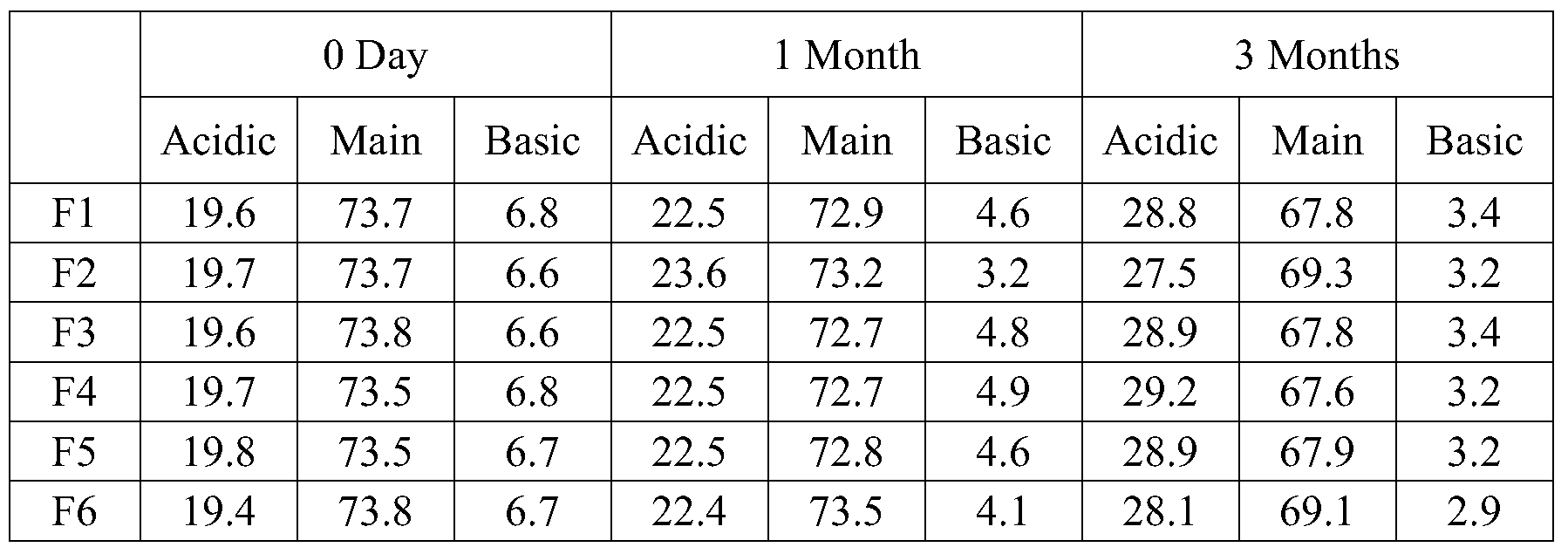
Values are %of CEX-HPLC eluate.
The results demonstrate that formulation test samples F2 and F6 have a slower increase in acidic species, which not only indicates that the formulation of F2 and F6 provided a more stable environment for Antibody 1 when compared to the other formulations tested, but surprisingly showed that the unique combination of polysorbate 80, mannitol and histidine in citrate buffer provide enhanced stability for Antibody 1.
Effects of Light Exposure on the Stability of Antibody 1
The formulation and conditions of test samples F2 and F6 are duplicated to test for light sensitivity testing of Antibody 1. Test samples F2 and F6 containing Antibody 1 at 10 mg/mL are exposed to a high intensity fluorescent light (5000 Lux) at 25℃ for 10 days. The samples are tested for stability at Day 0, Day 5 and Day 10 using CEX-HPLC and SEC-HPLC technology.
Table 6: CEX-HPLC and SEC-HPLC Results of Light Exposure on Antibody 1

Values are %.
The results shown in Table 6 surprisingly demonstrate that the formulation of test sample F6 provides greater anti-oxidative properties for Antibody 1 when compared to formulation test sample F2 and consequently resulting in enhanced stability and anti-oxidation properties for Antibody 1.
Accelerated Stability Testing of Antibody 1
Antibody 1 is tested for stability via an accelerated stability testing method, using the formulation F6. Antibody 1 in the above formulation is aseptically dispensed in to glass vials, and is sealed with rubber stoppers and plastic covers and is incubated at 25℃± 2℃ for 1 month. The samples are tested for stability at Day 0 and at 1 Month using CEX-HPLC and SEC-HPLC technology.
The accelerated stability test results are illustrated in Table 7 and Table 8. The results demonstrate that the purity and the overall stability of Antibody 1 in the aforementioned formulation were not significantly affected after a 1 month incubation period under the accelerated conditions. Further analysis on appearance, concentration,
turbidity also showed similar results. The formulation was thus shown to be able to maintain the stability of Antibody 1 for at least one month at 25℃.
Table 7: CEX-HPLC and SEC-HPLC Results of Accelerated Stability Testing of Antibody 1 at 25 ℃ ± 2 ℃
| Day 0 | 1 month | |
| Acidic component | 19.4 | 22.4 |
| Main component | 73.8 | 73.5 |
| Basic component | 6.7 | 4.1 |
| Main peak area | 99.4 | 99.2 |
Values are %.
Long-Term Stability Testing of Antibody 1
Biologic drug products are stored at 5℃ ± 3 ℃ to minimize chemical and physical degradation over the shelf-life of a product. Antibody 1 at 10 mg/mL is tested for long-term stability in the formulation F6.
Antibody 1 is aseptically dispensed in to vials, and is sealed with rubber stoppers and plastic covers and is incubated at 2℃ to about 8℃ for 11 months. The samples are tested for stability at Day 0 and at 3, 6 and 11 month time points using CEX-HPLC and SEC-HPLC technology
The long term stability test results are illustrated in Table 9 and Table 10. The results demonstrate that the purity and the overall stability of Antibody 1 in the aforementioned formulation was not significantly affected after an 11 month incubation period under the long term conditions. Further analysis on appearance, concentration, turbidity also showed similar results. This unique formulation in addition to the previously exemplified stability benefits, was further shown to be able to maintain the stability of Antibody 1 for at least 11 months at 2℃ to about 8℃.
Table 8: CEX-HPLC and SEC-HPLC Results of Long-Term Stability Testing at 2to 8℃ of Antibody 1
| 0 day | 3 months | 6 months | 11 months | |
| Acidic component | 15.4 | 15.7 | 15.9 | 15.2 |
| Main component | 80.6 | 80.5 | 79.1 | 80.4 |
| Basic component | 4.0 | 3.9 | 5.0 | 4.4 |
| Main peak content | 99.4 | 99.4 | 99.3 | 99.2 |
Values are %.
Freeze-Thaw Stability Testing of Antibody 1
Antibody 1 at 10 mg/mL is tested for freeze-thaw stability in the formulation F6. Antibody 1 in the aforementioned formulation in Example 5 is aseptically dispensed in to glass vials, and is sealed with rubber stoppers and plastic covers and is incubated at -80 ℃ followed by a thaw cycle at room temperature. The freeze-thaw cycle is repeated up to 6 times for the same sample. The samples are tested for stability prior to freezing, and at the 3rd and 6th thaw cycles, using CEX-HPLC and SEC-HPLC technology.
The freeze-thaw stability test results are illustrated in Table 9. The results demonstrate that the purity and the overall stability of Antibody 1 in the aforementioned formulation was not significantly affected after 6 cycles. Further analysis on appearance, concentration, turbidity also showed similar results. The formulation was thus shown to be able to maintain the stability of Antibody 1 for 6 freeze-thaw cycles.
Table 9: CEX-HPLC and SEC-HPLC results of freeze-thaw stability testing at -80℃on Antibody 1
| 0 times | 3 times | 6 times | |
| Acidic component | 17.6 | 17.8 | 17.7 |
| Main component | 78.7 | 78.3 | 78.5 |
| Basic component | 3.7 | 3.9 | 3.8 |
| Main peak content | 98.7 | 98.5 | 98.5 |
Values are %.
As demonstrated in the aforementioned examples, extensive testing was performed in order to develop a formulation which is able to maintain the stability of a recombinant human anti-programmed cell death-1 (PD-1) monoclonal antibody under varying conditions. A new and unique formulation, with an unexpected combination of ingredients that provide properties which can improve the physical and chemical stability of the anti-PD-1 antibody, by providing anti-oxidative properties, extending shelf life, and potentially enhancing the clinical safety of the antibody. A unique formulation which enables the anti-PD-1 antibody to maintain chemical and physical stability under strenuous conditions, and varying temperatures ranging from 2-8℃, 25℃, 37℃ and -80℃.
Sequences
SEQ ID NO: 1 (human PD-1)
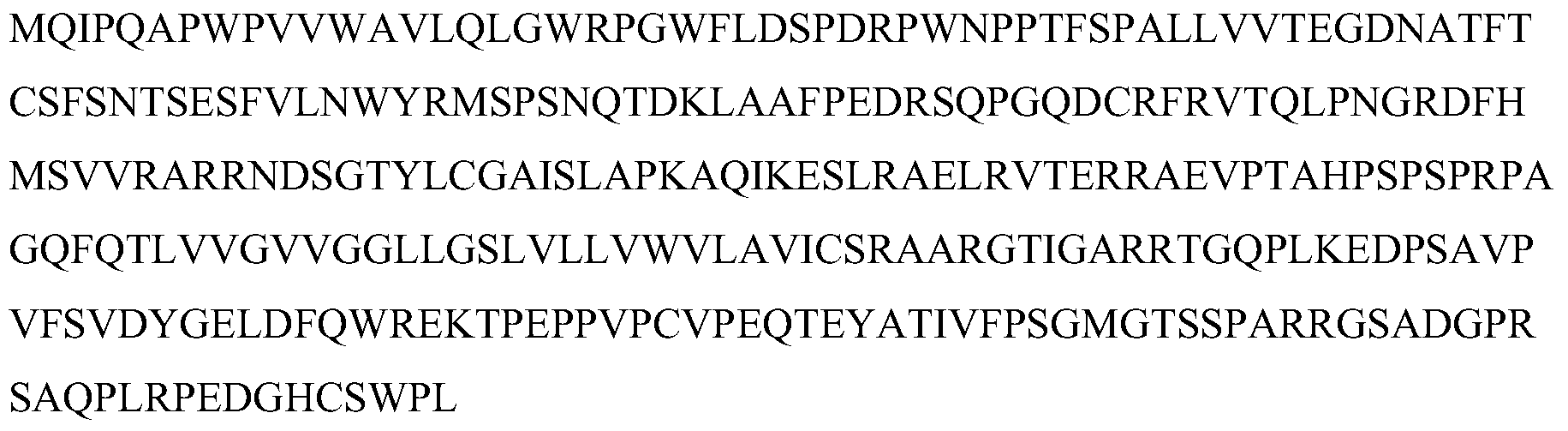
SEQ ID NO: 2 (Light chain)

SEQ ID NO: 3 (Heavy chain)

SEQ ID NO: 4 (Heavy chain)


Claims (14)
- A pharmaceutical formulation comprising:an anti-PD-1 antibody at a concentration of about 5 mg/mL to about 15 mg/mL;citrate at a concentration of about of about 15 mM to about 25 mM;histidine at a concentration of about 20 mM to about 30 mM;mannitol at a concentration of about 130 mM to about 165 mM;sodium chloride at a concentration of about 45 mM to about 55 mM;edetate at a concentration of about 0.01 mM to about 0.03 mM; andpolysorbate 20 or polysorbate 80 at a concentration of about 0.01% to about 0.03%;and having pH from about 5.5 to about 6.5;wherein the anti-PD-1 antibody comprises two light chains (LCs) and two heavy chains (HCs) , wherein the amino acid sequence of both LCs is SEQ ID NO: 2 and the amino acid sequence of both HCs is the same and is either SEQ ID NO: 3 or SEQ ID NO: 4.
- The formulation of Claim 1, wherein the amino acid sequence of both HCs is SEQ ID NO: 3.
- The formulation of Claim 1, wherein the amino acid sequence of both HCs is SEQ ID NO: 4.
- The formulation of any one of Claims 1 to 3, wherein the concentration of anti-PD-1 antibody is about 10 mg/mL.
- The formulation of any one of Claims 1 to 4, wherein the concentration of polysorbate-80 is about 0.02%.
- The formulation of any one of Claims 1 to 4, wherein the concentration of polysorbate-20 is about 0.02%.
- The formulation of any one of Claims 1 to 6, wherein the concentration of citrate is 20 mM.
- The formulation of any one of Claims 1 to 7, wherein the concentration of histidine is 25 mM.
- The formulation of any one of Claims 1 to 8, wherein the concentration of mannitol is 140 mM.
- The formulation of any one of Claims 1 to 9, wherein the concentration of sodium chloride is 50 mM.
- The formulation of any one of Claims 1 to 10, wherein the pH is 6.0.
- The pharmaceutical formulation of Claim 1 in whichthe concentration of the anti-PD-1 antibody is about 10 mg/mL,the concentration of citrate is about 20 mM,the concentration of histidine is about 25 mM,the concentration of mannitol is about 140 mM,the concentration of sodium chloride is about 50 mM,the concentration of edetate is about 0.02 mM,the concentration of polysorbate-80 is about 0.02%, andthe pH is about 6.0.
- A method of treating cancer comprising administering to a patient in need thereof an effective amount of a pharmaceutical formulation of any one of Claims 1-12.
- A pharmaceutical formulation of any one of Claims 1-13 for use in cancer.
Priority Applications (10)
| Application Number | Priority Date | Filing Date | Title |
|---|---|---|---|
| PCT/CN2016/094094 WO2018027524A1 (en) | 2016-08-09 | 2016-08-09 | Pd-1 antibody formulation |
| US16/322,630 US11130809B2 (en) | 2016-08-09 | 2017-07-17 | PD-1 antibody formulation |
| AU2017310916A AU2017310916B2 (en) | 2016-08-09 | 2017-07-17 | PD-1 antibody formulation |
| CA3030929A CA3030929C (en) | 2016-08-09 | 2017-07-17 | Pd-1 antibody formulation |
| ES17838513T ES2969233T3 (en) | 2016-08-09 | 2017-07-17 | Formulation of anti-Pd-1 antibodies |
| PCT/CN2017/093141 WO2018028383A1 (en) | 2016-08-09 | 2017-07-17 | Pd-1 antibody formulation |
| CN201780049042.6A CN109562173B (en) | 2016-08-09 | 2017-07-17 | PD-1 antibody formulations |
| EP17838513.4A EP3496753B1 (en) | 2016-08-09 | 2017-07-17 | Pd-1 antibody formulation |
| BR112019001233-8A BR112019001233B1 (en) | 2016-08-09 | 2017-07-17 | PHARMACEUTICAL FORMULATION AND USE OF IT |
| JP2019507084A JP6848046B2 (en) | 2016-08-09 | 2017-07-17 | PD-1 antibody preparation |
Applications Claiming Priority (1)
| Application Number | Priority Date | Filing Date | Title |
|---|---|---|---|
| PCT/CN2016/094094 WO2018027524A1 (en) | 2016-08-09 | 2016-08-09 | Pd-1 antibody formulation |
Publications (1)
| Publication Number | Publication Date |
|---|---|
| WO2018027524A1 true WO2018027524A1 (en) | 2018-02-15 |
Family
ID=61161074
Family Applications (2)
| Application Number | Title | Priority Date | Filing Date |
|---|---|---|---|
| PCT/CN2016/094094 Ceased WO2018027524A1 (en) | 2016-08-09 | 2016-08-09 | Pd-1 antibody formulation |
| PCT/CN2017/093141 Ceased WO2018028383A1 (en) | 2016-08-09 | 2017-07-17 | Pd-1 antibody formulation |
Family Applications After (1)
| Application Number | Title | Priority Date | Filing Date |
|---|---|---|---|
| PCT/CN2017/093141 Ceased WO2018028383A1 (en) | 2016-08-09 | 2017-07-17 | Pd-1 antibody formulation |
Country Status (9)
| Country | Link |
|---|---|
| US (1) | US11130809B2 (en) |
| EP (1) | EP3496753B1 (en) |
| JP (1) | JP6848046B2 (en) |
| CN (1) | CN109562173B (en) |
| AU (1) | AU2017310916B2 (en) |
| BR (1) | BR112019001233B1 (en) |
| CA (1) | CA3030929C (en) |
| ES (1) | ES2969233T3 (en) |
| WO (2) | WO2018027524A1 (en) |
Cited By (2)
| Publication number | Priority date | Publication date | Assignee | Title |
|---|---|---|---|---|
| CN112839678A (en) * | 2019-07-18 | 2021-05-25 | 德尔塔菲制药股份有限公司 | Effect enhancer of anticancer agent |
| EP4088740A4 (en) * | 2020-01-06 | 2024-02-21 | Shanghai Henlius Biotech, Inc. | Programmed cell death receptor 1 antibody formulation and use thereof |
Families Citing this family (14)
| Publication number | Priority date | Publication date | Assignee | Title |
|---|---|---|---|---|
| LT3370768T (en) | 2015-11-03 | 2022-05-25 | Janssen Biotech, Inc. | ANTIBODIES SPECIFICLY BINDING PD-1 AND THEIR USE |
| US12398209B2 (en) | 2018-01-22 | 2025-08-26 | Janssen Biotech, Inc. | Methods of treating cancers with antagonistic anti-PD-1 antibodies |
| CN109498565B (en) * | 2018-12-27 | 2021-06-29 | 兴盟生物医药(苏州)有限公司 | Stable anti-PD-1 antibody preparation and application thereof |
| JP6802598B1 (en) * | 2019-07-18 | 2020-12-16 | Delta−Fly Pharma株式会社 | Anti-cancer drug effect enhancer |
| EP4076385B1 (en) | 2019-12-20 | 2025-12-10 | Formycon AG | Formulations of anti-pd1 antibodies |
| TW202130367A (en) * | 2020-01-15 | 2021-08-16 | 大陸商信達生物製藥(蘇州)有限公司 | Preparation and use of bispecific antibodies binding pd-1 and pd-l1 |
| KR20230026446A (en) * | 2020-06-19 | 2023-02-24 | 사이노셀테크 엘티디. | Stable formulations for recombinant anti-PD-1 monoclonal antibodies |
| US20240287185A1 (en) | 2021-06-23 | 2024-08-29 | Formycon Ag | Formulations of anti-pd1 antibodies |
| US20240368284A1 (en) * | 2021-09-03 | 2024-11-07 | Dr. Reddy’S Laboratories Limited | A method of improving stability of immune check point inhibitors |
| JP2024534206A (en) * | 2021-09-03 | 2024-09-18 | ドクター レディズ ラボラトリーズ リミテッド | Pharmaceutical formulations of immune checkpoint inhibitors |
| WO2023037383A1 (en) * | 2021-09-07 | 2023-03-16 | Dr. Reddy’S Laboratories Limited | Formulations of immune check point inhibitors |
| JP2026501288A (en) | 2022-12-21 | 2026-01-14 | フォーマイコン アーゲー | Anti-PD1 antibody formulation |
| AU2024221025A1 (en) | 2023-02-16 | 2025-08-21 | Sun Pharmaceutical Industries Limited | Stable protein compositions of anti-pd1 antibody |
| CN120037386A (en) * | 2025-02-24 | 2025-05-27 | 华中科技大学同济医学院附属协和医院 | Sorbitol and PD-1 inhibitor combined pharmaceutical composition and application thereof |
Citations (6)
| Publication number | Priority date | Publication date | Assignee | Title |
|---|---|---|---|---|
| WO2011110604A1 (en) * | 2010-03-11 | 2011-09-15 | Ucb Pharma, S.A. | Pd-1 antibody |
| WO2012135408A1 (en) * | 2011-03-31 | 2012-10-04 | Merck Sharp & Dohme Corp. | Stable formulations of antibodies to human programmed death receptor pd-1 and related treatments |
| WO2015031667A2 (en) * | 2013-08-30 | 2015-03-05 | Amgen Inc. | Gitr antigen binding proteins |
| WO2016044189A1 (en) * | 2014-09-15 | 2016-03-24 | Genentech, Inc. | Methods of treating cancer using pd-1 axis binding antagonist and il-17 binding antagonists |
| WO2016070051A2 (en) * | 2014-10-31 | 2016-05-06 | Oncomed Pharmaceuticals, Inc. | Combination therapy for treatment of disease |
| WO2016092419A1 (en) * | 2014-12-09 | 2016-06-16 | Rinat Neuroscience Corp. | Anti-pd-1 antibodies and methods of use thereof |
Family Cites Families (10)
| Publication number | Priority date | Publication date | Assignee | Title |
|---|---|---|---|---|
| JP4511943B2 (en) | 2002-12-23 | 2010-07-28 | ワイス エルエルシー | Antibody against PD-1 and use thereof |
| PL2161336T5 (en) | 2005-05-09 | 2017-10-31 | Ono Pharmaceutical Co | Human monoclonal antibodies to programmed death 1(PD-1) and methods for treating cancer using anti-PD-1 antibodies alone or in combination with other immunotherapeutics |
| BRPI0921320A2 (en) * | 2008-11-28 | 2018-05-22 | Abbott Laboratories | stable antibody compositions and methods for stabilizing them |
| TW201134488A (en) | 2010-03-11 | 2011-10-16 | Ucb Pharma Sa | PD-1 antibodies |
| CN102946858B (en) * | 2010-05-10 | 2015-09-30 | 英塔斯制药有限公司 | The liquid preparation of the polypeptide containing immunoglobulin Fc |
| SG11201602283UA (en) * | 2013-09-27 | 2016-04-28 | Genentech Inc | Anti-pdl1 antibody formulations |
| CN104740612A (en) * | 2013-12-31 | 2015-07-01 | 上海中信国健药业股份有限公司 | Liquid formulation of receptor antibody fusion protein |
| AU2015289533B2 (en) | 2014-07-18 | 2021-04-01 | Advaxis, Inc. | Combination of a PD-1 antagonist and a Listeria-based vaccine for treating prostate cancer |
| US10695426B2 (en) | 2014-08-25 | 2020-06-30 | Pfizer Inc. | Combination of a PD-1 antagonist and an ALK inhibitor for treating cancer |
| WO2017024465A1 (en) | 2015-08-10 | 2017-02-16 | Innovent Biologics (Suzhou) Co., Ltd. | Pd-1 antibodies |
-
2016
- 2016-08-09 WO PCT/CN2016/094094 patent/WO2018027524A1/en not_active Ceased
-
2017
- 2017-07-17 CA CA3030929A patent/CA3030929C/en active Active
- 2017-07-17 ES ES17838513T patent/ES2969233T3/en active Active
- 2017-07-17 BR BR112019001233-8A patent/BR112019001233B1/en active IP Right Grant
- 2017-07-17 JP JP2019507084A patent/JP6848046B2/en active Active
- 2017-07-17 WO PCT/CN2017/093141 patent/WO2018028383A1/en not_active Ceased
- 2017-07-17 AU AU2017310916A patent/AU2017310916B2/en active Active
- 2017-07-17 EP EP17838513.4A patent/EP3496753B1/en active Active
- 2017-07-17 CN CN201780049042.6A patent/CN109562173B/en active Active
- 2017-07-17 US US16/322,630 patent/US11130809B2/en active Active
Patent Citations (6)
| Publication number | Priority date | Publication date | Assignee | Title |
|---|---|---|---|---|
| WO2011110604A1 (en) * | 2010-03-11 | 2011-09-15 | Ucb Pharma, S.A. | Pd-1 antibody |
| WO2012135408A1 (en) * | 2011-03-31 | 2012-10-04 | Merck Sharp & Dohme Corp. | Stable formulations of antibodies to human programmed death receptor pd-1 and related treatments |
| WO2015031667A2 (en) * | 2013-08-30 | 2015-03-05 | Amgen Inc. | Gitr antigen binding proteins |
| WO2016044189A1 (en) * | 2014-09-15 | 2016-03-24 | Genentech, Inc. | Methods of treating cancer using pd-1 axis binding antagonist and il-17 binding antagonists |
| WO2016070051A2 (en) * | 2014-10-31 | 2016-05-06 | Oncomed Pharmaceuticals, Inc. | Combination therapy for treatment of disease |
| WO2016092419A1 (en) * | 2014-12-09 | 2016-06-16 | Rinat Neuroscience Corp. | Anti-pd-1 antibodies and methods of use thereof |
Non-Patent Citations (1)
| Title |
|---|
| TOPALIAN, S. L. ET AL.: "Safety, Activity, and Immune Correlates of Anti-PD-1 Antibody in Cancer", THE NEW ENGLAND JOURNAL OF MEDICINE, vol. 366, no. 26, 28 June 2012 (2012-06-28), pages 2443 - 2454, XP055098235 * |
Cited By (2)
| Publication number | Priority date | Publication date | Assignee | Title |
|---|---|---|---|---|
| CN112839678A (en) * | 2019-07-18 | 2021-05-25 | 德尔塔菲制药股份有限公司 | Effect enhancer of anticancer agent |
| EP4088740A4 (en) * | 2020-01-06 | 2024-02-21 | Shanghai Henlius Biotech, Inc. | Programmed cell death receptor 1 antibody formulation and use thereof |
Also Published As
| Publication number | Publication date |
|---|---|
| EP3496753A1 (en) | 2019-06-19 |
| WO2018028383A1 (en) | 2018-02-15 |
| JP2019527712A (en) | 2019-10-03 |
| EP3496753B1 (en) | 2023-11-22 |
| CA3030929A1 (en) | 2018-02-15 |
| US20210040211A1 (en) | 2021-02-11 |
| JP6848046B2 (en) | 2021-03-24 |
| ES2969233T3 (en) | 2024-05-17 |
| BR112019001233B1 (en) | 2021-10-26 |
| EP3496753A4 (en) | 2020-04-01 |
| BR112019001233A2 (en) | 2019-06-25 |
| CA3030929C (en) | 2022-06-21 |
| AU2017310916A1 (en) | 2019-03-07 |
| CN109562173A (en) | 2019-04-02 |
| CN109562173B (en) | 2022-09-02 |
| US11130809B2 (en) | 2021-09-28 |
| AU2017310916B2 (en) | 2020-02-06 |
Similar Documents
| Publication | Publication Date | Title |
|---|---|---|
| US11130809B2 (en) | PD-1 antibody formulation | |
| KR102397713B1 (en) | Stable Liquid Pharmaceutical Formulation | |
| ES2948033T3 (en) | Subcutaneous formulation of anti-HER2 antibody | |
| TW200306205A (en) | Lyophilised preparation comprising antibodies against the EGF receptor | |
| JP2022521624A (en) | Preparation containing anti-CD47 antibody, its preparation method and use | |
| EP3851121A1 (en) | Human anti-il-33 monoclonal-antibody-containing pharmaceutical composition | |
| US20230080706A1 (en) | Recombinant fully human anti-tigit monoclonal antibody formulation, method for preparing same and use thereof | |
| CN109498565B (en) | Stable anti-PD-1 antibody preparation and application thereof | |
| CN119925593B (en) | A pharmaceutical formulation of an anti-IL-11 monoclonal antibody | |
| CN116077646B (en) | An antibody preparation against coronavirus S protein and its preparation method and use | |
| HK40005348B (en) | Pd-1 antibody formulation | |
| HK40005348A (en) | Pd-1 antibody formulation | |
| CN111094342A (en) | Methods for treating TNFα-related diseases | |
| WO2025113442A1 (en) | Antibody formulation | |
| NZ748101B2 (en) | Stable liquid pharmaceutical preparation | |
| BR112018076377B1 (en) | STABLE LIQUID PHARMACEUTICAL FORMULATION |
Legal Events
| Date | Code | Title | Description |
|---|---|---|---|
| 121 | Ep: the epo has been informed by wipo that ep was designated in this application |
Ref document number: 16911979 Country of ref document: EP Kind code of ref document: A1 |
|
| NENP | Non-entry into the national phase |
Ref country code: DE |
|
| 32PN | Ep: public notification in the ep bulletin as address of the adressee cannot be established |
Free format text: NOTING OF LOSS OF RIGHTS PURSUANT TO RULE 112(1) EPC (EPO FORM 1205A DATED 02/08/2019) |
|
| 122 | Ep: pct application non-entry in european phase |
Ref document number: 16911979 Country of ref document: EP Kind code of ref document: A1 |