WO2016128783A1 - Compositions and methods for improving skin appearance - Google Patents
Compositions and methods for improving skin appearance Download PDFInfo
- Publication number
- WO2016128783A1 WO2016128783A1 PCT/IB2015/000347 IB2015000347W WO2016128783A1 WO 2016128783 A1 WO2016128783 A1 WO 2016128783A1 IB 2015000347 W IB2015000347 W IB 2015000347W WO 2016128783 A1 WO2016128783 A1 WO 2016128783A1
- Authority
- WO
- WIPO (PCT)
- Prior art keywords
- composition
- skin
- injections
- months
- molecular weight
- Prior art date
- Legal status (The legal status is an assumption and is not a legal conclusion. Google has not performed a legal analysis and makes no representation as to the accuracy of the status listed.)
- Ceased
Links
Classifications
-
- A—HUMAN NECESSITIES
- A61—MEDICAL OR VETERINARY SCIENCE; HYGIENE
- A61L—METHODS OR APPARATUS FOR STERILISING MATERIALS OR OBJECTS IN GENERAL; DISINFECTION, STERILISATION OR DEODORISATION OF AIR; CHEMICAL ASPECTS OF BANDAGES, DRESSINGS, ABSORBENT PADS OR SURGICAL ARTICLES; MATERIALS FOR BANDAGES, DRESSINGS, ABSORBENT PADS OR SURGICAL ARTICLES
- A61L27/00—Materials for grafts or prostheses or for coating grafts or prostheses
- A61L27/14—Macromolecular materials
- A61L27/20—Polysaccharides
-
- A—HUMAN NECESSITIES
- A61—MEDICAL OR VETERINARY SCIENCE; HYGIENE
- A61Q—SPECIFIC USE OF COSMETICS OR SIMILAR TOILETRY PREPARATIONS
- A61Q19/00—Preparations for care of the skin
- A61Q19/08—Anti-ageing preparations
-
- A—HUMAN NECESSITIES
- A61—MEDICAL OR VETERINARY SCIENCE; HYGIENE
- A61K—PREPARATIONS FOR MEDICAL, DENTAL OR TOILETRY PURPOSES
- A61K8/00—Cosmetics or similar toiletry preparations
- A61K8/02—Cosmetics or similar toiletry preparations characterised by special physical form
- A61K8/04—Dispersions; Emulsions
- A61K8/042—Gels
-
- A—HUMAN NECESSITIES
- A61—MEDICAL OR VETERINARY SCIENCE; HYGIENE
- A61K—PREPARATIONS FOR MEDICAL, DENTAL OR TOILETRY PURPOSES
- A61K8/00—Cosmetics or similar toiletry preparations
- A61K8/18—Cosmetics or similar toiletry preparations characterised by the composition
- A61K8/30—Cosmetics or similar toiletry preparations characterised by the composition containing organic compounds
- A61K8/33—Cosmetics or similar toiletry preparations characterised by the composition containing organic compounds containing oxygen
- A61K8/34—Alcohols
- A61K8/345—Alcohols containing more than one hydroxy group
-
- A—HUMAN NECESSITIES
- A61—MEDICAL OR VETERINARY SCIENCE; HYGIENE
- A61K—PREPARATIONS FOR MEDICAL, DENTAL OR TOILETRY PURPOSES
- A61K8/00—Cosmetics or similar toiletry preparations
- A61K8/18—Cosmetics or similar toiletry preparations characterised by the composition
- A61K8/30—Cosmetics or similar toiletry preparations characterised by the composition containing organic compounds
- A61K8/40—Cosmetics or similar toiletry preparations characterised by the composition containing organic compounds containing nitrogen
- A61K8/42—Amides
-
- A—HUMAN NECESSITIES
- A61—MEDICAL OR VETERINARY SCIENCE; HYGIENE
- A61K—PREPARATIONS FOR MEDICAL, DENTAL OR TOILETRY PURPOSES
- A61K8/00—Cosmetics or similar toiletry preparations
- A61K8/18—Cosmetics or similar toiletry preparations characterised by the composition
- A61K8/30—Cosmetics or similar toiletry preparations characterised by the composition containing organic compounds
- A61K8/67—Vitamins
- A61K8/676—Ascorbic acid, i.e. vitamin C
-
- A—HUMAN NECESSITIES
- A61—MEDICAL OR VETERINARY SCIENCE; HYGIENE
- A61K—PREPARATIONS FOR MEDICAL, DENTAL OR TOILETRY PURPOSES
- A61K8/00—Cosmetics or similar toiletry preparations
- A61K8/18—Cosmetics or similar toiletry preparations characterised by the composition
- A61K8/72—Cosmetics or similar toiletry preparations characterised by the composition containing organic macromolecular compounds
- A61K8/73—Polysaccharides
- A61K8/735—Mucopolysaccharides, e.g. hyaluronic acid; Derivatives thereof
-
- A—HUMAN NECESSITIES
- A61—MEDICAL OR VETERINARY SCIENCE; HYGIENE
- A61L—METHODS OR APPARATUS FOR STERILISING MATERIALS OR OBJECTS IN GENERAL; DISINFECTION, STERILISATION OR DEODORISATION OF AIR; CHEMICAL ASPECTS OF BANDAGES, DRESSINGS, ABSORBENT PADS OR SURGICAL ARTICLES; MATERIALS FOR BANDAGES, DRESSINGS, ABSORBENT PADS OR SURGICAL ARTICLES
- A61L27/00—Materials for grafts or prostheses or for coating grafts or prostheses
- A61L27/50—Materials characterised by their function or physical properties, e.g. injectable or lubricating compositions, shape-memory materials, surface modified materials
-
- A—HUMAN NECESSITIES
- A61—MEDICAL OR VETERINARY SCIENCE; HYGIENE
- A61L—METHODS OR APPARATUS FOR STERILISING MATERIALS OR OBJECTS IN GENERAL; DISINFECTION, STERILISATION OR DEODORISATION OF AIR; CHEMICAL ASPECTS OF BANDAGES, DRESSINGS, ABSORBENT PADS OR SURGICAL ARTICLES; MATERIALS FOR BANDAGES, DRESSINGS, ABSORBENT PADS OR SURGICAL ARTICLES
- A61L27/00—Materials for grafts or prostheses or for coating grafts or prostheses
- A61L27/50—Materials characterised by their function or physical properties, e.g. injectable or lubricating compositions, shape-memory materials, surface modified materials
- A61L27/54—Biologically active materials, e.g. therapeutic substances
-
- A—HUMAN NECESSITIES
- A61—MEDICAL OR VETERINARY SCIENCE; HYGIENE
- A61P—SPECIFIC THERAPEUTIC ACTIVITY OF CHEMICAL COMPOUNDS OR MEDICINAL PREPARATIONS
- A61P17/00—Drugs for dermatological disorders
-
- A—HUMAN NECESSITIES
- A61—MEDICAL OR VETERINARY SCIENCE; HYGIENE
- A61Q—SPECIFIC USE OF COSMETICS OR SIMILAR TOILETRY PREPARATIONS
- A61Q19/00—Preparations for care of the skin
-
- A—HUMAN NECESSITIES
- A61—MEDICAL OR VETERINARY SCIENCE; HYGIENE
- A61Q—SPECIFIC USE OF COSMETICS OR SIMILAR TOILETRY PREPARATIONS
- A61Q19/00—Preparations for care of the skin
- A61Q19/007—Preparations for dry skin
-
- C—CHEMISTRY; METALLURGY
- C08—ORGANIC MACROMOLECULAR COMPOUNDS; THEIR PREPARATION OR CHEMICAL WORKING-UP; COMPOSITIONS BASED THEREON
- C08B—POLYSACCHARIDES; DERIVATIVES THEREOF
- C08B37/00—Preparation of polysaccharides not provided for in groups C08B1/00 - C08B35/00; Derivatives thereof
- C08B37/006—Heteroglycans, i.e. polysaccharides having more than one sugar residue in the main chain in either alternating or less regular sequence; Gellans; Succinoglycans; Arabinogalactans; Tragacanth or gum tragacanth or traganth from Astragalus; Gum Karaya from Sterculia urens; Gum Ghatti from Anogeissus latifolia; Derivatives thereof
- C08B37/0063—Glycosaminoglycans or mucopolysaccharides, e.g. keratan sulfate; Derivatives thereof, e.g. fucoidan
- C08B37/0072—Hyaluronic acid, i.e. HA or hyaluronan; Derivatives thereof, e.g. crosslinked hyaluronic acid (hylan) or hyaluronates
-
- A—HUMAN NECESSITIES
- A61—MEDICAL OR VETERINARY SCIENCE; HYGIENE
- A61K—PREPARATIONS FOR MEDICAL, DENTAL OR TOILETRY PURPOSES
- A61K2800/00—Properties of cosmetic compositions or active ingredients thereof or formulation aids used therein and process related aspects
- A61K2800/20—Chemical, physico-chemical or functional or structural properties of the composition as a whole
- A61K2800/30—Characterized by the absence of a particular group of ingredients
-
- A—HUMAN NECESSITIES
- A61—MEDICAL OR VETERINARY SCIENCE; HYGIENE
- A61K—PREPARATIONS FOR MEDICAL, DENTAL OR TOILETRY PURPOSES
- A61K2800/00—Properties of cosmetic compositions or active ingredients thereof or formulation aids used therein and process related aspects
- A61K2800/80—Process related aspects concerning the preparation of the cosmetic composition or the storage or application thereof
- A61K2800/91—Injection
-
- A—HUMAN NECESSITIES
- A61—MEDICAL OR VETERINARY SCIENCE; HYGIENE
- A61L—METHODS OR APPARATUS FOR STERILISING MATERIALS OR OBJECTS IN GENERAL; DISINFECTION, STERILISATION OR DEODORISATION OF AIR; CHEMICAL ASPECTS OF BANDAGES, DRESSINGS, ABSORBENT PADS OR SURGICAL ARTICLES; MATERIALS FOR BANDAGES, DRESSINGS, ABSORBENT PADS OR SURGICAL ARTICLES
- A61L2300/00—Biologically active materials used in bandages, wound dressings, absorbent pads or medical devices
- A61L2300/40—Biologically active materials used in bandages, wound dressings, absorbent pads or medical devices characterised by a specific therapeutic activity or mode of action
- A61L2300/402—Anaestetics, analgesics, e.g. lidocaine
-
- A—HUMAN NECESSITIES
- A61—MEDICAL OR VETERINARY SCIENCE; HYGIENE
- A61L—METHODS OR APPARATUS FOR STERILISING MATERIALS OR OBJECTS IN GENERAL; DISINFECTION, STERILISATION OR DEODORISATION OF AIR; CHEMICAL ASPECTS OF BANDAGES, DRESSINGS, ABSORBENT PADS OR SURGICAL ARTICLES; MATERIALS FOR BANDAGES, DRESSINGS, ABSORBENT PADS OR SURGICAL ARTICLES
- A61L2300/00—Biologically active materials used in bandages, wound dressings, absorbent pads or medical devices
- A61L2300/40—Biologically active materials used in bandages, wound dressings, absorbent pads or medical devices characterised by a specific therapeutic activity or mode of action
- A61L2300/428—Vitamins, e.g. tocopherol, riboflavin
-
- A—HUMAN NECESSITIES
- A61—MEDICAL OR VETERINARY SCIENCE; HYGIENE
- A61L—METHODS OR APPARATUS FOR STERILISING MATERIALS OR OBJECTS IN GENERAL; DISINFECTION, STERILISATION OR DEODORISATION OF AIR; CHEMICAL ASPECTS OF BANDAGES, DRESSINGS, ABSORBENT PADS OR SURGICAL ARTICLES; MATERIALS FOR BANDAGES, DRESSINGS, ABSORBENT PADS OR SURGICAL ARTICLES
- A61L2400/00—Materials characterised by their function or physical properties
- A61L2400/06—Flowable or injectable implant compositions
-
- A—HUMAN NECESSITIES
- A61—MEDICAL OR VETERINARY SCIENCE; HYGIENE
- A61L—METHODS OR APPARATUS FOR STERILISING MATERIALS OR OBJECTS IN GENERAL; DISINFECTION, STERILISATION OR DEODORISATION OF AIR; CHEMICAL ASPECTS OF BANDAGES, DRESSINGS, ABSORBENT PADS OR SURGICAL ARTICLES; MATERIALS FOR BANDAGES, DRESSINGS, ABSORBENT PADS OR SURGICAL ARTICLES
- A61L2430/00—Materials or treatment for tissue regeneration
- A61L2430/34—Materials or treatment for tissue regeneration for soft tissue reconstruction
-
- A—HUMAN NECESSITIES
- A61—MEDICAL OR VETERINARY SCIENCE; HYGIENE
- A61L—METHODS OR APPARATUS FOR STERILISING MATERIALS OR OBJECTS IN GENERAL; DISINFECTION, STERILISATION OR DEODORISATION OF AIR; CHEMICAL ASPECTS OF BANDAGES, DRESSINGS, ABSORBENT PADS OR SURGICAL ARTICLES; MATERIALS FOR BANDAGES, DRESSINGS, ABSORBENT PADS OR SURGICAL ARTICLES
- A61L27/00—Materials for grafts or prostheses or for coating grafts or prostheses
- A61L27/50—Materials characterised by their function or physical properties, e.g. injectable or lubricating compositions, shape-memory materials, surface modified materials
- A61L27/52—Hydrogels or hydrocolloids
Definitions
- the present invention generally relates to injectable compositions and more specifically relates to hyaluronic acid-based compositions for treatment of fine lines in skin.
- Skin is composed of the epidermis and the dermis.
- the outermost epidermis is made up of stratified squamous epithelium with an underlying basement membrane, it contains no blood vessels, and is nourished by diffusion from the dermis.
- the main type of cells which make up the epidermis are keratinocytes, with melanocytes and langerhans cells also present. This layer of skin is responsible for keeping water in the body and keeping harmful chemicals and pathogens out.
- the dermis lies below the epidermis and contains a number of structures including blood vessels, nerves, hair follicles, smooth muscle, glands and lymphatic tissue.
- the dermis (or corium) is typically 3-5 mm thick and is the major component of human skin. It is composed of a network of connective tissue, predominantly collagen fibrils providing support and elastic tissue providing flexibility. The main cell types are fibroblasts, adipocytes (fat storage) and macrophages.
- Hyaluronic acid (HA) is a part of the dermis composition and is a major component of the extra cellular matrix.
- Facial aging occurs as the result of several factors: inherent changes within the skin, effects of gravity, facial muscles acting on the skin (dynamic lines), soft tissue loss or shift and bone loss and loss of tissue elasticity.
- the skin ages when the epidermis begins to thin, causing the junction with the dermis to flatten. Collagen decreases as a person ages and the bundles of collagen, which gives the skin turgor, become looser and lose strength. When the skin loses elasticity, it is less able to resist stretching. Coupled with gravity, muscle pull and tissue changes, the skin begin to wrinkle. Water loss and breakdown of bonds between cells also reduces the barrier function of the skin, which can cause the skin's pore size to increases.
- Hyaluronic acid also known as hyaluronan
- Hyaluronic acid is a naturally occurring, water soluble polysaccharide, specifically a glycosaminoglycan, which is a major component of the extra-cellular matrix and is widely distributed in animal tissues.
- the identical structure of hyaluronic acid in all species and tissues makes this polysaccharide an ideal substance for use as a bio-material in health and medicine.
- HA has excellent biocompatibtlity and, unlike collagen, does not require any skin testing before implantation.
- HA has the ability to bind to large amounts of water, making it an excellent volumizer of soft tissues.
- the HA in dermal fillers is commonly crossiinked.
- Chemically crossiinked HA is formed by reacting uncrosslinked HA with a crosslinking agent under suitable reaction conditions.
- HA-based dermal fillers having a high viscosity for example, those that are highly crossiinked and/or made of high molecular weight HA and/or having a high HA concentration tend to last longer in the body.
- HA-based dermal fillers having a low viscosity for example, those that are more lightly crosslinked and/or made up of low molecular weight HA and/or have a low HA concentration, may have a shorter duration in the body.
- the present invention relates to injectable compositions, and more specifically, to injectable compositions for superficial injection into skin.
- the compositions and methods provide improved skin appearance and quality by filling of superficial skin depressions, and/or improving skin quality and appearance.
- the compositions and methods provide at least one of improved skin texture, increased skin hydration and increased elasticity.
- the present compositions are based on hyaluronic acid (HA) and pharmaceutically acceptable salts of HA, for example, sodium hyaluronate (NaHA).
- HA hyaluronic acid
- NaHA sodium hyaluronate
- Many of the long lasting, highly injectable compositions of the present invention include a crosslinked HA matrix made with relatively low molecular weight HA.
- the compositions have a relatively low concentration of HA.
- many of the compositions provided herein have an extended duration of effect. For example, rather than requiring multiple repeated treatments every three to four weeks, as is common with conventional superficial injection treatment methods, many of the present compositions and methods provided herein have a duration of effect of three months, four months, six months, to a year or more.
- a composition which generally comprises an HA gel containing, or consisting essentially of, a low molecular weight HA material.
- the HA component includes more than 50%, for example, at least 70%, for example, about 90% by weight of the low molecular weight HA.
- the low molecular weight HA material has a weight average molecular weight of no greater than about 0.20 Da and about 0.99 Da.
- the HA gel may further contain a high molecular weight HA, that is, an HA material having a molecular weight of at least about 1.0 MDa to about 4.0 MDa.
- a high molecular weight HA that is, an HA material having a molecular weight of at least about 1.0 MDa to about 4.0 MDa.
- the weight average molecular weight of the high molecular weight HA material is at least twice that of the low molecular weight HA material.
- the HA of the HA gei may be crosslinked.
- the HA may be chemically crosslinked by a suitable crosslinking agent.
- the crosslinking agent is selected from the group consisting of 1 ,4-butanediol diglycidyl ether (BDDE), 1 ,4-bis(2,3-epoxypropoxy)butane, 1 ,4-bisglycidyloxybutane, 1 ,2-bis(2,3- epoxypropoxy)ethylene and 1-(2,3-epoxypropyl)-2,3-epoxycyclohexane.
- the composition has an HA concentration of about 10.0 mg/g up to about 17.0 mg/g. In some embodiments, the HA concentration is less than about 17.0 mg/g, for example, less than about 15.0 mg/g. In some embodiments, the HA concentration is between about 10.0 mg/g and about 14.0 mg/g. In some embodiments, the HA concentration is about 10.0 mg/g, about 11.0 mg/g, about 12.0 mg/g, about 13.0mg/g, or about 14.0 mg/g.
- methods of treating skin using the present compositions are provided.
- methods of improving one or more qualities of skin, or improving appearance or texture of skin are provided.
- methods of treating dryness, texture or roughness, and/or elasticity in skin generally comprise treating an area of skin by introducing, into the area, multiple, spaced apart injections of a composition comprising a hyaluronic acid (HA) gel containing crosslinked HA, wherein the treated skin maintains an improved hydration, smoother texture or increased elasticity, due to the treatment for an extended duration, for example, for at least about 3 months to about a year or more.
- the step of introducing is performed in only a single treatment session, thereby eliminating the need for repeated treatments to maintain the duration of effect.
- the step of introducing comprises introducing the composition in injections spaced apart by a distance of between about 2 mm to about 30 mm.
- the step of introducing comprises introducing the composition in injections spaced apart by a distance of between about 5 mm to about 20 mm, or about 10 mm to about 15 mm.
- the compositions are introduced at a depth of between about 500 microns and about 2000 microns, for example, a depth of about 1000 microns.
- the invention provides a method of treating roughness in skin comprising treating an area of skin by introducing, into the area, multiple, spaced apart injections of a composition comprising a hyaluronic acid (HA) gel containing crosslinked HA, wherein the treated skin maintains a smoother texture due to the treatment for at least about 3 months, at least about 4 months, at least about 6 months, or at least about 12 months.
- a composition comprising a hyaluronic acid (HA) gel containing crosslinked HA
- the intrinsic viscosity is measured according to the procedure defined European Pharmacopoeia (HA monograph N°1472, 01/2009).
- High molecular weight HA as used herein describes a HA material having a molecular weight of at least about 1.0 million Daltons (Mw > 10 6 Da or 1 MDa) to about 5.0 MDa.
- the high molecular weight HA in the present compositions may have a molecular weight in the range about 1.5 MDa to about 3.0 MDa, or the high molecular weight HA may have a weight average molecular weight of about 2.0 MDa. In another example, the high molecular weight HA may have a molecular weight of about 3.0 MDa.
- Low molecular weight HA as used herein describes a HA material having a molecular weight of less than about 1.0 MDa.
- Low molecular weight HA can have a molecular weight of between about 200,000 Da (0.2 MDa) to less than 1 .0 MDa, for example, between about 400,000 Da and about 800,000 Da, for example about 386,000 Da (0.386 MDa) to about 740,000 Da (0.74 MDa).
- the low molecular weight HA used to make the crossiinked HA matrix does not exceed 0.99 MDa.
- the mixture of the low molecular weight HA and high molecular weight HA has a bimodal molecular weight distribution.
- the mixture may also have a multi-modal distribution.
- compositions comprise HA having a high molecular weight component and a low molecular weight component, and the high molecular weight component has a weight average molecular weight at least twice the weight average molecular weight of the low molecular weight component.
- a composition in accordance with this aspect of the invention may include a low molecular weight component having a weight average molecular weight of about 500,000 Da, and a high molecular weight component having a weight average molecular weight of about, or at least about, 1.0 Da.
- a composition in accordance with the invention may include a low molecular weight component having a weight average molecular weight of about 800,000 Da, and a high molecular weight component having a weight average molecular weight of about, or at least about, 1.6 MDa.
- Degree of crosslinking is measured by the final weight ratio of crosslinker to HA disaccharide units.
- Uncross!inked HA refers to individual HA polymer molecules that are not crosslinked to one another. Uncrosslinked HA generally remains water soluble.
- compositions for treating skin for example, injectable compositions that can be introduced intradermally to improve the appearance or quality of skin, for example, to improve hydration, texture and/or elasticity.
- the compositions may also be effective for treatment of fine lines in skin and for reducing superficial cutaneous depressions. Methods of making these compositions are also provided, as well as methods of treatment using these compositions.
- the compositions are based on hyaluronic acids (HA) and pharmaceutically acceptable salts of HA, for example, sodium hyaluronate (NaHA).
- hyaluronic acid can refer to any of its hyaluronate salts, and includes, but is not limited to, sodium hyaluronate (NaHA), potassium hyaluronate, magnesium hyaluronate, calcium hyaluronate, and combinations thereof. Both HA and pharmaceutically acceptable salts thereof can be used in this invention.
- the concentration of HA in some of the present compositions is about 10.0 mg/g up to about 17.0 mg/g. In some embodiments, the HA concentration is less than about 17.0 mg/g, for example, less than about 15.0 mg/g. In some embodiments, the HA concentration is between about 10.0 mg/g and about 14.0 mg/g. In some embodiments, the HA concentration is about 10.0 mg/g, about 11.0 mg/g, about 12.0 mg/g, about 13.0mg/g, or about 14.0 mg/g.
- compositions of the invention include additional agents, for example, anesthetic agents in an amount effective to mitigate pain experienced upon injection of the composition.
- the anesthetic agent may be selected from the group of ambucaine, amolanone, amylocaine, benoxinate, benzocaine, betoxycaine, biphenamine, bupivacaine, butacaine, butamben, butanilicaine, butethamine, butoxycaine, carticaine, chloroprocaine, cocaethylene, cocaine, cyclomethycaine, dibucaine, dimethisoquin, dimethocaine, diperodon, dicyclomine, ecgonidine, ecgonine, ethyl chloride, etidocaine, beta-eucaine, euprocin, fenalcomine, formocaine, hexylcaine, hydroxytetracaine, isobutyl p-aminobenzoate, leucinocaine mes
- At least one anesthetic agent is lidocaine, such as in the form of lidocaine HCI.
- the compositions described herein may have a lidocaine concentration of between about 0.1 % and about 5% by weight of the composition, for example, about 0.2% to about 1.0% by weight of the composition. In one embodiment, the composition has a lidocaine concentration of about 0.3% by weight (w/w %) of the composition.
- the compositions further comprise a beneficial additive, for example, an antioxidant.
- the compositions include, for example, mannitol .
- the mannitol may be present in an amount of between about 0.1 % w/w to about 2.0% w/w, or between about 0.3% to about 0.9%. In some embodiments, the mannitol is present in an amount of less than, no greater than, or about 1.0%. In some embodiments, the mannitol is present in an amount of about 0.9 % w/w.
- the mannitol is present in an amount of about 0.1 %, or about 0.2%, or about 0.3%, or about 0.4%, or about 0.5%, or about 0.6%, or about 0.7%, or about 0.8%, or about 0.9%, or about 1.0%. in other embodiments, the mannitoi is present in an amount of greater than about 1.0%. In some embodiments, the mannitoi is present in an amount of between about 1.0% to about 5.0% w/w.
- the compositions further comprise a vitamin, for example, Vitamin C .
- Vitamin C is a derivative or a stabilized form of Vitamin C, for example, ascorbic acid 2-glucoside.
- the vitamin may be present in an amount of between about 0.1 % to about 2.0%, or between about 0.2% and about 1.0%, or between about 0.3% to about 0.6%.
- the Vitamin C is present in an amount of about 0.6% w/w.
- the Vitamin C derivative is present in an amount of about 0.1 %, or about 0.2%, or about 0.3%, or about 0.4%, or about 0.5%, or about 0.6%, or about 0.7%, or about 0.8%, or about 0.9%, or about 1.0%.
- the Vitamin C derivative is present in an amount of greater than 1.0%.
- the Vitamin C derivative is present in an amount of between about 1.0% to about 5.0% w/w.
- compositions further comprise a combination of mannitoi and ascorbic acid 2-glucoside.
- the mannitoi is present in an amount of no greater than 1.0% w/w, for example, 0.9 % w/w and the ascorbic acid 2-glucoside is present in an amount of about 0.6% w/w .
- the compositions do not include an antioxidant or a vitamin.
- the compositions comprise or consist essentially of hyaluronic acid cross!inked with a crosslinking agent and water.
- these compositions may or may not include an anesthetic agent such as lidocaine.
- the present products and compositions are preferably provided in a sterile form.
- the compositions may be sterilized using conventional methods, for example, autoclaving.
- the compositions may be sterilized by exposing the compositions to temperatures of at least about 120°C to about 130°C and/or pressures of at least about 12 pounds per square inch (PSI) to about 20 PSI for a period of at least about 1 minute to about 15 minutes.
- Method of making the composition comprise the steps of providing raw HA material in the form of dry HA fibers or powder.
- the raw HA material may be HA, its salts and/or mixtures thereof.
- the HA material comprises fibers or powder of NaHA, for example, bacteria!-sourced NaHA fibers.
- the HA material may be animal derived.
- the HA material may be a combination of raw materials including HA and at least one other polysaccharide, for example, glycosaminoglycan (GAG).
- GAG glycosaminoglycan
- the HA material of the compositions may comprise a crosslinked HA matrix made with between about 5% to about 95% low molecular weight HA with the balance of the HA material including high molecular weight HA.
- the HA material used to make the present compositions nearly entirely comprises or consists of low molecular weight HA. In some embodiments, nearly 100% of the HA material used to make the present compositions may be low molecular weight HA as defined above. In other embodiments, the HA material used to make the compositions comprises a combination of relatively high molecular weight HA and relatively low molecular weight HA, as defined above. In certain embodiments, at least about 50%, for example, at least about 70%, for example, at least about 90% or greater of the HA material in the compositions is a low molecular weight HA as defined above, with the remaining portion of HA being high molecular weight HA.
- the compositions are made using a 90:10 ratio of low molecular weight HA to high molecular weight HA. That is, the compositions of these embodiments are made with a combination of high and low molecular weight HA, with about 90% of the HA being the low molecular weight HA.
- the pure, dry NaHA fibers are hydrated in an alkaline solution to produce an uncrosslinked NaHA gel.
- Any suitable alkaline solution may be used to hydrate the NaHA in this step, for example, but not limited to aqueous solutions containing sodium hydroxide (NaOH), potassium hydroxide (KOH), sodium bicarbonate (NaHCO 3 ), lithium hydroxide (LiOH), and the like.
- the suitable alkaline solution is aqueous solutions containing NaOH.
- the resulting alkaline gel will have a pH above 7.5.
- the pH of the resulting alkaline gel can have a pH greater than 9, or a pH greater than 10, or a pH greater than 1 1 , or a pH greater than 12, or a pH greater than 13.
- the next step in the manufacturing process involves the step of crosslinking the hydrated, alkaline NaHA gel with a suitable crosslinking agent.
- the crosslinking agent may be any agent known to be suitable for crosslinking polysaccharides and their derivatives via their hydroxyl groups. Suitable crosslinking agents include but are not limited to, 1 ,4-butanediol diglycidyl ether (or 1 ,4-bis(2,3-epoxypropoxy)butane or 1 ,4- bisglycidyloxybutane, all of which are commonly known as BDDE), 1 ,2-bis(2,3- epoxypropoxy)ethylene and 1-(2,3-epoxypropyl)-2,3-epoxycyclohexane.
- BDDE 1 ,2-bis(2,3- epoxypropoxy)ethylene and 1-(2,3-epoxypropyl)-2,3-epoxycyclohexane.
- the step of crosslinking may be carried out using any means known to those of ordinary skill in the art. Those skilled in the art appreciate how to optimize conditions of crosslinking according to the nature of the HA, and how to carry out crosslinking to an optimized degree.
- the crosslinking of the HA is accomplished during hydration of the HA fibers, by hydrating the combined high and low molecular weight fibers in an alkaline solution containing a crosslinking agent, for example, BDDE.
- a crosslinking agent for example, BDDE.
- the degree of crosslinking in the HA component of the present compositions is at least about 1 % and is up to about 20% BDDE/HA, w/w, for example, between about 4% and about 12%, for example, about 10 %, for example, about 8%, for example, about 6%, for example, about 5%, for example, about 4%.
- the hydrated crosslinked, HA gels may be swollen to obtain the desired HA concentration. This step can be accomplished by neutralizing the crosslinked, hydrated HA gel, for example by adding an aqueous solution containing of an acid, such as HCI. The gels are then swelled in a phosphate buffered saiine (PBS) solution.
- PBS phosphate buffered saiine
- the gels may be purified by conventional means such as, dialysis against a phosphate buffer, or alcohol precipitation, to recover the crossiinked material, to stabilize the pH of the material and to remove any un-reacted crosslinking agent.
- the compositions are mixed to achieve homogeneity.
- the homogenization step comprises mixing, stirring, or beating the gels with a controlled shearing force obtaining substantially homogenous mixtures.
- a phosphate buffer is added to reach the desired concentration of HA in the final composition.
- lidocaine or another suitable anesthetic, is added to the compositions.
- the pH of the purified, substantially pH neutral, gel is adjusted to cause the gel to become slightly alkaline such that the gels have a pH of greater than about 7.2, for example, about 7.5 to about 8.0.
- This step may be accomplished by any suitable means, for example, by adding to the geis a suitable amount of dilute NaOH, KOH, NaHC0 3 or LiOH, or any other alkaline molecule, solution and/or buffering composition know by one skilled in the art.
- the lidocaine HCI is provided in a powder form which is solubiiized using water for injection (WFI).
- the lidocaine is then added to the slightly alkaline gel.
- the desired HA concentration is about 12.0 mg/g.
- the compositions including lidocaine may have a lidocaine concentration of between about 0.1% and about 5% by weight of the composition, for example, about 0.3%.
- compositions are introduced into delivery devices, for example, syringes.
- Syringes useful according to the present description include any syringe known in the art capable of delivering viscous dermal filler compositions.
- the syringes may have an internal volume of about 0.4 mL to about 3 ml_, between about 0.5 mL and about 1.5 mL or between about 0.8 mL and about .0 mL.
- the compositions are introduced into injection devices suitable for delivering the compositions using multiple microdepot injections, into relatively shallow, superficial, surfaces of skin.
- the gauges of needles used to deliver the present compositions includes gauges of between about 18G and about 40G. In some embodiments, the needles for delivering the compositions are between about 25G to about 33G. In some embodiments, the compositions are delivered using a needle having a gauge of 28G, 29G, 30G, 32G or 33G.
- methods of treating skin using the present compositions are provided.
- methods of improving one or more qualities of skin, or improving appearance or texture of skin are provided.
- methods of treating dryness, texture or roughness, and/or elasticity in skin comprise treating an area of skin by introducing, into the area, multiple, spaced apart injections of a composition comprising a hyaluronic acid (HA) gel containing crosslinked HA, wherein the treated skin maintains an improved hydration, smoother texture or increased elasticity, due to the treatment for an extended duration, for example, for at least about 3 months to about a year or more.
- HA hyaluronic acid
- the step of introducing is performed in only a single treatment session, thereby eliminating the need for repeated treatments to maintain the duration of effect.
- a method of treating skin comprising introducing the composition into the skin during a treatment session comprising multiple injections of the composition into a skin region.
- a treatment session comprises a single visit by the patient to a practitioner. During the treatment session, multiple injections into the skin, for example into a particular skin region, may be administered. [0059] The multiple injections of a single treatment session may comprise, for example, from 2 to about 500 injections, from about 50 to about 200 injections. In some embodiments, a treatment session comprises, for example, at least 2 injections, at least 10 injections, at least 20 injections, at least 40 injections, at least 60 injections, at least 80 injections, at least 100 injections, at least 140 injections, at least 180 injections, at least 200 injections, at least 300 injections, at least 400 injections at least 500 injections, or more, into the skin region.
- the treatment session takes no longer than about 45 minutes, no longer than about 30 minutes, no longer than about 15 minutes, or no longer than about 10 minutes per treatment area.
- Treatment area is defined as a skin region being treated with the present compositons and methods.
- the treatment area may comprise or consist of a skin region of at least one of a face, a neck, or a decolletage.
- the treatment area may also comprise or consist of a region of skin other than a face, neck or decolletage, for example, a skin region of the top of the hand, a knee, an elbow, a forearm, a calf, a thigh, a back, or any other region of skin that can be treated using the present compositions and methods and can be benefitted or improved thereby.
- the step of introducing comprises introducing the composition in injections spaced apart by a distance of between about 2 mm to about 30 mm.
- the step of introducing comprises introducing the composition in injections spaced apart by a distance of between about 5 mm to about 20 mm.
- the step of introducing comprises introducing the composition in injections spaced apart by a distance of between about 10 mm to about 15 mm.
- the injections are provided at a very superficial depth in the skin.
- the compositions are introduced at a depth of no greater than about 2000 microns.
- the injections may be provided at a depth of about 500 microns to about 2000 microns, about 800 microns to about 1600 microns, about 1000 microns to about 1200 microns.
- the injections are introduced in an amount of about 1 ⁇ _ to about 200 ⁇ _, for example, about 5 ⁇ _ to about 100 ⁇ [_ per injection, for example, between about 20 pL to about 80 ⁇ !_, for example, about 40 pL to about 60 pL per injection.
- the injections are introduced in an amount of about 5 ⁇ _ to about 500 pL per injection, about 10 pL to about 400 pL, about 50 ⁇ _ to about 200 pL, or about 100 pL per injection.
- the injections are delivered through a needle having a gauge of at least 27 G, for example, 28 G, 30 G or 32 G.
- method of treatment may comprise or consist of a single treatment session lasting a relatively short amount of time.
- the treatment session covering the region of skin being treated comprises multiple, superficial injections into the skin region, and takes no longer than about 45 minutes.
- the treatment session takes no longer than about 30 minutes.
- the treatment session takes no longer than about 20 minutes, or no longer than about 15 minutes, or no longer than about 10 minutes.
- a method of treating roughness in skin comprises treating an area of skin by introducing, into the area, multiple, spaced apart injections of a composition comprising a hyaluronic acid (HA) gel containing crosslinked HA wherein the treated skin maintains a smoother texture due to the treatment for at least about 3 months, for at least about 4 months, for at least about 6 months, for at least about 9 months, or for at least about 12 months.
- HA hyaluronic acid
- compositions of the invention comprise a sterile physiological solution of hyaluronic acid (HA) gel of non-animal origin cross- linked with 1 ,4-Butanediol Diglycidyl ether (BDDE) at a concentration of 12mg/mL.
- HA hyaluronic acid
- BDDE 1 ,4-Butanediol Diglycidyl ether
- methods of treatment include injections, for example, depot injections, into the dermis using a 32G needle across the target anatomic region(s).
- the target anatomic regions include skin regions of the face, and skin regions of the neck.
- the improvement of skin appearance may be markedly noticeable by the patient, and the improvement may last for a duration of at least 4 months, 6 months, 9 months or even 12 months, after a single treatment session lasting only 45 minutes, or only 30 minutes, or only 20 minutes, or only 15 minutes, or less.
- Improvement of skin texture can be evaluated using appropriate scales. Skin quality measurements of hydration and elasticity can be performed, using appropriate instrumentation, and compared to baseline. Other evaluation methods, for example, FACE Q and GAIS can be utilized to assess subject and investigator satisfaction, respectively.
- the duration of action of the product after the treatment is at least about 4 months for example, about 6 months.
- lidocaine reduces pain in the treatment area.
- the compositions do not include lidocaine, in order to address patient need with regard to pain sensitivity and allergy to lidocaine.
- Another embodiment provides a method of increasing at least one of smoothness, hydration, and elasticity in skin comprising introducing, into a skin region at a depth of between about , in a single treatment session, multiple, spaced apart injections of a composition comprising a hyaluronic acid (HA) gel containing BDDE-crosslinked HA and uncrosslinked HA, wherein the injections are introduced in an amount of about 5 ⁇ _ to about 100 ⁇ _ per injection, wherein the injections are delivered through a needle having a gauge of from 28 G to 33 G, wherein the injections are spaced apart by a distance of between about 5 mm to about 20 mm.
- HA hyaluronic acid
- the skin region maintains an increased smoothness, hydration, and/or elasticity due to the treatment for at least about 3 months, about 4 months, about 5 months, about 6 months, 9 months, 12 months, or longer.
- a composition for increasing at least one of smoothness, hydration, and elasticity in skin comprising a hyaluronic acid (HA) gel comprising a crosslinked HA matrix made with a low molecular weight HA material having a weight average molecular weight of between about 400,000 Da and about 800,000 Da; wherein the HA concentration of the composition is from about 10.0 mg/g to about 14.0 mg/g; and wherein the composition maintains the increased smoothness, hydration, and/or elasticity due to the treatment for at least about 6 months from being introduced into the skin in a single treatment session comprising multiple, spaced apart injections of the composition in which the injections are introduced in an amount of about 5 pL to about 100 pl_ per injection, delivered through a needle having a gauge of from 28 G to 33 G and are spaced apart by a distance of between about 5 mm to about 20 mm.
- HA hyaluronic acid
- the skin region may maintain an increased smoothness, hydration, and/or elasticity due to the treatment for at least about 3 months, about 4 months, about 5 months, about 6 months, 9 months, 12 months, or longer.
- the compositions may further include at least one of a mannitol and a Vitamin C. In some embodiments, both mannitol and a Vitamin C derivative are present in the compositions.
- the free radical degradation test allows to evaluate the resistance of a gel sample toward the degradation of the HA chains by the free radicals (one of the main degradation pathway of HA). Free radical degradation tests was carried out on 3 different batches of the present compositions. The results obtained are presented on the Tablel . All measures were found to conform (CVr ⁇ 10%).
- the inter-batch variability is around 3% on the 3 different batches and the average value of degradation time is 4985 s (Table 2).
- a 37-year old woman presents with rough, dry facial skin due to aging, dry climate and/or sun/wind exposure over the course of her lifetime.
- the physician administers, by superficial, micro-depot injections, the compositions described herein.
- the treatment consists of from 10 to about 100 shallow injections per skin region, with a 32 G/4 mm needle.
- the skin regions treated are the face, neck, and decollete.
- the treatment session over the total of all of the skin regions of the patient, lasts about 40 minutes from the initial injection to the final injection. Each treatment region receives an appropriate amount of the composition in spaced apart injections.
- the facial region for example, receives about 2 ml_ to about 3 ml_ of the composition, administered by shallow single injections spaced apart approximately every 10 mm to about 15 mm.
- the neck is treated with about 1 ml_ to 2 ml_ of the composition, the injections spaced apart approximately every 15 mm to about 20 mm.
- the areas of the skin treated are examined by the senses of sight, touch and pressure.
- a photographic evaluation is performed at the beginning and at the end of the treatment.
- the patient reports to the physician that the treatment has caused only minimum discomfort.
- the patient returns to her everyday activities immediately after the treatment. In a small area on the skin of her treated right hand, ecchymosis is found, but this resolves a few days after the application of an anti-inflammatory cream.
- the patient returns to the physician 4 months after the treatment for a follow up evaluation. Prior to the follow up evaluation visit, no further injections of fillers or mesotherapy treatments are performed on the patient. On objective examination at the follow up visit, the treatment has resulted in an improvement in the epidermal texture, and decreased dryness, and improved brightness of the skin. These improvements are evidenced in part by the photographic documentation.
- the treated skin regions are gently palpated and seem to have an increase in hydration, suppleness, elasticity and tone.
- the patient expresses a high degree of satisfaction with the treatment via the completion of a self-assessment questionnaire. The patient claims the treated areas have improved and she is very happy with the results. Interestingly, these good results are achieved based on only the single treatment session, with no repeated injections, "top-ups", or further injection treatment between the time of the treatment session and the folfow up visit.
Landscapes
- Health & Medical Sciences (AREA)
- Life Sciences & Earth Sciences (AREA)
- General Health & Medical Sciences (AREA)
- Public Health (AREA)
- Animal Behavior & Ethology (AREA)
- Veterinary Medicine (AREA)
- Epidemiology (AREA)
- Birds (AREA)
- Chemical & Material Sciences (AREA)
- Dermatology (AREA)
- Medicinal Chemistry (AREA)
- Oral & Maxillofacial Surgery (AREA)
- Transplantation (AREA)
- Engineering & Computer Science (AREA)
- Emergency Medicine (AREA)
- Dispersion Chemistry (AREA)
- Gerontology & Geriatric Medicine (AREA)
- Molecular Biology (AREA)
- Organic Chemistry (AREA)
- Chemical Kinetics & Catalysis (AREA)
- Biochemistry (AREA)
- Materials Engineering (AREA)
- Polymers & Plastics (AREA)
- Biomedical Technology (AREA)
- Bioinformatics & Cheminformatics (AREA)
- Pharmacology & Pharmacy (AREA)
- Nuclear Medicine, Radiotherapy & Molecular Imaging (AREA)
- General Chemical & Material Sciences (AREA)
- Pharmaceuticals Containing Other Organic And Inorganic Compounds (AREA)
- Medicinal Preparation (AREA)
- Acyclic And Carbocyclic Compounds In Medicinal Compositions (AREA)
- Cosmetics (AREA)
- Materials For Medical Uses (AREA)
- Infusion, Injection, And Reservoir Apparatuses (AREA)
Abstract
Disclosed herein are injectable compositions and methods of treating skin to improve hydration, elasticity and/or texture. The compositions are based on crosslinked hyaluronic acid matrices made with low molecular weight hyaluronic acids.
Description
COMPOSITIONS AND METHODS FOR IMPROVING SKIN APPEARANCE
By Inventors: Pierre Lebreton and Olivier Guetta
[0001] The present invention generally relates to injectable compositions and more specifically relates to hyaluronic acid-based compositions for treatment of fine lines in skin.
Current injectable treatment options for improving skin quality over the fuli-face or other significant surface area of skin require multiple treatment sessions (typically 3-4 treatments, every three to four weeks) and have a relatively short duration of effect.
Skin is composed of the epidermis and the dermis. The outermost epidermis is made up of stratified squamous epithelium with an underlying basement membrane, it contains no blood vessels, and is nourished by diffusion from the dermis. The main type of cells which make up the epidermis are keratinocytes, with melanocytes and langerhans cells also present. This layer of skin is responsible for keeping water in the body and keeping harmful chemicals and pathogens out.
[0002] The dermis lies below the epidermis and contains a number of structures including blood vessels, nerves, hair follicles, smooth muscle, glands and lymphatic tissue. The dermis (or corium) is typically 3-5 mm thick and is the major component of human skin. It is composed of a network of connective tissue, predominantly collagen fibrils providing support and elastic tissue providing flexibility. The main cell types are fibroblasts, adipocytes (fat storage) and macrophages. Hyaluronic acid (HA) is a part of the dermis composition and is a major component of the extra cellular matrix.
[0003] Facial aging occurs as the result of several factors: inherent changes within the skin, effects of gravity, facial muscles acting on the skin (dynamic lines), soft tissue loss or shift and bone loss and loss of tissue elasticity. The skin ages when the epidermis begins to thin, causing the junction with the dermis to flatten. Collagen decreases as a person ages and the bundles of collagen, which gives the skin turgor, become looser and lose strength. When the skin loses elasticity, it is less able to resist
stretching. Coupled with gravity, muscle pull and tissue changes, the skin begin to wrinkle. Water loss and breakdown of bonds between cells also reduces the barrier function of the skin, which can cause the skin's pore size to increases.
[0004] It is well known that the eyes are often the first facial feature to show signs of aging. Skin changes around the eyes occur earlier than in the rest of the face since the skin is thinner around the eyes. The skin here contains fewer glands and is subjected to constant blinking, squinting, rubbing, and pulling. The midface ages when the cheeks begin to droop, causing nasolabial folds. Nasolabial folds are the lines that run from the sides of the nose to the corners of the mouth. In the lower face area, as the face ages, facial tissues descend. This results in the so-called "laugh lines". These and other folds and wrinkles are now commoniy treated with subdermal and dermal injections of aesthetic facial fillers which add lost volume to the skin thereby reducing the appearance of the folds and wrinkles.
[0005] Hyaluronic acid (HA), also known as hyaluronan, is now one of the most commonly used components of dermal fillers. Hyaluronic acid is a naturally occurring, water soluble polysaccharide, specifically a glycosaminoglycan, which is a major component of the extra-cellular matrix and is widely distributed in animal tissues. The identical structure of hyaluronic acid in all species and tissues makes this polysaccharide an ideal substance for use as a bio-material in health and medicine.
[0006] HA has excellent biocompatibtlity and, unlike collagen, does not require any skin testing before implantation. In addition, HA has the ability to bind to large amounts of water, making it an excellent volumizer of soft tissues.
[0007] To enhance its longevity in vivo, the HA in dermal fillers is commonly crossiinked. Chemically crossiinked HA is formed by reacting uncrosslinked HA with a crosslinking agent under suitable reaction conditions.
[0008] It is generally accepted that HA-based dermal fillers having a high viscosity, for example, those that are highly crossiinked and/or made of high molecular weight HA and/or having a high HA concentration tend to last longer in the body. Conversely, it is
generally accepted that HA-based dermal fillers having a low viscosity, for example, those that are more lightly crosslinked and/or made up of low molecular weight HA and/or have a low HA concentration, may have a shorter duration in the body. Naturally, injection of a high viscosity material through a needle is relatively more difficult, and generally requires a lower gauge needle (for instance, 21 G or 23G compared to 27G or 30G) than injection of a relatively low viscosity material. It has proven difficult to develop an HA based composition that is both easy to inject through a high gauge needle (i.e. thin needle) and which has extended duration in the body.
Summary
[0009] The present invention relates to injectable compositions, and more specifically, to injectable compositions for superficial injection into skin. The compositions and methods provide improved skin appearance and quality by filling of superficial skin depressions, and/or improving skin quality and appearance. In one aspect, the compositions and methods provide at least one of improved skin texture, increased skin hydration and increased elasticity.
[0010] In one aspect, the present compositions are based on hyaluronic acid (HA) and pharmaceutically acceptable salts of HA, for example, sodium hyaluronate (NaHA). Many of the long lasting, highly injectable compositions of the present invention include a crosslinked HA matrix made with relatively low molecular weight HA. In some embodiments, the compositions have a relatively low concentration of HA. Advantageously, many of the compositions provided herein have an extended duration of effect. For example, rather than requiring multiple repeated treatments every three to four weeks, as is common with conventional superficial injection treatment methods, many of the present compositions and methods provided herein have a duration of effect of three months, four months, six months, to a year or more.
[0011] In a broad aspect of the invention, a composition is provided which generally comprises an HA gel containing, or consisting essentially of, a low molecular weight HA material. The HA component includes more than 50%, for example, at least 70%, for
example, about 90% by weight of the low molecular weight HA. The low molecular weight HA material has a weight average molecular weight of no greater than about 0.20 Da and about 0.99 Da.
[0012] In some embodiments, the HA gel may further contain a high molecular weight HA, that is, an HA material having a molecular weight of at least about 1.0 MDa to about 4.0 MDa. Generally, in embodiments of the invention including high molecular weight HA material, the weight average molecular weight of the high molecular weight HA material is at least twice that of the low molecular weight HA material.
[0013] The HA of the HA gei may be crosslinked. For example, the HA may be chemically crosslinked by a suitable crosslinking agent. In some embodiments, the crosslinking agent is selected from the group consisting of 1 ,4-butanediol diglycidyl ether (BDDE), 1 ,4-bis(2,3-epoxypropoxy)butane, 1 ,4-bisglycidyloxybutane, 1 ,2-bis(2,3- epoxypropoxy)ethylene and 1-(2,3-epoxypropyl)-2,3-epoxycyclohexane.
[0014] !n some embodiments, the composition has an HA concentration of about 10.0 mg/g up to about 17.0 mg/g. In some embodiments, the HA concentration is less than about 17.0 mg/g, for example, less than about 15.0 mg/g. In some embodiments, the HA concentration is between about 10.0 mg/g and about 14.0 mg/g. In some embodiments, the HA concentration is about 10.0 mg/g, about 11.0 mg/g, about 12.0 mg/g, about 13.0mg/g, or about 14.0 mg/g.
[0015] In another aspect of the invention, methods of treating skin using the present compositions are provided. For example, methods of improving one or more qualities of skin, or improving appearance or texture of skin, are provided.
[0016] In one aspect, methods of treating dryness, texture or roughness, and/or elasticity in skin are provided. The methods generally comprise treating an area of skin by introducing, into the area, multiple, spaced apart injections of a composition comprising a hyaluronic acid (HA) gel containing crosslinked HA, wherein the treated skin maintains an improved hydration, smoother texture or increased elasticity, due to the treatment for an extended duration, for example, for at least about 3 months to
about a year or more. In a particularly advantageous embodiment, the step of introducing is performed in only a single treatment session, thereby eliminating the need for repeated treatments to maintain the duration of effect.
[0017] In some embodiments, the step of introducing comprises introducing the composition in injections spaced apart by a distance of between about 2 mm to about 30 mm. For example, the step of introducing comprises introducing the composition in injections spaced apart by a distance of between about 5 mm to about 20 mm, or about 10 mm to about 15 mm. In some embodiments, the compositions are introduced at a depth of between about 500 microns and about 2000 microns, for example, a depth of about 1000 microns.
[0018] In another aspect, the invention provides a method of treating roughness in skin comprising treating an area of skin by introducing, into the area, multiple, spaced apart injections of a composition comprising a hyaluronic acid (HA) gel containing crosslinked HA, wherein the treated skin maintains a smoother texture due to the treatment for at least about 3 months, at least about 4 months, at least about 6 months, or at least about 12 months.
Detailed Description
[0019] The term "about" in the context of numerical values will be readily understood by a person skiiled in the art, and preferably means that specific values may be modified by +/- 10%. As regards endpoints of ranges, the modifier "about" preferably means that the lower endpoint may be reduced by 10% and the upper endpoint increased by 10%. It is also contemplated that each numerical value or range disclosed in this application can be absolute, i.e. that the modifier "about" can be deleted.
[0020] All numbers herein expressing "molecular weight" of HA are to be understood as indicating the weight average molecular weight (Mw) in Daltons.
[0021] The molecular weight of HA is calculated from an intrinsic viscosity measurement using the following Mark Houwink relation:
Intrinsic Viscosity (m3/kg) = 9.78 x 10~5 x Mw0 690
[0022] The intrinsic viscosity is measured according to the procedure defined European Pharmacopoeia (HA monograph N°1472, 01/2009).
[0023] High molecular weight HA as used herein describes a HA material having a molecular weight of at least about 1.0 million Daltons (Mw > 106 Da or 1 MDa) to about 5.0 MDa. For example, the high molecular weight HA in the present compositions may have a molecular weight in the range about 1.5 MDa to about 3.0 MDa, or the high molecular weight HA may have a weight average molecular weight of about 2.0 MDa. In another example, the high molecular weight HA may have a molecular weight of about 3.0 MDa.
[0024] Low molecular weight HA as used herein describes a HA material having a molecular weight of less than about 1.0 MDa. Low molecular weight HA can have a molecular weight of between about 200,000 Da (0.2 MDa) to less than 1 .0 MDa, for example, between about 400,000 Da and about 800,000 Da, for example about 386,000 Da (0.386 MDa) to about 740,000 Da (0.74 MDa). In some embpodiments the low molecular weight HA used to make the crossiinked HA matrix does not exceed 0.99 MDa.
[0025] Preferably, the mixture of the low molecular weight HA and high molecular weight HA has a bimodal molecular weight distribution. The mixture may also have a multi-modal distribution.
[0026] In one aspect of the invention, the compositions comprise HA having a high molecular weight component and a low molecular weight component, and the high molecular weight component has a weight average molecular weight at least twice the weight average molecular weight of the low molecular weight component.
[0027] For example, a composition in accordance with this aspect of the invention may include a low molecular weight component having a weight average molecular
weight of about 500,000 Da, and a high molecular weight component having a weight average molecular weight of about, or at least about, 1.0 Da.
[0028] In another example, a composition in accordance with the invention may include a low molecular weight component having a weight average molecular weight of about 800,000 Da, and a high molecular weight component having a weight average molecular weight of about, or at least about, 1.6 MDa.
[0029] Degree of crosslinking is measured by the final weight ratio of crosslinker to HA disaccharide units.
[0030] Uncross!inked HA as used herein refers to individual HA polymer molecules that are not crosslinked to one another. Uncrosslinked HA generally remains water soluble.
[0031] Provided herein are compositions for treating skin, for example, injectable compositions that can be introduced intradermally to improve the appearance or quality of skin, for example, to improve hydration, texture and/or elasticity. The compositions may also be effective for treatment of fine lines in skin and for reducing superficial cutaneous depressions. Methods of making these compositions are also provided, as well as methods of treatment using these compositions. The compositions are based on hyaluronic acids (HA) and pharmaceutically acceptable salts of HA, for example, sodium hyaluronate (NaHA).
[0032] As used herein, hyaluronic acid (HA) can refer to any of its hyaluronate salts, and includes, but is not limited to, sodium hyaluronate (NaHA), potassium hyaluronate, magnesium hyaluronate, calcium hyaluronate, and combinations thereof. Both HA and pharmaceutically acceptable salts thereof can be used in this invention.
[0033] Generally, the concentration of HA in some of the present compositions is about 10.0 mg/g up to about 17.0 mg/g. In some embodiments, the HA concentration is less than about 17.0 mg/g, for example, less than about 15.0 mg/g. In some embodiments, the HA concentration is between about 10.0 mg/g and about 14.0 mg/g.
In some embodiments, the HA concentration is about 10.0 mg/g, about 11.0 mg/g, about 12.0 mg/g, about 13.0mg/g, or about 14.0 mg/g.
[0034] Some of the compositions of the invention include additional agents, for example, anesthetic agents in an amount effective to mitigate pain experienced upon injection of the composition. The anesthetic agent may be selected from the group of ambucaine, amolanone, amylocaine, benoxinate, benzocaine, betoxycaine, biphenamine, bupivacaine, butacaine, butamben, butanilicaine, butethamine, butoxycaine, carticaine, chloroprocaine, cocaethylene, cocaine, cyclomethycaine, dibucaine, dimethisoquin, dimethocaine, diperodon, dicyclomine, ecgonidine, ecgonine, ethyl chloride, etidocaine, beta-eucaine, euprocin, fenalcomine, formocaine, hexylcaine, hydroxytetracaine, isobutyl p-aminobenzoate, leucinocaine mesylate, levoxadrol, lidocaine, mepivacaine, meprylcaine, metabutoxycaine, methyl chloride, myrtecaine, naepaine, octocaine, orthocaine, oxethazaine, parethoxycaine, phenacaine, phenol, piperocaine, piridocaine, polidocanol, pramoxine, prilocaine, procaine, propanocaine, proparacaine, propipocaine, propoxycaine, pseudococaine, pyrrocaine, ropivacaine, salicyl alcohol, tetracaine, tolycaine, trimecaine, zolamine, and salts thereof. In one embodiment, at least one anesthetic agent is lidocaine, such as in the form of lidocaine HCI. The compositions described herein may have a lidocaine concentration of between about 0.1 % and about 5% by weight of the composition, for example, about 0.2% to about 1.0% by weight of the composition. In one embodiment, the composition has a lidocaine concentration of about 0.3% by weight (w/w %) of the composition.
[0035] In some embodiments, the compositions further comprise a beneficial additive, for example, an antioxidant. In some embodiments, the compositions include, for example, mannitol . The mannitol may be present in an amount of between about 0.1 % w/w to about 2.0% w/w, or between about 0.3% to about 0.9%. In some embodiments, the mannitol is present in an amount of less than, no greater than, or about 1.0%. In some embodiments, the mannitol is present in an amount of about 0.9 % w/w. In other embodiments, the mannitol is present in an amount of about 0.1 %, or about 0.2%, or about 0.3%, or about 0.4%, or about 0.5%, or about 0.6%, or about
0.7%, or about 0.8%, or about 0.9%, or about 1.0%. in other embodiments, the mannitoi is present in an amount of greater than about 1.0%. In some embodiments, the mannitoi is present in an amount of between about 1.0% to about 5.0% w/w.
[0036] In some embodiments, the compositions further comprise a vitamin, for example, Vitamin C . In a more preferred embodiment, the vitamin is a derivative or a stabilized form of Vitamin C, for example, ascorbic acid 2-glucoside. The vitamin may be present in an amount of between about 0.1 % to about 2.0%, or between about 0.2% and about 1.0%, or between about 0.3% to about 0.6%. In some embodiments, the Vitamin C is present in an amount of about 0.6% w/w. In other embodiments, the Vitamin C derivative is present in an amount of about 0.1 %, or about 0.2%, or about 0.3%, or about 0.4%, or about 0.5%, or about 0.6%, or about 0.7%, or about 0.8%, or about 0.9%, or about 1.0%. In other embodiments, the Vitamin C derivative is present in an amount of greater than 1.0%. In some embodiments, the Vitamin C derivative is present in an amount of between about 1.0% to about 5.0% w/w.
[0037] In some embodiments, the compositions further comprise a combination of mannitoi and ascorbic acid 2-glucoside. In some of these embodiments, the mannitoi is present in an amount of no greater than 1.0% w/w, for example, 0.9 % w/w and the ascorbic acid 2-glucoside is present in an amount of about 0.6% w/w .
[0038] In some embodiments, the compositions do not include an antioxidant or a vitamin. For example, in some embodiments, the compositions comprise or consist essentially of hyaluronic acid cross!inked with a crosslinking agent and water. These compositions may or may not include an anesthetic agent such as lidocaine.
[0039] The present products and compositions are preferably provided in a sterile form. The compositions may be sterilized using conventional methods, for example, autoclaving. For example, the compositions may be sterilized by exposing the compositions to temperatures of at least about 120°C to about 130°C and/or pressures of at least about 12 pounds per square inch (PSI) to about 20 PSI for a period of at least about 1 minute to about 15 minutes.
[0040] Method of making the composition comprise the steps of providing raw HA material in the form of dry HA fibers or powder. The raw HA material may be HA, its salts and/or mixtures thereof. In a preferred embodiment, the HA material comprises fibers or powder of NaHA, for example, bacteria!-sourced NaHA fibers. In some aspects of the present description, the HA material may be animal derived. The HA material may be a combination of raw materials including HA and at least one other polysaccharide, for example, glycosaminoglycan (GAG).
[0041] In a broad aspect of the invention, the HA material of the compositions may comprise a crosslinked HA matrix made with between about 5% to about 95% low molecular weight HA with the balance of the HA material including high molecular weight HA.
[0042] In some embodiments of the invention, the HA material used to make the present compositions nearly entirely comprises or consists of low molecular weight HA. In some embodiments, nearly 100% of the HA material used to make the present compositions may be low molecular weight HA as defined above. In other embodiments, the HA material used to make the compositions comprises a combination of relatively high molecular weight HA and relatively low molecular weight HA, as defined above. In certain embodiments, at least about 50%, for example, at least about 70%, for example, at least about 90% or greater of the HA material in the compositions is a low molecular weight HA as defined above, with the remaining portion of HA being high molecular weight HA. In one embodiment, the compositions are made using a 90:10 ratio of low molecular weight HA to high molecular weight HA. That is, the compositions of these embodiments are made with a combination of high and low molecular weight HA, with about 90% of the HA being the low molecular weight HA.
[0043] In one embodiment, the pure, dry NaHA fibers are hydrated in an alkaline solution to produce an uncrosslinked NaHA gel. Any suitable alkaline solution may be used to hydrate the NaHA in this step, for example, but not limited to aqueous solutions containing sodium hydroxide (NaOH), potassium hydroxide (KOH), sodium bicarbonate (NaHCO3), lithium hydroxide (LiOH), and the like. In another embodiment, the suitable
alkaline solution is aqueous solutions containing NaOH. The resulting alkaline gel will have a pH above 7.5. The pH of the resulting alkaline gel can have a pH greater than 9, or a pH greater than 10, or a pH greater than 1 1 , or a pH greater than 12, or a pH greater than 13.
[0044] The next step in the manufacturing process involves the step of crosslinking the hydrated, alkaline NaHA gel with a suitable crosslinking agent. The crosslinking agent may be any agent known to be suitable for crosslinking polysaccharides and their derivatives via their hydroxyl groups. Suitable crosslinking agents include but are not limited to, 1 ,4-butanediol diglycidyl ether (or 1 ,4-bis(2,3-epoxypropoxy)butane or 1 ,4- bisglycidyloxybutane, all of which are commonly known as BDDE), 1 ,2-bis(2,3- epoxypropoxy)ethylene and 1-(2,3-epoxypropyl)-2,3-epoxycyclohexane. The use of more than one crosslinking agent or a different crosslinking agent is not excluded from the scope of the present disclosure. In one embodiment, the HA gels described herein are crosslinked using BDDE.
[0045] The step of crosslinking may be carried out using any means known to those of ordinary skill in the art. Those skilled in the art appreciate how to optimize conditions of crosslinking according to the nature of the HA, and how to carry out crosslinking to an optimized degree.
[0046] In another embodiment, the crosslinking of the HA is accomplished during hydration of the HA fibers, by hydrating the combined high and low molecular weight fibers in an alkaline solution containing a crosslinking agent, for example, BDDE.
[0047] The degree of crosslinking in the HA component of the present compositions is at least about 1 % and is up to about 20% BDDE/HA, w/w, for example, between about 4% and about 12%, for example, about 10 %, for example, about 8%, for example, about 6%, for example, about 5%, for example, about 4%.
[0048] The hydrated crosslinked, HA gels may be swollen to obtain the desired HA concentration. This step can be accomplished by neutralizing the crosslinked, hydrated
HA gel, for example by adding an aqueous solution containing of an acid, such as HCI. The gels are then swelled in a phosphate buffered saiine (PBS) solution.
[0049] The gels may be purified by conventional means such as, dialysis against a phosphate buffer, or alcohol precipitation, to recover the crossiinked material, to stabilize the pH of the material and to remove any un-reacted crosslinking agent. The compositions are mixed to achieve homogeneity. Preferably, the homogenization step comprises mixing, stirring, or beating the gels with a controlled shearing force obtaining substantially homogenous mixtures. In some embodiments, during or after the mixing, a phosphate buffer is added to reach the desired concentration of HA in the final composition.
[0050] In some embodiments, lidocaine, or another suitable anesthetic, is added to the compositions. For example, the pH of the purified, substantially pH neutral, gel is adjusted to cause the gel to become slightly alkaline such that the gels have a pH of greater than about 7.2, for example, about 7.5 to about 8.0. This step may be accomplished by any suitable means, for example, by adding to the geis a suitable amount of dilute NaOH, KOH, NaHC03 or LiOH, or any other alkaline molecule, solution and/or buffering composition know by one skilled in the art. For example, in some embodiments, the lidocaine HCI is provided in a powder form which is solubiiized using water for injection (WFI). The lidocaine is then added to the slightly alkaline gel. For example, in one embodiment, the desired HA concentration is about 12.0 mg/g. The compositions including lidocaine may have a lidocaine concentration of between about 0.1% and about 5% by weight of the composition, for example, about 0.3%.
[0051] The compositions are introduced into delivery devices, for example, syringes. Syringes useful according to the present description include any syringe known in the art capable of delivering viscous dermal filler compositions. The syringes may have an internal volume of about 0.4 mL to about 3 ml_, between about 0.5 mL and about 1.5 mL or between about 0.8 mL and about .0 mL.
[0052] In other embodiments, the compositions are introduced into injection devices suitable for delivering the compositions using multiple microdepot injections, into relatively shallow, superficial, surfaces of skin.
[0053] The gauges of needles used to deliver the present compositions includes gauges of between about 18G and about 40G. In some embodiments, the needles for delivering the compositions are between about 25G to about 33G. In some embodiments, the compositions are delivered using a needle having a gauge of 28G, 29G, 30G, 32G or 33G.
[0054] In another aspect of the invention, methods of treating skin using the present compositions are provided. For example, methods of improving one or more qualities of skin, or improving appearance or texture of skin, are provided.
[0055] In one aspect, methods of treating dryness, texture or roughness, and/or elasticity in skin are provided. The methods generaliy comprise treating an area of skin by introducing, into the area, multiple, spaced apart injections of a composition comprising a hyaluronic acid (HA) gel containing crosslinked HA, wherein the treated skin maintains an improved hydration, smoother texture or increased elasticity, due to the treatment for an extended duration, for example, for at least about 3 months to about a year or more.
[0056] In a particularly advantageous embodiment, the step of introducing is performed in only a single treatment session, thereby eliminating the need for repeated treatments to maintain the duration of effect.
[0057] In one aspect of the invention, a method of treating skin in provided comprising introducing the composition into the skin during a treatment session comprising multiple injections of the composition into a skin region.
[0058] In one embodiment, a treatment session comprises a single visit by the patient to a practitioner. During the treatment session, multiple injections into the skin, for example into a particular skin region, may be administered.
[0059] The multiple injections of a single treatment session may comprise, for example, from 2 to about 500 injections, from about 50 to about 200 injections. In some embodiments, a treatment session comprises, for example, at least 2 injections, at least 10 injections, at least 20 injections, at least 40 injections, at least 60 injections, at least 80 injections, at least 100 injections, at least 140 injections, at least 180 injections, at least 200 injections, at least 300 injections, at least 400 injections at least 500 injections, or more, into the skin region.
[0060] In some embodiments, the treatment session takes no longer than about 45 minutes, no longer than about 30 minutes, no longer than about 15 minutes, or no longer than about 10 minutes per treatment area. Treatment area is defined as a skin region being treated with the present compositons and methods. The treatment area may comprise or consist of a skin region of at least one of a face, a neck, or a decolletage. The treatment area may also comprise or consist of a region of skin other than a face, neck or decolletage, for example, a skin region of the top of the hand, a knee, an elbow, a forearm, a calf, a thigh, a back, or any other region of skin that can be treated using the present compositions and methods and can be benefitted or improved thereby.
[0061] In some embodiments, the step of introducing comprises introducing the composition in injections spaced apart by a distance of between about 2 mm to about 30 mm. For example, the step of introducing comprises introducing the composition in injections spaced apart by a distance of between about 5 mm to about 20 mm. In some embodiments, the step of introducing comprises introducing the composition in injections spaced apart by a distance of between about 10 mm to about 15 mm.
[0062] In some embodiments, the injections are provided at a very superficial depth in the skin. For example, in some embodiments, the compositions are introduced at a depth of no greater than about 2000 microns. For example, the injections may be provided at a depth of about 500 microns to about 2000 microns, about 800 microns to about 1600 microns, about 1000 microns to about 1200 microns. In one embodiment, the injections are introduced in an amount of about 1 μΙ_ to about 200 μΙ_, for example,
about 5 μΙ_ to about 100 μ[_ per injection, for example, between about 20 pL to about 80 μ!_, for example, about 40 pL to about 60 pL per injection. In some embodiments, the injections are introduced in an amount of about 5 μΙ_ to about 500 pL per injection, about 10 pL to about 400 pL, about 50 μΙ_ to about 200 pL, or about 100 pL per injection.
[0063] In some embodiments, the injections are delivered through a needle having a gauge of at least 27 G, for example, 28 G, 30 G or 32 G.
[0064] Advantageously, method of treatment may comprise or consist of a single treatment session lasting a relatively short amount of time. In some embodiments, the treatment session covering the region of skin being treated, comprises multiple, superficial injections into the skin region, and takes no longer than about 45 minutes. In some embodiments, the treatment session takes no longer than about 30 minutes. In yet other embodiments, the treatment session takes no longer than about 20 minutes, or no longer than about 15 minutes, or no longer than about 10 minutes.
[0065] A method of treating roughness in skin is also provided, wherein the method comprises treating an area of skin by introducing, into the area, multiple, spaced apart injections of a composition comprising a hyaluronic acid (HA) gel containing crosslinked HA wherein the treated skin maintains a smoother texture due to the treatment for at least about 3 months, for at least about 4 months, for at least about 6 months, for at least about 9 months, or for at least about 12 months.
[0066] In a particular embodiment, the compositions of the invention comprise a sterile physiological solution of hyaluronic acid (HA) gel of non-animal origin cross- linked with 1 ,4-Butanediol Diglycidyl ether (BDDE) at a concentration of 12mg/mL. The compositions are useful for treatment of superficial skin depressions as measured by improvement in skin texture and improvement of skin quality, such as smoothness, hydration and elasticity. In a particular embodiment, methods of treatment include injections, for example, depot injections, into the dermis using a 32G needle across the target anatomic region(s). The target anatomic regions include skin regions of the face, and skin regions of the neck. The improvement of skin appearance, for example,
reduced appearance of depressions, fine lines and uneven or rough texture, may be markedly noticeable by the patient, and the improvement may last for a duration of at least 4 months, 6 months, 9 months or even 12 months, after a single treatment session lasting only 45 minutes, or only 30 minutes, or only 20 minutes, or only 15 minutes, or less. Improvement of skin texture can be evaluated using appropriate scales. Skin quality measurements of hydration and elasticity can be performed, using appropriate instrumentation, and compared to baseline. Other evaluation methods, for example, FACE Q and GAIS can be utilized to assess subject and investigator satisfaction, respectively. In a specific embodiment, the duration of action of the product after the treatment is at least about 4 months for example, about 6 months.
[0067] The addition of lidocaine to the compositions in some embodiments, reduces pain in the treatment area. However, in some embodiments, the compositions do not include lidocaine, in order to address patient need with regard to pain sensitivity and allergy to lidocaine.
[0068] Another embodiment provides a method of increasing at least one of smoothness, hydration, and elasticity in skin comprising introducing, into a skin region at a depth of between about , in a single treatment session, multiple, spaced apart injections of a composition comprising a hyaluronic acid (HA) gel containing BDDE-crosslinked HA and uncrosslinked HA, wherein the injections are introduced in an amount of about 5 μΙ_ to about 100 μΐ_ per injection, wherein the injections are delivered through a needle having a gauge of from 28 G to 33 G, wherein the injections are spaced apart by a distance of between about 5 mm to about 20 mm.
[0069] In some embodiments, the skin region maintains an increased smoothness, hydration, and/or elasticity due to the treatment for at least about 3 months, about 4 months, about 5 months, about 6 months, 9 months, 12 months, or longer.
[0070] in another embodiment, a composition for increasing at least one of smoothness, hydration, and elasticity in skin is provided comprising a hyaluronic acid (HA) gel comprising a crosslinked HA matrix made with a low molecular weight HA
material having a weight average molecular weight of between about 400,000 Da and about 800,000 Da; wherein the HA concentration of the composition is from about 10.0 mg/g to about 14.0 mg/g; and wherein the composition maintains the increased smoothness, hydration, and/or elasticity due to the treatment for at least about 6 months from being introduced into the skin in a single treatment session comprising multiple, spaced apart injections of the composition in which the injections are introduced in an amount of about 5 pL to about 100 pl_ per injection, delivered through a needle having a gauge of from 28 G to 33 G and are spaced apart by a distance of between about 5 mm to about 20 mm. The skin region may maintain an increased smoothness, hydration, and/or elasticity due to the treatment for at least about 3 months, about 4 months, about 5 months, about 6 months, 9 months, 12 months, or longer. The compositions may further include at least one of a mannitol and a Vitamin C. In some embodiments, both mannitol and a Vitamin C derivative are present in the compositions.
EXAMPLE
The free radical degradation test allows to evaluate the resistance of a gel sample toward the degradation of the HA chains by the free radicals (one of the main degradation pathway of HA). Free radical degradation tests was carried out on 3 different batches of the present compositions. The results obtained are presented on the Tablel . All measures were found to conform (CVr<10%).
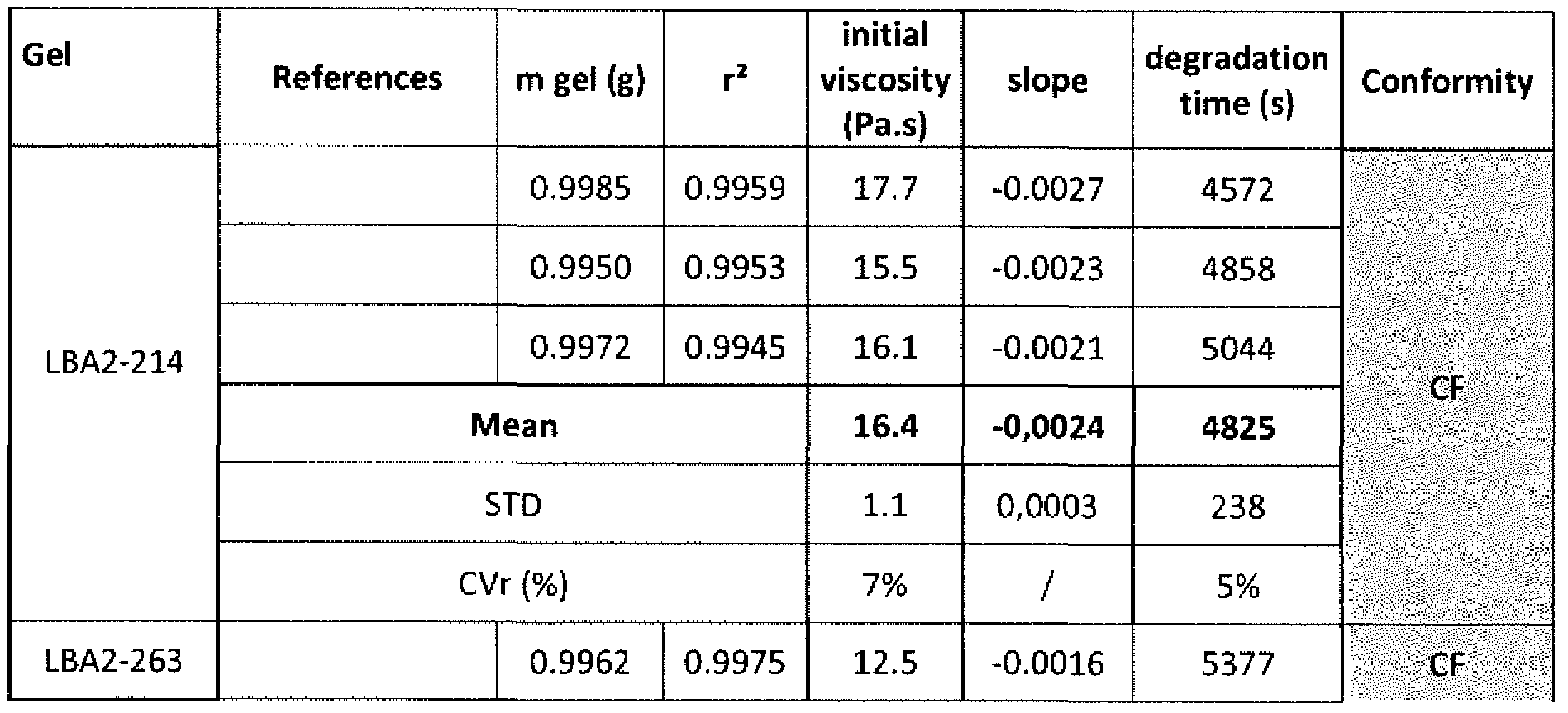
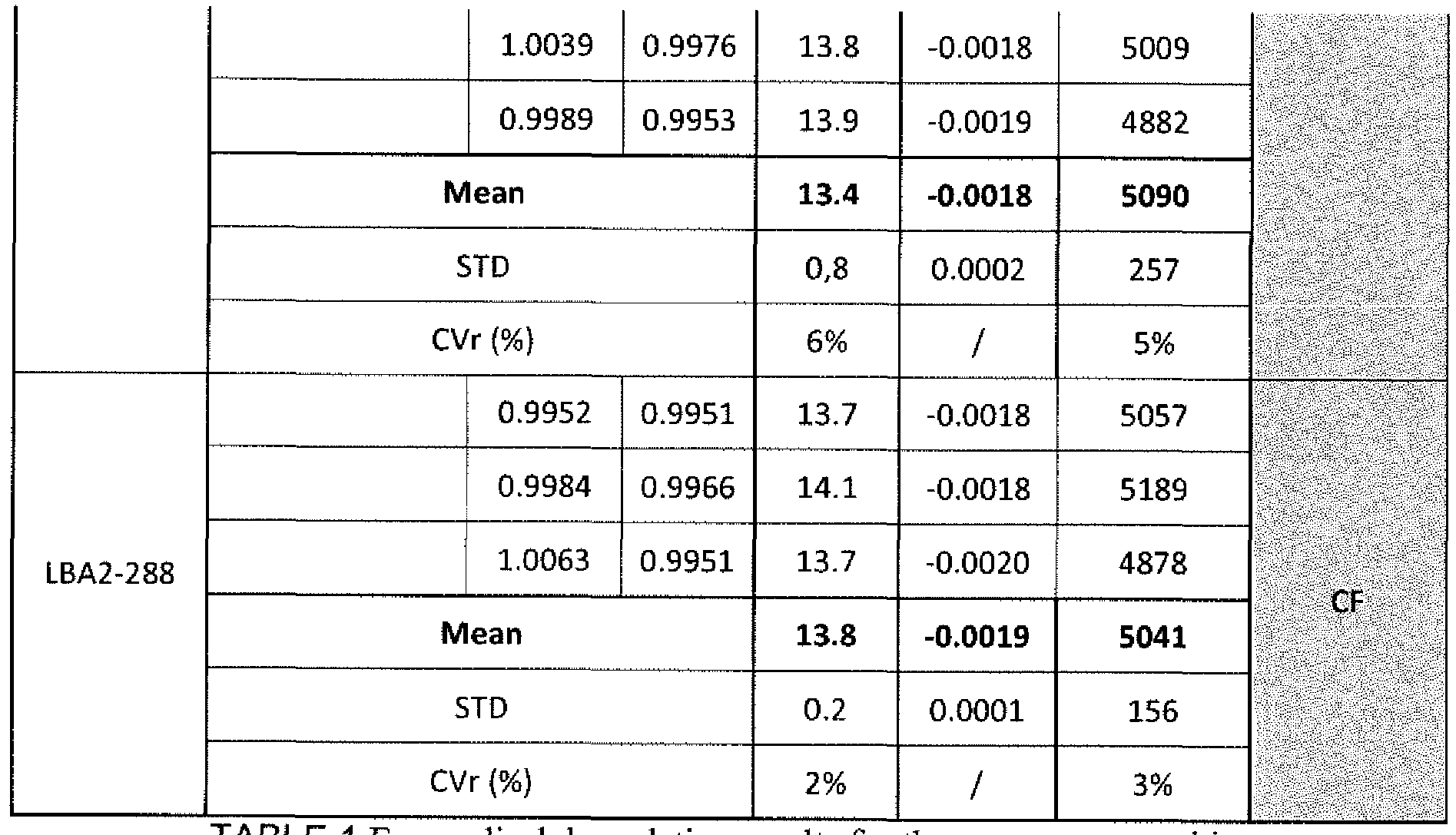
Free radical degradation results for the present compositions
The inter-batch variability is around 3% on the 3 different batches and the average value of degradation time is 4985 s (Table 2).
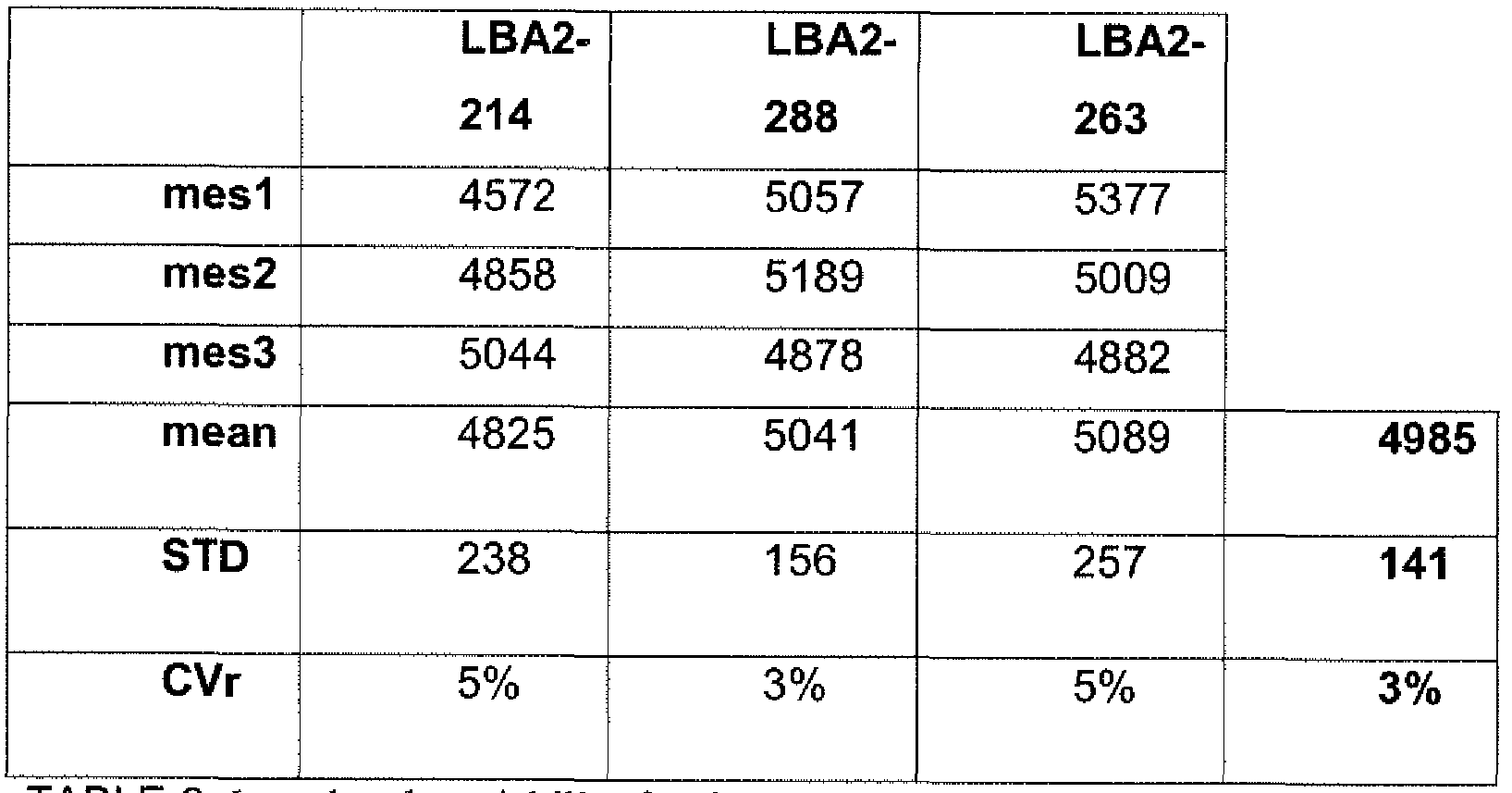
TABLE 2 Inter-batch variability for the present compositions degradation times
EXAMPLE
[0071] A 37-year old woman presents with rough, dry facial skin due to aging, dry climate and/or sun/wind exposure over the course of her lifetime. The physician administers, by superficial, micro-depot injections, the compositions described herein. The treatment consists of from 10 to about 100 shallow injections per skin region, with a 32 G/4 mm needle. The skin regions treated are the face, neck, and decollete. The treatment session, over the total of all of the skin regions of the patient, lasts about 40 minutes from the initial injection to the final injection. Each treatment region receives an appropriate amount of the composition in spaced apart injections. The facial region for example, receives about 2 ml_ to about 3 ml_ of the composition, administered by shallow single injections spaced apart approximately every 10 mm to about 15 mm. The neck is treated with about 1 ml_ to 2 ml_ of the composition, the injections spaced apart approximately every 15 mm to about 20 mm. After the treatment, the areas of the skin treated are examined by the senses of sight, touch and pressure. A photographic evaluation is performed at the beginning and at the end of the treatment. The patient reports to the physician that the treatment has caused only minimum discomfort. The patient returns to her everyday activities immediately after the treatment. In a small area on the skin of her treated right hand, ecchymosis is found, but this resolves a few days after the application of an anti-inflammatory cream. The patient returns to the physician 4 months after the treatment for a follow up evaluation. Prior to the follow up evaluation visit, no further injections of fillers or mesotherapy treatments are performed on the patient. On objective examination at the follow up visit, the treatment has resulted in an improvement in the epidermal texture, and decreased dryness, and improved brightness of the skin. These improvements are evidenced in part by the photographic documentation. The treated skin regions are gently palpated and seem to have an increase in hydration, suppleness, elasticity and tone. The patient expresses a high degree of satisfaction with the treatment via the completion of a self-assessment questionnaire. The patient claims the treated areas have improved and she is very happy with the results. Interestingly, these good results are achieved based on only the single treatment session, with no repeated injections,
"top-ups", or further injection treatment between the time of the treatment session and the folfow up visit.
[0072] Although the invention has been described and illustrated with a certain degree of particularity, it is understood that the present disclosure has been made only by way of example, and that numerous changes in the combination and arrangement of parts, steps and elements can be resorted to by those skilled in the art without departing from the scope of the invention, as hereinafter claimed.
Claims
1 . An injectable composition useful for reducing the appearance of superficial depressions in the skin, the composition comprising:
a hyaluronic acid (HA) gel comprising a crosslinked HA matrix made with a low molecular weight HA material having a weight average molecular weight of between 0.20 about Da and about 0.99 MDa;
wherein the HA concentration of the composition is less than about 17.0 mg/g; wherein the composition maintains the reduced appearance of superficial depressions in the skin for at least about 3 months from being introduced into the skin.
2. The composition of claim 1 wherein the composition maintains the reduced appearance of superficial depressions in the skin for at least about 6 months from being introduced into the skin.
3. The composition of claim 1 wherein the composition maintains the reduced appearance of superficial depressions in the skin for at least about 9 months from being introduced into the skin.
4. The composition of claim 1 further comprising at least one of mannitol and a vitamin C derivative.
5. The composition of claim 4 wherein the mannitol is present in an amount of between about 0.3% to about 0.9% w/w.
6. The composition of claim 4 wherein the vitamin C derivative is ascorbic acid 2- glucoside.
7. The composition of claim 6 wherein the ascorbic acid 2-glucoside is present in an amount of between about about 0.3% to about 0.6%w/w.
8. The composition of claim 1 further comprising about 0.9% w/w mannitol and about 0.6% w/w ascorbic acid 2-giucoside.
9. The composition of claim 1 wherein the weight average molecular weight of the low molecular weight HA material is between about 400,000 Da and about 800,000 Da.
10. The composition of claim 1 wherein the crosslinked HA matrix is crosslinked with a crosslinking agent selected from the group consisting of 1 ,4-butanediol digiycidyl ether (BDDE), 1 ,4-bis(2,3-epoxypropoxy)butane, 1 ,4-bisglycidyloxybutane, 1 ,2-bis(2,3- epoxypropoxy)ethylene and 1-(2,3-epoxypropyl)-2,3-epoxycyclohexane.
11. The composition of claim 1 wherein the HA concentration is about 10.0 mg/g to about 14.0 mg/g.
12. The composition of claim 1 wherein the HA concentration is about 12.0 mg/g.
13. An injectable composition useful for reducing the appearance of superficial depressions in the skin or for improving skin quality, the composition comprising:
a hyaluronic acid (HA) gel comprising a crosslinked HA matrix;
at least one of a mannitol and a Vitamin C derivative;
wherein the HA concentration of the composition is less than about 17.0 mg/g; wherein the composition maintains the reduced appearance of superficial depressions in the skin or the improved skin quality for at least about 3 months from being introduced into the skin.
14. The composition of claim 13 wherein the composition maintains the reduced appearance of superficial depressions in the skin or the improved skin quality for at least about 6 months from being introduced into the skin.
15. The composition of claim 13 wherein the composition maintains the reduced appearance of superficial depressions in the skin or the improved skin quality for at least about 9 months from being introduced into the skin.
16. The composition of claim 13 wherein the mannitol is present in an amount of between about 0.3% to about 0.9% w/w.
17. The composition of claim 13 wherein the vitamin C derivative is ascorbic acid 2- glucoside.
18. The composition of claim 17 wherein the ascorbic acid 2-glucoside is present in an amount of between about about 0.3% to about 0.6% w/w.
19. The composition of claim 13 wherein the at least one of a mannitol and a Vitamin C derivative comprises both mannitol present at about 0.9% w/w and a Vitamin C derivative present at about 0.6% w/w.
20. The composition of claim 19 wherein the Vitamin C derivative is ascorbic acid 2- glucoside.
21. The composition of claim 13 wherein the HA concentration is about 10.0 mg/g to about 14.0 mg/g.
22. The composition of claim 13 wherein the HA concentration is about 12.0 mg/g.
23. A method of improving at least one of texture, hydration and elasticity of skin, the method comprising;
treating an area of skin by introducing into a skin region, in a single treatment session, multiple, spaced apart injections of a composition comprising a hyaluronic acid (HA) gel containing crosslinked HA;
wherein the HA concentration of the composition is less than about 17.0 mg/g;
wherein the treated skin maintains at least one of an improved texture, hydration and elasticity due to the treatment for at least about 3 months.
24. The method of claim 23 wherein the treated skin maintains the at least one of an improved texture, hydration and elasticity due to the treatment for at least about 6 months.
25. The method of claim 23 wherein the treated skin maintains the at least one of an improved texture, hydration and elasticity due to the treatment for at least about 12 months.
26. The method of claim 23 wherein the HA concentration is about 10.0 mg/g to about 14.0 mg/g.
27. The method of claim 23 wherein the HA concentration is about 12.0 mg/g.
28. The method of claim 23 wherein the injections are spaced apart by a distance of between about 5 mm to about 20 mm.
29. The method of claim 23 wherein the injections are introduced in an amount of about 5 μΙ_ to about 100 μΙ_ per injection.
30. The method of claim 23 wherein the treatment takes no longer than about 45 minutes.
31. The method of claim 23 wherein the injections are delivered through a needle having a gauge of from 28 G to 33 G.
32. The method of claim 23 wherein the composition further comprising at least one of mannitol and a vitamin C derivative.
33. The method of claim 23 wherein the mannitol is present in an amount of between about 0.3% and about 0.9% w/w.
34. The method of claim 23 wherein the vitamin C derivative is ascorbic acid 2- glucoside.
35. The method of claim 34 wherein the ascorbic acid 2-glucoside is present in an amount of between about 0.3% and about 0.6% % w/w.
36. A method of increasing at least one of smoothness, hydration, and elasticity in skin comprising;
introducing, into a skin region at a depth of between about , in a single treatment session, multiple, spaced apart injections of a composition comprising a hyaluronic acid (HA) gel containing BDDE-cross!inked HA and uncrosslinked HA;
wherein the injections are introduced in an amount of about 5 μΙ_ to about 100 μ!_ per injection;
wherein the injections are delivered through a needle having a gauge of from 28 G to 33 G;
wherein the injections spaced apart by a distance of between about 5 mm to about 20 mm; and
wherein the skin region maintains an increased smoothness, hydration, and/or elasticity due to the treatment for at least about 6 months.
37. The method of claim 36 wherein the composition further comprises at least one of mannitol and a vitamin C derivative.
38. A composition for increasing at least one of smoothness, hydration, and elasticity in skin comprising:
a hyaluronic acid (HA) gel comprising a crosslinked HA matrix made with a low molecular weight HA material having a weight average molecular weight of between about 400,000 Da and about 800,000 Da;
wherein the HA concentration of the composition is from about 10.0 mg/g to about 14.0 mg/g; and
wherein the composition maintains the increased smoothness, hydration, and/or elasticity due to the treatment for at least about 6 months from being introduced into the skin in a single treatment session comprising multiple, spaced apart injections of the composition in which the injections are introduced in an amount of about 5 pL to about 100 μΙ_ per injection, delivered through a needle having a gauge of from 28 G to 33 G and are spaced apart by a distance of between about 5 mm to about 20 mm.
39. The composition of claim 38 wherein the composition further comprises at least one of mannitol and a vitamin C derivative.
Priority Applications (26)
| Application Number | Priority Date | Filing Date | Title |
|---|---|---|---|
| PCT/IB2015/000347 WO2016128783A1 (en) | 2015-02-09 | 2015-02-09 | Compositions and methods for improving skin appearance |
| RU2017131027A RU2718873C2 (en) | 2015-02-09 | 2016-02-09 | Compositions and methods for improving the appearance of skin |
| EP21213703.8A EP3988078A1 (en) | 2015-02-09 | 2016-02-09 | Compositions and methods for improving skin appearance |
| HK18103966.4A HK1244443A1 (en) | 2015-02-09 | 2016-02-09 | Compositions and methods for improving skin appearance |
| AU2016217963A AU2016217963B2 (en) | 2015-02-09 | 2016-02-09 | Compositions and methods for improving skin appearance |
| KR1020247005879A KR20240027881A (en) | 2015-02-09 | 2016-02-09 | Compositions and methods for improving skin appearance |
| RU2020112214A RU2020112214A (en) | 2015-02-09 | 2016-02-09 | COMPOSITIONS AND METHODS FOR IMPROVING THE APPEARANCE OF SKIN |
| JP2017541828A JP2018504448A (en) | 2015-02-09 | 2016-02-09 | Compositions and methods for improving skin appearance |
| CN202311708338.8A CN117599246A (en) | 2015-02-09 | 2016-02-09 | Compositions and methods for improving skin appearance |
| BR112017017043-4A BR112017017043B1 (en) | 2015-02-09 | 2016-02-09 | INJECTABLE COMPOSITION TO REDUCE THE APPEARANCE OF SURFACE DEPRESSIONS ON THE SKIN AND NON-THERAPEUTIC METHOD TO IMPROVE AT LEAST ONE OF SKIN TEXTURE, HYDRATION AND ELASTICITY |
| CA2972561A CA2972561A1 (en) | 2015-02-09 | 2016-02-09 | Compositions for improving skin appearance comprising a crosslinked hyaluronic acid matrix made with low molecular weight hyaluronic acid |
| ES16704566T ES2910249T3 (en) | 2015-02-09 | 2016-02-09 | Compositions and methods for improving the appearance of the skin |
| KR1020177025185A KR102673541B1 (en) | 2015-02-09 | 2016-02-09 | Compositions and methods for improving skin appearance |
| EP16704566.5A EP3256097B1 (en) | 2015-02-09 | 2016-02-09 | Compositions and methods for improving skin appearance |
| CN201680009138.5A CN107205911A (en) | 2015-02-09 | 2016-02-09 | Compositions and methods for improving skin appearance |
| PCT/EP2016/052682 WO2016128374A1 (en) | 2015-02-09 | 2016-02-09 | Compositions and methods for improving skin appearance |
| HK18107767.6A HK1248134B (en) | 2015-02-09 | 2016-02-09 | Compositions and methods for improving skin appearance |
| US16/877,315 US11260015B2 (en) | 2015-02-09 | 2020-05-18 | Compositions and methods for improving skin appearance |
| JP2021024837A JP7425007B2 (en) | 2015-02-09 | 2021-02-19 | Compositions and methods for improving skin appearance |
| AU2021202089A AU2021202089B2 (en) | 2015-02-09 | 2021-04-06 | Compositions and methods for improving skin appearance |
| US17/684,248 US12011500B2 (en) | 2015-02-09 | 2022-03-01 | Compositions and methods for improving skin appearance |
| AU2023241303A AU2023241303B2 (en) | 2015-02-09 | 2023-10-04 | Compositions and methods for improving skin appearance |
| JP2023183420A JP2024008963A (en) | 2015-02-09 | 2023-10-25 | Compositions and methods for improving skin appearance |
| US18/673,666 US20240307289A1 (en) | 2015-02-09 | 2024-05-24 | Compositions and methods for improving skin appearance |
| JP2025061134A JP2025100570A (en) | 2015-02-09 | 2025-04-02 | Compositions and methods for improving the appearance of skin |
| AU2025283497A AU2025283497A1 (en) | 2015-02-09 | 2025-12-17 | Compositions and methods for improving skin appearance |
Applications Claiming Priority (1)
| Application Number | Priority Date | Filing Date | Title |
|---|---|---|---|
| PCT/IB2015/000347 WO2016128783A1 (en) | 2015-02-09 | 2015-02-09 | Compositions and methods for improving skin appearance |
Publications (1)
| Publication Number | Publication Date |
|---|---|
| WO2016128783A1 true WO2016128783A1 (en) | 2016-08-18 |
Family
ID=53682731
Family Applications (2)
| Application Number | Title | Priority Date | Filing Date |
|---|---|---|---|
| PCT/IB2015/000347 Ceased WO2016128783A1 (en) | 2015-02-09 | 2015-02-09 | Compositions and methods for improving skin appearance |
| PCT/EP2016/052682 Ceased WO2016128374A1 (en) | 2015-02-09 | 2016-02-09 | Compositions and methods for improving skin appearance |
Family Applications After (1)
| Application Number | Title | Priority Date | Filing Date |
|---|---|---|---|
| PCT/EP2016/052682 Ceased WO2016128374A1 (en) | 2015-02-09 | 2016-02-09 | Compositions and methods for improving skin appearance |
Country Status (12)
| Country | Link |
|---|---|
| US (3) | US11260015B2 (en) |
| EP (2) | EP3988078A1 (en) |
| JP (4) | JP2018504448A (en) |
| KR (2) | KR20240027881A (en) |
| CN (2) | CN107205911A (en) |
| AU (4) | AU2016217963B2 (en) |
| BR (1) | BR112017017043B1 (en) |
| CA (1) | CA2972561A1 (en) |
| ES (1) | ES2910249T3 (en) |
| HK (1) | HK1244443A1 (en) |
| RU (2) | RU2020112214A (en) |
| WO (2) | WO2016128783A1 (en) |
Cited By (2)
| Publication number | Priority date | Publication date | Assignee | Title |
|---|---|---|---|---|
| US10786438B2 (en) | 2018-04-27 | 2020-09-29 | Krystal Biotech, Inc. | Recombinant nucleic acids encoding cosmetic protein(s) for aesthetic applications |
| CN116124754A (en) * | 2023-04-17 | 2023-05-16 | 山东省中源联科生物工程集团有限公司 | Method for detecting residual quantity of cross-linking agent in sodium hyaluronate gel through image analysis |
Families Citing this family (10)
| Publication number | Priority date | Publication date | Assignee | Title |
|---|---|---|---|---|
| WO2016128783A1 (en) * | 2015-02-09 | 2016-08-18 | Allergan Industrie Sas | Compositions and methods for improving skin appearance |
| EP4309686A3 (en) | 2017-10-19 | 2024-02-07 | LifeCell Corporation | Flowable acellular tissue matrix products and methods of production |
| CN115605270A (en) * | 2019-12-26 | 2023-01-13 | 阿勒根公司(Us) | Physically mixed HA-collagen dermal filler |
| EP4099978A1 (en) * | 2020-02-06 | 2022-12-14 | Merz Pharma GmbH & Co. KGaA | Injectable composition for skin and soft tissue augmentation |
| IT202000002836A1 (en) * | 2020-02-13 | 2021-08-13 | Bakel S R L | COSMETIC PRODUCT |
| FR3109153B1 (en) * | 2020-04-10 | 2022-07-15 | Teoxane SA | Compositions based on at least two glycosaminoglycans |
| IT202200023682A1 (en) | 2022-11-16 | 2024-05-16 | Francesco Bernardini | Compositions and methods to improve volumetric defects of the face |
| EP4631536A1 (en) * | 2022-12-05 | 2025-10-15 | Medytox Inc. | Cross-linked hyaluronic acid gel having good spreadability and stability, and use thereof |
| EP4567050A1 (en) | 2023-12-04 | 2025-06-11 | Quantum Beauty Cosmetics Joint Stock Company | A method for preparing a cross-linked hyaluronic acid gel |
| WO2026014755A1 (en) * | 2024-07-09 | 2026-01-15 | (주)유스케어팜 | Cosmetic composition for skin improvement comprising cross-linked hyaluronic acid |
Citations (5)
| Publication number | Priority date | Publication date | Assignee | Title |
|---|---|---|---|---|
| US20060194758A1 (en) * | 2003-04-10 | 2006-08-31 | Pierre Lebreton | Cross-linking of low and high molecular weight polysaccharides preparation of injectable monophase hydrogels and polysaccharides and dydrogels thus obtained |
| US20110118206A1 (en) * | 2008-08-04 | 2011-05-19 | Allergan Industrie, Sas | Hyaluronic acid based formulations |
| US20110172180A1 (en) * | 2010-01-13 | 2011-07-14 | Allergan Industrie. Sas | Heat stable hyaluronic acid compositions for dermatological use |
| US20120225842A1 (en) * | 2010-01-13 | 2012-09-06 | Allergan, Inc. | Hyaluronic acid compositions for dermatological use |
| WO2013040242A2 (en) * | 2011-09-14 | 2013-03-21 | Allergan, Inc. | Dermal filler compositions for fine line treatment |
Family Cites Families (213)
| Publication number | Priority date | Publication date | Assignee | Title |
|---|---|---|---|---|
| US2128827A (en) | 1938-03-09 | 1938-08-30 | Frank B Killian | Method and apparatus for manufacturing thin rubber articles |
| CA807629A (en) | 1966-06-30 | 1969-03-04 | Eigen Edward | Lotion and detergent compositions |
| JPS4838158B1 (en) | 1970-10-05 | 1973-11-15 | ||
| CA949965A (en) | 1971-12-03 | 1974-06-25 | Robert H. Marchessault | Method of preparing cross-linked starch and starch derivatives |
| US3949073A (en) | 1974-11-18 | 1976-04-06 | The Board Of Trustees Of Leland Stanford Junior University | Process for augmenting connective mammalian tissue with in situ polymerizable native collagen solution |
| US4060081A (en) | 1975-07-15 | 1977-11-29 | Massachusetts Institute Of Technology | Multilayer membrane useful as synthetic skin |
| CA1073360A (en) | 1975-10-22 | 1980-03-11 | John R. Daniels | Non-antigenic collagen and articles of manufacture |
| US4233360A (en) | 1975-10-22 | 1980-11-11 | Collagen Corporation | Non-antigenic collagen and articles of manufacture |
| JPS55153711A (en) | 1979-05-19 | 1980-11-29 | Pola Chem Ind Inc | Cosmetic lotion |
| US4279812A (en) | 1979-09-12 | 1981-07-21 | Seton Company | Process for preparing macromolecular biologically active collagen |
| JPS6052129B2 (en) | 1979-10-04 | 1985-11-18 | 呉羽化学工業株式会社 | Manufacturing method of medical collagen fiber |
| US4424208A (en) | 1982-01-11 | 1984-01-03 | Collagen Corporation | Collagen implant material and method for augmenting soft tissue |
| US4582640A (en) | 1982-03-08 | 1986-04-15 | Collagen Corporation | Injectable cross-linked collagen implant material |
| US4501306A (en) | 1982-11-09 | 1985-02-26 | Collagen Corporation | Automatic syringe filling system |
| SE442820B (en) | 1984-06-08 | 1986-02-03 | Pharmacia Ab | GEL OF THE CROSS-BOND HYALURONIC ACID FOR USE AS A GLASS BODY SUBSTITUTE |
| SE456346B (en) | 1984-07-23 | 1988-09-26 | Pharmacia Ab | GEL TO PREVENT ADHESION BETWEEN BODY TISSUE AND SET FOR ITS PREPARATION |
| US4582865A (en) | 1984-12-06 | 1986-04-15 | Biomatrix, Inc. | Cross-linked gels of hyaluronic acid and products containing such gels |
| US4636524A (en) | 1984-12-06 | 1987-01-13 | Biomatrix, Inc. | Cross-linked gels of hyaluronic acid and products containing such gels |
| US4605691A (en) | 1984-12-06 | 1986-08-12 | Biomatrix, Inc. | Cross-linked gels of hyaluronic acid and products containing such gels |
| SE8501022L (en) | 1985-03-01 | 1986-09-02 | Pharmacia Ab | FORMAT CREATES AND PROCEDURES FOR ITS PREPARATION |
| US4713448A (en) | 1985-03-12 | 1987-12-15 | Biomatrix, Inc. | Chemically modified hyaluronic acid preparation and method of recovery thereof from animal tissues |
| US4642117A (en) | 1985-03-22 | 1987-02-10 | Collagen Corporation | Mechanically sheared collagen implant material and method |
| US4803075A (en) | 1986-06-25 | 1989-02-07 | Collagen Corporation | Injectable implant composition having improved intrudability |
| FR2608456B1 (en) | 1986-12-18 | 1993-06-18 | Mero Rousselot Satia | MICROCAPSULES BASED ON GELATIN AND POLYSACCHARIDES AND PROCESS FOR OBTAINING THEM |
| US5091171B2 (en) | 1986-12-23 | 1997-07-15 | Tristrata Inc | Amphoteric compositions and polymeric forms of alpha hydroxyacids and their therapeutic use |
| US5385938B1 (en) | 1986-12-23 | 1997-07-15 | Tristrata Inc | Method of using glycolic acid for treating wrinkles |
| FR2623167B2 (en) | 1987-08-14 | 1992-08-07 | Genus Int | IMPROVEMENT IN ARTICLES WITH ELASTIC ARTICULATIONS RIGIDIFYING ON THEIR TENSIONING |
| US6174999B1 (en) | 1987-09-18 | 2001-01-16 | Genzyme Corporation | Water insoluble derivatives of polyanionic polysaccharides |
| US5017229A (en) | 1990-06-25 | 1991-05-21 | Genzyme Corporation | Water insoluble derivatives of hyaluronic acid |
| IT1219587B (en) | 1988-05-13 | 1990-05-18 | Fidia Farmaceutici | SELF-CROSS-LINKED CARBOXYLY POLYSACCHARIDES |
| US5614587A (en) | 1988-11-21 | 1997-03-25 | Collagen Corporation | Collagen-based bioadhesive compositions |
| US5643464A (en) | 1988-11-21 | 1997-07-01 | Collagen Corporation | Process for preparing a sterile, dry crosslinking agent |
| US5565519A (en) | 1988-11-21 | 1996-10-15 | Collagen Corporation | Clear, chemically modified collagen-synthetic polymer conjugates for ophthalmic applications |
| US5162430A (en) | 1988-11-21 | 1992-11-10 | Collagen Corporation | Collagen-polymer conjugates |
| SE462587B (en) | 1988-11-30 | 1990-07-23 | Wiklund Henry & Co | DEVICE FOR MARKING THE WORK PAPER WITH WRITTEN OR OTHER SIGNS |
| JPH02215707A (en) | 1989-02-15 | 1990-08-28 | Chisso Corp | Skin cosmetic |
| EP0398484B1 (en) | 1989-05-19 | 1995-05-31 | Kabushiki Kaisha Hayashibara Seibutsu Kagaku Kenkyujo | Alpha-glycosyl-L-ascorbic acid, and its preparation and uses |
| EP0416250A3 (en) | 1989-08-01 | 1991-08-28 | The Research Foundation Of State University Of New York | N-acylurea and o-acylisourea derivatives of hyaluronic acid |
| US5356883A (en) | 1989-08-01 | 1994-10-18 | Research Foundation Of State University Of N.Y. | Water-insoluble derivatives of hyaluronic acid and their methods of preparation and use |
| CA2023922A1 (en) | 1989-09-05 | 1991-03-06 | James M. Curtis | Method of manufacturing an implantable article provided with a micropillared surface |
| JP2832848B2 (en) | 1989-10-21 | 1998-12-09 | 株式会社林原生物化学研究所 | Crystal 2-O-α-D-glucopyranosyl-L-ascorbic acid, its production method and use |
| US5143724A (en) | 1990-07-09 | 1992-09-01 | Biomatrix, Inc. | Biocompatible viscoelastic gel slurries, their preparation and use |
| US5246698A (en) | 1990-07-09 | 1993-09-21 | Biomatrix, Inc. | Biocompatible viscoelastic gel slurries, their preparation and use |
| US5492936A (en) | 1990-11-30 | 1996-02-20 | Allergan, Inc. | Bimodal molecular weight hyaluronate formulations and methods for using same |
| JP3115625B2 (en) | 1991-03-30 | 2000-12-11 | 帝國製薬株式会社 | Topical patch containing lidocaine |
| US5314874A (en) | 1991-04-19 | 1994-05-24 | Koken Co., Ltd. | Intracorporeally injectable composition for implanting highly concentrated cross-linked atelocollagen |
| DE69328677T2 (en) | 1992-02-28 | 2000-08-31 | Collagen Corp., Palo Alto | HIGHLY CONCENTRATED, HOMOGENIZED COLLAGEN COMPOSITIONS |
| IT1260154B (en) | 1992-07-03 | 1996-03-28 | Lanfranco Callegaro | HYALURONIC ACID AND ITS DERIVATIVES IN INTERPENETRATING POLYMERS (IPN) |
| EP0680525B1 (en) | 1993-01-20 | 1997-05-07 | E.R. SQUIBB & SONS, INC. | Fibres |
| EP0784487A1 (en) | 1993-03-19 | 1997-07-23 | Medinvent | A composition and a method for tissue augmentation |
| US5531716A (en) | 1993-09-29 | 1996-07-02 | Hercules Incorporated | Medical devices subject to triggered disintegration |
| US5616568A (en) | 1993-11-30 | 1997-04-01 | The Research Foundation Of State University Of New York | Functionalized derivatives of hyaluronic acid |
| CA2146090C (en) | 1994-05-10 | 1998-11-24 | Mark E. Mitchell | Apparatus and method of mixing materials in a sterile environment |
| US5616689A (en) | 1994-07-13 | 1997-04-01 | Collagen Corporation | Method of controlling structure stability of collagen fibers produced form solutions or dispersions treated with sodium hydroxide for infectious agent deactivation |
| AU706434B2 (en) | 1994-10-18 | 1999-06-17 | Ethicon Inc. | Injectable liquid copolymers for soft tissue repair and augmentation |
| US20050186673A1 (en) | 1995-02-22 | 2005-08-25 | Ed. Geistlich Soehne Ag Fuer Chemistrie Industrie | Collagen carrier of therapeutic genetic material, and method |
| FR2733426B1 (en) | 1995-04-25 | 1997-07-18 | Debacker Yves | MEDICAL DEVICE FOR FILLING SKIN VOLUME DEFORMATIONS SUCH AS WRINKLES AND SCARS BY INJECTION OF 2 DIFFERENT PHYSICO-CHEMICAL FORMS OF A BIOLOGICAL POLYMER |
| FR2733427B1 (en) | 1995-04-25 | 2001-05-25 | W K Et Associes | INJECTABLE BIPHASIC COMPOSITIONS CONTAINING HYALURONIC ACID, ESPECIALLY USEFUL IN REPAIRING AND AESTHETIC SURGERIES |
| US6214331B1 (en) | 1995-06-06 | 2001-04-10 | C. R. Bard, Inc. | Process for the preparation of aqueous dispersions of particles of water-soluble polymers and the particles obtained |
| US5827937A (en) | 1995-07-17 | 1998-10-27 | Q Med Ab | Polysaccharide gel composition |
| US5571503A (en) | 1995-08-01 | 1996-11-05 | Mausner; Jack | Anti-pollution cosmetic composition |
| US6063405A (en) | 1995-09-29 | 2000-05-16 | L.A.M. Pharmaceuticals, Llc | Sustained release delivery system |
| US6833408B2 (en) | 1995-12-18 | 2004-12-21 | Cohesion Technologies, Inc. | Methods for tissue repair using adhesive materials |
| IT1277707B1 (en) | 1995-12-22 | 1997-11-11 | Chemedica Sa | OPHTHALMIC FORMULATION BASED ON SODIUM HYALURONATE FOR USE IN OCULAR SURGERY |
| US5980948A (en) | 1996-08-16 | 1999-11-09 | Osteotech, Inc. | Polyetherester copolymers as drug delivery matrices |
| US6066325A (en) | 1996-08-27 | 2000-05-23 | Fusion Medical Technologies, Inc. | Fragmented polymeric compositions and methods for their use |
| IT1287967B1 (en) | 1996-10-17 | 1998-09-10 | Fidia Spa In Amministrazione S | PHARMACEUTICAL PREPARATIONS FOR LOCAL ANESTHETIC USE |
| FR2759577B1 (en) | 1997-02-17 | 1999-08-06 | Corneal Ind | DEEP SCLERECTOMY IMPLANT |
| FR2759576B1 (en) | 1997-02-17 | 1999-08-06 | Corneal Ind | PRE-DESCEMETIC SCLERO-KERATECTOMY IMPLANT |
| US5935164A (en) | 1997-02-25 | 1999-08-10 | Pmt Corporaton | Laminated prosthesis and method of manufacture |
| FR2764514B1 (en) | 1997-06-13 | 1999-09-03 | Biopharmex Holding Sa | IMPLANT INJECTED IN SUBCUTANEOUS OR INTRADERMAL WITH CONTROLLED BIORESORBABILITY FOR REPAIR OR PLASTIC SURGERY AND AESTHETIC DERMATOLOGY |
| US7192984B2 (en) | 1997-06-17 | 2007-03-20 | Fziomed, Inc. | Compositions of polyacids and polyethers and methods for their use as dermal fillers |
| US6391336B1 (en) | 1997-09-22 | 2002-05-21 | Royer Biomedical, Inc. | Inorganic-polymer complexes for the controlled release of compounds including medicinals |
| FR2780730B1 (en) | 1998-07-01 | 2000-10-13 | Corneal Ind | INJECTABLE BIPHASIC COMPOSITIONS, ESPECIALLY USEFUL IN RESTORATIVE AND AESTHETIC SURGERIES |
| US6630457B1 (en) | 1998-09-18 | 2003-10-07 | Orthogene Llc | Functionalized derivatives of hyaluronic acid, formation of hydrogels in situ using same, and methods for making and using same |
| IT1303738B1 (en) | 1998-11-11 | 2001-02-23 | Aquisitio S P A | CARBOXYLATE POLYSACCHARIDE CROSS-LINKING PROCESS. |
| DK172900B1 (en) | 1998-12-18 | 1999-09-27 | Per Julius Nielsen | Preparation and kit for use in intraocular surgery |
| GB9902652D0 (en) | 1999-02-05 | 1999-03-31 | Fermentech Med Ltd | Process |
| US6767928B1 (en) | 1999-03-19 | 2004-07-27 | The Regents Of The University Of Michigan | Mineralization and biological modification of biomaterial surfaces |
| US6372494B1 (en) | 1999-05-14 | 2002-04-16 | Advanced Tissue Sciences, Inc. | Methods of making conditioned cell culture medium compositions |
| US6521223B1 (en) | 2000-02-14 | 2003-02-18 | Genzyme Corporation | Single phase gels for the prevention of adhesions |
| US6682760B2 (en) | 2000-04-18 | 2004-01-27 | Colbar R&D Ltd. | Cross-linked collagen matrices and methods for their preparation |
| KR20010096388A (en) | 2000-04-19 | 2001-11-07 | 진세훈 | Human glans enhancing materials and glans enhancing method |
| FR2811671B1 (en) | 2000-07-17 | 2003-02-28 | Corneal Ind | POLYMER (S) HYDROGEL, BIODEGRATION RESISTANT, PREPARATION AND USE AS TISSUE REGENERATION SUPPORT |
| FR2811996B1 (en) | 2000-07-19 | 2003-08-08 | Corneal Ind | CROSS-LINKING OF POLYSACCHARIDE (S), PREPARATION OF HYDROGEL (S); POLYSACCHARIDE (S) AND HYDROGEL (S) OBTAINED, THEIR USES |
| WO2002009792A1 (en) | 2000-07-28 | 2002-02-07 | Anika Therapeutics, Inc. | Bioabsorbable composites of derivatized hyaluronic acid |
| US6773723B1 (en) | 2000-08-30 | 2004-08-10 | Depuy Acromed, Inc. | Collagen/polysaccharide bilayer matrix |
| US6620196B1 (en) | 2000-08-30 | 2003-09-16 | Sdgi Holdings, Inc. | Intervertebral disc nucleus implants and methods |
| US6924273B2 (en) | 2000-10-03 | 2005-08-02 | Scott W. Pierce | Chondroprotective/restorative compositions and methods of use thereof |
| WO2002028375A1 (en) | 2000-10-06 | 2002-04-11 | Jagotec Ag | A controlled-release, parenterally administrable microparticle preparation |
| KR100375299B1 (en) | 2000-10-10 | 2003-03-10 | 주식회사 엘지생명과학 | Crosslinked derivatives of hyaluronic acid by amide formation and their preparation methods |
| JP2005513081A (en) | 2000-12-13 | 2005-05-12 | パーデュー・リサーチ・ファウンデイション | Microencapsulation of drugs by solvent exchange |
| US6979440B2 (en) | 2001-01-29 | 2005-12-27 | Salvona, Llc | Compositions and method for targeted controlled delivery of active ingredients and sensory markers onto hair, skin, and fabric |
| US7119062B1 (en) | 2001-02-23 | 2006-10-10 | Neucoll, Inc. | Methods and compositions for improved articular surgery using collagen |
| US6586493B1 (en) | 2001-03-07 | 2003-07-01 | Arizona Board Of Regents Arizona State University | Polysaccharide-based hydrogels and pre-gel blends for the same |
| TW574301B (en) | 2001-05-02 | 2004-02-01 | Ind Tech Res Inst | Manufacturing method of epoxide crosslinked polysaccharides matrix |
| EP1411861B1 (en) | 2001-06-29 | 2012-04-04 | Medgraft Microtech, Inc. | Biodegradable injectable implants and related methods of manufacture and use |
| US6749841B2 (en) | 2001-07-26 | 2004-06-15 | Revlon Consumer Products Corporation | Stabilized aqueous acidic antiperspirant compositions and related methods |
| JP4230135B2 (en) | 2001-08-21 | 2009-02-25 | 独立行政法人科学技術振興機構 | Method for producing glycosaminoglycan-collagen complex cross-linked by multifunctional cross-linking agent |
| US20060189516A1 (en) | 2002-02-19 | 2006-08-24 | Industrial Technology Research Institute | Method for producing cross-linked hyaluronic acid-protein bio-composites |
| JP3916516B2 (en) | 2002-06-10 | 2007-05-16 | 独立行政法人科学技術振興機構 | Scaffolding material for hard tissue-soft tissue interface regeneration |
| US6780366B2 (en) | 2002-08-15 | 2004-08-24 | Mentor Corporation | Drip retainer |
| KR100523953B1 (en) | 2002-08-27 | 2005-10-25 | 주식회사 엘지생명과학 | Microbeads of natural polysaccharide and hyaluronic acid and processes for preparing the same |
| KR100507545B1 (en) | 2002-09-03 | 2005-08-09 | 주식회사 엘지생명과학 | Hyaluronic acid derivatives and processes for preparing them |
| US20040127932A1 (en) | 2002-09-12 | 2004-07-01 | Shah Tilak M. | Dip-molded polymeric medical devices with reverse thickness gradient, and method of making same |
| DE10246340A1 (en) | 2002-10-04 | 2004-04-29 | Wohlrab, David, Dr. | Combination preparation of hyaluronic acid and at least one local anesthetic and its use |
| US20040101959A1 (en) | 2002-11-21 | 2004-05-27 | Olga Marko | Treatment of tissue with undifferentiated mesenchymal cells |
| CN1732022A (en) | 2002-12-30 | 2006-02-08 | 血管技术国际股份公司 | Silk stent grafts |
| TWI251596B (en) | 2002-12-31 | 2006-03-21 | Ind Tech Res Inst | Method for producing a double-crosslinked hyaluronate material |
| WO2004073759A1 (en) | 2003-02-19 | 2004-09-02 | Aventis Pharmaceuticals Holdings Inc. | Composition and method for intradermal soft tissue augmentation |
| WO2004087007A2 (en) | 2003-03-25 | 2004-10-14 | Biocure, Inc. | Hydrogel string medical device |
| AU2003901834A0 (en) | 2003-04-17 | 2003-05-01 | Clearcoll Pty Ltd | Cross-linked polysaccharide compositions |
| JP2004323453A (en) | 2003-04-25 | 2004-11-18 | Chisso Corp | Degradable gel and method for producing the same |
| JP4208843B2 (en) | 2003-05-13 | 2009-01-14 | 三益半導体工業株式会社 | Wafer isolation method, wafer isolation apparatus, and wafer isolation transfer machine |
| KR20070012306A (en) | 2003-07-30 | 2007-01-25 | 앙테이스 에스.아. | Complex Matrix for Biomedical Use |
| US8137685B2 (en) | 2003-10-29 | 2012-03-20 | Teijin Limited | Hyaluronic acid compound, hydrogel thereof and joint treating material |
| JP2007513083A (en) | 2003-11-10 | 2007-05-24 | アンジオテック インターナショナル アーゲー | Medical implants and fiber inducers |
| US20070224278A1 (en) | 2003-11-12 | 2007-09-27 | Lyons Robert T | Low immunogenicity corticosteroid compositions |
| US20050101582A1 (en) | 2003-11-12 | 2005-05-12 | Allergan, Inc. | Compositions and methods for treating a posterior segment of an eye |
| US20090148527A1 (en) | 2007-12-07 | 2009-06-11 | Robinson Michael R | Intraocular formulation |
| US20060141049A1 (en) | 2003-11-12 | 2006-06-29 | Allergan, Inc. | Triamcinolone compositions for intravitreal administration to treat ocular conditions |
| WO2005051483A2 (en) | 2003-11-20 | 2005-06-09 | Angiotech International Ag | Electrical devices and anti-scarring agents |
| US8124120B2 (en) | 2003-12-22 | 2012-02-28 | Anika Therapeutics, Inc. | Crosslinked hyaluronic acid compositions for tissue augmentation |
| US20050142152A1 (en) | 2003-12-30 | 2005-06-30 | Leshchiner Adelya K. | Polymeric materials, their preparation and use |
| DE102004002001A1 (en) | 2004-01-14 | 2005-08-11 | Reinmüller, Johannes, Dr.med. | Agent for the treatment of inflammatory diseases |
| WO2005074913A2 (en) | 2004-01-30 | 2005-08-18 | Angiotech International Ag | Compositions and methods for treating contracture |
| US20050226936A1 (en) | 2004-04-08 | 2005-10-13 | Q-Med Ab | Method of soft tissue augmentation |
| US8288362B2 (en) | 2004-05-07 | 2012-10-16 | S.K. Pharmaceuticals, Inc. | Stabilized glycosaminoglycan preparations and related methods |
| EP1750769B1 (en) | 2004-05-20 | 2013-01-23 | Mentor Worldwide LLC | Methods for making injectable polymer hydrogels |
| US7651702B2 (en) | 2004-05-20 | 2010-01-26 | Mentor Corporation | Crosslinking hyaluronan and chitosanic polymers |
| US20050287180A1 (en) | 2004-06-15 | 2005-12-29 | Chen Andrew X | Phospholipid compositions and methods for their preparation and use |
| AU2005272578A1 (en) | 2004-08-13 | 2006-02-23 | Angiotech International Ag | Compositions and methods using hyaluronic acid and hyluronidase inhibitors |
| US20060040895A1 (en) | 2004-08-19 | 2006-02-23 | Kipling Thacker | Aesthetic use of hyaluronan |
| US7414021B2 (en) | 2004-10-01 | 2008-08-19 | Vincent Carmine Giampapa | Method and composition for restoration of age related tissue loss in the face or selected areas of the body |
| KR100762928B1 (en) | 2004-10-29 | 2007-10-04 | 재단법인서울대학교산학협력재단 | Non-woven form of bone tissue-induced regeneration shielding membrane made of silk fibroin nanofibers and method for manufacturing same |
| US20060105022A1 (en) | 2004-11-15 | 2006-05-18 | Shiseido Co., Ltd. | Process for preparing crosslinked hyaluronic acid gel |
| PT1817347T (en) | 2004-11-24 | 2017-07-21 | Albumedix As | Method of cross-linking hyaluronic acid with divinylsulfone |
| FR2878444B1 (en) | 2004-11-30 | 2008-04-25 | Corneal Ind Soc Par Actions Si | VISCOELASTIC SOLUTIONS COMPRISING SODIUM HYALURONATE AND HYDROXYPROPYLMETHYLCELLULOSE, PREPARATION AND USES |
| WO2006067608A1 (en) | 2004-12-22 | 2006-06-29 | Laboratoire Medidom S.A. | Aqueous formulations based on sodium hyaluronate for parenteral use |
| US20060257488A1 (en) | 2005-05-10 | 2006-11-16 | Cytophil, Inc. | Injectable hydrogels and methods of making and using same |
| EP1726299A3 (en) | 2005-05-27 | 2007-04-18 | StratoSphere Pharma AB | Cores and microcapsules suitable for parenteral administration as well as process for their manufacture |
| US7491709B2 (en) | 2005-07-01 | 2009-02-17 | Wayne Carey | Treatment with hyaluronic acid |
| JP5106109B2 (en) | 2005-08-11 | 2012-12-26 | 株式会社林原 | Collagen production enhancer and its use |
| JP4982718B2 (en) | 2005-08-31 | 2012-07-25 | 株式会社林原 | Composition for oral intake for beautiful skin |
| ES2747978T3 (en) | 2005-10-03 | 2020-03-12 | Mark A Pinsky | Non-phospholipid liposomes comprising hyaluronic acid |
| US20070202084A1 (en) | 2005-12-14 | 2007-08-30 | Anika Therapeutics, Inc. | Bioabsorbable implant of hyaluronic acid derivative for treatment of osteochondral and chondral defects |
| US20070203095A1 (en) | 2005-12-14 | 2007-08-30 | Anika Therapeutics, Inc. | Treatment of arthritis and other musculoskeletal disorders with crosslinked hyaluronic acid |
| FR2894827B1 (en) | 2005-12-21 | 2010-10-29 | Galderma Res & Dev | PHARMACEUTICAL OR COSMETIC PREPARATIONS FOR TOPICAL AND / OR PARENTERAL APPLICATION, PROCESSES FOR THEIR PREPARATION, AND USES THEREOF |
| FR2895907B1 (en) | 2006-01-06 | 2012-06-01 | Anteis Sa | VISCOELASTIC GEL FOR DERMATOLOGICAL USE |
| US20070184087A1 (en) | 2006-02-06 | 2007-08-09 | Bioform Medical, Inc. | Polysaccharide compositions for use in tissue augmentation |
| US20070212385A1 (en) | 2006-03-13 | 2007-09-13 | David Nathaniel E | Fluidic Tissue Augmentation Compositions and Methods |
| JP2009529967A (en) | 2006-03-15 | 2009-08-27 | サーモディクス,インコーポレイティド | Hydrophobic derivatives of natural biodegradable polysaccharides and their use |
| FR2900575B1 (en) | 2006-05-05 | 2008-10-17 | Anteis Sa | BIOCOMPATIBLE CONTROLLED RELEASE GEL, PREPARATION METHOD AND USE THEREOF |
| US20070298005A1 (en) | 2006-06-22 | 2007-12-27 | Marie-Josee Thibault | Injectable composition for treatment of skin defects or deformations |
| WO2008003321A2 (en) | 2006-07-07 | 2008-01-10 | Novozymes Biopolymer A/S | Compositions with several hyaluronic acid fractions for cosmetic use |
| US20100035838A1 (en) | 2006-09-19 | 2010-02-11 | Geoffrey Kenneth Heber | Cross-linked polysaccharide gels |
| FR2908415B1 (en) | 2006-11-10 | 2009-01-23 | Abr Dev Sarl | RETICULATED HYALURONIC ACID AND PROCESS FOR PREPARING THE SAME |
| FR2909560B1 (en) | 2006-12-06 | 2012-12-28 | Fabre Pierre Dermo Cosmetique | HYALURONIC ACID GEL FOR INTRADERMAL INJECTION |
| AU2007331071A1 (en) | 2006-12-11 | 2008-06-19 | Mor Research Applications Ltd. | Novel injectable chitosan mixtures forming hydrogels |
| KR100759091B1 (en) | 2006-12-13 | 2007-09-17 | 조강선 | Skin filler composition |
| CN101622017B (en) | 2006-12-22 | 2018-09-11 | 克罗马制药有限责任公司 | The purposes of polymer |
| WO2008098019A2 (en) | 2007-02-05 | 2008-08-14 | Carbylan Biosurgery, Inc. | Polymer formulations for delivery of bioactive agents |
| WO2008098007A1 (en) | 2007-02-05 | 2008-08-14 | Freedom-2, Inc. | Tissue fillers and methods of using the same |
| US7776840B2 (en) | 2007-02-21 | 2010-08-17 | Cutanea Life Sciences, Inc. | Methods of use of biomaterial and injectable implant containing biomaterial |
| US7939578B2 (en) | 2007-02-23 | 2011-05-10 | 3M Innovative Properties Company | Polymeric fibers and methods of making |
| US8642067B2 (en) | 2007-04-02 | 2014-02-04 | Allergen, Inc. | Methods and compositions for intraocular administration to treat ocular conditions |
| US11078262B2 (en) | 2007-04-30 | 2021-08-03 | Allergan, Inc. | High viscosity macromolecular compositions for treating ocular conditions |
| US20100323985A1 (en) | 2007-05-11 | 2010-12-23 | Marc Moutet | Pharmaceutical or cosmetic preparations for topical and/or parenteral application, preparation methods thereof and use of same |
| US20100298259A1 (en) | 2007-05-11 | 2010-11-25 | Marc Moutet | Pharmaceutical or cosmetic preparations for topical and/or parenteral application, preparation methods thereof and use of same |
| JP2010528039A (en) | 2007-05-23 | 2010-08-19 | アラーガン、インコーポレイテッド | Coated hyaluronic acid particles |
| AU2008256819A1 (en) | 2007-05-23 | 2008-12-04 | Allergan, Inc. | Cross-linked collagen and uses thereof |
| WO2008157608A1 (en) | 2007-06-18 | 2008-12-24 | Cartlix, Inc. | Composite scaffolds for tissue regeneration |
| AU2008282922B2 (en) | 2007-07-27 | 2014-01-16 | Humacyte, Inc. | Compositions comprising human collagen and human elastin and methods for soft tissue augmentation |
| US8318695B2 (en) | 2007-07-30 | 2012-11-27 | Allergan, Inc. | Tunably crosslinked polysaccharide compositions |
| FR2920000B1 (en) | 2007-08-13 | 2010-01-29 | Oreal | COSMETIC OR PHARMACEUTICAL COMPOSITION CONTAINING HYALURONIC ACID, AND COSMETIC PROCESS FOR DECREASING SIGNS OF AGING |
| WO2009026158A2 (en) | 2007-08-16 | 2009-02-26 | Carnegie Mellon University | Inflammation-regulating compositions and methods |
| KR100813224B1 (en) | 2007-08-24 | 2008-03-13 | 한양대학교 산학협력단 | Temperature Reversible Coacervate Combination Gel for Protein Drug Delivery |
| FR2920968B1 (en) | 2007-09-14 | 2009-11-13 | Oreal | COSMETIC PROCESS FOR AESTHETIC TREATMENT AND / OR REPAIR OF SKIN |
| US8697044B2 (en) | 2007-10-09 | 2014-04-15 | Allergan, Inc. | Crossed-linked hyaluronic acid and collagen and uses thereof |
| US7910134B2 (en) | 2007-10-29 | 2011-03-22 | Ayman Boutros | Alloplastic injectable dermal filler and methods of use thereof |
| US8394784B2 (en) | 2007-11-30 | 2013-03-12 | Allergan, Inc. | Polysaccharide gel formulation having multi-stage bioactive agent delivery |
| US20090143348A1 (en) | 2007-11-30 | 2009-06-04 | Ahmet Tezel | Polysaccharide gel compositions and methods for sustained delivery of drugs |
| US8394782B2 (en) | 2007-11-30 | 2013-03-12 | Allergan, Inc. | Polysaccharide gel formulation having increased longevity |
| FR2924615B1 (en) | 2007-12-07 | 2010-01-22 | Vivacy Lab | HYDROGEL COHESIVE BIODEGRADABLE. |
| US9161970B2 (en) | 2007-12-12 | 2015-10-20 | Allergan, Inc. | Dermal filler |
| EP2222270B1 (en) | 2007-12-26 | 2018-11-14 | Mark A. Pinsky | Collagen formulations for improved skin care |
| US20090291986A1 (en) | 2008-05-22 | 2009-11-26 | Apostolos Pappas | Composition and method of treating facial skin defect |
| US20090297632A1 (en) | 2008-06-02 | 2009-12-03 | Waugh Jacob M | Device, Methods and Compositions to Alter Light Interplay with Skin |
| WO2010003797A1 (en) | 2008-07-09 | 2010-01-14 | Novozymes Biopharma Dk A/S | Hyaluronic acid for corneal wound healing |
| WO2010028025A1 (en) | 2008-09-02 | 2010-03-11 | Gurtner Geoffrey C | Threads of hyaluronic acid and/or derivatives thereof, methods of making thereof and uses thereof |
| EP2341953B1 (en) | 2008-09-04 | 2018-11-21 | The General Hospital Corporation | Hydrogels for vocal cord and soft tissue augmentation and repair |
| GB0816496D0 (en) | 2008-09-10 | 2008-10-15 | Zhao Xiaobin | Hyaluronic acid cryogel |
| CN102164606B (en) | 2008-09-30 | 2014-04-16 | 电气化学工业株式会社 | Light-stabilized pharmaceutical composition |
| US20100098794A1 (en) | 2008-10-17 | 2010-04-22 | Armand Gerard | Topical anti-wrinkle and anti-aging moisturizing cream |
| US20100111919A1 (en) | 2008-10-31 | 2010-05-06 | Tyco Healthcare Group Lp | Delayed gelation compositions and methods of use |
| WO2010053918A1 (en) | 2008-11-05 | 2010-05-14 | Hancock Jaffe Laboratories, Inc. | Composite containing collagen and elastin as a dermal expander and tissue filler |
| FR2938187B1 (en) | 2008-11-07 | 2012-08-17 | Anteis Sa | INJECTABLE COMPOSITION BASED ON HYALURONIC ACID OR ONE OF ITS HEAT-STERILIZED SALTS, POLYOLS AND LIDOCAINE |
| AU2009311239B2 (en) | 2008-11-07 | 2012-11-15 | Klox Technologies Inc. | Oxidatitive photoactivated skin rejeuvenation composition comprising hyaluronic acid, glucosamine, or allantoin |
| ITRM20080636A1 (en) | 2008-11-28 | 2010-05-29 | Univ Palermo | PROCEDURE FOR THE PRODUCTION OF FUNCTIONAL DERIVATIVES OF HYALURONIC ACID AND RELATIVE HYDROGELS. |
| US20100136070A1 (en) | 2008-12-03 | 2010-06-03 | Jakk Group, Inc. | Methods, devices, and compositions for dermal filling |
| PL2236523T3 (en) | 2009-03-30 | 2018-07-31 | Scivision Biotech Inc. | Method for producing cross-linked hyaluronic acid |
| EP2413894B1 (en) | 2009-04-02 | 2017-01-04 | Allergan, Inc. | Hair-like shaped hydrogels for soft tissue augmentation |
| US20110171310A1 (en) | 2010-01-13 | 2011-07-14 | Allergan Industrie, Sas | Hydrogel compositions comprising vasoconstricting and anti-hemorrhagic agents for dermatological use |
| US9114188B2 (en) * | 2010-01-13 | 2015-08-25 | Allergan, Industrie, S.A.S. | Stable hydrogel compositions including additives |
| JP2013544583A (en) | 2010-11-08 | 2013-12-19 | アラーガン・アンデュストリー・ソシエテ・パール・アクシオン・サンプリフィエ | Hyaluronic acid based formulation |
| EP2484387A1 (en) | 2011-02-03 | 2012-08-08 | Q-Med AB | Hyaluronic acid composition |
| CA3038735C (en) * | 2011-06-03 | 2021-11-23 | Allergan, Inc. | Dermal filler compositions including antioxidants |
| US9408797B2 (en) | 2011-06-03 | 2016-08-09 | Allergan, Inc. | Dermal filler compositions for fine line treatment |
| US9393263B2 (en) * | 2011-06-03 | 2016-07-19 | Allergan, Inc. | Dermal filler compositions including antioxidants |
| RU2477138C1 (en) * | 2011-11-02 | 2013-03-10 | Общество с ограниченной ответственностью Научно-производственное предприятие "Тульская индустрия ЛТД" | Method for preparing filling material for plastic surgery and instrumental cosmetology, filling material and method for introducing filling material into problem area |
| US9898263B2 (en) | 2013-04-09 | 2018-02-20 | Level 3 Communications, Llc | System and method for resource-definition-oriented software generation and development |
| WO2014198406A1 (en) | 2013-06-11 | 2014-12-18 | Anteis S.A. | Method for crosslinking hyaluronic acid; method for preparing an injectable hydrogel; hydrogel obtained; use of the obtained hydrogel |
| WO2016128783A1 (en) * | 2015-02-09 | 2016-08-18 | Allergan Industrie Sas | Compositions and methods for improving skin appearance |
-
2015
- 2015-02-09 WO PCT/IB2015/000347 patent/WO2016128783A1/en not_active Ceased
-
2016
- 2016-02-09 HK HK18103966.4A patent/HK1244443A1/en unknown
- 2016-02-09 EP EP21213703.8A patent/EP3988078A1/en active Pending
- 2016-02-09 AU AU2016217963A patent/AU2016217963B2/en active Active
- 2016-02-09 ES ES16704566T patent/ES2910249T3/en active Active
- 2016-02-09 BR BR112017017043-4A patent/BR112017017043B1/en active IP Right Grant
- 2016-02-09 RU RU2020112214A patent/RU2020112214A/en unknown
- 2016-02-09 WO PCT/EP2016/052682 patent/WO2016128374A1/en not_active Ceased
- 2016-02-09 CA CA2972561A patent/CA2972561A1/en active Pending
- 2016-02-09 KR KR1020247005879A patent/KR20240027881A/en active Pending
- 2016-02-09 EP EP16704566.5A patent/EP3256097B1/en active Active
- 2016-02-09 JP JP2017541828A patent/JP2018504448A/en active Pending
- 2016-02-09 KR KR1020177025185A patent/KR102673541B1/en active Active
- 2016-02-09 CN CN201680009138.5A patent/CN107205911A/en active Pending
- 2016-02-09 RU RU2017131027A patent/RU2718873C2/en active
- 2016-02-09 CN CN202311708338.8A patent/CN117599246A/en active Pending
-
2020
- 2020-05-18 US US16/877,315 patent/US11260015B2/en active Active
-
2021
- 2021-02-19 JP JP2021024837A patent/JP7425007B2/en active Active
- 2021-04-06 AU AU2021202089A patent/AU2021202089B2/en active Active
-
2022
- 2022-03-01 US US17/684,248 patent/US12011500B2/en active Active
-
2023
- 2023-10-04 AU AU2023241303A patent/AU2023241303B2/en active Active
- 2023-10-25 JP JP2023183420A patent/JP2024008963A/en not_active Ceased
-
2024
- 2024-05-24 US US18/673,666 patent/US20240307289A1/en active Pending
-
2025
- 2025-04-02 JP JP2025061134A patent/JP2025100570A/en active Pending
- 2025-12-17 AU AU2025283497A patent/AU2025283497A1/en active Pending
Patent Citations (5)
| Publication number | Priority date | Publication date | Assignee | Title |
|---|---|---|---|---|
| US20060194758A1 (en) * | 2003-04-10 | 2006-08-31 | Pierre Lebreton | Cross-linking of low and high molecular weight polysaccharides preparation of injectable monophase hydrogels and polysaccharides and dydrogels thus obtained |
| US20110118206A1 (en) * | 2008-08-04 | 2011-05-19 | Allergan Industrie, Sas | Hyaluronic acid based formulations |
| US20110172180A1 (en) * | 2010-01-13 | 2011-07-14 | Allergan Industrie. Sas | Heat stable hyaluronic acid compositions for dermatological use |
| US20120225842A1 (en) * | 2010-01-13 | 2012-09-06 | Allergan, Inc. | Hyaluronic acid compositions for dermatological use |
| WO2013040242A2 (en) * | 2011-09-14 | 2013-03-21 | Allergan, Inc. | Dermal filler compositions for fine line treatment |
Non-Patent Citations (8)
| Title |
|---|
| "SUMMARY OF SAFETY AND EFFECTIVENESS DATA (SSED) I. GENERAL INFORMATION Device Generic Name: Injectable Dermal Filler Device Trade Name: Restylane Silk Injectable Gel Device Procode: LMH Applicant's Name and Address: Valeant Pharmaceuticals North America", 13 June 2014 (2014-06-13), pages 1 - 33, XP055210777, Retrieved from the Internet <URL:http://www.accessdata.fda.gov/cdrh_docs/pdf4/P040024S072b.pdf> [retrieved on 20150902] * |
| "The European Aesthetic Guide", 31 December 2011 (2011-12-31), XP055210886, Retrieved from the Internet <URL:http://cdn.coverstand.com/3708/63217/63217.5.pdf> [retrieved on 20150902] * |
| ALSOUFI: "New and Innovative Developments in Hyaluronic Acid Fillers for Lip Enhancement and Contouring", EUROPEAN DERMATOLOGY, vol. 5, 1 January 2011 (2011-01-01), pages 50 - 53, XP055210897, Retrieved from the Internet <URL:http://www.adoderm.com/literature/20100428 Eur Derm Vol. 5 Issue 1, New Innovative Developm..., Dr. Alsoufi.pdf> [retrieved on 20150902] * |
| J U: "VARIODERM es", 31 December 2011 (2011-12-31), XP055210889, Retrieved from the Internet <URL:http://www.cirugiadeavanzada.com/PDF/VARIODERM.PDF> [retrieved on 20150902] * |
| JI-EON KIM ET AL: "Hyaluronic Acid Fillers: History and Overview", FACIAL PLASTIC SURGERY, THIEME MEDICAL PUBLISHERS, STUTTGART, DE, vol. 27, no. 6, 1 December 2011 (2011-12-01), pages 523 - 528, XP008177349, ISSN: 0736-6825, [retrieved on 20111228], DOI: 10.1055/S-0031-1298785 * |
| KABLIK JEFFREY ET AL: "Comparative physical properties of hyaluronic acid dermal fillers", DERMATOLOGIC SURGERY, WILEY-BLACKWELL PUBLISHING, INC, NEW YORK, US, vol. 35, no. Suppl.1, 1 February 2009 (2009-02-01), pages 302 - 312, XP009135280, ISSN: 1076-0512 * |
| MARCIA RAMOS-E-SILVA ET AL: "STYLAGE : a range of hyaluronic acid dermal fillers containing mannitol. Physical properties and review of the literature", CLINICAL, COSMETIC AND INVESTIGATIONAL DERMATOLOGY, 1 October 2013 (2013-10-01), pages 257, XP055211011, DOI: 10.2147/CCID.S35251 * |
| WEIDMANN: "Varioderm - Eine Innovation im Bereich der Hyaluronsäuren", KOSMETISCHE MEDIZIN, 30 June 2007 (2007-06-30), XP055210966, Retrieved from the Internet <URL:http://www.adoderm.com/literature/kosmetische-medizin-varioderm-dr.weidmann,06-2007.pdf> [retrieved on 20150903] * |
Cited By (4)
| Publication number | Priority date | Publication date | Assignee | Title |
|---|---|---|---|---|
| US10786438B2 (en) | 2018-04-27 | 2020-09-29 | Krystal Biotech, Inc. | Recombinant nucleic acids encoding cosmetic protein(s) for aesthetic applications |
| US12128122B2 (en) | 2018-04-27 | 2024-10-29 | Krystal Biotech, Inc. | Recombinant nucleic acids encoding cosmetic protein(s) for aesthetic |
| CN116124754A (en) * | 2023-04-17 | 2023-05-16 | 山东省中源联科生物工程集团有限公司 | Method for detecting residual quantity of cross-linking agent in sodium hyaluronate gel through image analysis |
| CN116124754B (en) * | 2023-04-17 | 2023-07-25 | 山东省中源联科生物工程集团有限公司 | Method for detecting residual quantity of cross-linking agent in sodium hyaluronate gel through image analysis |
Also Published As
Similar Documents
| Publication | Publication Date | Title |
|---|---|---|
| US12011500B2 (en) | Compositions and methods for improving skin appearance | |
| AU2011328219B2 (en) | Hyaluronic acid based formulations | |
| US20190350832A1 (en) | Hyaluronic acid based formulations | |
| AU2019203264B2 (en) | Hyaluronic acid based formulations | |
| HK1248134B (en) | Compositions and methods for improving skin appearance | |
| BR122020016272B1 (en) | NON-THERAPEUTIC METHODS TO REDUCE THE APPEARANCE OF SUPERFICIAL DEPRESSIONS IN THE SKIN AND TO TREAT SKIN ROUGHNESS | |
| HK1187840B (en) | Hyaluronic acid based formulations | |
| HK1187840A (en) | Hyaluronic acid based formulations |
Legal Events
| Date | Code | Title | Description |
|---|---|---|---|
| 121 | Ep: the epo has been informed by wipo that ep was designated in this application |
Ref document number: 15739316 Country of ref document: EP Kind code of ref document: A1 |
|
| NENP | Non-entry into the national phase |
Ref country code: DE |
|
| 122 | Ep: pct application non-entry in european phase |
Ref document number: 15739316 Country of ref document: EP Kind code of ref document: A1 |