WO2016065181A1 - Reducing viscosity of pharmaceutical formulations - Google Patents
Reducing viscosity of pharmaceutical formulations Download PDFInfo
- Publication number
- WO2016065181A1 WO2016065181A1 PCT/US2015/056972 US2015056972W WO2016065181A1 WO 2016065181 A1 WO2016065181 A1 WO 2016065181A1 US 2015056972 W US2015056972 W US 2015056972W WO 2016065181 A1 WO2016065181 A1 WO 2016065181A1
- Authority
- WO
- WIPO (PCT)
- Prior art keywords
- acetyl
- viscosity
- excipient
- concentration
- therapeutic protein
- Prior art date
- Legal status (The legal status is an assumption and is not a legal conclusion. Google has not performed a legal analysis and makes no representation as to the accuracy of the status listed.)
- Ceased
Links
Classifications
-
- A—HUMAN NECESSITIES
- A61—MEDICAL OR VETERINARY SCIENCE; HYGIENE
- A61K—PREPARATIONS FOR MEDICAL, DENTAL OR TOILETRY PURPOSES
- A61K39/00—Medicinal preparations containing antigens or antibodies
- A61K39/395—Antibodies; Immunoglobulins; Immune serum, e.g. antilymphocytic serum
- A61K39/39591—Stabilisation, fragmentation
-
- A—HUMAN NECESSITIES
- A61—MEDICAL OR VETERINARY SCIENCE; HYGIENE
- A61K—PREPARATIONS FOR MEDICAL, DENTAL OR TOILETRY PURPOSES
- A61K9/00—Medicinal preparations characterised by special physical form
- A61K9/14—Particulate form, e.g. powders, Processes for size reducing of pure drugs or the resulting products, Pure drug nanoparticles
- A61K9/19—Particulate form, e.g. powders, Processes for size reducing of pure drugs or the resulting products, Pure drug nanoparticles lyophilised, i.e. freeze-dried, solutions or dispersions
-
- A—HUMAN NECESSITIES
- A61—MEDICAL OR VETERINARY SCIENCE; HYGIENE
- A61K—PREPARATIONS FOR MEDICAL, DENTAL OR TOILETRY PURPOSES
- A61K39/00—Medicinal preparations containing antigens or antibodies
- A61K39/395—Antibodies; Immunoglobulins; Immune serum, e.g. antilymphocytic serum
-
- A—HUMAN NECESSITIES
- A61—MEDICAL OR VETERINARY SCIENCE; HYGIENE
- A61K—PREPARATIONS FOR MEDICAL, DENTAL OR TOILETRY PURPOSES
- A61K39/00—Medicinal preparations containing antigens or antibodies
- A61K39/395—Antibodies; Immunoglobulins; Immune serum, e.g. antilymphocytic serum
- A61K39/39533—Antibodies; Immunoglobulins; Immune serum, e.g. antilymphocytic serum against materials from animals
- A61K39/3955—Antibodies; Immunoglobulins; Immune serum, e.g. antilymphocytic serum against materials from animals against proteinaceous materials, e.g. enzymes, hormones, lymphokines
-
- A—HUMAN NECESSITIES
- A61—MEDICAL OR VETERINARY SCIENCE; HYGIENE
- A61K—PREPARATIONS FOR MEDICAL, DENTAL OR TOILETRY PURPOSES
- A61K47/00—Medicinal preparations characterised by the non-active ingredients used, e.g. carriers or inert additives; Targeting or modifying agents chemically bound to the active ingredient
- A61K47/06—Organic compounds, e.g. natural or synthetic hydrocarbons, polyolefins, mineral oil, petrolatum or ozokerite
- A61K47/16—Organic compounds, e.g. natural or synthetic hydrocarbons, polyolefins, mineral oil, petrolatum or ozokerite containing nitrogen, e.g. nitro-, nitroso-, azo-compounds, nitriles, cyanates
- A61K47/18—Amines; Amides; Ureas; Quaternary ammonium compounds; Amino acids; Oligopeptides having up to five amino acids
-
- A—HUMAN NECESSITIES
- A61—MEDICAL OR VETERINARY SCIENCE; HYGIENE
- A61K—PREPARATIONS FOR MEDICAL, DENTAL OR TOILETRY PURPOSES
- A61K47/00—Medicinal preparations characterised by the non-active ingredients used, e.g. carriers or inert additives; Targeting or modifying agents chemically bound to the active ingredient
- A61K47/06—Organic compounds, e.g. natural or synthetic hydrocarbons, polyolefins, mineral oil, petrolatum or ozokerite
- A61K47/16—Organic compounds, e.g. natural or synthetic hydrocarbons, polyolefins, mineral oil, petrolatum or ozokerite containing nitrogen, e.g. nitro-, nitroso-, azo-compounds, nitriles, cyanates
- A61K47/18—Amines; Amides; Ureas; Quaternary ammonium compounds; Amino acids; Oligopeptides having up to five amino acids
- A61K47/183—Amino acids, e.g. glycine, EDTA or aspartame
-
- A—HUMAN NECESSITIES
- A61—MEDICAL OR VETERINARY SCIENCE; HYGIENE
- A61K—PREPARATIONS FOR MEDICAL, DENTAL OR TOILETRY PURPOSES
- A61K9/00—Medicinal preparations characterised by special physical form
- A61K9/0012—Galenical forms characterised by the site of application
- A61K9/0019—Injectable compositions; Intramuscular, intravenous, arterial, subcutaneous administration; Compositions to be administered through the skin in an invasive manner
-
- C—CHEMISTRY; METALLURGY
- C07—ORGANIC CHEMISTRY
- C07K—PEPTIDES
- C07K2317/00—Immunoglobulins specific features
- C07K2317/90—Immunoglobulins specific features characterized by (pharmaco)kinetic aspects or by stability of the immunoglobulin
Definitions
- compositions are frequently formulated in liquid solutions, particularly for parenteral injection.
- liquid solutions For products that need to be administered via a subcutaneous route, for example use in self administration; formulations in delivery volumes greater than 1-2 milliliters are not well tolerated.
- highly concentrated protein formulations are desirable to meet the limited dose volume.
- the high dose and small volume requirements such administration means that the protein therapeutic can reach concentrations of upwards of 100 mg/ml or more.
- Highly concentrated protein formulations can pose many challenges to the manufacturability and administration of protein therapeutics.
- One challenge posed by some highly concentrated protein formulations is increased viscosity. High viscosity formulations are difficult to handle during manufacturing, including at the bulk and filling stages.
- High viscosity formulations are also difficult to draw into a syringe and inject, making administration to the patient difficult and unpleasant.
- the need to identify compounds that are useful for reducing viscosity of highly concentrated protein formulations, to develop methods of reducing the viscosity of such formulations, and to provide pharmaceutical formulations with reduced viscosity are well known in the pharmaceutical industry.
- the present invention provides such compounds, methods and formulations.
- an excipient selected from the group consisting of n-acetyl arginine, n-acetyl lysine, n-acetyl histidine, n-acetyl proline and mixtures thereof at selected concentrations for use in reducing the viscosity of protein formulations.
- Methods for reducing the viscosity of protein formulations by combining a high concentration therapeutic protein with a viscosity-reducing concentration of an excipient selected from the group consisting of n-acetyl arginine, n-acetyl lysine, n-acetyl histidine, n-acetyl proline and mixtures thereof are provided herein.
- lyophilized powder comprising a therapeutic protein and an excipient selected from the group consisting of n-acetyl arginine, n-acetyl lysine, n-acetyl histidine, n-acetyl proline and mixtures thereof wherein the excipient is present at a weight: weight concentration effective to reduce viscosity upon reconstitution with a diluent.
- a lyophilized powder comprising a therapeutic protein and a diluent for reconsititution that contains an excipient selected from the group consisting of n-acetyl arginine, n-acetyl lysine, n-acetyl histidine, n-acetyl proline and mixtures thereof.
- a method for reducing the viscosity of a liquid pharmaceutical formulation comprising a therapeutic protein at a concentration of at least 70 mg/ml, comprising the step of combining the therapeutic protein with a viscosity-reducing concentration of an excipient selected from the group consisting of n-acetyl arginine, n-acetyl lysine, n-acetyl histidine, n-acetyl proline and mixtures thereof.
- an excipient selected from the group consisting of n-acetyl arginine, n-acetyl lysine, n-acetyl histidine, n-acetyl proline and mixtures thereof.
- the viscosity of the formulation is reduced by at least 5%.
- the viscosity of the formulation is reduced by at least 10%.
- the viscosity of the formulation is reduced by at least 20%.
- the viscosity of the formulation is reduced by at least 30%. In another embodiment the viscosity of the formulation is reduced by at least 40%. In another embodiment the viscosity of the formulation is reduced by at least 50%. In another embodiment the viscosity of the formulation is reduced by at least 60%. In another embodiment the viscosity of the formulation is reduced by at least 70%. In another embodiment the viscosity of the formulation is reduced by at least 80%. In a related embodiment, pharmaceutical formulations produced by such methods are provided.
- a pharmaceutical composition comprising a therapeutic protein at a concentration of at least 70 mg/mL, and an excipient selected from the group consisting of n-acetyl arginine, n-acetyl lysine, n-acetyl histidine, n-acetyl proline and mixtures thereof.
- concentration of the excipient is from about 5 mM to about 700 mM.
- concentration of the excipient is from about 100 mM to about 400 mM.
- the concentration of the excipient is from about 200 mM to about 300 mM.
- the concentration of the excipient is from about 140 mM to about 170 mM.
- such pharmaceutical compositions having a pH between about 4.0 to about 8.0.
- the pH is about 4.0 to about 6.0.
- pH is about 4.8 to about 5.4.
- Also provided is a method of preparing a lyophilized powder comprising the step of lyophilizing a pharmaceutical formulation as described above.
- a lyophilized powder comprising a therapeutic protein and an excipient selected from the group consisting of n-acetyl arginine, n-acetyl lysine, n-acetyl histidine, n-acetyl proline and mixtures thereof wherein the excipient is present at a weight:weight concentration effective to reduce viscosity upon reconstitution with a diluent.
- the excipient is present at a concentration of between about 100 g per mg therapeutic protein to about 1 mg per mg therapeutic protein.
- the excipient is present at a concentration between about 200 ⁇ g to about 500 ⁇ g per mg therapeutic protein.
- the excipient is present at a concentration between about 150 ⁇ g to about 250 ⁇ g per mg therapeutic protein. Also provided is a method for reconstituting a lyophilized powder as described above comprising the step of adding a sterile aqueous diluent.
- therapeutic proteins that are antibodies. Also provided are formulations or compositions as described above wherein the therapeutic protein is an antibody. In addition, also provided herein is a lyophilized powder as described above wherein the therapeutic protein is an antibody.
- Figure 1 is a bar graph showing the effects of various excipients on the viscosity of an antibody solution.
- Figure 2 is a bar graph showing the effects of various excipients on the viscosity of an antibody solution.
- Methods for reducing the viscosity of protein formulations by combining the therapeutic protein with a viscosity-reducing concentration of an excipient selected from the group consisting of n-acetyl arginine, n-acetyl lysine, n-acetyl histidine, n-acetyl proline and mixtures thereof is provided herein.
- lyophilized powder comprising a therapeutic protein and an excipient selected from the group consisting of n-acetyl arginine, n-acetyl lysine, n-acetyl histidine, n-acetyl proline and mixtures thereof, wherein the excipient is present at a weight:weight concentration effective to reduce viscosity upon reconstitution with a diluent.
- Zwitterions are characterized as having separate positive and negative charges that result in a net zero charge for the compound. Most amino acids are zwitterions at physiological pH. As disclosed herein, pharmaceutical formulations containing zwitterions, in particular, n-acetyl arginine, n-acetyl lysine, n-acetyl histidine, n-acetyl proline and mixtures thereof, were found to generally have lower viscosity than polyol containing formulations while having greater or comparable stability.
- N-acetyl arginine, n-acetyl lysine, n-acetyl histidine, and n-acetyl proline are modified versions of a naturally-occurring amino acids.
- N-acetyl arginine, n-acetyl lysine, n-acetyl histidine, and n-acetyl proline include both d and 1 forms of the amino acids, such as n-acetyl-1 arginine, n - acetyl-d arginine, n-acetyl-1 lysine, n-acetyl-d lysine, n-acetyl-1 histidine, n-acetyl-d histidine, n-acetyl-1 proline and n-acetyl-d proline.
- polypeptide and “protein” are used interchangeably herein.
- exemplary polypeptides contemplated for use in the stable pharmaceutical formulations of the invention include antibodies, peptibodies, immunoglobulin-like proteins, non-antibody proteins and non- immunoglobulin-like proteins.
- Analogs of naturally occurring proteins are contemplated for inclusion in formulations of the present invention, including polypeptides with modified glycosylation, polypeptides without glycosylation (unglycosylated).
- analogs refers to an amino acid sequence that has insertions, deletions or substitutions relative to the parent sequence, while still substantially maintaining the biological activity of the parent sequence, as determined using biological assays known to one of skill in the art.
- formulations of the invention may also include derivatives of naturally occurring or analog polypeptides which have been chemically modified, for example, to attach water soluble polymers (e.g., pegylated), radionuclides, or other diagnostic or targeting or therapeutic moieties.
- water soluble polymers e.g., pegylated
- radionuclides e.g., radionuclides, or other diagnostic or targeting or therapeutic moieties.
- Antibodies may be formulated according to the present invention.
- the term "antibody” includes fully assembled antibodies, monoclonal antibodies (including human, humanized or chimeric antibodies), polyclonal antibodies, multispecific antibodies (e.g., bispecific antibodies), maxibody, BiTes, DARTs, and antibody fragments that can bind antigen (e.g., Fab', F'(ab)2, Fv, single chain antibodies, diabodies), comprising complementarity determining regions (CDRs) of the foregoing as long as they exhibit the desired biological activity.
- CDRs complementarity determining regions
- Immunoglobulin-like proteins members of the immunoglobulin superfamily, contain one or more immunoglobulin-like domains which fold in structures similar to portions of the antibody variable region. Proteins, including those that bind to one or more of the following, would be useful in the compositions and methods of the present invention. These include CD proteins including, but not limited to, CD3, CD4, CD8, CD19, CD20, CD22, CD30, and CD34; including those that interfere with receptor binding.
- HER receptor family proteins including HER2, HER3, HER4, and the EGF receptor.
- Cell adhesion molecules for example, LFA-I, Mol, pl50, 95, VLA-4, ICAM-I, VCAM, and alpha v/beta 3 integrin.
- Growth factors including but not limited to, vascular endothelial growth factor ("VEGF"), growth hormone, thyroid stimulating hormone, follicle stimulating hormone, luteinizing hormone, growth hormone releasing factor, parathyroid hormone, mullerian-inhibiting substance, human macrophage inflammatory protein (MIP-I -alpha), erythropoietin (EPO), nerve growth factor, such as NGF-beta, platelet-derived growth factor (PDGF), fibroblast growth factors, including, for instance, aFGF and bFGF, epidermal growth factor (EGF), transforming growth factors (TGF), including, among others, TGF- a and TGF- ⁇ , including TGF- ⁇ , TGF ⁇ 2, TGF ⁇ 3, TGF- ⁇ 4, or TGF- ⁇ 5, insulin-like growth factors-I and
- Insulins and insulin-related proteins including but not limited to insulin, insulin A-chain, insulin B-chain, proinsulin, and insulin-like growth factor binding proteins.
- Coagulation and coagulation-related proteins such as, among others, factor VIII, tissue factor, von WiUebrands factor, protein C, alpha- 1 -antitrypsin, plasminogen activators, such as urokinase and tissue plasminogen activator ("t-PA”), bombazine, thrombin, and thrombopoietin; (vii) other blood and serum proteins, including but not limited to albumin, IgE, and blood group antigens.
- t-PA tissue plasminogen activator
- Colony stimulating factors and receptors thereof including the following, among others, M-CSF, GM-CSF, and G-CSF, and receptors thereof, such as CSF-1 receptor (c-fms).
- Receptors and receptor-associated proteins including, for example, flk2/flt3 receptor, obesity (OB) receptor, LDL receptor, growth hormone receptors, thrombopoietin receptors ("TPO-R,” "c-mpl”), glucagon receptors, interleukin receptors, interferon receptors, T-cell receptors, stem cell factor receptors, such as c-Kit, and other receptors listed herein.
- Receptor ligands including, for example, OX40L, the ligand for the OX40 receptor.
- Neurotrophic factors including but not limited to, bone-derived neurotrophic factor (BDNF) and neurotrophin-3, -4, -5, or -6 (NT-3, NT-4, NT-5, or NT-6).
- BDNF bone-derived neurotrophic factor
- Neurotrophin-3, -4, -5, or -6 NT-3, NT-4, NT-5, or NT-6
- Relaxin A-chain, relaxin B- chain, and prorelaxin interferons and interferon receptors, including for example, interferon-a, - ⁇ , and - ⁇ , and their receptors.
- Interleukins and interleukin receptors including but not limited to IL-I to IL-33 and IL-I to IL-33 receptors, such as the IL-8 receptor, among others.
- Viral antigens including but not limited to, an AIDS envelope viral antigen.
- Integrin protein A or D, rheumatoid factors, immunotoxins, bone morphogenetic protein (BMP), superoxide dismutase, surface membrane proteins, decay accelerating factor (DAF), AIDS envelope, transport proteins, homing receptors, addressins, regulatory proteins, immunoadhesins, antibodies.
- BMP bone morphogenetic protein
- DAF decay accelerating factor
- TALL proteins including TALL-I
- amyloid proteins including but not limited to amyloid-beta proteins, thymic stromal lymphopoietins ("TSLP"), RANK ligand ("OPGL”), c-kit
- TNF receptors including TNF Receptor Type 1, TRAIL- R2, angiopoietins, and biologically active fragments or analogs or variants of any of the foregoing.
- Exemplary proteins and antibodies include Activase® (Alteplase); alirocumab (anti-PCSK9 monoclonal antibody designated as H1H316P, see U.S.P.N. 8.062,640); Aranesp® (Darbepoetin- alfa), Epogen® (Epoetin alfa, or erythropoietin); Avonex® (Interferon ⁇ -Ia); Bexxar®
- bococizumab anti-PCSK9 monoclonal antibody designated as L1L3, see U.S.P.N. 8,080,243
- Campath® Alemtuzumab
- Dynepo® Epoetin delta
- Velcade® bortezomib
- MLN0002 anti-a4 7 mAb
- MLN1202 anti-CCR2 chemokine receptor mAb
- Enbrel® etanercept
- Eprex® Epoetin alfa
- Erbitux® Cetuximab
- evolocumab anti- PCSK9 monoclonal antibody designated as 21B12, see U.S.P.N. 8,030,467)
- Somatropin Herceptin® (Trastuzumab); Humatrope® (somatropin [rDNA origin] for injection); Humira® (Adalimumab); Infergen® (Interferon Alfacon-1); Natrecor® (nesiritide); Kineret® (Anakinra), Leukine® (Sargamostim); LymphoCide® (Epratuzumab); BenlystaTM (Belimumab); Metalyse® (Tenecteplase); Mircera® (methoxy polyethylene glycol-epoetin beta); Mylotarg® (Gemtuzumab ozogamicin); Raptiva® (efalizumab); Cimzia® (certolizumab pegol); SolirisTM (Eculizumab); Pexelizumab (Anti-C5 Complement); MEDI-524 (Numax®); Lucentis®
- Infliximab Reopro® (Abciximab), Actemra® (anti-IL6 Receptor mAb), Avastin® (Bevacizumab), HuMax-CD4 (zanolimumab), Rituxan® (Rituximab); Tarceva® (Erlotinib); Roferon-A®-(Interferon alfa-2a); Simulect® (Basiliximab); StelaraTM (Ustekinumab); Prexige® (lumiracoxib); Synagis® (Palivizumab); 146B7-CHO (anti-IL15 antibody, see U.S.P.N. 7.153,507), Tysabri® (Natalizumab); Valortim® (MDX-1303, anti-B. anthracis Protective Antigen mAb); ABthraxTM; Vectibix®
- anti-CD3 mAb NI-0401
- Adecatumumab MT201, anti-EpCAM-CD326 mAb
- MDX-060, SGN-30, SGN-35 anti-CD30 mAbs
- MDX-1333 anti- IFNAR
- HuMax CD38 anti- CD38 mAb
- anti-CD40L mAb anti-Cripto mAb
- anti-CTGF Idiopathic Pulmonary Fibrosis Phase I Fibrogen FG-3019
- anti-CTLA4 mAb anti-eotaxinl mAb (CAT-213)
- anti-FGF8 mAb anti- ganglioside GD2 mAb
- anti-sclerostin antibodies see, U.S.P.N.
- Anti-sclerostin antibody designated as Ab-5 see U.S.P.N. 8,715,663 or U.S.P.N. 7,592,429); anti-ganglioside GM2 mAb; anti-GDF-8 human mAb (MYO-029); anti-GM-CSF Receptor mAb (CAM- 3001); anti-HepC mAb (HuMax HepC); MEDI-545, MDX-1103 (anti-IFNa mAb); anti-IGFIR mAb; anti-IGF-IR mAb (HuMax-Inflam); anti-IL12/IL23p40 mAb (Briakinumab); anti-IL-23pl9 mAb (LY2525623); anti-IL13 mAb (CAT-354); anti-IL-17 mAb (AIN457); anti-IL2Ra mAb (HuMax- TAC); anti-IL5 Re
- Receptor/hCG mAb (MDX-1307); anti-mesothelin dsFv-PE38 conjugate (CAT-5001); anti-PDlmAb (MDX-1 106 (ONO- 4538)); anti-PDGFRa antibody (IMC-3G3); anti-TGF mAb (GC-1008); anti- TRAIL Receptor-2 human mAb (HGS-ETR2); anti-TWEAK mAb; anti-VEGFR/Flt-1 mAb; anti- ZP3 mAb (HuMax-ZP3); NVS Antibody #1; NVS Antibody #2; and an amyloid-beta monoclonal antibody comprising sequences, SEQ ID NO:8 and SEQ ID NO:6 (see U.S.P.N. 7,906,625).
- Exemplary protein concentrations in the formulation may range from about 70 mg/ml to about 300 mg/ml, about 120 mg/ml to about 270 mg/ml, from about 140 mg/ml to about 255 mg/ml, from about 140 mg/ml to about 240 mg/ml, or from about 140 mg/ml to about 220 mg/ml, or alternatively from about 190 mg/ml to about 210 mg/ml.
- concentration of protein will depend upon the end use of the pharmaceutical formulation and can be easily determined by a person of skill in the art.
- concentrations of protein are at least about 70, 75, 80, 85, 90, 95, 100, 105, 110, 115, 120, 125, 130, 135, 140, 145, 150, 155, 160, 165, 170, 175, 180, 185, 190, 195, 200, 205, 210, 215, 220, 225, 230, 235, 240, 245, 250, 255, 260, 265, 270, 275, 280, 285, 290, 295 and 300 mg/ml and including all values in between.
- pharmaceutical formulation is a sterile composition of a pharmaceutically active drug, such as a biologically active protein, that is suitable for parenteral administration (including but not limited to intravenous, intramuscular, subcutaneous, aerosolized, intrapulmonary, intranasal or intrathecal) to a patient in need thereof and includes only pharmaceutically acceptable excipients, diluents, and other additives deemed safe by the Federal Drug Administration or other foreign national authorities.
- Pharmaceutical formulations include liquid, e.g. aqueous, solutions that may be directly administered, and lyophilized powders which may be reconstituted into solutions by adding a diluent before administration.
- compositions for topical administration to patients, compositions for oral ingestion, and compositions for parenteral feeding are compositions for topical administration to patients, compositions for oral ingestion, and compositions for parenteral feeding.
- Shelf life means that the storage period during which an active ingredient such as a therapeutic protein in a pharmaceutical formulation has minimal degradation (e.g., not more than about 5% to 10% degradation) when the pharmaceutical formulation is stored under specified storage conditions, for example, 2-8°C.
- Techniques for assessing degradation vary depending upon the identity of the protein in the pharmaceutical formulation. Exemplary techniques include size- exclusion chromatography (SEC)-HPLC to detect, e.g., aggregation, reverse phase (RP)-HPLC to detect, e.g.
- the pharmaceutical formulations of the present invention preferably exhibit not more than about 5 to 10% increases in degradation (e.g., fragmentation, aggregation or unfolding) over two years when stored at 2-8°C.
- stable formulations of biologically active proteins are formulations that exhibit reduced aggregation and/or reduced loss of biological activity of at least 20%> upon storage at 2-8°C for at least 2 years compared with a control formula sample, or alternatively which exhibit reduced aggregation and/or reduced loss of biological activity under conditions of thermal stress, e.g. 25°C for 1 week to 12 weeks; 40°C for 1 to 12 weeks; 52°C for 7-8 days, etc.
- a formulation containing an amount of an excipient effective to "reduce viscosity" means that the viscosity of the formulation in its final form for administration (if a solution, or if a powder, upon reconstitution with the intended amount of diluent) is at least 5% less than the viscosity of an appropriate control formulation, such as water, buffer, other known viscosity-reducing agents such as salt, etc. and those control formulations, for example, exemplified herein. Excipient-free control formulations might also be used even if they may not be implementable as a therapeutic formulation due to hypotonicity, for instance.
- a "reduced viscosity" formulation is a formulation that exhibits reduced viscosity compared to a control formulation.
- Protein therapeutics often need to be given at high concentrations which can result in increased viscosity of the solution. It is highly desirable to provide high concentration formulations that do not exhibit the increased viscosity typically seen with such high protein concentrations.
- High viscosity formulations are difficult to handle during manufacturing, including at the bulk and filling stages. High viscosity formulations are also difficult to draw into a syringe and inject, often necessitating use of lower gauge needles which can be unpleasant for the patient.
- the addition of n-acetyl-l-arginine to solutions of biologically active protein reduced the viscosity of high concentration protein solutions.
- an excipient selected from the group consisting of n-acetyl arginine, n-acetyl lysine, n-acetyl histidine, n-acetyl proline and mixtures thereof permits a higher concentration of therapeutic proteins to be used in the formulation without as great of an increase in viscosity as is typically seen with other excipients.
- the invention provides a method for stabilizing or reducing viscosity of protein formulations by adding an excipient selected from the group consisting of n-acetyl arginine, n-acetyl lysine, n-acetyl histidine, n-acetyl proline and mixtures thereof in an amount effective to reduce viscosity.
- the invention also provides reduced viscosity formulations of therapeutic proteins, including antibodies, containing effective amounts or concentrations of an excipient selected from the group consisting of n-acetyl arginine, n-acetyl lysine, n-acetyl histidine, n- acetyl proline and mixtures thereof. Also contemplated are methods of screening one or more formulations, each containing different concentrations of the excipient described herein to identify suitable or optimal concentrations that reduce viscosity. Further provided are methods of preparing a lyophilized powder from reduced viscosity solution formulations of the invention, and methods of reconstituting the lyophilized powders of the invention via addition of a sterile diluent.
- the present invention provides pharmaceutical formulations containing biologically active polypeptides and viscosity-reducing concentrations of an excipient selected from the group consisting of n-acetyl arginine, n-acetyl lysine, n-acetyl histidine, n-acetyl proline and mixtures thereof.
- the reduction in viscosity is at least about 5-90% versus control formulations. In one embodiment the reduction in viscosity ranges from about 10-80%. In other exemplary embodiments, the reduction in viscosity is at least 5%, 10%, 15%, 20%, 25%, 30%, 35%, 40%, 45%, 50%, 55%, 60%, 65%, 70%, 75%, 80% or 85%.
- Formulations of the invention may optionally include pharmaceutically acceptable salts, buffers, surfactants, other excipients, carriers, diluents, and/or other formulation agents.
- Exemplary pharmaceutically acceptable buffers include acetate (e.g. sodium acetate), succinate (such as sodium succinate), glutamic acid, glutamate, gluconate, histidine, citrate or other organic acid buffers.
- Exemplary buffer concentration can be from about 1 mM to about 200 mM, or from about 10 mM to about 60 mM, depending, for example, on the buffer and the desired tonicity (e.g. isotonic, hypertonic or hypotonic) of the formulation.
- Exemplary pHs include from about 4.5 to about 8.0, or from about 4.8 to about 5.5, or from about 4 to 6, or about 5 to 5.5, or about 5, greater than about 5, greater than about 5.5, greater than about 6, or greater than about 6.5.
- Suitable diluents, other excipients, or carriers and other agents include, but are not limited to, antioxidants, coloring, flavoring and diluting agents, emulsifying agents, suspending agents, solvents, fillers, bulking agents, buffers, vehicles, diluents and/or pharmaceutical adjuvants.
- a suitable vehicle may be, physiological saline solution, citrate buffered saline, or artificial CSF, possibly supplemented with other materials common in compositions for parenteral administration.
- Neutral buffered saline or saline mixed with serum albumin are further exemplary vehicles. Those skilled in the art would readily recognize a variety of buffers that could be used in the compositions, and dosage forms used in the invention.
- Typical buffers include, but are not limited to pharmaceutically acceptable weak acids, weak bases, or mixtures thereof.
- Exemplary buffer components are water soluble materials such as phosphoric acid, tartaric acids, lactic acid, succinic acid, citric acid, acetic acid, ascorbic acid, aspartic acid, glutamic acid, or salts thereof.
- Exemplary salts include inorganic and organic acids, or bases such as metals or amines, in exemplary concentrations such as about 50-200 mM, or 100-200 mM, or about 100 mM, or about 150 mM.
- excipients or stabilizers may also be included, for example, sugars (e.g., sucrose, glucose, trehalose, fructose, xylose, mannitose, fucose), polyols (e.g., glycerol, mannitol, sorbitol, glycol, inositol), amino acids or amino acid derivatives (e.g., arginine, proline, histidine, lysine, glycine, methionine, etc.) or surfactants (e.g., polysorbate, including polysorbate 20, or polysorbate 80, or poloxamer, including poloxamer 188, TPGS (d-alpha tocopheryl polyethylene glycol 1000 succinate).
- sugars e.g., sucrose, glucose, trehalose, fructose, xylose, mannitose, fucose
- polyols e.g., glycerol
- concentrations of surfactant may range from about 0.001% to about 1.0%, or from about 0.003 %> to about 0.5%.
- Preservatives may also be included, such as benzyl alcohol, phenol, m-cresol, chlorobutanol or benzethonium CI, e.g. at concentrations ranging from about 0.1% to about 2%, or from about 0.5% to about 1%.
- One or more other pharmaceutically acceptable carriers, excipients or stabilizers such as those described in Remington's Pharmaceutical Sciences 21st edition, Osol, A. Ed. (2005) may be included in the formulation provided that they do not adversely affect the desired characteristics of the formulation.
- the concentration of the therapeutic protein, such as an antibody, in the formulation will depend upon the end use of the pharmaceutical formulation and can be easily determined by a person of skill in the art.
- Therapeutic proteins that are antagonists are frequently administered at higher concentrations than those that are agonists.
- Particularly contemplated high concentrations of therapeutic proteins are at least about 70, 80, 90, 100, 110, 120, 130, 140, 150, 175, 180, 185, 190, 195 200, 250, 300, 350, 400, 450, or 500 mg/ml, and/or less than about 250 300, 350, 400, 450 or 500 mg/ml.
- Exemplary high concentrations of therapeutic proteins, such as antibodies, in the formulation may range from at least about 100 mg/ml to about 500 mg/ml.
- protein concentrations are also contemplated, e.g., at least about 1, 5, 10, 20, 30, 35, 40, 45, 50, 55, 60, 65 or 70 mg/ml.
- the invention particularly contemplates formulations and methods in which the concentration of therapeutic protein results in a viscosity of at least 6, 8, 10, 12, 14, 16, 18, 20, 25, 30, 35 cP or higher, such as 100, 125, 150, 175 or 200 cP and the inclusion of an excipient selected from the group consisting of n-acetyl arginine, n- acetyl lysine, n-acetyl histidine, n-acetyl proline and mixtures thereof results in the reduction of the viscosity by 5% or greater.
- a solution with a viscosity of about 30 cP may be difficult to inject with a standard 27 gauge needle.
- All references to mg/ml concentration of therapeutic protein, weight of therapeutic protein (mg) or molecular weight of therapeutic protein (kD) herein mean the respective weight of the proteinaceous part of the therapeutic protein, excluding any non- proteinaceous modifications.
- the present invention provides a method of reducing the viscosity of and/or improving stability of a liquid pharmaceutical formulation of a therapeutic protein, by combining the therapeutic protein and a viscosity-reducing amount of an excipient selected from the group consisting of n-acetyl arginine, n-acetyl lysine, n-acetyl histidine, n-acetyl proline and mixtures thereof.
- the therapeutic protein is at a high protein concentration as described above.
- the reduction in viscosity is at least about 5%, 10%, 15%, 20%, 25%, 30%, 35%, 40%, 45%, 50%, 55%, 60%, 65%, 70%, 75%, 80% or 85% compared to control formulations
- the invention provides liquid solutions comprising a therapeutic protein and an excipient selected from the group consisting of n-acetyl arginine, n-acetyl lysine, n-acetyl histidine, n-acetyl proline and mixtures thereof wherein the formulations exhibit reduced viscosity relative to control formulations.
- the therapeutic protein is at a high protein concentration as described above.
- the excipient described herein is present at a viscosity-reducing (weight:volume) concentration. Any of these excipients can be used at concentrations up to their solubility limit.
- Such solutions may further comprise a sugar or other polyol such as sucrose or sorbitol, or an amino acid such as arginine, proline, histidine, lysine, glycine, methionine, etc. in an amount effective to further improve stability, reduce aggregation, and/or make the formulation isotonic, without significantly increasing viscosity.
- a sugar or other polyol such as sucrose or sorbitol
- an amino acid such as arginine, proline, histidine, lysine, glycine, methionine, etc.
- the concentration of the excipient selected from the group consisting of n-acetyl arginine, n-acetyl lysine, n-acetyl histidine, n-acetyl proline and mixtures thereof is at least about 50 mM to about 300 mM, or at least about 100 mM to about 250mM, or at least about 140 mM to about 200 mM.
- the concentration of the excipient is at least about 50, 100, 105, 110, 115, 120, 125, 130, 135, 140, 145, 150, 155, 160, 165, 170, 175, 180, 185, 190, 195, 200, 210, 220, 250, or 300 mM or greater.
- concentrations of excipients effective to make the formulation isotonic without significantly increasing viscosity.
- concentrations include those at least about 180 mM or greater, in further embodiments the amounts are at least about 200 mM or greater.
- the invention provides lyophilized protein formulations comprising a therapeutic protein and an excipient selected from the group consisting of n-acetyl arginine, n-acetyl lysine, n-acetyl histidine, n-acetyl proline and mixtures thereof wherein upon reconstitution with the recommended amount of diluent, the formulations exhibit reduced viscosity relative to control formulations.
- the therapeutic protein is at a high protein concentration as described above.
- the excipient is present at an amount effective to reduce viscosity upon reconstitution with diluent (weight:weight concentration).
- Such formulations may further comprise a sugar or other polyol such as sucrose or sorbitol, or at least one amino acid such as arginine, proline, histidine, lysine, glycine, methionine, etc., in an amount effective to further improve stability, reduce aggregation, and/or make the formulation isotonic, without significantly increasing viscosity.
- a sugar or other polyol such as sucrose or sorbitol
- at least one amino acid such as arginine, proline, histidine, lysine, glycine, methionine, etc.
- the concentration of the excipient selected from the group consisting of n-acetyl arginine, n-acetyl lysine, n-acetyl histidine, n-acetyl proline and mixtures thereof is at least about 1 ⁇ g per mg therapeutic protein, up to about 1.0 mg per mg therapeutic protein. In some embodiments, the concentration of excipient is at least about 1, 10, 50, 100, 150, 200, 250, 300, 350, 400, 450, 500 or 550 ⁇ g per mg therapeutic protein. In other exemplary embodiments, the concentration of excipient is up to about 600, 650, 700, 750, 800, 850, 900, 950 or 1000 ⁇ g per mg therapeutic protein.
- the present invention provides a method of preventing self- association of proteins in liquid formulations by using n-acetyl arginine, n-acetyl lysine, n-acetyl histidine, n-acetyl proline and mixtures thereof as an excipient in any of the amounts or concentrations described herein.
- Formulations with improved stability (e.g., reduced aggregation) and shelf-life are also provided.
- the invention also provides a kit comprising a liquid protein formulation of the invention, and instructions for its administration, optionally with a container, syringe and/or other administration device.
- the invention further provides a kit comprising a lyophilized protein formulation of the invention, optionally in a container, and instructions for its reconstitution and administration, optionally with a vial of sterile diluent, and optionally with a syringe or other administration device.
- Exemplary containers include vials, tubes, bottles, single or multi-chambered pre-filled syringes, or cartridges.
- Exemplary administration devices include syringes, with or without needles, infusion pumps, jet injectors, pen devices, transdermal injectors, or other needle-free injector, or an aerosolization device for nasal or pulmonary delivery.
- a method for screening for a viscosity-reducing concentration of an excipient comprising the steps of: (1) assessing the viscosity of a first solution comprising a first concentration of an excipient selected from the group consisting of n-acetyl arginine, n-acetyl lysine, n-acetyl histidine, n-acetyl proline and mixtures thereof and a therapeutic protein, such as an antibody, (2) assessing the viscosity of a second solution comprising a different second concentration of the excipient and the therapeutic protein, and (3) determining that the first concentration of excipient is more viscosity-reducing than the second concentration of excipient if the first solution is less viscous. Viscosity can be
- Stability can be assessed in many ways, including monitoring conformational change over a range of temperatures (thermostability) and/or time periods (shelf-life) and/or after exposure to stressful handling situations (e.g. physical shaking).
- Stability of formulations containing varying concentrations of formulation components can be measured using a variety of methods.
- the amount of protein aggregation can be measured by visual observation of turbidity, by measuring absorbance at a specific wavelength, by size exclusion chromatography (in which aggregates of a protein will elute in different fractions compared to the protein in its native active state), HPLC, or other chromatographic methods.
- Other methods of measuring conformational change can be used, including using differential scanning calorimetry (DSC), e.g.
- Fluorescence can also be used to analyze the composition. Fluorescence encompasses the release or absorption of energy in the form of light or heat, and changes in the polar properties of light. Fluorescence emission can be intrinsic to a protein or can be due to a fluorescence reporter molecule.
- ANS is a fluorescent probe that binds to the hydrophobic pockets of partially unfolded proteins. As the concentration of unfolded protein increases, the number of hydrophobic pockets increases and subsequently the concentration of ANS that can bind increases. This increase in ANS binding can be monitored by detection of the fluorescence signal of a protein sample. Other means for measuring stability can be used and are well known to persons of skill in the art.
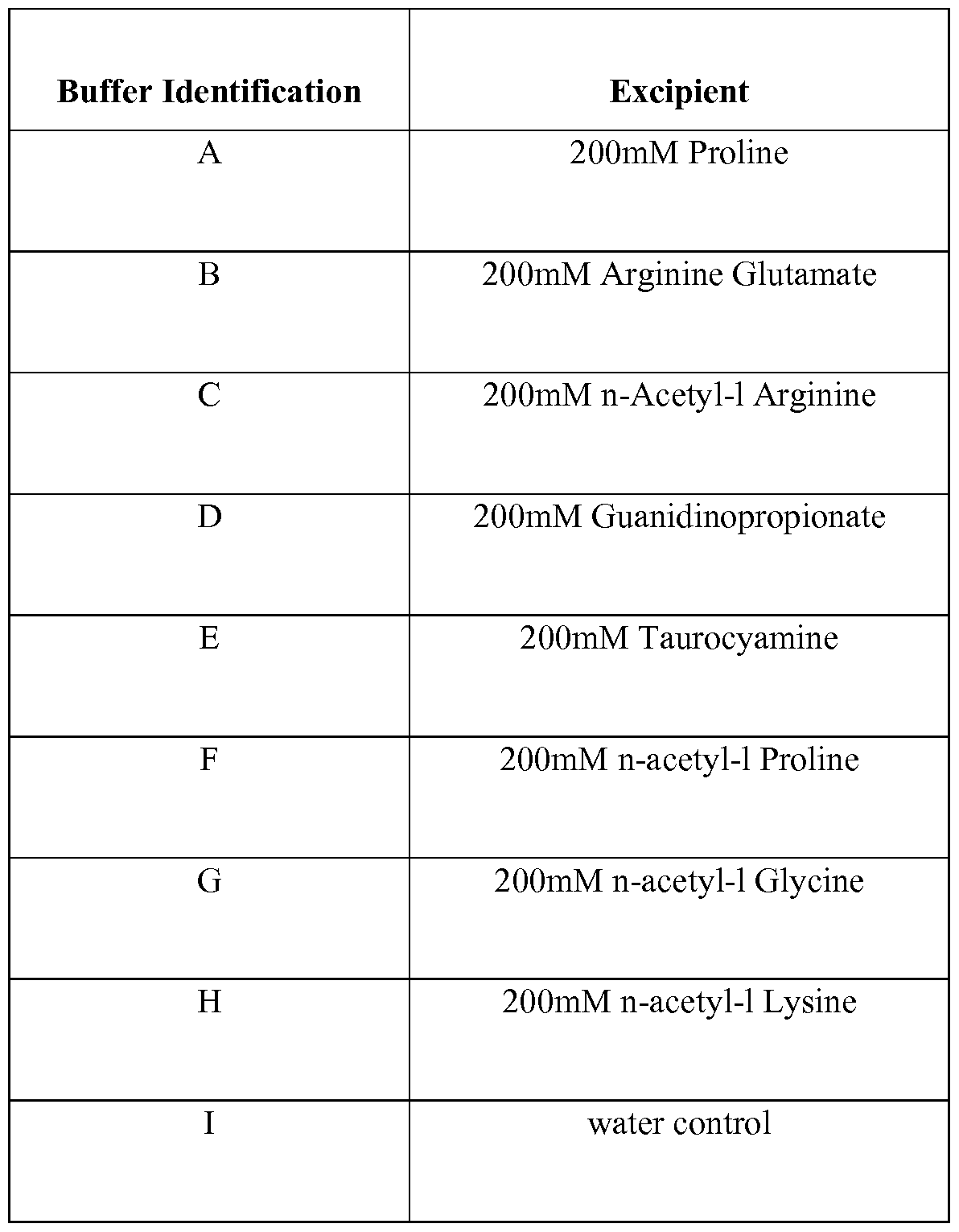
- IgG2 antibody preparation 140 mg/ml (Antibody A) was dialyzed against lOmM Sodium Glutamate 1% Sucrose pH 5.2 using Snakeskin ® pleated dialysis tubing 10,000 MWCO (Thermo Fisher Scientific, Waltham, MA). 120mg/mL Antibody A in lOmM Sodium Glutamate 1% Sucrose pH 5.2 was filled in 3cc vials at lmL fill each. Vials were lyophilized using a Virtis lyophilizer. Vials were reconstituted with 450uL of various solutions (water - control or 200mM excipient solutions). Following reconstitution, Antibody A concentrations were determined using SOLO-VPE instrument to be 190 mg/mL. Viscosity was measured using Aries ARG2 rheometer at 25 °C and are recorded in Table 1 below.
- Figure 1 shows the effects of the various excipients on the viscosity of the antibody solution. The data shows that the tested excipients have reduced viscosity relative to the water control.
- IgGl antibody preparation 70 mg/ml(Antibody B) and an IgG2 antibody preparation (70 mg/ml)(Antibody C) were dialyzed against 20mM Sodium Acetate pH 4.7 and 4.9 respectively using 10,000 MWCO dialysis tubing.
- Antibody samples were concentrated using 30,000 MWCO centrifugal filters and an Allegra X-12R Centrifuge.
- Antibody sample concentrations were determined using an Agilent UV/Vis Spectrophotometer.
- Excipient-containing samples were prepared by spiking a bulk concentrated solution with pre-weighed solid excipients. Viscous samples were transferred using positive displacement pipettes. Viscosities were measured using a Brookfield RV-DV III+ Programmable Rheometer at 25°C and are recorded in Tables 2.1 and 2.2 below.
- n-acetyl-1 arginine the decrease in viscosity of Antibody B is approximately 45%, and the decrease in viscosity of Antibody C is approximately 56%.
- IgG2 antibody preparation 140 mg/ml (Antibody D) was dialyzed against lOmM Sodium Glutamate 1% Sucrose pH 5.2 using Snakeskin ® pleated dialysis tubing 10,000 MWCO (Thermo Fisher Scientific, Waltham, MA). lOOmg/mL Antibody D in lOmM Sodium Glutamate 1% Sucrose pH 5.2 was filled in 3cc vials at lmL fill each. Vials were lyophilized using Virtis lyophilizer. Vials were reconstituted with 450uL of either water (control - No excipient) or lOmM Glutamate 200mM n-Acetyl-L Arginine pH 5.2. Antibody D concentrations were determined using SOLO-VPE instrument. Viscosity was measured using Aries ARG2 rheometer at 25 °C and are recorded in Table 3.0 below.
- n-acetyl-1 arginine the decrease in viscosity of Antibody D is approximately 40%.
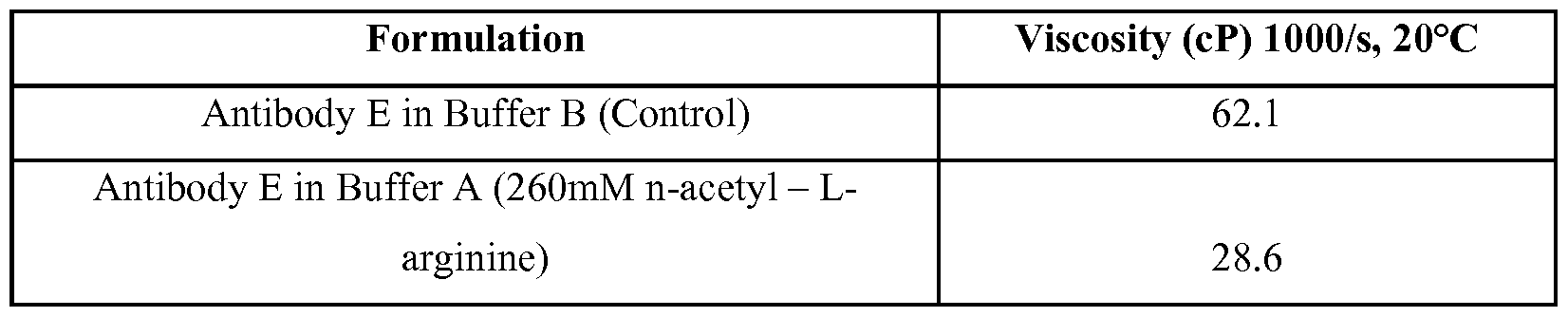
- IgG2 antibody preparation 140 mg/ml (Antibody E) was concentrated using ultrafiltration and diafiltration to 200 mg/ml with 6 diafiltration volumes of Buffer A (lOmM Glutamate 260mM n-acetyl-1 arginine pH 4.6) or Buffer B (lOmM Sodium Glutamate pH 4.6). Final pH of UFDF samples was determined to be 5.2.
- Antibody E concentrations were determined using SOLO-VPE instrument. Viscosity was measured using Aries ARG2 rheometer at 20 °C, and recorded in Table 4.0 below.
- n-acetyl-1 arginine the decrease in viscosity of Antibody E is approximately 54%.
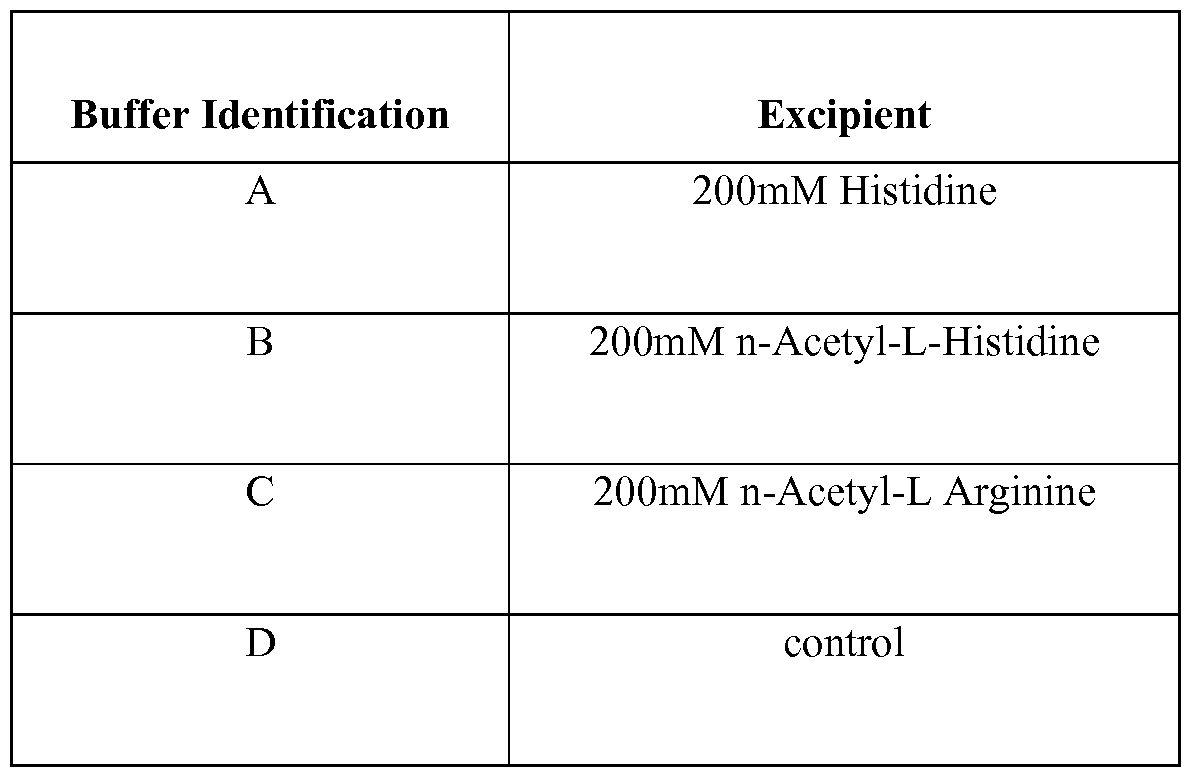
- IgG2 antibody preparation 140 mg/ml (Antibody A) was dialyzed against lOmM Sodium Glutamate 1% Sucrose pH 5.2 using Snakeskin ® pleated dialysis tubing 10,000 MWCO (Thermo Fisher Scientific, Waltham, MA). 120mg/mL Antibody A in lOmM Sodium Glutamate 1% Sucrose pH 5.2 was filled in 3cc vials at lmL fill each. Vials were lyophilized using a Virtis lyophilizer. Vials were reconstituted with 450uL of various solutions (water - control or 200mM excipient solutions) (see Table 5 below).
- Antibody A concentrations were determined using SOLO-VPE instrument to be 190 mg/mL. Viscosity was measured using Aries ARG2 rheometer at 25 °C and are recorded in Table 5 below. Table 5: Excipient formulations of Antibody A, 190 mg/mL at 20°C
- Figure 2 shows the effects of the various excipients on the viscosity of the antibody solution.
- the data shows that the tested excipients have reduced viscosity relative to the control, and the excipients, n-acetyl-1 arginine and n-acetyl-1 histidine, have reduced viscosity relative to the excipient histidine alone.
Landscapes
- Health & Medical Sciences (AREA)
- Chemical & Material Sciences (AREA)
- Life Sciences & Earth Sciences (AREA)
- Medicinal Chemistry (AREA)
- Pharmacology & Pharmacy (AREA)
- Epidemiology (AREA)
- Animal Behavior & Ethology (AREA)
- General Health & Medical Sciences (AREA)
- Public Health (AREA)
- Veterinary Medicine (AREA)
- Engineering & Computer Science (AREA)
- Bioinformatics & Cheminformatics (AREA)
- Microbiology (AREA)
- Immunology (AREA)
- Mycology (AREA)
- Chemical Kinetics & Catalysis (AREA)
- General Chemical & Material Sciences (AREA)
- Oil, Petroleum & Natural Gas (AREA)
- Proteomics, Peptides & Aminoacids (AREA)
- Endocrinology (AREA)
- Dermatology (AREA)
- Medicines Containing Antibodies Or Antigens For Use As Internal Diagnostic Agents (AREA)
- Medicines That Contain Protein Lipid Enzymes And Other Medicines (AREA)
- Medicinal Preparation (AREA)
- Pharmaceuticals Containing Other Organic And Inorganic Compounds (AREA)
Abstract
Description


Claims
Priority Applications (19)
| Application Number | Priority Date | Filing Date | Title |
|---|---|---|---|
| CN201580057461.5A CN107206070B (en) | 2014-10-23 | 2015-10-22 | Reducing the viscosity of pharmaceutical formulations |
| IL287947A IL287947B2 (en) | 2014-10-23 | 2015-10-22 | Reducing viscosity of pharmaceutical formulations |
| CA2964786A CA2964786C (en) | 2014-10-23 | 2015-10-22 | Reducing the viscosity of pharmaceutical formulations with n-acetyl amino acids |
| EP21175309.0A EP3909611B1 (en) | 2014-10-23 | 2015-10-22 | Reducing viscosity of pharmaceutical formulations |
| US15/521,057 US11813328B2 (en) | 2014-10-23 | 2015-10-22 | Methods for reducing the viscosity of liquid pharmaceutical formulations comprising therapeutic proteins |
| KR1020177011706A KR102534017B1 (en) | 2014-10-23 | 2015-10-22 | Reducing viscosity of pharmaceutical formulations |
| EA201790787A EA033444B1 (en) | 2014-10-23 | 2015-10-22 | Reducing viscosity of pharmaceutical formulations |
| SG11201703152RA SG11201703152RA (en) | 2014-10-23 | 2015-10-22 | Reducing viscosity of pharmaceutical formulations |
| JP2017522169A JP2017531682A (en) | 2014-10-23 | 2015-10-22 | Reduced viscosity of pharmaceutical preparations |
| EP15790759.3A EP3209332B1 (en) | 2014-10-23 | 2015-10-22 | Reducing viscosity of pharmaceutical formulations |
| AU2015335743A AU2015335743B2 (en) | 2014-10-23 | 2015-10-22 | Reducing viscosity of pharmaceutical formulations |
| MX2017005243A MX388858B (en) | 2014-10-23 | 2015-10-22 | Reducing the viscosity of pharmaceutical formulations |
| BR112017008125-3A BR112017008125B1 (en) | 2014-10-23 | 2015-10-22 | METHOD FOR REDUCING THE VISCOSITY OF PHARMACEUTICAL FORMULATIONS, PHARMACEUTICAL FORMULATIONS, METHOD FOR PREPARING A FREEZE DRIED POWDER, FREEZE DRIED POWDER AND METHOD FOR RECONSTITUTING A FREEZE DRIED POWDER |
| CN202210048275.7A CN114569716A (en) | 2014-10-23 | 2015-10-22 | Reducing the viscosity of pharmaceutical formulations |
| IL251726A IL251726B (en) | 2014-10-23 | 2017-04-13 | Reducing viscosity of pharmaceutical formulations |
| ZA2017/02762A ZA201702762B (en) | 2014-10-23 | 2017-04-19 | Reducing viscosity of pharmaceutical formulations |
| AU2021200990A AU2021200990B2 (en) | 2014-10-23 | 2021-02-15 | Reducing Viscosity of Pharmaceutical Formulations |
| US18/383,121 US12318447B2 (en) | 2014-10-23 | 2023-10-24 | Lyophilized powder configured for reconstitution as a liquid pharmaceutical formulation with reduced viscosity and method of preparing thereof |
| US19/223,578 US20250345421A1 (en) | 2014-10-23 | 2025-05-30 | Reducing viscosity of pharmaceutical formulations |
Applications Claiming Priority (2)
| Application Number | Priority Date | Filing Date | Title |
|---|---|---|---|
| US201462067637P | 2014-10-23 | 2014-10-23 | |
| US62/067,637 | 2014-10-23 |
Related Child Applications (2)
| Application Number | Title | Priority Date | Filing Date |
|---|---|---|---|
| US15/521,057 A-371-Of-International US11813328B2 (en) | 2014-10-23 | 2015-10-22 | Methods for reducing the viscosity of liquid pharmaceutical formulations comprising therapeutic proteins |
| US18/383,121 Division US12318447B2 (en) | 2014-10-23 | 2023-10-24 | Lyophilized powder configured for reconstitution as a liquid pharmaceutical formulation with reduced viscosity and method of preparing thereof |
Publications (1)
| Publication Number | Publication Date |
|---|---|
| WO2016065181A1 true WO2016065181A1 (en) | 2016-04-28 |
Family
ID=54427875
Family Applications (1)
| Application Number | Title | Priority Date | Filing Date |
|---|---|---|---|
| PCT/US2015/056972 Ceased WO2016065181A1 (en) | 2014-10-23 | 2015-10-22 | Reducing viscosity of pharmaceutical formulations |
Country Status (17)
| Country | Link |
|---|---|
| US (3) | US11813328B2 (en) |
| EP (2) | EP3909611B1 (en) |
| JP (3) | JP2017531682A (en) |
| KR (1) | KR102534017B1 (en) |
| CN (2) | CN107206070B (en) |
| AU (2) | AU2015335743B2 (en) |
| BR (1) | BR112017008125B1 (en) |
| CA (1) | CA2964786C (en) |
| CL (2) | CL2017000984A1 (en) |
| EA (3) | EA202191513A1 (en) |
| ES (1) | ES2964713T3 (en) |
| IL (2) | IL287947B2 (en) |
| MA (1) | MA54716A (en) |
| MX (2) | MX388858B (en) |
| SG (1) | SG11201703152RA (en) |
| WO (1) | WO2016065181A1 (en) |
| ZA (1) | ZA201702762B (en) |
Cited By (15)
| Publication number | Priority date | Publication date | Assignee | Title |
|---|---|---|---|---|
| US20180237501A1 (en) * | 2017-02-22 | 2018-08-23 | Amgen Inc. | Low-viscosity, high concentration evolocumab formulations and methods of making the same |
| WO2018200533A1 (en) | 2017-04-28 | 2018-11-01 | Amgen Inc. | Excipients to reduce the viscosity of antibody formulations and formulation compositions |
| WO2018201064A1 (en) | 2017-04-28 | 2018-11-01 | Amgen Inc. | N-acetylated and non-acetylated dipeptides containing arginine to reduce the viscosity of viscous compositions of therapeutic polypeptides |
| WO2019106206A1 (en) | 2017-12-01 | 2019-06-06 | Fyb 202 Project Gmbh | Stable, low viscosity, high concentration liquid formulations of an anti-il-12/23p40 antibody |
| JP2019530703A (en) * | 2016-10-06 | 2019-10-24 | アムジェン インコーポレイテッド | Viscosity-reducing protein pharmaceutical formulation |
| WO2020008035A1 (en) | 2018-07-05 | 2020-01-09 | Bayer Aktiengesellschaft | NOVEL STABLE HIGH-CONCENTRATION FORMULATION FOR ANTI-FXIa ANTIBODIES |
| WO2020065064A1 (en) * | 2018-09-28 | 2020-04-02 | Zealand Pharma A/S | Formulations of glucagon-like-peptide-2 (glp-2) analogues |
| US10646569B2 (en) | 2017-05-16 | 2020-05-12 | Bhami's Research Laboratory, Pvt. Ltd. | High concentration protein formulations with reduced viscosity |
| WO2020219550A1 (en) * | 2019-04-23 | 2020-10-29 | Amgen Inc. | The use of low molecular weight polyvinylpyrrolidone (pvp) to reduce viscosity of high concentration protein formulations |
| EP3685849A4 (en) * | 2017-09-22 | 2021-12-22 | Asahi Kasei Pharma Corporation | LIQUID PHARMACEUTICAL COMPOSITION CONTAINING TRIPARATIDE WITH EXCELLENT STABILITY |
| KR20220079445A (en) * | 2020-12-03 | 2022-06-13 | 동국대학교 산학협력단 | Composition for inhibiting aggregation of protein comprising N-acetyl-L-arginine |
| US11813328B2 (en) | 2014-10-23 | 2023-11-14 | Amgen Inc. | Methods for reducing the viscosity of liquid pharmaceutical formulations comprising therapeutic proteins |
| RU2833459C2 (en) * | 2018-09-28 | 2025-01-21 | Зилэнд Фарма А/С | Formulations of glucagon-like peptide-2 (glp-2) analogues |
| EP4319795A4 (en) * | 2021-04-09 | 2025-03-05 | Avantor Performance Materials, LLC | PERFORMANCE ENHANCING EXCELLENTS AND METHODS FOR REDUCING VISCOSITY AND INCREASING STABILITY OF BIOLOGICAL FORMULATIONS |
| US12297251B1 (en) | 2017-06-16 | 2025-05-13 | Zealand Pharma A/S | Injection pen for subcutaneous administration of a peptide |
Families Citing this family (4)
| Publication number | Priority date | Publication date | Assignee | Title |
|---|---|---|---|---|
| IL317123A (en) | 2018-08-27 | 2025-01-01 | Regeneron Pharma | Use of Raman Spectroscopy in Downstream Purification |
| CA3166964A1 (en) * | 2020-02-13 | 2021-08-19 | Alexis Lueras | Formulations of human anti-tslp antibodies and methods of treating inflammatory disease |
| JP2024509937A (en) * | 2021-03-09 | 2024-03-05 | ジーアイ・イノベイション・インコーポレイテッド | Formulation of a fusion protein containing the extracellular domain of the alpha subunit of the IGE FC receptor |
| WO2025175164A1 (en) * | 2024-02-16 | 2025-08-21 | Regeneron Pharmaceuticals, Inc. | Methods of producing concentrated formulated drug substances comprising proteins, and concentrated formulated drug substance made by the methods |
Citations (15)
| Publication number | Priority date | Publication date | Assignee | Title |
|---|---|---|---|---|
| WO2000024782A2 (en) | 1998-10-23 | 2000-05-04 | Amgen Inc. | Modified peptides, comprising an fc domain, as therapeutic agents |
| US6767892B1 (en) * | 1997-11-07 | 2004-07-27 | Chrion Corporation | Compositions providing for increased IGF-I solubility |
| US7153507B2 (en) | 2001-08-23 | 2006-12-26 | Genmab A/S | Human antibodies specific for interleukin 15 (IL-15) |
| EP1977763A1 (en) * | 2005-12-28 | 2008-10-08 | Chugai Seiyaku Kabushiki Kaisha | Antibody-containing stabilizing preparation |
| US20090186022A1 (en) | 2006-02-23 | 2009-07-23 | Novartis Ag | Organic Compounds |
| US7592429B2 (en) | 2005-05-03 | 2009-09-22 | Ucb Sa | Sclerostin-binding antibody |
| US7906625B2 (en) | 2005-01-24 | 2011-03-15 | Amgen Inc. | Humanized anti-amyloid antibody |
| US7982016B2 (en) | 2007-09-10 | 2011-07-19 | Amgen Inc. | Antigen binding proteins capable of binding thymic stromal lymphopoietin |
| WO2011104381A2 (en) * | 2010-02-26 | 2011-09-01 | Novo Nordisk A/S | Stable antibody containing compositions |
| US8030467B2 (en) | 2006-05-11 | 2011-10-04 | Isis Pharmaceuticals, Inc. | 5′-modified bicyclic nucleic acid analogs |
| US8062640B2 (en) | 2008-12-15 | 2011-11-22 | Regeneron Pharmaceuticals, Inc. | High affinity human antibodies to PCSK9 |
| US8080243B2 (en) | 2008-09-12 | 2011-12-20 | Rinat Neuroscience Corp. | Isolated antibody which specifically binds to PCSK9 |
| US8101182B2 (en) | 2007-06-20 | 2012-01-24 | Novartis Ag | Methods and compositions for treating allergic diseases |
| US8232372B2 (en) | 2006-12-14 | 2012-07-31 | Schering Corp. | Engineered anti-TSLP antibody |
| US8715663B2 (en) | 2005-05-03 | 2014-05-06 | Amgen Inc. | Epitopes |
Family Cites Families (34)
| Publication number | Priority date | Publication date | Assignee | Title |
|---|---|---|---|---|
| US5078997A (en) | 1988-07-13 | 1992-01-07 | Cetus Corporation | Pharmaceutical composition for interleukin-2 containing physiologically compatible stabilizers |
| US5955448A (en) | 1994-08-19 | 1999-09-21 | Quadrant Holdings Cambridge Limited | Method for stabilization of biological substances during drying and subsequent storage and compositions thereof |
| WO1999024063A1 (en) | 1997-11-07 | 1999-05-20 | Chiron Corporation | Compositions providing for increased igf-i solubility |
| US6159485A (en) * | 1999-01-08 | 2000-12-12 | Yugenic Limited Partnership | N-acetyl aldosamines, n-acetylamino acids and related n-acetyl compounds and their topical use |
| US7282219B2 (en) | 2000-03-31 | 2007-10-16 | Kirin Beer Kabushiki Kaisha | Powdery preparation for transmucosal administration containing a polymeric form of drug and exhibiting improved storage stability |
| ES2330508T3 (en) | 2000-11-07 | 2009-12-11 | Novartis Vaccines And Diagnostics, Inc. | INTERFERON COMPOSITIONS STABILED. |
| PT1946776T (en) | 2002-02-27 | 2017-03-17 | Immunex Corp | Stabilized tnfr-fc composition comprising arginine |
| AU2003293543A1 (en) | 2002-12-13 | 2004-07-09 | Abgenix, Inc. | System and method for stabilizing antibodies with histidine |
| EP1589996A4 (en) | 2003-01-30 | 2009-01-21 | Medimmune Inc | Anti-integrin alpha beta 3 antibody formulat ions and uses thereof |
| PL1610820T5 (en) * | 2003-04-04 | 2014-01-31 | Genentech Inc | High concentration antibody and protein formulations |
| US8084032B2 (en) | 2004-01-21 | 2011-12-27 | Ajinomoto Co., Inc. | Purification method which prevents denaturation of an antibody |
| US20060051347A1 (en) | 2004-09-09 | 2006-03-09 | Winter Charles M | Process for concentration of antibodies and therapeutic products thereof |
| CN101426527A (en) * | 2006-02-03 | 2009-05-06 | 米迪缪尼有限公司 | Protein formulations |
| JOP20080381B1 (en) | 2007-08-23 | 2023-03-28 | Amgen Inc | Antigen Binding Proteins to Proprotein Convertase subtillisin Kexin type 9 (pcsk9) |
| KR20210049186A (en) * | 2007-11-30 | 2021-05-04 | 애브비 바이오테크놀로지 리미티드 | Protein formulations and methods of making same |
| NZ621174A (en) * | 2008-01-15 | 2015-09-25 | Abbvie Deutschland | Powdered protein compositions and methods of making same |
| JP2011067202A (en) | 2009-08-31 | 2011-04-07 | Sanyo Chem Ind Ltd | Stabilizer for aqueous protein solution, aqueous protein solution containing the same, and method for stabilization of protein |
| EP2501367B1 (en) * | 2009-11-17 | 2015-01-21 | Ipsen Pharma S.A.S. | Formulation for HGH and RHIGF-1 combination |
| DK2531218T3 (en) * | 2010-02-04 | 2019-04-01 | Csl Behring Ag | immunoglobulin |
| WO2011109415A2 (en) * | 2010-03-02 | 2011-09-09 | Amgen Inc. | Reducing viscosity of pharmaceutical formulations |
| WO2011139718A1 (en) | 2010-05-03 | 2011-11-10 | Genentech, Inc. | Compositions and methods useful for reducing the viscosity of protein-containing formulations |
| UY33679A (en) | 2010-10-22 | 2012-03-30 | Esbatech | STABLE AND SOLUBLE ANTIBODIES |
| JOP20200043A1 (en) | 2011-05-10 | 2017-06-16 | Amgen Inc | Ways to treat or prevent cholesterol disorders |
| JP6176849B2 (en) | 2011-07-19 | 2017-08-09 | 中外製薬株式会社 | A stable protein-containing preparation containing arginine amide or a similar compound |
| CA2951856A1 (en) * | 2011-10-28 | 2013-05-02 | Integritybio Inc. | Protein formulations containing amino acids |
| EA039663B1 (en) | 2012-05-03 | 2022-02-24 | Амген Инк. | Use of an anti-pcsk9 antibody for lowering serum cholesterol ldl and treating cholesterol related disorders |
| EP2863951A1 (en) | 2012-06-12 | 2015-04-29 | Boehringer Ingelheim International GmbH | Pharmaceutical formulation for a therapeutic antibody |
| US20150004174A1 (en) | 2013-06-28 | 2015-01-01 | Amgen Inc. | Methods for treating homozygous familial hypercholesterolemia |
| TWI694836B (en) | 2014-05-16 | 2020-06-01 | 英商葛蘭素史克智慧財產管理有限公司 | Antibody formulation |
| CA2964786C (en) | 2014-10-23 | 2023-10-17 | Amgen Inc. | Reducing the viscosity of pharmaceutical formulations with n-acetyl amino acids |
| EP3763384B1 (en) | 2014-12-03 | 2024-08-28 | CSL Behring AG | Pharmaceutical product with increased stability comprising immunoglobulins |
| CA3038909A1 (en) | 2016-09-29 | 2018-04-05 | Amgen Inc. | Low-viscosity antigen binding proteins and methods of making them |
| US11459401B2 (en) | 2016-10-06 | 2022-10-04 | Amgen Inc. | Reduced viscosity protein pharmaceutical formulations |
| JP7377596B2 (en) | 2017-02-22 | 2023-11-10 | アムジエン・インコーポレーテツド | Low viscosity, high concentration evolocumab formulations and their manufacturing method |
-
2015
- 2015-10-22 CA CA2964786A patent/CA2964786C/en active Active
- 2015-10-22 CN CN201580057461.5A patent/CN107206070B/en active Active
- 2015-10-22 EA EA202191513A patent/EA202191513A1/en unknown
- 2015-10-22 WO PCT/US2015/056972 patent/WO2016065181A1/en not_active Ceased
- 2015-10-22 BR BR112017008125-3A patent/BR112017008125B1/en active IP Right Grant
- 2015-10-22 EA EA201991447A patent/EA038462B1/en unknown
- 2015-10-22 MA MA054716A patent/MA54716A/en unknown
- 2015-10-22 EA EA201790787A patent/EA033444B1/en not_active IP Right Cessation
- 2015-10-22 JP JP2017522169A patent/JP2017531682A/en active Pending
- 2015-10-22 ES ES21175309T patent/ES2964713T3/en active Active
- 2015-10-22 US US15/521,057 patent/US11813328B2/en active Active
- 2015-10-22 KR KR1020177011706A patent/KR102534017B1/en active Active
- 2015-10-22 SG SG11201703152RA patent/SG11201703152RA/en unknown
- 2015-10-22 CN CN202210048275.7A patent/CN114569716A/en active Pending
- 2015-10-22 EP EP21175309.0A patent/EP3909611B1/en active Active
- 2015-10-22 IL IL287947A patent/IL287947B2/en unknown
- 2015-10-22 MX MX2017005243A patent/MX388858B/en unknown
- 2015-10-22 EP EP15790759.3A patent/EP3209332B1/en active Active
- 2015-10-22 AU AU2015335743A patent/AU2015335743B2/en active Active
-
2017
- 2017-04-13 IL IL251726A patent/IL251726B/en unknown
- 2017-04-19 ZA ZA2017/02762A patent/ZA201702762B/en unknown
- 2017-04-20 CL CL2017000984A patent/CL2017000984A1/en unknown
- 2017-04-21 MX MX2021015789A patent/MX2021015789A/en unknown
-
2019
- 2019-08-02 CL CL2019002190A patent/CL2019002190A1/en unknown
- 2019-10-21 JP JP2019191701A patent/JP6965321B2/en active Active
-
2021
- 2021-02-15 AU AU2021200990A patent/AU2021200990B2/en active Active
- 2021-10-19 JP JP2021170676A patent/JP7411615B2/en active Active
-
2023
- 2023-10-24 US US18/383,121 patent/US12318447B2/en active Active
-
2025
- 2025-05-30 US US19/223,578 patent/US20250345421A1/en active Pending
Patent Citations (15)
| Publication number | Priority date | Publication date | Assignee | Title |
|---|---|---|---|---|
| US6767892B1 (en) * | 1997-11-07 | 2004-07-27 | Chrion Corporation | Compositions providing for increased IGF-I solubility |
| WO2000024782A2 (en) | 1998-10-23 | 2000-05-04 | Amgen Inc. | Modified peptides, comprising an fc domain, as therapeutic agents |
| US7153507B2 (en) | 2001-08-23 | 2006-12-26 | Genmab A/S | Human antibodies specific for interleukin 15 (IL-15) |
| US7906625B2 (en) | 2005-01-24 | 2011-03-15 | Amgen Inc. | Humanized anti-amyloid antibody |
| US8715663B2 (en) | 2005-05-03 | 2014-05-06 | Amgen Inc. | Epitopes |
| US7592429B2 (en) | 2005-05-03 | 2009-09-22 | Ucb Sa | Sclerostin-binding antibody |
| EP1977763A1 (en) * | 2005-12-28 | 2008-10-08 | Chugai Seiyaku Kabushiki Kaisha | Antibody-containing stabilizing preparation |
| US20090186022A1 (en) | 2006-02-23 | 2009-07-23 | Novartis Ag | Organic Compounds |
| US8030467B2 (en) | 2006-05-11 | 2011-10-04 | Isis Pharmaceuticals, Inc. | 5′-modified bicyclic nucleic acid analogs |
| US8232372B2 (en) | 2006-12-14 | 2012-07-31 | Schering Corp. | Engineered anti-TSLP antibody |
| US8101182B2 (en) | 2007-06-20 | 2012-01-24 | Novartis Ag | Methods and compositions for treating allergic diseases |
| US7982016B2 (en) | 2007-09-10 | 2011-07-19 | Amgen Inc. | Antigen binding proteins capable of binding thymic stromal lymphopoietin |
| US8080243B2 (en) | 2008-09-12 | 2011-12-20 | Rinat Neuroscience Corp. | Isolated antibody which specifically binds to PCSK9 |
| US8062640B2 (en) | 2008-12-15 | 2011-11-22 | Regeneron Pharmaceuticals, Inc. | High affinity human antibodies to PCSK9 |
| WO2011104381A2 (en) * | 2010-02-26 | 2011-09-01 | Novo Nordisk A/S | Stable antibody containing compositions |
Non-Patent Citations (4)
| Title |
|---|
| AUSUBEL ET AL.: "Current Protocols in Molecular Biology", 1992, GREENE PUBLISHING ASSOCIATES |
| HARLOW; LANE: "Antibodies: A Laboratory Manual", 1990, COLD SPRING HARBOR LABORATORY PRESS |
| OSOL, A.: "Remington's Pharmaceutical Sciences, 21st ed.", 2005 |
| SAMBROOK ET AL.: "Molecular Cloning: A Laboratory Manual, 3rd ed.", 2001, COLD SPRING HARBOR LABORATORY PRESS |
Cited By (33)
| Publication number | Priority date | Publication date | Assignee | Title |
|---|---|---|---|---|
| US11813328B2 (en) | 2014-10-23 | 2023-11-14 | Amgen Inc. | Methods for reducing the viscosity of liquid pharmaceutical formulations comprising therapeutic proteins |
| US12318447B2 (en) | 2014-10-23 | 2025-06-03 | Amgen Inc. | Lyophilized powder configured for reconstitution as a liquid pharmaceutical formulation with reduced viscosity and method of preparing thereof |
| JP2019530703A (en) * | 2016-10-06 | 2019-10-24 | アムジェン インコーポレイテッド | Viscosity-reducing protein pharmaceutical formulation |
| JP7275027B2 (en) | 2016-10-06 | 2023-05-17 | アムジェン インコーポレイテッド | Viscosity-lowering protein pharmaceutical formulations |
| US11459401B2 (en) | 2016-10-06 | 2022-10-04 | Amgen Inc. | Reduced viscosity protein pharmaceutical formulations |
| US12404344B2 (en) | 2017-02-22 | 2025-09-02 | Amgen Inc. | Low-viscosity, high concentration evolocumab formulations and methods of making the same |
| AU2018224095B2 (en) * | 2017-02-22 | 2025-02-27 | Amgen Inc. | Low-viscosity, high-concentration evolocumab formulations and methods of making the same |
| CN110536906A (en) * | 2017-02-22 | 2019-12-03 | 美国安进公司 | Low-viscosity, high-concentration evolumab formulation and preparation method thereof |
| US20180237501A1 (en) * | 2017-02-22 | 2018-08-23 | Amgen Inc. | Low-viscosity, high concentration evolocumab formulations and methods of making the same |
| IL268515B2 (en) * | 2017-02-22 | 2024-10-01 | Amgen Inc | Low-viscosity, high-concentration evolocumab formulations and methods of making the same |
| IL268515B1 (en) * | 2017-02-22 | 2024-06-01 | Amgen Inc | Low-viscosity, high-concentration evolocumab formulations and methods of making the same |
| JP2018154616A (en) * | 2017-02-22 | 2018-10-04 | アムジエン・インコーポレーテツド | Low-viscosity, high-concentration evolocumab formulations and methods of making the same |
| JP7377596B2 (en) | 2017-02-22 | 2023-11-10 | アムジエン・インコーポレーテツド | Low viscosity, high concentration evolocumab formulations and their manufacturing method |
| WO2018156741A1 (en) * | 2017-02-22 | 2018-08-30 | Amgen Inc. | Low-viscosity, high-concentration evolocumab formulations and methods of making the same |
| US11464857B2 (en) | 2017-02-22 | 2022-10-11 | Amgen Inc. | Low-viscosity, high concentration evolocumab formulations and methods of making the same |
| US12103979B2 (en) * | 2017-04-28 | 2024-10-01 | Amgen Inc. | N-acetylated and non-acetylated dipeptides containing arginine to reduce the viscosity of viscous compositions of therapeutic polypeptides |
| WO2018200533A1 (en) | 2017-04-28 | 2018-11-01 | Amgen Inc. | Excipients to reduce the viscosity of antibody formulations and formulation compositions |
| WO2018201064A1 (en) | 2017-04-28 | 2018-11-01 | Amgen Inc. | N-acetylated and non-acetylated dipeptides containing arginine to reduce the viscosity of viscous compositions of therapeutic polypeptides |
| AU2018258676B2 (en) * | 2017-04-28 | 2024-09-19 | Amgen Inc. | N-acetylated and non-acetylated dipeptides containing arginine to reduce the viscosity of viscous compositions of therapeutic polypeptides |
| US20200048367A1 (en) * | 2017-04-28 | 2020-02-13 | Amgen Inc. | N-acetylated and non-acetylated dipeptides containing arginine to reduce the viscosity of viscous compositions of therapeutic polypeptides |
| US12257343B2 (en) | 2017-04-28 | 2025-03-25 | Amgen Inc. | Excipients to reduce the viscosity of antibody formulations and formulation compositions |
| US11738082B2 (en) | 2017-05-16 | 2023-08-29 | Bhami's Research Laboratory, Pvt. Ltd. | High concentration protein formulations with reduced viscosity |
| US10646569B2 (en) | 2017-05-16 | 2020-05-12 | Bhami's Research Laboratory, Pvt. Ltd. | High concentration protein formulations with reduced viscosity |
| US12297251B1 (en) | 2017-06-16 | 2025-05-13 | Zealand Pharma A/S | Injection pen for subcutaneous administration of a peptide |
| EP3685849A4 (en) * | 2017-09-22 | 2021-12-22 | Asahi Kasei Pharma Corporation | LIQUID PHARMACEUTICAL COMPOSITION CONTAINING TRIPARATIDE WITH EXCELLENT STABILITY |
| WO2019106206A1 (en) | 2017-12-01 | 2019-06-06 | Fyb 202 Project Gmbh | Stable, low viscosity, high concentration liquid formulations of an anti-il-12/23p40 antibody |
| WO2020008035A1 (en) | 2018-07-05 | 2020-01-09 | Bayer Aktiengesellschaft | NOVEL STABLE HIGH-CONCENTRATION FORMULATION FOR ANTI-FXIa ANTIBODIES |
| RU2833459C2 (en) * | 2018-09-28 | 2025-01-21 | Зилэнд Фарма А/С | Formulations of glucagon-like peptide-2 (glp-2) analogues |
| WO2020065064A1 (en) * | 2018-09-28 | 2020-04-02 | Zealand Pharma A/S | Formulations of glucagon-like-peptide-2 (glp-2) analogues |
| WO2020219550A1 (en) * | 2019-04-23 | 2020-10-29 | Amgen Inc. | The use of low molecular weight polyvinylpyrrolidone (pvp) to reduce viscosity of high concentration protein formulations |
| KR102746418B1 (en) * | 2020-12-03 | 2024-12-26 | 동국대학교 산학협력단 | Composition for inhibiting aggregation of protein comprising N-acetyl-L-arginine |
| KR20220079445A (en) * | 2020-12-03 | 2022-06-13 | 동국대학교 산학협력단 | Composition for inhibiting aggregation of protein comprising N-acetyl-L-arginine |
| EP4319795A4 (en) * | 2021-04-09 | 2025-03-05 | Avantor Performance Materials, LLC | PERFORMANCE ENHANCING EXCELLENTS AND METHODS FOR REDUCING VISCOSITY AND INCREASING STABILITY OF BIOLOGICAL FORMULATIONS |
Also Published As
Similar Documents
| Publication | Publication Date | Title |
|---|---|---|
| US12318447B2 (en) | Lyophilized powder configured for reconstitution as a liquid pharmaceutical formulation with reduced viscosity and method of preparing thereof | |
| US20200276313A1 (en) | Pharmaceutical Formulations | |
| US20130171128A1 (en) | Reducing viscosity of pharmaceutical formulations | |
| JP2019530703A (en) | Viscosity-reducing protein pharmaceutical formulation | |
| HK1242572B (en) | Reducing viscosity of pharmaceutical formulations |
Legal Events
| Date | Code | Title | Description |
|---|---|---|---|
| 121 | Ep: the epo has been informed by wipo that ep was designated in this application |
Ref document number: 15790759 Country of ref document: EP Kind code of ref document: A1 |
|
| ENP | Entry into the national phase |
Ref document number: 2964786 Country of ref document: CA |
|
| WWE | Wipo information: entry into national phase |
Ref document number: 251726 Country of ref document: IL |
|
| WWE | Wipo information: entry into national phase |
Ref document number: 11201703152R Country of ref document: SG |
|
| ENP | Entry into the national phase |
Ref document number: 2017522169 Country of ref document: JP Kind code of ref document: A |
|
| WWE | Wipo information: entry into national phase |
Ref document number: MX/A/2017/005243 Country of ref document: MX |
|
| NENP | Non-entry into the national phase |
Ref country code: DE |
|
| ENP | Entry into the national phase |
Ref document number: 20177011706 Country of ref document: KR Kind code of ref document: A |
|
| ENP | Entry into the national phase |
Ref document number: 2015335743 Country of ref document: AU Date of ref document: 20151022 Kind code of ref document: A |
|
| WWE | Wipo information: entry into national phase |
Ref document number: 201790787 Country of ref document: EA |
|
| REEP | Request for entry into the european phase |
Ref document number: 2015790759 Country of ref document: EP |
|
| REG | Reference to national code |
Ref country code: BR Ref legal event code: B01A Ref document number: 112017008125 Country of ref document: BR |
|
| ENP | Entry into the national phase |
Ref document number: 112017008125 Country of ref document: BR Kind code of ref document: A2 Effective date: 20170419 |