WO2011051455A1 - Pesticidal heterocyclic compounds - Google Patents
Pesticidal heterocyclic compounds Download PDFInfo
- Publication number
- WO2011051455A1 WO2011051455A1 PCT/EP2010/066480 EP2010066480W WO2011051455A1 WO 2011051455 A1 WO2011051455 A1 WO 2011051455A1 EP 2010066480 W EP2010066480 W EP 2010066480W WO 2011051455 A1 WO2011051455 A1 WO 2011051455A1
- Authority
- WO
- WIPO (PCT)
- Prior art keywords
- carbonyl
- alkyl
- spp
- thiocarbonyl
- amino
- Prior art date
- Legal status (The legal status is an assumption and is not a legal conclusion. Google has not performed a legal analysis and makes no representation as to the accuracy of the status listed.)
- Ceased
Links
- 0 Cc(c(C*C1N*)c1c(*=C)c1*)c1N(C1)C(O)OC1(c1c(*)c(*)c(*)c(*)c1*)I Chemical compound Cc(c(C*C1N*)c1c(*=C)c1*)c1N(C1)C(O)OC1(c1c(*)c(*)c(*)c(*)c1*)I 0.000 description 6
- FANLLQNOJHZLNZ-UHFFFAOYSA-N CC(C)(C)OC(NCc(cc1)c(C(F)(F)F)cc1N(CC(C(F)(F)F)(c1cc(Cl)cc(Cl)c1)O1)C1=O)=O Chemical compound CC(C)(C)OC(NCc(cc1)c(C(F)(F)F)cc1N(CC(C(F)(F)F)(c1cc(Cl)cc(Cl)c1)O1)C1=O)=O FANLLQNOJHZLNZ-UHFFFAOYSA-N 0.000 description 1
- BADOGUDCEFEGQU-UHFFFAOYSA-N CC(C1C=CC(Br)=CC1)N Chemical compound CC(C1C=CC(Br)=CC1)N BADOGUDCEFEGQU-UHFFFAOYSA-N 0.000 description 1
- BSUFDDTVAJOKOR-UHFFFAOYSA-N CCC(NC(C)c(cc1)ccc1Br)=O Chemical compound CCC(NC(C)c(cc1)ccc1Br)=O BSUFDDTVAJOKOR-UHFFFAOYSA-N 0.000 description 1
- SPQIJAYQPUTTSO-UHFFFAOYSA-N CCC(NC(C)c(cc1)ccc1N(CC(C(F)(F)F)(c(cc1Cl)cc(Cl)c1Cl)O1)C1=O)=O Chemical compound CCC(NC(C)c(cc1)ccc1N(CC(C(F)(F)F)(c(cc1Cl)cc(Cl)c1Cl)O1)C1=O)=O SPQIJAYQPUTTSO-UHFFFAOYSA-N 0.000 description 1
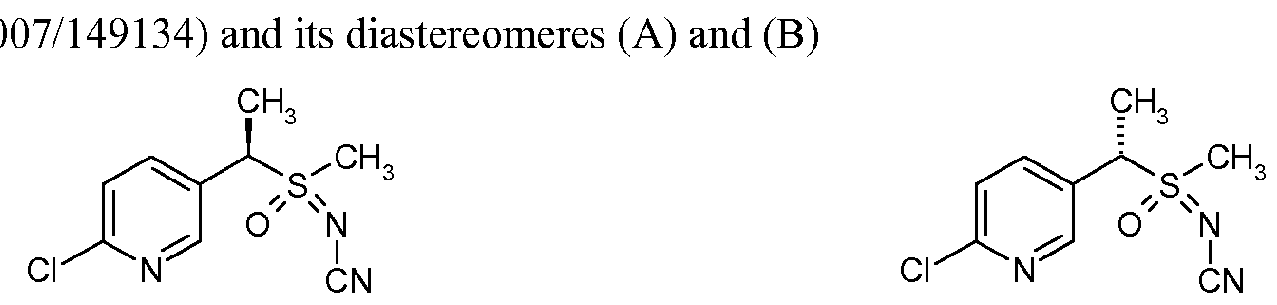
- FEXDVTRZRUHVJU-CIFJEQONSA-N C[C@@H](c(cc1)cnc1Cl)S(C)(=NC#N)=O Chemical compound C[C@@H](c(cc1)cnc1Cl)S(C)(=NC#N)=O FEXDVTRZRUHVJU-CIFJEQONSA-N 0.000 description 1
- FEXDVTRZRUHVJU-ZVHFFGPBSA-N C[C@H](c(cc1)cnc1Cl)S(C)(=NC#N)=O Chemical compound C[C@H](c(cc1)cnc1Cl)S(C)(=NC#N)=O FEXDVTRZRUHVJU-ZVHFFGPBSA-N 0.000 description 1
- IPTXBFLUJUJYBH-UHFFFAOYSA-N N#Cc(cc1)c(C(F)(F)F)cc1N(CC(C(F)(F)F)(c1cc(Cl)cc(Cl)c1)O1)C1=O Chemical compound N#Cc(cc1)c(C(F)(F)F)cc1N(CC(C(F)(F)F)(c1cc(Cl)cc(Cl)c1)O1)C1=O IPTXBFLUJUJYBH-UHFFFAOYSA-N 0.000 description 1
Classifications
-
- C—CHEMISTRY; METALLURGY
- C07—ORGANIC CHEMISTRY
- C07D—HETEROCYCLIC COMPOUNDS
- C07D263/00—Heterocyclic compounds containing 1,3-oxazole or hydrogenated 1,3-oxazole rings
- C07D263/02—Heterocyclic compounds containing 1,3-oxazole or hydrogenated 1,3-oxazole rings not condensed with other rings
- C07D263/08—Heterocyclic compounds containing 1,3-oxazole or hydrogenated 1,3-oxazole rings not condensed with other rings having one double bond between ring members or between a ring member and a non-ring member
- C07D263/10—Heterocyclic compounds containing 1,3-oxazole or hydrogenated 1,3-oxazole rings not condensed with other rings having one double bond between ring members or between a ring member and a non-ring member with only hydrogen atoms, hydrocarbon or substituted hydrocarbon radicals, directly attached to ring carbon atoms
- C07D263/12—Heterocyclic compounds containing 1,3-oxazole or hydrogenated 1,3-oxazole rings not condensed with other rings having one double bond between ring members or between a ring member and a non-ring member with only hydrogen atoms, hydrocarbon or substituted hydrocarbon radicals, directly attached to ring carbon atoms with radicals containing only hydrogen and carbon atoms
-
- A—HUMAN NECESSITIES
- A01—AGRICULTURE; FORESTRY; ANIMAL HUSBANDRY; HUNTING; TRAPPING; FISHING
- A01N—PRESERVATION OF BODIES OF HUMANS OR ANIMALS OR PLANTS OR PARTS THEREOF; BIOCIDES, e.g. AS DISINFECTANTS, AS PESTICIDES OR AS HERBICIDES; PEST REPELLANTS OR ATTRACTANTS; PLANT GROWTH REGULATORS
- A01N33/00—Biocides, pest repellants or attractants, or plant growth regulators containing organic nitrogen compounds
- A01N33/02—Amines; Quaternary ammonium compounds
- A01N33/06—Nitrogen directly attached to an aromatic ring system
-
- A—HUMAN NECESSITIES
- A61—MEDICAL OR VETERINARY SCIENCE; HYGIENE
- A61P—SPECIFIC THERAPEUTIC ACTIVITY OF CHEMICAL COMPOUNDS OR MEDICINAL PREPARATIONS
- A61P33/00—Antiparasitic agents
-
- A—HUMAN NECESSITIES
- A61—MEDICAL OR VETERINARY SCIENCE; HYGIENE
- A61P—SPECIFIC THERAPEUTIC ACTIVITY OF CHEMICAL COMPOUNDS OR MEDICINAL PREPARATIONS
- A61P33/00—Antiparasitic agents
- A61P33/14—Ectoparasiticides, e.g. scabicides
-
- C—CHEMISTRY; METALLURGY
- C07—ORGANIC CHEMISTRY
- C07D—HETEROCYCLIC COMPOUNDS
- C07D291/00—Heterocyclic compounds containing rings having nitrogen, oxygen and sulfur atoms as the only ring hetero atoms
- C07D291/02—Heterocyclic compounds containing rings having nitrogen, oxygen and sulfur atoms as the only ring hetero atoms not condensed with other rings
- C07D291/04—Five-membered rings
Definitions
- the present invention relates to novel pesticidal azolidine derivatives as well as to oxazolidinone derivatives and their use as pesticides for combating animal parasites which occur in the agrochemical field and in the field of veterinary medicine, respectively.
- WO 2007/123853 and JP-A No. 2008-110971 describe certain 5-membered heterocyclic compounds and nitrogen-including heterocyclic compounds, respectively, which are considered being useful as pest controlling agents.
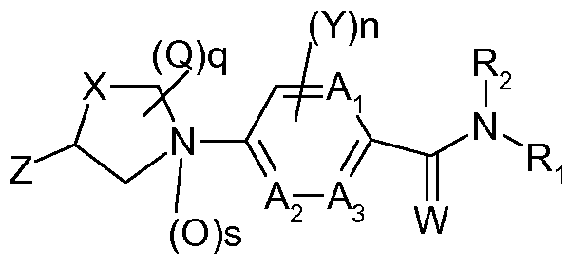
- JP-A-2008-1 10971 describes cyclic amine compounds of the following formula
- novel azolidine derivatives in particular novel oxazolidinone derivatives which avoid before mentioned pitfalls and which are particularly advantageous when applied. Also, they are effective against pests resistant to organophosphorus agents or carbamate agents.
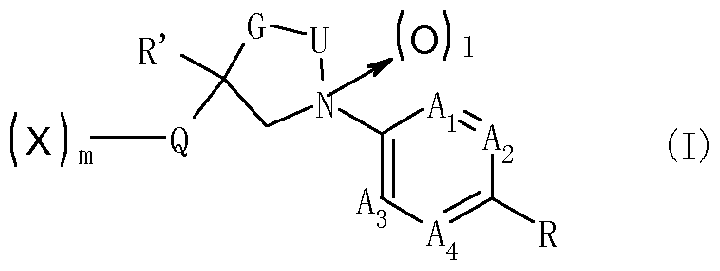
- R' represents Ci_i 2 alkyl or Ci_i 2 haloalkyl which may be substituted; preferably R' represents Ci_ 6 alkyl or Ci_6 haloalkyl which may be substituted; more preferably R' represents CM alkyl or C haloalkyl; most preferably R' represents CF3 ; 1 represents 0 or 1 ;
- R 1 and R 2 each independently represent hydrogen, cyano, Cu 2 alkyl, C 3 . 8 cycloalkyl, C 3 . 8 cycloalkyl-Ci_i 2 alkyl, C 2 .6 alkenyl, C 2 _6 alkynyl, Ci.i 2 alkoxy-carbonyl or Ci_i 2 thioalkoxy-carbonyl, wherein each group from the Ci_i 2 alkyl to the C 2 thioalkoxy-carbonyl described herein may be substituted; preferably R 1 and R 2 each independently represent hydrogen, cyano, Ci_ 6 alkyl, C 3 .
- R 1 and R 2 each independently represent hydrogen, cyano, CM alkyl, C 3 _6 cycloalkyl, C 3 _6 cycloalkyl-Ci.4 alkyl, C 2 _4 alkenyl, C 2 _4 alkynyl, C alkoxy-carbonyl or CM thioalkoxy-carbonyl, wherein each group of the said C alkyl to CM thioalkoxy-carbonyl may be substituted;
- R 1 and R 2 may form a 3- to 6-membered hydrocarbon ring with the carbon atom to which they are bound;
- X which can be the same or different represents hydrogen, halogen, nitro, cyano, hydroxy, mercapto, SF 5 , amino, C142 alkyl, C1.12 alkoxy, C 3 _s cycloalkyl, C142 alkylthio, C1.12 alkylsulfmyl, C1.12 alkylsulfonyl, C1.12 alkylsulfonyloxy, C1.12 alkylaminosulfonyl, di(Ci.i2 alkyl)amino-sulfonyl, C1.12 alkylcarbonylamino, benzoylamino, tri(Ci.i 2 alkyl)silyl, or C142 alkoxyimino, CM 2 alkylsulfinylimino, CM 2 alkylsulfonylimino, C142 alkoxy-carbonyl, C142 alkylcarbonyl, aminocarbonyl, C1 2 alkylamino-carbon
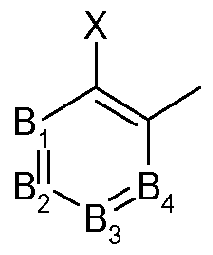
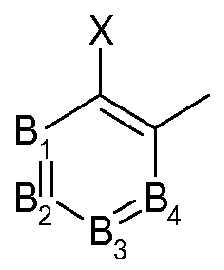
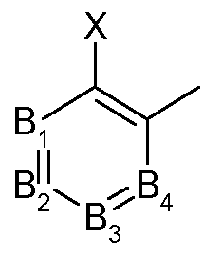
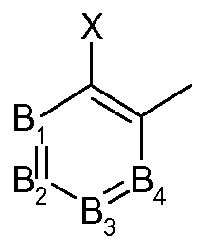
- Bi, B 2 , B 3 and B 4 each independently representing C-X or N (nitrogen), under the proviso that only two of Bi, B 2 , B 3 and B 4 may simultaneously represent N;
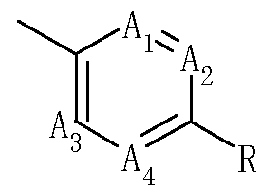
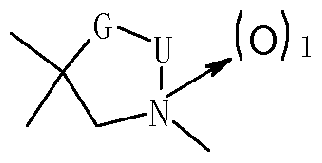
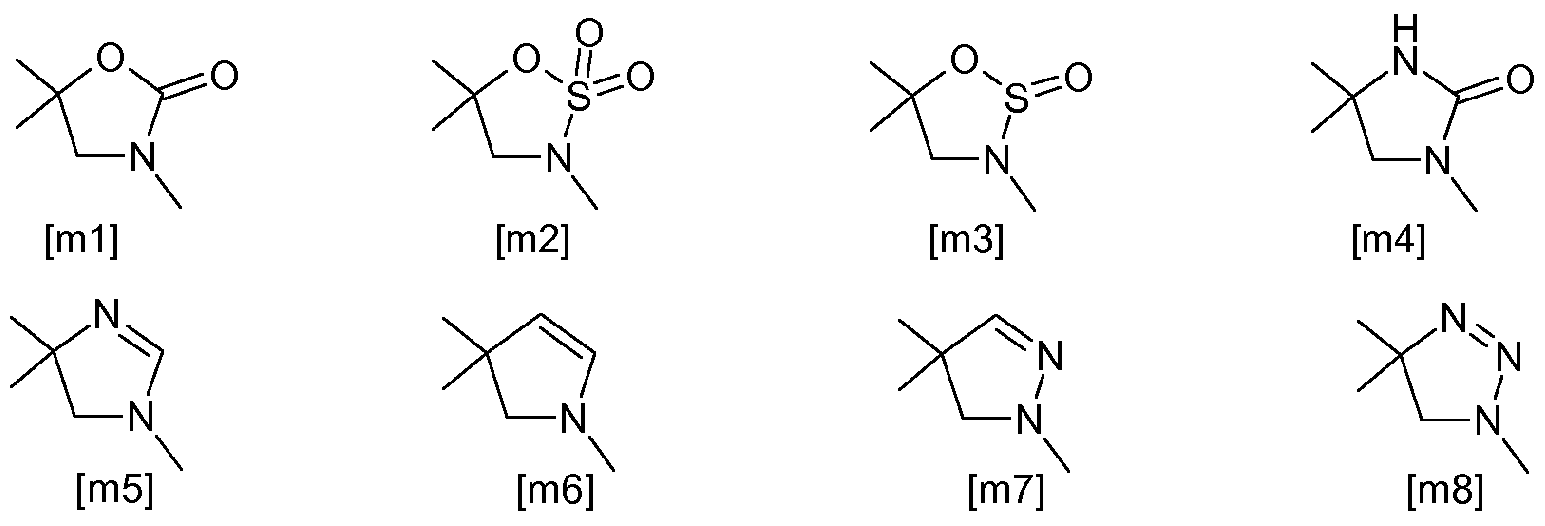
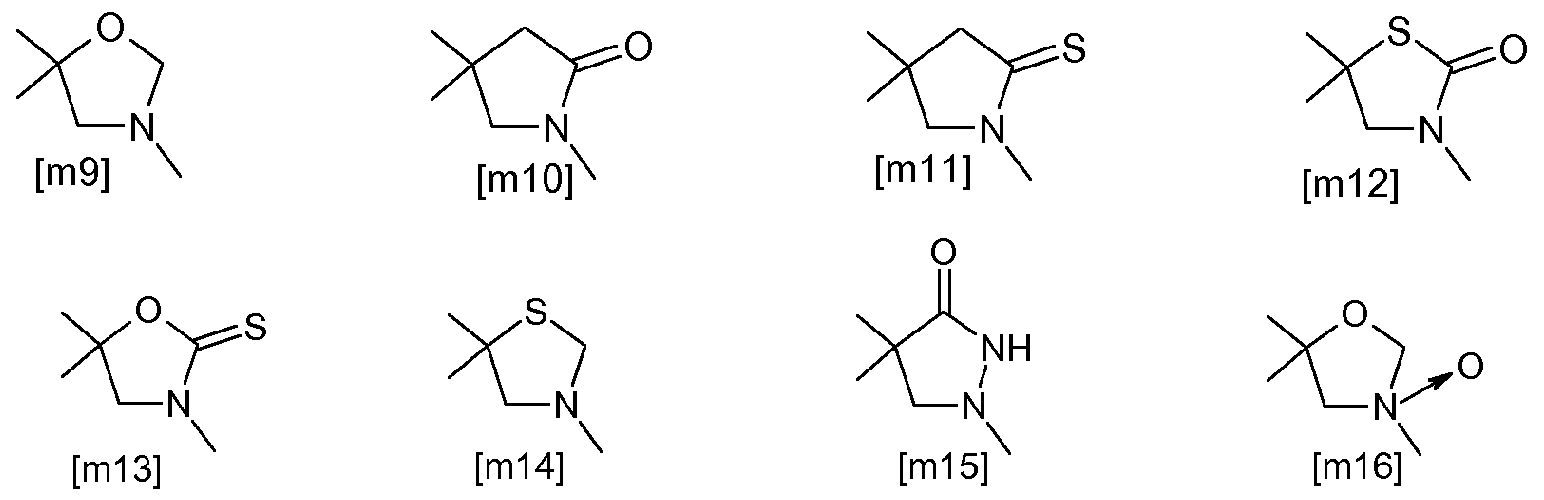
- Q represents a 5-membered heterocyclic group which contains 1 to 4 heteroatoms selected from N, O and S; and wherein the chemical grouping
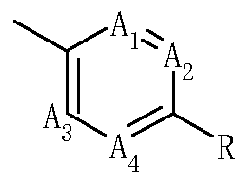
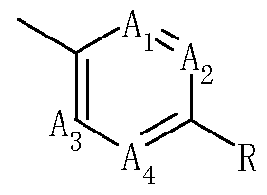
- Ai, A 2 , A 3 and A4 each independently represent C-Y or N (nitrogen) under the proviso that only two of A h A 2 , A3 and A4 may simultaneously represent N; when Ai and A 2 represent C-Y, two Ys may form a benzene ring or a 5- to 6-membered heteroaromatic ring with the carbon atoms to which they are bound;
- L represents a chemical group (CR'R 2 ) n with n being I, 2 or 3;
- R 4 represents hydrogen, cyano, formyl, thioformyl, Ci_i 2 alkylcarbonyl, C 1 .12 alkyl-thiocarbonyl, C L _i2 alkylamino-carbonyl, C 1 .12 alkylamino-thiocarbonyl, C 2 -24 (total carbon number) dialkylamino-carbonyl, C 2 -2 (total carbon number) dialkylamino-thiocarbonyl, C142 alkoxyamino-carbonyl, C 1 .12 alkoxyamino-thiocarbonyl, C142 alkoxy-carbonyl, C 1 .12 alkoxy-Ci.12 alkylcarbonyl, C1.12 thioalkoxy-Ci.12 alkylcarbonyl, C1 2 alkylsulfenyl-Ci.12 alkylcarbonyl, C L _i2 alkylsulfonyl-Ci_i2 alkylcarbonyl
- R 3 and R 4 may form a 3- to 6-membered heterocycle with the nitrogen atom to which they are bound, wherein the heterocycle may be substituted with X, keto, thioketo or nitroimino;
- R 5 represents phenyl which may be substituted or a 5- to 6-membered heterocyclic group which may be substituted and contains at least one heteroatom selected from N, O and S;
- R 6 and R 7 together may form C2-6 alkylene; preferably R 6 and R 7 together may form C4.5 alkylene;
- Y which can be the same or different represents hydrogen, halogen, nitro, cyano, hydroxy, mercapto, amino, C1.12 alkyl, C3.8 cycloalkyl, C142 alkoxy, C 42 alkylthio, C 42 alkylsulfinyl, C142 alkylsulfonyl, C1.12 alkylsulfonyloxy, C 42 alkylaminosulfonyl, C2-24 (total carbon number) dialkylamino-sulfonyl, Ci_6 alkylcarbonylamino, benzoylamino, tri-Ci.12 alkylsilyl, Q42 alkoxyimino, C1.12 alkylsulfinylimino, C1.12 alkylsulfonylimino, Q42 alkoxy-carbonyl, C 42 alkylcarbonyl, aminocarbonyl, C142 alkylamino-carbonyl, amino-thiocarbonyl, C142 al
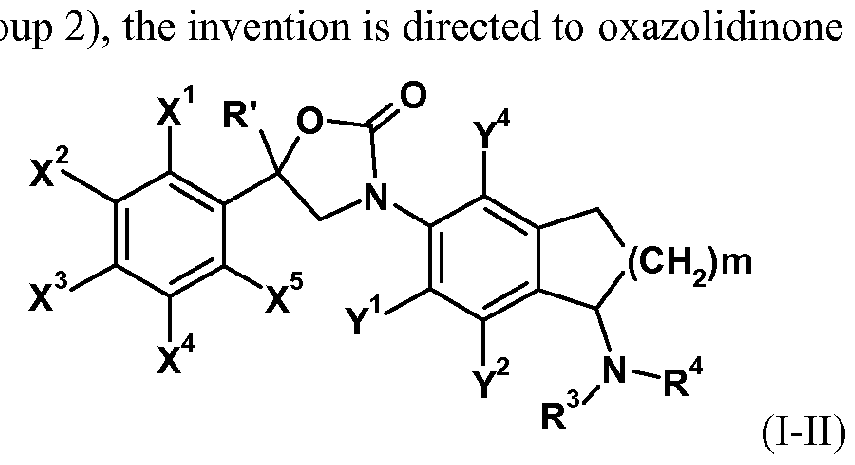
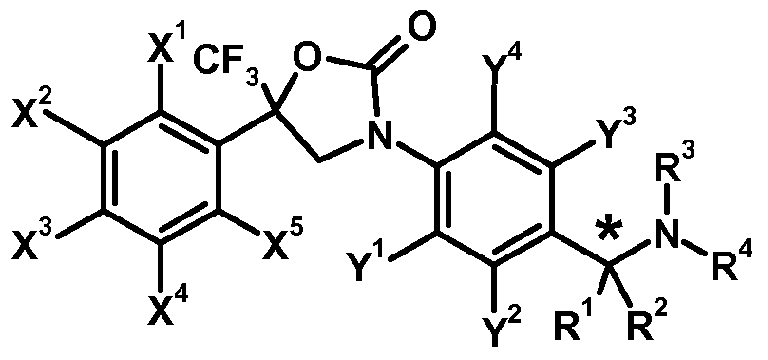
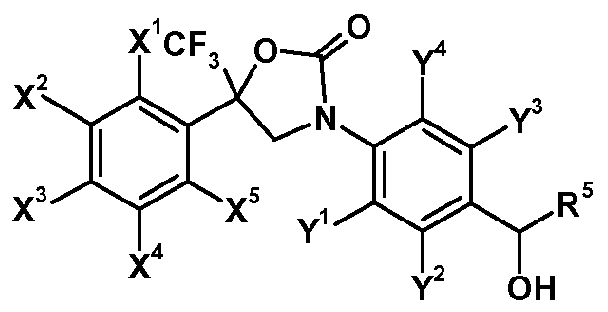
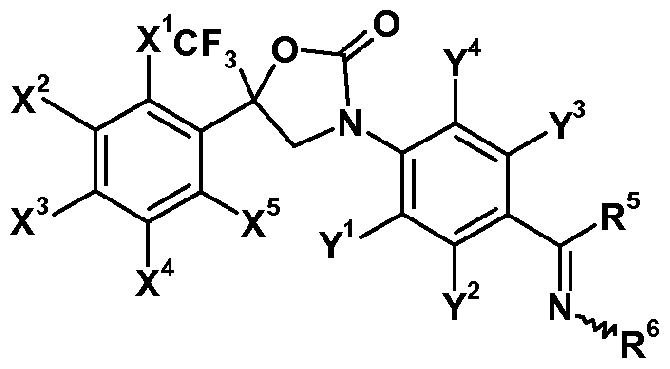
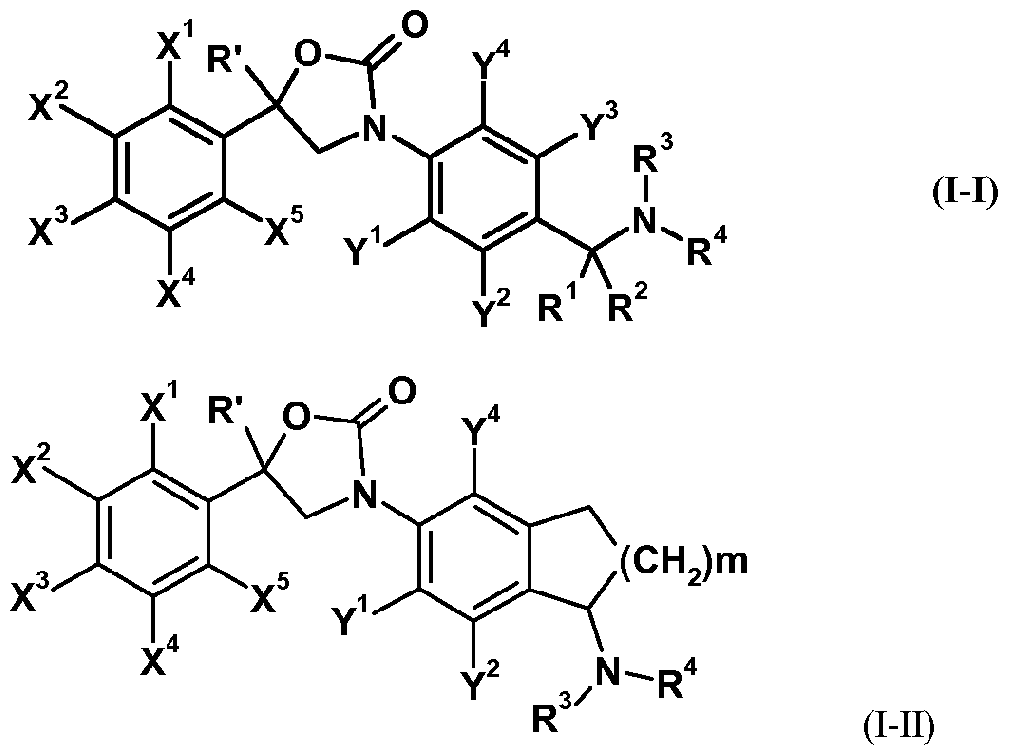
- the invention is directed to oxazolidinone derivatives of formula (I-I)
- R' represents C1.12 alkyl or C1.12 haloalkyl; preferably R' represents Ci_ 6 alkyl, or Ci_ 6 haloalkyl; more preferably R' represents C alkyl, or C1. 4 haloalkyl; most preferably R' represents CF 3 ;
- X 1 , X 2 , X 3 , X 4 , X 5 , Y 1 , Y 2 , Y 3 and Y 4 each independently represent hydrogen, halogen, nitro, cyano, hydroxy, mercapto, amino, SF 5 , Ci_i 2 alkyl, C 3 .
- Ci_ 6 alkylsulfonyloxy Ci_ 6 alkylaminosulfonyl, di(Ci_ 6 alkyl)amino-sulfonyl, Ci_ 6 alkyl-carbonylamino, benzoylamino, tri(Ci_ 6 alkyl)silyl, Ci_ 6 alkoxyimino, Ci_ 6 alkylsulfinylimino, Ci_ 6 alkylsulfonylimino, Ci_ 6 alkoxy-carbonyl, Ci.6 alkyl-carbonyl, aminocarbonyl, Ci_6 alkylamino-carbonyl, aminothiocarbonyl, C e alkylamino-thiocarbonyl, di(Ci_6 alkyl)amino-carbonyl or di(Ci_6 alkyl)amino-thiocarbonyl, wherein each group of the said Ci_6 alkyl to di(Ci_6 alkyl)amino-thiocarbony
- R 1 and R 2 each independently represent hydrogen, cyano, C142 alkyl, C3-8 cycloalkyl, C3-8 cycloalkyl-Ci.12 alkyl, C 2 - 12 alkenyl, C 2 - 12 alkynyl, Ci.u alkoxy-carbonyl or C 1 .
- each group of the said C142 alkyl to C 1 .12 thioalkoxy-carbonyl may be substituted with halogen; preferably R 1 and R 2 each independently represent hydrogen, cyano, Cue alkyl, C 3 - 7 cycloalkyl, C 3 - 7 cycloalkyl-Ci.6 alkyl, C 2 -6 alkenyl, C 2 -6 alkynyl, Ci_6 alkoxy-carbonyl, or Ci_6 thioalkoxy-carbonyl, wherein each group of the said Ci_6 alkyl to d.e thioalkoxy-carbonyl may be substituted with halogen; more preferably R 1 and R 2 each independently represent hydrogen, cyano, CM alkyl, C 3 _ 6 cycloalkyl, C 3 _ 6 cycloalkyl-Ci_ 4 alkyl, C 2 _4 alkenyl, C 2 _ 4
- R 5 is phenyl which may be substituted, or a 5- or 6-membered heterocycle which contains at least one heteroatom that may be selected from , O and S and which may be substituted.
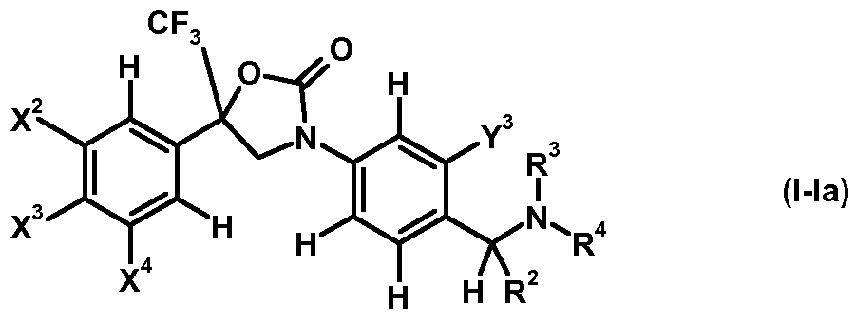
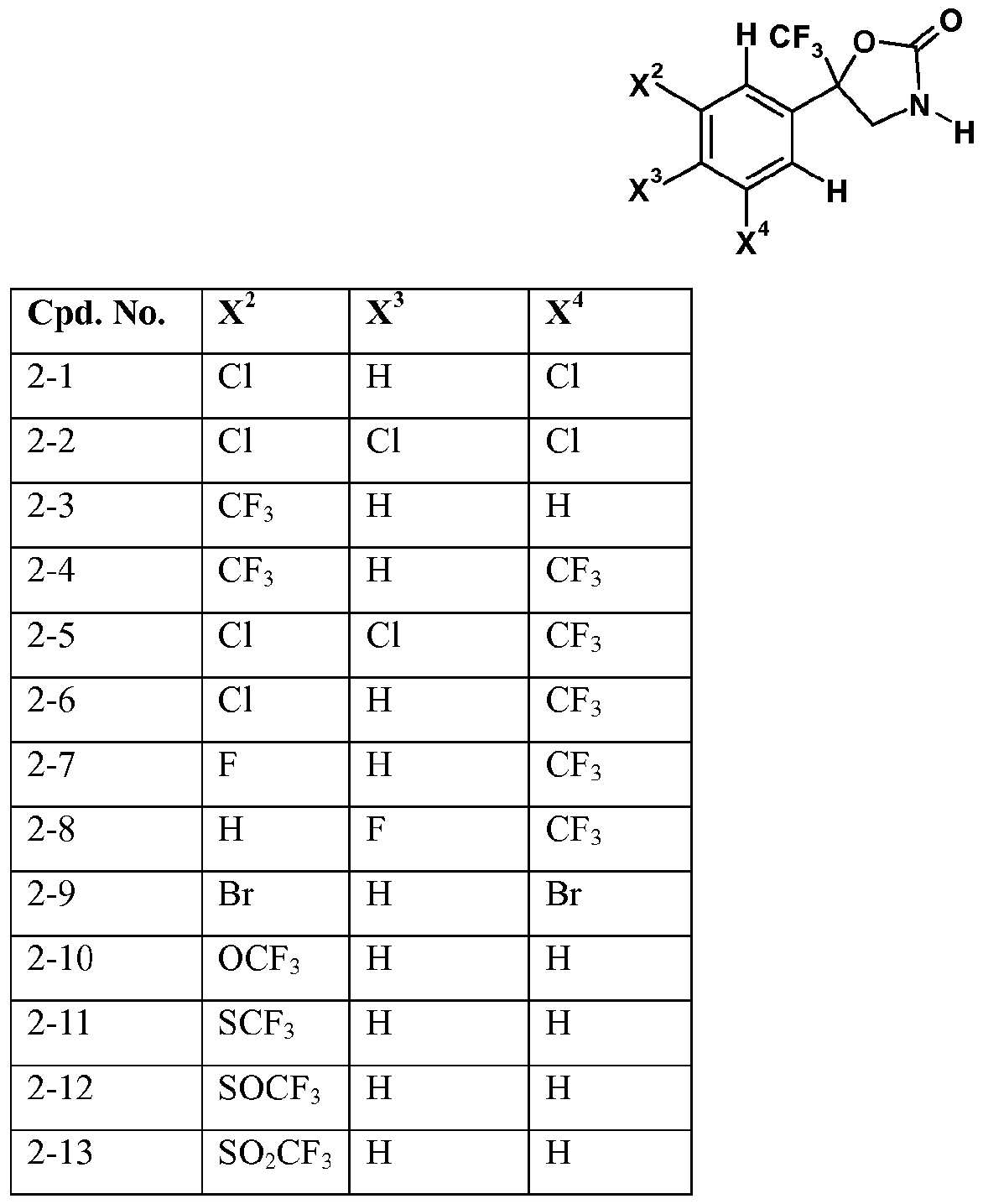
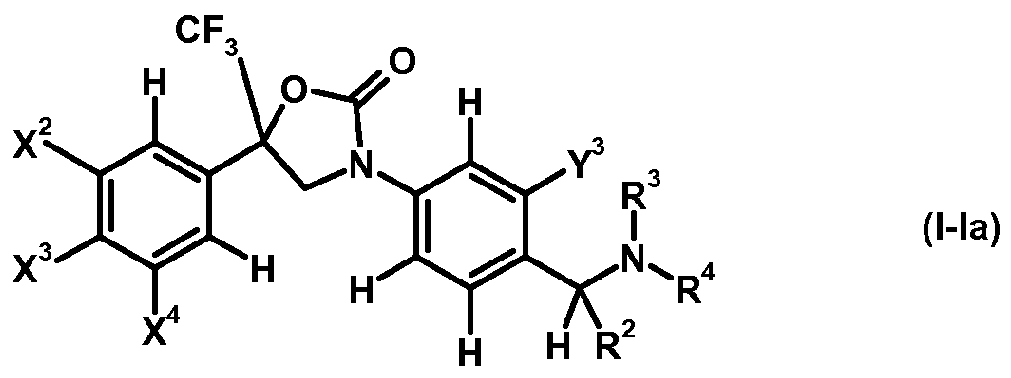
- oxazolidine compounds oxazolidinone derivatives of formula (I-Ia) are preferred.
- X 2 , X 3 and X 4 each independently represent hydrogen, halogen or C1.4 haloalkyl; more preferably independently represent hydrogen, chloro, bromo or CF 3 ;
- Y 3 represents halogen, C1.4 alkyl or C1.4 haloalkyl; more preferably represent chloro, bromo, methyl or
- R 2 represents hydrogen or C alkyl; more preferably represents hydrogen or methyl;
- R 3 represents hydrogen or C alkyl
- R 4 represents hydrogen, Ci_ 4 alkyl-carbonyl, CM haloalkyl-carbonyl, C 3 . 6 cycloalkyl-carbonyl, CM alkoxy-Ci.4 alkyl-carbonyl, C thioalkoxy-Ci.4 alkyl-carbonyl, C1.4 alkylsulfenyl-Ci.4 alkyl-carbonyl, CM alkylsulfonyl-Ci.4 alkyl-carbonyl or C alkylamino-carbonyl, and more preferably C alkyl-carbonyl, C haloalkyl-carbonyl or C3.6 cycloalkyl-carbonyl.
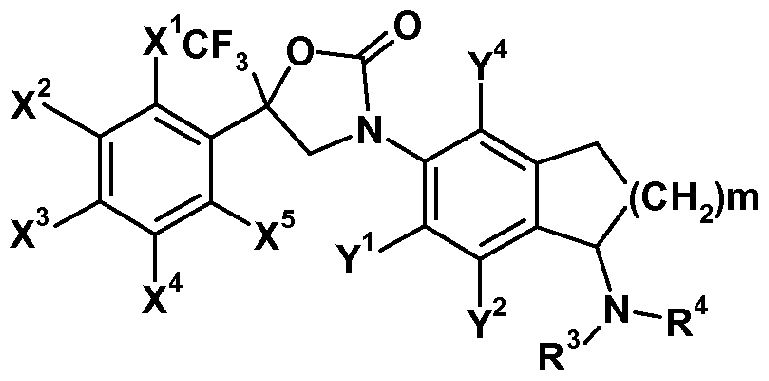
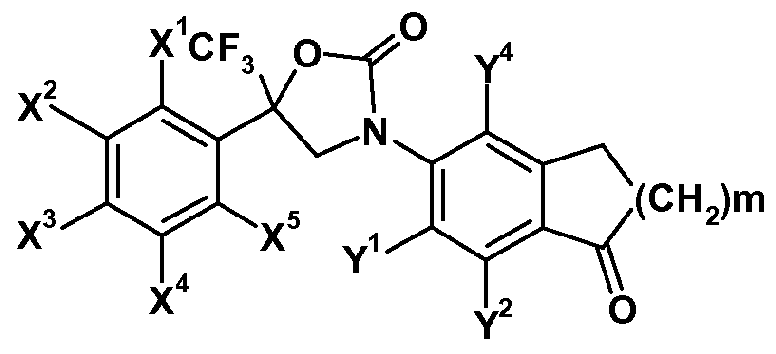
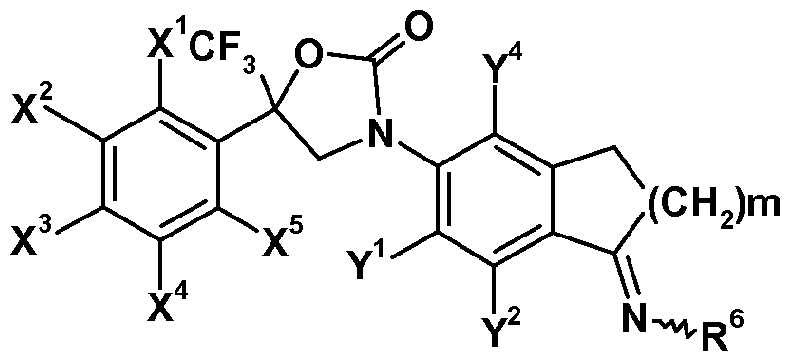
- X 1 , X 2 , X 3 , X 4 , X 5 , Y 1 , Y 2 , Y 4 ,R', R 3 and R 4 are as defined herein and m represents 1 or 2.
- the compounds of the present invention may include optical isomers.
- the compounds according to the invention exhibit a potent activity as agents for controlling harmful pests such as insects, acari, and/or microorganisms.
- the compounds according to the present invention have a strong pesticidal activity.
- alkyl stands for linear or branched C1 2 alkyl, preferably C alkyl, and more preferably CM alkyl, for example, methyl, ethyl, n- or iso-propyl, n-, iso-, sec- or tert-butyl, n-pentyl, n-hexyl, n-heptyl, n-octyl, n-nonyl, n-decyl, n-undecyl, n-dodecyl and the like.
- Alkyl represents alkylcarbonylamino, cyclopropylcarbonylamino and benzoylamino, for example.
- alkyl moiety those described herein for “alkyl” can be also exemplified
- haloalkyl or “alkyl substituted with halogen” stands for a hydrocharbon group (chain) in which at least one hydrogen atom on linear or branched C 2 alkyl, preferably Ci_ 6 alkyl, and more preferably C alkyl is substituted with halogen, or stands for a perfluoroalkyl in which all substitutable hydrogens on the alkyl are substituted with fluorines.
- Examples thereof include CH 2 F, CHF 2 , CF 3 , CF 2 C1, CFC1 2 , CF 2 Br, CF 2 CF 3 , CFHCF 3 , CH 2 CF 3 , CFC1CF 3 , CC1 2 CF 3 , CF 2 CH 3 , CF 2 CH 2 F, CF 2 CHF 2 , CF 2 CF 2 C1, CF 2 CF 2 Br, CFHCH 3 , CFHCHF 2 , CFHCHF 2 , CHFCF 3 , CHFCF 2 C1, CHFCF 2 Br, CFC1CF 3 , CC1 2 CF 3 , CF 2 CF 2 CF 3 , CH 2 CF 2 CF 3 , CF 2 CH 2 CF 3 , CF 2 CH 2 CF 3 , CHFCF 2 CF 3 , CHFCF 2 CF 3 , CHFCF 2 CF 3 , CHFCF 2 CF 3 , CF 2 CHFCF 3 , CHFCF 2
- alkoxy stands for linear or branched Ci_i 2 alkoxy, preferably Ci_ 6 alkoxy, and more preferably C alkoxy, for example, methoxy, ethoxy, n-propoxy, i-propoxy, n-, iso-, sec- or tert-butoxy, pentyloxy, or hexyloxy.
- the alkoxy may be further substituted with halogen or other substitutents.
- halogen and each halogen moiety contained in the group substituted with halogen stands for fluorine, chlorine, bromine or iodine, and preferably fluorine, chlorine or bromine.
- cycloalkyl stands for C 3 _ 8 cycloalkyl such as cyclopropyl, cyclobutyl, cyclopentyl, cyclohexyl, cycloheptyl, and cyclooctyl. Preferably, it represents C 3 . 7 cycloalkyl and more preferably C 3 . 6 cycloalkyl.
- cycloalkyl indicates C 3 _g cycloalkyl, preferably C3. 7 cycloalkyl, and more preferably C 3 . 6 cycloalkyl, for example, cyclopropyl, cyclobutyl, cyclopentyl, cyclohexyl, cycloheptyl, and cyclooctyl. Further, for each cycloalkyl moiety contained in the group having the cycloalkyl as a part, those described above for the "cycloalkyl" can be also exemplified.
- Cycloalkyl substituted with halogen means halocycloalkyl, and examples thereof include fluorocyclopropyl, chlorocyclopropyl, difluorocyclopropyl, dichlorocyclopropyl, and undecafluorocyclohexyl.
- Alkyl represents arylalkyl. For example, it represents benzyl and phenethyl.
- Aryl represents a Ce-12 aromatic hydrocarbon group.
- it represents phenyl, naphthyl, or biphenyl, preferably a C 6 _i 0 aromatic hydrocarbon group, and more preferably a C aromatic hydrocarbon group, or phenyl.
- alkenyl stands for C2-12 alkenyl, preferably C2-6 alkenyl, for example, vinyl, allyl, 1-propenyl, 1 - (or 2-, or 3-)butenyl, 1 -pentenyl, and more preferably it represents C2-4 alkenyl.
- alkynyl stands for C2-12 alkynyl, preferably C 2 _6 alkynyl such as ethynyl, propargyl, 1-propynyl, butan-3-ynyl, and pentan-4-ynyl, and more preferably stands for C 2 _4 alkynyl.
- heterocycle stands for a 5- or 6-membered heterocyclic group which contains at least one of heteroatom selected from N, O and S, and also a fused heterocyclic group of which ring can be benzo-fused. The carbon atom of the heterocycle may be substituted with oxo or thioxo.
- heterocycle examples include pyrrolidinyl, piperidinyl, morpholinyl, thiomorpholinyl (saturated heterocycles), dihydropyrrolyl, dihydroisoxazolyl, dihydropyrazolyl, dihydrooxazolyl, dihydrothiazolyl (partially saturated heterocycles), and furyl, thienyl, pyrrolyl, isoxazolyl, pyrazolyl, oxazolyl, isothiazolyl, thiazolyl, imidazolyl, triazolyl, oxadiazolyl, thiadiazolyl, teterazolyl, pyridyl, pyrimidinyl, pyridazinyl, pyrazinyl, triazinyl, indolyl, benzoxazolyl, benzothiazolyl, quinolyl and the like, and the heterocycle may be substituted.
- the term "which may be substituted”, which is the same as the term “optionally substituted”, indicates that the groups may be substituted by at least one substituent selected among the following substituents: Halogen, hydroxy, thiohydroxy, amino, cyano, nitro, C1.12 alkyl (preferably Ci_6 alkyl, more preferably C1.4 alkyl), C1 2 haloalkyl (preferably Ci_6 haloalkyl, more preferably C haloalkyl), C1 2 alkoxy (preferably Ci_6 alkoxy, more preferably C1.4 alkoxy), Q 2 haloalkoxy (preferably Ci-6 haloalkoxy, more preferably C1.4 haloalkoxy), Q42 alkylthio (preferably Ci_6 alkylthio, more preferably C alkylthio), C1.12 haloalkylthio (preferably Ci_6 haloalkylthio, more preferably C1.4 haloalkylthio), Q42 alkylsulf
- alkyl which "may be substituted with halogen" (which results among other in haloalkyl groups)
- the following groups CH 2 F, CHF 2 , CF 3 , CF 2 C1, CFC1 2 , CF 2 Br, CF 2 CF 3 , CFHCF 3 , CH 2 CF 3 , CFCICF 3 , CCI 2 CF 3 , CF 2 CH 3 , CF 2 CH 2 F, CF 2 CHF 2 , CF 2 CF 2 CI, CF 2 CF 2 Br, CFHCH 3 , CFHCHF 3 , CFHCHF2, CHFCF 3 , CHFCF2CI, CHFCF 2 Br, CFCICF3, CC1 2 CF 3 , CF 2 CF 2 CF 3 , CH 2 CF 2 CF 3 , CF 2 CH 2 CF 3 , CF 2 CF 2 CH 3 , CHFCF 2 CF 3 , CF 2 CHFCF 3 , CF 2 CHFC
- normal pressure stands for “atmospheric pressure” i.e. around 1 bar.
- agricultural refers to crop production systems. Livestock productions systems are encompassed by the term “veterinary field”. Agricultural pests are therefor pests which occur in the crop production system.
- the compounds according to the invention can be obtained according to known methods or by using the preparation methods described herein.
- the invention is directed to a preparation method (a) for the preparation of compounds of formula (I) as defined herein, wherein 1 is 0, which preparation method (a) comprises reacting a compound of formula (II)
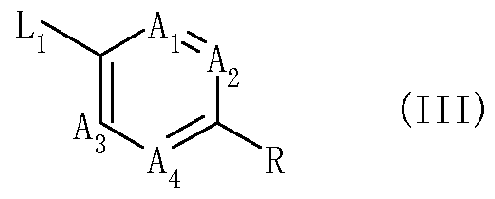
- Li represents halogen or C haloalkylsulfonyloxy, in a diluent, and in the presence of at least one base and in the presence of a metal catalyst.
- the invention is directed to a preparation method (b) for the preparation of compounds of formula (I) as defined herein, wherein 1 is 0, and the grouping
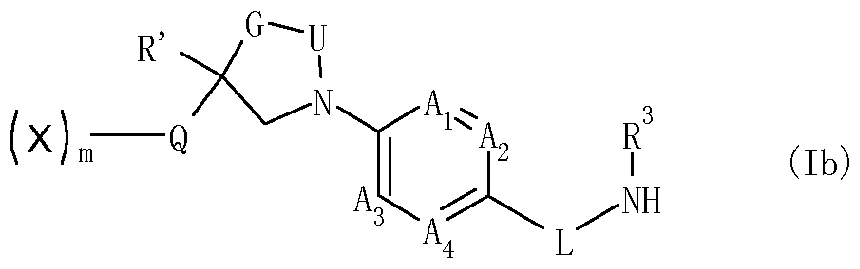
- preparation method (b) comprises reacting a compound of formula (lb)
- R 4 is as defined herein and L3 represents fluorine, chlorine, bromine, C alkylcarbonyloxy, C alkoxy-carbonyloxy, C alkyl-sulfonyloxy, C haloalkyl-sulfonyloxy, arylsulfonyloxy or azolyl, in a diluent, and optionally in the presence of at least one base.
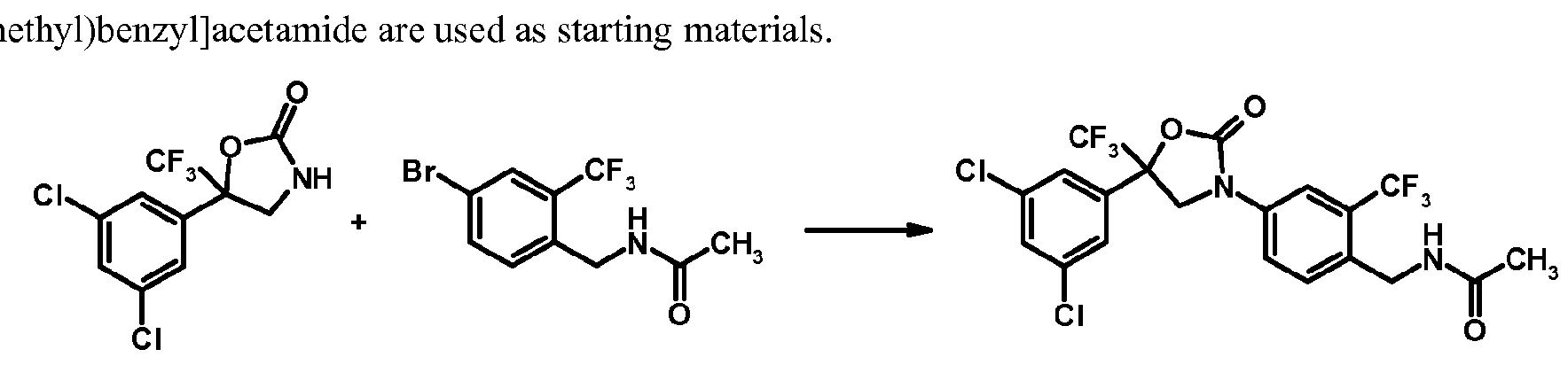
- the preparation method (a) is exemplified by the following scheme, wherein 5-(3,5-dichlorophenyl)-5-(trifluoromethyl)-l,3-oxazolidin-2-on e a n d N-[4-bromo-2-(trifluoro- m
- the preparation method (b) is exemplified by the following scheme, wherein 3-[4-(aminomethyl)-3-(trifluoromethyl)phenyl]-5-(3,5-dichlorophenyl)-5-(trifluoromethyl)-l,3-oxazolidin - -one and acetyl chloride are used as starting materials.
- the preparation method (a) can be carried out according to the method described in WO 2007/123853A2 and WO 2008/128711, respectively.
- the compounds of the formula (II) in the preparation method (a) can be obtained by the methods described for example in: WO 2007/123853A2, the Journal of Organic Chemistry, 1991, Vol. 56, pages 7336-7340; Ibid. 1994, Vol. 59, pages 2898-2901 ; Journal of Fluorine Chemistry, 1999, Vol.
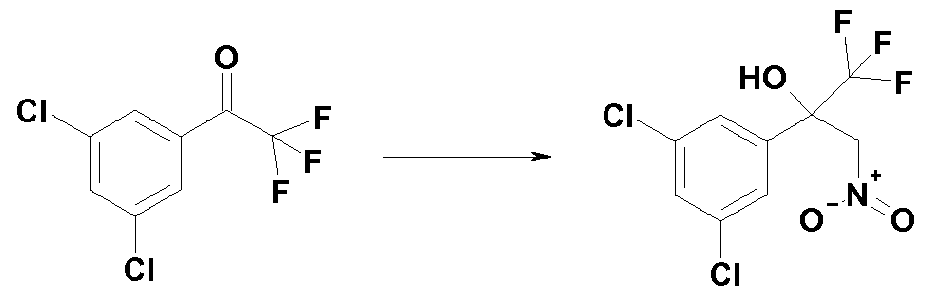
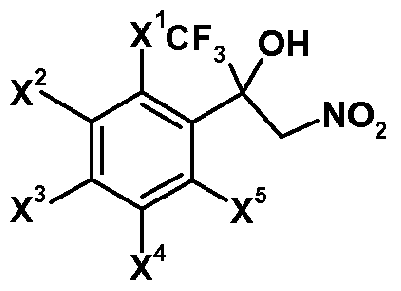
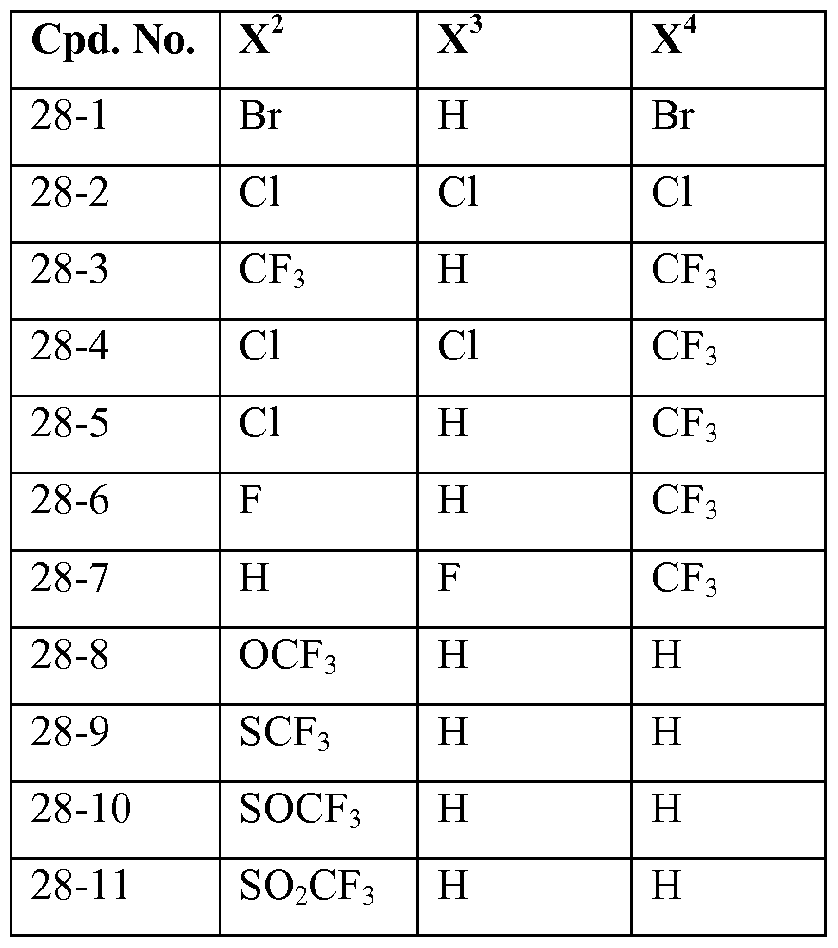
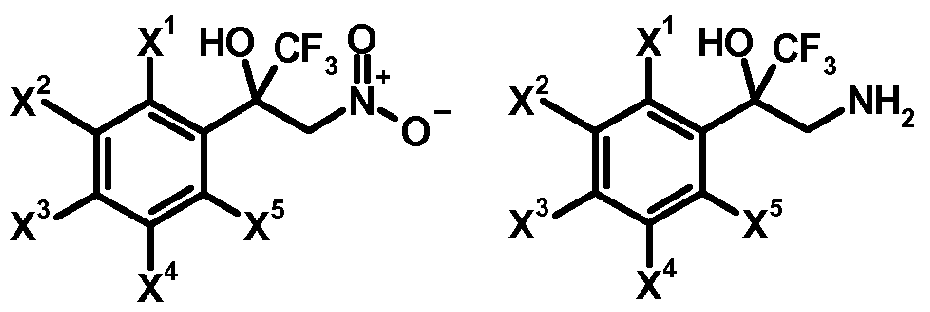
- a compound of formula (r-2) and nitromethane are reacted in the presence of a base or bases, for example potassium carbonate, to obtain a compound of formula (r-3) (step 1-1).
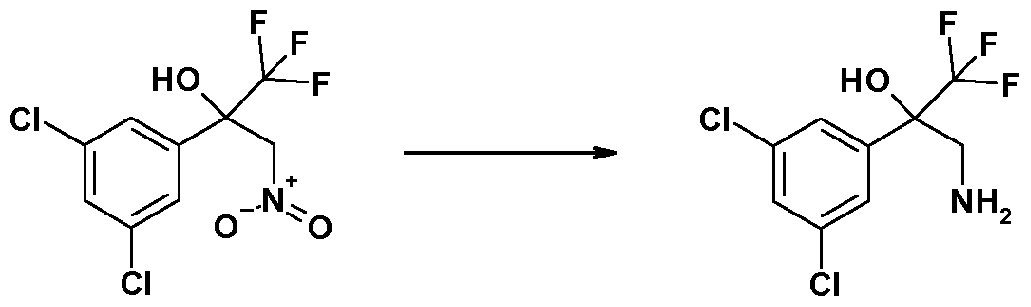
- This compound of formula (r-3) is reduced by using an appropriate reducing agent, for example tin chloride, in the presence of hydrochloric acid to obtain a compound of formula (r-4) (step 1-2).
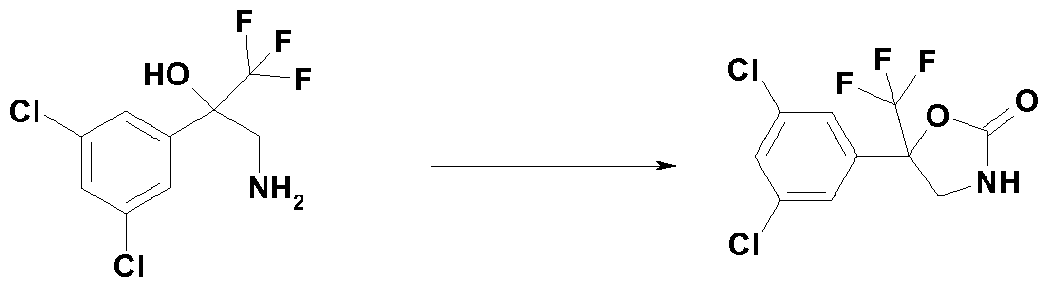
- the compound of formula (r-4) is finally reacted with triphosgene in the presence of a base or bases to obtain a compound of formula (lib) (step 1-3).
- Some compounds of formula (r-3) in reaction scheme 1 are known, and representative examples thereof include: l,l,l-trifluoro-3-nitro-2-(3,4,5-trichlorophenyl)propan-2-ol, 2-[3,5-bis(trifluoro- methyl)phenyl]-l,l,l-trifluoro-3-nitropropan-2-ol and the like.
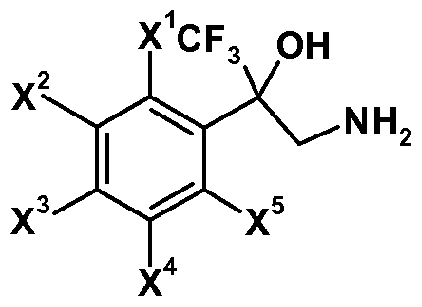
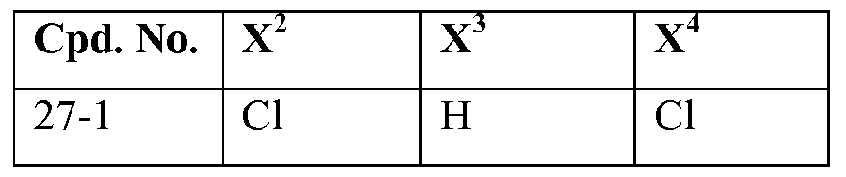
- Some compounds of formula (r-4) in reaction scheme 1 are known, and representative examples thereof include: 3-amino-2-(3,5-dichlorophenyl)-l , 1 , 1 -trifluoropropan-2-ol, 3-amino-l, 1 , 1 -trifluoro-2-(3,4,5-tri- chlorophenyl)propan-2-ol, 3 -amino- 1,1,1 -trifluoro-2- [3 -(trifluoromethyl)phenyl]propan-2-ol,
- Some compounds of formula (lib) in preparation method (a) and reaction scheme 1 are known, and representative examples thereof include: 5-(3,5-dichlorophenyl)-5-(trifluoromethyl)-l,3-oxazolidin-2-one, 5-(3,4,5-trichlorophenyl)-5-(trifluoromethyl)-l,3-oxazolidin-2-one, 5-(trifluoromethyl)-5-[3-(trifluoro- methyl)phenyl]-l,3-oxazolidin-2-one, 5-[3,5-bis(trifluoromethyl)phenyl]-5-(trifluoromethyl)-l,3-ox- azolidin-2-one and the like.
- the compounds of formula (III) for preparation method (a) can be synthesized, for example, according to the methods described in WO 2007/105814A1. Additionally, they can be also easily synthesized according to known methods in the field of organic chemistry. Some compounds of formula (III) are known, and representative examples thereof include
- the reaction of preparation method (a) is carried out in appropriate diluents such as aliphatic hydrocarbons (e.g. hexane, cyclohexane, heptane, etc.), aliphatic halogenated hydrocarbons (e.g. dichloromethane, chloroform, carbon tetrachloride, dichloroethane, etc.), aromatic hydrocarbons (e.g. benzene, toluene, xylene, chlorobenzene, etc.), ethers (e.g.
- DMF dimethylformamide
- DMA dimethyl acetamide
- N-methylpyrrolidone etc.
- nitriles e.g. acetonitrile, propionitrile, etc.
- DMSO dimethyl sulfoxide
- the reaction of the preparation method (a) can be carried out in the presence of a base or bases.
- bases are, for example, alkali metal bases (e.g. lithium hydride, sodium hydride, potassium hydride, butyl lithium, tert-butyl lithium, trimethylsilyl lithium, lithium hexamethyldisilazide, sodium carbonate, potassium carbonate, cesium carbonate, tripotassium phosphate, sodium acetate, potassium acetate, sodium methoxide, sodium ethoxide, sodium-tert-butoxide and potassium-tert-butoxide); or organic bases (e.g.
- the metal catalyst can be added as such or is produced in situ.
- T h e r e a ction can also be carried out by using a phosphine ligand (e.g. (2,2'-bis(diphenylphosphino)-l , l '-binaphtalene (BINAP), or
- a phosphine ligand e.g. (2,2'-bis(diphenylphosphino)-l , l '-binaphtalene (BINAP)
- Xantphos 4,5-bis(diphenylphosphino)-9,9-dimethylxanthene
- tributylphosphine 4,5-bis(diphenylphosphino)-9,9-dimethylxanthene (Xantphos), or tributylphosphine
- an amine ligand e.g. 8-quinolinol, proline, and ⁇ , ⁇ -dimethylglycine, trans- 1 ,2-cyclohexanediamine
- the ligands may also function as a base (cf. trans- 1 ,2-cyclohexanediamine) in this reaction, so that no further base is needed.
- the preparation method (a) can be carried out over substantially wide temperature range.
- reaction may be generally carried out at a temperature in the range of about -78°C and about 200°C, preferably in the range of -10°C and about 150°C.
- the reaction is preferably carried out at normal pressure although it may also be carried out under elevated or reduced pressure.
- the reaction time is from 0.1 to 72 hours, preferably 0.1 to 24 hours.
- 1 mol of the compound of the formula (II) can be reacted with 1 to 3 mols of the compound of the formula (III), in the presence of 1 to 3 mols of a base (e.g. trans- 1 ,2-cyclohexanediamine) and a metal catalyst (e.g. Cul) in a diluent (e.g. 1 ,4-dioxane) to obtain the compound according to the invention.
- a base e.g. trans- 1 ,2-cyclohexanediamine
- a metal catalyst e.g. Cul
- a diluent e.g.
- the compounds of the present invention can be obtained in the preparation method (a), by reacting 1 to 3 moles of the compound of the formula (III) in a diluent, for example toluene, with 1 mol of the compound of the formula (II), in the presence of 1 to 3 moles of bases and a catalytic amount of Pd 2 (db ) 3 CHCl 3 , Xantphos.
- a diluent for example toluene
- the preparation method (b) can be carried out according to the method described in WO 2008/128711.
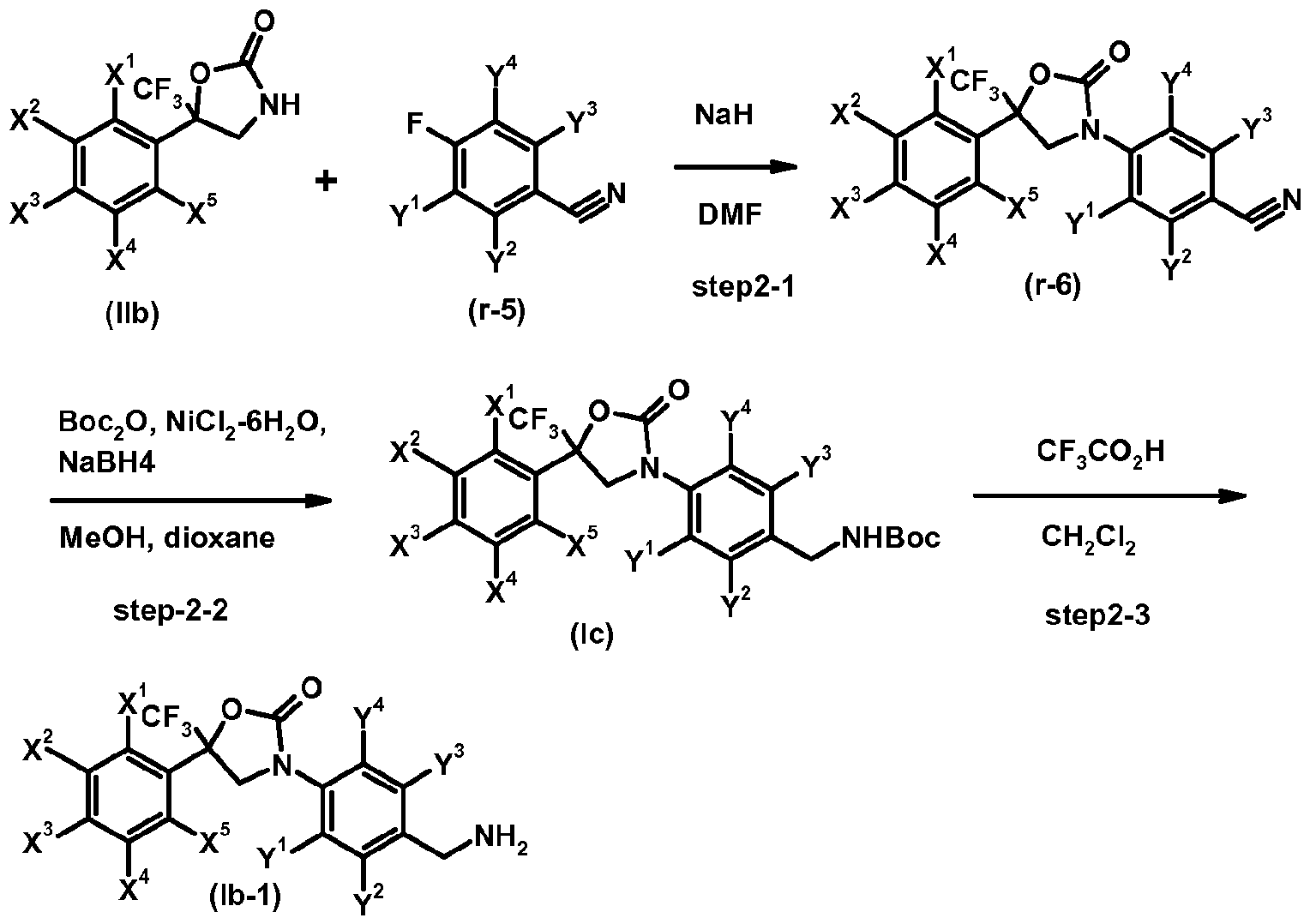
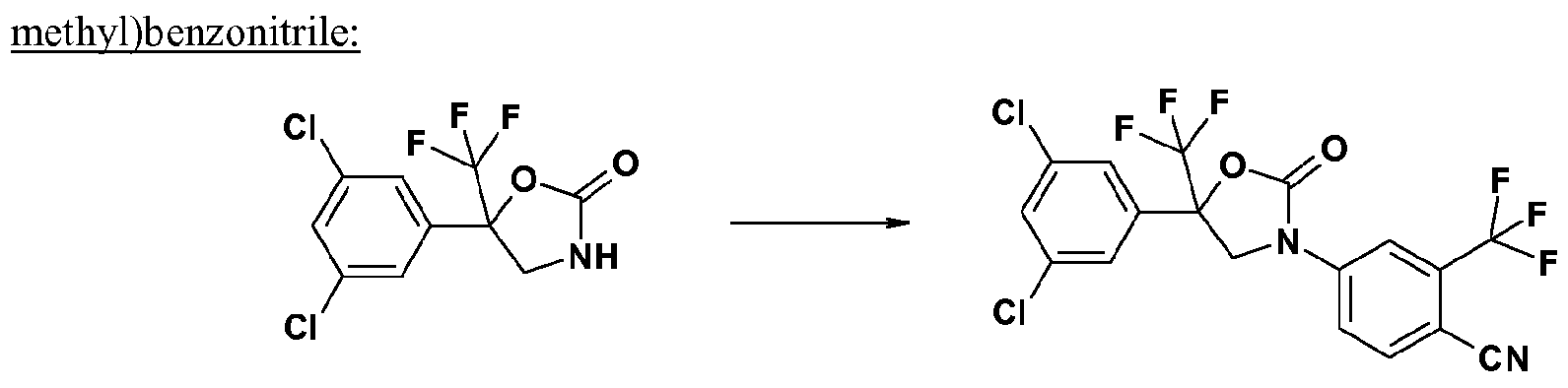
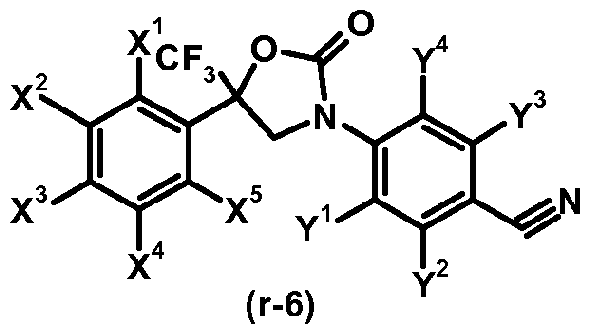
- step 2-1 a compound of the formula (lib) and a compound of formula (r-5) are reacted in the presence of a base, for example sodium hydride, to give a compound of formula (r-6).
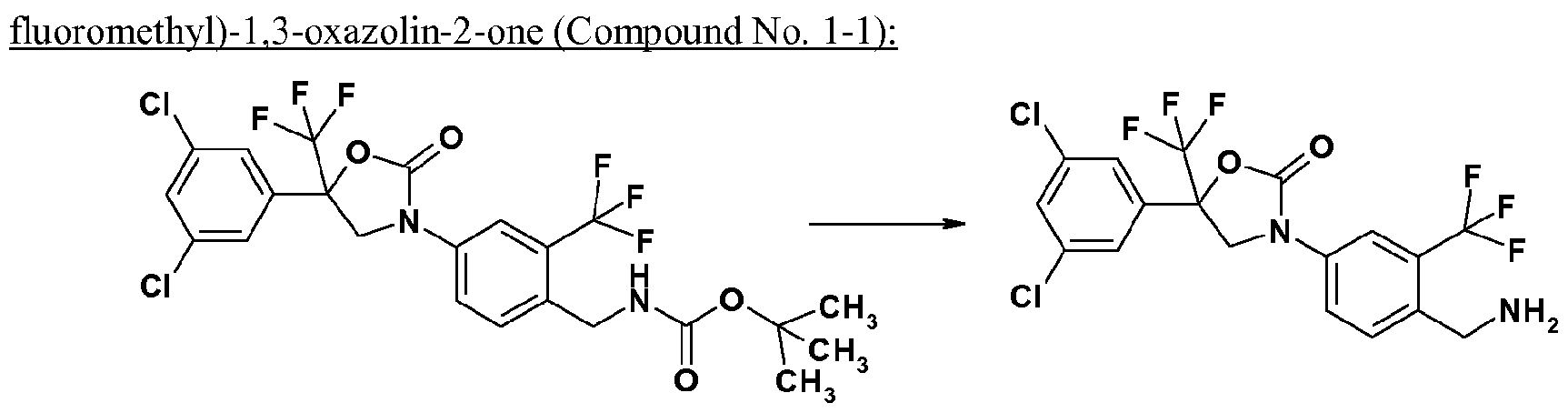
- step 2-2 the cyano group contained in the compound of the formula (r-6) is reduced by known methods (cf. Tetrahedron Letters, 2000, 41, 3513-3516 or Tetrahedron, 2003, 59, 5417-5423) resulting in a compound of formula (Ic).
- a compound of formula (Ic) is deprotected in the presence of a caralytic amount of an acid (acid catalysts), for example trifluoroacetic acid, to give a compound of formula (Ib-1).
- acid catalysts for example trifluoroacetic acid
- Compounds of formula (r-5) are known. Representative examples include: 4-fluorobenzonitrile, 2-chloro-4-fluorobenzonitrile, 4-fluoro-2-(trifluoromethyl)benzonitrile.
- Comp ound s o f formula (r-6) are known. Representative examples include: 4-[5-(3,5-dichlorophenyl)-2-oxo-5-(trifluoromethyl)-l ,3-oxazolinon-3-yl]-2-(trifluoromethyl)benzonitrik 2-chloro-4-[2-oxo-5-(3,4,5-trichlorophenyl)-5-(trifluoromethyl)-l,3-oxazolidin-3-yl]benzonitrile, 4-[2-oxo-5-(3,4,5-trichlorophenyl)-5-(trifluoromethyl)-l,3-oxazolidin-3-yl]-2-(trifluoromethyl)benzonitril e, 2-chloro-4- ⁇ 2-oxo-5-(trifluoromethyl)-5-[3-(trifluoromethyl)phenyl]-l,3-oxazolidin-3-yl ⁇ berizonitrile,
- Compounds of formula (lb) include: 3-[4-(aminomethyl)-3-(trifluoromethyl)phenyl]-5-(3,5-dichloro- phenyl)-5-(trifluoromethyl)-l,3-oxazolidin-2-o n e , 3-[4-(aminomethyl)-3-(trifluoromethyl)phenyl]-5— (3,4,5-trichlorophenyl)-5-(trifluoromethyl)-l,3-oxazolidin-2-o n e , 3-[4-(aminomethyl)-3-chlorophe- nyl]-5-[3,5-bis(trifluoromethyl)phenyl]-5-(t ⁇ 3-[4-(aminomethyl)-3-----
- preparation method (b) The same diluents as decribed for preparation method (a) can be used in preparation method (b).
- reaction of preparation method (b) is preferably carried out in the presence of appopropriate bases.
- Aproppriate bases include the bases which can be used in preparation (a).
- the preparation method (b) can be carried out over substantially wide temperature range. It may be generally carried out between about -78°C and about 200°C, preferably between about -10°C and about 150°C.
- the reaction is preferably carried out at normal pressure although it may be also carried out under elevated or reduced pressure.
- the reaction time is 0.1 to 72 hours, preferably 0.1 to 24 hours.
- 1 mol of a compound of the formula (lb) is reacted with 1 to 5 mols of a compound of the formula (VII) in a diluent (e.g. THF) in the presence of a base.
- a diluent e.g. THF
- X 1 to X 5 , R', R 1 , R 2 and R 4 , ⁇ '- ⁇ 4 can be obtained through preparation method (b) by reacting 1 to 1.1 moles of a compound of formula (VII) in a diluent, for example THF, with 1 mol of a compound of formula (lb) in the presence of a base.
- a diluent for example THF
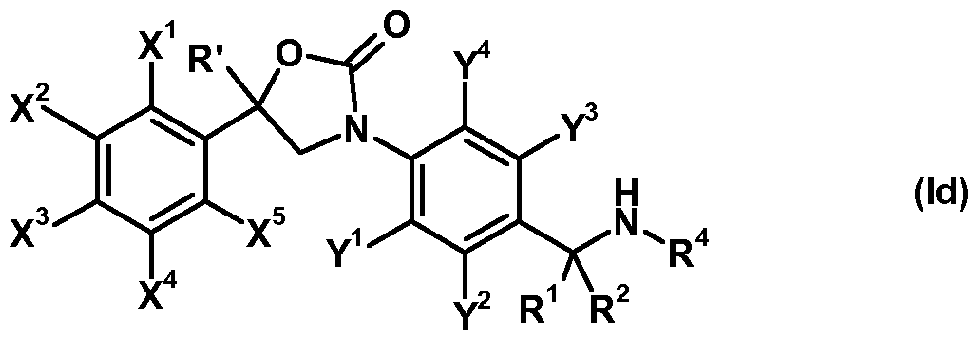
- Compounds of the formula (Id) are encompassed by formula (I).
- R 3 is other not hydrogen compounds of formula (I) can be prepared by reacting a compound of formula (Id), obtained according to preparation method (b) with a compound of formula (r-7):
- the compounds of the formula (r-7) are known, and examples thereof include methyl iodide, ethyl iodide and the like.
- N-oxides of the compounds of the formula (I) of the present invention are to be prepared, they can be obtained by oxidation of corresponding azolidine compounds based on general methods.
- the active compounds according to the invention may be used in combination with suitable synergists or other active compounds, such as for example insecticides, acaricides, nematicides, fungicides, biological control agents, and bacterizides.
- suitable synergists or other active compounds such as for example insecticides, acaricides, nematicides, fungicides, biological control agents, and bacterizides.
- Such combinations can also result in a synergistic effect, i.e. the biological activity of such a combination is synergistically increased.
- suitable synergists or other active compounds such as for example insecticides, acaricides, nematicides, fungicides, biological control agents, and bacterizides.
- Such combinations can also result in a synergistic effect, i.e. the biological activity of such a combination is synergistically increased.
- Examples of such combination partners are the following insecticides, acaricides, nematicides which are
- Acetylcholinesterase (AChE) inhibitors for example carbamates, e.g. alanycarb, aldicarb, bendiocarb, benfuracarb, butocarboxim, butoxycarboxim, carbaryl, carbofuran, carbosulfan, ethiofencarb, fenobucarb, formetanate, furathiocarb, isoprocarb, methiocarb, methomyl, metolcarb, oxamyl, pirimicarb, propoxur, thiodicarb, thiofanox, triazamate, trimethacarb, XMC, and xylylcarb; or organophosphates, e.g.
- carbamates e.g. alanycarb, aldicarb, bendiocarb, benfuracarb, butocarboxim, butoxycarboxim, carbaryl, carbofuran, carbosulfan,
- GABA-gated chloride channel antagonists for example organochlorines, e.g. chlordane, endosulfan (alpha-); or fiproles (phenylpyrazoles), e.g. ethiprole, fipronil, pyrafluprole, and pyriprole.
- organochlorines e.g. chlordane, endosulfan (alpha-); or fiproles (phenylpyrazoles), e.g. ethiprole, fipronil, pyrafluprole, and pyriprole.
- Sodium channel modulators/voltage-dependent sodium channel blockers for example pyrethroids, e.g. acrinathrin, allethrin (d-cis-trans , d-trans), bifenthrin, bioallethrin, bioallethrin S-cyclopentenyl, bioresmethrin, cycloprothrin, cyfluthrin (beta-), cyhalothrin (gamma-, lambda-), cypermethrin (alpha-, beta-, theta-, zeta-), cyphenothrin [(lR)-trans-isomers], deltamethrin, dimefluthrin, empenthrin [(EZ)-(lR)-isomers), esfenvalerate, etofenprox, fenpropathrin, fenvalerate, flucythrinate, flumethrin,
- Nicotinergic acetylcholine receptor agonists for example chloronicotinyls, e.g. acetamiprid, clothianidin, dinotefuran, imidacloprid, nitenpyram, thiacloprid, thiamethoxam; or nicotine.
- chloronicotinyls e.g. acetamiprid, clothianidin, dinotefuran, imidacloprid, nitenpyram, thiacloprid, thiamethoxam; or nicotine.
- Allosteric acetylcholine receptor modulators for example spinosyns, e.g. spinetoram and spinosad.
- Chloride channel activators for example avermectins/milbemycins, e.g. abamectin, emamectin benzoate, lepimectin, and milbemectin.
- Juvenile hormone mimics e.g. hydroprene, kinoprene, methoprene; or fenoxycarb; pyriproxyfen.
- Miscellaneous non-specific (multi-site) inhibitors for example gassing agents, e.g. methyl bromide and other alkyl halides; or chloropicrin; sulfuryl fluoride; borax; tartar emetic.
- Mite growth inhibitors e.g. clofentezine, diflovidazin, hexythiazox, etoxazole.
- Microbial disrupters of insect midgut membranes e.g. Bacillus thuringiensis subspecies israelensis, Bacillus sphaericus, Bacillus thuringiensis subspecies aizawai, Bacillus thuringiensis subspecies kurstaki,
- Bacillus thuringiensis subspecies tenebrionis, and BT crop proteins CrylAb, CrylAc, CrylFa, Cry2Ab, mCry3A, Cry3Ab, Cry3Bb, Cry34/35Abl .
- Inhibitors of mitochondrial ATP synthase for example diafenthiuron; or organotin miticides, e.g. azocyclotin, cyhexatin, and fenbutatin oxide; or prop rgite; tetradifon.
- organotin miticides e.g. azocyclotin, cyhexatin, and fenbutatin oxide
- prop rgite tetradifon.
- Uncouplers of oxidative phoshorylation via disruption of the proton gradient for example chlorfenapyr, and DNOC.
- Nicotinic acetylcholine receptor channel blockers for example bensultap, cartap hydrochloride, thiocyclam, and thiosultap-sodium.
- Inhibitors of chitin biosynthesis type 0, for example benzoylureas, e.g. bistrifluron, chlorfluazuron, diflubenzuron, flucycloxuron, flufenoxuron, hexaflumuron, lufenuron, novaluron, noviflumuron, penfluron, teflubenzuron, and triflumuron.
- benzoylureas e.g. bistrifluron, chlorfluazuron, diflubenzuron, flucycloxuron, flufenoxuron, hexaflumuron, lufenuron, novaluron, noviflumuron, penfluron, teflubenzuron, and triflumuron.
- Inhibitors of chitin biosynthesis type 1, for example buprofezin.
- Moulting disrupters for example cyromazine.
- Ecdysone receptor agonists/disrupters for example diacylhydrazines, e.g. chromafenozide, halofenozide, methoxyfenozide, and tebufenozide.
- Octopamine receptor agonists for example amitraz.
- Mitochondrial complex III electron transport inhibitors for example hydramefhylnon; acequinocyl or fluacrypyrim.
- Mitochondrial complex I electron transport inhibitors for example METI acaricides, e.g. fenazaquin, fenpyroximate, pyrimidifen, pyridaben, tebufenpyrad, tolfenpyrad or rotenone.(Derris).
- Voltage-dependent sodium channel blockers e.g. indoxacarb; metaflumizone.
- Inhibitors of acetyl CoA carboxylase for example tetronic acid derivatives, e.g. spirodiclofen and spiromesifen; or tetramic acid derivatives, e.g. spirotetramat.
- Mitochondrial complex IV electron inhibitors for example phosphines, e.g. aluminium phosphide, calcium phosphide, phosphine, and zinc phosphide or cyanide.
- Ryanodine receptor modulators for example diamides, e.g. chlorantraniliprole (Rynaxypyr), Cyantraniliprole (Cyazypyr), and flubendiamide.
- diamides e.g. chlorantraniliprole (Rynaxypyr), Cyantraniliprole (Cyazypyr), and flubendiamide.
- Inhibitors of the ergosterol biosynthesis for example aldimorph, azaconazole, bitertanol, bromuconazole, cyproconazole, diclobutrazole, difenoconazole, diniconazole, diniconazole-M, dodemorph, dodemorph acetate, epoxiconazole, etaconazole, fenarimol, fenbuconazole, fenhexamid, fenpropidin, fenpropimorph, fluquinconazole, flurprimidol, flusilazole, flutriafol, furconazole, furconazole-cis, hexaconazole, imazalil, imazalil sulfate, imibenconazole, ipconazole, metconazole, myclobutanil, naftifine, nuarimol, oxpoconazole, paclobutrazol
- inhibitors of the respiratory chain at complex I or II for example bixafen, boscalid, carboxin, diflumetorim, fenfuram, fluopyram, flutolanil, fluxapyroxad, furametpyr, furmecyclox, isopyrazam (mixture of syn-epimeric racemate 1RS,4SR,9RS and anti-epimeric racemate 1RS,4SR,9SR), isopyrazam (anti-epimeric racemate 1RS,4SR,9SR), isopyrazam (anti-epimeric enantiomer 1R,4S,9S), isopyrazam (anti-epimeric enantiomer 1S,4R,9R), isopyrazam (syn epimeric racemate 1RS,4SR,9RS), isopyrazam (syn-epimeric enantiomer 1R,4S,9R), isopyrazam (syn-epimeric enanti
- inhibitors of the respiratory chain at complex III for example ametoctradin, amisulbrom, azoxystrobin, cyazofamid, dimoxystrobin, enestroburin, famoxadone, fenamidone, fluoxastrobin, kresoxim-methyl, metominostrobin, orysastrobin, picoxystrobin, pyraclostrobin, pyrametostrobin, pyraoxystrobin, pyribencarb, trifloxystrobin, (2E )-2-(2- ⁇ [6-(3-chloro-2-methylphenoxy)-5-fluoropyri- midin-4-yl]oxy ⁇ phenyl)-2-(methoxyimino)-N-m ethy l eth an ami d e , ( 2 E )-2-(methoxy- imino)-N-methyl-2-(2- ⁇ [( ⁇ ( 1 E)- 1 -
- Inhibitors of the mitosis and cell division for example benomyl, carbendazim, chlorfenazole, diethofencarb, ethaboxam, fluopicolide, fuberidazole, pencycuron, thiabendazole, thiophanate-methyl, thiophanate, zoxamide, 5-chloro-7-(4-methylpiperidin-l-yl)-6-(2,4,6-trifluorophenyl)- [l,2,4]triazolo[l,5-a]pyrimidine, 3-chloro-5-(6-chloropyridin-3-yl)-6-methyl-4-(2,4,6-trifluorophenyl)- pyridazine and salts thereof.
- Inhibitors of the amino acid and/or protein biosynthesis for example andoprim, blasticidin-S, cyprodinil, kasugamycin, kasugamycin hydrochloride hydrate, mepanipyrim, pyrimethanil and salts thereof.
- Inhibitors of the ATP production for example fentin acetate, fentin chloride, fentin hydroxide and silthiofam.
- Inhibitors of the cell wall synthesis for example benthiavalicarb, dimethomorph, flumorph, iprovalicarb, mandipropamid, polyoxins, polyoxorim, validamycin A and valifenalate.
- Inhibitors of the lipid and membrane synthesis for example biphenyl, chloroneb, dicloran, edifenphos, etridiazole, iodocarb, iprobenfos, isoprothiolane, propamocarb, propamocarb hydrochloride, prothiocarb, pyrazophos, quintozene, tecnazene and tolclofos-methyl.
- Inhibitors of the melanine biosynthesis for example carpropamid, diclocymet, fenoxanil, phthalide, pyroquilon and tricyclazole.
- Inhibitors of the nucleic acid synthesis for example benalaxyl, benalaxyl-M (kiralaxyl), bupirimate, clozylacon, dimethirimol, ethirimol, furalaxyl, hymexazol, metalaxyl, metalaxyl-M (mefenoxam), ofurace, oxadixyl and oxolinic acid.
- Inhibitors of the signal transduction for example chlozolinate, fenpiclonil, fludioxonil, iprodione, procymidone, quinoxyfen and vinclozolin.
- the compounds of the present invention have a potent pesticidal effect. Therefore, the compounds of the present invention can be used as pesticides. Further, the compounds of the present invention exert a potent controlling effect against harmful agricultural pests without exhibiting a side effect of the compounds on cultivated crop plants and beneficials (e.g bees and humple bees). Therefore, the compounds of the present invention can be used for pest control against a wide variety of harmful organisms such as harmful sucking insects, chewing insects and other plant parasitic pests, stored grain pests, hygienic pests etc., and can be used for the disinfection and destruction of them. Such harmful organisms may be illustrated by the examples as follows:
- Coleoptera for example, Callosobruchus chinensis, Sitophilus zeamais, Tribolium castaneum, Epilachna vigintioctomaculata, Agriotes fuscicollis, Anomala rufocuprea, Leptinotarsa decemlineata, Diabrotica spp., Monochamus alternatus, Lissorhoptrus oryzophilus, Lyctus bruneus, Aulacophora femoralis; Lepidoptera, for example, Lymantria dispar, Malacosoma neustria, Pieris rapae, Spodoptera litura, Mamestra brassicae, Chilo suppressalis, Pyrausta nubilalis, Ephestia cautella, Adoxophyes orana, Carpocapsa pomonella, Agrotisfucosa, Galleria mellonella, Plutella maculipennis, Heliothis vir
- Acarina Tetranychus cinnabarinus, Tetranychus urticae, Panonychus citri, Aculops pelekassi, Tarsonemus spp. can be mentioned.
- nematodes Meloidogyne incognita, Bursaphelenchus lignicolus Mamiya et iyohara, Aphelenchoides besseyi, Heterodera glycines, Pratylenchus spp. can be mentioned.
- the compounds of the present invention have good tolerance in plants and low toxicity to warm-blooded animals. Further, as being well received by an environment, the compounds of the present invention are appropriate for the protection of plants and plant parts. With application of the compounds of the present invention, both crop yield and quality of harvested products may be improved. In addition, the compounds of the present invention are suitable for protection of preserved products and materials and for a hygiene field, in terms of controlling harmful animals, in particular insects, spider-like animals, helminth, nematodes and mollusks that are encountered in agriculture, horticulture, veterimary medicine, forrest, garden and entertainment facilities. The compounds of the present invention can be preferably used as agents for protecting plants. The compounds of the present invention have an activity for normal sensitive species or resistant species, and for all over or several growth stages thereof. In particular, the harmful organisms mentioned above include the followings.
- Anoplura for example, Damalinia spp., Haematopinus, Linognathus spp., Pediculus spp., Trichodectes spp.
- Acarus siro Aceria sheldoni. Aculops spp., Aculus spp., Amblyomma spp., Argas spp., Boophilus spp., Brevipalpus spp., Bryobia praetiosa, Chorioptes spp., Dermanyssus gallinae, Eotetranychus spp., Epitrimerus pyri, Eutetranyctus spp., Eriophyes spp., Hemitarsonemus spp., Hyalomma spp., Ixodes spp., Latrodectus mactans, Metatetranychus spp.
- Chilopoda for example, Geophilus spp., Scutigera spp. As Coleoptera, for example, Acanthoscelides obtectus, Adoretus spp., Agelastica alni, Agriotes spp., Amphimallon solstitialis, Anobium punctatum, Anoplophora spp., Anthonomus spp., Anthrenus spp., Apogonia spp., Atomaria spp., Attagenus spp., Bruchidius obtectus, Bruchus spp., Ceuthorhynchus spp., Cleonus mendicus, Conoderus spp., Cosmopolites spp., Costelytra zealandica, Curculio spp., Cryptorhynchus lapathi, Dermestes spp., Diabrotica spp., Epilachna spp.
- Gastropoda for example, Arion spp., Biomphalaria spp., Bulinus spp., Deroceras spp., Galba spp., Lymnaea spp., Oncomelania spp., Succinea spp.
- Ancylostoma duodenale for example, Ancylostoma duodenale, Ancylostoma ceylanicum, Acylostoma braziliensis, Ancylostoma spp., Ascaris lubricoides, Ascaris spp., Brugia malayi, Brugia timori, Bunostomum spp., Chabertia spp. , Clonorchis spp. , Cooperia spp .
- Dicrocoelium spp . Dictyocaulus filaria, Diphyllobothrium latum, Dracunculus medeinensis, Echinococcus granulosus, Echinococcus multiocularis, Enterobius vermicularis, Faciola spp., Haemonchus spp., Heterakis spp., Hymenolepis nana, Hyostrongulus spp., Loa loa, Nematodirus spp., Oesophagostomum spp., Opisthorchis spp., Onchocerca volvulus, Ostertagia spp., Paragonimus spp., Schistosomen spp., Strongyloides fuelleborni, Strongyloides stercoralis, Stronyloides spp., Taenia saginata, Taenia solium, Trichinella spiralis, Trichinella spiral
- protozoa like Eimeria, etc. can be also controlled.
- Hymenoptera for example, Diprion spp., Hoplocampa spp., Lasius spp., Monomorium pharaonis and Vespa spp.
- Isopoda for example, Armadillidium vulgare, Oniscus asellus, Porcellio scaber.
- Isoptera for example, Reticulitermes spp., Odontotermes spp.
- Lepidoptera for example, Acronicta major, Aedia leucomelas, Agrotis spp., Alabama argillacea, Anticarsia spp., Barathra brassicae, Bucculatrix thurberiella, Bupalus piniarius, Cacoecia podana, Capua reticulana, Carpocapsa pomonella, Cheimatobia brumata, Chilo spp., Choristoneura fumiferana, Clysia ambiguella, Cnaphalocerus spp., Earias in sulana, Ephestia kuehniella, Euproctis chrysorrhoea, Euxoa spp., Feltia spp., Galleria mellonella, Helicoverpa spp., Heliothis spp., Hofmannophila pseudospretella, Homona magnanima, Hyponome
- Orthoptera for example, Acheta domesticus, Blatta orientalis, Blattella germanica, Gryllotalpa spp., Leucophaea maderae, Locusta spp., Melanoplus spp., Periplaneta americana, Schistocerca gregaria.
- Siphonaptera for example, Ceratophyllus spp., Xenopsylla cheopis.
- Symphyla for example, Scutigerella immaculata.
- Thysanoptera for example, Basothrips biformis, Enneothrips flavens, Frankliniella spp., Heliothrips spp., Hercinothrips femoralis, Kakothrips spp., Rhipiphorothrips cruentatus, Scirtothrips spp., Taeniothrips cardamoni, Thrips spp.
- Thysanura for example, Lepisma saccharina.
- plant parasitic nematodes for example, Anguina spp., Aphelenchoides spp., Belonoaimus spp., Bursaphelenchus spp., Ditylenchus dipsaci, Globodera spp., Heliocotylenchus spp., Heterodera spp., Longidorus spp., Meloidogyne spp., Pratylenchus spp., Radopholus similis, Rotylenchus spp., Trichodorus spp., Tylenchorhynchus spp., Tylenchulus spp., Tylenchulus semipenetrans, Xiphinema spp.
- the compounds according to the present invention show a potent insecticidal action and can, therefore, be used as an insecticide. Furthermore, the compounds according to the present invention exhibit a strong control effect against harmful animal pests, in particular arthropods and/or insects, particularly to agricultural pests, without imposing any harmful side effects of drug to the animal or the cultivated plants.
- the compounds of the present invention can thus be used for the control of a wide range of pest species, for example, harmful sucking insects, chewing insects, as well as other plant parasitic pests, storage insects, hygiene pests and the like, and can be applied for the purpose of disinfestations and extermination thereof.
- the active compounds and active compound combinations according to the invention are suitable for protecting plants and plant organs, for increasing harvest yields, for improving the quality of the harvested material and for controlling animal pests, in particular insects, arachnids, helminths, nematodes and molluscs, which are encountered in agriculture, in horticulture, in animal husbandry, in forests, in gardens and leisure facilities, in the protection of stored products and of materials, and in the hygiene sector. They can be preferably employed as plant protection agents. They are active against normally sensitive and resistant species and against all or some stages of development.
- the abovementioned pests include:
- Arthropoda From the class of the Arachnida, for example Acarus spp., Aceria sheldoni, Aculops spp., Aculus spp., Amblyomma spp., Amphitetranychus viennensis, Argas spp., Boophilus spp., Brevi- palpus spp ., Bryobia praetiosa, Centruroides spp., Chorioptes spp., Dermanyssus gallinae, Dermatophagoides pteronyssius, Dermatophagoides farinae, Dermacentor spp., Eotetranychus spp., Epitrimerus pyri, Eutetranychus spp., Eriophyes spp., Halotydeus destructor, Hemitarsonemus spp., Hyalomma spp., Ixodes spp., La
- Anoplura for example, Damalinia spp., Haematopinus spp., Linognathus spp., Pediculus spp., Ptirus pubis, Trichodectes spp..
- Aedes spp. From the order of the Diptera, for example, Aedes spp., Agromyza spp., Anastrepha spp., Anopheles spp., Asphondylia spp., Bactrocera spp., Bibio hortulanus, Calliphora erythrocephala, Ceratitis capitata, Chironomus spp., Chrysomyia spp., Chrysops spp., Cochliomyia spp., Contarinia spp., Cordylobia anthropophaga, Culex spp., Culicoides spp., Culiseta spp., Cuterebra spp., Dacus oleae, Dasyneura spp., Delia spp., Dermatobia hominis, Drosophila spp., Echinocnemus spp., Fanni
- Hymenoptera From the order of the Hymenoptera, for example, Acromyrmex spp., Athalia spp., Atta spp., Diprion spp., Hoplocampa spp., Lasius spp., Monomorium pharaonis, Solenopsis invicta, Tapinoma spp., Vespa spp..
- Isopoda for example, Armadillidium vulgare, Oniscus asellus, Porcellio scaber.
- Coptotermes spp. From the order of the Isoptera, for example, Coptotermes spp., Cornitermes cumulans, Cryptotermes spp., Incisitermes spp., Microtermes obesi, Odontotermes spp., Reticulitermes spp..
- Orthoptera for example, Acheta domesticus, Blatta orientalis, Blattella germanica, Dichroplus spp., Gryllotalpa spp., Leucophaea maderae, Locusta spp., Melanoplus spp., Periplaneta spp., Pulex irritans, Schistocerca gregaria, Supella longipalpa.
- Siphonaptera for example, Ceratophyllus spp., Ctenocephalides spp., Tunga penetrans, Xenopsylla cheopis.
- Thysanoptera From the order of the Thysanoptera, for example, Anaphothrips obscurus, Baliothrips biformis, Drepanotliris reuteri, Enneothrips flavens, Frankliniella spp., Heliothrips spp., Hercinothrips femoralis, Rhipiphorothrips cruentatus, Scirtothrips spp., Taeniothrips cardamoni, Thrips spp..
- Mollusca From the class of the Bivalvia, for example, Dreissena spp.. From the class of the Gastropoda, for example, Arion spp., Biomphalaria spp., Bulinus spp., Deroceras spp., Galba spp., Lymnaea spp., Oncomelania spp., Pomacea spp., Succinea spp..
- Ancylostoma duodenale for example, Ancylostoma duodenale, Ancylostoma ceylanicum, Acylostoma braziliensis, Ancylostoma spp., Ascaris spp., Brugia malayi, Brugia timori, Bunostomum spp., Chabertia spp., Clonorchis spp., Cooperia spp., Dicrocoelium spp, Dictyocaulus filaria, Diphyllobothrium latum, Dracunculus medinensis, Echinococcus granulosus, Echinococcus multilocularis, Enterobius vermicularis, Faciola spp., Haemonchus spp., Heterakis spp., Hymenolepis nana, Hyostrongulus spp., Loa Loa, Nematodirus spp.,
- Nematodes plant parasites, phytoparasites
- phytoparasitic nematodes for example, Aphelenchoides spp., Bursaphelenchus spp., Ditylenchus spp., Globodera spp., Heterodera spp., Longidorus spp., Meloidogyne spp., Pratylenchus spp., Radopholus similis, Trichodorus spp., Tylenchulus semipenetrans, Xiphinema spp..
- Subphylum Protozoa: It is furthermore possible to control protozoa, such as Eimeria.
- a plant should be understood as all plants and plant populations including desirable and undesirable wild plants or crop plants (including naturally- occurring crop plants) and the like.
- the crop plants they can be plants which are obtainable by conventional methods of breeding modified varieties and optimization methods, or biotechnological methods and genetic engineering methods, or by combination of these methods, and they include transgenic plants.
- plant varieties which are either protected or not protected by a plant breeder are also included.
- Plant parts should be understood as all parts and organs of a plant that are present above or under ground. Examples thereof include shoots, leaves, flowers and roots, etc.
- Plant parts also include a harvested material and a material which propagates sexually or asexually, for example, a cutting, a tuber, an underground tuber, a side branch and a seed.
- Treatment of plants and plant parts with the active compounds according to the present invention can be carried out directly or by using conventional methods such as impregnation, spray, evaporation, particularization, dispersion, coating and injection, or for a propagating material, especially for a seed, by coating it with one or more of the compounds, so that the compounds are applied to their surroundings, habitat environment, or preservation place.
- the compounds of the present invention have a penetrating activity and this means that the compounds can penetrate a plant body and can migrate from the underground part to the above-ground part of a plant.
- all plants and parts thereof can be treated.
- wild plant species and plant mutants, or those obtained by traditional plant breeding methods such as hybridization or protoplast fusion, and parts thereof are treated.
- transgenic plants and plant varieties (genetically modified organisms) obtained by conventional methods in appropriate combination with genetic engineering methods, and parts thereof are treated.
- the terms "parts", “parts of a plant” and "plant parts” are as defined above.
- plants of plant varieties that are commercially available or currently in use are treated according to the present invention.
- Plant varieties are understood as plants having new characteristics ("traits") obtained by conventional breed improvements, introduction of mutation or recombinant DNA techniques. They can be plant varieties, biotypes or genotypes.
- the treatment according to the present invention may have a supra-additive ("synergy") effect.
- a supra-additive effect for example, exceeding an expected effect, it is possible to obtain several effects including reduction of application rate and/or broadening of an activity spectrum, and/or increased activity of the material and composition that can be used according to the present invention, improvement of plant growth, enhancement of tolerance to high or low temperature, enhancement of tolerance to drought, moisture or salt contained in soil, improvement of a flowering property, simplification of harvest methods, accelerated maturation, increased harvest amount, improvement of quality and/or nutritional value of harvest products, and improvement of preservation stability and/or processability of harvested products.
- the preferable transgenic plants or plant varieties (obtainable by genetic engineering methods) treated according to the present invention include all kinds of plant having genetic materials that can provide the plants with very advantageous and useful traits based on genetic modifications.
- traits include improvement of plant growth, enhancement of tolerance to high or low temperature, enhancement of tolerance to drought, moisture or salt contained in soil, improvement of a flowering property, simplification of harvest methods, accelerated maturation, increased harvest amount, improvement of quality and/or nutritional value of harvest products, and improvement of preservation stability and/or processability of harvested products.
- Further examples in which such traits are particularly more emphasized include improved protection of plants against harmful animals and harmful microorganisms such as insect, tick, plant pathogenic fungus, bacteria and/or virus, and improved tolerance of plants against compounds having certain type of herbicidal activities.
- transgenic plant examples include grain crops (barley, rice), corn, soybean, potato, sugar beet, tomato, bean and other modified plant species, useful plants such as cotton, tobacco, rape, and fruit plants (fruits like an apple, a pear, a citrus fruit and other fruit-bearing plants like a grape).
- grain crops barley, rice
- corn, soybean, potato, cotton, tobacco and rape are important.
- Bacillus thuringiensis genes including CrylA(a), CrylA(b), CrylA(c), CryllA, CrylllA, CryIIIB2, Cry9c, Cry2Ab, Cry3Bb and CrylF, and combination thereof
- Bacillus thuringiensis genes including CrylA(a), CrylA(b), CrylA(c), CryllA, CrylllA, CryIIIB2, Cry9c, Cry2Ab, Cry3Bb and CrylF, and combination thereof
- Bt plant genes including CrylA(a), CrylA(b), CrylA(c), CryllA, CrylllA, CryIIIB2, Cry9c, Cry2Ab, Cry3Bb and CrylF, and combination thereof
- traits considered to be important include improved plant defense against fungus, bacteria and virus, based on systemic acquired resistance (SAR), systemin, phytoallexin, elicitor, resistance gene and the corresponding protein and toxin expressed from the gene. Further, particularly important traits are improved tolerance of plants to a certain kind of an active compound having a herbicidal activity, such as imidazolinone, sulfonyl urea, glyphosate or phosphinotricine (e.g., "PTA" gene). Genes which can endow desired traits to a subject can also be present in combination each other in a transgenic plant.
- SAR systemic acquired resistance
- PTA phosphinotricine
- Bt plant examples include modified varieties of corn, modified varieties of cotton and modified varieties of potato that are commercially available under the trade names of YIELD GARD (R) (for example, corn, cotton, soybean), KnockOut (R) (for example, corn), StarLink (R) (for example, corn), Bollgard (R) (cotton), Nucotn (R) (cotton) and New Leaf ⁇ (potato), respectively.
- Examples of the plant having resistance to herbicides include modified varieties of corn, modified varieties of cotton and modified varieties of potato that are commercially available under the trade names of Roundup Ready (R) (resistance to glyphosate, for example, corn, cotton, soybean), Liberty Link (R) (resistance to phosphinotricine, for example rape), IMI ( ) (resistance to imidazolinones) and STS (R) (resistance to sulfonyl urea, for example, corn), respectively.
- R Roundup Ready
- R resistance to glyphosate
- phosphinotricine for example rape
- IMI resistance to imidazolinones
- STS STS
- Examples of the plant having resistance to herbicides i.e., the plant obtained by conventional breeding methods to have resistance to herbicides
- R Clearfield
- these descriptions are also applied to plant varieties which have already had genetic traits or will have genetic traits to be developed in future. Such plant varieties will be developed and/or on the market in future.
- the compounds of the present invention at appropriate concentration the plants mentioned above can be advantageously treated, in particular.
- the novel compounds of the present invention can be effectively used against various harmful animal parasites (endo- and ectoparasites), for example, insects and helminths.
- harmful animal parasites include the harmful organisms as follows.
- insects there are for example, Gasterophilus spp., Stomoxys spp., Trichodectes spp., Rhodnius spp., Ctenocephalides canis, Cimx lectularius, Ctenocephalides felis, Lucilia cuprina and the like.
- Acarina there are for example, Ornithodoros spp., Ixodes spp., Boophilus spp. and the like.
- the active compounds of the present invention show an activity against parasites, in particular endoparasites and ectoparasites.
- endoparasites especially include helminths such as tapeworms, nematodes, and trematodes and protozoas such as coccidian.
- Ectoparasites include; typically and also preferably, arthropods, in particular, insects such as fly (biting fly and sucking fly), larva of parasitic fly, louse, public louse, bird louse, and flea, and mites of acarina such as hard tick or soft tick, sarcoptic mite, chigger mite, and bird mite.
- the parasitic organisms include those described below. from Anoplurida, for example, Haematopinus spp., Linognathus spp., Pediculus spp., Phtirus spp., Solenopotes spp.; particularly, for representative examples, Linognathus setosus, Linognathus vituli, Linognathus ovillus, Linognathus oviformis, Linognathus pedalis, Linognathus stenopsis, Haematopinus asini macrocephalus, Haematopinus eurysternus, Haematopinus suis, Pediculus humanus capitis, Pediculus humanus corporis, Phylloera vastatrix, Phthirus pubis, Solenopotes capillatus; from Mallophagida, Amblycerina, and Ischnocerina, for example, Trimenopon spp., Menopon spp
- Suppella longipalpa from Acari(Acarina), Metastigmata, and Mesostigmata, for example, Argas spp., Omithodorus spp., Otobius spp., Ixodes spp., Amblyomma spp., Rhipicephalus(Boophilus) spp., Dermacentor spp., Haemophysalis spp., Hyalomma spp., Dermanyssus spp., Rhipicephalus spp.
- Argas spp. Omithodorus spp.
- Otobius spp. Otobius spp.
- Ixodes spp. Amblyomma spp.
- Rhipicephalus(Boophilus) spp. Dermacentor spp.
- Haemophysalis spp. Haemophysalispp.
- the active compounds of the present invention are also suitable for controlling arthropods, helminths and protozoas which attack an animal.
- the animal includes an agricultural livestock like a cow, a sheep, a goat, a horse, a pig, a donkey, a camel, a buffalo, a rabbit, a chicken, a turkey, a duck, a goose, a nursery fish, a honey bee and the like.
- the animal also includes a pet (i.e., companion animal) like a dog, a cat, a pet bird, an aquarium fish and the like and an animal known as a test animal like a hamster, a guinea pig, a rat, a mouse and the like.
- control of parasite can be useful for inhibiting transfer of infectious factors.
- control used in the present specification in relation to a veterinary field means that the active compounds of the present invention are effective for reducing the occurrence of parasites in the animal infected with each parasite to a harmless level. More specifically, the term “control” used in the present specification means that the active compounds of the present invention are effective for eradicating each parasite or for inhibiting its growth or proliferation.
- the compounds of the present invention can be directly applied.
- the compounds of the present invention are applied as pharmaceutical compositions which may contain vehicles and/or auxiliary agents that are known in the field and pharmaceutically acceptable.
- the active compounds can be applied (administered) in various know ways, such as via enteral administration in form of a tablet, a capsule, a drink, a syrup, a granule, a paste, a bolus and a feed stuff, or a suppository; via parenteral administration based on injection (intramuscular, subcutaneous, intravenous, intraperitoneal, etc.), implant, intranasal administration, etc.; by administration on skin in form of impregnation, liquid impregnation, spray, pouring on, spotting on, washing and powder spray; or with an aid of an molded article containing the active compounds, such as a neck tag, an ear tag, a tail tag, a leg tag, a horse rein, an identification tag, etc.
- the active compounds also can be prepared as shampoo, an appropriate preparation usable in aerosol, or as an unpressurized spray, for example a pump spray and a sprayer.
- the active compounds of the present invention can be prepared as a formulation containing them in an amount of 1 to 80 % of weight (for example, powder, wettable preparation (WP), an emulsion, an emulsified concentrate (EC), a flowable, a homogenous solution and a suspension concentrate (SC)), and then can be applied directly or after dilution (for example, 100 to 10,000 times dilution), or they can be also applied as impregnation solution.
- WP wettable preparation
- EC emulsion
- SC suspension concentrate
- the active compounds of the present invention can be used in combination with appropriate synergists such as acaricidal agents, pesticides, anti-helminth agents or anti-protozoa agents or with other active compounds.
- pesticides the compounds which have a pesticidal activity against the harmful pests encompassing all of the above are referred to as pesticides.
- the active compounds of the present invention can be prepared in a form of common preparation.
- Such preparation form may includes, for example, a solution, an emulsion, wettable powder, granulated wettable powder, a suspension, powder, a foam, a paste, a tablet, a granule, an aerosol, a natural or synthetic agent impregnated with the active compounds, a microcapsule, a coating agent for seeds, a formulation equipped with a combustion device (the combustion device can be a smoke or fog cartridge, a can or a coil, etc.) and ULV (cold mist, warm mist), and the like.
- these formulations may be prepared by methods known per se.
- they can be prepared by mixing the active compounds together with spreading agents, i.e. liquid diluents or carriers; liquefied gas diluents or carriers; solid diluents or carriers, and, optionally, with surfactants i.e. emulsifiers and/or dispersants and/or foam- forming agents.
- spreading agents i.e. liquid diluents or carriers; liquefied gas diluents or carriers; solid diluents or carriers, and, optionally, with surfactants i.e. emulsifiers and/or dispersants and/or foam- forming agents.
- Liquid diluents or carriers may include: for example, aromatic hydrocarbons (e.g. xylene, toluene, alkylnaphthalene etc.), chlorinated aromatic or chlorinated aliphatic hydrocarbons (e.g. chlorobenzenes, ethylene chlorides, methylene chlorides etc.), aliphatic hydrocarbons (e.g. cyclohexanes) or paraffins (e.g. mineral oil fractions), alcohols (e.g. butanol, glycol and ethers or esters thereof, etc.), ketones (e.g.
- acetone methyl ethyl ketone, methyl isobutyl ketone, cyclohexanone etc.
- strong polar solvents e.g. dimethylformamide, dimethylsulfoxide etc.
- Liquefied gas diluents or carriers may include those present as gas at atmospheric temperature and by evaporation, for example, butane, propane, nitrogen gas, carbon dioxide, and an aerosol propellant such as halogenated hydrocarbons.
- the solid diluents include ground natural minerals (for example, kaolins, clay, talc, chalk, quartz, attapulgite, montmorillonite, diatomaceous earth, etc.) and finely-ground synthetic minerals (for example, highly dispersed silicic acid, alumina and silicate, etc.) and the like.
- solid carriers for granules may include finely pulverized and sifted rocks (for example, calcite, marble, pumice, sepiolite and dolomite, etc.), synthetic granules of inorganic or organic powders, and fine granules of organic materials (for example, sawdust, coconut shells, corn cobs and tobacco stalks, etc.) and the like.
- finely pulverized and sifted rocks for example, calcite, marble, pumice, sepiolite and dolomite, etc.
- synthetic granules of inorganic or organic powders for example, sawdust, coconut shells, corn cobs and tobacco stalks, etc.
- emulsifiers and/or foam formers may include nonionic and anionic emulsifiers, for example, polyoxyethylene fatty acid esters, polyoxy ethylene fatty acid alcohol ethers (for example, alkylaryl polyglycol ether), alkyl sulfonates, alkyl sulfates and aryl sulfonates, and albumin hydro lysates and the like.
- nonionic and anionic emulsifiers for example, polyoxyethylene fatty acid esters, polyoxy ethylene fatty acid alcohol ethers (for example, alkylaryl polyglycol ether), alkyl sulfonates, alkyl sulfates and aryl sulfonates, and albumin hydro lysates and the like.
- dispersants examples include lignin sulfite waste liquor and methylcellulose.
- Binders may also be used in the formulation (powder, granule and emulsion).
- examples of the binders may include carboxymethyl cellulose, natural or synthetic polymers (for example, gum arabic, polyvinyl alcohol and polyvinyl acetate, etc.).
- Colorants may also be used.
- the colorants may include inorganic pigments (for example, iron oxide, titanium oxide and Prussian blue, etc.), organic dyes such as Alizarin dyes, azo dyes or metal phthalocyanine dyes, and further, trace elements such as salts of iron, manganese, boron, copper, cobalt, molybdenum or zinc.
- the formulation may include the above active components in an amount of 0.1 to 95% by weight, preferably 0.5 to 90% by weight.
- the compounds of the present invention can be provided as mixtures with other active compounds such as pesticides, poison baits, sterilizing agents, acaricidal agents, nematocides, fungicides, growth regulating agents, and herbicides in a form of commercially useful formulation or an application form modified from formulation thereof.
- active compounds such as pesticides, poison baits, sterilizing agents, acaricidal agents, nematocides, fungicides, growth regulating agents, and herbicides in a form of commercially useful formulation or an application form modified from formulation thereof.
- the amount of the compounds of the present invention in commercially useful application form may vary over a broad range.
- the concentration of the active compounds of the present invention for actual use may be, for example, between 0.0000001 and 100% by weight, preferably between 0.00001 and 1% by weight.
- the compounds of the present invention can be used according to any common methods suitable for each application form.
- the compounds of the present invention have stability that is effective for alkaline substances present on lime materials when the compounds are used against hygienic pests and other stored product pests. In addition, they exhibit excellent residual effectiveness on woods and soils.
- reaction solution was stirred for 1 hour at room temperature, added with diethylene triamine (1.6 ml), and stirred for 1 hour.
- water and ethyl acetate were added, and the mixture was extracted with ethyl acetate.
- the organic layer was washed with a saturated aqueous solution of sodium hydrogen carbonate, and dried over anhydrous magnesium sulfate.
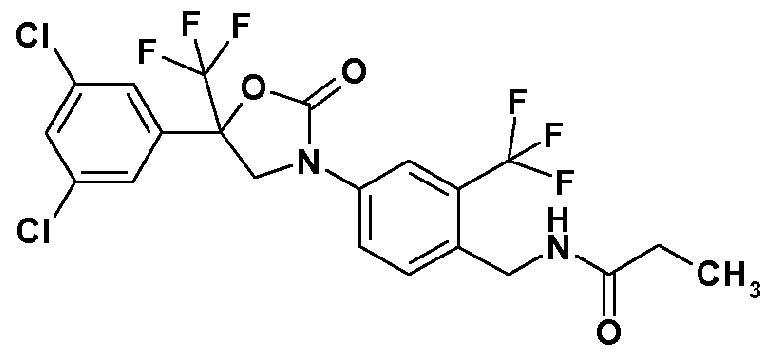
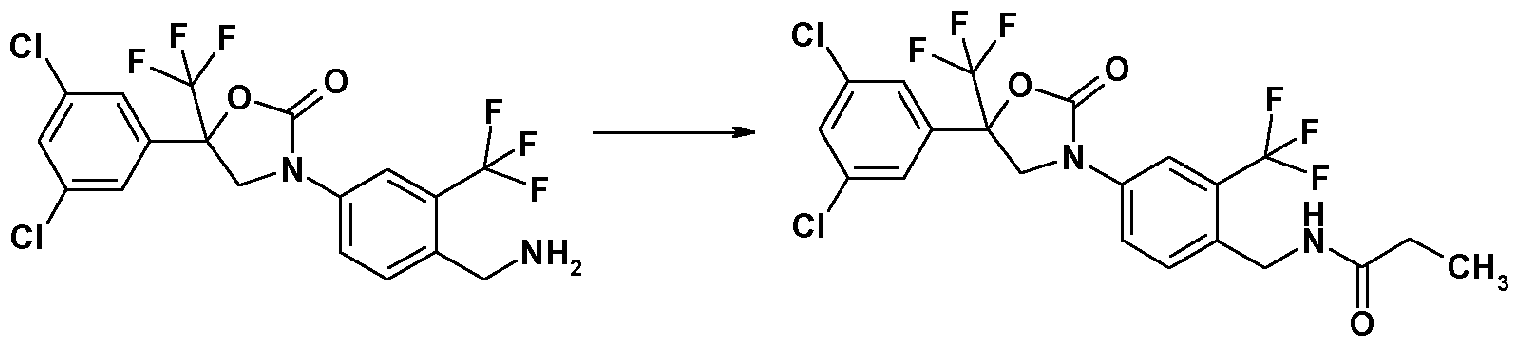
- Step 7 Synthesis of N- ⁇ 4-[5- 3,5-dichloroplienyl)-2-oxo-5- trifluoromethyl)-l ,3-oxazolin-3-vH-2-(tri- fluorometh l)benzyl ⁇ propane amide (Compound No. 1-3):
- reaction solution was concentrated under reduced pressure and the residue was purified by silica gel column chromatography to obtain N- ⁇ 4-[5-(3,5-dichlorophenyl)-2-oxo-5-(trifluoromethyl)-l,3-oxazolin-3-yl]-2-(trifluoromethyl)benzyl ⁇ pro pane amide (87 mg).
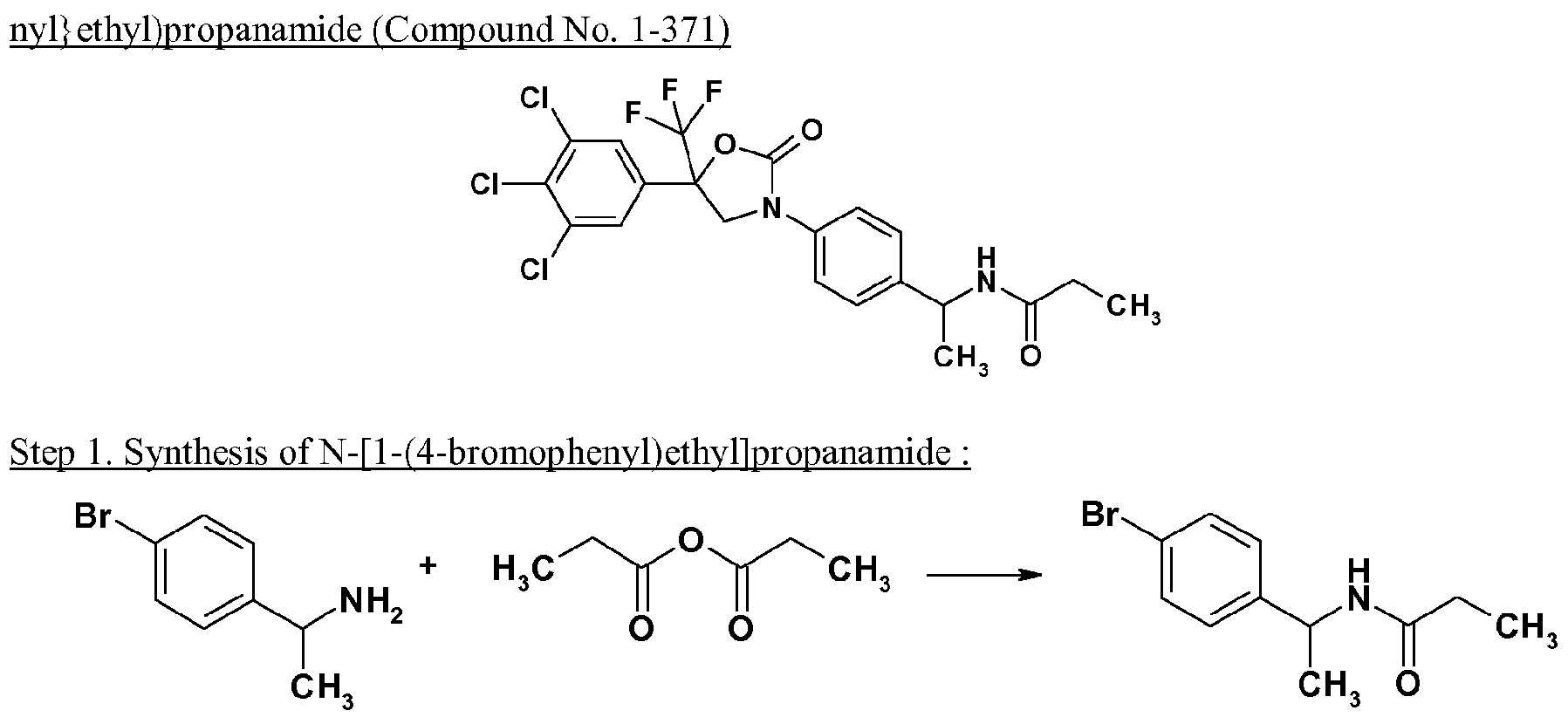
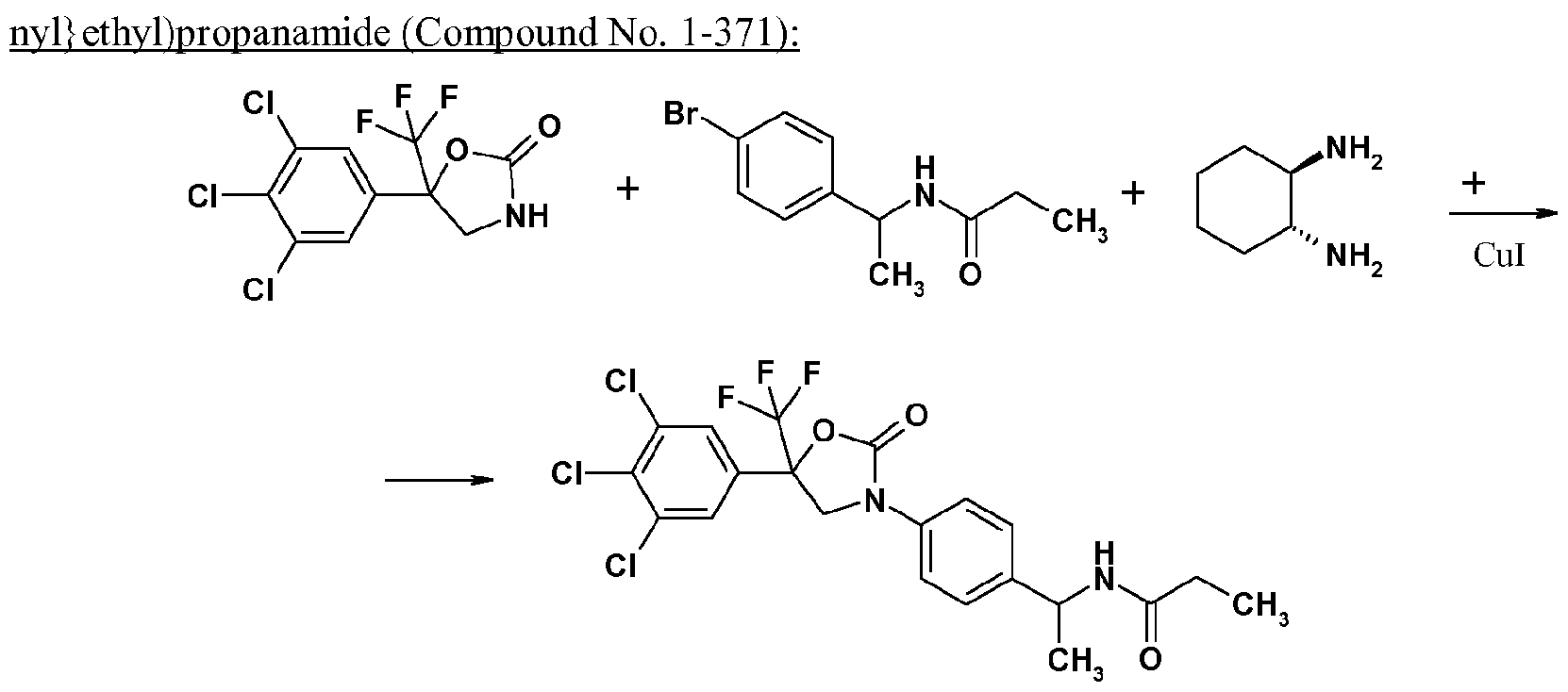
- Propionic anhydride (1.86g) was added to the solution of 1 -(4-bromophenyl)ethylamine (2.38g) and triethylamine (1.45g) in tetrahydrofuran (50ml), and the mixture was stirred at room temperature for 6 hours.
- the reaction mixture concentrated under reduced pressure, and the residue was purified by silica gel column chromatography to obtain N-[l-(4-bromophenyl)ethyl]propanamide (2.81g).
- reaction mixture was cooled to room temperature and then filtrated through Celite, and the filtrate was concentrated under reduced pressure, and the residue was purified by silic a ge l c olumn chromatography to obtain N-[l- ⁇ 4-[2-oxo-5-(3,4,5-trichlorophenyl)-5-trifluoromethyl)-l,3-oxazolidin-3-yl]phenyl ⁇ ethyl)propan- amide (270 mg).
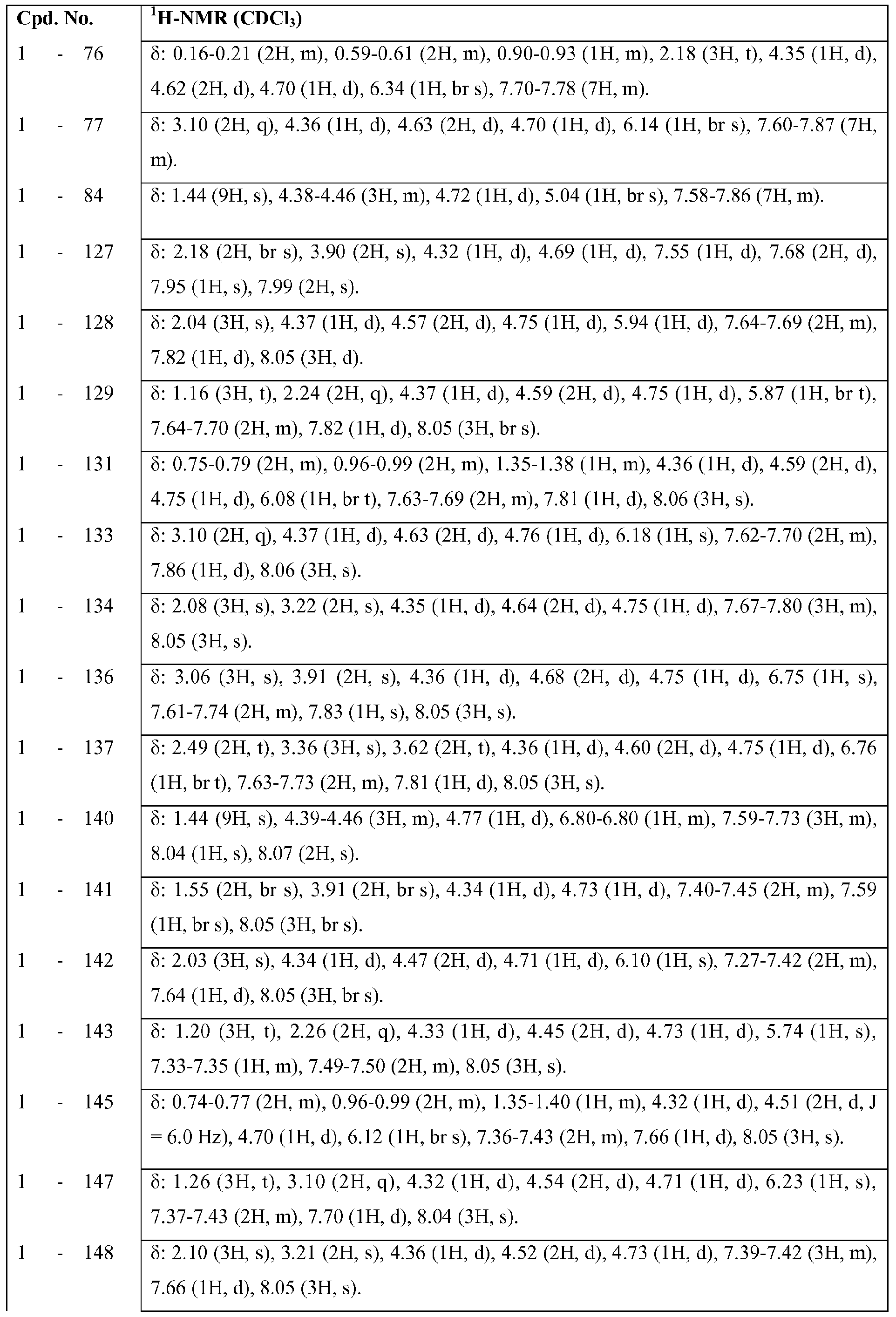
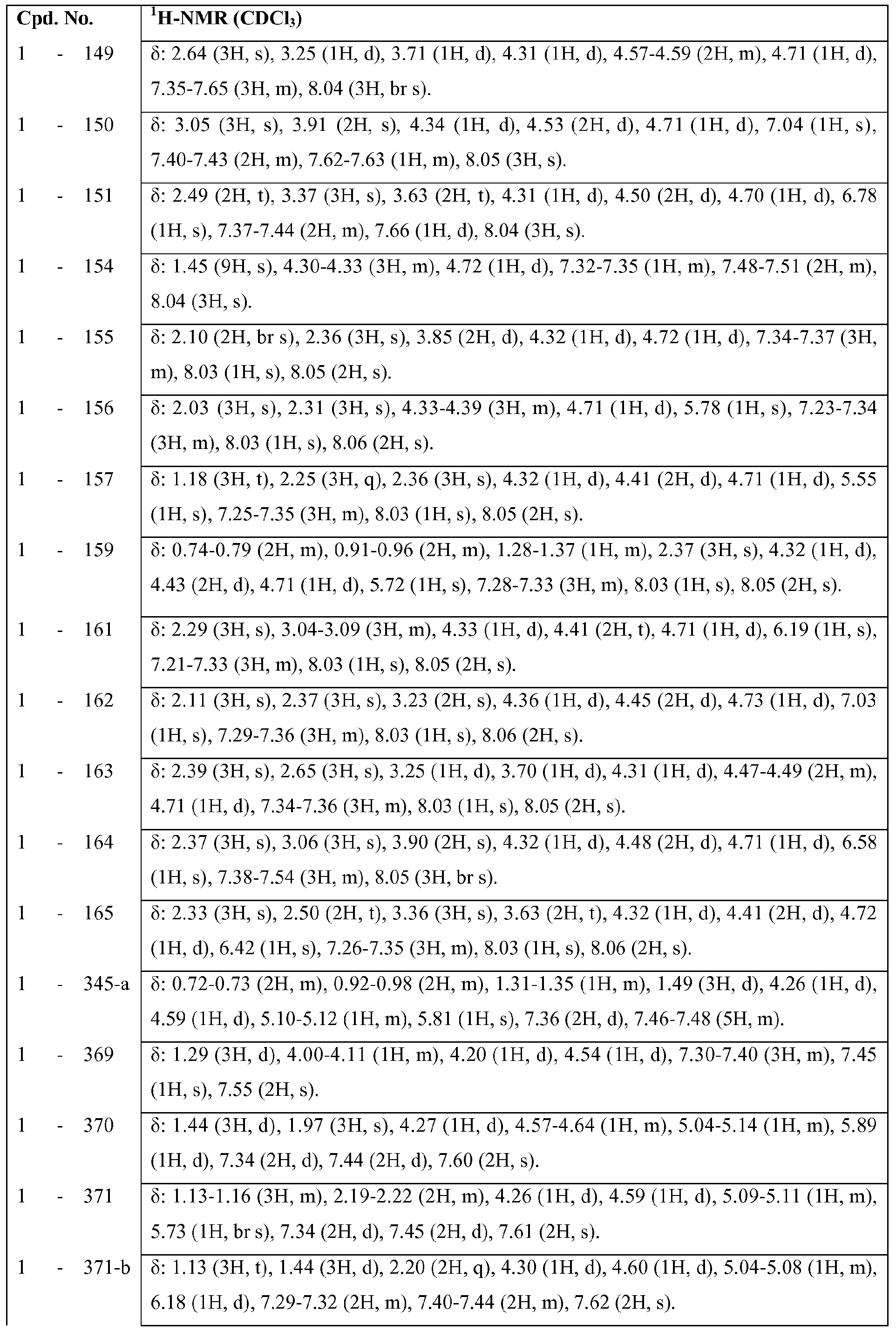
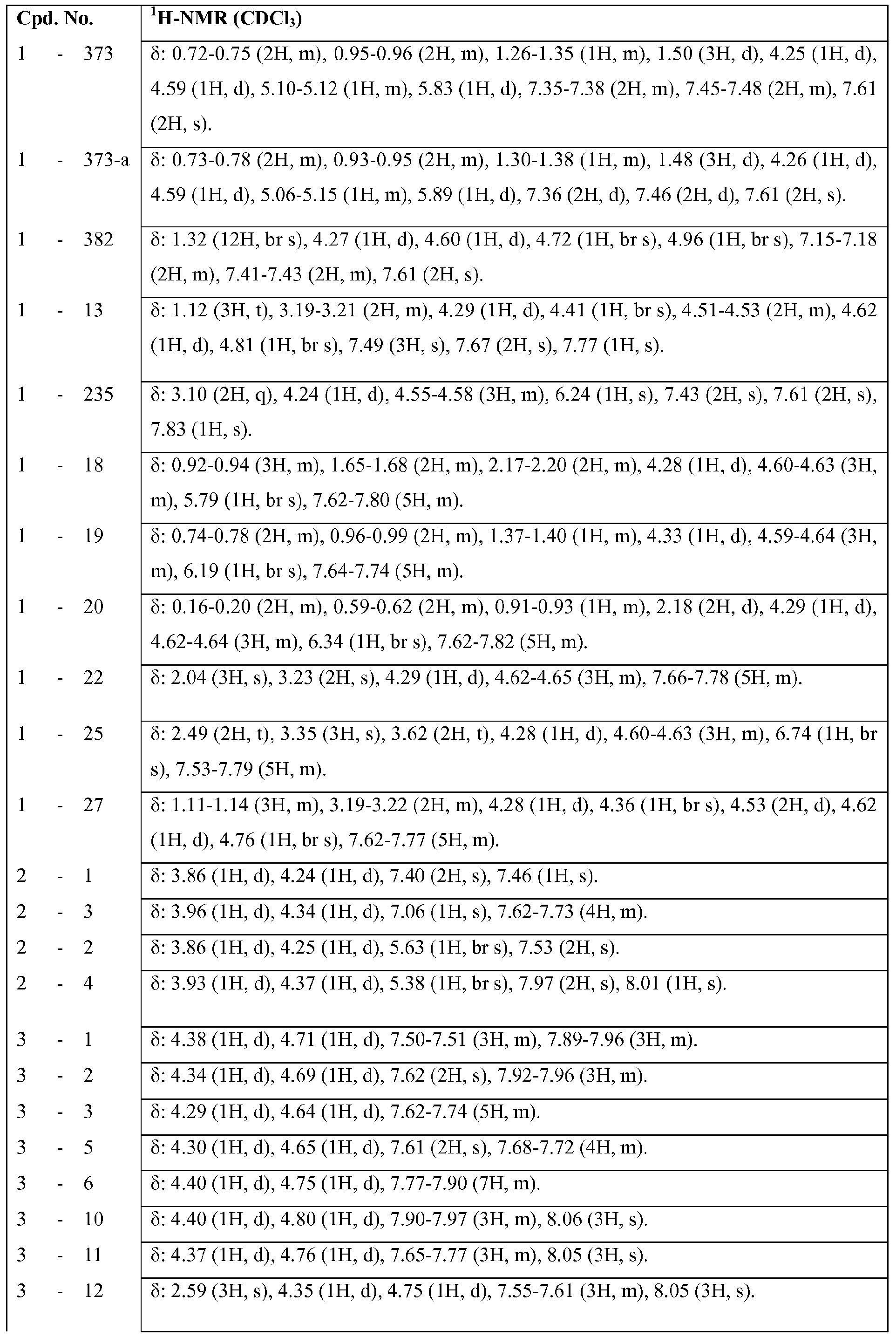
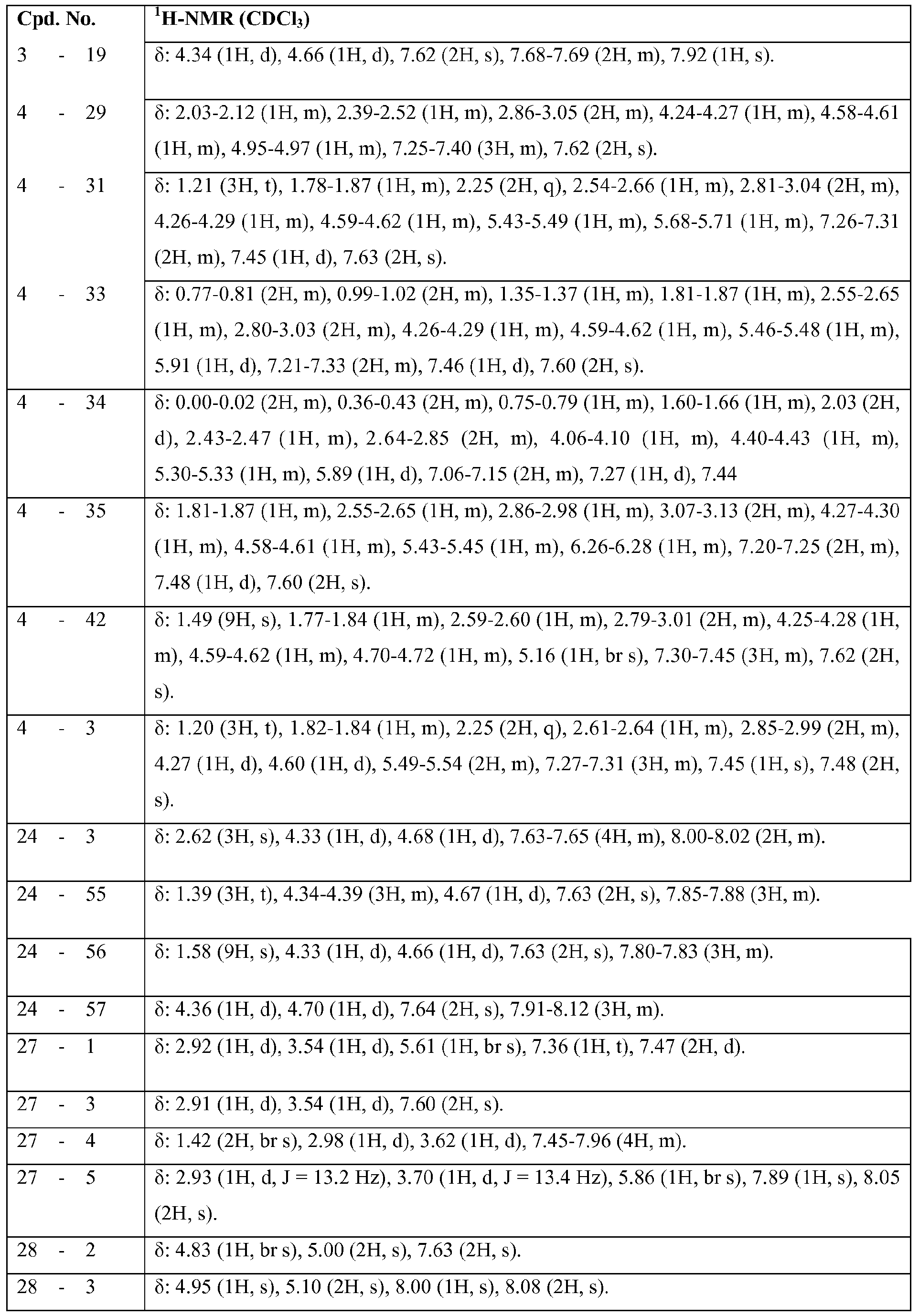
- the compound number having a suffix "-a” or “-b” means that the compound exists in at least two optical isomers at the carbon atom marked by "*".
- the compound number having as suffix "-a” stands for a (S)-isomer and the compound number having a suffix "-b” stands for a R-isomer.
- compound 1-371 is the racemate
- compound 1-371-a is the (S)-isomer
- compound 1 -371 -b is the (R)-isomer.
Landscapes
- Chemical & Material Sciences (AREA)
- Organic Chemistry (AREA)
- Health & Medical Sciences (AREA)
- Life Sciences & Earth Sciences (AREA)
- Veterinary Medicine (AREA)
- General Health & Medical Sciences (AREA)
- General Chemical & Material Sciences (AREA)
- Medicinal Chemistry (AREA)
- Nuclear Medicine, Radiotherapy & Molecular Imaging (AREA)
- Pharmacology & Pharmacy (AREA)
- Chemical Kinetics & Catalysis (AREA)
- Animal Behavior & Ethology (AREA)
- Tropical Medicine & Parasitology (AREA)
- Public Health (AREA)
- Agronomy & Crop Science (AREA)
- Environmental Sciences (AREA)
- Plant Pathology (AREA)
- Engineering & Computer Science (AREA)
- Dentistry (AREA)
- Wood Science & Technology (AREA)
- Zoology (AREA)
- Pest Control & Pesticides (AREA)
- Agricultural Chemicals And Associated Chemicals (AREA)
- Pharmaceuticals Containing Other Organic And Inorganic Compounds (AREA)
- Heterocyclic Carbon Compounds Containing A Hetero Ring Having Nitrogen And Oxygen As The Only Ring Hetero Atoms (AREA)
- Plural Heterocyclic Compounds (AREA)
- Organic Low-Molecular-Weight Compounds And Preparation Thereof (AREA)
- Pyrrole Compounds (AREA)
Abstract
Description















Claims






Priority Applications (4)
| Application Number | Priority Date | Filing Date | Title |
|---|---|---|---|
| BR112012010238A BR112012010238A2 (en) | 2009-10-30 | 2010-10-29 | pesticide heterocyclic compounds |
| JP2012535852A JP2013509383A (en) | 2009-10-30 | 2010-10-29 | Pesticide heterocyclic compounds |
| CN2010800494247A CN102666505A (en) | 2009-10-30 | 2010-10-29 | Pesticidal heterocyclic compounds |
| MX2012005066A MX2012005066A (en) | 2009-10-30 | 2010-10-29 | Pesticidal heterocyclic compounds. |
Applications Claiming Priority (2)
| Application Number | Priority Date | Filing Date | Title |
|---|---|---|---|
| JP2009250744A JP2011093855A (en) | 2009-10-30 | 2009-10-30 | Insecticidal oxazolidinone derivative |
| JP2009-250744 | 2009-10-30 |
Publications (1)
| Publication Number | Publication Date |
|---|---|
| WO2011051455A1 true WO2011051455A1 (en) | 2011-05-05 |
Family
ID=43430262
Family Applications (1)
| Application Number | Title | Priority Date | Filing Date |
|---|---|---|---|
| PCT/EP2010/066480 Ceased WO2011051455A1 (en) | 2009-10-30 | 2010-10-29 | Pesticidal heterocyclic compounds |
Country Status (10)
| Country | Link |
|---|---|
| US (1) | US20110152332A1 (en) |
| JP (2) | JP2011093855A (en) |
| KR (1) | KR20120113723A (en) |
| CN (1) | CN102666505A (en) |
| AR (1) | AR078783A1 (en) |
| BR (1) | BR112012010238A2 (en) |
| MX (1) | MX2012005066A (en) |
| TW (1) | TW201127292A (en) |
| UY (1) | UY32982A (en) |
| WO (1) | WO2011051455A1 (en) |
Cited By (10)
| Publication number | Priority date | Publication date | Assignee | Title |
|---|---|---|---|---|
| WO2012146572A1 (en) * | 2011-04-28 | 2012-11-01 | Bayer Intellectual Property Gmbh | Pesticidal diaryl - heterocyclyl derivatives |
| WO2012165186A1 (en) * | 2011-05-31 | 2012-12-06 | Sumitomo Chemical Company, Limited | Animal ectoparasite-controlling agent |
| WO2013087710A2 (en) | 2011-12-14 | 2013-06-20 | Syngenta Participations Ag | Pesticidal mixtures |
| WO2014019957A2 (en) | 2012-08-03 | 2014-02-06 | Syngenta Participations Ag | Methods of pest control in soybean |
| WO2014019609A1 (en) | 2012-07-31 | 2014-02-06 | Syngenta Participations Ag | Methods of pest control in soybean |
| US8735362B2 (en) | 2009-12-01 | 2014-05-27 | Syngenta Crop Protection, Llc | Insecticidal compounds based on isoxazoline derivatives |
| WO2014114250A1 (en) | 2013-01-23 | 2014-07-31 | Syngenta Participations Ag | Pyrazoline derivatives as insecticidal compounds |
| JP2015515454A (en) * | 2012-03-14 | 2015-05-28 | バイエル・インテレクチュアル・プロパティ・ゲゼルシャフト・ミット・ベシュレンクテル・ハフツングBayer Intellectual Property GmbH | Pesticide arylpyrrolidines |
| US9802899B2 (en) | 2012-10-02 | 2017-10-31 | Bayer Cropscience Ag | Heterocyclic compounds as pesticides |
| US11034669B2 (en) | 2018-11-30 | 2021-06-15 | Nuvation Bio Inc. | Pyrrole and pyrazole compounds and methods of use thereof |
Citations (19)
| Publication number | Priority date | Publication date | Assignee | Title |
|---|---|---|---|---|
| EP0539588A1 (en) | 1990-07-05 | 1993-05-05 | Nippon Soda Co., Ltd. | Amine derivative |
| WO2002078628A2 (en) * | 2001-03-28 | 2002-10-10 | Bristol-Myers Squibb Company | Cyanamide, alkoxyamino, and urea derivatives of 1,3-benzodiazapines as hiv reverse transcriptase inhibitors |
| WO2002083133A1 (en) * | 2001-04-16 | 2002-10-24 | University Of Virginia Patent Foundation | Novel oral general anesthetics and metabolitically resistant anticonvulsants |
| EP1538138A1 (en) * | 2002-08-26 | 2005-06-08 | Nissan Chemical Industries, Limited | Substituted benzanilide compound and pest control agent |
| WO2005085216A1 (en) | 2004-03-05 | 2005-09-15 | Nissan Chemical Industries, Ltd. | Isoxazoline-substituted benzamide compound and noxious organism control agent |
| JP2005272452A (en) * | 2004-02-23 | 2005-10-06 | Nissan Chem Ind Ltd | Substituted benzanilide compound and pesticide |
| WO2006043635A1 (en) | 2004-10-20 | 2006-04-27 | Kumiai Chemical Industry Co., Ltd. | 3-triazolylphenyl sulfide derivative and insecticide/acaricide/nematicide containing the same as active ingredient |
| WO2006089633A2 (en) | 2005-02-22 | 2006-08-31 | Bayer Cropscience Ag | Spiroketal-substituted cyclic ketoenols |
| JP2007091708A (en) * | 2005-05-16 | 2007-04-12 | Nissan Chem Ind Ltd | Dihydroazole-substituted benzamide compound and pest-controlling agent |
| WO2007095229A2 (en) | 2006-02-10 | 2007-08-23 | Dow Agrosciences Llc | Insecticidal n-substituted (6-haloalkylpyridin-3-yl)alkyl sulfoximines |
| WO2007105814A1 (en) | 2006-03-10 | 2007-09-20 | Nissan Chemical Industries, Ltd. | Substituted isoxazoline compound and pest control agent |
| WO2007115644A1 (en) | 2006-03-31 | 2007-10-18 | Bayer Cropscience Ag | Substituted enaminocarbonyl compounds |
| WO2007115646A1 (en) | 2006-03-31 | 2007-10-18 | Bayer Cropscience Ag | Substituted enaminocarbonyl compounds used as insecticides |
| WO2007115643A1 (en) | 2006-03-31 | 2007-10-18 | Bayer Cropscience Ag | Substituted enaminocarbonyl compounds |
| WO2007123853A2 (en) | 2006-04-20 | 2007-11-01 | E. I. Du Pont De Nemours And Company | Five-membered heterocyclic invertebrate pest control agents |
| WO2007149134A1 (en) | 2006-06-23 | 2007-12-27 | Dow Agrosciences Llc | A method to control insects resistant to common insecticides |
| JP2008110971A (en) | 2006-10-06 | 2008-05-15 | Nippon Soda Co Ltd | Nitrogen-containing heterocyclic compound and pest-controlling agent |
| WO2008067911A1 (en) | 2006-12-04 | 2008-06-12 | Bayer Cropscience Ag | Biphenyl-substituted spirocyclic ketoenols |
| WO2008128711A1 (en) | 2007-04-23 | 2008-10-30 | Bayer Cropscience Ag | Insecticidal aryl pyrrolidines |
-
2009
- 2009-10-30 JP JP2009250744A patent/JP2011093855A/en active Pending
-
2010
- 2010-10-26 AR ARP100103933A patent/AR078783A1/en unknown
- 2010-10-27 UY UY0001032982A patent/UY32982A/en not_active Application Discontinuation
- 2010-10-29 CN CN2010800494247A patent/CN102666505A/en active Pending
- 2010-10-29 TW TW099137097A patent/TW201127292A/en unknown
- 2010-10-29 MX MX2012005066A patent/MX2012005066A/en not_active Application Discontinuation
- 2010-10-29 BR BR112012010238A patent/BR112012010238A2/en not_active IP Right Cessation
- 2010-10-29 WO PCT/EP2010/066480 patent/WO2011051455A1/en not_active Ceased
- 2010-10-29 JP JP2012535852A patent/JP2013509383A/en not_active Withdrawn
- 2010-10-29 KR KR1020127013856A patent/KR20120113723A/en not_active Withdrawn
- 2010-11-01 US US12/917,116 patent/US20110152332A1/en not_active Abandoned
Patent Citations (19)
| Publication number | Priority date | Publication date | Assignee | Title |
|---|---|---|---|---|
| EP0539588A1 (en) | 1990-07-05 | 1993-05-05 | Nippon Soda Co., Ltd. | Amine derivative |
| WO2002078628A2 (en) * | 2001-03-28 | 2002-10-10 | Bristol-Myers Squibb Company | Cyanamide, alkoxyamino, and urea derivatives of 1,3-benzodiazapines as hiv reverse transcriptase inhibitors |
| WO2002083133A1 (en) * | 2001-04-16 | 2002-10-24 | University Of Virginia Patent Foundation | Novel oral general anesthetics and metabolitically resistant anticonvulsants |
| EP1538138A1 (en) * | 2002-08-26 | 2005-06-08 | Nissan Chemical Industries, Limited | Substituted benzanilide compound and pest control agent |
| JP2005272452A (en) * | 2004-02-23 | 2005-10-06 | Nissan Chem Ind Ltd | Substituted benzanilide compound and pesticide |
| WO2005085216A1 (en) | 2004-03-05 | 2005-09-15 | Nissan Chemical Industries, Ltd. | Isoxazoline-substituted benzamide compound and noxious organism control agent |
| WO2006043635A1 (en) | 2004-10-20 | 2006-04-27 | Kumiai Chemical Industry Co., Ltd. | 3-triazolylphenyl sulfide derivative and insecticide/acaricide/nematicide containing the same as active ingredient |
| WO2006089633A2 (en) | 2005-02-22 | 2006-08-31 | Bayer Cropscience Ag | Spiroketal-substituted cyclic ketoenols |
| JP2007091708A (en) * | 2005-05-16 | 2007-04-12 | Nissan Chem Ind Ltd | Dihydroazole-substituted benzamide compound and pest-controlling agent |
| WO2007095229A2 (en) | 2006-02-10 | 2007-08-23 | Dow Agrosciences Llc | Insecticidal n-substituted (6-haloalkylpyridin-3-yl)alkyl sulfoximines |
| WO2007105814A1 (en) | 2006-03-10 | 2007-09-20 | Nissan Chemical Industries, Ltd. | Substituted isoxazoline compound and pest control agent |
| WO2007115644A1 (en) | 2006-03-31 | 2007-10-18 | Bayer Cropscience Ag | Substituted enaminocarbonyl compounds |
| WO2007115646A1 (en) | 2006-03-31 | 2007-10-18 | Bayer Cropscience Ag | Substituted enaminocarbonyl compounds used as insecticides |
| WO2007115643A1 (en) | 2006-03-31 | 2007-10-18 | Bayer Cropscience Ag | Substituted enaminocarbonyl compounds |
| WO2007123853A2 (en) | 2006-04-20 | 2007-11-01 | E. I. Du Pont De Nemours And Company | Five-membered heterocyclic invertebrate pest control agents |
| WO2007149134A1 (en) | 2006-06-23 | 2007-12-27 | Dow Agrosciences Llc | A method to control insects resistant to common insecticides |
| JP2008110971A (en) | 2006-10-06 | 2008-05-15 | Nippon Soda Co Ltd | Nitrogen-containing heterocyclic compound and pest-controlling agent |
| WO2008067911A1 (en) | 2006-12-04 | 2008-06-12 | Bayer Cropscience Ag | Biphenyl-substituted spirocyclic ketoenols |
| WO2008128711A1 (en) | 2007-04-23 | 2008-10-30 | Bayer Cropscience Ag | Insecticidal aryl pyrrolidines |
Non-Patent Citations (19)
| Title |
|---|
| "Protective Groups in Organic Chemistry", JOHN WILEY & SONS, INC. |
| "The Pesticide Manual", 2006, BRITISH CROP PROTECTION COUNCIL |
| C. MIOSKOWSKI: "Enantiomeric purity and absolute configuration of beta-hydroxy-beta-(trifluoromethyl)-beta-phenylpropionic acid", TETRAHEDRON, vol. 29, no. 22, 1973, pages 3669 - 3674, XP002630264 * |
| CH. KINGSBURY: "Conformation preferences in nitroalcohols: possible donor-acceptor interactions", JOURNAL OF THE CHEMICAL SOCIETY, PERKIN TRANSACTIONS 2: PHYSICAL ORGANIC CHEMISTRY, vol. 7, 1982, pages 867 - 874, XP009146475 * |
| CHEMISTRY LETTERS, 1984, pages 1117 - 1120 |
| F. TUR ET AL: "Constructing quaternary centers of chirality: the lanthanide way to trifluoromethyl-substituted tertiary alcohols", SYNTHESIS, vol. 11, 23 April 2010 (2010-04-23), pages 1909 - 1923, XP002630258 * |
| F. TUR, J. M. SAA: "Direct, catalytic enantioselective nitroaldol (Henry) reaction of trifluoromethyl ketones: asymmetric entry to alpha-trifluoromethyl-substituted quaternary carbons", ORGANIC LETTERS, vol. 9, no. 24, 11 March 2007 (2007-03-11), pages 5079 - 5082, XP002630261 * |
| H. A. SCHENCK ET AL: "design, synthesis and evaluation of novel hydroxyamides as orally available anticonvulsants", BIOORGANIC MEDICINAL CHEMISTRY, vol. 12, no. 5, 2004, pages 979 - 993, XP002630262 * |
| H. XU, CH. WOLF: "Synthesis of chiral tertiary trifluoromethylalcohols by asymmetric nitroaldol reaction with a Cu(II)-bisoxazolidine catalyst", CHEMICAL COMMUNICATIONS, vol. 46, no. 12, 22 September 2010 (2010-09-22), pages 8026 - 8028, XP002630257 * |
| I. CHOUDHURY-MUKHERJEE ET AL: "design, synthesis and evalution of analogues of 3,3,3-trifluoro-2-hydroxy-2-phenyl-propionamide as orally available general anesthetics", J. MED. CHEM., vol. 46, 14 May 2003 (2003-05-14), pages 2494 - 2501, XP002630263 * |
| J.M.SAA ET AL: "Lanthanide (III) salt complexes: Arrayed acid-base networks for enantioselective Catalysis. The nitroaldol reaction upon aldehydes and trifluoromethylketones", CHIRALITY, vol. 21, no. 9, 19 February 2009 (2009-02-19), pages 836 - 842, XP002630259 * |
| JOURNAL OF FLUORINE CHEMISTRY, vol. 95, 1999, pages 167 - 170 |
| JOURNAL OF ORGANIC CHEMISTRY, vol. 56, 1991, pages 7336 - 7340 |
| JOURNAL OF THE ORGANIC CHEMISTRY, vol. 49, 1984, pages 2081 |
| M. BANDINI ET AL: "Entantioselective organocatalyzed Henry reaction with fluoromethylketones", CHEMICAL COMMUNICATIONS, vol. 36, 24 July 2008 (2008-07-24), pages 4360 - 4362, XP002630260 * |
| MISUMI YUKIHIRO ET AL: "HIGH PRESSURE MEDIATED ASYMMETRIC HENRY REACTION OF NITROMETHANE WITH CARBONYL COMPOUNDS CATALYZED BY CINCHONA ALKALOIDS", HETEROCYCLES, ELSEVIER SCIENCE PUBLISHERS B.V. AMSTERDAM, NL, vol. 56, no. 1-2, 1 January 2002 (2002-01-01), pages 599 - 605, XP001247515, ISSN: 0385-5414 * |
| TETRAHEDRON LETTERS, vol. 34, 1993, pages 3279 - 3282 |
| TETRAHEDRON LETTERS, vol. 41, 2000, pages 3513 - 3516 |
| TETRAHEDRON, vol. 59, 2003, pages 5417 - 5423 |
Cited By (22)
| Publication number | Priority date | Publication date | Assignee | Title |
|---|---|---|---|---|
| US10206400B2 (en) | 2009-12-01 | 2019-02-19 | Syngenta Participations Ag | Insecticidal compounds based on isoxazoline derivatives |
| US8735362B2 (en) | 2009-12-01 | 2014-05-27 | Syngenta Crop Protection, Llc | Insecticidal compounds based on isoxazoline derivatives |
| US11357231B2 (en) | 2009-12-01 | 2022-06-14 | Syngenta Crop Protection Llc | Insecticidal compounds based on isoxazoline derivatives |
| US9609869B2 (en) | 2009-12-01 | 2017-04-04 | Syngenta Crop Protection, Llc | Insecticidal compounds based on isoxazoline derivatives |
| US10750745B2 (en) | 2009-12-01 | 2020-08-25 | Syngenta Crop Protection, Llc | Insecticidal compounds based on isoxazoline derivatives |
| US9307764B2 (en) | 2011-04-28 | 2016-04-12 | Bayer Intellectual Property Gmbh | Pesticidal diaryl—heterocyclyl derivatives |
| WO2012146572A1 (en) * | 2011-04-28 | 2012-11-01 | Bayer Intellectual Property Gmbh | Pesticidal diaryl - heterocyclyl derivatives |
| WO2012165186A1 (en) * | 2011-05-31 | 2012-12-06 | Sumitomo Chemical Company, Limited | Animal ectoparasite-controlling agent |
| WO2013087710A2 (en) | 2011-12-14 | 2013-06-20 | Syngenta Participations Ag | Pesticidal mixtures |
| JP2015515454A (en) * | 2012-03-14 | 2015-05-28 | バイエル・インテレクチュアル・プロパティ・ゲゼルシャフト・ミット・ベシュレンクテル・ハフツングBayer Intellectual Property GmbH | Pesticide arylpyrrolidines |
| WO2014019609A1 (en) | 2012-07-31 | 2014-02-06 | Syngenta Participations Ag | Methods of pest control in soybean |
| WO2014019957A2 (en) | 2012-08-03 | 2014-02-06 | Syngenta Participations Ag | Methods of pest control in soybean |
| US10689348B2 (en) | 2012-10-02 | 2020-06-23 | Bayer Cropscience Ag | Heterocyclic compounds as pesticides |
| US10435374B2 (en) | 2012-10-02 | 2019-10-08 | Bayer Cropscience Ag | Heterocyclic compounds as pesticides |
| US9802899B2 (en) | 2012-10-02 | 2017-10-31 | Bayer Cropscience Ag | Heterocyclic compounds as pesticides |
| US10961201B2 (en) | 2012-10-02 | 2021-03-30 | Bayer Cropscience Ag | Heterocyclic compounds as pesticides |
| US11332448B2 (en) | 2012-10-02 | 2022-05-17 | Bayer Cropscience Ag | Heterocyclic compounds as pesticides |
| US11548854B2 (en) | 2012-10-02 | 2023-01-10 | Bayer Cropscience Ag | Heterocyclic compounds as pesticides |
| US10287281B2 (en) | 2013-01-23 | 2019-05-14 | Syngenta Participations Ag | Pyrazoline derivatives as insecticidal compounds |
| US9776994B2 (en) | 2013-01-23 | 2017-10-03 | Syngenta Participations Ag | Pyrazoline derivatives as insecticidal compounds |
| WO2014114250A1 (en) | 2013-01-23 | 2014-07-31 | Syngenta Participations Ag | Pyrazoline derivatives as insecticidal compounds |
| US11034669B2 (en) | 2018-11-30 | 2021-06-15 | Nuvation Bio Inc. | Pyrrole and pyrazole compounds and methods of use thereof |
Also Published As
| Publication number | Publication date |
|---|---|
| AR078783A1 (en) | 2011-11-30 |
| JP2011093855A (en) | 2011-05-12 |
| KR20120113723A (en) | 2012-10-15 |
| MX2012005066A (en) | 2012-06-13 |
| US20110152332A1 (en) | 2011-06-23 |
| TW201127292A (en) | 2011-08-16 |
| CN102666505A (en) | 2012-09-12 |
| JP2013509383A (en) | 2013-03-14 |
| BR112012010238A2 (en) | 2015-09-29 |
| UY32982A (en) | 2011-05-31 |
Similar Documents
| Publication | Publication Date | Title |
|---|---|---|
| EP2432762B1 (en) | Insecticidal arylpyrrolines | |
| RU2712092C2 (en) | Substituted benzamides for arthropoda control | |
| TWI572589B (en) | Pesticidal arylpyrrolidines | |
| EP2519499B1 (en) | Pesticidal arylpyrrolidines | |
| US20110152332A1 (en) | Pesticidal Heterocyclic Compounds | |
| ES2632355T3 (en) | Pesticide Carboxamides | |
| KR20160104065A (en) | Novel pyrazolyl-heteroarylamides as pesticides | |
| US9107411B2 (en) | Indolecarboxamides and benzimidazolecarboxamides as insecticides and acaricides | |
| CA2929401A1 (en) | Novel compounds for combating arthropods | |
| CN103080102A (en) | Anthranilamide derivatives as insecticides | |
| CN104321317B (en) | Insecticidal arylpyrrolidines | |
| NZ615219B2 (en) | Indolecarboxamides and benzimidazolecarboxamides as insecticides and acaricides |
Legal Events
| Date | Code | Title | Description |
|---|---|---|---|
| WWE | Wipo information: entry into national phase |
Ref document number: 201080049424.7 Country of ref document: CN |
|
| 121 | Ep: the epo has been informed by wipo that ep was designated in this application |
Ref document number: 10778924 Country of ref document: EP Kind code of ref document: A1 |
|
| WWE | Wipo information: entry into national phase |
Ref document number: 2010778924 Country of ref document: EP |
|
| WWE | Wipo information: entry into national phase |
Ref document number: 2012535852 Country of ref document: JP |
|
| NENP | Non-entry into the national phase |
Ref country code: DE |
|
| WWE | Wipo information: entry into national phase |
Ref document number: 3757/DELNP/2012 Country of ref document: IN Ref document number: MX/A/2012/005066 Country of ref document: MX |
|
| ENP | Entry into the national phase |
Ref document number: 20127013856 Country of ref document: KR Kind code of ref document: A |
|
| REG | Reference to national code |
Ref country code: BR Ref legal event code: B01A Ref document number: 112012010238 Country of ref document: BR |
|
| ENP | Entry into the national phase |
Ref document number: 112012010238 Country of ref document: BR Kind code of ref document: A2 Effective date: 20120430 |