[go: up one dir, main page]

WO2003022286A1 - Benzothiazepine and benzothiadiazepine derivatives with ileal bile acid transport (ibat) inhibitory activity for the treatment hyperlipidaemia - Google Patents

Benzothiazepine and benzothiadiazepine derivatives with ileal bile acid transport (ibat) inhibitory activity for the treatment hyperlipidaemia Download PDF

Info

Publication number
WO2003022286A1
WO2003022286A1 PCT/GB2002/004033 GB0204033W WO03022286A1 WO 2003022286 A1 WO2003022286 A1 WO 2003022286A1 GB 0204033 W GB0204033 W GB 0204033W WO 03022286 A1 WO03022286 A1 WO 03022286A1
Authority
WO
WIPO (PCT)
Prior art keywords
carbamoyl
solvate
alkyl
carbamoylmethoxy
formula
Prior art date
Legal status (The legal status is an assumption and is not a legal conclusion. Google has not performed a legal analysis and makes no representation as to the accuracy of the status listed.)
Ceased
Application number
PCT/GB2002/004033
Other languages
French (fr)
Inventor
Ingemar Starke
Mikael Ulf Johan Dahlstrom
David Blomberg
Suzanne Alenfalk
Tore Skjaret
Malin Lemurell
Current Assignee (The listed assignees may be inaccurate. Google has not performed a legal analysis and makes no representation or warranty as to the accuracy of the list.)
AstraZeneca UK Ltd
AstraZeneca AB
Original Assignee
AstraZeneca UK Ltd
AstraZeneca AB
Priority date (The priority date is an assumption and is not a legal conclusion. Google has not performed a legal analysis and makes no representation as to the accuracy of the date listed.)
Filing date
Publication date
Priority claimed from GB0121768A external-priority patent/GB0121768D0/en
Priority claimed from GB0209463A external-priority patent/GB0209463D0/en
Priority to UA2004042638A priority Critical patent/UA77209C2/en
Priority to DE60217136T priority patent/DE60217136T2/en
Priority to BRPI0212346A priority patent/BRPI0212346B1/en
Priority to AU2002329387A priority patent/AU2002329387B2/en
Priority to MXPA04002179A priority patent/MXPA04002179A/en
Priority to DK02765013.4T priority patent/DK1427423T5/en
Priority to ES02765013T priority patent/ES2278045T3/en
Priority to HU0401196A priority patent/HU227623B1/en
Priority to NZ531796A priority patent/NZ531796A/en
Priority to JP2003526415A priority patent/JP3616635B2/en
Application filed by AstraZeneca UK Ltd, AstraZeneca AB filed Critical AstraZeneca UK Ltd
Priority to US10/488,870 priority patent/US7132416B2/en
Priority to KR1020047003407A priority patent/KR100935623B1/en
Priority to SI200230483T priority patent/SI1427423T1/en
Priority to CA2459449A priority patent/CA2459449C/en
Priority to IL16069102A priority patent/IL160691A0/en
Priority to HK04108119.5A priority patent/HK1065258B/en
Priority to EP02765013.4A priority patent/EP1427423B9/en
Publication of WO2003022286A1 publication Critical patent/WO2003022286A1/en
Priority to IL160691A priority patent/IL160691A/en
Priority to NO20040948A priority patent/NO327041B1/en
Priority to IS7170A priority patent/IS7170A/en
Anticipated expiration legal-status Critical
Priority to CY20071100289T priority patent/CY1106348T1/en
Ceased legal-status Critical Current

Links

Classifications

    • CCHEMISTRY; METALLURGY
    • C07ORGANIC CHEMISTRY
    • C07DHETEROCYCLIC COMPOUNDS
    • C07D417/00Heterocyclic compounds containing two or more hetero rings, at least one ring having nitrogen and sulfur atoms as the only ring hetero atoms, not provided for by group C07D415/00
    • C07D417/02Heterocyclic compounds containing two or more hetero rings, at least one ring having nitrogen and sulfur atoms as the only ring hetero atoms, not provided for by group C07D415/00 containing two hetero rings
    • C07D417/12Heterocyclic compounds containing two or more hetero rings, at least one ring having nitrogen and sulfur atoms as the only ring hetero atoms, not provided for by group C07D415/00 containing two hetero rings linked by a chain containing hetero atoms as chain links
    • AHUMAN NECESSITIES
    • A61MEDICAL OR VETERINARY SCIENCE; HYGIENE
    • A61KPREPARATIONS FOR MEDICAL, DENTAL OR TOILETRY PURPOSES
    • A61K31/00Medicinal preparations containing organic active ingredients
    • A61K31/33Heterocyclic compounds
    • A61K31/395Heterocyclic compounds having nitrogen as a ring hetero atom, e.g. guanethidine or rifamycins
    • A61K31/55Heterocyclic compounds having nitrogen as a ring hetero atom, e.g. guanethidine or rifamycins having seven-membered rings, e.g. azelastine, pentylenetetrazole
    • AHUMAN NECESSITIES
    • A61MEDICAL OR VETERINARY SCIENCE; HYGIENE
    • A61PSPECIFIC THERAPEUTIC ACTIVITY OF CHEMICAL COMPOUNDS OR MEDICINAL PREPARATIONS
    • A61P17/00Drugs for dermatological disorders
    • A61P17/02Drugs for dermatological disorders for treating wounds, ulcers, burns, scars, keloids, or the like
    • AHUMAN NECESSITIES
    • A61MEDICAL OR VETERINARY SCIENCE; HYGIENE
    • A61PSPECIFIC THERAPEUTIC ACTIVITY OF CHEMICAL COMPOUNDS OR MEDICINAL PREPARATIONS
    • A61P3/00Drugs for disorders of the metabolism
    • A61P3/06Antihyperlipidemics
    • AHUMAN NECESSITIES
    • A61MEDICAL OR VETERINARY SCIENCE; HYGIENE
    • A61PSPECIFIC THERAPEUTIC ACTIVITY OF CHEMICAL COMPOUNDS OR MEDICINAL PREPARATIONS
    • A61P31/00Antiinfectives, i.e. antibiotics, antiseptics, chemotherapeutics
    • AHUMAN NECESSITIES
    • A61MEDICAL OR VETERINARY SCIENCE; HYGIENE
    • A61PSPECIFIC THERAPEUTIC ACTIVITY OF CHEMICAL COMPOUNDS OR MEDICINAL PREPARATIONS
    • A61P43/00Drugs for specific purposes, not provided for in groups A61P1/00-A61P41/00
    • AHUMAN NECESSITIES
    • A61MEDICAL OR VETERINARY SCIENCE; HYGIENE
    • A61PSPECIFIC THERAPEUTIC ACTIVITY OF CHEMICAL COMPOUNDS OR MEDICINAL PREPARATIONS
    • A61P7/00Drugs for disorders of the blood or the extracellular fluid
    • A61P7/02Antithrombotic agents; Anticoagulants; Platelet aggregation inhibitors
    • AHUMAN NECESSITIES
    • A61MEDICAL OR VETERINARY SCIENCE; HYGIENE
    • A61PSPECIFIC THERAPEUTIC ACTIVITY OF CHEMICAL COMPOUNDS OR MEDICINAL PREPARATIONS
    • A61P9/00Drugs for disorders of the cardiovascular system
    • AHUMAN NECESSITIES
    • A61MEDICAL OR VETERINARY SCIENCE; HYGIENE
    • A61PSPECIFIC THERAPEUTIC ACTIVITY OF CHEMICAL COMPOUNDS OR MEDICINAL PREPARATIONS
    • A61P9/00Drugs for disorders of the cardiovascular system
    • A61P9/04Inotropic agents, i.e. stimulants of cardiac contraction; Drugs for heart failure
    • AHUMAN NECESSITIES
    • A61MEDICAL OR VETERINARY SCIENCE; HYGIENE
    • A61PSPECIFIC THERAPEUTIC ACTIVITY OF CHEMICAL COMPOUNDS OR MEDICINAL PREPARATIONS
    • A61P9/00Drugs for disorders of the cardiovascular system
    • A61P9/06Antiarrhythmics
    • AHUMAN NECESSITIES
    • A61MEDICAL OR VETERINARY SCIENCE; HYGIENE
    • A61PSPECIFIC THERAPEUTIC ACTIVITY OF CHEMICAL COMPOUNDS OR MEDICINAL PREPARATIONS
    • A61P9/00Drugs for disorders of the cardiovascular system
    • A61P9/08Vasodilators for multiple indications
    • AHUMAN NECESSITIES
    • A61MEDICAL OR VETERINARY SCIENCE; HYGIENE
    • A61PSPECIFIC THERAPEUTIC ACTIVITY OF CHEMICAL COMPOUNDS OR MEDICINAL PREPARATIONS
    • A61P9/00Drugs for disorders of the cardiovascular system
    • A61P9/10Drugs for disorders of the cardiovascular system for treating ischaemic or atherosclerotic diseases, e.g. antianginal drugs, coronary vasodilators, drugs for myocardial infarction, retinopathy, cerebrovascula insufficiency, renal arteriosclerosis
    • CCHEMISTRY; METALLURGY
    • C07ORGANIC CHEMISTRY
    • C07DHETEROCYCLIC COMPOUNDS
    • C07D285/00Heterocyclic compounds containing rings having nitrogen and sulfur atoms as the only ring hetero atoms, not provided for by groups C07D275/00 - C07D283/00
    • C07D285/36Seven-membered rings

Definitions

  • This invention relates to benzothiazepine and benzothiadiazepine derivatives, or pharmaceutically acceptable salts, solvates, solvates of such salts and prodrugs thereof.
  • These benzothiazepines and benzothiadiazepines possess ileal bile acid transport (IBAT) inhibitory activity and accordingly have value in the treatment of disease states associated with hyperlipidaemic conditions and they are useful in methods of treatment of a warm-blooded animal, such as man.
  • the invention also relates to processes for the manufacture of said benzothiazepine and benzothiadiazepine derivatives, to pharmaceutical compositions containing them and to their use in the manufacture of medicaments to inhibit IBAT in a warm-blooded animal, such as man.
  • HMG-CoA reductase inhibitors preferably statins such as simvastatin and fluvastatin
  • bile acid binders such as resins.
  • statins such as simvastatin and fluvastatin
  • bile acid binders are for instance cholestyramine and cholestipol.
  • One recently proposed therapy (“Bile Acids and Lipoprotein Metabolism: a Renaissance for Bile Acids in the Post Statin Era" Angelin B, Eriksson M, Rudling M; Current Opinion on Lipidology, 1999, 10, 269-74) involved the treatment with substances with an IBAT inhibitory effect.
  • IBAT Inhibitors of IBAT can be used in the treatment of hypercholesterolaemia (see for instance "Interaction of bile acids and cholesterol with nonsystemic agents having hypocholesterolaemic properties", Biochemica et Biophysica Acta, 1210 (1994) 255- 287).
  • suitable compounds having such inhibitory IBAT activity are also useful in the treatment of hyperlipidaemic conditions.
  • a further aspect of this invention relates to the use of the compounds of the invention in the treatment of dyslipidemic conditions and disorders such as hyperlipidaemia, hypertrigliceridemia, hyperbetalipoproteinemia (high LDL), hyperprebetalipoproteinemia (high VLDL), hyperchylomicronemia, hypolipoproteinemia, hypercholesterolemia, hyperlipoproteinemia and hypoalphalipoproteinemia (low HDL).
  • dyslipidaemia hypertrigliceridemia
  • hyperbetalipoproteinemia high LDL
  • hyperprebetalipoproteinemia high VLDL
  • hyperchylomicronemia hypolipoproteinemia
  • hypercholesterolemia hyperlipoproteinemia
  • hypoalphalipoproteinemia low HDL
  • these compounds are expected to be useful for the prevention and treatment of different clinical conditions such as atherosclerosis, arteriosclerosis, arrhythmia, hyper-thrombotic conditions, vascular dysfunction, endothelial dysfunction, heart failure, coronary heart diseases, cardiovascular diseases, myocardial infarction, angina pectoris, peripheral vascular diseases, inflammation of cardiovascular tissues such as heart, valves, vasculature, arteries and veins, aneurisms, stenosis, restenosis, vascular plaques, vascular fatty streaks, leukocytes, monocytes and/or macrophage infiltration, intimal thickening, medial thinning, infectious and surgical trauma and vascular thrombosis, stroke and transient ischaemic attacks.
  • cardiovascular tissues such as heart, valves, vasculature, arteries and veins, aneurisms, stenosis, restenosis, vascular plaques, vascular fatty streaks, leukocytes, monocytes and/or macrophage infiltration, in
  • the present invention is based on the discovery that certain benzothiazepine and benzothiadiazepine compounds surprisingly inhibit IBAT. Such properties are expected to be of value in the treatment of disease states associated with hyperlipidaemic conditions.
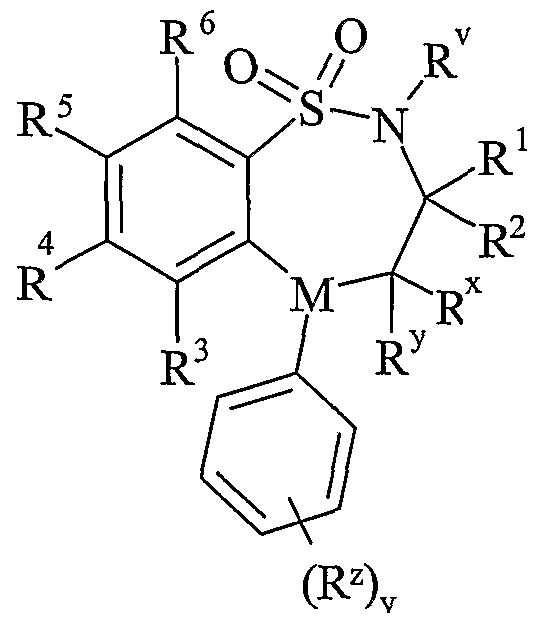
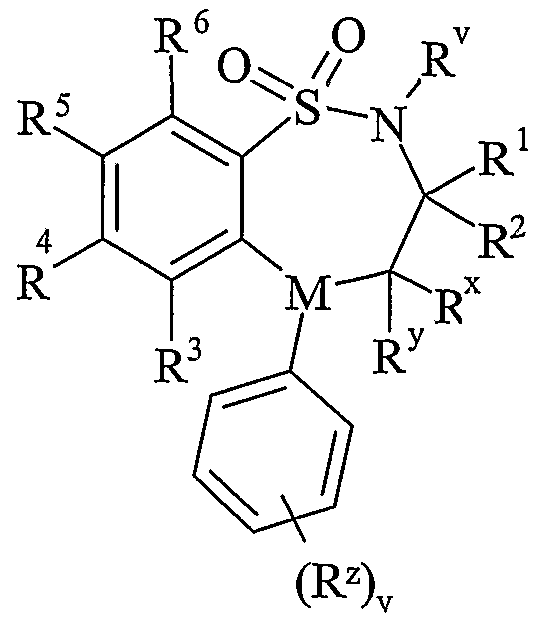
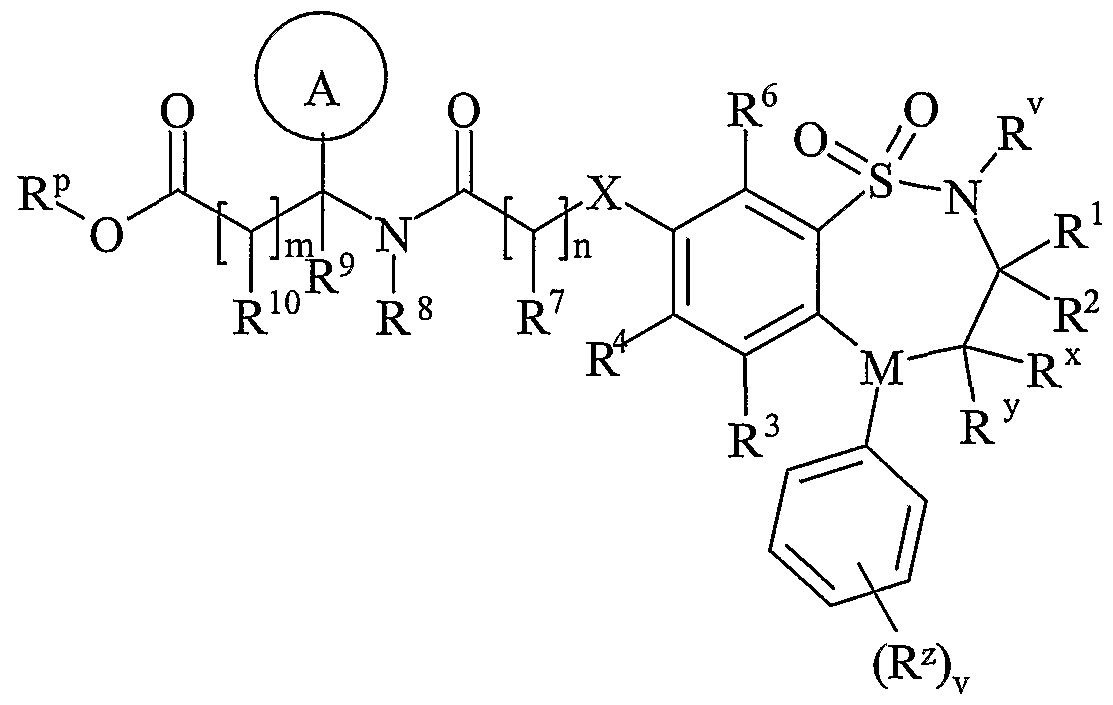
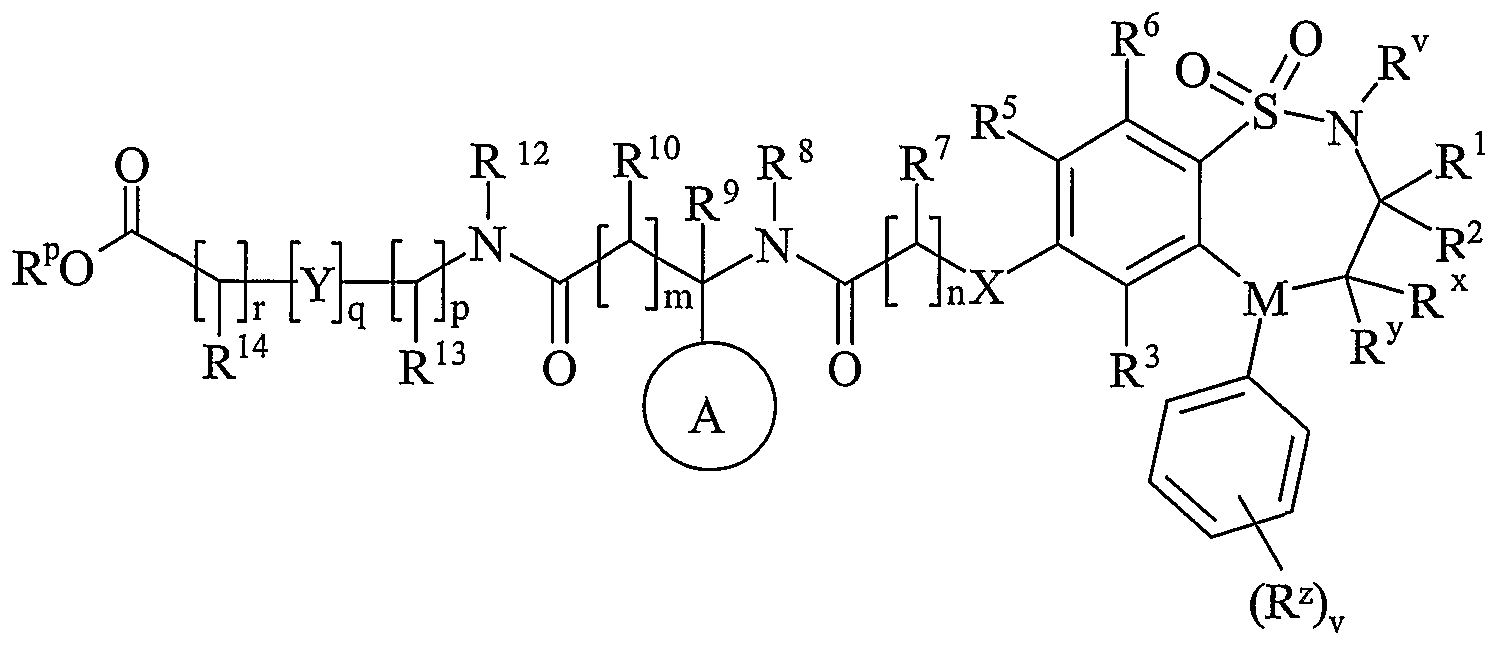
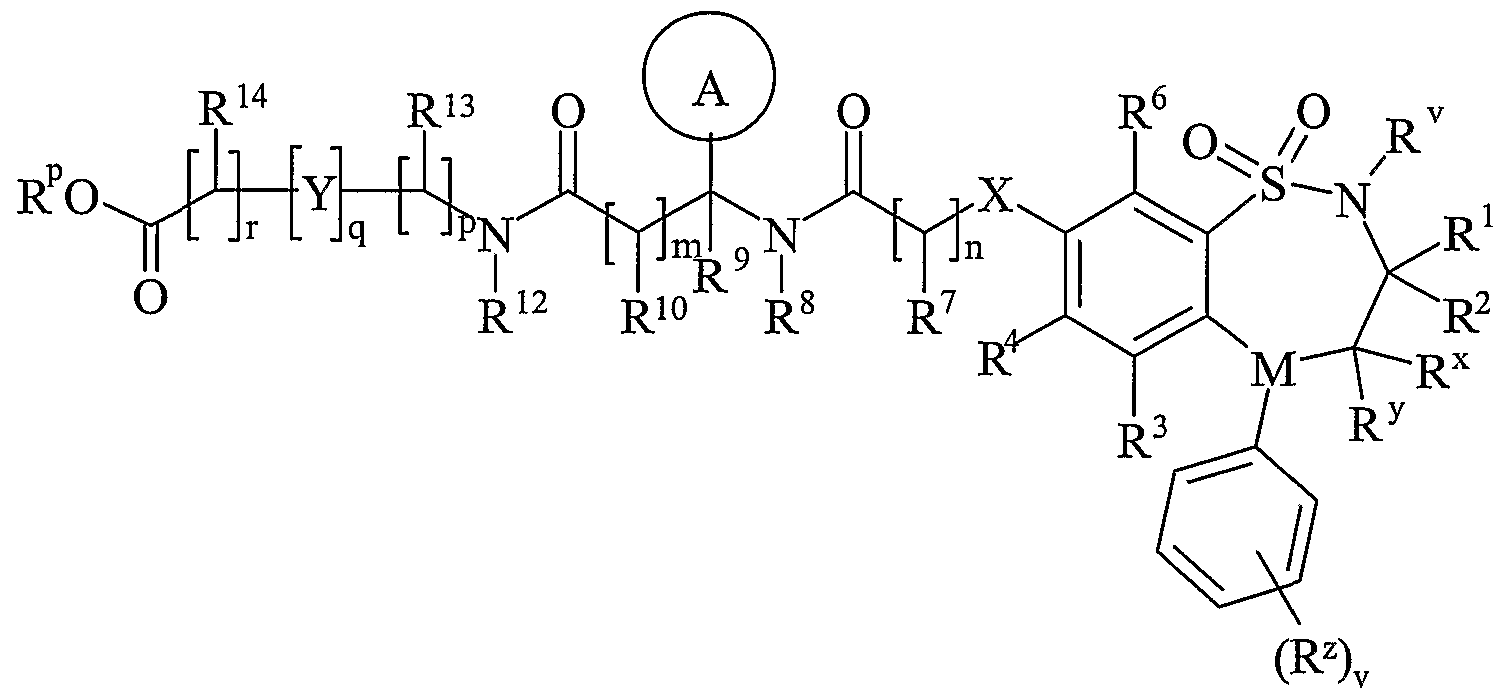
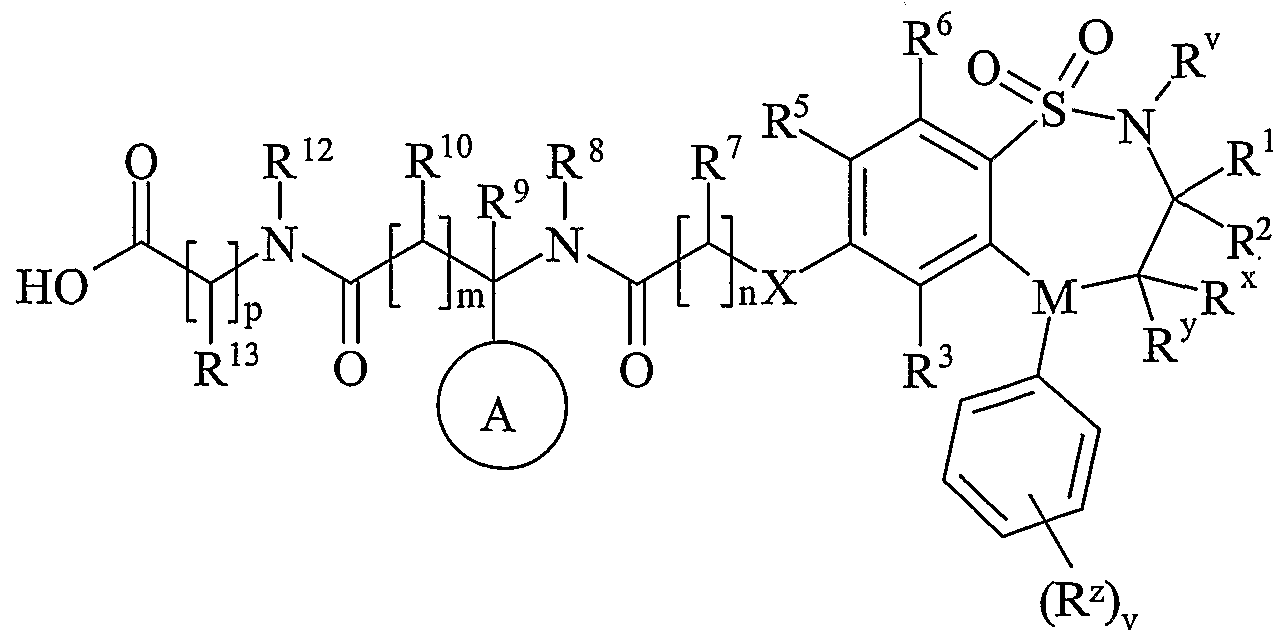
  • R v is selected from hydrogen or C 1-6 alkyl;
  • One of R and R are selected from hydrogen, C 1-6 alkyl or C 2-6 alkenyl and the other is selected from C 1-6 alkyl or C 2-6 alkenyl;
  • R x and R y are independently selected from hydrogen, hydroxy, amino, mercapto, C 1-6 alkyl, C 1-6 alkoxy, N-(C 1-6 alkyl)amino, N,N-(C 1-6 alkyl) 2 amino, C 1-6 alkylS(O) a wherein a is 0 to 2;
  • M is selected from -N- or -CH-;
  • R z is selected from halo, nitro, cyano, hydroxy, amino, carboxy, carbamoyl, mercapto, sulphanioyl, C 1-6 alkyl, C 2-6 alkenyl, C 2-6 alkynyl, C 1-6 alkoxy, C ⁇ -6 alkanoyl, C 1-6 alkanoyloxy, N-(C 1-6 alkyl)amino, NN-(C 1-6 alkyl) 2 amino, C ⁇ alkanoylamino, N-(C 1-6 alkyl)carbamoyl, NN-(C 1-6 alkyl) 2 carbamoyl, C 1-6 alkylS(O) a wherein a is 0 to 2, C 1-6 alkoxycarbonyl, N-(C 1-6 alkyl)sulphamoyl and N,N-(C 1-6 alkyl) 2 sulphamoyl; v is 0-5; one of R 4 and R 5 is a
  • R 3 and R 6 and the other of R 4 and R 5 are independently selected from hydrogen, halo, nitro, cyano, hydroxy, amino, carboxy, carbamoyl, mercapto, sulphamoyl, C 1-4 alkyl,
  • R 4 and R 5 may be optionally substituted on carbon by one or more R 16 ;
  • X is -O-, - ⁇ (R a )-, -S(O) b - or -CH(R a )-; wherein R a is hydrogen or C 1-6 alkyl and b is 0-
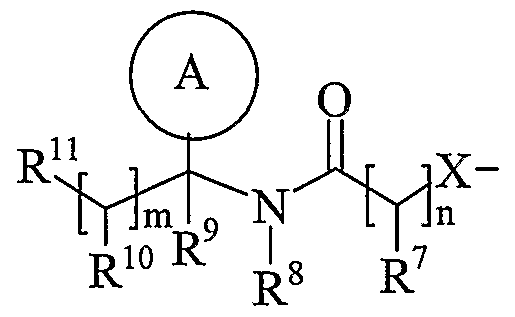
  • Ring A is aryl or heteroaryl; wherein Ring A is optionally substituted by one or more substituents selected from R 17 ;
  • R is hydrogen, C 1-4 alkyl, carbocyclyl or heterocyclyl; wherein R is optionally substituted by one or more substituents selected from R ; R is hydrogen or C 1-4 alkyl; R 9 is hydrogen or C 1-4 alkyl;
  • R 10 is hydrogen, C 1-4 alkyl, carbocyclyl or heterocyclyl; wherein R 10 is optionally substituted by one or more substituents selected from R 19 ;
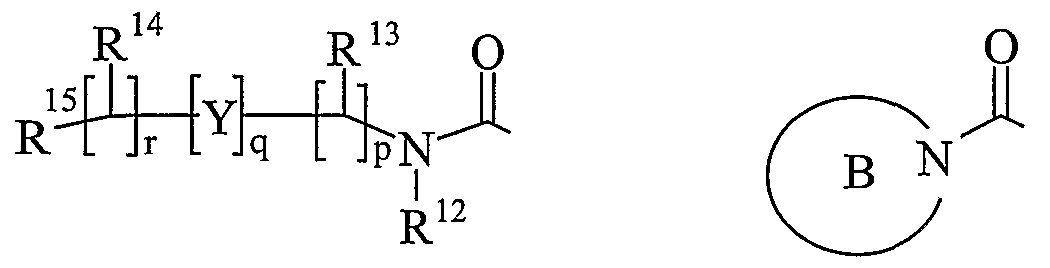
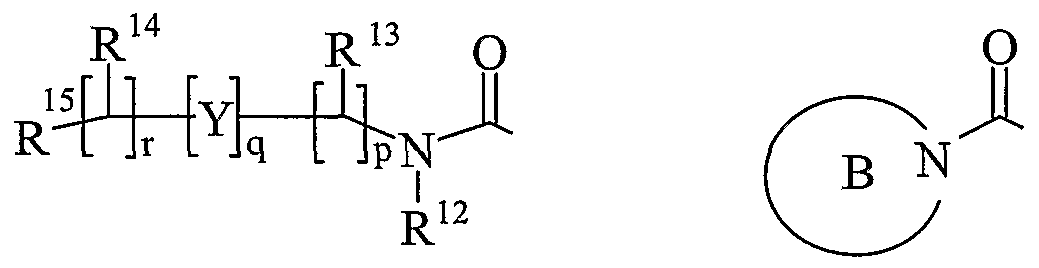
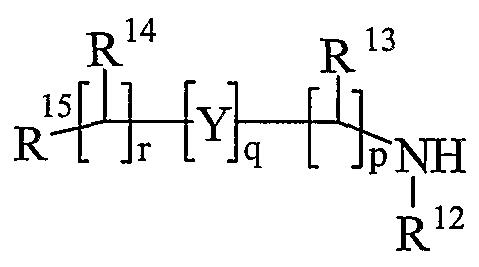
  • R 11 is carboxy, sulpho, sulphino, phosphono, -P(O)(OR c )(OR d ), -P(O)(OH)(OR c ), -P(O)(OH)(R d ) or -P(O)(OR c )(R d ) wherein R c and R d are independently selected from C ⁇ -6 alkyl; or R 11 is a group of formula (IB) or (IC):
  • R 12 is hydrogen or C 1-4 alkyl
  • R 13 and R 14 are independently selected from hydrogen, C 1-6 alkyl, carbocyclyl or heterocyclyl; and when q is 0, R 14 may additionally be selected from hydroxy; wherein R 13 and R 14 may be independently optionally substituted by one or more substituents selected from R 20 ;
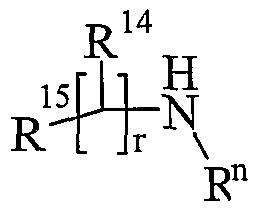
  • R 15 is carboxy, sulpho, sulphino, phosphono, -P(O)(OR e )(OR f ), -P(O)(OH)(OR e ), -P(O)(OH)(R e ) or -P(O)(OR e )(R f ) wherein R e and R f are independently selected from C ⁇ -6 alkyl; p is 1-3; wherein the values of R may be the same or different; q is 0-1; r is 0-3; wherein the values of R 14 maybe the same or different; m is 0-2; wherein the values of R 10 maybe the same or different; n is 1-3; wherein the values of R 7 may be the same or different;
  • Ring B is a nitrogen linked heterocyclyl substituted on carbon by one group selected from R 23 , and optionally additionally substituted on carbon by one or more R 24 ; and wherein if said nitrogen linked heterocyclyl contains an -NH- moiety, that nitrogen may be optionally substituted by a group selected from R 25 ;
  • R 16 , R 17 and R 18 are independently selected from halo, nitro, cyano, hydroxy, amino, carboxy, carbamoyl, mercapto, sulphamoyl, C 1- alkyl, C 2-4 alkenyl, C -4 alkynyl, C 1-4 alkoxy, C 1- alkanoyl, C 1- alkanoyloxy, N-(C 1-4 alkyl)amino, N,N-(C 1-4 alkyl) 2 amino, C 1-4 alkanoylamino, JV-(C 1-4 alkyl)carbamoyl, N,N-(C 1-4 alkyl) 2 carbamoy
  • R 16 , R 17 and R 18 may be independently optionally
  • R , R , R and R are independently selected from halo, nitro, cyano, hydroxy, amino, carboxy, carbamoyl, mercapto, sulphamoyl, C 1-4 alkyl, C 2-4 alkenyl, C 2-4 alkynyl, C 1- alkoxy, C 1-4 alkanoyl, C 1-4 alkanoyloxy, N-(C 1-4 alkyl)amino, NN-(C 1-4 alkyl) amino,
  • R 21 and R 22 are independently selected from halo, hydroxy, cyano, carbamoyl, ureido, amino, nitro, carboxy, carbamoyl, mercapto, sulphamoyl, trifluoromethyl, trifluoromethoxy, methyl, ethyl, methoxy, ethoxy, vinyl, allyl, ethynyl, methoxycarbonyl, formyl, acetyl, formamido, acetylamino, acetoxy, methylamino, dimethylamino, N-methylcarbamoyl,
  • R 23 is carboxy, sulpho, sulphino, phosphono, -P(O)(OR s )(OR h ), -P(O)(OH)(OR g ),
  • R 2S is selected from C 1-6 alkyl, C 1-6 alkanoyl, C 1-6 alkylsulphonyl, C 1-6 alkoxycarbonyl, carbamoyl, N-(C 1-6 alkyl)carbamoyl, N,N-(C 1-6 alkyl)carbamoyl, benzyl, benzyloxycarbonyl, benzoyl and phenylsulphonyl; or a pharmaceutically acceptable salt, solvate, solvate of such a salt or a prodrug thereof.
  • R v is selected from hydrogen or C 1-6 alkyl;
  • One of R 1 and R 2 are selected from hydrogen or C ⁇ -6 alkyl and the other is selected from C 1-6 alkyl;
  • R and R y are independently selected from hydrogen, hydroxy, amino, mercapto, C 1-6 alkyl, C 1-6 alkoxy, N-(C 1-6 alkyl)amino, N,N-(C 1-6 alkyl) 2 amino, C 1-6 alkylS(O) a wherein a is 0 to 2; M is selected from -N- or -CH-;
  • R z is selected from halo, nitro, cyano, hydroxy, amino, carboxy, carbamoyl, mercapto, sulphamoyl, C 1-6 alkyl, C 2-6 alkenyl, C 2-6 alkynyl, , Ci-ealkanoyl, C ⁇ -6 alkanoyloxy, N-(C 1-6 alkyl)amino, N,N-(C 1-6 alkyl) 2 amino, C 1-6 alkanoylamino, 7V-(C 1-6 alkyl)carbamoyl, N,N-(C 1-6 alkyl) 2 carbamoyl, C 1-6 alkylS(O) a wherein a is 0 to 2, C 1-6 alkoxycarbonyl, N-(C 1-6 alkyl)sulphamoyl and ⁇ N-(C 1-6 alkyl) 2 sulphamoyl; v is 0-5; one of R 4 and R 5 is a group
  • R 3 and R 6 and the other of R 4 and R s are independently selected from hydrogen, halo, nitro, cyano, hydroxy, amino, carboxy, carbamoyl, mercapto, sulphamoyl, C ⁇ -4 alkyl, C 2-4 alkenyl, C 2- alkynyl, C 1-4 alkoxy, C 1-4 alkanoyl, C 1-4 alkanoyloxy, N-(C 1-4 alkyl)amino, N,N-(C 1-4 a__kyl) 2 amino, C 1-4 alkanoylamino, N-(C 1-4 alkyl)carbamoyl, N,N-(C 1-4 alkyl)2carbamoyl, C ⁇ -4 alkylS(O) a wherein a is 0 to 2, C 1-4 alkoxycarbonyl, N-(C 1-4 alkyl)sulphamoyl and NN-(C 1-4 alkyl) 2 sulpham
  • X is -O-, - ⁇ (R a )-, -S(O)b- or -CH(R a )-; wherein R a is hydrogen or C 1-6 alkyl and b is 0- 2;
  • Ring A is aryl or heteroaryl; wherein Ring A is optionally substituted by one or more
  • R 7 is hydrogen, C 1-4 alkyl, carbocyclyl or heterocyclyl; wherein R 7 is optionally
  • R 8 is hydrogen or C 1-4 alkyl
  • R 9 is hydrogen or C 1-4 alkyl
  • R 10 is hydrogen, C 1-4 alkyl, carbocyclyl or heterocyclyl; wherein R 10 is optionally substituted by one or more substituents selected from R 19 ;
  • R 11 is carboxy, sulpho, sulphino, phosphono, -P(O)(OR c )(OR d ), -P(O)(OH)(OR c ), -P(O)(OH)(R d ) or -P(O)(OR c )(R d ) wherein R c and R d are independently selected from C 1-6 alkyl; or R 11 is a group of formula (IB):
  • R 12 is hydrogen or C 1-4 alkyl
  • R 13 and R 14 are independently selected from hydrogen, C 1-4 alkyl, carbocyclyl or heterocyclyl; wherein R 3 and R 14 may be independently optionally substituted by one or more substituents selected from R 20 ;
  • R 15 is carboxy, sulpho, sulphino, phosphono, -P(O)(OR e )(OR f ), -P(O)(OH)(OR e ), -P(O)(OH)(R e ) or -P(O)(OR e )(R f ) wherein R e and R f are independently selected from C 1-6 alkyl; p is 1-3; wherein the values of R 13 maybe the same or different; q is 0-1; r is 0-3; wherein the values of R 14 maybe the same or different; m is 0-2; wherein the values of R 10 may be the same or different; n is 1-3; wherein the values of R 7 may be the same or different;
  • R 16 , R 17 and R 18 are independently selected from halo, nitro, cyano, hydroxy, amino, carboxy, carbamoyl, mercapto, sulphamoyl, C 1-4 alkyl, C 2- alkenyl, C 2-4 alkynyl, C 1-4 alkoxy, C 1-4 alkanoyl, C 1-4 alkanoyloxy, N-(C 1-4 alkyl)amino, N,N-(C 1-4 alkyl) 2 amino, C 1-4 alkanoylamino, N-(C 1-4 alkyl)carbamoyl, N,N-(C 1-4 alkyl) 2 carbamoyl, C 1-4 alkylS(O) a wherein a is 0 to 2, C 1-4 alkoxycarbonyl, JV-(C 1-4 alkyl)sulphamoyl and NN-(C 1-4 alkyl) 2 sulphamoyl; wherein R 16 , R 17 and
  • R 19 and R 20 are independently selected from halo, nitro, cyano, hydroxy, amino, carboxy, carbamoyl, mercapto, sulphamoyl, C 1-4 alkyl, C 2-4 alkenyl, C 2-4 alkynyl, C 1-4 alkoxy, C 1-4 alkanoyl, C t ⁇ alkanoyloxy, N-(C 1-4 alkyl)amino, N,N-(C 1-4 alkyl) 2 amino, C 1-4 alkanoylamino, N-(C 1- alkyl)carbamoyl, N,N-(C 1-4 alkyl) 2 carbamoyl, C 1- alkylS(O) a wherein a is 0 to 2, C 1-4 alkoxycarbonyl, N-(C 1-4 alkyl)sulphamoyl, NN-(C 1-4 alkyl) 2 sulphamoyl, carbocyclyl, heterocyclyl, s
  • R 21 and R 22 are independently selected from halo, hydroxy, cyano, carbamoyl, ureido, amino, nitro, carboxy, carbamoyl, mercapto, sulphamoyl, trifluoromethyl, trifluoromethoxy, methyl, ethyl, methoxy, ethoxy, vinyl, allyl, ethynyl, methoxycarbonyl, formyl, acetyl, formamido, acetylamino, acetoxy, methylamino, dimethylamino, N-methylcarbamoyl, NN-dimethylcarbamoyl, methylthio, methylsulphinyl, mesyl, N-methylsulphamoyl and NN-dimethylsulphamoyl; or a pharmaceutically acceptable salt, solvate, solvate of such a salt or a prodrug thereof.
  • R v is selected from hydrogen or C 1-6 alkyl; t 9 One of R and R are selected from hydrogen or C 1-6 alkyl and the other is selected from Ci- ⁇ alkyl;
  • R x and R y are independently selected from hydrogen, hydroxy, amino, mercapto, C 1-6 alkyl, C 1-6 alkoxy, N-(C 1-6 alkyl)amino, ⁇ N-(C 1-6 alkyl) 2 amino, C 1-6 alkylS(O) a wherein a is 0 to 2; M is selected from -N- or -CH-;
  • R z is selected from halo, nitro, cyano, hydroxy, amino, carboxy, carbamoyl, mercapto, sulphamoyl, C 1-6 alkyl, C -6 alkenyl, C 2-6 alkynyl, C 1-6 alkoxy, C 1-6 alkanoyl, C 1-6 alkanoyloxy, N-(C 1-6 alkyl)amino, N,N-(C 1-6 alkyl) 2 amino, C 1-6 alkanoylamino, N-(C 1-6 alkyl)carbamoyl, ⁇ N-(C 1-6 alkyl) 2 carbamoyl, C 1-6 alkylS(O) a wherein a is 0 to 2, C 1-6 alkoxycarbonyl, N-(C 1-6 alkyl)sulphamoyl and N,N-(C 1-6 alkyl) 2 sulphamoyl; v is 0-5; one of R 4 and R 5 is
  • R 3 and R 6 and the other of R 4 and R 5 are independently selected from hydrogen, halo, nitro, cyano, hydroxy, amino, carboxy, carbamoyl, mercapto, sulphamoyl, C 1-4 alkyl, C 2-4 alkenyl, C -4 alkynyl, C 1-4 alkoxy, C 1-4 alkanoyl, C 1-4 alkanoyloxy, N-(C 1-4 alkyl)amino, N,N-(C 1-4 alkyl) 2 amino, C 1-4 alkanoylamino, N-(C 1-4 alkyl)carbamoyl, N,N-(C 1-4 alkyl) 2 carbamoyl, C 1-4 alkylS(O) a wherein a is 0 to 2, C 1-4 alkoxycarbonyl, N-(C 1-4 alkyl)sulphamoyl and N,N-(C 1-4 alkyl) 2 sulphamoyl; where
  • X is -O-, - ⁇ (R a )-, -S(O) b - or -CH(R a )-; wherein R a is hydrogen or C 1-6 alkyl and b is 0- 2;
  • Ring A is aryl or heteroaryl; wherein Ring A is optionally substituted by one or more substituents selected from R 17 ;
  • R is hydrogen, C 1-4 alkyl, carbocyclyl or heterocyclyl; wherein R is optionally substituted by one or more substituents selected from R 18 ; R is hydrogen or C 1-4 alkyl;
  • R 9 is hydrogen or C 1-4 alkyl
  • R 10 is hydrogen, C 1-4 alkyl, carbocyclyl or heterocyclyl; wherein R 10 is optionally substituted by one or more substituents selected from R 19 ;
  • R 11 is carboxy, sulpho, sulphino, phosphono, -P(O)(OR c )(OR d ), -P(O)(OH)(OR°), -P(O)(OH)(R d ) or -P(O)(OR°)(R d ) wherein R c and R d are independently selected from C 1-6 alkyl; or R 11 is a group of formula (IB) or (IC):
  • R 13 and R 14 are independently selected from hydrogen, C 1-4 alkyl, carbocyclyl or heterocyclyl; and when q is 0, R 14 may additionally be selected from hydroxy; wherein R 13 and R 14 may be independently optionally substituted by one or more substituents selected
  • R 15 is carboxy, sulpho, sulphino, phosphono, -P(O)(OR e )(OR f ), -P(O)(OH)(OR e ), -P(O)(OH)(R e ) or -P(O)(OR e )(R f ) wherein R e and R f are independently selected from C 1-6 alkyl; p is 1-3; wherein the values of R may be the same or different; q is 0-1; r is 0-3; wherein the values of R 1 may be the same or different; m is 0-2; wherein the values of R 10 may be the same or different; n is 1-3; wherein the values of R 7 may be the same or different;
  • Ring B is a nitrogen linked heterocyclyl substituted on carbon by one group selected from R 23 , and optionally additionally substituted on carbon by one or more R 24 ; and wherein if said nitrogen linked heterocyclyl contains an -NH- moiety, that nitrogen may be optionally substituted by a group selected from R 25 ;
  • R 16 , R 17 and R 18 are independently selected from halo, nitro, cyano, hydroxy, amino, carboxy, carbamoyl, mercapto, sulphamoyl, C 1-4 alkyl, C 2-4 alkenyl, C 2-4 alkynyl, C 1-4 alkoxy, C 1-4 alkanoyl, C ⁇ -4 alkanoyloxy, N-(C 1-4 alkyl)amino, N,iV-(C 1-4 alkyl) amino, C 1-4 alkanoylamino, N-(C 1-4 alkyl)carbamoyl, N,N-(C 1-4 alkyl) carbam
  • R 19 , R 20 , R 24 and R 26 are independently selected from halo, nitro, cyano, hydroxy, amino, carboxy, carbamoyl, mercapto, sulphamoyl, C 1-4 alkyl, C 2-4 alkenyl, C 2-4 alkynyl, C 1-4 alkoxy, C 1-4 alkanoyl, C 1-4 alkanoyloxy, N-(C 1-4 alkyl)amino, N,7V-(C 1-4 alkyl) 2 amino, C 1-4 alkanoylamino, N-(C 1-4 alkyl)carbamoyl, N,N-(C 1-4 alkyl) 2 carbamoyl, C 1-4 alkylS(O) a wherein a is 0 to 2, C 1-4 alkoxycarbonyl, N-(C 1-4 alkyl)sulphamoyl, N,N-(C 1-4 alkyl) 2 sulphamoyl, carbocycl
  • R 21 and R 22 are independently selected from halo, hydroxy, cyano, carbamoyl, ureido, amino, nitro, carboxy, carbamoyl, mercapto, sulphamoyl, trifluoromethyl, trifluoromethoxy, methyl, ethyl, methoxy, ethoxy, vinyl, allyl, ethynyl, methoxycarbonyl, formyl, acetyl, formamido, acetylamino, acetoxy, methylamino, dimethylamino, N-methylcarbamoyl, N,N-dimethylcarbamoyl, methylthio, methylsulphinyl, mesyl, N-methylsulphamoyl and N, N-dimethylsulphamoyl; R 23 is carboxy, sulpho, sulphino, phosphono, -P(O)(OR s )(OR h
  • R 25 is selected from C ⁇ -6 alkyl, C 1-6 alkanoyl, C 1-6 alkylsulphonyl, C 1-6 alkoxycarbonyl, carbamoyl, N-(C 1-6 alkyl)carbamoyl, N,N-(C 1-6 alkyl)carbamoyl, benzyl, benzyloxycarbonyl, benzoyl and phenylsulphonyl; or a pharmaceutically acceptable salt, solvate, solvate of such a salt or a prodrug thereof.
  • alkyl includes both straight and branched chain alkyl groups but references to individual alkyl groups such as "propyl" are specific for the straight chain version only.
  • C 1-6 alkyl includes C 1-4 alkyl, C 1-3 alkyl, propyl, isopropyl and t-butyl.
  • references to individual alkyl groups such as 'propyl' are specific for the straight chained version only and references to individual branched chain alkyl groups such as 'isopropyl' are specific for the branched chain version only.
  • a similar convention applies to other radicals, for example "phenylC 1-6 alkyl” would include phenylC 1-6 alkyl, benzyl, 1-phenylethyl and 2-phenylethyl.
  • halo refers to fluoro, chloro, bromo and iodo.
  • Heteroaryl is a totally unsaturated, mono or bicyclic ring containing 3-12 atoms of which at least one atom is chosen from nitrogen, sulphur or oxygen, which may, unless otherwise specified, be carbon or nitrogen linked.
  • heteroaryl refers to a totally unsaturated, monocyclic ring containing 5 or 6 atoms or a bicyclic ring containing 9 or 10 atoms of which at least one atom is chosen from nitrogen, sulphur or oxygen, which may, unless otherwise specified, be carbon or nitrogen linked.
  • heteroaryl examples and suitable values of the term “heteroaryl” are thienyl, isoxazolyl, imidazolyl, pyrrolyl, thiadiazolyl, isothiazolyl, triazolyl, pyranyl, indolyl, pyrimidyl, pyrazinyl, pyridazinyl, pyridyl and quinolyl.
  • heteroaryl refers to thienyl or indolyl.
  • Aryl is a totally unsaturated, mono or bicyclic carbon ring that contains 3-12 atoms.
  • aryl is a monocyclic ring containing 5 or 6 atoms or a bicyclic ring containing 9 or 10 atoms. Suitable values for “aryl” include phenyl or naphthyl. Particularly “aryl” is phenyl.
  • a “heterocyclyl” is a saturated, partially saturated or unsaturated, mono or bicyclic ring containing 3-12 atoms of which at least one atom is chosen from nitrogen, sulphur or oxygen, which may, unless otherwise specified, be carbon or nitrogen linked, wherein a -CH 2 - group can optionally be replaced by a -C(O)- or a ring sulphur atom may be optionally oxidised to form the S-oxides.
  • a “heterocyclyl” is a saturated, partially saturated or unsaturated, mono or bicyclic ring containing 5 or 6 atoms of which at least one atom is chosen from nitrogen, sulphur or oxygen, which may, unless otherwise specified, be carbon or nitrogen linked, wherein a -CH 2 - group can optionally be replaced by a -C(O)- or a ring sulphur atom maybe optionally oxidised to form S-oxide(s).
  • heterocyclyl examples and suitable values of the term "heterocyclyl” are thiazolidinyl, pyrrolidinyl, pyrrolinyl, 2-pyrrolidonyl, 2,5-dioxopyrrolidinyl, 2-benzoxazolinonyl, 1 , 1 -dioxotetrahydrothienyl, 2,4-dioxoimidazolidinyl, 2-oxo-l,3,4-(4-triazolinyl), 2-oxazolidinonyl, 5,6-dihydrouracilyl, 1,3-benzodioxolyl, 1,2,4-oxadiazolyl, 2-azabicyclo[2.2.1]heptyl, 4-thiazolidonyl, morpholino, 2-oxotetrahydrofuranyl, tetrahydrofuranyl, 2,3-dihydrobenzofuranyl, benzothienyl, tetrahydr
  • a “nitrogen linked heterocyclyl” is a saturated, partially saturated or unsaturated, mono or bicyclic ring containing 3-12 atoms of which at least one atom is nitrogen and the heterocyclyl is linked to the carbonyl group of formula (IC) via this nitrogen, which may additionally contain further heteroatoms chosen from nitrogen, sulphur or oxygen, wherein a -CH 2 - group can optionally be replaced by a -C(O)- or a ring sulphur atom may be optionally oxidised to form the S-oxides.
  • a "nitrogen linked heterocyclyl” is a saturated, partially saturated or unsaturated, mono or bicyclic ring containing 5 or 6 atoms of which at least one atom is nitrogen and the heterocyclyl is linked to the carbonyl group of formula (IC) via this nitrogen, which may additionally contain further heteroatoms chosen from nitrogen, sulphur or oxygen, wherein a -CH 2 - group can optionally be replaced by a -C(O)- or a ring sulphur atom may be optionally oxidised to form the S-oxides.
  • nitrogen linked heterocyclyl examples and suitable values of the term "nitrogen linked heterocyclyl” are morpholino, pyrrolidin-1-yl, imidazol-1-yl, pyrazolidin-1-yl, piperidin-1-yl and piperazin-1-yl. Particularly a “nitrogen linked heterocyclyl” is pyrrolidin-1-yl.
  • a “carbocyclyl” is a saturated, partially saturated or unsaturated, mono or bicyclic carbon ring that contains 3-12 atoms; wherein a -CH - group can optionally be replaced by a -C(O)-.
  • Carbocyclyl is a monocyclic ring containing 5 or 6 atoms or a bicyclic ring containing 9 or 10 atoms. Suitable values for “carbocyclyl” include cyclopropyl, cyclobutyl, 1-oxocyclopentyl, cyclopentyl, cyclopentenyl, cyclohexyl, cyclohexenyl, phenyl, naphthyl, tetralinyl, indanyl or 1-oxoinda ⁇ yl.
  • Carbocyclyl is cyclopropyl, cyclobutyl, 1-oxocyclopentyl, cyclopentyl, cyclopentenyl, cyclohexyl, cyclohexenyl, phenyl or 1-oxoindanyl.
  • C 1-6 alkanoyloxy and “C 1-4 alkanoyloxy” is acetoxy.
  • Examples of “C 1-6 alkoxycarbonyl” and “C 1-4 alkoxycarbonyl” include methoxycarbonyl, ethoxycarbonyl, n- and t-butoxycarbonyl.
  • Examples of “C 1-6 alkoxy” and “C 1-4 alkoxy” include methoxy, ethoxy and propoxy.
  • Examples of “C 1-6 alkanoylamino” and “C 1-4 alkanoylamino” include formamido, acetamido and propionylamino.
  • Examples of "C 1-6 alkylS(O) a wherein a is 0 to 2" and “C 1-4 alkylS(O) a wherein a is 0 to 2" include methylthio, ethylthio, methylsulphinyl, ethylsulphinyl, mesyl and ethylsulphonyl.
  • Examples of "C 1-6 alkanoyl” and “C 1- alkanoyl” include propionyl and acetyl.
  • Examples of "N-(C ⁇ -6 alkyl)amino" and “N-(C 1-4 alkyl)amino” include methylamino and ethylamino.
  • N,N-(C 1-6 alkyl) amino and “NN-(C 1-4 alkyl) 2 amino” include di-N-methylamino, di-(N-ethyl)amino and N-ethyl-N-methylamino.
  • Examples of "C 2-6 alkenyl” and “C 2-4 alkenyl” are vinyl, allyl and 1-propenyl.
  • Examples of “C 2-6 alkynyl” and “C 2-4 alkynyl” are ethynyl, 1-propynyl and 2-propynyl.
  • N-(C 1-6 alkyl)sulphamoyl and “N-(C 1-4 alkyl)sulphamoyl” are N-(methyl)sulphamoyl and N-(ethyl)sulphamoyl.
  • N-(C 1-6 alkyl) 2 sulphamoyl N-(C 1-4 alkyl) 2 sulphamoyl are N,N-(dimethyl)sulphamoyl and N-(methyl)-N-(ethyl)sulphamoyl.
  • N-(C 1-6 alkyl)carbamoyl and “N-(C 1-4 alkyl)carbamoyl” are methylaminocarbonyl and ethylaminocarbonyl.
  • Example of “C 1-6 alkylsulphonyl” are mesyl and ethylsulphonyl.
  • Examples of “(C 1-4 alkyl) 3 silyl,” include trimethylsilyl and methyldiethylsilyl.
  • a suitable pharmaceutically acceptable salt of a compound of the invention is, for example, an acid-addition salt of a compound of the invention which is sufficiently basic, for example, an acid-addition salt with, for example, an inorganic or organic acid, for example hydrochloric, hydrobromic, sulphuric, phosphoric, trifluoroacetic, citric, acetate or maleic acid.
  • an inorganic or organic acid for example hydrochloric, hydrobromic, sulphuric, phosphoric, trifluoroacetic, citric, acetate or maleic acid.
  • a suitable pharmaceutically acceptable salt of a compound of the invention which is sufficiently acidic is an alkali metal salt, for example a sodium or potassium salt, an alkaline earth metal salt, for example a calcium or magnesium salt, an ammonium salt or a salt with an organic base which affords a physiologically-acceptable cation, for example a salt with methylamine, dimethylamine, trimethylamine, piperidine, morpholine or tris-(2-hydroxyethyl)amine.
  • an alkali metal salt for example a sodium or potassium salt
  • an alkaline earth metal salt for example a calcium or magnesium salt
  • an ammonium salt or a salt with an organic base which affords a physiologically-acceptable cation
  • a salt with methylamine, dimethylamine, trimethylamine, piperidine, morpholine or tris-(2-hydroxyethyl)amine for example a salt with methylamine, dimethylamine, trimethylamine, piperidine, morpholine or tris-(2-hydroxye
  • the compounds of the formula (I) may be administered in the form of a pro-drug which is broken down in the human or animal body to give a compound of the formula (I).
  • pro-drugs include in vivo hydrolysable esters and in vivo hydrolysable amides of a compound of the formula (I).
  • An in vivo hydrolysable ester of a compound of the formula (I) containing carboxy or hydroxy group is, for example, a pharmaceutically acceptable ester which is hydrolysed in the human or animal body to produce the parent acid or alcohol.
  • esters for carboxy include C 1-6 alkoxymethyl esters for example methoxymethyl, C 1-6 alkanoyloxymethyl esters for example pivaloyloxymethyl, phthalidyl esters, C 3-8 cycloalkoxycarbonyloxyC 1-6 alkyl esters for example 1-cyclohexylcarbonyloxyethyl; l,3-dioxolen-2-onylmethyl esters for example 5-methyl-l,3-dioxolen-2-onylmethyl; and C 1-6 alkoxycarbonyloxyethyl esters for example 1-methoxycarbonyloxyethyl and maybe formed at any carboxy group in the compounds of this invention.
  • An in vivo hydrolysable ester of a compound of the formula (I) containing a hydroxy group includes inorganic esters such as phosphate esters and ⁇ -acyloxyalkyl ethers and related compounds which as a result of the in vivo hydrolysis of the ester breakdown to give the parent hydroxy group.
  • inorganic esters such as phosphate esters and ⁇ -acyloxyalkyl ethers and related compounds which as a result of the in vivo hydrolysis of the ester breakdown to give the parent hydroxy group.
  • ⁇ -acyloxyalkyl ethers include acetoxymethoxy and 2,2-dimethylpropionyloxy-methoxy.
  • a selection of in vivo hydrolysable ester forming groups for hydroxy include alkanoyl, benzoyl, phenylacetyl and substituted benzoyl and phenylacetyl, alkoxycarbonyl (to give alkyl carbonate esters), dialkylcarbamoyl and
  • N-(dialkylaminoethyl)-N-alkylcarbamoyl to give carbamates
  • dialkylaminoacetyl and carboxyacetyl.
  • substituents on benzoyl include morpholino and piperazino linked from a ring nitrogen atom via a methylene group to the 3- or 4- position of the benzoyl ring.
  • a suitable value for an in vivo hydrolysable amide of a compound of the formula (I) containing a carboxy group is, for example, a N-C 1-6 alkyl or N_V-di-C 1-6 alkyl amide such as N-methyl, JV-ethyl, N-propyl, N,N-dimethyl, N-ethyl-N-methyl or N, JV-diethyl amide.
  • Some compounds of the formula (I) may have chiral centres and/or geometric isomeric centres (E- and Z- isomers), and it is to be understood that the invention encompasses all such optical, diastereoisomers and geometric isomers that possess IBAT inhibitory activity.
  • the invention relates to any and all tautomeric forms of the compounds of the formula (I) that possess IBAT inhibitory activity.
  • R v is hydrogen.
  • R 1 and R 2 are C 1-4 alkyl.
  • R 1 and R 2 are both butyl.
  • One of R 1 and R 2 is ethyl and the other is butyl.
  • R x and R y are hydrogen and the other is hydroxy.
  • R x and R y are both hydrogen.
  • M is -N-.
  • M is -CH-.
  • v is O or l. v is 0.
  • R z is C 1-4 alkyl.
  • R 3 and R 6 are hydrogen.
  • R 4 is methylthio or bromo.
  • R 4 is methylthio.
  • R 4 is halo, C 1-4 alkyl or C 1-4 alkylS(O) a wherein a is 0.
  • R 4 is bromo, methyl or methylthio.
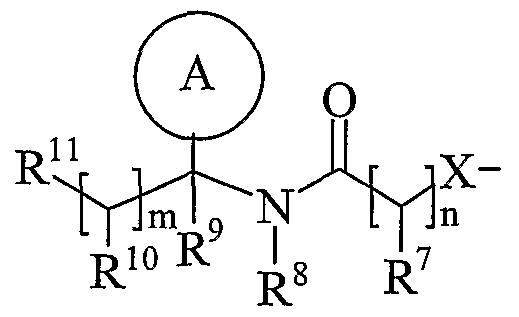
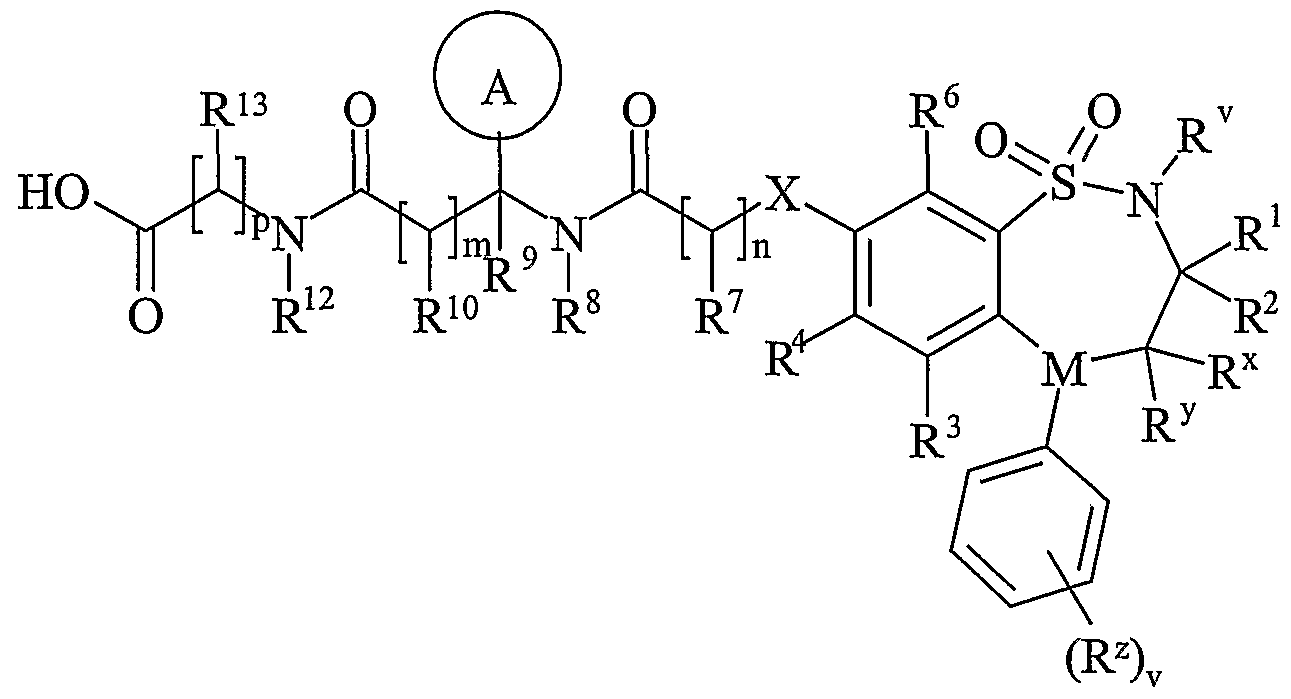
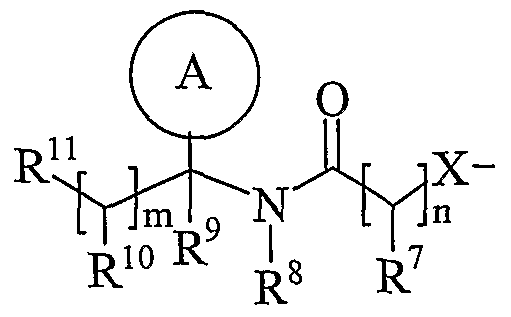
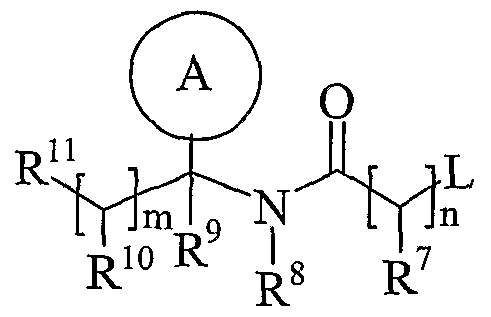
  • R 5 is a group of formula (IA) (as depicted above) wherein: X is -O-; Ring A is phenyl optionally substituted by one or more substituents selected from R 17 ; n is 1; R 7 is hydrogen; R 8 is hydrogen;
  • R 9 is hydrogen; m is O;
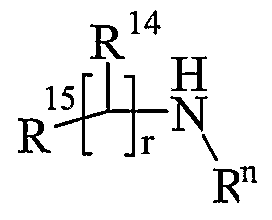
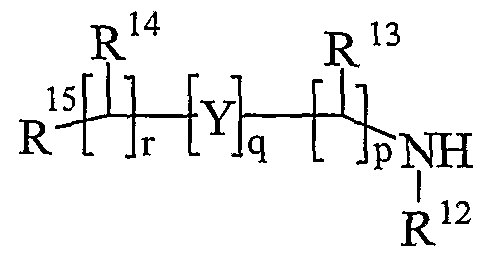
  • R 11 is a group of formula (IB) (as depicted above) wherein: R 12 is hydrogen; p is 1 or 2;
  • R 13 is hydrogen; q is 0; r is O; R 15 is carboxy or sulpho; and
  • R 17 is hydroxy
  • R 5 is N- ⁇ (R)- ⁇ -[N-(carboxymethyl)carbamoyl]benzyl ⁇ carbamoylmethoxy, N- ⁇ (R)- ⁇ - [7V-(carboxymethyl)carbamoyl]benzyl ⁇ carbamoylmethoxy or N- ⁇ (R)-a-[N-(2- sulphoethyl)carbamoyl]-4-hydroxybenzyl ⁇ carbamoylmethoxy.
  • R 5 is a group of formula (IA) (as depicted above) wherein:
  • X is -O-
  • Ring A is phenyl optionally substituted by one or more substituents selected from R ; n is 1;
  • R 9 is hydrogen; m is 0;
  • R 11 is carboxy, a group of formula (IB) (as depicted above) or a group of formula (IC) (as depicted above) wherein: R 12 is hydrogen or C 1-4 alkyl; p is 1 or 2;
  • R is hydrogen or C 1-4 alkyl optionally substituted by R wherein R is hydroxy, carbamoyl, amino, benzyloxycarbonylamino or C 1-4 alkylS(O) a wherein a is 0; R 14 is hydrogen or hydroxy; q is 0; r is O or 1;
  • R 15 is carboxy or sulpho
  • R is hydroxy
  • Ring B is pyrrolidin-1-yl substituted on carbon by one group selected from R 23 ; wherein R 23 is carboxy.
  • R 5 is N- ⁇ (R)- ⁇ -[N-(carboxymethyl)carbamoyl]benzyl ⁇ carbamoylmethoxy, N- ⁇ (R)- ⁇ - [N-(carboxymethyl)carbamoyl]benzyl ⁇ carbamoylmethoxy, N- ⁇ (R)- -[N-(2- sulphoethyl)carbamoyl]-4-hydroxybenzyl ⁇ carbamoylmethoxy, N- ⁇ (R)- -[N-((S)-l-carboxy-2- hydroxyethyl)carbamoyl]benzyl ⁇ carbamoylmethoxy, N- ⁇ (R)- ⁇ -[iV-((S)- 1 -carboxyethyl) carbamoyl]benzyl ⁇ carbamoylmethoxy, N- ⁇ (R)- ⁇ -[iV-((S)-l-carboxypropyl)car
  • R 5 is a group of formula (IA) (as depicted above) wherein:
  • X is -O-; Ring A is phenyl optionally substituted by one or more substituents selected from R 17 ; n is 1;
  • R 7 is hydrogen
  • R is hydrogen
  • R 9 is hydrogen; m is O;
  • R 11 is carboxy, a group of formula (IB) (as depicted above) or a group of formula (IC) (as depicted above) wherein:
  • R 12 is hydrogen or C 1-4 alkyl; p is 1 or 2;
  • R is hydrogen or d- ⁇ alkyl optionally substituted by R wherein R is hydroxy, carbamoyl, amino, benzyloxycarbonylammo, C 1- alkylS(O) a wherein a is 0 or (C 1-4 alkyl) silyl; R 14 is hydrogen or hydroxy or C 1-6 alkyl; wherein R 14 may be optionally substituted by one or more substituents selected from R ;
  • Y is -N(R n )C(O)- wherein R n is hydrogen; q is O or l; r is 0 or 1;
  • R 5 is N- ⁇ (R)- ⁇ -[N-(carboxymethyl)carbamoyl]benzyl ⁇ carbamoylmethoxy, N- ⁇ (R)- ⁇ - [N-(carboxymethyl)carbamoyl]benzyl ⁇ carbamoylmethoxy, N- ⁇ (R)-a-[N-(2- sulphoethyl)carbamoyl]-4-hydroxybenzyl ⁇ carbamoylmethoxy, N- ⁇ (R)- ⁇ -[N-((S)-l-carboxy-2- hydroxyethyl)carbamoyl]benzyl ⁇ carbamoylmethoxy, N- ⁇ (R)- -[N-((S)-l-carboxyethyl) carbamoyljbenzyl ⁇ carbamoylmethoxy, N- ⁇ (R)- ⁇ -[N-((S)-l -carboxypropyl)
  • R 5 is hydrogen
  • R 4 is a group of formula (IA).
  • R 5 is a group of formula (IA).
  • R v is hydrogen
  • R and R are C 1-4 alkyl; R x and R y are both hydrogen; M is - ⁇ -; v is O;
  • R 3 and R 6 are hydrogen
  • R 4 is halo, C ⁇ -4 alkyl or C 1-4 alkylS(O) a wherein a is 0;
  • R 5 is a group of formula (IA) (as depicted above) wherein:
  • X is -O-; Ring A is phenyl optionally substituted by one or more substituents selected from R ; n is 1; R 7 is hydrogen;
  • R is hydrogen; R 9 is hydrogen; m is 0;
  • R 11 is carboxy, a group of formula (IB) (as depicted above) or a group of formula (IC) (as depicted above) wherein:
  • R 12 is hydrogen or C 1-4 alkyl; p is 1 or 2; R 13 is hydrogen or C 1-6 alkyl optionally substituted by R 20 wherein R 20 is hydroxy, carbamoyl, amino, benzyloxycarbonylamino, C 1-4 alkylS(O) a wherein a is 0 or (C 1-4 alkyl) 3 silyl; R 14 is hydrogen or hydroxy or C 1-6 alkyl; wherein R 14 may be optionally substituted by one or more substituents selected from R 20 ;
  • Y is -N(R n )C(O)- wherein R n is hydrogen; q is O or 1; r is O or l;
  • R 15 is carboxy or sulpho
  • R 17 is hydroxy
  • R is selected from hydroxy
  • Ring B is pyrrolidin-1-yl or azetidinyl substituted on carbon by one group selected from R , and optionally additionally substituted on carbon by one or more R ; wherein R is carboxy and R 24 is hydroxy; or a pharmaceutically acceptable salt, solvate, solvate of such a salt or a prodrug thereof.
  • R 1 and R 2 are both butyl
  • R x and R y are both hydrogen
  • R 4 is bromo, methyl or methylthio
  • R 5 is N- ⁇ (R)- ⁇ -[iV-(carboxymethyl)carbamoyl]benzyl ⁇ carbamoylmethoxy, N- ⁇ (R)- ⁇ - [N-(carboxymethyl)carbamoyl]benzyl ⁇ carbamoylmethoxy, N- ⁇ (R)- ⁇ -[N-(2- sulphoethyl)carbamoyl]-4-hydroxybenzyl ⁇ carbamoylmethoxy, N- ⁇ (R)- ⁇ -[N-((S)-l-carboxy-2- hydroxyethyl)carbamoyl]benzyl ⁇ carbamoylmethoxy, N- ⁇ (R)- ⁇ -[N-((S)-l-carboxyethyl) carbamoyl]benzyl ⁇ carbamoylmethoxy, N- ⁇ (R)- ⁇ -[N-((S)-l-carboxyethyl
  • preferred compounds of the invention are any one of examples 5, 6, 7, 9, 11, 14, 15, 26, 27, 28, 30 or 33 or a pharmaceutically acceptable salt, solvate, solvate of such a salt or a prodrug thereof.
  • preferred compounds of the invention are any one of the examples or a pharmaceutically acceptable salt, solvate, solvate of such a salt or a prodrug thereof.
  • Preferred aspects of the invention are those which relate to the compound of formula (I) or a pharmaceutically acceptable salt thereof.
  • Another aspect of the present invention provides a process for preparing a compound of formula (I) or a pharmaceutically acceptable salt, solvate, solvate of such a salt or a prodrug thereof which process (wherein variable groups are, unless otherwise specified, as defined in formula (I)) comprises of:
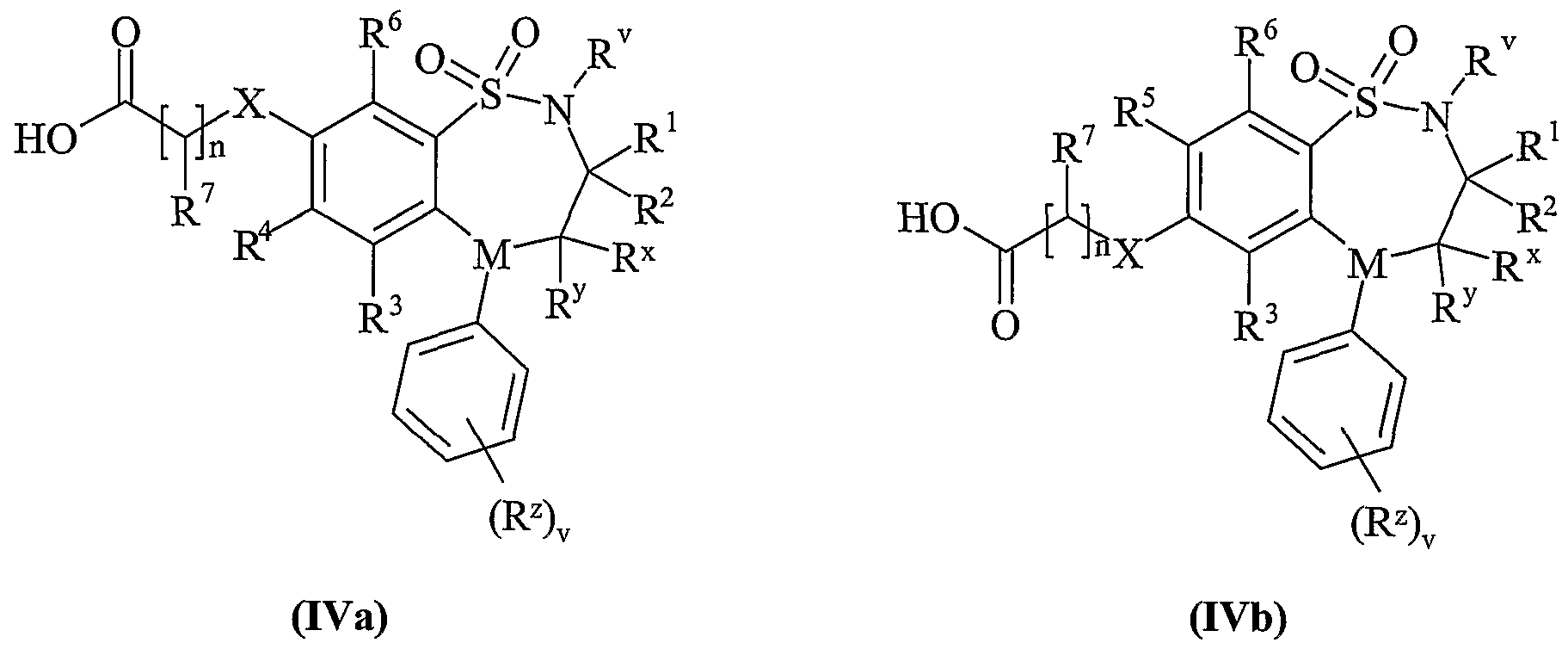
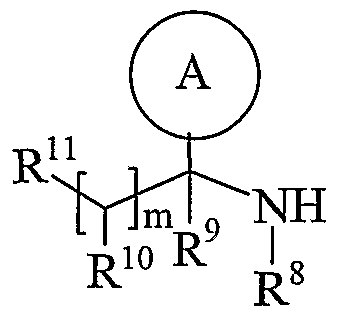
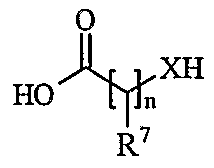
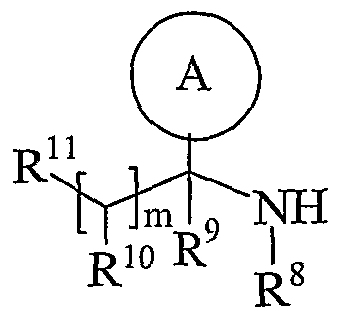
  • Process 2 reacting an acid of formula (IVa) or (IVb): or an activated derivative thereof; with an amine of formula (V):
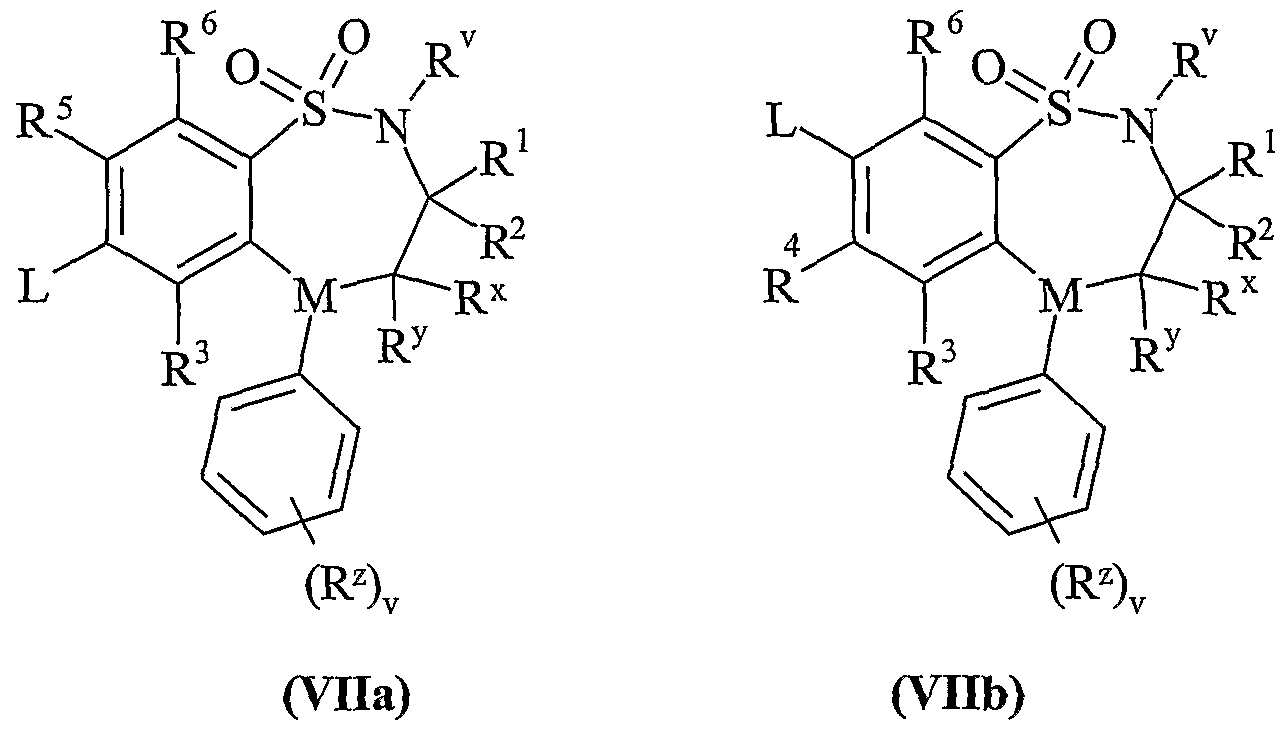
  • L is a displaceable group, suitable values for L are for example, a halogeno or sulphonyloxy group, for example a chloro, bromo, methanesulphonyloxy or toluene-4-sulphonyloxy group.
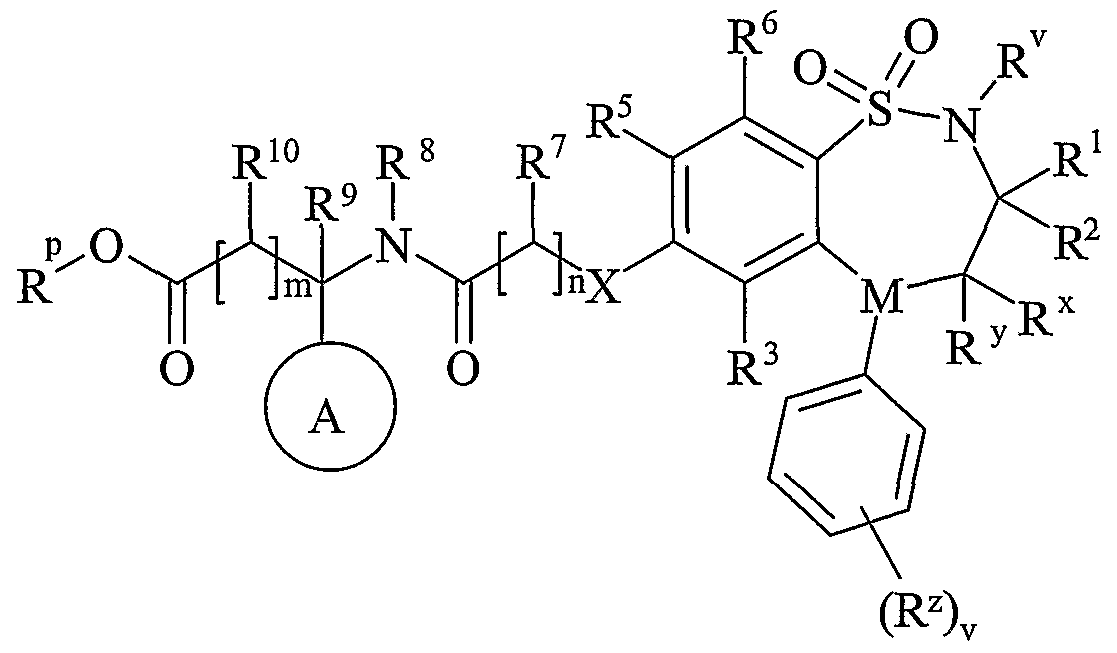
  • R p together with the -OC(O)- group to which it is attached forms an ester.
  • R p together with the -OC(O)- group to which it is attached forms an ester.
  • R p is methyl or ethyl. More preferably R p is methyl, hi another aspect of the invention Rp is C 1-6 alkyl or phenylC 1-6 alkyl, preferably C 1-4 alkyl or benzyl, more preferably t-butyl, methyl, ethyl or benzyl.
  • bicyclic ring systems of the present invention may be assembled according to
  • FGI is functional interconversion of the Br into other values of R 4 using procedures known to the skilled person.
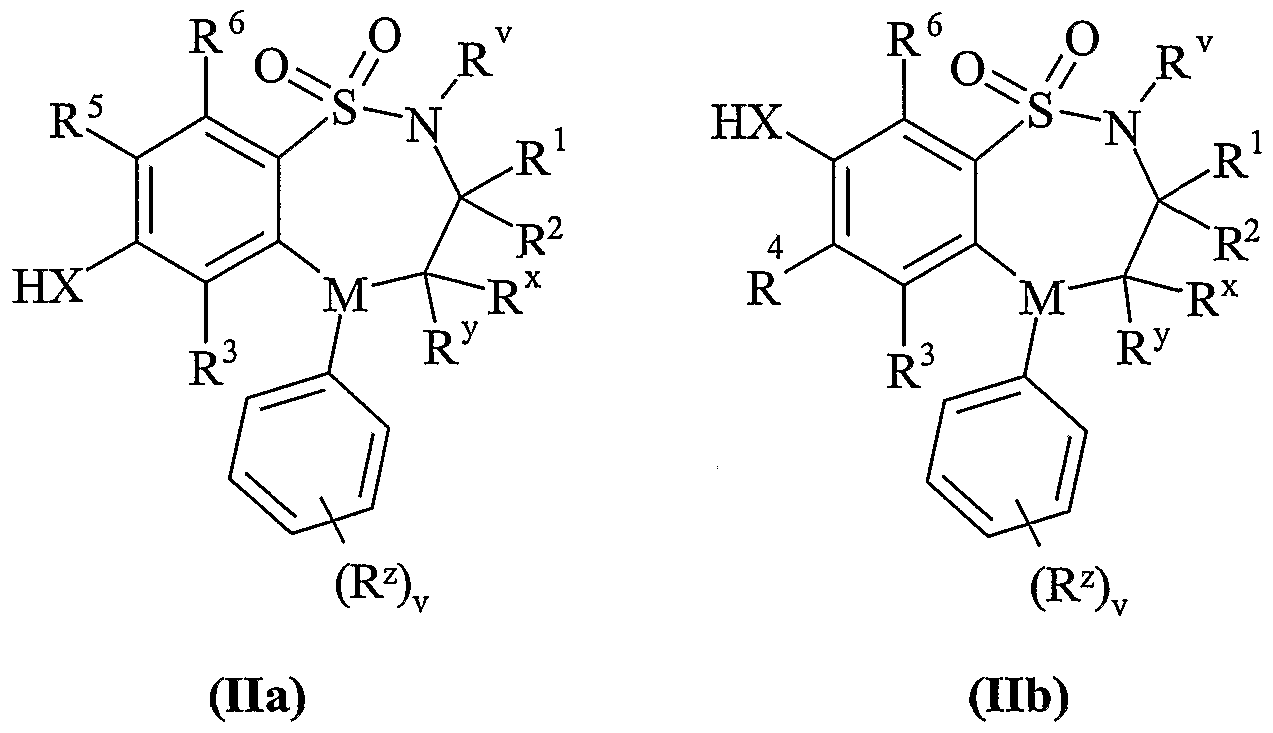
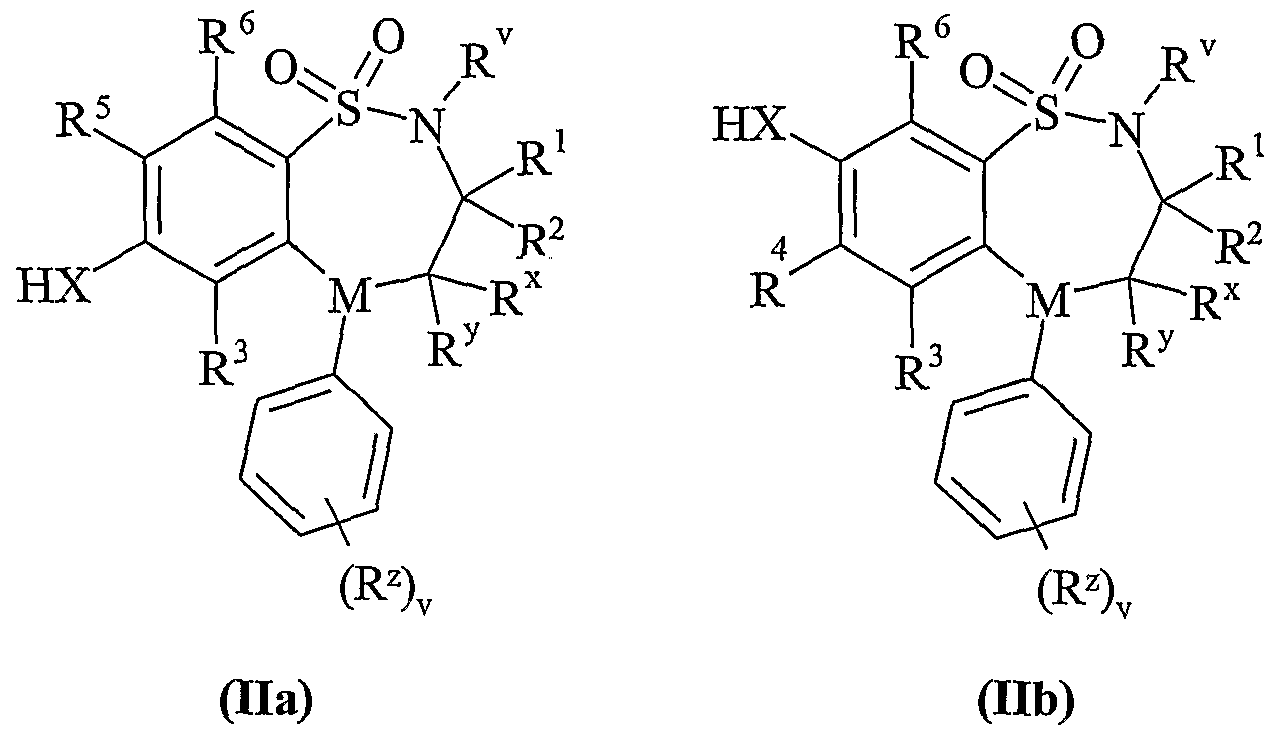
  • Scheme lb Process 1 Compounds of formula (Ila) or (lib) maybe reacted with compounds of formula (III) in the presence of a base for example an inorganic base such as sodium carbonate, or an organic base such as Hunigs base, in the presence of a suitable solvent such as acetonitrile, dichloromethane or tetrahydrofuran at a temperature in the range of 0°C to reflux, preferably at or near reflux.
  • a base for example an inorganic base such as sodium carbonate, or an organic base such as Hunigs base
  • a suitable solvent such as acetonitrile, dichloromethane or tetrahydrofuran at a temperature in the range of 0°C to reflux, preferably at or near reflux.
  • Standard peptide coupling reagents known in the art can be employed as suitable coupling reagents, or for example carbonyldiimidazole and dicyclohexyl-carbodiimide, optionally in the presence of a catalyst such as dimethylaminopyridine or 4-pyrrolidinopyridine, optionally in the presence of a base for example triethylamine, pyridine, or 2,6-di- ⁇ /£y/-pyridines such as 2,6-lutidine or 2,6-di-tert-butylpyridine.
  • Suitable solvents include dimethylacetamide, dichloromethane, benzene, tetrahydrofuran and dimethylformamide.
  • the coupling reaction may conveniently be performed at a temperature in the range of -40 to 40°C.
  • Suitable activated acid derivatives include acid halides, for example acid chlorides, and active esters, for example pentafluorophenyl esters.
  • the reaction of these types of compounds with amines is well known in the art, for example they may be reacted in the presence of a base, such as those described above, and in a suitable solvent, such as those described above.
  • the reaction may conveniently be performed at a temperature in the range of -40 to 40°C.
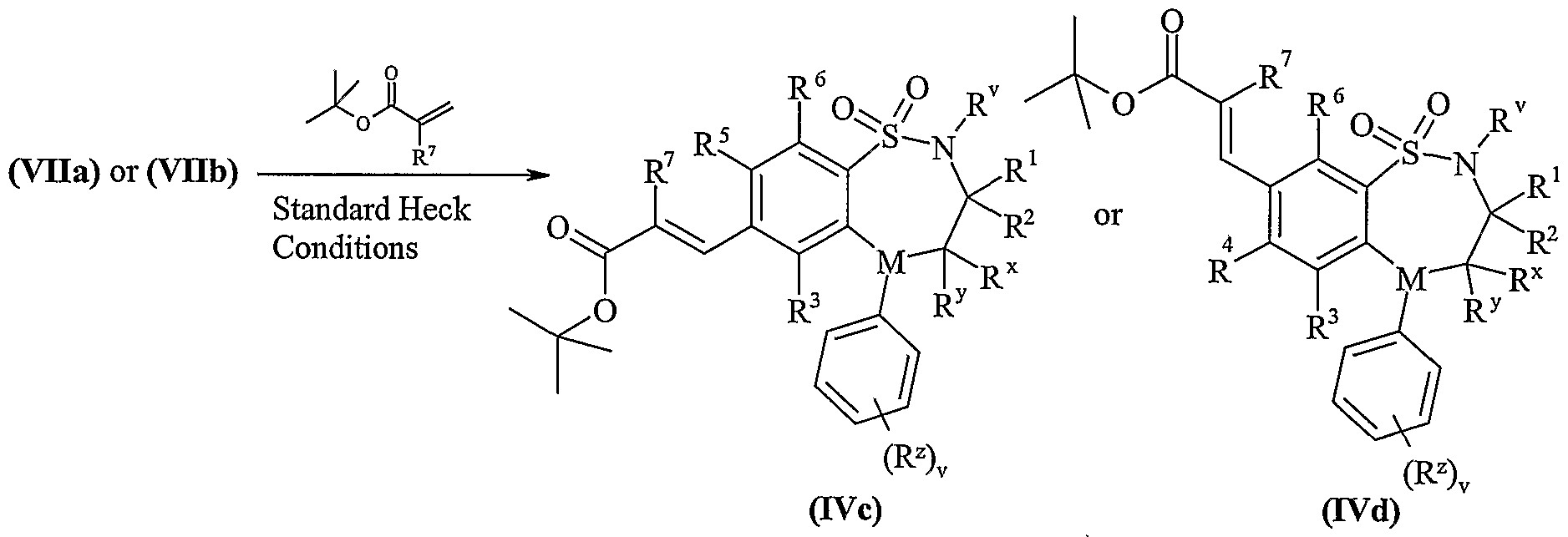
  • Process 4 Compounds of formula (IVc), (V), (VI), (XII) and (VII) are commercially available compounds, or they are known in the literature, or they are prepared by standard processes known in the art.
  • Process 4 Compounds of formula (Vila) and (Vllb) may be reacted with thiols of formula (VIII) in the presence of base, for example an inorganic base such as sodium carbonate or an organic base such as Hunigs base, in the presence of a suitable solvent such as DMF or THF at a temperature in the range of 0°C to reflux.
  • base for example an inorganic base such as sodium carbonate or an organic base such as Hunigs base, in the presence of a suitable solvent such as DMF or THF at a temperature in the range of 0°C to reflux.
  • Compounds of formula (Vila) and (Vllb) may be prepared by any of the procedures above for the preparation of compounds of formula (I), but wherein one of R 4 and R 5 is L.
  • Compounds of formula (VIII) are commercially available compounds, or they are known in the literature, or they are prepared by standard processes known in the art.
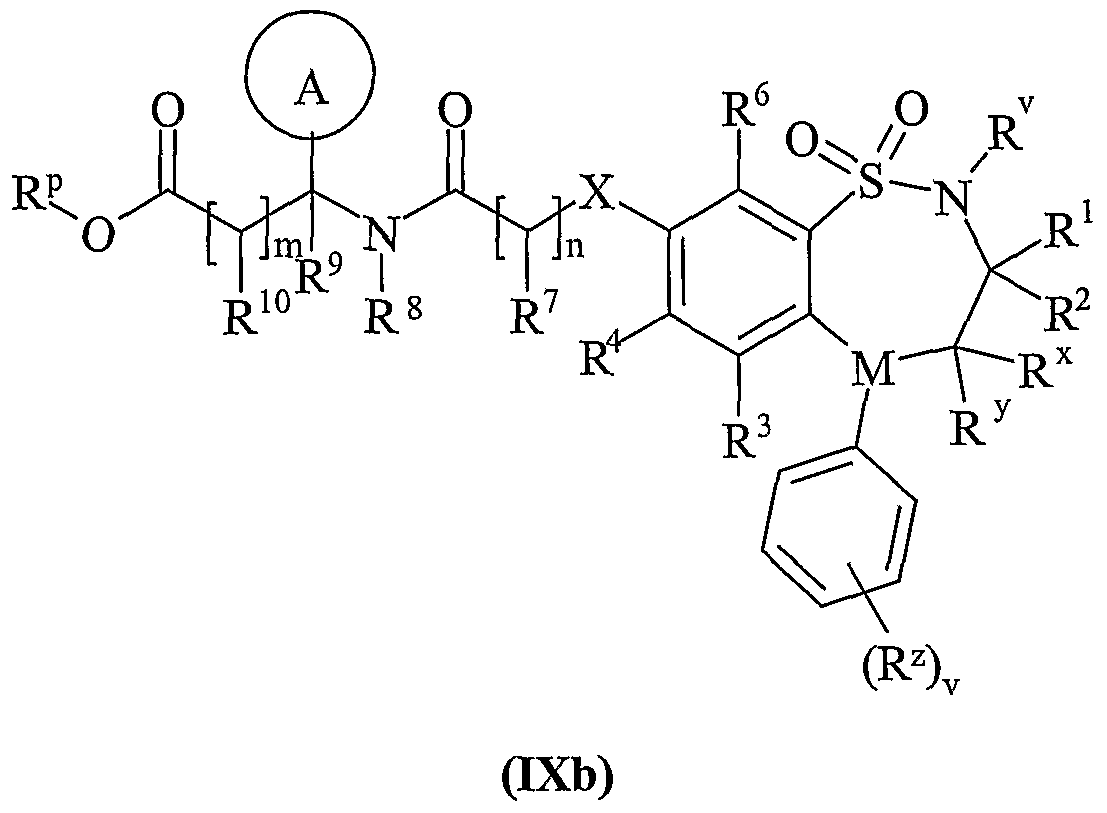
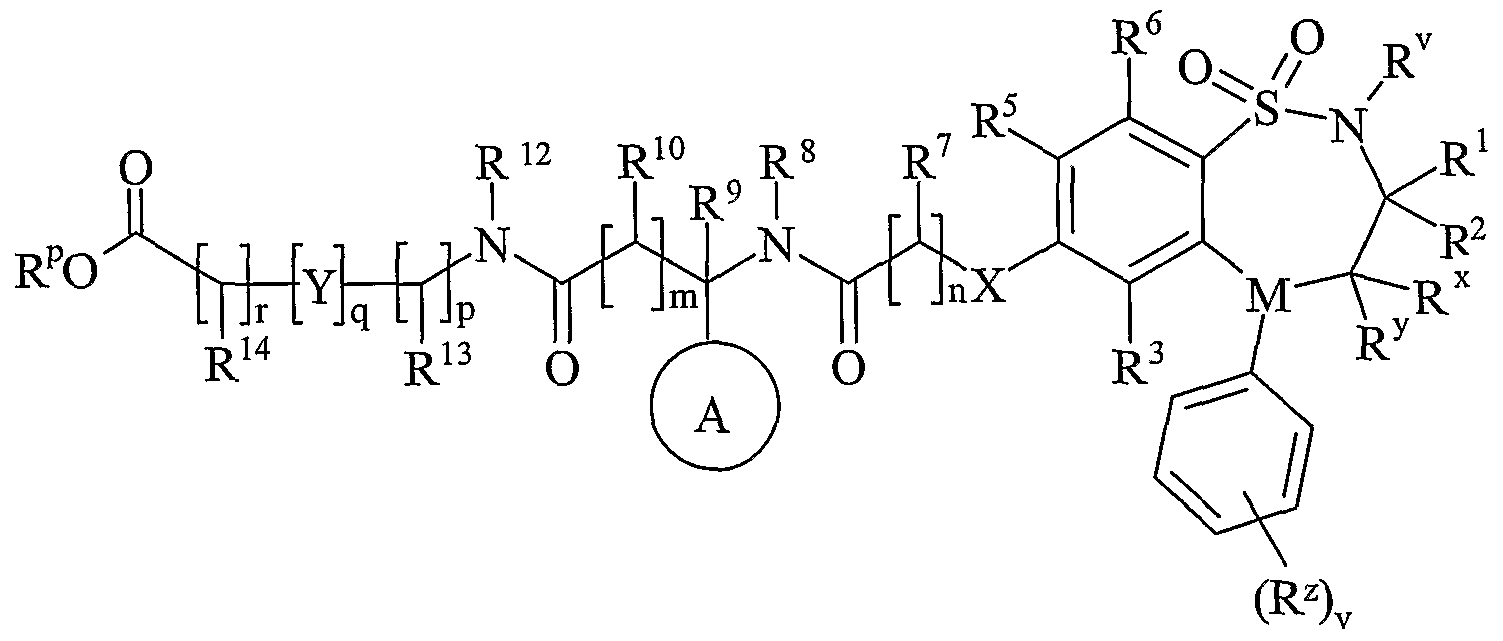
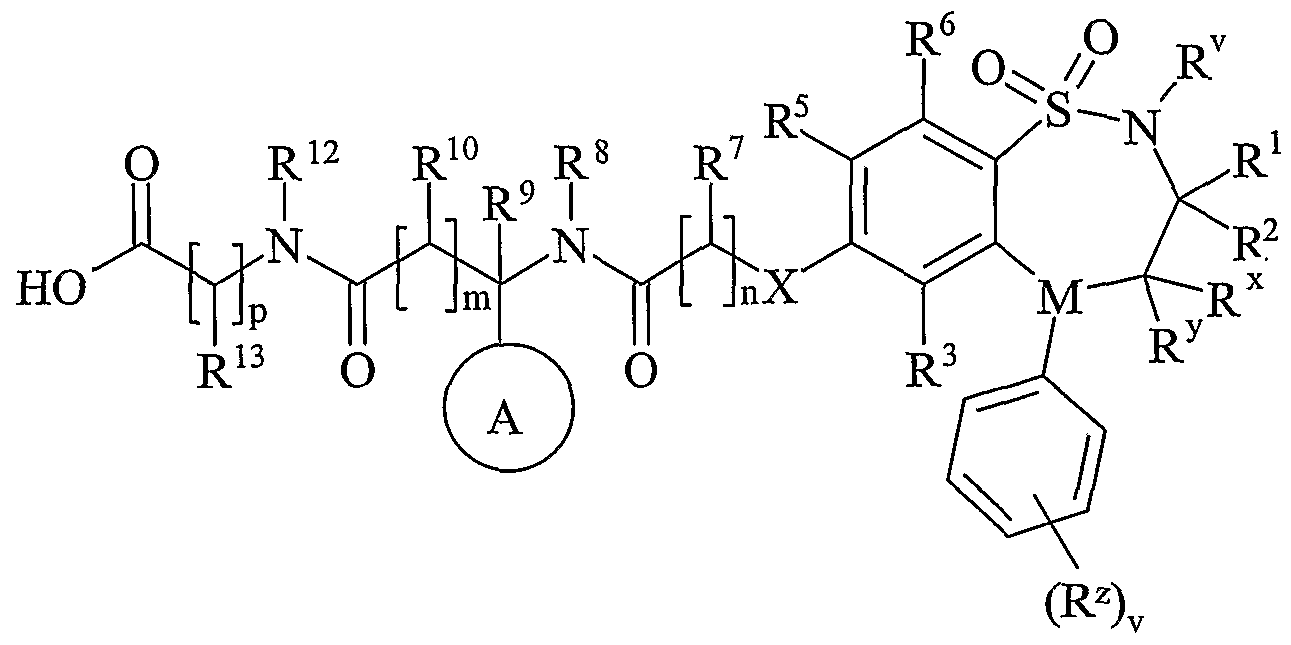
  • Process 5) and Process 6): Esters of formula (IXa), (IXb), (Xa) and (Xb) maybe deprotected under standard conditions such as those described below, for Example they may be deprotected with sodium hydroxide in methanol at room temperature.
  • Esters of formula (IXa), (IXb), (Xa) and (Xb) maybe prepared by any of the procedures above for the preparation of compounds of formula (I), but wherein R 11 or R 15 is C 1-4 alkoxycarbonyl.
  • R 11 or R 15 is C 1-4 alkoxycarbonyl.
  • Such reactions and modifications include, for example, introduction of a substituent by means of an aromatic substitution reaction, reduction of substituents, alkylation of substituents and oxidation of substituents.
  • the reagents and reaction conditions for such procedures are well known in the chemical art.
  • aromatic substitution reactions include the introduction of a nitro group using concentrated nitric acid, the introduction of an acyl group using, for example, an acyl halide and Lewis acid (such as aluminium trichloride) under Friedel Crafts conditions; the introduction of an alkyl group using an alkyl halide and Lewis acid (such as aluminium trichloride) under Friedel Crafts conditions; and the introduction of a halogeno group.
  • modifications include the reduction of a nitro group to an amino group by for example, catalytic hydrogenation with a nickel catalyst or treatment with iron in the presence of hydrochloric acid with heating; oxidation of alkylthio to alkylsulphinyl or alkylsulphonyl.
  • a suitable protecting group for an amino or alkylamino group is, for example, an acyl group, for example an alkanoyl group such as acetyl, an alkoxycarbonyl group, for example a methoxycarbonyl, ethoxycarbonyl or t-butoxycarbonyl group, an arylmethoxycarbonyl group, for example benzyloxycarbonyl, or an aroyl group, for example benzoyl.
  • the deprotection conditions for the above protecting groups necessarily vary with the choice of protecting group.
  • an acyl group such as an alkanoyl or alkoxycarbonyl group or an aroyl group may be removed for example, by hydrolysis with a suitable base such as an alkali metal hydroxide, for example lithium or sodium hydroxide.
  • a suitable base such as an alkali metal hydroxide, for example lithium or sodium hydroxide.
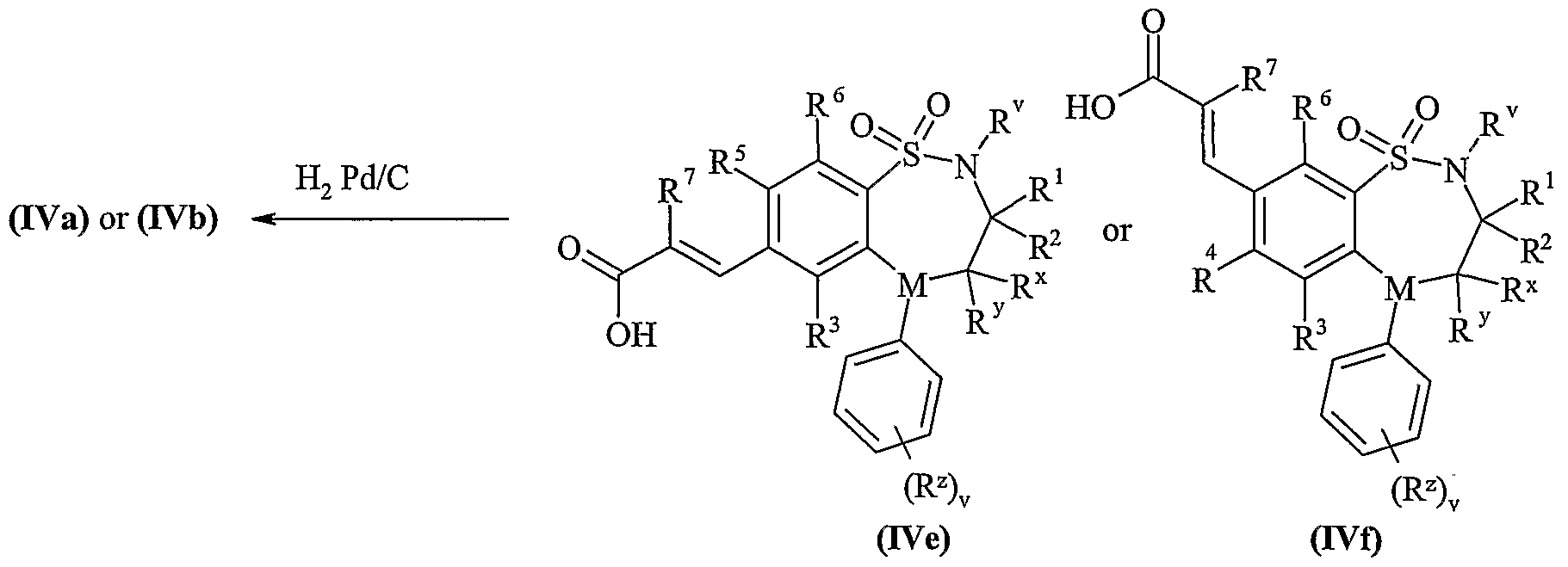
  • an acyl group such as a t-butoxycarbonyl group may be removed, for example, by treatment with a suitable acid as hydrochloric, sulphuric or phosphoric acid or trifluoroacetic acid and an arylmethoxycarbonyl group such as a benzyloxycarbonyl group may be removed, for example, by hydrogenation over a catalyst such as palladium-on-carbon, or by treatment with a Lewis acid for example boron tris(trifluoroacetate).
  • a suitable alternative protecting group for a primary amino group is, for example, a phthaloyl group which may be removed by treatment with an alkylamine, for example dimethylaminopropylamine, or with hydrazine.
  • a suitable protecting group for a hydroxy group is, for example, an acyl group, for example an alkanoyl group such as acetyl, an aroyl group, for example benzoyl, or an arylmethyl group, for example benzyl.
  • the deprotection conditions for the above protecting groups will necessarily vary with the choice of protecting group.
  • an acyl group such as an alkanoyl or an aroyl group may be removed, for example, by hydrolysis with a suitable base such as an alkali metal hydroxide, for example lithium or sodium hydroxide.
  • a suitable base such as an alkali metal hydroxide, for example lithium or sodium hydroxide.
  • an arylmethyl group such as a benzyl group may be removed, for example, by hydrogenation over a catalyst such as palladium-on-carbon.
  • a suitable protecting group for a carboxy group is, for example, an esterifying group, for example a methyl or an ethyl group which may be removed, for example, by hydrolysis with a base such as sodium hydroxide, or for example a t-butyl group which may be removed, for example, by treatment with an acid, for example an organic acid such as trifluoroacetic acid, or for example a benzyl group winch may be removed, for example, by hydrogenation over a catalyst such as palladium-on-carbon.
  • the protecting groups may be removed at any convenient stage in the synthesis using conventional techniques well known in the chemical art.
  • the compounds defined in the present invention possess IBAT inhibitory activity. These properties may be assessed, for example, using an in vitro test assay for studying the effect on bile acid uptake in IBAT-transfected cells (Smith L., Price- Jones M. J., Hugnes K. T. and Jones N. R. A.; J Biomolecular Screening, 3, 227-230) or in vivo by studying the effect on radiolabelled bile acid absorption in mice/rats (Lewis M. C, Brieaddy L. E. and Root C, J., J Lip Res 1995, 36, 1098-1105).
  • a pharmaceutical composition which comprises a compound of formula (I), or a pharmaceutically acceptable salt, solvate, solvate of such a salt or a prodrug thereof, as defined hereinbefore in association with a pharmaceutically-acceptable diluent or carrier.
  • composition may be in a form suitable for oral administration, for example as a tablet or capsule, for parenteral injection (including intravenous, subcutaneous, intramuscular, intravascular or infusion) as a sterile solution, suspension or emulsion, for topical administration as an ointment or cream or for rectal administration as a suppository.
  • parenteral injection including intravenous, subcutaneous, intramuscular, intravascular or infusion
  • sterile solution emulsion
  • topical administration as an ointment or cream or for rectal administration as a suppository.
  • compositions may be prepared in a conventional manner using conventional excipients.
  • the compound of formula (I), or a pharmaceutically acceptable salt, solvate, solvate of such a salt or a prodrug thereof, will normally be administered to a warm-blooded animal at a unit dose within the range 5-5000 mg per square meter body area of the animal, i.e. approximately 0.02-100 mg/kg, preferably 0.02 -50 mg/kg, and this normally provides a therapeutically-effective dose.
  • a unit dose form such as a tablet or capsule will usually contain, for example 1-250 mg of active ingredient.
  • a daily dose in the range of 1-50 mg/kg, particularly 0.1-10 mg/kg is employed.
  • a daily dose in the rage of 0.02-20 mg/kg is employed.
  • a daily dose will necessarily be varied depending upon the host treated, the particular route of administration, and the severity of the illness being treated. Accordingly the optimum dosage may be determined by the practitioner who is treating any particular patient.
  • the compounds defined in the present invention are effective IBAT inhibitors, and accordingly have value in the treatment of disease states associated with hyperlipidaemic conditions.
  • dyslipidaemia such as hyperlipidaemia, hypertrigliceridemia, hyperbetalipoproteinemia (high LDL), hyperprebetalipoproteinemia (high VLDL), hyperchylomicronemia, hypolipoproteinemia, hypercholesterolemia, hyperlipoproteinemia and hypoalphalipoproteinemia (low HDL) in a warm-blooded animal, such as man.
  • a compound of the formula (I), or a pharmaceutically acceptable salt, solvate, solvate of such a salt or a prodrug thereof, as defined hereinbefore in the manufacture of a medicament for use in the treatment of different clinical conditions such as atherosclerosis, arteriosclerosis, arrhythmia, hyper-thrombotic conditions, vascular dysfunction, endothelial dysfunction, heart failure, coronary heart diseases, cardiovascular diseases, myocardial infarction, angina pectoris, peripheral vascular diseases, inflammation of cardiovascular tissues such as heart, valves, vasculature, arteries and veins, aneurisms, stenosis, restenosis, vascular plaques, vascular fatty streaks, leukocytes, monocytes and/or macrophage infiltration, intimal thickening, medial thinning, infectious and surgical trauma and vascular thrombosis, stroke and transient ischaemic attacks in a warm-blooded animal, such as man.
  • a method for producing an IBAT inhibitory effect in a warm-blooded animal, such as man, in need of such treatment which comprises administering to said animal an effective amount of a compound of formula (I), or a pharmaceutically acceptable salt, solvate, solvate of such a salt or a prodrug thereof.
  • a method of treating hyperlipidemic conditions in a warm-blooded animal, such as man, in need of such treatment which comprises administering to said animal an effective amount of a compound of formula (I), or a pharmaceutically acceptable salt, solvate, solvate of such a salt or a prodrug thereof.
  • a method of treating dyslipidemic conditions and disorders such as hyperlipidaemia, hypertrigliceridemia, hyperbetalipoproteinemia (high LDL), hyperprebetalipoproteinemia (high VLDL), hyperchylomicronemia, hypolipoproteinemia, hypercholesterolemia, hyperlipoproteinemia and hypoalphalipoproteinemia (low HDL) in a warm-blooded animal, such as man, in need of such treatment which comprises administering to said animal an effective amount of a compound of formula (I), or a pharmaceutically acceptable salt, solvate, solvate of such a salt or a prodrug thereof.
  • a compound of formula (I) or a pharmaceutically acceptable salt, solvate, solvate of such a salt or a prodrug thereof.
  • a method of treating different clinical conditions such as atherosclerosis, arteriosclerosis, arrhythmia, hyper-thrombotic conditions, vascular dysfunction, endothelial dysfunction, heart failure, coronary heart diseases, cardiovascular diseases, myocardial infarction, angina pectoris, peripheral vascular diseases, inflammation of cardiovascular tissues such as heart, valves, vasculature, arteries and veins, aneurisms, stenosis, restenosis, vascular plaques, vascular fatty streaks, leukocytes, monocytes and/or macrophage infiltration, intimal thickening, medial thinning, infectious and surgical trauma and vascular thrombosis, stroke and transient ischaemic attacks in need of such treatment which comprises administering to said animal an effective amount of a compound of formula (I), or a pharmaceutically acceptable salt, solvate, solvate of such a salt or a prodrug thereof.
  • a compound of formula (I) or a pharmaceutically acceptable salt, solvate, solvate of
  • a method of treating atherosclerosis, coronary heart diseases, myocardial infarction, angina pectoris, peripheral vascular diseases, stroke and transient ischaemic attacks in a warm-blooded animal, such as man, in need of such treatment which comprises administering to said animal an effective amount of a compound of formula (I), or a pharmaceutically acceptable salt, solvate, solvate of such a salt or a prodrug thereof.
  • an IBAT inhibitor might potentially be useful in the treatment and/or prevention of gallstones.
  • a method of treating and / or preventing gallstones in a warm-blooded animal, such as man, in need of such treatment which comprises administering to said animal an effective amount of a compound of formula (I), or a pharmaceutically acceptable salt, solvate, solvate of such a salt or a prodrug thereof.
  • the size of the dose required for the therapeutic or prophylactic treatment will necessarily be varied depending on the host treated, the route of administration and the severity of the illness being treated.
  • a unit dose in the range, for example, 0.1-50mg/kg preferably 0.1-10 mg/kg is envisaged.
  • the IBAT inhibitory activity defined hereinbefore may be applied as a sole therapy or may involve, in addition to a compound of the invention, one or more other substances and/or treatments. Such conjoint treatment may be achieved by way of the simultaneous, sequential or separate administration of the individual components of the treatment.
  • a pharmaceutical product comprising a compomid of the formula (I), or a pharmaceutically acceptable salt, solvate, solvate of such a salt or a prodrug thereof, as defined hereinbefore and an additional IBAT inhibitory substance as defined hereinbefore and an additional hypolipidaemic agent for the conjoint treatment of hyperlipidaemia.
  • the compound of formula (I), or a pharmaceutically acceptable salt, solvate, solvate of such a salt or a prodrug thereof maybe administered in association with an HMG Co-A reductase inhibitor, or pharmaceutically acceptable salts, solvates, solvates of such salts or prodrugs thereof.
  • HMG Co-A reductase inhibitors, pharmaceutically acceptable salts, solvates, solvates of such salts or prodrugs thereof are statins well known in the art.
  • statins are fluvastatin, lovastatin, pravastatin, simvastatin, atorvastatin, cerivastatin, bervastatin, dalvastatin, mevastatin and (E)-7-[4-(4-fluorophenyl)-6-isopropyl-2-[methyl(methylsulphonyl)amino]pyrimidin-5-yl](3R, 5S)-3,5-dihydroxyhept-6-enoic acid (rosuvastatin), or a pharmaceutically acceptable salt, solvate, solvate of such a salt or a prodrug thereof.
  • a particular statin is atorvastatin, or a pharmaceutically acceptable salt, solvate, solvate of such a salt or a prodrug thereof.
  • a more particular statin is atorvastatin calcium salt.
  • a further particular statin is (E)-7-[4-(4- fluorophenyl)-6-isopropyl-2-[methyl(methylsulphonyl)amino]pyrimidin-5-yl](3R,5S)-3,5- dihydroxyhept-6-enoic acid (rosuvastatin), or a pharmaceutically acceptable salt, solvate, solvate of such a salt or a prodrug thereof.
  • a preferable particular statin is rosuvastatin calcium salt.
  • the compound of formula (I), or a pharmaceutically acceptable salt, solvate, solvate of such a salt or a prodrug thereof may be administered in association with an HMG Co-A reductase inhibitor, or a pharmaceutically acceptable salt, solvate, solvate of such a salt or a prodrug thereof, and/or a bile acid binder thereby avoiding a possible risk of excess of bile acids in colon caused by the inhibition of the ileal bile acid transport system. An excess of bile acids in the visceral contents may cause diarrhoea.
  • the present invention also provides a treatment of a possible side effect such as diarrhoea in patients during therapy comprising the compound of formula (I), or a pharmaceutically acceptable salt, solvate, solvate of such a salt or a prodrug thereof.
  • An HMG CoA-reductase inhibitor, or a pharmaceutically acceptable salt, solvate, solvate of such a salt or a prodrug thereof will by its action decrease the endogenous cholesterol available for the bile acid synthesis and have an additive effect in combination with the compound of formula (I), or a pharmaceutically acceptable salt, solvate, solvate of such a salt or a prodrug thereof on lipid lowering.
  • Suitable bile acid binders for such a combination therapy are resins, such as cholestyramine and cholestipol.
  • a method for producing an IBAT inhibitory effect in a warm-blooded animal, such as man, in need of such treatment which comprises administering to said animal an effective amount of a compound of formula (I), or a pharmaceutically acceptable salt, solvate, solvate of such a salt or a prodrug thereof in simultaneous, sequential or separate administration with an effective amount of an HMG Co-A reductase inhibitor, or a pharmaceutically acceptable salt, solvate, solvate of such a salt or a prodrug thereof.
  • a method for producing an IBAT inhibitory effect in a warm-blooded animal, such as man, in need of such treatment which comprises administering to said animal an effective amount of a compound of formula (I), or a pharmaceutically acceptable salt, solvate, solvate of such a salt or a prodrug thereof in simultaneous, sequential or separate administration with a bile acid binder.
  • a method for producing an IBAT inhibitory effect in a warm-blooded animal, such as man, in need of such treatment which comprises administering to said animal an effective amount of a compound of formula (I), or a pharmaceutically acceptable salt, solvate, solvate of such a salt or a prodrug thereof in simultaneous, sequential or separate administration with an effective amount of an HMG Co-A reductase inhibitor, or a pharmaceutically acceptable salt, solvate, solvate of such a salt or a prodrug thereof, in simultaneous, sequential or separate administration with a bile acid binder.
  • a compound of formula (I) or a pharmaceutically acceptable salt, solvate, solvate of such a salt or a prodrug thereof in simultaneous, sequential or separate administration with an effective amount of an HMG Co-A reductase inhibitor, or a pharmaceutically acceptable salt, solvate, solvate of such a salt or a prodrug thereof, in simultaneous, sequential or separate administration with a bile acid binder.
  • a method of treating hyperlipidemic conditions in a warm-blooded animal, such as man, in need of such treatment which comprises administering to said animal an effective amount of a compound of formula (I), or a pharmaceutically acceptable salt, solvate, solvate of such a salt or a prodrug thereof in simultaneous, sequential or separate administration with an effective amount of an HMG Co-A reductase inhibitor, or a pharmaceutically acceptable salt, solvate, solvate of such a salt or a prodrug thereof.
  • a method of treating hyperlipidemic conditions in a warm-blooded animal, such as man, in need of such treatment which comprises administering to said animal an effective amount of a compound of formula (I), or a pharmaceutically acceptable salt, solvate, solvate of such a salt or a prodrug thereof in simultaneous, sequential or separate administration with an effective amount of a bile acid binder.
  • a method of treating hyperlipidemic conditions in a warm-blooded animal, such as man, in need of such treatment which comprises administering to said animal an effective amount of a compound of formula (I), or a pharmaceutically acceptable salt, solvate, solvate of such a salt or a prodrug thereof in simultaneous, sequential or separate administration with an effective amount of an HMG Co-A reductase inhibitor, or a pharmaceutically acceptable salt, solvate, solvate of such a salt or a prodrug thereof, in simultaneous, sequential or separate administration with a bile acid binder.
  • a compound of formula (I) or a pharmaceutically acceptable salt, solvate, solvate of such a salt or a prodrug thereof in simultaneous, sequential or separate administration with an effective amount of an HMG Co-A reductase inhibitor, or a pharmaceutically acceptable salt, solvate, solvate of such a salt or a prodrug thereof, in simultaneous, sequential or separate administration with a bile acid binder.
  • a pharmaceutical composition which comprises a compound of formula (I), or a pharmaceutically acceptable salt, solvate, solvate of such a salt or a prodrug thereof, and an HMG Co-A reductase inhibitor, or a pharmaceutically acceptable salt, solvate, solvate of such a salt or a prodrug thereof, in association with a pharmaceutically acceptable diluent or carrier.
  • a pharmaceutical composition which comprises a compound of formula (I), or a pharmaceutically acceptable salt, solvate, solvate of such a salt or a prodrug thereof, and a bile acid binder, in association with a pharmaceutically acceptable diluent or carrier.
  • a pharmaceutical composition wliich comprises a compound of formula (I), or a pharmaceutically acceptable salt, solvate, solvate of such a salt or a prodrug thereof, and an HMG Co-A reductase inhibitor, or a pharmaceutically acceptable salt, solvate, solvate of such a salt or a prodrug thereof, and a bile acid binder in association with a pharmaceutically acceptable diluent or carrier.
  • kits comprising a compound of formula (I), or a pharmaceutically acceptable salt, solvate, solvate of such a salt or a prodrug thereof, and an HMG Co-A reductase inhibitor, or a pharmaceutically acceptable salt, solvate, solvate of such a salt or a prodrug thereof.
  • kits comprising a compound of formula (I), or a pharmaceutically acceptable salt, solvate, solvate of such a salt or a prodrug thereof, and a bile acid binder.
  • kits comprising a compound of formula (I), or a pharmaceutically acceptable salt, solvate, solvate of such a salt or a prodrug thereof, and an HMG Co-A reductase inhibitor, or a pharmaceutically acceptable salt, solvate, solvate of such a salt or a prodrug thereof and a bile acid binder.
  • kits comprising: a) a compound of formula (I), or a pharmaceutically acceptable salt, solvate, solvate of such a salt or a prodrug thereof, in a first unit dosage form; b) an HMG Co-A reductase inhibitor, or a pharmaceutically acceptable salt, solvate, solvate of such a salt or a prodrug thereof; in a second unit dosage form; and c) container means for containing said first and second dosage forms.
  • a compound of formula (I) or a pharmaceutically acceptable salt, solvate, solvate of such a salt or a prodrug thereof, in a first unit dosage form
  • an HMG Co-A reductase inhibitor or a pharmaceutically acceptable salt, solvate, solvate of such a salt or a prodrug thereof
  • container means for containing said first and second dosage forms.
  • kits comprising: a) a compomid of formula (I), or a pharmaceutically acceptable salt, solvate, solvate of such a salt or a prodrug thereof, in a first unit dosage form; b) a bile acid binder; in a second unit dosage form; and c) container means for containing said first and second dosage forms.
  • kits comprising: a) a compound of formula (I), or a pharmaceutically acceptable salt, solvate, solvate of such a salt or a prodrug thereof, in a first unit dosage form; b) an HMG Co-A reductase inhibitor, or a pharmaceutically acceptable salt, solvate, solvate of such a salt or a prodrug thereof; in a second unit dosage form; c) a bile acid binder; in a third unit dosage form; and d) container means for containing said first, second and third dosage forms.
  • kits comprising: a) a compound of formula (I), or a pharmaceutically acceptable salt, solvate, solvate of such a salt or a prodrug thereof, together with a pharmaceutically acceptable diluent or carrier, in a first unit dosage form; b) an HMG Co-A reductase inhibitor, or a pharmaceutically acceptable salt, solvate, solvate of such a salt or a prodrug thereof, in a second unit dosage form; and c) container means for containing said first and second dosage forms.
  • kits comprising: a) a compound of formula (I), or a pharmaceutically acceptable salt, solvate, solvate of such a salt or a prodrug thereof, together with a pharmaceutically acceptable diluent or carrier, in a first unit dosage form; b) a bile acid binder, in a second unit dosage form; and c) container means for containing said first and second dosage forms.
  • kits comprising: a) a compound of formula (I), or a pharmaceutically acceptable salt, solvate, solvate of such a salt or a prodrug thereof, together with a pharmaceutically acceptable diluent or carrier, in a first unit dosage form; b) an HMG Co-A reductase inhibitor, or a pharmaceutically acceptable salt, solvate, solvate of such a salt or a prodrug thereof, in a second unit dosage form; and c) a bile acid binder; in a third unit dosage form; and d) container means for containing said first, second and third dosage forms.
  • a compound of formula (I) or a pharmaceutically acceptable salt, solvate, solvate of such a salt or a prodrug thereof, together with a pharmaceutically acceptable diluent or carrier, in a first unit dosage form
  • an HMG Co-A reductase inhibitor or a pharmaceutically acceptable salt, solvate, solvate of such a salt or a
  • a compound of the formula (I), or a pharmaceutically acceptable salt, solvate, solvate of such a salt or a prodrug thereof, and a bile acid binder in the manufacture of a medicament for use in the production of an IBAT inhibitory effect in a warm-blooded animal, such as man.
  • a compound of the formula (I), or a pharmaceutically acceptable salt, solvate, solvate of such a salt or a prodrug thereof, a bile acid binder in the manufacture of a medicament for use in the treatment of hyperlipidaemic conditions in a warm-blooded animal, such as man.
  • a compound of the formula (I), or a pharmaceutically acceptable salt, solvate, solvate of such a salt or a prodrug thereof, an HMG Co-A reductase inhibitor, or a pharmaceutically acceptable salt, solvate, solvate of such a salt or a prodrug thereof, and a bile acid binder in the manufacture of a medicament for use in the treatment of hyperlipidaemic conditions in a warm-blooded animal, such as man.
  • a combination treatment comprising the administration of an effective amount of a compound of the formula (I), or a pharmaceutically acceptable salt, solvate, solvate of such a salt or a prodrug thereof, optionally together with a pharmaceutically acceptable diluent or carrier, with the simultaneous, sequential or separate administration of an effective amount of an HMG Co-A reductase inhibitor, or a pharmaceutically acceptable salt, solvate, solvate of such a salt or a prodrug thereof, optionally together with a pharmaceutically acceptable diluent or carrier to a warm-blooded animal, such as man in need of such therapeutic treatment.
  • a combination treatment comprising the administration of an effective amount of a compound of the formula (I), or a pharmaceutically acceptable salt, solvate, solvate of such a salt or a prodrug thereof, optionally together with a pharmaceutically acceptable diluent or carrier, with the simultaneous, sequential or separate administration of an effective amount of a bile acid binder, optionally together with a pharmaceutically acceptable diluent or carrier to a warm-blooded animal, such as man in need of such therapeutic treatment.
  • a combination treatment comprising the administration of an effective amount of a compound of the formula (I), or a pharmaceutically acceptable salt, solvate, solvate of such a salt or a prodrug thereof, optionally together with a pharmaceutically acceptable diluent or carrier, with the simultaneous, sequential or separate administration of an effective amount of an HMG Co-A reductase inhibitor, or a pharmaceutically acceptable salt, solvate, solvate of such a salt or a prodrug thereof, optionally together with a pharmaceutically acceptable excipient, with the simultaneous, sequential or separate administration of an effective amount of a bile acid binder, optionally together with a pharmaceutically acceptable diluent or carrier to a warm-blooded animal, such as man in need of such therapeutic treatment.
  • a combination treatment comprising the administration of an effective amount of a compound of the formula (I), or a pharmaceutically acceptable salt, solvate, solvate of such a salt or a prodrug thereof, optionally together with a pharmaceutically acceptable diluent or carrier, with the simultaneous, sequential or separate administration one or more of the following agents selected from:
  • CETP cholesterol ester transfer protein
  • a cholesterol absorption antagonist for example azetidinones such as SCH 58235 and those described in US 5,767,115 which are incorporated herein by reference;
  • MTP microsomal transfer protein
  • a fibric acid derivative for example clofibrate, gemfibrozil, fenofibrate, ciprofibrate and bezafibrate; > a nicotinic acid derivative, for example, nicotinic acid (niacin), acipimox and niceritrol;
  • a phytosterol compound for example stanols
  • an antihypertensive compound for example an angiotensin converting enzyme inhibitor, an angiotensin II receptor antagonist, an andrenergic blocker, an alpha andrenergic blocker, a beta andrenergic blocker, a mixed alpha/beta andrenergic blocker, an andrenergic stimulant, calcium channel blocker, a diuretic or a vasodilator;
  • sulphonylureas including glibenclamide, tolbutamide;
  • acarbose or a pharmaceutically acceptable salt, solvate, solvate of such a salt or a prodrug thereof, optionally together with a pharmaceutically acceptable diluent or carrier to a warm-blooded animal, such as man in need of such therapeutic treatment.
  • Particular ACE inhibitors or pharmaceutically acceptable salts, solvates, solvate of such salts or a prodrugs thereof, including active metabolites, wliich can be used in combination with a compound of formula (I) include but are not limited to, the following compounds: alacepril, alatriopril, altiopril calcium, ancovenin, benazepril, benazepril hydrochloride, benazeprilat, benzoylcaptopril, captopril, captopril-cysteine, captopril- glutathione, ceranapril, ceranopril, ceronapril, cilazapril, cilazaprilat, delapril, delapril-diacid, enalapril, enalaprilat, enapril, epicaptopril, foroxymithine, fosfenopril, fosenopril, fosenopri
  • Preferred ACE inhibitors for use in the present invention are ramipril, ramiprilat, lisinopril, enalapril and enalaprilat. More preferred ACE inhibitors for uses in the present invention are ramipril and ramiprilat.
  • Preferred angiotensin II antagonists, pharmaceutically acceptable salts, solvates, solvate of such salts or a prodrugs thereof for use in combination with a compound of formula (I) include, but are not limited to, compounds: candesartan, candesartan cilexetil, losartan, valsartan, irbesartan, tasosartan, telmisartan and eprosartan.
  • Particularly preferred angiotensin II antagonists or pharmaceutically acceptable derivatives thereof for use in the present invention are candesartan and candesartan cilexetil.
  • the compound of formula (I), or a pharmaceutically acceptable salt, solvate, solvate of such a salt or a prodrug thereof may be administered in association with a PPAR alpha and/or gamma agonist, or pharmaceutically acceptable salts, solvates, solvates of such salts or prodrugs thereof.
  • a PPAR alpha and/or gamma agonist or pharmaceutically acceptable salts, solvates, solvates of such salts or prodrugs thereof.
  • Suitable PPAR alpha and/or gamma agonists, pharmaceutically acceptable salts, solvates, solvates of such salts or prodrugs thereof are well known in the art.
  • a PPAR alpha and/or gamma agonist refers to WY-14643, clofibrate, fenofibrate, bezafibrate, GW 9578, froglitazone, pioglitazone, rosiglitazone, eglitazone, proghtazone, BRL-49634, KRP-297, JTT-501, SB 213068, GW 1929, GW 7845, GW 0207, L-796449, L-165041 and GW 2433.
  • a PPAR alpha and/or gamma agonist refers to (S)-2-ethoxy-3-[4-(2- ⁇ 4- methanesulphonyloxyphenyl ⁇ ethoxy)phenyl] propanoic acid and pharmaceutically acceptable salts thereof.
  • Additional suitable PPAR alpha and/or gamma agonists are NN622/Ragaglitazar and BMS 298585.
  • a method for producing an IBAT inhibitory effect in a warm-blooded animal, such as man, in need of such treatment which comprises administering to said animal an effective amount of a compound of formula (I), or a pharmaceutically acceptable salt, solvate, solvate of such a salt or a prodrug thereof in simultaneous, sequential or separate administration with an effective amount of a PPAR alpha and/or gamma agonist, or a pharmaceutically acceptable salt, solvate, solvate of such a salt or a prodrug thereof.
  • a method of treating hyperlipidemic conditions in a warm-blooded animal, such as man, in need of such treatment which comprises administering to said animal an effective amount of a compound of formula (I), or a pharmaceutically acceptable salt, solvate, solvate of such a salt or a prodrug thereof in simultaneous, sequential or separate administration with an effective amount of a PPAR alpha and/or gamma agonist, or a pharmaceutically acceptable salt, solvate, solvate of such a salt or a prodrug thereof.
  • a pharmaceutical composition which comprises a compound of formula (J), or a pharmaceutically acceptable salt, solvate, solvate of such a salt or a prodrug thereof, and a PPAR alpha and/or gaimna agonist, or a pharmaceutically acceptable salt, solvate, solvate of such a salt or a prodrug thereof, in association with a pharmaceutically acceptable diluent or carrier.
  • kits comprising a compound of formula (I), or a pharmaceutically acceptable salt, solvate, solvate of such a salt or a prodrug thereof, and a PPAR alpha and/or gamma agonist, or a pharmaceutically acceptable salt, solvate, solvate of such a salt or a prodrug thereof.
  • kits comprising: a) a compound of formula (I), or a pharmaceutically acceptable salt, solvate, solvate of such a salt or a prodrug thereof, in a first unit dosage form; b) a PPAR alpha and/or gamma agonist, or a pharmaceutically acceptable salt, solvate, solvate of such a salt or a prodrug thereof; in a second unit dosage form; and c) container means for containing said first and second dosage forms.
  • a compound of formula (I) or a pharmaceutically acceptable salt, solvate, solvate of such a salt or a prodrug thereof, in a first unit dosage form
  • a PPAR alpha and/or gamma agonist or a pharmaceutically acceptable salt, solvate, solvate of such a salt or a prodrug thereof
  • container means for containing said first and second dosage forms.
  • kits comprising: a) a compound of formula (I), or a pharmaceutically acceptable salt, solvate, solvate of such a salt or a prodrug thereof, together with a pharmaceutically acceptable diluent or carrier, in a first unit dosage form; b) a PPAR alpha and/or gamma agonist, or a pharmaceutically acceptable salt, solvate, solvate of such a salt or a prodrug thereof, in a second unit dosage form; and c) container means for containing said first and second dosage forms.
  • a combination treatment comprising the administration of an effective amount of a compound of the formula (I), or a pharmaceutically acceptable salt, solvate, solvate of such a salt or a prodrug thereof, optionally together with a pharmaceutically acceptable diluent or carrier, with the simultaneous, sequential or separate administration of an effective amount of a PPAR alpha and/or gamma agonist, or a pharmaceutically acceptable salt, solvate, solvate of such a salt or a prodrug thereof, optionally together with a pharmaceutically acceptable diluent or carrier to a warm-blooded animal, such as man in need of such therapeutic treatment.
  • the compounds of formula (I), or a pharmaceutically acceptable salt, solvate, solvate of such a salt or a prodrug thereof are also useful as pharmacological tools in the development and standardisation of in vitro and in vivo test systems for the evaluation of the effects of inhibitors of IBAT in laboratory animals such as cats, dogs, rabbits, monkeys, rats and mice, as part of the search for new therapeutic agents.
  • Many of the intermediates described herein are novel and are thus provided as a further feature of the invention.
  • compounds of formula (IXa), (IXb), (Xa) and (Xb) show IBAT inhibitory activity when tested in the above referenced in vitro test assay and are thus claimed as a further feature of the invention.
  • a pharmaceutical composition which comprises a compound of formula (IXa), (IXb), (Xa) or (Xb), or a pharmaceutically acceptable salt, solvate, solvate of such a salt or a prodrug thereof, as defined hereinbefore in association with a pharmaceutically-acceptable diluent or carrier.
  • a compound of the formula (IXa), (IXb), (Xa) or (Xb), or a pharmaceutically acceptable salt, solvate, solvate of such a salt or a prodrug thereof as defined hereinbefore in the manufacture of a medicament for use in the production of an IBAT inhibitory effect in a warm-blooded animal, such as man.
  • a method for producing an IBAT inhibitory effect in a warm-blooded animal, such as man, in need of such treatment which comprises administering to said animal an effective amount of a compound of formula (IXa), (IXb), (Xa) or (Xb), or a pharmaceutically acceptable salt, solvate, solvate of such a salt or a prodrug thereof.
  • a method of treating hyperlipidemic conditions in a warm-blooded animal, such as man, in need of such treatment which comprises administering to said animal an effective amount of a compound of formula (IXa), (IXb), (Xa) or (Xb), or a pharmaceutically acceptable salt, solvate, solvate of such a salt or a prodrug thereof.
  • Example 7 1.1 -Dioxo-3 -dibutyl-5-phenyl-7-methylthio-8-(N- (fR)- ⁇ -rN-(TR)-l -carboxy-2- methyltl ioethyl carbamoyllbenzyl>carbamoylmethoxyV2,3,4,5-tetrahvdro-l_,2,5- benzothiadiazepine
  • Example 8 l-Dioxo-3.3-dibutyl-5- ⁇ henyl-7-methylthio-8-( " N-((R - ⁇ -rN-( ' ( ' SVl-carboxy-2-carbamoyl- ethvDcarbamoyl1benzylicarbamoylmethoxy)-2,3,4,5-tefrahydro-l,2,5-benzothiadiazepine ⁇ -Methylmorpholine (0.034 ml, 0.314 mmol), TBTU (0.033 g, 0.103 mmol) and L- asparagine, 1,1-dimethylethyl ester, monohydrochloride (0.021 g, 0.093 mmol) was successively added to a solution of l,l-dioxo-3,3-dibutyl-5-phenyl-7-methylthio-8-[N-((R)- - carboxybenzyl) carbamoy
  • Example 9 l-Dioxo-3.3-dibutyl-5- ⁇ henyl-7-methylthio-8-rN-((RV ⁇ -rN-( ' 2-sul ⁇ hoethvncarbamoyll-4- hv ⁇ oxyben ⁇ yllcarbamoylmethoxyV2,3 ,5-tefrahvdro- 2,5-benzot adiazepine a ⁇ nmom ' um salt
  • the title compound was synthesized using the procedure of Example 3 starting from l,l-dioxo-3,3-dibutyl-5-phenyl-7-methylthio-8-carboxymethoxy-2,3,4,5-tetrahydro-l,2,5- benzothiadiazepine (Method 3; 43mg, 0.085mmol).
  • Example 10 l -Dioxo-3,3-dibutyl-5-phenyl-7-methylthio-8-(N- ⁇ (RV ⁇ -[N-(carboxymethyl ' )carbamoyl]-4- hv(hoxybenzyl>carbamoylmethoxyV2,3_,4,5-tetrahvdro-l,2,5-benzothiadiazepine l,l-Dioxo-3,3-dibutyl-5-phenyl-7-methylthio-8-[N-((R)- ⁇ -carboxy-4-hydroxybenzyl) carbamoylmethoxy]-2,3,4,5-tetrahydro-l,2,5-benzothiadiazepine (Example 18; 50mg, 0.076mmol) was dissolved in DCM (4ml).
  • Example 11 J-Dioxo-3.3-dibutyl-5-phenyl-7-methylthio-8-rN- ((RV ⁇ -rN-CfSVl- carboxyethyl)carbamoyll-4-hvdroxybenzyl>carbamoylmethoxy -2,3,4,5-tetrahvdro- 2.5- benzothiadiazepine
  • Example 18 The title compound was synthesized by the procedure described in Example 10 starting from l,l-dioxo-3,3-dibutyl-5-phenyl-7-methylthio-8-[N-((R)- ⁇ -carboxy-4- hydroxybenzyl) carbamoylmethoxy]-2,3,4,5-tetrahydro-l,2,5-benzothiadiazepine (Example 18; 50mg, 0.076mmol) and tert-butyl L-alaninate hydrochloride. The intermediate tert-butyl ester of the title compound was confirmed. M/z: 783 and 800 (M+18 ( ⁇ H 4 + )).
  • Example 18 The title compound was synthesized by the procedure described in Example 10 starting from 1 , 1 -dioxo-3,3-dibutyl-5-phenyl-7-methylthio-8-[N-((R)- ⁇ -carboxy-4- hydroxybenzyl) carbamoylmethoxy]-2,3,4,5-tetrahydro-l,2,5-benzothiadiazepine (Example 18; 50mg, 0.076mmol) and tert-butyl o-(tert-butyl)-L-serinate hydrochloride. The intermediate ester was confirmed; m/z: 755. Hydrolysis and purification by preparative HPLC yielded the title compound in 19 mg (33% yield).
  • Example 14 l.l-Dioxo-3.3-dibutyl-5-phenyl-7-methyltl ⁇ io-8-rN- ⁇ ( ' RV -rN-r( ' SVl-carboxy-2-rRV hvdroxypropyl carbamoyl]benzyl ⁇ carbamoylmethoxy -2,3,4,5-tetrahydro- 2,5- benzothiadiazepine l,l-Dioxo-3,3-dibutyl-5-phenyl-7-methylthio-8-[N-((R)- ⁇ -carboxybenzyl) carbamoylmethoxy]-2,3,4,5-tetrahydro-l,2,5-benzothiadiazepine (Example 25; 50mg, 0.078mmol) was dissolved in 1ml DMF and 1ml DCM.
  • o-tert-Butyl-(L)-threonine tert-butyl ester 22mg, 0.095mmol
  • N-methylmorpholine 17 ⁇ l, 0.154mmol
  • TBTU 30mg, 0.093mmol
  • DCM 20ml
  • DCM 20ml
  • TFA 0.5ml
  • TFA was added and the solution was stirred overnight.
  • 0.5ml TFA was added and after 3h the mixture was concentrated and purified by preparative HPLC on a C8 column (50x250mm).
  • Example 25 The title compound was synthesized by the procedure given in Example 15 starting from 1 , 1 -dioxo-3,3-dibutyl-5-phenyl-7-methylthio-8-[N-((R)- ⁇ -carboxybenzyl) carbamoylmethoxy]-2,3,4,5-tetrahydro-l,2,5-benzothiadiazepine (Example 25; 50mg, 0.078mmol) and tert-butyl (L)-leucinate (21mg, 0.095mmol).
  • the DMF was removed and 20ml EtOAc was added and washed with NaHCO 3 (5%, 10ml), 0.1M KHSO 4 (15ml) and brine before it was dried and concentrated.
  • Example 25 The title compound was synthesized by the procedure given in Example 15 starting from l,l-dioxo-3,3-dibutyl-5-phenyl-7-methylthio-8-[N-((R)- ⁇ -carboxybenzyl) carbamoylmethoxy]-2,3,4,5-tetrahydro-l,2,5-benz;othiadiazepine (Example 25; 50mg, 0.078mmol) and tert-butyl (L)- ⁇ o-leucinate (21mg, 0.095mmol).
  • the DMF was removed and 20ml EtOAc was added and washed with ⁇ aHCO 3 (5%, 10ml), 0.
  • Example 20 l,l-Dioxo-3.3-dibutyl-5- ⁇ henyl-7-methylthio-8-rN-r( ' RV ⁇ -(N-rrSVl-carboxy-4- (benzyloxycarbonylamino butyllcarbamoyl>benzvDcarbamoylmethoxy]-2,3,4,5-tetrahydro- 1 ,2,5-benzothiadiazepine 1,1 -Dioxo-3,3-dibutyl-5-phenyl-7-methylthio-8-[N-((R)- ⁇ - ⁇ N-[(S)- 1 -(t- butoxycarbonyl)-4-(benzyloxycarbonylamino)butyl]carbamoyl ⁇ benzyl)carbamoylmethoxy]- 2,3,4,5-tetrahydro-l,2,5-benzotl iadiazepine (Method 8; 0.006 mg) was dissolved in
  • Example 22 1 , 1 -Dioxo-3 ,3-dibutyl-5-phenyl-7-methylthio-8- N- ((RV ⁇ -rN-rcarboxymethylVN- methylcarbamoyllbenzv carbamoylmethoxy ' )-2,3,4,5-tetrahvQro-l,2,5-benzothiadiazepine
  • Tefrabutylammomumhydrogensulfate 35 mg,0.103 mmol was added and the mixture was heated for 15 minutes at 60°C. After removing heating TBTU (45 mg, 0.14 mmol) was added. The reaction mixture was stirred in room temperature 40 minutes then 60°C for one hour. After being stirred overnight 35 mg TBTU was added. After 6 hours 29 mg TBTU in small portions was added and the reaction mixture was stirred overnight. The mixture was evaporated under reduced pressure. The product was purified using preparative HPLC using an acetonitrile/ammonium acetate buffer gradient (5/95 to 100/0) as eluent. To give 10 mg (17%) of the title compound as a ammonium salt.
  • Example 25 l,l-Dioxo-3,3-dibutyl-5-phenyl-7-methylthio-8-rN- (R - ⁇ -carboxybenzyl carbamoylmethoxy]-2,3,4,5-tetrahvdro-l,2,5-benzothiadiazepine l,l-Dioxo-3,3-dibutyl-5-phenyl-7-methylthio-8- ⁇ N-[(R)- ⁇ -(t-butoxycarbonyl)benzyl] carbamoylmethoxy ⁇ -2,3,4,5-tetrahydro-l,2,5-benzothiadiazepine (Method 9; 762 mg, 1.09 mmol) was dissolved in a mixture of TFA (6.65 ml) and triethylsilane (0.350 ml).
  • Example 26 l.l-Dioxo-3.3-dibutyl-5-phenyl-7-methylthio-8-rN- ⁇ rRV ⁇ -rN-((SVl-carboxy-2-rRV hydroxypropyl)carbamoyl1-4-hvdroxybenzyl>carbamoylmethoxy -2,3,4,5-tetrahvdro-l,2,5- benzothiadiazepine l,l-Dioxo-3,3-dibutyl-5-phenyl-7-methylthio-8-[N-((R)- -carboxy-4-hydroxybenzyl) carbamoylmethoxy]-2,3,4,5-tetrahydro-l,2,5-benzothiadiazepine (Example 18; lOOmg, 0.152mmol) was dissolved in 3ml DMF.
  • o-tert-Butyl-(L)-threonine tert-butyl ester 50mg, 0.216mmol
  • N-methylmorpholine 34 ⁇ l, 0.309mmol
  • TBTU 60mg, 0.187mmol
  • Formic acid 1-2 drops was added and the mixture was extracted between EtOAc and water.
  • the aqueous phase was washed with EtOAc and the combined organic phases were washed with 2% ⁇ aHCO 3 , brine, dried and concentrated.
  • the intermediate t-butyl ester of the title compound was confirmed; m/z: 869.
  • Example 18 The title compound was synthesized by the procedure described in Example 26 starting from l,l-dioxo-3,3-dibutyl-5-phenyl-7-methylthio-8-[N-((R)- ⁇ -carboxy-4- hydroxybenzyl) carbamoylmethoxy]-2,3,4,5-tetrahydro-l,2,5-benzothiadiazepine (Example 18; 70mg, 0.108mmol) and tert-butyl (L)-valinate (31mg, 0.148mmol). The intermediate tert- butyl ester of the title compound was confirmed. M/z: 811. Hydrolysis and purification by preparative HPLC yielded the title compound in 56 mg (69% yield).
  • Example 28 l.l-Dioxo-3,3-dibutyl-5-phenyl-7-methylthio-8-fN-(( ' R - -rN-( ' rSVl-carboxybutvn carbamoyl]-4-hvdroxybenzyllcarbamoylmethoxy -2,3,4,5-tetrahvdro-l,2,5- benzothiadiazepine
  • the title compound was synthesized by the procedure described in Example 26 starting from l,l-dioxo-3,3-dibutyl-5-phenyl-7-methylthio-8-[N-((R)- ⁇ -carboxy-4- hydroxybenzyl) carbamoylmethoxy]-2,3,4,5-tetrahydro-l,2,5-benzothiadiazepine (Example 18; 36mg, 0.054mmol) and tert-butyl (L)-norvalinate hydrochloride (16m
  • Example 30 1.1 -Dioxo-3 ,3-dibutyl-5-phenyl-7-methylthio-8-( , N- ⁇ (R)- ⁇ -
  • Example 33 l,l-Dioxo-3,3-dibutyl-5-phenyl-7-methylthio-8-(N- ⁇ fRV ⁇ -rN-(rSVl-rN-( ' (S -2-hvdroxy-l- carboxyethyl carbamoyl "
  • the reaction mixture was stirred for 3.5 hours.
  • the solvent was evaporated under reduced pressure.
  • the product was purified by preparative HPLC using a MeC ⁇ /0.1 M ammonium acetate buffer gradient (5/95 to 100/0) as eluent to give the title compound, 8 mg (65%).
  • Example 34 l.l-Dioxo-3,3-dibutyl-5-phenyl-7-methylthio-8-rN-(rRVa-r2-rSV2-rcarboxy -4-rRV4- hydroxy pyrrolidin-l-ylcarbonyllbenz;yl>carbamoylmethoxyV2,3,4,5-tetrahydro-l,2,5- benzothiadiazepine l,l-Dioxo-3,3-dibutyl-5- ⁇ henyl-7-methylthio-8-(N- ⁇ (R)- ⁇ -[2-(S)-2- (methoxycarbonyl)-4-(R)-4-(hydroxy)pyrrolidin- 1 -ylcarbonyljbenzyl ⁇ carbamoylmethoxy)- 2,3,4,5-tefrahydro-l,2,5-benzothiadiazepine (Method 21; 23 mg, 0.030 mmol) was dissolved in THF:
  • Lithium hydroxide (monohydrate, 2 mg, 0.048 mmol) was added and the mixture was stirred for 2 hours. 50% Starting material remained so additional lithium hydroxide (3 mg) was added and left for an hour. The reaction was still not complete so further lithium hydroxide (2 mg) was added and the reaction was stirred overnight.
  • the product was purified by preparative HPLC using a MeC ⁇ /0.1 M ammonium acetate buffer gradient (5/95 to 100/0) as eluent to give the title compound, 12 mg (53%). M/z 753.04.
  • Example 36 l,l-Dioxo-3,3-dibutyl-5-phenyl-7-methylthio-8-(N- ⁇ (RVa-rN-((S -l-rN-( ' rSVl- carboxyethvDcarbamoyll ethyl ⁇ carbamoyllbenzyl ⁇ carbamoylmethoxy -2,3 ,4,5-tetrahydro- 1 ,2,5-benzothiadiazepine 1,1 -Dioxo-3,3-dibutyl-5-phenyl-7-methylthio-8-(N- ⁇ (R)- -[N-((S)-l - ⁇ N-[(S)-1 -(t- butoxycarbonyl)ethyl]carbamoyl ⁇ ethyl)carbamoyl]benzyl ⁇ carbamoylmethoxy)-2,3,4,5- tetrahydro-l,2,5-benzo
  • Example 37 l.l-Dioxo-3,3-dibutyl-5-phenyl-7-methylthio-8-(N- ⁇ fRV -rN-r(RVl-carboxy-3.3- dimethylbutvD carbamoyllbenzyl ⁇ carbamoylmethoxyV2,3,4,5-tetrahydro-l,2,5- benzothiadiazepine; and
  • Example 18 1 , 1 -Dioxo-3 ,3 -dibutyl-5-phenyl-7-methylthio-8-(N- ⁇ (R)- ⁇ -lN-(YR)- 1 -carboxy-3.3- dimethylbutvDcarbamoyl1-4-hvdroxybenzyl ⁇ carbamoylmethoxy -2,3,4.5-tetrahydro-l,2,5- benzothiadiazepine
  • the title compound was prepared by the procedure of Example 37 starting from 1,1- dioxo-3,3-dibutyl-5-phenyl-7-methylthio-8-[N-((R)- ⁇ -carboxy-4-hydroxybenzyl) carbamoylmethoxy]-2,3,4,5-tefrahydro-l,2,5-benzothiadiazepine (Example 18; 53mg, O.O ⁇ lmmol).
  • N-Methyl morpholine (18 ⁇ l, 0.163mmol) and TBTU (32mg, O.lOlmmol) were added successively and the mixture was stirred for 2 hours.
  • One drop of formic acid was added and the mixture was then extracted between EtOAc and water.
  • the combined organic phases were washed with 1%) ⁇ aHCO 3 , brine and was then dried with Na 2 SO 4 and concentrated.
  • the intermediate methyl ester was confirmed. M/z: 813.
  • THF (2ml), water (2ml) and LiOH (lOmg, 0.418mmol) were added and the mixture was stirred over night.
  • the mixture was purified using preparative HPLC on a C8 column (50x100mm). A gradient from 20 to 50% MeCN in 0.1M ammonium acetate buffer was used as eluent. The two diastereomers were separated under these conditions and were collected separately. Lyophilisation yielded 8mg (24% yield) of the first eluting diastereomer and 8.4mg (25%) yield) of the second. The absolute configurations were assigned from comparison with NMR-data of related compounds and the first eluting diastereomer was found to be the (R,R)-diastereomer and the second eluting diastereomer was the (R,S)-diastereomer. M/z: 799.
  • N-Boc-(D)-4-hydroxyphenylglycine (1.00 g, 3.21 mmol) was dissolved in DMF (5 ml) and tefrabutylammonium taurine (2.36 g, 6.42 mmol) was added together with additionally 5 ml DMF.
  • the resulting suspension was cooled on ice and TBTU (1.24 g, 3.85 mmol) was added. The ice bath was removed after 30 min and the mixture was stirred for 2 hours before it was filtered and concentrated.
  • TFA in DCM (20%, 20ml) was added and the reaction mixture was stirred over night. Ethanol (20 ml) was added and the solvents evaporated.
  • the product was purified using an Isolute column (lOg, silica). The product was eluted with a stepwise gradient using DCM:EtOAc 100:0 then 95:5. Approximately 694mg pure compound was collected. Another fraction was purified a second time using an Isolute column (lOg, silica). The product was eluted with a stepwise gradient using DCM:EtOAc 100:0,95:5 then 90:10. The pure fraction was added to the first fraction yielding 787 mg (91%) of the title compound.
  • reaction mixture was stirred for 3 hours then additional tert-butyl L-prolinate (15 mg, 0.088 mmol) was added. The reaction mixture was stirred over night. The reaction mixture was put directly on an Isolute column (2g, silica). The product was eluted with a stepwise gradient using DCM:EtOAc 100:0, 95:5, 90:10 then 80:20 to give the title compound (41 mg, 66%). M/z 793.2.
  • reaction mixture was stirred for 4 hours.
  • the reaction mixture was put directly on an Isolute column (2g, silica).
  • the product was eluted with a stepwise gradient using DCM:EtOAc 100:0, 95:5, 90:10 then 80:20 to give the title compound (30 mg, 50%). M/z 767.4.
  • reaction mixture was stirred for 4 hours.
  • the reaction mixture was put directly on an Isolute column (2g, silica).
  • the product was eluted with a stepwise gradient using DCM:EtOAc 100:0, 95:5, 90:10 then 80:20 to give the title compound (33 mg, 53%). M/z 797.3.
  • the reaction mixture was stirred at room temperature for 45 minutes and then it was washed with sodium bicarbonate (10 %, 25 ml) and water (25 ml). After drying, filtration and concentration the crude product (0.55g, grey solid) was dissolved in MeCN (30 ml). The solution was added K 2 CO 3 (0.22g, 1.58 mmol) and tetra-n-butyl ammonium bromide (10 mg) followed by ethyl bromoacetate (0.25 g, 1.51 mmol). The reaction mixture was stirred at 80 °C for 1.5 h and then evaporated under reduced pressure. The residue was dissolved in EtOAc (50 ml) and washed with NH 4 C1 (aq, 10 %) and brine.
  • NaSMe (0.150 g, 2.03 mmol, 95 %) was added to a solution of l,l-dioxo-2-(4- methoxybenzyl)-3,3-dibutyl-5-phenyl-7-bromo-8-methoxy-2,3,4,5-tetrahydro-l,2,5- benzothiadiazepine (Method 23; 0.249 g, 0.404 mmol) in DMF (5 ml). The mixture was stirred at RT for 2h, after wliich the temperature was raised to 80 °C and more NaSMe (0.090 g, 1.22 mmol) was added.

Landscapes

  • Health & Medical Sciences (AREA)
  • Chemical & Material Sciences (AREA)
  • Organic Chemistry (AREA)
  • Veterinary Medicine (AREA)
  • Animal Behavior & Ethology (AREA)
  • Engineering & Computer Science (AREA)
  • Public Health (AREA)
  • General Health & Medical Sciences (AREA)
  • Medicinal Chemistry (AREA)
  • Life Sciences & Earth Sciences (AREA)
  • Bioinformatics & Cheminformatics (AREA)
  • Pharmacology & Pharmacy (AREA)
  • Nuclear Medicine, Radiotherapy & Molecular Imaging (AREA)
  • General Chemical & Material Sciences (AREA)
  • Chemical Kinetics & Catalysis (AREA)
  • Cardiology (AREA)
  • Heart & Thoracic Surgery (AREA)
  • Diabetes (AREA)
  • Hematology (AREA)
  • Obesity (AREA)
  • Urology & Nephrology (AREA)
  • Hospice & Palliative Care (AREA)
  • Vascular Medicine (AREA)
  • Communicable Diseases (AREA)
  • Oncology (AREA)
  • Dermatology (AREA)
  • Epidemiology (AREA)
  • Pharmaceuticals Containing Other Organic And Inorganic Compounds (AREA)
  • Nitrogen- Or Sulfur-Containing Heterocyclic Ring Compounds With Rings Of Six Or More Members (AREA)
  • Steroid Compounds (AREA)
  • Plural Heterocyclic Compounds (AREA)
  • Acyclic And Carbocyclic Compounds In Medicinal Compositions (AREA)

Abstract

The present invention relates to compounds of formula (I) wherein R?v, R1, R2, Rx, Ry, M, Rz, v, R3, R4, R5 and R6¿ are as defined within; pharmaceutically acceptable salts, solvates, solvates of such salts and prodrugs thereof and their use as ileal bile acid transport (IBAT) inhibitors for the treatment of hyperlipidaemia. Processes for their manufacture and pharmaceutical compositions containing them are also described.

Description
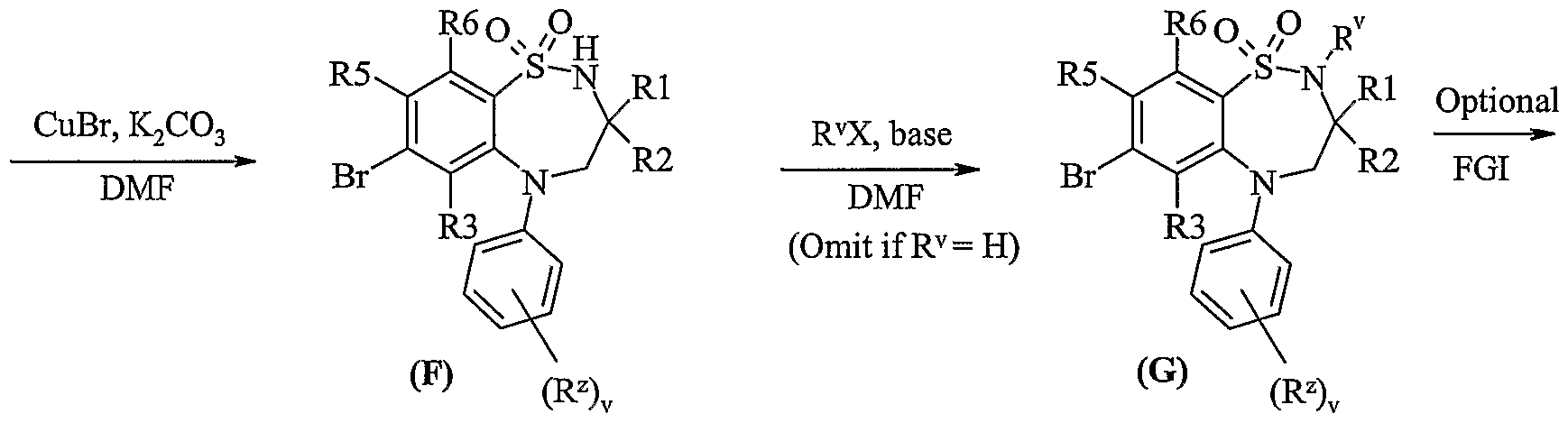
BENZOTHIAZEPINE AND BENZOTHIADIAZEPINE DERIVATIVES WITH ILEAL BILE ACID TRANSPORT ( IBAT) INHIBITORY ACTIVITY FOR THE TREATMENT HYPERLIPIDAEMIA
This invention relates to benzothiazepine and benzothiadiazepine derivatives, or pharmaceutically acceptable salts, solvates, solvates of such salts and prodrugs thereof. These benzothiazepines and benzothiadiazepines possess ileal bile acid transport (IBAT) inhibitory activity and accordingly have value in the treatment of disease states associated with hyperlipidaemic conditions and they are useful in methods of treatment of a warm-blooded animal, such as man. The invention also relates to processes for the manufacture of said benzothiazepine and benzothiadiazepine derivatives, to pharmaceutical compositions containing them and to their use in the manufacture of medicaments to inhibit IBAT in a warm-blooded animal, such as man.
It is well-known that hyperlipidaemic conditions associated with elevated concentrations of total cholesterol and low-density lipoprotein cholesterol are major risk factors for cardiovascular atherosclerotic disease (for instance "Coronary Heart Disease: Reducing the Risk; a Worldwide View" Assman G., Carmena R. Cullen P. et al; Circulation 1999, 100, 1930-1938 and "Diabetes and Cardiovascular Disease: A Statement for Healthcare Professionals from the American Heart Association" Grundy S, Benjamin I, Burke G., et al; Circulation, 1999, 100, 1134-46). Interfering with the circulation of bile acids within the lumen of the intestinal tracts is found to reduce the level of cholesterol. Previous established therapies to reduce the concentration of cholesterol involve, for instance, treatment with HMG-CoA reductase inhibitors, preferably statins such as simvastatin and fluvastatin, or treatment with bile acid binders, such as resins. Frequently used bile acid binders are for instance cholestyramine and cholestipol. One recently proposed therapy ("Bile Acids and Lipoprotein Metabolism: a Renaissance for Bile Acids in the Post Statin Era" Angelin B, Eriksson M, Rudling M; Current Opinion on Lipidology, 1999, 10, 269-74) involved the treatment with substances with an IBAT inhibitory effect.
Re-absorption of bile acid from the gastro-intestinal tract is a normal physiological process which mainly takes place in the ileum by the IBAT mechanism. Inhibitors of IBAT can be used in the treatment of hypercholesterolaemia (see for instance "Interaction of bile acids and cholesterol with nonsystemic agents having hypocholesterolaemic properties", Biochemica et Biophysica Acta, 1210 (1994) 255- 287). Thus, suitable compounds having such inhibitory IBAT activity are also useful in the treatment of hyperlipidaemic conditions. Substituted compounds possessing such IBAT inhibitory activity have been described, see for instance hypolipidaemic compounds described in WO 93/16055, WO 94/18183, WO 94/18184, WO 96/05188, WO 96/08484, WO 96/16051, WO 97/33882, WO 98/38182, WO 99/35135, WO 98/40375, WO 99/35153, WO 99/64409, WO 99/64410, WO 00/01687, WO 00/47568, WO 00/61568, WO 01/68906, DE 19825804, WO 00/38725, WO 00/38726, WO 00/38727, WO 00/38728, WO 00/38729, WO 01/68906 and EP 0 864 582.
A further aspect of this invention relates to the use of the compounds of the invention in the treatment of dyslipidemic conditions and disorders such as hyperlipidaemia, hypertrigliceridemia, hyperbetalipoproteinemia (high LDL), hyperprebetalipoproteinemia (high VLDL), hyperchylomicronemia, hypolipoproteinemia, hypercholesterolemia, hyperlipoproteinemia and hypoalphalipoproteinemia (low HDL). In addition, these compounds are expected to be useful for the prevention and treatment of different clinical conditions such as atherosclerosis, arteriosclerosis, arrhythmia, hyper-thrombotic conditions, vascular dysfunction, endothelial dysfunction, heart failure, coronary heart diseases, cardiovascular diseases, myocardial infarction, angina pectoris, peripheral vascular diseases, inflammation of cardiovascular tissues such as heart, valves, vasculature, arteries and veins, aneurisms, stenosis, restenosis, vascular plaques, vascular fatty streaks, leukocytes, monocytes and/or macrophage infiltration, intimal thickening, medial thinning, infectious and surgical trauma and vascular thrombosis, stroke and transient ischaemic attacks.
The present invention is based on the discovery that certain benzothiazepine and benzothiadiazepine compounds surprisingly inhibit IBAT. Such properties are expected to be of value in the treatment of disease states associated with hyperlipidaemic conditions.
Accordingly, the present invention provides a compound of formula (I):
Figure imgf000003_0001
(I) wherein:
Rv is selected from hydrogen or C1-6alkyl; One of R and R are selected from hydrogen, C1-6alkyl or C2-6alkenyl and the other is selected from C1-6alkyl or C2-6alkenyl;
Rx and Ry are independently selected from hydrogen, hydroxy, amino, mercapto, C1-6alkyl, C1-6alkoxy, N-(C1-6alkyl)amino, N,N-(C1-6alkyl)2amino, C1-6alkylS(O)a wherein a is 0 to 2;
M is selected from -N- or -CH-;
Rz is selected from halo, nitro, cyano, hydroxy, amino, carboxy, carbamoyl, mercapto, sulphanioyl, C1-6alkyl, C2-6alkenyl, C2-6alkynyl, C1-6alkoxy, Cι-6alkanoyl, C1-6alkanoyloxy, N-(C1-6alkyl)amino, NN-(C1-6alkyl)2amino, C^alkanoylamino, N-(C1-6alkyl)carbamoyl, NN-(C1-6alkyl)2carbamoyl, C1-6alkylS(O)a wherein a is 0 to 2, C1-6alkoxycarbonyl, N-(C1-6alkyl)sulphamoyl and N,N-(C1-6alkyl)2sulphamoyl; v is 0-5; one of R4 and R5 is a group of formula (IA):
Figure imgf000004_0001
(I A)
R3 and R6 and the other of R4 and R5 are independently selected from hydrogen, halo, nitro, cyano, hydroxy, amino, carboxy, carbamoyl, mercapto, sulphamoyl, C1-4alkyl,
C2-4alkenyl, C2- alkynyl, C1-4alkoxy, C1-4alkanoyl, C1-4alkanoyloxy, N-(C1- alkyl)amino,
N,N-(C1-4alkyl)2amino, C1-4alkanoylamino, N-(C1- alkyl)carbamoyl, N,N-(Cι-4alkyl)2carbamoyl, C1-4alkylS(O)a wherein a is 0 to 2, C1-4alkoxycarbonyl,
N-(C1-4alkyl)sulphamoyl and N, V-(C1-4alkyl)2sulphamoyl; wherein R and R and the other of
R4 and R5 may be optionally substituted on carbon by one or more R16;
X is -O-, -Ν(Ra)-, -S(O)b- or -CH(Ra)-; wherein Ra is hydrogen or C1-6alkyl and b is 0-
2; Ring A is aryl or heteroaryl; wherein Ring A is optionally substituted by one or more substituents selected from R17;
7 7 •
R is hydrogen, C1-4alkyl, carbocyclyl or heterocyclyl; wherein R is optionally substituted by one or more substituents selected from R ; R is hydrogen or C1-4alkyl; R9 is hydrogen or C1-4alkyl;
R10 is hydrogen, C1-4alkyl, carbocyclyl or heterocyclyl; wherein R10 is optionally substituted by one or more substituents selected from R19;
R11 is carboxy, sulpho, sulphino, phosphono, -P(O)(ORc)(ORd), -P(O)(OH)(ORc), -P(O)(OH)(Rd) or -P(O)(ORc)(Rd) wherein Rc and Rd are independently selected from Cι-6alkyl; or R11 is a group of formula (IB) or (IC):
Figure imgf000005_0001
(iB) c) wherein: Y is -N(Rn)-, -N(Rn)C(O)-, -N(Rn)C(O)(CRsRt)vN(Rn)C(O)-, -O-, and -S(O)a-; wherein a is 0-2, v is 1-2, Rs and R* are independently selected from hydrogen or C1-4alkyl optionally substituted by R26 and Rn is hydrogen or C1-4alkyl;
R12 is hydrogen or C1-4alkyl;
R13 and R14 are independently selected from hydrogen, C1-6alkyl, carbocyclyl or heterocyclyl; and when q is 0, R14 may additionally be selected from hydroxy; wherein R13 and R14 may be independently optionally substituted by one or more substituents selected from R20;
R15 is carboxy, sulpho, sulphino, phosphono, -P(O)(ORe)(ORf), -P(O)(OH)(ORe), -P(O)(OH)(Re) or -P(O)(ORe)(Rf) wherein Re and Rf are independently selected from Cι-6alkyl; p is 1-3; wherein the values of R may be the same or different; q is 0-1; r is 0-3; wherein the values of R14 maybe the same or different; m is 0-2; wherein the values of R10 maybe the same or different; n is 1-3; wherein the values of R7 may be the same or different;
Ring B is a nitrogen linked heterocyclyl substituted on carbon by one group selected from R23, and optionally additionally substituted on carbon by one or more R24; and wherein if said nitrogen linked heterocyclyl contains an -NH- moiety, that nitrogen may be optionally substituted by a group selected from R25; R16, R17 and R18 are independently selected from halo, nitro, cyano, hydroxy, amino, carboxy, carbamoyl, mercapto, sulphamoyl, C1- alkyl, C2-4alkenyl, C -4alkynyl, C1-4alkoxy, C1- alkanoyl, C1- alkanoyloxy, N-(C1-4alkyl)amino, N,N-(C1-4alkyl)2amino, C1-4alkanoylamino, JV-(C1-4alkyl)carbamoyl, N,N-(C1-4alkyl)2carbamoyl, C1-4alkylS(O)a wherein a is 0 to 2, C1-4alkoxycarbonyl, N-(C1-4alkyl)sulphamoyl and
N,N-(C1-4alkyl)2sulphamoyl; wherein R16, R17 and R18 may be independently optionally
91 substituted on carbon by one or more R ;
R , R , R and R are independently selected from halo, nitro, cyano, hydroxy, amino, carboxy, carbamoyl, mercapto, sulphamoyl, C1-4alkyl, C2-4alkenyl, C2-4alkynyl, C1- alkoxy, C1-4alkanoyl, C1-4alkanoyloxy, N-(C1-4alkyl)amino, NN-(C1-4alkyl) amino,
C1-4alkanoylamino, N-(C1-4alkyl)carbamoyl, N,N-(C1-4alkyl) carbamoyl, C1-4alkylS(O)a wherein a is 0 to 2, C1-4alkoxycarbonyl, N-(C1-4alkyl)sulphamoyl, N,N-(C1-4alkyl)2sulphamoyl, carbocyclyl, heterocyclyl, benzyloxycarbonylamino, (C1-4alkyl)3silyl, sulpho, sulphino, amidino, phosphono, -P(O)(ORa)(ORb), -P(O)(OH)(ORa), -P(O)(OH)(Ra) or -P(O)(ORa)(R ), wherein Ra and Rb are independently selected from C1-6alkyl; wherein R19, R20, R24 and R26 may be independently optionally substituted on carbon by one or more R22;
R21 and R22 are independently selected from halo, hydroxy, cyano, carbamoyl, ureido, amino, nitro, carboxy, carbamoyl, mercapto, sulphamoyl, trifluoromethyl, trifluoromethoxy, methyl, ethyl, methoxy, ethoxy, vinyl, allyl, ethynyl, methoxycarbonyl, formyl, acetyl, formamido, acetylamino, acetoxy, methylamino, dimethylamino, N-methylcarbamoyl,
N,N-dimethylcarbamoyl, methylthio, methylsulphinyl, mesyl, N-methylsulphamoyl and
N,N-dimethylsulphamoyl;
R23 is carboxy, sulpho, sulphino, phosphono, -P(O)(ORs)(ORh), -P(O)(OH)(ORg),
-P(O)(OH)(Rg) or -P(O)(ORg)(Rh) wherein Rg and Rh are independently selected from C1-6alkyl;
R2S is selected from C1-6alkyl, C1-6alkanoyl, C1-6alkylsulphonyl, C1-6alkoxycarbonyl, carbamoyl, N-(C1-6alkyl)carbamoyl, N,N-(C1-6alkyl)carbamoyl, benzyl, benzyloxycarbonyl, benzoyl and phenylsulphonyl; or a pharmaceutically acceptable salt, solvate, solvate of such a salt or a prodrug thereof. According to a further aspect of the present invention there is provided a compound of formula (I):
Figure imgf000007_0001
(I) wherein:
Rv is selected from hydrogen or C1-6alkyl; One of R1 and R2 are selected from hydrogen or Cι-6alkyl and the other is selected from C1-6alkyl;
R and Ry are independently selected from hydrogen, hydroxy, amino, mercapto, C1-6alkyl, C1-6alkoxy, N-(C1-6alkyl)amino, N,N-(C1-6alkyl)2amino, C1-6alkylS(O)a wherein a is 0 to 2; M is selected from -N- or -CH-;
Rz is selected from halo, nitro, cyano, hydroxy, amino, carboxy, carbamoyl, mercapto, sulphamoyl, C1-6alkyl, C2-6alkenyl, C2-6alkynyl, , Ci-ealkanoyl, Cι-6alkanoyloxy, N-(C1-6alkyl)amino, N,N-(C1-6alkyl)2amino, C1-6alkanoylamino, 7V-(C1-6alkyl)carbamoyl, N,N-(C1-6alkyl)2carbamoyl, C1-6alkylS(O)a wherein a is 0 to 2, C1-6alkoxycarbonyl, N-(C1-6alkyl)sulphamoyl and Λ N-(C1-6alkyl)2sulphamoyl; v is 0-5; one of R4 and R5 is a group of formula (IA):
Figure imgf000007_0002
(IA)
R3 and R6 and the other of R4 and Rs are independently selected from hydrogen, halo, nitro, cyano, hydroxy, amino, carboxy, carbamoyl, mercapto, sulphamoyl, Cι-4alkyl, C2-4alkenyl, C2- alkynyl, C1-4alkoxy, C1-4alkanoyl, C1-4alkanoyloxy, N-(C1-4alkyl)amino, N,N-(C1-4a__kyl)2amino, C1-4alkanoylamino, N-(C1-4alkyl)carbamoyl, N,N-(C1-4alkyl)2carbamoyl, Cι-4alkylS(O)a wherein a is 0 to 2, C1-4alkoxycarbonyl, N-(C1-4alkyl)sulphamoyl and NN-(C1-4alkyl)2sulphamoyl; wherein R3 and R6 and the other of R4 and R5 may be optionally substituted on carbon by one or more R16;
X is -O-, -Ν(Ra)-, -S(O)b- or -CH(Ra)-; wherein Ra is hydrogen or C1-6alkyl and b is 0- 2;
Ring A is aryl or heteroaryl; wherein Ring A is optionally substituted by one or more
1 substituents selected from R ;
R7 is hydrogen, C1-4alkyl, carbocyclyl or heterocyclyl; wherein R7 is optionally
1 o substituted by one or more substituents selected from R ; R8 is hydrogen or C1-4alkyl;
R9 is hydrogen or C1-4alkyl;
R10 is hydrogen, C1-4alkyl, carbocyclyl or heterocyclyl; wherein R10 is optionally substituted by one or more substituents selected from R19;
R11 is carboxy, sulpho, sulphino, phosphono, -P(O)(ORc)(ORd), -P(O)(OH)(ORc), -P(O)(OH)(Rd) or -P(O)(ORc)(Rd) wherein Rc and Rd are independently selected from C1-6alkyl; or R11 is a group of formula (IB):
Figure imgf000008_0001
(IB) wherein: Y is -N(Rn)-, -N(Rn)C(O)-, -O-, and -S(O)a-; wherein a is 0-2 and Rn is hydrogen or
C1-4alkyl;
R12 is hydrogen or C1-4alkyl;
R13 and R14 are independently selected from hydrogen, C1-4alkyl, carbocyclyl or heterocyclyl; wherein R 3 and R14 may be independently optionally substituted by one or more substituents selected from R20;
R15 is carboxy, sulpho, sulphino, phosphono, -P(O)(ORe)(ORf), -P(O)(OH)(ORe), -P(O)(OH)(Re) or -P(O)(ORe)(Rf) wherein Re and Rf are independently selected from C1-6alkyl; p is 1-3; wherein the values of R13 maybe the same or different; q is 0-1; r is 0-3; wherein the values of R14 maybe the same or different; m is 0-2; wherein the values of R10 may be the same or different; n is 1-3; wherein the values of R7 may be the same or different;
R16, R17 and R18 are independently selected from halo, nitro, cyano, hydroxy, amino, carboxy, carbamoyl, mercapto, sulphamoyl, C1-4alkyl, C2- alkenyl, C2-4alkynyl, C1-4alkoxy, C1-4alkanoyl, C1-4alkanoyloxy, N-(C1-4alkyl)amino, N,N-(C1-4alkyl)2amino, C1-4alkanoylamino, N-(C1-4alkyl)carbamoyl, N,N-(C1-4alkyl)2carbamoyl, C1-4alkylS(O)a wherein a is 0 to 2, C1-4alkoxycarbonyl, JV-(C1-4alkyl)sulphamoyl and NN-(C1-4alkyl)2sulphamoyl; wherein R16, R17 and R18 may be independently optionally
91 substituted on carbon by one or more R ;
R19 and R20 are independently selected from halo, nitro, cyano, hydroxy, amino, carboxy, carbamoyl, mercapto, sulphamoyl, C1-4alkyl, C2-4alkenyl, C2-4alkynyl, C1-4alkoxy, C1-4alkanoyl, Ct^alkanoyloxy, N-(C1-4alkyl)amino, N,N-(C1-4alkyl)2amino, C1-4alkanoylamino, N-(C1- alkyl)carbamoyl, N,N-(C1-4alkyl)2carbamoyl, C1- alkylS(O)a wherein a is 0 to 2, C1-4alkoxycarbonyl, N-(C1-4alkyl)sulphamoyl, NN-(C1-4alkyl)2sulphamoyl, carbocyclyl, heterocyclyl, sulpho, sulphino, amidino, phosphono, -P(O)(ORa)(OR ), -P(O)(OH)(ORa), -P(O)(OH)(Ra) or -P(O)(ORa)(R ), wherein Ra and Rb are independently selected from C1-6alkyl; wherein R19 and R20 maybe independently optionally substituted on
99 carbon by one or more R ; R21 and R22 are independently selected from halo, hydroxy, cyano, carbamoyl, ureido, amino, nitro, carboxy, carbamoyl, mercapto, sulphamoyl, trifluoromethyl, trifluoromethoxy, methyl, ethyl, methoxy, ethoxy, vinyl, allyl, ethynyl, methoxycarbonyl, formyl, acetyl, formamido, acetylamino, acetoxy, methylamino, dimethylamino, N-methylcarbamoyl, NN-dimethylcarbamoyl, methylthio, methylsulphinyl, mesyl, N-methylsulphamoyl and NN-dimethylsulphamoyl; or a pharmaceutically acceptable salt, solvate, solvate of such a salt or a prodrug thereof.
According to a further aspect of the present invention there is provided a compound of formula (I):
Figure imgf000010_0001
(D wherein:
Rv is selected from hydrogen or C1-6alkyl; t 9 One of R and R are selected from hydrogen or C1-6alkyl and the other is selected from Ci-βalkyl;
Rx and Ry are independently selected from hydrogen, hydroxy, amino, mercapto, C1-6alkyl, C1-6alkoxy, N-(C1-6alkyl)amino, Λ N-(C1-6alkyl)2amino, C1-6alkylS(O)a wherein a is 0 to 2; M is selected from -N- or -CH-;
Rz is selected from halo, nitro, cyano, hydroxy, amino, carboxy, carbamoyl, mercapto, sulphamoyl, C1-6alkyl, C -6alkenyl, C2-6alkynyl, C1-6alkoxy, C1-6alkanoyl, C1-6alkanoyloxy, N-(C1-6alkyl)amino, N,N-(C1-6alkyl)2amino, C1-6alkanoylamino, N-(C1-6alkyl)carbamoyl, ΛζN-(C1-6alkyl)2carbamoyl, C1-6alkylS(O)a wherein a is 0 to 2, C1-6alkoxycarbonyl, N-(C1-6alkyl)sulphamoyl and N,N-(C1-6alkyl)2sulphamoyl; v is 0-5; one of R4 and R5 is a group of formula (IA):
Figure imgf000010_0002
(IA)
R3 and R6 and the other of R4 and R5 are independently selected from hydrogen, halo, nitro, cyano, hydroxy, amino, carboxy, carbamoyl, mercapto, sulphamoyl, C1-4alkyl, C2-4alkenyl, C -4alkynyl, C1-4alkoxy, C1-4alkanoyl, C1-4alkanoyloxy, N-(C1-4alkyl)amino, N,N-(C1-4alkyl)2amino, C1-4alkanoylamino, N-(C1-4alkyl)carbamoyl, N,N-(C1-4alkyl)2carbamoyl, C1-4alkylS(O)a wherein a is 0 to 2, C1-4alkoxycarbonyl, N-(C1-4alkyl)sulphamoyl and N,N-(C1-4alkyl)2sulphamoyl; wherein R3 and R6 and the other of R4 and R5 may be optionally substituted on carbon by one or more R16;
X is -O-, -Ν(Ra)-, -S(O)b- or -CH(Ra)-; wherein Ra is hydrogen or C1-6alkyl and b is 0- 2;
Ring A is aryl or heteroaryl; wherein Ring A is optionally substituted by one or more substituents selected from R17;
7 7
R is hydrogen, C1-4alkyl, carbocyclyl or heterocyclyl; wherein R is optionally substituted by one or more substituents selected from R18; R is hydrogen or C1-4alkyl;
R9 is hydrogen or C1-4alkyl;
R10 is hydrogen, C1-4alkyl, carbocyclyl or heterocyclyl; wherein R10 is optionally substituted by one or more substituents selected from R19;
R11 is carboxy, sulpho, sulphino, phosphono, -P(O)(ORc)(ORd), -P(O)(OH)(OR°), -P(O)(OH)(Rd) or -P(O)(OR°)(Rd) wherein Rc and Rd are independently selected from C1-6alkyl; or R11 is a group of formula (IB) or (IC):
Figure imgf000011_0001
(IB) (IC) wherein: Y is -N(Rn)-, -N(Rn)C(O)-, -N(Rn)C(O)(CRsRt)vN(Rn)C(O)-, -O-, and -S(O)a-; wherein a is 0-2, v is 1-2, Rs and R* are independently selected from hydrogen or C1-4alkyl optionally substituted by R and R is hydrogen or C1-4alkyl; R12 is hydrogen or C1- alkyl;
R13 and R14 are independently selected from hydrogen, C1-4alkyl, carbocyclyl or heterocyclyl; and when q is 0, R14 may additionally be selected from hydroxy; wherein R13 and R14 may be independently optionally substituted by one or more substituents selected
Figure imgf000011_0002
R15 is carboxy, sulpho, sulphino, phosphono, -P(O)(ORe)(ORf), -P(O)(OH)(ORe), -P(O)(OH)(Re) or -P(O)(ORe)(Rf) wherein Re and Rf are independently selected from C1-6alkyl; p is 1-3; wherein the values of R may be the same or different; q is 0-1; r is 0-3; wherein the values of R1 may be the same or different; m is 0-2; wherein the values of R10 may be the same or different; n is 1-3; wherein the values of R7 may be the same or different;
Ring B is a nitrogen linked heterocyclyl substituted on carbon by one group selected from R23, and optionally additionally substituted on carbon by one or more R24; and wherein if said nitrogen linked heterocyclyl contains an -NH- moiety, that nitrogen may be optionally substituted by a group selected from R25; R16, R17 and R18 are independently selected from halo, nitro, cyano, hydroxy, amino, carboxy, carbamoyl, mercapto, sulphamoyl, C1-4alkyl, C2-4alkenyl, C2-4alkynyl, C1-4alkoxy, C1-4alkanoyl, Cι-4alkanoyloxy, N-(C1-4alkyl)amino, N,iV-(C1-4alkyl) amino, C1-4alkanoylamino, N-(C1-4alkyl)carbamoyl, N,N-(C1-4alkyl) carbamoyl, C1-4alkylS(O)a wherein a is 0 to 2, C1-4alkoxycarbonyl, N-(C1-4alkyl)sulphamoyl and N,N-(C1-4alkyl)2sulphamoyl; wherein
Figure imgf000012_0001
may be independently optionally substituted on carbon by one or more R21;
R19, R20, R24 and R26 are independently selected from halo, nitro, cyano, hydroxy, amino, carboxy, carbamoyl, mercapto, sulphamoyl, C1-4alkyl, C2-4alkenyl, C2-4alkynyl, C1-4alkoxy, C1-4alkanoyl, C1-4alkanoyloxy, N-(C1-4alkyl)amino, N,7V-(C1-4alkyl)2amino, C1-4alkanoylamino, N-(C1-4alkyl)carbamoyl, N,N-(C1-4alkyl)2carbamoyl, C1-4alkylS(O)a wherein a is 0 to 2, C1-4alkoxycarbonyl, N-(C1-4alkyl)sulphamoyl, N,N-(C1-4alkyl)2sulphamoyl, carbocyclyl, heterocyclyl, benzyloxycarbonylamino, sulpho, sulphino, amidino, phosphono, -P(O)(ORa)(ORb), -P(O)(OH)(ORa), -P(O)(OH)(Ra) or -P(O)(ORa)(Rb), wherein Ra and Rb are independently selected from C1-6alkyl; wherein R , R , R and R may be independently optionally substituted on carbon by one or more R22;
R21 and R22 are independently selected from halo, hydroxy, cyano, carbamoyl, ureido, amino, nitro, carboxy, carbamoyl, mercapto, sulphamoyl, trifluoromethyl, trifluoromethoxy, methyl, ethyl, methoxy, ethoxy, vinyl, allyl, ethynyl, methoxycarbonyl, formyl, acetyl, formamido, acetylamino, acetoxy, methylamino, dimethylamino, N-methylcarbamoyl, N,N-dimethylcarbamoyl, methylthio, methylsulphinyl, mesyl, N-methylsulphamoyl and N, N-dimethylsulphamoyl; R23 is carboxy, sulpho, sulphino, phosphono, -P(O)(ORs)(ORh), -P(O)(OH)(ORg), -P(O)(OH)(Rg) or -P(O)(ORg)(Rh) wherein Rg and Rh are independently selected from C1-6alkyl;
R25 is selected from Cι-6alkyl, C1-6alkanoyl, C1-6alkylsulphonyl, C1-6alkoxycarbonyl, carbamoyl, N-(C1-6alkyl)carbamoyl, N,N-(C1-6alkyl)carbamoyl, benzyl, benzyloxycarbonyl, benzoyl and phenylsulphonyl; or a pharmaceutically acceptable salt, solvate, solvate of such a salt or a prodrug thereof. hi this specification the term "alkyl" includes both straight and branched chain alkyl groups but references to individual alkyl groups such as "propyl" are specific for the straight chain version only. For example, "C1-6alkyl" includes C1-4alkyl, C1-3alkyl, propyl, isopropyl and t-butyl. However, references to individual alkyl groups such as 'propyl' are specific for the straight chained version only and references to individual branched chain alkyl groups such as 'isopropyl' are specific for the branched chain version only. A similar convention applies to other radicals, for example "phenylC1-6alkyl" would include phenylC1-6alkyl, benzyl, 1-phenylethyl and 2-phenylethyl. The term "halo" refers to fluoro, chloro, bromo and iodo.
Where optional substituents are chosen from "one or more" groups it is to be understood that this definition includes all substituents being chosen from one of the specified groups or the substituents being chosen from two or more of the specified groups. "Heteroaryl" is a totally unsaturated, mono or bicyclic ring containing 3-12 atoms of which at least one atom is chosen from nitrogen, sulphur or oxygen, which may, unless otherwise specified, be carbon or nitrogen linked. Preferably "heteroaryl" refers to a totally unsaturated, monocyclic ring containing 5 or 6 atoms or a bicyclic ring containing 9 or 10 atoms of which at least one atom is chosen from nitrogen, sulphur or oxygen, which may, unless otherwise specified, be carbon or nitrogen linked. Examples and suitable values of the term "heteroaryl" are thienyl, isoxazolyl, imidazolyl, pyrrolyl, thiadiazolyl, isothiazolyl, triazolyl, pyranyl, indolyl, pyrimidyl, pyrazinyl, pyridazinyl, pyridyl and quinolyl. Preferably the term "heteroaryl" refers to thienyl or indolyl.
"Aryl" is a totally unsaturated, mono or bicyclic carbon ring that contains 3-12 atoms. Preferably "aryl" is a monocyclic ring containing 5 or 6 atoms or a bicyclic ring containing 9 or 10 atoms. Suitable values for "aryl" include phenyl or naphthyl. Particularly "aryl" is phenyl. A "heterocyclyl" is a saturated, partially saturated or unsaturated, mono or bicyclic ring containing 3-12 atoms of which at least one atom is chosen from nitrogen, sulphur or oxygen, which may, unless otherwise specified, be carbon or nitrogen linked, wherein a -CH2- group can optionally be replaced by a -C(O)- or a ring sulphur atom may be optionally oxidised to form the S-oxides. Preferably a "heterocyclyl" is a saturated, partially saturated or unsaturated, mono or bicyclic ring containing 5 or 6 atoms of which at least one atom is chosen from nitrogen, sulphur or oxygen, which may, unless otherwise specified, be carbon or nitrogen linked, wherein a -CH2- group can optionally be replaced by a -C(O)- or a ring sulphur atom maybe optionally oxidised to form S-oxide(s). Examples and suitable values of the term "heterocyclyl" are thiazolidinyl, pyrrolidinyl, pyrrolinyl, 2-pyrrolidonyl, 2,5-dioxopyrrolidinyl, 2-benzoxazolinonyl, 1 , 1 -dioxotetrahydrothienyl, 2,4-dioxoimidazolidinyl, 2-oxo-l,3,4-(4-triazolinyl), 2-oxazolidinonyl, 5,6-dihydrouracilyl, 1,3-benzodioxolyl, 1,2,4-oxadiazolyl, 2-azabicyclo[2.2.1]heptyl, 4-thiazolidonyl, morpholino, 2-oxotetrahydrofuranyl, tetrahydrofuranyl, 2,3-dihydrobenzofuranyl, benzothienyl, tetrahydropyranyl, piperidyl, l-oxo-l,3-dihydroisoindolyl, piperazinyl, thiomorpholino, 1,1-dioxothiomorpholino, tetrahydropyranyl, 1,3-dioxolanyl, homopiperazinyl, thienyl, isoxazolyl, imidazolyl, pyrrolyl, thiadiazolyl, isothiazolyl, 1,2,4-triazolyl, 1,3,4-triazolyl, pyranyl, indolyl, pyrimidyl, thiazolyl, pyrazinyl, pyridazinyl, pyridyl, 4-pyridonyl, quinolyl and 1-isoquinolonyl. A "nitrogen linked heterocyclyl" is a saturated, partially saturated or unsaturated, mono or bicyclic ring containing 3-12 atoms of which at least one atom is nitrogen and the heterocyclyl is linked to the carbonyl group of formula (IC) via this nitrogen, which may additionally contain further heteroatoms chosen from nitrogen, sulphur or oxygen, wherein a -CH2- group can optionally be replaced by a -C(O)- or a ring sulphur atom may be optionally oxidised to form the S-oxides. Preferably a "nitrogen linked heterocyclyl" is a saturated, partially saturated or unsaturated, mono or bicyclic ring containing 5 or 6 atoms of which at least one atom is nitrogen and the heterocyclyl is linked to the carbonyl group of formula (IC) via this nitrogen, which may additionally contain further heteroatoms chosen from nitrogen, sulphur or oxygen, wherein a -CH2- group can optionally be replaced by a -C(O)- or a ring sulphur atom may be optionally oxidised to form the S-oxides. Examples and suitable values of the term "nitrogen linked heterocyclyl" are morpholino, pyrrolidin-1-yl, imidazol-1-yl, pyrazolidin-1-yl, piperidin-1-yl and piperazin-1-yl. Particularly a "nitrogen linked heterocyclyl" is pyrrolidin-1-yl. A "carbocyclyl" is a saturated, partially saturated or unsaturated, mono or bicyclic carbon ring that contains 3-12 atoms; wherein a -CH - group can optionally be replaced by a -C(O)-. Preferably "carbocyclyl" is a monocyclic ring containing 5 or 6 atoms or a bicyclic ring containing 9 or 10 atoms. Suitable values for "carbocyclyl" include cyclopropyl, cyclobutyl, 1-oxocyclopentyl, cyclopentyl, cyclopentenyl, cyclohexyl, cyclohexenyl, phenyl, naphthyl, tetralinyl, indanyl or 1-oxoindaιιyl. Particularly "carbocyclyl" is cyclopropyl, cyclobutyl, 1-oxocyclopentyl, cyclopentyl, cyclopentenyl, cyclohexyl, cyclohexenyl, phenyl or 1-oxoindanyl.
An example of "C1-6alkanoyloxy" and "C1-4alkanoyloxy" is acetoxy. Examples of "C1-6alkoxycarbonyl" and "C1-4alkoxycarbonyl" include methoxycarbonyl, ethoxycarbonyl, n- and t-butoxycarbonyl. Examples of "C1-6alkoxy" and "C1-4alkoxy" include methoxy, ethoxy and propoxy. Examples of "C1-6alkanoylamino" and "C1-4alkanoylamino" include formamido, acetamido and propionylamino. Examples of "C1-6alkylS(O)a wherein a is 0 to 2" and "C1-4alkylS(O)a wherein a is 0 to 2" include methylthio, ethylthio, methylsulphinyl, ethylsulphinyl, mesyl and ethylsulphonyl. Examples of "C1-6alkanoyl" and "C1- alkanoyl" include propionyl and acetyl. Examples of "N-(Cι-6alkyl)amino" and "N-(C1-4alkyl)amino" include methylamino and ethylamino. Examples of "N,N-(C1-6alkyl) amino" and "NN-(C1-4alkyl)2amino" include di-N-methylamino, di-(N-ethyl)amino and N-ethyl-N-methylamino. Examples of "C2-6alkenyl" and "C2-4alkenyl" are vinyl, allyl and 1-propenyl. Examples of "C2-6alkynyl" and "C2-4alkynyl" are ethynyl, 1-propynyl and 2-propynyl. Examples of "N-(C1-6alkyl)sulphamoyl" and "N-(C1-4alkyl)sulphamoyl" are
Figure imgf000015_0001
N-(methyl)sulphamoyl and N-(ethyl)sulphamoyl. Examples of "N-(C1-6alkyl)2sulphamoyl" "N-(C1-4alkyl)2sulphamoyl" are N,N-(dimethyl)sulphamoyl and N-(methyl)-N-(ethyl)sulphamoyl. Examples of "N-(C1-6alkyl)carbamoyl" and "N-(C1-4alkyl)carbamoyl" are methylaminocarbonyl and ethylaminocarbonyl. Examples of "NN-(C1-6alkyl)2carbamoyl" and ς ,N-(C1-4alkyl)2carbamoyl" are dimethylaminocarbonyl and methylethylaminocarbonyl. Example of "C1-6alkylsulphonyl" are mesyl and ethylsulphonyl. Examples of "(C1-4alkyl)3silyl," include trimethylsilyl and methyldiethylsilyl. A suitable pharmaceutically acceptable salt of a compound of the invention is, for example, an acid-addition salt of a compound of the invention which is sufficiently basic, for example, an acid-addition salt with, for example, an inorganic or organic acid, for example hydrochloric, hydrobromic, sulphuric, phosphoric, trifluoroacetic, citric, acetate or maleic acid. In addition a suitable pharmaceutically acceptable salt of a compound of the invention which is sufficiently acidic is an alkali metal salt, for example a sodium or potassium salt, an alkaline earth metal salt, for example a calcium or magnesium salt, an ammonium salt or a salt with an organic base which affords a physiologically-acceptable cation, for example a salt with methylamine, dimethylamine, trimethylamine, piperidine, morpholine or tris-(2-hydroxyethyl)amine.
The compounds of the formula (I) may be administered in the form of a pro-drug which is broken down in the human or animal body to give a compound of the formula (I). examples of pro-drugs include in vivo hydrolysable esters and in vivo hydrolysable amides of a compound of the formula (I). An in vivo hydrolysable ester of a compound of the formula (I) containing carboxy or hydroxy group is, for example, a pharmaceutically acceptable ester which is hydrolysed in the human or animal body to produce the parent acid or alcohol. Suitable pharmaceutically acceptable esters for carboxy include C1-6alkoxymethyl esters for example methoxymethyl, C1-6alkanoyloxymethyl esters for example pivaloyloxymethyl, phthalidyl esters, C3-8cycloalkoxycarbonyloxyC1-6alkyl esters for example 1-cyclohexylcarbonyloxyethyl; l,3-dioxolen-2-onylmethyl esters for example 5-methyl-l,3-dioxolen-2-onylmethyl; and C1-6alkoxycarbonyloxyethyl esters for example 1-methoxycarbonyloxyethyl and maybe formed at any carboxy group in the compounds of this invention.
An in vivo hydrolysable ester of a compound of the formula (I) containing a hydroxy group includes inorganic esters such as phosphate esters and α-acyloxyalkyl ethers and related compounds which as a result of the in vivo hydrolysis of the ester breakdown to give the parent hydroxy group. Examples of α-acyloxyalkyl ethers include acetoxymethoxy and 2,2-dimethylpropionyloxy-methoxy. A selection of in vivo hydrolysable ester forming groups for hydroxy include alkanoyl, benzoyl, phenylacetyl and substituted benzoyl and phenylacetyl, alkoxycarbonyl (to give alkyl carbonate esters), dialkylcarbamoyl and
N-(dialkylaminoethyl)-N-alkylcarbamoyl (to give carbamates), dialkylaminoacetyl and carboxyacetyl. Examples of substituents on benzoyl include morpholino and piperazino linked from a ring nitrogen atom via a methylene group to the 3- or 4- position of the benzoyl ring. A suitable value for an in vivo hydrolysable amide of a compound of the formula (I) containing a carboxy group is, for example, a N-C1-6alkyl or N_V-di-C1-6alkyl amide such as N-methyl, JV-ethyl, N-propyl, N,N-dimethyl, N-ethyl-N-methyl or N, JV-diethyl amide. Some compounds of the formula (I) may have chiral centres and/or geometric isomeric centres (E- and Z- isomers), and it is to be understood that the invention encompasses all such optical, diastereoisomers and geometric isomers that possess IBAT inhibitory activity.
The invention relates to any and all tautomeric forms of the compounds of the formula (I) that possess IBAT inhibitory activity.
It is also to be understood that certain compounds of the formula (I) can exist in solvated as well as unsolvated forms such as, for example, hydrated forms. It is to be understood that the invention encompasses all such solvated forms wliich possess IBAT inhibitory activity. Particular values are as follows. Such values may be used where appropriate with any of the definitions, claims or embodiments defined hereinbefore or hereinafter. Rv is hydrogen. R1 and R2 are C1-4alkyl. R1 and R2 are both butyl. One of R1 and R2 is ethyl and the other is butyl.
One of Rx and Ry is hydrogen and the other is hydroxy. Rx and Ry are both hydrogen. M is -N-. M is -CH-. v is O or l. v is 0.
Rz is C1-4alkyl. R3 and R6 are hydrogen. R4 is methylthio or bromo. R4 is methylthio.
R4 is halo, C1-4alkyl or C1-4alkylS(O)a wherein a is 0. R4 is bromo, methyl or methylthio. R5 is a group of formula (IA) (as depicted above) wherein: X is -O-; Ring A is phenyl optionally substituted by one or more substituents selected from R17; n is 1; R7 is hydrogen; R8 is hydrogen;
R9 is hydrogen; m is O;
R11 is a group of formula (IB) (as depicted above) wherein: R12 is hydrogen; p is 1 or 2;
R13 is hydrogen; q is 0; r is O; R15 is carboxy or sulpho; and
R17 is hydroxy.
R5 is N-{(R)-α-[N-(carboxymethyl)carbamoyl]benzyl}carbamoylmethoxy, N-{(R)-α- [7V-(carboxymethyl)carbamoyl]benzyl}carbamoylmethoxy or N-{(R)-a-[N-(2- sulphoethyl)carbamoyl]-4-hydroxybenzyl}carbamoylmethoxy. R5 is a group of formula (IA) (as depicted above) wherein:
X is -O-;
17
Ring A is phenyl optionally substituted by one or more substituents selected from R ; n is 1;
R7 is hydrogen; R8 is hydrogen;
R9 is hydrogen; m is 0;
R11 is carboxy, a group of formula (IB) (as depicted above) or a group of formula (IC) (as depicted above) wherein: R12 is hydrogen or C1-4alkyl; p is 1 or 2;
1 ' 90 9fl
R is hydrogen or C1-4alkyl optionally substituted by R wherein R is hydroxy, carbamoyl, amino, benzyloxycarbonylamino or C1-4alkylS(O)a wherein a is 0; R14 is hydrogen or hydroxy; q is 0; r is O or 1;
R15 is carboxy or sulpho; 17
R is hydroxy; and
Ring B is pyrrolidin-1-yl substituted on carbon by one group selected from R23; wherein R23 is carboxy.
R5 is N-{(R)-α-[N-(carboxymethyl)carbamoyl]benzyl} carbamoylmethoxy, N-{(R)-α- [N-(carboxymethyl)carbamoyl]benzyl} carbamoylmethoxy, N-{(R)- -[N-(2- sulphoethyl)carbamoyl]-4-hydroxybenzyl} carbamoylmethoxy, N-{(R)- -[N-((S)-l-carboxy-2- hydroxyethyl)carbamoyl]benzyl} carbamoylmethoxy, N- {(R)-α-[iV-((S)- 1 -carboxyethyl) carbamoyl]benzyl}carbamoylmethoxy, N-{(R)-α-[iV-((S)-l-carboxypropyl)carbamoyl] benzyl} carbamoylmethoxy, N- {(R)-α-[N-((R)- 1 -carboxy-2-methylthio-ethyl)carbamoyl] benzyl} carbamoylmethoxy, N-{(R)-α-[N-((S)-l-carboxy-2-carbamoyl- ethyl)carbamoyl]benzyl} carbamoylmethoxy, N- {(R)-α-[N-(2-sulphoethyl)carbamoyl]-4- hydroxybenzyl}carbamoylmethoxy, N-{(R)-α-[N-(carboxymethyl)carbamoyl]-4- hydroxybenzyl} carbamoylmethoxy, 7V-{(R)-α-[N-((S)-l-carboxyethyl)carbamoyl]-4- hydroxybenzyl} carbamoylmethoxy, N-{(R)-α-[N-((S)-l-carboxy-2-hydroxyethyl) carbamoyl]- 4-hydroxybenzyl} carbamoylmethoxy, N- {(R)-α-[N-(2-sulphoethyl)carbamoyl] benzyl} carbamoylmethoxy, N-{(R)-α-[N-((S)-l-carboxy-2-(R)-hydroxypropyl)carbamoyl] benzyl} carbamoylmethoxy, N-{(R)-α-[N-((S)-l-carboxy-2-methylpropyl)carbamoyl]benzyl} carbamoylmethoxy, N-{(R)-α-[N-((S)-l-carboxy-3-methylbutyl)carbamoyl]benzyl} carbamoylmethoxy, N-{(R)-α-[N-(l-(S)-l-carboxy-2-(S)-2-methylbutyl)carbamoyl]benzyl} carbamoylmethoxy, N-((R)-α-carboxy-4-hydroxybenzyl)carbamoylmethoxy, N- {(R)-α- [N- ((S)- 1 -carboxy-4-aminobutyl)carbamoyl]benzyl} carbamoylmethoxy, N-((R)- - {N-[(S)- 1 - carboxy-4-(benzyloxycarbonylamino)butyl]carbamoyl}benzyl)carbamoylmethoxy, N-[(R)- - ((S)-2-carboxypyrrolidin-l-ylcarbonyl)benzyl] carbamoylmethoxy, N-{(R)-α-[N- (carboxymethyl)-N-methylcarbamoyl]benzyl}carbamoylmethoxy, N-{(R)-α-[N-(l-(R)-2-(R)- 1 -carboxy- l-hydroxyprop-2-yl)carbamoyl]benzyl} carbamoylmethoxy, N-{(R)-α-[N- (sulphomethyl)carbamoyl]benzyl}carbamoylmethoxy, N-((R)-α-carboxybenzyl) carbamoylmethoxy, N-{(R)-α-[N-((S)-l-carboxy-2-(R)-hydroxypropyl)carbamoyl]-4- hydroxybenzyl} carbamoylmethoxy, N-{(R)- -[N-((S)-l-carboxy-2-methylpropyl)carbamoyl]- 4-hydroxybenzyl}carbamoylmethoxy, N-{(R)- -[N-((S)-l-carboxybutyl)carbamoyl]-4- hydroxybenzyl} carbamoylmethoxy, N-{(R)- -[N-((S)-l-carboxypropyl)carbamoyl]-4- hydroxybenzyl} carbamoylmethoxy or N- {(R)-α-[N-((R)- 1 -carboxy-2-methylthio- ethyl)carbamoyl]-4-hydroxybenzyl}carbamoyhnethoxy.
R5 is a group of formula (IA) (as depicted above) wherein:
X is -O-; Ring A is phenyl optionally substituted by one or more substituents selected from R17; n is 1;
R7 is hydrogen;
R is hydrogen;
R9 is hydrogen; m is O;
R11 is carboxy, a group of formula (IB) (as depicted above) or a group of formula (IC) (as depicted above) wherein:
R12 is hydrogen or C1-4alkyl; p is 1 or 2;
1 " 90 0 R is hydrogen or d-βalkyl optionally substituted by R wherein R is hydroxy, carbamoyl, amino, benzyloxycarbonylammo, C1- alkylS(O)a wherein a is 0 or (C1-4alkyl) silyl; R14 is hydrogen or hydroxy or C1-6alkyl; wherein R14 may be optionally substituted by one or more substituents selected from R ;
Y is -N(Rn)C(O)- wherein Rn is hydrogen; q is O or l; r is 0 or 1;
R15 is carboxy or sulpho; R17 is hydroxy; and R20 is selected from hydroxy; Ring B is pyrrolidin-1-yl or azetidinyl substituted on carbon by one group selected from R23, and optionally additionally substituted on carbon by one or more R24; wherein R23 is carboxy and R24 is hydroxy.
R5 is N-{(R)-α-[N-(carboxymethyl)carbamoyl]benzyl}carbamoylmethoxy, N-{(R)-α- [N-(carboxymethyl)carbamoyl]benzyl} carbamoylmethoxy, N- {(R)-a-[N-(2- sulphoethyl)carbamoyl]-4-hydroxybenzyl}carbamoylmethoxy, N-{(R)-α-[N-((S)-l-carboxy-2- hydroxyethyl)carbamoyl]benzyl}carbamoylmethoxy, N-{(R)- -[N-((S)-l-carboxyethyl) carbamoyljbenzyl} carbamoylmethoxy, N- {(R)-α-[N-((S)-l -carboxypropyl)carbamoyl] benzyl}carbamoy__methoxy, iV-{(R)-α-[N-((R)-l-carboxy-2-methyltlιio-ethyl)carbamoyl] benzyl} carbamoylmethoxy, N-{(R)-α-[N-((S)-l-carboxy-2-carbamoyl- ethyl)carbamoyl]benzyl}carbamoylmethoxy, N-{(R)-α-[N-(2-sulphoethyl)carbamoyl]-4- hydroxybenzyl} carbamoylmethoxy, N- {(R)- -[N-(carboxymethyl)carbamoyl]-4- hydroxybenzyl}carbamoylmethoxy, N- {(R)-α-[N-((S)-l-carboxyethyl)carbamoyl]-4- hydroxybenzyl} carbamoylmethoxy, N- {(R)-α-[N-((S)-l-carboxy-2-hydroxyethyl) carbamoyl]- 4-hydroxybenzyl}carbamoylmethoxy, N-{(R)-α-[N-(2-sulphoethyl)carbamoyl] benzyl} carbamoylmethoxy, N- {(R)-α-[N-((S)- 1 -carboxy-2-(R)-hydroxypropyl)carbamoyl] benzyl} carbamoylmethoxy, N- {(R)-α-[N-((S)- 1 -carboxy-2-methylpropyl)carbamoyl]benzyl} carbamoylmethoxy, N-{(R)-α-[N-((S)-l-carboxy-3-methylbutyl)carbamoyl]benzyl} carbamoylmethoxy, N-{(R)-α-[N-(l-(S)-l-carboxy-2-(S)-2-methylbutyl)carbamoyl]benzyl} carbamoylmethoxy, N-((R)-α-carboxy-4-hydroxybenzyl)carbamoylmethoxy, N- {(R)-α-[N- ((S)- 1 -carboxy-4-aminobutyl)carbamoyl]benzyl} carbamoylmethoxy, N-((R)-α- {N-[(S)- 1 - carboxy-4-(benzyloxycarbonylamino)butyl]carbamoyl}benzyl)carbamoylmethoxy, N-[(R)-α- ((S)-2-carboxypyrrolidin- 1 -ylcarbonyl)benzyl]carbamoylmethoxy, N- {(R)-α-[N-
(carboxymethyl)-N-methylcarbamoyl]benzyl}carbamoyhnethoxy, N-{(R)-α-[N-(l-(R)-2-(R)- 1 -carboxy- l-hydroxyprop-2-yl)carbamoyl]benzyl} carbamoylmethoxy, N-{(R)-α-[N- (sulphomethyl)carbamoyl]benzyl}carbamoylmethoxy, N-((R)-α-carboxybenzyl) carbamoylmethoxy, N-{(R)-α-[N-((S)-l-carboxy-2-(R)-hydroxypropyl)carbamoyl]-4- hydroxybenzyl} carbamoylmethoxy, N- {(R)-α-[N-((S)- 1 -carboxy-2-methylpropyl)carbamoyl] - 4-hydroxybenzyl}carbamoylmethoxy, N-{(R)-α-[N-((S)-l-carboxybutyl)carbamoyl]-4- hydroxybenzyl} carbamoylmethoxy, N- {(R)-α-[N-((S)- 1 -carboxypropyl)carbamoyl] -4- hydroxybenzyl}carbaιnoylmethoxy, N-{(R)-α-[N-((R)-l-carboxy-2-methylthio- ethyl)carbamoyl]-4-hydroxybenzyl} carbamoylmethoxy, N-{(R)-α-[N-((S)-l- carboxypropyl)carbamoyl]-4-hydroxybenzyl}carbamoylmethoxy, N-{(R)-α-[N-{(S)-l-[N- ((S)-2-hydroxy- 1 -carboxyethyl)carbamoyl]propyl} carbamoyljbenzyl} carbamoylmethoxy, N- {(R)-α-[2-(S)-2-(carboxy)-4-(R)-4-(hydroxy)pyrrolidin-l-ylcarbonyl]benzyl} carbamoylmethoxy, N- {(R)- -[2-(S)-2-(carboxy)azetidin- 1 -ylcarbonyljbenzyl} carbamoylmethoxy, N-{(R)- -[N-{(S)-l-[N-((S)-l- carboxyethyl)carbamoyl] ethyl} carbamoyl]benzyl} carbamoylmethoxy, N-{(R)-α-[N-((R)-l- carboxy-3,3-dimethylbutyl)carbamoyl] benzyl} carbamoylmethoxy, N- {(R)-α-[N-((S)- 1 - carboxy-3,3-dimethylbutyl)carbamoyl] benzyl} carbamoylmethoxy, N-{(R)-α-[N-((R)-l- carboxy-3,3-dimethylbutyl)carbamoyl]-4-hydroxybenzyl} carbamoylmethoxy, N-((R)-α- {N- [(S)-l-carboxy-2-(trimethylsilyl)ethyl] carbamoyl} -4-hydroxybenzyl)carbamoylmethoxy or N- ((R)-α-{N-[(R)-l-carboxy-2-(trimethylsilyl)ethyl]carbamoyl}-4- hydroxybenzyl)carbamoylmethoxy.
R5 is hydrogen.
R4 is a group of formula (IA).
R5 is a group of formula (IA).
Therefore in an further aspect of the invention, there is provided a compound of formula (I) (as depicted above) wherein:
Rv is hydrogen;
1 9
R and R are C1-4alkyl; Rx and Ry are both hydrogen; M is -Ν-; v is O;
R3 and R6 are hydrogen;
R4 is halo, Cι-4alkyl or C1-4alkylS(O)a wherein a is 0;
R5 is a group of formula (IA) (as depicted above) wherein:
X is -O-; Ring A is phenyl optionally substituted by one or more substituents selected from R ; n is 1; R7 is hydrogen;
R is hydrogen; R9 is hydrogen; m is 0;
R11 is carboxy, a group of formula (IB) (as depicted above) or a group of formula (IC) (as depicted above) wherein:
R12 is hydrogen or C1-4alkyl; p is 1 or 2; R13 is hydrogen or C1-6alkyl optionally substituted by R20 wherein R20 is hydroxy, carbamoyl, amino, benzyloxycarbonylamino, C1-4alkylS(O)a wherein a is 0 or (C1-4alkyl)3silyl; R14 is hydrogen or hydroxy or C1-6alkyl; wherein R14 may be optionally substituted by one or more substituents selected from R20;
Y is -N(Rn)C(O)- wherein Rn is hydrogen; q is O or 1; r is O or l;
R15 is carboxy or sulpho; R17 is hydroxy; and
90
R is selected from hydroxy; and
Ring B is pyrrolidin-1-yl or azetidinyl substituted on carbon by one group selected from R , and optionally additionally substituted on carbon by one or more R ; wherein R is carboxy and R24 is hydroxy; or a pharmaceutically acceptable salt, solvate, solvate of such a salt or a prodrug thereof.
Therefore in an additional aspect of the invention, there is provided a compound of formula (I) (as depicted above) wherein: Rv is hydrogen;
R1 and R2 are both butyl;
Rx and Ry are both hydrogen;
M is -N-; v is 0; R3 and R6 are hydrogen;
R4 is bromo, methyl or methylthio; and
R5 is N-{(R)-α-[iV-(carboxymethyl)carbamoyl]benzyl}carbamoylmethoxy, N-{(R)-α- [N-(carboxymethyl)carbamoyl]benzyl} carbamoylmethoxy, N- {(R)-α-[N-(2- sulphoethyl)carbamoyl]-4-hydroxybenzyl}carbamoylmethoxy, N-{(R)-α-[N-((S)-l-carboxy-2- hydroxyethyl)carbamoyl]benzyl}carbamoylmethoxy, N-{(R)-α-[N-((S)-l-carboxyethyl) carbamoyl]benzyl}carbamoylmethoxy, N-{(R)-α-[N-((S)-l-carboxypropyl)carbamoyl] benzyl} carbamoylmethoxy, N- {(R)- -[N-((R)- 1 -carboxy-2-methylthio-ethyl)carbamoyl] benzyl} carbamoylmethoxy, N- {(R)-α-[N-((S)- 1 -carboxy-2-carbamoyl- ethyl)carbamoyl]benzyl}carbamoylmethoxy, N-{(R)-α-[N-(2-sulphoethyl)carbamoyl]-4- hydroxybenzyl} carbamoylmethoxy, N- {(R)- -[N-(carboxymethyl)carbarnoyl]-4- hydroxybenzyl} carbamoylmethoxy, N-{(R)-α-[N-((S)-l-carboxyethyl)carbamoyl]-4- hydroxybenzyl}carbamoylmethoxy, N-{(R)- -[N-((S)-l-carboxy-2-hydroxyethyl) carbamoyl]- 4-hydroxybenzyl} carbamoylmethoxy, N- {(R)-α-[N-(2-sulphoethyl)carbamoyl] benzyl} carbamoylmethoxy, N-{(R)-α-[N-((S)-l-carboxy-2-(R)-hydroxypropyl)carbamoyl] benzyl} carbamoylmethoxy, N-{(R)-α-[N-((S)-l-carboxy-2-methylpropyl)carbamoyl]benzyl} carbamoylmethoxy, N- {(R)-α-[N-((S)- 1 -carboxy-3 -methylbutyl)carbamoyl]benzyl} carbamoylmethoxy, N-{(R)-α-[N-(l-(S)-l-carboxy-2-(S)-2-methylbutyl)carbamoyl]benzyl} carbamoylmethoxy, N-((R)-α-carboxy-4-hydroxybenzyl)carbamoylmethoxy, N- {(R)-α-[N- ((S)- 1 -carboxy-4-aminobutyl)carbamoyl]benzyl} carbamoylmethoxy, N-((R)- - {N-[(S)- 1 - carboxy-4-(benzyloxycarbonylamino)butyl]carbamoyl}benzyl)carbamoylmethoxy, N-[(R)-α- ((S)-2-carboxypyrrolidin- 1 -ylcarbonyl)benzyl] carbamoylmethoxy, N- {(R)- -[N- (carboxymethyl)-N-methylcarbamoyl]benzyl} carbamoylmethoxy, N- {(R)-α-[7V-( 1 -(R)-2-(R)- 1 -carboxy- l-hydroxyprop-2-yl)carbamoyl]benzyl} carbamoylmethoxy, N-{(R)-α-[N- (sulphomethyl)carbamoyl]benzyl}carbamoylmethoxy, N-((R)-α-carboxybenzyl) carbamoylmethoxy, N-{(R)-a-[N-((S)-l-carboxy-2-(R)-hydroxypropyl)carbamoyl]-4- hydroxybenzyl} carbamoylmethoxy, N-{(R)-α-[iV-((S)-l-carboxy-2-methylpropyl)carbamoyl]- 4-hydroxybenzyl}carbamoylmethoxy, N-{(R)-a-[N-((S)-l-carboxybutyl)carbamoyl]-4- hydroxybenzyl} carbamoylmethoxy, N-{(R)- -[N-((S)-l-carboxypropyl)carbamoyl]-4- hydroxybenzyl} carbamoylmethoxy, N- {(R)-α-[N-((R)- 1 -carboxy-2-methylthio- ethyl)carbamoyl]-4-hydroxybenzyl}carbamoylmethoxy, N-{(R)- -[N-((S)-l- carboxypropyl)carbamoyl]-4-hydroxybenzyl} carbamoylmethoxy, N- {(R)-a-[N- {(S)-l -[N- ((S)-2-hydroxy- 1 -carboxyethyl)carbamoyl]propyl} carbamoyljbenzyl} carbamoylmethoxy, N- {(R)-α-[2-(S)-2-(carboxy)-4-(R)-4-(hydroxy)pyrrolidin-l-ylcarbonyl]benzyl} carbamoylmethoxy, N-{(R)-α-[2-(S)-2-(carboxy)azetidin-l-ylcarbonyl]benzyl} carbamoylmethoxy, N-{(R)- -[N-{(S)-l-[N-((S)-l- carboxyethyl)carbamoyl] ethyl} carbamoyl]benzyl} carbamoylmethoxy, N- {(R)- -[N-((R)- 1 - carboxy-3,3-dimethylbutyl)carbamoyl] benzyl} carbamoylmethoxy, N-{(R)-α-[N-((S)-l- carboxy-3 ,3-dimethylbutyl)carbamoyl] benzyl} carbamoylmethoxy, N- {(R)-α-[N-((R)- 1 - carboxy-3,3-dimethylbutyl)carbamoyl]-4-hydroxybenzyl}carbamoylmethoxy, iV'-((R)-α-{N- [(S)-l-carboxy-2-(trimethylsilyl)ethyl] carbamoyl} -4-hydroxybenzyl)carbamoylmethoxy or N- ((R)-α- {N- [(R)- 1 -carboxy-2-(trimethylsilyl)ethyl] carbamoyl} -4- hydroxybenzyl)carbamoylmethoxy; or a pharmaceutically acceptable salt, solvate, solvate of such a salt or a prodrug thereof. hi another aspect of the invention, preferred compounds of the invention are any one of examples 5, 6, 7, 9, 11, 14, 15, 26, 27, 28, 30 or 33 or a pharmaceutically acceptable salt, solvate, solvate of such a salt or a prodrug thereof. h another aspect of the invention, preferred compounds of the invention are any one of the examples or a pharmaceutically acceptable salt, solvate, solvate of such a salt or a prodrug thereof.
Preferred aspects of the invention are those which relate to the compound of formula (I) or a pharmaceutically acceptable salt thereof.
Another aspect of the present invention provides a process for preparing a compound of formula (I) or a pharmaceutically acceptable salt, solvate, solvate of such a salt or a prodrug thereof which process (wherein variable groups are, unless otherwise specified, as defined in formula (I)) comprises of:
Process 1): for compounds of formula (I) wherein X is -O-,-NRa or -S-; reacting a compound of formula (Ila) or (lib):
Figure imgf000025_0001
with a compound of formula (III):
Figure imgf000025_0002
(III) wherein L is a displaceable group;
Process 2): reacting an acid of formula (IVa) or (IVb):
Figure imgf000026_0001
or an activated derivative thereof; with an amine of formula (V):
Figure imgf000026_0002
(V);
Process 3): for compounds of formula (I) wherein R1 is a group of formula (IB); reacting a compound of formula (I) wherein R11 is carboxy with an amine of formula (VI):
Figure imgf000026_0003
(VI) Process 4) for compounds of formula (I) wherein one of R4 and R5 are independently selected
17 from C1-6alkylthιo optionally substituted on carbon by one or more R ; reacting a compound of formula (Vila) or (Vllb):
Figure imgf000026_0004
wherein L is a displaceable group; with a thiol of formula (VIII):
Rm-H
(VIII) wherein Rm is C1-6alkylthio optionally substituted on carbon by one or more R16; Process 5): for compounds of formula (I) wherein R11 is carboxy; deprotecting a compound of formula (IXa):
Figure imgf000027_0001
(IXa) or (IXb):
Figure imgf000027_0002
(IXb) wherein Rp together with the -OC(O)- group to which it is attached forms an ester; Process 6): for compounds of formula (I) wherein R11 is a group of formula (IB) and R15 is carboxy; deprotecting a compound of formula (Xa):
Figure imgf000028_0001
(Xa) or (Xb):
Figure imgf000028_0002
(Xb) wherein R together with the -OC(O)- group to which it is attached forms an ester; Process 7): for compounds of formula (I) wherein R11 is a group of formula (IB) and N(R")C(O)-; reacting an acid of formula (Xla):
Figure imgf000028_0003
(Xla) or (Xlb):
Figure imgf000029_0001
(Xlb) or an activated derivative thereof; with an amine of formula (XII):
Figure imgf000029_0002
(XII) and thereafter if necessary or desirable: i) converting a compound of the formula (I) into another compound of the formula (I); ii) removing any protecting groups; iii) forming a pharmaceutically acceptable salt, solvate, solvate of such a salt or a prodrug. L is a displaceable group, suitable values for L are for example, a halogeno or sulphonyloxy group, for example a chloro, bromo, methanesulphonyloxy or toluene-4-sulphonyloxy group.
Rp together with the -OC(O)- group to which it is attached forms an ester. Preferably
Rp is methyl or ethyl. More preferably Rp is methyl, hi another aspect of the invention Rp is C1-6alkyl or phenylC1-6alkyl, preferably C1-4alkyl or benzyl, more preferably t-butyl, methyl, ethyl or benzyl.
Specific reaction conditions for the above reactions are as follows.
The bicyclic ring systems of the present invention may be assembled according to
Scheme la or Scheme lb. The skilled person will appreciate to make any of the above identified intermediates the value of R4 or R5 in the following schemes would be replaced with the appropriate group. For example, to synthesize a compound of formula (Ila) R4 would be HX in the following scheme.
Figure imgf000030_0001
Figure imgf000030_0002
Figure imgf000030_0003
Scheme la
Wherein FGI is functional interconversion of the Br into other values of R4 using procedures known to the skilled person.
Compounds of formula (A) and (D) are commercially available, or they are known in the literature, or they may be prepared by standard processes known in the art.
Figure imgf000031_0001
l.w-BuLi/THF
Figure imgf000031_0002
Figure imgf000031_0003
Scheme lb Process 1): Compounds of formula (Ila) or (lib) maybe reacted with compounds of formula (III) in the presence of a base for example an inorganic base such as sodium carbonate, or an organic base such as Hunigs base, in the presence of a suitable solvent such as acetonitrile, dichloromethane or tetrahydrofuran at a temperature in the range of 0°C to reflux, preferably at or near reflux.
Compounds of formula (III) are commercially available compounds, or they are known in the literature, or they are prepared by standard processes known in the art. Process 2) and Process 3) and Process 7): Acids and amines may be coupled together in the presence of a suitable coupling reagent. Standard peptide coupling reagents known in the art can be employed as suitable coupling reagents, or for example carbonyldiimidazole and dicyclohexyl-carbodiimide, optionally in the presence of a catalyst such as dimethylaminopyridine or 4-pyrrolidinopyridine, optionally in the presence of a base for example triethylamine, pyridine, or 2,6-di-α/£y/-pyridines such as 2,6-lutidine or 2,6-di-tert-butylpyridine. Suitable solvents include dimethylacetamide, dichloromethane, benzene, tetrahydrofuran and dimethylformamide. The coupling reaction may conveniently be performed at a temperature in the range of -40 to 40°C.
Suitable activated acid derivatives include acid halides, for example acid chlorides, and active esters, for example pentafluorophenyl esters. The reaction of these types of compounds with amines is well known in the art, for example they may be reacted in the presence of a base, such as those described above, and in a suitable solvent, such as those described above. The reaction may conveniently be performed at a temperature in the range of -40 to 40°C.
Compounds of formula (IVa) or (IVb) wherein X=-O-,-NRa,-S- maybe prepared according to Scheme 2:
Figure imgf000032_0001
(TVc)
(Vila) — >- (IVa)
NaCO3
MeCN
(IVc) (Vllb) *- (IVb)
NaCO3
MeCN Scheme 2 Wherein L in (Vila) and (Vllb) is a displaceable group e.g. bromo, chloro, fluoro, mesyl or tosyl and wherein X is -O-,-S-, NRa (optionally for -SO- and -SO2- followed by the oxidation step of Process 1).
Compounds of formula (IVa) and (IVb) where X is -SO- or -SO2- may be prepared by oxidising the resulting compounds of formula (IVa) and (IVb) from Scheme 2 where X is -S-.
Compounds of formula (Va) or (Vb) wherein X is -CH2- and n is 1 may be prepared according to Scheme 3.
Figure imgf000033_0001
Hydrolysis
Figure imgf000033_0002
Scheme 3 The skilled person will appreciate that the above reaction scheme may be manipulated to prepare compounds of formula (Va) or (Vb) where n is 2 or 3.
Compounds of formula (Xla) and (Xlb) may be prepared by manipulations known to the skilled person of the processes described herein.
Compounds of formula (IVc), (V), (VI), (XII) and (VII) are commercially available compounds, or they are known in the literature, or they are prepared by standard processes known in the art. Process 4): Compounds of formula (Vila) and (Vllb) may be reacted with thiols of formula (VIII) in the presence of base, for example an inorganic base such as sodium carbonate or an organic base such as Hunigs base, in the presence of a suitable solvent such as DMF or THF at a temperature in the range of 0°C to reflux. Compounds of formula (Vila) and (Vllb) may be prepared by any of the procedures above for the preparation of compounds of formula (I), but wherein one of R4 and R5 is L. Compounds of formula (VIII) are commercially available compounds, or they are known in the literature, or they are prepared by standard processes known in the art. Process 5) and Process 6): Esters of formula (IXa), (IXb), (Xa) and (Xb) maybe deprotected under standard conditions such as those described below, for Example they may be deprotected with sodium hydroxide in methanol at room temperature.
Esters of formula (IXa), (IXb), (Xa) and (Xb) maybe prepared by any of the procedures above for the preparation of compounds of formula (I), but wherein R11 or R15 is C1-4alkoxycarbonyl. It will be appreciated that certain of the various ring substituents in the compounds of the present invention may be introduced by standard aromatic substitution reactions or generated by conventional functional group modifications either prior to or immediately following the processes mentioned above, and as such are included in the process aspect of the invention. Such reactions and modifications include, for example, introduction of a substituent by means of an aromatic substitution reaction, reduction of substituents, alkylation of substituents and oxidation of substituents. The reagents and reaction conditions for such procedures are well known in the chemical art. Particular examples of aromatic substitution reactions include the introduction of a nitro group using concentrated nitric acid, the introduction of an acyl group using, for example, an acyl halide and Lewis acid (such as aluminium trichloride) under Friedel Crafts conditions; the introduction of an alkyl group using an alkyl halide and Lewis acid (such as aluminium trichloride) under Friedel Crafts conditions; and the introduction of a halogeno group. Particular examples of modifications include the reduction of a nitro group to an amino group by for example, catalytic hydrogenation with a nickel catalyst or treatment with iron in the presence of hydrochloric acid with heating; oxidation of alkylthio to alkylsulphinyl or alkylsulphonyl.
It will also be appreciated that in some of the reactions mentioned herein it may be necessary/desirable to protect any sensitive groups in the compounds. The instances where protection is necessary or desirable and suitable methods for protection are known to those skilled in the art. A particular instance where a protecting group may be used is in protecting the nitrogen in the 2-position of the benzothiadiazepine ring during the synthesis of certain inteπnediates. Conventional protecting groups may be used in accordance with standard practice (for illustration see T.W. Green, Protective Groups in Organic Synthesis, John Wiley and Sons, 1999). Thus, if reactants include groups such as amino, carboxy or hydroxy it may be desirable to protect the group in some of the reactions mentioned herein.
A suitable protecting group for an amino or alkylamino group is, for example, an acyl group, for example an alkanoyl group such as acetyl, an alkoxycarbonyl group, for example a methoxycarbonyl, ethoxycarbonyl or t-butoxycarbonyl group, an arylmethoxycarbonyl group, for example benzyloxycarbonyl, or an aroyl group, for example benzoyl. The deprotection conditions for the above protecting groups necessarily vary with the choice of protecting group. Thus, for example, an acyl group such as an alkanoyl or alkoxycarbonyl group or an aroyl group may be removed for example, by hydrolysis with a suitable base such as an alkali metal hydroxide, for example lithium or sodium hydroxide. Alternatively an acyl group such as a t-butoxycarbonyl group may be removed, for example, by treatment with a suitable acid as hydrochloric, sulphuric or phosphoric acid or trifluoroacetic acid and an arylmethoxycarbonyl group such as a benzyloxycarbonyl group may be removed, for example, by hydrogenation over a catalyst such as palladium-on-carbon, or by treatment with a Lewis acid for example boron tris(trifluoroacetate). A suitable alternative protecting group for a primary amino group is, for example, a phthaloyl group which may be removed by treatment with an alkylamine, for example dimethylaminopropylamine, or with hydrazine.
A suitable protecting group for a hydroxy group is, for example, an acyl group, for example an alkanoyl group such as acetyl, an aroyl group, for example benzoyl, or an arylmethyl group, for example benzyl. The deprotection conditions for the above protecting groups will necessarily vary with the choice of protecting group. Thus, for example, an acyl group such as an alkanoyl or an aroyl group may be removed, for example, by hydrolysis with a suitable base such as an alkali metal hydroxide, for example lithium or sodium hydroxide. Alternatively an arylmethyl group such as a benzyl group may be removed, for example, by hydrogenation over a catalyst such as palladium-on-carbon.
A suitable protecting group for a carboxy group is, for example, an esterifying group, for example a methyl or an ethyl group which may be removed, for example, by hydrolysis with a base such as sodium hydroxide, or for example a t-butyl group which may be removed, for example, by treatment with an acid, for example an organic acid such as trifluoroacetic acid, or for example a benzyl group winch may be removed, for example, by hydrogenation over a catalyst such as palladium-on-carbon. The protecting groups may be removed at any convenient stage in the synthesis using conventional techniques well known in the chemical art.
As stated hereinbefore the compounds defined in the present invention possess IBAT inhibitory activity. These properties may be assessed, for example, using an in vitro test assay for studying the effect on bile acid uptake in IBAT-transfected cells (Smith L., Price- Jones M. J., Hugnes K. T. and Jones N. R. A.; J Biomolecular Screening, 3, 227-230) or in vivo by studying the effect on radiolabelled bile acid absorption in mice/rats (Lewis M. C, Brieaddy L. E. and Root C, J., J Lip Res 1995, 36, 1098-1105).
According to a further aspect of the invention there is provided a pharmaceutical composition which comprises a compound of formula (I), or a pharmaceutically acceptable salt, solvate, solvate of such a salt or a prodrug thereof, as defined hereinbefore in association with a pharmaceutically-acceptable diluent or carrier.
The composition may be in a form suitable for oral administration, for example as a tablet or capsule, for parenteral injection (including intravenous, subcutaneous, intramuscular, intravascular or infusion) as a sterile solution, suspension or emulsion, for topical administration as an ointment or cream or for rectal administration as a suppository.
In general the above compositions may be prepared in a conventional manner using conventional excipients.
The compound of formula (I), or a pharmaceutically acceptable salt, solvate, solvate of such a salt or a prodrug thereof, will normally be administered to a warm-blooded animal at a unit dose within the range 5-5000 mg per square meter body area of the animal, i.e. approximately 0.02-100 mg/kg, preferably 0.02 -50 mg/kg, and this normally provides a therapeutically-effective dose. A unit dose form such as a tablet or capsule will usually contain, for example 1-250 mg of active ingredient. Preferably a daily dose in the range of 1-50 mg/kg, particularly 0.1-10 mg/kg is employed. In another aspect a daily dose in the rage of 0.02-20 mg/kg is employed. However the daily dose will necessarily be varied depending upon the host treated, the particular route of administration, and the severity of the illness being treated. Accordingly the optimum dosage may be determined by the practitioner who is treating any particular patient. According to a further aspect of the present invention there is provided a compound of the formula (I), or a pharmaceutically acceptable salt, solvate, solvate of such a salt or a prodrug thereof, as defined hereinbefore for use in a method of prophylactic or therapeutic treatment of a warm-blooded animal, such as man. We have found that the compounds defined in the present invention, or a pharmaceutically acceptable salt, solvate, solvate of such a salt or a prodrug thereof, are effective IBAT inhibitors, and accordingly have value in the treatment of disease states associated with hyperlipidaemic conditions.
Thus according to this aspect of the invention there is provided a compound of the formula (I), or a pharmaceutically acceptable salt, solvate, solvate of such a salt or a prodrug thereof, as defined hereinbefore for use as a medicament.
According to another feature of the invention there is provided the use of a compound of the formula (I), or a pharmaceutically acceptable salt, solvate, solvate of such a salt or a prodrug thereof, as defined hereinbefore in the manufacture of a medicament for use in the production of an IBAT inhibitory effect in a warm-blooded animal, such as man.
According to another feature of the invention there is provided the use of a compound of the formula (I), or a pharmaceutically acceptable salt, solvate, solvate of such a salt or a prodrug thereof, as defined hereinbefore in the manufacture of a medicament for use in the treatment of hyperlipidaemic conditions in a warm-blooded animal, such as man. According to another feature of the invention there is provided the use of a compound of the formula (I), or a pharmaceutically acceptable salt, solvate, solvate of such a salt or a prodrug thereof, as defined hereinbefore in the manufacture of a medicament for use in the treatment of dyslipidemic conditions and disorders such as hyperlipidaemia, hypertrigliceridemia, hyperbetalipoproteinemia (high LDL), hyperprebetalipoproteinemia (high VLDL), hyperchylomicronemia, hypolipoproteinemia, hypercholesterolemia, hyperlipoproteinemia and hypoalphalipoproteinemia (low HDL) in a warm-blooded animal, such as man.
According to another feature of the invention there is provided the use of a compound of the formula (I), or a pharmaceutically acceptable salt, solvate, solvate of such a salt or a prodrug thereof, as defined hereinbefore in the manufacture of a medicament for use in the treatment of different clinical conditions such as atherosclerosis, arteriosclerosis, arrhythmia, hyper-thrombotic conditions, vascular dysfunction, endothelial dysfunction, heart failure, coronary heart diseases, cardiovascular diseases, myocardial infarction, angina pectoris, peripheral vascular diseases, inflammation of cardiovascular tissues such as heart, valves, vasculature, arteries and veins, aneurisms, stenosis, restenosis, vascular plaques, vascular fatty streaks, leukocytes, monocytes and/or macrophage infiltration, intimal thickening, medial thinning, infectious and surgical trauma and vascular thrombosis, stroke and transient ischaemic attacks in a warm-blooded animal, such as man.
According to another feature of the invention there is provided the use of a compound of the formula (I), or a pharmaceutically acceptable salt, solvate, solvate of such a salt or a prodrug thereof, as defined hereinbefore in the manufacture of a medicament for use in the treatment of atherosclerosis, coronary heart diseases, myocardial infarction, angina pectoris, peripheral vascular diseases, stroke and transient ischaemic attacks in a warm-blooded animal, such as man.
According to a further feature of this aspect of the invention there is provided a method for producing an IBAT inhibitory effect in a warm-blooded animal, such as man, in need of such treatment which comprises administering to said animal an effective amount of a compound of formula (I), or a pharmaceutically acceptable salt, solvate, solvate of such a salt or a prodrug thereof.
According to a further feature of this aspect of the invention there is provided a method of treating hyperlipidemic conditions in a warm-blooded animal, such as man, in need of such treatment which comprises administering to said animal an effective amount of a compound of formula (I), or a pharmaceutically acceptable salt, solvate, solvate of such a salt or a prodrug thereof.
According to a further feature of this aspect of the invention there is provided a method of treating dyslipidemic conditions and disorders such as hyperlipidaemia, hypertrigliceridemia, hyperbetalipoproteinemia (high LDL), hyperprebetalipoproteinemia (high VLDL), hyperchylomicronemia, hypolipoproteinemia, hypercholesterolemia, hyperlipoproteinemia and hypoalphalipoproteinemia (low HDL) in a warm-blooded animal, such as man, in need of such treatment which comprises administering to said animal an effective amount of a compound of formula (I), or a pharmaceutically acceptable salt, solvate, solvate of such a salt or a prodrug thereof.
According to a further feature of this aspect of the invention there is provided a method of treating different clinical conditions such as atherosclerosis, arteriosclerosis, arrhythmia, hyper-thrombotic conditions, vascular dysfunction, endothelial dysfunction, heart failure, coronary heart diseases, cardiovascular diseases, myocardial infarction, angina pectoris, peripheral vascular diseases, inflammation of cardiovascular tissues such as heart, valves, vasculature, arteries and veins, aneurisms, stenosis, restenosis, vascular plaques, vascular fatty streaks, leukocytes, monocytes and/or macrophage infiltration, intimal thickening, medial thinning, infectious and surgical trauma and vascular thrombosis, stroke and transient ischaemic attacks in need of such treatment which comprises administering to said animal an effective amount of a compound of formula (I), or a pharmaceutically acceptable salt, solvate, solvate of such a salt or a prodrug thereof. According to a further feature of this aspect of the invention there is provided a method of treating atherosclerosis, coronary heart diseases, myocardial infarction, angina pectoris, peripheral vascular diseases, stroke and transient ischaemic attacks in a warm-blooded animal, such as man, in need of such treatment which comprises administering to said animal an effective amount of a compound of formula (I), or a pharmaceutically acceptable salt, solvate, solvate of such a salt or a prodrug thereof.
There is evidence that an IBAT inhibitor might potentially be useful in the treatment and/or prevention of gallstones. According to a further feature of this aspect of the invention there is provided a method of treating and / or preventing gallstones in a warm-blooded animal, such as man, in need of such treatment which comprises administering to said animal an effective amount of a compound of formula (I), or a pharmaceutically acceptable salt, solvate, solvate of such a salt or a prodrug thereof.
The size of the dose required for the therapeutic or prophylactic treatment will necessarily be varied depending on the host treated, the route of administration and the severity of the illness being treated. A unit dose in the range, for example, 0.1-50mg/kg preferably 0.1-10 mg/kg is envisaged.
The IBAT inhibitory activity defined hereinbefore may be applied as a sole therapy or may involve, in addition to a compound of the invention, one or more other substances and/or treatments. Such conjoint treatment may be achieved by way of the simultaneous, sequential or separate administration of the individual components of the treatment. According to this aspect of the invention there is provided a pharmaceutical product comprising a compomid of the formula (I), or a pharmaceutically acceptable salt, solvate, solvate of such a salt or a prodrug thereof, as defined hereinbefore and an additional IBAT inhibitory substance as defined hereinbefore and an additional hypolipidaemic agent for the conjoint treatment of hyperlipidaemia.
In another aspect of the invention, the compound of formula (I), or a pharmaceutically acceptable salt, solvate, solvate of such a salt or a prodrug thereof, maybe administered in association with an HMG Co-A reductase inhibitor, or pharmaceutically acceptable salts, solvates, solvates of such salts or prodrugs thereof. Suitable HMG Co-A reductase inhibitors, pharmaceutically acceptable salts, solvates, solvates of such salts or prodrugs thereof are statins well known in the art. Particular statins are fluvastatin, lovastatin, pravastatin, simvastatin, atorvastatin, cerivastatin, bervastatin, dalvastatin, mevastatin and (E)-7-[4-(4-fluorophenyl)-6-isopropyl-2-[methyl(methylsulphonyl)amino]pyrimidin-5-yl](3R, 5S)-3,5-dihydroxyhept-6-enoic acid (rosuvastatin), or a pharmaceutically acceptable salt, solvate, solvate of such a salt or a prodrug thereof. A particular statin is atorvastatin, or a pharmaceutically acceptable salt, solvate, solvate of such a salt or a prodrug thereof. A more particular statin is atorvastatin calcium salt. A further particular statin is (E)-7-[4-(4- fluorophenyl)-6-isopropyl-2-[methyl(methylsulphonyl)amino]pyrimidin-5-yl](3R,5S)-3,5- dihydroxyhept-6-enoic acid (rosuvastatin), or a pharmaceutically acceptable salt, solvate, solvate of such a salt or a prodrug thereof. A preferable particular statin is rosuvastatin calcium salt.
In an additional aspect of the invention, the compound of formula (I), or a pharmaceutically acceptable salt, solvate, solvate of such a salt or a prodrug thereof may be administered in association with an HMG Co-A reductase inhibitor, or a pharmaceutically acceptable salt, solvate, solvate of such a salt or a prodrug thereof, and/or a bile acid binder thereby avoiding a possible risk of excess of bile acids in colon caused by the inhibition of the ileal bile acid transport system. An excess of bile acids in the visceral contents may cause diarrhoea. Thus, the present invention also provides a treatment of a possible side effect such as diarrhoea in patients during therapy comprising the compound of formula (I), or a pharmaceutically acceptable salt, solvate, solvate of such a salt or a prodrug thereof.
An HMG CoA-reductase inhibitor, or a pharmaceutically acceptable salt, solvate, solvate of such a salt or a prodrug thereof will by its action decrease the endogenous cholesterol available for the bile acid synthesis and have an additive effect in combination with the compound of formula (I), or a pharmaceutically acceptable salt, solvate, solvate of such a salt or a prodrug thereof on lipid lowering. Suitable bile acid binders for such a combination therapy are resins, such as cholestyramine and cholestipol. One advantage is that the dose of bile acid binder might be kept lower than the therapeutic dose for treatment of cholesterolaemia in single treatment comprising solely a bile acid binder. By a low dose of bile acid binder any possible side effects caused by poor tolerance of the patient to the therapeutic dose could also be avoided. Therefore in an additional feature of the invention, there is provided a method for producing an IBAT inhibitory effect in a warm-blooded animal, such as man, in need of such treatment which comprises administering to said animal an effective amount of a compound of formula (I), or a pharmaceutically acceptable salt, solvate, solvate of such a salt or a prodrug thereof in simultaneous, sequential or separate administration with an effective amount of an HMG Co-A reductase inhibitor, or a pharmaceutically acceptable salt, solvate, solvate of such a salt or a prodrug thereof.
Therefore in an additional feature of the invention, there is provided a method for producing an IBAT inhibitory effect in a warm-blooded animal, such as man, in need of such treatment which comprises administering to said animal an effective amount of a compound of formula (I), or a pharmaceutically acceptable salt, solvate, solvate of such a salt or a prodrug thereof in simultaneous, sequential or separate administration with a bile acid binder.
Therefore in an additional feature of the invention, there is provided a method for producing an IBAT inhibitory effect in a warm-blooded animal, such as man, in need of such treatment which comprises administering to said animal an effective amount of a compound of formula (I), or a pharmaceutically acceptable salt, solvate, solvate of such a salt or a prodrug thereof in simultaneous, sequential or separate administration with an effective amount of an HMG Co-A reductase inhibitor, or a pharmaceutically acceptable salt, solvate, solvate of such a salt or a prodrug thereof, in simultaneous, sequential or separate administration with a bile acid binder.
Therefore in an additional feature of the invention, there is provided a method of treating hyperlipidemic conditions in a warm-blooded animal, such as man, in need of such treatment which comprises administering to said animal an effective amount of a compound of formula (I), or a pharmaceutically acceptable salt, solvate, solvate of such a salt or a prodrug thereof in simultaneous, sequential or separate administration with an effective amount of an HMG Co-A reductase inhibitor, or a pharmaceutically acceptable salt, solvate, solvate of such a salt or a prodrug thereof. Therefore in an additional feature of the invention, there is provided a method of treating hyperlipidemic conditions in a warm-blooded animal, such as man, in need of such treatment which comprises administering to said animal an effective amount of a compound of formula (I), or a pharmaceutically acceptable salt, solvate, solvate of such a salt or a prodrug thereof in simultaneous, sequential or separate administration with an effective amount of a bile acid binder.
Therefore in an additional feature of the invention, there is provided a method of treating hyperlipidemic conditions in a warm-blooded animal, such as man, in need of such treatment which comprises administering to said animal an effective amount of a compound of formula (I), or a pharmaceutically acceptable salt, solvate, solvate of such a salt or a prodrug thereof in simultaneous, sequential or separate administration with an effective amount of an HMG Co-A reductase inhibitor, or a pharmaceutically acceptable salt, solvate, solvate of such a salt or a prodrug thereof, in simultaneous, sequential or separate administration with a bile acid binder. According to a further aspect of the invention there is provided a pharmaceutical composition which comprises a compound of formula (I), or a pharmaceutically acceptable salt, solvate, solvate of such a salt or a prodrug thereof, and an HMG Co-A reductase inhibitor, or a pharmaceutically acceptable salt, solvate, solvate of such a salt or a prodrug thereof, in association with a pharmaceutically acceptable diluent or carrier. According to a further aspect of the invention there is provided a pharmaceutical composition which comprises a compound of formula (I), or a pharmaceutically acceptable salt, solvate, solvate of such a salt or a prodrug thereof, and a bile acid binder, in association with a pharmaceutically acceptable diluent or carrier.
According to a further aspect of the invention there is provided a pharmaceutical composition wliich comprises a compound of formula (I), or a pharmaceutically acceptable salt, solvate, solvate of such a salt or a prodrug thereof, and an HMG Co-A reductase inhibitor, or a pharmaceutically acceptable salt, solvate, solvate of such a salt or a prodrug thereof, and a bile acid binder in association with a pharmaceutically acceptable diluent or carrier. According to a further aspect of the present invention there is provided a kit comprising a compound of formula (I), or a pharmaceutically acceptable salt, solvate, solvate of such a salt or a prodrug thereof, and an HMG Co-A reductase inhibitor, or a pharmaceutically acceptable salt, solvate, solvate of such a salt or a prodrug thereof.
According to a further aspect of the present invention there is provided a kit comprising a compound of formula (I), or a pharmaceutically acceptable salt, solvate, solvate of such a salt or a prodrug thereof, and a bile acid binder.
According to a further aspect of the present invention there is provided a kit comprising a compound of formula (I), or a pharmaceutically acceptable salt, solvate, solvate of such a salt or a prodrug thereof, and an HMG Co-A reductase inhibitor, or a pharmaceutically acceptable salt, solvate, solvate of such a salt or a prodrug thereof and a bile acid binder.
According to a further aspect of the present invention there is provided a kit comprising: a) a compound of formula (I), or a pharmaceutically acceptable salt, solvate, solvate of such a salt or a prodrug thereof, in a first unit dosage form; b) an HMG Co-A reductase inhibitor, or a pharmaceutically acceptable salt, solvate, solvate of such a salt or a prodrug thereof; in a second unit dosage form; and c) container means for containing said first and second dosage forms.
According to a further aspect of the present invention there is provided a kit comprising: a) a compomid of formula (I), or a pharmaceutically acceptable salt, solvate, solvate of such a salt or a prodrug thereof, in a first unit dosage form; b) a bile acid binder; in a second unit dosage form; and c) container means for containing said first and second dosage forms.
According to a further aspect of the present invention there is provided a kit comprising: a) a compound of formula (I), or a pharmaceutically acceptable salt, solvate, solvate of such a salt or a prodrug thereof, in a first unit dosage form; b) an HMG Co-A reductase inhibitor, or a pharmaceutically acceptable salt, solvate, solvate of such a salt or a prodrug thereof; in a second unit dosage form; c) a bile acid binder; in a third unit dosage form; and d) container means for containing said first, second and third dosage forms. According to a further aspect of the present invention there is provided a kit comprising: a) a compound of formula (I), or a pharmaceutically acceptable salt, solvate, solvate of such a salt or a prodrug thereof, together with a pharmaceutically acceptable diluent or carrier, in a first unit dosage form; b) an HMG Co-A reductase inhibitor, or a pharmaceutically acceptable salt, solvate, solvate of such a salt or a prodrug thereof, in a second unit dosage form; and c) container means for containing said first and second dosage forms.
According to a further aspect of the present invention there is provided a kit comprising: a) a compound of formula (I), or a pharmaceutically acceptable salt, solvate, solvate of such a salt or a prodrug thereof, together with a pharmaceutically acceptable diluent or carrier, in a first unit dosage form; b) a bile acid binder, in a second unit dosage form; and c) container means for containing said first and second dosage forms.
According to a further aspect of the present invention there is provided a kit comprising: a) a compound of formula (I), or a pharmaceutically acceptable salt, solvate, solvate of such a salt or a prodrug thereof, together with a pharmaceutically acceptable diluent or carrier, in a first unit dosage form; b) an HMG Co-A reductase inhibitor, or a pharmaceutically acceptable salt, solvate, solvate of such a salt or a prodrug thereof, in a second unit dosage form; and c) a bile acid binder; in a third unit dosage form; and d) container means for containing said first, second and third dosage forms. According to another feature of the invention there is provided the use of a compound of the formula (I), or a pharmaceutically acceptable salt, solvate, solvate of such a salt or a prodrug thereof, and an HMG Co-A reductase inhibitor, or a pharmaceutically acceptable salt, solvate, solvate of such a salt or a prodrug thereof, in the manufacture of a medicament for use in the production of an IBAT inhibitory effect in a warm-blooded animal, such as man. According to another feature of the invention there is provided the use of a compound of the formula (I), or a pharmaceutically acceptable salt, solvate, solvate of such a salt or a prodrug thereof, and a bile acid binder, in the manufacture of a medicament for use in the production of an IBAT inhibitory effect in a warm-blooded animal, such as man.
According to another feature of the invention there is provided the use of a compound of the formula (I), or a pharmaceutically acceptable salt, solvate, solvate of such a salt or a prodrug thereof, and an HMG Co-A reductase inhibitor, or a pharmaceutically acceptable salt, solvate, solvate of such a salt or a prodrug thereof, and a bile acid binder, in the manufacture of a medicament for use in the production of an IBAT inhibitory effect in a warm-blooded animal, such as man.
According to another feature of the invention there is provided the use of a compound of the formula (I), or a pharmaceutically acceptable salt, solvate, solvate of such a salt or a prodrug thereof, an HMG Co-A reductase inhibitor, or a pharmaceutically acceptable salt, solvate, solvate of such a salt or a prodrug thereof, in the manufacture of a medicament for use in the treatment of hyperlipidaemic conditions in a warm-blooded animal, such as man.
According to another feature of the invention there is provided the use of a compound of the formula (I), or a pharmaceutically acceptable salt, solvate, solvate of such a salt or a prodrug thereof, a bile acid binder, in the manufacture of a medicament for use in the treatment of hyperlipidaemic conditions in a warm-blooded animal, such as man.
According to another feature of the invention there is provided the use of a compound of the formula (I), or a pharmaceutically acceptable salt, solvate, solvate of such a salt or a prodrug thereof, an HMG Co-A reductase inhibitor, or a pharmaceutically acceptable salt, solvate, solvate of such a salt or a prodrug thereof, and a bile acid binder, in the manufacture of a medicament for use in the treatment of hyperlipidaemic conditions in a warm-blooded animal, such as man.
According to a further aspect of the present invention there is provided a combination treatment comprising the administration of an effective amount of a compound of the formula (I), or a pharmaceutically acceptable salt, solvate, solvate of such a salt or a prodrug thereof, optionally together with a pharmaceutically acceptable diluent or carrier, with the simultaneous, sequential or separate administration of an effective amount of an HMG Co-A reductase inhibitor, or a pharmaceutically acceptable salt, solvate, solvate of such a salt or a prodrug thereof, optionally together with a pharmaceutically acceptable diluent or carrier to a warm-blooded animal, such as man in need of such therapeutic treatment. According to a further aspect of the present invention there is provided a combination treatment comprising the administration of an effective amount of a compound of the formula (I), or a pharmaceutically acceptable salt, solvate, solvate of such a salt or a prodrug thereof, optionally together with a pharmaceutically acceptable diluent or carrier, with the simultaneous, sequential or separate administration of an effective amount of a bile acid binder, optionally together with a pharmaceutically acceptable diluent or carrier to a warm-blooded animal, such as man in need of such therapeutic treatment.
According to a further aspect of the present invention there is provided a combination treatment comprising the administration of an effective amount of a compound of the formula (I), or a pharmaceutically acceptable salt, solvate, solvate of such a salt or a prodrug thereof, optionally together with a pharmaceutically acceptable diluent or carrier, with the simultaneous, sequential or separate administration of an effective amount of an HMG Co-A reductase inhibitor, or a pharmaceutically acceptable salt, solvate, solvate of such a salt or a prodrug thereof, optionally together with a pharmaceutically acceptable excipient, with the simultaneous, sequential or separate administration of an effective amount of a bile acid binder, optionally together with a pharmaceutically acceptable diluent or carrier to a warm-blooded animal, such as man in need of such therapeutic treatment.
According to an additional further aspect of the present invention there is provided a combination treatment comprising the administration of an effective amount of a compound of the formula (I), or a pharmaceutically acceptable salt, solvate, solvate of such a salt or a prodrug thereof, optionally together with a pharmaceutically acceptable diluent or carrier, with the simultaneous, sequential or separate administration one or more of the following agents selected from:
> a CETP (cholesteryl ester transfer protein) inhibitor, for example those referenced and described in WO 00/38725 page 7 line 22 - page 10, line 17 which are incorporated herein by reference;
> a cholesterol absorption antagonist for example azetidinones such as SCH 58235 and those described in US 5,767,115 which are incorporated herein by reference;
> a MTP (microsomal transfer protein) inhibitor for example those described in Science, 282, 751 -54, 1998 which are incorporated herein by reference;
> a fibric acid derivative; for example clofibrate, gemfibrozil, fenofibrate, ciprofibrate and bezafibrate; > a nicotinic acid derivative, for example, nicotinic acid (niacin), acipimox and niceritrol;
> a phytosterol compound for example stanols;
> probucol; > an anti-obesity compound for example orlistat (EP 129,748) and sibutramine (GB
2,184,122 and US 4,929,629);
> an antihypertensive compound for example an angiotensin converting enzyme inhibitor, an angiotensin II receptor antagonist, an andrenergic blocker, an alpha andrenergic blocker, a beta andrenergic blocker, a mixed alpha/beta andrenergic blocker, an andrenergic stimulant, calcium channel blocker, a diuretic or a vasodilator;
> insulin;
> sulphonylureas including glibenclamide, tolbutamide;
> metformin; and/or
> acarbose; or a pharmaceutically acceptable salt, solvate, solvate of such a salt or a prodrug thereof, optionally together with a pharmaceutically acceptable diluent or carrier to a warm-blooded animal, such as man in need of such therapeutic treatment.
Particular ACE inhibitors or pharmaceutically acceptable salts, solvates, solvate of such salts or a prodrugs thereof, including active metabolites, wliich can be used in combination with a compound of formula (I) include but are not limited to, the following compounds: alacepril, alatriopril, altiopril calcium, ancovenin, benazepril, benazepril hydrochloride, benazeprilat, benzoylcaptopril, captopril, captopril-cysteine, captopril- glutathione, ceranapril, ceranopril, ceronapril, cilazapril, cilazaprilat, delapril, delapril-diacid, enalapril, enalaprilat, enapril, epicaptopril, foroxymithine, fosfenopril, fosenopril, fosenopril sodium, fosinopril, fosinopril sodium, fosinoprilat, fosinoprilic acid, glycopril, hemorphin-4, idrapril, imidapril, indolapril, indolaprilat, libenzapril, lisinopril, lyciumin A, lyciumin B, mixanpril, moexipril, moexiprilat, moveltipril, muracein A, muracein B, muracein C, pentopril, perindopril, perindoprilat, pivalopril, pivopril, quinapril, quinapril hydrochloride, quinaprilat, ramipril, ramiprilat, spirapril, spirapril hydrochloride, spiraprilat, spiropril, spiropril hydrochloride, temocapril, temocapril hydrochloride, teprotide, trandolapril, trandolaprilat, utibapril, zabicipril, zabiciprilat, zofenopril and zofenoprilat. Preferred ACE inhibitors for use in the present invention are ramipril, ramiprilat, lisinopril, enalapril and enalaprilat. More preferred ACE inhibitors for uses in the present invention are ramipril and ramiprilat.
Preferred angiotensin II antagonists, pharmaceutically acceptable salts, solvates, solvate of such salts or a prodrugs thereof for use in combination with a compound of formula (I) include, but are not limited to, compounds: candesartan, candesartan cilexetil, losartan, valsartan, irbesartan, tasosartan, telmisartan and eprosartan. Particularly preferred angiotensin II antagonists or pharmaceutically acceptable derivatives thereof for use in the present invention are candesartan and candesartan cilexetil. h another aspect of the invention, the compound of formula (I), or a pharmaceutically acceptable salt, solvate, solvate of such a salt or a prodrug thereof, may be administered in association with a PPAR alpha and/or gamma agonist, or pharmaceutically acceptable salts, solvates, solvates of such salts or prodrugs thereof. Suitable PPAR alpha and/or gamma agonists, pharmaceutically acceptable salts, solvates, solvates of such salts or prodrugs thereof are well known in the art. These include the compounds described in WO 01/12187, WO 01/12612, WO 99/62870, WO 99/62872, WO 99/62871, WO 98/57941, WO 01/40170, J Med Chem, 1996, 39, 665, Expert Opinion on Therapeutic Patents, 10 (5), 623-634 (in particular the compounds described in the patent applications listed on page 634) and J Med Chem, 2000, 43, 527 which are all incorporated herein by reference. Particularly a PPAR alpha and/or gamma agonist refers to WY-14643, clofibrate, fenofibrate, bezafibrate, GW 9578, froglitazone, pioglitazone, rosiglitazone, eglitazone, proghtazone, BRL-49634, KRP-297, JTT-501, SB 213068, GW 1929, GW 7845, GW 0207, L-796449, L-165041 and GW 2433. Particularly a PPAR alpha and/or gamma agonist refers to (S)-2-ethoxy-3-[4-(2-{4- methanesulphonyloxyphenyl}ethoxy)phenyl] propanoic acid and pharmaceutically acceptable salts thereof. Additional suitable PPAR alpha and/or gamma agonists are NN622/Ragaglitazar and BMS 298585.
Therefore in an additional feature of the invention, there is provided a method for producing an IBAT inhibitory effect in a warm-blooded animal, such as man, in need of such treatment which comprises administering to said animal an effective amount of a compound of formula (I), or a pharmaceutically acceptable salt, solvate, solvate of such a salt or a prodrug thereof in simultaneous, sequential or separate administration with an effective amount of a PPAR alpha and/or gamma agonist, or a pharmaceutically acceptable salt, solvate, solvate of such a salt or a prodrug thereof. Therefore in an additional feature of the invention, there is provided a method of treating hyperlipidemic conditions in a warm-blooded animal, such as man, in need of such treatment which comprises administering to said animal an effective amount of a compound of formula (I), or a pharmaceutically acceptable salt, solvate, solvate of such a salt or a prodrug thereof in simultaneous, sequential or separate administration with an effective amount of a PPAR alpha and/or gamma agonist, or a pharmaceutically acceptable salt, solvate, solvate of such a salt or a prodrug thereof.
According to a further aspect of the invention there is provided a pharmaceutical composition which comprises a compound of formula (J), or a pharmaceutically acceptable salt, solvate, solvate of such a salt or a prodrug thereof, and a PPAR alpha and/or gaimna agonist, or a pharmaceutically acceptable salt, solvate, solvate of such a salt or a prodrug thereof, in association with a pharmaceutically acceptable diluent or carrier.
According to a further aspect of the present invention there is provided a kit comprising a compound of formula (I), or a pharmaceutically acceptable salt, solvate, solvate of such a salt or a prodrug thereof, and a PPAR alpha and/or gamma agonist, or a pharmaceutically acceptable salt, solvate, solvate of such a salt or a prodrug thereof.
According to a further aspect of the present invention there is provided a kit comprising: a) a compound of formula (I), or a pharmaceutically acceptable salt, solvate, solvate of such a salt or a prodrug thereof, in a first unit dosage form; b) a PPAR alpha and/or gamma agonist, or a pharmaceutically acceptable salt, solvate, solvate of such a salt or a prodrug thereof; in a second unit dosage form; and c) container means for containing said first and second dosage forms.
According to a further aspect of the present invention there is provided a kit comprising: a) a compound of formula (I), or a pharmaceutically acceptable salt, solvate, solvate of such a salt or a prodrug thereof, together with a pharmaceutically acceptable diluent or carrier, in a first unit dosage form; b) a PPAR alpha and/or gamma agonist, or a pharmaceutically acceptable salt, solvate, solvate of such a salt or a prodrug thereof, in a second unit dosage form; and c) container means for containing said first and second dosage forms. According to another feature of the invention there is provided the use of a compound of the formula (I), or a pharmaceutically acceptable salt, solvate, solvate of such a salt or a prodrug thereof, and a PPAR alpha and/or gamma agonist, or a pharmaceutically acceptable salt, solvate, solvate of such a salt or a prodrug thereof, in the manufacture of a medicament for use in the production of an IBAT inhibitory effect in a warm-blooded animal, such as man. According to another feature of the invention there is provided the use of a compound of the formula (I), or a pharmaceutically acceptable salt, solvate, solvate of such a salt or a prodrug thereof, a PPAR alpha and/or gamma agonist, or a pharmaceutically acceptable salt, solvate, solvate of such a salt or a prodrug thereof, in the manufacture of a medicament for use in the treatment of hyperlipidaemic conditions in a warm-blooded animal, such as man.
According to a further aspect of the present invention there is provided a combination treatment comprising the administration of an effective amount of a compound of the formula (I), or a pharmaceutically acceptable salt, solvate, solvate of such a salt or a prodrug thereof, optionally together with a pharmaceutically acceptable diluent or carrier, with the simultaneous, sequential or separate administration of an effective amount of a PPAR alpha and/or gamma agonist, or a pharmaceutically acceptable salt, solvate, solvate of such a salt or a prodrug thereof, optionally together with a pharmaceutically acceptable diluent or carrier to a warm-blooded animal, such as man in need of such therapeutic treatment. hi addition to their use in therapeutic medicine, the compounds of formula (I), or a pharmaceutically acceptable salt, solvate, solvate of such a salt or a prodrug thereof, are also useful as pharmacological tools in the development and standardisation of in vitro and in vivo test systems for the evaluation of the effects of inhibitors of IBAT in laboratory animals such as cats, dogs, rabbits, monkeys, rats and mice, as part of the search for new therapeutic agents. Many of the intermediates described herein are novel and are thus provided as a further feature of the invention. For example compounds of formula (IXa), (IXb), (Xa) and (Xb) show IBAT inhibitory activity when tested in the above referenced in vitro test assay and are thus claimed as a further feature of the invention.
Thus in a further feature of the invention, there is provided a compound of formula (IXa), (IXb), (Xa) or (Xb), or a pharmaceutically acceptable salt, solvate, solvate of such a salt or a prodrug thereof.
Therefore according to a further aspect of the invention there is provided a pharmaceutical composition which comprises a compound of formula (IXa), (IXb), (Xa) or (Xb), or a pharmaceutically acceptable salt, solvate, solvate of such a salt or a prodrug thereof, as defined hereinbefore in association with a pharmaceutically-acceptable diluent or carrier.
According to an additional aspect of the present invention there is provided a compomid of the formula (IXa), (IXb), (Xa) or (Xb), or a pharmaceutically acceptable salt, solvate, solvate of such a salt or a prodrug thereof, as defined hereinbefore for use in a method of prophylactic or therapeutic treatment of a warm-blooded animal, such as man.
Thus according to this aspect of the invention there is provided a compound of the formula (IXa), (IXb), (Xa) and (Xb), or a pharmaceutically acceptable salt, solvate, solvate of such a salt or a prodrug thereof, as defined hereinbefore for use as a medicament. According to another feature of the invention there is provided the use of a compound of the formula (IXa), (IXb), (Xa) or (Xb), or a pharmaceutically acceptable salt, solvate, solvate of such a salt or a prodrug thereof as defined hereinbefore in the manufacture of a medicament for use in the production of an IBAT inhibitory effect in a warm-blooded animal, such as man. According to another feature of the invention there is provided the use of a compound of the formula (IXa), (IXb), (Xa) or (Xb), or a pharmaceutically acceptable salt, solvate, solvate of such a salt or a prodrug thereof as defined hereinbefore in the manufacture of a medicament for use in the treatment of hyperlipidaemic conditions in a warm-blooded animal, such as man. According to a further feature of this aspect of the invention there is provided a method for producing an IBAT inhibitory effect in a warm-blooded animal, such as man, in need of such treatment which comprises administering to said animal an effective amount of a compound of formula (IXa), (IXb), (Xa) or (Xb), or a pharmaceutically acceptable salt, solvate, solvate of such a salt or a prodrug thereof. According to a further feature of this aspect of the invention there is provided a method of treating hyperlipidemic conditions in a warm-blooded animal, such as man, in need of such treatment which comprises administering to said animal an effective amount of a compound of formula (IXa), (IXb), (Xa) or (Xb), or a pharmaceutically acceptable salt, solvate, solvate of such a salt or a prodrug thereof. hi the above other phannaceutical composition, process, method, use and medicament manufacture features, the alternative and preferred embodiments of the compounds of the invention described herein also apply. Examples
The invention will now be illustrated in the following non limiting examples, in which standard techniques known to the skilled chemist and techniques analogous to those described in these examples may be used where appropriate, and in which, unless otherwise stated: (i) evaporations were carried out by rotary evaporation in vacuo and work up procedures were carried out after removal of residual solids such as drying agents by filtration; (ii) all reactions were carried out under an inert atmosphere at ambient temperature, typically in the range 18-25°C, with solvents of HPLC grade under anhydrous conditions, unless otherwise stated; (iii) column chromatography (by the flash procedure) was performed on Silica gel 40-63 μm (Merck);
(iv) yields are given for illustration only and are not necessarily the maximum attainable; (v) the structures of the end products of the formula (I) were generally confirmed by nuclear (generally proton) magnetic resonance (NMR) and mass spectral techniques; magnetic resonance chemical shift values were measured in deuterated CD OD (unless otherwise stated) on the delta scale (ppm downfield from tetramethylsilane); proton data is quoted unless otherwise stated; spectra were recorded on a Varian Mercury-300 MHz, Varian Unity plus-400 MHz, Varian Unity plus-600 MHz or on Varian hιova-500 MHz spectrometer; and peak multiplicities are shown as follows: s, singlet; d, doublet; dd, double doublet; t, triplet; tt, triple triplet; q, quartet; tq, triple quartet; m, multiplet; br, broad; LCMS were recorded on a Waters ZMD, LC column xTerra MS C8(Waters), detection with a HP 1100 MS-detector diode array equipped; mass spectra (MS) (loop) were recorded on VG Platform II (Fisons Instruments) with a HP-1100 MS-detector diode array equipped; unless otherwise stated the mass ion quoted is (MH1"); (vi) unless further details are specified in the text, analytical high performance liquid chromatography (HPLC) was performed on Prep LC 2000 (Waters), Kromasil C8, 7μm, (Akzo Nobel); MeCN and de-ionised water 100 mM ammonium acetate as mobile phases, with suitable composition; (vii) intermediates were not generally fully characterised and purity was assessed by thin layer chromatography (TLC), HPLC, infra-red (IR), MS or NMR analysis; (viii) where solutions were dried sodium sulphate was the drying agent; (ix) where an "ISOLUTE" column is referred to, this means a column containing 2g of silica, the silica being contained in a 6ml disposable syringe and supported by a porous disc of 54A pore size, obtained from International Sorbent Technology under the name "ISOLUTE"; "ISOLUTE" is a registered trade mark; (x) the following abbreviations may be used hereinbefore or hereinafter:-
DCM dichloromethane;
DMF N,N-dimethylformamide;
TFA trifluoroacetic acid;
TBTU o-Benzotriazol-l-yl-N,N,N',N'-tetramethyluronium tetrafluoroborate; EtOAc ethyl acetate; and
MeCN acetonitrile.
Example 1 l,l-Dioxo-3,3-dibutyl-5-phenyl-7-bromo-8-(N-((R -α-[N-('carboxymethyl carbamoyl] benzyl} carbamoylmethoxy -2,3 ,4,5-tetrahydro- 1 ,2,5-benzothiadiazepine
To a solution of l,l-dioxo-3,3-dibutyl-5-phenyl-7-bromo-8-carboxymethoxy-2,3,4,5- tetrahydro-l,2,5-benzothiadiazepine (Method 2; 0.020 g, 3.71*10"5 mol) in DCM (4 ml) was added (R)-α-[N-(t-butoxycarbonylmethyl)carbamoyl]benzylamine (Method 5; 0.013 g, 4.82*10"5 mol) and N-methyhnorpholine (0.015 ml, 1.48*10"4 mol). The mixture was stirred for 5 min and then TBTU (0.015 g, 4.82* 10"5 mol) was added. The reaction mixture was stirred overnight and then TFA (1.5 ml) was added. After lhour, the solution was diluted with toluene, before the solvent was removed under reduced pressure. The residue was purified by preparative HPLC using an MeCΝ / ammonium acetate buffer as eluent. and freeze-dried, to give the title compound in 0.026 g (96 %) as a white solid. ΝMR (400 MHz, DMSO-d6) 0.60- 0.80 (m, 6H), 0.80-1.60 (m, 12H), 3.30 (dd (AB), IH), 3.45 (dd (AB), IH), 3.85 (brs, 2H), 4.70 (d (AB), IH), 4.75 (d (AB), IH), 5.60 (d, IH), 6.90-7.50 (m, 12H), 8.00-8.10 (m, IH). 8.55 (d, IH). Example 2 l -Dioxo-3,3-dibutyl-5-phenyl-7-methylthio-8-(N-{(RVα-rN-('carboxymethyl)carbamoyl] benzyl>carbamoylmethoxyV2,3,4,5-tetrahvdro-l,2,5-benzothiadiazepine
To a solution of l,l-dioxo-3,3-dibutyl-5-phenyl-7-methylthio-8-carboxymethoxy- 2,3,4,5-tetrahydro-l,2,5-benzothiadiazepine (Method 3; 0.016 g, 3.16*10"5 mol) in DCM (4 ml) was added (R)-α-[N-(t-butoxycarbonylmethyl)carbamoyl]benzylamine (Method 5; 0.012 g, 4.54*10"5 mol) and N-methylmorpholine (0.015 ml, 1.48*10"4 mol). The mixture was stirred for 5 min and then TBTU (0.015 g, 4.82* 10~5 mol) was added. The reaction mixture was stirred overnight and then TFA (1.5 ml) was added. After 1 hour, the solution was diluted with toluene, before the solvent was removed under reduced pressure. The residue was purified by preparative HPLC using an MeCN / ammonium acetate buffer as eluent and freeze-dried, to give the title compound in 0.018 g (82 %) as a white solid. NMR (400 MHz, DMSO-d6) 0.65-0.80 (m, 6H), 0.85-1.60 (m, 12H), 2.10 (s, 3H), 3.65 (dd (AB), IH), 3.75 (dd (AB), IH), 3.85 (brs, 2H), 4.65 (d (AB), IH), 4.75 (d (AB), IH), 5.60 (d, IH), 6.55 (s, IH), 6.90-7.50 (m, 11H), 8.45 (d, IH), 8.50-8.60 (m, IH).
Example 3 lJ-Dioxo-3,3-dibutyl-5-phenyl-7-bromo-8- N-((RV -rN-('2-sulphoethvncarbamoyll-4- hvdroxybenzv carbamoylmethoxy -2,3,4,5-tetrahvdro-l,2,5-benzothiadiazepine To a solution of l,l-dioxo-3,3-dibutyl-5-phenyl-7-bromo-8-carboxymethoxy-2,3,4,5- tetrahydro-l,2,5-benzothiadiazepine (Method 2; 0.050 g, 9.27*10"5 mol) in DMF (6 ml) was added 2-{[(2i?)-2-amino-2-(4-hydroxyphenyl)ethanoyl]amino}ethanesulphonic acid (Method 6; 0.033 g, 1.20*10"4 mol) and N-methylmorpholine (0.041 ml, 3.72*10"4 mol). The mixture was stirred for 10 min and then TBTU (0.039 g, 1.21*10"4 mol) was added. The reaction mixture was stirred overnight and the solvent was removed under reduced pressure. The residue was purified by preparative HPLC using an MeCΝ / ammonium acetate buffer as eluent and freeze-dried, to give the title compound in 0.039 g (53 %) as a white solid. ΝMR (400 MHz, DMSO-d6) 0.60-0.80 (m, 6H), 0.80-1.60 (m, 12H), 2.40-2.60 (m, 2H), 3.10-3.50 (m, 2H), 3.85 (brs, 2H), 4.70 (d (AB), IH), 4.75 (d (AB), IH), 5.25 (d, IH), 6.70 (s, IH), 6.75 (s, IH), 6.85-7.80 (m, 10H), 8.15-8.25 (m, IH). 8.45 (d, IH), 9.40 (brs, IH). Example 4 l-Dioxo-3,3-dibutyl-5-phenyl-7-methylthio-8-(N-(('RVα-rN-r('S)-l-carboxy-2- hvdroxyethvDcarbamoyllbenzyl|carbamovhnethoxyV2,3,4,5-tetrahvdro-l,2,5- benzothiadiazepine A solution of l,l-dioxo-3,3-dibutyl-5-phenyl-7-methylthio-8-carboxymethoxy-2,3,4,5- tetrahydro-l,2,5-benzothiadiazepine (Method 3; 0.050 g, 0.099 mmol), t-butyl N-[(2i?)-2- amino-2-phenylethanoyl]-o-(t-butyl)-L-serinate (Method 14; 0.042 g, 0.120 mmol) andN- methylmorpholine (0.033 ml, 0.299 mmol) in DCM (4 ml) was stirred at RT for 10 min, after which TBTU (0.041 g, 0.128 mmol)) was added. After 8h, the conversion was completed; m/z: 839.7. TFA (2 ml) was added and the reaction mixture was stirred for 12 hours. The solution was transferred to a separating funnel and washed twice with water and then concentrated. The residue was purified by preparative HPLC using a gradient of 40-60% MeCΝ in 0.1M ammonium acetate buffer as eluent. The title compound was obtained in 0.045 g (63 %) as a white solid. ΝMR (400 MHz, DMSO-d6): 0.60-0.80 (6H, m), 0.85-1.60 (12H, m), 2.10 (3H, s), 3.40-3.65 (2H, m), 3.85 (2H, brs), 4.10-4.20 (IH, m), 4.70 (IH, d(AB)), 4.75 (IH, d(AB)), 5.70 (IH, d), 6.60 (IH, s), 6.85-7.50 (12H, m), 8.50 (IH, d), 8.60 (IH, d); m/z: 839.7.
Example 5 l.l-Dioxo-3,3-dibutyl-5-phenyl-7-methylthio-8-(N-((RVα-rN-rrSVl-carboxyethvD carbamoyllbenzyl>carbamoylmethoxy -2,3,4,5-tetrahvdro-l,2,5-benzothiadiazepine
A solution of l,l-dioxo-3,3-dibutyl-5-phenyl-7-methylthio-8-[N-((R)-α- carboxybenzyl)carbamoylmethoxy] -2,3 ,4,5-tetrahydro- 1 ,2,5-benzothiadiazepine (Example 25 ; 0.055 g, 0.086 mmol), L-alanine, 1,1-dimethylethyl ester, hydrochloride (0.017 g, 0.098 mmol) and N-methylmoφholine (0.028 ml, 0.254 mmol) in DCM (5 ml) was stirred at RT for 10 min, after which TBTU (0.033 g, 0.103 mmol) was added. After 16h the conversion was complete; m/z: 767.4. TFA (2.5 ml) was added and the reaction mixture was stirred for 2 hours. The solution was diluted with toluene and then concentrated. The residue was purified by preparative HPLC using a gradient of 40-60% MeCΝ in 0.1M ammonium acetate buffer as eluent. The title compound was obtained in 0.044 g (72 %) as a white solid. ΝMR (400 MHz): 0.70-0.85 (6H, m), 0.90-1.70 (12H, m), 1.30 (3H, d), 2.10 (3H, s), 3.95 (2H, brs), 4.25-4.40 (1H, m), 4.60 (IH, d(AB)), 4.65 (IH, d(AB)), 5.60 (IH, s), 6.60 (IH, s), 6.95-7.50 (11H, m); m/z: 767.4.
Example 6 1.1 -Dioxo-3.3 -dibutyl-5-phenyl-7-methylthio-8-(N- f (Ryα-|N-(TSy 1 -carboxypropyl carbamoyl]benzyl>carbamoylmethoxy -2,3,4,5-tefrahydro- 2,5-benzothiadiazepine
A solution of l,l-Dioxo-3,3-dibutyl-5-phenyl-7-methylthio-8-[N-((R)-α- carboxybenzyl) carbamoylmethoxy]-2,3,4,5-tetrahydro-l ,2,5-benzothiadiazepine (Example 25; 0.055 g, 0.086 mmol), butanoic acid, 2-amino-, 1,1-dimethylethyl ester, hydrochloride, (25)- (0.020 g, 0.102 mmol) and Ν-methylmorpholine (0.035 ml, 0.316 mmol) in DCM (5 ml) was stirred at RT for 10 min, after which TBTU (0.036 g, 0.112 mmol) was added. After 19h additional butanoic acid, 2-amino-, 1,1-dimethylethyl ester, hydrochloride, (2S)- (0.020 g, 0.102 mmol), Ν-methylmorpholine (0.035 ml, 0.316 mmol) and TBTU (0.036 g, 0.112 mmol) were added. After 68h, the conversion was completed; m/z: 781.5. TFA (2 ml) was added and the reaction mixture was stirred for 7h and then additional TFA (2 ml) was added. After 18h the reaction was completed. The solution was transferred to a separating funnel and washed twice with water and then concentrated. The residue was purified by preparative HPLC using a gradient of 40-60% MeCΝ in 0.1M ammonium acetate buffer as eluent. The title compound was obtained in 0.026 g (41 %) as a white solid. ΝMR (400 MHz, DMSO-d6): 0.65 (3H, t), 0.65-0.80 (6H, m), 0.85-1.75 (14H, m), 2.10 (3H, s), 3.80 (2H, brs), 3.95-4.10 (IH, m), 4.65 (IH, d(AB)), 4.75 (IH, d(AB)), 5.65 (IH, d), 6.55 (IH, s), 6.85-7.50 (12H, m), 8.50 (IH, d), 8.60 (IH, d); m z 781.5.
Example 7 1.1 -Dioxo-3 -dibutyl-5-phenyl-7-methylthio-8-(N- (fR)-α-rN-(TR)-l -carboxy-2- methyltl ioethyl carbamoyllbenzyl>carbamoylmethoxyV2,3,4,5-tetrahvdro-l_,2,5- benzothiadiazepine
A solution of l,l-dioxo-3,3-dibutyl-5-phenyl-7-methylthio-8-[N-((R)-α- carboxybenzyl)carbamoylmethoxy]-2,3,4,5-tetrahydro-l,2,5-benzothiadiazepine (Example 25; 0.055 g, 0.086 mmol), S-methyl-L-cysteine tert-butyl ester (Pestic. Sci.; EΝ; 45; 4; 1995; 357- 362; 0.020 g, 0.105 mmol) and Ν-methylmorpholine (0.035 ml, 0.317 mmol) in DCM (5 ml) was stirred at RT for 10 min, after which TBTU (0.036 g, 0.112 mmol) was added. After 19h additional S-methyl-L-cysteine tert-butyl ester (0.020 g, 0.105 mmol), N-methylmorpholine (0.035 ml, 0.317 mmol) and TBTU (0.036 g, 0.112 mmol) were added. After 68 h the conversion was complete; m/z: 811.6 (M-l)". TFA (1.5 ml) was added and the reaction mixture was stirred for 7h and additional TFA (1.5 ml) was added. After 18 h the reaction was complete. The solution was transferred to a separating funnel and washed twice with water and then concentrated. The residue was purified by preparative HPLC using a gradient of 40- 60% MeCN in 0.1M ammonium acetate buffer as eluent. The title compound was obtained in 0.042 g (65 %) as a white solid. NMR (400 MHz, DMSO-d6): 0.65-0.80 (6H, m), 0.85-1.60 (12H, m), 1.85 (3H, s), 2.10 (3H, s), 2.60-2.80 (2H, m), 3.80 (2H, brs), 4.20-4.35 (IH, m), 4.65 (IH, d(AB)), 4.75 (IH, d(AB)), 5.65 (IH, d), 6.55 (IH, s), 6.85-7.50 (12H, m), 8.45 (IH, d), 8.65 (IH, d).
Example 8 l-Dioxo-3.3-dibutyl-5-ρhenyl-7-methylthio-8-("N-((R -α-rN-('('SVl-carboxy-2-carbamoyl- ethvDcarbamoyl1benzylicarbamoylmethoxy)-2,3,4,5-tefrahydro-l,2,5-benzothiadiazepine Ν-Methylmorpholine (0.034 ml, 0.314 mmol), TBTU (0.033 g, 0.103 mmol) and L- asparagine, 1,1-dimethylethyl ester, monohydrochloride (0.021 g, 0.093 mmol) was successively added to a solution of l,l-dioxo-3,3-dibutyl-5-phenyl-7-methylthio-8-[N-((R)- - carboxybenzyl) carbamoylmethoxy]-2,3,4,5-tetrahydro-l,2,5-benzothiadiazepine (Example 25; 0.050 g, 0.078 mmol) in DCM (5 ml). After 2h there were still starting material left and additional Ν-methylmorpholine (0.035 ml, 0.314 mmol) and TBTU (0.033 g, 0.103 mmol) were added. After 12h the conversion was complete; m/z: 810.5. The solution was diluted with water (~5 ml) and then extracted three times with ether. The combined organic phases was dried over magnesium sulphate and concentrated. The residue was dissolved in a mixture of DCM (5 ml) and TFA (2.5 ml) and the solution was stirred for 21 hours. The solution was transferred to a separating funnel and washed with water and then concentrated. The residue was purified by preparative HPLC using a gradient of 40-60% MeCΝ in 0.1M ammonium acetate buffer as eluent. The title compound was obtained in 0.022 g (37 %) as a white solid. ΝMR (400 MHz, DMSO-d6): 0.60-0.80 (6H, m), 0.80-1.60 (12H, m), 2.10 (3H, s), 2.25-2.70 (2H, m), 3.80 (2H, brs), 4.35-4.45 (IH, m), 4.65 (IH, d(AB)), 4.75 (IH, d(AB)), 5.60 (IH, d), 6.55 (IH, s), 6.70-7.60 (14H, m), 8.45 (IH, d), 8.55-8.70 (IH, m); m/z 810.5. Example 9 l-Dioxo-3.3-dibutyl-5-ρhenyl-7-methylthio-8-rN-((RVα-rN-('2-sulρhoethvncarbamoyll-4- hvά^oxyben^yllcarbamoylmethoxyV2,3 ,5-tefrahvdro- 2,5-benzot adiazepine aιnmom'um salt The title compound was synthesized using the procedure of Example 3 starting from l,l-dioxo-3,3-dibutyl-5-phenyl-7-methylthio-8-carboxymethoxy-2,3,4,5-tetrahydro-l,2,5- benzothiadiazepine (Method 3; 43mg, 0.085mmol). The solvent was evaporated after 3 hours and the crude product was purified by preparative HPLC (C8 column, 50x250mm) using a gradient (40/60 to 60/40) of MeCΝ/O.lM ammonium acetate buffer as eluent. Lyophilization yielded 38mg (57% yield) of the title compound. ΝMR (400MHz): 0.8 (t, 6H), 1.0-1.2 (m, 6H), 1.25-1.4 (m, 2H), 1.4-1.5 (m, 2H), 1.55-1.7 (m, 2H), 2.1 (s, 3H), 2.8-3.0 (m, 2H), 3.55- 3.7 (m, 2H), 3.95 (brs, 2H), 4.6 (ABq, 2H), 5.35 (s, IH), 6.6 (s, IH), 6.75 (d, 2H), 7.05 (t, IH) 7.15-7.4 (m, 7H), 8.15 (t, IH); m/z: 763.
Example 10 l -Dioxo-3,3-dibutyl-5-phenyl-7-methylthio-8-(N-{(RVα-[N-(carboxymethyl')carbamoyl]-4- hv(hoxybenzyl>carbamoylmethoxyV2,3_,4,5-tetrahvdro-l,2,5-benzothiadiazepine l,l-Dioxo-3,3-dibutyl-5-phenyl-7-methylthio-8-[N-((R)-α-carboxy-4-hydroxybenzyl) carbamoylmethoxy]-2,3,4,5-tetrahydro-l,2,5-benzothiadiazepine (Example 18; 50mg, 0.076mmol) was dissolved in DCM (4ml). Glycine tert-butyl ester (12mg, 0.091mmol), 2,6- lutidine (20μl, 0.15mmol) and TBTU (30mg, 0.091mmol) were added successively. After 3h DMF (2ml) was added and a clear solution was obtained. Glycine tert-butyl ester (0.04mmol), 2,6-lutidine (0.15mmol) and TBTU (2x0.03mmol) were added and the mixture was stirred for an additional 3h. The reaction mixture was concentrated and then extracted between aqueous KHSO4 (0.05M, pH=l) and EtOAc (2x20ml). The organic phase was washed with brine, dried and concentrated to yield an oil containing the tert-butyl ester of the title compound. M/z: 769 and 786 (M+18 (ΝH4 +)). DCM (4ml) and TFA (1.5ml) were added. The mixture was stirred for 2 hours and was then concentrated and purified by preparative HPLC on a C8 column (50x250mm) using a gradient (20/80 to 50/50) of MeCN/O.lM ammonium acetate buffer as eluent. Lyophilization yielded the title compound in 52% (28mg). NMR (400MHz) 0.8 (t, 6H), 1.0-1.2 (m, 6H), 1.25-1.4 (m, 2H), 1.4-1.5 (m, 2H), 1.55-1.7 (m, 2H), 2.1 (s, 3H), 3.9 (ABq, 2H), 3.95 (brs, 2H), 4.6 (ABq, 2H), 5.45 (s, IH), 6.6 (s, IH), 6.75 (d, 2H), 7.05 (t, IH) 7.15-7.4 (m, 7H); m z: 730 (M+18 (NH4 +).
Example 11 1 J-Dioxo-3.3-dibutyl-5-phenyl-7-methylthio-8-rN- ((RVα-rN-CfSVl- carboxyethyl)carbamoyll-4-hvdroxybenzyl>carbamoylmethoxy -2,3,4,5-tetrahvdro- 2.5- benzothiadiazepine
The title compound was synthesized by the procedure described in Example 10 starting from l,l-dioxo-3,3-dibutyl-5-phenyl-7-methylthio-8-[N-((R)-α-carboxy-4- hydroxybenzyl) carbamoylmethoxy]-2,3,4,5-tetrahydro-l,2,5-benzothiadiazepine (Example 18; 50mg, 0.076mmol) and tert-butyl L-alaninate hydrochloride. The intermediate tert-butyl ester of the title compound was confirmed. M/z: 783 and 800 (M+18 (ΝH4 +)). Hydrolysis and purification by preparative HPLC yielded the title compound in 20 mg (37% yield). NMR (400MHz) 0.8 (t, 6H), 1.0-1.2 (m, 6H), 1.25-1.4 (m, 2H), 1.3 (d, 3H), 1.4-1.5 (m, 2H), 1.55- 1.7 (m, 2H), 2.1 (s, 3H), 3.95 (brs, 2H), 4.35 (q, IH), 4.6 (ABq, 2H), 5.45 (s, IH), 6.6 (s, IH), 6.75 (d, 2H), 7.05 (t, IH) 7.15-7.4 (m, 7H); m/z: 744.
Example 12
Ll-Dioxo-3.3-dibutyl-5-phenyl-7-methylthio-8-('N-{('RV -rN-rrSVl-carboxy-2-hvdroxyethvn carbamoyll-4-hvdroxybenzyl>carbamoylmethoxy -2,3,4,5-tetrahydro-l,2,5- benzothiadiazepine
The title compound was synthesized by the procedure described in Example 10 starting from 1 , 1 -dioxo-3,3-dibutyl-5-phenyl-7-methylthio-8-[N-((R)-α-carboxy-4- hydroxybenzyl) carbamoylmethoxy]-2,3,4,5-tetrahydro-l,2,5-benzothiadiazepine (Example 18; 50mg, 0.076mmol) and tert-butyl o-(tert-butyl)-L-serinate hydrochloride. The intermediate ester was confirmed; m/z: 755. Hydrolysis and purification by preparative HPLC yielded the title compound in 19 mg (33% yield). M/z: 743 (M+l). ΝMR (400MHz): 0.8 (t, 6H), 1.0-1.2 (m, 6H), 1.25-1.4 (m, 2H), 1.4-1.5 (m, 2H), 1.55-1.7 (m, 2H), 2.1 (s, 3H), 3.65- 3.8 (m, 2H), 3.95 (brs, 2H), 4.33 (t, IH), 4.6 (ABq, 2H), 5.5 (s, IH), 6.6 (s, IH), 6.75 (d, 2H), 7.05 (t, lH) 7.15-7.4 (m, 7H). Example 13
Ll-Dioxo-3.3-dibutyl-5-ρhenyl-7-methylthio-8-('N-{("RVα-rN-(2-sulphoethvncarbamovn benzyl>carbamoylmethoxy -2,3,4,5-tefrahydro-l,2,5-benzothiadiazepine ammonium salt l,l-Dioxo-3,3-dibutyl-5-phenyl-7-methylthio-8-[N-((R)-α-carboxybenzyl) carbamoylmethoxy]-2,3,4,5-tefrahydiO-l,2,5-benzothiadiazepine (Example 25; 50mg,
0.078mmol) was dissolved in 3ml DCM. Tetrabutylammonium taurine (88mg, 0.236mmol) was added and the mixture was stirred for 30 min. TBTU (30mg, 0.093mmol) was added and the mixture was stirred overnight. The solution was concentrated and purified by preparative HPLC using a C8 column (50x250mm). A gradient (20/80 to 60/40) of MeCΝ/O.lM ammonium acetate buffer was used as eluent. Lyophilization yielded 43mg of a product mixture, which was further purified by flash chromatography (5g) using a gradient of 3-20% MeOH in DCM as eluent. The fractions containing the title compound were collected and concentrated. MeOH and water were added and lyophilization yielded 17mg (29% yield). ΝMR (400MHz) 0.8 (t, 6H), 1.0-1.2 (m, 6H), 1.25-1.4 (m, 2H), 1.4-1.5 (m, 2H), 1.55-1.7 (m, 2H), 2.1 (s, 3H), 2.85-3.0 (m, 2H), 3.5-3.7 (m, 2H), 3.95 (brs, 2H), 4.6 (ABq, 2H), 5.45 (s, IH), 6.6 (s, IH), 7.05 (t, IH) 7.15-7.45 (m, 10H); m/z: 747.
Example 14 l.l-Dioxo-3.3-dibutyl-5-phenyl-7-methyltlιio-8-rN-{('RV -rN-r('SVl-carboxy-2-rRV hvdroxypropyl carbamoyl]benzyl}carbamoylmethoxy -2,3,4,5-tetrahydro- 2,5- benzothiadiazepine l,l-Dioxo-3,3-dibutyl-5-phenyl-7-methylthio-8-[N-((R)-α-carboxybenzyl) carbamoylmethoxy]-2,3,4,5-tetrahydro-l,2,5-benzothiadiazepine (Example 25; 50mg, 0.078mmol) was dissolved in 1ml DMF and 1ml DCM. o-tert-Butyl-(L)-threonine tert-butyl ester (22mg, 0.095mmol) and N-methylmorpholine (17μl, 0.154mmol) were added and the mixture was stirred for 20min. TBTU (30mg, 0.093mmol) was added and the solution was stirred for 2 hours and concentrated. DCM (20ml) was added and the solution was washed with 10ml brine, dried and concentrated to 3ml. The intermediate ester was confirmed; m/z: 853. TFA (0.5ml) was added and the solution was stirred overnight. Additionally 0.5ml TFA was added and after 3h the mixture was concentrated and purified by preparative HPLC on a C8 column (50x250mm). A gradient (20/80 to 60/40) of MeCΝ/O.lM ammonium acetate buffer was used as eluent. Lyophilization gave the title compound in 61% yield (36mg). ΝMR (400MHz) 0.8 (t, 6H), 0.9 (d, 3H), 1.0-1.2 (m, 6H), 1.25-1.4 (m, 2H), 1.4-1.5 (m, 2H), 1.55- 1.7 (m, 2H), 2.1 (s, 3H), 3.95 (brs, 2H), 4.15-4.25 (m, IH), 4.35 (d, IH), 4.6 (ABq, 2H), 5.65 (s, IH), 6.6 (s, IH), 7.05 (t, IH), 7.1 (d, 2H), 7.15-7.4 (m, 6H), 7.5 (d, 2H); m/z: 741.
Example 15 lJ-Dioxo-3,3-dibutyl-5-phenyl-7-methylthio-8-rN-{(RVα-rN-('(SVl-carboxy-2- methylpropyl carbamoyl1benzyl}carbamoylmethoxy -2,3,4,5-tetrahvdro-l,2,5- benzothiadiazepine
1 , 1 -Dioxo-3,3-dibutyl-5-phenyl-7-methylthio-8-[N-((R)-α-carboxybenzyl) carbamoylmethoxy]-2,3,4,5-tetrahydro-l,2,5-benzothiadiazepine (Example 25; 50mg,
0.078mmol) was dissolved in 2ml DMF. tert-Butyl (L)-valinate (20mg, 0.095mmol) and N- methylmoηpholine (17μl, 0.154mmol) were added and the mixture was stirred for 20min. TBTU (30mg, 0.093mmol) was added and the solution was stirred overnight. Additional N- methylmorpholine (8μl, 0.078mmol) and TBTU (3x5mg, 0.047mmol) were added and the mixture was stirred overnight and concentrated. The residue was purified by flash chromatography (2g) using EtOAc:hexane (3:7) as eluent. The collected fraction was washed with 5%ΝaHCO3 (10ml), 0.1M KHSO4 (15ml) and brine before it was dried and concentrated. The intermediate tert-butyl ester of the title compound was confirmed; m/z: 812 (M+18 (NH +)). DCM (4ml) and TFA (1.5ml) were added and the mixture was stirred overnight, concentrated and purified by preparative HPLC on a C8 column (50x250mm). A gradient (20/80 to 60/40) of MeCN/O.lM ammonium acetate buffer was used as eluent. Lyophilization gave the title compound in 31% yield (18mg). NMR (400MHz) 0.65-0.85 (m, 12H), 0.95-1.2 (m, 6H), 1.25-1.4 (m, 2H), 1.4-1.5 (m, 2H), 1.55-1.7 (m, 2H), 2.0-2.2 (m, IH), 2.1 (s, 3H), 3.95 (brs, 2H), 4.3 (d, IH), 4.6 (ABq, 2H), 5.65 (s, IH), 6.6 (s, IH), 7.05 (t, IH), 7.2 (d, 2H), 7.25-7.4 (m, 6H), 7.5 (d, 2H); m/z: 739.
Example 16 l-Dioxo-3,3-dibutv1-5-phenyl-7-methylthio-8-(N-{(RVα- N-rrSVl-carboxy-3- methylbutvDcarbamoyllbenzyl|carbamovhnethoxyV2,3,4,5-tetrahvdro- 2.5- benzothiadiazepine
The title compound was synthesized by the procedure given in Example 15 starting from 1 , 1 -dioxo-3,3-dibutyl-5-phenyl-7-methylthio-8-[N-((R)-α-carboxybenzyl) carbamoylmethoxy]-2,3,4,5-tetrahydro-l,2,5-benzothiadiazepine (Example 25; 50mg, 0.078mmol) and tert-butyl (L)-leucinate (21mg, 0.095mmol). The DMF was removed and 20ml EtOAc was added and washed with NaHCO3 (5%, 10ml), 0.1M KHSO4 (15ml) and brine before it was dried and concentrated. The resulting residue was purified by flash chromatography as described. The intermediate tert-butyl ester of the title compound was confirmed; m/z: 826 (M+18 (NH4 +)). Hydrolysis and purification by preparative HPLC gave the title compound in 21% yield (12mg). NMR (400MHz) 0.7 (dd, 6H), 0.75-0.85 (m, 6H), 0.95-1.2 (m, 6H), 1.25-1.7 (m, 9H), 2.1 (s, 3H), 3.95 (brs, 2H), 4.3-4.4 (m, IH), 4.6 (ABq, 2H), 5.55 (s, IH), 6.6 (s, IH), 7.05 (t, IH), 7.2 (d, 2H), 7.25-7.4 (m, 6H), 7.5 (d, 2H); m/z: 753.
Example 17 l-Dioxo-3,3-dibutyl-5-phenyl-7-methylthio-8-(N-{(R)-α-rN-(l-rS -l-carboxy-2-(SV2- methylbutyl carbamoyl]benzyl}carbamoylmethoxy)-2,3,4,5-tetrahvdro-l,2,5- benzothiadiazepine
The title compound was synthesized by the procedure given in Example 15 starting from l,l-dioxo-3,3-dibutyl-5-phenyl-7-methylthio-8-[N-((R)-α-carboxybenzyl) carbamoylmethoxy]-2,3,4,5-tetrahydro-l,2,5-benz;othiadiazepine (Example 25; 50mg, 0.078mmol) and tert-butyl (L)-ώo-leucinate (21mg, 0.095mmol). The DMF was removed and 20ml EtOAc was added and washed with ΝaHCO3 (5%, 10ml), 0. IM KHSO4 (15ml) and brine before it was dried and evaporated. No purification by flash chromatography was performed. The intermediate tert-butyl ester of the title compound was confirmed; m/z: 809. Hydrolysis and purification by preparative HPLC gave the title compound in 37% yield (22mg). NMR (400MHz) 0.65-1.4 (m, 22H), 1.4-1.5 (m, 2H), 1.5-1.7 (m, 2H), 1.75-1.85 (m, IH), 2.1 (s, 3H), 3.95 (brs, 2H), 4.25 (d, IH), 4.6 (ABq, 2H), 5.6 (s, IH), 6.6 (s, IH), 7.05 (t, IH), 7.2 (d, 2H), 7.25-7.4 (m, 6H), 7.45 (d, 2H); m/z: 753.
Example 18
1.1 -Dioxo-3 ,3-dibutyl-5-phenyl-7-methylthio-8-rN-('('RVα-carboxy-4-hvdroxybenzvD carbamoylmethoxy -2,3,4,5-tefrahvdro-l,2,5-benzothiadiazepine l,l-Dioxo-3,3-dibutyl-5-phenyl-7-methylthio-8-carboxymethoxy-2,3,4,5-tetrahydro- 1,2,5-benzothiadiazepine (Method 3; 295mg, 0.58mmol) was dissolved in 10 ml DCM. 4-(l- (R)-t-Butoxycarbonyl-l-aminomethyl)phenol (Method 7; 160mg, 0.72mmol), 2,6-lutidine (140μl, 1.20mmol) and TBTU (230mg, 0.72mmol) were added successively. The mixture was stirred for 3h. Additionally 4-(l-(R)-t-butoxycarbonyl-l-aminomethyl)phenol (lOmg, 0.04mmol) was added and stirring was continued for 2h. DCM (20ml) was added and the solution was washed with NaHCO3 (5%, 20ml), KHSO4 (0.3M; 20ml), brine (20ml) before it was dried and concentrated to a volume of 10 ml. The tert-butyl ester of the title compound was confirmed; m/z: 729 (M+18 (NH4 +)). TFA (1.3ml) was added and the mixture was stirred for 4.5h and concentrated. The crude product was purified by preparative HPLC using a C8 column (50x500mm) and a gradient (40/60 to 70/30 over 40 min) of MeCN/O.lM ammonium acetate buffer as eluent. Lyophilization yielded the title compound in 77.5% (302mg). NMR (400MHz) 0.8 (t, 6H), 1.0-1.2 (m, 6H), 1.25-1.4 (m, 2H), 1.4-1.5 (m, 2H), 1.55-1.7 (m, 2H), 2.1 (s, 3H), 3.95 (brs, 2H), 4.6 (ABq, 2H), 5.3 (s, IH), 6.6 (s, IH), 6.75 (d, 2H), 7.05 (t, IH) 7.15-7.4 (m, 7H); m/z: 673 (M+18 (NH4 +)).
Example 19
1.1 -Dioxo-3 ,3 -dibutyl-5-ρhenyl-7-methylthio-8-(N- If RV α-IN-(TS 1 -carboxy-4- aminobutyl carbamoyl"|benzyl) carbamoylmethoxy)-2,3 ,4,5-tetrahydro- 1 ,2,5- benzothiadiazepine l,l-Dioxo-3,3-dibutyl-5-phenyl-7-methylthio-8-[N-((R)-α-{N-[(S)-l-(t- butoxycarbonyl)-4-(benzyloxycarbonylamino)butyl]carbamoyl}benzyl)carbamoylmethoxy]- 2,3,4,5-tetrahydro-l,2,5-benzothiadiazepine (Method 8; 0.006 mg) was dissolved in DCM (0.2 ml), TFA (1 ml) was added and the reaction mixture was stirred at room temperature for 1 hour. DCM and TFA were removed at reduced pressure and the residue was purified by preparative HPLC using MeCΝ/ΝH4+ buffer 50/50 as eluent. The acetonitrile was evaporated and lyophilisation gave the title compound in 37% yield (21.9 mg). M/z: 754.4 and 752.4 (M-H)-. Example 20 l,l-Dioxo-3.3-dibutyl-5-ρhenyl-7-methylthio-8-rN-r('RVα-(N-rrSVl-carboxy-4- (benzyloxycarbonylamino butyllcarbamoyl>benzvDcarbamoylmethoxy]-2,3,4,5-tetrahydro- 1 ,2,5-benzothiadiazepine 1,1 -Dioxo-3,3-dibutyl-5-phenyl-7-methylthio-8-[N-((R)-α- {N-[(S)- 1 -(t- butoxycarbonyl)-4-(benzyloxycarbonylamino)butyl]carbamoyl}benzyl)carbamoylmethoxy]- 2,3,4,5-tetrahydro-l,2,5-benzotl iadiazepine (Method 8; 0.006 mg) was dissolved in DCM (0.1ml), TFA (0.15 ml) was added and the reaction mixture was stirred at room temperature for 1 hour. DCM and TFA were removed at reduced pressure and the residue was purified by preparative HPLC using MeCΝ/ΝH4+ buffer 55/45 as eluent. The acetonitrile was evaporated and lyophilisation gave the title compomid in 35% yield (2 mg). M/z: 888.7 and 886.7 (M-H)".
Example 21 l.l-Dioxo-3.3-dibutyl-5-phenyl-7-methylthio-8-(N-r("RV -((SV2-carboxypyrrolidin-l- ylcarbonvDbenzyllcarbamoylmethoxyl-2,3,4,5-tefrahvdro-l,2,5-benzothiadiazepine
1 , 1 -Dioxo-3,3-dibutyl-5-phenyl-7-methylthio-8-(N- {(R)-α-[(S)-2-(t-butoxycarbonyl) pyrrolidin- 1 -ylcarbonyl]benzyl} carbamoylmethoxy)-2,3 ,4,5-tetrahydro- 1 ,2,5- benzothiadiazepine (Method 10; 41 mg, 0.052 mmol) was dissolved in DCM : TFA 4:1 (3 ml) and stirred for 3 hours. The reaction mixture was evaporated under reduced pressure. The residue was purified by preparative HPLC using an acetonitrile/ammonium acetate buffer gradient (5/95 to 100/0) as eluent. 26.5 mg (70%) of the title compound was obtained after lyophilisation. M/z 737.3034.
Example 22 1 , 1 -Dioxo-3 ,3-dibutyl-5-phenyl-7-methylthio-8- N- ((RVα-rN-rcarboxymethylVN- methylcarbamoyllbenzv carbamoylmethoxy')-2,3,4,5-tetrahvQro-l,2,5-benzothiadiazepine
The title compound was synthesized from l,l-dioxo-3,3-dibutyl-5-phenyl-7- methylthio-8-(N-{(R)-α-[N-(t-butoxycarbonylmethyl)-N-methylcarbamoyl]benzyl} carbamoylmethoxy)-2,3,4,5-tetrahydro-l,2,5-benzothiadiazepine (Method 11) by the method of Example 21. ΝMR (500MHz, 2 rotamers 3:1 mixture) Major rotamer: 0.8 (brt, 6H), 1.0- 1.24 (m, 6H), 1.25-1.4 (m, 2H), 1.4-1.51 (m, 2H), 1.56-1.68 (m, 2H), 2.09 (s, 3H), 3.0 (s, 3H) 3.75-4.21 (m, 4H), 4.60 (ABq, 2H), 6.01 (s, IH), 6.58 (s, IH), 7.05 (t, IH), 7.16-7.28 (m, 3H), 7.3-7.45 (m, 5H), 7.48 (brd, 2H) additional peaks from the minor rotamer at 2.14 (s), 3.0 (s), 4.56 (Abq), 5.81 (s), 6.61 (brs); m/z 711.4.
Example 23 l,l-Dioxo-3.3-dibutyl-5-phenyl-7-methylthio-8-rN-(rR -α-rN-α-rRV2-rRVl-carboxy-l- hvdroxyprop-2-yl)carbamoyl1benzyl}carbamoylmethoxy')-2,3,4,5-tetrahvdro-l,2,5- benzothiadiazepine
The title compound was synthesized from l,l-dioxo-3,3-dibutyl-5-phenyl-7- methylthio-8-[N-((R)-α-{N-[l-(R)-2-(R)-l-(t-butoxycarbonyl)-l-hydroxy-prop-2- yljcarbamoyl} benzyl)carbamoylmethoxy]-2,3,4,5-tetrahydro-l,2,5-benzothiadiazepine (Method 12) by the method of Example 21. M/z 741.3.
Example 24
1 , 1 -Dioxo-3 ,3-dibutyl-5-phenyl-7-methylthio-8-(N- {(R - -[N-(sulphomethvDcarbamoyl] benzyl>carbamoylmethoxyV2,3,4,5-tetrahvdro-l,2,5-benzothiadiazepine ammonium salt l,l-Dioxo-3,3-dibutyl-5-phenyl-7-methylthio-8-[N-((R)-α-carboxybenzyl) carbamoylmethoxy]-2,3,4,5-tetrahydro-l,2,5-benzothiadiazepine (Example 25; 50 mg, 0.078 mmol), aminomethanesulfonic acid (15 mg, 0.088 mmol) and Ν-methylmorpholine (17.2μl, 0.156 mmol) were dissolved in DMF (2ml). Tefrabutylammomumhydrogensulfate (35 mg,0.103 mmol) was added and the mixture was heated for 15 minutes at 60°C. After removing heating TBTU (45 mg, 0.14 mmol) was added. The reaction mixture was stirred in room temperature 40 minutes then 60°C for one hour. After being stirred overnight 35 mg TBTU was added. After 6 hours 29 mg TBTU in small portions was added and the reaction mixture was stirred overnight. The mixture was evaporated under reduced pressure. The product was purified using preparative HPLC using an acetonitrile/ammonium acetate buffer gradient (5/95 to 100/0) as eluent. To give 10 mg (17%) of the title compound as a ammonium salt. ΝMR (600MHz) 0.77 (brt, 6H), 0.97-1.22 (m, 6H), 1.24-1.48 (m, 4H), 1.51-1.68 (m, 2H), 2.08 (s, 3H), 3.7-4.18 (m, 2H), 4.24 (d, IH), 4.39 (d, IH), 4.62 (ABq, 2H), 5.62 (s, IH), 6.58 (brs, IH), 7.02 (brt, IH), 7.14-7.23 (m, 2H), 7.24-7.36 (m, 6H), 7.45 (d, 2H); m/z 732.9. Example 25 l,l-Dioxo-3,3-dibutyl-5-phenyl-7-methylthio-8-rN- (R -α-carboxybenzyl carbamoylmethoxy]-2,3,4,5-tetrahvdro-l,2,5-benzothiadiazepine l,l-Dioxo-3,3-dibutyl-5-phenyl-7-methylthio-8-{N-[(R)-α-(t-butoxycarbonyl)benzyl] carbamoylmethoxy}-2,3,4,5-tetrahydro-l,2,5-benzothiadiazepine (Method 9; 762 mg, 1.09 mmol) was dissolved in a mixture of TFA (6.65 ml) and triethylsilane (0.350 ml). The reaction mixture was stirred for one hour and then evaporated under reduced pressure to give the title compound in a quantitative yield (714 mg). ΝMR (500MHz): 0.8 (brt, 6H), 0.96-1.25 (m, 6H), 1.25-1.4 (m, 2H), 1.42-1.51 (m, 2H), 1.57-1.69 (m, 2H), 2.11 (s, 3H), 3.8-4.15 (m, 2H), 4.66 (ABq, 2H), 5.49-5.53 (m, IH), 6.61 (s, IH), 7.06 (t, IH), 7.18-7.26 (m, 2H), 7.28- 7.45 (m, 8H), 8.35 (d, ΝH); m/z 640.2.
Example 26 l.l-Dioxo-3.3-dibutyl-5-phenyl-7-methylthio-8-rN-{rRVα-rN-((SVl-carboxy-2-rRV hydroxypropyl)carbamoyl1-4-hvdroxybenzyl>carbamoylmethoxy -2,3,4,5-tetrahvdro-l,2,5- benzothiadiazepine l,l-Dioxo-3,3-dibutyl-5-phenyl-7-methylthio-8-[N-((R)- -carboxy-4-hydroxybenzyl) carbamoylmethoxy]-2,3,4,5-tetrahydro-l,2,5-benzothiadiazepine (Example 18; lOOmg, 0.152mmol) was dissolved in 3ml DMF. o-tert-Butyl-(L)-threonine tert-butyl ester (50mg, 0.216mmol) and N-methylmorpholine (34μl, 0.309mmol) were added and the mixture was stirred for 5min. TBTU (60mg, 0.187mmol) was added and the solution was stirred for 30 min. Formic acid (1-2 drops) was added and the mixture was extracted between EtOAc and water. The aqueous phase was washed with EtOAc and the combined organic phases were washed with 2%ΝaHCO3, brine, dried and concentrated. The intermediate t-butyl ester of the title compound was confirmed; m/z: 869. DCM (3ml) and TFA (0.5ml) were added and the solution was stirred overnight. The mixture was concentrated and purified by preparative HPLC on a C8 column (50x250mm). A gradient (20/80 to 50/50) of MeCN/O.lM ammonium acetate buffer was used as eluent. Lyophilization gave the title compound in 61% yield (71mg). NMR (400MHz) 0.78 (t, 6H), 0.93 (d, 3H), 1.0-1.22 (m, 6H), 1.25-1.4 (m, 2H), 1.4- 1.52 (m, 2H), 1.55-1.7 (m, 2H), 2.1 (s, 3H), 3.95 (brs, 2H), 4.18-4.25 (m, IH), 4.35 (d, IH), 4.63 (ABq, 2H), 5.53 (s, IH), 6.57 (s, IH), 6.75 (d, 2H), 7.03 (t, IH), 7.2 (d, 2H), 7.23-7.37 (m, 5H); m/z: 757. Example 27 l,l-Dioxo-3,3-dibutyl-5-ρhenyl-7-methylthio-8-(N-(rR - -rN-rrSVl-carboxy-2- ' methylpropyl carbamoyll-4-hvdroxybenzyl carbamoylmethoxyV2,3,4,5-tetrahydro-l,2.5- benzothiadiazepine
The title compound was synthesized by the procedure described in Example 26 starting from l,l-dioxo-3,3-dibutyl-5-phenyl-7-methylthio-8-[N-((R)-α-carboxy-4- hydroxybenzyl) carbamoylmethoxy]-2,3,4,5-tetrahydro-l,2,5-benzothiadiazepine (Example 18; 70mg, 0.108mmol) and tert-butyl (L)-valinate (31mg, 0.148mmol). The intermediate tert- butyl ester of the title compound was confirmed. M/z: 811. Hydrolysis and purification by preparative HPLC yielded the title compound in 56 mg (69% yield). ΝMR (400MHz) 0.7-0.75 (m, 16H), 0.79 (t, 6H), 0.96-1.24 (m, 6H), 1.25-1.4 (m, 2H), 1.4-1.5 (m, 2H), 1.54-1.7 (m, 2H), 2.0-2.2 (m, IH), 2.1 (s, 3H), 3.95 (brs, 2H), 4.22 (d, IH), 4.6 (ABq, 2H), 5.54 (s, IH), 6.58 (s, IH), 6.75 (d, 2H), 7.03 (t, IH), 7.2 (d, 2H), 7.23-7.37 (m, 5H); m/z: 755.
Example 28 l.l-Dioxo-3,3-dibutyl-5-phenyl-7-methylthio-8-fN-(('R - -rN-('rSVl-carboxybutvn carbamoyl]-4-hvdroxybenzyllcarbamoylmethoxy -2,3,4,5-tetrahvdro-l,2,5- benzothiadiazepine The title compound was synthesized by the procedure described in Example 26 starting from l,l-dioxo-3,3-dibutyl-5-phenyl-7-methylthio-8-[N-((R)-α-carboxy-4- hydroxybenzyl) carbamoylmethoxy]-2,3,4,5-tetrahydro-l,2,5-benzothiadiazepine (Example 18; 36mg, 0.054mmol) and tert-butyl (L)-norvalinate hydrochloride (16mg, 0.076mmol). The intermediate tert-butyl ester of the title compound was confirmed. M/z: 811. Hydrolysis and purification by preparative HPLC yielded the title compound in 23 mg (56% yield). ΝMR (400MHz) 0.7-0.85 (m, 9H), 0.97-1.22 (m, 8H), 1.25-1.4 (m, 2H), 1.4-1.5 (m, 2H), 1.5-1.8 (m, 4H), 2.1 (s, 3H), 3.95 (brs, 2H), 4.27 (dd, IH), 4.6 (ABq, 2H), 5.45 (s, IH), 6.58 (s, IH), 6.75 (d, 2H), 7.03 (t, IH), 7.19 (d, 2H), 7.23-7.37 (m, 5H); m/z: 755. Example 29
1 , 1 -Dioxo-3,3-dibutyl-5-phenyl-7-methylthio-8-rN- ((T -α-rN-(TSV 1 -carboxypropyl carbamoyl]-4-hvdroxybenzyl|carbamoylmethoxy -2,3,4,5-tetrahvdro-l,2,5- benzothiadiazepine A solution of l,l-dioxo-3,3-dibutyl-5-phenyl-7-methylthio-8-[N-((R)-α-carboxy-4- hydroxybenzyl)carbamoylmethoxy]-2,3,4,5-tefrahydro-l ,2,5-benzothiadiazepine (Example 18; 0.075 g, 0.114 mmol), butanoic acid, 2-amino-, 1,1-dimethylethyl ester, hydrochloride, (2<S)- (0.031 g, 0.160 mmol) and Ν-methylmorpholine (0.050 ml, 0.457 mmol) in DMF (4 ml) was stirred at RT for 10 min, after which TBTU (0.048 g, 0.149 mmol) was added. After lh, the conversion to the ester was complete. M/z: 797.4. The solution was diluted with toluene and then concentrated. The residue was dissolved in a mixture of DCM (5 ml) and TFA (2 ml) and the mixture was stirred for 7h. The solvent was removed under reduced pressure. The residue was purified by preparative HPLC using a gradient of 20-60% MeCΝ in 0.1M ammonium acetate buffer as eluent. The title compound was obtained in 0.056 g (66 %) as a white solid. ΝMR (400 MHz, DMSO-d6): 0.70 (3H, t), 0.70-0.80 (6H, m), 0.85-1.75 (14H, m), 2.10 (3H, s), 3.80 (2H, brs), 4.00-4.15 (IH, m), 4.65 (IH, d(AB)), 4.70 (IH, d(AB)), 5.50 (IH, d), 6.60 (IH, s), 6.65-7.40 (11H, m), 8.35 (IH, d), 8.50 (IH, d) 9.40 (IH, brs).
Example 30 1.1 -Dioxo-3 ,3-dibutyl-5-phenyl-7-methylthio-8-(,N- {(R)-α-|N-((RVl -carboxy-2-methylthio- ethvDcarbamovn-4-hvdroxybenzyUcarbamoylmethoxy')-2,3,4,5-tetrahvdro-l,2,5- benzothiadiazepine
A solution of l,l-dioxo-3,3-dibutyl-5-phenyl-7-methylthio-8-[N-((R)-α-carboxy-4- hydroxybenzyl) carbamoylmethoxy]-2,3,4,5-tetrahydro-l,2,5-benzothiadiazepine (Example 18, 0.075 g, 0.114 mmol), S-methyl-L-cysteine tert-butyl ester (Pestic. Sci.; EΝ; 45; 4; 1995; 357-362; 0.031 g, 0.160 mmol) and Ν-methylmorpholine (0.050 ml, 0.457 mmol) in DMF (4 ml) was stirred at RT for 10 min, after which TBTU (0.048 g, 0.149 mmol) was added. After lh, the conversion to the ester was complete. M/z: 829.5. The reaction mixture was diluted with formic acid (15 ml) and stirred at 50 °C for 17h. The solution was diluted with toluene and then concentrated. The residue was purified by preparative HPLC using a gradient of 20- 60% MeCΝ in 0.1M ammonium acetate buffer as eluent. The title compound was obtained in 0.070 g (79 %) as a white solid. ΝMR (400 MHz, DMSO-d6): 0.605-0.80 (6H, m), 0.80-1.60 (12H, m), 1.85 (3H, s), 2.10 (3H, s), 2.60-2.80 (2H, m), 3.85 (2H, brs), 4.15-4.30 (IH, m), 4.65 (IH, d(AB)), 4.70 (IH, d(AB)), 5.50 (IH, d), 6.60 (IH, s), 6.60-7.35 (11H, m), 8.30 (IH, d), 8.40 (IH, d), 9.40 (IH, brs).
Example 31 l,l-Dioxo-3,3-dibutyl-5-phenyl-7-methyl-8-(N-{(R)-α- N-('carboxymethyl')carbamoyl] benzyl>carbamoylmethoxy -2,3,4,5-tetrahvdro-1.2,5-benzothiadiazepine
A solution of l,l-dioxo-3,3-dibutyl-5-phenyl-7-methyl-8-carboxymethoxy-2,3,4,5- tetrahydro-l,2,5-benzothiadiazepine (Method 5; 0.050 g, 0.105 mmol), (R)-α-[N-(t- butoxycarbonylmethyl)carbamoyl]benzylamine (Method 86 of WO 02/50051; 0.039 g, 0.148 mmol) and N-methylmorpholine (0.046 ml, 0.417 mmol) in DCM (4 ml) was stirred at RT for 20 min, after which TBTU (0.044 g, 0.137 mmol) was added. After lh, the conversion to the ester (m/z: 721.2 (M+l)"1") was completed. The solvent was removed under reduced pressure and the residue was dissolved in formic acid (5 ml). The solution was stirred for 17 hours and then concentrated. The residue was purified by preparative HPLC using a gradient of 40-60%) MeCΝ in 0.1M ammonium acetate buffer as eluent. The title compound was obtained in 0.044 g (63 %) as a white solid. ΝMR (400 MHz, DMSO-d6): 0.65-0.80 (6H, m), 0.85-1.60 (12H, m), 2.10 (3H, s), 3.40-3.65 (2H, m), 3.70 (2H, bs), 4.60 (IH, d(AB)), 4.70 (IH, d(AB)), 5.55 (IH, d), 6.70 (IH, s), 6.80-7.50 (12H, m), 8.20-8.30 (IH, m), 8.55 (IH, d).
Example 32 l,l-Dioxo-3,3-dibutyl-5-phenyl-7-methyl-8-(N-((RVα-rN-('(S -l-carboxyproρvDcarbamoyll-
4-hvdroxybenzyl|carbamoylmethoxy -2,3,4,5-tefrahvdro-l,2,5-benzothiadiazepine
A solution of l,l-dioxo-3,3-dibutyl-5-phenyl-7-methyl-8-carboxymethoxy-2,3,4,5- tetrahydro-l,2,5-benzothiadiazepine (Method 16; 0.050 g, 0.105 mmol), (R)-α-{N-[(S)-l-(t- butoxycarbonyl)propyl] carbamoyl} -4-hydroxybenzylamine (Method 19; 0.045 g, 0.146 mmol) and Ν-methylmorpholine (0.047 ml, 0.427 mmol) in DCM (4 ml) was stirred at RT for 15 min, after which TBTU (0.044 g, 0.137 mmol) was added. After 17 h, the conversion to the ester (m/z: 765.7 (M+l)+) was completed. The solvent was removed under reduced pressure and the residue was dissolved in formic acid (5 ml). The solution was stirred for 3 days and then concentrated. The residue was purified by preparative HPLC using a gradient of 40-60% MeCΝ in 0.1M ammonium acetate buffer as eluent. The title compound was obtained in 0.017 g (23 %) as a white solid. NMR (400 MHz, DMSO) 0.60 (3H, t), 0.65-0.80 (6H, m), 0.85-1.75 (14H, m), 2.10 (3H, s), 3.75 (2H, bs), 3.90-4.05 (IH, m), 4.60 (IH, d(AB)), 4.65 (IH, d(AB)), 5.50 (IH, d), 6.65-7.30 (11H, m), 8.15 (IH, d), 8.40 (IH, d).
Example 33 l,l-Dioxo-3,3-dibutyl-5-phenyl-7-methylthio-8-(N-{fRVα-rN-(rSVl-rN-('(S -2-hvdroxy-l- carboxyethyl carbamoyl"|propyl} carbam.oyl]benzyl| carbamoylmethoxy -2,3 ,4,5-tetrahydro- 1 ,2,5-benzothiadiazepine l,l-Dioxo-3,3-dibutyl-5-phenyl-7-methylthio-8-(N-{(R)- -[N-((S)-l-{N-[(S)-2-(t- butoxy)-l-(t-butoxycarbonyl)ethyl]carbamoyl}propyl)carbamoyl]benzyl}carbamoylmethoxy)- 2,3,4,5-tetrahydro-l,2,5-benzothiadiazepine (Method 20; 14 mg, 0.015 mmol) was dissolved in a mixture of DCM:TFA (3:1, 4 ml). The reaction mixture was stirred for 3.5 hours. The solvent was evaporated under reduced pressure. The product was purified by preparative HPLC using a MeCΝ/0.1 M ammonium acetate buffer gradient (5/95 to 100/0) as eluent to give the title compound, 8 mg (65%). ΝMR (400 MHz): 0.7-0.83 (m, 9H), 0.9-1.40 (m, 8H), 1.40-1.52 (m, 2H), 1.52-1.70 (m, 3H), 1.77-1.88 (m, IH), 2.11 (s, 3H), 3.8-4.1 (m, 4H), 4.29 (dd, IH), 4.37 (t, IH), 4.63 (ABq, 2H), 5.57 (s, IH), 6.60 (s, IH), 7.04 (brt, IH), 7.20 (brd, 2H), 7.25-7.40 (m, 6H), 7.47 (d, 2H); m/z 812.3.
Example 34 l.l-Dioxo-3,3-dibutyl-5-phenyl-7-methylthio-8-rN-(rRVa-r2-rSV2-rcarboxy -4-rRV4- hydroxy pyrrolidin-l-ylcarbonyllbenz;yl>carbamoylmethoxyV2,3,4,5-tetrahydro-l,2,5- benzothiadiazepine l,l-Dioxo-3,3-dibutyl-5-ρhenyl-7-methylthio-8-(N-{(R)-α-[2-(S)-2- (methoxycarbonyl)-4-(R)-4-(hydroxy)pyrrolidin- 1 -ylcarbonyljbenzyl} carbamoylmethoxy)- 2,3,4,5-tefrahydro-l,2,5-benzothiadiazepine (Method 21; 23 mg, 0.030 mmol) was dissolved in THF:H2O (1:1, 1ml). Lithium hydroxide (monohydrate, 2 mg, 0.048 mmol) was added and the mixture was stirred for 2 hours. 50% Starting material remained so additional lithium hydroxide (3 mg) was added and left for an hour. The reaction was still not complete so further lithium hydroxide (2 mg) was added and the reaction was stirred overnight. The product was purified by preparative HPLC using a MeCΝ/0.1 M ammonium acetate buffer gradient (5/95 to 100/0) as eluent to give the title compound, 12 mg (53%). M/z 753.04. Example 35 l,l-Dioxo-3,3-dibutyl-5-phenyl-7-methylthio-8-rN-((RV -r2-rS -2-rcarboxy azetidin-l- ylcarbonyl]benzyl|carbamoylmethoxy)-2,3,4,5-tetrahvdro-l,2,5-benzotl iadiazepine l,l-Dioxo-3,3-dibutyl-5-phenyl-7-methylthio-8-(N-{(R)-α-[2-(S)-2-(t-butoxycarbonyl) azetidin-l-ylcarbonyl]benzyl}carbamoylmethoxy)-2,3,4,5-tetrahydro-l,2,5- benzothiadiazepine (Method 22; 27.5 mg, 0.035 mmol) was dissolved in DCM (3 ml) and TFA (1ml) was added. The reaction was stirred for 1.5 hours. The solvent was evaporated under reduced pressure. The product was lyophihsed to give 25 mg of the title compound. M/z 722.92.
Example 36 l,l-Dioxo-3,3-dibutyl-5-phenyl-7-methylthio-8-(N-{(RVa-rN-((S -l-rN-('rSVl- carboxyethvDcarbamoyll ethyl} carbamoyllbenzyl} carbamoylmethoxy -2,3 ,4,5-tetrahydro- 1 ,2,5-benzothiadiazepine 1,1 -Dioxo-3,3-dibutyl-5-phenyl-7-methylthio-8-(N- {(R)- -[N-((S)-l - {N-[(S)-1 -(t- butoxycarbonyl)ethyl]carbamoyl}ethyl)carbamoyl]benzyl}carbamoylmethoxy)-2,3,4,5- tetrahydro-l,2,5-benzothiadiazepine (Method 26; 34 mg, 0.041 mmol) was dissolved in a mixture of DCM:TFA (3:1, 4 ml). The reaction mixture was stirred for 2 hours. The solvent was evaporated under reduced pressure. The product was purified by preparative HPLC using a MeCΝ/0.1 M ammonium acetate buffer gradient (5/95 to 100/0) as eluent to give the title compound, 23 mg (72%). ΝMR (500 MHz, CD3OD) 0.81 (bt, 6H), 0.88-1.54 (m, 16H), 1.56- 1.71 (m, 2H), 2.11 (s, 3H), 3.8-4.2 (m, 2H), 4.33-4.42 (m, 2H), 4.66 (ABq, 2H), 5.55 (s, IH), 6.61 (s, IH), 7.07 (t, IH), 7.22 (brd, 2H), 7.28-7.43 (m, 6H), 7.48 (d, 2H); m z 782.1.
Example 37 l.l-Dioxo-3,3-dibutyl-5-phenyl-7-methylthio-8-(N-{fRV -rN-r(RVl-carboxy-3.3- dimethylbutvD carbamoyllbenzyl}carbamoylmethoxyV2,3,4,5-tetrahydro-l,2,5- benzothiadiazepine; and
1.l-Dioxo-3.3-dibutyl-5-phenyl-7-methylthio-8-rN-{fRVα-rN-rrSVl-carboxy-3,3- dimethylbutv carbamoyllbenzyl}carbamoylmethoxy -2,3,4,5-tetrahvdro-l,2.5- benzothiadiazepine l,l-Dioxo-3,3-dibutyl-5-phenyl-7-methylthio-8-[N-((R)- -carboxybenzyl) carbamoylmethoxy]-2,3,4,5-tetrahydro-l,2,5-benzothiadiazepine (Example 25; 51mg, 0.080mmol) was dissolved in 2ml DMF. t-Butyl 4-methyl D,L-leucinate (Method 27; 23mg, 0.114mmol), Ν-methylmo holine (18μl, 0.163 mmol) and TBTU (31mg, 0.097mmol) were added successively and the mixture was stirred for 2 hours. One drop of formic acid was added and the mixture was extracted between EtOAc and water. The aqueous phase (pH=3) was washed with EtOAc. The combined organic layers were washed with 5%ΝaHCO3 and brine and was then dried with Na2SO4 and evaporated to dryness. The intermediate t-butyl ester of the title compound was confirmed. M/z: 823. DCM (2ml) and TFA (0.5ml) were added and the solution was stirred overnight. The mixture was concentrated and purified using preparative HPLC on a C8 column (50x250mm). A step gradient of MeCN (20-50%) in 0.1M ammonium acetate buffer was used as eluent. The two diastereomers separated under these conditions and they were collected and lyophilized separately. The first eluting diastereomer was obtained in 5mg (16%yield) and the second eluting diastereomer was obtained in 3mg (10% yield). The absolute configuration was assigned by comparison of NMR-specfra with related compounds and the first eluting diastereomer was found to be the (R,R)-diastereomer and the second eluting diastereomer was the (R,S)-diastereomer. M/z: 767. NMR of the (R,R)- diastereomer (400MHz): 0.79 (t, 6H), 0.95 (s, 9H), 0.99-1.22 (m, 6H), 1.25-1.39 (m, 2H), 1.40-1.51 (m, 2H), 1.57-1.68 (m, 3H), 1.80 (dd, IH), 2.08 (s, 3H), 3.95 (brs, 2H), 4.47 (dd, IH), 4.63 (Abq, 2H), 5.61 (s, IH), 6.58 (s, IH), 7.04 (t, IH), 7.20 (d, 2H), 7.25-7.35 (m, 6H), 7.43-7.47 (m, 2H). And NMR of the (R,S)-diastereomer (400MHz): 0.7 (s, 9H), 0.79 (t, 6H), 0.99-1.22 (m, 6H), 1.25-1.39 (m, 2H), 1.40-1.51 (m, 3H), 1.55-1.70 (m, 2H), 1.76 (dd, IH), 2.12 (s, 3H), 3.95 (brs, 2H), 4.35 (dd, IH), 4.60 (Abq, 2H), 5.54 (s, IH), 6.60 (s, IH), 7.04 (t, IH), 7.20 (d, 2H), 7.24-7.37 (m, 6H), 7.39-7.46 (m, 2H).
Example 38
1 , 1 -Dioxo-3 ,3 -dibutyl-5-phenyl-7-methylthio-8-(N- {(R)-α-lN-(YR)- 1 -carboxy-3.3- dimethylbutvDcarbamoyl1-4-hvdroxybenzyl}carbamoylmethoxy -2,3,4.5-tetrahydro-l,2,5- benzothiadiazepine The title compound was prepared by the procedure of Example 37 starting from 1,1- dioxo-3,3-dibutyl-5-phenyl-7-methylthio-8-[N-((R)-α-carboxy-4-hydroxybenzyl) carbamoylmethoxy]-2,3,4,5-tefrahydro-l,2,5-benzothiadiazepine (Example 18; 53mg, O.Oδlmmol). The intermediate t-butyl ester was confirmed. M/z: 839. Only one of the diastereomers were collected from the preparative HPLC purification of the racemic title compound. It was obtained in 4mg (12%) and was assigned to be the (R,R)-diastereomer from comparison of NMR-data of related compounds. M/z: 783. NMR (400MHz): 0.79 (t, 6H), 0.95 (s, 9H), 0.99-1.22 (m, 6H), 1.25-1.39 (m, 2H), 1.40-1.51 (m, 2H), 1.56-1.68 (m, 3H), 1.79 (dd, IH), 2.08 (s, 3H), 3.96 (brs, 2H), 4.47 (dd, IH), 4.62 (Abq, 2H), 5.47 (s, IH), 6.58 (s, IH), 6.73 (d, 2H), 7.04 (t, IH), 7.19 (d, 2H), 7.24-7.35 (m, 5H).
Example 39 l,l-Dioxo-3.3-dibutyl-5-phenyl-7-methylthio-8-rN-r('R)-α-(N-r(RVl-carboxy-2-
(trimethylsilyl)ethyl1carbamoyl}-4-hvdroxybenzyl carbamoylmethoxy]-2,3,4,5-tetrahydro- 1,2,5-benzothiadiazepine and l,l-Dioxo-3,3-dibutyl-5-ρhenyl-7-methylthio-8-rN-('(R -α-{N-r(S -l-carboxy-2- (trimethylsilyl)ethyllcarbamoyl}-4-hvdroxybenzyl carbamoylmethoxy1-2,3,4,5-tetrahvdro- 1 ,2,5-benzothiadiazepine l,l-Dioxo-3,3-dibutyl-5-phenyl-7-methylthio-8-[N-((R)-α-carboxy-4-hydroxybenzyl) carbamoylmethoxy]-2,3,4,5-tetrahydro-l,2,5-benzothiadiazepine (Example 18; 55mg, 0.084mmol) and methyl 3-(trimethylsilyl)alaninate (Method 28; 19mg, 0.108mmol) were dissolved in 3.5ml DMF. N-Methyl morpholine (18μl, 0.163mmol) and TBTU (32mg, O.lOlmmol) were added successively and the mixture was stirred for 2 hours. One drop of formic acid was added and the mixture was then extracted between EtOAc and water. The aqueous phase (pH=3) was washed with EtOAc. The combined organic phases were washed with 1%) ΝaHCO3, brine and was then dried with Na2SO4 and concentrated. The intermediate methyl ester was confirmed. M/z: 813. THF (2ml), water (2ml) and LiOH (lOmg, 0.418mmol) were added and the mixture was stirred over night. The mixture was purified using preparative HPLC on a C8 column (50x100mm). A gradient from 20 to 50% MeCN in 0.1M ammonium acetate buffer was used as eluent. The two diastereomers were separated under these conditions and were collected separately. Lyophilisation yielded 8mg (24% yield) of the first eluting diastereomer and 8.4mg (25%) yield) of the second. The absolute configurations were assigned from comparison with NMR-data of related compounds and the first eluting diastereomer was found to be the (R,R)-diastereomer and the second eluting diastereomer was the (R,S)-diastereomer. M/z: 799. NMR of the (R,R)-diastereomer (400MHz ): -0.16 (s, 9H), 0.79 (t, 6H), 0.9-1.22 (m, 8H), 1.25-1.40 (m, 2H), 1.40-1.52 (m, 2H), 1.55-1.68 (m, 2H), 2.11 (s, 3H), 3.95 (brs, 2H), 4.29-4.35 (m, IH), 4.58 (Abq, 2H), 5.45 (s, IH), 6.59 (s, IH), 6.73 (d, 2H), 7.04 (t, IH), 7.17-7.27 (m, 5H), 7.32 (t, 2H); and of the (R,S)-diastereomer (400MHz): 0.04 (s, 9H), 0.79 (t, 6H), 1.00-1.22 (m, 8H), 1.25-1.40 (m, 2H), 1.40-1.52 (m, 2H), 1.55-1.68 (m, 2H), 2.08 (s,3H), 3.95 (brs, 2H), 4.40-4.46 (m, IH), 4.62 (Abq, 2H), 5.49 (s, IH), 6.58 (s, IH), 6.73 (d, 2H), 7.04 (t, IH), 7.14-7.36 (m, 7H).
Preparation of Starting Materials
The starting materials for the Examples above are either commercially available or are readily prepared by standard Methods from known materials. For Example, the following reactions are an illustration, but not a limitation, of some of the starting materials used in the above reactions.
Method 1 l,l-Dioxo-3,3-dibutyl-5-phenyl-7-bromo-8-ethoxycarbonylmethoxy-2,3,4,5-tetrahydro-l,2,5- benzothiadiazepine and l,l-Dioxo-3,3-dibutyl-5-phenyl-7-methylthio-8-ethoxycarbonylmethoxy-2,3,4,5-tetrahvdro- 1 ,2,5-benzothiadiazepine
To a suspension of l,l-dioxo-3,3-dibutyl-5-phenyl-7-bromo-8-methoxy-2,3,4,5- tetrahydro-l,2,5-benzothiadiazepine (prepared according to WO 98/38182; 0.218 g, 5.65*10"4 mol) in DMF (5 ml) was added NaSMe (0.210 g, 2.83 mmol, 95 %), and the mixture was stirred for 5 hours at 120°C. The solvent was removed under reduced pressure and the residue was partitioned between EtOAc and 0.5 M HC1. The aqueous layer was extracted twice more with EtOAc and the combined organic extracts were dried (MgSO4) and concentrated. The residue was dissolved in MeCN (7 ml) and ethyl bromoacetate (0.063 ml, 5.65*10"4 mol), tetrabutylammonium bromide (0.018 g, 5.65*10"5 mol) and sodium carbonate (0.250 g, 2.36 mmol) were added. The mixture was stirred over night at 80°C. The solvent was removed under reduced pressure and the residue was partitioned between EtOAc and 0.5 M HC1. The organic layer was washed with brine, dried (MgSO4) and concentrated. Flash chromatography on silica gel (Hex:EtOAc-6: 1) gave the title compounds as colourless oils: l,l-dioxo-3,3-dibutyl-5-phenyl-7-bromo-8-ethoxycarbonylmethoxy-2,3,4,5-tetrahydro-l,2,5- benzothiadiazepine, 0.187 g (58 %). NMR (400 MHz, CDC13) 0.70-0.80 (m, 6H), 0.90-1.70 (m, 15H), 3.90 (brs, 2H), 4.25 (q, 2H), 4,35 (brs, IH), 4.65 (s, 2H), 6.95-7.40 (m, 7H); and l,l-dioxo-3,3-dibutyl-5-phenyl-7-methylthio-8-ethoxycarbonylmethoxy-2,3,4,5-tefrahydro- 1 ,2,5-benzothiadiazepine, 0.024 g (8 %). NMR (400 MHz, CDC13) 0.70-0.85 (m, 6H), 0.90- 1.70 (m, 15H), 2.10 (s, 3H), 3.90 (brs, 2H), 4,20 (brs, IH), 4.25 (q, 2H), 4.65 (s, 2H), 6.55 (s, IH), 6.95-7.35 (m, 6H).
Method 2 l,l-Dioxo-3,3-dibutyl-5-phenyl-7-bromo-8-carboxymethoxy-2,3,4,5-tetrahvdro-l,2,5- benzothiadiazepine
To a solution of l,l-dioxo-3,3-dibutyl-5-phenyl-7-bromo-8-ethoxycarbonylmethoxy- 2,3,4,5-tetrahydro-l,2,5-benzothiadiazeρine (Method 1; 0.184 g, 3.24*10"4 mol) in EtOH (7 ml) was added NaOH (0.052 g, 1.30 mmol) and the mixture was stirred overnight. The solvent was removed under reduced pressure and the residue was partitioned between EtOAc and 0.5 M HC1. The aqueous layer was extracted twice more with EtOAc and the combined organic extracts were washed with brine and concentrated. The crude product was purified by preparative HPLC using an MeCN / ammonium acetate buffer as eluent and freeze-dried to give the title compound in 0.173 g (99 %) as a white solid. NMR (400 MHz, CD3OD) 0.70- 0.85 (m, 6H), 0.95-1.70 (m, 12H), 3.90 (brs, 2H), 4.50 (s, 2H), 6.90-7.40 (m, 7H).
Method 3 l,l-Dioxo-3,3-dibutyl-5-phenyl-7-methylthio-8-carboxymethoxy-2,3,4,5-tetrahydro-1.2.5- benzothiadiazepine To a solution of l,l-dioxo-3,3-dibutyl-5-phenyl-7-methylthio-8-ethoxycarbonyl- methoxy-2,3,4,5-tetrahydro-l,2,5-benzothiadiazepine (Method 1; 0.024 g, 4.49*10"5 mol) in EtOH (3 ml) was added NaOH (0.007 g, 1.80*10"4 mol) and the mixture was stirred over night. The solvent was removed under reduced pressure and the residue was purified by preparative HPLC using an MeCN / ammonium acetate buffer as eluent and freeze-dried. The title compound was obtained in 0.021 g (92 %) as a white solid. NMR (400 MHz, CD3OD) 0.70-0.85 (m, 6H), 1.00-1.70 (m, 12H), 2.10 (s, 3H), 3.90 (brs, 2H), 4.55 (s, 2H), 6.60 (s, IH), 6.90-7.35 (m, 6H). Method 3 l,l-Dioxo-3,3-dibutyl-5-phenyl-7-methylthio-8-carboxymethoxy-2,3,4,5-tetrahvdro-l,2,5- benzothiadiazepine (alternative preparation)
1 , 1 -Dioxo-2-(4-methoxybenzyl)-3,3-dibutyl-5-phenyl-7-methylthio-8-(t- butoxycarbonylmethoxy)-2,3,4,5-tefrahydro-l,2,5-benzothiadiazepine (Method 25; 6.902 g, 10.11 mmol) was dissolved in a mixture of TFA (50 ml) and Et3Si (8 ml) and the solution was stirred for 90 min at RT. The solvent was removed under reduced pressure and the residue was dissolved in t-BuOMe (100 ml). The organic phase was washed with water (20 ml) and then extracted three times with diluted NaOH (2x50 ml 0.5M). The combined aqueous extracts were acidified with diluted HCl (70 ml, IM) (pH 1-2) and were then extracted twice with t-BuOMe (2x50 ml). The ether layer was washed with brine, dried over MgSO and concentrated. 4.694 g (92 %>) of the desire product as brown oil were obtained. NMR (400 MHz, CD3OD): 0.70-0.85 (m, 6H), 1.00-1.25 (m, 6H), 1.25-1.50 (m, 4H), 1.55-1.70 (m, 2H), 2.10 (s, 3H), 3.90 (brs, 2H), 4.55 (s, 2H), 6.60 (s, IH), 6.95-7.35 (m, 6H).
Method 4
(RVN-Benzyloxycarbonyl-α-rN-ft-butoxycarbonylmethvDcarbamoyllbenzylamine
(2i?)-{[(Benzyloxy)carbonyl]amino}(phenyl)acetic acid (10 g, 35.0 mmol) and t- butylglycine hydrochloride (6.3 g, 37.4 mmol) was dissolved in DCM (200 ml) with 2,6- lutidine (8.2 ml, 70.4 mmol). After stirring 5 min at 0°C TBTU (12.4 g, 38.6 mmol) was added and stirring was continued for 1.5 hours at 0°C and 3.75 hours at room temperature. The reaction mixture was washed with water (2 x 100 ml), dried (MgSO4) and purified with flash chromatography (DCM:EtOAc 7:1→5:1) to give the title compound (13 g, 94 %). ΝMR (500 MHz, CDC13): 1.45 (s, 9H), 3.84 (d, IH), 4.00 (dd, IH), 5.10 (m, 2H), 5.28 (brs, IH), 6.13 (brs, IH), 6.23 (brs, IH), 7.30-7.44 (m, 10H).
Method 5 R - -rN-(t-ButoxycarbonylmethvDcarbamoyllbenzylamine
(R)-N-Benzyloxycarbonyl- -[N-(t-butoxycarbonylmethyl)carbamoyl]benzylamine (Method 4; 12.8 g, 32.2 mmol) was dissolved in EtOH (99%, 200 ml) and toluene (50 ml). Pd/C (10%, 0.65 g) was added and hydrogenation was performed at atmospheric pressure for 5.5 hours at room temperature. The reaction mixture was filtered through diatomaceous earth and the solvents were evaporated to give the title compound (8.4 g, 99 %). NMR (600 MHz, CDC13): 1.45 (s, 9H), 3.93 (m, 2H), 4.54 (s, IH), 7.31-7.42 (m, 5H), 7.51 (brs, IH).
Method 6 2-{r(2J?)-2-Amino-2-f4-hvdroxyphenyl)ethanoyl]amino}ethanesulphonic acid
N-Boc-(D)-4-hydroxyphenylglycine (1.00 g, 3.21 mmol) was dissolved in DMF (5 ml) and tefrabutylammonium taurine (2.36 g, 6.42 mmol) was added together with additionally 5 ml DMF. The resulting suspension was cooled on ice and TBTU (1.24 g, 3.85 mmol) was added. The ice bath was removed after 30 min and the mixture was stirred for 2 hours before it was filtered and concentrated. TFA in DCM (20%, 20ml) was added and the reaction mixture was stirred over night. Ethanol (20 ml) was added and the solvents evaporated. The crude product was refluxed in ethanol (100 ml) for 1 hour. Filtration yielded the pure title compound as a white solid, 626mg (71%). ΝMR (DMSO-d6): 2.4-2.6 (m, 2H), 3.2-3.4 (m, 2H), 4.79 (s, IH), 6.78 (d, 2H), 7.23 (d, 2H), 8.22 (t, IH), 8.4 (brs, 3H), 9.7 (s, IH).
Method 7
4-(l -(R)-t-Butoxycarbonyl- 1 -aminomethvDphenol
Sulfuric acid (cone, 1ml) was added to a solution of D-(R)-4-hydroxyphenylglycine (l.Og, 6.0mmol) in 1,4-dioxane (8ml) placed in a Teflon® flask. The flask was cooled to -78°C and isobutylene (8g, 142.6mmol, condensed at -78°C) was added. The flask was placed in an autoclave at room temperature and stirred for 15h. The autoclave was cooled on ice before opened. The excess isobutylene was allowed to evaporate and the remaining solution was poured into aqueous aOH (2M, 20ml) and was extracted with diethyl ether to remove formed by-product. The aqueous phase was slightly acidified to attain pH=10 using 2M HCl and was extracted with diethyl ether (3x75ml). The organic phase was washed with brine, dried and concentrated. The obtained product was recrystallized in diethyl ether/hexane. Mass: 0.55g (41%). ΝMR (600MHz, CDC13) 1.45 (s, 9H), 4.45 (s, IH), 6.8 (d, 2H), 7.25 (d, 2H); m z: 224. Method 8 l,l-Dioxo-3,3-dibutyl-5-ρhenyl-7-methylthio-8-rN-(('R - -(N-rrSVl-rt-butoxycarbonvn-4- (benzyloxycarbonylamino butyl1carbaιnoyl}benzyDcarbamoylmethoxy]-2,3,4,5-tetrahvdro- 1 ,2,5-benzothiadiazepine l,l-Dioxo-3,3-dibutyl-5-phenyl-7-methylthio-8-[N-((R)-α-carboxybenzyl) carbamoylmethoxy]-2,3,4,5-tetrahydro-l,2,5-benzothiadiazepine (Example 25; 53 mg, 0.083 mmol), tert-butyl N5-[(benzyloxy)carbonyl]-L-ornithinate (35 mg, 0.098 mmol), Ν-methyl morpholine (0.027 m) were dissolved in DCM (5 ml). The mixture was stirred at room temperature for 10 min, where after TBTU (32 mg, 0,10 mmol) was added and the reaction mixture was stirred for 1.5 hours. The solvent was removed under reduced pressure and the residue was purified by chromatography using DCM:EtOAc, 5:1 as eluent to give the title compound 57 mg (72%). M/z= 944.7 and 942.7 (M-H)\
Method 9 l,l-Dioxo-3,3-dibutyl-5-phenyl-7-methylthio-8-|N- (R)-α-('t-butoxycarbonvDbenzyl1 carbamoylmethoxy} -2,3 ,4,5-tetrahydro- 1 ,2,5-benzothiadiazepine
1 , 1 -Dioxo-3,3-dibutyl-5-phenyl-7-methylthio-8-carboxymethoxy-2,3,4,5-tetrahydro- 1,2,5-benzothiadiazepine (Method 3; 627 mg, 1.24 mmol) was dissolved in DCM (25 ml), tert-butyl (2R)-amino(phenyl)acetate (308 mg, 1.48 mmol), 2,6-dimethylpyridine (288 μl, 2.47 mmol) and TBTU (477 mg, 1.48 mmol) were added. The mixture was stirred for 3.5 hours. The reaction mixture was evaporated under reduced pressure. The product was purified using an Isolute column (lOg, silica). The product was eluted with a stepwise gradient using DCM:EtOAc 100:0 then 95:5. Approximately 694mg pure compound was collected. Another fraction was purified a second time using an Isolute column (lOg, silica). The product was eluted with a stepwise gradient using DCM:EtOAc 100:0,95:5 then 90:10. The pure fraction was added to the first fraction yielding 787 mg (91%) of the title compound. ΝMR (400MHz, CDC13) 0.78 (t, 6H), 0.92-1.12 (m, 4H), 1.12-1.46 (m, 6H), 1.54 (s, 9H), 1.58-1.72 (m, 2H), 2.14 (s, 3H), 3.8-4.05 (m, 2H), 4.32 (brs, ΝH), 4.56 (ABq, 2H), 5.56 (d, IH), 6.56 (s, IH), 7.04 (t, IH), 7.10 (brd, 2H) 7.24-7.42 (m, 8H), 7.84 (d, ΝH); m/z 694.7 (M-HV. Method 10 l,l-Dioxo-3.3-dibutyl-5-phenyl-7-methylthio-8-('N-{(RVα-r('SV2-(t-butoxycarbonvn pyrrolidin-l-ylcarbonyllbenzyl}carbamoylmethoxy -2,3,4,5-tetrahvdro-l,2,5- benzothiadiazepine l,l-Dioxo-3,3-dibutyl-5-phenyl-7-methylthio-8-[N-((R)-α-carboxybenzyl) carbamoylmethoxy]-2,3,4,5-tetrahydro-l,2,5-benzothiadiazepine (Example 25; 50 mg, 0.078 mmol) and tert-butyl L-prolinate (15 mg, 0.088 mmol) were dissolved in DCM (2ml) and Ν- methylmorpholine (17.2μl, 0.156 mmol) and TBTU (45 mg, 0.14 mmol) were added. The reaction mixture was stirred for 3 hours then additional tert-butyl L-prolinate (15 mg, 0.088 mmol) was added. The reaction mixture was stirred over night. The reaction mixture was put directly on an Isolute column (2g, silica). The product was eluted with a stepwise gradient using DCM:EtOAc 100:0, 95:5, 90:10 then 80:20 to give the title compound (41 mg, 66%). M/z 793.2.
Method 11 l,l-Dioxo-3,3-dibutyl-5-phenyl-7-methylthio-8-(N-(('R}-α-rN-('t-butoxycarbonvhnethyl -N- methylcarbamoyl]benzyl}carbamoylmethoxy -2,3,4,5-tefrahydro-l,2,5-benzothiadiazepine l,l-Dioxo-3,3-dibutyl-5-phenyl-7-methylthio-8-[N-((R)-α-carboxybenzyl) carbamoylmethoxy]-2,3,4,5-tetrahydro-l,2,5-benzothiadiazepine (Example 25; 50 mg, 0.078 mmol) and tert-butyl N-methylglycinate (15 mg, 0.10 mmol) were dissolved in DCM (2ml) and Ν-methylmorpholine (17.2μl, 0.156 mmol) and TBTU (45 mg, 0.14 mmol) were added. The reaction mixture was stirred for 4 hours. The reaction mixture was put directly on an Isolute column (2g, silica). The product was eluted with a stepwise gradient using DCM:EtOAc 100:0, 95:5, 90:10 then 80:20 to give the title compound (30 mg, 50%). M/z 767.4.
Method 12 l,l-Dioxo-3,3-dibutyl-5-phenyl-7-methylthio-8-rN-((RV -{N-ri-(RV2-(RVl-(t- butoxycarbonyl}-l-hvdroxy-prop-2-yl]carbamoyl>benzyl)carbamoylmethoxyl-2,3,4,5- tetrahydro- 1 ,2.5-benzothiadiazepine l,l-Dioxo-3,3-dibutyl-5-phenyl-7-methylthio-8-[N-((R)-α-carboxybenzyl) carbamoylmethoxy]-2,3,4,5-tetrahydro-l,2,5-benzothiadiazepine (Example 25; 50 mg, 0.078 mmol) and tert-butyl (2R,3R)-3-amino-2-hydroxybutanoate (15 mg, 0.086 mmol) were dissolved in DCM (2ml) and DMF (1ml) and N-methylmorpholine (17.2μl, 0.156 mmol) and TBTU (45 mg, 0.14 mmol) were added. The reaction mixture was stirred for 4 hours. The reaction mixture was put directly on an Isolute column (2g, silica). The product was eluted with a stepwise gradient using DCM:EtOAc 100:0, 95:5, 90:10 then 80:20 to give the title compound (33 mg, 53%). M/z 797.3.
Method 13 t-Butyl N-((2R -2-( (benzyloxy carbonyl]amino}-2-phenylethanovD-o-('t-butyl)-L-serinate (2i?)-{[(Benzyloxy)carbonyl]amino}(phenyl)acetic acid (2.0 g, 7.0 mmol) and t-butyl
0-(t-butyl)-L-serinate (2.0 g, 7.9 mmol) and 2.6-lutidine were dissolved in DCM (30 ml). After stirring 5 min at 0°C TBTU (2.5 g, 7.8 mmol) was added and stirring was continued 30 min at 0°C and 4 h. at room temperature. The reaction mixture was washed with water (2 x 100 ml), dried and purified with flash chromatography (DCM) to give the title compound (3.3g, 97 %). ΝMR (300 MHz): 1.05 (s, 9H), 1.45 (s, 9H), 3.4-3.8 (m, 2H), 4.5 (brs, IH), 4.85(s, 2H), 5.1 (s, 2H), 5.4 (s, IH), 7.25-7.5 (m, 10 H).
Method 14 t-ButylN-[(2R -2-amino-2-phenylethanoyl]-o-(t-butyl -L-serinate t-Butyl N-((2i?)-2-{[(benzyloxy)carbonyl]amino}-2-phenylethanoyl)-o-(t-butyl)-L- serinate (Method 13; 3.3 g, 6.8 mmol) was dissolved in EtOH (95%, 30 ml) and a catalytic amount of Pd/C (5%ι)(50%> in water) was added and hydrogenation was performed at atmospheric pressure for 3 h. at room temperature. The reaction mixture was filtered through diatomaceous earth and the solvent was evaporated to give the title compound (2.35 g, 98 %). ΝMR (500 MHz): 1.1 (s, 9H), 1.45 (s, 9H), 3.45-3.8 (m, 2H), 4.5 (t, IH), 4.55 (s, IH), 4.85 (s, 2H), 7.3-7.5 (m, 5H).
Method 15 l.l-Dioxo-2-('4-methoxybenzyl -3,3-dibutyl-5-phenyl-7-methyl-8-methoxy-2,3,4,5-tetrahvdro- 1 ,2,5-benzothiadiazepine
To a cooled solution (-78 °C) of l,l-dioxo-2-(4-methoxybenzyl)-3,3-dibutyl-5-phenyl- 7-bromo-8-methoxy-2,3,4,5-tetrahydro-l,2,5-benzothiadiazepine (Method 23; 2.10 g, 3.41 mmol) in THF (50 ml) was added dropwise a solution of λz-BuLi (2.35 ml, 3.75 mmol, 1.6 M in hexane). After stirring at -78 °C for 20 minutes, Mel (2.42 g, 17.1 mmol) was added. The mixture was stirred at -78 °C for 10 minutes and at room temperature for 18 hours. Diethyl ether (50 ml) was added and the organic phase was washed with 10 % NH4C1 (aq, 50 ml) and brine (50 ml). After drying, filtration and concentration the crude product was subjected to flash chromatography (Hexane: EtOAc -95:5) to give 0.4 gram (21 %) of the title product as colourless oil. NMR (300 MHz, CDC13): 0.60-0.70 (m, 6H), 0.70-0.90 (m, 4H), 0.90-1.35 (m, 8H), 2.00 (s, 3H), 3.70 (s, 3H), 3.80 (s, 3H), 4.00-4.20 (m, 2H), 4.35-4.60 (m, 2H), 6.65-6.85 (m, 3H), 6.90-7.10 (m, 3H), 7.15-7.30 (m, 5H).
Method 16 l,l-Dioxo-3,3-dibutyl-5-phenyl-7-methyl-8-carboxymethoxy-2,3,4,5-tetrahydro-l,2,5- benzothiadiazepine
To a solution (0 °C) of trifluoroacetic acid (30 ml) and triethylsilane (1.03 g, 8.85 mmol) was added a solution of l,l-dioxo-2-(4-methoxybenzyl)-3,3-dibutyl-5-phenyl-7- methyl-8-methoxy-2,3,4,5-tetrahydro-l,2,5-benzothiadiazepine (Method 15; 0.92 g, 1.77 mmol) in DCM (2 ml). The reaction mixture was stirred at room temperature for 30 minutes. After concentration of the reaction mixture, the residue was dissolved in diethyl ether (50 ml) and washed with water (25 ml) and sodium bicarbonate (10 %>, 25 ml). After drying, filtration and concentration the crude product was subjected to flash chromatography on silica gel (Hexane: EtOAc -90:10) to give 0.58 g of a grey solid. To a solution (0 °C) of this solid in dichloromethane (30 ml) was added dropwise BBr3 in DCM (IM in DCM, 10.2 ml, 10.2 mmol). The reaction mixture was stirred at room temperature for 45 minutes and then it was washed with sodium bicarbonate (10 %, 25 ml) and water (25 ml). After drying, filtration and concentration the crude product (0.55g, grey solid) was dissolved in MeCN (30 ml). The solution was added K2CO3 (0.22g, 1.58 mmol) and tetra-n-butyl ammonium bromide (10 mg) followed by ethyl bromoacetate (0.25 g, 1.51 mmol). The reaction mixture was stirred at 80 °C for 1.5 h and then evaporated under reduced pressure. The residue was dissolved in EtOAc (50 ml) and washed with NH4C1 (aq, 10 %) and brine. After drying, filtration and concentration the crude product was subjected to flash chromatography (Hex: EtOAc 9: 1-8:2) to afford 0.58 g of an off-white solid. The solid was dissolved in THF: H2O (4:1, 25ml) and LiOH (0.097 g, 2.31 mmol) was added. The reaction mixture was stirred at room temperature for 40 min. The mixture was evaporated under reduced pressure, dissolved in water (50 ml) and acidified with IM HCl. The aqueous layer was extracted 2x with diethyl ether. Evaporation of the solvent under reduced pressure gave 0.46 g (55%») of the title compound. NMR (300 MHz, acetone-d6); 0.70-0.90 (m, 6H), 0.95-1.80 (m, 12H), 2.15 (s, 3H), 3.85-4.15 (m, 2H), 4.85 (s, 2H), 6.00 (s, IH), 6.80 (s, IH), 6.90-7.05 (m, IH), 7.10-7.45 (m, 5H).
Method 17 ("R -N-Benzyloxycarbonyl-α-carboxy-4-hvdroxybenzylamine
(R)- 7-Hydroxyphenylglycine (5.00 g, 29.9 mmol) was mixed with water (50 ml). Sodium bicarbonate (6.3g, 75.0 mmol) was added to the slurry and a white suspension was the result after 10 min stirring. Benzyl chloroformate (5.1ml, 33.9 mmol) was added from a dropping funnel over 20 min and the mixture was stirred vigorously. After 2h, water (300ml) was added and the suspension was extracted with ether (200ml). The white solid did not dissolve and more water and ether were added. LC/MS indicated that the solid was product. The clear part of the aqueous phase was collected and acidified upon a white precipitate was formed. This was left over the weekend and was then filtered off. The remaining aqueous phase containing undissolved material was acidified as well and was extracted with EtOAc (3x). Also here a precipitate remained between the phases. This was collected with the organic layer. The EtOAc phase was evaporated. Toluene was added 2x to remove water. The two fractions of white solid were added together and recrystallized in DCM (200ml). The cooled mixture was filtered and 4.77g (53 %) of white solid were obtained. ΝMR (400 MHz, DMSO- d6): 5.00 (IH, d), 5.00 (2H, s), 6.70 (2H, d), 7.05-7.50 (7H, m), 7.90 (IH, d).
Method 18
(R -N-Benzyloxycarbonyl-α-{N- ('S)-l-(t-butoxycarbonyl)propyl1carbamoyl}-4- hydroxybenzylamine
A solution of (R)-N-benzyloxycarbonyl-α-carboxy-4-hydroxybenzylamine (Method 17; 2.00 g, 6.64 mmol), (2S)-2-amino butanic acid t-butyl ester (1.30 g, 6.64 mmol) and N- methylmorpholine (2.0 g, 19.8 mmol) in DCM (30 ml) was stirred at RT for 5 min, after which TBTU (2.60 g, 8.10 mmol) was added. The reaction mixture was stirred at ambient temperature overnight. The solvent was removed under reduced pressure and the residue was purified by flash chromatography on silica gel (DCM: Acetone - 60:40). The product was crystallized from toluene (20 ml) giving 1.85 g of the desired product as a white solid. ΝMR (400 MHz): 0.80 (3H, t), 1.45 (9H, s), 1.50-1.80 (2H, m), 4.10-4.20 (IH, m), 5.05 (IH, d(AB)), 5.15 (IH, d(AB)), 6.75 (2H, d), 7.20-7.40 (7H, m).
Method 19 (R)-α-{N-r(S -l-(t-Butoxycarbonyl)propyl1carbamoyl}-4-hvdroxybenzylamine
A mixture of (R)-N-Benzyloxycarbonyl-α-{N-[(S)-l-(t-butoxycarbonyl)propyl] carbamoyl} -4-hydroxybenzylamine (Method 18; 1.80 g, 4.07 mmol) and Pd/C (0.2 g, 5 %) in ethanol (30 ml, 95 %) was stirred under hydrogen gas at room temperature for 2 hours. The reaction mixture was filtered through silica gel (2g) and concentrated. The residue was dissolved in acetone (20 ml) and methanesulphonic acid (0.40 g, 4.16 mmol) was added. No crystallization was obtained and the solvent was removed under reduced pressure. The crude product was purified by preparative HPLC using a gradient of 20-50% MeCN in 0.1M ammonium acetate buffer as eluent. The title compound was obtained in 0.350 g (28 %) as a white solid. NMR (400 MHz, DMSO-d6): 0.75 (3H, t), 1.40 (9H, s), 1.50-1.75 (2H, m), 2.70 (IH, s), 4.00-4.10 (IH, m), 4.30 (IH, s), 6.65 (2H, d), 7.15 (2H, d), 8.15 (IH, d).
Method 20 l.l-Dioxo-3.3-dibutyl-5-phenyl-7-methylthio-8-(N-{(R}-α-rN-f(SVl-{N-r(S -2-(t-butoxy}-l- (t-butoxycarbonyl}ethyl1carbamoyl}propyl}carbamoyl1benzyl}carbamoylmethoxy)-2,3,4,5- tetrahydro-1 ,2,5-benzothiadiazepine l,l-Dioxo-3,3-dibutyl-5-phenyl-7-methylthio-8-(N-{(R)-α-[N-((S)-l-carboxypropyl) carbamoyl]benzyl}carbamoylmethoxy)-2,3,4,5-tefrahydro-l,2,5-benzothiadiazepine (Example 6, 15 mg, 0.021 mmol), tert-butyl O-(tert-butyl)-L-serinate hydrochloride (5.4 mg, 0.021 mmol) and Ν-methylmorpholine (4.6 μl, 0.042 mmol) was dissolved in DMF (1 ml). TBTU (12.5 mg, 0.039 mmol) was added and the mixture was stirred for one hour, tert-butyl 0-(tert- butyl)-L-serinate hydrochloride (0.8 mg, 0.0031 mmol) was added and the mixture was stirred for a couple of minutes. The solvent was evaporated under reduced pressure and co- evaporated a few times with toluene. The product was purified using a pre-packed ISOLUTE column (Silica , 2g) and eluted with a stepwise gradient using DCM:EtOAc 100:0 (10 ml) 95:5 (10 ml) 90:10 (10 ml) 80:20 (10 ml), to give 14 mg of the title compound. M/z 924.7. Method 21 l,l-Dioxo-3.3-dibutyl-5-phenyl-7-methylthio-8-(N-((RVα-r2-('SV2-(methoxycarbonvn-4-(RV 4-(hvdroxy}pyrrolidin-l-ylcarbonyl1benzyl}carbamovhnethoxyV2,3,4,5-tefrahvdro-l,2,5- benzothiadiazepine 1,1 -Dioxo-3,3-dibutyl-5-phenyl-7-methylthio-8-[N-((R)-α-carboxybenzyl) carbamoylmethoxy]-2,3,4,5-tetrahydro-l,2,5-benzothiadiazepine (Example 25; 54 mg, 0.084 mmol), methyl (4i?)-4-hydroxy-L-prolinate hydrochloride (18.4 mg, 0.10 mmol) and Ν- methylmorpholine (13.9 μl, 0.13 mmol) was dissolved in DMF (2 ml). TBTU (32.5 mg, 0.101 mmol) was added and the mixture was stirred for three hours. The solvent was evaporated under reduced pressure. The product was purified two times using a pre-packed ISOLUTE column (Silica , 2g) and eluted with a stepwise gradient using DCM:EtOAc 100:0, 95:5, 90:10, 80:20 and 60:40, to give 23 mg of the title compound. M/z 767.0.
Method 22 l,l-Dioxo-3.3-dibutyl-5-ρhenyl-7-methylthio-8-rN-((RVα-r2-rSV2-(t-butoxycarbonvn azetidin- 1 -ylcarbonyl"|benzyl} carbamoylmethoxy)-2,3 ,4,5-tetrahydro- 1 ,2,5- benzothiadiazepine l,l-Dioxo-3,3-dibutyl-5-phenyl-7-methylthio-8-[N-((R)-α-carboxybenzyl) carbamoylmethoxy]-2,3,4,5-tetrahydro-l,2,5-benzothiadiazepine (Example 25; 50 mg, 0.078 mmol), tert-butyl (2S)-azetidine-2-carboxylate (17.4 mg, 0.111 mmol) and Ν- methylmorpholine (10.3 μl, 0.094 mmol) was dissolved in DMF (2 ml). TBTU (30 mg, 0.094 mmol) was added and the mixture was stirred for four hours. The solvent was evaporated under reduced pressure. The product was purified using a pre-packed ISOLUTE column (Silica , 2g) and eluted with a stepwise gradient using DCM:EtOAc 100:0, 95:5, 90:10, 80:20, to give 27.5 mg of the title compound. M/z 777.6 (M-H)".
Method 23 l.l-Dioxo-2-(4-methoxybenzyl)-3,3-dibutyl-5-phenyl-7-bromo-8-methoxy-2,3,4,5-tefrahvdro- 1.2.5-benzothiadiazepine To a solution of l,l-dioxo-3,3-dibutyl-5-phenyl-7-bromo-8-methoxy-2,3,4,5- tetrahydro-l,2,5-benzothiadiazepine (prepared according to WO 98/38182; 0.200 g, 0.404 mmol) in MeCΝ (5 ml) where added p-methoxybenzyl chloride (0.066 ml, 0.486 mmol), Csl (0.010 g, 0.038 mmol) and Cs2CO3 (0.263 g, 0.807 mmol) and the mixture was stirred at 60 °C for 4h. The solvent was removed under reduced pressure and the residue was partitioned between EtOAc and 0.5M HCl (aq). The organic layer was washed with brine, dried over MgSO4 and concentrated. The residue was filtered through silica gel (DCM: EtOAc -9:1) to give the title compound in 0.257 g (-quant) as an off-white solid. NMR (400 MHz, CDC13): 0.60-0.75 (m, 6H), 0.75-1.20 (m, 8H), 1.25-1.45 (m, 2H), 1.80-2.00 (m, 2H), 3.80 (s, 3H), 3.90 (s, 3H), 4.05-4.30 (m, 2H), 4.45-4.65 (m, 2H), 6.70-7.45 (m, 11H).
Method 24 l,l-Dioxo-2-('4-methoxybenzyl)-3,3-dibutyl-5-phenyl-7-methylthio-8-hvdroxy-2,3,4,5- tetrahydro- 1 ,2,5-benzothiadiazepine
NaSMe (0.150 g, 2.03 mmol, 95 %) was added to a solution of l,l-dioxo-2-(4- methoxybenzyl)-3,3-dibutyl-5-phenyl-7-bromo-8-methoxy-2,3,4,5-tetrahydro-l,2,5- benzothiadiazepine (Method 23; 0.249 g, 0.404 mmol) in DMF (5 ml). The mixture was stirred at RT for 2h, after wliich the temperature was raised to 80 °C and more NaSMe (0.090 g, 1.22 mmol) was added. After 20h at 80 °C the mixture was added water (5 ml) and IM HCl (aq) (ph~4). The solution was extracted three times with Et2O and the combined organic layers was washed with brine, dried over MgSO4 and concentrated. The crude product was purified by flash chromatography on silica gel (Hex: EtOAc-4: 1), which gave the title compound in 0.188 g (82%) as tan solid. NMR (500 MHz, CDC13): 0.60-0.75 (m, 6H), 0.75- 1.20 (m, 8H), 1.25-1.40 (m, 2H), 1.80-2.00 (m, 2H), 2.20 (s, 3H), 3.80 (s, 3H), 4.20 (brs, 2H), 4.50 (brs, 2H), 6.05 (brs, IH), 6.75-6.85 (m, 3H), 7.00-7.10 (m, 3H), 7.20-7.35 (m, 4H), 7.50 (s, IH).
Method 25 l.l-Dioxo-2-('4-methoxybenzylV3.3-dibutyl-5-phenyl-7-methylthio-8- t- butoxycarbonylmethoxy}-2,3,4,5-tetrahvdro-l,2,5-benzothiadiazepine
A solution of l,l-dioxo-2-(4-methoxybenzyl)-3,3-dibutyl-5-phenyl-7-methylthio-8- hydroxy-2,3,4,5-tetrahydro-l,2,5-benzothiadiazepine (Method 24; 4.487 g, 7.889 mmol) in MeCN (100ml) was added t-butyl bromide (0.262g, 0.813 mmol), t-butyl bromoacetate
(1.46ml, 9.880 mmol) and potassium carbonate (anhydrous, 3.28g, 23.7 mmol) in this order. The mixture was heated to 55°C for 2.5h, after which it was cooled to RT and left stirring over night. The solvent was evaporated until a yellowish slurry remained, which was extracted between diethyl ether (150ml) and water (100ml). The aqueous phase was washed with ether (100ml) and the combined ether layers were washed with 0.1M KHSO4 (aq, 100ml), brine (100ml) and were dried The ether was removed under reduced pressure and the beige solid obtained was dried under reduced pressure for 4h (5.355 g, 99 %>). NMR (400 MHz, CDC13): 0.60-1.25 (m, 14H), 1.25-1.40 (m, 2H), 1.50 (s, 9H), 1.75-2.00 (m, 2H), 2.10 (s, 3H), 3.80 (s, 3H), 4.20 (brs, 2H), 4.50 (brs, 2H), 4.60 (s, 2H), 6.45 (s, IH), 6.75-6.85 (m, 2H), 7.00-7.15 (m, 3H), 7.20-7.40 (m, 5H).
Method 26 l,l-Dioxo-3.3-dibutyl-5-phenyl-7-methylthio-8-(N-((RVα-rN-((S)-l-{N-rrSVl-rt- butoxycarbonyl}ethyllcarbamoyl}ethyl)carbamoyl1benzyl}carbamoylmethoxy)-2,3,4,5- tetrahvdro- 1 ,2,5-benzothiadiazepine l,l-Dioxo-3,3-dibutyl-5-phenyl-7-methylthio-8-[N-((R)-α-carboxybenzyl) carbamoylmethoxy]-2,3,4,5-tetrahydro-l,2,5-benzothiadiazepine (Example 25; 58 mg, 0.091 mmol), tert-butyl L-alanyl-L-alaninate hydrochloride (27.5 mg, 0.11 mmol) and Ν- methylmorpholine (20 μl, 0.18 mmol) was dissolved in DMF (2 ml). TBTU (35 mg, 0.18 mmol) was added and the mixture was stirred for 2-3 hours. The solvent was evaporated under reduced pressure. The product was purified using a pre-packed ISOLUTE column (Silica , 2g) and eluted with a stepwise gradient using DCM:EtOAc 100:0, 95:5, 90:10 and 80:20 to give 34 mg (45%) of the title compound. M/z 838.5.
Method 27 tert-Butyl 4-methylleucinate
4-Methylleucine (500mg, 3.44mmol) was suspended in 10 ml t-butyl acetate. Perchloric acid (0.2ml, 3.49mmol) was added and the flask was stopped with a septum and stirred over night. Analysis was performed using TLC (DCM:MeOH, 9:1; staining with a ninhydrine/EtOH solution). The solution was poured into a flask containing 30ml EtOAc and 30 ml 5% Νa2CO3. The aq-layer turned acidic and 2M NaOH was added until pH was approximately 7. The phases were separated and the aq-phase was washed with 2x30ml EtOAc. The combined organic phases were washed with brine, dried with Na2SO4 and evaporated. A oil was obtained which was co-evaporated with toluene and then with diethyl ether before being placed under vacuum for two days. Mass 665 mg (96%ι yield). NMR (CDC13): 1.0 (s, 9H), 1.5 (s, 9H), 1.65-1.95 (m, 2H), 3.82 (t, IH).
Method 28 Methyl 3-(trimethylsilyl)alaninate
3-Trimethylsilyl alanine (J. Organomet. Chem., 628, (2001), 183-194; 19mg, 0.118mmol) was mixed with 3ml BF3-MeOH (14%, 3.7mmol) in a sealed tube and heated to 70°C. Analysis was performed using TLC (MeOH:DCM 1 :9, stained w. ninhydrine in ethanol). The mixture was heated for 3h and was then cooled to ambient temperature. The mixture was poured into a mixture of 3ml EtOAc and 2ml water containing Na2CO3. More Na CO3 (5%-aq) was added until pH ca 7. The aqueous phase was washed with EtOAc (2x3ml). The combined organic layers were washed with brine (1ml), dried with Na2SO and evaporated. The product was obtained as a white film. Mass: 19mg (92% yield). NMR (CDCI3): 0.1 (s, 9H), 1.2-1.4 (m, 2H), 3.8 (s, 3H), 4.2 (brs, IH).

Claims

ClaimsWhat we claim is:
1. A compound of formula (I) :
Figure imgf000088_0001
(I) wherein:
Rv is selected from hydrogen or C1-6alkyl;
One of R1 and R2 are selected from hydrogen, C1-6alkyl or C2-6alkenyl and the other is selected from C1-6alkyl or C2-6alkenyl;
Rx and Ry are independently selected from hydrogen, hydroxy, amino, mercapto, C1-6alkyl, C1-6alkoxy, N-(C1-6alkyl)amino, NN-(C1.6alkyl)2amino, C1-6alkylS(O)a wherein a is 0 to 2;
M is selected from -Ν- or -CH-;
R2 is selected from halo, nitro, cyano, hydroxy, amino, carboxy, carbamoyl, mercapto, sulphamoyl, C1-6alkyl, C2-6alkenyl, C2-6alkynyl, C1-6alkoxy, C1-6alkanoyl, C1-6alkanoyloxy, N-(C1-6alkyl)amino, NN-(C1-6alkyl)2amino, C1-6alkanoylamino, N-(C1-6alkyl)carbamoyl, NN-(C1-6alkyl)2carbamoyl, C1-6alkylS(O)a wherein a is 0 to 2, C1-6alkoxycarbonyl, N-(C1-6alkyl)sulphamoyl and N,N-(C1-6alkyl)2sulphamoyl; v is 0-5; one of R4 and R5 is a group of formula (IA):
Figure imgf000088_0002
(IA) R3 and R6 and the other of R4 and R5 are independently selected from hydrogen, halo, nitro, cyano, hydroxy, amino, carboxy, carbamoyl, mercapto, sulphamoyl, C1-4alkyl, C2-4alkenyl, C -4alkynyl, C1-4alkoxy, C1-4alkanoyl, C1- alkanoyloxy, N-(C1. alkyl)amino, N,N-(C1-4alkyl)2amino, C1-4alkanoylamino, N-(C1-4alkyl)carbamoyl,
N,N-(C1- alkyl) carbamoyl, C1-4alkylS(O)a wherein a is 0 to 2, C1-4alkoxycarbonyl, N- CMalky sulphamoyl and NN-(C1-4alkyl)2sulρhamoyl; wherein R3 and R6 and the other of R4 and R5 may be optionally substituted on carbon by one or more R16;
X is -O-, -Ν(Ra)-, -S(O)b- or -CH(Ra)-; wherein Ra is hydrogen or C1-6alkyl and b is 0- 2;
Ring A is aryl or heteroaryl; wherein Ring A is optionally substituted by one or more
17 substituents selected from R ;
R7 is hydrogen, C1-4alkyl, carbocyclyl or heterocyclyl; wherein R7 is optionally substituted by one or more substituents selected from R ; R8 is hydrogen or C1- alkyl;
R9 is hydrogen or C1- alkyl;
R10 is hydrogen, C1-4alkyl, carbocyclyl or heterocyclyl; wherein R10 is optionally substituted by one or more substituents selected from R19;
R11 is carboxy, sulpho, sulphino, phosphono, -P(O)(ORc)(ORd), -P(O)(OH)(ORc), -P(O)(OH)(Rd) or -P(O)(ORc)(Rd) wherein Rc and Rd are independently selected from C1-6alkyl; or R11 is a group of formula (IB) or (IC):
Figure imgf000089_0001
(IC) wherein: Y is -N(Rn)-, -N(Rn)C(O)-, -N(Rn)C(O)(CRsRt)vN(Rn)C(O)-, -O-, and -S(O)a-; wherein a is 0-2, v is 1-2, Rs and Rl are independently selected from hydrogen or C1-4alkyl optionally substituted by R26 and Rn is hydrogen or C1- alkyl; R12 is hydrogen or C1-4alkyl;
R13 and R14 are independently selected from hydrogen, C1-6alkyl, carbocyclyl or heterocyclyl; and when q is 0, R14 may additionally be selected from hydroxy; wherein R13 and R14 may be independently optionally substituted by one or more substituents selected from R20;
R1S is carboxy, sulpho, sulphino, phosphono, -P(O)(ORe)(ORf), -P(O)(OH)(ORe), -P(O)(OH)(Re) or -P(O)(ORe)(Rf) wherein Re and Rf are independently selected from C1-6alkyl; p is 1-3; wherein the values of R may be the same or different; q is 0-1; r is 0-3; wherein the values of R14 may be the same or different; m is 0-2; wherein the values of R10 may be the same or different; n is 1-3; wherein the values of R may be the same or different;
Ring B is a nitrogen linked heterocyclyl substituted on carbon by one group selected from R23, and optionally additionally substituted on carbon by one or more R24; and wherein if said nitrogen linked heterocyclyl contains an -NH- moiety, that nitrogen may be optionally substituted by a group selected from R25; R16, R17 and R18 are independently selected from halo, nitro, cyano, hydroxy, amino, carboxy, carbamoyl, mercapto, sulphamoyl, C1-4alkyl, C2-4alkenyl, C2-4alkynyl, C1-4alkoxy, C1-4alkanoyl, C1-4alkanoyloxy, N-(C1- alkyl)amino, NN-(C1-4alkyl)2amino, C1- alkanoylamino, N-(C1-4alkyl)carbamoyl, N,N-(C1-4alkyl)2carbamoyl, C1-4alkylS(O)a wherein a is 0 to 2, C1-4alkoxycarbonyl, N-(C1-4alkyl)sulphamoyl and NN-(C1-4alkyl)2sulphamoyl; wherein R16, R17 and R18 may be independently optionally
91 substituted on carbon by one or more R ;
R19, R20, R24 and R26 are independently selected from halo, nitro, cyano, hydroxy, amino, carboxy, carbamoyl, mercapto, sulphamoyl, C1-4alkyl, C2-4alkenyl, C2-4alkynyl, Cι-4alkoxy, C1-4alkanoyl, C1-4alkanoyloxy, N-(C1-4alkyl)amino, N,N-(C1-4alkyl)2amino, C1-4alkanoylamino, N-(C1-4alkyl)carbamoyl, N,N-(C1- alkyl)2carbamoyl, C1-4alkylS(O)a wherein a is 0 to 2, C1-4alkoxycarbonyl, N-(C1-4alkyl)sulphamoyl, N,N-(C1- alkyl) sulphamoyl, carbocyclyl, heterocyclyl, benzyloxycarbonylamino, (C1-4alkyl)3silyl, sulpho, sulphino, amidino, phosphono, -P(O)(ORa)(OR ), -P(O)(OH)(ORa), -P(O)(OH)(Ra) or -P(O)(ORa)(Rb), wherein Ra and R are independently selected from C1-6alkyl; wherein R , R , and R
• 99 may be independently optionally substituted on carbon by one or more R ;
R21 and R22 are independently selected from halo, hydroxy, cyano, carbamoyl, ureido, amino, nitro, carboxy, carbamoyl, mercapto, sulphamoyl, trifluoromethyl, trifluoromethoxy, methyl, ethyl, methoxy, ethoxy, vinyl, allyl, ethynyl, methoxycarbonyl, formyl, acetyl, formamido, acetylamino, acetoxy, methylamino, dimethylamino, N-methylcarbamoyl, N,N-dimethylcarbamoyl, methylthio, methylsulphinyl, mesyl, N-methylsulphamoyl and N,N-dimethylsulphamoyl; R23 is carboxy, sulpho, sulphino, phosphono, -P(O)(ORg)(ORh), -P(O)(OH)(ORs),
-P(O)(OH)(Rg) or -P(O)(ORg)(Rh) wherein Rs and Rh are independently selected from C1-6alkyl;
R2S is selected from C1-6alkyl, C1-6alkanoyl, C1-6alkylsulphonyl, C1-6alkoxycarbonyl, carbamoyl, N-(Cι-6alkyl)carbamoyl, NN-(C1-6alkyl)carbamoyl, benzyl, benzyloxycarbonyl, benzoyl and phenylsulphonyl; or a pharmaceutically acceptable salt, solvate, solvate of such a salt or a prodrug thereof.
2. A compound of formula (I) as claimed in claim 1 wherein Rv is hydrogen or a pharmaceutically acceptable salt, solvate, solvate of such a salt or a prodrug thereof.
3. A compound of formula (I) as claimed in either of claims 1 or 2 wherein R1 and R2 are both butyl or a pharmaceutically acceptable salt, solvate, solvate of such a salt or a prodrug thereof.
4. A compound of formula (I) as claimed in any one of claims 1-3 wherein Rx and Ry are both hydrogen or a pharmaceutically acceptable salt, solvate, solvate of such a salt or a prodrug thereof.
5. A compound of formula (I) as claimed in any one of claims 1-4 wherein M is -Ν- or a pharmaceutically acceptable salt, solvate, solvate of such a salt or a prodrug thereof.
6. A compound of formula (I) as claimed in any one of claims 1-5 wherein v is 0 or a pharmaceutically acceptable salt, solvate, solvate of such a salt or a prodrug thereof.
7. A compound of formula (I) as claimed in any one of claims 1 -6 wherein R3 and R6 are hydrogen or a pharmaceutically acceptable salt, solvate, solvate of such a salt or a prodrug thereof.
8. A compound of formula (I) as claimed in any one of claims 1-7 wherein R4 is bromo, methyl or methylthio or a pharmaceutically acceptable salt, solvate, solvate of such a salt or a prodrug thereof.
9. A compound of formula (I) as claimed in any one of claims 1-8 wherein R5 is a group of formula (IA) (as depicted in claim 1) wherein:
X is -O-;
Ring A is phenyl optionally substituted by one or more substituents selected from R17; n is i;
R7 is hydrogen;
R8 is hydrogen;
R9 is hydrogen; m is 0; Rn is carboxy, a group of formula (IB) (as depicted above) or a group of formula (IC)
(as depicted above) wherein:
R12 is hydrogen or C1-4alkyl; p is 1 or 2;
1 ' 0 90
R is hydrogen or C1-6alkyl optionally substituted by R wherein R is hydroxy, carbamoyl, amino, benzyloxycarbonylamino, C1-4alkylS(O)a wherein a is 0 or (C1-4alkyl)3silyl; R1 is hydrogen or hydroxy or C1-6alkyl; wherein R14 may be optionally substituted by
90 one or more substituents selected from R ;
Y is -N(Rn)C(O)- wherein Rn is hydrogen; q is 0 or 1 ; r is 0 or 1 ;
R15 is carboxy or sulpho; R17 is hydroxy; and
90
R is selected from hydroxy;
Ring B is pyrrolidin-1-yl or azetidinyl substituted on carbon by one group selected from R , and optionally additionally substituted on carbon by one or more R ; wherein R is carboxy and R24 is hydroxy; or a pharmaceutically acceptable salt, solvate, solvate of such a salt or a prodrug thereof.
10. A compound of formula (I) (as depicted in claim 1) wherein:
Rv is hydrogen;
R1 and R2 are both butyl; Rx and Ry are both hydrogen;
M is -N-; v is 0;
R3 and R6 are hydrogen;
R4 is bromo, methyl or methylthio; and R5 is N-{(R)-α-[N-(carboxymethyl)carbamoyl]benzyl} carbamoylmethoxy, N-{(R)-α-
[N-(carboxymethyl)carbamoyl]benzyl} carbamoylmethoxy, N- {(R)-α-[N-(2- sulphoethyl)carbamoyl]-4-hydroxybenzyl} carbamoylmethoxy, N-{(R)-α-[N-((S)-l-carboxy-2- hydroxyethyl)carbamoyl]benzyl} carbamoylmethoxy, N- {(R)-α-[N-((S)- 1 -carboxyethyl) carbamoyl]benzyl}carbamoylmethoxy, N-{(R)-α-[N-((S)-l-carboxypropyl)carbamoyl] benzyl} carbamoylmethoxy, N-{(R)-α-[N-((R)-l-carboxy-2-methylthio-ethyl)carbamoyl] benzyl} carbamoylmethoxy, N- {(R)-α-[N-((S)- 1 -carboxy-2-carbamoyl- ethyl)carbamoyl]benzyl}carbamoylmethoxy, N-{(R)-α-[N-(2-sulphoethyl)carbamoyl]-4- hydroxybenzyl} carbamoylmethoxy, N-{(R)-α-[N-(carboxymethyl)carbamoyl]-4- hydroxybenzyl} carbamoylmethoxy, N-{(R)-α-[N-((S)-l-carboxyethyl)carbamoyl]-4- hydroxybenzyl} carbamoylmethoxy, N-{(R)-α-[N-((S)-l-carboxy-2-hydroxyethyl) carbamoyl]- 4-hydroxybenzyl} carbamoylmethoxy, N- {(R)-α-[N-(2-sulphoethyl)carbamoyl] benzyl} carbamoylmethoxy, N-{(R)-α-[N-((S)-l-carboxy-2-(R)-hydroxypropyl)carbamoyl] benzyl} carbamoylmethoxy, N- {(R)-α-[N-((S)-l -carboxy-2-methylpropyl)carbamoyl]benzyl} carbamoylmethoxy, N-{(R)-α-[N-((S)-l-carboxy-3-methylbutyl)carbamoyl]benzyl} carbamoylmethoxy, N-{(R)-α-[N-(l-(S)-l-carboxy-2-(S)-2-methylbutyl)carbamoyl]benzyl} carbamoylmethoxy, N-((R)-α-carboxy-4-hydroxybenzyl)carbamoylmethoxy, N- {(R)-α-[N- ((S)- 1 -carboxy-4-aminobutyl)carbamoyl]benzyl} carbamoylmethoxy, N-((R)-α- {N-[(S)- 1 - carboxy-4-(benz;yloxycarbonylamino)butyl]carbamoyl}benzyl)carbamoyhnethoxy, N-[(R)-α- ((S)-2-carboxypyrrolidin-l-ylcarbonyl)benzyl]carbamoylmethoxy, N-{(R)-α-[N- (carboxymethyl)-N-methylcarbamoyl]benzyl}carbamoylmethoxy, N-{(R)-α-[N-(l-(R)-2-(R)- 1 -carboxy- 1 -hydroxyprop-2-yl)carbamoyl]benzyl} carbamoylmethoxy, N- {(R)-α-[N- (sulphomethyl)carbamoyl]benzyl}carbamoylmethoxy, N-((R)-α-carboxybenzyl) carbamoylmethoxy, N- {(R)- -[N-((S)- 1 -carboxy-2-(R)-hydroxypropyl)carbamoyl]-4- hydroxybenzyl}carbamoylmethoxy, N-{(R)-α-[N-((S)-l-carboxy-2-methylpropyl)carbamoyl]- 4-hydroxybenzyl}carbamoylmethoxy, N-{(R)-α-[N-((S)-l-carboxybutyl)carbamoyl]-4- hydroxybenzyl} carbamoylmethoxy, N-{(R)-α-[N-((S)-l-carboxypropyl)carbamoyl]-4- hydroxybenzyl} carbamoylmethoxy, N-{(R)-α-[N-((R)-l-carboxy-2-methylthio- ethyl)carbamoyl]-4-hydroxybenzyl}carbamoylmethoxy, N-{(R)-α-[N-((S)-l- carboxypropyl)carbamoyl] -4-hydroxybenzyl} carbamoylmethoxy, N-{(R)-α-[N-{(S)-l-[N- ((S)-2-hydroxy- 1 -carboxyethyl)carbamoyl]proρyl} carbamoyljbenzyl} carbamoylmethoxy, N- {(R)- -[2-(S)-2-(carboxy)-4-(R)-4-(hydroxy)pyrrolidin-l-ylcarbonyl]benzyl} carbamoylmethoxy, N- {(R)- -[2-(S)-2-(carboxy)azetidin- 1 -ylcarbonyljbenzyl} carbamoylmethoxy, N- {(R)-α-[N- {(S)-l -[N-((S)- 1 - carboxyethyl)carbamoyl] ethyl} carbamoyljbenzyl} carbamoylmethoxy, N- {(R)-α-[N-((R)- 1 - carboxy-3,3-dimethylbutyl)carbamoyl] benzyl} carbamoylmethoxy, N-{(R)- -[N-((S)-l- carboxy-3,3-dimethylbutyl)carbamoyl] benzyl} carbamoylmethoxy, N-{(R)-α-[N-((R)-l- carboxy-3,3-dimethylbutyl)carbamoyl]-4-hydroxybenzyl}carbamoylmethoxy, N-((R)-α-{N- [(S)-l-carboxy-2-(trimethylsilyl)ethyl] carbamoyl} -4-hydroxybenzyl)carbamoylmethoxy or N- ((R)-α-{N-[(R)-l-carboxy-2-(trimethylsilyl)ethyljcarbamoyl}-4- hydroxybenzyl)carbamoylmethoxy; or a pharmaceutically acceptable salt, solvate, solvate of such a salt or a prodrug thereof.
11. A compound of formula (I) selected from:
1 , 1 -dioxo-3 ,3 -dibutyl-5-phenyl-7-methylthio-8-(N- {(R)-α-[N-((R)- 1 -carboxy-2-methylthio- ethyl)carbamoyl]-4-hydroxybenzyl}carbamoylmethoxy)-2,3,4,5-tetrahydro-l,2,5- benzothiadiazepine; l,l-dioxo-3,3-dibutyl-5-phenyl-7-methylthio-8-(N-{(R)-α-[N-((S)-l-carboxy-2-(R)- hydroxypropyl)carbamoyl]-4-hydroxybenzyl}carbamoylmethoxy)-2,3,4,5-tetrahydro-l,2,5- benzothiadiazepine; l,l-dioxo-3,3-dibutyl-5-phenyl-7-methylthio-8-(N-{(R)-α-[N-((S)-l-carboxy-2- methylpropyl)carbamoyl] -4-hydroxybenzyl} carbamoylmethoxy)-2,3,4,5-tetrahydro- 1 ,2,5- benzothiadiazepine; l,l-dioxo-3,3-dibutyl-5-ρhenyl-7-methylthio-8-(N-{(R)-α-[N-((S)-l-carboxybutyl) carbamoyl]-4-hydroxybenzyl}carbamoylmethoxy)-2,3,4,5-tetrahydro-l,2,5- benzothiadiazepine; l,l-dioxo-3,3-dibutyl-5-ρhenyl-7-methylthio-8-(N-{(R)-α-[N-((S)-l-carboxyproρyl) carbamoyl]benzyl}carbamoylmethoxy)-2,3,4,5-tefrahy(fro-l,2,5-benzothiadiazepine; 1 , 1 -dioxo-3 ,3 -dibutyl-5-phenyl-7-methylthio-8-(N- {(R)-α-[N-((S)- 1 -carboxyethyl) carbamoyl]benzyl}carbamoylmethoxy)-2,3,4,5-tetrahydro-l,2,5-benzothiadiazepine; 1 , 1 -dioxo-3 ,3-dibutyl-5-phenyl-7-methylthio-8-(N- {(R)-α-[N-((S)- l-carboxy-2-(R hydroxypropyl)carbamoyl]benzyl}carbamoylmethoxy)-2,3,4,5-tetrahydro-l,2,5- benzothiadiazepine; l,l-dioxo-3,3-dibutyl-5-phenyl-7-methyltlno-8-(N-{(R)-α-[N-(2-sulphoethyl)carbamoyl]-4- hydroxybenzyl}carbamoyhnethoxy)-2,3,4,5-tefrahydro-l,2,5-benzothiadiazepine; l,l-dioxo-3,3-dibutyl-5-phenyl-7-methylthio-8-(N-{(R)- -[N-((S)-l- carboxyethyl)carbamoyl]-4-hydroxybenzyl}carbamoylmethoxy)-2,3,4,5-tetrahydro-l,2,5- benzothiadiazepine; l,l-dioxo-3,3-dibutyl-5-phenyl-7-methylthio-8-(N-{(R)-α-[N-((R)-l-carboxy-2- methylthioethyl)carbamoyl]benzyl}carbamoylmethoxy)-2,3,4,5-tetrahydro-l,2,5- benzothiadiazepine; l,l-dioxo-3,3-dibutyl-5-phenyl-7-methylthio-8-(N-{(R)-α-[N-{(S)-l-[N-((S)-2-hydroxy-l- carboxyethyl)carbamoyl]propyl}carbamoyl]benzyl}carbamoylmethoxy)-2,3,4,5-tetrahydro- 1,2,5-benzothiadiazepine; and l,l-dioxo-3,3-dibutyl-5-phenyl-7-methylthio-8-(N-{(R)-α-[N-((S)-l-carboxy-2- methylpropyl)carbamoyl]benzyl}carbamoylmethoxy)-2,3,4,5-tetrahydro-l,2,5- benzothiadiazepine; or a pharmaceutically acceptable salt, solvate, solvate of such a salt or a prodrug thereof.
12. A process for preparing a compound of formula (I) as claimed in claims 1-11 or a pharmaceutically acceptable salt, solvate, solvate of such a salt or a prodrug thereof which process comprises of: Process 1): for compounds of formula (I) wherein X is -O-,-ΝRa or -S-; reacting a compound offormula (IIa) or (IIb):
Figure imgf000096_0001
with a compound of formula (III):
Figure imgf000096_0002
(IH) wherein L is a displaceable group;
Process 2): reacting an acid of formula (IVa) or (IVb):
Figure imgf000096_0003
(IVa) (IVb) or an activated derivative thereof; with an amine of formula (V):
Figure imgf000096_0004
(V); Process 3): for compounds of formula (I) wherein R11 is a group of formula (IB); reacting a compound of formula (I) wherein R11 is carboxy with an amine of formula (VI):
Figure imgf000097_0001
(VI) Process 4) for compounds of formula (I) wherein one of R4 and R5 are independently selected from C1-6alkylthio optionally substituted on carbon by one or more R17; reacting a compound of formula (Vila) or (Vllb):
Figure imgf000097_0002
wherein L is a displaceable group; with a thiol of formula (VIII):
Rm-H (VIII) wherein Rm is C1-6alkylthio optionally substituted on carbon by one or more R16; Process 5): for compounds of formula (I) wherein R is carboxy; deprotecting a compound of formula (IXa):
Figure imgf000097_0003
(IXa) or (IXb):
Figure imgf000098_0001
wherein Rp together with the -OC(O)- group to which it is attached forms an ester; Process 6): for compounds of formula (I) wherein R11 is a group of formula (IB) and R15 is carboxy; deprotecting a compound of formula (Xa):
Figure imgf000098_0002
(Xa) or (Xb):
Figure imgf000098_0003
(Xb) wherein Rp together with the -OC(O)- group to which it is attached forms an ester; ooxr PPrroocceessss 77)):: ffoorr ccoommppoouunnddss ooff ffoorrmmuullaa ((II)) wwlherein R11 is a group of formula (IB) and N(Rn)C(O)-; reacting an acid of formula (Xla):
Figure imgf000099_0001
(Xla) or (Xlb):
Figure imgf000099_0002
(Xlb) or an activated derivative thereof; with an amine of formula (XII):
Figure imgf000099_0003
(XII) and thereafter if necessary or desirable: i) converting a compound of the formula (I) into another compound of the formula (I); ii) removing any protecting groups; iii) forming a pharmaceutically acceptable salt, solvate, solvate of such a salt or a prodrug.
13. A compound of the formula (I), or a pharmaceutically acceptable salt, solvate, solvate of such a salt or a prodrug thereof, as claimed in any one of claims 1 to 11 for use as a medicament.
14. A compound of formula (I), or a pharmaceutically acceptable salt, solvate, solvate of such a salt or a prodrug thereof, as claimed in any one of claims 1 to 11 for use in a method of prophylactic or therapeutic treatment of a warm-blooded animal, such as man.
15. The use of a compound of the formula (I), or a pharmaceutically acceptable salt, solvate, solvate of such a salt or a prodrug thereof, as claimed in any one of claims 1 to 11 in the manufacture of a medicament for use in the production of an IBAT inhibitory effect in a warm-blooded animal, such as man.
16. The use of a compound of the formula (I), or a pharmaceutically acceptable salt, solvate, solvate of such a salt or a prodrug thereof, as claimed in any one of claims 1 to 11, in the production of an IBAT inhibitory effect in a warm-blooded animal, such as man.
17. A method for producing an IBAT inhibitory effect in a warm-blooded animal, such as man, in need of such treatment which comprises administering to said animal an effective amount of a compound of formula (I), or a pharmaceutically acceptable salt, solvate, solvate of such a salt or a prodrug thereof, as claimed in any one of claims 1 to 11.
18. A pharmaceutical composition which comprises a compound of formula (I), or a pharmaceutically acceptable salt, solvate, solvate of such a salt or a prodrug thereof, as claimed in any one of claims 1 to 11, in association with a pharmaceutically-acceptable diluent or carrier.
19. A pharmaceutical composition which comprises a compound of formula (I), or a pharmaceutically acceptable salt, solvate, solvate of such a salt or a prodrug thereof, as claimed in any one of claims 1 to 11 , and an HMG Co-A reductase inhibitor, or a pharmaceutically acceptable salt, solvate, solvate of such a salt or a prodrug thereof, in association with a pharmaceutically acceptable diluent or carrier.
20. A pharmaceutical composition which comprises a compound of formula (I), or a pharmaceutically acceptable salt, solvate, solvate of such a salt or a prodrug thereof, as claimed in any one of claims 1 to 11, and a bile acid binder, in association with a pharmaceutically acceptable diluent or carrier.
21. A pharmaceutical composition which comprises a compound of formula (I), or a pharmaceutically acceptable salt, solvate, solvate of such a salt or a prodrug thereof, as claimed in any one of claims 1 to 11, and an HMG Co-A reductase inhibitor, or a pharmaceutically acceptable salt, solvate, solvate of such a salt or a prodrug thereof, and a bile acid binder in association with a pharmaceutically acceptable diluent or carrier.
22. A composition according to claim 19 or claim 21 wherein the HMG Co-A reductase inhibitor is atorvastatin, or a pharmaceutically acceptable salt, solvate, solvate of such a salt or a prodrug thereof.
23. A composition according to claim 19 or claim 21 wherein the HMG Co-A reductase inhibitor is rosuvastatin, or a pharmaceutically acceptable salt thereof.
24. A pharmaceutical composition which comprises a compound of formula (I), or a pharmaceutically acceptable salt, solvate, solvate of such a salt or a prodrug thereof, as claimed in any one of claims 1 to 11 and a PPAR alpha and/or gamma agonist, or a pharmaceutically acceptable salt thereof, in association with a pharmaceutically acceptable diluent or carrier.
25. A composition according to claim 24 wherein the PPAR alpha and/or gamma agonist is (S)-2-ethoxy-3-[4-(2-{4-methanesulphonyloxyphenyl}ethoxy)phenyl]propanoic acid or a pharmaceutically acceptable salt thereof.
PCT/GB2002/004033 2001-09-08 2002-09-05 Benzothiazepine and benzothiadiazepine derivatives with ileal bile acid transport (ibat) inhibitory activity for the treatment hyperlipidaemia Ceased WO2003022286A1 (en)

Priority Applications (21)

Application Number Priority Date Filing Date Title
UA2004042638A UA77209C2 (en) 2001-09-08 2002-05-09 Benzothiazepine and benzothiadiazepine derivatives inhibiting bile acid ileal transfer, their use for treatment of hyperlipidaemia, method for their manufacture (variants), pharmaceutical composition (variants)
HK04108119.5A HK1065258B (en) 2001-09-08 2002-09-05 Benzothiazepine and benzothiadiazepine derivatives with ileal bile acid transport (ibat) inhibitory activity for the treatment hyperlipidaemia
EP02765013.4A EP1427423B9 (en) 2001-09-08 2002-09-05 Benzothiazepine and benzothiadiazepine derivatives with ileal bile acid transport (ibat) inhibitory activity for the treatment hyperlipidaemia
KR1020047003407A KR100935623B1 (en) 2001-09-08 2002-09-05 Benzothiazepine and Benzothiadiazepine Derivatives with Inhibitory Activity of Isolate Bile Acid Transport (IVAT) for the Treatment of Hyperlipidemia
AU2002329387A AU2002329387B2 (en) 2001-09-08 2002-09-05 Benzothiazepine and benzothiadiazepine derivatives with ileal bile acid transport (IBAT) inhibitory activity for the treatment hyperlipidaemia
MXPA04002179A MXPA04002179A (en) 2001-09-08 2002-09-05 Benzothiazepine and benzothiadiazepine derivatives with ileal bile acid transport (ibat) inhibitory activity for the treatment hyperlipidaemia.
DK02765013.4T DK1427423T5 (en) 2001-09-08 2002-09-05 Benzothiazepine] and benzothiadiazepine derivatives with ileal bile acid transport] (IBAT) inhibitory activity for the treatment of hyperlipidemia
ES02765013T ES2278045T3 (en) 2001-09-08 2002-09-05 BENZOTIAZEPINIC AND BENZOTIADIAZEPINIC DERIVATIVES WITH INHIBITING ACTIVITY OF THE TRANSPORT OF BILIAR ACIDS OF THE ILEON (IBAT) FOR THE TREATMENT OF HYPERLIPIDEMIA.
HU0401196A HU227623B1 (en) 2001-09-08 2002-09-05 Benzothiazepine and benzothiadiazepine derivatives with ileal bile acid transport (ibat) inhibitory activity for the treatment of hyperlipidaemia, process for their preparation and pharmaceutical compositions containing them
NZ531796A NZ531796A (en) 2001-09-08 2002-09-05 Benzothiazepine and benzothiadiazepine derivatives with ileal bile acid transport (ibat) inhibitory activity for the treatment of hyperlipidaemia
JP2003526415A JP3616635B2 (en) 2001-09-08 2002-09-05 Benzothiazepine and benzothiadiazepine derivatives with ileal bile acid transport (IBAT) inhibitory activity for the treatment of hyperlipidemia
DE60217136T DE60217136T2 (en) 2001-09-08 2002-09-05 BENZOTHIAZEPINE AND BENZOTHIADIAZEPINE DERIVATIVE WITH HEMMETIC EFFECT ON THE ACID TRANSPORT IN THE GALLENGES FOR THE TREATMENT OF HYPERLIPIDAEMIA
US10/488,870 US7132416B2 (en) 2001-09-08 2002-09-05 Benzothiazepine and benzothiazepine derivatives with ileal bile acid transport (IBAT) inhibotory activity for the treatment hyperlipidaemia
BRPI0212346A BRPI0212346B1 (en) 2001-09-08 2002-09-05 COMPOUNDS DERIVED FROM BENZOTIADIAZEPINE OR A PHARMACEUTICALLY ACCEPTABLE SALT THEREOF WITH INHIBITING EFFECTS ON THE TRANSPORTATION OF ILEAL BILE ACID, PROCESS FOR THE PREPARATION OF THE SAME, USE THEREOF, AND, PHARMACEUTICAL COMPOSITION.
SI200230483T SI1427423T1 (en) 2001-09-08 2002-09-05 Benzothiazepine and benzothiadiazepine derivatives with ileal bile acid transport (ibat) inhibitory activity for the treatment hyperlipidaemia
CA2459449A CA2459449C (en) 2001-09-08 2002-09-05 Benzothiazepine and benzothiadiazepine derivatives with ileal bile acid transport (ibat) inhibitory activity for the treatment hyperlipidaemia
IL16069102A IL160691A0 (en) 2001-09-08 2002-09-05 Benzothiazepine and benzothiadiazepine derivatives with ileal bile acid transport (ibat) inhibitory activity for the treatment of hyperlipidaemia
IL160691A IL160691A (en) 2001-09-08 2004-03-02 Benzothiazepine and benzothiadiazepine derivatives, processes for their preparation, pharmaceutical compositions containing them and their use as medicaments for inhibiting ileal bile acid transport (ibat) in a warm blooded animal
IS7170A IS7170A (en) 2001-09-08 2004-03-04 Benzothiazepines and benzothiadiazepine derivatives with anti-ileal bile acid transport (IBAT) for the treatment of liposuction
NO20040948A NO327041B1 (en) 2001-09-08 2004-03-04 Methods for the preparation of benzothiazepine and benzothiadiazepine derivatives, pharmaceutical preparations containing them and their use in the manufacture of medicaments for the treatment of disease
CY20071100289T CY1106348T1 (en) 2001-09-08 2007-03-01 BENZOTHIAZEPINE AND BENZOTHIDIAZEPINE DERIVATIVES WITH ILEIC BILE ACID TRANSPORT (IBT) INHIBIT ACTION FOR THE TREATMENT OF HYPELIPIDIAEMIA

Applications Claiming Priority (4)

Application Number Priority Date Filing Date Title
GB0121768A GB0121768D0 (en) 2001-09-08 2001-09-08 Chemical compounds
GB0121768.6 2001-09-08
GB0209463.9 2002-04-25
GB0209463A GB0209463D0 (en) 2002-04-25 2002-04-25 Chemical compounds

Publications (1)

Publication Number Publication Date
WO2003022286A1 true WO2003022286A1 (en) 2003-03-20

Family

ID=26246524

Family Applications (1)

Application Number Title Priority Date Filing Date
PCT/GB2002/004033 Ceased WO2003022286A1 (en) 2001-09-08 2002-09-05 Benzothiazepine and benzothiadiazepine derivatives with ileal bile acid transport (ibat) inhibitory activity for the treatment hyperlipidaemia

Country Status (28)

Country Link
US (1) US7132416B2 (en)
EP (1) EP1427423B9 (en)
JP (2) JP3616635B2 (en)
KR (1) KR100935623B1 (en)
CN (1) CN1582151A (en)
AR (1) AR037089A1 (en)
AT (1) ATE349214T1 (en)
AU (1) AU2002329387B2 (en)
BR (1) BRPI0212346B1 (en)
CA (1) CA2459449C (en)
CO (1) CO5570671A2 (en)
CY (1) CY1106348T1 (en)
DE (1) DE60217136T2 (en)
DK (1) DK1427423T5 (en)
ES (1) ES2278045T3 (en)
HU (1) HU227623B1 (en)
IL (2) IL160691A0 (en)
IS (1) IS7170A (en)
MX (1) MXPA04002179A (en)
MY (1) MY131995A (en)
NO (1) NO327041B1 (en)
NZ (1) NZ531796A (en)
PL (1) PL216023B1 (en)
PT (1) PT1427423E (en)
RU (1) RU2305681C2 (en)
TW (1) TWI331143B (en)
UY (1) UY27436A1 (en)
WO (1) WO2003022286A1 (en)

Cited By (70)

* Cited by examiner, † Cited by third party
Publication number Priority date Publication date Assignee Title
WO2003091232A2 (en) 2002-04-25 2003-11-06 Astrazeneca Ab Benzothiadiazepine derivatives, processes for their preparation and pharmaceutical compositions containing them
WO2004089350A1 (en) * 2003-04-05 2004-10-21 Astrazeneca Ab Use of an ibat inhibitor for the treatment of prophylaxis of constipation
US6906058B2 (en) 2000-03-08 2005-06-14 Astrazeneca Ab 1,5-Benzothiazepines and their use as hypolipidaemics
US7125864B2 (en) 2001-09-07 2006-10-24 Astrazeneca Ab Benzothiazepine derivatives for the treatment of hyperlipidemia
US7192946B2 (en) 2001-09-04 2007-03-20 Astrazeneca Ab Benzothiazepine derivatives
US7192947B2 (en) 2002-06-14 2007-03-20 Astrazeneca Ab Peptides derivatives comprising thiazepine group for the treatment of hyperlipidemic conditions
US7192945B2 (en) 2000-12-21 2007-03-20 Astrazeneca Ab Benzothiazepine derivatives
US7226943B2 (en) 2001-09-07 2007-06-05 Astrazeneca Ab Benzothiepine ileal bile acid transport inhibitors
US7276539B2 (en) 2001-12-19 2007-10-02 Astrazeneca Ab 3-Phenyl-2-arylalkylthiopropionic acid derivatives as selective agonists of ppar-alpha
US7355069B2 (en) 2002-06-20 2008-04-08 Astrazeneca Ab Ortho-substituted benzoic acid derivatives for the treatment of insulin resistance
AU2008202120B2 (en) * 2003-04-05 2009-12-17 Albireo Ab Use of an IBAT inhibitor for the treatment of prophylaxis of constipation
US8067584B2 (en) 2003-02-25 2011-11-29 Albireo Ab Benzothiazepine derivatives
WO2012064268A1 (en) * 2010-11-08 2012-05-18 Albireo Ab Ibat inhibitors for treatment of metabolic disorders and related conditions
WO2012064267A1 (en) 2010-11-08 2012-05-18 Albireo Ab A pharmaceutical combination comprising an ibat inhibitor and a bile acid binder
WO2012064266A1 (en) 2010-11-04 2012-05-18 Albireo Ab Ibat inhibitors for the treatment of liver diseases
WO2014144650A2 (en) 2013-03-15 2014-09-18 Lumena Pharmaceuticals, Inc. Bile acid recycling inhibitors for treatment of primary sclerosing cholangitis and inflammatory bowel disease
WO2014144485A1 (en) 2013-03-15 2014-09-18 Lumena Pharmaceuticals, Inc. Bile acid recycling inhibitors for treatment of barrett's esophagus and gastroesophageal reflux disease
KR20160002842A (en) * 2013-04-26 2016-01-08 엘로빅스 아베 Crystal modification of elobixibat
WO2017138877A1 (en) 2016-02-09 2017-08-17 Albireo Ab Oral cholestyramine formulation and use thereof
WO2017138878A1 (en) 2016-02-09 2017-08-17 Albireo Ab Oral cholestyramine formulation and use thereof
EP3278796A1 (en) 2011-10-28 2018-02-07 Lumena Pharmaceuticals LLC Bile acid recycling inhibitors for treatment of hypercholemia and cholestatic liver disease
US10183920B2 (en) 2014-10-24 2019-01-22 Elobix Ab Crystal modifications of elobixibat
WO2019032027A1 (en) 2017-08-09 2019-02-14 Albireo Ab Cholestyramine pellets, oral cholestyramine formulations and use thereof
WO2019032026A1 (en) 2017-08-09 2019-02-14 Albireo Ab Cholestyramine granules, oral cholestyramine formulations and use thereof
WO2019172834A1 (en) * 2018-03-09 2019-09-12 Elobix Ab Process for the preparation of elobixibat
US10428109B1 (en) 2018-03-09 2019-10-01 Elobix Ab Process for the preparation of 1,5-benzothiazepine compounds
US10441605B2 (en) 2016-02-09 2019-10-15 Albireo Ab Oral cholestyramine formulation and use thereof
US10441604B2 (en) 2016-02-09 2019-10-15 Albireo Ab Cholestyramine pellets and methods for preparation thereof
WO2019234077A1 (en) 2018-06-05 2019-12-12 Albireo Ab Benzothia(di)azepine compounds and their use as bile acid modulators
US10512657B2 (en) 2011-10-28 2019-12-24 Lumena Pharmaceutials Llc Bile acid recycling inhibitors for treatment of pediatric cholestatic liver diseases
WO2019245448A1 (en) 2018-06-20 2019-12-26 Albireo Ab Crystal modifications of odevixibat
US10709755B2 (en) 2014-06-25 2020-07-14 Elobix Ab Solid formulation and method for preventing or reducing coloration thereof
US10722457B2 (en) 2018-08-09 2020-07-28 Albireo Ab Oral cholestyramine formulation and use thereof
WO2020161216A1 (en) 2019-02-06 2020-08-13 Albireo Ab Benzothiazepine compounds and their use as bile acid modulators
WO2020161217A1 (en) 2019-02-06 2020-08-13 Albireo Ab Benzothiadiazepine compounds and their use as bile acid modulators
US10786529B2 (en) 2016-02-09 2020-09-29 Albireo Ab Oral cholestyramine formulation and use thereof
US10793534B2 (en) 2018-06-05 2020-10-06 Albireo Ab Benzothia(di)azepine compounds and their use as bile acid modulators
US10941127B2 (en) 2019-02-06 2021-03-09 Albireo Ab Benzothiadiazepine compounds and their use as bile acid modulators
US10975045B2 (en) 2019-02-06 2021-04-13 Aibireo AB Benzothiazepine compounds and their use as bile acid modulators
US11007142B2 (en) 2018-08-09 2021-05-18 Albireo Ab Oral cholestyramine formulation and use thereof
US11014898B1 (en) 2020-12-04 2021-05-25 Albireo Ab Benzothiazepine compounds and their use as bile acid modulators
WO2021110887A1 (en) 2019-12-04 2021-06-10 Albireo Ab Benzothiazepine compounds and their use as bile acid modulators
WO2021110886A1 (en) 2019-12-04 2021-06-10 Albireo Ab Benzothia(di)azepine compounds and their use as bile acid modulators
WO2021110884A1 (en) 2019-12-04 2021-06-10 Albireo Ab Benzothia(di)azepine compounds and their use as bile acid modulators
WO2021110885A1 (en) 2019-12-04 2021-06-10 Albireo Ab Benzothiadiazepine compounds and their use as bile acid modulators
WO2021110883A1 (en) 2019-12-04 2021-06-10 Albireo Ab Benzothia(di)azepine compounds and their use as bile acid modulators
US11111224B2 (en) 2019-12-04 2021-09-07 Albireo Ab Benzothia(di)azepine compounds and their use as bile acid modulators
US11180465B2 (en) 2019-12-04 2021-11-23 Albireo Ab Benzothia(di)azepine compounds and their use as bile acid modulators
US11225466B2 (en) 2019-12-04 2022-01-18 Albireo Ab Benzothiadiazepine compounds and their use as bile acid modulators
WO2022029101A1 (en) 2020-08-03 2022-02-10 Albireo Ab Benzothia(di)azepine compounds and their use as bile acid modulators
US11267794B2 (en) 2019-12-04 2022-03-08 Albireo Ab Benzothia(di)azepine compounds and their use as bile acid modulators
WO2022117778A1 (en) 2020-12-04 2022-06-09 Albireo Ab Benzothia(di)azepine compounds and their use as bile acid modulators
US11377429B2 (en) 2020-08-03 2022-07-05 Albireo Ab Benzothia(di)azepine compounds and their use as bile acid modulators
WO2022166680A1 (en) * 2021-06-25 2022-08-11 苏州科睿思制药有限公司 Crystal form of odevixibat, and preparation method and use therefor
WO2022253997A1 (en) 2021-06-03 2022-12-08 Albireo Ab Benzothia(di)azepine compounds and their use as bile acid modulators
US11549878B2 (en) 2018-08-09 2023-01-10 Albireo Ab In vitro method for determining the adsorbing capacity of an insoluble adsorbant
US11583539B2 (en) 2020-11-12 2023-02-21 Albireo Ab Treating progressive familial intrahepatic cholestasis (PFIC) with IBAT inhibitors
WO2023174937A1 (en) 2022-03-16 2023-09-21 Sandoz Ag Particles comprising non-crystalline odevixibat
WO2023203248A1 (en) 2022-04-22 2023-10-26 Albireo Ab Subcutaneous administration of an asbt inhibitor
US11801226B2 (en) 2018-06-20 2023-10-31 Albireo Ab Pharmaceutical formulation of odevixibat
WO2023237728A1 (en) 2022-06-09 2023-12-14 Albireo Ab Treating hepatitis
WO2024008766A1 (en) 2022-07-05 2024-01-11 Albireo Ab Benzothia(di)azepine compounds and their use as bile acid modulators
US11918578B2 (en) 2019-02-12 2024-03-05 Mirum Pharmaceuticals, Inc. Methods for treating cholestasis
WO2024121431A1 (en) 2022-12-09 2024-06-13 Albireo Ab Cocrystals of odevixibat
WO2024121434A1 (en) 2022-12-09 2024-06-13 Albireo Ab Asbt inhibitors in the treatment of renal diseases
RU2823497C2 (en) * 2018-06-20 2024-07-23 Альбирео Аб Pharmaceutical composition of odewixibat
WO2024184924A1 (en) * 2023-03-06 2024-09-12 Rk Pharma Inc "an improved process for the preparation of odevixibat and its crystalline forms"
US12344589B2 (en) 2019-09-09 2025-07-01 Elobix Ab Method for producing a 1,5-benzothiazepin compound
WO2025146507A1 (en) 2024-01-05 2025-07-10 Albireo Ab Benzothia(di)azepine compounds and their use as bile acid modulators
WO2025146508A1 (en) 2024-01-05 2025-07-10 Albireo Ab Benzothia(di)azepine compounds and their use as bile acid modulators

Families Citing this family (13)

* Cited by examiner, † Cited by third party
Publication number Priority date Publication date Assignee Title
GB0314131D0 (en) * 2003-06-18 2003-07-23 Astrazeneca Ab Therapeutic agents
AR057828A1 (en) * 2005-09-29 2007-12-19 Astrazeneca Ab COMPOUNDS DERIVED FROM AZETIDINE, ITS PREPARATION AND PHARMACEUTICAL COMPOSITION
US7528448B2 (en) * 2006-07-17 2009-05-05 E.I. Du Pont De Nemours And Company Thin film transistor comprising novel conductor and dielectric compositions
US8062824B2 (en) * 2006-07-17 2011-11-22 E. I. Du Pont De Nemours And Company Thermally imageable dielectric layers, thermal transfer donors and receivers
BRPI0808495A2 (en) 2007-03-08 2014-07-22 Albireo Ab 2-Substituted-3-Phenylpropionic Acid Derivatives and Their Use in the Treatment of Inflammatory Bowel Disease
US7666567B2 (en) 2007-10-23 2010-02-23 E. I. Du Pont De Nemours And Company Negative imaging method for providing a patterned metal layer having high conductivity
US7666568B2 (en) * 2007-10-23 2010-02-23 E. I. Du Pont De Nemours And Company Composition and method for providing a patterned metal layer having high conductivity
CN102316872B (en) 2008-11-26 2016-12-21 萨蒂奥根制药公司 Bile acid recycling inhibitors for the treatment of obesity and diabetes
EP4137137A1 (en) * 2010-05-26 2023-02-22 Satiogen Pharmaceuticals, Inc. Bile acid recycling inhibitors and satiogens for treatment of diabetes, obesity, and inflammatory gastrointestinal conditions
US20120114588A1 (en) * 2010-11-08 2012-05-10 Albireo Ab Ibat inhibitors for treatment of metabolic disorders and related conditions
WO2022101379A1 (en) 2020-11-12 2022-05-19 Albireo Ab Odevixibat for treating progressive familial intrahepatic cholestasis (pfic)
US20240173333A1 (en) 2022-11-03 2024-05-30 Albireo Ab Treating Alagille Syndrome (ALGS)
WO2025093760A1 (en) 2023-11-03 2025-05-08 Albireo Ab Treating pfic2 with odevixibat

Citations (4)

* Cited by examiner, † Cited by third party
Publication number Priority date Publication date Assignee Title
WO1998038182A1 (en) * 1997-02-28 1998-09-03 Glaxo Group Limited Hypolipidemic bicyclic derivatives
WO2000047568A2 (en) * 1999-02-12 2000-08-17 G.D. Searle Llc 1,2-benzothiazepines for the treatment of hyperlipidemic diseases
WO2001066533A1 (en) * 2000-03-08 2001-09-13 Astrazeneca Ab 1,5-benzothiazepines and their use as hypolipidaemics
WO2002050051A1 (en) * 2000-12-21 2002-06-27 Astrazeneca Ab Chemical compounds

Family Cites Families (39)

* Cited by examiner, † Cited by third party
Publication number Priority date Publication date Assignee Title
US4900757A (en) 1988-12-08 1990-02-13 Merrell Dow Pharmaceuticals Inc. Hypocholesterolemic and antiatherosclerotic uses of bix(3,5-di-tertiary-butyl-4-hydroxyphenylthio)methane
JPH05186357A (en) 1991-12-31 1993-07-27 Shigeo Ochi Absorption-inhibitory means for digested product of food/ beverage
GB9203347D0 (en) 1992-02-17 1992-04-01 Wellcome Found Hypolipidaemic compounds
IL108634A0 (en) 1993-02-15 1994-05-30 Wellcome Found Hypolipidaemic heterocyclic compounds, their prepatation and pharmaceutical compositions containing them
ZA941003B (en) 1993-02-15 1995-08-14 Wellcome Found Hypolipidaemic compounds
ZA956647B (en) 1994-08-10 1997-02-10 Wellcome Found Hypolipidaemic compounds.
CN1084741C (en) 1994-09-13 2002-05-15 孟山都公司 New benzothiodines that act as inhibitors of ileal bile acid transport and taurocholate uptake
US5994391A (en) 1994-09-13 1999-11-30 G.D. Searle And Company Benzothiepines having activity as inhibitors of ileal bile acid transport and taurocholate uptake
GB9423172D0 (en) 1994-11-17 1995-01-04 Wellcom Foundation The Limited Hypolipidemic benzothiazepines
CN1515567A (en) 1996-03-11 2004-07-28 G.D.ɪ����˾ Novel benzothiepines having activity as inhibitors of ileal bile acid transport and taurocholate uptake
MXPA99008417A (en) 1997-03-11 2005-02-03 Searle & Co COMBINATION THERAPY EMPLOYING ILEAL BILE ACID TRANSPORT INHIBITING BENZOTHIEPINES AND HMG Co-A REDUCTASE INHIBITORS.
DK0864582T3 (en) 1997-03-14 2003-09-29 Aventis Pharma Gmbh Hypolidemic 1,4-benzothiazepine-1,1-dioxides
AUPO763197A0 (en) 1997-06-30 1997-07-24 Sigma Pharmaceuticals Pty Ltd Health supplement
EP1042314B1 (en) 1997-12-19 2003-03-19 G.D. Searle & Co. Method of preparing enantiomerically-enriched tetrahydrobenzothiepine oxides
GB9800428D0 (en) 1998-01-10 1998-03-04 Glaxo Group Ltd Chemical compounds
DE19825804C2 (en) 1998-06-10 2000-08-24 Aventis Pharma Gmbh 1,4-Benzothiepin-1,1-dioxide derivatives, processes for their preparation and medicaments containing these compounds
EA005815B1 (en) 1998-12-23 2005-06-30 Джи.Ди.Сирл Ллс Combinations od ileal bile acid transport inhibitors and cholesteryl transfer protein inhibitors for cardiovascular indications
EP1354604A1 (en) 1998-12-23 2003-10-22 G.D. Searle LLC. Combinations for cardiovascular indications
ATE228012T1 (en) 1998-12-23 2002-12-15 Searle Llc COMBINATIONS OF ILEUMGALLIC ACID TRANSPORT INHIBITORS AND BALE ACID SEQUESTRING AGENTS FOR CARDIOVASCULAR INDICATIONS
KR20010102964A (en) 1998-12-23 2001-11-17 윌리암스 로저 에이 Combinations of ileal bile acid transport inhibitors and fibric acid derivatives for cardiovascular indications
AU776952B2 (en) 1998-12-23 2004-09-30 G.D. Searle Llc Combinations of ileal bile acid transport inhibitors and nicotinic acid derivatives for cardiovascular indications
DE19916108C1 (en) 1999-04-09 2001-01-11 Aventis Pharma Gmbh 1,4-Benzothiazepine-1,1-dioxide derivatives substituted with sugar residues, process for their preparation and their use
SE9901387D0 (en) 1999-04-19 1999-04-19 Astra Ab New pharmaceutical foromaulations
US6287609B1 (en) 1999-06-09 2001-09-11 Wisconsin Alumni Research Foundation Unfermented gel fraction from psyllium seed husks
EP1259494A4 (en) 2000-02-18 2004-09-15 Merck & Co Inc ARYLOXY ACETIC ACIDS FOR DIABETES AND LIPID DISEASES
US6586434B2 (en) 2000-03-10 2003-07-01 G.D. Searle, Llc Method for the preparation of tetrahydrobenzothiepines
US20020061888A1 (en) 2000-03-10 2002-05-23 Keller Bradley T. Combination therapy for the prophylaxis and treatment of hyperlipidemic conditions and disorders
US20020183307A1 (en) 2000-07-26 2002-12-05 Tremont Samuel J. Novel 1,4-benzothiazephine and 1,5-benzothiazepine compounds as inhibitors of apical sodium co-dependent bile acid transport and taurocholate uptake
SE0003766D0 (en) 2000-10-18 2000-10-18 Astrazeneca Ab Novel formulation
WO2002053548A1 (en) 2000-12-27 2002-07-11 Banyu Pharmaceutical Co.,Ltd. Benzothiazepine derivatives
GB0121337D0 (en) 2001-09-04 2001-10-24 Astrazeneca Ab Chemical compounds
GB0121621D0 (en) 2001-09-07 2001-10-31 Astrazeneca Ab Chemical compounds
GB0121622D0 (en) 2001-09-07 2001-10-31 Astrazeneca Ab Chemical compounds
GB0201850D0 (en) 2002-01-26 2002-03-13 Astrazeneca Ab Therapeutic treatment
GB0209467D0 (en) 2002-04-25 2002-06-05 Astrazeneca Ab Chemical compounds
GB0213669D0 (en) 2002-06-14 2002-07-24 Astrazeneca Ab Chemical compounds
GB0216321D0 (en) 2002-07-13 2002-08-21 Astrazeneca Ab Therapeutic treatment
GB0304194D0 (en) 2003-02-25 2003-03-26 Astrazeneca Ab Chemical compounds
GB0307918D0 (en) 2003-04-05 2003-05-14 Astrazeneca Ab Therapeutic use

Patent Citations (4)

* Cited by examiner, † Cited by third party
Publication number Priority date Publication date Assignee Title
WO1998038182A1 (en) * 1997-02-28 1998-09-03 Glaxo Group Limited Hypolipidemic bicyclic derivatives
WO2000047568A2 (en) * 1999-02-12 2000-08-17 G.D. Searle Llc 1,2-benzothiazepines for the treatment of hyperlipidemic diseases
WO2001066533A1 (en) * 2000-03-08 2001-09-13 Astrazeneca Ab 1,5-benzothiazepines and their use as hypolipidaemics
WO2002050051A1 (en) * 2000-12-21 2002-06-27 Astrazeneca Ab Chemical compounds

Cited By (159)

* Cited by examiner, † Cited by third party
Publication number Priority date Publication date Assignee Title
US6906058B2 (en) 2000-03-08 2005-06-14 Astrazeneca Ab 1,5-Benzothiazepines and their use as hypolipidaemics
US7192945B2 (en) 2000-12-21 2007-03-20 Astrazeneca Ab Benzothiazepine derivatives
US7192946B2 (en) 2001-09-04 2007-03-20 Astrazeneca Ab Benzothiazepine derivatives
US7125864B2 (en) 2001-09-07 2006-10-24 Astrazeneca Ab Benzothiazepine derivatives for the treatment of hyperlipidemia
US7226943B2 (en) 2001-09-07 2007-06-05 Astrazeneca Ab Benzothiepine ileal bile acid transport inhibitors
US7276539B2 (en) 2001-12-19 2007-10-02 Astrazeneca Ab 3-Phenyl-2-arylalkylthiopropionic acid derivatives as selective agonists of ppar-alpha
US7238684B2 (en) 2002-04-25 2007-07-03 Astrazeneca Ab Benzothiadiazepine derivatives, processes for their preparation and pharmaceutical compositions containing them
WO2003091232A3 (en) * 2002-04-25 2003-12-24 Astrazeneca Ab Benzothiadiazepine derivatives, processes for their preparation and pharmaceutical compositions containing them
WO2003091232A2 (en) 2002-04-25 2003-11-06 Astrazeneca Ab Benzothiadiazepine derivatives, processes for their preparation and pharmaceutical compositions containing them
CN100408567C (en) * 2002-04-25 2008-08-06 阿斯特拉曾尼卡有限公司 Benzothiazoline derivatives, their preparation methods and pharmaceutical compositions containing them
EP1515984B1 (en) * 2002-06-14 2009-03-04 Albireo AB Peptide derivatives comprising thiazepine group for the treatment of hyperlipidemic conditions
US7192947B2 (en) 2002-06-14 2007-03-20 Astrazeneca Ab Peptides derivatives comprising thiazepine group for the treatment of hyperlipidemic conditions
US7355069B2 (en) 2002-06-20 2008-04-08 Astrazeneca Ab Ortho-substituted benzoic acid derivatives for the treatment of insulin resistance
US8067584B2 (en) 2003-02-25 2011-11-29 Albireo Ab Benzothiazepine derivatives
RU2342928C2 (en) * 2003-04-05 2009-01-10 Альбирео Аб Ibat antioxidant application for treatment or prevention of coprostasia
EP1894564A2 (en) 2003-04-05 2008-03-05 AstraZeneca AB Use of an ibat inhibitor for the treatment of prophylaxis of constipation
JP2006522082A (en) * 2003-04-05 2006-09-28 アストラゼネカ アクチボラグ Use of an IBAT inhibitor for the treatment or prevention of constipation
AU2004228731B2 (en) * 2003-04-05 2008-02-28 Albireo Ab Use of an IBAT inhibitor for the treatment of prophylaxis of constipation
KR101321577B1 (en) * 2003-04-05 2013-10-25 알비레오 에이비 Use of an ibat inhibitor for the treatment of prophylaxis of constipation
US7514421B2 (en) 2003-04-05 2009-04-07 Albireo Ab Use of an IBAT inhibitor for the treatment of constipation
AU2008202120B2 (en) * 2003-04-05 2009-12-17 Albireo Ab Use of an IBAT inhibitor for the treatment of prophylaxis of constipation
JP2011173925A (en) * 2003-04-05 2011-09-08 Albireo Ab Use of ibat inhibitor for treatment of constipation
CN100366241C (en) * 2003-04-05 2008-02-06 阿斯特拉曾尼卡有限公司 Application of IBAT inhibitors in treatment or prevention of constipation
JP4870552B2 (en) * 2003-04-05 2012-02-08 アルビレオ・アクチボラグ Use of an IBAT inhibitor for the treatment or prevention of constipation
WO2004089350A1 (en) * 2003-04-05 2004-10-21 Astrazeneca Ab Use of an ibat inhibitor for the treatment of prophylaxis of constipation
US10093697B2 (en) 2010-11-04 2018-10-09 Albireo Ab IBAT inhibitors for the treatment of liver diseases
US10000528B2 (en) 2010-11-04 2018-06-19 Albireo Ab IBAT inhibitors for the treatment of liver diseases
EP3777864A1 (en) 2010-11-04 2021-02-17 Albireo AB Ibat inhibitors for the treatment of liver diseases
CN103260625A (en) * 2010-11-04 2013-08-21 阿尔比里奥公司 Ibat inhibitors for the treatment of liver diseases
US10981952B2 (en) 2010-11-04 2021-04-20 Albireo Ab IBAT inhibitors for the treatment of liver diseases
US11261212B2 (en) 2010-11-04 2022-03-01 Albireo Ab IBAT inhibitors for the treatment of liver diseases
KR20140032952A (en) * 2010-11-04 2014-03-17 알비레오 에이비 Ibat inhibitors for the treatment of liver diseases
US10487111B2 (en) 2010-11-04 2019-11-26 Albireo Ab IBAT inhibitors for the treatment of liver diseases
CN105288580B (en) * 2010-11-04 2019-10-15 阿尔比里奥公司 IBAT inhibitors for liver disease
US11732006B2 (en) 2010-11-04 2023-08-22 Albireo Ab IBAT inhibitors for the treatment of liver diseases
AU2011326871B2 (en) * 2010-11-04 2015-02-12 Albireo Ab IBAT inhibitors for the treatment of liver diseases
US10221212B2 (en) 2010-11-04 2019-03-05 Albireo Ab IBAT inhibitors for the treatment of liver diseases
WO2012064266A1 (en) 2010-11-04 2012-05-18 Albireo Ab Ibat inhibitors for the treatment of liver diseases
CN103260625B (en) * 2010-11-04 2016-01-06 阿尔比里奥公司 IBAT inhibitors for the treatment of liver diseases
US12187812B2 (en) 2010-11-04 2025-01-07 Albireo Ab IBAT inhibitors for the treatment of liver diseases
CN105288580A (en) * 2010-11-04 2016-02-03 阿尔比里奥公司 IBAT inhibitors for the treatment of liver diseases
KR101890959B1 (en) * 2010-11-04 2018-08-22 알비레오 에이비 Ibat inhibitors for the treatment of liver diseases
EP3023102A1 (en) 2010-11-04 2016-05-25 Albireo AB Ibat inhibitors for the treatment of liver diseases
US10011633B2 (en) 2010-11-04 2018-07-03 Albireo Ab IBAT inhibitors for the treatment of liver diseases
US9688720B2 (en) 2010-11-04 2017-06-27 Albireo Ab IBAT inhibitors for the treatment of liver diseases
US9694018B1 (en) 2010-11-04 2017-07-04 Albireo Ab IBAT inhibitors for the treatment of liver disease
AU2011326873B2 (en) * 2010-11-08 2015-02-19 Albireo Ab IBAT inhibitors for treatment of metabolic disorders and related conditions
AU2011326872C1 (en) * 2010-11-08 2015-02-19 Albireo Ab A pharmaceutical combination comprising an IBAT inhibitor and a bile acid binder
WO2012064268A1 (en) * 2010-11-08 2012-05-18 Albireo Ab Ibat inhibitors for treatment of metabolic disorders and related conditions
CN103228270A (en) * 2010-11-08 2013-07-31 阿尔比里奥公司 Drug Combinations Containing IBAT Inhibitors and Bile Acid Binders
WO2012064267A1 (en) 2010-11-08 2012-05-18 Albireo Ab A pharmaceutical combination comprising an ibat inhibitor and a bile acid binder
KR20130135264A (en) * 2010-11-08 2013-12-10 알비레오 에이비 A pharmaceutical combination comprising an ibat inhibitor and a bile acid binder
AU2011326872B2 (en) * 2010-11-08 2014-09-11 Albireo Ab A pharmaceutical combination comprising an IBAT inhibitor and a bile acid binder
CN103228270B (en) * 2010-11-08 2016-02-10 阿尔比里奥公司 Drug Combinations Containing IBAT Inhibitors and Bile Acid Binders
KR101890960B1 (en) * 2010-11-08 2018-09-28 알비레오 에이비 A pharmaceutical combination comprising an ibat inhibitor and a bile acid binder
US12545705B2 (en) 2010-11-08 2026-02-10 Albireo Ab IBAT inhibitors for the treatment of liver diseases
US10512657B2 (en) 2011-10-28 2019-12-24 Lumena Pharmaceutials Llc Bile acid recycling inhibitors for treatment of pediatric cholestatic liver diseases
US11376251B2 (en) 2011-10-28 2022-07-05 Shire Human Genetic Therapies, Inc. Bile acid recycling inhibitors for treatment of pediatric cholestatic liver diseases
US12145959B2 (en) 2011-10-28 2024-11-19 Shire Human Genetic Therapies, Inc. Bile acid recycling inhibitors for treatment of hypercholemia and cholestatic liver disease
US12350267B2 (en) 2011-10-28 2025-07-08 Shire Human Genetic Therapies, Inc. Bile acid recycling inhibitors for treatment of pediatric cholestatic liver diseases
EP3278796A1 (en) 2011-10-28 2018-02-07 Lumena Pharmaceuticals LLC Bile acid recycling inhibitors for treatment of hypercholemia and cholestatic liver disease
US11229661B2 (en) 2011-10-28 2022-01-25 Shire Human Genetic Therapies, Inc. Bile acid recycling inhibitors for treatment of pediatric cholestatic liver diseases
WO2014144485A1 (en) 2013-03-15 2014-09-18 Lumena Pharmaceuticals, Inc. Bile acid recycling inhibitors for treatment of barrett's esophagus and gastroesophageal reflux disease
WO2014144650A2 (en) 2013-03-15 2014-09-18 Lumena Pharmaceuticals, Inc. Bile acid recycling inhibitors for treatment of primary sclerosing cholangitis and inflammatory bowel disease
KR20160002842A (en) * 2013-04-26 2016-01-08 엘로빅스 아베 Crystal modification of elobixibat
US9409875B2 (en) 2013-04-26 2016-08-09 Elobix Ab Crystal modifications of elobixibat
KR102445601B1 (en) 2013-04-26 2022-09-20 엘로빅스 아베 Crystal modifications of elobixibat
US9701649B2 (en) 2013-04-26 2017-07-11 Elobix Ab Crystal modifications of elobixibat
US9745276B2 (en) 2013-04-26 2017-08-29 Elobix Ab Crystal modifications of elobixibat
US11844822B2 (en) 2014-06-25 2023-12-19 Elobix Ab Solid formulation and method for preventing or reducing coloration thereof
US10709755B2 (en) 2014-06-25 2020-07-14 Elobix Ab Solid formulation and method for preventing or reducing coloration thereof
US10183920B2 (en) 2014-10-24 2019-01-22 Elobix Ab Crystal modifications of elobixibat
US10519120B2 (en) 2014-10-24 2019-12-31 Elobix Ab Crystal modifications of elobixibat
US10786529B2 (en) 2016-02-09 2020-09-29 Albireo Ab Oral cholestyramine formulation and use thereof
WO2017138877A1 (en) 2016-02-09 2017-08-17 Albireo Ab Oral cholestyramine formulation and use thereof
US10493096B2 (en) 2016-02-09 2019-12-03 Albireo Ab Oral cholestyramine formulation and use thereof
US10441605B2 (en) 2016-02-09 2019-10-15 Albireo Ab Oral cholestyramine formulation and use thereof
US10758563B2 (en) 2016-02-09 2020-09-01 Albireo Ab Oral cholestyramine formulation and use thereof
US10610543B2 (en) 2016-02-09 2020-04-07 Albireo Ab Cholestyramine pellets and methods for preparation thereof
WO2017138878A1 (en) 2016-02-09 2017-08-17 Albireo Ab Oral cholestyramine formulation and use thereof
US10799527B2 (en) 2016-02-09 2020-10-13 Albireo Ab Oral cholestyramine formulation and use thereof
US10864228B2 (en) 2016-02-09 2020-12-15 Albireo Ab Oral cholestyramine formulation and use thereof
US10441604B2 (en) 2016-02-09 2019-10-15 Albireo Ab Cholestyramine pellets and methods for preparation thereof
US10881685B2 (en) 2017-08-09 2021-01-05 Albireo Ab Cholestyramine granules, oral cholestyramine formulations and use thereof
WO2019032026A1 (en) 2017-08-09 2019-02-14 Albireo Ab Cholestyramine granules, oral cholestyramine formulations and use thereof
WO2019032027A1 (en) 2017-08-09 2019-02-14 Albireo Ab Cholestyramine pellets, oral cholestyramine formulations and use thereof
WO2019172834A1 (en) * 2018-03-09 2019-09-12 Elobix Ab Process for the preparation of elobixibat
US10995115B2 (en) 2018-03-09 2021-05-04 Elobix Ab Process for the preparation of 1,5-benzothiazepine compounds
US10428109B1 (en) 2018-03-09 2019-10-01 Elobix Ab Process for the preparation of 1,5-benzothiazepine compounds
US10793534B2 (en) 2018-06-05 2020-10-06 Albireo Ab Benzothia(di)azepine compounds and their use as bile acid modulators
US11306064B2 (en) 2018-06-05 2022-04-19 Albireo Ab Benzothia(di)azepine compounds and their use as bile acid modulators
WO2019234077A1 (en) 2018-06-05 2019-12-12 Albireo Ab Benzothia(di)azepine compounds and their use as bile acid modulators
WO2019245449A1 (en) 2018-06-20 2019-12-26 Albireo Ab Pharmaceutical formulation of odevixibat
US12508234B2 (en) 2018-06-20 2025-12-30 Albireo Ab Pharmaceutical formulation of odevixibat
AU2019290337B2 (en) * 2018-06-20 2023-01-12 Albireo Ab Crystal modifications of odevixibat
US11365182B2 (en) 2018-06-20 2022-06-21 Albireo Ab Crystal modifications of odevixibat
RU2823497C2 (en) * 2018-06-20 2024-07-23 Альбирео Аб Pharmaceutical composition of odewixibat
TWI823954B (en) 2018-06-20 2023-12-01 瑞典商艾爾比瑞歐公司 Crystal modifications of odevixibat
US11801226B2 (en) 2018-06-20 2023-10-31 Albireo Ab Pharmaceutical formulation of odevixibat
IL279468B1 (en) * 2018-06-20 2024-07-01 Albireo Ab Crystallographic modifications of odeviccibat
US12091394B2 (en) 2018-06-20 2024-09-17 Albireo Ab Crystal modifications of odevixibat
US10975046B2 (en) 2018-06-20 2021-04-13 Albireo Ab Crystal modifications of odevixibat
WO2019245448A1 (en) 2018-06-20 2019-12-26 Albireo Ab Crystal modifications of odevixibat
US11802115B2 (en) 2018-06-20 2023-10-31 Albireo Ab Pharmaceutical formulation of odevixibat
IL279468B2 (en) * 2018-06-20 2024-11-01 Albireo Ab Crystallographic modifications of odeviccibat
US11007142B2 (en) 2018-08-09 2021-05-18 Albireo Ab Oral cholestyramine formulation and use thereof
US10722457B2 (en) 2018-08-09 2020-07-28 Albireo Ab Oral cholestyramine formulation and use thereof
US11549878B2 (en) 2018-08-09 2023-01-10 Albireo Ab In vitro method for determining the adsorbing capacity of an insoluble adsorbant
CN113677398A (en) * 2019-02-06 2021-11-19 阿尔比里奥公司 Benzothiadiazepine compounds and their use as bile acid modulators
KR102902263B1 (en) 2019-02-06 2025-12-18 알비레오 에이비 Benzothiadiazepine compounds and their use as bile acid regulators
CN113677398B (en) * 2019-02-06 2024-07-23 阿尔比里奥公司 Benzothiadiazepine compounds and their use as bile acid modulators
KR20210126053A (en) * 2019-02-06 2021-10-19 알비레오 에이비 Benzothiadiazepine compounds and their use as bile acid modulators
US12187690B2 (en) 2019-02-06 2025-01-07 Albireo Ab Benzothiadiazepine compounds and their use as bile acid modulators
AU2020218908B2 (en) * 2019-02-06 2025-01-23 Albireo Ab Benzothiadiazepine compounds and their use as bile acid modulators
WO2020161216A1 (en) 2019-02-06 2020-08-13 Albireo Ab Benzothiazepine compounds and their use as bile acid modulators
TWI865487B (en) * 2019-02-06 2024-12-11 瑞典商艾爾比瑞歐公司 Benzothiadiazepine compounds and their use as bile acid modulators
US11773071B2 (en) 2019-02-06 2023-10-03 Albireo Ab Benzothiazepine compounds and their use as bile acid modulators
US11603359B2 (en) 2019-02-06 2023-03-14 Albireo Ab Benzothiadiazepine compounds and their use as bile acid modulators
US10975045B2 (en) 2019-02-06 2021-04-13 Aibireo AB Benzothiazepine compounds and their use as bile acid modulators
US10941127B2 (en) 2019-02-06 2021-03-09 Albireo Ab Benzothiadiazepine compounds and their use as bile acid modulators
WO2020161217A1 (en) 2019-02-06 2020-08-13 Albireo Ab Benzothiadiazepine compounds and their use as bile acid modulators
US11918578B2 (en) 2019-02-12 2024-03-05 Mirum Pharmaceuticals, Inc. Methods for treating cholestasis
US12344589B2 (en) 2019-09-09 2025-07-01 Elobix Ab Method for producing a 1,5-benzothiazepin compound
US12060338B2 (en) 2019-12-04 2024-08-13 Albireo Ab Benzothia(di)azepine compounds and their use as bile acid modulators
TWI877263B (en) * 2019-12-04 2025-03-21 瑞典商艾爾比瑞歐公司 Benzothiadiazepine compounds and their use as bile acid modulators
WO2021110887A1 (en) 2019-12-04 2021-06-10 Albireo Ab Benzothiazepine compounds and their use as bile acid modulators
WO2021110886A1 (en) 2019-12-04 2021-06-10 Albireo Ab Benzothia(di)azepine compounds and their use as bile acid modulators
US11708340B2 (en) 2019-12-04 2023-07-25 Albireo Ab Benzothia(di)azepine compounds and their use as bile acid modulators
WO2021110884A1 (en) 2019-12-04 2021-06-10 Albireo Ab Benzothia(di)azepine compounds and their use as bile acid modulators
US11891368B2 (en) 2019-12-04 2024-02-06 Albireo Ab Benzothia(di)azepine compounds and their use as bile acid modulators
WO2021110885A1 (en) 2019-12-04 2021-06-10 Albireo Ab Benzothiadiazepine compounds and their use as bile acid modulators
RU2838136C1 (en) * 2019-12-04 2025-04-11 Альбирео Аб Benzothiadiazepine compounds and use thereof as bile acid modulators
WO2021110883A1 (en) 2019-12-04 2021-06-10 Albireo Ab Benzothia(di)azepine compounds and their use as bile acid modulators
US12202809B2 (en) 2019-12-04 2025-01-21 Albireo Ab Benzothia(di)azepine compounds and their use as bile acid modulators
US12024495B2 (en) 2019-12-04 2024-07-02 Albireo Ab Benzothiazepine compounds and their use as bile acid modulators
US11111224B2 (en) 2019-12-04 2021-09-07 Albireo Ab Benzothia(di)azepine compounds and their use as bile acid modulators
US11180465B2 (en) 2019-12-04 2021-11-23 Albireo Ab Benzothia(di)azepine compounds and their use as bile acid modulators
US11225466B2 (en) 2019-12-04 2022-01-18 Albireo Ab Benzothiadiazepine compounds and their use as bile acid modulators
US11267794B2 (en) 2019-12-04 2022-03-08 Albireo Ab Benzothia(di)azepine compounds and their use as bile acid modulators
WO2022029101A1 (en) 2020-08-03 2022-02-10 Albireo Ab Benzothia(di)azepine compounds and their use as bile acid modulators
US11377429B2 (en) 2020-08-03 2022-07-05 Albireo Ab Benzothia(di)azepine compounds and their use as bile acid modulators
US11583539B2 (en) 2020-11-12 2023-02-21 Albireo Ab Treating progressive familial intrahepatic cholestasis (PFIC) with IBAT inhibitors
US12447156B2 (en) 2020-11-12 2025-10-21 Albireo Ab Treating progressive familial intrahepatic cholestasis (PFIC) with IBAT inhibitors
US11014898B1 (en) 2020-12-04 2021-05-25 Albireo Ab Benzothiazepine compounds and their use as bile acid modulators
US12134606B2 (en) 2020-12-04 2024-11-05 Albireo Ab Benzothia(di)azepine compounds and their use as bile acid modulators
WO2022117778A1 (en) 2020-12-04 2022-06-09 Albireo Ab Benzothia(di)azepine compounds and their use as bile acid modulators
US11572350B1 (en) 2020-12-04 2023-02-07 Albireo Ab Benzothia(di)azepine compounds and their use as bile acid modulators
WO2022253997A1 (en) 2021-06-03 2022-12-08 Albireo Ab Benzothia(di)azepine compounds and their use as bile acid modulators
US12365658B2 (en) 2021-06-03 2025-07-22 Albireo Ab Benzothia(di)azepine compounds and their use as bile acid modulators
WO2022166680A1 (en) * 2021-06-25 2022-08-11 苏州科睿思制药有限公司 Crystal form of odevixibat, and preparation method and use therefor
WO2023174937A1 (en) 2022-03-16 2023-09-21 Sandoz Ag Particles comprising non-crystalline odevixibat
WO2023203248A1 (en) 2022-04-22 2023-10-26 Albireo Ab Subcutaneous administration of an asbt inhibitor
WO2023237728A1 (en) 2022-06-09 2023-12-14 Albireo Ab Treating hepatitis
WO2024008766A1 (en) 2022-07-05 2024-01-11 Albireo Ab Benzothia(di)azepine compounds and their use as bile acid modulators
WO2024121431A1 (en) 2022-12-09 2024-06-13 Albireo Ab Cocrystals of odevixibat
WO2024121434A1 (en) 2022-12-09 2024-06-13 Albireo Ab Asbt inhibitors in the treatment of renal diseases
WO2024184924A1 (en) * 2023-03-06 2024-09-12 Rk Pharma Inc "an improved process for the preparation of odevixibat and its crystalline forms"
WO2025146507A1 (en) 2024-01-05 2025-07-10 Albireo Ab Benzothia(di)azepine compounds and their use as bile acid modulators
WO2025146508A1 (en) 2024-01-05 2025-07-10 Albireo Ab Benzothia(di)azepine compounds and their use as bile acid modulators

Also Published As

Publication number Publication date
RU2004110716A (en) 2005-05-10
JP3616635B2 (en) 2005-02-02
UY27436A1 (en) 2003-04-30
EP1427423B9 (en) 2017-12-20
CO5570671A2 (en) 2005-10-31
CY1106348T1 (en) 2011-10-12
DE60217136T2 (en) 2007-09-27
BRPI0212346B1 (en) 2016-02-02
HU227623B1 (en) 2011-09-28
CN1582151A (en) 2005-02-16
NO20040948L (en) 2004-03-04
KR20040036935A (en) 2004-05-03
DK1427423T5 (en) 2018-04-09
CA2459449A1 (en) 2003-03-20
DE60217136D1 (en) 2007-02-08
HUP0401196A3 (en) 2008-01-28
MXPA04002179A (en) 2004-06-29
US7132416B2 (en) 2006-11-07
ES2278045T9 (en) 2018-04-23
HK1065258A1 (en) 2005-02-18
MY131995A (en) 2007-09-28
DK1427423T3 (en) 2007-04-02
PL369078A1 (en) 2005-04-18
BR0212346A (en) 2004-08-10
PL216023B1 (en) 2014-02-28
JP2004210794A (en) 2004-07-29
EP1427423B1 (en) 2006-12-27
NO327041B1 (en) 2009-04-06
KR100935623B1 (en) 2010-01-07
AU2002329387B2 (en) 2007-06-07
JP2004521961A (en) 2004-07-22
IL160691A0 (en) 2004-08-31
ATE349214T1 (en) 2007-01-15
RU2305681C2 (en) 2007-09-10
IS7170A (en) 2004-03-04
AR037089A1 (en) 2004-10-20
PT1427423E (en) 2007-03-30
US20050038009A1 (en) 2005-02-17
EP1427423A1 (en) 2004-06-16
TWI331143B (en) 2010-10-01
NZ531796A (en) 2005-10-28
HUP0401196A2 (en) 2004-10-28
CA2459449C (en) 2011-02-01
ES2278045T3 (en) 2007-08-01
IL160691A (en) 2011-11-30

Similar Documents

Publication Publication Date Title
EP1427423B9 (en) Benzothiazepine and benzothiadiazepine derivatives with ileal bile acid transport (ibat) inhibitory activity for the treatment hyperlipidaemia
EP1501813B1 (en) Benzothiadiazepine derivatives, processes for their preparation and pharmaceutical compositions containing them
AU2002329387A1 (en) Benzothiazepine and benzothiadiazepine derivatives with ileal bile acid transport (IBAT) inhibitory activity for the treatment hyperlipidaemia
EP1427718B1 (en) Benzothiepine ileal bile acid transport inhibotors
EP1427713B1 (en) Benzothiazepine derivatives for the treatment of hyperlipidemia
EP1430040B1 (en) Benzothiazepine derivatives
US20040067933A1 (en) Chemical compounds
AU2002331927A1 (en) Benzothiazepine derivatives for the treatment of hyperlipidaemia
HK1065258B (en) Benzothiazepine and benzothiadiazepine derivatives with ileal bile acid transport (ibat) inhibitory activity for the treatment hyperlipidaemia
AU2002329386A1 (en) Benzothiepine ileal bile acid transport inhibitors
AU2002321579A1 (en) Benzothiazepine derivatives

Legal Events

Date Code Title Description
AK Designated states

Kind code of ref document: A1

Designated state(s): AE AG AL AM AT AU AZ BA BB BG BY BZ CA CH CN CO CR CU CZ DE DM DZ EC EE ES FI GB GD GE GH HR HU ID IL IN IS JP KE KG KP KR LC LK LR LS LT LU LV MA MD MG MN MW MX MZ NO NZ OM PH PL PT RU SD SE SG SI SK SL TJ TM TN TR TZ UA UG US UZ VC VN YU ZA ZM

AL Designated countries for regional patents

Kind code of ref document: A1

Designated state(s): GH GM KE LS MW MZ SD SL SZ UG ZM ZW AM AZ BY KG KZ RU TJ TM AT BE BG CH CY CZ DK EE ES FI FR GB GR IE IT LU MC PT SE SK TR BF BJ CF CG CI GA GN GQ GW ML MR NE SN TD TG

WWE Wipo information: entry into national phase

Ref document number: 2003526415

Country of ref document: JP

121 Ep: the epo has been informed by wipo that ep was designated in this application
DFPE Request for preliminary examination filed prior to expiration of 19th month from priority date (pct application filed before 20040101)
WWE Wipo information: entry into national phase

Ref document number: 160691

Country of ref document: IL

Ref document number: 2002329387

Country of ref document: AU

WWE Wipo information: entry into national phase

Ref document number: 2004/01798

Country of ref document: ZA

Ref document number: 539/DELNP/2004

Country of ref document: IN

Ref document number: 2459449

Country of ref document: CA

Ref document number: 200401798

Country of ref document: ZA

WWE Wipo information: entry into national phase

Ref document number: PA/a/2004/002179

Country of ref document: MX

WWE Wipo information: entry into national phase

Ref document number: 1020047003407

Country of ref document: KR

WWE Wipo information: entry into national phase

Ref document number: 531796

Country of ref document: NZ

WWE Wipo information: entry into national phase

Ref document number: 2002765013

Country of ref document: EP

WWE Wipo information: entry into national phase

Ref document number: 1-2004-500326

Country of ref document: PH

WWE Wipo information: entry into national phase

Ref document number: 20028221133

Country of ref document: CN

WWP Wipo information: published in national office

Ref document number: 2002765013

Country of ref document: EP

WWE Wipo information: entry into national phase

Ref document number: 10488870

Country of ref document: US

WWP Wipo information: published in national office

Ref document number: 531796

Country of ref document: NZ

WWG Wipo information: grant in national office

Ref document number: 531796

Country of ref document: NZ

WWG Wipo information: grant in national office

Ref document number: 2002765013

Country of ref document: EP

WWG Wipo information: grant in national office

Ref document number: 2002329387

Country of ref document: AU