US20160260907A1 - Organic electroluminescent material and organic electroluminescent device - Google Patents
Organic electroluminescent material and organic electroluminescent device Download PDFInfo
- Publication number
- US20160260907A1 US20160260907A1 US15/035,742 US201415035742A US2016260907A1 US 20160260907 A1 US20160260907 A1 US 20160260907A1 US 201415035742 A US201415035742 A US 201415035742A US 2016260907 A1 US2016260907 A1 US 2016260907A1
- Authority
- US
- United States
- Prior art keywords
- substituent
- unsubstituted
- organic electroluminescent
- alkyl
- amino
- Prior art date
- Legal status (The legal status is an assumption and is not a legal conclusion. Google has not performed a legal analysis and makes no representation as to the accuracy of the status listed.)
- Abandoned
Links
- 239000000463 material Substances 0.000 title claims abstract description 50
- 150000001875 compounds Chemical class 0.000 claims abstract description 24
- 125000001424 substituent group Chemical group 0.000 claims description 53
- -1 cyano, nitro, amino Chemical group 0.000 claims description 24
- 229910052736 halogen Inorganic materials 0.000 claims description 21
- 150000002367 halogens Chemical class 0.000 claims description 21
- 125000001997 phenyl group Chemical group [H]C1=C([H])C([H])=C(*)C([H])=C1[H] 0.000 claims description 18
- 125000004178 (C1-C4) alkyl group Chemical group 0.000 claims description 16
- 125000005842 heteroatom Chemical group 0.000 claims description 16
- LFQSCWFLJHTTHZ-UHFFFAOYSA-N Ethanol Chemical compound CCO LFQSCWFLJHTTHZ-UHFFFAOYSA-N 0.000 claims description 12
- 125000003118 aryl group Chemical group 0.000 claims description 12
- 125000001072 heteroaryl group Chemical group 0.000 claims description 12
- 229910052739 hydrogen Inorganic materials 0.000 claims description 12
- 239000001257 hydrogen Substances 0.000 claims description 12
- 125000004435 hydrogen atom Chemical class [H]* 0.000 claims description 12
- IJGRMHOSHXDMSA-UHFFFAOYSA-N Atomic nitrogen Chemical compound N#N IJGRMHOSHXDMSA-UHFFFAOYSA-N 0.000 claims description 11
- 125000001624 naphthyl group Chemical group 0.000 claims description 10
- 238000010992 reflux Methods 0.000 claims description 10
- KWYUFKZDYYNOTN-UHFFFAOYSA-M Potassium hydroxide Chemical compound [OH-].[K+] KWYUFKZDYYNOTN-UHFFFAOYSA-M 0.000 claims description 9
- 229910001873 dinitrogen Inorganic materials 0.000 claims description 9
- 125000002924 primary amino group Chemical group [H]N([H])* 0.000 claims description 9
- RTZKZFJDLAIYFH-UHFFFAOYSA-N Diethyl ether Chemical compound CCOCC RTZKZFJDLAIYFH-UHFFFAOYSA-N 0.000 claims description 8
- 125000000609 carbazolyl group Chemical group C1(=CC=CC=2C3=CC=CC=C3NC12)* 0.000 claims description 8
- 229910052760 oxygen Inorganic materials 0.000 claims description 8
- 229910052757 nitrogen Inorganic materials 0.000 claims description 7
- 238000002360 preparation method Methods 0.000 claims description 7
- 125000000229 (C1-C4)alkoxy group Chemical group 0.000 claims description 6
- HEMHJVSKTPXQMS-UHFFFAOYSA-M Sodium hydroxide Chemical compound [OH-].[Na+] HEMHJVSKTPXQMS-UHFFFAOYSA-M 0.000 claims description 6
- USIUVYZYUHIAEV-UHFFFAOYSA-N diphenyl ether Chemical compound C=1C=CC=CC=1OC1=CC=CC=C1 USIUVYZYUHIAEV-UHFFFAOYSA-N 0.000 claims description 6
- 125000003983 fluorenyl group Chemical group C1(=CC=CC=2C3=CC=CC=C3CC12)* 0.000 claims description 6
- 238000000034 method Methods 0.000 claims description 6
- 238000001953 recrystallisation Methods 0.000 claims description 6
- 229910052717 sulfur Inorganic materials 0.000 claims description 6
- 125000004665 trialkylsilyl group Chemical group 0.000 claims description 6
- FDSGHYHRLSWSLQ-UHFFFAOYSA-N dichloromethane;propan-2-one Chemical compound ClCCl.CC(C)=O FDSGHYHRLSWSLQ-UHFFFAOYSA-N 0.000 claims description 5
- 125000004209 (C1-C8) alkyl group Chemical group 0.000 claims description 4
- YLQBMQCUIZJEEH-UHFFFAOYSA-N Furan Chemical compound C=1C=COC=1 YLQBMQCUIZJEEH-UHFFFAOYSA-N 0.000 claims description 4
- KYQCOXFCLRTKLS-UHFFFAOYSA-N Pyrazine Chemical compound C1=CN=CC=N1 KYQCOXFCLRTKLS-UHFFFAOYSA-N 0.000 claims description 4
- KAESVJOAVNADME-UHFFFAOYSA-N Pyrrole Chemical compound C=1C=CNC=1 KAESVJOAVNADME-UHFFFAOYSA-N 0.000 claims description 4
- VYPSYNLAJGMNEJ-UHFFFAOYSA-N Silicium dioxide Chemical compound O=[Si]=O VYPSYNLAJGMNEJ-UHFFFAOYSA-N 0.000 claims description 4
- YTPLMLYBLZKORZ-UHFFFAOYSA-N Thiophene Chemical compound C=1C=CSC=1 YTPLMLYBLZKORZ-UHFFFAOYSA-N 0.000 claims description 4
- 125000005129 aryl carbonyl group Chemical group 0.000 claims description 4
- 238000006243 chemical reaction Methods 0.000 claims description 4
- 125000004986 diarylamino group Chemical group 0.000 claims description 4
- 125000002887 hydroxy group Chemical group [H]O* 0.000 claims description 4
- 239000003208 petroleum Substances 0.000 claims description 4
- 238000000746 purification Methods 0.000 claims description 4
- 239000000741 silica gel Substances 0.000 claims description 4
- 229910002027 silica gel Inorganic materials 0.000 claims description 4
- 239000002904 solvent Substances 0.000 claims description 4
- 239000002994 raw material Substances 0.000 claims description 3
- 125000003837 (C1-C20) alkyl group Chemical group 0.000 claims description 2
- 125000003860 C1-C20 alkoxy group Chemical group 0.000 claims description 2
- YFPJFKYCVYXDJK-UHFFFAOYSA-N Diphenylphosphine oxide Chemical compound C=1C=CC=CC=1[P+](=O)C1=CC=CC=C1 YFPJFKYCVYXDJK-UHFFFAOYSA-N 0.000 claims description 2
- PCNDJXKNXGMECE-UHFFFAOYSA-N Phenazine Natural products C1=CC=CC2=NC3=CC=CC=C3N=C21 PCNDJXKNXGMECE-UHFFFAOYSA-N 0.000 claims description 2
- AFPRJLBZLPBTPZ-UHFFFAOYSA-N acenaphthoquinone Chemical compound C1=CC(C(C2=O)=O)=C3C2=CC=CC3=C1 AFPRJLBZLPBTPZ-UHFFFAOYSA-N 0.000 claims description 2
- 125000002029 aromatic hydrocarbon group Chemical group 0.000 claims description 2
- 125000003236 benzoyl group Chemical group [H]C1=C([H])C([H])=C(C([H])=C1[H])C(*)=O 0.000 claims description 2
- 229910052796 boron Inorganic materials 0.000 claims description 2
- 229910052805 deuterium Inorganic materials 0.000 claims description 2
- 125000004431 deuterium atom Chemical group 0.000 claims description 2
- ZZUFCTLCJUWOSV-UHFFFAOYSA-N furosemide Chemical compound C1=C(Cl)C(S(=O)(=O)N)=CC(C(O)=O)=C1NCC1=CC=CO1 ZZUFCTLCJUWOSV-UHFFFAOYSA-N 0.000 claims description 2
- 229960003883 furosemide Drugs 0.000 claims description 2
- 238000010438 heat treatment Methods 0.000 claims description 2
- 150000002504 iridium compounds Chemical class 0.000 claims description 2
- 239000012046 mixed solvent Substances 0.000 claims description 2
- 150000003058 platinum compounds Chemical class 0.000 claims description 2
- 125000004076 pyridyl group Chemical group 0.000 claims description 2
- 125000000714 pyrimidinyl group Chemical group 0.000 claims description 2
- 229910052711 selenium Inorganic materials 0.000 claims description 2
- 125000000335 thiazolyl group Chemical group 0.000 claims description 2
- 229930192474 thiophene Natural products 0.000 claims description 2
- 125000003944 tolyl group Chemical group 0.000 claims description 2
- 125000005106 triarylsilyl group Chemical group 0.000 claims description 2
- 125000004306 triazinyl group Chemical group 0.000 claims description 2
- 150000003852 triazoles Chemical class 0.000 claims description 2
- VOIPHXMAVLGRBK-UHFFFAOYSA-N acenaphtho[1,2-c]pyridine Chemical compound C1=CC2=CC=CC(C=3C4=CN=CC=3)=C2C4=C1 VOIPHXMAVLGRBK-UHFFFAOYSA-N 0.000 abstract description 28
- 238000002347 injection Methods 0.000 abstract description 10
- 239000007924 injection Substances 0.000 abstract description 10
- 230000005540 biological transmission Effects 0.000 abstract description 2
- 238000007738 vacuum evaporation Methods 0.000 description 12
- 0 [1*]C1=C([2*])C2=C(C([3*])=N1)C1=C3C(=CC=C1)/C=C\C=C/32 Chemical compound [1*]C1=C([2*])C2=C(C([3*])=N1)C1=C3C(=CC=C1)/C=C\C=C/32 0.000 description 9
- 230000015572 biosynthetic process Effects 0.000 description 7
- 230000005525 hole transport Effects 0.000 description 7
- 239000000243 solution Substances 0.000 description 7
- 238000003786 synthesis reaction Methods 0.000 description 7
- HEDRZPFGACZZDS-MICDWDOJSA-N Trichloro(2H)methane Chemical compound [2H]C(Cl)(Cl)Cl HEDRZPFGACZZDS-MICDWDOJSA-N 0.000 description 6
- 238000010586 diagram Methods 0.000 description 6
- 239000000758 substrate Substances 0.000 description 5
- 238000005160 1H NMR spectroscopy Methods 0.000 description 4
- CSCPPACGZOOCGX-UHFFFAOYSA-N Acetone Chemical compound CC(C)=O CSCPPACGZOOCGX-UHFFFAOYSA-N 0.000 description 4
- 239000008367 deionised water Substances 0.000 description 4
- 229910021641 deionized water Inorganic materials 0.000 description 4
- 238000002330 electrospray ionisation mass spectrometry Methods 0.000 description 4
- 238000005516 engineering process Methods 0.000 description 4
- 239000007787 solid Substances 0.000 description 4
- TVIVIEFSHFOWTE-UHFFFAOYSA-K tri(quinolin-8-yloxy)alumane Chemical compound [Al+3].C1=CN=C2C([O-])=CC=CC2=C1.C1=CN=C2C([O-])=CC=CC2=C1.C1=CN=C2C([O-])=CC=CC2=C1 TVIVIEFSHFOWTE-UHFFFAOYSA-K 0.000 description 4
- XLYOFNOQVPJJNP-UHFFFAOYSA-N water Chemical compound O XLYOFNOQVPJJNP-UHFFFAOYSA-N 0.000 description 4
- VFUDMQLBKNMONU-UHFFFAOYSA-N 9-[4-(4-carbazol-9-ylphenyl)phenyl]carbazole Chemical compound C12=CC=CC=C2C2=CC=CC=C2N1C1=CC=C(C=2C=CC(=CC=2)N2C3=CC=CC=C3C3=CC=CC=C32)C=C1 VFUDMQLBKNMONU-UHFFFAOYSA-N 0.000 description 3
- 239000013078 crystal Substances 0.000 description 3
- 239000011521 glass Substances 0.000 description 3
- 238000005259 measurement Methods 0.000 description 3
- 239000000203 mixture Substances 0.000 description 3
- 238000001644 13C nuclear magnetic resonance spectroscopy Methods 0.000 description 2
- STTGYIUESPWXOW-UHFFFAOYSA-N 2,9-dimethyl-4,7-diphenyl-1,10-phenanthroline Chemical compound C=12C=CC3=C(C=4C=CC=CC=4)C=C(C)N=C3C2=NC(C)=CC=1C1=CC=CC=C1 STTGYIUESPWXOW-UHFFFAOYSA-N 0.000 description 2
- GEQBRULPNIVQPP-UHFFFAOYSA-N 2-[3,5-bis(1-phenylbenzimidazol-2-yl)phenyl]-1-phenylbenzimidazole Chemical compound C1=CC=CC=C1N1C2=CC=CC=C2N=C1C1=CC(C=2N(C3=CC=CC=C3N=2)C=2C=CC=CC=2)=CC(C=2N(C3=CC=CC=C3N=2)C=2C=CC=CC=2)=C1 GEQBRULPNIVQPP-UHFFFAOYSA-N 0.000 description 2
- DHDHJYNTEFLIHY-UHFFFAOYSA-N 4,7-diphenyl-1,10-phenanthroline Chemical compound C1=CC=CC=C1C1=CC=NC2=C1C=CC1=C(C=3C=CC=CC=3)C=CN=C21 DHDHJYNTEFLIHY-UHFFFAOYSA-N 0.000 description 2
- QYONEZPQKFMQAN-UHFFFAOYSA-N BrC1=CC(C2=C(C3=CC=CC=C3)C3=C(C(C4=CC=CC=C4)=N2)C2=C4C(=CC=C2)/C=C\C=C/43)=CC=C1.BrC1=CC=C(C2=C(C3=CC=CC=C3)C3=C(C(C4=CC=CC=C4)=N2)C2=C4C(=CC=C2)/C=C\C=C/43)C=C1.ClC1=CC=C(C2=C(C3=CC=CC=C3)C3=C(C(C4=CC=CC=C4)=N2)C2=C4C(=CC=C2)/C=C\C=C/43)C=C1.FC1=CC=C(C2=C(C3=CC=CC=C3)C3=C(C(C4=CC=CC=C4)=N2)C2=C4C(=CC=C2)/C=C\C=C/43)C=C1.O=[N+]([O-])C1=CC=C(C2=C(C3=CC=CC=C3)C3=C(C(C4=CC=CC=C4)=N2)C2=C4C(=CC=C2)/C=C\C=C/43)C=C1 Chemical compound BrC1=CC(C2=C(C3=CC=CC=C3)C3=C(C(C4=CC=CC=C4)=N2)C2=C4C(=CC=C2)/C=C\C=C/43)=CC=C1.BrC1=CC=C(C2=C(C3=CC=CC=C3)C3=C(C(C4=CC=CC=C4)=N2)C2=C4C(=CC=C2)/C=C\C=C/43)C=C1.ClC1=CC=C(C2=C(C3=CC=CC=C3)C3=C(C(C4=CC=CC=C4)=N2)C2=C4C(=CC=C2)/C=C\C=C/43)C=C1.FC1=CC=C(C2=C(C3=CC=CC=C3)C3=C(C(C4=CC=CC=C4)=N2)C2=C4C(=CC=C2)/C=C\C=C/43)C=C1.O=[N+]([O-])C1=CC=C(C2=C(C3=CC=CC=C3)C3=C(C(C4=CC=CC=C4)=N2)C2=C4C(=CC=C2)/C=C\C=C/43)C=C1 QYONEZPQKFMQAN-UHFFFAOYSA-N 0.000 description 2
- RLTJVOSDKPDVSH-UHFFFAOYSA-N C1=CC=C(/C2=C/N=C(/C3=CC=CC=C3)C3=C2C2=CC=C/C4=C/C=C\C3=C24)C=C1.C1=CC=C(C2=C(C3=CC=CC=C3)C3=C(C=N2)C2=C4C(=CC=C2)/C=C\C=C/43)C=C1.C1=CC=C(C2=CC3=C(C(C4=CC=CC=C4)=N2)C2=C4C(=CC=C2)/C=C\C=C\34)C=C1.C1=CC=C(C2=CC3=C(C=N2)C2=C4C(=CC=C2)/C=C\C=C\34)C=C1.CC1=C(C2=CC=CC=C2)N=C(C2=CC=CC=C2)C2=C1/C1=C/C=C\C3=CC=CC2=C31 Chemical compound C1=CC=C(/C2=C/N=C(/C3=CC=CC=C3)C3=C2C2=CC=C/C4=C/C=C\C3=C24)C=C1.C1=CC=C(C2=C(C3=CC=CC=C3)C3=C(C=N2)C2=C4C(=CC=C2)/C=C\C=C/43)C=C1.C1=CC=C(C2=CC3=C(C(C4=CC=CC=C4)=N2)C2=C4C(=CC=C2)/C=C\C=C\34)C=C1.C1=CC=C(C2=CC3=C(C=N2)C2=C4C(=CC=C2)/C=C\C=C\34)C=C1.CC1=C(C2=CC=CC=C2)N=C(C2=CC=CC=C2)C2=C1/C1=C/C=C\C3=CC=CC2=C31 RLTJVOSDKPDVSH-UHFFFAOYSA-N 0.000 description 2
- VTMBRHDCYTUZGD-UHFFFAOYSA-N C1=CC=C(C2=C(C3=CC4=C(C=CC=C4)C=C3)C3=C(C(C4=CC=C5C=CC=CC5=C4)=N2)C2=C4C(=CC=C2)/C=C\C=C/43)C=C1.C1=CC=C(C2=NC(C3=C4/C=C\C5=CC=CC6=C5C4=C(C=C3)/C=C\6)=C(C3=CC=CC=C3)C3=C2C2=C4C(=CC=C2)/C=C\C=C/43)C=C1.C1=CC=C(C2=NC(C3=CC=C4C=CC5=C(N=CC=C5)C4=N3)=C(C3=CC=CC=C3)C3=C2C2=C4C(=CC=C2)/C=C\C=C/43)C=C1.C1=CC=C(C2=NC(C3=CC=C4C=CC=CC4=C3)=C(C3=CC=CC=C3)C3=C2C2=C4C(=CC=C2)/C=C\C=C/43)C=C1 Chemical compound C1=CC=C(C2=C(C3=CC4=C(C=CC=C4)C=C3)C3=C(C(C4=CC=C5C=CC=CC5=C4)=N2)C2=C4C(=CC=C2)/C=C\C=C/43)C=C1.C1=CC=C(C2=NC(C3=C4/C=C\C5=CC=CC6=C5C4=C(C=C3)/C=C\6)=C(C3=CC=CC=C3)C3=C2C2=C4C(=CC=C2)/C=C\C=C/43)C=C1.C1=CC=C(C2=NC(C3=CC=C4C=CC5=C(N=CC=C5)C4=N3)=C(C3=CC=CC=C3)C3=C2C2=C4C(=CC=C2)/C=C\C=C/43)C=C1.C1=CC=C(C2=NC(C3=CC=C4C=CC=CC4=C3)=C(C3=CC=CC=C3)C3=C2C2=C4C(=CC=C2)/C=C\C=C/43)C=C1 VTMBRHDCYTUZGD-UHFFFAOYSA-N 0.000 description 2
- LYNCSDOXCKSSJJ-UHFFFAOYSA-N C1=CC=C(C2=C(C3=CC=C(N4C5=C(C=CC=C5)C5=C4C4=C(C=C5)C5=C(C=CC=C5)N4C4=CC=CC=C4)C=C3)/N=C(C3=CC=CC=C3)/C3=C\2C2=CC=CC4=CC=CC3=C42)C=C1.C1=CC=C(C2=CC(C3=CC=C(C4=C(C5=CC=CC=C5)C5=C(C(C6=CC=CC=C6)=N4)C4=C6C(=CC=C4)C=CC=C65)C=C3)=C(C3=CC=CC=C3)C3=C2C2=C4C(=CC=C2)/C=C\C=C/43)C=C1.C1=CC=C(C2=CC(C3=CC=C(C4=CC=C(C5=C(C6=CC=CC=C6)C6=C(C(C7=CC=CC=C7)=N5)C5=C7C(=CC=C5)C=CC=C76)C=C4)C=C3)=C(C3=CC=CC=C3)C3=C2C2=C4C(=CC=C2)/C=C\C=C/43)C=C1.C1=CC=C(C2=NC(C3=CC=C(C4=CC(C5=CC=C(C6=C(C7=CC=CC=C7)C7=C(C(C8=CC=CC=C8)=N6)C6=C8C(=CC=C6)C=CC=C87)C=C5)=CC(C5=CC=C(C6=C(C7=CC=CC=C7)C7=C(C(C8=CC=CC=C8)=N6)C6=C8C(=CC=C6)C=CC=C87)C=C5)=C4)C=C3)=C(C3=CC=CC=C3)C3=C2C2=C4C(=CC=C2)C=CC=C43)C=C1 Chemical compound C1=CC=C(C2=C(C3=CC=C(N4C5=C(C=CC=C5)C5=C4C4=C(C=C5)C5=C(C=CC=C5)N4C4=CC=CC=C4)C=C3)/N=C(C3=CC=CC=C3)/C3=C\2C2=CC=CC4=CC=CC3=C42)C=C1.C1=CC=C(C2=CC(C3=CC=C(C4=C(C5=CC=CC=C5)C5=C(C(C6=CC=CC=C6)=N4)C4=C6C(=CC=C4)C=CC=C65)C=C3)=C(C3=CC=CC=C3)C3=C2C2=C4C(=CC=C2)/C=C\C=C/43)C=C1.C1=CC=C(C2=CC(C3=CC=C(C4=CC=C(C5=C(C6=CC=CC=C6)C6=C(C(C7=CC=CC=C7)=N5)C5=C7C(=CC=C5)C=CC=C76)C=C4)C=C3)=C(C3=CC=CC=C3)C3=C2C2=C4C(=CC=C2)/C=C\C=C/43)C=C1.C1=CC=C(C2=NC(C3=CC=C(C4=CC(C5=CC=C(C6=C(C7=CC=CC=C7)C7=C(C(C8=CC=CC=C8)=N6)C6=C8C(=CC=C6)C=CC=C87)C=C5)=CC(C5=CC=C(C6=C(C7=CC=CC=C7)C7=C(C(C8=CC=CC=C8)=N6)C6=C8C(=CC=C6)C=CC=C87)C=C5)=C4)C=C3)=C(C3=CC=CC=C3)C3=C2C2=C4C(=CC=C2)C=CC=C43)C=C1 LYNCSDOXCKSSJJ-UHFFFAOYSA-N 0.000 description 2
- KCAIJYLGSRTKPE-UHFFFAOYSA-N C1=CC=C(C2=C(C3=CC=CC=N3)C3=C(C(C4=CC=CC=N4)=N2)C2=C4C(=CC=C2)/C=C\C=C/43)C=C1.C1=CC=C(C2=C(C3=CC=NC=C3)C3=C(C(C4=CC=NC=C4)=N2)C2=C4C(=CC=C2)/C=C\C=C/43)C=C1.C1=CC=C(C2=NC(C3=CC=C(C4=C5C=CC=CC5=C(C5=CC6=C(C=CC=C6)C=C5)C5=C4C=CC=C5)C=C3)=C(C3=CC=CC=C3)C3=C2C2=C4C(=CC=C2)/C=C\C=C/43)C=C1.C1=CC=C(C2=NC(C3=CC=C(C4=C5C=CC=CC5=C(C5=CC=CC6=C5C=CC=C6)C5=C4C=CC=C5)C=C3)=C(C3=CC=CC=C3)C3=C2C2=C4C(=CC=C2)/C=C\C=C/43)C=C1.C1=CC=C(C2=NC(C3=CC=C(C4=C5C=CC=CC5=C(C5=CC=CC=C5)C5=C4C=CC=C5)C=C3)=C(C3=CC=CC=C3)C3=C2C2=C4C(=CC=C2)/C=C\C=C/43)C=C1 Chemical compound C1=CC=C(C2=C(C3=CC=CC=N3)C3=C(C(C4=CC=CC=N4)=N2)C2=C4C(=CC=C2)/C=C\C=C/43)C=C1.C1=CC=C(C2=C(C3=CC=NC=C3)C3=C(C(C4=CC=NC=C4)=N2)C2=C4C(=CC=C2)/C=C\C=C/43)C=C1.C1=CC=C(C2=NC(C3=CC=C(C4=C5C=CC=CC5=C(C5=CC6=C(C=CC=C6)C=C5)C5=C4C=CC=C5)C=C3)=C(C3=CC=CC=C3)C3=C2C2=C4C(=CC=C2)/C=C\C=C/43)C=C1.C1=CC=C(C2=NC(C3=CC=C(C4=C5C=CC=CC5=C(C5=CC=CC6=C5C=CC=C6)C5=C4C=CC=C5)C=C3)=C(C3=CC=CC=C3)C3=C2C2=C4C(=CC=C2)/C=C\C=C/43)C=C1.C1=CC=C(C2=NC(C3=CC=C(C4=C5C=CC=CC5=C(C5=CC=CC=C5)C5=C4C=CC=C5)C=C3)=C(C3=CC=CC=C3)C3=C2C2=C4C(=CC=C2)/C=C\C=C/43)C=C1 KCAIJYLGSRTKPE-UHFFFAOYSA-N 0.000 description 2
- JQEQEKYLYCTRLZ-UHFFFAOYSA-N C1=CC=C(C2=C(C3=CC=CN3)C3=C(C(C4=CC=CN4)=N2)C2=C4C(=CC=C2)/C=C\C=C/43)C=C1.C1=CC=C(C2=C(C3=CC=CO3)C3=C(C(C4=CC=CO4)=N2)C2=C4C(=CC=C2)/C=C\C=C/43)C=C1.C1=CC=C(C2=C(C3=CC=CS3)C3=C(C(C4=CC=CS4)=N2)C2=C4C(=CC=C2)/C=C\C=C/43)C=C1.C1=CC=C(C2=C(N3C4=CC=CC=C4C4=C3C=CC=C4)C3=C(C(N4C5=CC=CC=C5C5=C4C=CC=C5)=N2)C2=C4C(=CC=C2)/C=C\C=C/43)C=C1 Chemical compound C1=CC=C(C2=C(C3=CC=CN3)C3=C(C(C4=CC=CN4)=N2)C2=C4C(=CC=C2)/C=C\C=C/43)C=C1.C1=CC=C(C2=C(C3=CC=CO3)C3=C(C(C4=CC=CO4)=N2)C2=C4C(=CC=C2)/C=C\C=C/43)C=C1.C1=CC=C(C2=C(C3=CC=CS3)C3=C(C(C4=CC=CS4)=N2)C2=C4C(=CC=C2)/C=C\C=C/43)C=C1.C1=CC=C(C2=C(N3C4=CC=CC=C4C4=C3C=CC=C4)C3=C(C(N4C5=CC=CC=C5C5=C4C=CC=C5)=N2)C2=C4C(=CC=C2)/C=C\C=C/43)C=C1 JQEQEKYLYCTRLZ-UHFFFAOYSA-N 0.000 description 2
- SEYYFXBHNBBYRM-UHFFFAOYSA-N C1=CC=C(C2=C3C4=C5C(=CC=C4)C=CC=C5C3=C(C3=CC=CC=C3)C(C3=CC=CC=N3)=N2)C=C1.CC(C)(C)C1=CC=C(C2=NN=C(C3=CC=CC(C4=C(C5=CC=CC=C5)C5=C(C(C6=CC=CC=C6)=N4)C4=C6C(=CC=C4)/C=C\C=C/65)=C3)O2)C=C1.CC(C)(C)C1=CC=C(C2=NN=C(C3=CC=CC=C3C3=C(C4=CC=CC=C4)C4=C(C(C5=CC=CC=C5)=N3)C3=C5C(=CC=C3)/C=C\C=C/54)O2)C=C1 Chemical compound C1=CC=C(C2=C3C4=C5C(=CC=C4)C=CC=C5C3=C(C3=CC=CC=C3)C(C3=CC=CC=N3)=N2)C=C1.CC(C)(C)C1=CC=C(C2=NN=C(C3=CC=CC(C4=C(C5=CC=CC=C5)C5=C(C(C6=CC=CC=C6)=N4)C4=C6C(=CC=C4)/C=C\C=C/65)=C3)O2)C=C1.CC(C)(C)C1=CC=C(C2=NN=C(C3=CC=CC=C3C3=C(C4=CC=CC=C4)C4=C(C(C5=CC=CC=C5)=N3)C3=C5C(=CC=C3)/C=C\C=C/54)O2)C=C1 SEYYFXBHNBBYRM-UHFFFAOYSA-N 0.000 description 2
- ZOROWXHDMXSMJO-UHFFFAOYSA-N C1=CC=C(C2=C3C4=C5C(=CC=C4)C=CC=C5C3=C(C3=CC=CC=C3)C(C3=CC=CN=C3)=N2)C=C1.C1=CC=C(C2=C3C4=C5C(=CC=C4)C=CC=C5C3=C(C3=CC=CC=C3)C(C3=CC=NC=C3)=N2)C=C1.C1=CC=C(C2=NC(C3=CC(C4=CC=CC=N4)=CC=C3)=C(C3=CC=CC=C3)C3=C2C2=C4C(=CC=C2)C=CC=C43)C=C1.C1=CC=C(C2=NC(C3=CC=C(C4=CC=CC=N4)C=C3)=C(C3=CC=CC=C3)C3=C2C2=C4C(=CC=C2)C=CC=C43)C=C1 Chemical compound C1=CC=C(C2=C3C4=C5C(=CC=C4)C=CC=C5C3=C(C3=CC=CC=C3)C(C3=CC=CN=C3)=N2)C=C1.C1=CC=C(C2=C3C4=C5C(=CC=C4)C=CC=C5C3=C(C3=CC=CC=C3)C(C3=CC=NC=C3)=N2)C=C1.C1=CC=C(C2=NC(C3=CC(C4=CC=CC=N4)=CC=C3)=C(C3=CC=CC=C3)C3=C2C2=C4C(=CC=C2)C=CC=C43)C=C1.C1=CC=C(C2=NC(C3=CC=C(C4=CC=CC=N4)C=C3)=C(C3=CC=CC=C3)C3=C2C2=C4C(=CC=C2)C=CC=C43)C=C1 ZOROWXHDMXSMJO-UHFFFAOYSA-N 0.000 description 2
- FWDGVWLNVAFLJS-UHFFFAOYSA-N C1=CC=C(C2=CC(C3=C(C4=CC=CC=C4)C4=C(C(C5=CC=CC=C5)=N3)C3=C5C(=CC=C3)/C=C\C=C/54)=CC=C2)C=C1.C1=CC=C(C2=CC(C3=CC=CC=C3)=CC(C3=C(C4=CC=CC=C4)C4=C(C(C5=CC=CC=C5)=N3)C3=C5C(=CC=C3)/C=C\C=C/54)=C2)C=C1.C1=CC=C(C2=CC=CC=C2C2=C(C3=CC=CC=C3)C3=C(C(C4=CC=CC=C4)=N2)C2=C4C(=CC=C2)/C=C\C=C/43)C=C1.C1=CC=C(C2=NC(C3=CC=C(C4=CC5=C(C=CC=C5)C=C4)C=C3)=C(C3=CC=CC=C3)C3=C2C2=C4C(=CC=C2)/C=C\C=C/43)C=C1.C1=CC=C(C2=NC(C3=CC=C(C4=CC=CC5=C4C=CC=C5)C=C3)=C(C3=CC=CC=C3)C3=C2C2=C4C(=CC=C2)/C=C\C=C/43)C=C1 Chemical compound C1=CC=C(C2=CC(C3=C(C4=CC=CC=C4)C4=C(C(C5=CC=CC=C5)=N3)C3=C5C(=CC=C3)/C=C\C=C/54)=CC=C2)C=C1.C1=CC=C(C2=CC(C3=CC=CC=C3)=CC(C3=C(C4=CC=CC=C4)C4=C(C(C5=CC=CC=C5)=N3)C3=C5C(=CC=C3)/C=C\C=C/54)=C2)C=C1.C1=CC=C(C2=CC=CC=C2C2=C(C3=CC=CC=C3)C3=C(C(C4=CC=CC=C4)=N2)C2=C4C(=CC=C2)/C=C\C=C/43)C=C1.C1=CC=C(C2=NC(C3=CC=C(C4=CC5=C(C=CC=C5)C=C4)C=C3)=C(C3=CC=CC=C3)C3=C2C2=C4C(=CC=C2)/C=C\C=C/43)C=C1.C1=CC=C(C2=NC(C3=CC=C(C4=CC=CC5=C4C=CC=C5)C=C3)=C(C3=CC=CC=C3)C3=C2C2=C4C(=CC=C2)/C=C\C=C/43)C=C1 FWDGVWLNVAFLJS-UHFFFAOYSA-N 0.000 description 2
- ARITXDIEPMZFSR-UHFFFAOYSA-N C1=CC=C(C2=CC(C3=CC=CC=C3)=CC(C3=CC=C(C4=C(C5=CC=CC=C5)C5=C(C(C6=CC=CC=C6)=N4)C4=C6C(=CC=C4)/C=C\C=C/65)C=C3)=C2)C=C1.C1=CC=C(C2=NC(C3=C4SC5=C(C=CC=C5)C4=CC=C3)=C(C3=CC=CC=C3)C3=C2C2=C4C(=CC=C2)/C=C\C=C/43)C=C1.C1=CC=C(C2=NC(C3=CC=C4C(=C3)C3=C(C=CC=C3)N4C3=CC4=C(C=CC=C4)C=C3)=C(C3=CC=CC=C3)C3=C2C2=C4C(=CC=C2)/C=C\C=C/43)C=C1.C1=CC=C(C2=NC(C3=CC=CC=C3)=NC(C3=CC=C(C4=C(C5=CC=CC=C5)C5=C(C(C6=CC=CC=C6)=N4)C4=C6C(=CC=C4)/C=C\C=C/65)C=C3)=N2)C=C1 Chemical compound C1=CC=C(C2=CC(C3=CC=CC=C3)=CC(C3=CC=C(C4=C(C5=CC=CC=C5)C5=C(C(C6=CC=CC=C6)=N4)C4=C6C(=CC=C4)/C=C\C=C/65)C=C3)=C2)C=C1.C1=CC=C(C2=NC(C3=C4SC5=C(C=CC=C5)C4=CC=C3)=C(C3=CC=CC=C3)C3=C2C2=C4C(=CC=C2)/C=C\C=C/43)C=C1.C1=CC=C(C2=NC(C3=CC=C4C(=C3)C3=C(C=CC=C3)N4C3=CC4=C(C=CC=C4)C=C3)=C(C3=CC=CC=C3)C3=C2C2=C4C(=CC=C2)/C=C\C=C/43)C=C1.C1=CC=C(C2=NC(C3=CC=CC=C3)=NC(C3=CC=C(C4=C(C5=CC=CC=C5)C5=C(C(C6=CC=CC=C6)=N4)C4=C6C(=CC=C4)/C=C\C=C/65)C=C3)=N2)C=C1 ARITXDIEPMZFSR-UHFFFAOYSA-N 0.000 description 2
- IOZNNLLWYYZWIS-UHFFFAOYSA-N C1=CC=C(C2=CC=C(C3=C(C4=CC5=C(C=C4)N(C4=CC=CC=C4)C4=C5C=CC=C4)C4=C(C(C5=CC6=C(C=C5)N(C5=CC=CC=C5)C5=C6C=CC=C5)=N3)C3=C5C(=CC=C3)/C=C\C=C/54)C=C2)C=C1.C1=CC=C(C2=CC=C(C3=C(N4C5=CC=CC=C5C5=C4C=CC=C5)C4=C(C(N5C6=CC=CC=C6C6=C5C=CC=C6)=N3)C3=C5C(=CC=C3)/C=C\C=C/54)C=C2)C=C1.C1=CC=C(C2=NC(C3=CC=C4C(=C3)C3=C(C=CC=C3)N4C3=CC=CC=C3)=C(C3=CC=CC=C3)C3=C2C2=C4C(=CC=C2)/C=C\C=C/43)C=C1 Chemical compound C1=CC=C(C2=CC=C(C3=C(C4=CC5=C(C=C4)N(C4=CC=CC=C4)C4=C5C=CC=C4)C4=C(C(C5=CC6=C(C=C5)N(C5=CC=CC=C5)C5=C6C=CC=C5)=N3)C3=C5C(=CC=C3)/C=C\C=C/54)C=C2)C=C1.C1=CC=C(C2=CC=C(C3=C(N4C5=CC=CC=C5C5=C4C=CC=C5)C4=C(C(N5C6=CC=CC=C6C6=C5C=CC=C6)=N3)C3=C5C(=CC=C3)/C=C\C=C/54)C=C2)C=C1.C1=CC=C(C2=NC(C3=CC=C4C(=C3)C3=C(C=CC=C3)N4C3=CC=CC=C3)=C(C3=CC=CC=C3)C3=C2C2=C4C(=CC=C2)/C=C\C=C/43)C=C1 IOZNNLLWYYZWIS-UHFFFAOYSA-N 0.000 description 2
- WJVACWOSEQUMPQ-UHFFFAOYSA-N C1=CC=C(C2=CC=C(C3=C(C4=CC=CC=C4)C4=C(C(C5=CC=CC=C5)=N3)C3=C5C(=CC=C3)/C=C\C=C/54)C=C2)C=C1.C1=CC=C(C2=NC(C3=C4C=CC=CC4=CC=C3)=C(C3=CC=CC=C3)C3=C2C2=C4C(=CC=C2)/C=C\C=C/43)C=C1.C1=CC=C(C2=NC(C3CCCCC3)=C(C3=CC=CC=C3)C3=C2C2=C4C(=CC=C2)/C=C\C=C/43)C=C1.C1=CC=C(CC2=C(C3=CC=CC=C3)C3=C(C(C4=CC=CC=C4)=N2)C2=C4C(=CC=C2)/C=C\C=C/43)C=C1.CC(C)(C)C1=C(C2=CC=CC=C2)C2=C(C(C3=CC=CC=C3)=N1)C1=C3C(=CC=C1)/C=C\C=C/32 Chemical compound C1=CC=C(C2=CC=C(C3=C(C4=CC=CC=C4)C4=C(C(C5=CC=CC=C5)=N3)C3=C5C(=CC=C3)/C=C\C=C/54)C=C2)C=C1.C1=CC=C(C2=NC(C3=C4C=CC=CC4=CC=C3)=C(C3=CC=CC=C3)C3=C2C2=C4C(=CC=C2)/C=C\C=C/43)C=C1.C1=CC=C(C2=NC(C3CCCCC3)=C(C3=CC=CC=C3)C3=C2C2=C4C(=CC=C2)/C=C\C=C/43)C=C1.C1=CC=C(CC2=C(C3=CC=CC=C3)C3=C(C(C4=CC=CC=C4)=N2)C2=C4C(=CC=C2)/C=C\C=C/43)C=C1.CC(C)(C)C1=C(C2=CC=CC=C2)C2=C(C(C3=CC=CC=C3)=N1)C1=C3C(=CC=C1)/C=C\C=C/32 WJVACWOSEQUMPQ-UHFFFAOYSA-N 0.000 description 2
- FHWZXVBRTMWGFP-UHFFFAOYSA-N C1=CC=C(C2=CN(CC3=C(C4=CC=CC=C4)C4=C(C(C5=CC=CC=C5)=N3)C3=C5C(=CC=C3)C=CC=C54)=C(C3=CC=CC=C3)C3=C2C2=C4C(=CC=C2)C=CC=C43)C=C1.C1=CC=C(C2=NC(C3=CC=C(C4=CC=C(C5=C(C6=CC=CC=C6)C6=C(C(C7=CC=CC=C7)=N5)C5=C7C(=CC=C5)/C=C\C=C/76)C=C4)C=C3)=C(C3=CC=CC=C3)C3=C2C2=C4C(=CC=C2)C=CC=C43)C=C1.C1=CC=C(C2=NC(CCC3=C(C4=CC=CC=C4)C4=C(C(C5=CC=CC=C5)=N3)C3=C5C(=CC=C3)/C=C\C=C/54)=C(C3=CC=CC=C3)C3=C2C2=C4C(=CC=C2)C=CC=C43)C=C1.CC(C)(C)C(C1=C(C2=CC=CC=C2)C2=C(C(C3=CC=CC=C3)=N1)C1=C3C(=CC=C1)C=CC=C32)N1=C(C2=CC=CC=C2)C2=C(C(C3=CC=CC=C3)=C1)C1=C3C(=CC=C1)C=CC=C32 Chemical compound C1=CC=C(C2=CN(CC3=C(C4=CC=CC=C4)C4=C(C(C5=CC=CC=C5)=N3)C3=C5C(=CC=C3)C=CC=C54)=C(C3=CC=CC=C3)C3=C2C2=C4C(=CC=C2)C=CC=C43)C=C1.C1=CC=C(C2=NC(C3=CC=C(C4=CC=C(C5=C(C6=CC=CC=C6)C6=C(C(C7=CC=CC=C7)=N5)C5=C7C(=CC=C5)/C=C\C=C/76)C=C4)C=C3)=C(C3=CC=CC=C3)C3=C2C2=C4C(=CC=C2)C=CC=C43)C=C1.C1=CC=C(C2=NC(CCC3=C(C4=CC=CC=C4)C4=C(C(C5=CC=CC=C5)=N3)C3=C5C(=CC=C3)/C=C\C=C/54)=C(C3=CC=CC=C3)C3=C2C2=C4C(=CC=C2)C=CC=C43)C=C1.CC(C)(C)C(C1=C(C2=CC=CC=C2)C2=C(C(C3=CC=CC=C3)=N1)C1=C3C(=CC=C1)C=CC=C32)N1=C(C2=CC=CC=C2)C2=C(C(C3=CC=CC=C3)=C1)C1=C3C(=CC=C1)C=CC=C32 FHWZXVBRTMWGFP-UHFFFAOYSA-N 0.000 description 2
- BWLSICAFXRLESM-UHFFFAOYSA-N C1=CC=C(C2=NC(C3=C(C4=CC=CC=N4)C=CC=C3)=C(C3=CC=CC=C3)C3=C2C2=C4C(=CC=C2)C=CC=C43)C=C1.C1=CC=C(C2=NC(C3=CC=C([Si](C4=CC=CC=C4)(C4=CC=CC=C4)C4=CC=CC=C4)C=C3)=C(C3=CC=CC=C3)C3=C2C2=C4C(=CC=C2)C=CC=C43)C=C1.C1=CC=C(OC2=CC=C(C3=C(C4=CC=CC=C4)C4=C(C(C5=CC=CC=C5)=N3)C3=C5C(=CC=C3)C=CC=C54)C=C2)C=C1.O=P(C1=CC=CC=C1)(C1=CC=CC=C1)C1=CC=C(C2=C(C3=CC=CC=C3)C3=C(C(C4=CC=CC=C4)=N2)C2=C4C(=CC=C2)C=CC=C43)C=C1 Chemical compound C1=CC=C(C2=NC(C3=C(C4=CC=CC=N4)C=CC=C3)=C(C3=CC=CC=C3)C3=C2C2=C4C(=CC=C2)C=CC=C43)C=C1.C1=CC=C(C2=NC(C3=CC=C([Si](C4=CC=CC=C4)(C4=CC=CC=C4)C4=CC=CC=C4)C=C3)=C(C3=CC=CC=C3)C3=C2C2=C4C(=CC=C2)C=CC=C43)C=C1.C1=CC=C(OC2=CC=C(C3=C(C4=CC=CC=C4)C4=C(C(C5=CC=CC=C5)=N3)C3=C5C(=CC=C3)C=CC=C54)C=C2)C=C1.O=P(C1=CC=CC=C1)(C1=CC=CC=C1)C1=CC=C(C2=C(C3=CC=CC=C3)C3=C(C(C4=CC=CC=C4)=N2)C2=C4C(=CC=C2)C=CC=C43)C=C1 BWLSICAFXRLESM-UHFFFAOYSA-N 0.000 description 2
- JXEHIKLNPJZIMQ-UHFFFAOYSA-N C1=CC=C(C2=NC(C3=C(C4=NN=C(C5=CC=CC=C5)N4C4=CC=CC=C4)C=CC=C3)=C(C3=CC=CC=C3)C3=C2C2=C4C(=CC=C2)/C=C\C=C/43)C=C1.C1=CC=C(C2=NC(C3=CC(C4=NN=C(C5=CC=CC=C5)N4C4=CC=CC=C4)=CC=C3)=C(C3=CC=CC=C3)C3=C2C2=C4C(=CC=C2)/C=C\C=C/43)C=C1.C1=CC=C(C2=NC(C3=CC=C(C4=NN=C(C5=CC=CC=C5)N4C4=CC=CC=C4)C=C3)=C(C3=CC=CC=C3)C3=C2C2=C4C(=CC=C2)/C=C\C=C/43)C=C1.C1=CC=C(C2=NC(C3=CC=C(N4C5=C(C=CC=C5)C5=C4C=CC=C5)C=C3)=C(C3=CC=CC=C3)C3=C2C2=C4C(=CC=C2)/C=C\C=C/43)C=C1 Chemical compound C1=CC=C(C2=NC(C3=C(C4=NN=C(C5=CC=CC=C5)N4C4=CC=CC=C4)C=CC=C3)=C(C3=CC=CC=C3)C3=C2C2=C4C(=CC=C2)/C=C\C=C/43)C=C1.C1=CC=C(C2=NC(C3=CC(C4=NN=C(C5=CC=CC=C5)N4C4=CC=CC=C4)=CC=C3)=C(C3=CC=CC=C3)C3=C2C2=C4C(=CC=C2)/C=C\C=C/43)C=C1.C1=CC=C(C2=NC(C3=CC=C(C4=NN=C(C5=CC=CC=C5)N4C4=CC=CC=C4)C=C3)=C(C3=CC=CC=C3)C3=C2C2=C4C(=CC=C2)/C=C\C=C/43)C=C1.C1=CC=C(C2=NC(C3=CC=C(N4C5=C(C=CC=C5)C5=C4C=CC=C5)C=C3)=C(C3=CC=CC=C3)C3=C2C2=C4C(=CC=C2)/C=C\C=C/43)C=C1 JXEHIKLNPJZIMQ-UHFFFAOYSA-N 0.000 description 2
- WFCGGDPBALDIFS-UHFFFAOYSA-N C1=CC=C(C2=NC(C3=C4CC5=C(C=CC=C5)C4=CC=C3)=C(C3=CC=CC=C3)C3=C2C2=C4C(=CC=C2)/C=C\C=C/43)C=C1.C1=CC=C(C2=NC(C3=CC=C4C(=C3)SC3=C4C=CC=C3)=C(C3=CC=CC=C3)C3=C2C2=C4C(=CC=C2)/C=C\C=C/43)C=C1.C1=CC=C(C2=NC(C3=CC=C4SC5=C(C=CC=C5)C4=C3)=C(C3=CC=CC=C3)C3=C2C2=C4C(=CC=C2)/C=C\C=C/43)C=C1.O=S1(=O)C2=CC(C3=C(C4=CC=CC=C4)C4=C(C(C5=CC=CC=C5)=N3)C3=C5C(=CC=C3)/C=C\C=C/54)=CC=C2C2=C1C=CC=C2.O=S1(=O)C2=CC=C(C3=C(C4=CC=CC=C4)C4=C(C(C5=CC=CC=C5)=N3)C3=C5C(=CC=C3)/C=C\C=C/54)C=C2C2=C1C=CC=C2 Chemical compound C1=CC=C(C2=NC(C3=C4CC5=C(C=CC=C5)C4=CC=C3)=C(C3=CC=CC=C3)C3=C2C2=C4C(=CC=C2)/C=C\C=C/43)C=C1.C1=CC=C(C2=NC(C3=CC=C4C(=C3)SC3=C4C=CC=C3)=C(C3=CC=CC=C3)C3=C2C2=C4C(=CC=C2)/C=C\C=C/43)C=C1.C1=CC=C(C2=NC(C3=CC=C4SC5=C(C=CC=C5)C4=C3)=C(C3=CC=CC=C3)C3=C2C2=C4C(=CC=C2)/C=C\C=C/43)C=C1.O=S1(=O)C2=CC(C3=C(C4=CC=CC=C4)C4=C(C(C5=CC=CC=C5)=N3)C3=C5C(=CC=C3)/C=C\C=C/54)=CC=C2C2=C1C=CC=C2.O=S1(=O)C2=CC=C(C3=C(C4=CC=CC=C4)C4=C(C(C5=CC=CC=C5)=N3)C3=C5C(=CC=C3)/C=C\C=C/54)C=C2C2=C1C=CC=C2 WFCGGDPBALDIFS-UHFFFAOYSA-N 0.000 description 2
- NPDAATWOMAQZPF-UHFFFAOYSA-N C1=CC=C(C2=NC(C3=C4OC5=C(C=CC=C5)C4=CC=C3)=C(C3=CC=CC=C3)C3=C2C2=C4C(=CC=C2)/C=C\C=C/43)C=C1.C1=CC=C(C2=NC(C3=CC=C4C(=C3)OC3=C4C=CC=C3)=C(C3=CC=CC=C3)C3=C2C2=C4C(=CC=C2)/C=C\C=C/43)C=C1.C1=CC=C(C2=NC(C3=CC=C4OC5=C(C=CC=C5)C4=C3)=C(C3=CC=CC=C3)C3=C2C2=C4C(=CC=C2)/C=C\C=C/43)C=C1.CC1(C)C2=CC=CC=C2C2=CC=C(C3=C(C4=CC=CC=C4)C4=C(C(C5=CC=CC=C5)=N3)C3=C5C(=CC=C3)/C=C\C=C/54)C=C21 Chemical compound C1=CC=C(C2=NC(C3=C4OC5=C(C=CC=C5)C4=CC=C3)=C(C3=CC=CC=C3)C3=C2C2=C4C(=CC=C2)/C=C\C=C/43)C=C1.C1=CC=C(C2=NC(C3=CC=C4C(=C3)OC3=C4C=CC=C3)=C(C3=CC=CC=C3)C3=C2C2=C4C(=CC=C2)/C=C\C=C/43)C=C1.C1=CC=C(C2=NC(C3=CC=C4OC5=C(C=CC=C5)C4=C3)=C(C3=CC=CC=C3)C3=C2C2=C4C(=CC=C2)/C=C\C=C/43)C=C1.CC1(C)C2=CC=CC=C2C2=CC=C(C3=C(C4=CC=CC=C4)C4=C(C(C5=CC=CC=C5)=N3)C3=C5C(=CC=C3)/C=C\C=C/54)C=C21 NPDAATWOMAQZPF-UHFFFAOYSA-N 0.000 description 2
- GEYLOKINVJLJFV-UHFFFAOYSA-N C1=CC=C(C2=NC(C3=CC(/C4=N/C5=C(C=CC=C5)N4C4=CC=CC=C4)=CC=C3)=C(C3=CC=CC=C3)C3=C2C2=C4C(=CC=C2)/C=C\C=C/43)C=C1.C1=CC=C(C2=NC(C3=CC=C(C4=NC5=C(C=CC=C5)N4C4=CC=CC=C4)C=C3)=C(C3=CC=CC=C3)C3=C2C2=C4C(=CC=C2)/C=C\C=C/43)C=C1.C1=CC=C(C2=NC(C3=CC=CC=C3/C3=N/C4=C(C=CC=C4)N3C3=CC=CC=C3)=C(C3=CC=CC=C3)C3=C2C2=C4C(=CC=C2)/C=C\C=C/43)C=C1.O=C1C2=CC(C3=C(C4=CC=CC=C4)C4=C(C(C5=CC=CC=C5)=N3)C3=C5C(=CC=C3)/C=C\C=C/54)=CC=C2C2=C1C=CC=C2 Chemical compound C1=CC=C(C2=NC(C3=CC(/C4=N/C5=C(C=CC=C5)N4C4=CC=CC=C4)=CC=C3)=C(C3=CC=CC=C3)C3=C2C2=C4C(=CC=C2)/C=C\C=C/43)C=C1.C1=CC=C(C2=NC(C3=CC=C(C4=NC5=C(C=CC=C5)N4C4=CC=CC=C4)C=C3)=C(C3=CC=CC=C3)C3=C2C2=C4C(=CC=C2)/C=C\C=C/43)C=C1.C1=CC=C(C2=NC(C3=CC=CC=C3/C3=N/C4=C(C=CC=C4)N3C3=CC=CC=C3)=C(C3=CC=CC=C3)C3=C2C2=C4C(=CC=C2)/C=C\C=C/43)C=C1.O=C1C2=CC(C3=C(C4=CC=CC=C4)C4=C(C(C5=CC=CC=C5)=N3)C3=C5C(=CC=C3)/C=C\C=C/54)=CC=C2C2=C1C=CC=C2 GEYLOKINVJLJFV-UHFFFAOYSA-N 0.000 description 2
- LGYMIXQCOKXBMS-UHFFFAOYSA-N C1=CC=C(C2=NC(C3=CC(C4=C(C5=CC=CC=C5)C5=C(C(C6=CC=CC=C6)=N4)C4=C6C(=CC=C4)C=CC=C65)=CC(C4=C(C5=CC=CC=C5)C5=C(C(C6=CC=CC=C6)=N4)C4=C6C(=CC=C4)C=CC=C65)=C3)=C(C3=CC=CC=C3)C3=C2C2=C4C(=CC=C2)C=CC=C43)C=C1.C1=CC=C(C2=NC(C3=NC(C4=C(C5=CC=CC=C5)C5=C(C(C6=CC=CC=C6)=N4)C4=C6C(=CC=C4)C=CC=C65)=NC(C4=C(C5=CC=CC=C5)C5=C(C(C6=CC=CC=C6)=N4)C4=C6C(=CC=C4)C=CC=C65)=N3)=C(C3=CC=CC=C3)C3=C2C2=C4C(=CC=C2)C=CC=C43)C=C1.C1=CC=C(C2=NC(CC3=CC=C(CC4=C(C5=CC=CC=C5)/C5=C(C6=C7C(=CC=C6)C=CC=C75)\C(C5=CC=CC=C5)=N\4)C=C3)=C(C3=CC=CC=C3)C3=C2C2=C4C(=CC=C2)C=CC=C43)C=C1 Chemical compound C1=CC=C(C2=NC(C3=CC(C4=C(C5=CC=CC=C5)C5=C(C(C6=CC=CC=C6)=N4)C4=C6C(=CC=C4)C=CC=C65)=CC(C4=C(C5=CC=CC=C5)C5=C(C(C6=CC=CC=C6)=N4)C4=C6C(=CC=C4)C=CC=C65)=C3)=C(C3=CC=CC=C3)C3=C2C2=C4C(=CC=C2)C=CC=C43)C=C1.C1=CC=C(C2=NC(C3=NC(C4=C(C5=CC=CC=C5)C5=C(C(C6=CC=CC=C6)=N4)C4=C6C(=CC=C4)C=CC=C65)=NC(C4=C(C5=CC=CC=C5)C5=C(C(C6=CC=CC=C6)=N4)C4=C6C(=CC=C4)C=CC=C65)=N3)=C(C3=CC=CC=C3)C3=C2C2=C4C(=CC=C2)C=CC=C43)C=C1.C1=CC=C(C2=NC(CC3=CC=C(CC4=C(C5=CC=CC=C5)/C5=C(C6=C7C(=CC=C6)C=CC=C75)\C(C5=CC=CC=C5)=N\4)C=C3)=C(C3=CC=CC=C3)C3=C2C2=C4C(=CC=C2)C=CC=C43)C=C1 LGYMIXQCOKXBMS-UHFFFAOYSA-N 0.000 description 2
- RZJYMGWJLXUBQH-UHFFFAOYSA-N C1=CC=C(C2=NC(C3=CC(N4C5=C(C=CC=C5)C5=C4C=CC=C5)=CC=C3)=C(C3=CC=CC=C3)C3=C2C2=C4C(=CC=C2)/C=C\C=C/43)C=C1.C1=CC=C(C2=NC(C3=CC=CC=C3N3C4=C(C=CC=C4)C4=C3C=CC=C4)=C(C3=CC=CC=C3)C3=C2C2=C4C(=CC=C2)/C=C\C=C/43)C=C1.CC(C)(C)C1=CC=C(C2=NN=C(C3=CC=C(C4=C(C5=CC=CC=C5)C5=C(C(C6=CC=CC=C6)=N4)C4=C6C(=CC=C4)C=CC=C65)C=C3)O2)C=C1 Chemical compound C1=CC=C(C2=NC(C3=CC(N4C5=C(C=CC=C5)C5=C4C=CC=C5)=CC=C3)=C(C3=CC=CC=C3)C3=C2C2=C4C(=CC=C2)/C=C\C=C/43)C=C1.C1=CC=C(C2=NC(C3=CC=CC=C3N3C4=C(C=CC=C4)C4=C3C=CC=C4)=C(C3=CC=CC=C3)C3=C2C2=C4C(=CC=C2)/C=C\C=C/43)C=C1.CC(C)(C)C1=CC=C(C2=NN=C(C3=CC=C(C4=C(C5=CC=CC=C5)C5=C(C(C6=CC=CC=C6)=N4)C4=C6C(=CC=C4)C=CC=C65)C=C3)O2)C=C1 RZJYMGWJLXUBQH-UHFFFAOYSA-N 0.000 description 2
- DSYVKGCCZFOIRQ-UHFFFAOYSA-N C1=CC=C(C2=NC(C3=CC=C(C4=C(C5=CC=CC=C5)C5=C(C(C6=CC=CC=C6)=N4)C4=C6C(=CC=C4)/C=C\C=C/65)C=C3)=C(C3=CC=CC=C3)C3=C2C2=C4C(=CC=C2)C=CC=C43)C=C1.C1=CC=C(C2=NC(C3=CC=C(N(C4=CC=C5C=CC=CC5=C4)C4=CC5=C(C=CC=C5)C=C4)C=C3)=C(C3=CC=CC=C3)C3=C2C2=C4C(=CC=C2)C=CC=C43)C=C1.C1=CC=C(C2=NC(C3=CC=C(N(C4=CC=CC=C4)C4=CC=CC=C4)C=C3)=C(C3=CC=CC=C3)C3=C2C2=C4C(=CC=C2)C=CC=C43)C=C1.CC1=CC=CC=C1N(C1=CC=C(C2=C(C3=CC=CC=C3)C3=C(C(C4=CC=CC=C4)=N2)C2=C4C(=CC=C2)C=CC=C43)C=C1)C1=C(C)C=CC=C1 Chemical compound C1=CC=C(C2=NC(C3=CC=C(C4=C(C5=CC=CC=C5)C5=C(C(C6=CC=CC=C6)=N4)C4=C6C(=CC=C4)/C=C\C=C/65)C=C3)=C(C3=CC=CC=C3)C3=C2C2=C4C(=CC=C2)C=CC=C43)C=C1.C1=CC=C(C2=NC(C3=CC=C(N(C4=CC=C5C=CC=CC5=C4)C4=CC5=C(C=CC=C5)C=C4)C=C3)=C(C3=CC=CC=C3)C3=C2C2=C4C(=CC=C2)C=CC=C43)C=C1.C1=CC=C(C2=NC(C3=CC=C(N(C4=CC=CC=C4)C4=CC=CC=C4)C=C3)=C(C3=CC=CC=C3)C3=C2C2=C4C(=CC=C2)C=CC=C43)C=C1.CC1=CC=CC=C1N(C1=CC=C(C2=C(C3=CC=CC=C3)C3=C(C(C4=CC=CC=C4)=N2)C2=C4C(=CC=C2)C=CC=C43)C=C1)C1=C(C)C=CC=C1 DSYVKGCCZFOIRQ-UHFFFAOYSA-N 0.000 description 2
- GEEMLLFAXBGDBR-UHFFFAOYSA-N C1=CC=C(C2=NC(C3=CC=C4C(=C3)C(C3=CC=CC=C3)(C3=CC=CC=C3)C3=C4C=CC=C3)=C(C3=CC=CC=C3)C3=C2C2=C4C(=CC=C2)/C=C\C=C/43)C=C1.C1=CC=C(C2=NC(C3=CC=C4C(=C3)C3(C5=C4C=CC=C5)C4=C(C=CC=C4)C4=C3C=CC=C4)=C(C3=CC=CC=C3)C3=C2C2=C4C(=CC=C2)/C=C\C=C/43)C=C1.C1=CC=C(C2=NC(C3=CC=C4C(=C3)C3=C(C=CC=C3)C4(C3=CC=CC=C3)C3=CC=CC=C3)=C(C3=CC=CC=C3)C3=C2C2=C4C(=CC=C2)/C=C\C=C/43)C=C1.CC1=CC=C(C2(C3=CC=C(C)C=C3)C3=CC(C4=C(C5=CC=CC=C5)C5=C(C(C6=CC=CC=C6)=N4)C4=C6C(=CC=C4)/C=C\C=C/65)=CC=C3C3=C2C=CC=C3)C=C1 Chemical compound C1=CC=C(C2=NC(C3=CC=C4C(=C3)C(C3=CC=CC=C3)(C3=CC=CC=C3)C3=C4C=CC=C3)=C(C3=CC=CC=C3)C3=C2C2=C4C(=CC=C2)/C=C\C=C/43)C=C1.C1=CC=C(C2=NC(C3=CC=C4C(=C3)C3(C5=C4C=CC=C5)C4=C(C=CC=C4)C4=C3C=CC=C4)=C(C3=CC=CC=C3)C3=C2C2=C4C(=CC=C2)/C=C\C=C/43)C=C1.C1=CC=C(C2=NC(C3=CC=C4C(=C3)C3=C(C=CC=C3)C4(C3=CC=CC=C3)C3=CC=CC=C3)=C(C3=CC=CC=C3)C3=C2C2=C4C(=CC=C2)/C=C\C=C/43)C=C1.CC1=CC=C(C2(C3=CC=C(C)C=C3)C3=CC(C4=C(C5=CC=CC=C5)C5=C(C(C6=CC=CC=C6)=N4)C4=C6C(=CC=C4)/C=C\C=C/65)=CC=C3C3=C2C=CC=C3)C=C1 GEEMLLFAXBGDBR-UHFFFAOYSA-N 0.000 description 2
- LYNULJVHIGCNHX-UHFFFAOYSA-N C1=CC=C(C2=NC(C3=CC=C4C(=C3)C3=C(C=CC=C3)C3=C4C=CC=C3)=C(C3=CC=CC=C3)C3=C2C2=C4C(=CC=C2)/C=C\C=C/43)C=C1.C1=CC=C(C2=NC(C3=CC=C4C=CC5=C(C=CC=C5)C4=C3)=C(C3=CC=CC=C3)C3=C2C2=C4C(=CC=C2)/C=C\C=C/43)C=C1.CN(C)C1=CC=CC(C2=C(C3=CC=CC=C3)C3=C(C(C4=CC=CC=C4)=N2)C2=C4C(=CC=C2)/C=C\C=C/43)=C1.N#CC1=CC=C(C2=C(C3=CC=CC=C3)C3=C(C(C4=CC=CC=C4)=N2)C2=C4C(=CC=C2)/C=C\C=C/43)C=C1.N#CC1=CC=CC(C2=C(C3=CC=CC=C3)C3=C(C(C4=CC=CC=C4)=N2)C2=C4C(=CC=C2)/C=C\C=C/43)=C1 Chemical compound C1=CC=C(C2=NC(C3=CC=C4C(=C3)C3=C(C=CC=C3)C3=C4C=CC=C3)=C(C3=CC=CC=C3)C3=C2C2=C4C(=CC=C2)/C=C\C=C/43)C=C1.C1=CC=C(C2=NC(C3=CC=C4C=CC5=C(C=CC=C5)C4=C3)=C(C3=CC=CC=C3)C3=C2C2=C4C(=CC=C2)/C=C\C=C/43)C=C1.CN(C)C1=CC=CC(C2=C(C3=CC=CC=C3)C3=C(C(C4=CC=CC=C4)=N2)C2=C4C(=CC=C2)/C=C\C=C/43)=C1.N#CC1=CC=C(C2=C(C3=CC=CC=C3)C3=C(C(C4=CC=CC=C4)=N2)C2=C4C(=CC=C2)/C=C\C=C/43)C=C1.N#CC1=CC=CC(C2=C(C3=CC=CC=C3)C3=C(C(C4=CC=CC=C4)=N2)C2=C4C(=CC=C2)/C=C\C=C/43)=C1 LYNULJVHIGCNHX-UHFFFAOYSA-N 0.000 description 2
- MWLIRHHDULGYIJ-UHFFFAOYSA-N C1=CC=C(C2=NC(C3=CC=CC=C3)=C(C3=CC=CC=C3)C3=C2C2=C4C(=CC=C2)/C=C\C=C/43)C=C1.CC1=C(C2=CC=CC=C2)C2=C(C(C3=CC=CC=C3)=N1)C1=C3C(=CC=C1)/C=C\C=C/32.CC1=CC=C(C2=C(C3=CC=CC=C3)C3=C(C(C4=CC=CC=C4)=N2)C2=C4C(=CC=C2)/C=C\C=C/43)C=C1.CC1=NC(C2=CC=CC=C2)=C(C2=CC=CC=C2)C2=C1C1=C3C(=CC=C1)/C=C\C=C/32.COC1=CC=C(C2=C(C3=CC=CC=C3)C3=C(C(C4=CC=CC=C4)=N2)C2=C4C(=CC=C2)/C=C\C=C/43)C=C1 Chemical compound C1=CC=C(C2=NC(C3=CC=CC=C3)=C(C3=CC=CC=C3)C3=C2C2=C4C(=CC=C2)/C=C\C=C/43)C=C1.CC1=C(C2=CC=CC=C2)C2=C(C(C3=CC=CC=C3)=N1)C1=C3C(=CC=C1)/C=C\C=C/32.CC1=CC=C(C2=C(C3=CC=CC=C3)C3=C(C(C4=CC=CC=C4)=N2)C2=C4C(=CC=C2)/C=C\C=C/43)C=C1.CC1=NC(C2=CC=CC=C2)=C(C2=CC=CC=C2)C2=C1C1=C3C(=CC=C1)/C=C\C=C/32.COC1=CC=C(C2=C(C3=CC=CC=C3)C3=C(C(C4=CC=CC=C4)=N2)C2=C4C(=CC=C2)/C=C\C=C/43)C=C1 MWLIRHHDULGYIJ-UHFFFAOYSA-N 0.000 description 2
- GEBFSXDGZFDCBT-UHFFFAOYSA-N CN(C)C1=CC=C(C2=C(C3=CC=CC=C3)C3=C(C(C4=CC=CC=C4)=N2)C2=C4C(=CC=C2)/C=C\C=C/43)C=C1.FC1=C(F)C(F)=C(C2=C(C3=CC=CC=C3)C3=C(C(C4=CC=CC=C4)=N2)C2=C4C(=CC=C2)/C=C\C=C/43)C(F)=C1F.NC1=CC=C(C2=C(C3=CC=CC=C3)C3=C(C(C4=CC=CC=C4)=N2)C2=C4C(=CC=C2)/C=C\C=C/43)C=C1.NC1=CC=CC(C2=C(C3=CC=CC=C3)C3=C(C(C4=CC=CC=C4)=N2)C2=C4C(=CC=C2)/C=C\C=C/43)=C1.O=[N+]([O-])C1=CC=CC(C2=C(C3=CC=CC=C3)C3=C(C(C4=CC=CC=C4)=N2)C2=C4C(=CC=C2)/C=C\C=C/43)=C1 Chemical compound CN(C)C1=CC=C(C2=C(C3=CC=CC=C3)C3=C(C(C4=CC=CC=C4)=N2)C2=C4C(=CC=C2)/C=C\C=C/43)C=C1.FC1=C(F)C(F)=C(C2=C(C3=CC=CC=C3)C3=C(C(C4=CC=CC=C4)=N2)C2=C4C(=CC=C2)/C=C\C=C/43)C(F)=C1F.NC1=CC=C(C2=C(C3=CC=CC=C3)C3=C(C(C4=CC=CC=C4)=N2)C2=C4C(=CC=C2)/C=C\C=C/43)C=C1.NC1=CC=CC(C2=C(C3=CC=CC=C3)C3=C(C(C4=CC=CC=C4)=N2)C2=C4C(=CC=C2)/C=C\C=C/43)=C1.O=[N+]([O-])C1=CC=CC(C2=C(C3=CC=CC=C3)C3=C(C(C4=CC=CC=C4)=N2)C2=C4C(=CC=C2)/C=C\C=C/43)=C1 GEBFSXDGZFDCBT-UHFFFAOYSA-N 0.000 description 2
- UFWIBTONFRDIAS-UHFFFAOYSA-N Naphthalene Chemical compound C1=CC=CC2=CC=CC=C21 UFWIBTONFRDIAS-UHFFFAOYSA-N 0.000 description 2
- JUJWROOIHBZHMG-UHFFFAOYSA-N Pyridine Chemical compound C1=CC=NC=C1 JUJWROOIHBZHMG-UHFFFAOYSA-N 0.000 description 2
- QVGXLLKOCUKJST-UHFFFAOYSA-N atomic oxygen Chemical compound [O] QVGXLLKOCUKJST-UHFFFAOYSA-N 0.000 description 2
- 229940125904 compound 1 Drugs 0.000 description 2
- 239000003599 detergent Substances 0.000 description 2
- 238000001840 matrix-assisted laser desorption--ionisation time-of-flight mass spectrometry Methods 0.000 description 2
- 239000001301 oxygen Substances 0.000 description 2
- 239000010409 thin film Substances 0.000 description 2
- YFKBXYGUSOXJGS-UHFFFAOYSA-N 1,3-Diphenyl-2-propanone Chemical compound C=1C=CC=CC=1CC(=O)CC1=CC=CC=C1 YFKBXYGUSOXJGS-UHFFFAOYSA-N 0.000 description 1
- HNWFFTUWRIGBNM-UHFFFAOYSA-N 2-methyl-9,10-dinaphthalen-2-ylanthracene Chemical compound C1=CC=CC2=CC(C3=C4C=CC=CC4=C(C=4C=C5C=CC=CC5=CC=4)C4=CC=C(C=C43)C)=CC=C21 HNWFFTUWRIGBNM-UHFFFAOYSA-N 0.000 description 1
- AWXGSYPUMWKTBR-UHFFFAOYSA-N 4-carbazol-9-yl-n,n-bis(4-carbazol-9-ylphenyl)aniline Chemical compound C12=CC=CC=C2C2=CC=CC=C2N1C1=CC=C(N(C=2C=CC(=CC=2)N2C3=CC=CC=C3C3=CC=CC=C32)C=2C=CC(=CC=2)N2C3=CC=CC=C3C3=CC=CC=C32)C=C1 AWXGSYPUMWKTBR-UHFFFAOYSA-N 0.000 description 1
- JWGSULXKBDLDIL-UHFFFAOYSA-N BN=P.C1=CC2=C(C=C1)N(C1=CC=C(N(C3=CC=C(N4C5=C(C=CC=C5)C5=C4C=CC=C5)C=C3)C3=CC=C(N4C5=C(C=CC=C5)C5=C4C=CC=C5)C=C3)C=C1)C1=C2C=CC=C1.C1=CC=C(C2=CC=NC3=C2C=CC2=C3N=CC=C2C2=CC=CC=C2)C=C1.C1=CC=C(N(C2=CC=C(C(C3=CC=C(N(C4=CC=CC=C4)C4=CC5=CC=CC=C5C=C4)C=C3)C3=CC=C(N(C4=CC=CC=C4)C4=CC5=CC=CC=C5C=C4)C=C3)C=C2)C2=CC3=CC=CC=C3C=C2)C=C1.C1=CC=C(N(C2=CC=C(C3=CC=C(N(C4=CC=CC=C4)C4=CC=CC5=CC=CC=C54)C=C3)C=C2)C2=CC=CC3=CC=CC=C32)C=C1 Chemical compound BN=P.C1=CC2=C(C=C1)N(C1=CC=C(N(C3=CC=C(N4C5=C(C=CC=C5)C5=C4C=CC=C5)C=C3)C3=CC=C(N4C5=C(C=CC=C5)C5=C4C=CC=C5)C=C3)C=C1)C1=C2C=CC=C1.C1=CC=C(C2=CC=NC3=C2C=CC2=C3N=CC=C2C2=CC=CC=C2)C=C1.C1=CC=C(N(C2=CC=C(C(C3=CC=C(N(C4=CC=CC=C4)C4=CC5=CC=CC=C5C=C4)C=C3)C3=CC=C(N(C4=CC=CC=C4)C4=CC5=CC=CC=C5C=C4)C=C3)C=C2)C2=CC3=CC=CC=C3C=C2)C=C1.C1=CC=C(N(C2=CC=C(C3=CC=C(N(C4=CC=CC=C4)C4=CC=CC5=CC=CC=C54)C=C3)C=C2)C2=CC=CC3=CC=CC=C32)C=C1 JWGSULXKBDLDIL-UHFFFAOYSA-N 0.000 description 1
- OFERHEMQEMGJIM-UHFFFAOYSA-K C1=CC2=C3C(=C1)O[Al]14(OC5=CC=CC6=C5N1=CC=C6)(OC1=CC=CC5=C1N4=CC=C5)N3=CC=C2.C1=CC=C(C2=CN3=C(C=C2)C2=C(C=CC=C2)[Ir]324(C3=CC=CC=C3C3=CC=CC=N32)C2=C(C=CC=C2)C2=N4C=CC=C2)C=C1.CC1=CC2=C(C3=CC4=CC=CC=C4C=C3)C3=C(C=CC=C3)C(C3=CC=C4C=CC=CC4=C3)=C2C=C1 Chemical compound C1=CC2=C3C(=C1)O[Al]14(OC5=CC=CC6=C5N1=CC=C6)(OC1=CC=CC5=C1N4=CC=C5)N3=CC=C2.C1=CC=C(C2=CN3=C(C=C2)C2=C(C=CC=C2)[Ir]324(C3=CC=CC=C3C3=CC=CC=N32)C2=C(C=CC=C2)C2=N4C=CC=C2)C=C1.CC1=CC2=C(C3=CC4=CC=CC=C4C=C3)C3=C(C=CC=C3)C(C3=CC=C4C=CC=CC4=C3)=C2C=C1 OFERHEMQEMGJIM-UHFFFAOYSA-K 0.000 description 1
- BWOHLMXZERLPRL-UHFFFAOYSA-N C1=CC=C(C2=CC=C(C3=C(C4=CC=CC=C4)C4=C(C(C5=CC=CC=C5)=N3)C3=C5C(=CC=C3)/C=C\C=C/54)C=C2)C=C1.CC1(C)C2=CC=CC=C2C2=CC=C(C3=C(C4=CC=CC=C4)C4=C(C(C5=CC=CC=C5)=N3)C3=C5C(=CC=C3)/C=C\C=C/54)C=C21.CC1=CC=C(C2=C(C3=CC=CC=C3)C3=C(C(C4=CC=CC=C4)=N2)C2=C4C(=CC=C2)/C=C\C=C/43)C=C1 Chemical compound C1=CC=C(C2=CC=C(C3=C(C4=CC=CC=C4)C4=C(C(C5=CC=CC=C5)=N3)C3=C5C(=CC=C3)/C=C\C=C/54)C=C2)C=C1.CC1(C)C2=CC=CC=C2C2=CC=C(C3=C(C4=CC=CC=C4)C4=C(C(C5=CC=CC=C5)=N3)C3=C5C(=CC=C3)/C=C\C=C/54)C=C21.CC1=CC=C(C2=C(C3=CC=CC=C3)C3=C(C(C4=CC=CC=C4)=N2)C2=C4C(=CC=C2)/C=C\C=C/43)C=C1 BWOHLMXZERLPRL-UHFFFAOYSA-N 0.000 description 1
- SXCQMWJBQIQVGQ-UHFFFAOYSA-N C1=CC=C(C2=CC=C(C3=NC(C4=CC=CC=C4)=C4C5=C6C(=CC=C5)/C=C\C=C/6C4=C3C3=CC=CC=C3)C=C2)C=C1.N#CC1=CC=C(C2=CC=CC=C2)C=C1.O=C1C(C2=CC=CC=C2)=C2C3=CC=CC4=CC=CC(=C43)C2=C1C1=CC=CC=C1 Chemical compound C1=CC=C(C2=CC=C(C3=NC(C4=CC=CC=C4)=C4C5=C6C(=CC=C5)/C=C\C=C/6C4=C3C3=CC=CC=C3)C=C2)C=C1.N#CC1=CC=C(C2=CC=CC=C2)C=C1.O=C1C(C2=CC=CC=C2)=C2C3=CC=CC4=CC=CC(=C43)C2=C1C1=CC=CC=C1 SXCQMWJBQIQVGQ-UHFFFAOYSA-N 0.000 description 1
- HKIUSDNPIDTAQD-UHFFFAOYSA-N CC1(C)C2=C(C=CC(C#N)=C2)C2=C1/C=C\C=C/2.CC1(C)C2=CC(C3=NC(C4=CC=CC=C4)=C4C5=C6C(=CC=C5)/C=C\C=C/6C4=C3C3=CC=CC=C3)=CC=C2C2=C1C=CC=C2.O=C1C(C2=CC=CC=C2)=C2C3=CC=CC4=CC=CC(=C43)C2=C1C1=CC=CC=C1 Chemical compound CC1(C)C2=C(C=CC(C#N)=C2)C2=C1/C=C\C=C/2.CC1(C)C2=CC(C3=NC(C4=CC=CC=C4)=C4C5=C6C(=CC=C5)/C=C\C=C/6C4=C3C3=CC=CC=C3)=CC=C2C2=C1C=CC=C2.O=C1C(C2=CC=CC=C2)=C2C3=CC=CC4=CC=CC(=C43)C2=C1C1=CC=CC=C1 HKIUSDNPIDTAQD-UHFFFAOYSA-N 0.000 description 1
- JPEYWWJGXDFHCG-UHFFFAOYSA-N CC1=CC=C(C#N)C=C1.CC1=CC=C(C2=NC(C3=CC=CC=C3)=C3C4=C5C(=CC=C4)/C=C\C=C/5C3=C2C2=CC=CC=C2)C=C1.O=C(CC1=CC=CC=C1)CC1=CC=CC=C1.O=C1C(=O)C2=C3C(=CC=C2)C=CC=C13.O=C1C(C2=CC=CC=C2)=C2C3=CC=CC4=CC=CC(=C43)C2=C1C1=CC=CC=C1.O=C1C(C2=CC=CC=C2)=C2C3=CC=CC4=CC=CC(=C43)C2=C1C1=CC=CC=C1 Chemical compound CC1=CC=C(C#N)C=C1.CC1=CC=C(C2=NC(C3=CC=CC=C3)=C3C4=C5C(=CC=C4)/C=C\C=C/5C3=C2C2=CC=CC=C2)C=C1.O=C(CC1=CC=CC=C1)CC1=CC=CC=C1.O=C1C(=O)C2=C3C(=CC=C2)C=CC=C13.O=C1C(C2=CC=CC=C2)=C2C3=CC=CC4=CC=CC(=C43)C2=C1C1=CC=CC=C1.O=C1C(C2=CC=CC=C2)=C2C3=CC=CC4=CC=CC(=C43)C2=C1C1=CC=CC=C1 JPEYWWJGXDFHCG-UHFFFAOYSA-N 0.000 description 1
- 101000837344 Homo sapiens T-cell leukemia translocation-altered gene protein Proteins 0.000 description 1
- 102100028692 T-cell leukemia translocation-altered gene protein Human genes 0.000 description 1
- 125000000217 alkyl group Chemical group 0.000 description 1
- PYKYMHQGRFAEBM-UHFFFAOYSA-N anthraquinone Natural products CCC(=O)c1c(O)c2C(=O)C3C(C=CC=C3O)C(=O)c2cc1CC(=O)OC PYKYMHQGRFAEBM-UHFFFAOYSA-N 0.000 description 1
- 150000004056 anthraquinones Chemical class 0.000 description 1
- 239000003086 colorant Substances 0.000 description 1
- 239000012776 electronic material Substances 0.000 description 1
- 230000007613 environmental effect Effects 0.000 description 1
- 239000012065 filter cake Substances 0.000 description 1
- 238000005286 illumination Methods 0.000 description 1
- 230000002452 interceptive effect Effects 0.000 description 1
- 239000011368 organic material Substances 0.000 description 1
- 125000005575 polycyclic aromatic hydrocarbon group Chemical group 0.000 description 1
- UMJSCPRVCHMLSP-UHFFFAOYSA-N pyridine Natural products COC1=CC=CN=C1 UMJSCPRVCHMLSP-UHFFFAOYSA-N 0.000 description 1
- 230000000630 rising effect Effects 0.000 description 1
- 238000003756 stirring Methods 0.000 description 1
- 239000000126 substance Substances 0.000 description 1
- 125000006617 triphenylamine group Chemical group 0.000 description 1
Images


Classifications
-
- H01L51/0072—
-
- C—CHEMISTRY; METALLURGY
- C07—ORGANIC CHEMISTRY
- C07D—HETEROCYCLIC COMPOUNDS
- C07D221/00—Heterocyclic compounds containing six-membered rings having one nitrogen atom as the only ring hetero atom, not provided for by groups C07D211/00 - C07D219/00
- C07D221/02—Heterocyclic compounds containing six-membered rings having one nitrogen atom as the only ring hetero atom, not provided for by groups C07D211/00 - C07D219/00 condensed with carbocyclic rings or ring systems
- C07D221/04—Ortho- or peri-condensed ring systems
- C07D221/18—Ring systems of four or more rings
-
- C—CHEMISTRY; METALLURGY
- C07—ORGANIC CHEMISTRY
- C07D—HETEROCYCLIC COMPOUNDS
- C07D401/00—Heterocyclic compounds containing two or more hetero rings, having nitrogen atoms as the only ring hetero atoms, at least one ring being a six-membered ring with only one nitrogen atom
- C07D401/02—Heterocyclic compounds containing two or more hetero rings, having nitrogen atoms as the only ring hetero atoms, at least one ring being a six-membered ring with only one nitrogen atom containing two hetero rings
- C07D401/04—Heterocyclic compounds containing two or more hetero rings, having nitrogen atoms as the only ring hetero atoms, at least one ring being a six-membered ring with only one nitrogen atom containing two hetero rings directly linked by a ring-member-to-ring-member bond
-
- C—CHEMISTRY; METALLURGY
- C07—ORGANIC CHEMISTRY
- C07D—HETEROCYCLIC COMPOUNDS
- C07D401/00—Heterocyclic compounds containing two or more hetero rings, having nitrogen atoms as the only ring hetero atoms, at least one ring being a six-membered ring with only one nitrogen atom
- C07D401/02—Heterocyclic compounds containing two or more hetero rings, having nitrogen atoms as the only ring hetero atoms, at least one ring being a six-membered ring with only one nitrogen atom containing two hetero rings
- C07D401/10—Heterocyclic compounds containing two or more hetero rings, having nitrogen atoms as the only ring hetero atoms, at least one ring being a six-membered ring with only one nitrogen atom containing two hetero rings linked by a carbon chain containing aromatic rings
-
- C—CHEMISTRY; METALLURGY
- C07—ORGANIC CHEMISTRY
- C07D—HETEROCYCLIC COMPOUNDS
- C07D401/00—Heterocyclic compounds containing two or more hetero rings, having nitrogen atoms as the only ring hetero atoms, at least one ring being a six-membered ring with only one nitrogen atom
- C07D401/14—Heterocyclic compounds containing two or more hetero rings, having nitrogen atoms as the only ring hetero atoms, at least one ring being a six-membered ring with only one nitrogen atom containing three or more hetero rings
-
- C—CHEMISTRY; METALLURGY
- C07—ORGANIC CHEMISTRY
- C07D—HETEROCYCLIC COMPOUNDS
- C07D405/00—Heterocyclic compounds containing both one or more hetero rings having oxygen atoms as the only ring hetero atoms, and one or more rings having nitrogen as the only ring hetero atom
- C07D405/02—Heterocyclic compounds containing both one or more hetero rings having oxygen atoms as the only ring hetero atoms, and one or more rings having nitrogen as the only ring hetero atom containing two hetero rings
- C07D405/04—Heterocyclic compounds containing both one or more hetero rings having oxygen atoms as the only ring hetero atoms, and one or more rings having nitrogen as the only ring hetero atom containing two hetero rings directly linked by a ring-member-to-ring-member bond
-
- C—CHEMISTRY; METALLURGY
- C07—ORGANIC CHEMISTRY
- C07D—HETEROCYCLIC COMPOUNDS
- C07D405/00—Heterocyclic compounds containing both one or more hetero rings having oxygen atoms as the only ring hetero atoms, and one or more rings having nitrogen as the only ring hetero atom
- C07D405/14—Heterocyclic compounds containing both one or more hetero rings having oxygen atoms as the only ring hetero atoms, and one or more rings having nitrogen as the only ring hetero atom containing three or more hetero rings
-
- C—CHEMISTRY; METALLURGY
- C07—ORGANIC CHEMISTRY
- C07D—HETEROCYCLIC COMPOUNDS
- C07D409/00—Heterocyclic compounds containing two or more hetero rings, at least one ring having sulfur atoms as the only ring hetero atoms
- C07D409/02—Heterocyclic compounds containing two or more hetero rings, at least one ring having sulfur atoms as the only ring hetero atoms containing two hetero rings
- C07D409/04—Heterocyclic compounds containing two or more hetero rings, at least one ring having sulfur atoms as the only ring hetero atoms containing two hetero rings directly linked by a ring-member-to-ring-member bond
-
- C—CHEMISTRY; METALLURGY
- C07—ORGANIC CHEMISTRY
- C07D—HETEROCYCLIC COMPOUNDS
- C07D409/00—Heterocyclic compounds containing two or more hetero rings, at least one ring having sulfur atoms as the only ring hetero atoms
- C07D409/14—Heterocyclic compounds containing two or more hetero rings, at least one ring having sulfur atoms as the only ring hetero atoms containing three or more hetero rings
-
- C—CHEMISTRY; METALLURGY
- C09—DYES; PAINTS; POLISHES; NATURAL RESINS; ADHESIVES; COMPOSITIONS NOT OTHERWISE PROVIDED FOR; APPLICATIONS OF MATERIALS NOT OTHERWISE PROVIDED FOR
- C09K—MATERIALS FOR MISCELLANEOUS APPLICATIONS, NOT PROVIDED FOR ELSEWHERE
- C09K11/00—Luminescent, e.g. electroluminescent, chemiluminescent materials
- C09K11/02—Use of particular materials as binders, particle coatings or suspension media therefor
-
- C—CHEMISTRY; METALLURGY
- C09—DYES; PAINTS; POLISHES; NATURAL RESINS; ADHESIVES; COMPOSITIONS NOT OTHERWISE PROVIDED FOR; APPLICATIONS OF MATERIALS NOT OTHERWISE PROVIDED FOR
- C09K—MATERIALS FOR MISCELLANEOUS APPLICATIONS, NOT PROVIDED FOR ELSEWHERE
- C09K11/00—Luminescent, e.g. electroluminescent, chemiluminescent materials
- C09K11/06—Luminescent, e.g. electroluminescent, chemiluminescent materials containing organic luminescent materials
-
- H01L51/0052—
-
- H—ELECTRICITY
- H10—SEMICONDUCTOR DEVICES; ELECTRIC SOLID-STATE DEVICES NOT OTHERWISE PROVIDED FOR
- H10K—ORGANIC ELECTRIC SOLID-STATE DEVICES
- H10K50/00—Organic light-emitting devices
- H10K50/10—OLEDs or polymer light-emitting diodes [PLED]
- H10K50/11—OLEDs or polymer light-emitting diodes [PLED] characterised by the electroluminescent [EL] layers
-
- H—ELECTRICITY
- H10—SEMICONDUCTOR DEVICES; ELECTRIC SOLID-STATE DEVICES NOT OTHERWISE PROVIDED FOR
- H10K—ORGANIC ELECTRIC SOLID-STATE DEVICES
- H10K50/00—Organic light-emitting devices
- H10K50/10—OLEDs or polymer light-emitting diodes [PLED]
- H10K50/14—Carrier transporting layers
- H10K50/16—Electron transporting layers
-
- H—ELECTRICITY
- H10—SEMICONDUCTOR DEVICES; ELECTRIC SOLID-STATE DEVICES NOT OTHERWISE PROVIDED FOR
- H10K—ORGANIC ELECTRIC SOLID-STATE DEVICES
- H10K85/00—Organic materials used in the body or electrodes of devices covered by this subclass
- H10K85/60—Organic compounds having low molecular weight
- H10K85/615—Polycyclic condensed aromatic hydrocarbons, e.g. anthracene
-
- H—ELECTRICITY
- H10—SEMICONDUCTOR DEVICES; ELECTRIC SOLID-STATE DEVICES NOT OTHERWISE PROVIDED FOR
- H10K—ORGANIC ELECTRIC SOLID-STATE DEVICES
- H10K85/00—Organic materials used in the body or electrodes of devices covered by this subclass
- H10K85/60—Organic compounds having low molecular weight
- H10K85/649—Aromatic compounds comprising a hetero atom
- H10K85/657—Polycyclic condensed heteroaromatic hydrocarbons
- H10K85/6572—Polycyclic condensed heteroaromatic hydrocarbons comprising only nitrogen in the heteroaromatic polycondensed ring system, e.g. phenanthroline or carbazole
-
- C—CHEMISTRY; METALLURGY
- C09—DYES; PAINTS; POLISHES; NATURAL RESINS; ADHESIVES; COMPOSITIONS NOT OTHERWISE PROVIDED FOR; APPLICATIONS OF MATERIALS NOT OTHERWISE PROVIDED FOR
- C09K—MATERIALS FOR MISCELLANEOUS APPLICATIONS, NOT PROVIDED FOR ELSEWHERE
- C09K2211/00—Chemical nature of organic luminescent or tenebrescent compounds
- C09K2211/10—Non-macromolecular compounds
- C09K2211/1003—Carbocyclic compounds
- C09K2211/1007—Non-condensed systems
-
- C—CHEMISTRY; METALLURGY
- C09—DYES; PAINTS; POLISHES; NATURAL RESINS; ADHESIVES; COMPOSITIONS NOT OTHERWISE PROVIDED FOR; APPLICATIONS OF MATERIALS NOT OTHERWISE PROVIDED FOR
- C09K—MATERIALS FOR MISCELLANEOUS APPLICATIONS, NOT PROVIDED FOR ELSEWHERE
- C09K2211/00—Chemical nature of organic luminescent or tenebrescent compounds
- C09K2211/10—Non-macromolecular compounds
- C09K2211/1003—Carbocyclic compounds
- C09K2211/1011—Condensed systems
-
- C—CHEMISTRY; METALLURGY
- C09—DYES; PAINTS; POLISHES; NATURAL RESINS; ADHESIVES; COMPOSITIONS NOT OTHERWISE PROVIDED FOR; APPLICATIONS OF MATERIALS NOT OTHERWISE PROVIDED FOR
- C09K—MATERIALS FOR MISCELLANEOUS APPLICATIONS, NOT PROVIDED FOR ELSEWHERE
- C09K2211/00—Chemical nature of organic luminescent or tenebrescent compounds
- C09K2211/10—Non-macromolecular compounds
- C09K2211/1018—Heterocyclic compounds
- C09K2211/1025—Heterocyclic compounds characterised by ligands
- C09K2211/1029—Heterocyclic compounds characterised by ligands containing one nitrogen atom as the heteroatom
-
- C—CHEMISTRY; METALLURGY
- C09—DYES; PAINTS; POLISHES; NATURAL RESINS; ADHESIVES; COMPOSITIONS NOT OTHERWISE PROVIDED FOR; APPLICATIONS OF MATERIALS NOT OTHERWISE PROVIDED FOR
- C09K—MATERIALS FOR MISCELLANEOUS APPLICATIONS, NOT PROVIDED FOR ELSEWHERE
- C09K2211/00—Chemical nature of organic luminescent or tenebrescent compounds
- C09K2211/10—Non-macromolecular compounds
- C09K2211/1018—Heterocyclic compounds
- C09K2211/1025—Heterocyclic compounds characterised by ligands
- C09K2211/1029—Heterocyclic compounds characterised by ligands containing one nitrogen atom as the heteroatom
- C09K2211/1033—Heterocyclic compounds characterised by ligands containing one nitrogen atom as the heteroatom with oxygen
-
- C—CHEMISTRY; METALLURGY
- C09—DYES; PAINTS; POLISHES; NATURAL RESINS; ADHESIVES; COMPOSITIONS NOT OTHERWISE PROVIDED FOR; APPLICATIONS OF MATERIALS NOT OTHERWISE PROVIDED FOR
- C09K—MATERIALS FOR MISCELLANEOUS APPLICATIONS, NOT PROVIDED FOR ELSEWHERE
- C09K2211/00—Chemical nature of organic luminescent or tenebrescent compounds
- C09K2211/10—Non-macromolecular compounds
- C09K2211/1018—Heterocyclic compounds
- C09K2211/1025—Heterocyclic compounds characterised by ligands
- C09K2211/1029—Heterocyclic compounds characterised by ligands containing one nitrogen atom as the heteroatom
- C09K2211/1037—Heterocyclic compounds characterised by ligands containing one nitrogen atom as the heteroatom with sulfur
-
- C—CHEMISTRY; METALLURGY
- C09—DYES; PAINTS; POLISHES; NATURAL RESINS; ADHESIVES; COMPOSITIONS NOT OTHERWISE PROVIDED FOR; APPLICATIONS OF MATERIALS NOT OTHERWISE PROVIDED FOR
- C09K—MATERIALS FOR MISCELLANEOUS APPLICATIONS, NOT PROVIDED FOR ELSEWHERE
- C09K2211/00—Chemical nature of organic luminescent or tenebrescent compounds
- C09K2211/10—Non-macromolecular compounds
- C09K2211/1018—Heterocyclic compounds
- C09K2211/1025—Heterocyclic compounds characterised by ligands
- C09K2211/1044—Heterocyclic compounds characterised by ligands containing two nitrogen atoms as heteroatoms
-
- C—CHEMISTRY; METALLURGY
- C09—DYES; PAINTS; POLISHES; NATURAL RESINS; ADHESIVES; COMPOSITIONS NOT OTHERWISE PROVIDED FOR; APPLICATIONS OF MATERIALS NOT OTHERWISE PROVIDED FOR
- C09K—MATERIALS FOR MISCELLANEOUS APPLICATIONS, NOT PROVIDED FOR ELSEWHERE
- C09K2211/00—Chemical nature of organic luminescent or tenebrescent compounds
- C09K2211/10—Non-macromolecular compounds
- C09K2211/1018—Heterocyclic compounds
- C09K2211/1025—Heterocyclic compounds characterised by ligands
- C09K2211/1059—Heterocyclic compounds characterised by ligands containing three nitrogen atoms as heteroatoms
-
- C—CHEMISTRY; METALLURGY
- C09—DYES; PAINTS; POLISHES; NATURAL RESINS; ADHESIVES; COMPOSITIONS NOT OTHERWISE PROVIDED FOR; APPLICATIONS OF MATERIALS NOT OTHERWISE PROVIDED FOR
- C09K—MATERIALS FOR MISCELLANEOUS APPLICATIONS, NOT PROVIDED FOR ELSEWHERE
- C09K2211/00—Chemical nature of organic luminescent or tenebrescent compounds
- C09K2211/10—Non-macromolecular compounds
- C09K2211/1018—Heterocyclic compounds
- C09K2211/1025—Heterocyclic compounds characterised by ligands
- C09K2211/1074—Heterocyclic compounds characterised by ligands containing more than three nitrogen atoms as heteroatoms
-
- H01L51/5016—
-
- H—ELECTRICITY
- H10—SEMICONDUCTOR DEVICES; ELECTRIC SOLID-STATE DEVICES NOT OTHERWISE PROVIDED FOR
- H10K—ORGANIC ELECTRIC SOLID-STATE DEVICES
- H10K2101/00—Properties of the organic materials covered by group H10K85/00
- H10K2101/10—Triplet emission
-
- H—ELECTRICITY
- H10—SEMICONDUCTOR DEVICES; ELECTRIC SOLID-STATE DEVICES NOT OTHERWISE PROVIDED FOR
- H10K—ORGANIC ELECTRIC SOLID-STATE DEVICES
- H10K50/00—Organic light-emitting devices
- H10K50/10—OLEDs or polymer light-emitting diodes [PLED]
- H10K50/11—OLEDs or polymer light-emitting diodes [PLED] characterised by the electroluminescent [EL] layers
- H10K50/12—OLEDs or polymer light-emitting diodes [PLED] characterised by the electroluminescent [EL] layers comprising dopants
- H10K50/121—OLEDs or polymer light-emitting diodes [PLED] characterised by the electroluminescent [EL] layers comprising dopants for assisting energy transfer, e.g. sensitization
-
- H—ELECTRICITY
- H10—SEMICONDUCTOR DEVICES; ELECTRIC SOLID-STATE DEVICES NOT OTHERWISE PROVIDED FOR
- H10K—ORGANIC ELECTRIC SOLID-STATE DEVICES
- H10K85/00—Organic materials used in the body or electrodes of devices covered by this subclass
- H10K85/30—Coordination compounds
- H10K85/341—Transition metal complexes, e.g. Ru(II)polypyridine complexes
- H10K85/342—Transition metal complexes, e.g. Ru(II)polypyridine complexes comprising iridium
Definitions
- This invention relates to a new type of organic electroluminescent material. By deposited into thin film through vacuum evaporation, it is used in organic light emitting diodes as an electron transport material and phosphorescence host material. It belongs to the technical field of organic electroluminescent device display.
- OED Organic electroluminescent device
- has unique advantages such as self-illumination, wide viewing angle, low power consumption, high efficiency, thin, rich colors, fast response, extensive application temperature, low drive voltage, used to make flexible, bendable and transparent display panel and environmental friendliness, etc. Therefore, OED technology can be applied to flat panel displays and new generation of lighting, or can be used as backlight of LCD.
- Kodak Yamamoto et al
- Kodak made sandwich bilayer devices using 8-hydroxyquinoline aluminum (Alq3) as a light emitting layer, triphenylamine derivative as a hole transporting layer through thin-film vacuum evaporation technique. Under 10V driving voltage, the luminance is up to 1000 cd/m 2 (Tang C.
- a classic three layers of OED comprises a hole transport layer, a light emitting layer and an electron transport layer.
- the electron transport layer of the device adopts Alq 3 , which has good film-forming properties and thermal stability, but its strong green light and low electron mobility restricts its industrial applications.
- some electron transport materials with excellent performance such as 1,3,5-Tris(N-phenylbenzimidazol-2-yl)benzene (TPBI), Bathocuproine (BCP), Bathophenanthroline (Bphen), are also widely used in the OED.
- TPBI 1,3,5-Tris(N-phenylbenzimidazol-2-yl)benzene
- BCP Bathocuproine
- Bathophenanthroline Bphen
- the existing material of light-emitting layer can be divided into two categories, namely, fluorescent emitting material and phosphorescent material, which often adopt guest-host doping technology.
- CBP 4,4′-bis(9-carbazolyl)-biphenyl
- CBP is a highly efficient and high triplet energy level of phosphorescent host material.
- triplet energy can be smoothly transferred to phosphorescent material, to produce efficient red and green light materials.
- these representative host materials are restricted to use because of their thermal stability and short lifetime of manufactured devices.
- Acenaphtho[1,2-c]pyridine has 16 ⁇ electrons and it is an antiaromatic polycyclic aromatic hydrocarbon compound, composed of two separate conjugate system units (naphthalene and pyridine) by a five-membered ring, and called non-interactive PAHs.
- ANP Acenaphtho[1,2-c]pyridine
- PAHs non-interactive PAHs.
- the examples about the synthesis of ANP are rarely reported, and ANP and its derivatives have not been used as electroluminescent materials.
- a series of new compounds are invented based on ANP and applied to organic electroluminescent devices.
- the object of the present invention is to provide synthesis of a novel and efficient organic electron-transport and a phosphorescent host material, the applications in devices, and provide OEDs with high performance and the preparation methods hereof.
- the organic electronic material in the present invention has a chemical structural formula (I).
- R 1 -R 3 independently represent hydrogen, deuterium atom, halogen, hydroxy, cyano, nitro, amino, C1-C20 alkyl, C1-C20 alkoxy, C6-C40 aryl containing one or more substituents R or unsubstituted aryl, C6-C40 aromatic hydrocarbon group, C3-C40 aryl containing one or more substituents R or unsubstituted aryl containing one ore more hetero atoms, trialkylsilyl, triaryl silyl, trialkylsilyl containing one or more substituent R or unsubstituted trialkylsilyl, dicarboxylic phosphoroso containing one or more substituent R or unsubstituted diaryl phosphoroso, aryl carbonyl containing one or more substituent R or unsubstituted aryl carbonyl, diaryl amino containing one or more substituent R or unsubstituted diaryl amino, and the hetero
- R 2 , R 3 are independently selected from hydrogen, halogen, C1-C8 alkyl, C6-C30 phenyl containing one or more substituent R or unsubstituted phenyl, C10-C30 fused aromatic ring group containing one or more substituent R or unsubstituted one, C6-C20 five- or six-membered heteroaryl containing one or more substituent R or unsubstituted heteroaryl containing one or two hetero atoms, C6-C30 diaromatic amino containing one or more substituent R or unsubstituted diaromatic amino; the substituent R is halogen, cyano, nitro, amino, C1-C4 alkyl, C1-C4 alkoxy, and the hetero atom is O, S, N.
- R 2 , R 3 are independently selected from hydrogen, halogen, C1 -C4 alkyl, phenyl containing one substituent R or unsubstituted phenyl, naphthyl containing one substituent R or unsubstituted naphthyl, carbazolyl containing one substituent R or unsubstituted carbazolyl, five- or six-membered heteroaryl containing one hetero atom, and the substituents R is halogen, amino, C1-C4 alkyl.
- the R 2 , R 3 can both be hydrogen, C1-C4 alkyl, phenyl, naphthyl, tolyl, thiophene furosemide, furan, pyrrole or pyrazine.
- R 1 is selected from hydrogen, halogen, C1-C8 alkyl, C6-C20 five-or six-membered heteroaryl containing one or more substituent R or unsubstituted one containing one or more hetero atoms, C10-C20 fused aromatic ring group containing one or more substituent R or unsubstituted one, C6-C30 phenyl containing one or more substituent R or unsubstituted henyl, diphenyl amino, phenyl naphthylamino, triphenyl silyl, diphenylphosphineoxide, phenylcarbonyl or phenylsulfenyl, the substituent R is halogen, cyano, nitro, amino, C1-C4 alkyl, C1-C4 alkoxy, and the heteroatom is O, S, N.
- R 1 is selected from hydrogen, halogen, C1-C4 alkyl, C10-C20 carbazolyl containing one substituent R or unsubstituted carbazolyl, C10-C20 fluorenyl containing one substituent R or unsubstituted fluorenyl, naphthyl, phenyl, C6-C10 five- or six-membered heteroaryl containing one or more substituent R or unsubstituted one, and the substituent R is halogen, amino, C1-C4 alkyl.
- the five- or six-membered heteroaryl containing one or more hetero atoms is pyrimidinyl, pyridyl, thiazolyl, triazole or triazinyl, the fluorenyl containing one or more substituent R or unsubstituted fluorenyl is 9,9-dimethyl-fluorenyl, 9,9-diphenyl fluorenyl, 9,9-xylyl fluorenyl or spirofluorenyl.
- R 2 , R 3 are both phenyl, R 1 is phenyl, bisbiphenyl, naphthyl, carbazolyl substituted by one substituent R, or R 1 is 9,9-dimethyl fluorenyl, 9,9 diphenyl fluorenyl, 9,9-xylyl fluorenyl or spirofluorenyl, and the substituent R is halogen, amino, C1-C4 alkyl.
- the reaction in step (2) is to mix the raw materials for direct heating under the protection of nitrogen gas.
- step (2) is to heat for reflux for 40-50 hours by adding solvent diphenyl ether.
- the step (2) further includes recrystallization purification: the recrystallization is to recrystallize and purify with dichloromethane-acetone mixed solvent.
- silica gel column purification steps and petroleum ether eluting are included before the recrystallization.
- the strong alkaline condition is to add sodium hydroxide or potassium hydroxide in solution, and the solvent of the reflux solution is ethanol.
- the target compound in the invention is a new, efficient organic electron-transport or phosphorescent host material, which is used in high-performance OED.
- the OED in the invention comprises a substrate, an anode layer formed on the substrate, a hole injection layer, a hole transport layer, a light emitting layer, an electron transport layer and an electron injection layer evaporated sequentially in the anode layer as well as an anode and a cathode.
- the light-emitting layer may be a fluorescent light-emitting layer or a red phosphorescent light emitting layer.
- the compounds in the invention are used as an electron transporting material
- the above compounds are used as phosphorescent host material, and the guest material is preferably an organic iridium compound and an organic platinum compound;
- the OED in the present invention adopts the above compounds as a phosphorescent host material, and adopts the above compounds as an electron transport layer.
- the OED possesses high electronic transmission and injection capacity by using the compound having an ANP group as electronic transport material. It also enhances luminous efficiency and lifetime of the device because of its excellent thermal stability and film-forming properties. At the same time, the OED possesses high triplet energy level and excellent electronic transport capacity by using the compound having the ANP group as the main body of phosphorescence material. It enhances the number of electrons in light-emitting layer and the efficiency of the device effectively.
- FIG. 1 is a structural chart of the device, of which, 10 denotes a glass substrate, 20 denotes an anode, 30 denotes hole injection layer, 40 denotes hole transport layer, 50 denotes light emitting layer, 60 denotes electron transport layer, 70 denotes electron injection layer, 80 denotes cathode.
- FIG. 2 is the ESI-MS diagram of ANP 8
- FIG. 3 is the MALDI-TOF-MS diagram of ANP 34
- FIG. 4 is ESI-MS diagram of ANP64
- FIG. 5 is the 1 H NMR diagram of ANP34
- FIG. 6 is the 1 H NMR diagram of ANP64
- FIG. 7 is 13 C NMR diagram of ANP64
- FIG. 8 is the V-J curves of devices 3 (round), 4 (triangle), and 5 (square).
- the raw materials used below are commercially available materials.
- the ITO transparent conductive glass substrate 10 (with anode 20 above) is washed with detergent solution and deionized water, ethanol, acetone, deionized water in sequence, then treated with oxygen plasma for 30 seconds, and then treated with CF x plasma.
- the device number 2 The device structure is the same as that in Embodiment 4, except that the compound ANP 64 is used to replace the compound ANP 34.
- the ITO transparent conductive glass substrate 10 (with anode 20 above) is washed with detergent solution and deionized water, ethanol, acetone, deionized water in sequence, then treated with oxygen plasma for 30 seconds, and then treated with CF x plasma.
- the device number 4 the device structure is the same as that in the Embodiment 6, but the compound ANP 34 is replaced by ANP 64.
- the device number 5 The device is made according to the method in Embodiment 6, of which, the electron transport layer 60 of compound ANP 34 is replaced by Alq 3 .
- the OED has good performance when the compound with ANP group is used as the electron transport (devices 1 and 2 ) or host material (components 3 and 4 ).
- the devices 3 and 4 have lower drive voltage (the drive voltage of device 5 under the current density of 20 mA/cm2 is 7.61V) compared with the device 5 , demonstrating that the compound containing ANP group may be used as the host material or electron transport material of phosphorescent OED.
Landscapes
- Chemical & Material Sciences (AREA)
- Organic Chemistry (AREA)
- Engineering & Computer Science (AREA)
- Materials Engineering (AREA)
- Physics & Mathematics (AREA)
- Spectroscopy & Molecular Physics (AREA)
- Optics & Photonics (AREA)
- Electroluminescent Light Sources (AREA)
- Other In-Based Heterocyclic Compounds (AREA)
- Pyridine Compounds (AREA)
Abstract

Description
- This invention relates to a new type of organic electroluminescent material. By deposited into thin film through vacuum evaporation, it is used in organic light emitting diodes as an electron transport material and phosphorescence host material. It belongs to the technical field of organic electroluminescent device display.
- Organic electroluminescent device (OED), as a new type of display technology, has unique advantages such as self-illumination, wide viewing angle, low power consumption, high efficiency, thin, rich colors, fast response, extensive application temperature, low drive voltage, used to make flexible, bendable and transparent display panel and environmental friendliness, etc. Therefore, OED technology can be applied to flat panel displays and new generation of lighting, or can be used as backlight of LCD. Since 1987, Kodak (Tang et al) made sandwich bilayer devices using 8-hydroxyquinoline aluminum (Alq3) as a light emitting layer, triphenylamine derivative as a hole transporting layer through thin-film vacuum evaporation technique. Under 10V driving voltage, the luminance is up to 1000 cd/m2 (Tang C. W., Vanslyke S. A. Appl. Phys. Lett. 1987, 51, 913-916). This technological breakthrough has aroused widespread concern in the scientific community and industry, and organic light-emitting research and applications become a hot issue. Subsequently, in 1989, with the invention of host and guest material technology, the luminous efficiency and lifetime of OED is greatly improved. In 1998, Forrest et al found the electroluminescent phosphorescence phenomenon, which broke through the theoretical limit of organic electroluminescent quantum efficiency less than 25%, rising to 100% (Baldo M. A., Forrest S. R. Et al, Nature, 1998, 395, 151-154). Since then, the organic light-emitting entered into a new era, extending the field of research.
- A classic three layers of OED comprises a hole transport layer, a light emitting layer and an electron transport layer. Traditionally the electron transport layer of the device adopts Alq3, which has good film-forming properties and thermal stability, but its strong green light and low electron mobility restricts its industrial applications. Subsequently, some electron transport materials with excellent performance such as 1,3,5-Tris(N-phenylbenzimidazol-2-yl)benzene (TPBI), Bathocuproine (BCP), Bathophenanthroline (Bphen), are also widely used in the OED. The existing material of light-emitting layer can be divided into two categories, namely, fluorescent emitting material and phosphorescent material, which often adopt guest-host doping technology.
- CBP (4,4′-bis(9-carbazolyl)-biphenyl) is a highly efficient and high triplet energy level of phosphorescent host material. When CBP is used as the host material, triplet energy can be smoothly transferred to phosphorescent material, to produce efficient red and green light materials. However, these representative host materials are restricted to use because of their thermal stability and short lifetime of manufactured devices.
- Although OED has made considerable progress and development after 20 years of development, and organic materials are also in constant development, there are still very few materials with good device efficiency and lifetime and excellent performance and stability that can meet the market demands.
- Acenaphtho[1,2-c]pyridine (ANP) has 16π electrons and it is an antiaromatic polycyclic aromatic hydrocarbon compound, composed of two separate conjugate system units (naphthalene and pyridine) by a five-membered ring, and called non-interactive PAHs. The examples about the synthesis of ANP are rarely reported, and ANP and its derivatives have not been used as electroluminescent materials. In this invention, a series of new compounds are invented based on ANP and applied to organic electroluminescent devices.
- The object of the present invention is to provide synthesis of a novel and efficient organic electron-transport and a phosphorescent host material, the applications in devices, and provide OEDs with high performance and the preparation methods hereof.
- The organic electronic material in the present invention has a chemical structural formula (I).
-
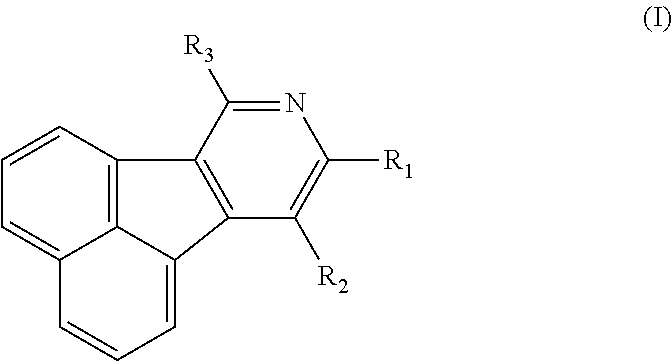
- Wherein, R1-R3 independently represent hydrogen, deuterium atom, halogen, hydroxy, cyano, nitro, amino, C1-C20 alkyl, C1-C20 alkoxy, C6-C40 aryl containing one or more substituents R or unsubstituted aryl, C6-C40 aromatic hydrocarbon group, C3-C40 aryl containing one or more substituents R or unsubstituted aryl containing one ore more hetero atoms, trialkylsilyl, triaryl silyl, trialkylsilyl containing one or more substituent R or unsubstituted trialkylsilyl, dicarboxylic phosphoroso containing one or more substituent R or unsubstituted diaryl phosphoroso, aryl carbonyl containing one or more substituent R or unsubstituted aryl carbonyl, diaryl amino containing one or more substituent R or unsubstituted diaryl amino, and the hetero atom is B, O, S, N, Se, the substituent R is halogen, hydroxyl, cyano, nitro, amino, C1-C4 alkyl, C1-C4 alkoxy;
- Preferably, R2, R3 are independently selected from hydrogen, halogen, C1-C8 alkyl, C6-C30 phenyl containing one or more substituent R or unsubstituted phenyl, C10-C30 fused aromatic ring group containing one or more substituent R or unsubstituted one, C6-C20 five- or six-membered heteroaryl containing one or more substituent R or unsubstituted heteroaryl containing one or two hetero atoms, C6-C30 diaromatic amino containing one or more substituent R or unsubstituted diaromatic amino; the substituent R is halogen, cyano, nitro, amino, C1-C4 alkyl, C1-C4 alkoxy, and the hetero atom is O, S, N.
- Preferably, R2, R3 are independently selected from hydrogen, halogen, C1 -C4 alkyl, phenyl containing one substituent R or unsubstituted phenyl, naphthyl containing one substituent R or unsubstituted naphthyl, carbazolyl containing one substituent R or unsubstituted carbazolyl, five- or six-membered heteroaryl containing one hetero atom, and the substituents R is halogen, amino, C1-C4 alkyl.
- The R2, R3 can both be hydrogen, C1-C4 alkyl, phenyl, naphthyl, tolyl, thiophene furosemide, furan, pyrrole or pyrazine.
- Preferably, wherein R1 is selected from hydrogen, halogen, C1-C8 alkyl, C6-C20 five-or six-membered heteroaryl containing one or more substituent R or unsubstituted one containing one or more hetero atoms, C10-C20 fused aromatic ring group containing one or more substituent R or unsubstituted one, C6-C30 phenyl containing one or more substituent R or unsubstituted henyl, diphenyl amino, phenyl naphthylamino, triphenyl silyl, diphenylphosphineoxide, phenylcarbonyl or phenylsulfenyl, the substituent R is halogen, cyano, nitro, amino, C1-C4 alkyl, C1-C4 alkoxy, and the heteroatom is O, S, N.
- Further preferably, wherein R1 is selected from hydrogen, halogen, C1-C4 alkyl, C10-C20 carbazolyl containing one substituent R or unsubstituted carbazolyl, C10-C20 fluorenyl containing one substituent R or unsubstituted fluorenyl, naphthyl, phenyl, C6-C10 five- or six-membered heteroaryl containing one or more substituent R or unsubstituted one, and the substituent R is halogen, amino, C1-C4 alkyl.
- The five- or six-membered heteroaryl containing one or more hetero atoms is pyrimidinyl, pyridyl, thiazolyl, triazole or triazinyl, the fluorenyl containing one or more substituent R or unsubstituted fluorenyl is 9,9-dimethyl-fluorenyl, 9,9-diphenyl fluorenyl, 9,9-xylyl fluorenyl or spirofluorenyl.
- The R2, R3 are both phenyl, R1 is phenyl, bisbiphenyl, naphthyl, carbazolyl substituted by one substituent R, or R1 is 9,9-dimethyl fluorenyl, 9,9 diphenyl fluorenyl, 9,9-xylyl fluorenyl or spirofluorenyl, and the substituent R is halogen, amino, C1-C4 alkyl.
- The following preferred compounds can further illustrate the invention, which should not be considered to limit this invention in any way.
-


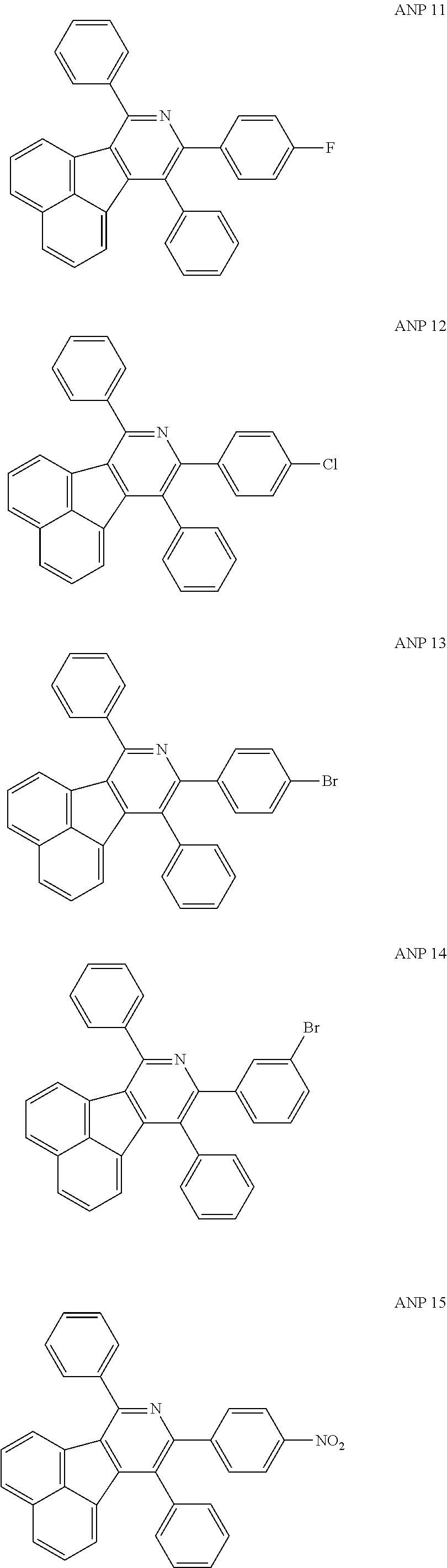

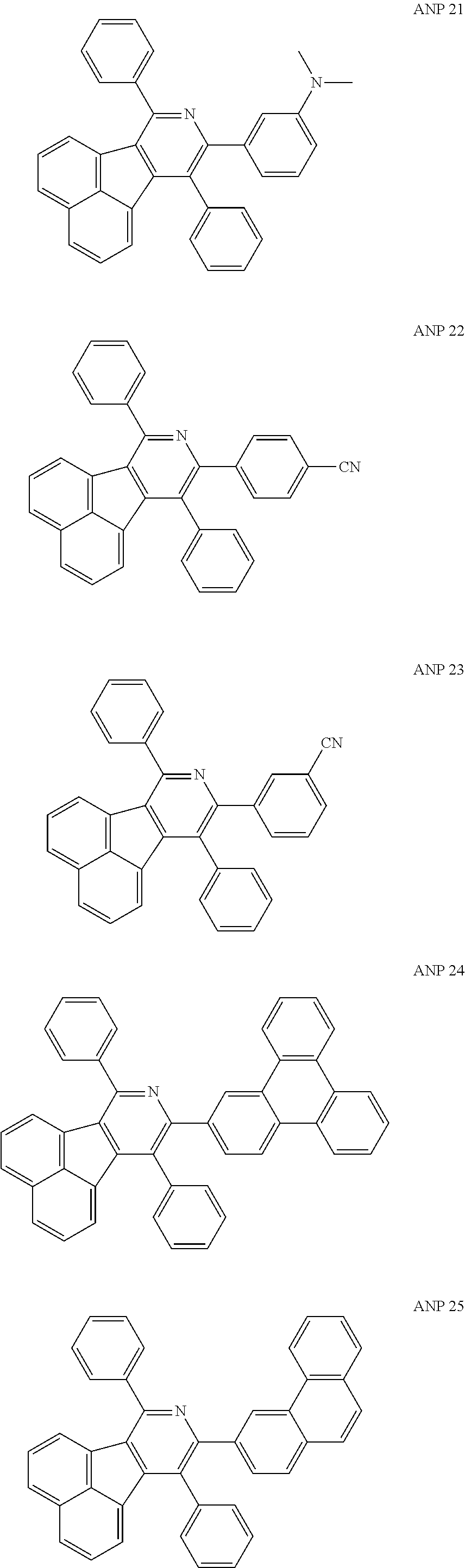

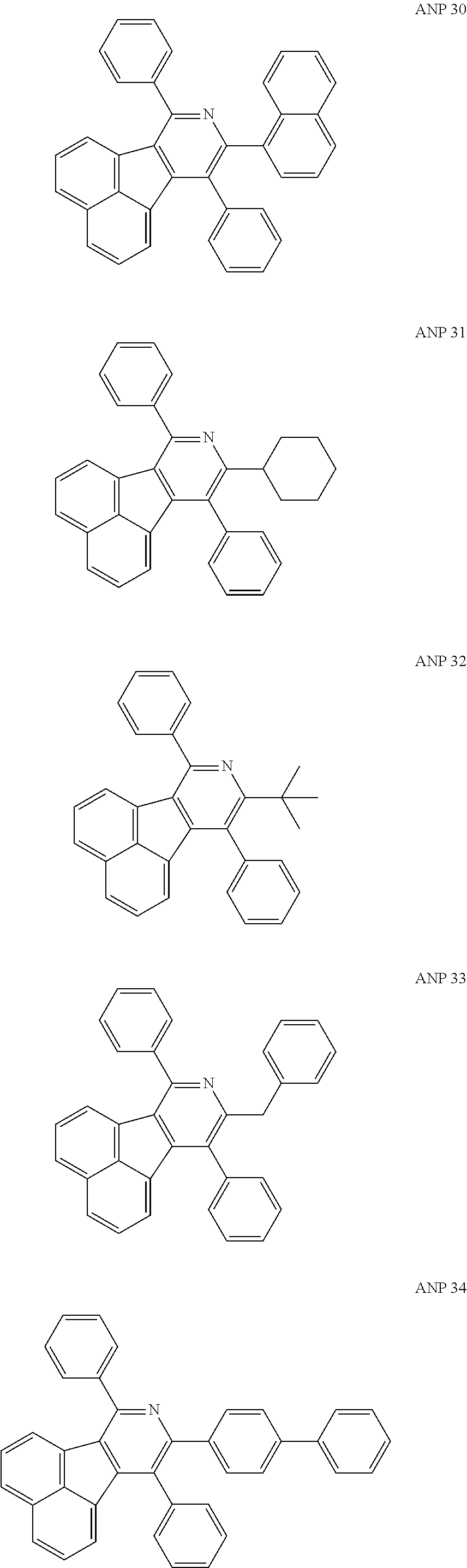

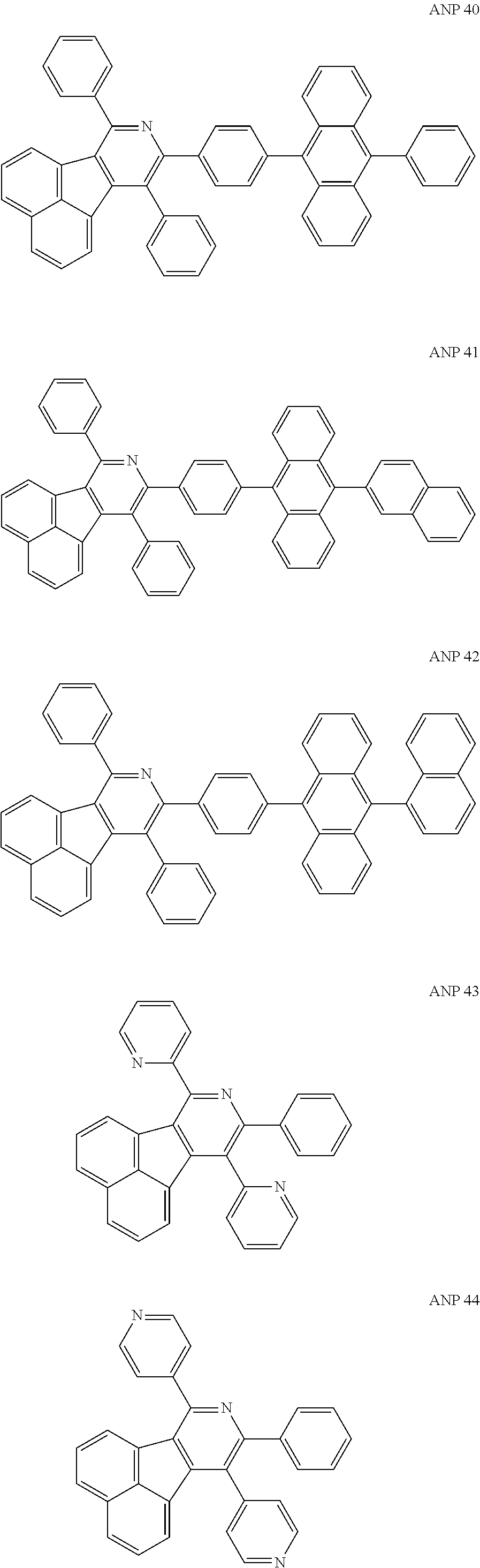
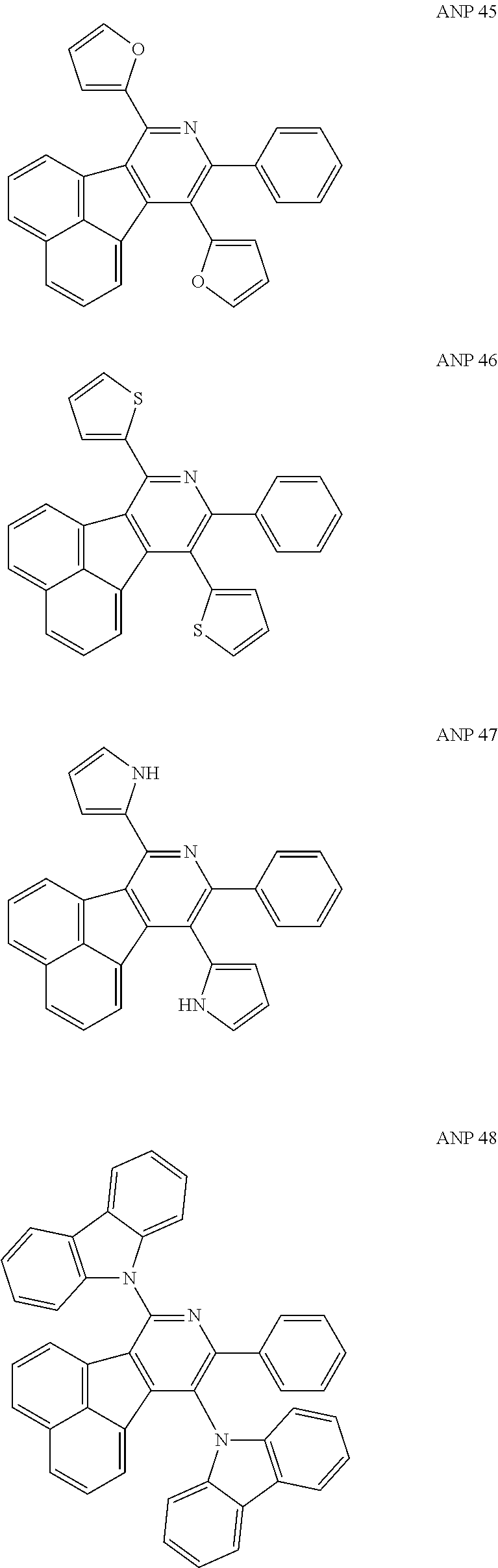
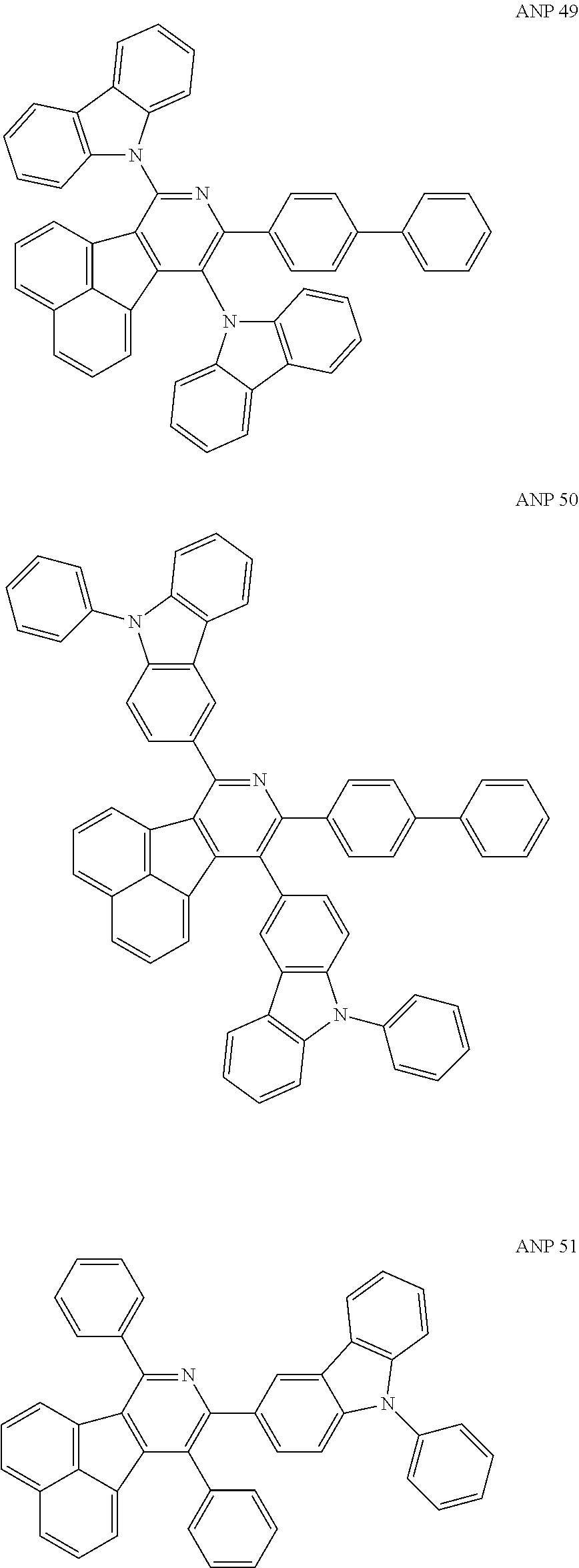
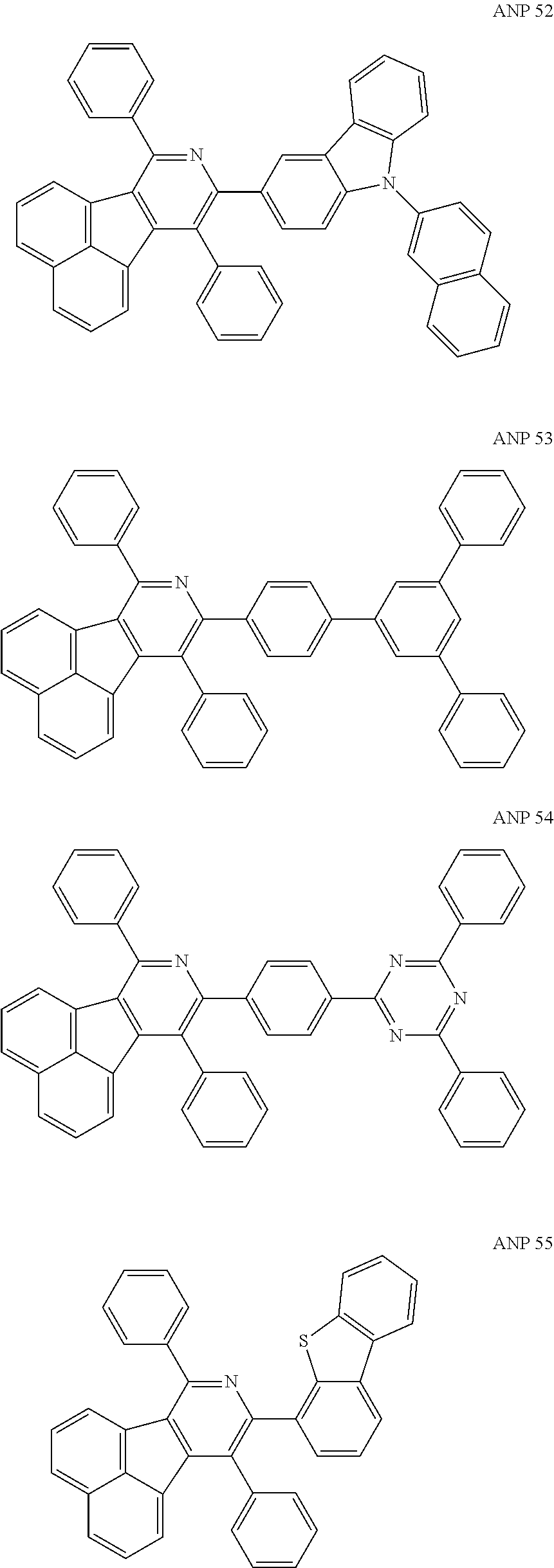

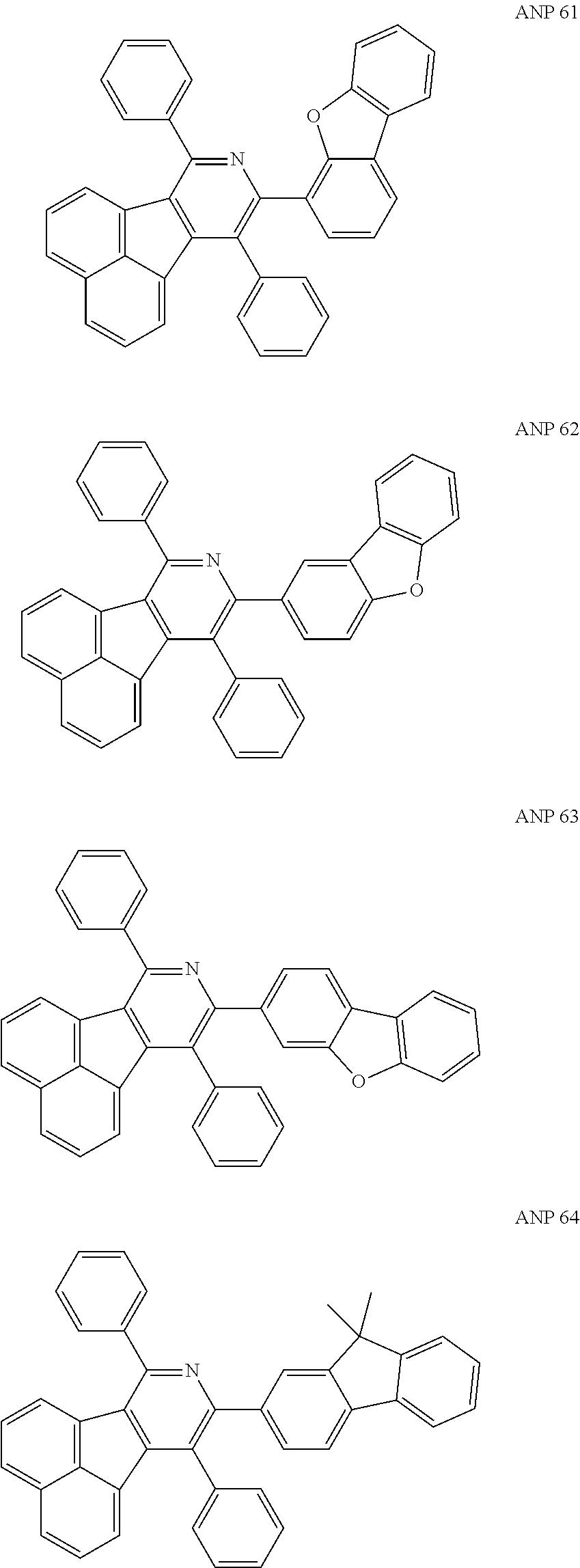

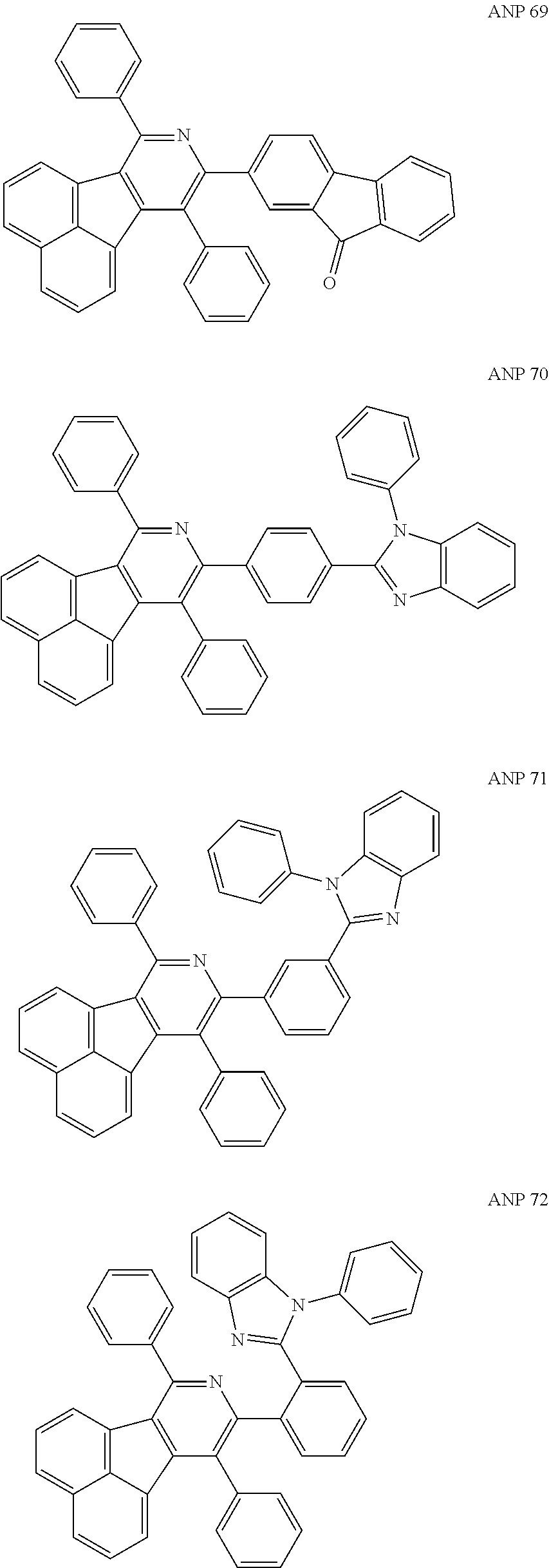
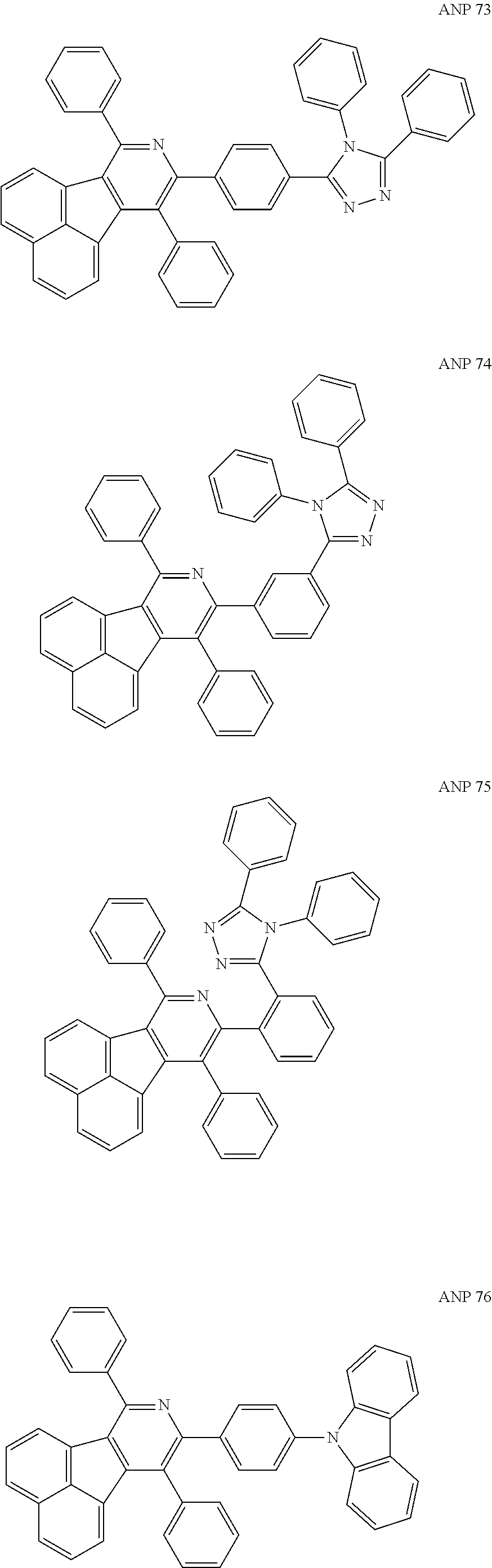
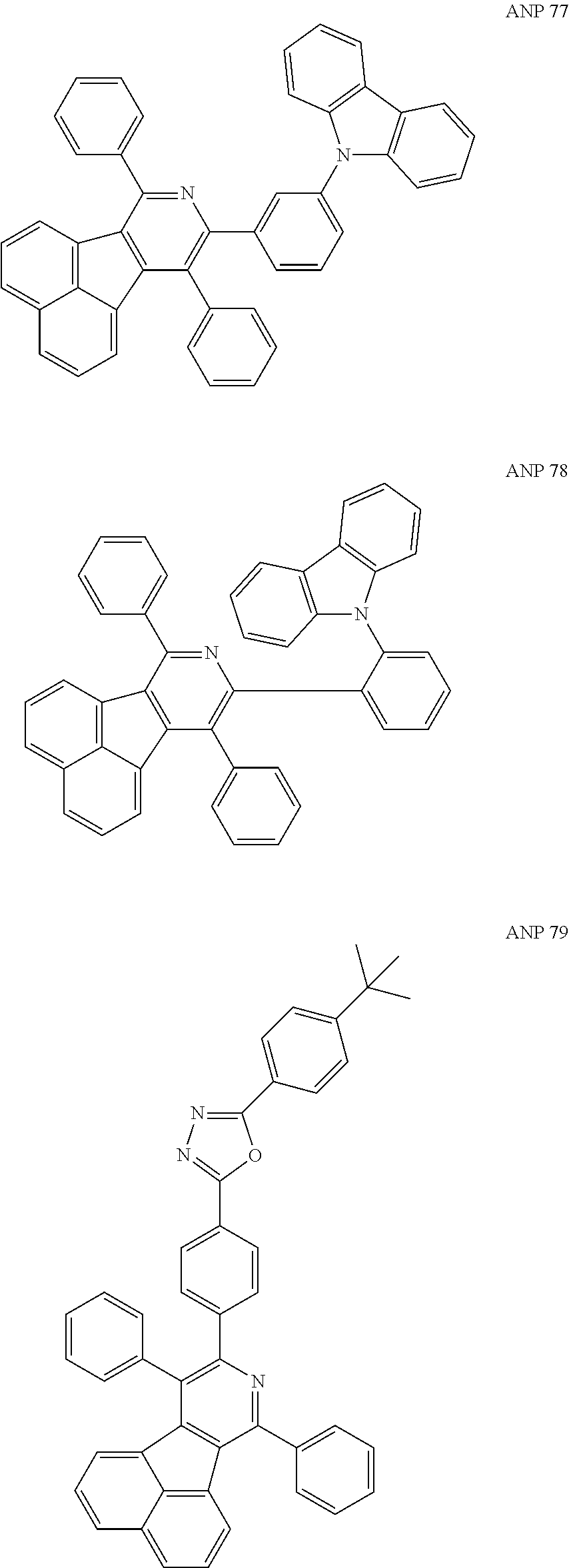
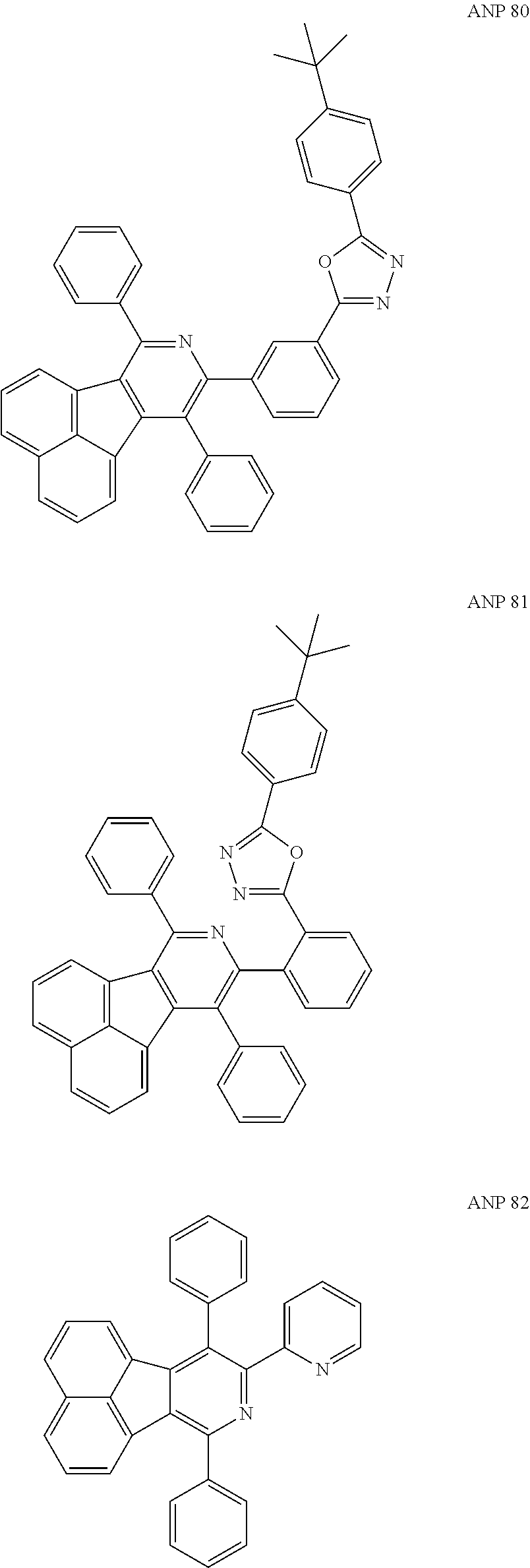
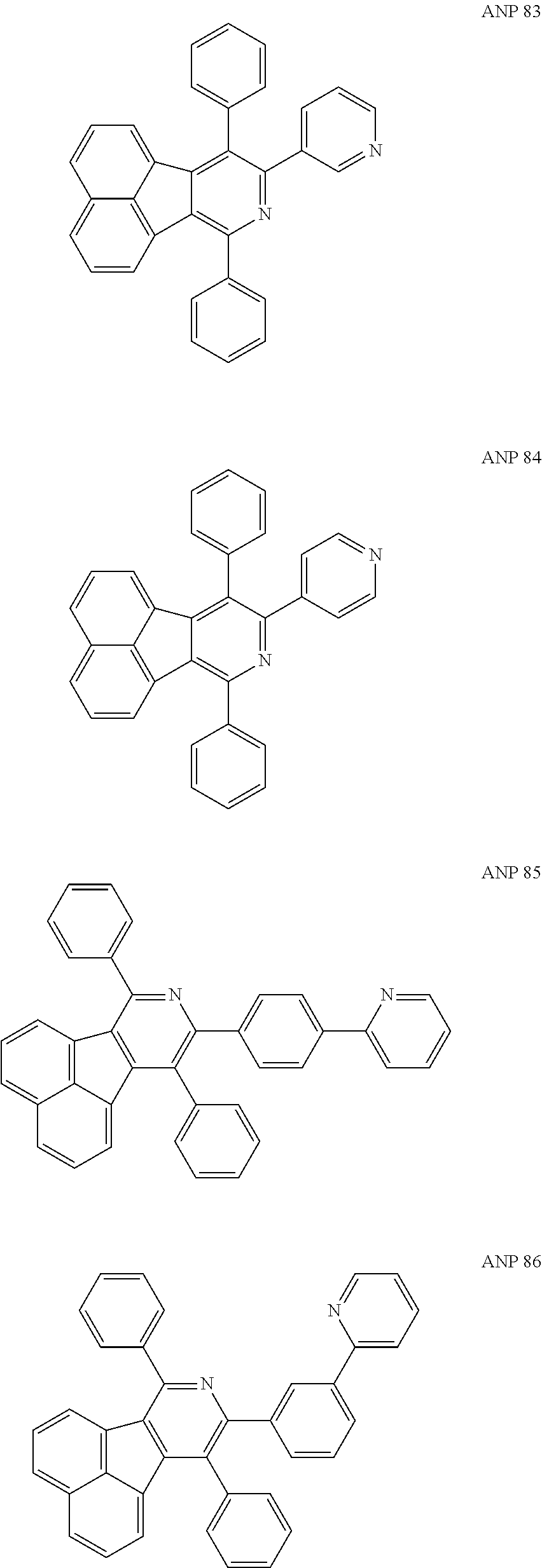
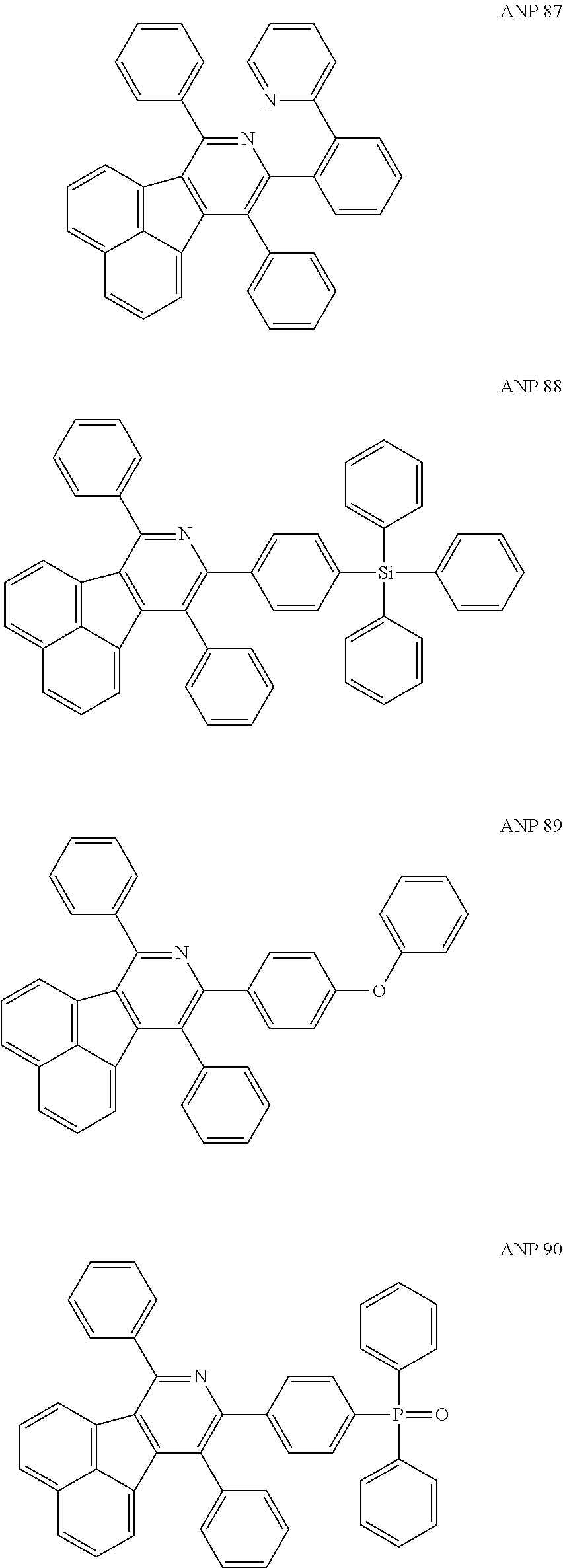
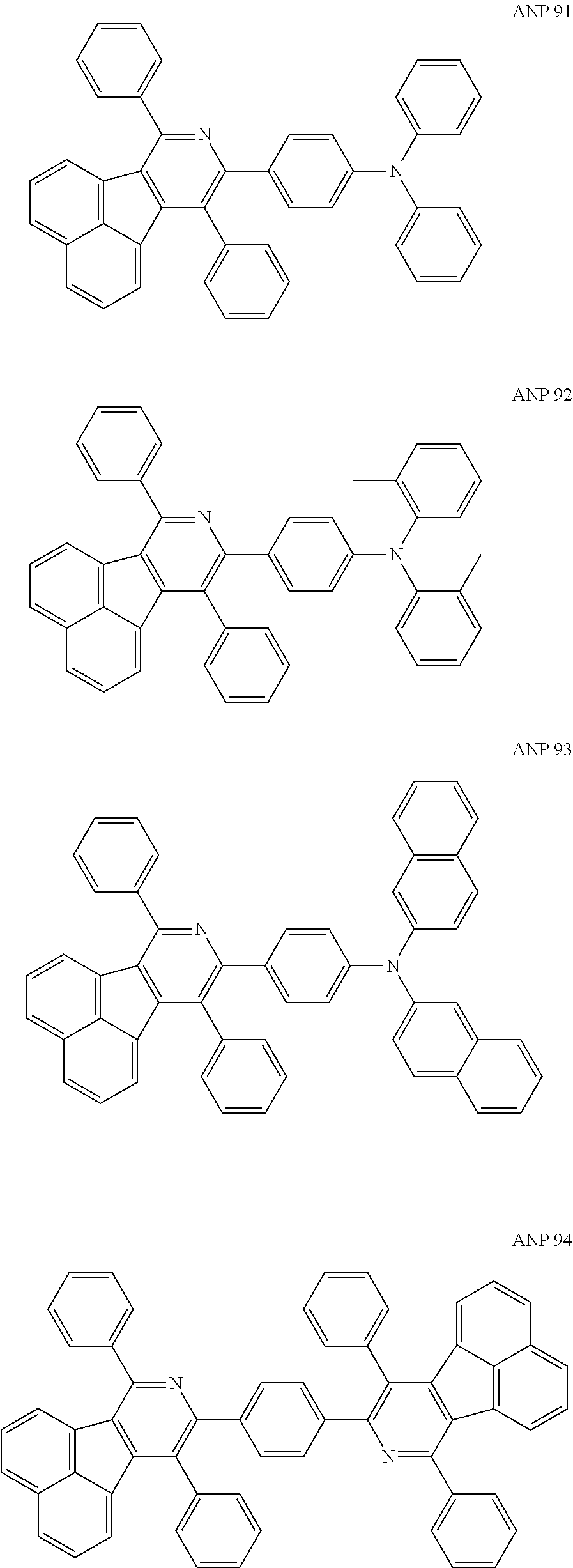
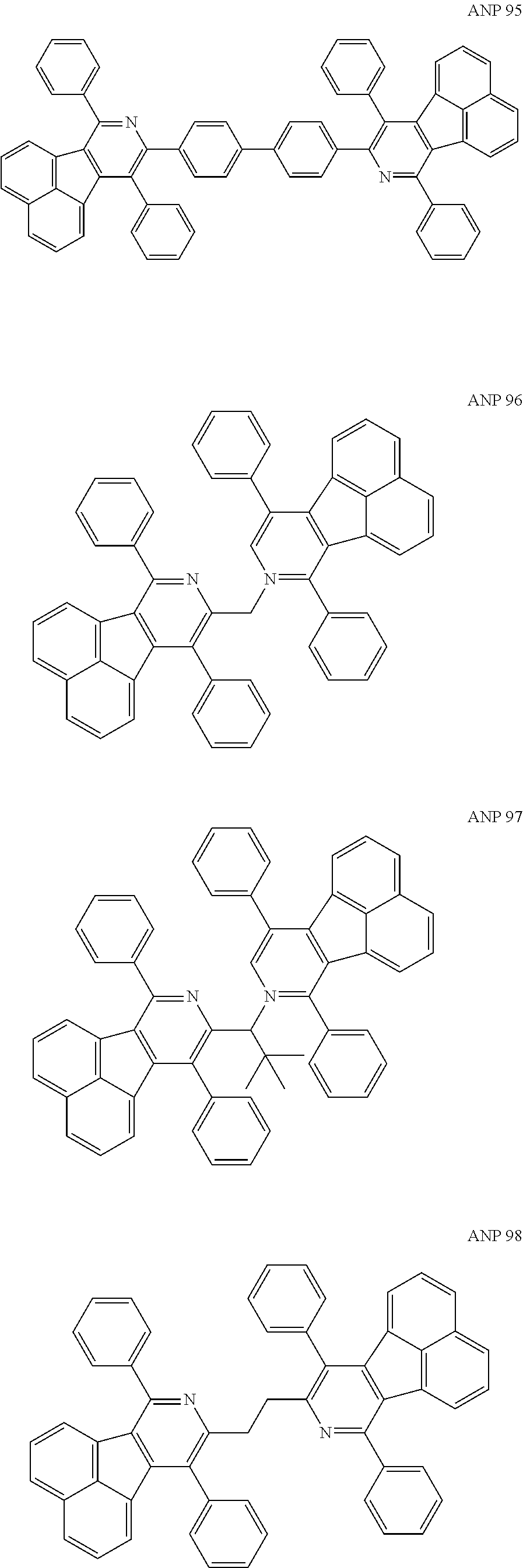

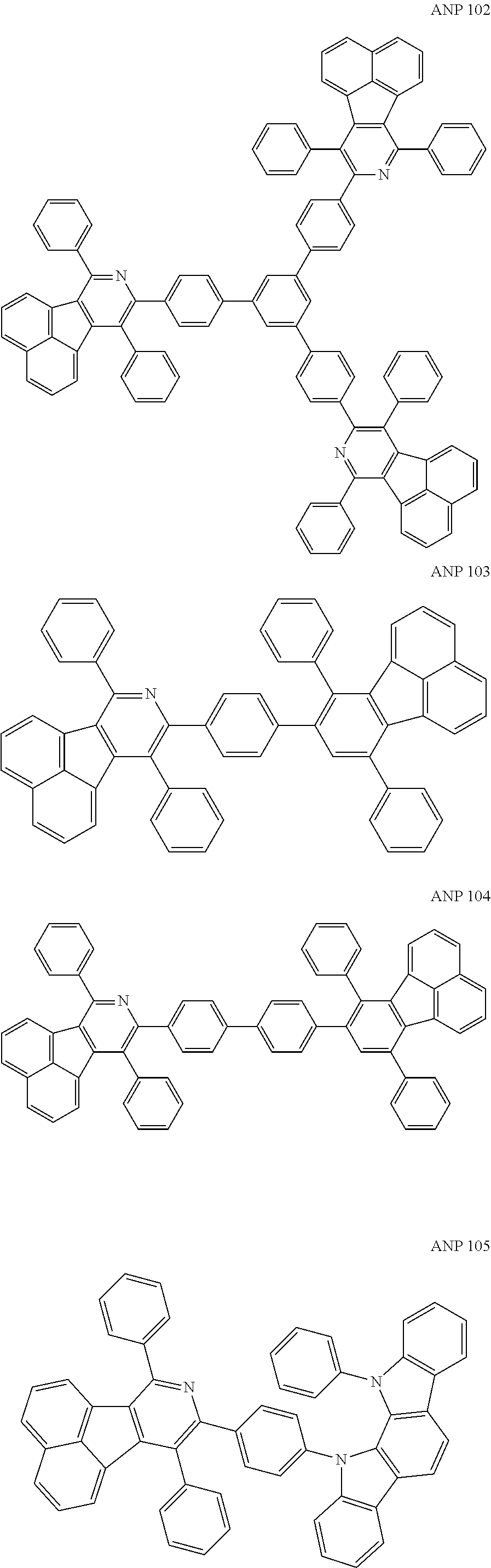
- The above method for preparing organic electroluminescent materials is as follows:
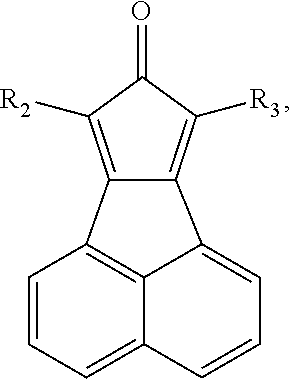
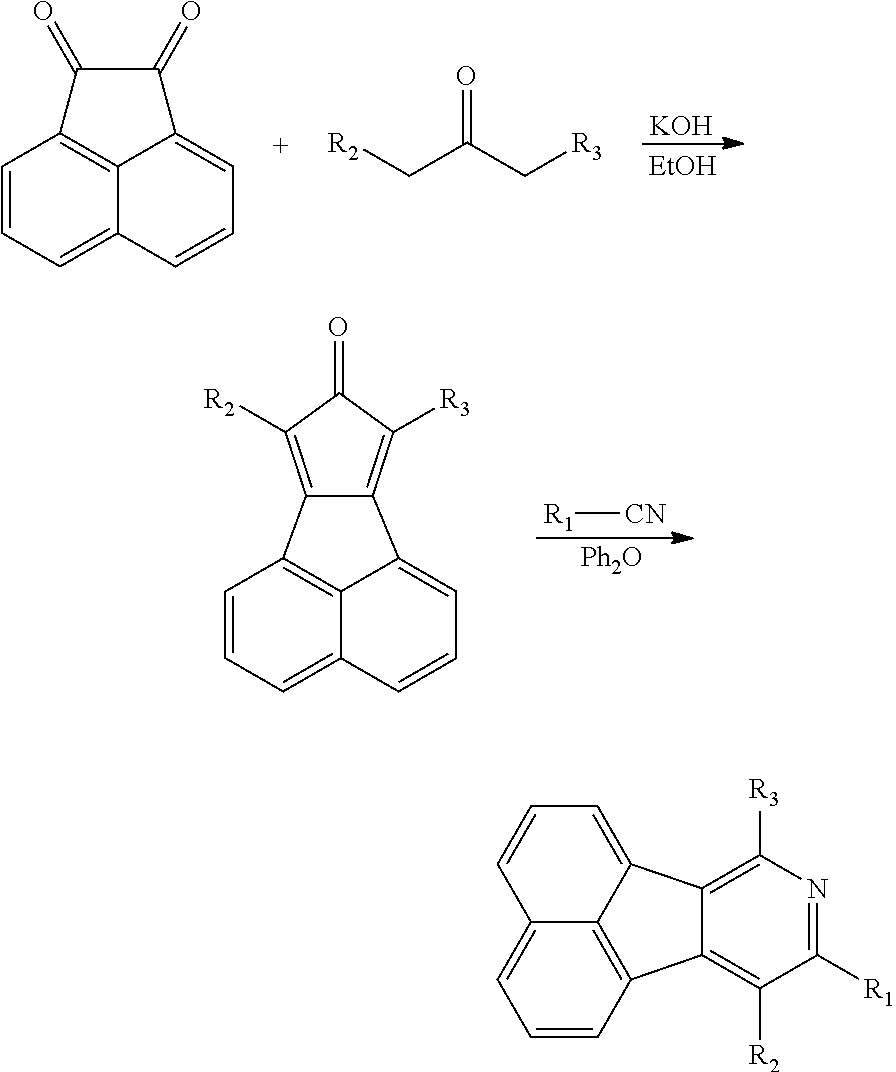
- (1) Prepare
-
- (2) react with R1—CN for 40-50 hours under the temperature of 250-300° C. with the protection of nitrogen gas.
- The reaction in step (2) is to mix the raw materials for direct heating under the protection of nitrogen gas.
- The reaction in step (2) is to heat for reflux for 40-50 hours by adding solvent diphenyl ether.
- The step (2) further includes recrystallization purification: the recrystallization is to recrystallize and purify with dichloromethane-acetone mixed solvent.
- Further the silica gel column purification steps and petroleum ether eluting are included before the recrystallization.
- The method in the step (1): reflux the acenaphthequinone and
-

- at 70-100° C. under the condition of nitrogen gas and strong alkaline condition.
- The strong alkaline condition is to add sodium hydroxide or potassium hydroxide in solution, and the solvent of the reflux solution is ethanol.
- The target compound in the invention is a new, efficient organic electron-transport or phosphorescent host material, which is used in high-performance OED. The OED in the invention comprises a substrate, an anode layer formed on the substrate, a hole injection layer, a hole transport layer, a light emitting layer, an electron transport layer and an electron injection layer evaporated sequentially in the anode layer as well as an anode and a cathode.
- The light-emitting layer may be a fluorescent light-emitting layer or a red phosphorescent light emitting layer.
- In one embodiment of OED in the present invention, the compounds in the invention are used as an electron transporting material;
- In another embodiment of OED in the present invention, the above compounds are used as phosphorescent host material, and the guest material is preferably an organic iridium compound and an organic platinum compound;
- The OED in the present invention adopts the above compounds as a phosphorescent host material, and adopts the above compounds as an electron transport layer.
- The OED possesses high electronic transmission and injection capacity by using the compound having an ANP group as electronic transport material. It also enhances luminous efficiency and lifetime of the device because of its excellent thermal stability and film-forming properties. At the same time, the OED possesses high triplet energy level and excellent electronic transport capacity by using the compound having the ANP group as the main body of phosphorescence material. It enhances the number of electrons in light-emitting layer and the efficiency of the device effectively.
-
FIG. 1 is a structural chart of the device, of which, 10 denotes a glass substrate, 20 denotes an anode, 30 denotes hole injection layer, 40 denotes hole transport layer, 50 denotes light emitting layer, 60 denotes electron transport layer, 70 denotes electron injection layer, 80 denotes cathode. -
FIG. 2 is the ESI-MS diagram ofANP 8, -
FIG. 3 is the MALDI-TOF-MS diagram of ANP 34, -
FIG. 4 is ESI-MS diagram of ANP64, -
FIG. 5 is the 1H NMR diagram of ANP34, -
FIG. 6 is the 1H NMR diagram of ANP64, -
FIG. 7 is 13C NMR diagram of ANP64, -
FIG. 8 is the V-J curves of devices 3 (round), 4 (triangle), and 5 (square). - In the following, the invention is described in details by combining the following embodiments, but it should not be considered to limit the invention.
- The raw materials used below are commercially available materials.
-
-
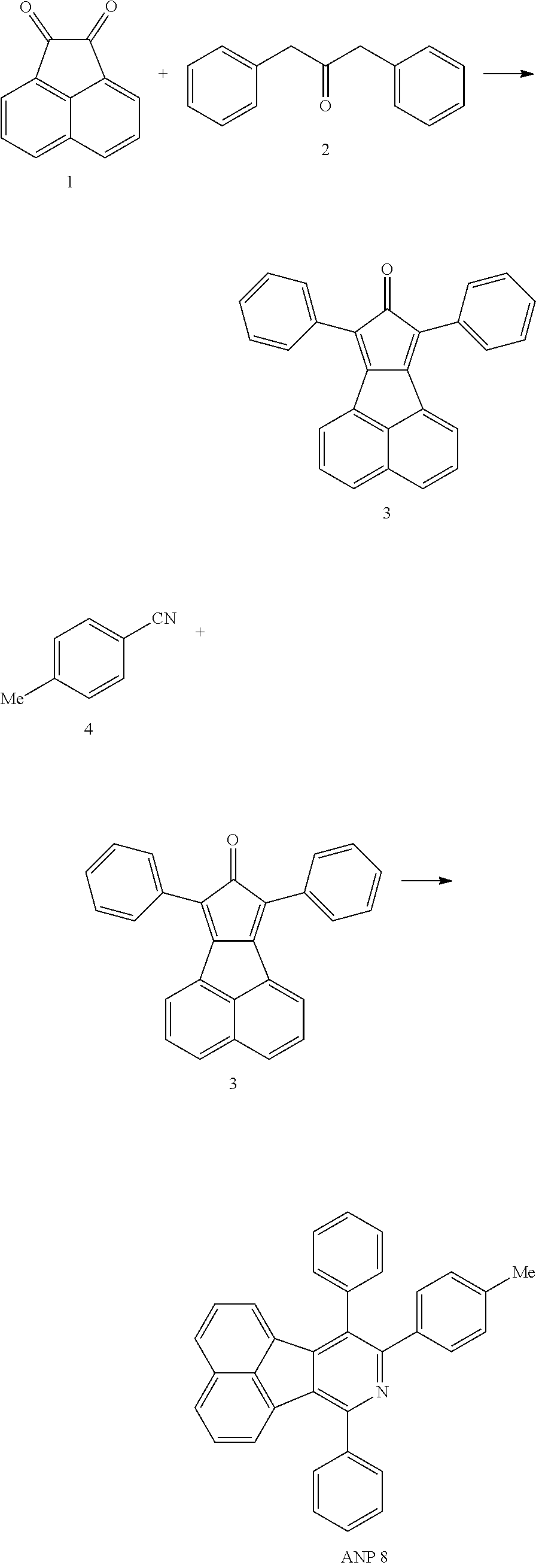
- Add anthraquinone (84 g, 0.46 mol), 1,3-diphenyl acetone (72.8 g, 0.34 mol), 600 ml ethanol, 56 g potassium hydroxide to a four-necked flask, to stir and introduce nitrogen for
reflux 2 hours, cool down to room temperature, filter; rinse the filter cake by ethanol twice, to get 130 g of black solid, with a yield of 91%. - Under the nitrogen gas condition, mix the intermediate 3 (3.56 g, 10 mmol) and intermediate 4 (4.69 g, 40 mmol), heat them to reflux 48 hours (external temperature of 280° C.). Cool down the resulting brown solution to get the brown solid. By using petroleum ether as eluant to pass the silica gel columns, crystallize from dichloromethane-acetone to get 0.23 g of
ANP 8 white crystal, with a yield of 5%. - ESI-MS m/s value C34H23N: 445.18, actual measurement value [M+]: 446.18, as shown in
FIG. 2 . -

- Under the nitrogen gas condition, mix the intermediate 3 (3.56 g, 10 mmol) and intermediate 6 (7.17 g, 40 mmol), heat them to reflux 48 hours (external temperature of 280° C.). Cool down the resulting brown solution to get the brown solid. By using petroleum ether as eluant to pass the silica gel columns, crystallize from dichloromethane-acetone to get 1.37 g of ANP 34 pale yellow crystal, with a yield of 27%. 1H NMR (400 MHz, CDCl3, δ): 7.98-7.95 (m, 2 H), 7.90-7.82 (m, 2 H), 7.65-7.31 (m, 20 H), 6.93-6.89 (d, 1 H), as shown in
FIG. 5 . MALDI-TOF-MS m/s value C39H25N: 507.20, actual measurement value [M+H]+: 508.50, as shown inFIG. 3 . -

- Under the nitrogen gas condition, mix the intermediate 8 (4.30 g, 5 mmol, Organic & Biomolecular Chemistry, 10(24), 4704-4711; 2012), 60 ml of diphenyl ether, heat them to reflux 48 hours (external temperature of 280° C.). Cool down the resulting brown solution to get the brown solid, and crystallize from dichloromethane-acetone to get 2.15 g of
ANP 64 white crystal, with a yield of 50%. 1H NMR (400 MHz, CDCl3, δ): 7.98-7.94 (m, 2 H), 7.87-7.77 (m, 2 H), 7.67-7.22 (m, 18 H), 6.96 (d, 1 H, J=10 Hz), 1.23(s, 6 H), as shown inFIG. 6 . 13C NMR (100 MHz, CDCl3, δ): 27.8, 47.1, 119.6 120.3, 122.6, 123.6, 124.9, 125.3, 127.0, 127.3, 127.4, 127.9, 128.0, 128.1, 128.8, 129.0, 129.5, 130.0, 130.5, 130.9, 133.2, 134.6, as shown inFIG. 7 . ESI-MS m/z value C42H29N: 547.23, actual measurement value [M+H]+: 548.53, as shown inFIG. 4 . - Produce OLED with the organic electroluminescent materials, with the device number 1. The structure of device is shown in
FIG. 1 . - Firstly, the ITO transparent conductive glass substrate 10 (with
anode 20 above) is washed with detergent solution and deionized water, ethanol, acetone, deionized water in sequence, then treated with oxygen plasma for 30 seconds, and then treated with CFx plasma. - Then, perform vacuum evaporation of 75 nm NPB in ITO, which is used as the
hole injection layer 30. - Then, perform vacuum evaporation of TCTA, to form 10 nm thick of
hole transport layer 40. - Then, perform vacuum evaporation of 20 nm thick of ANP 34+1% compound 1 (the structure is shown below) in the hole transport layer as the
light emitting layer 50. - Then, perform vacuum evaporation of 20 nm thick of compound BPhen in the light emitting layer, which is used as
electron transport layer 60. - Finally, perform vacuum evaporation of 1 nm LiF as
electron injection layer - The
device number 2. The device structure is the same as that inEmbodiment 4, except that thecompound ANP 64 is used to replace the compound ANP 34. - Produce OLED with the organic electroluminescent materials, with the
device number 3. The structure of device is shown inFIG. 1 . - Firstly, the ITO transparent conductive glass substrate 10 (with
anode 20 above) is washed with detergent solution and deionized water, ethanol, acetone, deionized water in sequence, then treated with oxygen plasma for 30 seconds, and then treated with CFx plasma. - Then, perform vacuum evaporation of 60 nm 2-TNATA in ITO, which is used as the
hole injection layer 30. - Then, perform vacuum evaporation of NPB, to form 10 nm thick of
hole transport layer 40. - Then, perform vacuum evaporation of 30 nm thick of MADN in the hole transport layer as the
light emitting layer 50. - Then, perform vacuum evaporation of 30 nm thick of ANP 34 in the light emitting layer, which is used as
electron transport layer 60. - Finally, perform vacuum evaporation of 1 nm LiF as
electron injection layer - The
device number 4, the device structure is the same as that in theEmbodiment 6, but the compound ANP 34 is replaced byANP 64. - The
device number 5. The device is made according to the method inEmbodiment 6, of which, theelectron transport layer 60 of compound ANP 34 is replaced by Alq3. -
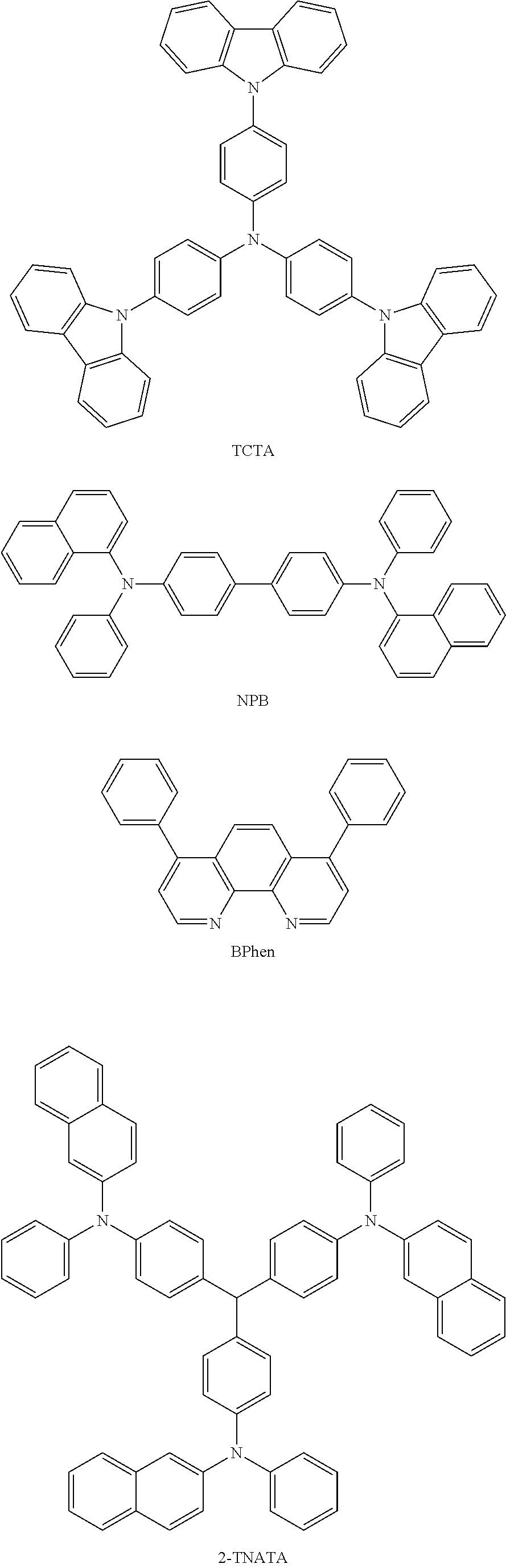

- Compound 1
- The parameters of the device under the current density of 20 mA/cm2 are shown in the table I:
-
Volt- Current Luminous Device age Luminance efficiency efficiency No. V cd/m2 cd/A lm/W CIEx CIEy 1 5.51 79.7 0.398 0.227 0.2285 0.3592 2 4.95 54.4 0.27 0.17 0.1915 0.32 3 7.04 380 1.90 0.847 0.184 0.232 4 6.92 265 1.32 0.599 0.168 0.249 5 7.61 341 1.71 0.706 0.170 0.241 - As shown from the above table, the OED has good performance when the compound with ANP group is used as the electron transport (devices 1 and 2) or host material (
components 3 and 4). As shown from the V-J curve inFIG. 8 , thedevices device 5 under the current density of 20 mA/cm2 is 7.61V) compared with thedevice 5, demonstrating that the compound containing ANP group may be used as the host material or electron transport material of phosphorescent OED.
Claims (20)
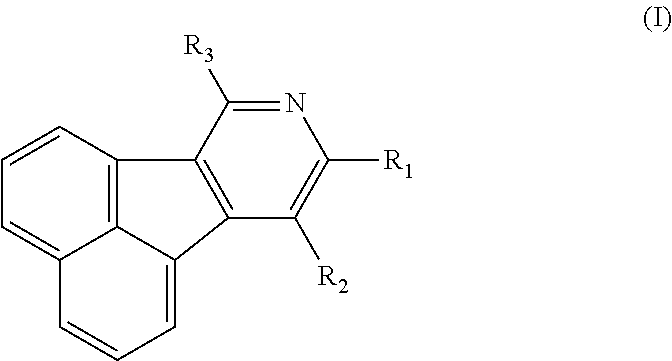
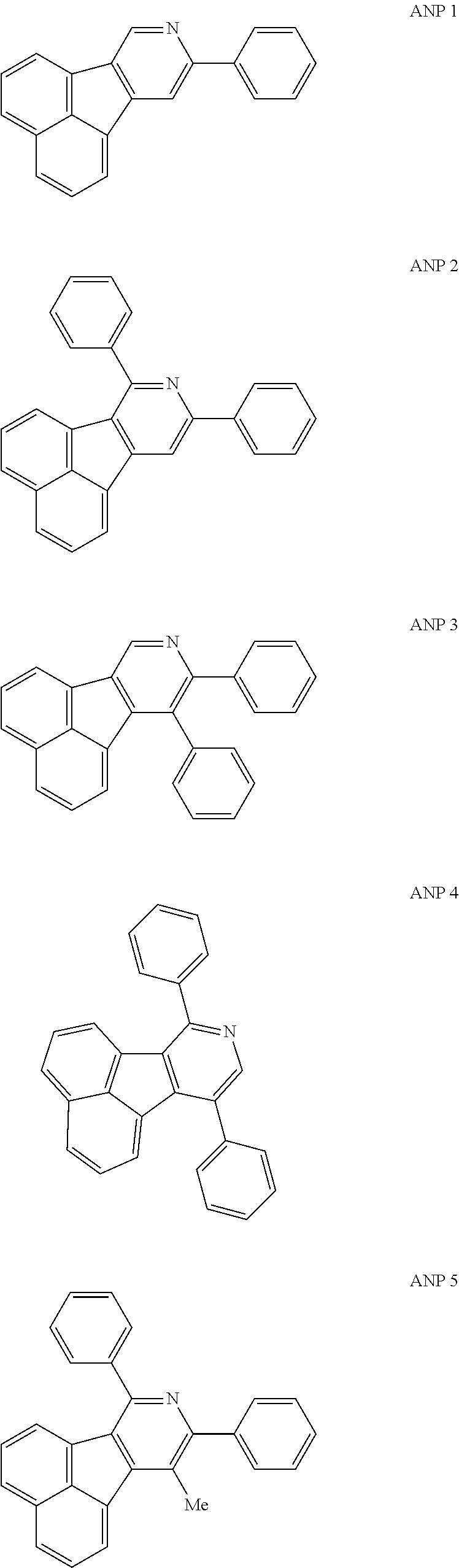


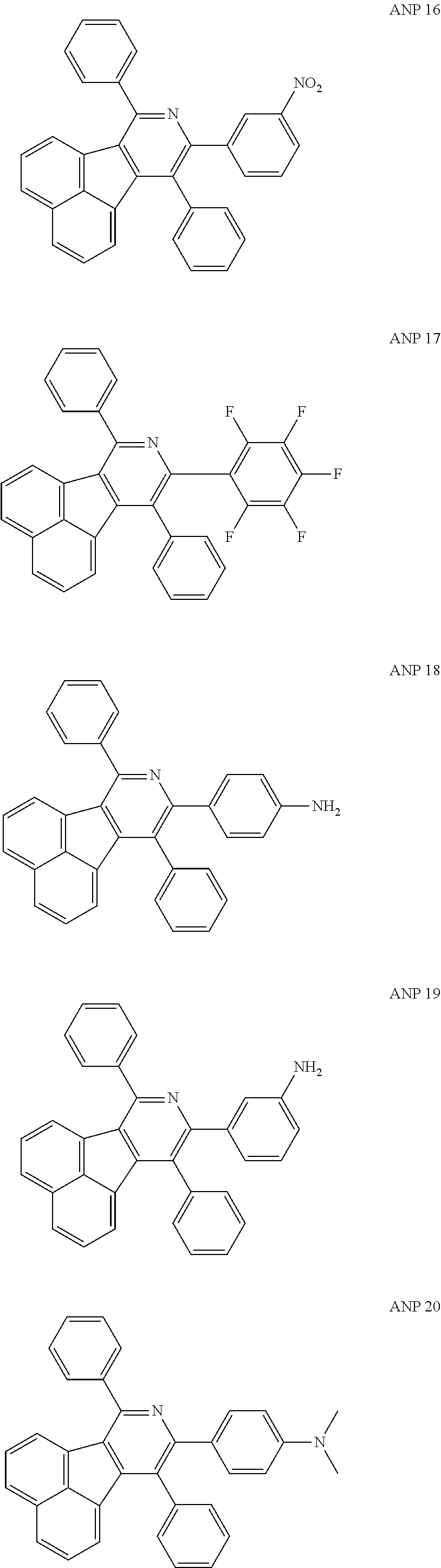
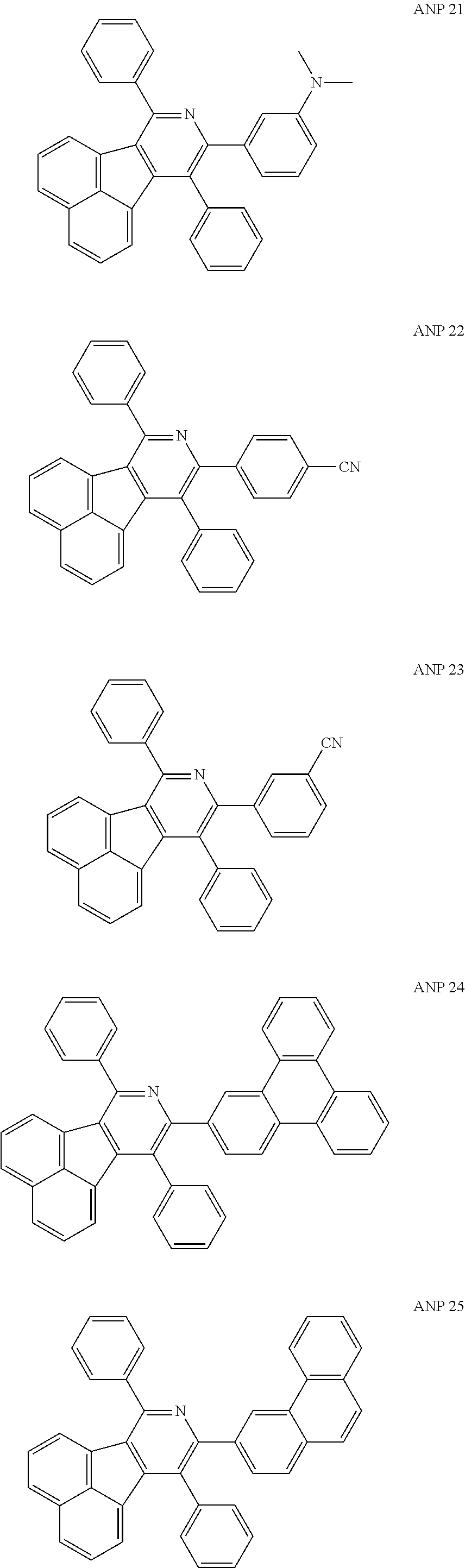
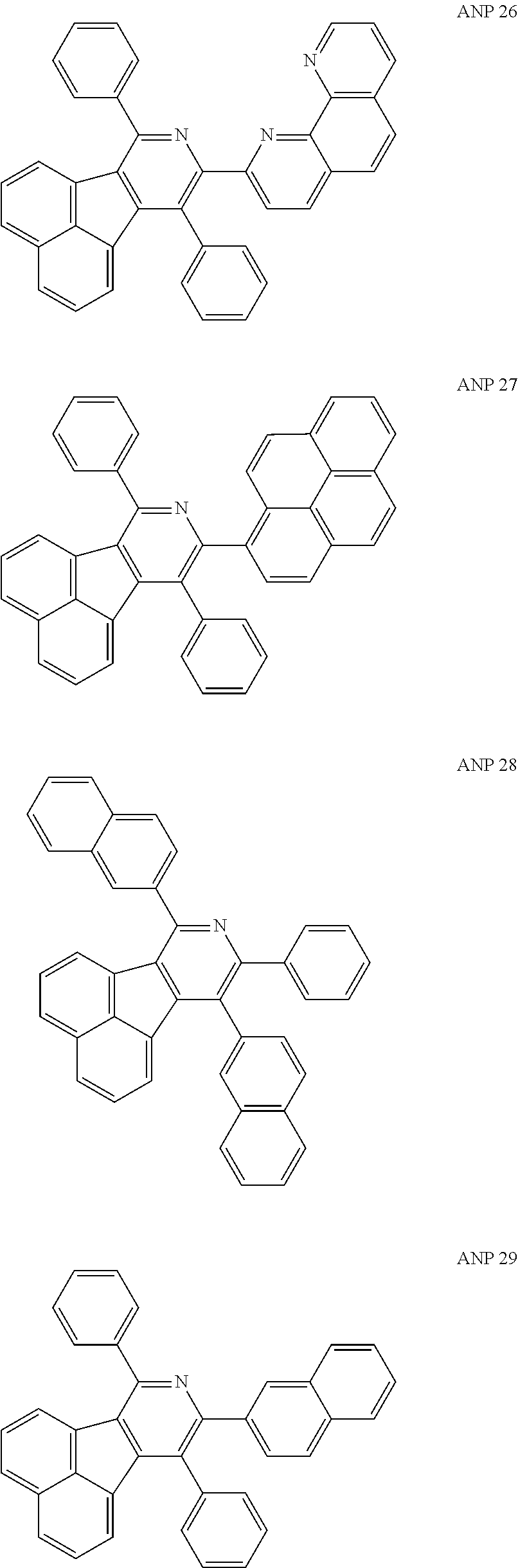
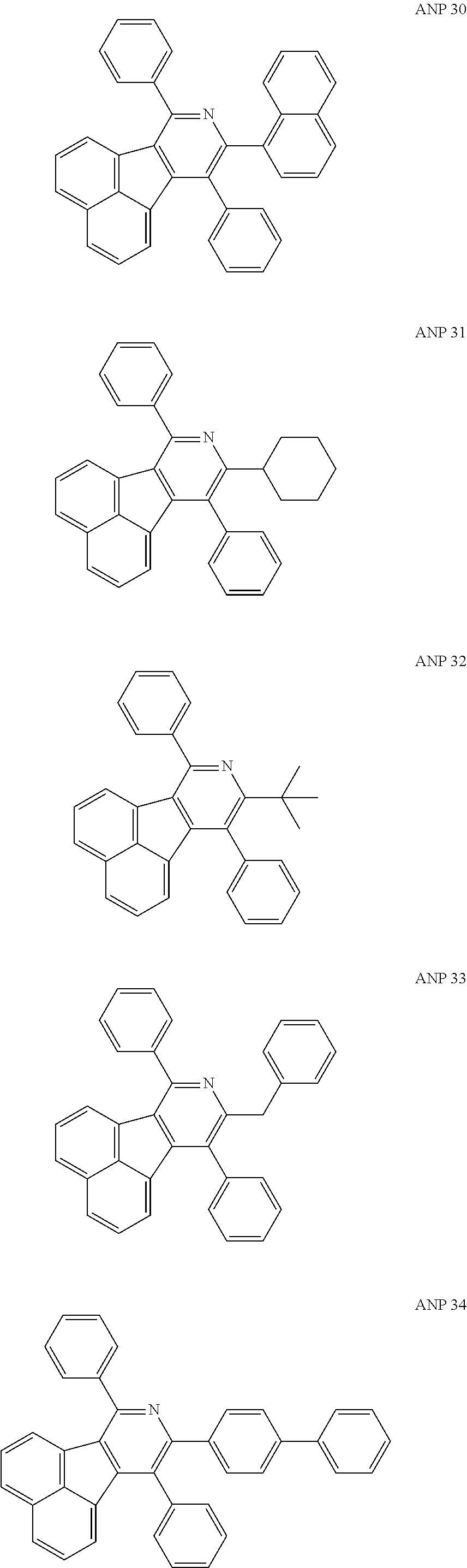
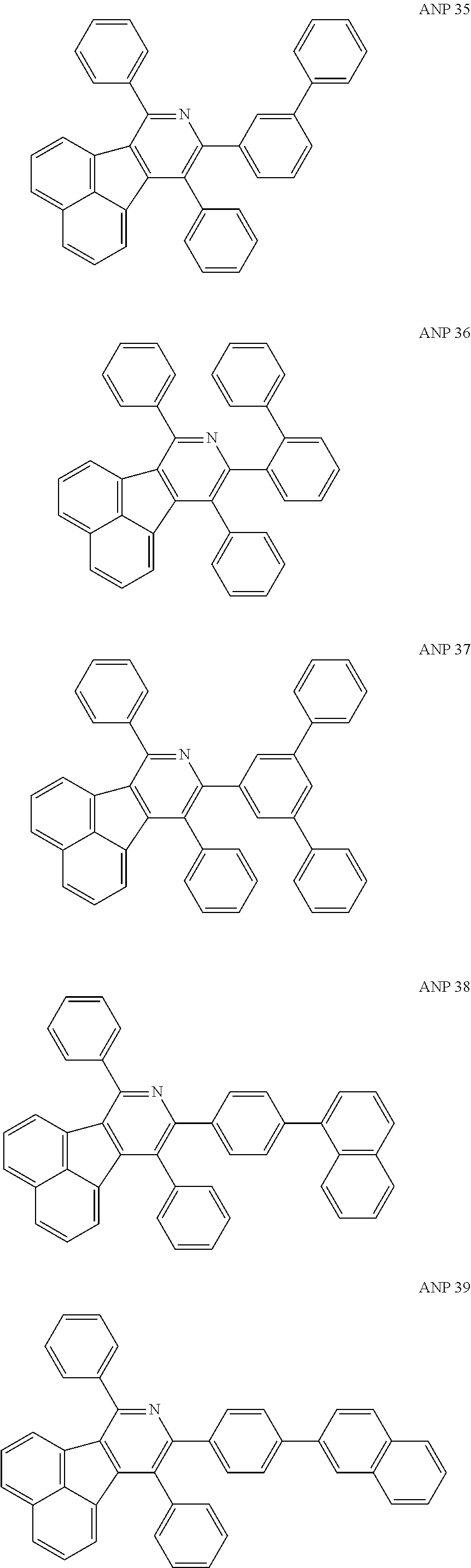

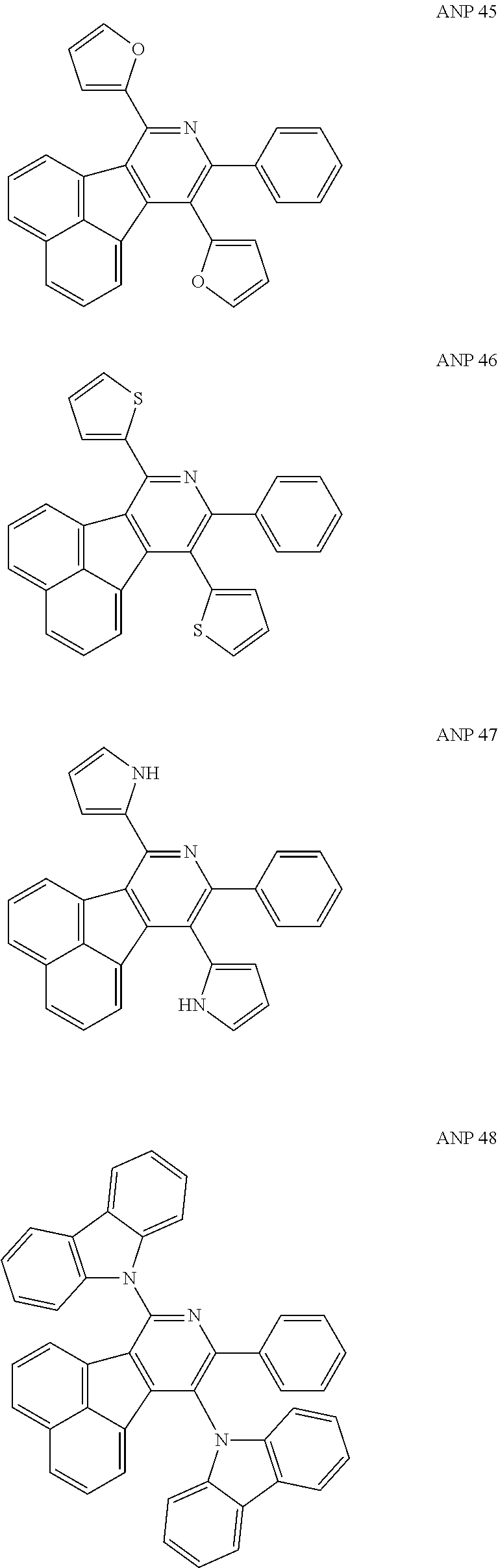

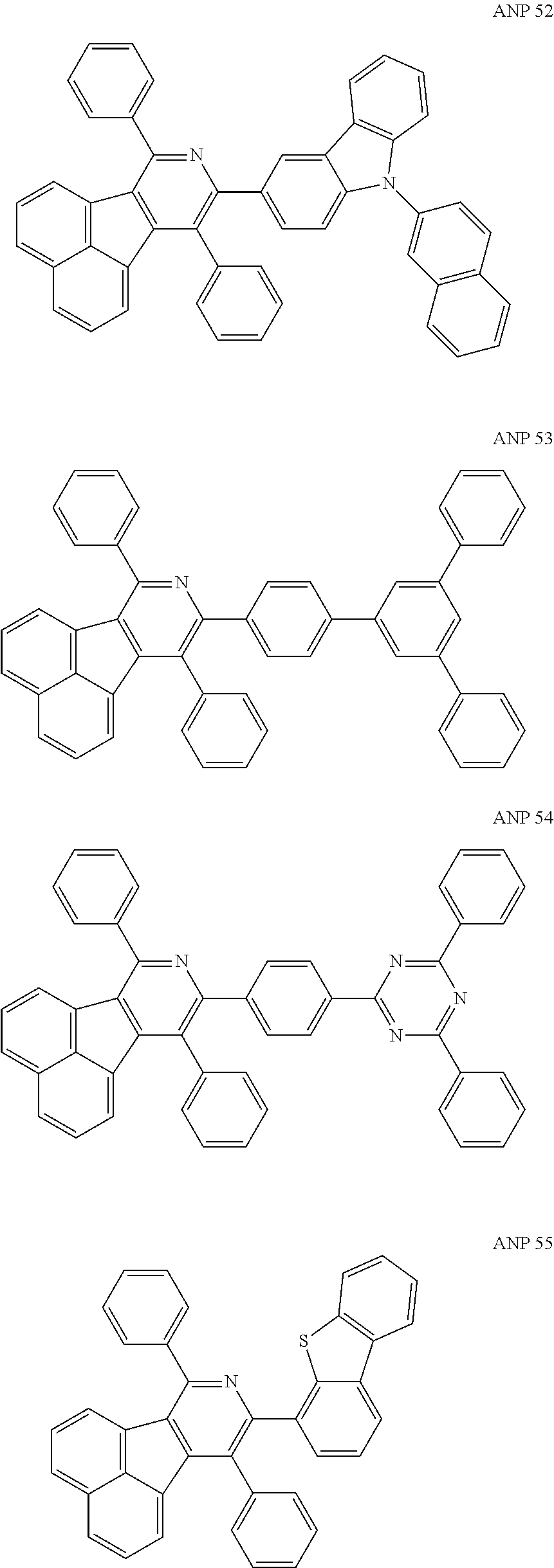
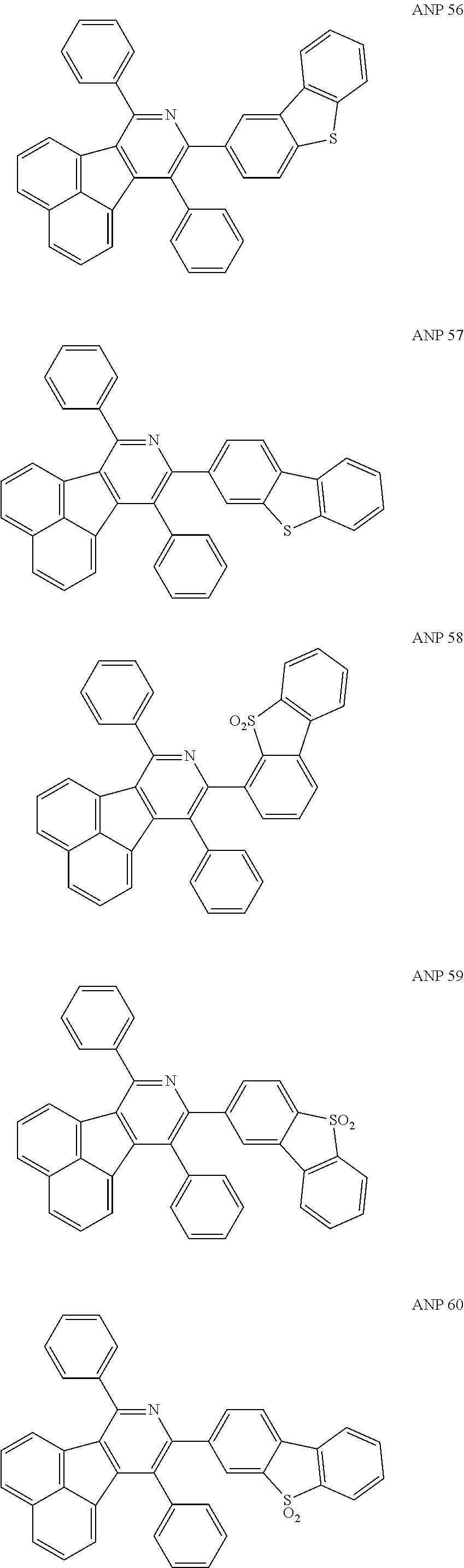


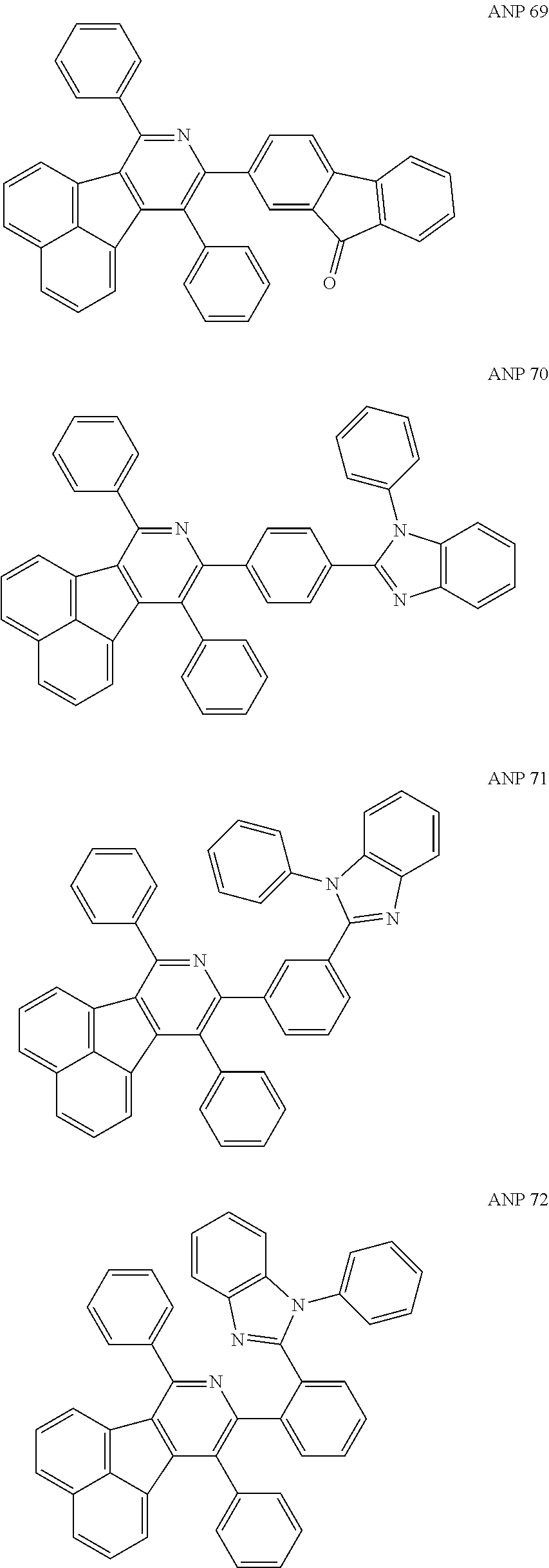
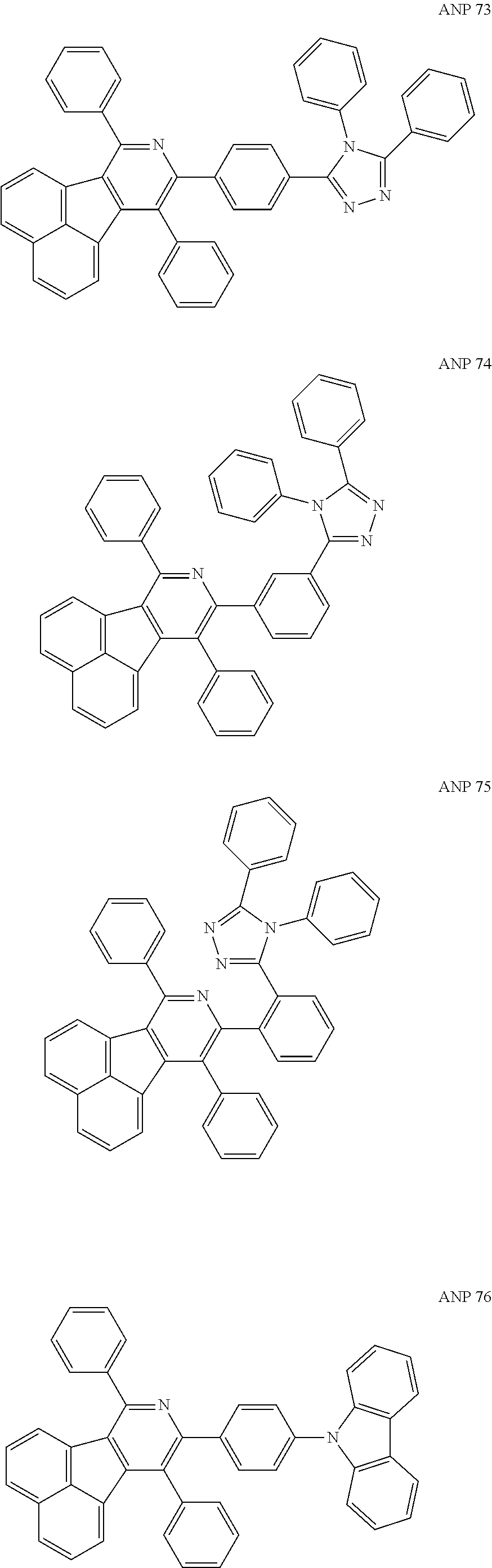
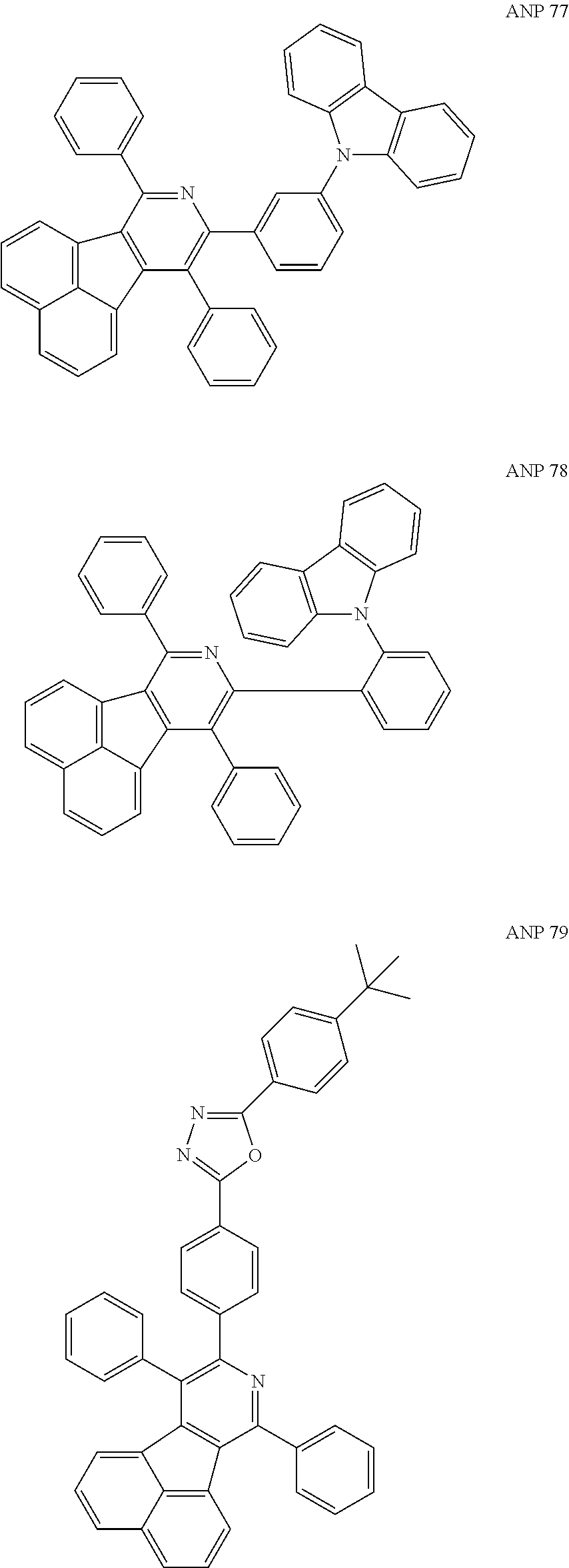
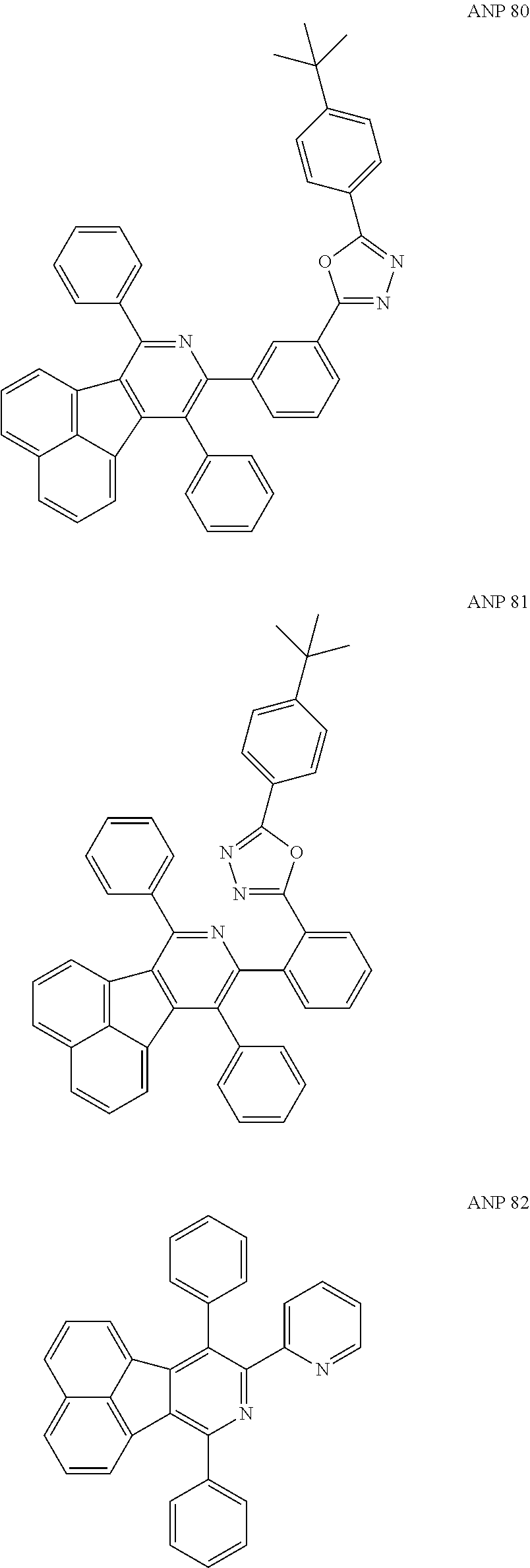
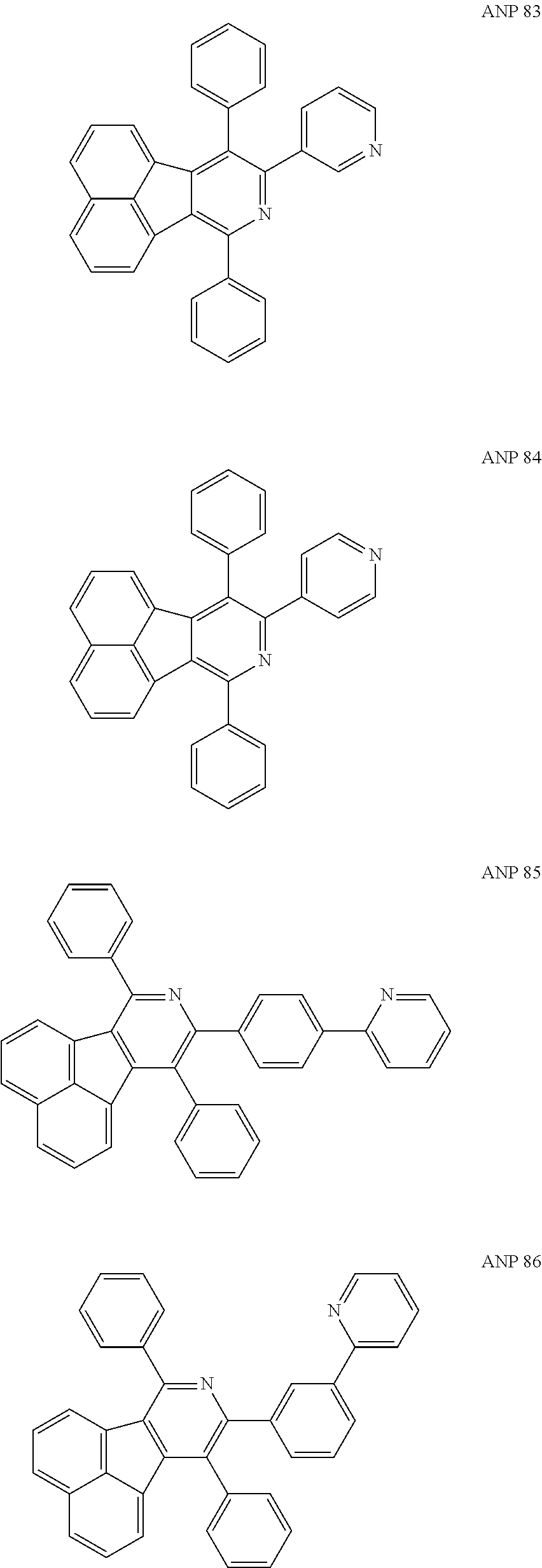

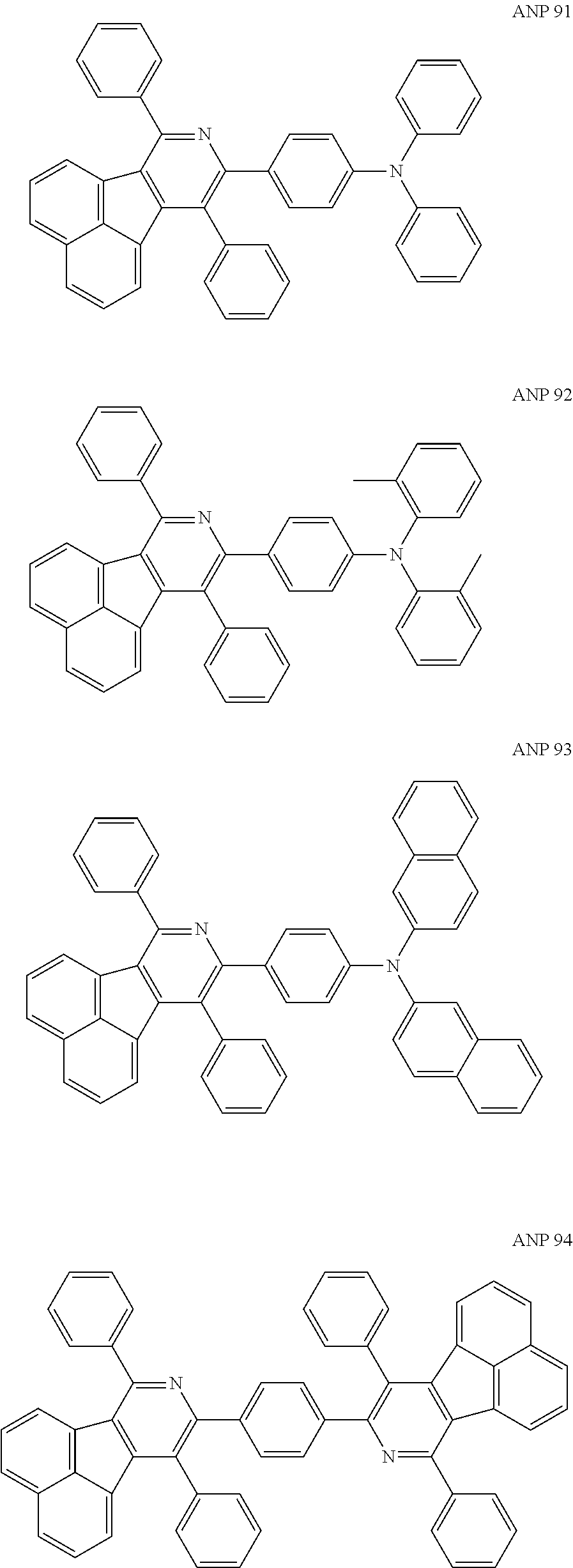
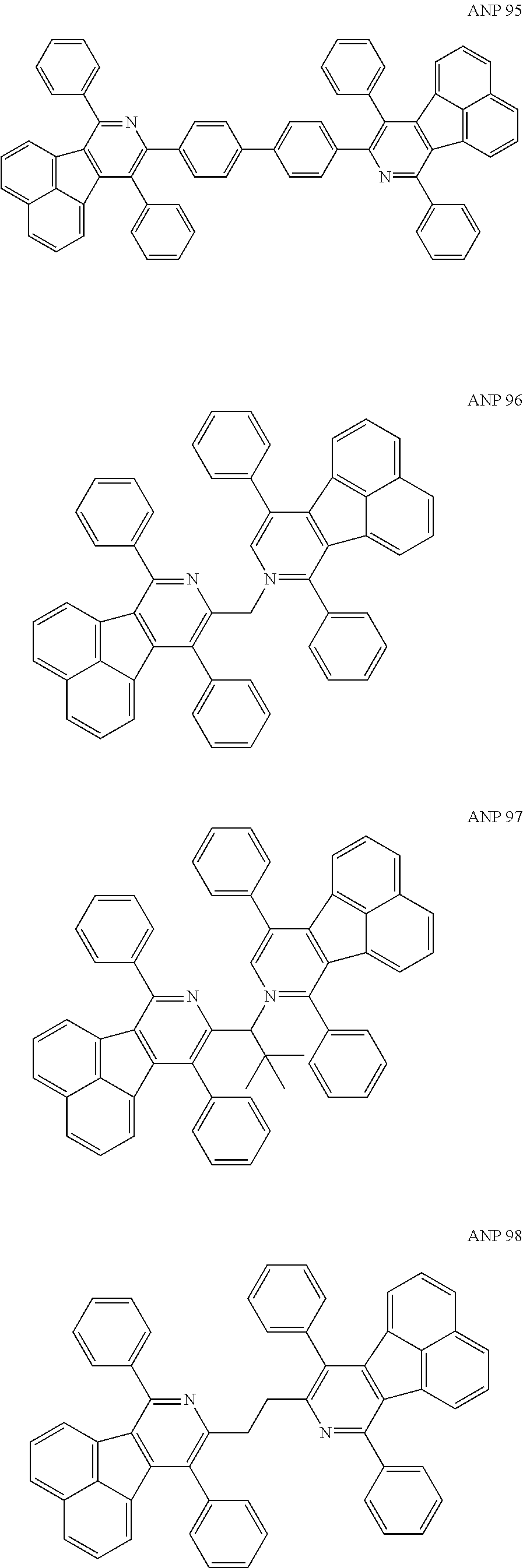
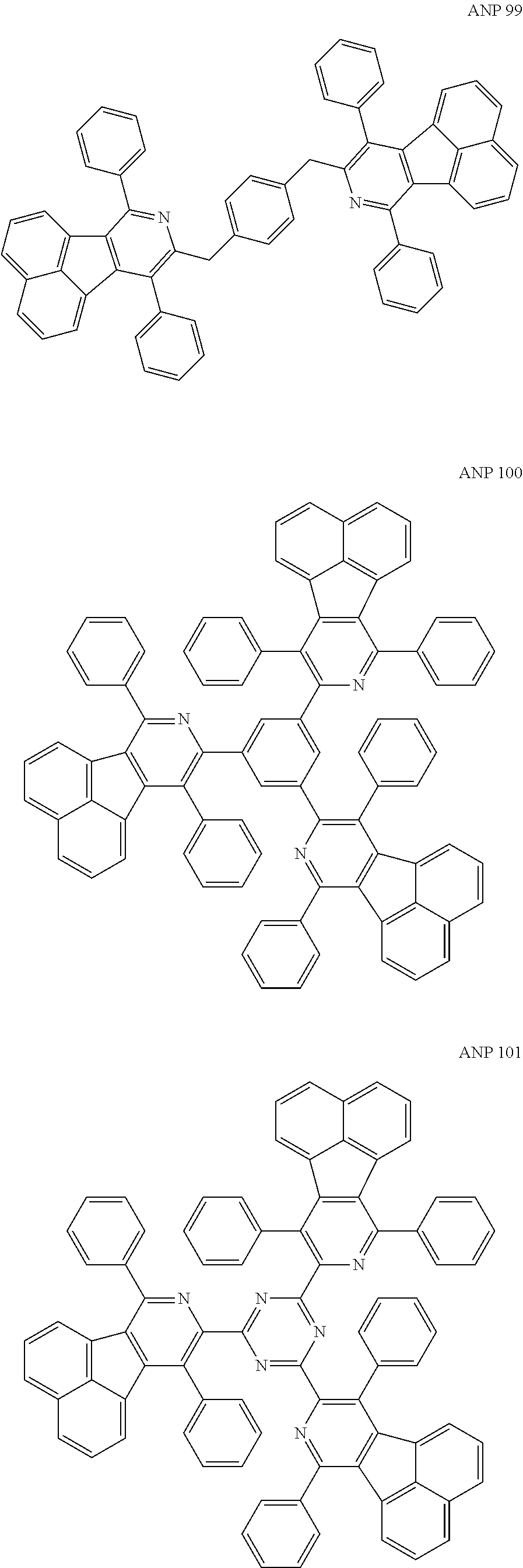
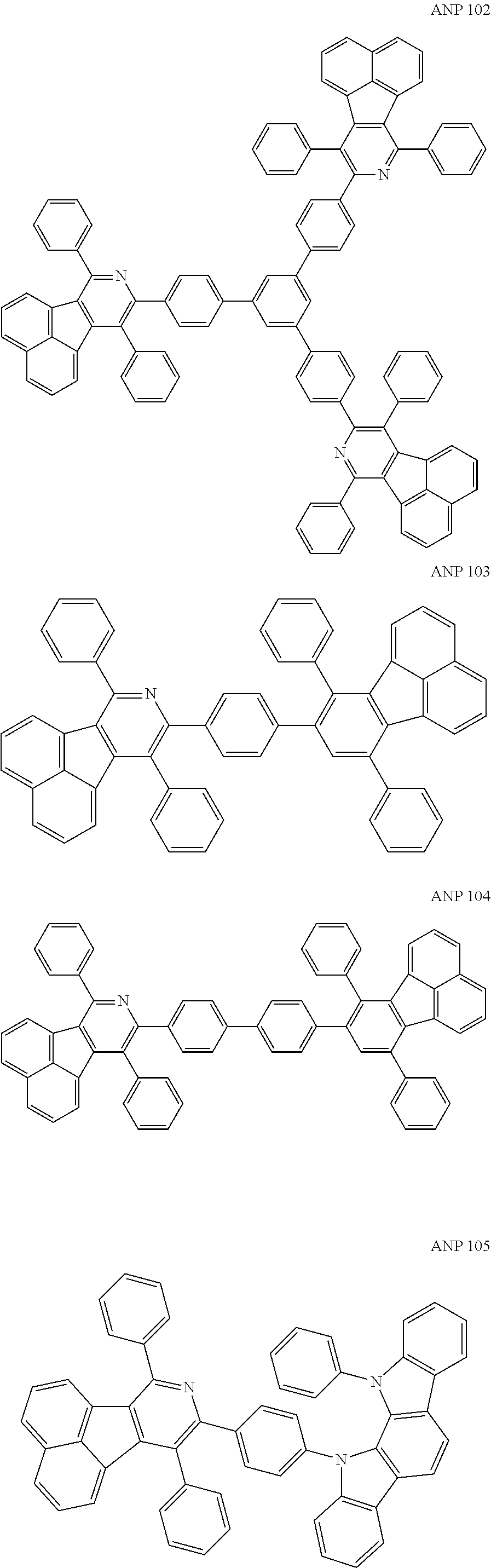
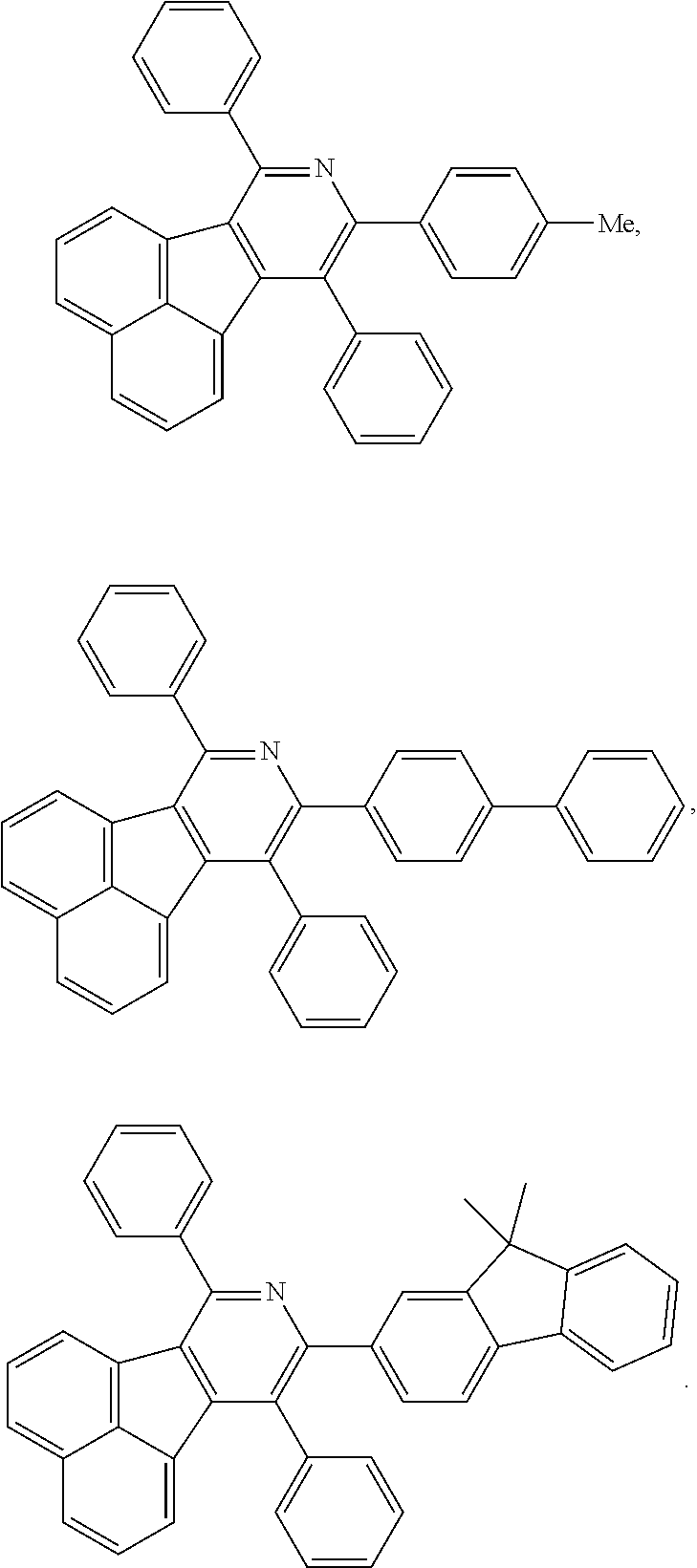
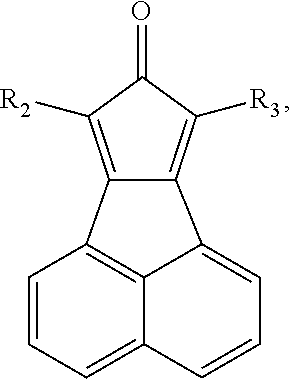

Applications Claiming Priority (5)
| Application Number | Priority Date | Filing Date | Title |
|---|---|---|---|
| CN201310556630.2 | 2013-11-11 | ||
| CN201310556630 | 2013-11-11 | ||
| CN201410581916.0 | 2014-10-27 | ||
| CN201410581916.0A CN104342126B (en) | 2013-11-11 | 2014-10-27 | Organic electroluminescent material and organic electroluminescent device |
| PCT/CN2014/090192 WO2015067155A1 (en) | 2013-11-11 | 2014-11-03 | Organic electroluminescent material and organic electroluminescent device |
Publications (1)
| Publication Number | Publication Date |
|---|---|
| US20160260907A1 true US20160260907A1 (en) | 2016-09-08 |
Family
ID=52498600
Family Applications (1)
| Application Number | Title | Priority Date | Filing Date |
|---|---|---|---|
| US15/035,742 Abandoned US20160260907A1 (en) | 2013-11-11 | 2014-11-03 | Organic electroluminescent material and organic electroluminescent device |
Country Status (6)
| Country | Link |
|---|---|
| US (1) | US20160260907A1 (en) |
| JP (1) | JP6400113B2 (en) |
| KR (1) | KR101904173B1 (en) |
| CN (1) | CN104342126B (en) |
| TW (1) | TWI593684B (en) |
| WO (1) | WO2015067155A1 (en) |
Cited By (7)
| Publication number | Priority date | Publication date | Assignee | Title |
|---|---|---|---|---|
| US10727423B2 (en) | 2016-06-20 | 2020-07-28 | Universal Display Corporation | Organic electroluminescent materials and devices |
| US11142538B2 (en) | 2018-03-12 | 2021-10-12 | Universal Display Corporation | Organic electroluminescent materials and devices |
| US11165028B2 (en) | 2018-03-12 | 2021-11-02 | Universal Display Corporation | Organic electroluminescent materials and devices |
| US11271177B2 (en) | 2018-01-11 | 2022-03-08 | Universal Display Corporation | Organic electroluminescent materials and devices |
| US11279722B2 (en) | 2018-03-12 | 2022-03-22 | Universal Display Corporation | Organic electroluminescent materials and devices |
| US11795185B2 (en) | 2017-12-13 | 2023-10-24 | Lg Display Co., Ltd. | Compound for electron-transport material and organic light emitting diode including the same |
| US12538698B2 (en) | 2020-01-06 | 2026-01-27 | Universal Display Corporation | Organic electroluminescent materials and devices |
Families Citing this family (9)
| Publication number | Priority date | Publication date | Assignee | Title |
|---|---|---|---|---|
| WO2016163372A1 (en) * | 2015-04-08 | 2016-10-13 | 出光興産株式会社 | Compound, material for organic electroluminescent elements using same, and organic electroluminescent element and electronic device each using same |
| CN105789481B (en) * | 2015-06-10 | 2018-06-19 | 广东阿格蕾雅光电材料有限公司 | Organic Electroluminescent Devices |
| CN106542957B (en) * | 2015-12-09 | 2019-05-14 | 广东阿格蕾雅光电材料有限公司 | Organic Electron Transport Material |
| CN106356452B (en) * | 2015-12-09 | 2018-09-18 | 广东阿格蕾雅光电材料有限公司 | Only electronics organic semiconductor diodes device |
| CN108440424A (en) * | 2018-04-10 | 2018-08-24 | 苏州大学 | Acenaphthene and pyrazines derivatives and its application |
| CN109053784B (en) * | 2018-09-12 | 2020-04-10 | 陕西莱特光电材料股份有限公司 | Organic electroluminescent material and preparation method and application thereof |
| CN110746364A (en) * | 2018-12-06 | 2020-02-04 | 广州华睿光电材料有限公司 | Acenaphthenequinone organic compound and application thereof |
| CN111606859A (en) * | 2020-05-22 | 2020-09-01 | 西安瑞联新材料股份有限公司 | Novel compound taking imidazole as receptor and application thereof |
| CN114685465B (en) * | 2020-12-29 | 2024-04-02 | 江苏三月科技股份有限公司 | Ketone-containing organic compound and organic electroluminescent device comprising same |
Family Cites Families (9)
| Publication number | Priority date | Publication date | Assignee | Title |
|---|---|---|---|---|
| CN1167768C (en) * | 2002-11-14 | 2004-09-22 | 大连理工大学 | 8-Oxo-8Hacenaphtho(1,2-b)pyrrole-9-carbonitrile fluorescent chromophore and its derivatives |
| JP4826081B2 (en) * | 2004-09-29 | 2011-11-30 | 株式会社豊田中央研究所 | Organic semiconductor material, semiconductor device using the same, and field effect transistor |
| CN101432251A (en) * | 2006-04-27 | 2009-05-13 | 佳能株式会社 | 4-arylfluorene compound and organic light-emitting device using same |
| US8129039B2 (en) * | 2007-10-26 | 2012-03-06 | Global Oled Technology, Llc | Phosphorescent OLED device with certain fluoranthene host |
| JP2009130141A (en) * | 2007-11-22 | 2009-06-11 | Idemitsu Kosan Co Ltd | Organic EL device and organic EL material-containing solution |
| US8101759B2 (en) * | 2008-03-28 | 2012-01-24 | Semiconductor Energy Laboratory Co., Ltd. | Acenaphthopyridine derivative, material of light-emitting element, light-emitting element, light-emitting device, and electronic appliance |
| KR101199229B1 (en) * | 2010-06-18 | 2012-11-08 | 주식회사 알파켐 | Fluoranthene derivatives and organic electroluminescent device using the same |
| KR101775188B1 (en) * | 2012-11-21 | 2017-09-05 | 주식회사 엘지화학 | Fluoranthene compound and organic electronic device comprising the same |
| WO2015050140A1 (en) * | 2013-10-03 | 2015-04-09 | 出光興産株式会社 | Compound, organic electroluminescent element material using same, organic electroluminescent element using this material, and electronic device |
-
2014
- 2014-10-27 CN CN201410581916.0A patent/CN104342126B/en active Active
- 2014-11-03 KR KR1020167010079A patent/KR101904173B1/en active Active
- 2014-11-03 JP JP2016552660A patent/JP6400113B2/en not_active Expired - Fee Related
- 2014-11-03 US US15/035,742 patent/US20160260907A1/en not_active Abandoned
- 2014-11-03 WO PCT/CN2014/090192 patent/WO2015067155A1/en not_active Ceased
- 2014-11-10 TW TW103138845A patent/TWI593684B/en not_active IP Right Cessation
Cited By (12)
| Publication number | Priority date | Publication date | Assignee | Title |
|---|---|---|---|---|
| US10727423B2 (en) | 2016-06-20 | 2020-07-28 | Universal Display Corporation | Organic electroluminescent materials and devices |
| US11690284B2 (en) | 2016-06-20 | 2023-06-27 | Universal Display Corporation | Organic electroluminescent materials and devices |
| US12171139B2 (en) | 2016-06-20 | 2024-12-17 | Universal Display Corporation | Organic electroluminescent materials and devices |
| US11795185B2 (en) | 2017-12-13 | 2023-10-24 | Lg Display Co., Ltd. | Compound for electron-transport material and organic light emitting diode including the same |
| US11271177B2 (en) | 2018-01-11 | 2022-03-08 | Universal Display Corporation | Organic electroluminescent materials and devices |
| US11818946B2 (en) | 2018-01-11 | 2023-11-14 | Universal Display Corporation | Organic electroluminescent materials and devices |
| US11142538B2 (en) | 2018-03-12 | 2021-10-12 | Universal Display Corporation | Organic electroluminescent materials and devices |
| US11165028B2 (en) | 2018-03-12 | 2021-11-02 | Universal Display Corporation | Organic electroluminescent materials and devices |
| US11279722B2 (en) | 2018-03-12 | 2022-03-22 | Universal Display Corporation | Organic electroluminescent materials and devices |
| US11746122B2 (en) | 2018-03-12 | 2023-09-05 | Universal Display Corporation | Organic electroluminescent materials and devices |
| US12297212B2 (en) | 2018-03-12 | 2025-05-13 | Universal Display Corporation | Organic electroluminescent materials and devices |
| US12538698B2 (en) | 2020-01-06 | 2026-01-27 | Universal Display Corporation | Organic electroluminescent materials and devices |
Also Published As
| Publication number | Publication date |
|---|---|
| KR20160075519A (en) | 2016-06-29 |
| JP2016539515A (en) | 2016-12-15 |
| HK1206773A1 (en) | 2016-01-15 |
| JP6400113B2 (en) | 2018-10-03 |
| WO2015067155A1 (en) | 2015-05-14 |
| TWI593684B (en) | 2017-08-01 |
| CN104342126B (en) | 2017-02-15 |
| KR101904173B1 (en) | 2018-10-04 |
| TW201518293A (en) | 2015-05-16 |
| CN104342126A (en) | 2015-02-11 |
Similar Documents
| Publication | Publication Date | Title |
|---|---|---|
| US20160260907A1 (en) | Organic electroluminescent material and organic electroluminescent device | |
| US10026901B2 (en) | Organic electronic material and organic electroluminescent device | |
| US9966541B2 (en) | Biscarbazole derivative host materials and green emitter for OLED emissive region | |
| US9985232B2 (en) | Biscarbazole derivative host materials for OLED emissive region | |
| EP2492987B1 (en) | Organic electroluminescent device | |
| EP3460024A1 (en) | Compound for an organic photoelectric device, and organic photoelectric device comprising same | |
| KR101771529B1 (en) | Heterocyclic compounds and organic light-emitting diode including the same | |
| KR102192691B1 (en) | An electroluminescent compound and an electroluminescent device comprising the same | |
| EP2645444B1 (en) | Organic electroluminescent element | |
| Zhu et al. | Incorporating a tercarbazole donor in a spiro-type host material for efficient RGB phosphorescent organic light-emitting diodes | |
| KR101793428B1 (en) | Condensed aryl compounds and organic light-diode including the same | |
| KR101165698B1 (en) | Organic electronic element comprising a new compound, and a new compound and a composition for organic electronic element | |
| KR20200022963A (en) | An electroluminescent compound and an electroluminescent device comprising the same | |
| KR20140080451A (en) | Novel organic electroluminescent compound substituted with deuterium and organic electroluminescent device comprising same | |
| WO2020211125A1 (en) | Thermally-activated delayed fluorescent material and preparation method therefor, and organic light-emitting diode device | |
| KR20150058082A (en) | Novel electroluminescent compound and organic electroluminescent device comprising same | |
| KR20150064687A (en) | Novel blue fluorescent host compound and organic electroluminescent device comprising same | |
| KR20140081735A (en) | Novel organic electroluminescent compound substituted with deuterium and organic electroluminescent device comprising same | |
| CN106431827A (en) | Novel compound and organic electronic device using the same | |
| CN118956379A (en) | A dual-host organic electroluminescent material and its preparation method and application | |
| KR20140034537A (en) | Heterocyclic com pounds and organic light-emitting diode including the same | |
| KR20150124924A (en) | Novel compound and organic electroluminescent device comprising same | |
| EP2998380A1 (en) | Compound for organic optoelectric device, organic light-emitting diode including same, display device including organic light-emitting diode | |
| KR20140091496A (en) | Novel organic electroluminescent compound substituted with deuterium and organic electroluminescent device comprising same | |
| CN120842135A (en) | A substituted carbazole compound and its application |
Legal Events
| Date | Code | Title | Description |
|---|---|---|---|
| AS | Assignment |
Owner name: GUANGDONG AGLAIA OPTOELECTRONIC MATERIALS CO., LTD Free format text: ASSIGNMENT OF ASSIGNORS INTEREST;ASSIGNORS:LOW, KAM-HUNG;DAI, LEI;CHEN, JINXIN;AND OTHERS;REEL/FRAME:038552/0839 Effective date: 20160422 Owner name: BEIJING AGLAIA TECHNOLOGY DEVELOPMENT CO., LTD., C Free format text: ASSIGNMENT OF ASSIGNORS INTEREST;ASSIGNORS:LOW, KAM-HUNG;DAI, LEI;CHEN, JINXIN;AND OTHERS;REEL/FRAME:038552/0839 Effective date: 20160422 |
|
| STPP | Information on status: patent application and granting procedure in general |
Free format text: DOCKETED NEW CASE - READY FOR EXAMINATION |
|
| STPP | Information on status: patent application and granting procedure in general |
Free format text: NON FINAL ACTION MAILED |
|
| STCB | Information on status: application discontinuation |
Free format text: ABANDONED -- FAILURE TO RESPOND TO AN OFFICE ACTION |