US20130023502A1 - Substituted pyridinyl-pyrimidines and their use as medicaments - Google Patents
Substituted pyridinyl-pyrimidines and their use as medicaments Download PDFInfo
- Publication number
- US20130023502A1 US20130023502A1 US13/357,734 US201213357734A US2013023502A1 US 20130023502 A1 US20130023502 A1 US 20130023502A1 US 201213357734 A US201213357734 A US 201213357734A US 2013023502 A1 US2013023502 A1 US 2013023502A1
- Authority
- US
- United States
- Prior art keywords
- group
- alkyl
- alkylene
- methyl
- heteroatoms
- Prior art date
- Legal status (The legal status is an assumption and is not a legal conclusion. Google has not performed a legal analysis and makes no representation as to the accuracy of the status listed.)
- Granted
Links
- 0 *.*C.[1*]C.[2*]C1=CC=NC(C2=NC(NC3=CC=CC=C3)=NC=C2)=C1.[4*]C.[6*]C Chemical compound *.*C.[1*]C.[2*]C1=CC=NC(C2=NC(NC3=CC=CC=C3)=NC=C2)=C1.[4*]C.[6*]C 0.000 description 31
- LQSPKXLDPAZGJK-UHFFFAOYSA-N C1=CC=C(C2=NC(NC3=CC=C4COCC4=C3)=NC=C2)N=C1 Chemical compound C1=CC=C(C2=NC(NC3=CC=C4COCC4=C3)=NC=C2)N=C1 LQSPKXLDPAZGJK-UHFFFAOYSA-N 0.000 description 2
- SCENOGZTBYSZMA-UHFFFAOYSA-N C=CCOC1=CC=NC(C2=CC=NC(NC3=CC4=C(C=C3)NC(C(=O)N3CCN(C)CC3)=C4)=N2)=C1.CN1C=NC2=CC(NC3=NC(C4=CC=CC=N4)=CC=N3)=CC=C21.CN1CCN(C(=O)C2=CC3=C(C=CC(NC4=NC(C5=CC(OCC(C)(F)F)=CC=N5)=CC=N4)=C3)N2)CC1.CNC(=O)N1CCC2=CC(NC3=NC(C4=CC=CC=N4)=CC=N3)=CC=C21 Chemical compound C=CCOC1=CC=NC(C2=CC=NC(NC3=CC4=C(C=C3)NC(C(=O)N3CCN(C)CC3)=C4)=N2)=C1.CN1C=NC2=CC(NC3=NC(C4=CC=CC=N4)=CC=N3)=CC=C21.CN1CCN(C(=O)C2=CC3=C(C=CC(NC4=NC(C5=CC(OCC(C)(F)F)=CC=N5)=CC=N4)=C3)N2)CC1.CNC(=O)N1CCC2=CC(NC3=NC(C4=CC=CC=N4)=CC=N3)=CC=C21 SCENOGZTBYSZMA-UHFFFAOYSA-N 0.000 description 2
- QQKRCVCNXGNDIO-UHFFFAOYSA-N CC(=O)C1=CC=CC=C1C1=CC=NC(C2=NC(NC3=CC=C4COCC4=C3)=NC=C2)=C1.CC(C)(C)C1=CC2=C(C=CC(NC3=NC=CC(C4=CC(C5=CNC=C5)=CC=N4)=N3)=C2)N1.CC1=C(C(=O)N(C)C)SC2=C1C=C(NC1=NC=CC(C3=CC=CC=N3)=N1)C=C2.CC1=C(C(=O)N2CCN(C)CC2)SC2=C1C=C(NC1=NC=CC(C3=CC=CC=N3)=N1)C=C2.ClC1=CSC2=C1C=CC(NC1=NC=CC(C3=CC=CC=N3)=N1)=C2 Chemical compound CC(=O)C1=CC=CC=C1C1=CC=NC(C2=NC(NC3=CC=C4COCC4=C3)=NC=C2)=C1.CC(C)(C)C1=CC2=C(C=CC(NC3=NC=CC(C4=CC(C5=CNC=C5)=CC=N4)=N3)=C2)N1.CC1=C(C(=O)N(C)C)SC2=C1C=C(NC1=NC=CC(C3=CC=CC=N3)=N1)C=C2.CC1=C(C(=O)N2CCN(C)CC2)SC2=C1C=C(NC1=NC=CC(C3=CC=CC=N3)=N1)C=C2.ClC1=CSC2=C1C=CC(NC1=NC=CC(C3=CC=CC=N3)=N1)=C2 QQKRCVCNXGNDIO-UHFFFAOYSA-N 0.000 description 2
- SXIHVPIPDZHILJ-UHFFFAOYSA-N CC(C)N1CCCN(C(=O)C2=CC3=C(C=CC(NC4=NC(C5=CC=CC=N5)=CC=N4)=C3)N2)CC1.COCCN1CCN(C(=O)C2=CC3=C(C=CC(NC4=NC(C5=CC=CC=N5)=CC=N4)=C3)N2)CC1.O=C(C1=CC2=C(C=CC(NC3=NC(C4=CC=CC=N4)=CC=N3)=C2)N1)N1CCN(CCO)CC1.O=C(CN1CCN(C(=O)C2=CC3=C(C=CC(NC4=NC(C5=CC=CC=N5)=CC=N4)=C3)N2)CC1)N1CCCC1 Chemical compound CC(C)N1CCCN(C(=O)C2=CC3=C(C=CC(NC4=NC(C5=CC=CC=N5)=CC=N4)=C3)N2)CC1.COCCN1CCN(C(=O)C2=CC3=C(C=CC(NC4=NC(C5=CC=CC=N5)=CC=N4)=C3)N2)CC1.O=C(C1=CC2=C(C=CC(NC3=NC(C4=CC=CC=N4)=CC=N3)=C2)N1)N1CCN(CCO)CC1.O=C(CN1CCN(C(=O)C2=CC3=C(C=CC(NC4=NC(C5=CC=CC=N5)=CC=N4)=C3)N2)CC1)N1CCCC1 SXIHVPIPDZHILJ-UHFFFAOYSA-N 0.000 description 2
- YPRMRZXTXOOPML-UHFFFAOYSA-N CC1=C(C(=O)N(C)C)SC2=C1C=C(NC1=NC=CC(C3=CC=CC=N3)=N1)C=C2 Chemical compound CC1=C(C(=O)N(C)C)SC2=C1C=C(NC1=NC=CC(C3=CC=CC=N3)=N1)C=C2 YPRMRZXTXOOPML-UHFFFAOYSA-N 0.000 description 2
- YXFVVABEGXRONW-UHFFFAOYSA-N CC1=CC=CC=C1 Chemical compound CC1=CC=CC=C1 YXFVVABEGXRONW-UHFFFAOYSA-N 0.000 description 2
- NISMWFPTFGEQNO-UHFFFAOYSA-N CCC1=CC=C(C2=NC(NC3=CC=C4NC(C(=O)N(C)C)=CC4=C3)=NC=C2)N=C1.CN1CCN(C(=O)N2CC3=CC=C(NC4=NC=CC(C5=CC=CC=N5)=N4)C=C3C2)CC1.CN1CCN(CCN2CC3=CC=C(NC4=NC=CC(C5=CC=CC=N5)=N4)C=C3C2)C1=O.COC1=CC=NC(C2=NC(NC3=CC=C4CN(CCN5CCN(C)C5=O)CC4=C3)=NC=C2)=C1 Chemical compound CCC1=CC=C(C2=NC(NC3=CC=C4NC(C(=O)N(C)C)=CC4=C3)=NC=C2)N=C1.CN1CCN(C(=O)N2CC3=CC=C(NC4=NC=CC(C5=CC=CC=N5)=N4)C=C3C2)CC1.CN1CCN(CCN2CC3=CC=C(NC4=NC=CC(C5=CC=CC=N5)=N4)C=C3C2)C1=O.COC1=CC=NC(C2=NC(NC3=CC=C4CN(CCN5CCN(C)C5=O)CC4=C3)=NC=C2)=C1 NISMWFPTFGEQNO-UHFFFAOYSA-N 0.000 description 2
- IBKLKVNSRASPDW-UHFFFAOYSA-N CN(CCC1CCOCC1)C(=O)C1=CC2=C(C=CC(NC3=NC(C4=CC=CC=N4)=CC=N3)=C2)N1.CN1C(=O)COCC12CCN(C(=O)C1=CC3=C(C=CC(NC4=NC(C5=CC=CC=N5)=CC=N4)=C3)N1)CC2.CN1CCN(C2CN(C(=O)C3=CC4=C(C=CC(NC5=NC(C6=CC=CC=N6)=CC=N5)=C4)N3)C2)CC1.O=C(C1=CC2=C(C=CC(NC3=NC(C4=CC=CC=N4)=CC=N3)=C2)N1)N1CCC(C2CCOCC2)CC1 Chemical compound CN(CCC1CCOCC1)C(=O)C1=CC2=C(C=CC(NC3=NC(C4=CC=CC=N4)=CC=N3)=C2)N1.CN1C(=O)COCC12CCN(C(=O)C1=CC3=C(C=CC(NC4=NC(C5=CC=CC=N5)=CC=N4)=C3)N1)CC2.CN1CCN(C2CN(C(=O)C3=CC4=C(C=CC(NC5=NC(C6=CC=CC=N6)=CC=N5)=C4)N3)C2)CC1.O=C(C1=CC2=C(C=CC(NC3=NC(C4=CC=CC=N4)=CC=N3)=C2)N1)N1CCC(C2CCOCC2)CC1 IBKLKVNSRASPDW-UHFFFAOYSA-N 0.000 description 2
- XWWPIFBJYFWEDA-OAQYLSRUSA-N CN1CCN(C(=O)C2=CC3=CC(NC4=NC=CC(C5=CC(O[C@@H]6CCOC6)=CC=N5)=N4)=CC=C3N2)CC1 Chemical compound CN1CCN(C(=O)C2=CC3=CC(NC4=NC=CC(C5=CC(O[C@@H]6CCOC6)=CC=N5)=N4)=CC=C3N2)CC1 XWWPIFBJYFWEDA-OAQYLSRUSA-N 0.000 description 2
- SVTFPZTVCDNTHD-UHFFFAOYSA-N CN1CCN(C(=O)C2=CC3=CC(NC4=NC=CC(C5=CC=CC=N5)=N4)=CC(Cl)=C3N2)CC1 Chemical compound CN1CCN(C(=O)C2=CC3=CC(NC4=NC=CC(C5=CC=CC=N5)=N4)=CC(Cl)=C3N2)CC1 SVTFPZTVCDNTHD-UHFFFAOYSA-N 0.000 description 2
- RDWLSDNVJFWOEA-UHFFFAOYSA-N COCC1=CC(C2=NC(NC3=CC=C4NC(C(=O)N(C)C5CCOCC5)=CC4=C3)=NC=C2)=NC=C1 Chemical compound COCC1=CC(C2=NC(NC3=CC=C4NC(C(=O)N(C)C5CCOCC5)=CC4=C3)=NC=C2)=NC=C1 RDWLSDNVJFWOEA-UHFFFAOYSA-N 0.000 description 2
- ZBJFAVSDFWQPKA-UHFFFAOYSA-N COCC1=CC=NC(C2=NC(NC3=CC(Cl)=C4NC(C(=O)N5CCC(N6CCCC6=O)CC5)=CC4=C3)=NC=C2)=C1 Chemical compound COCC1=CC=NC(C2=NC(NC3=CC(Cl)=C4NC(C(=O)N5CCC(N6CCCC6=O)CC5)=CC4=C3)=NC=C2)=C1 ZBJFAVSDFWQPKA-UHFFFAOYSA-N 0.000 description 2
- DLUUUMBJJGAXPH-UHFFFAOYSA-N COCC1=CC=NC(C2=NC(NC3=CC4=C(C=C3)N/C(C(C)(C)C)=C\4)=NC=C2)=C1 Chemical compound COCC1=CC=NC(C2=NC(NC3=CC4=C(C=C3)N/C(C(C)(C)C)=C\4)=NC=C2)=C1 DLUUUMBJJGAXPH-UHFFFAOYSA-N 0.000 description 2
- ULEHZSIJZDMKRR-UHFFFAOYSA-N O=C(C1=CC2=C(C=CC(NC3=NC(C4=CC=CC=N4)=CC=N3)=C2)N1)N1CCC(CN2CCOCC2)CC1.O=C(C1=CC2=C(C=CC(NC3=NC(C4=CC=CC=N4)=CC=N3)=C2)N1)N1CCC(N2CCCCC2=O)CC1.O=C(C1=CC2=C(C=CC(NC3=NC(C4=CC=CC=N4)=CC=N3)=C2)N1)N1CCC(N2CCS(=O)CC2)CC1.O=C(C1=CC2=C(C=CC(NC3=NC(C4=CC=CC=N4)=CC=N3)=C2)N1)N1CCN(C2CCOCC2)CC1 Chemical compound O=C(C1=CC2=C(C=CC(NC3=NC(C4=CC=CC=N4)=CC=N3)=C2)N1)N1CCC(CN2CCOCC2)CC1.O=C(C1=CC2=C(C=CC(NC3=NC(C4=CC=CC=N4)=CC=N3)=C2)N1)N1CCC(N2CCCCC2=O)CC1.O=C(C1=CC2=C(C=CC(NC3=NC(C4=CC=CC=N4)=CC=N3)=C2)N1)N1CCC(N2CCS(=O)CC2)CC1.O=C(C1=CC2=C(C=CC(NC3=NC(C4=CC=CC=N4)=CC=N3)=C2)N1)N1CCN(C2CCOCC2)CC1 ULEHZSIJZDMKRR-UHFFFAOYSA-N 0.000 description 2
- CHUSVLPLDOVYDC-UHFFFAOYSA-N O=C(C1=CC2=C(C=CC(NC3=NC(C4=CC=CC=N4)=CC=N3)=C2)N1)N1CCC(N2CCCCC2)CC1.O=C(C1=CC2=C(C=CC(NC3=NC(C4=CC=CC=N4)=CC=N3)=C2)N1)N1CCN(C2=NC=CC=C2)CC1.O=C(C1=CC2=C(C=CC(NC3=NC(C4=CC=CC=N4)=CC=N3)=C2)N1)N1CCN(C2CCCC2)CC1.O=C(C1=CC2=C(C=CC(NC3=NC(C4=CC=CC=N4)=CC=N3)=C2)N1)N1CCOCC1 Chemical compound O=C(C1=CC2=C(C=CC(NC3=NC(C4=CC=CC=N4)=CC=N3)=C2)N1)N1CCC(N2CCCCC2)CC1.O=C(C1=CC2=C(C=CC(NC3=NC(C4=CC=CC=N4)=CC=N3)=C2)N1)N1CCN(C2=NC=CC=C2)CC1.O=C(C1=CC2=C(C=CC(NC3=NC(C4=CC=CC=N4)=CC=N3)=C2)N1)N1CCN(C2CCCC2)CC1.O=C(C1=CC2=C(C=CC(NC3=NC(C4=CC=CC=N4)=CC=N3)=C2)N1)N1CCOCC1 CHUSVLPLDOVYDC-UHFFFAOYSA-N 0.000 description 2
- MEMFFWPFNXANKU-UHFFFAOYSA-N BrB(Br)Br.CC(C)(C)C1=CC2=C(C=CC(NC3=NC=CC(C4=CC(CO)=CC=N4)=N3)=C2)N1.COCC1=CC=NC(C2=NC(NC3=CC4=C(C=C3)NC(C(C)(C)C)=C4)=NC=C2)=C1 Chemical compound BrB(Br)Br.CC(C)(C)C1=CC2=C(C=CC(NC3=NC=CC(C4=CC(CO)=CC=N4)=N3)=C2)N1.COCC1=CC=NC(C2=NC(NC3=CC4=C(C=C3)NC(C(C)(C)C)=C4)=NC=C2)=C1 MEMFFWPFNXANKU-UHFFFAOYSA-N 0.000 description 1
- FCSOWMSBFQEQNF-UHFFFAOYSA-N C#CC(C)(C)C1=CC=NC(C2=NC(NC3=CC(C)=C4NC(C(=O)N(C)C)=CC4=C3)=NC=C2)=C1.C#CC(C)(C)C1=CC=NC(C2=NC(NC3=CC(Cl)=C4NC(C(=O)N(C)C)=CC4=C3)=NC=C2)=C1.CC(=O)N1CCC2=C1C=CC(NC1=NC=CC(C3=CC=CC=N3)=N1)=C2.CC1=C2NC(C(=O)N(C)C)=CC2=CC(NC2=NC(C3=CC=CC(F)=N3)=CC=N2)=C1 Chemical compound C#CC(C)(C)C1=CC=NC(C2=NC(NC3=CC(C)=C4NC(C(=O)N(C)C)=CC4=C3)=NC=C2)=C1.C#CC(C)(C)C1=CC=NC(C2=NC(NC3=CC(Cl)=C4NC(C(=O)N(C)C)=CC4=C3)=NC=C2)=C1.CC(=O)N1CCC2=C1C=CC(NC1=NC=CC(C3=CC=CC=N3)=N1)=C2.CC1=C2NC(C(=O)N(C)C)=CC2=CC(NC2=NC(C3=CC=CC(F)=N3)=CC=N2)=C1 FCSOWMSBFQEQNF-UHFFFAOYSA-N 0.000 description 1
- KNXXVZCHRZYQPG-UHFFFAOYSA-N C#CC(C)(C)C1=CC=NC(C2=NC(NC3=CC(C)=C4NC(C(=O)N(C)C)=CC4=C3)=NC=C2)=C1.CC(=O)N1CCC2=C1C=CC(NC1=NC=CC(C3=CC=CC=N3)=N1)=C2.CNC(=O)C1=CC2=CC(NC3=NC=CC(C4=CC=CC=N4)=N3)=CC(Cl)=C2N1.CNC(=O)C1=CC2=CC(NC3=NC=CC(C4=CC=CC=N4)=N3)=CC=C2N1 Chemical compound C#CC(C)(C)C1=CC=NC(C2=NC(NC3=CC(C)=C4NC(C(=O)N(C)C)=CC4=C3)=NC=C2)=C1.CC(=O)N1CCC2=C1C=CC(NC1=NC=CC(C3=CC=CC=N3)=N1)=C2.CNC(=O)C1=CC2=CC(NC3=NC=CC(C4=CC=CC=N4)=N3)=CC(Cl)=C2N1.CNC(=O)C1=CC2=CC(NC3=NC=CC(C4=CC=CC=N4)=N3)=CC=C2N1 KNXXVZCHRZYQPG-UHFFFAOYSA-N 0.000 description 1
- FZODQPCCZFQMJS-UHFFFAOYSA-N C#CC(C)(C)C1=CC=NC(C2=NC(NC3=CC(Cl)=C4NC(C(=O)N(C)C)=CC4=C3)=NC=C2)=C1.C#CC(C)(C)C1=CC=NC(C2=NC(NC3=CC=C4NC(C(=O)N(C)C)=CC4=C3)=NC=C2)=C1.C#CC(C)(C)C1=CC=NC(C2=NC(NC3=CC=C4NC(C(=O)N(C)C5CCOCC5)=CC4=C3)=NC=C2)=C1.CC1=C2NC(C(=O)N(C)C)=CC2=CC(NC2=NC(C3=CC=CC(F)=N3)=CC=N2)=C1 Chemical compound C#CC(C)(C)C1=CC=NC(C2=NC(NC3=CC(Cl)=C4NC(C(=O)N(C)C)=CC4=C3)=NC=C2)=C1.C#CC(C)(C)C1=CC=NC(C2=NC(NC3=CC=C4NC(C(=O)N(C)C)=CC4=C3)=NC=C2)=C1.C#CC(C)(C)C1=CC=NC(C2=NC(NC3=CC=C4NC(C(=O)N(C)C5CCOCC5)=CC4=C3)=NC=C2)=C1.CC1=C2NC(C(=O)N(C)C)=CC2=CC(NC2=NC(C3=CC=CC(F)=N3)=CC=N2)=C1 FZODQPCCZFQMJS-UHFFFAOYSA-N 0.000 description 1
- MJUGHRTWFRWDRO-UHFFFAOYSA-N C#CC(C)(C)C1=CC=NC(C2=NC(NC3=CC=C4C(=C3)C=C(C(=O)N3CCN(C)CC3)N4C)=NC=C2)=C1.CCCOC1=CC=NC(C2=NC(NC3=CC=C4C(=C3)C=C(C(=O)N3CCN(C)CC3)N4C)=NC=C2)=C1.CN(C)C(=O)C1=CC2=CC(NC3=NC=CC(C4=CC=CC=N4)=N3)=CC=C2N1.CN1CCN(C(=O)C2=CC3=C(C=CC(NC4=NC(C5=CC(C(C)(C)C)=CC=N5)=CC=N4)=C3)N2)CC1 Chemical compound C#CC(C)(C)C1=CC=NC(C2=NC(NC3=CC=C4C(=C3)C=C(C(=O)N3CCN(C)CC3)N4C)=NC=C2)=C1.CCCOC1=CC=NC(C2=NC(NC3=CC=C4C(=C3)C=C(C(=O)N3CCN(C)CC3)N4C)=NC=C2)=C1.CN(C)C(=O)C1=CC2=CC(NC3=NC=CC(C4=CC=CC=N4)=N3)=CC=C2N1.CN1CCN(C(=O)C2=CC3=C(C=CC(NC4=NC(C5=CC(C(C)(C)C)=CC=N5)=CC=N4)=C3)N2)CC1 MJUGHRTWFRWDRO-UHFFFAOYSA-N 0.000 description 1
- JONKRERDYNNTDE-UHFFFAOYSA-N C#CC(C)(C)C1=CC=NC(C2=NC(NC3=CC=C4C(=C3)C=C(C(=O)N3CCN(C)CC3)N4C)=NC=C2)=C1.CCCOC1=CC=NC(C2=NC(NC3=CC=C4C(=C3)C=C(C(=O)N3CCN(C)CC3)N4C)=NC=C2)=C1.COC1=CC=NC(C2=NC(NC3=CC=C4NC(C(=O)N5CCN(C)CC5)=CC4=C3)=NC=C2)=C1 Chemical compound C#CC(C)(C)C1=CC=NC(C2=NC(NC3=CC=C4C(=C3)C=C(C(=O)N3CCN(C)CC3)N4C)=NC=C2)=C1.CCCOC1=CC=NC(C2=NC(NC3=CC=C4C(=C3)C=C(C(=O)N3CCN(C)CC3)N4C)=NC=C2)=C1.COC1=CC=NC(C2=NC(NC3=CC=C4NC(C(=O)N5CCN(C)CC5)=CC4=C3)=NC=C2)=C1 JONKRERDYNNTDE-UHFFFAOYSA-N 0.000 description 1
- DNQWCNDFQMKJMT-YDULTXHLSA-N C#CC(C)(C)C1=CC=NC(C2=NC(NC3=CC=C4C=C(C(=O)N(C)C)NC4=C3)=NC=C2)=C1.C=C1CC[C@H](OC2=CC=NC(C3=CC=NC(NC4=CC=C5C=C(C(=O)N(C)C)N(C)C5=C4)=N3)=C2)CN1.CCCCOC1=CC=NC(C2=CC=NC(NC3=CC=C4C=C(C(=O)N(C)C)N(C)C4=C3)=N2)=C1.CCCOC1=CC=NC(C2=CC=NC(NC3=CC=C4C=C(C(=O)N(C)C)N(C)C4=C3)=N2)=C1 Chemical compound C#CC(C)(C)C1=CC=NC(C2=NC(NC3=CC=C4C=C(C(=O)N(C)C)NC4=C3)=NC=C2)=C1.C=C1CC[C@H](OC2=CC=NC(C3=CC=NC(NC4=CC=C5C=C(C(=O)N(C)C)N(C)C5=C4)=N3)=C2)CN1.CCCCOC1=CC=NC(C2=CC=NC(NC3=CC=C4C=C(C(=O)N(C)C)N(C)C4=C3)=N2)=C1.CCCOC1=CC=NC(C2=CC=NC(NC3=CC=C4C=C(C(=O)N(C)C)N(C)C4=C3)=N2)=C1 DNQWCNDFQMKJMT-YDULTXHLSA-N 0.000 description 1
- BNQCRHLHCYPDIM-UHFFFAOYSA-N C#CC(C)(C)C1=CC=NC(C2=NC(NC3=CC=C4C=C(C(=O)N(C)C)NC4=C3)=NC=C2)=C1.CCCCOC1=CC=NC(C2=CC=NC(NC3=CC=C4/C=C(/C(=O)N(C)C)N(C)C4=C3)=N2)=C1.CN(C)C(=O)C1=CC2=CC(NC3=NC(C4=CC=CC(F)=N4)=CC=N3)=CC(Cl)=C2N1.O=C(/C1=C/C2=CC(NC3=NC(C4=CC(OC5CCC5)=CC=N4)=CC=N3)=CC=C2N1)N1CCCOCC1 Chemical compound C#CC(C)(C)C1=CC=NC(C2=NC(NC3=CC=C4C=C(C(=O)N(C)C)NC4=C3)=NC=C2)=C1.CCCCOC1=CC=NC(C2=CC=NC(NC3=CC=C4/C=C(/C(=O)N(C)C)N(C)C4=C3)=N2)=C1.CN(C)C(=O)C1=CC2=CC(NC3=NC(C4=CC=CC(F)=N4)=CC=N3)=CC(Cl)=C2N1.O=C(/C1=C/C2=CC(NC3=NC(C4=CC(OC5CCC5)=CC=N4)=CC=N3)=CC=C2N1)N1CCCOCC1 BNQCRHLHCYPDIM-UHFFFAOYSA-N 0.000 description 1
- COBLPELIMFKOIT-UHFFFAOYSA-N C#CC(C)(C)C1=CC=NC(C2=NC(NC3=CC=C4NC(C(=O)N(C)C)=CC4=C3)=NC=C2)=C1.C#CC(C)(C)C1=CC=NC(C2=NC(NC3=CC=C4NC(C(=O)N(C)C5CCOCC5)=CC4=C3)=NC=C2)=C1.C#CC(C)(C)C1=CC=NC(C2=NC(NC3=CC=C4NC(C(=O)N5CCOCC5)=CC4=C3)=NC=C2)=C1.CCCCOC1=CC=NC(C2=CC=NC(NC3=CC=C4N/C(C(=O)N5CCCOCC5)=C\C4=C3)=N2)=C1 Chemical compound C#CC(C)(C)C1=CC=NC(C2=NC(NC3=CC=C4NC(C(=O)N(C)C)=CC4=C3)=NC=C2)=C1.C#CC(C)(C)C1=CC=NC(C2=NC(NC3=CC=C4NC(C(=O)N(C)C5CCOCC5)=CC4=C3)=NC=C2)=C1.C#CC(C)(C)C1=CC=NC(C2=NC(NC3=CC=C4NC(C(=O)N5CCOCC5)=CC4=C3)=NC=C2)=C1.CCCCOC1=CC=NC(C2=CC=NC(NC3=CC=C4N/C(C(=O)N5CCCOCC5)=C\C4=C3)=N2)=C1 COBLPELIMFKOIT-UHFFFAOYSA-N 0.000 description 1
- FSAZWXUHQXXIBV-UHFFFAOYSA-N C#CC(C)(C)C1=CC=NC(C2=NC(NC3=CC=C4NC(C(=O)N5CCN(C)CC5)=CC4=C3)=NC=C2)=C1.CCCOC1=CC=NC(C2=NC(NC3=CC=C4NC(C(=O)N5CCN(C)CC5)=CC4=C3)=NC=C2)=C1.CN1CCN(C(=O)C2=CC3=CC(NC4=NC=CC(C5=CC=CC=N5)=N4)=CC=C3N2)CC1 Chemical compound C#CC(C)(C)C1=CC=NC(C2=NC(NC3=CC=C4NC(C(=O)N5CCN(C)CC5)=CC4=C3)=NC=C2)=C1.CCCOC1=CC=NC(C2=NC(NC3=CC=C4NC(C(=O)N5CCN(C)CC5)=CC4=C3)=NC=C2)=C1.CN1CCN(C(=O)C2=CC3=CC(NC4=NC=CC(C5=CC=CC=N5)=N4)=CC=C3N2)CC1 FSAZWXUHQXXIBV-UHFFFAOYSA-N 0.000 description 1
- UGFAMKUTCXUDER-UHFFFAOYSA-N C#CC(C)(C)C1=CC=NC(C2=NC(NC3=CC=C4NC(C(=O)N5CCN(C)CC5)=CC4=C3)=NC=C2)=C1.CCCOC1=CC=NC(C2=NC(NC3=CC=C4NC(C(=O)N5CCN(C)CC5)=CC4=C3)=NC=C2)=C1.CN1CCN(C(=O)C2=CC3=CC(NC4=NC=CC(C5=CC=CC=N5)=N4)=CC=C3N2)CC1.COC1=CC=NC(C2=NC(NC3=CC=C4NC(C(=O)N5CCN(C)CC5)=CC4=C3)=NC=C2)=C1 Chemical compound C#CC(C)(C)C1=CC=NC(C2=NC(NC3=CC=C4NC(C(=O)N5CCN(C)CC5)=CC4=C3)=NC=C2)=C1.CCCOC1=CC=NC(C2=NC(NC3=CC=C4NC(C(=O)N5CCN(C)CC5)=CC4=C3)=NC=C2)=C1.CN1CCN(C(=O)C2=CC3=CC(NC4=NC=CC(C5=CC=CC=N5)=N4)=CC=C3N2)CC1.COC1=CC=NC(C2=NC(NC3=CC=C4NC(C(=O)N5CCN(C)CC5)=CC4=C3)=NC=C2)=C1 UGFAMKUTCXUDER-UHFFFAOYSA-N 0.000 description 1
- NPDFNHUJJXHZFI-UHFFFAOYSA-N C#CC(C)(C)C1=CC=NC(C2=NC(NC3=CC=C4NC(C(=O)N5CCOCC5)=CC4=C3)=NC=C2)=C1.CCCCOC1=CC=NC(C2=CC=NC(NC3=CC=C4NC(C(=O)N5CCCOCC5)=CC4=C3)=N2)=C1.CN(C)C(=O)/C1=C/C2=CC(NC3=NC(C4=CC=CC(F)=N4)=CC=N3)=CC(Cl)=C2N1.O=C(C1=CC2=CC(NC3=NC(C4=CC(OC5CCC5)=CC=N4)=CC=N3)=CC=C2N1)N1CCCOCC1 Chemical compound C#CC(C)(C)C1=CC=NC(C2=NC(NC3=CC=C4NC(C(=O)N5CCOCC5)=CC4=C3)=NC=C2)=C1.CCCCOC1=CC=NC(C2=CC=NC(NC3=CC=C4NC(C(=O)N5CCCOCC5)=CC4=C3)=N2)=C1.CN(C)C(=O)/C1=C/C2=CC(NC3=NC(C4=CC=CC(F)=N4)=CC=N3)=CC(Cl)=C2N1.O=C(C1=CC2=CC(NC3=NC(C4=CC(OC5CCC5)=CC=N4)=CC=N3)=CC=C2N1)N1CCCOCC1 NPDFNHUJJXHZFI-UHFFFAOYSA-N 0.000 description 1
- JNUBMBPHQGJHED-RXOFVUNKSA-M C#CC1=CC=C(CO)C=N1.C#C[Si](C)(C)C.CC(=O)C1=CC=C(CO)C=N1.CCCC[N+](CCCC)(CCCC)CCCC.CN(C)/C=C/C(=O)C1=CC=C(CO)C=N1.COC(OC)N(C)C.C[Si](C)(C)C#CC1=CC=C(CO)C=N1.OCC1=CC=C(Br)N=C1.[F-] Chemical compound C#CC1=CC=C(CO)C=N1.C#C[Si](C)(C)C.CC(=O)C1=CC=C(CO)C=N1.CCCC[N+](CCCC)(CCCC)CCCC.CN(C)/C=C/C(=O)C1=CC=C(CO)C=N1.COC(OC)N(C)C.C[Si](C)(C)C#CC1=CC=C(CO)C=N1.OCC1=CC=C(Br)N=C1.[F-] JNUBMBPHQGJHED-RXOFVUNKSA-M 0.000 description 1
- YOQDTKZEWCWIIO-UHFFFAOYSA-N C#CCC1(COC2=CC=NC(C3=CC=NC(NC4=CC5=C(C=C4)NC(C(=O)N4CCN(C)CC4)=C5)=N3)=C2)CC1.CN1C=NC(COC2=CC=NC(C3=CC=NC(NC4=CC5=C(C=C4)NC(C(=O)N4CCN(C)CC4)=C5)=N3)=C2)=C1 Chemical compound C#CCC1(COC2=CC=NC(C3=CC=NC(NC4=CC5=C(C=C4)NC(C(=O)N4CCN(C)CC4)=C5)=N3)=C2)CC1.CN1C=NC(COC2=CC=NC(C3=CC=NC(NC4=CC5=C(C=C4)NC(C(=O)N4CCN(C)CC4)=C5)=N3)=C2)=C1 YOQDTKZEWCWIIO-UHFFFAOYSA-N 0.000 description 1
- YCZQFFWVVUBHPJ-UHFFFAOYSA-N C#CCC1(COC2=CC=NC(C3=CC=NC(NC4=CC5=C(C=C4)NC(C(=O)N4CCN(C)CC4)=C5)=N3)=C2)CC1.CN1C=NC(COC2=CC=NC(C3=CC=NC(NC4=CC5=C(C=C4)NC(C(=O)N4CCN(C)CC4)=C5)=N3)=C2)=C1.CN1CCN(C(=O)C2=CC3=C(C=CC(NC4=NC(C5=CC(OCC6(C)CC6)=CC=N5)=CC=N4)=C3)N2)CC1 Chemical compound C#CCC1(COC2=CC=NC(C3=CC=NC(NC4=CC5=C(C=C4)NC(C(=O)N4CCN(C)CC4)=C5)=N3)=C2)CC1.CN1C=NC(COC2=CC=NC(C3=CC=NC(NC4=CC5=C(C=C4)NC(C(=O)N4CCN(C)CC4)=C5)=N3)=C2)=C1.CN1CCN(C(=O)C2=CC3=C(C=CC(NC4=NC(C5=CC(OCC6(C)CC6)=CC=N5)=CC=N4)=C3)N2)CC1 YCZQFFWVVUBHPJ-UHFFFAOYSA-N 0.000 description 1
- IODNIEZMJVGDRY-UHFFFAOYSA-N C.C.C.C.C.CC(C)(C)OC(=O)N1CCC2(CC1)COCC(=O)N2.CN1C(=O)COCC12CCN(C(=O)OC(C)(C)C)CC2.CN1C(=O)COCC12CCNCC2.Cl.NC1(C(=O)O)CCN(CC2=CC=CC=C2)CC1.NC1(CO)CCN(CC2=CC=CC=C2)CC1.O=C(CCl)NC1(CO)CCN(CC2=CC=CC=C2)CC1.O=C1CC(=O)C2(CCN(CC3=CC=CC=C3)CC2)N1.O=C1CCN(CC2=CC=CC=C2)CC1.O=C1COCC2(CCN(CC3=CC=CC=C3)CC2)N1 Chemical compound C.C.C.C.C.CC(C)(C)OC(=O)N1CCC2(CC1)COCC(=O)N2.CN1C(=O)COCC12CCN(C(=O)OC(C)(C)C)CC2.CN1C(=O)COCC12CCNCC2.Cl.NC1(C(=O)O)CCN(CC2=CC=CC=C2)CC1.NC1(CO)CCN(CC2=CC=CC=C2)CC1.O=C(CCl)NC1(CO)CCN(CC2=CC=CC=C2)CC1.O=C1CC(=O)C2(CCN(CC3=CC=CC=C3)CC2)N1.O=C1CCN(CC2=CC=CC=C2)CC1.O=C1COCC2(CCN(CC3=CC=CC=C3)CC2)N1 IODNIEZMJVGDRY-UHFFFAOYSA-N 0.000 description 1
- COLAVAUKNDNVEN-IOAYPVGYSA-N C.C.C.C.CN(C)/C=C/C(=O)C1=CC(Cl)=CC=N1.ClC1=CC=NC(C2=NC(Cl)=NC=C2)=C1.NC1=NC=CC(C2=CC(Cl)=CC=N2)=N1.OC1=NC=CC(C2=CC(Cl)=CC=N2)=N1 Chemical compound C.C.C.C.CN(C)/C=C/C(=O)C1=CC(Cl)=CC=N1.ClC1=CC=NC(C2=NC(Cl)=NC=C2)=C1.NC1=NC=CC(C2=CC(Cl)=CC=N2)=N1.OC1=NC=CC(C2=CC(Cl)=CC=N2)=N1 COLAVAUKNDNVEN-IOAYPVGYSA-N 0.000 description 1
- JNQRURGHSMAFTA-UHFFFAOYSA-N C.C.CN1CCN(C(=O)C2CC3=CC=C(CC(=N)N)C=C3C2)CC1.CN1CCN(C(=O)C2CC3=CC=C(N)C=C3C2)CC1.CN1CCN(C(=O)C2CC3=CC=C([N+](=O)[O-])C=C3C2)CC1.CN1CCN(C(=O)C2CC3=CC=CC([N+](=O)[O-])=C3C2)CC1.CN1CCN(C(=O)C2CC3=CC=CC=C3C2)CC1.Cl.O=C(O)C1CC2=CC=CC=C2C1 Chemical compound C.C.CN1CCN(C(=O)C2CC3=CC=C(CC(=N)N)C=C3C2)CC1.CN1CCN(C(=O)C2CC3=CC=C(N)C=C3C2)CC1.CN1CCN(C(=O)C2CC3=CC=C([N+](=O)[O-])C=C3C2)CC1.CN1CCN(C(=O)C2CC3=CC=CC([N+](=O)[O-])=C3C2)CC1.CN1CCN(C(=O)C2CC3=CC=CC=C3C2)CC1.Cl.O=C(O)C1CC2=CC=CC=C2C1 JNQRURGHSMAFTA-UHFFFAOYSA-N 0.000 description 1
- ZCABSGFIBPWZNS-UHFFFAOYSA-N C.CC1=CC(NC2=NC=CC(C3=CC=CC=N3)=N2)=CC2=C1NC(C(=O)O)=C2.CCOC(=O)C1=CC2=CC(N)=CC(C)=C2N1.ClC1=NC=CC(C2=CC=CC=N2)=N1 Chemical compound C.CC1=CC(NC2=NC=CC(C3=CC=CC=N3)=N2)=CC2=C1NC(C(=O)O)=C2.CCOC(=O)C1=CC2=CC(N)=CC(C)=C2N1.ClC1=NC=CC(C2=CC=CC=N2)=N1 ZCABSGFIBPWZNS-UHFFFAOYSA-N 0.000 description 1
- TVKXSVNCFHSNPB-YTYDRTLMSA-N C.CC1=CC=C(S(=O)(=O)O)C=C1.CN(C)/C=C/C(=O)C1=CC=CC=N1.COC(=O)C1=CC2=CC=C(NC(=N)N)C=C2N1.O=C(O)C1=CC2=C(C=C(NC3=NC=CC(C4=CC=CC=N4)=N3)C=C2)N1 Chemical compound C.CC1=CC=C(S(=O)(=O)O)C=C1.CN(C)/C=C/C(=O)C1=CC=CC=N1.COC(=O)C1=CC2=CC=C(NC(=N)N)C=C2N1.O=C(O)C1=CC2=C(C=C(NC3=NC=CC(C4=CC=CC=N4)=N3)C=C2)N1 TVKXSVNCFHSNPB-YTYDRTLMSA-N 0.000 description 1
- CKCDZIOFECFFSJ-UHFFFAOYSA-N C.CCOC(=O)C1=CC2=C(N1)C(Br)=CC(NC1=NC=CC(C3=CC=CC=N3)=N1)=C2.CCOC(=O)C1=CC2=CC(N)=CC(Br)=C2N1.Cl.ClC1=NC=CC(C2=CC=CC=N2)=N1.O=C(O)C1=CC2=C(N1)C(Br)=CC(NC1=NC=CC(C3=CC=CC=N3)=N1)=C2 Chemical compound C.CCOC(=O)C1=CC2=C(N1)C(Br)=CC(NC1=NC=CC(C3=CC=CC=N3)=N1)=C2.CCOC(=O)C1=CC2=CC(N)=CC(Br)=C2N1.Cl.ClC1=NC=CC(C2=CC=CC=N2)=N1.O=C(O)C1=CC2=C(N1)C(Br)=CC(NC1=NC=CC(C3=CC=CC=N3)=N1)=C2 CKCDZIOFECFFSJ-UHFFFAOYSA-N 0.000 description 1
- UXOQCGLAEDADEA-UHFFFAOYSA-N C.CN1CCN(C(=O)N2CC3=C(C=C(CC(=N)N)C=C3)C2)CC1.CN1CCN(C(=O)N2CC3=C(C=C(N)C=C3)C2)CC1.Cl.NC1=CC2=C(C=C1)CN(C(=O)OC1=CC=CC=C1)C2.NC1=CC2=C(C=C1)CNC2.O=C(Cl)OC1=CC=CC=C1 Chemical compound C.CN1CCN(C(=O)N2CC3=C(C=C(CC(=N)N)C=C3)C2)CC1.CN1CCN(C(=O)N2CC3=C(C=C(N)C=C3)C2)CC1.Cl.NC1=CC2=C(C=C1)CN(C(=O)OC1=CC=CC=C1)C2.NC1=CC2=C(C=C1)CNC2.O=C(Cl)OC1=CC=CC=C1 UXOQCGLAEDADEA-UHFFFAOYSA-N 0.000 description 1
- FTSVPDJTYPCVGO-RHAUXJIYSA-N C.COC(=O)C1=CC2=CC=C(NC(=N)N)C=C2N1C.COCC1=CC=NC(C(=O)/C=C/N(C)C)=C1.COCC1=CC=NC(C2=NC(NC3=CC4=C(C=C3)C=C(C(=O)O)N4C)=NC=C2)=C1.COCC1=CC=NC(C2=NC(NC3=CC4=C(C=C3)C=C(C(=O)OC)N4C)=NC=C2)=C1 Chemical compound C.COC(=O)C1=CC2=CC=C(NC(=N)N)C=C2N1C.COCC1=CC=NC(C(=O)/C=C/N(C)C)=C1.COCC1=CC=NC(C2=NC(NC3=CC4=C(C=C3)C=C(C(=O)O)N4C)=NC=C2)=C1.COCC1=CC=NC(C2=NC(NC3=CC4=C(C=C3)C=C(C(=O)OC)N4C)=NC=C2)=C1 FTSVPDJTYPCVGO-RHAUXJIYSA-N 0.000 description 1
- RHIUWUNURYJGEV-UHFFFAOYSA-N C.ClC1=CC(NC2=NC=CC(C3=CC=CC=N3)=N2)=CC2=C1NC=N2.NC1=CC2=C(NC=N2)C(Cl)=C1.NC1=NC=CC(C2=CC=CC=N2)=N1 Chemical compound C.ClC1=CC(NC2=NC=CC(C3=CC=CC=N3)=N2)=CC2=C1NC=N2.NC1=CC2=C(NC=N2)C(Cl)=C1.NC1=NC=CC(C2=CC=CC=N2)=N1 RHIUWUNURYJGEV-UHFFFAOYSA-N 0.000 description 1
- XKHYPWNHHWQTCH-UHFFFAOYSA-N C1=CC2=C(C=C1)CC=C2.C1=CC2=C(C=C1)CCC2.C1=CC2=C(C=C1)CCC=C2.C1=CC2=C(C=C1)CCCC2.C1=CC2CCCC2C1.C1CC2CCCC2C1 Chemical compound C1=CC2=C(C=C1)CC=C2.C1=CC2=C(C=C1)CCC2.C1=CC2=C(C=C1)CCC=C2.C1=CC2=C(C=C1)CCCC2.C1=CC2CCCC2C1.C1CC2CCCC2C1 XKHYPWNHHWQTCH-UHFFFAOYSA-N 0.000 description 1
- LSVYBGMJDRFLBY-UHFFFAOYSA-N C1=CC2=C(C=C1)CNCC2.C1=CC2=C(CCNC2)N1.C1=CC2=C(CNCC2)N1.C1=CC=C2NC=CC2=C1.C1=CC=C2NC=NC2=C1.C1=CC=C2NCCC2=C1.C1=CC=C2OCOC2=C1.C1=NC2=C(CCCC2)S1.C1=NC2=C(CCNC2)N1 Chemical compound C1=CC2=C(C=C1)CNCC2.C1=CC2=C(CCNC2)N1.C1=CC2=C(CNCC2)N1.C1=CC=C2NC=CC2=C1.C1=CC=C2NC=NC2=C1.C1=CC=C2NCCC2=C1.C1=CC=C2OCOC2=C1.C1=NC2=C(CCCC2)S1.C1=NC2=C(CCNC2)N1 LSVYBGMJDRFLBY-UHFFFAOYSA-N 0.000 description 1
- UDCFAWUWBSBUHI-UHFFFAOYSA-N C1=CC=C(C2=NC(NC3=CC4=C(C=C3)N=CN4)=NC=C2)N=C1.C1=CC=C(C2=NC(NC3=CC=C4COCC4=C3)=NC=C2)N=C1.CCCC1=NC2=C(C)C=C(NC3=NC=CC(C4=CC=CC=N4)=N3)C=C2N1.SC1=NC2=C(C=CC(NC3=NC=CC(C4=CC=CC=N4)=N3)=C2)N1 Chemical compound C1=CC=C(C2=NC(NC3=CC4=C(C=C3)N=CN4)=NC=C2)N=C1.C1=CC=C(C2=NC(NC3=CC=C4COCC4=C3)=NC=C2)N=C1.CCCC1=NC2=C(C)C=C(NC3=NC=CC(C4=CC=CC=N4)=N3)C=C2N1.SC1=NC2=C(C=CC(NC3=NC=CC(C4=CC=CC=N4)=N3)=C2)N1 UDCFAWUWBSBUHI-UHFFFAOYSA-N 0.000 description 1
- QYEJFIGORAVYNA-UHFFFAOYSA-N C1=CC=C(C2=NC(NC3=CC4=C(C=C3)N=CS4)=NC=C2)N=C1 Chemical compound C1=CC=C(C2=NC(NC3=CC4=C(C=C3)N=CS4)=NC=C2)N=C1 QYEJFIGORAVYNA-UHFFFAOYSA-N 0.000 description 1
- FRCBDBANAZHGDP-UHFFFAOYSA-N C1=CC=C(C2=NC(NC3=CC4=C(C=C3)N=CS4)=NC=C2)N=C1.C1=CC=C(C2=NC(NC3=CC=C4COCC4=C3)=NC=C2)N=C1.CC1=C2NC(C(=O)N(C)C)=CC2=CC(NC2=NC=CC(C3=CC=CC=N3)=N2)=C1.CC1=NC2=CC(NC3=NC=CC(C4=CC=CC=N4)=N3)=CC(C)=C2C1.CCCC1=NC2=C(C)C=C(NC3=NC=CC(C4=CC=CC=N4)=N3)C=C2N1.ClC1=CC(NC2=NC=CC(C3=CC=CC=N3)=N2)=CC2=C1C=CC2.SC1=NC2=C(C=CC(NC3=NC=CC(C4=CC=CC=N4)=N3)=C2)C1 Chemical compound C1=CC=C(C2=NC(NC3=CC4=C(C=C3)N=CS4)=NC=C2)N=C1.C1=CC=C(C2=NC(NC3=CC=C4COCC4=C3)=NC=C2)N=C1.CC1=C2NC(C(=O)N(C)C)=CC2=CC(NC2=NC=CC(C3=CC=CC=N3)=N2)=C1.CC1=NC2=CC(NC3=NC=CC(C4=CC=CC=N4)=N3)=CC(C)=C2C1.CCCC1=NC2=C(C)C=C(NC3=NC=CC(C4=CC=CC=N4)=N3)C=C2N1.ClC1=CC(NC2=NC=CC(C3=CC=CC=N3)=N2)=CC2=C1C=CC2.SC1=NC2=C(C=CC(NC3=NC=CC(C4=CC=CC=N4)=N3)=C2)C1 FRCBDBANAZHGDP-UHFFFAOYSA-N 0.000 description 1
- WMSIJJKXWYEIKX-UHFFFAOYSA-N C1=CC=C(C2=NC(NC3=CC=C4CC(C5=CC=CC=N5)=NC4=C3)=NC=C2)N=C1.C1=CC=C(C2=NC(NC3=CC=C4N=C(C5=CC=CS5)OC4=C3)=NC=C2)N=C1.CN(C)C(=O)C1=CC2=C(C=CC(NC3=NC=CC(C4=CC(C(C)(F)F)=CC=N4)=N3)=C2)N1.COC1=CC=NC(C2=NC(NC3=CC4=C(C=C3)NC(C(=S)N(C)C)=C4)=NC=C2)=C1.O=C1CC2=CC=C(NC3=NC=CC(C4=CC=CC=N4)=N3)C=C2O1.O=C1CC2=CC=C(NC3=NC=CC(C4=CC=CC=N4)=N3)C=C2S1 Chemical compound C1=CC=C(C2=NC(NC3=CC=C4CC(C5=CC=CC=N5)=NC4=C3)=NC=C2)N=C1.C1=CC=C(C2=NC(NC3=CC=C4N=C(C5=CC=CS5)OC4=C3)=NC=C2)N=C1.CN(C)C(=O)C1=CC2=C(C=CC(NC3=NC=CC(C4=CC(C(C)(F)F)=CC=N4)=N3)=C2)N1.COC1=CC=NC(C2=NC(NC3=CC4=C(C=C3)NC(C(=S)N(C)C)=C4)=NC=C2)=C1.O=C1CC2=CC=C(NC3=NC=CC(C4=CC=CC=N4)=N3)C=C2O1.O=C1CC2=CC=C(NC3=NC=CC(C4=CC=CC=N4)=N3)C=C2S1 WMSIJJKXWYEIKX-UHFFFAOYSA-N 0.000 description 1
- LTORGYONADYBJM-UHFFFAOYSA-N C1=CC=C(C2=NC(NC3=CC=C4N=C(C5=CC=CS5)OC4=C3)=NC=C2)N=C1.C1=CC=C(C2=NC(NC3=CC=C4NC(C5=CC=CC=N5)=NC4=C3)=NC=C2)N=C1.CN(C)C(=O)C1=CC2=C(C=CC(NC3=NC=CC(C4=CC(C(C)(F)F)=CC=N4)=N3)=C2)N1.ClC1=CC(NC2=NC=CC(C3=CC=CC=N3)=N2)=CC2=C1C=CN2.O=C1NC2=CC=C(NC3=NC=CC(C4=CC=CC=N4)=N3)C=C2O1.O=C1NC2=CC=C(NC3=NC=CC(C4=CC=CC=N4)=N3)C=C2S1 Chemical compound C1=CC=C(C2=NC(NC3=CC=C4N=C(C5=CC=CS5)OC4=C3)=NC=C2)N=C1.C1=CC=C(C2=NC(NC3=CC=C4NC(C5=CC=CC=N5)=NC4=C3)=NC=C2)N=C1.CN(C)C(=O)C1=CC2=C(C=CC(NC3=NC=CC(C4=CC(C(C)(F)F)=CC=N4)=N3)=C2)N1.ClC1=CC(NC2=NC=CC(C3=CC=CC=N3)=N2)=CC2=C1C=CN2.O=C1NC2=CC=C(NC3=NC=CC(C4=CC=CC=N4)=N3)C=C2O1.O=C1NC2=CC=C(NC3=NC=CC(C4=CC=CC=N4)=N3)C=C2S1 LTORGYONADYBJM-UHFFFAOYSA-N 0.000 description 1
- SLFCMQDJISNLRJ-UHFFFAOYSA-N C1=CC=C2C=NC=CC2=C1.C1=CC=C2N=CC=CC2=C1.C1=CC=C2N=CC=NC2=C1.C1=CC=C2N=CN=CC2=C1.C1=CC=C2N=NCC2=C1.C1=CC=C2NC=CC2=C1.C1=CC=C2NC=NC2=C1.C1=CC=C2NN=CC2=C1.C1=CC=C2OC=NC2=C1.C1=CC=C2SC=NC2=C1.C1=CC=NC=C1.C1=CN=C2C=CC=NC2=C1.C1=CN=CC1.C1=CN=CC1.C1=CN=CC=N1.C1=CN=CN=C1.C1=CN=CN=C1.C1=CN=NC=C1.C1=CN=NC=C1.C1=CNC=C1.C1=CNC=N1.C1=CNN=C1.C1=COC=C1.C1=COC=C1.C1=COC=N1.C1=COC=N1.C1=CSC=C1.C1=C[SH]=CN1.C1=NC=NC1 Chemical compound C1=CC=C2C=NC=CC2=C1.C1=CC=C2N=CC=CC2=C1.C1=CC=C2N=CC=NC2=C1.C1=CC=C2N=CN=CC2=C1.C1=CC=C2N=NCC2=C1.C1=CC=C2NC=CC2=C1.C1=CC=C2NC=NC2=C1.C1=CC=C2NN=CC2=C1.C1=CC=C2OC=NC2=C1.C1=CC=C2SC=NC2=C1.C1=CC=NC=C1.C1=CN=C2C=CC=NC2=C1.C1=CN=CC1.C1=CN=CC1.C1=CN=CC=N1.C1=CN=CN=C1.C1=CN=CN=C1.C1=CN=NC=C1.C1=CN=NC=C1.C1=CNC=C1.C1=CNC=N1.C1=CNN=C1.C1=COC=C1.C1=COC=C1.C1=COC=N1.C1=COC=N1.C1=CSC=C1.C1=C[SH]=CN1.C1=NC=NC1 SLFCMQDJISNLRJ-UHFFFAOYSA-N 0.000 description 1
- VXUIEWVMLHANGJ-UHFFFAOYSA-N C1=CC=C2C=NC=CC2=C1.C1=CC=C2N=CC=CC2=C1.C1=CC=C2N=CC=NC2=C1.C1=CC=C2N=CN=CC2=C1.C1=CC=C2N=NCC2=C1.C1=CC=C2NC=CC2=C1.C1=CC=C2NC=NC2=C1.C1=CC=C2NN=CC2=C1.C1=CC=C2OC=NC2=C1.C1=CC=C2SC=NC2=C1.C1=CC=NC=C1.C1=CN=C2C=CC=NC2=C1.C1=CN=CC=N1.C1=CN=CN=C1.C1=CN=NC=C1.C1=CN=NC=N1.C1=CNC=C1.C1=CNC=N1.C1=CNC=N1.C1=CNN=C1.C1=COC=C1.C1=COC=N1.C1=CSC=C1.C1=CSC=N1.C1=NC=NC=N1.C1=NC=NO1.C1=NN=CO1 Chemical compound C1=CC=C2C=NC=CC2=C1.C1=CC=C2N=CC=CC2=C1.C1=CC=C2N=CC=NC2=C1.C1=CC=C2N=CN=CC2=C1.C1=CC=C2N=NCC2=C1.C1=CC=C2NC=CC2=C1.C1=CC=C2NC=NC2=C1.C1=CC=C2NN=CC2=C1.C1=CC=C2OC=NC2=C1.C1=CC=C2SC=NC2=C1.C1=CC=NC=C1.C1=CN=C2C=CC=NC2=C1.C1=CN=CC=N1.C1=CN=CN=C1.C1=CN=NC=C1.C1=CN=NC=N1.C1=CNC=C1.C1=CNC=N1.C1=CNC=N1.C1=CNN=C1.C1=COC=C1.C1=COC=N1.C1=CSC=C1.C1=CSC=N1.C1=NC=NC=N1.C1=NC=NO1.C1=NN=CO1 VXUIEWVMLHANGJ-UHFFFAOYSA-N 0.000 description 1
- MIGJOXBVWOJEHY-UHFFFAOYSA-N C1=CC=C2C=NC=CC2=C1.C1=CC=C2N=CC=CC2=C1.C1=CC=C2N=CC=NC2=C1.C1=CC=C2N=CN=CC2=C1.C1=CC=C2N=NCC2=C1.C1=CC=C2NC=CC2=C1.C1=CC=C2NC=NC2=C1.C1=CC=C2NN=CC2=C1.C1=CC=C2OC=NC2=C1.C1=CC=C2SC=NC2=C1.C1=CN=C2C=CC=NC2=C1 Chemical compound C1=CC=C2C=NC=CC2=C1.C1=CC=C2N=CC=CC2=C1.C1=CC=C2N=CC=NC2=C1.C1=CC=C2N=CN=CC2=C1.C1=CC=C2N=NCC2=C1.C1=CC=C2NC=CC2=C1.C1=CC=C2NC=NC2=C1.C1=CC=C2NN=CC2=C1.C1=CC=C2OC=NC2=C1.C1=CC=C2SC=NC2=C1.C1=CN=C2C=CC=NC2=C1 MIGJOXBVWOJEHY-UHFFFAOYSA-N 0.000 description 1
- CXSRCCVWHJWAMG-UHFFFAOYSA-N C1=CCC=C1.CC(C)(C)C1=CC2=C(C=CC(NC3=NC=CC(C4=CC(C5=CNC=C5)=CC=N4)=N3)=C2)N1.CC(C)(C)C1=CC2=C(C=CC(NC3=NC=CC(C4=CC(Cl)=CC=N4)=N3)=C2)N1 Chemical compound C1=CCC=C1.CC(C)(C)C1=CC2=C(C=CC(NC3=NC=CC(C4=CC(C5=CNC=C5)=CC=N4)=N3)=C2)N1.CC(C)(C)C1=CC2=C(C=CC(NC3=NC=CC(C4=CC(Cl)=CC=N4)=N3)=C2)N1 CXSRCCVWHJWAMG-UHFFFAOYSA-N 0.000 description 1
- HHFZFIRZCKKZPX-UHFFFAOYSA-N C1=CCNC1.C1=CCNC=C1.C1=CCNCC1.C1=CCNCCC1.C1=CCOC1.C1=CCOC=C1.C1=CCSC1.C1=CCSC1.C1=CNC=CC1.C1=CNC=CC1.C1=CNCC1.C1=CNCCC1.C1=COC=CNC1.C1=COCC1.C1=COCC1.C1=CSCCC1 Chemical compound C1=CCNC1.C1=CCNC=C1.C1=CCNCC1.C1=CCNCCC1.C1=CCOC1.C1=CCOC=C1.C1=CCSC1.C1=CCSC1.C1=CNC=CC1.C1=CNC=CC1.C1=CNCC1.C1=CNCCC1.C1=COC=CNC1.C1=COCC1.C1=COCC1.C1=CSCCC1 HHFZFIRZCKKZPX-UHFFFAOYSA-N 0.000 description 1
- UFVASWRZHKTBAW-UHFFFAOYSA-N C1=CN=C(C2=NC(NC3=CC=C4CC(C5=NC=CC=C5)=NC4=C3)=NC=C2)C=C1 Chemical compound C1=CN=C(C2=NC(NC3=CC=C4CC(C5=NC=CC=C5)=NC4=C3)=NC=C2)C=C1 UFVASWRZHKTBAW-UHFFFAOYSA-N 0.000 description 1
- DKGDQZZRSFHJEE-UHFFFAOYSA-N C1=CN=C(C2=NC(NC3=CC=C4N=C(C5=CC=CS5)OC4=C3)=NC=C2)C=C1 Chemical compound C1=CN=C(C2=NC(NC3=CC=C4N=C(C5=CC=CS5)OC4=C3)=NC=C2)C=C1 DKGDQZZRSFHJEE-UHFFFAOYSA-N 0.000 description 1
- XMJJHUVDAYNEFB-UHFFFAOYSA-N C1CC2CC1C2.C1CC2CCC(C1)C2.C1CC2CCC(C1)CC2.C1CC2CCC1C2.C1CC2CCC1CC2.C1CC2CCCC(C1)C2.C1CC2CCCC(C1)CC2.C1CCC2CCCC(C1)C2 Chemical compound C1CC2CC1C2.C1CC2CCC(C1)C2.C1CC2CCC(C1)CC2.C1CC2CCC1C2.C1CC2CCC1CC2.C1CC2CCCC(C1)C2.C1CC2CCCC(C1)CC2.C1CCC2CCCC(C1)C2 XMJJHUVDAYNEFB-UHFFFAOYSA-N 0.000 description 1
- HSCATCAUKDGTHH-UHFFFAOYSA-N C1CC2CC1CN2.C1CC2CC1N2.C1CC2CCC1CN2.C1CN2CCC1C2.C1CN2CCC1CC2.C1NC2CC1C2 Chemical compound C1CC2CC1CN2.C1CC2CC1N2.C1CC2CCC1CN2.C1CN2CCC1C2.C1CN2CCC1CC2.C1NC2CC1C2 HSCATCAUKDGTHH-UHFFFAOYSA-N 0.000 description 1
- CPHUBHMENNTGNY-UHFFFAOYSA-N C1CCC2(CC1)COCCN2.C1CCC2(CC1)OCCO2.C=C1NCC2(CCCCC2)O1.CCN1CC2(CCNC2)C1.CN1CC2(CCNC2)C1.CN1CCC2(CCNC2)C1 Chemical compound C1CCC2(CC1)COCCN2.C1CCC2(CC1)OCCO2.C=C1NCC2(CCCCC2)O1.CCN1CC2(CCNC2)C1.CN1CC2(CCNC2)C1.CN1CCC2(CCNC2)C1 CPHUBHMENNTGNY-UHFFFAOYSA-N 0.000 description 1
- HDIHFPYGEQUSCH-UHFFFAOYSA-N C1CCCNCC1.C1CCNC1.C1CCNC1.C1CCNCC1.C1CCNCC1.C1CCNCC1.C1CCNCC1.C1CCOC1.C1CCOCC1.C1CCSC1.C1CCSCC1.C1CNCCOC1.C1COCO1 Chemical compound C1CCCNCC1.C1CCNC1.C1CCNC1.C1CCNCC1.C1CCNCC1.C1CCNCC1.C1CCNCC1.C1CCOC1.C1CCOCC1.C1CCSC1.C1CCSCC1.C1CNCCOC1.C1COCO1 HDIHFPYGEQUSCH-UHFFFAOYSA-N 0.000 description 1
- NQRYJNQNLNOLGT-UHFFFAOYSA-N C1CCNCC1 Chemical compound C1CCNCC1 NQRYJNQNLNOLGT-UHFFFAOYSA-N 0.000 description 1
- ZINHQZFJZGMINM-UHFFFAOYSA-N C1CCNCC1.C1CCNCC1.O=C1CCCC1.O=C1CCCN1.O=C1CCCN1.O=C1CCCNCC1.O=C1CNCCN1.O=S1(=O)CCCC1.O=S1(=O)CCCN1 Chemical compound C1CCNCC1.C1CCNCC1.O=C1CCCC1.O=C1CCCN1.O=C1CCCN1.O=C1CCCNCC1.O=C1CNCCN1.O=S1(=O)CCCC1.O=S1(=O)CCCN1 ZINHQZFJZGMINM-UHFFFAOYSA-N 0.000 description 1
- DHXVGJBLRPWPCS-UHFFFAOYSA-N C1CCOCC1 Chemical compound C1CCOCC1 DHXVGJBLRPWPCS-UHFFFAOYSA-N 0.000 description 1
- YPWFISCTZQNZAU-UHFFFAOYSA-N C1CCSCC1 Chemical compound C1CCSCC1 YPWFISCTZQNZAU-UHFFFAOYSA-N 0.000 description 1
- JCDSVLLGFVTDNU-UHFFFAOYSA-N C1NCC(N(CCC2)CCC2C2NCCCOC2)SC1 Chemical compound C1NCC(N(CCC2)CCC2C2NCCCOC2)SC1 JCDSVLLGFVTDNU-UHFFFAOYSA-N 0.000 description 1
- GLUUGHFHXGJENI-UHFFFAOYSA-N C1NCCNC1 Chemical compound C1NCCNC1 GLUUGHFHXGJENI-UHFFFAOYSA-N 0.000 description 1
- YNAVUWVOSKDBBP-UHFFFAOYSA-N C1NCCOC1 Chemical compound C1NCCOC1 YNAVUWVOSKDBBP-UHFFFAOYSA-N 0.000 description 1
- UMMKRQUTBBJFBP-UHFFFAOYSA-N C=C(C)COC1=CC=NC(C2=CC=NC(CC3=C/C4=C(\C=C/3)NC(C(=O)N3CCN(C)CC3)=C4)=N2)=C1 Chemical compound C=C(C)COC1=CC=NC(C2=CC=NC(CC3=C/C4=C(\C=C/3)NC(C(=O)N3CCN(C)CC3)=C4)=N2)=C1 UMMKRQUTBBJFBP-UHFFFAOYSA-N 0.000 description 1
- DBJQFWMWHHQNMW-UHFFFAOYSA-N C=C(C)COC1=CC=NC(C2=CC=NC(NC3=CC4=C(C=C3)NC(C(=O)N3CCN(C)CC3)=C4)=N2)=C1.CC(C)COC1=CC=NC(C2=CC=NC(NC3=CC4=C(C=C3)NC(C(=O)N3CCN(C)CC3)=C4)=N2)=C1.CC1=CC(NC2=NC=CC(C3=CC=CC=N3)=N2)=CC2=C1NC(=O)O2.NC1=NC2=C(C=C(NC3=NC=CC(C4=CC=CC=N4)=N3)C=C2)S1.O=C1NC2=C(C=CC(NC3=NC=CC(C4=CC=CC=N4)=N3)=C2)O1 Chemical compound C=C(C)COC1=CC=NC(C2=CC=NC(NC3=CC4=C(C=C3)NC(C(=O)N3CCN(C)CC3)=C4)=N2)=C1.CC(C)COC1=CC=NC(C2=CC=NC(NC3=CC4=C(C=C3)NC(C(=O)N3CCN(C)CC3)=C4)=N2)=C1.CC1=CC(NC2=NC=CC(C3=CC=CC=N3)=N2)=CC2=C1NC(=O)O2.NC1=NC2=C(C=C(NC3=NC=CC(C4=CC=CC=N4)=N3)C=C2)S1.O=C1NC2=C(C=CC(NC3=NC=CC(C4=CC=CC=N4)=N3)=C2)O1 DBJQFWMWHHQNMW-UHFFFAOYSA-N 0.000 description 1
- ANDAOIXDEOTHDA-UHFFFAOYSA-N C=C(C)COC1=CC=NC(C2=CC=NC(NC3=CC4=C(C=C3)NC(C(=O)N3CCN(C)CC3)=C4)=N2)=C1.CC(C)COC1=CC=NC(C2=CC=NC(NC3=CC4=C(C=C3)NC(C(=O)N3CCN(C)CC3)=C4)=N2)=C1.CN1CCN(C(=O)C2=CC3=C(C=CC(NC4=NC(C5=CC(OC6CCC6)=CC=N5)=CC=N4)=C3)N2)CC1.CN1CCN(C(=O)C2=CC3=C(C=CC(NC4=NC(C5=CC(OCC6CC6)=CC=N5)=CC=N4)=C3)N2)CC1 Chemical compound C=C(C)COC1=CC=NC(C2=CC=NC(NC3=CC4=C(C=C3)NC(C(=O)N3CCN(C)CC3)=C4)=N2)=C1.CC(C)COC1=CC=NC(C2=CC=NC(NC3=CC4=C(C=C3)NC(C(=O)N3CCN(C)CC3)=C4)=N2)=C1.CN1CCN(C(=O)C2=CC3=C(C=CC(NC4=NC(C5=CC(OC6CCC6)=CC=N5)=CC=N4)=C3)N2)CC1.CN1CCN(C(=O)C2=CC3=C(C=CC(NC4=NC(C5=CC(OCC6CC6)=CC=N5)=CC=N4)=C3)N2)CC1 ANDAOIXDEOTHDA-UHFFFAOYSA-N 0.000 description 1
- LEEFRBJSYYEUON-UHFFFAOYSA-N C=C(C)N1CCC(OC2=CC=NC(C3=NC(CC4=CC=C5NC(C(=O)N6CCN(C)CC6)=CC5=C4)=NC=C3)=C2)CC1.CC(O)C(C)OC1=CC=NC(C2=NC(CC3=CC=C4NC(C(=O)N5CCN(C)CC5)=CC4=C3)=NC=C2)=C1.CN1CCN(C(=O)C2=CC3=CC(CC4=NC=CC(C5=CC(OCCCO)=CC=N5)=N4)=CC=C3N2)CC1 Chemical compound C=C(C)N1CCC(OC2=CC=NC(C3=NC(CC4=CC=C5NC(C(=O)N6CCN(C)CC6)=CC5=C4)=NC=C3)=C2)CC1.CC(O)C(C)OC1=CC=NC(C2=NC(CC3=CC=C4NC(C(=O)N5CCN(C)CC5)=CC4=C3)=NC=C2)=C1.CN1CCN(C(=O)C2=CC3=CC(CC4=NC=CC(C5=CC(OCCCO)=CC=N5)=N4)=CC=C3N2)CC1 LEEFRBJSYYEUON-UHFFFAOYSA-N 0.000 description 1
- DTTJQXZZBGYFMR-UHFFFAOYSA-N C=C(C)N1CCC(OC2=CC=NC(C3=NC(NC4=CC=C5NC(C(=O)N6CCN(C)CC6)=CC5=C4)=NC=C3)=C2)CC1.CCC1=CC=CC=C1COC1=CC=NC(C2=NC(NC3=CC=C4NC(C(=O)N5CCN(C)CC5)=CC4=C3)=NC=C2)=C1.CN1CCN(C(=O)C2=CC3=CC(NC4=NC=CC(C5=CC(OC6CCCC6O)=CC=N5)=N4)=CC=C3N2)CC1.CN1CCN(C(=O)C2=CC3=CC(NC4=NC=CC(C5=CC(OCCCO)=CC=N5)=N4)=CC=C3N2)CC1 Chemical compound C=C(C)N1CCC(OC2=CC=NC(C3=NC(NC4=CC=C5NC(C(=O)N6CCN(C)CC6)=CC5=C4)=NC=C3)=C2)CC1.CCC1=CC=CC=C1COC1=CC=NC(C2=NC(NC3=CC=C4NC(C(=O)N5CCN(C)CC5)=CC4=C3)=NC=C2)=C1.CN1CCN(C(=O)C2=CC3=CC(NC4=NC=CC(C5=CC(OC6CCCC6O)=CC=N5)=N4)=CC=C3N2)CC1.CN1CCN(C(=O)C2=CC3=CC(NC4=NC=CC(C5=CC(OCCCO)=CC=N5)=N4)=CC=C3N2)CC1 DTTJQXZZBGYFMR-UHFFFAOYSA-N 0.000 description 1
- CQDDYBHRMAJWSY-UHFFFAOYSA-N C=C1CC(COC2=CC=NC(C3=CC=NC(NC4=CC=C5NC(C(=O)N(C)C)=CC5=C4)=N3)=C2)CN1.CCC1=CC=CC(C2=NC(NC3=CC=C4NC(C(=O)N(C)C)=CC4=C3)=NC=C2)=N1.CCCCOC1=CC=NC(C2=NC(NC3=CC=C4NC(C(=O)N(C)C)=CC4=C3)=NC=C2)=C1.COC1=CC=NC(C2=NC(NC3=CC=C4CC(C(=O)N5CCN(C)CC5)CC4=C3)=NC=C2)=C1 Chemical compound C=C1CC(COC2=CC=NC(C3=CC=NC(NC4=CC=C5NC(C(=O)N(C)C)=CC5=C4)=N3)=C2)CN1.CCC1=CC=CC(C2=NC(NC3=CC=C4NC(C(=O)N(C)C)=CC4=C3)=NC=C2)=N1.CCCCOC1=CC=NC(C2=NC(NC3=CC=C4NC(C(=O)N(C)C)=CC4=C3)=NC=C2)=C1.COC1=CC=NC(C2=NC(NC3=CC=C4CC(C(=O)N5CCN(C)CC5)CC4=C3)=NC=C2)=C1 CQDDYBHRMAJWSY-UHFFFAOYSA-N 0.000 description 1
- ZUVPDJBXDBHTPB-UHFFFAOYSA-N C=C1CC(OCC2=CC=NC(C3=CC=NC(NC4=CC=C5C=C(C(=O)N(C)C)N(C)C5=C4)=N3)=C2)CN1.CC1=C2NC(C(=O)N3CCC(N4CCCC4=O)CC3)=CC2=CC(NC2=NC=CC(C3=CC=CC=N3)=N2)=C1.CCCC1=CC(C2=NC(NC3=CC=C4C=C(C(=O)N(C)C)N(C)C4=C3)=NC=C2)=NC=C1.CN(C)C(=O)C1=CC2=CC=C(NC3=NC(C4=CC(OC5CCC5)=CC=N4)=CC=N3)C=C2N1C Chemical compound C=C1CC(OCC2=CC=NC(C3=CC=NC(NC4=CC=C5C=C(C(=O)N(C)C)N(C)C5=C4)=N3)=C2)CN1.CC1=C2NC(C(=O)N3CCC(N4CCCC4=O)CC3)=CC2=CC(NC2=NC=CC(C3=CC=CC=N3)=N2)=C1.CCCC1=CC(C2=NC(NC3=CC=C4C=C(C(=O)N(C)C)N(C)C4=C3)=NC=C2)=NC=C1.CN(C)C(=O)C1=CC2=CC=C(NC3=NC(C4=CC(OC5CCC5)=CC=N4)=CC=N3)C=C2N1C ZUVPDJBXDBHTPB-UHFFFAOYSA-N 0.000 description 1
- CNJYBCWUMZDCNF-OVPRYIGDSA-N C=C1CCC(COC2=CC=NC(C3=CC=NC(NC4=CC=C5/C=C(/C(=O)N(C)C)N(C)C5=C4)=N3)=C2)C1.C=C1CC[C@H](OC2=CC=NC(C3=CC=NC(NC4=CC=C5/C=C(/C(=O)N(C)C)N(C)C5=C4)=N3)=C2)CN1.CCCOC1=CC=NC(C2=CC=NC(NC3=CC=C4/C=C(/C(=O)N(C)C)N(C)C4=C3)=N2)=C1.CN(C)C(=O)/C1=C/C2=CC=C(NC3=NC(C4=CC(OC5CCC5)=CC=N4)=CC=N3)C=C2N1C Chemical compound C=C1CCC(COC2=CC=NC(C3=CC=NC(NC4=CC=C5/C=C(/C(=O)N(C)C)N(C)C5=C4)=N3)=C2)C1.C=C1CC[C@H](OC2=CC=NC(C3=CC=NC(NC4=CC=C5/C=C(/C(=O)N(C)C)N(C)C5=C4)=N3)=C2)CN1.CCCOC1=CC=NC(C2=CC=NC(NC3=CC=C4/C=C(/C(=O)N(C)C)N(C)C4=C3)=N2)=C1.CN(C)C(=O)/C1=C/C2=CC=C(NC3=NC(C4=CC(OC5CCC5)=CC=N4)=CC=N3)C=C2N1C CNJYBCWUMZDCNF-OVPRYIGDSA-N 0.000 description 1
- FZWGHSLIAMRWNR-IUOOWMANSA-N C=C1CCC(COC2=CC=NC(C3=CC=NC(NC4=CC=C5N/C(C(=O)N(C)C)=C\C5=C4)=N3)=C2)C1.C=C1CC[C@H](OC2=CC=NC(C3=CC=NC(NC4=CC=C5N/C(C(=O)N(C)C)=C\C5=C4)=N3)=C2)CN1.CN(C)C(=O)/C1=C/C2=CC(NC3=NC(C4=CC(OC5CCCCC5)=CC=N4)=CC=N3)=CC=C2N1.CN(C)C(=O)/C1=C/C2=CC(NC3=NC(C4=CC(O[C@H]5CCCC5=O)=CC=N4)=CC=N3)=CC=C2N1 Chemical compound C=C1CCC(COC2=CC=NC(C3=CC=NC(NC4=CC=C5N/C(C(=O)N(C)C)=C\C5=C4)=N3)=C2)C1.C=C1CC[C@H](OC2=CC=NC(C3=CC=NC(NC4=CC=C5N/C(C(=O)N(C)C)=C\C5=C4)=N3)=C2)CN1.CN(C)C(=O)/C1=C/C2=CC(NC3=NC(C4=CC(OC5CCCCC5)=CC=N4)=CC=N3)=CC=C2N1.CN(C)C(=O)/C1=C/C2=CC(NC3=NC(C4=CC(O[C@H]5CCCC5=O)=CC=N4)=CC=N3)=CC=C2N1 FZWGHSLIAMRWNR-IUOOWMANSA-N 0.000 description 1
- UCMZRFMFUHBNDD-SEKXUJLKSA-N C=C1CC[C@H](OC2=CC=NC(C3=CC=NC(NC4=CC=C5NC(C(=O)N(C)C)=CC5=C4)=N3)=C2)CN1.CN(C)C(=O)C1=CC2=CC(NC3=NC(C4=CC(OC5CCOCC5)=CC=N4)=CC=N3)=CC=C2N1.CN(C)C(=O)C1=CC2=CC(NC3=NC(C4=CC(O[C@H]5CCCC5=O)=CC=N4)=CC=N3)=CC=C2N1 Chemical compound C=C1CC[C@H](OC2=CC=NC(C3=CC=NC(NC4=CC=C5NC(C(=O)N(C)C)=CC5=C4)=N3)=C2)CN1.CN(C)C(=O)C1=CC2=CC(NC3=NC(C4=CC(OC5CCOCC5)=CC=N4)=CC=N3)=CC=C2N1.CN(C)C(=O)C1=CC2=CC(NC3=NC(C4=CC(O[C@H]5CCCC5=O)=CC=N4)=CC=N3)=CC=C2N1 UCMZRFMFUHBNDD-SEKXUJLKSA-N 0.000 description 1
- OHVHSYPDMXJIBV-DOTPTTDOSA-N C=C1NCC[C@@H]1OC1=CC=NC(C2=NC(NC3=CC=C4NC(C(=O)N5CCN(C)CC5)=CC4=C3)=NC=C2)=C1.CN1CCN(C(=O)C2=CC3=CC(NC4=NC=CC(C5=CC(OCC(=O)N(C)C)=CC=N5)=N4)=CC=C3N2)CC1.CN1CCN(C(=O)C2=CC3=CC(NC4=NC=CC(C5=CC(OCC(CO)CO)=CC=N5)=N4)=CC=C3N2)CC1.CN1CCN(C(=O)C2=CC3=CC(NC4=NC=CC(C5=CC(OCC6(CO)CC6)=CC=N5)=N4)=CC=C3N2)CC1 Chemical compound C=C1NCC[C@@H]1OC1=CC=NC(C2=NC(NC3=CC=C4NC(C(=O)N5CCN(C)CC5)=CC4=C3)=NC=C2)=C1.CN1CCN(C(=O)C2=CC3=CC(NC4=NC=CC(C5=CC(OCC(=O)N(C)C)=CC=N5)=N4)=CC=C3N2)CC1.CN1CCN(C(=O)C2=CC3=CC(NC4=NC=CC(C5=CC(OCC(CO)CO)=CC=N5)=N4)=CC=C3N2)CC1.CN1CCN(C(=O)C2=CC3=CC(NC4=NC=CC(C5=CC(OCC6(CO)CC6)=CC=N5)=N4)=CC=C3N2)CC1 OHVHSYPDMXJIBV-DOTPTTDOSA-N 0.000 description 1
- BGMHEUNSKHSFMR-UHFFFAOYSA-N C=CCOC1=CC=NC(C2=CC=NC(CC3=CC4=C(C=C3)N/C(C(=O)N3CCN(C)CC3)=C\4)=N2)=C1 Chemical compound C=CCOC1=CC=NC(C2=CC=NC(CC3=CC4=C(C=C3)N/C(C(=O)N3CCN(C)CC3)=C\4)=N2)=C1 BGMHEUNSKHSFMR-UHFFFAOYSA-N 0.000 description 1
- UDHUFZWCNIHSDH-UHFFFAOYSA-N C=CCOCCOC1=CC=NC(C2=NC(CC3=CC=C4NC(C(=O)N5CCN(C)CC5)=CC4=C3)=NC=C2)=C1.CCCC(O)C(CC)COC1=CC=NC(C2=NC(CC3=CC=C4NC(C(=O)N5CCN(C)CC5)=CC4=C3)=NC=C2)=C1.CN1CCN(C(=O)C2=CC3=CC(CC4=NC=CC(C5=CC(OCCOCCO)=CC=N5)=N4)=CC=C3N2)CC1 Chemical compound C=CCOCCOC1=CC=NC(C2=NC(CC3=CC=C4NC(C(=O)N5CCN(C)CC5)=CC4=C3)=NC=C2)=C1.CCCC(O)C(CC)COC1=CC=NC(C2=NC(CC3=CC=C4NC(C(=O)N5CCN(C)CC5)=CC4=C3)=NC=C2)=C1.CN1CCN(C(=O)C2=CC3=CC(CC4=NC=CC(C5=CC(OCCOCCO)=CC=N5)=N4)=CC=C3N2)CC1 UDHUFZWCNIHSDH-UHFFFAOYSA-N 0.000 description 1
- IKRBFEQYVJBTDY-UHFFFAOYSA-N C=CCOCCOC1=CC=NC(C2=NC(NC3=C/C=C4\CC(C(=O)N5CCN(C)CC5)=C\C4=C\3)=NC=C2)=C1 Chemical compound C=CCOCCOC1=CC=NC(C2=NC(NC3=C/C=C4\CC(C(=O)N5CCN(C)CC5)=C\C4=C\3)=NC=C2)=C1 IKRBFEQYVJBTDY-UHFFFAOYSA-N 0.000 description 1
- NPUSDCMVEACKJC-PJYDPDHASA-N C=CCOCCOC1=CC=NC(C2=NC(NC3=CC=C4NC(C(=O)N5CCN(C)CC5)=CC4=C3)=NC=C2)=C1.CCCC(C)(CO)COC1=CC=NC(C2=NC(NC3=CC=C4NC(C(=O)N5CCN(C)CC5)=CC4=C3)=NC=C2)=C1.CCCC(O)C(CC)COC1=CC=NC(C2=NC(NC3=CC=C4NC(C(=O)N5CCN(C)CC5)=CC4=C3)=NC=C2)=C1.CN1CCN(C(=O)C2=CC3=CC(NC4=NC=CC(C5=CC(O[C@H]6CCC[C@@H](C)CCC6)=CC=N5)=N4)=CC=C3N2)CC1 Chemical compound C=CCOCCOC1=CC=NC(C2=NC(NC3=CC=C4NC(C(=O)N5CCN(C)CC5)=CC4=C3)=NC=C2)=C1.CCCC(C)(CO)COC1=CC=NC(C2=NC(NC3=CC=C4NC(C(=O)N5CCN(C)CC5)=CC4=C3)=NC=C2)=C1.CCCC(O)C(CC)COC1=CC=NC(C2=NC(NC3=CC=C4NC(C(=O)N5CCN(C)CC5)=CC4=C3)=NC=C2)=C1.CN1CCN(C(=O)C2=CC3=CC(NC4=NC=CC(C5=CC(O[C@H]6CCC[C@@H](C)CCC6)=CC=N5)=N4)=CC=C3N2)CC1 NPUSDCMVEACKJC-PJYDPDHASA-N 0.000 description 1
- KODXVLIZYOMTBD-SLNOCBGISA-N CC(=O)C1=CC(Cl)=CC=N1.CN(C)/C=C/C(=O)C1=CC(Cl)=CC=N1.COC(OC)N(C)C Chemical compound CC(=O)C1=CC(Cl)=CC=N1.CN(C)/C=C/C(=O)C1=CC(Cl)=CC=N1.COC(OC)N(C)C KODXVLIZYOMTBD-SLNOCBGISA-N 0.000 description 1
- YCWYNTIMLMFIFK-UHFFFAOYSA-N CC(=O)N(C(C)=O)C1=C([N+](=O)[O-])C=C([N+](=O)[O-])C=C1C(F)(F)F.CC1=NC2=C(N1)C(C(F)(F)F)=CC(N)=C2.NC1=C([N+](=O)[O-])C=C([N+](=O)[O-])C=C1C(F)(F)F Chemical compound CC(=O)N(C(C)=O)C1=C([N+](=O)[O-])C=C([N+](=O)[O-])C=C1C(F)(F)F.CC1=NC2=C(N1)C(C(F)(F)F)=CC(N)=C2.NC1=C([N+](=O)[O-])C=C([N+](=O)[O-])C=C1C(F)(F)F YCWYNTIMLMFIFK-UHFFFAOYSA-N 0.000 description 1
- VYMPZODVXXQXTG-UHFFFAOYSA-N CC(=O)N1CCC(OC2=CC=NC(C3=NC(NC4=CC=C5CC(C(=O)N6CCN(C)CC6)=CC5=C4)=NC=C3)=C2)CC1 Chemical compound CC(=O)N1CCC(OC2=CC=NC(C3=NC(NC4=CC=C5CC(C(=O)N6CCN(C)CC6)=CC5=C4)=NC=C3)=C2)CC1 VYMPZODVXXQXTG-UHFFFAOYSA-N 0.000 description 1
- IFWMQVSCLPSSDG-UHFFFAOYSA-N CC(=O)N1CCC2=C1C=CC(CC1=NC=CC(C3=CC=CC=N3)=N1)=C2 Chemical compound CC(=O)N1CCC2=C1C=CC(CC1=NC=CC(C3=CC=CC=N3)=N1)=C2 IFWMQVSCLPSSDG-UHFFFAOYSA-N 0.000 description 1
- VIHTYIZHBWFGCG-UHFFFAOYSA-N CC(=O)OC(C)=O.NC1=CC(Cl)=C(N)C(N)=C1.NC1=CC(Cl)=C2N=CNC2=C1.O=CO Chemical compound CC(=O)OC(C)=O.NC1=CC(Cl)=C(N)C(N)=C1.NC1=CC(Cl)=C2N=CNC2=C1.O=CO VIHTYIZHBWFGCG-UHFFFAOYSA-N 0.000 description 1
- TYHBZVGDVMRVCM-UHFFFAOYSA-N CC(C)(C)C1=CC2=C(C=CC(NC3=NC=CC(C4=CC(C5=CNC=C5)=CC=N4)=N3)=C2)N1 Chemical compound CC(C)(C)C1=CC2=C(C=CC(NC3=NC=CC(C4=CC(C5=CNC=C5)=CC=N4)=N3)=C2)N1 TYHBZVGDVMRVCM-UHFFFAOYSA-N 0.000 description 1
- CEDSENRNRFBYNU-UHFFFAOYSA-N CC(C)(C)C1=CC2=C(C=CC(NC3=NC=CC(C4=CC(CO)=CC=N4)=N3)=C2)N1 Chemical compound CC(C)(C)C1=CC2=C(C=CC(NC3=NC=CC(C4=CC(CO)=CC=N4)=N3)=C2)N1 CEDSENRNRFBYNU-UHFFFAOYSA-N 0.000 description 1
- FTGIELQTTRLKKH-UHFFFAOYSA-N CC(C)(C)C1=CC2=C(C=CC(NC3=NC=CC(C4=CC(CO)=CC=N4)=N3)=C2)N1.CC1=CC=NC(C2=NC(NC3=CC4=C(C=C3)NC(C(=O)N3CCN(C)CC3)=C4)=NC=C2)=C1.COCC1=CC=NC(C2=NC(NC3=CC4=C(C=C3)NC(C(=O)N3CCN(C)CC3)=C4)=NC=C2)=C1.COCC1=CC=NC(C2=NC(NC3=CC4=C(C=C3)NC(C(C)(C)C)=C4)=NC=C2)=C1 Chemical compound CC(C)(C)C1=CC2=C(C=CC(NC3=NC=CC(C4=CC(CO)=CC=N4)=N3)=C2)N1.CC1=CC=NC(C2=NC(NC3=CC4=C(C=C3)NC(C(=O)N3CCN(C)CC3)=C4)=NC=C2)=C1.COCC1=CC=NC(C2=NC(NC3=CC4=C(C=C3)NC(C(=O)N3CCN(C)CC3)=C4)=NC=C2)=C1.COCC1=CC=NC(C2=NC(NC3=CC4=C(C=C3)NC(C(C)(C)C)=C4)=NC=C2)=C1 FTGIELQTTRLKKH-UHFFFAOYSA-N 0.000 description 1
- NDPBIKFSSUVRSO-UHFFFAOYSA-N CC(C)(C)C1=CC2=C(C=CC(NC3=NC=CC(C4=CC(CO)=CC=N4)=N3)=C2)N1.CC1=CC=NC(C2=NC(NC3=CC4=C(C=C3)SC(C(=O)N3CCN(C)CC3)=C4)=NC=C2)=C1.COCC1=CC=NC(C2=NC(NC3=CC4=C(C=C3)NC(C(=O)N3CCN(C)CC3)=C4)=NC=C2)=C1.COCC1=CC=NC(C2=NC(NC3=CC4=C(C=C3)NC(C(C)(C)C)=C4)=NC=C2)=C1 Chemical compound CC(C)(C)C1=CC2=C(C=CC(NC3=NC=CC(C4=CC(CO)=CC=N4)=N3)=C2)N1.CC1=CC=NC(C2=NC(NC3=CC4=C(C=C3)SC(C(=O)N3CCN(C)CC3)=C4)=NC=C2)=C1.COCC1=CC=NC(C2=NC(NC3=CC4=C(C=C3)NC(C(=O)N3CCN(C)CC3)=C4)=NC=C2)=C1.COCC1=CC=NC(C2=NC(NC3=CC4=C(C=C3)NC(C(C)(C)C)=C4)=NC=C2)=C1 NDPBIKFSSUVRSO-UHFFFAOYSA-N 0.000 description 1
- NJPLFBFSHKZREE-AWHULUMYSA-N CC(C)(C)C1=CC2=CC(CC(=N)N)=CC=C2N1.CC1=CC=C(S(=O)(=O)O)C=C1.COCC1=CC(C(=O)/C=C/N(C)C)=NC=C1.COCC1=CC=NC(C2=NC(NC3=CC4=C(C=C3)NC(C(C)(C)C)=C4)=NC=C2)=C1 Chemical compound CC(C)(C)C1=CC2=CC(CC(=N)N)=CC=C2N1.CC1=CC=C(S(=O)(=O)O)C=C1.COCC1=CC(C(=O)/C=C/N(C)C)=NC=C1.COCC1=CC=NC(C2=NC(NC3=CC4=C(C=C3)NC(C(C)(C)C)=C4)=NC=C2)=C1 NJPLFBFSHKZREE-AWHULUMYSA-N 0.000 description 1
- BWABZHWJCBBSPX-UHFFFAOYSA-N CC(C)(C)C1=CC2=CC(N)=CC=C2N1.CC(C)(C)C1=CC2=CC(NC3=NC(C4=CC(Cl)=CC=N4)=CC=N3)=CC=C2N1.ClC1=CC=NC(C2=NC(Cl)=NC=C2)=C1 Chemical compound CC(C)(C)C1=CC2=CC(N)=CC=C2N1.CC(C)(C)C1=CC2=CC(NC3=NC(C4=CC(Cl)=CC=N4)=CC=N3)=CC=C2N1.ClC1=CC=NC(C2=NC(Cl)=NC=C2)=C1 BWABZHWJCBBSPX-UHFFFAOYSA-N 0.000 description 1
- VBISQQJJIHTCKJ-UHFFFAOYSA-N CC(C)(C)OC(=O)N1CCC(=O)CC1.CC(C)(C)OC(=O)N1CCC(N2CCS(=O)CC2)CC1.Cl.Cl.O=S1CCN(C2CCNCC2)CC1 Chemical compound CC(C)(C)OC(=O)N1CCC(=O)CC1.CC(C)(C)OC(=O)N1CCC(N2CCS(=O)CC2)CC1.Cl.Cl.O=S1CCN(C2CCNCC2)CC1 VBISQQJJIHTCKJ-UHFFFAOYSA-N 0.000 description 1
- YCQQTYQUEUTOMV-UHFFFAOYSA-N CC(C)(C)OC(=O)N1CCC(=O)CC1.CN1CCN(C2CCN(C(=O)OC(C)(C)C)CC2)C1=O.CN1CCN(C2CCNCC2)C1=O.CNCCN=C1CCN(C(=O)OC(C)(C)C)CC1.CNCCNC1CCN(C(=O)OC(C)(C)C)CC1.Cl Chemical compound CC(C)(C)OC(=O)N1CCC(=O)CC1.CN1CCN(C2CCN(C(=O)OC(C)(C)C)CC2)C1=O.CN1CCN(C2CCNCC2)C1=O.CNCCN=C1CCN(C(=O)OC(C)(C)C)CC1.CNCCNC1CCN(C(=O)OC(C)(C)C)CC1.Cl YCQQTYQUEUTOMV-UHFFFAOYSA-N 0.000 description 1
- JNSTUKIWJVCBOR-UHFFFAOYSA-N CC(C)(C)OC(=O)N1CCCCC1.CN(C1=CC2=C(C=C1)NC(C(=O)N1CCNCC1)=C2)C1=NC=CC(C2=CC=CC=N2)=N1.CN(C1=CC2=C(C=C1)NC(C(=O)O)=C2)C1=NC=CC(C2=CC=CC=N2)=N1 Chemical compound CC(C)(C)OC(=O)N1CCCCC1.CN(C1=CC2=C(C=C1)NC(C(=O)N1CCNCC1)=C2)C1=NC=CC(C2=CC=CC=N2)=N1.CN(C1=CC2=C(C=C1)NC(C(=O)O)=C2)C1=NC=CC(C2=CC=CC=N2)=N1 JNSTUKIWJVCBOR-UHFFFAOYSA-N 0.000 description 1
- XCVADEWTFRVLLA-UHFFFAOYSA-N CC(C)(C)OC(=O)NC1=CC=C2CNCC2=C1.CC(C)(C)OC(=O)OC(=O)OC(C)(C)C.CN1CCN(CCCl)C1=O.CN1CCN(CCN2CC3=CC=C(CC(=N)N)C=C3C2)C1=O.CN1CCN(CCN2CC3=CC=C(N)C=C3C2)C1=O.Cl.Cl.NC1=CC=C2CN(C(=O)C(F)(F)F)CC2=C1 Chemical compound CC(C)(C)OC(=O)NC1=CC=C2CNCC2=C1.CC(C)(C)OC(=O)OC(=O)OC(C)(C)C.CN1CCN(CCCl)C1=O.CN1CCN(CCN2CC3=CC=C(CC(=N)N)C=C3C2)C1=O.CN1CCN(CCN2CC3=CC=C(N)C=C3C2)C1=O.Cl.Cl.NC1=CC=C2CN(C(=O)C(F)(F)F)CC2=C1 XCVADEWTFRVLLA-UHFFFAOYSA-N 0.000 description 1
- HAJJTMOYBBSIKM-SZXWVMJISA-N CC(C)(C)OC(=O)N[C@H]1CC[C@H](CN2CCCC2)CC1.CC(C)(C)OC(=O)N[C@H]1CC[C@H](CO)CC1.CC(C)(C)OC(=O)N[C@H]1CC[C@H](COS(C)(=O)=O)CC1.Cl.Cl.N[C@H]1CC[C@H](CN2CCCC2)CC1 Chemical compound CC(C)(C)OC(=O)N[C@H]1CC[C@H](CN2CCCC2)CC1.CC(C)(C)OC(=O)N[C@H]1CC[C@H](CO)CC1.CC(C)(C)OC(=O)N[C@H]1CC[C@H](COS(C)(=O)=O)CC1.Cl.Cl.N[C@H]1CC[C@H](CN2CCCC2)CC1 HAJJTMOYBBSIKM-SZXWVMJISA-N 0.000 description 1
- AKEFHFMVOCSDGS-UHFFFAOYSA-N CC(C)(c1cc(-c2nc(Nc(cc3)cc4c3[nH]c(C(N(C)C3CCOCC3)=O)c4)ncc2)ncc1)C#N Chemical compound CC(C)(c1cc(-c2nc(Nc(cc3)cc4c3[nH]c(C(N(C)C3CCOCC3)=O)c4)ncc2)ncc1)C#N AKEFHFMVOCSDGS-UHFFFAOYSA-N 0.000 description 1
- RGLROHKPDIOWNO-UHFFFAOYSA-N CC(C)C#N.CN(C)C(=O)C1=CC2=C(C=CC(NC3=NC=CC(C4=CC(C(C)(C)C#N)=CC=N4)=N3)=C2)N1.CN(C)C(=O)C1=CC2=C(C=CC(NC3=NC=CC(C4=CC(Cl)=CC=N4)=N3)=C2)N1 Chemical compound CC(C)C#N.CN(C)C(=O)C1=CC2=C(C=CC(NC3=NC=CC(C4=CC(C(C)(C)C#N)=CC=N4)=N3)=C2)N1.CN(C)C(=O)C1=CC2=C(C=CC(NC3=NC=CC(C4=CC(Cl)=CC=N4)=N3)=C2)N1 RGLROHKPDIOWNO-UHFFFAOYSA-N 0.000 description 1
- YQBLSOYOTHPVGC-UHFFFAOYSA-N CC(C)C#N.CN1CCN(C(=O)C2=CC3=C(C=CC(NC4=NC=CC(C5=CC(C(C)(C)C#N)=CC=N5)=N4)=C3)N2)CC1.CN1CCN(C(=O)C2=CC3=C(C=CC(NC4=NC=CC(C5=CC(Cl)=CC=N5)=N4)=C3)N2)CC1 Chemical compound CC(C)C#N.CN1CCN(C(=O)C2=CC3=C(C=CC(NC4=NC=CC(C5=CC(C(C)(C)C#N)=CC=N5)=N4)=C3)N2)CC1.CN1CCN(C(=O)C2=CC3=C(C=CC(NC4=NC=CC(C5=CC(Cl)=CC=N5)=N4)=C3)N2)CC1 YQBLSOYOTHPVGC-UHFFFAOYSA-N 0.000 description 1
- HPKCKGMPHLDSIO-UHFFFAOYSA-N CC(C)C(C)OC1=CC=NC(C2=NC(CC3=CC=C4NC(C(=O)N5CCN(C)CC5)=CC4=C3)=NC=C2)=C1 Chemical compound CC(C)C(C)OC1=CC=NC(C2=NC(CC3=CC=C4NC(C(=O)N5CCN(C)CC5)=CC4=C3)=NC=C2)=C1 HPKCKGMPHLDSIO-UHFFFAOYSA-N 0.000 description 1
- NOTCLIDBNDLAKJ-SKRVEHMLSA-N CC(C)C(C)OC1=CC=NC(C2=NC(NC3=CC=C4NC(C(=O)N5CCN(C)CC5)=CC4=C3)=NC=C2)=C1.CC[C@@H](C)OC1=CC=NC(C2=NC(NC3=CC=C4NC(C(=O)N5CCN(C)CC5)=CC4=C3)=NC=C2)=C1.COC1=CC=NC(C2=NC(NC3=CC=C4C(=C3)C=C(C(=O)N3CCN(C)CC3)N4C)=NC=C2)=C1 Chemical compound CC(C)C(C)OC1=CC=NC(C2=NC(NC3=CC=C4NC(C(=O)N5CCN(C)CC5)=CC4=C3)=NC=C2)=C1.CC[C@@H](C)OC1=CC=NC(C2=NC(NC3=CC=C4NC(C(=O)N5CCN(C)CC5)=CC4=C3)=NC=C2)=C1.COC1=CC=NC(C2=NC(NC3=CC=C4C(=C3)C=C(C(=O)N3CCN(C)CC3)N4C)=NC=C2)=C1 NOTCLIDBNDLAKJ-SKRVEHMLSA-N 0.000 description 1
- IILDAAMUBSQUHD-BVWZTCPQSA-N CC(C)C(C)OC1=CC=NC(C2=NC(NC3=CC=C4NC(C(=O)N5CCN(C)CC5)=CC4=C3)=NC=C2)=C1.CC[C@H](C)OC1=CC=NC(C2=NC(NC3=CC=C4NC(C(=O)N5CCN(C)CC5)=CC4=C3)=NC=C2)=C1.CN1CCN(C(=O)C2=CC3=CC(NC4=NC=CC(C5=CC(OC6CCCC6)=CC=N5)=N4)=CC=C3N2)CC1 Chemical compound CC(C)C(C)OC1=CC=NC(C2=NC(NC3=CC=C4NC(C(=O)N5CCN(C)CC5)=CC4=C3)=NC=C2)=C1.CC[C@H](C)OC1=CC=NC(C2=NC(NC3=CC=C4NC(C(=O)N5CCN(C)CC5)=CC4=C3)=NC=C2)=C1.CN1CCN(C(=O)C2=CC3=CC(NC4=NC=CC(C5=CC(OC6CCCC6)=CC=N5)=N4)=CC=C3N2)CC1 IILDAAMUBSQUHD-BVWZTCPQSA-N 0.000 description 1
- CLBSQNSWIFZNOE-UHFFFAOYSA-N CC(C)C1=CC=NC(C2=CC=NC(CC3=CC4=C(C=C3)NC(C(=O)N3CCN(C)CC3)=C4)=N2)=C1 Chemical compound CC(C)C1=CC=NC(C2=CC=NC(CC3=CC4=C(C=C3)NC(C(=O)N3CCN(C)CC3)=C4)=N2)=C1 CLBSQNSWIFZNOE-UHFFFAOYSA-N 0.000 description 1
- GPURPDHWDBKKDK-UHFFFAOYSA-N CC(C)C1=CC=NC(C2=CC=NC(NC3=CC4=C(C=C3)NC(C(=O)N3CCN(C)CC3)=C4)=N2)=C1.CN(C)C(=O)/C1=C/C2=CC=C(NC3=NC(C4=CC=CC=N4)=CC=N3)C=C2N1.CN1CCN(C(=O)/C2=C/C3=CC=C(NC4=NC(C5=CC=CC=N5)=CC=N4)C=C3N2)CC1.CN1CCN(C(=O)C2=CC3=C(C=CC(NC4=NC=CC(C5=CC=CC=N5)=N4)=C3)S2)CC1 Chemical compound CC(C)C1=CC=NC(C2=CC=NC(NC3=CC4=C(C=C3)NC(C(=O)N3CCN(C)CC3)=C4)=N2)=C1.CN(C)C(=O)/C1=C/C2=CC=C(NC3=NC(C4=CC=CC=N4)=CC=N3)C=C2N1.CN1CCN(C(=O)/C2=C/C3=CC=C(NC4=NC(C5=CC=CC=N5)=CC=N4)C=C3N2)CC1.CN1CCN(C(=O)C2=CC3=C(C=CC(NC4=NC=CC(C5=CC=CC=N5)=N4)=C3)S2)CC1 GPURPDHWDBKKDK-UHFFFAOYSA-N 0.000 description 1
- YNGLMWFXYGIWNC-UHFFFAOYSA-N CC(C)C1=CC=NC(C2=CC=NC(NC3=CC4=C(C=C3)NC(C(=O)N3CCN(C)CC3)=C4)=N2)=C1.CN(C)C(=O)C1=CC2=C(C=CC(NC3=NC=CC(C4=CC=CC=N4)=N3)=C2)S1.CN1CCN(C(=O)C2=CC3=C(C=CC(NC4=NC=CC(C5=CC=CC=N5)=N4)=C3)S2)CC1 Chemical compound CC(C)C1=CC=NC(C2=CC=NC(NC3=CC4=C(C=C3)NC(C(=O)N3CCN(C)CC3)=C4)=N2)=C1.CN(C)C(=O)C1=CC2=C(C=CC(NC3=NC=CC(C4=CC=CC=N4)=N3)=C2)S1.CN1CCN(C(=O)C2=CC3=C(C=CC(NC4=NC=CC(C5=CC=CC=N5)=N4)=C3)S2)CC1 YNGLMWFXYGIWNC-UHFFFAOYSA-N 0.000 description 1
- FALFZGPCJAUFHU-UHFFFAOYSA-N CC(C)COC1=CC=NC(C2=CC=NC(CC3=CC4=C(C=C3)N/C(C(=O)N3CCN(C)CC3)=C\4)=N2)=C1 Chemical compound CC(C)COC1=CC=NC(C2=CC=NC(CC3=CC4=C(C=C3)N/C(C(=O)N3CCN(C)CC3)=C\4)=N2)=C1 FALFZGPCJAUFHU-UHFFFAOYSA-N 0.000 description 1
- HZRKYNBAWURGJK-UHFFFAOYSA-N CC(C)N1CCCN(C(=O)C2=CC3=C(/C=C\C(CC4=NC(C5=CC=CC=N5)=CC=N4)=C/3)N2)CC1 Chemical compound CC(C)N1CCCN(C(=O)C2=CC3=C(/C=C\C(CC4=NC(C5=CC=CC=N5)=CC=N4)=C/3)N2)CC1 HZRKYNBAWURGJK-UHFFFAOYSA-N 0.000 description 1
- NTFGFLXORJCDIQ-UHFFFAOYSA-N CC(C)N1CCN(C(=O)C2=CC3=C(/C=C\C(CC4=NC(C5=CC=CC=N5)=CC=N4)=C/3)N2)CC1 Chemical compound CC(C)N1CCN(C(=O)C2=CC3=C(/C=C\C(CC4=NC(C5=CC=CC=N5)=CC=N4)=C/3)N2)CC1 NTFGFLXORJCDIQ-UHFFFAOYSA-N 0.000 description 1
- XESYUTCWWTUARD-UHFFFAOYSA-N CC(C)N1CCN(C(=O)C2=CC3=C(C=CC(NC4=NC(C5=CC=CC=N5)=CC=N4)=C3)N2)CC1.CCN1CC2(CCN(C(=O)C3=CC4=C(C=CC(NC5=NC(C6=CC=CC=N6)=CC=N5)=C4)N3)C2)C1.CN1CCC2(CCN(C(=O)C3=CC4=C(C=CC(NC5=NC(C6=CC=CC=N6)=CC=N5)=C4)N3)C2)C1.O=C(C1=CC2=C(C=CC(NC3=NC(C4=CC=CC=N4)=CC=N3)=C2)N1)N1CCC(N2CCCC2)CC1 Chemical compound CC(C)N1CCN(C(=O)C2=CC3=C(C=CC(NC4=NC(C5=CC=CC=N5)=CC=N4)=C3)N2)CC1.CCN1CC2(CCN(C(=O)C3=CC4=C(C=CC(NC5=NC(C6=CC=CC=N6)=CC=N5)=C4)N3)C2)C1.CN1CCC2(CCN(C(=O)C3=CC4=C(C=CC(NC5=NC(C6=CC=CC=N6)=CC=N5)=C4)N3)C2)C1.O=C(C1=CC2=C(C=CC(NC3=NC(C4=CC=CC=N4)=CC=N3)=C2)N1)N1CCC(N2CCCC2)CC1 XESYUTCWWTUARD-UHFFFAOYSA-N 0.000 description 1
- BBBHWNSEMMAKLE-UHFFFAOYSA-N CC(C)N1CCN(C(=O)C2=CC3=C(C=CC(NC4=NC(C5=CC=CC=N5)=CC=N4)=C3)N2)CC1.CN(C)C1CCN(C(=O)C2=CC3=C(C=CC(NC4=NC(C5=CC=CC=N5)=CC=N4)=C3)N2)CC1.CN(CC1=CC=CC=N1)C(=O)C1=CC2=C(C=CC(NC3=NC(C4=CC=CC=N4)=CC=N3)=C2)N1.COCCN(CCOC)C(=O)C1=CC2=C(C=CC(NC3=NC(C4=CC=CC=N4)=CC=N3)=C2)N1 Chemical compound CC(C)N1CCN(C(=O)C2=CC3=C(C=CC(NC4=NC(C5=CC=CC=N5)=CC=N4)=C3)N2)CC1.CN(C)C1CCN(C(=O)C2=CC3=C(C=CC(NC4=NC(C5=CC=CC=N5)=CC=N4)=C3)N2)CC1.CN(CC1=CC=CC=N1)C(=O)C1=CC2=C(C=CC(NC3=NC(C4=CC=CC=N4)=CC=N3)=C2)N1.COCCN(CCOC)C(=O)C1=CC2=C(C=CC(NC3=NC(C4=CC=CC=N4)=CC=N3)=C2)N1 BBBHWNSEMMAKLE-UHFFFAOYSA-N 0.000 description 1
- FPBPMXJPTGHHRQ-FPLBUAHZSA-N CC(C)[C@@H](C)OC1=CC=NC(C2=NC(NC3=CC=C4NC(C(=O)N5CCN(C)CC5)=CC4=C3)=NC=C2)=C1.CCOC1=CC=NC(C2=NC(NC3=CC=C4NC(C(=O)N5CCN(C)CC5)=CC4=C3)=NC=C2)=C1.O=C(C1=CC2=CC(NC3=NC=CC(C4=CC=CC=N4)=N3)=CC=C2N1)N1CCN(C(=O)[C@@H]2CCCO2)CC1.O=C(C1=CC2=CC(NC3=NC=CC(C4=CC=CC=N4)=N3)=CC=C2N1)N1CCNCC1 Chemical compound CC(C)[C@@H](C)OC1=CC=NC(C2=NC(NC3=CC=C4NC(C(=O)N5CCN(C)CC5)=CC4=C3)=NC=C2)=C1.CCOC1=CC=NC(C2=NC(NC3=CC=C4NC(C(=O)N5CCN(C)CC5)=CC4=C3)=NC=C2)=C1.O=C(C1=CC2=CC(NC3=NC=CC(C4=CC=CC=N4)=N3)=CC=C2N1)N1CCN(C(=O)[C@@H]2CCCO2)CC1.O=C(C1=CC2=CC(NC3=NC=CC(C4=CC=CC=N4)=N3)=CC=C2N1)N1CCNCC1 FPBPMXJPTGHHRQ-FPLBUAHZSA-N 0.000 description 1
- BGVFZCMLNIQJPQ-JQDLGSOUSA-N CC(C)[C@@H](C)OC1=CC=NC(C2=NC(NC3=CC=C4NC(C(=O)N5CCN(C)CC5)=CC4=C3)=NC=C2)=C1.CCOC1=CC=NC(C2=NC(NC3=CC=C4NC(C(=O)N5CCN(C)CC5)=CC4=C3)=NC=C2)=C1.O=C(C1=CC2=CC(NC3=NC=CC(C4=CC=CC=N4)=N3)=CC=C2N1)N1CCNCC1 Chemical compound CC(C)[C@@H](C)OC1=CC=NC(C2=NC(NC3=CC=C4NC(C(=O)N5CCN(C)CC5)=CC4=C3)=NC=C2)=C1.CCOC1=CC=NC(C2=NC(NC3=CC=C4NC(C(=O)N5CCN(C)CC5)=CC4=C3)=NC=C2)=C1.O=C(C1=CC2=CC(NC3=NC=CC(C4=CC=CC=N4)=N3)=CC=C2N1)N1CCNCC1 BGVFZCMLNIQJPQ-JQDLGSOUSA-N 0.000 description 1
- MIOARORPLWRHQW-NHFMSVDFSA-N CC(C)[C@H](C)OC1=CC=NC(C2=NC(NC3=CC=C4NC(C(=O)N5CCN(C)CC5)=CC4=C3)=NC=C2)=C1.COC1=CC=NC(C2=CC=NC(NC3=CC=C4NC(C(=O)CCCCN(C)C)=CC4=C3)=N2)=C1.O=C(C1=CC2=CC(NC3=NC=CC(C4=CC=CC=N4)=N3)=CC=C2N1)N1CCN(C(=O)[C@@H]2CCCO2)CC1.O=C(C1=CC2=CC(NC3=NC=CC(C4=CC=CC=N4)=N3)=CC=C2N1)N1CCN(C(=O)[C@H]2CCCO2)CC1 Chemical compound CC(C)[C@H](C)OC1=CC=NC(C2=NC(NC3=CC=C4NC(C(=O)N5CCN(C)CC5)=CC4=C3)=NC=C2)=C1.COC1=CC=NC(C2=CC=NC(NC3=CC=C4NC(C(=O)CCCCN(C)C)=CC4=C3)=N2)=C1.O=C(C1=CC2=CC(NC3=NC=CC(C4=CC=CC=N4)=N3)=CC=C2N1)N1CCN(C(=O)[C@@H]2CCCO2)CC1.O=C(C1=CC2=CC(NC3=NC=CC(C4=CC=CC=N4)=N3)=CC=C2N1)N1CCN(C(=O)[C@H]2CCCO2)CC1 MIOARORPLWRHQW-NHFMSVDFSA-N 0.000 description 1
- KPYUMQAUZWJQRL-HIAFEOPVSA-N CC(C)[C@H](C)OC1=CC=NC(C2=NC(NC3=CC=C4NC(C(=O)N5CCN(C)CC5)=CC4=C3)=NC=C2)=C1.COC1=CC=NC(C2=CC=NC(NC3=CC=C4NC(C(=O)NCCN5CCOCC5)=CC4=C3)=N2)=C1.COC1=CC=NC(C2=NC(NC3=CC=C4NC(C(=O)NCCCN(C)C)=CC4=C3)=NC=C2)=C1.O=C(C1=CC2=CC(NC3=NC=CC(C4=CC=CC=N4)=N3)=CC=C2N1)N1CCN(C(=O)[C@H]2CCCO2)CC1 Chemical compound CC(C)[C@H](C)OC1=CC=NC(C2=NC(NC3=CC=C4NC(C(=O)N5CCN(C)CC5)=CC4=C3)=NC=C2)=C1.COC1=CC=NC(C2=CC=NC(NC3=CC=C4NC(C(=O)NCCN5CCOCC5)=CC4=C3)=N2)=C1.COC1=CC=NC(C2=NC(NC3=CC=C4NC(C(=O)NCCCN(C)C)=CC4=C3)=NC=C2)=C1.O=C(C1=CC2=CC(NC3=NC=CC(C4=CC=CC=N4)=N3)=CC=C2N1)N1CCN(C(=O)[C@H]2CCCO2)CC1 KPYUMQAUZWJQRL-HIAFEOPVSA-N 0.000 description 1
- ADQLJFOBIILPMG-UHFFFAOYSA-N CC(CO)COC1=CC=NC(C2=NC(CC3=C/C=C4\CC(C(=O)N5CCN(C)CC5)=C\C4=C\3)=NC=C2)=C1 Chemical compound CC(CO)COC1=CC=NC(C2=NC(CC3=C/C=C4\CC(C(=O)N5CCN(C)CC5)=C\C4=C\3)=NC=C2)=C1 ADQLJFOBIILPMG-UHFFFAOYSA-N 0.000 description 1
- XIZVXUHJDSDVIB-UHFFFAOYSA-N CC(CO)COC1=CC=NC(C2=NC(CC3=CC=C4NC(C(=O)N5CCN(C)CC5)=CC4=C3)=NC=C2)=C1.CCC1=CC=CC=C1COC1=CC=NC(C2=NC(CC3=CC=C4NC(C(=O)N5CCN(C)CC5)=CC4=C3)=NC=C2)=C1.CN1CCN(C(=O)C2=CC3=CC(CC4=NC=CC(C5=CC(OC6COCC6O)=CC=N5)=N4)=CC=C3N2)CC1 Chemical compound CC(CO)COC1=CC=NC(C2=NC(CC3=CC=C4NC(C(=O)N5CCN(C)CC5)=CC4=C3)=NC=C2)=C1.CCC1=CC=CC=C1COC1=CC=NC(C2=NC(CC3=CC=C4NC(C(=O)N5CCN(C)CC5)=CC4=C3)=NC=C2)=C1.CN1CCN(C(=O)C2=CC3=CC(CC4=NC=CC(C5=CC(OC6COCC6O)=CC=N5)=N4)=CC=C3N2)CC1 XIZVXUHJDSDVIB-UHFFFAOYSA-N 0.000 description 1
- QOHTWLKPLNLURQ-UHFFFAOYSA-N CC(N(CCc1c2)c1ccc2Nc1nccc(-c2ncccc2)n1)=O Chemical compound CC(N(CCc1c2)c1ccc2Nc1nccc(-c2ncccc2)n1)=O QOHTWLKPLNLURQ-UHFFFAOYSA-N 0.000 description 1
- TXHMIKZHQVIUDX-UHFFFAOYSA-N CC(O)C(C)OC1=CC=NC(C2=NC(CC3=C/C=C4\CC(C(=O)N5CCN(C)CC5)=C\C4=C\3)=NC=C2)=C1 Chemical compound CC(O)C(C)OC1=CC=NC(C2=NC(CC3=C/C=C4\CC(C(=O)N5CCN(C)CC5)=C\C4=C\3)=NC=C2)=C1 TXHMIKZHQVIUDX-UHFFFAOYSA-N 0.000 description 1
- UNZIBBZPNKJXPW-UHFFFAOYSA-N CC(O)C(C)OC1=CC=NC(C2=NC(NC3=CC=C4NC(C(=O)N5CCN(C)CC5)=CC4=C3)=NC=C2)=C1.CN1CCN(C(=O)C2=CC3=CC(NC4=NC=CC(C5=CC(OCCOCCO)=CC=N5)=N4)=CC=C3N2)CC1 Chemical compound CC(O)C(C)OC1=CC=NC(C2=NC(NC3=CC=C4NC(C(=O)N5CCN(C)CC5)=CC4=C3)=NC=C2)=C1.CN1CCN(C(=O)C2=CC3=CC(NC4=NC=CC(C5=CC(OCCOCCO)=CC=N5)=N4)=CC=C3N2)CC1 UNZIBBZPNKJXPW-UHFFFAOYSA-N 0.000 description 1
- FYQYOPFSPACTAX-WTOINPKESA-N CC(O)CCC(C)OC1=CC=NC(C2=NC(CC3=CC=C4NC(C(=O)N5CCN(C)CC5)=CC4=C3)=NC=C2)=C1.CCCC(C)(CO)COC1=CC=NC(C2=NC(CC3=CC=C4NC(C(=O)N5CCN(C)CC5)=CC4=C3)=NC=C2)=C1.CN1CCN(C(=O)C2=CC3=CC(CC4=NC=CC(C5=CC(O[C@H]6CCC[C@@H](C)CCC6)=CC=N5)=N4)=CC=C3N2)CC1 Chemical compound CC(O)CCC(C)OC1=CC=NC(C2=NC(CC3=CC=C4NC(C(=O)N5CCN(C)CC5)=CC4=C3)=NC=C2)=C1.CCCC(C)(CO)COC1=CC=NC(C2=NC(CC3=CC=C4NC(C(=O)N5CCN(C)CC5)=CC4=C3)=NC=C2)=C1.CN1CCN(C(=O)C2=CC3=CC(CC4=NC=CC(C5=CC(O[C@H]6CCC[C@@H](C)CCC6)=CC=N5)=N4)=CC=C3N2)CC1 FYQYOPFSPACTAX-WTOINPKESA-N 0.000 description 1
- CDZWYILYZJRYQM-UHFFFAOYSA-N CC(O)CCC(C)OC1=CC=NC(C2=NC(NC3=C/C=C4\CC(C(=O)N5CCN(C)CC5)=C\C4=C\3)=NC=C2)=C1 Chemical compound CC(O)CCC(C)OC1=CC=NC(C2=NC(NC3=C/C=C4\CC(C(=O)N5CCN(C)CC5)=C\C4=C\3)=NC=C2)=C1 CDZWYILYZJRYQM-UHFFFAOYSA-N 0.000 description 1
- RJGDKQMCEBIOIM-UHFFFAOYSA-N CC(O)CCC(C)OC1=CC=NC(C2=NC(NC3=CC=C4NC(C(=O)N5CCN(C)CC5)=CC4=C3)=NC=C2)=C1.CN1CCN(C(=O)C2=CC3=CC(NC4=NC=CC(C5=CC(OC6CCCC(O)C6)=CC=N5)=N4)=CC=C3N2)CC1.CN1CCN(C(=O)C2=CC3=CC(NC4=NC=CC(C5=CC(OCCN6CCCC6=O)=CC=N5)=N4)=CC=C3N2)CC1.CN1CCN(C(=O)C2=CC3=CC(NC4=NC=CC(C5=CC(OCCN6CCOCC6)=CC=N5)=N4)=CC=C3N2)CC1 Chemical compound CC(O)CCC(C)OC1=CC=NC(C2=NC(NC3=CC=C4NC(C(=O)N5CCN(C)CC5)=CC4=C3)=NC=C2)=C1.CN1CCN(C(=O)C2=CC3=CC(NC4=NC=CC(C5=CC(OC6CCCC(O)C6)=CC=N5)=N4)=CC=C3N2)CC1.CN1CCN(C(=O)C2=CC3=CC(NC4=NC=CC(C5=CC(OCCN6CCCC6=O)=CC=N5)=N4)=CC=C3N2)CC1.CN1CCN(C(=O)C2=CC3=CC(NC4=NC=CC(C5=CC(OCCN6CCOCC6)=CC=N5)=N4)=CC=C3N2)CC1 RJGDKQMCEBIOIM-UHFFFAOYSA-N 0.000 description 1
- RJMSGWYWZBPUAR-UHFFFAOYSA-N CC(OC1=CC=NC(C2=CC=NC(CC3=CC4=C(C=C3)N/C(C(=O)N3CCN(C)CC3)=C\4)=N2)=C1)C(F)(F)F Chemical compound CC(OC1=CC=NC(C2=CC=NC(CC3=CC4=C(C=C3)N/C(C(=O)N3CCN(C)CC3)=C\4)=N2)=C1)C(F)(F)F RJMSGWYWZBPUAR-UHFFFAOYSA-N 0.000 description 1
- RGOWHINANFGZOR-UHFFFAOYSA-N CC(OC1=CC=NC(C2=CC=NC(NC3=CC4=C(C=C3)NC(C(=O)N3CCN(C)CC3)=C4)=N2)=C1)C(C)(F)F.CN1CCN(C(=O)C2=CC3=C(C=CC(NC4=NC(C5=CC(OCCC6CC6)=CC=N5)=CC=N4)=C3)N2)CC1.CN1CCN(C(=O)C2=CC3=C(C=CC(NC4=NC(C5=CC(OCCCC(C)(F)F)=CC=N5)=CC=N4)=C3)N2)CC1.COCCN1C=NC=C1COC1=CC=NC(C2=CC=NC(NC3=CC4=C(C=C3)NC(C(=O)N3CCN(C)CC3)=C4)=N2)=C1 Chemical compound CC(OC1=CC=NC(C2=CC=NC(NC3=CC4=C(C=C3)NC(C(=O)N3CCN(C)CC3)=C4)=N2)=C1)C(C)(F)F.CN1CCN(C(=O)C2=CC3=C(C=CC(NC4=NC(C5=CC(OCCC6CC6)=CC=N5)=CC=N4)=C3)N2)CC1.CN1CCN(C(=O)C2=CC3=C(C=CC(NC4=NC(C5=CC(OCCCC(C)(F)F)=CC=N5)=CC=N4)=C3)N2)CC1.COCCN1C=NC=C1COC1=CC=NC(C2=CC=NC(NC3=CC4=C(C=C3)NC(C(=O)N3CCN(C)CC3)=C4)=N2)=C1 RGOWHINANFGZOR-UHFFFAOYSA-N 0.000 description 1
- STVIVQGYKSSPGR-UHFFFAOYSA-N CC(OC1=CC=NC(C2=CC=NC(NC3=CC4=C(C=C3)NC(C(=O)N3CCN(C)CC3)=C4)=N2)=C1)C(C)(F)F.CN1CCN(C(=O)C2=CC3=C(C=CC(NC4=NC(C5=CC(OCCCC(C)(F)F)=CC=N5)=CC=N4)=C3)N2)CC1.COCCN1C=NC=C1COC1=CC=NC(C2=CC=NC(NC3=CC4=C(C=C3)NC(C(=O)N3CCN(C)CC3)=C4)=N2)=C1 Chemical compound CC(OC1=CC=NC(C2=CC=NC(NC3=CC4=C(C=C3)NC(C(=O)N3CCN(C)CC3)=C4)=N2)=C1)C(C)(F)F.CN1CCN(C(=O)C2=CC3=C(C=CC(NC4=NC(C5=CC(OCCCC(C)(F)F)=CC=N5)=CC=N4)=C3)N2)CC1.COCCN1C=NC=C1COC1=CC=NC(C2=CC=NC(NC3=CC4=C(C=C3)NC(C(=O)N3CCN(C)CC3)=C4)=N2)=C1 STVIVQGYKSSPGR-UHFFFAOYSA-N 0.000 description 1
- MNVIAEMUCYYCLW-HMCUECRXSA-N CC1(C)C[C@@H](CO)CC1=O.CC1(C)C[C@H]2COC(C)(C)N2C1=O.CC1(C)OC[C@@H]2CCC(=O)N21.O=C1CC[C@@H](CO)C1 Chemical compound CC1(C)C[C@@H](CO)CC1=O.CC1(C)C[C@H]2COC(C)(C)N2C1=O.CC1(C)OC[C@@H]2CCC(=O)N21.O=C1CC[C@@H](CO)C1 MNVIAEMUCYYCLW-HMCUECRXSA-N 0.000 description 1
- HTHQUGMIXPZGLW-UHFFFAOYSA-N CC1(CN(C)C(c2cc(cc(cc3)Nc4nccc(-c5ccccn5)n4)c3[nH]2)=O)COC1 Chemical compound CC1(CN(C)C(c2cc(cc(cc3)Nc4nccc(-c5ccccn5)n4)c3[nH]2)=O)COC1 HTHQUGMIXPZGLW-UHFFFAOYSA-N 0.000 description 1
- JJANRPPPQIRAAM-UHFFFAOYSA-N CC1=C(C(=O)N2CCN(C)CC2)NC2=C1C=C(N)C=C2.CC1=C(C(=O)N2CCN(C)CC2)NC2=C1C=C(NC1=NC=CC(C3=CC=CC=N3)=N1)C=C2.Cl.Cl.NC1=NC=CC(C2=CC=CC=N2)=N1 Chemical compound CC1=C(C(=O)N2CCN(C)CC2)NC2=C1C=C(N)C=C2.CC1=C(C(=O)N2CCN(C)CC2)NC2=C1C=C(NC1=NC=CC(C3=CC=CC=N3)=N1)C=C2.Cl.Cl.NC1=NC=CC(C2=CC=CC=N2)=N1 JJANRPPPQIRAAM-UHFFFAOYSA-N 0.000 description 1
- VGGFKQQTJUETMN-UHFFFAOYSA-N CC1=C(C(=O)N2CCN(C)CC2)NC2=C1C=C(N)C=C2.CC1=C(C(=O)N2CCN(C)CC2)NC2=C1C=C([N+](=O)[O-])C=C2.CC1=C(C(=O)O)NC2=C1C=C([N+](=O)[O-])C=C2.Cl Chemical compound CC1=C(C(=O)N2CCN(C)CC2)NC2=C1C=C(N)C=C2.CC1=C(C(=O)N2CCN(C)CC2)NC2=C1C=C([N+](=O)[O-])C=C2.CC1=C(C(=O)O)NC2=C1C=C([N+](=O)[O-])C=C2.Cl VGGFKQQTJUETMN-UHFFFAOYSA-N 0.000 description 1
- MQSYEBRMFOYTFZ-UHFFFAOYSA-N CC1=C(C(=O)N2CCN(C)CC2)NC2=C1C=C(NC1=NC=CC(C3=CC=CC=N3)=N1)C=C2 Chemical compound CC1=C(C(=O)N2CCN(C)CC2)NC2=C1C=C(NC1=NC=CC(C3=CC=CC=N3)=N1)C=C2 MQSYEBRMFOYTFZ-UHFFFAOYSA-N 0.000 description 1
- LTQSWWVBSHKVSD-UHFFFAOYSA-N CC1=C(C(=O)N2CCN(C)CC2)NC2=C1C=C(NC1=NC=CC(C3=CC=CC=N3)=N1)C=C2.CCCCOC1=CC=NC(C2=CC=NC(NC3=CC=C4/C=C(/C(=O)N(C)C)CC4=C3)=N2)=C1.CN(C)C(=O)/C1=C/C2=CC(NC3=NC(C4=CC(OCC5(C)CCC5)=CC=N4)=CC=N3)=CC=C2N1 Chemical compound CC1=C(C(=O)N2CCN(C)CC2)NC2=C1C=C(NC1=NC=CC(C3=CC=CC=N3)=N1)C=C2.CCCCOC1=CC=NC(C2=CC=NC(NC3=CC=C4/C=C(/C(=O)N(C)C)CC4=C3)=N2)=C1.CN(C)C(=O)/C1=C/C2=CC(NC3=NC(C4=CC(OCC5(C)CCC5)=CC=N4)=CC=N3)=CC=C2N1 LTQSWWVBSHKVSD-UHFFFAOYSA-N 0.000 description 1
- FCTJBAKMPYVLTO-UHFFFAOYSA-N CC1=C(C(=O)N2CCN(C)CC2)NC2=C1C=C(NC1=NC=CC(C3=CC=CC=N3)=N1)C=C2.CCCCOC1=CC=NC(C2=CC=NC(NC3=CC=C4C=C(C(=O)N(C)C)NC4=C3)=N2)=C1.CN(C)C(=O)C1=CC2=CC(NC3=NC(C4=CC(OCC5(C)CCC5)=CC=N4)=CC=N3)=CC=C2N1.COC1=CC=NC(C2=NC(NC3=CC4=C(C=C3)NC(C(=S)N(C)C)=C4)=NC=C2)=C1 Chemical compound CC1=C(C(=O)N2CCN(C)CC2)NC2=C1C=C(NC1=NC=CC(C3=CC=CC=N3)=N1)C=C2.CCCCOC1=CC=NC(C2=CC=NC(NC3=CC=C4C=C(C(=O)N(C)C)NC4=C3)=N2)=C1.CN(C)C(=O)C1=CC2=CC(NC3=NC(C4=CC(OCC5(C)CCC5)=CC=N4)=CC=N3)=CC=C2N1.COC1=CC=NC(C2=NC(NC3=CC4=C(C=C3)NC(C(=S)N(C)C)=C4)=NC=C2)=C1 FCTJBAKMPYVLTO-UHFFFAOYSA-N 0.000 description 1
- IUCGFBDAWUJBGF-UHFFFAOYSA-N CC1=C(C(=O)N2CCN(C)CC2)SC2=C1C=C(NC1=NC=CC(C3=CC=CC=N3)=N1)C=C2 Chemical compound CC1=C(C(=O)N2CCN(C)CC2)SC2=C1C=C(NC1=NC=CC(C3=CC=CC=N3)=N1)C=C2 IUCGFBDAWUJBGF-UHFFFAOYSA-N 0.000 description 1
- CNODLKZLQWSBRI-UHFFFAOYSA-N CC1=C(C(=O)O)SC2=C1C=C(NC1=NC=CC(C3=CC=CC=N3)=N1)C=C2.CCOC(=O)C1=C(C)C2=C(C=CC(NC3=NC=CC(C4=CC=CC=N4)=N3)=C2)S1.CCOC(=O)C1=C(C)C2=CC(N)=CC=C2S1.ClC1=NC=CC(C2=CC=CC=N2)=N1 Chemical compound CC1=C(C(=O)O)SC2=C1C=C(NC1=NC=CC(C3=CC=CC=N3)=N1)C=C2.CCOC(=O)C1=C(C)C2=C(C=CC(NC3=NC=CC(C4=CC=CC=N4)=N3)=C2)S1.CCOC(=O)C1=C(C)C2=CC(N)=CC=C2S1.ClC1=NC=CC(C2=CC=CC=N2)=N1 CNODLKZLQWSBRI-UHFFFAOYSA-N 0.000 description 1
- YMFWUJCCMUMIGE-UHFFFAOYSA-N CC1=C2N/C(C(=O)N3CCN(C)CC3)=C\C2=CC(NC2=NC=CC(C3=CC=CC=N3)=N2)=C1 Chemical compound CC1=C2N/C(C(=O)N3CCN(C)CC3)=C\C2=CC(NC2=NC=CC(C3=CC=CC=N3)=N2)=C1 YMFWUJCCMUMIGE-UHFFFAOYSA-N 0.000 description 1
- YRWZSTWVWJHMLU-UHFFFAOYSA-N CC1=C2NC(C(=O)N(C)C)=CC2=CC(NC2=NC(C3=CC=CC(F)=N3)=CC=N2)=C1 Chemical compound CC1=C2NC(C(=O)N(C)C)=CC2=CC(NC2=NC(C3=CC=CC(F)=N3)=CC=N2)=C1 YRWZSTWVWJHMLU-UHFFFAOYSA-N 0.000 description 1
- ZTPLNZMDSYWWAK-UHFFFAOYSA-N CC1=C2NC(C(=O)N(C)C)=CC2=CC(NC2=NC=CC(C3=CC(C(C)(C)C#N)=CC=N3)=N2)=C1 Chemical compound CC1=C2NC(C(=O)N(C)C)=CC2=CC(NC2=NC=CC(C3=CC(C(C)(C)C#N)=CC=N3)=N2)=C1 ZTPLNZMDSYWWAK-UHFFFAOYSA-N 0.000 description 1
- QJWUUVWXDVBNPQ-UHFFFAOYSA-N CC1=C2NC(C(=O)N(C)C)=CC2=CC(NC2=NC=CC(C3=CC=CC=N3)=N2)=C1 Chemical compound CC1=C2NC(C(=O)N(C)C)=CC2=CC(NC2=NC=CC(C3=CC=CC=N3)=N2)=C1 QJWUUVWXDVBNPQ-UHFFFAOYSA-N 0.000 description 1
- RZNKRPZUQYUAIM-UHFFFAOYSA-N CC1=C2NC(C(=O)N(C)C)=CC2=CC(NC2=NC=CC(C3=CC=CC=N3)=N2)=C1.CC1=C2NC(C(=O)N3CCN(C)CC3)=CC2=CC(NC2=NC=CC(C3=CC=CC=N3)=N2)=C1.CC1=NC2=CC(NC3=NC=CC(C4=CC=CC=N4)=N3)=CC(C)=C2N1.CN(C)C(=O)C1=CC2=CC=C(NC3=NC(C4=CC(OCC5(C)CCC5)=CC=N4)=CC=N3)C=C2N1 Chemical compound CC1=C2NC(C(=O)N(C)C)=CC2=CC(NC2=NC=CC(C3=CC=CC=N3)=N2)=C1.CC1=C2NC(C(=O)N3CCN(C)CC3)=CC2=CC(NC2=NC=CC(C3=CC=CC=N3)=N2)=C1.CC1=NC2=CC(NC3=NC=CC(C4=CC=CC=N4)=N3)=CC(C)=C2N1.CN(C)C(=O)C1=CC2=CC=C(NC3=NC(C4=CC(OCC5(C)CCC5)=CC=N4)=CC=N3)C=C2N1 RZNKRPZUQYUAIM-UHFFFAOYSA-N 0.000 description 1
- UJPSDONFXYRIKV-UHFFFAOYSA-N CC1=C2NC(C(=O)N3CCC(N4CCCC4=O)CC3)=CC2=CC(NC2=NC=CC(C3=CC=CC=N3)=N2)=C1 Chemical compound CC1=C2NC(C(=O)N3CCC(N4CCCC4=O)CC3)=CC2=CC(NC2=NC=CC(C3=CC=CC=N3)=N2)=C1 UJPSDONFXYRIKV-UHFFFAOYSA-N 0.000 description 1
- MBVYGEYDRTXAJF-UHFFFAOYSA-N CC1=C2NC(C(=O)N3CCC(N4CCCC4=O)CC3)=CC2=CC(NC2=NC=CC(C3=CC=CC=N3)=N2)=C1.CC1CCC(OC2=CC=NC(C3=CC=NC(NC4=CC=C5N/C(C(=O)N6CCOCC6)=C\C5=C4)=N3)=C2)C1.CCCC1=CC(C2=NC(NC3=CC=C4C=C(C(=O)N(C)C)N(C)C4=C3)=NC=C2)=NC=C1.O=C(C1=CC2=CC(NC3=NC=CC(C4=CC=CC=N4)=N3)=CC(Cl)=C2N1)N1CCC(N2CCCC2=O)CC1 Chemical compound CC1=C2NC(C(=O)N3CCC(N4CCCC4=O)CC3)=CC2=CC(NC2=NC=CC(C3=CC=CC=N3)=N2)=C1.CC1CCC(OC2=CC=NC(C3=CC=NC(NC4=CC=C5N/C(C(=O)N6CCOCC6)=C\C5=C4)=N3)=C2)C1.CCCC1=CC(C2=NC(NC3=CC=C4C=C(C(=O)N(C)C)N(C)C4=C3)=NC=C2)=NC=C1.O=C(C1=CC2=CC(NC3=NC=CC(C4=CC=CC=N4)=N3)=CC(Cl)=C2N1)N1CCC(N2CCCC2=O)CC1 MBVYGEYDRTXAJF-UHFFFAOYSA-N 0.000 description 1
- KQTATFYIOWKADI-UHFFFAOYSA-N CC1=C2NC(C(=O)N3CCN(C)CC3)=CC2=CC(NC2=NC=CC(C3=CC=CC=N3)=N2)=C1.CC1CCC(OC2=CC=NC(C3=CC=NC(NC4=CC=C5/C=C(/C(=O)N(C)C)CC5=C4)=N3)=C2)C1.CN(C)C(=O)/C1=C/C2=CC=C(NC3=NC(C4=CC(OCC5(C)CCC5)=CC=N4)=CC=N3)C=C2C1.COCC1=CC=NC(C2=NC(NC3=CC(C)=C4NC(C(=O)N5CCN(C)CC5)=CC4=C3)=NC=C2)=C1 Chemical compound CC1=C2NC(C(=O)N3CCN(C)CC3)=CC2=CC(NC2=NC=CC(C3=CC=CC=N3)=N2)=C1.CC1CCC(OC2=CC=NC(C3=CC=NC(NC4=CC=C5/C=C(/C(=O)N(C)C)CC5=C4)=N3)=C2)C1.CN(C)C(=O)/C1=C/C2=CC=C(NC3=NC(C4=CC(OCC5(C)CCC5)=CC=N4)=CC=N3)C=C2C1.COCC1=CC=NC(C2=NC(NC3=CC(C)=C4NC(C(=O)N5CCN(C)CC5)=CC4=C3)=NC=C2)=C1 KQTATFYIOWKADI-UHFFFAOYSA-N 0.000 description 1
- GQRGXWDATJBHDC-UHFFFAOYSA-N CC1=CC(N)=CC2=C1NC(=O)O2.CC1=CC([N+](=O)[O-])=CC2=C1NC(=O)O2 Chemical compound CC1=CC(N)=CC2=C1NC(=O)O2.CC1=CC([N+](=O)[O-])=CC2=C1NC(=O)O2 GQRGXWDATJBHDC-UHFFFAOYSA-N 0.000 description 1
- NPVVNGUOUSKSPU-UHFFFAOYSA-N CC1=CC(N)=CC2=C1NC(C(=O)N(C)C)=C2.CC1=CC([N+](=O)[O-])=CC2=C1NC(C(=O)N(C)C)=C2.CC1=CC([N+](=O)[O-])=CC2=C1NC(C(=O)O)=C2.CCOC(=O)C1=CC2=C(N1)C(C)=CC([N+](=O)[O-])=C2 Chemical compound CC1=CC(N)=CC2=C1NC(C(=O)N(C)C)=C2.CC1=CC([N+](=O)[O-])=CC2=C1NC(C(=O)N(C)C)=C2.CC1=CC([N+](=O)[O-])=CC2=C1NC(C(=O)O)=C2.CCOC(=O)C1=CC2=C(N1)C(C)=CC([N+](=O)[O-])=C2 NPVVNGUOUSKSPU-UHFFFAOYSA-N 0.000 description 1
- LWBNBBBANXSUSC-UHFFFAOYSA-N CC1=CC(NC2=NC=CC(C3=CC=CC=N3)=N2)=CC2=C1CC(=O)O2.CN(C)CCN1CCN(C(=O)C2=CC3=C(C=CC(NC4=NC(C5=CC=CC=N5)=CC=N4)=C3)N2)CC1.NC1=NC2=C(C=C(NC3=NC=CC(C4=CC=CC=N4)=N3)C=C2)S1.O=C(C1=CC2=C(C=CC(NC3=NC(C4=CC=CC=N4)=CC=N3)=C2)N1)N1CCC(N2CCCC2=O)CC1.O=C(CN1CCN(C(=O)C2=CC3=C(C=CC(NC4=NC(C5=CC=CC=N5)=CC=N4)=C3)N2)CC1)N1CCOCC1.O=C1NC2=C(C=CC(NC3=NC=CC(C4=CC=CC=N4)=N3)=C2)O1 Chemical compound CC1=CC(NC2=NC=CC(C3=CC=CC=N3)=N2)=CC2=C1CC(=O)O2.CN(C)CCN1CCN(C(=O)C2=CC3=C(C=CC(NC4=NC(C5=CC=CC=N5)=CC=N4)=C3)N2)CC1.NC1=NC2=C(C=C(NC3=NC=CC(C4=CC=CC=N4)=N3)C=C2)S1.O=C(C1=CC2=C(C=CC(NC3=NC(C4=CC=CC=N4)=CC=N3)=C2)N1)N1CCC(N2CCCC2=O)CC1.O=C(CN1CCN(C(=O)C2=CC3=C(C=CC(NC4=NC(C5=CC=CC=N5)=CC=N4)=C3)N2)CC1)N1CCOCC1.O=C1NC2=C(C=CC(NC3=NC=CC(C4=CC=CC=N4)=N3)=C2)O1 LWBNBBBANXSUSC-UHFFFAOYSA-N 0.000 description 1
- FMHVCMBICVIODK-UHFFFAOYSA-N CC1=CC(NC2=NC=CC(C3=CC=CC=N3)=N2)=CC2=C1NC(=O)O2 Chemical compound CC1=CC(NC2=NC=CC(C3=CC=CC=N3)=N2)=CC2=C1NC(=O)O2 FMHVCMBICVIODK-UHFFFAOYSA-N 0.000 description 1
- QHTDHKGBCWJHBH-UHFFFAOYSA-N CC1=CC2=C(N1)C(C(F)(F)F)=CC(NC1=NC=CC(C3=CC=CC=N3)=N1)=C2.CCCC1=CC=NC(C2=NC(NC3=CC(Cl)=C4NC(C(=O)N5CCC(N6CCCC6=O)CC5)=CC4=C3)=NC=C2)=C1.CCCC1=CC=NC(C2=NC(NC3=CC(Cl)=C4NC(C(=O)NC)=CC4=C3)=NC=C2)=C1.O=C(C1=CC2=CC(NC3=NC=CC(C4=CC=CC=N4)=N3)=CC(Cl)=C2N1)N1CCCCN1 Chemical compound CC1=CC2=C(N1)C(C(F)(F)F)=CC(NC1=NC=CC(C3=CC=CC=N3)=N1)=C2.CCCC1=CC=NC(C2=NC(NC3=CC(Cl)=C4NC(C(=O)N5CCC(N6CCCC6=O)CC5)=CC4=C3)=NC=C2)=C1.CCCC1=CC=NC(C2=NC(NC3=CC(Cl)=C4NC(C(=O)NC)=CC4=C3)=NC=C2)=C1.O=C(C1=CC2=CC(NC3=NC=CC(C4=CC=CC=N4)=N3)=CC(Cl)=C2N1)N1CCCCN1 QHTDHKGBCWJHBH-UHFFFAOYSA-N 0.000 description 1
- YRQACNMALQHRDY-UHFFFAOYSA-N CC1=CC=C(S(=O)(=O)O)C=C1.N#CN.N=C(N)CC1=CC=C2COCC2=C1.NC1=CC=C2COCC2=C1 Chemical compound CC1=CC=C(S(=O)(=O)O)C=C1.N#CN.N=C(N)CC1=CC=C2COCC2=C1.NC1=CC=C2COCC2=C1 YRQACNMALQHRDY-UHFFFAOYSA-N 0.000 description 1
- ONYNOPPOVKYGRS-UHFFFAOYSA-N CC1=CC=C2/C=C\NC2=C1 Chemical compound CC1=CC=C2/C=C\NC2=C1 ONYNOPPOVKYGRS-UHFFFAOYSA-N 0.000 description 1
- BQYSULFXJJFMJV-UHFFFAOYSA-N CC1=CC=NC(C2=NC(NC3=CC4=C(C=C3)N/C(C(=O)N3CCN(C)CC3)=C\4)=NC=C2)=C1 Chemical compound CC1=CC=NC(C2=NC(NC3=CC4=C(C=C3)N/C(C(=O)N3CCN(C)CC3)=C\4)=NC=C2)=C1 BQYSULFXJJFMJV-UHFFFAOYSA-N 0.000 description 1
- RBFZNZBTMQBFRD-UHFFFAOYSA-N CC1=NC2=C(N1)/C(C(F)(F)F)=C\C(CC1=NC=CC(C3=CC=CC=N3)=N1)=C/2 Chemical compound CC1=NC2=C(N1)/C(C(F)(F)F)=C\C(CC1=NC=CC(C3=CC=CC=N3)=N1)=C/2 RBFZNZBTMQBFRD-UHFFFAOYSA-N 0.000 description 1
- JXTLOSYAPHXHBS-UHFFFAOYSA-N CC1=NC2=C(N1)C(C(F)(F)F)=CC(NC1=NC=CC(C3=CC=CC=N3)=N1)=C2.CCCC1=CC=NC(C2=NC(NC3=CC(Cl)=C4NC(C(=O)N5CCC(N6CCCC6=O)CC5)=CC4=C3)=NC=C2)=C1.ClC1=C2N=CNC2=CC(NC2=NC=CC(C3=CC=CC=N3)=N2)=C1.O=C(C1=CC2=CC(NC3=NC=CC(C4=CC=CC=N4)=N3)=CC(Cl)=C2N1)N1CCCCN1 Chemical compound CC1=NC2=C(N1)C(C(F)(F)F)=CC(NC1=NC=CC(C3=CC=CC=N3)=N1)=C2.CCCC1=CC=NC(C2=NC(NC3=CC(Cl)=C4NC(C(=O)N5CCC(N6CCCC6=O)CC5)=CC4=C3)=NC=C2)=C1.ClC1=C2N=CNC2=CC(NC2=NC=CC(C3=CC=CC=N3)=N2)=C1.O=C(C1=CC2=CC(NC3=NC=CC(C4=CC=CC=N4)=N3)=CC(Cl)=C2N1)N1CCCCN1 JXTLOSYAPHXHBS-UHFFFAOYSA-N 0.000 description 1
- JSRAXFSHDVZBAK-UHFFFAOYSA-N CC1C2=CC(NC3=NC(C4=CC=CC=N4)=CC=N3)=CC=C2N=C1C(=O)N(C)C.CCC1=CC=NC(C2=CC=NC(NC3=CC4=C(C=C3)NC(C(=O)N3CCN(C)CC3)=C4)=N2)=C1.COC1=CC=NC(C2=CC=NC(NC3=CC4=C(C=C3)NC(C(=O)N(C)C)=C4)=N2)=C1.COC1=CC=NC(C2=NC(NC3=CC=C4SC(C(=O)N(C)C)=CC4=C3)=NC=C2)=C1 Chemical compound CC1C2=CC(NC3=NC(C4=CC=CC=N4)=CC=N3)=CC=C2N=C1C(=O)N(C)C.CCC1=CC=NC(C2=CC=NC(NC3=CC4=C(C=C3)NC(C(=O)N3CCN(C)CC3)=C4)=N2)=C1.COC1=CC=NC(C2=CC=NC(NC3=CC4=C(C=C3)NC(C(=O)N(C)C)=C4)=N2)=C1.COC1=CC=NC(C2=NC(NC3=CC=C4SC(C(=O)N(C)C)=CC4=C3)=NC=C2)=C1 JSRAXFSHDVZBAK-UHFFFAOYSA-N 0.000 description 1
- IFAWMTBHBUOZQC-UHFFFAOYSA-N CC1CCC(OC2=CC=NC(C3=CC=NC(NC4=CC=C5/C=C(/C(=O)N(C)C)NC5=C4)=N3)=C2)C1.CN1CCN(C(=O)C2=CC3=CC(NC4=NC=CC(C5=CC=CC=N5)=N4)=CC(Cl)=C3N2)CC1.COCC1=CC=NC(C2=NC(NC3=CC(C)=C4NC(C(=O)N(C)C)=CC4=C3)=NC=C2)=C1.COCC1=CC=NC(C2=NC(NC3=CC(C)=C4NC(C(=O)N5CCN(C)CC5)=CC4=C3)=NC=C2)=C1 Chemical compound CC1CCC(OC2=CC=NC(C3=CC=NC(NC4=CC=C5/C=C(/C(=O)N(C)C)NC5=C4)=N3)=C2)C1.CN1CCN(C(=O)C2=CC3=CC(NC4=NC=CC(C5=CC=CC=N5)=N4)=CC(Cl)=C3N2)CC1.COCC1=CC=NC(C2=NC(NC3=CC(C)=C4NC(C(=O)N(C)C)=CC4=C3)=NC=C2)=C1.COCC1=CC=NC(C2=NC(NC3=CC(C)=C4NC(C(=O)N5CCN(C)CC5)=CC4=C3)=NC=C2)=C1 IFAWMTBHBUOZQC-UHFFFAOYSA-N 0.000 description 1
- SYNSSDGSSWBUFO-UHFFFAOYSA-N CC1CCC(OC2=CC=NC(C3=CC=NC(NC4=CC=C5N/C(C(=O)N6CCOCC6)=C\C5=C4)=N3)=C2)C1.CCCCOC1=CC=NC(C2=CC=NC(NC3=CC=C4N/C(C(=O)N5CCOCC5)=C\C4=C3)=N2)=C1.O=C(C1=CC2=CC(NC3=NC=CC(C4=CC=CC=N4)=N3)=CC(Cl)=C2N1)N1CCC(N2CCCC2=O)CC1 Chemical compound CC1CCC(OC2=CC=NC(C3=CC=NC(NC4=CC=C5N/C(C(=O)N6CCOCC6)=C\C5=C4)=N3)=C2)C1.CCCCOC1=CC=NC(C2=CC=NC(NC3=CC=C4N/C(C(=O)N5CCOCC5)=C\C4=C3)=N2)=C1.O=C(C1=CC2=CC(NC3=NC=CC(C4=CC=CC=N4)=N3)=CC(Cl)=C2N1)N1CCC(N2CCCC2=O)CC1 SYNSSDGSSWBUFO-UHFFFAOYSA-N 0.000 description 1
- XVDFXZOHRGMFSF-UHFFFAOYSA-N CC1CCC(OC2=CC=NC(C3=NC(NC4=CC=C5NC(C(=O)N(C)C)=CC5=C4)=NC=C3)=C2)C1.CCC(C)(C)COC1=CC=NC(C2=NC(NC3=CC=C4NC(C(=O)N(C)C)=CC4=C3)=NC=C2)=C1.CN(C)C(=O)C1=CC2=CC(NC3=NC=CC(C4=CC(OCCO)=CC=N4)=N3)=CC=C2N1.COC1=CC=NC(C2=NC(NC3=CC4=C(C=C3)N/C(C)=C\4)=NC=C2)=C1 Chemical compound CC1CCC(OC2=CC=NC(C3=NC(NC4=CC=C5NC(C(=O)N(C)C)=CC5=C4)=NC=C3)=C2)C1.CCC(C)(C)COC1=CC=NC(C2=NC(NC3=CC=C4NC(C(=O)N(C)C)=CC4=C3)=NC=C2)=C1.CN(C)C(=O)C1=CC2=CC(NC3=NC=CC(C4=CC(OCCO)=CC=N4)=N3)=CC=C2N1.COC1=CC=NC(C2=NC(NC3=CC4=C(C=C3)N/C(C)=C\4)=NC=C2)=C1 XVDFXZOHRGMFSF-UHFFFAOYSA-N 0.000 description 1
- ADRULZDVQYJVAE-UHFFFAOYSA-N CC1CCC(OC2=CC=NC(C3=NC(NC4=CC=C5NC(C(=O)N(C)C)=CC5=C4)=NC=C3)=C2)C1.CN(C)C(=O)C1=CC2=CC(NC3=NC=CC(C4=CC(OCCO)=CC=N4)=N3)=CC=C2N1.COC1=CC=NC(C2=NC(NC3=CC4=C(C=C3)NC(C)=C4)=NC=C2)=C1 Chemical compound CC1CCC(OC2=CC=NC(C3=NC(NC4=CC=C5NC(C(=O)N(C)C)=CC5=C4)=NC=C3)=C2)C1.CN(C)C(=O)C1=CC2=CC(NC3=NC=CC(C4=CC(OCCO)=CC=N4)=N3)=CC=C2N1.COC1=CC=NC(C2=NC(NC3=CC4=C(C=C3)NC(C)=C4)=NC=C2)=C1 ADRULZDVQYJVAE-UHFFFAOYSA-N 0.000 description 1
- VULRQJZPJASZSC-UHFFFAOYSA-N CC1CCCN(CC2=CC=CC=C2)C1.CC1CCCNC1.CC1CN(CC2=CC=CC=C2)CCN1C(=O)N1CCCC1.CC1CNCCN1C(=O)N1CCCC1 Chemical compound CC1CCCN(CC2=CC=CC=C2)C1.CC1CCCNC1.CC1CN(CC2=CC=CC=C2)CCN1C(=O)N1CCCC1.CC1CNCCN1C(=O)N1CCCC1 VULRQJZPJASZSC-UHFFFAOYSA-N 0.000 description 1
- UXGHJPTWAYCPBL-UHFFFAOYSA-N CC1CN(C(=O)C2=CC3=C(C=CC(CC4=NC(C5=CC=CC=N5)=CC=N4)=C3)N2)CCN1C(=O)N1CCCC1 Chemical compound CC1CN(C(=O)C2=CC3=C(C=CC(CC4=NC(C5=CC=CC=N5)=CC=N4)=C3)N2)CCN1C(=O)N1CCCC1 UXGHJPTWAYCPBL-UHFFFAOYSA-N 0.000 description 1
- MIECEYATTXVEIY-UHFFFAOYSA-N CC1CN(C(=O)C2=CC3=C(C=CC(NC4=NC(C5=CC=CC=N5)=CC=N4)=C3)N2)CCN1C(=O)N1CCCC1.CN1CCC(N2CCN(C(=O)C3=CC4=C(C=CC(NC5=NC(C6=CC=CC=N6)=CC=N5)=C4)N3)CC2)CC1.CN1CCN(C2CCN(C(=O)C3=CC4=C(C=CC(NC5=NC(C6=CC=CC=N6)=CC=N5)=C4)N3)CC2)CC1.O=C(C1=CC2=C(C=CC(NC3=NC(C4=CC=CC=N4)=CC=N3)=C2)N1)N1CCC(CCN2CCCC2)CC1 Chemical compound CC1CN(C(=O)C2=CC3=C(C=CC(NC4=NC(C5=CC=CC=N5)=CC=N4)=C3)N2)CCN1C(=O)N1CCCC1.CN1CCC(N2CCN(C(=O)C3=CC4=C(C=CC(NC5=NC(C6=CC=CC=N6)=CC=N5)=C4)N3)CC2)CC1.CN1CCN(C2CCN(C(=O)C3=CC4=C(C=CC(NC5=NC(C6=CC=CC=N6)=CC=N5)=C4)N3)CC2)CC1.O=C(C1=CC2=C(C=CC(NC3=NC(C4=CC=CC=N4)=CC=N3)=C2)N1)N1CCC(CCN2CCCC2)CC1 MIECEYATTXVEIY-UHFFFAOYSA-N 0.000 description 1
- IJOPXPXQGPGYBW-UHFFFAOYSA-N CC1CN(C(=O)C2=CC3=C(C=CC(NC4=NC(C5=CC=CC=N5)=CC=N4)=C3)N2)CCN1C(=O)N1CCCC1.CN1CCN(C(=O)N2CCN(C(=O)C3=CC4=C(C=CC(NC5=NC(C6=CC=CC=N6)=CC=N5)=C4)N3)CC2)CC1.CN1CCN(C2CCN(C(=O)C3=CC4=C(C=CC(NC5=NC(C6=CC=CC=N6)=CC=N5)=C4)N3)CC2)CC1.O=C(C1=CC2=C(C=CC(NC3=NC(C4=CC=CC=N4)=CC=N3)=C2)N1)N1CCC(CCN2CCCC2)CC1 Chemical compound CC1CN(C(=O)C2=CC3=C(C=CC(NC4=NC(C5=CC=CC=N5)=CC=N4)=C3)N2)CCN1C(=O)N1CCCC1.CN1CCN(C(=O)N2CCN(C(=O)C3=CC4=C(C=CC(NC5=NC(C6=CC=CC=N6)=CC=N5)=C4)N3)CC2)CC1.CN1CCN(C2CCN(C(=O)C3=CC4=C(C=CC(NC5=NC(C6=CC=CC=N6)=CC=N5)=C4)N3)CC2)CC1.O=C(C1=CC2=C(C=CC(NC3=NC(C4=CC=CC=N4)=CC=N3)=C2)N1)N1CCC(CCN2CCCC2)CC1 IJOPXPXQGPGYBW-UHFFFAOYSA-N 0.000 description 1
- BJSCCWZRTYJGKL-UHFFFAOYSA-N CCB(O)O.CCC1=CC(NC2=NC=CC(C3=CC=CC=N3)=N2)=CC2=C1NC(C(=O)NC)=C2.CNC(=O)C1=CC2=C(N1)C(Br)=CC(NC1=NC=CC(C3=CC=CC=N3)=N1)=C2 Chemical compound CCB(O)O.CCC1=CC(NC2=NC=CC(C3=CC=CC=N3)=N2)=CC2=C1NC(C(=O)NC)=C2.CNC(=O)C1=CC2=C(N1)C(Br)=CC(NC1=NC=CC(C3=CC=CC=N3)=N1)=C2 BJSCCWZRTYJGKL-UHFFFAOYSA-N 0.000 description 1
- IKUUNJUPOVMPHD-UHFFFAOYSA-N CCC(=O)C1=CC2=CC(NC3=NC=CC(C4=CC(COC)=CC=N4)=N3)=CC(C)=C2N1.CCC(=O)C1=CC2=CC(NC3=NC=CC(C4=CC(COC)=CC=N4)=N3)=CC(Cl)=C2N1 Chemical compound CCC(=O)C1=CC2=CC(NC3=NC=CC(C4=CC(COC)=CC=N4)=N3)=CC(C)=C2N1.CCC(=O)C1=CC2=CC(NC3=NC=CC(C4=CC(COC)=CC=N4)=N3)=CC(Cl)=C2N1 IKUUNJUPOVMPHD-UHFFFAOYSA-N 0.000 description 1
- WQIRNSXITXTXJY-UHFFFAOYSA-N CCC(=O)C1=CC2=CC(NC3=NC=CC(C4=CC=CC=N4)=N3)=CC(C)=C2N1 Chemical compound CCC(=O)C1=CC2=CC(NC3=NC=CC(C4=CC=CC=N4)=N3)=CC(C)=C2N1 WQIRNSXITXTXJY-UHFFFAOYSA-N 0.000 description 1
- QZZADCNZLNIUBG-UHFFFAOYSA-N CCC(=O)C1=CC2=CC(NC3=NC=CC(C4=CC=CC=N4)=N3)=CC=C2N1 Chemical compound CCC(=O)C1=CC2=CC(NC3=NC=CC(C4=CC=CC=N4)=N3)=CC=C2N1 QZZADCNZLNIUBG-UHFFFAOYSA-N 0.000 description 1
- WQCPLQDQJVXITO-JPKZNVRTSA-N CCC(C)(C)COC1=CC=NC(C2=NC(NC3=CC=C4NC(C(=O)N(C)C)=CC4=C3)=NC=C2)=C1.CC[C@@H](C)OC1=CC=NC(C2=NC(NC3=CC=C4NC(C(=O)N5CCN(C)CC5)=CC4=C3)=NC=C2)=C1.COC1=CC=NC(C2=NC(NC3=CC=C4C(=C3)C=C(C(=O)N3CCN(C)CC3)N4C)=NC=C2)=C1 Chemical compound CCC(C)(C)COC1=CC=NC(C2=NC(NC3=CC=C4NC(C(=O)N(C)C)=CC4=C3)=NC=C2)=C1.CC[C@@H](C)OC1=CC=NC(C2=NC(NC3=CC=C4NC(C(=O)N5CCN(C)CC5)=CC4=C3)=NC=C2)=C1.COC1=CC=NC(C2=NC(NC3=CC=C4C(=C3)C=C(C(=O)N3CCN(C)CC3)N4C)=NC=C2)=C1 WQCPLQDQJVXITO-JPKZNVRTSA-N 0.000 description 1
- JAYJCLOAYVZBDQ-UHFFFAOYSA-N CCC(COC1=CC=NC(C2=NC(NC3=CC=C4NC(C(=O)N5CCN(C)CC5)=CC4=C3)=NC=C2)=C1)C1=CC=CC=C1.CCCCOC1=CC=NC(C2=NC(NC3=CC=C4NC(C(=O)N5CCN(C)CC5)=CC4=C3)=NC=C2)=C1.COC(COC1=CC=NC(C2=NC(NC3=CC=C4NC(C(=O)N5CCN(C)CC5)=CC4=C3)=NC=C2)=C1)C1=CC=CC=C1 Chemical compound CCC(COC1=CC=NC(C2=NC(NC3=CC=C4NC(C(=O)N5CCN(C)CC5)=CC4=C3)=NC=C2)=C1)C1=CC=CC=C1.CCCCOC1=CC=NC(C2=NC(NC3=CC=C4NC(C(=O)N5CCN(C)CC5)=CC4=C3)=NC=C2)=C1.COC(COC1=CC=NC(C2=NC(NC3=CC=C4NC(C(=O)N5CCN(C)CC5)=CC4=C3)=NC=C2)=C1)C1=CC=CC=C1 JAYJCLOAYVZBDQ-UHFFFAOYSA-N 0.000 description 1
- OSCGSWVJGGVBIV-BVWZTCPQSA-N CCC(COC1=CC=NC(C2=NC(NC3=CC=C4NC(C(=O)N5CCN(C)CC5)=CC4=C3)=NC=C2)=C1)C1=CC=CC=C1.CC[C@H](C)OC1=CC=NC(C2=NC(NC3=CC=C4NC(C(=O)N5CCN(C)CC5)=CC4=C3)=NC=C2)=C1.CN1CCN(C(=O)C2=CC3=CC(NC4=NC=CC(C5=CC(OC6CCCC6)=CC=N5)=N4)=CC=C3N2)CC1 Chemical compound CCC(COC1=CC=NC(C2=NC(NC3=CC=C4NC(C(=O)N5CCN(C)CC5)=CC4=C3)=NC=C2)=C1)C1=CC=CC=C1.CC[C@H](C)OC1=CC=NC(C2=NC(NC3=CC=C4NC(C(=O)N5CCN(C)CC5)=CC4=C3)=NC=C2)=C1.CN1CCN(C(=O)C2=CC3=CC(NC4=NC=CC(C5=CC(OC6CCCC6)=CC=N5)=N4)=CC=C3N2)CC1 OSCGSWVJGGVBIV-BVWZTCPQSA-N 0.000 description 1
- HGYIXTLGSULETR-UHFFFAOYSA-N CCC1(COC2=CC=NC(C3=NC(CC4=CC=C5NC(C(=O)N6CCN(C)CC6)=CC5=C4)=NC=C3)=C2)COC1 Chemical compound CCC1(COC2=CC=NC(C3=NC(CC4=CC=C5NC(C(=O)N6CCN(C)CC6)=CC5=C4)=NC=C3)=C2)COC1 HGYIXTLGSULETR-UHFFFAOYSA-N 0.000 description 1
- MMDLAIDMBMSZRN-UHFFFAOYSA-N CCC1(COC2=CC=NC(C3=NC(CC4=CC=C5NC(C(=O)N6CCN(C)CC6)=CC5=C4)=NC=C3)=C2)COC1.CCN1CCN(C(=O)C2=CC3=C(C=CC(NC4=NC(C5=CC=CC=N5)=CC=N4)=C3)N2)CC1.COCCN(C)C(=O)C1=CC2=C(C=CC(NC3=NC(C4=CC=CC=N4)=CC=N3)=C2)N1 Chemical compound CCC1(COC2=CC=NC(C3=NC(CC4=CC=C5NC(C(=O)N6CCN(C)CC6)=CC5=C4)=NC=C3)=C2)COC1.CCN1CCN(C(=O)C2=CC3=C(C=CC(NC4=NC(C5=CC=CC=N5)=CC=N4)=C3)N2)CC1.COCCN(C)C(=O)C1=CC2=C(C=CC(NC3=NC(C4=CC=CC=N4)=CC=N3)=C2)N1 MMDLAIDMBMSZRN-UHFFFAOYSA-N 0.000 description 1
- UIEIMQJNCSPMAS-UHFFFAOYSA-N CCC1(COC2=CC=NC(C3=NC(NC4=CC=C5NC(C(=O)N6CCN(C)CC6)=CC5=C4)=NC=C3)=C2)COC1.CN1CCN(C(=O)C2=CC3=CC(NC4=NC=CC(C5=CC(OC6CC=CC6)=CC=N5)=N4)=CC=C3N2)CC1.CN1CCN(C(=O)C2=CC3=CC(NC4=NC=CC(C5=CC(OCC6(C)COC6)=CC=N5)=N4)=CC=C3N2)CC1.COCCN(C)C(=O)C1=CC2=C(C=CC(NC3=NC(C4=CC=CC=N4)=CC=N3)=C2)N1 Chemical compound CCC1(COC2=CC=NC(C3=NC(NC4=CC=C5NC(C(=O)N6CCN(C)CC6)=CC5=C4)=NC=C3)=C2)COC1.CN1CCN(C(=O)C2=CC3=CC(NC4=NC=CC(C5=CC(OC6CC=CC6)=CC=N5)=N4)=CC=C3N2)CC1.CN1CCN(C(=O)C2=CC3=CC(NC4=NC=CC(C5=CC(OCC6(C)COC6)=CC=N5)=N4)=CC=C3N2)CC1.COCCN(C)C(=O)C1=CC2=C(C=CC(NC3=NC(C4=CC=CC=N4)=CC=N3)=C2)N1 UIEIMQJNCSPMAS-UHFFFAOYSA-N 0.000 description 1
- WSKREBNACPVNQY-UHFFFAOYSA-N CCC1=CC(CC2=NC(C3=NC=CC=C3)=CC=N2)=CC2=C1NC(C(=O)N(C)C)=C2 Chemical compound CCC1=CC(CC2=NC(C3=NC=CC=C3)=CC=N2)=CC2=C1NC(C(=O)N(C)C)=C2 WSKREBNACPVNQY-UHFFFAOYSA-N 0.000 description 1
- LXAOCXWGZQERDX-UHFFFAOYSA-N CCC1=CC(CC2=NC(C3=NC=CC=C3)=CC=N2)=CC2=C1NC(C(=O)NC)=C2 Chemical compound CCC1=CC(CC2=NC(C3=NC=CC=C3)=CC=N2)=CC2=C1NC(C(=O)NC)=C2 LXAOCXWGZQERDX-UHFFFAOYSA-N 0.000 description 1
- HZXZITYBIOKRIX-UHFFFAOYSA-N CCC1=CC=CC(C2=NC(NC3=CC=C4NC(C(=O)N(C)C)=CC4=C3)=NC=C2)=N1.CCCCOC1=CC=NC(C2=NC(NC3=CC=C4NC(C(=O)N(C)C)=CC4=C3)=NC=C2)=C1.COC1=CC=NC(C2=NC(NC3=CC=C4CN(C(=O)N5CCN(C)CC5)CC4=C3)=NC=C2)=C1 Chemical compound CCC1=CC=CC(C2=NC(NC3=CC=C4NC(C(=O)N(C)C)=CC4=C3)=NC=C2)=N1.CCCCOC1=CC=NC(C2=NC(NC3=CC=C4NC(C(=O)N(C)C)=CC4=C3)=NC=C2)=C1.COC1=CC=NC(C2=NC(NC3=CC=C4CN(C(=O)N5CCN(C)CC5)CC4=C3)=NC=C2)=C1 HZXZITYBIOKRIX-UHFFFAOYSA-N 0.000 description 1
- HBQFDCZQJPHFKO-UHFFFAOYSA-N CCC1=CC=NC(C2=CC=NC(CC3=CC4=C(C=C3)NC(C(=O)N3CCN(C)CC3)=C4)=N2)=C1 Chemical compound CCC1=CC=NC(C2=CC=NC(CC3=CC4=C(C=C3)NC(C(=O)N3CCN(C)CC3)=C4)=N2)=C1 HBQFDCZQJPHFKO-UHFFFAOYSA-N 0.000 description 1
- LGYKHVBROSIJOT-UHFFFAOYSA-N CCC1=CC=NC(C2=CC=NC(NC3=CC4=C(C=C3)NC(C(=O)N3CCN(C)CC3)=C4)=N2)=C1.COC1=CC=NC(C2=NC(NC3=CC=C4SC(C(=O)N(C)C)=CC4=C3)=NC=C2)=C1.COC1=CC=NC(C2=NC(NC3=CC=C4SC(C(=O)N5CCN(C)CC5)=CC4=C3)=NC=C2)=C1 Chemical compound CCC1=CC=NC(C2=CC=NC(NC3=CC4=C(C=C3)NC(C(=O)N3CCN(C)CC3)=C4)=N2)=C1.COC1=CC=NC(C2=NC(NC3=CC=C4SC(C(=O)N(C)C)=CC4=C3)=NC=C2)=C1.COC1=CC=NC(C2=NC(NC3=CC=C4SC(C(=O)N5CCN(C)CC5)=CC4=C3)=NC=C2)=C1 LGYKHVBROSIJOT-UHFFFAOYSA-N 0.000 description 1
- HJGHDMVQFGIQEG-UHFFFAOYSA-N CCCC(C)(CO)COC1=CC=NC(C2=NC(NC3=C/C=C4\CC(C(=O)N5CCN(C)CC5)=C\C4=C\3)=NC=C2)=C1 Chemical compound CCCC(C)(CO)COC1=CC=NC(C2=NC(NC3=C/C=C4\CC(C(=O)N5CCN(C)CC5)=C\C4=C\3)=NC=C2)=C1 HJGHDMVQFGIQEG-UHFFFAOYSA-N 0.000 description 1
- CJGAWIALIWALNE-UHFFFAOYSA-N CCCC(O)C(CC)COC1=CC=NC(C2=NC(NC3=CC=C4NC(C(=O)N5CCN(C)CC5)=CC4=C3)=NC=C2)=C1 Chemical compound CCCC(O)C(CC)COC1=CC=NC(C2=NC(NC3=CC=C4NC(C(=O)N5CCN(C)CC5)=CC4=C3)=NC=C2)=C1 CJGAWIALIWALNE-UHFFFAOYSA-N 0.000 description 1
- AJLYLEUTEGRFCK-UHFFFAOYSA-N CCCC1=CC=NC(C2=NC(NC3=CC(C)=C4NC(C(=O)NC)=CC4=C3)=NC=C2)=C1 Chemical compound CCCC1=CC=NC(C2=NC(NC3=CC(C)=C4NC(C(=O)NC)=CC4=C3)=NC=C2)=C1 AJLYLEUTEGRFCK-UHFFFAOYSA-N 0.000 description 1
- STCHOGXMRUEUQQ-UHFFFAOYSA-N CCCCOC1=CC=NC(C2=CC=NC(NC3=CC=C4N/C(C(=O)N5CCOCC5)=C\C4=C3)=N2)=C1.CCCOC1=CC=NC(C2=CC=NC(NC3=CC=C4/C=C(/C(=O)N(C)C)CC4=C3)=N2)=C1.O=C(/C1=C/C2=CC(NC3=NC(C4=CC(OC5CCCCC5)=CC=N4)=CC=N3)=CC=C2N1)N1CCOCC1 Chemical compound CCCCOC1=CC=NC(C2=CC=NC(NC3=CC=C4N/C(C(=O)N5CCOCC5)=C\C4=C3)=N2)=C1.CCCOC1=CC=NC(C2=CC=NC(NC3=CC=C4/C=C(/C(=O)N(C)C)CC4=C3)=N2)=C1.O=C(/C1=C/C2=CC(NC3=NC(C4=CC(OC5CCCCC5)=CC=N4)=CC=N3)=CC=C2N1)N1CCOCC1 STCHOGXMRUEUQQ-UHFFFAOYSA-N 0.000 description 1
- QNKBFGPBTSGFHM-UHFFFAOYSA-N CCCCOC1=CC=NC(C2=NC(NC3=CC=C4NC(C(=O)N5CCN(C)CC5)=CC4=C3)=NC=C2)=C1.CN1CCN(C(=O)C2=CC3=CC(NC4=NC=CC(C5=CC(OC6CCCC7=C6C=CC=C7)=CC=N5)=N4)=CC=C3N2)CC1.COC(COC1=CC=NC(C2=NC(NC3=CC=C4NC(C(=O)N5CCN(C)CC5)=CC4=C3)=NC=C2)=C1)C1=CC=CC=C1 Chemical compound CCCCOC1=CC=NC(C2=NC(NC3=CC=C4NC(C(=O)N5CCN(C)CC5)=CC4=C3)=NC=C2)=C1.CN1CCN(C(=O)C2=CC3=CC(NC4=NC=CC(C5=CC(OC6CCCC7=C6C=CC=C7)=CC=N5)=N4)=CC=C3N2)CC1.COC(COC1=CC=NC(C2=NC(NC3=CC=C4NC(C(=O)N5CCN(C)CC5)=CC4=C3)=NC=C2)=C1)C1=CC=CC=C1 QNKBFGPBTSGFHM-UHFFFAOYSA-N 0.000 description 1
- NQXOIJFBYYEOMI-UHFFFAOYSA-N CCCOC1=CC=NC(C2=CC=NC(CC3=CC4=C(C=C3)NC(C(=O)N3CCN(C)CC3)=C4)=N2)=C1 Chemical compound CCCOC1=CC=NC(C2=CC=NC(CC3=CC4=C(C=C3)NC(C(=O)N3CCN(C)CC3)=C4)=N2)=C1 NQXOIJFBYYEOMI-UHFFFAOYSA-N 0.000 description 1
- FDDXFEZJOOGZAY-UHFFFAOYSA-N CCCOC1=CC=NC(C2=CC=NC(NC3=CC4=C(C=C3)NC(C(=O)N3CCN(C)CC3)=C4)=N2)=C1.CN1CCN(C(=O)C2=CC3=C(C=CC(NC4=NC(C5=CC(OC6CCC6)=CC=N5)=CC=N4)=C3)N2)CC1.CN1CCN(C(=O)C2=CC3=C(C=CC(NC4=NC(C5=CC(OCC6=NC=CN6C)=CC=N5)=CC=N4)=C3)N2)CC1 Chemical compound CCCOC1=CC=NC(C2=CC=NC(NC3=CC4=C(C=C3)NC(C(=O)N3CCN(C)CC3)=C4)=N2)=C1.CN1CCN(C(=O)C2=CC3=C(C=CC(NC4=NC(C5=CC(OC6CCC6)=CC=N5)=CC=N4)=C3)N2)CC1.CN1CCN(C(=O)C2=CC3=C(C=CC(NC4=NC(C5=CC(OCC6=NC=CN6C)=CC=N5)=CC=N4)=C3)N2)CC1 FDDXFEZJOOGZAY-UHFFFAOYSA-N 0.000 description 1
- PPYLNPTZZIYIKD-UHFFFAOYSA-N CCCOC1=CC=NC(C2=CC=NC(NC3=CC4=C(C=C3)NC(C(=O)N3CCN(C)CC3)=C4)=N2)=C1.CN1CCN(C(=O)C2=CC3=C(C=CC(NC4=NC(C5=CC(OCC6(C)CC6)=CC=N5)=CC=N4)=C3)N2)CC1.CN1CCN(C(=O)C2=CC3=C(C=CC(NC4=NC(C5=CC(OCC6=NC=CN6C)=CC=N5)=CC=N4)=C3)N2)CC1 Chemical compound CCCOC1=CC=NC(C2=CC=NC(NC3=CC4=C(C=C3)NC(C(=O)N3CCN(C)CC3)=C4)=N2)=C1.CN1CCN(C(=O)C2=CC3=C(C=CC(NC4=NC(C5=CC(OCC6(C)CC6)=CC=N5)=CC=N4)=C3)N2)CC1.CN1CCN(C(=O)C2=CC3=C(C=CC(NC4=NC(C5=CC(OCC6=NC=CN6C)=CC=N5)=CC=N4)=C3)N2)CC1 PPYLNPTZZIYIKD-UHFFFAOYSA-N 0.000 description 1
- LKMKPZFRFMGZIZ-UHFFFAOYSA-N CCCOC1=CC=NC(C2=CC=NC(NC3=CC=C4/C=C(/C(=O)N(C)C)NC4=C3)=N2)=C1.COC1=CC(C2=NC(NC3=CC=C4NC(C(=O)N(C)CC5(C)COC5)=CC4=C3)=NC=C2)=NC=C1.COCC1=CC(C2=NC(NC3=CC=C4NC(C(=O)N5CCN6C=CN=C6C5)=CC4=C3)=NC=C2)=NC=C1.O=C(/C1=C/C2=CC(NC3=NC(C4=CC(OC5CCCCC5)=CC=N4)=CC=N3)=CC=C2N1)N1CCOCC1 Chemical compound CCCOC1=CC=NC(C2=CC=NC(NC3=CC=C4/C=C(/C(=O)N(C)C)NC4=C3)=N2)=C1.COC1=CC(C2=NC(NC3=CC=C4NC(C(=O)N(C)CC5(C)COC5)=CC4=C3)=NC=C2)=NC=C1.COCC1=CC(C2=NC(NC3=CC=C4NC(C(=O)N5CCN6C=CN=C6C5)=CC4=C3)=NC=C2)=NC=C1.O=C(/C1=C/C2=CC(NC3=NC(C4=CC(OC5CCCCC5)=CC=N4)=CC=N3)=CC=C2N1)N1CCOCC1 LKMKPZFRFMGZIZ-UHFFFAOYSA-N 0.000 description 1
- VHIMLZIMLHISCQ-UHFFFAOYSA-N CCN(CC)C(C1)CN1C(c1cc(cc(cc2)Nc3nccc(-c4ccccn4)n3)c2[nH]1)=O Chemical compound CCN(CC)C(C1)CN1C(c1cc(cc(cc2)Nc3nccc(-c4ccccn4)n3)c2[nH]1)=O VHIMLZIMLHISCQ-UHFFFAOYSA-N 0.000 description 1
- RPGLQTDJAOSZPT-UHFFFAOYSA-N CCN(CC)C1CN(C(=O)C2=CC3=C(/C=C\C(CC4=NC(C5=CC=CC=N5)=CC=N4)=C/3)N2)C1 Chemical compound CCN(CC)C1CN(C(=O)C2=CC3=C(/C=C\C(CC4=NC(C5=CC=CC=N5)=CC=N4)=C/3)N2)C1 RPGLQTDJAOSZPT-UHFFFAOYSA-N 0.000 description 1
- BZBGNMGQPGYGPL-UHFFFAOYSA-N CCN(CC)C1CN(C(=O)C2=CC3=C(C=CC(NC4=NC(C5=CC=CC=N5)=CC=N4)=C3)N2)C1.CCN(CC)CCOCCC1CCN(C(=O)C2=CC3=C(C=CC(NC4=NC(C5=CC=CC=N5)=CC=N4)=C3)N2)CC1.CN1CCCN(C(=O)C2=CC3=C(C=CC(NC4=NC(C5=CC=CC=N5)=CC=N4)=C3)N2)CC1.O=C(C1=CC2=C(C=CC(NC3=NC(C4=CC=CC=N4)=CC=N3)=C2)N1)N1CCN2CCCC2C1 Chemical compound CCN(CC)C1CN(C(=O)C2=CC3=C(C=CC(NC4=NC(C5=CC=CC=N5)=CC=N4)=C3)N2)C1.CCN(CC)CCOCCC1CCN(C(=O)C2=CC3=C(C=CC(NC4=NC(C5=CC=CC=N5)=CC=N4)=C3)N2)CC1.CN1CCCN(C(=O)C2=CC3=C(C=CC(NC4=NC(C5=CC=CC=N5)=CC=N4)=C3)N2)CC1.O=C(C1=CC2=C(C=CC(NC3=NC(C4=CC=CC=N4)=CC=N3)=C2)N1)N1CCN2CCCC2C1 BZBGNMGQPGYGPL-UHFFFAOYSA-N 0.000 description 1
- QBCSVDFYIYKHCS-UHFFFAOYSA-N CCN(CC)C1CN(C(=O)C2=CC3=C(C=CC(NC4=NC(C5=CC=CC=N5)=CC=N4)=C3)N2)C1.CN1CCCN(C(=O)C2=CC3=C(C=CC(NC4=NC(C5=CC=CC=N5)=CC=N4)=C3)N2)CC1.O=C(C1=CC2=C(C=CC(NC3=NC(C4=CC=CC=N4)=CC=N3)=C2)N1)N1CCN2CCCC2C1 Chemical compound CCN(CC)C1CN(C(=O)C2=CC3=C(C=CC(NC4=NC(C5=CC=CC=N5)=CC=N4)=C3)N2)C1.CN1CCCN(C(=O)C2=CC3=C(C=CC(NC4=NC(C5=CC=CC=N5)=CC=N4)=C3)N2)CC1.O=C(C1=CC2=C(C=CC(NC3=NC(C4=CC=CC=N4)=CC=N3)=C2)N1)N1CCN2CCCC2C1 QBCSVDFYIYKHCS-UHFFFAOYSA-N 0.000 description 1
- NDELWNCJNZDQPW-UHFFFAOYSA-N CCN(CC)CC(O)CN1CCN(C(=O)C2=CC3=C(C=CC(CC4=NC(C5=CC=CC=N5)=CC=N4)=C3)N2)CC1 Chemical compound CCN(CC)CC(O)CN1CCN(C(=O)C2=CC3=C(C=CC(CC4=NC(C5=CC=CC=N5)=CC=N4)=C3)N2)CC1 NDELWNCJNZDQPW-UHFFFAOYSA-N 0.000 description 1
- PNYGNTVYIOIEOX-UHFFFAOYSA-N CCN(CC)CC(O)CN1CCN(C(=O)C2=CC3=C(C=CC(NC4=NC(C5=CC=CC=N5)=CC=N4)=C3)N2)CC1.CCN(CC)CCOCCC1CCN(C(=O)C2=CC3=C(C=CC(NC4=NC(C5=CC=CC=N5)=CC=N4)=C3)N2)CC1.CN(C)CCC1CCCCN1C(=O)C1=CC2=C(C=CC(NC3=NC(C4=CC=CC=N4)=CC=N3)=C2)N1 Chemical compound CCN(CC)CC(O)CN1CCN(C(=O)C2=CC3=C(C=CC(NC4=NC(C5=CC=CC=N5)=CC=N4)=C3)N2)CC1.CCN(CC)CCOCCC1CCN(C(=O)C2=CC3=C(C=CC(NC4=NC(C5=CC=CC=N5)=CC=N4)=C3)N2)CC1.CN(C)CCC1CCCCN1C(=O)C1=CC2=C(C=CC(NC3=NC(C4=CC=CC=N4)=CC=N3)=C2)N1 PNYGNTVYIOIEOX-UHFFFAOYSA-N 0.000 description 1
- CGSXNYCNFIRDPA-UHFFFAOYSA-N CCN(CC)CC(O)CN1CCN(C(=O)C2=CC3=C(C=CC(NC4=NC(C5=CC=CC=N5)=CC=N4)=C3)N2)CC1.CCN1CCC2(CCN(C(=O)C3=CC4=C(C=CC(NC5=NC(C6=CC=CC=N6)=CC=N5)=C4)N3)C2)C1.CN(C)CCC1CCCCN1C(=O)C1=CC2=C(C=CC(NC3=NC(C4=CC=CC=N4)=CC=N3)=C2)N1 Chemical compound CCN(CC)CC(O)CN1CCN(C(=O)C2=CC3=C(C=CC(NC4=NC(C5=CC=CC=N5)=CC=N4)=C3)N2)CC1.CCN1CCC2(CCN(C(=O)C3=CC4=C(C=CC(NC5=NC(C6=CC=CC=N6)=CC=N5)=C4)N3)C2)C1.CN(C)CCC1CCCCN1C(=O)C1=CC2=C(C=CC(NC3=NC(C4=CC=CC=N4)=CC=N3)=C2)N1 CGSXNYCNFIRDPA-UHFFFAOYSA-N 0.000 description 1
- IUPOQYZRTLHZNI-UHFFFAOYSA-N CCN1CC2(CCN(C(=O)C3=CC4=C(C=CC(NC5=NC(C6=CC=CC=N6)=CC=N5)=C4)N3)C2)C1.CCN1CCC2(CCN(C(=O)C3=CC4=C(C=CC(NC5=NC(C6=CC=CC=N6)=CC=N5)=C4)N3)C2)C1.CN1CCC2(CCN(C(=O)C3=CC4=C(C=CC(NC5=NC(C6=CC=CC=N6)=CC=N5)=C4)N3)C2)C1.O=C(C1=CC2=C(C=CC(NC3=NC(C4=CC=CC=N4)=CC=N3)=C2)N1)N1CCC(N2CCCC2)CC1 Chemical compound CCN1CC2(CCN(C(=O)C3=CC4=C(C=CC(NC5=NC(C6=CC=CC=N6)=CC=N5)=C4)N3)C2)C1.CCN1CCC2(CCN(C(=O)C3=CC4=C(C=CC(NC5=NC(C6=CC=CC=N6)=CC=N5)=C4)N3)C2)C1.CN1CCC2(CCN(C(=O)C3=CC4=C(C=CC(NC5=NC(C6=CC=CC=N6)=CC=N5)=C4)N3)C2)C1.O=C(C1=CC2=C(C=CC(NC3=NC(C4=CC=CC=N4)=CC=N3)=C2)N1)N1CCC(N2CCCC2)CC1 IUPOQYZRTLHZNI-UHFFFAOYSA-N 0.000 description 1
- HJBYPIBRSOCORS-UHFFFAOYSA-N CCN1CCC(N2CCN(C(=O)C3=CC4=C(C=CC(CC5=NC(C6=CC=CC=N6)=CC=N5)=C4)N3)CC2)CC1 Chemical compound CCN1CCC(N2CCN(C(=O)C3=CC4=C(C=CC(CC5=NC(C6=CC=CC=N6)=CC=N5)=C4)N3)CC2)CC1 HJBYPIBRSOCORS-UHFFFAOYSA-N 0.000 description 1
- KJSYJPSOIOGXAZ-UHFFFAOYSA-N CCN1CCC(N2CCN(C(=O)C3=CC4=C(C=CC(NC5=NC(C6=CC=CC=N6)=CC=N5)=C4)N3)CC2)CC1.CN1CCC(CN(C)C(=O)C2=CC3=C(C=CC(NC4=NC(C5=CC=CC=N5)=CC=N4)=C3)N2)CC1.CN1CCN(CCCN(C)C(=O)C2=CC3=C(C=CC(NC4=NC(C5=CC=CC=N5)=CC=N4)=C3)N2)CC1.O=C(C1=CC2=C(C=CC(NC3=NC(C4=CC=CC=N4)=CC=N3)=C2)N1)N1CCCC(CN2CCCC2)C1 Chemical compound CCN1CCC(N2CCN(C(=O)C3=CC4=C(C=CC(NC5=NC(C6=CC=CC=N6)=CC=N5)=C4)N3)CC2)CC1.CN1CCC(CN(C)C(=O)C2=CC3=C(C=CC(NC4=NC(C5=CC=CC=N5)=CC=N4)=C3)N2)CC1.CN1CCN(CCCN(C)C(=O)C2=CC3=C(C=CC(NC4=NC(C5=CC=CC=N5)=CC=N4)=C3)N2)CC1.O=C(C1=CC2=C(C=CC(NC3=NC(C4=CC=CC=N4)=CC=N3)=C2)N1)N1CCCC(CN2CCCC2)C1 KJSYJPSOIOGXAZ-UHFFFAOYSA-N 0.000 description 1
- LDLNZXVQZXNGFF-UHFFFAOYSA-N CCN1CCC(N2CCN(C(=O)C3=CC4=C(C=CC(NC5=NC(C6=CC=CC=N6)=CC=N5)=C4)N3)CC2)CC1.CN1CCN(CCCN(C)C(=O)C2=CC3=C(C=CC(NC4=NC(C5=CC=CC=N5)=CC=N4)=C3)N2)CC1.O=C(C1=CC2=C(C=CC(NC3=NC(C4=CC=CC=N4)=CC=N3)=C2)N1)N1CCCC(CN2CCCC2)C1 Chemical compound CCN1CCC(N2CCN(C(=O)C3=CC4=C(C=CC(NC5=NC(C6=CC=CC=N6)=CC=N5)=C4)N3)CC2)CC1.CN1CCN(CCCN(C)C(=O)C2=CC3=C(C=CC(NC4=NC(C5=CC=CC=N5)=CC=N4)=C3)N2)CC1.O=C(C1=CC2=C(C=CC(NC3=NC(C4=CC=CC=N4)=CC=N3)=C2)N1)N1CCCC(CN2CCCC2)C1 LDLNZXVQZXNGFF-UHFFFAOYSA-N 0.000 description 1
- RGCKHDSDBNGHPF-UHFFFAOYSA-N CCN1CCC2(CCN(C(=O)C3=CC4=C(/C=C\C(CC5=NC(C6=CC=CC=N6)=CC=N5)=C/4)N3)C2)C1 Chemical compound CCN1CCC2(CCN(C(=O)C3=CC4=C(/C=C\C(CC5=NC(C6=CC=CC=N6)=CC=N5)=C/4)N3)C2)C1 RGCKHDSDBNGHPF-UHFFFAOYSA-N 0.000 description 1
- QPFVKWUAMIXQON-UHFFFAOYSA-N CCN1CCN(C(=O)C2=CC3=C(/C=C\C(CC4=NC(C5=CC=CC=N5)=CC=N4)=C/3)N2)CC1 Chemical compound CCN1CCN(C(=O)C2=CC3=C(/C=C\C(CC4=NC(C5=CC=CC=N5)=CC=N4)=C/3)N2)CC1 QPFVKWUAMIXQON-UHFFFAOYSA-N 0.000 description 1
- WGJHZIPCFDEMPD-UHFFFAOYSA-N CCN1CCN(C(=O)C2=CC3=C(C=CC(NC4=NC(C5=CC=CC=N5)=CC=N4)=C3)N2)CC1.CN(C)C1CCN(C(=O)C2=CC3=C(C=CC(NC4=NC(C5=CC=CC=N5)=CC=N4)=C3)N2)CC1.CN(CC1=CC=CC=N1)C(=O)C1=CC2=C(C=CC(NC3=NC(C4=CC=CC=N4)=CC=N3)=C2)N1.COCCN(CCOC)C(=O)C1=CC2=C(C=CC(NC3=NC(C4=CC=CC=N4)=CC=N3)=C2)N1 Chemical compound CCN1CCN(C(=O)C2=CC3=C(C=CC(NC4=NC(C5=CC=CC=N5)=CC=N4)=C3)N2)CC1.CN(C)C1CCN(C(=O)C2=CC3=C(C=CC(NC4=NC(C5=CC=CC=N5)=CC=N4)=C3)N2)CC1.CN(CC1=CC=CC=N1)C(=O)C1=CC2=C(C=CC(NC3=NC(C4=CC=CC=N4)=CC=N3)=C2)N1.COCCN(CCOC)C(=O)C1=CC2=C(C=CC(NC3=NC(C4=CC=CC=N4)=CC=N3)=C2)N1 WGJHZIPCFDEMPD-UHFFFAOYSA-N 0.000 description 1
- DLWRXHRFZHENGZ-TXLQTZDSSA-N CCOC(=O)/C(C)=N/NC1=C(Br)C=C(N)C=C1.CCOC(=O)/C(C)=N/NC1=C(Br)C=C([N+](=O)[O-])C=C1.CCOC(=O)C1=CC2=CC(N)=CC(Br)=C2C1.CCOC(=O)C1=CC2=CC(NC(C)=O)=CC(Br)=C2C1.COC(=O)/C(C)=N/NC1=C(Br)C=C(NC(C)=O)C=C1.Cl.NNC1=C(Br)C=C([N+](=O)[O-])C=C1 Chemical compound CCOC(=O)/C(C)=N/NC1=C(Br)C=C(N)C=C1.CCOC(=O)/C(C)=N/NC1=C(Br)C=C([N+](=O)[O-])C=C1.CCOC(=O)C1=CC2=CC(N)=CC(Br)=C2C1.CCOC(=O)C1=CC2=CC(NC(C)=O)=CC(Br)=C2C1.COC(=O)/C(C)=N/NC1=C(Br)C=C(NC(C)=O)C=C1.Cl.NNC1=C(Br)C=C([N+](=O)[O-])C=C1 DLWRXHRFZHENGZ-TXLQTZDSSA-N 0.000 description 1
- YDCNUTVVRVSKJS-WREXYZJMSA-N CCOC(=O)/C(C)=N/NC1=CC=C([N+](=O)[O-])C=C1Cl.CCOC(=O)C(C)C(C)=O.CCOC(=O)C1=CC2=C(C1)C(Cl)=CC(N)=C2.CCOC(=O)C1=CC2=C(C1)C(Cl)=CC([N+](=O)[O-])=C2.NC1=CC=C([N+](=O)[O-])C=C1Cl Chemical compound CCOC(=O)/C(C)=N/NC1=CC=C([N+](=O)[O-])C=C1Cl.CCOC(=O)C(C)C(C)=O.CCOC(=O)C1=CC2=C(C1)C(Cl)=CC(N)=C2.CCOC(=O)C1=CC2=C(C1)C(Cl)=CC([N+](=O)[O-])=C2.NC1=CC=C([N+](=O)[O-])C=C1Cl YDCNUTVVRVSKJS-WREXYZJMSA-N 0.000 description 1
- TYYMZFXSKWHJMO-UHFFFAOYSA-N CCOC(=O)C1=CC2=C(N1)/C(Cl)=C\C([N+](=O)[O-])=C/2.CN(C)C(=O)C1=CC2=C(N1)/C(Cl)=C\C(N)=C/2.CN(C)C(=O)C1=CC2=C(N1)/C(Cl)=C\C([N+](=O)[O-])=C/2.O=C(O)C1=CC2=C(N1)/C(Cl)=C\C([N+](=O)[O-])=C/2 Chemical compound CCOC(=O)C1=CC2=C(N1)/C(Cl)=C\C([N+](=O)[O-])=C/2.CN(C)C(=O)C1=CC2=C(N1)/C(Cl)=C\C(N)=C/2.CN(C)C(=O)C1=CC2=C(N1)/C(Cl)=C\C([N+](=O)[O-])=C/2.O=C(O)C1=CC2=C(N1)/C(Cl)=C\C([N+](=O)[O-])=C/2 TYYMZFXSKWHJMO-UHFFFAOYSA-N 0.000 description 1
- BPAYHRPSNFSBJK-UHFFFAOYSA-N CCOC(=O)C1=CC2=CC(N)=CC(C)=C2N1.CCOC(=O)C1=CC2=CC([N+](=O)[O-])=CC(C)=C2N1 Chemical compound CCOC(=O)C1=CC2=CC(N)=CC(C)=C2N1.CCOC(=O)C1=CC2=CC([N+](=O)[O-])=CC(C)=C2N1 BPAYHRPSNFSBJK-UHFFFAOYSA-N 0.000 description 1
- QOFXPVDMWSYRNA-UHFFFAOYSA-N CCOC1=CC=NC(C2=NC(CC3=CC=C4NC(C(=O)N5CCN(C)CC5)=CC4=C3)=NC=C2)=C1 Chemical compound CCOC1=CC=NC(C2=NC(CC3=CC=C4NC(C(=O)N5CCN(C)CC5)=CC4=C3)=NC=C2)=C1 QOFXPVDMWSYRNA-UHFFFAOYSA-N 0.000 description 1
- TXJLUUVCIBNIFG-UHFFFAOYSA-N CCOC1=CC=NC(C2=NC(NC3=CC(C)=C4N/C(C(=O)N5CCN(C)CC5)=C\C4=C3)=NC=C2)=C1 Chemical compound CCOC1=CC=NC(C2=NC(NC3=CC(C)=C4N/C(C(=O)N5CCN(C)CC5)=C\C4=C3)=NC=C2)=C1 TXJLUUVCIBNIFG-UHFFFAOYSA-N 0.000 description 1
- DTBWRTVTPLDTMW-LJQANCHMSA-N CC[C@@H](C)OC1=CC=NC(C2=NC(CC3=CC=C4NC(C(=O)N5CCN(C)CC5)=CC4=C3)=NC=C2)=C1 Chemical compound CC[C@@H](C)OC1=CC=NC(C2=NC(CC3=CC=C4NC(C(=O)N5CCN(C)CC5)=CC4=C3)=NC=C2)=C1 DTBWRTVTPLDTMW-LJQANCHMSA-N 0.000 description 1
- DTBWRTVTPLDTMW-IBGZPJMESA-N CC[C@H](C)OC1=CC=NC(C2=NC(CC3=CC=C4NC(C(=O)N5CCN(C)CC5)=CC4=C3)=NC=C2)=C1 Chemical compound CC[C@H](C)OC1=CC=NC(C2=NC(CC3=CC=C4NC(C(=O)N5CCN(C)CC5)=CC4=C3)=NC=C2)=C1 DTBWRTVTPLDTMW-IBGZPJMESA-N 0.000 description 1
- CUCQPZUBEZVGIG-UHFFFAOYSA-N CN(C(=O)C1=CC2=C(C=CC(CC3=NC(C4=CC=CC=N4)=CC=N3)=C2)N1)C1CCOCC1 Chemical compound CN(C(=O)C1=CC2=C(C=CC(CC3=NC(C4=CC=CC=N4)=CC=N3)=C2)N1)C1CCOCC1 CUCQPZUBEZVGIG-UHFFFAOYSA-N 0.000 description 1
- YMIQGXYIVQDXOG-UHFFFAOYSA-N CN(C(=O)C1=CC2=C(C=CC(NC3=NC(C4=CC=CC=N4)=CC=N3)=C2)N1)C1CCOCC1.CN(CC1CCOCC1)C(=O)C1=CC2=C(C=CC(NC3=NC(C4=CC=CC=N4)=CC=N3)=C2)N1.CN1CCC(CN2CCN(C(=O)C3=CC4=C(C=CC(NC5=NC(C6=CC=CC=N6)=CC=N5)=C4)N3)CC2)CC1.COCCCN(C)C(=O)C1=CC2=C(C=CC(NC3=NC(C4=CC=CC=N4)=CC=N3)=C2)N1 Chemical compound CN(C(=O)C1=CC2=C(C=CC(NC3=NC(C4=CC=CC=N4)=CC=N3)=C2)N1)C1CCOCC1.CN(CC1CCOCC1)C(=O)C1=CC2=C(C=CC(NC3=NC(C4=CC=CC=N4)=CC=N3)=C2)N1.CN1CCC(CN2CCN(C(=O)C3=CC4=C(C=CC(NC5=NC(C6=CC=CC=N6)=CC=N5)=C4)N3)CC2)CC1.COCCCN(C)C(=O)C1=CC2=C(C=CC(NC3=NC(C4=CC=CC=N4)=CC=N3)=C2)N1 YMIQGXYIVQDXOG-UHFFFAOYSA-N 0.000 description 1
- LOUOYAXVVAUAMD-UHFFFAOYSA-N CN(C(=O)C1=CC2=C(C=CC(NC3=NC(C4=CC=CC=N4)=CC=N3)=C2)N1)C1CCOCC1.CN(CC1CCOCC1)C(=O)C1=CC2=C(C=CC(NC3=NC(C4=CC=CC=N4)=CC=N3)=C2)N1.CN1CCN(C2CCN(C(=O)C3=CC4=C(C=CC(NC5=NC(C6=CC=CC=N6)=CC=N5)=C4)N3)CC2)C1=O Chemical compound CN(C(=O)C1=CC2=C(C=CC(NC3=NC(C4=CC=CC=N4)=CC=N3)=C2)N1)C1CCOCC1.CN(CC1CCOCC1)C(=O)C1=CC2=C(C=CC(NC3=NC(C4=CC=CC=N4)=CC=N3)=C2)N1.CN1CCN(C2CCN(C(=O)C3=CC4=C(C=CC(NC5=NC(C6=CC=CC=N6)=CC=N5)=C4)N3)CC2)C1=O LOUOYAXVVAUAMD-UHFFFAOYSA-N 0.000 description 1
- IFDIAKKOFCSKGN-UHFFFAOYSA-N CN(C(=O)C1=CC2=CC(CC3=NC=CC(C4=CC(C(C)(C)C#N)=CC=N4)=N3)=CC=C2N1)C1CCOCC1 Chemical compound CN(C(=O)C1=CC2=CC(CC3=NC=CC(C4=CC(C(C)(C)C#N)=CC=N4)=N3)=CC=C2N1)C1CCOCC1 IFDIAKKOFCSKGN-UHFFFAOYSA-N 0.000 description 1
- IAAJKNJZUAEWDJ-FPCGKXSPSA-N CN(C)/C=C/C(=O)C1=CC(Cl)=CC=C1.ClC1=CC=NC(C2=CC=NC(NC3=CC=C4COCC4=C3)=N2)=C1.N=C(N)NC1=CC=C2COCC2=C1 Chemical compound CN(C)/C=C/C(=O)C1=CC(Cl)=CC=C1.ClC1=CC=NC(C2=CC=NC(NC3=CC=C4COCC4=C3)=N2)=C1.N=C(N)NC1=CC=C2COCC2=C1 IAAJKNJZUAEWDJ-FPCGKXSPSA-N 0.000 description 1
- GZLACSGQYZFMCP-MMVXAHOZSA-N CN(C)/C=C/C(=O)C1=NC=CC=C1.CN1C=NC2=C1C=CC(N(C)C1=NC=CC(C3=CC=CC=N3)=N1)=C2.CN1C=NC2=CC(NC(=N)N)=CC=C21 Chemical compound CN(C)/C=C/C(=O)C1=NC=CC=C1.CN1C=NC2=C1C=CC(N(C)C1=NC=CC(C3=CC=CC=N3)=N1)=C2.CN1C=NC2=CC(NC(=N)N)=CC=C21 GZLACSGQYZFMCP-MMVXAHOZSA-N 0.000 description 1
- GMQRBWYJEASBGV-UHFFFAOYSA-N CN(C)C(=O)/C1=C/C2=CC(CC3=NC=CC(C4=CC(OCC(F)F)=CC=N4)=N3)=CC=C2N1 Chemical compound CN(C)C(=O)/C1=C/C2=CC(CC3=NC=CC(C4=CC(OCC(F)F)=CC=N4)=N3)=CC=C2N1 GMQRBWYJEASBGV-UHFFFAOYSA-N 0.000 description 1
- RJEYAQIBDUTBKU-UHFFFAOYSA-N CN(C)C(=O)/C1=C/C2=CC=C(NC3=NC(C4=CC(OCCCO)=CC=N4)=CC=N3)C=C2C1 Chemical compound CN(C)C(=O)/C1=C/C2=CC=C(NC3=NC(C4=CC(OCCCO)=CC=N4)=CC=N3)C=C2C1 RJEYAQIBDUTBKU-UHFFFAOYSA-N 0.000 description 1
- YXPGVFNAKFQXSA-UHFFFAOYSA-N CN(C)C(=O)C1=CC2=C(/C=C\C(NC3=NC=CC(C4=CC=CC=N4)=N3)=C/2)O1 Chemical compound CN(C)C(=O)C1=CC2=C(/C=C\C(NC3=NC=CC(C4=CC=CC=N4)=N3)=C/2)O1 YXPGVFNAKFQXSA-UHFFFAOYSA-N 0.000 description 1
- IYDGRFBTPXGQEJ-UHFFFAOYSA-N CN(C)C(=O)C1=CC2=C(C=CC(CC3=NC=CC(C4=CC=CC=N4)=N3)=C2)S1 Chemical compound CN(C)C(=O)C1=CC2=C(C=CC(CC3=NC=CC(C4=CC=CC=N4)=N3)=C2)S1 IYDGRFBTPXGQEJ-UHFFFAOYSA-N 0.000 description 1
- RZAUFYOLIJLCRY-UHFFFAOYSA-N CN(C)C(=O)C1=CC2=C(C=CC(NC3=NC=CC(C4=CC(C(F)(F)F)=CC=N4)=N3)=C2)N1 Chemical compound CN(C)C(=O)C1=CC2=C(C=CC(NC3=NC=CC(C4=CC(C(F)(F)F)=CC=N4)=N3)=C2)N1 RZAUFYOLIJLCRY-UHFFFAOYSA-N 0.000 description 1
- PRJCUFVQPPHZEW-UHFFFAOYSA-N CN(C)C(=O)C1=CC2=C(C=CC(NC3=NC=CC(C4=CC=CC=N4)=N3)=C2)O1.CN(C)C(=O)C1=CC2=C(C=CC(NC3=NC=CC(C4=CC=CC=N4)=N3)=C2)S1.CN1CCN(C(=O)C2=CC3=C(C=CC(NC4=NC=CC(C5=CC=CC=N5)=N4)=C3)O2)CC1.COC1=CC=NC(C2=CC=NC(NC3=CC4=C(C=C3)NC(C(=O)N3CCOCC3)=C4)=N2)=C1 Chemical compound CN(C)C(=O)C1=CC2=C(C=CC(NC3=NC=CC(C4=CC=CC=N4)=N3)=C2)O1.CN(C)C(=O)C1=CC2=C(C=CC(NC3=NC=CC(C4=CC=CC=N4)=N3)=C2)S1.CN1CCN(C(=O)C2=CC3=C(C=CC(NC4=NC=CC(C5=CC=CC=N5)=N4)=C3)O2)CC1.COC1=CC=NC(C2=CC=NC(NC3=CC4=C(C=C3)NC(C(=O)N3CCOCC3)=C4)=N2)=C1 PRJCUFVQPPHZEW-UHFFFAOYSA-N 0.000 description 1
- BBVOESGLKZPRHT-UHFFFAOYSA-N CN(C)C(=O)C1=CC2=C/C(CC3=NC=CC(C4=CC(OCCO)=CC=N4)=N3)=C\C=C\2N1 Chemical compound CN(C)C(=O)C1=CC2=C/C(CC3=NC=CC(C4=CC(OCCO)=CC=N4)=N3)=C\C=C\2N1 BBVOESGLKZPRHT-UHFFFAOYSA-N 0.000 description 1
- BAPVJQLKAYXHIE-UHFFFAOYSA-N CN(C)C(=O)C1=CC2=C/C=C(CC3=NC(C4=CC=CC=N4)=CC=N3)\C=C\2N1C Chemical compound CN(C)C(=O)C1=CC2=C/C=C(CC3=NC(C4=CC=CC=N4)=CC=N3)\C=C\2N1C BAPVJQLKAYXHIE-UHFFFAOYSA-N 0.000 description 1
- DWCKVIXJJUIKJU-UHFFFAOYSA-N CN(C)C(=O)C1=CC2=C/C=C(NC3=NC(C4=CC(OC5CCC(O)C5)=CC=N4)=CC=N3)\C=C\2C1 Chemical compound CN(C)C(=O)C1=CC2=C/C=C(NC3=NC(C4=CC(OC5CCC(O)C5)=CC=N4)=CC=N3)\C=C\2C1 DWCKVIXJJUIKJU-UHFFFAOYSA-N 0.000 description 1
- FUTFFWSVZWVHGN-UHFFFAOYSA-N CN(C)C(=O)C1=CC2=C/C=C(NC3=NC(C4=CC(OCC5CNC(=O)C5)=CC=N4)=CC=N3)\C=C\2N1C Chemical compound CN(C)C(=O)C1=CC2=C/C=C(NC3=NC(C4=CC(OCC5CNC(=O)C5)=CC=N4)=CC=N3)\C=C\2N1C FUTFFWSVZWVHGN-UHFFFAOYSA-N 0.000 description 1
- ZHDGTNHVCVZFBP-UHFFFAOYSA-N CN(C)C(=O)C1=CC2=CC(CC3=NC(C4=CC(OCC5CNC(=O)C5)=CC=N4)=CC=N3)=CC=C2N1 Chemical compound CN(C)C(=O)C1=CC2=CC(CC3=NC(C4=CC(OCC5CNC(=O)C5)=CC=N4)=CC=N3)=CC=C2N1 ZHDGTNHVCVZFBP-UHFFFAOYSA-N 0.000 description 1
- UPCFVAFPLZDZDN-UHFFFAOYSA-N CN(C)C(=O)C1=CC2=CC(CC3=NC=CC(C4=CC(C(C)(C)C#N)=CC=N4)=N3)=CC=C2N1 Chemical compound CN(C)C(=O)C1=CC2=CC(CC3=NC=CC(C4=CC(C(C)(C)C#N)=CC=N4)=N3)=CC=C2N1 UPCFVAFPLZDZDN-UHFFFAOYSA-N 0.000 description 1
- SIDJJLGRJFQRSG-UHFFFAOYSA-N CN(C)C(=O)C1=CC2=CC(CC3=NC=CC(C4=CC(OCC(C)(C)CO)=CC=N4)=N3)=CC=C2N1 Chemical compound CN(C)C(=O)C1=CC2=CC(CC3=NC=CC(C4=CC(OCC(C)(C)CO)=CC=N4)=N3)=CC=C2N1 SIDJJLGRJFQRSG-UHFFFAOYSA-N 0.000 description 1
- QJNMJGSILHZDJY-UHFFFAOYSA-N CN(C)C(=O)C1=CC2=CC(CC3=NC=CC(C4=CC(OCCCO)=CC=N4)=N3)=CC=C2N1 Chemical compound CN(C)C(=O)C1=CC2=CC(CC3=NC=CC(C4=CC(OCCCO)=CC=N4)=N3)=CC=C2N1 QJNMJGSILHZDJY-UHFFFAOYSA-N 0.000 description 1
- YTEFPQAGOXOYLC-UHFFFAOYSA-N CN(C)C(=O)C1=CC2=CC(CC3=NC=CC(C4=CC=CC=N4)=N3)=CC=C2N1 Chemical compound CN(C)C(=O)C1=CC2=CC(CC3=NC=CC(C4=CC=CC=N4)=N3)=CC=C2N1 YTEFPQAGOXOYLC-UHFFFAOYSA-N 0.000 description 1
- HTKKBNKXPWGCBA-UHFFFAOYSA-N CN(C)C(=O)C1=CC2=CC(NC3=NC(C4=CC(OC5CCOCC5)=CC=N4)=CC=N3)=CC=C2N1 Chemical compound CN(C)C(=O)C1=CC2=CC(NC3=NC(C4=CC(OC5CCOCC5)=CC=N4)=CC=N3)=CC=C2N1 HTKKBNKXPWGCBA-UHFFFAOYSA-N 0.000 description 1
- CALQQVKSSNZQFH-UHFFFAOYSA-N CN(C)C(=O)C1=CC2=CC(NC3=NC(C4=CC(OCC5(C)COC5)=CC=N4)=CC=N3)=CC=C2N1 Chemical compound CN(C)C(=O)C1=CC2=CC(NC3=NC(C4=CC(OCC5(C)COC5)=CC=N4)=CC=N3)=CC=C2N1 CALQQVKSSNZQFH-UHFFFAOYSA-N 0.000 description 1
- PUJHWARXNLBHTF-SFHVURJKSA-N CN(C)C(=O)C1=CC2=CC(NC3=NC(C4=CC(O[C@H]5CCC(=O)NC5)=CC=N4)=CC=N3)=CC=C2N1 Chemical compound CN(C)C(=O)C1=CC2=CC(NC3=NC(C4=CC(O[C@H]5CCC(=O)NC5)=CC=N4)=CC=N3)=CC=C2N1 PUJHWARXNLBHTF-SFHVURJKSA-N 0.000 description 1
- UVSNPZBXCRQIMX-NRFANRHFSA-N CN(C)C(=O)C1=CC2=CC(NC3=NC(C4=CC(O[C@H]5CCNC5=O)=CC=N4)=CC=N3)=CC=C2N1 Chemical compound CN(C)C(=O)C1=CC2=CC(NC3=NC(C4=CC(O[C@H]5CCNC5=O)=CC=N4)=CC=N3)=CC=C2N1 UVSNPZBXCRQIMX-NRFANRHFSA-N 0.000 description 1
- CYSDYPRNFKMDML-UHFFFAOYSA-N CN(C)C(=O)C1=CC2=CC(NC3=NC(C4=CC=CC(F)=N4)=CC=N3)=CC(Cl)=C2N1 Chemical compound CN(C)C(=O)C1=CC2=CC(NC3=NC(C4=CC=CC(F)=N4)=CC=N3)=CC(Cl)=C2N1 CYSDYPRNFKMDML-UHFFFAOYSA-N 0.000 description 1
- DLQDCIBPTIXJPB-UHFFFAOYSA-N CN(C)C(=O)C1=CC2=CC(NC3=NC=CC(C4=CC(C(C)(C)C#N)=CC=N4)=N3)=CC(Cl)=C2N1 Chemical compound CN(C)C(=O)C1=CC2=CC(NC3=NC=CC(C4=CC(C(C)(C)C#N)=CC=N4)=N3)=CC(Cl)=C2N1 DLQDCIBPTIXJPB-UHFFFAOYSA-N 0.000 description 1
- LWMSFAPNJKSBHT-UHFFFAOYSA-N CN(C)C(=O)C1=CC2=CC(NC3=NC=CC(C4=CC(OC5CCC(O)C5)=CC=N4)=N3)=CC=C2N1 Chemical compound CN(C)C(=O)C1=CC2=CC(NC3=NC=CC(C4=CC(OC5CCC(O)C5)=CC=N4)=N3)=CC=C2N1 LWMSFAPNJKSBHT-UHFFFAOYSA-N 0.000 description 1
- MJGIMAHUEIHYJJ-UHFFFAOYSA-N CN(C)C(=O)C1=CC2=CC(NC3=NC=CC(C4=CC(OCC(F)F)=CC=N4)=N3)=CC=C2N1.COC1=CC=NC(C2=NC(NC3=CC4=C(C=C3)N/C(C(C)(C)C)=C\4)=NC=C2)=C1.COC1=CC=NC(C2=NC(NC3=CC=C4C=CNC4=C3)=NC=C2)=C1 Chemical compound CN(C)C(=O)C1=CC2=CC(NC3=NC=CC(C4=CC(OCC(F)F)=CC=N4)=N3)=CC=C2N1.COC1=CC=NC(C2=NC(NC3=CC4=C(C=C3)N/C(C(C)(C)C)=C\4)=NC=C2)=C1.COC1=CC=NC(C2=NC(NC3=CC=C4C=CNC4=C3)=NC=C2)=C1 MJGIMAHUEIHYJJ-UHFFFAOYSA-N 0.000 description 1
- LCEVPWWFGCZABA-UHFFFAOYSA-N CN(C)C(=O)C1=CC2=CC(NC3=NC=CC(C4=CC(OCC(F)F)=CC=N4)=N3)=CC=C2N1.COC1=CC=NC(C2=NC(NC3=CC4=C(C=C3)NC(C(C)(C)C)=C4)=NC=C2)=C1.COC1=CC=NC(C2=NC(NC3=CC=C4C=CNC4=C3)=NC=C2)=C1.COC1=CC=NC(C2=NC(NC3=CC=C4CCCC4=C3)=NC=C2)=C1 Chemical compound CN(C)C(=O)C1=CC2=CC(NC3=NC=CC(C4=CC(OCC(F)F)=CC=N4)=N3)=CC=C2N1.COC1=CC=NC(C2=NC(NC3=CC4=C(C=C3)NC(C(C)(C)C)=C4)=NC=C2)=C1.COC1=CC=NC(C2=NC(NC3=CC=C4C=CNC4=C3)=NC=C2)=C1.COC1=CC=NC(C2=NC(NC3=CC=C4CCCC4=C3)=NC=C2)=C1 LCEVPWWFGCZABA-UHFFFAOYSA-N 0.000 description 1
- MSNVKDQUANKICU-UHFFFAOYSA-N CN(C)C(=O)C1=CC2=CC(NC3=NC=CC(C4=CC=CC=N4)=N3)=CC(Cl)=C2N1 Chemical compound CN(C)C(=O)C1=CC2=CC(NC3=NC=CC(C4=CC=CC=N4)=N3)=CC(Cl)=C2N1 MSNVKDQUANKICU-UHFFFAOYSA-N 0.000 description 1
- JPSCWVNFTMDXBW-UHFFFAOYSA-N CN(C)C(=O)C1=CC2=CC(NC3=NC=CC(C4=CC=CC=N4)=N3)=CC(Cl)=C2N1.CN1CCN(C(=O)C2=CC3=CC(NC4=NC=CC(C5=CC=CC=N5)=N4)=CC(Cl)=C3N2)CC1.COCC1=CC=NC(C2=NC(NC3=CC(C)=C4NC(C(=O)N(C)C)=CC4=C3)=NC=C2)=C1.COCC1=CC=NC(C2=NC(NC3=CC(Cl)=C4NC(C(=O)N(C)C)=CC4=C3)=NC=C2)=C1.COCC1=CC=NC(C2=NC(NC3=CC(Cl)=C4NC(C(=O)N5CCN(C)CC5)=CC4=C3)=NC=C2)=C1 Chemical compound CN(C)C(=O)C1=CC2=CC(NC3=NC=CC(C4=CC=CC=N4)=N3)=CC(Cl)=C2N1.CN1CCN(C(=O)C2=CC3=CC(NC4=NC=CC(C5=CC=CC=N5)=N4)=CC(Cl)=C3N2)CC1.COCC1=CC=NC(C2=NC(NC3=CC(C)=C4NC(C(=O)N(C)C)=CC4=C3)=NC=C2)=C1.COCC1=CC=NC(C2=NC(NC3=CC(Cl)=C4NC(C(=O)N(C)C)=CC4=C3)=NC=C2)=C1.COCC1=CC=NC(C2=NC(NC3=CC(Cl)=C4NC(C(=O)N5CCN(C)CC5)=CC4=C3)=NC=C2)=C1 JPSCWVNFTMDXBW-UHFFFAOYSA-N 0.000 description 1
- FXIHLRMBOWIXJC-UHFFFAOYSA-N CN(C)C(=O)C1=CC2=CC(NC3=NC=CC(C4=CC=CC=N4)=N3)=CC(Cl)=C2N1.COCC1=CC(C2=NC(NC3=CC=C4NC(C(=O)N5CCOCC5)=CC4=C3)=NC=C2)=NC=C1.COCC1=CC=NC(C2=NC(NC3=CC(Cl)=C4NC(C(=O)N(C)C)=CC4=C3)=NC=C2)=C1.COCC1=CC=NC(C2=NC(NC3=CC(Cl)=C4NC(C(=O)N5CCN(C)CC5)=CC4=C3)=NC=C2)=C1 Chemical compound CN(C)C(=O)C1=CC2=CC(NC3=NC=CC(C4=CC=CC=N4)=N3)=CC(Cl)=C2N1.COCC1=CC(C2=NC(NC3=CC=C4NC(C(=O)N5CCOCC5)=CC4=C3)=NC=C2)=NC=C1.COCC1=CC=NC(C2=NC(NC3=CC(Cl)=C4NC(C(=O)N(C)C)=CC4=C3)=NC=C2)=C1.COCC1=CC=NC(C2=NC(NC3=CC(Cl)=C4NC(C(=O)N5CCN(C)CC5)=CC4=C3)=NC=C2)=C1 FXIHLRMBOWIXJC-UHFFFAOYSA-N 0.000 description 1
- VUUBYUJEXHNINB-UHFFFAOYSA-N CN(C)C(=O)C1=CC2=CC(NC3=NC=CC(C4=CC=CC=N4)=N3)=CC=C2N1.CN(C)C(=O)C1=CC2=CC=C(NC3=NC(C4=CC=CC=N4)=CC=N3)C=C2N1.CN1CCN(C(=O)C2=CC3=C(C=CC(NC4=NC(C5=CC(C(C)(C)C)=CC=N5)=CC=N4)=C3)N2)CC1.CN1CCN(C(=O)C2=CC3=CC=C(NC4=NC(C5=CC=CC=N5)=CC=N4)C=C3N2)CC1 Chemical compound CN(C)C(=O)C1=CC2=CC(NC3=NC=CC(C4=CC=CC=N4)=N3)=CC=C2N1.CN(C)C(=O)C1=CC2=CC=C(NC3=NC(C4=CC=CC=N4)=CC=N3)C=C2N1.CN1CCN(C(=O)C2=CC3=C(C=CC(NC4=NC(C5=CC(C(C)(C)C)=CC=N5)=CC=N4)=C3)N2)CC1.CN1CCN(C(=O)C2=CC3=CC=C(NC4=NC(C5=CC=CC=N5)=CC=N4)C=C3N2)CC1 VUUBYUJEXHNINB-UHFFFAOYSA-N 0.000 description 1
- NNBUVOCSQFZWCB-UHFFFAOYSA-N CN(C)C(=O)C1=CC2=CC=C(CC3=NC(C4=CC=CC=N4)=CC=N3)C=C2N1 Chemical compound CN(C)C(=O)C1=CC2=CC=C(CC3=NC(C4=CC=CC=N4)=CC=N3)C=C2N1 NNBUVOCSQFZWCB-UHFFFAOYSA-N 0.000 description 1
- TVCRFLBBMGPOLI-UHFFFAOYSA-N CN(C)C(=O)C1=CC2=CC=C(CC3=NC=CC(C4=CC(C(C)(C)C#N)=CC=N4)=N3)C=C2C1 Chemical compound CN(C)C(=O)C1=CC2=CC=C(CC3=NC=CC(C4=CC(C(C)(C)C#N)=CC=N4)=N3)C=C2C1 TVCRFLBBMGPOLI-UHFFFAOYSA-N 0.000 description 1
- FXEYNOCKDLCQTH-UHFFFAOYSA-N CN(C)C(=O)C1=CC2=CC=C(NC3=NC(C4=CC(OC5COC5)=CC=N4)=CC=N3)C=C2N1C Chemical compound CN(C)C(=O)C1=CC2=CC=C(NC3=NC(C4=CC(OC5COC5)=CC=N4)=CC=N3)C=C2N1C FXEYNOCKDLCQTH-UHFFFAOYSA-N 0.000 description 1
- MTYKOKJJVCAAKS-UHFFFAOYSA-N CN(C)C(=O)C1=CC2=CC=C(NC3=NC(C4=CC(OCC5(C)COC5)=CC=N4)=CC=N3)C=C2C1 Chemical compound CN(C)C(=O)C1=CC2=CC=C(NC3=NC(C4=CC(OCC5(C)COC5)=CC=N4)=CC=N3)C=C2C1 MTYKOKJJVCAAKS-UHFFFAOYSA-N 0.000 description 1
- OOODEJLLUMAELE-UHFFFAOYSA-N CN(C)C(=O)C1=CC2=CC=C(NC3=NC(C4=CC(OCCCO)=CC=N4)=CC=N3)C=C2N1C Chemical compound CN(C)C(=O)C1=CC2=CC=C(NC3=NC(C4=CC(OCCCO)=CC=N4)=CC=N3)C=C2N1C OOODEJLLUMAELE-UHFFFAOYSA-N 0.000 description 1
- JLAUSNACTMZCAG-UHFFFAOYSA-N CN(C)C(=O)C1=CC2=CC=C(NC3=NC(C4=CC(OCCO)=CC=N4)=CC=N3)C=C2C1 Chemical compound CN(C)C(=O)C1=CC2=CC=C(NC3=NC(C4=CC(OCCO)=CC=N4)=CC=N3)C=C2C1 JLAUSNACTMZCAG-UHFFFAOYSA-N 0.000 description 1
- IZAXIGYMHLJPDB-UHFFFAOYSA-N CN(C)C(=O)C1=CC2=CC=C(NC3=NC(C4=CC(OCCO)=CC=N4)=CC=N3)C=C2N1C Chemical compound CN(C)C(=O)C1=CC2=CC=C(NC3=NC(C4=CC(OCCO)=CC=N4)=CC=N3)C=C2N1C IZAXIGYMHLJPDB-UHFFFAOYSA-N 0.000 description 1
- KWXKEGJIGHTRPF-IBGZPJMESA-N CN(C)C(=O)C1=CC2=CC=C(NC3=NC(C4=CC(O[C@H]5CCC(=O)NC5)=CC=N4)=CC=N3)C=C2N1C Chemical compound CN(C)C(=O)C1=CC2=CC=C(NC3=NC(C4=CC(O[C@H]5CCC(=O)NC5)=CC=N4)=CC=N3)C=C2N1C KWXKEGJIGHTRPF-IBGZPJMESA-N 0.000 description 1
- BFXCIXXGWMRGSK-UHFFFAOYSA-N CN(C)C(=O)C1=CC2=CC=C(NC3=NC(C4=CC=CC=N4)=CC=N3)C=C2N1C.COC1=CC=NC(C2=CC=NC(NC3=CC4=C(C=C3)NC(C(=O)N(C)C)=C4)=N2)=C1.COC1=CC=NC(C2=CC=NC(NC3=CC=C4NC(C(=O)CCCN(C)C)=CC4=C3)=N2)=C1 Chemical compound CN(C)C(=O)C1=CC2=CC=C(NC3=NC(C4=CC=CC=N4)=CC=N3)C=C2N1C.COC1=CC=NC(C2=CC=NC(NC3=CC4=C(C=C3)NC(C(=O)N(C)C)=C4)=N2)=C1.COC1=CC=NC(C2=CC=NC(NC3=CC=C4NC(C(=O)CCCN(C)C)=CC4=C3)=N2)=C1 BFXCIXXGWMRGSK-UHFFFAOYSA-N 0.000 description 1
- RIPPCLWKURKAKB-UHFFFAOYSA-N CN(C)C(=O)C1CC2=C(C=CC(NC3=NC=CC(C4=CC=CC=N4)=N3)=C2)O1.CN1CCN(C(=O)C2=CC3=C(C=CC(NC4=NC=CC(C5=CC=CC=N5)=N4)=C3)O2)CC1.COC1=CC=NC(C2=CC=NC(NC3=CC4=C(C=C3)NC(C(=O)N3CCOCC3)=C4)=N2)=C1 Chemical compound CN(C)C(=O)C1CC2=C(C=CC(NC3=NC=CC(C4=CC=CC=N4)=N3)=C2)O1.CN1CCN(C(=O)C2=CC3=C(C=CC(NC4=NC=CC(C5=CC=CC=N5)=N4)=C3)O2)CC1.COC1=CC=NC(C2=CC=NC(NC3=CC4=C(C=C3)NC(C(=O)N3CCOCC3)=C4)=N2)=C1 RIPPCLWKURKAKB-UHFFFAOYSA-N 0.000 description 1
- QLWGYURHPDMWBK-UHFFFAOYSA-N CN(C)C(=O)CN1CCN(C(=O)C2=CC3=C(C=CC(NC4=NC(C5=CC=CC=N5)=CC=N4)=C3)N2)CC1.O=C(C1=CC2=C(C=CC(NC3=NC(C4=CC=CC=N4)=CC=N3)=C2)N1)N1CCC(N2CCCC2=O)CC1.O=C(CN1CCN(C(=O)C2=CC3=C(C=CC(NC4=NC(C5=CC=CC=N5)=CC=N4)=C3)N2)CC1)N1CCOCC1 Chemical compound CN(C)C(=O)CN1CCN(C(=O)C2=CC3=C(C=CC(NC4=NC(C5=CC=CC=N5)=CC=N4)=C3)N2)CC1.O=C(C1=CC2=C(C=CC(NC3=NC(C4=CC=CC=N4)=CC=N3)=C2)N1)N1CCC(N2CCCC2=O)CC1.O=C(CN1CCN(C(=O)C2=CC3=C(C=CC(NC4=NC(C5=CC=CC=N5)=CC=N4)=C3)N2)CC1)N1CCOCC1 QLWGYURHPDMWBK-UHFFFAOYSA-N 0.000 description 1
- VKXIVAGVKRUVRP-UHFFFAOYSA-N CN(C)C1CCN(C(=O)C2=CC3=C(/C=C\C(CC4=NC(C5=CC=CC=N5)=CC=N4)=C/3)N2)CC1 Chemical compound CN(C)C1CCN(C(=O)C2=CC3=C(/C=C\C(CC4=NC(C5=CC=CC=N5)=CC=N4)=C/3)N2)CC1 VKXIVAGVKRUVRP-UHFFFAOYSA-N 0.000 description 1
- AMZNBEWYRNCNMV-UHFFFAOYSA-N CN(C)CCC1CCCCN1C(=O)C1=CC2=C(C=CC(CC3=NC(C4=CC=CC=N4)=CC=N3)=C2)N1 Chemical compound CN(C)CCC1CCCCN1C(=O)C1=CC2=C(C=CC(CC3=NC(C4=CC=CC=N4)=CC=N3)=C2)N1 AMZNBEWYRNCNMV-UHFFFAOYSA-N 0.000 description 1
- QVEYQZNFVTYHBE-UHFFFAOYSA-N CN(C)CCCN1CCCN(C(=O)C2=CC3=C(/C=C\C(CC4=NC(C5=CC=CC=N5)=CC=N4)=C/3)N2)CC1 Chemical compound CN(C)CCCN1CCCN(C(=O)C2=CC3=C(/C=C\C(CC4=NC(C5=CC=CC=N5)=CC=N4)=C/3)N2)CC1 QVEYQZNFVTYHBE-UHFFFAOYSA-N 0.000 description 1
- HEGVENXIPIIKFQ-UHFFFAOYSA-N CN(C)CCCN1CCCN(C(=O)C2=CC3=C(C=CC(NC4=NC(C5=CC=CC=N5)=CC=N4)=C3)N2)CC1.CN1C(=O)CCN(C2CCN(C(=O)C3=CC4=C(C=CC(NC5=NC(C6=CC=CC=N6)=CC=N5)=C4)N3)CC2)C1=O.O=C(C1=CC2=C(C=CC(NC3=NC(C4=CC=CC=N4)=CC=N3)=C2)N1)N1CCC(OCCN2CCCC2)CC1.O=C(C1=CC2=C(C=CC(NC3=NC(C4=CC=CC=N4)=CC=N3)=C2)N1)N1CCCOCC1 Chemical compound CN(C)CCCN1CCCN(C(=O)C2=CC3=C(C=CC(NC4=NC(C5=CC=CC=N5)=CC=N4)=C3)N2)CC1.CN1C(=O)CCN(C2CCN(C(=O)C3=CC4=C(C=CC(NC5=NC(C6=CC=CC=N6)=CC=N5)=C4)N3)CC2)C1=O.O=C(C1=CC2=C(C=CC(NC3=NC(C4=CC=CC=N4)=CC=N3)=C2)N1)N1CCC(OCCN2CCCC2)CC1.O=C(C1=CC2=C(C=CC(NC3=NC(C4=CC=CC=N4)=CC=N3)=C2)N1)N1CCCOCC1 HEGVENXIPIIKFQ-UHFFFAOYSA-N 0.000 description 1
- USUNKVVFQZLMFQ-UHFFFAOYSA-N CN(C)CCCN1CCCN(C(=O)C2=CC3=C(C=CC(NC4=NC(C5=CC=CC=N5)=CC=N4)=C3)N2)CC1.O=C(C1=CC2=C(C=CC(NC3=NC(C4=CC=CC=N4)=CC=N3)=C2)N1)N1CCC(OCCN2CCCC2)CC1.O=C(C1=CC2=C(C=CC(NC3=NC(C4=CC=CC=N4)=CC=N3)=C2)N1)N1CCCOCC1 Chemical compound CN(C)CCCN1CCCN(C(=O)C2=CC3=C(C=CC(NC4=NC(C5=CC=CC=N5)=CC=N4)=C3)N2)CC1.O=C(C1=CC2=C(C=CC(NC3=NC(C4=CC=CC=N4)=CC=N3)=C2)N1)N1CCC(OCCN2CCCC2)CC1.O=C(C1=CC2=C(C=CC(NC3=NC(C4=CC=CC=N4)=CC=N3)=C2)N1)N1CCCOCC1 USUNKVVFQZLMFQ-UHFFFAOYSA-N 0.000 description 1
- HKIDDZICDQEHQJ-UHFFFAOYSA-N CN(C)CCN1CCN(C(=O)C2=CC3=C(/C=C\C(CC4=NC(C5=CC=CC=N5)=CC=N4)=C/3)N2)CC1 Chemical compound CN(C)CCN1CCN(C(=O)C2=CC3=C(/C=C\C(CC4=NC(C5=CC=CC=N5)=CC=N4)=C/3)N2)CC1 HKIDDZICDQEHQJ-UHFFFAOYSA-N 0.000 description 1
- LUAFICADEYQCIY-UHFFFAOYSA-N CN(C)CCNC(c1cc(cc(cc2)Nc3nccc(-c4nccc(OC)c4)n3)c2[nH]1)=O Chemical compound CN(C)CCNC(c1cc(cc(cc2)Nc3nccc(-c4nccc(OC)c4)n3)c2[nH]1)=O LUAFICADEYQCIY-UHFFFAOYSA-N 0.000 description 1
- QQLFMKXXBYVLIK-UHFFFAOYSA-N CN(C1=CC2=C(NC(C(=O)O)=C2)C(Br)=C1)C1=NC=CC(C2=CC=CC=N2)=N1.CNC(=O)C1=CC2=C(N1)C(Br)=CC(N(C)C1=NC=CC(C3=CC=CC=N3)=N1)=C2 Chemical compound CN(C1=CC2=C(NC(C(=O)O)=C2)C(Br)=C1)C1=NC=CC(C2=CC=CC=N2)=N1.CNC(=O)C1=CC2=C(N1)C(Br)=CC(N(C)C1=NC=CC(C3=CC=CC=N3)=N1)=C2 QQLFMKXXBYVLIK-UHFFFAOYSA-N 0.000 description 1
- DZSMLMDQXDSQIB-UHFFFAOYSA-N CN(CC1(C)COC1)C(=O)C1=CC2=C(/C=C\C(CC3=NC(C4=CC=CC=N4)=CC=N3)=C/2)N1 Chemical compound CN(CC1(C)COC1)C(=O)C1=CC2=C(/C=C\C(CC3=NC(C4=CC=CC=N4)=CC=N3)=C/2)N1 DZSMLMDQXDSQIB-UHFFFAOYSA-N 0.000 description 1
- DJLJDHUVVYTWPJ-UHFFFAOYSA-N CN(CC1(C)COC1)C(=O)C1=CC2=C(C=CC(NC3=NC(C4=CC=CC=N4)=CC=N3)=C2)N1.COCCOC1CCN(C(=O)C2=CC3=C(C=CC(NC4=NC(C5=CC=CC=N5)=CC=N4)=C3)N2)CC1.O=C(C1=CC2=C(C=CC(NC3=NC(C4=CC=CC=N4)=CC=N3)=C2)N1)N1CCN(C(=O)N2CCCCC2)CC1.O=C(C1=CC2=C(C=CC(NC3=NC(C4=CC=CC=N4)=CC=N3)=C2)N1)N1CCN2C=CN=C2C1 Chemical compound CN(CC1(C)COC1)C(=O)C1=CC2=C(C=CC(NC3=NC(C4=CC=CC=N4)=CC=N3)=C2)N1.COCCOC1CCN(C(=O)C2=CC3=C(C=CC(NC4=NC(C5=CC=CC=N5)=CC=N4)=C3)N2)CC1.O=C(C1=CC2=C(C=CC(NC3=NC(C4=CC=CC=N4)=CC=N3)=C2)N1)N1CCN(C(=O)N2CCCCC2)CC1.O=C(C1=CC2=C(C=CC(NC3=NC(C4=CC=CC=N4)=CC=N3)=C2)N1)N1CCN2C=CN=C2C1 DJLJDHUVVYTWPJ-UHFFFAOYSA-N 0.000 description 1
- WFHJLJNLUZTAAA-UHFFFAOYSA-N CN(CC1(C)COC1)C(=O)C1=CC2=C(C=CC(NC3=NC(C4=CC=CC=N4)=CC=N3)=C2)N1.O=C(C1=CC2=C(C=CC(NC3=NC(C4=CC=CC=N4)=CC=N3)=C2)N1)N1CCN(C(=O)C2CCCO2)CC1.O=C(C1=CC2=C(C=CC(NC3=NC(C4=CC=CC=N4)=CC=N3)=C2)N1)N1CCN(C(=O)N2CCCCC2)CC1.O=C(C1=CC2=C(C=CC(NC3=NC(C4=CC=CC=N4)=CC=N3)=C2)N1)N1CCN(C(=O)N2CCOCC2)CC1 Chemical compound CN(CC1(C)COC1)C(=O)C1=CC2=C(C=CC(NC3=NC(C4=CC=CC=N4)=CC=N3)=C2)N1.O=C(C1=CC2=C(C=CC(NC3=NC(C4=CC=CC=N4)=CC=N3)=C2)N1)N1CCN(C(=O)C2CCCO2)CC1.O=C(C1=CC2=C(C=CC(NC3=NC(C4=CC=CC=N4)=CC=N3)=C2)N1)N1CCN(C(=O)N2CCCCC2)CC1.O=C(C1=CC2=C(C=CC(NC3=NC(C4=CC=CC=N4)=CC=N3)=C2)N1)N1CCN(C(=O)N2CCOCC2)CC1 WFHJLJNLUZTAAA-UHFFFAOYSA-N 0.000 description 1
- OSVCHALPMAGGMG-UHFFFAOYSA-N CN(CC1)CC1(CC1)CN1C(c1cc(cc(cc2)Nc3nccc(-c4ccccn4)n3)c2[nH]1)=O Chemical compound CN(CC1)CC1(CC1)CN1C(c1cc(cc(cc2)Nc3nccc(-c4ccccn4)n3)c2[nH]1)=O OSVCHALPMAGGMG-UHFFFAOYSA-N 0.000 description 1
- RZHHVQJDOVRYCL-UHFFFAOYSA-N CN(CC1)CCN1C(c1cc(cc(cc2)Nc3nccc(-c4nccc(OCC(CN5CCOCC5)O)c4)n3)c2[nH]1)=O Chemical compound CN(CC1)CCN1C(c1cc(cc(cc2)Nc3nccc(-c4nccc(OCC(CN5CCOCC5)O)c4)n3)c2[nH]1)=O RZHHVQJDOVRYCL-UHFFFAOYSA-N 0.000 description 1
- SGDBFNAWQUFHCV-UHFFFAOYSA-N CN(CC1)CCN1C(c1cc(cc(cc2)Nc3nccc(-c4nccc(OCC(c5ccccc5)OC)c4)n3)c2[nH]1)=O Chemical compound CN(CC1)CCN1C(c1cc(cc(cc2)Nc3nccc(-c4nccc(OCC(c5ccccc5)OC)c4)n3)c2[nH]1)=O SGDBFNAWQUFHCV-UHFFFAOYSA-N 0.000 description 1
- GSBANTOREZFCJP-UHFFFAOYSA-N CN(CC1)CCN1C(c1cc2cc(Nc3nccc(-c4nccc(OC(COC5)C5O)c4)n3)ccc2[nH]1)=O Chemical compound CN(CC1)CCN1C(c1cc2cc(Nc3nccc(-c4nccc(OC(COC5)C5O)c4)n3)ccc2[nH]1)=O GSBANTOREZFCJP-UHFFFAOYSA-N 0.000 description 1
- YHBLDKGGKIRSCS-UHFFFAOYSA-N CN(CC1)CCN1C(c1cc2cc(Nc3nccc(-c4nccc(OCC5(CO)CC5)c4)n3)ccc2[nH]1)=O Chemical compound CN(CC1)CCN1C(c1cc2cc(Nc3nccc(-c4nccc(OCC5(CO)CC5)c4)n3)ccc2[nH]1)=O YHBLDKGGKIRSCS-UHFFFAOYSA-N 0.000 description 1
- LCFLRJXRWMNTOX-UHFFFAOYSA-N CN(CC1)CCN1C(c1cc2cc(Nc3nccc(-c4nccc(OCCN(CCCC5)C5=O)c4)n3)ccc2[nH]1)=O Chemical compound CN(CC1)CCN1C(c1cc2cc(Nc3nccc(-c4nccc(OCCN(CCCC5)C5=O)c4)n3)ccc2[nH]1)=O LCFLRJXRWMNTOX-UHFFFAOYSA-N 0.000 description 1
- XRVVQEFQKPVPNM-UHFFFAOYSA-N CN(CC1)CCN1C(c1cc2cc(Nc3nccc(-c4nccc(OCCN5CCOCC5)c4)n3)ccc2[nH]1)=O Chemical compound CN(CC1)CCN1C(c1cc2cc(Nc3nccc(-c4nccc(OCCN5CCOCC5)c4)n3)ccc2[nH]1)=O XRVVQEFQKPVPNM-UHFFFAOYSA-N 0.000 description 1
- POSVZERPGFMGRQ-UHFFFAOYSA-N CN(CC1=CC=CC=N1)C(=O)C1=CC2=C(C=CC(CC3=NC(C4=CC=CC=N4)=CC=N3)=C2)N1 Chemical compound CN(CC1=CC=CC=N1)C(=O)C1=CC2=C(C=CC(CC3=NC(C4=CC=CC=N4)=CC=N3)=C2)N1 POSVZERPGFMGRQ-UHFFFAOYSA-N 0.000 description 1
- WJJDGBKAIFCIJG-UHFFFAOYSA-N CN(CC1CCOCC1)C(=O)C1=CC2=C(/C=C\C(CC3=NC(C4=CC=CC=N4)=CC=N3)=C/2)N1 Chemical compound CN(CC1CCOCC1)C(=O)C1=CC2=C(/C=C\C(CC3=NC(C4=CC=CC=N4)=CC=N3)=C/2)N1 WJJDGBKAIFCIJG-UHFFFAOYSA-N 0.000 description 1
- GOHCAGGCSXXGAQ-UHFFFAOYSA-N CN(CCC1CCOCC1)C(=O)C1=CC2=C(/C=C\C(CC3=NC(C4=CC=CC=N4)=CC=N3)=C/2)N1 Chemical compound CN(CCC1CCOCC1)C(=O)C1=CC2=C(/C=C\C(CC3=NC(C4=CC=CC=N4)=CC=N3)=C/2)N1 GOHCAGGCSXXGAQ-UHFFFAOYSA-N 0.000 description 1
- MJWRXMHKHMDMAA-UHFFFAOYSA-N CN(CCCN1CCOCC1)C(=O)C1=CC2=C(/C=C\C(CC3=NC(C4=CC=CC=N4)=CC=N3)=C/2)N1 Chemical compound CN(CCCN1CCOCC1)C(=O)C1=CC2=C(/C=C\C(CC3=NC(C4=CC=CC=N4)=CC=N3)=C/2)N1 MJWRXMHKHMDMAA-UHFFFAOYSA-N 0.000 description 1
- NOVVCPJVQCUWGB-UHFFFAOYSA-N CN(CCCN1CCOCC1)C(=O)C1=CC2=C(C=CC(NC3=NC(C4=CC=CC=N4)=CC=N3)=C2)N1.CN1CCN(C(=O)N2CCN(C(=O)C3=CC4=C(C=CC(NC5=NC(C6=CC=CC=N6)=CC=N5)=C4)N3)CC2)CC1.O=C(C1=CC2=C(C=CC(NC3=NC(C4=CC=CC=N4)=CC=N3)=C2)N1)N1CCC(N2CCOCC2)CC1.O=C(CCC1CCOCC1)C1=CC2=C(C=CC(NC3=NC(C4=CC=CC=N4)=CC=N3)=C2)N1 Chemical compound CN(CCCN1CCOCC1)C(=O)C1=CC2=C(C=CC(NC3=NC(C4=CC=CC=N4)=CC=N3)=C2)N1.CN1CCN(C(=O)N2CCN(C(=O)C3=CC4=C(C=CC(NC5=NC(C6=CC=CC=N6)=CC=N5)=C4)N3)CC2)CC1.O=C(C1=CC2=C(C=CC(NC3=NC(C4=CC=CC=N4)=CC=N3)=C2)N1)N1CCC(N2CCOCC2)CC1.O=C(CCC1CCOCC1)C1=CC2=C(C=CC(NC3=NC(C4=CC=CC=N4)=CC=N3)=C2)N1 NOVVCPJVQCUWGB-UHFFFAOYSA-N 0.000 description 1
- OLXPVZOWPGUMHP-UHFFFAOYSA-N CN(CCCN1CCOCC1)C(=O)C1=CC2=C(C=CC(NC3=NC(C4=CC=CC=N4)=CC=N3)=C2)N1.O=C(C1=CC2=C(C=CC(NC3=NC(C4=CC=CC=N4)=CC=N3)=C2)N1)N1CCC(N2CCOCC2)CC1.O=C(NCC1CCOCC1)C1=CC2=C(C=CC(NC3=NC(C4=CC=CC=N4)=CC=N3)=C2)N1 Chemical compound CN(CCCN1CCOCC1)C(=O)C1=CC2=C(C=CC(NC3=NC(C4=CC=CC=N4)=CC=N3)=C2)N1.O=C(C1=CC2=C(C=CC(NC3=NC(C4=CC=CC=N4)=CC=N3)=C2)N1)N1CCC(N2CCOCC2)CC1.O=C(NCC1CCOCC1)C1=CC2=C(C=CC(NC3=NC(C4=CC=CC=N4)=CC=N3)=C2)N1 OLXPVZOWPGUMHP-UHFFFAOYSA-N 0.000 description 1
- OSCGBUPAULMKOO-UHFFFAOYSA-N CN(CCN1C(CC2)CCN2C(c2cc3cc(Nc4nc(-c5ncccc5)ccn4)ccc3[nH]2)=O)C1=O Chemical compound CN(CCN1C(CC2)CCN2C(c2cc3cc(Nc4nc(-c5ncccc5)ccn4)ccc3[nH]2)=O)C1=O OSCGBUPAULMKOO-UHFFFAOYSA-N 0.000 description 1
- UVQZKNNHUDPEJR-UHFFFAOYSA-N CN(CCN1CCCC1=O)C(=O)C1=CC2=C(/C=C\C(CC3=NC(C4=CC=CC=N4)=CC=N3)=C/2)N1 Chemical compound CN(CCN1CCCC1=O)C(=O)C1=CC2=C(/C=C\C(CC3=NC(C4=CC=CC=N4)=CC=N3)=C/2)N1 UVQZKNNHUDPEJR-UHFFFAOYSA-N 0.000 description 1
- ADJLEYJINOINES-UHFFFAOYSA-N CN(CCN1CCCC1=O)C(=O)C1=CC2=C(C=CC(NC3=NC(C4=CC=CC=N4)=CC=N3)=C2)N1.CN1C=CN=C1CC1CCN(C(=O)C2=CC3=C(C=CC(NC4=NC(C5=CC=CC=N5)=CC=N4)=C3)N2)CC1.CN1C=NC=C1CN(C)C(=O)C1=CC2=C(C=CC(NC3=NC(C4=CC=CC=N4)=CC=N3)=C2)N1.CN1CCN(C2CCN(C(=O)C3=CC4=C(C=CC(NC5=NC(C6=CC=CC=N6)=CC=N5)=C4)N3)CC2)CCC1=O Chemical compound CN(CCN1CCCC1=O)C(=O)C1=CC2=C(C=CC(NC3=NC(C4=CC=CC=N4)=CC=N3)=C2)N1.CN1C=CN=C1CC1CCN(C(=O)C2=CC3=C(C=CC(NC4=NC(C5=CC=CC=N5)=CC=N4)=C3)N2)CC1.CN1C=NC=C1CN(C)C(=O)C1=CC2=C(C=CC(NC3=NC(C4=CC=CC=N4)=CC=N3)=C2)N1.CN1CCN(C2CCN(C(=O)C3=CC4=C(C=CC(NC5=NC(C6=CC=CC=N6)=CC=N5)=C4)N3)CC2)CCC1=O ADJLEYJINOINES-UHFFFAOYSA-N 0.000 description 1
- FKNNOQYBJZTGGM-UHFFFAOYSA-N CN(CCN1CCCC1=O)C(=O)C1=CC2=C(C=CC(NC3=NC(C4=CC=CC=N4)=CC=N3)=C2)N1.CN1C=CN=C1CN1CCN(C(=O)C2=CC3=C(C=CC(NC4=NC(C5=CC=CC=N5)=CC=N4)=C3)N2)CC1.CN1C=NC=C1CN(C)C(=O)C1=CC2=C(C=CC(NC3=NC(C4=CC=CC=N4)=CC=N3)=C2)N1.CN1CCN(C2CCN(C(=O)C3=CC4=C(C=CC(NC5=NC(C6=CC=CC=N6)=CC=N5)=C4)N3)CC2)CCC1=O Chemical compound CN(CCN1CCCC1=O)C(=O)C1=CC2=C(C=CC(NC3=NC(C4=CC=CC=N4)=CC=N3)=C2)N1.CN1C=CN=C1CN1CCN(C(=O)C2=CC3=C(C=CC(NC4=NC(C5=CC=CC=N5)=CC=N4)=C3)N2)CC1.CN1C=NC=C1CN(C)C(=O)C1=CC2=C(C=CC(NC3=NC(C4=CC=CC=N4)=CC=N3)=C2)N1.CN1CCN(C2CCN(C(=O)C3=CC4=C(C=CC(NC5=NC(C6=CC=CC=N6)=CC=N5)=C4)N3)CC2)CCC1=O FKNNOQYBJZTGGM-UHFFFAOYSA-N 0.000 description 1
- XDNOSMICSWCMRL-UHFFFAOYSA-N CN(CCN1CCN(C)CC1)C(c1cc(cc(cc2)Nc3nccc(-c4ccccn4)n3)c2[nH]1)=O Chemical compound CN(CCN1CCN(C)CC1)C(c1cc(cc(cc2)Nc3nccc(-c4ccccn4)n3)c2[nH]1)=O XDNOSMICSWCMRL-UHFFFAOYSA-N 0.000 description 1
- IURYSZLXXWOSFW-UHFFFAOYSA-N CN(CCN1CCN(C2)Cc3c2ccc(Nc2nccc(-c4cc(OC)ccn4)n2)c3)C1=O Chemical compound CN(CCN1CCN(C2)Cc3c2ccc(Nc2nccc(-c4cc(OC)ccn4)n2)c3)C1=O IURYSZLXXWOSFW-UHFFFAOYSA-N 0.000 description 1
- PLEJBJSSHZDGLV-UHFFFAOYSA-N CN(CCO)CCOC1=CC=NC(C2=NC(CC3=CC=C4NC(C(=O)N5CCN(C)CC5)=CC4=C3)=NC=C2)=C1.CN1CCN(C(=O)C2=CC3=CC(CC4=NC=CC(C5=CC(OCC(C)(C)CO)=CC=N5)=N4)=CC=C3N2)CC1.COCCOCCOC1=CC=NC(C2=NC(CC3=CC=C4NC(C(=O)N5CCN(C)CC5)=CC4=C3)=NC=C2)=C1 Chemical compound CN(CCO)CCOC1=CC=NC(C2=NC(CC3=CC=C4NC(C(=O)N5CCN(C)CC5)=CC4=C3)=NC=C2)=C1.CN1CCN(C(=O)C2=CC3=CC(CC4=NC=CC(C5=CC(OCC(C)(C)CO)=CC=N5)=N4)=CC=C3N2)CC1.COCCOCCOC1=CC=NC(C2=NC(CC3=CC=C4NC(C(=O)N5CCN(C)CC5)=CC4=C3)=NC=C2)=C1 PLEJBJSSHZDGLV-UHFFFAOYSA-N 0.000 description 1
- AHNNOWNULJFLHI-UHFFFAOYSA-N CN(CCO)CCOC1=CC=NC(C2=NC(NC3=C/C=C4\CC(C(=O)N5CCN(C)CC5)=C\C4=C\3)=NC=C2)=C1 Chemical compound CN(CCO)CCOC1=CC=NC(C2=NC(NC3=C/C=C4\CC(C(=O)N5CCN(C)CC5)=C\C4=C\3)=NC=C2)=C1 AHNNOWNULJFLHI-UHFFFAOYSA-N 0.000 description 1
- ZGHKLCSUEOWLFR-UHFFFAOYSA-N CN1C(=O)CCN(C2CCN(C(=O)C3=CC4=C(C=CC(NC5=NC(C6=CC=CC=N6)=CC=N5)=C4)N3)CC2)C1=O.CN1CCC(CN2CCN(C(=O)C3=CC4=C(C=CC(NC5=NC(C6=CC=CC=N6)=CC=N5)=C4)N3)CC2)CC1.COCCCN(C)C(=O)C1=CC2=C(C=CC(NC3=NC(C4=CC=CC=N4)=CC=N3)=C2)N1 Chemical compound CN1C(=O)CCN(C2CCN(C(=O)C3=CC4=C(C=CC(NC5=NC(C6=CC=CC=N6)=CC=N5)=C4)N3)CC2)C1=O.CN1CCC(CN2CCN(C(=O)C3=CC4=C(C=CC(NC5=NC(C6=CC=CC=N6)=CC=N5)=C4)N3)CC2)CC1.COCCCN(C)C(=O)C1=CC2=C(C=CC(NC3=NC(C4=CC=CC=N4)=CC=N3)=C2)N1 ZGHKLCSUEOWLFR-UHFFFAOYSA-N 0.000 description 1
- QDMRYBPNONSFFH-UHFFFAOYSA-N CN1C(=O)COCC12CCN(C(=O)C1=CC3=C(/C=C\C(CC4=NC(C5=CC=CC=N5)=CC=N4)=C/3)N1)CC2 Chemical compound CN1C(=O)COCC12CCN(C(=O)C1=CC3=C(/C=C\C(CC4=NC(C5=CC=CC=N5)=CC=N4)=C/3)N1)CC2 QDMRYBPNONSFFH-UHFFFAOYSA-N 0.000 description 1
- GINQUTXQCGHIOJ-UHFFFAOYSA-N CN1C=CN=C1CN1CCN(C(=O)C2=CC3=C(/C=C\C(CC4=NC(C5=CC=CC=N5)=CC=N4)=C/3)N2)CC1 Chemical compound CN1C=CN=C1CN1CCN(C(=O)C2=CC3=C(/C=C\C(CC4=NC(C5=CC=CC=N5)=CC=N4)=C/3)N2)CC1 GINQUTXQCGHIOJ-UHFFFAOYSA-N 0.000 description 1
- URLCEUOEWJZOMA-UHFFFAOYSA-N CN1C=NC(COC2=CC=NC(C3=CC=NC(CC4=C/C5=C(\C=C/4)NC(C(=O)N4CCN(C)CC4)=C5)=N3)=C2)=C1 Chemical compound CN1C=NC(COC2=CC=NC(C3=CC=NC(CC4=C/C5=C(\C=C/4)NC(C(=O)N4CCN(C)CC4)=C5)=N3)=C2)=C1 URLCEUOEWJZOMA-UHFFFAOYSA-N 0.000 description 1
- HHYOSAXJQYVAIC-UHFFFAOYSA-N CN1C=NC2=CC(NC3=NC(C4=CC=CC=N4)=CC=N3)=CC=C21 Chemical compound CN1C=NC2=CC(NC3=NC(C4=CC=CC=N4)=CC=N3)=CC=C21 HHYOSAXJQYVAIC-UHFFFAOYSA-N 0.000 description 1
- JDOMHZJJJUYSGH-UHFFFAOYSA-N CN1C=NC=C1CN(C)C(=O)C1=CC2=C(/C=C\C(CC3=NC(C4=CC=CC=N4)=CC=N3)=C/2)N1 Chemical compound CN1C=NC=C1CN(C)C(=O)C1=CC2=C(/C=C\C(CC3=NC(C4=CC=CC=N4)=CC=N3)=C/2)N1 JDOMHZJJJUYSGH-UHFFFAOYSA-N 0.000 description 1
- LMWOILUUDZKGFW-UHFFFAOYSA-N CN1CCC(CN(C)C(=O)C2=CC3=C(/C=C\C(CC4=NC(C5=CC=CC=N5)=CC=N4)=C/3)N2)CC1 Chemical compound CN1CCC(CN(C)C(=O)C2=CC3=C(/C=C\C(CC4=NC(C5=CC=CC=N5)=CC=N4)=C/3)N2)CC1 LMWOILUUDZKGFW-UHFFFAOYSA-N 0.000 description 1
- PUXMXFNTPZHFSR-UHFFFAOYSA-N CN1CCC(CN(C)C(=O)C2=CC3=C(C=CC(NC4=NC(C5=CC=CC=N5)=CC=N4)=C3)N2)CC1.CN1CCN(CCN2CCN(C(=O)C3=CC4=C(C=CC(NC5=NC(C6=CC=CC=N6)=CC=N5)=C4)N3)CC2)CC1.O=C(C1=CC2=C(C=CC(NC3=NC(C4=CC=CC=N4)=CC=N3)=C2)N1)N1CCN(C2=NC=CC=N2)CC1.O=C(C1=CC2=C(C=CC(NC3=NC(C4=CC=CC=N4)=CC=N3)=C2)N1)N1CCN(CC2CC2)CC1 Chemical compound CN1CCC(CN(C)C(=O)C2=CC3=C(C=CC(NC4=NC(C5=CC=CC=N5)=CC=N4)=C3)N2)CC1.CN1CCN(CCN2CCN(C(=O)C3=CC4=C(C=CC(NC5=NC(C6=CC=CC=N6)=CC=N5)=C4)N3)CC2)CC1.O=C(C1=CC2=C(C=CC(NC3=NC(C4=CC=CC=N4)=CC=N3)=C2)N1)N1CCN(C2=NC=CC=N2)CC1.O=C(C1=CC2=C(C=CC(NC3=NC(C4=CC=CC=N4)=CC=N3)=C2)N1)N1CCN(CC2CC2)CC1 PUXMXFNTPZHFSR-UHFFFAOYSA-N 0.000 description 1
- DJXWNNFZLYGZAD-UHFFFAOYSA-N CN1CCC(CN2CCN(C(=O)C3=CC4=C(/C=C\C(CC5=NC(C6=CC=CC=N6)=CC=N5)=C/4)N3)CC2)CC1 Chemical compound CN1CCC(CN2CCN(C(=O)C3=CC4=C(/C=C\C(CC5=NC(C6=CC=CC=N6)=CC=N5)=C/4)N3)CC2)CC1 DJXWNNFZLYGZAD-UHFFFAOYSA-N 0.000 description 1
- PUAFUMPHZXUETP-UHFFFAOYSA-N CN1CCC(N2CCN(C(=O)C3=CC4=C(/C=C\C(CC5=NC(C6=CC=CC=N6)=CC=N5)=C/4)N3)CC2)CC1 Chemical compound CN1CCC(N2CCN(C(=O)C3=CC4=C(/C=C\C(CC5=NC(C6=CC=CC=N6)=CC=N5)=C/4)N3)CC2)CC1 PUAFUMPHZXUETP-UHFFFAOYSA-N 0.000 description 1
- GLKWHIXNQVZOPM-UHFFFAOYSA-N CN1CCC(N2CCN(C(=O)C3=CC4=C(C=CC(NC5=NC(C6=CC=CC=N6)=CC=N5)=C4)N3)CC2)CC1.CN1CCN(CCN2CCN(C(=O)C3=CC4=C(C=CC(NC5=NC(C6=CC=CC=N6)=CC=N5)=C4)N3)CC2)CC1.O=C(C1=CC2=C(C=CC(NC3=NC(C4=CC=CC=N4)=CC=N3)=C2)N1)N1CCN(C2=NC=CC=N2)CC1.O=C(C1=CC2=C(C=CC(NC3=NC(C4=CC=CC=N4)=CC=N3)=C2)N1)N1CCN(CC2CC2)CC1 Chemical compound CN1CCC(N2CCN(C(=O)C3=CC4=C(C=CC(NC5=NC(C6=CC=CC=N6)=CC=N5)=C4)N3)CC2)CC1.CN1CCN(CCN2CCN(C(=O)C3=CC4=C(C=CC(NC5=NC(C6=CC=CC=N6)=CC=N5)=C4)N3)CC2)CC1.O=C(C1=CC2=C(C=CC(NC3=NC(C4=CC=CC=N4)=CC=N3)=C2)N1)N1CCN(C2=NC=CC=N2)CC1.O=C(C1=CC2=C(C=CC(NC3=NC(C4=CC=CC=N4)=CC=N3)=C2)N1)N1CCN(CC2CC2)CC1 GLKWHIXNQVZOPM-UHFFFAOYSA-N 0.000 description 1
- GCXAPEHXQJTWDW-UHFFFAOYSA-N CN1CCC2(CCN(C(=O)C3=CC4=C(C=CC(CC5=NC(C6=CC=CC=N6)=CC=N5)=C4)N3)C2)C1 Chemical compound CN1CCC2(CCN(C(=O)C3=CC4=C(C=CC(CC5=NC(C6=CC=CC=N6)=CC=N5)=C4)N3)C2)C1 GCXAPEHXQJTWDW-UHFFFAOYSA-N 0.000 description 1
- RUFHRCGDNCCKPT-UHFFFAOYSA-N CN1CCCCC1.CN1CCN(C(=O)C2=CC3=CC(NC4=NC(C5=CC(Cl)=CC=N5)=CC=N4)=CC=C3N2)CC1.O=C(O)C1=CC2=CC(NC3=NC(C4=CC(Cl)=CC=N4)=CC=N3)=CC=C2N1 Chemical compound CN1CCCCC1.CN1CCN(C(=O)C2=CC3=CC(NC4=NC(C5=CC(Cl)=CC=N5)=CC=N4)=CC=C3N2)CC1.O=C(O)C1=CC2=CC(NC3=NC(C4=CC(Cl)=CC=N4)=CC=N3)=CC=C2N1 RUFHRCGDNCCKPT-UHFFFAOYSA-N 0.000 description 1
- XRNXLLBPZIMGNM-UHFFFAOYSA-N CN1CCCCC1.COCC1=CC=NC(C2=NC(NC3=CC4=C(C=C3)NC(C(=O)N3CCN(C)CC3)=C4)=NC=C2)=C1.COCC1=CC=NC(C2=NC(NC3=CC4=C(C=C3)NC(C(=O)O)=C4)=NC=C2)=C1 Chemical compound CN1CCCCC1.COCC1=CC=NC(C2=NC(NC3=CC4=C(C=C3)NC(C(=O)N3CCN(C)CC3)=C4)=NC=C2)=C1.COCC1=CC=NC(C2=NC(NC3=CC4=C(C=C3)NC(C(=O)O)=C4)=NC=C2)=C1 XRNXLLBPZIMGNM-UHFFFAOYSA-N 0.000 description 1
- WCJSKIFVGMAYBB-UHFFFAOYSA-N CN1CCCN(C(=O)C2=CC3=C(/C=C\C(CC4=NC(C5=CC=CC=N5)=CC=N4)=C/3)N2)CC1 Chemical compound CN1CCCN(C(=O)C2=CC3=C(/C=C\C(CC4=NC(C5=CC=CC=N5)=CC=N4)=C/3)N2)CC1 WCJSKIFVGMAYBB-UHFFFAOYSA-N 0.000 description 1
- KRDGATCPYMTBHF-UHFFFAOYSA-N CN1CCN(C(=O)/C2=C/C3=C(C=CC(CC4=NC(C5=CC(OC6CCC6)=CC=N5)=CC=N4)=C3)N2)CC1 Chemical compound CN1CCN(C(=O)/C2=C/C3=C(C=CC(CC4=NC(C5=CC(OC6CCC6)=CC=N5)=CC=N4)=C3)N2)CC1 KRDGATCPYMTBHF-UHFFFAOYSA-N 0.000 description 1
- KLNKJNMBRNLXBF-UHFFFAOYSA-N CN1CCN(C(=O)/C2=C/C3=C(C=CC(CC4=NC(C5=CC(OC6COC6)=CC=N5)=CC=N4)=C3)N2)CC1 Chemical compound CN1CCN(C(=O)/C2=C/C3=C(C=CC(CC4=NC(C5=CC(OC6COC6)=CC=N5)=CC=N4)=C3)N2)CC1 KLNKJNMBRNLXBF-UHFFFAOYSA-N 0.000 description 1
- RCTBWXLTRJZQMH-UHFFFAOYSA-N CN1CCN(C(=O)/C2=C/C3=C(C=CC(CC4=NC(C5=CC(OCC(F)(F)F)=CC=N5)=CC=N4)=C3)N2)CC1 Chemical compound CN1CCN(C(=O)/C2=C/C3=C(C=CC(CC4=NC(C5=CC(OCC(F)(F)F)=CC=N5)=CC=N4)=C3)N2)CC1 RCTBWXLTRJZQMH-UHFFFAOYSA-N 0.000 description 1
- HVXMXYMQTLTCHS-UHFFFAOYSA-N CN1CCN(C(=O)/C2=C/C3=C(C=CC(CC4=NC(C5=CC(OCC6(C)CC6)=CC=N5)=CC=N4)=C3)N2)CC1 Chemical compound CN1CCN(C(=O)/C2=C/C3=C(C=CC(CC4=NC(C5=CC(OCC6(C)CC6)=CC=N5)=CC=N4)=C3)N2)CC1 HVXMXYMQTLTCHS-UHFFFAOYSA-N 0.000 description 1
- MOYDRNGOUIYHPZ-UHFFFAOYSA-N CN1CCN(C(=O)/C2=C/C3=C(C=CC(CC4=NC(C5=CC(OCC6=NC=CN6C)=CC=N5)=CC=N4)=C3)N2)CC1 Chemical compound CN1CCN(C(=O)/C2=C/C3=C(C=CC(CC4=NC(C5=CC(OCC6=NC=CN6C)=CC=N5)=CC=N4)=C3)N2)CC1 MOYDRNGOUIYHPZ-UHFFFAOYSA-N 0.000 description 1
- RPKCJPKPRIWSOE-UHFFFAOYSA-N CN1CCN(C(=O)/C2=C/C3=C(C=CC(CC4=NC(C5=CC(OCC6CC6(F)F)=CC=N5)=CC=N4)=C3)N2)CC1 Chemical compound CN1CCN(C(=O)/C2=C/C3=C(C=CC(CC4=NC(C5=CC(OCC6CC6(F)F)=CC=N5)=CC=N4)=C3)N2)CC1 RPKCJPKPRIWSOE-UHFFFAOYSA-N 0.000 description 1
- JPMDCUOASYTFPX-UHFFFAOYSA-N CN1CCN(C(=O)/C2=C/C3=C(C=CC(CC4=NC(C5=CC(OCCC6CC6)=CC=N5)=CC=N4)=C3)N2)CC1 Chemical compound CN1CCN(C(=O)/C2=C/C3=C(C=CC(CC4=NC(C5=CC(OCCC6CC6)=CC=N5)=CC=N4)=C3)N2)CC1 JPMDCUOASYTFPX-UHFFFAOYSA-N 0.000 description 1
- XWZQWNGONUQPEM-UHFFFAOYSA-N CN1CCN(C(=O)/C2=C/C3=CC(CC4=NC=CC(C5=CC(OCC6=CN=CC=C6)=CC=N5)=N4)=CC=C3N2)CC1 Chemical compound CN1CCN(C(=O)/C2=C/C3=CC(CC4=NC=CC(C5=CC(OCC6=CN=CC=C6)=CC=N5)=N4)=CC=C3N2)CC1 XWZQWNGONUQPEM-UHFFFAOYSA-N 0.000 description 1
- NEJVQAQJUHDLFC-UHFFFAOYSA-N CN1CCN(C(=O)C2=CC3=C(/C=C\C(CC4=NC(C5=CC(OCC(C)(F)F)=CC=N5)=CC=N4)=C/3)N2)CC1 Chemical compound CN1CCN(C(=O)C2=CC3=C(/C=C\C(CC4=NC(C5=CC(OCC(C)(F)F)=CC=N5)=CC=N4)=C/3)N2)CC1 NEJVQAQJUHDLFC-UHFFFAOYSA-N 0.000 description 1
- IISFSSOPWHKIMM-UHFFFAOYSA-N CN1CCN(C(=O)C2=CC3=C(/C=C\C(CC4=NC(C5=CC(OCC6(CC#N)CC6)=CC=N5)=CC=N4)=C/3)N2)CC1 Chemical compound CN1CCN(C(=O)C2=CC3=C(/C=C\C(CC4=NC(C5=CC(OCC6(CC#N)CC6)=CC=N5)=CC=N4)=C/3)N2)CC1 IISFSSOPWHKIMM-UHFFFAOYSA-N 0.000 description 1
- HLJKNYZSIXCPJY-UHFFFAOYSA-N CN1CCN(C(=O)C2=CC3=C(/C=C\C(NC4=NC=CC(C5=CC=CC=N5)=N4)=C/3)O2)CC1 Chemical compound CN1CCN(C(=O)C2=CC3=C(/C=C\C(NC4=NC=CC(C5=CC=CC=N5)=N4)=C/3)O2)CC1 HLJKNYZSIXCPJY-UHFFFAOYSA-N 0.000 description 1
- YEJFYIWKDXZYJZ-UHFFFAOYSA-N CN1CCN(C(=O)C2=CC3=C(C=CC(CC4=NC(C5=CC(C(C)(C)C)=CC=N5)=CC=N4)=C3)N2)CC1 Chemical compound CN1CCN(C(=O)C2=CC3=C(C=CC(CC4=NC(C5=CC(C(C)(C)C)=CC=N5)=CC=N4)=C3)N2)CC1 YEJFYIWKDXZYJZ-UHFFFAOYSA-N 0.000 description 1
- ZMSWFOIZJUXGQB-UHFFFAOYSA-N CN1CCN(C(=O)C2=CC3=C(C=CC(CC4=NC(C5=CC(OCCCC(F)(F)F)=CC=N5)=CC=N4)=C3)N2)CC1 Chemical compound CN1CCN(C(=O)C2=CC3=C(C=CC(CC4=NC(C5=CC(OCCCC(F)(F)F)=CC=N5)=CC=N4)=C3)N2)CC1 ZMSWFOIZJUXGQB-UHFFFAOYSA-N 0.000 description 1
- DLCITVCOXRYTOT-UHFFFAOYSA-N CN1CCN(C(=O)C2=CC3=C(C=CC(CC4=NC=CC(C5=CC=CC=N5)=N4)=C3)S2)CC1 Chemical compound CN1CCN(C(=O)C2=CC3=C(C=CC(CC4=NC=CC(C5=CC=CC=N5)=N4)=C3)S2)CC1 DLCITVCOXRYTOT-UHFFFAOYSA-N 0.000 description 1
- MJQPYADJHGEIKC-UHFFFAOYSA-N CN1CCN(C(=O)C2=CC3=C(C=CC(NC4=NC(C5=CC(OC6CCC6)=CC=N5)=CC=N4)=C3)N2)CC1.CN1CCN(C(=O)C2=CC3=C(C=CC(NC4=NC(C5=CC(OCC(C)(C)F)=CC=N5)=CC=N4)=C3)N2)CC1.CN1CCN(C(=O)C2=CC3=C(C=CC(NC4=NC(C5=CC(OCC6CC6(C)F)=CC=N5)=CC=N4)=C3)N2)CC1 Chemical compound CN1CCN(C(=O)C2=CC3=C(C=CC(NC4=NC(C5=CC(OC6CCC6)=CC=N5)=CC=N4)=C3)N2)CC1.CN1CCN(C(=O)C2=CC3=C(C=CC(NC4=NC(C5=CC(OCC(C)(C)F)=CC=N5)=CC=N4)=C3)N2)CC1.CN1CCN(C(=O)C2=CC3=C(C=CC(NC4=NC(C5=CC(OCC6CC6(C)F)=CC=N5)=CC=N4)=C3)N2)CC1 MJQPYADJHGEIKC-UHFFFAOYSA-N 0.000 description 1
- MZNIXWURIKFFBA-UHFFFAOYSA-N CN1CCN(C(=O)C2=CC3=C(C=CC(NC4=NC(C5=CC(OC6CCC6)=CC=N5)=CC=N4)=C3)N2)CC1.CN1CCN(C(=O)C2=CC3=C(C=CC(NC4=NC(C5=CC(OCC6CC6)=CC=N5)=CC=N4)=C3)N2)CC1.CN1CCN(C(=O)C2=CC3=C(C=CC(NC4=NC(C5=CC(OCCC6CC6)=CC=N5)=CC=N4)=C3)N2)CC1 Chemical compound CN1CCN(C(=O)C2=CC3=C(C=CC(NC4=NC(C5=CC(OC6CCC6)=CC=N5)=CC=N4)=C3)N2)CC1.CN1CCN(C(=O)C2=CC3=C(C=CC(NC4=NC(C5=CC(OCC6CC6)=CC=N5)=CC=N4)=C3)N2)CC1.CN1CCN(C(=O)C2=CC3=C(C=CC(NC4=NC(C5=CC(OCCC6CC6)=CC=N5)=CC=N4)=C3)N2)CC1 MZNIXWURIKFFBA-UHFFFAOYSA-N 0.000 description 1
- AYUUJJSPEDVLNH-UHFFFAOYSA-N CN1CCN(C(=O)C2=CC3=C(C=CC(NC4=NC(C5=CC(OCC(C)(C)F)=CC=N5)=CC=N4)=C3)N2)CC1.CN1CCN(C(=O)C2=CC3=C(C=CC(NC4=NC(C5=CC(OCC6CC6(C)F)=CC=N5)=CC=N4)=C3)N2)CC1 Chemical compound CN1CCN(C(=O)C2=CC3=C(C=CC(NC4=NC(C5=CC(OCC(C)(C)F)=CC=N5)=CC=N4)=C3)N2)CC1.CN1CCN(C(=O)C2=CC3=C(C=CC(NC4=NC(C5=CC(OCC6CC6(C)F)=CC=N5)=CC=N4)=C3)N2)CC1 AYUUJJSPEDVLNH-UHFFFAOYSA-N 0.000 description 1
- DGWILBFEDLOVCY-UHFFFAOYSA-N CN1CCN(C(=O)C2=CC3=C(C=CC(NC4=NC=CC(C5=CC(Cl)=CC=N5)=N4)=C3)N2)CC1.CN1CCN(C(=O)C2=CC3=C(C=CC(NC4=NC=CC(C5=CC(OCC(F)F)=CC=N5)=N4)=C3)N2)CC1.OCC(F)F Chemical compound CN1CCN(C(=O)C2=CC3=C(C=CC(NC4=NC=CC(C5=CC(Cl)=CC=N5)=N4)=C3)N2)CC1.CN1CCN(C(=O)C2=CC3=C(C=CC(NC4=NC=CC(C5=CC(OCC(F)F)=CC=N5)=N4)=C3)N2)CC1.OCC(F)F DGWILBFEDLOVCY-UHFFFAOYSA-N 0.000 description 1
- MUHUJNKEUHUTLL-UHFFFAOYSA-N CN1CCN(C(=O)C2=CC3=C/C(CC4=NC=CC(C5=CC(OCC(C)(C)CO)=CC=N5)=N4)=C\C=C\3C2)CC1 Chemical compound CN1CCN(C(=O)C2=CC3=C/C(CC4=NC=CC(C5=CC(OCC(C)(C)CO)=CC=N5)=N4)=C\C=C\3C2)CC1 MUHUJNKEUHUTLL-UHFFFAOYSA-N 0.000 description 1
- SGCPNZPASORAQI-UHFFFAOYSA-N CN1CCN(C(=O)C2=CC3=C/C(CC4=NC=CC(C5=CC(OCC(F)F)=CC=N5)=N4)=C\C=C\3C2)CC1 Chemical compound CN1CCN(C(=O)C2=CC3=C/C(CC4=NC=CC(C5=CC(OCC(F)F)=CC=N5)=N4)=C\C=C\3C2)CC1 SGCPNZPASORAQI-UHFFFAOYSA-N 0.000 description 1
- IIWAFKUVOBLQSN-UHFFFAOYSA-N CN1CCN(C(=O)C2=CC3=C/C(CC4=NC=CC(C5=CC(OCC6(C)COC6)=CC=N5)=N4)=C\C=C\3C2)CC1 Chemical compound CN1CCN(C(=O)C2=CC3=C/C(CC4=NC=CC(C5=CC(OCC6(C)COC6)=CC=N5)=N4)=C\C=C\3C2)CC1 IIWAFKUVOBLQSN-UHFFFAOYSA-N 0.000 description 1
- YRXHLTWFAKTWPO-UHFFFAOYSA-N CN1CCN(C(=O)C2=CC3=C/C(CC4=NC=CC(C5=CC(OCC6(CO)CC6)=CC=N5)=N4)=C\C=C\3C2)CC1 Chemical compound CN1CCN(C(=O)C2=CC3=C/C(CC4=NC=CC(C5=CC(OCC6(CO)CC6)=CC=N5)=N4)=C\C=C\3C2)CC1 YRXHLTWFAKTWPO-UHFFFAOYSA-N 0.000 description 1
- XKLFQRKUMXWGLA-UHFFFAOYSA-N CN1CCN(C(=O)C2=CC3=C/C(CC4=NC=CC(C5=CC(OCC6CC(=O)C(C)(C)C6)=CC=N5)=N4)=C\C=C\3C2)CC1 Chemical compound CN1CCN(C(=O)C2=CC3=C/C(CC4=NC=CC(C5=CC(OCC6CC(=O)C(C)(C)C6)=CC=N5)=N4)=C\C=C\3C2)CC1 XKLFQRKUMXWGLA-UHFFFAOYSA-N 0.000 description 1
- HXORHUPPKDEZIY-UHFFFAOYSA-N CN1CCN(C(=O)C2=CC3=C/C(CC4=NC=CC(C5=CC(OCC6CCCO6)=CC=N5)=N4)=C\C=C\3C2)CC1 Chemical compound CN1CCN(C(=O)C2=CC3=C/C(CC4=NC=CC(C5=CC(OCC6CCCO6)=CC=N5)=N4)=C\C=C\3C2)CC1 HXORHUPPKDEZIY-UHFFFAOYSA-N 0.000 description 1
- DCTYJBFLHDIKDA-UHFFFAOYSA-N CN1CCN(C(=O)C2=CC3=C/C(CC4=NC=CC(C5=CC(OCC6CNC(=O)C6)=CC=N5)=N4)=C\C=C\3C2)CC1 Chemical compound CN1CCN(C(=O)C2=CC3=C/C(CC4=NC=CC(C5=CC(OCC6CNC(=O)C6)=CC=N5)=N4)=C\C=C\3C2)CC1 DCTYJBFLHDIKDA-UHFFFAOYSA-N 0.000 description 1
- ZFNCXXJXRRQZGA-UHFFFAOYSA-N CN1CCN(C(=O)C2=CC3=C/C(CC4=NC=CC(C5=CC(OCCC(C)(C)O)=CC=N5)=N4)=C\C=C\3C2)CC1 Chemical compound CN1CCN(C(=O)C2=CC3=C/C(CC4=NC=CC(C5=CC(OCCC(C)(C)O)=CC=N5)=N4)=C\C=C\3C2)CC1 ZFNCXXJXRRQZGA-UHFFFAOYSA-N 0.000 description 1
- ANDALYHVSDGCQD-NSCUHMNNSA-N CN1CCN(C(=O)C2=CC3=C/C(NC4=NC=CC(C5=CC(OC/C=C/CO)=CC=N5)=N4)=C\C=C\3C2)CC1 Chemical compound CN1CCN(C(=O)C2=CC3=C/C(NC4=NC=CC(C5=CC(OC/C=C/CO)=CC=N5)=N4)=C\C=C\3C2)CC1 ANDALYHVSDGCQD-NSCUHMNNSA-N 0.000 description 1
- YVQXEKICMSEXNU-MBMZGMDYSA-N CN1CCN(C(=O)C2=CC3=C/C(NC4=NC=CC(C5=CC(OC6CCCC[C@@H]6O)=CC=N5)=N4)=C\C=C\3C2)CC1 Chemical compound CN1CCN(C(=O)C2=CC3=C/C(NC4=NC=CC(C5=CC(OC6CCCC[C@@H]6O)=CC=N5)=N4)=C\C=C\3C2)CC1 YVQXEKICMSEXNU-MBMZGMDYSA-N 0.000 description 1
- DIWCKAXSUSMIKE-UHFFFAOYSA-N CN1CCN(C(=O)C2=CC3=C/C(NC4=NC=CC(C5=CC(OC6CCCOC6)=CC=N5)=N4)=C\C=C\3C2)CC1 Chemical compound CN1CCN(C(=O)C2=CC3=C/C(NC4=NC=CC(C5=CC(OC6CCCOC6)=CC=N5)=N4)=C\C=C\3C2)CC1 DIWCKAXSUSMIKE-UHFFFAOYSA-N 0.000 description 1
- ZTGCMZLZERITCF-UHFFFAOYSA-N CN1CCN(C(=O)C2=CC3=C/C(NC4=NC=CC(C5=CC(OC6CCOC7=C6C=CC=C7)=CC=N5)=N4)=C\C=C\3N2)CC1 Chemical compound CN1CCN(C(=O)C2=CC3=C/C(NC4=NC=CC(C5=CC(OC6CCOC7=C6C=CC=C7)=CC=N5)=N4)=C\C=C\3N2)CC1 ZTGCMZLZERITCF-UHFFFAOYSA-N 0.000 description 1
- YREOJFKDTQZAFI-UHFFFAOYSA-N CN1CCN(C(=O)C2=CC3=C/C(NC4=NC=CC(C5=CC(OCC(=O)N(C)C)=CC=N5)=N4)=C\C=C\3C2)CC1 Chemical compound CN1CCN(C(=O)C2=CC3=C/C(NC4=NC=CC(C5=CC(OCC(=O)N(C)C)=CC=N5)=N4)=C\C=C\3C2)CC1 YREOJFKDTQZAFI-UHFFFAOYSA-N 0.000 description 1
- AWSJIGTYDQDMJM-UHFFFAOYSA-N CN1CCN(C(=O)C2=CC3=C/C(NC4=NC=CC(C5=CC(OCC(CO)CO)=CC=N5)=N4)=C\C=C\3C2)CC1 Chemical compound CN1CCN(C(=O)C2=CC3=C/C(NC4=NC=CC(C5=CC(OCC(CO)CO)=CC=N5)=N4)=C\C=C\3C2)CC1 AWSJIGTYDQDMJM-UHFFFAOYSA-N 0.000 description 1
- QPJWCIJDBYUXFZ-UHFFFAOYSA-N CN1CCN(C(=O)C2=CC3=C/C(NC4=NC=CC(C5=CC(OCC6=CC=CC=C6CO)=CC=N5)=N4)=C\C=C\3C2)CC1 Chemical compound CN1CCN(C(=O)C2=CC3=C/C(NC4=NC=CC(C5=CC(OCC6=CC=CC=C6CO)=CC=N5)=N4)=C\C=C\3C2)CC1 QPJWCIJDBYUXFZ-UHFFFAOYSA-N 0.000 description 1
- OYVFNHSETCMGKI-UHFFFAOYSA-N CN1CCN(C(=O)C2=CC3=C/C(NC4=NC=CC(C5=CC(OCCCN6CCCC6=O)=CC=N5)=N4)=C\C=C\3C2)CC1 Chemical compound CN1CCN(C(=O)C2=CC3=C/C(NC4=NC=CC(C5=CC(OCCCN6CCCC6=O)=CC=N5)=N4)=C\C=C\3C2)CC1 OYVFNHSETCMGKI-UHFFFAOYSA-N 0.000 description 1
- XQIQPVSHZODUEE-UHFFFAOYSA-N CN1CCN(C(=O)C2=CC3=C/C(NC4=NC=CC(C5=CC(OCCCO)=CC=N5)=N4)=C\C=C\3C2)CC1 Chemical compound CN1CCN(C(=O)C2=CC3=C/C(NC4=NC=CC(C5=CC(OCCCO)=CC=N5)=N4)=C\C=C\3C2)CC1 XQIQPVSHZODUEE-UHFFFAOYSA-N 0.000 description 1
- KCZPTJRFQPVCAG-UHFFFAOYSA-N CN1CCN(C(=O)C2=CC3=C/C(NC4=NC=CC(C5=CC(OCCN6CCCCC6=O)=CC=N5)=N4)=C\C=C\3C2)CC1 Chemical compound CN1CCN(C(=O)C2=CC3=C/C(NC4=NC=CC(C5=CC(OCCN6CCCCC6=O)=CC=N5)=N4)=C\C=C\3C2)CC1 KCZPTJRFQPVCAG-UHFFFAOYSA-N 0.000 description 1
- PSPZJUHWFNFEKY-UHFFFAOYSA-N CN1CCN(C(=O)C2=CC3=C/C(NC4=NC=CC(C5=CC(OCCN6CCNC6=O)=CC=N5)=N4)=C\C=C\3C2)CC1 Chemical compound CN1CCN(C(=O)C2=CC3=C/C(NC4=NC=CC(C5=CC(OCCN6CCNC6=O)=CC=N5)=N4)=C\C=C\3C2)CC1 PSPZJUHWFNFEKY-UHFFFAOYSA-N 0.000 description 1
- YTLKSOJQFMIAAO-UHFFFAOYSA-N CN1CCN(C(=O)C2=CC3=C/C(NC4=NC=CC(C5=CC(OCCN6CCOCC6)=CC=N5)=N4)=C\C=C\3C2)CC1 Chemical compound CN1CCN(C(=O)C2=CC3=C/C(NC4=NC=CC(C5=CC(OCCN6CCOCC6)=CC=N5)=N4)=C\C=C\3C2)CC1 YTLKSOJQFMIAAO-UHFFFAOYSA-N 0.000 description 1
- OFYXFHQHSAPPNY-UHFFFAOYSA-N CN1CCN(C(=O)C2=CC3=C/C(NC4=NC=CC(C5=CC(OCCOCCO)=CC=N5)=N4)=C\C=C\3C2)CC1 Chemical compound CN1CCN(C(=O)C2=CC3=C/C(NC4=NC=CC(C5=CC(OCCOCCO)=CC=N5)=N4)=C\C=C\3C2)CC1 OFYXFHQHSAPPNY-UHFFFAOYSA-N 0.000 description 1
- SDXUFXIYHJDLQO-UHFFFAOYSA-N CN1CCN(C(=O)C2=CC3=CC(CC4=NC=CC(C5=CC(C(C)(C)C#N)=CC=N5)=N4)=CC=C3N2)CC1 Chemical compound CN1CCN(C(=O)C2=CC3=CC(CC4=NC=CC(C5=CC(C(C)(C)C#N)=CC=N5)=N4)=CC=C3N2)CC1 SDXUFXIYHJDLQO-UHFFFAOYSA-N 0.000 description 1
- XNDDLMCLAHQHOZ-UHFFFAOYSA-N CN1CCN(C(=O)C2=CC3=CC(CC4=NC=CC(C5=CC(C(C)(C)C#N)=CC=N5)=N4)=CC=C3N2C)CC1 Chemical compound CN1CCN(C(=O)C2=CC3=CC(CC4=NC=CC(C5=CC(C(C)(C)C#N)=CC=N5)=N4)=CC=C3N2C)CC1 XNDDLMCLAHQHOZ-UHFFFAOYSA-N 0.000 description 1
- NATJFTWFZAPQOI-VQSZBRBVSA-N CN1CCN(C(=O)C2=CC3=CC(CC4=NC=CC(C5=CC(OC/C=C/CO)=CC=N5)=N4)=CC=C3N2)CC1.CN1CCN(C(=O)C2=CC3=CC(CC4=NC=CC(C5=CC(OCC6=CN=CC=C6)=CC=N5)=N4)=CC=C3N2)CC1.COCCOC1=CC=NC(C2=NC(CC3=CC=C4NC(C(=O)N5CCN(C)CC5)=CC4=C3)=NC=C2)=C1 Chemical compound CN1CCN(C(=O)C2=CC3=CC(CC4=NC=CC(C5=CC(OC/C=C/CO)=CC=N5)=N4)=CC=C3N2)CC1.CN1CCN(C(=O)C2=CC3=CC(CC4=NC=CC(C5=CC(OCC6=CN=CC=C6)=CC=N5)=N4)=CC=C3N2)CC1.COCCOC1=CC=NC(C2=NC(CC3=CC=C4NC(C(=O)N5CCN(C)CC5)=CC4=C3)=NC=C2)=C1 NATJFTWFZAPQOI-VQSZBRBVSA-N 0.000 description 1
- COCGAXZTWNLQBX-UHFFFAOYSA-N CN1CCN(C(=O)C2=CC3=CC(CC4=NC=CC(C5=CC(OC6CC=CC6)=CC=N5)=N4)=CC=C3N2)CC1.CN1CCN(C(=O)C2=CC3=CC(CC4=NC=CC(C5=CC(OCC(CO)CO)=CC=N5)=N4)=CC=C3N2)CC1.CN1CCN(C(=O)C2=CC3=CC(CC4=NC=CC(C5=CC(OCC6(C)COC6)=CC=N5)=N4)=CC=C3N2)CC1 Chemical compound CN1CCN(C(=O)C2=CC3=CC(CC4=NC=CC(C5=CC(OC6CC=CC6)=CC=N5)=N4)=CC=C3N2)CC1.CN1CCN(C(=O)C2=CC3=CC(CC4=NC=CC(C5=CC(OCC(CO)CO)=CC=N5)=N4)=CC=C3N2)CC1.CN1CCN(C(=O)C2=CC3=CC(CC4=NC=CC(C5=CC(OCC6(C)COC6)=CC=N5)=N4)=CC=C3N2)CC1 COCGAXZTWNLQBX-UHFFFAOYSA-N 0.000 description 1
- QKNCHVMFWMGVQC-UHFFFAOYSA-N CN1CCN(C(=O)C2=CC3=CC(CC4=NC=CC(C5=CC(OC6CCCC(O)C6)=CC=N5)=N4)=CC=C3N2)CC1.CN1CCN(C(=O)C2=CC3=CC(CC4=NC=CC(C5=CC(OCCN6CCCC6=O)=CC=N5)=N4)=CC=C3N2)CC1.CN1CCN(C(=O)C2=CC3=CC(CC4=NC=CC(C5=CC(OCCN6CCOCC6)=CC=N5)=N4)=CC=C3N2)CC1 Chemical compound CN1CCN(C(=O)C2=CC3=CC(CC4=NC=CC(C5=CC(OC6CCCC(O)C6)=CC=N5)=N4)=CC=C3N2)CC1.CN1CCN(C(=O)C2=CC3=CC(CC4=NC=CC(C5=CC(OCCN6CCCC6=O)=CC=N5)=N4)=CC=C3N2)CC1.CN1CCN(C(=O)C2=CC3=CC(CC4=NC=CC(C5=CC(OCCN6CCOCC6)=CC=N5)=N4)=CC=C3N2)CC1 QKNCHVMFWMGVQC-UHFFFAOYSA-N 0.000 description 1
- GPRDWYSYDNNUGH-UHFFFAOYSA-N CN1CCN(C(=O)C2=CC3=CC(CC4=NC=CC(C5=CC(OC6CCCC6)=CC=N5)=N4)=CC=C3N2)CC1 Chemical compound CN1CCN(C(=O)C2=CC3=CC(CC4=NC=CC(C5=CC(OC6CCCC6)=CC=N5)=N4)=CC=C3N2)CC1 GPRDWYSYDNNUGH-UHFFFAOYSA-N 0.000 description 1
- YHSHEVZOJKPDRI-UHFFFAOYSA-N CN1CCN(C(=O)C2=CC3=CC(CC4=NC=CC(C5=CC(OC6CCCOC6)=CC=N5)=N4)=CC=C3N2)CC1.CN1CCN(C(=O)C2=CC3=CC(CC4=NC=CC(C5=CC(OCC6CNC(=O)C6)=CC=N5)=N4)=CC=C3N2)CC1.CN1CCN(C(=O)C2=CC3=CC(CC4=NC=CC(C5=CC(OCCCN6CCCC6=O)=CC=N5)=N4)=CC=C3N2)CC1 Chemical compound CN1CCN(C(=O)C2=CC3=CC(CC4=NC=CC(C5=CC(OC6CCCOC6)=CC=N5)=N4)=CC=C3N2)CC1.CN1CCN(C(=O)C2=CC3=CC(CC4=NC=CC(C5=CC(OCC6CNC(=O)C6)=CC=N5)=N4)=CC=C3N2)CC1.CN1CCN(C(=O)C2=CC3=CC(CC4=NC=CC(C5=CC(OCCCN6CCCC6=O)=CC=N5)=N4)=CC=C3N2)CC1 YHSHEVZOJKPDRI-UHFFFAOYSA-N 0.000 description 1
- ZNYYKWCWAVEYPF-FJBVSXSXSA-N CN1CCN(C(=O)C2=CC3=CC(CC4=NC=CC(C5=CC(OC6CCOCC6)=CC=N5)=N4)=CC=C3N2)CC1.CN1CCN(C(=O)C2=CC3=CC(CC4=NC=CC(C5=CC(OCCC(C)(C)O)=CC=N5)=N4)=CC=C3N2)CC1.CN1CCN(C(=O)C2=CC3=CC(CC4=NC=CC(C5=CC(O[C@H]6CCOC6)=CC=N5)=N4)=CC=C3N2)CC1 Chemical compound CN1CCN(C(=O)C2=CC3=CC(CC4=NC=CC(C5=CC(OC6CCOCC6)=CC=N5)=N4)=CC=C3N2)CC1.CN1CCN(C(=O)C2=CC3=CC(CC4=NC=CC(C5=CC(OCCC(C)(C)O)=CC=N5)=N4)=CC=C3N2)CC1.CN1CCN(C(=O)C2=CC3=CC(CC4=NC=CC(C5=CC(O[C@H]6CCOC6)=CC=N5)=N4)=CC=C3N2)CC1 ZNYYKWCWAVEYPF-FJBVSXSXSA-N 0.000 description 1
- KCEGDZRYHXHDCT-UHFFFAOYSA-N CN1CCN(C(=O)C2=CC3=CC(CC4=NC=CC(C5=CC(OC6COCC6O)=CC=N5)=N4)=CC=C3N2)CC1 Chemical compound CN1CCN(C(=O)C2=CC3=CC(CC4=NC=CC(C5=CC(OC6COCC6O)=CC=N5)=N4)=CC=C3N2)CC1 KCEGDZRYHXHDCT-UHFFFAOYSA-N 0.000 description 1
- PZTBOAFJJDXSCS-NYUCYXRMSA-N CN1CCN(C(=O)C2=CC3=CC(CC4=NC=CC(C5=CC(OCC(=O)N(C)C)=CC=N5)=N4)=CC=C3N2)CC1.CN1CCN(C(=O)C2=CC3=CC(CC4=NC=CC(C5=CC(OCC6(CO)CC6)=CC=N5)=N4)=CC=C3N2)CC1.CN1CCN(C(=O)C2=CC3=CC(CC4=NC=CC(C5=CC(O[C@H]6CCNC6=O)=CC=N5)=N4)=CC=C3N2)CC1 Chemical compound CN1CCN(C(=O)C2=CC3=CC(CC4=NC=CC(C5=CC(OCC(=O)N(C)C)=CC=N5)=N4)=CC=C3N2)CC1.CN1CCN(C(=O)C2=CC3=CC(CC4=NC=CC(C5=CC(OCC6(CO)CC6)=CC=N5)=N4)=CC=C3N2)CC1.CN1CCN(C(=O)C2=CC3=CC(CC4=NC=CC(C5=CC(O[C@H]6CCNC6=O)=CC=N5)=N4)=CC=C3N2)CC1 PZTBOAFJJDXSCS-NYUCYXRMSA-N 0.000 description 1
- WMOPRPAIUKYZDB-UHFFFAOYSA-N CN1CCN(C(=O)C2=CC3=CC(CC4=NC=CC(C5=CC(OCC(C)(C)C)=CC=N5)=N4)=CC=C3N2)CC1 Chemical compound CN1CCN(C(=O)C2=CC3=CC(CC4=NC=CC(C5=CC(OCC(C)(C)C)=CC=N5)=N4)=CC=C3N2)CC1 WMOPRPAIUKYZDB-UHFFFAOYSA-N 0.000 description 1
- PUEAOKOTMJUYOJ-UHFFFAOYSA-N CN1CCN(C(=O)C2=CC3=CC(CC4=NC=CC(C5=CC(OCC(CO)C6=CC=CC=C6)=CC=N5)=N4)=CC=C3N2)CC1 Chemical compound CN1CCN(C(=O)C2=CC3=CC(CC4=NC=CC(C5=CC(OCC(CO)C6=CC=CC=C6)=CC=N5)=N4)=CC=C3N2)CC1 PUEAOKOTMJUYOJ-UHFFFAOYSA-N 0.000 description 1
- ZRNLJDYABGAQNG-RMBWYLMOSA-N CN1CCN(C(=O)C2=CC3=CC(CC4=NC=CC(C5=CC(OCC(F)F)=CC=N5)=N4)=CC=C3N2)CC1.CN1CCN(C(=O)C2=CC3=CC(CC4=NC=CC(C5=CC(OC[C@H]6CCCO6)=CC=N5)=N4)=CC=C3N2)CC1.CN1CCN(C(=O)C2=CC3=CC(CC4=NC=CC(C5=CC(O[C@@H]6CCOC6)=CC=N5)=N4)=CC=C3N2)CC1 Chemical compound CN1CCN(C(=O)C2=CC3=CC(CC4=NC=CC(C5=CC(OCC(F)F)=CC=N5)=N4)=CC=C3N2)CC1.CN1CCN(C(=O)C2=CC3=CC(CC4=NC=CC(C5=CC(OC[C@H]6CCCO6)=CC=N5)=N4)=CC=C3N2)CC1.CN1CCN(C(=O)C2=CC3=CC(CC4=NC=CC(C5=CC(O[C@@H]6CCOC6)=CC=N5)=N4)=CC=C3N2)CC1 ZRNLJDYABGAQNG-RMBWYLMOSA-N 0.000 description 1
- NBCRQRQFAOSTFZ-UHFFFAOYSA-N CN1CCN(C(=O)C2=CC3=CC(CC4=NC=CC(C5=CC(OCC(O)CN6CCOCC6)=CC=N5)=N4)=CC=C3N2)CC1 Chemical compound CN1CCN(C(=O)C2=CC3=CC(CC4=NC=CC(C5=CC(OCC(O)CN6CCOCC6)=CC=N5)=N4)=CC=C3N2)CC1 NBCRQRQFAOSTFZ-UHFFFAOYSA-N 0.000 description 1
- SKDQUSYXVMMEPH-UHFFFAOYSA-N CN1CCN(C(=O)C2=CC3=CC(CC4=NC=CC(C5=CC(OCCCF)=CC=N5)=N4)=CC=C3N2)CC1 Chemical compound CN1CCN(C(=O)C2=CC3=CC(CC4=NC=CC(C5=CC(OCCCF)=CC=N5)=N4)=CC=C3N2)CC1 SKDQUSYXVMMEPH-UHFFFAOYSA-N 0.000 description 1
- GTICANCTSVRTAS-AELNBBKDSA-N CN1CCN(C(=O)C2=CC3=CC(CC4=NC=CC(C5=CC(OCCN6CCCCC6=O)=CC=N5)=N4)=CC=C3N2)CC1.CN1CCN(C(=O)C2=CC3=CC(CC4=NC=CC(C5=CC(OC[C@@H]6CC(C)(C)C(=O)N6)=CC=N5)=N4)=CC=C3N2)CC1.C[C@H]1CCCC[C@@H]1OC1=CC=NC(C2=NC(CC3=CC=C4NC(C(=O)N5CCN(C)CC5)=CC4=C3)=NC=C2)=C1 Chemical compound CN1CCN(C(=O)C2=CC3=CC(CC4=NC=CC(C5=CC(OCCN6CCCCC6=O)=CC=N5)=N4)=CC=C3N2)CC1.CN1CCN(C(=O)C2=CC3=CC(CC4=NC=CC(C5=CC(OC[C@@H]6CC(C)(C)C(=O)N6)=CC=N5)=N4)=CC=C3N2)CC1.C[C@H]1CCCC[C@@H]1OC1=CC=NC(C2=NC(CC3=CC=C4NC(C(=O)N5CCN(C)CC5)=CC4=C3)=NC=C2)=C1 GTICANCTSVRTAS-AELNBBKDSA-N 0.000 description 1
- XQFRVCMUMWCBAK-JKMJLQEGSA-N CN1CCN(C(=O)C2=CC3=CC(CC4=NC=CC(C5=CC(OCCN6CCNC6=O)=CC=N5)=N4)=CC=C3N2)CC1.CN1CCN(C(=O)C2=CC3=CC(CC4=NC=CC(C5=CC(OC[C@@H]6CCCO6)=CC=N5)=N4)=CC=C3N2)CC1 Chemical compound CN1CCN(C(=O)C2=CC3=CC(CC4=NC=CC(C5=CC(OCCN6CCNC6=O)=CC=N5)=N4)=CC=C3N2)CC1.CN1CCN(C(=O)C2=CC3=CC(CC4=NC=CC(C5=CC(OC[C@@H]6CCCO6)=CC=N5)=N4)=CC=C3N2)CC1 XQFRVCMUMWCBAK-JKMJLQEGSA-N 0.000 description 1
- HDBYRPHSXQUJHV-UHFFFAOYSA-N CN1CCN(C(=O)C2=CC3=CC(CC4=NC=CC(C5=CC(OCCO)=CC=N5)=N4)=CC=C3N2)CC1 Chemical compound CN1CCN(C(=O)C2=CC3=CC(CC4=NC=CC(C5=CC(OCCO)=CC=N5)=N4)=CC=C3N2)CC1 HDBYRPHSXQUJHV-UHFFFAOYSA-N 0.000 description 1
- SCOFIVJTJCPWIK-UHFFFAOYSA-N CN1CCN(C(=O)C2=CC3=CC(CC4=NC=CC(C5=CC=CC=N5)=N4)=CC=C3N2)CC1 Chemical compound CN1CCN(C(=O)C2=CC3=CC(CC4=NC=CC(C5=CC=CC=N5)=N4)=CC=C3N2)CC1 SCOFIVJTJCPWIK-UHFFFAOYSA-N 0.000 description 1
- XFLPGJGYICTKQF-KBJGQKKKSA-N CN1CCN(C(=O)C2=CC3=CC(NC4=NC=CC(C5=CC(OC/C=C/CO)=CC=N5)=N4)=CC=C3N2)CC1.CN1CCN(C(=O)C2=CC3=CC(NC4=NC=CC(C5=CC(OCC6=CN=CC=C6)=CC=N5)=N4)=CC=C3N2)CC1.COC1=CC=NC(C2=CC=NC(NC3=CC=C4NC(C(=O)NCCN(C)C)=CC4=C3)=N2)=C1.COCCOC1=CC=NC(C2=NC(NC3=CC=C4NC(C(=O)N5CCN(C)CC5)=CC4=C3)=NC=C2)=C1 Chemical compound CN1CCN(C(=O)C2=CC3=CC(NC4=NC=CC(C5=CC(OC/C=C/CO)=CC=N5)=N4)=CC=C3N2)CC1.CN1CCN(C(=O)C2=CC3=CC(NC4=NC=CC(C5=CC(OCC6=CN=CC=C6)=CC=N5)=N4)=CC=C3N2)CC1.COC1=CC=NC(C2=CC=NC(NC3=CC=C4NC(C(=O)NCCN(C)C)=CC4=C3)=N2)=C1.COCCOC1=CC=NC(C2=NC(NC3=CC=C4NC(C(=O)N5CCN(C)CC5)=CC4=C3)=NC=C2)=C1 XFLPGJGYICTKQF-KBJGQKKKSA-N 0.000 description 1
- DSUOMBYXRXOQFQ-UHFFFAOYSA-N CN1CCN(C(=O)C2=CC3=CC(NC4=NC=CC(C5=CC(OC6CC=CC6)=CC=N5)=N4)=CC=C3N2)CC1 Chemical compound CN1CCN(C(=O)C2=CC3=CC(NC4=NC=CC(C5=CC(OC6CC=CC6)=CC=N5)=N4)=CC=C3N2)CC1 DSUOMBYXRXOQFQ-UHFFFAOYSA-N 0.000 description 1
- ZEDSAQBWYVZADA-UHFFFAOYSA-N CN1CCN(C(=O)C2=CC3=CC(NC4=NC=CC(C5=CC(OC6CCCC(O)C6)=CC=N5)=N4)=CC=C3C2)CC1 Chemical compound CN1CCN(C(=O)C2=CC3=CC(NC4=NC=CC(C5=CC(OC6CCCC(O)C6)=CC=N5)=N4)=CC=C3C2)CC1 ZEDSAQBWYVZADA-UHFFFAOYSA-N 0.000 description 1
- NHAROADZJUZZRE-UHFFFAOYSA-N CN1CCN(C(=O)C2=CC3=CC(NC4=NC=CC(C5=CC(OC6CCCC7=C6C=CC=C7)=CC=N5)=N4)=CC=C3N2)CC1.CN1CCN(C(=O)C2=CC3=CC(NC4=NC=CC(C5=CC(OCC(C)(C)C)=CC=N5)=N4)=CC=C3N2)CC1.CN1CCN(C(=O)C2=CC3=CC(NC4=NC=CC(C5=CC(OCC(O)CN6CCCCC6)=CC=N5)=N4)=CC=C3N2)CC1 Chemical compound CN1CCN(C(=O)C2=CC3=CC(NC4=NC=CC(C5=CC(OC6CCCC7=C6C=CC=C7)=CC=N5)=N4)=CC=C3N2)CC1.CN1CCN(C(=O)C2=CC3=CC(NC4=NC=CC(C5=CC(OCC(C)(C)C)=CC=N5)=N4)=CC=C3N2)CC1.CN1CCN(C(=O)C2=CC3=CC(NC4=NC=CC(C5=CC(OCC(O)CN6CCCCC6)=CC=N5)=N4)=CC=C3N2)CC1 NHAROADZJUZZRE-UHFFFAOYSA-N 0.000 description 1
- KHTYAZWSOHIPHP-ZBBRNWIGSA-N CN1CCN(C(=O)C2=CC3=CC(NC4=NC=CC(C5=CC(OC6CCCOC6)=CC=N5)=N4)=CC=C3N2)CC1.CN1CCN(C(=O)C2=CC3=CC(NC4=NC=CC(C5=CC(OCCN6CCCCC6=O)=CC=N5)=N4)=CC=C3N2)CC1.CN1CCN(C(=O)C2=CC3=CC(NC4=NC=CC(C5=CC(OC[C@@H]6CC(C)(C)C(=O)N6)=CC=N5)=N4)=CC=C3N2)CC1.C[C@H]1CCCC[C@@H]1OC1=CC=NC(C2=NC(NC3=CC=C4NC(C(=O)N5CCN(C)CC5)=CC4=C3)=NC=C2)=C1 Chemical compound CN1CCN(C(=O)C2=CC3=CC(NC4=NC=CC(C5=CC(OC6CCCOC6)=CC=N5)=N4)=CC=C3N2)CC1.CN1CCN(C(=O)C2=CC3=CC(NC4=NC=CC(C5=CC(OCCN6CCCCC6=O)=CC=N5)=N4)=CC=C3N2)CC1.CN1CCN(C(=O)C2=CC3=CC(NC4=NC=CC(C5=CC(OC[C@@H]6CC(C)(C)C(=O)N6)=CC=N5)=N4)=CC=C3N2)CC1.C[C@H]1CCCC[C@@H]1OC1=CC=NC(C2=NC(NC3=CC=C4NC(C(=O)N5CCN(C)CC5)=CC4=C3)=NC=C2)=C1 KHTYAZWSOHIPHP-ZBBRNWIGSA-N 0.000 description 1
- PRKPMEVWXWXWBE-NNUMAELLSA-N CN1CCN(C(=O)C2=CC3=CC(NC4=NC=CC(C5=CC(OC6CCOC6)=CC=N5)=N4)=CC=C3N2)CC1.CN1CCN(C(=O)C2=CC3=CC(NC4=NC=CC(C5=CC(OCC(F)F)=CC=N5)=N4)=CC=C3N2)CC1.CN1CCN(C(=O)C2=CC3=CC(NC4=NC=CC(C5=CC(OCC6CCCO6)=CC=N5)=N4)=CC=C3N2)CC1.CN1CCN(C(=O)C2=CC3=CC(NC4=NC=CC(C5=CC(OC[C@@H]6CCCO6)=CC=N5)=N4)=CC=C3N2)CC1 Chemical compound CN1CCN(C(=O)C2=CC3=CC(NC4=NC=CC(C5=CC(OC6CCOC6)=CC=N5)=N4)=CC=C3N2)CC1.CN1CCN(C(=O)C2=CC3=CC(NC4=NC=CC(C5=CC(OCC(F)F)=CC=N5)=N4)=CC=C3N2)CC1.CN1CCN(C(=O)C2=CC3=CC(NC4=NC=CC(C5=CC(OCC6CCCO6)=CC=N5)=N4)=CC=C3N2)CC1.CN1CCN(C(=O)C2=CC3=CC(NC4=NC=CC(C5=CC(OC[C@@H]6CCCO6)=CC=N5)=N4)=CC=C3N2)CC1 PRKPMEVWXWXWBE-NNUMAELLSA-N 0.000 description 1
- GZJJOOIDMFXAGP-UHFFFAOYSA-N CN1CCN(C(=O)C2=CC3=CC(NC4=NC=CC(C5=CC(OC6CCOCC6)=CC=N5)=N4)=CC=C3N2)CC1 Chemical compound CN1CCN(C(=O)C2=CC3=CC(NC4=NC=CC(C5=CC(OC6CCOCC6)=CC=N5)=N4)=CC=C3N2)CC1 GZJJOOIDMFXAGP-UHFFFAOYSA-N 0.000 description 1
- CAUKJVQNGBJKJD-CALOKMFDSA-N CN1CCN(C(=O)C2=CC3=CC(NC4=NC=CC(C5=CC(OC6CCOCC6)=CC=N5)=N4)=CC=C3N2)CC1.CN1CCN(C(=O)C2=CC3=CC(NC4=NC=CC(C5=CC(OCCC(C)(C)O)=CC=N5)=N4)=CC=C3N2)CC1.CN1CCN(C(=O)C2=CC3=CC(NC4=NC=CC(C5=CC(O[C@H]6CCOC6)=CC=N5)=N4)=CC=C3N2)CC1.COC(C)COC1=CC=NC(C2=NC(NC3=CC=C4NC(C(=O)N5CCN(C)CC5)=CC4=C3)=NC=C2)=C1 Chemical compound CN1CCN(C(=O)C2=CC3=CC(NC4=NC=CC(C5=CC(OC6CCOCC6)=CC=N5)=N4)=CC=C3N2)CC1.CN1CCN(C(=O)C2=CC3=CC(NC4=NC=CC(C5=CC(OCCC(C)(C)O)=CC=N5)=N4)=CC=C3N2)CC1.CN1CCN(C(=O)C2=CC3=CC(NC4=NC=CC(C5=CC(O[C@H]6CCOC6)=CC=N5)=N4)=CC=C3N2)CC1.COC(C)COC1=CC=NC(C2=NC(NC3=CC=C4NC(C(=O)N5CCN(C)CC5)=CC4=C3)=NC=C2)=C1 CAUKJVQNGBJKJD-CALOKMFDSA-N 0.000 description 1
- RXEXXRLIJZJJGQ-UHFFFAOYSA-N CN1CCN(C(=O)C2=CC3=CC(NC4=NC=CC(C5=CC(OCC(C)(C)C)=CC=N5)=N4)=CC=C3N2)CC1.CN1CCN(C(=O)C2=CC3=CC(NC4=NC=CC(C5=CC(OCC(O)CN6CCCCC6)=CC=N5)=N4)=CC=C3N2)CC1 Chemical compound CN1CCN(C(=O)C2=CC3=CC(NC4=NC=CC(C5=CC(OCC(C)(C)C)=CC=N5)=N4)=CC=C3N2)CC1.CN1CCN(C(=O)C2=CC3=CC(NC4=NC=CC(C5=CC(OCC(O)CN6CCCCC6)=CC=N5)=N4)=CC=C3N2)CC1 RXEXXRLIJZJJGQ-UHFFFAOYSA-N 0.000 description 1
- KIXRFIPVLYMALM-UHFFFAOYSA-N CN1CCN(C(=O)C2=CC3=CC(NC4=NC=CC(C5=CC(OCC(C)(C)CO)=CC=N5)=N4)=CC=C3N2)CC1.COCCN(C)CCOC1=CC=NC(C2=NC(NC3=CC=C4NC(C(=O)N5CCN(C)CC5)=CC4=C3)=NC=C2)=C1.COCCOCCOC1=CC=NC(C2=NC(NC3=CC=C4NC(C(=O)N5CCN(C)CC5)=CC4=C3)=NC=C2)=C1 Chemical compound CN1CCN(C(=O)C2=CC3=CC(NC4=NC=CC(C5=CC(OCC(C)(C)CO)=CC=N5)=N4)=CC=C3N2)CC1.COCCN(C)CCOC1=CC=NC(C2=NC(NC3=CC=C4NC(C(=O)N5CCN(C)CC5)=CC4=C3)=NC=C2)=C1.COCCOCCOC1=CC=NC(C2=NC(NC3=CC=C4NC(C(=O)N5CCN(C)CC5)=CC4=C3)=NC=C2)=C1 KIXRFIPVLYMALM-UHFFFAOYSA-N 0.000 description 1
- HYQRPDONSNSNOM-UHFFFAOYSA-N CN1CCN(C(=O)C2=CC3=CC(NC4=NC=CC(C5=CC(OCC6CNC(=O)C6)=CC=N5)=N4)=CC=C3N2)CC1.CN1CCN(C(=O)C2=CC3=CC(NC4=NC=CC(C5=CC(OCCCN6CCCC6=O)=CC=N5)=N4)=CC=C3N2)CC1.CN1CCN(C(=O)C2=CC3=CC(NC4=NC=CC(C5=CC(OCCN6CCNC6=O)=CC=N5)=N4)=CC=C3N2)CC1 Chemical compound CN1CCN(C(=O)C2=CC3=CC(NC4=NC=CC(C5=CC(OCC6CNC(=O)C6)=CC=N5)=N4)=CC=C3N2)CC1.CN1CCN(C(=O)C2=CC3=CC(NC4=NC=CC(C5=CC(OCCCN6CCCC6=O)=CC=N5)=N4)=CC=C3N2)CC1.CN1CCN(C(=O)C2=CC3=CC(NC4=NC=CC(C5=CC(OCCN6CCNC6=O)=CC=N5)=N4)=CC=C3N2)CC1 HYQRPDONSNSNOM-UHFFFAOYSA-N 0.000 description 1
- VCBXRYSBWUVUEK-UHFFFAOYSA-N CN1CCN(C(=O)C2=CC3=CC(NC4=NC=CC(C5=CC(OCCN6CCCC6=O)=CC=N5)=N4)=CC=C3C2)CC1 Chemical compound CN1CCN(C(=O)C2=CC3=CC(NC4=NC=CC(C5=CC(OCCN6CCCC6=O)=CC=N5)=N4)=CC=C3C2)CC1 VCBXRYSBWUVUEK-UHFFFAOYSA-N 0.000 description 1
- RGVFIZYNBXNWRS-QFIPXVFZSA-N CN1CCN(C(=O)C2=CC3=CC(NC4=NC=CC(C5=CC(OC[C@@H]6CCCO6)=CC=N5)=N4)=CC=C3N2)CC1 Chemical compound CN1CCN(C(=O)C2=CC3=CC(NC4=NC=CC(C5=CC(OC[C@@H]6CCCO6)=CC=N5)=N4)=CC=C3N2)CC1 RGVFIZYNBXNWRS-QFIPXVFZSA-N 0.000 description 1
- BOCLZJWXKIZAKN-MKPDMIMOSA-N CN1CCN(C(=O)C2=CC3=CC(NC4=NC=CC(C5=CC(O[C@H]6CCC[C@@H](O)CCC6)=CC=N5)=N4)=CC=C3C2)CC1 Chemical compound CN1CCN(C(=O)C2=CC3=CC(NC4=NC=CC(C5=CC(O[C@H]6CCC[C@@H](O)CCC6)=CC=N5)=N4)=CC=C3C2)CC1 BOCLZJWXKIZAKN-MKPDMIMOSA-N 0.000 description 1
- WMPZLJABVGQLAX-DEOSSOPVSA-N CN1CCN(C(=O)C2=CC3=CC(NC4=NC=CC(C5=CC(O[C@H]6CCNC6=O)=CC=N5)=N4)=CC=C3N2)CC1 Chemical compound CN1CCN(C(=O)C2=CC3=CC(NC4=NC=CC(C5=CC(O[C@H]6CCNC6=O)=CC=N5)=N4)=CC=C3N2)CC1 WMPZLJABVGQLAX-DEOSSOPVSA-N 0.000 description 1
- XWWPIFBJYFWEDA-NRFANRHFSA-N CN1CCN(C(=O)C2=CC3=CC(NC4=NC=CC(C5=CC(O[C@H]6CCOC6)=CC=N5)=N4)=CC=C3N2)CC1 Chemical compound CN1CCN(C(=O)C2=CC3=CC(NC4=NC=CC(C5=CC(O[C@H]6CCOC6)=CC=N5)=N4)=CC=C3N2)CC1 XWWPIFBJYFWEDA-NRFANRHFSA-N 0.000 description 1
- LPFQXRLYNUOVBC-UHFFFAOYSA-N CN1CCN(C(=O)C2=CC3=CC=C(CC4=NC(C5=CC=CC=N5)=CC=N4)C=C3N2)CC1 Chemical compound CN1CCN(C(=O)C2=CC3=CC=C(CC4=NC(C5=CC=CC=N5)=CC=N4)C=C3N2)CC1 LPFQXRLYNUOVBC-UHFFFAOYSA-N 0.000 description 1
- IGERBXILOGRGFU-UHFFFAOYSA-N CN1CCN(C(=O)C2=CC3=C\C(CC4=NC=CC(C5=CC(OCCO)=CC=N5)=N4)=C/C=C\3N2C)CC1 Chemical compound CN1CCN(C(=O)C2=CC3=C\C(CC4=NC=CC(C5=CC(OCCO)=CC=N5)=N4)=C/C=C\3N2C)CC1 IGERBXILOGRGFU-UHFFFAOYSA-N 0.000 description 1
- LOCBBKQWBQLHRU-UHFFFAOYSA-N CN1CCN(C(=O)N2CC3=CC=C(CC4=NC=CC(C5=CC=CC=N5)=N4)C=C3C2)CC1 Chemical compound CN1CCN(C(=O)N2CC3=CC=C(CC4=NC=CC(C5=CC=CC=N5)=N4)C=C3C2)CC1 LOCBBKQWBQLHRU-UHFFFAOYSA-N 0.000 description 1
- ZIFMOSJMGUHAMI-UHFFFAOYSA-N CN1CCN(C(=O)N2CCN(C(=O)C3=CC4=C(C=CC(CC5=NC(C6=CC=CC=N6)=CC=N5)=C4)N3)CC2)CC1 Chemical compound CN1CCN(C(=O)N2CCN(C(=O)C3=CC4=C(C=CC(CC5=NC(C6=CC=CC=N6)=CC=N5)=C4)N3)CC2)CC1 ZIFMOSJMGUHAMI-UHFFFAOYSA-N 0.000 description 1
- OFPZASAHWYMQCZ-UHFFFAOYSA-N CN1CCN(C2CCN(C(=O)C3=CC4=C(/C=C\C(CC5=NC(C6=CC=CC=N6)=CC=N5)=C/4)N3)CC2)C1=O Chemical compound CN1CCN(C2CCN(C(=O)C3=CC4=C(/C=C\C(CC5=NC(C6=CC=CC=N6)=CC=N5)=C/4)N3)CC2)C1=O OFPZASAHWYMQCZ-UHFFFAOYSA-N 0.000 description 1
- NYOYIFNJZLJJOL-UHFFFAOYSA-N CN1CCN(C2CCN(C(=O)C3=CC4=C(/C=C\C(CC5=NC(C6=CC=CC=N6)=CC=N5)=C/4)N3)CC2)CC1 Chemical compound CN1CCN(C2CCN(C(=O)C3=CC4=C(/C=C\C(CC5=NC(C6=CC=CC=N6)=CC=N5)=C/4)N3)CC2)CC1 NYOYIFNJZLJJOL-UHFFFAOYSA-N 0.000 description 1
- FGYWBVKWYQOUNB-UHFFFAOYSA-N CN1CCN(C2CCN(C(=O)C3=CC4=C(/C=C\C(CC5=NC(C6=CC=CC=N6)=CC=N5)=C/4)N3)CC2)CCC1=O Chemical compound CN1CCN(C2CCN(C(=O)C3=CC4=C(/C=C\C(CC5=NC(C6=CC=CC=N6)=CC=N5)=C/4)N3)CC2)CCC1=O FGYWBVKWYQOUNB-UHFFFAOYSA-N 0.000 description 1
- BPNJJZFVLMVLOF-UHFFFAOYSA-N CN1CCN(C2CCN(C(=O)C3=CC4=C(C=CC(NC5=NC(C6=CC=CC=N6)=CC=N5)=C4)N3)CC2)C1=O.O=C(C1=CC2=C(C=CC(NC3=NC(C4=CC=CC=N4)=CC=N3)=C2)N1)N1CCN(C2CC2)CC1 Chemical compound CN1CCN(C2CCN(C(=O)C3=CC4=C(C=CC(NC5=NC(C6=CC=CC=N6)=CC=N5)=C4)N3)CC2)C1=O.O=C(C1=CC2=C(C=CC(NC3=NC(C4=CC=CC=N4)=CC=N3)=C2)N1)N1CCN(C2CC2)CC1 BPNJJZFVLMVLOF-UHFFFAOYSA-N 0.000 description 1
- BXOIIMMKFRUAEN-UHFFFAOYSA-N CN1CCN(C2CCN(CC3=CC=CC=C3)CC2)CCC1=O.CN1CCN(C2CCNCC2)CCC1=O.Cl.Cl.Cl.Cl.O=C1CCN(CC2=CC=CC=C2)CC1 Chemical compound CN1CCN(C2CCN(CC3=CC=CC=C3)CC2)CCC1=O.CN1CCN(C2CCNCC2)CCC1=O.Cl.Cl.Cl.Cl.O=C1CCN(CC2=CC=CC=C2)CC1 BXOIIMMKFRUAEN-UHFFFAOYSA-N 0.000 description 1
- ZGHSJXFIAOXGNV-UHFFFAOYSA-N CN1CCN(C2CN(C(=O)C3=CC4=C(/C=C\C(CC5=NC(C6=CC=CC=N6)=CC=N5)=C/4)N3)C2)CC1 Chemical compound CN1CCN(C2CN(C(=O)C3=CC4=C(/C=C\C(CC5=NC(C6=CC=CC=N6)=CC=N5)=C/4)N3)C2)CC1 ZGHSJXFIAOXGNV-UHFFFAOYSA-N 0.000 description 1
- UUKXYJODPDNIGD-UHFFFAOYSA-N CN1CCN(CCCN(C)C(=O)C2=CC3=C(/C=C\C(CC4=NC(C5=CC=CC=N5)=CC=N4)=C/3)N2)CC1 Chemical compound CN1CCN(CCCN(C)C(=O)C2=CC3=C(/C=C\C(CC4=NC(C5=CC=CC=N5)=CC=N4)=C/3)N2)CC1 UUKXYJODPDNIGD-UHFFFAOYSA-N 0.000 description 1
- QUGDXTPEENSEAL-UHFFFAOYSA-N CN1CCN(CCN(C)C(=O)C2=CC3=C(/C=C\C(CC4=NC(C5=CC=CC=N5)=CC=N4)=C/3)N2)CC1 Chemical compound CN1CCN(CCN(C)C(=O)C2=CC3=C(/C=C\C(CC4=NC(C5=CC=CC=N5)=CC=N4)=C/3)N2)CC1 QUGDXTPEENSEAL-UHFFFAOYSA-N 0.000 description 1
- XSJKPHDTLBSPMT-XVOHMAEVSA-N CN1CCN(CCN(C)C(=O)C2=CC3=C(C=CC(NC4=NC(C5=CC=CC=N5)=CC=N4)=C3)N2)CC1.O=C(C1=CC2=C(C=CC(NC3=NC(C4=CC=CC=N4)=CC=N3)=C2)N1)N1CCCC(CN2CCOCC2)C1.O=C(C1=CC2=C(C=CC(NC3=NC(C4=CC=CC=N4)=CC=N3)=C2)N1)N1CCN(C2CC2)CC1.O=C(C[C@H]1CC[C@H](N2CCOCC2)CC1)C1=CC2=C(C=CC(NC3=NC(C4=CC=CC=N4)=CC=N3)=C2)N1 Chemical compound CN1CCN(CCN(C)C(=O)C2=CC3=C(C=CC(NC4=NC(C5=CC=CC=N5)=CC=N4)=C3)N2)CC1.O=C(C1=CC2=C(C=CC(NC3=NC(C4=CC=CC=N4)=CC=N3)=C2)N1)N1CCCC(CN2CCOCC2)C1.O=C(C1=CC2=C(C=CC(NC3=NC(C4=CC=CC=N4)=CC=N3)=C2)N1)N1CCN(C2CC2)CC1.O=C(C[C@H]1CC[C@H](N2CCOCC2)CC1)C1=CC2=C(C=CC(NC3=NC(C4=CC=CC=N4)=CC=N3)=C2)N1 XSJKPHDTLBSPMT-XVOHMAEVSA-N 0.000 description 1
- HWZAOYIFDGMWQR-NCDORWLISA-N CN1CCN(CCN(C)C(=O)C2=CC3=C(C=CC(NC4=NC(C5=CC=CC=N5)=CC=N4)=C3)N2)CC1.O=C(C1=CC2=C(C=CC(NC3=NC(C4=CC=CC=N4)=CC=N3)=C2)N1)N1CCCC(CN2CCOCC2)C1.O=C(N[C@H]1CC[C@H](N2CCOCC2)CC1)C1=CC2=C(C=CC(NC3=NC(C4=CC=CC=N4)=CC=N3)=C2)N1 Chemical compound CN1CCN(CCN(C)C(=O)C2=CC3=C(C=CC(NC4=NC(C5=CC=CC=N5)=CC=N4)=C3)N2)CC1.O=C(C1=CC2=C(C=CC(NC3=NC(C4=CC=CC=N4)=CC=N3)=C2)N1)N1CCCC(CN2CCOCC2)C1.O=C(N[C@H]1CC[C@H](N2CCOCC2)CC1)C1=CC2=C(C=CC(NC3=NC(C4=CC=CC=N4)=CC=N3)=C2)N1 HWZAOYIFDGMWQR-NCDORWLISA-N 0.000 description 1
- OAGYTKPVGKHGNA-UHFFFAOYSA-N CN1CCN(CCN2CC3=C\C=C(CC4=NC=CC(C5=CC=CC=N5)=N4)/C=C\3C2)C1=O Chemical compound CN1CCN(CCN2CC3=C\C=C(CC4=NC=CC(C5=CC=CC=N5)=N4)/C=C\3C2)C1=O OAGYTKPVGKHGNA-UHFFFAOYSA-N 0.000 description 1
- YVYWHAMNIYIXLB-UHFFFAOYSA-N CN1CCN(CCN2CCN(C(=O)C3=CC4=C(C=CC(CC5=NC(C6=CC=CC=N6)=CC=N5)=C4)N3)CC2)CC1 Chemical compound CN1CCN(CCN2CCN(C(=O)C3=CC4=C(C=CC(CC5=NC(C6=CC=CC=N6)=CC=N5)=C4)N3)CC2)CC1 YVYWHAMNIYIXLB-UHFFFAOYSA-N 0.000 description 1
- QGIIHLAVAVXJBD-BGYRXZFFSA-N CN1[C@H]2CC[C@@H]1CN(C(=O)C1=CC3=C(C=CC(CC4=NC(C5=CC=CC=N5)=CC=N4)=C3)N1)C2 Chemical compound CN1[C@H]2CC[C@@H]1CN(C(=O)C1=CC3=C(C=CC(CC4=NC(C5=CC=CC=N5)=CC=N4)=C3)N1)C2 QGIIHLAVAVXJBD-BGYRXZFFSA-N 0.000 description 1
- DSFBQAZMONMNQG-GRZLYNJPSA-N CN1[C@H]2CC[C@@H]1CN(C(=O)C1=CC3=C(C=CC(NC4=NC(C5=CC=CC=N5)=CC=N4)=C3)N1)C2.O=C(C1=CC2=C(C=CC(NC3=NC(C4=CC=CC=N4)=CC=N3)=C2)N1)N1CCC(N2CCCC2)C1 Chemical compound CN1[C@H]2CC[C@@H]1CN(C(=O)C1=CC3=C(C=CC(NC4=NC(C5=CC=CC=N5)=CC=N4)=C3)N1)C2.O=C(C1=CC2=C(C=CC(NC3=NC(C4=CC=CC=N4)=CC=N3)=C2)N1)N1CCC(N2CCCC2)C1 DSFBQAZMONMNQG-GRZLYNJPSA-N 0.000 description 1
- CWRIERVWNVZTFO-WJOYIGFESA-N CN1[C@H]2CC[C@@H]1CN(C(=O)C1=CC3=C(C=CC(NC4=NC(C5=CC=CC=N5)=CC=N4)=C3)N1)C2.O=C(C1=CC2=C(C=CC(NC3=NC(C4=CC=CC=N4)=CC=N3)=C2)N1)N1CCC(N2CCCC2)C1.O=C(C1=CC2=C(C=CC(NC3=NC(C4=CC=CC=N4)=CC=N3)=C2)N1)N1CCN(CCN2CCCC2)CC1 Chemical compound CN1[C@H]2CC[C@@H]1CN(C(=O)C1=CC3=C(C=CC(NC4=NC(C5=CC=CC=N5)=CC=N4)=C3)N1)C2.O=C(C1=CC2=C(C=CC(NC3=NC(C4=CC=CC=N4)=CC=N3)=C2)N1)N1CCC(N2CCCC2)C1.O=C(C1=CC2=C(C=CC(NC3=NC(C4=CC=CC=N4)=CC=N3)=C2)N1)N1CCN(CCN2CCCC2)CC1 CWRIERVWNVZTFO-WJOYIGFESA-N 0.000 description 1
- URZQBFWEGUDCJC-UHFFFAOYSA-N CNC(=O)C1=CC2=C(C=CC(N)=C2)N1.CNC(=O)C1=CC2=C(C=CC([N+](=O)[O-])=C2)N1.O=C(O)C1=CC2=C(C=CC([N+](=O)[O-])=C2)N1 Chemical compound CNC(=O)C1=CC2=C(C=CC(N)=C2)N1.CNC(=O)C1=CC2=C(C=CC([N+](=O)[O-])=C2)N1.O=C(O)C1=CC2=C(C=CC([N+](=O)[O-])=C2)N1 URZQBFWEGUDCJC-UHFFFAOYSA-N 0.000 description 1
- XZZMPMLWPKJVFA-UHFFFAOYSA-N CNC(=O)C1=CC2=C(N1)C(OC)=CC(CC1=NC(C3=CC=CC=N3)=CC=N1)=C2 Chemical compound CNC(=O)C1=CC2=C(N1)C(OC)=CC(CC1=NC(C3=CC=CC=N3)=CC=N1)=C2 XZZMPMLWPKJVFA-UHFFFAOYSA-N 0.000 description 1
- XIUGWAOBRYGENK-UHFFFAOYSA-N CNC(=O)C1=CC2=CC(NC3=NC=CC(C4=CC(COC)=CC=N4)=N3)=CC(C)=C2N1 Chemical compound CNC(=O)C1=CC2=CC(NC3=NC=CC(C4=CC(COC)=CC=N4)=N3)=CC(C)=C2N1 XIUGWAOBRYGENK-UHFFFAOYSA-N 0.000 description 1
- UMMQEVUKWGPWCP-UHFFFAOYSA-N CNC(=O)C1=CC2=CC(NC3=NC=CC(C4=CC(COC)=CC=N4)=N3)=CC(Cl)=C2N1 Chemical compound CNC(=O)C1=CC2=CC(NC3=NC=CC(C4=CC(COC)=CC=N4)=N3)=CC(Cl)=C2N1 UMMQEVUKWGPWCP-UHFFFAOYSA-N 0.000 description 1
- KHAYDPDVZLXCHF-UHFFFAOYSA-N CNC(=O)C1=CC2=CC(NC3=NC=CC(C4=CC=CC=N4)=N3)=CC(C)=C2N1.CNC(=O)C1=CC2=CC(NC3=NC=CC(C4=CC=CC=N4)=N3)=CC(Cl)=C2N1.CNC(=O)C1=CC2=CC(NC3=NC=CC(C4=CC=CC=N4)=N3)=CC=C2N1.CNC(=O)C1=CNC2=CC=C(NC3=NC=CC(C4=CC=CC=N4)=N3)C=C21.FC(F)(F)C1=NC2=CC(NC3=NC=CC(C4=CC=CC=N4)=N3)=CC(C(F)(F)F)=C2N1 Chemical compound CNC(=O)C1=CC2=CC(NC3=NC=CC(C4=CC=CC=N4)=N3)=CC(C)=C2N1.CNC(=O)C1=CC2=CC(NC3=NC=CC(C4=CC=CC=N4)=N3)=CC(Cl)=C2N1.CNC(=O)C1=CC2=CC(NC3=NC=CC(C4=CC=CC=N4)=N3)=CC=C2N1.CNC(=O)C1=CNC2=CC=C(NC3=NC=CC(C4=CC=CC=N4)=N3)C=C21.FC(F)(F)C1=NC2=CC(NC3=NC=CC(C4=CC=CC=N4)=N3)=CC(C(F)(F)F)=C2N1 KHAYDPDVZLXCHF-UHFFFAOYSA-N 0.000 description 1
- YFPHFYDOOAKSLL-UHFFFAOYSA-N CNC(=O)C1=CC2=CC(NC3=NC=CC(C4=CC=CC=N4)=N3)=CC(C)=C2N1.CNC(=O)C1=CNC2=CC=C(NC3=NC=CC(C4=CC=CC=N4)=N3)C=C21.ClC1=C2N=CNC2=CC(NC2=NC=CC(C3=CC=CC=N3)=N2)=C1.FC(F)(F)C1=NC2=CC(NC3=NC=CC(C4=CC=CC=N4)=N3)=CC(C(F)(F)F)=C2N1 Chemical compound CNC(=O)C1=CC2=CC(NC3=NC=CC(C4=CC=CC=N4)=N3)=CC(C)=C2N1.CNC(=O)C1=CNC2=CC=C(NC3=NC=CC(C4=CC=CC=N4)=N3)C=C21.ClC1=C2N=CNC2=CC(NC2=NC=CC(C3=CC=CC=N3)=N2)=C1.FC(F)(F)C1=NC2=CC(NC3=NC=CC(C4=CC=CC=N4)=N3)=CC(C(F)(F)F)=C2N1 YFPHFYDOOAKSLL-UHFFFAOYSA-N 0.000 description 1
- ZDYNUXJLLDEBII-UHFFFAOYSA-N CNC(=O)C1=CC2=CC(NC3=NC=CC(C4=CC=CC=N4)=N3)=CC(Cl)=C2N1 Chemical compound CNC(=O)C1=CC2=CC(NC3=NC=CC(C4=CC=CC=N4)=N3)=CC(Cl)=C2N1 ZDYNUXJLLDEBII-UHFFFAOYSA-N 0.000 description 1
- PKYWRHCKVFJUEH-UHFFFAOYSA-N CNC(=O)C1=CN/C2=C/C=C(CC3=NC=CC(C4=CC=CC=N4)=N3)/C=C\12 Chemical compound CNC(=O)C1=CN/C2=C/C=C(CC3=NC=CC(C4=CC=CC=N4)=N3)/C=C\12 PKYWRHCKVFJUEH-UHFFFAOYSA-N 0.000 description 1
- JPTGKHVALHKRMH-UHFFFAOYSA-N CNC(=O)C1=CNC2=C1/C=C(N)\C=C/2.CNC(=O)C1=CNC2=C1/C=C([N+](=O)[O-])\C=C/2.O=C(O)C1=CNC2=C1/C=C([N+](=O)[O-])\C=C/2 Chemical compound CNC(=O)C1=CNC2=C1/C=C(N)\C=C/2.CNC(=O)C1=CNC2=C1/C=C([N+](=O)[O-])\C=C/2.O=C(O)C1=CNC2=C1/C=C([N+](=O)[O-])\C=C/2 JPTGKHVALHKRMH-UHFFFAOYSA-N 0.000 description 1
- HPLDTFPQKCWIHT-UHFFFAOYSA-N CNC(=O)N1CCC2=C\C(CC3=NC(C4=CC=CC=N4)=CC=N3)=C/C=C\21 Chemical compound CNC(=O)N1CCC2=C\C(CC3=NC(C4=CC=CC=N4)=CC=N3)=C/C=C\21 HPLDTFPQKCWIHT-UHFFFAOYSA-N 0.000 description 1
- YNYMPWKHPFKBTO-UHFFFAOYSA-N CNC(c1c[nH]c(cc2)c1cc2Nc1nccc(-c2ncccc2)n1)=O Chemical compound CNC(c1c[nH]c(cc2)c1cc2Nc1nccc(-c2ncccc2)n1)=O YNYMPWKHPFKBTO-UHFFFAOYSA-N 0.000 description 1
- QQMVBVJKCLUONS-UHFFFAOYSA-N CNC1CC2(CCN(C(=O)C3=CC4=C(/C=C\C(CC5=NC(C6=CC=CC=N6)=CC=N5)=C/4)N3)C2)C1 Chemical compound CNC1CC2(CCN(C(=O)C3=CC4=C(/C=C\C(CC5=NC(C6=CC=CC=N6)=CC=N5)=C/4)N3)C2)C1 QQMVBVJKCLUONS-UHFFFAOYSA-N 0.000 description 1
- CHIWWLZJFHYOGY-UHFFFAOYSA-N CO/C1=C/C(CC2=NC(C3=CC=CC=N3)=CC=N2)=C\C2=C1NC(C(=O)N1CCN(C)CC1)=C2 Chemical compound CO/C1=C/C(CC2=NC(C3=CC=CC=N3)=CC=N2)=C\C2=C1NC(C(=O)N1CCN(C)CC1)=C2 CHIWWLZJFHYOGY-UHFFFAOYSA-N 0.000 description 1
- INRTTWGQHUKICP-UHFFFAOYSA-N COC(COC1=CC=NC(C2=NC(CC3=CC=C4NC(C(=O)N5CCN(C)CC5)=CC4=C3)=NC=C2)=C1)C1=CC=CC=C1 Chemical compound COC(COC1=CC=NC(C2=NC(CC3=CC=C4NC(C(=O)N5CCN(C)CC5)=CC4=C3)=NC=C2)=C1)C1=CC=CC=C1 INRTTWGQHUKICP-UHFFFAOYSA-N 0.000 description 1
- IIZINTLGGCYTRO-WVKUUHRJSA-N COC(OC)N(C)C.COCC1=CC=NC(C(=O)/C=C/N(C)C)=C1.COCC1=CC=NC(C(C)=O)=C1 Chemical compound COC(OC)N(C)C.COCC1=CC=NC(C(=O)/C=C/N(C)C)=C1.COCC1=CC=NC(C(C)=O)=C1 IIZINTLGGCYTRO-WVKUUHRJSA-N 0.000 description 1
- MLPACSUHTQWHMM-UHFFFAOYSA-N COC1=C2CC(C(=O)O)=CC2=CC(N)=C1.COC1=C2CC(C(=O)O)=CC2=CC([N+](=O)[O-])=C1 Chemical compound COC1=C2CC(C(=O)O)=CC2=CC(N)=C1.COC1=C2CC(C(=O)O)=CC2=CC([N+](=O)[O-])=C1 MLPACSUHTQWHMM-UHFFFAOYSA-N 0.000 description 1
- DPAHFYFNJILPKF-UHFFFAOYSA-N COC1=C2NC(C(=O)O)=CC2=CC(N)=C1.COC1=CC(N(C)C2=NC=CC(C3=CC=CC=N3)=N2)=CC2=C1NC(C(=O)O)=C2.ClC1=NC=CC(C2=CC=CC=N2)=N1 Chemical compound COC1=C2NC(C(=O)O)=CC2=CC(N)=C1.COC1=CC(N(C)C2=NC=CC(C3=CC=CC=N3)=N2)=CC2=C1NC(C(=O)O)=C2.ClC1=NC=CC(C2=CC=CC=N2)=N1 DPAHFYFNJILPKF-UHFFFAOYSA-N 0.000 description 1
- BUISOYSUAPTKQA-UHFFFAOYSA-N COC1=CC(C2=NC(NC3=CC=C4NC(C(=O)N(C)CC5(C)COC5)=CC4=C3)=NC=C2)=NC=C1 Chemical compound COC1=CC(C2=NC(NC3=CC=C4NC(C(=O)N(C)CC5(C)COC5)=CC4=C3)=NC=C2)=NC=C1 BUISOYSUAPTKQA-UHFFFAOYSA-N 0.000 description 1
- VGXWZQMQPFDCKI-UHFFFAOYSA-N COC1=CC(C2=NC(NC3=CC=C4NC(C(=O)N(C)CC5(C)COC5)=CC4=C3)=NC=C2)=NC=C1.COCC1=CC(C2=NC(NC3=CC=C4NC(C(=O)N(C)C)=CC4=C3)=NC=C2)=NC=C1.COCC1=CC(C2=NC(NC3=CC=C4NC(C(=O)N5CCN6C=CN=C6C5)=CC4=C3)=NC=C2)=NC=C1 Chemical compound COC1=CC(C2=NC(NC3=CC=C4NC(C(=O)N(C)CC5(C)COC5)=CC4=C3)=NC=C2)=NC=C1.COCC1=CC(C2=NC(NC3=CC=C4NC(C(=O)N(C)C)=CC4=C3)=NC=C2)=NC=C1.COCC1=CC(C2=NC(NC3=CC=C4NC(C(=O)N5CCN6C=CN=C6C5)=CC4=C3)=NC=C2)=NC=C1 VGXWZQMQPFDCKI-UHFFFAOYSA-N 0.000 description 1
- NCNAZKRCZXVVRU-UHFFFAOYSA-N COC1=CC=C(P2(=S)SP(=S)(C3=CC=C(OC)C=C3)S2)C=C1.COC1=CC=NC(C2=NC(NC3=CC4=C(C=C3)NC(C(=O)N(C)C)=C4)=NC=C2)=C1.COC1=CC=NC(C2=NC(NC3=CC4=C(C=C3)NC(C(=S)N(C)C)=C4)=NC=C2)=C1 Chemical compound COC1=CC=C(P2(=S)SP(=S)(C3=CC=C(OC)C=C3)S2)C=C1.COC1=CC=NC(C2=NC(NC3=CC4=C(C=C3)NC(C(=O)N(C)C)=C4)=NC=C2)=C1.COC1=CC=NC(C2=NC(NC3=CC4=C(C=C3)NC(C(=S)N(C)C)=C4)=NC=C2)=C1 NCNAZKRCZXVVRU-UHFFFAOYSA-N 0.000 description 1
- JVLLEWJZQOMWCK-UHFFFAOYSA-N COC1=CC=CC(C2=NC(CC3=CC=C4NC(C(=O)N(C)C)=CC4=C3)=NC=C2)=N1 Chemical compound COC1=CC=CC(C2=NC(CC3=CC=C4NC(C(=O)N(C)C)=CC4=C3)=NC=C2)=N1 JVLLEWJZQOMWCK-UHFFFAOYSA-N 0.000 description 1
- RESRPIIYSFPAJO-UHFFFAOYSA-N COC1=CC=NC(C2=CC=NC(CC3=C/C=C4/NC(C(=O)NCCN(C)C)=C/C4=C\3)=N2)=C1 Chemical compound COC1=CC=NC(C2=CC=NC(CC3=C/C=C4/NC(C(=O)NCCN(C)C)=C/C4=C\3)=N2)=C1 RESRPIIYSFPAJO-UHFFFAOYSA-N 0.000 description 1
- MIQZHOOXFZILDC-UHFFFAOYSA-N COC1=CC=NC(C2=CC=NC(CC3=CC4=C(C=C3)NC(C(=O)N(C)C)=C4)=N2)=C1 Chemical compound COC1=CC=NC(C2=CC=NC(CC3=CC4=C(C=C3)NC(C(=O)N(C)C)=C4)=N2)=C1 MIQZHOOXFZILDC-UHFFFAOYSA-N 0.000 description 1
- GKSMGIVVSSLISB-UHFFFAOYSA-N COC1=CC=NC(C2=CC=NC(CC3=CC4=C(C=C3)NC(C(=O)N3CCC3)=C4)=N2)=C1 Chemical compound COC1=CC=NC(C2=CC=NC(CC3=CC4=C(C=C3)NC(C(=O)N3CCC3)=C4)=N2)=C1 GKSMGIVVSSLISB-UHFFFAOYSA-N 0.000 description 1
- WRGMARBVVDSJNK-UHFFFAOYSA-N COC1=CC=NC(C2=CC=NC(CC3=CC4=C(C=C3)NC(C(=O)N3CCCC3)=C4)=N2)=C1 Chemical compound COC1=CC=NC(C2=CC=NC(CC3=CC4=C(C=C3)NC(C(=O)N3CCCC3)=C4)=N2)=C1 WRGMARBVVDSJNK-UHFFFAOYSA-N 0.000 description 1
- PIRSWNJFCJVJIL-UHFFFAOYSA-N COC1=CC=NC(C2=CC=NC(CC3=CC4=C(C=C3)NC(C(=O)N3CCOCC3)=C4)=N2)=C1 Chemical compound COC1=CC=NC(C2=CC=NC(CC3=CC4=C(C=C3)NC(C(=O)N3CCOCC3)=C4)=N2)=C1 PIRSWNJFCJVJIL-UHFFFAOYSA-N 0.000 description 1
- LITRHECGIHTPBN-UHFFFAOYSA-N COC1=CC=NC(C2=CC=NC(CC3=CC4=C(C=C3)NC(C(=O)NCCCN3CCOCC3)=C4)=N2)=C1 Chemical compound COC1=CC=NC(C2=CC=NC(CC3=CC4=C(C=C3)NC(C(=O)NCCCN3CCOCC3)=C4)=N2)=C1 LITRHECGIHTPBN-UHFFFAOYSA-N 0.000 description 1
- FGHCSUQOYJMJCF-AREMUKBSSA-N COC1=CC=NC(C2=CC=NC(CC3=CC=C4N/C(C(=O)N5CCN(C(=O)[C@H]6CCCO6)CC5)=C\C4=C3)=N2)=C1 Chemical compound COC1=CC=NC(C2=CC=NC(CC3=CC=C4N/C(C(=O)N5CCN(C(=O)[C@H]6CCCO6)CC5)=C\C4=C3)=N2)=C1 FGHCSUQOYJMJCF-AREMUKBSSA-N 0.000 description 1
- MTYZGURMBMCGRR-UHFFFAOYSA-N COC1=CC=NC(C2=CC=NC(CC3=CC=C4N/C(C(=O)NCCCN(C)C)=C\C4=C3)=N2)=C1 Chemical compound COC1=CC=NC(C2=CC=NC(CC3=CC=C4N/C(C(=O)NCCCN(C)C)=C\C4=C3)=N2)=C1 MTYZGURMBMCGRR-UHFFFAOYSA-N 0.000 description 1
- ONISXHNXEJRHIQ-UHFFFAOYSA-N COC1=CC=NC(C2=CC=NC(CC3=CC=C4N/C(C(=O)NCCN5CCOCC5)=C\C4=C3)=N2)=C1 Chemical compound COC1=CC=NC(C2=CC=NC(CC3=CC=C4N/C(C(=O)NCCN5CCOCC5)=C\C4=C3)=N2)=C1 ONISXHNXEJRHIQ-UHFFFAOYSA-N 0.000 description 1
- MZNQVNCEPDVDIK-UHFFFAOYSA-N COC1=CC=NC(C2=CC=NC(CC3=CC=C4NC(C(=O)N5CCC6(CC5)COCC(=O)N6C)=CC4=C3)=N2)=C1 Chemical compound COC1=CC=NC(C2=CC=NC(CC3=CC=C4NC(C(=O)N5CCC6(CC5)COCC(=O)N6C)=CC4=C3)=N2)=C1 MZNQVNCEPDVDIK-UHFFFAOYSA-N 0.000 description 1
- YHDVDPVFVRVXEP-UHFFFAOYSA-N COC1=CC=NC(C2=CC=NC(CC3=CC=C4NC(C(=O)N5CCCN(C(C)C)CC5)=CC4=C3)=N2)=C1 Chemical compound COC1=CC=NC(C2=CC=NC(CC3=CC=C4NC(C(=O)N5CCCN(C(C)C)CC5)=CC4=C3)=N2)=C1 YHDVDPVFVRVXEP-UHFFFAOYSA-N 0.000 description 1
- FGHCSUQOYJMJCF-SANMLTNESA-N COC1=CC=NC(C2=CC=NC(CC3=CC=C4NC(C(=O)N5CCN(C(=O)[C@@H]6CCCO6)CC5)=CC4=C3)=N2)=C1 Chemical compound COC1=CC=NC(C2=CC=NC(CC3=CC=C4NC(C(=O)N5CCN(C(=O)[C@@H]6CCCO6)CC5)=CC4=C3)=N2)=C1 FGHCSUQOYJMJCF-SANMLTNESA-N 0.000 description 1
- JHPOBVBFXRROPK-UHFFFAOYSA-N COC1=CC=NC(C2=CC=NC(NC3=CC4=C(C=C3)NC(C(=O)N3CCC3)=C4)=N2)=C1 Chemical compound COC1=CC=NC(C2=CC=NC(NC3=CC4=C(C=C3)NC(C(=O)N3CCC3)=C4)=N2)=C1 JHPOBVBFXRROPK-UHFFFAOYSA-N 0.000 description 1
- BJYHAIXORXWJNW-UHFFFAOYSA-N COC1=CC=NC(C2=CC=NC(NC3=CC4=C(C=C3)NC(C(=O)N3CCC3)=C4)=N2)=C1.COC1=CC=NC(C2=CC=NC(NC3=CC4=C(C=C3)NC(C(=O)N3CCCC3)=C4)=N2)=C1.COC1=CC=NC(C2=CC=NC(NC3=CC4=C(C=C3)NC(C(=O)NCCCN3CCOCC3)=C4)=N2)=C1 Chemical compound COC1=CC=NC(C2=CC=NC(NC3=CC4=C(C=C3)NC(C(=O)N3CCC3)=C4)=N2)=C1.COC1=CC=NC(C2=CC=NC(NC3=CC4=C(C=C3)NC(C(=O)N3CCCC3)=C4)=N2)=C1.COC1=CC=NC(C2=CC=NC(NC3=CC4=C(C=C3)NC(C(=O)NCCCN3CCOCC3)=C4)=N2)=C1 BJYHAIXORXWJNW-UHFFFAOYSA-N 0.000 description 1
- BESNDWWLVVENGE-UHFFFAOYSA-N COC1=CC=NC(C2=CC=NC(NC3=CC4=C(C=C3)NC(C(=O)N3CCCC3)=C4)=N2)=C1.COC1=CC=NC(C2=CC=NC(NC3=CC4=C(C=C3)NC(C(=O)NCCCN3CCOCC3)=C4)=N2)=C1.COC1=CC=NC(C2=CC=NC(NC3=CC=C4SC(C(=O)N5CCN(C)CC5)=CC4=C3)=N2)=C1 Chemical compound COC1=CC=NC(C2=CC=NC(NC3=CC4=C(C=C3)NC(C(=O)N3CCCC3)=C4)=N2)=C1.COC1=CC=NC(C2=CC=NC(NC3=CC4=C(C=C3)NC(C(=O)NCCCN3CCOCC3)=C4)=N2)=C1.COC1=CC=NC(C2=CC=NC(NC3=CC=C4SC(C(=O)N5CCN(C)CC5)=CC4=C3)=N2)=C1 BESNDWWLVVENGE-UHFFFAOYSA-N 0.000 description 1
- JLWCKEVBFLCYAH-UHFFFAOYSA-N COC1=CC=NC(C2=CC=NC(NC3=CC=C4NC(C(=O)CCCN5CCOCC5)=CC4=C3)=N2)=C1.COC1=CC=NC(C2=CC=NC(NC3=CC=C4NC(C(=O)N5CCC6(CC5)COCC(=O)N6C)=CC4=C3)=N2)=C1.COC1=CC=NC(C2=CC=NC(NC3=CC=C4NC(C(=O)N5CCCN(C(C)C)CC5)=CC4=C3)=N2)=C1.COC1=CC=NC(C2=NC(NC3=CC4=C(C=C3)NN=C4)=NC=C2)=C1 Chemical compound COC1=CC=NC(C2=CC=NC(NC3=CC=C4NC(C(=O)CCCN5CCOCC5)=CC4=C3)=N2)=C1.COC1=CC=NC(C2=CC=NC(NC3=CC=C4NC(C(=O)N5CCC6(CC5)COCC(=O)N6C)=CC4=C3)=N2)=C1.COC1=CC=NC(C2=CC=NC(NC3=CC=C4NC(C(=O)N5CCCN(C(C)C)CC5)=CC4=C3)=N2)=C1.COC1=CC=NC(C2=NC(NC3=CC4=C(C=C3)NN=C4)=NC=C2)=C1 JLWCKEVBFLCYAH-UHFFFAOYSA-N 0.000 description 1
- WHWQYQYLBOQVEL-UHFFFAOYSA-N COC1=CC=NC(C2=CC=NC(NC3=CC=C4NC(C(=O)N5CCC6(CC5)COCC(=O)N6C)=CC4=C3)=N2)=C1.COC1=CC=NC(C2=CC=NC(NC3=CC=C4NC(C(=O)N5CCCN(C(C)C)CC5)=CC4=C3)=N2)=C1.COC1=CC=NC(C2=NC(NC3=CC4=C(C=C3)NN=C4)=NC=C2)=C1 Chemical compound COC1=CC=NC(C2=CC=NC(NC3=CC=C4NC(C(=O)N5CCC6(CC5)COCC(=O)N6C)=CC4=C3)=N2)=C1.COC1=CC=NC(C2=CC=NC(NC3=CC=C4NC(C(=O)N5CCCN(C(C)C)CC5)=CC4=C3)=N2)=C1.COC1=CC=NC(C2=NC(NC3=CC4=C(C=C3)NN=C4)=NC=C2)=C1 WHWQYQYLBOQVEL-UHFFFAOYSA-N 0.000 description 1
- PHCISPKXAKTWRM-HZKZUFNGSA-N COC1=CC=NC(C2=CC=NC(NC3=CC=C4NC(C(=O)N5CCN(C(=O)C6CCCO6)CC5)=CC4=C3)=N2)=C1.COC1=CC=NC(C2=CC=NC(NC3=CC=C4NC(C(=O)N5CCN(C(=O)[C@H]6CCCO6)CC5)=CC4=C3)=N2)=C1.COC1=CC=NC(C2=NC(NC3=CC4=C(C=C3)N/C=C\4)=NC=C2)=C1.COC1=CC=NC(C2=NC(NC3=CC=C4CCCC4=C3)=NC=C2)=C1 Chemical compound COC1=CC=NC(C2=CC=NC(NC3=CC=C4NC(C(=O)N5CCN(C(=O)C6CCCO6)CC5)=CC4=C3)=N2)=C1.COC1=CC=NC(C2=CC=NC(NC3=CC=C4NC(C(=O)N5CCN(C(=O)[C@H]6CCCO6)CC5)=CC4=C3)=N2)=C1.COC1=CC=NC(C2=NC(NC3=CC4=C(C=C3)N/C=C\4)=NC=C2)=C1.COC1=CC=NC(C2=NC(NC3=CC=C4CCCC4=C3)=NC=C2)=C1 PHCISPKXAKTWRM-HZKZUFNGSA-N 0.000 description 1
- YABNPOXNGGGZJV-GXNIFFBWSA-N COC1=CC=NC(C2=CC=NC(NC3=CC=C4NC(C(=O)N5CCN(C(=O)[C@@H]6CCCO6)CC5)=CC4=C3)=N2)=C1.COC1=CC=NC(C2=CC=NC(NC3=CC=C4NC(C(=O)N5CCN(C(=O)[C@H]6CCCO6)CC5)=CC4=C3)=N2)=C1.COC1=CC=NC(C2=NC(NC3=CC4=C(C=C3)NC=C4)=NC=C2)=C1 Chemical compound COC1=CC=NC(C2=CC=NC(NC3=CC=C4NC(C(=O)N5CCN(C(=O)[C@@H]6CCCO6)CC5)=CC4=C3)=N2)=C1.COC1=CC=NC(C2=CC=NC(NC3=CC=C4NC(C(=O)N5CCN(C(=O)[C@H]6CCCO6)CC5)=CC4=C3)=N2)=C1.COC1=CC=NC(C2=NC(NC3=CC4=C(C=C3)NC=C4)=NC=C2)=C1 YABNPOXNGGGZJV-GXNIFFBWSA-N 0.000 description 1
- VPYRVZLANOWPLM-UHFFFAOYSA-N COC1=CC=NC(C2=NC(CC3=CC4=C(C=C3)NC(C)=C4)=NC=C2)=C1 Chemical compound COC1=CC=NC(C2=NC(CC3=CC4=C(C=C3)NC(C)=C4)=NC=C2)=C1 VPYRVZLANOWPLM-UHFFFAOYSA-N 0.000 description 1
- CYGLTCZNVXTULG-UHFFFAOYSA-N COC1=CC=NC(C2=NC(CC3=CC=C4C(=C3)C=C(C(=O)N3CCN(C)CC3)N4C)=NC=C2)=C1 Chemical compound COC1=CC=NC(C2=NC(CC3=CC=C4C(=C3)C=C(C(=O)N3CCN(C)CC3)N4C)=NC=C2)=C1 CYGLTCZNVXTULG-UHFFFAOYSA-N 0.000 description 1
- WNKGZTYNWDTOGB-UHFFFAOYSA-N COC1=CC=NC(C2=NC(CC3=CC=C4CC(C(=O)N5CCN(C)CC5)CC4=C3)=NC=C2)=C1 Chemical compound COC1=CC=NC(C2=NC(CC3=CC=C4CC(C(=O)N5CCN(C)CC5)CC4=C3)=NC=C2)=C1 WNKGZTYNWDTOGB-UHFFFAOYSA-N 0.000 description 1
- FREICRWGOZNSJJ-UHFFFAOYSA-N COC1=CC=NC(C2=NC(CC3=CC=C4CN(CCN5CCN(C)C5=O)CC4=C3)=NC=C2)=C1 Chemical compound COC1=CC=NC(C2=NC(CC3=CC=C4CN(CCN5CCN(C)C5=O)CC4=C3)=NC=C2)=C1 FREICRWGOZNSJJ-UHFFFAOYSA-N 0.000 description 1
- BYXGNDNPVLOXPA-UHFFFAOYSA-N COC1=CC=NC(C2=NC(CC3=CC=C4NC(C(=O)N5CCN(C)CC5)=CC4=C3)=NC=C2)=C1 Chemical compound COC1=CC=NC(C2=NC(CC3=CC=C4NC(C(=O)N5CCN(C)CC5)=CC4=C3)=NC=C2)=C1 BYXGNDNPVLOXPA-UHFFFAOYSA-N 0.000 description 1
- HPEOOHLBGBUNGF-UHFFFAOYSA-N COC1=CC=NC(C2=NC(CC3=CC=C4SC(C(=O)N(C)C)=CC4=C3)=NC=C2)=C1 Chemical compound COC1=CC=NC(C2=NC(CC3=CC=C4SC(C(=O)N(C)C)=CC4=C3)=NC=C2)=C1 HPEOOHLBGBUNGF-UHFFFAOYSA-N 0.000 description 1
- SZKXDWLIJIMOPI-UHFFFAOYSA-N COC1=CC=NC(C2=NC(CC3=CC=C4SC(C(=O)N5CCN(C)CC5)=CC4=C3)=NC=C2)=C1 Chemical compound COC1=CC=NC(C2=NC(CC3=CC=C4SC(C(=O)N5CCN(C)CC5)=CC4=C3)=NC=C2)=C1 SZKXDWLIJIMOPI-UHFFFAOYSA-N 0.000 description 1
- UDPUHMVMCDUMHP-UHFFFAOYSA-N COC1=CC=NC(C2=NC(NC3=CC4=C(C=C3)NC(C(=S)N(C)C)=C4)=NC=C2)=C1 Chemical compound COC1=CC=NC(C2=NC(NC3=CC4=C(C=C3)NC(C(=S)N(C)C)=C4)=NC=C2)=C1 UDPUHMVMCDUMHP-UHFFFAOYSA-N 0.000 description 1
- BVRYXIFRVOLNMF-UHFFFAOYSA-N COC1=CC=NC(C2=NC(NC3=CC4=C(C=C3)NC(C(C)(C)C)=C4)=NC=C2)=C1 Chemical compound COC1=CC=NC(C2=NC(NC3=CC4=C(C=C3)NC(C(C)(C)C)=C4)=NC=C2)=C1 BVRYXIFRVOLNMF-UHFFFAOYSA-N 0.000 description 1
- SOPOWIAVVYJVQE-UHFFFAOYSA-N COC1=CC=NC(C2=NC(NC3=CC4=C(C=C3)NC=C4)=NC=C2)=C1 Chemical compound COC1=CC=NC(C2=NC(NC3=CC4=C(C=C3)NC=C4)=NC=C2)=C1 SOPOWIAVVYJVQE-UHFFFAOYSA-N 0.000 description 1
- UBRKVRIONHOOPA-UHFFFAOYSA-N COC1=CC=NC(C2=NC(NC3=CC4=C(C=C3)NN=C4)=NC=C2)=C1 Chemical compound COC1=CC=NC(C2=NC(NC3=CC4=C(C=C3)NN=C4)=NC=C2)=C1 UBRKVRIONHOOPA-UHFFFAOYSA-N 0.000 description 1
- CKLNFSHOMZLOEB-UHFFFAOYSA-N COC1=CC=NC(C2=NC(NC3=CC4=C(C=C3)NN=C4)=NC=C2)=C1.NC1=CC=C2NN=CC2=C1.NC1=NC=CC(C2=CC(Cl)=CC=N2)=N1 Chemical compound COC1=CC=NC(C2=NC(NC3=CC4=C(C=C3)NN=C4)=NC=C2)=C1.NC1=CC=C2NN=CC2=C1.NC1=NC=CC(C2=CC(Cl)=CC=N2)=N1 CKLNFSHOMZLOEB-UHFFFAOYSA-N 0.000 description 1
- SEWGIQCDOUOUBI-UHFFFAOYSA-N COC1=CC=NC(C2=NC(NC3=CC=C4C=CNC4=C3)=NC=C2)=C1 Chemical compound COC1=CC=NC(C2=NC(NC3=CC=C4C=CNC4=C3)=NC=C2)=C1 SEWGIQCDOUOUBI-UHFFFAOYSA-N 0.000 description 1
- MGYRRMZTJJYPOO-UHFFFAOYSA-N COC1=CC=NC(C2=NC(NC3=CC=C4CCCC4=C3)=NC=C2)=C1 Chemical compound COC1=CC=NC(C2=NC(NC3=CC=C4CCCC4=C3)=NC=C2)=C1 MGYRRMZTJJYPOO-UHFFFAOYSA-N 0.000 description 1
- VIBQUTRVVCVPDO-UHFFFAOYSA-N COCC1=CC(C2=NC(CC3=CC=C4N/C(C(=O)N5CCN6C=CN=C6C5)=C\C4=C3)=NC=C2)=NC=C1 Chemical compound COCC1=CC(C2=NC(CC3=CC=C4N/C(C(=O)N5CCN6C=CN=C6C5)=C\C4=C3)=NC=C2)=NC=C1 VIBQUTRVVCVPDO-UHFFFAOYSA-N 0.000 description 1
- CMBCNNAUNWUGBO-UHFFFAOYSA-N COCC1=CC(C2=NC(NC3=CC=C4C=C(C(=O)N(C)C)N(C)C4=C3)=NC=C2)=NC=C1 Chemical compound COCC1=CC(C2=NC(NC3=CC=C4C=C(C(=O)N(C)C)N(C)C4=C3)=NC=C2)=NC=C1 CMBCNNAUNWUGBO-UHFFFAOYSA-N 0.000 description 1
- KALDKULRYBAWNI-UHFFFAOYSA-N COCC1=CC(C2=NC(NC3=CC=C4NC(C(=O)N(C)C)=CC4=C3)=NC=C2)=NC=C1 Chemical compound COCC1=CC(C2=NC(NC3=CC=C4NC(C(=O)N(C)C)=CC4=C3)=NC=C2)=NC=C1 KALDKULRYBAWNI-UHFFFAOYSA-N 0.000 description 1
- WSLZBDDGFYYIEX-UHFFFAOYSA-N COCC1=CC(C2=NC(NC3=CC=C4NC(C(=O)N(C)C)=CC4=C3)=NC=C2)=NC=C1.COCC1=CC(C2=NC(NC3=CC=C4NC(C(=O)N(C)C5CCOCC5)=CC4=C3)=NC=C2)=NC=C1.COCC1=CC(C2=NC(NC3=CC=C4NC(C(=O)N5CCCOCC5)=CC4=C3)=NC=C2)=NC=C1 Chemical compound COCC1=CC(C2=NC(NC3=CC=C4NC(C(=O)N(C)C)=CC4=C3)=NC=C2)=NC=C1.COCC1=CC(C2=NC(NC3=CC=C4NC(C(=O)N(C)C5CCOCC5)=CC4=C3)=NC=C2)=NC=C1.COCC1=CC(C2=NC(NC3=CC=C4NC(C(=O)N5CCCOCC5)=CC4=C3)=NC=C2)=NC=C1 WSLZBDDGFYYIEX-UHFFFAOYSA-N 0.000 description 1
- AIWRMCMULYPNOD-UHFFFAOYSA-N COCC1=CC(C2=NC(NC3=CC=C4NC(C(=O)N(C)C5CCOCC5)=CC4=C3)=NC=C2)=NC=C1.COCC1=CC(C2=NC(NC3=CC=C4NC(C(=O)N5CCCOCC5)=CC4=C3)=NC=C2)=NC=C1.COCC1=CC(C2=NC(NC3=CC=C4NC(C(=O)N5CCOCC5)=CC4=C3)=NC=C2)=NC=C1 Chemical compound COCC1=CC(C2=NC(NC3=CC=C4NC(C(=O)N(C)C5CCOCC5)=CC4=C3)=NC=C2)=NC=C1.COCC1=CC(C2=NC(NC3=CC=C4NC(C(=O)N5CCCOCC5)=CC4=C3)=NC=C2)=NC=C1.COCC1=CC(C2=NC(NC3=CC=C4NC(C(=O)N5CCOCC5)=CC4=C3)=NC=C2)=NC=C1 AIWRMCMULYPNOD-UHFFFAOYSA-N 0.000 description 1
- OQKOLQCSXVWFTC-UHFFFAOYSA-N COCC1=CC(C2=NC(NC3=CC=C4NC(C(=O)N5CCCOCC5)=CC4=C3)=NC=C2)=NC=C1 Chemical compound COCC1=CC(C2=NC(NC3=CC=C4NC(C(=O)N5CCCOCC5)=CC4=C3)=NC=C2)=NC=C1 OQKOLQCSXVWFTC-UHFFFAOYSA-N 0.000 description 1
- SKJFTXLEVLUHSM-UHFFFAOYSA-N COCC1=CC(C2=NC(NC3=CC=C4NC(C(=O)N5CCOCC5)=CC4=C3)=NC=C2)=NC=C1 Chemical compound COCC1=CC(C2=NC(NC3=CC=C4NC(C(=O)N5CCOCC5)=CC4=C3)=NC=C2)=NC=C1 SKJFTXLEVLUHSM-UHFFFAOYSA-N 0.000 description 1
- ZNRALVOHVIAKRU-UHFFFAOYSA-M COCC1=CC=NC(C#N)=C1.COCC1=CC=NC(C(C)=O)=C1.C[Mg]I Chemical compound COCC1=CC=NC(C#N)=C1.COCC1=CC=NC(C(C)=O)=C1.C[Mg]I ZNRALVOHVIAKRU-UHFFFAOYSA-M 0.000 description 1
- XXXVBXWGWHDUFK-UHFFFAOYSA-N COCC1=CC=NC(C2=NC(NC3=C/C4=C(\C=C/3)NC(C(=O)N3CCN(C)CC3)=C4)=NC=C2)=C1 Chemical compound COCC1=CC=NC(C2=NC(NC3=C/C4=C(\C=C/3)NC(C(=O)N3CCN(C)CC3)=C4)=NC=C2)=C1 XXXVBXWGWHDUFK-UHFFFAOYSA-N 0.000 description 1
- HTNGIQKXIGPNIZ-UHFFFAOYSA-N COCC1=CC=NC(C2=NC(NC3=CC(C)=C4NC(C(=O)N(C)C)=CC4=C3)=NC=C2)=C1 Chemical compound COCC1=CC=NC(C2=NC(NC3=CC(C)=C4NC(C(=O)N(C)C)=CC4=C3)=NC=C2)=C1 HTNGIQKXIGPNIZ-UHFFFAOYSA-N 0.000 description 1
- BGPTUSMZWDUIMJ-UHFFFAOYSA-N COCC1=CC=NC(C2=NC(NC3=CC(Cl)=C4NC(C(=O)N(C)C)=CC4=C3)=NC=C2)=C1 Chemical compound COCC1=CC=NC(C2=NC(NC3=CC(Cl)=C4NC(C(=O)N(C)C)=CC4=C3)=NC=C2)=C1 BGPTUSMZWDUIMJ-UHFFFAOYSA-N 0.000 description 1
- QFOYDVLXWHVQMR-UHFFFAOYSA-N COCC1=CC=NC(C2=NC(NC3=CC(Cl)=C4NC(C(=O)N5CCN(C)CC5)=CC4=C3)=NC=C2)=C1 Chemical compound COCC1=CC=NC(C2=NC(NC3=CC(Cl)=C4NC(C(=O)N5CCN(C)CC5)=CC4=C3)=NC=C2)=C1 QFOYDVLXWHVQMR-UHFFFAOYSA-N 0.000 description 1
- ZHZIMKHPTRISSO-UHFFFAOYSA-N COCCCN(C)C(=O)C1=CC2=C(/C=C\C(CC3=NC(C4=CC=CC=N4)=CC=N3)=C/2)N1 Chemical compound COCCCN(C)C(=O)C1=CC2=C(/C=C\C(CC3=NC(C4=CC=CC=N4)=CC=N3)=C/2)N1 ZHZIMKHPTRISSO-UHFFFAOYSA-N 0.000 description 1
- ZAYUKRDXMHMNBA-UHFFFAOYSA-N COCCN(C)C(=O)C1=CC2=C(C=CC(CC3=NC(C4=CC=CC=N4)=CC=N3)=C2)N1 Chemical compound COCCN(C)C(=O)C1=CC2=C(C=CC(CC3=NC(C4=CC=CC=N4)=CC=N3)=C2)N1 ZAYUKRDXMHMNBA-UHFFFAOYSA-N 0.000 description 1
- NDOVQQJUQIGXFR-UHFFFAOYSA-N COCCN(CCOC)C(=O)C1=CC2=C(/C=C\C(CC3=NC(C4=CC=CC=N4)=CC=N3)=C/2)N1 Chemical compound COCCN(CCOC)C(=O)C1=CC2=C(/C=C\C(CC3=NC(C4=CC=CC=N4)=CC=N3)=C/2)N1 NDOVQQJUQIGXFR-UHFFFAOYSA-N 0.000 description 1
- ZERIYKYVCIZOBK-UHFFFAOYSA-N COCCN1C=NC=C1COC1=CC=NC(C2=CC=NC(CC3=CC4=C(C=C3)N/C(C(=O)N3CCN(C)CC3)=C\4)=N2)=C1 Chemical compound COCCN1C=NC=C1COC1=CC=NC(C2=CC=NC(CC3=CC4=C(C=C3)N/C(C(=O)N3CCN(C)CC3)=C\4)=N2)=C1 ZERIYKYVCIZOBK-UHFFFAOYSA-N 0.000 description 1
- KNZOTEFRRLZNOQ-UHFFFAOYSA-N COCCN1CCN(C(=O)/C2=C/C3=C(C=CC(CC4=NC(C5=CC=CC=N5)=CC=N4)=C3)N2)CC1 Chemical compound COCCN1CCN(C(=O)/C2=C/C3=C(C=CC(CC4=NC(C5=CC=CC=N5)=CC=N4)=C3)N2)CC1 KNZOTEFRRLZNOQ-UHFFFAOYSA-N 0.000 description 1
- SPTANSRMRZNDDW-UHFFFAOYSA-N COCCOC1=CC=NC(C2=NC(CC3=CC=C4NC(C(=O)N5CCN(C)CC5)=CC4=C3)=NC=C2)=C1 Chemical compound COCCOC1=CC=NC(C2=NC(CC3=CC=C4NC(C(=O)N5CCN(C)CC5)=CC4=C3)=NC=C2)=C1 SPTANSRMRZNDDW-UHFFFAOYSA-N 0.000 description 1
- KEIUILPOEYRBBJ-UHFFFAOYSA-N COCCOC1CCN(C(=O)C2=CC3=C(/C=C\C(CC4=NC(C5=CC=CC=N5)=CC=N4)=C/3)N2)CC1 Chemical compound COCCOC1CCN(C(=O)C2=CC3=C(/C=C\C(CC4=NC(C5=CC=CC=N5)=CC=N4)=C/3)N2)CC1 KEIUILPOEYRBBJ-UHFFFAOYSA-N 0.000 description 1
- CNBWTKXTAGCALS-UHFFFAOYSA-N COCCOC1CCN(C(=O)C2=CC3=C(C=CC(NC4=NC(C5=CC=CC=N5)=CC=N4)=C3)N2)CC1.O=C(C1=CC2=C(C=CC(NC3=NC(C4=CC=CC=N4)=CC=N3)=C2)N1)N1CCN2C=CN=C2C1 Chemical compound COCCOC1CCN(C(=O)C2=CC3=C(C=CC(NC4=NC(C5=CC=CC=N5)=CC=N4)=C3)N2)CC1.O=C(C1=CC2=C(C=CC(NC3=NC(C4=CC=CC=N4)=CC=N3)=C2)N1)N1CCN2C=CN=C2C1 CNBWTKXTAGCALS-UHFFFAOYSA-N 0.000 description 1
- VLHZPZNNACHJLS-UHFFFAOYSA-N COCCOCCOC1=CC=NC(C2=NC(NC3=C/C=C4\CC(C(=O)N5CCN(C)CC5)=C\C4=C\3)=NC=C2)=C1 Chemical compound COCCOCCOC1=CC=NC(C2=NC(NC3=C/C=C4\CC(C(=O)N5CCN(C)CC5)=C\C4=C\3)=NC=C2)=C1 VLHZPZNNACHJLS-UHFFFAOYSA-N 0.000 description 1
- LIUPQSMHTNJWGY-RTBURBONSA-N C[C@@H](O)[C@@H](C)OC1=CC=NC(C2=NC(CC3=CC=C4NC(C(=O)N5CCN(C)CC5)=CC4=C3)=NC=C2)=C1 Chemical compound C[C@@H](O)[C@@H](C)OC1=CC=NC(C2=NC(CC3=CC=C4NC(C(=O)N5CCN(C)CC5)=CC4=C3)=NC=C2)=C1 LIUPQSMHTNJWGY-RTBURBONSA-N 0.000 description 1
- LIUPQSMHTNJWGY-OALUTQOASA-N C[C@H](O)[C@H](C)OC1=CC=NC(C2=NC(CC3=CC=C4NC(C(=O)N5CCN(C)CC5)=CC4=C3)=NC=C2)=C1 Chemical compound C[C@H](O)[C@H](C)OC1=CC=NC(C2=NC(CC3=CC=C4NC(C(=O)N5CCN(C)CC5)=CC4=C3)=NC=C2)=C1 LIUPQSMHTNJWGY-OALUTQOASA-N 0.000 description 1
- KXCNPOPVSNYBCD-UHFFFAOYSA-N ClC1=C2\N=CC\C2=C\C(CC2=NC=CC(C3=CC=CC=N3)=N2)=C\1 Chemical compound ClC1=C2\N=CC\C2=C\C(CC2=NC=CC(C3=CC=CC=N3)=N2)=C\1 KXCNPOPVSNYBCD-UHFFFAOYSA-N 0.000 description 1
- ZRVUOKCIHCFRAQ-UHFFFAOYSA-N ClC1=CC(NC2=NC=CC(C3=CC=CC=N3)=N2)=CC2=C1C=CN2 Chemical compound ClC1=CC(NC2=NC=CC(C3=CC=CC=N3)=N2)=CC2=C1C=CN2 ZRVUOKCIHCFRAQ-UHFFFAOYSA-N 0.000 description 1
- ZHOVDNGMBPHMNX-UHFFFAOYSA-N ClC1=CC=NC(C2=NC(NC3=CC4=C(C=C3)COC4)=NC=C2)=C1.NC(=O)C1=C(B(O)O)C=CC=C1.NC(=O)C1=CC=CC=C1C1=CC=NC(C2=NC(NC3=CC4=C(C=C3)COC4)=NC=C2)=C1 Chemical compound ClC1=CC=NC(C2=NC(NC3=CC4=C(C=C3)COC4)=NC=C2)=C1.NC(=O)C1=C(B(O)O)C=CC=C1.NC(=O)C1=CC=CC=C1C1=CC=NC(C2=NC(NC3=CC4=C(C=C3)COC4)=NC=C2)=C1 ZHOVDNGMBPHMNX-UHFFFAOYSA-N 0.000 description 1
- UQSBLWGJQRPAKD-UHFFFAOYSA-N ClC1=CSC2=C1C=CC(CC1=NC=CC(C3=CC=CC=N3)=N1)=C2 Chemical compound ClC1=CSC2=C1C=CC(CC1=NC=CC(C3=CC=CC=N3)=N1)=C2 UQSBLWGJQRPAKD-UHFFFAOYSA-N 0.000 description 1
- WDJPPUNHDVUKKF-UHFFFAOYSA-N ClC1=NC=CC(C2=CC=CC=N2)=N1 Chemical compound ClC1=NC=CC(C2=CC=CC=N2)=N1 WDJPPUNHDVUKKF-UHFFFAOYSA-N 0.000 description 1
- KJNIDWTVOJYCMV-UHFFFAOYSA-N FC(F)(F)C1=NC2=CC(CC3=NC=CC(C4=CC=CC=N4)=N3)=CC(C(F)(F)F)=C2N1 Chemical compound FC(F)(F)C1=NC2=CC(CC3=NC=CC(C4=CC=CC=N4)=N3)=CC(C(F)(F)F)=C2N1 KJNIDWTVOJYCMV-UHFFFAOYSA-N 0.000 description 1
- JDRVPEJYNNYBNF-UHFFFAOYSA-N N#CCCCN1CCN(C(=O)/C2=C/C3=C(C=CC(CC4=NC(C5=CC=CC=N5)=CC=N4)=C3)N2)CC1 Chemical compound N#CCCCN1CCN(C(=O)/C2=C/C3=C(C=CC(CC4=NC(C5=CC=CC=N5)=CC=N4)=C3)N2)CC1 JDRVPEJYNNYBNF-UHFFFAOYSA-N 0.000 description 1
- FFYCWEQCUGDJBA-UHFFFAOYSA-N N#CCCCN1CCN(C(=O)C2=CC3=C(C=CC(NC4=NC(C5=CC=CC=N5)=CC=N4)=C3)N2)CC1.O=C(C1=CC2=C(C=CC(NC3=NC(C4=CC=CC=N4)=CC=N3)=C2)N1)N1CCN(CCN2CCCC2)CC1.O=C(NC(CN1CCOCC1)CN1CCOCC1)C1=CC2=C(C=CC(NC3=NC(C4=CC=CC=N4)=CC=N3)=C2)N1 Chemical compound N#CCCCN1CCN(C(=O)C2=CC3=C(C=CC(NC4=NC(C5=CC=CC=N5)=CC=N4)=C3)N2)CC1.O=C(C1=CC2=C(C=CC(NC3=NC(C4=CC=CC=N4)=CC=N3)=C2)N1)N1CCN(CCN2CCCC2)CC1.O=C(NC(CN1CCOCC1)CN1CCOCC1)C1=CC2=C(C=CC(NC3=NC(C4=CC=CC=N4)=CC=N3)=C2)N1 FFYCWEQCUGDJBA-UHFFFAOYSA-N 0.000 description 1
- LXOVVYYFBKMQHS-UHFFFAOYSA-N N#CCCCN1CCN(C(=O)C2=CC3=C(C=CC(NC4=NC(C5=CC=CC=N5)=CC=N4)=C3)N2)CC1.O=C(CC(CN1CCOCC1)CN1CCOCC1)C1=CC2=C(C=CC(NC3=NC(C4=CC=CC=N4)=CC=N3)=C2)N1 Chemical compound N#CCCCN1CCN(C(=O)C2=CC3=C(C=CC(NC4=NC(C5=CC=CC=N5)=CC=N4)=C3)N2)CC1.O=C(CC(CN1CCOCC1)CN1CCOCC1)C1=CC2=C(C=CC(NC3=NC(C4=CC=CC=N4)=CC=N3)=C2)N1 LXOVVYYFBKMQHS-UHFFFAOYSA-N 0.000 description 1
- WIOWCPIXIOUBIS-UHFFFAOYSA-N NC(=O)C1=CC=CC=C1C1=CC=NC(C2=NC(NC3=CC=C4COCC4=C3)=NC=C2)=C1 Chemical compound NC(=O)C1=CC=CC=C1C1=CC=NC(C2=NC(NC3=CC=C4COCC4=C3)=NC=C2)=C1 WIOWCPIXIOUBIS-UHFFFAOYSA-N 0.000 description 1
- SOLIJQPMWVRXFY-UHFFFAOYSA-N NC(CN1CCOCC1)CN1CCOCC1.O=[N+]([O-])C(CN1CCOCC1)CN1CCOCC1 Chemical compound NC(CN1CCOCC1)CN1CCOCC1.O=[N+]([O-])C(CN1CCOCC1)CN1CCOCC1 SOLIJQPMWVRXFY-UHFFFAOYSA-N 0.000 description 1
- AGSMGAADTJSFHT-UHFFFAOYSA-N NC1=C([N+](=O)[O-])C=C([N+](=O)[O-])C=C1C(F)(F)F.NC1=CC(C(F)(F)F)=C2N/C(C(F)(F)F)=N\C2=C1.NC1=CC(N)=C(NC(=O)C(F)(F)F)C(C(F)(F)F)=C1.O=C(NC1=C([N+](=O)[O-])C=C([N+](=O)[O-])C=C1C(F)(F)F)C(F)(F)F Chemical compound NC1=C([N+](=O)[O-])C=C([N+](=O)[O-])C=C1C(F)(F)F.NC1=CC(C(F)(F)F)=C2N/C(C(F)(F)F)=N\C2=C1.NC1=CC(N)=C(NC(=O)C(F)(F)F)C(C(F)(F)F)=C1.O=C(NC1=C([N+](=O)[O-])C=C([N+](=O)[O-])C=C1C(F)(F)F)C(F)(F)F AGSMGAADTJSFHT-UHFFFAOYSA-N 0.000 description 1
- VVOCUOJMKRGCCZ-UHFFFAOYSA-N NC1=NC2=C(C=C(NC3=NC=CC(C4=CC=CC=N4)=N3)C=C2)S1 Chemical compound NC1=NC2=C(C=C(NC3=NC=CC(C4=CC=CC=N4)=N3)C=C2)S1 VVOCUOJMKRGCCZ-UHFFFAOYSA-N 0.000 description 1
- YOTHKIOAMHRDGY-UHFFFAOYSA-N Nc(cc1N)cc(Cl)c1N Chemical compound Nc(cc1N)cc(Cl)c1N YOTHKIOAMHRDGY-UHFFFAOYSA-N 0.000 description 1
- KAYRYDRCKNHDLO-UHFFFAOYSA-N Nc1cc(Cl)c2nc[nH]c2c1 Chemical compound Nc1cc(Cl)c2nc[nH]c2c1 KAYRYDRCKNHDLO-UHFFFAOYSA-N 0.000 description 1
- GWOMYJWFIFWWJR-UHFFFAOYSA-N O=C(/C1=C/C2=C(C=CC(CC3=NC(C4=CC=CC=N4)=CC=N3)=C2)N1)N1CCC(N2CCCCC2)CC1 Chemical compound O=C(/C1=C/C2=C(C=CC(CC3=NC(C4=CC=CC=N4)=CC=N3)=C2)N1)N1CCC(N2CCCCC2)CC1 GWOMYJWFIFWWJR-UHFFFAOYSA-N 0.000 description 1
- WVUMASRZWAOMFR-UHFFFAOYSA-N O=C(/C1=C/C2=C(C=CC(CC3=NC(C4=CC=CC=N4)=CC=N3)=C2)N1)N1CCC(N2CCCCC2=O)CC1 Chemical compound O=C(/C1=C/C2=C(C=CC(CC3=NC(C4=CC=CC=N4)=CC=N3)=C2)N1)N1CCC(N2CCCCC2=O)CC1 WVUMASRZWAOMFR-UHFFFAOYSA-N 0.000 description 1
- BCJOFJZGAIHCOY-UHFFFAOYSA-N O=C(/C1=C/C2=C(C=CC(CC3=NC(C4=CC=CC=N4)=CC=N3)=C2)N1)N1CCCC(CN2CCOCC2)C1 Chemical compound O=C(/C1=C/C2=C(C=CC(CC3=NC(C4=CC=CC=N4)=CC=N3)=C2)N1)N1CCCC(CN2CCOCC2)C1 BCJOFJZGAIHCOY-UHFFFAOYSA-N 0.000 description 1
- PZRDETJCMXJBER-UHFFFAOYSA-N O=C(/C1=C/C2=C(C=CC(CC3=NC(C4=CC=CC=N4)=CC=N3)=C2)N1)N1CCN(C(=O)N2CCCCC2)CC1 Chemical compound O=C(/C1=C/C2=C(C=CC(CC3=NC(C4=CC=CC=N4)=CC=N3)=C2)N1)N1CCN(C(=O)N2CCCCC2)CC1 PZRDETJCMXJBER-UHFFFAOYSA-N 0.000 description 1
- WGRSLYPUUVOWRU-UHFFFAOYSA-N O=C(/C1=C/C2=C(C=CC(CC3=NC(C4=CC=CC=N4)=CC=N3)=C2)N1)N1CCN(C(=O)N2CCOCC2)CC1 Chemical compound O=C(/C1=C/C2=C(C=CC(CC3=NC(C4=CC=CC=N4)=CC=N3)=C2)N1)N1CCN(C(=O)N2CCOCC2)CC1 WGRSLYPUUVOWRU-UHFFFAOYSA-N 0.000 description 1
- RCHVHDPLKUVHPQ-UHFFFAOYSA-N O=C(/C1=C/C2=C(C=CC(CC3=NC(C4=CC=CC=N4)=CC=N3)=C2)N1)N1CCN(CCN2CCCC2)CC1 Chemical compound O=C(/C1=C/C2=C(C=CC(CC3=NC(C4=CC=CC=N4)=CC=N3)=C2)N1)N1CCN(CCN2CCCC2)CC1 RCHVHDPLKUVHPQ-UHFFFAOYSA-N 0.000 description 1
- WMFTVNXEJMVHHY-UHFFFAOYSA-N O=C(C1=CC2=C(/C=C\C(CC3=NC(C4=CC=CC=N4)=CC=N3)=C/2)N1)N1CCC(C2CCOCC2)CC1 Chemical compound O=C(C1=CC2=C(/C=C\C(CC3=NC(C4=CC=CC=N4)=CC=N3)=C/2)N1)N1CCC(C2CCOCC2)CC1 WMFTVNXEJMVHHY-UHFFFAOYSA-N 0.000 description 1
- VQCPDHYOYMYMNX-UHFFFAOYSA-N O=C(C1=CC2=C(/C=C\C(CC3=NC(C4=CC=CC=N4)=CC=N3)=C/2)N1)N1CCC(CN2CCOCC2)CC1 Chemical compound O=C(C1=CC2=C(/C=C\C(CC3=NC(C4=CC=CC=N4)=CC=N3)=C/2)N1)N1CCC(CN2CCOCC2)CC1 VQCPDHYOYMYMNX-UHFFFAOYSA-N 0.000 description 1
- JCLWNZTUXVLTIL-UHFFFAOYSA-N O=C(C1=CC2=C(/C=C\C(CC3=NC(C4=CC=CC=N4)=CC=N3)=C/2)N1)N1CCC(N2CCCC2)CC1 Chemical compound O=C(C1=CC2=C(/C=C\C(CC3=NC(C4=CC=CC=N4)=CC=N3)=C/2)N1)N1CCC(N2CCCC2)CC1 JCLWNZTUXVLTIL-UHFFFAOYSA-N 0.000 description 1
- ZGDKQZOFICXUFM-UHFFFAOYSA-N O=C(C1=CC2=C(/C=C\C(CC3=NC(C4=CC=CC=N4)=CC=N3)=C/2)N1)N1CCC(N2CCCC2=O)CC1 Chemical compound O=C(C1=CC2=C(/C=C\C(CC3=NC(C4=CC=CC=N4)=CC=N3)=C/2)N1)N1CCC(N2CCCC2=O)CC1 ZGDKQZOFICXUFM-UHFFFAOYSA-N 0.000 description 1
- HEFJRVQTUUFRRH-UHFFFAOYSA-N O=C(C1=CC2=C(/C=C\C(CC3=NC(C4=CC=CC=N4)=CC=N3)=C/2)N1)N1CCC(N2CCOCC2)CC1 Chemical compound O=C(C1=CC2=C(/C=C\C(CC3=NC(C4=CC=CC=N4)=CC=N3)=C/2)N1)N1CCC(N2CCOCC2)CC1 HEFJRVQTUUFRRH-UHFFFAOYSA-N 0.000 description 1
- GPBCCPFNHBRGPI-UHFFFAOYSA-N O=C(C1=CC2=C(/C=C\C(CC3=NC(C4=CC=CC=N4)=CC=N3)=C/2)N1)N1CCC(N2CCS(=O)CC2)CC1 Chemical compound O=C(C1=CC2=C(/C=C\C(CC3=NC(C4=CC=CC=N4)=CC=N3)=C/2)N1)N1CCC(N2CCS(=O)CC2)CC1 GPBCCPFNHBRGPI-UHFFFAOYSA-N 0.000 description 1
- JOVBRFRYTJARTK-UHFFFAOYSA-N O=C(C1=CC2=C(/C=C\C(CC3=NC(C4=CC=CC=N4)=CC=N3)=C/2)N1)N1CCCOCC1 Chemical compound O=C(C1=CC2=C(/C=C\C(CC3=NC(C4=CC=CC=N4)=CC=N3)=C/2)N1)N1CCCOCC1 JOVBRFRYTJARTK-UHFFFAOYSA-N 0.000 description 1
- XQAAAQMUJAQUMX-UHFFFAOYSA-N O=C(C1=CC2=C(/C=C\C(CC3=NC(C4=CC=CC=N4)=CC=N3)=C/2)N1)N1CCN(C2=NC=CC=C2)CC1 Chemical compound O=C(C1=CC2=C(/C=C\C(CC3=NC(C4=CC=CC=N4)=CC=N3)=C/2)N1)N1CCN(C2=NC=CC=C2)CC1 XQAAAQMUJAQUMX-UHFFFAOYSA-N 0.000 description 1
- UENPWKYFNJURFX-UHFFFAOYSA-N O=C(C1=CC2=C(/C=C\C(CC3=NC(C4=CC=CC=N4)=CC=N3)=C/2)N1)N1CCN(C2=NC=CC=N2)CC1 Chemical compound O=C(C1=CC2=C(/C=C\C(CC3=NC(C4=CC=CC=N4)=CC=N3)=C/2)N1)N1CCN(C2=NC=CC=N2)CC1 UENPWKYFNJURFX-UHFFFAOYSA-N 0.000 description 1
- ULIGKZGEOOEMOB-UHFFFAOYSA-N O=C(C1=CC2=C(/C=C\C(CC3=NC(C4=CC=CC=N4)=CC=N3)=C/2)N1)N1CCN(C2CC2)CC1 Chemical compound O=C(C1=CC2=C(/C=C\C(CC3=NC(C4=CC=CC=N4)=CC=N3)=C/2)N1)N1CCN(C2CC2)CC1 ULIGKZGEOOEMOB-UHFFFAOYSA-N 0.000 description 1
- XYLPRVNQNQWQLO-UHFFFAOYSA-N O=C(C1=CC2=C(/C=C\C(CC3=NC(C4=CC=CC=N4)=CC=N3)=C/2)N1)N1CCN(C2CCCC2)CC1 Chemical compound O=C(C1=CC2=C(/C=C\C(CC3=NC(C4=CC=CC=N4)=CC=N3)=C/2)N1)N1CCN(C2CCCC2)CC1 XYLPRVNQNQWQLO-UHFFFAOYSA-N 0.000 description 1
- SIXCFQBEBZLSDS-UHFFFAOYSA-N O=C(C1=CC2=C(/C=C\C(CC3=NC(C4=CC=CC=N4)=CC=N3)=C/2)N1)N1CCN(C2CCOCC2)CC1 Chemical compound O=C(C1=CC2=C(/C=C\C(CC3=NC(C4=CC=CC=N4)=CC=N3)=C/2)N1)N1CCN(C2CCOCC2)CC1 SIXCFQBEBZLSDS-UHFFFAOYSA-N 0.000 description 1
- LAQXKNKKIQIPCQ-UHFFFAOYSA-N O=C(C1=CC2=C(/C=C\C(CC3=NC(C4=CC=CC=N4)=CC=N3)=C/2)N1)N1CCN(CC2CC2)CC1 Chemical compound O=C(C1=CC2=C(/C=C\C(CC3=NC(C4=CC=CC=N4)=CC=N3)=C/2)N1)N1CCN(CC2CC2)CC1 LAQXKNKKIQIPCQ-UHFFFAOYSA-N 0.000 description 1
- NNXMXGRRUQOKCM-UHFFFAOYSA-N O=C(C1=CC2=C(/C=C\C(CC3=NC(C4=CC=CC=N4)=CC=N3)=C/2)N1)N1CCN(CCN2C=CN=C2)CC1 Chemical compound O=C(C1=CC2=C(/C=C\C(CC3=NC(C4=CC=CC=N4)=CC=N3)=C/2)N1)N1CCN(CCN2C=CN=C2)CC1 NNXMXGRRUQOKCM-UHFFFAOYSA-N 0.000 description 1
- MMKUSWHJWVXUMM-UHFFFAOYSA-N O=C(C1=CC2=C(/C=C\C(CC3=NC(C4=CC=CC=N4)=CC=N3)=C/2)N1)N1CCN(CCO)CC1 Chemical compound O=C(C1=CC2=C(/C=C\C(CC3=NC(C4=CC=CC=N4)=CC=N3)=C/2)N1)N1CCN(CCO)CC1 MMKUSWHJWVXUMM-UHFFFAOYSA-N 0.000 description 1
- LWUZEAIXAGTZSX-UHFFFAOYSA-N O=C(C1=CC2=C(/C=C\C(CC3=NC(C4=CC=CC=N4)=CC=N3)=C/2)N1)N1CCN2C=CN=C2C1 Chemical compound O=C(C1=CC2=C(/C=C\C(CC3=NC(C4=CC=CC=N4)=CC=N3)=C/2)N1)N1CCN2C=CN=C2C1 LWUZEAIXAGTZSX-UHFFFAOYSA-N 0.000 description 1
- KDWQBEVTPCOKMN-UHFFFAOYSA-N O=C(C1=CC2=C(/C=C\C(CC3=NC(C4=CC=CC=N4)=CC=N3)=C/2)N1)N1CCN2C=NN=C2C1 Chemical compound O=C(C1=CC2=C(/C=C\C(CC3=NC(C4=CC=CC=N4)=CC=N3)=C/2)N1)N1CCN2C=NN=C2C1 KDWQBEVTPCOKMN-UHFFFAOYSA-N 0.000 description 1
- SJSHWBKYVUOZOL-UHFFFAOYSA-N O=C(C1=CC2=C(/C=C\C(CC3=NC(C4=CC=CC=N4)=CC=N3)=C/2)N1)N1CCN2CCCC2C1 Chemical compound O=C(C1=CC2=C(/C=C\C(CC3=NC(C4=CC=CC=N4)=CC=N3)=C/2)N1)N1CCN2CCCC2C1 SJSHWBKYVUOZOL-UHFFFAOYSA-N 0.000 description 1
- RKOWRUPWBFGWLY-UHFFFAOYSA-N O=C(C1=CC2=C(/C=C\C(CC3=NC(C4=CC=CC=N4)=CC=N3)=C/2)N1)N1CCN2CCCCC2C1 Chemical compound O=C(C1=CC2=C(/C=C\C(CC3=NC(C4=CC=CC=N4)=CC=N3)=C/2)N1)N1CCN2CCCCC2C1 RKOWRUPWBFGWLY-UHFFFAOYSA-N 0.000 description 1
- AOEYJRVCJMGYFT-UHFFFAOYSA-N O=C(C1=CC2=C(C=CC(CC3=NC(C4=CC=CC=N4)=CC=N3)=C2)N1)N1CCC(CCN2CCCC2)CC1 Chemical compound O=C(C1=CC2=C(C=CC(CC3=NC(C4=CC=CC=N4)=CC=N3)=C2)N1)N1CCC(CCN2CCCC2)CC1 AOEYJRVCJMGYFT-UHFFFAOYSA-N 0.000 description 1
- IKAUQSVKMUQFPT-UHFFFAOYSA-N O=C(C1=CC2=C(C=CC(CC3=NC(C4=CC=CC=N4)=CC=N3)=C2)N1)N1CCC(N2CCCC2)C1 Chemical compound O=C(C1=CC2=C(C=CC(CC3=NC(C4=CC=CC=N4)=CC=N3)=C2)N1)N1CCC(N2CCCC2)C1 IKAUQSVKMUQFPT-UHFFFAOYSA-N 0.000 description 1
- SQMAWIPCBBOLSZ-UHFFFAOYSA-N O=C(C1=CC2=C(C=CC(CC3=NC(C4=CC=CC=N4)=CC=N3)=C2)N1)N1CCC(OCCN2CCCC2)CC1 Chemical compound O=C(C1=CC2=C(C=CC(CC3=NC(C4=CC=CC=N4)=CC=N3)=C2)N1)N1CCC(OCCN2CCCC2)CC1 SQMAWIPCBBOLSZ-UHFFFAOYSA-N 0.000 description 1
- JIDNPXLPXCJEKP-UHFFFAOYSA-N O=C(C1=CC2=C(C=CC(CC3=NC(C4=CC=CC=N4)=CC=N3)=C2)N1)N1CCN(CCCN2CCCC2)CC1 Chemical compound O=C(C1=CC2=C(C=CC(CC3=NC(C4=CC=CC=N4)=CC=N3)=C2)N1)N1CCN(CCCN2CCCC2)CC1 JIDNPXLPXCJEKP-UHFFFAOYSA-N 0.000 description 1
- ITXYFUHLMWOFSJ-UHFFFAOYSA-N O=C(C1=CC2=C(C=CC(CC3=NC(C4=CC=CC=N4)=CC=N3)=C2)N1)N1CCOCC1 Chemical compound O=C(C1=CC2=C(C=CC(CC3=NC(C4=CC=CC=N4)=CC=N3)=C2)N1)N1CCOCC1 ITXYFUHLMWOFSJ-UHFFFAOYSA-N 0.000 description 1
- AYRBEFCZSHELDJ-UHFFFAOYSA-N O=C(C1=CC2=C(C=CC(CC3=NC(C4=NC=CC=C4)=CC=N3)=C2)N1)N1CCCC(CN2CCCC2)C1 Chemical compound O=C(C1=CC2=C(C=CC(CC3=NC(C4=NC=CC=C4)=CC=N3)=C2)N1)N1CCCC(CN2CCCC2)C1 AYRBEFCZSHELDJ-UHFFFAOYSA-N 0.000 description 1
- FXNJICGUYLIULF-UHFFFAOYSA-N O=C(C1=CC2=C(C=CC(NC3=NC(C4=CC=CC=N4)=CC=N3)=C2)N1)N1CCN(C(=O)C2CCCO2)CC1 Chemical compound O=C(C1=CC2=C(C=CC(NC3=NC(C4=CC=CC=N4)=CC=N3)=C2)N1)N1CCN(C(=O)C2CCCO2)CC1 FXNJICGUYLIULF-UHFFFAOYSA-N 0.000 description 1
- MAFNVOXICYTZBH-UHFFFAOYSA-N O=C(C1=CC2=C(C=CC(NC3=NC(C4=CC=CC=N4)=CC=N3)=C2)N1)N1CCN(C(=O)C2CCCO2)CC1.O=C(C1=CC2=C(C=CC(NC3=NC(C4=CC=CC=N4)=CC=N3)=C2)N1)N1CCN(C(=O)N2CCOCC2)CC1.O=C(C1=CC2=C(C=CC(NC3=NC(C4=CC=CC=N4)=CC=N3)=C2)N1)N1CCN2C=NN=C2C1.O=C(C1=CC2=C(C=CC(NC3=NC(C4=CC=CC=N4)=CC=N3)=C2)N1)N1CCN2CCCCC2C1 Chemical compound O=C(C1=CC2=C(C=CC(NC3=NC(C4=CC=CC=N4)=CC=N3)=C2)N1)N1CCN(C(=O)C2CCCO2)CC1.O=C(C1=CC2=C(C=CC(NC3=NC(C4=CC=CC=N4)=CC=N3)=C2)N1)N1CCN(C(=O)N2CCOCC2)CC1.O=C(C1=CC2=C(C=CC(NC3=NC(C4=CC=CC=N4)=CC=N3)=C2)N1)N1CCN2C=NN=C2C1.O=C(C1=CC2=C(C=CC(NC3=NC(C4=CC=CC=N4)=CC=N3)=C2)N1)N1CCN2CCCCC2C1 MAFNVOXICYTZBH-UHFFFAOYSA-N 0.000 description 1
- BAHNRAIKAIEQSI-YUQVMRITSA-N O=C(C1=CC2=C(C=CC(NC3=NC(C4=CC=CC=N4)=CC=N3)=C2)N1)N1CCN(CCCN2CCCC2)CC1.O=C(C1=CC2=C(C=CC(NC3=NC(C4=CC=CC=N4)=CC=N3)=C2)N1)N1CCN(CCCN2CCOCC2)CC1.O=C(C1=CC2=C(C=CC(NC3=NC(C4=CC=CC=N4)=CC=N3)=C2)N1)N1CCN(CCN2C=CN=C2)CC1.O=C(C[C@H]1CC[C@H](CN2CCCC2)CC1)C1=CC2=C(C=CC(NC3=NC(C4=CC=CC=N4)=CC=N3)=C2)N1 Chemical compound O=C(C1=CC2=C(C=CC(NC3=NC(C4=CC=CC=N4)=CC=N3)=C2)N1)N1CCN(CCCN2CCCC2)CC1.O=C(C1=CC2=C(C=CC(NC3=NC(C4=CC=CC=N4)=CC=N3)=C2)N1)N1CCN(CCCN2CCOCC2)CC1.O=C(C1=CC2=C(C=CC(NC3=NC(C4=CC=CC=N4)=CC=N3)=C2)N1)N1CCN(CCN2C=CN=C2)CC1.O=C(C[C@H]1CC[C@H](CN2CCCC2)CC1)C1=CC2=C(C=CC(NC3=NC(C4=CC=CC=N4)=CC=N3)=C2)N1 BAHNRAIKAIEQSI-YUQVMRITSA-N 0.000 description 1
- BPHRTOSWVYQJDK-UHFFFAOYSA-N O=C(C1=CC2=C(C=CC(NC3=NC(C4=CC=CC=N4)=CC=N3)=C2)N1)N1CCN(CCCN2CCCC2)CC1.O=C(C1=CC2=C(C=CC(NC3=NC(C4=CC=CC=N4)=CC=N3)=C2)N1)N1CCN(CCN2C=CN=C2)CC1 Chemical compound O=C(C1=CC2=C(C=CC(NC3=NC(C4=CC=CC=N4)=CC=N3)=C2)N1)N1CCN(CCCN2CCCC2)CC1.O=C(C1=CC2=C(C=CC(NC3=NC(C4=CC=CC=N4)=CC=N3)=C2)N1)N1CCN(CCN2C=CN=C2)CC1 BPHRTOSWVYQJDK-UHFFFAOYSA-N 0.000 description 1
- AUARFNPSFNZZOA-UHFFFAOYSA-N O=C(C1=CC2=C(C=CC(NC3=NC(C4=CC=CC=N4)=CC=N3)=C2)N1)N1CCN(CCCN2CCOCC2)CC1 Chemical compound O=C(C1=CC2=C(C=CC(NC3=NC(C4=CC=CC=N4)=CC=N3)=C2)N1)N1CCN(CCCN2CCOCC2)CC1 AUARFNPSFNZZOA-UHFFFAOYSA-N 0.000 description 1
- YXBFNOXKZFNYKF-OTFAOPEKSA-N O=C(C1=CC2=C(C=CC(NC3=NC(C4=CC=CC=N4)=CC=N3)=C2)N1)N1CCN(CCCN2CCOCC2)CC1.O=C(C1=CC2=C(C=CC(NC3=NC(C4=CC=CC=N4)=CC=N3)=C2)N1)N1CCN2C=NN=C2C1.O=C(C1=CC2=C(C=CC(NC3=NC(C4=CC=CC=N4)=CC=N3)=C2)N1)N1CCN2CCCCC2C1.O=C(N[C@H]1CC[C@H](CN2CCCC2)CC1)C1=CC2=C(C=CC(NC3=NC(C4=CC=CC=N4)=CC=N3)=C2)N1 Chemical compound O=C(C1=CC2=C(C=CC(NC3=NC(C4=CC=CC=N4)=CC=N3)=C2)N1)N1CCN(CCCN2CCOCC2)CC1.O=C(C1=CC2=C(C=CC(NC3=NC(C4=CC=CC=N4)=CC=N3)=C2)N1)N1CCN2C=NN=C2C1.O=C(C1=CC2=C(C=CC(NC3=NC(C4=CC=CC=N4)=CC=N3)=C2)N1)N1CCN2CCCCC2C1.O=C(N[C@H]1CC[C@H](CN2CCCC2)CC1)C1=CC2=C(C=CC(NC3=NC(C4=CC=CC=N4)=CC=N3)=C2)N1 YXBFNOXKZFNYKF-OTFAOPEKSA-N 0.000 description 1
- AMRVTTDHRKKQLI-UHFFFAOYSA-N O=C(C1=CC2=C(C=CC(NC3=NC=CC(C4=CC=CC=N4)=N3)=C2)N1)N1CCN(C(=O)C2CCCO2)CC1.O=C(C1=CC2=C(C=CC(NC3=NC=CC(C4=CC=CC=N4)=N3)=C2)N1)N1CCNCC1.O=C(O)C1CCCO1 Chemical compound O=C(C1=CC2=C(C=CC(NC3=NC=CC(C4=CC=CC=N4)=N3)=C2)N1)N1CCN(C(=O)C2CCCO2)CC1.O=C(C1=CC2=C(C=CC(NC3=NC=CC(C4=CC=CC=N4)=N3)=C2)N1)N1CCNCC1.O=C(O)C1CCCO1 AMRVTTDHRKKQLI-UHFFFAOYSA-N 0.000 description 1
- VHYCYPSKTBTHMM-UHFFFAOYSA-N O=C(C1=CC2=C/C(NC3=NC(C4=CC(OC5CCOCC5)=CC=N4)=CC=N3)=C\C=C\2C1)N1CCOCC1 Chemical compound O=C(C1=CC2=C/C(NC3=NC(C4=CC(OC5CCOCC5)=CC=N4)=CC=N3)=C\C=C\2C1)N1CCOCC1 VHYCYPSKTBTHMM-UHFFFAOYSA-N 0.000 description 1
- RJNOIRUXSYNXTF-UHFFFAOYSA-N O=C(C1=CC2=CC(CC3=NC=CC(C4=CC=CC=N4)=N3)=CC=C2N1)N1CCCCC1 Chemical compound O=C(C1=CC2=CC(CC3=NC=CC(C4=CC=CC=N4)=N3)=CC=C2N1)N1CCCCC1 RJNOIRUXSYNXTF-UHFFFAOYSA-N 0.000 description 1
- WNAFLTNPFYBCPT-VWLOTQADSA-N O=C(C1=CC2=CC(CC3=NC=CC(C4=CC=CC=N4)=N3)=CC=C2N1)N1CCN(C(=O)[C@@H]2CCCO2)CC1 Chemical compound O=C(C1=CC2=CC(CC3=NC=CC(C4=CC=CC=N4)=N3)=CC=C2N1)N1CCN(C(=O)[C@@H]2CCCO2)CC1 WNAFLTNPFYBCPT-VWLOTQADSA-N 0.000 description 1
- HLLLEKHZPJUVGJ-UHFFFAOYSA-N O=C(C1=CC2=CC(NC3=NC(C4=CC(OC5CCC(O)C5)=CC=N4)=CC=N3)=CC=C2N1)N1CCOCC1 Chemical compound O=C(C1=CC2=CC(NC3=NC(C4=CC(OC5CCC(O)C5)=CC=N4)=CC=N3)=CC=C2N1)N1CCOCC1 HLLLEKHZPJUVGJ-UHFFFAOYSA-N 0.000 description 1
- GLVJIFLQBWFYAR-UHFFFAOYSA-N O=C(C1=CC2=CC(NC3=NC(C4=CC(OC5COC5)=CC=N4)=CC=N3)=CC=C2N1)N1CCCOCC1 Chemical compound O=C(C1=CC2=CC(NC3=NC(C4=CC(OC5COC5)=CC=N4)=CC=N3)=CC=C2N1)N1CCCOCC1 GLVJIFLQBWFYAR-UHFFFAOYSA-N 0.000 description 1
- DMAQKRQPHGLJJF-UHFFFAOYSA-N O=C(C1=CC2=CC(NC3=NC(C4=CC(OCCCO)=CC=N4)=CC=N3)=CC=C2N1)N1CCCOCC1 Chemical compound O=C(C1=CC2=CC(NC3=NC(C4=CC(OCCCO)=CC=N4)=CC=N3)=CC=C2N1)N1CCCOCC1 DMAQKRQPHGLJJF-UHFFFAOYSA-N 0.000 description 1
- OFHHVQHEIUHBGQ-UHFFFAOYSA-N O=C(C1=CC2=CC(NC3=NC(C4=CC(OCCCO)=CC=N4)=CC=N3)=CC=C2N1)N1CCOCC1 Chemical compound O=C(C1=CC2=CC(NC3=NC(C4=CC(OCCCO)=CC=N4)=CC=N3)=CC=C2N1)N1CCOCC1 OFHHVQHEIUHBGQ-UHFFFAOYSA-N 0.000 description 1
- GNFQDANHKCWCNJ-UHFFFAOYSA-N O=C(C1=CC2=CC(NC3=NC=CC(C4=CC=CC=N4)=N3)=CC(Cl)=C2N1)N1CCC(N2CCCC2=O)CC1 Chemical compound O=C(C1=CC2=CC(NC3=NC=CC(C4=CC=CC=N4)=N3)=CC(Cl)=C2N1)N1CCC(N2CCCC2=O)CC1 GNFQDANHKCWCNJ-UHFFFAOYSA-N 0.000 description 1
- IYRHRWGREFCLIT-UHFFFAOYSA-N O=C(C1=CC2=CC(NC3=NC=CC(C4=CC=CC=N4)=N3)=CC(Cl)=C2N1)N1CCCCN1 Chemical compound O=C(C1=CC2=CC(NC3=NC=CC(C4=CC=CC=N4)=N3)=CC(Cl)=C2N1)N1CCCCN1 IYRHRWGREFCLIT-UHFFFAOYSA-N 0.000 description 1
- FXNJICGUYLIULF-XMMPIXPASA-N O=C(C1=CC2=CC(NC3=NC=CC(C4=CC=CC=N4)=N3)=CC=C2N1)N1CCN(C(=O)[C@H]2CCCO2)CC1 Chemical compound O=C(C1=CC2=CC(NC3=NC=CC(C4=CC=CC=N4)=N3)=CC=C2N1)N1CCN(C(=O)[C@H]2CCCO2)CC1 FXNJICGUYLIULF-XMMPIXPASA-N 0.000 description 1
- ANGJTZUTHMOVKQ-UHFFFAOYSA-N O=C(CC(CN1CCOCC1)CN1CCOCC1)C1=CC2=C(/C=C\C(CC3=NC(C4=CC=CC=N4)=CC=N3)=C/2)N1 Chemical compound O=C(CC(CN1CCOCC1)CN1CCOCC1)C1=CC2=C(/C=C\C(CC3=NC(C4=CC=CC=N4)=CC=N3)=C/2)N1 ANGJTZUTHMOVKQ-UHFFFAOYSA-N 0.000 description 1
- PSLATSMUXGWPFX-UHFFFAOYSA-N O=C(CCC1CCOCC1)C1=CC2=C(/C=C\C(CC3=NC(C4=CC=CC=N4)=CC=N3)=C/2)N1 Chemical compound O=C(CCC1CCOCC1)C1=CC2=C(/C=C\C(CC3=NC(C4=CC=CC=N4)=CC=N3)=C/2)N1 PSLATSMUXGWPFX-UHFFFAOYSA-N 0.000 description 1
- FLQDZYGCUYJIMF-UHFFFAOYSA-N O=C(CN1CCN(C(=O)C2=CC3=C(/C=C\C(CC4=NC(C5=CC=CC=N5)=CC=N4)=C/3)N2)CC1)N1CCCC1 Chemical compound O=C(CN1CCN(C(=O)C2=CC3=C(/C=C\C(CC4=NC(C5=CC=CC=N5)=CC=N4)=C/3)N2)CC1)N1CCCC1 FLQDZYGCUYJIMF-UHFFFAOYSA-N 0.000 description 1
- DSMVZSRQXIOUPU-UHFFFAOYSA-N O=C(CN1CCN(C(=O)C2=CC3=C(C=CC(NC4=NC(C5=CC=CC=N5)=CC=N4)=C3)N2)CC1)N1CCOCC1 Chemical compound O=C(CN1CCN(C(=O)C2=CC3=C(C=CC(NC4=NC(C5=CC=CC=N5)=CC=N4)=C3)N2)CC1)N1CCOCC1 DSMVZSRQXIOUPU-UHFFFAOYSA-N 0.000 description 1
- JMOWZEGIIJUZHP-YHBQERECSA-N O=C(C[C@H]1CC[C@H](CN2CCCC2)CC1)C1=CC2=C(/C=C\C(CC3=NC(C4=CC=CC=N4)=CC=N3)=C/2)N1 Chemical compound O=C(C[C@H]1CC[C@H](CN2CCCC2)CC1)C1=CC2=C(/C=C\C(CC3=NC(C4=CC=CC=N4)=CC=N3)=C/2)N1 JMOWZEGIIJUZHP-YHBQERECSA-N 0.000 description 1
- SWBIYDUEKLZMRC-SAIGFBBZSA-N O=C(C[C@H]1CC[C@H](N2CCOCC2)CC1)C1=CC2=C(/C=C\C(CC3=NC(C4=CC=CC=N4)=CC=N3)=C/2)N1 Chemical compound O=C(C[C@H]1CC[C@H](N2CCOCC2)CC1)C1=CC2=C(/C=C\C(CC3=NC(C4=CC=CC=N4)=CC=N3)=C/2)N1 SWBIYDUEKLZMRC-SAIGFBBZSA-N 0.000 description 1
- UPJVPGJWCLFPCF-UHFFFAOYSA-N O=C(c1cc2cc(Nc3nc(-c4ccccn4)ccn3)ccc2[nH]1)N(CC1)CCC1N(CCCC1)C1=O Chemical compound O=C(c1cc2cc(Nc3nc(-c4ccccn4)ccn3)ccc2[nH]1)N(CC1)CCC1N(CCCC1)C1=O UPJVPGJWCLFPCF-UHFFFAOYSA-N 0.000 description 1
- UKGOYHBXFYXBSO-UHFFFAOYSA-N O=C(c1cc2cc(Nc3nc(-c4ccccn4)ccn3)ccc2[nH]1)N(CC1)CCN1C1CC1 Chemical compound O=C(c1cc2cc(Nc3nc(-c4ccccn4)ccn3)ccc2[nH]1)N(CC1)CCN1C1CC1 UKGOYHBXFYXBSO-UHFFFAOYSA-N 0.000 description 1
- WNNYNHIRDPZMGI-UHFFFAOYSA-N O=C1CC2=CC=C(NC3=NC=CC(C4=NC=CC=C4)=N3)C=C2S1 Chemical compound O=C1CC2=CC=C(NC3=NC=CC(C4=NC=CC=C4)=N3)C=C2S1 WNNYNHIRDPZMGI-UHFFFAOYSA-N 0.000 description 1
- FAXTWBWAJJZJOG-UHFFFAOYSA-N O=C1NC2=C(C=CC(NC3=NC=CC(C4=CC=CC=N4)=N3)=C2)O1 Chemical compound O=C1NC2=C(C=CC(NC3=NC=CC(C4=CC=CC=N4)=N3)=C2)O1 FAXTWBWAJJZJOG-UHFFFAOYSA-N 0.000 description 1
- CUWOEIXPLKYLHI-UHFFFAOYSA-N O=C1NC2=CC=C(NC3=NC=CC(C4=CC=CC=N4)=N3)C=C2O1 Chemical compound O=C1NC2=CC=C(NC3=NC=CC(C4=CC=CC=N4)=N3)C=C2O1 CUWOEIXPLKYLHI-UHFFFAOYSA-N 0.000 description 1
- HALBBZKWJJBPIU-UHFFFAOYSA-N SC1=NC2=CC(NC3=NC=CC(C4=CC=CC=N4)=N3)=CC=C2N1 Chemical compound SC1=NC2=CC(NC3=NC=CC(C4=CC=CC=N4)=N3)=CC=C2N1 HALBBZKWJJBPIU-UHFFFAOYSA-N 0.000 description 1
- UCKUVXLCSRDOTL-UHFFFAOYSA-N c1cc(-c2nc3cc(Nc4nccc(-c5ccccn5)n4)ccc3[nH]2)ncc1 Chemical compound c1cc(-c2nc3cc(Nc4nccc(-c5ccccn5)n4)ccc3[nH]2)ncc1 UCKUVXLCSRDOTL-UHFFFAOYSA-N 0.000 description 1
Classifications
-
- C—CHEMISTRY; METALLURGY
- C07—ORGANIC CHEMISTRY
- C07D—HETEROCYCLIC COMPOUNDS
- C07D401/00—Heterocyclic compounds containing two or more hetero rings, having nitrogen atoms as the only ring hetero atoms, at least one ring being a six-membered ring with only one nitrogen atom
- C07D401/14—Heterocyclic compounds containing two or more hetero rings, having nitrogen atoms as the only ring hetero atoms, at least one ring being a six-membered ring with only one nitrogen atom containing three or more hetero rings
-
- A—HUMAN NECESSITIES
- A61—MEDICAL OR VETERINARY SCIENCE; HYGIENE
- A61P—SPECIFIC THERAPEUTIC ACTIVITY OF CHEMICAL COMPOUNDS OR MEDICINAL PREPARATIONS
- A61P1/00—Drugs for disorders of the alimentary tract or the digestive system
- A61P1/04—Drugs for disorders of the alimentary tract or the digestive system for ulcers, gastritis or reflux esophagitis, e.g. antacids, inhibitors of acid secretion, mucosal protectants
-
- A—HUMAN NECESSITIES
- A61—MEDICAL OR VETERINARY SCIENCE; HYGIENE
- A61P—SPECIFIC THERAPEUTIC ACTIVITY OF CHEMICAL COMPOUNDS OR MEDICINAL PREPARATIONS
- A61P1/00—Drugs for disorders of the alimentary tract or the digestive system
- A61P1/16—Drugs for disorders of the alimentary tract or the digestive system for liver or gallbladder disorders, e.g. hepatoprotective agents, cholagogues, litholytics
-
- A—HUMAN NECESSITIES
- A61—MEDICAL OR VETERINARY SCIENCE; HYGIENE
- A61P—SPECIFIC THERAPEUTIC ACTIVITY OF CHEMICAL COMPOUNDS OR MEDICINAL PREPARATIONS
- A61P11/00—Drugs for disorders of the respiratory system
-
- A—HUMAN NECESSITIES
- A61—MEDICAL OR VETERINARY SCIENCE; HYGIENE
- A61P—SPECIFIC THERAPEUTIC ACTIVITY OF CHEMICAL COMPOUNDS OR MEDICINAL PREPARATIONS
- A61P11/00—Drugs for disorders of the respiratory system
- A61P11/02—Nasal agents, e.g. decongestants
-
- A—HUMAN NECESSITIES
- A61—MEDICAL OR VETERINARY SCIENCE; HYGIENE
- A61P—SPECIFIC THERAPEUTIC ACTIVITY OF CHEMICAL COMPOUNDS OR MEDICINAL PREPARATIONS
- A61P11/00—Drugs for disorders of the respiratory system
- A61P11/06—Antiasthmatics
-
- A—HUMAN NECESSITIES
- A61—MEDICAL OR VETERINARY SCIENCE; HYGIENE
- A61P—SPECIFIC THERAPEUTIC ACTIVITY OF CHEMICAL COMPOUNDS OR MEDICINAL PREPARATIONS
- A61P11/00—Drugs for disorders of the respiratory system
- A61P11/08—Bronchodilators
-
- A—HUMAN NECESSITIES
- A61—MEDICAL OR VETERINARY SCIENCE; HYGIENE
- A61P—SPECIFIC THERAPEUTIC ACTIVITY OF CHEMICAL COMPOUNDS OR MEDICINAL PREPARATIONS
- A61P13/00—Drugs for disorders of the urinary system
- A61P13/12—Drugs for disorders of the urinary system of the kidneys
-
- A—HUMAN NECESSITIES
- A61—MEDICAL OR VETERINARY SCIENCE; HYGIENE
- A61P—SPECIFIC THERAPEUTIC ACTIVITY OF CHEMICAL COMPOUNDS OR MEDICINAL PREPARATIONS
- A61P17/00—Drugs for dermatological disorders
-
- A—HUMAN NECESSITIES
- A61—MEDICAL OR VETERINARY SCIENCE; HYGIENE
- A61P—SPECIFIC THERAPEUTIC ACTIVITY OF CHEMICAL COMPOUNDS OR MEDICINAL PREPARATIONS
- A61P17/00—Drugs for dermatological disorders
- A61P17/04—Antipruritics
-
- A—HUMAN NECESSITIES
- A61—MEDICAL OR VETERINARY SCIENCE; HYGIENE
- A61P—SPECIFIC THERAPEUTIC ACTIVITY OF CHEMICAL COMPOUNDS OR MEDICINAL PREPARATIONS
- A61P17/00—Drugs for dermatological disorders
- A61P17/06—Antipsoriatics
-
- A—HUMAN NECESSITIES
- A61—MEDICAL OR VETERINARY SCIENCE; HYGIENE
- A61P—SPECIFIC THERAPEUTIC ACTIVITY OF CHEMICAL COMPOUNDS OR MEDICINAL PREPARATIONS
- A61P19/00—Drugs for skeletal disorders
-
- A—HUMAN NECESSITIES
- A61—MEDICAL OR VETERINARY SCIENCE; HYGIENE
- A61P—SPECIFIC THERAPEUTIC ACTIVITY OF CHEMICAL COMPOUNDS OR MEDICINAL PREPARATIONS
- A61P19/00—Drugs for skeletal disorders
- A61P19/02—Drugs for skeletal disorders for joint disorders, e.g. arthritis, arthrosis
-
- A—HUMAN NECESSITIES
- A61—MEDICAL OR VETERINARY SCIENCE; HYGIENE
- A61P—SPECIFIC THERAPEUTIC ACTIVITY OF CHEMICAL COMPOUNDS OR MEDICINAL PREPARATIONS
- A61P19/00—Drugs for skeletal disorders
- A61P19/08—Drugs for skeletal disorders for bone diseases, e.g. rachitism, Paget's disease
- A61P19/10—Drugs for skeletal disorders for bone diseases, e.g. rachitism, Paget's disease for osteoporosis
-
- A—HUMAN NECESSITIES
- A61—MEDICAL OR VETERINARY SCIENCE; HYGIENE
- A61P—SPECIFIC THERAPEUTIC ACTIVITY OF CHEMICAL COMPOUNDS OR MEDICINAL PREPARATIONS
- A61P21/00—Drugs for disorders of the muscular or neuromuscular system
- A61P21/04—Drugs for disorders of the muscular or neuromuscular system for myasthenia gravis
-
- A—HUMAN NECESSITIES
- A61—MEDICAL OR VETERINARY SCIENCE; HYGIENE
- A61P—SPECIFIC THERAPEUTIC ACTIVITY OF CHEMICAL COMPOUNDS OR MEDICINAL PREPARATIONS
- A61P25/00—Drugs for disorders of the nervous system
-
- A—HUMAN NECESSITIES
- A61—MEDICAL OR VETERINARY SCIENCE; HYGIENE
- A61P—SPECIFIC THERAPEUTIC ACTIVITY OF CHEMICAL COMPOUNDS OR MEDICINAL PREPARATIONS
- A61P27/00—Drugs for disorders of the senses
- A61P27/02—Ophthalmic agents
-
- A—HUMAN NECESSITIES
- A61—MEDICAL OR VETERINARY SCIENCE; HYGIENE
- A61P—SPECIFIC THERAPEUTIC ACTIVITY OF CHEMICAL COMPOUNDS OR MEDICINAL PREPARATIONS
- A61P29/00—Non-central analgesic, antipyretic or antiinflammatory agents, e.g. antirheumatic agents; Non-steroidal antiinflammatory drugs [NSAID]
-
- A—HUMAN NECESSITIES
- A61—MEDICAL OR VETERINARY SCIENCE; HYGIENE
- A61P—SPECIFIC THERAPEUTIC ACTIVITY OF CHEMICAL COMPOUNDS OR MEDICINAL PREPARATIONS
- A61P35/00—Antineoplastic agents
-
- A—HUMAN NECESSITIES
- A61—MEDICAL OR VETERINARY SCIENCE; HYGIENE
- A61P—SPECIFIC THERAPEUTIC ACTIVITY OF CHEMICAL COMPOUNDS OR MEDICINAL PREPARATIONS
- A61P35/00—Antineoplastic agents
- A61P35/02—Antineoplastic agents specific for leukemia
-
- A—HUMAN NECESSITIES
- A61—MEDICAL OR VETERINARY SCIENCE; HYGIENE
- A61P—SPECIFIC THERAPEUTIC ACTIVITY OF CHEMICAL COMPOUNDS OR MEDICINAL PREPARATIONS
- A61P37/00—Drugs for immunological or allergic disorders
-
- A—HUMAN NECESSITIES
- A61—MEDICAL OR VETERINARY SCIENCE; HYGIENE
- A61P—SPECIFIC THERAPEUTIC ACTIVITY OF CHEMICAL COMPOUNDS OR MEDICINAL PREPARATIONS
- A61P37/00—Drugs for immunological or allergic disorders
- A61P37/02—Immunomodulators
-
- A—HUMAN NECESSITIES
- A61—MEDICAL OR VETERINARY SCIENCE; HYGIENE
- A61P—SPECIFIC THERAPEUTIC ACTIVITY OF CHEMICAL COMPOUNDS OR MEDICINAL PREPARATIONS
- A61P37/00—Drugs for immunological or allergic disorders
- A61P37/08—Antiallergic agents
-
- A—HUMAN NECESSITIES
- A61—MEDICAL OR VETERINARY SCIENCE; HYGIENE
- A61P—SPECIFIC THERAPEUTIC ACTIVITY OF CHEMICAL COMPOUNDS OR MEDICINAL PREPARATIONS
- A61P43/00—Drugs for specific purposes, not provided for in groups A61P1/00-A61P41/00
-
- A—HUMAN NECESSITIES
- A61—MEDICAL OR VETERINARY SCIENCE; HYGIENE
- A61P—SPECIFIC THERAPEUTIC ACTIVITY OF CHEMICAL COMPOUNDS OR MEDICINAL PREPARATIONS
- A61P7/00—Drugs for disorders of the blood or the extracellular fluid
- A61P7/04—Antihaemorrhagics; Procoagulants; Haemostatic agents; Antifibrinolytic agents
-
- A—HUMAN NECESSITIES
- A61—MEDICAL OR VETERINARY SCIENCE; HYGIENE
- A61P—SPECIFIC THERAPEUTIC ACTIVITY OF CHEMICAL COMPOUNDS OR MEDICINAL PREPARATIONS
- A61P7/00—Drugs for disorders of the blood or the extracellular fluid
- A61P7/06—Antianaemics
-
- A—HUMAN NECESSITIES
- A61—MEDICAL OR VETERINARY SCIENCE; HYGIENE
- A61P—SPECIFIC THERAPEUTIC ACTIVITY OF CHEMICAL COMPOUNDS OR MEDICINAL PREPARATIONS
- A61P7/00—Drugs for disorders of the blood or the extracellular fluid
- A61P7/10—Antioedematous agents; Diuretics
-
- A—HUMAN NECESSITIES
- A61—MEDICAL OR VETERINARY SCIENCE; HYGIENE
- A61P—SPECIFIC THERAPEUTIC ACTIVITY OF CHEMICAL COMPOUNDS OR MEDICINAL PREPARATIONS
- A61P9/00—Drugs for disorders of the cardiovascular system
-
- C—CHEMISTRY; METALLURGY
- C07—ORGANIC CHEMISTRY
- C07D—HETEROCYCLIC COMPOUNDS
- C07D405/00—Heterocyclic compounds containing both one or more hetero rings having oxygen atoms as the only ring hetero atoms, and one or more rings having nitrogen as the only ring hetero atom
- C07D405/14—Heterocyclic compounds containing both one or more hetero rings having oxygen atoms as the only ring hetero atoms, and one or more rings having nitrogen as the only ring hetero atom containing three or more hetero rings
-
- C—CHEMISTRY; METALLURGY
- C07—ORGANIC CHEMISTRY
- C07D—HETEROCYCLIC COMPOUNDS
- C07D409/00—Heterocyclic compounds containing two or more hetero rings, at least one ring having sulfur atoms as the only ring hetero atoms
- C07D409/14—Heterocyclic compounds containing two or more hetero rings, at least one ring having sulfur atoms as the only ring hetero atoms containing three or more hetero rings
-
- C—CHEMISTRY; METALLURGY
- C07—ORGANIC CHEMISTRY
- C07D—HETEROCYCLIC COMPOUNDS
- C07D413/00—Heterocyclic compounds containing two or more hetero rings, at least one ring having nitrogen and oxygen atoms as the only ring hetero atoms
- C07D413/14—Heterocyclic compounds containing two or more hetero rings, at least one ring having nitrogen and oxygen atoms as the only ring hetero atoms containing three or more hetero rings
-
- C—CHEMISTRY; METALLURGY
- C07—ORGANIC CHEMISTRY
- C07D—HETEROCYCLIC COMPOUNDS
- C07D417/00—Heterocyclic compounds containing two or more hetero rings, at least one ring having nitrogen and sulfur atoms as the only ring hetero atoms, not provided for by group C07D415/00
- C07D417/14—Heterocyclic compounds containing two or more hetero rings, at least one ring having nitrogen and sulfur atoms as the only ring hetero atoms, not provided for by group C07D415/00 containing three or more hetero rings
-
- C—CHEMISTRY; METALLURGY
- C07—ORGANIC CHEMISTRY
- C07D—HETEROCYCLIC COMPOUNDS
- C07D471/00—Heterocyclic compounds containing nitrogen atoms as the only ring hetero atoms in the condensed system, at least one ring being a six-membered ring with one nitrogen atom, not provided for by groups C07D451/00 - C07D463/00
- C07D471/02—Heterocyclic compounds containing nitrogen atoms as the only ring hetero atoms in the condensed system, at least one ring being a six-membered ring with one nitrogen atom, not provided for by groups C07D451/00 - C07D463/00 in which the condensed system contains two hetero rings
- C07D471/04—Ortho-condensed systems
-
- C—CHEMISTRY; METALLURGY
- C07—ORGANIC CHEMISTRY
- C07D—HETEROCYCLIC COMPOUNDS
- C07D471/00—Heterocyclic compounds containing nitrogen atoms as the only ring hetero atoms in the condensed system, at least one ring being a six-membered ring with one nitrogen atom, not provided for by groups C07D451/00 - C07D463/00
- C07D471/02—Heterocyclic compounds containing nitrogen atoms as the only ring hetero atoms in the condensed system, at least one ring being a six-membered ring with one nitrogen atom, not provided for by groups C07D451/00 - C07D463/00 in which the condensed system contains two hetero rings
- C07D471/08—Bridged systems
-
- C—CHEMISTRY; METALLURGY
- C07—ORGANIC CHEMISTRY
- C07D—HETEROCYCLIC COMPOUNDS
- C07D471/00—Heterocyclic compounds containing nitrogen atoms as the only ring hetero atoms in the condensed system, at least one ring being a six-membered ring with one nitrogen atom, not provided for by groups C07D451/00 - C07D463/00
- C07D471/02—Heterocyclic compounds containing nitrogen atoms as the only ring hetero atoms in the condensed system, at least one ring being a six-membered ring with one nitrogen atom, not provided for by groups C07D451/00 - C07D463/00 in which the condensed system contains two hetero rings
- C07D471/10—Spiro-condensed systems
-
- C—CHEMISTRY; METALLURGY
- C07—ORGANIC CHEMISTRY
- C07D—HETEROCYCLIC COMPOUNDS
- C07D487/00—Heterocyclic compounds containing nitrogen atoms as the only ring hetero atoms in the condensed system, not provided for by groups C07D451/00 - C07D477/00
- C07D487/02—Heterocyclic compounds containing nitrogen atoms as the only ring hetero atoms in the condensed system, not provided for by groups C07D451/00 - C07D477/00 in which the condensed system contains two hetero rings
- C07D487/04—Ortho-condensed systems
-
- C—CHEMISTRY; METALLURGY
- C07—ORGANIC CHEMISTRY
- C07D—HETEROCYCLIC COMPOUNDS
- C07D487/00—Heterocyclic compounds containing nitrogen atoms as the only ring hetero atoms in the condensed system, not provided for by groups C07D451/00 - C07D477/00
- C07D487/02—Heterocyclic compounds containing nitrogen atoms as the only ring hetero atoms in the condensed system, not provided for by groups C07D451/00 - C07D477/00 in which the condensed system contains two hetero rings
- C07D487/10—Spiro-condensed systems
Definitions
- the invention relates to new substituted pyridinyl-pyrimidines of formula 1
- ring A is a five-membered saturated or unsaturated carbocyclic ring which optionally comprises one, two or three heteroatoms each independently from each other selected from the group N, S and O, wherein R 1 , R 2 , R 4 , R 3 , R 5 and R 6 are defined as in claim 1 and wherein ring A is further optionally substituted by one or two further substituents and the pharmaceutically acceptable salts, diastereomers, enantiomers, racemates, hydrates and solvates of the aforementioned compounds.
- the present invention describes new substituted pyridinyl-pyrimidines that inhibit the protein kinase Syk (spleen tyrosine kinase), the preparation and formulation thereof and their use for preparing a medicament.
- Syk is an intracellular tyrosine kinase that has an important mediator function in the signal transduction of different receptors in B-cells, mast cells, monocytes, macrophages, neutrophils, T-cells, dendritic cells and epithelial cells.
- the receptors in which Syk performs an important function in signal transduction include for example the receptors for IgE (Fc ⁇ RI) and IgG (Fc ⁇ R1) on mast cells and B cells, the B-cell receptor (BCR) and the T-cell receptor (TCR) on B- and T-cells, the ICAM1 receptor (ICAM1R) on epithelial cells of the respiratory tract, the DAP12-receptor on natural killer cells, dendritic cells and osteoclasts, the dectin 1-receptor on a subpopulation of T-helper cells (Th-17 cells), as well as the integrin receptors for ⁇ 1-, ⁇ 2- and ⁇ 3-integrins on neutrophils, monocytes and macrophages (Wong et al.; Expert Opin.
- IgE In mast cells the binding of IgE to Fc ⁇ RI causes the cross-linking of IgE-receptors and the recruiting and activation of Lyn (a tyrosine kinase from the Src family). Active Lyn phoshorylates so-called ITAM motifs, which are present in many of the receptors listed above, and thereby generates binding sites for the SH2-domain of Syk. As a result of the binding to the ITAM motif Syk is activated and then phosphorylates various substrates which are needed for the release of allergic and inflammatory mediators such as e.g. histamine and ⁇ -hexosamidase ( ⁇ HA), as well as for the synthesis of lipid mediators, such as e.g. prostaglandins and leukotrienes.
- ⁇ HA ⁇ -hexosamidase
- Syk has been discussed as a therapeutic target for different diseases such as e.g. Allergic rhinitis, asthma, autoimmune diseases, rheumatoid arthritis, osteopenia, osteoporosis, COPD and various leukaemias and lymphomas (Wong et al.; Expert Opin. Investig. Drugs (2004) 13(7), 743-762; Ulanova et al.; Expert Opin. Ther. Target (2005) 9(5); 901-921; Sigh and Masuda. Annual Reports in Medicinal Chemistry (2007) Vol 42; 379-391; Bajpai et al.; Expert Opin. Investig. Drugs (2008) Vol 15 (5); 641-659; Masuda and Schmitz; PPT (2008) Vol 21; 461-467).
- diseases such as e.g. Allergic rhinitis, asthma, autoimmune diseases, rheumatoid arthritis, osteopenia, osteoporosis, COPD and various leukaemias and lymphomas
- Allergic rhinitis and asthma are diseases associated with allergic reactions and inflammatory processes and involving different cell types such as e.g. Mast cells, eosinophils, T-cells and dendritic cells.
- the high affinity immunoglobulin receptors for IgE (Fc ⁇ RI) and IgG (Fc ⁇ R1) are activated and induce the release of pro-inflammatory mediators and bronchoconstrictors.
- An inhibitor of the Syk kinase activity should thus be able to inhibit these steps.
- RA Rheumatoid arthritis
- B-cells play a significant role, as has been demonstrated for example by the therapeutic use of rituximab, a B cell-depleting antibody.
- Syk In addition to the function of Syk in the signal transduction of the BCR (which after being stimulated also induces the release of pro-inflammatory mediators), Syk also plays an important part in the maturation and proliferation of B cells (Cheng et al. Nature (1995) 378, 303-306, Cornell et al., PNAS (2000) 97(4), 1713-1718).
- An inhibitor of the Syk kinase activity may thus offer a therapeutic option for the treatment of autoimmune diseases such as RA and diseases with an increased proliferation of B cells, such as e.g. B-cell lymphomas.
- COPD chronic obstructive pulmonary disease
- a cellular level in COPD there is in particular a multiplication of T-lymphocytes, neutrophils, granulocytes and macrophages.
- a multiplication of T-lymphocytes, neutrophils, granulocytes and macrophages in particular, there is an increase in the number of CD8-positive lymphocytes, that is directly connected with the impairment of lung function.
- Another characteristic of COPD are acute deteriorations in lung function (exacerbations), characterised by viral (e.g. Rhinovirus), or bacterial (e.g. Streptococcus pneumoniae, Haemophilus influenzae and Moraxella catarrhalis ) infections.
- an inhibitor of the Syk kinase activity could be a new therapeutic approach to the treatment of the inflammatory processes that underlie COPD. It has also been shown that Syk in epithelial cells of the respiratory tract is involved in the ICAM1R-mediated uptake and subsequent replication of the Rhinovirus and that a si-RNA against Syk blocks these steps (Wang et al.; J. Immunol. (2006) 177, 6859-6870; Lau et al.; J. Immunol. (2008) 180, 870-880). Thus, an inhibitor of the Syk kinase activity could also be used therapeutically in exacerbations caused by Rhinoviruses.
- WO98/11095 discloses substituted 2-pyrimidineamines and their use as selective protein kinase inhibitors, in particular inhibitors of the kinases ZAP-70 and protein kinase C, for the treatment of immune diseases and hyperproliferative disorders.
- none of the compounds disclosed in WO98/11095 carries a 2-pyridinyl residue in the 4-position.
- WO03/030909 discloses 2- and 4-aminopyrimidines N-substituted by a bicyclic ring for use as kinase inhibitors in the treatment of cancer and viral infections.
- none of the compounds disclosed in WO03/030909 carries a 2-pyridinyl-residue in the 4-position.
- WO98/18782 discloses 2-pyrimidineamine derivatives and their use as selective protein tyrosine kinase inhibitors, particularly inhibitors of the kinases ZAP-70 and SYK, for the treatment of immune or allergic diseases and diseases involving platelet activation.
- none of the compounds disclosed in WO98/18782 is a 2-pyrimidineamine substituted by a 2-pyridinyl-residue in the 4-position and substituted by a 9-membered annellated bicyclic heterocycle according to formula 1.
- U.S. Pat. No. 4,876,252 discloses 4,5,6-substituted-N-(substituted phenyl)-2-pyrimidineamines with antiasthmatic activity.
- none of the pyrimidineamines of U.S. Pat. No. 4,876,252 is a 2-pyrimidineamine substituted by a 2-pyridinyl in the 4-position and substituted by a 9-membered annellated bicyclic heterocycles according to formula 1.
- WO2006/021458 and WO2002/093164 both disclose pyridinyl-pyrimidines for the treatment of a large variety of diseases such as for instance prion diseases and inflammatory diseases.
- none of the pyridinyl-pyrimidines mentioned in WO2006/021458 or WO2002/093164 carries a 9-membered annellated bicyclic heterocycle according to formula 1.
- pyridinyl-pyrimidines of formula 1 are particularly effective SYK-inhibitors and are therefore particularly suitable for the treatment of respiratory complaints, allergic diseases, osteoporosis, gastrointestinal diseases, autoimmune diseases, inflammatory diseases and diseases of the peripheral or central nervous system, particularly for the treatment of asthma, allergic rhinitis, rheumatoid arthritis, allergic dermatitis and COPD.
- the instant invention concerns compounds of formula 1
- ring A is a five-membered saturated or unsaturated carbocyclic ring which optionally comprises one, two or three heteroatoms each independently from each other selected from the group N, S and O, wherein ring A may optionally be further substituted by one or two residues which are both independently from each other selected from the group consisting of H, halogen, C 1-3 -alkyl, -oxo, —NH 2 , —CO—(C 1-3 -alkyl), —CO—NH(C 1-3 -alkyl), —CO—N(C 1-3 -alkyl) 2 , —SO 2 -phenyl and —SO 2 —(C 1-3 -alkyl), and wherein R 1 is selected from the group consisting of H,-halogen, SH, -oxo, —NH 2 , —CO—Y, —CO—N(CH 3 )—Y, —CO—N(CH 3 )—(C 1-3 -alkylene
- R 2 denotes a group selected from the group consisting of hydrogen, —OH, F, Cl, —CO—NH—NH 2 and —CO—NH 2 , or wherein R 2 denotes a group selected from the group consisting of linear or branched C 1-6 -alkyl, —C 1-6 -fluoroalkyl, —C 1-6 -chloroalkyl, —R 3 , —O—R 3 , —O—C 1-3 -alkylene-R 3 , —C 1-3 -alkylene-O—C 1-3 -alkyl, linear or branched —O—C 2-8 -alkanol, linear or branched —O—C 1-3 -haloalkyl, cyclopropyl, cyclobutyl, cyclopentyl, cyclohexyl, —O—C 2-4 -alkylene-O—C 1-3 -alkyl, —CO—R 3
- the invention concerns the aforementioned compounds of formula 1 , wherein
- R 1 is selected from the group consisting of H, F, Cl, SH, -oxo, —NH 2 , —CO—Y, —CO—N(CH 3 )—Y, —CO—N(CH 3 )—(C 1-3 -alkylene)-Y, —CS—Y, —CS—N(CH 3 )—Y, —CS—N(CH 3 )—(C 1-3 -alkylene)-Y, methyl, ethyl, propyl, isopropyl, butyl, tert-butyl, —C 1-3 -fluoroalkyl, —C 1-3 -chloroalkyl, —CO—NH—Y, —CO—NH—C 1-4 -alkylene-Y, —CO—NH—C 1-4 -alkylene-(Y) 2 , —CO—N(CH 3 )—(C 2-3 -alkylene)-O—(C 1-3 -alkyl),
- Another preferred embodiment of the invention concerns the aforementioned compounds of formula 1 ,
- R 6 denotes a group selected from H, Br, Cl, F, methyl, and the pharmaceutically acceptable salts of these compounds.
- a further preferred embodiment of the instant invention concerns the aforementioned compounds of formula 1 ,
- R 4 denotes a group selected from H, F, Cl, OH, —OCH 3 , —CH 2 —OH, —CN and wherein R 5 denotes a group selected from H, F, Cl, OH, —OCH 3 , —C 1-4 -alkyl, —CH 2 —OH and
- the invention concerns the aforementioned compounds of formula 1 ,
- R 1 is not hydrogen and wherein R 1 is attached to a C-atom of ring A, and the pharmaceutically acceptable salts of the these compounds.
- the invention preferably concerns the aforementioned compounds of formula 1 ,
- ring A is selected from the group consisting of
- Another preferred embodiment of the instant invention concerns the aforementioned compounds of formula 1 ,
- R 1 is selected from the group consisting of —CO—Y, —CO—N(CH 3 )—Y, —CO—N(CH 3 )—(C 1-3 -alkylene)-Y, —CO—NH—Y, with Y being a group selected from the group consisting of —NH 2 , —NH(CH 3 ), —N(CH 3 ) 2 , —C 1-4 -alkylene-N(CH 3 ) 2 , —O-methyl, —O-ethyl, —OH and —N(ethyl) 2 , or with Y being selected from the group consisting of a five- or six-membered monocyclic fully saturated or partially unsaturated heterocycle comprising 1, 2 or 3 heteroatoms each independently selected from the group N, S and O with the proviso hat this heterocycle comprises at least one N-atom and that this heterocycle is directly attached to the molecule via this N-atom, a five- or six-membered monocyclic
- the instant invention concerns the aforementioned compounds of formula 1 ,
- Y is selected from the group consisting of —NH 2 , —NH(CH 3 ), —N(CH 3 ) 2 , —C 1-4 -alkylene-N(CH 3 ) 2 , —O-methyl, —O-ethyl and —N(ethyl) 2 , or wherein Y is selected from the group consisting of piperazine-1-yl, piperidine-1-yl, morpholine-4-yl, pyrrolidine-1-yl, azetidine-1-yl, [1,4]oxazepane-4-yl, [1,4]diazepane-1-yl), pyridine-1-yl, 4-Oxa-1,9-diaza-spiro[5.5]undecan-9-yl and cyclohexyl, whereby each Y may optionally be substituted by one or more groups Z as defined above, whereby each group Z may optionally be further substituted by one, two or three groups T as
- the instant invention further concerns the aforementioned compounds of formula 1 , wherein R 1 is CO—Y,
- Y is selected from the group consisting of —NH(CH 3 ), —N(CH 3 ) 2 ,
- each Y may optionally be substituted by one or more groups Z, each Z independently from one another selected from the group consisting of methyl, oxo, CO-L, pyrrolidinyl, tetrahydrofuranyl, tetrahydrothiophenyl, piperidinyl, piperazinyl, pyranyl and morpholinyl, whereby each group Z may optionally be further substituted by one, two or three groups T, each T independently from one another selected from the group consisting of methyl, oxo, F and Cl, whereby each L is selected from the group consisting of pyrrolidinyl, tetrahydrofuranyl, tetrahydrothiophenyl, piperidinyl, piperazinyl, pyranyl and morpholinyl, and the pharmaceutically acceptable salts of these compounds.
- the instant invention further preferably regards the aforementioned compounds of formula 1 ,
- R 2 is selected from the group consisting of H, —R 3 , —O—R 3 , —O—C 1-3 -alkylene-R 3 and —C 1-3 -alkylene-O—C 1-3 -alkyl, which may optionally be substituted by one, two or three substituents as defined above, wherein R 3 is selected from the group consisting of linear or branched C 1-6 -alkyl, linear or branched C 1-4 -haloalkyl, and the pharmaceutically acceptable salts of these compounds.
- the instant invention concerns the aforementioned compounds of formula 1 ,
- R 2 is H or
- R 2 is selected from the group consisting of —R 3 , —O—R 3 , —O—C 1-3 -alkylene-R 3 and —C 1-3 -alkylene-O—C 1-3 -alkyl, which may optionally be substituted by one or more substituents selected from the group consisting of —OH, -oxo, -methyl, —CN, F, Cl, —O—CH 3 , wherein R 3 is selected from the group consisting of linear or branched C 1-6 -alkyl, linear or branched C 1-4 -haloalkyl, and the pharmaceutically acceptable salts of these compounds.
- the instant invention concerns the aforementioned compounds of formula 1 ,
- R 6 is selected from the group consisting of H, Cl and methyl, and the pharmaceutically acceptable salts of these compounds.
- the instant invention concerns the following compounds of formula 1 selected from the group consisting of
- the instant invention further concerns the use of the aforementioned compounds of formula 1 for preparing a medicament for the treatment of diseases which can be treated by inhibition of the SYK enzyme.
- the instant invention concerns the use of the aforementioned compounds of formula 1 for preparing a medicament for the treatment of diseases selected from the group consisting of allergic rhinitis, asthma, COPD, adult respiratory distress syndrome, bronchitis, B-cell lymphoma, dermatitis and contact dermatitis, allergic dermatitis, allergic rhinoconjunctivitis, rheumatoid arthritis, anti-phospholipid syndrome, Berger's disease, Evans's syndrome, ulcerative colitis, allergic antibody-based glomerulonephritis, granulocytopenia, Goodpasture's syndrome, hepatitis, Henoch-Schönlein purpura, hypersensitivity vasculitis, immunohaemolytic anaemia, autoimmune haemolytic anemia, idiopathic thrombocytopenic purpura, Kawasaki syndrome, allergic conjunctivitis, lupus erythematodes, capsule cell lymphoma, neutropenia, non-famili
- the invention concerns the use of the aforementioned compounds of formula 1 for preparing a medicament for the treatment of diseases selected from the group consisting of asthma, COPD, allergic rhinitis, adult respiratory distress syndrome, bronchitis, allergic dermatitis, contact dermatitis, idiopathic thrombocytopenic purpura, rheumatoid arthritis and allergic rhinoconjunctivitis.
- diseases selected from the group consisting of asthma, COPD, allergic rhinitis, adult respiratory distress syndrome, bronchitis, allergic dermatitis, contact dermatitis, idiopathic thrombocytopenic purpura, rheumatoid arthritis and allergic rhinoconjunctivitis.
- the instant invention further preferably concerns the use of the aforementioned compounds of formula 1 for preparing a medicament for the treatment of diseases selected from the group consisting of asthma, COPD, allergic rhinitis, allergic dermatitis and rheumatoid arthritis.
- the invention concerns also pharmaceutical formulations, characterised in that they contain one or more of the aforementioned compounds of formula 1 .
- the invention concerns pharmaceutical formulations, characterised in that they contain one or more of the aforementioned compounds of formula 1 in combination with an active substance selected from the group consisting of anticholinergics, betamimetics, corticosteroids, PDE4-inhibitors, EGFR-inhibitors, LTD4-antagonists, CCR3-inhibitors, iNOS-inhibitors, CRTH2-antagonists and HMG-CoA reductase inhibitors.
- an active substance selected from the group consisting of anticholinergics, betamimetics, corticosteroids, PDE4-inhibitors, EGFR-inhibitors, LTD4-antagonists, CCR3-inhibitors, iNOS-inhibitors, CRTH2-antagonists and HMG-CoA reductase inhibitors.
- R 1 , R 2 , R 4 , R 5 , R 6 and A are defined as previously mentioned, wherein R A is —CO—O—CH 3 or —CO—O—CH 2 —CH 3 , and the pharmaceutically acceptable salts of these compounds.
- C 1-6 -alkyl groups are possible substituents at a group, in the case of three substituents, for example, C 1-6 -alkyl could represent, independently of one another, a methyl, an n-propyl and a tert-butyl.
- each hydrogen atom may be removed at the substituent and the valency thus freed may serve as a binding site to the rest of a molecule.
- X 1 is also understood as being the linking point of the group R 1 to the structure of formula 1 and X 2 as being the linking point of the group R 2 to the structure of formula 1 .
- an annellated ring B such as
- linking atoms are also depicted with an asterix (*). This means if ring A is defined for example as
- C 1-6 -alkyl (including those which are part of other groups) are meant branched and unbranched alkyl groups with 1 to 6 carbon atoms and by the term “C 1-3 -alkyl” are meant branched and unbranched alkyl groups with 1 to 3 carbon atoms. “C 1-4 -alkyl” accordingly denotes branched and unbranched alkyl groups with 1 to 4 carbon atoms. Alkyl groups with 1 to 4 carbon atoms are preferred.
- Examples of these include: methyl, ethyl, n-propyl, iso-propyl, n-butyl, iso-butyl, sec-butyl, tert-butyl, n-pentyl, iso-pentyl, neo-pentyl or hexyl.
- the abbreviations Me, Et, n-Pr, i-Pr, n-Bu, i-Bu, t-Bu, etc. may also optionally be used for the above mentioned groups.
- the definitions propyl, butyl, pentyl and hexyl include all the possible isomeric forms of the groups in question.
- propyl includes n-propyl and iso-propyl
- butyl includes iso-butyl, sec-butyl and tert-butyl etc.
- C 1-6 -alkylene (including those which are part of other groups) are meant branched and unbranched alkylene groups with 1 to 6 carbon atoms and by the term “C 1-4 -alkylene” are meant branched and unbranched alkylene groups with 1 to 4 carbon atoms.
- Alkylene groups with 1 to 4 carbon atoms are preferred. Examples of these include: methylene, ethylene, propylene, 1-methylethylene, butylene, 1-methylpropylene, 1,1-dimethylethylene, 1,2-dimethylethylene, pentylene, 1,1-dimethylpropylene, 2,2-dimethylpropylene, 1,2-dimethylpropylene, 1,3-dimethylpropylene or hexylene.
- propylene, butylene, pentylene and hexylene include all the possible isomeric forms of the groups in question with the same number of carbons.
- propyl includes also 1-methylethylene and butylene includes 1-methylpropylene, 1,1-dimethylethylene, 1,2-dimethylethylene.
- carbon chain is substituted by a group which together with one or two carbon atoms of the alkylene chain forms a carbocyclic ring with 3, 5 or 6 carbon atoms, this includes, inter alia, the following examples of the rings:
- C 2-6 -alkenyl (including those which are part of other groups) are meant branched and unbranched alkenyl groups with 2 to 6 carbon atoms and by the term “C 2-4 -alkenyl” are meant branched and unbranched alkenyl groups with 2 to 4 carbon atoms, provided that they have at least one double bond.
- Alkenyl groups with 2 to 4 carbon atoms are preferred. Examples include: ethenyl or vinyl, propenyl, butenyl, pentenyl or hexenyl. Unless stated otherwise, the definitions propenyl, butenyl, pentenyl and hexenyl include all the possible isomeric forms of the groups in question. Thus, for example, propenyl includes 1-propenyl and 2-propenyl, butenyl includes 1-, 2- and 3-butenyl, 1-methyl-1-propenyl, 1-methyl-2-propenyl etc.
- C 2-6 -alkenylene (including those which are part of other groups) are meant branched and unbranched alkenylene groups with 2 to 6 carbon atoms and by the term “C 2-4 -alkenylene” are meant branched and unbranched alkylene groups with 2 to 4 carbon atoms. Alkenylene groups with 2 to 4 carbon atoms are preferred.
- propenylene examples include: ethenylene, propenylene, 1-methylethenylene, butenylene, 1-methylpropenylene, 1,1-dimethylethenylene, 1,2-dimethylethenylene, pentenylene, 1,1-dimethylpropenylene, 2,2-dimethylpropenylene, 1,2-dimethylpropenylene, 1,3-dimethylpropenylene or hexenylene.
- propenylene, butenylene, pentenylene and hexenylene include all the possible isomeric forms of the groups in question with the same number of carbons.
- propenyl also includes 1-methylethenylene and butenylene includes 1-methylpropenylene, 1,1-dimethylethenylene, 1,2-dimethylethenylene.
- C 2-6 -alkynyl (including those which are part of other groups) are meant branched and unbranched alkynyl groups with 2 to 6 carbon atoms and by the term “C 2-4 -alkynyl” are meant branched and unbranched alkynyl groups with 2 to 4 carbon atoms, provided that they have at least one triple bond.
- Alkynyl groups with 2 to 4 carbon atoms are preferred. Examples include: ethynyl, propynyl, butynyl, pentynyl, or hexynyl.
- propynyl, butynyl, pentynyl and hexynyl include all the possible isomeric forms of the groups in question.
- propynyl includes 1-propynyl and 2-propynyl
- butynyl includes 1,2- and 3-butynyl, 1-methyl-1-propynyl, 1-methyl-2-propynyl etc.
- C 2-6 -alkynylene (including those which are part of other groups) are meant branched and unbranched alkynylene groups with 2 to 6 carbon atoms and by the term “C 2-4 -alkynylene” are meant branched and unbranched alkylene groups with 2 to 4 carbon atoms. Preferred are alkynylene groups with 2 to 4 carbon atoms.
- Examples include: ethynylene, propynylene, 1-methylethynylene, butynylene, 1-methylpropynylene, 1,1-dimethylethynylene, 1,2-dimethylethynylene, pentynylene, 1,1-dimethylpropynylene, 2,2-dimethylpropynylene, 1,2-dimethylpropynylene, 1,3-dimethylpropynylene or hexynylene.
- the definitions propynylene, butynylene, pentynylene and hexynylene include all the possible isomeric forms of the groups in question with the same number of carbons.
- propynyl also includes 1-methylethynylene and butynylene includes 1-methylpropynylene, 1,1-dimethylethynylene, 1,2-dimethylethynylene.
- aryl aromatic ring systems with 6 or 10 carbon atoms. Examples include: phenyl or naphthyl, the preferred aryl group being phenyl. Unless otherwise stated, the aromatic groups may be substituted by one or more groups selected from among methyl, ethyl, iso-propyl, tert-butyl, hydroxy, fluorine, chlorine, bromine and iodine.
- aryl-C 1-6 -alkylene (including those which are part of other groups) are meant branched and unbranched alkylene groups with 1 to 6 carbon atoms, which are substituted by an aromatic ring system with 6 or 10 carbon atoms. Examples include: benzyl, 1- or 2-phenylethyl or 1- or 2-naphthylethyl. Unless otherwise stated, the aromatic groups may be substituted by one or more groups selected from among methyl, ethyl, iso-propyl, tert-butyl, hydroxy, fluorine, chlorine, bromine and iodine.
- heteroaryl-C 1-6 -alkylene (including those which are part of other groups) are meant—even though they are already included under “aryl-C 1-6 -alkylene”—branched and unbranched alkylene groups with 1 to 6 carbon atoms, which are substituted by a heteroaryl.
- a heteroaryl of this kind includes five- or six-membered heterocyclic aromatic groups or 5-10-membered, bicyclic heteroaryl rings which—in case it is not differently defined—may contain one, two, three or four heteroatoms selected from among oxygen, sulphur and nitrogen, and contain so many conjugated double bonds that an aromatic system is formed.
- heteroaryls may be substituted by one or more groups selected from among methyl, ethyl, iso-propyl, tert-butyl, hydroxy, fluorine, chlorine, bromine and iodine.
- heteroaryl-C 1-6 -alkylenes The following are examples of heteroaryl-C 1-6 -alkylenes:
- C 1-6 -haloalkyl (including those which are part of other groups) are meant branched and unbranched alkyl groups with 1 to 6 carbon atoms, which are substituted by one or more halogen atoms.
- C 1-4 -haloalkyl are meant branched and unbranched alkyl groups with 1 to 4 carbon atoms, which are substituted by one or more halogen atoms.
- Haloalkyl groups with 1 to 4 carbon atoms are preferred. Examples include: CF 3 , CHF 2 , CH 2 F, CH 2 CF 3 .
- C 3-7 -cycloalkyl or by “3- to 7-membered carbocyclic rings” (including those which are part of other groups) are meant—unless otherwise defined—cyclic alkyl groups with 3 to 7 carbon atoms. Examples include: cyclopropyl, cyclobutyl, cyclopentyl, cyclohexyl or cycloheptyl. Unless otherwise stated, the cyclic alkyl groups may be substituted by one or more groups selected from among methyl, ethyl, iso-propyl, tert-butyl, hydroxy, fluorine, chlorine, bromine and iodine.
- C 3-10 -cycloalkyl or “3- to 10-membered carbocyclic ring” are also meant monocyclic alkyl groups with 3 to 7 carbon atoms and also bicyclic alkyl groups with 7 to 10 carbon atoms, or monocyclic alkyl groups which are bridged by at least one C 1-3 -carbon bridge.
- heterocyclic rings or “heterocycle” are meant, unless stated otherwise, five-, six- or seven-membered, saturated, partially saturated or unsaturated heterocyclic rings which may contain one, two or three heteroatoms, selected from among oxygen, sulphur and nitrogen, while the ring may be linked to the molecule through a carbon atom or through a nitrogen atom, if there is one.
- heterocyclic rings or “heterocycles”
- saturated heterocyclic ring refers to five-, six- or seven-membered saturated rings. Examples include:
- heterocyclic rings or “heterocyclic group”
- partially saturated heterocyclic group refers to five-, six- or seven-membered partially saturated rings which contain one or two double bonds, but which have only so many double bonds that an aromatic system may not be formed. Examples include:
- heterocyclic aromatic rings or “heterocycles”
- heterocyclic aromatic rings unsaturated heterocyclic group” or “heteroaryl” refers to five- or six-membered heterocyclic aromatic groups or to 9-10-membered, bicyclic heteroaryl rings which may contain one, two, three or four heteroatoms, selected from among oxygen, sulphur and nitrogen, and contain so many conjugated double bonds that an aromatic system is formed.
- heterocyclic aromatic groups include:
- heterocyclic ring may be provided with a keto group.
- keto group examples include:
- cycloalkyl or “carbocyclic ring”
- bicyclic cycloalkyls generally denotes eight-, nine- or ten-membered bicyclic carbon rings. Examples include
- bicyclic heterocycles generally denotes eight-, nine- or ten-membered bicyclic rings which may contain one or more heteroatoms, preferably 1-4, more preferably 1-3, even more preferably 1-2, particularly one heteroatom, selected from among oxygen, sulphur and nitrogen.
- the ring may be linked to the molecule through a carbon atom of the ring or through a nitrogen atom of the ring, if there is one, if not expressively stated otherwise. Examples include:
- bicyclic aryl denotes a 9-10 membered, bicyclic aryl ring which contains sufficient conjugated double bonds to form an aromatic system.
- aryl is a 9-10 membered, bicyclic aryl ring which contains sufficient conjugated double bonds to form an aromatic system.
- aryl is naphthyl.
- bicyclic heteroaryl denotes a 9-10 membered, bicyclic heteroaryl ring which may contain one, two, three or four heteroatoms, selected from among oxygen, sulphur and nitrogen, and contains sufficient conjugated double bonds to form an aromatic system.
- heteroaryl examples include
- bicyclic cycloalkyls or “bicyclic aryl”
- fused cycloalkyl or “fused aryl” or “annellated cycloalkyl” or “annellated aryl” denotes bicyclic rings wherein the bridge separating the rings denotes a direct single bond.
- fused or annellated, bicyclic cycloalkyl
- bicyclic heterocycles or “bicyclic heteroaryls”
- fused bicyclic heterocycles or “fused bicyclic heterocycles”
- fused bicyclic heteroaryls or “annellated heteroaryls” denote bicyclic 9-10 membered heterorings which contain one, two, three or four heteroatoms, selected from among oxygen, sulphur and nitrogen and wherein the bridge separating the rings denotes a direct single bond.
- the “fused” or “annellated” bicyclic heteroaryls moreover contain sufficient conjugated double bonds to form an aromatic system.
- Examples include pyrrolizine, indole, indolizine, isoindole, indazole, purine, quinoline, isoquinoline, benzimidazole, benzofuran, benzopyran, benzothiazole, benzothiazole, benzoisothiazole, pyridopyrimidine, pteridine, pyrimidopyrimidine,
- spiro group or “Spiro heterocycle” (spiro) are meant 8-10 membered, spirocyclic rings which may optionally contain one, two or three heteroatoms, selected from among oxygen, sulphur and nitrogen, while the spiro-ring comprises at least one nitrogen atom and may be linked to the molecule through this nitrogen atom.
- a spirocyclic ring may be provided with an oxo, methyl or ethyl group as substituent. Examples of this include:
- Halogen within the scope of the present invention denotes fluorine, chlorine, bromine or iodine. Unless stated to the contrary, fluorine, chlorine and bromine are regarded as preferred halogens.
- Compounds of general formula 1 may have acid groups, mainly carboxyl groups, and/or basic groups such as e.g. amino functions. Compounds of general formula 1 may therefore be present as internal salts, as salts with pharmaceutically usable inorganic acids such as hydrochloric acid, sulphuric acid, phosphoric acid, sulphonic acid or organic acids (such as for example maleic acid, fumaric acid, citric acid, tartaric acid or acetic acid) or as salts with pharmaceutically usable bases such as alkali metal or alkaline earth metal hydroxides or carbonates, zinc or ammonium hydroxides or organic amines such as e.g. diethylamine, triethylamine, triethanolamine, inter alia.
- pharmaceutically usable inorganic acids such as hydrochloric acid, sulphuric acid, phosphoric acid, sulphonic acid or organic acids (such as for example maleic acid, fumaric acid, citric acid, tartaric acid or acetic acid)
- the compounds of formula 1 may be converted into the salts thereof, particularly for pharmaceutical use into the physiologically and pharmacologically acceptable salts thereof. These salts may be present on the one hand as physiologically and pharmacologically acceptable acid addition salts of the compounds of formula 1 with inorganic or organic acids.
- the compound of formula 1 when R is hydrogen may be converted by reaction with inorganic bases into physiologically and pharmacologically acceptable salts with alkali or alkaline earth metal cations as counter-ion.
- the acid addition salts may be prepared for example using hydrochloric acid, hydrobromic acid, sulphuric acid, phosphoric acid, methanesulphonic acid, acetic acid, fumaric acid, succinic acid, lactic acid, citric acid, tartaric acid or maleic acid. It is also possible to use mixtures of the above-mentioned acids.
- R denotes hydrogen it is preferable to use the alkali and alkaline earth metal hydroxides and hydrides, of which the hydroxides and hydrides of the alkali metals, particularly sodium and potassium, are preferred, while sodium and potassium hydroxide are particularly preferred.
- the compounds of general formula 1 may optionally be converted into the salts thereof, particularly for pharmaceutical use into the pharmacologically acceptable acid addition salts with an inorganic or organic acid.
- suitable acids for this purpose include succinic acid, hydrobromic acid, acetic acid, fumaric acid, maleic acid, methanesulphonic acid, lactic acid, phosphoric acid, hydrochloric acid, sulphuric acid, tartaric acid or citric acid. It is also possible to use mixtures of the above-mentioned acids.
- the invention relates to the compounds in question, optionally in the form of the individual optical isomers, mixtures of the individual enantiomers or racemates, in the form of the tautomers as well as in the form of the free bases or the corresponding acid addition salts with pharmacologically acceptable acids—such as for example acid addition salts with hydrohalic acids—for example hydrochloric or hydrobromic acid—or organic acids—such as for example oxalic, fumaric, diglycolic or methanesulphonic acid.
- pharmacologically acceptable acids such as for example acid addition salts with hydrohalic acids—for example hydrochloric or hydrobromic acid—or organic acids—such as for example oxalic, fumaric, diglycolic or methanesulphonic acid.
- the compounds according to the invention may optionally be present as racemates, but may also be obtained as pure enantiomers.
- the invention relates to the compounds in question, optionally in the form of the individual optical isomers, diastereomers, mixtures of diastereomers, mixtures of the individual enantiomers or racemates, in the form of the tautomers as well as in the form of the free bases or the corresponding acid addition salts with pharmacologically acceptable acids—such as for example acid addition salts with hydrohalic acids—for example hydrochloric or hydrobromic acid—or organic acids—such as for example oxalic, fumaric, diglycolic or methanesulphonic acid.
- pharmacologically acceptable acids such as for example acid addition salts with hydrohalic acids—for example hydrochloric or hydrobromic acid—or organic acids—such as for example oxalic, fumaric, diglycolic or methanesulphonic acid.
- the invention relates to the respective compounds of formula 1 in the form of the pharmacologically acceptable salts thereof.
- These pharmacologically acceptable salts of the compounds of formula 1 may also be present in the form of their respective hydrates (e.g. Monohydrates, dihydrates, etc.) as well as in the form of their respective solvates.
- a hydrate of the compound according to the formula 1 is meant, for the purposes of the invention, a crystalline salt of the compound according to formula 1 , containing water of crystallisation.
- a solvate of the compound according to formula 1 meant, for the purposes of the invention, a crystalline salt of the compound according to formula 1 , which contains solvent molecules (e.g. Ethanol, methanol etc) in the crystal lattice.
- solvent molecules e.g. Ethanol, methanol etc
- R 1 , R 2 , R 4 , R 5 R 6 and A are herein defined as aforementioned.
- R 1 , R 2 , R 4 , R 5 , R 6 and A are herein defined as aforementioned.
- R 1 , R 2 , R 4 , R 5 , R 6 and A are herein defined as aforementioned wherein R 7 is selected from the group consisting of —Y, —N(CH 3 )—Y and —N(CH 3 )—(C 1-3 -alkylene)-Y, and wherein Y is defined as previously and in the subsequent claims described.
- R 1 , R 2 , R 4 , R 5 , R 6 and A are defined as previously disclosed.
- R 1 , R 2 , R 4 , R 5 , R 6 and A are defined as herein previously disclosed, wherein R A denotes —CO—O(CH 3 ) or —CO—O—(CH 2 )—(CH 3 ) and wherein R 7 denotes —Y, —N(CH 3 )—Y and —N(CH 3 )—(C 1-3 -alkylene)-Y,
- R 1 , R 2 , R 4 , R 5 , R 6 and A are defined as herein previously disclosed.
- R 1 , R 2 , R 4 , R 5 , R 6 and A are defined as herein previously disclosed and wherein R 7 denotes a group selected from —Y, —N(CH 3 )—Y and —N(CH 3 )—(C 1-3 -alkylene)-Y and wherein Y is defined as previously and in the subsequent claims described.
- R 1 , R 2 , R 4 , R 5 , R 6 and A are defined as herein previously disclosed.
- R 1 , R 2 , R 4 , R 5 , R 6 and A are defined as herein previously disclosed.
- reaction mixture was filtered through a pad of aluminium oxide, the pad was washed with N,N-dimethylformamide/methanol 9:1 and the solvent was evaporated under reduced pressure.
- the crude product was triturated with water, the solid was filtered, washed with water and dried.
- Trifluoroacetic anhydride was added slowly dropwise to a suspension of 0.76 g 2.4-dinitro-6-trifluoromethyl-phenylamine and 0.631 ml triethylamine in 8 ml dichloromethane. The resulting solution (exothermic) was stirred at ambient temperature overnight. The reaction mixture was cooled down, additional 5.9 ml trifluoroacetic anhydride were added in portions over 5 days followed by warming up to 45° C. The reaction mixture contains still 2.4-dinitro-6-trifluoromethyl-phenylamine. 3 ml Triethylamine were added (reacts violently) and the mixture was stirred another 2 h at 45° C.
- reaction mixture was cooled down to ambient temperature and treated with water.
- aqueous reaction mixture was extracted with dichloromethane.
- the organic layer was washed with water (2 ⁇ ) and dried with sodium sulfate.
- the solvent was evaporated and the crude I.9 was used for the next step without purification.
- I.21 (1-[2-(5-amino-1,3-dihydro-isoindol-2-yl)-ethyl]-3-methyl-imidazolidin-2-one hydrochloride) was added to a mixture of 0.37 g cyanamide in 3 ml dioxane and 1 ml 4 N hydrochloric acid in dioxane. The mixture was irradiated at 140° C. in a microwave for 30 min. The solvent was evaporated and the residue was used in the next step without purification.
- N-Methylpiperazine 1 g N-Methylpiperazine were added to a mixture of 1.62 g 2-indancarboxylic acid, 3.21 g [(benzotriazol-1-yloxy)-dimethylamino-methylene]-dimethyl-ammonium tetrafluoroborate (TBTU) and 1.72 ml N,N-diisopropylethylaminie (DIPEA) in 20 ml N,N-dimethylformamide. The mixture was stirred at ambient temperature overnight. The reaction mixture was filtered through a pad of aluminum oxide. The solvent was evaporated to obtain I.22.
- 2-indancarboxylic acid 3.21 g [(benzotriazol-1-yloxy)-dimethylamino-methylene]-dimethyl-ammonium tetrafluoroborate (TBTU) and 1.72 ml N,N-diisopropylethylaminie (DIPEA) in
- Phenylchloroformate were added slowly to a solution of 0.9 g 2,3-dihydro-1H-isoindol-5-ylamine and 0.231 ml N,N-diisopropylethylamine (DIPEA) in 20 ml dioxane.
- DIPEA N,N-diisopropylethylamine
- the solid was dissolved in water and treated under ice cooling with sodium hydroxide to obtain a basic pH.
- the aqueous layer was extracted with ethyl acetate (3 ⁇ ).
- the combined organic layers were dried with sodium sulfate and evaporated to give I.32.
- Example 165 Patent Boehringer Ingelheim Pharma KG: Publ.: US2003/171359 A1 (2003/03/11), Appl: US2002-271763 (2002/10/13)
- Example 133 1-(1-Methyl-piperidin-4-yl)-piperazine (11.44) for Example 133 1-Methyl-4-piperidin-4-yl-piperazine (11.45) for Example 134 4-(2-Pyrrolidin-1-yl-ethyl)-piperidine (11.46) for Example 136 (4-Methyl-piperazin-1-yl)-piperazin-1-yl-methanone (11.47) for Example 137 4-Piperidin-4-yl-morpholine (11.48) for Example 138 C-(Tetrahydro-pyran-4-yl)-methylamine (11.49) for Example 139 Methyl-3(morpholin-4-yl-propyl)-amine (11.50) for Example 140
- Cis-1,5-cyclooctandiol (13.74) for Example 79 2,2-Diethyl-propane-1,3-diol (13.75) for Example 109 (R,R)-2,3-butandiol (13.76) for Example 12 (S,S)-2,3-butandiol (13.77) for Example 15
- the resulting black oil (a mixture of I.46 (3,3,6,6-tetramethyl-tetrahydro-pyrrolo[1,2-c]oxazol-5-one) and 3,3,6-trimethyl-tetrahydro-pyrrolo[1,2-c]oxazol-5-one) was dissolved in 500 ml tetrahydrofuran and the solution was cooled down to ⁇ 78° C. 115.2 ml Lithium diisopropylamide were slowly added. Stirring was continued for 60 h at ⁇ 78° C., 14.5 ml iodomethane were slowly added to the mixture and the mixture was stirred overnight at ambient temperature. The solvent was removed under reduced pressure. Water was added to the residue and the mixture was extracted with dichloromethane. The organic layer was washed with brine, dried with sodium sulfate and concentrated.
- esters 15 were isolated and characterised. Subsequent saponification with aqueous sodium hydroxide or aqueous lithium hydroxide solution and acidification yielded the acids 16 .
- esters 15 were saponified in a one-pot-procedure to yield the acids 16 .
- the reaction mixture was cooled to ambient temperature and diluted with 30 ml ethyl acetate.
- the resulting solution was washed with water (1 ⁇ ), saturated sodium bicarbonate (1 ⁇ ), 10% aqueous citric acid (1 ⁇ ) and brine (1 ⁇ ).
- the organic phase was dried with sodium sulfate and evaporated to give 310 mg brown oil.
- the oil was purified by silica gel chromatography (SiO 2 , dichloromethane—dichloromethane/methanol 99/1 to give compound 15.1.
- Example 242 The following compound 7-bromo-5-(4-pyridin-2-yl-pyrimidin-2-ylamino)-1H-indole-2-carboxylic acid dimethylamide (19.2) for Example 242 was prepared analogously to 19.1 with the corresponding intermediate 16.3.
- reaction mixture was degassed in an ultrasound bath, flushed with nitrogen and irradiated in a microwave oven at 100° C. for 20 min.
- the reaction mixture was purified by preparative HPLC. The combined product fractions were evaporated and the resulting residue was dissolved in acetonitrile/water 1/1 and lyophilized.
- TBTU [(benzotriazol-1-yloxy)-dimethylamino-methylene]-dimethyl-ammonium tetrafluoroborate (TBTU)
- TBTU dimethyl-ammonium tetrafluoroborate
- HATU O-(7-azobenzotriazol-1-yl)-1,1,3,3-tetramethyluronium hexafluoro-phosphate
- example 7 ((2-tert-butyl-1H-indol-5-yl)-[4-(4-methoxymethyl-pyridin-2-yl)-pyrimidin-2-yl]-amine) in 1 ml dichloromethane was cooled to ⁇ 78° C. under an atmosphere of nitrogen. 279 ⁇ l Boron tribromide were added and the reaction mixture was warmed to ambient temperature and stirred for 3 h. The reaction mixture was quenched with 0.5 ml water and 25 ml aqueous sodium bicarbonate solution. The aqueous layer was extracted with 15 ml dichloromethane (3 ⁇ ). The combined organic layers were washed with brine and evaporated. The residue was purified by silica gel chromatography (SiO 2 ; dichloromethane/ethyl acetate 100/0->0/100). The combined product fractions were evaporated under reduced pressure to obtain example 8.
- the stationary phase used was a Waters Sunfire C18, 4.6 ⁇ 50 mm, 3,5 ⁇ m, column temperature: 60° C.
- the stationary phase used was a Waters XBridge C18, 4.6 ⁇ 50 mm, 3.5 ⁇ m, column temperature: 40° C.
- the stationary phase used was a Waters Atlantis C18, 4.6 ⁇ 50 mm, 3.5 ⁇ m, column temperature: 40° C.
- the stationary phase used was a Waters Sunfire C18, 4.6 ⁇ 50 mm, 3.5 ⁇ m, column temperature: 40° C.
- the stationary phase used was a Waters Atlantis dC18, 2.1 ⁇ 1000 mm, 3 ⁇ m, column temperature: 40° C.
- the stationary phase used was a StableBond C18, 3.0 ⁇ 30 mm, 1.8 ⁇ m, column temperature: rt.
- the stationary phase used was a Waters Sunfire C18, 4.6 ⁇ 50 mm, 3.5 ⁇ m, column temperature: 40° C.
- the stationary phase used was a Waters Atlantis dC18, 2.1 ⁇ 50 mm, 3 ⁇ m, column temperature: 40° C.
- the stationary phase used was a Waters Sunfire C18, 4.6 ⁇ 50 mm, 3.5 ⁇ m, column temperature: 40° C.
- the stationary phase used was a Waters Sunfire C18, 4.6 ⁇ 50 mm, 3.5 ⁇ m, column temperature: 40° C.
- the stationary phase used was a Waters Sunfire C18, 4.6 ⁇ 50 mm, 3.5 ⁇ m, column temperature: 40° C.
- the stationary phase used was a Waters Sunfire C18, 2.1 ⁇ 50 mm, 2.5 ⁇ m, column temperature: 60° C.
- the stationary phase used was a Waters Sunfire C18, 4.6 ⁇ 50 mm, 3.5 ⁇ m, column temperature: 40° C.
- the stationary phase used was a Waters Xbridge C18, 4.6 ⁇ 20 mm, 3.5 ⁇ m, column temperature: 40° C.
- the stationary phase used was a Waters Xbridge C18, 4.6 ⁇ 30 mm, 3.5 ⁇ m, column temperature: 60° C.
- Recombinant human Syk (amino acids 342-635) was expressed as a fusion protein with an N-terminal GST tag, affinity-purified and deep-frozen at a concentration of approx. 50-100 ⁇ M in test buffer (25 mM HEPES pH7.5; 25 mM MgCl 2 ; 5 mM MnCl 2 ; 50 mM KCl; 0.2% BSA; 0.01% CHAPS; 100 ⁇ M Na 3 VO 4 ; 0.5 mM DTT) and 10% glycerol at ⁇ 80° C. until use.
- test buffer 25 mM HEPES pH7.5; 25 mM MgCl 2 ; 5 mM MnCl 2 ; 50 mM KCl; 0.2% BSA; 0.01% CHAPS; 100 ⁇ M Na 3 VO 4 ; 0.5 mM DTT) and 10% glycerol at ⁇ 80° C. until use.
- the catalytic activity of the GST-Syk kinase fusion protein was determined using the Kinase Glo® Luminescence Kinase test (Promega; V6712). In this homogeneous test the amount of ATP remaining after the kinase reaction is quantified by a luciferin-luciferase reaction using luminescence. The luminescence signal obtained correlates with the amount of ATP still present and thus correlates inversely with the activity of the protein kinase.
- Positive controls are the reaction mixtures that contain no test substance; negative controls (blanks) are reaction mixtures that contain no kinase.
- the output file of the “Counter” is a text file that contains the well number and measured counts in two columns.
- the measurement of the negative control was set as 100% inhibition and the measurement of the positive control was set as 0% inhibition.
- the % inherent value for the measurement of each substance concentration was calculated using an “MS-Excel—VB macro”. Normally, the % inhibition values calculated are between 100% and 0% inhibition values but may also occur outside these limits in individual cases.
- the IC 50 values were calculated from the % inhibition values using “GraphPadPrism” software (Version 5) (GraphPad Software Inc.).
- the compounds of formula 1 are characterised by their range of applications in the therapeutic field. Particular mention should be made of those applications for which the compounds of formula 1 according to the invention are preferably used on the basis of their pharmaceutical activity as SYK-inhibitors. Examples include respiratory complaints, allergic diseases, osteoporosis, gastrointestinal diseases or complaints, immune or autoimmune diseases, allergic diseases, inflammatory diseases, e.g. inflammatory diseases of the joints, skin and eyes and diseases of the peripheral or central nervous system.
- asthma pulmonary tract and pulmonary diseases which are accompanied by increased mucus production, inflammation and/or obstructive diseases of the airways.
- pulmonary diseases which are accompanied by increased mucus production, inflammation and/or obstructive diseases of the airways.
- these include asthma, paediatric asthma, ARDS (Adult Respiratory Distress Syndrome), acute, allergic or chronic bronchitis, autoimmune haemolytic anemia, chronic obstructive bronchitis (COPD) (including the treatment of Rhinovirus-induced exacerbations), coughs, allergic rhinitis or sinusitis, allergic rhinoconjunctivitis, chronic rhinitis or sinusitis, alveolitis, farmers' lung, hyperreactive airways, infectious bronchitis or pneumonitis, bronchiectasis, pulmonary fibrosis, bronchial oedema, pulmonary oedema, pneumonia or interstitial pneumonia triggered by various causes such as aspir
- the compounds according to the invention are preferably also suitable for the treatment of allergic diseases such as for example allergic rhinitis, allergic rhinoconjunctivitis, allergic conjunctivitis, and contact dermatitis, urticaria/angiooedema and allergic dermatitis.
- allergic diseases such as for example allergic rhinitis, allergic rhinoconjunctivitis, allergic conjunctivitis, and contact dermatitis, urticaria/angiooedema and allergic dermatitis.
- the compounds according to the invention are preferably also suitable for the treatment of inflammatory diseases of the joints or inflammatory diseases of the skin and eyes.
- inflammatory diseases of the joints or inflammatory diseases of the skin and eyes examples include rheumatoid arthritis, antibody-based glomerulonephritis, psoriasis, Kawasaki syndrome, coeliac disease (sprue) and Wegener's granulomatosis.
- the compounds according to the invention are preferably also suitable for the treatment of autoimmune diseases.
- autoimmune diseases examples include hepatitis (autoimmune-based), lupus erythematodes, anti-phospholipid syndrome, Berger's disease, Evans's syndrome, immunohaemolytic anaemia, ITP (idiopathic thrombocytopenic purpura; adult, neonatal and paediatric), myasthenia gravis, Sjögren's syndrome and sclerodermy.
- the compounds according to the invention are preferably also suitable for the treatment of B-cell lymphomas, like chronic lymphocytic leukaemia (CLL), diffuse large B-cell lymphoma (DLBCL) and non Hodgkin's lymphomas (NHL), T cell lymphomas and solid tumors including for example thyroid cancer, non-small cell lung carcinoma (NSCLC), hepatocellular carcinoma (HCC), renal cell carcinoma (RCC), head and neck sqamous cell carcinoma (H&N SCC).
- CLL chronic lymphocytic leukaemia
- DLBCL diffuse large B-cell lymphoma
- NHL Hodgkin's lymphomas
- T cell lymphomas and solid tumors including for example thyroid cancer, non-small cell lung carcinoma (NSCLC), hepatocellular carcinoma (HCC), renal cell carcinoma (RCC), head and neck sqamous cell carcinoma (H&N SCC).
- Mention may preferably also be made of the prevention and treatment of diseases of the peripheral or central nervous system. Examples of these are acute and chronic multiple sclerosis or non-familial lateral sclerosis.
- Mention may preferably also be made of the prevention and treatment of osteoporotic diseases such as for example disease-associated osteopenia, osteoporosis and osteolytic diseases.
- osteoporotic diseases such as for example disease-associated osteopenia, osteoporosis and osteolytic diseases.
- the present invention relates particularly preferably to the use of compounds of formula 1 for preparing a pharmaceutical composition for the treatment of diseases selected from among asthma, COPD, allergic rhinitis, Adult Respiratory Distress Syndrome, bronchitis, allergic dermatitis, contact dermatitis, ITP, rheumatoid arthritis and allergic rhinoconjunctivitis.
- diseases selected from among asthma, COPD, allergic rhinitis, Adult Respiratory Distress Syndrome, bronchitis, allergic dermatitis, contact dermatitis, ITP, rheumatoid arthritis and allergic rhinoconjunctivitis.
- the compounds of formula 1 may be used for the treatment of a disease selected from among asthma, allergic rhinitis, rheumatoid arthritis, allergic dermatitis and COPD.
- the compounds of formula 1 may be used on their own or in conjunction with other active substances of formula 1 according to the invention.
- the compounds of formula 1 may optionally also be used in conjunction with other pharmacologically active substances.
- the active substances used here may be selected for example from among the betamimetics, anticholinergics, corticosteroids, PDE4-inhibitors, LTD4-antagonists, EGFR-inhibitors, MRP4-inhibitors, dopamine agonists, H1-antihistamines, PAF-antagonists, iNos-inhibitors, H MG-CoA reductase inhibitors (statins), PI3-kinase-inhibitors, CCR3-antagonists, CCR2-antagonists, CCR1-antagonists, IKK2-inhibitors, A2a agonists, alpha-4-integrin-inhibitors, CRTH2-antagonists, histamine 1, combined H1/H3-antagonists, p38 kinas
- LTB4-antagonists cromoglycine, dissociated glucocorticoid mimetics, anti-TNF-antibodies, anti-GM-CSF antibodies, anti-CD46-antibodies, anti-IL-1-antibodies, anti-IL-2-antibodies, anti-IL-4-antibodies, anti-IL-5-antibodies, anti-IL-13-antibodies, anti-IL-4/IL-13-antibodies, or double or triple combinations thereof, such as for example combinations of one, two or three compounds selected from among the
- Suitable betamimetics used are preferably compounds selected from among arformoterol, carmoterol, formoterol, indacaterol, salmeterol, albuterole, bambuterol, bitolterol, broxaterol, carbuterol, clenbuterol, fenoterol, hexoprenalin, ibuterol, isoetharin, isoprenalin, levosalbutamol, mabuterol, meluadrin, metaproterenol, milveterol, orciprenalin, pirbuterol, procaterol, reproterol, rimiterol, ritodrin, salmefamol, soterenol, sulphonterol, terbutalin, tiaramide, tolubuterol, zinterol, 6-Hydroxy-8- ⁇ 1-hydroxy-2-[2-(4-methoxy-phenyl)-1,1-dimethyl-eth
- the acid addition salts of the betamimetics are preferably selected from among the hydrochloride, hydrobromide, hydroiodide, hydrosulphate, hydrophosphate, hydromethanesulphonate, hydronitrate, hydromaleate, hydroacetate, hydrocitrate, hydrofumarate, hydrotartrate, hydrooxalate, hydrosuccinate, hydrobenzoate and hydro-p-toluenesulphonate, preferably the hydrochloride, hydrobromide, hydrosulphate, hydrophosphate, hydrofumarate and hydromethanesulphonate.
- the salts of hydrochloric acid, methanesulphonic acid, benzoic acid and acetic acid are particularly preferred according to the invention.
- the anticholinergics used are preferably compounds selected from among tiotropium salts, particularly the bromide salt, oxitropium salts, particularly the bromide salt, flutropium salts, particularly the bromide salt, ipratropium salts, particularly the bromide salt, Aclidinium salts, particularly the bromide salt, glycopyrronium salts, particularly the bromide salt, trospium salts, particularly the chloride salt, tolterodin, (3R)-1-Phenethyl-3-(9H-xanthene-9-carbonyloxy)-1-azoniabicyclo[2.2.2]octan-salts; 2,2-Diphenyl propionic acid tropenole ester-methobromide; 2,2-Diphenyl propionic acid scopine ester-methobromide; 2-Fluor-2,2-Diphenyl acetic acid scopine ester-methobromide; 2-Fluor-2,2-Di
- the cations as for example tiotropium, oxitropium, flutropium, ipratropium, glycopyrronium, aclidinium and trospium are the pharmacologically active ingredients.
- the above-mentioned salts may preferably contain chloride, bromide, iodide, sulphate, phosphate, methanesulphonate, nitrate, maleate, acetate, citrate, fumarate, tartrate, oxalate, succinate, benzoate or p-toluenesulphonate, while chloride, bromide, iodide, sulphate, methanesulphonate or p-toluenesulphonate are preferred as counter-ions.
- the chlorides, bromides, iodides and methanesulphonate are particularly preferred.
- tiotropium bromide Of particular importance is tiotropium bromide.
- the pharmaceutical combinations according to the invention preferably contain it in the form of the crystalline tiotropium bromide monohydrate, which is known from WO 02/30928. If the tiotropium bromide is used in anhydrous form in the pharmaceutical combinations according to the invention, it is preferable to use anhydrous crystalline tiotropium bromide, which is known from WO 03/000265.
- Corticosteroids used here are preferably compounds selected from among beclomethasone, betamethasone, budesonide, butixocorte, ciclesonide, deflazacorte, dexamethasone, etiprednole, flunisolide, fluticasone, loteprednole, mometasone, prednisolone, prednisone, rofleponide, triamcinolone, tipredane;
- the steroid is selected from among budesonide, fluticasone, mometasone, ciclesonide and (S)-fluoromethyl 6,9-difluoro-17-[(2-furanylcarbonyl)oxy]-11-hydroxy-16-methyl-3-oxo-androsta-1,4-diene-17-carbothionate, optionally in the form of the racemates, enantiomers or diastereomers thereof and optionally in the form of the salts and derivatives, solvates and/or hydrates thereof.
- any reference to steroids includes a reference to any salts or derivatives, hydrates or solvates thereof which may exist.
- Examples of possible salts and derivatives of the steroids may be: alkali metal salts, such as for example sodium or potassium salts, sulfobenzoates, phosphates, isonicotinates, acetates, propionates, dihydrogen phosphates, palmitates, pivalates or furoates thereof.
- PDE4 inhibitors which may be used are preferably compounds selected from among enprofyllin, theophyllin, roflumilast, ariflo (cilomilast), tofimilast, pumafentrin, lirimilast, apremilast, arofyllin, atizoram, oglemilast, tetomilast; 5-[(N-(2,5-dichloro-3-pyridinyl)-carboxamide]-8-methoxy-Quinoline (D-4418); 5-[N-(3,5-dichloro-1-oxido-4-pyridinyl)-carboxamide]-8-methoxy-2-(trifluoromethyl)-Quinoline (D-4396 (Sch-351591)); N-(3,5-dichloropyrid-4-yl)-[1-(4-fluorobenzyl)-5-hydroxy-indol-3-yl]glyoxylic acid amide (
- acid addition salts with pharmacologically acceptable acids which the above-mentioned PDE4-inhibitors might be in a position to form are meant, for example, salts selected from among the hydrochloride, hydrobromide, hydroiodide, hydrosulphate, hydrophosphate, hydromethanesulphonate, hydronitrate, hydromaleate, hydroacetate, hydrobenzoate, hydrocitrate, hydrofumarate, hydrotartrate, hydrooxalate, hydrosuccinate, hydrobenzoate and hydro-p-toluenesulphonate, preferably hydrochloride, hydrobromide, hydrosulphate, hydrophosphate, hydrofumarate and hydromethanesulphonate.
- acid addition salts with pharmacologically acceptable acids which the above-mentioned CRTH2-antagonists might be in a position to form are meant, for example, salts selected from among the hydrochloride, hydrobromide, hydroiodide, hydrosulphate, hydrophosphate, hydromethanesulphonate, hydronitrate, hydromaleate, hydroacetate, hydrobenzoate, hydrocitrate, hydrofumarate, hydrotartrate, hydrooxalate, hydrosuccinate, hydrobenzoate and hydro-p-toluenesulphonate, preferably hydrochloride, hydrobromide, hydrosulphate, hydrophosphate, hydrofumarate and hydromethanesulphonate.
- LTD4-antagonists which may be used are preferably compounds selected from among montelukast, pranlukast, zafirlukast; (E)-8-[2-[4-[4-(4-Fluorophenyl)butoxy]phenyl]ethenyl]-2-(1H-tetrazol-5-yl)-4H-1-benzopyran-4-one (MEN-91507); 4-[6-Acetyl-3-[3-(4-acetyl-3-hydroxy-2-propylphenylthio)propoxy]-2-propylphenoxy]-butyric acid (MN-001); 1-(((R)-(3-(2-(6,7-Difluor-2-quinolinyl)ethenyl)phenyl)-3-(2-(2-hydroxy-2-propyl)phenyl)thio)methyl-cyclopropane-acetic acid; 1-(((1(R)-3(3-(2-(2,3
- acid addition salts with pharmacologically acceptable acids which the LTD4-antagonists may be capable of forming are meant, for example, salts selected from the group consisting of hydrochloride, hydrobromide, hydroiodide, hydrosulphate, hydrophosphate, hydromethanesulphonate, hydronitrate, hydromaleate, hydroacetate, hydrobenzoate, hydrocitrate, hydrofumarate, hydrotartrate, hydrooxalate, hydrosuccinate, hydrobenzoate and hydro-p-toluenesulphonate, preferably hydrochloride, hydrobromide, hydrosulphate, hydrophosphate, hydrofumarate and hydromethanesulphonate.
- salts or derivatives which the LTD4-antagonists may be capable of forming are meant, for example: alkali metal salts, such as, for example, sodium or potassium salts, alkaline earth metal salts, sulphobenzoates, phosphates, isonicotinates, acetates, propionates, dihydrogen phosphates, palmitates, pivalates or furoates.
- alkali metal salts such as, for example, sodium or potassium salts, alkaline earth metal salts, sulphobenzoates, phosphates, isonicotinates, acetates, propionates, dihydrogen phosphates, palmitates, pivalates or furoates.
- the EGFR-inhibitors used are preferably compounds selected from among 4-[(3-chloro-4-fluorophenyl)amino]-6- ⁇ [4-(morpholine-4-yl)-1-oxo-2-butene-1-yl]amino ⁇ -7-cyclopropylmethoxy-quinazoline, 4-[(3-chloro-4-fluorophenyl)amino]-6- ⁇ [4-(N,N-diethyl-amino)-1-oxo-2-butene-1-yl]amino ⁇ -7-cyclopropylmethoxy-quinazoline, 4-[(3-chloro-4-fluoro-phenyl)amino]-6- ⁇ [4-(N,N-dimethylamino)-1-oxo-2-butene-1-yl]amino ⁇ -7-cyclopropylmethoxy-quinazoline, 4-[(R)-(1-phenyl-ethy
- acid addition salts with pharmacologically acceptable acids which the EGFR-inhibitors may be capable of forming are meant, for example, salts selected from among the hydrochloride, hydrobromide, hydroiodide, hydrosulphate, hydrophosphate, hydromethanesulphonate, hydronitrate, hydromaleate, hydroacetate, hydrobenzoate, hydrocitrate, hydrofumarate, hydrotartrate, hydrooxalate, hydrosuccinate, hydrobenzoate and hydro-p-toluenesulphonate, preferably hydrochloride, hydrobromide, hydrosulphate, hydrophosphate, hydrofumarate and hydromethanesulphonate.
- dopamine agonists which may be used preferably include compounds selected from among bromocriptine, cabergoline, alpha-dihydroergocryptine, lisuride, pergolide, pramipexol, roxindol, ropinirol, talipexol, terguride and viozan.
- Any reference to the above-mentioned dopamine agonists within the scope of the present invention includes a reference to any pharmacologically acceptable acid addition salts and optionally hydrates thereof which may exist.
- physiologically acceptable acid addition salts which may be formed by the above-mentioned dopamine agonists are meant, for example, pharmaceutically acceptable salts which are selected from the salts of hydrochloric acid, hydrobromic acid, sulphuric acid, phosphoric acid, methanesulphonic acid, acetic acid, fumaric acid, succinic acid, lactic acid, citric acid, tartaric acid and maleic acid.
- H1-antihistamines preferably include compounds selected from among epinastine, cetirizine, azelastine, fexofenadine, levocabastine, loratadine, mizolastine, ketotifen, emedastine, dimetinden, clemastine, bamipin, cexchlorpheniramine, pheniramine, doxylamine, chlorophenoxamine, dimenhydrinate, diphenhydramine, promethazine, ebastine, olopatadine, desloratidine and meclozine.
- Any reference to the above-mentioned H1-antihistamines within the scope of the present invention includes a reference to any pharmacologically acceptable acid addition salts which may exist.
- PAF-antagonists preferably include compounds selected from among lexipafant, 4-(2-chlorophenyl)-9-methyl-2-[3(4-morpholinyl)-3-propanon-1-yl]-6H-thieno-[3,2-f]-[1,2,4]triazolo[4,3-a][1,4]diazepines, 6-(2-chlorophenyl)-8,9-dihydro-1-methyl-8-[(4-morpho-linyl)carbonyl]-4H,7H-cyclo-penta-[4,5]thieno-[3,2-f][1,2,4]triazolo[4,3-a][1,4]diazepines.
- Any reference to the above-mentioned PAF-antagonists includes within the scope of the present invention a reference to any pharmacologically acceptable acid addition salts thereof which may exist.
- MRP4-inhibitors used are preferably compounds selected from among N-acetyl-dinitrophenyl-cysteine, cGMP, cholate, diclofenac, dehydroepiandrosterone 3-glucuronide, dehydroepiandrosterone 3-sulphate, dilazep, dinitrophenyl-s-glutathione, estradiol 17-beta-glucuronide, estradiol 3,17-disulphate, estradiol 3-glucuronide, estradiol 3-sulphate, estrone 3-sulphate, flurbiprofen, folate, N5-formyl-tetrahydrofolate, glycocholate, glycolithocholic acid sulphate, ibuprofen, indomethacin, indoprofen, ketoprofen, lithocholic acid sulphate, methotrexate, ((E)-3-[[[3-[2-(7-chloro-2-quino
- the invention relates more preferably to the use of MRP4-inhibitors for preparing a pharmaceutical composition for treating respiratory complaints, containing the SYK-inhibitors of formula 1 and MRP4-inhibitors according to the invention, the MRP4-inhibitors preferably being selected from among dehydroepiandrosterone 3-sulphate, estradiol 3,17-disulphate, flurbiprofen, indomethacin, indoprofen, taurocholate, optionally in the form of the racemates, enantiomers, diastereomers and the pharmacologically acceptable acid addition salts and hydrates thereof.
- the separation of enantiomers from the racemates can be carried out using methods known from the art (e.g. chromatography on chiral phases, etc.).
- acid addition salts with pharmacologically acceptable acids are meant, for example, salts selected from among the hydrochlorides, hydrobromides, hydroiodides, hydrosulphates, hydrophosphates, hydromethanesulphonates, hydronitrates, hydromaleates, hydroacetates, hydrobenzoates, hydrocitrates, hydrofumarates, hydrotartrates, hydrooxalates, hydrosuccinates, hydrobenzoates and hydro-p-toluenesulphonates, preferably the hydrochlorides, hydrobromides, hydrosulphates, hydrophosphates, hydrofumarates and hydromethanesulphonates.
- the invention further relates to pharmaceutical preparations which contain a triple combination of the SYK-inhibitors of formula 1 , MRP4-inhibitors and another active substance according to the invention, such as, for example, an anticholinergic, a PDE4 inhibitor, a steroid, an LTD4-antagonist or a betamimetic, and the preparation thereof and the use thereof for treating respiratory complaints.
- another active substance according to the invention such as, for example, an anticholinergic, a PDE4 inhibitor, a steroid, an LTD4-antagonist or a betamimetic
- Examples of iNOS-inhibitors within the scope of the present invention may also include antisense oligonucleotides, particularly those antisense oligonucleotides which bind iNOS-coding nucleic acids.
- antisense oligonucleotides particularly antisense oligonucleotides, which bind iNOS coding nucleic acids, for modulating the expression of iNOS.
- iNOS-antisense oligonucleotides as described particularly in WO 01/52902 may therefore also be combined with the PDE4-inhibitors of the present invention on account of their similar effect to the iNOS-inhibitors.
- Suitable HMG-CoA reductase inhibitors which may be preferably used in double or triple combinations with the compounds of formula 1 are selected from among Atorvastatin, Cerivastatin, Flurvastatin, Lovastatin, Pitavastatin, Pravastatin, Rosuvastatin, Simvastatin, optionally in form of their pharmaceutically available acid addition salts, prodrugs, solvates or hydrates thereof.
- Suitable forms for administration are for example tablets, capsules, solutions, syrups, emulsions or inhalable powders or aerosols.
- the content of the pharmaceutically effective compound(s) in each case should be in the range from 0.1 to 90 wt. %, preferably 0.5 to 50 wt. % of the total composition, i.e. in amounts which are sufficient to achieve the dosage range specified hereinafter.
- the preparations may be administered orally in the form of a tablet, as a powder, as a powder in a capsule (e.g. a hard gelatine capsule), as a solution or suspension.
- a tablet e.g. a powder
- a capsule e.g. a hard gelatine capsule
- the active substance combination may be given as a powder, as an aqueous or aqueous-ethanolic solution or using a propellant gas formulation.
- pharmaceutical formulations are characterised by the content of one or more compounds of formula 1 according to the preferred embodiments above.
- Suitable tablets may be obtained, for example, by mixing the active substance(s) with known excipients, for example inert diluents such as calcium carbonate, calcium phosphate or lactose, disintegrants such as corn starch or alginic acid, binders such as starch or gelatine, lubricants such as magnesium stearate or talc and/or agents for delaying release, such as carboxymethyl cellulose, cellulose acetate phthalate, or polyvinyl acetate.
- excipients for example inert diluents such as calcium carbonate, calcium phosphate or lactose, disintegrants such as corn starch or alginic acid, binders such as starch or gelatine, lubricants such as magnesium stearate or talc and/or agents for delaying release, such as carboxymethyl cellulose, cellulose acetate phthalate, or polyvinyl acetate.
- the tablets may also comprise several layers.
- Coated tablets may be prepared accordingly by coating cores produced analogously to the tablets with substances normally used for tablet coatings, for example collidone or shellac, gum arabic, talc, titanium dioxide or sugar.
- the core may also consist of a number of layers.
- the tablet coating may consist of a number of layers to achieve delayed release, possibly using the excipients mentioned above for the tablets.
- Syrups containing the active substances or combinations thereof according to the invention may additionally contain a sweetener such as saccharine, cyclamate, glycerol or sugar and a flavour enhancer, e.g. a flavouring such as vanillin or orange extract. They may also contain suspension adjuvants or thickeners such as sodium carboxymethyl cellulose, wetting agents such as, for example, condensation products of fatty alcohols with ethylene oxide, or preservatives such as p-hydroxybenzoates.
- a sweetener such as saccharine, cyclamate, glycerol or sugar
- a flavour enhancer e.g. a flavouring such as vanillin or orange extract.
- suspension adjuvants or thickeners such as sodium carboxymethyl cellulose, wetting agents such as, for example, condensation products of fatty alcohols with ethylene oxide, or preservatives such as p-hydroxybenzoates.
- Capsules containing one or more active substances or combinations of active substances may for example be prepared by mixing the active substances with inert carriers such as lactose or sorbitol and packing them into gelatine capsules.
- Suitable suppositories may be made for example by mixing with carriers provided for this purpose, such as neutral fats or polyethyleneglycol or the derivatives thereof.
- Excipients which may be used include, for example, water, pharmaceutically acceptable organic solvents such as paraffins (e.g. petroleum fractions), vegetable oils (e.g. groundnut or sesame oil), mono- or polyfunctional alcohols (e.g. ethanol or glycerol), carriers such as e.g. natural mineral powders (e.g. kaolins, clays, talc, chalk), synthetic mineral powders (e.g. highly dispersed silicic acid and silicates), sugars (e.g. cane sugar, lactose and glucose), emulsifiers (e.g.
- pharmaceutically acceptable organic solvents such as paraffins (e.g. petroleum fractions), vegetable oils (e.g. groundnut or sesame oil), mono- or polyfunctional alcohols (e.g. ethanol or glycerol), carriers such as e.g. natural mineral powders (e.g. kaolins, clays, talc, chalk), synthetic mineral powders (e.g. highly disper
- lignin e.g. lignin, spent sulphite liquors, methylcellulose, starch and polyvinylpyrrolidone
- lubricants e.g. magnesium stearate, talc, stearic acid and sodium lauryl sulphate.
- the tablets may, of course, contain, apart from the abovementioned carriers, additives such as sodium citrate, calcium carbonate and dicalcium phosphate together with various additives such as starch, preferably potato starch, gelatine and the like.
- additives such as sodium citrate, calcium carbonate and dicalcium phosphate together with various additives such as starch, preferably potato starch, gelatine and the like.
- lubricants such as magnesium stearate, sodium lauryl sulphate and talc may be used at the same time for the tabletting process.
- the active substances may be combined with various flavour enhancers or colourings in addition to the excipients mentioned above.
- the compounds of formula 1 are administered by inhalation, particularly preferably if they are administered once or twice a day.
- the compounds of formula 1 have to be made available in forms suitable for inhalation.
- Inhalable preparations include inhalable powders, propellant-containing metered-dose aerosols or propellant-free inhalable solutions, which are optionally present in admixture with conventional physiologically acceptable excipients.
- propellant-free inhalable solutions also includes concentrates or sterile ready-to-use inhalable solutions.
- the preparations which may be used according to the invention are described in more detail in the next part of the specification.
- physiologically acceptable excipients may be used to prepare the inhalable powders according to the invention: monosaccharides (e.g. glucose or arabinose), disaccharides (e.g. lactose, saccharose, maltose), oligo- and polysaccharides (e.g. dextran), polyalcohols (e.g. sorbitol, mannitol, xylitol), salts (e.g. sodium chloride, calcium carbonate) or mixtures of these excipients with one another.
- monosaccharides e.g. glucose or arabinose
- disaccharides e.g. lactose, saccharose, maltose
- oligo- and polysaccharides e.g. dextran
- polyalcohols e.g. sorbitol, mannitol, xylitol
- salts e.g. sodium chloride, calcium carbonate
- lactose is the particularly preferred excipient, while lactose monohydrate is most particularly preferred.
- the propellant-containing inhalable aerosols which may be used according to the invention may contain the compounds of formula 1 dissolved in the propellant gas or in dispersed form.
- the propellant gases which may be used to prepare the inhalation aerosols according to the invention are known from the prior art. Suitable propellant gases are selected from among hydrocarbons such as n-propane, n-butane or isobutane and halohydrocarbons such as preferably fluorinated derivatives of methane, ethane, propane, butane, cyclopropane or cyclobutane.
- the propellant gases mentioned above may be used on their own or in mixtures thereof.
- propellant gases are fluorinated alkane derivatives selected from TG134a (1,1,1,2-tetrafluoroethane), TG227 (1,1,1,2,3,3,3-heptafluoropropane) and mixtures thereof.
- the propellant-driven inhalation aerosols used within the scope of the use according to the invention may also contain other ingredients such as co-solvents, stabilisers, surfactants, antioxidants, lubricants and pH adjusters. All these ingredients are known in the art.
- the compounds of formula 1 according to the invention are preferably used to prepare propellant-free inhalable solutions and inhalable suspensions.
- Solvents used for this purpose include aqueous or alcoholic, preferably ethanolic solutions.
- the solvent may be water on its own or a mixture of water and ethanol.
- the solutions or suspensions are adjusted to a pH of 2 to 7, preferably 2 to 5, using suitable acids.
- the pH may be adjusted using acids selected from inorganic or organic acids. Examples of particularly suitable inorganic acids include hydrochloric acid, hydrobromic acid, nitric acid, sulphuric acid and/or phosphoric acid.
- organic acids examples include ascorbic acid, citric acid, malic acid, tartaric acid, maleic acid, succinic acid, fumaric acid, acetic acid, formic acid and/or propionic acid etc.
- Preferred inorganic acids are hydrochloric and sulphuric acids. It is also possible to use the acids which have already formed an acid addition salt with one of the active substances.
- ascorbic acid, fumaric acid and citric acid are preferred.
- mixtures of the above acids may also be used, particularly in the case of acids which have other properties in addition to their acidifying qualities, e.g. as flavourings, antioxidants or complexing agents, such as citric acid or ascorbic acid, for example.
- hydrochloric acid it is particularly preferred to use hydrochloric acid to adjust the pH.
- Co-solvents and/or other excipients may be added to the propellant-free inhalable solutions used for the purpose according to the invention.
- Preferred co-solvents are those which contain hydroxyl groups or other polar groups, e.g. alcohols—particularly isopropyl alcohol, glycols—particularly propyleneglycol, polyethyleneglycol, polypropyleneglycol, glycolether, glycerol, polyoxyethylene alcohols and polyoxyethylene fatty acid esters.
- excipients and additives in this context denote any pharmacologically acceptable substance which is not an active substance but which can be formulated with the active substance or substances in the pharmacologically suitable solvent in order to improve the qualitative properties of the active substance formulation.
- these substances have no pharmacological effect or, in connection with the desired therapy, no appreciable or at least no undesirable pharmacological effect.
- the excipients and additives include, for example, surfactants such as soya lecithin, oleic acid, sorbitan esters, such as polysorbates, polyvinylpyrrolidone, other stabilisers, complexing agents, antioxidants and/or preservatives which guarantee or prolong the shelf life of the finished pharmaceutical formulation, flavourings, vitamins and/or other additives known in the art.
- the additives also include pharmacologically acceptable salts such as sodium chloride as isotonic agents.
- the preferred excipients include antioxidants such as ascorbic acid, for example, provided that it has not already been used to adjust the pH, vitamin A, vitamin E, tocopherols and similar vitamins or provitamins occurring in the human body.
- Preservatives may be used to protect the formulation from contamination with pathogens. Suitable preservatives are those which are known in the art, particularly cetyl pyridinium chloride, benzalkonium chloride or benzoic acid or benzoates such as sodium benzoate in the concentration known from the prior art.
- ready-to-use packs of a medicament for the treatment of respiratory complaints are provided, containing an enclosed description including for example the words respiratory disease, COPD or asthma, together with a naphthyridine according to formula 1 and one or more combination partners selected from those described above.
Landscapes
- Organic Chemistry (AREA)
- Chemical & Material Sciences (AREA)
- Health & Medical Sciences (AREA)
- Life Sciences & Earth Sciences (AREA)
- General Health & Medical Sciences (AREA)
- Nuclear Medicine, Radiotherapy & Molecular Imaging (AREA)
- General Chemical & Material Sciences (AREA)
- Pharmacology & Pharmacy (AREA)
- Chemical Kinetics & Catalysis (AREA)
- Animal Behavior & Ethology (AREA)
- Medicinal Chemistry (AREA)
- Public Health (AREA)
- Veterinary Medicine (AREA)
- Engineering & Computer Science (AREA)
- Bioinformatics & Cheminformatics (AREA)
- Physical Education & Sports Medicine (AREA)
- Pulmonology (AREA)
- Immunology (AREA)
- Rheumatology (AREA)
- Orthopedic Medicine & Surgery (AREA)
- Hematology (AREA)
- Diabetes (AREA)
- Dermatology (AREA)
- Neurology (AREA)
- Pain & Pain Management (AREA)
- Oncology (AREA)
- Otolaryngology (AREA)
- Gastroenterology & Hepatology (AREA)
- Heart & Thoracic Surgery (AREA)
- Cardiology (AREA)
- Biomedical Technology (AREA)
- Ophthalmology & Optometry (AREA)
- Neurosurgery (AREA)
- Urology & Nephrology (AREA)
- Pharmaceuticals Containing Other Organic And Inorganic Compounds (AREA)
- Nitrogen Condensed Heterocyclic Rings (AREA)
- Nitrogen And Oxygen Or Sulfur-Condensed Heterocyclic Ring Systems (AREA)
- Medicines That Contain Protein Lipid Enzymes And Other Medicines (AREA)
- Plural Heterocyclic Compounds (AREA)
Abstract

- wherein
- ring A is a five-membered saturated or unsaturated carbocyclic ring which optionally comprises one, two or three heteroatoms each independently from each other selected from the group N, S and O,
- wherein R1, R2, R4, R3, R5 and R6 are defined as in claim 1 and wherein ring A is further optionally substituted by one or two further substituents and the pharmaceutically acceptable salts, diastereomers, enantiomers, racemates, hydrates and solvates of the aforementioned compounds.
Description
- The invention relates to new substituted pyridinyl-pyrimidines of formula 1
-

- wherein
ring A is a five-membered saturated or unsaturated carbocyclic ring which optionally comprises one, two or three heteroatoms each independently from each other selected from the group N, S and O,
wherein R1, R2, R4, R3, R5 and R6 are defined as in claim 1 and wherein ring A is further optionally substituted by one or two further substituents and the pharmaceutically acceptable salts, diastereomers, enantiomers, racemates, hydrates and solvates of the aforementioned compounds. - The present invention describes new substituted pyridinyl-pyrimidines that inhibit the protein kinase Syk (spleen tyrosine kinase), the preparation and formulation thereof and their use for preparing a medicament.
- Syk is an intracellular tyrosine kinase that has an important mediator function in the signal transduction of different receptors in B-cells, mast cells, monocytes, macrophages, neutrophils, T-cells, dendritic cells and epithelial cells. The receptors in which Syk performs an important function in signal transduction include for example the receptors for IgE (FcεRI) and IgG (FcγR1) on mast cells and B cells, the B-cell receptor (BCR) and the T-cell receptor (TCR) on B- and T-cells, the ICAM1 receptor (ICAM1R) on epithelial cells of the respiratory tract, the DAP12-receptor on natural killer cells, dendritic cells and osteoclasts, the dectin 1-receptor on a subpopulation of T-helper cells (Th-17 cells), as well as the integrin receptors for β1-, β2- and β3-integrins on neutrophils, monocytes and macrophages (Wong et al.; Expert Opin. Investig. Drugs (2004) 13(7), 743-762; Ulanova et al.; Expert Opin. Ther. Target (2005) 9(5); 901-921; Wang et al.; J. Immunol. (2006) 177, 6859-6870; Leib and Gut-Landmann et al.; Nature Immunology (2007) 8, 630-638; Slack et al., European J. Immunol. (2007) 37, 1600-1612). The best description is of the molecular processes during the signal transduction of the FcεRI. In mast cells the binding of IgE to FcεRI causes the cross-linking of IgE-receptors and the recruiting and activation of Lyn (a tyrosine kinase from the Src family). Active Lyn phoshorylates so-called ITAM motifs, which are present in many of the receptors listed above, and thereby generates binding sites for the SH2-domain of Syk. As a result of the binding to the ITAM motif Syk is activated and then phosphorylates various substrates which are needed for the release of allergic and inflammatory mediators such as e.g. histamine and β-hexosamidase (βHA), as well as for the synthesis of lipid mediators, such as e.g. prostaglandins and leukotrienes.
- In view of its central function in different signal transduction pathways Syk has been discussed as a therapeutic target for different diseases such as e.g. Allergic rhinitis, asthma, autoimmune diseases, rheumatoid arthritis, osteopenia, osteoporosis, COPD and various leukaemias and lymphomas (Wong et al.; Expert Opin. Investig. Drugs (2004) 13(7), 743-762; Ulanova et al.; Expert Opin. Ther. Target (2005) 9(5); 901-921; Sigh and Masuda. Annual Reports in Medicinal Chemistry (2007) Vol 42; 379-391; Bajpai et al.; Expert Opin. Investig. Drugs (2008) Vol 15 (5); 641-659; Masuda and Schmitz; PPT (2008) Vol 21; 461-467).
- Allergic rhinitis and asthma are diseases associated with allergic reactions and inflammatory processes and involving different cell types such as e.g. Mast cells, eosinophils, T-cells and dendritic cells. After exposure to allergens has occurred, the high affinity immunoglobulin receptors for IgE (FcεRI) and IgG (FcγR1) are activated and induce the release of pro-inflammatory mediators and bronchoconstrictors. An inhibitor of the Syk kinase activity should thus be able to inhibit these steps.
- Rheumatoid arthritis (RA) is an autoimmune disease in which the bones and ligaments structures surrounding the joints are progressively destroyed. In the pathophysiology of RA, B-cells play a significant role, as has been demonstrated for example by the therapeutic use of rituximab, a B cell-depleting antibody. In addition to the function of Syk in the signal transduction of the BCR (which after being stimulated also induces the release of pro-inflammatory mediators), Syk also plays an important part in the maturation and proliferation of B cells (Cheng et al. Nature (1995) 378, 303-306, Cornell et al., PNAS (2000) 97(4), 1713-1718). An inhibitor of the Syk kinase activity may thus offer a therapeutic option for the treatment of autoimmune diseases such as RA and diseases with an increased proliferation of B cells, such as e.g. B-cell lymphomas.
- Chronic obstructive pulmonary disease (COPD) is characterised by a successive deterioration in lung function and chronic inflammation of the airways, which is initiated and produced by noxious substances of all kinds and contributes to the maintenance of the course of the disease. At a cellular level, in COPD there is in particular a multiplication of T-lymphocytes, neutrophils, granulocytes and macrophages. In particular, there is an increase in the number of CD8-positive lymphocytes, that is directly connected with the impairment of lung function. Another characteristic of COPD are acute deteriorations in lung function (exacerbations), characterised by viral (e.g. Rhinovirus), or bacterial (e.g. Streptococcus pneumoniae, Haemophilus influenzae and Moraxella catarrhalis) infections.
- In view of the pro-inflammatory function of Syk in macrophages, T-cells and neutrophils as described above (see: Wong et al.; Expert Opin. Investig. Drugs (2004) 13(7), 743-762; and references cited therein) an inhibitor of the Syk kinase activity could be a new therapeutic approach to the treatment of the inflammatory processes that underlie COPD. It has also been shown that Syk in epithelial cells of the respiratory tract is involved in the ICAM1R-mediated uptake and subsequent replication of the Rhinovirus and that a si-RNA against Syk blocks these steps (Wang et al.; J. Immunol. (2006) 177, 6859-6870; Lau et al.; J. Immunol. (2008) 180, 870-880). Thus, an inhibitor of the Syk kinase activity could also be used therapeutically in exacerbations caused by Rhinoviruses.
- Various studies suggest that Syk is involved in the malignant transformation of lymphocytes (summarised in Sigh and Masuda. Annual Reports in Medicinal Chemistry (2007) Vol 42; 379-391). A TEL-Syk fusion protein with a constitutive Syk activity transformed B cells of a patient with myelodysplastic syndrome, a constitutively active ITK-Syk fusion protein was isolated from patients with T-cell lymphomas. Moreover, constitutively active Syk was found in B-cell lymphoma cells of patients. On the basis of these data it seems that Syk is a proto-oncogene in haematopoietic cells and represents a potential target for the treatment of certain leukaemias and lymphomas.
- WO98/11095 discloses substituted 2-pyrimidineamines and their use as selective protein kinase inhibitors, in particular inhibitors of the kinases ZAP-70 and protein kinase C, for the treatment of immune diseases and hyperproliferative disorders. However, none of the compounds disclosed in WO98/11095 carries a 2-pyridinyl residue in the 4-position.
- WO03/030909 discloses 2- and 4-aminopyrimidines N-substituted by a bicyclic ring for use as kinase inhibitors in the treatment of cancer and viral infections. However none of the compounds disclosed in WO03/030909 carries a 2-pyridinyl-residue in the 4-position.
- WO98/18782 discloses 2-pyrimidineamine derivatives and their use as selective protein tyrosine kinase inhibitors, particularly inhibitors of the kinases ZAP-70 and SYK, for the treatment of immune or allergic diseases and diseases involving platelet activation. However, none of the compounds disclosed in WO98/18782 is a 2-pyrimidineamine substituted by a 2-pyridinyl-residue in the 4-position and substituted by a 9-membered annellated bicyclic heterocycle according to formula 1.
- U.S. Pat. No. 4,876,252 discloses 4,5,6-substituted-N-(substituted phenyl)-2-pyrimidineamines with antiasthmatic activity. However, none of the pyrimidineamines of U.S. Pat. No. 4,876,252 is a 2-pyrimidineamine substituted by a 2-pyridinyl in the 4-position and substituted by a 9-membered annellated bicyclic heterocycles according to formula 1.
- WO2006/021458 and WO2002/093164 both disclose pyridinyl-pyrimidines for the treatment of a large variety of diseases such as for instance prion diseases and inflammatory diseases. However, none of the pyridinyl-pyrimidines mentioned in WO2006/021458 or WO2002/093164 carries a 9-membered annellated bicyclic heterocycle according to formula 1.
- Surprisingly it has now been found that specifically substituted pyridinyl-pyrimidines of formula 1 are particularly effective SYK-inhibitors and are therefore particularly suitable for the treatment of respiratory complaints, allergic diseases, osteoporosis, gastrointestinal diseases, autoimmune diseases, inflammatory diseases and diseases of the peripheral or central nervous system, particularly for the treatment of asthma, allergic rhinitis, rheumatoid arthritis, allergic dermatitis and COPD.
- The instant invention concerns compounds of formula 1
-

- wherein
ring A is a five-membered saturated or unsaturated carbocyclic ring which optionally comprises one, two or three heteroatoms each independently from each other selected from the group N, S and O,
wherein ring A may optionally be further substituted by one or two residues which are both independently from each other selected from the group consisting of H, halogen, C1-3-alkyl, -oxo, —NH2, —CO—(C1-3-alkyl), —CO—NH(C1-3-alkyl), —CO—N(C1-3-alkyl)2, —SO2-phenyl and —SO2—(C1-3-alkyl),
and wherein
R1 is selected from the group consisting of
H,-halogen, SH, -oxo, —NH2, —CO—Y, —CO—N(CH3)—Y, —CO—N(CH3)—(C1-3-alkylene)-Y, —CS—Y, —CS—N(CH3)—Y, —CS—N(CH3)—(C1-3-alkylene)-Y, —C1-6-alkyl, —C1-3-haloalkyl, —CO—NH—Y, —CO—NH—C1-4-alkylene-Y, —CO—NH—C1-4-alkylene-(Y)2, —CO—N(CH3)—(C2-3-alkylene)-O—(C1-3-alkyl), —NH2, —C1-6-alkylene-L, —SO2-phenyl, —SO2—(C1-3-alkyl), —CO—N(C1-4-alkyl)2, —CO—N(C2-4-alkylene-O—C1-3-alkyl)2, a five- or six-membered heteroaromatic group comprising 1, 2 or 3 heteroatoms each independently selected from the group N, S and O,
with Y being a group selected from the group consisting of —NH2, —NH(CH3), —N(CH3)2, —C1-6-alkylene-N(CH3)2, —O—C1-3-alkyl, —OH and —N(ethyl)2,
or with Y being a group selected from the group consisting of a four-, five-, six- or seven-membered monocyclic fully saturated or partially unsaturated heterocycle comprising 1, 2 or 3 heteroatoms each independently selected from the group N, S and O, with the proviso hat this heterocycle comprises at least one N-atom and that this heterocycle is directly attached to the molecule via this N-atom, a five- or six-membered monocyclic heteroaromatic group comprising 1, 2 or 3 heteroatoms each independently selected from the group of N, S and O, and a C3-6-cycloalkyl,
or with Y being a 9- to 11-membered bicyclic annellated fully saturated or partially unsaturated heterocycle comprising 1, 2, 3 or 4 heteroatoms each independently from each other selected from the group N, S and O,
or with Y being an 8- to 11-membered bicyclic fully saturated spiro-heterocycle comprising 1, 2 or 3 heteroatoms each independently selected from the group N, S and O, with the proviso hat this spiro-heterocycle comprises at least one N-atom and that this heterocycle is directly attached to the molecule via this N-atom,
or with Y being a six- or seven-membered fully saturated heterocycle comprising 1, 2 or 3 heteroatoms each independently selected from the group N, S and O, which is bridged by an additional C1-3-alkylene-unit,
whereby each Y may optionally be substituted by one or more groups Z each independently from each other selected from the group consisting of halogen, -oxo, OH, C1-5-alkyl, —C1-5-alkanol, —O—C1-3-alkyl, a five-, six- or seven-membered fully saturated or partially unsaturated heterocycle comprising 1, 2 or 3 heteroatoms each independently selected from the group N, S and O; a fully saturated or partially unsaturated C3-6-cycloalkyl, a five- to six-membered heteroaromatic group comprising 1, 2 or 3 heteroatoms each independently selected from the group N, S and O; —CO-L, —C1-3-alkylene-CO-L, —C1-3-alkylen-O—C1-3-alkyl, —N(CH3)2 and —N(ethyl)2,
whereby each group Z may optionally be further substituted by one, two or three groups T each independently selected from the group consisting of -oxo, OH, halogen, —C1-3-alkyl, —O—C1-3-alkyl, —N(methyl)2, —N(ethyl)2, 5- to 6-membered fully saturated, partially unsaturated or aromatic heterocycle comprising 1 or 2 heteroatoms each independently selected from the group N, O and S, a C3-6-cycloalkyl and —CN,
wherein each group T may also optionally be substituted by a group selected from the group consisting of C1-3-alkyl, halogen, OH, oxo and —O—C1-3-alkyl,
whereby L denotes a 5- or 6-membered fully saturated or partially unsaturated heterocycle comprising 1 or 2 heteroatoms each independently selected from the group N, O and S, which said heterocycle may optionally be substituted by one, two or three groups independently selected from among methyl, halogen, OH and -oxo,
wherein R2 denotes a group selected from the group consisting of hydrogen, —OH, halogen, —CO—NH—NH2 and —CO—NH2,
or R2 denotes a group selected from the group consisting of linear or branched C1-6-alkyl, —C1-6-haloalkyl, —R3, —O—R3, —O—C1-3-alkylene-R3, —C1-3-alkylene-O—C1-3-alkyl, linear or branched —O—C2-8-alkanol, linear or branched —O—C1-3-haloalkyl, —C3-6-cycloalkyl, —O—C2-4-alkylene-O—C1-3-alkyl, —CO—R3, —C1-4-alkylene-R3, —O—C2-6-alkenyl, —O—C2-3-alkylene-N(CH3)—C1-3-alkyl, —CO—N(C1-3-alkyl)2 and —CO—NH(C1-3-alkyl),
which may optionally be substituted by one, two or three substituents each independently selected from the group consisting of —CN, —NH2, —C1-2-alkylene-CN, —OH, —C1-2-alkylene-OH, halogen, -oxo, —C1-3-alkyl, —O—R3, —C1-3-alkylene-O—R3, —CO—C1-6-alkyl, —CO—NH2, —CO—N(CH3)2, —C1-3-alkylene-NH2, phenyl, —C1-2-alkylene-OH and —CO—C1-2-alkyl,
wherein each R3 denotes independently from each other a group selected from a linear or branched C1-10-alkyl, linear or branched C1-4-haloalkyl, fully saturated or partially unsaturated —C3-8-cycloalkyl, —C1-3-alkylene-C3-6-cycloalkyl, a four-, five- or six-membered monocyclic either fully saturated or partially unsaturated heterocycle comprising 1, 2 or 3 heteroatoms each independently selected from N, S or O, a five-to six-membered heteroaromatic group comprising 1, 2 or 3 heteroatoms each independently selected from the group N, S and O, linear or branched —C2-5-alkenyl, phenyl, a nine- or ten-membered fully saturated, aromatic or partially unsaturated, bicyclic heterocycle comprising 1, 2 or 3 heteroatoms each independently selected from the group N, S and O,
wherein R4 denotes a group selected from H, F, Cl, Br, OH, —O—C1-3-alkyl (OCH3), —C1-4-alkyl, —C1-3-alkylene-OH and —CN,
wherein R5 denotes a group selected from H, F, Cl, Br, OH, —O—C1-3-alkyl, —C1-4-alkyl, —C1-3-alkylene-OH and —CN,
wherein R6 denotes a group selected from H, halogen, C1-3-alkyl, —NH2, —C1-3-haloalkyl and —C1-4-alkoxy,
and the pharmaceutically acceptable salts of the aforementioned compounds. - Another preferred embodiment of the instant inventions refers to the aforementioned compounds of formula 1, wherein ring A is selected from the group consisting of
-

- and the pharmaceutically acceptable salts of these compounds.
- Another preferred embodiment of the instant invention is drawn to the aforementioned compounds of formula 1, wherein ring A is selected from the group consisting of
-

- and the pharmaceutically acceptable salts of these compounds.
- Further the instant invention preferably concerns the aforementioned compounds of formula 1, wherein
- R2 denotes a group selected from the group consisting of hydrogen, —OH, F, Cl, —CO—NH—NH2 and —CO—NH2,
or wherein
R2 denotes a group selected from the group consisting of linear or branched C1-6-alkyl, —C1-6-fluoroalkyl, —C1-6-chloroalkyl, —R3, —O—R3, —O—C1-3-alkylene-R3, —C1-3-alkylene-O—C1-3-alkyl, linear or branched —O—C2-8-alkanol, linear or branched —O—C1-3-haloalkyl, cyclopropyl, cyclobutyl, cyclopentyl, cyclohexyl, —O—C2-4-alkylene-O—C1-3-alkyl, —CO—R3, —C1-4-alkylene-R3, —O—C2-6-alkenyl, —O—C2-3-alkylene-N(CH3)—C1-3-alkyl, —CO—N(CH3)2 and —CO—NH—C1-3-alkyl,
which may optionally be substituted by one, two or three substituents each independently selected from the group consisting of —CN, —NH2, —C1-2-alkylene-CN, —OH, —C1-2-alkylene-OH, F, Cl, -oxo, —C1-3-alkyl, —O—R3, —C1-3-alkylene-O—R3, —CO—C1-6-alkyl, —CO—NH2, —CO—N(CH3)2, —C1-3-alkylene-NH2, phenyl, —C1-2-alkylene-OH and —CO—C1-2-alkyl,
wherein each R3 denotes independently from each other a group selected from a linear or branched C1-6-alkyl, linear or branched C1-4-fluoroalkyl, linear or branched C1-4-chloroalkyl, linear or branched C2-5-alkenyl, fully saturated or partially unsaturated C3-8-cycloalkyl, —C1-3-alkylene-C3-6-cycloalkyl, a four-, five- or six-membered monocyclic either fully saturated or partially unsaturated heterocycle comprising 1, 2 or 3 heteroatoms each independently selected from the group N, S and O, a five- to six-membered heteroaromatic group comprising 1, 2 or 3 heteroatoms each independently selected from the group N, S and O, phenyl and a nine- or ten-membered fully saturated, aromatic or partially unsaturated, bicyclic heterocycle comprising 1, 2 or 3 heteroatoms each independently selected from the group N, S and O,
and the pharmaceutically acceptable salts of these compounds. - In another preferred embodiment the invention concerns the aforementioned compounds of formula 1, wherein
- R1 is selected from the group consisting of H, F, Cl, SH, -oxo, —NH2, —CO—Y, —CO—N(CH3)—Y, —CO—N(CH3)—(C1-3-alkylene)-Y, —CS—Y, —CS—N(CH3)—Y, —CS—N(CH3)—(C1-3-alkylene)-Y, methyl, ethyl, propyl, isopropyl, butyl, tert-butyl, —C1-3-fluoroalkyl, —C1-3-chloroalkyl, —CO—NH—Y, —CO—NH—C1-4-alkylene-Y, —CO—NH—C1-4-alkylene-(Y)2, —CO—N(CH3)—(C2-3-alkylene)-O—(C1-3-alkyl), —NH2, —C1-6-alkylene-L, —SO2-phenyl, —SO2—(C1-3-alkyl), —CO—N(C1-4-alkyl)2, —CO—N(C2-4-alkylene-O—C1-3-alkyl)2, a five- or six-membered heteroaromatic group comprising 1, 2 or 3 heteroatoms each independently selected from the group N, S and O,
with Y being a group selected from the group consisting of —NH2, —NH(CH3), —N(CH3)2, —C1-6-alkylene-N(CH3)2, —O—C1-3-alkyl, OH and —N(ethyl)2,
or with Y being a group selected from the group consisting of a four-, five-, six- or seven-membered monocyclic fully saturated or partially unsaturated heterocycle comprising 1, 2 or 3 heteroatoms each independently selected from the group N, S and O with the proviso hat this heterocycle comprises at least one N-atom and that this heterocycle is directly attached to the molecule via this N-atom, a five- or six-membered monocyclic heteroaromatic group comprising 1, 2 or 3 heteroatoms each independently selected from the group of N, S and O, and a C3-6-cycloalkyl,
or with Y being a 9- to 11-membered bicyclic annellated fully saturated or partially unsaturated heterocycle comprising 1, 2, 3 or 4 heteroatoms each independently from each other selected from the group N, S and O,
or with Y being an 8- to 11-membered bicyclic fully saturated spiro-heterocycle comprising 1, 2 or 3 heteroatoms each independently selected from the group N, S and O with the proviso that this spiro-heterocycle comprises at least one N-atom and that this heterocycle is directly attached to the molecule via this N-atom,
or with Y being a six- or seven-membered fully saturated heterocycle comprising 1, 2 or 3 heteroatoms each independently selected from the group N, S and O, which is bridged by an additional C1-3-alkylene-unit,
whereby each Y may optionally be substituted by one or more groups Z each independently from each other selected from the group consisting of F, Cl, -oxo, OH, C1-5-alkyl, —C1-5-alkanol, —O—C1-3-alkyl, a five-, six- or seven-membered fully saturated or partially unsaturated heterocycle comprising 1, 2 or 3 heteroatoms each independently selected from the group N, S and O; a fully saturated or partially unsaturated C3-6-cycloalkyl, a five- to six-membered heteroaromatic group comprising 1, 2 or 3 heteroatoms each independently selected from the group N, S and O; —CO-L, —C1-3-alkylene-CO-L, —C1-3-alkylene-O—C1-3-alkyl, —N(CH3)2 and —N(ethyl)2,
whereby each group Z may optionally be further substituted by one, two or three groups T each independently selected from the group consisting of -oxo, OH, F, Cl, methyl, ethyl, propyl, —O-methyl, —O-ethyl, —O-propyl, —O-isopropyl, —N(methyl)2, —N(ethyl)2, 5- to 6-membered fully saturated, partially unsaturated or aromatic heterocycle comprising 1 or 2 heteroatoms each independently selected from the group N, O and S, a cyclopropyl, cyclobutyl, cyclopentyl, cyclohexyl and —CN,
wherein each group T may also optionally be substituted by a group selected from the group consisting of methyl, ethyl, propyl, isopropyl, F, Cl, OH, oxo and —O-methyl, —O-ethyl, —O-propyl and —O-isopropyl,
whereby L denotes a 5- or 6-membered fully saturated or partially unsaturated heterocycle comprising 1 or 2 heteroatoms each independently selected from the group N, O and S, which said heterocycle may optionally be substituted by one, two or three groups independently selected from among methyl, F, Cl, OH and -oxo,
and the pharmaceutically acceptable salts of the these compounds. - Another preferred embodiment of the invention concerns the aforementioned compounds of formula 1,
- wherein
R6 denotes a group selected from H, Br, Cl, F, methyl,
and the pharmaceutically acceptable salts of these compounds. - A further preferred embodiment of the instant invention concerns the aforementioned compounds of formula 1,
- wherein R4 denotes a group selected from H, F, Cl, OH, —OCH3, —CH2—OH, —CN and
wherein R5 denotes a group selected from H, F, Cl, OH, —OCH3, —C1-4-alkyl, —CH2—OH and - and the pharmaceutically acceptable salts of the these compounds.
- In a further preferred embodiment the invention concerns the aforementioned compounds of formula 1,
- wherein R1 is not hydrogen and wherein R1 is attached to a C-atom of ring A,
and the pharmaceutically acceptable salts of the these compounds. - Additionally the invention preferably concerns the aforementioned compounds of formula 1,
- wherein ring A is selected from the group consisting of
-

- and the pharmaceutically acceptable salts of these compounds.
- Another preferred embodiment of the instant invention concerns the aforementioned compounds of formula 1,
- wherein
R1 is selected from the group consisting of
—CO—Y, —CO—N(CH3)—Y, —CO—N(CH3)—(C1-3-alkylene)-Y, —CO—NH—Y,
with Y being a group selected from the group consisting of —NH2, —NH(CH3), —N(CH3)2, —C1-4-alkylene-N(CH3)2, —O-methyl, —O-ethyl, —OH and —N(ethyl)2,
or with Y being selected from the group consisting of a five- or six-membered monocyclic fully saturated or partially unsaturated heterocycle comprising 1, 2 or 3 heteroatoms each independently selected from the group N, S and O with the proviso hat this heterocycle comprises at least one N-atom and that this heterocycle is directly attached to the molecule via this N-atom, a five- or six-membered monocyclic heteroaromatic group comprising 1, 2 or 3 heteroatoms each independently selected from the group of N, S and O; a C3-6-cycloalkyl and a 9- to 10-membered bicyclic fully saturated spiro-heterocycle comprising 1, 2 or 3 heteroatoms each independently selected from the group N, S and O, with the proviso that this heterocycle is directly attached to the molecule via this N-atom,
whereby each Y may optionally be substituted by one or more groups Z as defined above,
whereby each group Z may optionally be further substituted by one, two or three groups T as defined above,
wherein each group T may also optionally be substituted by a group as defined above,
and the pharmaceutically acceptable salts of these compounds. - In another preferred embodiment the instant invention concerns the aforementioned compounds of formula 1,
- wherein
Y is selected from the group consisting of —NH2, —NH(CH3), —N(CH3)2, —C1-4-alkylene-N(CH3)2, —O-methyl, —O-ethyl and —N(ethyl)2,
or wherein
Y is selected from the group consisting of
piperazine-1-yl, piperidine-1-yl, morpholine-4-yl, pyrrolidine-1-yl, azetidine-1-yl, [1,4]oxazepane-4-yl, [1,4]diazepane-1-yl), pyridine-1-yl, 4-Oxa-1,9-diaza-spiro[5.5]undecan-9-yl and cyclohexyl,
whereby each Y may optionally be substituted by one or more groups Z as defined above,
whereby each group Z may optionally be further substituted by one, two or three groups T as defined above,
wherein each group T may also optionally be substituted by a group as defined above,
and the pharmaceutically acceptable salts of these compounds. - The instant invention further concerns the aforementioned compounds of formula 1, wherein R1 is CO—Y,
- wherein
Y is selected from the group consisting of —NH(CH3), —N(CH3)2, -

- whereby each Y may optionally be substituted by one or more groups Z, each Z independently from one another selected from the group consisting of methyl, oxo, CO-L, pyrrolidinyl, tetrahydrofuranyl, tetrahydrothiophenyl, piperidinyl, piperazinyl, pyranyl and morpholinyl,
whereby each group Z may optionally be further substituted by one, two or three groups T, each T independently from one another selected from the group consisting of methyl, oxo, F and Cl,
whereby each L is selected from the group consisting of pyrrolidinyl, tetrahydrofuranyl, tetrahydrothiophenyl, piperidinyl, piperazinyl, pyranyl and morpholinyl,
and the pharmaceutically acceptable salts of these compounds. - The instant invention further preferably regards the aforementioned compounds of formula 1,
- wherein
R2 is selected from the group consisting of H, —R3, —O—R3, —O—C1-3-alkylene-R3 and —C1-3-alkylene-O—C1-3-alkyl,
which may optionally be substituted by one, two or three substituents as defined above,
wherein R3 is selected from the group consisting of linear or branched C1-6-alkyl, linear or branched C1-4-haloalkyl,
and the pharmaceutically acceptable salts of these compounds. - In another preferred embodiment the instant invention concerns the aforementioned compounds of formula 1,
- wherein
- wherein
R2 is selected from the group consisting of —R3, —O—R3, —O—C1-3-alkylene-R3 and —C1-3-alkylene-O—C1-3-alkyl,
which may optionally be substituted by one or more substituents selected from the group consisting of —OH, -oxo, -methyl, —CN, F, Cl, —O—CH3,
wherein R3 is selected from the group consisting of linear or branched C1-6-alkyl, linear or branched C1-4-haloalkyl,
and the pharmaceutically acceptable salts of these compounds. - In a further particularly preferred embodiment the instant invention concerns the aforementioned compounds of formula 1,
- wherein R6 is selected from the group consisting of H, Cl and methyl,
and the pharmaceutically acceptable salts of these compounds. - In a particularly preferred embodiment the instant invention concerns the following compounds of formula 1 selected from the group consisting of
-


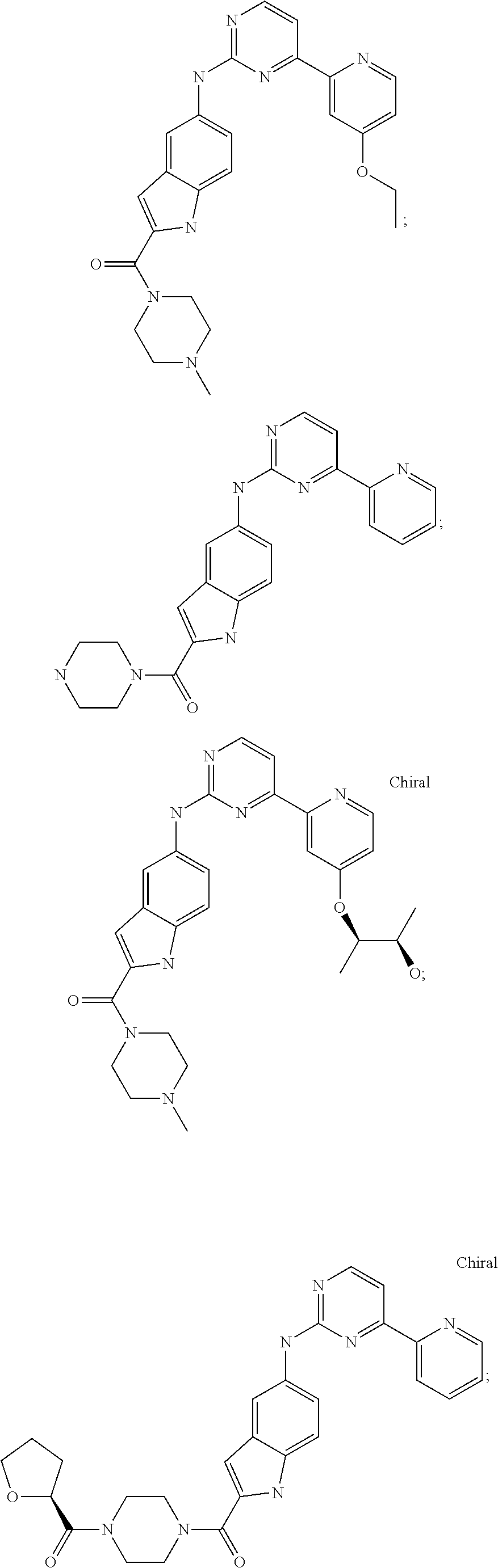


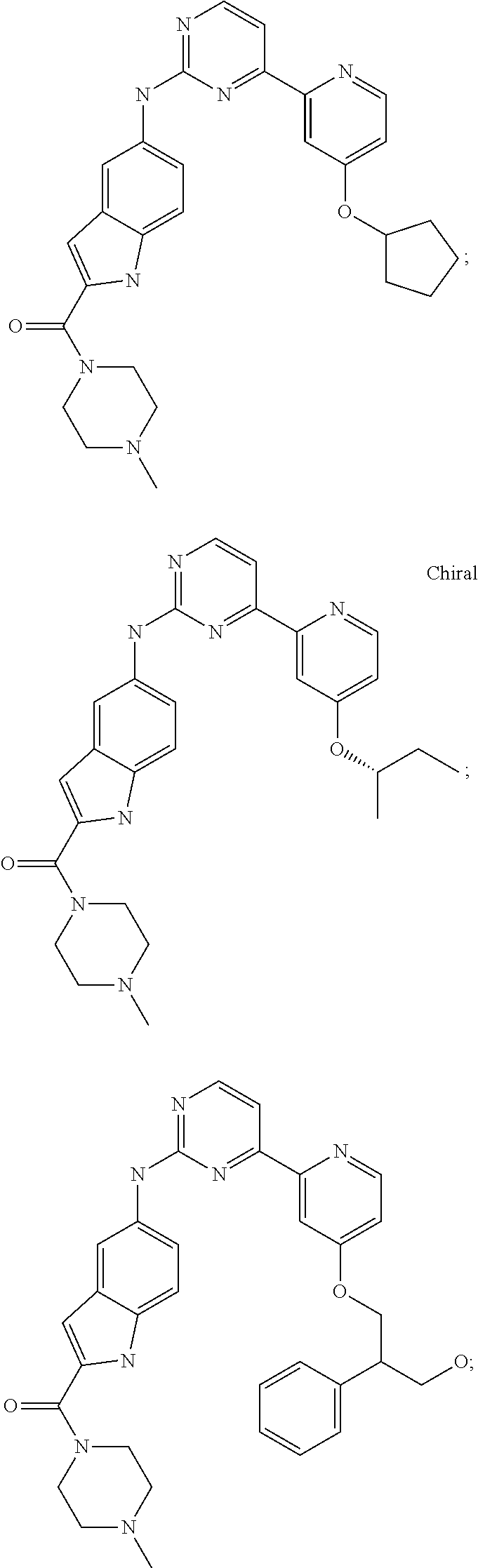
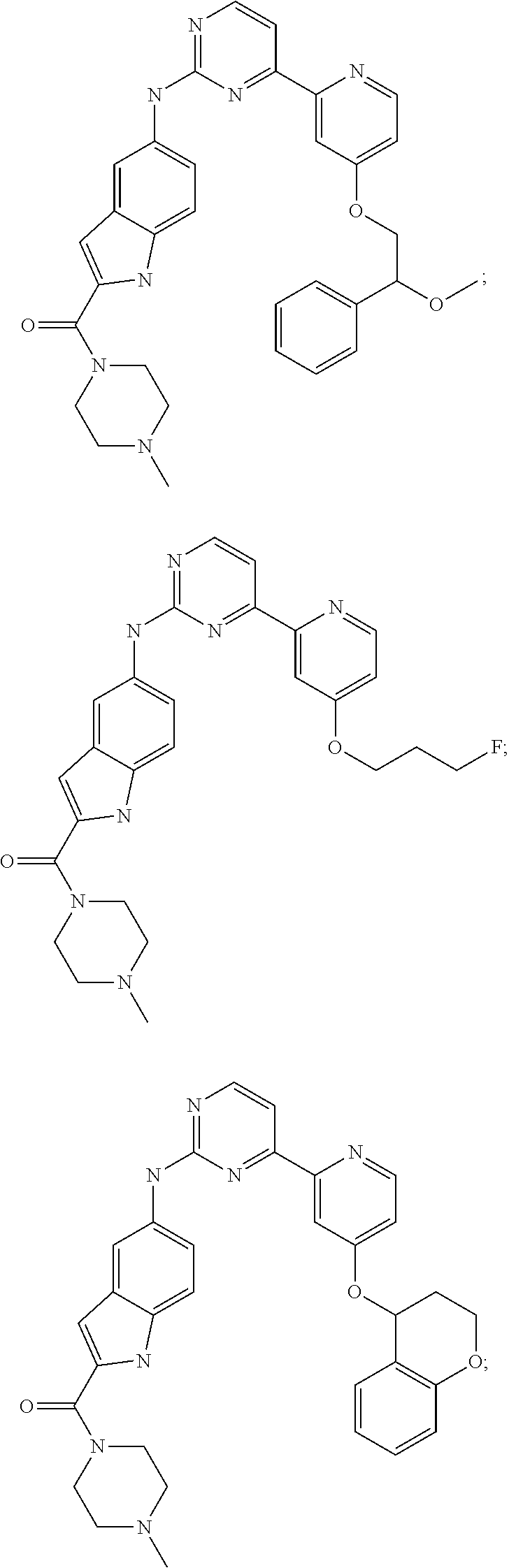
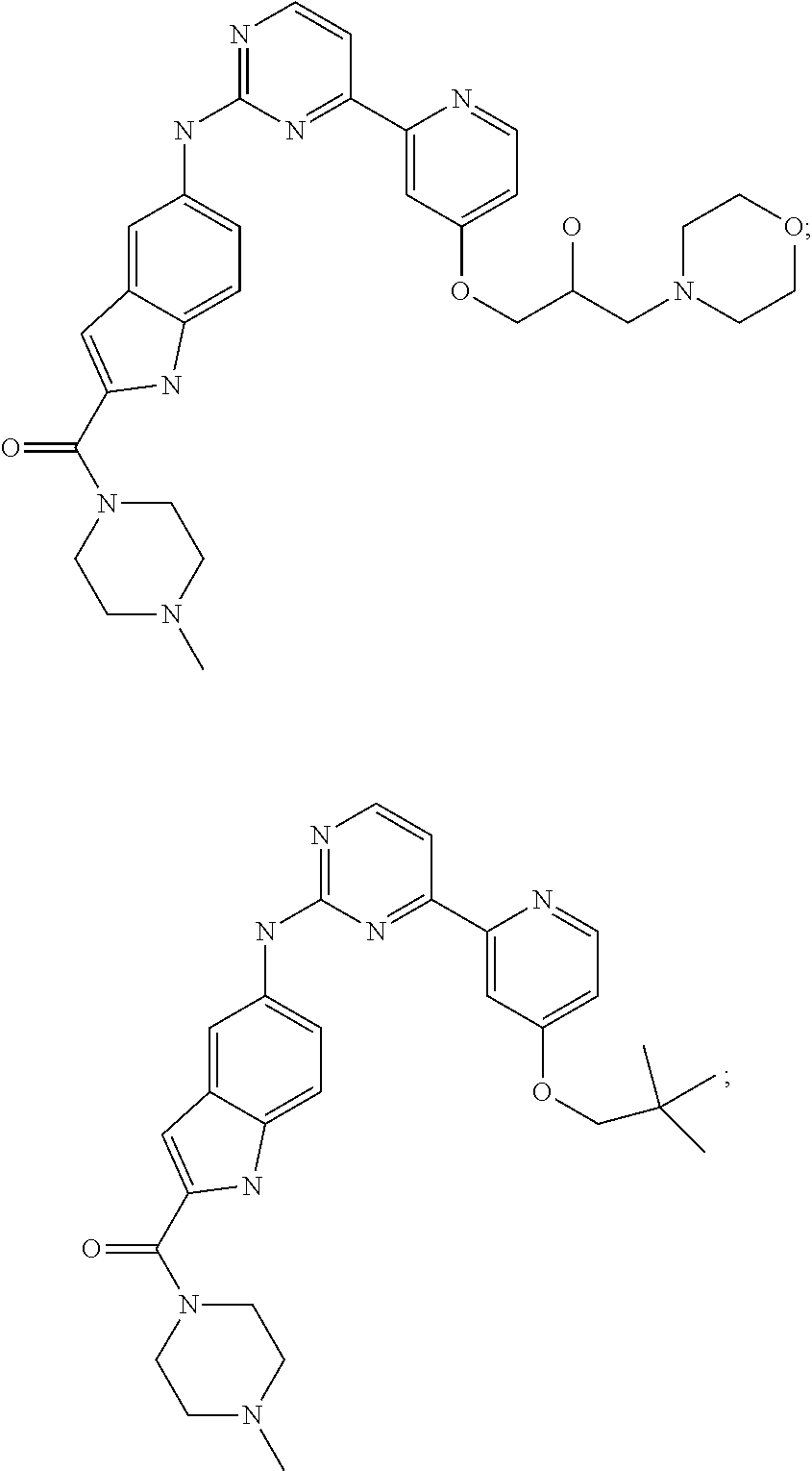

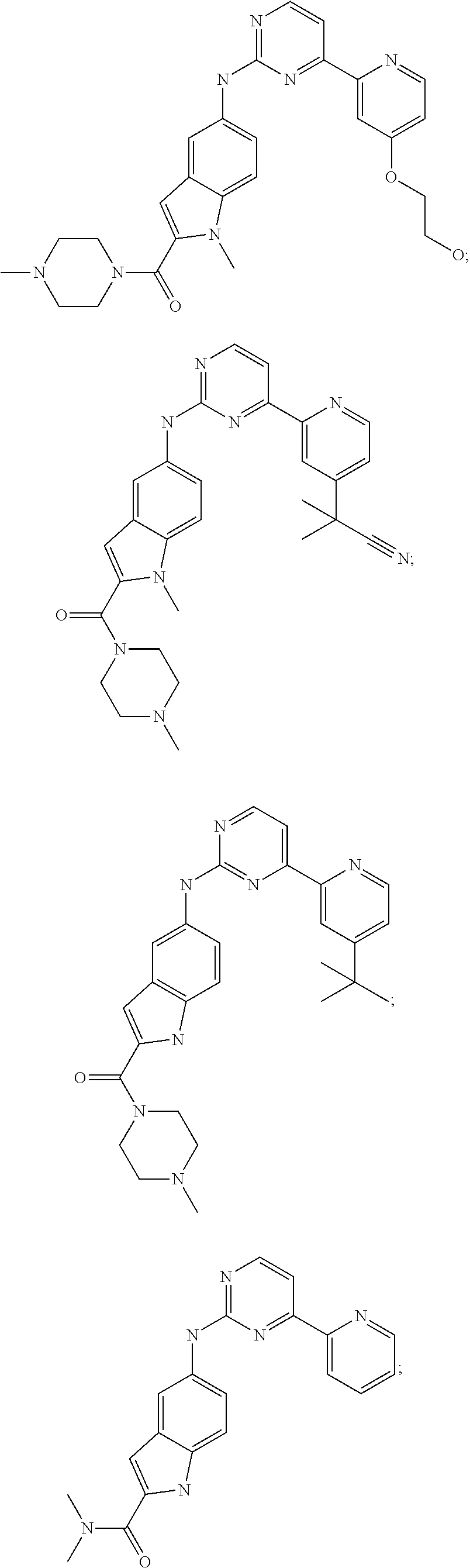
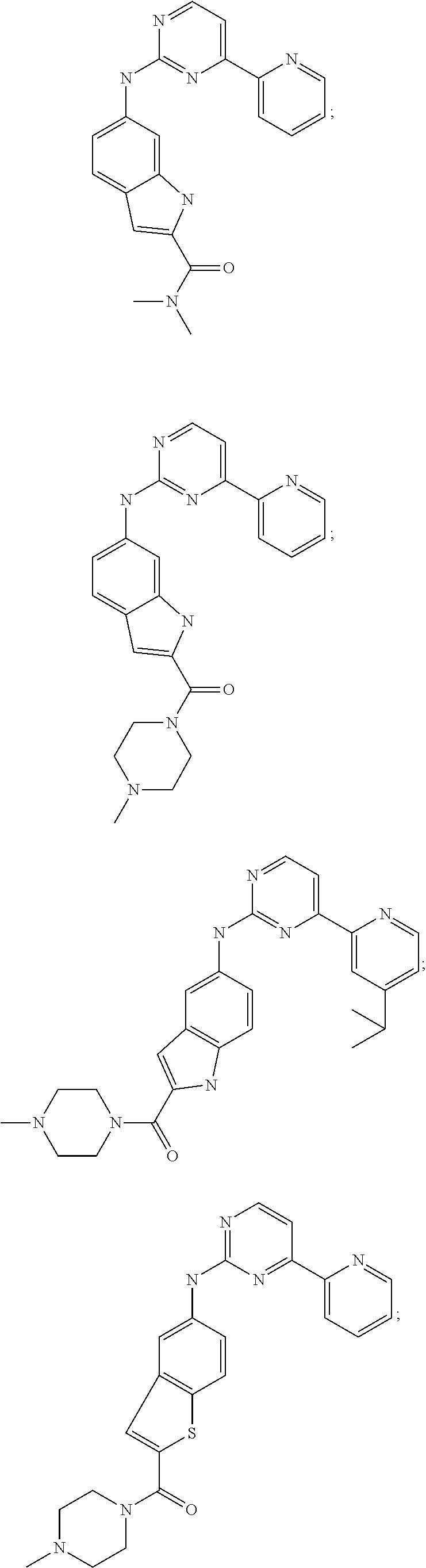


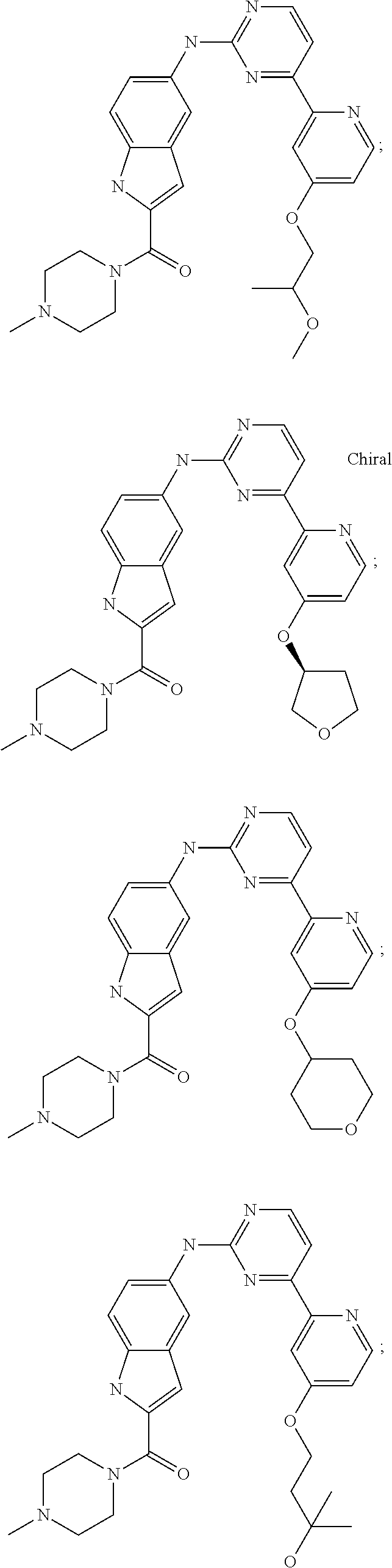


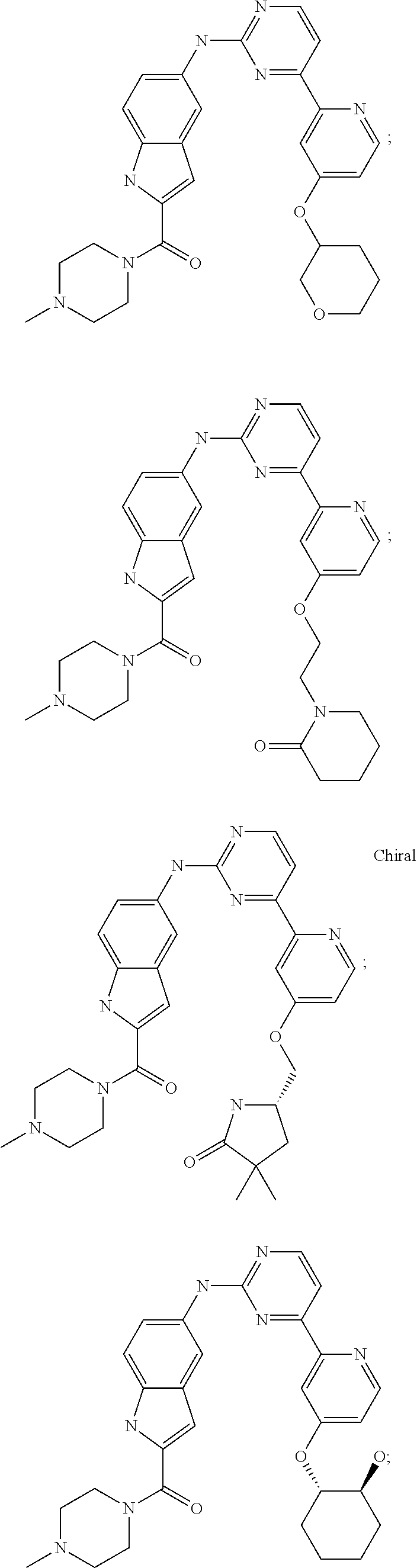


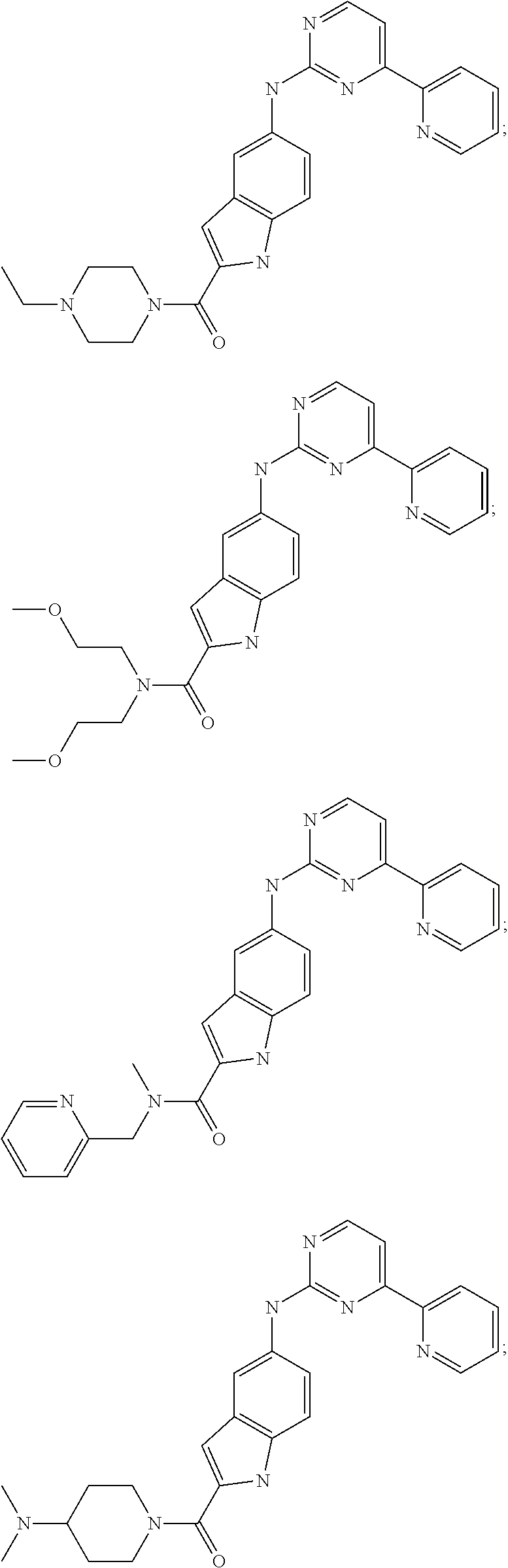


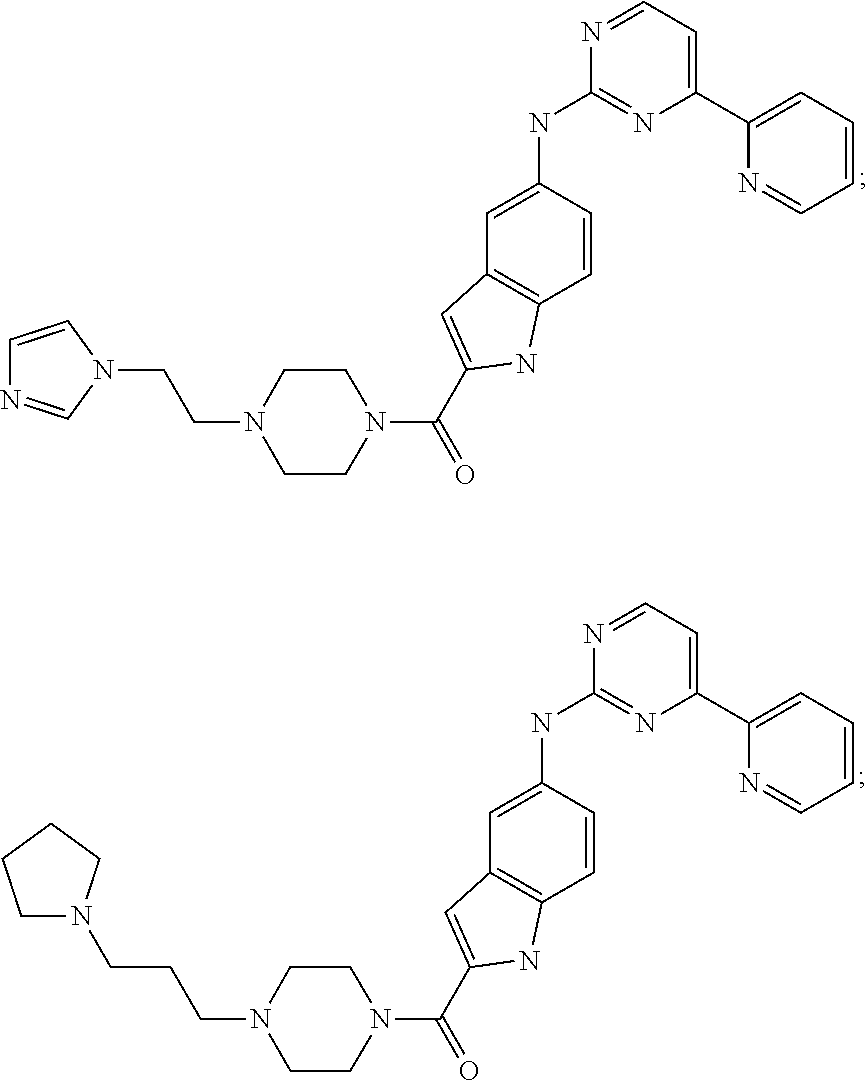

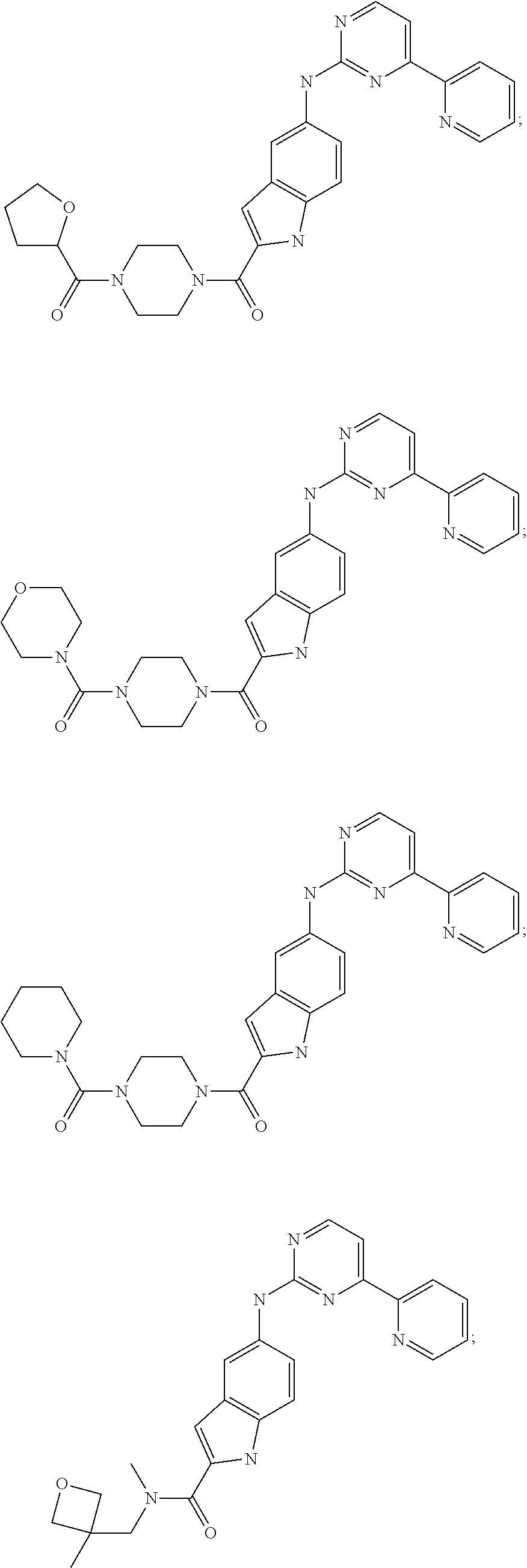
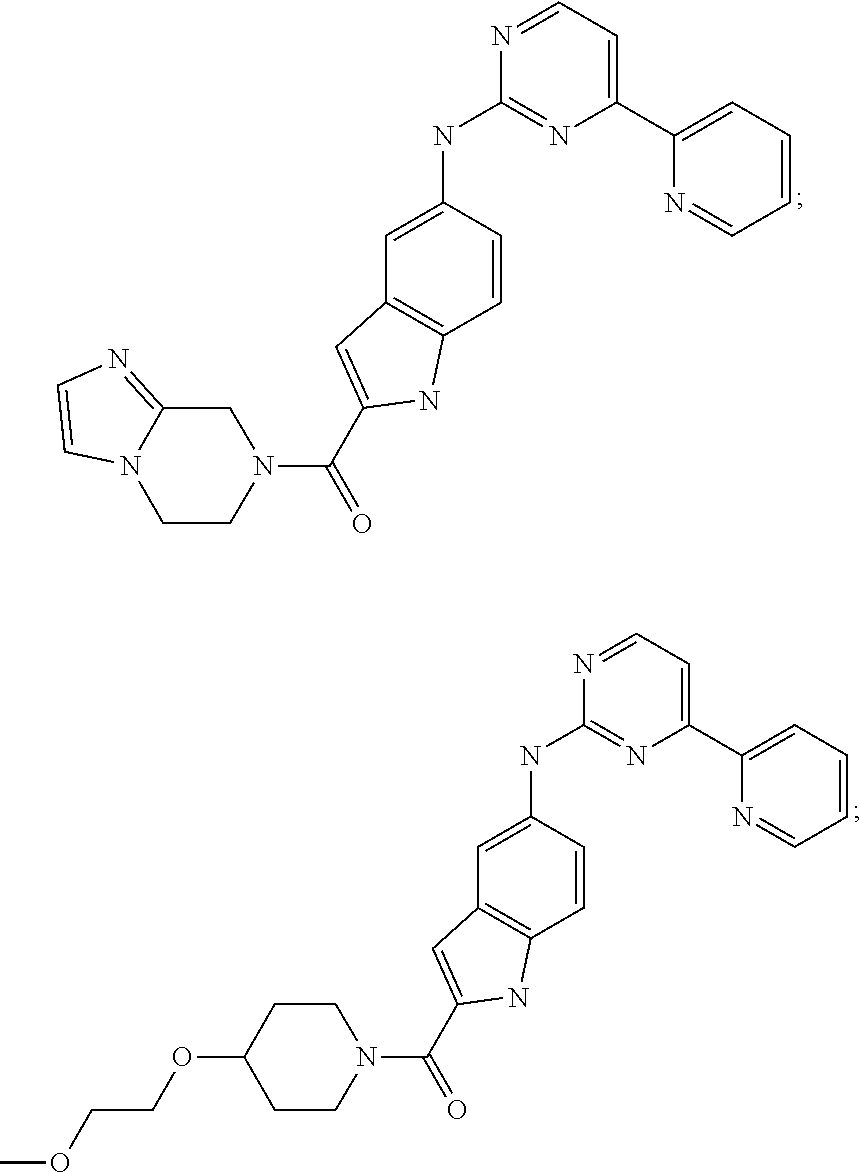


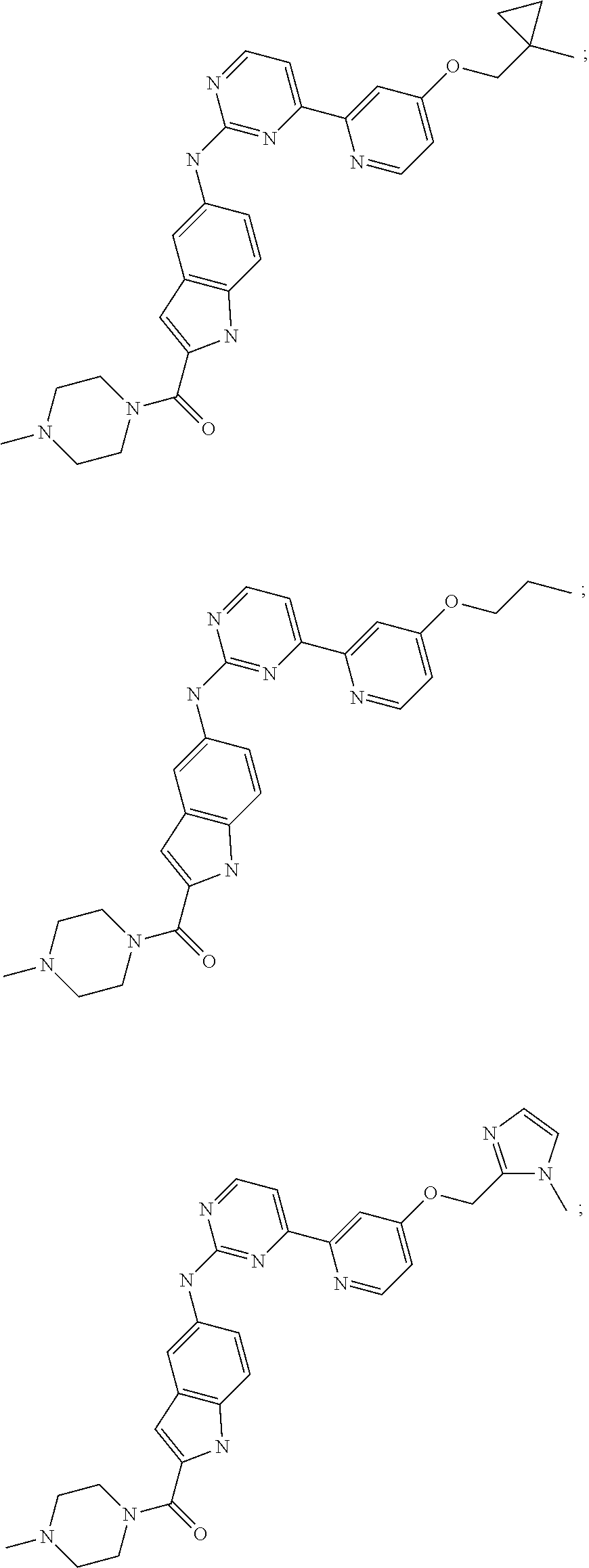


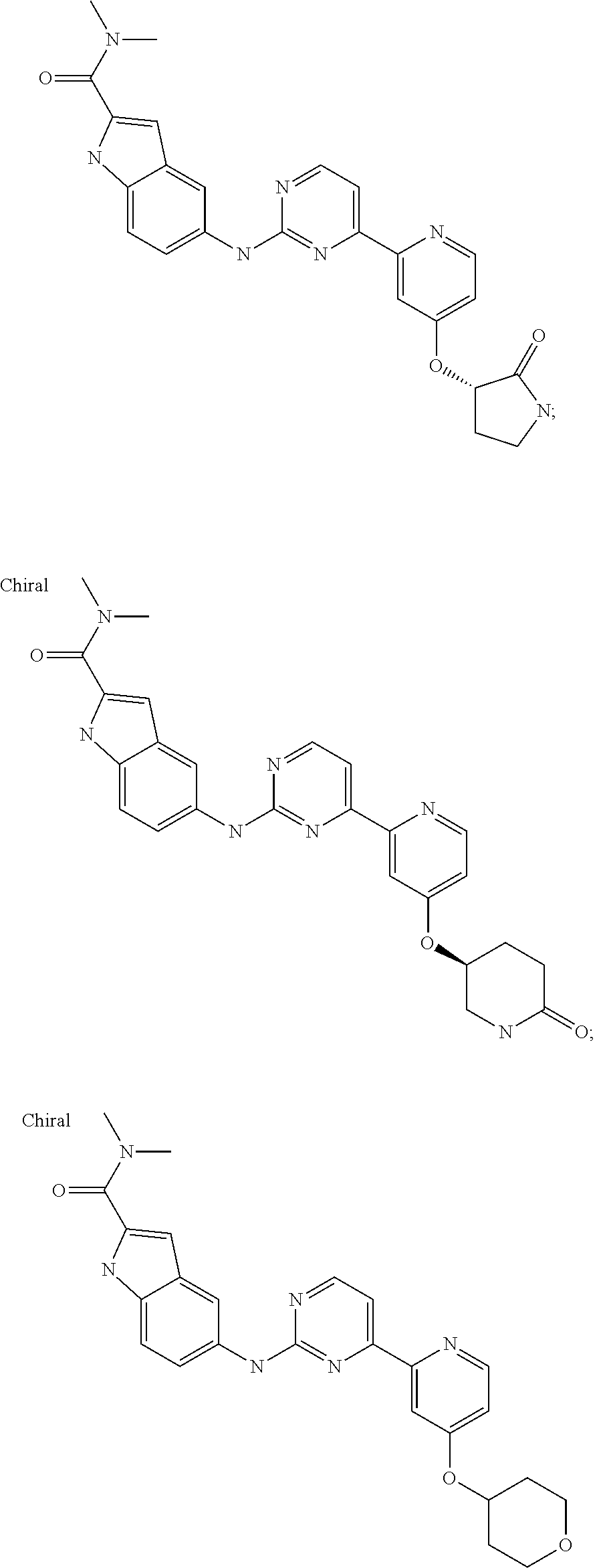


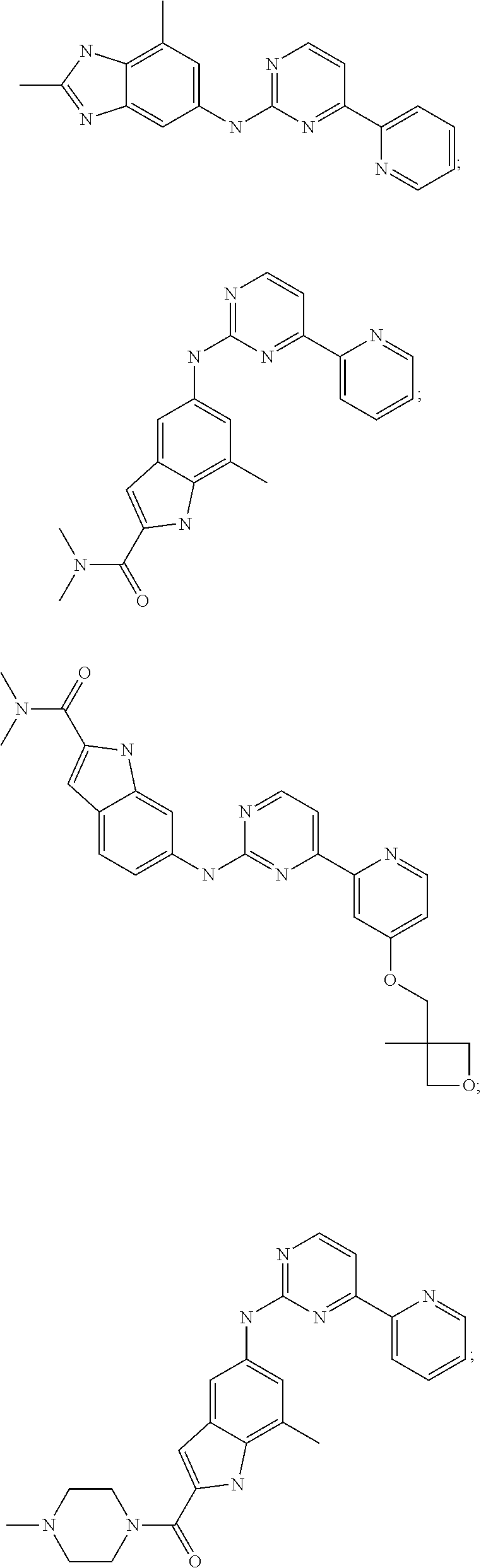


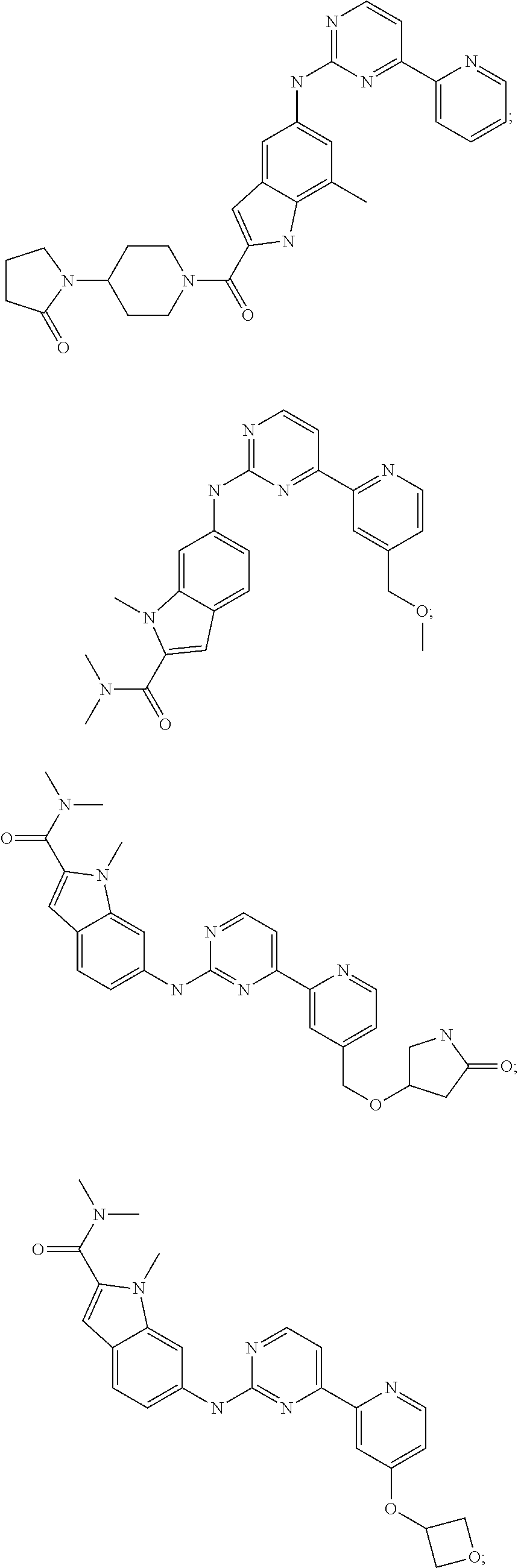


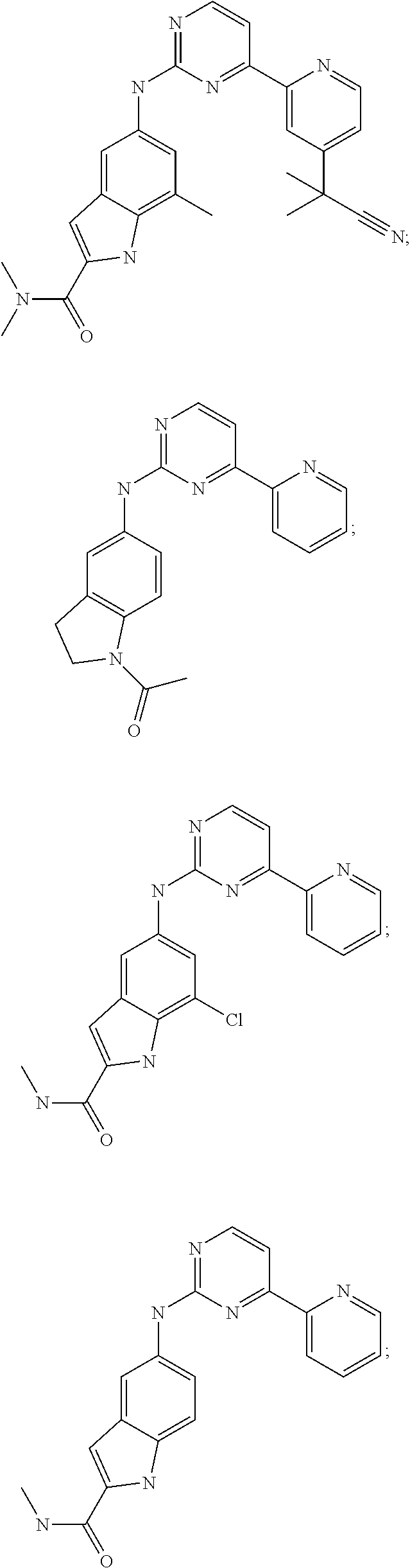

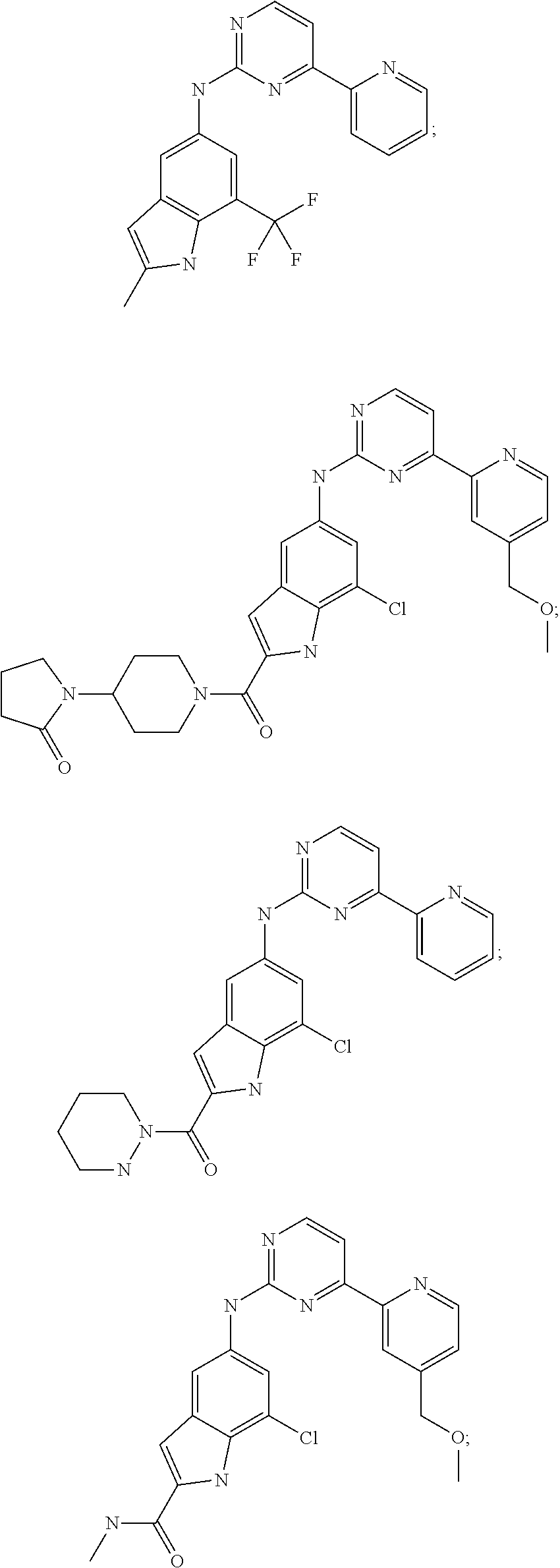
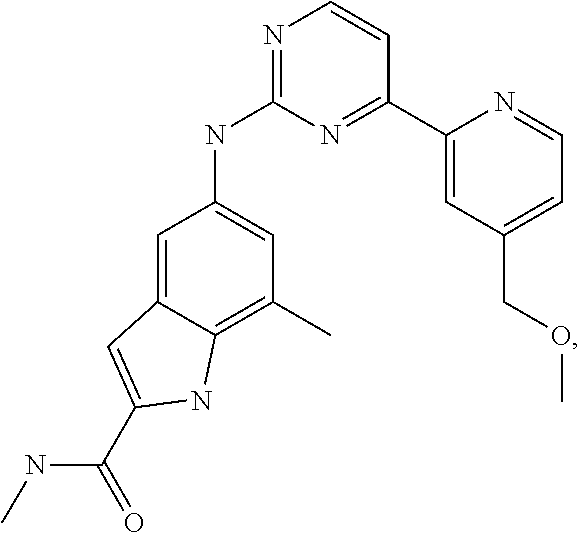
- and the pharmaceutically acceptable salts of these compounds.
- The instant invention further concerns the use of the aforementioned compounds of formula 1 for preparing a medicament for the treatment of diseases which can be treated by inhibition of the SYK enzyme.
- In a preferred embodiment the instant invention concerns the use of the aforementioned compounds of formula 1 for preparing a medicament for the treatment of diseases selected from the group consisting of allergic rhinitis, asthma, COPD, adult respiratory distress syndrome, bronchitis, B-cell lymphoma, dermatitis and contact dermatitis, allergic dermatitis, allergic rhinoconjunctivitis, rheumatoid arthritis, anti-phospholipid syndrome, Berger's disease, Evans's syndrome, ulcerative colitis, allergic antibody-based glomerulonephritis, granulocytopenia, Goodpasture's syndrome, hepatitis, Henoch-Schönlein purpura, hypersensitivity vasculitis, immunohaemolytic anaemia, autoimmune haemolytic anemia, idiopathic thrombocytopenic purpura, Kawasaki syndrome, allergic conjunctivitis, lupus erythematodes, capsule cell lymphoma, neutropenia, non-familial lateral sclerosis, Crohn's disease, multiple sclerosis, myasthenia gravis, osteoporosis, osteolytic diseases, osteopenia, psoriasis, Sjögren's syndrome, sclerodermy, T-cell lymphoma, urticaria/angiooedema, Wegener's granulomatosis and coeliac disease.
- In a further preferred embodiment the invention concerns the use of the aforementioned compounds of formula 1 for preparing a medicament for the treatment of diseases selected from the group consisting of asthma, COPD, allergic rhinitis, adult respiratory distress syndrome, bronchitis, allergic dermatitis, contact dermatitis, idiopathic thrombocytopenic purpura, rheumatoid arthritis and allergic rhinoconjunctivitis.
- The instant invention further preferably concerns the use of the aforementioned compounds of formula 1 for preparing a medicament for the treatment of diseases selected from the group consisting of asthma, COPD, allergic rhinitis, allergic dermatitis and rheumatoid arthritis.
- In another preferred embodiment the invention concerns also pharmaceutical formulations, characterised in that they contain one or more of the aforementioned compounds of formula 1.
- In a further preferred embodiment the invention concerns pharmaceutical formulations, characterised in that they contain one or more of the aforementioned compounds of formula 1 in combination with an active substance selected from the group consisting of anticholinergics, betamimetics, corticosteroids, PDE4-inhibitors, EGFR-inhibitors, LTD4-antagonists, CCR3-inhibitors, iNOS-inhibitors, CRTH2-antagonists and HMG-CoA reductase inhibitors.
- In another preferred embodiment the instant invention regards compounds selected from the group of the following formulas consisting of
-


- wherein R1, R2, R4, R5, R6 and A are defined as previously mentioned,
wherein RA is —CO—O—CH3 or —CO—O—CH2—CH3,
and the pharmaceutically acceptable salts of these compounds. - Unless stated otherwise, all the substituents are independent of one another. If for example a number of C1-6-alkyl groups are possible substituents at a group, in the case of three substituents, for example, C1-6-alkyl could represent, independently of one another, a methyl, an n-propyl and a tert-butyl.
- Within the scope of this application, in the definition of possible substituents, these may also be presented in the form of a structural formula. An asterisk (*) in the structural formula of the substituent is to be understood as being the linking point to the rest of the molecule. Moreover, the atom of the substituent following the linking point is understood as being the atom in position number 1. Thus for example the groups N-piperidinyl (I), 4-piperidinyl (II), 2-tolyl (III), 3-tolyl (IV) and 4-tolyl (V) are represented as follows:
-

- If there is no asterisk (*) in the structural formula of the substituent, each hydrogen atom may be removed at the substituent and the valency thus freed may serve as a binding site to the rest of a molecule. Thus, for example, VI
-
- may represent 2-tolyl, 3-tolyl, 4-tolyl and benzyl.
- Alternatively to the * within the scope of this application X1 is also understood as being the linking point of the group R1 to the structure of formula 1 and X2 as being the linking point of the group R2 to the structure of formula 1.
- For an annellated ring B such as
-

- the linking atoms are also depicted with an asterix (*). This means if ring A is defined for example as
-

- then this would mean an annellated ring B
-

- By the term “C1-6-alkyl” (including those which are part of other groups) are meant branched and unbranched alkyl groups with 1 to 6 carbon atoms and by the term “C1-3-alkyl” are meant branched and unbranched alkyl groups with 1 to 3 carbon atoms. “C1-4-alkyl” accordingly denotes branched and unbranched alkyl groups with 1 to 4 carbon atoms. Alkyl groups with 1 to 4 carbon atoms are preferred. Examples of these include: methyl, ethyl, n-propyl, iso-propyl, n-butyl, iso-butyl, sec-butyl, tert-butyl, n-pentyl, iso-pentyl, neo-pentyl or hexyl. The abbreviations Me, Et, n-Pr, i-Pr, n-Bu, i-Bu, t-Bu, etc., may also optionally be used for the above mentioned groups. Unless stated otherwise, the definitions propyl, butyl, pentyl and hexyl include all the possible isomeric forms of the groups in question. Thus, for example, propyl includes n-propyl and iso-propyl, butyl includes iso-butyl, sec-butyl and tert-butyl etc.
- By the term “C1-6-alkylene” (including those which are part of other groups) are meant branched and unbranched alkylene groups with 1 to 6 carbon atoms and by the term “C1-4-alkylene” are meant branched and unbranched alkylene groups with 1 to 4 carbon atoms. Alkylene groups with 1 to 4 carbon atoms are preferred. Examples of these include: methylene, ethylene, propylene, 1-methylethylene, butylene, 1-methylpropylene, 1,1-dimethylethylene, 1,2-dimethylethylene, pentylene, 1,1-dimethylpropylene, 2,2-dimethylpropylene, 1,2-dimethylpropylene, 1,3-dimethylpropylene or hexylene. Unless stated otherwise, the definitions propylene, butylene, pentylene and hexylene include all the possible isomeric forms of the groups in question with the same number of carbons. Thus, for example, propyl includes also 1-methylethylene and butylene includes 1-methylpropylene, 1,1-dimethylethylene, 1,2-dimethylethylene.
- If the carbon chain is substituted by a group which together with one or two carbon atoms of the alkylene chain forms a carbocyclic ring with 3, 5 or 6 carbon atoms, this includes, inter alia, the following examples of the rings:
-

- By the term “C2-6-alkenyl” (including those which are part of other groups) are meant branched and unbranched alkenyl groups with 2 to 6 carbon atoms and by the term “C2-4-alkenyl” are meant branched and unbranched alkenyl groups with 2 to 4 carbon atoms, provided that they have at least one double bond. Alkenyl groups with 2 to 4 carbon atoms are preferred. Examples include: ethenyl or vinyl, propenyl, butenyl, pentenyl or hexenyl. Unless stated otherwise, the definitions propenyl, butenyl, pentenyl and hexenyl include all the possible isomeric forms of the groups in question. Thus, for example, propenyl includes 1-propenyl and 2-propenyl, butenyl includes 1-, 2- and 3-butenyl, 1-methyl-1-propenyl, 1-methyl-2-propenyl etc.
- By the term “C2-6-alkenylene” (including those which are part of other groups) are meant branched and unbranched alkenylene groups with 2 to 6 carbon atoms and by the term “C2-4-alkenylene” are meant branched and unbranched alkylene groups with 2 to 4 carbon atoms. Alkenylene groups with 2 to 4 carbon atoms are preferred. Examples of these include: ethenylene, propenylene, 1-methylethenylene, butenylene, 1-methylpropenylene, 1,1-dimethylethenylene, 1,2-dimethylethenylene, pentenylene, 1,1-dimethylpropenylene, 2,2-dimethylpropenylene, 1,2-dimethylpropenylene, 1,3-dimethylpropenylene or hexenylene. Unless stated otherwise, the definitions propenylene, butenylene, pentenylene and hexenylene include all the possible isomeric forms of the groups in question with the same number of carbons. Thus, for example, propenyl also includes 1-methylethenylene and butenylene includes 1-methylpropenylene, 1,1-dimethylethenylene, 1,2-dimethylethenylene.
- By the term “C2-6-alkynyl” (including those which are part of other groups) are meant branched and unbranched alkynyl groups with 2 to 6 carbon atoms and by the term “C2-4-alkynyl” are meant branched and unbranched alkynyl groups with 2 to 4 carbon atoms, provided that they have at least one triple bond. Alkynyl groups with 2 to 4 carbon atoms are preferred. Examples include: ethynyl, propynyl, butynyl, pentynyl, or hexynyl. Unless stated otherwise, the definitions propynyl, butynyl, pentynyl and hexynyl include all the possible isomeric forms of the groups in question. Thus for example propynyl includes 1-propynyl and 2-propynyl, butynyl includes 1,2- and 3-butynyl, 1-methyl-1-propynyl, 1-methyl-2-propynyl etc.
- By the term “C2-6-alkynylene” (including those which are part of other groups) are meant branched and unbranched alkynylene groups with 2 to 6 carbon atoms and by the term “C2-4-alkynylene” are meant branched and unbranched alkylene groups with 2 to 4 carbon atoms. Preferred are alkynylene groups with 2 to 4 carbon atoms. Examples include: ethynylene, propynylene, 1-methylethynylene, butynylene, 1-methylpropynylene, 1,1-dimethylethynylene, 1,2-dimethylethynylene, pentynylene, 1,1-dimethylpropynylene, 2,2-dimethylpropynylene, 1,2-dimethylpropynylene, 1,3-dimethylpropynylene or hexynylene. Unless stated otherwise, the definitions propynylene, butynylene, pentynylene and hexynylene include all the possible isomeric forms of the groups in question with the same number of carbons. Thus for example propynyl also includes 1-methylethynylene and butynylene includes 1-methylpropynylene, 1,1-dimethylethynylene, 1,2-dimethylethynylene.
- By the term “aryl” (including those which are part of other groups) are meant aromatic ring systems with 6 or 10 carbon atoms. Examples include: phenyl or naphthyl, the preferred aryl group being phenyl. Unless otherwise stated, the aromatic groups may be substituted by one or more groups selected from among methyl, ethyl, iso-propyl, tert-butyl, hydroxy, fluorine, chlorine, bromine and iodine.
- By the term “aryl-C1-6-alkylene” (including those which are part of other groups) are meant branched and unbranched alkylene groups with 1 to 6 carbon atoms, which are substituted by an aromatic ring system with 6 or 10 carbon atoms. Examples include: benzyl, 1- or 2-phenylethyl or 1- or 2-naphthylethyl. Unless otherwise stated, the aromatic groups may be substituted by one or more groups selected from among methyl, ethyl, iso-propyl, tert-butyl, hydroxy, fluorine, chlorine, bromine and iodine.
- By the term “heteroaryl-C1-6-alkylene” (including those which are part of other groups) are meant—even though they are already included under “aryl-C1-6-alkylene”—branched and unbranched alkylene groups with 1 to 6 carbon atoms, which are substituted by a heteroaryl.
- A heteroaryl of this kind includes five- or six-membered heterocyclic aromatic groups or 5-10-membered, bicyclic heteroaryl rings which—in case it is not differently defined—may contain one, two, three or four heteroatoms selected from among oxygen, sulphur and nitrogen, and contain so many conjugated double bonds that an aromatic system is formed. The following are examples of five- or six-membered heterocyclic aromatic groups or bicyclic heteroaryl rings:
-

- Unless otherwise stated, these heteroaryls may be substituted by one or more groups selected from among methyl, ethyl, iso-propyl, tert-butyl, hydroxy, fluorine, chlorine, bromine and iodine.
- The following are examples of heteroaryl-C1-6-alkylenes:
-

- By the term “C1-6-haloalkyl” (including those which are part of other groups) are meant branched and unbranched alkyl groups with 1 to 6 carbon atoms, which are substituted by one or more halogen atoms. By the term “C1-4-haloalkyl” are meant branched and unbranched alkyl groups with 1 to 4 carbon atoms, which are substituted by one or more halogen atoms. Haloalkyl groups with 1 to 4 carbon atoms are preferred. Examples include: CF3, CHF2, CH2F, CH2CF3.
- By the terms “C3-7-cycloalkyl” or by “3- to 7-membered carbocyclic rings” (including those which are part of other groups) are meant—unless otherwise defined—cyclic alkyl groups with 3 to 7 carbon atoms. Examples include: cyclopropyl, cyclobutyl, cyclopentyl, cyclohexyl or cycloheptyl. Unless otherwise stated, the cyclic alkyl groups may be substituted by one or more groups selected from among methyl, ethyl, iso-propyl, tert-butyl, hydroxy, fluorine, chlorine, bromine and iodine.
- By the terms “C3-10-cycloalkyl” or “3- to 10-membered carbocyclic ring” are also meant monocyclic alkyl groups with 3 to 7 carbon atoms and also bicyclic alkyl groups with 7 to 10 carbon atoms, or monocyclic alkyl groups which are bridged by at least one C1-3-carbon bridge.
- By the term “heterocyclic rings” or “heterocycle” are meant, unless stated otherwise, five-, six- or seven-membered, saturated, partially saturated or unsaturated heterocyclic rings which may contain one, two or three heteroatoms, selected from among oxygen, sulphur and nitrogen, while the ring may be linked to the molecule through a carbon atom or through a nitrogen atom, if there is one. Although included by the term “heterocyclic rings” or “heterocycles”, the term “saturated heterocyclic ring” refers to five-, six- or seven-membered saturated rings. Examples include:
-

- Although included by the term “heterocyclic rings” or “heterocyclic group”, the term “partially saturated heterocyclic group” refers to five-, six- or seven-membered partially saturated rings which contain one or two double bonds, but which have only so many double bonds that an aromatic system may not be formed. Examples include:
-

- Although included by the term “heterocyclic rings” or “heterocycles”, the term “heterocyclic aromatic rings”, “unsaturated heterocyclic group” or “heteroaryl” refers to five- or six-membered heterocyclic aromatic groups or to 9-10-membered, bicyclic heteroaryl rings which may contain one, two, three or four heteroatoms, selected from among oxygen, sulphur and nitrogen, and contain so many conjugated double bonds that an aromatic system is formed. Examples of five- or six-membered heterocyclic aromatic groups include:
-

- Unless otherwise mentioned, a heterocyclic ring (or heterocycle) may be provided with a keto group. Examples include:
-

- Although covered by the term “cycloalkyl” or “carbocyclic ring”, the term “bicyclic cycloalkyls” generally denotes eight-, nine- or ten-membered bicyclic carbon rings. Examples include
-

- Although already included by the term “heterocycle”, the term “bicyclic heterocycles” generally denotes eight-, nine- or ten-membered bicyclic rings which may contain one or more heteroatoms, preferably 1-4, more preferably 1-3, even more preferably 1-2, particularly one heteroatom, selected from among oxygen, sulphur and nitrogen. The ring may be linked to the molecule through a carbon atom of the ring or through a nitrogen atom of the ring, if there is one, if not expressively stated otherwise. Examples include:
-

- Although already included by the term “aryl”, the term “bicyclic aryl” denotes a 9-10 membered, bicyclic aryl ring which contains sufficient conjugated double bonds to form an aromatic system. One example of a bicyclic aryl is naphthyl.
- Although already included under “heteroaryl”, the term “bicyclic heteroaryl” denotes a 9-10 membered, bicyclic heteroaryl ring which may contain one, two, three or four heteroatoms, selected from among oxygen, sulphur and nitrogen, and contains sufficient conjugated double bonds to form an aromatic system. Examples for a “bicyclic heteroaryl” include
-

- Although included by the term “bicyclic cycloalkyls” or “bicyclic aryl”, the term “fused cycloalkyl” or “fused aryl” or “annellated cycloalkyl” or “annellated aryl” denotes bicyclic rings wherein the bridge separating the rings denotes a direct single bond. The following are examples of a fused or annellated, bicyclic cycloalkyl:
-

- Although included by the term “bicyclic heterocycles” or “bicyclic heteroaryls”, the term “fused bicyclic heterocycles”, “fused bicyclic heteroaryls”, “annellated heteroaryls” or “annellated heterocycles” denote bicyclic 9-10 membered heterorings which contain one, two, three or four heteroatoms, selected from among oxygen, sulphur and nitrogen and wherein the bridge separating the rings denotes a direct single bond. The “fused” or “annellated” bicyclic heteroaryls moreover contain sufficient conjugated double bonds to form an aromatic system. Examples include pyrrolizine, indole, indolizine, isoindole, indazole, purine, quinoline, isoquinoline, benzimidazole, benzofuran, benzopyran, benzothiazole, benzothiazole, benzoisothiazole, pyridopyrimidine, pteridine, pyrimidopyrimidine,
-

- By the term “spiro group” or “Spiro heterocycle” (spiro) are meant 8-10 membered, spirocyclic rings which may optionally contain one, two or three heteroatoms, selected from among oxygen, sulphur and nitrogen, while the spiro-ring comprises at least one nitrogen atom and may be linked to the molecule through this nitrogen atom. Unless otherwise mentioned, a spirocyclic ring may be provided with an oxo, methyl or ethyl group as substituent. Examples of this include:
-

- “Halogen” within the scope of the present invention denotes fluorine, chlorine, bromine or iodine. Unless stated to the contrary, fluorine, chlorine and bromine are regarded as preferred halogens.
- Compounds of general formula 1 may have acid groups, mainly carboxyl groups, and/or basic groups such as e.g. amino functions. Compounds of general formula 1 may therefore be present as internal salts, as salts with pharmaceutically usable inorganic acids such as hydrochloric acid, sulphuric acid, phosphoric acid, sulphonic acid or organic acids (such as for example maleic acid, fumaric acid, citric acid, tartaric acid or acetic acid) or as salts with pharmaceutically usable bases such as alkali metal or alkaline earth metal hydroxides or carbonates, zinc or ammonium hydroxides or organic amines such as e.g. diethylamine, triethylamine, triethanolamine, inter alia.
- As mentioned previously, the compounds of formula 1 may be converted into the salts thereof, particularly for pharmaceutical use into the physiologically and pharmacologically acceptable salts thereof. These salts may be present on the one hand as physiologically and pharmacologically acceptable acid addition salts of the compounds of formula 1 with inorganic or organic acids. On the other hand, the compound of formula 1 when R is hydrogen may be converted by reaction with inorganic bases into physiologically and pharmacologically acceptable salts with alkali or alkaline earth metal cations as counter-ion. The acid addition salts may be prepared for example using hydrochloric acid, hydrobromic acid, sulphuric acid, phosphoric acid, methanesulphonic acid, acetic acid, fumaric acid, succinic acid, lactic acid, citric acid, tartaric acid or maleic acid. It is also possible to use mixtures of the above-mentioned acids. To prepare the alkali and alkaline earth metal salts of the compound of formula 1 wherein R denotes hydrogen, it is preferable to use the alkali and alkaline earth metal hydroxides and hydrides, of which the hydroxides and hydrides of the alkali metals, particularly sodium and potassium, are preferred, while sodium and potassium hydroxide are particularly preferred.
- The compounds of general formula 1 may optionally be converted into the salts thereof, particularly for pharmaceutical use into the pharmacologically acceptable acid addition salts with an inorganic or organic acid. Examples of suitable acids for this purpose include succinic acid, hydrobromic acid, acetic acid, fumaric acid, maleic acid, methanesulphonic acid, lactic acid, phosphoric acid, hydrochloric acid, sulphuric acid, tartaric acid or citric acid. It is also possible to use mixtures of the above-mentioned acids.
- The invention relates to the compounds in question, optionally in the form of the individual optical isomers, mixtures of the individual enantiomers or racemates, in the form of the tautomers as well as in the form of the free bases or the corresponding acid addition salts with pharmacologically acceptable acids—such as for example acid addition salts with hydrohalic acids—for example hydrochloric or hydrobromic acid—or organic acids—such as for example oxalic, fumaric, diglycolic or methanesulphonic acid.
- The compounds according to the invention may optionally be present as racemates, but may also be obtained as pure enantiomers.
- The invention relates to the compounds in question, optionally in the form of the individual optical isomers, diastereomers, mixtures of diastereomers, mixtures of the individual enantiomers or racemates, in the form of the tautomers as well as in the form of the free bases or the corresponding acid addition salts with pharmacologically acceptable acids—such as for example acid addition salts with hydrohalic acids—for example hydrochloric or hydrobromic acid—or organic acids—such as for example oxalic, fumaric, diglycolic or methanesulphonic acid.
- The invention relates to the respective compounds of formula 1 in the form of the pharmacologically acceptable salts thereof. These pharmacologically acceptable salts of the compounds of formula 1 may also be present in the form of their respective hydrates (e.g. Monohydrates, dihydrates, etc.) as well as in the form of their respective solvates.
- By a hydrate of the compound according to the formula 1 is meant, for the purposes of the invention, a crystalline salt of the compound according to formula 1, containing water of crystallisation.
- By a solvate of the compound according to formula 1 meant, for the purposes of the invention, a crystalline salt of the compound according to formula 1, which contains solvent molecules (e.g. Ethanol, methanol etc) in the crystal lattice.
- The skilled man will be familiar with the standard methods of obtaining hydrates and solvates (e.g. recrystallisation from the corresponding solvent or from water).
- The Examples 1 according to the invention were prepared according to Scheme 1-8.
-

- wherein R1, R2, R4, R5 R6 and A are herein defined as aforementioned.
-

- wherein R1, R2, R4, R5, R6 and A are herein defined as aforementioned.
-


- wherein R1, R2, R4, R5, R6 and A are herein defined as aforementioned
wherein R7 is selected from the group consisting of —Y, —N(CH3)—Y and —N(CH3)—(C1-3-alkylene)-Y, and
wherein Y is defined as previously and in the subsequent claims described. -

- wherein R1, R2, R4, R5, R6 and A are defined as previously disclosed.
-

- wherein R1, R2, R4, R5, R6 and A are defined as herein previously disclosed,
wherein RA denotes —CO—O(CH3) or —CO—O—(CH2)—(CH3) and
wherein R7 denotes —Y, —N(CH3)—Y and —N(CH3)—(C1-3-alkylene)-Y, - wherein Y is defined as previously and in the subsequent claims described.
-
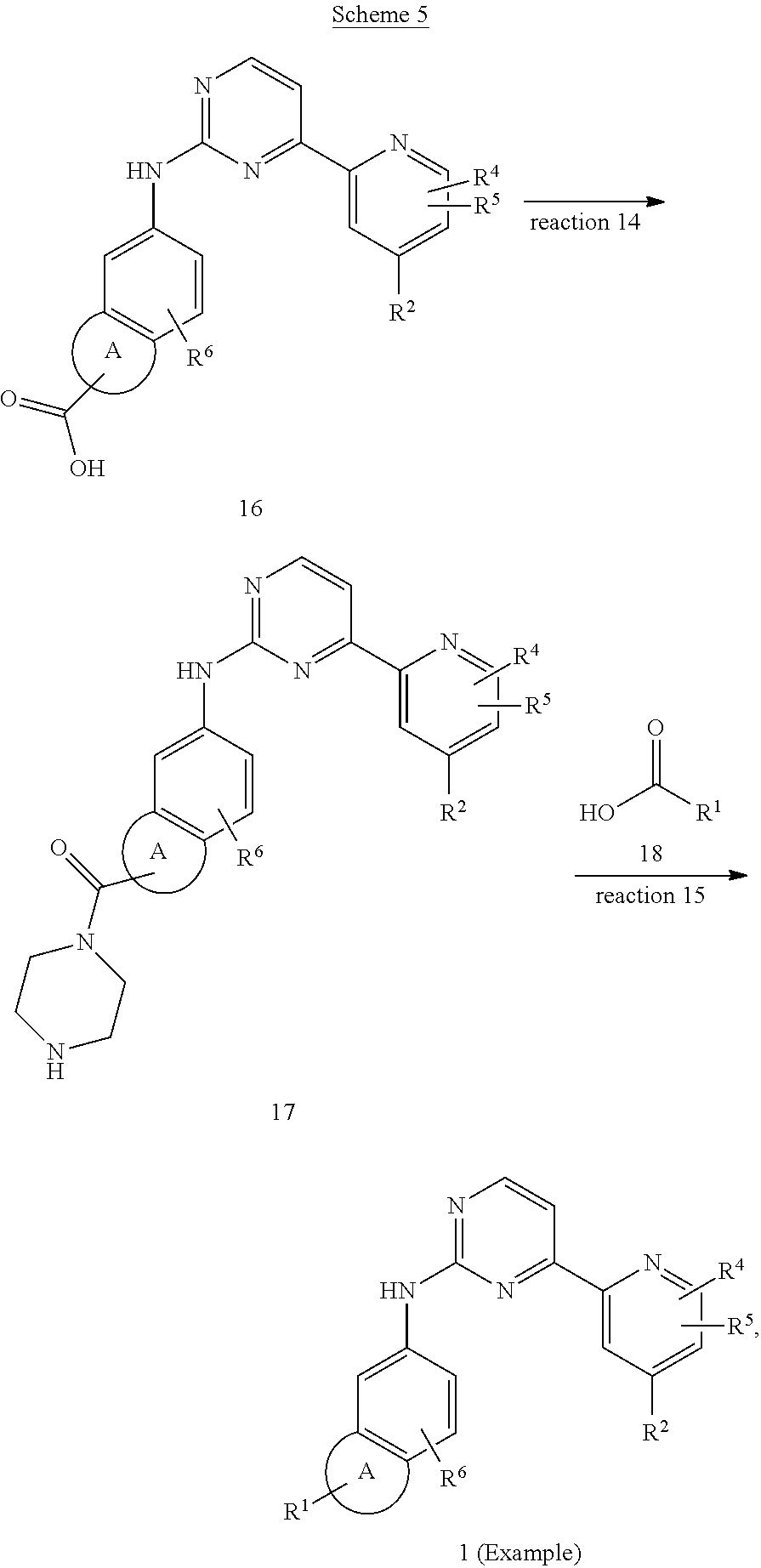
- wherein R1, R2, R4, R5, R6 and A are defined as herein previously disclosed.
-

- wherein R1, R2, R4, R5, R6 and A are defined as herein previously disclosed
and wherein R7 denotes a group selected from —Y, —N(CH3)—Y and —N(CH3)—(C1-3-alkylene)-Y and
wherein Y is defined as previously and in the subsequent claims described. -

- wherein R1, R2, R4, R5, R6 and A are defined as herein previously disclosed.
-

- wherein R1, R2, R4, R5, R6 and A are defined as herein previously disclosed.
- Optionally the groups R1 or R2 (Scheme 1-5) may subsequently be changed.
-

- The synthesis of the starting material 4-methoxymethyl-pyridine-2-carbonitrile is described in the literature: Journal of the Chemical Society; 1963; page 3440-3444.
- 8.7 ml 3N methylmagnesiumiodide in tetrahydrofuran were added dropwise to a mixture of 3.4 g 4-methoxymethyl-pyridine-2-carbonitrile in 80 ml diethylether at 0° C. The mixture was warmed up to room temperature. After 2 h the reaction was cooled with an ice bath to 0° C. and diluted with 25 ml 1N hydrochloric acid. The reaction mixture was extracted with diethylether. The organic layer was dried with magnesium sulfate and concentrated under reduced pressure to obtain the title compound.
- Yield: 3.2 g of 3.1 (84% of theory); Analysis: [M+H]+=166
- 2-Acetyl-4-methoxypyridine (3.2) for Examples 16, 58-61, 64, 65, 67, 257: Pfizer Inc.; U.S. Pat. No. 6,300,363; 2001
1-(4-tert-Butyl-pyridin-2-yl)-ethanone (3.3) for Example 49: Journal of the American Chemical Society, 1997, vol. 119, page 5606-5617
1-(4-Isopropyl-pyridin-2-yl)-ethanone (3.4) for Example 53: Shiono Koryo Kaisha, Ltd.: Lion Corporation Patent: U.S. Pat. No. 5,214,027 A1, 1993
1-(4-Ethyl-pyridin-2-yl)-ethanone (3.5) for Example 63: Journal of American Chemical Society, 1997, vol. 119, page 5606-5617) - 1-(6-Fluoro-pyridin-2-yl)-ethanone (3.6) for Examples 272, 278
1-(6-Methoxy-pyridin-2-yl)-ethanone (3.7) for Example 222
1-(4-Chloro-pyridin-2-yl)-ethanone (3.8) for Examples 1, 4, 15, 26, 28, 30, 31, 32, 33, 35, 37-42, 46-48, 68-109, 197-214, 218, 221, 229, 244, 246, 259-262, 266-271, 273-277, 280 -

- A mixture of 0.65 g 3.1 (1-(4-methoxymethyl-pyridin-2-yl)-ethanone) and 10 ml dimethoxymethyl-dimethyl-amine was heated at 110° C. for 21 h. The solvent was evaporated and the residue was purified by silica gel chromatography (SiO2; ethyl acetate—0-10% methanol 9/1).
- Yield: 0.304 g 4.1 (92% content, 35% of theory)
- The Following Compounds were Produced by a Process Analogous to 4.1 Using the Corresponding Aryl Ketones:
3-Dimethylamino-1-(4-methoxy-pyridin-2-yl)-propenone (4.2) for Examples 16, 58-61, 64, 65, 67, 257
1-(4-tert-Butyl-pyridin-2-yl)-3-dimethylamino-propenone (4.3) for Example 49
3-Dimethylamino-1-(4-isopropyl-pyridin-2-yl)-propenone (4.4) for Example 53
3-Dimethylamino-1-(4-ethyl-pyridin-2-yl)-propenone (4.5) for Example 63
3-Dimethylamino-1-(6-fluoro-pyridin-2-yl)-propenone (4.6) for Examples 272, 278
3-Dimethylamino-1-(6-methoxy-pyridin-2-yl)-propenone (4.7) for Example 222 -

- 3.07 ml Trimethylsilylacetylene in 8 ml tetrahydrofuran were added dropwise to a mixture of 3.4 g (6-bromo-pyridin-3-yl)-methanol, 0.254 g bis-(triphenylphospine)-palladium-II-chloride, 70 mg copper (I) iodide and 10 ml triethylamine in 40 ml tetrahydrofuran (slightly exothermic). The resulting mixture was stirred at ambient temperature for 1 h. The reaction mixture was concentrated under reduced pressure and diluted with 100 ml water. The aqueous mixture was extracted with ethyl acetate (3×). The combined organic layers were washed with an aqueous ammonia solution and water, dried with magnesium sulfate and evaporated to obtain the intermediate I.1.
- Yield: 4.0 g of I.1 (90% content; 97% of theory) Analysis: [M+H]+=206; HPLC-MS (method F): Rt=1.3 min
- A mixture of 12.3 g intermediate I.1 (6-trimethylsilanylethynyl-pyridin-3-yl)-methanol, 16.57 g tetrabutylammonium fluoride hydrate (TBAF) and 250 ml dichloromethane was stirred at ambient temperature for 20 min. The reaction mixture was extracted with 150 ml water (3×). The organic layer was dried with magnesium sulfate and concentrated under reduced pressure. The residue was purified by silica gel chromatography (SiO2; petroleum ether/ethyl acetate: 1/1) to give 1.3 g of the intermediate I.2.
- The aqueous layer was washed with dichloromethane (3×). The combined organic layers were dried with magnesium sulfate and evaporated under reduced pressure to give 2.2 g of the intermediate I.2.
- Yield: 3.5 g I.2 (49% of theory) Analysis: [M+H]+=134; HPLC-MS (method F): Rt=0.56 min
- A mixture of 3.3 g I.2 (6-ethynyl-pyridin-3-yl)-methanol), 0.735 g mercury sulfate and 25 ml 25% aqueous sulfuric acid in 70 ml acetone was stirred at reflux for 3 h, then at ambient temperature overnight. Additional 0.5 g mercury sulfate was added and stirred for 10 min at reflux. The mixture was evaporated under reduced pressure, diluted with water and the pH was adjusted to ˜7 with sodium carbonate. The aqueous layer was extracted with ethyl acetate (4×) and dried with magnesium sulfate. The solvent was evaporated under reduced pressure. The resulting residue was purified by silica gel chromatography (SiO2; petroleum ether/ethyl acetate 1:1).
- Yield: 2.1 g I.3 (56% of theory) Analysis: [M+H]+=152; HPLC-MS (method F): Rt=0.61 min
- Compound 4.8 was prepared by a process analogous to procedure 4.1 using intermediate I.3.
- 3-Dimethylamino-1-pyridin-2-yl-propenone (4.9) for Examples 11, 43, 50-52, 54, 55, 66, 110-193, 215, 217, 220, 283: European Journal of Inorganic Chemistry; 26; 2007; page 4197-4206
3-Dimethylamino-1-(4-trifluoromethyl-pyridin-2-yl)-propenone (4.10) for Example 232: Patent; Ishihara Sangyo Kaisha; WO2008-99902; 2008
3-Dimethylamino-1-(4-methyl-pyridin-2-yl)-propenone (4.11) for Example 6: Journal of the American Chemical Society; vol. 119; 1997; page 5606-5617 - 1,3-Dihydro-isobenzofuran-5-ylamine (5.1) for Examples 1, 238
2-tert-Butyl-1H-indol-5-ylamine (5.2) for Examples 4, 7, 27
1-Methyl-1H-benzoimidazol-5-ylamine (5.3) for Example 215
6-Amino-1H-indole-2-carboxylic acid methyl ester (5.4) for Examples 51, 52, 229, 244, 246, 259, 271
5-Amino-benzo[b]thiophene-2-carboxylic acid methyl ester (5.5) for Examples 54, 55, 62
5-Amino-3-methyl-benzo[b]thiophene-2-carboxylic acid ethyl ester (5.6) for Example 2
6-Amino-3-chloro-benzo[b]thiophene-2-carboxylic acid methyl ester (5.7) for Example 3
1H-Indazol-5-ylamine (5.8) for Example 20
Indan-5-ylamine (5.9) for Example 24
1H-Indol-5-ylamine (5.10) for Example 23
1H-Indol-6-ylamine (5.11) for Example 25
5-Amino-benzofuran-2-carboxylic acid ethyl ester (5.12) for Examples 56, 57
2-Methyl-1H-indol-5-ylamine (5.13) for Example 29
1-(5-Amino-2,3-dihydro-1H-indol-3-yl)-ethanone (5.14) for Example 281 - Benzothiazole-2,6-diamine (5.16) for Example 194
- 2-Pyridin-2-yl-1H-benzoimidazol-5-ylamine (5.18) for Example 234
2-Thiophen-2-yl-benzooxazol-6-ylamine (5.19) for Example 235 - 4-Chloro-1H-indol-6-ylamine hydrochloride (5.21) for Example 237
6-Amino-1H-benzoimidazole-2-thiol (5.22) for Example 240
Benzothiazol-6-ylamine (5.23) for Example 241 - 5-Amino-2,3-dihydro-indole-1-carboxylic acid methylamide (5.24) for Example 216: Boehringer Ingelheim International GmbH Patent: WO2009/16119 A1, 2009
5-Amino-1-methyl-1H-indole-2-carboxylic acid methyl ester/5-Amino-1-methyl-1H-indole-2-carboxylic acid ethyl ester (5.25) for Example 32, 47: Pharmagene Laboratories Limited Patent: WO2005/80367 A1; 2005/Boehringer Ingelheim (Canada) Ltd. Patent: US2003/236251 A1; 2003)
5-Amino-1H-indole-2-carboxylic acid ethyl ester (5.26) for Examples 6, 8, 10-12, 16, 26, 28, 30, 31, 33-44, 49, 50, 53, 58-61, 63, 65, 67-193, 197-214, 253-258, 260-262, 273-277, 283: Bayer Healthcare AG; WO2008/56768; A2; 2004)
5-Amino-1H-indole-2-carboxylic acid dimethylamide (5.27) for Example 219, 222, 232: Vertex Pharmaceuticals Incorporated Patent: WO2006/10008; A1; 2006)
6-Amino-1-methyl-1H-indole-2-carboxylic acid methyl ester (5.28) for Examples 66, 265, 266-270: Banyu Pharmaceutical Co. Patent: WO2007/29847 A1; 2007 -
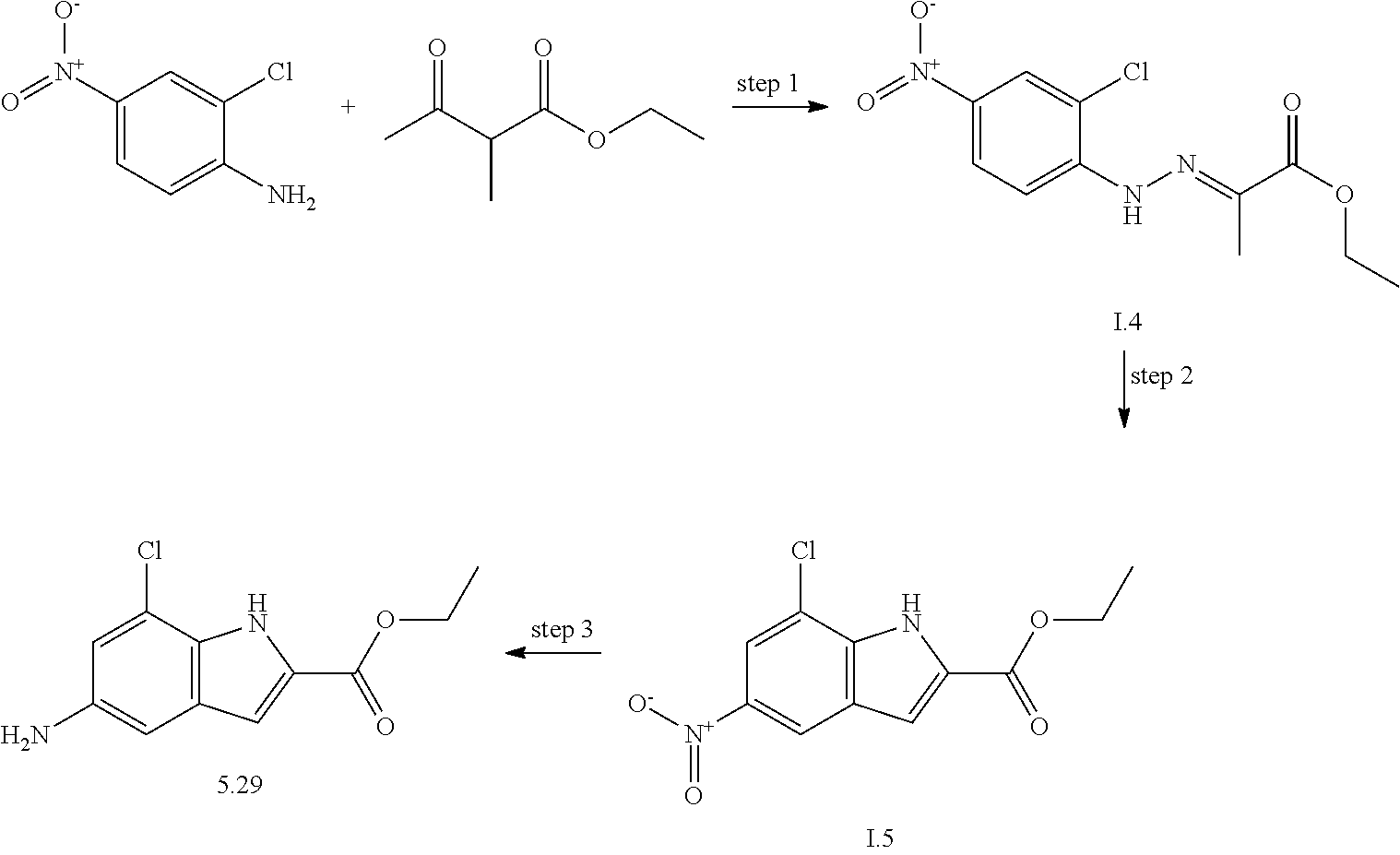
- A solution of 138 g sodium nitrite in 500 ml water was added dropwise at 0° C. to a solution of 345 g 2-chloro-4-nitro-phenylamine in 2.5 L 4N aqueous hydrochloride acid. The resulting mixture was stirred for 30 min. The reaction mixture was added to a stirred mixture of 317 g 2-methyl-3-oxo-butyric acid ethyl ester, 582 g potassium hydroxide and 582 g sodium acetate in 2.5 L ethanol and 3.3 L water. The resulting reaction mixture was stirred for 1 h at 0° C. The precipitate was filtered, washed with water and ethanol to give I.4.
- Yield: 241 g I.4 (42% of theory)
- A mixture of 245 g I.4 (2-[(2-chloro-4-nitro-phenyl)-hydrazono]-propionic acid ethyl ester) in 1.5 kg polyphosphoric acid was stirred for 1 h at 70° C. The mixture was quenched with ice-water and the precipitate was filtered. The solid was washed with ethyl acetate and ethanol to give the intermediate I.5.
- Yield: 36 g I.5 (16% of theory)
- In a pressure vessel a mixture of 5 g I.5 (7-chloro-5-nitro-1H-indole-2-carboxylic acid ethyl ester) with 0.5 g Pt/C 10% and 200 ml tetrahydrofuran/methanol 3:1 was stirred for 20 h under a pressure of 50 psi hydrogen. The catalyst was filtered and the solvent was evaporated under reduced pressure. The residue was purified by silica gel chromatography (SiO2; cyclohexane/ethyl acetate 75:25->50:50) to obtain the compound 5.29.
- Yield: 1.3 g 5.29 (29% of theory)
-

- A mixture of 5 g I.5 (7-chloro-5-nitro-1H-indole-2-carboxylic acid ethyl ester) in 100 ml ethanol and 47 ml 1N aqueous sodium hydroxide was stirred for 2 h at 60° C. The solvent was evaporated and the residue was acidified with aqueous hydrochloric acid to pH 5-6. The resulting precipitate was filtered, washed with water and dried.
- Yield: 4.6 g I.6 (quantitative); Analysis: [M+H]+=241 (Cl isotope pattern); HPLC-MS (method A): Rt=1.93 min
- 7.5 g [(Benzotriazol-1-yloxy)-dimethylamino-methylene]-dimethyl-ammonium tetrafluoro-borate (TBTU) was added to a solution of 4.6 g I.6 (7-chloro-5-nitro-1H-indole-2-carboxylic acid), 6.7 ml N,N-diisopropylethylamine in 50 ml N,N-dimethylformamide. The resulting mixture was stirred for 2 min at ambient temperature. 19 ml 2N dimethylamine in tetrahydrofuran were added and the resulting reaction mixture was stirred at ambient temperature overnight. The reaction mixture was filtered through a pad of aluminium oxide, the pad was washed with N,N-dimethylformamide/methanol 9:1 and the solvent was evaporated under reduced pressure. The crude product was triturated with water, the solid was filtered, washed with water and dried.
- Yield: 4.96 g I.7 (97% of theory); Analysis: [M+H]+=241; HPLC-MS (method A): Rt=2.05 min
- A mixture of 2.6 g I.7 (7-chloro-5-nitro-1H-indole-2-carboxylic acid dimethylamide), 0.3 g Pt/C 10%, 10 ml methanol and 90 ml tetrahydrofuran was stirred ambient temperature under a pressure of 50 psi hydrogen. The catalyst was filtered and the solvent was evaporated. The resulting crude material was used for the next step without purification.
- Yield: 2.2 g 5.30 (95% of theory); Analysis: [M+H]+=238; HPLC-MS (method B): Rt=1.86 min
-
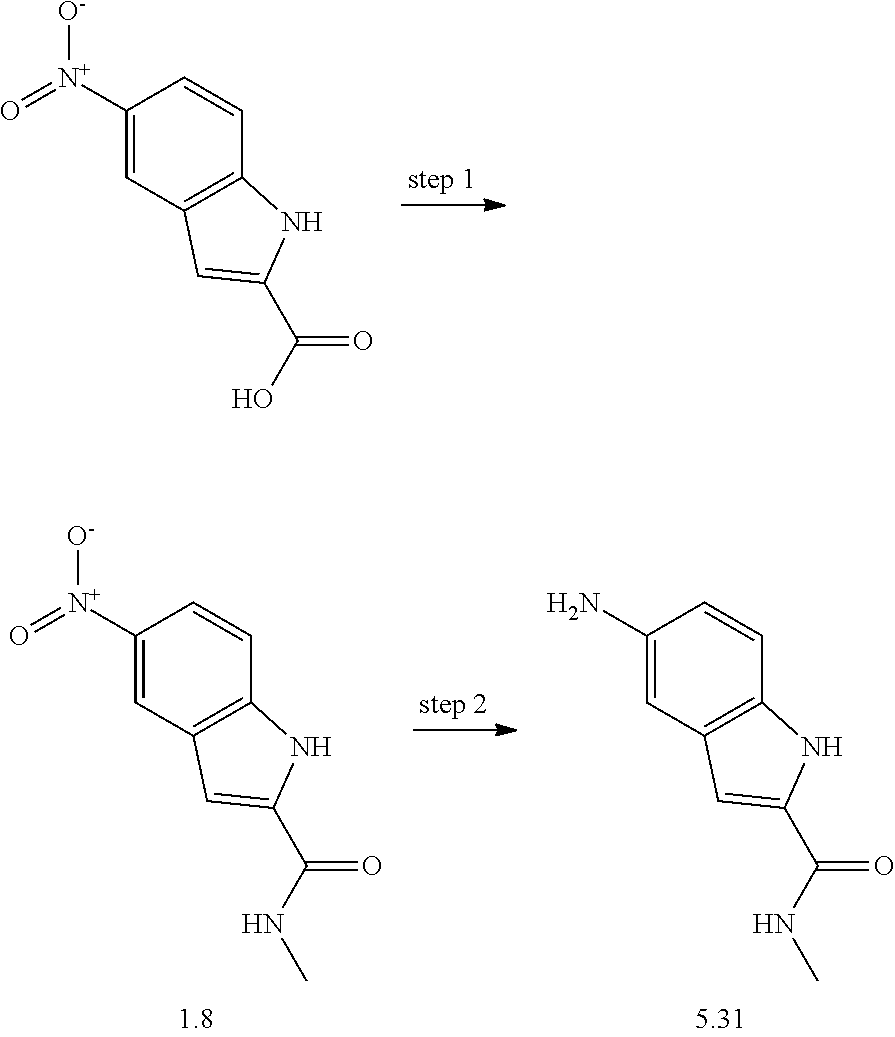
- A mixture of 0.62 g 5-nitro-1H-indole-2-carboxylic acid, 0.96 g [(benzotriazol-1-yloxy)-dimethylamino-methylene]-dimethyl-ammonium tetrafluoroborate (TBTU), 0.516 N,N-diisopropylethylamine in 3 ml N,N-dimethylformamide was stirred at ambient temperature for a few minutes before 3 ml of 2N methylamine in tetrahydrofuran were added and the reaction mixture was stirred 2 h at ambient temperature. The reaction solvent was evaporated. The resulting residue was diluted with water, the aqueous layer was treated with 1N aqueous sodium hydroxide to reach a basic pH. The yellow precipitate was filtered and washed with water.
- Yield: 0.5 g I.8 (76% of theory)
- A suspension of 0.5 g I.8 (5-nitro-1H-indole-2-carboxylic acid methylamide), 0.1 g Pd/C 10% in 30 ml methanol and 35 ml tetrahydrofuran was stirred under a pressure of 3 bar hydrogen at ambient temperature. The catalyst was filtered and the solvent was removed under reduced pressure. The residue was triturated with diethylether/dichloromethane. The solvent was distilled off to obtain compound 5.31 as a yellow solid.
- Yield: 0.397 g 5.31 (92% of theory)
-

- The synthesis of the starting material 2,4-dinitro-6-trifluoromethyl-phenylamine is described in the literature: Du Pont de Nemours and Co. Patent: US2194925, 1937
- 0.632 ml Trifluoroacetic anhydride was added slowly dropwise to a suspension of 0.76 g 2.4-dinitro-6-trifluoromethyl-phenylamine and 0.631 ml triethylamine in 8 ml dichloromethane. The resulting solution (exothermic) was stirred at ambient temperature overnight. The reaction mixture was cooled down, additional 5.9 ml trifluoroacetic anhydride were added in portions over 5 days followed by warming up to 45° C. The reaction mixture contains still 2.4-dinitro-6-trifluoromethyl-phenylamine. 3 ml Triethylamine were added (reacts violently) and the mixture was stirred another 2 h at 45° C. The reaction mixture was cooled down to ambient temperature and treated with water. The aqueous reaction mixture was extracted with dichloromethane. The organic layer was washed with water (2×) and dried with sodium sulfate. The solvent was evaporated and the crude I.9 was used for the next step without purification.
- Yield: 1.17 g I.9 crude
- 1.17 g I.9 (N-(2,4-Dinitro-6-trifluoromethyl-phenyl)-2,2,2-trifluoro-acetamide) was mixed with 0.3 g Raney-nickel and 50 ml tetrahydrofuran. The mixture was stirred at ambient temperature under a pressure of 3 bar hydrogen. The catalyst was filtered. The solvent was evaporated to give 1.10 which was used in the next step without purification.
- Yield: 1.09 g I.10 (crude)
- A mixture of 1.1 g I.10 (N-(2,4-diamino-6-trifluoromethyl-phenyl)-2,2,2-trifluoro-acetamide) and 10 ml glacial acetic acid was stirred at 55° C. for 4 h and then at ambient temperature overnight. The solvent was evaporated and the resulting residue was purified by silica gel chromatography (SiO2; dichloromethane/0-4% ethanol) to obtain compound 5.32.
- Yield: 0.46 g 5.32 (45% of theory); Analysis [M+H]+=270
-

- A mixture of 1.45 g 2,4-dinitro-6-trifluoromethyl-phenylamine in 20 ml acetic anhydride was refluxed for 3 h. The reaction mixture was concentrated. The residue was purified by preparative HPLC to give the intermediate I.11.
- Yield: 1.45 g I.11 (75% of theory); Analysis: HPLC-MS (method F): Rt=1.7 min
- A mixture of 0.63 g I.11 (N-acetyl-N-(2,4-dinitro-6-trifluoromethyl-phenyl)-acetamide) and 0.2 g Pd/C 10% in 20 ml glacial acetic acid was stirred for 5 h at 80° C. under a pressure of hydrogen of 50 psi. The catalyst was filtered and the solvent was evaporated. To the residue, 30 ml glacial acetic acid were added and the mixture was stirred for 2 h at reflux. The solvent was removed. The residue was treated with 50 ml 4 N aqueous hydrochloric acid and stirred for 1 h at reflux. The reaction mixture was cooled down to ambient temperature and the pH was adjusted to ˜7 with potassium carbonate. The resulting precipitate was filtered, washed with 30 ml water and dried.
- Yield: 0.34 g 5.33 (84% of theory); Analysis [M+H]+=216;
-
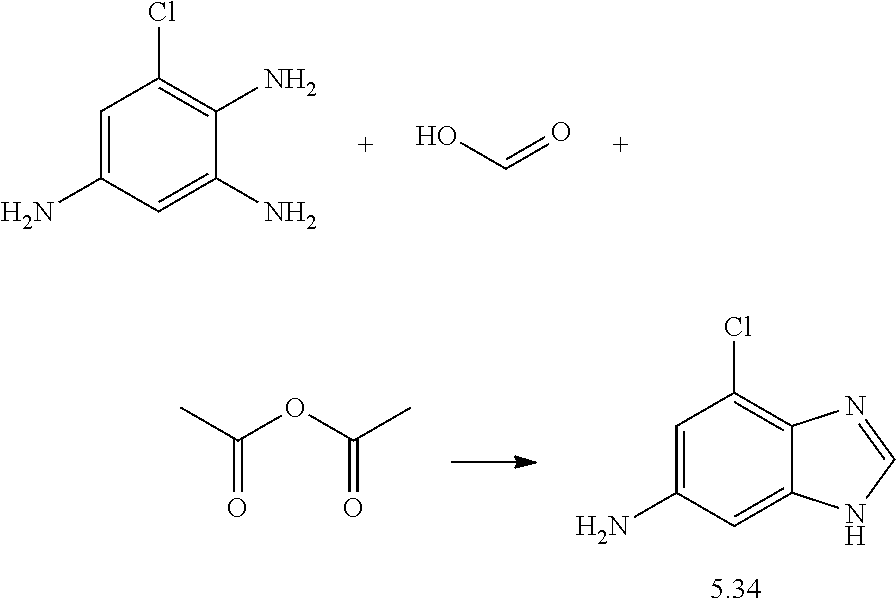
- The synthesis of the starting material 6-chloro-benzene-1,2,4-triamine is described in the literature: Journal of the Chemical Society, Perkin Transactions 1: Organic and Bio-Organic Chemistry (1972-1999); 1987; page 2317-2320
- 65 ml Acetic anhydride were added to a mixture of 10 g 6-chloro-benzene-1,2,4-triamine in 65 ml formic acid and the mixture was stirred for 5 h at 100° C. The solvent was removed before 100 ml of 10N hydrochloric acid in ethanol were added to the residue, and the mixture was stirred at ambient temperature overnight. The solvent was evaporated, the residue was suspended in ethyl acetate, and the solid was filtered. The filtrate was purified by silica gel chromatography (SiO2; ethyl acetate/(methanol/ammonia 9/1) 95:5->75:25). The combined product fractions were concentrated to obtain compound 5.34.
- Yield: 0.8 g 5.34 (8% of theory); Analysis [M+H]+=168; HPLC-MS (method C): Rt=1.39 min
-

- 3 ml 2N Methylamine in tetrahydrofuran were added to a mixture of 0.62 g 5-nitro-1H-indole-3-carboxylic acid, 0.96 g [(benzotriazol-1-yloxy)-dimethylamino-methylene]-dimethyl-ammonium tetrafluoroborate (TBTU) and 0.516 ml N,N-diisopropylethylamine in 3 ml N,N-dimethylformamide. The reaction mixture was stirred for 2 h at ambient temperature and then the solvent was evaporated. The residue was diluted with water and the aqueous layer was treated with 1N aqueous sodium hydroxide to obtain a basic pH. The yellow precipitate was filtered, washed with water and dried.
- Yield: 0.5 g I.12 (76% of theory)
- A suspension of 0.5 g I.12 (5-nitro-1H-indole-3-carboxylic acid methylamide), 0.1 g Pd/C 10% in 35 ml tetrahydrofuran and 30 ml methanol was stirred at ambient temperature under a pressure of hydrogen of 50 psi. The catalyst was filtered and the solvent was evaporated. The residue was triturated with diethylether/dichloromethane and the solvent was evaporated to obtain the compound 5.35.
- Yield: 0.397 g 5.35 (92% of theory)
-

- The synthesis of the starting material 7-methyl-5-nitro-1H-indole-2-carboxylic acid ethyl ester is described in the literature: Journal of the Indian Chemical Society; 1964; vol. 41; page 357-361.
- A mixture of 5 g 7-methyl-5-nitro-1H-indole-2-carboxylic acid ethyl ester and 0.5 g Pd/C 10% in 200 ml tetrahydrofuran/methanol (3:1) was stirred for 5 h under a pressure of 3 bar of hydrogen. The catalyst was filtered and the mixture was evaporated under reduced pressure. The residue was purified by silica gel chromatography (SiO2; cyclohexane/ethyl acetate 75:25->50:50).
- Yield: 1.3 g 5.36 (30% of theory)
-

- A mixture of 5 g 7-methyl-5-nitro-1H-indole-2-carboxylic acid ethylester in 100 ml ethanol and 40 ml 1N sodium hydroxide was stirred for 2 h at 65° C. The mixture was evaporated and the residue was treated with 40 ml 1N hydrochloric acid. The resulting precipitate was filtered and dried.
- Yield: 4.2 g I.13 (95% of theory)
- 20 ml 2N Dimethylamine in tetrahydrofuran was added to a mixture of 4.2 g I.13 (7-methyl-5-nitro-1H-indole-2-carboxylic acid), 6.26 g [(benzotriazol-1-yloxy)-dimethylamino-methylene]-dimethyl-ammonium tetrafluoroborate (TBTU) in 3.44 ml N,N-diisopropylethylamine and 100 ml N,N-dimethylformamide. After stirring for 2 h at ambient temperature, the solvent was removed. The residue was diluted with 60 ml 1N sodium hydroxide. The precipitate was filtered to obtain the intermediate I.14.
- Yield: 3.8 g I.14 (81% of theory)
- 3.8 g I.14 (7-Methyl-5-amino-1H-indole-2-carboxylic acid dimethylamide) was mixed with 0.5 g Pd/C 10%, 40 ml methanol and 70 ml tetrahydrofuran. The mixture was stirred at ambient temperature under a pressure of 3 bar of hydrogen. The catalyst was filtered and the solvent was evaporated to give the compound 5.37.
- Yield: 3.2 g 5.37 (96% of theory)
-

- To a stirred solution of 78 mg 3-methyl-5-nitro-1H-indole-2-carboxylic acid and 520 mg O-(7-azobenzotriazol-1-yl)-1,1,3,3-tetramethyluronium hexafluorophosphate (HATU) in 6 ml N,N-dimethylformamide were added 259 μl N-methylpiperazine. The reaction mixture was stirred at ambient temperature overnight. The solvent was evaporated and the resulting brown oil was dissolved in 30 ml ethyl acetate. The organic layer was washed with water (1×). The aqueous phase was washed with ethyl acetate (2×). The combined organic phases were washed with brine (1×), dried with sodium sulfate, filtered and evaporated. The solid was suspended in hot methanol. After cooling to ambient temperature, the solid was filtered to obtain I.15 as a yellow solid.
- Yield: 262 mg I.15 (76% of theory) Analysis [M+H]+=303; HPLC-MS (method H): Rt=1.18 min
- A mixture of 0.245 g I.15 ((3-methyl-5-nitro-1H-indol-2-yl)-(4-methyl-piperazin-1-yl)-methanone), 25 mg Pd/C 10% in 25 ml ethanol and 20 ml ethyl acetate was stirred at ambient temperature under a hydrogen atmosphere. The reaction mixture was treated with 1N aqueous hydrochloric acid and stirring was continued under a hydrogen pressure of 50 psi for 16 h. The reaction mixture was filtered through a pad of Celite. The Celite pad was washed with ethanol and the solvent was evaporated to give a brown solid.
- Yield: 245 mg 5.38 (98% of theory); Analysis [M+H]+=273; HPLC-MS (method H): Rt=2.21 min
-

- The synthesis of the starting material 4-methyl-6-nitro-3H-benzooxazol-2-one is described in literature: Journal of the Chemical Society; 1930; 2346-2353.
- A mixture of 1.8 g 4-methyl-6-nitro-3H-benzooxazol-2-one and 0.2 g Pd/C 10% in 10 ml methanol was stirred for 3 h at ambient temperature under a pressure of 3 bar of hydrogen. The catalyst was filtered and the residue was triturated with diethylether. The solid was filtered and dried.
- Yield: 1 g 5.39 (69% of theory); Analysis [M+H]+=165
-

- A mixture of 472 mg 7-methoxy-5-nitro-1H-indole-2-carboxylic acid and 0.1 g Pd/C 10% in 10 ml methanol and 20 ml tetrahydrofuran was stirred for 2 h at ambient temperature under a pressure of 3 bar of hydrogen. The catalyst was filtered and the filtrate was evaporated to obtain brown solid.
- Yield: 1 g 5.40 (92% of theory); Analysis [M+H]+=330; HPLC-MS (method N): Rt=1.48 min
-

- A mixture of 4.79 g (2-bromo-4-nitro-phenyl)-hydrazine, 2.34 ml etyhl pyruvate in 25 ml dioxane were stirred for 30 minutes at ambient temperature. The reaction mixture was evaporated and the residue was triturated with diethylether. The solid was filtered and dried.
- Yield: 4.8 g I.16 (71% of theory); Analysis [M+H]+=330; HPLC-MS (method N): Rt=1.48 min
- A mixture of 2 g I.16 (2-[(2-bromo-4-nitro-phenyl)-hydrazono]-propionic acid ethyl ester) and 0.2 g Raney-nickel in 60 ml ethyl acetate was stirred for 6 h at ambient temperature and 6 h at 40° C. under a pressure of 3 bar of hydrogen. The catalyst was filtered and the filtrate was evaporated. The residue was used in the next step without purification.
- Yield: 1.97 g I.17 (80% contain; 87% of theory)
- A mixture of 1.97 g I.17 (2-[(4-amino-2-bromo-phenyl)-hydrazono]-propionic acid ethyl ester) and 620 μl acetic anhydride in 30 ml N,N-dimethylformamide was stirred at ambient temperature overnight. The reaction mixture was evaporated, the residue dissolved in dichloromethane and purified by silica gel chromatography (SiO2; cyclohexane/ethyl acetate 8/2->1/1). The combined product fractions were concentrated to give an orange product.
- Yield: 1.21 g I.18 (54% of theory); Analysis [M+H]+=342
- A mixture of 9.6 g polyphosphoric acid and 963 mg I.18 (2-[(4-acetylamino-2-bromo-phenyl)-hydrazono]-propionic acid ethyl ester) was stirred in a pressure vessel for 1 h at 90° C. The reaction mixture was diluted with water. The resulting mixture was degassed in an ultrasound bath, filtered and the precipitate and was dried to obtain the intermediate I.19.
- Yield: 997 mg I.19 (90% content; 98% of theory); Analysis [M+H]+=325
- A mixture of 982 mg I.19 (5-acetylamino-7-bromo-1H-indole-2-carboxylic acid ethyl ester), 10 ml ethanol and 1.8 ml concentrated hydrochloric acid was stirred for 4.5 h at reflux. The reaction mixture was evaporated. The residue was used in the next step without purification.
- Yield: 916 mg 5.41 (95% of theory); Analysis [M+H]+=283
-
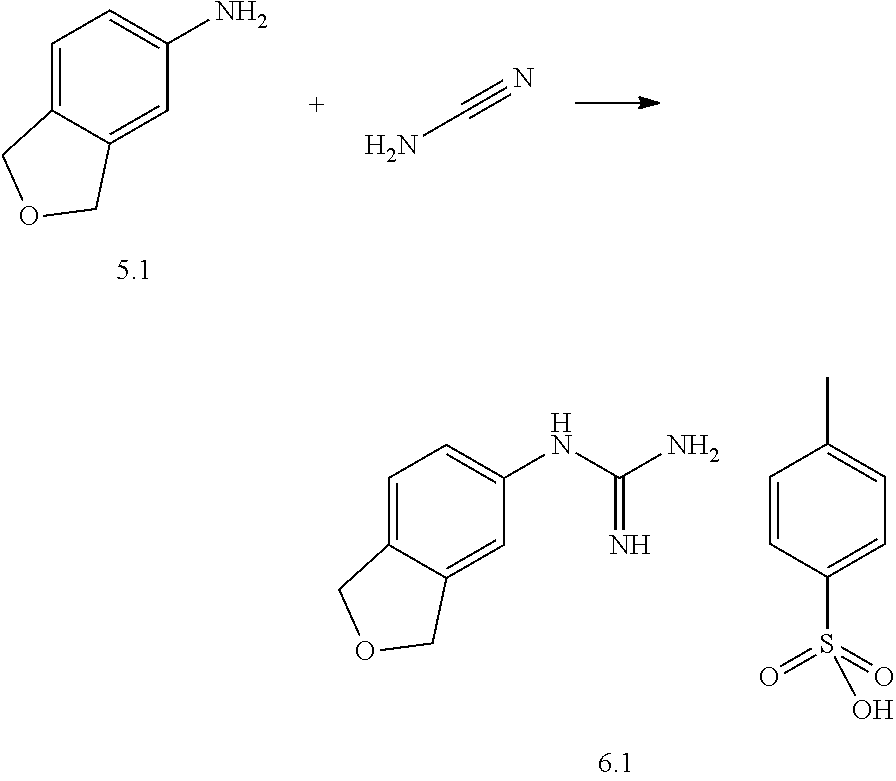
- To a stirred mixture of 2.7 g 5.1 (1,3-dihydro-isobenzofuran-5-ylamine) in 40 ml dioxane was added 3.8 g p-toluenesulfonic acid and 1 g cyanamide. The reaction mixture was stirred at reflux for 2 h then at ambient temperature for 3 days. The precipitate was filtered, washed with dioxane and dried to give the compound 6.1.
- Yield: 6.3 g 6.1 (90% of theory) Analysis: [M+H]+=178
- The Following Guanidines are Prepared by Using an Procedure Analogous to 6.1 with the Corresponding Anilines:
N-(2-tert-Butyl-1H-indol-5-yl)-guanidine as toluene-4-sulfonic acid salt (6.2) for Example 7
N-(1-Methyl-1H-benzoimidazol-5-yl)-guanidine (6.3) for Example 215
6-Guanidino-1H-indole-2-carboxylic acid methyl ester tosylate (6.4) for Examples 51, 52, 229, 244, 246, 259, 271
5-Guanidino-benzo[b]thiophene-2-carboxylic acid methyl ester (6.5) for Examples 54, 55, 62, 64
5-Guanidino-1-methyl-1H-indole-2-carboxylic acid methyl ester/5-Guanidino-1-methyl-1H-indole-2-carboxylic acid ethyl ester (6.6) for Examples 32, 47, 48
5-Guanidino-1H-indole-2-carboxylic acid ethyl ester (6.7) for Examples 6, 8, 10-12, 16, 26, 28, 30, 31, 33-44, 49, 50, 53, 58-61, 63, 65, 67-193, 197-214, 253-258, 260-262, 273-277, 283
5-Guanidino-1H-indole-2-carboxylic acid dimethylamide (6.8) for Examples 219, 222, 232
6-Guanidino-1-methyl-1H-indole-2-carboxylic acid methyl ester (6.9) for Examples 66, 265, 266-270
5-Guanidino-7-methyl-1H-indole-2-carboxylic acid ethyl ester (6.10) for Examples 247, 278, 292
5-Guanidino-7-methyl-1H-indole-2-carboxylic acid dimethylamide tosylate (6.11) for Example 280
7-Chloro-5-guanidino-1H-indole-2-carboxylic acid ethyl ester (6.12) for Examples 251, 252, 272, 289-291 -

- The synthesis of the starting material 1-(5-amino-1,3-dihydro-isoindol-2-yl)-2,2,2-trifluoro-ethanone is described in the literature: Takeda Chemical Industries Patent: WO2004/46107 A1; 2004
- 0.57 g Di-tert-butylcarbonate were added to a mixture of 0.5 g 1-(5-amino-1,3-dihydro-isoindol-2-yl)-2,2,2-trifluoro-ethanone in 10 ml acetonitrile and the mixture was stirred overnight at ambient temperature. The solvent was evaporated and 15 ml 15% aqueous ammonia solution was added. The precipitate was filtered and washed with 5 ml water (2×). 30 ml dioxane/aqueous sodium hydroxide (4N) 1:1 were added, and the reaction mixture was stirred for 40 min at ambient temperature. The solvent was evaporated and the aqueous layer was extracted with 20 ml dichloromethane. The organic layer was evaporated.
- Yield: 0.5 g I.20 (98% of theory)
- 1.041 g 1-(2-chloro-ethyl)-3-methyl-imidazolidin-2-one were added to a solution of 0.5 g I.20 ((2,3-dihydro-1H-isoindol-5-yl)-carbamic acid tert-butyl ester) and 377 μl N,N-diisopropylethylamine in 8 ml dioxane. The reaction mixture was irradiated in a microwave for 90 min at 100° C. The solvent was evaporated and the residue was purified by preparative HPLC. The combined product fractions were concentrated. The residue was treated with 8 ml 4 N hydrochloric acid in dioxane. The mixture was stirred for 2 h at ambient temperature. The solvent was evaporated to give a yellow solid.
- Yield: 400 mg I.21 (72% of theory)
- 0.4 g I.21 (1-[2-(5-amino-1,3-dihydro-isoindol-2-yl)-ethyl]-3-methyl-imidazolidin-2-one hydrochloride) was added to a mixture of 0.37 g cyanamide in 3 ml dioxane and 1 ml 4 N hydrochloric acid in dioxane. The mixture was irradiated at 140° C. in a microwave for 30 min. The solvent was evaporated and the residue was used in the next step without purification.
- Yield: 0.457 g 6.13 (100% of theory)
-

- 1 g N-Methylpiperazine were added to a mixture of 1.62 g 2-indancarboxylic acid, 3.21 g [(benzotriazol-1-yloxy)-dimethylamino-methylene]-dimethyl-ammonium tetrafluoroborate (TBTU) and 1.72 ml N,N-diisopropylethylaminie (DIPEA) in 20 ml N,N-dimethylformamide. The mixture was stirred at ambient temperature overnight. The reaction mixture was filtered through a pad of aluminum oxide. The solvent was evaporated to obtain I.22.
- Yield: 2.3 g I.22 (94% of theory)
- 1.8 g I.22 (Indan-2-yl-(4-methyl-piperazin-1-yl)-methanone) was slowly added at 0° C. to 6 ml 65% aqueous nitric acid. After the addition the mixture was stirred for 20 min at 0° C. The reaction mixture was warmed to ambient temperature and stirred overnight. The reaction mixture was then cooled to 0° C. and treated with saturated potassium hydroxide to pH 13. The aqueous layer was extracted with 30 ml dichloromethane (2×). The organic layer was filtered and evaporated. The residue contains two isomers, which were used without further purification in the next step.
- Yield: 1.5 g I.23 (isomeric mixture)
- 1.5 g I.23 (Isomers) was treated with 10 ml dioxane, 15 ml 4N aqueous hydrochloric acid and 0.68 g zinc. The mixture was stirred for 2 h at ambient temperature. The reaction mixture was treated with 4N aqueous sodium hydroxide to obtain a basic pH. The aqueous layer was extracted with dichloromethane. The organic layer was evaporated under reduced pressure. The residue was purified by preparative HPLC to obtain the desired isomer I.24.
- Yield: 0.4 g I.24 (42% of theory)
- Compound 6.14 was prepared analogous to procedure 6.12 step 3 using intermediate I.24.
-

- 0.945 g Phenylchloroformate were added slowly to a solution of 0.9 g 2,3-dihydro-1H-isoindol-5-ylamine and 0.231 ml N,N-diisopropylethylamine (DIPEA) in 20 ml dioxane. The reaction mixture was stirred for 6 h at ambient temperature. The solvent was evaporated and the residue was purified by preparative HPLC.
- Yield: 1.2 g I.25 (70% of theory) Analysis: HPLC-MS (method B) Rt=2.38
- 1.2 g I.25 (5-Amino-1,3-dihydro-isoindole-2-carboxylic acid phenyl ester), 1.89 g N-methylpiperazine and 6 ml 1-methyl-2-pyrrolidone were mixed. The mixture was irradiated in a microwave oven for 1 h at 250° C. and then purified by preparative HPLC.
- Yield: 0.676 g I.26 (55% of theory)
- Compound 6.15 was prepared analogous to procedure 6.12 step 3 using intermediate I.26.
-

- The synthesis of 2-chloro-4-pyridin-2-yl-pyrimidine (7.1) is described in the literature: Patent; SmithKline Beecham corporation; WO2003/101442; 2003; A1
-

- A mixture of 16.8 g 4.8 (1-(4-chloro-pyridin-2-yl)-3-dimethylamino-propenone), 27.03 g guanidine carbonate, 33.69 g sodium methanolate and 240 ml ethanol was stirred at reflux overnight. The reaction was diluted with water and the solvent was evaporated under reduced pressure. The yellow precipitate was filtered, washed with water and dried.
- Yield: 12.6 g I.27 (76% of theory); Analysis: [M+H]+=207 (Cl isotope pattern); HPLC-MS (method): Rt=1.63 min
- 20 g Sodium nitrite were added in portions at 10° C. to 260 ml concentrated sulfuric acid. After the addition the mixture was stirred for 30 min at ambient temperature. The mixture was warmed up to 70° C., then cooled to 10° C. The cold mixture was slowly added dropwise to a solution of 21.1 g I.27 (4-(4-chloro-pyridin-2-yl)-pyrimidin-2-ylamine) in 150 ml glacial acetic acid while maintaining the temperature between 10° C. and 20° C. during the addition. After stirring at ambient temperature for 2 h, 200 ml water were added (highly exothermic!). The mixture was stirred for 1 h at 70° C. The mixture was treated (under cooling) with 10N sodium hydroxide solution (highly exothermic!) and then the solid was filtered and dried to give 1.28.
- Yield: 22.4 g I.28 (quantitative) Analysis: [M+H]+=208 (Cl isotope pattern)
- A mixture of 10 g I.28 (4-(4-chloro-pyridin-2-yl)-pyrimidin-2-ol) in 100 ml phosphorus oxychloride was stirred for 3 h at reflux. The solvent was evaporated and the crude 8.1 was used in the next step without purification.
- Yield: 7.3 g 8.1 (67% of theory) Analysis: [M+H]+=226
-

- Compound 9.1 was prepared analogous to procedure 4.1 using ketone 3.8. The brown solid was used for the next steps without purification.
- Yield: 49 g 9.1 (crude; 100% of theory)
-

- A mixture of 226 mg 8.1 (2-chloro-4-(4-chloro-pyridin-2-yl)-pyrimidine), 181 mg 5.2 (2-tert-butyl-1H-indol-5-ylamine) and 138 μl N,N-diisopropylethylamine in 4 ml 1-methyl-2-pyrrolidone was stirred for 2 h at 150° C. The mixture was purified by preparative HPLC. The combined fractions were evaporated. The residue was dissolved in acetonitrile/water and lyophilized to obtain a red solid 10.1.
- Yield: 265 mg 10.1 (88% of theory)
-

- A mixture of 0.527 g 9.1 (1-(3-chloro-phenyl)-3-dimethylamino-propenone), 1.223 g (6.1) (N-(1,3-dihydro-isobenzofuran-5-yl)-guanidine) and 324 mg sodium methylate in 10 ml methanol was irradiated in a microwave oven for 20 min at 160° C. The precipitate was filtered, washed with methanol and dried to give 10.2.
- Yield: 405 mg 10.2 (50% of theory) Analysis: [M+H]+=325; HPLC-MS (method I): Rt=2.45 min
- The following compounds were produced by a process analogously to 10.2 with the corresponding starting material:
- 1-(2-{5-[4-(4-Chloro-pyridin-2-yl)-pyrimidin-2-ylamino]-1,3-dihydro-isoindol-2-yl}-ethyl)-3-methyl-imidazolidin-2-one (10.3) for Example 218
{5-[4-(4-Chloro-pyridin-2-yl)-pyrimidin-2-ylamino]-indan-2-yl}-(4-methyl-piperazin-1-yl)-methanone (10.4) for Example 221
5-[4-(4-Chloro-pyridin-2-yl)-pyrimidin-2-ylamino]-7-methyl-1H-indole-2-carboxylic acid dimethylamide (10.5) for Example 280
6-[4-(4-Chloro-pyridin-2-yl)-pyrimidin-2-ylamino]-1H-indole-2-carboxylic acid (10.6) for Examples 229, 244, 246, 259, 271
6-[4-(4-Chloro-pyridin-2-yl)-pyrimidin-2-ylamino]-1-methyl-1H-indole-2-carboxylic acid (10.7) for Examples 266-270
5-[4-(4-Chloro-pyridin-2-yl)-pyrimidin-2-ylamino]-1-methyl-1H-indole-2-carboxylic acid (10.8) for Example 32, 47, 48
7-Chloro-5-[4-(4-chloro-pyridin-2-yl)-pyrimidin-2-ylamino]-1H-indole-2-carboxylic acid dimethylamide (10.9) for Example 279
5-[4-(4-Chloro-pyridin-2-yl)-pyrimidin-2-ylamino]-1H-indole-2-carboxylic acid (10.10) for Examples 10, 12, 15, 26, 28, 30, 31, 33-42, 44-46, 68-109, 197-214, 223-228, 260-262, 273-277 -

- A mixture of 17.55 g 2-methylpiperazine, 20.2 ml benzoylchloride and 44.2 g sodium hydrogencarbonate in 150 ml ethanol was stirred for 12 h at reflux. The suspension was filtered and the resulting yellow solution was evaporated. The residue was treated with 150 ml 1N hydrochloric acid and extracted with dichloromethane. The aqueous layer was treated with 20% aqueous sodium hydroxide to obtain pH 13 and extracted with dichloromethane (3×). The organic layer was dried with sodium sulfate and concentrated to give the intermediate I.29.
- Yield: 19.48 g I.29 (58% of theory) Analysis: [M+H]+=131
- 25 ml N,N-Diisopropylethylamine and 0.1 g 4-dimethylaminopyridine were added to a solution of 10 g of I.29 (1-benzyl-3-methyl-piperazine) in 200 ml tetrahydrofuran and the mixture was stirred for 5 min at ambient temperature. 6.38 g 1-Pyrrolidincarbonyl chloride in tetrahydrofuran were added dropwise to the reaction mixture and the mixture was stirred under an atmosphere of nitrogen at ambient temperature overnight. The solvent was evaporated, water was added and the mixture was extracted with ethyl acetate (2×). The combined organic phases were dried with sodium sulfate and concentrated to give a yellow oil.
- Yield: 15.17 g I.30 (quantitative) Analysis: [M+H]+=288
- A mixture of 18.79 g I.30 ((4-benzyl-2-methyl-piperazin-1-yl)-pyrrolidin-1-yl-methanone) and 1.5 g Pd/C 10% in 150 ml methanol was stirred at ambient temperature under a pressure of 3 bar hydrogen. The catalyst was filtered and the solvent was evaporated under reduced pressure to obtain the compound 11.1.
- Yield: 12.63 g 11.1 (98% of theory) Analysis: [M+H]+=198
-

- A mixture of 133.73 g Boc-4-piperidone and 49.73 g N-methylendiamine in 670 ml toluene was refluxed overnight. The solvent was evaporated and the crude 1.31 was used for the next step without purification.
- Yield: 171.3 g I.31 (crude)
- A solution of 171.36 g I.31 (1-boc-4-(2-methylamino-ethylimino)-piperidin) in 340 ml toluene was added dropwise to a suspension of 18.14 g sodium borohydride in 340 ml ethanol and the mixture was stirred at ambient temperature for 3 days. The ethanol was removed and the residue was diluted with 340 ml water. The aqueous solution was extracted with ethyl acetate (3×). The organic layer was washed with water, dried with sodium sulfate and concentrated. The residue was dissolved in ethanol, treated at 0° C. with hydrochloric acid and the crude I.32 was filtered as a dihydrochloride salt. The solid was dissolved in water and treated under ice cooling with sodium hydroxide to obtain a basic pH. The aqueous layer was extracted with ethyl acetate (3×). The combined organic layers were dried with sodium sulfate and evaporated to give I.32.
- Yield: 46.6 I.32 (27% of theory)
- A mixture of 46.52 g I.32 (1-boc-4-(2-methylamino-ethylamino)-piperidine) and 40.2 g triethylamine in 450 ml chloroform was cooled down to −10° C. A solution of 18 g triphosgene in 90 ml chloroform was added dropwise to the reaction mixture. The resulting mixture was warmed to ambient temperature and diluted with water. The phases were separated and the organic layer was washed with water (2×). The organic layer was dried with sodium sulfate and concentrated. The residue was triturated with ethyl acetate/hexanes, the precipitate was filtered and dried to obtain the intermediate I.33.
- Yield: 38.7 g I.33 (76% of theory)
- A solution of 15.56 g I.33 (1-boc-4-(2-methyl-2-oxo-imidazolin-1-yl)-piperidin) in 28 ml ethanol was added dropwise to 55 ml concentrated hydrochloric acid in 110 ml water. The mixture was evaporated and the crude 11.2 was used in the next step without purification.
- Yield: 11.2 (quantitative)
-

- A mixture of 5 g 1,3-dimorpholin-2-nitropropane, 2 g Raney-nickel in 80 ml methanol and 20 ml ammonia in methanol were stirred under a pressure of 50 psi hydrogen at 30° C. for 5.5 h. The catalyst was filtered and the solvent was evaporated under reduced pressure to give compound 11.3.
- Yield: 4.15 g 11.3 (95% of theory) Analysis: [M+H]+=230
-
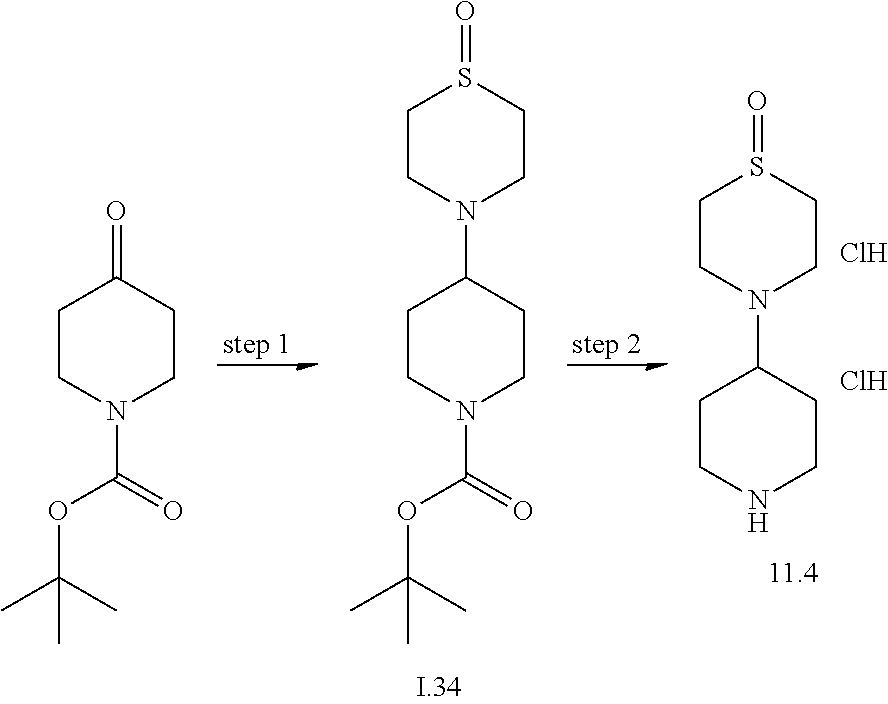
- A mixture of 8.8 g 1-boc-4-piperidone and 5.4 g thiomorpholin-1-oxide in 2.5 ml glacial acetic acid was diluted with 100 ml dichloromethane and stirred for 1 h at ambient temperature. The reaction mixture was cooled with an ice bath and 14.9 g sodium triacetoxyborohydride were added in portions over a period of 1 h. The reaction mixture was stirred at ambient temperature overnight. The mixture was cautiously treated with 150 ml aqueous saturated sodium bicarbonate solution (foams strongly!) and stirred for 1 h. The phases were separated and the aqueous layer was extracted with dichloromethane (2×). The combined organic phases were washed with brine, dried with magnesium sulfate and evaporated to give the intermediate I.34.
- Yield: 11.3 g I.34 (85% of theory)
- To a mixture of 11.4 g I.34 (4-(1-oxo-4*-thiomorpholin-4-yl)-1-boc-piperidine) in 30 ml dioxane were added 60 ml 4N hydrochloric acid in dioxane. A thick suspension was formed, 40 ml methanol were added and the reaction mixture was stirred for 3 h at ambient temperature. The precipitate was filtered (hygroscopic), washed with diisopropylether and dried to give the compound 11.4.
- Yield: 6.2 g 11.4 (60% of theory)
-
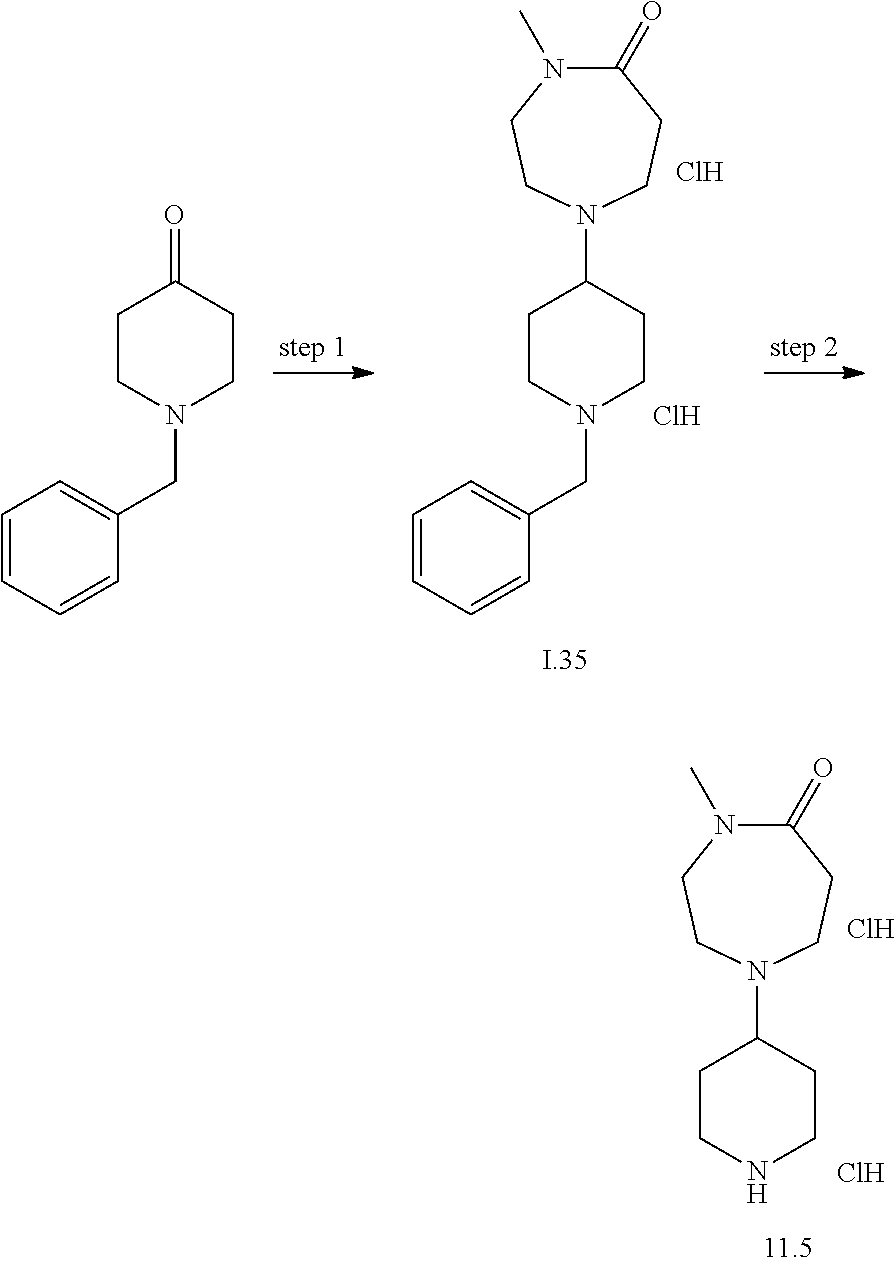
- A mixture of 6.04 g 1-benzyl-4-piperidone and 4.3 g 4-methyl-1,4-diazepan-5-one in 150 ml dichloromethane was treated with glacial acetic acid to obtain a pH 5 (˜3.7 ml). The mixture was stirred for 1 h at ambient temperature, then cooled with an ice bath and treated with 9.54 g sodium triacetoxy borohydride (in portions). The reaction mixture was stirred at ambient temperature overnight. 400 ml 30% aqueous potassium carbonate solution were added dropwise to the reaction mixture over a period of 45 min until pH 8 was reached. The aqueous layer was extracted with 200 ml dichloromethane (3×). The combined organic layers were dried with magnesium sulfate and evaporated. The residue was dissolved in 100 ml methanol and acidified with 1.25N hydrochloric acid in methanol. The resulting precipitate was filtered, washed with 30 ml methanol and 50 ml diisopropyl ether and dried.
- Yield: 7 g I.35 (56% of theory) Analysis: [M+H]+=302
- 1 g of Pd/C 10% were added to a solution of 7 g I.35 (1-(1-benzyl-piperidin-4-yl)-4-methyl-[1,4]diazepan-5-one) in 150 ml methanol and 50 ml water. The reaction mixture was stirred for 1.5 h at 50° C. under a pressure of hydrogen. The catalyst was filtered and the solvent was removed. The residue was diluted with 10 ml ethanol and the solvent was removed. The residue was triturated with 100 ml diisopropylether. The precipitate was filtered, washed with 30 ml diisopropylether and dried to give the compound 11.5.
- Yield: 5.3 g 11.5 (100% of theory) Analysis: [M+H]+=212
-

- A solution of 5.73 g methylsulfonyl chloride in 10 ml dichloromethane was slowly added dropwise under ice cooling to a solution of 10.1 g trans-(4-hydroxymethyl-cyclohexyl)-carbamic acid tert-butyl ester and 7.63 ml triethylamine in 140 ml dichloromethane. The reaction mixture was stirred at ambient temperature for 3 h. Additional 1.5 ml triethylamine and 0.7 ml methylsulfonyl chloride were added and the mixture was stirred at ambient temperature overnight. The reaction mixture was extracted with ice-water (1×), citric acid (1×) and water (1×). The organic layer was dried and evaporated under reduced pressure. The resulting crude material was triturated with petroleum ether, the precipitate was filtered, washed with diethylether and dried to give the intermediate I.36.
- Yield: 9.14 g I.36 (68% of theory) Analysis: [M−H]−=306
- A mixture of 1.5 g I.36 (methanesulfonic acid 4-tert-butoxycarbonylamino-cyclohexylmethyl ester) and 1.046 g pyrrolidine was stirred under an atmosphere of nitrogen at 100° C. for 1.5 h. A clear melt was formed. The mixture was concentrated under reduced pressure. The residue was diluted with dioxane and concentrated. The crude material was triturated with 3 ml 2N aqueous sodium hydroxide solution and cooled using an ice bath. The precipitate was filtered, washed with 2.5 ml ice water and dried to give the intermediate I.37.
- Yield: 571 mg I.37 (41% of theory) Analysis: [M+H]+=283
- 550 mg I.37 ((4-pyrrolidin-1-ylmethyl-cyclohexyl)-carbamic acid tert-butyl ester) in 6N aqueous hydrochloric acid were stirred overnight. The solvent was removed. Toluene (15 ml) was added and the mixture was evaporated. The addition of toluene and evaporation was repeated twice. The crude material was triturated with acetone, the precipitate was filtered and dried (hygroscopic).
- Yield: 473 mg 11.6 (95% of theory) [M+H]+=183
-

- A solution of 294.14 g 1-benzylpiperidin-4-one in 2.1 L methanol was added to a solution of 448 g ammonium carbonate in 2.1 L hot water. The yellow turbid reaction mixture was cooled with an ice bath. A solution of 77 g sodium cyanide in 200 ml water was added dropwise over 10 min (exothermic!). After the addition the ice bath was removed and the reaction mixture was stirred at ambient temperature for 3 days. The resulting precipitate was filtered, washed with water (3×) and dried in a vacuum oven at 50° C. to obtain the intermediate I.38.
- Yield: quantitative
- In a 20 L reactor 2.4 kg sodium hydroxide were dissolved in 10 L water. The solution was mixed with 614 g I.38 (8-benzyl-1,3,8-triaza-spiro[4.5]decane-2,4-dione) and the resulting reaction suspension was heated to 80° C. When 80° C. was reached, the reaction mixture was heated in steps of 10° C. When the temperature reached 105° C. the mixture started to foam strongly. Stirring was continued at 108° C. overnight. The reaction mixture was cooled to 10° C. and 5 L concentrated hydrochloric acid were added dropwise to obtain a pH 7-8. During the addition the temperature was kept at 23° C. The precipitate was filtered and dried in vacuo at 40° C. over 3 days, then at 80° C. overnight.
- Yield: 469.7 g I.39 (85% of theory)
- 750 ml 2.4N Lithium aluminium hydride in tetrahydrofuran was cautiously added to a suspension of 202 g I.39 (4-amino-1-benzyl-piperidine-4-carboxylic acid) in 2 L tetrahydrofuran at 19° C. Upon addition of the first few milliliters of lithium aluminium hydride, the temperature rose. The temperature was kept between 28-29° C. with a cooling bath. When the addition was completed, the reaction mixture was stirred for 2 h at ambient temperature. The mixture was cooled down to 8° C. A solution of 70 ml water in 140 ml tetrahydrofuran was added dropwise (gas evolution). To the thick suspension 70 ml 4N aqueous sodium hydroxide and 140 ml water were sequentially added, the mixture was warmed to 56° C. and stirred overnight. The reaction mixture was then cooled to ambient temperature and sodium sulfate was added. The salts were filtered and washed with dichloromethane (2×). The filtrate was evaporated to obtain the intermediate 1.40.
- Yield: 76.78 g I.40 (67% contain; 27% of theory)
- 70.83 g I.41 ((4-Amino-1-benzyl-piperidin-4-yl)-methanol) were dissolved in 235 ml dichloromethane and 770 ml water were added under stirring. The vigorously stirred reaction mixture was cooled with an ice bath, and 51 ml chloroacetyl chloride were added in 5 equal portions in 10 min intervals. The reaction mixture was stirred for 35 min, the precipitate was filtered, washed with water (3×) and diethylether (2×). The white solid was dried overnight.
- Yield: 65.77 g I.41 (97% contains; 52% of theory)
- Under an atmosphere of argon, 103 mg I.41 N-(1-benzyl-4-hydroxymethyl-piperidin-4-yl)-2-chloro-acetamide were dissolved in 2 ml tert-amyl alcohol. 46.9 mg Potassium tert-butoxide were added and the solution was stirred for 30 min at ambient temperature. The solvent was evaporated and 20 ml dichloromethane were added. The organic layer was washed with brine (3×), dried with sodium sulfate and concentrated to obtain a colourless oil which crystallized upon standing.
- Yield: 0.09 g I.42 (75% contains; 75% of theory)
- Under an nitrogen atmosphere, 116.8 g I.42 (9-benzyl-4-oxa-1,9-diaza-spiro[5.5]undecan-2-one) were dissolved in 1.2 L tetrahydrofuran. Some undissolved material was filtered and washed with 100 ml tetrahydrofuran. To the combined filtrates were added 64.2 g di-tert-butyl dicarbonate and 14.2 g Pd/C 10%. The mixture was stirred under a hydrogen atmosphere for 45 min. Additional 43.8 g di-tert-butyl dicarbonate were added and the mixture was stirred under hydrogen atmosphere overnight. The reaction mixture was flushed with nitrogen. Additional 7.93 g Pd/C 10% were added and the mixture was stirred under hydrogen atmosphere overnight. The reaction mixture was flushed with nitrogen and filtered through a pad of Extrelute™. The pad was washed with dichloromethane and the solvent was evaporated under reduced pressure. The residue (white solid) was suspended in 250 ml hot ethyl acetate and cooled to ambient temperature. The precipitate was filtered, washed with isopropanol (×3) and dried.
- Yield: 101.09 g I.43 (83% of theory)
- To a solution of 6.7 g I.43 (2-oxo-4-oxa-1,9-diaza-spiro[5.5]undecane-9-carboxylic acid tert-butyl ester) in 70 ml hot tert-amyl alcohol 4.17 g potassium tert-butoxide and 2.31 ml iodomethane were added. The reaction mixture was stirred at ambient temperature overnight. Additional 1.45 ml iodomethane were added and the mixture was stirred for 1.5 h at ambient temperature. The reaction mixture was concentrated in vacuo, the residue was stirred in hot ethyl acetate and the precipitate was filtered. The solid was triturated with dichloromethane and filtered. The residue was suspended in hot ethyl acetate. The suspension was filtered and the filtrate was evaporated to give a colourless oil, which was dissolved in hot ethyl acetate and left to crystallize. The precipitate was filtered and washed with ethyl acetate to give a white solid which was purified by silica gel chromatography (SiO2; dichloromethane/methanol 9/1). The combined product fractions were concentrated to give the intermediate I.44.
- Yield: 5.68 g I.44 (81% of theory)
- To a solution of 5.68 g I.44 (1-methyl-2-oxo-4-oxa-1,9-diaza-spiro[5.5]undecane-9-carboxylic acid tert-butyl ester) in 15 ml dioxane were added 14.98 ml 4N hydrochloric acid in dioxane. A white precipitate formed slowly and the mixture was stirred at ambient temperature overnight. Additional 7.5 ml 4N hydrochloride acid in dioxane was added and the mixture was stirred overnight. Isopropanol was added to the mixture. The precipitate was filtered, washed with isopropanol and dried in vacuo to afford a white solid 11.7.
- Yield: 4.38 11.7 (100% of theory)
- The synthesis of the following compounds is described in the literature:
- 4-(Tetrahydro-pyran-4-yl)-piperidine (11.9) for Example 181: Pfizer INC. Pfizer Limited Patent: EP992493 A1; 2000
- Piperazine-1-carboxylic acid tert-butyl ester (11.12) for Examples 11, 13, 14, 21, 22
N,N-Dimethyl-propane-1,3diamine (11.13) for Example 16
2-Morpholin-4-yl-ethylamine (11.14) for Example 17
1-Isopropyl-[1,4]diazepane (11.15) for Examples 18, 184 - 3-Morpholin-4-yl-propylamine (11.18) for Example 61
N,N-Dimethyl-ethane-1,2-diamine (11.19) for Example 67
Methyl-(tertrahydropyran-4-yl)-amine (11.20) for Examples 148, 254
Hexahydro-pyridazine dihydrochloride (11.21) for Example 290 - Bis-(2-methoxy-ethyl)-amine (11.24) for Example 112
Methyl-pyridin-2-yl-methyl-amine (11.25) for Example 113
Dimethyl-piperidin-4-yl-amine (11.26) for Example 114 - 2-Ethyl-2,6-diaza-spiro[3,4]octane (11.28) for Example 116
2-Methyl-2,7-diaza-spiro[4,4]nonane (11.29) for Example 117
4-Pyrrolidin-1-yl-piperidine (11.30) for Example 118
2-Ethyl-2,7-diaza-spiro[4,4]nonane (11.31) for Example 119
Dimethyl-(2-piperidin-2-yl-ethyl)-amine (11.32) for Example 120
1-Diethylamino-3-piperazin-1-yl-propan-2-ol (11.33) for Example 121
Octahydro-pyrrolo[1,2-a]pyrazine (11.34) for Example 123
1-Methyl-1[1,4]diazepane (11.35) for Example 124
Azetidin-3-yl-diethylamine (11.36) for Example 125
Methyl-[3-(4-methyl-piperazin-1-yl)-propyl]-amine (11.37) for Example 126
3-Pyrrolidin-1-ylmethyl-piperidine (11.38) for Example 127
1-(1-Ethyl-piperidin-4-yl)-piperazine (11.39) for Example 128
Methyl-(1-methylpiperidin-4-ylmethyl)-amine (11.40) for Example 129
1-Methyl-4-(2-piperazin-1-yl-ethyl)-piperazine (11.41) for Example 130
2-piperazin-1-yl-pyrimidine (11.42) for Example 131 - 1-(1-Methyl-piperidin-4-yl)-piperazine (11.44) for Example 133
1-Methyl-4-piperidin-4-yl-piperazine (11.45) for Example 134
4-(2-Pyrrolidin-1-yl-ethyl)-piperidine (11.46) for Example 136
(4-Methyl-piperazin-1-yl)-piperazin-1-yl-methanone (11.47) for Example 137
4-Piperidin-4-yl-morpholine (11.48) for Example 138
C-(Tetrahydro-pyran-4-yl)-methylamine (11.49) for Example 139
Methyl-3(morpholin-4-yl-propyl)-amine (11.50) for Example 140 - 4-(2-Pyrrolidin-1-yl-ethoxy)-piperidine (11.52) for Example 143
1-(1-Methyl-piperidin-4-ylmethyl)-piperazine (11.53) for Example 145 - Methyl-(tetrahydro-pyran-4-ylmethyl)-amine (11.55) for Example 147
- 4-Piperidin-4-ylmethyl-morpholine (11.58) for Example 151
Methyl-[2-(4-methyl-piperazin-1-yl)-ethyl]-amine (11.59) for Example 152
4-piperazine-1-yl-butyronitrile (11.60) for Example 155
1-(2-Pyrrolidin-1-yl-ethyl)-piperazine (11.61) for Example 156
8-Methyl-3,8-diaza-bicyclo[3.2.1]octane dihydrochloride (11.62) for Example 157 - 4-Piperidin-4-ylmethyl-morpholine (11.64) for Example 159
- 1-(Tetrahydro-pyran-4-yl)-piperazine (11.66) for Example 161
Methyl-3(methyl-3H-imidazol-4-ylmethyl)-amine (11.67) for Example 164
1-(1-Methyl-1H-imidazol-2-ylmethyl)-piperazine (11.68) for Example 166
1-(2-Imidazol-1-yl-ethyl)-piperazine (11.69) for Example 167
1-(3-Pyrrolidin-1-yl-propyl)-piperazine (11.70) for Example 168
4-(3-piperazine-1-yl-propyl)-morpholine (11.71) for Example 169
Octahydro-pyrido[1,2-a]pyrazine (11.72) for Example 171
5,6,7,8-Tetrahydro-[1,2,4]triazolo[4,3-a]pyrazine (11.73) for Example 172
Piperazin-1-yl-(tetrahydrofuran-2-yl)-methanone (11.74) for Example 173
Morpholin-4-yl-piperazin-1-yl-methanone (11.75) for Example 174
Piperazin-1-yl-piperidin-1-yl-methanone (11.76) for Example 175
Methyl-(3-methyl-oxetan-3-ylmethyl)-amine (11.77) for Examples 176, 257
5,6,7,8-Tetrahydro-imidazo[1,2-a]pyrazine (11.78) for Examples 177, 258 - 1-Azetidin-3-yl-4-methyl-piperazine (11.80) for Example 179
Methyl-[2-(tetrahydro-pyran-4-yl)-ethyl]-amine (11.81) for Example 180 - 2-piperazin-1-yl-1-pyrrolidin-1-yl-ethanone (11.83) for Example 185
2-piperazin-1-yl-ethanol (11.84) for Example 186
1-Pyridin-2-yl-piperazine (11.85) for Example 187 - 1-Morpholin-4-yl-2-piperazin-1-yl-ethanone (11.89) for Example 191
Dimethyl-(2-piperazin-1-yl-ethyl)-amine (11.90) for Example 192
1-Piperidin-4-yl-pyrrolidin-2-one (11.91) for Examples 193, 263, 264, 289 - 4-Morpholine-4-yl-cyclohexylamine (11.93) for Example 153
(3-[1,4]diazepane-1-yl-propyl)-dimethyl-amine (11.94) for Example 142 -

- A mixture of 3.9 g 10.10 (5-[4-(4-chloro-pyridin-2-yl)-pyrimidin-2-ylamino]-1H-indole-2-carboxylic acid), 1.1 g 11.10 (N-methylpiperazine), 3.42 g [(benzotriazol-1-yloxy)-dimethylamino-methylene]-dimethyl-ammonium tetrafluoroborate (TBTU) and 1.89 ml N,N-diisopropylethylamine in 100 ml N,N-dimethylformamide was stirred at ambient temperature for 2 h. The reaction mixture was filtered through a pad of basic aluminum oxide. The filtrate was evaporated. The resulting crude material was triturated with diethylether and the solid was filtered. The precipitate was dissolved in dichloromethane/methanol and filtered through a pad of silica gel. The filtrate was evaporated and the residue was triturated with diethylether. The solid was filtered to yield the compound 10.11 as a yellow solid.
- Yield: 3.6 g 10.11 (75% of theory) Analysis: [M+H]+=448
- The following compounds were produced by a process analogously to 10.11 with the corresponding starting material:
- 6-[4-(4-Chloro-pyridin-2-yl)-pyrimidin-2-ylamino]-1H-indole-2-carboxylic acid dimethylamide (10.12) for Examples 229, 244, 246, 259, 271
5-[4-(4-Chloro-pyridin-2-yl)-pyrimidin-2-ylamino]-1H-indole-2-carboxylic acid dimethylamide (10.13) for Examples 26, 28, 30, 31, 223-228, 277
6-[4-(4-Chloro-pyridin-2-yl)-pyrimidin-2-ylamino]-1-methyl-1H-indole-2-carboxylic acid dimethylamide (10.14) for Examples 266-270
{5-[4-(4-Chloro-pyridin-2-yl)-pyrimidin-2-ylamino]-1-methyl-1H-indol-2-yl}-(4-methyl-piperazin-1-yl)-methanone (10.15) for Examples 32, 47, 48
{5-[4-(4-Chloro-pyridin-2-yl)-pyrimidin-2-ylamino]-1H-indol-2-yl}-morpholin-4-yl-methanone (10.16) for Examples 260-262, 275
5-[4-(4-Chloro-pyridin-2-yl)-pyrimidin-2-ylamino]-1H-indole-2-carboxylic acid methyl-(tetrahydro-pyran-4-yl)-amide (10.17) for Example 276
{5-[4-(4-Chloro-pyridin-2-yl)-pyrimidin-2-ylamino]-1H-indol-2-yl}-[1,4]oxazepan-4-yl-methanone (10.18) for Examples 273, 274 - 2-Phenyl-propane-1,3-diol (13.2) for Example 37
Ethane-1,2-diol (13.3) for Examples 28, 45, 47, 259, 269
3-Methoxy-2-phenyl-propanol (13.4) for Example 38
Cyclopentane-1,3-diol (13.5) for Examples 30, 246, 262 - 2,2-Dimethyl-propane-1,3-diol (13.7) for Examples 31, 71
- 3-Morpholin-4-yl-propane-1,2-diol (13.10) for Example 41
3-Methyl-2-butanol (13.11) for Example 34 - (S)-(+)-2-butanol (13.14) for Example 36
Propane-1,3-diol (13.15) for Examples 85, 223, 229, 261, 270, 274 - (3-Methyl-oxetan-3-yl)-methanol (13.19) for Examples 107, 228, 244
- But-2-ene-1,4-diol (13.22) for Example 68
Pyridin-2-yl-methanol (13.23) for Example 69 - Cyclohexane-1,3-diol (13.28) for Example 75
2-Morpholin-4-yl-ethanol (13.29) for Example 76
Hexane-2,5-diol (13.30) for Example 77
2-Methyl-2-propyl-propane-1,3-diol (13.31) for Example 78 - 2-Ethyl-hexan-1,3-diol (13.33) for Example 80
- Butane-2,3-diol (13.35) for Example 83
1-(4-Hydroxy-piperidin-1-yl)-ethanone (13.36) for Example 84 - Tetrahydro-furan-3,5-diol (13.38) for Example 87
2-Methyl-propane-1,3-diol (13.39) for Example 88 - 3-Methyl-butane-1,3-diol (13.41) for Example 91
- (R)-Tetrahydrofuran-2-methanol (13.43) for Example 95
- (1S)-Trans-1,2-cyclohexanediol (13.49) for Example 102
- 2-Hydroxymethyl-propane-1,3-diol (13.53) for Example 106
Cyclopent-3-enol (13.54) for Example 108 - [3-(2-Methoxy-ethyl)-3H-imidazol-4-yl]-methanol (13.61) for Example 203
- (1-Methyl-1H-imidazol-4-yl)-methanol (13.64) for Example 206
- (1-Methyl-1H-imidazol-2-yl)-methanol (13.67) for Example 209
- (S)-1-(Tetrahydrofuran-2-yl)-methanol (13.72) for Example 93
- Cis-1,5-cyclooctandiol (13.74) for Example 79
2,2-Diethyl-propane-1,3-diol (13.75) for Example 109
(R,R)-2,3-butandiol (13.76) for Example 12
(S,S)-2,3-butandiol (13.77) for Example 15 -

- 70 ml 2,2-dimethoxypropane were added at ambient temperature to a mixture of 23.12 g 5-(S)-hydroxymethyl-pyrrolidone and 0.18 g p-toluenesulfonic acid in 500 ml toluene. The mixture was stirred for 2 h at reflux. Volatile components were distilled off at 65° C.-92° C. The residue was treated with 70 ml 2,2-dimethoxypropan and the mixture was heated at reflux for 2 h. The reaction mixture was cooled down and concentrated to give the crude 1.45.
- Yield: 29.82 g I.45 (96% of theory)
- A solution of 29.8 g I.45 (3,3-dimethyl-tetrahydro-pyrrolo[1,2-c]oxazol-5-one) in 700 ml tetrahydrofuran was cooled down to −78° C. 115.2 ml Lithium diisopropylamide was slowly added dropwise to the reaction mixture and stirring was continued for 30 min at −78° C. After this time, 14.5 ml iodomethane were slowly added. The reaction was warmed up to ambient temperature and cooled down again to −78° C. Additional 115.2 ml lithium diisopropylamide were added dropwise and stirred at −78° C. for 1 h. Additionally 14.5 ml iodomethane were slowly added to the reaction mixture. Stirring was continued at ambient temperature overnight. The solvent was evaporated, the residue was diluted with water and the aqueous layer was extracted with dichloromethane. In this process a precipitate formed which was dissolved with methanol. The organic layer was washed with brine, dried with sodium sulfate and the solvent was evaporated. The resulting black oil (a mixture of I.46 (3,3,6,6-tetramethyl-tetrahydro-pyrrolo[1,2-c]oxazol-5-one) and 3,3,6-trimethyl-tetrahydro-pyrrolo[1,2-c]oxazol-5-one) was dissolved in 500 ml tetrahydrofuran and the solution was cooled down to −78° C. 115.2 ml Lithium diisopropylamide were slowly added. Stirring was continued for 60 h at −78° C., 14.5 ml iodomethane were slowly added to the mixture and the mixture was stirred overnight at ambient temperature. The solvent was removed under reduced pressure. Water was added to the residue and the mixture was extracted with dichloromethane. The organic layer was washed with brine, dried with sodium sulfate and concentrated.
- Yield: 27.15 g I.46 (77% of theory)
- A mixture of 27.15 g I.46 (3,3,6,6-tetramethyl-tetrahydro-pyrrolo[1,2-c]oxazol-5-one) and 0.282 g p-toluenesulfonic acid in 500 ml methanol was stirred at reflux overnight. The mixture was concentrated. Additional 500 ml methanol and 2.8 g p-toluenesulfonic acid were added and the mixture was stirred 4 h at reflux. The mixture was diluted with water and treated with sodium carbonate to obtain a basic pH. The organic layer was separated, dried with magnesium sulfate and concentrated to give 1 g (60% content; 3% of theory)
- The aqueous layer was concentrated under reduced pressure, the residue was triturated with dichloromethane, the precipitate was filtered and the filtrate was concentrated to give 13.78 as yellow oil which crystallized slowly.
- Yield: 12 g 13.78 (57% of theory)
- The compounds (2-aminocarbonylphenyl)boronic acid (14.1) for Example 1 and ethylboronic acid (14.2) for Example 239 and 242 which were used in Scheme 3 are commercially available.
- In some cases, the esters 15 were isolated and characterised. Subsequent saponification with aqueous sodium hydroxide or aqueous lithium hydroxide solution and acidification yielded the acids 16.
- In other cases the esters 15 were saponified in a one-pot-procedure to yield the acids 16.
-

- A mixture of 100 mg 7.1 (2-chloro-4-pyridin-2-yl-pyrimidine), 184 mg 5.6 (5-amino-3-methyl-benzo[b]thiophene-2-carboxylic acid ethyl ester) and 90 μl N,N-diisopropylethylamine in 2 ml 1-methyl-2-pyrrolidone were irradiated in a microwave oven at 150° C. for 3 h and allowed to stand at ambient temperature overnight. 90 μl N,N-diisopropylethylamine were added and the mixture was irradiated at 150° C. for 24 h. The reaction mixture was cooled to ambient temperature and diluted with 30 ml ethyl acetate. The resulting solution was washed with water (1×), saturated sodium bicarbonate (1×), 10% aqueous citric acid (1×) and brine (1×). The organic phase was dried with sodium sulfate and evaporated to give 310 mg brown oil. The oil was purified by silica gel chromatography (SiO2, dichloromethane—dichloromethane/methanol 99/1 to give compound 15.1.
- Yield: 102 mg 15.1 (50% of theory) Analysis: [M+H]+=391, HPLC (method H) Rt=2.76 min
- To a stirred suspension of 138 mg 15.1 (3-methyl-5-(4-pyridin-2-yl-pyrimidin-2-ylamino)-benzo[b]thiophene-2-carboxylic acid ethyl ester) in 6 ml ethanol were added 68 mg lithium hydroxide dissolved in 1.5 ml water and stirring was continued at 70° C. for 16 h. The reaction mixture was cooled to ambient temperature and the solvent was evaporated. The yellow solid was suspended in water and the mixture was acidified with 2N aqueous hydrochloric acid to pH 6.5. The precipitate was filtered, washed with water and dried to give 16.1 as a pale yellow solid.
- Yield: 119 mg 16.1 (93% of theory) Analysis: [M+H]+=363; HPLC-MS (method H) Rt=1.93 min
-

- 251 mg 6.9 (6-Guanidino-1-methyl-1H-indole-2-carboxylic acid methyl ester), 0.11 g 4.1 (3-dimethylamino-1-(4-methoxymethyl-pyridin-2-yl)-propenone) and 108 mg sodium methoxide in 3 ml methanol were irradiated for 20 min at 150° C. in a microwave oven. The resulting precipitate was filtered, washed with methanol and dried to obtain 15.5 as a yellow solid.
- Yield: 110 mg 15.2 (55% of theory)
- A mixture of 75 mg 15.5 (6-[4-(4-methoxymethyl-pyridin-2-yl)-pyrimidin-2-ylamino]-1-methyl-1H-indole-2-carboxylic acid methyl ester), 10 ml methanol, 5 ml tetrahydrofuran and 1 ml 1N aqueous sodium hydroxide was stirred for 3 h at 65° C. The solvent was evaporated and the crude 16.2 was used in the next step without purification.
- Yield: 72.3 mg 16.2 (crude)
-

- A mixture of 880 mg 5.41 (5-amino-7-bromo-1H-indole-2-carboxylic acid ethyl ester hydrochloride), 475 mg 7.1 (2-chloro-4-pyridin-2-yl-pyrimidine) and 420 mg p-toluenesulfonic acid momohydrate in 4 ml dioxane was stirred for 2 h at reflux. The reaction mixture was evaporated, the residue was adsorbed on silica gel and purified by silica gel chromatography (SiO2; dichloromethane/methanol 100/0->80/20) to obtain the compound 15.3.
- Yield: 1.33 g 15.3 (90% content; 99% of theory); Analysis: [M+H]+: 438
- A mixture of 1.33 g 15.3 (7-bromo-5-(4-pyridin-2-yl-pyrimidin-2-ylamino)-1H-indole-2-carboxylic acid ethyl ester) and 3.5 ml 4N aqueous sodium hydroxide solution in 20 ml tetrahydrofuran/methanol 1/1 was stirred for 1 h at 40° C. The reaction mixture was evaporated, the residue was diluted with water and acidified with 11.7 ml 1N aqueous hydrochloric acid. The resulting precipitate was filtered and dried at 50° C. overnight.
- Yield: 560 mg 16.3 (45% of theory); Analysis: [M+H]+: 410
-

- A mixture of 262 mg 7.1 (2-chloro-4-pyridin-2-yl-pyrimidine) and 192 mg 5.36 (5-amino-7-methyl-1H-indole-2-carboxylic acid ethyl ester) in 4 ml 1-methyl-2-pyrrolidone was stirred for 2 h at 160° C. The reaction mixture was purified by preparative HPLC and the combined product fractions were concentrated. The residue was suspended in 50 ml methanol and 5 ml 1N aqueous sodium hydroxide. 5 ml tetrahydrofuran were added to obtain a solution. The solution was stirred at 60° C. for 2 h. The solvent was evaporated, the residue was treated with 5 ml 1N aqueous hydrochloric acid, the solvent was removed and the crude 16.4 was used for the next reaction without purification.
- Yield: 550 mg 16.4 (159% of theory, contains salts)
- The following compounds were produced by a process analogously to 16.4 with the corresponding starting material:
- 7-Chloro-5-(4-pyridin-2-yl-pyrimidin-2-ylamino)-1H-indole-2-carboxylic acid (16.5) for Examples 249, 250, 263, 282, 290
5-(4-Pyridin-2-yl-pyrimidin-2-ylamino)-benzofuran-2-carboxylic acid (16.6) for Examples 56, 57 -
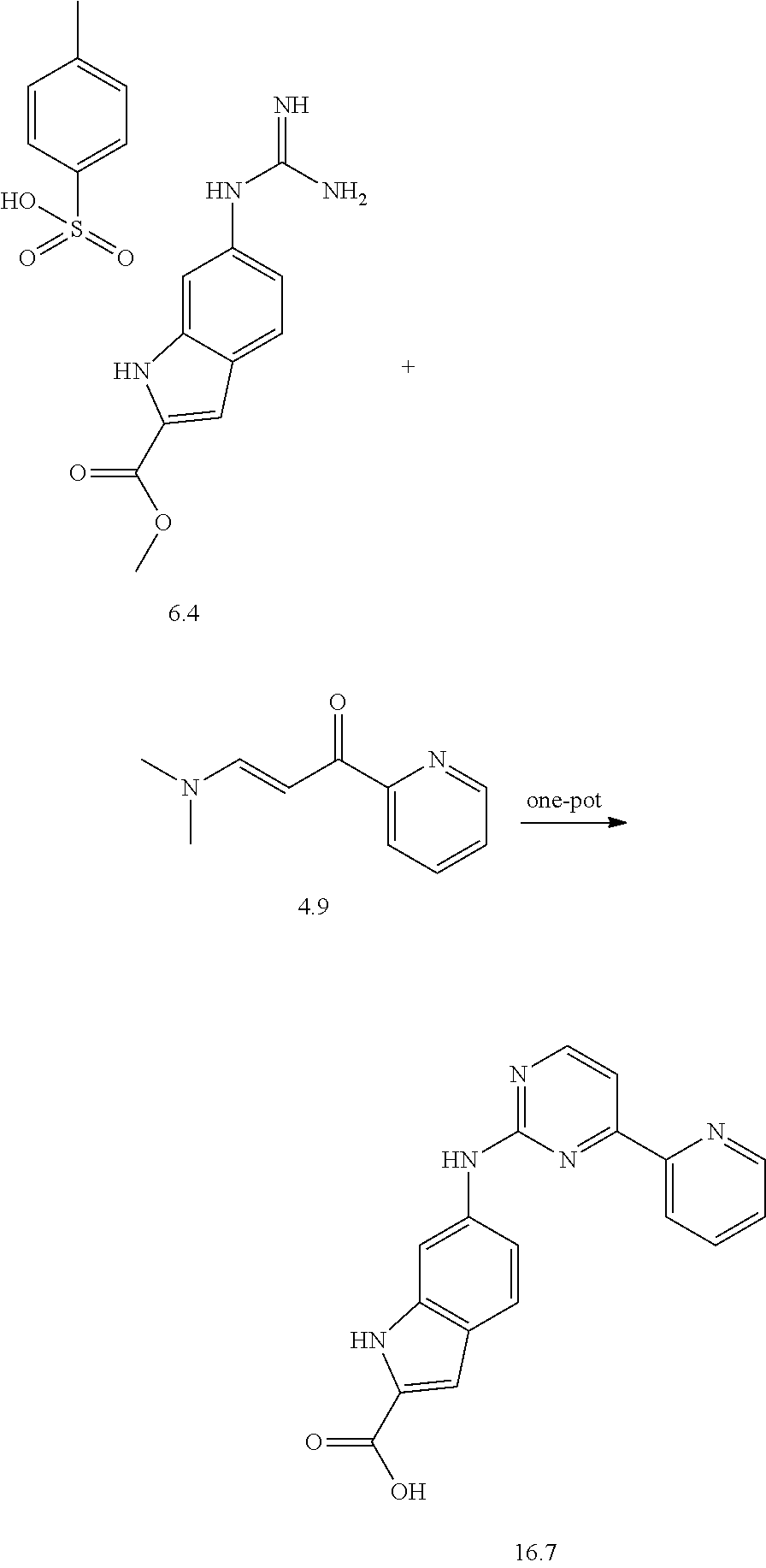
- 881 mg 6.4 (6-Guanidino-1H-indole-2-carboxylic acid methyl ester), 2.427 g 4.9 (3-dimethylamino-1-pyridin-2-yl-propenone) and 378 mg sodium methoxide in 10 ml methanol were irradiated for 45 min at 160° C. in a microwave oven. The reaction suspension was filtered, the solid was dissolved in 40 ml methanol/tetrahydrofuran 1:1 and treated with 10 ml 1N aqueous sodium hydroxide. The reaction mixture was stirred at 60° C. for 2 h. The organic solvent was evaporated and the aqueous residue was acidified with 1N hydrochloric acid. A precipitate formed which was filtered and dried to give the compound 16.7 as a red/brown solid.
- Yield: 1.1 g 16.7 (66% of theory) Analysis: [M+H]+=332
- The following compounds were produced by a process analogously to 16.7 with the corresponding starting materials:
- 7-Chloro-5-[4-(4-methoxymethyl-pyridin-2-yl)-pyrimidin-2-ylamino]-1H-indole-2-carboxylic acid (16.8) for Examples 251, 252, 289, 291
5-(4-Pyridin-2-yl-pyrimidin-2-ylamino)-1H-indole-2-carboxylic acid (16.9) for Examples 11, 43, 50, 110-121; 123-143; 145-193, 283
5-[4-(4-Ethyl-pyridin-2-yl)-pyrimidin-2-ylamino]-1H-indole-2-carboxylic acid (16.10) for Example 63
1-Methyl-6-(4-pyridin-2-yl-pyrimidin-2-ylamino)-1H-indole-2-carboxylic acid (16.11) for Example 66
5-[4-(6-Fluoro-pyridin-2-yl)-pyrimidin-2-ylamino]-7-methyl-1H-indole-2-carboxylic acid (16.12) for Example 278
5-[4-(4-Methoxymethyl-pyridin-2-yl)-pyrimidin-2-ylamino]-1H-indole-2-carboxylic acid (16.13) for Examples 8, 253-256, 258
5-[4-(4-Methoxymethyl-pyridin-2-yl)-pyrimidin-2-ylamino]-7-methyl-1H-indole-2-carboxylic acid (16.14) for Examples 247, 248, 292
7-Chloro-5-[4-(6-fluoro-pyridin-2-yl)-pyrimidin-2-ylamino]-1H-indole-2-carboxylic acid (16.15) for Example 272
5-[4-(4-tert-Butyl-pyridin-2-yl)-pyrimidin-2-ylamino]-1H-indole-2-carboxylic acid (16.16) for Example 49
5-[4-(4-Isopropyl-pyridin-2-yl)-pyrimidin-2-ylamino]-1H-indole-2-carboxylic acid (16.17) for Example 53
5-[4-(4-Methoxy-pyridin-2-yl)-pyrimidin-2-ylamino]-1H-indole-2-carboxylic acid (16.18) for Examples 16-19, 21, 22, 58-61, 65, 67, 231, 257
5-(4-Pyridin-2-yl-pyrimidin-2-ylamino)-benzo[b]thiophene-2-carboxylic acid (16.19) for Examples 54, 55
5-[4-(4-Methoxy-pyridin-2-yl)-pyrimidin-2-ylamino]-benzo[b]thiophene-2-carboxylic acid (15.20) for Examples 62, 64
5-[4-(4-Methyl-pyridin-2-yl)-pyrimidin-2-ylamino]-1H-indole-2-carboxylic acid (16.21) for Example 6 -

- A mixture of 96 mg 7.1 (2-chloro-4-pyridin-2-yl-pyrimidine) and 103 mg 5.40 (5-amino-7-methoxy-1H-indole-2-carboxylic acid) in 1 ml N-methylpyrrolidine was stirred for 1 h at 140° C. The residue was purified by preparative HPLC. The combined product fractions were evaporated and the residue was dissolved in acetonitrile/water and lyophilized to obtain the compound 16.22 as a yellow solid.
- Yield: 160 mg 16.22 (89% of theory); HPLC-MS (method A) Rt=1.53 min
-
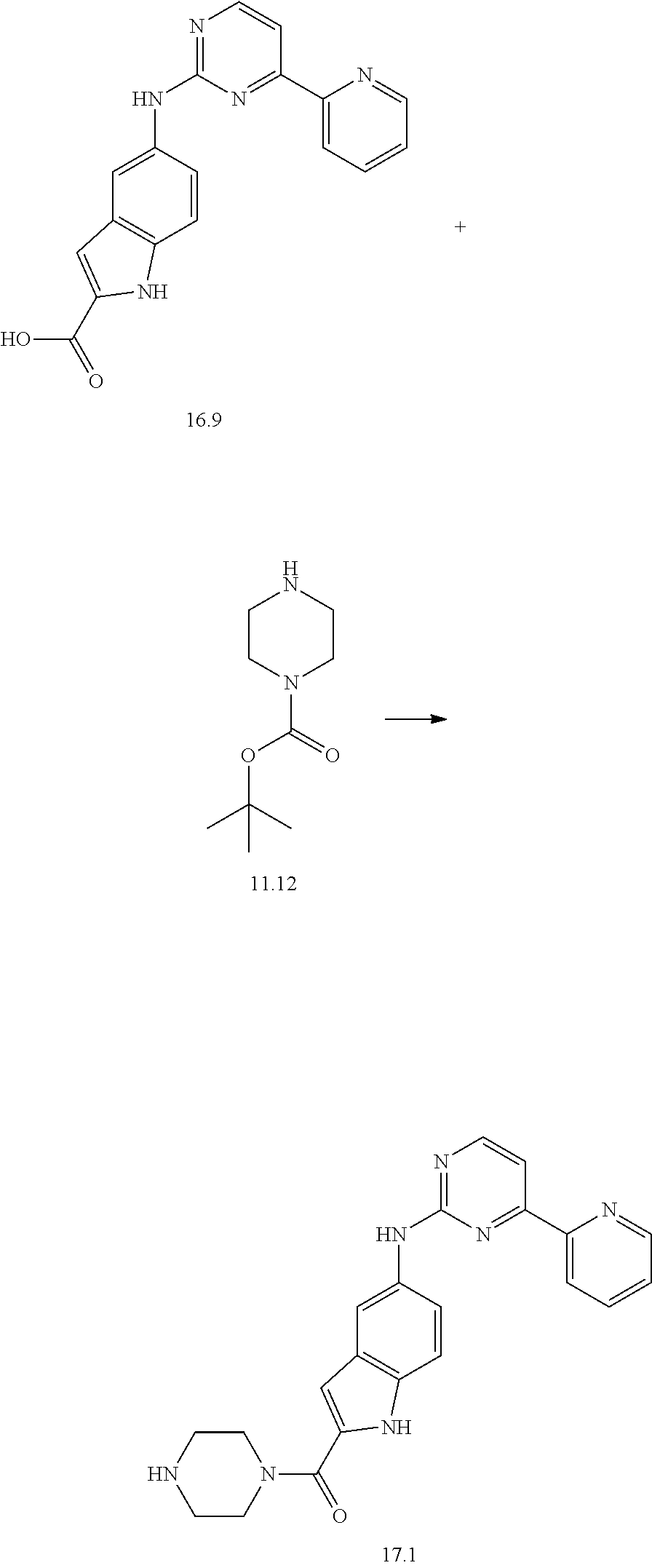
- A mixture of 330 mg 16.9 (5-(4-pyridin-2-yl-pyrimidin-2-ylamino)-1H-indole-2-carboxylic acid), 186 mg 11.12 (boc-piperazine), 321 mg [(benzotriazol-1-yloxy)-dimethylamino-methylene]-dimethyl-ammonium tetrafluoroborate (TBTU) and 344 ml N,N-diisopropylethylamine in 5 ml N,N-dimethylformamide was stirred at ambient temperature for 2 h. The reaction mixture was filtered through a pad of aluminum oxide and the solvent was evaporated. The residue was treated with 20 ml dichloromethane/trifluoroacetic 1/1 acid and stirred at ambient temperature overnight. The solvents were distilled and the residue was purified by preparative HPLC. The combined product fractions were concentrated. The crude material was dissolved in acetonitrile/water and lyophilized to give an orange solid 17.1.
- Yield: 343 mg 17.1 (86% of theory) Analysis [M+H]+=400; HPLC (method D): Rt=1.59 min
- The following compound {5-[4-(4-Methoxy-pyridin-2-yl)-pyrimidin-2-ylamino]-1H-indol-2-yl}-piperazin-1-yl-methanone (17.2) for Examples 21, 22 was prepared analogous to 17.1 with the corresponding intermediate 16.18.
- (S)-(−)-Tetrahydrofuran-2-carboxylic acid (18.1) for Examples 13, 22
(R)-(+)-Tetrahydrofuran-2-carboxylic acid (18.2) for Examples 14, 21 -

- A mixture of 100 mg 16.3 (7-bromo-5-(4-pyridin-2-yl-pyrimidin-2-ylamino)-1H-indole-2-carboxylic acid), 78 mg [(benzotriazol-1-yloxy)-dimethylamino-methylene]-dimethyl-ammonium tetrafluoroborate (TBTU), 42 μl N,N-diisopropylethylamine in 3 ml N,N-dimethylformamide was stirred at ambient temperature for 20 minutes. 122 μl 2N Methylamine in tetrahydrofuran were added and the reaction mixture was stirred at ambient temperature for 1 h. The reaction mixture was evaporated. The residue was dissolved in methanol/water and aqueous ammonia solution and purified by preparative HPLC. The combined product fractions were concentrated and lyophilized.
- Yield: 36 mg 19.1 (35% of theory) Analysis [M−H]−=421; HPLC (method O): Rt=1.35 min
- The following compound 7-bromo-5-(4-pyridin-2-yl-pyrimidin-2-ylamino)-1H-indole-2-carboxylic acid dimethylamide (19.2) for Example 242 was prepared analogously to 19.1 with the corresponding intermediate 16.3.
-

- A mixture of 88 mg 4.9 (3-dimethylamino-1-pyridin-2-yl-propenone), 189 mg 6.3 (N-(1-methyl-1H-benzoimidazol-5-yl)-guanidine) and 100 mg sodium methylate in 4 ml methanol was irradiated for 30 min at 150° C. in a microwave oven. The resulting mixture was purified by preparative HPLC. The combined product fractions were evaporated. The residue was dissolved in acetonitrile/water 1/1 and lyophilized to obtain the product example 215 a yellow solid.
- Yield: 72 mg Example 215 (24% of theory); Analysis [M+H]+=303; HPLC-MS (method D) Rt=1.64 min
-

- A mixture of 100 mg 4.1 (3-dimethylamino-1-(4-methoxymethyl-pyridin-2-yl)-propenone), 183 mg 6.2 (N-(2-tert-butyl-1H-indol-5-yl)-guanidine 4-toluenesulfonic acid salt) and 63 mg potassium carbonate in 3 ml isopropanol and the mixture was irradiated for 1.5 h at 150° C. in a microwave oven. 20 ml Brine were added and the reaction mixture was extracted with 20 ml ethyl acetate (3×). The combined organic phases were dried with sodium sulfate and the solvent was evaporated. The crude material was recrystallized from methanol to give example 7.
- Yield: 97 mg Example 7 (55% of theory); Analysis: HPLC-MS (method E) Rt=4.71 min
-

- A mixture of 38 mg 7.1 (4-pyridin-2-yl-pyrimidin-2-ylamine) and 42 mg 5.34 (7-chloro-1H-benzoimidazol-5-ylamine) in 1 ml 1-methyl-2-pyrrolidone was stirred at 150° C. for 1 h. The reaction mixture was purified by preparative HPLC. The combined product fractions were concentrated. The residue was dissolved in acetonitrile/water 1/1 and lyophilized to obtain a yellow solid.
- Yield: 22 mg Example 287 (34% of theory); Analysis [M+H]+=323; HPLC-MS (method A) Rt=1.56 min
-
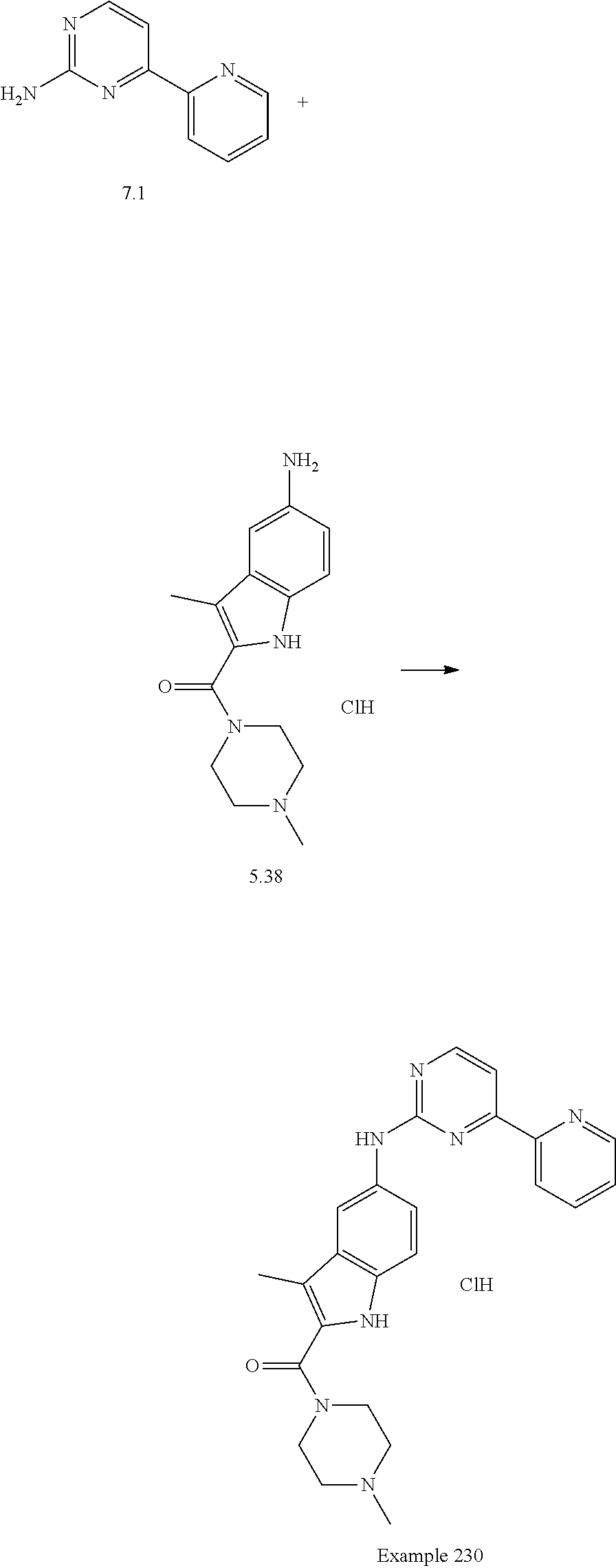
- 21 mg 7.1 (4-pyridin-2-yl-pyrimidin-2-ylamine), 36 mg 5.38 ((5-amino-3-methyl-1H-indol-2-yl)-(4-methyl-piperazin-1-yl)-methanone hydrochloride) and 11 μl concentrated hydrochloric acid in 1 ml n-butanole were irradiated at 160° C. for 1 h in a microwave oven. The solvent was evaporated, the residue was dissolved in dichloromethane/methanol and pre-absorbed on silica gel. The material was purified by silica gel chromatography (SiO2; dichloromethane/methanol 99/1-97/3) to give a solid.
- Yield: 11 mg Example 230 (22% of theory); Analysis [M+H]+=428; HPLC-MS (method H) Rt=2.72 min
-

- A mixture of 91 mg 8.1 (4-(4-chloro-pyridin-2-yl)-pyrimidin-2-ylamine), 67 mg 5.8 (5-aminoindan) and 69 μl N,N-diisopropylethylamine in 2 ml N-methyl-2-pyrrolidon (NMP) was stirred for 3 h at 175° C. The reaction mixture was purified by preparative HPLC. The combined product fractions were concentrated under reduced pressure. The residue was dissolved in 3 ml N-methyl-2-pyrrolidon (NMP). 200 μl Methanol and 50 mg potassium hydroxide were added to the solution. The resulting mixture was stirred for 2 h at 90° C. The reaction mixture was purified by preparative HPLC and the combined product fractions were concentrated. The resulting crude material was dissolved in acetonitrile/water 1/1 and lyophilized to obtain the example 20 as a colourless solid.
- Yield: 30 mg Example 20 (24% of theory); Analysis [M+H]+=319; HPLC-MS (method D) Rt=1.67 min
-

- A mixture of 97 mg 10.2 ([4-(4-chloro-pyridin-2-yl)-pyrimidin-2-yl]-(1,3-dihydro-isobenzofuran-5-yl)-amine), 49 mg 14.1 ((2-aminocarbonylphenyl) boronic acid), 11 mg 1,1′bis(diphenylphospino)ferrocene dichloropalladium(II), 41 mg potassium carbonate, 3 ml 1,2-dimethoxyethane and 1 ml water was irradiated in a microwave oven at 120° C. for 20 min. The reaction mixture was submitted to preparative HPLC. The combined product fractions were lyophilized to obtain a yellow solid.
- Yield: 10 mg Example 1 (8% of theory); Analysis [M+H]+=410; HPLC-MS (method B) Rt=1.90 min
-

- A suspension of 100 mg 10.1 ((2-tert-butyl-1H-indol-5-yl)-[4-(4-chloro-pyridin-2-yl)-pyrimidin-2-yl]-amine), 19 μl 11.56 (pyrrole), 172 mg cesium carbonate, 1 mg palladium (II) acetate and 5 mg 4,5-bis(diphenylphosphino)-9,9-dimethylxanthene in 2 ml N,N-dimethylformamide was irradiated in a microwave at 150° C. for 20 min. The solids were filtered and washed with N,N-dimethylformamide. The filtrate was diluted with ethyl acetate/heptane 2/1 and extracted with brine. The organic phase was dried with sodium sulfate and concentrated. The residue was purified by silica gel chromatography (SiO2; dichloromethane/methanol 100/0-95/5). The product fractions were evaporated. The resulting crude material was purified by preparative HPLC
- Yield: 5.5 mg Example 4 (5% of theory); Analysis [M+H]+=409; HPLC-MS (method E) Rt=3.98 min
-

- A mixture of 448 mg 10.11 ({5-[4-(4-chloro-pyridin-2-yl)-pyrimidin-2-ylamino]-1H-indol-2-yl}-(4-methyl-piperazin-1-yl)-methanone), 633 μl 13.1 (2,2-difluoroethanol) and 561 mg potassium hydroxide in 4 ml N-methyl-2-pyrrolidone (NMP) was stirred at 80° C. for 2 h. The reaction mixture was purified by preparative HPLC. The combined product fractions were evaporated to obtain a yellow solid as example 92.
- The reaction was repeated on the same scale and the products from both runs were combined.
- Yield: 180 mg Example 92 (73% of theory); Analysis [M+H]+=494; HPLC-MS (method K) Rt=0.97 min
-

- 96 mg Sodium hydride (60% content) was added to a solution of 55 mg 13.73 (isobutyronitrile) in 2 ml N,N-dimethylformamide and the mixture was stirred at ambient temperature for 10 min. 45 mg 10.11 ({5-[4-(4-Chloro-pyridin-2-yl)-pyrimidin-2-ylamino]-1H-indol-2-yl}-(4-methyl-piperazin-1-yl)-methanone) was added and the mixture was stirred 10 min at ambient temperature. The mixture was irradiated in a microwave oven at 140° C. for 10 min. The reaction mixture was degassed in an ultrasound bath, flushed with nitrogen and irradiated in a microwave oven at 100° C. for 20 min. The reaction mixture was purified by preparative HPLC. The combined product fractions were evaporated and the resulting residue was dissolved in acetonitrile/water 1/1 and lyophilized.
- Yield: 15 mg Example 44 (31% of theory); Analysis [M+H]+=481; HPLC-MS (method G) Rt=1.64 min
-

- A mixture of 55 mg 10.12 (5-[4-(4-chloro-pyridin-2-yl)-pyrimidin-2-ylamino]-1H-indole-2-carboxylic acid dimethylamide), 100 mg 13.73 (isobutyronitrile), 1 ml 1N lithium bis(trimethylsilyl)amide in tetrahydrofuran and 1 ml tetrahydrofuran was irradiated in a microwave oven at 100° C. for 10 min. The reaction mixture was treated with water and the tetrahydrofuran was evaporated. The resulting precipitate was filtered, washed with water and dried to obtain the example 271 as a yellow solid.
- Yield: 33 mg Example 271 (55% of theory); Analysis [M+H]+=426; HPLC-MS (method A) Rt=1.97 min
-

- A mixture of 340 mg 16.13 (5-[4-(4-methoxymethyl-pyridin-2-yl)-pyrimidin-2-ylamino]-1H-indole-2-carboxylic acid), 321 mg [(benzotriazol-1-yloxy)-dimethylamino-methylene]-dimethyl-ammonium tetrafluoroborate (TBTU) and 344 μl N,N-diisopropylethylamine in 7 ml N,N-dimethylformamide was stirred at ambient temperature for 10 minutes. 100 mg 11.10 (N-Methylpiperazine) were added and the reaction mixture was stirred at ambient temperature for 2 h. The mixture was diluted with 10 ml water and 1.5 ml 1 N aqueous sodium hydroxide solution. The yellow solid was filtered and dried to obtain the example 8.
- Yield: 350 mg Example 8 (84% of theory); Analysis [M+H]+=458; HPLC-MS (method A) Rt=1.35 min
- Instead of [(benzotriazol-1-yloxy)-dimethylamino-methylene]-dimethyl-ammonium tetrafluoroborate (TBTU), O-(7-azobenzotriazol-1-yl)-1,1,3,3-tetramethyluronium hexafluoro-phosphate (HATU) was used in some cases.
-

- A mixture of 50 mg 17.1 (piperazin-1-yl-[5-(4-pyridin-2-yl-pyrimidin-2-ylamino)-1H-indol-2-yl]-methanone), 12 mg 18.1 ((S)-(−)-tertahydrofuran-2-carboxylic acid), 32 mg [(benzotriazol-1-yloxy)-dimethylamino-methylene]-dimethyl-ammonium tetrafluoroborate (TBTU) and 52 μl N,N-diisopropylethylamine in 2 ml N,N-dimethylformamide was stirred for 2 h at ambient temperature. The reaction mixture was purified by preparative HPLC. The combined product fractions were concentrated. The resulting residue was dissolved in acetonitrile/water 1/1 and lyophilized to obtain example 13 as a yellow solid.
- Yield: 31 mg Example 13 (50% of theory); Analysis [M+H]+=498; HPLC-MS (method C) Rt=2.33 min
-
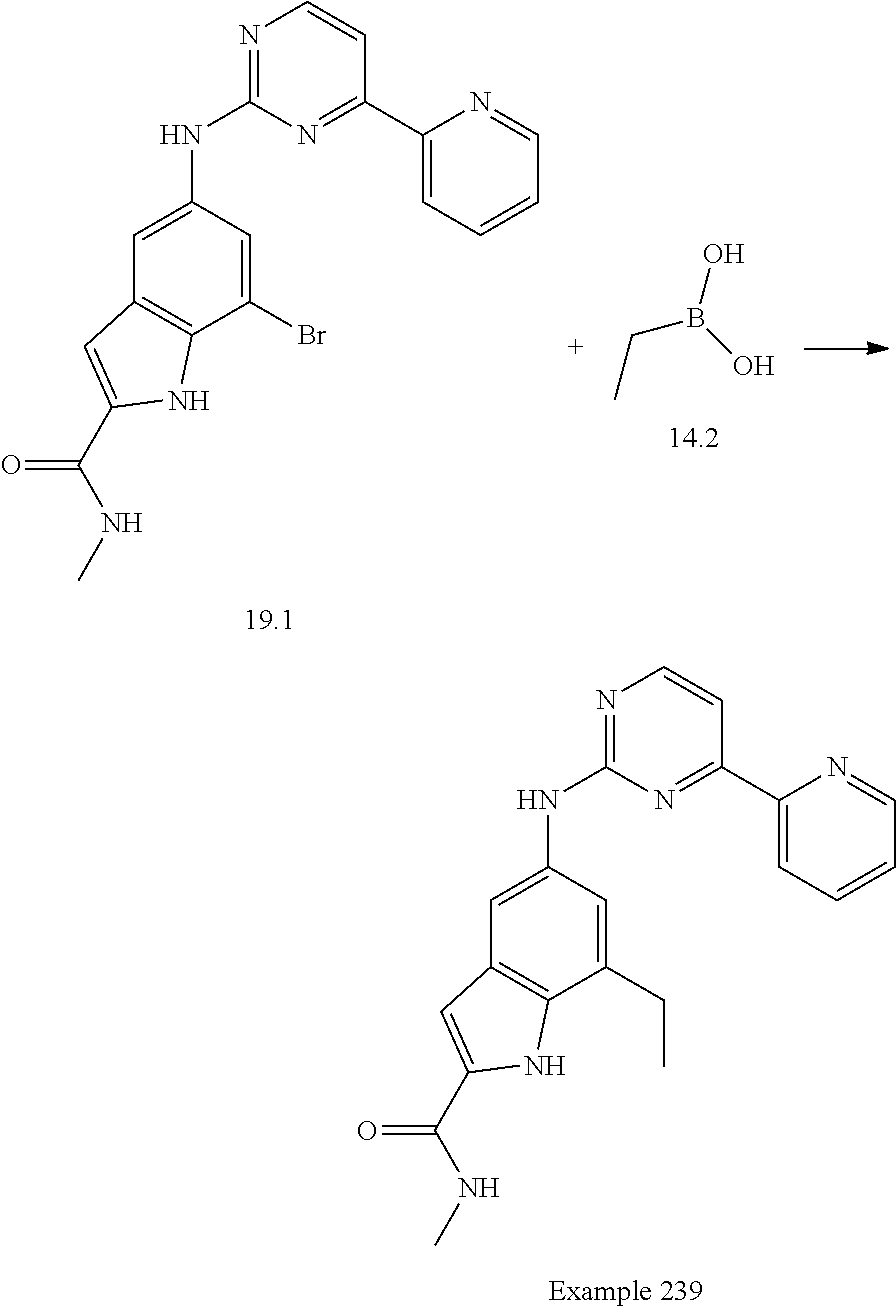
- A mixture of 35 mg 19.1 (7-bromo-5-(4-pyridin-2-yl-pyrimidin-2-ylamino)-1H-indole-2-carboxylic acid methylamide), 14 mg 14.2 (ethylboronicboronic acid), 6 mg 1,1′bis(diphenylphospino)ferrocene dichloropalladium(II), 20 mg potassium carbonate, 1.2 ml dioxane/water 2/1 were stirred in a tube at 100° C. for 3.5 h. Additional 3 mg 14.2 (ethylboronicboronic acid), 6 mg 1,1′bis(diphenylphospino)ferrocene dichloropalladium(II) and 9 mg potassium carbonate were added to the reaction mixture and stirred at 100° C. overnight. The reaction mixture was treated with water, the aqueous phase was washed with dichloromethane (2×) and the combined organic layers were evaporated. The residue was purified by silica gel chromatography (SiO2, dichloromethane/methanol 100/0->98/2).
- Yield: 10 mg Example 239 (32% of theory); Analysis [M+H]+=373; HPLC-MS (method O) Rt=1.12 min
-

- A mixture of 72 mg example 7 ((2-tert-butyl-1H-indol-5-yl)-[4-(4-methoxymethyl-pyridin-2-yl)-pyrimidin-2-yl]-amine) in 1 ml dichloromethane was cooled to −78° C. under an atmosphere of nitrogen. 279 μl Boron tribromide were added and the reaction mixture was warmed to ambient temperature and stirred for 3 h. The reaction mixture was quenched with 0.5 ml water and 25 ml aqueous sodium bicarbonate solution. The aqueous layer was extracted with 15 ml dichloromethane (3×). The combined organic layers were washed with brine and evaporated. The residue was purified by silica gel chromatography (SiO2; dichloromethane/ethyl acetate 100/0->0/100). The combined product fractions were evaporated under reduced pressure to obtain example 8.
- Yield: 36 mg Example 8 (51% of theory); Analysis [M+H]+=374; HPLC-MS (method E) Rt=3.83 min
-

- A suspension of 116 mg of example 65 (5-[4-(4-methoxy-pyridin-2-yl)-pyrimidin-2-ylamino]-1H-indole-2-carboxylic acid dimethylamide) and 121 mg of Lawesson's reagent in 1 ml tetrahydrofuran was heated for 18 h. After this time, 60 mg of Lawesson's reagent were added and the mixture was stirred for 24 h under heating. The reaction mixture was cooled down and diluted with dichloromethane and aqueous sodium bicarbonate solution were added and the mixture was stirred for 5 min. The organic layer was separated and dried with sodium sulfate, filtered and concentrated to give brown oil. The oil was purified by silica gel chromatography (SiO2; dichloromethane; 0-6% methanol). The combined product fractions were concentrated to give a crystalline yellow solid.
- Yield: 44 mg Example 231 (36% of theory); Analysis [M+H]+=405; HPLC-MS (method E) Rt=3.47 min
- The example compounds prepared according to the foregoing synthesis scheme were characterised by the following chromatographic methods, which—if they were carried out are specified individually in Table 1.
- Waters ZQ2000 MS; Alliance 2695 HPLC pump, PD2996 210-500 nm detector, Waters 2700 AS.
- Eluent A: Water (+0.1% TFA)
- Eluent B: Methanol
-
Time [min] % A % B Flow rate [mL/min] 0.00 80 20 2 1.70 0 100 2 2.50 0 100 2 2.60 80 20 2 - The stationary phase used was a Waters Sunfire C18, 4.6×50 mm, 3,5 μm, column temperature: 60° C.
- Waters ZQ2000 MS; Agilent HP100, binare Pumpe, DAD 210-500 nm detector, Waters 2700AS.
- Eluent A: Water (+0.032% NH4OH)
- Eluent B: Methanol
-
Time [min] % A % B Flow rate [mL/min] 0.00 95 5 1.5 2.00 0 100 1.5 - The stationary phase used was a Waters XBridge C18, 4.6×50 mm, 3.5 μm, column temperature: 40° C.
- Waters ZQ2000 MS; Alliance 2790 pump, PDA2996 210-500 nm detector, Waters 2700AS.
- Eluent A: Water (+0.01% TFA)
- Eluent B: Acetonitrile (+0.008% TFA)
-
Time [min] % A % B Flow rate [mL/min] 0.00 95 5 1.5 2.00 0 100 1.5 3.00 0 100 1.5 3.40 95 5 1.5 - The stationary phase used was a Waters Atlantis C18, 4.6×50 mm, 3.5 μm, column temperature: 40° C.
- Waters ZQ2000 MS; Alliance 2695 pump, PDA2996 210-500 nm detector, Waters 2700AS.
- Eluent A: Water (+0.1% TFA)
- Eluent B: Methanol
-
Time [min] % A % B Flow rate [mL/min] 0.00 95 5 1.5 1.30 0 100 1.5 3.00 0 100 1.5 3.40 95 5 1.5 - The stationary phase used was a Waters Sunfire C18, 4.6×50 mm, 3.5 μm, column temperature: 40° C.
- Waters ZQ, Agilent G1312A HPLC pump, Waters 2996 PDA detector, Waters 2420 ancillary detector.
- Eluent A: Water (+0.01% formic acid)
- Eluent B: Acetonitrile (+0.1% formic acid)
-
Time [min] % A % B Flow rate [mL/min] 0.00 95 5 0.6 5.00 0 100 0.6 5.40 0 100 0.6 5.42 95 5 0.6 7.00 95 5 0.6 - The stationary phase used was a Waters Atlantis dC18, 2.1×1000 mm, 3 μm, column temperature: 40° C.
- Agilent HP1100; Agilent 1100 MS, binäre Pumpe, 254 nm, 230 nm; Pos-Neg; ESI, 100-1000, 80V
- Eluent A: Water (+0.1% formic acid)
- Eluent B: Acetonitrile (+0.1% formic acid)
-
Time [min] % A % B Flow rate [mL/min] 0.10 95 5 1.6 1.75 5 95 1.6 1.90 5 95 1.6 1.95 95 5 1.6 2.00 95 5 1.6 - The stationary phase used was a StableBond C18, 3.0×30 mm, 1.8 μm, column temperature: rt.
- Waters ZQ2000 MS; Alliance 2790 pump, PDA2996 210-500 nm detector, Waters 2700AS.
- Eluent A: Water (+0.01% TFA)
- Eluent B: Acetonitrile (+0.08% TFA)
-
Time [min] % A % B Flow rate [mL/min] 0.00 95 5 1.5 2.00 0 100 1.5 3.00 0 100 1.5 3.40 95 5 1.5 - The stationary phase used was a Waters Sunfire C18, 4.6×50 mm, 3.5 μm, column temperature: 40° C.
- Shimadzu LCMS2010EV, Shimadzu LC-20AB pump, SPD-M20A PDA detector, PL2100 ancillary
- Eluent A: Water (+0.1% formic acid)
- Eluent B: Acetonitrile (+0.1% formic acid)
-
Time [min] % A % B Flow rate [mL/min] 0.00 95 5 1.0 2.50 0 100 1.0 2.70 0 100 1.0 2.71 95 5 1.0 3.50 95 5 1.0 - The stationary phase used was a Waters Atlantis dC18, 2.1×50 mm, 3 μm, column temperature: 40° C.
- Waters ZQ2000 MS; Alliance 2795 pump, PDA2996 210-500 nm detector, Waters 2700AS.
- Eluent A: Water (+0.01% TFA)
- Eluent B: Acetonitrile
-
Time [min] % A % B Flow rate [mL/min] 0.00 95 5 1.5 2.00 0 100 1.5 3.00 0 100 1.5 3.40 95 5 1.5 - The stationary phase used was a Waters Sunfire C18, 4.6×50 mm, 3.5 μm, column temperature: 40° C.
- Waters ZQ2000 MS; Alliance 2695 pump, HP1100 210-500 nm, Gilson 215 AS.
- Eluent A: Water (+0.1% TFA)
- Eluent B: Acetonitrile (+0.1% TFA)
-
Time [min] % A % B Flow rate [mL/min] 0.00 95 5 1.5 2 0 100 1.5 2.50 0 100 1.5 2.60 95 5 1.5 - The stationary phase used was a Waters Sunfire C18, 4.6×50 mm, 3.5 μm, column temperature: 40° C.
- Waters ZQ2000 MS; Alliance 2695 pump, HP1100 210-500 nm, Gilson 215 AS.
- Eluent A: Water (+0.1% TFA)
- Eluent B: Methanol
-
Time [min] % A % B Flow rate [mL/min] 0.00 95 5 1.5 2.00 0 100 1.5 2.50 0 100 1.5 2.60 95 5 1.5 2.90 95 5 1.5 - The stationary phase used was a Waters Sunfire C18, 4.6×50 mm, 3.5 μm, column temperature: 40° C.
- Waters SQD MS; Acquity HPLC pump, HP1100 210-500 nm.
- Eluent A: Water (+0.1% TFA)
- Eluent B: Acetonitrile (+0.1% TFA)
-
Time [min] % A % B Flow rate [mL/min] 0.00 95 5 1.5 2.00 0 100 1.5 2.50 0 100 1.5 2.60 95 5 1.5 - The stationary phase used was a Waters Sunfire C18, 2.1×50 mm, 2.5 μm, column temperature: 60° C.
- Waters ZQ2000 MS; Agilent HP100 pump; Gilson 215 AS; DAD 210-500 nm.
- Eluent A: Water (+0.1% TFA)
- Eluent B: Methanol
-
Time [min] % A % B Flow rate [mL/min] 0.00 95 5 1.5 1.30 0 100 1.5 2.50 0 100 1.5 2.60 95 5 1.5 - The stationary phase used was a Waters Sunfire C18, 4.6×50 mm, 3.5 μm, column temperature: 40° C.
- Waters ZQ MS; Waters 2690/2695; Waters AS; DAD 210-400 nm.
- Eluent A: Water (+0.1% TFA)
- Eluent B: Methanol
-
Time [min] % A % B Flow rate [mL/min] 0.00 95 5 4.0 0.20 0 100 4.0 1.60 0 100 4.0 2.10 95 5 4.0 - The stationary phase used was a Waters Xbridge C18, 4.6×20 mm, 3.5 μm, column temperature: 40° C.
- Waters ZQ MS; Alliance 2695 AS; DAD 2996 (210-400 nm).
- Eluent A: Water (+0.1% TFA)
- Eluent B: Methanol (+0.1% TFA)
-
Time [min] % A % B Flow rate [mL/min] 0.00 95 5 4.0 0.20 95 5 4.0 1.50 0 100 4.0 1.90 0 100 4.0 2.00 95 5 4.0 - The stationary phase used was a Waters Xbridge C18, 4.6×30 mm, 3.5 μm, column temperature: 60° C.
- The following Examples were prepared analogously to the methods of synthesis described above. These compounds are suitable as SYK inhibitors and have IC50-values measured in the in vitro assay of less than or equal to 1 μM. The IC50-values are shown in the following Table 1 and were experimentally determined as follows:
- In vitro Syk Kinase Test
- Recombinant human Syk (amino acids 342-635) was expressed as a fusion protein with an N-terminal GST tag, affinity-purified and deep-frozen at a concentration of approx. 50-100 μM in test buffer (25 mM HEPES pH7.5; 25 mM MgCl2; 5 mM MnCl2; 50 mM KCl; 0.2% BSA; 0.01% CHAPS; 100 μM Na3VO4; 0.5 mM DTT) and 10% glycerol at −80° C. until use.
- The catalytic activity of the GST-Syk kinase fusion protein was determined using the Kinase Glo® Luminescence Kinase test (Promega; V6712). In this homogeneous test the amount of ATP remaining after the kinase reaction is quantified by a luciferin-luciferase reaction using luminescence. The luminescence signal obtained correlates with the amount of ATP still present and thus correlates inversely with the activity of the protein kinase.
- The test compounds were dissolved in 100% DMSO at a concentration of 10 mM and diluted in DMSO to a concentration of 1 mM. All further dilutions of the substances were carried out with 7.5% DMSO in test buffer until a concentration was reached which was 7.5 times above the final test concentration (final concentration of the compounds: 30 μM to 1 nM). 2 μl aliquots of these dilutions were transferred into a 384-well Optiplate (Perkin Elmer, #6007290). GST-Syk was diluted to 6.0 nM in the test buffer and 10 μl of this dilution were used in the kinase test (final concentration of Syk=4 nM in a total volume of 15 μl). After 15 minutes incubation at room temperature 3 μl of a mixture of 750 nM ATP and 100 μg/ml poly (L-Glutamic acid L-Tyrosine 4:1), Fluka #81357) in test buffer were added to each well and the incubation was continued for a further 60 minutes at room temperature.
- Positive controls are the reaction mixtures that contain no test substance; negative controls (blanks) are reaction mixtures that contain no kinase.
- After 60 minutes, 10 μl Kinase-Glo® solution (Promega, Cat. #V6712) (heated to room temperature) were added to each well and incubation was continued for a further 15 minutes. The plates were read in a Microplate Scintillation and Luminescence Counter (Canberra Packard GmbH).
- The output file of the “Counter” is a text file that contains the well number and measured counts in two columns. For data evaluation and calculation, the measurement of the negative control was set as 100% inhibition and the measurement of the positive control was set as 0% inhibition. Based on this values the % inherent value for the measurement of each substance concentration was calculated using an “MS-Excel—VB macro”. Normally, the % inhibition values calculated are between 100% and 0% inhibition values but may also occur outside these limits in individual cases. The IC50 values were calculated from the % inhibition values using “GraphPadPrism” software (Version 5) (GraphPad Software Inc.).
- The following Examples of formula 1
-

- having the following properties were prepared according to the methods of synthesis described above:
-
TABLE 1 Ex- SYK am- Enzyme ple IC50 Method of Analytical No. Structure [μM] preparation data 1 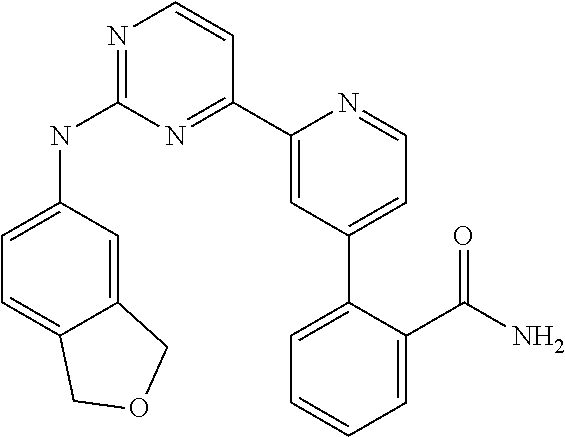
0.0150 see description 4.2.3 HPLC-MS: method B Rt = 1.9 min 2 
0.0253 analogous to Example 8 HPLC-MS: method H Rt = 1.93 min 3 
0.2474 analogous to Example 287 HPLC-MS: method E Rt = 5.28 min 4 
0.0137 see description 4.2.3 HPLC-MS: method E Rt = 3.98 min 5 
0.0200 analogous to Example 8 HPLC-MS: method E Rt = 4.09 min 6 
0.0152 analogous to Example 8 HPLC-MS: method E Rt = 2.57 min 7 
0.0211 see description 4.2.1 HPLC-MS: method E Rt = 4.71 min 8 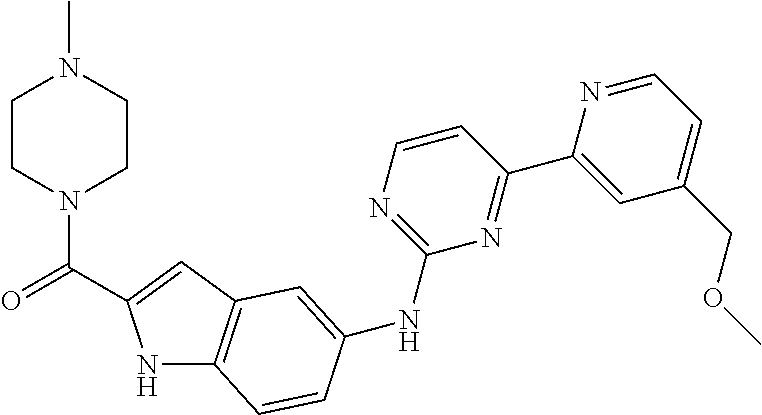
0.0066 see description 4.2.4 HPLC-MS: method A Rt = 1.35 min 9 
0.0640 see description 4.2.7 HPLC-MS: method Rt = 3.83 min 10 
0.0228 analogous to Example 92 HPLC-MS: method B Rt = 2.49 min 11 
0.0607 analogous to Example 8 HPLC-MS: method A Rt = 1.59 min 12 
0.0151 analogous to Example 92 HPLC-MS: method B Rt = 2.42 min 13 
0.0290 see description 4.2.5 HPLC-MS: method B Rt = 2.33 min 14 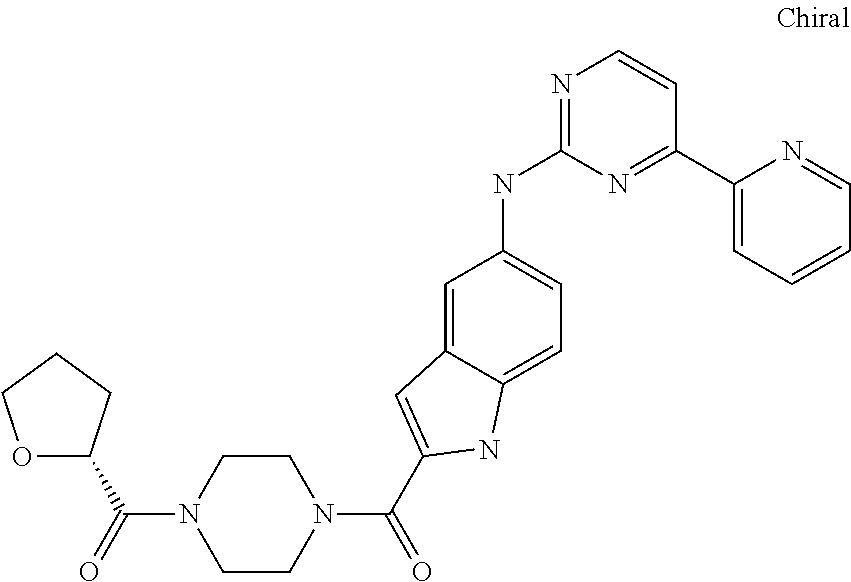
0.0321 analogous to Example 13 HPLC-MS: method B Rt = 2.36 min 15 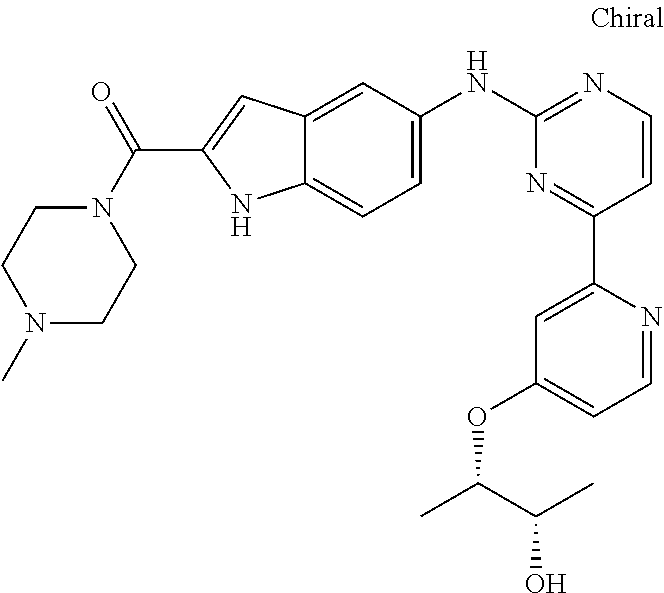
0.0409 analogous to Example 92 HPLC-MS: method B Rt = 2.42 min 16 
0.0086 analogous to Example 8 HPLC-MS: method C Rt = 1.46 min 17 
0.0100 analogous to Example 8 HPLC-MS: method C Rt = 1.46 min 18 
0.0241 analogous to Example 8 HPLC-MS: method C Rt = 1.45 min 19 
0.0012 analogous to Example 8 HPLC-MS: method C Rt = 1.61 20 
0.0305 see description 4.2.2 HPLC-MS: method A Rt = 1.67 min 21 
0.0382 analogous to Example 13 HPLC-MS: method C Rt = 1.62 min 22 
0.0058 analogous to Example 8 HPLC-MS: method C Rt = 1.63 min 23 
0.0206 analogous to Example 20 HPLC-MS: method D Rt = 1.70 min 24 
0.1114 analogous to Example 20 HPLC-MS: method D Rt = 2.01 min 25 
0.0185 analogous to Example 20 HPLC-MS: method D Rt = 1.75 min 26 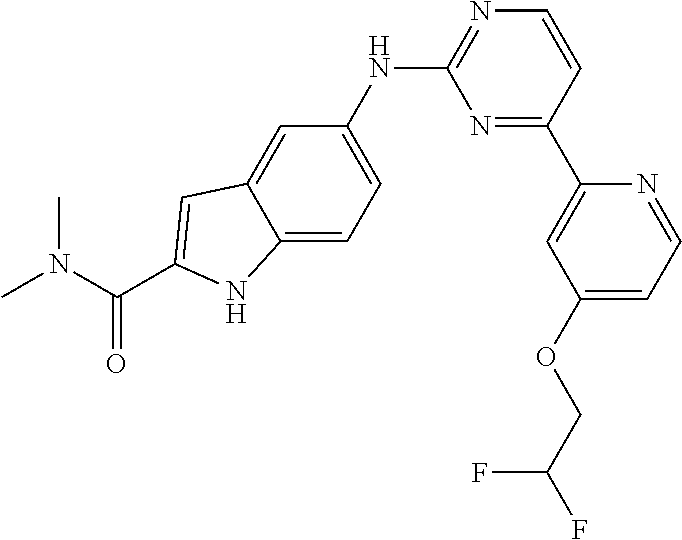
0.0025 analogous to Example 92 HPLC-MS: method D Rt = 1.92 min 27 
0.0080 analogous to Example 20 HPLC-MS: method D Rt = 1.95 min 28 
0.0499 analogous to Example 92 HPLC-MS: method D Rt = 1.65 min 29 
0.0099 analogous to Example 20 HPLC-MS: method D Rt = 1.79 min 30 
0.0012 analogous to Example 92 HPLC-MS: Method D Rt = 1.74 min 31 
0.0051 analogous to Example 92 HPLC-MS: method D Rt = 1.80 min 32 
0.0194 analogous to Example 92 HPLC-MS: method B Rt = 2.44 min 33 
0.0024 analogous to Example 92 HPLC-MS: method C Rt = 1.59 min 34 
0.0052 analogous to Example 92 HPLC-MS: method C Rt = 1.66 min 35 
0.0079 analogous to Example 92 HPLC-MS: method C Rt = 1.63 min 36 
0.0016 analogous to Example 92 HPLC-MS: method C Rt = 1.59 min 37 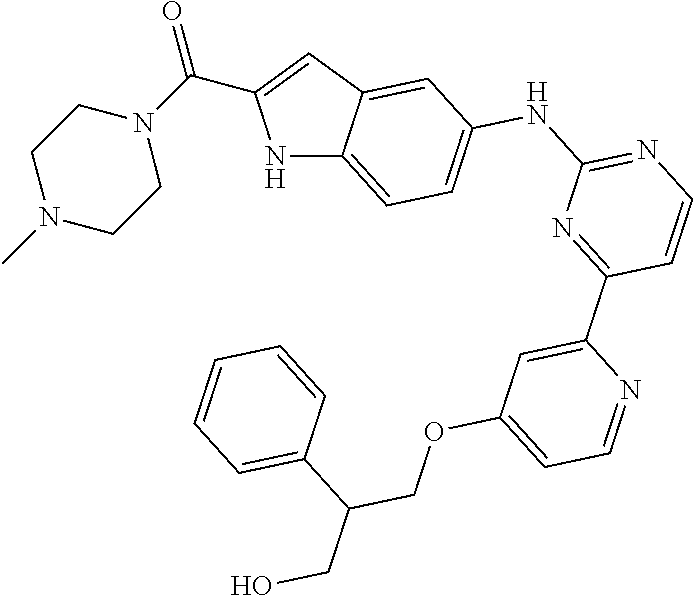
0.1107 analogous to Example 92 HPLC-MS: method B Rt = 2.53 min 38 
0.2161 analogous to Example 92 HPLC-MS: method B Rt = 2.63 min 39 
0.0283 analogous to Example 92 HPLC-MS: method B Rt = 2.48 min 40 
0.0301 analogous to Example 92 HPLC-MS: method B Rt = 2.64 min 41 
0.5950 analogous to Example 92 HPLC-MS: method B Rt = 2.31 min 42 
0.0118 analogous to Example 92 HPLC-MS: method B Rt = 2.72 min 43 
0.0116 analogous to Example 92 HPLC-MS: method D Rt = 1.6 min 44 
0.0025 see description 4.2.3 HPLC-MS: method G Rt = 1.64 min 45 
0.0151 analogous to Example 92 HPLC-MS: method G Rt = 1.34 min 46 
0.0088 analogous to Example 92 HPLC-MS: method B Rt = 2.41 min 47 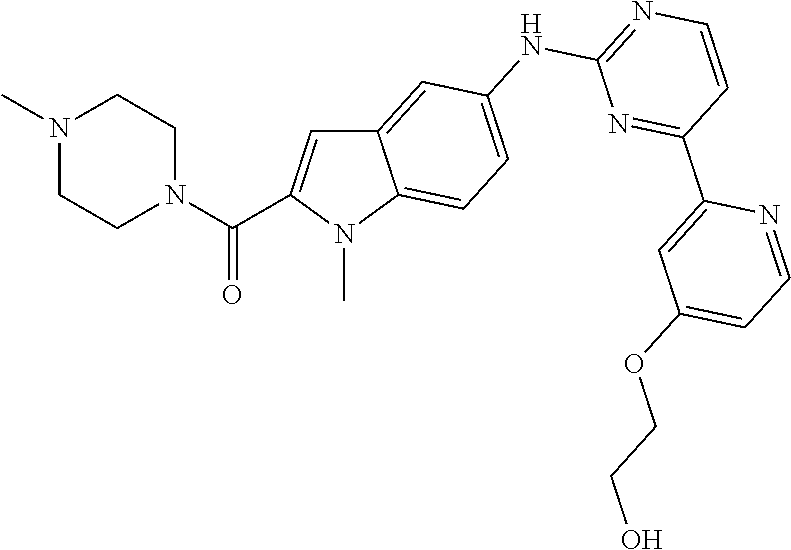
0.0420 analogous to Example 92 HPLC-MS: method D Rt = 1.5 min 48 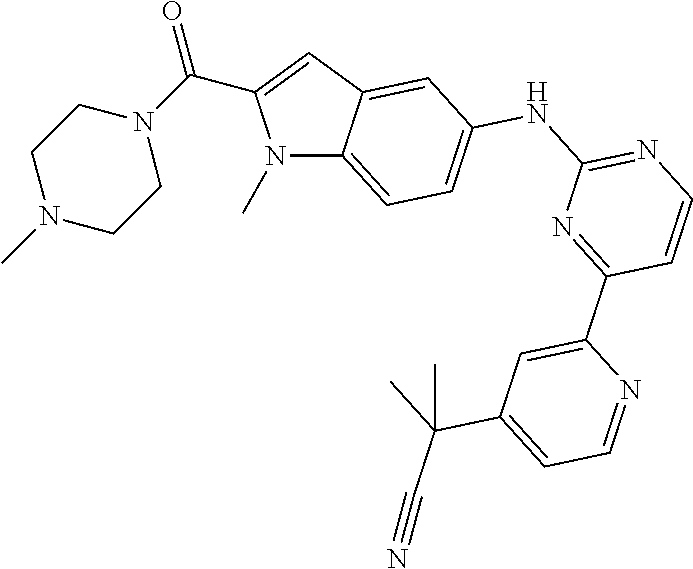
0.0032 analogous to Example 44 HPLC-MS: method B Rt = 2.49 min 49 
0.0094 analogous to Example 8 HPLC-MS: method D Rt = 1.85 min 50 
0.0237 analogous to Example 8 HPLC-MS: method C Rt = 1.82 min 51 
0.0130 analogous to Example 8 HPLC-MS: method D Rt = 2.06 min 52 
0.0466 analogous to Example 8 HPLC-MS: method D Rt = 1.66 min 53 
0.0024 analogous to Example 8 HPLC-MS: method D Rt = 1.75 min 54 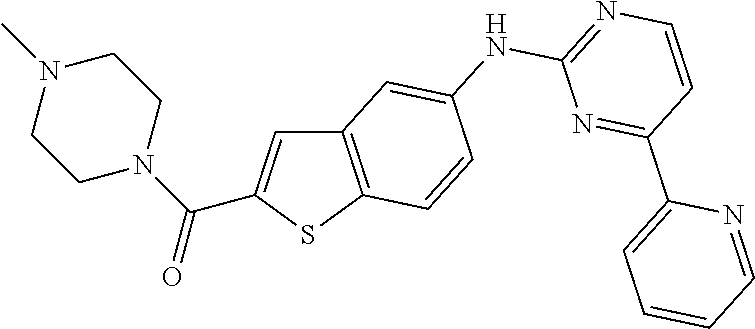
0.0180 analogous to Example 8 HPLC-MS: method D Rt = 1.78 min 55 
0.0155 analogous to Example 8 HPLC-MS: method D Rt = 2.02 min 56 
1.7305 analogous to Example 8 HPLC-MS: method B Rt = 2.47 min 57 
0.2407 analogous to Example 8 HPLC-MS: method B Rt = 2.46 min 58 
0.0512 analogous to Example 8 HPLC-MS: method B Rt = 2.44 min 59 
0.0250 analogous to Example 8 HPLC-MS: method C Rt = 1.66 min 60 
0.0814 analogous to Example 8 HPLC-MS: method C Rt = 1.73 min 61 
0.0410 analogous to Example 8 HPLC-MS: method B Rt = 2.44 min 62 
0.0213 analogous to Example 8 HPLC-MS: method D Rt = 1.60 min 63 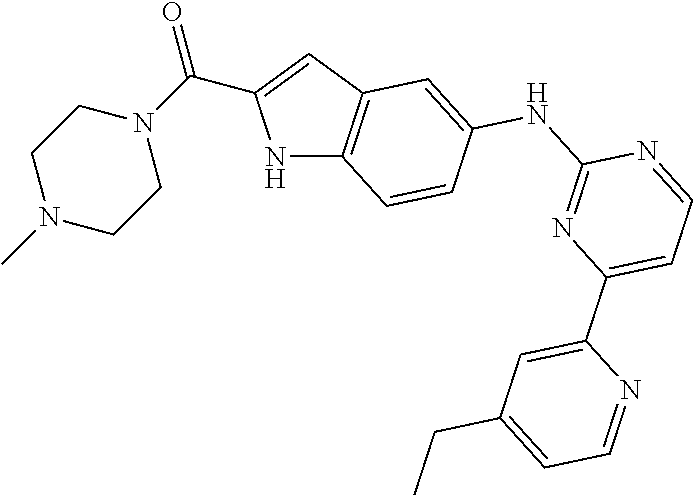
0.0449 analogous to Example 8 HPLC-MS: method B Rt = 2.57 min 64 
0.0154 analogous to Example 8 HPLC-MS: method B Rt = 2.57 min 65 
0.0519 analogous to Example 8 HPLC-MS: method D Rt = 1.73 min 66 
0.0058 analogous to Example 8 HPLC-mS: Method D Rt = 2.05 min 67 
0.0362 analogous to Example 8 HPLC-MS: method C Rt = 1.44 min 68 
0.0303 analogous to Example 92 HPLC-MS: method K Rt = 0.85 min 69 
0.1579 analogous to Example 92 HPLC-MS: method K Rt = 0.91 min 70 
0.0561 analogous to Example 92 HPLC-MS: method K Rt = 0.92 min 71 
0.0009 analogous to Example 92 HPLC-MS: method K Rt = 0.98 min 72 
0.3980 analogous to Example 92 HPLC-MS: method K Rt = 0.92 min 73 
0.6015 analogous to Example 92 HPLC-MS: method K Rt = 0.82 min 74 
0.2277 analogous to Example 92 HPLC-MS: method K Rt = 0.85 min 75 
0.0111 analogous to Example 92 HPLC-MS: method K Rt = 0.91 min 76 
0.4491 analogous to Example 92 HPLC-MS: method K Rt = 0.87 min 77 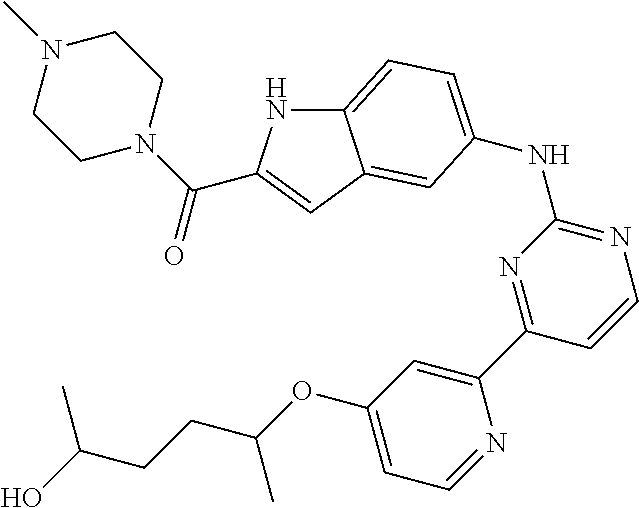
0.0205 analogous to Example 92 HPLC-MS: method K Rt = 0.97 min 78 
0.0243 analogous to Example 92 HPLC-MS: method K Rt = 1.13 min 79 
0.0303 analogous to Example 92 HPLC-MS: method K Rt = 1.00 min 80 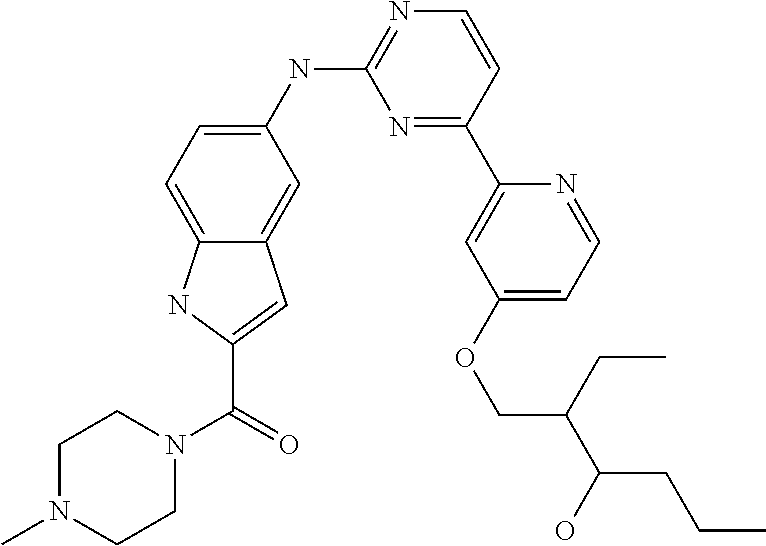
0.0587 analogous to Example 92 HPLC-MS: method K Rt = 1.19 min 81 
0.3690 analogous to Example 92 HPLC-MS: method K Rt = 1.03 min 82 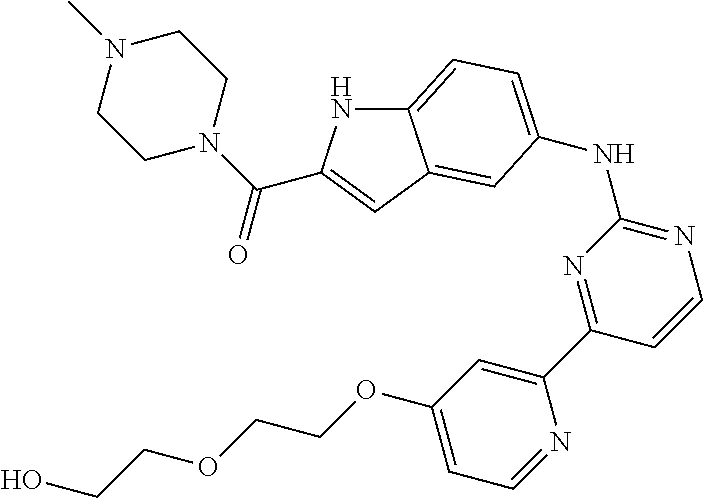
0.1153 analogous to Example 92 HPLC-MS: method K Rt = 0.79 min 83 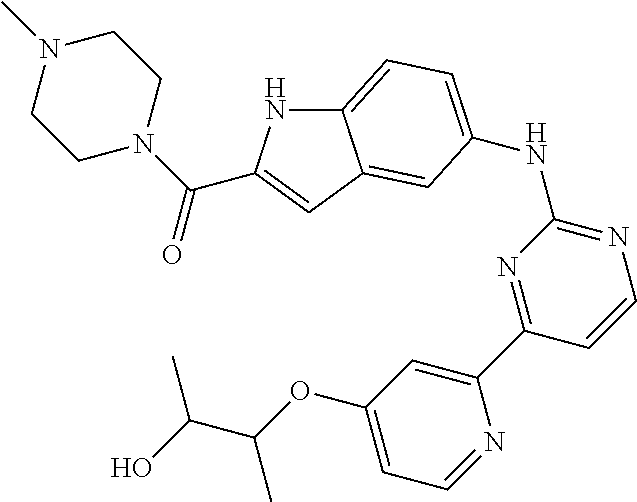
0.0077 analogous to Example 92 HPLC-MS: method K Rt = 0.87 min 84 
0.0473 analogous to Example 92 HPLC-MS: method K Rt = 0.87 min 85 
0.0084 analogous to Example 92 HPLC-MS: method K Rt = 0.82 min 86 
0.1084 analogous to Example 92 HPLC-MS: method K Rt = 0.98 min 87 
0.0134 analogous to Example 92 HPLC-MS: method K Rt = 0.75 min 88 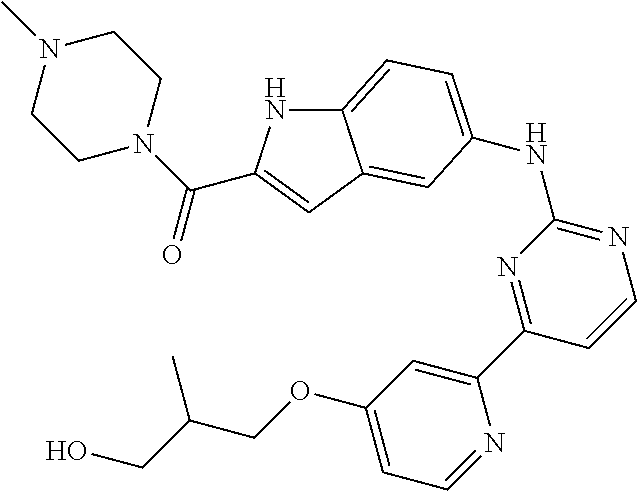
0.0079 analogous to Example 92 HPLC-MS: method K Rt = 0.89 min 89 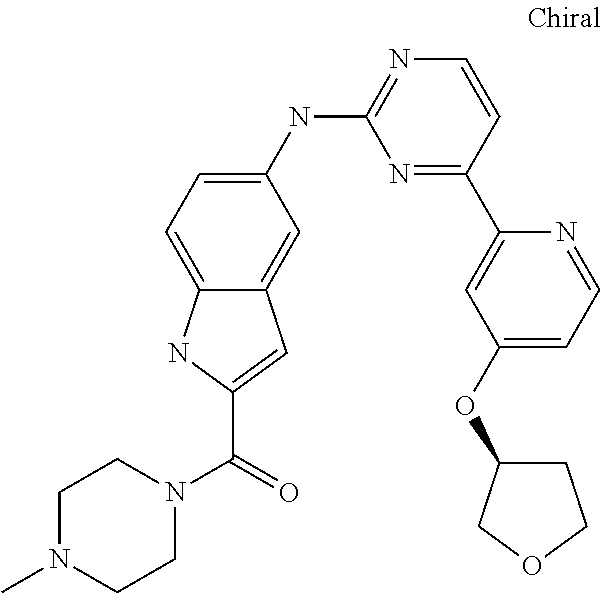
0.0208 analogous to Example 92 HPLC-MS: method K Rt = 0.91 min 90 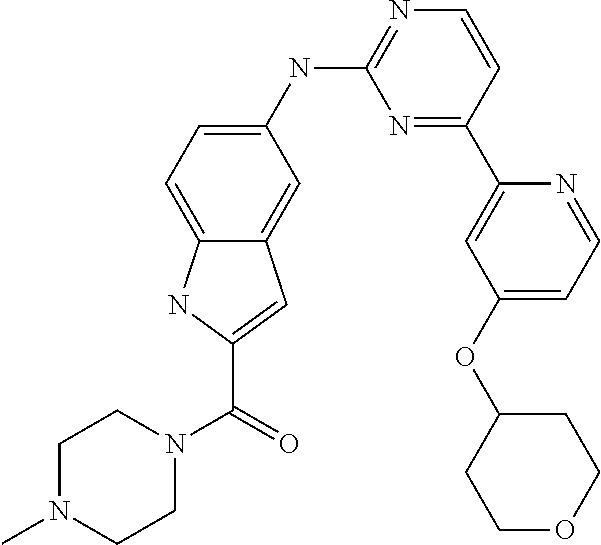
0.0083 analogous to Example 92 HPLC-MS: method K Rt = 0.96 min 91 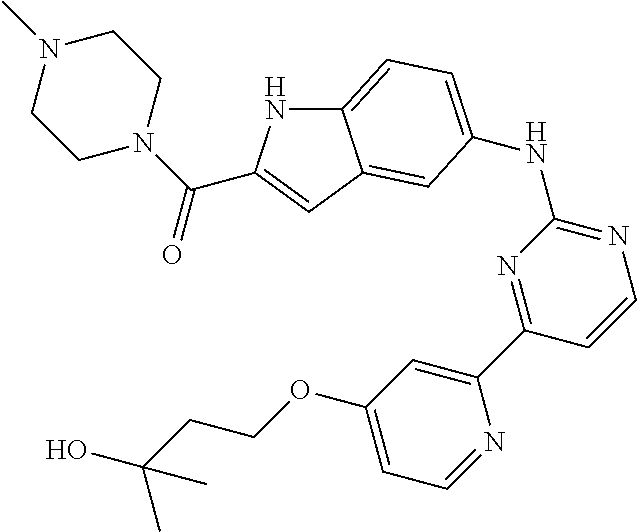
0.0149 analogous to Example 92 HPLC-MS: method K Rt = 0.93 min 92 
0.0038 see description 4.2.3 HPLC-MS: method K Rt = 0.97 min 93 
0.0302 analogous to Example 92 HPLC-MS: method K Rt = 0.96 min 94 
0.0254 analogous to Example 92 HPLC-MS: method K Rt = 0.91 min 95 
0.0288 analogous to Example 92 HPLC-MS: method K Rt = 0.97 min 96 
0.0598 analogous to Example 92 HPLC-MS: method K Rt = 0.97 min 97 
0.0172 analogous to Example 92 HPLC-MS: method K Rt = 0.78 min 98 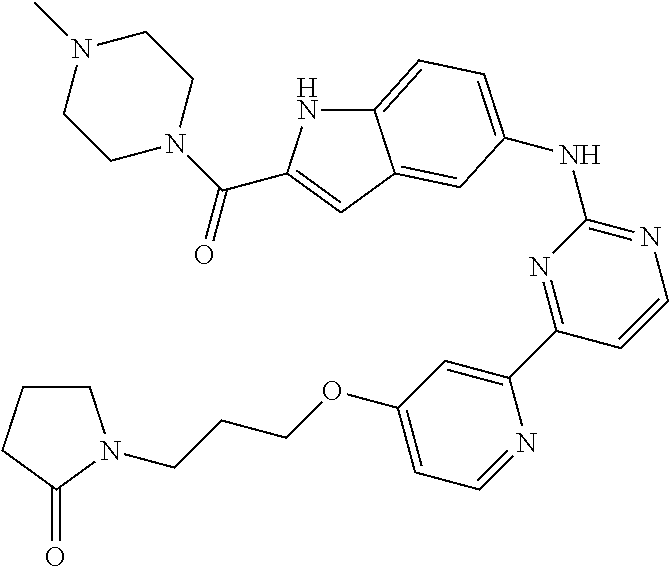
0.0602 analogous to Example 92 HPLC-MS: method K Rt = 0.87 min 99 
0.0350 analogous to Example 92 HPLC-MS: method K Rt = 0.97 min 100 
0.2213 analogous to Example 92 HPLC-MS: method K Rt = 0.89 min 101 
0.0511 analogous to Example 92 HPLC-MS: method K Rt = 0.89 min 102 
0.0128 analogous to Example 92 HPLC-MS: method K Rt = 0.96 min 103 
0.0500 analogous to Example 92 HPLC-MS: method K Rt = 0.75 min 104 
0.0067 analogous to Example 92 HPLC-MS: method K Rt = 1.01 min 105 
0.1512 analogous to Example 92 HPLC-MS: method K Rt = 0.77 min 106 
0.0244 analogous to Example 92 HPLC-MS: method K Rt = 0.74 min 107 
0.0182 analogous to Example 92 HPLC-MS: method K Rt = 0.95 min 108 
0.0158 analogous to Example 92 HPLC-MS: method K Rt = 1.12 min 109 
0.0031 analogous to Example 92 HPLC-MS: method K Rt = 1.11 min 110 
0.0614 analogous to Example 8 HPLC-MS: method B Rt = 2.41 min 111 
0.0434 analogous to Example 8 HPLC-MS: method B Rt = 2.45 min 112 
0.0474 analogous to Example 8 HPLC-MS: method B Rt = 2.45 min 113 
0.0156 analogous to Example 8 HPLC-MS: method B Rt = 2.42 min 114 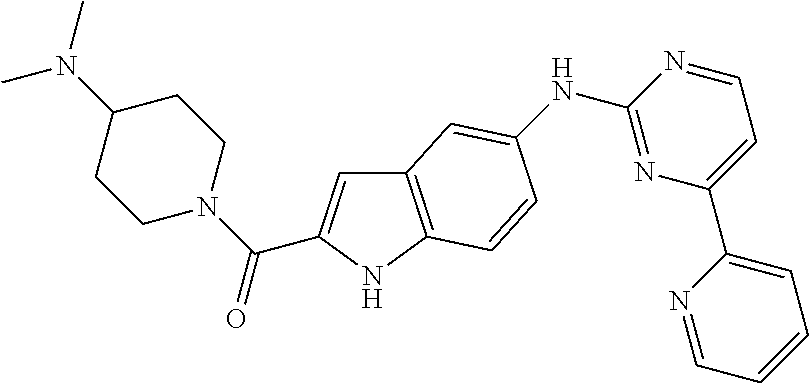
0.0321 analogous to Example 8 HPLC-MS: method B Rt = 2.44 min 115 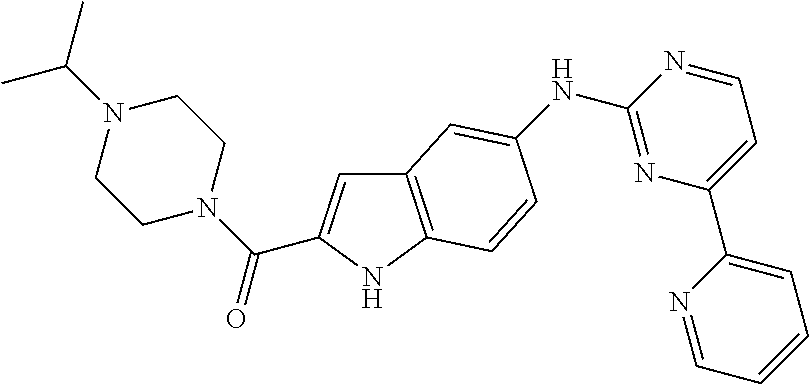
0.0410 analogous to Example 8 HPLC-MS: method B Rt = 2.51 min 116 
0.0242 analogous to Example 8 HPLC-MS: method B Rt = 2.48 min 117 
0.0106 analogous to Example 8 HPLC-MS: method B Rt = 2.47 min 118 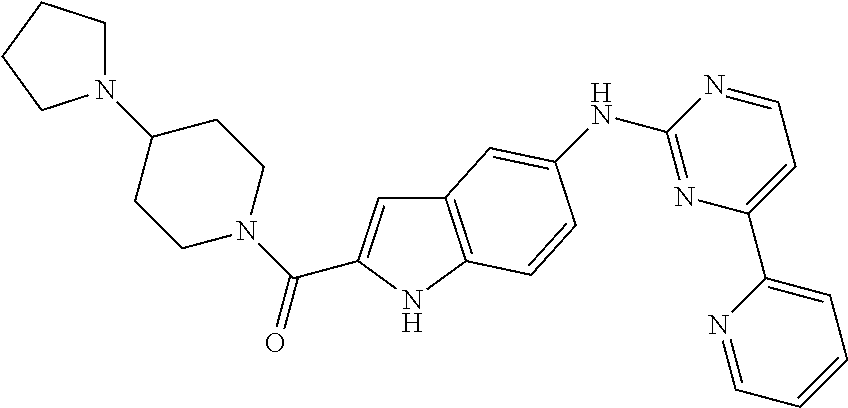
0.0303 analogous to Example 8 HPLC-MS: method B Rt = 2.56 min 119 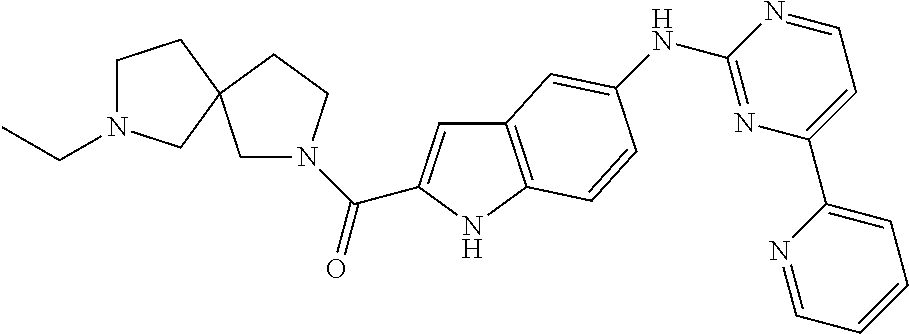
0.0188 analogous to Example 8 HPLC-MS: method B Rt = 2.56 min 120 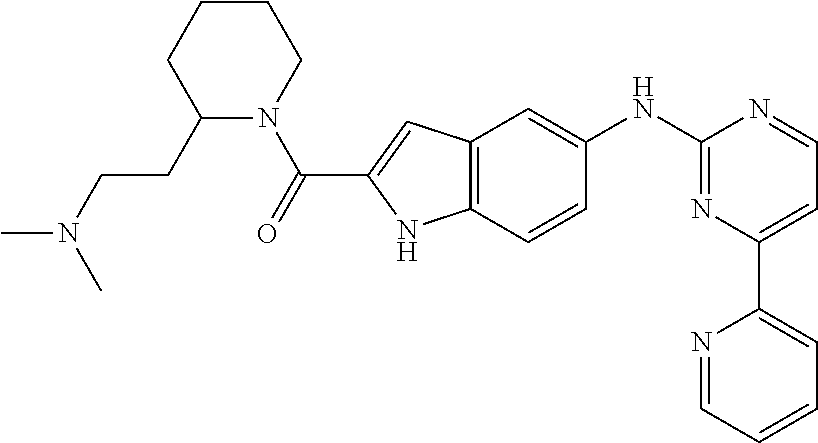
0.0774 analogous to Example 8 HPLC-MS: method B Rt = 2.60 min 121 
0.0250 analogous to Example 8 HPLC-MS: method B Rt = 2.65 min 122 
0.0047 analogous to Example 8 HPLC-MS: method A Rt = 1.34 min 123 
0.0187 analogous to Example 8 HPLC-MS: method L Rt = 0.44 min 124 
0.0361 analogous to Example 8 HPLC-MS: method B Rt = 2.40 min 125 
0.0058 analogous to Example 8 HPLC-MS: method B Rt = 2.51 min 126 
0.0472 analogous to Example 8 HPLC-MS: method B Rt = 2.40 min 127 
0.0484 analogous to Example 8 HPLC-MS: method B Rt = 2.68 min 128 
0.0286 analogous to Example 8 HPLC-MS: method B Rt = 2.55 min 129 
0.0289 analogous to Example 8 HPLC-MS: method B Rt = 2.54 min 130 
0.0455 analogous to Example 8 HPLC-MS: method B Rt = 2.36 min 131 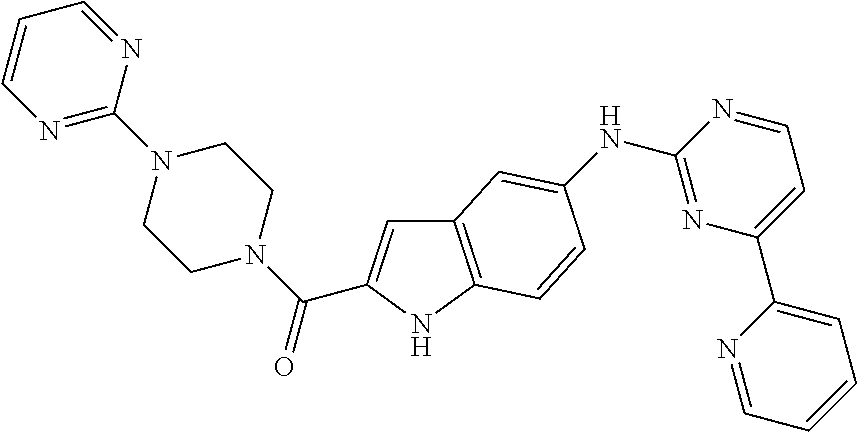
0.1781 analogous to Example 8 HPLC-MS: method B Rt = 2.82 min 132 
0.0190 analogous to Example 8 HPLC-MS: method B Rt = 2.55 min 133 
0.0315 analogous to Example 8 HPLC-MS: method B Rt = 2.41 min 134 
0.0171 analogous to Example 8 HPLC-MS: method B Rt = 2.38 min 135 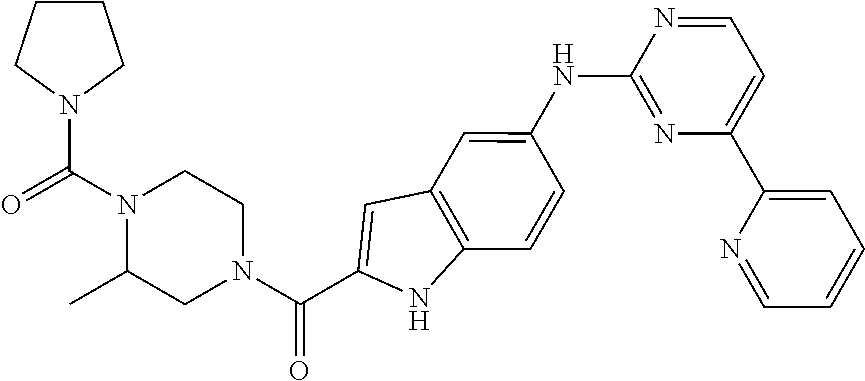
0.0222 analogous to Example 8 HPLC-MS: method B Rt = 2.46 min 136 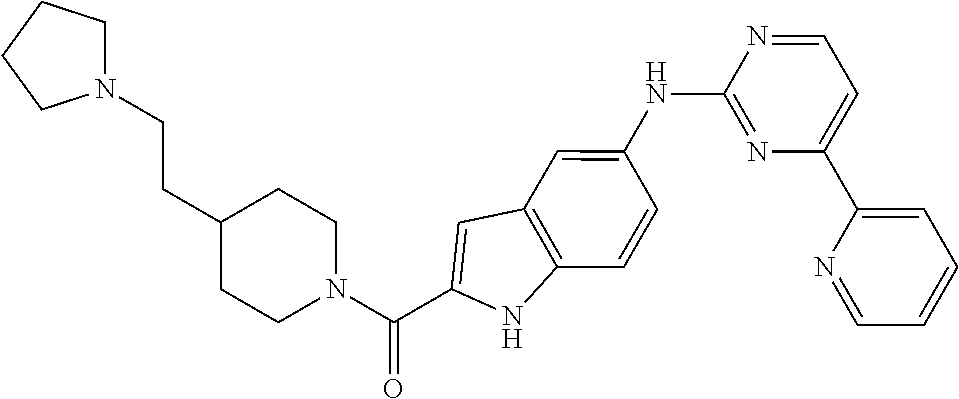
0.0607 analogous to Example 8 HPLC-MS: method B Rt = 2.76 min 137 
0.0325 analogous to Example 8 HPLC-MS: method B Rt = 2.33 min 138 
0.0242 analogous to Example 8 HPLC-MS: method B Rt = 2.37 min 139 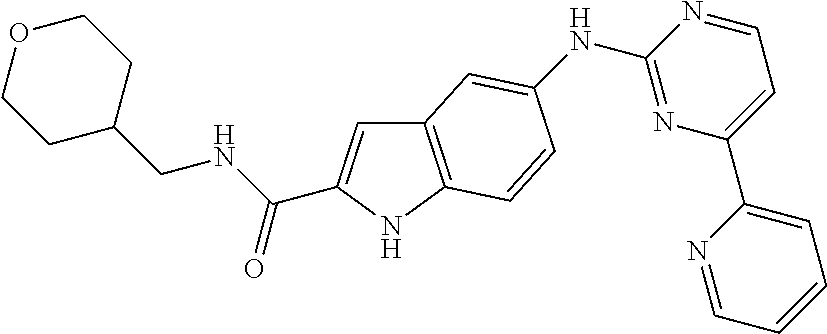
0.0123 analogous to Example 8 HPLC-MS: method B Rt = 2.37 min 140 
0.0228 analogous to Example 8 HPLC-MS: method B Rt = 2.40 min 141 
0.0172 analogous to Example 8 HPLC-MS: method B Rt = 2.36 min 142 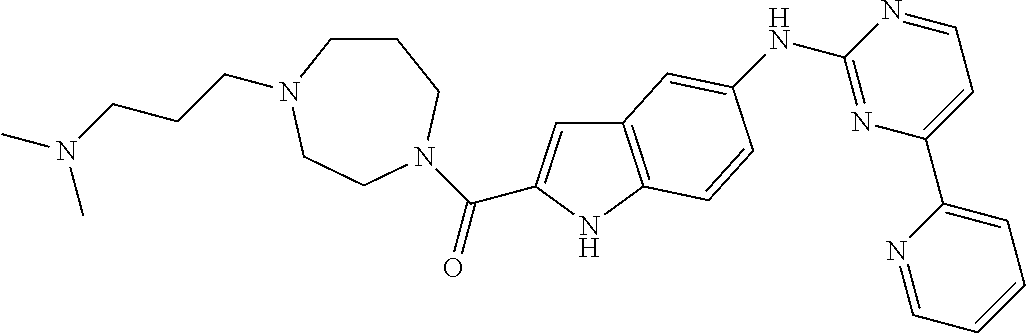
0.0425 analogous to Example 8 HPLC-MS: method B Rt = 2.82 min 143 
0.0256 analogous to Example 8 HPLC-MS: method B Rt = 2.81 min 144 
0.0041 analogous to Example 8 HPLC-MS: method A Rt = 1.70 min 145 
0.0168 analogous to Example 8 HPLC-MS: method B Rt = 2.60 min 146 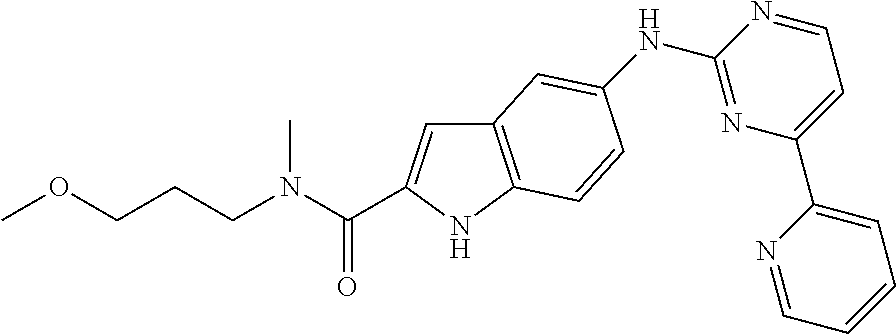
0.0288 analogous to Example 8 HPLC-MS: method B Rt = 2.44 min 147 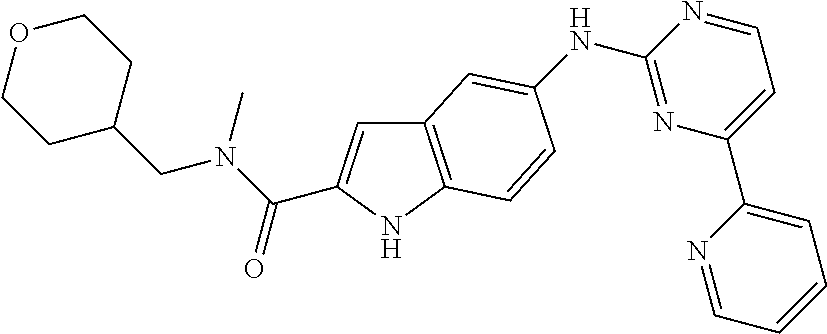
0.0138 analogous to Example 8 HPLC-MS: method B Rt = 2.44 min 148 
0.0855 analogous to Example 8 HPLC-MS: method B Rt = 2.82 min 149 
0.0182 analogous to Example 8 HPLC-MS: method B Rt = 2.35 min 150 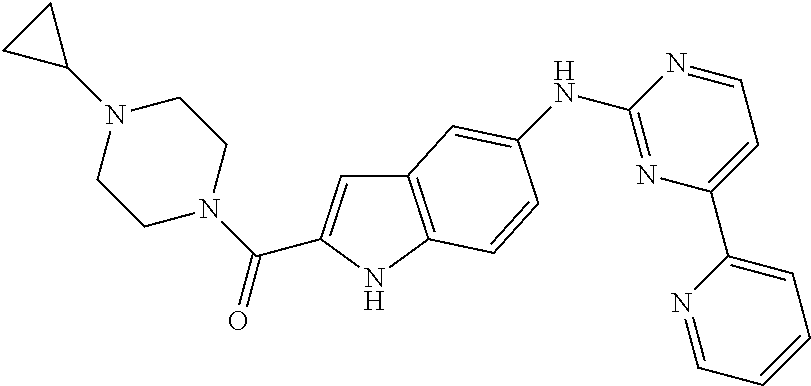
0.0433 analogous to Example 8 HPLC-MS: method B Rt = 2.53 min 151 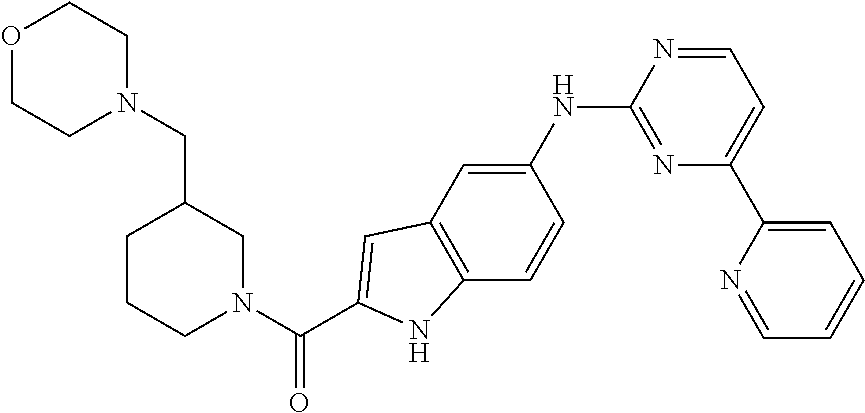
0.0410 analogous to Example 8 HPLC-MS: method B Rt = 2.82 min 152 
0.0773 analogous to Example 8 HPLC-MS: method B Rt = 2.81 min 153 
0.0327 analogous to Example 8 HPLC-MS: method B Rt = 2.42 min 154 
0.0402 analogous to Example 8 HPLC-MS: method B Rt = 2.36 min 155 
0.0301 analogous to Example 8 HPLC-MS: method B Rt = 2.35 min 156 
0.0290 analogous to Example 8 HPLC-MS: method B Rt = 2.56 min 157 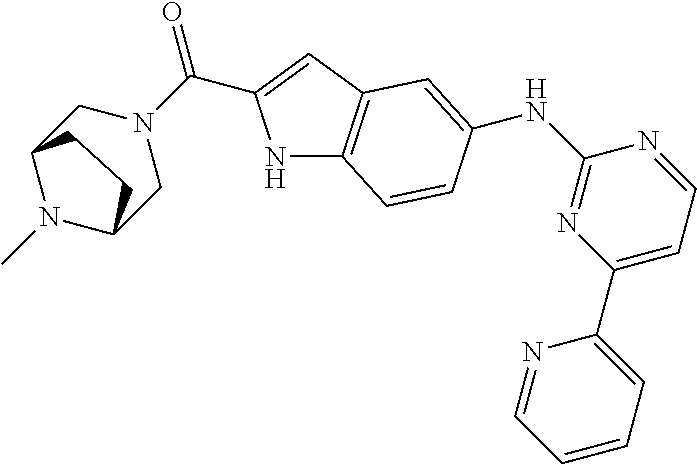
0.0128 analogous to Example 8 HPLC-MS: method B Rt = 2.48 min 158 
0.0047 analogous to Example 8 HPLC-MS: method B Rt = 2.52 min 159 
0.0289 analogous to Example 8 HPLC-MS: method B Rt = 2.49 min 160 
0.0450 analogous to Example 8 HPLC-MS: method B Rt = 2.38 min 161 
0.0335 analogous to Example 8 HPLC-MS: method B Rt = 2.38 min 162 
0.0264 analogous to Example 8 HPLC-MS: method B Rt = 2.24 min 163 
0.0470 analogous to Example 8 HPLC-MS: method B Rt = 2.30 min 164 
0.0183 analogous to Example 8 HPLC-MS: method B Rt = 2.31 min 165 
0.0312 analogous to Example 8 HPLC-MS: method B Rt = 2.82 min 166 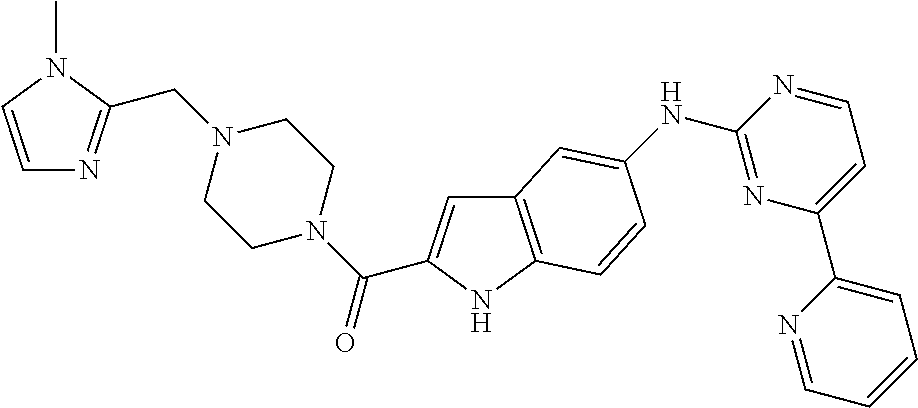
0.0329 analogous to Example 8 HPLC-MS: method B Rt = 2.37 min 167 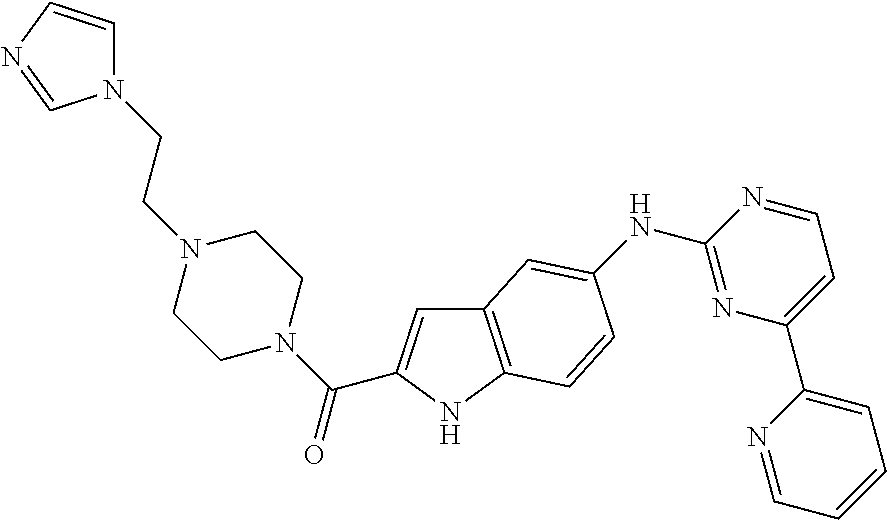
0.0363 analogous to Example 8 HPLC-MS: method B Rt = 2.36 min 168 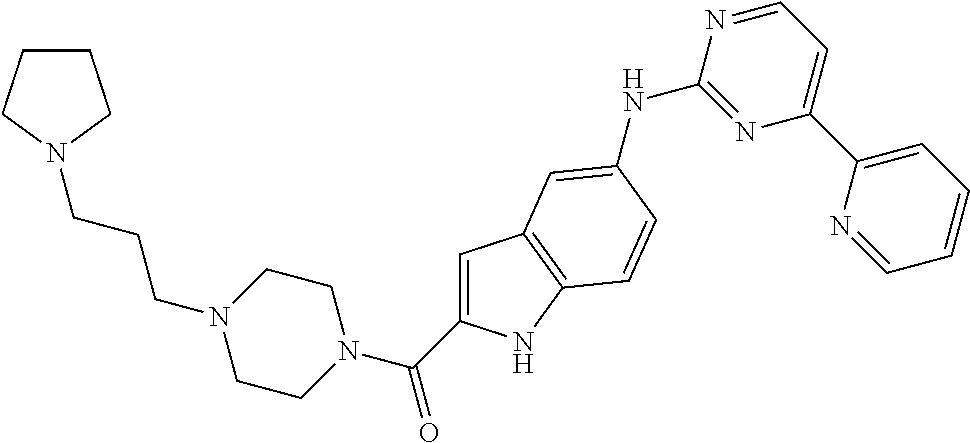
0.0209 analogous to Example 8 HPLC-MS: method B Rt = 2.65 min 169 
0.0355 analogous to Example 8 HPLC-MS: method B Rt = 2.39 min 170 
0.1936 analogous to Example 8 HPLC-MS: method B Rt = 2.81 min 171 
0.0474 analogous to Example 8 HPLC-MS: method B Rt = 2.54 min 172 
0.0849 analogous to Example 8 HPLC-MS: method B Rt = 2.17 min 173 
0.0295 analogous to Example 8 HPLC-MS: method B Rt = 2.32 min 174 
0.0283 analogous to Example 8 HPLC-MS: method B Rt = 2.31 min 175 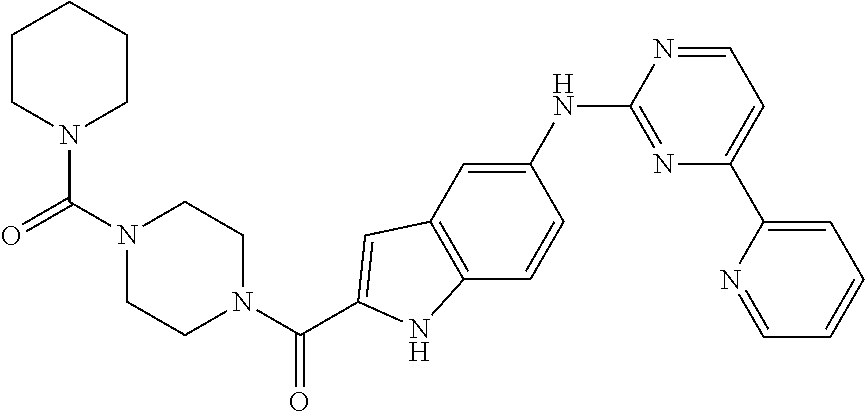
0.0579 analogous to Example 8 HPLC-MS: method B Rt = 2.52 min 176 
0.0373 analogous to Example 8 HPLC-MS: method B Rt = 2.38 min 177 
0.0282 analogous to Example 8 HPLC-MS: method B Rt = 2.32 min 178 
0.0429 analogous to Example 8 HPLC-MS: method B Rt = 2.44 min 179 
0.0123 analogous to Example 8 HPLC-MS: method L Rt = 0.45 min 180 
0.0339 analogous to Example 8 HPLC-MS: method B Rt = 2.81 min 181 
0.0523 analogous to Example 8 HPLC-MS: method B Rt = 2.56 min 182 
0.0197 analogous to Example 8 HPLC-MS: method B Rt = 2.29 min 183 
0.0468 analogous to Example 8 HPLC-MS: method B Rt = 2.40 min 184 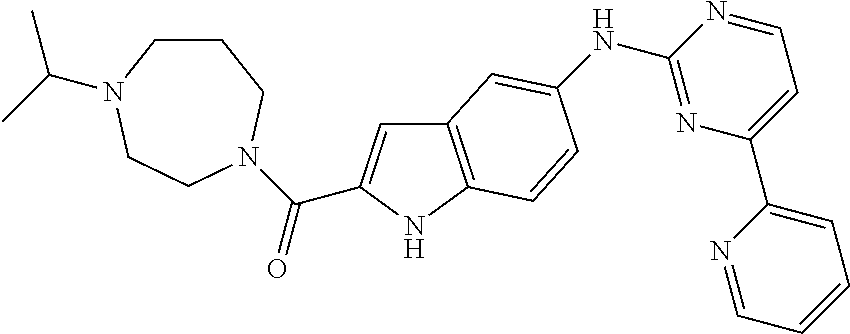
0.0239 analogous to Example 8 HPLC-MS: method B Rt = 2.57 min 185 
0.0281 analogous to Example 8 HPLC-MS: method B Rt = 2.37 min 186 
0.0281 analogous to Example 8 HPLC-MS: method B Rt = 2.27 min 187 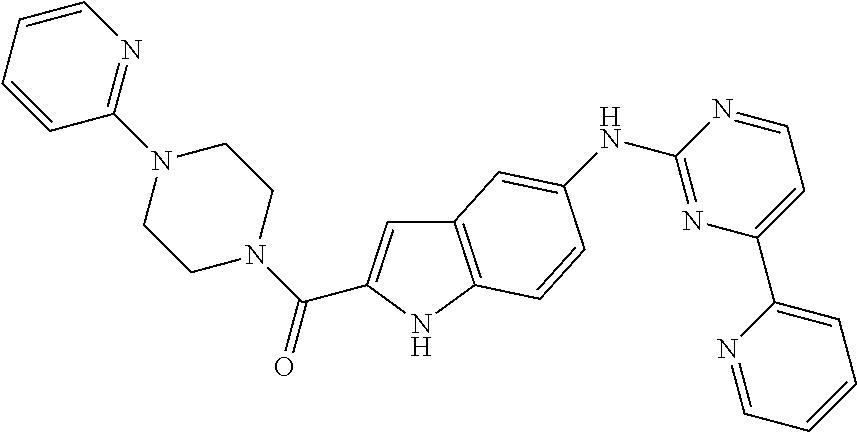
0.0634 analogous to Example 8 HPLC-MS: method B Rt = 2.83 min 188 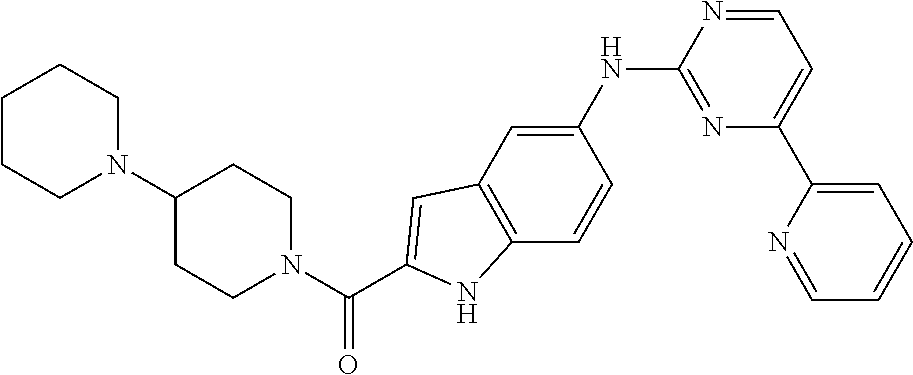
0.0172 analogous to Example 8 HPLC-MS: method B Rt = 2.63 min 189 
0.0257 analogous to Example 8 HPLC-MS: method B Rt = 2.34 min 190 
0.0207 analogous to Example 8 HPLC-MS: method B Rt = 2.83 min 191 
0.0137 analogous to Example 8 HPLC-MS: method B Rt = 2.31 min 192 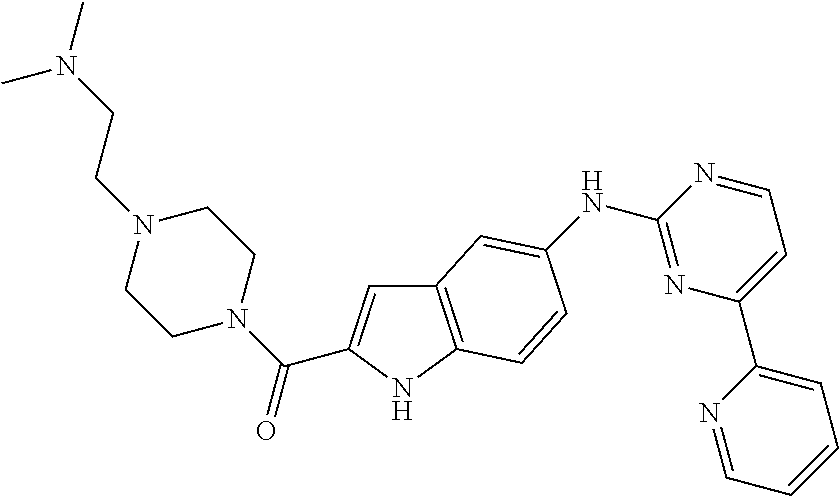
0.0374 analogous to Example 8 HPLC-MS: method B Rt = 2.44 min 193 
0.0109 analogous to Example 8 HPLC-MS: method B Rt = 2.34 min 194 
0.0923 analogous to Example 287 HPLC-MS: method J Rt = 1.31 min 195 
0.0367 analogous to Example 287 HPLC-MS: method J Rt = 1.49 min 196 
0.0170 analogous to Example 287 HPLC-MS: method J Rt = 1.53 min 197 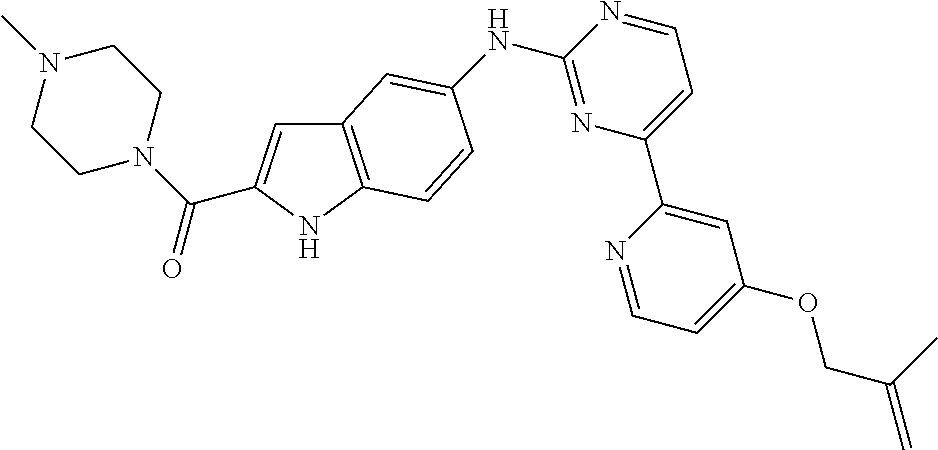
0.0303 analogous to Example 92 HPLC-MS: method J Rt = 1.40 min 198 
0.0100 analogous to Example 92 HPLC-MS: method J Rt = 1.43 min 199 
0.0146 analogous to Example 92 HPLC-MS: method J Rt = 1.38 min 200 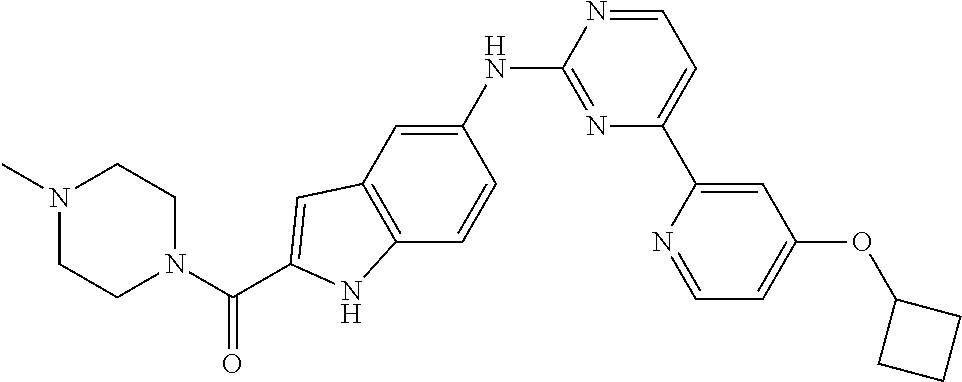
0.0252 analogous to Example 92 HPLC-MS: method J Rt = 1.38 min 201 
0.0256 analogous to Example 92 HPLC-MS: method J Rt = 1.44 min 202 
0.0506 analogous to Example 92 HPLC-MS: method J Rt = 1.46 min 203 
0.1002 analogous to Example 92 HPLC-MS: method J Rt = 1.18 min 204 
0.0033 analogous to Example 92 HPLC-MS: method J Rt = 1.47 min 205 
0.0101 analogous to Example 92 HPLC-MS: method J Rt = 1.35 min 206 
0.2938 analogous to Example 92 HPLC-MS: method J Rt = 1.13 min 207 
0.0043 analogous to Example 92 HPLC-MS: method J Rt = 1.45 min 208 
0.0229 analogous to Example 92 HPLC-MS: method J Rt = 1.37 min 209 
0.0573 analogous to Example 92 HPLC-MS: method J Rt = 1.14 min 210 
0.0365 analogous to Example 92 HPLC-MS: method J Rt = 1.26 min 211 
0.0038 analogous to Example 92 HPLC-MS: method J Rt = 1.39 min 212 
0.0015 analogous to Example 92 HPLC-MS: method J Rt = 1.40 min 213 
0.0132 analogous to Example 92 HPLC-MS: method J Rt = 1.34 min 214 
0.0098 analogous to Example 92 HPLC-MS: method J Rt = 1.42 min 215 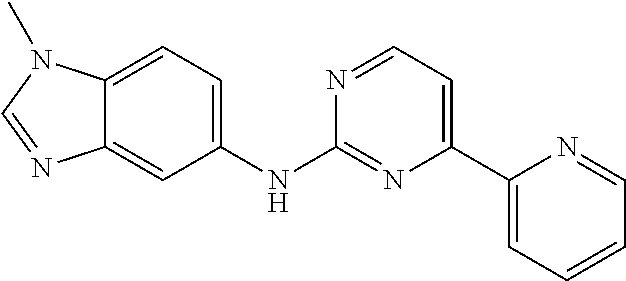
0.1373 see description 4.2.1 HPLC-MS: method D Rt = 1.64 min 216 
0.1115 analogous to Example 287 HPLC-MS: method B Rt = 2.32 min 217 
0.3842 analogous to Example 215 HPLC-MS: method B Rt = 2.46 min 218 
0.9416 analogous to Example 92 HPLC-MS: method B Rt = 1.89 min 219 
0.1431 analogous to Example 215 HPLC-MS: method C Rt = 1.74 min 220 
0.1145 analogous to Example 215 HPLC-MS: method A Rt = 1.94 min 221 
0.0950 analogous to Example 92 HPLC-MS: method B Rt = 2.48 min 222 
0.5148 analogous to Example 215 HPLC-MS: method D Rt = 1.74 min 223 
0.0618 analogous to Example 92 HPLC-MS: method D Rt = 1.67 min 224 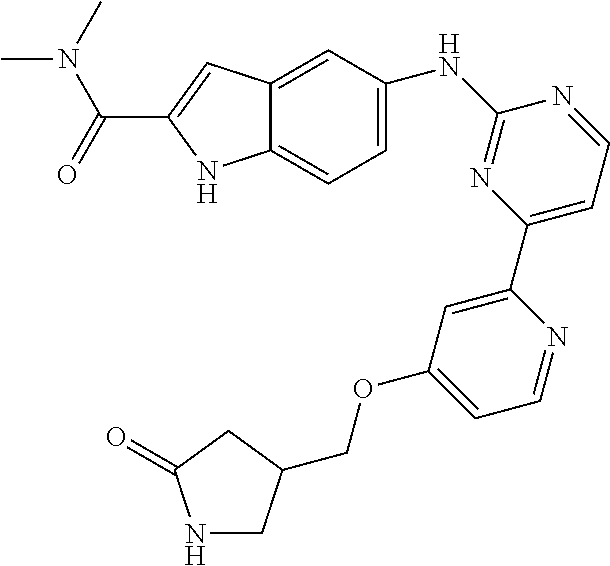
0.0331 analogous to Example 92 HPLC-MS: method B Rt = 2.27 min 225 
0.1394 analogous to Example 92 HPLC-MS: method D Rt = 1.69 min 226 
0.0037 analogous to Example 92 HPLC-MS: method D Rt = 1.64 min 227 
0.0404 analogous to Example 92 HPLC-MS: method M Rt = 1.89 min 228 
0.0402 analogous to Example 92 HPLC-MS: method M Rt = 1.85 min 229 
0.0410 analogous to Example 92 HPLC-MS: method M Rt = 1.90 min 230 
0.0817 see description 4.2.2 HPLC-MS: method H Rt = 2.72 min 231 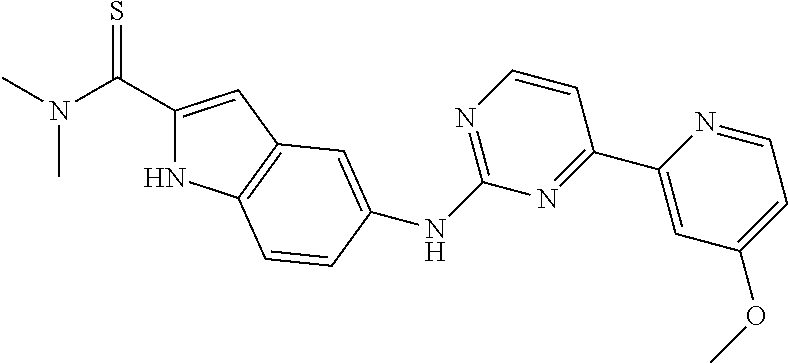
0.2954 see description 4.2.8 HPLC-MS: method E Rt = 3.47 min 232 
0.1733 analogous to Example 7 HPLC-MS: method E Rt = 4.33 min 233 
0.1826 analogous to Example 287 HPLC-MS: method J Rt = 1.61 min 234 
0.0630 analogous to Example 287 HPLC-MS: method J Rt = 1.45 min 235 
0.9219 analogous to Example 287 HPLC-MS: method J Rt = 2.10 min 236 
0.2902 analogous to Example 287 HPLC-MS: method J Rt = 1.51 min 237 
0.0540 analogous to Example 287 HPLC-MS: method J Rt = 1.92 min 238 
0.2582 analogous to Example 287 HPLC-MS: method J Rt = 1.67 min 239 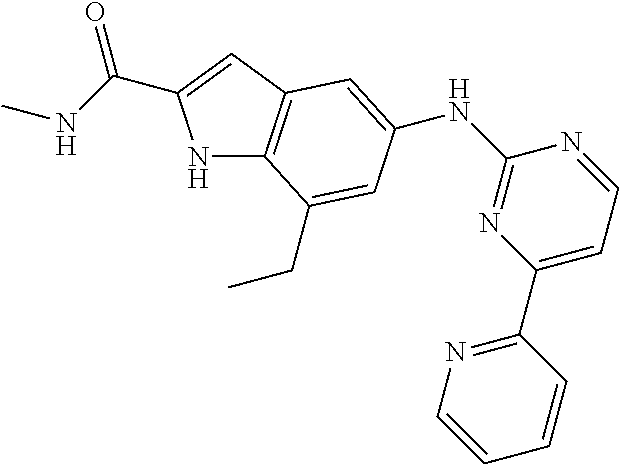
0.030 see description 4.2.6 HPLC-MS: method Rt = min 240 
0.0449 analogous to Example 287 HPLC-MS: method J Rt = 1.54 min 241 
0.1028 analogous to Example 287 HPLC-MS: method J Rt = 1.73 min 242 
0.019 analogous to Example 239 HPLC-MS: method Rt = min 243 
0.0060 analogous to Example 8 HPLC-MS: method M Rt = 2.16 min 244 
0.0978 analogous to Example 92 HPLC-MS: method M Rt = 2.00 min 245 
0.0087 analogous to Example 8 HPLC-MS: method M Rt = 1.74 min 246 
0.0106 analogous to Example 
HPLC-MS: method C Rt = 1.73 min 247 
0.0061 analogous to Example 8 HPLC-MS: method M Rt = 1.83 min 248 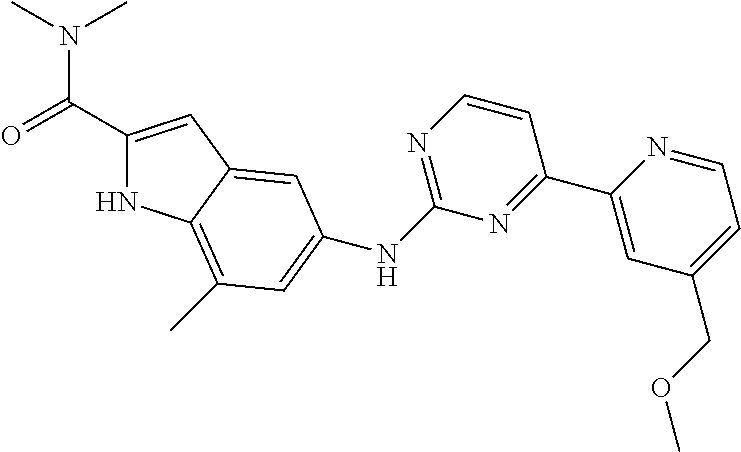
0.0168 analogous to Example 8 HPLC-MS: method M Rt = 2.23 min 249 
0.0047 analogous to Example 8 HPLC-MS: method C Rt = 1.68 min 250 
0.0010 analogous to Example 8 HPLC-MS: method C Rt = 2.06 min 251 
0.0022 analogous to Example 8 HPLC-MS: method D Rt = 1.79 min 252 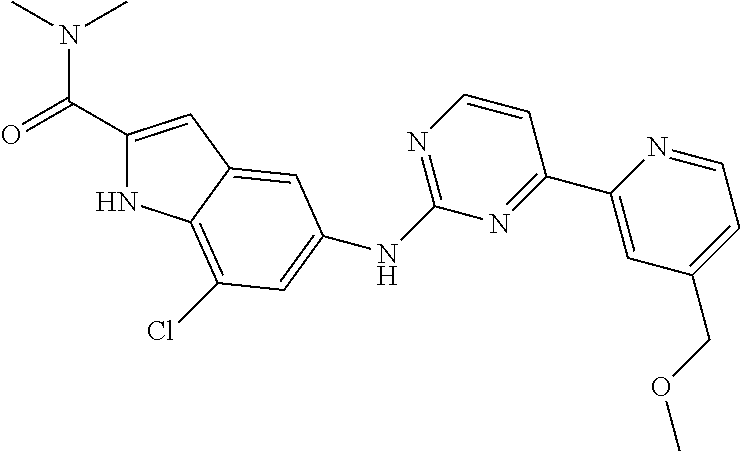
0.0195 analogous to Example 8 HPLC-MS: method D Rt = 2.12 min 253 
0.0449 analogous to Example 8 HPLC-MS: method D Rt = 1.94 min 254 
0.0166 analogous to Example 8 HPLC-MS: method D Rt = 1.99 min 255 
0.0116 analogous to Example 8 HPLC-MS: method D Rt = 1.94 min 256 
0.0323 analogous to Example 8 HPLC-MS: method D Rt = 1.93 min 257 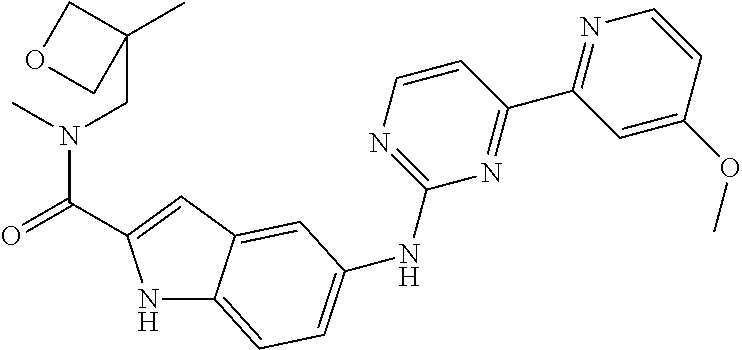
0.0180 analogous to Example 8 HPLC-MS: method B Rt = 2.41 min 258 
0.0290 analogous to Example 8 HPLC-MS: method D Rt = 1.61 min 259 
0.0109 analogous to Example 92 HPLC-MS: method D Rt = 1.68 min 260 
0.0319 analogous to Example 92 HPLC-MS: method A Rt = 1.47 min 261 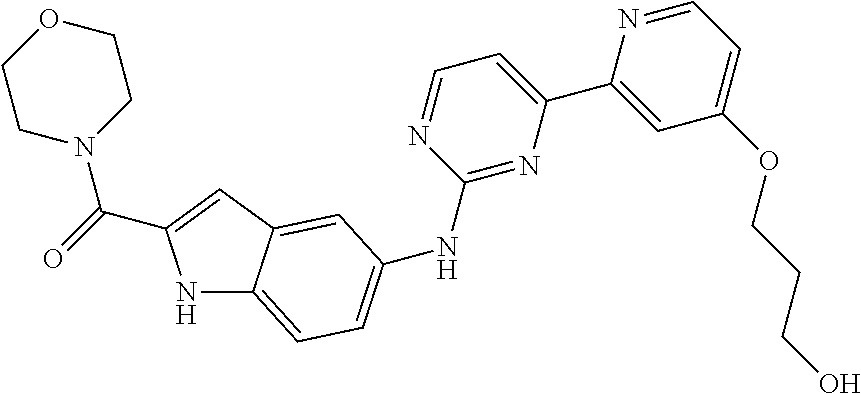
0.0168 analogous to Example 92 HPLC-MS: method M Rt = 1.54 min 262 
0.0306 analogous to Example 92 HPLC-MS: method M Rt = 1.61 min 263 
0.0014 analogous to Example 8 HPLC-MS: method A Rt = 1.76 min 264 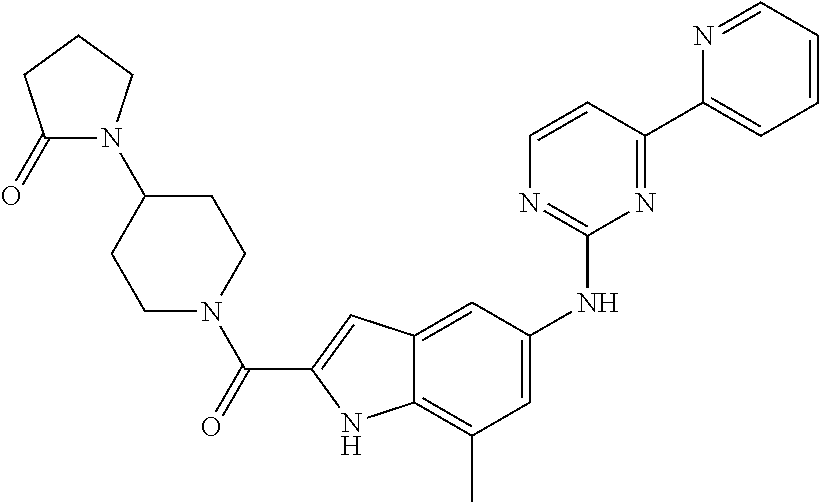
0.0123 analogous to Example 8 HPLC-MS: method M Rt = 1.74 min 265 
0.0351 analogous to Example 8 HPLC-MS: method M Rt = 2.10 min 266 
0.0155 analogous to Example 92 HPLC-MS: method M Rt = 1.69 min 267 
0.0328 analogous to Example 92 HPLC-MS: method M Rt = 1.91 min 268 
0.0021 analogous to Example 92 HPLC-MS: method M Rt = 1.71 min 269 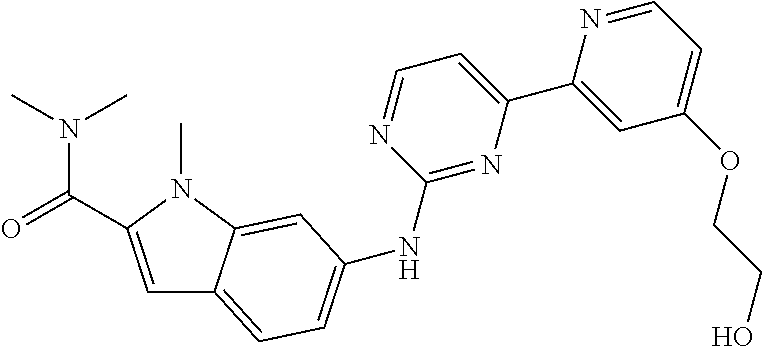
0.0169 analogous to Example 92 HPLC-MS: method M Rt = 1.75 min 270 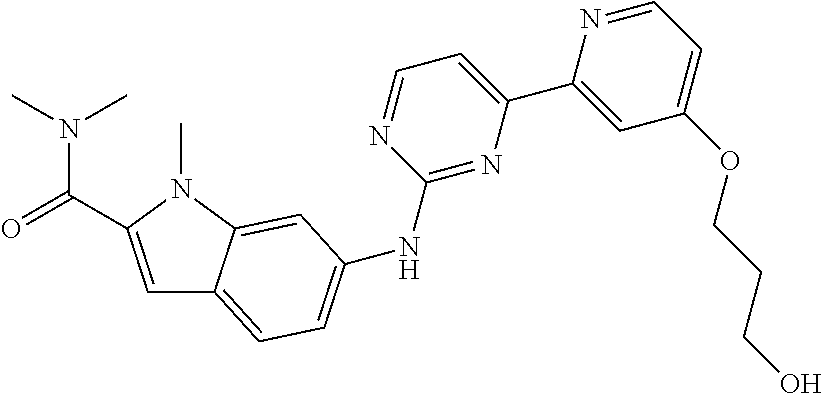
0.0109 analogous to Example 92 HPLC-MS: method M Rt = 1.71 min 271 
0.0061 see description 4.2.3 HPLC-MS: method A Rt = 1.97 min 272 
0.0174 analogous to Example 8 HPLC-MS: method A Rt = 2.21 min 273 
0.0342 analogous to Example 92 HPLC-MS: method M Rt = 1.74 min 274 
0.0127 analogous to Example 92 HPLC-MS: method M Rt = 1.68 min 275 
0.0045 analogous to Example 271 HPLC-MS: method A Rt = 2.01 min 276 
0.0057 analogous to Example 271 HPLC-MS: method B Rt = 2.48 min 277 
0.0059 analogous to Example 271 HPLC-MS: method A Rt = 2.02 min 278 
0.0186 analogous to Example 8 HPLC-MS: method A Rt = 2.10 min 279 
0.0224 analogous to Example 271 HPLC-MS: method A Rt = 2.19 min 280 
0.0189 analogous to Example 271 HPLC-MS: method A Rt = 1.88 min 281 
0.1584 analogous to Example 287 HPLC-MS: method A Rt = 1.60 min 282 
0.0018 analogous to Example 8 HPLC-MS: method A Rt = 1.95 min 283 
0.0434 analogous to Example 8 HPLC-MS: method A Rt = 1.59 min 284 
0.0177 analogous to Example 287 HPLC-MS: method A Rt = 1.22 min 285 
0.0027 analogous to Example 8 HPLC-MS: method A Rt = 1.53 min 286 
0.0103 analogous to Example 287 HPLC-MS: method A Rt = 2.27 min 287 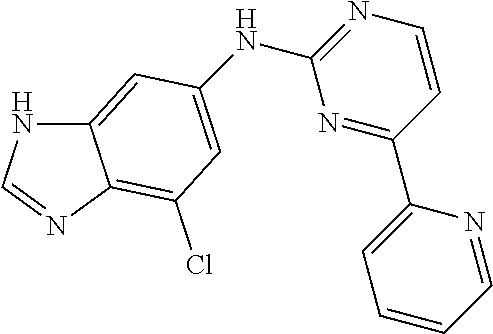
0.0012 see description 4.2.2 HPLC-MS: method A Rt = 1.56 min 288 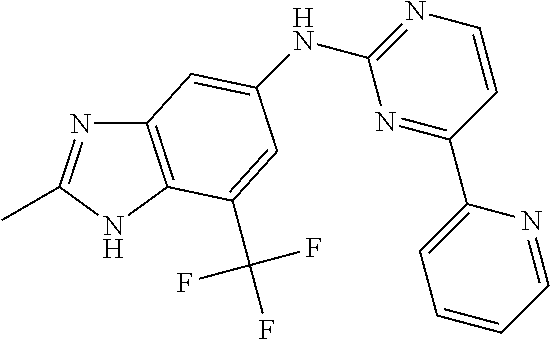
0.0024 analogous to Example 287 HPLC-MS: method A Rt = 1.64 min 289 
0.0045 analogous to Example 8 HPLC-MS: method A Rt = 2.06 min 290 
0.0323 analogous to Example 8 HPLC-MS: method A Rt = 2.12 min 291 
0.0344 analogous to Example 8 HPLC-MS: method A Rt = 2.04 min 292 
0.0072 analogous to Example 8 HPLC-MS: method A Rt = 1.80 min indicates data missing or illegible when filed - As has been found, the compounds of formula 1 are characterised by their range of applications in the therapeutic field. Particular mention should be made of those applications for which the compounds of formula 1 according to the invention are preferably used on the basis of their pharmaceutical activity as SYK-inhibitors. Examples include respiratory complaints, allergic diseases, osteoporosis, gastrointestinal diseases or complaints, immune or autoimmune diseases, allergic diseases, inflammatory diseases, e.g. inflammatory diseases of the joints, skin and eyes and diseases of the peripheral or central nervous system.
- Particular mention should be made of the prevention and treatment of respiratory tract and pulmonary diseases which are accompanied by increased mucus production, inflammation and/or obstructive diseases of the airways. Examples of these include asthma, paediatric asthma, ARDS (Adult Respiratory Distress Syndrome), acute, allergic or chronic bronchitis, autoimmune haemolytic anemia, chronic obstructive bronchitis (COPD) (including the treatment of Rhinovirus-induced exacerbations), coughs, allergic rhinitis or sinusitis, allergic rhinoconjunctivitis, chronic rhinitis or sinusitis, alveolitis, farmers' lung, hyperreactive airways, infectious bronchitis or pneumonitis, bronchiectasis, pulmonary fibrosis, bronchial oedema, pulmonary oedema, pneumonia or interstitial pneumonia triggered by various causes such as aspiration, inhalation of toxic gases or bronchitis, pneumonia or interstitial pneumonia triggered by cardiac insufficiency, radiation, chemotherapy, cystic fibrosis or mucoviscidosis, alpha1-antitrypsin deficiency.
- The compounds according to the invention are preferably also suitable for the treatment of allergic diseases such as for example allergic rhinitis, allergic rhinoconjunctivitis, allergic conjunctivitis, and contact dermatitis, urticaria/angiooedema and allergic dermatitis.
- Mention should also preferably be made of the treatment of inflammatory diseases of the gastrointestinal tract. Examples of these are Crohn's disease and ulcerative colitis.
- The compounds according to the invention are preferably also suitable for the treatment of inflammatory diseases of the joints or inflammatory diseases of the skin and eyes. Examples of these are rheumatoid arthritis, antibody-based glomerulonephritis, psoriasis, Kawasaki syndrome, coeliac disease (sprue) and Wegener's granulomatosis.
- The compounds according to the invention are preferably also suitable for the treatment of autoimmune diseases. Examples of these are hepatitis (autoimmune-based), lupus erythematodes, anti-phospholipid syndrome, Berger's disease, Evans's syndrome, immunohaemolytic anaemia, ITP (idiopathic thrombocytopenic purpura; adult, neonatal and paediatric), myasthenia gravis, Sjögren's syndrome and sclerodermy.
- The compounds according to the invention are preferably also suitable for the treatment of B-cell lymphomas, like chronic lymphocytic leukaemia (CLL), diffuse large B-cell lymphoma (DLBCL) and non Hodgkin's lymphomas (NHL), T cell lymphomas and solid tumors including for example thyroid cancer, non-small cell lung carcinoma (NSCLC), hepatocellular carcinoma (HCC), renal cell carcinoma (RCC), head and neck sqamous cell carcinoma (H&N SCC).
- Mention may preferably also be made of the prevention and treatment of diseases of the peripheral or central nervous system. Examples of these are acute and chronic multiple sclerosis or non-familial lateral sclerosis.
- Mention may preferably also be made of the prevention and treatment of osteoporotic diseases such as for example disease-associated osteopenia, osteoporosis and osteolytic diseases.
- The present invention relates particularly preferably to the use of compounds of formula 1 for preparing a pharmaceutical composition for the treatment of diseases selected from among asthma, COPD, allergic rhinitis, Adult Respiratory Distress Syndrome, bronchitis, allergic dermatitis, contact dermatitis, ITP, rheumatoid arthritis and allergic rhinoconjunctivitis.
- Most preferably, the compounds of formula 1 may be used for the treatment of a disease selected from among asthma, allergic rhinitis, rheumatoid arthritis, allergic dermatitis and COPD.
- The compounds of formula 1 may be used on their own or in conjunction with other active substances of formula 1 according to the invention. The compounds of formula 1 may optionally also be used in conjunction with other pharmacologically active substances. Preferably the active substances used here may be selected for example from among the betamimetics, anticholinergics, corticosteroids, PDE4-inhibitors, LTD4-antagonists, EGFR-inhibitors, MRP4-inhibitors, dopamine agonists, H1-antihistamines, PAF-antagonists, iNos-inhibitors, H MG-CoA reductase inhibitors (statins), PI3-kinase-inhibitors, CCR3-antagonists, CCR2-antagonists, CCR1-antagonists, IKK2-inhibitors, A2a agonists, alpha-4-integrin-inhibitors, CRTH2-antagonists, histamine 1, combined H1/H3-antagonists, p38 kinase inhibitors, methylxanthines, ENaC-inhibitors, CXCR1-antagonists, CXCR2-antagonists, ICE-inhibitors, LTB4-antagonists, 5-LO antagonists, FLAP-antagonists. LTB4-antagonists; cromoglycine, dissociated glucocorticoid mimetics, anti-TNF-antibodies, anti-GM-CSF antibodies, anti-CD46-antibodies, anti-IL-1-antibodies, anti-IL-2-antibodies, anti-IL-4-antibodies, anti-IL-5-antibodies, anti-IL-13-antibodies, anti-IL-4/IL-13-antibodies, or double or triple combinations thereof, such as for example combinations of one, two or three compounds selected from among the
-
- SYK-inhibitors of formula 1, betamimetics, corticosteroids, EGFR-inhibitors and PDE4-antagonists,
- SYK-inhibitors of formula 1, anticholinergics, betamimetics, corticosteroids, EGFR-inhibitors and PDE4-antagonists,
- SYK-inhibitors of formula 1, PDE4-inhibitors, corticosteroids and EGFR-inhibitors,
- SYK-inhibitors of formula 1, EGFR-inhibitors and PDE4-inhibitors,
- SYK-inhibitors of formula 1 and EGFR-inhibitors,
- SYK-inhibitors of formula 1, betamimetics and anticholinergics
- SYK-inhibitors of formula 1, anticholinergics, betamimetics, corticosteroids and PDE4-inhibitors,
- SYK-inhibitors of formula 1, anticholinergics, betamimetics, corticosteroids, iNOS inhibitors, H MG-CoA reductase inhibitors, CRTH2-antagonists.
- Combinations of three active substances each taken from one of the above-mentioned categories of compounds are also an object of the invention.
- Suitable betamimetics used are preferably compounds selected from among arformoterol, carmoterol, formoterol, indacaterol, salmeterol, albuterole, bambuterol, bitolterol, broxaterol, carbuterol, clenbuterol, fenoterol, hexoprenalin, ibuterol, isoetharin, isoprenalin, levosalbutamol, mabuterol, meluadrin, metaproterenol, milveterol, orciprenalin, pirbuterol, procaterol, reproterol, rimiterol, ritodrin, salmefamol, soterenol, sulphonterol, terbutalin, tiaramide, tolubuterol, zinterol, 6-Hydroxy-8-{1-hydroxy-2-[2-(4-methoxy-phenyl)-1,1-dimethyl-ethylamino]-ethyl}-4H-benzo[1,4]oxazine-3-one; 8-{2-[2-(2,4-Difluor-phenyl)-1,1-dimethyl-ethylamino]-1-hydroxy-ethyl}-6-hydroxy-4H-benzo[1,4]oxazine-3-one; 8-{2-[2-(3,5-Difluor-phenyl)-1,1-dimethyl-ethylamino]-1-hydroxy-ethyl}-6-hydroxy-4H-benzo[1,4]oxazine-3-one; 8-{2-[2-(4-Ethoxy-phenyl)-1,1-dimethyl-ethylamino]-1-hydroxy-ethyl}-6-hydroxy-4H-benzo
- [1,4]oxazine-3-one; 8-{2-[2-(4-Fluor-phenyl)-1,1-dimethyl-ethylamino]-1-hydroxy-ethyl}-6-hydroxy-4H-benzo[1,4]oxazine-3-one; N-(5-{2-[3-(4,4-Diethyl-2-oxo-4H-benzo[d][1,3]oxazine-1-yl)-1,1-dimethyl-propylamino]-1-hydroxy-ethyl}-2-hydroxy-phenyl)-methansulfonamide; N-(5-{2-[3-(4,4-Diethyl-6-fluoro-2-oxo-4H-benzo[d][1,3]oxazine-1-yl)-1,1-dimethyl-propylamino]-1-hydroxy-ethyl}-2-hydroxy-phenyl)-methansulfonamide; N-(5-{2-[3-(4,4-Diethyl-6-methoxy-2-oxo-4H-benzo[d][1,3]oxazine-1-yl)-1,1-dimethyl-propylamino]-1-hydroxy-ethyl}-2-hydroxy-phenyl)-methansulfonamide; N-(5-{2-[1,1-Dimethyl-3-(2-oxo-4,4-dipropyl-4H-benzo[d][1,3]oxazine-1-yl)-propylamino]-1-hydroxy-ethyl}-2-hydroxy-phenyl)-methansulfonamide; 8-{2-[1,1-Dimethyl-3-(2-oxo-2,3-dihydro-benzoimidazol-1-yl)-propylamino]-1-hydroxy-ethyl}-6-hydroxy-4H-benzo[1,4]oxazine-3-one; 8-{2-[1,1-Dimethyl-3-(6-methyl-2-oxo-2,3-dihydro-benzoimidazole-1-yl)-propylamino]-1-hydroxy-ethyl}-6-hydroxy-4H-benzo[1,4]oxazine-3-one; 8-{2-[1,1-Dimethyl-3-(2-oxo-5-trifluormethyl-2,3-dihydro-benzoimidazol-1-yl)-propylamino]-1-hydroxy-ethyl}-6-hydroxy-4H-benzo[1,4]oxazine-3-one; 8-{2-[1,1-Dimethyl-3-(3-methyl-2-oxo-2,3-dihydro-benzoimidazol-1-yl)-propylamino]-1-hydroxy-ethyl}-6-hydroxy-4H-benzo[1,4]-oxazine-3-one; N-[2-Hydroxy-5-((1R)-1-hydroxy-2-{2-[4-(2-hydroxy-2-phenyl-ethyl-amino)-phenyl]-ethylamino}-ethyl)-phenyl]-formamide; 8-Hydroxy-5-((1R)-1-hydroxy-2-{2-[4-(6-methoxy-biphenyl-3-ylamino)-phenyl]-ethylamino}-ethyl)-1H-quinoline-2-one; 8-Hydroxy-5-[(1R)-1-hydroxy-2-(6-phenethylamino-hexylamino)-ethyl]-1H-quinoline-2-one; 5-[(1R)-2-(2-{4-[4-(2-Amino-2-methyl-propoxy)-phenylamino]-phenyl}-ethylamino)-1-hydroxy-ethyl]-8-hydroxy-1H-quinoline-2-one; [3-(4-{6-[(2R)-2-Hydroxy-2-(4-hydroxy-3-hydroxymethyl-phenyl)-ethylamino]-hexyloxy}-butyl)-5-methyl-phenyl]-urea; 4-((1R)-2-{6-[2-(2,6-Dichlor-benzyloxy)-ethoxy]-hexylamino}-1-hydroxy-ethyl)-2-hydroxymethyl-phenol; 3-(4-{6-[(2R)-2-Hydroxy-2-(4-hydroxy-3-hydroxymethyl-phenyl)-ethylamino]-hexyloxy}-butyl)-benzenesulfonamide; 3-(3-{7-[(2R)-2-Hydroxy-2-(4-hydroxy-3-hydroxymethyl-phenyl)-ethylamino]-heptyloxy}-propyl)-benzenesulfonamide; 4-((1R)-2-{6-[4-(3-Cyclopentanesulfonyl-phenyl)-butoxy]-hexylamino}-1-hydroxy-ethyl)-2-hydroxymethyl-phenol, 4-(2-{6-[2-(2,6-dichloro-benzyloxy)-ethoxy]-hexyl-amino}-1-hydroxy-ethyl)-2-hydroxymethyl-phenol; Vilanterol; N-1-Adamantanyl-2-{3-[(2R)-2-({(2R)-2-hydroxy-2-[4-hydroxy-3-(hydroxymethyl)phenyl]ethyl}amino)propyl]phenyl}-acetamide; 2-(3-{2-[2-hydroxy-3-methanesulfonylamino-phenyl)-ethylamino]-propyl}-phenyl)-N-[4-(4-hydroxy-phenyl)-2-vinyl-penta-2,4-dienyl]-acetamide; (1R)-5-{2-[6-(2,2-Difluor-2-phenyl-ethoxy)-hexylamino]-1-hydroxy-ethyl}-8-hydroxy-1H-quinoline-2-one; (R,S)-4-(2-{[6-(2,2-Difluor-4-phenylbutoxy)hexyl]amino}-1-hydroxy-ethyl)-2-(hydroxymethyl)phenol; (R,S)-4-(2-{[6-(2,2-Difluor-2-phenylethoxy)hexyl]amino}-1-hydroxy-ethyl)-2-(hydroxymethyl)phenol; (R,S)-4-(2-{[4,4-Difluor-6-(4-phenylbutoxy)hexyl]amino}-1-hydroxy-ethyl)-2-(hydroxymethyl)-phenol; (R,S)-4-(2-{[6-(4,4-Difluor-4-phenylbutoxy)hexyl]amino}-1-hydroxy-ethyl)-2-(hydroxy-methyl)phenol; (R,S)-5-(2-{[6-(2,2-Difluor-2-phenylethoxy)hexyl]amino}-1-hydroxy-ethyl)-8-hydroxyquinoline-2(1H)-one; (R,S)-[2-({6-[2,2-Difluor-2-(3-methylphenyl)ethoxy]hexyl}amino)-1-hydroxyethyl]-2-(hydroxymethyl)phenol; 4-(1R)-2-{[6-(2,2-Difluor-2-phenylethoxy)hexyl]-amino}-1-hydroxyethyl)-2-(hydroxymethyl)phenol; (R,S)-2-(Hydroxymethyl)-4-(1-hydroxy-2-{[4,4,5|5-tetrafluor-6-(3-phenylpropoxy)-hexyl]amino}ethyl)phenol; (R,S)-[5-(2-{[6-(2,2-Difluor-2-phenylethoxy)hexyl]amino}-1-hydroxy-ethyl)-2-hydroxyphenyl]formamide; (R,S)-4-[2-({6-[2-(3-Bromophenyl)-2,2-difluoroethoxy]hexyl}amino)-1-hydroxyethyl]-2-(hydroxymethyl)-phenol; (R,S)—N-[3-(1,1-Difluor-2-{[6-({2-hydroxy-2-[4-hydroxy-3-(hydroxymethyl)phenyl]-ethyl}amino)hexyl]oxy}ethyl)phenyl]-urea; 3-[3-(1,1-Difluor-2-{[6-({2-hydroxy-2-[4-hydroxy-3-(hydroxymethyl)phenyl]ethyl}amino)hexyl]oxy}ethyl)phenyl]imidazolidine-2,4-dione; (R,S)-4-[2-({6-[2,2-Difluor-2-(3-methoxyphenyl)ethoxy]hexyl}amino)-1-hydroxyethyl]-2-(hydroxy-methyl)phenol; 5-((1R)-2-{[6-(2,2-Difluor-2-phenylethoxy)hexyl]amino}-1-hydroxyethyl)-8-hydroxyquinoline-2(1H)-one; 4-((1R)-2-{[4,4-Difluor-6-(4-phenylbutoxy)hexyl]amino}-1-hydroxy-ethyl)-2-(hydroxymethyl)phenol; (R,S)-4-(2-{[6-(3,3-Difluor-3-phenylpropoxy)hexyl]-amino}-1-hydroxy-ethyl)-2-(hydroxymethyl)phenol; (R,S)-(2-{[6-(2,2-Difluor-2-phenylethoxy)-4,4-difluorohexyl]amino}-1-hydroxyethyl)-2-(hydroxymethyl)phenol; (R,S)-4-(2-{[6-(2,2-Difluor-3-phenylpropoxy)hexyl]amino}-1-hydroxy ethyl)-2-(hydroxymethyl)phenol; 3-[2-(3-Chlor-phenyl)-ethoxy]-N-(2-diethylamino-ethyl)-N-{2-[2-(4-hydroxy-2-oxo-2,3-dihydro-benzothiazol-7-yl)-ethylamino]-ethyl}-propionamide; N-(2-Diethylamino-ethyl)-N-{2-[2-(4-hydroxy-2-oxo-2,3-dihydro-benzothiazol-7-yl)-ethylamino]-ethyl}-3-(2-naphthalen-1-yl-ethoxy)-propionamide; 7-[2-(2-{3-[2-(2-Chlor-phenyl)-ethylamino]-propylsulfanyl}-ethylamino)-1-hydroxy-ethyl]-4-hydroxy-3H-benzothiazol-2-one, optionally in the form of the racemates, enantiomers, diastereomers and optionally in the form of the pharmacologically acceptable acid addition salts, solvates or hydrates thereof.
- According to the invention the acid addition salts of the betamimetics are preferably selected from among the hydrochloride, hydrobromide, hydroiodide, hydrosulphate, hydrophosphate, hydromethanesulphonate, hydronitrate, hydromaleate, hydroacetate, hydrocitrate, hydrofumarate, hydrotartrate, hydrooxalate, hydrosuccinate, hydrobenzoate and hydro-p-toluenesulphonate, preferably the hydrochloride, hydrobromide, hydrosulphate, hydrophosphate, hydrofumarate and hydromethanesulphonate. Of the above-mentioned acid addition salts the salts of hydrochloric acid, methanesulphonic acid, benzoic acid and acetic acid are particularly preferred according to the invention.
- The anticholinergics used are preferably compounds selected from among tiotropium salts, particularly the bromide salt, oxitropium salts, particularly the bromide salt, flutropium salts, particularly the bromide salt, ipratropium salts, particularly the bromide salt, Aclidinium salts, particularly the bromide salt, glycopyrronium salts, particularly the bromide salt, trospium salts, particularly the chloride salt, tolterodin, (3R)-1-Phenethyl-3-(9H-xanthene-9-carbonyloxy)-1-azoniabicyclo[2.2.2]octan-salts; 2,2-Diphenyl propionic acid tropenole ester-methobromide; 2,2-Diphenyl propionic acid scopine ester-methobromide; 2-Fluor-2,2-Diphenyl acetic acid scopine ester-methobromide; 2-Fluor-2,2-Diphenyl acetic acid tropenole ester-methobromide; 3,3′,4,4′-Tetrafluor benzilic acid tropenole ester-methobromide; 3,3′,4,4′-Tetrafluor benzilic acid scopine ester-methobromide; 4,4′-Difluor benzilic acid tropenole ester-methobromide; 4,4′-Difluor benzilic acid scopine ester-methobromide; 3,3′-Difluor benzilic acid tropenole ester-methobromide; 3,3′-Difluor benzilic acid scopine ester-methobromide; 9-Hydroxy-fluorene-9-carboxylic acid tropenole ester-methobromide; 9-Fluor-fluorene-9-carboxylic acid tropenole ester-methobromide; 9-Hydroxy-fluorene-9-carboxylic acid scopine ester-methobromide; 9-Fluor-fluorene-9-carboxylic acid scopine ester-methobromide; 9-Methyl-fluorene-9-carboxylic acid tropenole ester-methobromide; 9-Methyl-fluorene-9-carboxylic acid scopine ester-methobromide; Benzilic acid cyclopropyl tropine ester-methobromide; 2,2-Diphenyl propionic acid cyclopropyltropine ester-methobromide; 9-Hydroxy-xanthene-9-carboxylic acid cyclopropyltropine ester-methobromide; 9-Methyl-fluorene-9-carboxylic acid cyclopropyltropine ester-methobromide; 9-Methyl-xanthene-9-carboxylic acid cyclopropyltropine ester-methobromide; 9-Hydroxy-fluorene-9-carboxilic acid cyclopropyltropine ester-methobromide; 4,4′-Difluor benzilic acid methyl ester cyclopropyltropine ester-methobromide; 9-Hydroxy-xanthene-9-carboxylic acid tropenole ester-methobromide; 9-Hydroxy-xanthene-9-carboxylic acid scopine ester-methobromide; 9-Methyl-xanthene-9-carboxylic acid tropenole ester-methobromide; 9-Methyl-xanthene-9-carboxylic acid scopine ester-methobromide; 9-Ethyl-xanthene-9-carboxylic acid tropenole ester-methobromide; 9-Difluormethyl-xanthene-9-carboxylic acid tropenole ester-methobromide; 9-Hydroxymethyl-xanthene-9-carboxylic acid scopine ester-methobromide;
- 3-[2-(3-Chloro-phenyl)-ethoxy]-N-(2-diethylamino-ethyl)-N-{2-[2-(4-hydroxy-2-oxo-2,3-dihydro-benzothiazol-7-yl)-ethylamino]-ethyl}-propionamide;
- N-(2-Diethylamino-ethyl)-N-{2-[2-(4-hydroxy-2-oxo-2,3-dihydro-benzothiazol-7-yl)-ethylamino]-ethyl}-3-(2-naphthalen-1-yl-ethoxy)-propionamide;
- 7-[2-(2-{3-[2-(2-Chloro-phenyl)-ethylamino]-propylsulfanyl}-ethylamino)-1-hydroxy-ethyl]-4-hydroxy-3H-benzothiazol-2-one and Darotropium;
optionally in the form of the solvates or hydrates thereof. - In the above-mentioned salts the cations, as for example tiotropium, oxitropium, flutropium, ipratropium, glycopyrronium, aclidinium and trospium are the pharmacologically active ingredients. As anions, the above-mentioned salts may preferably contain chloride, bromide, iodide, sulphate, phosphate, methanesulphonate, nitrate, maleate, acetate, citrate, fumarate, tartrate, oxalate, succinate, benzoate or p-toluenesulphonate, while chloride, bromide, iodide, sulphate, methanesulphonate or p-toluenesulphonate are preferred as counter-ions. Of all the salts, the chlorides, bromides, iodides and methanesulphonate are particularly preferred.
- Of particular importance is tiotropium bromide. In the case of tiotropium bromide the pharmaceutical combinations according to the invention preferably contain it in the form of the crystalline tiotropium bromide monohydrate, which is known from WO 02/30928. If the tiotropium bromide is used in anhydrous form in the pharmaceutical combinations according to the invention, it is preferable to use anhydrous crystalline tiotropium bromide, which is known from WO 03/000265.
- Corticosteroids used here are preferably compounds selected from among beclomethasone, betamethasone, budesonide, butixocorte, ciclesonide, deflazacorte, dexamethasone, etiprednole, flunisolide, fluticasone, loteprednole, mometasone, prednisolone, prednisone, rofleponide, triamcinolone, tipredane;
- {20R-16α,17α-[butylidenebis(oxy)]-6α,9α-difluoro-11β-hydroxy-17β-(methylthio)androsta-4-en-3-one};
- 9-fluoro-11beta,17,21-trihydroxy-16alpha-methylpregna-1,4-diene-3,20-dione 21-cyclohexanecarboxylate 17-cyclopropanecarboxylate;
- 16,17-butylidene dioxy-6,9-difluoro-11-hydroxy-17-(methylthio)androst-4-en-3-one;
- Flunisolide-21-[4′-(nitrooxymethyl)benzoate];
- 6,9-Difluoro-17-[(2-furanylcarbonyl)oxy]-11-hydroxy-16-methyl-3-oxo-androsta-1,4-dien-17-carbothion acid (S)-fluoromethylester,
- 6,9-Difluoro-11-hydroxy-16-methyl-3-oxo-17-propionyloxy-androsta-1,4-dien-17-carbothion acid (S)-(2-oxo-tetrahydro-furan-3S-yl)ester, and
- 6alpha,9alpha-difluoro-11beta-hydroxy-16alpha-methyl-3-oxo-17alpha-(2,2,3,3-tertamethylcyclopropylcarbonyl)oxy-androsta-1,4-diene-17beta-carboxylic acid cyanomethyl ester and
Pregna-1,4-diene-3,20-dione, 6-fluoro-11-hydroxy-16,17-[(1-methylethylidene)bis(oxy)]-21-[[4-[nitrooxy)methyl]-benzoyl]oxy]-, (6-alpha,11-beta,16-alpha)-(9Cl); 16,17-butylidenedioxy-6,9-difluoro-11-hydroxy-17-(methylthio)androst-4-en-3-one; (S)-fluoromethyl 6,9-difluoro-17-[(2-furanylcarbonyl)oxy]-11-hydroxy-16-methyl-3-oxo-androsta-1,4-diene-17-carbothionate; each optionally in the form of the racemates, enantiomers or diastereomers thereof and optionally in the form of the salts and derivatives, solvates and/or hydrates thereof. - Particularly preferably the steroid is selected from among budesonide, fluticasone, mometasone, ciclesonide and (S)-fluoromethyl 6,9-difluoro-17-[(2-furanylcarbonyl)oxy]-11-hydroxy-16-methyl-3-oxo-androsta-1,4-diene-17-carbothionate, optionally in the form of the racemates, enantiomers or diastereomers thereof and optionally in the form of the salts and derivatives, solvates and/or hydrates thereof.
- Any reference to steroids includes a reference to any salts or derivatives, hydrates or solvates thereof which may exist. Examples of possible salts and derivatives of the steroids may be: alkali metal salts, such as for example sodium or potassium salts, sulfobenzoates, phosphates, isonicotinates, acetates, propionates, dihydrogen phosphates, palmitates, pivalates or furoates thereof.
- PDE4 inhibitors which may be used are preferably compounds selected from among enprofyllin, theophyllin, roflumilast, ariflo (cilomilast), tofimilast, pumafentrin, lirimilast, apremilast, arofyllin, atizoram, oglemilast, tetomilast; 5-[(N-(2,5-dichloro-3-pyridinyl)-carboxamide]-8-methoxy-Quinoline (D-4418); 5-[N-(3,5-dichloro-1-oxido-4-pyridinyl)-carboxamide]-8-methoxy-2-(trifluoromethyl)-Quinoline (D-4396 (Sch-351591)); N-(3,5-dichloropyrid-4-yl)-[1-(4-fluorobenzyl)-5-hydroxy-indol-3-yl]glyoxylic acid amide (AWD-12-281 (GW-842470)); 9-[(2-fluorophenyl)methyl]-N-methyl-2-(trifluoromethyl)-9H-Purin-6-amine (NCS-613); 4-[(2R)-2-[3-(cyclopentyloxy)-4-methoxyphenyl]-2-phenylethyl]-Pyridine (CDP-840); N-[(3R)-3,4,6,7-tetrahydro-9-methyl-4-oxo-1-phenylpyrrolo[3,2,1-jk][1,4]benzodiazepin-3-yl]-4-Pyridinecarboxamide (PD-168787); 4-[6,7-diethoxy-2,3-bis(hydroxymethyl)-1-naphthalenyl]-1-(2-methoxyethyl)-2(1H)-Pyridinone (T-440); 2-[4-[6,7-diethoxy-2,3-bis(hydroxymethyl)-1-naphthalenyl]-2-pyridinyl]-4-(3-pyridinyl)-1(2H)-Phthalazinone (T-2585); (3-(3-cyclopenyloxy-4-methoxybenzyl)-6-ethylamino-8-isopropyl-3H-purine (V-11294A); beta-[3-(cyclopentyloxy)-4-methoxyphenyl]-1,3-dihydro-1,3-dioxo-2H-Isoindole-2-propanamide (CDC-801); Imidazo[1,5-a]pyrido[3,2-e]pyrazine-6(5H)-one, 9-ethyl-2-methoxy-7-methyl-5-propyl-(D-22888); 5-[3-(cyclopentyloxy)-4-methoxyphenyl]-3-[(3-methylphenyl)methyl]-, (3S,5S)-2-Piperidinon (HT-0712); 4-[1-[3,4-bis(difluoromethoxy)phenyl]-2-(3-methyl-1-oxido-4-pyridinyl)ethyl]-alpha,alpha-bis(trifluoromethyl)-Benzenemethanol (L-826141); N-(3,5-Dichloro-1-oxo-pyridin-4-yl)-4-difluormethoxy-3-cyclopropylmethoxybenzamide; (−)p-[(4aR*,10bS*)-9-Ethoxy-1,2,3,4,4a,10b-hexahydro-8-methoxy-2-methylbenzo[s][1,6]-naphthyridin-6-yl]-N,N-diisopropylbenzamide; (R)-(+)-1-(4-Brombenzyl)-4-[(3-cyclopentyloxy)-4-methoxyphenyl]-2-pyrrolidon; 3-(Cyclopentyloxy-4-methoxyphenyl)-1-(4-N′-[N-2-cyano-S-methyl-isothioureido]benzyl)-2-pyrrolidon; cis[4-Cyano-4-(3-cyclopentyloxy-4-methoxy-phenyl)cyclohexan-1-carboxylic acid]; 2-carbomethoxy-4-cyano-4-(3-cyclopropylmethoxy-4-difluoromethoxyphenyl)cyclohexan-1-one; cis[4-Cyano-4-(3-cyclopropylmethoxy-4-difluor-methoxyphenyl)cyclohexan-1-ol]; (R)-(+)-Ethyl[4-(3-cyclopentyloxy-4-methoxyphenyl)-pyrrolidin-2-yliden]acetat; (S)-(−)-Ethyl[4-(3-cyclopentyloxy-4-methoxyphenyl)pyrrolidin-2-yliden]acetat; 9-Cyclopentyl-5,6-dihydro-7-ethyl-3-(2-thienyl)-9H-pyrazolo[3,4-c]-1,2,4-triazolo[4,3-a]pyridin; 9-Cyclopentyl-5,6-dihydro-7-ethyl-3-(tert-butyl)-9H-pyrazolo[3,4-c]-1,2,4-triazolo[4,3-a]pyridin,
- optionally in the form of the racemates, enantiomers or diastereomers and optionally in the form of the pharmacologically acceptable acid addition salts, solvates and/or hydrates thereof.
- By acid addition salts with pharmacologically acceptable acids which the above-mentioned PDE4-inhibitors might be in a position to form are meant, for example, salts selected from among the hydrochloride, hydrobromide, hydroiodide, hydrosulphate, hydrophosphate, hydromethanesulphonate, hydronitrate, hydromaleate, hydroacetate, hydrobenzoate, hydrocitrate, hydrofumarate, hydrotartrate, hydrooxalate, hydrosuccinate, hydrobenzoate and hydro-p-toluenesulphonate, preferably hydrochloride, hydrobromide, hydrosulphate, hydrophosphate, hydrofumarate and hydromethanesulphonate.
- CRTH2-antagonists which may be used are preferably compounds selected from the group consisting of Ramatroban, Laropiprant, 5-Fluoro-2-methyl-3-quinolin-2-yl-methyl-indol-1-yl)-acetic acid (=OC000459; Oxagen), Vidupiprant (=AMG 853 or [5-chloro-4-(2-{[(2-chloro-4-cyclopropylphenyl)sulfonyl]amino}-4-[(1,1-dimethylethyl)carbamoyl]phenoxy)-2-fluorophenyl]-acetic acid or 2-{4-[4-(tert-butylcarbamoyl)-2-(2-chloro-4-cyclopropyl-benzene-sulfonamino)-phenoxy]-5-chloro-2-fluoro-phenyl}-acetic acid) and [4-Acetylamino-3-(4-chloro-phenylsulfanyl)-2-methyl-indol-1-yl]-acetic acid (=AZD1981, Astra Zeneca),
- optionally in the form of the racemates, enantiomers or diastereomers and optionally in the form of the pharmacologically acceptable acid addition salts, solvates and/or hydrates thereof.
- By acid addition salts with pharmacologically acceptable acids which the above-mentioned CRTH2-antagonists might be in a position to form are meant, for example, salts selected from among the hydrochloride, hydrobromide, hydroiodide, hydrosulphate, hydrophosphate, hydromethanesulphonate, hydronitrate, hydromaleate, hydroacetate, hydrobenzoate, hydrocitrate, hydrofumarate, hydrotartrate, hydrooxalate, hydrosuccinate, hydrobenzoate and hydro-p-toluenesulphonate, preferably hydrochloride, hydrobromide, hydrosulphate, hydrophosphate, hydrofumarate and hydromethanesulphonate.
- LTD4-antagonists which may be used are preferably compounds selected from among montelukast, pranlukast, zafirlukast; (E)-8-[2-[4-[4-(4-Fluorophenyl)butoxy]phenyl]ethenyl]-2-(1H-tetrazol-5-yl)-4H-1-benzopyran-4-one (MEN-91507); 4-[6-Acetyl-3-[3-(4-acetyl-3-hydroxy-2-propylphenylthio)propoxy]-2-propylphenoxy]-butyric acid (MN-001); 1-(((R)-(3-(2-(6,7-Difluor-2-quinolinyl)ethenyl)phenyl)-3-(2-(2-hydroxy-2-propyl)phenyl)thio)methyl-cyclopropane-acetic acid; 1-(((1(R)-3(3-(2-(2,3-Dichlorthieno[3,2-b]pyridin-5-yl)-(E)-ethenyl)-phenyl)-3-(2-(1-hydroxy-1-methylethyl)phenyl)propyl)thio)methyl)cyclopropane acetic acid; [2-[[2-(4-tert-Butyl-2-thiazolyl)-5-benzofuranyl]oxymethyl]phenyl]acetic acid,
- optionally in the form of the racemates, enantiomers or diastereomers, optionally in the form of the pharmacologically acceptable acid addition salts and optionally in the form of the salts and derivatives, solvates and/or hydrates thereof.
- By acid addition salts with pharmacologically acceptable acids which the LTD4-antagonists may be capable of forming are meant, for example, salts selected from the group consisting of hydrochloride, hydrobromide, hydroiodide, hydrosulphate, hydrophosphate, hydromethanesulphonate, hydronitrate, hydromaleate, hydroacetate, hydrobenzoate, hydrocitrate, hydrofumarate, hydrotartrate, hydrooxalate, hydrosuccinate, hydrobenzoate and hydro-p-toluenesulphonate, preferably hydrochloride, hydrobromide, hydrosulphate, hydrophosphate, hydrofumarate and hydromethanesulphonate. By salts or derivatives which the LTD4-antagonists may be capable of forming are meant, for example: alkali metal salts, such as, for example, sodium or potassium salts, alkaline earth metal salts, sulphobenzoates, phosphates, isonicotinates, acetates, propionates, dihydrogen phosphates, palmitates, pivalates or furoates.
- The EGFR-inhibitors used are preferably compounds selected from among 4-[(3-chloro-4-fluorophenyl)amino]-6-{[4-(morpholine-4-yl)-1-oxo-2-butene-1-yl]amino}-7-cyclopropylmethoxy-quinazoline, 4-[(3-chloro-4-fluorophenyl)amino]-6-{[4-(N,N-diethyl-amino)-1-oxo-2-butene-1-yl]amino}-7-cyclopropylmethoxy-quinazoline, 4-[(3-chloro-4-fluoro-phenyl)amino]-6-{[4-(N,N-dimethylamino)-1-oxo-2-butene-1-yl]amino}-7-cyclopropylmethoxy-quinazoline, 4-[(R)-(1-phenyl-ethyl)amino]-6-{[4-(morpholine-4-yl)-1-oxo-2-butene-1-yl]amino}-7-cyclopentyloxy-quinazoline, 4-[(3-chloro-4-fluoro-phenyl)amino]-6-{[4-((R)-6-methyl-2-oxo-morpholine-4-yl)-1-oxo-2-butene-1-yl]amino}-7-cyclopropylmethoxy-quinazoline, 4-[(3-chloro-4-fluoro-phenyl)amino]-6-{[4-((R)-6-methyl-2-oxo-morpholine-4-yl)-1-oxo-2-butene-1-yl]amino}-7-[(S)-(tetrahydrofuran-3-yl)oxy]-quinazoline, 4-[(3-chloro-4-fluoro-phenyl)amino]-6-{[4-((R)-2-methoxymethyl-6-oxo-morpholine-4-yl)-1-oxo-2-butene-1-yl]amino}-7-cyclopropyl-methoxy-quinazoline, 4-[(3-chloro-4-fluoro-phenyl)amino]-6-[2-((S)-6-methyl-2-oxo-morpho-line-4-yl)-ethoxy]-7-methoxy-quinazoline, 4-[(3-chloro-4-fluorophenyl)amino]-6-({4-[N-(2-methoxy-ethyl)-N-methyl-amino]-1-oxo-2-butene-1-yl}amino)-7-cyclopropylmethoxy-quinazoline, 4-[(3-chloro-4-fluorophenyl)amino]-6-{[4-(N,N-dimethylamino)-1-oxo-2-butene-1-yl]amino}-7-cyclopentyloxy-quinazoline, 4-[(R)-(1-phenyl-ethyl)amino]-6-{[4-(N,N-bis-(2-methoxy-ethyl)-amino)-1-oxo-2-butene-1-yl]amino}-7-cyclopropylmethoxy-quinazoline, 4-[(R)-(1-phenyl-ethyl)amino]-6-({4-[N-(2-methoxy-ethyl)-N-ethyl-amino]-1-oxo-2-butene-1-yl}amino)-7-cyclopropylmethoxy-quinazoline, 4-[(R)-(1-phenyl-ethyl)amino]-6-({4-[N-(2-methoxy-ethyl)-N-methyl-amino]-1-oxo-2-butene-1-yl}amino)-7-cyclopropylmethoxy-quinazoline, 4-[(R)-(1-phenyl-ethyl)amino]-6-({4-[N-(tetrahydropyran-4-yl)-N-methyl-amino]-1-oxo-2-butene-1-yl}amino)-7-cyclopropylmethoxy-quinazoline, 4-[(R)-(1-Phenyl-ethyl)amino]-6-({4-[N-(2-methoxy-ethyl)-N-methyl-amino]-1-oxo-2-butene-1-yl}amino)-7-cyclopropylmethoxy-quinazoline, 4-[(R)-(1-Phenyl-ethyl)amino]-6-({4-[N-(tetrahydropyran-4-yl)-N-methyl-amino]-1-oxo-2-butene-1-yl}amino)-7-cyclopropylmethoxy-quinazoline, 4-[(3-chloro-4-fluorophenyl)amino]-6-{[4-(N,N-dimethylamino)-1-oxo-2-butene-1-yl]amino}-7-((R)-tetrahydrofuran-3-yloxy)-quinazoline, 4-[(3-chloro-4-fluorophenyl)amino]-6-{[4-(N,N-dimethyl-amino)-1-oxo-2-butene-1-yl]amino}-7-((S)-tetrahydrofuran-3-yloxy)-quinazoline, 4-[(3-chloro-4-fluorophenyl)amino]-6-({4-[N-(2-methoxy-ethyl)-N-methyl-amino]-1-oxo-2-butene-1-yl}amino)-7-cyclopentyloxy-quinazoline, 4-[(3-chloro-4-fluorophenyl)amino]-6-{[4-(N-cyclo-propyl-N-methyl-amino)-1-oxo-2-butene-1-yl]amino}-7-cyclopentyloxy-quinazoline, 4-[(3-chloro-4-fluorophenyl)amino]-6-{[4-(N,N-dimethylamino)-1-oxo-2-butene-1-yl]amino}-7-[(R)-(tetrahydrofuran-2-yl)methoxy]-quinazoline, 4-[(3-chloro-4-fluorophenyl)amino]-6-{[4-(N,N-dimethylamino)-1-oxo-2-butene-1-yl]amino}-7-[(S)-(tetrahydrofuran-2-yl)methoxy]-quinazoline, 4-[(3-ethynyl-phenyl)amino]-6.7-bis-(2-methoxy-ethoxy)-quinazoline, 4-[(3-chloro-4-fluorophenyl)amino]-7-[3-(morpholine-4-yl)-propyloxy]-6-[(vinylcarbonyl)amino]-quinazoline, 4-[(R)-(1-phenyl-ethyl)amino]-6-(4-hydroxy-phenyl)-7H-pyrrolo[2,3-d]pyrimidine, 3-cyano-4-[(3-chloro-4-fluorophenyl)amino]-6-{[4-(N,N-dimethylamino)-1-oxo-2-butene-1-yl]amino}-7-ethoxy-quinoline, 4-{[3-chloro-4-(3-fluoro-benzyloxy)-phenyl]amino}-6-(5-{[(2-methanesulphonyl-ethyl)amino]methyl}-furan-2-yl)quinazoline, 4-[(R)-(1-phenyl-ethyl)amino]-6-{[4-((R)-6-methyl-2-oxo-morpholine-4-yl)-1-oxo-2-butene-1-yl]amino}-7-methoxy-quinazoline, 4-[(3-chloro-4-fluorophenyl)amino]-6-{[4-(morpholine-4-yl)-1-oxo-2-butene-1-yl]amino}-7-[(tetrahydrofuran-2-yl)methoxy]-quinazoline, 4-[(3-chloro-4-fluorophenyl)amino]-6-({4-[N,N-bis-(2-methoxy-ethyl)-amino]-1-oxo-2-butene-1-yl}amino)-7-[(tetrahydrofuran-2-yl)methoxy]-quinazoline, 4-[(3-ethynyl-phenyl)amino]-6-{[4-(5.5-dimethyl-2-oxo-morpholine-4-yl)-1-oxo-2-butene-1-yl]amino}-quinazoline, 4-[(3-chloro-4-fluoro-phenyl)amino]-6-[2-(2.2-dimethyl-6-oxo-morpholine-4-yl)-ethoxy]-7-methoxy-quinazoline, 4-[(3-chloro-4-fluoro-phenyl)amino]-6-[2-(2.2-dimethyl-6-oxo-morpholine-4-yl)-ethoxy]-7-[(R)-(tetrahydrofuran-2-yl)methoxy]-quinazoline, 4-[(3-chloro-4-fluoro-phenyl)amino]-7-[2-(2.2-dimethyl-6-oxo-morpholine-4-yl)-ethoxy]-6-[(S)-(tetrahydrofuran-2-yl)methoxy]-quinazoline, 4-[(3-chloro-4-fluoro-phenyl)amino]-6-{2-[4-(2-oxo-morpholine-4-yl)-pipendine-1-yl]-ethoxy}-7-methoxy-quinazoline, 4-[(3-chloro-4-fluoro-phenyl)amino]-6-[1-(tert.-butyloxycarbonyl)-pipendine-4-yloxy]-7-methoxy-quinazoline, 4-[(3-chloro-4-fluoro-phenyl)amino]-6-(trans-4-amino-cyclo-hexan-1-yloxy)-7-methoxy-quinazoline, 4-[(3-chloro-4-fluoro-phenyl)amino]-6-(trans-4-methanesulphonylamino-cyclohexan-1-yloxy)-7-methoxy-quinazoline, 4-[(3-chloro-4-fluoro-phenyl)amino]-6-(tetrahydropyran-3-yloxy)-7-methoxy-quinazoline, 4-[(3-chloro-4-fluoro-phenyl)amino]-6-(1-methyl-pipendine-4-yloxy)-7-methoxy-quinazoline, 4-[(3-chloro-4-fluoro-phenyl)amino]-6-{1-[(morpholine-4-yl)carbonyl]-pipendine-4-yl-oxy}-7-methoxy-quinazoline, 4-[(3-chloro-4-fluoro-phenyl)amino]-6-{1-[(methoxymethyl)carbonyl]-pipendine-4-yloxy}-7-methoxy-quinazoline, 4-[(3-chloro-4-fluoro-phenyl)amino]-6-(pipendine-3-yloxy)-7-methoxy-quinazoline, 4-[(3-chloro-4-fluoro-phenyl)amino]-6-[1-(2-acetylamino-ethyl)-pipendine-4-yloxy]-7-methoxy-quinazoline, 4-[(3-chloro-4-fluoro-phenyl)amino]-6-(tetrahydropyran-4-yloxy)-7-ethoxy-quinazoline, 4-[(3-chloro-4-fluoro-phenyl)amino]-6-((S)-tetrahydrofuran-3-yloxy)-7-hydroxy-quinazoline, 4-[(3-chloro-4-fluoro-phenyl)amino]-6-(tetrahydropyran-4-yloxy)-7-(2-methoxy-ethoxy)-quinazoline, 4-[(3-chloro-4-fluoro-phenyl)amino]-6-{trans-4-[(dimethylamino)sulphonylamino]-cyclohexan-1-yloxy}-7-methoxy-quinazoline, 4-[(3-chloro-4-fluoro-phenyl)amino]-6-{trans-4-[(morpholine-4-yl)carbonylamino]-cyclohexan-1-yloxy}-7-methoxy-quinazoline, 4-[(3-chloro-4-fluoro-phenyl)amino]-6-{trans-4-[(morpholine-4-yl)-sulphonylamino]-cyclohexan-1-yloxy}-7-methoxy-quinazoline, 4-[(3-chloro-4-fluoro-phenyl)-amino]-6-(tetrahydropyran-4-yloxy)-7-(2-acetylamino-ethoxy)-quinazoline, 4-[(3-chloro-4-fluoro-phenyl)amino]-6-(tetrahydropyran-4-yloxy)-7-(2-methanesulphonylamino-ethoxy)-quinazoline, 4-[(3-chloro-4-fluoro-phenyl)amino]-6-{1-[(piperidine-1-yl)carbonyl]-piperidine-4-yloxy}-7-methoxy-quinazoline, 4-[(3-chloro-4-fluoro-phenyl)amino]-6-(1-aminocarbonyl-methyl-piperidine-4-yloxy)-7-methoxy-quinazoline, 4-[(3-chloro-4-fluoro-phenyl)amino]-6-(cis-4-{N-[(tetrahydropyran-4-yl)carbonyl]-N-methyl-amino}-cyclohexan-1-yloxy)-7-methoxy-quinazoline, 4-[(3-chloro-4-fluoro-phenyl)amino]-6-(cis-4-{N-[(morpholine-4-yl)carbonyl]-N-methyl-amino}-cyclohexan-1-yloxy)-7-methoxy-quinazolin; 4-{2-[4-(3-chloro-4-fluoro-phenyl-amino)-7-methoxy-quinazolin-6-yloxy]-ethyl}-6-methyl-morpholine-2-one, 4-{4-[4-(3-chloro-2-fluoro-phenylamino)-7-methoxy-quinazolin-6-yloxy]-cyclohexyl}-1-methyl-piperazine-2-one, 4-[(3-chloro-4-fluoro-phenyl)amino]-6-(cis-4-{N-[(morpholine-4-yl)sulphonyl]-N-methyl-amino}-cyclohexan-1-yloxy)-7-methoxy-quinazoline, 4-[(3-chloro-4-fluoro-phenyl)amino]-6-(trans-4-ethansulphonylamino-cyclohexan-1-yloxy)-7-methoxy-quinazoline, 4-[(3-chloro-4-fluoro-phenyl)amino]-6-(1-methanesulphonyl-piperidine-4-yloxy)-7-ethoxy-quinazoline, 4-[(3-chloro-4-fluoro-phenyl)amino]-6-(1-methanesulphonyl-piperidine-4-yloxy)-7-(2-methoxy-ethoxy)-quinazoline, 4-[(3-chloro-4-fluoro-phenyl)amino]-6-[1-(2-methoxy-acetyl)-piperidine-4-yloxy]-7-(2-methoxy-ethoxy)-quinazoline, 4-[(3-chloro-4-fluoro-phenyl)amino]-6-(cis-4-acetylamino-cyclohexan-1-yloxy)-7-methoxy-quinazoline, 4-[(3-ethynyl-phenyl)amino]-6-[1-(tert.-butyloxy-carbonyl)-piperidine-4-yloxy]-7-methoxy-quinazoline, 4-[(3-ethynyl-phenyl)amino]-6-(tetra-hydropyran-4-yloxy]-7-methoxy-quinazoline, 4-[(3-chloro-4-fluoro-phenyl)amino]-6-(cis-4-{N-[(piperidine-1-yl)carbonyl]-N-methyl-amino}-cyclohexan-1-yloxy)-7-methoxy-quinazoline, 4-[(3-chloro-4-fluoro-phenyl)amino]-6-(cis-4-{N-[(4-methyl-piperazine-1-yl)carbonyl]-N-methyl-amino}-cyclohexan-1-yloxy)-7-methoxy-quinazoline, 4-[(3-chloro-4-fluoro-phenyl)amino]-6-{cis-4-[(morpholine-4-yl)carbonylamino]-cyclohexan-1-yloxy}-7-methoxy-quinazoline, 4-[(3-chloro-4-fluoro-phenyl)amino]-6-{1-[2-(2-oxopyrrolidin-1-yl)ethyl]-piperidine-4-yloxy}-7-methoxy-quinazoline, 4-[(3-chloro-4-fluoro-phenyl)amino]-6-{1-[(morpholine-4-yl)carbonyl]-piperidine-4-yloxy}-7-(2-methoxy-ethoxy)-quinazoline, 4-[(3-ethynyl-phenyl)amino]-6-(1-acetyl-piperidine-4-yloxy)-7-methoxy-quinazoline, 4-[(3-ethynyl-phenyl)amino]-6-(1-methyl-pipendine-4-yloxy)-7-methoxy-quinazoline, 4-[(3-ethynyl-phenyl)amino]-6-(1-methane-sulphonyl-pipendine-4-yloxy)-7-methoxy-quinazoline, 4-[(3-chloro-4-fluoro-phenyl)amino]-6-(1-methyl-piperidine-4-yloxy)-7(2-methoxy-ethoxy)-quinazoline, 4-[(3-chloro-4-fluoro-phenyl)-amino]-6-(1-isopropyloxycarbonyl-pipendine-4-yloxy)-7-methoxy-quinazoline, 4-[(3-chloro-4-fluoro-phenyl)amino]-6-(cis-4-methylamino-cyclohexan-1-yloxy)-7-methoxy-quinazoline, 4-[(3-chloro-4-fluoro-phenyl)amino]-6-{cis-4-[N-(2-methoxy-acetyl)-N-methyl-amino]-cyclohexan-1-yloxy}-7-methoxy-quinazoline, 4-[(3-ethynyl-phenyl)amino]-6-(pipendine-4-yloxy)-7-methoxy-quinazoline, 4-[(3-ethynyl-phenyl)amino]-6-[1-(2-methoxy-acetyl)-pipendine-4-yloxy]-7-methoxy-quinazoline, 4-[(3-ethynyl-phenyl)amino]-6-{1-[(morpholine-4-yl)carbonyl]-piperidine-4-yloxy}-7-methoxy-quinazoline, 4-[(3-chloro-4-fluoro-phenyl)amino]-6-{1-[(cis-2,6-dimethyl-morpholine-4-yl)carbonyl]-pipendine-4-yloxy}-7-methoxy-quinazoline, 4-[(3-chloro-4-fluoro-phenyl)amino]-6-{1-[(2-methyl-morpholine-4-yl)carbonyl]-pipendine-4-yloxy}-7-methoxy-quinazoline, 4-[(3-chloro-4-fluoro-phenyl)amino]-6-{1-[(S,S)-(2-oxa-5-aza-bicyclo[2,2,1]hept-5-yl)carbonyl]-piperidine-4-yloxy}-7-methoxy-quinazoline, 4-[(3-chloro-4-fluoro-phenyl)amino]-6-{1-[(N-methyl-N-2-methoxyethyl-amino)carbonyl]-pipendine-4-yloxy}-7-methoxy-quinazoline, 4-[(3-chloro-4-fluoro-phenyl)amino]-6-(1-ethyl-piperidine-4-yloxy)-7-methoxy-quinazoline, 4-[(3-chloro-4-fluoro-phenyl)amino]-6-{1-[(2-methoxyethyl)carbonyl]-pipendine-4-yloxy}-7-methoxy-quinazoline, 4-[(3-chloro-4-fluoro-phenyl)amino]-6-{1-[(3-methoxypropyl-amino)-carbonyl]-pipendine-4-yloxy}-7-methoxy-quinazoline, 4-[(3-chloro-4-fluoro-phenyl)amino]-6-[cis-4-(N-methanesulphonyl-N-methyl-amino)-cyclohexan-1-yloxy]-7-methoxy-quinazoline, 4-[(3-chloro-4-fluoro-phenyl)amino]-6-[cis-4-(N-acetyl-N-methyl-amino)-cyclohexan-1-yloxy]-7-methoxy-quinazoline, 4-[(3-chloro-4-fluoro-phenyl)amino]-6-(trans-4-methylamino-cyclohexan-1-yloxy)-7-methoxy-quinazoline, 4-[(3-chloro-4-fluoro-phenyl)-amino]-6-[trans-4-(N-methanesulphonyl-N-methyl-amino)-cyclohexan-1-yloxy]-7-methoxy-quinazoline, 4-[(3-chloro-4-fluoro-phenyl)amino]-6-(trans-4-dimethylamino-cyclohexan-1-yloxy)-7-methoxy-quinazoline, 4-[(3-chloro-4-fluoro-phenyl)amino]-6-(trans-4-{N-[(morpho-line-4-yl)carbonyl]-N-methyl-amino}-cyclohexan-1-yloxy)-7-methoxy-quinazoline, 4-[(3-chloro-4-fluoro-phenyl)amino]-6-[2-(2.2-dimethyl-6-oxo-morpholine-4-yl)-ethoxy]-7-[(S)-(tetra-hydrofuran-2-yl)methoxy]-quinazoline, 4-[(3-chloro-4-fluoro-phenyl)amino]-6-(1-methane-sulphonyl-pipendine-4-yloxy)-7-methoxy-quinazoline, 4-[(3-chloro-4-fluoro-phenyl)-amino]-6-(1-cyano-pipendine-4-yloxy)-7-methoxy-quinazoline, 3-Cyano-4-[(3-chlor-4-fluorphenyl)-amino]-6-{[4-(N,N-dimethylamino)-1-oxo-2-butene-1-yl]amino}-7-ethoxy-quinoline, [4-[(3-chloro-4-fluoro-phenyl)amino]-6-{[4-(homomorpholine-4-yl)-1-oxo-2-butene-1-yl]amino}-7-[(S)-(tetrahydrofuran-3-yl)oxy]-quinazoline, 4-[(3-chloro-4-fluoro-phenyl)amino]-7-(2-{4-[(S)-(2-oxo-tetrahydrofuran-5-yl)carbonyl]-piperazine-1-yl}-ethoxy)-6-[(vinyl-carbonyl)amino]-quinazoline, 4-[(3-chloro-4-fluoro-phenyl)amino]-7-[2-((S)-6-methyl-2-oxo-morpholine-4-O-ethoxy]-6-[(vinylcarbonyl)amino]-quinazoline, 4-[(3-chloro-4-fluoro-phenyl)-amino]-7-[4-((R)-6-methyl-2-oxo-morpholine-4-yl)-butyloxy]-6-[(vinylcarbonyl)amino]-quinazoline, 4-[(3-chloro-4-fluoro-phenyl)amino]-7-[4-((S)-6-methyl-2-oxo-morpholine-4-yl)-butyloxy]-6-[(vinylcarbonyl)amino]-quinazoline, 4-[(3-chloro-4-fluoro-phenyl)amino]-7-(2-{4-[(S)-(2-oxo-tetrahydrofuran-5-yl)carbonyl]-piperazine-1-yl}-ethoxy)-6-[(vinylcarbonyl)amino]-quinazoline, 4-[(3-chloro-4-fluoro-phenyl)amino]-7-[2-((S)-6-methyl-2-oxo-morpholine-4-yl)-ethoxy]-6-[(vinylcarbonyl)amino]-quinazoline, 4-[(3-chloro-4-fluoro-phenyl)amino]-7-[4-((R)-6-methyl-2-oxo-morpholine-4-yl)-butyloxy]-6-[(vinylcarbonyl)amino]-quinazoline, 4-[(3-chloro-4-fluoro-phenyl)amino]-7-[4-((S)-6-methyl-2-oxo-morpholine-4-yl)-butyloxy]-6-[(vinylcarbonyl)amino]-quinazoline, cetuximab, trastuzumab, panitumumab (=ABX-EGF), Mab ICR-62, gefitinib, pelitinib, canertinib and erlotinib, optionally in the form of the racemates, enantiomers or diastereomers thereof, optionally in the form of the pharmacologically acceptable acid addition salts thereof, the solvates and/or hydrates thereof.
- By acid addition salts with pharmacologically acceptable acids which the EGFR-inhibitors may be capable of forming are meant, for example, salts selected from among the hydrochloride, hydrobromide, hydroiodide, hydrosulphate, hydrophosphate, hydromethanesulphonate, hydronitrate, hydromaleate, hydroacetate, hydrobenzoate, hydrocitrate, hydrofumarate, hydrotartrate, hydrooxalate, hydrosuccinate, hydrobenzoate and hydro-p-toluenesulphonate, preferably hydrochloride, hydrobromide, hydrosulphate, hydrophosphate, hydrofumarate and hydromethanesulphonate.
- Examples of dopamine agonists which may be used preferably include compounds selected from among bromocriptine, cabergoline, alpha-dihydroergocryptine, lisuride, pergolide, pramipexol, roxindol, ropinirol, talipexol, terguride and viozan. Any reference to the above-mentioned dopamine agonists within the scope of the present invention includes a reference to any pharmacologically acceptable acid addition salts and optionally hydrates thereof which may exist. By the physiologically acceptable acid addition salts which may be formed by the above-mentioned dopamine agonists are meant, for example, pharmaceutically acceptable salts which are selected from the salts of hydrochloric acid, hydrobromic acid, sulphuric acid, phosphoric acid, methanesulphonic acid, acetic acid, fumaric acid, succinic acid, lactic acid, citric acid, tartaric acid and maleic acid.
- Examples of H1-antihistamines preferably include compounds selected from among epinastine, cetirizine, azelastine, fexofenadine, levocabastine, loratadine, mizolastine, ketotifen, emedastine, dimetinden, clemastine, bamipin, cexchlorpheniramine, pheniramine, doxylamine, chlorophenoxamine, dimenhydrinate, diphenhydramine, promethazine, ebastine, olopatadine, desloratidine and meclozine. Any reference to the above-mentioned H1-antihistamines within the scope of the present invention includes a reference to any pharmacologically acceptable acid addition salts which may exist.
- Examples of PAF-antagonists preferably include compounds selected from among lexipafant, 4-(2-chlorophenyl)-9-methyl-2-[3(4-morpholinyl)-3-propanon-1-yl]-6H-thieno-[3,2-f]-[1,2,4]triazolo[4,3-a][1,4]diazepines, 6-(2-chlorophenyl)-8,9-dihydro-1-methyl-8-[(4-morpho-linyl)carbonyl]-4H,7H-cyclo-penta-[4,5]thieno-[3,2-f][1,2,4]triazolo[4,3-a][1,4]diazepines. Any reference to the above-mentioned PAF-antagonists includes within the scope of the present invention a reference to any pharmacologically acceptable acid addition salts thereof which may exist.
- MRP4-inhibitors used are preferably compounds selected from among N-acetyl-dinitrophenyl-cysteine, cGMP, cholate, diclofenac, dehydroepiandrosterone 3-glucuronide, dehydroepiandrosterone 3-sulphate, dilazep, dinitrophenyl-s-glutathione, estradiol 17-beta-glucuronide, estradiol 3,17-disulphate, estradiol 3-glucuronide, estradiol 3-sulphate, estrone 3-sulphate, flurbiprofen, folate, N5-formyl-tetrahydrofolate, glycocholate, glycolithocholic acid sulphate, ibuprofen, indomethacin, indoprofen, ketoprofen, lithocholic acid sulphate, methotrexate, ((E)-3-[[[3-[2-(7-chloro-2-quinolinyl)ethenyl]phenyl]-[[3-dimethylamino)-3-oxopropyl]thio]methyl]thio]-propanoic acid), alpha-naphthyl-beta-D-glucuronide, nitrobenzyl mercaptopurine riboside, probenecid, sildenafil, sulfinpyrazone, taurochenodeoxycholate, taurocholate, taurodeoxycholate, taurolithocholate, taurolithocholic acid sulphate, topotecan, trequinsin and zaprinast, dipyridamole, optionally in the form of the racemates, enantiomers, diastereomers and the pharmacologically acceptable acid addition salts and hydrates thereof.
- The invention relates more preferably to the use of MRP4-inhibitors for preparing a pharmaceutical composition for treating respiratory complaints, containing the SYK-inhibitors of formula 1 and MRP4-inhibitors according to the invention, the MRP4-inhibitors preferably being selected from among dehydroepiandrosterone 3-sulphate, estradiol 3,17-disulphate, flurbiprofen, indomethacin, indoprofen, taurocholate, optionally in the form of the racemates, enantiomers, diastereomers and the pharmacologically acceptable acid addition salts and hydrates thereof. The separation of enantiomers from the racemates can be carried out using methods known from the art (e.g. chromatography on chiral phases, etc.).
- By acid addition salts with pharmacologically acceptable acids are meant, for example, salts selected from among the hydrochlorides, hydrobromides, hydroiodides, hydrosulphates, hydrophosphates, hydromethanesulphonates, hydronitrates, hydromaleates, hydroacetates, hydrobenzoates, hydrocitrates, hydrofumarates, hydrotartrates, hydrooxalates, hydrosuccinates, hydrobenzoates and hydro-p-toluenesulphonates, preferably the hydrochlorides, hydrobromides, hydrosulphates, hydrophosphates, hydrofumarates and hydromethanesulphonates.
- The invention further relates to pharmaceutical preparations which contain a triple combination of the SYK-inhibitors of formula 1, MRP4-inhibitors and another active substance according to the invention, such as, for example, an anticholinergic, a PDE4 inhibitor, a steroid, an LTD4-antagonist or a betamimetic, and the preparation thereof and the use thereof for treating respiratory complaints.
- Compounds which may be used as iNOS inhibitors are compounds selected from among: S-(2-aminoethyl)isothiourea, aminoguanidine, 2-aminomethylpyridine, 5,6-dihydro-6-methyl-4H-1,3-Thiazine-2-amine (=AMT), L-canavanine, 2-iminopiperidine, S-isopropylisothiourea, S-methylisothiourea, S-ethylisothiourea, S-methyltiocitrullin, S-ethylthiocitrulline, L-NA (Nω-nitro-L-arginine), L-NAME (Nω-nitro-L-argininemethylester), L-NMMA (NG-monomethyl-L-arginine), L-NIO (Nω-iminoethyl-L-ornithine), L-NIL (Nω-iminoethyl-lysine), (S)-6-acetimidoylamino-2-amino-hexanoic acid (1H-tetrazol-5-yl)-amide (SC-51) (J. Med. Chem. 2002, 45, 1686-1689), N-[[3-(aminomethyl)phenyl]methyl]-Ethanimidamide (=1400W), (S)-4-(2-acetimidoylamino-ethylsulphanyl)-2-amino-butyric acid (GW274150) (Bioorg. Med. Chem. Lett. 2000, 10, 597-600), 2-[2-(4-methoxy-pyridin-2-yl)-ethyl]-3H-imidazo[4,5-b]pyridine (BYK191023) (Mol. Pharmacol. 2006, 69, 328-337), 2-((R)-3-amino-1-phenyl-propoxy)-4-chloro-5-fluorobenzonitrile (WO 01/62704), 2-((1R,3S)-3-amino-4-hydroxy-1-thiazol-5-yl-butylsulphanyl)-6-trifluoromethyl-nicotinonitrile (WO 2004/041794), 2-((1R.3S)-3-amino-4-hydroxy-1-thiazol-5-yl-butylsulphanyl)-4-chloro-benzonitrile (WO 2004/041794), 2-((1R.3S)-3-amino-4-hydroxy-1-thiazol-5-yl-butylsulphanyl)-5-chloro-benzonitrile (WO 2004/041794), (2S.4R)-2-amino-4-(2-chloro-5-trifluoromethyl-phenylsulphanyl)-4-thiazol-5-yl-butan-1-01 (WO 2004/041794), 2-((1R.3S)-3-amino-4-hydroxy-1-thiazol-5-yl-butylsulphanyl)-5-chloro-nicotinonitrile (WO 2004/041794), 4-((S)-3-amino-4-hydroxy-1-phenyl-butylsulphanyl)-6-methoxy-nicotinonitrile (WO 02/090332), substituted 3-phenyl-3,4-dihydro-1-isoquinolinamine such as e.g. (1S.5S.6R)-7-chloro-5-methyl-2-aza-bicyclo[4.1.0]hept-2-en-3-ylamine (ONO-1714) (Biochem. Biophys. Res. Commun. 2000, 270, 663-667), (4R,5R)-5-ethyl-4-methyl-thiazolidin-2-ylideneamine (Bioorg. Med. Chem. 2004, 12, 4101), (4R,5R)-5-ethyl-4-methyl-selenazolidin-2-ylideneamine (Bioorg. Med. Chem. Lett. 2005, 15, 1361), 4-aminotetrahydrobiopterine (Curr. Drug Metabol. 2002, 3, 119-121), (E)-3-(4-chloro-phenyl)-N-(1-{2-oxo-2-[4-(6-trifluoromethyl-pyrimidin-4-yloxy)-piperidine-1-yl]-ethylcarbamoyl}-2-pyridin-2-yl-ethyl)-acrylamide (FR260330) (Eur. J. Pharmacol. 2005, 509, 71-76), 3-(2,4-difluoro-phenyl)-6-[2-(4-imidazol-1-ylmethyl-phenoxy)-ethoxy]-2-phenyl-pyridine (PPA250) (J. Pharmacol. Exp. Ther. 2002, 303, 52-57), 3-{[(benzo[1,3]dioxol-5-ylmethyl)-carbamoyl]-methyl}-4-(2-imidazol-1-yl-pyrimidin-4-yl)-piperazine-1-carboxylate (BBS-1) (Drugs Future 2004, 29, 45-52), (R)-1-(2-imidazol-1-yl-6-methyl-pyrimidin-4-yl)-pyrrolidine-2-carboxylic acid (2-benzo[1,3]dioxol-5-yl-ethyl)-amide (BBS-2) (Drugs Future 2004, 29, 45-52) and the pharmaceutical salts, prodrugs or solvates thereof.
- Examples of iNOS-inhibitors within the scope of the present invention may also include antisense oligonucleotides, particularly those antisense oligonucleotides which bind iNOS-coding nucleic acids. For example, WO 01/52902 describes antisense oligonucleotides, particularly antisense oligonucleotides, which bind iNOS coding nucleic acids, for modulating the expression of iNOS. iNOS-antisense oligonucleotides as described particularly in WO 01/52902 may therefore also be combined with the PDE4-inhibitors of the present invention on account of their similar effect to the iNOS-inhibitors.
- Suitable HMG-CoA reductase inhibitors (also called statins) which may be preferably used in double or triple combinations with the compounds of formula 1 are selected from among Atorvastatin, Cerivastatin, Flurvastatin, Lovastatin, Pitavastatin, Pravastatin, Rosuvastatin, Simvastatin, optionally in form of their pharmaceutically available acid addition salts, prodrugs, solvates or hydrates thereof.
- Suitable forms for administration are for example tablets, capsules, solutions, syrups, emulsions or inhalable powders or aerosols. The content of the pharmaceutically effective compound(s) in each case should be in the range from 0.1 to 90 wt. %, preferably 0.5 to 50 wt. % of the total composition, i.e. in amounts which are sufficient to achieve the dosage range specified hereinafter.
- The preparations may be administered orally in the form of a tablet, as a powder, as a powder in a capsule (e.g. a hard gelatine capsule), as a solution or suspension. When administered by inhalation the active substance combination may be given as a powder, as an aqueous or aqueous-ethanolic solution or using a propellant gas formulation.
- Preferably, therefore, pharmaceutical formulations are characterised by the content of one or more compounds of formula 1 according to the preferred embodiments above.
- It is particularly preferable if the compounds of formula 1 are administered orally, and it is also particularly preferable if they are administered once or twice a day. Suitable tablets may be obtained, for example, by mixing the active substance(s) with known excipients, for example inert diluents such as calcium carbonate, calcium phosphate or lactose, disintegrants such as corn starch or alginic acid, binders such as starch or gelatine, lubricants such as magnesium stearate or talc and/or agents for delaying release, such as carboxymethyl cellulose, cellulose acetate phthalate, or polyvinyl acetate. The tablets may also comprise several layers.
- Coated tablets may be prepared accordingly by coating cores produced analogously to the tablets with substances normally used for tablet coatings, for example collidone or shellac, gum arabic, talc, titanium dioxide or sugar. To achieve delayed release or prevent incompatibilities the core may also consist of a number of layers. Similarly the tablet coating may consist of a number of layers to achieve delayed release, possibly using the excipients mentioned above for the tablets.
- Syrups containing the active substances or combinations thereof according to the invention may additionally contain a sweetener such as saccharine, cyclamate, glycerol or sugar and a flavour enhancer, e.g. a flavouring such as vanillin or orange extract. They may also contain suspension adjuvants or thickeners such as sodium carboxymethyl cellulose, wetting agents such as, for example, condensation products of fatty alcohols with ethylene oxide, or preservatives such as p-hydroxybenzoates.
- Capsules containing one or more active substances or combinations of active substances may for example be prepared by mixing the active substances with inert carriers such as lactose or sorbitol and packing them into gelatine capsules. Suitable suppositories may be made for example by mixing with carriers provided for this purpose, such as neutral fats or polyethyleneglycol or the derivatives thereof.
- Excipients which may be used include, for example, water, pharmaceutically acceptable organic solvents such as paraffins (e.g. petroleum fractions), vegetable oils (e.g. groundnut or sesame oil), mono- or polyfunctional alcohols (e.g. ethanol or glycerol), carriers such as e.g. natural mineral powders (e.g. kaolins, clays, talc, chalk), synthetic mineral powders (e.g. highly dispersed silicic acid and silicates), sugars (e.g. cane sugar, lactose and glucose), emulsifiers (e.g. lignin, spent sulphite liquors, methylcellulose, starch and polyvinylpyrrolidone) and lubricants (e.g. magnesium stearate, talc, stearic acid and sodium lauryl sulphate).
- For oral administration the tablets may, of course, contain, apart from the abovementioned carriers, additives such as sodium citrate, calcium carbonate and dicalcium phosphate together with various additives such as starch, preferably potato starch, gelatine and the like. Moreover, lubricants such as magnesium stearate, sodium lauryl sulphate and talc may be used at the same time for the tabletting process. In the case of aqueous suspensions the active substances may be combined with various flavour enhancers or colourings in addition to the excipients mentioned above.
- It is also preferred if the compounds of formula 1 are administered by inhalation, particularly preferably if they are administered once or twice a day. For this purpose, the compounds of formula 1 have to be made available in forms suitable for inhalation. Inhalable preparations include inhalable powders, propellant-containing metered-dose aerosols or propellant-free inhalable solutions, which are optionally present in admixture with conventional physiologically acceptable excipients.
- Within the scope of the present invention, the term propellant-free inhalable solutions also includes concentrates or sterile ready-to-use inhalable solutions. The preparations which may be used according to the invention are described in more detail in the next part of the specification.
- If the active substances of formula 1 are present in admixture with physiologically acceptable excipients, the following physiologically acceptable excipients may be used to prepare the inhalable powders according to the invention: monosaccharides (e.g. glucose or arabinose), disaccharides (e.g. lactose, saccharose, maltose), oligo- and polysaccharides (e.g. dextran), polyalcohols (e.g. sorbitol, mannitol, xylitol), salts (e.g. sodium chloride, calcium carbonate) or mixtures of these excipients with one another. Preferably, mono- or disaccharides are used, while the use of lactose or glucose is preferred, particularly, but not exclusively, in the form of their hydrates. For the purposes of the invention, lactose is the particularly preferred excipient, while lactose monohydrate is most particularly preferred. Methods of preparing the inhalable powders according to the invention by grinding and micronising and by finally mixing the components together are known from the prior art.
- The propellant-containing inhalable aerosols which may be used according to the invention may contain the compounds of formula 1 dissolved in the propellant gas or in dispersed form. The propellant gases which may be used to prepare the inhalation aerosols according to the invention are known from the prior art. Suitable propellant gases are selected from among hydrocarbons such as n-propane, n-butane or isobutane and halohydrocarbons such as preferably fluorinated derivatives of methane, ethane, propane, butane, cyclopropane or cyclobutane. The propellant gases mentioned above may be used on their own or in mixtures thereof. Particularly preferred propellant gases are fluorinated alkane derivatives selected from TG134a (1,1,1,2-tetrafluoroethane), TG227 (1,1,1,2,3,3,3-heptafluoropropane) and mixtures thereof. The propellant-driven inhalation aerosols used within the scope of the use according to the invention may also contain other ingredients such as co-solvents, stabilisers, surfactants, antioxidants, lubricants and pH adjusters. All these ingredients are known in the art.
- The compounds of formula 1 according to the invention are preferably used to prepare propellant-free inhalable solutions and inhalable suspensions. Solvents used for this purpose include aqueous or alcoholic, preferably ethanolic solutions. The solvent may be water on its own or a mixture of water and ethanol. The solutions or suspensions are adjusted to a pH of 2 to 7, preferably 2 to 5, using suitable acids. The pH may be adjusted using acids selected from inorganic or organic acids. Examples of particularly suitable inorganic acids include hydrochloric acid, hydrobromic acid, nitric acid, sulphuric acid and/or phosphoric acid. Examples of particularly suitable organic acids include ascorbic acid, citric acid, malic acid, tartaric acid, maleic acid, succinic acid, fumaric acid, acetic acid, formic acid and/or propionic acid etc. Preferred inorganic acids are hydrochloric and sulphuric acids. It is also possible to use the acids which have already formed an acid addition salt with one of the active substances. Of the organic acids, ascorbic acid, fumaric acid and citric acid are preferred. If desired, mixtures of the above acids may also be used, particularly in the case of acids which have other properties in addition to their acidifying qualities, e.g. as flavourings, antioxidants or complexing agents, such as citric acid or ascorbic acid, for example. According to the invention, it is particularly preferred to use hydrochloric acid to adjust the pH.
- Co-solvents and/or other excipients may be added to the propellant-free inhalable solutions used for the purpose according to the invention. Preferred co-solvents are those which contain hydroxyl groups or other polar groups, e.g. alcohols—particularly isopropyl alcohol, glycols—particularly propyleneglycol, polyethyleneglycol, polypropyleneglycol, glycolether, glycerol, polyoxyethylene alcohols and polyoxyethylene fatty acid esters. The terms excipients and additives in this context denote any pharmacologically acceptable substance which is not an active substance but which can be formulated with the active substance or substances in the pharmacologically suitable solvent in order to improve the qualitative properties of the active substance formulation. Preferably, these substances have no pharmacological effect or, in connection with the desired therapy, no appreciable or at least no undesirable pharmacological effect. The excipients and additives include, for example, surfactants such as soya lecithin, oleic acid, sorbitan esters, such as polysorbates, polyvinylpyrrolidone, other stabilisers, complexing agents, antioxidants and/or preservatives which guarantee or prolong the shelf life of the finished pharmaceutical formulation, flavourings, vitamins and/or other additives known in the art. The additives also include pharmacologically acceptable salts such as sodium chloride as isotonic agents. The preferred excipients include antioxidants such as ascorbic acid, for example, provided that it has not already been used to adjust the pH, vitamin A, vitamin E, tocopherols and similar vitamins or provitamins occurring in the human body. Preservatives may be used to protect the formulation from contamination with pathogens. Suitable preservatives are those which are known in the art, particularly cetyl pyridinium chloride, benzalkonium chloride or benzoic acid or benzoates such as sodium benzoate in the concentration known from the prior art.
- For the treatment forms described above, ready-to-use packs of a medicament for the treatment of respiratory complaints are provided, containing an enclosed description including for example the words respiratory disease, COPD or asthma, together with a naphthyridine according to formula 1 and one or more combination partners selected from those described above.
Claims (22)


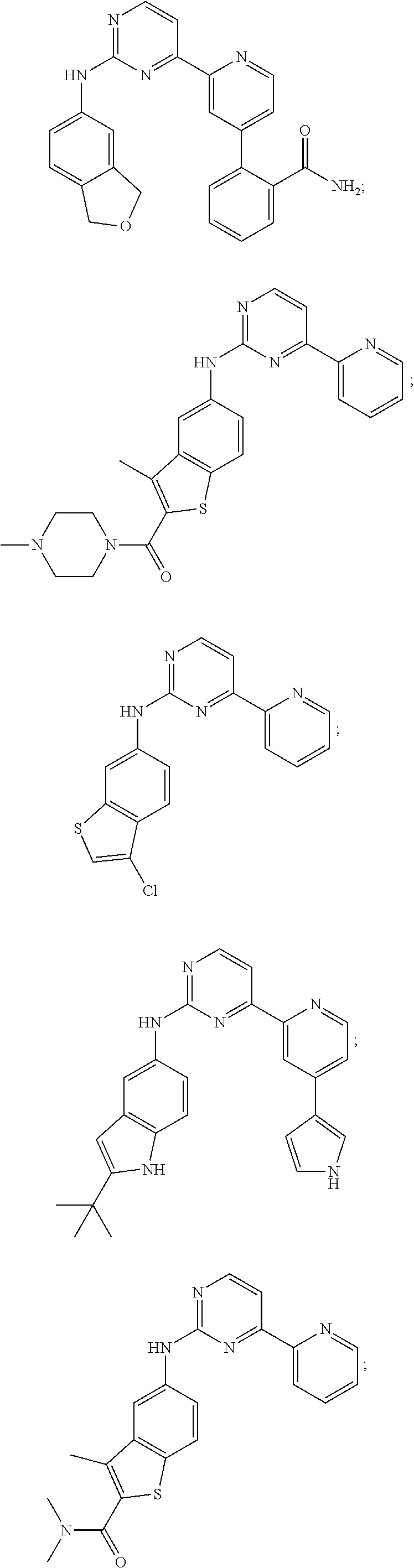


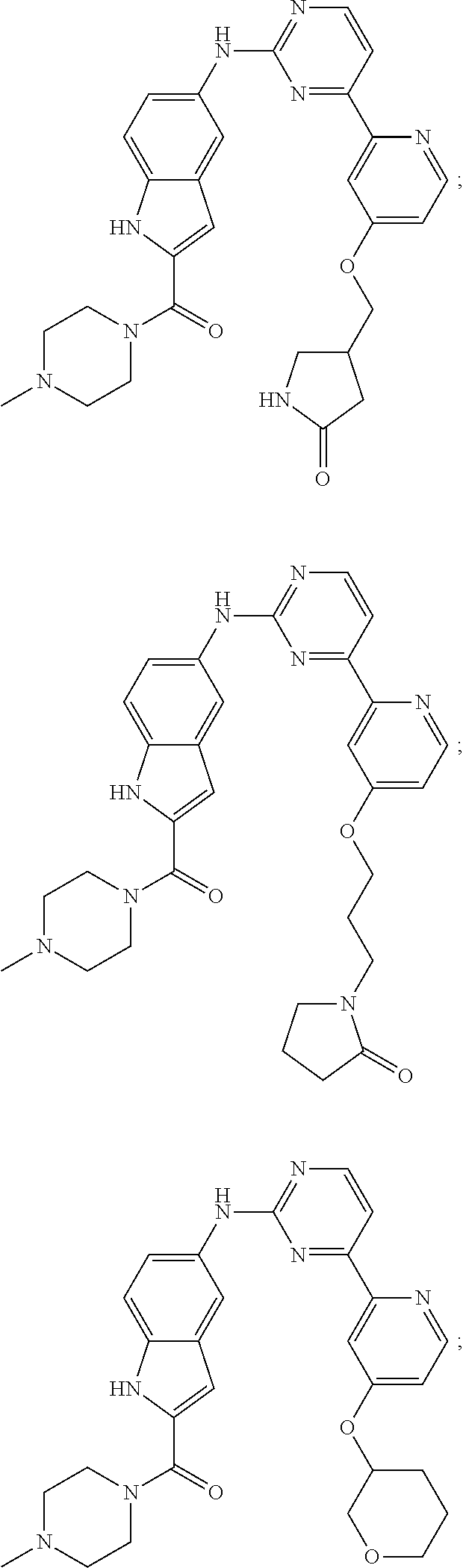


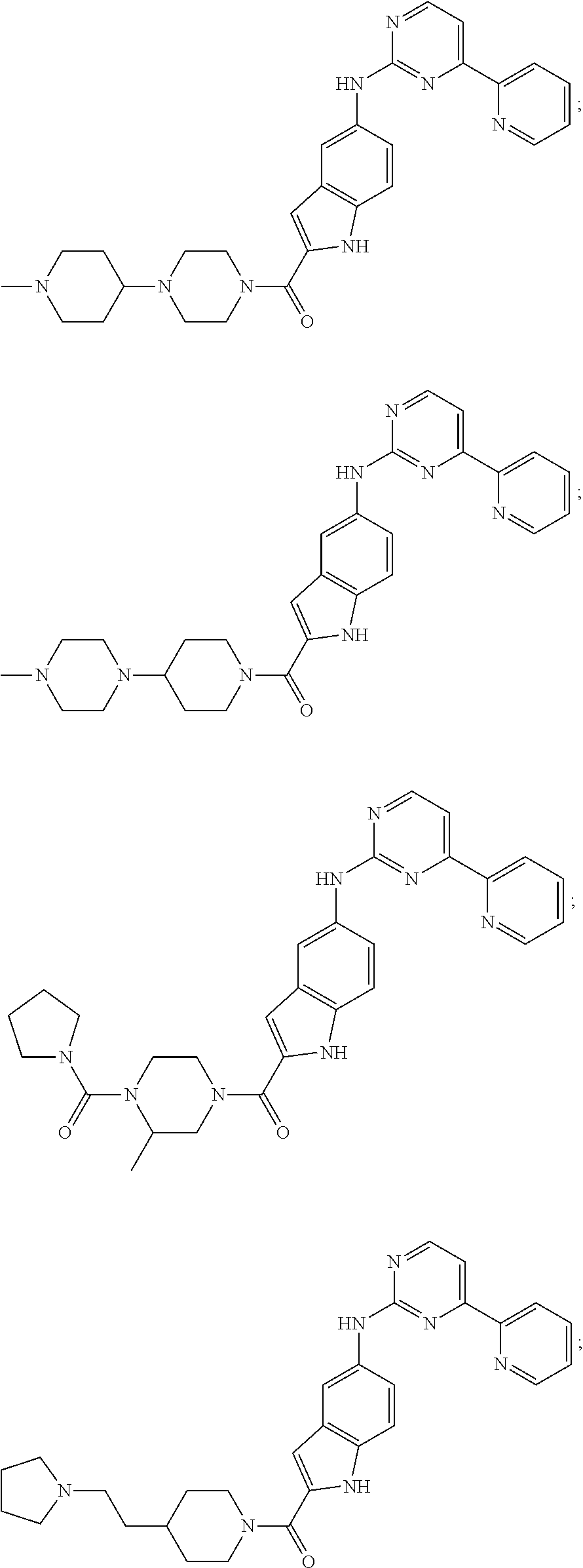


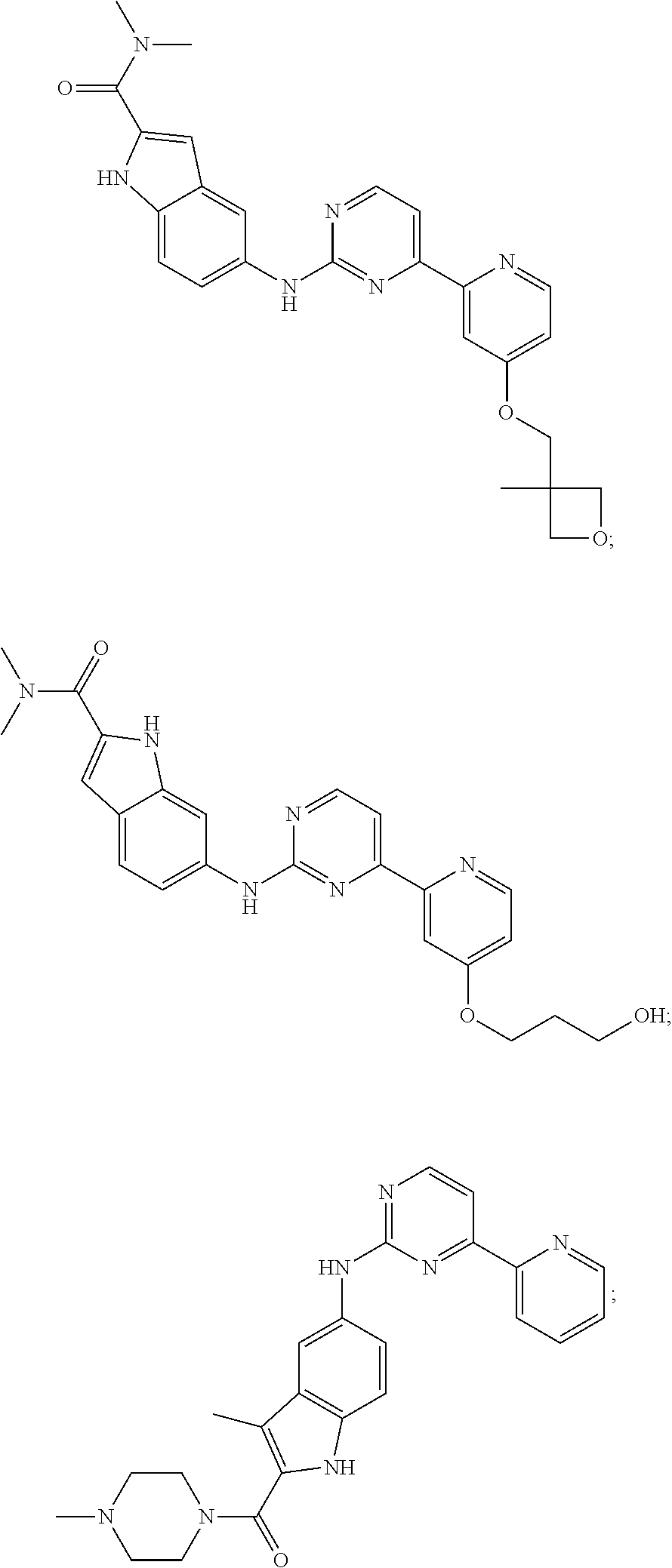


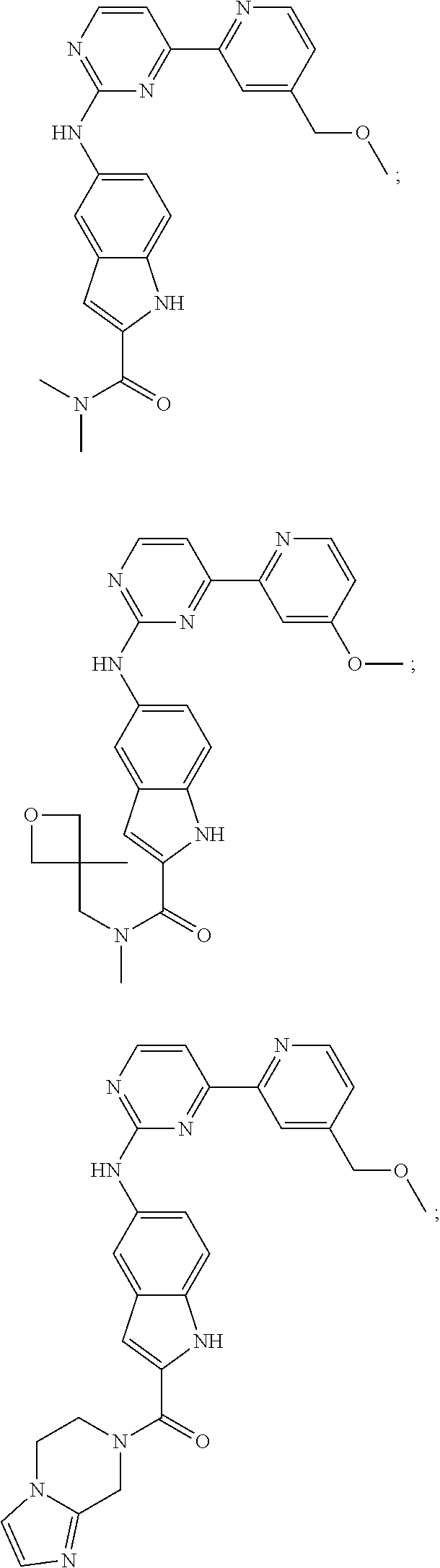


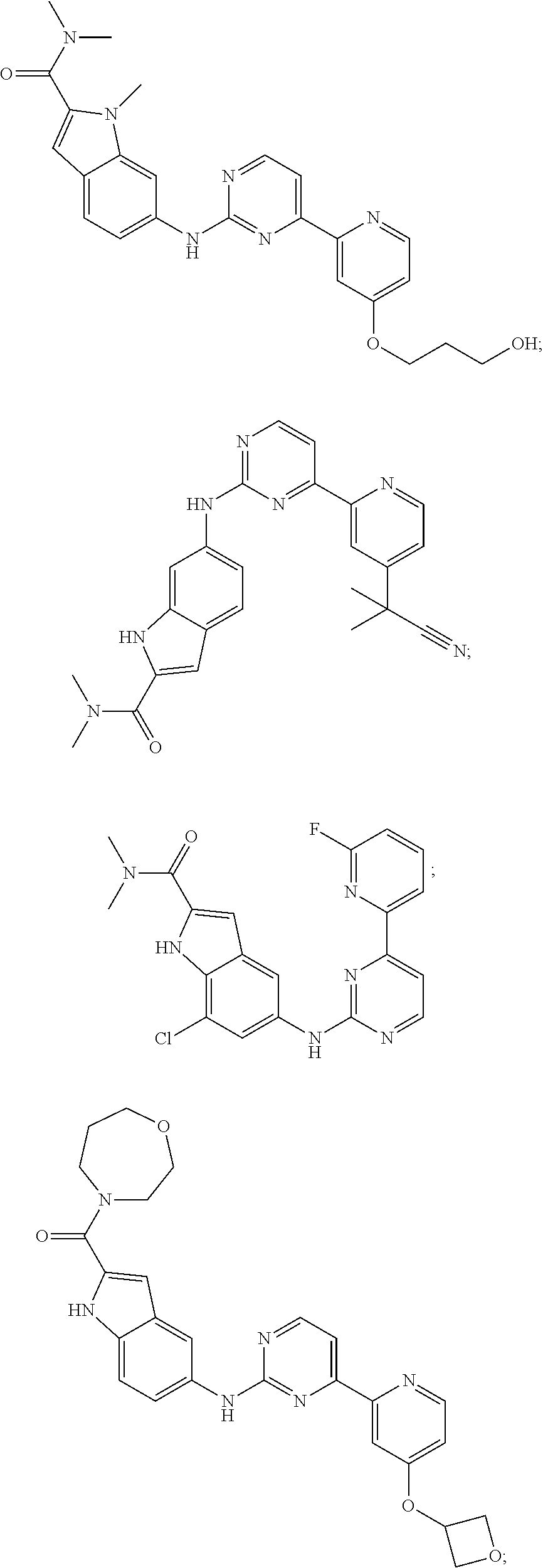
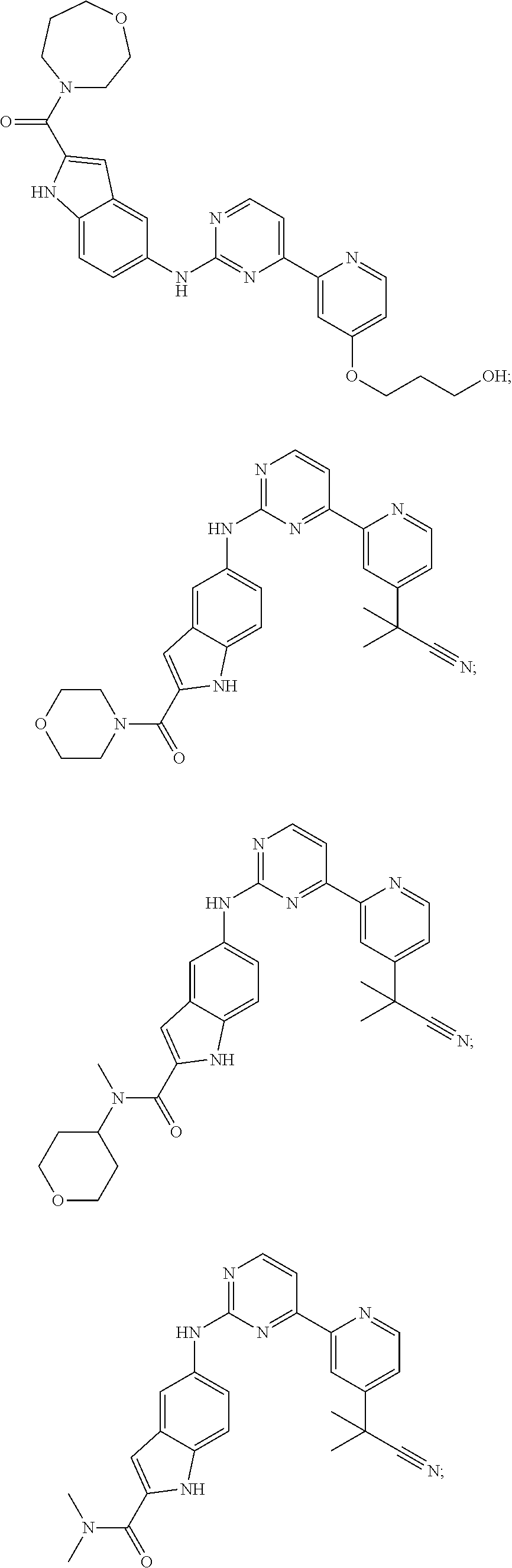


Applications Claiming Priority (3)
| Application Number | Priority Date | Filing Date | Title |
|---|---|---|---|
| EP11152528 | 2011-01-28 | ||
| EP11152528 | 2011-01-28 | ||
| EP11152528.3 | 2011-01-28 |
Publications (2)
| Publication Number | Publication Date |
|---|---|
| US20130023502A1 true US20130023502A1 (en) | 2013-01-24 |
| US8772305B2 US8772305B2 (en) | 2014-07-08 |
Family
ID=43896825
Family Applications (1)
| Application Number | Title | Priority Date | Filing Date |
|---|---|---|---|
| US13/357,734 Active US8772305B2 (en) | 2011-01-28 | 2012-01-25 | Substituted pyridinyl-pyrimidines and their use as medicaments |
Country Status (4)
| Country | Link |
|---|---|
| US (1) | US8772305B2 (en) |
| EP (1) | EP2668177B1 (en) |
| JP (1) | JP5959537B2 (en) |
| WO (1) | WO2012101013A1 (en) |
Cited By (4)
| Publication number | Priority date | Publication date | Assignee | Title |
|---|---|---|---|---|
| US10287282B2 (en) | 2014-12-31 | 2019-05-14 | Angion Biomedica Corp. | Methods and agents for treating disease |
| US11459319B2 (en) | 2014-08-11 | 2022-10-04 | Angion Biomedica Corp. | Cytochrome P450 inhibitors and uses thereof |
| US11633399B2 (en) | 2018-12-25 | 2023-04-25 | Sol-Gel Technologies Ltd. | Treatment of skin disorders with compositions comprising an EGFR inhibitor |
| US11737463B2 (en) | 2017-05-30 | 2023-08-29 | Basf Se | Pyridine and pyrazine compounds |
Families Citing this family (19)
| Publication number | Priority date | Publication date | Assignee | Title |
|---|---|---|---|---|
| JP5959537B2 (en) | 2011-01-28 | 2016-08-02 | ベーリンガー インゲルハイム インターナショナル ゲゼルシャフト ミット ベシュレンクテル ハフツング | Substituted pyridinyl-pyrimidines and their use as pharmaceuticals |
| WO2013109882A1 (en) * | 2012-01-20 | 2013-07-25 | Genosco | Substituted pyrimidine compounds and their use as syk inhibitors |
| US9096579B2 (en) * | 2012-04-20 | 2015-08-04 | Boehringer Ingelheim International Gmbh | Amino-indolyl-substituted imidazolyl-pyrimidines and their use as medicaments |
| TW201412740A (en) * | 2012-09-20 | 2014-04-01 | Bayer Pharma AG | Substituted pyrrolopyrimidinylamino-benzothiazolones |
| MX364895B (en) | 2013-03-13 | 2019-05-10 | Forma Therapeutics Inc | Novel compounds and compositions for inhibition of fasn. |
| AR096135A1 (en) | 2013-05-02 | 2015-12-09 | Actelion Pharmaceuticals Ltd | DERIVATIVES OF QUINOLONA |
| TW201534597A (en) | 2013-06-20 | 2015-09-16 | Ab Science | Benzimidazole derivatives as selective proteine kinase inhibitors |
| CN109305957B (en) * | 2017-07-26 | 2021-08-03 | 上海医药工业研究院 | Phenylpyridines and their application in DPP-4 enzyme inhibitors |
| WO2019046465A2 (en) * | 2017-08-29 | 2019-03-07 | Rutgers, The State University Of New Jersey | Therapeutic indoles |
| WO2019046467A1 (en) | 2017-08-29 | 2019-03-07 | Rutgers, The State University Of New Jersey | Therapeutic indazoles |
| CN107739368B (en) * | 2017-10-13 | 2020-02-14 | 厦门大学 | N-substituted-5- ((4-substituted pyrimidine-2-yl) amino) indole derivatives, and preparation method and application thereof |
| TWI767148B (en) | 2018-10-10 | 2022-06-11 | 美商弗瑪治療公司 | Inhibiting fatty acid synthase (fasn) |
| WO2020092395A1 (en) | 2018-10-29 | 2020-05-07 | Forma Therapeutics, Inc. | SOLID FORMS OF (4-(2-FLUORO-4-(1-METHYL-1 H-BENZO[d]IMIDAZOL-5-YL)BENZOYL) PIPERAZIN-1-YL)(1-HYDROXYCYCLOPROPYL)METHANONE |
| CN108993496B (en) * | 2018-10-30 | 2021-01-15 | 山东第一医科大学(山东省医学科学院) | A kind of preparation method of drug ropinirole intermediate for treating dyskinesia |
| CA3124569A1 (en) | 2018-12-28 | 2020-07-02 | Spv Therapeutics Inc. | Cyclin-dependent kinase inhibitors |
| CN109734708B (en) * | 2019-02-01 | 2021-04-09 | 厦门大学 | Pyrimidine indole Nur77 receptor modulator and preparation method and application thereof |
| US11339150B2 (en) | 2019-12-27 | 2022-05-24 | Onkure, Inc. | Benzimidazole compounds as HDAC6 inhibitors |
| JP2023512821A (en) | 2020-02-04 | 2023-03-29 | マインドセット ファーマ インコーポレイテッド | 3-pyrrolidine indole derivatives as serotonergic hallucinogens for the treatment of central nervous system disorders |
| CN112957357B (en) * | 2021-03-01 | 2022-05-27 | 中国医科大学附属第一医院 | Target KLF4 ubiquitination small molecule inhibitor and application thereof |
Citations (3)
| Publication number | Priority date | Publication date | Assignee | Title |
|---|---|---|---|---|
| US5635527A (en) * | 1994-06-06 | 1997-06-03 | The Green Cross Corporation | Carboxylic acid compound having condensed ring, salt thereof and pharmaceutical use thereof |
| US6225331B1 (en) * | 1996-11-25 | 2001-05-01 | The Procter & Gamble Company | Guanidinyl heterocycle compounds useful as alpha-2 adrenoceptor agonists |
| WO2008079933A2 (en) * | 2006-12-22 | 2008-07-03 | Novartis Ag | Heteroaryl-heteroaryl compounds as cdk inhibitors for the treatment of cancer, inflammation and viral infections |
Family Cites Families (38)
| Publication number | Priority date | Publication date | Assignee | Title |
|---|---|---|---|---|
| US2194925A (en) | 1937-12-31 | 1940-03-26 | Du Pont | Primary arylamines and the manufacture thereof |
| US4792547A (en) | 1985-12-26 | 1988-12-20 | Hokuriku Pharmaceutical Co., Ltd. | Pyrazine-2-carboxamide derivatives useful in treating allergic disease |
| US4876252A (en) | 1986-01-13 | 1989-10-24 | American Cyanamid Company | 4,5,6-substituted-N-(substituted-phenyl)-2-pyrimidinamines |
| FR2600330B1 (en) | 1986-06-23 | 1988-12-16 | Charbonnages Ste Chimique | PROCESS FOR THE ASYMMETRIC HYDROGENATION OF CARBONYL COMPOUNDS AND COMPOUNDS OBTAINED |
| JP3060051B2 (en) | 1991-04-11 | 2000-07-04 | 塩野香料株式会社 | Pyridine derivative and fragrance composition containing the derivative |
| GB9619284D0 (en) | 1996-09-16 | 1996-10-30 | Celltech Therapeutics Ltd | Chemical compounds |
| GB9622363D0 (en) | 1996-10-28 | 1997-01-08 | Celltech Therapeutics Ltd | Chemical compounds |
| NO311817B1 (en) * | 1996-12-23 | 2002-01-28 | Lifecare As | Method for recording the changes in the level of an osmotically active component in body fluid and device for carrying out the method |
| AU5330698A (en) * | 1996-12-23 | 1998-07-17 | Celltech Therapeutics Limited | Fused polycyclic 2-aminopyrimidine derivatives, their preparation and their use as protein tyrosine kinase inhibitors |
| AP9801302A0 (en) | 1997-07-23 | 2000-01-23 | Pfizer | Indole compounds as anti-inflammatory/analgesic agents.. |
| GB9821898D0 (en) | 1998-10-08 | 1998-12-02 | Pfizer Ltd | Heterocycles |
| GB9914258D0 (en) * | 1999-06-18 | 1999-08-18 | Celltech Therapeutics Ltd | Chemical compounds |
| AU2001229501A1 (en) | 2000-01-24 | 2001-07-31 | Isis Pharmaceuticals, Inc. | Antisense modulation of inducible nitric oxide synthase expression |
| GB0004153D0 (en) | 2000-02-23 | 2000-04-12 | Astrazeneca Uk Ltd | Novel use |
| EP1326862B1 (en) | 2000-10-12 | 2004-09-15 | BOEHRINGER INGELHEIM PHARMA GMBH & CO. KG | Crystalline monohydrate of tiotropiumbromide, method for producing the same and the use thereof in the production of a medicament |
| AR035700A1 (en) | 2001-05-08 | 2004-06-23 | Astrazeneca Ab | DERIVATIVES OF ARILHETEROALQUILAMINA, PHARMACEUTICAL COMPOSITION, USES OF THESE DERIVATIVES FOR THE MANUFACTURE OF MEDICINES, TREATMENT METHODS, AND PROCESS FOR THE PREPARATION OF THESE DERIVATIVES |
| EP1721609A3 (en) | 2001-05-16 | 2007-01-31 | GPC Biotech AG | Pyridylpyrimidine derivatives as effective compounds against prion diseases |
| IL159238A0 (en) | 2001-06-22 | 2004-06-01 | Boehringer Ingelheim Pharma | Crystalline anticholinergic, method for its production, and use thereof in the production of a drug |
| US20030000911A1 (en) | 2001-06-27 | 2003-01-02 | Paul Kelley | Hot-fillable multi-sided blow-molded container |
| EP1411928A1 (en) | 2001-07-20 | 2004-04-28 | Boehringer Ingelheim (Canada) Ltd. | Viral polymerase inhibitors |
| WO2003030909A1 (en) | 2001-09-25 | 2003-04-17 | Bayer Pharmaceuticals Corporation | 2- and 4-aminopyrimidines n-substtituded by a bicyclic ring for use as kinase inhibitors in the treatment of cancer |
| WO2003032997A1 (en) | 2001-10-17 | 2003-04-24 | Boehringer Ingelheim Pharma Gmbh & Co. Kg | Pyrimidine derivatives, pharmaceutical agent containing said compounds, use and method for making same |
| DE60210819T2 (en) * | 2001-12-17 | 2007-04-19 | Smithkline Beecham Corp. | PYRAZOLOPYRIDAZINDERIVATE |
| UY27813A1 (en) | 2002-05-31 | 2003-12-31 | Smithkline Beecham Corp | PEPTIDE-DISFORMILASE INHIBITORS |
| US7348335B2 (en) * | 2002-11-05 | 2008-03-25 | Vertex Pharmaceuticals Incorporated | Compositions useful as inhibitors of JAK and other protein kinases |
| SE0203304D0 (en) | 2002-11-07 | 2002-11-07 | Astrazeneca Ab | Novel Coumpounds |
| AR042064A1 (en) | 2002-11-19 | 2005-06-08 | Takeda Pharmaceutical | AMINA COMPOUNDS WITH INHIBITING ACTIVITY OF THE UNION TO THE SOMASTOTINE RECEIVER |
| EP1723132A1 (en) | 2004-02-12 | 2006-11-22 | Asterand Uk Limited | Ep2 receptor agonists |
| CA2571881A1 (en) | 2004-06-22 | 2006-01-26 | Andreas P. Termin | Heterocyclic derivatives for modulation of calcium channels |
| WO2006021458A2 (en) | 2004-08-27 | 2006-03-02 | Gpc Biotech Ag | Pyrimidine derivatives |
| WO2006041773A2 (en) * | 2004-10-04 | 2006-04-20 | Millennium Pharmaceuticals, Inc. | Lactam compounds useful as protein kinase inhibitors |
| EP1939194A4 (en) | 2005-09-07 | 2010-12-08 | Banyu Pharma Co Ltd | AROMATIC SUBSTITUTED BICYLIC PYRIDONE DERIVATIVE |
| WO2008024634A1 (en) * | 2006-08-25 | 2008-02-28 | Smithkline Beecham Corporation | Pyrimdine compounds useful as kinase inhibitors |
| WO2008056768A1 (en) | 2006-11-10 | 2008-05-15 | Wako Pure Chemical Industries, Ltd. | Metal catalyst carrying carbon/ethylenediamine composites and process for production thereof |
| JP5231829B2 (en) | 2007-02-15 | 2013-07-10 | 石原産業株式会社 | Pyridyl-triazolopyrimidine derivatives or salts thereof, pest control agents containing them, and methods for producing them |
| DE102007035334A1 (en) | 2007-07-27 | 2009-01-29 | Boehringer Ingelheim Pharma Gmbh & Co. Kg | Novel substituted arylsulfonylglycines, their preparation and their use as pharmaceuticals |
| IE20070935A1 (en) * | 2007-12-21 | 2009-06-24 | Trinity College Dublin | Guanidine based compounds and their use in the treatment of mental and neurological disorders. |
| JP5959537B2 (en) | 2011-01-28 | 2016-08-02 | ベーリンガー インゲルハイム インターナショナル ゲゼルシャフト ミット ベシュレンクテル ハフツング | Substituted pyridinyl-pyrimidines and their use as pharmaceuticals |
-
2012
- 2012-01-18 JP JP2013550825A patent/JP5959537B2/en active Active
- 2012-01-18 WO PCT/EP2012/050672 patent/WO2012101013A1/en not_active Ceased
- 2012-01-18 EP EP12702200.2A patent/EP2668177B1/en active Active
- 2012-01-25 US US13/357,734 patent/US8772305B2/en active Active
Patent Citations (3)
| Publication number | Priority date | Publication date | Assignee | Title |
|---|---|---|---|---|
| US5635527A (en) * | 1994-06-06 | 1997-06-03 | The Green Cross Corporation | Carboxylic acid compound having condensed ring, salt thereof and pharmaceutical use thereof |
| US6225331B1 (en) * | 1996-11-25 | 2001-05-01 | The Procter & Gamble Company | Guanidinyl heterocycle compounds useful as alpha-2 adrenoceptor agonists |
| WO2008079933A2 (en) * | 2006-12-22 | 2008-07-03 | Novartis Ag | Heteroaryl-heteroaryl compounds as cdk inhibitors for the treatment of cancer, inflammation and viral infections |
Non-Patent Citations (11)
| Title |
|---|
| E.S. Masuda et al., 21 Pulmonary Pharmacology & Therapeutics, 461-467 (2008) * |
| I. Collins, Current Signal Transduction Therapy, 1, 13-23, 13 (2006) * |
| J.H. Poupaert, Drug Design: Basic Principles and Applications, in 2 ENCYCLOPEDIA OF PHARMACEUTICAL TECHNOLOGY 1362-1369, 1367 (James Swarbrick ed., 3rd ed., 2007) * |
| L.I. Zon et al., Nature Reviews Drug Discovery 4, 35 (2005) * |
| M. Gonzalez et al., 22 Expert Opinion Therapeutic Patents, 1289-1302 (2012) * |
| M. RIccaboni et al., 15 Drug Discovery Today, 517-530 (2010) * |
| M.E. Weinblatt et al., 363 The New England Journal of Medicine 1303-1312 (2010) * |
| N. Yamamoto et al., 306 The Journal Of Pharmacology And Experimental Therapeutics, 1174-1181 (2003) * |
| R. Singh et al., 42 Annual Reports in Medicinal Chemistry, 379-391, 380 (2007) * |
| S. Malhotra et al., 11 Expert Opinion Therapeutic Patents, 275-291 (2006) * |
| U.E.W. Lange et al., 16 Bioorganic & Medicinal Chemistry Letters, 2648-2653 (2006) * |
Cited By (6)
| Publication number | Priority date | Publication date | Assignee | Title |
|---|---|---|---|---|
| US11459319B2 (en) | 2014-08-11 | 2022-10-04 | Angion Biomedica Corp. | Cytochrome P450 inhibitors and uses thereof |
| US10287282B2 (en) | 2014-12-31 | 2019-05-14 | Angion Biomedica Corp. | Methods and agents for treating disease |
| US10851095B2 (en) | 2014-12-31 | 2020-12-01 | Angion Biomedica Corp. | Methods and agents for treating disease |
| US11434234B2 (en) | 2014-12-31 | 2022-09-06 | Angion Biomedica Corp. | Methods and agents for treating disease |
| US11737463B2 (en) | 2017-05-30 | 2023-08-29 | Basf Se | Pyridine and pyrazine compounds |
| US11633399B2 (en) | 2018-12-25 | 2023-04-25 | Sol-Gel Technologies Ltd. | Treatment of skin disorders with compositions comprising an EGFR inhibitor |
Also Published As
| Publication number | Publication date |
|---|---|
| US8772305B2 (en) | 2014-07-08 |
| EP2668177B1 (en) | 2014-10-22 |
| WO2012101013A1 (en) | 2012-08-02 |
| EP2668177A1 (en) | 2013-12-04 |
| JP2014507417A (en) | 2014-03-27 |
| JP5959537B2 (en) | 2016-08-02 |
Similar Documents
| Publication | Publication Date | Title |
|---|---|---|
| US8772305B2 (en) | Substituted pyridinyl-pyrimidines and their use as medicaments | |
| US9096579B2 (en) | Amino-indolyl-substituted imidazolyl-pyrimidines and their use as medicaments | |
| US10947243B2 (en) | Heteroaryl SYK inhibitors | |
| US8912173B2 (en) | Substituted quinolines and their use as medicaments | |
| US9187478B2 (en) | Substituted naphthyridines and their use as medicaments | |
| US10155751B2 (en) | Pyrazolyl-substituted heteroaryls and their use as medicaments |
Legal Events
| Date | Code | Title | Description |
|---|---|---|---|
| AS | Assignment |
Owner name: BOEHRINGER INGELHEIM INTERNATIONAL GMBH, GERMANY Free format text: ASSIGNMENT OF ASSIGNORS INTEREST;ASSIGNORS:DAHMANN, GEORG;FIEGEN, DENNIS;FLECK, MARTIN;AND OTHERS;SIGNING DATES FROM 20120209 TO 20120301;REEL/FRAME:027873/0881 |
|
| FEPP | Fee payment procedure |
Free format text: PAYOR NUMBER ASSIGNED (ORIGINAL EVENT CODE: ASPN); ENTITY STATUS OF PATENT OWNER: LARGE ENTITY |
|
| STCF | Information on status: patent grant |
Free format text: PATENTED CASE |
|
| MAFP | Maintenance fee payment |
Free format text: PAYMENT OF MAINTENANCE FEE, 4TH YEAR, LARGE ENTITY (ORIGINAL EVENT CODE: M1551) Year of fee payment: 4 |
|
| MAFP | Maintenance fee payment |
Free format text: PAYMENT OF MAINTENANCE FEE, 8TH YEAR, LARGE ENTITY (ORIGINAL EVENT CODE: M1552); ENTITY STATUS OF PATENT OWNER: LARGE ENTITY Year of fee payment: 8 |
|
| MAFP | Maintenance fee payment |
Free format text: PAYMENT OF MAINTENANCE FEE, 12TH YEAR, LARGE ENTITY (ORIGINAL EVENT CODE: M1553); ENTITY STATUS OF PATENT OWNER: LARGE ENTITY Year of fee payment: 12 |