US12269801B2 - Modified amino acids - Google Patents
Modified amino acids Download PDFInfo
- Publication number
- US12269801B2 US12269801B2 US18/067,709 US202218067709A US12269801B2 US 12269801 B2 US12269801 B2 US 12269801B2 US 202218067709 A US202218067709 A US 202218067709A US 12269801 B2 US12269801 B2 US 12269801B2
- Authority
- US
- United States
- Prior art keywords
- polypeptide
- amino acid
- certain embodiments
- antibody
- amino acids
- Prior art date
- Legal status (The legal status is an assumption and is not a legal conclusion. Google has not performed a legal analysis and makes no representation as to the accuracy of the status listed.)
- Active, expires
Links
Images


Classifications
-
- C—CHEMISTRY; METALLURGY
- C07—ORGANIC CHEMISTRY
- C07D—HETEROCYCLIC COMPOUNDS
- C07D213/00—Heterocyclic compounds containing six-membered rings, not condensed with other rings, with one nitrogen atom as the only ring hetero atom and three or more double bonds between ring members or between ring members and non-ring members
- C07D213/02—Heterocyclic compounds containing six-membered rings, not condensed with other rings, with one nitrogen atom as the only ring hetero atom and three or more double bonds between ring members or between ring members and non-ring members having three double bonds between ring members or between ring members and non-ring members
- C07D213/04—Heterocyclic compounds containing six-membered rings, not condensed with other rings, with one nitrogen atom as the only ring hetero atom and three or more double bonds between ring members or between ring members and non-ring members having three double bonds between ring members or between ring members and non-ring members having no bond between the ring nitrogen atom and a non-ring member or having only hydrogen or carbon atoms directly attached to the ring nitrogen atom
- C07D213/24—Heterocyclic compounds containing six-membered rings, not condensed with other rings, with one nitrogen atom as the only ring hetero atom and three or more double bonds between ring members or between ring members and non-ring members having three double bonds between ring members or between ring members and non-ring members having no bond between the ring nitrogen atom and a non-ring member or having only hydrogen or carbon atoms directly attached to the ring nitrogen atom with substituted hydrocarbon radicals attached to ring carbon atoms
- C07D213/54—Radicals substituted by carbon atoms having three bonds to hetero atoms with at the most one bond to halogen, e.g. ester or nitrile radicals
- C07D213/55—Acids; Esters
-
- A—HUMAN NECESSITIES
- A61—MEDICAL OR VETERINARY SCIENCE; HYGIENE
- A61P—SPECIFIC THERAPEUTIC ACTIVITY OF CHEMICAL COMPOUNDS OR MEDICINAL PREPARATIONS
- A61P29/00—Non-central analgesic, antipyretic or antiinflammatory agents, e.g. antirheumatic agents; Non-steroidal antiinflammatory drugs [NSAID]
-
- A—HUMAN NECESSITIES
- A61—MEDICAL OR VETERINARY SCIENCE; HYGIENE
- A61P—SPECIFIC THERAPEUTIC ACTIVITY OF CHEMICAL COMPOUNDS OR MEDICINAL PREPARATIONS
- A61P35/00—Antineoplastic agents
-
- A—HUMAN NECESSITIES
- A61—MEDICAL OR VETERINARY SCIENCE; HYGIENE
- A61P—SPECIFIC THERAPEUTIC ACTIVITY OF CHEMICAL COMPOUNDS OR MEDICINAL PREPARATIONS
- A61P37/00—Drugs for immunological or allergic disorders
- A61P37/02—Immunomodulators
-
- C—CHEMISTRY; METALLURGY
- C07—ORGANIC CHEMISTRY
- C07C—ACYCLIC OR CARBOCYCLIC COMPOUNDS
- C07C247/00—Compounds containing azido groups
- C07C247/02—Compounds containing azido groups with azido groups bound to acyclic carbon atoms of a carbon skeleton
- C07C247/04—Compounds containing azido groups with azido groups bound to acyclic carbon atoms of a carbon skeleton being saturated
-
- C—CHEMISTRY; METALLURGY
- C07—ORGANIC CHEMISTRY
- C07C—ACYCLIC OR CARBOCYCLIC COMPOUNDS
- C07C271/00—Derivatives of carbamic acids, i.e. compounds containing any of the groups, the nitrogen atom not being part of nitro or nitroso groups
- C07C271/06—Esters of carbamic acids
- C07C271/08—Esters of carbamic acids having oxygen atoms of carbamate groups bound to acyclic carbon atoms
- C07C271/10—Esters of carbamic acids having oxygen atoms of carbamate groups bound to acyclic carbon atoms with the nitrogen atoms of the carbamate groups bound to hydrogen atoms or to acyclic carbon atoms
- C07C271/20—Esters of carbamic acids having oxygen atoms of carbamate groups bound to acyclic carbon atoms with the nitrogen atoms of the carbamate groups bound to hydrogen atoms or to acyclic carbon atoms to carbon atoms of hydrocarbon radicals substituted by nitrogen atoms not being part of nitro or nitroso groups
-
- C—CHEMISTRY; METALLURGY
- C07—ORGANIC CHEMISTRY
- C07C—ACYCLIC OR CARBOCYCLIC COMPOUNDS
- C07C275/00—Derivatives of urea, i.e. compounds containing any of the groups, the nitrogen atoms not being part of nitro or nitroso groups
- C07C275/04—Derivatives of urea, i.e. compounds containing any of the groups, the nitrogen atoms not being part of nitro or nitroso groups having nitrogen atoms of urea groups bound to acyclic carbon atoms
- C07C275/06—Derivatives of urea, i.e. compounds containing any of the groups, the nitrogen atoms not being part of nitro or nitroso groups having nitrogen atoms of urea groups bound to acyclic carbon atoms of an acyclic and saturated carbon skeleton
- C07C275/14—Derivatives of urea, i.e. compounds containing any of the groups, the nitrogen atoms not being part of nitro or nitroso groups having nitrogen atoms of urea groups bound to acyclic carbon atoms of an acyclic and saturated carbon skeleton being further substituted by nitrogen atoms not being part of nitro or nitroso groups
-
- C—CHEMISTRY; METALLURGY
- C07—ORGANIC CHEMISTRY
- C07K—PEPTIDES
- C07K14/00—Peptides having more than 20 amino acids; Gastrins; Somatostatins; Melanotropins; Derivatives thereof
-
- C—CHEMISTRY; METALLURGY
- C07—ORGANIC CHEMISTRY
- C07K—PEPTIDES
- C07K16/00—Immunoglobulins [IGs], e.g. monoclonal or polyclonal antibodies
-
- C—CHEMISTRY; METALLURGY
- C07—ORGANIC CHEMISTRY
- C07K—PEPTIDES
- C07K14/00—Peptides having more than 20 amino acids; Gastrins; Somatostatins; Melanotropins; Derivatives thereof
- C07K14/435—Peptides having more than 20 amino acids; Gastrins; Somatostatins; Melanotropins; Derivatives thereof from animals; from humans
- C07K14/52—Cytokines; Lymphokines; Interferons
- C07K14/53—Colony-stimulating factor [CSF]
- C07K14/535—Granulocyte CSF; Granulocyte-macrophage CSF
Definitions
- modified amino acids comprising an azido group
- polypeptides, antibodies and conjugates comprising the modified amino acids
- methods of producing the polypeptides, antibodies and conjugates comprising the modified amino acids are useful in methods of treatment and prevention, methods of detection and methods of diagnosis.
- Engineered polypeptides are used widely in therapy and diagnostic applications. Therapeutic antibodies have been useful for many years in, for example, treatment of cancer and inflammatory conditions. Therapeutic polypeptides are also used to treat and prevent blood conditions and viral infections. Diagnostic polypeptides have been used successfully to identify healthy and diseased cells and tissues in vivo.
- polypeptides can provide targeting functionality to specific cells.
- the selective affinity of certain polypeptides can be used to target nearly any cell or tissue desired, for example a cell expressing an antigen.
- a polypeptide can carry a molecular payload to slow or destroy the target cell or tissue. Polypeptides have thus found use in therapy for conditions such as cancer, inflammatory diseases, autoimmune diseases and transplant rejection.
- polypeptides modified at site-specific positions optimized for uniformity, yield and/or activity to further the promising use of polypeptides in, for example, therapy and diagnostics.
- modified amino acids comprising an azido group
- polypeptides, antibodies and conjugates comprising the modified amino acids
- methods of producing the polypeptides, antibodies and conjugates comprising the modified amino acids are useful in methods of treatment and prevention, methods of detection and methods of diagnosis.
- D is —Ar—W 3 — or —W 1 —Y 1 —C(O)—Y 2 —W 2 —;
- Ar is
- each of W 1 , W 2 , and W 3 is independently a single bond or lower alkylene; each X 1 is independently —NH—, —O—, or —S—; each Y 1 is independently a single bond, —NH—, or —O—; each Y 2 is independently a single bond, —NH—, —O—, or an N-linked or C-linked pyrrolidinylene; and one of Z 1 , Z 2 , and Z 3 is —N— and the others of Z 1 , Z 2 , and Z 3 are independently —CH—.
- polypeptides and antibodies comprising an amino acid residue corresponding to a compound of formula I are provided.
- conjugates of the polypeptides and payloads are provided.
- conjugates of the antibodies and payloads are provided.
- polypeptides include, but are not limited to, proteins, antibodies, antibody fragments, enzymes, and nucleic acids.
- FIG. 1 provides A schematic of the reaction of compounds (30), (40), and (50) with compound (60).
- FIG. 2 provides a plot of k obs vs. [Azide] for reaction of compound (30), compound (40) and compound (50) with compound (60).
- k obs is plotted on the vertical axis in units of sec ⁇ 1 from 0 to 0.006 and [Azide] is plotted on the horizontal axis in units of mM from 0 to 3.
- results for compound (30) are provided as open circles
- results for compound (40) are provided as filled triangles
- results for compound (50) are provided as filled circles.
- compounds (30) and (40) exhibited a first order rate constant of 1.4 M ⁇ 1 sec ⁇ 1 , approximately 7-fold higher than first order rate constant of 0.2 M ⁇ 1 sec ⁇ 1 for compound (50).
- FIG. 3 provides a plot of a time course for pAMF incorporation at the Y50TAG site in GFP.
- RFU is plotted on the vertical axis from 0 to 400000 and time is plotted on the horizontal axis in units of minutes from 0 to 600.
- results for turboGFP are provided as filled squares (top)
- results for pCNFRS D286R pAMF are provided as filled diamonds (middle)
- results for Y50TAG are provided as filled triangles (bottom).
- turboGFP is approximately 250,000 RFU at 200 minutes
- pCNFRS D286R pAMF is approximately 130,000 RFU at 200 minutes
- Y50TAG is approximately 0 RFU at 200 minutes.
- turboGFP is approximately 340,000 RFU at 400 minutes
- pCNFRS D286R pAMF is approximately 160,000 RFU at 400 minutes
- Y50TAG is approximately 0 RFU at 400 minutes.
- turboGFP is approximately 370,000 RFU at 600 minutes
- pCNFRS D286R pAMF is approximately 170,000 RFU at 600 minutes
- Y50TAG is approximately 0 RFU at 600 minutes.
- the term includes both substituted and unsubstituted cycloalkenyl groups, including halogenated cycloalkenyl groups.
- the cycloalkenyl group is a fluorinated cycloalkenyl group.
- Non-limiting examples of moieties with which the cycloalkenyl group can be substituted are selected from the group consisting of halogen (fluoro, chloro, bromo or iodo), hydroxyl, carbonyl, sulfanyl, amino, alkylamino, arylamino, alkoxy, aryloxy, nitro, cyano, sulfonic acid, sulfate, phosphonic acid, phosphate, or phosphonate, either unprotected, or protected as necessary.
- halogen fluoro, chloro, bromo or iodo
- hydroxyl carbonyl
- sulfanyl amino, alkylamino, arylamino, alkoxy, aryloxy, nitro, cyano, sulfonic acid, sulfate, phosphonic acid, phosphate, or phosphonate, either unprotected, or protected as necessary.
- Alkenylene refers to divalent olefinically unsaturated hydrocarbon groups, in certain embodiments, having up to about 11 carbon atoms or from 2 to 6 carbon atoms which can be straight-chained or branched and having at least 1 or from 1 to 2 sites of olefinic unsaturation. This term is exemplified by groups such as ethenylene (—CH ⁇ CH—), the propenylene isomers (e.g., —CH ⁇ CHCH 2 — and —C(CH 3 ) ⁇ CH— and —CH ⁇ C(CH 3 )—) and the like. The term includes both substituted and unsubstituted alkenylene groups, including halogenated alkenylene groups.
- Non-limiting examples of moieties with which the alkynyl group can be substituted are selected from the group consisting of halogen (fluoro, chloro, bromo or iodo), hydroxyl, carbonyl, sulfanyl, amino, alkylamino, arylamino, alkoxy, aryloxy, nitro, cyano, sulfonic acid, sulfate, phosphonic acid, phosphate, or phosphonate, either unprotected, or protected as necessary.
- halogen fluoro, chloro, bromo or iodo
- hydroxyl carbonyl
- sulfanyl amino, alkylamino, arylamino, alkoxy, aryloxy, nitro, cyano, sulfonic acid, sulfate, phosphonic acid, phosphate, or phosphonate, either unprotected, or protected as necessary.
- Halogen or “halo” refers to chloro, bromo, fluoro or iodo.
- Thioalkoxy refers to the group —SR′ where R′ is alkyl or cycloalkyl.
- heterocyclyl refers to a monovalent monocyclic non-aromatic ring system and/or multicyclic ring system that contains at least one non-aromatic ring, wherein one or more of the non-aromatic ring atoms are heteroatoms independently selected from O, S, or N; and the remaining ring atoms are carbon atoms.
- the heterocyclyl or heterocyclic group has from 3 to 20, from 3 to 15, from 3 to 10, from 3 to 8, from 4 to 7, or from 5 to 6 ring atoms.
- Heterocyclyl groups are bonded to the rest of the molecule through the non-aromatic ring.
- the heterocyclyl is a monocyclic, bicyclic, tricyclic, or tetracyclic ring system, which may include a fused or bridged ring system, and in which the nitrogen or sulfur atoms may be optionally oxidized, the nitrogen atoms may be optionally quaternized, and some rings may be partially or fully saturated, or aromatic.
- the heterocyclyl may be attached to the main structure at any heteroatom or carbon atom which results in the creation of a stable compound.
- heterocyclic radicals include, but are not limited to, azepinyl, benzodioxanyl, benzodioxolyl, benzofuranonyl, benzopyranonyl, benzopyranyl, benzotetrahydrofuranyl, benzotetrahydrothienyl, benzothiopyranyl, benzoxazinyl, O-carbolinyl, chromanyl, chromonyl, cinnolinyl, coumarinyl, decahydroisoquinolinyl, dihydrobenzisothiazinyl, dihydrobenzisoxazinyl, dihydrofuryl, dihydroisoindolyl, dihydropyranyl, dihydropyrazolyl, dihydropyrazinyl, dihydropyridinyl, dihydropyrimidinyl, dihydropyrrolyl, dioxolanyl, 1,4-dithianyl
- heteroaryl refers to refers to a monovalent monocyclic aromatic group and/or multicyclic aromatic group that contain at least one aromatic ring, wherein at least one aromatic ring contains one or more heteroatoms independently selected from O, S and N in the ring. Heteroaryl groups are bonded to the rest of the molecule through the aromatic ring. Each ring of a heteroaryl group can contain one or two O atoms, one or two S atoms, and/or one to four N atoms, provided that the total number of heteroatoms in each ring is four or less and each ring contains at least one carbon atom. In certain embodiments, the heteroaryl has from 5 to 20, from 5 to 15, or from 5 to 10 ring atoms.
- monocyclic heteroaryl groups include, but are not limited to, furanyl, imidazolyl, isothiazolyl, isoxazolyl, oxadiazolyl, oxadiazolyl, oxazolyl, pyrazinyl, pyrazolyl, pyridazinyl, pyridyl, pyrimidinyl, pyrrolyl, thiadiazolyl, thiazolyl, thienyl, tetrazolyl, triazinyl and triazolyl.
- tricyclic heteroaryl groups include, but are not limited to, acridinyl, benzindolyl, carbazolyl, dibenzofuranyl, perimidinyl, phenanthrolinyl, phenanthridinyl, phenarsazinyl, phenazinyl, phenothiazinyl, phenoxazinyl and xanthenyl.
- heteroaryl may also be optionally substituted as described herein.
- alkylaryl refers to an aryl group with an alkyl substituent.
- aralkyl or “arylalkyl” refers to an alkyl group with an aryl substituent.
- “Pharmaceutically acceptable salt” refers to any salt of a compound provided herein which retains its biological properties and which is not toxic or otherwise undesirable for pharmaceutical use. Such salts may be derived from a variety of organic and inorganic counter-ions well known in the art.
- Pharmaceutically acceptable salts further include, by way of example only and without limitation, sodium, potassium, calcium, magnesium, ammonium, tetraalkylammonium and the like, and when the compound contains a basic functionality, salts of non-toxic organic or inorganic acids, such as hydrohalides, e.g.
- amino acid refers to naturally occurring and synthetic ⁇ , ⁇ ⁇ or ⁇ amino acids, and includes but is not limited to, amino acids found in proteins, i.e. glycine, alanine, valine, leucine, isoleucine, methionine, phenylalanine, tryptophan, proline, serine, threonine, cysteine, tyrosine, asparagine, glutamine, aspartate, glutamate, lysine, arginine and histidine.
- the amino acid is in the L-configuration.
- the amino acid can be a derivative of alanyl, valinyl, leucinyl, isoleuccinyl, prolinyl, phenylalaninyl, tryptophanyl, methioninyl, glycinyl, serinyl, threoninyl, cysteinyl, tyrosinyl, asparaginyl, glutaminyl, aspartoyl, glutaroyl, lysinyl, argininyl, histidinyl, ⁇ -alanyl, ⁇ -valinyl, ⁇ -leucinyl, ⁇ -isoleuccinyl, ⁇ -prolinyl, ⁇ -phenylalaninyl, ⁇ -tryptophanyl, ⁇ -methioninyl, ⁇ -glycinyl, ⁇ -serinyl, ⁇ -threoninyl, ⁇ -cysteinyl
- polypeptide “peptide” and “protein” are used interchangeably herein to refer to a polymer of amino acid residues. That is, a description directed to a polypeptide applies equally to a description of a peptide and a description of a protein, and vice versa. The terms apply to naturally occurring amino acid polymers as well as amino acid polymers in which one or more amino acid residues is a modified amino acid. Additionally, such “polypeptides,” “peptides” and “proteins” include amino acid chains of any length, including full length proteins, wherein the amino acid residues are linked by covalent peptide bonds.
- nucleoside composition that includes at least 85 or 90% by weight, in certain embodiments 95%, 98%, 99% or 100% by weight, of the designated enantiomer of that nucleoside. In certain embodiments, in the methods and compounds provided herein, the compounds are substantially free of enantiomers.
- “Isotopic composition” refers to the amount of each isotope present for a given atom
- “natural isotopic composition” refers to the naturally occurring isotopic composition or abundance for a given atom.
- Atoms containing their natural isotopic composition may also be referred to herein as “non-enriched” atoms. Unless otherwise designated, the atoms of the compounds recited herein are meant to represent any stable isotope of that atom. For example, unless otherwise stated, when a position is designated specifically as “H” or “hydrogen,” the position is understood to have hydrogen at its natural isotopic composition.
- “Isotopically enriched” refers to an atom having an isotopic composition other than the natural isotopic composition of that atom. “Isotopically enriched” may also refer to a compound containing at least one atom having an isotopic composition other than the natural isotopic composition of that atom.
- alkyl optionally comprise carbon-13 at an amount other than the natural isotopic composition.
- the IC 50 refers to an amount, concentration or dosage of a particular test compound that achieves a 50% inhibition of a maximal response in an assay that measures such response.
- a host refers to any unicellular or multicellular organism in which a virus can replicate, including cell lines and animals, and in certain embodiments, a human.
- a host can be carrying a part of a viral genome, whose replication or function can be altered by the compounds and compositions described herein.
- the term host specifically includes infected cells, cells transfected with all or part of a viral genome and animals, in particular, primates (including chimpanzees) and humans. In most animal applications, the host is a human patient.
- Veterinary applications in certain indications, however, are clearly anticipated by the present disclosure (such as chimpanzees).
- “Therapeutically effective amount” refers to an amount of a compound or composition that, when administered to a subject for treating a disease, is sufficient to effect such treatment for the disease.
- a “therapeutically effective amount” can vary depending on, inter alia, the compound, the disease and its severity, and the age, weight, etc., of the subject to be treated.
- prophylactically effective amount refers to the amount of a therapy (e.g., prophylactic agent) which is sufficient to result in the prevention or reduction of the development, recurrence or onset of one or more symptoms associated with a disorder (or to enhance or improve the prophylactic effect(s) of another therapy (e.g., another prophylactic agent).
- a therapy e.g., prophylactic agent
- another therapy e.g., another prophylactic agent
- substantially pure with respect to a composition comprising a modified amino acid residue refers to a composition that includes at least 80, 85, 90 or 95% by weight or, in certain embodiments, 95, 98, 99 or 100% by weight, e.g. dry weight, of the modified amino acid residue relative to the remaining portion of the composition.
- the weight percentage can be relative to the total weight of protein in the composition or relative to the total weight of modified amino acid residues in the composition. Purity can be determined by techniques apparent to those of skill in the art.
- antibody refers to any macromolecule that would be recognized as an antibody by those of skill in the art. Antibodies share common properties including binding and at least one polypeptide chain that is substantially identical to a polypeptide chain that can be encoded by any of the immunoglobulin genes recognized by those of skill in the art.
- the immunoglobulin genes include, but are not limited to, the ⁇ , ⁇ , ⁇ , ⁇ (IgG1, IgG2, IgG3, and IgG4), ⁇ , ⁇ and ⁇ constant region genes, as well as the immunoglobulin variable region genes.
- the term includes full-length antibodies and antibody fragments recognized by those of skill in the art, and variants thereof.
- immunoglobulin refers to a protein consisting of one or more polypeptides substantially encoded by one of the immunoglobulin genes, or a protein substantially identical thereto in amino acid sequence. Immunoglobulins include but are not limited to antibodies. Immunoglobulins may have a number of structural forms, including but not limited to full-length antibodies, antibody fragments, and individual immunoglobulin domains including but not limited to V H , C ⁇ 1, C ⁇ 2, C ⁇ 3, V L , and C L .
- immunoglobulin domain refers to a protein domain consisting of a polypeptide substantially encoded by an immunoglobulin gene. Ig domains include but are not limited to V H , C ⁇ 1 , C ⁇ 2 , C ⁇ 3 , V L , and C L .
- the identity can exist over a region that is at least about 50 amino acids or nucleotides in length, or over a region that is 75-100 amino acids or nucleotides in length, or, where not specified, across the entire sequence or a polypeptide. In the case of antibodies, identity can be measured outside the variable CDRs.
- Optimal alignment of sequences for comparison can be conducted, including but not limited to, by the local homology algorithm of Smith and Waterman (1970) Adv. Appl. Math. 2:482c, by the homology alignment algorithm of Needleman and Wunsch (1970) J. Mol. Biol. 48:443, by the search for similarity method of Pearson and Lipman (1988) Proc. Nat'l. Acad. Sci.
- the BLAST algorithm is typically performed with the “low complexity” filter turned off. In some embodiments, the BLAST algorithm is typically performed with the “low complexity” filter turned on.
- the BLAST algorithm also performs a statistical analysis of the similarity between two sequences (see, e.g., Karlin and Altschul (1993) Proc. Natl. Acad. Sci. USA 90:5873-5787).
- One measure of similarity provided by the BLAST algorithm is the smallest sum probability (P(N)), which provides an indication of the probability by which a match between two nucleotide or amino acid sequences would occur by chance.
- P(N) the smallest sum probability
- a nucleic acid is considered similar to a reference sequence if the smallest sum probability in a comparison of the test nucleic acid to the reference nucleic acid is less than about 0.2, more preferably less than about 0.01, and most preferably less than about 0.001.
- Naturally encoded amino acids are the proteinogenic amino acids known to those of skill in the art. They include the 20 common amino acids (alanine, arginine, asparagine, aspartic acid, cysteine, glutamine, glutamic acid, glycine, histidine, isoleucine, leucine, lysine, methionine, phenylalanine, proline, serine, threonine, tryptophan, tyrosine, and valine) and the less common pyrrolysine and selenocysteine.
- modified amino acid refers to an amino acid that is not a proteinogenic amino acid, or a post-translationally modified variant thereof.
- the term refers to an amino acid that is not one of the 20 common amino acids or pyrrolysine or selenocysteine, or post-translationally modified variants thereof.
- D is —W 1 —Y 1 —C(O)—Y 2 —W 2 —; and W 1 , W 2 , Y 1 , and Y 2 are as defined in the context of formula I.
- D is —W 1 —Y 1 —C(O)—Y 2 —W 2 —; and each Y 1 is independently —NH— or —O—; and W 1 , W 2 and Y 2 are as defined in the context of formula I.
- D is —W 1 —Y 1 —C(O)—Y 2 —W 2 —; each Y 2 is independently an N-linked or C-linked pyrrolidinylene; and each W 2 is a single bond; and W 1 and Y 1 are as defined in the context of formula I.
- D is —W 1 —Y 1 —C(O)—Y 2 —W 2 —; each Y 2 is independently a single bond, —NH— or —O—; and each W 2 is lower alkylene; and W 1 and Y 1 are as defined in the context of formula I.
- W 4 is C 1 -C 10 alkylene. In a further embodiment, W 4 is C 1 -C 5 alkylene. In an embodiment, W 4 is C 1 -C 3 alkylene. In an embodiment, W 4 is C 1 alkylene.
- a polypeptide comprising an amino acid residue corresponding to a compound of formula I, Ia, II, 1-30 or 40.
- a conjugate comprising a polypeptide comprising an amino acid residue corresponding to a compound of formula I, Ia, II, 1-30 or 40 linked to a payload and optionally comprising a linking moiety between the polypeptide and the payload.
- an antibody comprising an amino acid residue corresponding to a compound of formula I, Ia, II, 1-30 or 40.
- a conjugate is provided comprising an antibody comprising an amino acid residue corresponding to a compound of formula I, Ia, II, 1-30 or 40 linked to a payload and optionally comprising a linking moiety between the antibody and the payload.
- an orthogonal tRNA is provided aminoacylated with an amino acid residue corresponding to a compound of formula I, Ia, II, 1-30 or 40.
- a method of producing a polypeptide comprising contacting a polypeptide with an orthogonal tRNA aminoacylated with an amino acid residue corresponding to a compound of formula I, Ia, II, 1-30 or 40 under conditions suitable for incorporating the amino acid residue into the polypeptide.
- the orthogonal tRNA base pairs with a codon that is not normally associated with an amino acid.
- the contacting occurs in a reaction mixture which comprises a tRNA synthetase capable of aminoacylating the orthogonal tRNA with a compound of formula I, Ia, II, 1-30 or 40.
- a polypeptide comprising a modified amino acid residue is provided according to any of the following formulas, where D is as defined in the context of formula I.
- proteins are generally comprised of L-amino acids.
- modified amino acids the present methods and compositions provide the practitioner with the ability to use L-, D- or racemic modified amino acids.
- the modified amino acids described herein include D-versions of the natural amino acids and racemic versions of the natural amino acids.
- the modified amino acids comprising azido groups such as compounds according to any of formulas I, Ia, II, 1-30 or 40, provided herein and the polypeptides comprising them facilitate selective and efficient reactions with a second compound comprising an alkyne group. It is believed the azido and alkyne groups react in a 1,3-dipolar cycloaddition reaction to form a 1,2,3-triazolylene moiety which links the modified amino acid (or polypeptide comprising the modified amino acid) to the second compound.
- This reaction between an azide and alkyne to form a triazole is generally known to those in the art as a Huisgen cycloaddition reaction.
- the Huisgen cycloaddition reaction involves a selective cycloaddition reaction (see, e.g., Padwa, A., in COMPREHENSIVE ORGANIC SYNTHESIS, Vol. 4, (ed. Trost, B. M., 1991), p. 1069-1109; Huisgen, R. in 1,3-DIPOLAR CYCLOADDITION CHEMISTRY, (ed. Padwa, A., 1984), p. 1-176) rather than a nucleophilic substitution, the incorporation of non-naturally encoded amino acids bearing azide and alkyne-containing side chains permits the resultant polypeptides to be modified selectively at the position of the non-naturally encoded amino acid.
- compositions comprising one or more modified amino acid residues at site-specific positions in an amino acid sequence of at least one polypeptide chain.
- compositions are antibodies comprising one or more modified amino acid residues at site-specific positions in the amino acid sequence of at least one polypeptide chain.
- the polypeptide can share high sequence identity with any polypeptide recognized by those of skill in the art, i.e. a parent polypeptide.
- the amino acid sequence of the polypeptide is identical to the amino acid sequence of the parent polypeptide, other than the modified amino acids at site-specific positions.
- the polypeptide provided herein can have one or more insertions, deletions or mutations relative to the parent polypeptide in addition to the one or more modified amino acids at the site-specific positions.
- the polypeptide provided herein can have a unique primary sequence, so long as it would be recognized as a polypeptide by those of skill in the art.
- the polypeptide is an antibody.
- compositions and methods described herein provide for the incorporation of at least one modified amino acid into a polypeptide.
- the modified amino acid may be present at any location on the polypeptide, including any terminal position or any internal position of the polypeptide.
- the modified amino acid does not destroy the activity and/or the tertiary structure of the polypeptide relative to the homologous naturally-occurring amino acid polypeptide, unless such destruction of the activity and/or tertiary structure was one of the purposes of incorporating the modified amino acid into the polypeptide.
- the incorporation of the modified amino acid into the polypeptide may modify to some extent the activity (e.g., manipulating the therapeutic effectiveness of the polypeptide, improving the safety profile of the polypeptide, adjusting the pharmacokinetics, pharmacologics and/or pharmacodynamics of the polypeptide (e.g., increasing water solubility, bioavailability, increasing serum half-life, increasing therapeutic half-life, modulating immunogenicity, modulating biological activity, or extending the circulation time), providing additional functionality to the polypeptide, incorporating a tag, label or detectable signal into the polypeptide, easing the isolation properties of the polypeptide, and any combination of the aforementioned modifications) and/or tertiary structure of the polypeptide relative to the homologous naturally-occurring amino acid polypeptide without fully causing destruction of the activity and/or tertiary structure.
- the activity e.g., manipulating the therapeutic effectiveness of the polypeptide, improving the safety profile of the polypeptide, adjusting the pharmacokinetic
- modified amino acid polypeptides may also be ligated to another polypeptide (including, by way of example, a modified amino acid polypeptide or a naturally-occurring amino acid polypeptide).
- polypeptides or proteins may include at least one modified amino acids described herein.
- the polypeptide can be homologous to a therapeutic protein selected from the group consisting of: alpha-1 antitrypsin, angiostatin, antihemolytic factor, antibody, apolipoprotein, apoprotein, atrial natriuretic factor, atrial natriuretic polypeptide, atrial peptide, C-X-C chemokine, T39765, NAP-2, ENA-78, gro-a, gro-b, gro-c, IP-10, GCP-2, NAP-4, SDF-1, PF4, MIG, calcitonin, c-kit ligand, cytokine, CC chemokine, monocyte chemoattractant protein-1, monocyte chemoattractant protein-2, monocyte chemoattractant
- the modified amino acids can be at any position within the polypeptide—at the N-terminus, at the C-terminus, or within the polypeptide. In advantageous embodiments, the modified amino acids are positioned at select locations in a polypeptide. These locations are identified as providing optimum sites for substitution with the modified amino acids. Each site is capable of bearing a modified amino acid with optimum structure, function and/or methods for producing the polypeptide.
- a site-specific position for substitution provides a polypeptide that is stable. Stability can be measured by any technique apparent to those of skill in the art.
- a site-specific position for substitution provides a polypeptide that is has optimal functional properties.
- the polypeptide can show little or no loss of binding affinity for its target compared to a polypeptide without the site-specific modified amino acid.
- the polypeptide can show enhanced binding compared to a polypeptide without the site-specific modified amino acid.
- the polypeptide is an antibody and the target is an antigen.
- a site-specific position for substitution provides a polypeptide that can be made advantageously.
- the polypeptide shows advantageous properties in its methods of synthesis, discussed herein.
- the polypeptide can show little or no loss in yield in production compared to a polypeptide without the site-specific modified amino acid.
- the polypeptide can show enhanced yield in production compared to a polypeptide without the site-specific modified amino acid.
- the polypeptide can show little or no loss of tRNA suppression, described herein, compared to a polypeptide without the site-specific modified amino acid.
- the polypeptide can show enhanced tRNA suppression, described herein, in production compared to a polypeptide without the site-specific modified amino acid.
- the polypeptide is an antibody.
- a site-specific position for substitution provides a polypeptide that has advantageous solubility.
- the polypeptide can show little or no loss in solubility compared to a polypeptide without the site-specific modified amino acid.
- the polypeptide can show enhanced solubility compared to a polypeptide without the site-specific modified amino acid.
- the polypeptide is an antibody.
- a site-specific position for substitution provides a polypeptide that has advantageous expression.
- the polypeptide can show little or no loss in expression compared to a polypeptide without the site-specific modified amino acid.
- the polypeptide can show enhanced expression compared to a polypeptide without the site-specific modified amino acid.
- the polypeptide is an antibody.
- a site-specific position for substitution provides a polypeptide that has advantageous folding.
- the polypeptide can show little or no loss in proper folding compared to a polypeptide without the site-specific modified amino acid.
- the polypeptide can show enhanced folding compared to a polypeptide without the site-specific modified amino acid.
- the polypeptide is an antibody.
- a site-specific position for substitution provides a polypeptide that is capable of advantageous conjugation.
- several modified amino acids have side chains or functional groups that facilitate conjugation of the polypeptide to a second agent, either directly or via a linker.
- the polypeptide can show enhanced conjugation efficiency compared to a polypeptide without the same or other modified amino acids at other positions.
- the polypeptide can show enhanced conjugation yield compared to a polypeptide without the same or other modified amino acids at other positions.
- the polypeptide can show enhanced conjugation specificity compared to a polypeptide without the same or other modified amino acids at other positions.
- the polypeptide is an antibody.
- conservatively modified variants of the polypeptides and antibodies described herein include one or more insertions, deletions or substitutions that do not disrupt the structure and/or function of the polypeptide when evaluated by one of skill in the art.
- conservatively modified variants include 20 or fewer amino acid insertions, deletions or substitutions.
- conservatively modified variants include 15 or fewer amino acid insertions, deletions or substitutions.
- conservatively modified variants include 10 or fewer amino acid insertions, deletions or substitutions.
- conservatively modified variants include 9 or fewer amino acid insertions, deletions or substitutions.
- conservatively modified variants include 8 or fewer amino acid insertions, deletions or substitutions. In certain embodiments, conservatively modified variants include 7 or fewer amino acid insertions, deletions or substitutions. In certain embodiments, conservatively modified variants include 6 or fewer amino acid insertions, deletions or substitutions. In certain embodiments, conservatively modified variants include 5 or fewer amino acid insertions, deletions or substitutions. In certain embodiments, conservatively modified variants include 4 or fewer amino acid insertions, deletions or substitutions. In certain embodiments, conservatively modified variants include 3 or fewer amino acid insertions, deletions or substitutions. In certain embodiments, conservatively modified variants include 2 or fewer amino acid insertions, deletions or substitutions. In certain embodiments, conservatively modified variants include 1 amino acid insertion, deletion or substitution. In particular embodiments the substitutions are conservative, substituting an amino acid within the same class, as described herein. In particular embodiments, the polypeptide is an antibody.
- the polypeptides can be modified to modulate structure, stability and/or activity.
- the modifications can be conservative or other than conservative. The modifications need only be suitable to the practitioner carrying out the methods and using the compositions described herein.
- the modifications decrease but do not eliminate antigen binding affinity.
- the modifications increase antigen binding affinity.
- the modifications enhance structure or stability of the polypeptide.
- the modifications reduce but do not eliminate structure or stability of the polypeptide.
- modified variants include 20 or fewer amino acid insertions, deletions or substitutions.
- modified variants include 15 or fewer amino acid insertions, deletions or substitutions. In certain embodiments, modified variants include 10 or fewer amino acid insertions, deletions or substitutions. In certain embodiments, modified variants include 9 or fewer amino acid insertions, deletions or substitutions. In certain embodiments, modified variants include 8 or fewer amino acid insertions, deletions or substitutions. In certain embodiments, modified variants include 7 or fewer amino acid insertions, deletions or substitutions. In certain embodiments, modified variants include 6 or fewer amino acid insertions, deletions or substitutions. In certain embodiments, modified variants include 5 or fewer amino acid insertions, deletions or substitutions.
- modified variants include 4 or fewer amino acid insertions, deletions or substitutions. In certain embodiments, modified variants include 3 or fewer amino acid insertions, deletions or substitutions. In certain embodiments, modified variants include 2 or fewer amino acid insertions, deletions or substitutions. In certain embodiments, modified variants include 1 amino acid insertion, deletion or substitution.
- post-translationally modified variants Any of the polypeptides provided herein can be post-translationally modified in any manner recognized by those of skill in the art. Typical post-translational modifications for polypeptides include interchain disulfide bonding, intrachain disulfide bonding, N-linked glycosylation and proteolysis. Also provided herein are other post-translationally modified polypeptides having modifications such as phosphorylation, O-linked glycosylation, methylation, acetylation, lipidation, GPI anchoring, myristoylation and prenylation. The post-translational modification can occur during production, in vivo, in vitro or otherwise. In certain embodiments, the post-translational modification can be an intentional modification by a practitioner, for instance, using the methods provided herein. In particular embodiments, the polypeptide is an antibody.
- polypeptides fused to further peptides or polypeptides include, but are not limited to, e.g., a methionyl polypeptide in which a methionine is linked to the N-terminus of the polypeptide resulting from the recombinant expression, fusions for the purpose of purification (including but not limited to, to poly-histidine or affinity epitopes), fusions for the purpose of linking to other biologically active molecules, fusions with serum albumin binding peptides, and fusions with serum proteins such as serum albumin.
- fusions include, but are not limited to, e.g., a methionyl polypeptide in which a methionine is linked to the N-terminus of the polypeptide resulting from the recombinant expression, fusions for the purpose of purification (including but not limited to, to poly-histidine or affinity epitopes), fusions for the purpose of linking to other biologically active molecules, fusions with serum album
- the polypeptides may comprise protease cleavage sequences, reactive groups, polypeptide-binding domains (including but not limited to, FLAG or poly-His) or other affinity based sequences (including but not limited to, FLAG, poly-His, GST, etc.).
- the polypeptides may also comprise linked molecules (including but not limited to, biotin) that improve detection (including but not limited to, GFP), purification or other features of the polypeptide.
- the polypeptides comprise a C-terminal affinity sequence that facilitates purification of full length polypeptides.
- such C-terminal affinity sequence is a poly-His sequence, e.g., a 6-His sequence.
- the polypeptide is an antibody.
- the conjugation moiety can be any conjugation moiety deemed useful to one of skill in the art.
- the conjugation moiety can be a polymer, such as polyethylene glycol, that can improve the stability of the polypeptide in vitro or in vivo.
- the conjugation moiety can have therapeutic activity, thereby yielding a polypeptide-drug conjugate.
- the conjugation moiety can be a molecular payload that is harmful to target cells.
- the conjugation moiety can be a label useful for detection or diagnosis.
- the conjugation moiety is linked to the polypeptide via a direct covalent bond.
- the conjugation moiety is linked to the polypeptide via a linker.
- the conjugation moiety or the linker is attached via one of the modified amino acids of the polypeptide.
- Exemplary conjugation moieties and linkers are described herein.
- the polypeptide is an antibody.
- the parent polypeptide can be any polypeptide known to those of skill in the art, or later discovered, without limitation.
- the polypeptide is an antibody.
- the parent polypeptide may be substantially encoded by a polypeptide gene or polypeptide genes from any organism, including but not limited to humans, mice, rats, rabbits, camels, llamas, dromedaries, monkeys, particularly mammals and particularly human and particularly mice and rats.
- the parent polypeptide may be fully human, obtained for example from a patient or subject, by using transgenic mice or other animals (see Bruggemann & Taussig, 1997, Curr. Opin. Biotechnol.
- the parent polypeptide may be from any source, including artificial or naturally occurring.
- a parent polypeptide can be an engineered polypeptide, including but not limited to chimeric polypeptides and humanized polypeptides (see Clark, 2000, Immunol. Today 21:397-402 for antibody examples) or derived from a combinatorial library.
- the parent polypeptide may be an engineered variant of a polypeptide that is substantially encoded by one or more natural polypeptide genes.
- the parent polypeptide is a polypeptide that has been identified by affinity maturation.
- Parent polypeptides can be any polypeptide known in the art or any polypeptide developed by those of skill in the art without limitation.
- Antibody examples include, but are not limited to anti-TNF antibody (U.S. Pat. No. 6,258,562), anti-IL-12 and/or anti-IL-12p40 antibody (U.S. Pat. No. 6,914,128); anti-IL-18 antibody (U.S. Patent Publication No. 2005/0147610), anti-05, anti-CBL, anti-CD147, anti-gp120, anti-VLA-4, anti-CD11a, anti-CD18, anti-VEGF, anti-CD40L, anti CD-40 (e.g., see PCT Publication No.
- anti-CD4, anti-CD3, anti-CD23, anti-beta2-integrin, anti-alpha4beta7, anti-CD52, anti-HLA DR, anti-CD22 e.g., see U.S. Pat. No.
- Parent polypeptides may also be selected from various therapeutic polypeptides approved for use, in clinical trials, or in development for clinical use.
- Antibody examples of such therapeutic polypeptides include, but are not limited to, rituximab (Rituxan®, IDEC/Genentech/Roche) (see, for example, U.S. Pat. No. 5,736,137), a chimeric anti-CD20 antibody approved to treat Non-Hodgkin's lymphoma; HuMax-CD20, an anti-CD20 currently being developed by Genmab, an anti-CD20 antibody described in U.S. Pat. No.
- trastuzumab Herceptin®, Genentech
- trastuzumab Herceptin®, Genentech
- trastuzumab Herceptin®, Genentech
- U.S. Pat. No. 5,677,171 a humanized anti-Her2/neu antibody approved to treat breast cancer
- pertuzumab rhuMab-2C4, Omnitarg®
- cetuximab Erbitux®, Imclone
- the therapeutics include KRN330 (Kirin); huA33 antibody (A33, Ludwig Institute for Cancer Research); CNTO 95 (alpha V integrins, Centocor); MEDI-522 (alpha V ⁇ 3integrin, Medimmune); volociximab (alpha V ⁇ 1 integrin, Biogen/PDL); Human mAb 216 (B cell glycosolated epitope, NCl); BiTE MT103 (bispecific CD19 ⁇ CD3, Medimmune); 4G7 ⁇ H22 (Bispecific Bcell ⁇ FcgammaR1, Medarex/Merck KGa); rM28 (Bispecific CD28 ⁇ MAPG, EP Patent No.
- antibodies comprising one or more polypeptides that comprise one or more modified amino acids as described herein.
- the antibody is a heterotetramer comprising two identical light (L) chains and two identical heavy (H) chains.
- Each light chain can be linked to a heavy chain by one covalent disulfide bond.
- Each heavy chain can be linked to the other heavy chain by one or more covalent disulfide bonds.
- Each heavy chain and each light chain can also have one or more intrachain disulfide bonds.
- each heavy chain typically comprises a variable domain (V H ) followed by a number of constant domains.
- Each light chain typically comprises a variable domain at one end (V L ) and a constant domain.
- antibodies typically have selective affinity for their target molecules, i.e. antigens.
- the antibodies provided herein can have any polypeptide form known to those of skill in the art. They can be full-length, or fragments. Exemplary full length antibodies include IgA, IgA1, IgA2, IgD, IgE, IgG, IgG1, IgG2, IgG3, IgG4, IgM, etc. Exemplary fragments include Fv, Fab, Fc, sFv, etc.
- the numbering system can be the Kabat numbering system, wherein the site-specific positions are at heavy chain residues H005, H023, H042, H065, H074, H084, H118, H119, H132, H134, H135, H136, H137, H138, H139, H155, H160, H162, H165, H172, H174, H176, H177, H191, H194, H219, H238, H239, H241, H243, H246, H262, H264, H265, H267, H268, H269, H270, H271, H272, H274, H275, H278, H280, H281, H282, H283, H286, H289, H292, H293, H294, H295, H296, H297, H298, H299, H300, H301, H303
- antibodies comprising one or more modified amino acids at one or more positions selected from Kabat residues H005, H023, H042, H065, H074, H084, H118, H119, H132, H134, H135, H136, H137, H138, H139, H155, H160, H162, H165, H172, H174, H176, H177, H191, H194, H219, H238, H239, H241, H243, H246, H262, H264, H265, H267, H268, H269, H270, H271, H272, H274, H275, H278, H280, H281, H282, H283, H286, H289, H292, H293, H294, H295, H296, H297, H298, H299, H300, H301, H303, H305, H317, H320, H324, H326, H327, H329, H330, H332, H333, H334, H335, H3
- antibodies comprising one or more modified amino acids at one or more positions selected from Kabat residues H005, H023, H074, H084, H118, H119, H132, H134, H135, H136, H137, H139, H160, H162, H165, H172, H191, H194, H239, H241, H246, H267, H268, H269, H270, H271, H272, H274, H275, H280, H281, H282, H283, H286, H289, H292, H293, H294, H295, H296, H297, H298, H299, H300, H301, H303, H305, H317, H320, H324, H326, H327, H329, H330, H332, H333, H334, H335, H337, H339, H340, H344, H355, H359, H375, H386, H389, H392, H398, H420, H421,
- antibodies comprising one or more modified amino acids at one or more positions selected from Kabat residues H005, H084, H118, H132, H136, H239, H293, H334, H355, H359, and H389.
- antibodies comprising one or more modified amino acids at one or more positions selected from Kabat residues H023, H074, H119, H134, H135, H137, H139, H160, H162, H165, H172, H191, H194, H241, H246, H267, H268, H269, H270, H271, H272, H274, H275, H280, H281, H282, H283, H286, H289, H292, H294, H295, H296, H297, H298, H299, H300, H301, H303, H305, H317, H320, H324, H326, H327, H329, H330, H332, H333, H335, H337, H339, H344, H355, H375, H386, H392, H398, H420, H421, H340 and H438.
- antibodies comprising one or more modified amino acids at one or more positions selected from Kabat residues H042, H065, H138, H155, H174, H176, H177, H219, H238, H243, H262, H264, H265, H278, H356, H358, H360, H383, H384 and H436.
- antibodies comprising one or more modified amino acids at one or more positions selected from Kabat residues corresponding to H292-H301, H303, and H305.
- antibodies comprising one or more modified amino acids at one or more positions selected from Chothia residues H005, H023, H042, H065, H074, H084, H118, H119, H132, H134, H135, H136, H137, H138, H139, H155, H160, H162, H165, H172, H174, H176, H177, H191, H194, H219, H238, H239, H241, H243, H246, H262, H264, H265, H267, H268, H269, H270, H271, H272, H274, H275, H278, H280, H281, H282, H283, H286, H289, H292, H293, H294, H295, H296, H297, H298, H299, H300, H301, H303, H305, H317, H320, H324, H326, H327, H329, H330, H332, H333, H334, H335, H
- antibodies comprising one or more modified amino acids at one or more positions selected from Chothia residues H005, H023, H074, H084, H118, H119, H132, H134, H135, H136, H137, H139, H160, H162, H165, H172, H191, H194, H239, H241, H246, H267, H268, H269, H270, H271, H272, H274, H275, H280, H281, H282, H283, H286, H289, H292, H293, H294, H295, H296, H297, H298, H299, H300, H301, H303, H305, H317, H320, H324, H326, H327, H329, H330, H332, H333, H334, H335, H337, H339, H340, H344, H355, H359, H375, H386, H389, H392, H398, H420, H42
- antibodies comprising one or more modified amino acids at one or more positions selected from Chothia residues H005, H084, H118, H132, H136, H239, H293, H334, H355, H359, and H389.
- antibodies comprising one or more modified amino acids at one or more positions selected from Chothia residues corresponding to H292-H301, H303, and H305.
- antibodies comprising one or more modified amino acids at one or more positions selected from Chothia residues H023, H074, H119, H134, H135, H137, H139, H160, H162, H165, H172, H191, H194, H241, H246, H267, H268, H269, H270, H271, H272, H274, H275, H280, H281, H282, H283, H286, H289, H292, H294, H295, H296, H297, H298, H299, H300, H301, H303, H305, H317, H320, H324, H326, H327, H329, H330, H332, H333, H335, H337, H339, H344, H355, H375, H386, H392, H398, H420, H421, H340 and H438.
- antibodies comprising one or more modified amino acids at one or more positions selected from Chothia residues H042, H065, H138, H155, H174, H176, H177, H219, H238, H243, H262, H264, H265, H278, H356, H358, H360, H383, H384 and H436.
- antibodies comprising two or more modified amino acids at at least one or more positions selected from residues L22, L7 and L152, according to the Kabat or Chothia numbering scheme.
- antibodies comprising two or more modified amino acids at at least one or more positions selected from residues L043, L049, L056, L057, L060, L067, L068, L109, L112, L114, L144, L153, L156, L157, L168, L184, L202, L203, and L206, according to the Kabat or Chothia numbering scheme.
- antibodies comprising two or more modified amino acids at at least one or more positions selected from residues L049, L056, L057, L060, L067, L109, L153, L202, and L203, according to the Kabat or Chothia numbering scheme.
- antibodies comprising two or more modified amino acids at at least one or more positions selected from residues ( ⁇ )L001, L003, L005, L007, L008, L009, L016, L017, L018, L020, L022, L026, L027, L045, L058, L063, L065, L066, L070, L077, L079, L107, L142, L152, L171, L182, L188, and L199, according to the Kabat or Chothia numbering scheme.
- antibodies comprising two or more modified amino acids at at least one or more positions selected from residues minus 1, L005, L007, L008, L016, L017, L018, L020, L022, L027, L045, L058, L063, L077, L079, L107, L142, L152, L182, L188, and L199, according to the Kabat or Chothia numbering scheme.
- antibodies comprising two or more modified amino acids at at least one or more positions selected from residues ( ⁇ )L001, L016, L063, and L199, according to the Kabat or Chothia numbering scheme.
- antibodies comprising two or more modified amino acids at at least one or more positions selected from residues ( ⁇ )L001, L007, L008, L016, L022, L063, L014, L070, L138, L142, L143 and L152, according to the Kabat or Chothia numbering scheme.
- antibodies comprising two or more modified amino acids at at least one or more positions selected from those corresponding to 22, 7 and 152 of the representative light chain polypeptide according to SEQ ID NO:2.
- antibodies comprising two or more modified amino acids at at least one or more positions selected from those corresponding to minus 1, 3, 5, 7, 8, 9, 16, 17, 18, 20, 22, 26, 27, 45, 58, 63, 65, 66, 70, 77, 79, 107, 142, 143, 152, 171, 182, 188, 199, and 201 of the representative light chain polypeptide according to SEQ ID NO:2.
- antibodies comprising two or more modified amino acids at at least one or more positions selected from those corresponding to minus 1, 3, 5, 7, 8, 9, 16, 17, 18, 20, 22, 26, 27, 45, 58, 63, 65, 66, 70, 77, 79, 107, 142, 152, 171, 182, 188, and 199 of the representative light chain polypeptide according to SEQ ID NO:2.
- antibodies comprising two or more modified amino acids at at least one or more positions selected from those corresponding to minus 1, 5, 7, 8, 16, 17, 18, 20, 22, 27, 45, 58, 63, 77, 79, 107, 142, 152, 182, 188, and 199 of the representative light chain polypeptide according to SEQ ID NO:2.
- antibodies comprising two or more modified amino acids at at least one or more positions selected from those corresponding to minus 1, 16, 63, and 199 of the representative light chain polypeptide according to SEQ ID NO:2.
- antibodies comprising two or more modified amino acids at at least one or more positions selected from those corresponding to 407, 124, 183, 139, 25, 40, 119, 193, 225, 19, 52, 71, 117 or 224 of the representative heavy chain polypeptide according to SEQ ID NO:1 and at at least one or more positions selected from those corresponding to 22, 7 and 152 of the representative light chain polypeptide according to SEQ ID NO:2.
- the site-specific positions can also be identified relative to the amino acid sequences of the polypeptide chains of a reference antibody.
- the amino acid sequence of a reference heavy chain is provided at SEQ ID NO:1.
- the site-specific positions are at residues 5, 23, 42, 66, 75, 88, 121, 122, 135, 137, 138, 139, 140, 141, 142, 158, 163, 165, 168, 175, 177, 179, 180, 194, 197, 222, 241, 242, 244, 246, 249, 265, 267, 268, 270, 271, 272, 273, 274, 275, 277, 278, 281, 283, 284, 285, 286, 289, 292, 295, 296, 297, 298, 299, 300, 301, 302, 303, 304, 306, 308, 320, 323, 327, 329, 330, 332, 333, 335, 336, 337, 338, 340, 342, 343, 347, 3
- antibodies comprising one or more modified amino acids at one or more positions selected from those corresponding to 5, 23, 75, 88, 121, 122, 135, 137, 138, 139, 140, 142, 163, 165, 168, 175, 194, 197, 242, 244, 249, 270, 271, 272, 273, 274, 275, 277, 278, 283, 284, 285, 286, 289, 292, 295, 296, 297, 298, 299, 300, 301, 302, 303, 304, 306, 308, 320, 323, 327, 329, 330, 332, 333, 335, 336, 337, 338, 340, 342, 343, 347, 358, 362, 378, 389, 392, 395, 401, 423, 424, and 441 of the representative heavy chain antibody according to SEQ ID NO:1.
- antibodies comprising one or more modified amino acids at one or more positions selected from those corresponding to 42, 66, 141, 158, 177, 179, 180, 222, 241, 246, 265, 267, 268, 281, 359, 361, 363, 386, 387 and 439 of the representative heavy chain antibody according to SEQ ID NO:1.
- antibodies comprising one or more modified amino acids at one or more positions selected from heavy chain or light chain residues H404, H121, H180, H241, L22, L7, L152, H136, H25, H40, H119, H190, H222, H19, H52, or H70 according to the Kabat or Chothia numbering scheme.
- antibodies comprising one or more modified amino acids at one or more positions selected from heavy chain or light chain residues H404, H121, H180, H241, L22, L7, L152, H136, H25, H40, H119, H190, and H222 according to the Kabat or Chothia numbering scheme.
- antibodies comprising a polypeptide chain having at least 70%, 80% or 90% homology to SEQ ID NO:2 and having one or more modified amino acids at sites selected from sites corresponding to residues 22, 7 and 152 of the representative light chain polypeptide according to SEQ ID NO:2.
- the antibodies comprise three or more, four or more, five or more or six or more site-specific modified amino acids. In certain embodiments, the antibodies comprise two to six modified amino acids.
- the site-specific positions for substituting can be described with any antibody nomenclature system known to those of skill in the art. In the Kabat numbering system, these positions are at heavy chain or light chain residues H404, H121, H180, L22, L7, L152, H136, H25, H40, H119, H190, H222, H19, H52, H70, H110, and H221.
- antibodies comprising two or more modified amino acids at at least one or more positions selected from Kabat residues H404, H121, H180, L22, L7, L152, H136, H25, H40, H119, H190, H222, H19, H52, H70, H110, and H221.
- Additional antigens include, but are not limited to, transcriptional and expression activators.
- exemplary transcriptional and expression activators include genes and proteins that modulate cell growth, differentiation, regulation, or the like. Expression and transcriptional activators are found in prokaryotes, viruses, and eukaryotes, including fungi, plants, and animals, including mammals, providing a wide range of therapeutic targets. It will be appreciated that expression and transcriptional activators regulate transcription by many mechanisms, e.g., by binding to receptors, stimulating a signal transduction cascade, regulating expression of transcription factors, binding to promoters and enhancers, binding to proteins that bind to promoters and enhancers, unwinding DNA, splicing pre-mRNA, polyadenylating RNA, and degrading RNA.
- RNA viruses e.g., Rhabdoviruses, e.g., VSV; Paramyxovimses, e.g., RSV; Orthomyxovimses, e.g., influenza; Bunyaviruses; and Arenaviruses
- dsDNA viruses Reoviruses, for example
- RNA to DNA viruses i.e., Retroviruses, e.g., HIV and HTLV
- retroviruses e.g., HIV and HTLV
- certain DNA to RNA viruses such as Hepatitis B.
- the antigen may also be a viral surface or core protein which may serve as an antigen to trigger immune response of the host.
- viral proteins include, but are not limited to, glycoproteins (or surface antigens, e.g., GP120 and GP41) and capsid proteins (or structural proteins, e.g., P24 protein); surface antigens or core proteins of hepatitis A, B, C, D or E virus (e.g.
- the antigen may also be a mutated tumor suppressor gene product that has lost its tumor-suppressing function and may render the cells more susceptible to cancer.
- Tumor suppressor genes are genes that function to inhibit the cell growth and division cycles, thus preventing the development of neoplasia. Mutations in tumor suppressor genes cause the cell to ignore one or more of the components of the network of inhibitory signals, overcoming the cell cycle check points and resulting in a higher rate of controlled cell growth-cancer.
- the tumor suppressor genes include, but are not limited to, DPC-4, NF-1, NF-2, RB, p53, WT1, BRCA1 and BRCA2.
- DPC-4 is involved in pancreatic cancer and participates in a cytoplasmic pathway that inhibits cell division.
- NF-1 codes for a protein that inhibits Ras, a cytoplasmic inhibitory protein. NF-1 is involved in neurofibroma and pheochromocytomas of the nervous system and myeloid leukemia. NF-2 encodes a nuclear protein that is involved in meningioma, schwanoma, and ependymoma of the nervous system. RB codes for the pRB protein, a nuclear protein that is a major inhibitor of cell cycle. RB is involved in retinoblastoma as well as bone, bladder, small cell lung and breast cancer. p53 codes for p53 protein that regulates cell division and can induce apoptosis.
- the antigen may be a CD molecule including but not limited to, CD1a, CD1b, CD1c, CD1d, CD2, CD3 ⁇ , CD3 ⁇ , CD3 ⁇ , CD4, CD5, CD6, CD7, CD8 ⁇ , CD8 ⁇ , CD9, CD10, CD11a, CD11b, CD11c, CDw12, CD13, CD14, CD15, CD15s, CD16a, CD16b, CD18, CD19, CD20, CD21, CD22, CD23, CD24, CD25, CD26, CD27, CD28, CD29, CD30, CD31, CD32, CD33, CD34, CD35, CD36, CD37, CD38, CD39, CD40, CD41, CD42a, CD42b, CD42c, CD42d, CD43, CD44, CD45, CD45R, CD46, CD47, CD48, CD49a, CD49b, CD49c, CD49d, CD49e, CD49f, CD50, CD51, CD52, CD53, CD54
- Fc ⁇ RI, Fc ⁇ RII or Fc ⁇ RIII bispecific antibodies for use in therapy of infectious diseases such as anti-CD3/anti-herpes simplex virus (HSV), anti-T-cell receptor:CD3 complex/anti-influenza, anti-Fc ⁇ R/anti-HIV; bispecific antibodies for tumor detection in vitro or in vivo such as anti-CEA/anti-EOTUBE, anti-CEA/anti-DPTA, anti-anti-p185H ER2 /anti-hapten; bispecific antibodies as vaccine adjuvants (see Fanger, M W et al., Crit Rev Immunol.
- bispecific antibodies as diagnostic tools such as anti-rabbit IgG/anti-ferritin, anti-horse radish peroxidase (HRP)/anti-hormone, anti-somatostatin/anti-substance P, anti-HRP/anti-FITC, anti-CEA/anti- ⁇ -galactosidase (see Nolan, O et R. O'Kennedy, Biochim Biophys Acta. 1990 Aug. 1; 1040(1):1-11, which is incorporated by reference herein).
- trispecific antibodies include anti-CD3/anti-CD4/anti-CD37, anti-CD3/anti-CD5/anti-CD37 and anti-CD3/anti-CD8/anti-CD37.
- the polypeptide comprises a modified amino acid having a reactive group, as described herein.
- One of skill in the art can use the reactive group to link the polypeptide to any molecular entity capable of forming a covalent bond to the modified amino acid, directly or indirectly via a linker.
- conjugates comprising a polypeptide comprising an amino acid residue corresponding to a compound of formula I, Ia, II, 1-30 or 40 linked to a payload and optionally comprising a linking moiety between the polypeptide and the payload.
- the molecular payload can be any molecular entity that one of skill in the art might desire to conjugate to the polypeptide.
- the payload is a therapeutic moiety.
- the polypeptide conjugate can be used to target the therapeutic moiety to its molecular target.
- the payload is a labeling moiety.
- the polypeptide conjugate can be used to detect binding of the polypeptide to its target.
- the payload is a cytotoxic moiety.
- the conjugate can be used target the cytotoxic moiety to a diseased cell, for example a cancer cell, to initiate destruction or elimination of the cell. Conjugates comprising other molecular payloads apparent to those of skill in the art are within the scope of the conjugates described herein.
- a conjugate can have a payload selected from the group consisting of a label, a dye, a polymer, a water-soluble polymer, polyethylene glycol, a derivative of polyethylene glycol, a photocrosslinker, a cytotoxic compound, a radionuclide, a drug, an affinity label, a photoaffinity label, a reactive compound, a resin, a second protein or polypeptide or polypeptide analog, an antibody or antibody fragment, a metal chelator, a cofactor, a fatty acid, a carbohydrate, a polynucleotide, a DNA, a RNA, an antisense polynucleotide, a peptide, a water-soluble dendrimer, a cyclodextrin, an inhibitory ribonucleic acid, a biomaterial, a nanoparticle, a spin label, a fluorophore, a metal-containing moiety, a radioactive moiety, a cytotoxic
- the payload is a label, a dye, a polymer, a cytotoxic compound, a radionuclide, a drug, an affinity label, a resin, a protein, a polypeptide, a polypeptide analog, an antibody, antibody fragment, a metal chelator, a cofactor, a fatty acid, a carbohydrate, a polynucleotide, a DNA, a RNA, a peptide, a fluorophore, or a carbon-linked sugar.
- the payload is a label, a dye, a polymer, a drug, an antibody, antibody fragment, a DNA, a RNA, or a peptide.
- suitable cytotoxic agents include, for example, DNA minor groove binders (e.g., enediynes and lexitropsins, a CBI compound; see also U.S. Pat. No. 6,130,237), duocarmycins, taxanes (e.g., paclitaxel and docetaxel), puromycins, vinca alkaloids, CC-1065, SN-38, topotecan, morpholino-doxorubicin, rhizoxin, cyanomorpholino-doxorubicin, echinomycin, combretastatin, netropsin, epothilone A and B, estramustine, cryptophycins, cemadotin, maytansinoids, discodermolide, eleutherobin, and mitoxantrone.
- DNA minor groove binders e.g., enediynes and lexitropsins, a CBI compound; see also U.S. Pat
- antitubulin agents include, for example, baccatin derivatives, taxane analogs, epothilones (e.g., epothilone A and B), nocodazole, colchicine and colcimid, estramustine, cryptophycins, cemadotin, maytansinoids, combretastatins, discodermolide, and eleutherobin.
- the cytotoxic agent is a maytansinoid, another group of anti-tubulin agents.
- the maytansinoid can be maytansine or DM-1 (ImmunoGen, Inc.; see also Chari et al., 1992, Cancer Res. 52:127-131).
- the payload is an auristatin, such as auristatin E or a derivative thereof.
- the auristatin E derivative can be an ester formed between auristatin E and a keto acid.
- auristatin E can be reacted with paraacetyl benzoic acid or benzoylvaleric acid to produce AEB and AEVB, respectively.
- Other typical auristatin derivatives include AFP, MMAF, and MMAE.
- the synthesis and structure of auristatin derivatives are described in U.S. Patent Application Publication Nos. 2003-0083263, 2005-0238649 and 2005-0009751; International Patent Publication No. WO 04/010957, International Patent Publication No.
- the payload is not a radioisotope. In some embodiments, the payload is not radioactive.
- the payload is an antimetabolite.
- the antimetabolite can be, for example, a purine antagonist (e.g., azothioprine or mycophenolate mofetil), a dihydrofolate reductase inhibitor (e.g., methotrexate), acyclovir, gangcyclovir, zidovudine, vidarabine, ribavarin, azidothymidine, cytidine arabinoside, amantadine, dideoxyuridine, iododeoxyuridine, poscarnet, or trifluridine.
- a purine antagonist e.g., azothioprine or mycophenolate mofetil
- a dihydrofolate reductase inhibitor e.g., methotrexate
- acyclovir gangcyclovir
- zidovudine vidarabine
- ribavarin azidothymidine
- the payload is tacrolimus, cyclosporine, FU506 or rapamycin.
- the Drug is aldesleukin, alemtuzumab, alitretinoin, allopurinol, altretamine, amifostine, anastrozole, arsenic trioxide, bexarotene, bexarotene, calusterone, capecitabine, celecoxib, cladribine, Darbepoetin alfa, Denileukin diftitox, dexrazoxane, dromostanolone propionate, epirubicin, Epoetin alfa, estramustine, exemestane, Filgrastim, floxuridine, fludarabine, fulvestrant, gemcitabine, gemtuzumab ozogamicin (MYLOTARG), goserelin, idarubicin, ifosfamide, im
- the payload is an immunomodulatory agent.
- the immunomodulatory agent can be, for example, gangcyclovir, etanercept, tacrolimus, cyclosporine, rapamycin, cyclophosphamide, azathioprine, mycophenolate mofetil or methotrexate.
- the immunomodulatory agent can be, for example, a glucocorticoid (e.g., cortisol or aldosterone) or a glucocorticoid analogue (e.g., prednisone or dexamethasone).
- the immunomodulatory agent is an anti-inflammatory agent, such as arylcarboxylic derivatives, pyrazole-containing derivatives, oxicam derivatives and nicotinic acid derivatives.
- Classes of anti-inflammatory agents include, for example, cyclooxygenase inhibitors, 5-lipoxygenase inhibitors, and leukotriene receptor antagonists.
- Suitable cyclooxygenase inhibitors include meclofenamic acid, mefenamic acid, carprofen, diclofenac, diflunisal, fenbufen, fenoprofen, indomethacin, ketoprofen, nabumetone, sulindac, tenoxicam and tolmetin.
- Suitable lipoxygenase inhibitors include redox inhibitors (e.g., catechol butane derivatives, nordihydroguaiaretic acid (NDGA), masoprocol, phenidone, Ianopalen, indazolinones, naphazatrom, benzofuranol, alkylhydroxylamine), and non-redox inhibitors (e.g., hydroxythiazoles, methoxyalkylthiazoles, benzopyrans and derivatives thereof, methoxytetrahydropyran, boswellic acids and acetylated derivatives of boswellic acids, and quinolinemethoxyphenylacetic acids substituted with cycloalkyl radicals), and precursors of redox inhibitors.
- redox inhibitors e.g., catechol butane derivatives, nordihydroguaiaretic acid (NDGA), masoprocol, phenidone, Ianopalen, indazolinones, naphaz
- Leukotriene receptor antagonists include calcitriol, ontazolast, Bayer Bay-x-1005, Ciba-Geigy CGS-25019C, ebselen, Leo Denmark ETH-615, Lilly LY-293111, Ono ONO-4057, Terumo TMK-688, Boehringer Ingleheim BI-RM-270, Lilly LY 213024, Lilly LY 264086, Lilly LY 292728, Ono ONO LB457, Pfizer 105696, Perdue Frederick PF 10042, Rhone-Poulenc Rorer RP 66153, SmithKline Beecham SB-201146, SmithKline Beecham SB-201993, SmithKline Beecham SB-209247, Searle SC-53228, Sumitamo SM 15178, American Home Products WAY 121006, Bayer Bay-o-8276, Warner-Lambert CI-987, Wamer-Lambert CI-987BPC-15LY 223982, Lilly
- chemotherapeutic agents include Erlotinib (TARCEVA®, Genentech/OSI Pharm.), Bortezomib (VELCADE®, Millennium Pharm.), Fulvestrant (FASLODEX®, AstraZeneca), Sutent (SU11248, Pfizer), Letrozole (FEMARA®, Novartis), Imatinib mesylate (GLEEVEC®, Novartis), PTK787/ZK 222584 (Novartis), Oxaliplatin (Eloxatin®, Sanofi), 5-FU (5-fluorouracil), Leucovorin, Rapamycin (Sirolimus, RAPAMUNE®, Wyeth), Lapatinib (TYKERB®, GSK572016, Glaxo Smith Kline), Lonafamib (SCH 66336), Sorafenib (BAY43-9006, Bayer Labs), and Gefitinib (
- dynemicin including dynemicin A; bisphosphonates, such as clodronate; an esperamicin; as well as neocarzinostatin chromophore and related chromoprotein enediyne antibiotic chromophores), aclacinomysins, actinomycin, authramycin, azaserine, bleomycins, cactinomycin, carabicin, caminomycin, carzinophilin, chromomycinis, dactinomycin, daunorubicin, detorubicin, 6-diazo-5-oxo-L-norleucine, ADRIAMYCIN® (doxorubicin), morpholino-doxorubicin, cyanomorpholino-doxorubicin, 2-pyrrolino-doxorubicin and deoxydoxorubicin), epirubicin,
- Other useful payloads include: (i) anti-hormonal agents that act to regulate or inhibit hormone action on tumors such as anti-estrogens and selective estrogen receptor modulators (SERMs), including, for example, tamoxifen (including NOLVADEX®; tamoxifen citrate), raloxifene, droloxifene, 4-hydroxytamoxifen, trioxifene, keoxifene, LY117018, onapristone, and FARESTON® (toremifine citrate); (ii) aromatase inhibitors that inhibit the enzyme aromatase, which regulates estrogen production in the adrenal glands, such as, for example, 4(5)-imidazoles, aminoglutethimide, MEGASE® (megestrol acetate), AROMASIN® (exemestane; Pfizer), formestanie, fadrozole, RIVISOR® (vorozole), FEMARA® (letrozole; Novartis), and AR
- anti-angiogenic agents include MMP-2 (matrix-metalloproteinase 2) inhibitors, MMP-9 (matrix-metalloproteinase 9) inhibitors, COX-II (cyclooxygenase II) inhibitors, and VEGF receptor tyrosine kinase inhibitors.
- VEGF receptor tyrosine kinase inhibitors include 4-(4-bromo-2-fluoroanilino)-6-methoxy-7-(1-methylpiperidin-4-ylmethoxy)quinazoline (ZD6474; Example 2 within WO 01/32651), 4-(4-fluoro-2-methylindol-5-yloxy)-6-methoxy-7-(3-pyrrolidin-1-ylpropoxy)quinazoline (AZD2171; Example 240 within WO 00/47212), vatalanib (PTK787; WO 98/35985) and SU11248 (sunitinib; WO 01/60814), and compounds such as those disclosed in PCT Publication Nos. WO 97/22596, WO 97/30035, WO 97/32856, and WO 98
- the payload is an antibody or an antibody fragment.
- the payload antibody or fragment can be encoded by any of the immunoglobulin genes recognized by those of skill in the art.
- the immunoglobulin genes include, but are not limited to, the ⁇ , ⁇ , ⁇ , ⁇ (IgG1, IgG2, IgG3, and IgG4), ⁇ , ⁇ and ⁇ constant region genes, as well as the immunoglobulin variable region genes.
- the term includes full-length antibody and antibody fragments recognized by those of skill in the art, and variants thereof.
- Exemplary fragments include but are not limited to Fv, Fc, Fab, and (Fab′) 2 , single chain Fv (scFv), diabodies, triabodies, tetrabodies, bifunctional hybrid polypeptides, CDR1, CDR2, CDR3, combinations of CDR's, variable regions, framework regions, constant regions, and the like.
- the payload is one or more water-soluble polymers.
- a wide variety of macromolecular polymers and other molecules can be linked to the polypeptides described herein to modulate biological properties of the polypeptide, and/or provide new biological properties to the polypeptide.
- These macromolecular polymers can be linked to the polypeptide via a naturally encoded amino acid, via a non-naturally encoded amino acid, or any functional substituent of a natural or modified amino acid, or any substituent or functional group added to a natural or modified amino acid.
- the molecular weight of the polymer may be of a wide range, including but not limited to, between about 100 Da and about 100,000 Da or more.
- the polymer selected may be water soluble so that a protein to which it is attached does not precipitate in an aqueous environment, such as a physiological environment.
- the polymer may be branched or unbranched.
- the polymer will be pharmaceutically acceptable for therapeutic use of the end-product preparation.
- the proportion of polyethylene glycol molecules to polypeptide molecules will vary, as will their concentrations in the reaction mixture.
- the optimum ratio in terms of efficiency of reaction in that there is minimal excess unreacted protein or polymer
- the molecular weight of the polyethylene glycol selected and on the number of available reactive groups available As relates to molecular weight, typically the higher the molecular weight of the polymer, the fewer number of polymer molecules which may be attached to the protein. Similarly, branching of the polymer should be taken into account when optimizing these parameters. Generally, the higher the molecular weight (or the more branches) the higher the polymer:protein ratio.
- the water soluble polymer may be any structural form including but not limited to linear, forked or branched.
- the water soluble polymer is a poly(alkylene glycol), such as poly(ethylene glycol) (PEG), but other water soluble polymers can also be employed.
- PEG poly(ethylene glycol)
- a PEG terminates on one end with hydroxy or methoxy, i.e., X is H or CH 3 (“methoxy PEG”).
- the PEG can terminate with a reactive group, thereby forming a bifunctional polymer.
- Typical reactive groups can include those reactive groups that are commonly used to react with the functional groups found in the 20 common amino acids (including but not limited to, maleimide groups, activated carbonates (including but not limited to, p-nitrophenyl ester), activated esters (including but not limited to, N-hydroxysuccinimide, p-nitrophenyl ester) and aldehydes) as well as functional groups that are inert to the 20 common amino acids but that react specifically with complementary functional groups present in non-naturally encoded amino acids (including but not limited to, azide groups, alkyne groups).
- an azide group on the PEG can be reacted with an alkyne group on the polypeptide to form a Huisgen [3+2] cycloaddition product.
- an alkyne group on the PEG can be reacted with an azide group present in a non-naturally encoded amino acid, such as the modified amino acids described herein, to form a similar product.
- a strong nucleophile (including but not limited to, hydrazine, hydrazide, hydroxylamine, semicarbazide) can be reacted with an aldehyde or ketone group present in a non-naturally encoded amino acid to form a hydrazone, oxime or semicarbazone, as applicable, which in some cases can be further reduced by treatment with an appropriate reducing agent.
- the strong nucleophile can be incorporated into the polypeptide via a non-naturally encoded amino acid and used to react preferentially with a ketone or aldehyde group present in the water soluble polymer.
- the PEG molecule is available for reaction with the non-naturally-encoded amino acid.
- PEG derivatives bearing alkyne and azide moieties for reaction with amino acid side chains can be used to attach PEG to non-naturally encoded amino acids as described herein.
- the non-naturally encoded amino acid comprises an azide
- the PEG will typically contain either an alkyne moiety to effect formation of the [3+2] cycloaddition product or an activated PEG species (i.e., ester, carbonate) containing a phosphine group to effect formation of the amide linkage.
- the payload is an azide- or acetylene-containing polymer comprising a water soluble polymer backbone having an average molecular weight from about 800 Da to about 100,000 Da.
- the polymer backbone of the water-soluble polymer can be poly(ethylene glycol).
- water soluble polymers including but not limited to poly(ethylene)glycol and other related polymers, including poly(dextran) and poly(propylene glycol), are also suitable for use and that the use of the term PEG or poly(ethylene glycol) is intended to encompass and include all such molecules.
- PEG includes, but is not limited to, poly(ethylene glycol) in any of its forms, including bifunctional PEG, multiarmed PEG, derivatized PEG, forked PEG, branched PEG, pendent PEG (i.e. PEG or related polymers having one or more functional groups pendent to the polymer backbone), or PEG with degradable linkages therein.
- the polymer backbone can be linear or branched.
- Branched polymer backbones are generally known in the art.
- a branched polymer has a central branch core moiety and a plurality of linear polymer chains linked to the central branch core.
- PEG is commonly used in branched forms that can be prepared by addition of ethylene oxide to various polyols, such as glycerol, glycerol oligomers, pentaerythritol and sorbitol.
- the central branch moiety can also be derived from several amino acids, such as lysine.
- the branched poly(ethylene glycol) can be represented in general form as R(-PEG-OH) m in which R is derived from a core moiety, such as glycerol, glycerol oligomers, or pentaerythritol, and m represents the number of arms.
- R is derived from a core moiety, such as glycerol, glycerol oligomers, or pentaerythritol
- m represents the number of arms.
- Multi-armed PEG molecules such as those described in U.S. Pat. Nos. 5,932,462 5,643,575; 5,229,490; 4,289,872; U.S. Pat. Appl. 2003/0143596; WO 96/21469; and WO 93/21259, each of which is incorporated by reference herein in its entirety, can also be used as the polymer backbone.
- Branched PEG can also be in the form of a forked PEG represented by PEG(-YCHZ 2 ) n , where Y is a linking group and Z is an activated terminal group linked to CH by a chain of atoms of defined length.
- the polymer can also be prepared with weak or degradable linkages in the backbone.
- PEG can be prepared with ester linkages in the polymer backbone that are subject to hydrolysis. As shown herein, this hydrolysis results in cleavage of the polymer into fragments of lower molecular weight: -PEG-CO 2 -PEG-+H 2 O ⁇ PEG-CO 2 H+HO-PEG-
- poly(ethylene glycol) or PEG represents or includes all the forms known in the art including but not limited to those disclosed herein.
- the azide functional group can be reacted selectively with a payload moiety containing an aryl ester and appropriately functionalized with an aryl phosphine moiety to generate an amide linkage.
- the aryl phosphine group reduces the azide in situ and the resulting amine then reacts efficiently with a proximal ester linkage to generate the corresponding amide. See, e.g., E. Saxon and C. Bertozzi, Science 287, 2007-2010 (2000).
- the azide-containing amino acid is an alkyl azide (including but not limited to, 2-amino-6-azido-1-hexanoic acid) or an aryl azide (p-azido-phenylalanine).
- Exemplary payload moieties containing an aryl ester and a phosphine moiety can be represented as follows:
- R groups include, but are not limited to, —CH 2 , —C(CH 3 ) 3 , —OR′, —NR′R′′, —SR′, -halogen, —C(O)R′, —CONR′R′′, —S(O) 2 R′, —S(O) 2 NR′R′′, —CN and —NO 2 .
- R′, R′′, R′′′ and R′′′′ are each independently hydrogen, substituted or unsubstituted heteroalkyl, substituted or unsubstituted aryl, including but not limited to, aryl substituted with 1-3 halogens, substituted or unsubstituted alkyl, alkoxy or thioalkoxy groups, or arylalkyl groups.
- each of the R groups is independently selected as are each R′, R′′, R′′′ and R′′′′ groups when more than one of these groups is present.
- R′ and R′′ are attached to the same nitrogen atom, they can be combined with the nitrogen atom to form a 5-, 6-, or 7-membered ring.
- Suitable functional groups for use as X include, but are not limited to, hydroxyl, protected hydroxyl, alkoxyl, active ester, such as N-hydroxysuccinimidyl esters and 1-benzotriazolyl esters, active carbonate, such as N-hydroxysuccinimidyl carbonates and 1-benzotriazolyl carbonates, acetal, aldehyde, aldehyde hydrates, alkenyl, acrylate, methacrylate, acrylamide, active sulfone, amine, aminooxy, protected amine, hydrazide, protected hydrazide, protected thiol, carboxylic acid, protected carboxylic acid, isocyanate, isothiocyanate, maleimide, vinylsulfone, dithiopyridine, vinylpyridine, iodoacetamide, epoxide, glyoxals, diones, mesylates, tosylates, tresylate, alkene, and
- the selected X moiety should be compatible with the alkynyl group so that reaction with the alkynyl group does not occur.
- the alkynyl-containing polymer derivatives may be homobifunctional, meaning that the second functional group (i.e., X) is also an alkynyl moiety, or heterobifunctional, meaning that the second functional group is a different functional group.
- the term “protected” refers to the presence of a protecting group or moiety that prevents reaction of the chemically reactive functional group under certain reaction conditions.
- the protecting group will vary depending on the type of chemically reactive group being protected. For example, if the chemically reactive group is an amine or a hydrazide, the protecting group can be selected from the group of tert-butyloxycarbonyl (t-Boc) and 9-fluorenylmethoxycarbonyl (Fmoc). If the chemically reactive group is a thiol, the protecting group can be orthopyridyldisulfide.
- the chemically reactive group is a carboxylic acid, such as butanoic or propionic acid, or a hydroxyl group
- the protecting group can be benzyl or an alkyl group such as methyl, ethyl, or tert-butyl. Other protecting groups known in the art may also be used.
- terminal functional groups in the literature include, but are not limited to, N-succinimidyl carbonate (see e.g., U.S. Pat. Nos. 5,281,698, 5,468,478), amine (see, e.g., Buckmann et al. Makromol. Chem. 182:1379 (1981), Zaplipsky et al. Eur. Polym. J. 19:1177 (1983)), hydrazide (See, e.g., Andresz et al. Makromol. Chem. 179:301 (1978)), succinimidyl propionate and succinimidyl butanoate (see, e.g., Olson et al.
- Purification of the crude product may be accomplished by known methods including, but are not limited to, precipitation of the product followed by chromatography, if necessary.
- linking moieties are by no means exhaustive and is intended to be merely illustrative, and that a wide variety of linking moieties having the qualities described herein are contemplated to be useful.
- the selected X moiety should be compatible with the acetylene group so that reaction with the acetylene group does not occur.
- the acetylene-containing polymer derivatives may be homobifunctional, meaning that the second functional group (i.e., X) is also an acetylene moiety, or heterobifunctional, meaning that the second functional group is a different functional group.
- the polymer derivatives comprise a polymer backbone having the structure: X—CH 2 CH 2 O—(CH 2 CH 2 O) n —CH 2 CH 2 —O—(CH 2 ) m C ⁇ CH wherein: X is a functional group as described herein; n is about 20 to about 4000; and m is between 1 and 10. Specific examples of each of the heterobifunctional PEG polymers are shown herein.
- Nu examples include, but are not limited to, amine, alkoxy, aryloxy, sulfhydryl, imino, carboxylate, hydrazide, aminoxy groups that would react primarily via a SN2-type mechanism. Additional examples of Nu groups include those functional groups that would react primarily via an nucleophilic addition reaction. Examples of L groups include chloride, bromide, iodide, mesylate, tresylate, and tosylate and other groups expected to undergo nucleophilic displacement as well as ketones, aldehydes, thioesters, olefins, alpha-beta unsaturated carbonyl groups, carbonates and other electrophilic groups expected to undergo addition by nucleophiles.
- A is an aliphatic linker of between 1-10 carbon atoms or a substituted aryl ring of between 6-14 carbon atoms.
- X is a functional group which does not react with alkynyl groups and L is a suitable leaving group.
- a PEG polymer having an average molecular weight from about 800 Da to about 100,000 Da, bearing either a protected functional group or a capping agent at one terminus and a suitable leaving group at the other terminus is contacted by an acetylene anion.
- Water soluble polymers can be linked to the polypeptides.
- the water soluble polymers may be linked via a non-naturally encoded amino acid incorporated in the polypeptides or any functional group or substituent of a non-naturally encoded or naturally encoded amino acid, or any functional group or substituent added to a non-naturally encoded or naturally encoded amino acid.
- the non-naturally encoded amino acid is a modified amino acid as described herein.
- the water soluble polymers are linked to an antigen-binding antibody incorporating a non-naturally encoded amino acid via a naturally-occurring amino acid (including but not limited to, cysteine, lysine or the amine group of the N-terminal residue).
- the polypeptides comprise 1, 2, 3, 4, 5, 6, 7, 8, 9, 10 modified amino acids, wherein one or more non-naturally-encoded amino acid(s) are linked to water soluble polymer(s) (including but not limited to, PEG and/or oligosaccharides). In some cases, the polypeptides further comprise 1, 2, 3, 4, 5, 6, 7, 8, 9, 10, or more naturally-encoded amino acid(s) linked to water soluble polymers. In some cases, the polypeptides comprise one or more non-naturally encoded amino acid(s) linked to water soluble polymers and one or more naturally-occurring amino acids linked to water soluble polymers. In some embodiments, the water soluble polymers enhance the serum half-life of the polypeptides relative to the unconjugated form.
- the hydrazine- or hydrazide-containing PEG derivative will have the structure: RO—(CH 2 CH 2 O) n O—(CH 2 ) m —X—NH—NH 2 where R is a simple alkyl (methyl, ethyl, propyl, etc.), m is 2-10 and n is 100-1,000 and X is optionally a carbonyl group (C ⁇ O) that can be present or absent.
- the semicarbazide-containing PEG derivative will have the structure: RO—(CH 2 CH 2 O) n O—(CH 2 ) m NH—C(O)—NH—NH 2 where R is a simple alkyl (methyl, ethyl, propyl, etc.), m is 2-10 and n is 100-1,000.
- the hydrazine- or hydrazide-containing PEG derivatives have the structure: RO—(CH 2 CH 2 O) n O—(CH 2 ) 2 —NH—C(O)(CH 2 ) m —X—NH—NH 2 where R is a simple alkyl (methyl, ethyl, propyl, etc.), m is 2-10, n is 100-1,000 and X is optionally a carbonyl group (C ⁇ O) that can be present or absent.
- the degree and sites at which water soluble polymer(s) are linked to the polypeptides can modulate the binding of the polypeptides to an antigen or receptor.
- the aqueous solution is buffered with a buffer having a pK a near the pH at which the reaction is to be carried out (generally about pH 4-10).
- a buffer having a pK a near the pH at which the reaction is to be carried out generally about pH 4-10.
- suitable buffers for PEGylation at pH 7.5 include, but are not limited to, HEPES, phosphate, borate, TRIS-HCl, EPPS, and TES.
- the pH is continuously monitored and adjusted if necessary.
- the reaction is typically allowed to continue for between about 1-48 hours.
- the reaction products are subsequently subjected to hydrophobic interaction chromatography to separate the PEGylated polypeptide variants from free mPEG(5000)-O—CH 2 —C ⁇ CH and any high-molecular weight complexes of the pegylated polypeptide which may form when unblocked PEG is activated at both ends of the molecule, thereby crosslinking polypeptide variant molecules.
- the conditions during hydrophobic interaction chromatography are such that free mPEG(5000)-O—CH 2 —C ⁇ CH flows through the column, while any crosslinked PEGylated polypeptide variant complexes elute after the desired forms, which contain one polypeptide variant molecule conjugated to one or more PEG groups. Suitable conditions vary depending on the relative sizes of the cross-linked complexes versus the desired conjugates and are readily determined by those skilled in the art.
- the eluent containing the desired conjugates is concentrated by ultrafiltration and desalted by diafiltration.
- Apparent molecular weight may be estimated by GPC by comparison to globular protein standards (PROTEIN PURIFICATION METHODS, A PRACTICAL APPROACH (Harris & Angal, Eds.) IRL Press 1989, 293-306).
- the purity of the polypeptide-PEG conjugate can be assessed by proteolytic degradation (including but not limited to, trypsin cleavage) followed by mass spectrometry analysis.
- proteolytic degradation including but not limited to, trypsin cleavage
- mass spectrometry analysis Pepinsky B., et al., J. Pharmcol. & Exp. Ther. 297(3):1059-66 (2001).
- a water soluble polymer linked to an amino acid of a polypeptide can be further derivatized or substituted without limitation.
- a polypeptide is modified with a PEG derivative that contains an azide moiety that will react with an alkyne moiety present on the side chain of the non-naturally encoded amino acid.
- the PEG derivatives will have an average molecular weight ranging from 1-100 kDa and, in some embodiments, from 10-40 kDa.
- the azide-terminal PEG derivative will have the structure: RO—(CH 2 CH 2 O) n —O—(CH 2 ) m —N 3 where R is a simple alkyl (methyl, ethyl, propyl, etc.), m is 2-10 and n is 100-1,000 (i.e., average molecular weight is between 5-40 kDa).
- the azide-terminal PEG derivative will have the structure: RO—(CH 2 CH 2 O) n O—(CH 2 ) m —NH—C(O)—(CH 2 ) p —N 3 , where R is a simple alkyl (methyl, ethyl, propyl, etc.), m is 2-10, p is 2-10 and n is 100-1,000 (i.e., average molecular weight is between 5-40 kDa).
- the azide-terminal PEG derivative will have the following structure: [RO—(CH 2 CH 2 O) n O—(CH 2 ) 2 —NH—C(O)] 2 CH(CH 2 ) m —X—(CH 2 ) p —N 3
- R is a simple alkyl (methyl, ethyl, propyl, etc.)
- m is 2-10
- p is 2-10
- n is 100-1,000
- X is optionally an O, N, S or carbonyl group (C ⁇ O), in each case that can be present or absent.
- the alkyne-terminal PEG derivative will have the following structure: RO—(CH 2 CH 2 O) n O—(CH 2 ) m NH—C(O)—(CH 2 ) p —C ⁇ CH where R is a simple alkyl (methyl, ethyl, propyl, etc.), m is 2-10, p is 2-10 and n is 100-1,000.
- a polypeptide comprising an azide-containing amino acid is modified with a branched PEG derivative that contains a terminal alkyne moiety, with each chain of the branched PEG having a MW ranging from 10-40 kDa and, more preferably, from 5-20 kDa.
- a polypeptide is modified with a PEG derivative that contains an activated functional group (including but not limited to, ester, carbonate) further comprising an aryl phosphine group that will react with an azide moiety present on the side chain of the non-naturally encoded amino acid.
- the PEG derivatives will have an average molecular weight ranging from 1-100 kDa and, in some embodiments, from 10-40 kDa.
- Enzymatically unstable or degradable linkages mean that the linkage can be degraded by one or more enzymes.
- PEG and related polymers may include degradable linkages in the polymer backbone or in the linker group between the polymer backbone and one or more of the terminal functional groups of the polymer molecule.
- ester linkages formed by the reaction of PEG carboxylic acids or activated PEG carboxylic acids with alcohol groups on a biologically active agent generally hydrolyze under physiological conditions to release the agent.
- hydrolytically degradable linkages include, but are not limited to, carbonate linkages; imine linkages resulted from reaction of an amine and an aldehyde; phosphate ester linkages formed by reacting an alcohol with a phosphate group; hydrazone linkages which are reaction product of a hydrazide and an aldehyde; acetal linkages that are the reaction product of an aldehyde and an alcohol; orthoester linkages that are the reaction product of a formate and an alcohol; peptide linkages formed by an amine group, including but not limited to, at an end of a polymer such as PEG, and a carboxyl group of a peptide; and oligonucleotide linkages formed by a phosphoramidite group, including but not limited to, at the end of a polymer, and a 5′ hydroxyl group of an oligonucleotide.
- the length of the linker may be predetermined or selected depending upon a desired spatial relationship between the polypeptide and the molecule linked to it.
- the length of the linker may be predetermined or selected depending upon a desired spatial relationship between the polypeptide and the molecule linked to it.
- the polypeptide compositions provided herein further comprise a pharmaceutically acceptable carrier.
- the carrier can be a diluent, excipient, or vehicle with which the pharmaceutical composition is administered.
- Such pharmaceutical carriers can be sterile liquids, such as water and oils, including those of petroleum, animal, vegetable or synthetic origin, such as peanut oil, soybean oil, mineral oil, sesame oil and the like. Saline solutions and aqueous dextrose and glycerol solutions can also be employed as liquid carriers, particularly for injectable solutions.
- Suitable pharmaceutical excipients include starch, glucose, lactose, sucrose, gelatin, malt, rice, flour, chalk, silica gel, sodium stearate, glycerol monostearate, talc, sodium chloride, dried skim milk, glycerol, propylene, glycol, water, ethanol and the like.
- the composition if desired, can also contain minor amounts of wetting or emulsifying agents, or pH buffering agents. These compositions can take the form of solutions, suspensions, emulsion, tablets, pills, capsules, powders, sustained-release formulations and the like.
- the pharmaceutical composition is provided in a form suitable for administration to a human subject.
- the pharmaceutical composition will contain a prophylactically or therapeutically effective amount of the polypeptide together with a suitable amount of carrier so as to provide the form for proper administration to the patient.
- the formulation should suit the mode of administration.
- Components of the pharmaceutical composition can be supplied either separately or mixed together in unit dosage form, for example, as a dry lyophilized powder or water free concentrate. Where the composition is to be administered by infusion, it can be dispensed with an infusion bottle containing sterile pharmaceutical grade water or saline. Where the composition is administered by injection, an ample of sterile water for injection or saline can be provided so that the ingredients may be mixed prior to administration.
- the pharmaceutical composition is supplied in liquid form.
- the pharmaceutical composition is provided in liquid form and is substantially free of surfactants and/or inorganic salts.
- the polypeptide is supplied as in liquid form at a unit dosage of at least 0.1 mg/ml, at least 0.5 mg/ml, at least 1 mg/ml, at least 2.5 mg/ml, at least 3 mg/ml, at least 5 mg/ml, at least 8 mg/ml, at least 10 mg/ml, at least 15 mg/ml, at least 25 mg/ml, at least 30 mg/ml, or at least 60 mg/ml.
- doses are from about 1 to about 1000 mg per day for an adult, or from about 5 to about 250 mg per day or from about 10 to 50 mg per day for an adult. In certain embodiments, doses are from about 5 to about 400 mg per day or 25 to 200 mg per day per adult. In certain embodiments, dose rates of from about 50 to about 500 mg per day are also contemplated.
- polypeptides provided herein can be used for the treatment or prevention of any disease or condition deemed suitable to the practitioner of skill in the art.
- a method of treatment or prevention encompasses the administration of a therapeutically or prophylactically effective amount of the polypeptide or polypeptide composition to a subject in need thereof to treat or prevent the disease or condition.
- the effective amount of polypeptide provided herein is between about 0.025 mg/kg and about 60 mg/kg body weight of a human subject. In some embodiments, the effective amount of a polypeptide of the pharmaceutical composition provided herein is about 0.025 mg/kg or less, about 0.05 mg/kg or less, about 0.10 mg/kg or less, about 0.20 mg/kg or less, about 0.40 mg/kg or less, about 0.80 mg/kg or less, about 1.0 mg/kg or less, about 1.5 mg/kg or less, about 3 mg/kg or less, about 5 mg/kg or less, about 10 mg/kg or less, about 15 mg/kg or less, about 20 mg/kg or less, about 25 mg/kg or less, about 30 mg/kg or less, about 35 mg/kg or less, about 40 mg/kg or less, about 45 mg/kg or less, about 50 mg/kg or about 60 mg/kg or less.
- the pharmaceutical composition of the method can be administered using any method known to those skilled in the art.
- the pharmaceutical composition can be administered intramuscularly, intradermally, intraperitoneally, intravenously, subcutaneously administration, or any combination thereof.
- the pharmaceutical composition is administered subcutaneously.
- the composition is administered intravenously.
- the composition is administered intramuscularly.
- the polypeptide may be administered to a subject by methods known in the art such as, for example, intravenous, intranasal, intraperitoneal, intracerebral, intraarterial injection such that a specific binding between a polypeptide with an epitopic region on the amyloid protein may occur.
- the polypeptide/target complex may conveniently be detected through a label attached to the polypeptide or any other art-known method of detection.
- kits for detection or diagnosis comprise one or more polypeptides provided herein along with one or more reagents useful for detecting a complex between the one or more polypeptides and their targets.
- polypeptides described herein can be prepared by any technique apparent to those of skill in the art without limitation.
- Useful techniques for preparation include in vivo synthesis, for example with modified tRNA and tRNA synthetase, cell-free synthesis, for example with modified tRNA and tRNA synthetase, solid phase polypeptide synthesis and liquid phase polypeptide synthesis. Exemplary techniques are described in this section and in the examples herein.
- the polypeptide is an antibody or antibody fragment.
- the reaction mixture typically comprises a tRNA synthetase capable of making tRNAs that complement (suppress) said codon.
- suppressor tRNAs are linked to the modified amino acids to facilitate their incorporation into the polypeptide at the site of the suppressor codon.
- polypeptides can be prepared by techniques known to those of skill in the art for expressing polynucleotides to incorporate modified amino acids into site specific positions of a polypeptide. Such techniques are described, for example, in U.S. Pat. Nos. 7,045,337 and 7,083,970, in U.S. Published Patent Application Nos. US 2008/0317670, US 2009/0093405, US 2010/0093082, US 2010/0098630, US 2008/0085277 and in international patent publication nos. WO 2004/016778 A1 and WO 2008/066583 A2, the contents of which are hereby incorporated by reference in their entireties.
- a reactor may be run in any mode such as batch, extended batch, semi-batch, semi-continuous, fed-batch and continuous, and which will be selected in accordance with the application purpose.
- the reactions may be of any volume, either in a small scale, usually at least about 1 ⁇ l and not more than about 15 ⁇ l, or in a scaled up reaction, where the reaction volume is at least about 15 ⁇ l, usually at least about 50 ⁇ l, more usually at least about 100 ⁇ l, and may be 500 ⁇ l, 1000 ⁇ l, or greater.
- reactions may be conducted at any scale as long as sufficient oxygen (or other electron acceptor) is supplied when needed.
- tRNA synthetase is exogenously synthesized and added to the cell-free reaction mix.
- the reaction mix is prepared from bacterial cells in which ompT has been inactivated or is naturally inactive. OmpT is believed to degrade components of the reaction mixture including tRNA synthetase.
- materials specifically required for protein synthesis may be added to the reaction. These materials include salts, folinic acid, cyclic AMP, inhibitors for protein or nucleic acid degrading enzymes, inhibitors or regulators of protein synthesis, adjusters of oxidation/reduction potential(s), non-denaturing surfactants, buffer components, spermine, spermidine, putrescine, etc.
- the salts preferably include potassium, magnesium, and ammonium salts (e.g. of acetic acid or glutamic acid).
- One or more of such salts may have an alternative amino acid as a counter anion.
- ionic species are typically optimized with regard to protein production.
- concentrations of several components such as nucleotides and energy source compounds may be simultaneously adjusted in accordance with the change in those of other components.
- concentration levels of components in the reactor may be varied over time.
- the adjuster of oxidation/reduction potential may be dithiothreitol, ascorbic acid, glutathione and/or their oxidized forms.
- the reaction can proceed in a dialysis mode, in a diafiltration batch mode, in a fed-batch mode of in a semi-continuous operation mode.
- a feed solution can be supplied to the reactor through a membrane or through an injection unit.
- Synthesized polypeptide can accumulate in the reactor followed by isolation or purification after completion of the system operation. Vesicles containing the polypeptide may also be continuously isolated, for example by affinity adsorption from the reaction mixture either in situ or in a circulation loop as the reaction fluid is pumped past the adsorption matrix.
- the protein isolating means for selectively isolating the desired protein may include a unit packed with particles coated with polypeptide molecules or other molecules for adsorbing the synthesized, desired protein.
- the protein isolating means comprises two columns for alternating use.
- the resulting polypeptide can be purified or isolated by standard techniques. Exemplary techniques are provided in the examples herein.
- Polypeptides can be assayed for their expected activity, or for a new activity, according to any assay apparent to those of skill in the art.
- the resulting polypeptide can be assayed for activity in a functional assay or by quantitating the amount of protein present in a non-functional assay, e.g. immunostaining, ELISA, quantitation on Coomasie or silver stained gel, etc., and determining the ratio of biologically active protein to total protein.
- the amount of protein produced in a translation reaction can be measured in various fashions.
- One method relies on the availability of an assay which measures the activity of the particular protein being translated.
- An example of an assay for measuring protein activity is a luciferase assay system, or chloramphenical acetyl transferase assay system. These assays measure the amount of functionally active protein produced from the translation reaction. Activity assays will not measure full length protein that is inactive due to improper protein folding or lack of other post translational modifications necessary for protein activity.
- Acetic anhydride (0.42 mL, 4.5 mmol, 1.1 eq) was slowly added a solution of A1 (HCl salt, 1.0 g, 4.1 mmol, 1 eq) and K 2 CO 3 (1.18 g, 8.6 mmol, 2.1 eq) in water (20 mL) at room temperature.
- the reaction mixture was stirred at room temperature for 1 h.
- the water was removed on a rotovapor, and the residue was treated with methanol.
- the solid was removed by filtration.
- DNA encoding human GMCSF with amber codon was cloned into expression vector pYD317.
- the TAG codon was inserted by overlapping PCR mutagenesis at the nucleotides corresponding to the amino acid serine at the position 6.
- coli DsbC 5 ⁇ M yeast PDI, 2 mM oxidized (GSSG) glutathione, 15 ⁇ M tRNA, 1 ⁇ M tRNA synthetase, and 1 mM compound (30).
- concentrations of heavy chain TAG variant plasmid and wild type light chain plasmid were 7.5 ⁇ g/mL and 2.5 ⁇ g/mL respectively.
- DBCO-NH 2 (61) was dissolved in pH 7.4 phosphate buffered saline to yield a 500 M solution.
- Amino acid analogs (30), (1), and (2) were dissolved in the same buffer to yield 5 mM clear solutions, and then diluted to a concentration of 500 ⁇ M using the same buffer.
- One hundred microliters of each amino acid analog was mixed with 100 ⁇ L of compound (61) and vortexed.
- the absorption of compound (61) was monitored at 310 nm using a NANODROP 1000 UV Spectrometer. Measurements were obtained at 0, 0.5, 2, 6, and 20 hours. The reduction in the absorption of compound (61) is indicative of its reaction with the amino acid analogs.
Landscapes
- Chemical & Material Sciences (AREA)
- Organic Chemistry (AREA)
- Health & Medical Sciences (AREA)
- Life Sciences & Earth Sciences (AREA)
- General Health & Medical Sciences (AREA)
- Medicinal Chemistry (AREA)
- Immunology (AREA)
- Nuclear Medicine, Radiotherapy & Molecular Imaging (AREA)
- Pharmacology & Pharmacy (AREA)
- Animal Behavior & Ethology (AREA)
- General Chemical & Material Sciences (AREA)
- Public Health (AREA)
- Veterinary Medicine (AREA)
- Chemical Kinetics & Catalysis (AREA)
- Biochemistry (AREA)
- Genetics & Genomics (AREA)
- Biophysics (AREA)
- Molecular Biology (AREA)
- Proteomics, Peptides & Aminoacids (AREA)
- Gastroenterology & Hepatology (AREA)
- Bioinformatics & Cheminformatics (AREA)
- Engineering & Computer Science (AREA)
- Rheumatology (AREA)
- Pain & Pain Management (AREA)
- Pharmaceuticals Containing Other Organic And Inorganic Compounds (AREA)
- Peptides Or Proteins (AREA)
- Organic Low-Molecular-Weight Compounds And Preparation Thereof (AREA)
- Pyridine Compounds (AREA)
- Medicinal Preparation (AREA)
- Preparation Of Compounds By Using Micro-Organisms (AREA)
- Acyclic And Carbocyclic Compounds In Medicinal Compositions (AREA)
- Analytical Chemistry (AREA)
- General Engineering & Computer Science (AREA)
- Wood Science & Technology (AREA)
- Zoology (AREA)
- Thiazole And Isothizaole Compounds (AREA)
- Heterocyclic Carbon Compounds Containing A Hetero Ring Having Nitrogen And Oxygen As The Only Ring Hetero Atoms (AREA)
- Pyrrole Compounds (AREA)
- Medicines Containing Antibodies Or Antigens For Use As Internal Diagnostic Agents (AREA)
- Heterocyclic Compounds Containing Sulfur Atoms (AREA)
Abstract
Description
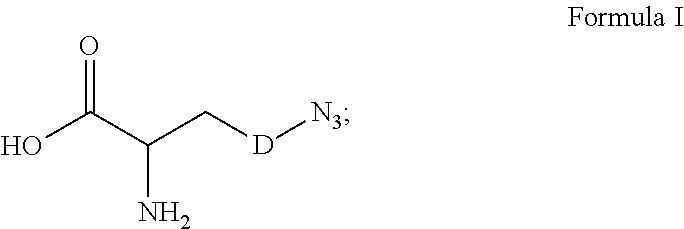
or a salt thereof, wherein: D is —Ar—W3— or —W1—Y1—C(O)—Y2—W2—; Ar is

each of W1, W2, and W3 is independently a single bond or lower alkylene; each X1 is independently —NH—, —O—, or —S—; each Y1 is independently a single bond, —NH—, or —O—; each Y2 is independently a single bond, —NH—, —O—, or an N-linked or C-linked pyrrolidinylene; and one of Z1, Z2, and Z3 is —N— and the others of Z1, Z2, and Z3 are independently —CH—.
-
- 1) Alanine (A), Glycine (G);
- 2) Aspartic acid (D), Glutamic acid (E);
- 3) Asparagine (N), Glutamine (Q);
- 4) Arginine (R), Lysine (K);
- 5) Isoleucine (I), Leucine (L), Methionine (M), Valine (V);
- 6) Phenylalanine (F), Tyrosine (Y), Tryptophan (W);
- 7) Serine (S), Threonine (T); and
- 8) Cysteine (C), Methionine (M).
See, e.g., Creighton, Proteins: Structures and Molecular Properties, W H Freeman & Co.; 2nd edition (December 1993).
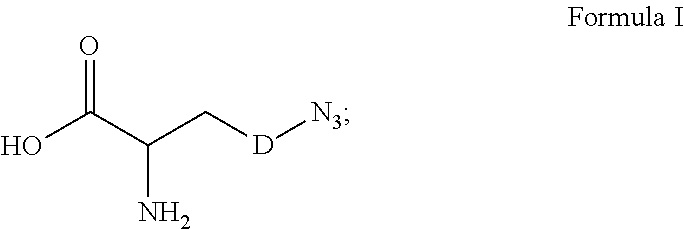
or a salt thereof, wherein: D is —Ar—W3— or —W1—Y1—C(O)—Y2—W2—; Ar is

each of W1, W2, and W3 is independently a single bond or lower alkylene; each X1 is independently —NH—, —O—, or —S—; each Y1 is independently a single bond, —NH—, or —O—; each Y2 is independently a single bond, —NH—, —O—, or an N-linked or C-linked pyrrolidinylene; and one of Z1, Z2, and Z3 is —N— and the others of Z1, Z2, and Z3 are independently —CH—.

and Ar, Z1, Z2, Z3 and W3 are as defined in the context of formula I. In certain embodiments, D is —Ar—W3—; and Ar is
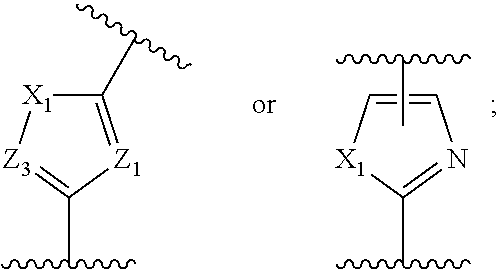
and Ar, Z1, Z3, X1 and W3 are as defined in the context of formula I. In certain embodiments, D is —Ar—W3—; W3 is —CH2—; and Ar is

where Z1 and Z2 are as defined in the context of formula I.

where D is a defined in the context of formula I.
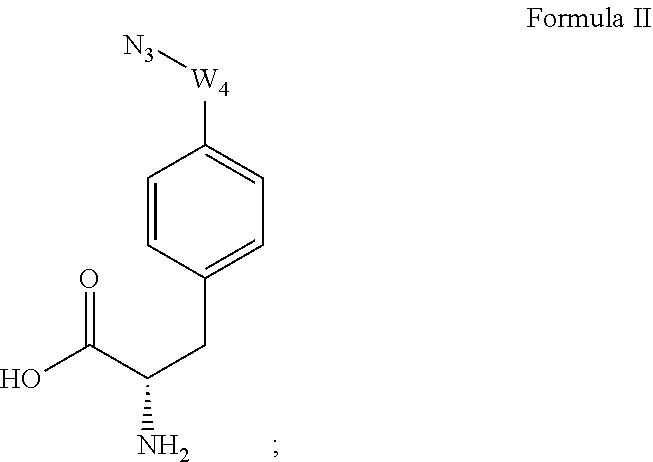
or a salt thereof, wherein W4 is C1-C10 alkylene. In a further embodiment, W4 is C1-C5 alkylene. In an embodiment, W4 is C1-C3 alkylene. In an embodiment, W4 is C1 alkylene.

or a salt thereof.


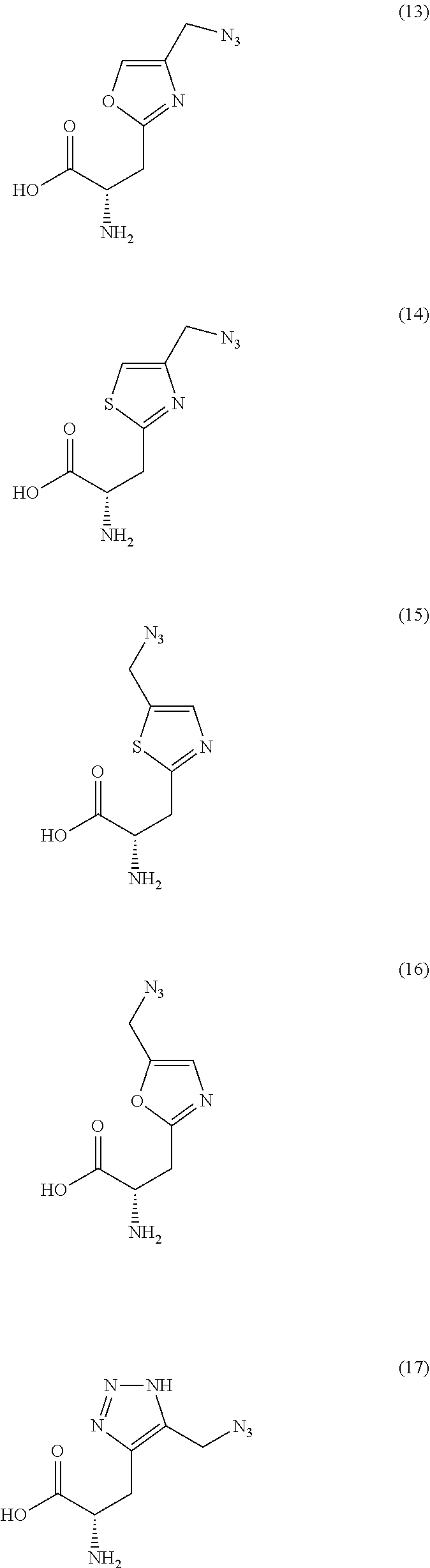

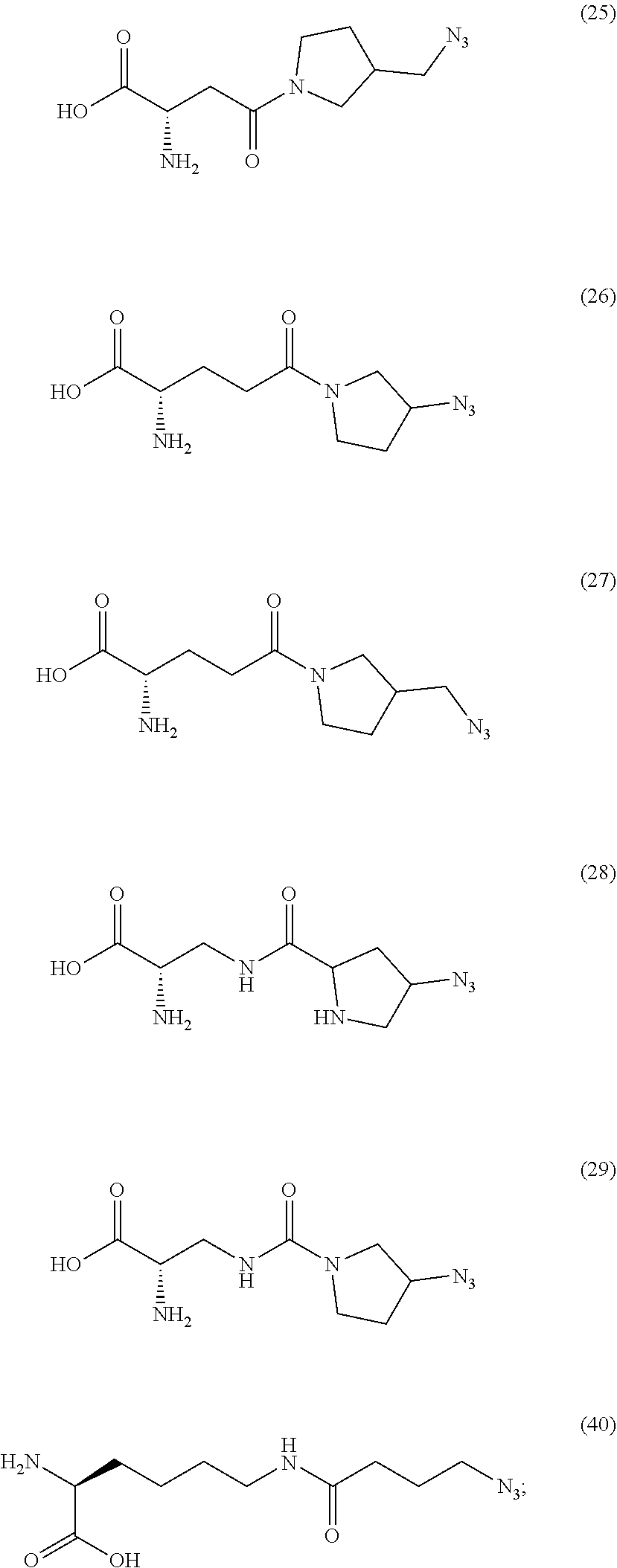
or a salt thereof.

Those of skill in the art will recognize that proteins are generally comprised of L-amino acids. However, with modified amino acids, the present methods and compositions provide the practitioner with the ability to use L-, D- or racemic modified amino acids. In certain embodiments, the modified amino acids described herein include D-versions of the natural amino acids and racemic versions of the natural amino acids.
Huisgen Cycloaddition Reaction
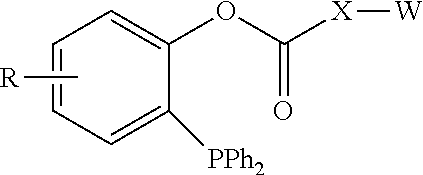
wherein X is —O—, —NH—, —S—, or a single bond, Ph is phenyl, W is a payload moiety and R is H, alkyl, aryl, substituted alkyl and substituted aryl groups. Exemplary R groups include, but are not limited to, —CH2, —C(CH3)3, —OR′, —NR′R″, —SR′, -halogen, —C(O)R′, —CONR′R″, —S(O)2R′, —S(O)2NR′R″, —CN and —NO2. R′, R″, R′″ and R″″ are each independently hydrogen, substituted or unsubstituted heteroalkyl, substituted or unsubstituted aryl, including but not limited to, aryl substituted with 1-3 halogens, substituted or unsubstituted alkyl, alkoxy or thioalkoxy groups, or arylalkyl groups. When a compound described herein includes more than one R group, for example, each of the R groups is independently selected as are each R′, R″, R′″ and R″″ groups when more than one of these groups is present. When R′ and R″ are attached to the same nitrogen atom, they can be combined with the nitrogen atom to form a 5-, 6-, or 7-membered ring. For example, —NR′R″ is meant to include, but not be limited to, 1-pyrrolidinyl and 4-morpholinyl. From the above discussion of substituents, one of skill in the art will understand that the term “alkyl” is meant to include groups including carbon atoms bound to groups other than hydrogen groups, such as haloalkyl (including but not limited to, —CF3 and —CH2CF3) and acyl (including but not limited to, —C(O)CH3, —C(O)CF3, —C(O)CH2OCH3, and the like).

wherein n is 1-10; X can be O, N, S or not present, Ph is phenyl, and W is a payload moiety.

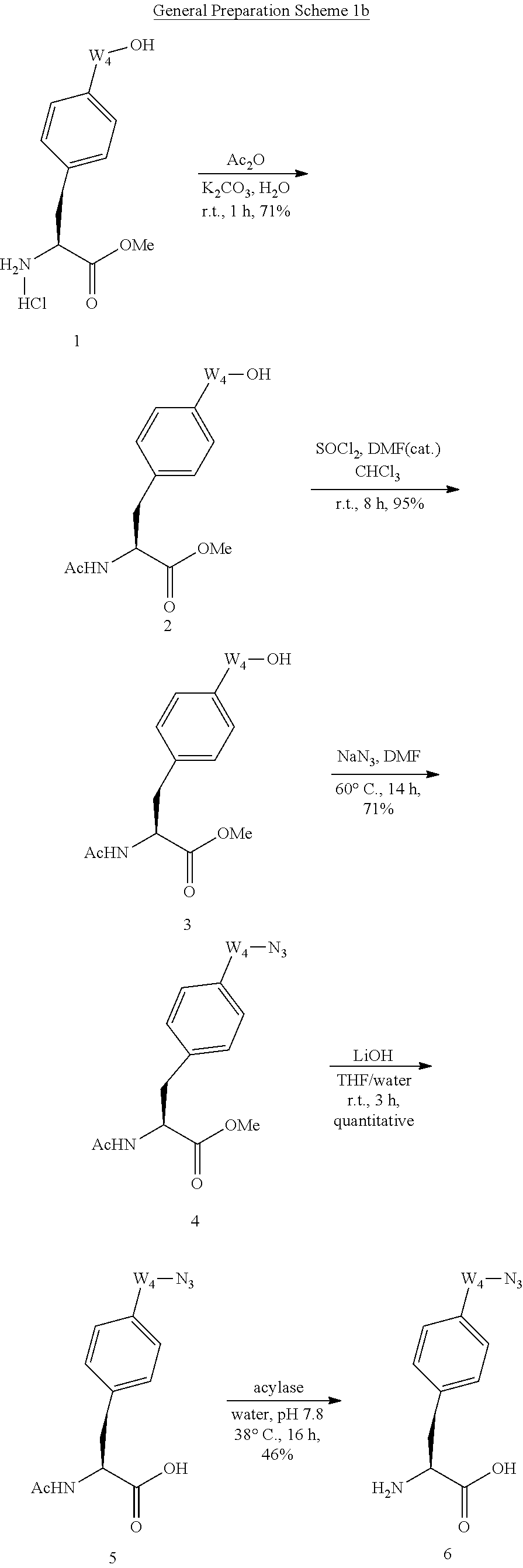

Preparation of Compound A2

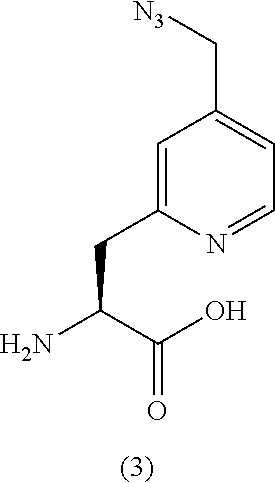
General Procedure for Preparation of Compound (3)


General Procedure for Preparation of Compound (2)


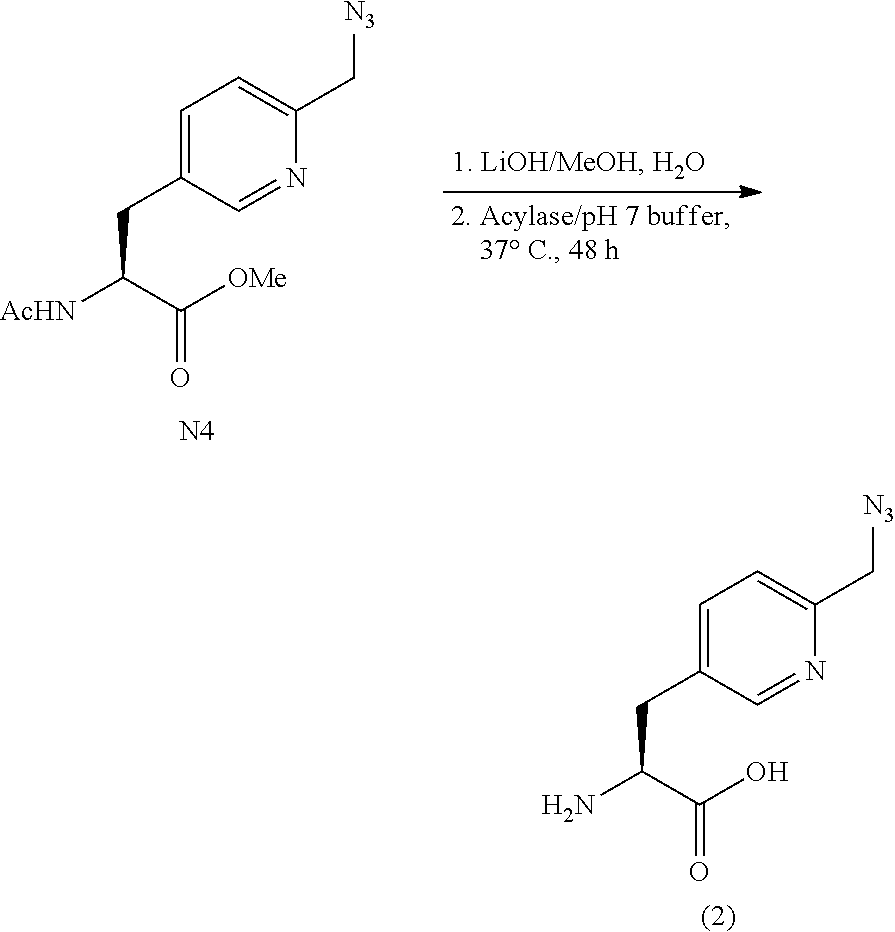
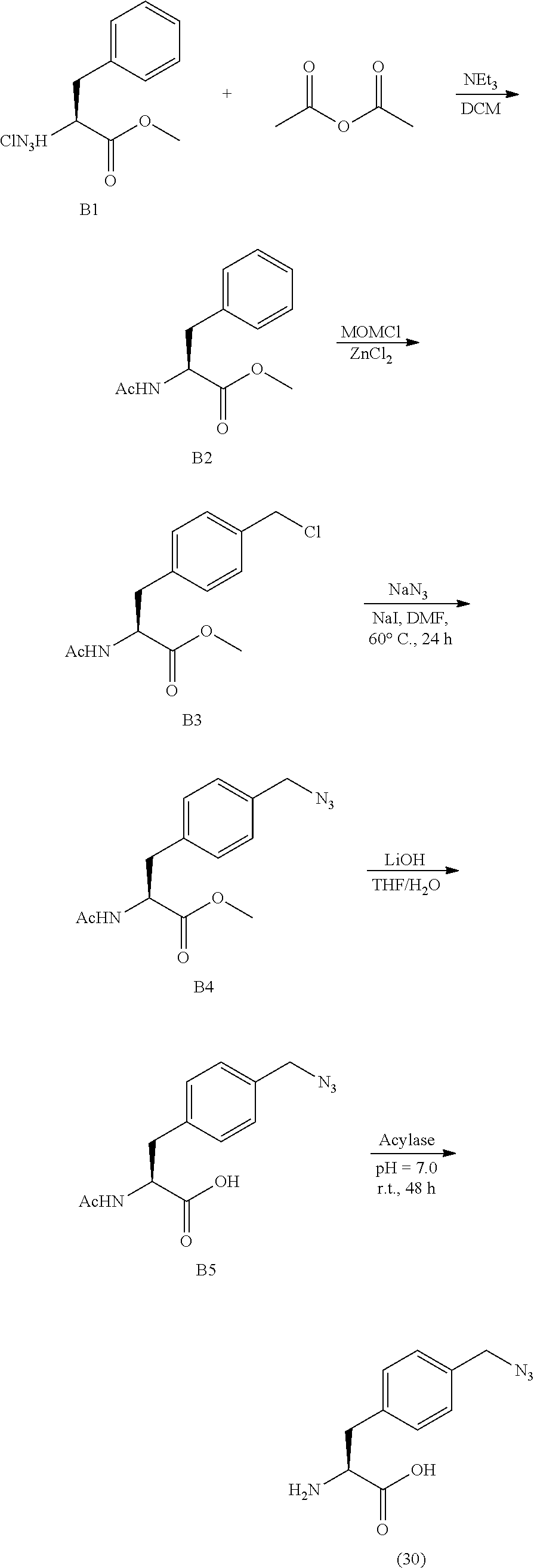
General Procedure for Preparation of Compound (30)
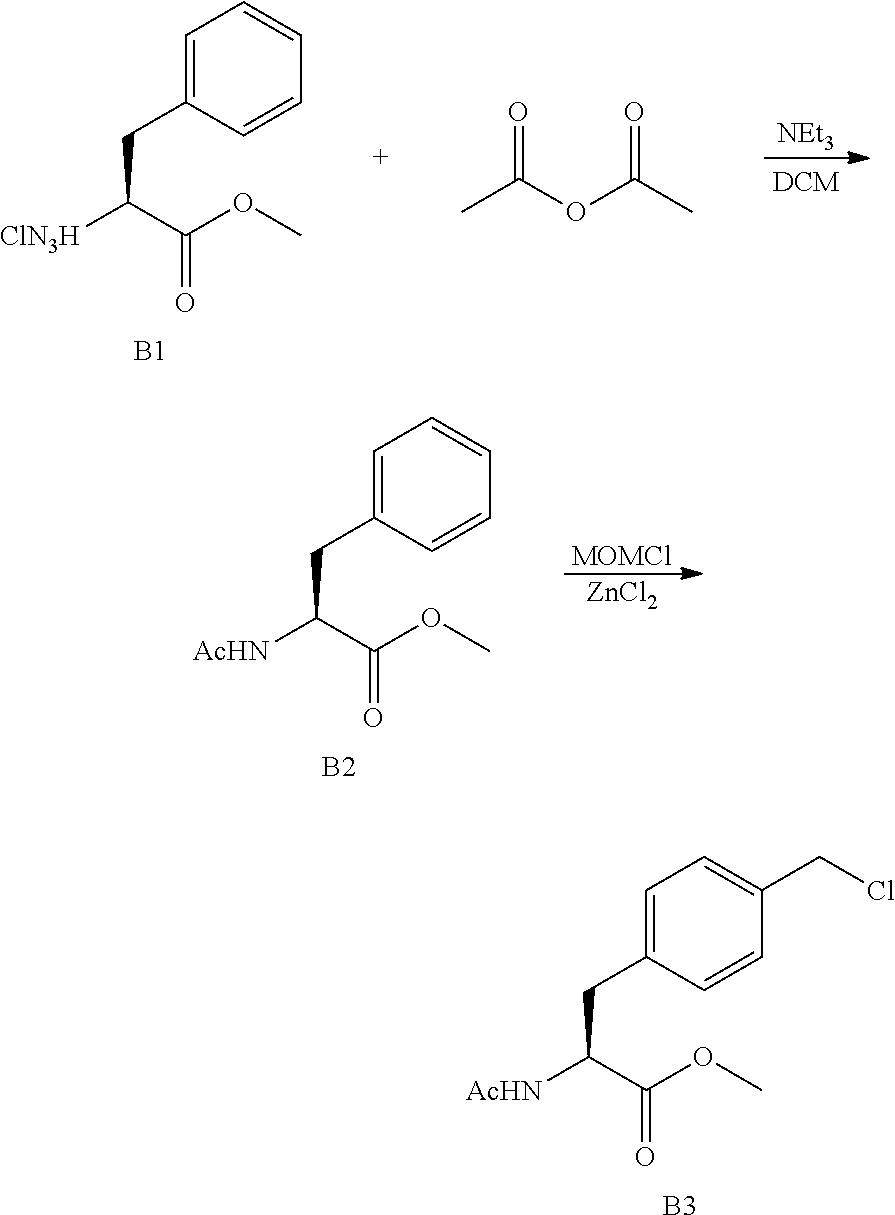
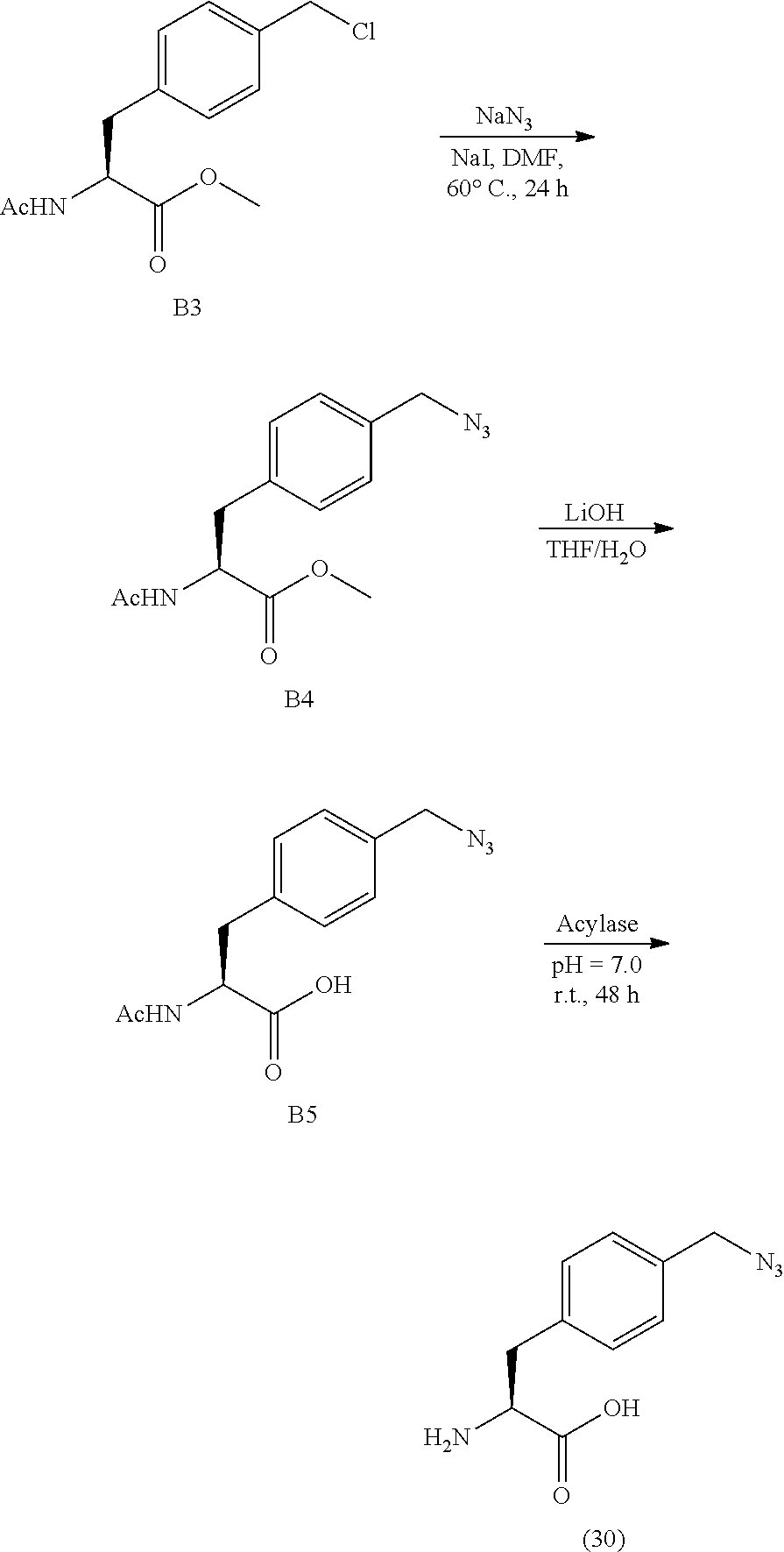
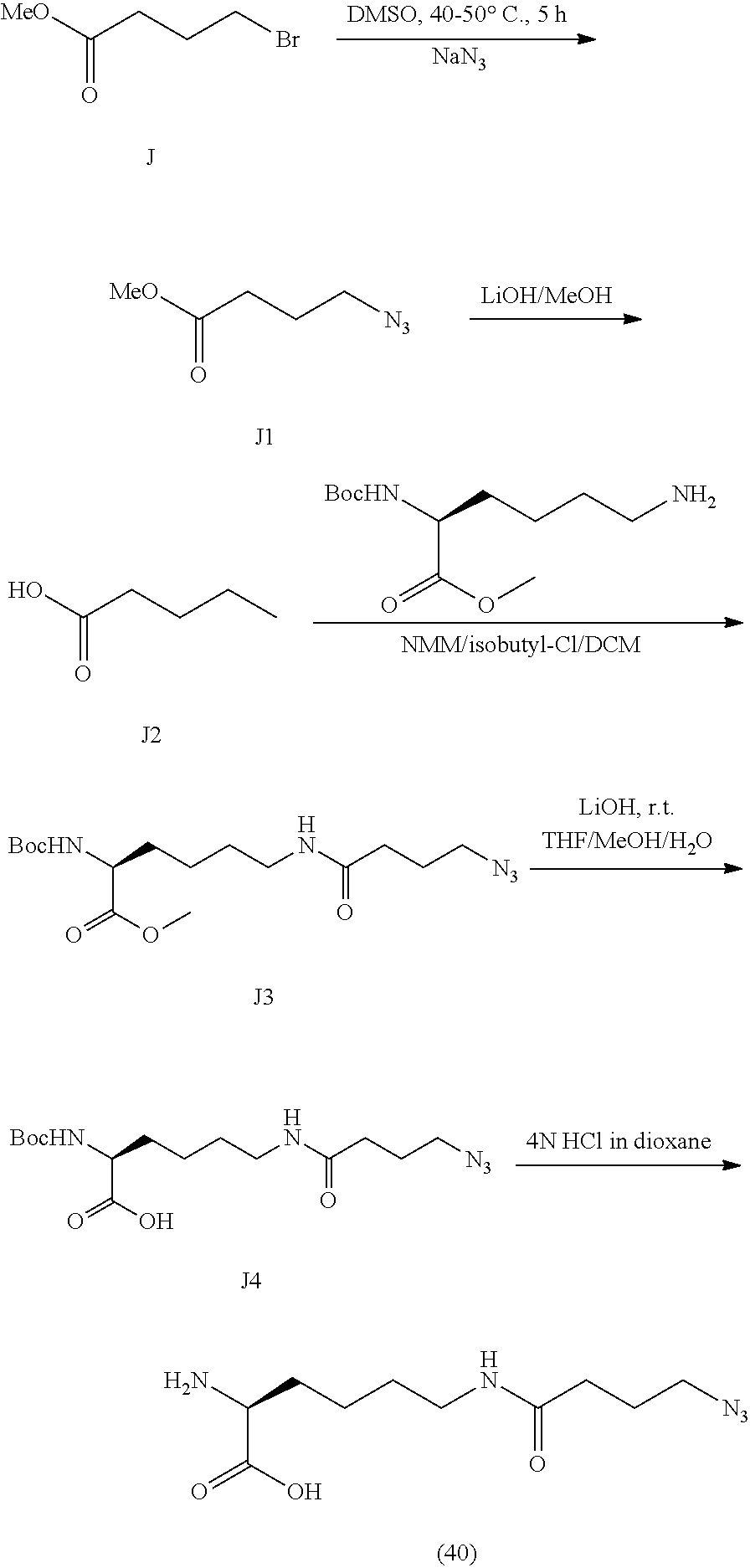
Genera Procedure for Preparation of Compound (40)


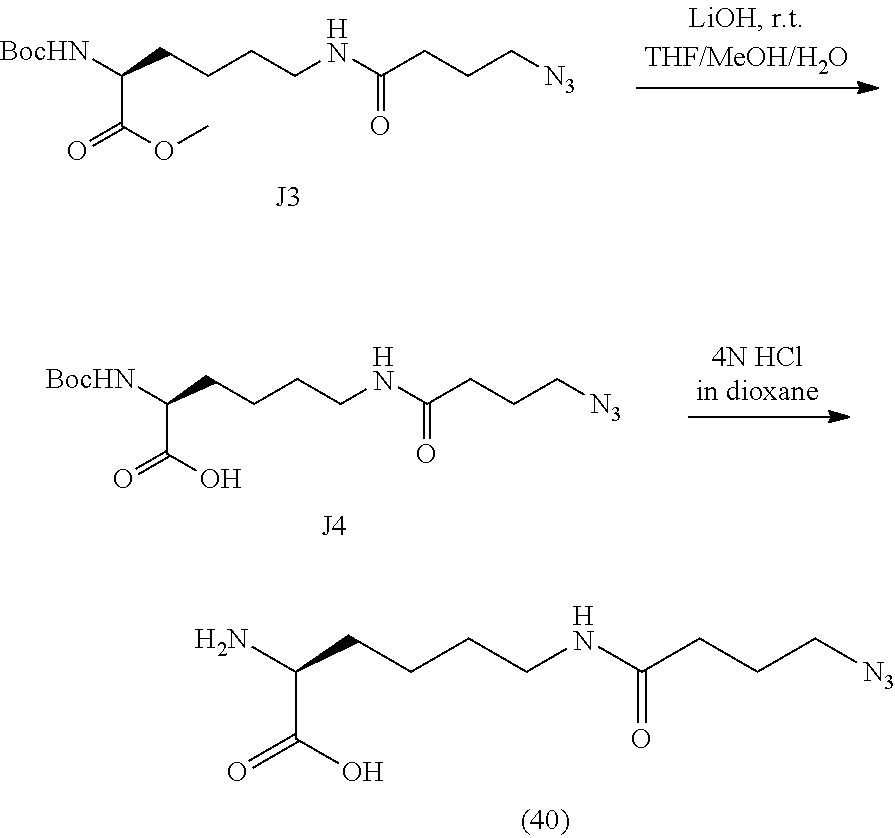
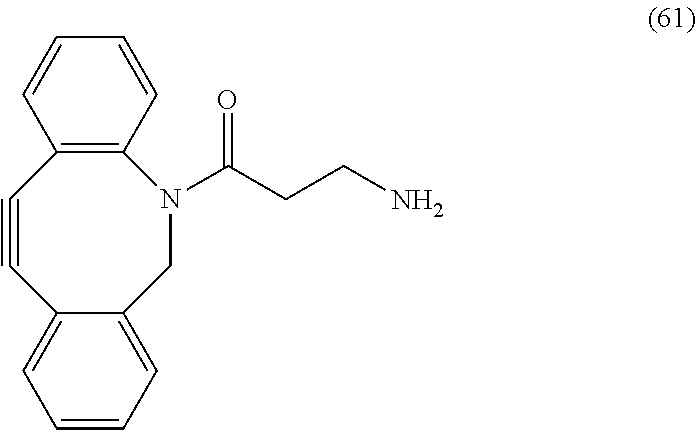
Claims (17)
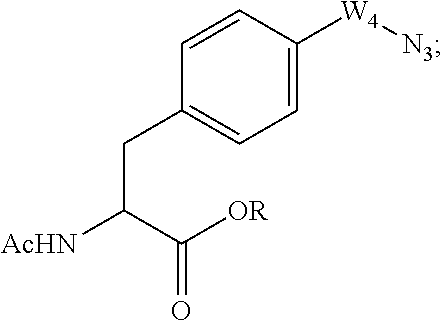

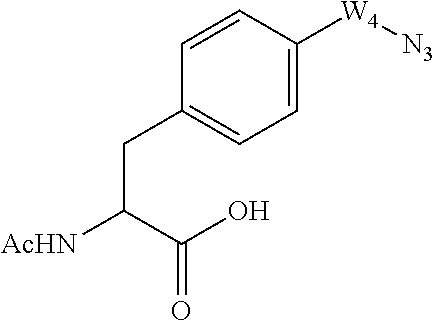
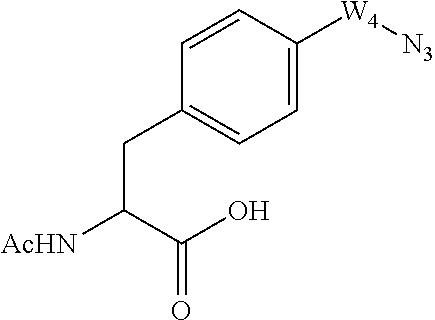


Priority Applications (2)
| Application Number | Priority Date | Filing Date | Title |
|---|---|---|---|
| US18/067,709 US12269801B2 (en) | 2012-08-31 | 2022-12-17 | Modified amino acids |
| US19/172,289 US20250236594A1 (en) | 2012-08-31 | 2025-04-07 | Modified amino acids |
Applications Claiming Priority (6)
| Application Number | Priority Date | Filing Date | Title |
|---|---|---|---|
| US201261696087P | 2012-08-31 | 2012-08-31 | |
| US14/015,893 US9682934B2 (en) | 2012-08-31 | 2013-08-30 | Modified amino acids |
| US15/600,632 US10112900B2 (en) | 2012-08-31 | 2017-05-19 | Modified amino acids |
| US16/173,968 US10730837B2 (en) | 2012-08-31 | 2018-10-29 | Modified amino acids |
| US16/984,152 US11548852B2 (en) | 2012-08-31 | 2020-08-04 | Modified amino acids |
| US18/067,709 US12269801B2 (en) | 2012-08-31 | 2022-12-17 | Modified amino acids |
Related Parent Applications (1)
| Application Number | Title | Priority Date | Filing Date |
|---|---|---|---|
| US16/984,152 Continuation US11548852B2 (en) | 2012-08-31 | 2020-08-04 | Modified amino acids |
Related Child Applications (1)
| Application Number | Title | Priority Date | Filing Date |
|---|---|---|---|
| US19/172,289 Continuation US20250236594A1 (en) | 2012-08-31 | 2025-04-07 | Modified amino acids |
Publications (2)
| Publication Number | Publication Date |
|---|---|
| US20230139442A1 US20230139442A1 (en) | 2023-05-04 |
| US12269801B2 true US12269801B2 (en) | 2025-04-08 |
Family
ID=49170897
Family Applications (7)
| Application Number | Title | Priority Date | Filing Date |
|---|---|---|---|
| US14/015,893 Active US9682934B2 (en) | 2012-08-31 | 2013-08-30 | Modified amino acids |
| US15/600,632 Active US10112900B2 (en) | 2012-08-31 | 2017-05-19 | Modified amino acids |
| US15/604,106 Active US9994527B2 (en) | 2012-08-31 | 2017-05-24 | Modified amino acids |
| US16/173,968 Active US10730837B2 (en) | 2012-08-31 | 2018-10-29 | Modified amino acids |
| US16/984,152 Active 2034-04-08 US11548852B2 (en) | 2012-08-31 | 2020-08-04 | Modified amino acids |
| US18/067,709 Active 2034-02-12 US12269801B2 (en) | 2012-08-31 | 2022-12-17 | Modified amino acids |
| US19/172,289 Pending US20250236594A1 (en) | 2012-08-31 | 2025-04-07 | Modified amino acids |
Family Applications Before (5)
| Application Number | Title | Priority Date | Filing Date |
|---|---|---|---|
| US14/015,893 Active US9682934B2 (en) | 2012-08-31 | 2013-08-30 | Modified amino acids |
| US15/600,632 Active US10112900B2 (en) | 2012-08-31 | 2017-05-19 | Modified amino acids |
| US15/604,106 Active US9994527B2 (en) | 2012-08-31 | 2017-05-24 | Modified amino acids |
| US16/173,968 Active US10730837B2 (en) | 2012-08-31 | 2018-10-29 | Modified amino acids |
| US16/984,152 Active 2034-04-08 US11548852B2 (en) | 2012-08-31 | 2020-08-04 | Modified amino acids |
Family Applications After (1)
| Application Number | Title | Priority Date | Filing Date |
|---|---|---|---|
| US19/172,289 Pending US20250236594A1 (en) | 2012-08-31 | 2025-04-07 | Modified amino acids |
Country Status (17)
| Country | Link |
|---|---|
| US (7) | US9682934B2 (en) |
| EP (3) | EP3584255B1 (en) |
| JP (2) | JP6826367B2 (en) |
| KR (1) | KR102182800B1 (en) |
| CN (1) | CN104981254B (en) |
| AU (2) | AU2013308494B2 (en) |
| BR (1) | BR112015004022B1 (en) |
| CA (1) | CA2881978C (en) |
| DK (2) | DK2890402T3 (en) |
| ES (2) | ES2728864T3 (en) |
| HR (2) | HRP20220455T1 (en) |
| HU (1) | HUE045227T2 (en) |
| IL (1) | IL237401B (en) |
| PL (2) | PL2890402T3 (en) |
| SG (1) | SG11201501464TA (en) |
| SI (2) | SI2890402T1 (en) |
| WO (1) | WO2014036492A1 (en) |
Families Citing this family (60)
| Publication number | Priority date | Publication date | Assignee | Title |
|---|---|---|---|---|
| CN108410827B (en) | 2012-05-18 | 2023-05-09 | 英国研究与创新署 | Method for integrating amino acids comprising BCN groups into polypeptides |
| US9738724B2 (en) | 2012-06-08 | 2017-08-22 | Sutro Biopharma, Inc. | Antibodies comprising site-specific non-natural amino acid residues, methods of their preparation and methods of their use |
| DK2863955T3 (en) | 2012-06-26 | 2017-01-23 | Sutro Biopharma Inc | MODIFIED FC PROTEINS, INCLUDING LOCATION-SPECIFIC NON-NATURAL AMINO ACID RESIDUES, CONJUGATES THEREOF, METHODS OF PRODUCING ITS AND PROCEDURES FOR USE THEREOF |
| BR112015004022B1 (en) | 2012-08-31 | 2023-04-25 | Sutro Biopharma, Inc | MODIFIED AMINO ACIDS COMPRISING AN AZID GROUP |
| JP6321658B2 (en) | 2012-09-24 | 2018-05-09 | メディミューン リミテッド | Amino acid derivatives |
| US10131920B2 (en) | 2013-03-15 | 2018-11-20 | Medimmune Limited | Nucleic acid molecules |
| EP3613468A1 (en) | 2013-05-02 | 2020-02-26 | Glykos Finland Oy | Glycoprotein-toxic payload conjugates |
| ES2658039T3 (en) | 2013-07-10 | 2018-03-08 | Sutro Biopharma, Inc. | Antibodies comprising multiple site-specific non-natural amino acid residues, methods for their preparation and methods of use |
| AU2014293011A1 (en) | 2013-07-26 | 2016-03-17 | Race Oncology Ltd. | Compositions to improve the therapeutic benefit of bisantrene |
| US9981908B2 (en) | 2013-08-05 | 2018-05-29 | Medimmune Limited | Amino acid derivatives |
| BR112017011773A2 (en) | 2014-12-04 | 2018-02-20 | Celgene Corporation | isolated compound, isolated conjugates, pharmaceutical compositions, and methods of treating a disorder in a mammal |
| TWI614264B (en) * | 2015-05-20 | 2018-02-11 | 免疫功坊股份有限公司 | Multi-arm conjugate containing peptide peptide and application thereof |
| AU2016316202B2 (en) * | 2015-09-01 | 2018-11-15 | Immunwork Inc. | Molecular constructs for preventing the formation of blood clot and/or treating thrombosis |
| EP3364984B1 (en) | 2015-10-15 | 2021-11-17 | City of Hope | Compounds and compositions including phosphorothioated oligodeoxynucleotide, and methods of use thereof |
| BR112018015238A2 (en) | 2016-01-27 | 2018-12-18 | Sutro Biopharma Inc | antibody conjugate, antibody, kit, pharmaceutical composition, and methods for treating or preventing a disease or condition and for diagnosing a disease or condition |
| CA3029977A1 (en) | 2016-07-06 | 2018-01-11 | Celgene Corporation | Antibodies with low immunogenicity and uses thereof |
| ES3024474T3 (en) * | 2016-12-30 | 2025-06-04 | Vaxcyte Inc | Polypeptide-antigen conjugates with non-natural amino acids |
| US11951165B2 (en) * | 2016-12-30 | 2024-04-09 | Vaxcyte, Inc. | Conjugated vaccine carrier proteins |
| WO2018183182A1 (en) | 2017-03-27 | 2018-10-04 | Celgene Corporation | Methods and compositions for reduction of immunogenicity |
| WO2018187515A1 (en) | 2017-04-04 | 2018-10-11 | Avidea Technologies, Inc. | Peptide-based vaccines, methods of manufacturing, and uses thereof for inducing an immune response |
| MA49578A (en) | 2017-07-11 | 2021-04-07 | Synthorx Inc | INCORPORATION OF NON-NATURAL NUCLEOTIDES AND RELATED PROCESSES |
| IL322312A (en) | 2017-08-03 | 2025-09-01 | Synthorx Inc | Cytokine conjugates for the treatment of proliferative and infectious diseases |
| EP3732187A4 (en) | 2017-12-29 | 2021-11-10 | The Scripps Research Institute | PAIRING COMPOSITIONS OF NON-NATURAL BASES AND METHODS OF USE |
| CA3091857A1 (en) | 2018-02-26 | 2019-08-29 | Synthorx, Inc. | Il-15 conjugates and uses thereof |
| WO2019240288A1 (en) * | 2018-06-14 | 2019-12-19 | 味の素株式会社 | Substance having affinity for antibody, and compound or salt thereof having bioorthogonal functional group |
| WO2020010000A1 (en) | 2018-07-04 | 2020-01-09 | Sutrovax, Inc. | Improved methods for the preparation of immunogenic conjugates |
| CN112543649A (en) | 2018-07-04 | 2021-03-23 | Vaxcyte公司 | Improvements in immunogenic conjugates |
| WO2020010016A1 (en) | 2018-07-04 | 2020-01-09 | Sutrovax, Inc. | Self-adjuvanted immunogenic conjugates |
| US12331320B2 (en) | 2018-10-10 | 2025-06-17 | The Research Foundation For The State University Of New York | Genome edited cancer cell vaccines |
| GB201817444D0 (en) * | 2018-10-26 | 2018-12-12 | Res & Innovation Uk | Methods and compositions |
| MA54195A (en) | 2018-11-08 | 2022-02-16 | Synthorx Inc | INTERLEUKIN 10 CONJUGATES AND THEIR USES |
| CN109456284A (en) * | 2018-11-13 | 2019-03-12 | 南方医科大学 | A kind of chalcone and its application containing substituted biphenyl |
| CA3127689A1 (en) | 2019-02-06 | 2020-08-13 | Synthorx, Inc. | Il-2 conjugates and methods of use thereof |
| TW202544247A (en) | 2019-06-14 | 2025-11-16 | 美商史基普研究協會 | Reagents and methods for replication, transcription, and translation in semi-synthetic organisms |
| CN110551195B (en) * | 2019-08-01 | 2022-08-09 | 天津科技大学 | Alpha-synuclein aggregation-induced emission system and construction and application thereof |
| CA3148135A1 (en) | 2019-08-23 | 2021-03-04 | Carolina E. CAFFARO | Il-15 conjugates and uses thereof |
| CN114746122A (en) | 2019-09-10 | 2022-07-12 | 新索思股份有限公司 | IL-2 conjugates and methods of use to treat autoimmune diseases |
| CN111217721A (en) * | 2020-01-20 | 2020-06-02 | 赛纳生物科技(北京)有限公司 | Preparation method of hydrogel monomer containing azide group |
| EP4114852A1 (en) | 2020-03-03 | 2023-01-11 | Sutro Biopharma, Inc. | Antibodies comprising site-specific glutamine tags, methods of their preparation and methods of their use |
| CA3176515A1 (en) | 2020-04-22 | 2021-10-28 | Merck Sharp & Dohme Llc | Human interleukin-2 conjugates biased for the interleukin-2 receptor beta gammac dimer and conjugated to a nonpeptidic, water-soluble polymer |
| US12351850B2 (en) | 2020-04-30 | 2025-07-08 | Sutro Biopharma, Inc. | Methods of producing full-length antibodies using E. coli |
| JP2023538365A (en) | 2020-08-19 | 2023-09-07 | バックスサイト・インコーポレイテッド | Carrier-protein polysaccharide binding method |
| US11510994B2 (en) * | 2021-01-29 | 2022-11-29 | EqIP, LLC | Linkers for improving the stability of bioconjugates and the selectivity of payload release |
| CA3224147A1 (en) | 2021-07-09 | 2023-01-12 | Vijaya Raghavan PATTABIRAMAN | Antibody conjugates and manufacture thereof |
| US20230201365A1 (en) | 2021-07-09 | 2023-06-29 | Bright Peak Therapeutics Ag | Modified cd20 antibodies and uses thereof |
| WO2023281484A1 (en) | 2021-07-09 | 2023-01-12 | Bright Peak Therapeutics Ag | Synthetic il-7 and il-7 immunocytokines |
| AU2022306788A1 (en) | 2021-07-09 | 2024-01-04 | Bright Peak Therapeutics Ag | Conjugates of checkpoint inhibitors with il-2, and uses thereof |
| EP4366779A1 (en) | 2021-07-09 | 2024-05-15 | Bright Peak Therapeutics AG | Modified tnf-antibodies and uses thereof |
| AU2023226512A1 (en) | 2022-02-23 | 2024-08-29 | Bright Peak Therapeutics Ag | Immune antigen specific il-18 immunocytokines and uses thereof |
| US20240132563A1 (en) | 2022-02-23 | 2024-04-25 | Bright Peak Therapeutics Ag | Bifunctional cytokine compositions |
| US20240417436A1 (en) | 2023-01-11 | 2024-12-19 | Bright Peak Therapeutics Ag | Conditionally activated immunocytokines and methods of use |
| WO2024150175A1 (en) | 2023-01-11 | 2024-07-18 | Bright Peak Therapeutics Ag | Conditionally activated proteins and methods of use |
| US20240424127A1 (en) | 2023-01-11 | 2024-12-26 | Bright Peak Therapeutics Ag | Il-7 polypeptides, immunocytokines comprising same, and uses thereof |
| WO2024211306A1 (en) | 2023-04-03 | 2024-10-10 | Sutro Biopharma, Inc. | Rf1 ko e. coli strains |
| WO2025041102A1 (en) | 2023-08-23 | 2025-02-27 | Bright Peak Therapeutics Ag | Targeted immune activation with il-18 immunocytokines |
| US20250197467A1 (en) | 2023-08-23 | 2025-06-19 | Bright Peak Therapeutics Ag | Activatable il-18 immunocytokines and uses thereof |
| CN117658866B (en) * | 2023-12-07 | 2026-02-03 | 苏州爱玛特生物科技有限公司 | Synthesis method of azido amino acid derivative |
| WO2025158385A1 (en) | 2024-01-25 | 2025-07-31 | Genzyme Corporation | Pegylated il-2 for suppressing adaptive immune response to gene therapy |
| WO2025179135A1 (en) * | 2024-02-23 | 2025-08-28 | Board Of Regents, The University Of Texas System | Methods and compositions for treating cancer using targeted pore-forming agents |
| PL451305A1 (en) * | 2025-02-25 | 2025-09-01 | Politechnika Warszawska | 3-ureidopropanoic acid derivative and a method for its preparation |
Citations (36)
| Publication number | Priority date | Publication date | Assignee | Title |
|---|---|---|---|---|
| US4542225A (en) | 1984-08-29 | 1985-09-17 | Dana-Farber Cancer Institute, Inc. | Acid-cleavable compound |
| US4625014A (en) | 1984-07-10 | 1986-11-25 | Dana-Farber Cancer Institute, Inc. | Cell-delivery agent |
| US4671958A (en) | 1982-03-09 | 1987-06-09 | Cytogen Corporation | Antibody conjugates for the delivery of compounds to target sites |
| US5643575A (en) | 1993-10-27 | 1997-07-01 | Enzon, Inc. | Non-antigenic branched polymer conjugates |
| US5932462A (en) | 1995-01-10 | 1999-08-03 | Shearwater Polymers, Inc. | Multiarmed, monofunctional, polymer for coupling to molecules and surfaces |
| WO2002085923A2 (en) | 2001-04-19 | 2002-10-31 | The Scripps Research Institute | In vivo incorporation of unnatural amino acids |
| US20030143596A1 (en) | 2001-11-07 | 2003-07-31 | Shearwater Corporation | Branched polymers and their conjugates |
| WO2004016778A1 (en) | 2002-08-19 | 2004-02-26 | The Board Of Trustees Of The Leland Stanford Junior University | Improved methods of in vitro protein synthesis |
| WO2005047337A1 (en) | 2003-11-13 | 2005-05-26 | Hanmi Pharmaceutical Co., Ltd. | A pharmaceutical composition comprising an immunoglobulin fc region as a carrier |
| WO2006069246A2 (en) | 2004-12-22 | 2006-06-29 | Ambrx, Inc. | Compositions containing, methods involving, and uses of non-natural amino acids and polypeptides |
| WO2006116260A2 (en) | 2005-04-26 | 2006-11-02 | Medimmune, Inc. | Modulation of antibody effector function by hinge domain engineering |
| WO2007041635A2 (en) | 2005-10-03 | 2007-04-12 | Xencor, Inc. | Fc variants with optimized fc receptor binding properties |
| WO2008030558A2 (en) | 2006-09-08 | 2008-03-13 | Ambrx, Inc. | Modified human plasma polypeptide or fc scaffolds and their uses |
| US20080085277A1 (en) | 2004-06-18 | 2008-04-10 | Ambrx, Inc. | Novel antigen-binding polypeptides and their uses |
| WO2008066583A2 (en) | 2006-06-29 | 2008-06-05 | The Board Of Trustees Of The Leland Stanford Junior University | Cell-free synthesis of proteins containing unnatural amino acids |
| US20080233611A1 (en) | 2004-10-27 | 2008-09-25 | The Scripps Research Institute | Orthogonal Translation Components for the in Vivo Incorporation of Unnatural Amino Acids |
| WO2008134761A2 (en) | 2007-04-30 | 2008-11-06 | Intezyne Technologies, Inc. | Modification of biological targeting groups for the treatment of cancer |
| US20080317670A1 (en) | 2005-12-14 | 2008-12-25 | Ambrx, Inc. | Compositions Containing, Methods Involving, and Uses of Non-Natural Amino Acids and Polypeptides |
| US20090035836A1 (en) | 2004-03-30 | 2009-02-05 | California Institute Of Technology | Modulating ph-sensitive binding using non-natural amino acids |
| US20090093405A1 (en) | 2006-01-19 | 2009-04-09 | Ambrx, Inc. | Non-Natural Amino Acid Polypeptides Having Modified Immunogenicity |
| WO2009052249A1 (en) | 2007-10-19 | 2009-04-23 | Genentech, Inc. | Cysteine engineered anti-tenb2 antibodies and antibody drug conjugates |
| WO2009148554A1 (en) | 2008-05-30 | 2009-12-10 | Siemens Medical Solutions Usa, Inc. | Achievement of high therapeutic index through molecular imaging guided targeted drug treatment |
| US20100093082A1 (en) | 2006-09-08 | 2010-04-15 | Ambrx, Inc. | Site Specific Incorporation of Non-Natural Amino Acids by Vertebrate Cells |
| US20100098630A1 (en) | 2006-12-28 | 2010-04-22 | Ambrx, Inc. | Phenazine and Quinoxaline Substituted Amino Acids and Polypeptides |
| WO2010051056A2 (en) | 2008-03-11 | 2010-05-06 | Ambrx, Inc. | ANTI-FcεRI POLYPEPTIDES AND THEIR USES |
| WO2010139948A2 (en) | 2009-06-04 | 2010-12-09 | Medical Research Council | Methods |
| US7887809B1 (en) | 1999-07-01 | 2011-02-15 | Yale University | Neovascular-targeted immunoconjugates |
| WO2011044255A1 (en) | 2009-10-06 | 2011-04-14 | The Ohio State University | Pyrrolysine analogs |
| US7993872B2 (en) | 2003-06-18 | 2011-08-09 | The Scripps Research Institute | Unnatural reactive amino acid genetic code additions |
| US8008453B2 (en) | 2005-08-12 | 2011-08-30 | Amgen Inc. | Modified Fc molecules |
| US8124094B2 (en) | 2005-04-08 | 2012-02-28 | Hanmi Holdings Co., Ltd. | Immunoglobulin Fc fragment modified by non-peptide polymer and pharmaceutical composition comprising the same |
| WO2012032181A2 (en) | 2010-09-10 | 2012-03-15 | Allozyne, Inc | Novel antibody derivatives |
| US20120100140A1 (en) | 2009-01-23 | 2012-04-26 | Biogen Idec Ma Inc. | Stabilized fc polypeptides with reduced effector function and methods of use |
| WO2013068874A1 (en) | 2011-11-11 | 2013-05-16 | Pfizer Inc. | Antibody-drug conjugates |
| US20140046030A1 (en) | 2012-06-08 | 2014-02-13 | Sutro Biopharma, Inc. | Antibodies comprising site-specific non-natural amino acid residues, methods of their preparation and methods of their use |
| US9682934B2 (en) | 2012-08-31 | 2017-06-20 | Sutro Biopharma, Inc. | Modified amino acids |
Family Cites Families (162)
| Publication number | Priority date | Publication date | Assignee | Title |
|---|---|---|---|---|
| SU11248A1 (en) | 1927-03-29 | 1929-09-30 | В.С. Григорьев | Anthracene cleaning method |
| CU22545A1 (en) | 1994-11-18 | 1999-03-31 | Centro Inmunologia Molecular | OBTAINING A CHEMICAL AND HUMANIZED ANTIBODY AGAINST THE RECEPTOR OF THE EPIDERMAL GROWTH FACTOR FOR DIAGNOSTIC AND THERAPEUTIC USE |
| US4289872A (en) | 1979-04-06 | 1981-09-15 | Allied Corporation | Macromolecular highly branched homogeneous compound based on lysine units |
| JPS57206622A (en) | 1981-06-10 | 1982-12-18 | Ajinomoto Co Inc | Blood substitute |
| US4486414A (en) | 1983-03-21 | 1984-12-04 | Arizona Board Of Reagents | Dolastatins A and B cell growth inhibitory substances |
| US4753894A (en) | 1984-02-08 | 1988-06-28 | Cetus Corporation | Monoclonal anti-human breast cancer antibodies |
| US4943533A (en) | 1984-03-01 | 1990-07-24 | The Regents Of The University Of California | Hybrid cell lines that produce monoclonal antibodies to epidermal growth factor receptor |
| DE3572982D1 (en) | 1984-03-06 | 1989-10-19 | Takeda Chemical Industries Ltd | Chemically modified lymphokine and production thereof |
| GB8430252D0 (en) | 1984-11-30 | 1985-01-09 | Beecham Group Plc | Compounds |
| DE3675588D1 (en) | 1985-06-19 | 1990-12-20 | Ajinomoto Kk | HAEMOGLOBIN TIED TO A POLY (ALKENYLENE OXIDE). |
| DE3676670D1 (en) | 1985-06-26 | 1991-02-07 | Cetus Corp | SOLUBILIZATION OF PROTEINS FOR PHARMACEUTICAL COMPOSITIONS BY POLYMER CONJUGATION. |
| IL85035A0 (en) | 1987-01-08 | 1988-06-30 | Int Genetic Eng | Polynucleotide molecule,a chimeric antibody with specificity for human b cell surface antigen,a process for the preparation and methods utilizing the same |
| US5229490A (en) | 1987-05-06 | 1993-07-20 | The Rockefeller University | Multiple antigen peptide system |
| US4816444A (en) | 1987-07-10 | 1989-03-28 | Arizona Board Of Regents, Arizona State University | Cell growth inhibitory substance |
| US5080891A (en) | 1987-08-03 | 1992-01-14 | Ddi Pharmaceuticals, Inc. | Conjugates of superoxide dismutase coupled to high molecular weight polyalkylene glycols |
| WO1989006692A1 (en) | 1988-01-12 | 1989-07-27 | Genentech, Inc. | Method of treating tumor cells by inhibiting growth factor receptor function |
| US4847325A (en) | 1988-01-20 | 1989-07-11 | Cetus Corporation | Conjugation of polymer to colony stimulating factor-1 |
| GB8824591D0 (en) | 1988-10-20 | 1988-11-23 | Royal Free Hosp School Med | Fractionation process |
| US5076973A (en) | 1988-10-24 | 1991-12-31 | Arizona Board Of Regents | Synthesis of dolastatin 3 |
| GB8827305D0 (en) | 1988-11-23 | 1988-12-29 | British Bio Technology | Compounds |
| CA2006596C (en) | 1988-12-22 | 2000-09-05 | Rika Ishikawa | Chemically-modified g-csf |
| US4902502A (en) | 1989-01-23 | 1990-02-20 | Cetus Corporation | Preparation of a polymer/interleukin-2 conjugate |
| US4978744A (en) | 1989-01-27 | 1990-12-18 | Arizona Board Of Regents | Synthesis of dolastatin 10 |
| US5122614A (en) | 1989-04-19 | 1992-06-16 | Enzon, Inc. | Active carbonates of polyalkylene oxides for modification of polypeptides |
| WO1990013540A1 (en) | 1989-04-19 | 1990-11-15 | Enzon, Inc. | Active carbonates of polyalkylene oxides for modification of polypeptides |
| US5324844A (en) | 1989-04-19 | 1994-06-28 | Enzon, Inc. | Active carbonates of polyalkylene oxides for modification of polypeptides |
| US4879278A (en) | 1989-05-16 | 1989-11-07 | Arizona Board Of Regents | Isolation and structural elucidation of the cytostatic linear depsipeptide dolastatin 15 |
| US4986988A (en) | 1989-05-18 | 1991-01-22 | Arizona Board Of Regents | Isolation and structural elucidation of the cytostatic linear depsipeptides dolastatin 13 and dehydrodolastatin 13 |
| EP0400472B1 (en) | 1989-05-27 | 1996-04-03 | Sumitomo Pharmaceuticals Company, Limited | Process for preparing polyethylene glycol derivatives and modified protein. |
| US5138036A (en) | 1989-11-13 | 1992-08-11 | Arizona Board Of Regents Acting On Behalf Of Arizona State University | Isolation and structural elucidation of the cytostatic cyclodepsipeptide dolastatin 14 |
| US5312808A (en) | 1989-11-22 | 1994-05-17 | Enzon, Inc. | Fractionation of polyalkylene oxide-conjugated hemoglobin solutions |
| US5219564A (en) | 1990-07-06 | 1993-06-15 | Enzon, Inc. | Poly(alkylene oxide) amino acid copolymers and drug carriers and charged copolymers based thereon |
| CA2073511A1 (en) | 1990-11-14 | 1992-05-29 | Matthew R. Callstrom | Conjugates of poly(vinylsaccharide) with proteins for the stabilization of proteins |
| US5252714A (en) | 1990-11-28 | 1993-10-12 | The University Of Alabama In Huntsville | Preparation and use of polyethylene glycol propionaldehyde |
| DE69233153T2 (en) | 1991-03-06 | 2004-05-27 | Merck Patent Gmbh | HUMANIZED MONOCLONAL ANTIBODIES |
| AU1676992A (en) | 1991-03-18 | 1992-10-21 | Enzon, Inc. | Hydrazine containing conjugates of polypeptides and glycopolypeptides with polymers |
| US5595732A (en) | 1991-03-25 | 1997-01-21 | Hoffmann-La Roche Inc. | Polyethylene-protein conjugates |
| US5281698A (en) | 1991-07-23 | 1994-01-25 | Cetus Oncology Corporation | Preparation of an activated polymer ester for protein conjugation |
| IT1260468B (en) | 1992-01-29 | 1996-04-09 | METHOD FOR MAINTAINING THE ACTIVITY OF PROTEOLYTIC ENZYMES MODIFIED WITH POLYETHYLENGLYCOL | |
| EP0636156B1 (en) | 1992-04-14 | 1997-07-30 | Cornell Research Foundation, Inc. | Dendritic based macromolecules and method of production |
| ZA933926B (en) | 1992-06-17 | 1994-01-03 | Amgen Inc | Polyoxymethylene-oxyethylene copolymers in conjuction with blomolecules |
| AU5006993A (en) | 1992-08-21 | 1994-03-15 | Enzon, Inc. | Novel attachment of polyalkylene oxides to bio-effecting substances |
| US5382657A (en) | 1992-08-26 | 1995-01-17 | Hoffmann-La Roche Inc. | Peg-interferon conjugates |
| US5736137A (en) | 1992-11-13 | 1998-04-07 | Idec Pharmaceuticals Corporation | Therapeutic application of chimeric and radiolabeled antibodies to human B lymphocyte restricted differentiation antigen for treatment of B cell lymphoma |
| US5635483A (en) | 1992-12-03 | 1997-06-03 | Arizona Board Of Regents Acting On Behalf Of Arizona State University | Tumor inhibiting tetrapeptide bearing modified phenethyl amides |
| US6034065A (en) | 1992-12-03 | 2000-03-07 | Arizona Board Of Regents | Elucidation and synthesis of antineoplastic tetrapeptide phenethylamides of dolastatin 10 |
| NZ250375A (en) | 1992-12-09 | 1995-07-26 | Ortho Pharma Corp | Peg hydrazone and peg oxime linkage forming reagents and protein derivatives |
| US5298643A (en) | 1992-12-22 | 1994-03-29 | Enzon, Inc. | Aryl imidate activated polyalkylene oxides |
| US5455258A (en) | 1993-01-06 | 1995-10-03 | Ciba-Geigy Corporation | Arylsulfonamido-substituted hydroxamic acids |
| WO1994015625A1 (en) | 1993-01-15 | 1994-07-21 | Enzon, Inc. | Factor viii - polymeric conjugates |
| US5349001A (en) | 1993-01-19 | 1994-09-20 | Enzon, Inc. | Cyclic imide thione activated polyalkylene oxides |
| US5410024A (en) | 1993-01-21 | 1995-04-25 | Arizona Board Of Regents Acting On Behalf Of Arizona State University | Human cancer inhibitory pentapeptide amides |
| US5780588A (en) | 1993-01-26 | 1998-07-14 | Arizona Board Of Regents | Elucidation and synthesis of selected pentapeptides |
| US5321095A (en) | 1993-02-02 | 1994-06-14 | Enzon, Inc. | Azlactone activated polyalkylene oxides |
| IL104734A0 (en) | 1993-02-15 | 1993-06-10 | Univ Bar Ilan | Bioactive conjugates of cellulose with amino compounds |
| WO1994028024A1 (en) | 1993-06-01 | 1994-12-08 | Enzon, Inc. | Carbohydrate-modified polymer conjugates with erythropoietic activity |
| WO1995000162A1 (en) | 1993-06-21 | 1995-01-05 | Enzon, Inc. | Site specific synthesis of conjugated peptides |
| GB9317618D0 (en) | 1993-08-24 | 1993-10-06 | Royal Free Hosp School Med | Polymer modifications |
| US5919455A (en) | 1993-10-27 | 1999-07-06 | Enzon, Inc. | Non-antigenic branched polymer conjugates |
| CA2176229C (en) | 1993-11-10 | 2003-05-27 | Carl W. Gilbert | Improved interferon polymer conjugates |
| US5951974A (en) | 1993-11-10 | 1999-09-14 | Enzon, Inc. | Interferon polymer conjugates |
| US5446090A (en) | 1993-11-12 | 1995-08-29 | Shearwater Polymers, Inc. | Isolatable, water soluble, and hydrolytically stable active sulfones of poly(ethylene glycol) and related polymers for modification of surfaces and molecules |
| GB9401182D0 (en) | 1994-01-21 | 1994-03-16 | Inst Of Cancer The Research | Antibodies to EGF receptor and their antitumour effect |
| US5473034A (en) | 1994-03-18 | 1995-12-05 | Hyogo Prefectural Government | Method for producing protein-synthetic polymer conjugate and said conjugate produced thereby |
| US5629384A (en) | 1994-05-17 | 1997-05-13 | Consiglio Nazionale Delle Ricerche | Polymers of N-acryloylmorpholine activated at one end and conjugates with bioactive materials and surfaces |
| WO1995033490A1 (en) | 1994-06-02 | 1995-12-14 | Enzon, Inc. | Method of solubilizing substantially water insoluble materials |
| US5730990A (en) | 1994-06-24 | 1998-03-24 | Enzon, Inc. | Non-antigenic amine derived polymers and polymer conjugates |
| US5530097A (en) | 1994-08-01 | 1996-06-25 | Arizona Board Of Regents Acting On Behalf Of Arizona State University | Human cancer inhibitory peptide amides |
| US5504191A (en) | 1994-08-01 | 1996-04-02 | Arizona Board Of Regents Acting On Behalf Of Arizona State University | Human cancer inhibitory pentapeptide methyl esters |
| US5521284A (en) | 1994-08-01 | 1996-05-28 | Arizona Board Of Regents Acting On Behalf Of Arizona State University | Human cancer inhibitory pentapeptide amides and esters |
| ATE306930T1 (en) | 1994-08-12 | 2005-11-15 | Immunomedics Inc | IMMUNE CONJUGATES AND HUMAN ANTIBODIES SPECIFIC FOR B-CELL LYMPHOMA AND LEUKEMIA CELLS |
| US5650234A (en) | 1994-09-09 | 1997-07-22 | Surface Engineering Technologies, Division Of Innerdyne, Inc. | Electrophilic polyethylene oxides for the modification of polysaccharides, polypeptides (proteins) and surfaces |
| US5554725A (en) | 1994-09-14 | 1996-09-10 | Arizona Board Of Regents Acting On Behalf Of Arizona State University | Synthesis of dolastatin 15 |
| US5824784A (en) | 1994-10-12 | 1998-10-20 | Amgen Inc. | N-terminally chemically modified protein compositions and methods |
| DE69526973T3 (en) | 1994-10-21 | 2010-01-07 | Innogenetics N.V. | SEQUENCES OF HEPATITIS C-VIRUS GENOTYPE 7, AND THEIR USE AS PREVENTIVE, THERAPEUTIC AND DIAGNOSTIC AGENTS |
| EP0788375A2 (en) | 1994-11-09 | 1997-08-13 | Robin Ewart Offord | Functionalized polymers for site-specific attachment |
| US5738846A (en) | 1994-11-10 | 1998-04-14 | Enzon, Inc. | Interferon polymer conjugates and process for preparing the same |
| US5599902A (en) | 1994-11-10 | 1997-02-04 | Arizona Board Of Regents Acting On Behalf Of Arizona State University | Cancer inhibitory peptides |
| US5663149A (en) | 1994-12-13 | 1997-09-02 | Arizona Board Of Regents Acting On Behalf Of Arizona State University | Human cancer inhibitory pentapeptide heterocyclic and halophenyl amides |
| US5863949A (en) | 1995-03-08 | 1999-01-26 | Pfizer Inc | Arylsulfonylamino hydroxamic acid derivatives |
| US5756662A (en) | 1995-03-14 | 1998-05-26 | Corixa Corporation | Compounds and methods for the detection of T. cruzi infection |
| US5861510A (en) | 1995-04-20 | 1999-01-19 | Pfizer Inc | Arylsulfonyl hydroxamic acid derivatives as MMP and TNF inhibitors |
| WO1996040791A1 (en) | 1995-06-07 | 1996-12-19 | Novo Nordisk A/S | Modification of polypeptides |
| JPH11507535A (en) | 1995-06-07 | 1999-07-06 | イムクローン システムズ インコーポレイテッド | Antibodies and antibody fragments that suppress tumor growth |
| US5672662A (en) | 1995-07-07 | 1997-09-30 | Shearwater Polymers, Inc. | Poly(ethylene glycol) and related polymers monosubstituted with propionic or butanoic acids and functional derivatives thereof for biotechnical applications |
| GB9624482D0 (en) | 1995-12-18 | 1997-01-15 | Zeneca Phaema S A | Chemical compounds |
| DE69624081T2 (en) | 1995-12-20 | 2003-06-12 | Agouron Pharmaceuticals, Inc. | Matrix metalloprotease inhibitors |
| US6258562B1 (en) | 1996-02-09 | 2001-07-10 | Basf Aktiengesellschaft | Human antibodies that bind human TNFα |
| AU719434B2 (en) | 1996-02-13 | 2000-05-11 | Astrazeneca Ab | Quinazoline derivatives as VEGF inhibitors |
| ES2169355T3 (en) | 1996-03-05 | 2002-07-01 | Astrazeneca Ab | DERIVATIVES OF 4-ANILINOQUINAZOLINA. |
| US5747639A (en) | 1996-03-06 | 1998-05-05 | Amgen Boulder Inc. | Use of hydrophobic interaction chromatography to purify polyethylene glycols |
| TW517067B (en) | 1996-05-31 | 2003-01-11 | Hoffmann La Roche | Interferon conjugates |
| EP0818442A3 (en) | 1996-07-12 | 1998-12-30 | Pfizer Inc. | Cyclic sulphone derivatives as inhibitors of metalloproteinases and of the production of tumour necrosis factor |
| EA199900036A1 (en) | 1996-07-18 | 1999-06-24 | Пфайзер Инк | METALLIC PROTEASIS INHIBITORS OF MATRIX ON THE BASIS OF PHOSPHINATES, PHARMACEUTICAL COMPOSITION, METHOD OF TREATMENT |
| ATE341344T1 (en) | 1996-08-02 | 2006-10-15 | Ortho Mcneil Pharm Inc | POLYPEPTIDES WITH SINGLE COVALENTLY BONDED N-TERMINAL WATER SOLUBLE POLYMER |
| US5980948A (en) | 1996-08-16 | 1999-11-09 | Osteotech, Inc. | Polyetherester copolymers as drug delivery matrices |
| PL331895A1 (en) | 1996-08-23 | 1999-08-16 | Pfizer | Arylosulphonylamino derivatives of hydroxamic acid |
| US6130237A (en) | 1996-09-12 | 2000-10-10 | Cancer Research Campaign Technology Limited | Condensed N-aclyindoles as antitumor agents |
| GB9718972D0 (en) | 1996-09-25 | 1997-11-12 | Zeneca Ltd | Chemical compounds |
| US6214966B1 (en) | 1996-09-26 | 2001-04-10 | Shearwater Corporation | Soluble, degradable poly(ethylene glycol) derivatives for controllable release of bound molecules into solution |
| DK0950059T3 (en) | 1997-01-06 | 2004-11-01 | Pfizer | Cyclic sulfone derivatives |
| DE69800640T2 (en) | 1997-01-29 | 2001-07-05 | Polymasc Pharmaceuticals Plc, London | PEGYLATION PROCEDURE |
| ATE248812T1 (en) | 1997-02-03 | 2003-09-15 | Pfizer Prod Inc | ARYLSULFONYLHYDROXAMIC ACID DERIVATIVES |
| JP2000507975A (en) | 1997-02-07 | 2000-06-27 | ファイザー・インク | N-hydroxy-β-sulfonylpropionamide derivatives and their use as matrix metalloproteinase inhibitors |
| PL334997A1 (en) | 1997-02-11 | 2000-03-27 | Pfizer | Derivatives or arylosulphonyl-hydroxamic acid |
| DK0961780T3 (en) | 1997-02-12 | 2007-08-27 | Electrophoretics Ltd | Protein markers for lung cancer and its use |
| US6239104B1 (en) | 1997-02-25 | 2001-05-29 | Arizona Board Of Regents | Isolation and structural elucidation of the cytostatic linear and cyclo-depsipeptides dolastatin 16, dolastatin 17, and dolastatin 18 |
| JP2002505574A (en) | 1997-04-30 | 2002-02-19 | エンゾン,インコーポレイテッド | Polyalkylene oxide-modified single-chain polypeptides |
| US6235883B1 (en) | 1997-05-05 | 2001-05-22 | Abgenix, Inc. | Human monoclonal antibodies to epidermal growth factor receptor |
| US5990237A (en) | 1997-05-21 | 1999-11-23 | Shearwater Polymers, Inc. | Poly(ethylene glycol) aldehyde hydrates and related polymers and applications in modifying amines |
| WO1998055500A1 (en) | 1997-06-06 | 1998-12-10 | Kyowa Hakko Kogyo Co., Ltd. | Chemically modified polypeptides |
| DE69838552T2 (en) | 1997-07-14 | 2008-05-21 | Bolder Biotechnology, Inc., Louisville | DERIVATIVES OF GROWTH HORMONE AND RELATED PROTEINS |
| BR9811868A (en) | 1997-08-08 | 2000-08-15 | Pfizer Prod Inc | Hydroxyl aryloxyarylsulfonylamino derivatives |
| AU752037B2 (en) | 1997-09-26 | 2002-09-05 | Uab Research Foundation | Reduced antigenic cells and uses therefor |
| US6201072B1 (en) | 1997-10-03 | 2001-03-13 | Macromed, Inc. | Biodegradable low molecular weight triblock poly(lactide-co- glycolide) polyethylene glycol copolymers having reverse thermal gelation properties |
| US6004573A (en) | 1997-10-03 | 1999-12-21 | Macromed, Inc. | Biodegradable low molecular weight triblock poly(lactide-co-glycolide) polyethylene glycol copolymers having reverse thermal gelation properties |
| DE19748489A1 (en) | 1997-11-03 | 1999-05-06 | Roche Diagnostics Gmbh | Polyethylene glycol-derivatized biomolecules and their use in heterogeneous detection methods |
| US6448369B1 (en) | 1997-11-06 | 2002-09-10 | Shearwater Corporation | Heterobifunctional poly(ethylene glycol) derivatives and methods for their preparation |
| GB9725782D0 (en) | 1997-12-05 | 1998-02-04 | Pfizer Ltd | Therapeutic agents |
| US5981709A (en) | 1997-12-19 | 1999-11-09 | Enzon, Inc. | α-interferon-polymer-conjugates having enhanced biological activity and methods of preparing the same |
| US5985263A (en) | 1997-12-19 | 1999-11-16 | Enzon, Inc. | Substantially pure histidine-linked protein polymer conjugates |
| GB9801690D0 (en) | 1998-01-27 | 1998-03-25 | Pfizer Ltd | Therapeutic agents |
| ES2222689T3 (en) | 1998-03-12 | 2005-02-01 | Nektar Therapeutics Al, Corporation | DERIVATIVES OF POLYETHYLENE GLYCOL WITH PROXIMAL REACTIVE GROUPS. |
| JP4462654B2 (en) | 1998-03-26 | 2010-05-12 | ソニー株式会社 | Video material selection device and video material selection method |
| PA8469401A1 (en) | 1998-04-10 | 2000-05-24 | Pfizer Prod Inc | BICYCLE DERIVATIVES OF HYDROXAMIC ACID |
| PA8469501A1 (en) | 1998-04-10 | 2000-09-29 | Pfizer Prod Inc | HYDROXAMIDES OF THE ACID (4-ARILSULFONILAMINO) -TETRAHIDROPIRAN-4-CARBOXILICO |
| KR20010085742A (en) | 1998-08-28 | 2001-09-07 | 추후제출 | Polyamide chains of precise length, methods to manufacture them and their conjugates with proteins |
| US6420339B1 (en) | 1998-10-14 | 2002-07-16 | Amgen Inc. | Site-directed dual pegylation of proteins for improved bioactivity and biocompatibility |
| ES2213985T3 (en) | 1998-11-05 | 2004-09-01 | Pfizer Products Inc. | 5-OXO-PIRROLIDIN-2-CARBOXYLIC ACID HYDROXYAMIDE DERIVATIVES. |
| WO2000034337A1 (en) | 1998-12-10 | 2000-06-15 | Tsukuba Research Laboratory, Toagosei Co., Ltd. | Humanized monoclonal antibodies against vascular endothelial cell growth factor |
| US6451346B1 (en) | 1998-12-23 | 2002-09-17 | Amgen Inc | Biodegradable pH/thermosensitive hydrogels for sustained delivery of biologically active agents |
| JP4805432B2 (en) | 1998-12-28 | 2011-11-02 | ランクセス・ドイチュランド・ゲーエムベーハー | Chemicals for admixing adhesives used in manufacturing wood materials or wood composite materials |
| MXPA01008182A (en) | 1999-02-10 | 2003-08-20 | Astrazeneca Ab | Quinazoline derivatives as angiogenesis inhibitors. |
| US6914128B1 (en) | 1999-03-25 | 2005-07-05 | Abbott Gmbh & Co. Kg | Human antibodies that bind human IL-12 and methods for producing |
| DE60034045T2 (en) | 1999-04-16 | 2007-11-22 | WM. Marsh Rice University, Houston | Biodegradable polypropylene fumarate networks crosslinked with polypropylene fumarate diacrylate macromers |
| US6323315B1 (en) | 1999-09-10 | 2001-11-27 | Basf Aktiengesellschaft | Dolastatin peptides |
| EP1676845B1 (en) | 1999-11-05 | 2008-06-11 | AstraZeneca AB | New quinazoline derivatives |
| US6348558B1 (en) | 1999-12-10 | 2002-02-19 | Shearwater Corporation | Hydrolytically degradable polymers and hydrogels made therefrom |
| ATE317868T1 (en) | 1999-12-22 | 2006-03-15 | Nektar Therapeutics Al Corp | STERICALLY HINDERED DERIVATIVES OF WATER SOLUBLE POLYMERS |
| KR100729977B1 (en) | 1999-12-22 | 2007-06-20 | 넥타르 테라퓨틱스 에이엘, 코포레이션 | Process for preparing 1-benzotriazolyl carbonate ester of poly (ethylene glycol) |
| US6413507B1 (en) | 1999-12-23 | 2002-07-02 | Shearwater Corporation | Hydrolytically degradable carbamate derivatives of poly (ethylene glycol) |
| US6646110B2 (en) | 2000-01-10 | 2003-11-11 | Maxygen Holdings Ltd. | G-CSF polypeptides and conjugates |
| PT1255752E (en) | 2000-02-15 | 2007-10-17 | Pharmacia & Upjohn Co Llc | Pyrrole substituted 2-indolinone protein kinase inhibitors |
| WO2001062827A2 (en) | 2000-02-22 | 2001-08-30 | Shearwater Corporation | N-maleimidyl polymer derivatives |
| SK12232002A3 (en) | 2000-02-25 | 2003-03-04 | The Government Of The United States, As Represented By The | Anti-EGFRvIII scFv with improved cytotoxicity and yield, immunotoxins based thereon, and methods of use thereof |
| WO2001062299A2 (en) | 2000-02-28 | 2001-08-30 | Shearwater Corporation | Water-soluble polymer conjugates of artelinic acid |
| JP2003533987A (en) | 2000-05-19 | 2003-11-18 | イス ケミカル カンパニー リミテッド | Humanized antibodies against epidermal growth factor receptor |
| US6436386B1 (en) | 2000-11-14 | 2002-08-20 | Shearwater Corporation | Hydroxyapatite-targeting poly (ethylene glycol) and related polymers |
| TW593427B (en) | 2000-12-18 | 2004-06-21 | Nektar Therapeutics Al Corp | Synthesis of high molecular weight non-peptidic polymer derivatives |
| TWI246524B (en) | 2001-01-19 | 2006-01-01 | Shearwater Corp | Multi-arm block copolymers as drug delivery vehicles |
| US6884869B2 (en) | 2001-04-30 | 2005-04-26 | Seattle Genetics, Inc. | Pentapeptide compounds and uses related thereto |
| US20030083263A1 (en) | 2001-04-30 | 2003-05-01 | Svetlana Doronina | Pentapeptide compounds and uses related thereto |
| CN100497389C (en) | 2001-06-13 | 2009-06-10 | 根马布股份公司 | Human monoclonal antibodies to epidermal growth factor receptor (EGFR) |
| US6908963B2 (en) | 2001-10-09 | 2005-06-21 | Nektar Therapeutics Al, Corporation | Thioester polymer derivatives and method of modifying the N-terminus of a polypeptide therewith |
| WO2003039486A2 (en) | 2001-11-09 | 2003-05-15 | Idec Pharmaceuticals Corporation | Anti-cd80 antibody having adcc activity for adcc mediated killing of b cell lymphoma cells alone or in combination with other therapies |
| DE10156482A1 (en) | 2001-11-12 | 2003-05-28 | Gundram Jung | Bispecific antibody molecule |
| US6716821B2 (en) | 2001-12-21 | 2004-04-06 | Immunogen Inc. | Cytotoxic agents bearing a reactive polyethylene glycol moiety, cytotoxic conjugates comprising polyethylene glycol linking groups, and methods of making and using the same |
| EP2353611B1 (en) | 2002-07-31 | 2015-05-13 | Seattle Genetics, Inc. | Drug conjugates and their use for treating cancer, an autoimmune disease or an infectious disease |
| PT2489364E (en) | 2003-11-06 | 2015-04-16 | Seattle Genetics Inc | Monomethylvaline compounds conjugated to antibodies |
| US7968684B2 (en) | 2003-11-12 | 2011-06-28 | Abbott Laboratories | IL-18 binding proteins |
| EP1740616B1 (en) | 2004-04-30 | 2011-12-14 | INSERM (Institut National de la Santé et de la Recherche Médicale) | Anti-tfr antibody. |
| NZ571757A (en) | 2006-04-21 | 2012-01-12 | Novartis Ag | Antagonist anti-CD40 antibody pharmaceutical compositions comprising arginine-HCl and a citrate or citric acid buffer |
-
2013
- 2013-08-30 BR BR112015004022-5A patent/BR112015004022B1/en active IP Right Grant
- 2013-08-30 HR HRP20220455TT patent/HRP20220455T1/en unknown
- 2013-08-30 CN CN201380057164.1A patent/CN104981254B/en active Active
- 2013-08-30 EP EP19168498.4A patent/EP3584255B1/en active Active
- 2013-08-30 SI SI201331438T patent/SI2890402T1/en unknown
- 2013-08-30 HR HRP20190878TT patent/HRP20190878T1/en unknown
- 2013-08-30 AU AU2013308494A patent/AU2013308494B2/en active Active
- 2013-08-30 ES ES13762659T patent/ES2728864T3/en active Active
- 2013-08-30 US US14/015,893 patent/US9682934B2/en active Active
- 2013-08-30 KR KR1020157006879A patent/KR102182800B1/en active Active
- 2013-08-30 WO PCT/US2013/057677 patent/WO2014036492A1/en not_active Ceased
- 2013-08-30 SI SI201331972T patent/SI3584255T1/en unknown
- 2013-08-30 SG SG11201501464TA patent/SG11201501464TA/en unknown
- 2013-08-30 DK DK13762659.4T patent/DK2890402T3/en active
- 2013-08-30 JP JP2015530122A patent/JP6826367B2/en active Active
- 2013-08-30 PL PL13762659T patent/PL2890402T3/en unknown
- 2013-08-30 PL PL19168498T patent/PL3584255T3/en unknown
- 2013-08-30 CA CA2881978A patent/CA2881978C/en active Active
- 2013-08-30 EP EP13762659.4A patent/EP2890402B1/en active Active
- 2013-08-30 ES ES19168498T patent/ES2907763T3/en active Active
- 2013-08-30 EP EP22156390.1A patent/EP4074728A1/en active Pending
- 2013-08-30 HU HUE13762659A patent/HUE045227T2/en unknown
- 2013-08-30 DK DK19168498.4T patent/DK3584255T3/en active
-
2015
- 2015-02-24 IL IL237401A patent/IL237401B/en active IP Right Grant
-
2017
- 2017-05-19 US US15/600,632 patent/US10112900B2/en active Active
- 2017-05-24 US US15/604,106 patent/US9994527B2/en active Active
-
2018
- 2018-05-21 AU AU2018203568A patent/AU2018203568B2/en active Active
- 2018-10-29 US US16/173,968 patent/US10730837B2/en active Active
-
2019
- 2019-03-29 JP JP2019065261A patent/JP2019167340A/en not_active Withdrawn
-
2020
- 2020-08-04 US US16/984,152 patent/US11548852B2/en active Active
-
2022
- 2022-12-17 US US18/067,709 patent/US12269801B2/en active Active
-
2025
- 2025-04-07 US US19/172,289 patent/US20250236594A1/en active Pending
Patent Citations (61)
| Publication number | Priority date | Publication date | Assignee | Title |
|---|---|---|---|---|
| US4671958A (en) | 1982-03-09 | 1987-06-09 | Cytogen Corporation | Antibody conjugates for the delivery of compounds to target sites |
| US4625014A (en) | 1984-07-10 | 1986-11-25 | Dana-Farber Cancer Institute, Inc. | Cell-delivery agent |
| US4542225A (en) | 1984-08-29 | 1985-09-17 | Dana-Farber Cancer Institute, Inc. | Acid-cleavable compound |
| US4618492A (en) | 1984-08-29 | 1986-10-21 | Dana-Farber Cancer Institute, Inc. | Acid-cleavable compound |
| US5643575A (en) | 1993-10-27 | 1997-07-01 | Enzon, Inc. | Non-antigenic branched polymer conjugates |
| US5932462A (en) | 1995-01-10 | 1999-08-03 | Shearwater Polymers, Inc. | Multiarmed, monofunctional, polymer for coupling to molecules and surfaces |
| US7887809B1 (en) | 1999-07-01 | 2011-02-15 | Yale University | Neovascular-targeted immunoconjugates |
| US7045337B2 (en) | 2001-04-19 | 2006-05-16 | The Scripps Research Institute | In vivo incorporation of unnatural amino acids |
| WO2002085923A2 (en) | 2001-04-19 | 2002-10-31 | The Scripps Research Institute | In vivo incorporation of unnatural amino acids |
| US20030108885A1 (en) | 2001-04-19 | 2003-06-12 | The Scripps Research Institute | Methods and compositions for the production of orthogonal tRNA-aminoacyltRNA synthetase pairs |
| US8030074B2 (en) | 2001-04-19 | 2011-10-04 | The Scripps Research Institute | In vivo incorporation of unnatural amino acids |
| WO2002085923A3 (en) | 2001-04-19 | 2004-05-27 | Scripps Research Inst | In vivo incorporation of unnatural amino acids |
| US20030082575A1 (en) | 2001-04-19 | 2003-05-01 | The Scripps Research Institute | In vivo incorporation of unnatural amino acids |
| US7083970B2 (en) | 2001-04-19 | 2006-08-01 | The Scripps Research Institute | Methods and compositions for the production of orthogonal tRNA-aminoacyl tRNA synthetase pairs |
| US7026440B2 (en) | 2001-11-07 | 2006-04-11 | Nektar Therapeutics Al, Corporation | Branched polymers and their conjugates |
| US20030143596A1 (en) | 2001-11-07 | 2003-07-31 | Shearwater Corporation | Branched polymers and their conjugates |
| WO2004016778A1 (en) | 2002-08-19 | 2004-02-26 | The Board Of Trustees Of The Leland Stanford Junior University | Improved methods of in vitro protein synthesis |
| US7338789B2 (en) | 2002-08-19 | 2008-03-04 | The Board Of Trustees Of The Leland Stanford Junior University | Methods of in vitro protein synthesis |
| US7993872B2 (en) | 2003-06-18 | 2011-08-09 | The Scripps Research Institute | Unnatural reactive amino acid genetic code additions |
| US7736653B2 (en) | 2003-11-13 | 2010-06-15 | Hanmi Pharm. Co., Ltd | Pharmaceutical composition comprising an immunoglobulin Fc region as a carrier |
| WO2005047337A1 (en) | 2003-11-13 | 2005-05-26 | Hanmi Pharmaceutical Co., Ltd. | A pharmaceutical composition comprising an immunoglobulin fc region as a carrier |
| US20090035836A1 (en) | 2004-03-30 | 2009-02-05 | California Institute Of Technology | Modulating ph-sensitive binding using non-natural amino acids |
| US20080085277A1 (en) | 2004-06-18 | 2008-04-10 | Ambrx, Inc. | Novel antigen-binding polypeptides and their uses |
| US8216804B2 (en) | 2004-10-27 | 2012-07-10 | The Scripps Research Institute | Orthogonal translation components for the in vivo incorporation of unnatural amino acids |
| US20080233611A1 (en) | 2004-10-27 | 2008-09-25 | The Scripps Research Institute | Orthogonal Translation Components for the in Vivo Incorporation of Unnatural Amino Acids |
| US7332571B2 (en) | 2004-12-22 | 2008-02-19 | Ambrx, Inc. | Compositions containing, methods involving, and uses of non-natural amino acids and polypeptides |
| US8263740B2 (en) | 2004-12-22 | 2012-09-11 | Ambrx, Inc. | Compositions containing, methods involving, and uses of non-natural amino acids and polypeptides |
| US8476411B2 (en) | 2004-12-22 | 2013-07-02 | Ambrx, Inc. | Compositions containing, methods involving, and uses of non-natural amino acids and polypeptides |
| WO2006069246A2 (en) | 2004-12-22 | 2006-06-29 | Ambrx, Inc. | Compositions containing, methods involving, and uses of non-natural amino acids and polypeptides |
| US7696312B2 (en) | 2004-12-22 | 2010-04-13 | Ambrx, Inc. | Compositions containing, methods involving, and uses of non-natural amino acids and polypeptides |
| US8124094B2 (en) | 2005-04-08 | 2012-02-28 | Hanmi Holdings Co., Ltd. | Immunoglobulin Fc fragment modified by non-peptide polymer and pharmaceutical composition comprising the same |
| WO2006116260A2 (en) | 2005-04-26 | 2006-11-02 | Medimmune, Inc. | Modulation of antibody effector function by hinge domain engineering |
| US8008443B2 (en) | 2005-04-26 | 2011-08-30 | Medimmune, Llc | Modulation of antibody effector function by hinge domain engineering |
| US8008453B2 (en) | 2005-08-12 | 2011-08-30 | Amgen Inc. | Modified Fc molecules |
| WO2007041635A2 (en) | 2005-10-03 | 2007-04-12 | Xencor, Inc. | Fc variants with optimized fc receptor binding properties |
| US20070148170A1 (en) | 2005-10-03 | 2007-06-28 | Desjarlais John R | Fc Variants With Optimized Fc Receptor Binding Properties |
| US20080317670A1 (en) | 2005-12-14 | 2008-12-25 | Ambrx, Inc. | Compositions Containing, Methods Involving, and Uses of Non-Natural Amino Acids and Polypeptides |
| US20090093405A1 (en) | 2006-01-19 | 2009-04-09 | Ambrx, Inc. | Non-Natural Amino Acid Polypeptides Having Modified Immunogenicity |
| WO2008066583A2 (en) | 2006-06-29 | 2008-06-05 | The Board Of Trustees Of The Leland Stanford Junior University | Cell-free synthesis of proteins containing unnatural amino acids |
| US8715958B2 (en) | 2006-06-29 | 2014-05-06 | The Board Of Trustees Of The Leland Stanford Junior University | Cell-free synthesis of proteins containing unnatural amino acids |
| US8618257B2 (en) | 2006-09-08 | 2013-12-31 | Ambrx, Inc. | Modified human plasma polypeptide or Fc scaffolds and their uses |
| US20100093082A1 (en) | 2006-09-08 | 2010-04-15 | Ambrx, Inc. | Site Specific Incorporation of Non-Natural Amino Acids by Vertebrate Cells |
| WO2008030558A2 (en) | 2006-09-08 | 2008-03-13 | Ambrx, Inc. | Modified human plasma polypeptide or fc scaffolds and their uses |
| US20100098630A1 (en) | 2006-12-28 | 2010-04-22 | Ambrx, Inc. | Phenazine and Quinoxaline Substituted Amino Acids and Polypeptides |
| WO2008134761A2 (en) | 2007-04-30 | 2008-11-06 | Intezyne Technologies, Inc. | Modification of biological targeting groups for the treatment of cancer |
| US20090110662A1 (en) | 2007-04-30 | 2009-04-30 | Intezyne Technologies, Inc. | Modification of biological targeting groups for the treatment of cancer |
| WO2009052249A1 (en) | 2007-10-19 | 2009-04-23 | Genentech, Inc. | Cysteine engineered anti-tenb2 antibodies and antibody drug conjugates |
| US20090117100A1 (en) | 2007-10-19 | 2009-05-07 | Weiguang Mao | Cysteine engineered anti-TENB2 antibodies and antibody drug conjugates |
| WO2010051056A2 (en) | 2008-03-11 | 2010-05-06 | Ambrx, Inc. | ANTI-FcεRI POLYPEPTIDES AND THEIR USES |
| WO2009148554A1 (en) | 2008-05-30 | 2009-12-10 | Siemens Medical Solutions Usa, Inc. | Achievement of high therapeutic index through molecular imaging guided targeted drug treatment |
| US20120100140A1 (en) | 2009-01-23 | 2012-04-26 | Biogen Idec Ma Inc. | Stabilized fc polypeptides with reduced effector function and methods of use |
| US20120077948A1 (en) | 2009-06-04 | 2012-03-29 | North Carolina State University | Methods |
| WO2010139948A2 (en) | 2009-06-04 | 2010-12-09 | Medical Research Council | Methods |
| WO2011044255A1 (en) | 2009-10-06 | 2011-04-14 | The Ohio State University | Pyrrolysine analogs |
| WO2012032181A2 (en) | 2010-09-10 | 2012-03-15 | Allozyne, Inc | Novel antibody derivatives |
| US20140127209A1 (en) | 2010-09-10 | 2014-05-08 | Kenneth Grabstein | Antibody derivatives |
| WO2013068874A1 (en) | 2011-11-11 | 2013-05-16 | Pfizer Inc. | Antibody-drug conjugates |
| US20140046030A1 (en) | 2012-06-08 | 2014-02-13 | Sutro Biopharma, Inc. | Antibodies comprising site-specific non-natural amino acid residues, methods of their preparation and methods of their use |
| US9682934B2 (en) | 2012-08-31 | 2017-06-20 | Sutro Biopharma, Inc. | Modified amino acids |
| US10112900B2 (en) | 2012-08-31 | 2018-10-30 | Sutro Biopharma, Inc. | Modified amino acids |
| US10730837B2 (en) | 2012-08-31 | 2020-08-04 | Sutro Biopharma, Inc. | Modified amino acids |
Non-Patent Citations (43)
| Title |
|---|
| Axup et al., Synthesis of site-specific antibody-drug conjugates using unnatural amino acids (2012) Proc. Nat. Acad. Sci. USA 109(40):16101-16106. |
| Balog et al., Synthesis of new 2,2,5,5-Tetramethyl-2,5-dihydro-1H-pyrrol-1-yloxyl Radicals and 2-Substituted-2,5,5-trimethylpyrrolidin-1-yloxyl Radicals Based α-Amino Acids (2004) SYNLETT 14:2591-2593. |
| Bazewicz et al. "Sensitive, Site-Specific, and Stable Vibrational Probe of Local Protein Environments: 4-Azidomethyl-L-Phenylalanine," J. Phys. Chem. B, 2013, 117 (30), pp. 8987-8993. |
| Brewer et al., Expanding the Utility of 4-Cyano-L-Phenylalanine As a Vibrational Reporter of Protein Environments, The Journal of Physical Chemistry B. 2012 (published on web on Aug. 22, 2012), vol. 35, p. 10825. |
| Bundy et al., "Site-Specific Incorporation of p-Propargyloxyphenylalanine in a Cell-Free Environment for Direct Pro-tein-Protein Click Conjugation", Bioconjugate Chem. 2010, vol. 21, pp. 255-263. |
| Carlson et al., "Cell-Free Protein Synthesis: Applications Come of Age", Biotechnol Adv., 2012, vol. 30, No. 5, pp. 1185-1194. |
| Carter, Introduction to current and future protein therapeutics: A protein engineering perspective Experimental Cell Research (2011) 317(9):1261-1269. |
| Chen et al., N-Benzylpyroglutamyl-L-phenylalanine Derivatives as VCAM/VLA-4 Antagonists (2000) Bioorg. & Med. Chem. Let. 10:729-733. |
| Chin et al., Addition of p-azido-L-phenylalanine to the genetic code of Escherichia coli (2002) J. Am. Chem. Soc. 124:9026-9027. |
| Chin et al., An Expanded Eukaryotic Genetic Code (2003) Science 301:964-967. |
| Chu, KC. et al., "Pattern recognition and structure-activity relation studies. Computer-assisted prediction of antitumor activity in structurally diverse drugs in an experimental mouse brain tumor system", Journal of Medicinal Chemistry, 1975, vol. 18, p. 543. |
| Delgado et al., The uses and properties of PEG-linked proteins (1992) Critical Reviews in Therapeutic Drug Carrier Systems 9:249-304. |
| Dewald et al., "Some New Esters of Serine with Various Acids", Journal of the American Chemical Society, Aug. 20, 1959, vol. 81, pp. 4367-4370. |
| Gerber et al., The antibody-drug conjugate: an enabling modality for natural product-based cancer therapeutics (2013) Nat. Prod. Rep. 30:625-639. |
| Harris, Laboratory synthesis of polyethylene glycol derivatives (1985) Macronol. Chem. Phys. C25:325-373. |
| Howard et al., "Inhibitory Effects of Histidine Analogues on Growth and Protein Synthesis by Plasmodium Falciparum in VITRO", Biochemical Pharmacology, 1986, vol. 35, No. 9, pp. 1589-1596. |
| Hutchins et al., Site-Specific Coupling and Sterically Controlled Formation of Multimeric Antibody Fab Fragments with Unnatural Amino Acids (2011) J. Mol. Biol. 406:595-603. |
| International Search Report and Written Opinion, mailed Dec. 20, 2013, in PCT/US2013/057677, 13 pages. |
| International Search Report and Written Opinion, mailed Oct. 24, 2013, in PCT/US2013/047838, 17 pages. |
| Jeong et al., Site-Specific 99mTc-Labeling of Antibody Using Dihydrazinophthalazine (DHZ) Conjugation to Fc Region of Heavy Chain (2004) Arch Pharm Res 27:961-967. |
| Johansson et al., Azide- and Alkyne-Derivatised α-Amino Acids (2012) Eur. J. Org. Chem. 23:4267-4281. |
| Kaneko et al., Optimizing Therapeutic Antibody Function (2011) Biodrugs 25:1-11. |
| Katayama, H. et al., Pyrrolysine Analogs as Substrates for Bacterial Pyrrolysyl-tRNA Synthetase in Vitro and in Vivo. Bioscience, Biotechnology, and Biochemistry, 2012, vol. 76, p. 206. |
| Kazane et al., Self-Assembled Antibody Multimers through Peptide Nucleic Acid Conjugation (2013), J. Am. Chem. Soc. 135:340-346. |
| Kazane et al., Site-specific DNA-antibody conjugates for specific and sensitive immuno-PCR (2012), PNAS 109:3731-3736. |
| Kiick et al., Incorporation of azides into recombinant proteins for chemoselective modification by the Staudinger ligation (2002) Proc. Nat. Acad. Sci. USA 99:19-24. |
| Merrifield, "Solid Phase Peptide Synthesis. I. The Synthesis of a Tetrapeptide", Jul. 20, 1963, J. Am. Chem. Soc, vol. 85, pp. 2149-2154. |
| Mesas, JM. et al., "Characterization and partial purification of L-asparaginase from Corynebacterium glutamicum", Journal of General Microbiology, 1990, vol. 136, p. 515. |
| Nguyen et al., Genetic Encoding and Labeling of Aliphatic Azides and Alkynes in Recombinant Proteins via a Pyrrolysyl-tRNA Synthetase/tRNACUA Pair and Click Chemistry (2009) J. Am. Chem. Soc. 131:8720-8721. |
| Patel et al., "Cell-free production of Gaussia princeps luciferase—antibody fragment bioconjugates for ex vivo detection of tumor cells", Biochem Biophys Res Commun. Dec. 18, 2009, 390(3): 971-976; doi:10.1016/j.bbrc.2009.10.087. |
| Reichert, Antibody-based therapeutics to watch in 2011 (2011) mABS 3(1):76-99. |
| Santi et al., "Predictable and tunable half-life extension of therapeutic agents by controlled chemical release from macromolecular conjugates", (2012) PNAS 109(16):6211-6216. |
| Saxon et al., Cell surface engineering by a modified Staudinger reaction (2000) Science 287:2007-2010. |
| Scouten, A survey of enzyme coupling techniquesMethods in Enzymology (1987), Methods in Enzymology, vol. 135, pp. 30-65. |
| Strohl W., Optimization of Fc-mediated effector functions of monoclonal antibodies (2009) Current Opinion in Biotechnology 20:685-691. |
| Strop et al., Location Matters: Cite of Conjugation Modulates Stability and Pharmacokinetics of Antibody Drug Conjugates (2013) Chem. & Biol. 20:161-167. |
| Wang et al., Bioconjugation by copper(I)-catalyzed azide-alkyne [3+2] cycloaddition.(2003) J. Am. Chem. Soc. 125:3192-3193. |
| Wong et al., Chemical crosslinking and the stabilization of proteins and enzymes (1992) Enzyme Microb. Technol. 14:866-874. |
| Yin et al., Aglycosylated antibodies and antibody fragments produced in a scalable in vitro transcription-translation system (2012) mAbs 4:217-225. |
| Young et al., An Evolved Aminoacyl-tRNA Synthetase with Atypical Polysubstrate Specificity, (2011) Biochem. 50:1894-1900. |
| Zalevsky et al., Enhanced antibody half-life improves in vivo activity (2010) Nature Biotechnology 28:157-159. |
| Zalipsky, Functionalized poly(ethylene glycol) for preparation of biologically relevant conjugates, (1995) Bioconjug. Chem. 6:150-165. |
| Zawada et al., Microscale to Manufacturing Scale-up of Cell-Free Cytokine Production—A New Approach for Shortening Protein Production Development Timelines (2011) Biotechnol. Bioeng. 108(7):1570-1578. |
Also Published As
Similar Documents
| Publication | Publication Date | Title |
|---|---|---|
| US12269801B2 (en) | Modified amino acids | |
| US10442789B2 (en) | Modified amino acids comprising tetrazine functional groups, methods of preparation, and methods of their use | |
| EP3019522B1 (en) | Antibodies comprising multiple site-specific non-natural amino acid residues, methods of their preparation and methods of their use | |
| HK40082318A (en) | Modified peptides comprising an azido group | |
| HK1210034B (en) | Modified amino acids comprising an azido group |
Legal Events
| Date | Code | Title | Description |
|---|---|---|---|
| FEPP | Fee payment procedure |
Free format text: ENTITY STATUS SET TO UNDISCOUNTED (ORIGINAL EVENT CODE: BIG.); ENTITY STATUS OF PATENT OWNER: LARGE ENTITY |
|
| AS | Assignment |
Owner name: SUTRO BIOPHARMA, INC., CALIFORNIA Free format text: ASSIGNMENT OF ASSIGNORS INTEREST;ASSIGNORS:STAFFORD, RYAN;THANOS, CHRISTOPHER D.;YANG, WENIJIN;SIGNING DATES FROM 20140320 TO 20140404;REEL/FRAME:062722/0520 |
|
| STPP | Information on status: patent application and granting procedure in general |
Free format text: DOCKETED NEW CASE - READY FOR EXAMINATION |
|
| STPP | Information on status: patent application and granting procedure in general |
Free format text: NON FINAL ACTION MAILED |
|
| STPP | Information on status: patent application and granting procedure in general |
Free format text: RESPONSE TO NON-FINAL OFFICE ACTION ENTERED AND FORWARDED TO EXAMINER |
|
| STPP | Information on status: patent application and granting procedure in general |
Free format text: NOTICE OF ALLOWANCE MAILED -- APPLICATION RECEIVED IN OFFICE OF PUBLICATIONS |
|
| STPP | Information on status: patent application and granting procedure in general |
Free format text: PUBLICATIONS -- ISSUE FEE PAYMENT RECEIVED |
|
| STPP | Information on status: patent application and granting procedure in general |
Free format text: PUBLICATIONS -- ISSUE FEE PAYMENT VERIFIED |
|
| STCF | Information on status: patent grant |
Free format text: PATENTED CASE |