[go: up one dir, main page]

US11845803B2 - Combination therapies for treatment of BCMA-related cancers and autoimmune disorders - Google Patents

Combination therapies for treatment of BCMA-related cancers and autoimmune disorders Download PDF

Info

Publication number
US11845803B2
US11845803B2 US16/486,764 US201816486764A US11845803B2 US 11845803 B2 US11845803 B2 US 11845803B2 US 201816486764 A US201816486764 A US 201816486764A US 11845803 B2 US11845803 B2 US 11845803B2
Authority
US
United States
Prior art keywords
bcma
cell
cells
specific
domain
Prior art date
Legal status (The legal status is an assumption and is not a legal conclusion. Google has not performed a legal analysis and makes no representation as to the accuracy of the status listed.)
Active, expires
Application number
US16/486,764
Other versions
US20190359727A1 (en
Inventor
Stanley R. Riddell
Damian GREEN
Tyler HILL
Current Assignee (The listed assignees may be inaccurate. Google has not performed a legal analysis and makes no representation or warranty as to the accuracy of the list.)
Fred Hutchinson Cancer Center
Original Assignee
Fred Hutchinson Cancer Center
Priority date (The priority date is an assumption and is not a legal conclusion. Google has not performed a legal analysis and makes no representation as to the accuracy of the date listed.)
Filing date
Publication date
Application filed by Fred Hutchinson Cancer Center filed Critical Fred Hutchinson Cancer Center
Priority to US16/486,764 priority Critical patent/US11845803B2/en
Publication of US20190359727A1 publication Critical patent/US20190359727A1/en
Assigned to FRED HUTCHINSON CANCER RESEARCH CENTER reassignment FRED HUTCHINSON CANCER RESEARCH CENTER ASSIGNMENT OF ASSIGNORS INTEREST (SEE DOCUMENT FOR DETAILS). Assignors: GREEN, Damian, HILL, Tyler, RIDDELL, STANLEY R.
Assigned to FRED HUTCHINSON CANCER CENTER reassignment FRED HUTCHINSON CANCER CENTER MERGER AND CHANGE OF NAME (SEE DOCUMENT FOR DETAILS). Assignors: FRED HUTCHINSON CANCER RESEARCH CENTER, SEATTLE CANCER CARE ALLIANCE
Application granted granted Critical
Publication of US11845803B2 publication Critical patent/US11845803B2/en
Active legal-status Critical Current
Adjusted expiration legal-status Critical

Links

Images

Classifications

    • AHUMAN NECESSITIES
    • A61MEDICAL OR VETERINARY SCIENCE; HYGIENE
    • A61KPREPARATIONS FOR MEDICAL, DENTAL OR TOILETRY PURPOSES
    • A61K40/00Cellular immunotherapy
    • A61K40/40Cellular immunotherapy characterised by antigens that are targeted or presented by cells of the immune system
    • A61K40/41Vertebrate antigens
    • A61K40/42Cancer antigens
    • A61K40/4202Receptors, cell surface antigens or cell surface determinants
    • A61K40/4214Receptors for cytokines
    • A61K40/4215Receptors for tumor necrosis factors [TNF], e.g. lymphotoxin receptor [LTR], CD30
    • AHUMAN NECESSITIES
    • A61MEDICAL OR VETERINARY SCIENCE; HYGIENE
    • A61KPREPARATIONS FOR MEDICAL, DENTAL OR TOILETRY PURPOSES
    • A61K39/00Medicinal preparations containing antigens or antibodies
    • A61K39/0005Vertebrate antigens
    • A61K39/0011Cancer antigens
    • A61K39/001102Receptors, cell surface antigens or cell surface determinants
    • A61K39/001116Receptors for cytokines
    • A61K39/001117Receptors for tumor necrosis factors [TNF], e.g. lymphotoxin receptor [LTR] or CD30
    • AHUMAN NECESSITIES
    • A61MEDICAL OR VETERINARY SCIENCE; HYGIENE
    • A61KPREPARATIONS FOR MEDICAL, DENTAL OR TOILETRY PURPOSES
    • A61K35/00Medicinal preparations containing materials or reaction products thereof with undetermined constitution
    • A61K35/12Materials from mammals; Compositions comprising non-specified tissues or cells; Compositions comprising non-embryonic stem cells; Genetically modified cells
    • A61K35/14Blood; Artificial blood
    • A61K35/17Lymphocytes; B-cells; T-cells; Natural killer cells; Interferon-activated or cytokine-activated lymphocytes
    • CCHEMISTRY; METALLURGY
    • C07ORGANIC CHEMISTRY
    • C07KPEPTIDES
    • C07K16/00Immunoglobulins [IGs], e.g. monoclonal or polyclonal antibodies
    • C07K16/18Immunoglobulins [IGs], e.g. monoclonal or polyclonal antibodies against material from animals or humans
    • C07K16/28Immunoglobulins [IGs], e.g. monoclonal or polyclonal antibodies against material from animals or humans against receptors, cell surface antigens or cell surface determinants
    • C07K16/2878Immunoglobulins [IGs], e.g. monoclonal or polyclonal antibodies against material from animals or humans against receptors, cell surface antigens or cell surface determinants against the NGF-receptor/TNF-receptor superfamily, e.g. CD27, CD30, CD40, CD95
    • AHUMAN NECESSITIES
    • A61MEDICAL OR VETERINARY SCIENCE; HYGIENE
    • A61KPREPARATIONS FOR MEDICAL, DENTAL OR TOILETRY PURPOSES
    • A61K31/00Medicinal preparations containing organic active ingredients
    • A61K31/185Acids; Anhydrides, halides or salts thereof, e.g. sulfur acids, imidic, hydrazonic or hydroximic acids
    • A61K31/19Carboxylic acids, e.g. valproic acid
    • A61K31/192Carboxylic acids, e.g. valproic acid having aromatic groups, e.g. sulindac, 2-aryl-propionic acids, ethacrynic acid 
    • AHUMAN NECESSITIES
    • A61MEDICAL OR VETERINARY SCIENCE; HYGIENE
    • A61KPREPARATIONS FOR MEDICAL, DENTAL OR TOILETRY PURPOSES
    • A61K31/00Medicinal preparations containing organic active ingredients
    • A61K31/21Esters, e.g. nitroglycerine, selenocyanates
    • A61K31/215Esters, e.g. nitroglycerine, selenocyanates of carboxylic acids
    • A61K31/216Esters, e.g. nitroglycerine, selenocyanates of carboxylic acids of acids having aromatic rings, e.g. benactizyne, clofibrate
    • AHUMAN NECESSITIES
    • A61MEDICAL OR VETERINARY SCIENCE; HYGIENE
    • A61KPREPARATIONS FOR MEDICAL, DENTAL OR TOILETRY PURPOSES
    • A61K31/00Medicinal preparations containing organic active ingredients
    • A61K31/33Heterocyclic compounds
    • A61K31/395Heterocyclic compounds having nitrogen as a ring hetero atom, e.g. guanethidine or rifamycins
    • A61K31/41Heterocyclic compounds having nitrogen as a ring hetero atom, e.g. guanethidine or rifamycins having five-membered rings with two or more ring hetero atoms, at least one of which being nitrogen, e.g. tetrazole
    • A61K31/41641,3-Diazoles
    • A61K31/417Imidazole-alkylamines, e.g. histamine, phentolamine
    • AHUMAN NECESSITIES
    • A61MEDICAL OR VETERINARY SCIENCE; HYGIENE
    • A61KPREPARATIONS FOR MEDICAL, DENTAL OR TOILETRY PURPOSES
    • A61K31/00Medicinal preparations containing organic active ingredients
    • A61K31/33Heterocyclic compounds
    • A61K31/395Heterocyclic compounds having nitrogen as a ring hetero atom, e.g. guanethidine or rifamycins
    • A61K31/41Heterocyclic compounds having nitrogen as a ring hetero atom, e.g. guanethidine or rifamycins having five-membered rings with two or more ring hetero atoms, at least one of which being nitrogen, e.g. tetrazole
    • A61K31/4245Oxadiazoles
    • AHUMAN NECESSITIES
    • A61MEDICAL OR VETERINARY SCIENCE; HYGIENE
    • A61KPREPARATIONS FOR MEDICAL, DENTAL OR TOILETRY PURPOSES
    • A61K31/00Medicinal preparations containing organic active ingredients
    • A61K31/33Heterocyclic compounds
    • A61K31/395Heterocyclic compounds having nitrogen as a ring hetero atom, e.g. guanethidine or rifamycins
    • A61K31/55Heterocyclic compounds having nitrogen as a ring hetero atom, e.g. guanethidine or rifamycins having seven-membered rings, e.g. azelastine, pentylenetetrazole
    • AHUMAN NECESSITIES
    • A61MEDICAL OR VETERINARY SCIENCE; HYGIENE
    • A61KPREPARATIONS FOR MEDICAL, DENTAL OR TOILETRY PURPOSES
    • A61K31/00Medicinal preparations containing organic active ingredients
    • A61K31/33Heterocyclic compounds
    • A61K31/395Heterocyclic compounds having nitrogen as a ring hetero atom, e.g. guanethidine or rifamycins
    • A61K31/55Heterocyclic compounds having nitrogen as a ring hetero atom, e.g. guanethidine or rifamycins having seven-membered rings, e.g. azelastine, pentylenetetrazole
    • A61K31/551Heterocyclic compounds having nitrogen as a ring hetero atom, e.g. guanethidine or rifamycins having seven-membered rings, e.g. azelastine, pentylenetetrazole having two nitrogen atoms, e.g. dilazep
    • A61K31/55131,4-Benzodiazepines, e.g. diazepam or clozapine
    • AHUMAN NECESSITIES
    • A61MEDICAL OR VETERINARY SCIENCE; HYGIENE
    • A61KPREPARATIONS FOR MEDICAL, DENTAL OR TOILETRY PURPOSES
    • A61K31/00Medicinal preparations containing organic active ingredients
    • A61K31/66Phosphorus compounds
    • A61K31/675Phosphorus compounds having nitrogen as a ring hetero atom, e.g. pyridoxal phosphate
    • AHUMAN NECESSITIES
    • A61MEDICAL OR VETERINARY SCIENCE; HYGIENE
    • A61KPREPARATIONS FOR MEDICAL, DENTAL OR TOILETRY PURPOSES
    • A61K31/00Medicinal preparations containing organic active ingredients
    • A61K31/70Carbohydrates; Sugars; Derivatives thereof
    • A61K31/7042Compounds having saccharide radicals and heterocyclic rings
    • A61K31/7052Compounds having saccharide radicals and heterocyclic rings having nitrogen as a ring hetero atom, e.g. nucleosides, nucleotides
    • A61K31/706Compounds having saccharide radicals and heterocyclic rings having nitrogen as a ring hetero atom, e.g. nucleosides, nucleotides containing six-membered rings with nitrogen as a ring hetero atom
    • A61K31/7064Compounds having saccharide radicals and heterocyclic rings having nitrogen as a ring hetero atom, e.g. nucleosides, nucleotides containing six-membered rings with nitrogen as a ring hetero atom containing condensed or non-condensed pyrimidines
    • A61K31/7076Compounds having saccharide radicals and heterocyclic rings having nitrogen as a ring hetero atom, e.g. nucleosides, nucleotides containing six-membered rings with nitrogen as a ring hetero atom containing condensed or non-condensed pyrimidines containing purines, e.g. adenosine, adenylic acid
    • AHUMAN NECESSITIES
    • A61MEDICAL OR VETERINARY SCIENCE; HYGIENE
    • A61KPREPARATIONS FOR MEDICAL, DENTAL OR TOILETRY PURPOSES
    • A61K39/00Medicinal preparations containing antigens or antibodies
    • A61K39/395Antibodies; Immunoglobulins; Immune serum, e.g. antilymphocytic serum
    • A61K39/39533Antibodies; Immunoglobulins; Immune serum, e.g. antilymphocytic serum against materials from animals
    • A61K39/3955Antibodies; Immunoglobulins; Immune serum, e.g. antilymphocytic serum against materials from animals against proteinaceous materials, e.g. enzymes, hormones, lymphokines
    • AHUMAN NECESSITIES
    • A61MEDICAL OR VETERINARY SCIENCE; HYGIENE
    • A61KPREPARATIONS FOR MEDICAL, DENTAL OR TOILETRY PURPOSES
    • A61K39/00Medicinal preparations containing antigens or antibodies
    • A61K39/395Antibodies; Immunoglobulins; Immune serum, e.g. antilymphocytic serum
    • A61K39/39533Antibodies; Immunoglobulins; Immune serum, e.g. antilymphocytic serum against materials from animals
    • A61K39/39558Antibodies; Immunoglobulins; Immune serum, e.g. antilymphocytic serum against materials from animals against tumor tissues, cells, antigens
    • AHUMAN NECESSITIES
    • A61MEDICAL OR VETERINARY SCIENCE; HYGIENE
    • A61KPREPARATIONS FOR MEDICAL, DENTAL OR TOILETRY PURPOSES
    • A61K40/00Cellular immunotherapy
    • A61K40/10Cellular immunotherapy characterised by the cell type used
    • A61K40/11T-cells, e.g. tumour infiltrating lymphocytes [TIL] or regulatory T [Treg] cells; Lymphokine-activated killer [LAK] cells
    • AHUMAN NECESSITIES
    • A61MEDICAL OR VETERINARY SCIENCE; HYGIENE
    • A61KPREPARATIONS FOR MEDICAL, DENTAL OR TOILETRY PURPOSES
    • A61K40/00Cellular immunotherapy
    • A61K40/30Cellular immunotherapy characterised by the recombinant expression of specific molecules in the cells of the immune system
    • A61K40/31Chimeric antigen receptors [CAR]
    • AHUMAN NECESSITIES
    • A61MEDICAL OR VETERINARY SCIENCE; HYGIENE
    • A61KPREPARATIONS FOR MEDICAL, DENTAL OR TOILETRY PURPOSES
    • A61K48/00Medicinal preparations containing genetic material which is inserted into cells of the living body to treat genetic diseases; Gene therapy
    • A61K48/005Medicinal preparations containing genetic material which is inserted into cells of the living body to treat genetic diseases; Gene therapy characterised by an aspect of the 'active' part of the composition delivered, i.e. the nucleic acid delivered
    • AHUMAN NECESSITIES
    • A61MEDICAL OR VETERINARY SCIENCE; HYGIENE
    • A61KPREPARATIONS FOR MEDICAL, DENTAL OR TOILETRY PURPOSES
    • A61K9/00Medicinal preparations characterised by special physical form
    • A61K9/0012Galenical forms characterised by the site of application
    • A61K9/0053Mouth and digestive tract, i.e. intraoral and peroral administration
    • AHUMAN NECESSITIES
    • A61MEDICAL OR VETERINARY SCIENCE; HYGIENE
    • A61PSPECIFIC THERAPEUTIC ACTIVITY OF CHEMICAL COMPOUNDS OR MEDICINAL PREPARATIONS
    • A61P35/00Antineoplastic agents
    • AHUMAN NECESSITIES
    • A61MEDICAL OR VETERINARY SCIENCE; HYGIENE
    • A61PSPECIFIC THERAPEUTIC ACTIVITY OF CHEMICAL COMPOUNDS OR MEDICINAL PREPARATIONS
    • A61P35/00Antineoplastic agents
    • A61P35/02Antineoplastic agents specific for leukemia
    • AHUMAN NECESSITIES
    • A61MEDICAL OR VETERINARY SCIENCE; HYGIENE
    • A61PSPECIFIC THERAPEUTIC ACTIVITY OF CHEMICAL COMPOUNDS OR MEDICINAL PREPARATIONS
    • A61P37/00Drugs for immunological or allergic disorders
    • AHUMAN NECESSITIES
    • A61MEDICAL OR VETERINARY SCIENCE; HYGIENE
    • A61PSPECIFIC THERAPEUTIC ACTIVITY OF CHEMICAL COMPOUNDS OR MEDICINAL PREPARATIONS
    • A61P37/00Drugs for immunological or allergic disorders
    • A61P37/02Immunomodulators
    • CCHEMISTRY; METALLURGY
    • C07ORGANIC CHEMISTRY
    • C07KPEPTIDES
    • C07K14/00Peptides having more than 20 amino acids; Gastrins; Somatostatins; Melanotropins; Derivatives thereof
    • C07K14/435Peptides having more than 20 amino acids; Gastrins; Somatostatins; Melanotropins; Derivatives thereof from animals; from humans
    • C07K14/475Growth factors; Growth regulators
    • CCHEMISTRY; METALLURGY
    • C07ORGANIC CHEMISTRY
    • C07KPEPTIDES
    • C07K14/00Peptides having more than 20 amino acids; Gastrins; Somatostatins; Melanotropins; Derivatives thereof
    • C07K14/435Peptides having more than 20 amino acids; Gastrins; Somatostatins; Melanotropins; Derivatives thereof from animals; from humans
    • C07K14/52Cytokines; Lymphokines; Interferons
    • CCHEMISTRY; METALLURGY
    • C07ORGANIC CHEMISTRY
    • C07KPEPTIDES
    • C07K14/00Peptides having more than 20 amino acids; Gastrins; Somatostatins; Melanotropins; Derivatives thereof
    • C07K14/435Peptides having more than 20 amino acids; Gastrins; Somatostatins; Melanotropins; Derivatives thereof from animals; from humans
    • C07K14/705Receptors; Cell surface antigens; Cell surface determinants
    • C07K14/70578NGF-receptor/TNF-receptor superfamily, e.g. CD27, CD30, CD40, CD95
    • CCHEMISTRY; METALLURGY
    • C07ORGANIC CHEMISTRY
    • C07KPEPTIDES
    • C07K16/00Immunoglobulins [IGs], e.g. monoclonal or polyclonal antibodies
    • C07K16/18Immunoglobulins [IGs], e.g. monoclonal or polyclonal antibodies against material from animals or humans
    • C07K16/28Immunoglobulins [IGs], e.g. monoclonal or polyclonal antibodies against material from animals or humans against receptors, cell surface antigens or cell surface determinants
    • C07K16/2887Immunoglobulins [IGs], e.g. monoclonal or polyclonal antibodies against material from animals or humans against receptors, cell surface antigens or cell surface determinants against CD20
    • CCHEMISTRY; METALLURGY
    • C07ORGANIC CHEMISTRY
    • C07KPEPTIDES
    • C07K16/00Immunoglobulins [IGs], e.g. monoclonal or polyclonal antibodies
    • C07K16/40Immunoglobulins [IGs], e.g. monoclonal or polyclonal antibodies against enzymes
    • AHUMAN NECESSITIES
    • A61MEDICAL OR VETERINARY SCIENCE; HYGIENE
    • A61KPREPARATIONS FOR MEDICAL, DENTAL OR TOILETRY PURPOSES
    • A61K39/00Medicinal preparations containing antigens or antibodies
    • A61K2039/505Medicinal preparations containing antigens or antibodies comprising antibodies
    • AHUMAN NECESSITIES
    • A61MEDICAL OR VETERINARY SCIENCE; HYGIENE
    • A61KPREPARATIONS FOR MEDICAL, DENTAL OR TOILETRY PURPOSES
    • A61K39/00Medicinal preparations containing antigens or antibodies
    • A61K2039/505Medicinal preparations containing antigens or antibodies comprising antibodies
    • A61K2039/507Comprising a combination of two or more separate antibodies
    • AHUMAN NECESSITIES
    • A61MEDICAL OR VETERINARY SCIENCE; HYGIENE
    • A61KPREPARATIONS FOR MEDICAL, DENTAL OR TOILETRY PURPOSES
    • A61K39/00Medicinal preparations containing antigens or antibodies
    • A61K2039/51Medicinal preparations containing antigens or antibodies comprising whole cells, viruses or DNA/RNA
    • A61K2039/515Animal cells
    • A61K2039/5156Animal cells expressing foreign proteins
    • AHUMAN NECESSITIES
    • A61MEDICAL OR VETERINARY SCIENCE; HYGIENE
    • A61KPREPARATIONS FOR MEDICAL, DENTAL OR TOILETRY PURPOSES
    • A61K39/00Medicinal preparations containing antigens or antibodies
    • A61K2039/51Medicinal preparations containing antigens or antibodies comprising whole cells, viruses or DNA/RNA
    • A61K2039/515Animal cells
    • A61K2039/5158Antigen-pulsed cells, e.g. T-cells
    • AHUMAN NECESSITIES
    • A61MEDICAL OR VETERINARY SCIENCE; HYGIENE
    • A61KPREPARATIONS FOR MEDICAL, DENTAL OR TOILETRY PURPOSES
    • A61K39/00Medicinal preparations containing antigens or antibodies
    • A61K2039/54Medicinal preparations containing antigens or antibodies characterised by the route of administration
    • A61K2039/541Mucosal route
    • A61K2039/542Mucosal route oral/gastrointestinal
    • AHUMAN NECESSITIES
    • A61MEDICAL OR VETERINARY SCIENCE; HYGIENE
    • A61KPREPARATIONS FOR MEDICAL, DENTAL OR TOILETRY PURPOSES
    • A61K2239/00Indexing codes associated with cellular immunotherapy of group A61K40/00
    • A61K2239/31Indexing codes associated with cellular immunotherapy of group A61K40/00 characterized by the route of administration
    • AHUMAN NECESSITIES
    • A61MEDICAL OR VETERINARY SCIENCE; HYGIENE
    • A61KPREPARATIONS FOR MEDICAL, DENTAL OR TOILETRY PURPOSES
    • A61K2239/00Indexing codes associated with cellular immunotherapy of group A61K40/00
    • A61K2239/38Indexing codes associated with cellular immunotherapy of group A61K40/00 characterised by the dose, timing or administration schedule
    • AHUMAN NECESSITIES
    • A61MEDICAL OR VETERINARY SCIENCE; HYGIENE
    • A61KPREPARATIONS FOR MEDICAL, DENTAL OR TOILETRY PURPOSES
    • A61K2239/00Indexing codes associated with cellular immunotherapy of group A61K40/00
    • A61K2239/46Indexing codes associated with cellular immunotherapy of group A61K40/00 characterised by the cancer treated
    • AHUMAN NECESSITIES
    • A61MEDICAL OR VETERINARY SCIENCE; HYGIENE
    • A61KPREPARATIONS FOR MEDICAL, DENTAL OR TOILETRY PURPOSES
    • A61K2300/00Mixtures or combinations of active ingredients, wherein at least one active ingredient is fully defined in groups A61K31/00 - A61K41/00
    • AHUMAN NECESSITIES
    • A61MEDICAL OR VETERINARY SCIENCE; HYGIENE
    • A61KPREPARATIONS FOR MEDICAL, DENTAL OR TOILETRY PURPOSES
    • A61K45/00Medicinal preparations containing active ingredients not provided for in groups A61K31/00 - A61K41/00
    • A61K45/06Mixtures of active ingredients without chemical characterisation, e.g. antiphlogistics and cardiaca
    • CCHEMISTRY; METALLURGY
    • C07ORGANIC CHEMISTRY
    • C07KPEPTIDES
    • C07K14/00Peptides having more than 20 amino acids; Gastrins; Somatostatins; Melanotropins; Derivatives thereof
    • C07K14/435Peptides having more than 20 amino acids; Gastrins; Somatostatins; Melanotropins; Derivatives thereof from animals; from humans
    • C07K14/705Receptors; Cell surface antigens; Cell surface determinants
    • C07K14/70503Immunoglobulin superfamily
    • C07K14/7051T-cell receptor (TcR)-CD3 complex
    • CCHEMISTRY; METALLURGY
    • C07ORGANIC CHEMISTRY
    • C07KPEPTIDES
    • C07K2317/00Immunoglobulins specific features
    • C07K2317/60Immunoglobulins specific features characterized by non-natural combinations of immunoglobulin fragments
    • C07K2317/62Immunoglobulins specific features characterized by non-natural combinations of immunoglobulin fragments comprising only variable region components
    • C07K2317/622Single chain antibody (scFv)
    • CCHEMISTRY; METALLURGY
    • C07ORGANIC CHEMISTRY
    • C07KPEPTIDES
    • C07K2319/00Fusion polypeptide
    • C07K2319/01Fusion polypeptide containing a localisation/targetting motif
    • C07K2319/03Fusion polypeptide containing a localisation/targetting motif containing a transmembrane segment
    • CCHEMISTRY; METALLURGY
    • C07ORGANIC CHEMISTRY
    • C07KPEPTIDES
    • C07K2319/00Fusion polypeptide
    • C07K2319/33Fusion polypeptide fusions for targeting to specific cell types, e.g. tissue specific targeting, targeting of a bacterial subspecies

Definitions

  • B lymphocytes also referred to as B-cells and a component of the immune system, produce antibodies that bind to, and in some cases mediate destruction of, the foreign substance or pathogen.
  • the immune system may be dysregulated and result in diseases that involve uncontrolled proliferation of B-cells, such cancer, autoimmune disease and inflammatory disease.
  • BCMA B cell maturation antigen
  • TNFRSF17 tumor necrosis factor receptor superfamily member 17
  • APRIL proliferation-inducing ligand
  • BCMA-targeted therapies including adoptive transfer of BCMA-specific chimeric antigen receptor (CAR) modified T cells, naked-BCMA specific antibodies or the administration of BCMA-specific antibodies conjugated to a therapeutic moiety (antibody drug conjugate, ADC, such as a radiolabel) can be used to treat some types of B cell malignancies, such as multiple myeloma, but may be limited in efficacy by the number of BCMA molecules expressed on the tumor cell surface and/or the presence of soluble BCMA in the circulation. Low BCMA surface expression on the cancer cells or soluble BCMA can limit and prevent the efficacy of therapeutic agents due to inadequate binding to the BCMA present on the surface of the tumor cells.
  • CAR BCMA-specific chimeric antigen receptor
  • This cleavage lowers the density of BCMA on cells such as myeloma cancer cells that express the molecule and results in elevated levels of soluble BCMA (sBCMA) in the serum of patients with certain autoimmune diseases (e.g., systemic lupus erythomatosis) and cancer (e.g., multiple myeloma).
  • sBCMA soluble BCMA
  • FIGS. 1 A- 1 P show design and functional testing of exemplary chimeric antigen receptor (CAR) molecules of this disclosure.
  • FIG. 1 Illustrations of exemplary CARs having an extracellular component comprised of a BCMA-specific scFv derived from A7D12.2 antibody (“A7”) or C11D5.3 antibody (“C11”) and a spacer region (comprised of an IgG4 hinge region), a hydrophobic portion (comprised of a CD28 transmembrane domain), and an intracellular component comprised of a CD3 ⁇ effector domain and a 4-1BB costimulatory domain.
  • A7 BCMA-specific scFv derived from A7D12.2 antibody (“A7”) or C11D5.3 antibody (“C11”) and a spacer region (comprised of an IgG4 hinge region), a hydrophobic portion (comprised of a CD28 transmembrane domain), and an intracellular component comprised of a CD3 ⁇ effector domain and a 4-1BB costimulatory domain.
  • A7 BCMA-specific scFv derived from A7D12.2 antibody
  • C11 C
  • the scFvs were constructed with the C-terminal end of the V H region linked (“G 4 S” variable region linker (SEQ ID NO:30)) to the N-terminal end of the V L region (“HL” orientation) or the C-terminal end of the V L region linked to the N-terminal end of the V H region (“LH” orientation).
  • B Flow cytometry data (carboxyfluorescein succinimidyl ester (CFSE) staining) showing proliferation of human T cells expressing the CARs shown in FIG. 1 A and control T cells not containing a CAR in response to BCMA-expressing tumor cells.
  • CFSE carboxyfluorescein succinimidyl ester
  • C Cytokine production (IFN- ⁇ ) by the CAR-transduced T cells shown in FIG. 1 B when cultured in vitro with the indicated BCMA (K562) or BCMA + (K562 BCMA, U266, MM1.S) tumor cell lines.
  • the spacer region can include a tag cassette, a linker module, a hinge, spacer amino acid and any combination thereof. If the CAR contains one or more tag in the spacer region, it would be referred to as a T-ChARM as described herein.
  • the upper CAR contains an extracellular component (comprised of a BCMA-specific scFv and a spacer region that optionally contains other elements, such as a tag or linker), hydrophobic portion (comprised of a CD28 transmembrane domain), and an intracellular component (comprised of a CD3 ⁇ effector domain and a 4-1BB costimulatory domain).
  • the lower CAR contains an extracellular component (comprised of a BCMA-specific scFv and a spacer region that optionally contains other elements, such as a tag or linker), hydrophobic portion (comprised of a CD28 transmembrane domain), and an intracellular component (comprised of a CD3 ⁇ effector domain and a CD28 costimulatory domain).
  • Both BCMA-specific CAR/T-ChARM constructs contain a gene marker for transduction comprising a truncated human EGFR (EGFRt), which separated from the BCMA-specific CAR/T-ChARM constructs by a self-cleaving Thoseaasigna virus 2A (T2A) peptide sequence.
  • P2A porcine teschovirus-1 2A
  • E2A equine rhinitis A virus
  • FMDV foot-and-mouth disease virus
  • the Short and Long spacer can optionally contain a tag cassette, such as a Strep tag.
  • H The ability of human T cells modified with BCMA-specific CARs to recognize BCMA and proliferate is measured by labeling the T cells with carboxyfluoroscein (CFSE), culturing the CAR-T cells or control untransduced CFSE labeled T cells with K562 cells transduced with a polynucleotide encoding full-length BCMA (KS62/BCMA), and using flow cytometry to measure the dilution of CFSE with each cell division.
  • the CAR-T cells containing the 2 ST or longer spacers proliferated better than CAR-T cells expressing the short spacer.
  • FIGS. 2 A- 2 Q show the production of BCMA and PD-L1 by multiple myeloma (MM) cells in culture and the effect of soluble BCMA, surface-bound BCMA, and surface-bound PD-L1 on the ability of anti-BCMA T-ChARM-T cells to recognize the tumor cells and produce IFN- ⁇ .
  • MM myeloma
  • N Flow cytometry data showing IFN- ⁇ production (y-axis) and CD4 expression (x-axis) by T cells expressing either a C113ST-ChARM (“C113ST”) of this disclosure or a control anti-CD19 CAR (“FMC632”), in co-culture with target-expressing K562 cells and administered the BCMA-Fc fusion protein (left panels: 0 ng/ml BCMA-Fc; right panels: 1000 ng/ml BCMA-Fc.
  • C113ST C113ST-ChARM
  • FMC632 control anti-CD19 CAR
  • FIGS. 3 A- 3 R show the effect of ⁇ -secretase inhibitor (GSI) RO4929097 on levels of cell surface BCMA and other cell surface molecules on myeloma cell lines or primary myeloma cells.
  • GSI ⁇ -secretase inhibitor
  • CD138+ primary myeloma cells were enriched from patient bone marrow samples, incubated for 3 hours in the presence of various concentrations of GSI RO429097 (0.01 ⁇ M to 10 ⁇ M) and evaluated for surface BCMA expression by flow cytometry.
  • BCMA mean fluorescence intensity (MFI) on tumor cells is presented as fold increase over that observed on tumor cells incubated without RO429097. There is an observed dose dependent upregulation of BCMA.
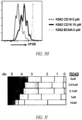
  • FIGS. 4 A- 4 C show that cytokine release following recognition of primary myeloma cells by BCMA-specific CAR-T cells is increased when the myeloma cells are pre-treated with a GSI.
  • BCMA CAR-T cells BCMA-specific T-ChARM C11 3ST-CD28 and BCMA-specific T-ChARM C11 3ST-41BB
  • control CD19sh CAR (short spacer)-T cells co-cultured with primary human myeloma tumor cells for 24 hours alone or with various concentrations of GSI RO429097 (0.003 ⁇ M to 3.0 ⁇ M).
  • FIGS. 5 A- 5 R show the effect of various concentrations of GSI on CAR-T cell viability, growth, and functional activity.
  • CD19 CAR-T cells were co-cultured with K562/CD19 target cells in media containing various concentrations of RO4929097.
  • RO4929097 inhibits CD19 CAR-T cell effector function at concentrations of 3 ⁇ M when co-cultured, as determined by measuring IL-2 (upper panel) and IFN ⁇ (lower panel) production. Box shows the relevant therapeutic window of drug that does not inhibit CAR-T cell effector function.
  • IFN- ⁇ production (geometric mean fluorescence intensity (gMFI)) by T-ChARM T cells of the present disclosure cultured with primary MM cells in the presence of the indicated concentration of RO4929097 (x-axis).
  • FIGS. 6 A- 6 C show the effects of GSI RO4929097 on BCMA expression in a preclinical in vivo model of multiple myeloma.
  • mice were irradiated (275 rad) to facilitate tumor engraftment and received human MM tumor cells (5 ⁇ 10 6 MM.1R) followed by GSI treatment (30 mg/kg). Subsequently, mice were euthanized and blood and BM samples were taken to determine if GSI had upregulated BCMA expression on myeloma cells in vivo.
  • FIGS. 7 A- 7 E show the effects of GSI RO4929097 on anti-BCMA CAR T cell therapy in the preclinical mouse MM model.
  • mice received radiation followed by human MM tumor cells (5 ⁇ 10 6 MM.1R expressing firefly luciferase). Twenty days thereafter, mice were administered GSI (30 mg/kg) at the indicated timepoints and a single suboptimal dose of anti-BCMA T-ChARM T cells (0.33 ⁇ 10 6 cells, 1:1 CD4:CD8) at day 0. Bioluminescence (BLI) imaging and survival were monitored throughout.
  • FIG. 8 shows flow cytometric analysis of binding, by a bispecific fusion molecule with specificity for BCMA, to H929 MM cells in the presence or absence of GSI. A control bispecific fusion molecule not targeting BCMA was also tested.
  • compositions and methods for treating autoimmune disease and cancer through the combined use of a B cell maturation antigen (BCMA)-specific binding protein, in soluble form or expressed on a cytotoxic or other cell, and a ⁇ -secretase inhibitor (GSI).
  • BCMA B cell maturation antigen
  • GAI ⁇ -secretase inhibitor
  • Polynucleotides encoding such BCMA-specific binding proteins can be used to generate modified host immune cells (e.g., T cells) for use in, for example, adoptive immunotherapy.
  • the instant disclosure is directed to the use of such a therapy in a subject in need of treatment in combination with a GSI, which latter treatment may be administered prior to, concurrently with, or subsequent to adoptive immunotherapy (i.e., immunotherapy with a modified immune cell expressing a BCMA-specific binding protein on the cell surface).
  • immunotherapy methods comprising administering a GSI in combination with a BCMA-specific binding protein that comprises an antibody or antigen-binding portion thereof, which may in certain embodiments be conjugated or otherwise coupled to a cytotoxic drug, e.g., forming an antibody-drug conjugate (ADC).
  • ADC antibody-drug conjugate
  • the useful therapeutic applications include the treatment of a proliferative disease or disorder (such as cancer), an autoimmune disease, or aging-associated disease or disorder in the subject in which BCMA-positive cells are pathogenic.
  • any concentration range, percentage range, ratio range, or integer range is to be understood to include the value of any integer within the recited range and, when appropriate, fractions thereof (such as one tenth and one hundredth of an integer), unless otherwise indicated.
  • any number range recited herein relating to any physical feature, such as polymer subunits, size or thickness are to be understood to include any integer within the recited range, unless otherwise indicated.
  • the term “about” means ⁇ 20% of the indicated range, value, or structure, unless otherwise indicated. It should be understood that the terms “a” and “an” as used herein refer to “one or more” of the enumerated components.
  • a protein domain, region, module or cassette e.g., a binding domain, hinge region, linker module, tag cassette
  • a protein which may have one or more domains, regions, modules or cassettes
  • proliferative disorder refers to excessive or otherwise abnormal growth or proliferation as compared to a normal or undiseased cell.
  • Excessive or abnormal growth includes, for example, dysregulated growth or proliferation that can occur rapidly (e.g., hyperproliferation) or can occur more slowly or progressively over time (e.g., multiple myeloma), within a native tissue (e.g., plasmacytoma growth within bone marrow), as well as spread to/grow within a distal tissue or body site that is non-native to the diseased cell.
  • proliferative disorders include tumors, cancers, neoplastic tissue, carcinoma, sarcoma, malignant cells, pre malignant cells, as well as non-neoplastic or non-malignant proliferative disorders (e.g., adenoma, fibroma, lipoma, leiomyoma, hemangioma, fibrosis, restenosis), or autoimmune diseases (such as rheumatoid arthritis, osteoarthritis, psoriasis, inflammatory bowel disease, or the like).
  • non-neoplastic or non-malignant proliferative disorders e.g., adenoma, fibroma, lipoma, leiomyoma, hemangioma, fibrosis, restenosis
  • autoimmune diseases such as rheumatoid arthritis, osteoarthritis, psoriasis, inflammatory bowel disease, or the like.
  • binding protein refers to a molecule, such as a peptide, oligopeptide, polypeptide, or protein that possesses the ability to specifically and non-covalently associate, unite, or combine with a target molecule (e.g., BCMA).
  • a binding protein includes any naturally occurring, synthetic, semi-synthetic, or recombinantly produced binding partner for a biological molecule, compound or other target of interest.
  • a binding protein is from an immunoglobulin or immunoglobulin-like molecule, such as an antibody or T cell receptor (TCR), which includes a functional binding domain or antigen-binding fragment thereof.
  • TCR T cell receptor
  • Exemplary binding proteins include single chain antibody variable regions (e.g., domain antibodies, sFv, scFv, Fab), BCMA ligands (e.g., BAFF, APRIL and binding fragments thereof), antigen-binding regions of T cell receptors (TCRs), such as single chain TCRs (scTCRs), or synthetic polypeptides selected for the specific ability to bind to a biological molecule.
  • binding domains refers to an association or union of a binding domain, or a fusion protein thereof, to a target molecule with an affinity or K a (i.e., an equilibrium association constant of a particular binding interaction with units of 1/M) equal to or greater than 10 5 M ⁇ 1 , while not significantly associating or uniting with any other molecules or components in a sample.
  • Binding domains (or fusion proteins thereof) may be classified as “high affinity” binding domains (or fusion proteins thereof) or “low affinity” binding domains (or fusion proteins thereof).
  • “High affinity” binding domains refer to those binding domains with a K a of at least 10 7 M ⁇ 1 , at least 10 8 M ⁇ 1 , at least 10 9 M ⁇ 1 , at least 10 10 M ⁇ 1 , at least 10 11 M ⁇ 1 , at least 10 12 M ⁇ 1 , or at least 10 8 M ⁇ 1 .
  • “Low affinity” binding domains refer to those binding domains with a K a of up to 10 7 M ⁇ 1 , up to 10 6 M ⁇ 1 , up to 10 5 M ⁇ 1 .
  • affinity may be defined as an equilibrium dissociation constant (K d ) of a particular binding interaction with units of M (e.g., 10 ⁇ 5 M to 10 ⁇ 13 M).
  • a binding domain may have “enhanced affinity,” which refers to a selected or engineered binding domain with stronger binding to a target antigen than a wild type (or parent) binding domain.
  • enhanced affinity may be due to a Ka (equilibrium association constant) for the target antigen that is higher than the wild type binding domain, or due to a K d (dissociation constant) for the target antigen that is less than that of the wild type binding domain, or due to an off-rate (K off ) for the target antigen that is less than that of the wild type binding domain.
  • binding domains of the present disclosure that specifically bind a particular target, as well as determining binding domain or fusion protein affinities, such as Western blot, ELISA, and Biacore® analysis (see also, e.g., Scatchard et al., Ann. N.Y. Acad. Sci. 51:660, 1949; and U.S. Pat. Nos. 5,283,173, 5,468,614, or the equivalent).
  • heterologous or “non-endogenous” or “exogenous” refers to any gene, protein, compound, molecule or activity that is not native to a host cell or a subject, or is any gene, protein, compound, molecule or activity native to a host or host cell but has been altered or mutated such that the structure, activity or both is different as between the native and mutated molecules.
  • heterologous, non-endogenous or exogenous molecules may not be endogenous to a host cell or subject, but instead nucleic acids encoding such molecules may have been added to a host cell by conjugation, transformation, transfection, electroporation, or the like, wherein the added nucleic acid molecule may integrate into a host cell genome or can exist as extra-chromosomal genetic material (e.g., as a plasmid or other self-replicating vector).
  • the term “homologous” or “homolog” refers to a molecule or activity found in or derived from a host cell, species or strain.
  • a heterologous or exogenous molecule or gene encoding the molecule may be homologous to a native host or host cell molecule or gene that encodes the molecule, respectively, but may have an altered structure, sequence, expression level or combinations thereof.
  • a non-endogenous molecule may be from the same species, a different species or a combination thereof.
  • endogenous or “native” refers to a gene, protein, compound, molecule or activity that is normally present in a host or host cell.
  • tag cassette refers to a unique peptide sequence affixed to, fused to, or that is part of a protein of interest, to which a heterologous or non-endogenous cognate binding molecule (e.g., receptor, ligand, antibody, or other binding partner) is capable of specifically binding where the binding property can be used to detect, identify, isolate or purify, track, enrich for, or target a tagged protein or cells expressing a tagged protein, particularly when a tagged protein is part of a heterogeneous population of proteins or other material, or when cells expressing a tagged protein are part of a heterogeneous population of cells (e.g., a biological sample like peripheral blood).
  • a heterologous or non-endogenous cognate binding molecule e.g., receptor, ligand, antibody, or other binding partner
  • a cell expressing a tagged protein can be contacted with a heterologous or non-endogenous cognate binding molecule and induce a biological response, such as promote cell activation, cell proliferation or cell death.
  • a biological response such as promote cell activation, cell proliferation or cell death.
  • the ability of the tag cassette(s) to be specifically bound by the cognate binding molecule(s) is distinct from or in addition to the ability of the binding domain(s) to specifically bind to the target molecule(s).
  • the tag cassette generally is not an antigen-binding molecule, for example, is not an antibody or TCR or an antigen-binding portion thereof.
  • a “hinge region” or a “hinge” refers to (a) an immunoglobulin hinge sequence (made up of, for example, upper and core regions) or a functional fragment or variant thereof, (b) a type II C-lectin interdomain (stalk) region or a functional fragment or variant thereof, or (c) a cluster of differentiation (CD) molecule stalk region or a functional variant thereof.
  • a “wild type immunoglobulin hinge region” refers to a naturally occurring upper and middle hinge amino acid sequences interposed between and connecting the CH1 and CH2 domains (for IgG, IgA, and IgD) or interposed between and connecting the CH1 and CH3 domains (for IgE and IgM) found in the heavy chain of an antibody.
  • a hinge region is human, and in particular embodiments, comprises a human IgG hinge region.
  • a “spacer region” refers to one or more proteins, polypeptides, oligopeptides, peptides, domains, regions, modules, cassettes, motifs or any combination thereof that join two or more proteins, polypeptides, oligopeptides, peptides, domains, regions, modules, cassettes, motifs or any combination thereof in a fusion protein.
  • a spacer region may provide a separation or spacing function to facilitate the interaction of two single chain fusion proteins, or positioning of one or more binding domains, so that the resulting polypeptide structure maintains a specific binding affinity to a target molecule or maintains signaling activity (e.g., effector domain activity) or both.
  • a spacer region may comprise a “linker module” that is an amino acid sequence having from about to two up to about 500 amino acids, which can provide flexibility and room for conformational movement between two regions, domains, motifs, cassettes or modules connected by a linker.
  • Exemplary linker modules include those having from one to about ten repeats of Gly x Ser y (SEQ ID NO:31), wherein x and y are independently an integer from 0 to 10 provided that x and y are not both 0 (e.g., (Gly 4 Ser) 2 (SEQ ID NO:32), (Gly 3 Ser) 2 (SEQ ID NO:33), Gly 2 Ser, or a combination thereof such as (Gly 3 Ser) 2 Gly 2 Ser)) (SEQ ID NO:34).
  • a spacer region may have a linker module that comprises one or more immunoglobulin heavy chain constant regions, such as a CH3 alone or a CH2CH3.
  • a spacer region may comprise a hinge region or a tag cassette.
  • Each such connector component is not mutually exclusive.
  • a spacer region may comprise a hinge and one or more linker modules, or a spacer region may comprise a hinge, one or more linker modules, and one or more tag cassettes.
  • Exemplary spacer regions can vary in length, for instance, from about five to about 500 amino acids, or from about ten to about 350 amino acids, or from about 15 to about 100 amino acids, or from about 20 to about 75 amino acids, or from about 25 to about 35 amino acids.
  • Exemplary short spacers range from about five to about 100 amino acids (e.g., 12 amino acids, 15 amino acids, 48 amino acids, 50 amino acids, 66 amino acids, 70 amino acids), intermediate spacers range from about 100 to about 200 amino acids (e.g., 110 amino acids, 120 amino acids, 130 amino acids, 140 amino acids, 150 amino acids, 157 amino acids, 175 amino acids), and long spacers range from about 200 to about 500 amino acids (e.g., 200 amino acids, 210 amino acids, 220 amino acids, 228 amino acids, 230 amino acids, 250 amino acids, 300 amino acids, 350 amino acids, 400 amino acids, 450 amino acids).
  • amino acids e.g., 12 amino acids, 15 amino acids, 48 amino acids, 50 amino acids, 66 amino acids, 70 amino acids
  • intermediate spacers range from about 100 to about 200 amino acids (e.g., 110 amino acids, 120 amino acids, 130 amino acids, 140 amino acids, 150 amino acids, 157 amino acids, 175 amino acids)
  • long spacers range from about
  • hydrophobic portion means any amino acid sequence having a three-dimensional structure that is thermodynamically stable in a cell membrane, and generally ranges in length from about 15 amino acids to about 30 amino acids.
  • the structure of a hydrophobic domain may comprise an alpha helix, a beta barrel, a beta sheet, a beta helix, or any combination thereof.
  • an “effector domain” is an intracellular portion of a fusion protein or receptor that can directly or indirectly promote a biological or physiological response in a cell when receiving the appropriate signal.
  • an effector domain is part of a protein or protein complex that receives a signal when bound, or it binds directly to a target molecule, which triggers a signal from the effector domain.
  • An effector domain may directly promote a cellular response when it contains one or more signaling domains or motifs, such as an immunoreceptor tyrosine-based activation motif (ITAM), and such a cellular response can be aided or improved with a costimulatory domain or functional portion thereof.
  • An exemplary protein having an effector domain is CD3 ⁇ .
  • an effector domain will indirectly promote a cellular response by associating with one or more other proteins that directly promote a cellular response.
  • a “costimulatory domain,” as the term is used herein refers to a signaling moiety that provides T cells a signal which, in addition to the primary (effector) signal provided by, for instance, a CD3 ⁇ chain of the TCR/CD3 complex, mediates a T cell response, including activation, proliferation, differentiation, cytokine secretion, or the like.
  • an intracellular component comprises an effector domain or functional portion thereof, a costimulatory domain or functional portion thereof, or any combination thereof.
  • a “variable region linker” specifically refers to a five to about 35 amino acid sequence that connects a heavy chain immunoglobulin variable region to a light chain immunoglobulin variable region or connects T cell receptor V ⁇ / ⁇ and C ⁇ / ⁇ chains (e.g., V ⁇ -C ⁇ , V ⁇ -C ⁇ , V ⁇ -V ⁇ ) or connects each V ⁇ -C ⁇ , V ⁇ -C ⁇ , V ⁇ -V ⁇ pair to a hinge or hydrophobic domain, which provides a spacer function and flexibility sufficient for interaction of the two sub-binding domains so that the resulting single chain polypeptide retains a specific binding affinity to the same target molecule as an antibody or T cell receptor.
  • a variable region linker comprises from about ten to about 30 amino acids or from about 15 to about 25 amino acids.
  • a variable region linker peptide comprises from one to ten repeats of Gly x Ser y , wherein x and y are independently an integer from 1 to 5 (e.g., Gly 4 Ser (SEQ ID NO:1), Gly 3 Ser (SEQ ID NO:2), Gly 2 Ser, or (Gly 3 Ser) n (Gly 4 Ser) 1 (SEQ ID NO:3), (Gly 3 Ser) n (Gly 4 Ser) n (SEQ ID NO:4), or (Gly 4 Ser) n (SEQ ID NO:5), wherein n is an integer of 1, 2, 3, 4, or 5) and wherein linked variable regions form a functional binding domain (e.g., scFv, scTCR).
  • a functional binding domain e.g., scFv, scTCR
  • “Junction amino acids” or “junction amino acid residues” refer to one or more (e.g., about 2-20) amino acid residues between two adjacent motifs, regions or domains of a polypeptide, such as between a binding domain and an adjacent linker region or between a hydrophobic domain and an adjacent effector domain or on one or both ends of a linker region that links two motifs, regions or domains (e.g., between a linker and an adjacent binding domain and/or between a linker and an adjacent hinge). Junction amino acids may result from the construct design of a fusion protein (e.g., amino acid residues resulting from the use of a restriction enzyme site during the construction of a nucleic acid molecule encoding a fusion protein).
  • antibody refers to an intact antibody comprising at least two heavy (H) chains and two light (L) chains inter-connected by disulfide bonds, as well as an antigen-binding portion of an intact antibody that has or retains the capacity to bind a target molecule.
  • a monoclonal antibody or antigen-binding portion thereof may be non-human, chimeric, humanized, or human, preferably humanized or human. Immunoglobulin structure and function are reviewed, for example, in Harlow et al., Eds., Antibodies: A Laboratory Manual, Chapter 14 (Cold Spring Harbor Laboratory, Cold Spring Harbor, 1988).
  • variable binding regions refer to the variable binding region from an antibody light and heavy chain, respectively.
  • the variable binding regions are made up of discrete, well-defined sub-regions known as “complementarity determining regions” (CDRs) and “framework regions” (FRs).
  • CDRs complementarity determining regions
  • FRs framework regions
  • CL refers to an “immunoglobulin light chain constant region” or a “light chain constant region,” i.e., a constant region from an antibody light chain.
  • CH refers to an “immunoglobulin heavy chain constant region” or a “heavy chain constant region,” which is further divisible, depending on the antibody isotype into CH1, CH2, and CH3 (IgA, IgD, IgG), or CH1, CH2, CH3, and CH4 domains (IgE, IgM).
  • a “Fab” fragment antigen binding is the part of an antibody that binds to antigens and includes the variable region and CH1 of the heavy chain linked to the light chain via an inter-chain disulfide bond.
  • Fc region portion refers to the heavy chain constant region segment of the Fc fragment (the “fragment crystallizable” region or Fc region) from an antibody, which can in include one or more constant domains, such as CH2, CH3, CH4, or any combination thereof.
  • an Fc region portion includes the CH2 and CH3 domains of an IgG, IgA, or IgD antibody or any combination thereof, or the CH3 and CH4 domains of an IgM or IgE antibody and any combination thereof.
  • a CH2CH3 or a CH3CH4 structure has sub-region domains from the same antibody isotype and are human, such as human IgG1, IgG2, IgG3, IgG4, IgA1, IgA2, IgD, IgE, or IgM (e.g., CH2CH3 from human IgG1).
  • an Fc region is responsible for the effector functions of an immunoglobulin, such as ADCC (antibody-dependent cell-mediated cytotoxicity), CDC (complement-dependent cytotoxicity) and complement fixation, binding to Fc receptors (e.g., CD16, CD32, FcRn), greater half-life in vivo relative to a polypeptide lacking an Fc region, protein A binding, and perhaps even placental transfer (see Capon et al., Nature 337:525, 1989).
  • an Fc region portion found in fusion proteins of the present disclosure will be capable of mediating one or more of these effector functions, or will lack one or more or all of these activities by way of, for example, one or more mutations known in the art.
  • antibodies have a hinge sequence that is typically situated between the Fab and Fc region (but a lower section of the hinge may include an amino-terminal portion of the Fc region).
  • an immunoglobulin hinge acts as a flexible spacer to allow the Fab portion to move freely in space.
  • hinges are structurally diverse, varying in both sequence and length between immunoglobulin classes and even among subclasses.
  • a human IgG1 hinge region is freely flexible, which allows the Fab fragments to rotate about their axes of symmetry and move within a sphere centered at the first of two inter-heavy chain disulfide bridges.
  • a human IgG2 hinge is relatively short and contains a rigid poly-proline double helix stabilized by four inter-heavy chain disulfide bridges, which restricts the flexibility.
  • a human IgG3 hinge differs from the other subclasses by its unique extended hinge region (about four times as long as the IgG1 hinge), containing 62 amino acids (including 21 prolines and 11 cysteines), forming an inflexible poly-proline double helix and providing greater flexibility because the Fab fragments are relatively far away from the Fc fragment.
  • a human IgG4 hinge is shorter than IgG1 but has the same length as IgG2, and its flexibility is intermediate between that of IgG1 and IgG2.
  • T cell receptor refers to a molecule found on the surface of T cells (or T lymphocytes) that, in association with CD3, is generally responsible for recognizing antigens bound to major histocompatibility complex (MHC) molecules.
  • MHC major histocompatibility complex
  • the TCR has a disulfide-linked heterodimer of the highly variable ⁇ and ⁇ chains (also known as TCR ⁇ and TCR ⁇ , respectively) in most T cells. In a small subset of T cells, the TCR is made up of a heterodimer of variable ⁇ and ⁇ chains (also known as TCR ⁇ and TCR ⁇ , respectively).
  • TCR Each chain of the TCR is a member of the immunoglobulin superfamily and possesses one N-terminal immunoglobulin variable domain, one immunoglobulin constant domain, a transmembrane region, and a short cytoplasmic tail at the C-terminal end (see Janeway et al., Immunobiology: The Immune System in Health and Disease, 3 rd Ed., Current Biology Publications, p. 4:33, 1997).
  • TCR as used in the present disclosure, may be from various animal species, including human, mouse, rat, cat, dog, goat, horse, or other mammals. TCRs may be cell-bound (i.e., have a transmembrane region or domain) or in soluble form.
  • MHC molecules refer to glycoproteins that deliver peptide antigens to a cell surface.
  • MHC class I molecules are heterodimers consisting of a membrane spanning ⁇ chain (with three ⁇ domains) and a non-covalently associated ⁇ 2 microglobulin.
  • MHC class II molecules are composed of two transmembrane glycoproteins, ⁇ and ⁇ , both of which span the membrane. Each chain has two domains.
  • MHC class I molecules deliver peptides originating in the cytosol to the cell surface, where peptide:MHC complex is recognized by CD8 + T cells.
  • MHC class II molecules deliver peptides originating in the vesicular system to the cell surface, where they are recognized by CD4 + T cells.
  • An MHC molecule may be from various animal species, including human, mouse, rat, or other mammals.
  • a “vector” is a nucleic acid molecule that is capable of transporting another nucleic acid.
  • Vectors may be, for example, plasmids, cosmids, viruses, or phage.
  • An “expression vector” is a vector that is capable of directing the expression of a protein encoded by one or more genes carried by the vector when it is present in the appropriate environment.
  • “Retroviruses” are viruses having an RNA genome. “Gammaretrovirus” refers to a genus of the retroviridae family. Exemplary gammaretroviruses include mouse stem cell virus, murine leukemia virus, feline leukemia virus, feline sarcoma virus, and avian reticuloendotheliosis viruses.
  • lentivirus refers to a genus of retroviruses that are capable of infecting dividing and non-dividing cells.
  • HIV human immunodeficiency virus: including HIV type 1, and HIV type 2
  • equine infectious anemia virus feline immunodeficiency virus (FIV); bovine immune deficiency virus (BIV); and simian immunodeficiency virus (SIV).
  • HIV human immunodeficiency virus: including HIV type 1, and HIV type 2
  • equine infectious anemia virus HIV
  • feline immunodeficiency virus (FIV) feline immunodeficiency virus
  • BIV bovine immune deficiency virus
  • SIV simian immunodeficiency virus
  • T cells or “cells of T cell lineage” refer to cells that show at least one phenotypic characteristic of a T cell or a precursor or progenitor thereof that distinguishes the cells from other lymphoid cells, and cells of the erythroid or myeloid lineages.
  • phenotypic characteristics can include expression of one or more proteins specific for T cells (e.g., CD3 + , CD4 + , CD8 + ), or a physiological, morphological, functional, or immunological feature specific for a T cell.
  • cells of the T cell lineage may be progenitor or precursor cells committed to the T cell lineage; CD25 + immature and inactivated T cells; cells that have undergone CD4 or CD8 lineage commitment; thymocyte progenitor cells that are CD4 + CD8 + double positive; single positive CD4 + or CD8 + ; TCR ⁇ or TCR ⁇ ; or mature and functional or activated T cells.
  • Nucleic acid molecule may be in the form of RNA or DNA, which includes cDNA, genomic DNA, and synthetic DNA.
  • a nucleic acid molecule may be double stranded or single stranded, and if single stranded, may be the coding strand or non-coding (anti-sense strand).
  • a coding molecule may have a coding sequence identical to a coding sequence known in the art or may have a different coding sequence, which, as the result of the redundancy or degeneracy of the genetic code, or by splicing, can encode the same polypeptide.
  • Treatment refers to medical management of a disease, disorder, or condition of a subject (e.g., a human or non-human mammal, such as a primate, horse, dog, mouse, rat).
  • a subject e.g., a human or non-human mammal, such as a primate, horse, dog, mouse, rat.
  • an appropriate dose or treatment regimen comprising BCMA-specific binding protein or a host cell expressing a BCMA-specific binding protein used in combination with a ⁇ -secretase inhibitor (GSI) of this disclosure, and optionally an adjuvant or pre-conditioning regimen, is administered to elicit a therapeutic or prophylactic benefit.
  • GSI ⁇ -secretase inhibitor
  • Therapeutic or prophylactic/preventive benefit includes improved clinical outcome; lessening or alleviation of symptoms associated with a disease; decreased occurrence of symptoms; improved quality of life; longer disease-free status; diminishment of extent of disease, stabilization of disease state; delay of disease progression; remission; survival; prolonged survival; or any combination thereof.
  • a “therapeutically effective amount” or “effective amount” of a BCMA-specific binding protein refers to that amount of compound or cells sufficient to result in amelioration of one or more symptoms of the disease being treated in a statistically significant manner.
  • a therapeutically effective dose refers to the effects of that ingredient or cell expressing that ingredient alone.
  • a therapeutically effective dose refers to the combined amounts of active ingredients or combined adjunctive active ingredient with a cell expressing an active ingredient that results in a therapeutic effect, whether administered serially, concurrently or simultaneously.
  • Another combination may be a cell expressing more than one active ingredient, such as two or more different BCMA-specific binding proteins or the like.
  • BCMA B Cell Maturation Antigen
  • the present disclosure provides methods for treating a proliferative or autoimmune disease or disorder in a subject having or suspected having the disease or disorder, comprising administering to the subject a therapeutically effective amount of a BCMA-specific binding protein (or BCMA-targeted immunotherapy) and a therapeutically effective amount of a ⁇ -secretase inhibitor.
  • An exemplary BCMA-specific binding protein is a chimeric antigen receptor comprising an extracellular component and an intracellular component connected by a hydrophobic portion, wherein the extracellular component comprises a BCMA-specific binding domain (e.g., BCMA-specific scFv, BCMA ligand or binding portion thereof, such as BAFF or APRIL) and optionally comprises a spacer region or hinge, and wherein the intracellular component comprises an effector domain and optionally a costimulatory domain.
  • BCMA-specific binding domain e.g., BCMA-specific scFv, BCMA ligand or binding portion thereof, such as BAFF or APRIL
  • the intracellular component comprises an effector domain and optionally a costimulatory domain.
  • the present disclosure provides a BCMA-targeted immunotherapy, for use with a ⁇ -secretase inhibitor to treat a proliferative or autoimmune disease or disorder, comprising a BCMA-specific antibody or antigen-binding portion thereof, a chimeric antigen receptor (CAR), or a tagged chimeric antigen receptor molecule (T-ChARM).
  • a BCMA-specific antibody or antigen-binding portion thereof is human or humanized.
  • BCMA-specific antibodies include antibodies J22.0-xi, J22.9-xi, J6M0, J6M1, J6M2, J9M0, J9M1, J9M2, 1 D5-3, CA8, A7D12.2, C11 D5.3, C12A3.2, C13F12.1, 13C2, 17A5, 83A10, 13A4, 13D2, 14B11, 14E1, 29B11, 29F3, 13A7, CA7, SG1, S307118G03, S332121F02, S332126E04, S322110D07, S336105A07, S335115G01, S335122F05, ET140-3, ET140-24, ET140-37, ET140-40, ET140-54, TBL-CLN1, C4.E2.1, Vicky-1, pSCHLI333, pSCHLI372, and pSCHLI373, and antigen-binding portions thereof.
  • BCMA-specific antibodies and antigen-binding portions thereof are disclosed in, for example, PCT Publication Nos. WO 2002/066516, WO 2007/062090, WO 2010/104949, WO 2011/108008, WO 2012/163805, WO 2014/068079, WO 2015/166073, WO 2014/122143, WO 2014/089335, WO 2016/090327, and WO 2016/079177; Ryan et al., Mol. Cancer. Ther. 6(11):3009, 2007; and Abbas et al., Blood 128:1688, 2016, which BCMA-specific antibodies, antigen-binding portions thereof and humanized versions are all incorporated herein by reference in their entirety. Variable domains and scFv molecules from these BCMA-specific antibodies can be used as a binding domain in any of the T-ChARM and CAR proteins mentioned herein.
  • Antigen binding portions or domains obtained from BCMA-specific antibodies of present disclosure and useful in the methods disclosed herein include, for example, domain antibodies, sFvs, single chain Fv fragments (scFvs), Fabs, F(ab′) 2 ), nanobodies, tandem scFvs, scFv-Fcs, scFv dimers, scFv zippers, diabodies, minibodies, triabodies, tetrabodoes, Fabs, F(ab)′2s, scFabs, miniantibodies, nanobodies, nanobody-HSAs, Bispecific T cell Engagers (BiTEs), DARs, scDiabodies, scDiabody-CH3s, or scFv-CH3 Knobs-Into-Holes (KIH) assemblies.
  • domain antibodies for example, domain antibodies, sFvs, single chain Fv fragments (scFvs), Fabs, F(ab′)
  • a BCMA-specific binding protein comprises a bispecific or multispecific antibody (or an antigen-binding portion thereof) comprising a first binding region (e.g., a heavy chain variable region, a light chain variable region, or both) that is specific for BCMA and at least one other binding region that is specific for a second target (e.g., a BCMA epitope that is different from the epitope of the first binding region, or an epitope of a non-BCMA target, such as, for example, a tumor-associated antigen that is not BCMA (for example, CD19 (e.g., blinatumomab, MOR-208, SGN-19A, SAR3419, coltuximabravtansine, denituzumabmafodotin, taplitumomabpaptox, XmAb 5574, MDI-551, Merck patent anti-CD19 aka B4 aka DI-B4, XmAb 5871, MDX
  • the present disclosure provides a BCMA-specific binding protein alone or expressed as a T-ChARM in a cell, for use with a ⁇ -secretase inhibitor (GSI).
  • An exemplary T-ChARM comprises an extracellular component and an intracellular component connected by a hydrophobic portion, wherein the extracellular component comprises a binding domain that specifically binds BCMA, an optional spacer region, a tag cassette, and a hinge region, and wherein the intracellular component comprises an effector domain and optionally a costimulatory domain (e.g., a functional domain or portion from 4-1BB, a functional domain or portion from CD28, or both).
  • a T-ChARM binding domain comprises a BCMA-specific scFv, a BCMA-specific scTCR, or a BCMA ligand or binding portion thereof (e.g., BAFF, APRIL), optionally wherein the BCMA-specific scFv is human or humanized.
  • BCMA-specific scFv a BCMA-specific scTCR
  • BCMA ligand or binding portion thereof e.g., BAFF, APRIL
  • Exemplary tag cassettes include Strep tag (which refers to the original Strep® tag, Strep® tag II, or any variant thereof; see, e.g., U.S. Pat. No. 7,981,632, which Strep tags are incorporated herein by reference), His tag, Flag tag, Xpress tag, Avi tag, Calmodulin tag, Polyglutamate tag, HA tag, Myc tag, Nus tag, S tag, SBP tag, Softag 1, Softag 3, V5 tag, CREB-binding protein (CBP), glutathione S-transferase (GST), maltose binding protein (MBP), green fluorescent protein (GFP), Thioredoxin tag, or any combination thereof.
  • Strep tag which refers to the original Strep® tag, Strep® tag II, or any variant thereof; see, e.g., U.S. Pat. No. 7,981,632, which Strep tags are incorporated herein by reference
  • His tag which refers to the original St
  • a tag cassette may be a genetically engineered affinity site, such as a minimal chelation site (e.g., HGGHHG, SEQ ID NO.:6).
  • a tag cassette is a Strep tag having an amino acid sequence of Trp-Ser-His-Pro-Gln-Phe-Glu-Lys (SEQ ID NO.:7) or Trp-Arg-His-Pro-Gln-Phe-Gly-Gly (SEQ ID NO.:8).
  • Tag cassettes may be present in single or multiple copies in fusion proteins of this disclosure.
  • a BCMA-specific binding protein of this disclosure can have one, two, three, four or five tag cassettes (e.g., Strep tag).
  • an extracellular component of a BCMA-specific T-ChARM includes one tag cassette, two tag cassettes, three tag cassettes, four tag cassettes, or five tag cassettes. Each of the plurality of tag cassettes may be the same or different.
  • a tag cassette comprises from about five to about 500 amino acids, or from about six to about 100 amino acids, or from about seven to about 50 amino acids, or from about eight to about 20 amino acids. In some embodiments, a tag cassette has seven to ten amino acids.
  • a tag cassette is non-immunogenic or minimally immunogenic.
  • a tag cassette can function as a handle or beacon to allow for the identification, enrichment, isolation, promotion of proliferation, activation, tracking, or elimination of cells expressing a BCMA-specific T-ChARM.
  • the present disclosure provides a BCMA-specific binding protein, for use with a ⁇ -secretase inhibitor, that is a chimeric antigen receptor (CAR), which comprises an extracellular component and an intracellular component connected by a hydrophobic portion, wherein the extracellular component comprises a binding domain that specifically binds BCMA and a hinge region, and wherein the intracellular component comprises an effector domain and optionally a costimulatory domain.
  • CAR chimeric antigen receptor
  • a CAR binding domain comprises a BCMA-specific scFv, a BCMA-specific scTCR, a BCMA-specific TCR binding domain (see, e.g., Walseng et al., Scientific Reports 7:10713 (2017), the TCR CAR constructs of which are hereby incorporated by reference in their entirety), or a BCMA ligand or binding portion thereof (e.g., BAFF, APRIL), optionally wherein the BCMA-specific scFv is human or humanized.
  • a BCMA-specific binding protein in the form of a CAR may be expressed on the surface of a cell, such as an immune system cell (e.g., T cell).
  • a BCMA-specific T-ChARM or CAR may be cell-bound (e.g., expressed on a cell surface) or in soluble form.
  • polynucleotides encoding BCMA-specific T-ChARM or CAR proteins may be codon optimized to enhance or maximize expression in a host cell, such as a T cell (Scholten et al., Clin. Immunol. 119:135, 2006).
  • a hinge present in a BCMA-specific T-ChARM or CAR of this disclosure may be an immunoglobulin hinge region, such as a wild type immunoglobulin hinge region or an altered immunoglobulin hinge region thereof.
  • a hinge is a wild type human immunoglobulin hinge region.
  • one or more amino acid residues may be added at the amino- or carboxy-terminus of a wild type immunoglobulin hinge region as part of a fusion protein construct design. For example, one, two or three additional junction amino acid residues may be present at the hinge amino-terminus or carboxy-terminus, or a hinge may contain a terminal or internal deletion and have added back one, two or three additional junction amino acid residues.
  • a hinge is an altered immunoglobulin hinge in which one or more cysteine residues in a wild type immunoglobulin hinge region is substituted with one or more other amino acid residues.
  • exemplary altered immunoglobulin hinges include an immunoglobulin human IgG1, IgG2 or IgG4 hinge region having one, two or three cysteine residues found in a wild type human IgG1, IgG2 or IgG4 hinge substituted by one, two or three different amino acid residues (e.g., serine or alanine).
  • a hinge polypeptide comprises or is a sequence that is at least 80%, at least 81%, at least 82%, at least 83%, at least 84%, at least 85%, at least 86%, at least 87%, at least 88%, at least 89%, at least 90%, at least 91%, at least 92%, at least 93%, at least 94%, at least 95%, at least 96%, at least 97%, at least 98%, at least 99% identical to a wild type immunoglobulin hinge region, such as a wild type human IgG1 hinge, a wild type human IgG2 hinge, or a wild type human IgG4 hinge.
  • a hinge present in a BCMA-specific T-ChARM or CAR of this disclosure may be a hinge that is not based on or derived from an immunoglobulin hinge (i.e., not a wild type immunoglobulin hinge or an altered immunoglobulin hinge).
  • immunoglobulin hinge i.e., not a wild type immunoglobulin hinge or an altered immunoglobulin hinge.
  • Examples of such hinges include peptides of about five to about 150 amino acids of the stalk region of type II C-lectins or CD molecules, including peptides of about eight to about 25 amino acids or peptides of about seven to about 18 amino acids, or variants thereof.
  • a “stalk region” of a type II C-lectin or CD molecule refers to the portion of the extracellular domain of the type II C-lectin or CD molecule that is located between the C-type lectin-like domain (CTLD; e.g., similar to CTLD of natural killer cell receptors) and the hydrophobic portion (transmembrane domain).
  • C-type lectin-like domain C-type lectin-like domain
  • hydrophobic portion transmembrane domain
  • AAC50291.1 corresponds to amino acid residues 34-179, but the CTLD corresponds to amino acid residues 61-176, so the stalk region of the human CD94 molecule comprises amino acid residues 34-60, which are located between the hydrophobic portion (transmembrane domain) and CTLD (see Boyington et al., Immunity 10:75, 1999; for descriptions of other stalk regions, see also Beavil et al., Proc. Nat'l. Acad. Sci. USA 89:753, 1992; and Figdor et al., Nat. Rev. Immunol. 2:77, 2002).
  • These type II C-lectin or CD molecules may also have junction amino acids between the stalk region and the transmembrane region or the CTLD.
  • the 233 amino acid human NKG2A protein (GenBank Accession No. P26715.1) has a hydrophobic portion (transmembrane domain) ranging from amino acids 71-93 and an extracellular domain ranging from amino acids 94-233.
  • the CTLD comprises amino acids 119-231, and the stalk region comprises amino acids 99-116, which may be flanked by additional junction amino acids.
  • Other type II C-lectin or CD molecules, as well as their extracellular ligand-binding domains, stalk regions, and CTLDs are known in the art (see, e.g., GenBank Accession Nos. NP_001993.2; AAH07037.1; NP_001773.1; AAL65234.1; CAA04925.1; for the sequences of human CD23, CD69, CD72, NKG2A and NKG2D and their descriptions, respectively).
  • a “derivative” of a stalk region hinge, or fragment thereof, of a type II C-lectin or CD molecule includes about an eight to about 150 amino acid sequence in which one, two, or three amino acids of the stalk region of a wild type type II C-lectin or CD molecule have a deletion, insertion, substitution, or any combination thereof.
  • a derivative can comprise one or more amino acid substitutions and/or an amino acid deletion.
  • a derivative of a stalk region is more resistant to proteolytic cleavage as compared to the wild-type stalk region sequence, such as those derived from about eight to about 20 amino acids of NKG2A, NKG2D, CD23, CD64, CD72, or CD94.
  • stalk region hinges may comprise from about seven to about 18 amino acids and can form an ⁇ -helical coiled coil structure. In certain embodiments, stalk region hinges contain 0, 1, 2, 3, or 4 cysteines. Exemplary stalk region hinges include fragments of the stalk regions, such as those portions comprising from about ten to about 150 amino acids from the stalk regions of CD69, CD72, CD94, NKG2A and NKG2D.
  • Alternative hinges that can be used in BCMA-specific T-ChARMs and CARs of this disclosure are from portions of cell surface receptors (interdomain regions) that connect immunoglobulin V-like or immunoglobulin C-like domains. Regions between Ig V-like domains where the cell surface receptor contains multiple Ig V-like domains in tandem and between Ig C-like domains where the cell surface receptor contains multiple tandem Ig C-like regions are also contemplated as hinges useful in BCMA-specific T-ChARMs and CARs of this disclosure.
  • hinge sequences comprised of cell surface receptor interdomain regions may further contain a naturally occurring or added motif, such as an IgG core hinge sequence to provide one or more disulfide bonds to stabilize the BCMA-specific T-ChARM or CAR dimer formation.
  • a naturally occurring or added motif such as an IgG core hinge sequence to provide one or more disulfide bonds to stabilize the BCMA-specific T-ChARM or CAR dimer formation.
  • hinges include interdomain regions between the Ig V-like and Ig C-like regions of CD2, CD4, CD22, CD33, CD48, CD58, CD66, CD80, CD86, CD150, CD166, or CD244.
  • hinge sequences have from about 5 to about 150 amino acids, about 5 to about 10 amino acids, about 10 to about 20 amino acids, about 20 to about 30 amino acids, about 30 to about 40 amino acids, about 40 to about 50 amino acids, about 50 to about 60 amino acids, about 5 to about 60 amino acids, about 5 to about 40 amino acids, for instance, about 8 to about 20 amino acids or about 10 to about 15 amino acids.
  • the hinges may be primarily flexible, but may also provide more rigid characteristics or may contain primarily ⁇ -helical structure with minimal n-sheet structure.
  • a hinge sequence is stable in plasma and serum, and is resistant to proteolytic cleavage.
  • the first lysine in an IgG1 upper hinge region may be mutated or deleted to minimize proteolytic cleavage, and hinges may include junction amino acids.
  • a hinge sequence may contain a naturally occurring or added motif, such as an immunoglobulin hinge core structure CPPCP (SEQ ID NO.:9) that confers the capacity to form a disulfide bond or multiple disulfide bonds to stabilize dimer formation.
  • a hydrophobic portion contained in a BCMA-specific binding protein of the present disclosure will allow a BCMA-specific binding protein of this disclosure to associate with a cellular membrane such that a portion of the binding protein will be located extracellularly (e.g., tag cassette, binding domain) and a portion will be located intracellularly (e.g., effector domain, costimulatory domain).
  • a hydrophobic portion will generally be disposed within the cellular membrane phospholipid bilayer.
  • one or more junction amino acids may be disposed between and connecting a hydrophobic portion with an effector domain, or disposed between and connecting a hydrophobic portion with a spacer region, or disposed between and connecting a hydrophobic portion with a tag cassette.
  • a hydrophobic domain is a transmembrane domain, such as one derived from an integral membrane protein (e.g., receptor, cluster of differentiation (CD) molecule, enzyme, transporter, cell adhesion molecule, or the like).
  • a hydrophobic portion is a transmembrane domain from CD4, CD8, CD27, or CD28.
  • An intracellular component contained on a BCMA-specific binding protein of the present disclosure will be capable of transmitting functional signals to a cell.
  • a BCMA-specific T-ChARM or CAR will dimerize with a second single chain T-ChARM or CAR, respectively, wherein the dimerization allows the intracellular component comprising an effector domain and optionally a costimulatory domain to be in close proximity and promote signal transduction when exposed to the proper signal.
  • the effector domains and optional costimulatory domains may further associate with other signaling factors, such as costimulatory factors, to form multiprotein complexes that produce an intracellular signal.
  • an effector domain will indirectly promote a cellular response by associating with one or more other proteins that directly promote a cellular response.
  • An intracellular component may include one, two, three or more receptor signaling domains (e.g., effector domains), costimulatory domains, or combinations thereof. Any intracellular component comprising an effector domain or functional portion thereof, a costimulatory domain or functional portion thereof, or any combination thereof from any of a variety of signaling molecules (e.g., signal transduction receptors) may be used in the BCMA-specific binding proteins of this disclosure.
  • An intracellular component may have an effector or costimulatory domain useful in the BCMA-specific binding proteins of this disclosure, which may be based on or from a protein of a Wnt signaling pathway (e.g., LRP, Ryk, ROR2), NOTCH signaling pathway (e.g., NOTCH1, NOTCH2, NOTCH3, NOTCH4), Hedgehog signaling pathway (e.g., PTCH, SMO), receptor tyrosine kinases (RTKs) (e.g., epidermal growth factor (EGF) receptor family, fibroblast growth factor (FGF) receptor family, hepatocyte growth factor (HGF) receptor family, Insulin receptor (IR) family, platelet-derived growth factor (PDGF) receptor family, vascular endothelial growth factor (VEGF) receptor family, tropomycin receptor kinase (Trk) receptor family, ephrin (Eph) receptor family, AXL receptor family, leukocyte tyrosine kinase (LT
  • an effector domain comprises a lymphocyte receptor signaling domain or comprises an amino acid sequences having one or a plurality of immunoreceptor tyrosine-based activation motifs (ITAMs).
  • an effector domain comprises a cytoplasmic portion that associates with a cytoplasmic signaling protein, wherein the cytoplasmic signaling protein is a lymphocyte receptor or signaling domain thereof, a protein comprising a plurality of ITAMs, a costimulatory factor, or any combination thereof.
  • Exemplary effector and costimulatory domains include those based on or derived from 4-1BB, CD3 ⁇ , CD3 ⁇ , CD3 ⁇ , CD27, CD28, CD79A, CD79B, CARD11, DAP10, FcR ⁇ , FcR ⁇ , FcR ⁇ , Fyn, HVEM, ICOS, Lck, LAG3, LAT, LRP, NOTCH1, Wnt, NKG2D, OX40, ROR2, Ryk, SLAMF1, Slp76, pT ⁇ , TCR ⁇ , TCR ⁇ , TRIM, Zap70, PTCH2, or any combination thereof.
  • BCMA-specific binding proteins of this disclosure comprise (a) an effector domain from CD3 ⁇ or functional portion thereof and a costimulatory domain from CD28 or functional portion thereof, (b) an effector domain from CD3 ⁇ or functional portion thereof and a costimulatory domain from 4-1BB or functional portion thereof, or (c) (a) an effector domain from CD3 ⁇ or a functional portion thereof and a costimulatory domain from CD28 and 4-1BB or functional portions thereof.
  • ⁇ -secretase is a multi-subunit integral membrane protease complex, including presenilin (PS), nicastrin (NCT), anterior pharynx-defective 1 (APH-1), and presenilin enhancer 2 (PEN-2).
  • PS is the catalytic subunit that is an aspartate protease capable of forming a hydrophilic catalytic pore buried within the membrane (Takasugi et al., Nature 422:438-41, 2003), which cleaves single pass transmembrane proteins within the transmembrane domain.
  • NCT is a type I membrane glycoprotein with a large extracellular domain (ECD), which ECD captures the amino-terminus of the substrate as a primary substrate receptor for ⁇ -secretase (Shah et al., Cell 122:435-47, 2005).
  • the ⁇ -secretase complex plays a role in a processing of a variety of substrates, including Notch, CD44, Cadherins, and ephrin B2, as well as cleaving amyloid precursor protein into amyloid beta peptide that is implicated in Alzheimer's disease.
  • the ⁇ -secretase complex is also known to cleave B-cell maturation antigen (BCMA) (Laurent et al., Nature Communications 6, 2015), which is a therapeutic target in various cancers, including multiple myeloma.
  • BCMA cleave B-cell maturation antigen
  • Exemplary ⁇ -secretase inhibitors include small molecules, peptidomimetic compounds or ⁇ -secretase-specific binding proteins.
  • a GSI can target any one or more of the ⁇ -secretase complex proteins, including presenilin 1 (PS1), presenilin 2 (PS2), nicastrin (NCT), anterior pharynx-defective 1 (APH-1), and presenilin enhancer 2 (PEN-2), provided that the ⁇ -secretase cleavage activity is reduced compared to uninhibited ⁇ -secretase.
  • PS1 presenilin 1
  • PS2 presenilin 2
  • NCT nicastrin
  • APH-1 anterior pharynx-defective 1
  • PEN-2 presenilin enhancer 2
  • the ⁇ -secretase activity is reduced at least about 50%, at least about 60%, at least about 70%, at least about 75%, at least about 80%, at least about 85%, at least about 90%, at least about 95%, or 100%.
  • Assays for measuring ⁇ -secretase activity are known in the art (see, e.g., Laurent et al., 2015).
  • the level of soluble BCMA can be a surrogate measure for ⁇ -secretase activity.
  • Representative small molecule GSIs for use with a BCMA-targeted immunotherapy to treat a proliferative or autoimmune disease or disorder, include avagacestat, DAPT, BMS-906024, BMS-986115, LY411575, MK-0752, PF-03084014, RO4929097, semagacestat, YO-01027, and any combination thereof.
  • GSIs are ⁇ -secretase-specific binding proteins, such as antibodies or antigen binding portions thereof that a ⁇ -secretase complex or a ⁇ -secretase complex protein, such as presenilin 1 (PS1), presenilin 2 (PS2), nicastrin (NCT), anterior pharynx-defective 1 (APH-1), and presenilin enhancer 2 (PEN-2).
  • An exemplary ⁇ -secretase-specific binding protein is a nicastrin-specific binding protein, such as antibodies scFvG9, A5226A, 2H6, 10C11, and antigen binding fragments thereof.
  • a binding domain may be any peptide that specifically binds BCMA or specifically inhibits ⁇ -secretase activity as described herein.
  • Sources of binding domains include antibody variable regions from various species (which can be in the form of antibodies, sFvs, scFvs, Fabs, scFv-based grababody, or soluble VH domain or domain antibodies), including human, rodent, avian, or ovine. Additional sources of binding domains include variable regions of antibodies from other species, such as camelid (from camels, dromedaries, or llamas; Ghahroudi et al., FEBS Lett. 414:521, 1997; Vincke et al., J. Biol. Chem.
  • these antibodies can form antigen-binding regions using only a heavy chain variable region, i.e., these functional antibodies are homodimers of heavy chains only (referred to as “heavy chain antibodies”) (Jespers et al., Nat. Biotechnol. 22:1161, 2004; Cortez-Retamozo et al., Cancer Res. 64:2853, 2004; Baral et al., Nature Med. 12:580, 2006; and Barthelemy et al., J. Biol. Chem. 283:3639, 2008).
  • An alternative source of binding domains of this disclosure includes sequences that encode random peptide libraries or sequences that encode an engineered diversity of amino acids in loop regions of alternative non-antibody scaffolds, such as scTCR (see, e.g., Lake et al., Int. Immunol. 11:745, 1999; Maynard et al., J. Immunol. Methods 306:51, 2005; U.S. Pat. No. 8,361,794), fibrinogen domains (see, e.g., Shoesl et al., Science 230:1388, 1985), Kunitz domains (see, e.g., U.S. Pat. No.
  • scTCR see, e.g., Lake et al., Int. Immunol. 11:745, 1999; Maynard et al., J. Immunol. Methods 306:51, 2005; U.S. Pat. No. 8,361,794
  • fibrinogen domains see, e.g
  • mAb 2 or FcabTM see, e.g., PCT Patent Application Publication Nos. WO 2007/098934; WO 2006/072620
  • armadillo repeat proteins see, e.g., Madhurantakam et al., Protein Sci. 21: 1015, 2012; PCT Patent Application Publication No. WO 2009/040338
  • affilin Edbersbach et al., J. Mol. Biol. 372: 172, 2007
  • affibody avimers, knottins, fynomers, atrimers, cytotoxic T-lymphocyte associated protein-4 (Weidle et al., Cancer Gen. Proteo.
  • Binding domains of this disclosure can be generated as described herein or by a variety of methods known in the art (see, e.g., U.S. Pat. Nos. 6,291,161 and 6,291,158). For example, binding domains of this disclosure may be identified by screening a Fab phage library for Fab fragments that specifically bind to a target of interest (e.g., BCMA, ⁇ -secretase complex component such as presenilin or nicastrin) (see Hoet et al., Nat. Biotechnol. 23:344, 2005).
  • a target of interest e.g., BCMA, ⁇ -secretase complex component such as presenilin or nicastrin
  • a target of interest e.g., BCMA, ⁇ -secretase complex component such as presenilin or nicastrin
  • convenient systems e.g., mice, HuMAb Mouse®, TC MouseTM, KM-Mouse®, llamas, chicken, rats, hamsters, rabbits, etc.
  • mice, HuMAb Mouse®, TC MouseTM, KM-Mouse®, llamas, chicken, rats, hamsters, rabbits, etc. can be used to develop binding domains of this disclosure.
  • a binding domain is a single chain Fv fragment (scFv) that comprises VH and VL regions specific for a target of interest (e.g., BCMA, ⁇ -secretase complex component such as presenilin or nicastrin).
  • a target of interest e.g., BCMA, ⁇ -secretase complex component such as presenilin or nicastrin.
  • the V H and V L regions are human.
  • V H and V L regions include the segments of anti-BCMA specific antibodies J22.0-xi, J22.9-xi, J6M0, J6M1, J6M2, J9M0, J9M1, J9M2, 11D5-3, CA8, A7D12.2, C11 D5.3, C12A3.2, C13F12.1, 13C2, 17A5, 83A10, 13A4, 13D2, 14B11, 14E1, 29B11, 29F3, 13A7, CA7, SG1, S307118G03, S332121F02, S332126E04, S322110D07, S336105A07, S335115G01, S335122F05, ET140-3, ET140-24, ET140-37, ET140-40, ET140-54, TBL-CLN1, C4.E2.1, Vicky-1, pSCHLI333, pSCHLI372, or pSCHLI373.
  • Other exemplary V H and V L regions include the segments of anti-nicastrin specific antibodies or antigen
  • a binding domain comprises or is a sequence that is at least 90%, at least 91%, at least 92%, at least 93%, at least 94%, at least 95%, at least 96%, at least 97%, at least 98%, at least 99%, at least 99.5%, or 100% identical to an amino acid sequence of a light chain variable region (V L ) (e.g., from anti-BCMA J22.0-xi, J22.9-xi, J6M0, J6M1, J6M2, J9M0, J9M1, J9M2, 110D5-3, CA8, A7D12.2, C11 D5.3, C12A3.2, or C13F12.1, 13C2, 17A5, 83A10, 13A4, 13D2, 14B11, 14E1, 29B11, 29F3, 13A7, CA7, S307118G03, S332121F02, S332126E04, S322110D07, S336105A07, S335115G01, S335122
  • V L
  • a binding domain V H region of the present disclosure can be derived from or based on a V H of a known monoclonal antibody and contains one or more (e.g., 2, 3, 4, 5, 6, 7, 8, 9, 10) insertions, one or more (e.g., 2, 3, 4, 5, 6, 7, 8, 9, 10) deletions, one or more (e.g., 2, 3, 4, 5, 6, 7, 8, 9, 10) amino acid substitutions (e.g., conservative amino acid substitutions or non-conservative amino acid substitutions), or a combination of the above-noted changes, when compared with the V H of a known monoclonal antibody.
  • one or more e.g., 2, 3, 4, 5, 6, 7, 8, 9, 10
  • amino acid substitutions e.g., conservative amino acid substitutions or non-conservative amino acid substitutions
  • An insertion, deletion or substitution may be anywhere in the V H region, including at the amino- or carboxy-terminus or both ends of this region, provided that each CDR comprises zero changes or at most one, two, or three changes and provided a binding domain containing the modified V H region can still specifically bind its target with an affinity similar to the wild type binding domain.
  • a V L region in a binding domain of the present disclosure is derived from or based on a V L of a known monoclonal antibody and contains one or more (e.g., 2, 3, 4, 5, 6, 7, 8, 9, 10) insertions, one or more (e.g., 2, 3, 4, 5, 6, 7, 8, 9, 10) deletions, one or more (e.g., 2, 3, 4, 5, 6, 7, 8, 9, 10) amino acid substitutions (e.g., conservative amino acid substitutions), or a combination of the above-noted changes, when compared with the V L of the known monoclonal antibody.
  • An insertion, deletion or substitution may be anywhere in the V L region, including at the amino- or carboxy-terminus or both ends of this region, provided that each CDR comprises zero changes or at most one, two, or three changes and provided a binding domain containing the modified V L region can still specifically bind its target with an affinity similar to the wild type binding domain.
  • V H and V L domains may be arranged in either orientation (i.e., from amino-terminus to carboxyl terminus, V H -V L or V L -V H ) and may be joined by an amino acid sequence (e.g., having a length of about five to about 35 amino acids) capable of providing a spacer function such that the two sub-binding domains can interact to form a functional binding domain.
  • an amino acid sequence e.g., having a length of about five to about 35 amino acids
  • a variable region linker that joins the V H and V L domains includes those belonging to the (Gly n Ser) family, such as (Gly 3 Ser) n (Gly 4 Ser) 1 (SEQ ID NO:3), (Gly 3 Ser) 1 (Gly 4 Ser) n (SEQ ID NO:10), (Gly 3 Ser) n (Gly 4 Ser) n (SEQ ID NO:4), or (Gly 4 Ser) n (SEQ ID NO: 5), wherein n is an integer of 1 to 5.
  • the linker is (Gly-Gly-Gly-Gly-Ser) 3 (SEQ ID NO.:12) or (Gly-Gly-Gly-Ser) 4 (SEQ ID NO.:13).
  • these (Gly n Ser)-based linkers are used to link the V H and V L domains in a binding domain, and these linkers may also be used to link the binding domain to a tag cassette, or to link a tag cassette to a hydrophobic portion or intracellular component.
  • a binding domain is a single chain T cell receptor (scTCR) comprising V ⁇ / ⁇ and C ⁇ / ⁇ chains (e.g., V ⁇ -C ⁇ , V ⁇ -C ⁇ , V ⁇ -V ⁇ ) or comprising V ⁇ -C ⁇ , V ⁇ -C ⁇ , V ⁇ -V ⁇ pair specific for a target of interest (e.g., peptide-MHC complex).
  • scTCR single chain T cell receptor
  • a binding domain comprises or is a sequence that is at least 90%, at least 91%, at least 92%, at least 93%, at least 94%, at least 95%, at least 96%, at least 97%, at least 98%, at least 99%, at least 99.5%, or 100% identical to an amino acid sequence of a TCR V ⁇ , V ⁇ , C ⁇ , or C ⁇ , wherein each CDR comprises zero changes or at most one, two, or three changes, from a TCR or fragment or derivative thereof that specifically binds to a target of interest (e.g., BCMA, ⁇ -secretase complex component such as presenilin or nicastrin).
  • a target of interest e.g., BCMA, ⁇ -secretase complex component such as presenilin or nicastrin.
  • a binding domain V ⁇ , V ⁇ , C ⁇ , or C ⁇ region of the present disclosure can be derived from or based on a V ⁇ , V ⁇ , C ⁇ , or C ⁇ of a known TCR (e.g., a high-affinity TCR) and contains one or more (e.g., 2, 3, 4, 5, 6, 7, 8, 9, 10) insertions, one or more (e.g., 2, 3, 4, 5, 6, 7, 8, 9, 10) deletions, one or more (e.g., 2, 3, 4, 5, 6, 7, 8, 9, 10) amino acid substitutions (e.g., conservative amino acid substitutions or non-conservative amino acid substitutions), or a combination of the above-noted changes, when compared with the V ⁇ , V ⁇ , C ⁇ , or C ⁇ of a known TCR.
  • a known TCR e.g., a high-affinity TCR
  • amino acid substitutions e.g., conservative amino acid substitutions or non
  • An insertion, deletion or substitution may be anywhere in a V ⁇ , V ⁇ , C ⁇ , or C ⁇ region, including at the amino- or carboxy-terminus or both ends of these regions, provided that each CDR comprises zero changes or at most one, two, or three changes and provided a binding domain containing a modified V ⁇ , V ⁇ , C ⁇ , or C ⁇ region can still specifically bind its target with an affinity similar to wild type.
  • BCMA, ⁇ -secretase, or both may be found on or in association with a cell of interest (“target cell”).
  • target cells include a cancer cell, a cell associated with an autoimmune disease or disorder or with an inflammatory disease or disorder, and an infectious organism or cell (e.g., bacteria, virus, virus-infected cell).
  • Antibody-drug conjugates are used for selectively delivering a cytotoxic element to a target cell, e.g., a tumor or cancer cell.
  • Antibody-drug conjugates and related techniques and chemistries are described in, for example, Nasiri et al., J. Cell. Physiol . (2016), Hedrich et al., Clin. Pharmacokinet . (2017), Drake and Rabuka, BioDrugs 31(6):521 (2017), Meyer et al., Bioconj. Chem. 27(12):2791 (2016), Mock et al., J. Nucl. Med. 58:83S (2017), Nareshkumar et al., Pharm. Res.
  • a BCMA-specific antibody or antigen-binding portion thereof, chimeric antigen receptor (CAR), or tagged chimeric antigen receptor molecule (T-ChARM) is conjugated or otherwise coupled to a cytotoxic agent, such as a chemotherapeutic agent.
  • a chemotherapeutic agent includes, but is not limited to, an inhibitor of chromatin function, a topoisomerase inhibitor, a microtubule inhibiting drug, a DNA damaging agent, an antimetabolite (such as folate antagonists, pyrimidine analogs, purine analogs, and sugar-modified analogs), a DNA synthesis inhibitor, a DNA interactive agent (such as an intercalating agent), and a DNA repair inhibitor.
  • Illustrative chemotherapeutic agents include, without limitation, the following groups: anti-metabolites/anti-cancer agents, such as pyrimidine analogs (5-fluorouracil, floxuridine, capecitabine, gemcitabine and cytarabine) and purine analogs, folate antagonists and related inhibitors (mercaptopurine, thioguanine, pentostatin and 2-chlorodeoxyadenosine (cladribine)); antiproliferative/antimitotic agents including natural products such as vinca alkaloids (vinblastine, vincristine, and vinorelbine), microtubule disruptors such as taxane (paclitaxel, docetaxel), vincristin, vinblastin, nocodazole, epothilones and navelbine, epidipodophyllotoxins (etoposide, teniposide), DNA damaging agents (actinomycin, amsacrine, anthracyclines, bleomycin, bus
  • An exemplary ADC that specifically binds to BCMA is J6M0-mcMMAF (GSK2857916), described in Tai et al., Blood 123(20):3128-3138 (2014), which ADC and methods of using the same are hereby incorporated by reference in their entirety.
  • Another BCMA-specific ADC (SG1-MMAF) was described by Ryan et al. ( Mol. Cancer Ther., 6(11):3009-3018, 2007), which ADC is incorporated herein by reference.
  • the present disclosure provides nucleic acid molecules that encode any one or more of the BCMA-specific binding proteins (including multispecific and bispecific binding proteins comprising at least one BCMA binding domain) or ⁇ -secretase inhibitors described herein.
  • Such nucleic acid molecules can be inserted into an appropriate vector (e.g., viral vector or non-viral plasmid vector) for introduction in a host cell of interest (e.g., T cell).
  • the term “recombinant” or “non-natural” refers to an organism, microorganism, cell, nucleic acid molecule, or vector that includes at least one genetic alteration or has been modified by introduction of an exogenous nucleic acid molecule, wherein such alterations or modifications are introduced by genetic engineering.
  • Genetic alterations include, for example, modifications introducing expressible nucleic acid molecules encoding proteins, fusion proteins or enzymes, or other nucleic acid molecule additions, deletions, substitutions or other functional disruption of a cell's genetic material. Additional modifications include, for example, non-coding regulatory regions in which the modifications alter expression of a gene or operon.
  • a cell such as a T cell, obtained from a subject may be converted into a non-natural or recombinant cell (e.g., a non-natural or recombinant T cell) by introducing a nucleic acid that encodes a BCMA-specific binding protein or ⁇ -secretase inhibitor of this disclosure (e.g., BCMA-specific T-ChARM or CAR; or anti- ⁇ -secretase) as described herein and whereby the cell expresses a cell surface located BCMA specific binding protein.
  • a BCMA-specific binding protein or ⁇ -secretase inhibitor of this disclosure e.g., BCMA-specific T-ChARM or CAR; or anti- ⁇ -secretase
  • a vector that encodes a core virus is referred to herein as a “viral vector.”
  • viral vectors include vectors based on RNA viruses, such as retrovirus-derived vectors, e.g., Moloney murine leukemia virus (MLV)-derived vectors, and include more complex retrovirus-derived vectors, e.g., lentivirus-derived vectors. HIV-1-derived vectors belong to this category.
  • retrovirus-derived vectors e.g., Moloney murine leukemia virus (MLV)-derived vectors
  • retrovirus-derived vectors e.g., Moloney murine leukemia virus (MLV)-derived vectors
  • retrovirus-derived vectors e.g., Moloney murine leukemia virus (MLV)-derived vectors
  • retrovirus-derived vectors e.g., Moloney murine leukemia virus (MLV)-derived vectors
  • retrovirus-derived vectors e.g., Moloney murine leukemia
  • lentivirus vectors derived from HIV-2, FIV, equine infectious anemia virus, SIV, and Maedi-Visna virus ovine lentivirus.
  • Methods of using retroviral and lentiviral viral vectors and packaging cells for transducing mammalian host cells with viral particles containing chimeric antigen receptor transgenes are known in the art and have been previous described, for example, in U.S. Pat. No. 8,119,772; Walchli et al., PLoS One 6:327930, 2011; Zhao et al., J. Immunol. 174:4415, 2005; Engels et al., Hum. Gene Ther.
  • Retroviral and lentiviral vector constructs and expression systems are also commercially available.
  • a viral vector is used to introduce a non-endogenous polynucleotide encoding a BCMA-specific binding protein or ⁇ -secretase inhibitor.
  • a viral vector may be a retroviral vector or a lentiviral vector.
  • a viral vector may also include polynucleotides encoding a marker for transduction.
  • Transduction markers for viral vectors are known in the art and include selection markers, which may confer drug resistance, or detectable markers, such as fluorescent markers or cell surface proteins that can be detected by methods such as flow cytometry.
  • a viral vector further comprises a gene marker for transduction comprising green fluorescent protein, an extracellular domain of human CD2, or a truncated human EGFR (huEGFRt; see Wang et al., Blood 118:1255, 2011).
  • a viral vector genome comprises a plurality of nucleic acid sequences to be expressed in a host cell as separate transcripts
  • the viral vector may also comprise additional sequences between the two (or more) transcripts allowing bicistronic or multicistronic expression. Examples of such sequences used in viral vectors include internal ribosome entry sites (IRES), furin cleavage sites, viral 2A peptide (e.g., P2A, T2A, E2A, F2A), or any combination thereof.
  • vectors also can be used for polynucleotide delivery including DNA viral vectors, including, for example adenovirus-based vectors and adeno-associated virus (AAV)-based vectors; vectors derived from herpes simplex viruses (HSVs), including amplicon vectors, replication-defective HSV and attenuated HSV (Krisky et al., Gene Ther. 5: 1517, 1998).
  • DNA viral vectors including, for example adenovirus-based vectors and adeno-associated virus (AAV)-based vectors
  • HSVs herpes simplex viruses
  • amplicon vectors including amplicon vectors, replication-defective HSV and attenuated HSV (Krisky et al., Gene Ther. 5: 1517, 1998).
  • a viral or plasmid vector further comprises a gene marker for transduction (e.g. green fluorescent protein, huEGFRt).
  • hematopoietic progenitor cells or embryonic stem cells are modified to comprise a non-endogenous polynucleotide that encodes a BCMA-specific binding protein (e.g., BCMA-specific T-ChARM or CAR) of this disclosure.
  • Hematopoietic progenitor cells may comprise thymocyte progenitor cells or induced pluripotent stem cells, which may be derived or originate from fetal liver tissue, bone marrow, cord blood, or peripheral blood.
  • the hematopoietic progenitor cells may be from human, mouse, rat, or other mammals.
  • CD24 lo Lin ⁇ CD117 + thymocyte progenitor cells are used.
  • culture conditions entail culturing hematopoietic progenitor cells expressing fusion proteins of this disclosure for a sufficient time to induce proliferation or differentiation.
  • the cells are maintained in culture generally for about 3 days to about 5 days, or about 4 to about 10 days, or about 5 to about 20 days. It will be appreciated that the cells may be maintained for an appropriate amount of time required to achieve a desired result, i.e., a desired cellular composition or level of proliferation.
  • a desired cellular composition or level of proliferation For example, to generate a cellular composition comprising primarily immature and inactivated T cells, cells may be maintained in culture for about 5 to about 20 days. Cells may be maintained in culture for about 20 to about 30 days to generate a cellular composition comprising primarily mature T cells.
  • Non-adherent cells may also be collected from culture at various time points, such as from about several days to about 25 days.
  • hematopoietic stem cells are co-cultured on stromal cells lines (U.S. Pat. No. 7,575,925; Schmitt et al., Nat. Immunol. 5:410, 2004; Schmitt et al., Immunity 17:749, 2002).
  • cytokines that promote commitment or differentiation of hematopoietic progenitor cells may be added to the culture.
  • the cytokines may be human or non-human.
  • Representative examples of cytokines that may be used include all members of the FGF family, including FGF-4 and FGF-2; Flt-3-ligand, stem cell factor (SCF), thrombopoietin (TPO), and IL-7.
  • Cytokines may be used in combination with a glycosaminoglycan, such as heparin sulfate.
  • host cells capable of expressing a BCMA-specific binding protein of this disclosure on the cell surface are T cells, including primary cells or cell lines derived from human, mouse, rat, or other mammals. If obtained from a mammal, a T cell can be obtained from numerous sources, including blood, bone marrow, lymph node, thymus, or other tissues or fluids. A T cell or subpopulations thereof (e.g., na ⁇ ve, central memory, effector memory) may be enriched or purified. T cell lines are well known in the art, some of which are described in Sandberg et al., Leukemia 21:230, 2000. In certain embodiments, T cells that lack endogenous expression of TCR ⁇ and ⁇ chains are used.
  • T cells may naturally lack endogenous expression of TCR ⁇ and ⁇ chains or may have been modified to block expression (e.g., T cells from a transgenic mouse that does not express TCR ⁇ and ⁇ chains or cells that have been manipulated to inhibit expression of TCR ⁇ and ⁇ chains) or to knockout TCR ⁇ chain, TCR ⁇ chain, or both genes.
  • cells capable of expressing a BCMA-specific binding protein of this disclosure on the cell surface are not T cells or cells of a T cell lineage, but cells that are progenitor cells, stem cells or cells that have been modified to express cell surface anti-CD3.
  • a host cell can be a “universal donor” cell that is modified to reduce or eliminate expression of one or more endogenous genes involved in an immune response.
  • a T cell may be modified to reduce or eliminate expression of one or more polypeptides selected from PD-1, LAG-3, CTLA4, TIGIT, TIM3, an HLA complex component, or a TCR or TCR complex component.
  • certain endogenously expressed immune cell proteins may be recognized as foreign by an allogeneic host that receives the modified immune cells, which may result in elimination of the modified immune cells (e.g., an HLA allele), or may downregulate the immune activity of the modified immune cells (e.g., PD-1, LAG-3, CTLA4, TIGIT), or may interfere with the binding activity of a heterologously expressed binding protein of the present disclosure (e.g., an endogenous TCR that binds to a non-tumor-associated antigen and interferes with the antigen-specific receptor of the modified immune cell specifically binding to the tumor-associated antigen).
  • a heterologously expressed binding protein of the present disclosure e.g., an endogenous TCR that binds to a non-tumor-associated antigen and interferes with the antigen-specific receptor of the modified immune cell specifically binding to the tumor-associated antigen.
  • a host cell (e.g., modified immune cell) of this disclosure comprises a chromosomal gene knockout of one or more genes encoding a PD-1, LAG-3, CTLA4, TIM3, TIGIT, an HLA complex component (e.g., a gene that encodes an ⁇ 1 macroglobulin, an ⁇ 2 macroglobulin, an ⁇ 3 macroglobulin, a ⁇ 1 microglobulin, or a ⁇ 2 microglobulin), a TCR component (e.g., a gene that encodes a TCR variable region or a TCR constant region) (see, e.g., Torikai et al., Nature Sci. Rep.
  • HLA complex component e.g., a gene that encodes an ⁇ 1 macroglobulin, an ⁇ 2 macroglobulin, an ⁇ 3 macroglobulin, a ⁇ 1 microglobulin, or a ⁇ 2 microglobulin
  • TCR component e.g., a gene
  • a chromosomal gene knockout is produced using a CRISPR/Cas9 system, and may involve transfection of the modified immune cell with a lentivirus (e.g., pLentiCRISPRv2; Torikai et al., Blood (2016)) expressing a CRISPR/Cas9 system targeting PD-1, LAG-3, CTLA4, an HLA component, or a TCR component, or any combination thereof.
  • a lentivirus e.g., pLentiCRISPRv2; Torikai et al., Blood (2016)
  • a CRISPR/Cas9 system targeting PD-1, LAG-3, CTLA4, an HLA component, or a TCR component, or any combination thereof.
  • Primers useful for designing a lentivirus that expresses a CRISPR/Cas9 system for inhibiting an endogenously expressed immune cell protein include for example, primer pairs comprising forward and reverse primers having the nucleotide sequences set forth in SEQ ID NOS:22 and 23, 24 and 25, 26 and 27, and 28 and 29.
  • a host T cell transfected to express a BCMA-specific binding protein e.g., T-ChARM, CAR, multispecific binding proteins comprising at least one BCMA binding domain, bispecific binding proteins comprising at least one BCMA binding domain
  • a BCMA-specific binding protein e.g., T-ChARM, CAR, multispecific binding proteins comprising at least one BCMA binding domain, bispecific binding proteins comprising at least one BCMA binding domain
  • a functional T cell such as a virus-specific T cell, a tumor antigen specific cytotoxic T cell, a na ⁇ ve T cell, a memory stem T cell, a central or effector memory T cell, or a CD4+ CD25+ regulatory T cell.
  • One or more growth factor cytokines that promote proliferation of T cells expressing a BCMA-specific binding protein of this disclosure may be added to the culture.
  • the cytokines may be human or non-human.
  • Exemplary growth factor cytokines that may be used promote T cell proliferation include IL-2, IL-15, IL-21, or the like.
  • ⁇ -secretase inhibitor e.g., cancers that express BCMA
  • immune diseases e.g., autoimmune
  • aging-related diseases e.g., senescence
  • Adoptive immune and gene therapy are promising treatments for various types of cancer (Morgan et al., Science 314:126, 2006; Schmitt et al., Hum. Gene Ther. 20:1240, 2009 ; June, J. Clin. Invest.
  • Cancers that are amenable to the compositions and methods disclosed herein are those that express, or are capable of expressing, BCMA on their cell surface.
  • Exemplary types of cancer that may be treated include myelomas (such as multiple myeloma), leukemias (such as plasma cell leukemia), lymphomas (such as lymphoplasmacytic lymphoma), plasmacytomas, Waldenström's macroglobulinemia.
  • Other cancers that may express BCMA include adenocarcinoma of the breast and bronchogenic carcinoma of the lung.
  • proliferative disorders amenable to a combination therapy of a BCMA-specific binding protein and a GSI are certain types of B-cell cancer, including plasma cell disorders (such as, for example, multiple myeloma).
  • Inflammatory and autoimmune diseases include arthritis, rheumatoid arthritis, juvenile rheumatoid arthritis, osteoarthritis, polychondritis, psoriatic arthritis, psoriasis, dermatitis, polymyositis/dermatomyositis, inclusion body myositis, inflammatory myositis, toxic epidermal necrolysis, systemic scleroderma and sclerosis, CREST syndrome, inflammatory bowel disease, Crohn's disease, ulcerative colitis, respiratory distress syndrome, adult respiratory distress syndrome (ARDS), meningitis, encephalitis, uveitis, colitis, glomerulonephritis, allergic conditions, eczema, asthma, conditions involving infiltration of T cells and chronic inflammatory responses, atherosclerosis, autoimmune myocarditis, leukocyte adhesion deficiency, systemic lupus erythematosus (SLE), subacute cutaneous lupus
  • a method of treating a subject with the BCMA-binding protein in combination with a ⁇ -secretase inhibitor as disclosed herein include treating multiple myeloma, plasmacytoma, plasma cell leukemia, Waldenström's macroglobulinemia, B cell lymphoma, and lymphoplasmactyic lymphoma.
  • a BCMA-specific binding protein, such as a CAR or T-ChARM, of this disclosure may be administered to a subject in cell-bound form (e.g., gene therapy of target cell population (mature T cells (e.g., CD8 + or CD4 + T cells) or other cells of T cell lineage)).
  • cells of T cell lineage expressing BCMA-specific binding protein (e.g., BCMA specific CAR or T-ChARM) administered to a subject are syngeneic, allogeneic, or autologous cells.
  • a method of the present disclosure includes steps of administering a BCMA-specific binding molecule expressed on an immune cell surface (e.g., T cell) and administering a ⁇ -secretase inhibitor (GSI).
  • the combination may be administered concurrently, together in the same pharmaceutically acceptable carrier, or in separate formulations (but concurrently).
  • Concurrent administration means the each component is administered at the same time or within 8-12 hours of each other. Administration of a second component more than 12 hours after the first component will be considered a sequential administration.
  • a BCMA-specific immunotherapeutic and GSI can be administered sequentially (e.g., one, two, three, four, five, six, seven, eight, or nine days apart; one, two, three, or four weeks apart; one, two, three, four, five, six, seven, eight, or nine weeks apart; or one, two, three, four, five, six, or more years apart; or the like), in any order and in any combination.
  • the GSI when administered sequentially, the GSI is administered first and the BCMA-targeted immunotherapy (soluble or cell form) is administered second.
  • a BCMA-targeted immunotherapy soluble or cell form
  • the GSI is administered second.
  • a BCMA-targeted immunotherapy comprising a modified immune cell that specifically binds to BCMA (e.g., a BCMA-specific T cell, such as a CAR-T, T-ChARM, bispecific, multispecific T cell) is administered first and a GSI is administered second (e.g., within hours, days, weeks, months, or years of the BCMA immunotherapy).
  • a BCMA-specific T cell such as a CAR-T, T-ChARM, bispecific, multispecific T cell
  • a BCMA-targeted immunotherapy comprising a modified immune cell comprising a binding protein that specifically binds to BCMA (e.g., a BCMA-specific T cell, such as a CAR-T, T-ChARM, bispecific, multispecific T cell) is (a) administered to a subject; (b) after a period of time (e.g., about 5 days to about one week, about one week to about two weeks, about two weeks to about three weeks, about one week to about one month, about one month to about six months, about three months to about one year, or the longer as needed), the subject or a tissue from the subject is probed or examined for the presence or persistence of the previously administered modified immune cell comprising a binding protein that specifically binds to BCMA, and (c) administering a GSI second after the presence or persistence of the BCMA immunotherapy is detected.
  • a BCMA-specific T cell such as a CAR-T, T-ChARM, bispecific, multispecific T cell
  • a GSI is administered to a subject at least once before, simultaneous with, and at least once (e.g., at least two, three, or four times) after, the BCMA-targeted immunotherapy.
  • a combination therapy of this disclosure comprises a BCMA-targeted immunotherapy and administration of from about 0.01 ⁇ M GSI to about 5 ⁇ M GSI, from about 0.03 ⁇ M GSI to about 1.5 ⁇ M GSI, from about 0.05 ⁇ M GSI to about 2.5 ⁇ M GSI, or from about 0.1 ⁇ M GSI to about 1.0 ⁇ M GSI.
  • a combination therapy comprising a modified immune cell that specifically binds BCMA and a GSI comprises a lower amount of the immune cell that specifically binds BCMA, the GSI, or both as compared to administration of these therapies individually.
  • the method further comprises pre-conditioning a subject concurrent with or prior to administering a BCMA-targeted immunotherapy or an immune cell expressing a BCMA-specific binding protein and a GSI.
  • a pre-conditioning regimen is an immunosuppressive conditioning comprising depleting endogenous lymphocytes (also referred to as lymphodepletion, which may be non-myeloablative or myeloablative).
  • Exemplary lymphodepletion may be achieved with cyclophosphamide alone, cyclophosphamide in combination with fludarabine, by use of other agents or treatments that are cytotoxic to lymphocytes (e.g., total body irradiation), or any combination thereof.
  • the binding molecule, inhibitor or combination compositions may be administered orally, topically, transdermally, parenterally, by inhalation spray, vaginally, rectally, or by intracranial injection, or any combination thereof.
  • a BCMA-targeted immunotherapy and a GSI may be administered by the same route or by different routes.
  • the BCMA-targeted immunotherapy is administered parenterally and the GSI is administered orally, which can be concurrently or sequentially.
  • parenteral includes subcutaneous injections, intravenous, intramuscular, intracisternal injection, or infusion techniques.
  • compositions are essentially free of pyrogens, as well as other impurities that could be harmful to the recipient. Injection or infusion, especially intravenous, is preferred for administering a BCMA-targeted immunotherapy.
  • BCMA-specific binding protein, GSI or both may be administered to a subject in soluble form (e.g., antibody).
  • Soluble TCRs are also known in the art (see, e.g., Molloy et al., Curr. Opin. Pharmacol. 5:438, 2005; U.S. Pat. No. 6,759,243).
  • compositions including a combination therapy of a BCMA-targeted immunotherapy and a ⁇ -secretase inhibitor of this disclosure may be administered in a manner appropriate to the disease or condition to be treated (or prevented) as determined by persons skilled in the medical art.
  • An appropriate dose, suitable duration, and frequency of administration of the compositions will be determined by such factors as the condition of the patient, size, type and severity of the disease, particular form of the active ingredient, and the method of administration.
  • the present disclosure provides pharmaceutical compositions comprising cells expressing a BCMA-specific binding protein, such as a CAR or T-ChARM, and a pharmaceutically acceptable carrier, diluents, or excipient.
  • Suitable excipients include water, saline, dextrose, glycerol, or the like and combinations thereof.
  • an advantage of the instant disclosure is that BCMA-specific binding protein, such as a CAR or T-ChARM, expressing cells administered to a patient can be depleted using the cognate binding partner to a tag cassette.
  • the present disclosure provides a method for depleting a T cell expressing a BCMA-specific T-ChARM by using an antibody specific for the tag cassette, using a cognate binding partner specific for the tag cassette, or by using a second T cell expressing a CAR and having specificity for the tag cassette.
  • a tag cassette allows for immunodepletion of a T cell expressing a BCMA-specific T-ChARM of this disclosure. Elimination of engineered T cells may be accomplished using depletion agents specific for a tag cassette.
  • an anti-Strep tag antibody, anti-Strep tag scFv, or Streptactin each fused to or conjugated to a cell-toxic reagent such as a toxin, radiometal
  • a cell-toxic reagent such as a toxin, radiometal
  • an anti-Strep tag/anti-CD3 bispecific scFv, or an anti-Strep tag CAR T cell may be used.
  • the present disclosure provides a method for selectively promoting proliferation of a recombinant T cell expressing a BCMA-specific T-ChARM of this disclosure.
  • the method comprises selective ex vivo proliferation of T cells expressing a BCMA-specific T-ChARM using a tag binding partner, such as an antibody.
  • the method comprises expanding functional T cells (e.g., virus-specific, TAA (tumor-associated antigen) specific CTL, or specific T cell subsets, such as na ⁇ ve T cells, memory stem T cells, central or effector memory T cells, CD4+ CD25+ regulatory T cells) with a tag binding partner, such as an antibody, which may optionally be done in the presence of a costimulatory molecule binding partner (such as an anti-CD27 or antiCD28 antibody).
  • a tag binding partner such as an antibody
  • a costimulatory molecule binding partner such as an anti-CD27 or antiCD28 antibody
  • a BCMA-specific T-ChARM allows for selective promotion of T cell proliferation in vivo when expressing a BCMA-specific T-ChARM of this disclosure.
  • a T cell expressing a CAR comprising a tag cassette allows for expansion of the CAR T cells in vivo when contacting cells expressing a ligand (e.g., including T cell suppressor cell ligands PD-L1, PD-L2).
  • a ligand e.g., including T cell suppressor cell ligands PD-L1, PD-L2
  • proliferation or expansion of cells expressing BCMA-specific T-ChARM as disclosed herein is induced in vivo, which may be induced with a tag cassette binding partner (such as an anti-tag antibody) and optionally a costimulatory molecule binding partner (such as an anti-CD27 or anti-CD28 antibody).
  • a tag cassette binding partner such as an anti-tag antibody
  • a costimulatory molecule binding partner such as an anti-CD27 or anti-CD28 antibody
  • cells expressing BCMA-specific T-ChARM as disclosed herein are activated in vivo, such as at the site of a tumor.
  • a composition e.g., alginate, basement membrane matrix (Matrigel®), biopolymer, or other matrix
  • a carrier e.g., microbead, nanoparticle, or other solid surface
  • a tag cassette binding partner such as an anti-tag antibody
  • a costimulatory molecule binding partner such as an anti-CD27 or antiCD28 antibody
  • recombinant cells expressing a BCMA-specific T-ChARM may be detected or tracked in vivo by using antibodies that bind with specificity to a tag cassette (e.g., anti-Tag antibodies), or by other cognate binding proteins that specifically bind the tag cassette sequence (e.g., Streptactin binding to Strep tag), which binding partners for the tag cassette are conjugated to a fluorescent dye, radio-tracer, iron-oxide nanoparticle or other imaging agent known in the art for detection by X-ray, CT-scan, MRI-scan, PET-scan, ultrasound, flow-cytometry, near infrared imaging systems, or other imaging modalities (see, e.g., Yu et al., Theranostics 2:3, 2012).
  • a tag cassette e.g., anti-Tag antibodies
  • other cognate binding proteins that specifically bind the tag cassette sequence e.g., Streptactin binding to Strep tag
  • binding partners for the tag cassette are conjugated to a fluorescent dye
  • cells expressing BCMA-specific T-ChARM of the instant disclosure may be used in diagnostic methods or imaging methods, including methods used in relation to the indications or conditions identified herein.
  • a method comprises administering a GSI in combination (e.g., concurrently, separately, or sequentially) with a BCMA-specific binding protein that may comprise, for example, a BCMA-specific antibody or antigen-binding portion thereof, such as antibody-drug conjugate, or a bispecific or a multispecific binding protein, such as those useful for pre-targeted radiation immunotherapy (see, e.g., Green et al., Blood 131:611 (2018)).
  • a BCMA-specific binding protein may comprise, for example, a BCMA-specific antibody or antigen-binding portion thereof, such as antibody-drug conjugate, or a bispecific or a multispecific binding protein, such as those useful for pre-targeted radiation immunotherapy (see, e.g., Green et al., Blood 131:611 (2016)).
  • Anti-BCMA CARs were prepared to examine their usefulness for immunotherapy of multiple myeloma and other disorders.
  • Anti-BCMA CARs were constructed with scFvs comprised of the V H and V L regions from C115 D5.3 (“C11”) antibody and A7D12.2 (“A7”) antibody, which included an IgG4 hinge region (spacer), a CD28 transmembrane domain, a 4-1BB costimulatory domain, and a CD3 ⁇ effector domain.
  • the scFvs were produced in both the “HL” and “LH” orientations (see FIG. 1 A ).
  • Human T cells were transduced with expression constructs encoding the anti-BCMA CARs and examined for functional characteristics. As shown in FIG.
  • T cells expressing the C11 CARs and A7 CARs proliferated when co-cultured with BCMA-expressing target cells, although the C11 CARs appeared to proliferate slightly more robustly than the A7 CAR-expressing T cells.
  • the C11 CAR-T cells also produced more cytokines in response to target cell lines (either antigen-transfected K562 cells or BCMA-expressing MM cell lines; FIG. 1 C ) and had greater specific killing activity against target cells as compared to the A7 LH CAR-T cells ( FIG. 1 D ).
  • Additional A7 and C11 CARs were generated having different intracellular components, including CARs containing a 4-1BB costimulatory domain ( FIG. 1 E , upper illustration) and a CD28 costimulatory domain ( FIG. 1 E , lower illustration).
  • the length of the extracellular spacer domain was also varied to improve interaction between the CAR expressing T cell and the BCMA + target cell, including short (e.g., 12 amino acids, 48 amino acids, and 66 amino acids in length), intermediate (e.g., 157 amino acids in length), and long (e.g., 228 amino acids in length) spacers.
  • the 48 amino acid and 157 amino acid spacer CARs each included two (2) Strep-Tag cassettes, while the 66 amino acid spacer included three (3) Strep-Tag cassettes (see FIG. 1 F ).
  • Tagged chimeric antigen receptors such as the Strep-Tag cassette-containing CARs shown in FIGS. 1 F and 1 G are referred to herein as T-ChARMs.
  • T-ChARMs Human T cells were transduced to express the T-ChARMs (see Example 2) and analyzed for functionality. The length of the spacer had an effect on the T-ChARM constructs comprising a scFv derived from anti-BCMA antibody C11 D5.3, wherein intermediate (about 65 amino acids; see C11 3ST, C11 2STint and C11Lo of FIG. 1 H ) to long (about 200 amino acids) spacers worked best for this binding domain.
  • C113ST_4-1BB and C113ST_CD28 were selected as best-performing constructs ( FIGS. 1 H- 1 J ) and compared to a previously disclosed anti-BCMA CAR (“BCMA-2”; Carpenter et al. Clin. Cancer Res. 19:2048, 2013).
  • T cells expressing either C113ST T-ChARM produced more cytokines ( FIG. 1 L, 1 M ) and proliferated more robustly ( FIG. 1 N ) than T cells expressing BCMA-2 when co-cultured with target cells. It was also determined that T cells expressing either C113ST T-ChARM can recognize and lyse CD138 + patient MM cells (data not shown).
  • T cells expressing either C113ST T-ChARM or the BCMA-2 CAR did not have cytolytic activity against non-antigen-expressing K562 cells ( FIG. 1 O ), but effectively lysed K562 cells transduced to express the BCMA antigen ( FIG. 1 P ), demonstrating that the engineered T cells specifically recognize antigen.
  • epHIB7 CAR-encoding lentiviral
  • T cells were expanded in RPMI, 10% human serum, 2 mM L-glutamine and 1% penicillin-streptomycin (CTL medium), supplemented with recombinant human (rh) IL-2 to a final concentration of 50 U/mL every 48 hours. After expansion, an aliquot of each transduced T cell line was stained with biotin-conjugated anti-EGFR antibody and streptavidin-PE (Miltenyi, Auburn, Calif.). The tEGFR + T cells were isolated by sorting on a FACS-Aria cell sorter (Becton Dickinson).
  • the tEGFR + T cell subset was then stimulated with irradiated (8,000 rad) CD19 + B-LCL at a T cell:LCL ratio of 1:7, and expanded for 8 days in CTL medium with addition of 50 U/mL rh IL-2 every 48 hours or using a rapid expansion protocol for cells expressing T-ChARMs (Riddell and Greenberg, J. Immunol. Methods 128:189, 1990), wherein the T-ChARM comprises a scFv derived from anti-BCMA antibody A7 or C11 D5.3.
  • conjugated antibodies were used for flow cytometric phenotyping and analysis: CD4, CD8, CD25, CD137, CD45, Annexin V, CD62L, CD27, CD28 (BD Biosciences), anti-Streptag II antibody (Genscript), EGFR antibody (ImClone Systems Incorporated, Branchburg, N.J.); strepTavidin-PE (BD Biosciences, San Jose, Calif.). Staining with propidium iodide (P1, BD Biosciences) was performed for live/dead cell discrimination as directed by the manufacturer.
  • P1 propidium iodide
  • transduced T cells were sorted for EGFRt expression and evaluated by staining with fluorochrome labeled anti-Streptag mAb.
  • the mean fluorescence intensity (MFI) of EGFR staining was similar on T cells transduced with each of the BCMA-specific T-ChARM and the CD19-Short CAR.
  • the introduction of a tag into a CAR to produce a T-ChARM did not interfere with transgene expression (data not shown).
  • An anti-StrepTag mAb specifically stained T cells transduced with the various BCMA-specific T-ChARMs, independent of the position or number of tag sequences in each T-ChARM.
  • BCMA-targeted T cell therapies against most myelomas was examined. Because shedding of surface BCMA by myeloma cells may hinder T cell recognition, soluble BCMA levels were measured in the supernatants during culture of a myeloma cell line. U266 myeloma cells were washed and plated in culture media for 1, 3, 5 and 24 hours. The media supernatant was harvested and assayed for sBCMA by ELISA. The data shows a time-dependent increase in sBCMA levels in the supernatant ( FIG. 2 A ).
  • FIG. 2 B shows surface BCMA expression by a reference cell line (RPMI, left panel) and samples from primary patient MM cells with differing levels of BCMA expression.
  • the pie chart of FIG. 2 C shows that BCMA expression on the surface of MM cells from nineteen (19) different patients was found to be positive for most patients, though there were some patient samples that showed intermediate to low/no surface BCMA expression ( ⁇ 25%).
  • FIG. 2 D shows that the T-ChARM T cells produced more IFN- ⁇ when cultured with patient MM cells expressing high levels of surface BCMA, as compared to culture with low-BCMA patient MM cells.
  • FIG. 2 G shows that T-ChARM T cells produced more IFN- ⁇ when cultured with patient MM cells expressing low levels of PD-L1 versus high levels of PD-L1, although this trend was not statistically significant.
  • sBCMA The effect of sBCMA was examined as well by adding sBCMA to co-cultures of T cells expressing a BCMA-specific T-ChARM and K562 cells transduced with a polynucleotide encoding full-length BCMA (K562/BCMA + ).
  • a dose-dependent inhibition of BCMA-specific T-ChARM T cell effector function was detected as a measure of IFN- ⁇ release into the media supernatant upon administration of exogenous sBCMA ( FIGS. 2 H, 2 I ).
  • MM cell lines showed substantial increases in culture supernatant sBCMA within 24 hours ( FIG. 2 J ).
  • BM bone marrow
  • FIG. 2 K To examine whether high levels of sBCMA might inhibit the activity of BCMA-specific T-ChARM T cells, patient bone marrow (BM) sera were examined for sBCMA levels.
  • Patient BM was found to have high levels of sBCMA, which roughly correlated with disease burden as determined by the percentage of CD138 + cells present ( FIG. 2 K ).
  • the T cells were incubated with increasing levels of recombinant BCMA and then stained using BCMA-Fc conjugated to APC. As shown in FIG. 2 L , the staining decreased with higher levels of recombinant BCMA, which indicates that sBCMA could potentially have a detrimental effect BCMA-specific T-ChARM T cell function.
  • C113ST T-ChARM T cells and control anti-CD19 CAR T cells (“FMC63”) were incubated with Fc-BCMA and stained for EGFRt (CAR/T-ChARM transduction marker) and CD4, showing that T-ChARMs were expressed by the cells ( FIG. 2 M ). Staining of EGFRt and other T cell surface molecules was unaffected (data not shown).
  • BCMA-Fc was added to T cell/target cell line co-cultures, resulting in much-reduced recognition (IFN- ⁇ production and CD4 expression) by the BCMA-targeting T-ChARM T cells, but not by control anti-CD19 CAR T cells (cultured with K562 cells expressing the CD19 antigen ( FIG. 2 N ).
  • the effect on the BCMA T-ChARM T cells was dose-dependent ( FIGS. 2 O, 2 P ).
  • ⁇ -secretase inhibitor (GSI) RO4929097 was used. BCMA is rapidly upregulated on various myeloma cell lines when incubated with ⁇ -secretase inhibitor (GSI) RO4929097 (concentration used ranged from 0.001 ⁇ M to 1.0 ⁇ M) ( FIGS. 3 A- 3 D ).
  • GSI RO429097 0.01 ⁇ M, 0.1 ⁇ M and 1.0 ⁇ M.
  • the media supernatant was harvested and assayed for sBCMA by ELISA.
  • sBCMA levels decreased in the supernatant in the presence of a GSI in a dose dependent manner ( FIGS. 3 G & 3 H ).
  • soluble BCMA soluble BCMA
  • U266 cells were washed and plated in culture media for 1, 3, 5 and 24 hours in the presence of various concentrations of GSI RO429097 (0.01 ⁇ M, 0.1 ⁇ M and 1.0 ⁇ M).
  • the media supernatant was harvested and assayed for soluble BCMA (sBCMA) by ELISA.
  • the data shows a dose-dependent decrease in soluble BCMA levels in the supernatant when a GSI is present ( FIG. 3 I ).
  • CD138 + myeloma cells were enriched from patient bone marrow samples, incubated for 3 hours in the presence of various concentrations of GSI RO429097 (0.01 ⁇ M to 10 ⁇ M) and evaluated for surface BCMA expression by flow cytometry ( FIGS. 3 M and 3 R ).
  • BCMA mean fluorescence intensity (MFI) on tumor cells is presented as fold increase over tumor cells incubated without RO4929097.
  • MFI mean fluorescence intensity
  • ⁇ -Secretase Inhibitor Improves Recognition of BCMA + Myeloma Cells by T Cells Expressing BCMA-Specific T-Charm
  • IL-2 production by BCMA CAR-T cells BCMA-specific T-ChARM C11 3ST-CD28 and BCMA-specific T-ChARM C11 3ST-41BB) or control CD19sh CAR (short spacer)-T cells was measured after co-culture with primary human myeloma tumor cells for 24 hours in media containing at various concentrations of GSI RO429097 (0.003 ⁇ M to 3.0 ⁇ M) ( FIG. 4 A ).
  • Treatment with GSI resulted in a dose dependent increase in IL-2 production by BCMA T-ChARM T cells.
  • GSI may inhibit T-cell signaling and effector functions.
  • CD19 CAR-T cells were co-cultured with Raji or K562/CD19 + target cells in the presence of GSI (0.01 ⁇ M to 100 ⁇ M) and measured viability and effector function. Over this concentration range there was no effect on CD19 antigen expression ( FIG.
  • FIG. 5 A or on CAR-T cell viability after 24 hours ( FIG. 5 B ).
  • GSI RO4929097 was found to inhibit CD19 CAR-T cell effector function at concentrations ⁇ 1 ⁇ M when co-cultured with K562 CD19 + cells, as determined by measuring IL-2 ( FIG. 5 C , upper panel) and IFN ⁇ ( FIG. 5 C , lower panel) production (see also FIG. 5 D- 5 F ).
  • the ability of the CD19 CAR-T cells to specifically kill target cells was not affected by GSI concentration ( FIG. 5 G ).
  • the CD19 CAR-T cells also proliferated in response to target cell stimulation in the presence of 10 ⁇ M GSI RO4929097, though less effectively than in the absence of GSI RO4929097 ( FIG. 5 H ).
  • GSI RO4929097 a dose titration of GSI RO4929097 was added to co-cultures of CD19 CAR-T and target cells.
  • CAR-T cell division was essentially unaffected or only slightly affected by the addition of therapeutic doses of GSI (0.01 ⁇ M-1 ⁇ M), whereas GSI at a higher, non-therapeutic dose (10 ⁇ M) did detectably inhibit proliferation ( FIG. 5 I ).
  • CD19 CAR-T cells cultured in the presence of GSI did not show a decrease in expansion over 8 days in culture with ( FIG. 5 J ) or without exogenous IL-2 ( FIG. 5 K ).
  • T cells that were expanded in the presence of 5 ⁇ M, 0.5 ⁇ M, or absence of GSI did not show a significant difference in IFN- ⁇ production when subsequently re-stimulated with target cells after expansion in the presence ( FIG. 5 L ) or absence ( FIG. 5 M ) of exogenous IL-2.
  • IL-2 production between the CAR-T cell groups was also not markedly different ( FIG. 5 N ).
  • GSI at therapeutic levels does not affect T cell function, including cytokine production, cell lysis activity, and proliferation.
  • GSI treatment of primary myeloma tumor samples greatly improved IFN- ⁇ production ( FIGS. 5 O, 5 P, and 5 Q ) and CD8 expression ( FIG. 5 O ) by co-cultured T-ChARM T cells, with effects seen following treatment with 0.1 ⁇ M GSI or higher, and also increased proliferation of the T cells ( FIG. 5 R ).
  • FIG. 6 A a mouse xenograft model of human MM was tested as illustrated in FIG. 6 A . Briefly, immunodeficient NOD/SCID gamma (NSG) mice (The Jackson Laboratory) received sublethal irradiation (275 rad) at day ⁇ 1, followed by 5 ⁇ 10 6 MM.1R cells the next day (day 0). GSI RO4929097 (30 mg/kg) was administered by oral gavage at day 19 and day 20. Mice were sacrificed at different times after the second gavage administration of the GSI and blood and bone marrow samples were taken for analysis.
  • GSI dosing was followed by a rapid increase (>3-fold by 4 hours post-second gavage) in surface BCMA expression on the tumor cells ( FIG. 6 B ) and a concurrent decrease in sBCMA ( FIG. 6 C ).
  • the observed effects were generally reduced within 48 hours following the second gavage treatment.
  • mice were sublethally irradiated at day ⁇ 21, followed by administration of human MM cells (5 ⁇ 10 6 MM.1R ffluc ) at day ⁇ 20 (see FIG. 7 A ).
  • a first dose of GSI (30 mg/kg RO4929097) was administered by oral gavage at day ⁇ 1.
  • the mice were injected with a suboptimal dose of C11 3ST T-ChARM T cells (0.33 ⁇ 10 6 cells; CD4:CD8 1:1) and received a second dose of the GSI.
  • FIGS. 7 B, 7 C, and 7 E show that the group receiving GSI+T cells had reduced luminescence and more mice with no detectable tumors as compared to the group receiving the T cells only (BLI data from T cell only group not shown).
  • the quantified luminescence data indicated that the initial T-ChARM T cell effect began reversing at approximately day 9, when the tumors began growing out (“Mock+BCMA T cells”).
  • GSI RO4929097 (“RO49+BCMA T cells”)
  • the imaging data was consistent with survival of the mice ( FIGS. 7 D and 7 E (right-hand graph)), with the mice receiving the combination therapy surviving longer than the group receiving T cells only before succumbing.
  • GSI treatments are repeated (at least 2 to at least about 5 times up to at least about 25 times) when used in combination with anti-BCMA CAR T cells, which GSI treatments may be administered concurrently with, before, or after administration of the anti-BCMA CAR T cells.
  • GSI Improves Binding to BCMA+MM Cells by a Bispecific Anti-BCMA Fusion Protein
  • the bispecific fusion protein was added to BCMA-expressing H929 MM cells in culture (0.5 ⁇ 10 6 cells) either with or without GSI. Binding was assessed by flow cytometry. As shown in FIG. 8 , the addition of GSI improved binding by the BCMA-binding bispecific fusion protein, but had no effect on binding by a control bispecific fusion protein that does not target BCMA.

Landscapes

  • Health & Medical Sciences (AREA)
  • Chemical & Material Sciences (AREA)
  • Life Sciences & Earth Sciences (AREA)
  • General Health & Medical Sciences (AREA)
  • Medicinal Chemistry (AREA)
  • Public Health (AREA)
  • Animal Behavior & Ethology (AREA)
  • Veterinary Medicine (AREA)
  • Organic Chemistry (AREA)
  • Pharmacology & Pharmacy (AREA)
  • Immunology (AREA)
  • Epidemiology (AREA)
  • Molecular Biology (AREA)
  • Genetics & Genomics (AREA)
  • Biochemistry (AREA)
  • Biophysics (AREA)
  • Proteomics, Peptides & Aminoacids (AREA)
  • Engineering & Computer Science (AREA)
  • Nuclear Medicine, Radiotherapy & Molecular Imaging (AREA)
  • General Chemical & Material Sciences (AREA)
  • Chemical Kinetics & Catalysis (AREA)
  • Bioinformatics & Cheminformatics (AREA)
  • Zoology (AREA)
  • Toxicology (AREA)
  • Gastroenterology & Hepatology (AREA)
  • Oncology (AREA)
  • Cell Biology (AREA)
  • Mycology (AREA)
  • Microbiology (AREA)
  • Biomedical Technology (AREA)
  • Hematology (AREA)
  • Biotechnology (AREA)
  • Nutrition Science (AREA)
  • Physiology (AREA)
  • Emergency Medicine (AREA)
  • Endocrinology (AREA)
  • Virology (AREA)
  • Developmental Biology & Embryology (AREA)
  • Micro-Organisms Or Cultivation Processes Thereof (AREA)
  • Medicines That Contain Protein Lipid Enzymes And Other Medicines (AREA)

Abstract

The present disclosure relates to methods for using BCMA-specific binding molecules (such as a BCMA-specific chimeric antigen receptor or antibody) in combination with γ-secretase inhibitors, which can be done concurrently or sequentially, to treat or prevent a B-cell related proliferative disease, such as a cancer or autoimmune disease, or the like. A BCMA-specific binding molecule in combination with γ-secretase inhibitor can be used in, for example, adoptive immunotherapy.

Description

STATEMENT OF GOVERNMENT INTEREST
This invention was made with government support under CA136551 awarded by the National Institutes of Health. The government has certain rights in the invention.
STATEMENT REGARDING SEQUENCE LISTING
The Sequence Listing associated with this application is provided in text format in lieu of a paper copy, and is hereby incorporated by reference into the specification. The name of the text file containing the Sequence Listing is 360056_445USPC_SEQUENCE_LISTING.txt. The text file is 14.3 KB, was created on Aug. 16, 2019, and is being submitted electronically via EFS-Web.
BACKGROUND
The human immune system generally protects the body from invading foreign substances and pathogens. B lymphocytes, also referred to as B-cells and a component of the immune system, produce antibodies that bind to, and in some cases mediate destruction of, the foreign substance or pathogen. In some instances, however, the immune system may be dysregulated and result in diseases that involve uncontrolled proliferation of B-cells, such cancer, autoimmune disease and inflammatory disease.
Mature B cells and their differentiated progeny can be identified by molecules on their cell surface, such as B cell maturation antigen (BCMA, also known as tumor necrosis factor receptor superfamily member 17 (TNFRSF17), TNFRSF13A, and CD269), which is expressed on plasma cells and some mature B cells. BCMA has been shown to specifically bind to B cell activating factor (BAFF, also known as TNFSF138, TALL-1, and CD257) and a proliferation-inducing ligand (APRIL, also known as TNFSF13, TALL-2, and CD256), which can lead to NF-κB activation. BCMA-targeted therapies, including adoptive transfer of BCMA-specific chimeric antigen receptor (CAR) modified T cells, naked-BCMA specific antibodies or the administration of BCMA-specific antibodies conjugated to a therapeutic moiety (antibody drug conjugate, ADC, such as a radiolabel) can be used to treat some types of B cell malignancies, such as multiple myeloma, but may be limited in efficacy by the number of BCMA molecules expressed on the tumor cell surface and/or the presence of soluble BCMA in the circulation. Low BCMA surface expression on the cancer cells or soluble BCMA can limit and prevent the efficacy of therapeutic agents due to inadequate binding to the BCMA present on the surface of the tumor cells. Low levels of other target molecules on tumor cells (e.g., CD19, CD20) that are targeted with antibody, antibody drug conjugates or chimeric antigen receptor T cells has been shown to limit the efficacy of these therapies, and enable cancer cells that express low levels of the target molecule to escape elimination. In the case of BCMA, the short extracellular portion of the molecule is cleaved from the cell surface and shed through the action of gamma-secretase (γ-secretase), a membrane-localized cellular enzyme involved in protein cleavage. This cleavage lowers the density of BCMA on cells such as myeloma cancer cells that express the molecule and results in elevated levels of soluble BCMA (sBCMA) in the serum of patients with certain autoimmune diseases (e.g., systemic lupus erythomatosis) and cancer (e.g., multiple myeloma).
Currently, there remains a need in the immunotherapy field for alternative or improved compositions and methods for more efficiently treating autoimmune disease and cancer.
BRIEF DESCRIPTION OF THE DRAWINGS
FIGS. 1A-1P show design and functional testing of exemplary chimeric antigen receptor (CAR) molecules of this disclosure.
(A) Illustrations of exemplary CARs having an extracellular component comprised of a BCMA-specific scFv derived from A7D12.2 antibody (“A7”) or C11D5.3 antibody (“C11”) and a spacer region (comprised of an IgG4 hinge region), a hydrophobic portion (comprised of a CD28 transmembrane domain), and an intracellular component comprised of a CD3ζ effector domain and a 4-1BB costimulatory domain. The scFvs were constructed with the C-terminal end of the VH region linked (“G4S” variable region linker (SEQ ID NO:30)) to the N-terminal end of the VL region (“HL” orientation) or the C-terminal end of the VL region linked to the N-terminal end of the VH region (“LH” orientation).
(B) Flow cytometry data (carboxyfluorescein succinimidyl ester (CFSE) staining) showing proliferation of human T cells expressing the CARs shown in FIG. 1A and control T cells not containing a CAR in response to BCMA-expressing tumor cells.
(C) Cytokine production (IFN-γ) by the CAR-transduced T cells shown in FIG. 1B when cultured in vitro with the indicated BCMA (K562) or BCMA+ (K562 BCMA, U266, MM1.S) tumor cell lines.
(D) Specific lysis of the indicated target cell lines by the BCMA CAR-T cells.
(E) Illustration of two exemplary CARs of this disclosure, wherein the spacer region (Spacer +) can include a tag cassette, a linker module, a hinge, spacer amino acid and any combination thereof. If the CAR contains one or more tag in the spacer region, it would be referred to as a T-ChARM as described herein. The upper CAR contains an extracellular component (comprised of a BCMA-specific scFv and a spacer region that optionally contains other elements, such as a tag or linker), hydrophobic portion (comprised of a CD28 transmembrane domain), and an intracellular component (comprised of a CD3ζ effector domain and a 4-1BB costimulatory domain). The lower CAR contains an extracellular component (comprised of a BCMA-specific scFv and a spacer region that optionally contains other elements, such as a tag or linker), hydrophobic portion (comprised of a CD28 transmembrane domain), and an intracellular component (comprised of a CD3ζ effector domain and a CD28 costimulatory domain). Both BCMA-specific CAR/T-ChARM constructs contain a gene marker for transduction comprising a truncated human EGFR (EGFRt), which separated from the BCMA-specific CAR/T-ChARM constructs by a self-cleaving Thoseaasigna virus 2A (T2A) peptide sequence. Other known self-cleaving peptides can be used as well, such as porcine teschovirus-1 2A (P2A), equine rhinitis A virus (ERAV) 2A (E2A), and foot-and-mouth disease virus (FMDV) 2A (F2A).
(F) Exemplary CAR/T-ChARM constructs having different length spacer regions. sh=12 amino acid Short spacer; 2ST=48 amino acid spacer with two Strep tag cassettes; 3ST=66 amino acid spacer with three Strep tag cassettes; 2ST Int=157 amino acid intermediate length spacer with two Strep tag cassettes; and Lo=228 amino acid spacer Long spacer. The Short and Long spacer can optionally contain a tag cassette, such as a Strep tag.
(G) Additional illustrations of exemplary CAR/T-ChARM constructs with a C11 or A7 HL scFv and having different spacer regions, optionally including STII tags.
(H) The ability of human T cells modified with BCMA-specific CARs to recognize BCMA and proliferate is measured by labeling the T cells with carboxyfluoroscein (CFSE), culturing the CAR-T cells or control untransduced CFSE labeled T cells with K562 cells transduced with a polynucleotide encoding full-length BCMA (KS62/BCMA), and using flow cytometry to measure the dilution of CFSE with each cell division. CFSE-labeled T cells containing different BCMA-specific CARs with different spacer lengths, but not control untransduced T cells (UT), diluted CFSE after co-culture with K562/BCMA cells. The CAR-T cells containing the 2 ST or longer spacers proliferated better than CAR-T cells expressing the short spacer.
(I, J) Cytokine release (IFN-γ, I; IL-2, J) by anti-BCMA CAR T cells with different spacer lengths in response to BCMA-expressing U266 and 8266 myeloma cells.
(K) Cell surface EGFRt and STII expression on CD8+ T cells transduced with anti-BCMA C11 T-ChARM or BCMA-2 CAR constructs after isolation and expansion.
(L, M) Cytokine release (IFNγ, L; IL-2, M) by human CD4 (top panels) and CD8 (bottom panels) T cells engineered to express C11 T-ChARMs of this disclosure that include a 41BB costimulatory domain or a CD28 costimulatory domain, or by a previously disclosed anti-BCMA CAR (“BCMA-2”; see Carpenter et al. Clin. Cancer Res. 19:2048, 2013).
(N) Proliferation of human T cells engineered to express the disclosed C11 T-ChARMs or the BCMA-2 CAR when co-cultured with the indicated BCMA-expressing cell lines.
(O) Lysis of K562 BCMA-negative cells by CD8 T cells engineered to express C11 T-ChARMs of this disclosure (circle=41BB costimulatory domain, square=CD28 costimulatory domain) or BCMA-2 CAR (triangle) at the indicated E:T ratios.
(P) Lysis of K562 cells transduced to express BCMA, by the engineered CD8 T cells indicated in FIG. 1O, at various E:T ratios (x-axis).
FIGS. 2A-2Q show the production of BCMA and PD-L1 by multiple myeloma (MM) cells in culture and the effect of soluble BCMA, surface-bound BCMA, and surface-bound PD-L1 on the ability of anti-BCMA T-ChARM-T cells to recognize the tumor cells and produce IFN-γ.
(A) U266 myeloma cells were washed and plated in culture media for 1, 3, 5 and 24 hours. The media supernatant was harvested and assayed for soluble BCMA by ELISA. The data shows a time dependent increase in soluble BCMA (sBCMA) levels in the supernatant.
(B) Histograms showing BCMA expression by reference MM cells (RPMI 8226) or by exemplary patient primary MM cells having high (Pt. 1), intermediate (Pt. 2), or low/negative expression (Pt. 3) as measured by ELISA (black=anti-BCMA antibody; grey line=isotype control).
(C) Chart showing percentages of myeloma patients (n=19) having high, intermediate, or low/negative BCMA expression in MM cells.
(D) IFN-γ production by anti-BCMA C11 T-ChARM+ CD8+ T cells in response to stimulation with patient MM cells with high (left, n=5) or low (right, n=4) BCMA expression (24 h at 2:1 E:T (ELISA)). Significance was tested using an unpaired two-tailed T test and bars represent average IFN-γ production+SEM.
(E) Histograms showing PD-L1 expression by RPMI 8226 myeloma cells (left-most panel) and primary MM cells from 3 patients having high, low/negative, or intermediate PD-L expression, as measured by ELISA (diagonal shading=staining with anti-PD-L1 antibody; empty histogram=isotype control).
(F) Chart showing percentage of patients (n=19) having high, intermediate, or low/negative PD-L1 expression in MM cells.
(G) IFN-γ production by anti-BCMA C11 T-ChARM+ CD8+ cells of this disclosure in response to patient MM cells with high (left, n=4) or low (right, n=5) PD-L1 expression (24 h at 2:1 E:T (ELISA)). Significance was tested using an unpaired two-tailed T test and bars represent average IFN-γ production+SEM.
(H) IFN-γ production by BCMA-specific T-ChARM T cells in the presence of exogenous soluble BCMA. sBCMA was added to co-cultures of T cells expressing a BCMA-specific T-ChARM and K562 cells transduced with a polynucleotide encoding full-length BCMA (K562/BCMA+). There is a dose-dependent inhibition of BCMA-specific T-ChARM T cell effector function as measured by IFN-γ release into the media supernatant.
(I) Data from another dose-titration experiment showing the effect of sBCMA on IFN-γ production by BCMA-specific T-ChARM T cells recognizing K562 BCMA+ cells, which included adding sBCMA to culture at another, higher concentration (5000 ng/mL).
(J) Shedding of BCMA by the indicated MM cells cultured in vitro.
(K) sBCMA measured in bone marrow (BM) sera from patients with lower (<2% CD138+ cells) or higher (>2% CD138+ cells) disease burden.
(L) sBCMA binding to C113ST-ChARM T cells of this disclosure. T cells were incubated with the indicated levels of recombinant sBCMA (right side of diagram) and then stained with a BCMA-Fc fusion that was conjugated to APC.
(M) Flow cytometry data showing surface staining (APC-conjugated BCMA-Fc and anti-EGFRt antibody) and CD4 expression of C113ST T-ChARM and FMC63 CAR-T cells.
(N) Flow cytometry data showing IFN-γ production (y-axis) and CD4 expression (x-axis) by T cells expressing either a C113ST-ChARM (“C113ST”) of this disclosure or a control anti-CD19 CAR (“FMC632”), in co-culture with target-expressing K562 cells and administered the BCMA-Fc fusion protein (left panels: 0 ng/ml BCMA-Fc; right panels: 1000 ng/ml BCMA-Fc.
(O) Dose titration showing IFN-γ release by CAR T cells in response to target cell lines as indicated in the presence or absence of exogenous recombinant BCMA (BCMA-Fc fusion). FMC63 (anti-CD19) vs. K562 CD19+ (control; downward-facing triangle); C113ST T-ChARM T cells vs. RPMI 8226 (upward-facing triangle), U266 (square), and K562 BCMA+ cells (circle). Data is representative of 2 independent experiments. Bars represent mean+SEM. P-value=<0.05, as determined by one-way ANOVA with post-test. MFI=mean fluorescence intensity.
(P) IFN-γ production (normalized Mean Fluorescence Intensity, MFI) by the T cells shown in FIG. 2O in co-culture with indicated antigen-expressing cells and in the presence or absence of BCMA-Fc (x-axis).
(Q) Cytolytic activity of CD8+ C113ST T-ChARM T cells against K562 BCMA+ target cells and of FMC63 CAR-T cells against K562 CD19+ target cells at varying concentrations of recombinant BCMA, analyzed by a 4 h CRA at E:T ratio of 10:1. Data is representative of 2 independent experiments. Bars represent mean+SEM. P-value=<0.05, as determined by one way ANOVA with post-test. MFI=mean fluorescence intensity.
FIGS. 3A-3R show the effect of γ-secretase inhibitor (GSI) RO4929097 on levels of cell surface BCMA and other cell surface molecules on myeloma cell lines or primary myeloma cells.
(A) Cell surface BCMA was measured on four myeloma cell lines (8226, U266B1, MM1.R, H929) by flow cytometry with an anti-BCMA monoclonal antibody before, and 5 hours after (see diagrams), incubation of the myeloma cell lines with GSI RO4929097 in a range of concentrations from 0 μM (DMSO control) to 1.0 μM.
(B) Surface BCMA expression by MM.1R cells cultured with the indicated concentrations of RO4929097; staining with anti-BCMA antibody (black lines) compared to isotype control (grey line).
(C) Fold-change in surface BCMA expression by MM cell lines when cultured with the indicated concentrations of RO4929097; fold change indicated relative to untreated MM cells of the same line.
(D) Fold-change kinetics of surface BCMA expression over time by the indicated MM cells in culture with 1 μM RO4929097.
(E) U266 myeloma cells were incubated for 1, 3, 5 and 24 hours in the presence of various concentrations of GSI RO429097 (0.01 μM, 0.1 μM and 1.0 μM) and evaluated for surface BCMA expression by flow cytometry. BCMA expression increased in a dose-dependent manner in the presence of the GSI with the peak increase observed after 5 hours of exposure.
(F) Fold change of surface BCMA expression on cell lines (MM1R=triangle; U266=square; 8226=circle) cultured in 1 μM GSI over time. GSI was re-administered as a half media change every 2 days. Fold change in BCMA is defined as Treated (MFIBCMA-MFIiso)/Control (MFIBCMA-MFIiso). Data is representative of at least 2 independent experiments.
(G, H) Culture supernatant concentration of sBCMA in MM cell line cells cultured in the presence of indicated concentrations of RO4929097.
(I) U266 myeloma cells were washed and plated in culture media in the presence of various concentrations of GSI RO429097 (0.01 μM, 0.1 μM and 1.0 μM). The media supernatant was harvested after 1, 3, 5 and 24 hours and assayed for soluble BCMA (sBCMA) by ELISA. The data shows that the amount of BCMA released from the tumor cells into the supernatant over time was decreased when a GSI was present at a concentration of at least about 0.01 μM.
(J, K) Fold change in BCMA expression (J) and supernatant sBCMA concentrations (K) at various time points after 1 μM GSI had been removed from myeloma cell line cultures (GSI +/−) as compared to cultures with continued presence of GSI (GSI +/+).
(L) Viability of indicated MM-expressing cells as measured by propidium iodide staining of cell lines cultured in 1 μM GSI.
(M) Surface BCMA expression by primary patient MM cells cultured with the indicated concentrations of RO4929097. Staining was as described in regard to FIG. 3B.
(N) Fold change in BCMA on primary myeloma cells (n=7) cultured with vary amounts of GSI for 4 h. Primary and cell lines were cultured at 0.5×10⁶ cells/mL. Fold change in BCMA is defined as Treated (MFIBCMA-MFIiso)/Control (MFIBCMA-MFIiso). Data is representative of 3 independent experiments with T cells derived from different donors.
(O, P) Co-culture of primary myeloma cells with various concentrations of GSI for 4 hours does not affect the levels of several other cell surface molecules on tumor cells, including CS1, CD86, PD-L1, CD80 and CD38.
(Q) Staining of various surface markers on MM1R cells in the presence (black) or absence (gray) of 1 μM GSI in culture media. Isotype staining is shown as open plot.
(R) CD138+ primary myeloma cells were enriched from patient bone marrow samples, incubated for 3 hours in the presence of various concentrations of GSI RO429097 (0.01 μM to 10 μM) and evaluated for surface BCMA expression by flow cytometry. BCMA mean fluorescence intensity (MFI) on tumor cells is presented as fold increase over that observed on tumor cells incubated without RO429097. There is an observed dose dependent upregulation of BCMA.
FIGS. 4A-4C show that cytokine release following recognition of primary myeloma cells by BCMA-specific CAR-T cells is increased when the myeloma cells are pre-treated with a GSI.
(A) IL-2 production by BCMA CAR-T cells (BCMA-specific T-ChARM C11 3ST-CD28 and BCMA-specific T-ChARM C11 3ST-41BB) or control CD19sh CAR (short spacer)-T cells co-cultured with primary human myeloma tumor cells for 24 hours alone or with various concentrations of GSI RO429097 (0.003 μM to 3.0 μM).
(B) IFN-γ production by BMCA T-ChARM T cells co-cultured with myeloma cells at various concentrations of RO429097.
(C) Proliferation of CFSE-labeled BCMA-specific T-ChARM T cells increased in a dose-dependent manner after co-culture for 3 days with primary human myeloma tumor cells in media alone or in media containing GSI RO492097 at the indicated concentrations.
FIGS. 5A-5R show the effect of various concentrations of GSI on CAR-T cell viability, growth, and functional activity.
(A) CD19 staining of K562 CD19+ and Raji cells that were cultured with or without GSI for ±12-16 h. Isotype control shown as gray line.
(B) Primary human T cells were cultured in GSI RO4929097 at concentrations ranging from 0.01 μM to 100 μM and viability was measured by trypan blue dye exclusion after 24 hours. There was no effect of GSI, at any concentration, on T cell viability.
(C) CD19 CAR-T cells were co-cultured with K562/CD19 target cells in media containing various concentrations of RO4929097. RO4929097 inhibits CD19 CAR-T cell effector function at concentrations of 3 μM when co-cultured, as determined by measuring IL-2 (upper panel) and IFNγ (lower panel) production. Box shows the relevant therapeutic window of drug that does not inhibit CAR-T cell effector function.
(D) IL-2 production by CD19 CAR-T cells cultured with target cells in the presence of increasing concentrations of GSI RO4929097.
(E) IL-2 production by CD19 CAR-T cells cultured with target cells (“K562 CD19”) or control cells (“KS562 BCMA”) in the presence of increasing concentrations of GSI RO4929097. Cells were administered the indicated amounts of the GSI and then washed (empty bars) or not (filled bars).
(F) Data from another experiment showing IL-2 production by CD19 CAR-T cells after overnight co-culture with K562 BCMA+ or K562 CD19+ cells following pre-incubation with varying concentrations of GSI. After washing, GSI was either added back in (+/+) or left out of the co-culture (+/−) to assess the reversibility of cytokine production.
(G) Specific lysis, by CD19 CAR-T cells, of the indicated target or control cells in the presence of GSI RO4929097.
(H) Proliferation of CD19 CAR-T cells cultured with CD19-expressing target cells in the presence or absence of GSI or with control cells in the absence of GSI. Cells were stained with CFSE and proliferation was measured by flow cytometry.
(I) Graphic representation of the number of cell divisions of CD19 CAR-T cells in the presence of the indicated concentrations of GSI RO4929097. The width of the horizontal bars represents the proportion of CAR-T cells in culture that divided the indicated number of generations (i.e., 5, 4, 3, 2, 1, or 0 generations) over the course of the experiment.
(3) Cell counts (CD8 staining) during expansion of CD19-specific CAR-T cells with CD19+ TM LCL cells and exogenous IL-2 in the absence of GSI (circle) or the presence of GSI at 0.5 μM (square) or 5 μM (triangle).
(K) Cell counts of CD19-specific CAR-T cells (CD4:CD8 (1:1) expanded with CD19+ TM. LCL cells in the absence or presence of GSI as indicated, but without the addition of exogenous IL-2.
(L) IFN-γ concentrations in supernatants of GSI-expanded anti-CD19 CAR CD8+ T cells following re-stimulation with K562 cells (no antigen), K562 CD19+ cells, or Raji cells.
(M, N) Production of IFN-γ (M) and IL-2 (N) by the CD4:CD8 anti-CD19 CAR-T cell mixture following re-stimulation with the indicated cell lines in the absence of GSI or the presence of either 0.5 μM or 5 μM GSI.
(O) Intracellular staining showing IFN-γ production (y-axis) and CD8 expression (x-axis) by T-ChARM T cells of the present disclosure cultured with primary MM cells from 2 patients in the absence (0 μM; left panels) or presence (1 μM; right panels) of GSI RO4929097.
(P) IFN-γ production (geometric mean fluorescence intensity (gMFI)) by T-ChARM T cells of the present disclosure cultured with primary MM cells in the presence of the indicated concentration of RO4929097 (x-axis).
(Q) IFN-γ production (normalized MFI; y-axis) by T-ChARM T cells of the present disclosure cultured with primary MM cells in the presence of the indicated concentration of RO4929097 (x-axis).
(R) Proliferation of T-ChARM T cells of the present disclosure in the presence of primary MM cells that were untreated (grey shading) or treated with 1.0 μM GSI RO4929097.
FIGS. 6A-6C show the effects of GSI RO4929097 on BCMA expression in a preclinical in vivo model of multiple myeloma.
(A) Experimental scheme for a disseminated xenograft murine myeloma model. NSG mice were irradiated (275 rad) to facilitate tumor engraftment and received human MM tumor cells (5×10⁶ MM.1R) followed by GSI treatment (30 mg/kg). Subsequently, mice were euthanized and blood and BM samples were taken to determine if GSI had upregulated BCMA expression on myeloma cells in vivo.
(B) Fold change in surface BCMA expression on myeloma cells in mice euthanized at the indicated timepoints following the second GSI administration.
(C) Levels of sBCMA in sera from mouse sacrificed at the indicated timepoints after administration of RO4929097.
FIGS. 7A-7E show the effects of GSI RO4929097 on anti-BCMA CAR T cell therapy in the preclinical mouse MM model.
(A) Experimental scheme in which the mice received radiation followed by human MM tumor cells (5×10⁶ MM.1R expressing firefly luciferase). Twenty days thereafter, mice were administered GSI (30 mg/kg) at the indicated timepoints and a single suboptimal dose of anti-BCMA T-ChARM T cells (0.33×10⁶ cells, 1:1 CD4:CD8) at day 0. Bioluminescence (BLI) imaging and survival were monitored throughout.
(B) BLI images of mice taken at days 2, 17, and 16 following treatment with C113ST T-ChARM T cells (0 mg/kg 0.33×10⁶ cells, 1:1 CD4:CD8, left-panels; 30 mg/kg, middle panels) or control FM63 anti-CD19 CAR T cells (0.33×10⁶ cells, 1:1 CD4:CD8, 30 mg/kg, right-hand panels).
(C) Quantified luminescence data from the BLI shown in FIG. 7B.
(D) Percent survival of the mice shown in FIG. 7B following administration of the T-ChARM T cells.
(E) (left) Quantified luminescence data from the BLI shown in FIG. 7B; (right) percent survival of the mice following administration of the T-ChARM T cells.
FIG. 8 shows flow cytometric analysis of binding, by a bispecific fusion molecule with specificity for BCMA, to H929 MM cells in the presence or absence of GSI. A control bispecific fusion molecule not targeting BCMA was also tested.
DETAILED DESCRIPTION
The instant disclosure provides compositions and methods for treating autoimmune disease and cancer through the combined use of a B cell maturation antigen (BCMA)-specific binding protein, in soluble form or expressed on a cytotoxic or other cell, and a γ-secretase inhibitor (GSI). Polynucleotides encoding such BCMA-specific binding proteins can be used to generate modified host immune cells (e.g., T cells) for use in, for example, adoptive immunotherapy. In certain aspects, the instant disclosure is directed to the use of such a therapy in a subject in need of treatment in combination with a GSI, which latter treatment may be administered prior to, concurrently with, or subsequent to adoptive immunotherapy (i.e., immunotherapy with a modified immune cell expressing a BCMA-specific binding protein on the cell surface). Also provided herein are immunotherapy methods comprising administering a GSI in combination with a BCMA-specific binding protein that comprises an antibody or antigen-binding portion thereof, which may in certain embodiments be conjugated or otherwise coupled to a cytotoxic drug, e.g., forming an antibody-drug conjugate (ADC). The useful therapeutic applications include the treatment of a proliferative disease or disorder (such as cancer), an autoimmune disease, or aging-associated disease or disorder in the subject in which BCMA-positive cells are pathogenic.
Prior to setting forth this disclosure in more detail, it may be helpful to an understanding thereof to provide definitions of certain terms to be used herein. Additional definitions are set forth throughout this disclosure.
In the present description, any concentration range, percentage range, ratio range, or integer range is to be understood to include the value of any integer within the recited range and, when appropriate, fractions thereof (such as one tenth and one hundredth of an integer), unless otherwise indicated. Also, any number range recited herein relating to any physical feature, such as polymer subunits, size or thickness, are to be understood to include any integer within the recited range, unless otherwise indicated. As used herein, the term “about” means±20% of the indicated range, value, or structure, unless otherwise indicated. It should be understood that the terms “a” and “an” as used herein refer to “one or more” of the enumerated components. The use of the alternative (e.g., “or”) should be understood to mean either one, both, or any combination thereof of the alternatives. As used herein, the terms “include,” “have” and “comprise” are used synonymously, which terms and variants thereof are intended to be construed as non-limiting.
In addition, it should be understood that the individual compounds, or groups of compounds, derived from the various combinations of the structures and substituents described herein, are disclosed by the present application to the same extent as if each compound or group of compounds was set forth individually. Thus, selection of particular structures or particular substituents is within the scope of the present disclosure.
The term “consisting essentially of” limits the scope of a claim to the specified materials or steps, or to those that do not materially affect the basic characteristics of a claimed invention. For example, a protein domain, region, module or cassette (e.g., a binding domain, hinge region, linker module, tag cassette) or a protein (which may have one or more domains, regions, modules or cassettes) “consists essentially of” a particular amino acid sequence when the amino acid sequence of a domain, region, module, cassette or protein includes extensions, deletions, mutations, or a combination thereof (e.g., amino acids at the amino- or carboxy-terminus or between domains) that, in combination, contribute to at most 20% (e.g., at most 15%, 10%, 8%, 6%, 5%, 4%, 3%, 2% or 1%) of the length of a domain, region, module, cassette or protein and do not substantially affect (i.e., do not reduce the activity by more than 50%, such as no more than 40%, 30%, 25%, 20%, 15%, 10%, 5%, or 1%) the activity of the domain(s), region(s), module(s), cassette(s) or protein (e.g., the target binding affinity of a binding protein or tag cassette).
As used herein, “proliferative disorder” refers to excessive or otherwise abnormal growth or proliferation as compared to a normal or undiseased cell. Excessive or abnormal growth includes, for example, dysregulated growth or proliferation that can occur rapidly (e.g., hyperproliferation) or can occur more slowly or progressively over time (e.g., multiple myeloma), within a native tissue (e.g., plasmacytoma growth within bone marrow), as well as spread to/grow within a distal tissue or body site that is non-native to the diseased cell. Exemplary proliferative disorders include tumors, cancers, neoplastic tissue, carcinoma, sarcoma, malignant cells, pre malignant cells, as well as non-neoplastic or non-malignant proliferative disorders (e.g., adenoma, fibroma, lipoma, leiomyoma, hemangioma, fibrosis, restenosis), or autoimmune diseases (such as rheumatoid arthritis, osteoarthritis, psoriasis, inflammatory bowel disease, or the like).
A “binding protein” (also referred to as a “binding domain,” “binding region” or “binding moiety”), as used herein, refers to a molecule, such as a peptide, oligopeptide, polypeptide, or protein that possesses the ability to specifically and non-covalently associate, unite, or combine with a target molecule (e.g., BCMA). A binding protein includes any naturally occurring, synthetic, semi-synthetic, or recombinantly produced binding partner for a biological molecule, compound or other target of interest. In some embodiments, a binding protein is from an immunoglobulin or immunoglobulin-like molecule, such as an antibody or T cell receptor (TCR), which includes a functional binding domain or antigen-binding fragment thereof. Exemplary binding proteins include single chain antibody variable regions (e.g., domain antibodies, sFv, scFv, Fab), BCMA ligands (e.g., BAFF, APRIL and binding fragments thereof), antigen-binding regions of T cell receptors (TCRs), such as single chain TCRs (scTCRs), or synthetic polypeptides selected for the specific ability to bind to a biological molecule.
As used herein, “specifically binds” refers to an association or union of a binding domain, or a fusion protein thereof, to a target molecule with an affinity or Ka (i.e., an equilibrium association constant of a particular binding interaction with units of 1/M) equal to or greater than 105 M−1, while not significantly associating or uniting with any other molecules or components in a sample. Binding domains (or fusion proteins thereof) may be classified as “high affinity” binding domains (or fusion proteins thereof) or “low affinity” binding domains (or fusion proteins thereof). “High affinity” binding domains refer to those binding domains with a Ka of at least 107 M−1, at least 108 M−1, at least 109 M−1, at least 1010 M−1, at least 1011 M−1, at least 1012 M−1, or at least 108 M−1. “Low affinity” binding domains refer to those binding domains with a Ka of up to 107 M−1, up to 106 M−1, up to 105 M−1. Alternatively, affinity may be defined as an equilibrium dissociation constant (Kd) of a particular binding interaction with units of M (e.g., 10−5 M to 10−13 M). In certain embodiments, a binding domain may have “enhanced affinity,” which refers to a selected or engineered binding domain with stronger binding to a target antigen than a wild type (or parent) binding domain. For example, enhanced affinity may be due to a Ka (equilibrium association constant) for the target antigen that is higher than the wild type binding domain, or due to a Kd(dissociation constant) for the target antigen that is less than that of the wild type binding domain, or due to an off-rate (Koff) for the target antigen that is less than that of the wild type binding domain. A variety of assays are known for identifying binding domains of the present disclosure that specifically bind a particular target, as well as determining binding domain or fusion protein affinities, such as Western blot, ELISA, and Biacore® analysis (see also, e.g., Scatchard et al., Ann. N.Y. Acad. Sci. 51:660, 1949; and U.S. Pat. Nos. 5,283,173, 5,468,614, or the equivalent).
As used herein, “heterologous” or “non-endogenous” or “exogenous” refers to any gene, protein, compound, molecule or activity that is not native to a host cell or a subject, or is any gene, protein, compound, molecule or activity native to a host or host cell but has been altered or mutated such that the structure, activity or both is different as between the native and mutated molecules. In certain embodiments, heterologous, non-endogenous or exogenous molecules (e.g., receptors, ligands) may not be endogenous to a host cell or subject, but instead nucleic acids encoding such molecules may have been added to a host cell by conjugation, transformation, transfection, electroporation, or the like, wherein the added nucleic acid molecule may integrate into a host cell genome or can exist as extra-chromosomal genetic material (e.g., as a plasmid or other self-replicating vector). The term “homologous” or “homolog” refers to a molecule or activity found in or derived from a host cell, species or strain. For example, a heterologous or exogenous molecule or gene encoding the molecule may be homologous to a native host or host cell molecule or gene that encodes the molecule, respectively, but may have an altered structure, sequence, expression level or combinations thereof. A non-endogenous molecule may be from the same species, a different species or a combination thereof.
As used herein, the term “endogenous” or “native” refers to a gene, protein, compound, molecule or activity that is normally present in a host or host cell.
As used herein, “tag cassette” refers to a unique peptide sequence affixed to, fused to, or that is part of a protein of interest, to which a heterologous or non-endogenous cognate binding molecule (e.g., receptor, ligand, antibody, or other binding partner) is capable of specifically binding where the binding property can be used to detect, identify, isolate or purify, track, enrich for, or target a tagged protein or cells expressing a tagged protein, particularly when a tagged protein is part of a heterogeneous population of proteins or other material, or when cells expressing a tagged protein are part of a heterogeneous population of cells (e.g., a biological sample like peripheral blood). In certain embodiments, a cell expressing a tagged protein can be contacted with a heterologous or non-endogenous cognate binding molecule and induce a biological response, such as promote cell activation, cell proliferation or cell death. In the provided fusion proteins, the ability of the tag cassette(s) to be specifically bound by the cognate binding molecule(s) is distinct from or in addition to the ability of the binding domain(s) to specifically bind to the target molecule(s). The tag cassette generally is not an antigen-binding molecule, for example, is not an antibody or TCR or an antigen-binding portion thereof.
As used herein, a “hinge region” or a “hinge” refers to (a) an immunoglobulin hinge sequence (made up of, for example, upper and core regions) or a functional fragment or variant thereof, (b) a type II C-lectin interdomain (stalk) region or a functional fragment or variant thereof, or (c) a cluster of differentiation (CD) molecule stalk region or a functional variant thereof. As used herein, a “wild type immunoglobulin hinge region” refers to a naturally occurring upper and middle hinge amino acid sequences interposed between and connecting the CH1 and CH2 domains (for IgG, IgA, and IgD) or interposed between and connecting the CH1 and CH3 domains (for IgE and IgM) found in the heavy chain of an antibody. In certain embodiments, a hinge region is human, and in particular embodiments, comprises a human IgG hinge region.
As used herein, a “spacer region” refers to one or more proteins, polypeptides, oligopeptides, peptides, domains, regions, modules, cassettes, motifs or any combination thereof that join two or more proteins, polypeptides, oligopeptides, peptides, domains, regions, modules, cassettes, motifs or any combination thereof in a fusion protein. For example, a spacer region may provide a separation or spacing function to facilitate the interaction of two single chain fusion proteins, or positioning of one or more binding domains, so that the resulting polypeptide structure maintains a specific binding affinity to a target molecule or maintains signaling activity (e.g., effector domain activity) or both. In certain embodiments, a spacer region may comprise a “linker module” that is an amino acid sequence having from about to two up to about 500 amino acids, which can provide flexibility and room for conformational movement between two regions, domains, motifs, cassettes or modules connected by a linker. Exemplary linker modules include those having from one to about ten repeats of GlyxSery (SEQ ID NO:31), wherein x and y are independently an integer from 0 to 10 provided that x and y are not both 0 (e.g., (Gly4Ser)2 (SEQ ID NO:32), (Gly3Ser)2 (SEQ ID NO:33), Gly2Ser, or a combination thereof such as (Gly3Ser)2Gly2Ser)) (SEQ ID NO:34). In certain other embodiments, a spacer region may have a linker module that comprises one or more immunoglobulin heavy chain constant regions, such as a CH3 alone or a CH2CH3. In further embodiments, a spacer region may comprise a hinge region or a tag cassette. Each such connector component is not mutually exclusive. For example, a spacer region may comprise a hinge and one or more linker modules, or a spacer region may comprise a hinge, one or more linker modules, and one or more tag cassettes. Exemplary spacer regions can vary in length, for instance, from about five to about 500 amino acids, or from about ten to about 350 amino acids, or from about 15 to about 100 amino acids, or from about 20 to about 75 amino acids, or from about 25 to about 35 amino acids. Exemplary short spacers range from about five to about 100 amino acids (e.g., 12 amino acids, 15 amino acids, 48 amino acids, 50 amino acids, 66 amino acids, 70 amino acids), intermediate spacers range from about 100 to about 200 amino acids (e.g., 110 amino acids, 120 amino acids, 130 amino acids, 140 amino acids, 150 amino acids, 157 amino acids, 175 amino acids), and long spacers range from about 200 to about 500 amino acids (e.g., 200 amino acids, 210 amino acids, 220 amino acids, 228 amino acids, 230 amino acids, 250 amino acids, 300 amino acids, 350 amino acids, 400 amino acids, 450 amino acids).
A “hydrophobic portion,” as used herein, means any amino acid sequence having a three-dimensional structure that is thermodynamically stable in a cell membrane, and generally ranges in length from about 15 amino acids to about 30 amino acids. The structure of a hydrophobic domain may comprise an alpha helix, a beta barrel, a beta sheet, a beta helix, or any combination thereof.
As used herein, an “effector domain” is an intracellular portion of a fusion protein or receptor that can directly or indirectly promote a biological or physiological response in a cell when receiving the appropriate signal. In certain embodiments, an effector domain is part of a protein or protein complex that receives a signal when bound, or it binds directly to a target molecule, which triggers a signal from the effector domain. An effector domain may directly promote a cellular response when it contains one or more signaling domains or motifs, such as an immunoreceptor tyrosine-based activation motif (ITAM), and such a cellular response can be aided or improved with a costimulatory domain or functional portion thereof. An exemplary protein having an effector domain is CD3ζ. In other embodiments, an effector domain will indirectly promote a cellular response by associating with one or more other proteins that directly promote a cellular response.
A “costimulatory domain,” as the term is used herein refers to a signaling moiety that provides T cells a signal which, in addition to the primary (effector) signal provided by, for instance, a CD3ζ chain of the TCR/CD3 complex, mediates a T cell response, including activation, proliferation, differentiation, cytokine secretion, or the like. In certain embodiments, an intracellular component comprises an effector domain or functional portion thereof, a costimulatory domain or functional portion thereof, or any combination thereof.
A “variable region linker” specifically refers to a five to about 35 amino acid sequence that connects a heavy chain immunoglobulin variable region to a light chain immunoglobulin variable region or connects T cell receptor Vα/β and Cα/β chains (e.g., Vα-Cβ, Vβ-Cβ, Vα-Vβ) or connects each Vα-Cβ, Vβ-Cβ, Vα-Vβ pair to a hinge or hydrophobic domain, which provides a spacer function and flexibility sufficient for interaction of the two sub-binding domains so that the resulting single chain polypeptide retains a specific binding affinity to the same target molecule as an antibody or T cell receptor. In certain embodiments, a variable region linker comprises from about ten to about 30 amino acids or from about 15 to about 25 amino acids. In particular embodiments, a variable region linker peptide comprises from one to ten repeats of GlyxSery, wherein x and y are independently an integer from 1 to 5 (e.g., Gly4Ser (SEQ ID NO:1), Gly3Ser (SEQ ID NO:2), Gly2Ser, or (Gly3Ser)n(Gly4Ser)1 (SEQ ID NO:3), (Gly3Ser)n(Gly4Ser)n (SEQ ID NO:4), or (Gly4Ser)n (SEQ ID NO:5), wherein n is an integer of 1, 2, 3, 4, or 5) and wherein linked variable regions form a functional binding domain (e.g., scFv, scTCR).
“Junction amino acids” or “junction amino acid residues” refer to one or more (e.g., about 2-20) amino acid residues between two adjacent motifs, regions or domains of a polypeptide, such as between a binding domain and an adjacent linker region or between a hydrophobic domain and an adjacent effector domain or on one or both ends of a linker region that links two motifs, regions or domains (e.g., between a linker and an adjacent binding domain and/or between a linker and an adjacent hinge). Junction amino acids may result from the construct design of a fusion protein (e.g., amino acid residues resulting from the use of a restriction enzyme site during the construction of a nucleic acid molecule encoding a fusion protein).
Terms understood by those in the art of antibody technology are each given the meaning acquired in the art, unless expressly defined differently herein. The term “antibody” refers to an intact antibody comprising at least two heavy (H) chains and two light (L) chains inter-connected by disulfide bonds, as well as an antigen-binding portion of an intact antibody that has or retains the capacity to bind a target molecule. A monoclonal antibody or antigen-binding portion thereof may be non-human, chimeric, humanized, or human, preferably humanized or human. Immunoglobulin structure and function are reviewed, for example, in Harlow et al., Eds., Antibodies: A Laboratory Manual, Chapter 14 (Cold Spring Harbor Laboratory, Cold Spring Harbor, 1988).
For example, the terms “VL” and “VH” refer to the variable binding region from an antibody light and heavy chain, respectively. The variable binding regions are made up of discrete, well-defined sub-regions known as “complementarity determining regions” (CDRs) and “framework regions” (FRs). The term “CL” refers to an “immunoglobulin light chain constant region” or a “light chain constant region,” i.e., a constant region from an antibody light chain. The term “CH” refers to an “immunoglobulin heavy chain constant region” or a “heavy chain constant region,” which is further divisible, depending on the antibody isotype into CH1, CH2, and CH3 (IgA, IgD, IgG), or CH1, CH2, CH3, and CH4 domains (IgE, IgM). A “Fab” (fragment antigen binding) is the part of an antibody that binds to antigens and includes the variable region and CH1 of the heavy chain linked to the light chain via an inter-chain disulfide bond.
As used herein, “Fc region portion” refers to the heavy chain constant region segment of the Fc fragment (the “fragment crystallizable” region or Fc region) from an antibody, which can in include one or more constant domains, such as CH2, CH3, CH4, or any combination thereof. In certain embodiments, an Fc region portion includes the CH2 and CH3 domains of an IgG, IgA, or IgD antibody or any combination thereof, or the CH3 and CH4 domains of an IgM or IgE antibody and any combination thereof. In other embodiments, a CH2CH3 or a CH3CH4 structure has sub-region domains from the same antibody isotype and are human, such as human IgG1, IgG2, IgG3, IgG4, IgA1, IgA2, IgD, IgE, or IgM (e.g., CH2CH3 from human IgG1). By way of background, an Fc region is responsible for the effector functions of an immunoglobulin, such as ADCC (antibody-dependent cell-mediated cytotoxicity), CDC (complement-dependent cytotoxicity) and complement fixation, binding to Fc receptors (e.g., CD16, CD32, FcRn), greater half-life in vivo relative to a polypeptide lacking an Fc region, protein A binding, and perhaps even placental transfer (see Capon et al., Nature 337:525, 1989). In certain embodiments, an Fc region portion found in fusion proteins of the present disclosure will be capable of mediating one or more of these effector functions, or will lack one or more or all of these activities by way of, for example, one or more mutations known in the art.
In addition, antibodies have a hinge sequence that is typically situated between the Fab and Fc region (but a lower section of the hinge may include an amino-terminal portion of the Fc region). By way of background, an immunoglobulin hinge acts as a flexible spacer to allow the Fab portion to move freely in space. In contrast to the constant regions, hinges are structurally diverse, varying in both sequence and length between immunoglobulin classes and even among subclasses. For example, a human IgG1 hinge region is freely flexible, which allows the Fab fragments to rotate about their axes of symmetry and move within a sphere centered at the first of two inter-heavy chain disulfide bridges. By comparison, a human IgG2 hinge is relatively short and contains a rigid poly-proline double helix stabilized by four inter-heavy chain disulfide bridges, which restricts the flexibility. A human IgG3 hinge differs from the other subclasses by its unique extended hinge region (about four times as long as the IgG1 hinge), containing 62 amino acids (including 21 prolines and 11 cysteines), forming an inflexible poly-proline double helix and providing greater flexibility because the Fab fragments are relatively far away from the Fc fragment. A human IgG4 hinge is shorter than IgG1 but has the same length as IgG2, and its flexibility is intermediate between that of IgG1 and IgG2.
“T cell receptor” (TCR) refers to a molecule found on the surface of T cells (or T lymphocytes) that, in association with CD3, is generally responsible for recognizing antigens bound to major histocompatibility complex (MHC) molecules. The TCR has a disulfide-linked heterodimer of the highly variable α and β chains (also known as TCRα and TCRβ, respectively) in most T cells. In a small subset of T cells, the TCR is made up of a heterodimer of variable γ and δ chains (also known as TCRγ and TCRδ, respectively). Each chain of the TCR is a member of the immunoglobulin superfamily and possesses one N-terminal immunoglobulin variable domain, one immunoglobulin constant domain, a transmembrane region, and a short cytoplasmic tail at the C-terminal end (see Janeway et al., Immunobiology: The Immune System in Health and Disease, 3rd Ed., Current Biology Publications, p. 4:33, 1997). TCR, as used in the present disclosure, may be from various animal species, including human, mouse, rat, cat, dog, goat, horse, or other mammals. TCRs may be cell-bound (i.e., have a transmembrane region or domain) or in soluble form.
“Major histocompatibility complex molecules” (MHC molecules) refer to glycoproteins that deliver peptide antigens to a cell surface. MHC class I molecules are heterodimers consisting of a membrane spanning α chain (with three α domains) and a non-covalently associated β2 microglobulin. MHC class II molecules are composed of two transmembrane glycoproteins, α and β, both of which span the membrane. Each chain has two domains. MHC class I molecules deliver peptides originating in the cytosol to the cell surface, where peptide:MHC complex is recognized by CD8+ T cells. MHC class II molecules deliver peptides originating in the vesicular system to the cell surface, where they are recognized by CD4+ T cells. An MHC molecule may be from various animal species, including human, mouse, rat, or other mammals.
A “vector” is a nucleic acid molecule that is capable of transporting another nucleic acid. Vectors may be, for example, plasmids, cosmids, viruses, or phage. An “expression vector” is a vector that is capable of directing the expression of a protein encoded by one or more genes carried by the vector when it is present in the appropriate environment.
“Retroviruses” are viruses having an RNA genome. “Gammaretrovirus” refers to a genus of the retroviridae family. Exemplary gammaretroviruses include mouse stem cell virus, murine leukemia virus, feline leukemia virus, feline sarcoma virus, and avian reticuloendotheliosis viruses.
“Lentivirus” refers to a genus of retroviruses that are capable of infecting dividing and non-dividing cells. Several examples of lentiviruses include HIV (human immunodeficiency virus: including HIV type 1, and HIV type 2); equine infectious anemia virus; feline immunodeficiency virus (FIV); bovine immune deficiency virus (BIV); and simian immunodeficiency virus (SIV).
“T cells” or “cells of T cell lineage” refer to cells that show at least one phenotypic characteristic of a T cell or a precursor or progenitor thereof that distinguishes the cells from other lymphoid cells, and cells of the erythroid or myeloid lineages. Such phenotypic characteristics can include expression of one or more proteins specific for T cells (e.g., CD3+, CD4+, CD8+), or a physiological, morphological, functional, or immunological feature specific for a T cell. For example, cells of the T cell lineage may be progenitor or precursor cells committed to the T cell lineage; CD25+ immature and inactivated T cells; cells that have undergone CD4 or CD8 lineage commitment; thymocyte progenitor cells that are CD4+ CD8+ double positive; single positive CD4+ or CD8+; TCRαβ or TCR γδ; or mature and functional or activated T cells.
“Nucleic acid molecule”, or “polynucleotide,” may be in the form of RNA or DNA, which includes cDNA, genomic DNA, and synthetic DNA. A nucleic acid molecule may be double stranded or single stranded, and if single stranded, may be the coding strand or non-coding (anti-sense strand). A coding molecule may have a coding sequence identical to a coding sequence known in the art or may have a different coding sequence, which, as the result of the redundancy or degeneracy of the genetic code, or by splicing, can encode the same polypeptide.
“Treat” or “treatment” or “ameliorate” refers to medical management of a disease, disorder, or condition of a subject (e.g., a human or non-human mammal, such as a primate, horse, dog, mouse, rat). For example, an appropriate dose or treatment regimen comprising BCMA-specific binding protein or a host cell expressing a BCMA-specific binding protein used in combination with a γ-secretase inhibitor (GSI) of this disclosure, and optionally an adjuvant or pre-conditioning regimen, is administered to elicit a therapeutic or prophylactic benefit. Therapeutic or prophylactic/preventive benefit includes improved clinical outcome; lessening or alleviation of symptoms associated with a disease; decreased occurrence of symptoms; improved quality of life; longer disease-free status; diminishment of extent of disease, stabilization of disease state; delay of disease progression; remission; survival; prolonged survival; or any combination thereof.
A “therapeutically effective amount” or “effective amount” of a BCMA-specific binding protein (also referred to as a BCMA-specific or BCMA-targeted immunotherapy), a γ-secretase inhibitor, a host cell expressing a BCMA-specific binding protein, or a host cell expressing a γ-secretase inhibitor of this disclosure (e.g., BCMA-specific CAR, anti-secretase antibody) refers to that amount of compound or cells sufficient to result in amelioration of one or more symptoms of the disease being treated in a statistically significant manner. When referring to an individual active ingredient or a cell expressing a single active ingredient, administered alone, a therapeutically effective dose refers to the effects of that ingredient or cell expressing that ingredient alone. When referring to a combination, a therapeutically effective dose refers to the combined amounts of active ingredients or combined adjunctive active ingredient with a cell expressing an active ingredient that results in a therapeutic effect, whether administered serially, concurrently or simultaneously. Another combination may be a cell expressing more than one active ingredient, such as two or more different BCMA-specific binding proteins or the like.
Additional definitions are provided throughout the present disclosure.
B Cell Maturation Antigen (BCMA) Binding Proteins or Molecules
In certain aspects, the present disclosure provides methods for treating a proliferative or autoimmune disease or disorder in a subject having or suspected having the disease or disorder, comprising administering to the subject a therapeutically effective amount of a BCMA-specific binding protein (or BCMA-targeted immunotherapy) and a therapeutically effective amount of a γ-secretase inhibitor. An exemplary BCMA-specific binding protein is a chimeric antigen receptor comprising an extracellular component and an intracellular component connected by a hydrophobic portion, wherein the extracellular component comprises a BCMA-specific binding domain (e.g., BCMA-specific scFv, BCMA ligand or binding portion thereof, such as BAFF or APRIL) and optionally comprises a spacer region or hinge, and wherein the intracellular component comprises an effector domain and optionally a costimulatory domain.
In certain embodiments, the present disclosure provides a BCMA-targeted immunotherapy, for use with a γ-secretase inhibitor to treat a proliferative or autoimmune disease or disorder, comprising a BCMA-specific antibody or antigen-binding portion thereof, a chimeric antigen receptor (CAR), or a tagged chimeric antigen receptor molecule (T-ChARM). In certain embodiments, a BCMA-specific antibody or antigen-binding portion thereof is human or humanized.
Exemplary BCMA-specific antibodies include antibodies J22.0-xi, J22.9-xi, J6M0, J6M1, J6M2, J9M0, J9M1, J9M2, 1 D5-3, CA8, A7D12.2, C11 D5.3, C12A3.2, C13F12.1, 13C2, 17A5, 83A10, 13A4, 13D2, 14B11, 14E1, 29B11, 29F3, 13A7, CA7, SG1, S307118G03, S332121F02, S332126E04, S322110D07, S336105A07, S335115G01, S335122F05, ET140-3, ET140-24, ET140-37, ET140-40, ET140-54, TBL-CLN1, C4.E2.1, Vicky-1, pSCHLI333, pSCHLI372, and pSCHLI373, and antigen-binding portions thereof. Various embodiments of BCMA-specific antibodies and antigen-binding portions thereof, including humanized versions, are disclosed in, for example, PCT Publication Nos. WO 2002/066516, WO 2007/062090, WO 2010/104949, WO 2011/108008, WO 2012/163805, WO 2014/068079, WO 2015/166073, WO 2014/122143, WO 2014/089335, WO 2016/090327, and WO 2016/079177; Ryan et al., Mol. Cancer. Ther. 6(11):3009, 2007; and Abbas et al., Blood 128:1688, 2016, which BCMA-specific antibodies, antigen-binding portions thereof and humanized versions are all incorporated herein by reference in their entirety. Variable domains and scFv molecules from these BCMA-specific antibodies can be used as a binding domain in any of the T-ChARM and CAR proteins mentioned herein.
Antigen binding portions or domains obtained from BCMA-specific antibodies of present disclosure and useful in the methods disclosed herein include, for example, domain antibodies, sFvs, single chain Fv fragments (scFvs), Fabs, F(ab′)2), nanobodies, tandem scFvs, scFv-Fcs, scFv dimers, scFv zippers, diabodies, minibodies, triabodies, tetrabodoes, Fabs, F(ab)′2s, scFabs, miniantibodies, nanobodies, nanobody-HSAs, Bispecific T cell Engagers (BiTEs), DARs, scDiabodies, scDiabody-CH3s, or scFv-CH3 Knobs-Into-Holes (KIH) assemblies.
In certain embodiments, a BCMA-specific binding protein comprises a bispecific or multispecific antibody (or an antigen-binding portion thereof) comprising a first binding region (e.g., a heavy chain variable region, a light chain variable region, or both) that is specific for BCMA and at least one other binding region that is specific for a second target (e.g., a BCMA epitope that is different from the epitope of the first binding region, or an epitope of a non-BCMA target, such as, for example, a tumor-associated antigen that is not BCMA (for example, CD19 (e.g., blinatumomab, MOR-208, SGN-19A, SAR3419, coltuximabravtansine, denituzumabmafodotin, taplitumomabpaptox, XmAb 5574, MDI-551, Merck patent anti-CD19 aka B4 aka DI-B4, XmAb 5871, MDX-1342, AFM11), CD20 (e.g., rituximab, ofatumumab, ocrelizumab), CD38 (e.g., daratumumab or isatuximab (SAR650984)), CD45, or a cell surface protein expressed on an immune effector cell, such as a T cell (e.g., CD3), an NK cell (e.g., CD56), or an NK-T cell (e.g., NK1.1), or another non-tumor-associated antigen or target.
In particular embodiments, the present disclosure provides a BCMA-specific binding protein alone or expressed as a T-ChARM in a cell, for use with a γ-secretase inhibitor (GSI). An exemplary T-ChARM comprises an extracellular component and an intracellular component connected by a hydrophobic portion, wherein the extracellular component comprises a binding domain that specifically binds BCMA, an optional spacer region, a tag cassette, and a hinge region, and wherein the intracellular component comprises an effector domain and optionally a costimulatory domain (e.g., a functional domain or portion from 4-1BB, a functional domain or portion from CD28, or both). In certain embodiments, a T-ChARM binding domain comprises a BCMA-specific scFv, a BCMA-specific scTCR, or a BCMA ligand or binding portion thereof (e.g., BAFF, APRIL), optionally wherein the BCMA-specific scFv is human or humanized. Various embodiments of the T-ChARMs are disclosed in PCT Publication No. WO 2015/095895, which T-ChARM scaffolds are incorporated herein by reference in their entirety.
Exemplary tag cassettes include Strep tag (which refers to the original Strep® tag, Strep® tag II, or any variant thereof; see, e.g., U.S. Pat. No. 7,981,632, which Strep tags are incorporated herein by reference), His tag, Flag tag, Xpress tag, Avi tag, Calmodulin tag, Polyglutamate tag, HA tag, Myc tag, Nus tag, S tag, SBP tag, Softag 1, Softag 3, V5 tag, CREB-binding protein (CBP), glutathione S-transferase (GST), maltose binding protein (MBP), green fluorescent protein (GFP), Thioredoxin tag, or any combination thereof. In some embodiments, a tag cassette may be a genetically engineered affinity site, such as a minimal chelation site (e.g., HGGHHG, SEQ ID NO.:6). In certain embodiments, a tag cassette is a Strep tag having an amino acid sequence of Trp-Ser-His-Pro-Gln-Phe-Glu-Lys (SEQ ID NO.:7) or Trp-Arg-His-Pro-Gln-Phe-Gly-Gly (SEQ ID NO.:8).
Tag cassettes may be present in single or multiple copies in fusion proteins of this disclosure. For example, a BCMA-specific binding protein of this disclosure can have one, two, three, four or five tag cassettes (e.g., Strep tag). In certain embodiments, an extracellular component of a BCMA-specific T-ChARM includes one tag cassette, two tag cassettes, three tag cassettes, four tag cassettes, or five tag cassettes. Each of the plurality of tag cassettes may be the same or different.
In certain embodiments, a tag cassette comprises from about five to about 500 amino acids, or from about six to about 100 amino acids, or from about seven to about 50 amino acids, or from about eight to about 20 amino acids. In some embodiments, a tag cassette has seven to ten amino acids. Preferably, a tag cassette is non-immunogenic or minimally immunogenic. Essentially, a tag cassette can function as a handle or beacon to allow for the identification, enrichment, isolation, promotion of proliferation, activation, tracking, or elimination of cells expressing a BCMA-specific T-ChARM.
In further embodiments, the present disclosure provides a BCMA-specific binding protein, for use with a γ-secretase inhibitor, that is a chimeric antigen receptor (CAR), which comprises an extracellular component and an intracellular component connected by a hydrophobic portion, wherein the extracellular component comprises a binding domain that specifically binds BCMA and a hinge region, and wherein the intracellular component comprises an effector domain and optionally a costimulatory domain. In certain embodiments, a CAR binding domain comprises a BCMA-specific scFv, a BCMA-specific scTCR, a BCMA-specific TCR binding domain (see, e.g., Walseng et al., Scientific Reports 7:10713 (2017), the TCR CAR constructs of which are hereby incorporated by reference in their entirety), or a BCMA ligand or binding portion thereof (e.g., BAFF, APRIL), optionally wherein the BCMA-specific scFv is human or humanized. In any of these embodiments, a BCMA-specific binding protein in the form of a CAR may be expressed on the surface of a cell, such as an immune system cell (e.g., T cell).
A BCMA-specific T-ChARM or CAR may be cell-bound (e.g., expressed on a cell surface) or in soluble form. In certain embodiments, polynucleotides encoding BCMA-specific T-ChARM or CAR proteins may be codon optimized to enhance or maximize expression in a host cell, such as a T cell (Scholten et al., Clin. Immunol. 119:135, 2006).
In certain embodiments, a hinge present in a BCMA-specific T-ChARM or CAR of this disclosure may be an immunoglobulin hinge region, such as a wild type immunoglobulin hinge region or an altered immunoglobulin hinge region thereof. In certain embodiments, a hinge is a wild type human immunoglobulin hinge region. In certain other embodiments, one or more amino acid residues may be added at the amino- or carboxy-terminus of a wild type immunoglobulin hinge region as part of a fusion protein construct design. For example, one, two or three additional junction amino acid residues may be present at the hinge amino-terminus or carboxy-terminus, or a hinge may contain a terminal or internal deletion and have added back one, two or three additional junction amino acid residues.
In certain embodiments, a hinge is an altered immunoglobulin hinge in which one or more cysteine residues in a wild type immunoglobulin hinge region is substituted with one or more other amino acid residues. Exemplary altered immunoglobulin hinges include an immunoglobulin human IgG1, IgG2 or IgG4 hinge region having one, two or three cysteine residues found in a wild type human IgG1, IgG2 or IgG4 hinge substituted by one, two or three different amino acid residues (e.g., serine or alanine). In certain embodiments, a hinge polypeptide comprises or is a sequence that is at least 80%, at least 81%, at least 82%, at least 83%, at least 84%, at least 85%, at least 86%, at least 87%, at least 88%, at least 89%, at least 90%, at least 91%, at least 92%, at least 93%, at least 94%, at least 95%, at least 96%, at least 97%, at least 98%, at least 99% identical to a wild type immunoglobulin hinge region, such as a wild type human IgG1 hinge, a wild type human IgG2 hinge, or a wild type human IgG4 hinge.
In further embodiments, a hinge present in a BCMA-specific T-ChARM or CAR of this disclosure may be a hinge that is not based on or derived from an immunoglobulin hinge (i.e., not a wild type immunoglobulin hinge or an altered immunoglobulin hinge). Examples of such hinges include peptides of about five to about 150 amino acids of the stalk region of type II C-lectins or CD molecules, including peptides of about eight to about 25 amino acids or peptides of about seven to about 18 amino acids, or variants thereof.
A “stalk region” of a type II C-lectin or CD molecule refers to the portion of the extracellular domain of the type II C-lectin or CD molecule that is located between the C-type lectin-like domain (CTLD; e.g., similar to CTLD of natural killer cell receptors) and the hydrophobic portion (transmembrane domain). For example, the extracellular domain of human CD94 (GenBank Accession No. AAC50291.1) corresponds to amino acid residues 34-179, but the CTLD corresponds to amino acid residues 61-176, so the stalk region of the human CD94 molecule comprises amino acid residues 34-60, which are located between the hydrophobic portion (transmembrane domain) and CTLD (see Boyington et al., Immunity 10:75, 1999; for descriptions of other stalk regions, see also Beavil et al., Proc. Nat'l. Acad. Sci. USA 89:753, 1992; and Figdor et al., Nat. Rev. Immunol. 2:77, 2002). These type II C-lectin or CD molecules may also have junction amino acids between the stalk region and the transmembrane region or the CTLD. In another example, the 233 amino acid human NKG2A protein (GenBank Accession No. P26715.1) has a hydrophobic portion (transmembrane domain) ranging from amino acids 71-93 and an extracellular domain ranging from amino acids 94-233. The CTLD comprises amino acids 119-231, and the stalk region comprises amino acids 99-116, which may be flanked by additional junction amino acids. Other type II C-lectin or CD molecules, as well as their extracellular ligand-binding domains, stalk regions, and CTLDs are known in the art (see, e.g., GenBank Accession Nos. NP_001993.2; AAH07037.1; NP_001773.1; AAL65234.1; CAA04925.1; for the sequences of human CD23, CD69, CD72, NKG2A and NKG2D and their descriptions, respectively).
A “derivative” of a stalk region hinge, or fragment thereof, of a type II C-lectin or CD molecule includes about an eight to about 150 amino acid sequence in which one, two, or three amino acids of the stalk region of a wild type type II C-lectin or CD molecule have a deletion, insertion, substitution, or any combination thereof. For instance, a derivative can comprise one or more amino acid substitutions and/or an amino acid deletion. In certain embodiments, a derivative of a stalk region is more resistant to proteolytic cleavage as compared to the wild-type stalk region sequence, such as those derived from about eight to about 20 amino acids of NKG2A, NKG2D, CD23, CD64, CD72, or CD94.
In certain embodiments, stalk region hinges may comprise from about seven to about 18 amino acids and can form an α-helical coiled coil structure. In certain embodiments, stalk region hinges contain 0, 1, 2, 3, or 4 cysteines. Exemplary stalk region hinges include fragments of the stalk regions, such as those portions comprising from about ten to about 150 amino acids from the stalk regions of CD69, CD72, CD94, NKG2A and NKG2D.
Alternative hinges that can be used in BCMA-specific T-ChARMs and CARs of this disclosure are from portions of cell surface receptors (interdomain regions) that connect immunoglobulin V-like or immunoglobulin C-like domains. Regions between Ig V-like domains where the cell surface receptor contains multiple Ig V-like domains in tandem and between Ig C-like domains where the cell surface receptor contains multiple tandem Ig C-like regions are also contemplated as hinges useful in BCMA-specific T-ChARMs and CARs of this disclosure. In certain embodiments, hinge sequences comprised of cell surface receptor interdomain regions may further contain a naturally occurring or added motif, such as an IgG core hinge sequence to provide one or more disulfide bonds to stabilize the BCMA-specific T-ChARM or CAR dimer formation. Examples of hinges include interdomain regions between the Ig V-like and Ig C-like regions of CD2, CD4, CD22, CD33, CD48, CD58, CD66, CD80, CD86, CD150, CD166, or CD244.
In certain embodiments, hinge sequences have from about 5 to about 150 amino acids, about 5 to about 10 amino acids, about 10 to about 20 amino acids, about 20 to about 30 amino acids, about 30 to about 40 amino acids, about 40 to about 50 amino acids, about 50 to about 60 amino acids, about 5 to about 60 amino acids, about 5 to about 40 amino acids, for instance, about 8 to about 20 amino acids or about 10 to about 15 amino acids. The hinges may be primarily flexible, but may also provide more rigid characteristics or may contain primarily α-helical structure with minimal n-sheet structure.
In certain embodiments, a hinge sequence is stable in plasma and serum, and is resistant to proteolytic cleavage. For example, the first lysine in an IgG1 upper hinge region may be mutated or deleted to minimize proteolytic cleavage, and hinges may include junction amino acids. In some embodiments, a hinge sequence may contain a naturally occurring or added motif, such as an immunoglobulin hinge core structure CPPCP (SEQ ID NO.:9) that confers the capacity to form a disulfide bond or multiple disulfide bonds to stabilize dimer formation.
A hydrophobic portion contained in a BCMA-specific binding protein of the present disclosure (e.g., BCMA-specific T-ChARM or CAR) will allow a BCMA-specific binding protein of this disclosure to associate with a cellular membrane such that a portion of the binding protein will be located extracellularly (e.g., tag cassette, binding domain) and a portion will be located intracellularly (e.g., effector domain, costimulatory domain). A hydrophobic portion will generally be disposed within the cellular membrane phospholipid bilayer. In certain embodiments, one or more junction amino acids may be disposed between and connecting a hydrophobic portion with an effector domain, or disposed between and connecting a hydrophobic portion with a spacer region, or disposed between and connecting a hydrophobic portion with a tag cassette.
In certain embodiments, a hydrophobic domain is a transmembrane domain, such as one derived from an integral membrane protein (e.g., receptor, cluster of differentiation (CD) molecule, enzyme, transporter, cell adhesion molecule, or the like). In particular embodiments, a hydrophobic portion is a transmembrane domain from CD4, CD8, CD27, or CD28.
An intracellular component contained on a BCMA-specific binding protein of the present disclosure (e.g., BCMA-specific T-ChARM or CAR) will be capable of transmitting functional signals to a cell. In certain embodiments, a BCMA-specific T-ChARM or CAR will dimerize with a second single chain T-ChARM or CAR, respectively, wherein the dimerization allows the intracellular component comprising an effector domain and optionally a costimulatory domain to be in close proximity and promote signal transduction when exposed to the proper signal. In addition to forming such dimer protein complexes, the effector domains and optional costimulatory domains may further associate with other signaling factors, such as costimulatory factors, to form multiprotein complexes that produce an intracellular signal. In certain embodiments, an effector domain will indirectly promote a cellular response by associating with one or more other proteins that directly promote a cellular response. An intracellular component may include one, two, three or more receptor signaling domains (e.g., effector domains), costimulatory domains, or combinations thereof. Any intracellular component comprising an effector domain or functional portion thereof, a costimulatory domain or functional portion thereof, or any combination thereof from any of a variety of signaling molecules (e.g., signal transduction receptors) may be used in the BCMA-specific binding proteins of this disclosure.
An intracellular component may have an effector or costimulatory domain useful in the BCMA-specific binding proteins of this disclosure, which may be based on or from a protein of a Wnt signaling pathway (e.g., LRP, Ryk, ROR2), NOTCH signaling pathway (e.g., NOTCH1, NOTCH2, NOTCH3, NOTCH4), Hedgehog signaling pathway (e.g., PTCH, SMO), receptor tyrosine kinases (RTKs) (e.g., epidermal growth factor (EGF) receptor family, fibroblast growth factor (FGF) receptor family, hepatocyte growth factor (HGF) receptor family, Insulin receptor (IR) family, platelet-derived growth factor (PDGF) receptor family, vascular endothelial growth factor (VEGF) receptor family, tropomycin receptor kinase (Trk) receptor family, ephrin (Eph) receptor family, AXL receptor family, leukocyte tyrosine kinase (LTK) receptor family, tyrosine kinase with immunoglobulin-like and EGF-like domains 1 (TIE) receptor family, receptor tyrosine kinase-like orphan (ROR) receptor family, discoidin domain (DDR) receptor family, rearranged during transfection (RET) receptor family, tyrosine-protein kinase-like (PTK7) receptor family, related to receptor tyrosine kinase (RYK) receptor family, muscle specific kinase (MuSK) receptor family); G-protein-coupled receptors, GPCRs (Frizzled, Smoothened); serine/threonine kinase receptors (BMPR, TGFR); or cytokine receptors (IL-1R, IL-2R, IL-7R, IL-15R).
In certain embodiments, an effector domain comprises a lymphocyte receptor signaling domain or comprises an amino acid sequences having one or a plurality of immunoreceptor tyrosine-based activation motifs (ITAMs). In still further embodiments, an effector domain comprises a cytoplasmic portion that associates with a cytoplasmic signaling protein, wherein the cytoplasmic signaling protein is a lymphocyte receptor or signaling domain thereof, a protein comprising a plurality of ITAMs, a costimulatory factor, or any combination thereof.
Exemplary effector and costimulatory domains include those based on or derived from 4-1BB, CD3ε, CD3δ, CD3ζ, CD27, CD28, CD79A, CD79B, CARD11, DAP10, FcRα, FcRβ, FcRγ, Fyn, HVEM, ICOS, Lck, LAG3, LAT, LRP, NOTCH1, Wnt, NKG2D, OX40, ROR2, Ryk, SLAMF1, Slp76, pTα, TCRα, TCRβ, TRIM, Zap70, PTCH2, or any combination thereof.
In particular embodiments, BCMA-specific binding proteins of this disclosure comprise (a) an effector domain from CD3ζ or functional portion thereof and a costimulatory domain from CD28 or functional portion thereof, (b) an effector domain from CD3ζ or functional portion thereof and a costimulatory domain from 4-1BB or functional portion thereof, or (c) (a) an effector domain from CD3ζ or a functional portion thereof and a costimulatory domain from CD28 and 4-1BB or functional portions thereof.
γ-Secretase Inhibitors (GSI)
By way of background, γ-secretase is a multi-subunit integral membrane protease complex, including presenilin (PS), nicastrin (NCT), anterior pharynx-defective 1 (APH-1), and presenilin enhancer 2 (PEN-2). PS is the catalytic subunit that is an aspartate protease capable of forming a hydrophilic catalytic pore buried within the membrane (Takasugi et al., Nature 422:438-41, 2003), which cleaves single pass transmembrane proteins within the transmembrane domain. NCT is a type I membrane glycoprotein with a large extracellular domain (ECD), which ECD captures the amino-terminus of the substrate as a primary substrate receptor for γ-secretase (Shah et al., Cell 122:435-47, 2005). The γ-secretase complex plays a role in a processing of a variety of substrates, including Notch, CD44, Cadherins, and ephrin B2, as well as cleaving amyloid precursor protein into amyloid beta peptide that is implicated in Alzheimer's disease. The γ-secretase complex is also known to cleave B-cell maturation antigen (BCMA) (Laurent et al., Nature Communications 6, 2015), which is a therapeutic target in various cancers, including multiple myeloma.
Exemplary γ-secretase inhibitors (GSIs) include small molecules, peptidomimetic compounds or γ-secretase-specific binding proteins. A GSI can target any one or more of the γ-secretase complex proteins, including presenilin 1 (PS1), presenilin 2 (PS2), nicastrin (NCT), anterior pharynx-defective 1 (APH-1), and presenilin enhancer 2 (PEN-2), provided that the γ-secretase cleavage activity is reduced compared to uninhibited γ-secretase. In certain embodiments, the γ-secretase activity is reduced at least about 50%, at least about 60%, at least about 70%, at least about 75%, at least about 80%, at least about 85%, at least about 90%, at least about 95%, or 100%. Assays for measuring γ-secretase activity are known in the art (see, e.g., Laurent et al., 2015). For example, the level of soluble BCMA can be a surrogate measure for γ-secretase activity. Representative small molecule GSIs, for use with a BCMA-targeted immunotherapy to treat a proliferative or autoimmune disease or disorder, include avagacestat, DAPT, BMS-906024, BMS-986115, LY411575, MK-0752, PF-03084014, RO4929097, semagacestat, YO-01027, and any combination thereof.
Other GSIs are γ-secretase-specific binding proteins, such as antibodies or antigen binding portions thereof that a γ-secretase complex or a γ-secretase complex protein, such as presenilin 1 (PS1), presenilin 2 (PS2), nicastrin (NCT), anterior pharynx-defective 1 (APH-1), and presenilin enhancer 2 (PEN-2). An exemplary γ-secretase-specific binding protein is a nicastrin-specific binding protein, such as antibodies scFvG9, A5226A, 2H6, 10C11, and antigen binding fragments thereof.
Binding Domains
A binding domain may be any peptide that specifically binds BCMA or specifically inhibits γ-secretase activity as described herein. Sources of binding domains include antibody variable regions from various species (which can be in the form of antibodies, sFvs, scFvs, Fabs, scFv-based grababody, or soluble VH domain or domain antibodies), including human, rodent, avian, or ovine. Additional sources of binding domains include variable regions of antibodies from other species, such as camelid (from camels, dromedaries, or llamas; Ghahroudi et al., FEBS Lett. 414:521, 1997; Vincke et al., J. Biol. Chem. 284:3273, 2009; Hamers-Casterman et al., Nature 363:446, 1993 and Nguyen et al., J. Mol. Biol. 275:413, 1998), nurse sharks (Roux et al., Proc. Nat'l. Acad. Sci. (USA) 95:11804, 1998), spotted ratfish (Nguyen et al., Immunogen. 54:39, 2002), or lamprey (Herrin et al., Proc. Nat'l. Acad. Sci. (USA) 105:2040, 2008 and Alder et al. Nat. Immunol. 9:319, 2008). These antibodies can form antigen-binding regions using only a heavy chain variable region, i.e., these functional antibodies are homodimers of heavy chains only (referred to as “heavy chain antibodies”) (Jespers et al., Nat. Biotechnol. 22:1161, 2004; Cortez-Retamozo et al., Cancer Res. 64:2853, 2004; Baral et al., Nature Med. 12:580, 2006; and Barthelemy et al., J. Biol. Chem. 283:3639, 2008).
An alternative source of binding domains of this disclosure includes sequences that encode random peptide libraries or sequences that encode an engineered diversity of amino acids in loop regions of alternative non-antibody scaffolds, such as scTCR (see, e.g., Lake et al., Int. Immunol. 11:745, 1999; Maynard et al., J. Immunol. Methods 306:51, 2005; U.S. Pat. No. 8,361,794), fibrinogen domains (see, e.g., Weisel et al., Science 230:1388, 1985), Kunitz domains (see, e.g., U.S. Pat. No. 6,423,498), designed ankyrin repeat proteins (DARPins) (Binz et al., J. Mol. Biol. 332:489, 2003 and Binz et al., Nat. Biotechnol. 22:575, 2004), fibronectin binding domains (adnectins or monobodies) (Richards et al., J. Mol. Biol. 326:1475, 2003; Parker et al., Protein Eng. Des. Selec. 18:435, 2005 and Hackel et al. (2008) J. Mol. Biol. 381:1238-1252), cysteine-knot miniproteins (Vita et. al. (1995) Proc. Nat'l. Acad. Sci. (USA) 92:6404-6408; Martin et al. (2002) Nat. Biotechnol. 21:71, 2002 and Huang et al. (2005) Structure 13:755, 2005), tetratricopeptide repeat domains (Main et al., Structure 11:497, 2003 and Cortajarena et al., ACS Chem. Biol. 3:161, 2008), leucine-rich repeat domains (Stumpp et al., J. Mol. Biol. 332:471, 2003), lipocalin domains (see, e.g., WO 2006/095164, Beste et al., Proc. Nat'l. Acad. Sci. (USA) 96:1898, 1999 and Schönfeld et al., Proc. Nat'l. Acad. Sci. (USA) 106:8198, 2009), V-like domains (see, e.g., US Patent Application Publication No. 2007/0065431), C-type lectin domains (Zelensky and Gready, FEBS J. 272:6179, 2005; Beavil et al., Proc. Nat'l. Acad. Sci. (USA) 89:753, 1992 and Sato et al., Proc. Nat'l. Acad. Sci. (USA) 100:7779, 2003), mAb2 or Fcab™ (see, e.g., PCT Patent Application Publication Nos. WO 2007/098934; WO 2006/072620), armadillo repeat proteins (see, e.g., Madhurantakam et al., Protein Sci. 21: 1015, 2012; PCT Patent Application Publication No. WO 2009/040338), affilin (Ebersbach et al., J. Mol. Biol. 372: 172, 2007), affibody, avimers, knottins, fynomers, atrimers, cytotoxic T-lymphocyte associated protein-4 (Weidle et al., Cancer Gen. Proteo. 10:155, 2013) or the like (Nord et al., Protein Eng. 8:601, 1995; Nord et al., Nat. Biotechnol. 15:772, 1997; Nord et al., Euro. J. Biochem. 268:4269, 2001; Binz et al., Nat. Biotechnol. 23:1257, 2005; Boersma and Plückthun, Curr. Opin. Biotechnol. 22:849, 2011).
Binding domains of this disclosure can be generated as described herein or by a variety of methods known in the art (see, e.g., U.S. Pat. Nos. 6,291,161 and 6,291,158). For example, binding domains of this disclosure may be identified by screening a Fab phage library for Fab fragments that specifically bind to a target of interest (e.g., BCMA, γ-secretase complex component such as presenilin or nicastrin) (see Hoet et al., Nat. Biotechnol. 23:344, 2005). Additionally, traditional strategies for hybridoma development using a target of interest (e.g., BCMA, γ-secretase complex component such as presenilin or nicastrin) as an immunogen in convenient systems (e.g., mice, HuMAb Mouse®, TC Mouse™, KM-Mouse®, llamas, chicken, rats, hamsters, rabbits, etc.) can be used to develop binding domains of this disclosure.
In some embodiments, a binding domain is a single chain Fv fragment (scFv) that comprises VH and VL regions specific for a target of interest (e.g., BCMA, γ-secretase complex component such as presenilin or nicastrin). In certain embodiments, the VH and VL regions are human. Exemplary VH and VL regions include the segments of anti-BCMA specific antibodies J22.0-xi, J22.9-xi, J6M0, J6M1, J6M2, J9M0, J9M1, J9M2, 11D5-3, CA8, A7D12.2, C11 D5.3, C12A3.2, C13F12.1, 13C2, 17A5, 83A10, 13A4, 13D2, 14B11, 14E1, 29B11, 29F3, 13A7, CA7, SG1, S307118G03, S332121F02, S332126E04, S322110D07, S336105A07, S335115G01, S335122F05, ET140-3, ET140-24, ET140-37, ET140-40, ET140-54, TBL-CLN1, C4.E2.1, Vicky-1, pSCHLI333, pSCHLI372, or pSCHLI373. Other exemplary VH and VL regions include the segments of anti-nicastrin specific antibodies or antigen binding fragments thereof from scFvG9, A5226A, 2H6, or 10C11.
In certain embodiments, a binding domain comprises or is a sequence that is at least 90%, at least 91%, at least 92%, at least 93%, at least 94%, at least 95%, at least 96%, at least 97%, at least 98%, at least 99%, at least 99.5%, or 100% identical to an amino acid sequence of a light chain variable region (VL) (e.g., from anti-BCMA J22.0-xi, J22.9-xi, J6M0, J6M1, J6M2, J9M0, J9M1, J9M2, 110D5-3, CA8, A7D12.2, C11 D5.3, C12A3.2, or C13F12.1, 13C2, 17A5, 83A10, 13A4, 13D2, 14B11, 14E1, 29B11, 29F3, 13A7, CA7, S307118G03, S332121F02, S332126E04, S322110D07, S336105A07, S335115G01, S335122F05, ET140-3, ET140-24, ET140-37, ET140-40, ET140-54, TBL-CLN1, C4.E2.1, Vicky-1, pSCHLI333, pSCHLI372, or pSCHLI373; or from anti-nicastrin scFvG9, A5226A, 2H6, or 10C11) or to a heavy chain variable region (VH) (e.g., from anti-BCMA J22.0-xi, J22.9-xi, J6M0, J6M1, J6M2, J9M0, J9M1, J9M2, 11D5-3, CA8, A7D12.2, C11 D5.3, C12A3.2, C13F12.1, 13C2, 17A5, 83A10, 13A4, 13D2, 14B11, 14E1, 29B11, 29F3, 13A7, CA7, SG1, S307118G03, S332121F02, S332126E04, S322110D07, S336105A07, S335115G01, S335122F05, ET140-3, ET140-24, ET140-37, ET140-40, ET140-54, TBL-CLN1, C4.E2.1, Vicky-1, pSCHLI333, pSCHLI372, or pSCHLI373; or from anti-nicastrin scFvG9, A5226A, 2H6, or 10C11), or both, wherein each CDR comprises zero changes or at most one, two, or three changes, from a monoclonal antibody or fragment or derivative thereof that specifically binds to target of interest (e.g., BCMA, γ-secretase complex component such as presenilin or nicastrin).
In certain embodiments, a binding domain VH region of the present disclosure can be derived from or based on a VH of a known monoclonal antibody and contains one or more (e.g., 2, 3, 4, 5, 6, 7, 8, 9, 10) insertions, one or more (e.g., 2, 3, 4, 5, 6, 7, 8, 9, 10) deletions, one or more (e.g., 2, 3, 4, 5, 6, 7, 8, 9, 10) amino acid substitutions (e.g., conservative amino acid substitutions or non-conservative amino acid substitutions), or a combination of the above-noted changes, when compared with the VH of a known monoclonal antibody. An insertion, deletion or substitution may be anywhere in the VH region, including at the amino- or carboxy-terminus or both ends of this region, provided that each CDR comprises zero changes or at most one, two, or three changes and provided a binding domain containing the modified VH region can still specifically bind its target with an affinity similar to the wild type binding domain.
In further embodiments, a VL region in a binding domain of the present disclosure is derived from or based on a VL of a known monoclonal antibody and contains one or more (e.g., 2, 3, 4, 5, 6, 7, 8, 9, 10) insertions, one or more (e.g., 2, 3, 4, 5, 6, 7, 8, 9, 10) deletions, one or more (e.g., 2, 3, 4, 5, 6, 7, 8, 9, 10) amino acid substitutions (e.g., conservative amino acid substitutions), or a combination of the above-noted changes, when compared with the VL of the known monoclonal antibody. An insertion, deletion or substitution may be anywhere in the VL region, including at the amino- or carboxy-terminus or both ends of this region, provided that each CDR comprises zero changes or at most one, two, or three changes and provided a binding domain containing the modified VL region can still specifically bind its target with an affinity similar to the wild type binding domain.
The VH and VL domains may be arranged in either orientation (i.e., from amino-terminus to carboxyl terminus, VH-VL or VL-VH) and may be joined by an amino acid sequence (e.g., having a length of about five to about 35 amino acids) capable of providing a spacer function such that the two sub-binding domains can interact to form a functional binding domain. In certain embodiments, a variable region linker that joins the VH and VL domains includes those belonging to the (GlynSer) family, such as (Gly3Ser)n(Gly4Ser)1 (SEQ ID NO:3), (Gly3Ser)1(Gly4Ser)n (SEQ ID NO:10), (Gly3Ser)n(Gly4Ser)n (SEQ ID NO:4), or (Gly4Ser)n (SEQ ID NO: 5), wherein n is an integer of 1 to 5. In certain embodiments, the linker is (Gly-Gly-Gly-Gly-Ser)3 (SEQ ID NO.:12) or (Gly-Gly-Gly-Ser)4 (SEQ ID NO.:13). In certain embodiments, these (GlynSer)-based linkers are used to link the VH and VL domains in a binding domain, and these linkers may also be used to link the binding domain to a tag cassette, or to link a tag cassette to a hydrophobic portion or intracellular component.
In some embodiments, a binding domain is a single chain T cell receptor (scTCR) comprising Vα/β and Cα/β chains (e.g., Vα-Cα, Vβ-Cβ, Vα-Vβ) or comprising Vα-Cα, Vβ-Cβ, Vα-Vβ pair specific for a target of interest (e.g., peptide-MHC complex).
In certain embodiments, a binding domain comprises or is a sequence that is at least 90%, at least 91%, at least 92%, at least 93%, at least 94%, at least 95%, at least 96%, at least 97%, at least 98%, at least 99%, at least 99.5%, or 100% identical to an amino acid sequence of a TCR Vα, Vβ, Cα, or Cβ, wherein each CDR comprises zero changes or at most one, two, or three changes, from a TCR or fragment or derivative thereof that specifically binds to a target of interest (e.g., BCMA, γ-secretase complex component such as presenilin or nicastrin).
In certain embodiments, a binding domain Vα, Vβ, Cα, or Cβ region of the present disclosure can be derived from or based on a Vα, Vβ, Cα, or Cβ of a known TCR (e.g., a high-affinity TCR) and contains one or more (e.g., 2, 3, 4, 5, 6, 7, 8, 9, 10) insertions, one or more (e.g., 2, 3, 4, 5, 6, 7, 8, 9, 10) deletions, one or more (e.g., 2, 3, 4, 5, 6, 7, 8, 9, 10) amino acid substitutions (e.g., conservative amino acid substitutions or non-conservative amino acid substitutions), or a combination of the above-noted changes, when compared with the Vα, Vβ, Cα, or Cβ of a known TCR. An insertion, deletion or substitution may be anywhere in a Vα, Vβ, Cα, or Cβ region, including at the amino- or carboxy-terminus or both ends of these regions, provided that each CDR comprises zero changes or at most one, two, or three changes and provided a binding domain containing a modified Vα, Vβ, Cα, or Cβ region can still specifically bind its target with an affinity similar to wild type.
BCMA, γ-secretase, or both may be found on or in association with a cell of interest (“target cell”). Exemplary target cells include a cancer cell, a cell associated with an autoimmune disease or disorder or with an inflammatory disease or disorder, and an infectious organism or cell (e.g., bacteria, virus, virus-infected cell).
Cytotoxic Conjugates
Antibody-drug conjugates are used for selectively delivering a cytotoxic element to a target cell, e.g., a tumor or cancer cell. Antibody-drug conjugates and related techniques and chemistries are described in, for example, Nasiri et al., J. Cell. Physiol. (2018), Hedrich et al., Clin. Pharmacokinet. (2017), Drake and Rabuka, BioDrugs 31(6):521 (2017), Meyer et al., Bioconj. Chem. 27(12):2791 (2016), Mock et al., J. Nucl. Med. 58:83S (2017), Nareshkumar et al., Pharm. Res. 32:3526 (2015), Parslow et al., Biomedicines 4:14 (2016), and Green et al., Blood 131:611 (2018), of which the antibody formats, cytotoxic payloads, linker and conjugation chemistries, dosing regimens, treatment methods, pharmacokinetics, and principles of ADC design are incorporated herein by reference in their entirety.
In certain embodiments of the methods provided herein, a BCMA-specific antibody or antigen-binding portion thereof, chimeric antigen receptor (CAR), or tagged chimeric antigen receptor molecule (T-ChARM) is conjugated or otherwise coupled to a cytotoxic agent, such as a chemotherapeutic agent. A chemotherapeutic agent includes, but is not limited to, an inhibitor of chromatin function, a topoisomerase inhibitor, a microtubule inhibiting drug, a DNA damaging agent, an antimetabolite (such as folate antagonists, pyrimidine analogs, purine analogs, and sugar-modified analogs), a DNA synthesis inhibitor, a DNA interactive agent (such as an intercalating agent), and a DNA repair inhibitor. Illustrative chemotherapeutic agents include, without limitation, the following groups: anti-metabolites/anti-cancer agents, such as pyrimidine analogs (5-fluorouracil, floxuridine, capecitabine, gemcitabine and cytarabine) and purine analogs, folate antagonists and related inhibitors (mercaptopurine, thioguanine, pentostatin and 2-chlorodeoxyadenosine (cladribine)); antiproliferative/antimitotic agents including natural products such as vinca alkaloids (vinblastine, vincristine, and vinorelbine), microtubule disruptors such as taxane (paclitaxel, docetaxel), vincristin, vinblastin, nocodazole, epothilones and navelbine, epidipodophyllotoxins (etoposide, teniposide), DNA damaging agents (actinomycin, amsacrine, anthracyclines, bleomycin, busulfan, camptothecin, carboplatin, chlorambucil, cisplatin, cyclophosphamide, Cytoxan, dactinomycin, daunorubicin, doxorubicin, epirubicin, hexamethylmelamincoxaliplatin, iphosphamide, melphalan, merchlorehtamine, mitomycin, mitoxantrone, nitrosourea, plicamycin, procarbazine, taxol, taxotere, temozolamide, teniposide, triethylenethiophosphoramide and etoposide (VP 16)); antibiotics such as dactinomycin (actinomycin D), daunorubicin, doxorubicin (adriamycin), idarubicin, anthracyclines, mitoxantrone, bleomycins, plicamycin (mithramycin) and mitomycin; enzymes (L-asparaginase which systemically metabolizes L-asparagine and deprives cells which do not have the capacity to synthesize their own asparagine); antiplatelet agents; antiproliferative/antimitotic alkylating agents such as nitrogen mustards (mechlorethamine, cyclophosphamide and analogs, melphalan, chlorambucil), ethylenimines and methylmelamines (hexamethylmelamine and thiotepa), alkyl sulfonates-busulfan, nitrosoureas (carmustine (BCNU) and analogs, streptozocin), trazenes-dacarbazinine (DTIC); antiproliferative/antimitotic antimetabolites such as folic acid analogs (methotrexate); platinum coordination complexes (cisplatin, carboplatin), procarbazine, hydroxyurea, mitotane, aminoglutethimide; hormones, hormone analogs (estrogen, tamoxifen, goserelin, bicalutamide, nilutamide) and aromatase inhibitors (letrozole, anastrozole); anticoagulants (heparin, synthetic heparin salts and other inhibitors of thrombin); fibrinolytic agents (such as tissue plasminogen activator, streptokinase and urokinase), aspirin, dipyridamole, ticlopidine, clopidogrel, abciximab; antimigratory agents; antisecretory agents (breveldin); immunosuppressives (cyclosporine, tacrolimus (FK-506), sirolimus (rapamycin), azathioprine, mycophenolate mofetil); anti-angiogenic compounds (TNP470, genistein) and growth factor inhibitors (vascular endothelial growth factor (VEGF) inhibitors, fibroblast growth factor (FGF) inhibitors); angiotensin receptor blocker; nitric oxide donors; anti-sense oligonucleotides; antibodies (trastuzumab, rituximab); chimeric antigen receptors; cell cycle inhibitors and differentiation inducers (tretinoin); mTOR inhibitors, topoisomerase inhibitors (doxorubicin (adriamycin), amsacrine, camptothecin, daunorubicin, dactinomycin, eniposide, epirubicin, etoposide, idarubicin, irinotecan (CPT-11) and mitoxantrone, topotecan, irinotecan), corticosteroids (cortisone, dexamethasone, hydrocortisone, methylpednisolone, prednisone, and prenisolone); growth factor signal transduction kinase inhibitors; mitochondrial dysfunction inducers, toxins such as Cholera toxin, ricin, Pseudomonas exotoxin, Bordetella pertussis adenylate cyclase toxin, or diphtheria toxin, and caspase activators; and chromatin disruptors.
An exemplary ADC that specifically binds to BCMA is J6M0-mcMMAF (GSK2857916), described in Tai et al., Blood 123(20):3128-3138 (2014), which ADC and methods of using the same are hereby incorporated by reference in their entirety. Another BCMA-specific ADC (SG1-MMAF) was described by Ryan et al. (Mol. Cancer Ther., 6(11):3009-3018, 2007), which ADC is incorporated herein by reference.
Host Cells and Nucleic Acids
In certain aspects, the present disclosure provides nucleic acid molecules that encode any one or more of the BCMA-specific binding proteins (including multispecific and bispecific binding proteins comprising at least one BCMA binding domain) or γ-secretase inhibitors described herein. Such nucleic acid molecules can be inserted into an appropriate vector (e.g., viral vector or non-viral plasmid vector) for introduction in a host cell of interest (e.g., T cell).
As used herein, the term “recombinant” or “non-natural” refers to an organism, microorganism, cell, nucleic acid molecule, or vector that includes at least one genetic alteration or has been modified by introduction of an exogenous nucleic acid molecule, wherein such alterations or modifications are introduced by genetic engineering. Genetic alterations include, for example, modifications introducing expressible nucleic acid molecules encoding proteins, fusion proteins or enzymes, or other nucleic acid molecule additions, deletions, substitutions or other functional disruption of a cell's genetic material. Additional modifications include, for example, non-coding regulatory regions in which the modifications alter expression of a gene or operon. In certain embodiments, a cell, such as a T cell, obtained from a subject may be converted into a non-natural or recombinant cell (e.g., a non-natural or recombinant T cell) by introducing a nucleic acid that encodes a BCMA-specific binding protein or γ-secretase inhibitor of this disclosure (e.g., BCMA-specific T-ChARM or CAR; or anti-γ-secretase) as described herein and whereby the cell expresses a cell surface located BCMA specific binding protein.
A vector that encodes a core virus is referred to herein as a “viral vector.” There are a large number of available viral vectors suitable for use with the compositions of the instant disclosure, including those identified for human gene therapy applications (see Pfeifer and Verma, Ann. Rev. Genomics Hum. Genet. 2:177, 2001). Suitable viral vectors include vectors based on RNA viruses, such as retrovirus-derived vectors, e.g., Moloney murine leukemia virus (MLV)-derived vectors, and include more complex retrovirus-derived vectors, e.g., lentivirus-derived vectors. HIV-1-derived vectors belong to this category. Other examples include lentivirus vectors derived from HIV-2, FIV, equine infectious anemia virus, SIV, and Maedi-Visna virus (ovine lentivirus). Methods of using retroviral and lentiviral viral vectors and packaging cells for transducing mammalian host cells with viral particles containing chimeric antigen receptor transgenes are known in the art and have been previous described, for example, in U.S. Pat. No. 8,119,772; Walchli et al., PLoS One 6:327930, 2011; Zhao et al., J. Immunol. 174:4415, 2005; Engels et al., Hum. Gene Ther. 14:1155, 2003; Frecha et al., Mol. Ther. 18:1748, 2010; Verhoeyen et al., Methods Mol. Biol. 506:97, 2009. Retroviral and lentiviral vector constructs and expression systems are also commercially available.
In certain embodiments, a viral vector is used to introduce a non-endogenous polynucleotide encoding a BCMA-specific binding protein or γ-secretase inhibitor. A viral vector may be a retroviral vector or a lentiviral vector. A viral vector may also include polynucleotides encoding a marker for transduction. Transduction markers for viral vectors are known in the art and include selection markers, which may confer drug resistance, or detectable markers, such as fluorescent markers or cell surface proteins that can be detected by methods such as flow cytometry. In particular embodiments, a viral vector further comprises a gene marker for transduction comprising green fluorescent protein, an extracellular domain of human CD2, or a truncated human EGFR (huEGFRt; see Wang et al., Blood 118:1255, 2011). When a viral vector genome comprises a plurality of nucleic acid sequences to be expressed in a host cell as separate transcripts, the viral vector may also comprise additional sequences between the two (or more) transcripts allowing bicistronic or multicistronic expression. Examples of such sequences used in viral vectors include internal ribosome entry sites (IRES), furin cleavage sites, viral 2A peptide (e.g., P2A, T2A, E2A, F2A), or any combination thereof.
Other vectors also can be used for polynucleotide delivery including DNA viral vectors, including, for example adenovirus-based vectors and adeno-associated virus (AAV)-based vectors; vectors derived from herpes simplex viruses (HSVs), including amplicon vectors, replication-defective HSV and attenuated HSV (Krisky et al., Gene Ther. 5: 1517, 1998).
Other vectors recently developed for gene therapy uses can also be used with the compositions and methods of this disclosure. Such vectors include those derived from baculoviruses and α-viruses. (Jolly, D J. 1999. Emerging Viral Vectors. p. 209-40 in Friedmann T. ed. The Development of Human Gene Therapy. New York: Cold Spring Harbor Lab), or plasmid vectors (such as sleeping beauty or other transposon vectors). In some embodiments, a viral or plasmid vector further comprises a gene marker for transduction (e.g. green fluorescent protein, huEGFRt).
In certain embodiments, hematopoietic progenitor cells or embryonic stem cells are modified to comprise a non-endogenous polynucleotide that encodes a BCMA-specific binding protein (e.g., BCMA-specific T-ChARM or CAR) of this disclosure. Hematopoietic progenitor cells may comprise thymocyte progenitor cells or induced pluripotent stem cells, which may be derived or originate from fetal liver tissue, bone marrow, cord blood, or peripheral blood. The hematopoietic progenitor cells may be from human, mouse, rat, or other mammals. In particular embodiments, CD24lo Lin CD117+ thymocyte progenitor cells are used.
In certain embodiments, culture conditions entail culturing hematopoietic progenitor cells expressing fusion proteins of this disclosure for a sufficient time to induce proliferation or differentiation. The cells are maintained in culture generally for about 3 days to about 5 days, or about 4 to about 10 days, or about 5 to about 20 days. It will be appreciated that the cells may be maintained for an appropriate amount of time required to achieve a desired result, i.e., a desired cellular composition or level of proliferation. For example, to generate a cellular composition comprising primarily immature and inactivated T cells, cells may be maintained in culture for about 5 to about 20 days. Cells may be maintained in culture for about 20 to about 30 days to generate a cellular composition comprising primarily mature T cells. Non-adherent cells may also be collected from culture at various time points, such as from about several days to about 25 days. In certain embodiments, hematopoietic stem cells are co-cultured on stromal cells lines (U.S. Pat. No. 7,575,925; Schmitt et al., Nat. Immunol. 5:410, 2004; Schmitt et al., Immunity 17:749, 2002).
One or more cytokines that promote commitment or differentiation of hematopoietic progenitor cells may be added to the culture. The cytokines may be human or non-human. Representative examples of cytokines that may be used include all members of the FGF family, including FGF-4 and FGF-2; Flt-3-ligand, stem cell factor (SCF), thrombopoietin (TPO), and IL-7. Cytokines may be used in combination with a glycosaminoglycan, such as heparin sulfate.
In some embodiments, host cells capable of expressing a BCMA-specific binding protein of this disclosure on the cell surface are T cells, including primary cells or cell lines derived from human, mouse, rat, or other mammals. If obtained from a mammal, a T cell can be obtained from numerous sources, including blood, bone marrow, lymph node, thymus, or other tissues or fluids. A T cell or subpopulations thereof (e.g., naïve, central memory, effector memory) may be enriched or purified. T cell lines are well known in the art, some of which are described in Sandberg et al., Leukemia 21:230, 2000. In certain embodiments, T cells that lack endogenous expression of TCRα and β chains are used. Such T cells may naturally lack endogenous expression of TCRα and β chains or may have been modified to block expression (e.g., T cells from a transgenic mouse that does not express TCR α and β chains or cells that have been manipulated to inhibit expression of TCR α and β chains) or to knockout TCRα chain, TCRβ chain, or both genes. In certain embodiments, cells capable of expressing a BCMA-specific binding protein of this disclosure on the cell surface are not T cells or cells of a T cell lineage, but cells that are progenitor cells, stem cells or cells that have been modified to express cell surface anti-CD3.
In any of the embodiments provided herein, a host cell can be a “universal donor” cell that is modified to reduce or eliminate expression of one or more endogenous genes involved in an immune response. For example, a T cell may be modified to reduce or eliminate expression of one or more polypeptides selected from PD-1, LAG-3, CTLA4, TIGIT, TIM3, an HLA complex component, or a TCR or TCR complex component. Without wishing to be bound by theory, certain endogenously expressed immune cell proteins may be recognized as foreign by an allogeneic host that receives the modified immune cells, which may result in elimination of the modified immune cells (e.g., an HLA allele), or may downregulate the immune activity of the modified immune cells (e.g., PD-1, LAG-3, CTLA4, TIGIT), or may interfere with the binding activity of a heterologously expressed binding protein of the present disclosure (e.g., an endogenous TCR that binds to a non-tumor-associated antigen and interferes with the antigen-specific receptor of the modified immune cell specifically binding to the tumor-associated antigen). Accordingly, decreasing or eliminating expression or activity of such endogenous genes or proteins can improve the activity, tolerance, and persistence of the modified immune cells in an allogeneic host setting, and can allow universal administration of the cells (e.g., to any recipient regardless of HLA type).
In certain embodiments, a host cell (e.g., modified immune cell) of this disclosure comprises a chromosomal gene knockout of one or more genes encoding a PD-1, LAG-3, CTLA4, TIM3, TIGIT, an HLA complex component (e.g., a gene that encodes an α1 macroglobulin, an α2 macroglobulin, an α3 macroglobulin, a β1 microglobulin, or a β2 microglobulin), a TCR component (e.g., a gene that encodes a TCR variable region or a TCR constant region) (see, e.g., Torikai et al., Nature Sci. Rep. 6:21757 (2016); Torikai et al., Blood 119(24):5697 (2012); and Torikai et al., Blood 122(8):1341 (2013) the gene editing techniques, compositions, and adoptive cell therapies of which are herein incorporated by reference in their entirety). For example, in some embodiments, a chromosomal gene knockout is produced using a CRISPR/Cas9 system, and may involve transfection of the modified immune cell with a lentivirus (e.g., pLentiCRISPRv2; Torikai et al., Blood (2016)) expressing a CRISPR/Cas9 system targeting PD-1, LAG-3, CTLA4, an HLA component, or a TCR component, or any combination thereof. Primers useful for designing a lentivirus that expresses a CRISPR/Cas9 system for inhibiting an endogenously expressed immune cell protein include for example, primer pairs comprising forward and reverse primers having the nucleotide sequences set forth in SEQ ID NOS:22 and 23, 24 and 25, 26 and 27, and 28 and 29.
In certain embodiments, a host T cell transfected to express a BCMA-specific binding protein (e.g., T-ChARM, CAR, multispecific binding proteins comprising at least one BCMA binding domain, bispecific binding proteins comprising at least one BCMA binding domain) of this disclosure is a functional T cell, such as a virus-specific T cell, a tumor antigen specific cytotoxic T cell, a naïve T cell, a memory stem T cell, a central or effector memory T cell, or a CD4+ CD25+ regulatory T cell.
One or more growth factor cytokines that promote proliferation of T cells expressing a BCMA-specific binding protein of this disclosure may be added to the culture. The cytokines may be human or non-human. Exemplary growth factor cytokines that may be used promote T cell proliferation include IL-2, IL-15, IL-21, or the like.
Uses
Diseases that may be treated with a BCMA-targeted immunotherapy or cells expressing a BCMA-specific binding protein in combination with a γ-secretase inhibitor (GSI) as described in the present disclosure include cancer (e.g., cancers that express BCMA), immune diseases (e.g., autoimmune), or aging-related diseases (e.g., senescence). Adoptive immune and gene therapy are promising treatments for various types of cancer (Morgan et al., Science 314:126, 2006; Schmitt et al., Hum. Gene Ther. 20:1240, 2009; June, J. Clin. Invest. 117:1466, 2007) and infectious disease (Kitchen et al., PLoS One 4:38208, 2009; Rossi et al., Nat. Biotechnol. 25:1444, 2007; Zhang et al., PLoS Pathog. 6:e 1001018, 2010; Luo et al., J. Mol. Med. 89:903, 2011).
Cancers that are amenable to the compositions and methods disclosed herein are those that express, or are capable of expressing, BCMA on their cell surface. Exemplary types of cancer that may be treated include myelomas (such as multiple myeloma), leukemias (such as plasma cell leukemia), lymphomas (such as lymphoplasmacytic lymphoma), plasmacytomas, Waldenström's macroglobulinemia. Other cancers that may express BCMA include adenocarcinoma of the breast and bronchogenic carcinoma of the lung. In certain embodiments, proliferative disorders amenable to a combination therapy of a BCMA-specific binding protein and a GSI are certain types of B-cell cancer, including plasma cell disorders (such as, for example, multiple myeloma).
Inflammatory and autoimmune diseases include arthritis, rheumatoid arthritis, juvenile rheumatoid arthritis, osteoarthritis, polychondritis, psoriatic arthritis, psoriasis, dermatitis, polymyositis/dermatomyositis, inclusion body myositis, inflammatory myositis, toxic epidermal necrolysis, systemic scleroderma and sclerosis, CREST syndrome, inflammatory bowel disease, Crohn's disease, ulcerative colitis, respiratory distress syndrome, adult respiratory distress syndrome (ARDS), meningitis, encephalitis, uveitis, colitis, glomerulonephritis, allergic conditions, eczema, asthma, conditions involving infiltration of T cells and chronic inflammatory responses, atherosclerosis, autoimmune myocarditis, leukocyte adhesion deficiency, systemic lupus erythematosus (SLE), subacute cutaneous lupus erythematosus, discoid lupus, lupus myelitis, lupus cerebritis, juvenile onset diabetes, multiple sclerosis, allergic encephalomyelitis, neuromyelitis optica, rheumatic fever, Sydenham's chorea, immune responses associated with acute and delayed hypersensitivity mediated by cytokines and T-lymphocytes, tuberculosis, sarcoidosis, granulomatosis including Wegener's granulomatosis and Churg-Strauss disease, agranulocytosis, vasculitis (including hypersensitivity vasculitis/angiitis, ANCA and rheumatoid vasculitis), aplastic anemia, Diamond Blackfan anemia, immune hemolytic anemia including autoimmune hemolytic anemia (AIHA), pernicious anemia, pure red cell aplasia (PRCA), Factor VIII deficiency, hemophilia A, autoimmune neutropenia, pancytopenia, leukopenia, diseases involving leukocyte diapedesis, central nervous system (CNS) inflammatory disorders, multiple organ injury syndrome, myasthenia gravis, antigen-antibody complex mediated diseases, anti-glomerular basement membrane disease, anti-phospholipid antibody syndrome, allergic neuritis, Behcet disease, Castleman's syndrome, Goodpasture's syndrome, Lambert-Eaton Myasthenic Syndrome, Reynaud's syndrome, Sjorgen's syndrome, Stevens-Johnson syndrome, solid organ transplant rejection, graft versus host disease (GVHD), bullous pemphigoid, pemphigus, autoimmune polyendocrinopathies, seronegative spondyloarthropathies, Reiter's disease, stiff-man syndrome, giant cell arteritis, immune complex nephritis, IgA nephropathy, IgM polyneuropathies or IgM mediated neuropathy, idiopathic thrombocytopenic purpura (ITP), thrombotic throbocytopenic purpura (TTP), Henoch-Schonlein purpura, autoimmune thrombocytopenia, autoimmune disease of the testis and ovary including autoimmune orchitis and oophoritis, primary hypothyroidism; autoimmune endocrine diseases including autoimmune thyroiditis, chronic thyroiditis (Hashimoto's Thyroiditis), subacute thyroiditis, idiopathic hypothyroidism, Addison's disease, Grave's disease, autoimmune polyglandular syndromes (or polyglandular endocrinopathy syndromes), Type I diabetes also referred to as insulin-dependent diabetes mellitus (IDDM) and Sheehan's syndrome; autoimmune hepatitis, lymphoid interstitial pneumonitis (HIV), bronchiolitis obliterans (non-transplant), non-specific interstitial pneumonia (NSIP), Guillain-Barré Syndrome, large vessel vasculitis (including polymyalgia rheumatica and giant cell (Takayasu's) arteritis), medium vessel vasculitis (including Kawasaki's disease and polyarteritis nodosa), polyarteritis nodosa (PAN) ankylosing spondylitis, Berger's disease (IgA nephropathy), rapidly progressive glomerulonephritis, primary biliary cirrhosis, Celiac sprue (gluten enteropathy), cryoglobulinemia, cryoglobulinemia associated with hepatitis, amyotrophic lateral sclerosis (ALS), coronary artery disease, familial Mediterranean fever, microscopic polyangiitis, Cogan's syndrome, Whiskott-Aldrich syndrome and thromboangiitis obliterans.
In particular embodiments, a method of treating a subject with the BCMA-binding protein in combination with a γ-secretase inhibitor as disclosed herein include treating multiple myeloma, plasmacytoma, plasma cell leukemia, Waldenström's macroglobulinemia, B cell lymphoma, and lymphoplasmactyic lymphoma.
A BCMA-specific binding protein, such as a CAR or T-ChARM, of this disclosure may be administered to a subject in cell-bound form (e.g., gene therapy of target cell population (mature T cells (e.g., CD8+ or CD4+ T cells) or other cells of T cell lineage)). In a particular embodiment, cells of T cell lineage expressing BCMA-specific binding protein (e.g., BCMA specific CAR or T-ChARM) administered to a subject are syngeneic, allogeneic, or autologous cells.
A method of the present disclosure includes steps of administering a BCMA-specific binding molecule expressed on an immune cell surface (e.g., T cell) and administering a γ-secretase inhibitor (GSI). In certain embodiments, the combination may be administered concurrently, together in the same pharmaceutically acceptable carrier, or in separate formulations (but concurrently). Concurrent administration means the each component is administered at the same time or within 8-12 hours of each other. Administration of a second component more than 12 hours after the first component will be considered a sequential administration. In other embodiments, a BCMA-specific immunotherapeutic and GSI can be administered sequentially (e.g., one, two, three, four, five, six, seven, eight, or nine days apart; one, two, three, or four weeks apart; one, two, three, four, five, six, seven, eight, or nine weeks apart; or one, two, three, four, five, six, or more years apart; or the like), in any order and in any combination. In particular embodiments, when administered sequentially, the GSI is administered first and the BCMA-targeted immunotherapy (soluble or cell form) is administered second. In other embodiments, a BCMA-targeted immunotherapy (soluble or cell form) is administered first and the GSI is administered second. In particular embodiments, a BCMA-targeted immunotherapy comprising a modified immune cell that specifically binds to BCMA (e.g., a BCMA-specific T cell, such as a CAR-T, T-ChARM, bispecific, multispecific T cell) is administered first and a GSI is administered second (e.g., within hours, days, weeks, months, or years of the BCMA immunotherapy). In further embodiments, a BCMA-targeted immunotherapy comprising a modified immune cell comprising a binding protein that specifically binds to BCMA (e.g., a BCMA-specific T cell, such as a CAR-T, T-ChARM, bispecific, multispecific T cell) is (a) administered to a subject; (b) after a period of time (e.g., about 5 days to about one week, about one week to about two weeks, about two weeks to about three weeks, about one week to about one month, about one month to about six months, about three months to about one year, or the longer as needed), the subject or a tissue from the subject is probed or examined for the presence or persistence of the previously administered modified immune cell comprising a binding protein that specifically binds to BCMA, and (c) administering a GSI second after the presence or persistence of the BCMA immunotherapy is detected.
In some embodiments, a GSI is administered to a subject at least once before, simultaneous with, and at least once (e.g., at least two, three, or four times) after, the BCMA-targeted immunotherapy. In particular embodiments, a combination therapy of this disclosure comprises a BCMA-targeted immunotherapy and administration of from about 0.01 μM GSI to about 5 μM GSI, from about 0.03 μM GSI to about 1.5 μM GSI, from about 0.05 μM GSI to about 2.5 μM GSI, or from about 0.1 μM GSI to about 1.0 μM GSI. In certain embodiments, a combination therapy comprising a modified immune cell that specifically binds BCMA and a GSI comprises a lower amount of the immune cell that specifically binds BCMA, the GSI, or both as compared to administration of these therapies individually.
For example, by way of background and not wishing to be bound by theory, during adoptive immunotherapy engraftment of administered cells expressing the BCMA-specific binding protein may be facilitated by prior immunosuppressive conditioning with one or more chemotherapeutic agents or treatments. In any of the embodiments described herein, the method further comprises pre-conditioning a subject concurrent with or prior to administering a BCMA-targeted immunotherapy or an immune cell expressing a BCMA-specific binding protein and a GSI. In particular embodiments, a pre-conditioning regimen is an immunosuppressive conditioning comprising depleting endogenous lymphocytes (also referred to as lymphodepletion, which may be non-myeloablative or myeloablative). Exemplary lymphodepletion may be achieved with cyclophosphamide alone, cyclophosphamide in combination with fludarabine, by use of other agents or treatments that are cytotoxic to lymphocytes (e.g., total body irradiation), or any combination thereof.
The binding molecule, inhibitor or combination compositions may be administered orally, topically, transdermally, parenterally, by inhalation spray, vaginally, rectally, or by intracranial injection, or any combination thereof. When administered separately, a BCMA-targeted immunotherapy and a GSI may be administered by the same route or by different routes. For example, in certain embodiments, the BCMA-targeted immunotherapy is administered parenterally and the GSI is administered orally, which can be concurrently or sequentially. The term “parenteral,” as used herein, includes subcutaneous injections, intravenous, intramuscular, intracisternal injection, or infusion techniques. Administration by intravenous, intradermal, intramusclar, intramammary, intraperitoneal, intrathecal, retrobulbar, intrapulmonary injection and or surgical implantation at a particular site is contemplated as well. Generally, compositions are essentially free of pyrogens, as well as other impurities that could be harmful to the recipient. Injection or infusion, especially intravenous, is preferred for administering a BCMA-targeted immunotherapy.
In other embodiments, BCMA-specific binding protein, GSI or both may be administered to a subject in soluble form (e.g., antibody). Soluble TCRs are also known in the art (see, e.g., Molloy et al., Curr. Opin. Pharmacol. 5:438, 2005; U.S. Pat. No. 6,759,243).
Pharmaceutical compositions including a combination therapy of a BCMA-targeted immunotherapy and a γ-secretase inhibitor of this disclosure may be administered in a manner appropriate to the disease or condition to be treated (or prevented) as determined by persons skilled in the medical art. An appropriate dose, suitable duration, and frequency of administration of the compositions will be determined by such factors as the condition of the patient, size, type and severity of the disease, particular form of the active ingredient, and the method of administration. The present disclosure provides pharmaceutical compositions comprising cells expressing a BCMA-specific binding protein, such as a CAR or T-ChARM, and a pharmaceutically acceptable carrier, diluents, or excipient. Suitable excipients include water, saline, dextrose, glycerol, or the like and combinations thereof.
An advantage of the instant disclosure is that BCMA-specific binding protein, such as a CAR or T-ChARM, expressing cells administered to a patient can be depleted using the cognate binding partner to a tag cassette. In certain embodiments, the present disclosure provides a method for depleting a T cell expressing a BCMA-specific T-ChARM by using an antibody specific for the tag cassette, using a cognate binding partner specific for the tag cassette, or by using a second T cell expressing a CAR and having specificity for the tag cassette. In certain embodiments, a tag cassette allows for immunodepletion of a T cell expressing a BCMA-specific T-ChARM of this disclosure. Elimination of engineered T cells may be accomplished using depletion agents specific for a tag cassette. For example, if a Strep tag is used, then an anti-Strep tag antibody, anti-Strep tag scFv, or Streptactin each fused to or conjugated to a cell-toxic reagent (such as a toxin, radiometal) may be used, or an anti-Strep tag/anti-CD3 bispecific scFv, or an anti-Strep tag CAR T cell may be used.
In another aspect, the present disclosure provides a method for selectively promoting proliferation of a recombinant T cell expressing a BCMA-specific T-ChARM of this disclosure. In certain embodiments, the method comprises selective ex vivo proliferation of T cells expressing a BCMA-specific T-ChARM using a tag binding partner, such as an antibody. In further embodiments, the method comprises expanding functional T cells (e.g., virus-specific, TAA (tumor-associated antigen) specific CTL, or specific T cell subsets, such as naïve T cells, memory stem T cells, central or effector memory T cells, CD4+ CD25+ regulatory T cells) with a tag binding partner, such as an antibody, which may optionally be done in the presence of a costimulatory molecule binding partner (such as an anti-CD27 or antiCD28 antibody).
In still further embodiments, a BCMA-specific T-ChARM allows for selective promotion of T cell proliferation in vivo when expressing a BCMA-specific T-ChARM of this disclosure. In certain embodiments, a T cell expressing a CAR comprising a tag cassette allows for expansion of the CAR T cells in vivo when contacting cells expressing a ligand (e.g., including T cell suppressor cell ligands PD-L1, PD-L2). Such expanded T cells are useful in the disease treatment methods described herein. In certain embodiments, proliferation or expansion of cells expressing BCMA-specific T-ChARM as disclosed herein is induced in vivo, which may be induced with a tag cassette binding partner (such as an anti-tag antibody) and optionally a costimulatory molecule binding partner (such as an anti-CD27 or anti-CD28 antibody).
In certain further embodiments, cells expressing BCMA-specific T-ChARM as disclosed herein are activated in vivo, such as at the site of a tumor. For example, a composition (e.g., alginate, basement membrane matrix (Matrigel®), biopolymer, or other matrix) or a carrier (e.g., microbead, nanoparticle, or other solid surface) comprising a tag cassette binding partner (such as an anti-tag antibody) and a costimulatory molecule binding partner (such as an anti-CD27 or antiCD28 antibody) may be used to locally activate at the site of a tumor (e.g., a solid tumor) a T cell expressing a BCMA-specific T-ChARM as disclosed herein.
In certain embodiments, recombinant cells expressing a BCMA-specific T-ChARM may be detected or tracked in vivo by using antibodies that bind with specificity to a tag cassette (e.g., anti-Tag antibodies), or by other cognate binding proteins that specifically bind the tag cassette sequence (e.g., Streptactin binding to Strep tag), which binding partners for the tag cassette are conjugated to a fluorescent dye, radio-tracer, iron-oxide nanoparticle or other imaging agent known in the art for detection by X-ray, CT-scan, MRI-scan, PET-scan, ultrasound, flow-cytometry, near infrared imaging systems, or other imaging modalities (see, e.g., Yu et al., Theranostics 2:3, 2012).
In further embodiments, cells expressing BCMA-specific T-ChARM of the instant disclosure may be used in diagnostic methods or imaging methods, including methods used in relation to the indications or conditions identified herein.
In some embodiments, a method comprises administering a GSI in combination (e.g., concurrently, separately, or sequentially) with a BCMA-specific binding protein that may comprise, for example, a BCMA-specific antibody or antigen-binding portion thereof, such as antibody-drug conjugate, or a bispecific or a multispecific binding protein, such as those useful for pre-targeted radiation immunotherapy (see, e.g., Green et al., Blood 131:611 (2018)).
EXAMPLES Example 1 Design and Testing of BCMA-Specific Chimeric Antigen Receptors
Anti-BCMA CARs were prepared to examine their usefulness for immunotherapy of multiple myeloma and other disorders. Anti-BCMA CARs were constructed with scFvs comprised of the VH and VL regions from C115 D5.3 (“C11”) antibody and A7D12.2 (“A7”) antibody, which included an IgG4 hinge region (spacer), a CD28 transmembrane domain, a 4-1BB costimulatory domain, and a CD3ζ effector domain. The scFvs were produced in both the “HL” and “LH” orientations (see FIG. 1A). Human T cells were transduced with expression constructs encoding the anti-BCMA CARs and examined for functional characteristics. As shown in FIG. 1B, T cells expressing the C11 CARs and A7 CARs proliferated when co-cultured with BCMA-expressing target cells, although the C11 CARs appeared to proliferate slightly more robustly than the A7 CAR-expressing T cells. The C11 CAR-T cells also produced more cytokines in response to target cell lines (either antigen-transfected K562 cells or BCMA-expressing MM cell lines; FIG. 1C) and had greater specific killing activity against target cells as compared to the A7 LH CAR-T cells (FIG. 1D).
Additional A7 and C11 CARs were generated having different intracellular components, including CARs containing a 4-1BB costimulatory domain (FIG. 1E, upper illustration) and a CD28 costimulatory domain (FIG. 1E, lower illustration). The length of the extracellular spacer domain was also varied to improve interaction between the CAR expressing T cell and the BCMA+ target cell, including short (e.g., 12 amino acids, 48 amino acids, and 66 amino acids in length), intermediate (e.g., 157 amino acids in length), and long (e.g., 228 amino acids in length) spacers. The 48 amino acid and 157 amino acid spacer CARs each included two (2) Strep-Tag cassettes, while the 66 amino acid spacer included three (3) Strep-Tag cassettes (see FIG. 1F). Tagged chimeric antigen receptors such as the Strep-Tag cassette-containing CARs shown in FIGS. 1F and 1G are referred to herein as T-ChARMs.
Human T cells were transduced to express the T-ChARMs (see Example 2) and analyzed for functionality. The length of the spacer had an effect on the T-ChARM constructs comprising a scFv derived from anti-BCMA antibody C11 D5.3, wherein intermediate (about 65 amino acids; see C11 3ST, C11 2STint and C11Lo of FIG. 1H) to long (about 200 amino acids) spacers worked best for this binding domain. C113ST_4-1BB and C113ST_CD28 were selected as best-performing constructs (FIGS. 1H-1J) and compared to a previously disclosed anti-BCMA CAR (“BCMA-2”; Carpenter et al. Clin. Cancer Res. 19:2048, 2013). Expression of EGFRt on primary T cells was similar for each T-ChARM/CAR construct and surface expression of the T-ChARM was confirmed for those containing STII sequences as shown by staining with anti-STII monoclonal antibody (FIG. 1K). T cells expressing either C113ST T-ChARM produced more cytokines (FIG. 1L, 1M) and proliferated more robustly (FIG. 1N) than T cells expressing BCMA-2 when co-cultured with target cells. It was also determined that T cells expressing either C113ST T-ChARM can recognize and lyse CD138+ patient MM cells (data not shown). The T cells expressing either C113ST T-ChARM or the BCMA-2 CAR did not have cytolytic activity against non-antigen-expressing K562 cells (FIG. 1O), but effectively lysed K562 cells transduced to express the BCMA antigen (FIG. 1P), demonstrating that the engineered T cells specifically recognize antigen.
Example 2 Production of Recombinant T Cells and Expression of BCMA-Specific T-ChARMs
CD8+ and CD4+ T cells were isolated from PBMC of normal human donors using CD8+/CD4+ T Cell Isolation Kit (Miltenyi Biotec), activated with anti-CD3/CD28 beads (Life Technologies) according to the manufacturer's instructions, and transduced with a CAR-encoding lentiviral (epHIB7) supernatant generated by transient transfection of HEK293T cells using PsPAX2 and pMD2G packaging plasmids (MOI=3) supplemented with 0.8 μg/mL polybrene (Millipore, Bedford, Mass.) on day 3 after activation by centrifugation at 2,100 rpm for 45 min at 32° C. T cells were expanded in RPMI, 10% human serum, 2 mM L-glutamine and 1% penicillin-streptomycin (CTL medium), supplemented with recombinant human (rh) IL-2 to a final concentration of 50 U/mL every 48 hours. After expansion, an aliquot of each transduced T cell line was stained with biotin-conjugated anti-EGFR antibody and streptavidin-PE (Miltenyi, Auburn, Calif.). The tEGFR+ T cells were isolated by sorting on a FACS-Aria cell sorter (Becton Dickinson). The tEGFR+ T cell subset was then stimulated with irradiated (8,000 rad) CD19+ B-LCL at a T cell:LCL ratio of 1:7, and expanded for 8 days in CTL medium with addition of 50 U/mL rh IL-2 every 48 hours or using a rapid expansion protocol for cells expressing T-ChARMs (Riddell and Greenberg, J. Immunol. Methods 128:189, 1990), wherein the T-ChARM comprises a scFv derived from anti-BCMA antibody A7 or C11 D5.3.
The following conjugated antibodies were used for flow cytometric phenotyping and analysis: CD4, CD8, CD25, CD137, CD45, Annexin V, CD62L, CD27, CD28 (BD Biosciences), anti-Streptag II antibody (Genscript), EGFR antibody (ImClone Systems Incorporated, Branchburg, N.J.); strepTavidin-PE (BD Biosciences, San Jose, Calif.). Staining with propidium iodide (P1, BD Biosciences) was performed for live/dead cell discrimination as directed by the manufacturer. Flow analyses were done on a FACS Canto II, sort-purifications on a FACS AriaII (Becton Dickinson, Franklin Lakes, N.J.) and data analyzed using FlowJo software (Treestar, Ashland, Oreg.).
To examine cell surface expression of BCMA-specific T-ChARM, transduced T cells were sorted for EGFRt expression and evaluated by staining with fluorochrome labeled anti-Streptag mAb. The mean fluorescence intensity (MFI) of EGFR staining was similar on T cells transduced with each of the BCMA-specific T-ChARM and the CD19-Short CAR. The introduction of a tag into a CAR to produce a T-ChARM did not interfere with transgene expression (data not shown). An anti-StrepTag mAb specifically stained T cells transduced with the various BCMA-specific T-ChARMs, independent of the position or number of tag sequences in each T-ChARM.
Example 3 Soluble BCMA (sBCMA) Inhibits BCMA-Specific CAR T Cell Activity
The potential effectiveness of BCMA-targeted T cell therapies against most myelomas was examined. Because shedding of surface BCMA by myeloma cells may hinder T cell recognition, soluble BCMA levels were measured in the supernatants during culture of a myeloma cell line. U266 myeloma cells were washed and plated in culture media for 1, 3, 5 and 24 hours. The media supernatant was harvested and assayed for sBCMA by ELISA. The data shows a time-dependent increase in sBCMA levels in the supernatant (FIG. 2A). Next, the extent of BCMA expression on primary patient multiple myeloma (MM) cells and cytokine production by BCMA-specific T-ChARM T cells contacted with patient MM cells was examined. FIG. 2B shows surface BCMA expression by a reference cell line (RPMI, left panel) and samples from primary patient MM cells with differing levels of BCMA expression. The pie chart of FIG. 2C shows that BCMA expression on the surface of MM cells from nineteen (19) different patients was found to be positive for most patients, though there were some patient samples that showed intermediate to low/no surface BCMA expression (˜25%). Furthermore, FIG. 2D shows that the T-ChARM T cells produced more IFN-γ when cultured with patient MM cells expressing high levels of surface BCMA, as compared to culture with low-BCMA patient MM cells.
Myeloma cells frequently express PD-L1, which is believed to inhibit T cell function by binding to PD-1 on T cells (Freeman et al. J. Exp. Med. 192(7):1027 (2000)). The possibility that PD-L affected BCMA-specific T-ChARM T cells was also investigated. Flow cytometry of patient samples showed that PD-L1 was also expressed on 79% of samples, with 47% PD-L1hi, 32% PD-L1int, and 21% PD-L1low/neg (FIGS. 2E and 2F). No correlation between BCMA and PD-L1 expression was observed. FIG. 2G shows that T-ChARM T cells produced more IFN-γ when cultured with patient MM cells expressing low levels of PD-L1 versus high levels of PD-L1, although this trend was not statistically significant.
The effect of sBCMA was examined as well by adding sBCMA to co-cultures of T cells expressing a BCMA-specific T-ChARM and K562 cells transduced with a polynucleotide encoding full-length BCMA (K562/BCMA+). A dose-dependent inhibition of BCMA-specific T-ChARM T cell effector function was detected as a measure of IFN-γ release into the media supernatant upon administration of exogenous sBCMA (FIGS. 2H, 2I). Additionally, MM cell lines showed substantial increases in culture supernatant sBCMA within 24 hours (FIG. 2J).
To examine whether high levels of sBCMA might inhibit the activity of BCMA-specific T-ChARM T cells, patient bone marrow (BM) sera were examined for sBCMA levels. Patient BM was found to have high levels of sBCMA, which roughly correlated with disease burden as determined by the percentage of CD138+ cells present (FIG. 2K). To test whether sBCMA would bind to the T-ChARM T cells, the T cells were incubated with increasing levels of recombinant BCMA and then stained using BCMA-Fc conjugated to APC. As shown in FIG. 2L, the staining decreased with higher levels of recombinant BCMA, which indicates that sBCMA could potentially have a detrimental effect BCMA-specific T-ChARM T cell function.
To confirm T-ChARM expression, C113ST T-ChARM T cells and control anti-CD19 CAR T cells (“FMC63”) were incubated with Fc-BCMA and stained for EGFRt (CAR/T-ChARM transduction marker) and CD4, showing that T-ChARMs were expressed by the cells (FIG. 2M). Staining of EGFRt and other T cell surface molecules was unaffected (data not shown).
To determine whether shedding and binding of sBCMA to the T-ChARMs inhibits T cell function, BCMA-Fc was added to T cell/target cell line co-cultures, resulting in much-reduced recognition (IFN-γ production and CD4 expression) by the BCMA-targeting T-ChARM T cells, but not by control anti-CD19 CAR T cells (cultured with K562 cells expressing the CD19 antigen (FIG. 2N). The effect on the BCMA T-ChARM T cells was dose-dependent (FIGS. 2O, 2P). Addition of recombinant BCMA not fused to the Fc also inhibited IFN-γ production in a dose-dependent fashion, but did not inhibit lysis of K562 BCMA+ cells by T-ChARM T cells (FIG. 2Q), which may be due to high antigen density on the surface of the target cells.
Example 4 Effect of γ-Secretase Inhibitor on MM BCMA Levels
To examine the effect of γ-secretase inhibition on BCMA levels on myeloma cells, γ-secretase inhibitor (GSI) RO4929097 was used. BCMA is rapidly upregulated on various myeloma cell lines when incubated with γ-secretase inhibitor (GSI) RO4929097 (concentration used ranged from 0.001 μM to 1.0 μM) (FIGS. 3A-3D).
To examine the effect of GSI on surface BCMA expression kinetics, U266 myeloma cells were incubated for 1, 3, 5 and 24 hours in the presence of various concentrations of GSI RO429097 (0.01 μM, 0.1 μM and 1.0 μM) and evaluated for cell surface BCMA expression by flow cytometry. BCMA expression increased in a dose-dependent manner in the presence of a GSI (FIG. 3E). The upregulation persisted over 7 days of culture in in 1.0 μM GSI (FIG. 3F).
To test the effect of GSI on BCMA shedding in MM, three different myeloma cell lines (MM1.R, U266 and 8226) were washed and plated in culture media for 24 hours in the presence of various concentrations of GSI RO429097 (0.01 μM, 0.1 μM and 1.0 μM). The media supernatant was harvested and assayed for sBCMA by ELISA. sBCMA levels decreased in the supernatant in the presence of a GSI in a dose dependent manner (FIGS. 3G & 3H).
To examine the effect on soluble BCMA (sBCMA) levels over time, U266 cells were washed and plated in culture media for 1, 3, 5 and 24 hours in the presence of various concentrations of GSI RO429097 (0.01 μM, 0.1 μM and 1.0 μM). The media supernatant was harvested and assayed for soluble BCMA (sBCMA) by ELISA. The data shows a dose-dependent decrease in soluble BCMA levels in the supernatant when a GSI is present (FIG. 3I).
Next, the effect of removing GSI from MM cell culture was examined. As shown in FIGS. 3J and 3K, surface BCMA levels decreased following removal of 1.0 μM RO429097, while supernatant sBCMA increased when the GSI was removed, but did not increase when the GSI remained. These data indicate a reversible inhibitory effect of GSI on surface BCMA shedding. Finally, the viability of the tested MM cell lines was not affected by addition of 1.0 μM RO429097 to culture (FIG. 3L).
The effect of GSI on BCMA expression was then tested on primary myeloma samples from patients. CD138+ myeloma cells were enriched from patient bone marrow samples, incubated for 3 hours in the presence of various concentrations of GSI RO429097 (0.01 μM to 10 μM) and evaluated for surface BCMA expression by flow cytometry (FIGS. 3M and 3R). BCMA mean fluorescence intensity (MFI) on tumor cells is presented as fold increase over tumor cells incubated without RO4929097. There is an observed dose-dependent upregulation of BCMA on tumor cells (FIG. 3N), while there was no effect on the levels of several other cell surface molecules, including CS1, CD86, PD-L1, CD80 and CD38 (FIGS. 3O-3Q).
Example 5 γ-Secretase Inhibitor Improves Recognition of BCMA+ Myeloma Cells by T Cells Expressing BCMA-Specific T-Charm
To examine the effect of a GSI on CAR T cell activity against BCMA+ multiple myeloma, IL-2 production by BCMA CAR-T cells (BCMA-specific T-ChARM C11 3ST-CD28 and BCMA-specific T-ChARM C11 3ST-41BB) or control CD19sh CAR (short spacer)-T cells was measured after co-culture with primary human myeloma tumor cells for 24 hours in media containing at various concentrations of GSI RO429097 (0.003 μM to 3.0 μM) (FIG. 4A). Treatment with GSI resulted in a dose dependent increase in IL-2 production by BCMA T-ChARM T cells. Also, IFNγ production by BMCA T-ChARM T cells co-cultured with myeloma cells at various concentrations of RO429097 was measured and was also increased in the presence of GSI (FIG. 4B). These data show that multiple myeloma cells stimulate BCMA-specific T-ChARM T cells better when pre-treated with a γ-secretase inhibitor that upregulates BCMA expression on the tumor cell. Finally, proliferation of CFSE-labeled BCMA-specific T-ChARM T cells was increased in a dose dependent manner after co-culture for 3 days with primary human myeloma tumor cells in presence of GSI RO492097 (FIG. 4C).
Without wishing to be bound by theory, a potential caveat of using GSI to augment BCMA on myeloma cells to improve CAR-T cell recognition is that high concentrations of GSI may inhibit T-cell signaling and effector functions. See Eagar et al., Immunity 20(4):407, 2004. To evaluate potential effects of GSI on CAR T cells in a setting where target ligand expression remains stable, CD19 CAR-T cells were co-cultured with Raji or K562/CD19+ target cells in the presence of GSI (0.01 μM to 100 μM) and measured viability and effector function. Over this concentration range there was no effect on CD19 antigen expression (FIG. 5A) or on CAR-T cell viability after 24 hours (FIG. 5B). GSI RO4929097 was found to inhibit CD19 CAR-T cell effector function at concentrations≥1 μM when co-cultured with K562 CD19+ cells, as determined by measuring IL-2 (FIG. 5C, upper panel) and IFNγ (FIG. 5C, lower panel) production (see also FIG. 5D-5F). However, the ability of the CD19 CAR-T cells to specifically kill target cells was not affected by GSI concentration (FIG. 5G). The CD19 CAR-T cells also proliferated in response to target cell stimulation in the presence of 10 μM GSI RO4929097, though less effectively than in the absence of GSI RO4929097 (FIG. 5H). To further investigate the dosage effect of GSI on CAR-T cell division, a dose titration of GSI RO4929097 was added to co-cultures of CD19 CAR-T and target cells. CAR-T cell division was essentially unaffected or only slightly affected by the addition of therapeutic doses of GSI (0.01 μM-1 μM), whereas GSI at a higher, non-therapeutic dose (10 μM) did detectably inhibit proliferation (FIG. 5I). CD19 CAR-T cells cultured in the presence of GSI did not show a decrease in expansion over 8 days in culture with (FIG. 5J) or without exogenous IL-2 (FIG. 5K). Also, T cells that were expanded in the presence of 5 μM, 0.5 μM, or absence of GSI did not show a significant difference in IFN-γ production when subsequently re-stimulated with target cells after expansion in the presence (FIG. 5L) or absence (FIG. 5M) of exogenous IL-2. IL-2 production between the CAR-T cell groups was also not markedly different (FIG. 5N). Overall, GSI at therapeutic levels does not affect T cell function, including cytokine production, cell lysis activity, and proliferation.
Next, the effect of GSI on T cell functionality of T cells containing a BCMA-specific T-ChARM was examined. GSI treatment of primary myeloma tumor samples greatly improved IFN-γ production (FIGS. 5O, 5P, and 5Q) and CD8 expression (FIG. 5O) by co-cultured T-ChARM T cells, with effects seen following treatment with 0.1 μM GSI or higher, and also increased proliferation of the T cells (FIG. 5R).
These data indicate the clinical utility of combining BCMA-specific CAR-T cells and a GSI in order to increase the levels of BCMA on multiple myeloma cells. This may provide an advantage or even have a synergistic effect on treating multiple myeloma by facilitating elimination of tumor cells that express low levels of BCMA. The data also show that a range of concentrations of a γ-secretase inhibitor promoted BCMA expression of tumor cells without affecting T cell activity.
Example 6 In Vivo Study of GSI Activity in a MM Xenograft Model
To investigate whether the sBCMA-inhibiting effects of GSI RO4929097 described in Example 4 could be replicated in vivo, a mouse xenograft model of human MM was tested as illustrated in FIG. 6A. Briefly, immunodeficient NOD/SCID gamma (NSG) mice (The Jackson Laboratory) received sublethal irradiation (275 rad) at day −1, followed by 5×10⁶ MM.1R cells the next day (day 0). GSI RO4929097 (30 mg/kg) was administered by oral gavage at day 19 and day 20. Mice were sacrificed at different times after the second gavage administration of the GSI and blood and bone marrow samples were taken for analysis. GSI dosing was followed by a rapid increase (>3-fold by 4 hours post-second gavage) in surface BCMA expression on the tumor cells (FIG. 6B) and a concurrent decrease in sBCMA (FIG. 6C). The observed effects were generally reduced within 48 hours following the second gavage treatment.
Example 7 In Vivo Study of GSI+CAR T Cell Combination Therapy Targeting MM
The ability of GSI therapy to improve anti-BCMA CAR T cell therapy in vivo was investigated. In a similar experiment to the one described in Example 6, NSG mice were sublethally irradiated at day −21, followed by administration of human MM cells (5×10⁶ MM.1Rffluc) at day −20 (see FIG. 7A). A first dose of GSI (30 mg/kg RO4929097) was administered by oral gavage at day −1. At day 0, the mice were injected with a suboptimal dose of C11 3ST T-ChARM T cells (0.33×10⁶ cells; CD4:CD8 1:1) and received a second dose of the GSI. Further doses of GSI were administered at day +1, day +8, and day +9. Bioluminescence imaging (BLI) was performed throughout the experiment and mice were monitored for survival. As shown in FIGS. 7B, 7C, and 7E (left-hand graph), the group receiving GSI+T cells had reduced luminescence and more mice with no detectable tumors as compared to the group receiving the T cells only (BLI data from T cell only group not shown). The quantified luminescence data (FIGS. 7C and 7E (left-hand graph)) indicated that the initial T-ChARM T cell effect began reversing at approximately day 9, when the tumors began growing out (“Mock+BCMA T cells”). The anti-tumor effect was prolonged by combination with GSI RO4929097 (“RO49+BCMA T cells”), but the tumors in that treatment group also eventually grew out. The imaging data was consistent with survival of the mice (FIGS. 7D and 7E (right-hand graph)), with the mice receiving the combination therapy surviving longer than the group receiving T cells only before succumbing. In certain embodiments, GSI treatments are repeated (at least 2 to at least about 5 times up to at least about 25 times) when used in combination with anti-BCMA CAR T cells, which GSI treatments may be administered concurrently with, before, or after administration of the anti-BCMA CAR T cells.
Example 8 GSI Improves Binding to BCMA+MM Cells by a Bispecific Anti-BCMA Fusion Protein
A bispecific fusion protein having specificity for BCMA and for another antigen, and with a YFP (yellow fluorescent protein) tag, was constructed. The bispecific fusion protein was added to BCMA-expressing H929 MM cells in culture (0.5×10⁶ cells) either with or without GSI. Binding was assessed by flow cytometry. As shown in FIG. 8 , the addition of GSI improved binding by the BCMA-binding bispecific fusion protein, but had no effect on binding by a control bispecific fusion protein that does not target BCMA. These data show that immunotherapies involving bispecific molecules that target BCMA can be augmented or improved with GSI.
The various embodiments described above can be combined to provide further embodiments. All of the U.S. patents, U.S. patent application publications, U.S. patent applications, foreign patents, foreign patent applications and non-patent publications referred to in this specification and/or listed in the Application Data Sheet are incorporated herein by reference, in their entirety. Aspects of the embodiments can be modified, if necessary to employ concepts of the various patents, applications and publications to provide yet further embodiments.
These and other changes can be made to the embodiments in light of the above-detailed description. In general, in the following claims, the terms used should not be construed to limit the claims to the specific embodiments disclosed in the specification and the claims, but should be construed to include all possible embodiments along with the full scope of equivalents to which such claims are entitled. Accordingly, the claims are not limited by the disclosure.

Claims (33)

What is claimed is:
1. A method of treating
multiple myeloma in a subject, comprising administering to the subject (i) a therapeutically effective amount of a T cell expressing a BCMA-specific chimeric antigen receptor (CAR), wherein the CAR comprises a hydrophobic portion disposed between an extracellular component and an intracellular component, wherein the extracellular component comprises a BCMA-specific binding domain, and (ii) a therapeutically effective amount of a γ-secretase inhibitor.
2. The method of claim 1, wherein the BCMA-specific binding domain comprises a BCMA-specific scFv, a BCMA-specific scTCR, a BCMA-specific domain antibody, or a BCMA ligand or binding portion thereof.
3. The method of claim 2, wherein the BCMA-specific binding domain comprises a scFv comprising heavy chain and light chain variable regions based on BCMA antibody J6M0, J6M1, J6M2, J9M0, J9M1, J9M2, CA8, A7D12.2, C11 D5.3, C12A3.2, or C13F12.1.
4. The method of claim 1, wherein the intracellular component of the CAR comprises an effector domain or functional portion thereof, a costimulatory domain or functional portion thereof, or any combination thereof.
5. The method of claim 1, wherein:
(i) the intracellular component of the CAR comprises an effector domain from CD3ζ;
(ii) the intracellular component of the CAR comprises a costimulatory domain from 4-1BB;
(iii) the intracellular component of the CAR comprises a costimulatory domain from CD28;
(iv) the extracellular component of the CAR further comprises a hinge region comprising a cluster of differentiation molecule stalk region or a functional variant thereof;
(v) the extracellular component of the CAR further comprises a spacer region comprising a hinge, wherein the spacer region has a length of from about 15 to about 100 amino acids; or
(vi) any combination of (i)-(v).
6. The method of claim 1, wherein the T cell is a CD4+ T cell, a CD8+ T cell, a CD4− CD8− double negative T cell, a γδ T cell, or any combination thereof.
7. The method of claim 6, wherein the T cell comprises a CD8+ T cell, a CD4+ T cell, or both.
8. The method of claim 1, wherein the γ-secretase inhibitor comprises a small molecule, a peptidomimetic compound, LY411575, semagacestat, avagacestat, DAPT, BMS-906024, BMS-986115, MK-0752, PF-03084014, R04929097, or YO-01027.
9. The method of claim 1, wherein the γ-secretase inhibitor is a nicastrin-specific binding protein.
10. The method of claim 1, wherein the method further comprises pre-conditioning the subject with an immunosuppressive regimen prior to or concurrent with the T cell and the γ-secretase inhibitor.
11. The method of claim 10, wherein the immunosuppressive regimen is a non-myeloablative treatment or a myeloablative treatment.
12. The method of claim 1, wherein the T cell and the γ-secretase inhibitor are administered sequentially.
13. The method of claim 1, wherein the T cell and the γ-secretase inhibitor are administered concurrently.
14. The method of claim 13, wherein the T cell and the γ-secretase inhibitor are formulated together.
15. The method of claim 1, wherein the intracellular component of the CAR comprises:
(i) an effector domain from CD3ζ; and
(ii) a costimulatory domain from 4-1BB, CD28, or both.
16. The method of claim 15, wherein the extracellular component of the CAR further comprises:
(iii) a hinge region comprising a cluster of differentiation molecule stalk region or a functional variant thereof; and/or
(iv) a spacer region comprising a hinge, wherein the spacer region has a length of from about 15 to about 100 amino acids.
17. The method of claim 1, wherein the γ-secretase inhibitor is administered to the subject at least once subsequent to a first administration of the T cell.
18. A method of treating
multiple myeloma in a subject, comprising administering to the subject a therapeutically effective amount of a T cell expressing a BCMA-specific chimeric antigen receptor (CAR), wherein the CAR comprises a hydrophobic portion disposed between an extracellular component and an intracellular component, wherein the extracellular component comprises a BCMA-specific binding domain,
wherein the subject has received a therapeutically effective amount of a γ-secretase inhibitor.
19. A method of treating
multiple myeloma in a subject, comprising administering to the subject a therapeutically effective amount of a γ-secretase inhibitor,
wherein the subject has received therapeutically effective amount of a T cell expressing a BCMA-specific chimeric antigen receptor (CAR), wherein the CAR comprises a hydrophobic portion disposed between an extracellular component and an intracellular component, wherein the extracellular component comprises a BCMA-specific binding domain.
20. The method of claim 1, wherein:
(i) the CAR comprises (1) a BCMA-specific binding domain comprising a BCMA-specific scFv, a BCMA-specific scTCR, a BCMA-specific domain antibody, or a BCMA ligand or binding portion thereof, (2) an intracellular component comprising a costimulatory domain from 4-1BB and/or CD28, and an effector domain from CD3ζ, and/or (3) an extracellular spacer region comprising a hinge, wherein the spacer region has a length from about 15 to about 100 amino acids; and
(ii) the γ-secretase inhibitor comprises a small molecule.
21. The method of claim 18, wherein the intracellular component of the CAR comprises:
(i) an effector domain from CD3ζ; and
(ii) a costimulatory domain from 4-1BB, CD28, or both.
22. The method of claim 18, wherein:
(i) the CAR comprises (1) a BCMA-specific binding domain comprising a BCMA-specific scFv, a BCMA-specific scTCR, a BCMA-specific domain antibody, or a BCMA ligand or binding portion thereof, (2) an intracellular component comprising a costimulatory domain from 4-1BB and/or CD28, and an effector domain from CD3ζ, and/or (3) an extracellular spacer region comprising a hinge, wherein the spacer region has a length from about 15 to about 100 amino acids;
(ii) the γ-secretase inhibitor comprises a small molecule; or
(iii) (i) and (ii).
23. The method of claim 22, wherein the CAR comprises (1) a BCMA-specific binding domain comprising a BCMA-specific scFv, a BCMA-specific scTCR, a BCMA-specific domain antibody, or a BCMA ligand or binding portion thereof, and (2) an intracellular component comprising a costimulatory domain from 4-1BB and/or CD28, and an effector domain from CD3ζ.
24. The method of claim 19, wherein the intracellular component of the CAR comprises:
(i) an effector domain from CD3ζ; and
(ii) a costimulatory domain from 4-1BB, CD28, or both.
25. The method of claim 19, wherein:
(i) the CAR comprises (1) a BCMA-specific binding domain comprising a BCMA-specific scFv, a BCMA-specific scTCR, a BCMA-specific domain antibody, or a BCMA ligand or binding portion thereof, (2) an intracellular component comprising a costimulatory domain from 4-1BB and/or CD28, and an effector domain from CD3ζ, and/or (3) an extracellular spacer region comprising a hinge, wherein the spacer region has a length from about 15 to about 100 amino acids;
(ii) the γ-secretase inhibitor comprises a small molecule; or
(iii) (i) and (ii).
26. The method of claim 25, wherein the CAR comprises (1) a BCMA-specific binding domain comprising a BCMA-specific scFv, a BCMA-specific scTCR, a BCMA-specific domain antibody, or a BCMA ligand or binding portion thereof, and (2) an intracellular component comprising a costimulatory domain from 4-1BB and/or CD28, and an effector domain from CD3ζ.
27. The method of claim 18, wherein the T cell comprises a CD8+ T cell, a CD4+ T cell, or both.
28. The method of claim 19, wherein the T cell comprises a CD8+ T cell, a CD4+ T cell, or both.
29. The method of claim 5, wherein the T cell comprises a CD8+ T cell, a CD4+ T cell, or both.
30. The method of claim 20, wherein the T cell comprises a CD8+ T cell, a CD4+ T cell, or both.
31. The method of claim 21, wherein the T cell comprises a CD8+ T cell, a CD4+ T cell, or both.
32. The method of claim 23, wherein the T cell comprises a CD8+ T cell, a CD4+ T cell, or both.
33. The method of claim 26, wherein the T cell comprises a CD8+ T cell, a CD4+ T cell, or both.
US16/486,764 2017-02-17 2018-02-16 Combination therapies for treatment of BCMA-related cancers and autoimmune disorders Active 2039-01-20 US11845803B2 (en)

Priority Applications (1)

Application Number Priority Date Filing Date Title
US16/486,764 US11845803B2 (en) 2017-02-17 2018-02-16 Combination therapies for treatment of BCMA-related cancers and autoimmune disorders

Applications Claiming Priority (4)

Application Number Priority Date Filing Date Title
US201762460612P 2017-02-17 2017-02-17
US201762582270P 2017-11-06 2017-11-06
US16/486,764 US11845803B2 (en) 2017-02-17 2018-02-16 Combination therapies for treatment of BCMA-related cancers and autoimmune disorders
PCT/US2018/000050 WO2018151836A1 (en) 2017-02-17 2018-02-16 Combination therapies for treatment of bcma-related cancers and autoimmune disorders

Related Parent Applications (1)

Application Number Title Priority Date Filing Date
PCT/US2018/000050 A-371-Of-International WO2018151836A1 (en) 2017-02-17 2018-02-16 Combination therapies for treatment of bcma-related cancers and autoimmune disorders

Related Child Applications (1)

Application Number Title Priority Date Filing Date
US18/500,706 Division US20240166758A1 (en) 2017-02-17 2023-11-02 Combination therapies for treatment of bcma-related cancers and autoimmune disorders

Publications (2)

Publication Number Publication Date
US20190359727A1 US20190359727A1 (en) 2019-11-28
US11845803B2 true US11845803B2 (en) 2023-12-19

Family

ID=61692042

Family Applications (2)

Application Number Title Priority Date Filing Date
US16/486,764 Active 2039-01-20 US11845803B2 (en) 2017-02-17 2018-02-16 Combination therapies for treatment of BCMA-related cancers and autoimmune disorders
US18/500,706 Pending US20240166758A1 (en) 2017-02-17 2023-11-02 Combination therapies for treatment of bcma-related cancers and autoimmune disorders

Family Applications After (1)

Application Number Title Priority Date Filing Date
US18/500,706 Pending US20240166758A1 (en) 2017-02-17 2023-11-02 Combination therapies for treatment of bcma-related cancers and autoimmune disorders

Country Status (14)

Country Link
US (2) US11845803B2 (en)
EP (2) EP4269594A3 (en)
JP (3) JP2020507605A (en)
KR (2) KR20240063204A (en)
CN (2) CN117357638A (en)
AU (2) AU2018222749B2 (en)
BR (1) BR112019017120A8 (en)
CA (1) CA3052779A1 (en)
ES (1) ES2949364T3 (en)
IL (1) IL268349B2 (en)
MX (1) MX2019009552A (en)
PH (1) PH12019550153A1 (en)
SG (1) SG11201907580SA (en)
WO (1) WO2018151836A1 (en)

Families Citing this family (46)

* Cited by examiner, † Cited by third party
Publication number Priority date Publication date Assignee Title
US7608693B2 (en) 2006-10-02 2009-10-27 Regeneron Pharmaceuticals, Inc. High affinity human antibodies to human IL-4 receptor
CN118286430A (en) 2012-09-07 2024-07-05 瑞泽恩制药公司 Methods of treating atopic dermatitis with IL-4R antagonists
TWI633891B (en) 2013-06-04 2018-09-01 再生元醫藥公司 Methods for treating allergy and enhancing allergen-specific immunotherapy by administering an il-4r inhibitor
TWI634900B (en) 2013-07-11 2018-09-11 再生元醫藥公司 Method for treating eosinophilic esophagitis by administering an IL-4R inhibitor
JP6526037B2 (en) 2014-02-28 2019-06-05 リジェネロン・ファーマシューティカルズ・インコーポレイテッドRegeneron Pharmaceuticals, Inc. Methods for treating skin infections by administering an IL-4R antagonist
EP3172237A2 (en) 2014-07-21 2017-05-31 Novartis AG Treatment of cancer using humanized anti-bcma chimeric antigen receptor
ES2994774T3 (en) 2016-09-01 2025-01-31 Regeneron Pharma Methods for preventing or treating allergy by administering an il-4r antagonist
BR112019017120A8 (en) 2017-02-17 2023-05-02 Hutchinson Fred Cancer Res COMBINATION THERAPIES FOR TREATMENT OF CANCER AND BCMA-RELATED AUTOIMMUNE DISORDERS
EP3615055A1 (en) * 2017-04-28 2020-03-04 Novartis AG Cells expressing a bcma-targeting chimeric antigen receptor, and combination therapy with a gamma secretase inhibitor
EP3615068A1 (en) * 2017-04-28 2020-03-04 Novartis AG Bcma-targeting agent, and combination therapy with a gamma secretase inhibitor
WO2019028367A1 (en) 2017-08-04 2019-02-07 Regeneron Pharmaceuticals, Inc. Methods for treating active eosinophilic esophagitis
PT3515465T (en) 2017-08-18 2024-03-04 Regeneron Pharma Methods for treating severe atopic dermatitis by administering an il-4r inhibitor
US11517591B2 (en) 2017-09-01 2022-12-06 Dana-Farber Cancer Institute, Inc. Immunogenic peptides specific to BCMA and TACI antigens
MA50564A (en) 2017-11-06 2020-09-16 Hutchinson Fred Cancer Res COMBINATION OF CELL THERAPY AND A GAMMA SECRETASE INHIBITOR
EP3790553A4 (en) * 2018-05-06 2022-04-20 Ayala Pharmaceuticals Inc. Compositions comprising cd20 inhibitors and bisfluoroalkyl-1,4-benzodiazepinone compounds and methods of use thereof
CN112218639A (en) * 2018-05-06 2021-01-12 艾雅拉制药公司 Combination compositions comprising bis-fluoroalkyl-1, 4-benzodiazepine compounds and methods of use thereof
CA3099066A1 (en) 2018-05-13 2019-11-21 Regeneron Pharmaceuticals, Inc. Methods for treating atopic dermatitis by administering an il-4r inhibitor
CA3101340A1 (en) * 2018-05-24 2019-11-28 Ayala Pharmaceuticals Inc. Compositions comprising bisfluoroalkyl-1,4-benzodiazepinone compounds and immunotherapeutics and methods of use thereof
US11492409B2 (en) 2018-06-01 2022-11-08 Novartis Ag Binding molecules against BCMA and uses thereof
EP3806962A1 (en) 2018-06-13 2021-04-21 Novartis AG Bcma chimeric antigen receptors and uses thereof
EP3823665B1 (en) 2018-07-19 2024-01-24 Regeneron Pharmaceuticals, Inc. Chimeric antigen receptors with bcma specificity and uses thereof
TWI838389B (en) 2018-07-19 2024-04-11 美商再生元醫藥公司 BISPECIFIC ANTI-BCMAxANTI-CD3 ANTIBODIES AND USES THEREOF
CN109503716B (en) * 2018-10-08 2021-04-27 浙江生研生物科技有限公司 A bispecific chimeric antigen receptor molecule and its application in tumor therapy
WO2020089794A1 (en) * 2018-10-31 2020-05-07 Glaxosmithkline Intellectual Property Development Limited Methods of treating cancer
EP3941938A1 (en) 2019-03-06 2022-01-26 Dana-Farber Cancer Institute, Inc. T cell receptors specific to b-cell maturation antigen for treatment of cancer
KR20210143246A (en) 2019-03-21 2021-11-26 리제너론 파아마슈티컬스, 인크. Combination of IL-4/IL-13 pathway inhibitor and plasma cell ablation for the treatment of allergy
CA3138687A1 (en) * 2019-04-30 2020-11-05 Memorial Sloan-Kettering Cancer Center Combination therapies
KR20250156861A (en) 2019-05-21 2025-11-03 노파르티스 아게 Cd19 binding molecules and uses thereof
US12023354B2 (en) * 2019-05-31 2024-07-02 Case Western Reserve University Targeting B cell activating factor receptor (BAFF-R) using ligand-based chimeric antigen receptor (CAR)-T cells
WO2021026203A1 (en) 2019-08-05 2021-02-11 Regeneron Pharmaceuticals, Inc. Methods for treating allergy and enhancing allergen-specific immunotherapy by administering an il-4r antagonist
BR112022000377A2 (en) 2019-08-05 2022-05-10 Regeneron Pharma Methods for the treatment of atopic dermatitis by administration of an il-4r antagonist
EP4032907A4 (en) * 2019-09-20 2023-07-05 Shanghai Genbase Biotechnology Co., Ltd. BCMA-TARGETED ANTIBODY AND CHIMERIC ANTIGEN RECEPTOR
WO2021146604A1 (en) * 2020-01-16 2021-07-22 Allogene Therapeutics, Inc. Combination therapies of chimeric antigen receptors targeting b-cell maturation antigen and gamma secretase inhibitors
CN111234020B (en) * 2020-01-23 2020-10-23 和铂医药(苏州)有限公司 BCMA binding protein and preparation method and application thereof
CN115916188A (en) * 2020-03-13 2023-04-04 斯普林渥克斯治疗有限公司 Combination therapy of nilostat and BCMA-directed therapy and use thereof
US20230346734A1 (en) * 2020-04-14 2023-11-02 Julius-Maximilians-Universität Würzburg Combination therapy of atra or other retinoids with immunotherapeutic agents binding to bcma
US20260028412A1 (en) 2020-08-10 2026-01-29 Precision Biosciences, Inc. Antibodies and fragments specific for b-cell maturation antigen and uses thereof
IL300405A (en) * 2020-08-20 2023-04-01 Univ Leland Stanford Junior Methods for treating respiratory diseases characterized by mucus hypersecretion
TWI905452B (en) 2021-09-01 2025-11-21 美商斯普林渥克斯治療有限公司 Synthesis of nirogacestat
WO2023044633A1 (en) * 2021-09-22 2023-03-30 南京驯鹿医疗技术有限公司 Application of bcma car-t in preparation of drug for treating autoimmune diseases
WO2023064872A1 (en) 2021-10-14 2023-04-20 Precision Biosciences, Inc. Combinations of anti-bcma car t cells and gamma secretase inhibitors
WO2024228989A1 (en) * 2023-05-01 2024-11-07 Caribou Biosciences, Inc. Treatment of autoimmune diseases with bcma-targeting engineered immune cells
WO2025059162A1 (en) 2023-09-11 2025-03-20 Dana-Farber Cancer Institute, Inc. Car-engager containing il-2 variants to enhance the functionality of car t cells
WO2025160340A2 (en) 2024-01-26 2025-07-31 Regeneron Pharmaceuticals, Inc. Combination immunosuppression for inhibiting an immune response and enabling immunogen administration and re-administration
WO2025160324A2 (en) 2024-01-26 2025-07-31 Regeneron Pharmaceuticals, Inc. Methods and compositions for using plasma cell depleting agents and/or b cell depleting agents to suppress host anti-aav antibody response and enable aav transduction and re-dosing
WO2025184567A1 (en) 2024-03-01 2025-09-04 Regeneron Pharmaceuticals, Inc. Methods and compositions for re-dosing aav using anti-cd40 antagonistic antibody to suppress host anti-aav antibody response

Citations (152)

* Cited by examiner, † Cited by third party
Publication number Priority date Publication date Assignee Title
US4452773A (en) 1982-04-05 1984-06-05 Canadian Patents And Development Limited Magnetic iron-dextran microspheres
US4690915A (en) 1985-08-08 1987-09-01 The United States Of America As Represented By The Department Of Health And Human Services Adoptive immunotherapy as a treatment modality in humans
US4795698A (en) 1985-10-04 1989-01-03 Immunicon Corporation Magnetic-polymer particles
EP0452342A1 (en) 1988-12-28 1991-10-23 Stefan Miltenyi Methods and materials for high gradient magnetic separation of biological materials.
WO1992008796A1 (en) 1990-11-13 1992-05-29 Immunex Corporation Bifunctional selectable fusion genes
US5200084A (en) 1990-09-26 1993-04-06 Immunicon Corporation Apparatus and methods for magnetic separation
US5219740A (en) 1987-02-13 1993-06-15 Fred Hutchinson Cancer Research Center Retroviral gene transfer into diploid fibroblasts for gene therapy
US5283173A (en) 1990-01-24 1994-02-01 The Research Foundation Of State University Of New York System to detect protein-protein interactions
WO1994028143A1 (en) 1993-05-21 1994-12-08 Targeted Genetics Corporation Bifunctional selectable fusion genes based on the cytosine deaminase (cd) gene
WO1996013593A2 (en) 1994-10-26 1996-05-09 Procept, Inc. Soluble single chain t cell receptors
WO1996018105A1 (en) 1994-12-06 1996-06-13 The President And Fellows Of Harvard College Single chain t-cell receptor
WO1998028268A2 (en) 1996-12-23 1998-07-02 Elan Pharmaceuticals, Inc. CYCLOALKYL, LACTAM, LACTONE AND RELATED COMPOUNDS AS β-AMYLOID PEPTIDE RELEASE INHIBITORS
WO1999018129A1 (en) 1997-10-02 1999-04-15 Sunol Molecular Corporation Soluble single-chain t-cell receptor proteins
WO1999060120A2 (en) 1998-05-19 1999-11-25 Avidex Limited Soluble t cell receptor
WO2000014257A1 (en) 1998-09-04 2000-03-16 Sloan-Kettering Institute For Cancer Research Fusion receptors specific for prostate-specific membrane antigen and uses thereof
US6040177A (en) 1994-08-31 2000-03-21 Fred Hutchinson Cancer Research Center High efficiency transduction of T lymphocytes using rapid expansion methods ("REM")
US6207453B1 (en) 1996-03-06 2001-03-27 Medigene Ag Recombinant AAV vector-based transduction system and use of same
US6291161B1 (en) 1989-05-16 2001-09-18 Scripps Research Institute Method for tapping the immunological repertiore
US6291158B1 (en) 1989-05-16 2001-09-18 Scripps Research Institute Method for tapping the immunological repertoire
US6410319B1 (en) 1998-10-20 2002-06-25 City Of Hope CD20-specific redirected T cells and their use in cellular immunotherapy of CD20+ malignancies
US6423498B1 (en) 1994-01-11 2002-07-23 Dyax Corp. Variegated Kunitz domain peptide library and uses thereof
WO2002066516A2 (en) 2001-02-20 2002-08-29 Zymogenetics, Inc. Antibodies that bind both bcma and taci
US6451995B1 (en) 1996-03-20 2002-09-17 Sloan-Kettering Institute For Cancer Research Single chain FV polynucleotide or peptide constructs of anti-ganglioside GD2 antibodies, cells expressing same and related methods
US20020131960A1 (en) 2000-06-02 2002-09-19 Michel Sadelain Artificial antigen presenting cells and methods of use thereof
US20020150914A1 (en) 1995-06-30 2002-10-17 Kobenhavns Universitet Recombinant antibodies from a phage display library, directed against a peptide-MHC complex
WO2003020763A2 (en) 2001-08-31 2003-03-13 Avidex Limited Soluble t cell receptor
WO2003068201A2 (en) 2002-02-13 2003-08-21 Technion Research & Development Foundation Ltd. High affinity antibody having a tcr-like specificity and use in detection and treatment
US20030170238A1 (en) 2002-03-07 2003-09-11 Gruenberg Micheal L. Re-activated T-cells for adoptive immunotherapy
US20030223994A1 (en) 2002-02-20 2003-12-04 Hoogenboom Henricus Renerus Jacobus Mattheus MHC-peptide complex binding ligands
WO2004033685A1 (en) 2002-10-09 2004-04-22 Avidex Ltd Single chain recombinant t cell receptors
US6756511B2 (en) 2000-01-24 2004-06-29 Merck Sharp & Dohme Limited Gamma-secretase inhibitors
US6759243B2 (en) 1998-01-20 2004-07-06 Board Of Trustees Of The University Of Illinois High affinity TCR proteins and methods
US20040191260A1 (en) 2003-03-26 2004-09-30 Technion Research & Development Foundation Ltd. Compositions capable of specifically binding particular human antigen presenting molecule/pathogen-derived antigen complexes and uses thereof
US6890956B2 (en) 2002-10-04 2005-05-10 Merck Sharp & Dohme Limited Cyclohexyl sulphones as gamma-secretase inhibitors
US20050187179A1 (en) 1998-10-02 2005-08-25 The Government Of The United States Of America As Represented By The Apoptosis inducing agents and methods
WO2006001956A2 (en) 2004-05-20 2006-01-05 The Board Of Trustees Of The University Of Illinois Compositions for inhibiting cell growth and inducing apoptosis in cancer cells and methods of use thereof
WO2006000830A2 (en) 2004-06-29 2006-01-05 Avidex Ltd Cells expressing a modified t cell receptor
US6984626B2 (en) 2000-04-07 2006-01-10 Merck, Sharp & Dohme Ltd. Gamma-secretase inhibitors
US20060034850A1 (en) 2004-05-27 2006-02-16 Weidanz Jon A Antibodies as T cell receptor mimics, methods of production and uses thereof
US7049296B2 (en) 2000-03-03 2006-05-23 Merck Sharp & Dohme Ltd. Gamma-secretase inhibitors
US7070995B2 (en) 2001-04-11 2006-07-04 City Of Hope CE7-specific redirected immune cells
WO2006072620A1 (en) 2005-01-05 2006-07-13 F-Star Biotechnologische Forschungs- Und Entwicklungsges.M.B.H. Synthetic immunoglobulin domains with binding properties engineered in regions of the molecule different from the complementarity determining regions
US7101895B2 (en) 2002-10-04 2006-09-05 Merck Sharp & Dohme Limited Cyclohexyl sulphone derivatives as gamma-secretase inhibitors
WO2006095164A1 (en) 2005-03-08 2006-09-14 Ares Trading S.A. Lipocalin protein
US7138400B2 (en) 2000-11-02 2006-11-21 Merck Sharp & Dohme Limited Sulfamides as gamma-secretase inhibitors
WO2006123184A2 (en) 2005-05-17 2006-11-23 Merck Sharp & Dohme Limited Sulphonamido-substituted cyclohexyl sulphones for treatment of cancer
US7144910B2 (en) 2002-11-01 2006-12-05 Merck Sharp & Dohme Limited Sulfonamides, sulfamates and sulfamides as gamma-secretase inhibitors
WO2007005874A2 (en) 2005-07-01 2007-01-11 Medarex, Inc. Human monoclonal antibodies to programmed death ligand 1 (pd-l1)
US7183303B2 (en) 2003-11-07 2007-02-27 Merck Sharp & Dohme Limited Gamma-secretase inhibitors
US20070065431A1 (en) 1998-03-06 2007-03-22 Gregory Coia V-like domain binding molecules
US20070116690A1 (en) 2001-12-10 2007-05-24 Lili Yang Method for the generation of antigen-specific lymphocytes
WO2007062090A2 (en) 2005-11-23 2007-05-31 Genentech, Inc. Methods and compositions related to b cell assays
WO2007100895A2 (en) 2006-02-27 2007-09-07 The Johns Hopkins University Cancer treatment with gamma-secretase inhibitors
WO2007098934A1 (en) 2006-03-03 2007-09-07 F-Star Biotechnologische Forschungs- Und Entwicklungsges.M.B.H. Bispecific molecule binding tlr9 and cd32 and comprising a t cell epitope for treatment of allergies
WO2008112249A1 (en) 2007-03-13 2008-09-18 Trustees Of Columbia University In The City Of New York Synergistic interaction of notch-1 inhibitors with glucocorticoids
WO2008116149A2 (en) 2007-03-22 2008-09-25 Genentech, Inc. Apoptotic anti- ige antibodies binding the membrane-bound ige
US7446179B2 (en) 2000-11-07 2008-11-04 City Of Hope CD19-specific chimeric T cell receptor
US7446190B2 (en) 2002-05-28 2008-11-04 Sloan-Kettering Institute For Cancer Research Nucleic acids encoding chimeric T cell receptors
WO2009023453A1 (en) 2007-08-14 2009-02-19 Eli Lilly And Company Azepine derivatives as gamma-secretase inhibitors
WO2009035522A1 (en) 2007-09-14 2009-03-19 Albert Einstein College Of Medicine Of Yeshiva University Use of gamma secretase inhibitors and notch pathway inhibitors for treatment and prevention of renal disease
WO2009033765A2 (en) 2007-09-11 2009-03-19 Mondobiotech Laboratories Ag Use of a peptide as a therapeutic agent
WO2009040338A1 (en) 2007-09-24 2009-04-02 University Of Zürich Designed armadillo repeat proteins
WO2009072003A2 (en) 2007-12-07 2009-06-11 Miltenyi Biotec Gmbh Sample processing system and methods
US20090169562A1 (en) 2006-06-06 2009-07-02 Mark Throsby Human Binding Molecules Having Killing Activity Against Enterococci and Uses Thereof
US7575925B2 (en) 2002-12-10 2009-08-18 Sunnybrook Health Sciences Centre Cell preparations comprising cells of the T cell lineage and methods of making and using them
US20090226474A1 (en) 2004-05-27 2009-09-10 Weidanz Jon A Antibodies as T cell receptor mimics, methods of production and uses thereof
US7605236B2 (en) 2000-06-16 2009-10-20 Human Genome Sciences, Inc. Antibodies that immunospecifically bind to B lymphocyte stimulator protein
US20090304679A1 (en) 2004-05-27 2009-12-10 Weidanz Jon A Antibodies as T cell receptor mimics, methods of production and uses thereof
WO2009146875A1 (en) 2008-06-03 2009-12-10 Fresenius Medical Care Deutschland Gmbh Pharmaceutical compositions comprising gamma secretase modulators
WO2010033140A2 (en) 2008-05-06 2010-03-25 Innovative Micro Technology Removable/disposable apparatus for mems particle sorting device
WO2010054007A1 (en) 2008-11-07 2010-05-14 Fabrus Llc Combinatorial antibody libraries and uses thereof
WO2010075074A1 (en) 2008-12-22 2010-07-01 Eli Lilly And Company Protein kinase inhibitors
WO2010104949A2 (en) 2009-03-10 2010-09-16 Biogen Idec Ma Inc. Anti-bcma antibodies
US20100285020A1 (en) 2009-05-08 2010-11-11 New York University Leukemic cell cns infiltration controlled by notch-induced chemotaxis
WO2011044186A1 (en) 2009-10-06 2011-04-14 The Board Of Trustees Of The University Of Illinois Human single-chain t cell receptors
WO2011060051A1 (en) 2009-11-12 2011-05-19 University Of Massachusetts Methods for treating glioblastoma
CN102085372A (en) 2009-12-04 2011-06-08 中国医学科学院基础医学研究所 Application of Notch pathway inhibitor in treatment of tumors caused by activation of mTOR
WO2011085103A2 (en) 2010-01-06 2011-07-14 Dyax Corp. Plasma kallikrein binding proteins
US7981632B2 (en) 2001-03-21 2011-07-19 Iba Gmbh Sequentially arranged streptavidin-binding modules as affinity tags
WO2011108008A2 (en) 2010-03-04 2011-09-09 Transgene Biotek Ltd. Antibody for targeted induction of apoptosis, cdc and adcc mediated killing of cancer cells, tbl-cln1
JP2011178691A (en) 2010-02-26 2011-09-15 Takuya Ueda Catenin-binding probe and use thereof
US8119772B2 (en) 2006-09-29 2012-02-21 California Institute Of Technology MART-1 T cell receptors
WO2012066058A1 (en) 2010-11-16 2012-05-24 Boehringer Ingelheim International Gmbh Agents and methods for treating diseases that correlate with bcma expression
WO2012079000A1 (en) 2010-12-09 2012-06-14 The Trustees Of The University Of Pennsylvania Use of chimeric antigen receptor-modified t cells to treat cancer
US20120178669A1 (en) 2009-06-26 2012-07-12 University Of Florida Research Foundation, Inc. Protease inhibitors, compositions and methods of use
WO2012097039A1 (en) 2011-01-14 2012-07-19 Eli Lilly And Company Imidazo [4, 5 -c] quinolin- 2 -one compound and its use as pi3 kinase / mtor dual inhibitor
WO2012129514A1 (en) 2011-03-23 2012-09-27 Fred Hutchinson Cancer Research Center Method and compositions for cellular immunotherapy
WO2012143498A1 (en) 2011-04-21 2012-10-26 Boehringer Ingelheim International Gmbh Bcma-based stratification and therapy for multiple myeloma patients
US8324353B2 (en) 2001-04-30 2012-12-04 City Of Hope Chimeric immunoreceptor useful in treating human gliomas
WO2012163805A1 (en) 2011-05-27 2012-12-06 Glaxo Group Limited Bcma (cd269/tnfrsf17) -binding proteins
EP2537416A1 (en) 2007-03-30 2012-12-26 Memorial Sloan-Kettering Cancer Center Constitutive expression of costimulatory ligands on adoptively transferred T lymphocytes
WO2013016081A1 (en) 2011-07-27 2013-01-31 Eli Lilly And Company Notch pathway signaling inhibitor compound
WO2013026837A1 (en) 2011-08-23 2013-02-28 Roche Glycart Ag Bispecific t cell activating antigen binding molecules
US8399645B2 (en) 2003-11-05 2013-03-19 St. Jude Children's Research Hospital, Inc. Chimeric receptors with 4-1BB stimulatory signaling domain
WO2013071154A1 (en) 2011-11-11 2013-05-16 Fred Hutchinson Cancer Research Center Cyclin a1-targeted t-cell immunotherapy for cancer
WO2013072406A1 (en) 2011-11-15 2013-05-23 Amgen Research (Munich) Gmbh Binding molecules for bcma and cd3
US20130149337A1 (en) 2003-03-11 2013-06-13 City Of Hope Method of controlling administration of cancer antigen
WO2013123061A1 (en) 2012-02-13 2013-08-22 Seattle Children's Hospital D/B/A Seattle Children's Research Institute Bispecific chimeric antigen receptors and therapeutic uses thereof
WO2013126726A1 (en) 2012-02-22 2013-08-29 The Trustees Of The University Of Pennsylvania Double transgenic t cells comprising a car and a tcr and their methods of use
WO2013154760A1 (en) 2012-04-11 2013-10-17 The United States Of America, As Represented By The Secretary, Department Of Health And Human Services Chimeric antigen receptors targeting b-cell maturation antigen
WO2013166321A1 (en) 2012-05-03 2013-11-07 Fred Hutchinson Cancer Research Center Enhanced affinity t cell receptors and methods for making the same
US20130336964A1 (en) 2012-06-13 2013-12-19 Rottapharm Biotech S.R.L. Anti-trka antibodies, derivatives and uses thereof
WO2014031687A1 (en) 2012-08-20 2014-02-27 Jensen, Michael Method and compositions for cellular immunotherapy
WO2014055668A1 (en) 2012-10-02 2014-04-10 Memorial Sloan-Kettering Cancer Center Compositions and methods for immunotherapy
WO2014068079A1 (en) 2012-11-01 2014-05-08 Max-Delbrück-Centrum für Molekulare Medizin An antibody that binds cd269 (bcma) suitable for use in the treatment of plasma cell diseases such as multiple myeloma and autoimmune diseases
WO2014089335A2 (en) 2012-12-07 2014-06-12 Amgen Inc. Bcma antigen binding proteins
US20140161828A1 (en) 2012-12-07 2014-06-12 Amgen Inc. Bcma antigen binding proteins
WO2014087010A1 (en) 2012-12-07 2014-06-12 Ablynx N.V. IMPROVED POLYPEPTIDES DIRECTED AGAINST IgE
US8802374B2 (en) 2009-11-03 2014-08-12 City Of Hope Truncated epiderimal growth factor receptor (EGFRt) for transduced T cell selection
WO2014124280A1 (en) 2013-02-08 2014-08-14 Institute For Myeloma & Bone Cancer Research Improved diagnostic, prognostic, and monitoring methods for multiple myeloma, chronic lymphocytic leukemia, and b-cell non-hodgkin lymphoma
WO2014122143A1 (en) 2013-02-05 2014-08-14 Engmab Ag Method for the selection of antibodies against bcma
US8822647B2 (en) 2008-08-26 2014-09-02 City Of Hope Method and compositions using a chimeric antigen receptor for enhanced anti-tumor effector functioning of T cells
WO2014134165A1 (en) 2013-02-26 2014-09-04 Memorial Sloan-Kettering Cancer Center Compositions and methods for immunotherapy
US20140271635A1 (en) 2013-03-16 2014-09-18 The Trustees Of The University Of Pennsylvania Treatment of cancer using humanized anti-cd19 chimeric antigen receptor
WO2014191128A1 (en) 2013-05-29 2014-12-04 Cellectis Methods for engineering t cells for immunotherapy by using rna-guided cas nuclease system
WO2015052538A1 (en) 2013-10-10 2015-04-16 Ucl Business Plc Chimeric antigen receptor
WO2015095895A1 (en) 2013-12-20 2015-06-25 Fred Hutchinson Cancer Research Center Tagged chimeric effector molecules and receptors thereof
WO2015142675A2 (en) 2014-03-15 2015-09-24 Novartis Ag Treatment of cancer using chimeric antigen receptor
WO2015158671A1 (en) 2014-04-14 2015-10-22 Cellectis Bcma (cd269) specific chimeric antigen receptors for cancer immunotherapy
WO2015166073A1 (en) 2014-04-30 2015-11-05 Max-Delbrück-Centrum für Molekulare Medizin Humanized antibodies against cd269 (bcma)
WO2015193352A1 (en) 2014-06-17 2015-12-23 Medimmune Limited Methods of cancer treatment with antagonists against pd-1 and pd-l1 in combination with radiation therapy
WO2016014565A2 (en) 2014-07-21 2016-01-28 Novartis Ag Treatment of cancer using humanized anti-bcma chimeric antigen receptor
WO2016014789A2 (en) 2014-07-24 2016-01-28 Bluebird Bio, Inc. Bcma chimeric antigen receptors
WO2016079177A1 (en) 2014-11-20 2016-05-26 Engmab Ag Bispecific antibodies against cd3epsilon and bcma
WO2016090327A2 (en) 2014-12-05 2016-06-09 Memorial Sloan-Kettering Cancer Center Antibodies targeting b-cell maturation antigen and methods of use
WO2016090320A1 (en) 2014-12-05 2016-06-09 Memorial Sloan-Kettering Cancer Center Chimeric antigen receptors targeting b-cell maturation antigen and uses thereof
WO2016094304A2 (en) 2014-12-12 2016-06-16 Bluebird Bio, Inc. Bcma chimeric antigen receptors
WO2016164580A1 (en) 2015-04-07 2016-10-13 Novartis Ag Combination of chimeric antigen receptor therapy and amino pyrimidine derivatives
WO2016168014A1 (en) 2015-04-14 2016-10-20 Eli Lilly And Company Targeted treatment of leiomyosarcoma
WO2017019496A1 (en) 2015-07-24 2017-02-02 Berenson James Richard Gamma secretase modulators for the treatment of immune system dysfunction
WO2017025038A1 (en) 2015-08-11 2017-02-16 Nanjing Legend Biotech Co., Ltd. Chimeric antigen receptors based on single-domain antibodies and methods of use thereof
US20170051035A1 (en) 2014-05-02 2017-02-23 The Trustees Of The University Of Pennsylvania Compositions and methods of chimeric autoantibody receptor t cells
WO2017087547A1 (en) 2015-11-17 2017-05-26 Oncomed Pharmaceuticals, Inc. Pd-l1-binding agents and uses thereof
RU2624493C2 (en) 2011-10-14 2017-07-04 Новартис Аг 2-carboxamide cycloamino urea derivatives in combination with hsp90 inhibitors for treating proliferative diseases
WO2017136607A1 (en) 2016-02-02 2017-08-10 Fred Hutchinson Cancer Research Center Anti-ror1 antibodies and uses thereof
WO2017173256A1 (en) 2016-04-01 2017-10-05 Kite Pharma, Inc. Chimeric antigen and t cell receptors and methods of use
WO2017180389A1 (en) 2016-04-12 2017-10-19 Eli Lilly And Company Combination therapy with notch and cdk4/6 inhibitors for the treatment of cancer
WO2017180385A1 (en) 2016-04-12 2017-10-19 Eli Lilly And Company Combination therapy with notch and pi3k/mtor inhibitors for use in treating cancer
WO2017200969A1 (en) 2016-05-20 2017-11-23 Eli Lilly And Company Combination therapy with notch and pd-1 or pd-l1 inhibitors
WO2018044662A1 (en) 2016-08-31 2018-03-08 Eli Lilly And Company Dosage regimen for treatment of solid tumors
CN107827989A (en) 2017-10-18 2018-03-23 银丰生物工程集团有限公司 Transgenic T cells targeting myeloma BCMA antigen, preparation method and application thereof
WO2018071307A1 (en) 2016-10-12 2018-04-19 Eli Lilly And Company Targeted treatment of mature t-cell lymphoma
WO2018085690A1 (en) 2016-11-04 2018-05-11 Bluebird Bio, Inc. Anti-bcma car t cell compositions
WO2018151836A1 (en) 2017-02-17 2018-08-23 Fred Hutchinson Cancer Research Center Combination therapies for treatment of bcma-related cancers and autoimmune disorders
WO2018175988A1 (en) 2017-03-24 2018-09-27 Lentigen Technology, Inc. Compositions and methods for treating cancer with anti-cd33 immunotherapy
WO2018197675A1 (en) 2017-04-28 2018-11-01 Julius-Maximilians-Universität Würzburg Ror1-specific chimeric antigen receptors (car) with humanized targeting domains
WO2018201056A1 (en) 2017-04-28 2018-11-01 Novartis Ag Cells expressing a bcma-targeting chimeric antigen receptor, and combination therapy with a gamma secretase inhibitor
WO2018204427A1 (en) 2017-05-01 2018-11-08 Juno Therapeutics, Inc. Combination of a cell therapy and an immunomodulatory compound
WO2019090003A1 (en) 2017-11-01 2019-05-09 Juno Therapeutics, Inc. Chimeric antigen receptors specific for b-cell maturation antigen (bcma)
WO2019089969A2 (en) 2017-11-01 2019-05-09 Juno Therapeutics, Inc. Antibodies and chimeric antigen receptors specific for b-cell maturation antigen
WO2020092848A2 (en) 2018-11-01 2020-05-07 Juno Therapeutics, Inc. Methods for treatment using chimeric antigen receptors specific for b-cell maturation antigen
US20200289565A1 (en) * 2017-11-06 2020-09-17 Juno Therapeutics, Inc. Combination of a cell therapy and a gamma secretase inhibitor

Family Cites Families (2)

* Cited by examiner, † Cited by third party
Publication number Priority date Publication date Assignee Title
US1999A (en) 1841-03-12 Improvement in seed-planters
CA136551A (en) 1911-08-03 1911-10-31 Hedwig Heeron Rolling mill

Patent Citations (197)

* Cited by examiner, † Cited by third party
Publication number Priority date Publication date Assignee Title
US4452773A (en) 1982-04-05 1984-06-05 Canadian Patents And Development Limited Magnetic iron-dextran microspheres
US4690915A (en) 1985-08-08 1987-09-01 The United States Of America As Represented By The Department Of Health And Human Services Adoptive immunotherapy as a treatment modality in humans
US4795698A (en) 1985-10-04 1989-01-03 Immunicon Corporation Magnetic-polymer particles
US5219740A (en) 1987-02-13 1993-06-15 Fred Hutchinson Cancer Research Center Retroviral gene transfer into diploid fibroblasts for gene therapy
EP0452342A1 (en) 1988-12-28 1991-10-23 Stefan Miltenyi Methods and materials for high gradient magnetic separation of biological materials.
US6291161B1 (en) 1989-05-16 2001-09-18 Scripps Research Institute Method for tapping the immunological repertiore
US6291158B1 (en) 1989-05-16 2001-09-18 Scripps Research Institute Method for tapping the immunological repertoire
US5283173A (en) 1990-01-24 1994-02-01 The Research Foundation Of State University Of New York System to detect protein-protein interactions
US5468614A (en) 1990-01-24 1995-11-21 The Research Foundation Of State University Of New York System to detect protein-protein interactions
US5200084A (en) 1990-09-26 1993-04-06 Immunicon Corporation Apparatus and methods for magnetic separation
WO1992008796A1 (en) 1990-11-13 1992-05-29 Immunex Corporation Bifunctional selectable fusion genes
WO1994028143A1 (en) 1993-05-21 1994-12-08 Targeted Genetics Corporation Bifunctional selectable fusion genes based on the cytosine deaminase (cd) gene
US6423498B1 (en) 1994-01-11 2002-07-23 Dyax Corp. Variegated Kunitz domain peptide library and uses thereof
US6040177A (en) 1994-08-31 2000-03-21 Fred Hutchinson Cancer Research Center High efficiency transduction of T lymphocytes using rapid expansion methods ("REM")
WO1996013593A2 (en) 1994-10-26 1996-05-09 Procept, Inc. Soluble single chain t cell receptors
WO1996018105A1 (en) 1994-12-06 1996-06-13 The President And Fellows Of Harvard College Single chain t-cell receptor
US20020150914A1 (en) 1995-06-30 2002-10-17 Kobenhavns Universitet Recombinant antibodies from a phage display library, directed against a peptide-MHC complex
US6207453B1 (en) 1996-03-06 2001-03-27 Medigene Ag Recombinant AAV vector-based transduction system and use of same
US6451995B1 (en) 1996-03-20 2002-09-17 Sloan-Kettering Institute For Cancer Research Single chain FV polynucleotide or peptide constructs of anti-ganglioside GD2 antibodies, cells expressing same and related methods
WO1998028268A2 (en) 1996-12-23 1998-07-02 Elan Pharmaceuticals, Inc. CYCLOALKYL, LACTAM, LACTONE AND RELATED COMPOUNDS AS β-AMYLOID PEPTIDE RELEASE INHIBITORS
WO1999018129A1 (en) 1997-10-02 1999-04-15 Sunol Molecular Corporation Soluble single-chain t-cell receptor proteins
US6759243B2 (en) 1998-01-20 2004-07-06 Board Of Trustees Of The University Of Illinois High affinity TCR proteins and methods
US20070065431A1 (en) 1998-03-06 2007-03-22 Gregory Coia V-like domain binding molecules
WO1999060120A2 (en) 1998-05-19 1999-11-25 Avidex Limited Soluble t cell receptor
WO2000014257A1 (en) 1998-09-04 2000-03-16 Sloan-Kettering Institute For Cancer Research Fusion receptors specific for prostate-specific membrane antigen and uses thereof
US20050187179A1 (en) 1998-10-02 2005-08-25 The Government Of The United States Of America As Represented By The Apoptosis inducing agents and methods
US6410319B1 (en) 1998-10-20 2002-06-25 City Of Hope CD20-specific redirected T cells and their use in cellular immunotherapy of CD20+ malignancies
US6756511B2 (en) 2000-01-24 2004-06-29 Merck Sharp & Dohme Limited Gamma-secretase inhibitors
US7049296B2 (en) 2000-03-03 2006-05-23 Merck Sharp & Dohme Ltd. Gamma-secretase inhibitors
US6984626B2 (en) 2000-04-07 2006-01-10 Merck, Sharp & Dohme Ltd. Gamma-secretase inhibitors
US20020131960A1 (en) 2000-06-02 2002-09-19 Michel Sadelain Artificial antigen presenting cells and methods of use thereof
US7605236B2 (en) 2000-06-16 2009-10-20 Human Genome Sciences, Inc. Antibodies that immunospecifically bind to B lymphocyte stimulator protein
US7138400B2 (en) 2000-11-02 2006-11-21 Merck Sharp & Dohme Limited Sulfamides as gamma-secretase inhibitors
US7446179B2 (en) 2000-11-07 2008-11-04 City Of Hope CD19-specific chimeric T cell receptor
WO2002066516A2 (en) 2001-02-20 2002-08-29 Zymogenetics, Inc. Antibodies that bind both bcma and taci
US7981632B2 (en) 2001-03-21 2011-07-19 Iba Gmbh Sequentially arranged streptavidin-binding modules as affinity tags
US7354762B2 (en) 2001-04-11 2008-04-08 City Of Hope Method for producing CE7-specific redirected immune cells
US7446191B2 (en) 2001-04-11 2008-11-04 City Of Hope DNA construct encoding CE7-specific chimeric T cell receptor
US7265209B2 (en) 2001-04-11 2007-09-04 City Of Hope CE7-specific chimeric T cell receptor
US7070995B2 (en) 2001-04-11 2006-07-04 City Of Hope CE7-specific redirected immune cells
US8324353B2 (en) 2001-04-30 2012-12-04 City Of Hope Chimeric immunoreceptor useful in treating human gliomas
US8497118B2 (en) 2001-04-30 2013-07-30 City Of Hope Chimeric immunoreceptor useful in treating human cancers
WO2003020763A2 (en) 2001-08-31 2003-03-13 Avidex Limited Soluble t cell receptor
US20070116690A1 (en) 2001-12-10 2007-05-24 Lili Yang Method for the generation of antigen-specific lymphocytes
WO2003068201A2 (en) 2002-02-13 2003-08-21 Technion Research & Development Foundation Ltd. High affinity antibody having a tcr-like specificity and use in detection and treatment
US20030223994A1 (en) 2002-02-20 2003-12-04 Hoogenboom Henricus Renerus Jacobus Mattheus MHC-peptide complex binding ligands
US20030170238A1 (en) 2002-03-07 2003-09-11 Gruenberg Micheal L. Re-activated T-cells for adoptive immunotherapy
US7446190B2 (en) 2002-05-28 2008-11-04 Sloan-Kettering Institute For Cancer Research Nucleic acids encoding chimeric T cell receptors
US7101895B2 (en) 2002-10-04 2006-09-05 Merck Sharp & Dohme Limited Cyclohexyl sulphone derivatives as gamma-secretase inhibitors
US6890956B2 (en) 2002-10-04 2005-05-10 Merck Sharp & Dohme Limited Cyclohexyl sulphones as gamma-secretase inhibitors
WO2004033685A1 (en) 2002-10-09 2004-04-22 Avidex Ltd Single chain recombinant t cell receptors
US7144910B2 (en) 2002-11-01 2006-12-05 Merck Sharp & Dohme Limited Sulfonamides, sulfamates and sulfamides as gamma-secretase inhibitors
US7575925B2 (en) 2002-12-10 2009-08-18 Sunnybrook Health Sciences Centre Cell preparations comprising cells of the T cell lineage and methods of making and using them
US20130149337A1 (en) 2003-03-11 2013-06-13 City Of Hope Method of controlling administration of cancer antigen
US20040191260A1 (en) 2003-03-26 2004-09-30 Technion Research & Development Foundation Ltd. Compositions capable of specifically binding particular human antigen presenting molecule/pathogen-derived antigen complexes and uses thereof
US8399645B2 (en) 2003-11-05 2013-03-19 St. Jude Children's Research Hospital, Inc. Chimeric receptors with 4-1BB stimulatory signaling domain
US7183303B2 (en) 2003-11-07 2007-02-27 Merck Sharp & Dohme Limited Gamma-secretase inhibitors
WO2006001956A2 (en) 2004-05-20 2006-01-05 The Board Of Trustees Of The University Of Illinois Compositions for inhibiting cell growth and inducing apoptosis in cancer cells and methods of use thereof
US20070092530A1 (en) 2004-05-27 2007-04-26 Weidanz Jon A Antibodies as T cell receptor mimics, methods of production and uses thereof
US20090226474A1 (en) 2004-05-27 2009-09-10 Weidanz Jon A Antibodies as T cell receptor mimics, methods of production and uses thereof
US20090304679A1 (en) 2004-05-27 2009-12-10 Weidanz Jon A Antibodies as T cell receptor mimics, methods of production and uses thereof
US20060034850A1 (en) 2004-05-27 2006-02-16 Weidanz Jon A Antibodies as T cell receptor mimics, methods of production and uses thereof
US8361794B2 (en) 2004-06-29 2013-01-29 Immunocore Limited Cells expressing a modified T cell receptor
WO2006000830A2 (en) 2004-06-29 2006-01-05 Avidex Ltd Cells expressing a modified t cell receptor
WO2006072620A1 (en) 2005-01-05 2006-07-13 F-Star Biotechnologische Forschungs- Und Entwicklungsges.M.B.H. Synthetic immunoglobulin domains with binding properties engineered in regions of the molecule different from the complementarity determining regions
WO2006095164A1 (en) 2005-03-08 2006-09-14 Ares Trading S.A. Lipocalin protein
WO2006123184A2 (en) 2005-05-17 2006-11-23 Merck Sharp & Dohme Limited Sulphonamido-substituted cyclohexyl sulphones for treatment of cancer
WO2007005874A2 (en) 2005-07-01 2007-01-11 Medarex, Inc. Human monoclonal antibodies to programmed death ligand 1 (pd-l1)
WO2007062090A2 (en) 2005-11-23 2007-05-31 Genentech, Inc. Methods and compositions related to b cell assays
US20080058316A1 (en) 2006-02-27 2008-03-06 The Johns Hopkins University Cancer treatment with gama-secretase inhibitors
WO2007100895A2 (en) 2006-02-27 2007-09-07 The Johns Hopkins University Cancer treatment with gamma-secretase inhibitors
WO2007098934A1 (en) 2006-03-03 2007-09-07 F-Star Biotechnologische Forschungs- Und Entwicklungsges.M.B.H. Bispecific molecule binding tlr9 and cd32 and comprising a t cell epitope for treatment of allergies
US20090169562A1 (en) 2006-06-06 2009-07-02 Mark Throsby Human Binding Molecules Having Killing Activity Against Enterococci and Uses Thereof
US8119772B2 (en) 2006-09-29 2012-02-21 California Institute Of Technology MART-1 T cell receptors
WO2008112249A1 (en) 2007-03-13 2008-09-18 Trustees Of Columbia University In The City Of New York Synergistic interaction of notch-1 inhibitors with glucocorticoids
US20100093684A1 (en) 2007-03-13 2010-04-15 The Trustees Of Columbia University In The City Of Synergistic interaction of notch-1 inhibitors with glucocorticoids
WO2008116149A2 (en) 2007-03-22 2008-09-25 Genentech, Inc. Apoptotic anti- ige antibodies binding the membrane-bound ige
RU2009138932A (en) 2007-03-22 2011-04-27 Дженентек, Инк. (Us) APOPTOTIC ANTIBODIES AGAINST IgE
US8389282B2 (en) 2007-03-30 2013-03-05 Memorial Sloan-Kettering Cancer Center Constitutive expression of costimulatory ligands on adoptively transferred T lymphocytes
EP2537416A1 (en) 2007-03-30 2012-12-26 Memorial Sloan-Kettering Cancer Center Constitutive expression of costimulatory ligands on adoptively transferred T lymphocytes
WO2009023453A1 (en) 2007-08-14 2009-02-19 Eli Lilly And Company Azepine derivatives as gamma-secretase inhibitors
WO2009033765A2 (en) 2007-09-11 2009-03-19 Mondobiotech Laboratories Ag Use of a peptide as a therapeutic agent
WO2009035522A1 (en) 2007-09-14 2009-03-19 Albert Einstein College Of Medicine Of Yeshiva University Use of gamma secretase inhibitors and notch pathway inhibitors for treatment and prevention of renal disease
US8377886B2 (en) 2007-09-14 2013-02-19 Albert Einstein College Of Medicine Of Yeshiva University Use of gamma secretase inhibitors and notch pathway inhibitors for treatment and prevention of renal disease
US20100222283A1 (en) 2007-09-14 2010-09-02 Katalin Susztak Use of gamma secretase inhibitors and notch pathway inhibitors for treatment and prevention of renal desease
WO2009040338A1 (en) 2007-09-24 2009-04-02 University Of Zürich Designed armadillo repeat proteins
US20110003380A1 (en) 2007-12-07 2011-01-06 Stefan Miltenyi Sample Processing System and Methods
WO2009072003A2 (en) 2007-12-07 2009-06-11 Miltenyi Biotec Gmbh Sample processing system and methods
WO2010033140A2 (en) 2008-05-06 2010-03-25 Innovative Micro Technology Removable/disposable apparatus for mems particle sorting device
WO2009146875A1 (en) 2008-06-03 2009-12-10 Fresenius Medical Care Deutschland Gmbh Pharmaceutical compositions comprising gamma secretase modulators
US8822647B2 (en) 2008-08-26 2014-09-02 City Of Hope Method and compositions using a chimeric antigen receptor for enhanced anti-tumor effector functioning of T cells
WO2010054007A1 (en) 2008-11-07 2010-05-14 Fabrus Llc Combinatorial antibody libraries and uses thereof
WO2010075074A1 (en) 2008-12-22 2010-07-01 Eli Lilly And Company Protein kinase inhibitors
WO2010104949A2 (en) 2009-03-10 2010-09-16 Biogen Idec Ma Inc. Anti-bcma antibodies
CN102421801A (en) 2009-03-10 2012-04-18 比奥根艾迪克Ma公司 Anti-bcma antibodies
US9034324B2 (en) 2009-03-10 2015-05-19 Biogen Idec Ma Inc. Anti-BCMA antibodies
US20120082661A1 (en) 2009-03-10 2012-04-05 Kalled Susan L Anti-bcma antibodies
US20150125460A1 (en) 2009-03-10 2015-05-07 Biogen Idec Ma Inc. Anti-bcma antibodies
US20100285020A1 (en) 2009-05-08 2010-11-11 New York University Leukemic cell cns infiltration controlled by notch-induced chemotaxis
US20120178669A1 (en) 2009-06-26 2012-07-12 University Of Florida Research Foundation, Inc. Protease inhibitors, compositions and methods of use
WO2011044186A1 (en) 2009-10-06 2011-04-14 The Board Of Trustees Of The University Of Illinois Human single-chain t cell receptors
US8802374B2 (en) 2009-11-03 2014-08-12 City Of Hope Truncated epiderimal growth factor receptor (EGFRt) for transduced T cell selection
WO2011060051A1 (en) 2009-11-12 2011-05-19 University Of Massachusetts Methods for treating glioblastoma
CN102085372A (en) 2009-12-04 2011-06-08 中国医学科学院基础医学研究所 Application of Notch pathway inhibitor in treatment of tumors caused by activation of mTOR
WO2011085103A2 (en) 2010-01-06 2011-07-14 Dyax Corp. Plasma kallikrein binding proteins
JP2011178691A (en) 2010-02-26 2011-09-15 Takuya Ueda Catenin-binding probe and use thereof
WO2011108008A2 (en) 2010-03-04 2011-09-09 Transgene Biotek Ltd. Antibody for targeted induction of apoptosis, cdc and adcc mediated killing of cancer cells, tbl-cln1
WO2012066058A1 (en) 2010-11-16 2012-05-24 Boehringer Ingelheim International Gmbh Agents and methods for treating diseases that correlate with bcma expression
US8911993B2 (en) 2010-12-09 2014-12-16 The Trustees Of The University Of Pennsylvania Compositions for treatment of cancer
CN103492406A (en) 2010-12-09 2014-01-01 宾夕法尼亚大学董事会 Use of chimeric antigen receptor-modified T cells to treat cancer
US20130287748A1 (en) 2010-12-09 2013-10-31 The Trustees Of The University Of Pennsylvania Use of Chimeric Antigen Receptor-Modified T-Cells to Treat Cancer
WO2012079000A1 (en) 2010-12-09 2012-06-14 The Trustees Of The University Of Pennsylvania Use of chimeric antigen receptor-modified t cells to treat cancer
WO2012097039A1 (en) 2011-01-14 2012-07-19 Eli Lilly And Company Imidazo [4, 5 -c] quinolin- 2 -one compound and its use as pi3 kinase / mtor dual inhibitor
WO2012129514A1 (en) 2011-03-23 2012-09-27 Fred Hutchinson Cancer Research Center Method and compositions for cellular immunotherapy
US20140193433A1 (en) 2011-04-21 2014-07-10 Boehringer Ingelheim International Gmbh Bcma-based stratification and therapy for multiple myeloma patients
WO2012143498A1 (en) 2011-04-21 2012-10-26 Boehringer Ingelheim International Gmbh Bcma-based stratification and therapy for multiple myeloma patients
WO2012163805A1 (en) 2011-05-27 2012-12-06 Glaxo Group Limited Bcma (cd269/tnfrsf17) -binding proteins
US20130029972A1 (en) 2011-07-27 2013-01-31 Eli Lilly And Company Notch pathway signaling inhibitor compound
US8569286B2 (en) 2011-07-27 2013-10-29 Eli Lilly And Company Notch pathway signaling inhibitor compound
WO2013016081A1 (en) 2011-07-27 2013-01-31 Eli Lilly And Company Notch pathway signaling inhibitor compound
WO2013026837A1 (en) 2011-08-23 2013-02-28 Roche Glycart Ag Bispecific t cell activating antigen binding molecules
RU2624493C2 (en) 2011-10-14 2017-07-04 Новартис Аг 2-carboxamide cycloamino urea derivatives in combination with hsp90 inhibitors for treating proliferative diseases
WO2013071154A1 (en) 2011-11-11 2013-05-16 Fred Hutchinson Cancer Research Center Cyclin a1-targeted t-cell immunotherapy for cancer
WO2013072406A1 (en) 2011-11-15 2013-05-23 Amgen Research (Munich) Gmbh Binding molecules for bcma and cd3
WO2013072415A1 (en) 2011-11-15 2013-05-23 Amgen Research (Munich) Gmbh Binding molecules for bcma and cd3
WO2013123061A1 (en) 2012-02-13 2013-08-22 Seattle Children's Hospital D/B/A Seattle Children's Research Institute Bispecific chimeric antigen receptors and therapeutic uses thereof
WO2013126726A1 (en) 2012-02-22 2013-08-29 The Trustees Of The University Of Pennsylvania Double transgenic t cells comprising a car and a tcr and their methods of use
WO2013154760A1 (en) 2012-04-11 2013-10-17 The United States Of America, As Represented By The Secretary, Department Of Health And Human Services Chimeric antigen receptors targeting b-cell maturation antigen
US9765342B2 (en) 2012-04-11 2017-09-19 The United States Of America, As Represented By The Secretary, Department Of Health And Human Services Chimeric antigen receptors targeting B-cell maturation antigen
US20150051266A1 (en) * 2012-04-11 2015-02-19 The USA, as represented by the Secretary, Department of Health and Human Serivces Chimeric antigen receptors targeting b-cell maturation antigen
WO2013166321A1 (en) 2012-05-03 2013-11-07 Fred Hutchinson Cancer Research Center Enhanced affinity t cell receptors and methods for making the same
US20130336964A1 (en) 2012-06-13 2013-12-19 Rottapharm Biotech S.R.L. Anti-trka antibodies, derivatives and uses thereof
WO2014031687A1 (en) 2012-08-20 2014-02-27 Jensen, Michael Method and compositions for cellular immunotherapy
WO2014055668A1 (en) 2012-10-02 2014-04-10 Memorial Sloan-Kettering Cancer Center Compositions and methods for immunotherapy
JP2015535002A (en) 2012-11-01 2015-12-07 マックス−デルブルック−セントラム フアー モレキュラーレ メデジン Antibody to CD269 (BCMA)
WO2014068079A1 (en) 2012-11-01 2014-05-08 Max-Delbrück-Centrum für Molekulare Medizin An antibody that binds cd269 (bcma) suitable for use in the treatment of plasma cell diseases such as multiple myeloma and autoimmune diseases
WO2014089335A2 (en) 2012-12-07 2014-06-12 Amgen Inc. Bcma antigen binding proteins
WO2014087010A1 (en) 2012-12-07 2014-06-12 Ablynx N.V. IMPROVED POLYPEPTIDES DIRECTED AGAINST IgE
US20140161828A1 (en) 2012-12-07 2014-06-12 Amgen Inc. Bcma antigen binding proteins
WO2014122143A1 (en) 2013-02-05 2014-08-14 Engmab Ag Method for the selection of antibodies against bcma
WO2014124280A1 (en) 2013-02-08 2014-08-14 Institute For Myeloma & Bone Cancer Research Improved diagnostic, prognostic, and monitoring methods for multiple myeloma, chronic lymphocytic leukemia, and b-cell non-hodgkin lymphoma
US20190107541A1 (en) 2013-02-08 2019-04-11 Institute For Myeloma & Bone Cancer Research Diagnostic, prognostic, and monitoring methods for multiple myeloma, chronic lymphocytic leukemia, and b-cell non-hodgkin lymphoma
US10126301B2 (en) 2013-02-08 2018-11-13 Institute For Myeloma & Bone Cancer Research Diagnostic, prognostic, and monitoring methods for multiple myeloma, chronic lymphocytic leukemia, and B-cell non-hodgkin lymphoma
WO2014134165A1 (en) 2013-02-26 2014-09-04 Memorial Sloan-Kettering Cancer Center Compositions and methods for immunotherapy
US20140271635A1 (en) 2013-03-16 2014-09-18 The Trustees Of The University Of Pennsylvania Treatment of cancer using humanized anti-cd19 chimeric antigen receptor
WO2014191128A1 (en) 2013-05-29 2014-12-04 Cellectis Methods for engineering t cells for immunotherapy by using rna-guided cas nuclease system
WO2015052538A1 (en) 2013-10-10 2015-04-16 Ucl Business Plc Chimeric antigen receptor
JP2016538830A (en) 2013-10-10 2016-12-15 ユーシーエル ビジネス ピーエルシー Chimeric antigen receptor
WO2015095895A1 (en) 2013-12-20 2015-06-25 Fred Hutchinson Cancer Research Center Tagged chimeric effector molecules and receptors thereof
WO2015142675A2 (en) 2014-03-15 2015-09-24 Novartis Ag Treatment of cancer using chimeric antigen receptor
WO2015158671A1 (en) 2014-04-14 2015-10-22 Cellectis Bcma (cd269) specific chimeric antigen receptors for cancer immunotherapy
WO2015166073A1 (en) 2014-04-30 2015-11-05 Max-Delbrück-Centrum für Molekulare Medizin Humanized antibodies against cd269 (bcma)
US20170051035A1 (en) 2014-05-02 2017-02-23 The Trustees Of The University Of Pennsylvania Compositions and methods of chimeric autoantibody receptor t cells
WO2015193352A1 (en) 2014-06-17 2015-12-23 Medimmune Limited Methods of cancer treatment with antagonists against pd-1 and pd-l1 in combination with radiation therapy
WO2016014565A2 (en) 2014-07-21 2016-01-28 Novartis Ag Treatment of cancer using humanized anti-bcma chimeric antigen receptor
US20160046724A1 (en) * 2014-07-21 2016-02-18 The Trustees Of The University Of Pennsylvania Treatment of cancer using humanized anti-bcma chimeric antigen receptor
WO2016014789A2 (en) 2014-07-24 2016-01-28 Bluebird Bio, Inc. Bcma chimeric antigen receptors
WO2016079177A1 (en) 2014-11-20 2016-05-26 Engmab Ag Bispecific antibodies against cd3epsilon and bcma
US20200276239A1 (en) 2014-12-05 2020-09-03 Memorial Sloan Kettering Cancer Center Methods of using chimeric antigen receptors targeting b-cell maturation antigen and uses thereof
US20200123266A1 (en) 2014-12-05 2020-04-23 Memorial Sloan Kettering Cancer Center Antibodies targeting b-cell maturation antigen and methods of use
WO2016090320A1 (en) 2014-12-05 2016-06-09 Memorial Sloan-Kettering Cancer Center Chimeric antigen receptors targeting b-cell maturation antigen and uses thereof
US10562972B2 (en) 2014-12-05 2020-02-18 Memorial Sloan Kettering Cancer Center Antibodies targeting B-cell maturation antigen and methods of use
WO2016090327A2 (en) 2014-12-05 2016-06-09 Memorial Sloan-Kettering Cancer Center Antibodies targeting b-cell maturation antigen and methods of use
US20180360880A1 (en) 2014-12-05 2018-12-20 Memorial Sloan Kettering Cancer Center Chimeric antigen receptors targeting b-cell maturation antigen and uses thereof
US20180118842A1 (en) 2014-12-05 2018-05-03 Memorial Sloan Kettering Cancer Center Antibodies targeting b-cell maturation antigen and methods of use
WO2016094304A2 (en) 2014-12-12 2016-06-16 Bluebird Bio, Inc. Bcma chimeric antigen receptors
WO2016164580A1 (en) 2015-04-07 2016-10-13 Novartis Ag Combination of chimeric antigen receptor therapy and amino pyrimidine derivatives
WO2016168014A1 (en) 2015-04-14 2016-10-20 Eli Lilly And Company Targeted treatment of leiomyosarcoma
US10555951B2 (en) 2015-04-14 2020-02-11 Eli Lilly And Company Targeted treatment of leiomyosarcoma
US20180104254A1 (en) 2015-04-14 2018-04-19 Eli Lilly And Company Targeted treatment of leiomyosarcoma
WO2017019496A1 (en) 2015-07-24 2017-02-02 Berenson James Richard Gamma secretase modulators for the treatment of immune system dysfunction
WO2017025038A1 (en) 2015-08-11 2017-02-16 Nanjing Legend Biotech Co., Ltd. Chimeric antigen receptors based on single-domain antibodies and methods of use thereof
WO2017087547A1 (en) 2015-11-17 2017-05-26 Oncomed Pharmaceuticals, Inc. Pd-l1-binding agents and uses thereof
WO2017136607A1 (en) 2016-02-02 2017-08-10 Fred Hutchinson Cancer Research Center Anti-ror1 antibodies and uses thereof
US20190040132A1 (en) 2016-02-02 2019-02-07 Fred Hutchinson Cancer Research Center Anti-ror1 antibodies and uses thereof
WO2017173256A1 (en) 2016-04-01 2017-10-05 Kite Pharma, Inc. Chimeric antigen and t cell receptors and methods of use
WO2017180385A1 (en) 2016-04-12 2017-10-19 Eli Lilly And Company Combination therapy with notch and pi3k/mtor inhibitors for use in treating cancer
WO2017180389A1 (en) 2016-04-12 2017-10-19 Eli Lilly And Company Combination therapy with notch and cdk4/6 inhibitors for the treatment of cancer
US20190192531A1 (en) 2016-05-20 2019-06-27 Eli Lilly And Company Combination therapy with notch and pd-1 or pd-l1 inhibitors
US10688104B2 (en) 2016-05-20 2020-06-23 Eli Lilly And Company Combination therapy with Notch and PD-1 or PD-L1 inhibitors
WO2017200969A1 (en) 2016-05-20 2017-11-23 Eli Lilly And Company Combination therapy with notch and pd-1 or pd-l1 inhibitors
WO2018044662A1 (en) 2016-08-31 2018-03-08 Eli Lilly And Company Dosage regimen for treatment of solid tumors
US20190209581A1 (en) 2016-08-31 2019-07-11 Eli Lilly And Company Dosage regimen for treatment of solid tumors
US20190231794A1 (en) 2016-10-12 2019-08-01 Eli Lilly And Company Targeted treatment of mature t-cell lymphoma
WO2018071307A1 (en) 2016-10-12 2018-04-19 Eli Lilly And Company Targeted treatment of mature t-cell lymphoma
WO2018085690A1 (en) 2016-11-04 2018-05-11 Bluebird Bio, Inc. Anti-bcma car t cell compositions
WO2018151836A1 (en) 2017-02-17 2018-08-23 Fred Hutchinson Cancer Research Center Combination therapies for treatment of bcma-related cancers and autoimmune disorders
WO2018175988A1 (en) 2017-03-24 2018-09-27 Lentigen Technology, Inc. Compositions and methods for treating cancer with anti-cd33 immunotherapy
WO2018201056A1 (en) 2017-04-28 2018-11-01 Novartis Ag Cells expressing a bcma-targeting chimeric antigen receptor, and combination therapy with a gamma secretase inhibitor
WO2018197675A1 (en) 2017-04-28 2018-11-01 Julius-Maximilians-Universität Würzburg Ror1-specific chimeric antigen receptors (car) with humanized targeting domains
WO2018204427A1 (en) 2017-05-01 2018-11-08 Juno Therapeutics, Inc. Combination of a cell therapy and an immunomodulatory compound
CN107827989A (en) 2017-10-18 2018-03-23 银丰生物工程集团有限公司 Transgenic T cells targeting myeloma BCMA antigen, preparation method and application thereof
US20190161553A1 (en) 2017-11-01 2019-05-30 Juno Therapeutics, Inc. Chimeric antigen receptors specific for b-cell maturation antigen and encoding polynucleotides
WO2019089969A2 (en) 2017-11-01 2019-05-09 Juno Therapeutics, Inc. Antibodies and chimeric antigen receptors specific for b-cell maturation antigen
WO2019090003A1 (en) 2017-11-01 2019-05-09 Juno Therapeutics, Inc. Chimeric antigen receptors specific for b-cell maturation antigen (bcma)
US20200289565A1 (en) * 2017-11-06 2020-09-17 Juno Therapeutics, Inc. Combination of a cell therapy and a gamma secretase inhibitor
WO2020092848A2 (en) 2018-11-01 2020-05-07 Juno Therapeutics, Inc. Methods for treatment using chimeric antigen receptors specific for b-cell maturation antigen

Non-Patent Citations (426)

* Cited by examiner, † Cited by third party
Title
"Chemotherapy of Neoplastic Diseases," in Goodmann & Gilman's Manual of Pharmacology and Therapeutics, Chapter 51, 2008. (90 pages).
"Notch Inhibitor Shows Modest Efficacy," Cancer Discov 7(2):OF3, Feb. 5, 2017. (Abstract Only) (5 pages).
"Small molecule versus biological drugs," Generics and Biosimilar Initiatve, https://www.gabionline.net/biosimilars/research/Small-molecule-versus-b, Jun. 29, 2012. (5 pages).
Abbas Ali et al., "T cells expressing an anti-B-cell maturation antigen chimeric antigen receptor cause remissions of multiple myeloma," Blood 128(13):1688-1700, Sep. 29, 2016.
Abbott, "Inhibiting γ-Secretase in Myeloma Tumor Cells to Improve Killing by Chimeric Antigen Receptor T cells," A thesis submitted in partial fulfillment of the requirements for graduation with Honors in Biology, Whitman College, May 10, 2017. (46 pages).
Adams et al., "Abstract 2135: Selectivity and specificity of engineered T cells expressing KITE-585, a chimeric antigen receptor targeting B-cell maturation antigen (BCMA)," Cancer Res 77(13_Supplement):2135, Jul. 1, 2017. (Abstract Only) (4 pages).
Adams et al., "Abstract 4979: Development of KITE-585: A fully human BCMA CAR T-cell therapy for the treatment of multiple myeloma," Cancer Res 77(13_Supplement):4979, Jul. 1, 2017. (Abstract Only) (5 pages).
Alder et al., "Antibody responses of variable lymphocyte receptors in the lamprey," Nature Immunology 9(3):319-327, Mar. 2008.
Al-Hujaily et al., "Development of novel immunotherapies for multiple myeloma," Int J Mol Sci 17:1506, 2016. (26 pages).
Ali et al., "T cells expressing an anti-B-cell maturation antigen chimeric antigen receptor cause remissions of multiple myeloma," Blood 128(13): 1688-1700, 2016. (13 pages).
Al-Lazikani et al., "Standard conformations for the canonical structures of immunoglobulins," JMB 273:927-948, 1997. (22 pages).
Alonso-Camino et al., "CARbodies: Human Antibodies Against Cell Surface Tumor Antigens Selected From Repertoires Displayed on T Cell Chimeric Antigen Receptors," Mol Ther Nucl Acids 2:e93, 2013. (11 pages).
Alyea et al., "Toxicity and efficacy of defined doses of CD4(+) donor lymphocytes for treatment of relapse after allogeneic bone marrow transplant," Blood 91(10):3671-3680, 1998. (10 pages).
Anderson, "Oncogenomics to target myeloma in the bone marrow microenvironment," Clin Cancer Res 17(6): 1225-1233, 2011. (9 pages).
Anderson, "Progress and paradigms in multiple myeloma" Clin Cancer Res 22(22); 5419-27, 2016. (9 pages).
Andersson et al., "Therapeutic modulation of Notch signalling—are we there yet?," Nat Rev Drug Discov 13:357-378, 2014. (22 pages).
Attal et al., "A Prospective, Randomized Trial of Autologous Bone Marrow Transplantation and Chemotherapy in Multiple Myeloma," The New England Journal of Medicine 335(2):91-97, Jul. 11, 1996. (7 pages).
Avery et al., "BAFF selectively enhances the survival of plasmablasts generated from human memory B cells," The Journal of Clinical Investigation 112(2):286-297, Jul. 2003. (12 pages).
Aviva Systems Biology, "Product Data sheet: ARP63925 P050—RORI Antibody—C-terminal region (ARP63925_P050)," Retrieved from the internet: URL:http://www.avivasysbio.com/sd/tds/html_datasheet.php?sku=ARP63925_P050, Retrieved on on Oct. 7, 2022. (2 pages).
Baral et al., "Experimental therapy of African trypanosomiasis with a nanobody-conjugated human trypanolytic factor," Nature Medicine 12(5):580-584, May 2006.
Barlogie et al., "Standard Chemotherapy Compared With High-Dose Chemoradiotherapy for Multiple Myeloma: Final Results of Phase III US Intergroup Trial S9321," Journal of Clinical Oncology 24(6):929-936, Feb. 20, 2006. (8 pages).
Barrett et al., "Chimeric Antigen Receptor Therapy for Cancer," Annu Rev Med. 65:333-347, 2014. (NIH Public Access, Author Manuscript, available in PMC Aug. 4, 2014) (18 pages).
Barthelemy et al., "Comprehensive Analysis of the Factors Contributing to the Stability and Solubility of Autonomous Human VH Domains," The Journal of Biological Chemistry 283(6):3639-3654, Feb. 8, 2008.
Beavil et al., "α-Helical coiled-coil stalks in the low-affinity receptor for IgE (FcεRII/CD23) and related C-type lectins,"Proc. Nat'l. Acad. Sci. USA 89:753-757, Jan. 1992.
Bender et al., "Abstract 1131: Novel inhibitor of Notch signaling for the treatment of cancer," Cancer Res 73:1131, Apr. 15, 2013. (Abstract Only) (4 pages).
Berdeja et al., "First-in-human multicenter study of bb2121 anti-BCMA CAR T-cell therapy for relapsed/refractory multiple myeloma: updated results," Journal of Clinical Oncology 35(15_suppl):3010, May 20, 2017. (Abstract Only) (4 pages).
Best et al., "The Novel y Secretase TnhibitorN-[cis-4-[(4-Chlorophenyl)sulfonyl]-4-(2,5-difluorophenyl)cyclohexyl]-1, 1, 1-trifluoromethanesulfonamide (MRK-560) Reduces Amyloid Plaque Deposition without Evidence of Notch-Related Pathology in the Tg2576 Mouse," The Journal of Pharmacology and Experimental Therapeutics 320(2): 552-558, 2007. (7 pages).
Beste et al., "Small antibody-like proteins with prescribed ligand specificities derived from the lipocalin fold," Proc. Nat'l. Acad. Sci. USA 96:1898-1903, Mar. 1999.
Bihel et al., "Discovery of a Subnanomolar Helical D-Tridecapeptide Inhibitor of y-Secretase." J. Med. Chem. 47:3931-3933, 2004. (3 pages).
Binz et al., "Designing Repeat Proteins: Well-expressed, Soluble and Stable Proteins from Combinatorial Libraries of Consensus Ankyrin Repeat Proteins," J. Mol. Biol. 332:489-503, 2003.
Binz et al., "Engineering novel binding proteins from nonimmunoglobulin domains," Nature Biotechnology 23(10):1257-1268, Oct. 2005.
Binz et al., "High-affinity binders selected from designed ankyrin repeat protein libraries," Nature Biotechnology 22(5):575-582, May 2004.
Blade et al., "Hematopoietic stem cell transplantation for multiple myeloma beyond 2010," Blood 115(18):3655-3663, 2010. (9 pages).
Bluebird Bio, "EORTC-NCI-AACR Molecular Targets and Cancer Therapies Symposium," Presentation, Dec. 1, 2016. (23 pages).
Bluebirdbio, "Corporate Overview," Oct. 2017. (81 pages).
Boersma et al., "DARPins and other repeat protein scaffolds: advances in engineering and applications," Current Opinion in Biotechnology 22:849-857, 2011.
Boris-Lawrie et al., "Recent advances in retrovirus vector technology," Cur. Opin. Genet. Develop. 3:102-109, 1993. (8 pages).
Boursier et al. (J. Biol. Chem. Jan. 25, 1993 268(3): 2013-2020) (Year: 1993). *
Boyington et al., "Structure of CD94 Reveals a Novel C-Type Lectin Fold: Implications for the NK Cell-Associated CD94/NKG2 Receptors," Immunity 10:75-82, Jan. 1999.
Brentjens et al., "CD19-targeted T cells rapidly induce molecular remissions in adults with chemotherapy-refractory acute lymphoblastic leukemia," Sci Transl Med. 5(177), 2013. (NIH Public Access, Author Manuscript, available in PMC Sep. 20, 2013) (19 pages).
Brentjens et al., "CD19-targeted T cells rapidly induce molecular remissions in adults with chemotherapy-refractory acute lymphoblastic leukemia," Sci. Transl. Med. 5(177):177ra38, Mar. 20, 2013. (NIH Public Access, Author Manuscript, available in PMC Sep. 20, 2013) (19 pages).
Brentjens et al., "Safety and persistence of adoptively transferred autologous CD19-targeted T cells in patients with relapsed or chemotherapy refractory B-cell leukemias," Blood 118(18):4817-4828, 2011. (12 pages).
Brown et al., "Tolerance of single, but not multiple, amino acid replacements in antibody VH CDR2: a means of minimizing B cells wastage from somatic hypermutation?" J. Immunol. 156(9):3285-3291, 1996. (8 pages).
Brudno et al. "T cells Genetically Modified to Express an Anti-B-Cell Maturation Antigen Chimeric Antigen Receptor Cause Remissions of Poor-Prognosis Relapsed Multiple Myeloma," Journal of Clinical Oncology 36(22):2261-2280, Aug. 1, 2018. (16 pages).
Burns et al., "Vesicular stomatitis virus G glycoprotein pseudotyped retroviral vectors: concentration to very high titer and efficient gene transfer into mammalian and nonmammalian cells," Proc. Natl. Acad. Sci. USA 90:8033-8037, 1993. (5 pages).
Buvailo, "Will Biologics Surpass Small Molecules In The Pharma Race?," Bio Pharma Trend , Jul. 11, 2018. (8 pages).
Camacho et al., "Biosimilars 101: considerations for U.S. oncologists in clinical practice," Cancer Medicine 3(4):889-899, Aug. 2014. (11 pages).
Capon et al., "Designing CD4 immunoadhesins for AIDS therapy," Nature 337:525-531, Feb. 9, 1989.
Carlens et al., "Ex vivo T lymphocyte expansion for retroviral transduction: influence of serum-free media on variations in cell expansion rates and lymphocyte subset distribution," Exp Hematol 28(10): 1137-46, 2000. (10 pages).
Caron et al., "Engineered Humanized Dimeric Forms of IgG are More Effective Antibodies," J Exp. Med 176: 1191-1195, 1992. (5 pages).
Carpenter et al., "B-cell maturation antigen is a promising target for adoptive T-cell therapy of multiple myeloma," Clin Cancer Res 19(8):2048-2060, 2013. (14 pages).
Carpenter et al., "B-cell Maturation Antigen is a Promising Target for Adoptive T-cell Therapy of Multiple Myeloma," Clin. Cancer Res. 19(8):2048-2060, Apr. 15, 2013. (22 pages).
Carrillo et al., "The Multiple Sequence Alignment Problem in Biology," SIAM Journal on Applied Mathematics 48(5):1073-1082, Oct. 1988. (11 pages).
Casset et al., "A peptide mimetic of an anti-CD4 monoclonal antibody by rational design." BBRC 307:198-205, 2003. (8 pages).
Cavalieri et al., "Human T lymphocytes transduced by lentiviral vectors in the absence of TCR activation maintain an intact immune competence," Blood 102(2):497-505, 2003. (9 pages).
Challita et al., "Multiple modifications in cis elements of the long terminal repeat of retroviral vectors lead to increased expression and decreased DNA methylation in embryonic carcinoma cells," J Virol. 69(2):748-55, 1995. (8 pages).
Cheadle et al., "Chimeric antigen receptors for T-cell based therapy," Methods Mol Biol. 907:645-66, 2012. (22 pages).
Cheever et al., "The Prioritization of Cancer Antigens: A National Cancer Institute Pilot Project for the Acceleration of Translational Research." Clin Cancer Res 15(17):5323-5331, 2009. (HHS Public Access, Author Manuscript, available in PMC Jan. 23, 2018) (31 pages).
Chekmasova et al., "A Novel and Highly Potent CAR T Cell Drug Product for Treatment of BCMA-Expressing Hematological Malignances," Blood 126(23):3094, Dec. 3, 2015. (Abstract Only) (2 pages).
Chen et al., "Gamma-secretase inhibitor enhances that cytotoxic effect of bortezomib in multiple myeloma," Cell Oncol. (DORDR) 34(6):545-551, Dec. 2011. (NIH Public Access, Author Manuscript, available in PMC Dec. 1, 2012) (12 pages).
Chen et al., "Gamma-secretase inhibitor enhances that cytotoxic effect of bortezomib in multiple myeloma," Cell Oncol. 34:545-551, 2011. (7 pages).
Chen et al., "Gene Expression of Gamma Secretase (GS) Complex-Related Proteins, the Enzyme That Sheds B-Cell Maturation Antigen (BCMA), Among Patients with Multiple Myeloma (MM) and Effects of the GS Inhibitor LSN424354 on Solubilized Bcma in MM and Chronic Lymphocytic Leukemia," Blood 128(22):5641, 2016. (7 pages).
Chen et al., "Selection and Analysis of an Optimized Anti-VEGF Antibody: Crystal Structure of an Affinity-matured Fab in Complex with Antigen," J. Mol. Bio. 293:865-881, 1999. (17 pages).
Chen et al., "Serum B-cell maturation antigen (BCMA) reduces binding of anti-BCMA antibody to multiple mveloma cells." Leukemia Research 81:62-66, Jun. 2019. (5 pages).
Chervin et al., "Engineering higher affinity T cell receptors using a T cell display system," J Immunol Methods 339(2):175-184, Dec. 31, 2008. (NIH Public Access, Author Manuscript, available in PMC Dec. 31, 2009) (21 pages).
Chicaybam et al., "An efficient low cost method for gene transfer to T lymphocytes," PLoS ONE 8(3):e60298, 2013. (11 pages).
Child et al., "High-Dose Chemotherapy with Hematopoietic Stem-Cell Rescue for Multiple Myeloma," The New England Journal of Medicine 348(19):1875-1883, May 8, 2003. (9 pages).
Chim et al., "Management of relapsed and refractory multiple myeloma: novel agents, antibodies, immunotherapies and beyond," Leukemia 32:252-262, 2018. (11 pages).
Cho et al., "Human mammalian cell sorting using a highly integrated micro-fabricated fluorescence-activated cell sorter (μFACS)," Lab Chip 10(12):1567-1573, Jun. 21, 2010. (NIH Public Access, Author Manuscript, available in PMC Jun. 19, 2011) (17 pages).
Chothia et al., "The outline structure of the T-cell αβ receptor," EMBO J. 7:3745-3755, 1988. (11 pages).
Chung, "Role of Immunotherapy in Targeting the Bone Marrow Microenvironment in Multiple Myeloma: An Evolving Therapeutic Strategy," Pharmacotherapy 37(1):129-143, 2017. (15 pages).
Clackson et al., "Making antibody fragments using phage display libraries," Nature 352:624-628, 1991. (5 pages).
Claudio et al., "A molecular compendium of genes expressed in multiple myeloma," Blood 100(6):2175-2186, 2002. (12 pages).
Clinical Trial Identifier NCT02079636, "A Study of Abemaciclib (LY2835219) in Combination With Another Anti-cancer Drug in Participants With Lung Cancer (NSCLC)," Retrieved from https://clinicaltrials.gov/archive/NCT02079636/2016_02_03, Retrieved on Oct. 7, 2022. (13 pages).
Clinical Trial Identifier NCT02215967, "Study of T Cells Targeting B-Cell Maturation Antigen for Previously Treated Multiple Myeloma," Retrieved on https://clinicaltrials.gov/ct2/show/NCT02215967, Retrieved on Oct. 7, 2022. (12 pages).
Clinical Trial Identifier NCT02546167, "CART-BCMA Cells for Multiple Myeloma," Retrieved on https://clinicaltrials.gov/ct2/show/NCT02546167, Retrieved on Oct. 7, 2022. (8 pages).
Clinical Trial Identifier NCT02658929, "Study of bb2121 in Multiple Myeloma," Retrieved on https://clinicaltrials.gov/ct2/show/NCT02658929, Retrieved on Oct. 7, 2022. (8 pages).
Clinical Trial Identifier NCT02784795. "A Study of LY3039478 in Participants with Advanced or Metastatic Solid Tumors," Retrieved from https://clinicaltrials.gov/archive/NCT02784795/2016_05_26, Retrieved on Oct. 7, 2022. (9 pages).
Clinical Trial Identifier NCT03070327, "BCMA Targeted CART Cells With or Without Lenalidomide for the Treatment of Multiple Myeloma," Retrieved on https://clinicaltrials.gov/ct2/show/NCT03070327, Retrieved on Oct. 6, 2022. (9 pages).
Clinical Trial Identifier NCT03430011, "Study Evaluating the Safety and Efficacy of JCARH125 in Subjects With Relapsed and/or Refractory Multiple Myeloma (EVOLVE)," Retrieved on https://clinicaltrials.gov/ct2/show/NCT03430011, Retrieved on Oct. 7, 2022. (10 pages).
Clinical Trial Identifier NCT03436771, "Long-term Follow-up Study for Patients Previously Treated With a Juno CAR T-Cell Product," Retrieved on https://clinicaltrials.gov/ct2/show/NCT03436771, Retrieved on Oct. 7, 2022. (6 pages).
Clinical Trial Identifier NCT03502577, "BCMA-Specific CART-Cells Combined With a Gamma Secretase Inhibitor (JSMD194) to Treat Relapsed or Persistent Multiple Myeloma," Retrieved on https://clinicaltrials.gov/ct2/show/NCT03502577, Retrieved on Oct. 7, 2022. (11 pages).
Clinical Trial Identifier NCT04855136, "Safety and Efficacy of bb2121 (Ide-cel) Combinations in Multiple Myeloma (KarMMa-7)," Retrieved on https://clinicaltrials.gov/ct2/show/study/NCT04855136, Retrieved on Oct. 7, 2022. (12 pages).
Cohen et al., "B cell maturation antigen-specific CAR T cells are clinically active in multiple myeloma," The Journal of Clinical Investigation 129(6):2210-2221, Jun. 2019. (12 pages).
Cohen et al., "B-cell Maturation Antigen (BMCA)-specific chimeric antigen receptor T cells (CART-BCMA) for multiple myeloma (MM): initial safety and efficacy from a phase I study," Blood 128:1147, 2016. (4 pages).
Cohen et al., "CAR-T Cell Therapy for Myeloma: State of the Art and Perspective on a Possible Cure," Lymphoma and Myeloma 2018. Presentation. Presented on Oct. 18, 2018. (23 pages).
Cohen et al., "Recognition of Fresh Human Tumor by Human Peripheral Blood Lymphocytes Transduced with a Bicistronic Retroviral Vector Encoding a Murine Anti-p5 3 TCR," J. Immunol. 175(9):5799-5808, Nov. 1, 2005. (11 pages).
Cohen et al., "Recombinant antibodies with MHC-restricted, peptide-specific, T-cell receptor-like specificity: new tools to study antigen presentation and TCR-peptide-MHC interactions," J Mol. Recogn.16:324-332, 2003. (9 pages).
Cohen et al., "Safety and efficacy of B-Cell maturation antigen (BCMA)-specific chimeric antigen receptor T cells (CART-BCMA) with Cyclosphamide conditioning for refractory multiple myeloma (MM)," Blood 130(supplement 1):505, 2017. (Abstract Only) (3 pages).
Cooper et al., "T-cell clones can be rendered specific for CD19: toward the selective augmentation of the graft-versus-B-lineage leukemia effect," Blood 101:1637-1644, 2003. (8 pages).
Coquery et al., "Regulatory roles of the tumor necrosis factor receptor BCMA," Crit Rev Immunol 32(4):287-305, 2012. (NIH Public Access, Author Manuscript, available in PMC Jan. 18, 2013) (19 pages).
Cornell et al., "Evolving paradigms in the treatment of relapsed/refractory multiple myeloma: increased options and increased complexity," Bone Marrow Transplant 51(4):479-491, 2016. (13 pages).
Cortajarena et al., "Designed TPR Modules as Novel Anticancer Agents," ACS Chemical Biology 3(3):161-166, 2008.
Cortez-Retamozo et al., "Efficient Cancer Therapy with a Nanobody-Based Conjugate," Cancer Research 64:2853-2857, Apr. 15, 2004. (5 pages).
Cowan et al., "Efficacy and Safety of Fully Human Bcma CAR T Cells in Combination with a Gamma Secretase Inhibitor to Increase Bcma Surface Expression in Patients with Relapsed or Refractory Multiple Myeloma," Blood 134(Supplement 1):204, Nov. 13, 2019. (Abstract Only) (6 pages).
Cowan et al., "Gamma secretase inhibitor improves responses to BCMA CAR T cells in myeloma," Jan. 14, 2020. (32 pages).
Cullion et al., "Targeting the Notchl and mTOR pathways in a mouse T-ALL model," Blood 113:6172-6181, 2009. (10 pages).
Daneshmanesh et al., "Rorl, a cell surface receptor tyrosine kinase is expressed in chronic lymphocytic leukemia and may serve as a putative target for therapy," International Journal of Cancer 123:1190-1195, 2008. (6 pages).
Davies, et al., "Novel Crystallization-Induced Diastereomeric Transformation Based on a Reversible Carbon-Sulfur Bond Formation. Application to the Synthesis of a γ-Secretase Inhibitor," J. Org. Chem. 72:4864-4871, 2007. (8 pages).
Davila et al., "CD19 CAR-targeted T cells induce long-term remission and B Cell Aplasia in an immunocompetent mouse model of B cell acute lymphoblastic leukemia," PLoS ONE 8(4):e61338, 2013. (14 pages).
Davila et al., "How do CARs work?: Early insights from recent clinical studies targeting CD19," Oncoimmunology 1(9):1577-1583, 2012. (7 pages).
De Felipe et al., "Skipping the co-expression problem: the new 2A "Chysel" technology," Genetics Vaccines and Therapy 2:13, 2004. (6 pages).
De Pascalis et al., "Grafting of "Abbreviated" Complementarity-Determining Regions Containing Specificity-Determining Residues Essential for Ligand Contact to Engineer a Less Immunogenic Humanized Monoclonal Antibody," The Journal of Immunology 169:3076-3084, 2002. (10 pages).
Debeb et al., "Pre-Clinical studies of Notch Signaling Inhibitor RO4929097 in Inflammatory Breast Cancer Cells," Breast Cancer Res. Treat. 134(2):495-510, Jul. 2012. (26 pages).
Dimopoulos et al., "Current treatment landscape for relapsed and/or refractory multiple myeloma," Nat Rev Clin Oncol 12:42-54, 2015. (13 pages).
Dondelinger et al., "Understanding the Significance and Implications of Antibody Numbering and Antigen-Binding Surface/Residue Definition," Fronts. Immunol. 9:1-15, 2018. (15 pages).
Downing et al., "Regulatory Review of Novel Therapeutics—Comparison of Three Regulatory Agencies," The New England Journal of Medicine 366(24):2284-93, Jun. 14, 2012. (Published Online May 16, 2012) (10 pages).
Drake et al., "Recent Developments in ADC Technology: Preclinical Studies Signal Future Clinical Trends," BioDrugs 37:521-531, 2017. (11 pages).
Dudley et al., "Cancer regression and autoimmunity in patients after clonal repopulation with antitumor lymphocytes," Science 298(5594):850-854, Oct. 25, 2002. (NIH Public Access, Author Manuscript, available in PMC Jan. 5, 2007) (10 pages).
Eagar et al., "Notch 1 Signaling Regulates Peripheral T Cell Activation," Immunity 20:407-415, Apr. 2004.
Ebersbach et al., "Affilin-Novel Binding Molecules Based on Human γ-B-Crystallin, an All β-Sheet Protein," J. Mol. Biol. 372:172-185, 2007.
El-Gendy et al., "Membrane permeability related physicochemical properties of a novel γ-secretase inhibitor," International Journal of Pharmaceutics 280:41-55, 2004. (9 pages).
Engels et al., "Retroviral Vectors for High-Level Transgene Expression in T Lymphocytes," Human Gene Therapy 14:1155-1168, Aug. 10, 2003. (16 pages).
EP Application No. 16831120.7, Extended European Search Report dated Jun. 4, 2019, 26 pages.
EP Application No. 16831120.7, Partial Supplementary Search Report dated Mar. 1, 2019, 30 pages.
EP Application No. 19218389.5, Extended European Search Report dated May 7, 2020, 16 pages.
Fan et al., "Durable remissions with BCMA specific chimeric antigen receptor (CAR)-modified T cells in patients with refractory/relapsed multiple myeloma," Journal of Clinical Oncology 35(18_suppl), Jun. 13, 2017. (Abstract Only) (4 pages).
Fedorov et al., "PD-1- and CTLA-4-based inhibitory chimeric antigen receptors (iCARs) divert off-target immunotherapy responses," Sci. Transl. Medicine 5(215):215ra172, Dec. 11, 2013. (NIH Public Access, Author Manuscript, available in PMC Nov. 20, 2014) (25 pages).
Figdor et al., "C-Type Lectin Receptors on Dendritic Cells and Langerhans Cells," Nature Reviews Immunology 2:77-84, Feb. 2002. (9 pages).
Filipovic et al., "Anti-nicastrin monoclonal antibodies elicit pleiotropic anti-tumour pharmacological effects in invasive breast cancer cells," Breast Cancer Res Treat 148:455-462, 2014 [Published Online Sep. 24, 2014] (8 pages).
Fonseca et al., "International Myeloma Working Group molecular classification of multiple myeloma: spotlight review," Leukemia 23(12):2210-2221, Dec. 2009. (NIH Public Access, Author Manuscript, available in PMC Oct. 26, 2010) (27 pages).
Food and Drug Administration, "Guidance for Industry: Considerations for the Design of Early-Phase Clinical Trials of Cellular and Gene Therapy Products," Dated Jun. 2015. (27 pages).
Frecha et al., "Advances in the Field of Lentivector-based Transduction of T and B Lymphocytes for Gene Therapy," Molecular Therapy 18(10):1748-1757, Oct. 2010.
Freeman et al., "Engagement of the PD-1 Immunoinhibitory Receptor by a Novel B7 Family Member Leads to Negative Regulation of Lymphocyte Activation," J. Exp. Med. 192(7):1027-1034, Oct. 2, 2000.
Frigyesi et al., "Robust isolation of malignant plasma cells in multiple myeloma," Blood 723(9):1336-1340, Feb. 27, 2014. (5 pages).
Fry et al., "CD22-CAR T Cells Induce Remissions in CD19-CAR Naive and Resistant B-ALL," Nat. Med. 24(1):20-28, Jan. 2018. (HHS Public Access, Author Manuscript, available in PMC May 20, 2018) (28 pages).
Gadducci et al., "Pharmacological treatment for uterine leiomyosarcomas," Expert Opin Pharmacother 16(3):335-346, 2015. (13 pages).
Gantke et al., "AFM26 is a novel and highly potent BCMA CD16A directed bispecific antibody for high affinity NK-cell engagement in multiple myeloma," ASCO 2017. Abstract 8045. Presented Jun. 5, 2017. (21 pages).
Garfall et al., "Immunotherapy with chimeric antigen receptors for multiple myeloma," Discov Med 17(91):37-46, 2014. (9 pages).
GenBank, "B-cell differentiation antigen CD72 [Homo sapiens]," Accession No. NP_001773.1, Jun. 13, 2021. (3 pages).
GenBank, "CD69 molecule [Homo sapiens]," Accession No. AAH07037.1, Jul. 15, 2006. (2 pages).
GenBank, "low affinity immunoglobulin epsilon Fc receptor isoform a [Homo sapiens]," Accession No. NP_001993.2, Feb. 27, 2022. (3 pages).
GenBank, "NKG2A [Homo sapiens]," Accession No. AAL65234.1, Jan. 17, 2002. (1 page).
GenBank, "NKG2D [Homo sapiens]," Accession No. CAA04925.1, Nov. 14, 2006. (2 pages).
Gerecke et al., "The Diagnosis and Treatment of Multiple Myeloma," Dtsch Arztebl Int 113(27-28):470-476, 2016. (8 pages).
Gershoni et al., "Epitope mapping—The first step in developing epitope-based vaccines," Biodrugs 21(3):145-156, 2007. (12 pages).
Geyer et al., "Review: Current clinical applications of chimeric antigen receptor (CAR) modified T cells," Cytotherapy 18(11):1393-1409, Nov. 2016. (HHS Public Access, Author Manuscript, available in PMC Nov. 1, 2017) (25 pages).
Ghahroudi et al., "Selection and identification of single domain antibody fragments from camel heavy-chain antibodies," FEBS Letter 414:521-526, 1997.
Ghermezi et al., "Serum B-cell maturation antigen: a novel biomarker to predict outcomes for multiple myeloma patients," Haematologica 102(4):785-795, 2017. (11 pages).
Giannis et al., "Peptidomimetics for Receptor Ligands-Discovery, Development, and Medical Perspectives," Angewandte Chemie International Edition in English 32(9):1244-1267, Sep. 1993. (Abstract Only) (3 pages).
Giavridis et al., "Car T cell-induced cytokine release syndrome is mediated by macrophages and abated by IL-1 blockade," Nat. Med. 24(6):731-738, Jun. 2018. (HHS Public Access, Author Manuscript, available in PMC Mar. 11, 2019) (19 pages).
Gieseler et al., "Cellular resistance mechanisms with impact on the therapy of multiple myeloma," Leukemia 12(7):1009-1012, 1998. (4 pages).
Godin et al., "Microfluidics and photonics for Bio-System-on-a-Chip: a review of advancements in technology towards a microfluidic flow cytometry chip," J Biophoton. 1(5):355-376, Oct. 2008. (NIH Public Access, Author Manuscript, available in PMC Sep. 17, 2009) (43 pages).
Gogishvili et al., "SLAMF7-CAR T cells eliminate myeloma and confer selective fratricide of SLAMF7+ normal lymphocytes," Blood 130(26):2838-2847, Dec. 28, 2017. (10 pages).
Golde et al., "γ-Gamma-Secretase Inhibitors and Modulators," Biochim. Biophys. Acta. 1828(12):2898-2907, Dec. 2013. (NIH Public Access, Author Manuscript, available in PMC Dec. 1, 2014) (27 pages).
Grabher et al., "Notch 1 activation in the molecular pathogenesis of T-cell acute lymphoblastic leukaemia," Nature Reviews Cancer 6:347-359, 2006. (13 pages).
Granell et al., "Prognostic impact of circulating plasma cells in patients with multiple myeloma: implications for plasma cell leukemia definition," Haematologica 102(6):1099-1104, 2017. (6 pages).
Green et al., "CD38-bispecific antibody pretargeted radioimmunotherapy for multiple myeloma and other B-cell malignancies," Blood 131(6):611-620, Feb. 8, 2018.
Green et al., "Fully Human BCMA Targeted Chimeric Antigen Receptor T Cells Administered in a Defined Composition Demonstrate Clinical Potency at Low Doses in Advanced Stage High Risk Multiple Myeloma," Blood 132(Supplement 1):1011, Nov. 29, 2018. (Abstract Only) (4 pages).
Green et al., "Response to Bcma CAR-T Cells Correlates with Pretreatment Target Antigen Density and Is Improved By Small Molecule Inhibition of Gamma Secretase," Blood 134(Supplement 1):1856, Nov. 13, 2019. (Abstract Only) (6 pages).
Grupp et al., "Chimeric Antigen Receptor-Modified T Cells for Acute Lymphoid Leukemia," N. Engl. J. Med. 368(16):1509-1518, Apr. 18, 2013. (NIH Public Access, Author Manuscript, available in PMC Jun. 16, 2014) (16 pages).
Gu et al., "Notch signaling: its roles and therapeutic potential in hematological malignancies," Oncotarget 7(20):29804-29823, May 17, 2016. (20 pages).
Hackel et al., "Picomolar Affinity Fibronectin Domains Engineered Utilizing Loop Length Diversity, Recursive Mutagenesis, and Loop Shuffling," J. Mol. Biol. 381(5):1238-1252, Sep. 19, 2008, (27 pages).
Hamers-Casterman et al., "Naturally occurring antibodies devoid of light chains," Nature 363:446-448, Jun. 3, 1993.
Han et al.,"Chimeric antigen receptor-engineered T cells for cancer immunotherapy: progress and challenges," Journal of Hematology & Oncology 6:47, 2013. (7 pages).
Harousseau et al., "Autologous Stem Cell Transplantation After First Remission Induction Treatment in Multiple Myeloma: A Report of the French Registry on Autologous Transplantation in Multiple Myeloma," Blood 85(11):3077-3085, Jun. 1, 1995. (9 pages).
Harrington et al., "Development of JCARH125: Optimization of a Fully Human Anti-Bcma CAR for Use in the Treatment of Multiple Myeloma," Blood 130(Suppl_1):1813, Dec. 7, 2017. (Abstract Only) (3 pages).
Hayashi et al., "Neutralization of the γ-secretase activity by monoclonal antibody against extracellular domain of nicastrin," Oncogene 31(6):787-798, Feb. 9, 2012 (NIH Public Access Author Manuscript, available in PMC Jun. 1, 20146) (21 pages).
Hedrich et al., "Antibody-Drug Conjugates: Pharmacokinetic/Pharmacodynamic Modeling, Preclinical Characterization, Clinical Studies, and Lessons Learned," Clin. Pharmacokinet. 57(6):687-703, Jun. 2018. (28 pages).
Hermans et al., "The VITAL assay: a versatile fluorometric technique for assessing CTL- and NKT-mediated cytotoxicity against multiple targets in vitro and in vivo," J. Immunological Methods 285(1):25-40, 2004. (16 pages).
Herrin et al., "Structure and specificity of lamprey monoclonal antibodies," PNAS 105(6):2040-2045, Feb. 12, 2008.
Hettle et al., "The assessment and appraisal of regenerative medicine and cell therapy products: an exploration of methods for review, economic evaluation and appraisal," Health Technology Assessment 21(7):1-204, Feb. 1, 2017. (238 pages).
Hill et al., "Gamma secretase inhibition increases recognition of multiple myeloma by BCMA-specific chimeric antigen receptor modified T-cells," Journal for ImmunoTherapy of Cancer 5(Suppl 2):010, 2017. (2 pages).
Hipp et al., "A novel BCMA/CD3 bispecific T-cell engager for the treatment of multiple myeloma induces selective lysis in vitro and in vivo," Leukemia 31(8):1743-1751, Aug. 2017. (9 pages).
Hoet et al., "Generation of high-affinity human antibodies by combining donor-derived and synthetic complementarity-determining-region diversity," Nature Biotechnology 23(3):344-348, Mar. 2005.
Holler et al., "In vitro evolution of a T cell receptor with high affinity for peptide/MHC," PNAS 97(10):5387-5392, 2000. (6 pages).
Holler et al., "TCRs with high affinity for foreign pMHC show self-reactivity," Nat Immunol 4(1):55-62, 2003. (8 pages).
Holliger et al., "Specific killing of lymphoma cells by cytotoxic T-cells mediated by a bispecific diabody," Protein Engineering 9(3):299-305, 1996. (7 pages).
Holthof et al., "Challenges for Immunotherapy in Multiple Myeloma: Bone Marrow Microenvironment-Mediated Immune Suppression and Immune Resistance," Cancers 12(4):988, Apr. 17, 2020. (15 pages).
Honegger et al., "Yet another numbering scheme for immunoglobulin variable domains: an automatic modeling and analysis tool," J Mol Biol 309(3):657-70, 2001. (14 pages).
Hu et al., "Antiproliferative Effects of γ-Secretase Inhibitor, a Notch Signalling Inhibitor, in Multiple Myeloma Cells and Its Molecular Mechanism of Action," J Int Med Res. 41(4):1017-1026, 2013. (10 pages).
Huang et al., "DNA transposons for modification of human primary T lymphocytes," Methods Mol Biol 506:115-126, 2009. (12 pages).
Huang et al., "Scorpion-Toxin Mimics of CD4 in Complex with Human Immunodeficiency Virus gp120: Crystal Structures, Molecular Mimicry, and Neutralization Breadth," Structure 13:155-768, May 2005.
Hudecek et al., "Receptor affinity and extracellular domain modifications affect tumor recognition by ROR1-specific chimeric antigen receptor T cells," Clin. Cancer Res. 19(12):3153-3164, Jun. 15, 2013. (NIH Public Access, Author Manuscript, available in PMC Oct. 21, 2013) (22 pages).
Hudecek et al., "The non-signaling extracellular spacer domain of chimeric antigen receptors is decisive for in vivo antitumor activity," Cancer Immunol. Res. 3(2):125-135, Feb. 2015. (HHS Public Access, Author Manuscript, available in PMC Feb. 1, 2016) (20 pages).
International Preliminary Report on Patentability for International Application No. PCT/US2016/043536, dated Jan. 30, 2018, 5 pages.
International Search Report and Written Opinion for International Application No. PCT/US2016/043536, dated Oct. 7, 2016, 7 pages.
International Search Report and Written Opinion, dated May 14, 2018, for International Application No. PCT/US2018/000050. (19 pages).
Janeway et al., "Structure of the Antibody Molecule and Immunoglobulin Genes," Immunology 3rd Edition p,3:1-3:11, 1997. (14 pages).
Jelinek et al., "Human B Lymphocyte Malignancies: Exploitation of BLyS and APRIL and Their Receptors," Curr. Dir. Autoimmun. 8:266-288, 2005. (23 pages).
Jensen et al., "Anti-transgene Rejection Responses Contribute to Attenuated Persistence of Adoptively Transferred CD20/CD19-specific Chimeric Antigen Receptor Redirected T Cells in Humans," Biol Blood Marrow Transplant 16(9):1245-1256, Sep. 2010. (NIH Public Access, Author Manuscript, available in PMC Jun. 26, 2012) (19 pages).
Jensen et al., "Design and implementation of adoptive therapy with chimeric antigen receptor-modified T cells," Immunological Reviews 257(1):127-144, Jan. 2014. (NIH Public Access, Author Manuscript, available in PMC Jan. 1, 2015) (32 pages).
Jespers et al., "Aggregation-resistant domain antibodies selected on phage by heat denaturation," Nature Biotechnology 22(9):1161-1165, Sep. 2004.
Jiang et al., "T-cell exhaustion in the tumor microenvironment," Cell Death & Disease 6:e1792, 2015. (9 pages).
Johnston et al., "Biolistic transformation: microbes to mice," Nature 346:776-777, 1990. (2 pages).
Jonnalagadda et al., "Chimeric Antigen Receptors With Mutated IgG4 Fc Spacer Avoid Fc Receptor Binding and Improve T Cell Persistence and Antitumor Efficacy," Molecular Therapy 23(4):757-768, April 2015.
Jores et al., "Resolution of hypervariable regions in T-cell receptor β chains by a modified Wu-Kabat index of amino acid diversity," PNAS 87(23):9138-9142, 1990. (5 pages).
Jundt et al., "Activated Notch 1 signaling promotes tumor cell proliferation and survival in Hodgkin and anaplastic large cell lymphoma," Blood 99:3398-3403, 2002. (6 pages).
June, "Adoptive T cell therapy for cancer in the clinic," J. Clin. Invest. 117(6):1466-1476, Jun. 2007. (12 pages).
Juno Corporate Presentation, Aug. 31, 2017, Retrieved on http://ir.junotherapeutics.com. (2 pages).
Juno Corporate Presentation, Jan. 22, 2018, Retrieved on http://ir.junotherapeutics.com. (23 pages).
Juno Therapeutics, "Juno Therapeutics Signs Licensing Agreements with Lilly, OncoTracker, and Fred Hutchinson Cancer Research Center to Advance Its BCMA-Directed Engineered T Cell Program in Multiple Myeloma with Gamma Secretase Inhibition," Business Wire, Dec. 6, 2017. (3 pages).
Kalos et al., "T Cells with Chimeric Antigen Receptors Have Potent Antitumor Effects and Can Establish Memory in Patients with Advanced Leukemia," Sci. Transl. Med. 3(95):95ra73, Aug. 10, 2011. (NIH Public Access, Author Manuscript, available in PMC Aug. 10, 2012) (21 pages).
Kandoth et al., "Mutational landscape and significance across 12 major cancer types," Nature 502(747 1):333-339, 2013. (20 pages).
Kapustin et al., "Cryptic splice sites and split genes," Nucleic Acids Res. 39(14):5837-5844, 2011. (8 pages).
Kipriyanov et al., "Bispecific tandem diabody for tumor therapy with improved antigen binding and pharmacokinetics," J Mol Biol 293(1):41-56, 1999. (16 pages).
Kitchen et al., "Engineering Antigen-Specific T Cells from Genetically Modified Human Hematopoietic Stem Cells in Immunodeficient Mice," PLoS ONE 4(12):e8208, Dec. 2009. (9 pages).
Klebanoff et al., "Sorting through subsets: which T-cell populations mediate highly effective adoptive immunotherapy?," J Immunother. 35(9):651-660, Nov. 2012. (NIH Public Access, Author Manuscript, available in PMC Nov. 1, 2013) (18 pages).
Kochenderfer et al., "Adoptive transfer of syngeneic T cells transduced with a chimeric antigen receptor that recognizes murine CD19 can eradicate lymphoma and normal B cells", Blood 116(19):3875-3886, 2010. (12 pages).
Kochenderfer et al., "B-cell depletion and remissions of malignancy along with cytokine-associated toxicity in a clinical trial of anti-CD19 chimeric-antigen-receptor-transduced T cells," Blood 119(12):2709-2720, Mar. 22, 2012. (12 pages).
Kochenderfer et al., "Chemotherapy-Refractory Diffuse Large B-Cell Lymphoma and Indolent B-Cell Malignancies Can Be Effectively Treated With Autologous T Cells Expressing an Anti-CD19 Chimeric Antigen Receptor," Journal of Clinical Oncology 33(6):540-549, Feb. 20, 2015. (11 pages).
Kochenderfer et al., "Construction and preclinical evaluation of an anti-CD19 chimeric antigen receptor," J. Immunotherapy 32(7):689-702, Sep. 2009. (NIH Public Access, Author Manuscript, available in PMC Sep. 1, 2010) (26 pages).
Kochenderfer et al., "Treating B-cell cancer with T cells expressing anti-CD19 chimeric antigen receptors," Nature Reviews Clinical Oncology 10(5):267-276, May 2013. (HHS Public Access, Author Manuscript, available in PMC Jan. 7, 2019) (24 pages).
Kogoshi et al., "γ-Secretase inhibitors suppress the growth of leukemia and lymphoma cells." Oncol Rep. 18(1):77-80, Jul. 2007. (4 pages).
Koste et al., "T-cell receptor transfer into human T cells with ecotropic retroviral vectors," Gene Therapy 21:533-538, 2014. (6 pages).
Kotb, "Bacterial pyrogenic exotoxins as superantigens," Clinical Microbiology Reviews 8(3):411-426, 1995. (16 pages).
Krämer et al., "Lenalidomide enhances myeloma-specific T-cell responses in vivo and in vitro," Oncoimmunology 5(5):e1139662, 2016. (9 pages).
Krisky et al., "Development of herpes simplex virus replication-defective multigene vectors for combination gene therapy applications," Gene Therapy 5:1517-1530, 1998. (14 pages).
Kumar et al., "Immunophenotyping in multiple myeloma and related plasma cell disorders," Best Pract Res Clin Haematol. 23(3):433-451, Sep. 2010. (NIH Public Access, Author Manuscript, available in PMC Sep. 1, 2011) (23 pages).
Kumar et al., "Risk of Progression and Survival in Multiple Myeloma Relapsing After Therapy with IMiDs and Bortezomib: A Multicenter International Myeloma Working Group Study," Leukemia. 26(1):149-157, Jan. 2012. (NIH Public Access, Author Manuscript, available in PMC Jul. 24, 2014) (30 pages).
Kurucz et al., "A bacterially expressed single-chain Fv construct from the 2B4 T-cell receptor," PNAS 90(9):3830-3834, 1993. (5 pages).
Laabi et al., "The BCMA gene, preferentially expressed during B lymphoid maturation, is bidirectionally transcribed," Nucleic Acids Research 22(7):1147-1154, 1994. (8 pages).
Lake et al., "Construction and binding analysis of recombinant single-chain TCR derived from tumor-infiltrating lymphocytes and a cytotoxic T lymphocyte clone directed against MAGE-1," International Immunology 11(5):745-751, 1999.
Lamers et al., "Immune Responses to Transgene and Retroviral Vector in Patients Treated With Ex Vivo-Engineered T Cells," Blood 117(1):72-82, 2011. (11 pages).
Lamminmäki et al., "Crystal Structure of a Recombinant Anti-estradiol Fab Fragment in Complex with 17β-Estradiol," JBC 276(39):36687-36694, 2001. (8 pages).
Laras et al., "Substituted thiazolamide coupled to a redox delivery system: a new γ-secretase inhibitor with enhanced pharmacokinetic profile," Org. Biomol. Chem. 3:612-618, 2005. (7 pages).
Laurent et al., "γ-secretase directly sheds the survival receptor BCMA from plasma cells," Nature Communications 6:7333, Jun. 11, 2015. (12 pages).
Laurent, "γ-secretase directly sheds the survival receptor BCMA from plasma cells," Dissertation der Graduate School of Systemic Neurosciences der Ludwig-Maximilians-Universitat Munchen, 2015, XP055688798, Jun. 1, 2015 (Jun. 1, 2015). (113 pages) Retrieved from the Internet: URL:https://d-nb.info/1078852014/34 [retrieved on Oct. 21, 2022].
Lee et al., "An APRIL-based chimeric antigen receptor for dual targeting of BCMA and TACI in multiple mveloma," Blood 131(7):746-758, Feb. 15, 2018. (14 pages).
Lee et al., "Evaluation of B cell maturation antigen as a target for antibody drug conjugate mediated cytotoxicity in multiple myeloma." BJH 174:911-922, 2016. (12 pages).
Lee et al., "T cells expressing CD19 chimeric antigen receptors for acute lymphoblastic leukaemia in children and yound adults: a phase 1 dose escalation trial," The Lancet 385:517-528, 2015. (12 pages).
Lefranc et al., "IMGT unique numbering for immunoglobulin and T cell receptor variable domains and lg superfamily V-like domains," Dev Comp Immunol 27:55-77, 2003. (23 pages).
Leukemia & Lymphoma Society, "Peripheral T-Cell Lymphoma Facts: No. 25 in a series providing the latest information for patients, caregivers and healthcare professionals," Retrieved https://www.lls.org/sites/default/files/file_assets/peripheraltcelllymphomafacts.pdf, (2014) (8 pages).
Lewis et al., "Catalytic site-directed γ-secretase complex inhibitors do not discriminate pharmacologically between Notch S3 and β-APP cleavages," Biochemistry 42(24):7580-7586, 2003. (7 pages).
Li et al., "Combined inhibition of Notch signaling and Bcl-2/Bcl-xL results in synergistic antimyeloma effect," Mol Cancer Ther. 9(12):3200-3209, Dec. 2010. (11 pages).
Li et al., "Directed evolution of human T-cell receptors with picomolar affinities by phage display," Nature Biotechnology 23(3):349-354, 2005. (6 pages).
Li et al., "Notch Signaling in T-Cell Development and T-ALL," ISRN Hematology 2011(Article ID 921706):1-9, 2011. (10 pages).
Lipson et al., "Durable cancer regression off-treatment and effective reinduction therapy with an anti-PD-1 antibody," Clin Cancer Res 19(2):462-468, 2013. (7 pages).
Liu et al., "Inclusion of Strep-tag II in design of antigen receptors for T-cell immunotherapy," Nat Biotechnol 34(4):430-434, Apr. 2016. (7 pages).
Liu et al., "Inclusion of Strep-Tag II in design of antigen receptors for T-cell immunotherapy," Nat. Biotechnol. 34(4):430-434, Apr. 2016. (HHS Public Access, Author Manuscript, available in PMC Aug. 22, 2016) (16 pages).
Liu et al., "Silencing of Receptor Tyrosine Kinase RORI Inhibits Tumor-Cell Proliferation via P13K/AKT/mTOR Signaling Pathway in Lung Adenocarcinoma," PLoS One 10(5):e0127092, 2015. (14 pages).
Lonial et al., "How I treat high-risk myeloma," Blood 126(13):1536-1543, Sep. 24, 2015. (8 pages).
Luistro et al., "Preclinical Profile of a Potent γ-Secretase Inhibitor Targeting Notch Signaling with In vivo Efficacy and Pharmacodynamic Properties," Cancer Res 69(19):7672-7680, Oct. 1, 2009. (Published Online Sep. 22, 2009) (11 pages).
Luo et al., "Development of genetically engineered CD4+ and CD8+ T cells expressing TCRs specific for a M. tuberculosis 38-kDa antigen," J. Mol. Med. 89:903-913, 2011.
Lupton et al., "Dominant positive and negative selection using a hygromycin phosphotransferase-thymidine kinase fusion gene," Mol. and Cell Biol. 11(6):3374-3378, Jun. 1991. (5 pages).
Lyu et al., "The rGel/BLyS fusion toxin specifically targets malignant B cells expressing the BLyS receptors BAFF-R, TACI, and BCMA," Mol. Cancer Ther. 6(2):460-470, Feb. 2007. (11 pages).
Maccallum et al., "Antibody-antigen interactions: Contact analysis and binding site topography," J. Mol. Biol. 262:732-745, 1996. (14 pages).
Madhurantakam et al., "Structure-based optimization of designed Armadillo-repeat proteins," Protein Science 21:1015-1028, 2012.
Mailankody et al., "JCARH125, Anti-BCMA CART-cell Therapy for Relapsed/Refractory Multiple Myeloma_Initial Proof of Concept Results from a Phase 1/2 Multicenter Study (EVOLVE)," Blood 132(Suppl_1):957, Nov. 29, 2018. (Abstract Only) (3 pages).
Main et al., "Design of a Stable α-Helical Arrays from an Idealized TPR Motif," Structure 11:497-508, May 2003.
Manuri et al., "piggyBac transposon/transposase system to generate CD19-specific T cells for the treatment of B-lineage malignancies," Hum Gene Ther 21(4):427-437, 2010. (12 pages).
Martin et al., "Modeling antibody hypervariable loops: a combined algorithm," Proc Natl Acad Sci USA 86(23):9268-72, Dec. 1989. (5 pages).
Martin et al., "Rational design of a CD4 mimic that inhibits HIV-1 entry and exposes cryptic neutralization epitopes," Nature Biotechnology 21:71-76, Jan. 2003.
Martin-Liberal, "Leiomyosarcoma: Principles of management," Intractable & Rare Disease Research 2(4):127-129, 2013. (3 pages).
Massard et al., "First-in-human study of LY3039478, an oral Notch signaling inhibitor in advanced or metastatic cancer," Annals of Oncology 29(9):1911-1917, 2018. (7 pages).
Mathieu et al., "Notch signaling regulates PD-1 expression during CD8+ T-cell activation," Immunology and Cell Biology 91(1):82-88, 2013. (19 pages).
Maude et al., "Chimeric Antigen Receptor T Cells for Sustained Remissions in Leukemia," N Engl J Med. 371(16):1507-1517, 2014. (11 pages).
Maude et al., "Chimeric Antigen Receptor T Cells for Sustained Remissions in Leukemia," N. Engl. J. Med. 371(16):1507-1517, Oct. 16, 2014. (NIH Public Access, Author Manuscript, available in PMC Apr. 16, 2015) (17 pages).
Maus et al., "Making Better Chimeric Antigen Receptors for Adoptive T-cell Therapy." Clin Cancer Res. 22(8):1875-1884, Apr. 15, 2016. (11 pages).
Maus et al., "Zoom zoom: racing CARs for multiple myeloma," Clinical Cancer Research 19(8):1917-1919, Apr. 15, 2013. (NIH Public Access, Author Manuscript, available in PMC Apr. 15, 2014) (4 pages).
Maynard et al., "High-level bacterial secretion of single-chain αβ T-cell receptors," Journal of Immunological Methods 306:51-67, 2005.
McLendon et al., "Cell-free assays for γ-secretase activity," The FASEB Journal 14(15):2383-2386, 2000. (21 pages).
Meibohm, Pharmacokinetics and Pharmacodynamics of Biotech Drugs, Wiley-VHC, Chapter 3:45-91, 2006. (25 pages).
Melkova et al., "Classification of Conditioning Regimens for Bone Marrow Transplantation: Historical Background and Current Perspectives," Clinical oncohematology 10(4):494-500, 2017. (English Abstract) (7 pages).
Melkova et al., "Classification of Conditioning Regimens for Bone Marrow Transplantation: Historical Background and Current Perspectives," Clinical Oncohematology 10(4):494-500, Oct. 1, 2017. (English Abstract) (7 pages).
Meyer et al., "Click Chemistry and Radiochemistry: The First 10 Years," Bioconjug. Chem. 27(12):2791-2807, Dec. 21, 2016. (40 pages).
Miller et al., "Improved retroviral vectors for gene transfer and expression," BioTechniques 7(9):980-990, Oct. 1989. (NIH Public Access, Author Manuscript, available in PMC Feb. 3, 2006) (14 pages).
Miller, "Retrovirus packaging cells," Human Gene Therapy 1:5-14, 1990. (10 pages).
Moek et al., "Theranostics Using Antibodies and Antibody-Related Therapeutics," The Journal of Nuclear Medicine 58(9)(Suppl. 2):83S-90S, Sep. 2017.
Molloy et al., "Soluble T cell receptors: novel immunotherapies," Current Opinion in Pharmacology 5:438-443, 2005.
Moreaux et al., "BAFF and APRIL protect myeloma cells from apoptosis induced by interleukin 6 deprivation and dexamethasone," Blood 103(8):3148-3157, Apr. 15, 2004. (10 pages).
Morgan et al., "Cancer Regression in Patients After Transfer of Genetically Engineered Lymphocytes," Science 314(5796):126-129, Oct. 6, 2006. (10 pages).
Mullen et al., "Transfer of the bacterial gene for cytosine deaminase to mammalian cells confers lethal sensitivity to 5-fluorocytosine: a negative selection system," Proc. Natl. Acad. Sci. USA 89:33-37, Jan. 1992. (5 pages).
Muranski et al., "Increased intensity lymphodepletion and adoptive immunotherapy—how far can we go?," Nat Clin Pract Oncol. 3(12):668-681, Dec. 2006. (NIH Public Access, Author Manuscript, available in PMC Jan. 17, 2007) (21 pages).
Nagle et al., "The Promise of Chimeric Antigen Receptor Engineered T cells in the Treatment of Hematologic Malignancies," Cancer J. 22(1):27-33, 2016. (16 pages).
Nagoresen et al., "Immunomodulatory therapy of cancer with T cell-engaging BiTE antibody blinatumomab," Exp Cell Res 317(9):1255-1260, 2011. (6 pages).
Nareshkumar Jain et al., "Current ADC Linker Chemistry," Pharm. Res. 32:3526-3540, 2015.
Nasiri et al., "Antibody-drug conjugates: Promising and efficient tools for targeted cancer therapy," J. Cell. Physiol. 233:6441-6457, 2018.
Nasonov et al., "Belimumab: progress in treatment systemic lupus erythematosus," Nauch-praktich revmatol 54(5):13-19, 2012. (7 pages).
National Cancer Institute dictionary entry for RO4929097, excerpt of what is available at URL: https://www.cancer.gov/publications/dictionaries/cancer-terms/def/ro4929097, generated Jul. 19, 2023 (1 page).
National Center for Biotechnology Information. PubChem Compound Summary for CID 11754711, Cbz-leucinyl-leucinyl-norleucinal. https://pubchem.ncbi.nlm.nih.gov/compound/Cbz-leucinyl-leucinyl-norleucinal. Accessed Jun. 7, 2022 (Year: 2022). *
Naymagon et al., "Novel agents in the treatment of multiple myeloma: a review about the future," J Hematol Oncol 9:52, 2016. (20 pages).
NCBI MeSH listing of gamma-secretase inhibitor or modulator compounds, excerpt of what is available at URL: https://www.nobi.nlm.nih.gov/pccompound?Db=pccompound&DbFrom=mesh&Cmd=Link&LinkName=mesh_pccompound&IdsFrom Result=2101240y, generated Jul. 19, 2023 (9 pages).
Neelapu et al., "Chimeric antigen receptor T-cell therapy—assessment and management of toxicities," Nat Rev Clin Oncol 15(1):47-62, Jan. 2018. (HHS Public Access, Author Manuscript, available in PMC Sep. 9, 2019) (37 pages).
Nefedova et al., "Inhibition of Notch signaling induces apoptosis of myeloma cells and enhances sensitivity to chemotherapy," Blood 111(4):2220-2229, Feb. 2008. (11 pages).
Nguyen et al., "Heavy-chain antibodies in Camelidae; a case of evolutionary innovation," Immunogenetics 54:39-47, 2002.
Nguyen et al., "The Specific Variable Domain of Camel Heavy-chain Antibodies is Encoded in the Germline," J. Mol. Biol. 275:413-418, 1998.
Nord et al., "A combinatorial library of an α-helical bacterial receptor domain," Protein Engineering 8(6):601-608, 1995.
Nord et al., "Binding proteins selected from combinatorial libraries of an α-helical bacterial receptor domain," Nature Biotechnology 15:772-777, Aug. 1997.
Nord et al., "Recombinant human factor VIII-specific affinity ligands selected from phage-displayed combinatorial libraries of protein A," Euro. J. Biochem. 268:4269-4277, Feb. 2001.
Norelli et al., "Monocyte-derived IL-1 and IL-6 are differentially required for cytokine-release syndrome and neurotoxicity due to CAR T cells," Nature Medicine 24:739-748, Jun. 1, 2018. (16 pages).
Novak et al., "Expression of BCMA, TACI, and BAFF-R in multiple myeloma: a mechanism for growth and survival," Blood 103(2):689-694, Jan. 15, 2004. (6 pages).
O'Connor et al., "BCMA is Essential for the Survival of Long-lived Bone Marrow Plasma Cells," J. Exp. Med. 199(1):91-97, Jan. 5, 2004. (7 pages).
Okuhashi et al., "Effects of γ-Secretase Inhibitors on the Growth of Leukemia Cells," Anticancer Res. 30(2):495-498, Feb. 2010. (4 pages).
O'Rourke et al., "A single dose of peripherally infused EGFRvIII-directed CAR T cells mediates antigen loss and induces adaptive resistance in patients with recurrent glioblastoma," Sci. Transl. Med. 9(399), Jul. 19, 2017. (HHS Public Access, Author Manuscript, available in PMC Jan. 19, 2018) (30 pages).
Padlan et al. "Structure of an antibody-antigen complex: crystal structure of the HyHEL-10 Fab-lysozyme complex," PNAS 86:5938-5942, 1989. (5 pages).
Paiva et al., "New criteria for response assessment: role of minimal residual disease in multiple myeloma," Blood 125(20):3059-3068, 2015. (10 pages).
Palumbo et al., "Multiple Myeloma," The New England Journal of Medicine 364(11):1046-1060, Mar. 17, 2011. (15 pages).
Pardoll, "The blockade of immune checkpoints in cancer immunotherapy," Nature 12:252-264, 2012. (13 pages).
Park et al., "Adoptive transfer of chimeric antigen receptor re-directed cytolytic T lymphocyte clones in patients with neuroblastoma," Molecular Therapy 15(4):825-833, 2007. (9 pages).
Park et al., "Treating cancer with genetically engineered T cells," Trends Biotechnol. 29(11):550-557, Nov. 2011. (NIH Public Access, Author Manuscript, available in PMC Nov. 1, 2012) (15 pages).
Parker et al., "Antibody mimics based on human fibronectin type three domain engineered for thermostability and high-affinity binding to vascular endothelial growth factor receptor two," Protein Engineering, Design & Selection 18(9):435-444, 2005.
Parkhurst et al., "Characterization of Genetically Modified T-Cell Receptors that Recognize the CEA:691-699 Peptide in the Context of HLA-A2.1 on Human Colorectal Cancer Cells," Clin. Cancer Res. 15(1):169-180, Jan. 1, 2009. (NIH Public Access, Author Manuscript, available in PMC Oct. 17, 2012) (23 pages).
Parslow et al., "Antibody-Drug Conjugates for Cancer Therapy," Biomedicines 4(14), 2016. (17 pages).
Pelay-Gimeno et al., "Structure-Based Design of Inhibitors of Protein-Protein Interactions: Mimicking Peptide Binding Epitopes," Angew. Chem. Int. Ed. 54:8896-8927, 2015. (Published Online Jun. 26, 2015) (32 pages).
Pfeifer et al., "Gene Therapy: Promises and Problems," Ann. Rev. Genomics Hum. Genet. 2:177-211, 2001. (37 pages).
Pisklakova et al., "Anti-myeloma effect of pharmacological inhibition of Notch/gamma-secretase with Ro4929097 is mediated by modulation of tumor microenvironment," Cancer Biology Therapy 17(5):477-485, 2016. (9 pages).
Pont et al., "γ-Secretase inhibition increases efficacy of BCMA-specific chimeric antigen receptor T cells in multiple myeloma," Blood 134(19):1585-1597, Nov. 7, 2019.
Pont et al., "γ-Secretase inhibition increases efficacy of BCMA-specific chimeric antigen receptor T cells in multiple myeloma," Blood 134(19):1585-1597, Nov. 7, 2019. (with Supplemental Methods and Figure Legends) (28 pages).
Porter et al., "Chimeric antigen receptor T cells persist and induce sustained remissions in relapsed refractory chronic lymphocytic leukemia," Sci Trans. Med. 7(303):303ra139, Sep. 2, 2015. (HHS Public Access, Author Manuscript, available in PMC Apr. 20, 2018) (25 pages).
Portolano et al., "Lack of promiscuity in autoantigen-specific H and L chain combinations as revealed by human H and L chain "roulette"," J. Immunol. 150:880-887, 1993. (9 pages).
Prasad et al., "Discovery of (S)-2-((S)-2-(3,5-difluorophenyl)-2-hydroxyacetamido)-A-((S,Z)-3-methyl-4-oxo-4,5-dihydro-3H-benzo[d][1,2]diazepin-5-yl)propanamide (BMS-433796): A γ-secretase inhibitor with Aβ lowering activity in a transgenic mouse model of Alzheimer's disease," Bioorganic & Medicinal Chemistry Letters 17:4006-4011, 2007. (6 pages).
PubChem CID 9843750, Semagacestat, excerpt of what is available at URL: https://pubchem.nebi.nlm.nih.gov/compound/Semagacestat, Oct. 25, 2006, generated Jul. 19, 2023 (3 pages).
Quinn et al., "APRIL promotes cell-cycle progression in primary multiple myeloma cells: influence of D-type cyclin group and translocation status," Blood 117(3):890-901, Jan. 20, 2011. (12 pages).
Raje et al., "Anti-BCMA CAR T-Cell Therapy bb2121 in Relapsed or Refractory Multiple Myeloma," N. Engl. J. Med. 380(18):1726-1737, May 2, 2019. (HHS Public Access, Author Manuscript, available in PMC Jun. 14, 2021) (21 pages).
Rajkumar et al., "Guidelines for determination of the number of prior lines of therapy in multiple myeloma," Blood 126(7):921-922, 2015. (2 pages).
Rajkumar, "Multiple myeloma: 2012 update on diagnosis, risk-stratification, and management," Am J Hematol 87(1):78-88, Jan. 2012. (NIH Public Access, Author Manuscript, available in PMC Apr. 18, 2013) (23 pages).
Rajkumar, "Updated Diagnostic criteria and staging for multiple myeloma," ASCO Educational Book e418-e423, 2016. (6 pages).
Ramadoss et al., "An Anti-B Cell Maturation Antigen Bispecific Antibody for Multiple Myeloma," J. Am. Chem. Soc. 137:5288-5291, 2015. (4 pages).
Ramadoss et al., "An anti-B cell maturation antigen bispecific antibody for multiple myeloma: Supplemental Information," J. Am. Chem. Soc. 137(16):5288-5291, 2015. (12 pages).
Ramakrishnan et al., "MRK003, a gamma secretase inhibitor exhibits promising in vitro pre-clinical activity in multiple myeloma and non hodgkin's lymphoma," Leukemia 26(2):340-348, Feb. 2012. (HHS Public Access, Author Manuscript, available in PMC Apr. 3, 2015) (20 pages).
Rapoport et al., "NY-ESO-1-specific TCR-engineered T-cells mediate sustained antigen-specific antitumor effects in myeloma," Nat. Med. 21(8):914-921, Aug. 2015. (HHS Public Access, Author Manuscript, available in PMC Feb. 1, 2016) (23 pages).
Raza et al., "Optimizing current and emerging therapies in multiple myeloma: a guide for the hematologist," Ther Adv Hematol 8(2):55-70, 2017. (16 pages).
Rennert et al., "A Soluble Form of B Cell Maturation Antigen, a Receptor for the Rumor Necrosis Factor Family Member APRIL, Inhibits Tumor Cell Growth," J. Exp. Med. 192(11):1677-1683, Dec. 4, 2000. (7 pages).
Richards et al., "Engineered Fibronectin Type III Domain with a RGDWXE Sequence Binds with Enhanced Affinity and Specificity to Human αvβ3 Integrin," J. Mol. Biol. 326:1475-1488, 2003.
Richardson et al., "A Phase 2 Study of Bortezomib in Relapsed, Refractory Myeloma." N Engl J Med. 348(26):2609-2617, Jun. 26, 2003. (21 pages).
Riddell et al., "Phase I study of cellular adoptive immunotherapy using genetically modified CD8+ HIV-specific T cells for HIV seropositive patients undergoing allogeneic bone marrow transplant," Human Gene Therapy 3:319-338, 1992. (20 pages).
Riddell et al., "The use of anti-CD3 and anti-CD28 monoclonal antibodies to clone and expand human antigen-specific T cells," Journal of Immunological Methods 128:189-201, 1990.
Rosati et al., "γ-Secretase inhibitor I induces apoptosis in chronic lymphocytic leukemia cells by proteasome inhibition, endoplasmic reticulum stress increase and notch down-regulation," Int J Cancer. 132:1940-1953, Apr. 2013. (14 pages).
Rosenberg et al., "Cell transfer immunotherapy for metastatic solid cancer—what clinicians need to know," Nat Rev Clin Oncol. 8(10):577-85, 2011. (HHS Public Access, Author Manuscript, available in PMC Dec. 13, 2018) (23 pages).
Rosenberg et al., "Durable complete responses in heavily pretreated patients with metastatic melanoma using T-cell transfer immunotherapy," Clin Cancer Res 17(13):4550-4557, Jul. 1, 2011. (NIH Public Access, Author Manuscript, available in PMC Jul. 1, 2012) (16 pages).
Rossi et al., "Genetic therapies against HIV," Nature Biotechnology 25(12):1444-1454, Dec. 2007.
Roux et al., "Structural analysis of the nurse shark (new) antigen receptor (NAR): Molecular convergence of NAR and unusual mammalian immunoglobulins," Proc. Natl. Acad. Sci. USA 95:11804-11809, Sep. 1998.
Rudikoff et al., "Single amino acid substitution altering antigen-binding specificity," PNAS 79:1979-1983, 1982. (5 pages).
Ryan et al., "Antibody targeting of B-cell maturation antigen on malignant plasma cells," Mol. Cancer Ther. 6(11):3009-3018, Nov. 2007. (10 pages).
Ryan et al., "Antibody targeting of B-cell maturation antigen on malignant plasma cells," Molecular Cancer Therapeutics, American Association for Cancer Research 6(11):3009-3018, Nov. 2007. (10 pages).
Sadelain et al., "The basic principles of chimeric antigen receptor (CAR) design," Cancer Discov. 3(4):388-398, Apr. 2013. (NIH Public Access, Author Manuscript, available in PMC Apr. 2, 2014) (21 pages).
Sahebjam et al., "A Phase I study of the combination of ro4929097 and cediranib in patients with advanced solid tumors (PJC-004/NCI 8503)," Brit J of Cancer 109:943-949, 2013. (7 pages).
Salem et al., "Quantification of B-cell maturation antigen, a target for novel chimeric antigen receptor T-cell therapy in Myeloma," Leuk. Res. 71:106-111, Aug. 2018. (HHS Public Access, Author Manuscript, available in PMC Apr. 23, 2021) (17 pages).
Salter et al., "Phosphoproteomic analysis of chimeric antigen receptor signaling reveals kinetic and quantitative differences that affect cell function," Sci. Signal 11(544), 2018. (HHS Public Access, Author Manuscript, available in PMC Feb. 21, 2019) (35 pages).
Sanchez et al., "Serum B-cell maturation antigen is elevated in multiple myeloma and correlates with disease status and survival," Br J Haematol 158(6):727-38, 2012. (25 pages).
Sanchez et al., "Soluble B-Cell Maturation Antigen Mediates Tumor-Induced Immune Deficiency in Multiple Myeloma," Clin. Cancer Res. 22(13):3383-3397, Jul. 1, 2016.
Sanchez et al., "Soluble BCMA in myeloma serum binds its ligands BAFF and prevents normal antibody production in multiple myeloma patients," Blood 126(23):1799, 2015. (3 pages).
Sanchez et al., "The Role of B-Cell Maturation Antigen in the Biology and Management of, and as a Potential Therapeutic Target in, Multiple Myeloma," Targ. Oncol. 13:39-47, 2018.
Sandberg et al., "Human T-cell lines with well-defined T-cell receptor gene rearrangements as controls for the BIOMED-2 multiplex polymerase chain reaction tubes," Leukemia 21:230-237, 2007.
Sato et al., "Genes encoding putative natural killer cell C-type lectin receptors in teleostean fishes," PNAS 100(13):7779-7784, Jun. 24, 2003.
Savoldo et al., "CD28 costimulation improves expansion and persistence of chimeric antigen receptor-modified T cells in lymphoma patients," JCI 121(5):1822-1826, 2011. (6 pages).
Scarpa et al., "Characterization of recombinant helper retroviruses from Moloney-based vectors in ecotropic and amphotropic packaging cell lines," Virology 180:849-852, 1991. (4 pages).
Scatchard, "The Attractions of Proteins for Small Molecules and Ions," Ann. N.Y. Acad. Sci. 51:660-672, 1949.
Scatchard, "The attractions of proteins for small molecules and ions," Annals of the New York Academy of Sciences 51(4):660-672, 1949. (13 pages).
Schlueter et al., "Specificity and Binding Properties of a Single-chain T Cell Receptor," J. Mol. Biol. 256(5):859-869, 1996. (11 pages).
Schmitt et al., "Induction of T cell development and establishment of T cell competence from embryonic stem cells differentiated in vitro," Nature Immunology 5(4):410-417, Apr. 2004.
Schmitt et al., "Induction of T Cell Development from Hematopoietic Progenitor Cells by Delta-like-1 In Vitro," Immunity 17:749-756, Dec. 2002.
Schmitt et al., "T Cell Receptor Gene Therapy for Cancer," Human Gene Therapy 20:1240-1248, Nov. 2009.
Scholten et al., "Codon modification of T cell receptors allows enhanced functional expression in transgenic human T cells," Clinical Immunology 119:135-145, 2006.
Schönfeld et al., "An engineered lipocalin specific for CTLA-4 reveals a combining site with structural and conformational features similar to antibodies," PNAS 106(20):8198-8203, May 19, 2009.
Schuler et al., "SYFPEITHI: Database for Searching and T-Cell Epitope Prediction," Immunoinformatics Methods in Molecular Biology 409(1):75-93, 2007. (19 pages).
Scott et al., "Post-transplant outcomes in high-risk compared to non-high risk multiple myeloma, a CIBMIR analysis," Biol. Blood Marrow Transplant. 22(10):1893-1899, Oct. 2016. (HHS Public Access, Author Manuscript, available in PMC Oct. 1, 2017) (17 pages).
Seckinger et al., "Target Expression, Generation, Preclinical Activity, and Pharmacokinetics of the BCMA-T Cell Bispecific Antibody EM801 for Multiple Myeloma Treatment," Cancer Cell 31(3):396-410, Mar. 13, 2017. (16 pages).
Seimetz et al., "Development and approval of the trifunctional antibody catumaxomab (anti-EpCAM x anti-CD3) as a targeted cancer immunotherapy," Cancer Treat Rev 36:458-467, 2010. (10 pages).
Seow et al., "Advances in Targeted and immunobased Therapies for Colorectal Cancer in the Genomic Era," OncoTargets and Therapy 9:1899-1920, 2016. (22 pages).
Shah et al., "Nicastrin Functions as a γ-Secretase-Substrate Receptor," Cell 122:435-447, Aug. 12, 2005.
Sharma et al., "Efficient sleeping beauty DNA transposition from DNA minicircles," Molec Ther Nucl Acids 2:e74, 2013. (10 pages).
Shearman et al., "L-685,458, an Aspartyl Protease Transition State Mimic, Is a Potent Inhibitor of Amyloid β-Protein Precursor γ-Secretase Activity," Biochemistry 39:8698-8704, 2000. (7 pages).
Shih et al., "Notch Signaling, γ-Secretase Inhibitors, and Cancer Therapy," Cancer Res 67(5):1879-1882, Mar. 1, 2007. (5 pages).
Singh et al., "ProPred: prediction of HLA-DR binding sites," Bioinformatics 17(12):1236-1237, 2001. (2 pages).
Smith et al., "A phase I dose escalation and expansion study of the anticancer stem cell agent demcizumab (Anti-DLL4) in patients with previously treated solid tumors," Clin Cancer Res. 20(24):6295-303, 2014. (9 pages).
Smith et al., "Development and Evaluation of a Human Single Chain Variable Fragment (scFv) Derived BCMA Targeted CAR T Cell Vector Leads to a High Objective Response Rate in Patients with Advanced MM," Blood 130(Suppl_1):742, Dec. 7, 2017. (Abstract Only) (4 pages).
Sommermeyer et al., "Fully human CD19-specific chimeric antigen receptors for T-cell therapy," Leukemia 31(10):2191-2199, Oct. 2017. (HHS Public Access, Author Manuscript, available in PMC Sep. 22, 2017) (21 pages).
Sonneveld et al., "Treatment of multiple myeloma with high-risk cytogenetics: a consensus of the International Myeloma Working Group," Blood 127(24):2955-2962, Jun. 16, 2016. (8 pages).
Soo Hoo et al., "Characterization of a single-chain T-cell receptor expressed in Escherichia coli," Proc Natl Acad Sci USA 89(10):4759-4763, 1992. (5 pages).
Sotillo et al., "Convergence of Acquired Mutations and Alternative Splicing of CD19 Enables Resistance to CART-19 Immunotherapy," Cancer Discov. 5(12):1282-1295, Dec. 2015. (HHS Public Access, Author Manuscript, available in PMC Jun. 1, 2016) (25 pages).
Stewart et al., "Carfilzomib, Lenalidomide, and Dexamethasone vs Lenalidomide and Dexamethasone in Patients (Pts) with Relapsed Multiple Myeloma: Interim Results from ASPIRE, a Randomized, Open-Label, Multicenter Phase 3 Study," Blood 124(21):79, Dec. 6, 2014. (4 pages).
Stumpp et al., "Designing Repeat Proteins: Modular Leucine-rich Repeat Protein Libraries Based on the Mammalian Ribonuclease Inhibitor Family," J. Mol. Biol. 332:471-487, 2003.
Tai et al., "B cell maturation antigen (BCMA)-based immunotherapy for multiple myeloma," Expert Opinion on Biological Therapy 19(11):1143-1156, Nov. 2019. (14 pages).
Tai et al., "Novel anti-B-cell maturation antigen antibody-drug conjugate (GSK2857916) selectively induces killing of multiple myeloma," Blood 123(20):3128-3138, 2014. (12 pages).
Tai et al., "Novel anti-B-cell maturation antigen antibody-drug conjugate (GSK2857916) selectively induces killing of multiple myeloma," Blood 123(20):3128-3138, May 15, 2014.
Tai et al., "Targeting B-cell maturation antigen in multiple myeloma," Immunotherapy 7(11):1187-1199, 2015. (13 pages).
Takasugi et al., "The role of presenilin cofactors in the γ-secretase complex," Nature 422:438-441, Mar. 27, 2003.
Takebe et al., "Targeting Notch signaling pathway in cancer: Clinical development advances and challenges," Pharmacol Ther 141(2):140-149, Feb. 2014. (NIH Public Access, Author Manuscript, available in PMC Feb. 1, 2015) (21 pages).
Tejada et al., "The challenge of targeting Notch in hematologic malignancies," Frontiers in Pediatrics 2:1-8, 2014. (8 pages).
Terakura et al., "Generation of CD19-chimeric antigen receptor modified CD8+ T cells derived from virus-specific central memory T cells," Blood 119(1):72-82, Jan. 5, 2012. (11 pages).
Thachil et al., "Haematological Diseases in the Tropics," Manson's Tropical Infectious Diseases 65:894-932.e7, 2014. (46 pages).
Themeli et al., "Generation of tumor-targeted human T lymphocytes from induced pluripotent stem cells for cancer therapy," Nat Biotechnol. 31(10):928-933, 2013. (HHS Public Access, Author Manuscript, available in PMC Dec. 8, 2017) (20 pages).
Thompson et al., "BAFF Binds to the Tumor Necrosis Factor Receptor-like Molecule B Cell Maturation Antigen and Is Important for Maintaining the Peripheral B Cell Population," J. Exp. Med. 192(1):129-135, Jul. 3, 2000. (7 pages).
Tolcher et al., "Phase I Study of RO4929097, a Gamma Secretase Inhibitor of Notch Signaling, in Patients With Refractory Metastatic or Locally Advanced Solid Tumors," Journal of Clinical Oncology 30(19):2348-2353, July 1, 2012. (6 pages).
Tomita et al., "The Inhibition of γ-Secretase as a Therapeutic Approach to Alzheimer's Disease," Drugs News Perspect 17(5):321-325, 2004. (5 pages).
Torikai et al., "A foundation for universal T-cell based immunotherapy: T cells engineered to express a CD19-specific chimeric-antigen-receptor and eliminate expression of endogenous TCR," Blood 119(24):5697-5705, Jun. 14, 2012.
Torikai et al., "Genetic editing of HLA expression in hematopoietic stem cells to broaden their human application," Scientific Reports 6:21757, 2016. (11 pages).
Torikai et al., "Toward eliminating HLA class I expression to generate universal cells from allogeneic donors," Blood 122(8):1341-1349, Aug. 22, 2013.
Tsukahara et al., "CD19 target-engineered T-cells accumulate at tumor lesions in human B-cell lymphoma xenograft mouse models," Biochem Biophys Res Commun 438(1):84-9, Aug. 16, 2013. (HHS Public Access, Author Manuscript, available in PMC Aug. 14, 2017) (13 pages).
Turtle et al., "Durable Molecular Remissions in Chronic Lymphocytic Leukemia Treated With CD19-Specific Chimeric Antigen Receptor-Modified T Cells After Failure of Ibrutinib," Journal of Clinical Oncology 35(26):3010-3020, Sep. 10, 2017. (15 pages).
Turtle et al., "Engineered T cells for anti-cancer therapy," Curr. Opin. Immunol. 24(5):633-39, Oct. 2012. (NIH Public Access, Author Manuscript, available in PMC Oct. 1, 2013) (12 pages).
Turtle et al., "Immunotherapy of non-Hodgkin lymphoma with a defined ratio of CD8+ and CD4+ CD19-specific chimeric antigen receptor-modified T cells," Sci. Transl. Med. 8(355):355ra116, Sep. 7, 2016. (HHS Public Access, Author Manuscript, available in PMC Mar. 7, 2017) (24 pages).
US 8,252,592 B2, 08/2012, Sadelain et al. (withdrawn)
Vagner et al., "Peptidomimetics, a synthetic tool of drug discovery," Curr Opin Chem Biol. 12(3):292-296, Jun. 2008. (NIH Public Access, available in PMC Jun. 1, 2009) (10 pages).
Vajdos et al. "Comprehensive functional maps of the antigen-binding site of an anti-ErbB2 antibody obtained with shotgun scanning mutagenesis," J. Mol. Biol. 320:415-428, 2002. (14 pages).
Van Tendeloo et al., "High-level transgene expression in primary human T lymphocytes and adult bone marrow CD34+ cells via electroporation-mediated gene delivery," Gene Therapy 7:1431-1437, 2000. (7 pages).
Varela-Rohena et al., "Control of HIV-1 immune escape by CD8 T-cells expressing enhanced T-cell receptor," Nat. Med. 14(12):1390-1395, Dec. 2008. (Europe PMC Funders Group, Author Manuscript, available in PMC Dec. 22, 2010) (12 pages).
Varga et al., "Investigational agents in immunotherapy: a new horizon for the treatment of multiple myeloma," British Journal of Haematology 181:433-446, 2018. (14 pages).
Verhoeyen et al., "Lentiviral Vector Gene Transfer into Human T Cells," Methods in Molecular Biology, Methods and Protocols 506:97-114, 2009.
Vincke et al., "General Strategy to Humanize a Camelid Single-domain Antibody and Identification of a Universal Humanized Nanobody Scaffold," The Journal of Biological Chemistry 284(5):3273-3284, Jan. 30, 2009.
Vita et al., "Scorpion toxins as natural scaffolds for protein engineering," Proc. Natl. Acad. Sci. USA 92:6404-6408, Jul. 1995.
Wälchli et al., "A Practical Approach to T-Cell Receptor Cloning and Expression," PLoS ONE 6(11):e27930, Nov. 21, 2011. (11 pages).
Walker et al., "Tumor Antigen and Receptor Densities Regulate Efficacy of a Chimeric Antigen Receptor Targeting Anaplastic Lymphoma Kinase," Molecular Therapy 25(9):2189-2201, Sep. 2017. (13 pages).
Walseng et al., "A TCR-based Chimeric Antigen Receptor," Scientific Reports 7:10713, 2017. (10 pages).
Wang et al., "A transgene-encoded cell surface polypeptide for selection, in vivo tracking, and ablation of engineered cells," Blood 118(5):1255-1263, Aug. 4, 2011.
Wang et al., "Phenotypic and functional attributes of lentivirus-modified CD19-specific human CD8+ central memory T cells manufactured at clinical scale," J Immunother. 35(9):689-701, Nov. 2012. (NIH Public Access, Author Manuscript, available in PMC Nov. 1, 2013) (28 pages).
Watanabe et al., "Target Antigen Density Governs the Efficacy of Anti-CD20-CD28-CD3ζ Chimeric Antigen Receptor-Modified Effector CD8+ T Cells," The Journal of Immunology 194:911-920, 2015. (11 pages).
Weidle et al., "The Emerging Role of New Protein Scaffold-based Agents for Treatment of Cancer," Cancer Genomics & Proteomics 10:155-168, 2013.
Weisel et al., "A Model for Fibrinogen: Domains and Sequence," Science 230(4732):1388-1390, 1985. (4 pages).
Weng et al., "Activating mutations of NOTCH1 in human T cell acute lymphoblastic leukemia," Science 306(5694):269-271, 2004. (4 pages).
White et al., "Antibody-Targeted Immunotherapy for Treatment of Malignancy," Ann. Rev. Med. 52:125-145, 2001. (23 pages).
Wigler et al., "Transfer of purified herpes virus thymidine kinase gene to cultured mouse cells," Cell 11:223-232, 1997. (10 pages).
Wilson, "Tech Sight: Analyzing Biomolecular Interactions," Science 295(5562):2103-2105, 2002. (3 pages).
Wolff et al., "Monoclonal Antibody Homodimers: Enhanced Antitumor Activity in Nude Mice," Can Res 53:2560-2565, 1993. (6 pages).
Wooldridge et al., "Corticosteroids in Advanced Cancer," Oncology 15(2):225-236, 2001. (14 pages) https://www.cancernetwork.com/view/corticosteroids-advanced-cancer.
Worcester, "GSI inhibition may boost BCMA CAR T-cell therapy efficacy in myeloma," Hematology News, Nov. 27, 2017. (4 pages).
Worcester, "GSI may boost BCMA CAR T-cell therapy efficacy in myeloma," Hematology and Oncology Nov. 27, 2017. (4 pages).
Works et al., "Lenalidomide Enhances Anti-BCMA Chimeric Antigen Receptor T Cell Function Against Multiple Myeloma," Blood 130:1794, Dec. 7, 2017. (Abstract Only) (3 pages).
Works et al., "Lenalidomide Enhances Anti-BCMA Chimeric Antigen Receptor T Cell Function Against Multiple Myeloma," Blood 130:1794, Dec. 7, 2017. (Abstract Only) (6 pages).
Wu et al., "Adoptive T-cell therapy using autologous tumor-infiltrating lymphocytes for metastatic melanoma: current status and future outlook," Cancer 18(2):160-75, Mar. 2012. (NIH Public Access, Author Manuscript, available in PMC Mar. 1, 2013) (32 pages).
Wu et al., "Humanization of a murine monoclonal antibody by simultaneous optimization of framework and CDR residues," J. Mol. Biol. 294:151-162, 1999. (12 pages).
Wulfing et al., "Correctly Folded T-cell Receptor Fragments in the Periplasm of Escherichia coli: Influence of Folding Catalysts," J. Mol. Biol. 242(5):655-669, 1994. (15 pages).
Yong et al., "Evaluation Of Bcma As a Therapeutic Target In Multiple Myeloma Using An Antibody-Drug Conjugate," Blood 122(21):4447, 2013. (3 pages).
Yu et al., "Targeting Strategies for Multifunctional Nanoparticles in Cancer Imaging and Therapy," Theranostics 2(1):3-44, 2012.
Yuan et al., "Notch signaling: An emerging therapeutic target for cancer treatment," Cancer Letters 369:20-27, 2015. (8 pages).
Yuen et al., "Abstract CT048: Population pharmacokinetics and pharmacodynamics for an oral Notch inhibitor, LY3039478, in the first-in-man study," Cancer Research 76(14):CT048, Jul. 15, 2016. (Abstract Only) (4 pages).
Zelensky et al., "The C-type lectin-like domain superfamily," FEBS Journal 272:6179-6217, 2005.
Zhang et al., "A Synthetic Antibody Fragment Targeting Nicastrin Affects Assembly and Trafficking of γ-Secretase," The Journal of Biological Chemistry 289(50):34851-34861, Dec. 12, 2014.
Zhang et al., "RORI expression correlated with poor clinical outcome in human ovarian cancer," Scientific Reports 4:5811, 2014. (7 pages).
Zhang et al., "RORI Is Expressed in Human Breast Cancer and Associated with Enhanced Tumor-Cell Growth," PloS One 7(3):e31127, 2012. (12 pages).
Zhang et al., "The onco-embryonic antigen RORI is expressed by a variety of human cancers," The American Journal of Pathology 181(6):1903-1910, 2012. (8 pages).
Zhang et al., "Transduction of Human T Cells with a Novel T-Cell Receptor Confers Anti-HCV Reactivity," PLoS Pathogens 6(7):e1001018, Jul. 2010. (13 pages).
Zhao et al., "Primary Human Lymphocytes Transduced with NY-ESO-1 Antigen-Specific TCR Genes Recognize and Kill Diverse Human Tumor Cell Lines," The Journal of Immunology 174:4415-4423, 2005.
Zhao et al., "Structural Design of Engineered Costimulation Determines Tumor Rejection Kinetics and Persistence of CAR T Cells," Cancer Cell 28(4):415-428, Oct. 12, 2015. (HHS Public Access, Author Manuscript, available in PMC Oct. 12, 2016) (27 pages).

Also Published As

Publication number Publication date
ES2949364T3 (en) 2023-09-28
RU2019128662A3 (en) 2021-06-18
AU2018222749A1 (en) 2019-08-15
SG11201907580SA (en) 2019-09-27
NZ756241A (en) 2023-09-29
WO2018151836A1 (en) 2018-08-23
KR20190116420A (en) 2019-10-14
AU2024204905A1 (en) 2024-08-08
MX2019009552A (en) 2019-10-02
IL268349A (en) 2019-09-26
CN117357638A (en) 2024-01-09
IL268349B2 (en) 2024-08-01
EP4269594A2 (en) 2023-11-01
EP4269594A3 (en) 2023-12-20
EP3582782A1 (en) 2019-12-25
KR20240063204A (en) 2024-05-10
US20190359727A1 (en) 2019-11-28
JP2024170576A (en) 2024-12-10
JP2022173235A (en) 2022-11-18
WO2018151836A8 (en) 2018-11-15
IL268349B1 (en) 2024-04-01
CN110461335A (en) 2019-11-15
AU2018222749B2 (en) 2024-04-18
BR112019017120A2 (en) 2020-04-14
JP2020507605A (en) 2020-03-12
BR112019017120A8 (en) 2023-05-02
EP3582782B1 (en) 2023-06-07
RU2019128662A (en) 2021-03-17
PH12019550153A1 (en) 2020-03-16
CA3052779A1 (en) 2018-08-23
US20240166758A1 (en) 2024-05-23

Similar Documents

Publication Publication Date Title
US20240166758A1 (en) Combination therapies for treatment of bcma-related cancers and autoimmune disorders
US11834511B2 (en) Compositions and methods for CD20 immunotherapy
US11046766B2 (en) Tagged chimeric effector molecules and receptors thereof
RU2799762C2 (en) Combination therapy for the treatment of bcma-related cancer and autoimmune disorders
NZ756241B2 (en) Combination therapies for treatment of bcma-related cancers and autoimmune disorders
HK40019036A (en) Combination therapies for treatment of bcma-related cancers and autoimmune disorders
HK40019036B (en) Combination therapies for treatment of bcma-related cancers and autoimmune disorders
HK40067523A (en) Compositions and methods for cd20 immunotherapy
HK40003185B (en) Compositions and methods for cd20 immunotherapy

Legal Events

Date Code Title Description
FEPP Fee payment procedure

Free format text: ENTITY STATUS SET TO UNDISCOUNTED (ORIGINAL EVENT CODE: BIG.); ENTITY STATUS OF PATENT OWNER: LARGE ENTITY

AS Assignment

Owner name: FRED HUTCHINSON CANCER RESEARCH CENTER, WASHINGTON

Free format text: ASSIGNMENT OF ASSIGNORS INTEREST;ASSIGNORS:RIDDELL, STANLEY R.;GREEN, DAMIAN;HILL, TYLER;SIGNING DATES FROM 20191004 TO 20191120;REEL/FRAME:051235/0906

STPP Information on status: patent application and granting procedure in general

Free format text: DOCKETED NEW CASE - READY FOR EXAMINATION

STPP Information on status: patent application and granting procedure in general

Free format text: NON FINAL ACTION MAILED

STPP Information on status: patent application and granting procedure in general

Free format text: RESPONSE TO NON-FINAL OFFICE ACTION ENTERED AND FORWARDED TO EXAMINER

STPP Information on status: patent application and granting procedure in general

Free format text: NON FINAL ACTION MAILED

STPP Information on status: patent application and granting procedure in general

Free format text: RESPONSE TO NON-FINAL OFFICE ACTION ENTERED AND FORWARDED TO EXAMINER

STPP Information on status: patent application and granting procedure in general

Free format text: NON FINAL ACTION MAILED

STPP Information on status: patent application and granting procedure in general

Free format text: RESPONSE TO NON-FINAL OFFICE ACTION ENTERED AND FORWARDED TO EXAMINER

STPP Information on status: patent application and granting procedure in general

Free format text: FINAL REJECTION MAILED

STPP Information on status: patent application and granting procedure in general

Free format text: DOCKETED NEW CASE - READY FOR EXAMINATION

STPP Information on status: patent application and granting procedure in general

Free format text: NOTICE OF ALLOWANCE MAILED -- APPLICATION RECEIVED IN OFFICE OF PUBLICATIONS

AS Assignment

Owner name: FRED HUTCHINSON CANCER CENTER, WASHINGTON

Free format text: MERGER AND CHANGE OF NAME;ASSIGNORS:FRED HUTCHINSON CANCER RESEARCH CENTER;SEATTLE CANCER CARE ALLIANCE;REEL/FRAME:065451/0247

Effective date: 20220330

STPP Information on status: patent application and granting procedure in general

Free format text: PUBLICATIONS -- ISSUE FEE PAYMENT RECEIVED

STPP Information on status: patent application and granting procedure in general

Free format text: PUBLICATIONS -- ISSUE FEE PAYMENT VERIFIED

STCF Information on status: patent grant

Free format text: PATENTED CASE