US11317101B2 - Inter frame candidate selection for a video encoder - Google Patents
Inter frame candidate selection for a video encoder Download PDFInfo
- Publication number
- US11317101B2 US11317101B2 US14/921,378 US201514921378A US11317101B2 US 11317101 B2 US11317101 B2 US 11317101B2 US 201514921378 A US201514921378 A US 201514921378A US 11317101 B2 US11317101 B2 US 11317101B2
- Authority
- US
- United States
- Prior art keywords
- motion vector
- determining
- block
- estimated
- cost value
- Prior art date
- Legal status (The legal status is an assumption and is not a legal conclusion. Google has not performed a legal analysis and makes no representation as to the accuracy of the status listed.)
- Active, expires
Links
Images




Classifications
-
- H—ELECTRICITY
- H04—ELECTRIC COMMUNICATION TECHNIQUE
- H04N—PICTORIAL COMMUNICATION, e.g. TELEVISION
- H04N19/00—Methods or arrangements for coding, decoding, compressing or decompressing digital video signals
- H04N19/10—Methods or arrangements for coding, decoding, compressing or decompressing digital video signals using adaptive coding
- H04N19/169—Methods or arrangements for coding, decoding, compressing or decompressing digital video signals using adaptive coding characterised by the coding unit, i.e. the structural portion or semantic portion of the video signal being the object or the subject of the adaptive coding
- H04N19/17—Methods or arrangements for coding, decoding, compressing or decompressing digital video signals using adaptive coding characterised by the coding unit, i.e. the structural portion or semantic portion of the video signal being the object or the subject of the adaptive coding the unit being an image region, e.g. an object
- H04N19/176—Methods or arrangements for coding, decoding, compressing or decompressing digital video signals using adaptive coding characterised by the coding unit, i.e. the structural portion or semantic portion of the video signal being the object or the subject of the adaptive coding the unit being an image region, e.g. an object the region being a block, e.g. a macroblock
-
- H—ELECTRICITY
- H04—ELECTRIC COMMUNICATION TECHNIQUE
- H04N—PICTORIAL COMMUNICATION, e.g. TELEVISION
- H04N19/00—Methods or arrangements for coding, decoding, compressing or decompressing digital video signals
- H04N19/10—Methods or arrangements for coding, decoding, compressing or decompressing digital video signals using adaptive coding
- H04N19/102—Methods or arrangements for coding, decoding, compressing or decompressing digital video signals using adaptive coding characterised by the element, parameter or selection affected or controlled by the adaptive coding
- H04N19/103—Selection of coding mode or of prediction mode
- H04N19/105—Selection of the reference unit for prediction within a chosen coding or prediction mode, e.g. adaptive choice of position and number of pixels used for prediction
-
- H—ELECTRICITY
- H04—ELECTRIC COMMUNICATION TECHNIQUE
- H04N—PICTORIAL COMMUNICATION, e.g. TELEVISION
- H04N19/00—Methods or arrangements for coding, decoding, compressing or decompressing digital video signals
- H04N19/10—Methods or arrangements for coding, decoding, compressing or decompressing digital video signals using adaptive coding
- H04N19/102—Methods or arrangements for coding, decoding, compressing or decompressing digital video signals using adaptive coding characterised by the element, parameter or selection affected or controlled by the adaptive coding
- H04N19/103—Selection of coding mode or of prediction mode
- H04N19/107—Selection of coding mode or of prediction mode between spatial and temporal predictive coding, e.g. picture refresh
-
- H—ELECTRICITY
- H04—ELECTRIC COMMUNICATION TECHNIQUE
- H04N—PICTORIAL COMMUNICATION, e.g. TELEVISION
- H04N19/00—Methods or arrangements for coding, decoding, compressing or decompressing digital video signals
- H04N19/10—Methods or arrangements for coding, decoding, compressing or decompressing digital video signals using adaptive coding
- H04N19/102—Methods or arrangements for coding, decoding, compressing or decompressing digital video signals using adaptive coding characterised by the element, parameter or selection affected or controlled by the adaptive coding
- H04N19/103—Selection of coding mode or of prediction mode
- H04N19/109—Selection of coding mode or of prediction mode among a plurality of temporal predictive coding modes
-
- H—ELECTRICITY
- H04—ELECTRIC COMMUNICATION TECHNIQUE
- H04N—PICTORIAL COMMUNICATION, e.g. TELEVISION
- H04N19/00—Methods or arrangements for coding, decoding, compressing or decompressing digital video signals
- H04N19/10—Methods or arrangements for coding, decoding, compressing or decompressing digital video signals using adaptive coding
- H04N19/134—Methods or arrangements for coding, decoding, compressing or decompressing digital video signals using adaptive coding characterised by the element, parameter or criterion affecting or controlling the adaptive coding
- H04N19/154—Measured or subjectively estimated visual quality after decoding, e.g. measurement of distortion
-
- H—ELECTRICITY
- H04—ELECTRIC COMMUNICATION TECHNIQUE
- H04N—PICTORIAL COMMUNICATION, e.g. TELEVISION
- H04N19/00—Methods or arrangements for coding, decoding, compressing or decompressing digital video signals
- H04N19/42—Methods or arrangements for coding, decoding, compressing or decompressing digital video signals characterised by implementation details or hardware specially adapted for video compression or decompression, e.g. dedicated software implementation
- H04N19/436—Methods or arrangements for coding, decoding, compressing or decompressing digital video signals characterised by implementation details or hardware specially adapted for video compression or decompression, e.g. dedicated software implementation using parallelised computational arrangements
-
- H—ELECTRICITY
- H04—ELECTRIC COMMUNICATION TECHNIQUE
- H04N—PICTORIAL COMMUNICATION, e.g. TELEVISION
- H04N19/00—Methods or arrangements for coding, decoding, compressing or decompressing digital video signals
- H04N19/50—Methods or arrangements for coding, decoding, compressing or decompressing digital video signals using predictive coding
- H04N19/503—Methods or arrangements for coding, decoding, compressing or decompressing digital video signals using predictive coding involving temporal prediction
- H04N19/51—Motion estimation or motion compensation
- H04N19/513—Processing of motion vectors
Definitions
- This disclosure relates generally to video processing, and more specifically, to selecting an inter frame candidate for encoding.
- the amount of data representing media information can be extremely large. Further, transmitting digital video information over communication networks can consume large amounts of bandwidth.
- the cost of transmitting data from one location to another is a function of bit rate, e.g. the number of bits transmitted per second. Typically, higher bit transfer rates are associated with increased cost. Higher bit rates can also progressively increase the required storage capacities of memory systems, thereby increasing storage cost. Thus, for a given desired quality level, it can be more cost effective to use fewer bits than more bits to store digital images and videos. It is thus desirable to compress media data for recording, transmitting, or storing.
- an encoder is a device capable of encoding (e.g., coding) (and sometimes decoding) digital media data.
- a decoder is a device capable of decoding digital media data.
- a codec is a device capable of coding and/or decoding digital media data. The term codec is derived from a combination of the terms code and decode, or the terms compress and decompress. A variety of codecs are commercially available.
- codec classifications include discrete cosine transfer codecs, fractal codecs, and wavelet codecs.
- An encoder or codec by encoding the digital media data, can reduce the number of bits required to transmit signals thereby reducing associated transmission costs.
- the encoding process typically involves using motion estimation to facilitate encoding of digital media data.
- consecutive video frames in a sequence of video frames are relatively similar to each other, except for small movements of location(s) of object(s) within a frame from one video frame to the next video frame.
- Motion estimation techniques take advantage of similarities between consecutive video frames to more efficiently encode a video frame.
- an encoder employing a motion estimation technique, can use a previous video frame as a reference when encoding a current video frame. The encoder generates motion vectors for the current video frame based on its differences from the previous video frame.
- the encoder identifies differences between the reference video frame and current video frame, and only codes the portions of the current video frame that are different from the reference video frame, without coding the portions of the current video frame that are unchanged from the reference video frame. Selectively coding only the portions that are different makes the encoding and decoding processes more efficient.
- motion estimation is one of the most computing intensive parts of the video encoding process. The better the motion vector, the more the bit rate can be reduced and the more the visual quality can be improved.
- a method of inter frame candidate selection may include identifying a current block from a current input frame from an input video stream, generating an encoded block by encoding the current block, wherein encoding the current block includes determining an inter-coding candidate motion vector, including the encoded block in an output bitstream, and storing or transmitting the output bitstream.
- Determining the inter-coding candidate motion vector may include identifying a plurality of motion vectors, wherein the plurality of motion vectors includes a context motion vector identified from a block neighboring the current block in the current input frame, a zero valued motion vector, and an estimated motion vector based on the current block and a reference frame, determining a plurality of cost values by determining a cost value for each respective motion vector from the plurality of motion vectors, and identifying a motion vector from the plurality of motion vectors having a minimal cost value as the inter-coding candidate motion vector.
- Determining the cost value for a motion vector from the plurality of motion vectors may include determining a distortion measurement for encoding the current block using the motion vector, determining an estimated encoding cost for encoding the current block using the motion vector, identifying a weighting value, and determining the cost value as a sum of the distortion measurement and a product of the weighting value and the estimated encoding cost.
- video coding using inter frame candidate selection may include identifying a current block from a current input frame from an input video stream, generating an encoded block by encoding the current block, wherein encoding the current block includes determining an inter-coding candidate motion vector, including the encoded block in an output bitstream, and storing or transmitting the output bitstream.
- Determining the inter-coding candidate motion vector may include identifying a plurality of motion vectors, wherein the plurality of motion vectors includes a context motion vector identified from a block neighboring the current block in the current input frame, a zero valued motion vector, and an estimated motion vector based on the current block and a reference frame, determining a plurality of cost values by determining a cost value for each respective motion vector from the plurality of motion vectors, and identifying a motion vector from the plurality of motion vectors having a minimal cost value as the inter-coding candidate motion vector.
- Determining the cost value for a motion vector from the plurality of motion vectors may include determining a predicted block based on the current block and the motion vector, determining a residual block as a difference between the current block and the predicted block, generating a transform block based on the residual block, generating a quantized block based on the transform block, determining an inverse-quantized block based on the quantized block, determining a sum of squared errors between the transform block and the inverse-quantized block as a distortion measurement for encoding the current block using the motion vector, identifying a defined scan order for the quantized block, wherein the quantized block includes a plurality of quantized transform coefficients, determining a plurality of estimated coefficient encoding costs by determining an estimated coefficient encoding cost for each respective quantized transform coefficient from the plurality of quantized transform coefficients, determining a sum of the plurality of estimated coefficient encoding costs as an estimated encoding cost for encoding the current block using the motion vector, identifying a weighting value,
- video coding using inter frame candidate selection may include identifying a current block from a current input frame from an input video stream, generating an encoded block by encoding the current block, including the encoded block in an output bitstream, and storing or transmitting the output bitstream.
- Encoding the current block may include determining an inter-coding candidate motion vector, determining an intra-coding candidate motion vector, determining a first sum of absolute differences for the intra-coding candidate motion vector, determining a second sum of absolute differences for the inter-coding candidate motion vector, encoding the current block using the intra-coding candidate motion vector on a condition that the second sum of absolute differences exceeds the first sum of absolute differences, and encoding the current block using the inter-coding candidate motion vector on a condition that the first sum of absolute differences exceeds the second sum of absolute differences.
- Determining the inter-coding candidate motion vector may include identifying a plurality of motion vectors, wherein the plurality of motion vectors includes a context motion vector identified from a block neighboring the current block in the current input frame, a zero valued motion vector, and an estimated motion vector based on the current block and a reference frame, determining a plurality of cost values by determining a cost value for each respective motion vector from the plurality of motion vectors, and identifying a motion vector from the plurality of motion vectors having a minimal cost value as the inter-coding candidate motion vector.
- Determining the cost value for a motion vector from the plurality of motion vectors may include determining a distortion measurement for encoding the current block using the motion vector, determining an estimated encoding cost for encoding the current block using the motion vector, identifying a weighting value, and determining the cost value as a sum of the distortion measurement and a product of the weighting value and the estimated encoding cost.
- FIG. 1 illustrates a high-level block diagram of an example encoder component, in accordance with various aspects and implementations described herein;
- FIG. 2 illustrates a non-limiting implementation of a first predictor component in example encoder component, in accordance with various aspects and implementations described herein;
- FIG. 3 illustrates a non-limiting implementation of a second predictor component in an example encoder component, in accordance with various aspects and implementations described herein;
- FIG. 4 illustrates a block diagram of an example encoder system, in accordance with various aspects and implementations described herein;
- FIG. 5 illustrates a block diagram of a third predictor component in an example encoder system, in accordance with various aspects and implementations described herein;
- FIG. 6 illustrates a block diagram of an output component in an example encoder system, in accordance with various aspects and implementations described herein;
- FIG. 7 illustrates a non-limiting implementation for an example encoder system, in accordance with various aspects and implementations described herein;
- FIG. 8 depicts a flow diagram of an example method for selecting an inter frame candidate, in accordance with various aspects and implementations described herein;
- FIG. 9 depicts a flow diagram of another example method for selecting an inter frame candidate, in accordance with various aspects and implementations described herein;
- FIG. 10 depicts a flow diagram of an example method for selecting an inter frame candidate or an intra frame candidate for encoding, in accordance with various aspects and implementations described herein;
- FIG. 11 is a schematic block diagram illustrating a suitable operating environment.
- FIG. 12 is a schematic block diagram of a sample-computing environment.
- the amount of data representing media information can be extremely large. Further, transmitting digital video information over communication networks can consume large amounts of bandwidth.
- the cost of transmitting data from one location to another can be a function of number of bits transmitted per second. Typically, higher bit transfer rates are associated with increased cost. Higher bit rates also can progressively add to required storage capacities of memory systems, which can thereby increase storage cost. Thus, at a given quality level, it can be more cost effective to use fewer bits, as opposed to more bits, to store digital images and videos. It therefore can be desirable to compress media data for recording, transmitting, or storing.
- Motion estimation is often used to facilitate encoding digital media data (e.g., video content).
- motion vectors for a current raw video frame of a video frame sequence can be generated based on a reference video frame, which is typically a prior video frame in the sequence. Identifying the best motion vector can be useful to reduce bit rate and improve video quality.
- a best motion vector e.g., a best candidate, a best motion vector mode
- RD rate-distortion
- residual data and/or the motion vector itself can be factors used to facilitate identifying the best motion vector.
- residual data can be factors used to facilitate identifying the best motion vector.
- the bit rate can be calculated, for example, by using a mean-square type algorithm or other desired algorithm.
- the best motion vector can be selected as the motion vector having the smallest residual data. In certain other instances, the best motion vector can be selected as the motion vector having, for example, the smallest motion estimation difference.
- conventional encoders may inefficiently encode motion vectors and/or may not encode the best motion vector for a current raw video frame.
- conventional encoding techniques may use an undesirable number of bits (e.g., may use more bits than necessary) to encode a block, which can undesirably increase the costs of transmission and storage of the video.
- video quality may be undesirably (e.g., negatively) affected.
- an inter frame candidate e.g., a motion vector for a macroblock, a motion vector mode, a prediction mode.
- the selection of an inter frame candidate is moved outside the motion estimation process (e.g., selection of an inter frame candidate is based on criteria that is different from criteria of the motion estimation process).
- the selection of the inter frame candidate can be based on cost. Cost can be based at least in part on distortion measured by sum of square differences (SSD) (e.g., squared error per pixel) and rate measured by approximating the number of bits included in a bitstream (e.g., the number of bits generated into a control partition of the bitstream).
- SSD sum of square differences
- All inter frame candidates can be processed in parallel, and the best inter frame candidate (e.g., the inter frame candidate with the lowest cost value) can be selected for encoding. Therefore, the best inter frame candidate can be selected after the motion estimation process is completed in an encoding pipeline. Accordingly, the amount of encoded media data can be reduced and/or compression efficiency of a video sequence can be increased.
- the best inter frame candidate e.g., the inter frame candidate with the lowest cost value
- the inter frame candidate can be a motion vector for a single macroblock.
- the system 100 can calculate distortion for multiple motion vectors (e.g., multiple motion vector modes) in parallel.
- the distortion can be calculated using SSD calculation between prediction data and input data.
- the system 100 can provide an encoder with a first predictor feature (e.g., first predictor component 104 ), a second predictor feature (e.g., second predictor component 106 ), a processing feature (e.g., processing component 108 ) and a selector feature (e.g., selector component 110 ).
- the first predictor feature can select one or more previous motion vectors for a current block.
- the one or more previous motion vectors can include, for example, a previously determined motion vector from a neighboring block in the current frame and/or a zero valued motion vector that predicts the current block from a corresponding block in a prediction frame.
- the second predictor feature can select an estimated motion vector, for example, based at least in part on a sum of absolute difference (SAD) calculation and/or a penalty value.
- the processing feature can calculate a cost value (e.g., a distortion value and/or a rate value) for each of the one or more previous motion vectors, the zero valued motion vector and/or the estimated motion vector based at least in part on a SSD calculation.
- a cost value e.g., a distortion value and/or a rate value
- the selector feature can select a motion vector with a lowest calculated cost value from the one or more previous motion vectors, the zero valued motion vector and/or the estimated motion vector as an inter frame candidate. Accordingly, improved compression efficiency can be achieved.
- the system 100 can be employed by various systems, such as, but not limited to, image and video capturing systems, media player systems, televisions, mobile phones, tablets, personal data assistants, gaming systems, computing devices, and the like.
- the system 100 is implemented on an application specific integrated chip (ASIC).
- the system 100 is implemented on a system on a chip (SOC).
- the system 100 can be implemented in specialized hardware (e.g., a specialized processor, a hardware accelerator, an application processor, etc.) that is separate from a central processing unit (CPU).
- CPU central processing unit
- the system 100 can include an encoder component 102 .
- the encoder component 102 includes the first predictor component 104 , the second predictor component 106 , the processing component 108 and the selector component 110 .
- the encoder component 102 can receive one or more image frames (e.g., RAW DATA indicated in FIG. 1 ).
- the one or more image frames can be an input video signal represented as a series of video frames.
- the first predictor component 104 can generate and/or select one or more previous motion vectors (e.g., previously determined motion vectors) for a current block.
- the one or more previous motion vectors can include a previously determined motion vector from a neighboring block in the current frame.
- the one or more previous motion vectors can include a nearest motion vector and/or a near motion vector (e.g., different motion vector modes).
- the nearest motion vector e.g., the nearest candidate
- the near motion vector (e.g., the near candidate) can be a second-to-last non-zero motion vector from a neighboring macroblock.
- the one or more previous motion vectors can be different previously determined motion vectors from a neighboring macroblock in the current frame. Additionally, the one or more previous motion vectors can include a zero valued motion vector. The zero valued motion vector can predict the current block from a corresponding block in a prediction frame (e.g., the value of the zero valued motion vector is zero). The one or more previous motion vectors can be determined using motion vector encoding. In one example, the one or more previous motion vectors can be implemented as 16 ⁇ 16 motion vectors (e.g., 16 ⁇ 16 candidates). The nearest motion vector, the near motion vector and the zero valued motion vector can each represent a unique motion vector encoding mode (e.g., motion vector mode).
- a unique motion vector encoding mode e.g., motion vector mode
- the second predictor component 106 can generate and/or select an estimated motion vector (e.g., a motion estimation result vector).
- the estimated motion vector can be determined based at least in part on a sum of absolute difference (SAD) calculation and/or a penalty value.
- the penalty value can be based on motion vector length.
- the estimated motion vector can be determined using motion estimation (e.g., the estimated motion vector can represent a motion vector mode).
- the estimated motion vector can be a differential motion vector.
- the estimated motion vector can be generated using a new motion estimation mode (e.g., different than motion vector modes generated and/or selected by the first predictor component 104 ) or a split block motion estimation mode (e.g., a motion estimation mode with subpartitions).
- the estimated motion vector can be selected from one or more motion vectors (e.g., motion estimated motion vectors). Therefore, the estimated motion vector can be a best motion vector (e.g., the motion vector with the lowest SAD cost) from the one or more motion vectors. It is to be appreciated that more than one estimated motion vector can be generated and/or selected. For example, the best three estimated motion vectors (e.g., the three estimated motion vectors with a lowest SAD value) can be generated and/or selected.
- the processing component 108 can calculate a distortion value for each of the one or more previous motion vectors, the zero valued motion vector and/or the estimated motion vector.
- the distortion value can be calculated based at least in part on a SSD calculation.
- the SSD can be calculated between inter prediction and input data.
- the distortion e.g., the SSD computation
- the distortion can be calculated without chrominance data (e.g., only luminance data can be used to calculate the distortion).
- the distortion value for each of the one or more previous motion vectors, the zero valued motion vector and the estimated motion vector can be calculated in parallel.
- the processing component 108 can also calculate and/or determine a rate value for each of the one or more previous motion vectors, the zero valued motion vector and/or the estimated motion vector.
- Each of the rate values can be fetched (e.g., read) from one or more rate lookup tables.
- a lambda rate value can be read from a control component (to be described in more detail in FIG. 4 ).
- the rate values can be utilized by the processing component 108 without additional processing (e.g., the rate values can be calculated by the control component).
- the processing component 108 can calculate a cost value for each of the one or more previous motion vectors, the zero valued motion vector and/or the estimated motion vector. The cost value can be calculated based at least in part on the calculated distortion and/or the determined rate.
- the selector component 110 can select a motion vector with a lowest calculated cost value (e.g., a best motion vector) from the one or more previous motion vectors, the zero valued motion vector and/or the estimated motion vector as an inter frame candidate. Therefore, the best motion vector (e.g., the best candidate) can be provided to a next stage in an encoding process (e.g., intra/inter frame candidate selection). As such, a best motion vector mode (e.g., a motion vector mode with the lowest rate-distortion cost) can be determined.
- a best motion vector mode e.g., a motion vector mode with the lowest rate-distortion cost
- the encoder component 102 can select (or be configured to select) an inter frame candidate for one or more encoded blocks and/or image frames (e.g., ENCODED DATA indicated in FIG. 1 ).
- FIG. 1 depicts separate components in system 100
- the components may be implemented in a common component.
- the first predictor component 104 , the second predictor component 106 , the processing component 108 and/or the selector component 110 can be included in a single component.
- the design of system 100 can include other component selections, component placements, etc., to implement inter frame candidate selection.
- the first predictor component 104 , the second predictor component 106 , the processing component 108 and the selector component 110 can be implemented on an ASIC chipset.
- the first predictor component 104 , the second predictor component 106 , the processing component 108 and the selector component 110 can be implemented on a SOC.
- the first predictor component 104 , the second predictor component 106 , the processing component 108 and the selector component 110 can be implemented as hardware and/or software.
- the first predictor component 104 , the second predictor component 106 , the processing component 108 and/or the selector component 110 can be implemented as machine-executable component(s) embodied within machine(s), e.g., embodied in one or more computer readable mediums (or media) associated with one or more machines.
- Such component(s) when executed by the one or more machines, e.g., computer(s), computing device(s), etc. can cause the machine(s) to perform the operations described herein.
- the system 200 includes the encoder component 102 .
- the encoder component 102 includes the first predictor component 104 , the second predictor component 106 , the processing component 108 and the selector component 110 .
- the first predictor component 104 includes a nearest motion vector component 202 , a near motion vector component 204 and a zero motion vector component 206 .
- the nearest motion vector component 202 can generate and/or select a nearest motion vector (e.g., a nearest candidate) from a neighboring macroblock.
- a nearest motion vector e.g., a nearest candidate
- the nearest motion vector can be the last non-zero motion vector generated by a neighboring macroblock.
- the nearest motion vector can be generated and/or selected by a motion vector encoding process.
- the nearest motion vector can be a 16 ⁇ 16 motion vector.
- the near motion vector component 204 can generate and/or select a near motion vector (e.g., a near candidate) from a neighboring macroblock.
- a near motion vector e.g., a near candidate
- the near motion vector can be the second-to-last non-zero motion vector generated by the neighboring macroblock.
- the near motion vector can be generated and/or selected by a motion vector encoding process.
- the near motion vector can be a 16 ⁇ 16 motion vector.
- the zero motion vector component 206 can generate and/or select a zero valued motion vector (e.g., a motion vector that is zero).
- the zero valued motion vector can point to a corresponding block in a prediction frame.
- the zero motion vector can be generated and/or selected by a motion vector encoding process.
- the zero motion vector can be a 16 ⁇ 16 motion vector.
- the first predictor component 104 can generate and/or select the nearest motion vector, the near motion vector and the zero motion vector (e.g., unique motion vector modes).
- the nearest motion vector, the near motion vector and the zero motion vector can be implemented as “special” motion vectors.
- the system 300 includes the encoder component 102 .
- the encoder component 102 includes the first predictor component 104 , the second predictor component 106 , the processing component 108 and the selector component 110 .
- the first predictor component 104 includes the nearest motion vector component 202 , the near motion vector component 204 and the zero motion vector component 206 .
- the second predictor component 106 includes a block motion vector component 302 and a split motion vector component 304 .
- the block motion vector component 302 can generate and/or select a block motion vector.
- the split motion vector component 304 can generate and/or select a split motion vector.
- the second predictor component 106 can select the block motion vector component 302 or the split motion vector component 304 to implement motion estimation.
- the first predictor component 104 can include one or more context values.
- the context values can be dependent on coding modes and/or motion vectors of neighboring macroblocks.
- the context values can be used to calculate rate estimations for a particular motion vector mode (e.g., nearest motion vector, near motion vector, zero valued motion vector and/or estimated motion vector). Rate for a particular motion vector mode can be based on the context values. As such, rate (e.g., a cost value) can be based on the approximated number of bits generated by each motion vector mode.
- the block motion vector component 302 can implement motion estimation to find a best motion vector (e.g., the block motion vector component 302 can implement a new motion vector mode). For example, the block motion vector component 302 can implement motion estimation to find a 16 ⁇ 16 motion vector.
- the motion estimation process implemented by the block motion vector component 302 can be based on SAD and/or penalty values (e.g., values based on motion vector length).
- the split motion vector component 304 can implement a split motion vector coding mode (e.g., a split motion vector mode for motion estimation).
- a split motion vector coding mode e.g., a split motion vector mode for motion estimation.
- one or more 4 ⁇ 4 subblocks in a 16 ⁇ 16 macroblock can include a unique motion vector (e.g., a 4 ⁇ 4 motion vector).
- Rate can be calculated based on a partitioning mode and/or sub motion vector modes of individual partitions (e.g., individual subblocks).
- the split motion vector component 304 can include or access one or more rate lookup tables (e.g., rate constant tables).
- a rate lookup table can be implemented for split motion vector partitioning. Additionally, a rate lookup table can be implemented for subpartition motion vector reference rates.
- the rate lookup tables can include one or more constant values (e.g., one or more rate values).
- the one or more rate values can be relative bit costs based on fixed probabilities.
- the split motion vector partitioning lookup table can include different rates for different partitioning modes. For example, a 4 ⁇ 4 partitioning mode, an 8 ⁇ 8 partitioning mode, a 16 ⁇ 8 partitioning mode and an 8 ⁇ 16 partitioning mode can each include a unique rate value.
- the subpartition motion vector mode rates can be estimated using per-subpartition context. Therefore, the subpartition motion vector lookup table can include different rate values based on context for each subpartition motion vector mode. For example, one or more subpartition motion vector modes can be implemented with different rate values for different context values. Alternatively, the rates for each subpartition motion vector mode can be estimated using weighted averages (e.g., without context values).
- the second predictor component 106 can select either the block motion vector or the split motion vector as the estimated motion vector based on, for example, SAD and/or penalty values (e.g., values based on motion vector length). Furthermore, the selector component 110 can select a motion vector with a lowest cost value (e.g., determined by the processing component 108 ) from the nearest motion vector, the near motion vector, the zero valued motion vector and/or the estimated motion vector (e.g., the block motion vector or the split motion vector) as an inter frame candidate.
- a lowest cost value e.g., determined by the processing component 108
- the encoder system 400 includes an encoder component 402 and a control component 404 .
- the encoder component 402 includes the first predictor component 104 , the second predictor component 106 , the processing component 108 and the selector component 110 .
- the encoder component 402 can be implemented as a hardware component.
- the control component 404 includes a first reference frame rate table 406 , a second reference frame rate table 408 and a rate multiplier 410 .
- the control component 404 can be implemented as a control software component (e.g., a control partition).
- control component 404 can be implemented as a controller (e.g., a microcontroller). In yet another example, the control component 404 can be implemented in a general purpose processor. The control component 404 can generate one or more inputs (e.g., rate for a first reference frame and/or rate for a second reference frame) for the encoder component 402 . For example, the control component 404 can provide one or more inputs via a software/hardware interface.
- the first reference frame rate table 406 and/or the second reference frame rate table 408 can include (e.g., store) one or more rate values. Values from the first reference frame rate table 206 and/or the second reference frame rate table 408 can be presented to the encoder component 402 in a frame header.
- the rate values from the first reference frame rate table 406 and/or the second reference frame rate table 408 can include rate values for inter-coded macroblocks.
- the first reference frame rate table 406 can include rate values for a last inter predicted frame.
- the second reference frame rate table 408 can include rate values for an arbitrary reference frame. Accordingly, the encoder component 402 can use the rate values to calculate cost for an intra/inter frame candidate decision.
- the rate multiplier 410 can provide a rate multiplier for the encoder component 102 .
- the rate multiplier 410 can provide a lambda multiplier.
- the lambda multiplier can be implemented to calculate cost for the one or more previous motion vectors, the zero valued motion vector and/or the estimated motion vector (e.g., for each motion vector mode).
- Rate for a motion vector can be calculated by combining horizontal and vertical components.
- the processing component 108 can calculate a cost value for each candidate (e.g., nearest motion vector, near motion vector, zero valued motion vector, estimated motion vector, etc.). For example, a total rate-distortion (RD) cost can be calculated for each candidate (e.g., each motion vector mode).
- the candidate with a lowest cost value can be selected as a final inter frame candidate (e.g., best inter frame candidate) for the inter/intra frame candidate decision.
- the encoder system 500 includes an encoder component 502 and the control component 404 .
- the encoder component 502 includes the first predictor component 104 , the second predictor component 106 , the processing component 108 , the selector component 110 and a third predictor component 504 .
- the third predictor component 504 can determine an intra frame candidate.
- the intra frame candidate can be chosen from one or more intra frame candidates (e.g., a particular intra frame candidate can be selected from multiple intra frame candidates).
- the intra frame candidate can be chosen using intra frame prediction (e.g., using already coded macroblocks within a current frame). Therefore, the chosen intra frame candidate can be a best intra frame candidate.
- the encoder system 600 includes an encoder component 602 and the control component 404 .
- the encoder component 602 includes the first predictor component 104 , the second predictor component 106 , the processing component 108 , the selector component 110 , the third predictor component 504 and an output component 604 .
- the output component 604 can select an inter frame candidate or an intra frame candidate as a motion vector for an output block (e.g., the output component 604 can implement inter/intra frame candidate selection). For example, the output component 604 can select between the inter frame candidate selected by the selector component 110 and the intra frame candidate selected by the third predictor component 504 .
- the candidate selected by the output component 604 can be encoded.
- the output component 604 can select between an inter frame candidate (e.g., a best inter frame candidate) and an intra frame candidate (e.g., a best intra frame candidate) using a SAD computation and/or a penalty value. For example, SAD can be calculated for the inter frame candidate and/or the intra frame candidate.
- the inter frame candidate can be chosen as the motion vector for the output block (e.g., the motion vector for a coded block). However, if the intra frame candidate is associated with a lower SAD value than the inter frame candidate, then the intra frame candidate can be chosen as the motion vector for the output block (e.g., the motion vector for a coded block).
- the best inter frame candidate is the estimated motion vector, then the penalty value can be determined based on the motion vector length of the estimated motion vector. However, if the best inter frame candidate is the nearest motion vector, the near motion vector or the zero valued motion vector (e.g., one of the special motion vectors), then the penalty value can be zero.
- the encoder system 700 includes the first predictor component 104 , the second predictor component 106 , the processing component 108 , the selector component 110 , the third predictor component 504 and the output component 604 .
- the second predictor component 106 includes the block motion vector component 302 , the split motion vector component 304 and a selector component 702 .
- the processing component 108 includes SSD components 704 a - n.
- ESTIMATED MV e.g., ESTIMATED MV, NEAREST MV, NEAR MV and ZERO MV shown in FIG. 7
- less than four separate candidates e.g., ESTIMATED MV, NEAREST MV and ZERO MV
- more than four separate candidates e.g., FIRST ESTIMATED MV, SECOND ESTIMATED MV, NEAREST MV, NEAR MV and ZERO MV
- more than one estimated motion vector can be generated by the second predictor component 106 .
- the first predictor component 104 can implement motion vector encoding to generate and/or select the nearest motion vector, the near motion vector and the zero motion vector.
- the second predictor component 106 can implement motion estimation to generate and/or select one or more estimated motion vectors.
- the second predictor component 106 can find a best estimated motion vector based on a SAD computation and/or one or more penalty values.
- the best estimated motion vector can be transformed into a split motion vector candidate via the split motion vector component 304 .
- a split motion vector candidate can be tested around a +/ ⁇ 1 pixel area surrounding the best motion vector.
- the split motion vector component 304 can select and/or generate multiple motion vectors for a single block.
- a block e.g., a macroblock
- a unique motion vector can be selected and/or generated for each of the one or more subblocks.
- the selector component 702 can select a candidate from the block motion vector component 302 or the split motion vector component 304 (e.g., the candidate with the lowest SAD and/or penalty can be selected). As such, a best estimated motion vector (e.g., a best motion estimation motion vector) can be selected by the selector component 702 .
- Each of the motion vectors (e.g., motion vector modes) generated by the first predictor component 104 and the second predictor component 106 can be processed in parallel by the SSD components 704 a - n .
- the SSD components 704 a - n can be implemented as separate machine-executable components.
- the SSD components 704 a - n can be implemented as separate hardware components.
- the SSD components 704 a - n can be implemented as a combination of hardware and software.
- Each of the SSD components 704 a - n can measure distortion for a motion vector using a SSD computation.
- the processing component 108 can measure rate for a motion vector by approximating the number of bits included in the bitstream for each motion vector.
- the selector component 110 can select a motion vector (e.g., a motion vector mode) with a lowest cost value (e.g., a lowest rate-distortion cost value).
- the motion vector with the lowest cost value can be selected as the best inter frame candidate.
- the selector component 110 can select the nearest motion vector, the near motion vector, the zero valued motion vector or the estimated motion vector (e.g., the block motion vector or the split motion vector) as the best inter frame candidate.
- motion estimation can skip preference for zero, nearest and near motion vectors (e.g., a new motion vector can be encoded instead).
- the third predictor component 504 can generate and/or select a best intra frame candidate.
- the best intra frame candidate can be determined based on intra frame prediction.
- the output component 604 can select the best inter frame candidate or the best intra frame candidate based on a SAD computation and/or a penalty value.
- the output component can then encode the selected candidate (e.g., the best inter frame candidate or the best intra frame candidate).
- SSD can be implemented for inter frame candidate selection
- SAD can be implemented for inter/intra frame candidate selection.
- implementations and aspects of this disclosure are described herein with regard to blocks, this disclosure is not so limited.
- the implementations and aspects disclosed herein in relation to blocks can be used (e.g., applied) in relation to various types of units or regions of a video frame, such as, for example, macroblocks, sub-macroblocks, coding units, motion granularity units, partitions, and/or other types of image compression units, and these various types of image compression units are within the scope of this disclosure.
- FIGS. 8-10 illustrate methodologies and/or flow diagrams in accordance with the disclosed subject matter.
- the methodologies are depicted and described as a series of acts. It is to be understood and appreciated that the subject innovation is not limited by the acts illustrated and/or by the order of acts, for example acts can occur in various orders and/or concurrently, and with other acts not presented and described herein. Furthermore, not all illustrated acts may be required to implement the methodologies in accordance with the disclosed subject matter. In addition, those skilled in the art will understand and appreciate that the methodologies could alternatively be represented as a series of interrelated states via a state diagram or events. Additionally, it should be further appreciated that the methodologies disclosed hereinafter and throughout this specification are capable of being stored on an article of manufacture to facilitate transporting and transferring such methodologies to computers.
- the term article of manufacture is intended to encompass a computer program accessible from any computer-readable device or storage media.
- the storage media can include non-transitory memory devices, e.g., memory devices that are used for long term persistent storage. Examples of non-transitory memory devices include random access memory, hard disks and flash memory devices
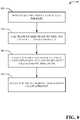
- methodology 800 for selecting an inter frame candidate, according to an aspect of this disclosure.
- methodology 800 can be utilized in various encoding applications, such as, but not limited to, media capturing systems, media displaying systems, computing devices, mobile phones, tablets, personal data assistants (PDAs), laptops, personal computers, audio/video devices, etc.
- the methodology 800 can select an inter frame candidate based on rate-distortion cost of inter frame candidates.
- video information can be captured or can be contained within memory (e.g., within a buffer).
- multiple inter frame candidates can be processed (e.g., using a processing component 108 ) in parallel.
- a nearest motion vector, a near motion vector, a zero valued motion vector and/or one or more estimated motion vectors can be processed in parallel.
- a squared error per pixel for each of the inter frame candidates can be calculated (e.g., using a processing component 108 ).
- distortion for each of the inter frame candidates can be calculated using a SAD operation for pixels in each of the inter frame candidates (e.g., for each motion vector mode).
- cost for each of the inter frame candidates can be calculated (e.g., using a processing component 108 ) based at least in part on the calculated squared error. For example, cost for a particular inter frame candidate (e.g., a particular motion vector mode) can be calculated based on distortion (e.g., SAD) and rate.
- a best inter frame candidate can be selected (e.g., using a selector component 110 ) from the multiple inter frame candidates based on the calculated cost. For example, an inter frame candidate (e.g., a motion vector mode) with a lowest calculated cost value can be selected as the best inter frame candidate.
- one or more previous motion vectors can be selected (e.g., using a first predictor component 104 ). For example, one or more previously determined motion vectors from a neighboring block in a current frame can be selected.
- a zero valued motion vector can be selected (e.g., using a first predictor component 104 ). For example, a motion vector that predicts a current block from a corresponding block in a prediction frame (e.g., with zero offset) can be selected.
- an estimated motion vector can be selected (e.g., using a second predictor component 106 ) based at least in part on a sum of absolute difference (SAD) calculation and a penalty value. For example, a new motion vector can be generated and/or selected using motion estimation.
- a cost value can be calculated (e.g., using a processing component 108 ) for each of the one or more previous motion vectors, the zero valued motion vector and the estimated motion vector. For example, a cost value can be calculated for each of the one or more previous motion vectors, the zero valued motion vector and the estimated motion vector based at least in part on a sum of squared difference (SSD) calculation.
- SSD sum of squared difference
- a motion vector with a lowest calculated cost can be selected (e.g., using a selector component 110 ) from the one or more previous motion vectors, the zero valued motion vector and the estimated motion vector as an inter frame candidate.
- a motion vector with a lowest calculated cost based on SSD and rate can be selected from the one or more previous motion vectors, the zero valued motion vector and the estimated motion vector as an inter frame candidate.
- a methodology 1000 for selecting an inter frame candidate or an intra frame candidate there illustrated is a methodology 1000 for selecting an inter frame candidate or an intra frame candidate.
- a best inter frame candidate can be selected (e.g., using an encoder component 102 ).
- the methodology 900 can be implemented at 1002 .
- a best intra frame candidate can be selected (e.g., using a third predictor component 504 ).
- an intra frame candidate can be selected using intra frame prediction.
- the best inter frame candidate or the best intra frame candidate can be selected (e.g., using an output component 604 ) as a coded macroblock based at least in part on a sum of absolute difference (SAD) computation.
- SAD sum of absolute difference
- SAD can be calculated for the best inter frame candidate and the best intra frame candidate. If the best inter frame candidate has a lower SAD value than the best intra frame candidate, then the best inter frame candidate can be encoded. However, if the best intra frame candidate has a lower SAD value than the best inter frame candidate, then the best intra frame candidate can be encoded.
- calculating, such as by the processing component 108 , the cost value for each candidate, such as the nearest motion vector, the near motion vector, the zero valued motion vector, or the estimated motion vector may include generating a residual block for the current block.
- the residual block may be generated as a difference between the input block and the predicted block.
- a transform block may be generated from the residual block, which may include transform coefficients.
- the residual block may be transformed using, for example, a discrete cosign transform (DCT).
- DCT discrete cosign transform
- the size of the transform may correspond with the size of the residual block.
- the residual block may be a 64 ⁇ 64 block and may be transformed using a 64 ⁇ 64 transform.
- the size of the transform may be smaller than the size of the residual block.
- the residual block may be a 64 ⁇ 64 block and the residual block may be transformed using multiple smaller transforms, such as four 32 ⁇ 32 transforms. Other, smaller, transform sizes, or combinations thereof, may be used.
- a quantized block may be generated from the transform block.
- the transform coefficients from the transform block may be quantized.
- the quantization may be based on a defined quantization value.
- an inverse-quantized block may be generated from the quantized block.
- the quantized transform coefficients from the quantized transform block may be inverse-quantized.
- the inverse-quantization may be based on a defined inverse-quantization value.
- a distortion measurement such as a sum of squared errors, may be generated based on the transform coefficients from the transform block and the inverse-transform coefficients from the inverse-transform block.
- an array of quantized coefficients may be generated from the quantization block.
- the quantized coefficients from the quantization block may be included in the array in a defined scan order.
- the scan order may be determined based on, for example, the transform size.
- the cost value (C) for each candidate may be determined based on the first distortion measurement (C 0 ) and the second distortion measurement (C 1 ).
- the determining the cost value may include using a defined weight (L).
- FIGS. 11 and 12 are intended to provide a brief, general description of a suitable environment in which the various aspects of the disclosed subject matter may be implemented.
- a suitable environment 1100 for implementing various aspects of this disclosure includes a computer 1112 .
- the computer 1112 includes a processing unit 1114 , a system memory 1116 , and a system bus 1118 .
- the system bus 1118 couples system components including, but not limited to, the system memory 1116 to the processing unit 1114 .
- the processing unit 1114 can be any of various available processors. Dual microprocessors and other multiprocessor architectures also can be employed as the processing unit 1114 .
- the system bus 1118 can be any of several types of bus structure(s) including the memory bus or memory controller, a peripheral bus or external bus, and/or a local bus using any variety of available bus architectures including, but not limited to, Industrial Standard Architecture (ISA), Micro-Channel Architecture (MSA), Extended ISA (EISA), Intelligent Drive Electronics (IDE), VESA Local Bus (VLB), Peripheral Component Interconnect (PCI), Card Bus, Universal Serial Bus (USB), Advanced Graphics Port (AGP), Personal Computer Memory Card International Association bus (PCMCIA), Firewire (IEEE 1394), and Small Computer Systems Interface (SCSI).
- ISA Industrial Standard Architecture
- MSA Micro-Channel Architecture
- EISA Extended ISA
- IDE Intelligent Drive Electronics
- VLB VESA Local Bus
- PCI Peripheral Component Interconnect
- Card Bus Universal Serial Bus
- USB Universal Serial Bus
- AGP Advanced Graphics Port
- PCMCIA Personal Computer Memory Card International Association bus
- Firewire IEEE 1394
- SCSI Small Computer Systems Interface
- the system memory 1116 includes volatile memory 1120 and nonvolatile memory 1122 .
- the basic input/output system (BIOS) containing the basic routines to transfer information between elements within the computer 1112 , such as during start-up, is stored in nonvolatile memory 1122 .
- nonvolatile memory 1122 can include read only memory (ROM), programmable ROM (PROM), electrically programmable ROM (EPROM), electrically erasable programmable ROM (EEPROM), flash memory, or nonvolatile random access memory (RAM) (e.g., ferroelectric RAM (FeRAM).
- Volatile memory 1120 includes random access memory (RAM), which acts as external cache memory.
- RAM is available in many forms such as static RAM (SRAM), dynamic RAM (DRAM), synchronous DRAM (SDRAM), double data rate SDRAM (DDR SDRAM), enhanced SDRAM (ESDRAM), Synchlink DRAM (SLDRAM), direct Rambus RAM (DRRAM), direct Rambus dynamic RAM (DRDRAM), and Rambus dynamic RAM.
- SRAM static RAM
- DRAM dynamic RAM
- SDRAM synchronous DRAM
- DDR SDRAM double data rate SDRAM
- ESDRAM enhanced SDRAM
- SLDRAM Synchlink DRAM
- DRRAM direct Rambus RAM
- DRAM direct Rambus dynamic RAM
- Rambus dynamic RAM Rambus dynamic RAM
- Computer 1112 also includes removable/non-removable, volatile/non-volatile computer storage media.
- FIG. 11 illustrates, for example, a disk storage 1124 .
- Disk storage 1124 can include, but is not limited to, devices like a magnetic disk drive, floppy disk drive, flash drive, tape drive, Jaz drive, Zip drive, LS-100 drive, flash memory card, or memory stick.
- the disk storage 1124 also can include storage media separately or in combination with other storage media including, but not limited to, an optical disk drive such as a compact disk ROM device (CD-ROM), CD recordable drive (CD-R Drive), CD rewritable drive (CD-RW Drive) or a digital versatile disk ROM drive (DVD-ROM).
- CD-ROM compact disk ROM device
- CD-R Drive CD recordable drive
- CD-RW Drive CD rewritable drive
- DVD-ROM digital versatile disk ROM drive
- a removable or non-removable interface is typically used, such as interface 1126
- FIG. 11 also depicts software that acts as an intermediary between users and the basic computer resources described in the suitable operating environment 1100 .
- Such software includes, for example, an operating system 1128 .
- Operating system 1128 which can be stored on disk storage 1124 , acts to control and allocate resources of the computer system 1112 .
- System applications 1130 take advantage of the management of resources by operating system 1128 through program modules 1132 and program data 1134 , e.g., stored either in system memory 1116 or on disk storage 1124 . It is to be appreciated that this disclosure can be implemented with various operating systems or combinations of operating systems.
- Input devices 1136 include, but are not limited to, a pointing device such as a mouse, trackball, stylus, touch pad, keyboard, microphone, joystick, game pad, satellite dish, scanner, TV tuner card, digital camera, digital video camera, web camera, and the like. These and other input devices connect to the processing unit 1114 through the system bus 1118 via interface port(s) 1138 .
- Interface port(s) 1138 include, for example, a serial port, a parallel port, a game port, and a universal serial bus (USB).
- Output device(s) 1140 use some of the same type of ports as input device(s) 1136 .
- a USB port may be used to provide input to computer 1112 , and to output information from computer 1112 to an output device 1140 .
- Output adapter 1142 is provided to illustrate that there are some output devices 1140 like monitors, speakers, and printers, among other output devices 1140 , which require special adapters.
- the output adapters 1142 include, by way of illustration and not limitation, video and sound cards that provide a means of connection between the output device 1140 and the system bus 1118 . It should be noted that other devices and/or systems of devices provide both input and output capabilities such as remote computer(s) 1144 .
- Computer 1112 can operate in a networked environment using logical connections to one or more remote computers, such as remote computer(s) 1144 .
- the remote computer(s) 1144 can be a personal computer, a server, a router, a network PC, a workstation, a microprocessor based appliance, a peer device or other common network node and the like, and typically includes many or all of the elements described relative to computer 1112 .
- only a memory storage device 1146 is illustrated with remote computer(s) 1144 .
- Remote computer(s) 1144 is logically connected to computer 1112 through a network interface 1148 and then physically connected via communication connection 1150 .
- Network interface 1148 encompasses wire and/or wireless communication networks such as local-area networks (LAN), wide-area networks (WAN), cellular networks, etc.
- LAN technologies include Fiber Distributed Data Interface (FDDI), Copper Distributed Data Interface (CDDI), Ethernet, Token Ring and the like.
- WAN technologies include, but are not limited to, point-to-point links, circuit switching networks like Integrated Services Digital Networks (ISDN) and variations thereon, packet switching networks, and Digital Subscriber Lines (DSL).
- ISDN Integrated Services Digital Networks
- DSL Digital Subscriber Lines
- Communication connection(s) 1150 refers to the hardware/software employed to connect the network interface 1148 to the bus 1118 . While communication connection 1150 is shown for illustrative clarity inside computer 1112 , it can also be external to computer 1112 .
- the hardware/software necessary for connection to the network interface 1148 includes, for exemplary purposes only, internal and external technologies such as, modems including regular telephone grade modems, cable modems and DSL modems, ISDN adapters, and Ethernet cards.
- the computer 1112 can be used to encode data, such as digital media data, which can be in the form of a sequence of video frames (e.g., raw video frames).
- the computer 1112 can include a plurality of processors that can be used to process data and perform computing tasks (e.g., encoding-related tasks and/or decoding-related tasks, etc.).
- the computer 1112 includes an encoder 1105 that can contain, for example, an encoder component (e.g., the encoder component 102 , the encoder system 400 , the encoder system 500 , the encoder system 600 , the encoder system 700 ), which can function as more fully disclosed herein.
- the encoder 1105 can perform various encoding tasks (e.g., generating motion estimations and motion vectors, encoding blocks and associated motion vectors, determining whether to reuse a prior encoded motion vector to encode a current block, identifying a coding mode associated with a current block, allocating bits for encoding of a current block, etc.) on data (e.g., sequentially or in parallel).
- the components of the encoder 1105 can be implemented as hardware, software and/or firmware.
- the encoder 1105 can include one or more computer executable components.
- the computer 1112 and/or the encoder 1105 can be implemented as an ASIC chip.
- the computer 1112 and/or the encoder 1105 can be implemented as a SOC. It is to be appreciated that the computer 1112 can be used in connection with implementing one or more of the systems or components shown and described in connection with FIGS. 1-7 .
- FIG. 12 is a schematic block diagram of a sample-computing environment 1200 with which the subject matter of this disclosure can interact.
- the system 1200 includes one or more client(s) 1210 .
- the client(s) 1210 can be hardware and/or software (e.g., threads, processes, computing devices).
- the system 1200 also includes one or more server(s) 1230 .
- system 1200 can correspond to a two-tier client server model or a multi-tier model (e.g., client, middle tier server, data server), amongst other models.
- the server(s) 1230 can also be hardware and/or software (e.g., threads, processes, computing devices).
- the servers 1230 can house threads to perform transformations by employing this disclosure, for example.
- One possible communication between a client 1210 and a server 1230 may be in the form of a data packet transmitted between two or more computer processes.
- the system 1200 includes a communication framework 1250 that can be employed to facilitate communications between the client(s) 1210 and the server(s) 1230 .
- the client(s) 1210 are operatively connected to one or more client data store(s) 1220 that can be employed to store information local to the client(s) 1210 .
- the server(s) 1230 are operatively connected to one or more server data store(s) 1240 that can be employed to store information local to the servers 1230 .
- wireless telecommunication or radio technology e.g., Wi-Fi; Bluetooth; Worldwide Interoperability for Microwave Access (WiMAX); Enhanced General Packet Radio Service (Enhanced GPRS); Third Generation Partnership Project (3GPP) Long Term Evolution (LTE); Third Generation Partnership Project 2 (3GPP2) Ultra Mobile Broadband (UMB); 3GPP Universal Mobile Telecommunication System (UMTS); High Speed Packet Access (HSPA); High Speed Downlink Packet Access (HSDPA); High Speed Uplink Packet Access (HSUPA); GSM (Global System for Mobile Communications) EDGE (Enhanced Data Rates for GSM Evolution) Radio Access Network (GERAN); UMTS Terrestrial Radio Access Network (UTRAN); LTE Advanced (LTE-A); etc.
- Wi-Fi Wireless Fidelity
- Bluetooth Worldwide Interoperability for Microwave Access
- WiMAX Enhanced General Packet Radio Service
- Enhanced GPRS Enhanced General Packet Radio Service
- 3GPP Third Generation Partnership Project
- LTE Long Term Evolution
- legacy telecommunication technologies e.g., GSM.
- mobile as well non-mobile networks e.g., the Internet, data service network such as internet protocol television (IPTV), etc.
- IPTV internet protocol television
- program modules include routines, programs, components, data structures, etc. that perform particular tasks and/or implement particular abstract data types.
- inventive methods may be practiced with other computer system configurations, including single-processor or multiprocessor computer systems, mini-computing devices, mainframe computers, as well as personal computers, hand-held computing devices (e.g., PDA, phone, tablets), microprocessor-based or programmable consumer or industrial electronics, and the like.
- the illustrated aspects may also be practiced in distributed computing environments where tasks are performed by remote processing devices that are linked through a communications network. However, some, if not all aspects of this disclosure can be practiced on stand-alone computers. In a distributed computing environment, program modules may be located in both local and remote memory storage devices.
- a component can refer to and/or can include a computer-related entity or an entity related to an operational machine with one or more specific functionalities.
- the entities disclosed herein can be either hardware, a combination of hardware and software, software, or software in execution.
- a component may be, but is not limited to being, a process running on a processor, a processor, an object, an executable, a thread of execution, a program, and/or a computer.
- an application running on a server and the server can be a component.
- One or more components may reside within a process and/or thread of execution and a component may be localized on one computer and/or distributed between two or more computers.
- the term “generate,” “generating,” or forms thereof may be or include forming, identifying or otherwise determining, as may be logical based on the particular description.
- respective components can execute from various computer readable media having various data structures stored thereon.
- the components may communicate via local and/or remote processes such as in accordance with a signal having one or more data packets (e.g., data from one component interacting with another component in a local system, distributed system, and/or across a network such as the Internet with other systems via the signal).
- a component can be an apparatus with specific functionality provided by mechanical parts operated by electric or electronic circuitry, which is operated by a software or firmware application executed by a processor.
- the processor can be internal or external to the apparatus and can execute at least a part of the software or firmware application.
- a component can be an apparatus that provides specific functionality through electronic components without mechanical parts, wherein the electronic components can include a processor or other means to execute software or firmware that confers at least in part the functionality of the electronic components.
- a component can emulate an electronic component via a virtual machine, e.g., within a cloud computing system.
- example and/or “exemplary” are utilized to mean serving as an example, instance, or illustration. For the avoidance of doubt, the subject matter disclosed herein is not limited by such examples.
- any aspect or design described herein as an “example” and/or “exemplary” is not necessarily to be construed as preferred or advantageous over other aspects or designs, nor is it meant to preclude equivalent exemplary structures and techniques known to those of ordinary skill in the art.
- aspects or features described herein can be implemented as a method, apparatus, system, or article of manufacture using standard programming or engineering techniques.
- various aspects or features disclosed in this disclosure can be realized through program modules that implement at least one or more of the methods disclosed herein, the program modules being stored in a memory and executed by at least a processor.
- Other combinations of hardware and software or hardware and firmware can enable or implement aspects described herein, including a disclosed method(s).
- the term “article of manufacture” as used herein can encompass a computer program accessible from any computer-readable device, carrier, or storage media.
- computer readable storage media can include but are not limited to magnetic storage devices (e.g., hard disk, floppy disk, magnetic strips . . .
- optical discs e.g., compact disc (CD), digital versatile disc (DVD), blu-ray disc (BD) . . .
- smart cards e.g., card, stick, key drive . . . ), or the like.
- processor can refer to substantially any computing processing unit or device comprising, but not limited to, single-core processors; single-processors with software multithread execution capability; multi-core processors; multi-core processors with software multithread execution capability; multi-core processors with hardware multithread technology; parallel platforms; and parallel platforms with distributed shared memory.
- a processor can refer to an integrated circuit, an application specific integrated circuit (ASIC), a digital signal processor (DSP), a field programmable gate array (FPGA), a programmable logic controller (PLC), a complex programmable logic device (CPLD), a discrete gate or transistor logic, discrete hardware components, or any combination thereof designed to perform the functions described herein.
- ASIC application specific integrated circuit
- DSP digital signal processor
- FPGA field programmable gate array
- PLC programmable logic controller
- CPLD complex programmable logic device
- processors can exploit nano-scale architectures such as, but not limited to, molecular and quantum-dot based transistors, switches and gates, in order to optimize space usage or enhance performance of user equipment.
- a processor may also be implemented as a combination of computing processing units.
- memory components entities embodied in a “memory,” or components comprising a memory. It is to be appreciated that memory and/or memory components described herein can be either volatile memory or nonvolatile memory, or can include both volatile and nonvolatile memory.
- nonvolatile memory can include read only memory (ROM), programmable ROM (PROM), electrically programmable ROM (EPROM), electrically erasable ROM (EEPROM), flash memory, or nonvolatile random access memory (RAM) (e.g., ferroelectric RAM (FeRAM).
- Volatile memory can include RAM, which can act as external cache memory, for example.
- RAM is available in many forms such as synchronous RAM (SRAM), dynamic RAM (DRAM), synchronous DRAM (SDRAM), double data rate SDRAM (DDR SDRAM), enhanced SDRAM (ESDRAM), Synchlink DRAM (SLDRAM), direct Rambus RAM (DRRAM), direct Rambus dynamic RAM (DRDRAM), and Rambus dynamic RAM (RDRAM).
- SRAM synchronous RAM
- DRAM dynamic RAM
- SDRAM synchronous DRAM
- DDR SDRAM double data rate SDRAM
- ESDRAM enhanced SDRAM
- SLDRAM Synchlink DRAM
- DRRAM direct Rambus RAM
- DRAM direct Rambus dynamic RAM
- RDRAM Rambus dynamic RAM
- components as described with regard to a particular system or method, can include the same or similar functionality as respective components (e.g., respectively named components or similarly named components) as described with regard to other systems or methods disclosed herein.
Landscapes
- Engineering & Computer Science (AREA)
- Multimedia (AREA)
- Signal Processing (AREA)
- Computing Systems (AREA)
- Theoretical Computer Science (AREA)
- Compression Or Coding Systems Of Tv Signals (AREA)
Abstract
Description
Rc=512+64*ABS(c),
where c is the motion vector component in ⅛ pixel resolution.
Rmv=1024+64*(ABS(hor)+ABS(ver)),
where hor is the horizontal component and ver is the vertical component in ⅛ pixel resolution.
C=R*L+D,
where R is rate, L is lambda and D is distortion. Lambda (e.g., the rate multiplier) can be provided by the
Claims (20)
Priority Applications (1)
| Application Number | Priority Date | Filing Date | Title |
|---|---|---|---|
| US14/921,378 US11317101B2 (en) | 2012-06-12 | 2015-10-23 | Inter frame candidate selection for a video encoder |
Applications Claiming Priority (2)
| Application Number | Priority Date | Filing Date | Title |
|---|---|---|---|
| US13/494,961 US9172970B1 (en) | 2012-05-29 | 2012-06-12 | Inter frame candidate selection for a video encoder |
| US14/921,378 US11317101B2 (en) | 2012-06-12 | 2015-10-23 | Inter frame candidate selection for a video encoder |
Related Parent Applications (1)
| Application Number | Title | Priority Date | Filing Date |
|---|---|---|---|
| US13/494,961 Continuation-In-Part US9172970B1 (en) | 2012-05-29 | 2012-06-12 | Inter frame candidate selection for a video encoder |
Publications (2)
| Publication Number | Publication Date |
|---|---|
| US20160044332A1 US20160044332A1 (en) | 2016-02-11 |
| US11317101B2 true US11317101B2 (en) | 2022-04-26 |
Family
ID=55268428
Family Applications (1)
| Application Number | Title | Priority Date | Filing Date |
|---|---|---|---|
| US14/921,378 Active 2037-03-31 US11317101B2 (en) | 2012-06-12 | 2015-10-23 | Inter frame candidate selection for a video encoder |
Country Status (1)
| Country | Link |
|---|---|
| US (1) | US11317101B2 (en) |
Cited By (1)
| Publication number | Priority date | Publication date | Assignee | Title |
|---|---|---|---|---|
| USRE49615E1 (en) * | 2016-04-15 | 2023-08-15 | Google Llc | Coding interpolation filter type |
Families Citing this family (20)
| Publication number | Priority date | Publication date | Assignee | Title |
|---|---|---|---|---|
| US9485515B2 (en) | 2013-08-23 | 2016-11-01 | Google Inc. | Video coding using reference motion vectors |
| US20140254659A1 (en) * | 2013-03-11 | 2014-09-11 | Mediatek Inc. | Video coding method using at least evaluated visual quality and related video coding apparatus |
| US20150103909A1 (en) * | 2013-10-14 | 2015-04-16 | Qualcomm Incorporated | Multi-threaded video encoder |
| EP3343924A1 (en) * | 2017-01-03 | 2018-07-04 | Thomson Licensing | Method and apparatus for encoding and decoding motion information |
| WO2020003279A1 (en) | 2018-06-29 | 2020-01-02 | Beijing Bytedance Network Technology Co., Ltd. | Concept of using one or multiple look up tables to store motion information of previously coded in order and use them to code following blocks |
| CN110662054B (en) | 2018-06-29 | 2023-01-06 | 北京字节跳动网络技术有限公司 | Method, device, computer-readable storage medium for video processing |
| CN110662052B (en) * | 2018-06-29 | 2022-07-08 | 北京字节跳动网络技术有限公司 | Updating conditions of a look-up table (LUT) |
| KR20240007298A (en) | 2018-06-29 | 2024-01-16 | 베이징 바이트댄스 네트워크 테크놀로지 컴퍼니, 리미티드 | Checking order of motion candidates in lut |
| EP3791589A1 (en) | 2018-06-29 | 2021-03-17 | Beijing Bytedance Network Technology Co. Ltd. | Which lut to be updated or no updating |
| JP7295231B2 (en) | 2018-06-29 | 2023-06-20 | 北京字節跳動網絡技術有限公司 | Interaction between LUT and AMVP |
| JP7256265B2 (en) | 2018-06-29 | 2023-04-11 | 北京字節跳動網絡技術有限公司 | Lookup table update: FIFO, limited FIFO |
| WO2020003282A1 (en) | 2018-06-29 | 2020-01-02 | Beijing Bytedance Network Technology Co., Ltd. | Managing motion vector predictors for video coding |
| GB2589241B (en) | 2018-07-02 | 2023-06-07 | Beijing Bytedance Network Tech Co Ltd | Update of look-up tables |
| CN111064959B (en) | 2018-09-12 | 2023-09-01 | 北京字节跳动网络技术有限公司 | How many HMVP candidates to check |
| WO2020143292A1 (en) * | 2019-01-09 | 2020-07-16 | 华为技术有限公司 | Inter-frame prediction method and apparatus |
| KR20240010576A (en) | 2019-01-10 | 2024-01-23 | 베이징 바이트댄스 네트워크 테크놀로지 컴퍼니, 리미티드 | Invoke of lut updating |
| CN113383554B (en) | 2019-01-13 | 2022-12-16 | 北京字节跳动网络技术有限公司 | Interaction between LUTs and shared Merge lists |
| CN113302937B (en) | 2019-01-16 | 2024-08-02 | 北京字节跳动网络技术有限公司 | Motion candidate derivation |
| WO2020192611A1 (en) | 2019-03-22 | 2020-10-01 | Beijing Bytedance Network Technology Co., Ltd. | Interaction between merge list construction and other tools |
| US11343465B2 (en) * | 2019-11-01 | 2022-05-24 | Apple Inc. | Varying audio visual compression based on AI detection or classification results |
Citations (143)
| Publication number | Priority date | Publication date | Assignee | Title |
|---|---|---|---|---|
| US4924310A (en) | 1987-06-02 | 1990-05-08 | Siemens Aktiengesellschaft | Method for the determination of motion vector fields from digital image sequences |
| US5148269A (en) | 1990-07-20 | 1992-09-15 | U.S. Philips Corporation | Motion vector processing device |
| US5337086A (en) | 1991-10-22 | 1994-08-09 | Sony Corporation | Image signal coding and decoding apparatus with multiple-process motion compensation |
| EP0634873A2 (en) | 1993-07-15 | 1995-01-18 | NOKIA TECHNOLOGY GmbH | Method to determine the motion vectors in small picture segments of a television picture |
| US5398068A (en) | 1993-09-02 | 1995-03-14 | Trustees Of Princeton University | Method and apparatus for determining motion vectors for image sequences |
| US5461708A (en) | 1993-08-06 | 1995-10-24 | Borland International, Inc. | Systems and methods for automated graphing of spreadsheet information |
| US5512952A (en) | 1991-09-20 | 1996-04-30 | Sony Corporation | Picture signal encoding and/or decoding apparatus |
| US5550964A (en) | 1992-12-18 | 1996-08-27 | Borland International, Inc. | System and methods for intelligent analytical graphing |
| US5611034A (en) | 1991-02-27 | 1997-03-11 | Canon Kabushiki Kaisha | Method for making a graph by selecting one of a plurality of graph forms that best fit a user's data format |
| US5610658A (en) | 1994-01-31 | 1997-03-11 | Sony Corporation | Motion vector detection using hierarchical calculation |
| US5729690A (en) | 1994-05-11 | 1998-03-17 | Samsung Electronics Co., Ltd. | Variable length encoding method and apparatus for differential motion vector values using an improved differential motion code table |
| US5731840A (en) | 1995-03-10 | 1998-03-24 | Kabushiki Kaisha Toshiba | Video coding/decoding apparatus which transmits different accuracy prediction levels |
| US5742710A (en) | 1994-02-23 | 1998-04-21 | Rca Thomson Licensing Corporation | Computationally-efficient method for estimating image motion |
| US5886742A (en) | 1995-01-12 | 1999-03-23 | Sharp Kabushiki Kaisha | Video coding device and video decoding device with a motion compensated interframe prediction |
| US5905535A (en) | 1994-10-10 | 1999-05-18 | Thomson Multimedia S.A. | Differential coding of motion vectors using the median of candidate vectors |
| WO1999041912A2 (en) | 1998-02-13 | 1999-08-19 | Koninklijke Philips Electronics N.V. | Method and arrangement for video coding |
| US5978030A (en) | 1995-03-18 | 1999-11-02 | Daewoo Electronics Co., Ltd. | Method and apparatus for encoding a video signal using feature point based motion estimation |
| US5987180A (en) | 1997-09-26 | 1999-11-16 | Sarnoff Corporation | Multiple component compression encoder motion search method and apparatus |
| US5991447A (en) | 1997-03-07 | 1999-11-23 | General Instrument Corporation | Prediction and coding of bi-directionally predicted video object planes for interlaced digital video |
| US6005980A (en) | 1997-03-07 | 1999-12-21 | General Instrument Corporation | Motion estimation and compensation of video object planes for interlaced digital video |
| US6011870A (en) | 1997-07-18 | 2000-01-04 | Jeng; Fure-Ching | Multiple stage and low-complexity motion estimation for interframe video coding |
| US6014181A (en) | 1997-10-13 | 2000-01-11 | Sharp Laboratories Of America, Inc. | Adaptive step-size motion estimation based on statistical sum of absolute differences |
| EP0979011A1 (en) | 1998-08-06 | 2000-02-09 | STMicroelectronics S.r.l. | Detection of a change of scene in a motion estimator of a video encoder |
| US6058143A (en) | 1998-02-20 | 2000-05-02 | Thomson Licensing S.A. | Motion vector extrapolation for transcoding video sequences |
| EP1091592A2 (en) | 1999-10-07 | 2001-04-11 | Matsushita Electric Industrial Co., Ltd. | Video signal encoding apparatus |
| US6272179B1 (en) | 1998-03-05 | 2001-08-07 | Matsushita Electric Industrial Company, Limited | Image coding apparatus, image decoding apparatus, image coding method, image decoding method, and data storage medium |
| US6289049B1 (en) | 1997-07-30 | 2001-09-11 | Lg Electronics Inc. | Method for coding motion vector in moving picture |
| EP1158806A1 (en) | 2000-05-24 | 2001-11-28 | Samsung Electronics Co., Ltd. | Motion vector coding |
| US20020031272A1 (en) | 1997-11-17 | 2002-03-14 | Daniele Bagni | Motion-compensated predictive image encoding and decoding |
| US6359929B1 (en) | 1997-07-04 | 2002-03-19 | Matsushita Electric Industrial Co., Ltd. | Image predictive decoding method, image predictive decoding apparatus, image predictive coding apparatus, and data storage medium |
| US6381277B1 (en) | 1997-12-12 | 2002-04-30 | Hyundai Electronics Ind. Co, Ltd. | Shaped information coding device for interlaced scanning video and method therefor |
| US20020064228A1 (en) | 1998-04-03 | 2002-05-30 | Sriram Sethuraman | Method and apparatus for encoding video information |
| US20020118754A1 (en) | 1999-12-01 | 2002-08-29 | Choi Sung-Kyu | Device and method for selecting coding mode for video encoding system |
| US6473460B1 (en) | 2000-03-31 | 2002-10-29 | Matsushita Electric Industrial Co., Ltd. | Method and apparatus for calculating motion vectors |
| US6507617B1 (en) | 1998-10-27 | 2003-01-14 | Nokia Mobile Phones Ltd. | Video coding |
| US20030072374A1 (en) | 2001-09-10 | 2003-04-17 | Sohm Oliver P. | Method for motion vector estimation |
| US20030202594A1 (en) * | 2002-03-15 | 2003-10-30 | Nokia Corporation | Method for coding motion in a video sequence |
| US20040001546A1 (en) | 2002-06-03 | 2004-01-01 | Alexandros Tourapis | Spatiotemporal prediction for bidirectionally predictive (B) pictures and motion vector prediction for multi-picture reference motion compensation |
| US20040028131A1 (en) | 2002-08-06 | 2004-02-12 | Koninklijke Philips Electronics N.V. | System and method for rate-distortion optimized data partitioning for video coding using backward adapatation |
| US6711211B1 (en) | 2000-05-08 | 2004-03-23 | Nokia Mobile Phones Ltd. | Method for encoding and decoding video information, a motion compensated video encoder and a corresponding decoder |
| US20040066848A1 (en) | 2002-10-04 | 2004-04-08 | Lg Electronics Inc. | Direct mode motion vector calculation method for B picture |
| US6735249B1 (en) | 1999-08-11 | 2004-05-11 | Nokia Corporation | Apparatus, and associated method, for forming a compressed motion vector field utilizing predictive motion coding |
| US20040218674A1 (en) | 2002-04-23 | 2004-11-04 | Satoshi Kondo | Motion vector coding method and motion vector decoding method |
| US20040258155A1 (en) | 1999-08-11 | 2004-12-23 | Jani Lainema | Adaptive motion vector field coding |
| US6876702B1 (en) | 1998-10-13 | 2005-04-05 | Stmicroelectronics Asia Pacific (Pte) Ltd. | Motion vector detection with local motion estimator |
| US20050117646A1 (en) | 2003-11-28 | 2005-06-02 | Anthony Joch | Low-complexity motion vector prediction for video codec with two lists of reference pictures |
| US20050123282A1 (en) | 2003-11-24 | 2005-06-09 | Lsi Logic Corporation | Graphical symbols for H.264 bitstream syntax elements |
| US20050129122A1 (en) * | 2003-12-10 | 2005-06-16 | Lsi Logic Corporation | Computational reduction in motion estimation based on lower bound of cost function |
| US6912255B2 (en) | 2002-05-30 | 2005-06-28 | Mobixell Netwoks Inc. | Bit rate control through selective modification of DCT coefficients |
| US20050226333A1 (en) | 2004-03-18 | 2005-10-13 | Sanyo Electric Co., Ltd. | Motion vector detecting device and method thereof |
| US20050243926A1 (en) | 2004-04-30 | 2005-11-03 | Ralf Hubrich | Motion vector estimation employing adaptive temporal prediction |
| US20050243925A1 (en) | 2002-09-11 | 2005-11-03 | Koninklijke Philips Electronics N.V. | Video coding method and device |
| US20050254719A1 (en) | 2004-05-15 | 2005-11-17 | Microsoft Corporation | Embedded scalar quantizers with arbitrary dead-zone ratios |
| US20050276326A1 (en) * | 2004-06-09 | 2005-12-15 | Broadcom Corporation | Advanced video coding intra prediction scheme |
| US7002580B1 (en) | 2003-05-14 | 2006-02-21 | At&T Corp | Method and apparatus for automatically generating charts |
| US20060114989A1 (en) | 2004-11-29 | 2006-06-01 | Prasanjit Panda | Rate control techniques for video encoding using parametric equations |
| EP1672926A1 (en) | 2003-09-12 | 2006-06-21 | Institute of Computing Technology Chinese Academy of Sciences | Bi-directional predicting method for video coding/decoding |
| US20060209961A1 (en) | 2005-03-18 | 2006-09-21 | Samsung Electronics Co., Ltd. | Video encoding/decoding method and apparatus using motion prediction between temporal levels |
| US20060233254A1 (en) | 2005-04-19 | 2006-10-19 | Samsung Electronics Co., Ltd. | Method and apparatus for adaptively selecting context model for entropy coding |
| US20060268166A1 (en) | 2005-05-26 | 2006-11-30 | Frank Bossen | Method and apparatus for coding motion and prediction weighting parameters |
| US20060294171A1 (en) | 2005-06-24 | 2006-12-28 | Frank Bossen | Method and apparatus for video encoding and decoding using adaptive interpolation |
| US20070019729A1 (en) * | 2004-11-04 | 2007-01-25 | Casio Computer Co., Ltd. | Motion picture encoding device and motion picture encoding processing program |
| US20070195881A1 (en) | 2006-02-20 | 2007-08-23 | Fujitsu Limited | Motion vector calculation apparatus |
| US20070286280A1 (en) | 2006-06-09 | 2007-12-13 | Katsuo Saigo | Image coding/recording apparatus and image coding/recording method |
| US20080025390A1 (en) | 2006-07-25 | 2008-01-31 | Fang Shi | Adaptive video frame interpolation |
| US20080043845A1 (en) | 2006-08-17 | 2008-02-21 | Fujitsu Limited | Motion prediction processor with read buffers providing reference motion vectors for direct mode coding |
| US20080056354A1 (en) | 2006-08-29 | 2008-03-06 | Microsoft Corporation | Transcoding Hierarchical B-Frames with Rate-Distortion Optimization in the DCT Domain |
| US20080111722A1 (en) | 2006-11-14 | 2008-05-15 | Qualcomm Incorporated | Memory efficient adaptive block coding |
| US20080159392A1 (en) | 2006-12-29 | 2008-07-03 | National Tsing Hua University | Method of motion estimation for video compression |
| US20080165855A1 (en) | 2007-01-08 | 2008-07-10 | Nokia Corporation | inter-layer prediction for extended spatial scalability in video coding |
| US7418147B2 (en) | 2003-06-25 | 2008-08-26 | Georgia Tech Research Corporation | Cauchy-distribution based coding system and method |
| US20080212676A1 (en) * | 2007-03-02 | 2008-09-04 | Sony Corporation And Sony Electronics Inc. | Motion parameter engine for true motion |
| US20080243971A1 (en) * | 2007-03-26 | 2008-10-02 | Lai-Man Po | Method and apparatus for calculating an ssd and encoding a video signal |
| US20080240242A1 (en) | 2007-03-27 | 2008-10-02 | Nokia Corporation | Method and system for motion vector predictions |
| US20080253459A1 (en) | 2007-04-09 | 2008-10-16 | Nokia Corporation | High accuracy motion vectors for video coding with low encoder and decoder complexity |
| US20080291285A1 (en) | 2007-05-24 | 2008-11-27 | Casio Computer Co., Ltd. | Image processing apparatus for calculating global motion vector of plurality of image frames |
| US7463685B1 (en) | 1997-03-27 | 2008-12-09 | At&T Intellectual Property Ii, L.P. | Bidirectionally predicted pictures or video object planes for efficient and flexible video coding |
| US20080310514A1 (en) | 2007-06-14 | 2008-12-18 | Texas Instruments Incorporated | Adaptive Density Search of Motion Estimation for Realtime Video Compression |
| US20080317127A1 (en) | 2007-06-19 | 2008-12-25 | Samsung Electronics Co., Ltd | System and method for correcting motion vectors in block matching motion estimation |
| US20090016439A1 (en) | 2006-02-08 | 2009-01-15 | Thomas Licensing | Derivation of Frame/Field Encoding Mode for a Pair of Video Macroblocks |
| US20090110077A1 (en) | 2006-05-24 | 2009-04-30 | Hiroshi Amano | Image coding device, image coding method, and image coding integrated circuit |
| US20090125538A1 (en) | 2007-11-13 | 2009-05-14 | Elemental Technologies, Inc. | Video encoding and decoding using parallel processors |
| US20090129474A1 (en) | 2005-07-22 | 2009-05-21 | Purvin Bibhas Pandit | Method and apparatus for weighted prediction for scalable video coding |
| US7580456B2 (en) | 2005-03-01 | 2009-08-25 | Microsoft Corporation | Prediction-based directional fractional pixel motion estimation for video coding |
| US7581168B2 (en) | 2004-12-20 | 2009-08-25 | Microsoft Corporation | Method, system, and computer-readable medium for determining whether to reproduce chart images calculated from a workbook |
| US7606310B1 (en) | 2004-06-28 | 2009-10-20 | On2 Technologies, Inc. | Video compression and encoding method |
| US20090290643A1 (en) | 2006-07-12 | 2009-11-26 | Jeong Hyu Yang | Method and apparatus for processing a signal |
| US20100079624A1 (en) | 2008-09-26 | 2010-04-01 | Canon Kabushiki Kaisha | Image processing apparatus, image processing method, imaging apparatus |
| US7705847B2 (en) | 2007-03-05 | 2010-04-27 | Oracle International Corporation | Graph selection method |
| WO2010086041A1 (en) | 2009-01-30 | 2010-08-05 | Gottfried Wilhelm Leibniz Universität Hannover | Method and apparatus for coding and decoding a video signal |
| US20100284469A1 (en) | 2008-01-23 | 2010-11-11 | Kazushi Sato | Coding Device, Coding Method, Composite Device, and Composite Method |
| US20100322301A1 (en) | 2009-06-17 | 2010-12-23 | Gurulogic Microsystems Oy | Image processor, image generator and computer program |
| US20110026820A1 (en) | 2008-01-21 | 2011-02-03 | Telefonaktiebolaget Lm Ericsson (Publ) | Prediction-Based Image Processing |
| US20110096837A1 (en) | 2001-07-11 | 2011-04-28 | Dolby Laboratories Licensing Corporation | Interpolation of video compression frames |
| US20110110428A1 (en) | 2009-11-11 | 2011-05-12 | Mediatek Inc. | Method of Storing Motion Vector Information and Video Decoding Apparatus |
| US20110158319A1 (en) * | 2008-03-07 | 2011-06-30 | Sk Telecom Co., Ltd. | Encoding system using motion estimation and encoding method using motion estimation |
| US7978770B2 (en) | 2004-07-20 | 2011-07-12 | Qualcomm, Incorporated | Method and apparatus for motion vector prediction in temporal video compression |
| US20110170602A1 (en) | 2010-01-14 | 2011-07-14 | Samsung Electronics Co., Ltd. | Method and apparatus for encoding and decoding motion vector |
| US20110170597A1 (en) | 2010-01-08 | 2011-07-14 | Xun Shi | Method and device for motion vector estimation in video transcoding using full-resolution residuals |
| GB2477033A (en) | 2009-07-03 | 2011-07-20 | Intel Corp | Decoder-side motion estimation (ME) using plural reference frames |
| US20110188583A1 (en) | 2008-09-04 | 2011-08-04 | Japan Science And Technology Agency | Picture signal conversion system |
| US8006194B2 (en) | 2007-08-06 | 2011-08-23 | Apple Inc. | Associating an object with a relevant data source |
| US20110243229A1 (en) | 2008-09-22 | 2011-10-06 | Sk Telecom. Co., Ltd | Apparatus and method for image encoding/decoding using predictability of intra-prediction mode |
| US20110261886A1 (en) | 2008-04-24 | 2011-10-27 | Yoshinori Suzuki | Image prediction encoding device, image prediction encoding method, image prediction encoding program, image prediction decoding device, image prediction decoding method, and image prediction decoding program |
| US20110274170A1 (en) | 2010-05-05 | 2011-11-10 | Paz Adar | Device, system, and method for predicting residual data for intra and inter frame encoding of image or video data |
| US20110293010A1 (en) | 2010-05-26 | 2011-12-01 | Je Chang Jeong | Method of Predicting Motion Vectors in Video Codec in Which Multiple References are Allowed, and Motion Vector Encoding/Decoding Apparatus Using the Same |
| US20120014440A1 (en) | 2010-07-15 | 2012-01-19 | Sharp Laboratories Of America, Inc. | Parallel video coding based on mapping |
| US8130840B2 (en) | 2008-03-27 | 2012-03-06 | Kabushiki Kaisha Toshiba | Apparatus, method, and computer program product for generating interpolated images |
| US20120075535A1 (en) | 2010-09-29 | 2012-03-29 | Sharp Laboratories Of America, Inc. | Efficient motion vector field estimation |
| US20120082213A1 (en) * | 2009-05-29 | 2012-04-05 | Mitsubishi Electric Corporation | Image encoding device, image decoding device, image encoding method, and image decoding method |
| US20120134415A1 (en) | 2010-11-29 | 2012-05-31 | Mediatek Inc. | Method and Apparatus of Extended Motion Vector Predictor |
| US8208540B2 (en) | 2005-08-05 | 2012-06-26 | Lsi Corporation | Video bitstream transcoding method and apparatus |
| WO2012125178A1 (en) | 2011-03-15 | 2012-09-20 | Intel Corporation | Low memory access motion vector derivation |
| US20120236931A1 (en) * | 2010-12-23 | 2012-09-20 | Qualcomm Incorporated | Transform coefficient scan |
| US20120263231A1 (en) | 2011-04-18 | 2012-10-18 | Minhua Zhou | Temporal Motion Data Candidate Derivation in Video Coding |
| US20120294363A1 (en) | 2010-01-19 | 2012-11-22 | Samsung Electronics Co., Ltd. | Method and apparatus for encoding/decoding images using a motion vector of a previous block as a motion vector for the current block |
| US20120300845A1 (en) | 2011-05-27 | 2012-11-29 | Tandberg Telecom As | Method, apparatus and computer program product for image motion prediction |
| US20120307905A1 (en) | 2009-11-18 | 2012-12-06 | Sk Telecom Co., Ltd. | Method and apparatus for encoding/decoding a motion vector by selecting a set of predicted candidate motion vectors, and method and apparatus for image encoding/decoding using the same |
| EP2536146A2 (en) | 2011-06-15 | 2012-12-19 | Fujitsu Limited | Video decoding apparatus, video coding apparatus, video decoding method, video coding method, and storage medium |
| US20130003851A1 (en) | 2011-07-01 | 2013-01-03 | General Instrument Corporation | Motion vector prediction design simplification |
| US20130022127A1 (en) | 2010-04-09 | 2013-01-24 | Lg Electronics Inc. | Method and apparatus for processing video signal |
| US20130027230A1 (en) | 2010-04-13 | 2013-01-31 | Detlev Marpe | Entropy coding |
| WO2013036071A2 (en) | 2011-09-09 | 2013-03-14 | 엘지전자 주식회사 | Inter prediction method and apparatus therefor |
| WO2013039639A1 (en) | 2011-09-17 | 2013-03-21 | Qualcomm Incorporated | Motion vector determination for video coding |
| WO2013042888A2 (en) | 2011-09-23 | 2013-03-28 | 주식회사 케이티 | Method for inducing a merge candidate block and device using same |
| US20130089149A1 (en) | 2010-06-23 | 2013-04-11 | Yoshiteru Hayashi | Image decoding apparatus, image decoding method, integrated circuit, and program |
| US20130089266A1 (en) | 2010-06-21 | 2013-04-11 | Thomson Licensing | Method and apparatus for encoding/decoding image data |
| US20130114725A1 (en) | 2011-11-04 | 2013-05-09 | General Instrument Corporation | Motion vector scaling for non-uniform motion vector grid |
| US8442117B2 (en) | 2006-03-27 | 2013-05-14 | Chang Gung University | Method of block matching-based motion estimation in video coding |
| US8451904B2 (en) | 2009-06-24 | 2013-05-28 | Qualcomm Incorporated | 8-point transform for media data coding |
| WO2013109953A1 (en) | 2012-01-20 | 2013-07-25 | Qualcomm Incorporated | Motion prediction in svc without including a temporally neighboring block motion vector in a candidate list |
| US20130208795A1 (en) | 2012-02-09 | 2013-08-15 | Google Inc. | Encoding motion vectors for video compression |
| US20140092975A1 (en) | 2012-10-01 | 2014-04-03 | General Instrument Corporation | Devices and methods for using base layer motion vector for enhancement layer motion vector prediction |
| US20140098877A1 (en) | 2012-10-08 | 2014-04-10 | Yaowu Xu | Determine reference motion vectors |
| US8762441B2 (en) | 2009-06-05 | 2014-06-24 | Qualcomm Incorporated | 4X4 transform for media coding |
| US8787459B2 (en) | 2010-11-09 | 2014-07-22 | Sony Computer Entertainment Inc. | Video coding methods and apparatus |
| US8818114B2 (en) | 2008-10-01 | 2014-08-26 | Sk Telecom Co., Ltd. | Method and apparatus for image encoding/decoding |
| US8879634B2 (en) | 2010-08-13 | 2014-11-04 | Qualcomm Incorporated | Coding blocks of data using one-to-one codes |
| US8885956B2 (en) | 2009-07-01 | 2014-11-11 | Sony Corporation | Image processing device and method |
| US8891626B1 (en) | 2011-04-05 | 2014-11-18 | Google Inc. | Center of motion for encoding motion fields |
| US8908767B1 (en) | 2012-02-09 | 2014-12-09 | Google Inc. | Temporal motion vector prediction |
| US20150055706A1 (en) | 2013-08-23 | 2015-02-26 | Google Inc. | Video coding using reference motion vectors |
| US9172971B2 (en) | 2011-10-27 | 2015-10-27 | Panasonic Intellectual Property Corporation Of America | Image coding method, image decoding method, image coding apparatus, and image decoding apparatus |
-
2015
- 2015-10-23 US US14/921,378 patent/US11317101B2/en active Active
Patent Citations (159)
| Publication number | Priority date | Publication date | Assignee | Title |
|---|---|---|---|---|
| US4924310A (en) | 1987-06-02 | 1990-05-08 | Siemens Aktiengesellschaft | Method for the determination of motion vector fields from digital image sequences |
| US5148269A (en) | 1990-07-20 | 1992-09-15 | U.S. Philips Corporation | Motion vector processing device |
| US5611034A (en) | 1991-02-27 | 1997-03-11 | Canon Kabushiki Kaisha | Method for making a graph by selecting one of a plurality of graph forms that best fit a user's data format |
| US5512952A (en) | 1991-09-20 | 1996-04-30 | Sony Corporation | Picture signal encoding and/or decoding apparatus |
| US5337086A (en) | 1991-10-22 | 1994-08-09 | Sony Corporation | Image signal coding and decoding apparatus with multiple-process motion compensation |
| US5550964A (en) | 1992-12-18 | 1996-08-27 | Borland International, Inc. | System and methods for intelligent analytical graphing |
| EP0634873A2 (en) | 1993-07-15 | 1995-01-18 | NOKIA TECHNOLOGY GmbH | Method to determine the motion vectors in small picture segments of a television picture |
| US5461708A (en) | 1993-08-06 | 1995-10-24 | Borland International, Inc. | Systems and methods for automated graphing of spreadsheet information |
| US5581678A (en) | 1993-08-06 | 1996-12-03 | Borland International, Inc. | System and methods for automated graphing of spreadsheet information |
| US5398068A (en) | 1993-09-02 | 1995-03-14 | Trustees Of Princeton University | Method and apparatus for determining motion vectors for image sequences |
| US5610658A (en) | 1994-01-31 | 1997-03-11 | Sony Corporation | Motion vector detection using hierarchical calculation |
| US5742710A (en) | 1994-02-23 | 1998-04-21 | Rca Thomson Licensing Corporation | Computationally-efficient method for estimating image motion |
| US5729690A (en) | 1994-05-11 | 1998-03-17 | Samsung Electronics Co., Ltd. | Variable length encoding method and apparatus for differential motion vector values using an improved differential motion code table |
| US5905535A (en) | 1994-10-10 | 1999-05-18 | Thomson Multimedia S.A. | Differential coding of motion vectors using the median of candidate vectors |
| US5886742A (en) | 1995-01-12 | 1999-03-23 | Sharp Kabushiki Kaisha | Video coding device and video decoding device with a motion compensated interframe prediction |
| US5731840A (en) | 1995-03-10 | 1998-03-24 | Kabushiki Kaisha Toshiba | Video coding/decoding apparatus which transmits different accuracy prediction levels |
| US5978030A (en) | 1995-03-18 | 1999-11-02 | Daewoo Electronics Co., Ltd. | Method and apparatus for encoding a video signal using feature point based motion estimation |
| US5991447A (en) | 1997-03-07 | 1999-11-23 | General Instrument Corporation | Prediction and coding of bi-directionally predicted video object planes for interlaced digital video |
| US6005980A (en) | 1997-03-07 | 1999-12-21 | General Instrument Corporation | Motion estimation and compensation of video object planes for interlaced digital video |
| US7463685B1 (en) | 1997-03-27 | 2008-12-09 | At&T Intellectual Property Ii, L.P. | Bidirectionally predicted pictures or video object planes for efficient and flexible video coding |
| US6359929B1 (en) | 1997-07-04 | 2002-03-19 | Matsushita Electric Industrial Co., Ltd. | Image predictive decoding method, image predictive decoding apparatus, image predictive coding apparatus, and data storage medium |
| US6011870A (en) | 1997-07-18 | 2000-01-04 | Jeng; Fure-Ching | Multiple stage and low-complexity motion estimation for interframe video coding |
| US6289049B1 (en) | 1997-07-30 | 2001-09-11 | Lg Electronics Inc. | Method for coding motion vector in moving picture |
| US5987180A (en) | 1997-09-26 | 1999-11-16 | Sarnoff Corporation | Multiple component compression encoder motion search method and apparatus |
| US6014181A (en) | 1997-10-13 | 2000-01-11 | Sharp Laboratories Of America, Inc. | Adaptive step-size motion estimation based on statistical sum of absolute differences |
| US20020031272A1 (en) | 1997-11-17 | 2002-03-14 | Daniele Bagni | Motion-compensated predictive image encoding and decoding |
| US6381277B1 (en) | 1997-12-12 | 2002-04-30 | Hyundai Electronics Ind. Co, Ltd. | Shaped information coding device for interlaced scanning video and method therefor |
| WO1999041912A2 (en) | 1998-02-13 | 1999-08-19 | Koninklijke Philips Electronics N.V. | Method and arrangement for video coding |
| US6058143A (en) | 1998-02-20 | 2000-05-02 | Thomson Licensing S.A. | Motion vector extrapolation for transcoding video sequences |
| US6272179B1 (en) | 1998-03-05 | 2001-08-07 | Matsushita Electric Industrial Company, Limited | Image coding apparatus, image decoding apparatus, image coding method, image decoding method, and data storage medium |
| US20020064228A1 (en) | 1998-04-03 | 2002-05-30 | Sriram Sethuraman | Method and apparatus for encoding video information |
| EP0979011A1 (en) | 1998-08-06 | 2000-02-09 | STMicroelectronics S.r.l. | Detection of a change of scene in a motion estimator of a video encoder |
| US6876702B1 (en) | 1998-10-13 | 2005-04-05 | Stmicroelectronics Asia Pacific (Pte) Ltd. | Motion vector detection with local motion estimator |
| US6507617B1 (en) | 1998-10-27 | 2003-01-14 | Nokia Mobile Phones Ltd. | Video coding |
| US20040258155A1 (en) | 1999-08-11 | 2004-12-23 | Jani Lainema | Adaptive motion vector field coding |
| US6735249B1 (en) | 1999-08-11 | 2004-05-11 | Nokia Corporation | Apparatus, and associated method, for forming a compressed motion vector field utilizing predictive motion coding |
| EP1091592A2 (en) | 1999-10-07 | 2001-04-11 | Matsushita Electric Industrial Co., Ltd. | Video signal encoding apparatus |
| US20020118754A1 (en) | 1999-12-01 | 2002-08-29 | Choi Sung-Kyu | Device and method for selecting coding mode for video encoding system |
| US6473460B1 (en) | 2000-03-31 | 2002-10-29 | Matsushita Electric Industrial Co., Ltd. | Method and apparatus for calculating motion vectors |
| US6711211B1 (en) | 2000-05-08 | 2004-03-23 | Nokia Mobile Phones Ltd. | Method for encoding and decoding video information, a motion compensated video encoder and a corresponding decoder |
| EP1158806A1 (en) | 2000-05-24 | 2001-11-28 | Samsung Electronics Co., Ltd. | Motion vector coding |
| US20110096837A1 (en) | 2001-07-11 | 2011-04-28 | Dolby Laboratories Licensing Corporation | Interpolation of video compression frames |
| US20030072374A1 (en) | 2001-09-10 | 2003-04-17 | Sohm Oliver P. | Method for motion vector estimation |
| US20030202594A1 (en) * | 2002-03-15 | 2003-10-30 | Nokia Corporation | Method for coding motion in a video sequence |
| US20040218674A1 (en) | 2002-04-23 | 2004-11-04 | Satoshi Kondo | Motion vector coding method and motion vector decoding method |
| US20080084931A1 (en) | 2002-04-23 | 2008-04-10 | Satoshi Kondo | Motion vector coding and decoding method |
| US6912255B2 (en) | 2002-05-30 | 2005-06-28 | Mobixell Netwoks Inc. | Bit rate control through selective modification of DCT coefficients |
| US20040001546A1 (en) | 2002-06-03 | 2004-01-01 | Alexandros Tourapis | Spatiotemporal prediction for bidirectionally predictive (B) pictures and motion vector prediction for multi-picture reference motion compensation |
| US20070014358A1 (en) | 2002-06-03 | 2007-01-18 | Microsoft Corporation | Spatiotemporal prediction for bidirectionally predictive(B) pictures and motion vector prediction for multi-picture reference motion compensation |
| US20040028131A1 (en) | 2002-08-06 | 2004-02-12 | Koninklijke Philips Electronics N.V. | System and method for rate-distortion optimized data partitioning for video coding using backward adapatation |
| US20050243925A1 (en) | 2002-09-11 | 2005-11-03 | Koninklijke Philips Electronics N.V. | Video coding method and device |
| US20090067497A1 (en) | 2002-10-04 | 2009-03-12 | Byeong Moon Jeon | Method of deriving a motion vector of a bi-predictive block based on a motion vector of a co-located block in a reference picture |
| US20040066848A1 (en) | 2002-10-04 | 2004-04-08 | Lg Electronics Inc. | Direct mode motion vector calculation method for B picture |
| US8345758B2 (en) | 2002-10-04 | 2013-01-01 | Lg Electronics Inc. | Method of deriving a motion vector of a bi-predictive block based on a motion vector of a co-located block in a reference picture |
| US8351505B2 (en) | 2002-10-04 | 2013-01-08 | Lg Electronics Inc. | Method of deriving a motion vector of a bi-predictive block based on a motion vector of a co-located block in a reference picture |
| US20090074062A1 (en) | 2002-10-04 | 2009-03-19 | Byeong Moon Jeon | Method of deriving a motion vector of a bi-predictive block based on a motion vector of a co-located block in a reference picture |
| US20090074067A1 (en) | 2002-10-04 | 2009-03-19 | Byeong Moon Jeon | Method of deriving a motion vector of a bi-predictive block based on a motion vector of a co-located block in a reference picture |
| US20080037639A1 (en) | 2002-10-04 | 2008-02-14 | Jeon Byeong M | Method of deriving a motion vector of a bi-predictive block based on temporal distances associated with a co-located block in a reference picture |
| US7002580B1 (en) | 2003-05-14 | 2006-02-21 | At&T Corp | Method and apparatus for automatically generating charts |
| US7418147B2 (en) | 2003-06-25 | 2008-08-26 | Georgia Tech Research Corporation | Cauchy-distribution based coding system and method |
| EP1672926A1 (en) | 2003-09-12 | 2006-06-21 | Institute of Computing Technology Chinese Academy of Sciences | Bi-directional predicting method for video coding/decoding |
| US8005144B2 (en) | 2003-09-12 | 2011-08-23 | Institute Of Computing Technology Chinese Academy Of Sciences | Bi-directional predicting method for video coding/decoding |
| US20070110156A1 (en) | 2003-09-12 | 2007-05-17 | Xiangyang Ji | Bi-directional predicting method for video coding/decoding |
| US20050123282A1 (en) | 2003-11-24 | 2005-06-09 | Lsi Logic Corporation | Graphical symbols for H.264 bitstream syntax elements |
| US20050117646A1 (en) | 2003-11-28 | 2005-06-02 | Anthony Joch | Low-complexity motion vector prediction for video codec with two lists of reference pictures |
| US20050129122A1 (en) * | 2003-12-10 | 2005-06-16 | Lsi Logic Corporation | Computational reduction in motion estimation based on lower bound of cost function |
| US20050226333A1 (en) | 2004-03-18 | 2005-10-13 | Sanyo Electric Co., Ltd. | Motion vector detecting device and method thereof |
| US20050243926A1 (en) | 2004-04-30 | 2005-11-03 | Ralf Hubrich | Motion vector estimation employing adaptive temporal prediction |
| US20050254719A1 (en) | 2004-05-15 | 2005-11-17 | Microsoft Corporation | Embedded scalar quantizers with arbitrary dead-zone ratios |
| US20050276326A1 (en) * | 2004-06-09 | 2005-12-15 | Broadcom Corporation | Advanced video coding intra prediction scheme |
| US7606310B1 (en) | 2004-06-28 | 2009-10-20 | On2 Technologies, Inc. | Video compression and encoding method |
| US7978770B2 (en) | 2004-07-20 | 2011-07-12 | Qualcomm, Incorporated | Method and apparatus for motion vector prediction in temporal video compression |
| US20070019729A1 (en) * | 2004-11-04 | 2007-01-25 | Casio Computer Co., Ltd. | Motion picture encoding device and motion picture encoding processing program |
| US20060114989A1 (en) | 2004-11-29 | 2006-06-01 | Prasanjit Panda | Rate control techniques for video encoding using parametric equations |
| US7581168B2 (en) | 2004-12-20 | 2009-08-25 | Microsoft Corporation | Method, system, and computer-readable medium for determining whether to reproduce chart images calculated from a workbook |
| US7580456B2 (en) | 2005-03-01 | 2009-08-25 | Microsoft Corporation | Prediction-based directional fractional pixel motion estimation for video coding |
| US20060209961A1 (en) | 2005-03-18 | 2006-09-21 | Samsung Electronics Co., Ltd. | Video encoding/decoding method and apparatus using motion prediction between temporal levels |
| US20060233254A1 (en) | 2005-04-19 | 2006-10-19 | Samsung Electronics Co., Ltd. | Method and apparatus for adaptively selecting context model for entropy coding |
| US20060268166A1 (en) | 2005-05-26 | 2006-11-30 | Frank Bossen | Method and apparatus for coding motion and prediction weighting parameters |
| US20060294171A1 (en) | 2005-06-24 | 2006-12-28 | Frank Bossen | Method and apparatus for video encoding and decoding using adaptive interpolation |
| US8867618B2 (en) | 2005-07-22 | 2014-10-21 | Thomson Licensing | Method and apparatus for weighted prediction for scalable video coding |
| US20090129474A1 (en) | 2005-07-22 | 2009-05-21 | Purvin Bibhas Pandit | Method and apparatus for weighted prediction for scalable video coding |
| US8208540B2 (en) | 2005-08-05 | 2012-06-26 | Lsi Corporation | Video bitstream transcoding method and apparatus |
| US20090016439A1 (en) | 2006-02-08 | 2009-01-15 | Thomas Licensing | Derivation of Frame/Field Encoding Mode for a Pair of Video Macroblocks |
| US20070195881A1 (en) | 2006-02-20 | 2007-08-23 | Fujitsu Limited | Motion vector calculation apparatus |
| US8442117B2 (en) | 2006-03-27 | 2013-05-14 | Chang Gung University | Method of block matching-based motion estimation in video coding |
| US20090110077A1 (en) | 2006-05-24 | 2009-04-30 | Hiroshi Amano | Image coding device, image coding method, and image coding integrated circuit |
| US20070286280A1 (en) | 2006-06-09 | 2007-12-13 | Katsuo Saigo | Image coding/recording apparatus and image coding/recording method |
| US20090290643A1 (en) | 2006-07-12 | 2009-11-26 | Jeong Hyu Yang | Method and apparatus for processing a signal |
| US20080025390A1 (en) | 2006-07-25 | 2008-01-31 | Fang Shi | Adaptive video frame interpolation |
| US20080043845A1 (en) | 2006-08-17 | 2008-02-21 | Fujitsu Limited | Motion prediction processor with read buffers providing reference motion vectors for direct mode coding |
| US20080056354A1 (en) | 2006-08-29 | 2008-03-06 | Microsoft Corporation | Transcoding Hierarchical B-Frames with Rate-Distortion Optimization in the DCT Domain |
| US20080111722A1 (en) | 2006-11-14 | 2008-05-15 | Qualcomm Incorporated | Memory efficient adaptive block coding |
| US20080159392A1 (en) | 2006-12-29 | 2008-07-03 | National Tsing Hua University | Method of motion estimation for video compression |
| US20080165855A1 (en) | 2007-01-08 | 2008-07-10 | Nokia Corporation | inter-layer prediction for extended spatial scalability in video coding |
| US20080212676A1 (en) * | 2007-03-02 | 2008-09-04 | Sony Corporation And Sony Electronics Inc. | Motion parameter engine for true motion |
| US7705847B2 (en) | 2007-03-05 | 2010-04-27 | Oracle International Corporation | Graph selection method |
| US20080243971A1 (en) * | 2007-03-26 | 2008-10-02 | Lai-Man Po | Method and apparatus for calculating an ssd and encoding a video signal |
| US20080240242A1 (en) | 2007-03-27 | 2008-10-02 | Nokia Corporation | Method and system for motion vector predictions |
| US20080253459A1 (en) | 2007-04-09 | 2008-10-16 | Nokia Corporation | High accuracy motion vectors for video coding with low encoder and decoder complexity |
| US20080291285A1 (en) | 2007-05-24 | 2008-11-27 | Casio Computer Co., Ltd. | Image processing apparatus for calculating global motion vector of plurality of image frames |
| US20080310514A1 (en) | 2007-06-14 | 2008-12-18 | Texas Instruments Incorporated | Adaptive Density Search of Motion Estimation for Realtime Video Compression |
| US20080317127A1 (en) | 2007-06-19 | 2008-12-25 | Samsung Electronics Co., Ltd | System and method for correcting motion vectors in block matching motion estimation |
| US8006194B2 (en) | 2007-08-06 | 2011-08-23 | Apple Inc. | Associating an object with a relevant data source |
| US20090125538A1 (en) | 2007-11-13 | 2009-05-14 | Elemental Technologies, Inc. | Video encoding and decoding using parallel processors |
| US20110026820A1 (en) | 2008-01-21 | 2011-02-03 | Telefonaktiebolaget Lm Ericsson (Publ) | Prediction-Based Image Processing |
| US20100284469A1 (en) | 2008-01-23 | 2010-11-11 | Kazushi Sato | Coding Device, Coding Method, Composite Device, and Composite Method |
| US20110158319A1 (en) * | 2008-03-07 | 2011-06-30 | Sk Telecom Co., Ltd. | Encoding system using motion estimation and encoding method using motion estimation |
| US8130840B2 (en) | 2008-03-27 | 2012-03-06 | Kabushiki Kaisha Toshiba | Apparatus, method, and computer program product for generating interpolated images |
| US20110261886A1 (en) | 2008-04-24 | 2011-10-27 | Yoshinori Suzuki | Image prediction encoding device, image prediction encoding method, image prediction encoding program, image prediction decoding device, image prediction decoding method, and image prediction decoding program |
| US20110188583A1 (en) | 2008-09-04 | 2011-08-04 | Japan Science And Technology Agency | Picture signal conversion system |
| US20110243229A1 (en) | 2008-09-22 | 2011-10-06 | Sk Telecom. Co., Ltd | Apparatus and method for image encoding/decoding using predictability of intra-prediction mode |
| US20100079624A1 (en) | 2008-09-26 | 2010-04-01 | Canon Kabushiki Kaisha | Image processing apparatus, image processing method, imaging apparatus |
| US8818114B2 (en) | 2008-10-01 | 2014-08-26 | Sk Telecom Co., Ltd. | Method and apparatus for image encoding/decoding |
| WO2010086041A1 (en) | 2009-01-30 | 2010-08-05 | Gottfried Wilhelm Leibniz Universität Hannover | Method and apparatus for coding and decoding a video signal |
| US20120082213A1 (en) * | 2009-05-29 | 2012-04-05 | Mitsubishi Electric Corporation | Image encoding device, image decoding device, image encoding method, and image decoding method |
| US8762441B2 (en) | 2009-06-05 | 2014-06-24 | Qualcomm Incorporated | 4X4 transform for media coding |
| US20100322301A1 (en) | 2009-06-17 | 2010-12-23 | Gurulogic Microsystems Oy | Image processor, image generator and computer program |
| US8451904B2 (en) | 2009-06-24 | 2013-05-28 | Qualcomm Incorporated | 8-point transform for media data coding |
| US8718144B2 (en) | 2009-06-24 | 2014-05-06 | Qualcomm Incorporated | 8-point transform for media data coding |
| US8885956B2 (en) | 2009-07-01 | 2014-11-11 | Sony Corporation | Image processing device and method |
| GB2477033A (en) | 2009-07-03 | 2011-07-20 | Intel Corp | Decoder-side motion estimation (ME) using plural reference frames |
| US8594200B2 (en) | 2009-11-11 | 2013-11-26 | Mediatek Inc. | Method of storing motion vector information and video decoding apparatus |
| US20110110428A1 (en) | 2009-11-11 | 2011-05-12 | Mediatek Inc. | Method of Storing Motion Vector Information and Video Decoding Apparatus |
| US20120307905A1 (en) | 2009-11-18 | 2012-12-06 | Sk Telecom Co., Ltd. | Method and apparatus for encoding/decoding a motion vector by selecting a set of predicted candidate motion vectors, and method and apparatus for image encoding/decoding using the same |
| US20110170597A1 (en) | 2010-01-08 | 2011-07-14 | Xun Shi | Method and device for motion vector estimation in video transcoding using full-resolution residuals |
| US20110170602A1 (en) | 2010-01-14 | 2011-07-14 | Samsung Electronics Co., Ltd. | Method and apparatus for encoding and decoding motion vector |
| US20120294363A1 (en) | 2010-01-19 | 2012-11-22 | Samsung Electronics Co., Ltd. | Method and apparatus for encoding/decoding images using a motion vector of a previous block as a motion vector for the current block |
| US20130022127A1 (en) | 2010-04-09 | 2013-01-24 | Lg Electronics Inc. | Method and apparatus for processing video signal |
| US20130027230A1 (en) | 2010-04-13 | 2013-01-31 | Detlev Marpe | Entropy coding |
| US8559512B2 (en) | 2010-05-05 | 2013-10-15 | Ceva D.S.P. Ltd. | Device, system, and method for predicting residual data for intra and inter frame encoding of image or video data |
| US20110274170A1 (en) | 2010-05-05 | 2011-11-10 | Paz Adar | Device, system, and method for predicting residual data for intra and inter frame encoding of image or video data |
| US20110293010A1 (en) | 2010-05-26 | 2011-12-01 | Je Chang Jeong | Method of Predicting Motion Vectors in Video Codec in Which Multiple References are Allowed, and Motion Vector Encoding/Decoding Apparatus Using the Same |
| US20130089266A1 (en) | 2010-06-21 | 2013-04-11 | Thomson Licensing | Method and apparatus for encoding/decoding image data |
| US20130089149A1 (en) | 2010-06-23 | 2013-04-11 | Yoshiteru Hayashi | Image decoding apparatus, image decoding method, integrated circuit, and program |
| US20120014440A1 (en) | 2010-07-15 | 2012-01-19 | Sharp Laboratories Of America, Inc. | Parallel video coding based on mapping |
| US8879634B2 (en) | 2010-08-13 | 2014-11-04 | Qualcomm Incorporated | Coding blocks of data using one-to-one codes |
| US20120075535A1 (en) | 2010-09-29 | 2012-03-29 | Sharp Laboratories Of America, Inc. | Efficient motion vector field estimation |
| US8787459B2 (en) | 2010-11-09 | 2014-07-22 | Sony Computer Entertainment Inc. | Video coding methods and apparatus |
| US20120134415A1 (en) | 2010-11-29 | 2012-05-31 | Mediatek Inc. | Method and Apparatus of Extended Motion Vector Predictor |
| US20120236931A1 (en) * | 2010-12-23 | 2012-09-20 | Qualcomm Incorporated | Transform coefficient scan |
| WO2012125178A1 (en) | 2011-03-15 | 2012-09-20 | Intel Corporation | Low memory access motion vector derivation |
| US8891626B1 (en) | 2011-04-05 | 2014-11-18 | Google Inc. | Center of motion for encoding motion fields |
| US20120263231A1 (en) | 2011-04-18 | 2012-10-18 | Minhua Zhou | Temporal Motion Data Candidate Derivation in Video Coding |
| US20120300845A1 (en) | 2011-05-27 | 2012-11-29 | Tandberg Telecom As | Method, apparatus and computer program product for image motion prediction |
| EP2536146A2 (en) | 2011-06-15 | 2012-12-19 | Fujitsu Limited | Video decoding apparatus, video coding apparatus, video decoding method, video coding method, and storage medium |
| US9094689B2 (en) | 2011-07-01 | 2015-07-28 | Google Technology Holdings LLC | Motion vector prediction design simplification |
| US20130003851A1 (en) | 2011-07-01 | 2013-01-03 | General Instrument Corporation | Motion vector prediction design simplification |
| WO2013036071A2 (en) | 2011-09-09 | 2013-03-14 | 엘지전자 주식회사 | Inter prediction method and apparatus therefor |
| WO2013039639A1 (en) | 2011-09-17 | 2013-03-21 | Qualcomm Incorporated | Motion vector determination for video coding |
| WO2013042888A2 (en) | 2011-09-23 | 2013-03-28 | 주식회사 케이티 | Method for inducing a merge candidate block and device using same |
| US9172971B2 (en) | 2011-10-27 | 2015-10-27 | Panasonic Intellectual Property Corporation Of America | Image coding method, image decoding method, image coding apparatus, and image decoding apparatus |
| US20130114725A1 (en) | 2011-11-04 | 2013-05-09 | General Instrument Corporation | Motion vector scaling for non-uniform motion vector grid |
| WO2013109953A1 (en) | 2012-01-20 | 2013-07-25 | Qualcomm Incorporated | Motion prediction in svc without including a temporally neighboring block motion vector in a candidate list |
| US8908767B1 (en) | 2012-02-09 | 2014-12-09 | Google Inc. | Temporal motion vector prediction |
| US20130208795A1 (en) | 2012-02-09 | 2013-08-15 | Google Inc. | Encoding motion vectors for video compression |
| US20140092975A1 (en) | 2012-10-01 | 2014-04-03 | General Instrument Corporation | Devices and methods for using base layer motion vector for enhancement layer motion vector prediction |
| US20140098877A1 (en) | 2012-10-08 | 2014-04-10 | Yaowu Xu | Determine reference motion vectors |
| US20150055706A1 (en) | 2013-08-23 | 2015-02-26 | Google Inc. | Video coding using reference motion vectors |
Non-Patent Citations (70)
| Title |
|---|
| Aroche G. et al.: "RD Optimized Coding for Motion Vector Predictor Selection", IEEE Transactions on Circuits and Systems for Video Technology, vol. 18, No. 9, Sep. 1, 2008. |
| Bankoski et al. "Technical Overview of VP8, An Open Source Video Codec for the Web". Dated Jul. 11, 2011. |
| Bankoski et al. "VP8 Data Format and Decoding Guide; draft-bankoski-vp8-bitstream-02" Network Working Group. Internet-Draft, May 18, 2011, 288 pp. |
| Bankoski et al. "VP8 Data Format and Decoding Guide" Independent Submission. RFC 6389, Dated Nov. 2011. |
| Bossen, F., "Common test Conditions and Software Reference Configurations," Joint Collaborative Team on Video Coding, JCTVC-D600, Jan. 2011. |
| Bross B et al.: "WD4: Working Draft 4 of High-Efficiency Video Coding", 6. JCT-VC Meeting; 97, MPEG Meeting; Jul. 14, 2011-Jul. 22, 2011; Torino; (Joint Collaborative Team on Video Coding of ISO/IEC JTC1/SC29/WG11 and ITU-T SG. 16); URL:http://wftp3.itu.int/av-arch/jctvc-site/, No. JCTVC-F803, 8 Sep. 2011, all pages. |
| Cassidy, Sean, An Analysis of VP8, a New Video Codec for the Web, Nov. 2011, Rochester Institute of Technology, Rochester NY. |
| Chen, Michael C., et al.; "Design and Optimization of a Differentially Coded Variable Block Size Motion Compensation System", IEEE 1996, 4 pp. |
| Chen, Xing C., et al.; "Quadtree Based Adaptive Lossy Coding of Motion Vectors", IEEE 1996, 4 pp. |
| Ebrahimi, Touradj, et al.; "Joint motion estimation and segmentation for very low bitrate video coding", SPIE vol. 2501, 1995, 12 pp. |
| European Office Action for EP12737396.7 dated Oct. 30, 2015, 7 pages. |
| Guillotel, Philippe, et al.; "Comparison of motion vector coding techniques", SPIE vol. 2308, 1994, 11 pp. |
| Hong D et al.: "Scalabilty Support in HEVC", 97, MPEG Meeting; Jul. 18, 2011-Jul. 22, 2011; Torino; (Motion Picture Expert Group or ISO/IEC JTC1/SC29/WG11 ),JCTVCF290, Jul. 13, 2011, all pages. |
| Implementors' Guide; Series H: Audiovisual and Multimedia Systems; Coding of moving video: Implementors Guide for H.264: Advanced video coding for generic audiovisual services. H.264. International Telecommunication Union. Version 12. Dated Jul. 30, 2010. |
| International Search Report and Written Opinion for related application PCT/US2013/063723, dated Feb. 2, 2012. |
| J. LOU, K. MINOO, D. BAYLON, K. PANUSOPONE, L. WANG, A. LUTHRA (MOTOROLA MOBILITY): "CE3: Fixed interpolation filter tests by Motorola Mobility", 6. JCT-VC MEETING; 97. MPEG MEETING; 14-7-2011 - 22-7-2011; TORINO; (JOINT COLLABORATIVE TEAM ON VIDEO CODING OF ISO/IEC JTC1/SC29/WG11 AND ITU-T SG.16 ); URL: HTTP://WFTP3.ITU.INT/AV-ARCH/JCTVC-SITE/, 2 July 2011 (2011-07-02), XP030009597 |
| J. LOU, K. MINOO, L. WANG (MOTOROLA MOBILITY): "Motion vector scaling for non-uniform interpolation offset", 7. JCT-VC MEETING; 98. MPEG MEETING; 21-11-2011 - 30-11-2011; GENEVA; (JOINT COLLABORATIVE TEAM ON VIDEO CODING OF ISO/IEC JTC1/SC29/WG11 AND ITU-T SG.16 ); URL: HTTP://WFTP3.ITU.INT/AV-ARCH/JCTVC-SITE/, 9 November 2011 (2011-11-09), XP030110683 |
| JCT-VC: "Test Model under Consideration (TMuC)", 1. JCT-VC MEETING; 15-4-2010 - 23-4-2010; DRESDEN; (JOINTCOLLABORATIVE TEAM ON VIDEO CODING OF ISO/IEC JTC1/SC29/WG11 AND ITU-TSG.16 ); URL: HTTP://WFTP3.ITU.INT/AV-ARCH/JCTVC-SITE/, no. JCTVC-A205, JCTVC-A205, 18 July 2010 (2010-07-18), XP030007586 |
| Jeon, Y et al.: "Non-CE9: improvement on parallelized merge/skip mode", No. JCTVC-G164, Nov. 8, 2011. 7 pages. |
| Jianghong Guo et al., A Novel Criterion for Block Matching Motion Estimation, October 123, 1998, IEEE, vol. 1 pp. 841-844. |
| Kang J W et al.: "Description of Scalable video coding technoloogy proposal by ETRI and Kwangwoon Univ", 11, JCT-VC Meeting; 102. MPEG Meeting; Oct. 10, 2012-Oct. 19, 2012; Shanghai; (Joint Collaborative Team on Video Coding of ISO/IEC JTC1/SC29/WG11 and ITU-T SG16); URL: http://wflp3.itu.int/av-arch/jctvc-site/. No. JCTVC-K0037, Oct. 1, 2012, all pages. |
| Karcxewicz (Qualcomm) M et al., "Video coding technology proposal by Qualcomm," 1. JCT-VC Meeting;; Apr. 15, 2010-Apr. 23, 2010; Dresden; (Joint Collaborative Team on Video Coding of ISO/IEC JTC1/SC29/WG11 and ITU-T SG16); URL: http://wftp3.itu.int/av-arch/jctve-site/, Apr. 16, 2010 (Apr. 16, 2010), XP030007586, ISSN:0000-0049. |
| Karczewicz, Marta, et al.; "Video Coding Using Motion Compensation With Polynomial Motion Vector Fields", IEEE COMSOC EURASIP, First International Workshop on Wireless Image/Video Communications—Sep. 1996, 6 pp. |
| Kim, Jong Won, et al.; "On the Hierarchical Variable Block Size Motion Estimation Technique for Motion Sequence Coding", SPIE Visual Communication and Image Processing 1993, Cambridge, MA, Nov. 8, 1993, 29 pp. (Abstract only). |
| Li S et al.: "Direct Mode Coding for Bipredictive Slices in the H.264 Standard", IEEE Transations on Circuits and Systems for Video Technology, vol. 15, Jan. 1, 2005. |
| Liu, Bede, et al.; "A simple method to segment motion field for video coding", SPIE vol. 1818, Visual Communications and Image Processing 1992, 10 pp. |
| Liu, Bede, et al.; "New Fast Algorithms for the Estimation of Block Motion Vectors", IEEE Transactions on Circuits and Systems for Video Technology, vol. 3, No. 2, Apr. 1993, 10 pp. |
| Lou J et al., "CE:3: Fixed interpolation filter tests by Motorla Mobility," 6. JCT-VC Meeting; 97. Mpeg Meeting Jul. 14, 2011-Jul. 22, 2011; Torino; (Joint Collaborative Team on Video Coding of ISO/IEC JTC1/SC29/WG11 and ITU-T SG16); URL: http://wftp3.itu.int/av-arch/jctve-site/. No. JCTVC-F574, Jul. 3, 2011 (Jul. 3, 2011), XP030009597. |
| Lou J et al., "Motion Vector Scaling for non-uniform interpolation offset," 7. JCT-VC Meeting; 98. Mpeg Meeting; Nov. 21, 2011-Nov. 30, 2011; Geneva; (Joint Collaborative Team on Video Coding of ISO/IEC JTC1/SC29/WG11 and ITU-T SG16); URL: http://wftp3.itu.int/av-arch/jctve-site/. No. JCTVC-G699, Nov. 9, 2011(Nov. 9, 2011), XP030110683. |
| Luttrell. Max, et al.; "Simulation Results for Modified Error Resilient Syntax With Data Partitioning and RVLC", ITU—Telecommunications Standardization Sector, Study Group 16, Video Coding Experts Group (Question 15), Sixth Meeting: Seoul, South Korea, Nov. 2, 1998, 34 pp. |
| Martin, Graham R., et al.; "Reduced Entropy Motion Compensation Using Variable Sized Blocks", SPIE vol. 3024, 1997, 10 pp. |
| McCann et al., "Video Coding Technology Proposal by Samsung(and BBC)," Joint Collaborative Team on Video Coding, 1st Meeting, Dresden, Germany, JCTVC-24, Apr. 15-23, 2010. |
| Mozilla, "Introduction to Video Coding Part 1: Transform Coding", Video Compression Overview, Mar. 2012, 171 pp. |
| Nicolas, H., et al.; "Region-based motion estimation using deterministic relaxation schemes for image sequence coding", IEEE 1992, 4 pp. |
| Nokia, Inc., Nokia Research Center, "MVC Decoder Description", Telecommunication Standardization Sector, Study Period 1997-2000, Geneva, Feb. 7, 2000, 99 pp. |
| Orchard, Michael T.; "Exploiting Scene Structure in Video Coding", IEEE 1991, 5 pp. |
| Orchard, Michael T.; "Predictive Motion-Field Segmentation for Image Sequence Coding", IEEE Transactions on Circuits and Systems for Video Technology, vol. 3, No. 1, Feb. 1993, 17 pp. |
| Overview; VP7 Data Format and Decoder. Version 1.5. On2 Technologies, Inc. Dated Mar. 28, 2005. |
| Park, Jun Sung, et al., "Selective Intra Prediction Mode Decision for H.264/AVC Encoders", World Academy of Science, Engineering and Technology 13, (2006). |
| Qiang, Peng, T. Yang, and C Zhu, Block-based temporal error concealment for video packet using motion vector extrapolation', 2002 International Conference on Communications, Circuits and Systems and West Sino Exposition Proceedings, 10-14 vol. 1:2. |
| Schiller, H., et al.; "Efficient Coding of Side Information in a Low Bitrate Hybrid Image Coder", Signal Processing 19 (1990) Elsevier Science Publishers B.V. 61-73, 13 pp. |
| Schuster, Guido M., et al.; "A Video Compression Scheme With Optimal Bit Allocation Among Segmentation, Motion, and Residual Error", IEEE Transactions on Image Processing, vol. 6, No. 11, Nov. 1997, 16 pp. |
| Series H: Audiovisual and Multimedia Systems, Infrastructure of audiovisual services—Coding of moving video, Video coding for low bit rate communication, International Telecommunication Union, ITU-T Recommendation H.263, Feb. 1998, 167 pp. |
| Series H: Audiovisual and Multimedia Systems; Infrastructure of audiovisual services—Coding of moving video. H.264. Advanced video coding for generic audiovisual services. International Telecommunication Union. Version 11. Dated Mar. 2009. |
| Series H: Audiovisual and Multimedia Systems; Infrastructure of audiovisual services—Coding of moving video. H.264. Advanced video coding for generic audiovisual services. International Telecommunication Union. Version 12. Dated Mar. 2010. |
| Series H: Audiovisual and Multimedia Systems; Infrastructure of audiovisual services—Coding of moving video. H.264. Advanced video coding for generic audiovisual services. Version 8. International Telecommunication Union. Dated Nov. 1, 2007. |
| Series H: Audiovisual and Multimedia Systems; Infrastructure of audiovisual services—Coding of moving video. H.264. Amendment 2: New profiles for professional applications. International Telecommunication Union. Dated Apr. 2007. |
| Series H: Audiovisual and Multimedia Systems; Infrastructure of audiovisual services—Coding of moving video; Advanced video coding for generic audiovisual services. H.264. Amendment 1: Support of additional colour spaces and removal of the High 4:4:4 Profile. International Telecommunication Union. Dated Jun. 2006. |
| Series H: Audiovisual and Multimedia Systems; Infrastructure of audiovisual services—Coding of moving video; Advanced video coding for generic audiovisual services. H.264. Version 1. International Telecommunication Union. Dated May 2003. |
| Series H: Audiovisual and Multimedia Systems; Infrastructure of audiovisual services—Coding of moving video; Advanced video coding for generic audiovisual services. H.264. Version 3. International Telecommunication Union. Dated Mar. 2005. |
| Steffen Kamp et al.: "Decoder side motion vector derivation for inter frame video coding" Image Processing, 2008, 15th IEEE International Conference, Oct. 12, 2008. |
| Steffen Kamp et al.: "Improving AVC Compression performance by template matching with decoder-side motion vector derivation", 84. MPEG Meeting; Feb. 5, 2008. |
| Steliaros, Michael K., et al.; "Locally-accurate motion estimation for object-based video coding", SPIE vol. 3309, 1997, 11 pp. |
| Stiller, Christoph; "Motion-Estimation for Coding of Moving Video at 8 kbit/s with Gibbs Modeled Vectorfield Smoothing", SPIE vol. 1360 Visual Communications and Image Processing 1990, 9 pp. |
| Strobach, Peter; "Tree-Structured Scene Adaptive Coder", IEEE Transactions on Communications, vol. 38, No. 4, Apr. 1990, 10 pp. |
| Ueda M et al.: "TE1: Refinement Motion Compensation using Decoder-side Motion Estimation" JCT-VC Meeting; Jul. 28, 2007. |
| VP6 Bitstream & Decoder Specification. Version 1.02. On2 Technologies, Inc. Dated Aug. 17, 2006. |
| VP6 Bitstream & Decoder Specification. Version 1.03. On2 Technologies, Inc. Dated Oct. 29, 2007. |
| VP8 Data Format and Decoding Guide. WebM Project. Google On2. Dated: Dec. 1, 2010. |
| Wiegand et al., "WD3: Working Draft 3 of High-Efficiency Video Coding," 20110329 JCTVC-E603, Mar. 29, 2011, all pages. |
| Wiegand, Thomas, et al.; "Rate-Distortion Optimized Mode Selection for Very Low Bit Rate Video Coding and the Emerging H.263 Standard", IEEE Transactions on Circuits and Systems for Video Technology, vol. 6, No. 2, Apr. 1996, 9 pp. |
| Wiegand, Thomas, et al.; Long-Term Memory Motion-Compensated Prediction, date unknown. |
| Wright, R. Glenn, et al.; "Multimedia—Electronic Technical Manual for ATE", IEEE 1996, 3 pp. |
| Yi-Jen Chiu et al.: "Self-derivation of motion estimation techniques to improve video coding efficiency", Proceedings of SPIE, vol. 7798, Aug. 19, 2010. |
| Y-Jen Chiu et al.: "Fast Techniques to Improve Self Derivation of Motion Estimation" JCT-VC Meeting, Jul. 28, 2010. |
| Yue Wang et al.: "Advanced spatial and temporal direct mode for B picture coding", Visual Communications and Image Processing (VCIP), 2011 Ieee, Nov. 6, 2011, pp. 1-4. |
| Y-W Huang et al.: "Decoder-side Motion Vector Derivation with Switchable Template Matching" JCT-VC Meeting Jul. 28, 2010. |
| Zhang, Kui, et al.; "Variable Block Size Video Coding With Motion Prediction and Motion Segmentation", SPIE vol. 2419, 1995, 9 pp. |
| Zheng et al., "Extended Motion Vector Prediction for Bi Predictive Mode," Joint Collaborative Team on Video Coding Geneva, JCTVC-E343, Mar. 2011. |
| Zheng, Y et al., Unified Motion Vector Predictor Selection for merge and AMVP, Mar. 2011. |
Cited By (1)
| Publication number | Priority date | Publication date | Assignee | Title |
|---|---|---|---|---|
| USRE49615E1 (en) * | 2016-04-15 | 2023-08-15 | Google Llc | Coding interpolation filter type |
Also Published As
| Publication number | Publication date |
|---|---|
| US20160044332A1 (en) | 2016-02-11 |
Similar Documents
| Publication | Publication Date | Title |
|---|---|---|
| US11317101B2 (en) | Inter frame candidate selection for a video encoder | |
| US20130208795A1 (en) | Encoding motion vectors for video compression | |
| US8934544B1 (en) | Efficient motion estimation in hierarchical structure | |
| US9813700B1 (en) | Adaptively encoding a media stream with compound prediction | |
| US10291925B2 (en) | Techniques for hardware video encoding | |
| US9762931B2 (en) | Encoding time management in parallel real-time video encoding | |
| US20140219349A1 (en) | Intra prediction mode decision with reduced storage | |
| US9648340B2 (en) | Method and device for encoding/decoding motion vector | |
| US9807398B2 (en) | Mode complexity based coding strategy selection | |
| US11323700B2 (en) | Encoding video using two-stage intra search | |
| US20150189269A1 (en) | Recursive block partitioning | |
| TW202312738A (en) | Method and apparatus of frame inter prediction of video data | |
| JP7448558B2 (en) | Methods and devices for image encoding and decoding | |
| US9544596B1 (en) | Optimized template matching approach to intra-coding in video/image compression | |
| US10171804B1 (en) | Video frame encoding scheme selection | |
| US10291916B2 (en) | Video content analysis and/or processing using encoding logs | |
| KR20210016601A (en) | Method and apparatus for aspect ratio dependent filtering for intra prediction | |
| US9172970B1 (en) | Inter frame candidate selection for a video encoder | |
| US9781418B1 (en) | Adaptive deadzone and rate-distortion skip in video processing | |
| CN114930819B (en) | Sub-block merging candidates in triangle merging mode | |
| CN111901593A (en) | Image dividing method, device and equipment | |
| US20220377369A1 (en) | Video encoder and operating method of the video encoder | |
| CN112702601B (en) | Method and apparatus for determining motion vector for inter prediction | |
| JP2024543851A (en) | Method and device for picture encoding and decoding - Patents.com | |
| US9414076B2 (en) | System architecture for distributed coding |
Legal Events
| Date | Code | Title | Description |
|---|---|---|---|
| AS | Assignment |
Owner name: GOOGLE INC., CALIFORNIA Free format text: ASSIGNMENT OF ASSIGNORS INTEREST;ASSIGNOR:MAANINEN, JUHA PEKKA;REEL/FRAME:037056/0515 Effective date: 20151117 |
|
| AS | Assignment |
Owner name: GOOGLE LLC, CALIFORNIA Free format text: CHANGE OF NAME;ASSIGNOR:GOOGLE INC.;REEL/FRAME:044129/0001 Effective date: 20170929 |
|
| STPP | Information on status: patent application and granting procedure in general |
Free format text: FINAL REJECTION MAILED |
|
| STPP | Information on status: patent application and granting procedure in general |
Free format text: RESPONSE AFTER FINAL ACTION FORWARDED TO EXAMINER |
|
| STPP | Information on status: patent application and granting procedure in general |
Free format text: ADVISORY ACTION MAILED |
|
| STCV | Information on status: appeal procedure |
Free format text: NOTICE OF APPEAL FILED |
|
| STCV | Information on status: appeal procedure |
Free format text: APPEAL BRIEF (OR SUPPLEMENTAL BRIEF) ENTERED AND FORWARDED TO EXAMINER |
|
| STCV | Information on status: appeal procedure |
Free format text: EXAMINER'S ANSWER TO APPEAL BRIEF MAILED |
|
| STCV | Information on status: appeal procedure |
Free format text: APPEAL READY FOR REVIEW |
|
| STCV | Information on status: appeal procedure |
Free format text: ON APPEAL -- AWAITING DECISION BY THE BOARD OF APPEALS |
|
| STCV | Information on status: appeal procedure |
Free format text: BOARD OF APPEALS DECISION RENDERED |
|
| STPP | Information on status: patent application and granting procedure in general |
Free format text: NOTICE OF ALLOWANCE MAILED -- APPLICATION RECEIVED IN OFFICE OF PUBLICATIONS |
|
| STPP | Information on status: patent application and granting procedure in general |
Free format text: PUBLICATIONS -- ISSUE FEE PAYMENT VERIFIED |
|
| STCF | Information on status: patent grant |
Free format text: PATENTED CASE |
|
| MAFP | Maintenance fee payment |
Free format text: PAYMENT OF MAINTENANCE FEE, 4TH YEAR, LARGE ENTITY (ORIGINAL EVENT CODE: M1551); ENTITY STATUS OF PATENT OWNER: LARGE ENTITY Year of fee payment: 4 |