RU2188512C2 - Optical wavelength filter and optical demultiplexer - Google Patents
Optical wavelength filter and optical demultiplexer Download PDFInfo
- Publication number
- RU2188512C2 RU2188512C2 RU97120132/09A RU97120132A RU2188512C2 RU 2188512 C2 RU2188512 C2 RU 2188512C2 RU 97120132/09 A RU97120132/09 A RU 97120132/09A RU 97120132 A RU97120132 A RU 97120132A RU 2188512 C2 RU2188512 C2 RU 2188512C2
- Authority
- RU
- Russia
- Prior art keywords
- optical
- arm
- optical signal
- coupler
- output
- Prior art date
Links
Images


Classifications
-
- G—PHYSICS
- G02—OPTICS
- G02B—OPTICAL ELEMENTS, SYSTEMS OR APPARATUS
- G02B6/00—Light guides; Structural details of arrangements comprising light guides and other optical elements, e.g. couplings
- G02B6/24—Coupling light guides
- G02B6/26—Optical coupling means
- G02B6/28—Optical coupling means having data bus means, i.e. plural waveguides interconnected and providing an inherently bidirectional system by mixing and splitting signals
- G02B6/293—Optical coupling means having data bus means, i.e. plural waveguides interconnected and providing an inherently bidirectional system by mixing and splitting signals with wavelength selective means
- G02B6/29304—Optical coupling means having data bus means, i.e. plural waveguides interconnected and providing an inherently bidirectional system by mixing and splitting signals with wavelength selective means operating by diffraction, e.g. grating
- G02B6/29316—Light guides comprising a diffractive element, e.g. grating in or on the light guide such that diffracted light is confined in the light guide
- G02B6/29317—Light guides of the optical fibre type
-
- H—ELECTRICITY
- H04—ELECTRIC COMMUNICATION TECHNIQUE
- H04B—TRANSMISSION
- H04B10/00—Transmission systems employing electromagnetic waves other than radio-waves, e.g. infrared, visible or ultraviolet light, or employing corpuscular radiation, e.g. quantum communication
- H04B10/25—Arrangements specific to fibre transmission
-
- G—PHYSICS
- G02—OPTICS
- G02B—OPTICAL ELEMENTS, SYSTEMS OR APPARATUS
- G02B6/00—Light guides; Structural details of arrangements comprising light guides and other optical elements, e.g. couplings
- G02B6/24—Coupling light guides
- G02B6/26—Optical coupling means
- G02B6/28—Optical coupling means having data bus means, i.e. plural waveguides interconnected and providing an inherently bidirectional system by mixing and splitting signals
- G02B6/293—Optical coupling means having data bus means, i.e. plural waveguides interconnected and providing an inherently bidirectional system by mixing and splitting signals with wavelength selective means
- G02B6/29346—Optical coupling means having data bus means, i.e. plural waveguides interconnected and providing an inherently bidirectional system by mixing and splitting signals with wavelength selective means operating by wave or beam interference
- G02B6/29361—Interference filters, e.g. multilayer coatings, thin film filters, dichroic splitters or mirrors based on multilayers, WDM filters
-
- H—ELECTRICITY
- H04—ELECTRIC COMMUNICATION TECHNIQUE
- H04J—MULTIPLEX COMMUNICATION
- H04J14/00—Optical multiplex systems
- H04J14/02—Wavelength-division multiplex systems
-
- H—ELECTRICITY
- H04—ELECTRIC COMMUNICATION TECHNIQUE
- H04J—MULTIPLEX COMMUNICATION
- H04J14/00—Optical multiplex systems
- H04J14/02—Wavelength-division multiplex systems
- H04J14/03—WDM arrangements
- H04J14/0305—WDM arrangements in end terminals
Landscapes
- Physics & Mathematics (AREA)
- Engineering & Computer Science (AREA)
- Computer Networks & Wireless Communication (AREA)
- Signal Processing (AREA)
- General Physics & Mathematics (AREA)
- Optics & Photonics (AREA)
- Electromagnetism (AREA)
- Optical Communication System (AREA)
Abstract
Description
Область техники
Изобретение относится к оптическому фильтру длин волн и оптическому демультиплексору для приемника системы передачи с уплотнением по длинам волн (УДВ), а более конкретно - к оптическому демультиплексору для системы передачи УДВ с низкими потерями и высокой плотностью.Technical field
The invention relates to an optical wavelength filter and an optical demultiplexer for a receiver of a wavelength division multiplexing (UDV) transmission system, and more particularly, to an optical demultiplexer for a low loss and high density UDV transmission system.
Предшествующий уровень техники
Система передачи УДВ выполняет уплотнение области длин волн оптического волокна в нескольких каналах посредством одновременной передачи сигналов в нескольких диапазонах длин волн, сохраняя при этом параметры длин волн оптического сигнала. В системе передачи УДВ входной оптический сигнал сначала уплотняется, чтобы получить излучение с несколькими составляющими длин волн, а затем разуплотняется в приемнике и распознается в соответствующих каналах.State of the art
The UDV transmission system compresses the wavelength region of the optical fiber in several channels by simultaneously transmitting signals in several wavelength ranges, while maintaining the wavelength parameters of the optical signal. In the UDV transmission system, the input optical signal is first compressed to receive radiation with several components of the wavelengths, and then decompressed in the receiver and recognized in the corresponding channels.
На фиг. 1 изображена блок-схема оптического демультиплексора для приемника в известной системе передачи УДВ. In FIG. 1 shows a block diagram of an optical demultiplexer for a receiver in a known UDV transmission system.
Оптический демультиплексор приемника известной системы передач УДВ включает ответвитель 100 1хn и с первого по n-ый фильтры 200-300, где n - номер канала передаваемого оптического сигнала. The optical demultiplexer of the receiver of the known transmission system UDV includes a
Ответвитель представляет собой пассивное устройство, предназначенное для ответвления или связывания оптических сигналов, т.е. для ответвления входного канала в несколько выходных каналов или связывания нескольких входных каналов в один выходной канал. Ответвитель 100 1хn ответвляет входной оптический сигнал, который получен при уплотнении оптических сигналов, имеющих многочисленные составляющие длин волн, например, λ1, λ2,..., λn, в n ответвлений оптических сигналов Pout(λ1, λ2, ..., λn) и выводит их в n соответствующих плеч. В этом случае мощность каждого ответвленного оптического сигнала Pout(λ1, λ2, ..., λn) составляет (1/n)-ую часть от мощности входного оптического сигнала ответвителя 100 1хn. С первого по n-ый полосовые фильтры 200-300 принимают ответвленные оптические сигналы Pout(λ1, λ2, ..., λn) из n-плеч, причем проходят только свои соответствующие составляющие длин волн, и выводят оптические сигналы Pout(λ1),Pout(λ2), ...,Pout(λn) из n каналов, которые имеют составляющие длин волн λ1 - λn соответственно. Следовательно, мощность каждого из n оптических сигналов Pout(λ1),Pout(λ2), ...,Pout(λn) составляет (1/n)-ую часть от мощности входного оптического сигнала Pin(λ1, λ2..., λn).
На фиг. 2 графически изображена мощность входного оптического сигнала Pin(λ1, λ2..., λn) ответвителя 1хn, где λ1 - λn - составляющие длин волн и Рo - значение мощности входного оптического сигнала Pin(λ1, λ2..., λn).
На фиг.3 графически изображена мощность ответвленного оптического сигнала Pout(λ1, λ2, ..., λn), который поступает из ответвителя 1хn (фиг.1) в соответствующий полосовой фильтр.A coupler is a passive device designed to branch or couple optical signals, i.e. for branching the input channel into several output channels or linking multiple input channels into one output channel. The
In FIG. 2 graphically shows the power of the input optical signal P in (λ 1 , λ 2 ..., λ n ) of the 1хn coupler, where λ 1 - λ n are the wavelength components and P o is the power value of the input optical signal P in (λ 1 , λ 2 ..., λ n ).
Figure 3 graphically shows the power of the branched optical signal P out (λ 1 , λ 2 , ..., λ n ), which comes from the 1xn coupler (figure 1) to the corresponding band-pass filter.
Ответвленный оптический сигнал Pout(λ1, λ2, ..., λn) имеет (1/n)-ую часть от мощности входного оптического сигнала Pin(λ1, λ2..., λn), при этом сохраняются составляющие длин волн входного оптического сигнала Pin(λ1, λ2..., λn).
На фиг. 4А-4С графически изображена мощность оптических сигналов Pout(λ1, λ2, ..., λn), которые выводятся из первого, второго и n-го полосовых фильтров (фиг.1). По вертикальной оси отложена мощность Р оптических сигналов и по горизонтальной - длина волны λ оптических сигналов. Рo обозначает значение мощности входного оптического сигнала Pin(λ1, λ2..., λn), a λ1 - λn - составляющие длин волн, уплотненные во входном оптическом сигнале Pin(λ1, λ2..., λn). Как показано на фиг.3, мощность ответвленного оптического сигнала Pout(λ1, λ2..., λn), выводимая из ответвителя 1хn, составляет (1/n)-ую часть от мощности входного оптического сигнала Pin(λ1, λ2..., λn), то есть Рo/n. Таким образом каждый оптический сигнал Pout(λ1),Pout(λ2), ...,Pout(λn), который имеет свои соответствующие составляющие длин волн и выводится с первого по n-ый полосовые фильтры 200-300, также имеет (1/n)-ую часть от мощности входного оптического сигнала Pn(λ1, λ2..., λn), то есть Рo/n.The branched optical signal P out (λ 1 , λ 2 , ..., λ n ) has the (1 / n) th part of the power of the input optical signal P in (λ 1 , λ 2 ..., λ n ), when This saves the components of the wavelengths of the input optical signal P in (λ 1 , λ 2 ..., λ n ).
In FIG. 4A-4C graphically depict the power of the optical signals P out (λ 1 , λ 2 , ..., λ n ) that are derived from the first, second, and nth bandpass filters (FIG. 1). The vertical axis represents the power P of the optical signals and the horizontal axis shows the wavelength λ of the optical signals. P o denotes the value of the power of the input optical signal P in (λ 1 , λ 2 ..., λ n ), and λ 1 - λ n are the wavelength components densified in the input optical signal P in (λ 1 , λ 2 .. ., λ n ). As shown in FIG. 3, the power of the branched optical signal P out (λ 1 , λ 2 ..., λ n ) output from the 1xn coupler is the (1 / n) th part of the power of the input optical signal P in (λ 1 , λ 2 ..., λ n ), i.e., P o / n. Thus, each optical signal P out (λ 1 ), P out (λ 2 ), ..., P out (λ n ), which has its corresponding wavelength components and is output from the first to the n-th band filters 200-300 also has the (1 / n) th part of the power of the input optical signal P n (λ 1 , λ 2 ..., λ n ), that is, P o / n.
В известной системе передачи УДВ, в которой для разделения уплотненного оптического сигнала в приемнике применяется ответвитель 1хn, предполагается использование только (1/n)-ой части мощности входного оптического сигнала ответвителя 1хn. In the well-known UDV transmission system, in which a 1xn coupler is used to separate the densified optical signal at the receiver, only the (1 / n) -th part of the input optical signal of the 1xn coupler is used.
Чтобы скомпенсировать потери мощности, вызванные этим ответвителем 1хn, оптический демультиплексор приемника известной системы передачи УДВ дополнительно включает в себя оптический усилитель, предназначенный для усиления оптического сигнала и увеличения мощности в n раз перед его вводом в ответвитель 1хn. In order to compensate for the power losses caused by this 1xn coupler, the optical receiver demultiplexer of the known UDF transmission system further includes an optical amplifier designed to amplify the optical signal and increase the power by a factor of n before entering the 1xn coupler.
На фиг.5 изображена блок-схема оптического демультиплексора, который дополнительно включает оптический усилитель, предназначенный для приемника в известной системе передачи УДВ. Figure 5 shows a block diagram of an optical demultiplexer, which further includes an optical amplifier designed for a receiver in a known transmission system UDV.
Оптический демультиплексор имеет оптический усилитель 400, ответвитель 1хn и с первого по n-ый полосовые фильтры 200-300, где n обозначает номер канала передаваемого оптического сигнала. The optical demultiplexer has an
Оптический сигнал P1(λ1, λ2..., λn), принимаемый в оптическом усилителе 400, формируется при помощи уплотнения оптических сигналов с многочисленными составляющими длин волн, например, λ1, λ2..., λn, оптический усилитель 400 усиливает входной оптический сигнал P1(λ1, λ2..., λn) путем суммирования более двух раз составляющих длин волн, которые входят во входной сигнал P1(λ1, λ2..., λn), и выводит усиленный входной оптический сигнал P2(λ1, λ2..., λn). Ответвитель 100 1хn принимает усиленный входной оптический сигнал P2(λ1, λ2..., λn), ответвляет усиленный сигнал и выводит n ответвленных входных оптических сигналов P3(λ1, λ2..., λn). В этом случае, каждый из n ответвленных входных оптических сигналов имеет (1/n)-ую часть от мощности усиленного входного оптического сигнала P2(λ1, λ2..., λn), т.е. значение мощности увеличивается настолько или становится больше, чем входная мощность входного оптического сигнала P1(λ1, λ2..., λn), при сохранении составляющих длин волн, которые входят во входной оптический сигнал P1(λ1, λ2..., λn). С первого по n-ый полосовые фильтры 200-300 выделяют оптические сигналы P4(λ1),P4(λ2), ...,P4(λn) соответствующих составляющих длин волн из ответвленных входных оптических сигналов P3(λ1, λ2..., λn). В этом случае, мощность каждого оптического сигнала P4(λ1),P4(λ2), ...,P4(λn) превышает мощность входного оптического сигнала P1(λ1, λ2..., λn).
Как описано выше известная система передачи УДВ имеет недостаток, заключающийся в том, что оптический демультиплексор для приемника должен дополнительно иметь оптический усилитель для компенсации потерь мощности, возникающих в ответвителе 1хn.The optical signal P 1 (λ 1 , λ 2 ..., λ n ) received at the
As described above, the known UDV transmission system has the disadvantage that the optical demultiplexer for the receiver must additionally have an optical amplifier to compensate for the power losses occurring in the 1xn coupler.
Краткая сущность изобретения
Задачей настоящего изобретения является создание оптического фильтра длин волн для отражения только оптического сигнала с конкретной составляющей длины волны с малыми потерями мощности оптического сигнала.SUMMARY OF THE INVENTION
An object of the present invention is to provide an optical wavelength filter for reflecting only an optical signal with a specific wavelength component with low optical signal power loss.
Другая задача настоящего изобретения заключается в создании оптического демультиплексора с малыми потерями мощности для приемника, входящего в систему передачи с уплотнением по длинам волн. Another objective of the present invention is to provide an optical demultiplexer with low power loss for a receiver included in a transmission system with wavelength-division multiplexing.
Соответственно, для решения первой задачи разработан оптический фильтр, содержащий первый и второй оптические ответвители и первый и второй оптические отражатели длин волн. Accordingly, to solve the first problem, an optical filter has been developed comprising the first and second optical couplers and the first and second optical wavelength reflectors.
Первый ответвитель имеет с первого по четвертое плечи. Первое плечо принимает входной оптический сигнал, который имеет множество составляющих длин волн, делит выход оптического сигнала, который поступает из первого плеча, и выводит разделенный выходной сигнал на третье и четвертое плечи, соответственно. Второе плечо совмещает и выводит оптические сигналы, которые выводятся из третьего и четвертого плеч, отражаются от первого и второго оптических отражателей длин волн и вводятся обратно в первый ответвитель. The first coupler has first to fourth shoulders. The first arm receives an input optical signal that has a plurality of component wavelengths, divides the output of the optical signal that comes from the first arm, and outputs the divided output signal to the third and fourth arms, respectively. The second arm combines and outputs optical signals that are output from the third and fourth arms, are reflected from the first and second optical wavelength reflectors, and are fed back into the first coupler.
Первый оптический отражатель длин волн имеет входное плечо и выходное плечо. Входное плечо принимает оптический сигнал из первого ответвителя через третье плечо. Выходное плечо отражает оптический сигнал, имеющий предварительно заданную составляющую длины волны среди оптических сигналов, которые поступают через входное плечо в обратном направлении относительно направления распространения света, направляет отраженный оптический сигнал в первый ответвитель через третье плечо и выводит выходной сигнал, имеющий другие составляющие длин волн. The first optical wavelength reflector has an input arm and an output arm. The input arm receives an optical signal from the first coupler through the third arm. The output arm reflects an optical signal having a predetermined wavelength component among the optical signals that travel through the input arm in the opposite direction with respect to the light propagation direction, directs the reflected optical signal to the first coupler through the third arm and outputs an output signal having other wavelength components.
Второй оптический отражатель длин волн имеет входное плечо и выходное плечо. Входное плечо принимает оптический сигнал, который поступает из первого ответвителя через четвертое плечо. Выходное плечо отражает оптический сигнал, имеющий предварительно заданную составляющую длины волны среди оптических сигналов, которые поступают через входное плечо в обратном направлении относительно направления распространения света, направляет отраженный оптический сигнал в первый ответвитель через четвертое плечо и выводит оптический сигнал, имеющий другие составляющие длин волн. The second optical wavelength reflector has an input arm and an output arm. The input arm receives an optical signal that comes from the first coupler through the fourth arm. The output arm reflects an optical signal having a predetermined wavelength component among the optical signals that travel through the input arm in the opposite direction with respect to the light propagation direction, directs the reflected optical signal to the first coupler through the fourth arm, and outputs an optical signal having other wavelength components.
Второй ответвитель имеет с первого по четвертое плечи. В первое и второе плечи оптические сигналы поступают из первого и второго оптических отражателей длин волн через его выходные плечи, соответственно. Третье плечо выводит оба оптических сигнала, которые поступают из первого и второго плеч. The second coupler has first to fourth shoulders. In the first and second arms, the optical signals come from the first and second optical wavelength reflectors through its output arms, respectively. The third arm outputs both optical signals that come from the first and second arms.
Оптический фильтр длин волн, согласно изобретению, выводит оптический сигнал, который поступает из второго плеча первого ответвителя, имеющего предварительно заданную составляющую длины волны среди составляющих длин волн входного оптического сигнала, который поступает из первого плеча первого ответвителя, и выводит оптический сигнал, имеющий другую составляющую длины волны, за исключением предварительно заданных составляющих длин волн среди составляющих длин волн входного оптического сигнала, в четвертое плечо второго ответвителя. An optical wavelength filter according to the invention outputs an optical signal that comes from the second arm of the first coupler having a predetermined wavelength component among the wavelength components of the input optical signal that comes from the first arm of the first coupler and outputs an optical signal having another component wavelengths, with the exception of predetermined component wavelengths among the component wavelengths of the input optical signal, to the fourth arm of the second coupler.
Для решения второй задачи разработан оптический демультиплексор, имеющий множество последовательно соединенных оптических фильтров длин волн. To solve the second problem, an optical demultiplexer has been developed, having a plurality of series-connected optical wavelength filters.
Каждый оптический фильтр длин волн имеет первое входное плечо, первое и второе выходные плечи, с первого по третий ответвители и с первого по четвертый оптические отражатели длин волн. Each optical wavelength filter has a first input arm, first and second output arms, first to third couplers and first to fourth optical wavelength reflectors.
Первое входное плечо принимает входной оптический сигнал, который имеет множество составляющих длин волн. Первое выходное плечо выводит только оптический сигнал, который имеет предварительно составляющую длины волны во входном оптическом сигнале. Второе выходное плечо выводит оптический сигнал, имеющий другие составляющие длин волн за исключением предварительно заданной составляющей длины волны, и подсоединяется к другому первому входному плечу, соответствующему второму выходному плечу. Таким образом, оптический сигнал, который имеет другую составляющую длины волны, за исключением предварительно заданной составляющей длины волны, и поступает из второго выходного плеча, вводится в первое входное плечо другого соответствующего оптического фильтра длин волн, последовательно подсоединенного к нему. Поэтому оптические фильтры длин волн разделяют оптические сигналы, имеющие различные составляющие длин волн, и выводят их в соответствующие выходные плечи. The first input arm receives an input optical signal that has a plurality of component wavelengths. The first output arm outputs only an optical signal that has a pre-component wavelength in the input optical signal. The second output arm outputs an optical signal having other wavelength components except for a predetermined wavelength component, and is connected to another first input arm corresponding to the second output arm. Thus, an optical signal that has a different component of the wavelength, with the exception of a predetermined component of the wavelength, and comes from the second output arm, is introduced into the first input arm of another corresponding optical filter of the wavelengths connected in series to it. Therefore, optical wavelength filters separate optical signals having different wavelength components and output them to respective output arms.
Первый ответвитель имеет с первого по четвертое плечи. Первое плечо, подсоединенное к первому входному плечу соответствующего оптического фильтра длин волн, принимает входной оптический сигнал. Третье и четвертое плечи делят входной оптический сигнал, который поступает из первого плеча, на две половины и выводит разделенные на выходе сигналы, соответственно. Второе плечо, подсоединенное к первому выходному плечу, выводит оптические сигналы, образующиеся в результате отражения оптического сигнала, который выводится из третьего и четвертого плеч, и который вводится снова в первый ответвитель. The first coupler has first to fourth shoulders. The first arm connected to the first input arm of the corresponding optical wavelength filter receives an input optical signal. The third and fourth arms divide the input optical signal, which comes from the first arm, into two halves and outputs the signals separated at the output, respectively. A second arm connected to the first output arm outputs optical signals resulting from the reflection of an optical signal that is output from the third and fourth arms and which is input again into the first coupler.
Первый оптический отражатель длин волн имеет входное плечо и выходное плечо. Входное плечо принимает оптический сигнал из первого ответвителя через его третье плечо. Выходное плечо отражает только оптический сигнал, имеющий предварительно заданную составляющую длины волны в оптическом сигнале, который принимается из входного плеча, выводит отраженный оптический сигнал в первый ответвитель через его третье плечо и выводит оптический сигнал, имеющий другие составляющие длин волн за исключением предварительно заданной составляющей длины волны. The first optical wavelength reflector has an input arm and an output arm. The input arm receives an optical signal from the first coupler through its third arm. The output arm reflects only the optical signal having a predetermined wavelength component in the optical signal that is received from the input arm, outputs the reflected optical signal to the first coupler through its third arm and outputs an optical signal having other wavelength components except for a predetermined length component the waves.
Второй оптический отражатель длин волн имеет входное плечо и выходное плечо. Входное плечо принимает оптический сигнал из первого ответвителя через его четвертое плечо. Выходное плечо, предназначенное только для отражения оптического сигнала, который имеет предварительно заданную составляющую длины волны в оптическом сигнале и поступает из входного плеча, выводит отраженный оптический сигнал к первому ответвителю через его четвертое плечо и выводит оптический сигнал, имеющий другие составляющие длин волн, свободные от предварительно заданной составляющей длины волны. The second optical wavelength reflector has an input arm and an output arm. The input arm receives an optical signal from the first coupler through its fourth arm. The output arm, intended only to reflect the optical signal, which has a predetermined wavelength component in the optical signal and comes from the input arm, outputs the reflected optical signal to the first coupler through its fourth arm and outputs an optical signal having other wavelength components free from a predefined wavelength component.
Второй ответвитель имеет с первого по третье плечи. Первое и второе плечи принимают оптические сигналы из первого и второго оптических отражателей длин волн через его выходные плечи, соответственно. Третье плечо суммирует оба оптических сигнала, которые поступают из первого и второго плеч, и выводит результирующий сигнал. The second coupler has first to third shoulders. The first and second arms receive optical signals from the first and second optical wavelength reflectors through its output arms, respectively. The third arm sums both optical signals that come from the first and second arms and outputs the resulting signal.
Третий ответвитель имеет с первого по четвертое плечи. Первое плечо, подсоединенное ко второму плечу первого ответвителя, принимает оптический сигнал, который выводится из второго плеча первого ответвителя. Третье и четвертое плечи разделяют оптический сигнал, который поступает из первого плеча, пополам и выводят разделенные выходные сигналы, соответственно. Второе плечо принимает обратные оптические сигналы, полученные в результате отражения от оптических сигналов, которые выводятся через третье и четвертое плечи. Второе плечо подсоединяется к первому выходному плечу соответствующего оптического фильтра длин волн. The third coupler has first to fourth shoulders. The first arm connected to the second arm of the first coupler receives an optical signal that is output from the second arm of the first coupler. The third and fourth arms separate the optical signal that comes from the first arm in half and output the divided output signals, respectively. The second arm receives inverse optical signals obtained as a result of reflection from the optical signals that are output through the third and fourth arms. The second arm is connected to the first output arm of the corresponding optical wavelength filter.
Третий оптический отражатель длин волн имеет входное плечо и выходное плечо. Входное плечо принимает оптический сигнал из третьего ответвителя через его третье плечо. Выходное плечо отражает только оптический сигнал, имеющий предварительно заданную составляющую длины волны из оптического сигнала, который принимается через входное плечо в обратном направлении относительно направления распространения света, выводит отраженный оптический сигнал в третий ответвитель через его третье плечо и выводит оптический сигнал, имеющий другую составляющую длины волны. The third optical wavelength reflector has an input arm and an output arm. The input arm receives an optical signal from the third coupler through its third arm. The output arm reflects only the optical signal having a predetermined wavelength component from the optical signal, which is received through the input arm in the opposite direction with respect to the light propagation direction, outputs the reflected optical signal to the third coupler through its third arm and outputs the optical signal having a different length component the waves.
Четвертый отражатель длин волн имеет входное плечо и выходное плечо. Входное плечо принимает оптический сигнал из третьего ответвителя через его четвертое плечо. Выходное плечо отражает только оптический сигнал, который имеет предварительно заданную составляющую длины волны из оптического сигнала и поступает через входное плечо обратно относительно направления распространения света, выводит отраженный оптический сигнал в третий ответвитель через его четвертое плечо и выводит оптический сигнал, имеющий другие составляющие длин волн. The fourth wavelength reflector has an input arm and an output arm. The input arm receives an optical signal from the third coupler through its fourth arm. The output arm reflects only the optical signal, which has a predetermined wavelength component from the optical signal and enters through the input arm back relative to the direction of light propagation, outputs the reflected optical signal to the third coupler through its fourth arm and outputs an optical signal having other wavelength components.
Для решения второй задачи изобретения выполнен оптический демультиплексор, содержащий множество оптических фильтров длин волн, последовательно подсоединенных друг к другу, в котором множество оптических фильтров длин волн разделяют оптические сигналы, причем каждый имеет предварительно заданную составляющую длину волны, чтобы затем выводить то же самое в первое выходное плечо и выводить оптический сигнал, имеющий другую составляющую длины волны во второе выходное плечо для дальнейшего ввода в первое входное плечо другого соответствующего оптического фильтра длин волн. Поэтому оптический демультиплексор, согласно изобретению, может разделять оптические сигналы, которые уплотняются для того, чтобы иметь различные составляющие длин волн в оптических сигналах, причем каждый из которых имел бы заданную составляющую длины волны без потери мощности. To solve the second problem of the invention, an optical demultiplexer is made comprising a plurality of optical wavelength filters connected in series to each other, in which a plurality of optical wavelength filters separate the optical signals, each having a predetermined component wavelength, so that it can be output to the first one output arm and output an optical signal having a different component of the wavelength into the second output arm for further input to the other input arm of another optical optical wavelength filter. Therefore, the optical demultiplexer according to the invention can separate optical signals that are compressed in order to have different wavelength components in the optical signals, each of which would have a predetermined wavelength component without loss of power.
Краткое описание чертежей
В дальнейшем изобретение поясняется описанием предпочтительных вариантов его воплощения со ссылками на сопровождающие чертежи, на которых:
фиг.1 изображает блок-схему оптического демультиплексора для приемника в известной системе передачи с уплотнением по длинам волн УДВ;
фиг.2 изображает диаграмму мощности оптического сигнала, который вводится в ответвитель 1хn;
фиг.3 изображает диаграмму мощности оптических сигналов, которые выводятся из ответвителя 1хn в полосовые фильтры с первого по n-ый;
фиг. 4А изображает диаграмму мощности оптического сигнала, который выводится из первого полосового фильтра;
фиг. 4В изображает диаграмму мощности оптического сигнала, который выводится из второго полосового фильтра;
фиг. 4С изображает диаграмму мощности оптического сигнала, который подается в n-ный полосовой фильтр;
фиг.5 изображает блок-схему оптического демультиплексора для приемника в известной системе передачи УДВ, который позволяет скомпенсировать потери мощности, вносимые ответвителем 1хn;
фиг. 6 изображает блок-схему оптического фильтра длин волн, согласно варианту осуществления изобретения;
фиг. 7 схематически изображает первый и второй ответвители, согласно изобретению;
фиг. 8А изображает выходную составляющую оптического сигнала, который поступает через входное плечо PI1 ответвителя и выводится через выходное плечо РO1 в соответствии с длиной области оптической связи, согласно изобретению;
фиг. 8В изображает выходную составляющую оптического сигнала, который поступает через входное плечо PI1 ответвителя и выводится через выходное плечо РO2 в соответствии с длиной области связи, согласно изобретению;
фиг. 8С изображает сумму выходных составляющих, показанных на фиг.8А и фиг. 8В, оптических сигналов, которые выводятся через выходные плечи РO1 и РO2 в соответствии с длиной области оптической связи, согласно изобретению;
фиг. 9 изображает блок-схему оптического демультиплексора, согласно другому варианту осуществления настоящего изобретения;
фиг. 10 изображает блок-схему первого оптического фильтра длин волн, согласно изобретению.Brief Description of the Drawings
The invention is further explained in the description of the preferred embodiments with reference to the accompanying drawings, in which:
figure 1 depicts a block diagram of an optical demultiplexer for a receiver in a known transmission system with wavelength division multiplexing;
2 is a power diagram of an optical signal that is input to a 1xn coupler;
figure 3 depicts a diagram of the power of the optical signals that are output from the 1xn coupler in the bandpass filters from the first to the n-th;
FIG. 4A is a power diagram of an optical signal that is output from a first bandpass filter;
FIG. 4B is a power diagram of an optical signal that is output from a second bandpass filter;
FIG. 4C is a power diagram of an optical signal that is supplied to an nth bandpass filter;
5 depicts a block diagram of an optical demultiplexer for a receiver in a known UDV transmission system that can compensate for power losses introduced by a 1xn coupler;
FIG. 6 is a block diagram of an optical wavelength filter according to an embodiment of the invention;
FIG. 7 schematically shows the first and second couplers according to the invention;
FIG. 8A shows an output component of an optical signal that enters through a coupler input arm PI1 and is output through an output arm PO1 in accordance with the length of the optical communication region according to the invention;
FIG. 8B depicts an output component of an optical signal that enters through the coupler input arm PI1 and is output through the output arm PO2 in accordance with the length of the communication region according to the invention;
FIG. 8C shows the sum of the output components shown in FIG. 8A and FIG. 8B, optical signals that are output through the output arms PO1 and PO2 in accordance with the length of the optical communication region according to the invention;
FIG. 9 is a block diagram of an optical demultiplexer according to another embodiment of the present invention;
FIG. 10 is a block diagram of a first optical wavelength filter according to the invention.
Описание предпочтительных вариантов осуществления изобретения
Представленный на фиг. 6 оптический фильтр длин волн имеет первый и второй оптические ответвители 510 и 520, и первый и второй оптические отражатели 610 и 620 длин волн.Description of preferred embodiments of the invention
Presented in FIG. 6, an optical wavelength filter has first and second
Первый и второй оптические ответвители 510 и 520 длин волн являются пассивными устройствами для ответвления или связывания оптических сигналов, в основе которых лежит явление оптической связи оптического сигнала. В общем, существует два типа ответвителей согласно способам ответвления и связывания оптических сигналов, т. е. направленная и ненаправленная связь. В направленной связи моды волновода, соответствующие волноводным каналам, где происходит ответвление и связь, структурно совмещаются друг с другом для того, чтобы оптические сигналы ответвлялись и связывались при помощи модовой структуры поля, в которой электромагнитные поля оптических сигналов, распространяющиеся вдоль волноводных каналов, совмещаются. В основе ненаправленной связи лежит тот факт, что каждый канал распространения в диэлектрическом одномодовом волноводе, включающем оптическое волокно, обладает свойством уменьшения электрического поля Эванисцента даже вне сердцевины. То есть, при помощи позиционирования двух каналов одномодовых волноводов рядом друг с другом, волноводный канал возбуждается и оптические сигналы ответвляются и связываются при помощи электрического поля Эванисцента, возникающего от соседних сердцевин. В этом случае, согласно теории две соседних сердцевины действуют не как взаимозависимые каналы волноводов, а как канал совмещенного волновода, имеющего несколько мод волновода, и таким образом происходит оптическая связь благодаря интерференции между модами. В этой оптической ненаправленной связи коэффициент связи определяется внешними факторами, такими как расстояние связи, длина волны и температура. The first and second
Первый и второй оптические ответвители 510 и 520 могут обладать свойством, которое заключается в том, что коэффициент связи ненаправленного оптического ответвителя с зависимой связью изменяется в большей степени от длины волны и расстояния связи. The first and second
Первый и второй оптические отражатели 610 и 620 длин волн могут отражать оптические сигналы, имеющие специфические составляющие длин волн, обратно относительно направления распространения оптического сигнала при помощи периодического изменения коэффициентов отражения преломления волокна, чувствительного к ультрафиолетовому излучению. То есть, отражатели 610 и 620 могут отражать только оптические сигналы специфических составляющих длин волн в обратном направлении относительно направлений распространения при соблюдении условий Брэгга за счет облучения ультрафиолетовым излучением волокна и, таким образом, изменения его коэффициента преломления за очень короткие периоды времени. The first and second optical wavelength reflectors 610 and 620 can reflect optical signals having specific wavelength components inversely with respect to the propagation direction of the optical signal by periodically changing the reflection coefficients of the refractive index of the UV-sensitive fiber. That is, the reflectors 610 and 620 can only reflect optical signals of specific components of wavelengths in the opposite direction relative to the propagation directions under Bragg conditions due to irradiation of the fiber with ultraviolet radiation and, thus, changes in its refractive index over very short periods of time.
Первый и второй ответвители 510 и 520 (фиг.7) являются двунаправленными и каждый имеет два соседних первый и второй канала 550 и 560 волновода, первое и второе входные плечи PI1 и PI2 волновода и первое и второе выходные плечи PO1 и PO2 волновода. Соответствующая позиция 570 обозначает длину области оптической связи. Оптической связи не происходит в случае, когда оптический сигнал распространяется вдоль первого канала 550 волновода от первого входного плеча PI1, волновода к первому выходному плечу PO1 волновода, тогда как оптическая связь происходит в случае, когда оптический сигнал поступает через первое входное плечо PI1 волновода и выводится через второе выходное плечо PO2, таким образом обеспечивая вывод оптического сигнала, имеющего разность фаз -π/2 по сравнению с оптическим сигналом, который поступает через первое плечо PI1 волновода. Выходы оптического сигнала, который поступает из первого входного плеча PI1 волновода, через первое и второе выходные плечи PO1 и РО2 волновода, определяются длиной области оптической связи, т. е. значением коэффициента связи. В этом случае, для обеспечения выполнения первого и второго ответвителей 510 и 520, выходы первого и второго выходных плеч РО1 и РО2 волновода должны иметь предварительно заданные значения коэффициента связи, составляющие половину выхода оптического сигнала, который поступает через первое входное плечо PI1 волновода.The first and
На фиг. 8А-8С показана диаграмма выходной мощности оптического сигнала, которая принимается через первое и второе входное плечо PI1 и PI2 волновода и выводится через первое и второе выходные плечи РО1 и РО2 волновода, для пояснения работы оптических ответвителей.In FIG. 8A-8C show a diagram of the optical signal output power, which is received through the first and second input arms PI 1 and PI 2 of the waveguide and output through the first and second output arms PO 1 and PO 2 of the waveguide, to explain the operation of the optical couplers.
На фиг. 8А изображена диаграмма выходной мощности оптического сигнала, который поступает через входное плечо PI1 волновода и выводится через первое выходное плечо PI1 волновода в соответствии с длиной оптической области связи.In FIG. 8A is a diagram of an output power of an optical signal that is input through an input arm PI 1 of a waveguide and output through a first output arm PI 1 of a waveguide according to the length of the optical communication region.
На фиг. 8В изображена диаграмма выходной мощности оптического сигнала, который принимается через второе входное плечо PI2 волновода и выводится через второе выходное плечо PO1 и PO2 волновода в соответствии с длиной области оптической связи.In FIG. 8B is a diagram of the output power of an optical signal that is received through the second input arm PI 2 of the waveguide and output through the second output arm PO 1 and PO 2 of the waveguide in accordance with the length of the optical communication region.
На фиг. 8С изображена диаграмма суммарной выходной мощности оптического сигнала, соответствующая длине области оптической связи, который принимается через первое входное плечо PI1, ответвляется в соответствии с длиной области оптической связи и выводится через первое и второе выходные плечи PO1 и РО2 волновода, при этом суммарная выходная мощность оптических сигналов, происходящих через первое и второе выходные плечи PO1 и РО2 волновода равна мощности оптического сигнала, который поступает через первое входное плечо PI1 волновода.In FIG. 8C is a diagram of the total output power of the optical signal corresponding to the length of the optical communication region, which is received through the first input arm PI 1 , branches off in accordance with the length of the optical communication region and output through the first and second output arms PO 1 and PO 2 of the waveguide, the output power of the optical signals occurring through the first and second output arms PO 1 and PO 2 of the waveguide is equal to the power of the optical signal that comes through the first input arm PI 1 of the waveguide.
На фиг.6 показан входной ответвитель 510, имеющий с первого по четвертое плечи 511-514. 6 shows an
Первое плечо 511 принимает оптический сигнал Pi1(λ1, λ2,..., λn), имеющий составляющие длин волн. Третий и четвертый плечи 513 и 514 делят выходную мощность оптического сигнала I1(λ1, λ2 ,..., λn), который поступает через входное плечо 511, пополам и выводят оптические сигналы I2(λ1, λ2,..., λn) и I3(λ1, λ2,..., λn) соответственно. То есть, выходная мощность оптических сигналов I2(λ1, λ2,..., λn) и I3(λ1, λ2,..., λn) равна половине выходной мощности оптического сигнала I1(λ1, λ2,..., λn), где λ1, λ2,..., λn- составляющие длины волны, присутствующие в каждом оптическом сигнале 
Так как у оптического сигнала I1(λ1, λ2,..., λn), который поступает через входное плечо 511 и выводится через третье плечо 513, отсутствует оптическая связь при распространении вдоль канала волновода, то, следовательно, отсутствует и разность фаз между оптическими сигналами I2(λ1, λ2,..., λn) и I1(λ1, λ2,..., λn). С другой стороны, оптический сигнал I1(λ1, λ2,..., λn), который поступает через входное плечо 511 и выводится в четвертое плечо 514, не имеет оптической связи в промежутке между соседними каналами волновода. Таким образом, между оптическими сигналами I3(λ1, λ2,..., λn) и I1(λ1, λ2,..., λn) образуется разность фаз равная -π/2.
В третье плечо 513 поступает оптический сигнал I4(λ1), имеющий предварительно заданную составляющую длины волны, например, λi, отраженную от первого оптического отражателя 610 волновода среди других составляющих длин волн оптического выходного сигнала I2(λ1, λ2,..., λn). В четвертое плечо 514 поступает оптический сигнал I5(λ1), имеющий предварительно заданную составляющую длины волны, например, λi, который отражается от второго оптического отражателя 620 длин волн среди других составляющих длин волн выходного оптического сигнала I3(λ1, λ2,..., λn). В этом случае, фазы и выходы оптических сигналов I4(λi) и I5(λi), которые проходят обратно через третье и четвертое плечи 513 и 514, являются теми же самыми, как и у оптических сигналов I2(λ1, λ2,..., λn) и I3(λ1, λ2,..., λn) соответственно. Поэтому оптический сигнал I4(λi) имеет такую же фазу и половину выходной мощности оптического сигнала I1(λ1, λ2,..., λn), тогда как оптический сигнал I5(λi) имеет разность фаз π/2 и половину выходной мощности оптического сигнала I2(λ1, λ2,..., λn).
Оптический сигнал I4(λi), поступающий через третье плечо 513 и первый ответвитель 510, выводится через первое плечо 511 без фазового сдвига, поскольку он распространяется вдоль канала волновода. Однако оптический сигнал I5(λi), который поступает через четвертое плечо 514 первого ответвителя 510 и выводится через первое плечо 511, имеет фазовый сдвиг, равный -π/n, поскольку он находится под действием оптической связи в области оптической связи между соседними каналами волновода. Следовательно, когда оптические сигналы I4(λi) и I5(λi) выводятся через первое плечо 511 первого ответвителя 510 между ними разность фаз составляет -π. В результате они компенсируются и вывода сигнала не происходит.The
Since the optical signal I 1 (λ 1 , λ 2 , ..., λ n ), which enters through the
The third arm 513 receives an optical signal I 4 (λ 1 ) having a predetermined wavelength component, for example, λ i reflected from the first waveguide optical reflector 610 among other wavelength components of the optical output signal I 2 (λ 1 , λ 2 , ..., λ n ). The
The optical signal I 4 (λ i ), arriving through the third arm 513 and the
В случае, когда фазовый сдвиг равен -π/2, оптический сигнал I4(λi) поступает через третье плечо 513 первого ответвителя 510 и выводится через второе плечо 512, поскольку он подвергается действию оптической связи в области оптической связи, существующей между соседними каналами волновода. С другой стороны, в случае, когда фазовый сдвиг отсутствует, оптический сигнал I5(λi) поступает через четвертое плечо 513 первого ответвителя 510 и выводится через второе плечо 512, поскольку он распространяется вдоль канала
волновода. Поэтому разность фаз между оптическими сигналами I4(λi) и I5(λi) отсутствует, когда они выводятся через второе плечо 512 первого ответвителя 510, связывающего оптические сигналы I4(λi) и I5(λi) в оптический сигнал I9(λi). Следовательно, выходная мощность оптического сигнала I9(λi) равна мощности оптического сигнала I1(λ1, λ2,...,λn). Оптический сигнал I9(λi) имеет предварительно заданную составляющую длины волны, например, λi, который отражается от первого и второго оптических отражателей 610 и 620 длин волн.In the case where the phase shift is −π / 2, the optical signal I 4 (λ i ) enters through the third arm 513 of the
waveguide. Therefore, the phase difference between the optical signals I 4 (λ i ) and I 5 (λ i ) is absent when they are output through the
Первый оптический отражатель 610 длин волн имеет входное плечо 611 и выходное плечо 612. The first optical wavelength reflector 610 has an
Оптический сигнал I2(λ1, λ2,...,λn) поступает во входное плечо 611 из третьего плеча 513 первого ответвителя 510. Выходное плечо 612 отражает только оптический сигнал, имеющий предварительно заданную составляющую длину волны, например, λi, среди других составляющих длин волн оптического сигнала I2(λ1, λ2,...,λn), которые поступают через входное плечо 611 в обратном направлении относительно направления распространения света, выводит оптический сигнал I4(λi) в первый ответвитель 510 через третье плечо 513 и выводит оптический сигнал, имеющий другие составляющие длин волн I6(λ1,..., λI-1, λI+1,..., λn), через выходное плечо 612.The optical signal I 2 (λ 1 , λ 2 , ..., λ n ) enters the
Второй оптический отражатель 620 длин волн имеет входное плечо 621 и выходное плечо 622. The second optical wavelength reflector 620 has an input arm 621 and an
Входное плечо 621 принимает оптический сигнал I3(λ1, λ2,..., λn) из четвертого плеча 514 первого ответвителя 510. Выходное плечо 620 отражает только оптический сигнал, имеющий предварительно заданную составляющую длины волны, например, λi, среди других составляющих длин волн оптического сигнала I3(λ1, λ2,..., λn), который поступает через входное плечо 621 в обратном направлении относительно направления распространения света, выводит оптический сигнал I5(λi) в первый ответвитель 510 через четвертое плечо 514 и выводит оптический сигнал, имеющий другие составляющие длины волны I7(λ1, λ2,..., λn), через выходное плечо 622.The input arm 621 receives the optical signal I 3 (λ 1 , λ 2 , ..., λ n ) from the
Второй ответвитель 520 содержит с первого по третье плечи 521, 522 и 523. The
Первое и второе плечи 521 и 522 принимают оптические сигналы
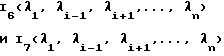
из первого и второго оптических отражателей 610 и 620 волновода через выходные плечи 612 и 622, соответственно. Третье плечо 523 суммирует выходную мощность оптических сигналов

которые поступают через первое и второе входные плечи 521 и 522, соответственно, и выводит оптический сигнал I8(λ1, λi-1, λi+1,..., λn). Фазы и значения выходной мощности оптического сигнала I6(λ1, λi-1, λi+1,..., λn) и оптического сигнала I4(λ1) равны, когда равны фазы и значения выходной мощности оптического сигнала I7(λ1, λi-1, λi+1,..., λn) и оптического сигнала I5(λ1). Оптический сигнал I6(λ1, λi-1, λi+1,..., λn) имеет оптическую связь в области оптической связи, существующей между соседними каналами волновода в случае, когда он выводится через третье плечо 523 второго ответвителя 520, таким образом, получая фазовый сдвиг, равный -π/2. С другой стороны оптический сигнал I7(λ1, λi-1, λi+1,..., λn) не имеет фазового сдвига в случае, когда он выводится через третье плечо 523 второго ответвителя 520, поскольку он распространяется вдоль канала волновода. Поэтому, выходы оптических сигналов

являются связанными, поскольку они имеют одну и ту же фазу в случае, когда они выводятся через третье плечо 523 второго ответвителя 520. Таким образом, оптический сигнал I8(λ1, λi-1, λi+1,..., λn), который выводится через третье плечо 523 второго ответвителя 520, имеет такие же параметры, как и оптический сигнал I1(λ1, λi-1, λi+1,..., λn). Кроме того, оптический сигнал I8(λ1, λi-1, λi+1,..., λn) имеет другие составляющие длин волн, кроме предварительно заданной составляющей длины волны, например, λ1, среди составляющих длин волн λ1, λ2,..., λn оптического сигнала I1(λ1, λ2,..., λn).
Как описано выше, в оптическом фильтре длин волн, согласно варианту осуществления настоящего изобретения, оптический сигнал, имеющий предварительно заданную составляющую длины волны, можно выделить без потери мощности входного оптического сигнала, используя оптический ответвитель и волоконный фильтр на основе отражательной дифракционной решетки. В этом случае, предварительно заданное значение длины волны можно устанавливать в зависимости от потребностей пользователя путем управления периодом дифракционной решетки волоконного фильтра с отражательной дифракционной решеткой.The first and
from the first and second optical reflectors 610 and 620 of the waveguide through the
which come through the first and
are coupled because they have the same phase when they are output through the
As described above, in an optical wavelength filter according to an embodiment of the present invention, an optical signal having a predetermined wavelength component can be isolated without loss of power of the input optical signal using an optical coupler and a fiber filter based on a reflective diffraction grating. In this case, a predetermined wavelength can be set depending on the needs of the user by controlling the period of the diffraction grating of a fiber filter with a reflective diffraction grating.
На фиг.9 изображен оптический демультиплексор, согласно другому варианту осуществления изобретения, имеющий с первого по n-й оптические фильтры 700, 800,..., 850 и 900 длин волн, которые соединены последовательно. Figure 9 shows an optical demultiplexer, according to another embodiment of the invention, having first to n-th
Все оптические фильтры 700, 800, ..., 850 и 900 длин волн имеют первые входные плечи 701, 801, ..., 851 и 901, первые выходные плечи 702, 802, ..., 852 и 902 и вторые выходные плечи 703, 803, ...., 853 и 903. All
В первое входное плечо 701 первого оптического фильтра 700 длин волн поступает оптический сигнал I(λ1, λ2,..., λn), имеющий составляющие длин волн, например, λ1, λ2,..., λn. Первое выходное плечо 702 первого оптического фильтра 700 длин волн выводит только оптический сигнал I(λ1), имеющий составляющую длины волны, например, λ1, среди различных составляющих длин волн оптического сигнала I(λ1, λ2,..., λn). Из второго выходного плеча 703 первого фильтра 700 длин волн выводится оптический сигнал I(λ1, λ2,..., λn), имеющий другую, отличную от λ1, составляющую длины волны оптического сигнала I(λ1, λ2,..., λn), в первое входное плечо 801 второго оптического фильтра 800. Аналогично, оптический сигнал I(λ2), имеющий составляющую длины волны, например, λ2, среди различных составляющих длин волн, отличных от λ1, оптического сигнала I(λ2,..., λn), выводится через первое выходное плечо 802 второго оптического фильтра 800 длин волн, хотя оптический сигнал I(λ3,..., λn), имеющий составляющие λ3,..., λn, за исключением λ1 и λ2, выводится через второе выходное плечо 803 второго оптического фильтра 800 длин волн. Следуя этой методике, в первое выходное плечо 901 (n-1)-го оптического фильтра 900 длин волн поступает оптический сигнал I(λi-1, λn), имеющий составляющие λI-1 и λn длины волны. Первое выходное плечо 902 (n-1)-го оптического фильтра 900 длин волн выводит оптический сигнал I(λn-1), имеющий составляющую длин волн, например, λn-1, и второе выходное плечо 903 (n-1)-го первого оптического фильтра 900 длин волн выводит оптический сигнал I6(λn), имеющий другую составляющую λn длин волн.An optical signal I (λ 1 , λ 2 , ..., λ n ) having wavelength components, for example, λ 1 , λ 2 , ..., λ n, enters the
На фиг.10 изображен первый оптический фильтр 700 длин волн, выполненный с первым входным плечом 701, первым и вторым выходными плечами 702 и 703, первым, вторым и третьим ответвителями 710, 720 и 730 и с первого по четвертый оптическими отражателями 710, 750, 760 и 770 длин волн. Figure 10 shows the first
На первое входное плечо 701 поступает оптический сигнал I1(λ1, λ2,..., λn), имеющий, например, составляющие длин волн λ1, λ2,..., λn. Первое выходное плечо 702 выводит оптический сигнал I14(λ1), имеющий предварительно заданную составляющую длину волны, например, λ1, среди различных составляющих длин волн оптического сигнала I1(λ1, λ2,..., λn). Второе выходное плечо 703 выводит оптический сигнал I8(λ2, λ3,..., λn), имеющий другие составляющие длин волн λ2, λ3,..., λn, за исключением λ1.
Первый ответвитель 710 включает с первого по четвертое плечи 711, 712, 713 и 714.The
The
В первое плечо 711 поступает оптический сигнал I1(λ1, λ2,..., λn). Третье и четвертое плечи 713 и 714 делят выходную мощность оптического сигнала I1(λ1, λ2,..., λn), который подается через входное плечо 711, на две равные части и выводят I2(λ1, λ2,..., λn) и I3(λ1, λ2,..., λn) соответственно, где λ1, λ2,..., λn - составляющие длин волн оптических сигналов I2(λ1, λ2,..., λn) и I3(λ1, λ2,..., λn).
Оптический сигнал I1(λ1, λ2,..., λn), который подается через первое плечо 711 и выводится через третье плечо 713, подвергается действию оптической связи, поскольку он распространяется вдоль канала волновода. Таким образом между оптическими сигналами I2(λ1, λ2,..., λn) и I1(λ1, λ2,..., λn) отсутствует разность фаз. Оптический сигнал I1(λ1, λ2,..., λn), который поступает из первого плеча 711 и выводится через четвертое плечо 714, подвергается действию оптической связи в промежутке между соседними каналами волновода, таким образом, получая разность фаз -π/2 между оптическими сигналами I3(λ1, λ2,..., λn) и I1(λ1, λ2,..., λn).
Третье плечо 713 принимает оптический сигнал I4(λ1), имеющий предварительно заданную составляющую длины волны, например, λ1, которая отражается обратно от второго оптического отражателя 750 длин волн. В этом случае,
оптические сигналы I4(λ1) и I5(λ1), которые отражаются обратно через третье и четвертое плечи 713 и 714, имеют одинаковые фазы и выходную мощность оптических сигналов I2(λ1, λ2,..., λn) и I3(λ1, I2,..., λn) соответственно. Поэтому оптический сигнал I4(λ1) имеет ту же самую фазу и половину входной мощности сигнала I1(λ1, λ2,..., λn), тогда как оптический сигнал I5(λ1) имеет разность фаз π/2 и половину выходной мощности оптического сигнала I1(λ1, λ2,..., λn).
Оптический сигнал I4(λ1), который подается через третье плечо 713 первого ответвителя 710 и выводится через первое плечо 711, не получает фазового сдвига, поскольку он распространяется вдоль канала волновода, тогда как оптический сигнал I5(λ1), который принимается через четвертое плечо 714 первого ответвителя 710 и выводится через первое плечо 711, получает повторно фазовый сдвиг, равный -π/2, поскольку на него действует оптическая связь в области оптической связи, существующей между соседними каналами волновода. Следовательно, когда оптические сигналы I4(λ1) и I5(λ1) выводятся через первое плечо 711 первого ответвителя 710, разность фаз между ними равна -π. В результате они компенсируют друг друга и мощность на выходе отсутствует.The
The optical signal I 1 (λ 1 , λ 2 , ..., λ n ), which is supplied through the
The
the optical signals I 4 (λ 1 ) and I 5 (λ 1 ), which are reflected back through the third and
The optical signal I 4 (λ 1 ), which is supplied through the
Оптический сигнал I4(λ1), который поступает через третье плечо 713 первого ответвителя 710 и выводится через второе плечо 712, имеет фазовый сдвиг, равный -π/2, так как он подвергается действию оптической связи в области оптической связи между соседними каналами волновода. С другой стороны, оптический сигнал I5(λ1), который подается через четвертое плечо 714 первого ответвителя 710 и выводится через второе плечо 712, не получает фазового сдвига, поскольку он распространяется вдоль канала волновода. Следовательно, когда оптические сигналы I4(λ1) и I5(λ1) выводятся через второе плечо 712 первого ответвителя 710, разность фаз между ними отсутствует. Таким образом, в результате связи формируется оптический сигнал I9(λ1). Поэтому выходные мощности оптического сигнала I9(λ1) и оптического сигнала I9(λ1, λ2,..., λn) равны. Оптический сигнал I9(λ1) имеет предварительно заданную составляющую длины волны, например, λ1, которая отражается от первого и второго оптических отражателей 740 и 750 длин волн.The optical signal I 4 (λ 1 ), which enters through the
Первый оптический отражатель 710 длин волн имеет входное плечо 741 и выходное плечо 742. The first
Входное плечо 741 принимает оптический сигнал I2(λ1, λ2,..., λn) из третьего плеча 730 первого ответвителя 710. Выходное плечо 842 выводит оптический сигнал I4(λ1), имеющий предварительно заданную составляющую длины волны, например, λ1, которая отражается обратно относительно направления распространения света среди различных составляющих длин волн, в первый ответвитель 710 через третье плечо 713, и оптический сигнал I6(λ2,..., λn), имеющий другие составляющие длин волн, через выходное плечо 742.The
Второй оптический отражатель 752 длин волн имеет входное плечо 751 и выходное плечо 752. The second optical wavelength reflector 752 has an
Входное плечо 751 принимает оптический сигнал I3(λ1, λ2,..., λn) из четвертого плеча 714 первого ответвителя 710. Второе плечо 752 выводит оптический сигнал I5(λ1), имеющий предварительно заданную составляющую длины волны, например, λ1, которая отражается обратно относительно направления распространения света среди различных составляющих длин волн, в первый ответвитель 710 через четвертое плечо 714, и оптический сигнал I7(λ2,..., λn), имеющий другие составляющие длины волны, через выходное плечо 752.The
Второй ответвитель 720 имеет с первого по третье плечи 721, 722 и 723. The
Первое и второе плечи 721 и 722 принимают оптические сигналы I6(λ2,..., λn) и I7(λ2,..., λn) из первого и второго оптических отражателей 740 и 750 длин волн через выходные плечи 742 и 752, соответственно. Третье плечо 723 суммирует выходы оптических сигналов I6(λ2,..., λn) и I7(λ2,..., λn), которые поступают через первое и второе входные плечи 721 и 722, соответственно, и выводит оптический сигнал I8(λ2,..., λn). Фазы и значения выходной мощности оптического сигнала I6(λ2,..., λn) и оптического сигнала I4(λ1) равны, когда равны фазы и значения выходной мощности оптического сигнала I7(λ2,..., λn) и оптического сигнала I5(λ1). Оптический сигнал I6(λ2,..., λn) находится под действием оптической связи в области оптической связи между соседними каналами волновода, когда он выводится через третье плечо 723 второго ответвителя 720, таким образом, получая фазовый сдвиг, равный -π/2. С другой стороны, оптический сигнал I7(λ2,..., λn) не получает фазовый сдвиг, когда он выводится через третье плечо 723 второго ответвителя 720, поскольку он распространяется вдоль канала волновода. Поэтому выходы оптических сигналов I6(λ2,..., λn) и I7(λ2,..., λn) связываются, поскольку они имеют ту же самую фазу, когда они выводятся через третье плечо 723 второго ответвителя 720. Таким образом, оптический сигнал I8(λ2,..., λn), который выводится через третье плечо 723 второго ответвителя 720, имеет те же самые выходные параметры, как и оптический сигнал I1(λ1, λ2,..., λn). Кроме того, оптический сигнал I8(λ2,..., λn) имеет другие составляющие длин волн, например, λ2,..., λn, за исключением предварительно заданной составляющей длины волны, например, λ1, среди различных составляющих длин волн оптического сигнала I1(λ1, λ2,..., λn).
Третий ответвитель 730 имеет с первого по четвертое плечи 731, 732, 733 и 734.The first and
The
В первое плечо 731 поступает оптический сигнал I9(λ1), имеющий составляющую длины волны от второго плеча 720 первого ответвителя 710. Третье и четвертое плечи 733 и 734 делят выход оптического сигнала I9(λ1), который поступает через первое плечо 731, на две равные части, и выводят оптические сигналы I10(λ1) и I11(λ1) соответственно. То есть, каждый выход оптического сигнала I10(λ1) и I11(λ1) является половиной выхода оптического сигнала I9(λ1).
Оптический сигнал I9(λ1), который поступает через первое плечо 731 и выводится через третье плечо 513, не подвергается действию оптической связи, хотя распространяется вдоль канала волновода, не получая разности фаз между оптическими сигналами I10(λ1) и I9(λ1). С другой стороны, оптический сигнал I9(λ1), который принимается через первое плечо 731 и выводится в четвертое плечо 734, подвергается действию оптической связи в промежутке между соседними каналами волновода, таким образом, получая между оптическими сигналами I11(λ1) и I9(λ1) разность фаз, равную -π/2.
В третье плечо 733 поступает оптический сигнал I12(λ1), который имеет предварительно заданную составляющую длины волны, например, λ1, и отражается от третьего оптического отражателя 760 длин волн среди различных составляющих длин волн выходного оптического сигнала I10(λ1). Четвертое плечо 734 принимает оптический сигнал I13(λ1), который имеет предварительно заданную составляющую длины волны, например, λ1, и отражается от четвертого оптического отражателя 770 длин волн среди различных составляющих длин волн выходного оптического сигнала I11(λ1). В этом случае, выходы оптических сигналов I12(λ1) и I13(λ1), проходящие
обратно через третье и четвертое плечи 733 и 734 совпадают с выходами оптических сигналов I10(λ1) и I11(λ1) соответственно. Поэтому оптический сигнал I12(λ1) имеет ту же самую фазу и половину выходной мощности оптического сигнала I9(λ1), при этом оптический сигнал I13(λ1) имеет разность фаз π/2 и половину выходной мощности оптического сигнала I9(λ1).
Оптический сигнал I12(λ1), который поступает через третье плечо 733 третьего ответвителя 730 и выводится через первое плечо 731, не получает фазового сдвига, поскольку он распространяется вдоль канала волновода, тогда как оптический сигнал I13(λ1), который поступает через четвертое плечо 734 третьего ответвителя 730 и выводится через первое плечо 731, получает фазовый сдвиг, равный -π/n, поскольку он находится под действием оптической связи в области оптической связи между соседними каналами волновода. Следовательно, когда оптические сигналы I12(λ1) и I13(λ1) выводятся через первое плечо 731 третьего ответвителя 730, разность фаз между ними составляет -π. В результате, они компенсируют друг друга и вывод мощности не осуществляется.The
The optical signal I 9 (λ 1 ), which enters through the
The
back through the third and
The optical signal I 12 (λ 1 ), which enters through the
Разность фаз равна -π/2 в случае, когда оптический сигнал I12(λ1) поступает через третье плечо 733 третьего ответвителя 730 и выводится через второе плечо 732, поскольку он находится под действием оптической связи в области оптической связи между соседними каналами волновода. С другой стороны, фазовый сдвиг отсутствует в случае, когда оптический сигнал I13(λ1) вводится через четвертое плечо 734 третьего ответвителя 730 и выводится через второе плечо 732, поскольку он распространяется вдоль канала длины волны. Поэтому между оптическими сигналами I12(λ1) и I13(λ1) отсутствует фазовый сдвиг в случае, когда они выводятся через второе плечо 732 третьего ответвителя 730, при этом обеспечивая объединение оптических сигналов I12(λ1) и I13(λ1) в результирующий оптический сигнал I14(λ1). Следовательно, выход оптического сигнала I14(λ1) равен выходу оптического сигнала I9(λ1). Оптический сигнал I14(λ1) имеет предварительно заданную составляющую длины волны, например, λ1, которая отражается от третьего и четвертого оптических отражателей 760 и 770 длин волн.The phase difference is −π / 2 in the case where the optical signal I 12 (λ 1 ) enters through the
Первый оптический отражатель 760 длин волн имеет входное плечо 761 и выходное плечо 762. The first
Входное плечо 761 принимает оптический сигнал I10(λ1) из третьего плеча 733 третьего ответвителя 730. Выходное плечо 762 отражает только оптический сигнал, который имеет предварительно заданную составляющую длину волны, например, λ1, среди различных составляющих длин волн оптического сигнала I10(λ1), который принимается через входное плечо 761 обратно относительно направления распространения света, выводит оптический сигнал I12(λ1) в третий ответвитель 730 через третье плечо 733 и выводит оптический сигнал, имеющий другую составляющую длины волны через выходное плечо 762.The
Четвертый оптический отражатель 770 длин волн имеет входное плечо 771 и выходное плечо 772. The fourth
Входное плечо 771 принимает оптический сигнал I11(λ1) из четвертого плеча 734 третьего ответвителя 730. Выходное плечо 772 отражает только оптический сигнал, имеющий предварительно заданную составляющую длины волны, например, λ1 среди различных составляющих длин волн оптического сигнала I11(λ1), который поступает через входное плечо 771 в обратном направлении относительно направления распространения света, выводит оптический сигнал I13(λ1) в третий ответвитель 730 через четвертое плечо 734 и выводит оптический сигнал, имеющий другую составляющую длины волны через выходное плечо 772.The
Следовательно, третий ответвитель 730 и третий и четвертый оптические отражатели 760 и 770 длин волн служат для устранения оптических сигналов, которые возможно имеют остаточную составляющую длины волны, отличную от предварительно заданной составляющей длины волны, например, λ1, из оптического сигнала I9(λ1), который подается в первый ответвитель 710 через второе плечо 712.Therefore, the
В настоящем изобретении за счет выполнения оптического демультиплексора оптических фильтров длин волн, включающих в себя оптические ответвители и оптические отражатели длин волн, обеспечиваются малые потери мощности оптического сигнала, возникающие при связывании 1хn в оптическом демультиплексоре для приемника в известной системе передачи с УДВ, посредством чего устраняется необходимость в оптическом усилителе, который используется в известном оптическом демультиплексоре для обеспечения низкого уровня потерь оптического сигнала. Кроме того, поскольку отсутствуют ограничения на количество каналов, на которые можно разделить, оптический демультиплексор настоящего изобретения может оказаться полезным в системах передачи УДВ с высокой плотностью для повышения пропускной способности передачи данных. In the present invention, by performing an optical demultiplexer of optical wavelength filters, including optical couplers and optical wavelength reflectors, low optical signal power losses occur when 1xn is coupled in an optical demultiplexer for a receiver in a known transmission system with UDF, thereby eliminating the need for an optical amplifier, which is used in the known optical demultiplexer to provide a low level of optical signal loss. In addition, since there are no restrictions on the number of channels that can be divided, the optical demultiplexer of the present invention may be useful in high density airborne transmission systems to increase data throughput.
Claims (35)
5. Оптический фильтр по п.1, отличающийся тем, что разность фаз между оптическим сигналом, который поступает во второй ответвитель через его первое плечо, и оптическим сигналом, который поступает во второй ответвитель через его первое плечо и выводится через его третье плечо, составляет -π/2.
6. Оптический фильтр по п.1, отличающийся тем, что отсутствует разность фаз между оптическим сигналом, который поступает во второй ответвитель через его второе плечо, и оптическим сигналом, который поступает во второй ответвитель через его второе плечо и выводится через его третье плечо.4. The optical filter according to claim 1, characterized in that the phase difference between the optical signal that enters the first coupler through its first arm and the optical signal that enters the first coupler through its first arm and is output through its fourth arm is -π / 2.
5. The optical filter according to claim 1, characterized in that the phase difference between the optical signal that enters the second coupler through its first arm and the optical signal that enters the second coupler through its first arm and is output through its third arm is -π / 2.
6. The optical filter according to claim 1, characterized in that there is no phase difference between the optical signal that enters the second coupler through its second arm and the optical signal that enters the second coupler through its second arm and is output through its third arm.
20. Оптический демультиплексор по п.16, отличающийся тем, что разность фаз между оптическим сигналом, который поступает во второй ответвитель через его первое плечо, и оптическим сигналом, который поступает во второй ответвитель через его первое плечо и выводится через его третье плечо, составляет -π/2.
21. Оптический демультиплексор по п.16, отличающийся тем, что отсутствует разность фаз между оптическим сигналом, который поступает во второй ответвитель через его второе плечо, и оптическим сигналом, который поступает во второй ответвитель через его второе плечо, и выводится через его третье плечо.19. The optical demultiplexer according to clause 16, wherein the phase difference between the optical signal that enters the first coupler through its first arm and the optical signal that enters the first coupler through its first arm and is output through its fourth arm is -π / 2.
20. The optical demultiplexer according to clause 16, wherein the phase difference between the optical signal that enters the second coupler through its first arm and the optical signal that enters the second coupler through its first arm and is output through its third arm is -π / 2.
21. The optical demultiplexer according to clause 16, characterized in that there is no phase difference between the optical signal that enters the second coupler through its second arm and the optical signal that enters the second coupler through its second arm and is output through its third arm .
38. Оптический демультиплексор по п.28, отличающийся тем, что оптические сигналы, которые имеют составляющие предварительно заданных длин волн и поступают обратно в третий ответвитель через его третье и четвертое плечи, имеют разность фаз равную -π/2 и осуществляют связь посредством компенсационной интерференции, так как они имеют одинаковую фазу в случае, когда они выводятся из третьего ответвителя через его второе плечо.37. The optical demultiplexer according to claim 28, wherein the phase difference between the optical signal that enters the third coupler through its first arm and the optical signal that enters the third coupler through its first arm and is output through its fourth arm is -π / 2.
38. The optical demultiplexer according to claim 28, characterized in that the optical signals, which have components of predetermined wavelengths and are fed back to the third coupler through its third and fourth arms, have a phase difference of -π / 2 and communicate by means of compensation interference , since they have the same phase in the case when they are derived from the third coupler through its second arm.
Applications Claiming Priority (2)
| Application Number | Priority Date | Filing Date | Title |
|---|---|---|---|
| KR96-62477 | 1996-12-06 | ||
| KR1019960062477A KR100207602B1 (en) | 1996-12-06 | 1996-12-06 | Optical filter for preventing loss of optical power and optical demultiplexer using same |
Publications (2)
| Publication Number | Publication Date |
|---|---|
| RU97120132A RU97120132A (en) | 1999-10-27 |
| RU2188512C2 true RU2188512C2 (en) | 2002-08-27 |
Family
ID=19486209
Family Applications (1)
| Application Number | Title | Priority Date | Filing Date |
|---|---|---|---|
| RU97120132/09A RU2188512C2 (en) | 1996-12-06 | 1997-12-05 | Optical wavelength filter and optical demultiplexer |
Country Status (8)
| Country | Link |
|---|---|
| US (1) | US6208440B1 (en) |
| JP (1) | JPH10221560A (en) |
| KR (1) | KR100207602B1 (en) |
| CN (1) | CN1158559C (en) |
| DE (1) | DE19754148A1 (en) |
| FR (1) | FR2756934B1 (en) |
| GB (1) | GB2320152B (en) |
| RU (1) | RU2188512C2 (en) |
Cited By (5)
| Publication number | Priority date | Publication date | Assignee | Title |
|---|---|---|---|---|
| RU2372728C1 (en) * | 2005-11-29 | 2009-11-10 | Вячеслав Константинович Сахаров | Controlled optical demultiplexer |
| RU2372729C1 (en) * | 2005-11-29 | 2009-11-10 | Вячеслав Константинович Сахаров | Multichannel controlled input/output optical multiplexer |
| RU2380837C1 (en) * | 2005-11-29 | 2010-01-27 | Вячеслав Константинович Сахаров | Multichannel optical input/output multiplexer with dynamic functionality |
| RU2390099C2 (en) * | 2005-11-29 | 2010-05-20 | Федеральное Государственное Учреждение "Федеральное Агентство По Правовой Защите Результатов Интеллектуальной Деятельности Военного, Специального И Двойного Назначения" При Министерстве Юстиции Российской Федерации | Controlled optical add/drop multiplexer |
| RU2744517C1 (en) * | 2020-03-27 | 2021-03-11 | Федеральное государственное унитарное предприятие «Государственный научно-исследовательский институт авиационных систем» (ФГУП «ГосНИИАС») | Dual-circuit real-time information transmission system based on an all-optical wavelength-dense on-board network |
Families Citing this family (20)
| Publication number | Priority date | Publication date | Assignee | Title |
|---|---|---|---|---|
| KR19980068452A (en) * | 1997-02-19 | 1998-10-15 | 김광호 | Demultiplexer of WDM transmission system |
| US6643463B1 (en) * | 1998-10-26 | 2003-11-04 | Nippon Telegraph And Telephone Corporation | Optical wavelength division multiplexing transmission network system using transmitting/receiving apparatuses having 2-input and 2-output optical path switching elements |
| FI990238A7 (en) | 1999-02-08 | 2000-08-09 | Nokia Networks Oy | OpticalADd/drop device |
| KR100573282B1 (en) * | 1999-10-01 | 2006-04-24 | 한국전자통신연구원 | Optically Coupled Branch Multiplexer for Wavelength Division Multiplexing Optical Communication Systems |
| CN1133084C (en) | 2000-03-24 | 2003-12-31 | 信息产业部武汉邮电科学研究院 | Comb method for dividing waves |
| GB0013366D0 (en) * | 2000-06-01 | 2000-07-26 | Vipswitch Inc | Optical communicator |
| US6839517B2 (en) | 2001-02-12 | 2005-01-04 | Agere Systems Inc. | Apparatus and method for transmitting optical signals through a single fiber optical network |
| US7116905B2 (en) * | 2002-03-27 | 2006-10-03 | Fujitsu Limited | Method and system for control signaling in an open ring optical network |
| US7231148B2 (en) * | 2002-03-28 | 2007-06-12 | Fujitsu Limited | Flexible open ring optical network and method |
| US6842562B2 (en) * | 2002-05-30 | 2005-01-11 | Fujitsu Network Communications, Inc. | Optical add/drop node and method |
| KR100442658B1 (en) * | 2002-08-14 | 2004-08-02 | 삼성전자주식회사 | Light source device for wavelength division multiplexing optical communication system |
| US7894418B2 (en) * | 2002-08-15 | 2011-02-22 | The Boeing Company | Mixed analog and digital chip-scale reconfigurable WDM network |
| US7092587B1 (en) * | 2002-08-16 | 2006-08-15 | Raytheon Company | Multichannel optical demultiplexer with varying angles of incidence to the light bandpass filters |
| US7154082B2 (en) * | 2004-08-20 | 2006-12-26 | Pgs Americas, Inc. | Frequency division and/or wavelength division multiplexed recursive fiber optic telemetry scheme for an optical sensor array |
| US7450851B2 (en) * | 2004-08-27 | 2008-11-11 | Fujitsu Limited | System and method for modularly scalable architecture for optical networks |
| US7248758B2 (en) * | 2005-06-08 | 2007-07-24 | Verizon Business Global Llc | Hitless tunable filter |
| US8050559B2 (en) * | 2006-08-21 | 2011-11-01 | Juniper Networks, Inc. | Multi-chassis router with multiplexed optical interconnects |
| DE102006044858A1 (en) * | 2006-09-22 | 2008-03-27 | Siemens Ag | User unit for a passive optical network |
| US10514296B2 (en) * | 2015-07-29 | 2019-12-24 | Samsung Electronics Co., Ltd. | Spectrometer including metasurface |
| US11867556B2 (en) | 2015-07-29 | 2024-01-09 | Samsung Electronics Co., Ltd. | Spectrometer including metasurface |
Citations (2)
| Publication number | Priority date | Publication date | Assignee | Title |
|---|---|---|---|---|
| GB2191645A (en) * | 1986-06-13 | 1987-12-16 | Stc Plc | Optical telecommunication system |
| EP0716522A2 (en) * | 1994-12-07 | 1996-06-12 | AT&T Corp. | Wavelength division multiplexed hybrid ring suitable for use in regional area networks |
Family Cites Families (12)
| Publication number | Priority date | Publication date | Assignee | Title |
|---|---|---|---|---|
| US5048909A (en) * | 1990-07-27 | 1991-09-17 | At&T Bell Laboratories | Adiabatic reflection apparatus |
| IT1265017B1 (en) * | 1993-08-10 | 1996-10-17 | Cselt Centro Studi Lab Telecom | WAVE LENGTH SELECTIVE OPTICAL SWITCH. |
| US5657406A (en) * | 1994-09-23 | 1997-08-12 | United Technologies Corporation | Efficient optical wavelength multiplexer/de-multiplexer |
| US5446809A (en) * | 1994-09-23 | 1995-08-29 | United Technologies Corporation | All fiber wavelength selective optical switch |
| FR2725529B1 (en) * | 1994-10-11 | 1996-11-22 | Alcatel Nv | WAVELENGTH SELECTIVE OPTICAL COUPLER |
| DE69620414T2 (en) * | 1995-08-04 | 2002-11-14 | Alcatel, Paris | OPTICAL INSERT AND DISCONNECT MULTIPLEXER |
| JP3463717B2 (en) * | 1995-08-24 | 2003-11-05 | 三菱電機株式会社 | WDM optical transmission apparatus and WDM optical transmission system |
| US5875272A (en) * | 1995-10-27 | 1999-02-23 | Arroyo Optics, Inc. | Wavelength selective optical devices |
| JP3654383B2 (en) * | 1995-12-07 | 2005-06-02 | Kddi株式会社 | Optical add / drop multiplexer |
| US5721796A (en) * | 1996-06-21 | 1998-02-24 | Lucent Technologies Inc. | Optical fiber cross connect with active routing for wavelength multiplexing and demultiplexing |
| JP4041177B2 (en) * | 1996-07-09 | 2008-01-30 | 富士通株式会社 | Optical add / drop multiplexer and optical transmission system having optical add / drop multiplexer |
| US5940556A (en) * | 1997-03-07 | 1999-08-17 | Ifos | Fiber-optic mode-routed add-drop filter |
-
1996
- 1996-12-06 KR KR1019960062477A patent/KR100207602B1/en not_active Expired - Fee Related
-
1997
- 1997-12-03 GB GB9725583A patent/GB2320152B/en not_active Expired - Fee Related
- 1997-12-04 FR FR9715321A patent/FR2756934B1/en not_active Expired - Fee Related
- 1997-12-04 JP JP9334654A patent/JPH10221560A/en active Pending
- 1997-12-05 DE DE19754148A patent/DE19754148A1/en not_active Withdrawn
- 1997-12-05 RU RU97120132/09A patent/RU2188512C2/en not_active IP Right Cessation
- 1997-12-06 CN CNB971198918A patent/CN1158559C/en not_active Expired - Fee Related
- 1997-12-08 US US08/986,684 patent/US6208440B1/en not_active Expired - Fee Related
Patent Citations (2)
| Publication number | Priority date | Publication date | Assignee | Title |
|---|---|---|---|---|
| GB2191645A (en) * | 1986-06-13 | 1987-12-16 | Stc Plc | Optical telecommunication system |
| EP0716522A2 (en) * | 1994-12-07 | 1996-06-12 | AT&T Corp. | Wavelength division multiplexed hybrid ring suitable for use in regional area networks |
Non-Patent Citations (1)
| Title |
|---|
| МОДЕЛЬ А.М. Фильтры СВЧ в радиорелейных системах. - М.: Связь, 1967, с.178-190, рис.5.1 и 5.2. * |
Cited By (5)
| Publication number | Priority date | Publication date | Assignee | Title |
|---|---|---|---|---|
| RU2372728C1 (en) * | 2005-11-29 | 2009-11-10 | Вячеслав Константинович Сахаров | Controlled optical demultiplexer |
| RU2372729C1 (en) * | 2005-11-29 | 2009-11-10 | Вячеслав Константинович Сахаров | Multichannel controlled input/output optical multiplexer |
| RU2380837C1 (en) * | 2005-11-29 | 2010-01-27 | Вячеслав Константинович Сахаров | Multichannel optical input/output multiplexer with dynamic functionality |
| RU2390099C2 (en) * | 2005-11-29 | 2010-05-20 | Федеральное Государственное Учреждение "Федеральное Агентство По Правовой Защите Результатов Интеллектуальной Деятельности Военного, Специального И Двойного Назначения" При Министерстве Юстиции Российской Федерации | Controlled optical add/drop multiplexer |
| RU2744517C1 (en) * | 2020-03-27 | 2021-03-11 | Федеральное государственное унитарное предприятие «Государственный научно-исследовательский институт авиационных систем» (ФГУП «ГосНИИАС») | Dual-circuit real-time information transmission system based on an all-optical wavelength-dense on-board network |
Also Published As
| Publication number | Publication date |
|---|---|
| GB2320152B (en) | 2001-04-04 |
| GB2320152A (en) | 1998-06-10 |
| DE19754148A1 (en) | 1998-06-18 |
| GB9725583D0 (en) | 1998-02-04 |
| FR2756934A1 (en) | 1998-06-12 |
| CN1158559C (en) | 2004-07-21 |
| FR2756934B1 (en) | 2003-06-13 |
| JPH10221560A (en) | 1998-08-21 |
| US6208440B1 (en) | 2001-03-27 |
| CN1193124A (en) | 1998-09-16 |
| KR100207602B1 (en) | 1999-07-15 |
| KR19980044384A (en) | 1998-09-05 |
Similar Documents
| Publication | Publication Date | Title |
|---|---|---|
| RU2188512C2 (en) | Optical wavelength filter and optical demultiplexer | |
| US5638473A (en) | Optical waveguide grating filter | |
| US5875272A (en) | Wavelength selective optical devices | |
| US5896476A (en) | Optical loop signal processing using reflection mechanisms | |
| Madsen et al. | A general planar waveguide autoregressive optical filter | |
| Hill et al. | Narrow-bandwidth optical waveguide transmission filters | |
| JPS625209A (en) | Channel addition/subtraction filter coupler | |
| US6049644A (en) | Optical routing device having a substantially flat passband | |
| JPH0816739B2 (en) | Wavelength add / drop element | |
| RU2186413C2 (en) | Optical spectral filter and channel division device | |
| US6640024B1 (en) | Add-drop wavelength filter using mode discrimination couplers and tilted bragg gratings | |
| AU708708B2 (en) | Wavelength selective optical devices | |
| CN109541753B (en) | A flattening filter and a Mux and Demux filter composed of the same | |
| US6236781B1 (en) | Duplicated-port waveguide grating router having substantially flat passbands | |
| US20010012426A1 (en) | Arrayed-waveguide grating | |
| Chung et al. | Narrow-band spectral filter made of W-index and step-index fibers | |
| JP2002511157A (en) | Narrowband transmission filter using Bragg grating for mode conversion | |
| US6222957B1 (en) | Dispersion slope compensator | |
| GB2143394A (en) | Passive optical coupler | |
| Jung et al. | All-fiber optical interconnection for dissimilar multicore fibers with low insertion loss | |
| US6731836B2 (en) | Dispersion compensator | |
| SE526498C2 (en) | Optical coupler used in fiber optic network, has deflectors to couple radiation propagating through waveguides with common radiation modes, defined by adjustable geometrical and material properties of coupler | |
| JPH0196605A (en) | Wavelength multiplex branching filter element | |
| US20030068120A1 (en) | Optical interleaver | |
| KR100342533B1 (en) | Tunable optical wavelength demultiplexer and method thereof |
Legal Events
| Date | Code | Title | Description |
|---|---|---|---|
| MM4A | The patent is invalid due to non-payment of fees |
Effective date: 20061206 |