KR20190140464A - Human anti-RANKL antibody formulations and methods of using the same - Google Patents
Human anti-RANKL antibody formulations and methods of using the same Download PDFInfo
- Publication number
- KR20190140464A KR20190140464A KR1020197034225A KR20197034225A KR20190140464A KR 20190140464 A KR20190140464 A KR 20190140464A KR 1020197034225 A KR1020197034225 A KR 1020197034225A KR 20197034225 A KR20197034225 A KR 20197034225A KR 20190140464 A KR20190140464 A KR 20190140464A
- Authority
- KR
- South Korea
- Prior art keywords
- amino acid
- aqueous pharmaceutical
- pharmaceutical formulation
- formulation
- antibody
- Prior art date
- Legal status (The legal status is an assumption and is not a legal conclusion. Google has not performed a legal analysis and makes no representation as to the accuracy of the status listed.)
- Granted
Links
Images




Classifications
-
- A—HUMAN NECESSITIES
- A61—MEDICAL OR VETERINARY SCIENCE; HYGIENE
- A61K—PREPARATIONS FOR MEDICAL, DENTAL OR TOILETRY PURPOSES
- A61K39/00—Medicinal preparations containing antigens or antibodies
- A61K39/395—Antibodies; Immunoglobulins; Immune serum, e.g. antilymphocytic serum
- A61K39/39591—Stabilisation, fragmentation
-
- A—HUMAN NECESSITIES
- A61—MEDICAL OR VETERINARY SCIENCE; HYGIENE
- A61K—PREPARATIONS FOR MEDICAL, DENTAL OR TOILETRY PURPOSES
- A61K47/00—Medicinal preparations characterised by the non-active ingredients used, e.g. carriers or inert additives; Targeting or modifying agents chemically bound to the active ingredient
- A61K47/06—Organic compounds, e.g. natural or synthetic hydrocarbons, polyolefins, mineral oil, petrolatum or ozokerite
- A61K47/08—Organic compounds, e.g. natural or synthetic hydrocarbons, polyolefins, mineral oil, petrolatum or ozokerite containing oxygen, e.g. ethers, acetals, ketones, quinones, aldehydes, peroxides
- A61K47/12—Carboxylic acids; Salts or anhydrides thereof
-
- A—HUMAN NECESSITIES
- A61—MEDICAL OR VETERINARY SCIENCE; HYGIENE
- A61K—PREPARATIONS FOR MEDICAL, DENTAL OR TOILETRY PURPOSES
- A61K47/00—Medicinal preparations characterised by the non-active ingredients used, e.g. carriers or inert additives; Targeting or modifying agents chemically bound to the active ingredient
- A61K47/06—Organic compounds, e.g. natural or synthetic hydrocarbons, polyolefins, mineral oil, petrolatum or ozokerite
- A61K47/16—Organic compounds, e.g. natural or synthetic hydrocarbons, polyolefins, mineral oil, petrolatum or ozokerite containing nitrogen, e.g. nitro-, nitroso-, azo-compounds, nitriles, cyanates
- A61K47/18—Amines; Amides; Ureas; Quaternary ammonium compounds; Amino acids; Oligopeptides having up to five amino acids
- A61K47/183—Amino acids, e.g. glycine, EDTA or aspartame
-
- A—HUMAN NECESSITIES
- A61—MEDICAL OR VETERINARY SCIENCE; HYGIENE
- A61K—PREPARATIONS FOR MEDICAL, DENTAL OR TOILETRY PURPOSES
- A61K47/00—Medicinal preparations characterised by the non-active ingredients used, e.g. carriers or inert additives; Targeting or modifying agents chemically bound to the active ingredient
- A61K47/06—Organic compounds, e.g. natural or synthetic hydrocarbons, polyolefins, mineral oil, petrolatum or ozokerite
- A61K47/22—Heterocyclic compounds, e.g. ascorbic acid, tocopherol or pyrrolidones
-
- A—HUMAN NECESSITIES
- A61—MEDICAL OR VETERINARY SCIENCE; HYGIENE
- A61K—PREPARATIONS FOR MEDICAL, DENTAL OR TOILETRY PURPOSES
- A61K47/00—Medicinal preparations characterised by the non-active ingredients used, e.g. carriers or inert additives; Targeting or modifying agents chemically bound to the active ingredient
- A61K47/06—Organic compounds, e.g. natural or synthetic hydrocarbons, polyolefins, mineral oil, petrolatum or ozokerite
- A61K47/26—Carbohydrates, e.g. sugar alcohols, amino sugars, nucleic acids, mono-, di- or oligo-saccharides; Derivatives thereof, e.g. polysorbates, sorbitan fatty acid esters or glycyrrhizin
-
- A—HUMAN NECESSITIES
- A61—MEDICAL OR VETERINARY SCIENCE; HYGIENE
- A61K—PREPARATIONS FOR MEDICAL, DENTAL OR TOILETRY PURPOSES
- A61K9/00—Medicinal preparations characterised by special physical form
- A61K9/08—Solutions
-
- A—HUMAN NECESSITIES
- A61—MEDICAL OR VETERINARY SCIENCE; HYGIENE
- A61P—SPECIFIC THERAPEUTIC ACTIVITY OF CHEMICAL COMPOUNDS OR MEDICINAL PREPARATIONS
- A61P11/00—Drugs for disorders of the respiratory system
-
- A—HUMAN NECESSITIES
- A61—MEDICAL OR VETERINARY SCIENCE; HYGIENE
- A61P—SPECIFIC THERAPEUTIC ACTIVITY OF CHEMICAL COMPOUNDS OR MEDICINAL PREPARATIONS
- A61P13/00—Drugs for disorders of the urinary system
- A61P13/08—Drugs for disorders of the urinary system of the prostate
-
- A—HUMAN NECESSITIES
- A61—MEDICAL OR VETERINARY SCIENCE; HYGIENE
- A61P—SPECIFIC THERAPEUTIC ACTIVITY OF CHEMICAL COMPOUNDS OR MEDICINAL PREPARATIONS
- A61P13/00—Drugs for disorders of the urinary system
- A61P13/12—Drugs for disorders of the urinary system of the kidneys
-
- A—HUMAN NECESSITIES
- A61—MEDICAL OR VETERINARY SCIENCE; HYGIENE
- A61P—SPECIFIC THERAPEUTIC ACTIVITY OF CHEMICAL COMPOUNDS OR MEDICINAL PREPARATIONS
- A61P15/00—Drugs for genital or sexual disorders; Contraceptives
- A61P15/14—Drugs for genital or sexual disorders; Contraceptives for lactation disorders, e.g. galactorrhoea
-
- A—HUMAN NECESSITIES
- A61—MEDICAL OR VETERINARY SCIENCE; HYGIENE
- A61P—SPECIFIC THERAPEUTIC ACTIVITY OF CHEMICAL COMPOUNDS OR MEDICINAL PREPARATIONS
- A61P19/00—Drugs for skeletal disorders
- A61P19/08—Drugs for skeletal disorders for bone diseases, e.g. rachitism, Paget's disease
-
- A—HUMAN NECESSITIES
- A61—MEDICAL OR VETERINARY SCIENCE; HYGIENE
- A61P—SPECIFIC THERAPEUTIC ACTIVITY OF CHEMICAL COMPOUNDS OR MEDICINAL PREPARATIONS
- A61P19/00—Drugs for skeletal disorders
- A61P19/08—Drugs for skeletal disorders for bone diseases, e.g. rachitism, Paget's disease
- A61P19/10—Drugs for skeletal disorders for bone diseases, e.g. rachitism, Paget's disease for osteoporosis
-
- A—HUMAN NECESSITIES
- A61—MEDICAL OR VETERINARY SCIENCE; HYGIENE
- A61P—SPECIFIC THERAPEUTIC ACTIVITY OF CHEMICAL COMPOUNDS OR MEDICINAL PREPARATIONS
- A61P3/00—Drugs for disorders of the metabolism
- A61P3/12—Drugs for disorders of the metabolism for electrolyte homeostasis
- A61P3/14—Drugs for disorders of the metabolism for electrolyte homeostasis for calcium homeostasis
-
- A—HUMAN NECESSITIES
- A61—MEDICAL OR VETERINARY SCIENCE; HYGIENE
- A61P—SPECIFIC THERAPEUTIC ACTIVITY OF CHEMICAL COMPOUNDS OR MEDICINAL PREPARATIONS
- A61P35/00—Antineoplastic agents
-
- A—HUMAN NECESSITIES
- A61—MEDICAL OR VETERINARY SCIENCE; HYGIENE
- A61P—SPECIFIC THERAPEUTIC ACTIVITY OF CHEMICAL COMPOUNDS OR MEDICINAL PREPARATIONS
- A61P35/00—Antineoplastic agents
- A61P35/04—Antineoplastic agents specific for metastasis
-
- C—CHEMISTRY; METALLURGY
- C07—ORGANIC CHEMISTRY
- C07K—PEPTIDES
- C07K16/00—Immunoglobulins [IGs], e.g. monoclonal or polyclonal antibodies
- C07K16/18—Immunoglobulins [IGs], e.g. monoclonal or polyclonal antibodies against material from animals or humans
- C07K16/28—Immunoglobulins [IGs], e.g. monoclonal or polyclonal antibodies against material from animals or humans against receptors, cell surface antigens or cell surface determinants
- C07K16/2875—Immunoglobulins [IGs], e.g. monoclonal or polyclonal antibodies against material from animals or humans against receptors, cell surface antigens or cell surface determinants against the NGF/TNF superfamily, e.g. CD70, CD95L, CD153, CD154
-
- A—HUMAN NECESSITIES
- A61—MEDICAL OR VETERINARY SCIENCE; HYGIENE
- A61K—PREPARATIONS FOR MEDICAL, DENTAL OR TOILETRY PURPOSES
- A61K39/00—Medicinal preparations containing antigens or antibodies
- A61K2039/505—Medicinal preparations containing antigens or antibodies comprising antibodies
-
- A—HUMAN NECESSITIES
- A61—MEDICAL OR VETERINARY SCIENCE; HYGIENE
- A61K—PREPARATIONS FOR MEDICAL, DENTAL OR TOILETRY PURPOSES
- A61K39/00—Medicinal preparations containing antigens or antibodies
- A61K2039/54—Medicinal preparations containing antigens or antibodies characterised by the route of administration
-
- A—HUMAN NECESSITIES
- A61—MEDICAL OR VETERINARY SCIENCE; HYGIENE
- A61K—PREPARATIONS FOR MEDICAL, DENTAL OR TOILETRY PURPOSES
- A61K39/00—Medicinal preparations containing antigens or antibodies
- A61K2039/545—Medicinal preparations containing antigens or antibodies characterised by the dose, timing or administration schedule
-
- C—CHEMISTRY; METALLURGY
- C07—ORGANIC CHEMISTRY
- C07K—PEPTIDES
- C07K2317/00—Immunoglobulins specific features
- C07K2317/20—Immunoglobulins specific features characterized by taxonomic origin
- C07K2317/21—Immunoglobulins specific features characterized by taxonomic origin from primates, e.g. man
-
- C—CHEMISTRY; METALLURGY
- C07—ORGANIC CHEMISTRY
- C07K—PEPTIDES
- C07K2317/00—Immunoglobulins specific features
- C07K2317/50—Immunoglobulins specific features characterized by immunoglobulin fragments
- C07K2317/52—Constant or Fc region; Isotype
-
- C—CHEMISTRY; METALLURGY
- C07—ORGANIC CHEMISTRY
- C07K—PEPTIDES
- C07K2317/00—Immunoglobulins specific features
- C07K2317/50—Immunoglobulins specific features characterized by immunoglobulin fragments
- C07K2317/55—Fab or Fab'
-
- C—CHEMISTRY; METALLURGY
- C07—ORGANIC CHEMISTRY
- C07K—PEPTIDES
- C07K2317/00—Immunoglobulins specific features
- C07K2317/50—Immunoglobulins specific features characterized by immunoglobulin fragments
- C07K2317/56—Immunoglobulins specific features characterized by immunoglobulin fragments variable (Fv) region, i.e. VH and/or VL
-
- C—CHEMISTRY; METALLURGY
- C07—ORGANIC CHEMISTRY
- C07K—PEPTIDES
- C07K2317/00—Immunoglobulins specific features
- C07K2317/50—Immunoglobulins specific features characterized by immunoglobulin fragments
- C07K2317/56—Immunoglobulins specific features characterized by immunoglobulin fragments variable (Fv) region, i.e. VH and/or VL
- C07K2317/565—Complementarity determining region [CDR]
-
- C—CHEMISTRY; METALLURGY
- C07—ORGANIC CHEMISTRY
- C07K—PEPTIDES
- C07K2317/00—Immunoglobulins specific features
- C07K2317/70—Immunoglobulins specific features characterized by effect upon binding to a cell or to an antigen
- C07K2317/76—Antagonist effect on antigen, e.g. neutralization or inhibition of binding
-
- C—CHEMISTRY; METALLURGY
- C07—ORGANIC CHEMISTRY
- C07K—PEPTIDES
- C07K2317/00—Immunoglobulins specific features
- C07K2317/90—Immunoglobulins specific features characterized by (pharmaco)kinetic aspects or by stability of the immunoglobulin
- C07K2317/94—Stability, e.g. half-life, pH, temperature or enzyme-resistance
Landscapes
- Health & Medical Sciences (AREA)
- Chemical & Material Sciences (AREA)
- Life Sciences & Earth Sciences (AREA)
- Medicinal Chemistry (AREA)
- General Health & Medical Sciences (AREA)
- Organic Chemistry (AREA)
- Animal Behavior & Ethology (AREA)
- Public Health (AREA)
- Pharmacology & Pharmacy (AREA)
- Veterinary Medicine (AREA)
- General Chemical & Material Sciences (AREA)
- Chemical Kinetics & Catalysis (AREA)
- Engineering & Computer Science (AREA)
- Nuclear Medicine, Radiotherapy & Molecular Imaging (AREA)
- Bioinformatics & Cheminformatics (AREA)
- Immunology (AREA)
- Physical Education & Sports Medicine (AREA)
- Rheumatology (AREA)
- Epidemiology (AREA)
- Orthopedic Medicine & Surgery (AREA)
- Proteomics, Peptides & Aminoacids (AREA)
- Molecular Biology (AREA)
- Biochemistry (AREA)
- Genetics & Genomics (AREA)
- Biophysics (AREA)
- Endocrinology (AREA)
- Oil, Petroleum & Natural Gas (AREA)
- Mycology (AREA)
- Microbiology (AREA)
- Urology & Nephrology (AREA)
- Oncology (AREA)
- Hematology (AREA)
- Obesity (AREA)
- Diabetes (AREA)
- Pulmonology (AREA)
- Gynecology & Obstetrics (AREA)
- Pregnancy & Childbirth (AREA)
- Reproductive Health (AREA)
- Medicines Containing Antibodies Or Antigens For Use As Internal Diagnostic Agents (AREA)
- Medicinal Preparation (AREA)
Abstract
데노수맙 또는 또 다른 인간 항-RANKL 단일클론 항체 또는 이의 부분, 및 pH, 완충제 시스템, 및 아미노산 응집 억제제의 특징을 포함하는 수성 제약 제형이 본 명세서에 개시된다. 또한, 예컨대, 1회용 바이알, 1회용 주사기, 또는 유기 용기에서의 사용을 위한 제형의 제시형, 제형의 사용 방법 및 질병 예방 또는 치료를 위한 물품, 및 관련된 키트가 개시된다.Disclosed herein are aqueous pharmaceutical formulations comprising denosumab or another human anti-RANKL monoclonal antibody or portion thereof, and features of pH, buffer systems, and amino acid aggregation inhibitors. Also disclosed are, for example, presentation forms of formulations for use in disposable vials, disposable syringes, or organic containers, methods of using the formulations, and articles for preventing or treating disease, and related kits.
Description
[관련 출원에 대한 상호 참조][CROSS REFERENCE TO RELATED APPLICATION]
2017년 4월 28일 출원된 미국 가특허출원 제62/492,056호의 35 U.S.C. §119(e) 하의 이익이 본 명세서에 의해 주장되며, 이의 개시내용은 본 명세서에 참조로서 포함된다.35 U.S.C. of U.S. Provisional Patent Application No. 62 / 492,056, filed April 28, 2017. The benefit under §119 (e) is claimed by this specification, the disclosure of which is incorporated herein by reference.
[전자적으로 제출된 자료의 참조에 의한 포함] [Include by reference of electronically submitted data]
본 명세서와 동시에 제출되어 다음과 같이 확인된 컴퓨터 판독 가능한 뉴클레오티드/아미노산 서열 목록은 그 전체가 참조로서 포함된다: 파일명 "51689A_Seqlisting.txt"의 49 킬로바이트 아스키(텍스트) 파일; 2018년 4월 20일 생성. A list of computer readable nucleotide / amino acid sequences submitted concurrently with this specification and identified as follows is incorporated by reference in its entirety: 49 kilobyte ASCII (text) file of filename “51689A_Seqlisting.txt”; Created April 20, 2018.
[기술 분야][Technical Field]
본 발명은 고농도 데노수맙 수성 제형 및 이의 바이오시밀러를 포함한 인간 항-RANKL 단일클론 항체에 관한 것이다.The present invention relates to human anti-RANKL monoclonal antibodies, including high concentration denosumab aqueous formulations and biosimilars thereof.
데노수맙은 60 mg/mL 및 70 mg/mL 강도의 용액 형태로 상업적으로 이용 가능하다.Denosumab is commercially available in the form of solutions of 60 mg / mL and 70 mg / mL strengths.
단백질 제형의 증가하는 농도는 안정성 문제, 예를 들어, 고분자량 종(high molecular weight species; HMWS)의 형성을 유발하는 응집을 초래할 수 있다. HMWS, 특히 단량체 대응물의 천연 구조 대부분을 보존하는 HMWS는 일부 단백질 제형에서 특히 중요할 수 있다. 또한, 응집은 치료적 단백질의 피하 생체이용률 및 약물동역학에 잠재적으로 영향을 미칠 수 있다.Increasing concentrations of protein formulations can lead to stability problems, such as aggregation, which leads to the formation of high molecular weight species (HMWS). HMWS, especially HMWS, which preserves most of the natural structure of the monomer counterpart, may be particularly important in some protein formulations. Aggregation can also potentially affect subcutaneous bioavailability and pharmacokinetics of therapeutic proteins.
투여뿐만 아니라 충전 및 마감 행위도 피스톤 펌프, 연동 펌프 또는 주사 바늘을 통한 단백질 용액 유동 단계를 수반할 수 있다. 이러한 절차는 전단 응력 및 기계적 응력을 전달할 수 있고, 이는 단백질의 변성을 초래하고 응집을 유발할 수 있다. 이 현상은 단백질 용액이 더 농축될수록 악화될 수 있다.Filling and closing actions as well as administration may involve protein solution flow steps through piston pumps, peristaltic pumps, or injection needles. This procedure can transfer shear and mechanical stresses, which can lead to denaturation of proteins and cause aggregation. This phenomenon may worsen as the protein solution is more concentrated.
고농도 항-RANKL 항체를 포함하는 수용액에 아미노산 응집 억제제 첨가 시, 시간이 경과함에 따라 형성되는 항체 응집체의 양이 감소할 뿐만 아니라, 이러한 응집체의 형성 속도가 느려진다는 점을 최초로 증명하는 개시내용이 본 발명에 따라 제공된다. 또한, 본 개시는 농축된 항-RANKL 항체 수용액에서의 응집체 형성에 미치는 pH 효과에 대해 제공하며, 이때, 수용액의 pH가 약 5.0 내지 5.2 미만의 범위일 때 감소된 응집체 형성이 관찰된다. 추가로, 항-RANKL 항체의 안정화는 아미노산 응집 억제제와 항체 사이의 상호작용을 통해 일어난다는 점이 본 명세서에 제시된 개시내용에 의해 시사된다. 임의의 특정 이론에 구속되지 않고, 아미노산 응집 억제제와 항-RANKL 항체 사이의 소수성 상호작용뿐만 아니라, 다른 유형의 분자간 상호작용은 농축된 항체 용액에 대하여 안정화 효과를 나타낸다고 생각된다. 따라서, 본 발명의 개시내용은 고농도의 항-RANKL 항체를 포함하는 안정적인 수성 제약 제형에 관한 것으로, 이 제형은 소량(예컨대, 약 2% 미만)의 응집체를 포함한다.The first disclosure demonstrates that addition of amino acid aggregation inhibitors to aqueous solutions containing high concentrations of anti-RANKL antibodies not only reduces the amount of antibody aggregates formed over time, but also slows the formation of such aggregates. It is provided according to the invention. In addition, the present disclosure provides for the effect of pH on aggregate formation in concentrated anti-RANKL antibody aqueous solutions, where reduced aggregate formation is observed when the pH of the aqueous solution is in the range of about 5.0 to less than 5.2. In addition, it is suggested by the disclosures presented herein that stabilization of anti-RANKL antibodies occurs through interactions between amino acid aggregation inhibitors and the antibodies. Without being bound by any particular theory, it is believed that other types of intermolecular interactions, as well as hydrophobic interactions between amino acid aggregation inhibitors and anti-RANKL antibodies, have a stabilizing effect on concentrated antibody solutions. Accordingly, the present disclosure relates to stable aqueous pharmaceutical formulations comprising high concentrations of anti-RANKL antibodies, which formulations comprise small amounts (eg, less than about 2%) of aggregates.
따라서, 본 개시의 일 양태는 인간 항-인간 핵 인자 카파-B 리간드 수용체 활성인자(항-RANKL) 단일클론 항체 또는 이의 항원-결합 부분을 70 mg/mL 초과의 농도로 포함하고 약 5.0 내지 5.2 미만 범위의 pH를 나타내는 수성 제약 제형이다.Thus, one aspect of the present disclosure comprises a human anti-human nuclear factor kappa-B ligand receptor activator (anti-RANKL) monoclonal antibody or antigen-binding portion thereof at a concentration of greater than 70 mg / mL and comprises from about 5.0 to 5.2 Aqueous pharmaceutical formulations exhibiting a pH in the sub-range.
본 개시의 또 다른 양태는 인간 항-인간 핵 인자 카파-B 리간드 수용체 활성인자(항-RANKL) 단일클론 항체 또는 이의 항원-결합 부분 및 아미노산 응집 억제제의 혼합물을 포함하는 수성 제약 제형이다. 예시적인 양태에서, 아미노산 응집 억제제는 하전된 곁사슬을 포함하는 아미노산, 방향족 아미노산, 또는 소수성 아미노산을 포함한다. 예시적인 경우에서, 하전된 곁사슬을 포함하는 아미노산은 예를 들어, 아르기닌 및 리신과 같은 양으로 하전된 곁사슬을 포함하는 아미노산이다. 예시적인 양태에서, 방향족 아미노산은 페닐 또는 인돌을 포함한다. 선택적으로, 방향족 아미노산은 알파 탄소와 페닐 사이 또는 알파 탄소와 인돌 사이에 C1-C6 알킬 사슬을 더 포함한다. 예를 들어, 페닐알라닌 및 트립토판을 포함하는 아미노산은 예시적은 아미노산 응집 억제제이다. 예시적인 경우에서, 아미노산 응집 억제제는 카이트 둘리틀 소수성 척도(Kyte and Doolittle hydrophobicity scale)에서 약 2.5 초과의 점수를 갖는 소수성 아미노산이다. 선택적으로, 소수성 아미노산은 발린, 류신 또는 이소류신이다. 추가의 아미노산 응집 억제제가 본 명세서에 기술된 바와 같이 고려된다. Another aspect of the disclosure is an aqueous pharmaceutical formulation comprising a human anti-human nuclear factor kappa-B ligand receptor activator (anti-RANKL) monoclonal antibody or a mixture of antigen-binding portions and amino acid aggregation inhibitors thereof. In an exemplary embodiment, the amino acid aggregation inhibitor comprises an amino acid comprising an charged side chain, an aromatic amino acid, or a hydrophobic amino acid. In an exemplary case, an amino acid comprising a charged side chain is an amino acid comprising a side chain charged in an amount such as, for example, arginine and lysine. In an exemplary embodiment, the aromatic amino acid comprises phenyl or indole. Optionally, the aromatic amino acid further comprises a C 1 -C 6 alkyl chain between alpha carbon and phenyl or between alpha carbon and indole. For example, amino acids comprising phenylalanine and tryptophan are exemplary amino acid aggregation inhibitors. In an exemplary case, the amino acid aggregation inhibitor is a hydrophobic amino acid having a score of greater than about 2.5 on the Kyte and Doolittle hydrophobicity scale. Optionally, the hydrophobic amino acid is valine, leucine or isoleucine. Additional amino acid aggregation inhibitors are contemplated as described herein.
예시적인 경우에서, 수성 제약 제형은 긴장성 조절제, 계면활성제, 완충제, 또는 이의 임의의 조합물을 더 포함한다.In an exemplary case, the aqueous pharmaceutical formulation further comprises a tonicity modifier, surfactant, buffer, or any combination thereof.
본 개시의 또 다른 양태는 예컨대, 1회용 바이알, 1회용 주사기, 또는 유리, 유리 내장, 또는 유리 코팅 용기에, 저장 또는 사용하기 위한 제형의 제시형(presentation of a formulation)이다. 본 개시의 예시적인 양태는 용기, 선택적으로, 바이알, 사전 충전된 주사기(PFS), 또는 본 명세서에 기술된 임의의 수성 제약 제형을 포함하는 유리 용기이다. 예시적인 경우에서, 이 용기는 약 1 mL 이하(예컨대, 약 0.5 mL)의 수성 제약 제형을 포함한다. Another aspect of the disclosure is a presentation of a formulation, for example, for storage or use, in disposable vials, disposable syringes, or glass, visceral, or glass coated containers. Exemplary aspects of the present disclosure are glass containers comprising a container, optionally a vial, a prefilled syringe (PFS), or any aqueous pharmaceutical formulation described herein. In an exemplary case, this container contains up to about 1 mL (eg, about 0.5 mL) of an aqueous pharmaceutical formulation.
본 개시의 또 다른 양태는 인간 항-인간 핵 인자 카파-B 리간드 수용체 활성인자(항-RANKL) 단일클론 항체, 또는 이의 항원-결합 부분을 포함하는 안정적인, 수성 제약 제형의 제조 방법을 제공하며, 이는 70 mg/mL를 초과하는 농도의 항-RANKL 단일클론 항체, 또는 이의 항원-결합 부분을 아미노산 응집 억제제, 완충제, 계면활성제, 및 선택적으로, 긴장성 조절제와 조합하는 것을 포함한다. 본 개시의 양태는 본 명세서에 기술된 안정적인, 수성 제약 제형의 제조 방법 중 임의의 하나에 따라 제조된 안정적인, 수성 제약 제형을 포함한다.Another aspect of the disclosure provides a method of preparing a stable, aqueous pharmaceutical formulation comprising a human anti-human nuclear factor kappa-B ligand receptor activator (anti-RANKL) monoclonal antibody, or antigen-binding portion thereof, This includes combining an anti-RANKL monoclonal antibody, or antigen-binding portion thereof, at a concentration above 70 mg / mL with an amino acid aggregation inhibitor, a buffer, a surfactant, and optionally a tonicity modulator. Aspects of the present disclosure include stable, aqueous pharmaceutical formulations prepared according to any one of the methods of making stable, aqueous pharmaceutical formulations described herein.
본 개시의 또 다른 양태는 인간 항-RANKL 단일클론 항체 또는 이의 항원-결합 부분에 대해 반응하는 질병의 예방 또는 치료를 위한, 본 명세서에 기술된 제형의 이용 방법을 제공한다. 예시적인 양태에서, 이러한 이용은 대상체의 골격 관련 사례(SRE)의 치료 또는 예방, 골의 거대세포 종양의 치료 또는 예방, 악성 종양의 고칼슘혈증의 치료 또는 예방, 골다공증의 치료 또는 예방, 또는 골 질량의 증가를 포함하는, 대상체의 치료적 처치를 포함한다. 예를 들어, 치료적 처치는 (a) 고형 종양으로부터의 골 전이를 앓는 대상체에서 SRE의 치료 또는 예방, (b) 절제 불가능하거나 외과적 절제가 심각한 병적 상태를 초래할 가능성이 높은 경우의 골의 거대세포 종양을 앓는 성인 또는 골격이 충분히 발달한 청소년인 대상체에서 SRE의 치료 또는 예방, (c) 대상체에서 비스폰스포네이트(bisphonsphonate) 요법에 불응성인 악성 종양의 고칼슘혈증의 치료, (d) 다발 골수종 대상체 또는 고형 종양으로부터의 골 전이를 앓는 대상체에서 SRE의 치료 또는 예방, (e) 골절 위험이 높은 폐경기 여성의 골다공증의 치료, (f) 유방암을 위하여 보조적인 아로마타제 억제제 요법을 받는 골절 위험이 높은 여성에서 골 질량 증가를 위한 치료, (g) 비전이성 전립선암을 위하여 안드로겐 박탈 요법을 받는 골절 위험이 높은 남성에서 골 질량 증가를 위한 치료, (h) 골절 위험이 높은 골다공증 남성에서 골 질량 증가를 위한 치료, (i) 칼슘 또는 비타민 D를 이용한 요법을 포함한다.Another aspect of the disclosure provides a method of using the formulations described herein for the prevention or treatment of a disease that responds to a human anti-RANKL monoclonal antibody or antigen-binding portion thereof. In exemplary embodiments, such use may include treating or preventing skeletal related cases (SREs) of a subject, treating or preventing giant cell tumors of bone, treating or preventing hypercalcemia of malignant tumors, treating or preventing osteoporosis, or bone mass Therapeutic treatment of the subject, including an increase in. For example, therapeutic treatment may include (a) treating or preventing SRE in a subject with bone metastases from a solid tumor, (b) massive bone in cases where unresectability or surgical resection is likely to result in serious morbidity. (C) treatment or prevention of SRE in a subject having a cell tumor or adolescents with well-developed adolescents, (c) treating hypercalcemia of malignant tumors refractory to bisphonsphonate therapy in the subject, (d) multiple myeloma Treatment or prevention of SRE in subjects or subjects with bone metastases from solid tumors, (e) treatment of osteoporosis in postmenopausal women at high risk of fracture, (f) high risk of fracture receiving adjuvant aromatase inhibitor therapy for breast cancer Treatment for bone mass gain in women, (g) Bone in men at high risk of fracture receiving androgen deprivation therapy for non-metastatic prostate cancer Treatment for mass gain, (h) treatment for bone mass gain in osteoporosis men at high risk of fracture, and (i) therapy with calcium or vitamin D.
본 개시의 추가 양태는 필요로 하는 환자에서 골격 관련 사례(SRE)의 예방 방법, 필요로 하는 환자에서 거대세포 종양의 치료 방법, 필요로 하는 환자에서 악성 종양의 고칼슘혈증의 치료 방법, 필요로 하는 환자에서 골다공증의 치료 방법, 및 필요로 하는 환자에서 골 질량을 증가시키는 방법을 포함한다. 이 방법들은 환자에 본 명세서에 기술된 제형 중 임의의 하나의 유효량을 투여하는 것을 포함한다. 예시적인 경우에서, 이 제형은 환자에 피하로 전달된다.Additional aspects of the present disclosure provide methods for the prevention of skeletal related cases (SRE) in a patient in need, methods for treating giant cell tumors in a patient in need, methods for treating hypercalcemia of a malignant tumor in a patient in need, A method of treating osteoporosis in a patient, and a method of increasing bone mass in a patient in need thereof. These methods include administering to a patient an effective amount of any one of the formulations described herein. In an exemplary case, the formulation is delivered subcutaneously to the patient.
본 개시의 또 다른 양태는 인간 항-RANKL 단일클론 항체를 필요로 하는 환자를 치료하기 위한, 본 명세서에 기술된 의약의 제조에 있어서, 데노수맙, 또는 또 다른 인간 항-RANKL 단일클론 항체 또는 이의 항원-결합 부분의 용도를 제공한다.Another aspect of the disclosure provides denosumab, or another human anti-RANKL monoclonal antibody, in the manufacture of a medicament described herein for treating a patient in need of a human anti-RANKL monoclonal antibody, or It provides the use of the antigen-binding portion thereof.
본 개시의 또 다른 양태는 포장 삽지, 포장 라벨, 설명서, 또는 본 명세서에 개시된 임의의 방법 또는 구현예를 안내하거나 개시하는 기타 라벨링과 함께, 본 명세서에 기술된 조성물 또는 물품을 포함하는 키트이다.Another aspect of the present disclosure is a kit comprising a composition or article described herein, with package inserts, package labels, instructions, or other labeling to guide or disclose any method or embodiment disclosed herein.
본 개시의 또 다른 양태는 70 mg/mL 초과의 농도로 인간 항-인간 핵 인자 카파-B 리간드 수용체 활성인자(항-RANKL) 단일클론 항체 또는 이의 항원-결합 부분을 포함하는 수성 제약 제형의 안정성을 개선하는 방법으로, 이는 약 5.0 내지 5.2 미만 범위의 pH의 인간 항-인간 핵 인자 카파-B 리간드 수용체 활성인자(항-RANKL) 단일클론 항체 또는 이의 항원-결합 부분을 포함하는 수성 제약 제형을 제조하는 단계를 포함하며, 이때, 이 수성 제약 제형은 약 5.0 내지 5.2 미만 범위의 pH가 아닌 동일한 수성 제약 제형과 비교하여 약 5.0 내지 5.2 미만 범위의 pH에서 개선된 안정성을 보여준다.Another aspect of the disclosure provides stability of an aqueous pharmaceutical formulation comprising a human anti-human nuclear factor kappa-B ligand receptor activator (anti-RANKL) monoclonal antibody or antigen-binding portion thereof at a concentration above 70 mg / mL. In an embodiment, the pharmaceutical formulation comprises an aqueous pharmaceutical formulation comprising a human anti-human nuclear factor kappa-B ligand receptor activator (anti-RANKL) monoclonal antibody or antigen-binding portion thereof at a pH in the range of about 5.0 to less than 5.2. Wherein the aqueous pharmaceutical formulation shows improved stability at a pH in the range of about 5.0 to less than 5.2 compared to the same aqueous pharmaceutical formulation that is not a pH in the range of about 5.0 to less than 5.2.
본 개시의 또 다른 양태는 인간 항-인간 핵 인자 카파-B 리간드 수용체 활성인자(항-RANKL) 단일클론 항체 또는 이의 항원-결합 부분을 포함하는 수성 제약 제형의 안정성을 개선하는 방법으로, 이는 아미노산 응집 억제제와의 혼합물 중에 인간 항-인간 핵 인자 카파-B 리간드 수용체 활성인자(항-RANKL) 단일클론 항체 또는 이의 항원-결합 부분을 포함하는 수성 제약 제형을 제조하는 단계를 포함하며, 이때, 이 수성 제약 제형은 아미노산 응집 억제제가 없는 동일한 수성 제약 제형과 비교하여 아미노산 응집 억제제가 있는 경우가 개선된 안정성을 보여준다.Another aspect of the disclosure is a method of improving the stability of an aqueous pharmaceutical formulation comprising a human anti-human nuclear factor kappa-B ligand receptor activator (anti-RANKL) monoclonal antibody or antigen-binding portion thereof, wherein the amino acid Preparing an aqueous pharmaceutical formulation comprising a human anti-human nuclear factor kappa-B ligand receptor activator (anti-RANKL) monoclonal antibody or antigen-binding portion thereof in admixture with an aggregation inhibitor, wherein Aqueous pharmaceutical formulations show improved stability with an amino acid aggregation inhibitor compared to the same aqueous pharmaceutical formulation without an amino acid aggregation inhibitor.
본 개시의 또 다른 양태는 데노수맙 또는 또 다른 인간 항-RANKL 단일클론 항체의 용액에서 HMWS 응집체의 수준을 감소시키는 방법이다.Another aspect of the disclosure is a method of reducing the level of HMWS aggregates in a solution of denosumab or another human anti-RANKL monoclonal antibody.
도면과 함께 다음의 상세한 설명의 검토로부터 추가 양태 및 이점은 당업자에게 명백할 것이다. 조성물, 물품, 및 방법은 다양한 형태의 구현예를 허용할 수 있지만, 이하의 설명은 본 개시가 예시적이며, 본 명세서에 기술된 특정 구현예로 본 발명을 한정하고자 한 것이 아니라는 이해 하에 특정 구현예를 포함한다. 본 명세서에 기술된 조성물, 물품, 및 방법의 경우, 구성요소, 이의 조성 범위, 치환체, 조건, 및 단계를 포함하나 이에 한정되지 않는 선택적인 특징들이 본 명세서에 제공된 다양한 양태, 구현예, 및 실시예로부터 선택된다고 간주된다.Further aspects and advantages will be apparent to those skilled in the art from a review of the following detailed description in conjunction with the drawings. The compositions, articles, and methods may accept various forms of embodiments, but the following description is specific to the understanding that this disclosure is exemplary and is not intended to limit the invention to the specific embodiments described herein. Include an example. For the compositions, articles, and methods described herein, various aspects, embodiments, and implementations of optional features provided herein, including but not limited to components, composition ranges thereof, substituents, conditions, and steps. It is considered to be selected from the example.
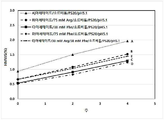
도 1, 도 2 및 도 8은 다양한 고농도 데노수맙 제형에 대한 제형 및 37℃에서의 시간의 함수로서 SE-UHPLC로 모니터링한 HMWS(%)를 보여준다. 도 1의 범례는 표 1에 표시된 약어를 갖는 제형과 일치한다. 도 8의 범례는 표 5에 표시된 알파벳과 일치한다.
도 3은 1개월 동안 37℃에서 저장한 후 다양한 고농도 데노수맙 제형에 대한 크기 배제 크로마토그램을 보여준다. 도 3의 범례는 표 2에 표시된 축약형을 갖는 제형과 일치한다.
도 4는 표 3A에 표시된 상응하는 F#를 갖는 각 제형에 대한 시간의 함수로서 SE-UHPLC로 모니터링한 HMWS(%)의 그래프이다.
도 5는 표 3A에 열거된 제형에 대한 크기 배제 크로마토그램 쌍이다. 도 5의 범례는 표 3B에 언급된 제형과 일치한다.
도 6은 표 4A에 표시된 상응하는 F#를 갖는 각 제형에 대한 37℃에서의 저장 시간의 함수로서 SE-UHPLC로 모니터링한 HMWS(%)의 그래프이다.
도 7a는 표 4A에 열거된 데노수맙 농도를 갖는 pH 4.8의 제형에 대한 크기 배제 크로마토그램을 보여준다.
도 7b는 표 4A에 열거된 데노수맙 농도를 갖는 pH 5.1의 제형에 대한 크기 배제 크로마토그램을 보여준다.
도 9는 표 6B에 표시된 상응하는 F#를 갖는 각 제형에 대한 37℃에서의 저장 시간의 함수로서 SE-UHPLC로 모니터링한 HMWS(%)의 그래프이다.
도 10은 표 6B에 표시된 명칭을 갖는 제형에 대하여 1개월 동안 37℃에서 저장한 후 제형의 함수로서 크기 배제 크로마토그램을 보여준다.
도 11a는 표 7B에 표시된 알파벳을 갖는 제형에 대한 37℃에서의 시간의 함수로서 SE-UHPLC로 모니터링한 HMWS(%)의 그래프이다.
도 11b는 표 7C에 표시된 알파벳을 갖는 제형에 대한 40℃에서의 시간의 함수로서 SE-UHPLC로 모니터링한 HMWS(%)의 그래프이다.
도 12a는 표 7B의 제형에 대한 크기 배제 크로마토그램을 보여준다.
도 12b는 표 7C의 제형에 대한 크기 배제 크로마토그램을 보여준다.
도 13, 도 14, 및 도 15는 표 8A에 표시된 상응하는 제형 알파벳을 갖는 각 제형에 대한 37℃에서의 저장 시간의 함수로서 SE-UHPLC로 모니터링한 HMWS(%)의 그래프이다. 도 16, 도 17, 및 도 18은 1개월 동안 37℃에서 저장한 후의 표 8A에 열거된 제형들의 크로마토그래피 오버레이이다. 도 13 및 도 16은 방향족 아미노산을 포함하는 제형에 관한 것이고, 도 14 및 도 17은 극성/하전된 아미노산을 포함하는 제형에 관한 것이고, 도 15 및 도 18은 소수성 아미노산을 포함하는 제형에 관한 것이다.
도 19 내지 도 24는 제형 35 내지 38 각각에 대하여 경쇄 아미노산 28 내지 33(도 19), 경쇄 아미노산 108 내지 116(도 20), 경쇄 아미노산 125 내지 132(도 21), 중쇄 아미노산 47 내지 59(도 22), 중쇄 아미노산 243 내지 253(도 23), 및 중쇄 아미노산 392 내지 399(도 24)에 대한 시간의 함수(로그 (초))로서 4℃에서의 중수소 도입(%)의 그래프이다.
도 25 내지 도 30은 제형 35 내지 38 각각에 대하여 경쇄 아미노산 28 내지 33(도 25), 경쇄 아미노산 108 내지 117(도 26), 경쇄 아미노산 124 내지 131(도 27), 중쇄 아미노산 47 내지 59(도 28), 중쇄 아미노산 242 내지 253(도 29), 및 중쇄 아미노산 392 내지 399(도 24)에 대한 시간의 함수(로그 (초))로서 37℃에서의 중수소 도입(%)의 그래프이다.
도 31은 표 10에 표시된 제형 명칭을 표시한, 제형 및 37℃에서의 시간의 함수로서 SE-UHPLC로 모니터링한 HMWS(%)의 그래프이다.
도 32는 표 11에 표시된 제형 명칭을 표시한, 제형 및 37℃에서의 시간의 함수로서 SE-UHPLC로 모니터링한 LMWS(%)의 그래프이다.
도 33은 표 12에 표시된 제형 명칭을 표시한, 제형 및 37℃에서의 시간의 함수로서 SE-UHPLC로 모니터링한 HMWS(%)의 그래프이다.
도 34는 표 13에 표시된 제형 명칭을 표시한, 제형 및 37℃에서의 시간의 함수로서 SE-UHPLC로 모니터링한 LMWS(%)의 그래프이다.
도 35는 표 14에 표시된 제형 명칭을 표시한, 제형 및 37℃에서의 시간의 함수로서 SE-UHPLC로 모니터링한 HMWS(%)의 그래프이다.
도 36은 표 15에 표시된 제형 명칭을 표시한, 제형 및 37℃에서의 시간의 함수로서 SE-UHPLC로 모니터링한 LMWS(%)의 그래프이다.
도 37은 표 10에 표시된 제형 명칭을 갖는 각 제형에 대한 크기 배제 크로마토그램 오버레이이다.
도 38은 표 12에 표시된 제형 명칭을 갖는 각 제형에 대한 크기 배제 크로마토그램 오버레이이다.
도 39는 표 14에 표시된 제형 명칭을 갖는 각 제형에 대한 크기 배제 크로마토그램 오버레이이다.
도 40a 및 도 40b는 pH 4.5, 4.8 및 5.0에서 아르기닌의 부존재 하에서 데노수맙의 등온 화학 변성 곡선을 포함하는 그래프이다. 도 40a는 변성제 농도의 함수로서의 변성된 데노수맙 비율의 그래프이다. 도 40b는 변성제 농도의 함수로서 dF/d[변성제]를 도표화하는 그래프이다.
도 41a 및 도 41b는 pH 4.5, 4.8 및 5.2에서 75 mM의 아르기닌 HCl의 존재 하에서 데노수맙의 등온 화학 변성 곡선을 포함하는 그래프이다. 도 41a는 변성제 농도의 함수로서의 변성된 데노수맙 비율의 그래프이다. 도 41b는 변성제 농도의 함수로서 dF/d[변성제]를 도표화하는 그래프이다.
도 42 및 도 43은 표 17의 제형 명칭을 갖는 제형에 대하여 각각 25℃에서 3개월 동안 및 37℃에서 2개월 동안 시간의 함수로서 SE-UHPLC로 모니터링한 HMWS(%)의 그래프이다.1, 2 and 8 show the HMWS (%) monitored by SE-UHPLC as a function of formulation and time at 37 ° C. for various high concentration denosumab formulations. The legend of FIG. 1 is consistent with the formulation with the abbreviations shown in Table 1. The legend of FIG. 8 matches the alphabet shown in Table 5.
FIG. 3 shows size exclusion chromatograms for various high concentration denosumab formulations after storage at 37 ° C. for 1 month. The legend of FIG. 3 is consistent with the formulation with the abbreviations shown in Table 2.
4 is a graph of HMWS (%) monitored by SE-UHPLC as a function of time for each formulation with the corresponding F # shown in Table 3A.
5 is a size exclusion chromatogram pair for the formulations listed in Table 3A. The legend of FIG. 5 is consistent with the formulations mentioned in Table 3B.
FIG. 6 is a graph of HMWS (%) monitored by SE-UHPLC as a function of storage time at 37 ° C. for each formulation with the corresponding F # shown in Table 4A.
FIG. 7A shows a size exclusion chromatogram for a formulation of pH 4.8 with the denosumab concentrations listed in Table 4A.
FIG. 7B shows the size exclusion chromatogram for formulations of pH 5.1 with denosumab concentrations listed in Table 4A.
FIG. 9 is a graph of HMWS (%) monitored by SE-UHPLC as a function of storage time at 37 ° C. for each formulation with the corresponding F # shown in Table 6B. FIG.
FIG. 10 shows the size exclusion chromatogram as a function of the formulation after storage at 37 ° C. for 1 month for the formulations indicated in Table 6B.
11A is a graph of HMWS (%) monitored by SE-UHPLC as a function of time at 37 ° C. for the formulations having the alphabet shown in Table 7B.
FIG. 11B is a graph of HMWS (%) monitored by SE-UHPLC as a function of time at 40 ° C. for the formulations having the alphabet shown in Table 7C.
12A shows the size exclusion chromatogram for the formulations of Table 7B.
12B shows the size exclusion chromatogram for the formulations of Table 7C.
13, 14, and 15 are graphs of HMWS (%) monitored by SE-UHPLC as a function of storage time at 37 ° C. for each formulation having the corresponding formulation alphabet shown in Table 8A. 16, 17, and 18 are chromatographic overlays of the formulations listed in Table 8A after storage at 37 ° C. for 1 month. Figures 13 and 16 relate to formulations comprising aromatic amino acids, Figures 14 and 17 relate to formulations comprising polar / charged amino acids and Figures 15 and 18 relate to formulations comprising hydrophobic amino acids. .
19-24 show light chain amino acids 28-33 (FIG. 19), light chain amino acids 108-116 (FIG. 20), light chain amino acids 125-132 (FIG. 21), heavy chain amino acids 47-59 (FIG. 22), heavy
25-30 show light chain amino acids 28-33 (FIG. 25), light chain amino acids 108-117 (FIG. 26), light chain amino acids 124-131 (FIG. 27), heavy chain amino acids 47-59 (FIG. 25) for each of Formulations 35-38. 28), heavy chain amino acids 242-253 (FIG. 29), and heavy chain amino acids 392-399 (FIG. 24) as a function of time (logs in seconds) as a graph of deuterium introduction (%) at 37 ° C.
FIG. 31 is a graph of HMWS (%) monitored by SE-UHPLC as a function of formulation and time at 37 ° C., indicating the formulation name shown in Table 10.
FIG. 32 is a graph of LMWS (%) monitored by SE-UHPLC as a function of formulation and time at 37 ° C., indicating the formulation name shown in Table 11.
FIG. 33 is a graph of HMWS (%) monitored by SE-UHPLC as a function of formulation and time at 37 ° C., indicating the formulation name shown in Table 12.
FIG. 34 is a graph of LMWS (%) monitored by SE-UHPLC as a function of formulation and time at 37 ° C., indicating the formulation name shown in Table 13. FIG.
FIG. 35 is a graph of HMWS (%) monitored by SE-UHPLC as a function of formulation and time at 37 ° C., indicating the formulation name shown in Table 14. FIG.
FIG. 36 is a graph of LMWS (%) monitored by SE-UHPLC as a function of formulation and time at 37 ° C., indicating the formulation name shown in Table 15.
FIG. 37 is a size exclusion chromatogram overlay for each formulation having the formulation name shown in Table 10.
FIG. 38 is a size exclusion chromatogram overlay for each formulation having the formulation name shown in Table 12.
FIG. 39 is a size exclusion chromatogram overlay for each formulation having the formulation name shown in Table 14. FIG.
40A and 40B are graphs including isothermal chemical denaturation curves of denosumab in the absence of arginine at pH 4.5, 4.8 and 5.0. 40A is a graph of denatured denosumab ratio as a function of denaturant concentration. 40B is a graph plotting dF / d [denaturant] as a function of denaturant concentration.
41A and 41B are graphs including isothermal chemical denaturation curves of denosumab in the presence of 75 mM arginine HCl at pH 4.5, 4.8 and 5.2. 41A is a graph of denatured denosumab ratio as a function of denaturant concentration. 41B is a graph plotting dF / d [denaturant] as a function of denaturant concentration.
42 and 43 are graphs of HMWS (%) monitored by SE-UHPLC as a function of time for 3 months at 25 ° C. and 2 months at 37 ° C., respectively, for the formulations with the formulation names in Table 17.
희석 용액만큼 또는 그 이상으로 안정적인 데노수맙, 및 기타 인간 항-RANKL 항체, 및 이의 항원-결합 부분의 더 농축된 수용액을 제공하는 것이 바람직할 것이다. 더 농축된 용액은 예를 들어, 120 mg의 활성, 예컨대, 데노수맙을 전달하기 위하여, 더 희석된 활성 제형 1.7 mL 또는 2 mL 주사보다 더 적은 부피, 예컨대, 1 mL 주사 투여를 허용함으로써, 환자 편의를 제공할 수 있다. 또한, 이는 60 mg 용량을 전달하기 위하여 훨씬 더 적은 부피의 주사 용액을 허용하여 더 적은 용량의 활성, 예컨대, 0.5 mL의 120 mg/mL 농도 데노수맙을 전달할 수 있게 할 것이다. 또한, 이전에 공지된 용액보다 더 안정적인 데노수맙, 및 기타 인간 항-RANKL 항체, 및 이의 항원-결합 부분의 수용액을 제공하는 것이 바람직할 것이다. 또한, 안정적인, 농축된 제형은 예컨대, 더 적은 부피의 제품 취급 및 운송을 가능하게 하고, 제품의 더 긴 유통 기한을 가능하게 하는 다른 장점을 가질 것이다.It would be desirable to provide a more concentrated aqueous solution of denosumab, and other human anti-RANKL antibodies, and antigen-binding portions thereof that are as stable as or above the dilution solution. The more concentrated solution allows, for example, to allow administration of a volume less than 1.7 mL or 2 mL injection of the more diluted active formulation, eg, 1 mL injection, to deliver 120 mg of activity, such as denosumab, Patient comfort may be provided. In addition, this would allow a much smaller volume of injection solution to deliver a 60 mg dose, allowing delivery of a lower dose of activity, such as 0.5 mL of 120 mg / mL concentration denosumab. It would also be desirable to provide an aqueous solution of denosumab, and other human anti-RANKL antibodies, and antigen-binding portions thereof, that are more stable than previously known solutions. In addition, stable, concentrated formulations will have other advantages, for example, to enable lower volume product handling and transportation, and to allow longer shelf life of the product.
생물학적 제품의 응집체는 기원, 크기, 및 종류면에서 상이할 수 있다. 생물학적 제품의 효능 또는 안전성에 영향을 미칠 수 있는 응집체, 예컨대, 면역반응을 증진시킬 수 있고, 부정적인 임상 효과를 유발할 수 있는 응집체가 특히 중요하다. 고분자량 종(HMWS)이라고도 알려져 있는 고분자량 응집체, 특히 단량체 대응물의 천연 구조 대부분을 보존하는 것들이 특히 중요할 수 있다. 또한, 응집은 치료적 단백질의 피하 생체이용률 및 약물동역학에 잠재적으로 영향을 미칠 수 있다.Aggregates of biological products may differ in origin, size, and type. Of particular importance are aggregates that can affect the efficacy or safety of biological products, such as aggregates that can enhance immune responses and can cause negative clinical effects. Particularly important may be high molecular weight aggregates, also known as high molecular weight species (HMWS), especially those which preserve most of the natural structure of the monomer counterpart. Aggregation can also potentially affect subcutaneous bioavailability and pharmacokinetics of therapeutic proteins.
응집체 제형은 다양한 원인을 가질 수 있다. 일반적으로, 단백질 응집은 단백질 구조 변화의 결과인 구조적 불안정성 및 분자간 힘이 지배하는 콜로이드 불안정성으로부터 발생한다. 임계 핵 생성 사례가 침전을 유도하는 데 필요한 경우, 단백질 응집의 동역학은 지체 시간 단계 포함을 특징으로 할 수 있다.Aggregate formulations can have a variety of causes. In general, protein aggregation arises from structural instability resulting from protein structural changes and colloidal instability governed by intermolecular forces. If a critical nucleation event is required to induce precipitation, the kinetics of protein aggregation can be characterized by including the time delay phase.
구조적 불안정성으로 인한 응집은 중첩 풀림(unfolding) 및 회합 단계를 수반한다. 단백질 분자의 중첩 풀림은 소수성 아미노산 잔기를 노출시킨다. 그러면 중첩 풀린 분자의 소수성 잔기는 회합을 거칠 수 있으며, 이는 응집으로 이어진다(예컨대, 이량체, 삼량체, 기타 다량체, 및 더 높은 차원의 응집체로서). 이러한 회합은 농도 의존적이다. 수성 용매 중 단백질 농도 증가는 일반적으로 열 유도성 응집을 포함한 응집의 속도 및 정도를 증가시킨다. 따라서, 용액 중 단백질 중첩 풀림의 자유 에너지에 영향을 미치는 첨가제는 구조적 안정성에 영향을 미칠 수 있다.Aggregation due to structural instability involves unfolding and associating steps. Unfolding of protein molecules exposes hydrophobic amino acid residues. The hydrophobic residues of the superimposed unwrapped molecules can then undergo association, leading to aggregation (eg, as dimers, trimers, other multimers, and higher dimensional aggregates). This association is concentration dependent. Increasing protein concentration in an aqueous solvent generally increases the rate and extent of aggregation, including heat induced aggregation. Thus, additives that affect the free energy of protein superposition in solution can affect structural stability.
콜로이드 불안정성은 단백질-단백질 분자간 회합력을 통하여 응집체를 초래한다. 이러한 힘은 이온 강도, 용액 pH 및 완충제의 종류를 포함한 1종 이상의 인자에 의해 영향 받을 수 있다.Colloidal instability leads to aggregates through protein-protein intermolecular association. This force can be influenced by one or more factors including ionic strength, solution pH, and type of buffer.
데노수맙은 60 mg/mL 및 70 mg/mL 강도의 용액 형태로 상업적으로 이용 가능하다. 동일한 부형제를 이용하여 더 높은 농도의 데노수맙 용액을 제형화하려는 시도는 더 높은 농도가 HMWS의 부수적 및 비례적 증가를 통해 제품의 안정성에 영향을 미침을 보여주었다. 예를 들어, 120 mg/mL 데노수맙 농도는 70 mg/mL 데노수맙보다 70%를 초과하는 농도를 나타내며, 60 mg/mL 농도의 두 배이다. Denosumab is commercially available in the form of solutions of 60 mg / mL and 70 mg / mL strengths. Attempts to formulate higher concentrations of denosumab solution using the same excipients showed that higher concentrations affected product stability through a collateral and proportional increase in HMWS. For example, a 120 mg / mL denosumab concentration represents a concentration greater than 70% greater than 70 mg / mL denosumab and is twice the concentration of 60 mg / mL.
따라서, 본 개시에 따른 안정화된 수성 제형은 이전에 공지된 제형보다 더 큰 정도로 응집체 형성에 저항할 것이다. 본 개시의 일 양태는 5.0 내지 5.2 미만의 pH를 특징으로 하는 안정화된 수성 제형이다. 본 개시의 또 다른 비배타적 양태는 아미노산 응집 억제제를 포함하는 안정화된 수성 제형이다. 또한, 예컨대, 1회용 바이알, 주사기, 및 유리 용기로서, 관련된 투여량 제시형(dosage presentation), 및 관련된 치료 방법이 제공된다. 안정적인, 수성 제약 제형의 제조 방법이 추가로 제공된다. Thus, stabilized aqueous formulations according to the present disclosure will resist aggregate formation to a greater extent than previously known formulations. One aspect of the disclosure is a stabilized aqueous formulation characterized by a pH of 5.0 to less than 5.2. Another nonexclusive embodiment of the present disclosure is a stabilized aqueous formulation comprising an amino acid aggregation inhibitor. Also provided are related dosage presentations, and related methods of treatment, such as, for example, disposable vials, syringes, and glass containers. Further provided are methods of making stable, aqueous pharmaceutical formulations.
아래에서 기술되는 바와 같이, pH 및 아미노산 응집 억제제(예컨대, 아르기닌, 아르기닌-아르기닌 디펩티드, 아르기닌-페닐알라닌 디펩티드)는 HMWS의 수준 및 120 mg/mL에서의 데노수맙의 HMWS 형성 속도를 감소시키는 것으로 나타난 두 가지 수단이다. HMWS는 비가역적(예컨대, 공유결합) 또는 가역적(예컨대, 비공유결합 자가결합 상호작용)인 분자간 단백질 상호작용으로서 설명될 수 있다. 점도 및 HMWS 증가를 초래할 수 있는 단백질 자가결합 반응에 대해서는 널리 인정되는 4가지 원인이 있다; 소수성, 하전성, 극성 및 쌍극자 상호작용. 제형 pH 및 아르기닌(중성 내지 산성 pH 값에서 고도로 하전된 염기성 아미노산)은 하전된 단백질 분자간 힘을 방해할 수 있다. 임의의 특정 이론에 의해 구속되고자 함은 아니지만, 120 mg/mL에서 데노수맙의 HMWS 형성은 단백질 전하를 기초로 하고, 이러한 제형 변화가 HMWS 형성 메커니즘에 관련된 전하력을 방해한다고 생각할 수 있다. 또한, 임의의 특정 이론에 의해 구속되고자 함은 아니지만, 아르기닌은 곁사슬에 짧은 지방족 탄화수소 사슬을 함유하므로, HMWS의 형성에 소수성 단백질 자기결합 상호작용도 있을 수 있음을 생각할 수 있다. 이 지방족 사슬은 단백질 사이의 소수성 상호작용을 방해할 수 있다. 이 발상은 제형에 페닐알라닌을 포함시켜 HMWS 수준의 추가 감소를 나타내도록 함으로써 더욱 뒷받침된다. 임의의 특정 이론에 구속되고자 함은 아니지만, 아르기닌은 페닐알라닌과는 상이한 방식으로 항-RANKL 항체를 안정화시켜, 아르기닌이 소수성 상호작용을 통해 항체와 상호작용하는 경우, 아르기닌은 1종 이상의 다른 방식으로 항체와 상호작용할 수 있다. As described below, pH and amino acid aggregation inhibitors (eg, arginine, arginine-arginine dipeptides, arginine-phenylalanine dipeptides) reduce the levels of HMWS and the rate of HMWS formation of denosumab at 120 mg / mL. Two means that appeared. HMWS can be described as intermolecular protein interactions that are irreversible (eg, covalent) or reversible (eg, non-covalent self-bonding interactions). There are four widely recognized causes for protein self-binding reactions that can lead to increased viscosity and HMWS; Hydrophobic, charged, polar and dipole interactions. Formulation pH and arginine (highly charged basic amino acids at neutral to acidic pH values) can interfere with charged protein intermolecular forces. Without wishing to be bound by any particular theory, it is conceivable that HMWS formation of denosumab at 120 mg / mL is based on protein charge and that this formulation change interferes with the charge force associated with the HMWS formation mechanism. Further, although not wishing to be bound by any particular theory, it is conceivable that arginine contains short aliphatic hydrocarbon chains in the side chain, so that there may also be hydrophobic protein self-bonding interactions in the formation of HMWS. This aliphatic chain can interfere with hydrophobic interactions between proteins. This idea is further supported by the inclusion of phenylalanine in the formulation to result in further reductions in HMWS levels. While not wishing to be bound by any particular theory, arginine stabilizes anti-RANKL antibodies in a different manner than phenylalanine, so that when arginine interacts with the antibody through hydrophobic interactions, arginine is antibody in one or more other ways. Can interact with
HMWS 수준 및 형성 속도의 감소에 대하여 잠재적으로 긍정적인 영향을 미칠 수 있는 기타 부형제는 아르기닌과 비교하여 중성 내지 산성 pH 값에서 비슷한 양으로 하전된 기를 가질 수 있고/있거나, 페닐알라닌과 비슷하게 본질상 소수성일 수 있다. 이러한 부형제의 예로 리신, N-아세틸 아르기닌, N-아세틸 리신, 티로신, 트립토판, 및 류신을 포함할 수 있다.Other excipients that can potentially have a positive effect on the reduction of HMWS levels and rate of formation may have groups charged in similar amounts at neutral to acidic pH values compared to arginine, and / or are hydrophobic in nature similar to phenylalanine Can be. Examples of such excipients may include lysine, N-acetyl arginine, N-acetyl lysine, tyrosine, tryptophan, and leucine.
제형, 투여량 제시형(dosage presentation), 및 방법은 달리 언급되지 않는 한 (도면에 나타난 것들을 포함하여) 아래에서 더 기술되는 추가의 선택적 요소, 특징, 및 단계 중 1종 이상의 임의의 조합을 포함한 구현예를 포함하는 것으로 고려된다.Formulations, dosage presentations, and methods include any combination of one or more of the additional optional elements, features, and steps described further below (including those shown in the figures) unless otherwise noted. It is contemplated to include embodiments.
인체를 대상으로 실행되는 방법의 특허를 금지하는 법의 범위에서, 인간 대상체에 대한 조성물의 "투여"의 의미는 인간 대상체가 임의의 기법(예컨대, 경구, 흡입, 국소 적용, 주사, 삽입 등)에 의해 자가 투여할 제어된 물질의 처방에 한정되어야 한다. 특허 가능한 대상물을 정의하는 법 또는 규정과 일치하는 가장 광범위한 합리적인 해석이 의도된다. 인체를 대상으로 실행되는 방법의 특허를 금지하는 법의 범위에서, 조성물의 "투여"는 인체를 대상으로 실행되는 방법 및 전술한 활동 또한 포함한다.In the scope of the law prohibiting patents of methods performed on a human body, the meaning of "administration" of a composition to a human subject means that the human subject can use any technique (eg, oral, inhalation, topical application, injection, insertion, etc.). It should be limited to the prescription of controlled substances to be self-administered by. The broadest reasonable interpretation is intended to be consistent with the laws or regulations defining patentable objects. In the scope of the law prohibiting patents of methods carried out on the human body, “administration” of the composition also includes the methods carried out on the human body and the activities described above.
본 명세서에 사용되는 용어 "포함하는"은 명시된 것들 이외에 다른 작용제, 요소, 단계, 또는 특징의 잠재적인 포함을 나타낸다.As used herein, the term "comprising" refers to the potential inclusion of other agents, elements, steps, or features in addition to those specified.
본 명세서 전반에 걸쳐 제공된 모든 최대의 수치 제한은 대안적인 양태로서 모든 상응하는 더 낮은 수치 제한과 함께 형성된 범위를 그러한 범위가 명백하게 기재된 것처럼 포함한다고 이해되어야 한다. 본 명세서 전반에 걸쳐 제공된 모든 최소의 수치 제한은 대안적인 양태로서 모든 더 높은 수치 제한과 함께 형성된 범위를 그러한 범위가 명백하게 기재된 것처럼 포함할 것이다. 본 명세서 전반에 걸쳐 제공된 모든 수치 범위는 그러한 더 넓은 수치 범위 내에 해당하는 모든 더 좁은 수치 범위를 그러한 더 좁은 수치 범위가 모두 본 명세서에 명백하게 기재된 것처럼 포함할 것이다. 본 명세서에 개시된 범위 및 값은 언급된 값 및 상응하는 정확한 수치의 개시를 포함하는 것으로 이해되어야 한다. 예컨대, "약 10 mM"로서 기술된 값은 대안적인 개시로서 "10 mM"을 포함하는 것으로 이해되어야 한다.It is to be understood that all maximum numerical limits provided throughout this specification include, as an alternative embodiment, the range formed with all corresponding lower numerical limits as such ranges are expressly described. All minimum numerical limits provided throughout this specification will include, as an alternative embodiment, ranges formed with all higher numerical limits as those ranges are expressly described. All numerical ranges provided throughout this specification will include all narrower numerical ranges falling within such broader numerical ranges as all such narrower numerical ranges are expressly described herein. It is to be understood that the ranges and values disclosed herein include the disclosure of the stated value and the corresponding exact numerical value. For example, a value described as "about 10 mM" should be understood to include "10 mM" as an alternative disclosure.
본 명세서에 사용되는 용어 "치료적 유효량"은 확인된 질병 또는 병태의 치료, 개선, 또는 예방에 충분하거나 검출 가능한 치료적, 예방적, 또는 억제적 효과를 나타내기에 충분한 화합물의 양을 지칭한다. 이 효과는 예를 들어, 임상적 병태의 개선, 또는 증상의 감소에 의해 검출될 수 있다. 대상체에 대한 정확한 유효량은 대상체의 체중, 사이즈, 및 건강; 병태의 속성 및 정도; 및 치료제 또는 투여를 위해 선택된 치료제 조합에 따라 다를 것이다. 약물이 미국 식품의약국(FDA)에 의해 승인된 경우, "치료적 유효량"은 확인된 질병 또는 병태의 치료를 위하여 FDA 또는 대응하는 외국 기관이 승인한 투여량을 지칭한다.As used herein, the term "therapeutically effective amount" refers to an amount of a compound that is sufficient to produce a therapeutic, prophylactic, or inhibitory effect that is sufficient or detectable for the treatment, amelioration, or prevention of the identified disease or condition. This effect can be detected by, for example, improving the clinical condition, or reducing the symptoms. Exactly effective amounts for a subject may include the weight, size, and health of the subject; The nature and extent of the condition; And the therapeutic or combination of therapeutics selected for administration. When a drug is approved by the US Food and Drug Administration (FDA), a "therapeutically effective amount" refers to a dosage approved by the FDA or a corresponding foreign agency for the treatment of an identified disease or condition.
본 개시는 저장 후의 응집체의 감소된 양 및/또는 감소된 응집체 형성 속도로 증명되는 안정화된(또는 안정적인) 수성 제약 제형을 제공한다. 본 명세서에 기술된 바와 같이, 이러한 제형의 안정성은 다양한 기간 동안 다양한 온도에서 저장 후 HMWS의 감소된 양 및/또는 감소된 HMWS 형성 속도로 나타난다. 일반적으로, 더 높은 안정성 제형은 더 적은 양의 HMWS, 더 작은 HMWS 형성 속도, 및/또는 더 낮은 온도와 비교하여 더 높은 저장 온도에서 더 큰 항체 주요 피크와 관련이 있다. 본 명세서에 사용되는 용어 "고분자량 종" 또는 "HMWS"는 제형의 항체의 더 높은 차원의 응집체뿐만 아니라, 제형의 항체의 더 낮은 차원의 응집체도 지칭한다. 더 낮은 차원의 응집체는 예를 들어, 이량체 종을 포함한다. 응집체 양 및 형성 속도는 예컨대, SE-UHPLC와 같은 기술에 의해 측정되거나 모니터링될 수 있다. 일부 경우에서, 항체의 SE-UHPLC 크로마토그램은 수성 제약 제형의 HMWS의 양을 나타내는 약 5.8분의 피크, 이량체 종을 나타내는 약 6.7분의 피크, 및 항체의 온전한, 비응집 형태의 양을 반영하는 약 8.0분의 피크를 보여준다. 4℃에서의 저장과 비교하여, 37℃에서의 저장은 안정성 분석의 가속화를 가능하게 하여, 특정 제형의 안정성을 4℃에서의 저장 기간과 비교하여 더 짧은 기간 내에 결정할 수 있게 한다. 예를 들어, 1, 2, 또는 3개월 동안 37℃에서의 저장은 36개월 동안 4℃에서의 저장을 나타내거나 이를 예측할 수 있다. The present disclosure provides stabilized (or stable) aqueous pharmaceutical formulations which are evidenced by reduced amounts of aggregates and / or reduced aggregate formation rates after storage. As described herein, the stability of such formulations is manifested by reduced amounts of HMWS and / or reduced HMWS formation rates after storage at various temperatures for various periods of time. In general, higher stability formulations are associated with larger antibody main peaks at higher storage temperatures compared to lower amounts of HMWS, smaller HMWS formation rates, and / or lower temperatures. As used herein, the term “high molecular weight species” or “HMWS” refers to higher level aggregates of the antibodies of the formulation, as well as lower level aggregates of the antibodies of the formulation. Lower dimension aggregates include, for example, dimeric species. Aggregate amount and rate of formation can be measured or monitored by techniques such as, for example, SE-UHPLC. In some cases, the SE-UHPLC chromatogram of the antibody reflects a peak of about 5.8 minutes representing the amount of HMWS of the aqueous pharmaceutical formulation, a peak of about 6.7 minutes representing the dimer species, and the amount of intact, non-aggregated form of the antibody Shows a peak of about 8.0 minutes. Compared with storage at 4 ° C., storage at 37 ° C. enables acceleration of stability analysis, allowing the stability of a particular formulation to be determined in a shorter period compared to the storage period at 4 ° C. For example, storage at 37 ° C. for 1, 2, or 3 months may indicate or predict storage at 4 ° C. for 36 months.
일 유형의 구현예에서, 본 명세서에 기술된 바와 같은 안정화된 제형은, 부형제로서 10 mM의 아세테이트, 5% (w/v)의 소르비톨, 0.01% (w/v)의 폴리소르베이트 20으로 구성되며 5.2의 용액 pH를 나타내는 동일한 농도의 대조군 제형과 비교하여, 37℃에서 저장 3개월 후 감소된 정도 및 속도의 HMWS 형성을 보여줄 것이다. In one type of embodiment, a stabilized formulation as described herein consists of 10 mM acetate, 5% (w / v) sorbitol, 0.01% (w / v)
또 다른 유형의 구현예에서, 본 명세서에 기술된 바와 같으며 아미노산 응집 억제제를 포함하는 안정화된 제형은 아미노산 응집 억제제가 없는 동일한 대조군 제형과 비교하여 37℃에서 저장 1개월 후 감소된 정도의 HMWS 형성을 보여줄 것이다. 예를 들어, 형성의 정도는 SE-UPHLC에 의한 HMWS의 양(%)이 37℃에서 저장 1개월 후 대조군 제형과 비교하여 적어도 약 0.1%, 또는 약 0.2%, 또는 약 0.3%, 또는 약 0.4%, 또는 약 0.5%, 또는 약 0.6%, 또는 약 0.7%, 예를 들어, 약 0.1% 내지 약 2%, 또는 약 0.1% 내지 약 1%의 범위만큼 더 낮도록 감소될 수 있다.In another type of embodiment, a stabilized formulation as described herein and comprising an amino acid aggregation inhibitor has a reduced degree of HMWS formation after one month of storage at 37 ° C. compared to the same control formulation without an amino acid aggregation inhibitor. Will show. For example, the degree of formation is such that the amount of HMWS by SE-UPHLC is at least about 0.1%, or about 0.2%, or about 0.3%, or about 0.4 compared to the control formulation after one month of storage at 37 ° C. %, Or about 0.5%, or about 0.6%, or about 0.7%, for example, by about 0.1% to about 2%, or about 0.1% to about 1%.
또 다른 유형의 구현예에서 본 명세서에 기술된 안정화된 제형은 SE-UHPLC에 의한, 37℃에서 1개월 저장 후 적은 양의 HMWS를 가질 것이다. 예를 들어, HMWS의 양은 2% 이하, 또는 2% 미만, 또는 1.9% 이하, 또는 1.9% 미만, 또는 1.8% 이하, 또는 1.8% 미만, 또는 1.7% 이하, 또는 1.7% 미만, 또는 1.6% 이하, 또는 1.6% 미만, 또는 1.5% 이하, 또는 1.5% 미만, 또는 1.4% 이하, 또는 1.4% 미만, 또는 1.3% 이하, 또는 1.3% 미만, 또는 1.2% 이하, 또는 1.2% 미만, 예를 들어, 약 0.01% 내지 약 2%, 또는 약 0.01% 내지 약 1.9%, 또는 약 0.01% 내지 약 1.8%, 또는 약 0.01% 내지 약 1.7%, 또는 약 0.01% 내지 약 1.6%, 또는 약 0.01% 내지 약 1.5%, 또는 약 0.01% 내지 약 1.4%, 또는 약 0.01% 내지 약 1.3%, 또는 약 0.01% 내지 약 1.2%의 범위일 수 있다. 또 다른 유형의 구현예에서, SE-UHPLC에 의한, 37℃에서 1개월 저장 후 HMWS의 양은 2% 초과, 예컨대, 2% 초과 3% 이하일 수 있으며, 한편, 아미노산 응집 억제제에 의해 제공된 감소된 응집 속도는 적합한 제품 유통 기한, 예컨대, 최대 3년, 또는 최대 2년을 허용할 것이다.In another type of embodiment the stabilized formulations described herein will have a small amount of HMWS after 1 month storage at 37 ° C. by SE-UHPLC. For example, the amount of HMWS is 2% or less, or less than 2%, or 1.9% or less, or 1.9% or less, or 1.8% or less, or less than 1.8%, or 1.7% or less, or less than 1.7%, or 1.6% or less. , Or less than 1.6%, or less than 1.5%, or less than 1.5%, or less than 1.4%, or less than 1.4%, or less than 1.3%, or less than 1.3%, or less than 1.2%, or less than 1.2%, for example, About 0.01% to about 2%, or about 0.01% to about 1.9%, or about 0.01% to about 1.8%, or about 0.01% to about 1.7%, or about 0.01% to about 1.6%, or about 0.01% to about 1.5%, or about 0.01% to about 1.4%, or about 0.01% to about 1.3%, or about 0.01% to about 1.2%. In another type of embodiment, the amount of HMWS after 1 month storage at 37 ° C. by SE-UHPLC can be greater than 2%, such as greater than 2% up to 3%, while reduced aggregation provided by amino acid aggregation inhibitors The rate will allow for a suitable shelf life, such as up to three years, or up to two years.
또 다른 유형의 구현예에서 본 명세서에 기술된 안정화된 제형은 SE-UHPLC에 의한, 37℃에서 3개월 저장 후 적은 양의 HMWS를 가질 것이다. 예를 들어, HMWS의 양은 2% 이하, 또는 2% 미만, 또는 1.9% 이하, 또는 1.9% 미만, 또는 1.8% 이하, 또는 1.8% 미만, 또는 1.7% 이하, 또는 1.7% 미만, 또는 1.6% 이하, 또는 1.6% 미만, 또는 1.5% 이하, 또는 1.5% 미만, 또는 1.4% 이하, 또는 1.4% 미만, 또는 1.3% 이하, 또는 1.3% 미만, 또는 1.2% 이하, 또는 1.2% 미만, 예를 들어, 약 0.01% 내지 약 2%, 또는 약 0.01% 내지 약 1.9%, 또는 약 0.01% 내지 약 1.8%, 또는 약 0.01% 내지 약 1.7%, 또는 약 0.01% 내지 약 1.6%, 또는 약 0.01% 내지 약 1.5%, 또는 약 0.01% 내지 약 1.4%, 또는 약 0.01% 내지 약 1.3%, 또는 약 0.01% 내지 약 1.2%의 범위일 수 있다.In another type of embodiment the stabilized formulations described herein will have a small amount of HMWS after 3 months storage at 37 ° C. by SE-UHPLC. For example, the amount of HMWS is 2% or less, or less than 2%, or 1.9% or less, or 1.9% or less, or 1.8% or less, or less than 1.8%, or 1.7% or less, or less than 1.7%, or 1.6% or less. , Or less than 1.6%, or less than 1.5%, or less than 1.5%, or less than 1.4%, or less than 1.4%, or less than 1.3%, or less than 1.3%, or less than 1.2%, or less than 1.2%, for example, About 0.01% to about 2%, or about 0.01% to about 1.9%, or about 0.01% to about 1.8%, or about 0.01% to about 1.7%, or about 0.01% to about 1.6%, or about 0.01% to about 1.5%, or about 0.01% to about 1.4%, or about 0.01% to about 1.3%, or about 0.01% to about 1.2%.
또 다른 유형의 구현예에서 본 명세서에 기술된 안정화된 제형은 SE-UHPLC에 의한, 4℃에서 36개월 저장 후 적은 양의 HMWS를 가질 것이다. 예를 들어, HMWS의 양은 2% 이하, 또는 2% 미만, 또는 1.9% 이하, 또는 1.9% 미만, 또는 1.8% 이하, 또는 1.8% 미만, 또는 1.7% 이하, 또는 1.7% 미만, 또는 1.6% 이하, 또는 1.6% 미만, 또는 1.5% 이하, 또는 1.5% 미만, 또는 1.4% 이하, 또는 1.4% 미만, 또는 1.3% 이하, 또는 1.3% 미만, 또는 1.2% 이하, 또는 1.2% 미만, 예를 들어, 약 0.01% 내지 약 2%, 또는 약 0.01% 내지 약 1.9%, 또는 약 0.01% 내지 약 1.8%, 또는 약 0.01% 내지 약 1.7%, 또는 약 0.01% 내지 약 1.6%, 또는 약 0.01% 내지 약 1.5%, 또는 약 0.01% 내지 약 1.4%, 또는 약 0.01% 내지 약 1.3%, 또는 약 0.01% 내지 약 1.2%의 범위일 수 있다.In another type of embodiment the stabilized formulations described herein will have a small amount of HMWS after 36 months storage at 4 ° C. by SE-UHPLC. For example, the amount of HMWS is 2% or less, or less than 2%, or 1.9% or less, or 1.9% or less, or 1.8% or less, or less than 1.8%, or 1.7% or less, or less than 1.7%, or 1.6% or less. , Or less than 1.6%, or less than 1.5%, or less than 1.5%, or less than 1.4%, or less than 1.4%, or less than 1.3%, or less than 1.3%, or less than 1.2%, or less than 1.2%, for example, About 0.01% to about 2%, or about 0.01% to about 1.9%, or about 0.01% to about 1.8%, or about 0.01% to about 1.7%, or about 0.01% to about 1.6%, or about 0.01% to about 1.5%, or about 0.01% to about 1.4%, or about 0.01% to about 1.3%, or about 0.01% to about 1.2%.
또 다른 유형의 구현예에서 본 명세서에 기술된 안정화된 제형은 SE-UHPLC에 의한, 37℃에서 1개월 저장 후 많은 양의 데노수맙 또는 기타 항체(또는 이의 항원-결합 부분) 주요 피크를 가질 것이다. 예를 들어, 주요 피크의 양은 95% 이상, 또는 95% 초과, 또는 96% 이상, 또는 96% 초과, 또는 97% 이상, 또는 97% 초과, 또는 97.5% 이상, 또는 97.5% 초과, 또는 98% 이상, 또는 98% 초과, 또는 98.1% 이상, 또는 98.1% 초과, 또는 98.2% 이상, 또는 98.2% 초과, 또는 98.3% 이상, 또는 98.3% 초과, 또는 98.4% 이상, 또는 98.4% 초과, 또는 98.5% 이상, 또는 98.5% 초과, 또는 98.6% 이상, 또는 98.6% 초과, 예를 들어, 약 95% 내지 약 99.9%, 또는 약 96% 내지 약 99.9%, 또는 약 97% 내지 약 99.9%, 또는 약 97.5% 내지 약 99.9%, 또는 약 98% 내지 약 99.9%, 또는 약 98.1% 내지 약 99.9%, 또는 약 98.2% 내지 약 99.9%, 또는 약 98.3% 내지 약 99.9%, 또는 약 98.4% 내지 약 99.9%, 또는 약 98.5% 내지 약 99.9%, 또는 약 98.6% 내지 약 99.9%의 범위일 수 있다.In another type of embodiment the stabilized formulations described herein will have a large amount of denosumab or other antibody (or antigen-binding portion thereof) main peak after 1 month storage at 37 ° C. by SE-UHPLC. will be. For example, the amount of major peak is at least 95%, or at least 95%, or at least 96%, or at least 96%, or at least 97%, or at least 97%, or at least 97.5%, or at least 97.5%, or 98% Or more, or greater than 98%, or greater than 98.1%, or greater than 98.1%, or greater than 98.2%, or greater than 98.2%, or greater than 98.3%, or greater than 98.3%, or greater than 98.4%, or greater than 98.4%, or 98.5% Or at least 98.5%, or at least 98.6%, or at least 98.6%, for example, about 95% to about 99.9%, or about 96% to about 99.9%, or about 97% to about 99.9%, or about 97.5 % To about 99.9%, or about 98% to about 99.9%, or about 98.1% to about 99.9%, or about 98.2% to about 99.9%, or about 98.3% to about 99.9%, or about 98.4% to about 99.9% Or, or about 98.5% to about 99.9%, or about 98.6% to about 99.9%.
또 다른 유형의 구현예에서 본 명세서에 기술된 안정화된 제형은 SE-UHPLC에 의한, 37℃에서 3개월 저장 후 많은 양의 데노수맙 또는 기타 항체(또는 이의 항원-결합 부분) 주요 피크를 가질 것이다. 예를 들어, 주요 피크의 양은 95% 이상, 또는 95% 초과, 또는 96% 이상, 또는 96% 초과, 또는 97% 이상, 또는 97% 초과, 또는 97.5% 이상, 또는 97.5% 초과, 또는 98% 이상, 또는 98% 초과, 또는 98.1% 이상, 또는 98.1% 초과, 또는 98.2% 이상, 또는 98.2% 초과, 또는 98.3% 이상, 또는 98.3% 초과, 또는 98.4% 이상, 또는 98.4% 초과, 또는 98.5% 이상, 또는 98.5% 초과, 또는 98.6% 이상, 또는 98.6% 초과, 예를 들어, 약 95% 내지 약 99.9%, 또는 약 96% 내지 약 99.9%, 또는 약 97% 내지 약 99.9%, 또는 약 97.5% 내지 약 99.9%, 또는 약 98% 내지 약 99.9%, 또는 약 98.1% 내지 약 99.9%, 또는 약 98.2% 내지 약 99.9%, 또는 약 98.3% 내지 약 99.9%, 또는 약 98.4% 내지 약 99.9%, 또는 약 98.5% 내지 약 99.9%, 또는 약 98.6% 내지 약 99.9%의 범위일 수 있다.In another type of embodiment the stabilized formulations described herein will have a large amount of denosumab or other antibody (or antigen-binding portion thereof) main peak after 3 months storage at 37 ° C. by SE-UHPLC. will be. For example, the amount of major peak is at least 95%, or at least 95%, or at least 96%, or at least 96%, or at least 97%, or at least 97%, or at least 97.5%, or at least 97.5%, or 98% Or more, or greater than 98%, or greater than 98.1%, or greater than 98.1%, or greater than 98.2%, or greater than 98.2%, or greater than 98.3%, or greater than 98.3%, or greater than 98.4%, or greater than 98.4%, or 98.5% Or at least 98.5%, or at least 98.6%, or at least 98.6%, for example, about 95% to about 99.9%, or about 96% to about 99.9%, or about 97% to about 99.9%, or about 97.5 % To about 99.9%, or about 98% to about 99.9%, or about 98.1% to about 99.9%, or about 98.2% to about 99.9%, or about 98.3% to about 99.9%, or about 98.4% to about 99.9% Or, or about 98.5% to about 99.9%, or about 98.6% to about 99.9%.
또 다른 유형의 구현예에서 본 명세서에 기술된 안정화된 제형은 SE-UHPLC에 의한, 4℃에서 36개월 저장 후 많은 양의 데노수맙 또는 기타 항체(또는 이의 항원-결합 부분) 주요 피크를 가질 것이다. 예를 들어, 주요 피크의 양은 95% 이상, 또는 95% 초과, 또는 96% 이상, 또는 96% 초과, 또는 97% 이상, 또는 97% 초과, 또는 97.5% 이상, 또는 97.5% 초과, 또는 98% 이상, 또는 98% 초과, 또는 98.1% 이상, 또는 98.1% 초과, 또는 98.2% 이상, 또는 98.2% 초과, 또는 98.3% 이상, 또는 98.3% 초과, 또는 98.4% 이상, 또는 98.4% 초과, 또는 98.5% 이상, 또는 98.5% 초과, 또는 98.6% 이상, 또는 98.6% 초과, 예를 들어, 약 95% 내지 약 99.9%, 또는 약 96% 내지 약 99.9%, 또는 약 97% 내지 약 99.9%, 또는 약 97.5% 내지 약 99.9%, 또는 약 98% 내지 약 99.9%, 또는 약 98.1% 내지 약 99.9%, 또는 약 98.2% 내지 약 99.9%, 또는 약 98.3% 내지 약 99.9%, 또는 약 98.4% 내지 약 99.9%, 또는 약 98.5% 내지 약 99.9%, 또는 약 98.6% 내지 약 99.9%의 범위일 수 있다.In another type of embodiment the stabilized formulations described herein will have a large amount of denosumab or other antibody (or antigen-binding portion thereof) main peak after 36 months storage at 4 ° C. by SE-UHPLC. will be. For example, the amount of major peak is at least 95%, or at least 95%, or at least 96%, or at least 96%, or at least 97%, or at least 97%, or at least 97.5%, or at least 97.5%, or 98% Or more, or greater than 98%, or greater than 98.1%, or greater than 98.1%, or greater than 98.2%, or greater than 98.2%, or greater than 98.3%, or greater than 98.3%, or greater than 98.4%, or greater than 98.4%, or 98.5% Or at least 98.5%, or at least 98.6%, or at least 98.6%, for example, about 95% to about 99.9%, or about 96% to about 99.9%, or about 97% to about 99.9%, or about 97.5 % To about 99.9%, or about 98% to about 99.9%, or about 98.1% to about 99.9%, or about 98.2% to about 99.9%, or about 98.3% to about 99.9%, or about 98.4% to about 99.9% Or, or about 98.5% to about 99.9%, or about 98.6% to about 99.9%.
추가 구현예에서, 안정화된 제형은 저장 후, 위에 기술된 사항에 따라, 적은 양의 HMWS 및 많은 양의 주요 피크를 가질 것이다. In further embodiments, the stabilized formulation will have a small amount of HMWS and a large amount of major peaks, after storage, as described above.
예시적인 양태에서, 수성 제약 제형은 저장 후 SE-UHPLC로 측정한 바에 따르면, 약 4% 이하의 고분자량 종(HMWS)을 포함하고/포함하거나 약 96% 초과의 항체 주요 피크를 포함한다. 예시적인 양태에서, 수성 제약 제형은 저장 후 SE-UHPLC로 측정한 바에 따르면, 약 3% 이하의 고분자량 종(HMWS)을 포함하고/포함하거나 약 97% 초과의 항체 주요 피크를 포함한다. 예시적인 양태에서, 수성 제약 제형은 저장 후 SE-UHPLC로 측정한 바에 따르면, 약 2% 미만의 HMWS 및/또는 약 98% 초과의 항체 주요 피크를 포함한다. 예시적인 양태에서, 저장은 적어도 12개월, 24개월, 또는 36개월(예컨대, 적어도 또는 약 12개월, 적어도 또는 약 16개월, 적어도 또는 약 20개월, 적어도 또는 약 24개월, 적어도 또는 약 28개월, 적어도 또는 약 32개월, 적어도 또는 약 36개월, 선택적으로 그 이상) 동안 약 2℃ 내지 약 8℃(예컨대, 약 2℃, 약 3℃, 약 4℃, 약 5℃, 약 6℃, 약 7℃, 약 8℃)의 온도에서 이루어진다. 예시적인 양태에서, 저장은 약 1개월(예컨대, 약 26일, 약 27일, 약 28일, 약 29일, 약 30일, 약 31일, 약 32일, 약 33일, 약 34일, 약 35일, 약 36일) 동안 약 20℃ 내지 약 30℃(예컨대, 약 21℃ 내지 약 30℃, 약 22℃ 내지 약 30℃, 약 23℃ 내지 약 30℃, 약 24℃ 내지 약 30℃, 약 25℃ 내지 약 30℃, 약 26℃ 내지 약 30℃, 약 27℃ 내지 약 30℃, 약 28℃ 내지 약 30℃, 약 28℃ 내지 약 30℃, 약 20℃ 내지 약 29℃, 약 20℃ 내지 약 28℃, 약 20℃ 내지 약 27℃, 약 20℃ 내지 약 26℃, 약 20℃ 내지 약 25℃, 약 20℃ 내지 약 24℃, 약 20℃ 내지 약 23℃, 약 20℃ 내지 약 22℃)에서 이루어진다. 예시적인 양태에서, 저장은 제1 저장에 이은 제2 저장을 포함하고, 제1 저장은 적어도 12개월, 24개월, 또는 36개월 동안 약 약 2℃ 내지 약 8℃에서 이루어지고, 제2 저장은 약 1개월 동안 약 20℃ 내지 약 30℃에서 이루어진다. 예시적인 경우에서, 수성 제약 제형은 선택적으로, SE-UHPLC로 측정한 바에 따르면, 2% HMWS 이하, 또는 2% HMWS 미만, 또는 1.9% HMWS 이하, 또는 1.9% HMWS 미만, 또는 1.8% HMWS 이하, 또는 1.8% HMWS 미만, 또는 1.7% HMWS 이하, 또는 1.7% HMWS 미만, 또는 1.6% HMWS 이하, 또는 1.6% HMWS 미만, 또는 1.5% HMWS 이하, 또는 1.5% HMWS 미만, 또는 1.4% HMWS 이하, 또는 1.4% HMWS 미만, 또는 1.3% HMWS 이하, 또는 1.3% HMWS 미만, 또는 1.2% HMWS 이하, 또는 1.2% HMWS 미만, 예를 들어, 약 0.01% 내지 약 2% HMWS, 또는 약 0.01% 내지 약 1.9% HMWS, 또는 약 0.01% 내지 약 1.8% HMWS, 또는 약 0.01% 내지 약 1.7% HMWS, 또는 약 0.01% 내지 약 1.6% HMWS, 또는 약 0.01% 내지 약 1.5% HMWS, 또는 약 0.01% 내지 약 1.4% HMWS, 또는 약 0.01% 내지 약 1.3% HMWS, 또는 약 0.01% 내지 약 1.2% HMWS의 범위를 포함한다. 대안적 또는 추가 양태에서, 수성 제약 제형은 선택적으로, SE-UHPLC로 측정한 바에 따르면, 98% 초과의 항체 주요 피크, 또는 95% 이상의 항체 주요 피크, 또는 95% 초과의 항체 주요 피크, 또는 96% 이상의 항체 주요 피크, 또는 96% 초과의 항체 주요 피크, 또는 97% 이상의 항체 주요 피크, 또는 97% 초과의 항체 주요 피크, 또는 97.5% 이상의 항체 주요 피크, 또는 97.5% 초과의 항체 주요 피크, 또는 98% 이상의 항체 주요 피크, 또는 98% 초과의 항체 주요 피크, 98.1% 이상의 항체 주요 피크, 또는 98.1% 초과의 항체 주요 피크, 98.2% 이상의 항체 주요 피크, 또는 98.2% 초과의 항체 주요 피크, 98.3% 이상의 항체 주요 피크, 또는 98.3% 초과의 항체 주요 피크, 98.4% 이상의 항체 주요 피크, 또는 98.4% 초과의 항체 주요 피크, 98.5% 이상의 항체 주요 피크, 또는 98.5% 초과의 항체 주요 피크, 98.6% 이상의 항체 주요 피크, 또는 98.6% 초과의 항체 주요 피크, 예를 들어, 약 95% 내지 약 99.9% 항체 주요 피크, 또는 약 96% 내지 약 99.9% 항체 주요 피크, 또는 약 97% 내지 약 99.9% 항체 주요 피크, 또는 약 97.5% 내지 약 99.9% 항체 주요 피크, 또는 약 98% 내지 약 99.9% 항체 주요 피크, 또는 약 98.1% 내지 약 99.9% 항체 주요 피크, 또는 약 98.2% 내지 약 99.9% 항체 주요 피크, 또는 약 98.3% 내지 약 99.9% 항체 주요 피크, 또는 약 98.4% 내지 약 99.9% 항체 주요 피크, 또는 약 98.5% 내지 약 99.9% 항체 주요 피크, 또는 약 98.6% 내지 약 99.9% 항체 주요 피크의 범위를 포함한다. In an exemplary embodiment, the aqueous pharmaceutical formulation contains up to about 4% high molecular weight species (HMWS) and / or comprises more than about 96% antibody main peak as measured by SE-UHPLC after storage. In an exemplary embodiment, the aqueous pharmaceutical formulation contains up to about 3% high molecular weight species (HMWS) and / or comprises more than about 97% antibody main peak as measured by SE-UHPLC after storage. In an exemplary embodiment, the aqueous pharmaceutical formulation comprises less than about 2% HMWS and / or greater than about 98% antibody main peak as measured by SE-UHPLC after storage. In an exemplary embodiment, storage is at least 12 months, 24 months, or 36 months (eg, at least or about 12 months, at least or about 16 months, at least or about 20 months, at least or about 24 months, at least or about 28 months, About 2 ° C to about 8 ° C (eg, about 2 ° C, about 3 ° C, about 4 ° C, about 5 ° C, about 6 ° C, about 7 for at least or about 32 months, at least or about 36 months, optionally more) ℃, about 8 ℃). In an exemplary embodiment, storage is about 1 month (eg, about 26 days, about 27 days, about 28 days, about 29 days, about 30 days, about 31 days, about 32 days, about 33 days, about 34 days, about About 20 ° C. to about 30 ° C. (eg, about 21 ° C. to about 30 ° C., about 22 ° C. to about 30 ° C., about 23 ° C. to about 30 ° C., about 24 ° C. to about 30 ° C., for 35 days, about 36 days), About 25 ° C. to about 30 ° C., about 26 ° C. to about 30 ° C., about 27 ° C. to about 30 ° C., about 28 ° C. to about 30 ° C., about 28 ° C. to about 30 ° C., about 20 ° C. to about 29 ° C., about 20 ℃ to about 28 ℃, about 20 ℃ to about 27 ℃, about 20 ℃ to about 26 ℃, about 20 ℃ to about 25 ℃, about 20 ℃ to about 24 ℃, about 20 ℃ to about 23 ℃, about 20 ℃ to About 22 ° C.). In an exemplary embodiment, the storage comprises a second storage following the first storage, wherein the first storage is at about 2 ° C. to about 8 ° C. for at least 12 months, 24 months, or 36 months, and the second storage is At about 20 ° C. to about 30 ° C. for about one month. In an exemplary case, the aqueous pharmaceutical formulation is optionally less than 2% HMWS, or less than 2% HMWS, or less than 1.9% HMWS, or less than 1.9% HMWS, or less than 1.8% HMWS, as measured by SE-UHPLC, Or less than 1.8% HMWS, or less than 1.7% HMWS, or less than 1.7% HMWS, or less than 1.6% HMWS, or less than 1.6% HMWS, or less than 1.5% HMWS, or less than 1.5% HMWS, or less than 1.4% HMWS, or 1.4 Less than% HMWS, or less than 1.3% HMWS, or less than 1.3% HMWS, or less than 1.2% HMWS, or less than 1.2% HMWS, eg, about 0.01% to about 2% HMWS, or about 0.01% to about 1.9% HMWS Or, or about 0.01% to about 1.8% HMWS, or about 0.01% to about 1.7% HMWS, or about 0.01% to about 1.6% HMWS, or about 0.01% to about 1.5% HMWS, or about 0.01% to about 1.4% HMWS , Or about 0.01% to about 1.3% HMWS, or about 0.01% to about 1.2% HMWS. In an alternative or additional embodiment, the aqueous pharmaceutical formulation optionally has a greater than 98% antibody major peak, or at least 95% antibody major peak, or greater than 95% antibody major peak, as measured by SE-UHPLC, or 96 At least% antibody major peak, or at least 96% antibody major peak, or at least 97% antibody major peak, or at least 97% antibody major peak, or at least 97.5% antibody major peak, or more than 97.5% antibody major peak, or At least 98% antibody major peak, or at least 98% antibody major peak, at least 98.1% antibody major peak, or at least 98.1% antibody major peak, at least 98.2% antibody major peak, or at least 98.2% antibody major peak, 98.3% Or greater antibody major peak, or greater than 98.3% antibody major peak, or greater than 98.4% antibody major peak, or greater than 98.4% antibody major peak, or greater than 98.5% antibody major peak, or greater than 98.5% antibody major peak At least 98.6% antibody major peak, or greater than 98.6% antibody major peak, eg, about 95% to about 99.9% antibody major peak, or about 96% to about 99.9% antibody major peak, or about 97% to about 99.9% antibody major peak, or about 97.5% to about 99.9% antibody major peak, or about 98% to about 99.9% antibody major peak, or about 98.1% to about 99.9% antibody major peak, or about 98.2% to about 99.9% Antibody major peak, or about 98.3% to about 99.9% antibody major peak, or about 98.4% to about 99.9% antibody major peak, or about 98.5% to about 99.9% antibody major peak, or about 98.6% to about 99.9% antibody major It covers a range of peaks.
본 명세서에서 사용되는 용어 "항체"는 중쇄 및 경쇄를 포함하며 가변 영역과 불변 영역을 포함하는, 통상적인 면역글로불린 형식을 갖는 단백질을 지칭한다. 예를 들어, 항체는 두 개의 동일한 폴리펩티드 사슬 쌍의 "Y자 모양" 구조로서, 각 쌍은 하나의 (전형적으로 약 25 kDa의 분자량을 갖는) "경"쇄 및 하나의 (전형적으로 약 50 내지 70 kDa의 분자량을 갖는) "중"쇄를 갖는, IgG일 수 있다. 항체는 가변 영역 및 불변 영역을 갖는다. IgG 형식에서, 가변 영역은 일반적으로 약 100 내지 110개 이상의 아미노산으로, 세 개의 상보성 결정 영역(CDR)을 포함하며, 주로 항원 인식을 담당하고, 상이한 항원에 결합하는 다른 항체에서 실질적으로 상이하다. 예컨대, Janeway et al., "Structure of the 항체 Molecule and the Immunoglobulin Genes", Immunobiology: The Immune System in Health and Disease, 4th ed. Elsevier Science Ltd./Garland Publishing, (1999) 참조. As used herein, the term “antibody” refers to a protein having a conventional immunoglobulin format, including heavy and light chains, including variable and constant regions. For example, an antibody is a "Y-shaped" structure of two identical polypeptide chain pairs, each pair having one "typical" chain (typically having a molecular weight of about 25 kDa) and one (typically about 50 to IgG, with a “heavy” chain), having a molecular weight of 70 kDa. Antibodies have variable and constant regions. In the IgG format, the variable region is generally about 100 to 110 or more amino acids, comprising three complementarity determining regions (CDRs), which are primarily responsible for antigen recognition and are substantially different in other antibodies that bind to different antigens. See, eg, Janeway et al., "Structure of the Antibody Molecule and the Immunoglobulin Genes", Immunobiology: The Immune System in Health and Disease, 4 th ed. See Elsevier Science Ltd./Garland Publishing, (1999).
간단히 말하면, 항체 스캐폴드에서, CDR은 중쇄 및 경쇄 가변 영역의 프레임워크 내에 임베딩되고, 여기서 이들은 항원 결합 및 인식을 주로 담당하는 영역을 구성한다. 가변 영역은 프레임워크 영역(문헌[Kabat et al., 1991, Sequences of Proteins of Immunological Interest, Public Health Service N.I.H., Bethesda, Md.]에 따른 지정된 프레임워크 영역 1 내지 4인 FR1, FR2, FR3, 및 FR4; 또한, 문헌[Chothia and Lesk, 1987, J. Mol. Biol. 196:901-917] 참조) 내에 적어도 세 개의 중쇄 CDR 또는 세 개의 경쇄 CDR(Kabat et al., 1991; 또한, Chothia and Lesk, 1987(위의 문헌) 참조)을 포함한다. In short, in antibody scaffolds, CDRs are embedded within the framework of heavy and light chain variable regions, where they constitute a region primarily responsible for antigen binding and recognition. Variable regions include FR1, FR2, FR3, and designated framework regions 1-4 according to framework regions (Kabat et al., 1991, Sequences of Proteins of Immunological Interest, Public Health Service NIH, Bethesda, Md.), And FR4; see also at least three heavy chain CDRs or three light chain CDRs (Kabat et al., 1991; see also Chothia and Lesk, 1987, J. Mol. Biol. 196: 901-917). , 1987 (see above).
인간 경쇄는 카파 및 람다 경쇄로 분류된다. 중쇄는 뮤, 델타, 감마, 알파, 또는 엡실론으로 분류되며, 항체의 이소형을 각각 IgM, IgD, IgG, IgA, 및 IgE로 정의한다. IgG는 IgG1, IgG2, IgG3, 및 IgG4를 포함하나 이에 한정되지 않는 몇몇 서브클래스를 갖는다. IgM은 IgM1 및 IgM2를 포함하나 이에 한정되지 않는 서브클래스를 갖는다. 본 개시의 구현예는 항체의 모든 이러한 클래스 또는 이소형을 포함한다. 경쇄 불변 영역은 예를 들어, 카파형 또는 람다형 경쇄 불변 영역, 예컨대, 인간 카파형 또는 람다형 경쇄 불변 영역일 수 있다. 중쇄 불변 영역은 예를 들어, 알파형, 델타형, 엡실론형, 감마형, 또는 뮤형 중쇄 불변 영역, 예컨대, 인간 알파형, 델타형, 엡실론형, 감마형, 또는 뮤형 중쇄 불변 영역일 수 있다. 따라서, 예시적인 구현예에서, 항체는 IgG1, IgG2, IgG3 또는 IgG4 중 임의의 하나를 포함한, 이소형 IgA, IgD, IgE, IgG, 또는 IgM의 항체이다. 예시적인 양태에서, 항-RANKL 항체는 IgG1, IgG2, 또는 IgG4 항체이다.Human light chains are classified as kappa and lambda light chains. Heavy chains are classified as mu, delta, gamma, alpha, or epsilon, and define the isotypes of antibodies as IgM, IgD, IgG, IgA, and IgE, respectively. IgG has several subclasses, including but not limited to IgG1, IgG2, IgG3, and IgG4. IgM has subclasses including but not limited to IgM1 and IgM2. Embodiments of the present disclosure include all such classes or isotypes of antibodies. The light chain constant region can be, for example, a kappa or lambda type light chain constant region, such as a human kappa or lambda type light chain constant region. The heavy chain constant region can be, for example, an alpha type, delta type, epsilon type, gamma type, or mu type heavy chain constant region, such as human alpha type, delta type, epsilon type, gamma type, or mu type heavy chain constant region. Thus, in an exemplary embodiment, the antibody is an antibody of isotype IgA, IgD, IgE, IgG, or IgM, including any one of IgG1, IgG2, IgG3 or IgG4. In exemplary embodiments, the anti-RANKL antibody is an IgG1, IgG2, or IgG4 antibody.
다양한 양태에서, 항체는 단일클론 항체 또는 다클론 항체일 수 있다. 일부 양태에서, 항체는 포유동물, 예컨대, 마우스, 랫트, 토끼, 염소, 말, 닭, 햄스터, 돼지, 인간 등에 의해 생산된 자연 발생적인 항체와 실질적으로 유사한 서열을 포함한다. 이 점에서, 항체는 포유동물 항체, 예컨대, 마우스 항체, 랫트 항체, 토끼 항체, 염소 항체, 말 항체, 닭 항체, 햄스터 항체, 돼지 항체, 인간 항체 등으로 간주될 수 있다. 특정 양태에서, 항-RANKL 항체는 단일클론 인간 항체이다. 특정 양태에서, 재조합 단백질은 키메라 항체 또는 인간화 항체이다. 용어 "키메라 항체"는 하나의 종으로부터의 불변 도메인 및 제2의 종으로부터의 가변 도메인을 함유하거나, 더욱 일반적으로는 적어도 2종의 종으로부터의 아미노산 서열의 스트레치를 함유하는 항체를 지칭하고자 본 명세서에서 사용된다. 용어 "인간화"가 항체와 관련하여 사용될 때 본래의 원천 항체보다 진정한 인간 항체와 더욱 유사한 구조 및 면역학적 기능을 갖도록 유전자 조작된 비인간 원천으로부터의 적어도 CDR 영역을 갖는 항체를 지칭한다. 예를 들어, 인간화는 마우스 항체와 같은 비인간 항체로부터의 CDR을 인간 항체 내로 이식하는 것을 수반할 수 있다. 또한, 인간화는 비인간 서열을 인간 서열과 더 많이 닮게 만드는 선별된 아미노산 치환을 수반할 수 있다. In various embodiments, the antibody can be a monoclonal antibody or polyclonal antibody. In some embodiments, the antibody comprises sequences substantially similar to naturally occurring antibodies produced by a mammal such as a mouse, rat, rabbit, goat, horse, chicken, hamster, pig, human, and the like. In this regard, the antibodies can be considered mammalian antibodies such as mouse antibodies, rat antibodies, rabbit antibodies, goat antibodies, equine antibodies, chicken antibodies, hamster antibodies, porcine antibodies, human antibodies and the like. In certain embodiments, the anti-RANKL antibody is a monoclonal human antibody. In certain embodiments, the recombinant protein is a chimeric antibody or a humanized antibody. The term “chimeric antibody” is used herein to refer to an antibody that contains a constant domain from one species and a variable domain from a second species, or more generally contains a stretch of amino acid sequences from at least two species. Used in The term “humanization” when used in connection with an antibody refers to an antibody having at least CDR regions from non-human sources genetically engineered to have structural and immunological functions more similar to true human antibodies than the original source antibody. For example, humanization may involve grafting CDRs from non-human antibodies, such as mouse antibodies, into human antibodies. Humanization may also involve selected amino acid substitutions that make non-human sequences more like human sequences.
항체는 다양한 양태에서 예컨대, 파파인 및 펩신과 같은 효소에 의해 단편으로 절단된다. 파파인은 항체를 절단하여 두 개의 Fab 단편 및 단일 Fc 단편을 생성한다. 펩신은 항체를 절단하여 F(ab')2 단편 및 pFc' 단편을 생성한다. 예시적인 양태에서, 수성 제약 제형은 적어도 하나의 항원(RANKL) 결합 부위를 보유하는 항체 단편, 예컨대, Fab, Fc, F(ab')2, 또는 pFc'를 포함한다. 본 개시의 수성 제약 제형 및 방법과 관련하여, 항체는 항체의 특정 부분이 결여될 수 있고, RANKL에 결합하는 항체 단편일 수 있다. 예시적인 양태에서, 항체 단편은 항-RANKL 항체의 항원-결합 부분이다. Antibodies are cleaved into fragments in various embodiments by enzymes such as papain and pepsin, for example. Papain cleaves the antibody to produce two Fab fragments and a single Fc fragment. Pepsin cleaves the antibody to produce F (ab ') 2 fragments and pFc' fragments. In an exemplary embodiment, the aqueous pharmaceutical formulation comprises an antibody fragment having at least one antigen (RANKL) binding site, such as Fab, Fc, F (ab ') 2 , or pFc'. With respect to the aqueous pharmaceutical formulations and methods of the present disclosure, the antibody may lack certain portions of the antibody and may be an antibody fragment that binds to RANKL. In an exemplary embodiment, the antibody fragment is an antigen-binding portion of an anti-RANKL antibody.
항체 단백질 산물은 완전한 항원-결합 능력을 보유하는 항체 단편, 예컨대, scFv, Fab 및 VHH/VH를 기초로 한 항원 결합 형식일 수 있다. 완전한 항원 결합 부위를 보유하는 최소 항원-결합 단편은 Fv 단편으로, 이는 전적으로 가변(V) 영역들로 구성된다. 분자의 안정성을 위하여 가용성, 가요성 아미노산 펩티드 링커가 사용되어 V 영역들을 scFv(단일쇄 단편 가변) 단편을 연결하거나, 불변(C) 도메인이 V 영역들에 첨가되어 Fab 단편[단편, 항원-결합]을 생성한다. scFv 및 Fab는 숙주, 예컨대, 원핵생물 숙주에서 용이하게 생산될 수 있는, 널리 이용되는 단편이다. 기타 항체 단백질 산물은 이황화 결합 안정화 scFv(ds-scFv), 단일쇄 Fab(scFab)뿐만 아니라, 디아바디, 트리아바디 및 테트라바디 같은 이량체 및 다량체 항체 형식, 또는 올리고머화 도메인에 연결된 scFv들로 구성된 상이한 형식들을 포함하는 미니바디(miniAb)도 포함한다. 가장 작은 단편은 낙타과 중쇄 Ab의 VHH/VH 및 단일 도메인 Ab(sdAb)이다. 신규한 항체 형식을 생성하는 데 가장 빈번하게 사용되는 빌딩 블록은 단일쇄 가변(V) 도메인 항체 단편(scFv)으로, 이는 약 15개 아미노산 잔기의 펩티드 링커에 의해 연결된 중쇄 및 경쇄(VH 및 VL 도메인)로부터의 V 도메인을 포함한다. 펩티바디 또는 펩티드-Fc 융합체는 또 다른 항체 단백질 산물이다. 펩티바디의 구조는 Fc 도메인 상에 이식된 생물 활성 펩티드로 구성된다. 펩티바디는 당해 분야에 잘 설명되어 있다. 예컨대, Shimamoto et al., mAbs 4(5): 586-591 (2012) 참조. Antibody protein products may be in the form of antigen binding based on antibody fragments, such as scFv, Fab and VHH / VH, which possess full antigen-binding capacity. The smallest antigen-binding fragment having a complete antigen binding site is an Fv fragment, which consists entirely of variable (V) regions. For stability of the molecule, soluble, flexible amino acid peptide linkers are used to link the V regions to scFv (single chain fragment variable) fragments, or a constant (C) domain is added to the V regions to make Fab fragments [fragment, antigen-binding] ] scFv and Fab are widely used fragments that can be readily produced in hosts, such as prokaryotic hosts. Other antibody protein products include disulfide bond stabilizing scFv (ds-scFv), single chain Fab (scFab), as well as dimeric and multimeric antibody forms such as diabodies, triabodies and tetrabodies, or scFvs linked to oligomerization domains. It also includes a minibody (miniAb) containing different formats configured. The smallest fragments are VHH / VH and single domain Ab (sdAb) of camel and heavy chain Abs. The building blocks most frequently used to generate novel antibody formats are single chain variable (V) domain antibody fragments (scFv), which are heavy and light chains (VH and VL domains) linked by peptide linkers of about 15 amino acid residues. V domain). The peptibody or peptide-Fc fusion is another antibody protein product. The structure of a peptibody consists of a biologically active peptide implanted on an Fc domain. Peptibodies are well described in the art. See, eg, Shimamoto et al., MAbs 4 (5): 586-591 (2012).
기타 항체 단백질 산물은 단일 사슬 항체(SCA); 디아바디; 트리아바디; 테트라바디; 이중특이적 또는 삼중특이적 항체 등을 포함한다. 이중특이적 항체는 다섯 가지 주요한 부류로 나눌 수 있다: BsIgG, 부가형 IgG(appended IgG), BsAb 단편, 이중특이적 융합 단백질 및 BsAb 접합체. 예컨대, Spiess et al., Molecular Immunology 67(2) Part A: 97-106 (2015) 참조. Other antibody protein products include single chain antibodies (SCA); Diabodies; Triabodies; Tetrabody; Bispecific or trispecific antibodies and the like. Bispecific antibodies can be divided into five major classes: BsIgG, appended IgG, BsAb fragments, bispecific fusion proteins and BsAb conjugates. See, eg, Spiess et al., Molecular Immunology 67 (2) Part A: 97-106 (2015).
예시적인 양태에서, 항-RANKL 항체, 또는 이의 항원 결합 부분은, 이러한 항체 단백질 산물(예컨대, scFv, Fab VHH/VH, Fv 단편, ds-scFv, scFab, 이량체 항체, 다량체 항체(예컨대, 디아바디, 트리아바디, 테트라바디), 미니Ab, 펩티바디 낙타과 중쇄 항체의 VHH/VH, sdAb, 디아바디; 트리아바디; 테트라바디; 이중특이적 또는 삼중특이적 항체, BsIgG, 부가형 IgG, BsAb 단편, 이중특이적 융합 단백질 및 BsAb 접합체) 중 임의의 하나를 포함하거나, 본질적으로 이로 구성되거나, 이로 구성된다. In an exemplary embodiment, an anti-RANKL antibody, or antigen binding portion thereof, may comprise such antibody protein products (eg, scFv, Fab VHH / VH, Fv fragment, ds-scFv, scFab, dimeric antibody, multimeric antibody (eg, Diabodies, triabodies, tetrabodies), miniAbs, peptibodies camel and heavy chain antibodies of VHH / VH, sdAb, diabodies; triabodies; tetrabodies; bispecific or trispecific antibodies, BsIgG, addition IgG, BsAb fragments , Bispecific fusion proteins and BsAb conjugates), or consist essentially of, or consist of.
예시적인 양태에서, 항-RANKL 항체, 또는 이의 항원 결합 부분은, 단량체 형태, 또는 다량체, 올리고머, 또는 다중결합 형태의 항체 단백질 산물을 포함하거나, 본질적으로 이로 구성되거나, 이로 구성된다. 항체가 2종 이상 별개의 항원 결합 영역 단편을 포함하는 특정 구현예에서, 항체에 의해 인식되고 결합되는 별개의 에피토프의 수에 따라 이 항체는 이중특이적, 삼중특이적, 또는 다중특이적, 또는 2가, 3가, 또는 다가로 간주된다.In an exemplary embodiment, the anti-RANKL antibody, or antigen binding portion thereof, comprises, consists essentially of, or consists of an antibody protein product in monomeric form, or in a multimeric, oligomer, or multiple binding form. In certain embodiments wherein the antibody comprises two or more separate antigen binding region fragments, the antibody is bispecific, trispecific, or multispecific, or depending on the number of distinct epitopes recognized and bound by the antibody, or Bivalent, trivalent, or polyvalent are considered.
제형에 사용하기 위한 인간 항-인간 핵 인자 카파-B 리간드 수용체 활성인자(항-RANKL) 항체 또는 이의 항원-결합 부분은, 인간 RANKL 단백질 또는 인간 오스테오프로테그린(OPGL) 단백질 또는 이의 단편과 특이적으로 결합하고, RANKL 또는 OPGL 단백질의 활성을 억제하거나 중화하고, 및/또는 RANK/RANKL 신호전달 경로를 억제하는 항체 또는 이의 항원-결합 부분으로, 본 명세서에서 인간 항-RANKL 단일클론 항체 또는 이의 항원-결합 부분으로 지칭된다. 예를 들어, 본 명세서에 기술된 제형은 인간 RANKL의 아미노산 서열(서열번호 12) 또는 이의 부분에 특이적으로 결합하는 인간 항-RANKL 단일클론 항체를 포함할 수 있다. 인간 RANKL 단백질은 서열번호 11의 폴리뉴클레오티드 서열에 의해 암호화되는 막관통 또는 가용성 단백질로, 이는 파골세포의 형성, 기능 및 생존에 필수적이라고 알려져 있다. 예를 들어, 인간 항-RANKL 항체는 RANKL과 이의 수용체 RANK의 상호작용을 억제한다.Human anti-human nuclear factor kappa-B ligand receptor activator (anti-RANKL) antibodies or antigen-binding portions thereof for use in formulations are specific for human RANKL protein or human osteoprotegrin (OPGL) protein or fragments thereof. An antibody or antigen-binding portion thereof that binds to, binds to, inhibits or neutralizes the activity of a RANKL or OPGL protein, and / or inhibits the RANK / RANKL signaling pathway, a human anti-RANKL monoclonal antibody or Referred to as antigen-binding portion. For example, the formulations described herein can include human anti-RANKL monoclonal antibodies that specifically bind to the amino acid sequence of human RANKL (SEQ ID NO: 12) or portions thereof. Human RANKL protein is a transmembrane or soluble protein encoded by the polynucleotide sequence of SEQ ID NO: 11, which is known to be essential for the formation, function and survival of osteoclasts. For example, human anti-RANKL antibodies inhibit the interaction of RANKL with its receptor RANK.
인간 항-RANKL 단일클론 항체의 예는 데노수맙으로, 이는 엑스지바(Xgeva®) 및 프롤리아(Prolia®)로서 상업적 형태로 판매된다. 엑스지바는 120 mg 데노수맙, 아세테이트(18 mM), 소르비톨(4.6%), 주사용 수(USP), 및 pH 5.2까지의 수산화나트륨을 함유하는, 1회용 바이알의 1.7 mL 용액 중 120 mg 용량 데노수맙 제형(70 mg/mL)이다. 프롤리아는 1 mL 용액 중 60 mg 용량 데노수맙 제형(60 mg/mL)으로 이용 가능하다. 각 1 mL의 1회용 프롤리아 사전 충전 주사기는 60 mg의 데노수맙(60 mg/mL 용액), 4.7%의 소르비톨, 17 mM의 아세테이트, 0.01%의 폴리소르베이트 20, 주사용 수(USP), 및 pH 5.2까지의 수산화나트륨을 함유한다. 본 명세서에 기술된 바와 같으며 데노수맙 또는 이의 부분을 포함하는 제형이 특별히 고려된다. 데노수맙은 인간 RANKL에 결합하는 완전 인간 IgG2 단일클론 항체이다. 데노수맙은 대략 147 kDa의 분자량을 가지며, 중국 햄스터 난소(CHO) 세포주에서 발현된다. 데노수맙 가변 경쇄(LC) 및 가변 중쇄(HC)의 아미노산 서열은 각각 서열번호 1 및 2로 기재되어 있고, 전장 LC 및 HC는 각각 서열번호 3 및 4로 기재되어 있다. 서열번호 1의 아미노산 서열(데노수맙 가변 LC)을 암호화하는 뉴클레오티드 서열을 포함하는 핵산은, 일부 양태에서, 서열번호 19의 핵산이다. 서열번호 2의 아미노산 서열(데노수맙 가변 HC)을 암호화하는 뉴클레오티드 서열을 포함하는 핵산은, 일부 양태에서, 서열번호 20의 핵산이다. 서열번호 3의 아미노산 서열(전장 데노수맙 LC)을 암호화하는 뉴클레오티드 서열을 포함하는 핵산은, 일부 양태에서, 서열번호 21의 핵산이다. 서열번호 4의 아미노산 서열(전장 데노수맙 HC)을 암호화하는 뉴클레오티드 서열을 포함하는 핵산은, 일부 양태에서, 서열번호 23의 핵산이다. 전장 LC의 아미노산 21 내지 235로 표시되는 LC의 성숙한 형태는 서열번호 13으로 기재되어 있고, 전장 HC의 아미노산 20 내지 467로 표시되는 HC의 성숙한 형태는 서열번호 14로 기재되어 있다. 서열번호 13의 아미노산 서열(LC의 성숙한 형태)을 암호화하는 뉴클레오티드 서열을 포함하는 핵산은, 일부 양태에서, 서열번호 22의 핵산이다. 서열번호 14의 아미노산 서열(HC의 성숙한 형태)을 암호화하는 뉴클레오티드 서열을 포함하는 핵산은, 일부 양태에서, 서열번호 24의 핵산이다. 또한, 데노수맙 LC CDR은 서열번호 5(LC CDR1), 서열번호 6(LC CDR2) 및 서열번호 7(LC CDR3)로 기재되어 있다. 데노수맙 HC CDR은 서열번호 8(HC CDR1), 서열번호 9(HC CDR2), 및 서열번호 10(HC CDR3)으로 기재되어 있다. 데노수맙은 국제 특허출원 제WO 03/002713호 및 미국 특허 제7,364,736호에서 설명되었고 청구되었으며, 이의 개시내용은 그 전체가 참조로서 본 명세서에 포함된다.An example of a human anti-RANKL monoclonal antibody is denosumab, which is sold in commercial form as Xgeva® and Prolia®. EXJIVA is a 120 mg dose in a 1.7 mL solution of a disposable vial containing 120 mg denosumab, acetate (18 mM), sorbitol (4.6%), water for injection (USP), and sodium hydroxide up to pH 5.2. Denosumab formulation (70 mg / mL). Prolia is available in a 60 mg dose denosumab formulation (60 mg / mL) in 1 mL solution. Each 1 mL disposable prolia prefilled syringe contains 60 mg denosumab (60 mg / mL solution), 4.7% sorbitol, 17 mM acetate, 0.01
본 명세서에 사용되는 용어 "데노수맙"은 데노수맙의 바이오시밀러를 포함한다. 본 명세서에 사용되는 (단백질 치료제, 항체 등과 같은 승인된 기준 제품/생물학적 약물의) "바이오시밀러"는, (a) 임상적 불활성 성분의 약간의 차이에도 불구하고 생물학적 산물이 기준 제품과 매우 유사함을 증명하는 분석적 연구; (b) 동물 연구(독성 평가 포함); 및/또는 (c) 기준 제품이 허가되거나 사용이 의도되고 생물학적 산물에 대해 인가받고자 하는 하나 이상의 적합한 사용 조건에서 안전성, 순도 및 효능을 증명하기에 충분한 임상 연구(면역원성 및 약동학 또는 약력학 평가 포함)로부터 유래되는 데이터에 기초하여 기준 제품과 유사한 생물학적 산물을 지칭한다. 일 구현예에서, 생물학적으로 유사한 생물학적 산물과 기준 제품은 제안된 라벨링에서 규정, 권장 또는 제의된 사용 조건에 대해 기준 제품에 대해 공지된 정도로만 동일한 메커니즘을 이용한다. 일 구현예에서, 생물학적 산물에 대해 제안된 라벨링에서 규정, 권장 또는 제의된 조건은 기준 제품에 대해 이전에 승인된 바 있다. 일 구현예에서, 생물학적 산물의 투여 경로, 투여량 형태, 및/또는 강도는 기준 제품과 동일하다. 일 구현예에서, 생물학적 산물이 제조, 가공, 포장 또는 보관되는 시설은 생물학적 산물이 계속해서 안전하고 순수하며 효능이 있음을 보장하도록 설계된 표준을 충족한다. 기준 제품은 미국, 유럽 또는 일본 중 적어도 하나에서 승인될 수 있다. 바이오시밀러는 예를 들어, 거래되는 항체와 동일한 1차 아미노산 서열을 갖는 항체일 수 있으나, 상이한 세포 유형에서 또는 상이한 생산, 정제 또는 형성 방법에 의해 제조될 수 있다.The term "denosumab" as used herein includes biosimilars of denosumab. As used herein, a "biosimilar" (of an approved reference product / biological drug, such as a protein therapeutic, an antibody, etc.), (a) despite the slight differences in clinically inactive ingredients, the biological product is very similar to the reference product. Analytical studies demonstrating that; (b) animal studies, including toxicity assessments; And / or (c) clinical studies (including immunogenicity and pharmacokinetic or pharmacodynamic evaluations) sufficient to demonstrate safety, purity, and efficacy under one or more suitable conditions of use for which the reference product is licensed, intended for use, or intended for use in biological products Refers to a biological product similar to a reference product based on data derived from. In one embodiment, biologically similar biological products and reference products utilize the same mechanism only to the extent known to the reference product for the conditions of use prescribed, recommended or suggested in the proposed labeling. In one embodiment, the conditions prescribed, recommended or suggested in the proposed labeling for the biological product were previously approved for the reference product. In one embodiment, the route of administration, dosage form, and / or strength of the biological product is the same as the reference product. In one embodiment, a facility where biological products are manufactured, processed, packaged, or stored meets standards designed to ensure that biological products continue to be safe, pure, and potent. The reference product may be approved in at least one of the United States, Europe or Japan. Biosimilars can be, for example, antibodies having the same primary amino acid sequence as the antibody being traded, but can be prepared in different cell types or by different methods of production, purification or formation.
제형은 서열번호 1 내지 4, 13, 14의 아미노산 서열 중 적어도 하나, 또는 이의 부분을 포함하는 인간 항-RANKL 항체를 포함할 수 있다. 제형은 서열번호 5, 서열번호 6, 서열번호 7, 서열번호 8, 서열번호 9 또는 서열번호 10으로 기재된 CDR 아미노산 서열 중 적어도 1종, 또는 서열번호 5, 서열번호 6, 서열번호 7, 서열번호 8, 서열번호 9 또는 서열번호 10으로 기재된 CDR 아미노산 서열 중 적어도 2종, 또는 서열번호 5, 서열번호 6, 서열번호 7, 서열번호 8, 서열번호 9 또는 서열번호 10으로 기재된 CDR 아미노산 서열 중 적어도 3종, 또는 서열번호 5, 서열번호 6, 서열번호 7, 서열번호 8, 서열번호 9 또는 서열번호 10으로 기재된 CDR 아미노산 서열 중 적어도 4종, 또는 서열번호 5, 서열번호 6, 서열번호 7, 서열번호 8, 서열번호 9 또는 서열번호 10으로 기재된 CDR 아미노산 서열 중 적어도 5종, 또는 서열번호 5, 서열번호 6, 서열번호 7, 서열번호 8, 서열번호 9 또는 서열번호 10으로 기재된 CDR 아미노산 서열 중 적어도 6종을 포함하는 인간 항-RANKL 항체를 포함할 수 있다. The formulation may comprise a human anti-RANKL antibody comprising at least one of the amino acid sequences of SEQ ID NOs: 1-4, 13, 14, or a portion thereof. The formulation may comprise at least one of the CDR amino acid sequences set forth in SEQ ID NO: 5, SEQ ID NO: 6, SEQ ID NO: 7, SEQ ID NO: 8, SEQ ID NO: 9, or SEQ ID NO: 10, or SEQ ID NO: 5, SEQ ID NO: 6, SEQ ID NO: 7, SEQ ID NO: 8, at least two of the CDR amino acid sequences set forth in SEQ ID NO: 9 or SEQ ID NO: 10, or at least two CDR amino acid sequences set forth in SEQ ID NO: 5, SEQ ID NO: 6, SEQ ID NO: 7, SEQ ID NO: 8, SEQ ID NO: 9, or SEQ ID NO: 10 Three or at least four of the CDR amino acid sequences set forth in SEQ ID NO: 5, SEQ ID NO: 6, SEQ ID NO: 7, SEQ ID NO: 8, SEQ ID NO: 9, or SEQ ID NO: 10, or SEQ ID NO: 5, SEQ ID NO: 6, SEQ ID NO: 7 At least five of the CDR amino acid sequences set forth in SEQ ID NO: 8, SEQ ID NO: 9 or SEQ ID NO: 10, or CDR amino acid sequences set forth in SEQ ID NO: 5, SEQ ID NO: 6, SEQ ID NO: 7, SEQ ID NO: 8, SEQ ID NO: 9, or SEQ ID NO: 10 medium Human anti-RANKL antibodies comprising at least six.
제형은 서열번호 1 내지 4, 13, 및 14 중 임의의 하나에 대해 적어도 80% 동일하고 RANKL과 이의 수용체인 RANK 사이의 상호작용을 억제하는 적어도 하나의 아미노산 서열을 포함하는 인간 항-RANKL 항체, 또는 서열번호 1 내지 4, 13, 및 14 중 임의의 하나에 대해 적어도 85% 동일하고 RANKL과 이의 수용체인 RANK 사이의 상호작용을 억제하는 적어도 하나의 아미노산 서열을 포함하는 인간 항-RANKL 항체, 또는 서열번호 1 내지 4, 13, 및 14 중 임의의 하나에 대해 적어도 90% 동일하고 RANKL과 이의 수용체인 RANK 사이의 상호작용을 억제하는 적어도 하나의 아미노산 서열을 포함하는 인간 항-RANKL 항체, 또는 서열번호 1 내지 4, 13, 및 14 중 임의의 하나에 대해 적어도 91% 동일하고 RANKL과 이의 수용체인 RANK 사이의 상호작용을 억제하는 적어도 하나의 아미노산 서열을 포함하는 인간 항-RANKL 항체, 또는 서열번호 1 내지 4, 13, 및 14 중 임의의 하나에 대해 적어도 92% 동일하고 RANKL과 이의 수용체인 RANK 사이의 상호작용을 억제하는 적어도 하나의 아미노산 서열을 포함하는 인간 항-RANKL 항체, 또는 서열번호 1 내지 4, 13, 및 14 중 임의의 하나에 대해 적어도 93% 동일하고 RANKL과 이의 수용체인 RANK 사이의 상호작용을 억제하는 적어도 하나의 아미노산 서열을 포함하는 인간 항-RANKL 항체, 또는 서열번호 1 내지 4, 13, 및 14 중 임의의 하나에 대해 적어도 94% 동일하고 RANKL과 이의 수용체인 RANK 사이의 상호작용을 억제하는 적어도 하나의 아미노산 서열을 포함하는 인간 항-RANKL 항체, 또는 서열번호 1 내지 4, 13, 및 14 중 임의의 하나에 대해 적어도 95% 동일하고 RANKL과 이의 수용체인 RANK 사이의 상호작용을 억제하는 적어도 하나의 아미노산 서열을 포함하는 인간 항-RANKL 항체, 또는 서열번호 1 내지 4, 13, 및 14 중 임의의 하나에 대해 적어도 96% 동일하고 RANKL과 이의 수용체인 RANK 사이의 상호작용을 억제하는 적어도 하나의 아미노산 서열을 포함하는 인간 항-RANKL 항체, 또는 서열번호 1 내지 4, 13, 및 14 중 임의의 하나에 대해 적어도 97% 동일하고 RANKL과 이의 수용체인 RANK 사이의 상호작용을 억제하는 적어도 하나의 아미노산 서열을 포함하는 인간 항-RANKL 항체, 또는 서열번호 1 내지 4, 13, 및 14 중 임의의 하나에 대해 적어도 98% 동일하고 RANKL과 이의 수용체인 RANK 사이의 상호작용을 억제하는 적어도 하나의 아미노산 서열을 포함하는 인간 항-RANKL 항체, 또는 서열번호 1 내지 4, 13, 및 14 중 임의의 하나에 대해 적어도 99% 동일하고 RANKL과 이의 수용체인 RANK 사이의 상호작용을 억제하는 적어도 하나의 아미노산 서열을 포함하는 인간 항-RANKL 항체를 포함할 수 있다.The formulation is a human anti-RANKL antibody comprising at least 80% identical to any one of SEQ ID NOs: 1-4, 13, and 14 and comprising at least one amino acid sequence that inhibits the interaction between RANKL and its receptor, RANK, Or a human anti-RANKL antibody comprising at least 85% identical to any one of SEQ ID NOs: 1-4, 13, and 14 and comprising at least one amino acid sequence that inhibits the interaction between RANKL and its receptor, RANK, or Human anti-RANKL antibody, or sequence, comprising at least 90% identical to any one of SEQ ID NOs: 1-4, 13, and 14 and comprising at least one amino acid sequence that inhibits interaction between RANKL and its receptor, RANK At least 91% identical to any one of Nos. 1 to 4, 13, and 14 and comprising at least one amino acid sequence that inhibits the interaction between RANKL and its receptor, RANK A human comprising at least one amino acid sequence that is at least 92% identical to a liver anti-RANKL antibody, or any one of SEQ ID NOs: 1-4, 13, and 14, and that inhibits the interaction between RANKL and its receptor, RANK Anti-RANKL antibody, or a human anti at least 93% identical to any one of SEQ ID NOs: 1-4, 13, and 14 and comprising at least one amino acid sequence that inhibits the interaction between RANKL and its receptor, RANK A human anti-RANKL antibody, or a human anti- at least 94% identical to any one of SEQ ID NOs: 1-4, 13, and 14 and comprising at least one amino acid sequence that inhibits the interaction between RANKL and its receptor, RANK At least one amino acid sequence that is at least 95% identical to any one of a RANKL antibody, or SEQ ID NOs: 1-4, 13, and 14, and that inhibits the interaction between RANKL and its receptor, RANK A human anti-RANKL antibody comprising: or at least one amino acid sequence that is at least 96% identical to any one of SEQ ID NOs: 1-4, 13, and 14 and inhibits the interaction between RANKL and its receptor, RANK A human anti-RANKL antibody comprising: or at least one amino acid sequence that is at least 97% identical to any one of SEQ ID NOs: 1-4, 13, and 14 and inhibits the interaction between RANKL and its receptor, RANK A human anti-RANKL antibody or at least one amino acid sequence that is at least 98% identical to any one of SEQ ID NOs: 1-4, 13, and 14 and inhibits the interaction between RANKL and its receptor, RANK At least one human anti-RANKL antibody, or at least 99% identical to any one of SEQ ID NOs: 1-4, 13, and 14, which inhibits the interaction between RANKL and its receptor, RANK It may include a human anti -RANKL antibody comprising the amino acid sequence.
예시적인 구현예에서, 수성 제약 제형은 본 명세서에 기술된 바와 같이, 항체 단백질 산물을 포함하는, 항-RANKL 항체, 또는 이의 항원-결합 부분을 포함한다. 예시적인 양태에서, 항-RANKL 항체, 또는 이의 항원-결합 부분은 서열번호 5에 기재된 아미노산 서열을 포함하는 경쇄 CDR1 서열을 포함하는 경쇄 가변 도메인을 포함한다. 대안적 또는 추가적 경우에서, 항-RANKL 항체, 또는 이의 항원-결합 부분은 서열번호 6에 기재된 아미노산 서열을 포함하는 경쇄 CDR2 서열을 포함하는 경쇄 가변 도메인을 포함한다. 대안적 또는 추가적 양태에서, 항-RANKL 항체, 또는 이의 항원-결합 부분은 서열번호 10에 기재된 아미노산 서열을 포함하는 중쇄 CDR3 서열을 포함하는 중쇄 가변 도메인을 포함한다. 일부 경우에서, 항-RANKL 항체, 또는 이의 항원-결합 부분은 서열번호 5, 서열번호 6, 및 서열번호 10을 포함한다. 예시적인 양태에서, 항-RANKL 항체, 또는 이의 항원-결합 부분은 (i) 서열번호 7에 기재된 아미노산 서열을 포함하는 경쇄 CDR3 서열을 포함하는 경쇄 가변 도메인; (ii) 서열번호 8, 선택적으로, 서열번호 27에 기재된 아미노산 서열을 포함하는 중쇄 CDR1 서열을 포함하는 중쇄 가변 도메인; (iii) 서열번호 9에 기재된 아미노산 서열을 포함하는 중쇄 CDR2 서열을 포함하는 중쇄 가변 도메인, 또는 (iv) 이의 임의의 조합을 포함한다. 일부 양태에서, 항-RANKL 항체, 또는 이의 항원-결합 부분은 (A) 서열번호 5의 아미노산 서열을 포함하는 경쇄 CDR1을 포함하는 경쇄 가변 도메인, 서열번호 6의 아미노산 서열을 포함하는 경쇄 CDR2를 포함하는 경쇄 가변 도메인, 및 서열번호 7의 아미노산 서열을 포함하는 경쇄 CDR3을 포함하는 경쇄 가변 도메인; 및 (B) 서열번호 8(선택적으로, 서열번호 27)의 아미노산 서열을 포함하는 중쇄 CDR1을 포함하는 중쇄 가변 도메인, 서열번호 9의 아미노산 서열을 포함하는 중쇄 CDR2를 포함하는 중쇄 가변 도메인, 및 서열번호 10의 아미노산 서열을 포함하는 중쇄 CDR3을 포함하는 중쇄 가변 도메인을 포함한다. 예시적인 양태에서, 항-RANKL 항체, 또는 이의 항원-결합 부분은 다음을 포함한다: (A) 다음으로 구성된 군으로부터 선택된 경쇄 가변 도메인: (i) 서열번호 1과 적어도 80%(예컨대, 적어도 85%, 적어도 90%, 적어도 91%, 적어도 92%, 적어도 93%, 적어도 94%, 적어도 95%, 적어도 96%, 적어도 97%, 적어도 98%, 적어도 99%) 동일한 아미노산 서열을 포함하는 경쇄 가변 도메인; (ii) 서열번호 19를 포함하는 폴리뉴클레오티드 서열에 의해 암호화된 아미노산 서열을 포함하는 경쇄 가변 도메인; 및 (iii) 서열번호 19로 구성된 폴리뉴클레오티드의 상보물에 대해 엄격한 조건 하에서 혼성화하는 폴리뉴클레오티드에 의해 암호화된 아미노산 서열을 포함하는 경쇄 가변 도메인; 또는 (B) 다음으로 구성된 군으로부터 선택된 중쇄 가변 도메인: (i) 서열번호 2와 적어도 80%(예컨대, 적어도 85%, 적어도 90%, 적어도 91%, 적어도 92%, 적어도 93%, 적어도 94%, 적어도 95%, 적어도 96%, 적어도 97%, 적어도 98%, 적어도 99%) 동일한 아미노산 서열을 포함하는 중쇄 가변 도메인; (ii) 서열번호 20을 포함하는 폴리뉴클레오티드 서열에 의해 암호화된 아미노산 서열을 포함하는 중쇄 가변 도메인; 및 (iii) 서열번호 20으로 구성된 폴리뉴클레오티드의 상보물에 대해 엄격한 조건 하에서 혼성화하는 폴리뉴클레오티드에 의해 암호화된 아미노산 서열을 포함하는 중쇄 가변 도메인; 또는 (C) (A)의 경쇄 가변 도메인 및 (B)의 중쇄 가변 도메인. 예시적인 양태에서, 항-RANKL 항체는 완전 인간 항체, 인간화 항체, 또는 키메라 항체이다. 예시적인 경우에서, 항원-결합 부분은 Fab, Fab', F(ab')2, 또는 단일쇄 Fv이다. 예시적인 양태에서, 항-RANKL 항체는 IgG1, IgG2, 또는 IgG4 항체이며, 선택적으로, 이때, 항-RANKL 항체는 서열번호 15의 서열을 포함한다. 일부 양태에서, 항-RANKL 항체는 서열번호 16, 서열번호 17, 또는 서열번호 18의 서열을 포함한다. 예시적인 양태에서, 항-RANKL 항체, 또는 이의 항원-결합 부분은 다음을 포함한다: (A) 다음으로 구성된 군으로부터 선택된 경쇄: (i) 서열번호 3 또는 서열번호 13과 적어도 80%(예컨대, 적어도 85%, 적어도 90%, 적어도 91%, 적어도 92%, 적어도 93%, 적어도 94%, 적어도 95%, 적어도 96%, 적어도 97%, 적어도 98%, 적어도 99%) 동일한 아미노산 서열을 포함하는 경쇄; (ii) 서열번호 21 또는 서열번호 23의 폴리뉴클레오티드 서열에 의해 암호화된 아미노산 서열을 포함하는 경쇄; 및 (iii) 서열번호 21 또는 서열번호 23으로 구성된 폴리뉴클레오티드의 상보물에 대해 엄격한 조건 하에서 혼성화하는 폴리뉴클레오티드에 의해 암호화된 아미노산 서열을 포함하는 경쇄; 또는 (B) 다음으로 구성된 군으로부터 선택된 중쇄: (i) 서열번호 4 또는 서열번호 14와 적어도 80%(예컨대, 적어도 85%, 적어도 90%, 적어도 91%, 적어도 92%, 적어도 93%, 적어도 94%, 적어도 95%, 적어도 96%, 적어도 97%, 적어도 98%, 적어도 99%) 동일한 아미노산 서열을 포함하는 중쇄; (ii) 서열번호 22 또는 서열번호 24의 폴리뉴클레오티드 서열에 의해 암호화된 아미노산 서열을 포함하는 중쇄, 및 (iii) 서열번호 22 또는 서열번호 24로 구성된 폴리뉴클레오티드의 상보물에 대해 엄격한 조건 하에서 혼성화하는 폴리뉴클레오티드에 의해 암호화된 아미노산 서열을 포함하는 중쇄; 또는 (C) (A)의 경쇄 가변 도메인 및 (B)의 중쇄 가변 도메인.In an exemplary embodiment, the aqueous pharmaceutical formulation comprises an anti-RANKL antibody, or antigen-binding portion thereof, comprising an antibody protein product, as described herein. In an exemplary embodiment, the anti-RANKL antibody, or antigen-binding portion thereof, comprises a light chain variable domain comprising a light chain CDR1 sequence comprising the amino acid sequence set forth in SEQ ID NO: 5. In an alternative or additional case, the anti-RANKL antibody, or antigen-binding portion thereof, comprises a light chain variable domain comprising a light chain CDR2 sequence comprising the amino acid sequence set forth in SEQ ID NO: 6. In an alternative or additional embodiment, the anti-RANKL antibody, or antigen-binding portion thereof, comprises a heavy chain variable domain comprising a heavy chain CDR3 sequence comprising the amino acid sequence set forth in SEQ ID NO: 10. In some cases, the anti-RANKL antibody, or antigen-binding portion thereof, comprises SEQ ID NO: 5, SEQ ID NO: 6, and SEQ ID NO: 10. In an exemplary embodiment, the anti-RANKL antibody, or antigen-binding portion thereof, comprises (i) a light chain variable domain comprising a light chain CDR3 sequence comprising the amino acid sequence set forth in SEQ ID NO: 7; (ii) a heavy chain variable domain comprising a heavy chain CDR1 sequence comprising the amino acid sequence set forth in SEQ ID NO: 8, optionally SEQ ID NO: 27; (iii) a heavy chain variable domain comprising a heavy chain CDR2 sequence comprising the amino acid sequence set forth in SEQ ID NO: 9, or (iv) any combination thereof. In some embodiments, the anti-RANKL antibody, or antigen-binding portion thereof, comprises (A) a light chain variable domain comprising light chain CDR1 comprising the amino acid sequence of SEQ ID NO: 5, a light chain CDR2 comprising the amino acid sequence of SEQ ID NO: 6 A light chain variable domain comprising a light chain variable domain comprising: and light chain CDR3 comprising the amino acid sequence of SEQ ID NO: 7; And (B) a heavy chain variable domain comprising a heavy chain CDR1 comprising the amino acid sequence of SEQ ID NO: 8 (optionally SEQ ID NO: 27), a heavy chain variable domain comprising a heavy chain CDR2 comprising the amino acid sequence of SEQ ID NO: 9, and a sequence A heavy chain variable domain comprising a heavy chain CDR3 comprising the amino acid sequence of
수성 제형 중 데노수맙 또는 기타 인간 항-RANKL 항체, 또는 이의 항원-결합 부분의 농도는 일반적으로 임의의 유용한 범위, 예컨대, 약 0.1 내지 약 200 mg/mL일 수 있다. 농도가 증가됨에 따라 점도가 증가하는데, 점도의 증가는 약학적 용도를 위한 멸균 투여량 제시형으로의 제형 처리를 못하게 할 수 있다.The concentration of denosumab or other human anti-RANKL antibody, or antigen-binding portion thereof, in an aqueous formulation can generally be in any useful range, such as about 0.1 to about 200 mg / mL. As the concentration increases, the viscosity increases, which may prevent the formulation from being processed into sterile dosage forms for pharmaceutical use.
일 양태에서, 아미노산 응집 억제제에 의한 제형의 개선된 안정성은 약 10 mg/mL 내지 약 200 mg/mL, 또는 약 15 mg/mL 내지 약 150 mg/mL, 또는 약 30 mg/mL 내지 약 200 mg/mL, 또는 약 60 mg/mL 내지 약 200 mg/mL, 또는 약 60 mg/mL 내지 약 180 mg/mL, 또는 약 60 mg/mL 내지 약 160 mg/mL, 또는 약 60 mg/mL 내지 약 150 mg/mL, 또는 약 60 mg/mL 내지 약 140 mg/mL, 또는 약 60 mg/mL 내지 약 130 mg/mL, 또는 약 60 mg/mL 내지 약 120 mg/mL, 또는 약 60 mg/mL 내지 약 110 mg/mL, 또는 약 60 mg/mL 내지 약 100 mg/mL, 또는 약 60 mg/mL 내지 약 90 mg/mL, 또는 약 60 mg/mL 내지 약 80 mg/mL, 또는 약 60 mg/mL 내지 약 70 mg/mL, 또는 약 70 mg/mL 내지 약 200 mg/mL, 또는 약 70 mg/mL 내지 약 180 mg/mL, 또는 약 70 mg/mL 내지 약 160 mg/mL, 또는 약 70 mg/mL 내지 약 150 mg/mL, 또는 약 70 mg/mL 내지 약 140 mg/mL, 또는 약 70 mg/mL 내지 약 130 mg/mL, 또는 약 70 mg/mL 내지 약 120 mg/mL, 또는 약 70 mg/mL 내지 약 110 mg/mL, 또는 약 70 mg/mL 내지 약 100 mg/mL, 또는 약 70 mg/mL 내지 약 90 mg/mL, 또는 약 70 mg/mL 내지 약 80 mg/mL, 예를 들어 120 mg/mL를 포함하는 임의의 농도의 데노수맙 또는 기타 인간 항-RANKL 항체, 또는 이의 항원-결합 부분에서 존재할 수 있다.In one aspect, the improved stability of the formulation by the amino acid aggregation inhibitor is about 10 mg / mL to about 200 mg / mL, or about 15 mg / mL to about 150 mg / mL, or about 30 mg / mL to about 200 mg. / mL, or about 60 mg / mL to about 200 mg / mL, or about 60 mg / mL to about 180 mg / mL, or about 60 mg / mL to about 160 mg / mL, or about 60 mg / mL to about 150 mg / mL, or about 60 mg / mL to about 140 mg / mL, or about 60 mg / mL to about 130 mg / mL, or about 60 mg / mL to about 120 mg / mL, or about 60 mg / mL To about 110 mg / mL, or about 60 mg / mL to about 100 mg / mL, or about 60 mg / mL to about 90 mg / mL, or about 60 mg / mL to about 80 mg / mL, or about 60 mg / mL to about 70 mg / mL, or about 70 mg / mL to about 200 mg / mL, or about 70 mg / mL to about 180 mg / mL, or about 70 mg / mL to about 160 mg / mL, or about 70 mg / mL to about 150 mg / mL, or about 70 mg / mL to about 140 mg / mL, or about 70 mg / mL to about 130 mg / mL, or about 70 mg / mL to about 120 mg / mL, or about 70 mg / mL to about 110 mg / mL, or about 70 mg / mL to about 100 mg / mL, or about 70 mg / mL to about 90 mg / mL, or about 70 mg / mL to about May be present in any concentration of denosumab or other human anti-RANKL antibody, or antigen-binding portion thereof, including 80 mg / mL, for example 120 mg / mL.
또 다른 양태에서, 약 5.0 내지 5.2 미만 범위의 pH를 갖는 제형을 위한 데노수맙 또는 기타 인간 항-RANKL 항체, 또는 이의 항원-결합 부분의 농도는 70 mg/mL 초과, 또는 71 mg/mL 이상, 또는 약 75 mg/mL 이상, 또는 약 80 mg/mL 이상, 또는 약 85 mg/mL 이상, 또는 약 90 mg/mL 이상, 또는 약 95 mg/mL 이상, 또는 약 100 mg/mL 이상, 또는 약 105 mg/mL 이상, 또는 약 110 mg/mL 이상, 또는 약 115 mg/mL 이상, 또는 약 120 mg/mL 이상, 약 200 mg/mL 이하의 범위를 포함하는 것으로 고려된다. 예를 들어, 고려되는 범위는 71 mg/mL 내지 약 200 mg/mL, 또는 약 75 mg/mL 내지 약 200 mg/mL, 또는 약 75 mg/mL 내지 약 180 mg/mL, 또는 약 75 mg/mL 내지 약 160 mg/mL, 또는 약 75 mg/mL 내지 약 150 mg/mL, 또는 약 75 mg/mL 내지 약 140 mg/mL, 또는 약 75 mg/mL 내지 약 130 mg/mL, 또는 약 75 mg/mL 내지 약 120 mg/mL, 또는 약 75 mg/mL 내지 약 110 mg/mL, 또는 약 75 mg/mL 내지 약 100 mg/mL, 또는 약 75 mg/mL 내지 약 90 mg/mL, 또는 약 120 mg/mL 내지 약 200 mg/mL, 또는 약 120 mg/mL 내지 약 180 mg/mL, 또는 약 120 mg/mL 내지 약 160 mg/mL, 또는 약 120 mg/mL 내지 약 140 mg/mL, 예를 들어 120 mg/mL를 포함한다.In another embodiment, the concentration of denosumab or other human anti-RANKL antibody, or antigen-binding portion thereof, for a formulation having a pH in the range of about 5.0 to less than 5.2 is greater than 70 mg / mL, or at least 71 mg / mL. , Or at least about 75 mg / mL, or at least about 80 mg / mL, or at least about 85 mg / mL, or at least about 90 mg / mL, or at least about 95 mg / mL, or at least about 100 mg / mL, or It is contemplated to include at least about 105 mg / mL, or at least about 110 mg / mL, or at least about 115 mg / mL, or at least about 120 mg / mL, up to about 200 mg / mL. For example, the range considered is 71 mg / mL to about 200 mg / mL, or about 75 mg / mL to about 200 mg / mL, or about 75 mg / mL to about 180 mg / mL, or about 75 mg / mL to about 160 mg / mL, or about 75 mg / mL to about 150 mg / mL, or about 75 mg / mL to about 140 mg / mL, or about 75 mg / mL to about 130 mg / mL, or about 75 mg / mL to about 120 mg / mL, or about 75 mg / mL to about 110 mg / mL, or about 75 mg / mL to about 100 mg / mL, or about 75 mg / mL to about 90 mg / mL, or About 120 mg / mL to about 200 mg / mL, or about 120 mg / mL to about 180 mg / mL, or about 120 mg / mL to about 160 mg / mL, or about 120 mg / mL to about 140 mg / mL , For example 120 mg / mL.
예시적인 양태에서, 수성 제약 제형은 70 mg/mL 초과, 예컨대, 80 mg/mL 초과, 90 mg/mL 초과, 100 mg/mL 초과, 125 mg/mL 초과, 150 mg/mL 초과, 175 mg/mL 초과, 200 mg/mL 초과, 225 mg/mL 초과, 250 mg/mL 초과, 275 mg/mL 초과의 농도로 항체, 또는 이의 항원-결합 부분을 포함한다. 예시적인 양태에서, 수성 제약 제형은 약 300 mg/mL 미만, 예컨대, 약 275 mg/mL 미만, 약 250 mg/mL 미만, 약 225 mg/mL 미만, 약 200 mg/mL 미만, 약 175 mg/mL 미만, 또는 약 150 mg/mL 미만의 농도로 항체, 또는 이의 항원-결합 부분을 포함한다. 예시적인 양태에서, 제형 중 항체, 또는 이의 항원-결합 부분의 농도는 약 10 mg/mL 내지 약 300 mg/mL, 예컨대, 약 25 mg/mL 내지 약 300 mg/mL, 약 50 mg/mL 내지 약 300 mg/mL, 약 75 mg/mL 내지 약 300 mg/mL, 약 125 mg/mL 내지 약 300 mg/mL, 약 150 mg/mL 내지 약 300 mg/mL, 약 175 mg/mL 내지 약 300 mg/mL, 약 200 mg/mL 내지 약 300 mg/mL, 약 225 mg/mL 내지 약 300 mg/mL, 약 250 mg/mL 내지 약 300 mg/mL, 약 275 mg/mL 내지 약 300 mg/mL, 약 10 mg/mL 내지 약 275 mg/mL, 약 10 mg/mL 내지 약 250 mg/mL, 약 10 mg/mL 내지 약 225 mg/mL, 약 10 mg/mL 내지 약 200 mg/mL, 약 10 mg/mL 내지 약 175 mg/mL, 약 10 mg/mL 내지 약 150 mg/mL, 약 10 mg/mL 내지 약 125 mg/mL, 약 10 mg/mL 내지 약 100 mg/mL, 약 10 mg/mL 내지 약 75 mg/mL, 약 10 mg/mL 내지 약 50 mg/mL, 또는 약 10 mg/mL 내지 약 25 mg/mL의 범위이다. 예시적인 양태에서, 수성 제약 제형은 70 mg/mL 초과 내지 약 300 mg/mL, 예컨대, 80 mg/mL 초과 내지 약 300 mg/mL, 90 mg/mL 초과 내지 약 300 mg/mL, 100 mg/mL 초과 내지 약 300 mg/mL, 125 mg/mL 초과 내지 약 300 mg/mL, 150 mg/mL 초과 내지 약 300 mg/mL, 175 mg/mL 초과 내지 약 300 mg/mL, 200 mg/mL 초과 내지 약 300 mg/mL, 70 mg/mL 초과 내지 약 275 mg/mL, 약 70 mg/mL 초과 내지 약 250 mg/mL, 약 70 mg/mL 초과 내지 약 225 mg/mL, 약 70 mg/mL 초과 내지 약 200 mg/mL, 약 70 mg/mL 초과 내지 약 175 mg/mL, 약 70 mg/mL 초과 내지 약 150 mg/mL, 약 70 mg/mL 초과 내지 약 125 mg/mL, 약 70 mg/mL 초과 내지 약 100 mg/mL의 범위 농도의 항체 또는 이의 항원-결합 부분을 포함한다. 예시적인 양태에서, 수성 제약 제형은 약 100 내지 약 140 mg/mL의 범위, 예컨대, 약 110 mg/mL, 약 120 mg/mL, 약 130 mg/mL의 농도의 항체 또는 이의 항원-결합 부분을 포함한다. 일부 양태의 수성 제약 제형은 약 120 mg/mL ± 12 mg/mL, 예컨대, 약 108 mg/mL 내지 약 132 mg/mL, 약 115 mg/mL 내지 약 125 mg/mL, 약 116 mg/mL, 약 117 mg/mL, 약 118 mg/mL, 약 119 mg/mL, 약 120 mg/mL, 약 121 mg/mL, 약 122 mg/mL, 약 123 mg/mL, 약 124 mg/mL 농도의 항체 또는 이의 항원-결합 부분을 포함한다.In an exemplary embodiment, the aqueous pharmaceutical formulation is greater than 70 mg / mL, such as greater than 80 mg / mL, greater than 90 mg / mL, greater than 100 mg / mL, greater than 125 mg / mL, greater than 150 mg / mL, 175 mg / mL. antibody, or antigen-binding portion thereof, at concentrations greater than mL, greater than 200 mg / mL, greater than 225 mg / mL, greater than 250 mg / mL, greater than 275 mg / mL. In an exemplary embodiment, the aqueous pharmaceutical formulation is less than about 300 mg / mL, such as less than about 275 mg / mL, less than about 250 mg / mL, less than about 225 mg / mL, less than about 200 mg / mL, about 175 mg / antibody, or antigen-binding portion thereof, at a concentration of less than mL, or less than about 150 mg / mL. In an exemplary embodiment, the concentration of the antibody, or antigen-binding portion thereof, in the formulation is about 10 mg / mL to about 300 mg / mL, such as about 25 mg / mL to about 300 mg / mL, about 50 mg / mL to About 300 mg / mL, about 75 mg / mL to about 300 mg / mL, about 125 mg / mL to about 300 mg / mL, about 150 mg / mL to about 300 mg / mL, about 175 mg / mL to about 300 mg / mL, about 200 mg / mL to about 300 mg / mL, about 225 mg / mL to about 300 mg / mL, about 250 mg / mL to about 300 mg / mL, about 275 mg / mL to about 300 mg / mL, about 10 mg / mL to about 275 mg / mL, about 10 mg / mL to about 250 mg / mL, about 10 mg / mL to about 225 mg / mL, about 10 mg / mL to about 200 mg / mL, About 10 mg / mL to about 175 mg / mL, about 10 mg / mL to about 150 mg / mL, about 10 mg / mL to about 125 mg / mL, about 10 mg / mL to about 100 mg / mL, about 10 mg / mL to about 75 mg / mL, about 10 mg / mL to about 50 mg / mL, or about 10 mg / mL to about 25 mg / mL. In an exemplary embodiment, the aqueous pharmaceutical formulation can be from greater than 70 mg / mL to about 300 mg / mL, such as greater than 80 mg / mL to about 300 mg / mL, greater than 90 mg / mL to about 300 mg / mL, 100 mg / greater than mL to about 300 mg / mL, greater than 125 mg / mL to about 300 mg / mL, greater than 150 mg / mL to greater than about 300 mg / mL, greater than 175 mg / mL to greater than about 300 mg / mL, greater than 200 mg / mL To about 300 mg / mL, greater than 70 mg / mL to about 275 mg / mL, greater than about 70 mg / mL to about 250 mg / mL, greater than about 70 mg / mL to about 225 mg / mL, about 70 mg / mL Greater than about 200 mg / mL, greater than about 70 mg / mL greater than about 175 mg / mL, greater than about 70 mg / mL to greater than about 150 mg / mL, greater than about 70 mg / mL to greater than about 125 mg / mL, about 70 mg an antibody or antigen-binding portion thereof at a concentration ranging from more than / mL to about 100 mg / mL. In an exemplary embodiment, the aqueous pharmaceutical formulation may contain an antibody or antigen-binding portion thereof at a concentration ranging from about 100 to about 140 mg / mL, such as about 110 mg / mL, about 120 mg / mL, about 130 mg / mL. Include. In some embodiments an aqueous pharmaceutical formulation has about 120 mg / mL ± 12 mg / mL, such as about 108 mg / mL to about 132 mg / mL, about 115 mg / mL to about 125 mg / mL, about 116 mg / mL, Antibody at a concentration of about 117 mg / mL, about 118 mg / mL, about 119 mg / mL, about 120 mg / mL, about 121 mg / mL, about 122 mg / mL, about 123 mg / mL, about 124 mg / mL Or an antigen-binding portion thereof.
데노수맙 및 기타 인간 항-RANKL 단일클론 항체 및 이의 항원-결합 부분은 국제 특허공개공보 WO 2003002713 A2에 제공된 설명에 따라 제조될 수 있다.Denosumab and other human anti-RANKL monoclonal antibodies and antigen-binding portions thereof can be prepared according to the description provided in WO 2003002713 A2.
아래에 기술된 고농도 데노수맙 용액(예컨대 120 mg/mL)에 대한 제형 연구는 pH 5 미만, 특히 더 낮은 pH(예컨대 pH 4.5)에서 HMWS 형성(속도 및 정도)의 큰 증가를 보여주었다. pH가 증가함에 따라, 이량체 종 형성이 증가하는 것으로 나타났다. 두 가지 효과의 균형을 맞추기 위하여, 본 명세서에 기술된 제형은 약 5.0 내지 5.2 미만, 또는 약 5.0 내지 약 5.19, 또는 약 5.0 내지 약 5.15, 또는 약 5.0 내지 약 5.10의 범위, 예를 들어 약 5.0, 약 5.05, 약 5.1, 또는 약 5.15의 pH를 나타낼 것으로 예상된다.Formulation studies for high concentration denosumab solutions (such as 120 mg / mL) described below showed a large increase in HMWS formation (rate and extent) at pH below 5, especially at lower pH (such as pH 4.5). As pH increased, dimer species formation appeared to increase. To balance the two effects, the formulations described herein range from about 5.0 to less than 5.2, or from about 5.0 to about 5.19, or from about 5.0 to about 5.15, or from about 5.0 to about 5.10, such as about 5.0 Is expected to exhibit a pH of about 5.05, about 5.1, or about 5.15.
또한, 본 명세서에 기술된 연구는 아미노산 응집 억제제의 포함에 의해 가능하게 된 독자적인 안정화 및 응집 감소 효과를 보여주었다. 따라서, 아미노산 응집 억제제가 포함될 때, 제형 pH는 약 4.9 내지 약 5.4, 또는 약 5.0 내지 약 5.4, 또는 약 5.0 내지 약 5.2, 또는 약 5.0 내지 5.2 미만, 또는 약 5.0 내지 5.19, 또는 약 5.0 내지 약 5.15, 또는 약 5.0 내지 약 5.10의 범위, 예를 들어 약 5.0, 약 5.05, 약 5.1, 또는 약 5.15, 또는 약 5.2일 수 있음이 예상된다.In addition, the studies described herein have shown unique stabilization and aggregation reduction effects made possible by the inclusion of amino acid aggregation inhibitors. Thus, when amino acid aggregation inhibitors are included, the formulation pH is from about 4.9 to about 5.4, or from about 5.0 to about 5.4, or from about 5.0 to about 5.2, or from about 5.0 to 5.2, or from about 5.0 to 5.19, or from about 5.0 to about It is contemplated that it may be in the range of about 5.15, or about 5.0 to about 5.10, for example about 5.0, about 5.05, about 5.1, or about 5.15, or about 5.2.
수성 제형은 완충될 수 있다. 사용 시, 완충제는 유기 완충제일 수 있다. 완충 시스템은 25℃에서 예를 들어, pH 4 내지 5.5, 또는 4.5 내지 5.5, 또는 4.5 내지 5 주위에서 집중될 수 있다. 예를 들어, 완충 시스템은 25℃에서 pH 5.0 내지 5.2의 하나의 pH 단위 내에서 pKa를 나타낼 수 있다. 한 가지 이러한 완충 시스템은 아세트산/아세테이트로, 25℃에서 약 4.75의 pKa를 나타낸다. 또 다른 이러한 완충 시스템은 글루탐산/글루타메이트로, 25℃에서 약 4.27의 pKa를 나타낸다. 고려되는 다른 대안적인 완충 시스템은 숙신산염(25℃에서 4.21의 pKa), 프로피온산염(25℃에서 4.87의 pKa), 말산염(25℃에서 5.13의 pKa), 피리딘(25℃에서 5.23의 pKa) 및 피페라진(25℃에서 5.33의 pKa)을 포함한 이온을 기초로 한 시스템을 포함한다. 완충제는 나트륨 염(또는 적절히 이나트륨 염)으로서, 또는 대안적으로 칼륨, 마그네슘, 또는 암모늄 염으로서 제공될 수 있음이 고려된다. 완충제는 예를 들어, 아세테이트, 시트르산염, 숙신산염, 인산염, 및 하이드록시메틸아미노메탄(트리스)을 기초로 할 수 있다. 아세테이트, 글루타메이트, 및 숙신산염을 기초로 한 완충제, 예컨대, 아세테이트 또는 글루타메이트가 특히 고려된다.Aqueous formulations may be buffered. In use, the buffer may be an organic buffer. The buffer system can be concentrated at 25 ° C., for example around
아세테이트 또는 글루타메이트 완충제가 있지만 그 외에는 동일한 120 mg/mL 데노수맙 제형에서 크기 배제 초고성능 액체 크로마토그래피(SE-UHPLC)에 의한 HMWS 형성 비교는, 37℃에서 4주의 저장에 걸쳐 평가 시 완충제 유형 사이에 어떠한 차이도 없었음을 보여주었다.Comparison of HMWS formation by size exclusion ultra-high performance liquid chromatography (SE-UHPLC) in 120 mg / mL denosumab formulations with acetate or glutamate buffer but otherwise the same, between buffer types when evaluated over 4 weeks of storage at 37 ° C. Showed no difference.
사용 시, 완충제는 제품 유통 기한 동안의 저장 조건, 예컨대, 4℃에서 3개월, 또는 25℃에서 1개월, 또는 25℃에서 2주, 또는 25℃에서 7일에서, 제형의 선택된 pH를 유지하기에 충분한 양으로 포함될 것이다. 완충제 농도는 약 2 mM 내지 약 40 mM, 또는 약 5 mM 내지 약 20 mM, 또는 약 10mM 내지 약 25 mM, 또는 약 15 mM 내지 약 25 mM의 범위, 예를 들어 10mM, 또는 15 mM, 또는 18 mM, 또는 25 mM일 수 있다. 예를 들어, 항-RANKL 단일클론 항체(예컨대 데노수맙) 및 페닐알라닌과 함께 사용되는 아세테이트 완충제는 약 2 mM 내지 약 30 mM, 또는 약 16 mM 내지 약 41 mM, 또는 약 25 mM 내지 약 39 mM, 또는 약 30mM 내지 약 34 mM의 범위일 수 있다. 바꿔 말하면, 70 mg/mL 초과(예컨대 120 mg/mL) 농도까지 항체를 농축하기 위하여 사용되는 정용여과 완충제는 5 mM 내지 약 30 mM, 또는 약 15 mM 내지 약 25 mM의 범위, 또는 약 20 mM일 수 있다. 또한, 자가 완충되는 아미노산 안정화 제형을 제공하는 것이 고려된다. 예시적인 양태에서, 완충제는 제품 유통 기한 동안의 저장 조건, 예컨대, 약 2℃ 내지 약 8℃에서 36개월, 선택적으로, 이어서 약 20℃ 내지 약 30℃에서 약 1개월에서, 제형의 선택된 pH를 유지하기에 충분한 양으로 포함된다.In use, the buffer may be used to maintain the selected pH of the formulation at storage conditions during the product shelf life, such as 3 months at 4 ° C., or 1 month at 25 ° C., or 2 weeks at 25 ° C., or 7 days at 25 ° C. Will be included in a sufficient amount. Buffer concentrations range from about 2 mM to about 40 mM, or about 5 mM to about 20 mM, or about 10 mM to about 25 mM, or about 15 mM to about 25 mM, for example 10 mM, or 15 mM, or 18 mM, or 25 mM. For example, acetate buffers used in combination with anti-RANKL monoclonal antibodies (such as denosumab) and phenylalanine can range from about 2 mM to about 30 mM, or from about 16 mM to about 41 mM, or from about 25 mM to about 39 mM. Or from about 30 mM to about 34 mM. In other words, the diafiltration buffer used to concentrate the antibody to a concentration above 70 mg / mL (eg 120 mg / mL) ranges from 5 mM to about 30 mM, or from about 15 mM to about 25 mM, or about 20 mM Can be. It is also contemplated to provide self-buffering amino acid stabilizing formulations. In an exemplary embodiment, the buffer may contain a selected pH of the formulation at 36 months at storage conditions, such as from about 2 ° C. to about 8 ° C., optionally at about 1 ° C. from about 20 ° C. to about 30 ° C. during the shelf life of the product. Included in an amount sufficient to maintain.
일부 양태의 수성 제약 제형은, 완충제를 포함하고, 선택적으로, 완충제는 25℃에서 약 pH 4.0 내지 약 pH 5.5의 범위에 집중된다. 일부 양태에서, 완충제는 25℃에서 pH 5.0 내지 5.2의 하나의 pH 단위 내에서 pKa를 나타낸다. 특정 양태의 수성 제약 제형은 약 5 mM 내지 약 60 mM 완충제, 약 5 mM 내지 약 50 mM 완충제, 또는 약 9 mM 내지 약 45 mM 완충제(예컨대, 약 15 mM 내지 약 30 mM 완충제, 예컨대, 약 20 mM, 약 25 mM 완충제)를 포함한다. 예시적인 양태에서, 완충제는 아세테이트 또는 글루타메이트이다.In some embodiments, the aqueous pharmaceutical formulation includes a buffer, and optionally, the buffer is concentrated at 25 ° C. in the range of about pH 4.0 to about pH 5.5. In some embodiments, the buffer exhibits pKa in one pH unit of pH 5.0 to 5.2 at 25 ° C. Aqueous pharmaceutical formulations of certain embodiments include about 5 mM to about 60 mM buffer, about 5 mM to about 50 mM buffer, or about 9 mM to about 45 mM buffer (eg, about 15 mM to about 30 mM buffer, such as about 20 mM, about 25 mM buffer). In an exemplary embodiment, the buffer is acetate or glutamate.
또한, 제형은 단백질 응집에 대한 1종 이상의 안정화제 및 기타 제형 부형제를 포함할 수 있다. 이러한 안정화제 및 부형제는 아미노산 응집 억제제, 긴장성 조절제, 계면활성제, 가용화제(예컨대 N-메틸-2-피롤리돈), PEG 접합, 및 시클로덱스트린(예컨대, 캡티솔(Captisol®))을 포함하나 이에 한정되지 않는 것으로 고려된다. The formulation may also include one or more stabilizers against protein aggregation and other formulation excipients. Such stabilizers and excipients include amino acid aggregation inhibitors, tonicity modifiers, surfactants, solubilizers (such as N-methyl-2-pyrrolidone), PEG conjugates, and cyclodextrins (such as Captisol®) It is considered that it is not limited to this.
용어 "아미노산 응집 억제제"는 임의의 주어진 아미노산이 유리 염기 형태 또는 염 형태(예컨대, 아르기닌 HCl)로 존재하는 경우의 아미노산 또는 아미노산의 조합물(예컨대, 혼합물, 또는 디펩티드, 또는 2 내지 10개 잔기를 갖는 올리고펩티드), 또는 아미노산 유사체로, HMWS를 감소시키거나 HMWS 형성을 억제하는 아미노산 또는 아미노산 조합물 또는 아미노산 유사체를 지칭한다. 나트륨 염, 칼륨 염, 및 염산염을 포함하는 염이 고려된다. 또한, 염산염과의 아르기닌 염, 글루타메이트, 부티르산염, 및 글리콜산염이 고려된다. 아미노산의 조합물이 사용되는 경우, 아미노산 전부가 유리 염기 형태로 존재할 수 있거나, 전부가 염 형태로 존재할 수 있거나, 일부는 유리 염기 형태로 존재할 수 있고, 나머지는 염 형태로 존재한다. 디펩티드 및 올리고펩티드 이외에도 또는 이에 대한 대안으로, 1종 이상의 아미노산의 혼합물, 예컨대, 아르기닌과 페닐알라닌의 혼합물이 사용될 수 있다. 대안적인 구현예에서, 오로지 한 종류의 아미노산 응집 억제제가 수성 제약 제형에 존재한다. 예시적인 양태에서, 오로지 하나의 아미노산이 존재한다. 예컨대, 오로지 L-아르기닌 또는 오로지 L-페닐알라닌이 제형 내에 존재한다. The term “amino acid aggregation inhibitor” refers to an amino acid or combination of amino acids (eg, a mixture, or dipeptides, or 2 to 10 residues when any given amino acid is in free base form or in salt form (eg arginine HCl). Oligopeptides), or amino acid analogs, refer to amino acids or amino acid combinations or amino acid analogs that reduce HMWS or inhibit HMWS formation. Salts including sodium salts, potassium salts, and hydrochlorides are contemplated. Also contemplated are arginine salts, glutamate, butyrates, and glycolate salts with hydrochlorides. When a combination of amino acids is used, all of the amino acids may be present in free base form, all may be present in salt form, some may be present in free base form, and others are present in salt form. In addition to or as an alternative to dipeptides and oligopeptides, mixtures of one or more amino acids may be used, such as mixtures of arginine and phenylalanine. In alternative embodiments, only one type of amino acid aggregation inhibitor is present in the aqueous pharmaceutical formulation. In an exemplary embodiment, there is only one amino acid. For example, only L-arginine or only L-phenylalanine is present in the formulation.
하전된 곁사슬을 보유하는 1종 이상의 아미노산, 예를 들어, 아르기닌, 리신, 히스티딘, 아스파르트산염, 및 글루타메이트 중 1종 이상을 사용하는 것이 고려된다. 아미노산은 염기성 아미노산, 예컨대, 아르기닌, 리신, 히스티딘, 또는 이의 조합으로부터 선택될 수 있다. 아르기닌이 특히 고려된다. 특정 아미노산의 임의의 입체이성질체(즉, L, D, 또는 DL 이성질체), 또는 이들 입체이성질체의 조합은, 특정 아미노산이 유리 염기 형태 또는 염 형태로 존재하는 한, 본 방법 또는 제형에 사용될 수 있다. L-입체이성질체, 예컨대, L-아르기닌이 특히 고려된다. 선택적으로 아미노산은 양으로 하전된 곁사슬을 갖는 것, 예컨대, 아르기닌이다.It is contemplated to use one or more of one or more amino acids having a charged side chain, such as arginine, lysine, histidine, aspartate, and glutamate. The amino acid may be selected from basic amino acids such as arginine, lysine, histidine, or a combination thereof. Arginine is particularly contemplated. Any stereoisomer of a particular amino acid (ie, L, D, or DL isomer), or a combination of these stereoisomers can be used in the present method or formulation as long as the specific amino acid is in free base form or in salt form. L-stereoisomers such as L-arginine are particularly contemplated. Optionally, the amino acid is one with a positively charged side chain, such as arginine.
또 다른 양태에서, 곁사슬에 방향족 고리가 있는 1종 이상의 아미노산, 예컨대, 페닐알라닌, 티로신, 트립토판, 또는 이의 조합을 이용하는 것이 고려된다. 페닐알라닌이 특히 고려된다.In another embodiment, it is contemplated to use one or more amino acids having an aromatic ring in the side chain, such as phenylalanine, tyrosine, tryptophan, or a combination thereof. Phenylalanine is particularly contemplated.
또 다른 양태에서, 1종 이상의 소수성 아미노산, 예를 들어 알라닌, 이소류신, 류신, 페닐알라닌, 발린, 프롤린, 또는 글리신을 이용하는 것이 고려된다. In another embodiment, it is contemplated to use one or more hydrophobic amino acids such as alanine, isoleucine, leucine, phenylalanine, valine, proline, or glycine.
또 다른 양태에서, 1종 이상의 지방족, 소수성 아미노산, 예를 들어, 알라닌, 이소류신, 류신, 또는 발린을 이용하는 것이 고려된다. 류신이 특히 고려된다.In another embodiment, it is contemplated to use one or more aliphatic, hydrophobic amino acids such as alanine, isoleucine, leucine, or valine. Leucine is particularly contemplated.
또한, 응집 감소 또는 억제 효과를 보이는 아미노산의 유사체가 본 방법 또는 제형에 사용될 수 있다. 용어 "아미노산 유사체"는 자연 발생적인 아미노산의 유도체를 지칭한다. 고려되는 유사체는 예를 들어, 아미노- 및 N-모노에틸-, 및 n-아세틸- 유도체를 포함한다. 기타 고려되는 유사체는 디펩티드, 또는 2 내지 10개 잔기를 갖는 올리고펩티드, 예컨대, 아르기닌-아르기닌 및 페닐알라닌-아르기닌을 포함한다. 일 유형의 구현예에서, n-아세틸 아르기닌 및 n-아세틸 리신은 단독으로 사용되지 않을 것이나, 또 다른 아미노산 응집 억제제와 조합하여 사용될 수 있음이 예상된다. 아미노산과 마찬가지로, 아미노산 유사체는 유리 염기 형태 또는 염 형태로 본 방법 또는 제형에 사용된다. In addition, analogues of amino acids that have an effect of reducing or inhibiting aggregation can be used in the methods or formulations. The term “amino acid analog” refers to a derivative of a naturally occurring amino acid. Analogues contemplated include, for example, amino- and N-monoethyl-, and n-acetyl- derivatives. Other contemplated analogs include dipeptides, or oligopeptides having 2 to 10 residues, such as arginine-arginine and phenylalanine-arginine. In one type of embodiment, n-acetyl arginine and n-acetyl lysine will not be used alone, but it is contemplated that it may be used in combination with another amino acid aggregation inhibitor. Like amino acids, amino acid analogs are used in the present methods or formulations in free base form or in salt form.
본 방법 또는 제형에 사용되는 아미노산 응집 억제제는 다양한 스트레스에 대하여 치료적 활성 단백질을 보호하여, 단백질의 수명 중(저장 전 및 저장 중, 사용 전) 단백질 또는 단백질을 함유하는 제형의 안정성을 증가 및/또는 유지시킨다. 본 명세서에서, 용어 "스트레스"는 임의의 원천, 예컨대, 수송으로부터의 열, 동결, pH, 빛, 교반, 산화, 탈수, 표면, 전단, 냉동/해동, 압력, 중금속, 페놀 화합물, 변성제 등을 포함하나, 이에 한정되지 않는다. 열 스트레스가 특히 고려된다. 용어 스트레스는 단백질 또는 단백질을 함유하는 제형의 안정성을 조절하는 (즉, 감소, 유지 또는 증가시키는) 임의의 인자를 포괄한다. 아미노산 응집 억제제의 첨가로 증가된 및/또는 유지된 안정성은 농도 의존적인 방식으로 발생한다. 즉, 아미노산 응집 억제제의 증가하는 농도는, 본 발명의 단백질 또는 본 발명의 단백질을 함유하는 제형이 보통 아미노산 응집 억제제의 부존재 하에 응집체 형성을 나타낼 때 이 단백질 또는 이 단백질을 함유하는 제형의 증가된 및/또는 유지된 안정성을 초래한다. 아래 실시예에 나타난 바와 같이, 제형 내 아미노산 응집 억제제의 포함은 이미 형성된 HMWS의 양도 감소시킬 수 있다. 예를 들어, 이러한 아미노산 응집 억제제는 아르기닌 및 아르기닌-페닐알라닌 디펩티드를 포함한다. 본 방법 또는 제형에 사용되어 응집체 형성을 감소시켜, 단백질 안정성을 증가시키고, 따라서, 단백질의 전체 수명 중에 제형의 안정성을 증가시키는 특정 아미노산 응집 억제제의 양 결정은 본 명세서의 개시내용의 관점에서 데노수맙 또는 임의의 특정 관심 인간 항-RANKL 단일클론 항체에 대하여 용이하게 결정될 수 있다.Amino acid aggregation inhibitors used in the methods or formulations protect the therapeutically active protein against a variety of stresses to increase the stability of the protein or formulation containing the protein during its lifetime (before and during storage, before use) and / or Or maintain. As used herein, the term "stress" refers to any source such as heat, freeze, pH, light, stirring, oxidation, dehydration, surface, shear, freeze / thaw, pressure, heavy metals, phenolic compounds, denaturants, etc., from transport. Including but not limited to. Heat stress is particularly taken into account. The term stress encompasses any factor that modulates (ie, decreases, maintains or increases) the stability of a protein or formulation containing a protein. Increased and / or maintained stability with the addition of amino acid aggregation inhibitors occurs in a concentration dependent manner. In other words, increasing concentrations of amino acid aggregation inhibitors result in increased concentration of the protein or formulation containing the protein when the protein of the invention or formulation containing the protein exhibits aggregate formation in the absence of the amino acid aggregation inhibitor. And / or result in maintained stability. As shown in the examples below, the inclusion of amino acid aggregation inhibitors in the formulation can also reduce the amount of HMWS already formed. For example, such amino acid aggregation inhibitors include arginine and arginine-phenylalanine dipeptides. Determination of the amount of specific amino acid aggregation inhibitors used in the present methods or formulations to reduce aggregate formation, thereby increasing protein stability, and thus increasing the stability of the formulation over the entire lifetime of the protein, is possible in view of the disclosure herein. Mab or any particular human anti-RANKL monoclonal antibody of interest can be readily determined.
제형 중 아미노산 응집 억제제의 존재는 이량체 종의 양 및 이의 동역학적 형성 속도를 감소시키는 것으로 나타났다. 예를 들어, pH 5.2의 데노수맙 제형에 75 mM의 농도로 아르기닌을 포함시키자 pH 5.2의 아르기닌이 없는 유사한 제형과 비교할 때 37℃에서 1개월 후, 각각 이량체 종의 양 및 이의 동역학적 형성 속도가 약 0.3% 및 25% 감소하였다. 대조적으로, 인간 항-RANKL 단일클론 항체가 아닌 단일클론 항체는 아르기닌의 포함에 의해 안정화되지 않는 것으로 나타났고, 대신 증가된 HMWS를 초래하였다. 따라서, 본 개시의 또 다른 방법은 아미노산 응집 억제제, 예컨대 아르기닌 또는 페닐알라닌 첨가에 의해 데노수맙 또는 또 다른 인간 항-RANKL 단일클론 항체의 제형에서 HMWS를 감소시키는 방법이다.The presence of amino acid aggregation inhibitors in the formulations has been shown to reduce the amount of dimeric species and their kinetics of formation. For example, incorporating arginine at a concentration of 75 mM in a denosumab formulation at pH 5.2, after one month at 37 ° C., compared to a similar formulation without arginine at pH 5.2, the amount of dimer species and their kinetic formation, respectively The speed decreased by about 0.3% and 25%. In contrast, monoclonal antibodies that are not human anti-RANKL monoclonal antibodies have not been shown to be stabilized by the inclusion of arginine, resulting in increased HMWS. Thus, another method of the present disclosure is a method of reducing HMWS in the formulation of denosumab or another human anti-RANKL monoclonal antibody by addition of an amino acid aggregation inhibitor such as arginine or phenylalanine.
따라서, 예시적인 구현예에서, 수성 제약 제형은 아미노산 응집 억제제를 포함하며, 이는 선택적으로 아미노산이다. 예시적인 양태에서, 아미노산은 L-입체이성질체 아미노산(L-아미노산)이지만, D-입체이성질체 아미노산(D-아미노산)이 고려된다. 일부 양태에서, 아미노산 응집 억제제는 본 명세서에서 "하전된 아미노산"이라고도 지칭되는 하전된 곁사슬을 포함하는 아미노산을 포함한다. 용어 "하전된 아미노산"은 생리적 pH에서 수용액 중 음으로 하전된(즉, 탈양자화된) 또는 양으로 하전된(즉, 양성자화된) 곁사슬을 포함하는 아미노산을 지칭한다. 예를 들어 음으로 하전된 아미노산은 예를 들어, 아스파르트산 및 글루탐산을 포함하는 반면, 양으로 하전된 아미노산은 예를 들어, 아르기닌, 리신 및 히스티딘을 포함한다. 하전된 아미노산은 20종의 암호화된 아미노산 중 하전된 아미노산뿐만 아니라, 비전형적 또는 비천연 발생적 또는 비암호화된 아미노산도 포함한다. 따라서, 예시적인 양태에서, 아미노산 응집 억제제는 양으로 하전된 곁사슬을 포함하는 아미노산이다. 예시적인 양태에서, 양으로 하전된 곁사슬을 포함하는 아미노산은 화학식 I 또는 화학식 II의 곁사슬 구조를 포함한다:Thus, in an exemplary embodiment, the aqueous pharmaceutical formulation comprises an amino acid aggregation inhibitor, which is optionally an amino acid. In an exemplary embodiment, the amino acids are L-stereoisomeric amino acids (L-amino acids), but D-stereoisomeric amino acids (D-amino acids) are contemplated. In some embodiments, amino acid aggregation inhibitors comprise amino acids that include charged side chains, also referred to herein as "charged amino acids." The term “charged amino acid” refers to an amino acid comprising a side chain that is negatively charged (ie deprotonated) or positively charged (ie protonated) in aqueous solution at physiological pH. For example, negatively charged amino acids include, for example, aspartic acid and glutamic acid, while positively charged amino acids include, for example, arginine, lysine and histidine. Charged amino acids include not only charged amino acids out of the 20 encoded amino acids, but also atypical or non-naturally occurring or unencrypted amino acids. Thus, in an exemplary embodiment, the amino acid aggregation inhibitor is an amino acid comprising a positively charged side chain. In an exemplary embodiment, the amino acid comprising a positively charged side chain comprises a side chain structure of Formula I or Formula II:
[화학식 I][Formula I]

(화학식에서, n은 1 내지 7이고, R1 및 R2 각각은 H, C1-C18 알킬, (C1-C18 알킬)OH, (C1-C18 알킬)NH2, NH, NH2(C1-C18 알킬)SH, (C0-C4 알킬)(C3-C6)시클로알킬, (C0-C4 알킬)(C2-C5 헤테로고리), (C0-C4 알킬)(C6-C10 아릴)R7, 및 (C1-C4 알킬)(C3-C9 헤테로아릴)로 구성된 군으로부터 독립적으로 선택되고, R7은 H 또는 OH이며, 선택적으로 R1 및 R2 중 하나는 유리 아미노 기(-NH3 +)임),Wherein n is 1 to 7 and each of R 1 and R 2 is H, C 1 -C 18 alkyl, (C 1 -C 18 alkyl) OH, (C 1 -C 18 alkyl) NH 2 , NH, NH 2 (C 1 -C 18 alkyl) SH, (C 0 -C 4 alkyl) (C 3 -C 6 ) cycloalkyl, (C 0 -C 4 alkyl) (C 2 -C 5 heterocycle), (C 0- C 4 alkyl) (C 6 -C 10 aryl) R 7 , and (C 1 -C 4 alkyl) (C 3 -C 9 heteroaryl), independently selected from the group consisting of R 7 is H or OH Optionally, one of R 1 and R 2 is a free amino group (-NH 3 + ),
[화학식 II][Formula II]

(화학식에서, m은 1 내지 7이고, R3 및 R4 각각은 H, C1-C18 알킬, (C1-C18 알킬)OH, (C1-C18 알킬)NH2, (C1-C18 알킬)SH, (C0-C4 알킬)(C3-C6)시클로알킬, (C0-C4 알킬)(C2-C5 헤테로고리), (C0-C4 알킬)(C6-C10 아릴)R8, 및 (C1-C4 알킬)(C3-C9 헤테로아릴)로 구성된 그룹 A로부터 독립적으로 선택되고, R8은 H 또는 OH이고, R5는 선택적으로 존재하며, 존재 시, 그룹 A로부터 선택되고, 선택적으로, R3 및 R4 및 R5 각각은 H임). Wherein m is 1 to 7 and each of R 3 and R 4 is H, C 1 -C 18 alkyl, (C 1 -C 18 alkyl) OH, (C 1 -C 18 alkyl) NH 2, (C 1 -C 18 alkyl) SH, (C 0 -C 4 alkyl) (C 3 -C 6 ) cycloalkyl, (C 0 -C 4 alkyl) (C 2 -C 5 heterocycle), (C 0 -C 4 Alkyl) (C 6 -C 10 aryl) R 8 , and (C 1 -C 4 alkyl) (C 3 -C 9 heteroaryl), independently selected from Group A, R 8 is H or OH, R 5 is optionally present and, when present, is selected from group A, optionally, each of R 3 and R 4 and R 5 is H.
예시적인 양태에서, 양으로 하전된 곁사슬을 포함하는 아미노산은 화학식 I의 곁사슬 구조를 포함하고, n은 2 내지 4의 범위 내이다. 대안적 또는 추가 양태에서, R1은 NH 또는 NH2이다. 예시적인 양태에서, R2는 NH2 또는 NH3 +이다. 예시적인 경우에서 양으로 하전된 곁사슬을 포함하는 아미노산은 아르기닌이다. 예시적인 양태에서, 양으로 하전된 곁사슬을 포함하는 아미노산은 화학식 II의 곁사슬 구조를 포함하고, m은 3 내지 5의 범위 내이다. 일부 양태에서, R3 및 R4 각각은 H이다. 특정 경우에서, R5가 존재하고, 선택적으로 H이다. 일부 경우에서, 양으로 하전된 곁사슬을 포함하는 아미노산은 리신이다. 양으로 하전된 곁사슬을 포함하는 아미노산은 제형 중에 염으로서, 일부 양태에서는, 선택적으로, 염산(HCl) 염으로서 존재한다. 따라서, 예시적인 양태에서, 수성 제약 제형은 L-아르기닌 HCl 또는 L-리신 HCl을 포함한다.In an exemplary embodiment, the amino acid comprising a positively charged side chain comprises the side chain structure of Formula I and n is in the range of 2-4. In an alternative or additional embodiment, R 1 is NH or NH 2 . In an exemplary embodiment, R 2 is NH 2 or NH 3 + . In an exemplary case, the amino acid comprising a positively charged side chain is arginine. In an exemplary embodiment, the amino acid comprising a positively charged side chain comprises a side chain structure of Formula II and m is in the range of 3-5. In some embodiments, each of R 3 and R 4 is H. In certain cases, R 5 is present and optionally H. In some cases, the amino acid comprising a positively charged side chain is lysine. Amino acids comprising a positively charged side chain are present as salts in the formulation, and in some embodiments, optionally as hydrochloric acid (HCl) salts. Thus, in an exemplary embodiment, the aqueous pharmaceutical formulation comprises L-arginine HCl or L-lysine HCl.
예시적인 양태에서, 아미노산 응집 억제제는 방향족 아미노산이다. 일부 경우에서, 방향족 아미노산은 페닐 또는 인돌을 포함한다. 예시적인 양태에서, 방향족 아미노산은 알파 탄소와 페닐 사이 또는 알파 탄소와 인돌 사이에 C1-C6 알킬 사슬(예컨대, a C1-C3 알킬 사슬)을 포함한다. 예시적인 경우에서, 방향족 아미노산은 L-페닐알라닌이다. 다른 경우에서, 방향족 아미노산은 L-트립토판이다.In an exemplary embodiment, the amino acid aggregation inhibitor is an aromatic amino acid. In some cases, aromatic amino acids include phenyl or indole. In an exemplary embodiment, the aromatic amino acid comprises a C 1 -C 6 alkyl chain (eg, a C 1 -C 3 alkyl chain) between alpha carbon and phenyl or between alpha carbon and indole. In an exemplary case, the aromatic amino acid is L-phenylalanine. In other cases, the aromatic amino acid is L-tryptophan.
예시적인 양태에서, 아미노산 응집 억제제는 소수성 아미노산이다. 소수성은 당해 분야에 공지된 소수성 척도 중 임의의 하나에 따라 측정되거나 점수화될 수 있다. 일반적으로, 점수가 더 큰 양의 값일수록 아미노산이 더 소수성이다. 일부 경우에서, 소수성은 카이트 둘리틀 소수성 척도(Kyte J, Doolittle RF (May 1982). "A simple method for displaying the hydropathic character of a protein". J. Mol. Biol. 157 (1): 105-32.)로 점수화된다. 일부 양태에서, 소수성 아미노산은 카이트 둘리틀 소수성 척도에서 약 2.5 초과의 점수를 갖는다. 특정 양태에서 소수성 아미노산은 분지형 또는 직쇄형 C2 내지 C12 알킬, 또는 C4 내지 C8 시클로알킬, 질소 헤테로원자를 포함하는 C4 내지 C8 헤테로고리(선택적으로, 이때, 헤테로고리는 이미다졸, 피롤, 또는 인돌임)를 포함하는 곁사슬을 포함한다. 본 명세서의 목적을 위하여, 용어 "시클로알킬"은 탄소 두고리 또는 세고리를 포함하는 임의의 탄소 고리를 포함한다. In an exemplary embodiment, the amino acid aggregation inhibitor is a hydrophobic amino acid. Hydrophobicity can be measured or scored according to any one of the hydrophobicity measures known in the art. In general, the larger the value of the score, the more hydrophobic the amino acid. In some cases, the hydrophobicity is measured by the Kite dullet hydrophobicity scale (Kyte J, Doolittle RF (May 1982). "A simple method for displaying the hydropathic character of a protein". J. Mol. Biol. 157 (1): 105-32 To be scored. In some embodiments, the hydrophobic amino acids have a score greater than about 2.5 on the Kite Doolittle Hydrophobicity Scale. In certain embodiments the hydrophobic amino acid is branched or straight chain C 2 to C 12 alkyl, or C 4 to C 8 cycloalkyl, C 4 to C 8 heterocycle comprising nitrogen heteroatoms (optionally, at this time, the heterocycle is Dozol, pyrrole, or indole). For the purposes of this specification, the term "cycloalkyl" includes any carbon ring including carbon rings or rings.
예시적인 양태에서, 소수성 아미노산은 C3 내지 C8 알킬을 포함하고, 선택적으로, 소수성 아미노산은 분지형 C3 알킬 또는 분지형 C4 알킬을 포함한다. 소수성 아미노산은 특정 양태에서 L-발린, L-류신, 또는 L-이소류신이다.In an exemplary embodiment, the hydrophobic amino acid comprises C 3 to C 8 alkyl and optionally, the hydrophobic amino acid comprises branched C 3 alkyl or branched C 4 alkyl. The hydrophobic amino acid is in certain embodiments L-valine, L-leucine, or L-isoleucine.
아미노산 응집 억제제는 증가된 안정성을 제공하기에 효과적인 양으로 사용되며, 약 10 mM 내지 약 200 mM의 범위, 예를 들어 약 30 mM 내지 약 120 mM, 또는 약 38 mM 내지 약 150 mM, 또는 약 38 mM 내지 약 113 mM, 또는 약 38 mM 내지 약 75 mM의 범위, 예를 들어 약 10 mM, 약 38 mM, 약 75 mM, 약 113 mM, 또는 약 150 mM의 농도로 사용될 수 있다. 예시적인 양태에서, 수성 제약 제형은 약 5 mM 내지 약 300 mM의 아미노산 응집 억제제, 선택적으로, 약 25 mM 내지 약 90 mM의 아미노산 응집 억제제를 포함한다. 일부 양태에서, 수성 제약 제형은, 아미노산 응집 억제제가 양으로 하전된 곁사슬을 포함하는 아미노산, 선택적으로, L-아르기닌일 때, 약 5 mM 내지 약 150 mM(예컨대, 약 10 mM 내지 약 150 mM, 약 15 mM 내지 약 150 mM, 약 20 mM 내지 약 150 mM, 약 25 mM 내지 약 150 mM, 약 5 mM 내지 약 140 mM, 약 5 mM 내지 약 130 mM, 약 5 mM 내지 약 120 mM, 약 5 mM 내지 약 110 mM, 약 5 mM 내지 약 100 mM, 약 5 mM 내지 약 90 mM)의 아미노산 응집 억제제를 포함한다. 일부 양태에서, 수성 제약 제형은, 아미노산 응집 억제제가 양으로 하전된 곁사슬을 포함하는 아미노산, 선택적으로, L-아르기닌일 때, 30 mM 내지 약 80 mM(예컨대, 약 35 mM, 약 40 mM, 약 45 mM, 약 50 mM, 약 55 mM, 약 60 mM, 약 65 mM, 약 70 mM, 약 75 mM)의 아미노산 응집 억제제를 포함한다. Amino acid aggregation inhibitors are used in amounts effective to provide increased stability and range from about 10 mM to about 200 mM, for example about 30 mM to about 120 mM, or about 38 mM to about 150 mM, or about 38 or from about 38 mM to about 75 mM, for example, at a concentration of about 10 mM, about 38 mM, about 75 mM, about 113 mM, or about 150 mM. In an exemplary embodiment, the aqueous pharmaceutical formulation comprises about 5 mM to about 300 mM amino acid aggregation inhibitor, optionally, about 25 mM to about 90 mM amino acid aggregation inhibitor. In some embodiments, the aqueous pharmaceutical formulation is from about 5 mM to about 150 mM (eg, from about 10 mM to about 150 mM, when the amino acid aggregation inhibitor is an amino acid comprising a positively charged side chain, optionally L-arginine) About 15 mM to about 150 mM, about 20 mM to about 150 mM, about 25 mM to about 150 mM, about 5 mM to about 140 mM, about 5 mM to about 130 mM, about 5 mM to about 120 mM, about 5 mM to about 110 mM, about 5 mM to about 100 mM, about 5 mM to about 90 mM). In some embodiments, the aqueous pharmaceutical formulation is 30 mM to about 80 mM (eg, about 35 mM, about 40 mM, about) when the amino acid aggregation inhibitor is an amino acid comprising a positively charged side chain, optionally L-arginine. 45 mM, about 50 mM, about 55 mM, about 60 mM, about 65 mM, about 70 mM, about 75 mM).
일부 양태에서, 수성 제약 제형은, 아미노산 응집 억제제가 방향족 아미노산, 선택적으로, L-페닐알라닌일 때, 약 5 mM 내지 약 180 mM(예컨대, 약 10 mM 내지 약 180 mM, 약 15 mM 내지 약 180 mM, 약 20 mM 내지 약 180 mM, 약 25 mM 내지 약 180 mM, 약 5 mM 내지 약 170 mM, 약 5 mM 내지 약 170 mM, 약 5 mM 내지 약 160 mM, 약 5 mM 내지 약 150 mM, 약 5 mM 내지 약 140 mM, 약 5 mM 내지 약 130 mM, 약 5mM 내지 약 120 mM, 약 5 mM 내지 약 110 mM)의 아미노산 응집 억제제를 포함한다. 예시적인 경우에서, 수성 제약 제형은, 아미노산 응집 억제제가 방향족 아미노산, 선택적으로, L-페닐알라닌일 때, 약 5 mM 내지 약 100 mM(예컨대, 약 10 mM, 약 15 mM, 약 20 mM, 약 25 mM, 약 30 mM, 약 35 mM, 약 40 mM, 약 45 mM, 약 50 mM, 약 55 mM, 약 60 mM, 약 65 mM, 약 70 mM, 약 75 mM, 약 80 mM, 약 85 mM, 약 90 mM, 약 95 mM)의 아미노산 응집 억제제를 포함한다. In some embodiments, the aqueous pharmaceutical formulation is about 5 mM to about 180 mM (eg, about 10 mM to about 180 mM, about 15 mM to about 180 mM) when the amino acid aggregation inhibitor is an aromatic amino acid, optionally L-phenylalanine. , About 20 mM to about 180 mM, about 25 mM to about 180 mM, about 5 mM to about 170 mM, about 5 mM to about 170 mM, about 5 mM to about 160 mM, about 5 mM to about 150 mM, about 5 mM to about 140 mM, about 5 mM to about 130 mM, about 5 mM to about 120 mM, about 5 mM to about 110 mM). In an exemplary case, the aqueous pharmaceutical formulation is about 5 mM to about 100 mM (eg, about 10 mM, about 15 mM, about 20 mM, about 25 when the amino acid aggregation inhibitor is an aromatic amino acid, optionally L-phenylalanine). mM, about 30 mM, about 35 mM, about 40 mM, about 45 mM, about 50 mM, about 55 mM, about 60 mM, about 65 mM, about 70 mM, about 75 mM, about 80 mM, about 85 mM, About 90 mM, about 95 mM).
선택적으로, 수성 제약 제형은, 아미노산 응집 억제제가 소수성 아미노산, 선택적으로, L-발린, L-이소류신, 또는 L-류신일 때, 약 5 mM 내지 약 300 mM의 아미노산 응집 억제제를 포함한다. 선택적으로, 수성 제약 제형은, 아미노산 응집 억제제가 소수성 아미노산, 선택적으로, L-발린, L-이소류신, 또는 L-류신일 때, 약 5 mM 내지 약 200 mM(예컨대, 약 10 mM 내지 약 200 mM, 약 20 mM 내지 약 200 mM, 약 30 mM 내지 약 200 mM, 약 40 mM 내지 약 200 mM, 약 50 mM 내지 약 200 mM, 약 60 mM 내지 약 200 mM, 약 70 mM 내지 약 200 mM, 약 80 mM 내지 약 200 mM, 약 90 mM 내지 약 200 mM, 약 100 mM 내지 약 200 mM, 약 5 mM 내지 약 290 mM, 약 5 mM 내지 약 280 mM, 약 5 mM 내지 약 270 mM, 약 5 mM 내지 약 260 mM, 약 5 mM 내지 약 250 mM, 약 5 mM 내지 약 240 mM, 약 5 mM 내지 약 230 mM, 약 5 mM 내지 약 220 mM, 약 5 mM 내지 약 210 mM)의 아미노산 응집 억제제, 선택적으로, 약 20 mM 내지 약 50 mM의 아미노산 응집 억제제를 포함한다. 예시적인 양태에서, 수성 제약 조성물은 다음을 포함한다: 약 30 mM 내지 약 80 mM의 L-아르기닌 염산염; 약 20 mM 내지 약 50 mM의 L-페닐알라닌; 약 20 mM 내지 약 50 mM의 L-트립토판; 약 30 mM 내지 약 80 mM의 L-리신 염산염; 약 20 mM 내지 약 50 mM의 L-류신; 약 20 mM 내지 약 50 mM의 L-이소류신; 약 20 mM 내지 약 50 mM의 L-발린; 또는 이의 임의의 조합.Optionally, the aqueous pharmaceutical formulation comprises about 5 mM to about 300 mM amino acid aggregation inhibitor when the amino acid aggregation inhibitor is a hydrophobic amino acid, optionally L-valine, L-isoleucine, or L-leucine. Optionally, the aqueous pharmaceutical formulation is about 5 mM to about 200 mM (eg, about 10 mM to about 200 mM) when the amino acid aggregation inhibitor is a hydrophobic amino acid, optionally L-valine, L-isoleucine, or L-leucine. , About 20 mM to about 200 mM, about 30 mM to about 200 mM, about 40 mM to about 200 mM, about 50 mM to about 200 mM, about 60 mM to about 200 mM, about 70 mM to about 200 mM, about 80 mM to about 200 mM, about 90 mM to about 200 mM, about 100 mM to about 200 mM, about 5 mM to about 290 mM, about 5 mM to about 280 mM, about 5 mM to about 270 mM, about 5 mM To about 260 mM, about 5 mM to about 250 mM, about 5 mM to about 240 mM, about 5 mM to about 230 mM, about 5 mM to about 220 mM, about 5 mM to about 210 mM), Optionally, from about 20 mM to about 50 mM of an amino acid aggregation inhibitor. In an exemplary embodiment, the aqueous pharmaceutical composition comprises: about 30 mM to about 80 mM of L-arginine hydrochloride; About 20 mM to about 50 mM of L-phenylalanine; About 20 mM to about 50 mM L-tryptophan; About 30 mM to about 80 mM L-lysine hydrochloride; L-leucine from about 20 mM to about 50 mM; About 20 mM to about 50 mM of L-isoleucine; L-valine from about 20 mM to about 50 mM; Or any combination thereof.
예시적인 양태에서, 아미노산 응집 억제제의 농도는 항체와의 몰 비 단위이다. 항-RANKL 항체에 대한 아미노산 응집 억제제의 몰 비는, 일부 양태에서, 아미노산 응집 억제제가 방향족 아미노산, 선택적으로, L-페닐알라닌일 때, 약 10 내지 약 200(예컨대, 약 25 내지 약 150, 약 50 내지 약 100)이다. 선택적으로, 몰 비는 약 20 내지 약 90이다. 예시적인 양태에서, 항-RANKL 항체에 대한 아미노산 응집 억제제의 몰 비는, 아미노산 응집 억제제가 양으로 하전된 곁사슬을 포함하는 아미노산, 선택적으로, L-아르기닌일 때, 약 20 내지 300이다. 선택적으로, 몰 비는 약 45 내지 약 180이다.In an exemplary embodiment, the concentration of amino acid aggregation inhibitor is in molar ratios with the antibody. The molar ratio of amino acid aggregation inhibitor to anti-RANKL antibody is, in some embodiments, about 10 to about 200 (eg, about 25 to about 150, about 50 when the amino acid aggregation inhibitor is an aromatic amino acid, optionally L-phenylalanine). To about 100). Optionally, the molar ratio is about 20 to about 90. In an exemplary embodiment, the molar ratio of amino acid aggregation inhibitor to anti-RANKL antibody is about 20 to 300 when the amino acid aggregation inhibitor is an amino acid comprising a positively charged side chain, optionally L-arginine. Optionally, the molar ratio is about 45 to about 180.
계면활성제는 양친매성(극성 머리와 소수성 꼬리를 갖는) 표면 활성제이다. 계면활성제는 우선적으로 계면에 축적되어, 감소된 계면 장력을 초래한다. 계면활성제는 선택적으로 제형에 포함될 수 있다. 또한, 계면활성제 사용은 거대 단백질성 입자의 형성을 완화하는 데 도움을 줄 수 있다.Surfactants are amphiphilic (with polar heads and hydrophobic tails) surfactants. Surfactants preferentially accumulate at the interface, resulting in reduced interfacial tension. Surfactants may optionally be included in the formulation. In addition, the use of surfactants can help to mitigate the formation of large proteinaceous particles.
일 유형의 구현예에서, 계면활성제는 비이온성 계면활성제일 수 있다. 예로는 폴리옥시에틸렌 소르비탄 지방산 에스테르(예컨대 폴리소르베이트 20, 폴리소르베이트 80), 알킬아릴 폴리에테르, 예컨대 옥시에틸화 알킬 페놀(예컨대 트리톤(Triton™) X-100), 및 폴록사머(예컨대 플루로닉스(Pluronics®), 예컨대 플루로닉(Pluronic®) F68), 및 계면활성제 부류 내에서 또는 계면활성제 부류 간에서 전술한 것들의 임의의 조합을 포함한다. 폴리소르베이트 20 및 폴리소르베이트 80이 특히 고려된다.In one type of embodiment, the surfactant may be a nonionic surfactant. Examples include polyoxyethylene sorbitan fatty acid esters (such as
약 0.004% (w/v) 내지 약 0.1% (w/v)(예컨대, 폴리소르베이트 20 또는 폴리소르베이트 80의 경우) 범위의 계면활성제 농도가 적합하다. 예를 들어, 약 0.004% 내지 약 0.05%, 또는 약 0.004% 내지 약 0.02%, 또는 약 0.01%. 예시적인 양태에서, 제형은 적어도 약 0.004 (w/v)% 계면활성제를, 선택적으로, 약 0.15 (w/v)% 미만을 포함한다. 예시적인 양태에서, 약 0.005 (w/v)% 내지 약 0.015 (w/v)%, 선택적으로, 약 0.005 (w/v)%, 약 0.006 (w/v)%, 약 0.007 (w/v)%, 약 0.008 (w/v)%, 약 0.009 (w/v)%, 약 0.010 (w/v)%, 약 0.011 (w/v)%, 약 0.012 (w/v)%, 약 0.013 (w/v)%, 또는 약 0.014 (w/v)%의, 계면활성제가 제형에 존재한다. Suitable surfactant concentrations range from about 0.004% (w / v) to about 0.1% (w / v) (eg, for
안정화된 수성 제형은 비경구, 특별하게는 피하를 포함한, 임의의 허용 가능한 경로에 의한 투여에 적합할 수 있다. 예를 들어, 피하 투여는 상완, 허벅지, 또는 복부로 이루어질 수 있다. 기타 경로는 예를 들어, 정맥 내, 피 내, 근육 내, 복강 내, 결절 내 및 비장 내를 포함한다. 피하 경로가 바람직하다.Stabilized aqueous formulations may be suitable for administration by any acceptable route, including parenteral, especially subcutaneously. For example, subcutaneous administration may consist of the brachial, thigh, or abdomen. Other routes include, for example, intravenous, intradermal, intramuscular, intraperitoneal, nodule and in the spleen. Subcutaneous routes are preferred.
용액이 대상체로의 투여를 의도한 형태인 경우, 의도된 투여 부위와 등장성이 되도록 제조될 수 있다. 예를 들어, 삼투압은 약 270 내지 약 350 mOsm/kG, 또는 약 285 내지 약 345 mOsm/kG, 또는 약 300 내지 약 315 mOsm/kG의 범위일 수 있다. 예를 들어, 용액이 비경구 투여를 의도한 형태인 경우, 혈액과 등장성일 수 있다(약 300 mOsm/kG 삼투압). 예시적인 양태에서, 수성 제약 제형은 약 200 mOsm/kg 내지 약 500 mOsm/kg, 또는 약 225 mOsm/kg 내지 약 400 mOsm/kg, 또는 약 250 mOsm/kg 내지 약 350 mOsm/kg 범위의 삼투압을 갖는다. If the solution is in the form intended for administration to a subject, it may be prepared to be isotonic with the intended site of administration. For example, the osmotic pressure can range from about 270 to about 350 mOsm / kG, or from about 285 to about 345 mOsm / kG, or from about 300 to about 315 mOsm / kG. For example, if the solution is in the form intended for parenteral administration, it may be isotonic with blood (about 300 mOsm / kG osmotic pressure). In an exemplary embodiment, the aqueous pharmaceutical formulation has an osmotic pressure in the range of about 200 mOsm / kg to about 500 mOsm / kg, or about 225 mOsm / kg to about 400 mOsm / kg, or about 250 mOsm / kg to about 350 mOsm / kg. Have
예시적인 양태에서, 수성 제약 제형은 약 500 μS/cm 내지 약 5500 μS/cm 범위의 전도성을 가지며, 선택적으로, 제형이 양으로 하전된 곁사슬을 포함하는 아미노산을 포함할 때, 전도성은 약 2500 μS/cm 내지 약 5500 μS/cm의 범위이고, 또는 제형이 방향족 아미노산을 포함하거나 아미노산 응집 억제제가 결여된 경우, 전도성은 약 500 μS/cm 내지 약 2000 μS/cm 범위이다. 전술한 청구항 중 어느 한 항에 있어서, 5℃에서 약 6 cP 이하의 점도를 나타내며, 선택적으로, 이때, 점도는 약 4.5 cP 내지 약 5.5 cP인, 수성 제약 제형. 특정 양태의 수성 제약 제형은 25℃에서 약 13 cP 미만, 선택적으로, 약 2.0 cP 내지 약 10 cP, 선택적으로, 약 2.5 cP 내지 약 4 cP의 점도를 나타낸다. In an exemplary embodiment, the aqueous pharmaceutical formulation has a conductivity ranging from about 500 μS / cm to about 5500 μS / cm, and optionally, when the formulation comprises an amino acid comprising a positively charged side chain, the conductivity is about 2500 μS / cm to about 5500 μS / cm, or if the formulation comprises aromatic amino acids or lacks an amino acid aggregation inhibitor, the conductivity ranges from about 500 μS / cm to about 2000 μS / cm. The aqueous pharmaceutical formulation of
긴장성 조절제, 또는 긴장성 조정제는 당해 분야에 공지되어 있으며, 화합물, 예컨대, 염(예컨대, 염화나트륨, 염화칼륨, 염화칼슘, 인산나트륨, 인산칼륨, 중탄산나트륨, 탄산칼슘, 젖산나트륨), 당류(예컨대, 덱스트란, 덱스트로스, 락토오스, 트레할로스), 및 당 알코올(예컨대, 만니톨, 소르비톨, 자일리톨, 글리세롤, 프로필렌 글리콜)을 포함한다. 특정 양태에서, 긴장성 조절제는 소르비톨, 만니톨, 수크로스, 트레할로스, 글리세롤, 및 이의 조합으로부터 구성된 군으로부터 선택된다. 예시적인 경우에서, 긴장성 조절제는 소르비톨이다. 소르비톨은 예컨대 0.1% (w/v) 내지 5% (w/v), 또는 1.2% (w/v) 내지 5% (w/v), 예를 들어 3.6% (w/v), 4.6% (w/v), 또는 4.7% (w/v) 범위의 농도로 사용될 수 있다. 선택적으로, 제형은 약 1.0 (w/w)% 내지 약 5.0 (w/w)% 긴장성 조절제를 포함한다. 예를 들어, 제형은 약 2.0 (w/w)% 내지 약 5.0 (w/w)% 소르비톨, 또는 약 3.5 (w/w)% 내지 약 5.0 (w/w)% 소르비톨, 또는 약 4.0% (w/w) 내지 약 5.0 (w/w)% 소르비톨을 포함한다. 일부 양태에서, 제형은 임의의 소르비톨을 포함하지 않거나 소르비톨이 없다. 예시적인 양태에서, 제형은 임의의 긴장성 조절제를 포함하지 않는다.Tonicity modulators, or tonicity modifiers, are known in the art and include compounds, such as salts (eg, sodium chloride, potassium chloride, calcium chloride, sodium phosphate, potassium phosphate, sodium bicarbonate, calcium carbonate, sodium lactate), sugars (eg, dextran). , Dextrose, lactose, trehalose), and sugar alcohols (eg, mannitol, sorbitol, xylitol, glycerol, propylene glycol). In certain embodiments, the tonicity modifier is selected from the group consisting of sorbitol, mannitol, sucrose, trehalose, glycerol, and combinations thereof. In an exemplary case, the tonicity modifier is sorbitol. Sorbitol is for example 0.1% (w / v) to 5% (w / v), or 1.2% (w / v) to 5% (w / v), for example 3.6% (w / v), 4.6% ( w / v), or at a concentration in the range of 4.7% (w / v). Optionally, the formulation comprises about 1.0 (w / w)% to about 5.0 (w / w)% tonicity modifier. For example, the formulation may comprise about 2.0 (w / w)% to about 5.0 (w / w)% sorbitol, or about 3.5 (w / w)% to about 5.0 (w / w)% sorbitol, or about 4.0% ( w / w) to about 5.0 (w / w)% sorbitol. In some embodiments, the formulation does not include any sorbitol or is free of sorbitol. In an exemplary embodiment, the formulation does not include any tonicity modifiers.
당해 분야에 공지된 기타 부형제는, 그것들이 안정성에 부정적으로 영향을 미치지 않는 한, 제형에 사용될 수 있다. 당류 및 폴리올은 냉동/해동 안정성 제공을 포함한, 응집으로부터 단백질을 보호하기 위하여 사용될 수 있다. 이러한 화합물은 소르비톨, 만니톨, 글리세롤, 에리스리톨, 카프릴산염, 트립토판염, 사르코사이드, 및 글리신을 포함한다. 동결 건조 제제를 제조하기 위한 안정화제, 예를 들어, 안정화 당, 예컨대, 트레할로스 및 수크로스와 같은 이당류도 사용될 수 있다. 동결 건조 제제는 당해 분야에 공지된 바와 같은 증량제도 포함할 수 있다. 단백질 안정화를 위한 당해 분야에 공지된 기타 부형제는 가용화제(예컨대 N-메틸-2-피롤리돈), 폴리에틸렌 글리콜(PEG), 및 시클로덱스트린(예컨대, 캡티솔(Captisol®))을 포함한다. 약학적으로 허용 가능한 산 및 염기, 예컨대, 수산화나트륨은 용액 pH를 조정하기 위하여 사용될 수 있다.Other excipients known in the art can be used in the formulation as long as they do not adversely affect stability. Sugars and polyols can be used to protect proteins from aggregation, including providing freeze / thaw stability. Such compounds include sorbitol, mannitol, glycerol, erythritol, caprylate, tryptophan, sarcosides, and glycine. Stabilizers for preparing lyophilized formulations may also be used, for example stabilized sugars such as disaccharides such as trehalose and sucrose. Lyophilized formulations may also include extenders as are known in the art. Other excipients known in the art for protein stabilization include solubilizers (such as N-methyl-2-pyrrolidone), polyethylene glycol (PEG), and cyclodextrins (such as Captisol®). Pharmaceutically acceptable acids and bases such as sodium hydroxide can be used to adjust the solution pH.
비경구 투여를 위하여, 제형은 약학적으로 허용 가능한 비히클 내에 추가 치료제와 함께 또는 추가 치료제 없이 데노수맙 또는 또 다른 인간 항-RANKL 단일클론 항체를 포함하는 무발열원, 비경구적으로 허용 가능한 멸균 수용액의 형태일 수 있다. 특정 구현예에서, 비경구 주사를 위한 비히클은 적어도 1종의 추가 치료제가 있거나 없는 데노수맙 또는 또 다른 인간 항-RANKL 단일클론 항체가 멸균, 등장성 용액으로 제형화되는 멸균 증류수이다. 제형은 약학적으로 허용 가능한 부형제, 예컨대, USP(미국 약전) 등급 부형제를 함유할 것이다.For parenteral administration, the formulation may be formulated with a pyrogen-free, parenterally acceptable sterile aqueous solution comprising denosumab or another human anti-RANKL monoclonal antibody with or without additional therapeutic agent in a pharmaceutically acceptable vehicle. It may be in the form. In certain embodiments, the vehicle for parenteral injection is sterile distilled water in which denosumab or another human anti-RANKL monoclonal antibody, with or without at least one additional therapeutic agent, is formulated in a sterile, isotonic solution. The formulation will contain pharmaceutically acceptable excipients such as USP (US Pharmacopoeia) grade excipients.
"보존제"는 제약 제형 내에서 세균 작용을 감소시켜, 예를 들어, 다회용 제형의 생산을 용이하게 하기 위하여, 제약 제형에 포함될 수 있는 화합물이다. 보존제의 예는 염화 옥타데실디메틸벤질암모늄, 염화 헥사메토늄, 염화 벤잘코늄(알킬 기가 긴 사슬 화합물인 염화 알킬벤질디메틸암모늄의 혼합물) 및 염화 벤제토늄을 포함한다. 다른 유형의 보존제는 페놀을 포함한 방향족 알코올, 부틸 및 벤질 알코올, 메틸 및 프로필 파라벤을 포함한 알킬 파라벤, 카테콜, 레조르시놀, 시클로헥사놀, 3-펜타놀, 및 m-크레졸을 포함한다. 대안적으로, 제형은 보존제가 없을 수 있다. 예를 들어, 제형은 1회용 투여량 형태로 제시될 때 보존제가 없을 수 있다.A “preservative” is a compound that can be included in a pharmaceutical formulation to reduce bacterial action in the pharmaceutical formulation, eg, to facilitate the production of a multi-dose formulation. Examples of preservatives include octadecyldimethylbenzylammonium chloride, hexamethonium chloride, benzalkonium chloride (a mixture of alkylbenzyldimethylammonium chloride, which is a long-chain compound of alkyl groups), and benzetonium chloride. Other types of preservatives include aromatic alcohols including phenol, butyl and benzyl alcohols, alkyl parabens including methyl and propyl parabens, catechol, resorcinol, cyclohexanol, 3-pentanol, and m-cresol. Alternatively, the formulation may be free of preservatives. For example, the formulation may be free of preservatives when presented in a disposable dosage form.
제형이 본 명세서에서 수성 형태로 기술되어 있지만, 안정화된 제형은 나중에 동결 건조되어 동결건조물로 제조될 수도 있다. 따라서, 문맥상 달리 지시하지 않는 한, 제형 및 이의 사용 방법에 대한 언급은 안정화된 수용액으로부터 생성되는 동결건조물을 포함하는 것으로 간주된다.Although the formulations are described herein in aqueous form, the stabilized formulations may later be lyophilized to prepare lyophilisates. Thus, unless the context indicates otherwise, references to formulations and methods of use thereof are considered to include lyophilisates resulting from stabilized aqueous solutions.
생체 내 투여에 사용되는 제약 제형은 전형적으로 멸균형이다. 특정 구현예에서, 이는 멸균 여과막을 통한 여과에 의해 달성될 수 있다. 특정 구현예에서, 비경구 조성물은 일반적으로 멸균 접근법 포트를 갖는 용기, 예를 들어 정맥 내 용액 백(bag) 또는 피하 주사 바늘에 의해 뚫릴 수 있는 마개를 갖는 바이알, 또는 사전 충전된 주사기 안에 놓인다. 특정 구현예에서, 제형은 바로 사용 가능한 형태로 또는 투여 전에 재구성되거나 희석되는(예를 들어, 동결건조된) 형태로 저장될 수 있다. Pharmaceutical formulations used for in vivo administration are typically sterile. In certain embodiments, this may be accomplished by filtration through sterile filtration membranes. In certain embodiments, parenteral compositions are generally placed in a container having a sterile approach port, such as a vial having a stopper that can be pierced by an intravenous solution bag or a hypodermic injection needle, or a prefilled syringe. In certain embodiments, the formulations may be stored in ready-to-use form or in reconstituted or diluted (eg lyophilized) form prior to administration.
특정 구현예에서, 본 발명은 단일 용량 투여 단위 생산용 키트를 대상으로 한다. 특정 구현예에서, 키트는 각각 본 명세서에 기술된 용액 제형으로부터 제조된 데노수맙 또는 기타 인간 항-RANKL 단일클론 항체의 건조 제제가 있는 제1 용기, 및 멸균 수 또는 수용액이 있는 제2 용기를 포함할 수 있다. 본 발명의 특정 구현예에서, 단일 챔버 및 다중 챔버의 사전 충전된 주사기(예를 들어, 액체 주사기 및 동결건조주사기)를 포함하는 키트가 포함된다.In certain embodiments, the invention is directed to a kit for producing a single dose dosage unit. In certain embodiments, the kit comprises a first container with a dry formulation of denosumab or other human anti-RANKL monoclonal antibody, prepared from a solution formulation described herein, and a second container with sterile water or aqueous solution, respectively. It may include. In certain embodiments of the invention, a kit comprising a single chamber and multiple chambers of prefilled syringes (eg, liquid syringes and lyophilized syringes) is included.
본 명세서에 기술된 안정화 제형은 1종 이상의 추가 치료제, 예컨대, 칼슘 및 비타민 D 화합물과 함께 사용될 수 있다. 본 명세서에 기술된 안정화 제형은 추가 치료제 요법을 받는 환자에 투여될 수 있거나, 본 명세서에 기술된 안정화 제형은 추가 치료제와 공동 투여될 수 있다.Stabilized formulations described herein can be used with one or more additional therapeutic agents, such as calcium and vitamin D compounds. The stabilized formulations described herein can be administered to a patient receiving additional therapeutic regimens, or the stabilized formulations described herein can be co-administered with the additional therapeutic agents.
양태 및 본 명세서에 기술된 구현예 중 임의의 것에서 안정화 제형은 데노수맙 또는 또 다른 인간 항-RANKL 단일클론 항체, 또는 이의 항원-결합 부분에 대해 반응하는 임의의 질병을 예방 또는 치료하는 데 사용될 수 있다. 이러한 용도 및 관련된 방법은 아래에 기술된 양태 및 구현예를 포함하나, 이에 한정되지 않는다.In any of the embodiments and embodiments described herein the stabilizing formulations may be used to prevent or treat any disease that responds to denosumab or another human anti-RANKL monoclonal antibody, or antigen-binding portion thereof. Can be. Such uses and related methods include, but are not limited to, the aspects and embodiments described below.
일 양태에서 제형은, 본 명세서에 기술된 안정화 제형의 유효량을 투여하는 것을 포함하는, 필요로 하는 환자에서 골격 관련 사례(SRE)를 예방하는 데 사용될 수 있다. SRE는 예를 들어, 병적 골절, 골에 대한 방사선요법, 골 수술, 및 척수 압박으로 구성된 군으로부터 선택될 수 있다. 환자는 고형 종양으로부터의 골 전이를 앓는 환자일 수 있다. 고형 종양은 예를 들어, 유방암, 전립선암, 폐암, 비소세포 폐암 및 신장세포 암종 중 1종 이상일 수 있다. 제형의 양은 골 교체 마커인, 크레아티닌에 대해 보정된 소변 N 말단 텔로펩티드(uNTx/Cr)를, 선택적으로 적어도 80%, 감소시키기에 효과적일 수 있다. 환자는 다발 골수종을 앓는 환자일 수 있다. In one aspect, the formulation can be used to prevent skeletal related cases (SRE) in a patient in need thereof, comprising administering an effective amount of a stabilized formulation described herein. SRE can be selected from the group consisting of, for example, pathological fractures, radiotherapy to bone, bone surgery, and spinal cord compression. The patient may be a patient suffering from bone metastasis from a solid tumor. Solid tumors can be, for example, one or more of breast cancer, prostate cancer, lung cancer, non-small cell lung cancer, and renal cell carcinoma. The amount of formulation may be effective to reduce urine N terminal telopeptide (uNTx / Cr), optionally at least 80%, corrected for creatinine, a bone replacement marker. The patient may be a patient suffering from multiple myeloma.
또 다른 양태에서 제형은, 본 명세서에 기술된 안정화 제형의 유효량을 투여하는 것을 포함하는, 골의 거대세포 종양 환자를 치료하는 데 사용될 수 있다. 일 유형의 구현예에서, 환자는 재발성이거나, 절제 불가능하거나 외과적 절제가 심각한 병적 상태를 초래할 가능성이 높은, 골의 거대세포 종양을 앓는다. 환자는 예를 들어, 성인 또는 골격이 충분히 발달한 청소년일 수 있다.In another embodiment, the formulations can be used to treat patients with giant cell tumors of bone, comprising administering an effective amount of a stabilized formulation described herein. In one type of embodiment, the patient suffers from a large cell tumor of the bone that is either recurrent, unresectable or that surgical resection is likely to result in serious morbidity. The patient can be, for example, an adult or an adolescent with sufficiently developed skeleton.
또 다른 양태에서 제형은, 본 명세서에 기술된 안정화 제형의 유효량을 투여하는 것을 포함하는, 악성 종양 골의 고칼슘혈증을 앓는 환자를 치료하는 데 사용될 수 있다. 일 양태에서, 악성 종양은 비스포스포네이트 요법에 불응성일 수 있다. 방법 또는 용도는 환자의 혈청 칼슘을 약 11.5 mg/dL 이하 수준으로 감소 또는 유지시키기에 효과적인 제형의 양을 투여하는 것을 포함할 수 있다.In another embodiment, the formulation can be used to treat a patient suffering from hypercalcemia of malignant tumor bone, comprising administering an effective amount of a stabilizing formulation described herein. In one aspect, the malignant tumor may be refractory to bisphosphonate therapy. The method or use can include administering an amount of the formulation that is effective to reduce or maintain the patient's serum calcium to levels below about 11.5 mg / dL.
또 다른 양태에서 제형은, 본 명세서에 기술된 안정화 제형의 유효량을 투여하는 것을 포함하는, 필요로 하는 환자에서 골다공증을 치료하는 데 사용될 수 있다. 예를 들어, 환자는 골절 위험이 높은 폐경기 여성일 수 있다. 또 다른 유형의 구현예에서, 환자는 골절 위험이 높은 남성일 수 있다.In another embodiment, the formulation can be used to treat osteoporosis in a patient in need thereof, comprising administering an effective amount of the stabilized formulation described herein. For example, the patient may be a postmenopausal woman at high risk of fracture. In another type of embodiment, the patient may be a male at high risk of fracture.
또 다른 양태에서 제형은, 본 명세서에 기술된 안정화 제형의 유효량을 투여하는 것을 포함하는, 필요로 하는 환자에서 골 질량을 증가시키는 데 사용된다. 예를 들어, 투여되는 제형의 양은 새로운 척추 골절 및/또는 비척추 골절의 발병률을 감소시키기에 효과적인 양일 수 있다. 또 다른 유형의 구현예에서, 투여되는 제형의 양은 골 흡수를 감소시키기에 효과적인 양일 수 있다. 또 다른 유형의 구현예에서, 제형의 양은 요추, 전고관절, 및 대퇴 경부로부터 선택된 적어도 한 영역에서 환자의 골 밀도를 증가시키기에 효과적인 양일 수 있다. 또 다른 유형의 구현예에서, 제형의 양은 환자의 피질 골 및/또는 소주 골에서 골 질량을 증가시키기에 효과적인 양일 수 있다. 또 다른 유형의 구현예에서, 제형의 양은 골 흡수 마커인 혈청 1형 C-텔로펩티드(CTX)를 감소시키기에 효과적인 양일 수 있다. 이를 필요로 하는 환자는 선택적으로 골다공증을 앓을 수 있다. 또 다른 유형의 구현예에서, 이를 필요로 하는 환자는 유방암을 위하여 보조적인 아로마타제 억제제 요법을 받는 골절 위험이 높은 여성일 수 있다. 또 다른 유형의 구현예에서,이를 필요로 하는 환자는 비전이성 전립선암을 위하여 안드로겐 박탈 요법을 받는 골절 위험이 높은 남성일 수 있다. 또 다른 유형의 구현예에서, 이를 필요로 하는 환자는 골절 위험이 높은 골다공증 남성일 수 있다.In another embodiment, the formulation is used to increase bone mass in a patient in need thereof, comprising administering an effective amount of the stabilized formulation described herein. For example, the amount of formulation administered may be an amount effective to reduce the incidence of new vertebral fractures and / or non-vertebral fractures. In another type of embodiment, the amount of formulation administered may be an amount effective to reduce bone absorption. In another type of embodiment, the amount of formulation may be an amount effective to increase the patient's bone density in at least one region selected from the lumbar spine, total hip joint, and femoral neck. In another type of embodiment, the amount of formulation may be an amount effective to increase bone mass in the cortical and / or trabecular bones of a patient. In another type of embodiment, the amount of the formulation may be an amount effective to reduce serum type 1 C-telopeptide (CTX), a bone resorption marker. Patients in need thereof may optionally suffer from osteoporosis. In another type of embodiment, the patient in need thereof may be a woman at high risk of fracture receiving adjuvant aromatase inhibitor therapy for breast cancer. In another type of embodiment, the patient in need thereof may be a high risk of fracture for men receiving androgen deprivation therapy for non-metastatic prostate cancer. In another type of embodiment, the patient in need thereof may be a osteoporotic male at high risk of fracture.
또 다른 양태에서, 제형은 보조/신보조 암 치료법을 받는 질병 재발 위험이 높은 조기 단계 유방암을 앓는 폐경기 여성을 위한 보조적인 치료로 사용될 수 있다.In another embodiment, the formulation can be used as an adjuvant treatment for postmenopausal women with early stage breast cancer at high risk of disease recurrence receiving adjuvant / neoconjugated cancer therapy.
또 다른 양태에서, 제형은 백금 기반 화학요법과 조합하여 전이성 비소세포 폐암 환자의 제1선 치료로 사용될 수 있다.In another embodiment, the formulations can be used in first line treatment of patients with metastatic non-small cell lung cancer in combination with platinum based chemotherapy.
또 다른 양태에서 제형은 특발성 성문하 협착증(ISS) 치료를 위하여 사용될 수 있다.In another embodiment, the formulations may be used for the treatment of idiopathic subglottic stenosis (ISS).
또 다른 양태에서 제형은 BRCA-1 돌연변이된 건강한 여성에서 유방암 및 난소암 예방을 위하여 사용될 수 있다.In another embodiment, the formulations can be used for breast and ovarian cancer prevention in BRCA-1 mutated healthy women.
선택적으로, 제형은 면역 체크포인트 억제제와 조합하여 사용될 수 있다. 선택적으로, 면역 체크포인트 억제제는 면역 체크포인트 경로에서 기능하는 단백질, 예컨대, 예를 들어, CTLA4, LAG3, PD-1, PD-L1, PD-L2, B7-H3, B7H4, BTLA, SLAM, 2B4, CD160, KLRG-1 또는 TIM3에 대해 특이적이다. 선택적으로, 면역 체크포인트 억제제는 CTLA4, LAG3, PD-1, PD-L1, PD-L2, B7-H3, B7H4, BTLA, SLAM, 2B4, CD160, KLRG-1 또는 TIM3에 대해 특이적인 항체, 이의 항원-결합 단편, 또는 항체 단백질 산물이다. 이러한 면역 체크포인트 억제제는 아테졸리주맙, 아벨루맙, 이필리무맙, 트레멜리무맙, BMS-936558, MK3475, CT-011, AM-224, MDX-1105, IMP321, MGA271을 포함하나, 이에 한정되지 않는다. PD-1 억제제는 예를 들어, 펨브롤리주맙 및 니볼루맙을 포함한다. PD-L1 억제제는 예를 들어, 아테졸리주맙, 아벨루맙 및 더발루맙을 포함한다. CTLA4 억제제는 예컨대, 이필리무맙을 포함한다. 또 다른 양태에서 제형은 선택적으로 PD-1 항체(예컨대, 니볼루맙, 펨브롤리주맙)와 조합하여, 골 전이가 있는 흑색종 환자를 치료하기 위하여 사용될 수 있다. 또 다른 양태에서 제형은 선택적으로, CTLA4 억제제, 예컨대, 이필리무맙과 조합하여, 유방암 환자를 치료하기 위하여 사용될 수 있다.Alternatively, the formulation may be used in combination with an immune checkpoint inhibitor. Optionally, the immune checkpoint inhibitor is a protein that functions in the immune checkpoint pathway, such as, for example, CTLA4, LAG3, PD-1, PD-L1, PD-L2, B7-H3, B7H4, BTLA, SLAM, 2B4 Specific for CD160, KLRG-1 or TIM3. Optionally, the immune checkpoint inhibitor is an antibody specific for CTLA4, LAG3, PD-1, PD-L1, PD-L2, B7-H3, B7H4, BTLA, SLAM, 2B4, CD160, KLRG-1 or TIM3, Antigen-binding fragments, or antibody protein products. Such immune checkpoint inhibitors include, but are not limited to, atezolizumab, avelumab, ipilimumab, tremelimumab, BMS-936558, MK3475, CT-011, AM-224, MDX-1105, IMP321, MGA271 . PD-1 inhibitors include, for example, pembrolizumab and nivolumab. PD-L1 inhibitors include, for example, atezolizumab, avelumab and duvalumab. CTLA4 inhibitors include, for example, ipilimumab. In another embodiment, the formulations can be used to treat melanoma patients with bone metastases, optionally in combination with PD-1 antibodies (eg nivolumab, pembrolizumab). In another embodiment, the formulations may optionally be used to treat breast cancer patients in combination with CTLA4 inhibitors such as ipilimumab.
또 다른 양태에서 제형은 예컨대, 부갑상선기능항진증에서, 또는 2차 동맥류 골 낭종을 수반한, 거대세포 풍부 종양을 치료하는 데 사용될 수 있다.In another embodiment, the formulations can be used to treat giant cell rich tumors, such as in hyperparathyroidism, or with secondary aneurysm bone cyst.
또 다른 양태에서 제형은 진행성 전이성 거세저항성 전립선암(mCRPC)을 치료하는 데 사용될 수 있다. 또 다른 양태에서 제형은 거세 민감성 전립선암을 치료하는 데 사용될 수 있다. 또 다른 양태에서 제형은 호르몬 저항성 전립선암을 치료하는 데 사용될 수 있다.In another embodiment, the formulations can be used to treat advanced metastatic castration resistant prostate cancer (mCRPC). In another embodiment, the formulations can be used to treat castration sensitive prostate cancer. In another embodiment, the formulations can be used to treat hormone resistant prostate cancer.
또 다른 양태에서 제형은 전이성 유방암(mBC)을 치료하는 데 사용될 수 있다. 또 다른 양태에서 제형은 수술 전 유방암을 치료하는 데 사용될 수 있다. 또 다른 양태에서 제형은 조기 유방암을 치료하는 데 사용될 수 있다. 다른 양태에서 제형은 호르몬 수용체 음성, RANK 양성 또는 RANK 음성 원발성 유방암을 치료하는 데 사용될 수 있다. 또 다른 양태에서 제형은 폐경기 HER2 음성 유방암을 치료하는 데 사용될 수 있다.In another embodiment, the formulations can be used to treat metastatic breast cancer (mBC). In another embodiment, the formulations can be used to treat breast cancer before surgery. In another embodiment, the formulations can be used to treat early breast cancer. In other embodiments the formulations can be used to treat hormone receptor negative, RANK positive or RANK negative primary breast cancer. In another embodiment, the formulations can be used to treat menopausal HER2 negative breast cancer.
또 다른 양태에서 제형은 예컨대, 노인 환자에서, 골수형성이상 증후군을 치료하는 데 사용될 수 있다.In another embodiment, the formulations can be used to treat myelodysplastic syndromes, such as in elderly patients.
또 다른 양태에서 제형은 암 치료 유발성 골 손실(CTIBL)을 치료하는 데 사용될 수 있다.In another embodiment, the formulations can be used to treat cancer treatment-induced bone loss (CTIBL).
또 다른 양태에서 제형은 자궁 경부의 자궁 종양을 치료하는 데 사용될 수 있다.In another embodiment, the formulations can be used to treat cervical tumors of the cervix.
또 다른 양태에서 제형은 면역요법과 함께 또는 면역요법 없이 환자에서 면역조절 효과를 유도하는 데 사용될 수 있다.In another embodiment, the formulations can be used to induce an immunomodulatory effect in a patient with or without immunotherapy.
또 다른 양태에서 제형은 골다공증, 파제트병, 골수염, 고칼슘혈증, 골감소증, 골괴사, 및 류마티스 관절염과 관련된 골 손실을 예방 또는 치료하는 데 사용될 수 있다. 또 다른 양태에서 제형은 골 손실을 수반하는 염증성 병태를 예방 또는 치료하는 데 사용될 수 있다. 또 다른 양태에서 제형은 골 손실을 수반하는 자가면역 병태를 예방 또는 치료하는 데 사용될 수 있다. 또 다른 양태에서 제형은 유방암, 전립선암, 갑상선암, 신장암, 폐암, 식도암, 직장암, 방광암, 자궁경부암, 난소암, 간암, 및 위장관 암, 다발 골수종, 림프종, 및 호지킨병을 포함한 암과 관련된 골 손실을 예방 또는 치료하는 데 사용될 수 있다.In another embodiment, the formulations can be used to prevent or treat bone loss associated with osteoporosis, Paget's disease, osteomyelitis, hypercalcemia, osteopenia, osteonecrosis, and rheumatoid arthritis. In another embodiment, the formulations can be used to prevent or treat inflammatory conditions involving bone loss. In another embodiment, the formulations can be used to prevent or treat autoimmune conditions involving bone loss. In another embodiment, the formulation is associated with breast cancer, prostate cancer, thyroid cancer, kidney cancer, lung cancer, esophageal cancer, rectal cancer, bladder cancer, cervical cancer, ovarian cancer, liver cancer, and gastrointestinal cancer, multiple myeloma, lymphoma, and cancer, including Hodgkin's disease. It can be used to prevent or treat bone loss.
제형은 임의의 적합한 시기 일정으로 투여될 수 있다. 일 구현예에서, 투여 일정은 4주마다 1회이다. 선택적으로, 투여는 치료법 첫 달의 제8일 및 제15일의 투여를 포함할 수 있다. 또 다른 유형의 구현예에서, 투여는 6개월마다 1회의 일정으로 이루어질 수 있다. 6개월마다 1회의 일정은 예를 들어, 골다공증에서의 사용 및 골 질량 증가를 위하여 사용이 고려된다. 기타 고려되는 유지 용량은 3주마다, 3개월마다, 및 6주마다 이다.The formulations may be administered at any suitable timing schedule. In one embodiment, the dosing schedule is once every four weeks. Optionally, administration may comprise administration on
일부 양태에서, 수성 제약 제형은 다발 골수종 또는 고형 종양으로부터의 골 전이를 앓는 환자를 치료하는 데 사용된다. 특정 양태에서, 제형은 상완, 허벅지, 또는 복부에서 피하 주사로서 4주마다 약 120 mg의 용량으로 투여된다. In some embodiments, aqueous pharmaceutical formulations are used to treat patients suffering from multiple myeloma or bone metastases from solid tumors. In certain embodiments, the formulation is administered at a dose of about 120 mg every four weeks as a subcutaneous injection in the brachial, thigh, or abdomen.
일부 양태에서, 수성 제약 제형은 골의 거대세포 종양을 앓는 환자를 치료하는 데 사용된다. 특정 양태에서, 제형은 치료법의 첫 달의 제8일 및 제15일에 추가 120 mg 용량과 함께, 4주마다 약 120 mg의 용량으로 투여된다. 일부 양태에서, 제형은 환자의 상완, 허벅지, 또는 복부에서 피하로 투여된다. 일부 경우에서, 칼슘 및 비타민 D가 저칼슘혈증을 치료 또는 예방하기 위하여 환자에 투여된다. In some embodiments, aqueous pharmaceutical formulations are used to treat patients suffering from giant cell tumors of the bone. In certain embodiments, the formulation is administered at a dose of about 120 mg every four weeks, with additional 120 mg doses on
일부 양태에서, 수성 제약 제형은 악성 종양의 고칼슘혈증을 앓는 환자를 치료하는 데 사용된다. 특정 양태에서, 제형은 치료법의 첫 달의 제8일 및 제15일에 추가 120 mg 용량과 함께, 4주마다 약 120 mg의 용량으로 투여된다. 일부 양태에서, 제형은 상완, 허벅지, 또는 복부에서 피하로 투여된다. In some embodiments, aqueous pharmaceutical formulations are used to treat patients suffering from hypercalcemia of malignant tumors. In certain embodiments, the formulation is administered at a dose of about 120 mg every four weeks, with additional 120 mg doses on
일부 양태에서, 수성 제약 제형은 골절 위험이 높은 골다공증을 앓는 폐경기 여성을 치료하는 데 사용되거나, 비전이성 전립선암을 위한 안드로겐 박탈 요법을 받는 골절 위험이 높은 남성에서 또는 유방암을 위한 보조적인 아로마타제 억제제 요법을 받는 골절 위험이 높은 여성에서 골 질량을 증가시키는 데 사용된다. 일부 양태에서, 수성 제약 제형은 전문 의료진에 의해, 상완, 허벅지, 또는 복부에서 피하 주사로서 6개월마다 60 mg의 용량으로, 투여된다. 일부 양태에서, 환자는 또한 매일 칼슘 1000 mg 및 매일 적어도 400 IU 비타민 D를 섭취하도록 지시받는다.In some embodiments, aqueous pharmaceutical formulations are used to treat postmenopausal women with high risk of osteoporosis, or as adjuvant aromatase inhibitors for breast cancer in men at high risk of androgen deprivation therapy for non-metastatic prostate cancer. It is used to increase bone mass in women at high risk for fracture. In some embodiments, the aqueous pharmaceutical formulation is administered by a skilled practitioner at a dose of 60 mg every six months as a subcutaneous injection in the upper arm, thigh, or abdomen. In some embodiments, the patient is also instructed to take 1000 mg of calcium daily and at least 400 IU vitamin D daily.
본 개시에 따른 일 유형의 제형은 데노수맙, 아세테이트, 및 아르기닌을 함유할 것이다. 아르기닌은 선택적으로 L-아르기닌이다. 아르기닌은 선택적으로 L-아르기닌 염산염이다. 제형은 선택적으로 소르비톨을 포함할 수 있다. 제형은 선택적으로 폴리소르베이트를 포함할 수 있다. 폴리소르베이트는 선택적으로 폴리소르베이트 20일 수 있다. pH는 선택적으로 약 5.0 내지 약 5.2, 또는 5.2 미만일 수 있다.One type of formulation according to the present disclosure will contain denosumab, acetate, and arginine. Arginine is optionally L-arginine. Arginine is optionally L-arginine hydrochloride. The formulation may optionally include sorbitol. The formulation may optionally include polysorbate. The polysorbate may optionally be
본 개시에 따른 또 다른 유형의 제형은 데노수맙, 아세테이트, 및 페닐알라닌을 함유할 것이다. 제형은 선택적으로 소르비톨을 포함할 수 있다. 제형은 선택적으로 폴리소르베이트를 포함할 수 있다. 폴리소르베이트는 선택적으로 폴리소르베이트 20일 수 있다. pH는 선택적으로 약 5.0 내지 약 5.2, 또는 5.2 미만일 수 있다. 예를 들어, 제형은 pH 5.1에서 약 108 mg/mL 내지 약 132 mg/mL 농도의 데노수맙, 약 28.8 mM 내지 약 35.2 mM의 아세테이트, 33.3 mM 내지 약 40.7 mM의 페닐알라닌, 3.51% (w/v) 내지 약 4.29% (w/v)의 소르비톨, 및 약 0.009% (w/v) 내지 약 0.011% (w/v)의 폴리소르베이트 20을 포함할 수 있고, 선택적으로 PFS, 선택적으로 약 1 mL 이하(예컨대, 약 0.5 mL)의 제형을 함유하는, PFS 내에 함유될 수 있다. 예를 들어, 제형은 pH 5.1에서 120 mg/mL 농도의 데노수맙, 32 mM의 아세테이트, 37 mM의 페닐알라닌, 3.9% (w/v)의 소르비톨, 및 0.01% (w/v)의 폴리소르베이트 20을 포함할 수 있고, 선택적으로, PFS, 선택적으로 약 1 mL 이하(예컨대, 약 0.5 mL)의 제형을 함유하는, PFS 내에 함유될 수 있다. 제형은 pH 4.7에서, 20 mM의 아세테이트, 4.2% (w/v)의 소르비톨, 및 40 mM의 페닐알라닌을 함유하는 정용여과 완충액을 이용하여 데노수맙을 농축하여 제조될 수 있다. Another type of formulation according to the present disclosure will contain denosumab, acetate, and phenylalanine. The formulation may optionally include sorbitol. The formulation may optionally include polysorbate. The polysorbate may optionally be
본 개시에 따른 또 다른 유형의 제형은 데노수맙, 글루타메이트, 및 아르기닌을 함유할 것이다. 아르기닌은 선택적으로 L-아르기닌이다. 아르기닌은 선택적으로 L-아르기닌 염산염이다. 제형은 선택적으로 소르비톨을 포함할 수 있다. 제형은 선택적으로 폴리소르베이트를 포함할 수 있다. 폴리소르베이트는 선택적으로 폴리소르베이트 20일 수 있다. pH는 선택적으로 약 5.0 내지 약 5.2, 또는 5.2 미만일 수 있다.Another type of formulation according to the present disclosure will contain denosumab, glutamate, and arginine. Arginine is optionally L-arginine. Arginine is optionally L-arginine hydrochloride. The formulation may optionally include sorbitol. The formulation may optionally include polysorbate. The polysorbate may optionally be
본 개시에 따른 또 다른 유형의 제형은 데노수맙, 아세테이트, 아르기닌, 및 페닐알라닌을 함유할 것이다. 제형은 선택적으로 소르비톨을 포함할 수 있다. 제형은 선택적으로 폴리소르베이트를 포함할 수 있다. 폴리소르베이트는 선택적으로 폴리소르베이트 20일 수 있다. pH는 선택적으로 약 5.0 내지 약 5.2, 또는 5.2 미만일 수 있다.Another type of formulation according to the present disclosure will contain denosumab, acetate, arginine, and phenylalanine. The formulation may optionally include sorbitol. The formulation may optionally include polysorbate. The polysorbate may optionally be
본 개시에 따른 또 다른 유형의 제형은 데노수맙, 글루타메이트, 아르기닌, 및 페닐알라닌을 함유할 것이다. 아르기닌은 선택적으로 L-아르기닌이다. 아르기닌은 선택적으로 L-아르기닌 염산염이다. 제형은 선택적으로 소르비톨을 포함할 수 있다. 제형은 선택적으로 폴리소르베이트를 포함할 수 있다. 폴리소르베이트는 선택적으로 폴리소르베이트 20일 수 있다. pH는 선택적으로 약 5.0 내지 약 5.2, 또는 5.2 미만일 수 있다.Another type of formulation according to the present disclosure will contain denosumab, glutamate, arginine, and phenylalanine. Arginine is optionally L-arginine. Arginine is optionally L-arginine hydrochloride. The formulation may optionally include sorbitol. The formulation may optionally include polysorbate. The polysorbate may optionally be
본 개시에 따른 제형은 임의의 적합한 방법에 의해 제조될 수 있다. 일 유형의 방법에서, 항-RANKL 단일클론 항체(예컨대, 데노수맙)를 함유하는 용액은 70 mg/mL 미만 농도로 제조될 수 있고, 본 명세서에 기술된 적합한 양의 아미노산 응집 억제제가 용액에 첨가될 수 있고, 그 후, 용액은 본 명세서에 기술된 70 mg/mL 초과의 양, 예컨대 120 mg/mL까지 농축될 수 있다. 선택적으로, 용액은 먼저 과농축, 즉, 최종 목표 농도를 초과하는 항-RANKL 단일클론 항체(예컨대, 데노수맙) 농도까지 농축될 수 있고, 그 후, 과농축된 용액이 예컨대, pH 조정된 완충 용액으로, 최종 표적 농도 및 pH까지 희석될 수 있다. 예를 들어, 과농축은 130 mg/mL 내지 300 mg/mL 또는 180 mg/mL 내지 300 mg/mL 범위의 항-RANKL 단일클론 항체(예컨대, 데노수맙)량을 초래할 수 있다. 농축 전 데노수맙의 최초 농도는 특별히 제한되지 않고, 예를 들어, 약 1 mg/mL, 또는 약 2 mg/mL, 또는 약 5 mg/mL, 또는 약 8 mg/mL, 또는 약 10 mg/mL, 또는 약 20 mg/mL, 또는 약 30 mg/mL, 또는 약 40 mg/mL, 또는 약 50 mg/mL, 또는 약 60 mg/mL, 또는 약 70 mg/mL일 수 있거나, 임의의 이러한 농도로 일괄된 범위, 예컨대 약 1 mg/mL 내지 약 70 mg/mL, 또는 약 1 mg/mL 내지 약 10 mg/mL 내일 수 있다. Formulations according to the present disclosure may be prepared by any suitable method. In one type of method, a solution containing an anti-RANKL monoclonal antibody (eg, denosumab) may be prepared at a concentration of less than 70 mg / mL, and suitable amounts of amino acid aggregation inhibitors described herein may be added to the solution. Can be added, and the solution can then be concentrated to an amount greater than 70 mg / mL, such as 120 mg / mL, as described herein. Optionally, the solution may be first concentrated, ie concentrated to an anti-RANKL monoclonal antibody (eg, denosumab) concentration above the final target concentration, and then the concentrated solution may be, for example, pH adjusted. With the buffer solution, it can be diluted to the final target concentration and pH. For example, overconcentration can result in an amount of anti-RANKL monoclonal antibody (eg, denosumab) in the range of 130 mg / mL to 300 mg / mL or 180 mg / mL to 300 mg / mL. The initial concentration of denosumab prior to concentration is not particularly limited and is, for example, about 1 mg / mL, or about 2 mg / mL, or about 5 mg / mL, or about 8 mg / mL, or about 10 mg / mL, or about 20 mg / mL, or about 30 mg / mL, or about 40 mg / mL, or about 50 mg / mL, or about 60 mg / mL, or about 70 mg / mL, or any such Concentration within a range such as about 1 mg / mL to about 70 mg / mL, or about 1 mg / mL to about 10 mg / mL.
제형의 농축은 임의의 적합한 방법에 의해 수행될 수 있다. 일 양태에서, 농축 절차는 원심분리를 포함할 수 있다. 또 다른 양태에서, 농축 절차는 한외여과를 포함할 수 있다.Concentration of the formulation can be carried out by any suitable method. In one aspect, the concentration procedure may comprise centrifugation. In another embodiment, the concentration procedure may comprise ultrafiltration.
제형 내 아미노산 응집 억제제 도입은 임의의 적합한 절차에 의해 이루어질 수 있다. 예를 들어, 아미노산 응집 억제제는 예컨대, 아래 실시예에 기술된 바와 같이, 제형 내 단순 첨가(스파이킹)를 통해 제형 내로 도입될 수 있다. 또 다른 방법에서, 아미노산 응집 억제제는 예컨대, 아래 실시예에 기술된 바와 같이, 아미노산 응집 억제제를 함유하는 완충 용액에 대한 정용여과를 통해 제형 내로 도입될 수 있다. 아미노산 응집 억제제는 항-RANKL 단일클론 항체를 70 mg/mL를 초과하여 농축하기 전 또는 후에 제형 내로 도입될 수 있다. 아래 실시예에 나타난 바와 같이, 농축 전에 용액에 아미노산 응집 억제제를 첨가하면 농축 절차 중에 응집을 억제하므로 이점이 있다.Introduction of amino acid aggregation inhibitors in the formulation may be by any suitable procedure. For example, amino acid aggregation inhibitors can be introduced into the formulation, for example, via simple addition (spiking) in the formulation, as described in the Examples below. In another method, amino acid aggregation inhibitors can be introduced into the formulation, for example, via diafiltration on a buffer solution containing amino acid aggregation inhibitors, as described in the Examples below. Amino acid aggregation inhibitors may be introduced into the formulation before or after concentrating the anti-RANKL monoclonal antibody above 70 mg / mL. As shown in the examples below, the addition of amino acid aggregation inhibitors to the solution prior to concentration is advantageous because it inhibits aggregation during the concentration procedure.
따라서, 본 개시는 인간 항-인간 핵 인자 카파-B 리간드 수용체 활성인자(항-RANKL) 단일클론 항체, 또는 이의 항원-결합 부분을 포함하는 안정적인 수성 제약 제형의 제조 방법을 제공한다. 예시적인 경우에서, 방법은 70 mg/mL 초과 농도의 항-RANKL 단일클론 항체, 또는 이의 항원-결합 부분을 아미노산 응집 억제제, 완충제, 계면활성제, 및 선택적으로, 긴장성 조절제와 조합하는 것을 포함한다. 항체, 또는 항원 결합 부분은 본 명세서에 기술된 임의의 것일 수 있고, 항체, 또는 이의 항원 결합 부분의 농도는 본 명세서의 교시를 따를 수 있다. 아미노산 응집 억제제는 본 명세서에 기술된 임의의 것일 수 있다. 예를 들어, 아미노산 응집 억제제는 양으로 하전된 아미노산, 방향족 아미노산, 또는 소수성 아미노산일 수 있다. 아미노산 응집 억제제는 본 명세서에 기술된 바와 같은 항체와 몰 비로 존재할 수 있다. 응집 억제제, 계면활성제, 긴장성 조절제, 및 완충제의 양 및 선택은 위에 기술된 바와 같다. 본 개시는 또한 본 명세서에 기술된 제조 방법에 의해 제조된 제형을 제공한다.Thus, the present disclosure provides a method of preparing a stable aqueous pharmaceutical formulation comprising a human anti-human nuclear factor kappa-B ligand receptor activator (anti-RANKL) monoclonal antibody, or antigen-binding portion thereof. In an exemplary case, the method comprises combining an anti-RANKL monoclonal antibody, or antigen-binding portion thereof, at a concentration above 70 mg / mL with an amino acid aggregation inhibitor, a buffer, a surfactant, and optionally a tonicity modulator. The antibody, or antigen binding moiety can be any of those described herein, and the concentration of the antibody, or antigen binding moiety thereof, can follow the teachings herein. The amino acid aggregation inhibitor may be any of those described herein. For example, the amino acid aggregation inhibitor can be a positively charged amino acid, an aromatic amino acid, or a hydrophobic amino acid. Amino acid aggregation inhibitors may be present in molar ratios with antibodies as described herein. The amounts and selection of aggregation inhibitors, surfactants, tonicity modifiers, and buffers are as described above. The present disclosure also provides formulations made by the manufacturing methods described herein.
본 명세서의 개시에 따른 제형은 본 명세서에 기술된 pH를 조정하는 고농도 항-RANKL 단일클론 항체(예컨대, 데노수맙) 용액, 예컨대, 70 mg/mL, 또는 120 mg/mL 초과하는 농도의 용액을 포함할 수 있다. 또 다른 양태에서, 제형은 저농도 항-RANKL 단일클론 항체(예컨대, 데노수맙) 용액의 pH를 조정한 다음, 용액을 원하는, 더 높은 최종 농도까지 농축시킴으로써 제조될 수 있다. 적합한 pH 조절제는 당해 분야에 공지되어 있다.Formulations according to the disclosure herein can be used in high concentration anti-RANKL monoclonal antibody (eg, denosumab) solutions to adjust the pH described herein, such as solutions of concentrations above 70 mg / mL, or 120 mg / mL. It may include. In another embodiment, the formulations may be prepared by adjusting the pH of a low concentration anti-RANKL monoclonal antibody (eg, denosumab) solution and then concentrating the solution to the desired, higher final concentration. Suitable pH adjusting agents are known in the art.
구현예Embodiment
다음은 구체적인 예상 구현예의 목록이다:The following is a list of specific expected implementations:
1. 인간 항-인간 핵 인자 카파-B 리간드 수용체 활성인자(항-RANKL) 단일클론 항체 또는 이의 항원-결합 부분을 70 mg/mL 초과의 농도로 포함하고 약 5.0 내지 5.2 미만 범위의 pH를 나타내는 수성 제약 제형. 1. containing a human anti-human nuclear factor kappa-B ligand receptor activator (anti-RANKL) monoclonal antibody or antigen-binding portion thereof at a concentration of greater than 70 mg / mL and exhibiting a pH in the range of about 5.0 to less than 5.2 Aqueous pharmaceutical formulations.
2. 구현예 1에 있어서, 약 5.0 내지 5.19, 또는 약 5.0 내지 약 5.15, 또는 약 5.0 내지 약 5.1 범위의 pH를 나타내는, 제형. 2. The formulation of
3. 구현예 2에 있어서, 약 5.1의 pH를 나타내는, 제형. 3. The formulation of
4. 구현예 1 내지 3 중 어느 한 구현예에 있어서, 아미노산 응집 억제제를 더 포함하는, 제형. 4. The formulation of any one of
5. 인간 항-인간 핵 인자 카파-B 리간드 수용체 활성인자(항-RANKL) 단일클론 항체 또는 이의 항원-결합 부분, 및 아미노산 응집 억제제의 혼합물을 포함하는 수성 제약 제형. 5. An aqueous pharmaceutical formulation comprising a mixture of human anti-human nuclear factor kappa-B ligand receptor activator (anti-RANKL) monoclonal antibody or antigen-binding portion thereof, and an amino acid aggregation inhibitor.
6. 구현예 5에 있어서, 약 5.0 내지 약 5.4, 또는 약 5.0 내지 약 5.2, 또는 약 5.0 내지 5.2 미만, 또는 약 5.0 내지 5.19, 또는 약 5.0 내지 약 5.15, 또는 약 5.0 내지 약 5.1 범위의 pH를 나타내는, 제형. 6. The pH of
7. 구현예 6에 있어서, 약 5.1의 pH를 나타내는, 제형. 7. The formulation of
8. 구현예 1 내지 7 중 어느 한 구현예에 있어서, pH 완충제를 더 포함하는, 제형. 8. The formulation of any one of
9. 구현예 5 내지 8 중 어느 한 구현예에 있어서, 항체 또는 이의 항원-결합 부분의 농도는 약 10 mg/mL 내지 약 200 mg/mL 범위인, 제형. 9. The formulation of any one of embodiments 5-8, wherein the concentration of the antibody or antigen-binding portion thereof is in the range of about 10 mg / mL to about 200 mg / mL.
10. 구현예 1 내지 9 중 어느 한 구현예에 있어서, 항체 또는 이의 항원-결합 부분의 농도는 70 mg/mL 초과 내지 약 200 mg/mL 범위인, 제형. 10. The formulation of any one of embodiments 1-9, wherein the concentration of the antibody or antigen-binding portion thereof ranges from greater than 70 mg / mL to about 200 mg / mL.
11. 구현예 10에 있어서, 항체 또는 이의 항원-결합 부분의 농도는 약 100 내지 약 140 mg/mL 범위인, 제형. 11. The formulation of
12. 구현예 11에 있어서, 항체 또는 이의 항원-결합 부분의 농도는 약 120 mg/mL인, 제형. 12. The formulation of
13. 구현예 1 내지 12 중 어느 한 구현예에 있어서, 항체는 데노수맙 또는 이의 바이오시밀러인, 제형. 13. The formulation of any one of
14. 구현예 13에 있어서, 항체는 데노수맙인, 제형. 14. The formulation of
15. 구현예 1 내지 14 중 어느 한 구현예에 있어서, 아미노산 응집 억제제는 1종 이상의 아미노산, 이의 디펩티드, 또는 2 내지 10개 잔기를 갖는 올리고펩티드로부터 선택되는 것인, 제형. 15. The formulation of any one of
16. 구현예 15에 있어서, 아미노산 응집 억제제는 적어도 2종의 아미노산의 혼합물을 포함하는 것인, 제형. 16. The formulation of
17. 구현예 16에 있어서, 아미노산은 아르기닌 및 페닐알라닌을 포함하는 것인, 제형. 17. The formulation of
18. 구현예 1 내지 17 중 어느 한 구현예에 있어서, 아미노산 응집 억제제는 1종 이상의 소수성 아미노산, 이의 디펩티드, 또는 2 내지 10개 잔기를 갖고 1종 이상의 소수성 아미노산을 함유하는 올리고펩티드로부터 선택되는 것인, 제형. 18. The method of any of embodiments 1-17, wherein the amino acid aggregation inhibitor is selected from one or more hydrophobic amino acids, dipeptides thereof, or oligopeptides having 2 to 10 residues and containing one or more hydrophobic amino acids. Formulation.
19. 구현예 1 내지 18 중 어느 한 구현예에 있어서, 아미노산 응집 억제제는 하전된 곁사슬을 보유하는 1종 이상의 아미노산, 이의 디펩티드, 또는 2 내지 10개 잔기를 갖고 하전된 곁사슬을 보유하는 1종 이상의 아미노산을 함유하는 올리고펩티드로부터 선택되는 것인, 제형. 19. The amino acid aggregation inhibitor of any one of embodiments 1-18, wherein the amino acid aggregation inhibitor is one or more amino acids having a charged side chain, dipeptides thereof, or one species having a charged side chain having 2 to 10 residues Formulations selected from oligopeptides containing the above amino acids.
20. 구현예 1 내지 19 중 어느 한 구현예에 있어서, 아미노산 응집 억제제는 1종 이상의 염기성 아미노산, 이의 디펩티드, 또는 2 내지 10개 잔기를 갖고 1종 이상의 염기성 아미노산을 함유하는 올리고펩티드로부터 선택되는 것인, 제형. 20. The method of any one of embodiments 1-19, wherein the amino acid aggregation inhibitor is selected from one or more basic amino acids, dipeptides thereof, or oligopeptides having 2 to 10 residues and containing one or more basic amino acids. Formulation.
21. 구현예 1 내지 20 중 어느 한 구현예에 있어서, 아미노산 응집 억제제는 1종 이상의 디펩티드로부터 선택되는 것인, 제형. 21. The formulation of any one of
22. 구현예 1 내지 21 중 어느 한 구현예에 있어서, 아미노산 응집 억제제는 2 내지 10개 잔기를 갖는 1종 이상의 올리고펩티드로부터 선택되는 것인, 제형. 22. The formulation of any one of
23. 구현예 1 내지 22 중 어느 한 구현예에 있어서, 아미노산 응집 억제제는 아르기닌 잔기를 포함하거나, 아미노산 응집 억제제는 아르기닌을 포함하는 것인, 제형. 23. The formulation of any one of embodiments 1-22, wherein the amino acid aggregation inhibitor comprises an arginine residue or the amino acid aggregation inhibitor comprises arginine.
24. 구현예 1 내지 23 중 어느 한 구현예에 있어서, 아미노산 응집 억제제는 아르기닌-페닐알라닌 디펩티드를 포함하는 것인, 제형. 24. The formulation of any one of
25. 구현예 1 내지 24 중 어느 한 구현예에 있어서, 아미노산 응집 억제제는 약 10 mM 내지 약 200 mM 범위의 농도로 제형에 존재하는 것인, 제형. 25. The formulation of any one of
26. 구현예 1 내지 25 중 어느 한 구현예에 있어서, 계면활성제를 더 포함하는, 제형. 26. The formulation of any one of embodiments 1-25, further comprising a surfactant.
27. 구현예 26에 있어서, 계면활성제는 1종 이상의 폴리옥시에틸렌 소르비탄 지방산 에스테르(예컨대 폴리소르베이트 20, 폴리소르베이트 80), 또는 1종 이상의 알킬아릴 폴리에테르, 예컨대 옥시에틸화 알킬 페놀(예컨대 트리톤 X-100), 또는 1종 이상의 폴록사머(예컨대 플루로닉스(Pluronics®), 예컨대 플루로닉(Pluronic®) F68), 및 이의 조합으로부터 선택되는 것인, 제형. 27. The surfactant according to embodiment 26, wherein the surfactant is at least one polyoxyethylene sorbitan fatty acid ester (such as
28. 구현예 26 또는 27에 있어서, 계면활성제는 약 0.004% (w/v) 내지 약 0.1% (w/v) 범위의 농도로 존재하는 것인, 제형. 28. The formulation of embodiment 26 or 27, wherein the surfactant is present at a concentration ranging from about 0.004% (w / v) to about 0.1% (w / v).
29. 구현예 28에 있어서, 계면활성제는 약 0.01% (w/v)의 농도로 존재하는 것인, 제형. 29 . The formulation of
30. 구현예 1 내지 29 중 어느 한 구현예에 있어서, 완충제를 더 포함하는, 제형. 30. The formulation of any one of
31. 구현예 30에 있어서, 완충제는 25℃에서 약 pH 4 내지 약 pH 5.5의 범위에 집중되는 것인, 제형. 31. The formulation of embodiment 30, wherein the buffer is concentrated in the range of about
32. 구현예 30 또는 21에 있어서, 완충제는 25℃에서 pH 5.0 내지 5.2의 하나의 pH 단위 내에서 pKa를 나타내는 것인, 제형. 32. The formulation of embodiment 30 or 21, wherein the buffer exhibits pKa in one pH unit of pH 5.0 to 5.2 at 25 ° C.
33. 구현예 30 내지 32 중 어느 한 구현예에 있어서, 완충제는 아세테이트를 포함하는 것인, 제형. 33. The formulation of any one of embodiments 30-32, wherein the buffer comprises acetate.
34. 구현예 30 내지 32 중 어느 한 구현예에 있어서, 완충제는 글루타메이트를 포함하는 것인, 제형. 34. The formulation of any one of embodiments 30-32, wherein the buffer comprises glutamate.
35. 구현예 1 내지 34 중 어느 한 구현예에 있어서, 긴장성 조절제를 더 포함하는, 제형. 35. The formulation of any one of
36. 구현예 35에 있어서, 긴장성 조절제는 소르비톨, 만니톨, 수크로스, 트레할로스, 글리세롤, 및 이의 조합 중 1종 이상으로부터 선택되는 것인, 제형. 36. The formulation of embodiment 35, wherein the tonicity modifier is selected from one or more of sorbitol, mannitol, sucrose, trehalose, glycerol, and combinations thereof.
37. 구현예 36에 있어서, 긴장성 조절제는 소르비톨을 포함하는 것인, 제형. 37. The formulation of embodiment 36, wherein the tonicity modifier comprises sorbitol.
38. 구현예 1 내지 37 중 어느 한 구현예에 있어서, 당류, 폴리올, 가용화제(예컨대 N-메틸-2-피롤리돈), 소수성 안정화제(예컨대, 프롤린), 폴리에틸렌 글리콜, 시클로덱스트린, 및 이의 조합으로부터 선택되는 1종 이상의 추가 부형제를 더 포함하는, 제형. 38. The process of any of embodiments 1-37, wherein the sugar, polyol, solubilizer (such as N-methyl-2-pyrrolidone), hydrophobic stabilizer (such as proline), polyethylene glycol, cyclodextrin, and The formulation further comprises one or more additional excipients selected from combinations thereof.
39. 구현예 1 내지 38 중 어느 한 구현예에 있어서, 3개월 동안 37℃에서 저장 후 SE-UHPLC에 의한 2% 미만의 인간 항-RANKL 단일클론 항체의 고분자량 종을 포함하는, 제형. 39. The formulation of any one of embodiments 1-38 comprising less than 2% high molecular weight species of human anti-RANKL monoclonal antibody by SE-UHPLC after storage at 37 ° C. for 3 months.
40. 구현예 1 내지 39 중 어느 한 구현예에 있어서, 36개월 동안 4℃에서 저장 후 SE-UHPLC에 의한 2% 미만의 인간 항-RANKL 단일클론 항체의 고분자량 종을 포함하는, 제형. 40. The formulation of any one of
41. 구현예 1 내지 40 중 어느 한 구현예에 있어서, 3개월 동안 37℃에서 저장 후 SE-UHPLC에 의한 98% 이상의 항체 주요 피크를 포함하는, 제형. 41. The formulation of any one of embodiments 1-40, comprising at least 98% antibody major peak by SE-UHPLC after storage at 37 ° C. for 3 months.
42. 구현예 1 내지 41 중 어느 한 구현예에 있어서, 36개월 동안 4℃에서 저장 후 SE-UHPLC에 의한 98% 이상의 항체 주요 피크를 포함하는, 제형. 42. The formulation of any one of embodiments 1-41 comprising at least 98% antibody major peak by SE-UHPLC after storage at 4 ° C. for 36 months.
43. 구현예 1 내지 42 중 어느 한 구현예에 있어서, 데노수맙; 1개 이상의 아르기닌, 이의 디펩티드, 또는 2 내지 10개 잔기를 갖고 아르기닌을 포함하는 올리고머로부터 선택된 아미노산 응집 억제제; 아세테이트 완충제; 소르비톨; 및 계면활성제를 포함하고, 약 5.0 내지 5.2 미만 범위의 pH를 나타내는, 제형. 43. The method of any of embodiments 1-42, further comprising denosumab; Amino acid aggregation inhibitors selected from one or more arginine, dipeptides thereof, or oligomers having 2 to 10 residues and comprising arginine; Acetate buffers; Sorbitol; And a surfactant, wherein the formulation exhibits a pH in the range of about 5.0 to less than 5.2.
44. 구현예 43에 있어서, 아미노산 응집 억제제는 아르기닌, 아르기닌-아르기닌, 또는 아르기닌-페닐알라닌으로부터 선택되는 것인, 제형. 44. The formulation of embodiment 43, wherein the amino acid aggregation inhibitor is selected from arginine, arginine-arginine, or arginine-phenylalanine.
45. 구현예 43에 있어서, 아미노산 응집 억제제는 아르기닌 및 페닐알라닌의 혼합물을 포함하는 것인, 제형. 45. The formulation of embodiment 43, wherein the amino acid aggregation inhibitor comprises a mixture of arginine and phenylalanine.
46. 구현예 43 내지 45 중 어느 한 구현예에 있어서, 아세테이트 완충제는 약 5 mM 내지 약 25 mM 범위로 존재하는 것인, 제형. 46. The formulation of any one of embodiments 43-45, wherein the acetate buffer is present in the range of about 5 mM to about 25 mM.
47. 구현예 43 내지 46 중 어느 한 구현예에 있어서, 소르비톨은 0.1% (w/v) 내지 5% (w/v) 범위로 존재하는 것인, 제형. 47. The formulation of any one of embodiments 43-46, wherein the sorbitol is present in the range of 0.1% (w / v) to 5% (w / v).
48. 구현예 43 내지 46 중 어느 한 구현예에 있어서, 계면활성제는 폴리소르베이트 20 및 폴리소르베이트 80 중 1종 이상으로부터 선택되는 것인, 제형. 48. The formulation of any one of embodiments 43-46, wherein the surfactant is selected from one or more of
49. 구현예 43 내지 46 중 어느 한 구현예에 있어서, pH는 약 5.0 내지 약 5.15 범위인 것인, 제형. 49. The formulation of any one of embodiments 43-46, wherein the pH ranges from about 5.0 to about 5.15.
50. 구현예 49에 있어서, pH는 약 5.10인 것인, 제형. 50. The formulation of embodiment 49, wherein the pH is about 5.10.
51. 구현예 1 내지 50 중 어느 한 구현예에 있어서, 피하 주사에 적합한 것인, 제형. 51. The formulation of any one of embodiments 1-50, which is suitable for subcutaneous injection.
52. 구현예 1 내지 51 중 어느 한 구현예에 있어서, 멸균성이고 보존제가 없는, 제형. 52. The formulation of any one of embodiments 1-51 wherein the formulation is sterile and free of preservatives.
53. 구현예 1 내지 52 중 어느 한 구현예에 있어서, 인간 항-RANKL 단일클론 항체 또는 이의 항원-결합 부분은 (1) 서열번호 2를 포함하는 중쇄 가변 영역 및 서열번호 1을 포함하는 경쇄 가변 영역; 또는 (2) 각각 서열번호 8, 9, 및 10을 포함하는 중쇄 CDR1, CDR2, 및 CDR3 영역, 및 각각 서열번호 서열번호 5, 6, 및 7을 포함하는 경쇄 CDR1, CDR2, 및 CDR3 영역을 포함하는 것인, 제형. 53. The antibody of any of embodiments 1-52, wherein the human anti-RANKL monoclonal antibody or antigen-binding portion thereof comprises (1) a heavy chain variable region comprising SEQ ID NO: 2 and a light chain variable comprising SEQ ID NO: 1 domain; Or (2) a heavy chain CDR1, CDR2, and CDR3 region comprising SEQ ID NOs: 8, 9, and 10, respectively, and a light chain CDR1, CDR2, and CDR3 region comprising SEQ ID NOs: 5, 6, and 7, respectively; Formulation.
54. 구현예 1 내지 53 중 어느 한 구현예에 있어서, 인간 항-RANKL 단일클론 항체 또는 이의 항원-결합 부분은 항체인, 제형. 54. The formulation of any one of embodiments 1-53, wherein the human anti-RANKL monoclonal antibody or antigen-binding portion thereof is an antibody.
55. 구현예 1 내지 54 중 어느 한 구현예에 있어서, 인간 항-RANKL 단일클론 항체 또는 이의 항원-결합 부분은 항원-결합 부분인, 제형. 55. The formulation of any one of
56. 구현예 1 내지 55 중 어느 한 구현예의 제형을 함유하는 바이알, 사전 충전된 주사기, 또는 유리 용기. 56. A vial, prefilled syringe, or glass container containing a formulation of any one of embodiments 1-55.
57. 구현예 56에 있어서, 약 1 mL 이하의 제형을 함유하는, 바이알, 사전 충전된 주사기, 또는 유리 용기. 57. A vial, prefilled syringe, or glass container according to embodiment 56 containing up to about 1 mL of the formulation.
58. 구현예 1 내지 55 중 어느 한 구현예에 따른 제형의 유효량을 투여하는 것을 포함하는, 필요로 하는 환자에서 골격 관련 사례(SRE)의 예방 방법. 58. A method for preventing a skeletal related event (SRE) in a patient in need thereof comprising administering an effective amount of a formulation according to any one of embodiments 1-55.
59. 구현예 58에 있어서, SRE는 병적 골절, 골에 대한 방사선요법, 골 수술, 및 척수 압박으로 구성된 군으로부터 선택되는 것인, 방법. 59. The method of embodiment 58, wherein the SRE is selected from the group consisting of pathological fracture, radiotherapy to the bone, bone surgery, and spinal cord compression.
60. 구현예 58 또는 59에 있어서, 환자는 고형 종양으로부터의 골 전이를 앓는 환자인, 방법. 60. The method of
61. 구현예 60에 있어서, 고형 종양은 유방암, 전립선암, 폐암, 비소세포 폐암, 및 신장세포 암종으로부터 선택되는 것인, 방법. 61. The method of
62. 구현예 58 또는 59에 있어서, 환자는 다발 골수종을 앓는 환자인, 방법. 62. The method of
63. 구현예 58 내지 62 중 어느 한 구현예에 있어서, 골 교체 마커인, 크레아티닌에 대해 보정된 소변 N 말단 텔로펩티드(uNTx/Cr)를, 선택적으로 적어도 80%, 감소시키기에 효과적인 제형의 양을 투여하는 것을 포함하는, 방법. 63. The amount of the formulation of any one of embodiments 58-62, which is effective to reduce, optionally at least 80%, urine N terminal telopeptide (uNTx / Cr) corrected for creatinine, a bone replacement marker. A method comprising administering a.
64. 구현예 1 내지 55 중 어느 한 구현예에 따른 제형의 유효량을 투여하는 것을 포함하는, 필요로 하는 환자에서 골의 거대세포 종양의 치료 방법. 64. A method of treating a giant cell tumor of bone in a patient in need thereof comprising administering an effective amount of the formulation according to any one of embodiments 1-55.
65. 구현예 64에 있어서, 환자는 재발성이거나, 절제 불가능하거나 외과적 절제가 심각한 병적 상태를 초래할 가능성이 높은, 골의 거대세포 종양을 앓는 환자인, 방법. 65. The method of embodiment 64, wherein the patient is a patient with a giant cell tumor of the bone that is either relapsed, unresectable or that surgical resection is likely to result in serious morbidity.
66. 구현예 1 내지 55 중 어느 한 구현예에 따른 제형의 유효량을 투여하는 것을 포함하는, 필요로 하는 환자에서 악성 종양의 고칼슘혈증 치료 방법. 66. A method for treating hypercalcemia of a malignant tumor in a patient in need thereof comprising administering an effective amount of a formulation according to any one of
67. 구현예 66에 있어서, 악성 종양은 비스포스포네이트 치료법에 불응성인 것인, 방법. 67. The method of embodiment 66, wherein the malignant tumor is refractory to bisphosphonate therapy.
68. 구현예 66 또는 67에 있어서, 환자의 혈청 칼슘을 약 11.5 mg/dL 이하 수준으로 감소 또는 유지시키기에 효과적인 제형의 양을 투여하는 것을 포함하는, 방법. 68. The method of embodiment 66 or 67, comprising administering an amount of the formulation effective to reduce or maintain the patient's serum calcium to levels below about 11.5 mg / dL.
69. 구현예 58 내지 68 중 어느 한 구현예에 있어서, 제형은 약 120 mg/mL 농도의 인간 항-RANKL 항체를 포함하는 것인, 방법. 69. The method of any one of embodiments 58 to 68, wherein the formulation comprises a human anti-RANKL antibody at a concentration of about 120 mg / mL.
70. 구현예 58 내지 69 중 어느 한 구현예에 있어서, 4주마다 1회의 일정으로 제형을 투여하는 것을 포함하는, 방법. 70. The method of any one of embodiments 58 to 69, comprising administering the formulation once every four weeks.
71. 구현예 58 내지 70 중 어느 한 구현예에 있어서, 치료법의 첫 달의 제8일 및 제15일에 제형을 투여하는 것을 포함하는, 방법. 71. The method of any one of embodiments 58 to 70, comprising administering the formulation on
72. 구현예 1 내지 55 중 어느 한 구현예에 따른 제형의 유효량을 투여하는 것을 포함하는, 필요로 하는 환자에서 골다공증의 치료 방법. 72. A method of treating osteoporosis in a patient in need thereof comprising administering an effective amount of the formulation according to any of embodiments 1-55.
73. 구현예 72에 있어서, 환자는 골절 위험이 높은 폐경기 여성인, 방법. 73. The method of embodiment 72, wherein the patient is a postmenopausal woman at high risk of fracture.
74. 구현예 72에 있어서, 환자는 골절 위험이 높은 남성인, 방법. 74. The method of embodiment 72, wherein the patient is a high risk of fracture.
75. 구현예 1 내지 55 중 어느 한 구현예에 따른 제형의 유효량을 투여하는 것을 포함하는, 필요로 하는 환자에서 골 질량을 증가시키는 방법. 75. A method of increasing bone mass in a patient in need thereof comprising administering an effective amount of the formulation according to any one of embodiments 1-55.
76. 구현예 75에 있어서, 환자는 골다공증을 앓는 환자인, 방법. 76. The method of
77. 구현예 75에 있어서, 환자는 유방암을 위하여 보조적인 아로마타제 억제제 요법을 받는 골절 위험이 높은 여성인, 방법. 77. The method of
78. 구현예 75에 있어서, 환자는 비전이성 전립선암을 위하여 안드로겐 박탈 요법을 받는 골절 위험이 높은 남성인, 방법. 78. The method of
79. 구현예 75 내지 78 중 어느 한 구현예에 있어서, 새로운 척추 골절 및/또는 비척추 골절의 발병률을 감소시키기에 효과적인 제형의 양을 투여하는 것을 포함하는, 방법. 79. The method of any one of embodiments 75-78, comprising administering an amount of the formulation effective to reduce the incidence of new vertebral fractures and / or non-vertebral fractures.
80. 구현예 75 내지 79 중 어느 한 구현예에 있어서, 골 흡수를 감소시키기에 효과적인 제형의 양을 투여하는 것을 포함하는, 방법. 80. The method of any one of
81. 구현예 75 내지 80 중 어느 한 구현예에 있어서, 요추, 전고관절, 및 대퇴 경부로부터 선택된 적어도 한 영역에서 환자의 골 밀도를 증가시키기에 효과적인 제형의 양을 투여하는 것을 포함하는, 방법. 81. The method of any one of embodiments 75-80, comprising administering an amount of a formulation effective to increase the patient's bone density in at least one region selected from the lumbar spine, total hip joint, and femoral neck.
82. 구현예 75 내지 81 중 어느 한 구현예에 있어서, 환자의 피질 골 및/또는 소주 골에서 골 질량을 증가시키기에 효과적인 제형의 양을 투여하는 것을 포함하는, 방법. 82. The method of any one of embodiments 75-81, comprising administering an amount of the formulation effective to increase bone mass in the cortical and / or trabecular bone of the patient.
83. 구현예 75 내지 82 중 어느 한 구현예에 있어서, 골 흡수 마커인 혈청 1형 C-텔로펩티드(CTX)를 감소시키기에 효과적인 제형의 양을 투여하는 것을 포함하는, 방법. 83. The method of any one of embodiments 75-82, comprising administering an amount of the formulation effective to reduce serum type 1 C-telopeptide (CTX), a bone resorption marker.
84. 구현예 75 내지 83 중 어느 한 구현예에 있어서, 6개월마다 1회의 일정으로 제형을 투여하는 것을 포함하는, 방법. 84. The method of any one of
85. 구현예 58 내지 84 중 어느 한 구현예에 있어서, 1 mL 이하의 부피로 제형을 투여하는 것을 포함하는, 방법. 85. The method of any one of embodiments 58 to 84, comprising administering the formulation in a volume of 1 mL or less.
86. 구현예 58 내지 85 중 어느 한 구현예에 있어서, 피하로 제형을 투여하는 것을 포함하는, 방법. 86. The method of any one of embodiments 58 to 85, comprising administering the formulation subcutaneously.
87. 구현예 86에 있어서, 상완, 허벅지, 또는 복부에 피하로 제형을 투여하는 것을 포함하는, 방법. 87. The method of embodiment 86, comprising administering the formulation subcutaneously to the upper arm, thighs, or abdomen.
88. 구현예 58 내지 87 중 임의의 구현예에 있어서, 환자는 칼슘 및 비타민 D 중 하나 또는 둘 다를 투여 받는 것인, 방법. 88. The method of any of embodiments 58 to 87, wherein the patient is administered one or both of calcium and vitamin D.
89. 인간 항-인간 핵 인자 카파-B 리간드 수용체 활성인자(항-RANKL) 단일클론 항체 또는 이의 항원-결합 부분을 70 mg/mL 초과의 농도로 포함하는 수성 제약 제형의 안정성 개선 방법으로, 89. A method for improving the stability of an aqueous pharmaceutical formulation comprising a human anti-human nuclear factor kappa-B ligand receptor activator (anti-RANKL) monoclonal antibody or antigen-binding portion thereof at a concentration of greater than 70 mg / mL.
약 5.0 내지 5.2 미만 범위의 pH의 상기 인간 항-인간 핵 인자 카파-B 리간드 수용체 활성인자(항-RANKL) 단일클론 항체 또는 이의 항원-결합 부분을 포함하는 상기 수성 제약 제형을 제조하는 것을 포함하며, Preparing said aqueous pharmaceutical formulation comprising said human anti-human nuclear factor kappa-B ligand receptor activator (anti-RANKL) monoclonal antibody or antigen-binding portion thereof at a pH in the range of about 5.0 to less than 5.2; ,
상기 수성 제약 제형은, 약 5.0 내지 5.2 미만 범위의 pH에 있지 않은 동일한 수성 제약 제형과 비교하여, 약 5.0 내지 5.2 미만 범위의 pH에서 개선된 안정성을 증명하는 것인, 방법.Wherein said aqueous pharmaceutical formulation demonstrates improved stability at a pH in the range of about 5.0 to less than 5.2 compared to the same aqueous pharmaceutical formulation that is not at a pH in the range of less than about 5.0 to less than 5.2.
90. 인간 항-인간 핵 인자 카파-B 리간드 수용체 활성인자(항-RANKL) 단일클론 항체 또는 이의 항원-결합 부분을 포함하는 수성 제약 제형의 안정성 개선 방법으로, 90. A method for improving the stability of an aqueous pharmaceutical formulation comprising a human anti-human nuclear factor kappa-B ligand receptor activator (anti-RANKL) monoclonal antibody or antigen-binding portion thereof.
아미노산 응집 억제제와 혼합하여 상기 인간 항-인간 핵 인자 카파-B 리간드 수용체 활성인자(항-RANKL) 단일클론 항체, 또는 이의 항원-결합 부분을 포함하는 상기 수성 제약 제형을 제조하는 것을 포함하며, Mixing with an amino acid aggregation inhibitor to prepare said aqueous pharmaceutical formulation comprising said human anti-human nuclear factor kappa-B ligand receptor activator (anti-RANKL) monoclonal antibody, or antigen-binding portion thereof,
상기 수성 제약 제형은, 아미노산 응집 억제제가 없는 동일한 수성 제약 제형과 비교하여, 아미노산 응집 억제제가 있는 경우가 개선된 안정성을 증명하는 것인, 방법.Wherein said aqueous pharmaceutical formulation demonstrates improved stability with an amino acid aggregation inhibitor compared to the same aqueous pharmaceutical formulation without an amino acid aggregation inhibitor.
실시예Example
다음 실시예는 예시를 위하여 제공된 것으로, 본 발명의 범위를 제한하고자 함이 아니다. 본 명세서에 제시된 실시예 전반에 걸쳐, 다음의 약어가 사용된다: DF, 정용여과; PS20, 폴리소르베이트 20, HCl, 염산, UF/DF, 한외여과/정용여과; F#, 제형 번호; HMWS, 고분자량 종; SE-UHPLC, 크기 배제 초고성능 액체 크로마토그래피. 추가로, 이들 실시예 전반에 걸쳐, 데노수맙을 포함하는 최종 제형을 제조하는 데 사용되는 DF 완충제 또는 투석 완충제의 조성뿐만 아니라, 최종 제형의 구성성분의 예상 농도가 제공된다. 저장되고, 이후에 안정성에 대해 분석되는 최종 제형의 특정 구성성분의 최종 농도는 반대 이온(예컨대, HCl)의 존재 또는 부존재에 따라 DF 또는 투석 완충제의 농도와 상이할 수 있다. 반대 이온이 없는 경우, 제형은 낮은 이온 강도를 나타낸다. 이러한 경우에서, 아세테이트는 데노수맙과 공동으로 농축되어, 최종 제형은 DF 또는 투석 완충제의 농도와 비교하여, 더 높은 아세테이트 농도를 포함한다. 예를 들어, 10 mM의 아세테이트를 포함하는 DF 완충제 사용은 DF 완충제도 최종 제형도 반대 이온(예컨대, HCl)을 포함하지 않을 때, 따라서 낮은 이온 강도를 나타낼 때, 최종 데노수맙(120 mg/mL) 제형(pH 5.1)에서 약 23 mM의 아세테이트를 초래한다. 마찬가지로, 20 mM의 아세테이트를 포함하는 DF 완충제는 반대 이온(예컨대, HCl)이 없는 경우, pH 5.1의 최종 데노수맙(120 mg/mL) 제형에서 약 32 mM의 아세테이트를 초래한다. 반대 이온(예컨대, 아르기닌 HCl의 HCl)이 존재할 때, 아세테이트는 데노수맙과 공동으로 농축되지 않으므로, DF 완충제의 아세테이트 농도 및 최종 조성물의 아세테이트 농도는 일반적으로 동일하다. 추가로, 부형제는 부피상 제외될 수 있거나, 비특이적 상호작용에 의해 영향 받을 수 있다. 예를 들어, 120 mg/mL 데노수맙 제형에서, 페닐알라닌 및 소르비톨 농도는 DF 완충제에 나타난 농도보다 대략 7 내지 10% 더 낮고, 아르기닌 농도는 대략 10 내지 15% 더 낮다. 전술한 내용에 비추어, 다음 실시예 전반에 걸쳐, 최종 제형의 구성성분의 농도는 위에 기술된 부형제 제외 및 아세테이트 공동 농축 효과를 고려하여 제공된다. The following examples are provided for illustration only and are not intended to limit the scope of the invention. Throughout the examples presented herein, the following abbreviations are used: DF, diafiltration; PS20,
실시예 1Example 1
12개 제형을 대상으로 고농도 액체 데노수맙 제형(120 mg/mL) 중 HMWS의 양(%)을 최소화하는 이들의 효과 및 시간 경과에 따른 HMWS 형성에 대해 초기 평가를 수행하였다. 대체 제형은 완충제 유형, 안정화제, 및 용액 pH 변화를 포함하였다. 시험한 제형 A 내지 L을 아래 표 1에 설명하였다. 인용된 모든 완충제 값은 항체가 정용여과된 완충제 농도에 대한 값이다. 각각의 부형제 및 계면활성제를 완충제 교환 후 용액에 표에 표시된 수준까지 첨가하였다. 본 제형 중 아세테이트 농도는 측정하지 않았으나, 10 mM의 아세테이트에 대해 정용여과된 소르비톨을 함유한 120 mg/mL 데노수맙 제형은 25 mM 내지 35 mM 아세테이트 사이의 대략적인 최종 아세테이트 값을 나타냈다.Twelve formulations were subjected to an initial assessment of their effect of minimizing the amount of HMWS (%) in high concentration liquid denosumab formulations (120 mg / mL) and HMWS formation over time. Alternative formulations included buffer type, stabilizer, and solution pH changes. Formulations A to L tested are described in Table 1 below. All buffer values quoted are for buffer concentrations to which the antibody is diafiltered. Each excipient and surfactant were added to the solution after buffer exchange up to the levels indicated in the table. Acetate concentrations in this formulation were not determined, but 120 mg / mL denosumab formulations containing sorbitol diafiltered for 10 mM acetate showed an approximate final acetate value between 25 mM and 35 mM acetate.
아세테이트, pH 5.2 중 70 mg/mL의 데노수맙을 10 mM의 아세테이트, pH 5.2에 대해 UF/DF를 수행하고, 160 mg/mL까지 농축하였다. 모액은 다음으로 구성된 pH 5.2의 10 mM의 아세테이트에 제조하였다:70 mg / mL denosumab in acetate, pH 5.2 was performed UF / DF against 10 mM acetate, pH 5.2 and concentrated to 160 mg / mL. The mother liquor was prepared in 10 mM acetate at pH 5.2 consisting of:
35%의 소르비톨35% Sorbitol
1%의 폴리소르베이트 201
1%의 폴리소르베이트 801
30%의 플루로닉(Pluronic®) F-6830% Pluronic® F-68
3%의 트리톤(Triton™) X-1003% Triton ™ X-100
250 mM의 L-아르기닌 HCl250 mM L-arginine HCl
250 mM의 N-아세틸 아르기닌(NAR)250 mM N-acetyl arginine (NAR)
250 mM의 N-아세틸 리신(NAK)250 mM N-acetyl lysine (NAK)
250 mM의 프롤린250 mM proline
250 mM의 폴리에틸렌 글리콜(PEG) 3350250 mM polyethylene glycol (PEG) 3350
250 mM의 캡티솔 시클로덱스트린250 mM captisol cyclodextrin
제형 A 내지 J를 획득하기 위하여, 10 mM의 아세테이트, pH 5.2로 제조된 160 mg/mL 물질을 pH 5.2의 10 mM의 아세테이트를 이용하여 120 mg/mL까지 희석한 후, 상응하는 소르비톨, 부형제, 및/또는 계면활성제 모액을 표 1에 열거된 목표 최종 농도까지 첨가하였다. 각각 자가 완충 제형 및 글루타메이트 제형인 제형 K 및 L을 획득하기 위하여, 160 mg/mL 물질로부터의 별도의 두 분액을 원심분리에 의해 추가 완충제 교환을 시켰다. 그런 다음, 제형 K 및 L을 위한 물질을 각각의 완충제를 이용하여 120 mg/mL로 희석한 후, 상응하는 소르비톨 및 폴리소르베이트 20 모액을 표 1의 제형표에 열거된 목표 최종 농도까지 첨가하였다.To obtain Formulations A-J, 160 mg / mL material prepared with 10 mM acetate, pH 5.2 was diluted to 120 mg / mL with 10 mM acetate, pH 5.2, and then the corresponding sorbitol, excipient, And / or the surfactant mother liquor was added to the target final concentrations listed in Table 1. To obtain Formulations K and L, which are the auto buffer and glutamate formulations, respectively, two separate aliquots from 160 mg / mL material were subjected to further buffer exchange by centrifugation. Subsequently, the material for Formulations K and L was diluted to 120 mg / mL with each buffer, then the corresponding sorbitol and

도 1은 제형 및 37℃에서의 시간의 함수로서 SE-UHPLC로 모니터링한 HMWS(%)를 보여준다. 대략적으로 10 mM의 글루타메이트 완충제, 10 mM의 L-아르기닌 HCl, 긴장성 조절제로서 2.4% (w/v)의 소르비톨, 계면활성제로서 0.01% (w/v)의 폴리소르베이트 20으로 구성되며 pH 값 5.0의 제형 L은, 이미 형성된 응집체의 일부 감소를 시사하는 HMWS의 감소된 시작량 및 37℃에서 HMWS 형성의 감소된 동역학을 보여주었다. 1 shows the HMWS (%) monitored by SE-UHPLC as a function of formulation and time at 37 ° C. Approximately 10 mM glutamate buffer, 10 mM L-arginine HCl, 2.4% (w / v) sorbitol as tonicity modifier, 0.01% (w / v)
실시예 2Example 2
각각 최대 1개월 동안 37℃의 온도에서 고농도(120 mg/mL) 데노수맙을 함유하는, 10 mM의 아세테이트, 75 mM의 L-아르기닌, 2.4% (w/v)의 소르비톨, 0.01% (w/v)의 폴리소르베이트 20 부형제 제형 및 10 mM의 아세테이트, 5% (w/v)의 소르비톨, 0.01% (w/v)의 폴리소르베이트 20 부형제 제형에 대한 평가는 HMWS 형성의 속도 및 정도에 대하여 pH 및 아미노산 응집 억제제의 효과를 드러냈다. 시험한 제형을 아래 표 2에 설명하였다. 인용된 모든 완충제 및 부형제 값은 항체가 정용여과된 완충제 및 부형제 농도에 대한 값이다.10 mM acetate, 75 mM L-arginine, 2.4% (w / v) sorbitol, 0.01% (w) containing high concentration (120 mg / mL) denosumab at a temperature of 37 ° C. for up to 1 month each / v)
시험 샘플 M 내지 Q를 제조하기 위하여, 아세테이트 중 70 mg/mL의 데노수맙 3 mL 분액을 아래에 설명된 DF 완충제 500 mL에 대하여 투석하였고, 완전한 완충제 교환을 확실히 하기 위하여 이전 제형의 100만 배 희석을 달성하기 위하여 총 3회 완충제 교환을 수행하였다. 그 후, 원심분리 농축기를 이용하여 물질을 과농축한 후, 120 mg/mL까지 희석하고, 폴리소르베이트 20을 최종 농도 0.01%까지 첨가하였다To prepare Test Samples M-Q, a 3 mL aliquot of 70 mg / mL denosumab in acetate was dialyzed against 500 mL of DF buffer described below, and 1 million times the previous formulation to ensure complete buffer exchange. A total of three buffer exchanges were performed to achieve dilution. The material was then overconcentrated using a centrifugal concentrator, then diluted to 120 mg / mL and

도 2는 제형 및 37℃에서의 시간의 함수로서 SE-UHPLC로 모니터링한 HMWS(%)를 보여준다. 도 3은 1개월 동안 37℃에서 저장한 후 제형의 함수로서 크기 배제 크로마토그램을 보여준다.2 shows HMWS (%) monitored by SE-UHPLC as a function of formulation and time at 37 ° C. 3 shows size exclusion chromatogram as a function of formulation after storage at 37 ° C. for 1 month.
용액 pH가 감소됨에 따라, 큰 응집체 형성이 증가하였다. 4.8 미만의 pH, 특히 4.5에서, 큰 응집체가 우세한 HWMS였고, pH 4.5에서 시험 제형에 대해 극적인 증가가 있었다. 도 3에 나타난 바와 같이, 제형 P 및 Q는 가장 적은 양의 고차원 HWMS(체류시간 약 6분)를 나타내었고, 감소되는 pH 값을 나타내는 비교 제형 O, N 및 M이 그 뒤를 이었다.As the solution pH decreased, large aggregate formation increased. At pH below 4.8, especially 4.5, large aggregates were the predominant HWMS and there was a dramatic increase for the test formulation at pH 4.5. As shown in FIG. 3, Formulations P and Q showed the lowest amount of high dimensional HWMS (retention time about 6 minutes), followed by Comparative Formulations O, N and M indicating decreasing pH values.
그러나 pH가 증가됨에 따라, 일반적으로 이에 따른 이량체 종의 증가가 있었다. 도 3에 나타난 바와 같이, 제형 N은 가장 적은 양의 이량체 종(체류시간 약 6.8분)을 나타내었고, 제형 M, O, P 및 Q가 그 뒤를 이었다.However, as the pH was increased, there was generally an increase in dimer species accordingly. As shown in FIG. 3, Formulation N exhibited the least amount of dimer species (retention time about 6.8 minutes), followed by Formulations M, O, P and Q.
제형 O에서 75 mM 농도의 아르기닌의 존재는, 동일한 pH를 나타내지만 아르기닌은 없는 제형 P와 비교할 때 37℃에서 1개월 후 각각 대략 0.3% 및 25%의 이량체 종 양 감소 및 이의 동역학적 형성 속도의 감소를 초래하였다. The presence of a 75 mM concentration of arginine in Formulation O shows a dimer tumor reduction of approximately 0.3% and 25% and its kinetic rate of formation after one month at 37 ° C, respectively, compared to Formulation P, which exhibits the same pH but no arginine. Resulted in a decrease of.
실시예 3Example 3
본 실시예는 고농도 데노수맙 제형에 대한 pH의 영향을 증명한다.This example demonstrates the effect of pH on high concentration denosumab formulations.
(120 mg/mL 농도의) 데노수맙을 3종의 상이한 pH 값: 4.8, 5.1, 및 5.4으로, 아미노산 응집 억제제가 있거나 없이, 아세테이트, 소르비톨, 및 폴리소르베이트 20(PS20)과 제형화하였다.Denosumab (at 120 mg / mL concentration) was formulated with three different pH values: 4.8, 5.1, and 5.4 with acetate, sorbitol, and polysorbate 20 (PS20), with or without amino acid aggregation inhibitors. .
본 연구에서, 아미노산 응집 억제제는 L-아르기닌 HCl이었다. 더 낮은 농도의 데노수맙을 함유하는 초기 용액의 완충제를 교환한 후, 데노수맙 물질을 과농축한 다음, 데노수맙 물질을 원하는 양의 완충제, 부형제, 및 계면활성제로 희석하여, 모든 제형을 제조하였다. 간략하게는, 아세테이트, pH 5.2 중 70 mg/mL의 데노수맙 분액(초기 물질)을 표 3A에 기술된 바와 같이 DF 완충제에 대하여 투석하였고, 완전한 완충제 교환을 확실히 하기 위하여 초기 물질의 100만 배 희석을 달성하기 위하여 총 3회 완충제 교환을 수행하였다. 그 후, 완충제 교환된 데노수맙 물질을 원심분리 농축기를 이용하여 120 mg/mL 초과의 데노수맙 농도까지 농축하고, 이후 농축된 물질을 희석하여 120 mg/mL 데노수맙 농도를 달성하였다. PS20을 최종 농도 of 0.01%까지 첨가하였다. In this study, the amino acid aggregation inhibitor was L-arginine HCl. After changing the buffer of the initial solution containing the lower concentration of denosumab, the overdose of the denosumab material is followed by dilution of the denosumab material with the desired amount of buffers, excipients, and surfactants, all formulations. Was prepared. Briefly, a 70 mg / mL denosumab aliquot (initial material) in acetate, pH 5.2 was dialyzed against DF buffer as described in Table 3A, and 1 million times the initial material to ensure complete buffer exchange. A total of three buffer exchanges were performed to achieve dilution. The buffer exchanged denosumab material was then concentrated using a centrifugal concentrator to a denosumab concentration of greater than 120 mg / mL, after which the concentrated material was diluted to achieve a 120 mg / mL denosumab concentration. PS20 was added to a final concentration of 0.01%.
고농도의 단백질은 이의 전하 상태를 기초로 하여 용액 pH에 기여하는 것으로 생각되었다. 제형 1의 아세테이트 농도를 증가시켜 목표로 한 최종 pH를 달성하였고, 제형 2 및 3의 아세테이트 농도를 제형 1과 매치시켰다. HCl 염의 존재 시 아세테이트가 공동으로 농축되지 않으므로, 제형 1 내지 3의 최종 아세테이트 농도와 매치시키기 위하여, 제형 4 내지 6의 아세테이트 농도에는 훨씬 더 많은 양의 아세테이트가 필요하였다. 제형 7은 제형 4 내지 6의 증가된 아세테이트 농도가 아르기닌 염산염 제형에서 단백질 안정성을 저해하지 않았음을 확실히 하는 대조군으로서 작용하였다. High concentrations of protein were thought to contribute to solution pH based on their charge state. The acetate concentration of
본 연구에서 제조 및 시험한 상이한 데노수맙 제형을 표 3A에 설명하였다.The different denosumab formulations prepared and tested in this study are described in Table 3A.

각 제형 샘플을 1 mL의 충전 부피로 용기 안에 채웠고, 최대 4주 동안 37℃의 온도에서 저장하였다. HMWS 및 이량체 종의 형성을 기초로 하여, 응집 억제 및 시간 경과에 따른 응집 억제에 대한 안정성을 SE-UHPLC를 이용하여 평가하였다. 이들 제형의 응집 억제 프로파일을 초기 조건 및 저장 기간 동안 및 이후에 비교하였다.Each formulation sample was filled into a container with a fill volume of 1 mL and stored at a temperature of 37 ° C. for up to 4 weeks. Based on the formation of HMWS and dimer species, the stability against aggregation inhibition and aggregation inhibition over time was assessed using SE-UHPLC. Aggregation inhibition profiles of these formulations were compared during and after the initial conditions and storage period.
HMWS(%)를 제형 및 37℃에서의 시간의 함수로서 SE-UHPLC로 모니터링하였다. 도 4는 제형 1 내지 7에 대한 시간의 함수로서 HMWS(%)의 그래프를 나타내며, 표 3B는 그래프의 데이터 점을 제공한다. HMWS (%) was monitored by SE-UHPLC as a function of formulation and time at 37 ° C. 4 shows a graph of HMWS (%) as a function of time for Formulations 1-7, Table 3B provides the data points of the graph.

도 5는 1개월 동안 37℃에서 저장한 후의 각 제형에 대한 크기 배제 크로마토그램을 보여준다. 아르기닌이 없는 제형은 왼쪽 패널에 표시하였고, 아르기닌이 있는 제형은 오른쪽 패널에 표시하였다.5 shows the size exclusion chromatogram for each formulation after storage at 37 ° C. for 1 month. Formulations without arginine are shown in the left panel and formulations with arginine are shown in the right panel.
도 4에 나타난 바와 같이, 아르기닌 함유 제형이 아르기닌 염산염이 없는 대조군 제형보다 더 잘 수행하였고, pH 5.1의 제형이 pH 4.8 및 pH 5.4의 비슷한 제형보다 더 잘 수행하였다. 아르기닌 염산염이 없는 제형 1 내지 3의 경우, 용액 pH가 5.4까지 증가됨에 따라 이량체 종이 증가하였다(도 5a). 아르기닌 염산염을 함유하는 제형 4 내지 6의 경우, 용액 pH가 4.8까지 감소됨에 따라, 더 큰 응집체 형성이 증가하였고, 용액 pH가 5.4까지 증가됨에 따라 이량체 종이 증가하였다(도 5b). 용액 pH 5.1에서, 아르기닌 염산염이 존재하는 제형 6은 아르기닌 염산염이 존재하지 않는 제형 2와 비교하여, 가장 적은 양의 총 HMWS를 나타내었다. 추가로, 제형 7의 거동은 10 mM로부터 40 mM까지의 아세테이트 완충제 농도의 증가는 HMWS 형성에 대해 상대적으로 더 적은 영향을 미침을 증명하였다. As shown in FIG. 4, the arginine containing formulation performed better than the control formulation without arginine hydrochloride, and the formulation of pH 5.1 performed better than similar formulations of pH 4.8 and pH 5.4. For
실시예 4Example 4
본 실시예는 상이한 데노수맙 농도를 포함하는 상이한 데노수맙 제형에 대하여 pH와 HMWS 형성 사이의 관계를 증명한다.This example demonstrates the relationship between pH and HMWS formation for different denosumab formulations comprising different denosumab concentrations.
15 mg/mL로부터 150 mg/mL까지의 데노수맙 단백질 농도를 평가하여 다양한 단백질 농도 및 75 mM 아르기닌 염산염 농도에서 HMWS 형성의 pH 민감성을 평가하였다. 시험한 단백질 농도: 15, 60, 120 및 150 mg/mL 각각에서 두 개의 pH 값, 즉, pH 4.8 및 5.1을 평가하였다. Denosumab protein concentrations from 15 mg / mL to 150 mg / mL were evaluated to assess the pH sensitivity of HMWS formation at various protein concentrations and 75 mM arginine hydrochloride concentrations. Protein concentrations tested: Two pH values were evaluated, namely pH 4.8 and 5.1 at 15, 60, 120 and 150 mg / mL respectively.
총 8종의 제형(제형 8 내지 15; 표 4A에 설명됨)을 본 연구에서 평가하였다. 이들 제형을 제조하기 위하여, pH 5.2의 아세테이트 중 70 mg/mL 데노수맙의 2개 분액을 표 4A에 기술된 각각의 DF 완충제에 대해 투석하였다. 완전한 완충제 교환을 확실히 하기 위하여 이전 제형의 100만 배 희석을 달성하기 위하여 투석 설정 #1과 #2를 대상으로 총 3회 완충제 교환을 수행하였다. 투석 후, 표 4A에 기술된 투석 설정 #1과 #2 각각의 분액을 제거하여 제형 8, 9, 12 및 13을 위한 희석 단계를 준비하였다. 그 후, 원심분리 농축기를 이용하여 잔류 물질을 과농축한 후, 표 4A에 열거된 상응하는 데노수맙 농도까지 희석하고, PS20을 최종 농도 0.01%까지 첨가하였다. A total of eight formulations (Formulations 8-15; described in Table 4A) were evaluated in this study. To prepare these formulations, two aliquots of 70 mg / mL denosumab in acetate at pH 5.2 were dialyzed against each of the DF buffers described in Table 4A. To ensure complete buffer exchange, a total of three buffer exchanges were performed on

제형을 1 mL의 충전 부피로 용기 안에 채웠고, 최대 1개월 동안 37℃의 온도에서 저장하였다. HMWS 및 이량체 종의 형성을 기초로 하여, 응집 억제 및 시간 경과에 따른 응집 억제에 대한 안정성을 SE-UHPLC를 이용하여 평가하였다. 이들 제형의 응집 억제 프로파일을 초기 조건 및 저장 기간 동안 및 이후에 비교하였다.The formulation was filled into containers with a fill volume of 1 mL and stored at a temperature of 37 ° C. for up to 1 month. Based on the formation of HMWS and dimer species, the stability against aggregation inhibition and aggregation inhibition over time was assessed using SE-UHPLC. Aggregation inhibition profiles of these formulations were compared during and after the initial conditions and storage period.
도 6은 각 제형에 대한 37℃에서의 저장 시간의 함수로서 SE-UHPLC로 모니터링한 HMWS(%)의 그래프를 나타내고, 표 4B는 그래프에 대한 데이터 점을 제공한다. FIG. 6 shows a graph of HMWS (%) monitored by SE-UHPLC as a function of storage time at 37 ° C. for each formulation, and Table 4B provides data points for the graph.

도 7a 및 7b는 1개월 동안 37℃에서 저장한 후 제형의 함수로서 크기 배제 크로마토그램을 보여준다. 도 6에 나타난 바와 같이, HMWS(%)는 단백질 농도가 증가함에 따라 증가하였다. pH 4.8의 제형 8 내지 11은 pH 5.1의 상응하는 제형(제형 12 내지 15)과 비교하여 일관되게 더 높은 수준의 HMWS를 나타내었다. pH 4.8에서의 HMWS(%)의 증가는 약 5.75분에 도 7의 A(위)에 나타난 큰 응집체 피크로 인한 것이다. 용액 pH 5.1에서 HMWS(%)는 단백질 농도가 증가함에 따라 증가하는 이량체 종을 가진 반면, 총 HMWS는 용액 pH 4.8에서 상응하는 단백질 농도보다 더 적었다(도 7의 B(아래)).7A and 7B show size exclusion chromatograms as a function of formulation after storage at 37 ° C. for 1 month. As shown in FIG. 6, HMWS (%) increased with increasing protein concentration. Formulations 8-11 at pH 4.8 showed consistently higher levels of HMWS compared to the corresponding formulations at pH 5.1 (Formulations 12-15). The increase in HMWS (%) at pH 4.8 is due to the large aggregate peak shown in A (above) of FIG. 7 at about 5.75 minutes. HMWS (%) at solution pH 5.1 had dimer species that increased with increasing protein concentration, while total HMWS was less than the corresponding protein concentration at solution pH 4.8 (B (bottom) in FIG. 7).
pH 5.1 대 pH 4.8에서 HMWS 수준의 차이는 데노수맙 농도가 증가함에 따라 더 커졌고, 이 차이는 더 높은 농도의 데노수맙에서 더 컸다.The difference in HMWS levels at pH 5.1 versus pH 4.8 was greater with increasing denosumab concentration, which was greater at higher concentrations of denosumab.
실시예 5Example 5
다양한 농도의 아르기닌, NAR, 및 아르기닌-아르기닌(Arg-Arg) 및 아르기닌-페닐알라닌(Arg-Phe)으로 구성된 2종의 디펩티드를 함유하는 제형을 대상으로 120 mg/mL의 데노수맙 농도를 갖는 용액에 미치는 안정화 효과를 평가하였다.It has a denosumab concentration of 120 mg / mL for formulations containing two dipeptides of various concentrations of arginine, NAR, and arginine-arginine (Arg-Arg) and arginine-phenylalanine (Arg-Phe). The stabilizing effect on the solution was evaluated.
시험한 제형을 아래 표 5에 설명하였다. 인용된 모든 아세테이트 및 부형제(디펩티드 제외) 값은 항체가 정용여과된 완충제 및 부형제 농도에 대한 값이다. 각각의 디펩티드를 완충제 교환 후 용액에 표에 표시된 수준까지 첨가하였다. 제형 R 내지 X를 아래 열거된 DF 완충제에 대한 UF/DF에 의해 수득하였다. 제형 Y 및 Z를 10 mM의 아세테이트, 3.6%의 소르비톨을 함유하는 DF 완충제, pH 4.0에 대하여 단일 풀 중에서 함께 UF/DF에 의해 수득하였다. UF/DF 후, 제형 Y 및 Z에 대한 풀을 둘로 나눈 다음, pH 5.1의 3.6%의 소르비톨을 함유하는 1 M 모액으로부터 Arg-Arg 또는 Arg-Phe 디펩티드를 스파이킹하였다. 각 제형에 폴리소르베이트 20을 최종 목표 농도 0.01%로 첨가하였다. 아세테이트는 아르기닌이 부존재 시 공동 농축되어 제형 S 내지 X에서 약 25 mM의 최종 아세테이트 농도가 되었다. 소르비톨은 농축 절차에서 우선적으로 제외되어, 최초 농도로부터 약 7 내지 8% (w/v) 감소되었다.The formulations tested are described in Table 5 below. All quoted acetate and excipient (except dipeptides) values are for buffer and excipient concentrations to which the antibody is diafiltered. Each dipeptide was added to the solution after buffer exchange up to the levels indicated in the table. Formulations R through X were obtained by UF / DF for the DF buffer listed below. Formulations Y and Z were obtained by UF / DF together in a single pool for 10 mM acetate, DF buffer containing 3.6% sorbitol, pH 4.0. After UF / DF, the pools for Formulations Y and Z were divided in two, then Arg-Arg or Arg-Phe dipeptides were spiked from 1 M mother liquor containing 3.6% sorbitol at pH 5.1.
제형을 1.0 mL의 충전 부피로 용기 안에 채웠다. 제형을 최대 12개월 동안 2℃ 내지 8℃, 그리고 3개월 동안 25℃, 30℃, 및 37℃의 온도에서 저장한다. HMWS의 형성을 기초로 한 안정성을 SE-UHPLC를 이용하여 평가한다. 도 8에 나타난 바와 같이 37℃에서 1개월 후 이러한 디펩티드 제형의 안정성을 37℃에서 아르기닌 염산염 제형과 비교하였다. The formulation was filled into a container with a fill volume of 1.0 mL. The formulations are stored at temperatures of 2 ° C. to 8 ° C. for up to 12 months and 25 ° C., 30 ° C., and 37 ° C. for 3 months. Stability based on the formation of HMWS is assessed using SE-UHPLC. As shown in FIG. 8, the stability of this dipeptide formulation after one month at 37 ° C. was compared with the arginine hydrochloride formulation at 37 ° C. FIG.

도 8은 제형 및 37℃에서의 시간의 함수로서 SE-UHPLC로 모니터링한 HMWS(%)를 보여준다. 이 결과는 아미노산 응집 억제제가 HMWS의 형성을 억제하였음을 보여준다. 예를 들어, 아르기닌-페닐알라닌 디펩티드는 유의미한 개선을 보여주어, 다른 제형과 비교하여 약 0.3% 더 적은 HMWS를 초래하였다. 최저 HMWS에서 최고 HMWS까지의 순위는 Z << V < Y 


실시예 6Example 6
본 실시예는 상이한 농도의 아르기닌 및 페닐알라닌, 및 아르기닌과 페닐알라닌의 비교 혼합물의 함수로서 응집 억제 및 데노수맙의 안정성을 증명한다.This example demonstrates the inhibition of aggregation and the stability of denosumab as a function of different concentrations of arginine and phenylalanine and comparative mixtures of arginine and phenylalanine.
위에 기술된 바와 같이, 아르기닌 염산염(HCl) 및 아르기닌 HCl-페닐알라닌 디펩티드는 데노수맙의 HMWS 형성의 초기 시작 수준 및 속도를 감소시키는 것으로 확인되었다. 본 연구에서, 다양한 농도의 아르기닌 HCl, 다양한 농도의 페닐알라닌, 및 아르기닌 HCl 및 페닐알라닌의 조합을 함유하는 제형들을 대상으로 120 mg/mL의 데노수맙을 함유하는 용액에 미치는 안정화 효과를 평가하였다. As described above, arginine hydrochloride (HCl) and arginine HCl-phenylalanine dipeptides have been found to reduce the initial onset level and rate of HMWS formation of denosumab. In this study, formulations containing varying concentrations of arginine HCl, varying concentrations of phenylalanine, and combinations of arginine HCl and phenylalanine were evaluated for stabilizing effects on solutions containing 120 mg / mL denosumab.
시험한 제형(제형 16 내지 20)을 아래 표 6A에 설명하였다. 이들 제형을 제조하기 위하여, 아세테이트, pH 5.2 중 70 mg/mL의 데노수맙 분액을 표 6A에 기술된 DF 완충제에 대하여 투석하였고, 완전한 완충제 교환을 확실히 하기 위하여 이전 제형의 100만 배 희석을 달성하기 위하여 총 3회 완충제 교환을 수행하였다. 그 후, 원심분리 농축기를 이용하여 물질을 과농축한 후, 120 mg/mL까지 희석하고, 폴리소르베이트 20을 최종 농도 0.01%까지 첨가하였다. 제형 16은 대조군 제형으로 간주되었다. The formulations tested (Formulations 16-20) are described in Table 6A below. To prepare these formulations, a 70 mg / mL denosumab aliquot in acetate, pH 5.2 was dialyzed against the DF buffer described in Table 6A, achieving a one million fold dilution of the previous formulation to ensure complete buffer exchange. A total of three buffer exchanges were performed to make this possible. The material was then overconcentrated using a centrifugal concentrator, then diluted to 120 mg / mL and

제형을 1.0 mL의 충전 부피로 용기 안에 채웠다. 제형을 최대 1개월 동안 37℃의 온도에서 저장하였다. HMWS 및 이량체 종의 형성을 기초로 하여, 응집 억제 및 시간 경과에 따른 응집 억제에 대한 안정성을 SE-UHPLC를 이용하여 평가하였다. 이들 제형의 응집 억제 프로파일을 초기 조건 및 저장 기간 동안 및 이후에 비교하였다.The formulation was filled into a container with a fill volume of 1.0 mL. The formulations were stored at a temperature of 37 ° C. for up to 1 month. Based on the formation of HMWS and dimer species, the stability against aggregation inhibition and aggregation inhibition over time was assessed using SE-UHPLC. Aggregation inhibition profiles of these formulations were compared during and after the initial conditions and storage period.
도 9는 제형 및 37℃에서의 시간의 함수로서 SE-UHPLC로 모니터링한 HMWS(%)를 보여준다. 도 10은 1개월 동안 37℃에서 저장한 후 제형의 함수로서 크기 배제 크로마토그램을 보여준다. 아래 표 6B는 제형 및 37℃에서의 시간의 함수로서 SE-UHPLC로 모니터링한 HMWS(%)를 보여준다.9 shows the HMWS (%) monitored by SE-UHPLC as a function of formulation and time at 37 ° C. 10 shows size exclusion chromatogram as a function of formulation after storage at 37 ° C. for 1 month. Table 6B below shows the HMWS (%) monitored by SE-UHPLC as a function of formulation and time at 37 ° C.
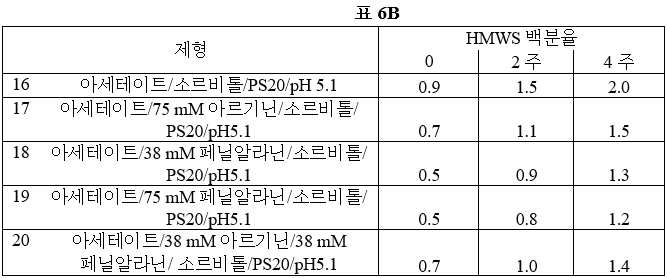
아미노산 응집 억제제인 아르기닌 또는 페닐알라닌을 포함하는 모든 제형(제형 17 내지 20)은 임의의 아미노산 응집 억제제가 결여된 소르비톨 대조군 제형(제형 16)보다 우수하였다. 대조군 및 아르기닌 HCl 제형(각각 제형 16 및 17)과 비교할 때 모든 페닐알라닌 함유 제형(제형 18, 19 및 20)은 비슷하게 낮은 수준의 HMWS를 함유하였다(도 9). 도 9에 나타난 바와 같이, 아르기닌 HCl 및 페닐알라닌 함유 제형(제형 17 내지 19)에 걸친 HMWS 형성 속도는 비슷하였다. 38 mM의 아르기닌 및 38 mM의 페닐알라닌을 포함하는 조합 제형(총 76 nM, 제형 20)은 75 mM의 아르기닌 제형(제형 17)보다 우수하지만(도 9), 75 mM의 페닐알라닌 제형(제형 19)보다 우수하지 않은 안정성을 보여주었다(도 9). All formulations comprising the amino acid aggregation inhibitor arginine or phenylalanine (Formulations 17-20) were superior to sorbitol control formulations (Formulation 16) lacking any amino acid aggregation inhibitors. All phenylalanine containing formulations (
실시예 7Example 7
본 실시예는 상이한 농도의 페닐알라닌의 함수로서 응집 억제 및 데노수맙의 안정성을 증명한다.This example demonstrates the inhibition of aggregation and the stability of denosumab as a function of different concentrations of phenylalanine.
이전의 연구에서, 아르기닌 염산염 및 아르기닌 염산염-페닐알라닌 디펩티드는 데노수맙의 HMWS 형성의 초기 시작 수준 및 속도를 최소화하는 것으로 확인되었다. 아르기닌 염산염, 다양한 농도의 페닐알라닌, 및 아르기닌 염산염 및 페닐알라닌의 조합을 함유하는 제형들을 대상으로 120 mg/mL의 데노수맙을 함유하는 용액에 미치는 안정화 효과를 평가하였다.In previous studies, arginine hydrochloride and arginine hydrochloride-phenylalanine dipeptides have been found to minimize the initial onset level and rate of HMWS formation of denosumab. Formulations containing arginine hydrochloride, varying concentrations of phenylalanine, and a combination of arginine hydrochloride and phenylalanine were evaluated for stabilizing effects on solutions containing 120 mg / mL denosumab.
시험한 제형을 아래 표 7A에 설명하였다. 시험 샘플 A 내지 E를 제조하기 위하여, 아세테이트, pH 5.2 중 70 mg/mL의 데노수맙 분액을 아래에 기술된 DF 완충제에 대하여 투석하였고, 완전한 완충제 교환을 확실히 하기 위하여 이전 제형의 100만 배 희석을 달성하기 위하여 총 3회 완충제 교환을 수행하였다. 그 후, 원심분리 농축기를 이용하여 물질을 대략 130 mg/mL 내지 150 mg/mL까지 과농축한 후, 120 mg/mL까지 희석하고, 폴리소르베이트 20을 최종 농도 0.01%까지 첨가하였다. 제형 A는 대조군 제형으로 간주되었다. The formulations tested are described in Table 7A below. To prepare Test Samples A to E, a 70 mg / mL denosumab aliquot in acetate, pH 5.2 was dialyzed against the DF buffer described below and diluted 1 million times of the previous formulation to ensure complete buffer exchange. A total of three buffer exchanges were performed to achieve. The material was then overconcentrated to approximately 130 mg / mL to 150 mg / mL using a centrifugal concentrator, then diluted to 120 mg / mL and
제형을 1.0 mL의 충전 부피로 용기 안에 채웠다. 제형을 최대 1개월 동안 37℃의 온도에서 저장하였다. HMWS의 형성을 기초로 한 안정성을 SE-UHPLC를 이용하여 평가하였다. 도 11A에 나타난 바와 같이 37℃에서 1개월 후 이들 제형의 안정성 프로파일을 37℃에서의 소르비톨 및 아르기닌 염산염/소르비톨 제형과 비교하였다.The formulation was filled into a container with a fill volume of 1.0 mL. The formulations were stored at a temperature of 37 ° C. for up to 1 month. Stability based on the formation of HMWS was evaluated using SE-UHPLC. The stability profiles of these formulations after one month at 37 ° C. were compared with the sorbitol and arginine hydrochloride / sorbitol formulations at 37 ° C. as shown in FIG. 11A.
시험 샘플 F 내지 K를 제조하기 위하여, 아세테이트, pH 5.2 중 70 mg/mL의 데노수맙 분액을 아래에 기술된 DF 완충제에 대하여 완전한 완충제 교환을 확실히 하기 위하여 총 12 정용여과 부피(diavolume)로 한외여과/정용여과(UF/DF)하였다. 그 후, 한외여과를 이용하여 물질을 대략 200 mg/mL까지 과농축한 후, 120 mg/mL까지 희석하고, 폴리소르베이트 20을 최종 농도 0.01%까지 첨가하였다. 이들 제형에서 아세테이트 농도는 20 mM이었다. 제형 F는 대조군 제형으로 간주되었다. 인용된 모든 아세테이트 및 부형제 값은 항체가 투석된 완충제 및 부형제 농도에 대한 값이다.To prepare Test Samples F through K, a 70 mg / mL denosumab aliquot in acetate, pH 5.2 was ultra-prepared in a total of 12 diafiltration volumes to ensure complete buffer exchange with respect to the DF buffer described below. Filtration / diafiltration (UF / DF). The material was then overconcentrated to approximately 200 mg / mL using ultrafiltration, then diluted to 120 mg / mL and
제형을 1.0 mL의 충전 부피로 용기 안에 채웠다. 제형을 최대 1개월 동안 40℃의 온도에서 저장하였다. HMWS의 형성을 기초로 한 안정성을 SE-UHPLC를 이용하여 평가하였다. 도 11B에 나타난 바와 같이 40℃에서 1개월 후 이들 제형의 안정성 프로파일을 40℃에서의 소르비톨 및 아르기닌 염산염/소르비톨 제형과 비교하였다.The formulation was filled into a container with a fill volume of 1.0 mL. The formulations were stored at a temperature of 40 ° C. for up to 1 month. Stability based on the formation of HMWS was evaluated using SE-UHPLC. The stability profiles of these formulations after one month at 40 ° C. were compared with the sorbitol and arginine hydrochloride / sorbitol formulations at 40 ° C. as shown in FIG. 11B.

도 11a 및 표 7B는 제형 및 37℃에서의 시간의 함수로서 SE-UHPLC로 모니터링한 HMWS(%)를 보여준다. 도 11b 및 표 7C는 제형 및 40℃에서의 시간의 함수로서 SE-UHPLC로 모니터링한 HMWS(%)를 보여준다. 도 12a 및 12b는 각각 1개월 동안 37℃ 및 40℃에서 저장한 후 제형의 함수로서 크기 배제 크로마토그램을 보여준다.11A and 7B show HMWS (%) monitored by SE-UHPLC as a function of formulation and time at 37 ° C. 11B and Table 7C show the HMWS (%) monitored by SE-UHPLC as a function of formulation and time at 40 ° C. 12A and 12B show size exclusion chromatograms as a function of formulation after storage at 37 ° C. and 40 ° C. for 1 month, respectively.


모든 페닐알라닌 제형(제형 C, D, E, G 내지 K)은 소르비톨 및 아르기닌 염산염/소르비톨 제형(각각 제형 A 및 B)과 비교할 때 더 낮은 수준의 HMWS를 함유하였다. 아르기닌 염산염 및 페닐알라닌 조합 제형은 아르기닌/소르비톨 제형(제형 B)과 비교할 때 비슷한 안정성을 나타내었다. 모든 제형은 소르비톨 대조군 제형(제형 A 및 F)보다 우수하였다.All phenylalanine formulations (Formulations C, D, E, G-K) contained lower levels of HMWS compared to sorbitol and arginine hydrochloride / sorbitol formulations (Formulations A and B, respectively). Arginine hydrochloride and phenylalanine combination formulations showed similar stability when compared to arginine / sorbitol formulations (Formulation B). All formulations were superior to sorbitol control formulations (Formulations A and F).
실시예 8Example 8
본 실시예는 상이한 아미노산 응집 억제제의 평가를 보여준다. This example shows the evaluation of different amino acid aggregation inhibitors.
소수성, 방향족, 또는 극성/하전된 아미노산을 함유하는 여덟 종의 제형을 제조하여 상이한 아미노산 응집 억제제에 대한 평가를 수행하여 고농도 액체 데노수맙 제형(120 mg/mL)에서 HMWS의 양(%) 및 시간 경과에 따른 HMWS 형성을 최소화하는 데 미치는 이들의 영향을 결정하였다. 제형은 8종의 L-아미노산 중 1종 및, 아미노산 응집 억제제는 전혀 함유하지 않고 등장성을 위해 더 많은 양의 소르비톨을 함유하는 대조군 제형(제형 26)에 비해 감소된 양의 소르비톨을 포함하였다. Eight formulations containing hydrophobic, aromatic, or polar / charged amino acids were prepared to evaluate different amino acid aggregation inhibitors to determine the amount (%) of HMWS in the high concentration liquid denosumab formulation (120 mg / mL) and Their influence on minimizing HMWS formation over time was determined. The formulation included one of the eight L-amino acids and a reduced amount of sorbitol as compared to the control formulation (Formulation 26) containing no amino acid aggregation inhibitors at all and containing higher amounts of sorbitol for isotonicity.
시험한 아미노산 응집 억제제를 3개 군(I군 내지 III군) 중 하나로 그룹화하였고, 다음과 같은 양의 아미노산 응집 억제제를 함유하였다:The amino acid aggregation inhibitors tested were grouped into one of three groups (Groups I to III) and contained the following amounts of amino acid aggregation inhibitors:
I. 방향족 아미노산: I. Aromatic amino acids:
(a) 38 mM의 페닐알라닌(제형 27);(a) 38 mM phenylalanine (Formulation 27);
(b) 38 mM의 트립토판(제형 28); (b) 38 mM tryptophan (formulation 28);
II. 극성/하전된 아미노산: II. Polar / Charged Amino Acids:
(a) 75 mM의 아르기닌 HCl(제형 29);(a) 75 mM arginine HCl (Formulation 29);
(b) 75 mM의 리신(제형 30);(b) 75 mM lysine (Formulation 30);
(c) 75 mM의 히스티딘(제형 31);(c) 75 mM histidine (formulation 31);
III. 소수성 아미노산: III. Hydrophobic Amino Acids:
(a) 38 mM의 류신(제형 32); (a) 38 mM Leucine (Formulation 32);
(b) 38 mM의 이소류신(제형 33);(b) 38 mM isoleucine (Formulation 33);
(c) 38 mM의 발린(제형 34).(c) 38 mM valine (Formulation 34).
제형 26 내지 34를 제조하기 위하여, 아세테이트, pH 5.2 중 70 mg/mL의 데노수맙 분액을 표 8A에 기술된 DF 완충제에 대하여 투석하였고, 완전한 완충제 교환을 확실히 하기 위하여 이전 제형의 100만 배 희석을 달성하기 위하여 총 3회 완충제 교환을 수행하였다. 히스티딘 제형 F의 투석은 시작 pH 4.0의 완충제를 사용하였고, 단백질 농축 시 도넌 효과 및 아세테이트의 공동 농축으로 인해 5.1의 목표 pH까지 pH가 변화할 것으로 예상되었다. 그러나 단백질이 120 mg/mL까지 농축된 후 pH는 5.1의 목표 pH까지 변화하지 않았고, pH 4.0으로 유지되었다. 히스티딘 제형의 pH를 pH 5.1까지 높이기 위하여, 묽은(0.1N) NaOH로의 적정이 필요하였다. 원심분리 농축기 유닛을 이용하여 나머지 제형을 과농축한 후, 124 내지 128 mg/mL까지 희석하고, 폴리소르베이트 20을 최종 농도 0.01%(w/v)까지 첨가하였다.To prepare formulations 26-34, a 70 mg / mL denosumab aliquot in acetate, pH 5.2 was dialyzed against the DF buffer described in Table 8A and diluted 1 million times of the previous formulation to ensure complete buffer exchange. A total of three buffer exchanges were performed to achieve. Dialysis of Histidine Formulation F used a buffer of starting pH 4.0 and was expected to change pH to a target pH of 5.1 due to the donor effect on protein concentration and co-concentration of acetate. However, after the protein was concentrated to 120 mg / mL, the pH did not change to a target pH of 5.1 and remained at pH 4.0. To raise the pH of the histidine formulation to pH 5.1, titration with dilute (0.1 N) NaOH was necessary. The remaining formulation was overconcentrated using a centrifugal concentrator unit, then diluted to 124-128 mg / mL and

제형을 1.0 mL의 충전 부피로 용기 안에 채웠다. 제형을 최대 4주 동안 37℃의 온도에서 저장하였다. HMWS 및 이량체 종의 형성을 기초로 하여, 응집 억제 및 시간 경과에 따른 응집 억제에 대한 안정성을 SE-UHPLC를 이용하여 평가하였다. 이들 제형의 응집 억제 프로파일을 초기 조건 및 저장 기간 동안 및 이후에 비교하였다.The formulation was filled into a container with a fill volume of 1.0 mL. The formulations were stored at a temperature of 37 ° C. for up to 4 weeks. Based on the formation of HMWS and dimer species, the stability against aggregation inhibition and aggregation inhibition over time was assessed using SE-UHPLC. Aggregation inhibition profiles of these formulations were compared during and after the initial conditions and storage period.
도 13 내지 도 15는 각 제형에 대한 37℃에서의 저장 시간의 함수로서 SE-UHPLC로 모니터링한 HMWS(%)의 그래프를 나타내고, 표 8B는 그래프에 대한 데이터 점을 제공한다. 도 16 내지 도 18은 1개월 동안 37℃에서 저장한 후의 표 8A에 열거된 제형들의 크로마토그래피 오버레이를 보여준다. 도 13 및 도 16은 방향족 아미노산을 포함하는 제형에 관한 것이고, 도 14 및 도 17은 극성/하전된 아미노산을 포함하는 제형에 관한 것이고, 도 15 및 도 18은 소수성 아미노산을 포함하는 제형에 관한 것이다. 13-15 show graphs of HMWS (%) monitored by SE-UHPLC as a function of storage time at 37 ° C. for each formulation, and Table 8B provides data points for the graphs. 16-18 show the chromatographic overlay of the formulations listed in Table 8A after storage at 37 ° C. for 1 month. Figures 13 and 16 relate to formulations comprising aromatic amino acids, Figures 14 and 17 relate to formulations comprising polar / charged amino acids and Figures 15 and 18 relate to formulations comprising hydrophobic amino acids. .

도 13 내지 도 15에 나타난 바와 같이, 아미노산 응집 억제제를 함유하는 모든 제형(제형 27 내지 34)은 아세테이트/소르비톨 제형(제형 26)에 비해, 약간의 안정성 개선을 보여주었다. 방향족 아미노산을 함유하는 제형(제형 27 및 제형 28)은 HMWS(%)의 가장 큰 감소를 보여주었다. 또한, 페닐알라닌을 함유하는 제형(제형 27)은 HMWS의 큰 감소를 보여주었고, 트립토판을 함유하는 제형은 대조군(제형 26)에 비해 최대의 감소를 보여주었다. 극성/하전된 아미노산을 함유하는 데노수맙 제형(제형 29 내지 제형 31)은 일반적으로 아미노산 안정화제를 갖는 기타 제형(도 16 및 도 18)과 비교하여 더 많은 양의 더 큰 차원의 응집체를 보여주었고(도 17), 이 특정 히스티딘 제형은 아세테이트/소르비톨 제형(제형 26)과 비교하여 종합적으로 더 많은 양의 HWMS를 보여주었다(도 14). 히스티딘 제형으로부터의 결과는 투석 절차, pH 4.0에서 소요된 더 오랜 지속시간, 및 묽은 NaOH로의 제형의 적정으로부터 편향될 수 있다. 소수성 아미노산을 함유하는 제형(제형 32 내지 34)은 모두 HMWS 형성의 일관된 개선을 보여주었다. As shown in FIGS. 13-15, all formulations containing amino acid aggregation inhibitors (Formulations 27-34) showed a slight improvement in stability compared to acetate / sorbitol formulations (Formulation 26). Formulations containing aromatic amino acids (Formulation 27 and Formula 28) showed the greatest reduction in HMWS (%). In addition, formulations containing phenylalanine (Formulation 27) showed a large reduction in HMWS, and formulations containing tryptophan showed a maximum reduction compared to the control (Formulation 26). Denosumab formulations (Formulations 29-31) containing polar / charged amino acids generally show larger amounts of larger dimension aggregates compared to other formulations with amino acid stabilizers (Figures 16 and 18). (FIG. 17), this particular histidine formulation showed an overall higher amount of HWMS compared to the acetate / sorbitol formulation (Formulation 26) (FIG. 14). Results from histidine formulations can be biased from the dialysis procedure, longer durations taken at pH 4.0, and titration of the formulation with dilute NaOH. Formulations containing hydrophobic amino acids (Formulations 32-34) all showed a consistent improvement in HMWS formation.
실시예 9Example 9
본 실시예는 데노수맙 안정화에 있어서 아르기닌 및 페닐알라닌의 가능한 작용 메커니즘을 보여준다. 수소 중수소 교환 질량 분광분석법(HDX-MS)은 단백질-단백질/리간드/부형제 상호작용을 특성화하는 민감하고 강력한 기술이다. 이 방법은 부형제와의 상호작용으로 인한 백본 아미드 수소 결합의 변화를 검출한다.This example shows possible mechanisms of action of arginine and phenylalanine in denosumab stabilization. Hydrogen deuterium exchange mass spectroscopy (HDX-MS) is a sensitive and powerful technique for characterizing protein-protein / ligand / excipient interactions. This method detects changes in backbone amide hydrogen bonds due to interaction with excipients.
L-아르기닌(제형 35), L-페닐알라닌(제형 36), 또는 L-글리신(제형 37)의 존재 하에 10 mM의 아세테이트 완충제(pH 5.2)("A52") 중 데노수맙(3 mg/mL 농도)으로 수소 중수소 교환 질량 분광분석법(HDX-MS)을 수행하고, 임의의 아미노산 응집 억제제가 결여된 데노수맙 제형(제형 38)과 비교하였다. (75 mM 농도의 L-아르기닌, L-페닐알라닌, 또는 L-글리신을 이용하여) 4℃에서 및 (150 mM 농도의 L-아르기닌, L-페닐알라닌, 또는 L-글리신을 이용하여) 37℃에서 실험을 수행하였다. 530개가 넘는 펩티드를 분석한 후, 상당한 구조적 변화가 있는 적은 수의 영역을 확인하였다. 이들 영역으로부터 몇몇 대표적인 펩티드를 도 19 내지 도 30에 담았다.Denosumab (3 mg / mL) in 10 mM acetate buffer (pH 5.2) ("A52") in the presence of L-arginine (Formulation 35), L-phenylalanine (Formulation 36), or L-glycine (Formulation 37) Hydrogen deuterium exchange mass spectroscopy (HDX-MS) was performed and compared to the Denosumab formulation (Formulation 38) lacking any amino acid aggregation inhibitor. Experiment at 4 ° C. (with 75 mM concentration of L-arginine, L-phenylalanine, or L-glycine) and at 37 ° C. (with 150 mM concentration of L-arginine, L-phenylalanine, or L-glycine) Was performed. After analyzing more than 530 peptides, a small number of regions with significant structural changes were identified. Some representative peptides from these regions are included in FIGS. 19-30.
도 19 내지 도 24는 제형 35 내지 38 각각에 대하여 경쇄 아미노산 28 내지 33(도 19), 경쇄 아미노산 108 내지 116(도 20), 경쇄 아미노산 125 내지 132(도 21), 중쇄 아미노산 47 내지 59(도 22), 중쇄 아미노산 243 내지 253(도 23), 및 중쇄 아미노산 392 내지 399(도 24)에 대한 시간의 함수(로그 (초))로서 4℃에서의 중수소 도입(%)의 그래프이다.19-24 show light chain amino acids 28-33 (FIG. 19), light chain amino acids 108-116 (FIG. 20), light chain amino acids 125-132 (FIG. 21), heavy chain amino acids 47-59 (FIG. 22), heavy
도 25 내지 도 30은 제형 35 내지 38 각각에 대하여 경쇄 아미노산 28 내지 33(도 25), 경쇄 아미노산 108 내지 117(도 26), 경쇄 아미노산 124 내지 131(도 27), 중쇄 아미노산 47 내지 59(도 28), 중쇄 아미노산 242 내지 253(도 29), 및 중쇄 아미노산 392 내지 399(도 24)에 대한 시간의 함수(로그 (초))로서 37℃에서의 중수소 도입(%)의 그래프이다. 25-30 show light chain amino acids 28-33 (FIG. 25), light chain amino acids 108-117 (FIG. 26), light chain amino acids 124-131 (FIG. 27), heavy chain amino acids 47-59 (FIG. 25) for each of Formulations 35-38. 28), heavy
이러한 데이터는 Arg 및 Gly은 데노수맙에 대해 비슷한 상호작용 효과를 나타내지만, Arg는 데노수맙에 대해 약간 더 강한 HDX 발자국(구조적 변화)을; Fab LC 28-33 영역에서 강한 안정화를; Fab LC 108-132 및 HC 47-59, Fc CH3 HC 392-399 영역에서 미세한 안정화를; Fc CH2 243-253 영역에서 미세한 불안정화를 나타냈음을 뒷받침한다. 임의의 특정 이론에 구속되고자 함은 아니지만, 아르기닌 염산염 효과는 데노수맙 표면으로부터 조합된 우선 배제 및 약한 표면 상호작용으로 인한 것인 반면, 글리신은 우선 배제에 의해 작용한다고 생각된다.These data show that Arg and Gly show similar interaction effects for denosumab, while Arg shows slightly stronger HDX footprint (structural change) for denosumab; Strong stabilization in the Fab LC 28-33 region; Fine stabilization in Fab LC 108-132 and HC 47-59, Fc CH3 HC 392-399 regions; It is supported by the slight destabilization in the Fc CH2 243-253 region. While not wishing to be bound by any particular theory, it is believed that the arginine hydrochloride effect is due to combined preferential exclusion and weak surface interaction from the denosumab surface, whereas glycine acts by preferential exclusion.
그러나 페닐알라닌은 데노수맙에 대해 어떠한 유의미한 구조적 변화도 보여주지 않았다. 임의의 특정 이론에 구속되고자 함은 아니지만, 페닐알라닌 안정화 효과는 다음 메커니즘 중 하나 이상을 통해 이루어질 수 있다고 생각된다: 펩티드 백본에 대해서는 어떠한 영향도 없으므로(HDX 발자국 없음), 곁사슬 상호작용; 및/또는 백본 수소 결합 네트워크에는 영향을 미치지 않으면서, 아르기닌/리신 곁사슬과의 양이온-파이 상호작용.However, phenylalanine did not show any significant structural change for denosumab. While not wishing to be bound by any particular theory, it is contemplated that the phenylalanine stabilizing effect may be achieved through one or more of the following mechanisms: no side effects on the peptide backbone (no HDX footprint); And / or cation-pi interaction with the arginine / lysine side chain without affecting the backbone hydrogen bonding network.
실시예 10Example 10
본 실시예는 데노수맙을 안정화하는 페닐알라닌의 가능한 작용 메커니즘을 보여준다.This example shows the possible mechanism of action of phenylalanine to stabilize denosumab.
데노수맙에 대한 Phe의 특이적 효과를 연구하기 위하여, 분자 동역학 시뮬레이션을 수행하였다. 구체적으로, 데노수맙의 Fab 도메인을 과량의 Phe가 있는 시뮬레이션 상자에서 용매화시키고, 2회의 10-ns 시뮬레이션을 수행하였다. 전체로서, 90% 초과의 시간 동안 Fab에 결합된 Phe 잔기를 추가 분석을 위하여 선택하였다. 9건의 이러한 사례가 확인되었다. 9건의 장시간 체류 관찰 중 5건에서, Phe 잔기는 VH/VL(가변 중쇄/가변 경쇄) 및 CH/CL(불변 중쇄/불변 경쇄) 영역의 계면에 결합되었다. 한 예에서, Phe 곁사슬은 VH/VL의 계면에서, 소수성 잔기(예컨대, 중쇄의 V93, Y95, 및 W112 및 경쇄의 A44 및 P45)의 곁사슬과 상호작용한다고 여겨졌다. 또 다른 예에서, Phe의 곁사슬은 CH1 및 CL의 계면에서 잔기(예컨대, 경쇄의 T165 및 중쇄의 G171, V172, 및 T174)의 NH3+ 및 COO(-) 기와 상호작용한다고 여겨졌다. 임의의 특정 이론에 구속되고자 함은 아니지만, 이 관찰은 데노수맙의 응집을 완화하는 Phe의 특이적 효과는 중쇄 불변 1(Hc) 및 경쇄 불변(Lc)의 계면을 형성하는 소수성 잔기(예컨대, 경쇄의 CDR1의 R30, G31, R32, 및 Y33, 경쇄의 CDR2의 A52, 및 중쇄의 CDR3의 M106)와 페닐 기의 상호작용으로 인한 것이라는 발상으로 이어졌다. 이 상호작용은 이전의 소수성 표면을, Phe 부형제의 NH3(+) 및 COO(-) 기에서 상대적으로 더 하전된(결과적으로 친수성의) 표면으로 교체한다고 가정된다. To study the specific effect of Phe on denosumab, molecular dynamics simulations were performed. Specifically, the Fab domain of denosumab was solvated in a simulation box with excess Phe and two 10-ns simulations were performed. As a whole, Phe residues bound to Fab for more than 90% of the time were selected for further analysis. Nine such cases were identified. In five of nine long retention observations, Phe residues bound to the interface of the VH / VL (variable heavy / variable light chain) and CH / CL (variable heavy / variable light chain) regions. In one example, the Phe side chain was believed to interact with the side chains of hydrophobic residues (eg, V93, Y95, and W112 in heavy chains and A44 and P45 in light chains) at the interface of VH / VL. In another example, the side chain of Phe was believed to interact with the NH3 + and COO (−) groups of residues (eg, T165 of the light chain and G171, V172, and T174 of the heavy chain) at the interface of CH1 and CL. While not wishing to be bound by any particular theory, this observation indicates that the specific effect of Phe to mitigate the aggregation of denosumab is that hydrophobic moieties (eg, those that form the interface of heavy chain constant 1 (Hc) and light chain constant (Lc)) R30, G31, R32, and Y33 of CDR1 of the light chain, A52 of CDR2 of the light chain, and M106 of CDR3 of the heavy chain) resulted from the interaction of the phenyl group. This interaction is assumed to replace the previous hydrophobic surface with a relatively more charged (and consequently hydrophilic) surface in the NH 3 (+) and COO (−) groups of the Phe excipient.
실시예 11Example 11
(이소형 IgG1, IgG2, 및 IgG4의) 항-RANKL 항체의 여러 구성체의 안정성 평가를 수행하였다. 위에 기술된 바와 같이, 아르기닌 HCl 및 페닐알라닌은, (IgG2 면역글로불린인) 데노수맙의 아세테이트/소르비톨 대조군 제형과 비교할 때, 시작 HMWS, 및 시간 경과에 따른 HWMS 수준을 최소화한다. 이 평가는 상이한 항-RANKL 항체 구성체를 함유하는 제형에서 HMWS를 감소시키는 Arg-HCl 및 Phe의 잠재력을 비교하고자 수행되었다. 본 연구에서 시험한 IgG1 및 IgG4 구성체는 데노수맙과 비교할 때 동일한 상보성 결정 영역(CDR)을 함유하였지만, 상이한 불변 도메인 스캐폴딩을 함유하였다. 본 연구에서 시험한 상이한 IgG2 구성체는 데노수맙과 비교하여 상이한 CDR들을 가졌으나, 동일한 불변 도메인 스캐폴드를 함유하였다.Stability assessment of several constructs of anti-RANKL antibodies (of isotype IgG1, IgG2, and IgG4) was performed. As described above, arginine HCl and phenylalanine minimize the starting HMWS, and HWMS levels over time when compared to the acetate / sorbitol control formulation of denosumab (which is an IgG2 immunoglobulin). This evaluation was performed to compare the potential of Arg-HCl and Phe to reduce HMWS in formulations containing different anti-RANKL antibody constructs. The IgG1 and IgG4 constructs tested in this study contained the same complementarity determining regions (CDRs) when compared to denosumab, but contained different constant domain scaffolding. The different IgG2 constructs tested in this study had different CDRs compared to denosumab but contained the same constant domain scaffold.
각각의 시험한 항체 구성체를 정제하고, 원심분리 농축을 이용하여 8 mg/mL로부터 70 mg/mL까지 농축하였다. 각각의 농축된 부피를 세 개의 분액으로 나눈 다음, 소르비톨, 소르비톨/페닐알라닌 및 소르비톨/아르기닌 염산염으로 제형화된 아세테이트 완충제에 대해 투석하여, 표 9에 기술된 바와 같이, 제형 39 내지 47을 제조하였다. 투석 후 샘플을 원심분리 농축으로 120 mg/mL이 넘도록 과농축하였다. 각각의 완충제로 항체 단백질을 120 mg/mL까지 희석하였다. Each tested antibody construct was purified and concentrated from 8 mg / mL to 70 mg / mL using centrifugation concentration. Each concentrated volume was divided into three aliquots and then dialyzed against acetate buffer formulated with sorbitol, sorbitol / phenylalanine and sorbitol / arginine hydrochloride, to prepare Formulations 39-47, as described in Table 9. After dialysis the samples were over concentrated to more than 120 mg / mL by centrifugation concentration. The antibody protein was diluted to 120 mg / mL with each buffer.

제형을 1.0 mL의 충전 부피로 유리 바이알 용기 안에 채웠다. 제형을 최대 1개월 동안 37℃의 온도에서 저장하였다. HMWS의 형성을 기초로 하여, 응집 억제 및 시간 경과에 따른 응집 억제에 대한 안정성을 SE-UHPLC를 이용하여 평가하였다. 이들 제형의 응집 억제 프로파일을 초기 조건 및 저장 기간 이후에 비교하였다. 저장 후 이들 제형의 안정성을 면역글로불린 클래스 내에서 비교하였다.The formulation was filled into a glass vial container with a fill volume of 1.0 mL. The formulations were stored at a temperature of 37 ° C. for up to 1 month. Based on the formation of HMWS, stability to aggregation inhibition and aggregation inhibition over time was assessed using SE-UHPLC. The aggregation inhibition profiles of these formulations were compared after the initial conditions and storage period. The stability of these formulations after storage was compared within the immunoglobulin class.
도 31, 도 33, 및 도 35(및 아래의 관련된 표 10, 표 12, 및 표 14)는 면역글로불린 G(각각 IgG1, IgG2, 및 IgG4)를 이용한, 제형 및 37℃에서의 시간의 함수로 SE-UHPLC로 모니터링한 HMWS(%)를 보여준다. 도 32, 도 34, 및 도 36(및 아래의 관련된 표 11, 표 13, 및 표 15)는 면역글로불린 G(각각 IgG1, IgG2, 및 IgG4)를 이용한, 제형 및 37℃에서의 시간의 함수로 SE-UHPLC로 모니터링한 저분자량 종(LMWS, 예컨대, 단백질 단편 형성)(%)를 보여준다. 도 38, 도 38, 및 도 39는 t=4w 동안 37C에서 저장 후 제형의 함수로서 크기 배제 크로마토그램 오버레이를 보여준다.31, 33, and 35 (and related Table 10, Table 12, and Table 14 below) are shown as a function of formulation and time at 37 ° C. using immunoglobulin G (IgG1, IgG2, and IgG4, respectively). The HMWS (%) monitored by SE-UHPLC is shown. 32, 34, and 36 (and related Table 11, Table 13, and Table 15 below) are shown as a function of formulation and time at 37 ° C. using immunoglobulin G (IgG1, IgG2, and IgG4, respectively). Low molecular weight species (LMWS such as protein fragment formation) (%) monitored by SE-UHPLC is shown. 38, 38, and 39 show size exclusion chromatogram overlay as a function of formulation after storage at 37C for t = 4w.


도 31 및 도 32에 나타난 바와 같이, 이전의 데노수맙 샘플과 비슷한 CDR 영역을 갖는 IgG1 분자는, 아세테이트/소르비톨 대조군 제형과 비교 시, 페닐알라닌 첨가로 HMWS의 대략 0.2%의 감소를 보여주었다. 상이한 CDR을 갖고 도 33 및 도 34에 도시된 IgG2 샘플은 대조군 아세테이트/소르비톨 제형과 비교 시 아세테이트/페닐알라닌/소르비톨 제형에서 HMWS 증가를 보여주었다. 아세테이트/소르비톨 및 아세테이트/페닐알라닌/소르비톨 제형은 도 35 및 도 36에 나타난 바와 같이 더 많은 HMWS 형성을 나타내는 아세테이트/소르비톨/아르기닌과 IgG4 샘플 유형에 대해 유사한 안정성을 나타냈다. IgG1, IgG2, 및 IgG4 샘플 유형의 모든 사례에서, 아세테이트/소르비톨/아르기닌 함유 제형은 아세테이트/소르비톨(대조군) 및 아세테이트/페닐알라닌/소르비톨 제형과 비교할 때 증가된 HMWS 분해를 보여주었다.As shown in FIGS. 31 and 32, IgG1 molecules with CDR regions similar to the previous denosumab samples showed a reduction of approximately 0.2% of HMWS with phenylalanine addition as compared to the acetate / sorbitol control formulation. The IgG2 samples with different CDRs and shown in FIGS. 33 and 34 showed an increase in HMWS in the acetate / phenylalanine / sorbitol formulation compared to the control acetate / sorbitol formulation. Acetate / sorbitol and acetate / phenylalanine / sorbitol formulations showed similar stability for the acetate / sorbitol / arginine and IgG4 sample types, which showed more HMWS formation as shown in FIGS. 35 and 36. In all cases of IgG1, IgG2, and IgG4 sample types, the acetate / sorbitol / arginine containing formulations showed increased HMWS degradation when compared to the acetate / sorbitol (control) and acetate / phenylalanine / sorbitol formulations.
도 37 및 도 38에 도시된 바와 같은, 아세테이트/아르기닌/소르비톨 제형에서 단백질 단편 형성의 상당한 증가로 인한, 단편 형성 및 항체 이소형 간의 관계는 도 32, 도 34, 및 도 36에 도시되었다. 단일클론 항체 단편 형성 매개성 응집이 37℃에서 저장된 항체에 대하여 발생할 수 있음이 문헌에서 밝혀진 바 있다[Perico N. et al., J.Pharm.Sci. (2009) 98, pgs. 3031 - 3042]. 단편 형성은 아세테이트/아르기닌/소르비톨 제형에서 최대라는 점에서 이 메커니즘은 이 평가에서 가능하다. 단편 형성은 아세테이트/페닐알라닌/소르비톨 제형에서 최소화되어, 잠재적으로 더 적은 HMWS 종으로 이어진다. IgG4 샘플 유형은 가속화된 단편 형성 또는 응집을 나타내지 않는다.The relationship between fragment formation and antibody isoforms, due to the significant increase in protein fragment formation in the acetate / arginine / sorbitol formulations, as shown in FIGS. 37 and 38, is shown in FIGS. 32, 34, and 36. It has been found in the literature that monoclonal antibody fragment formation mediated aggregation can occur for antibodies stored at 37 ° C. [Perico N. et al., J. Pharm. Sci. (2009) 98, pgs. 3031-3042]. This mechanism is possible in this evaluation in that fragment formation is maximal in the acetate / arginine / sorbitol formulation. Fragment formation is minimized in acetate / phenylalanine / sorbitol formulations, potentially leading to fewer HMWS species. IgG4 sample types do not exhibit accelerated fragment formation or aggregation.
본 연구에서 수집된 데이터 및 이전의 데이터인 데노수맙으로 수집된 분자 모델링 데이터로부터, CDR의 아미노산 서열과 페닐알라닌의 HMWS를 감소시키는 상대적인 효과 사이의 강력한 상관 관계가 확립될 수 있다. HMW 종의 감소는 데노수맙(IgG2) 및 동일한 CDR 아미노산을 갖는 IgG1 변이체에서 관찰되었으나, HMWS 감소는 상이한 CDR 도메인을 갖는 IgG2 변이체에서는 관찰되지 않았다. CDR 도메인 내에 함유된 아미노산 서열은 페닐알라닌과의 상호 작용 및 이후의 응집 억제에 영향을 받기 쉬운 것으로 보인다. 또한, IgG4 분자는 데노수맙과 비교 시 동일한 CDR 영역을 가졌지만, 연구 과정에 걸쳐 최소한의 응집 변화가 검출되었다. IgG4 분자는 주로 이의 힌지 아미노산 길이 및 이의 기능적 활성 구조에 의해 IgG1 및 IgG2 버전과 다르다. IgG1 and IgG2 항체 이소형은 전형적으로 "Y자" 형으로 설명되는 연장된 구조를 가지므로, IgG4 Fab CH1 도메인은 CH2 도메인과 상호작용하여 더욱 조밀한 구조를 형성한다[Aalberse R.C. et al., Immunology (2002), 105, pgs. 9-19]. 이 조밀한 구조는 IgG1 및 IgG2 양식에서 전형적으로 나타나는 단편 형성 및 응집 반응을 억제할 수 있다.From the data collected in this study and the molecular modeling data collected with the previous data, denosumab, a strong correlation can be established between the amino acid sequence of CDRs and the relative effect of reducing HMWS of phenylalanine. Decrease in HMW species was observed in Denosumab (IgG2) and IgG1 variants with the same CDR amino acids, while reduction in HMWS was not observed in IgG2 variants with different CDR domains. Amino acid sequences contained within the CDR domain appear to be susceptible to interaction with phenylalanine and subsequent inhibition of aggregation. In addition, IgG4 molecules had the same CDR regions as compared to denosumab, but minimal aggregation changes were detected throughout the course of the study. IgG4 molecules differ from the IgGl and IgG2 versions primarily by their hinge amino acid lengths and their functionally active structures. Since IgG1 and IgG2 antibody isotypes typically have extended structures described as “Y” forms, the IgG4 Fab CH1 domains interact with the CH2 domain to form a more compact structure [Aalberse R.C. et al., Immunology (2002), 105, pgs. 9-19]. This compact structure can inhibit fragment formation and aggregation reactions typically seen in IgG1 and IgG2 forms.
실시예 12Example 12
아래 및 표 16(제형 51 내지 55)과 연관지어 설명되는 바와 같이 제형화된 데노수맙의 안정성을 모니터링하는 연구를 수행한다. 정용여과 완충제는 아세테이트 농도 및 시작 pH가 상이하여 120 mg/Ml 데노수맙 농도에서 Ph 5.1의 최종 제형을 생산한다. 추가로, 소르비톨 수준을 조정하여 최종 산물의 등장성을 유지한다(약 300 mOsm/Kg). 70 mg/mL의 데노수맙을 각 완충제에 대하여 7 초과 정용여과 부피로 정용여과한 다음, 약 180 gm/mL까지 한외여과하고, 정용여과 완충제 및 폴리소르베이트로 120 mg/mL 데노수맙 농도 및 0.01% 폴리소르베이트 20까지 희석하였다. 37℃에서 저장 후 SE-UHPLC를 이용하여 안정성을 평가하고, 이들 제형에서 데노수맙 안정성이 매우 비슷함을 보여준다. 초기 아세테이트 농도가 증가함에 따라 초기 HMW 종은 약간 감소한다. 대조적으로, 더 낮은 수준의 아세테이트를 갖는 제형에서는 응집 속도가 약간 개선된다.Studies are conducted to monitor the stability of the formulated denosumab as described below and in connection with Table 16 (Formulations 51-55). Diafiltration buffers differ in acetate concentration and starting pH to produce a final formulation of Ph 5.1 at 120 mg / Ml denosumab concentration. In addition, sorbitol levels are adjusted to maintain the isotonicity of the final product (about 300 mOsm / Kg). 70 mg / mL of denosumab was diafiltered to greater than 7 diafiltration volumes for each buffer, followed by ultrafiltration up to about 180 gm / mL, and 120 mg / mL denosumab concentration with diafiltration buffer and polysorbate. And 0.01% polysorbate up to 20. The stability is assessed using SE-UHPLC after storage at 37 ° C. and shows that the denosumab stability is very similar in these formulations. As the initial acetate concentration increases, the initial HMW species decreases slightly. In contrast, in formulations with lower levels of acetate, the rate of aggregation is slightly improved.

실시예 13Example 13
다음 실시예는 3개의 상이한 pH 값: 4.5, 4.8 및 5(또는 5.2)에서 데노수맙의 화학적 변성 안정성에 미치는 아르기닌의 효과에 대한 연구 결과를 보고한다.The following examples report the results of a study on the effect of arginine on the chemical denaturation stability of denosumab at three different pH values: 4.5, 4.8 and 5 (or 5.2).
모든 화학적 변성 실험은 형광 검출기와 함께 Unchained Labs 기기 HUNK를 이용하여 수행하였다. 여기 파장은 280 nm였고, 방출 스캔은 300 및 500 nm 사이에서 기록되었다. 각 변성 실험에 대해, 단백질, 완충제 및 변성제(구아니디늄 HCl)를 변성제 농도의 선형 증가와 함께 36웰에 분배하여 각 조건에 대해 36 점 곡선을 생성하였다. 데이터 점 적합화를 위하여 기기 제조사(Unchained Labs)가 제공한 곡선 적합화 소프트웨어를 이용하였다. 단일 전이(천연 ↔ 변성)의 증거만 존재하므로 2상 모델을 사용하였다. 10mM의 아세테이트 5.0% w/v의 소르비톨 중 0 내지 6 M 우레아를 이용하여 실험을 수행하였고, 4.5, 4.8 또는 5(5.2)의 요구되는 pH까지 적정하였다. 데노수맙 단백질의 농도는 모든 실험에서 7 mg/mL이었다.All chemical denaturation experiments were performed using an Unchained Labs instrument HUNK with a fluorescence detector. The excitation wavelength was 280 nm and emission scans were recorded between 300 and 500 nm. For each denaturation experiment, protein, buffer and denaturant (guanidinium HCl) were distributed to 36 wells with a linear increase in denaturant concentration to generate a 36 point curve for each condition. Curve fitting software provided by the instrument manufacturer (Unchained Labs) was used for data point fitting. Since only evidence of single metastasis (natural ↔ denaturation) exists, a two-phase model was used. The experiment was performed with 0-6 M urea in 10 mM acetate 5.0% w / v sorbitol and titrated to the required pH of 4.5, 4.8 or 5 (5.2). The concentration of denosumab protein was 7 mg / mL in all experiments.
도 40은 pH 4.5, 4.8 및 5.0에서 아르기닌의 부존재 하에서 데노수맙의 등온 화학 변성 곡선을 보여준다. 아르기닌 부존재 하에서, 50% 중첩 풀림에 필요한 화학적 변성제의 C1/2은 시험한 세 가지 pH에서 비슷하다.40 shows isothermal chemical denaturation curves of denosumab in the absence of arginine at pH 4.5, 4.8 and 5.0. In the absence of arginine, the C 1/2 of the chemical denaturant required for 50% overlap loosening is comparable at the three pH tested.
도 41은 pH 4.5, 4.8 및 5.2에서 75 mM의 아르기닌 HCl의 존재 하에서 데노수맙의 등온 화학 변성 곡선을 보여준다. pH 4.8 및 4.5와 비교할 때 pH 5.2에서 화학 변성 안정성의 현저한 증가가 있었다. C1/2은 더 낮은 pH에 비해 pH 5.2에서 1 M의 변성제 구아니디늄 HCl만큼 증가한다. 따라서, 아르기닌의 보호 특성은 놀랍고, pH에 매우 의존적이다. FIG. 41 shows isothermal chemical denaturation curves of denosumab in the presence of 75 mM arginine HCl at pH 4.5, 4.8 and 5.2. There was a significant increase in chemical denaturation stability at pH 5.2 compared to pH 4.8 and 4.5. C 1/2 is increased by 1 M of denaturant guanidinium HCl at pH 5.2 compared to lower pH. Thus, the protective properties of arginine are surprising and very dependent on pH.
실시예 14Example 14
다음의 실시예는 주사기 안의 고농도 데노수맙 제형의 시간 경과에 따른 안정성에 미치는 아르기닌 및 페닐알라닌의 영향에 대한 연구 결과를 제공한다.The following examples provide findings on the effects of arginine and phenylalanine on the stability over time of high concentration denosumab formulations in syringes.
이전의 연구에서, 아르기닌 염산염 및 페닐알라닌은 데노수맙의 HMWS 형성의 초기 시작 수준 및 속도를 감소시키는 것으로 확인되었다. 본 연구에서는, 아르기닌 염산염, 페닐알라닌, 및 아르기닌 염산염 및 페닐알라닌의 조합을 함유하는 제형들을 대상으로 120 mg/mL의 데노수맙을 함유하는 용액에 미치는 안정화 효과를 평가하고, 최대 3개월 동안 두 가지 상이한 온도에서 주사기 안에 저장하였다. In previous studies, arginine hydrochloride and phenylalanine have been shown to reduce the initial onset level and rate of HMWS formation of denosumab. In this study, formulations containing arginine hydrochloride, phenylalanine, and a combination of arginine hydrochloride and phenylalanine were evaluated for stabilizing effects on solutions containing 120 mg / mL of denosumab, and for two different months for up to three months. Stored in syringe at temperature.
시험한 제형을 아래 표 17에 설명하였다. 제형 56 내지 59를 제조하기 위하여, 아세테이트, pH 5.2 중 70 mg/mL의 데노수맙을 아래에 기술된 정용여과(DF) 완충제에 대하여 완전한 완충제 교환을 확실히 하기 위하여 8 정용여과 부피로 정용여과하였다. 그 후, 물질을 180 mg/mL을 초과하여 한외여과한 후, 120 mg/mL까지 희석하고, 폴리소르베이트 20을 최종 농도 0.01%까지 첨가하였다. 제형 56은 대조군 제형으로 간주되었다. 열거된 아세테이트, 아르기닌 HCl 및 페닐알라닌 값은 DF 완충제에 대한 것이고, 다른 반대 이온이 존재하지 않을 때 부형제 배제 및 아세테이트 공동 농축을 고려하여 120 mg/mL 데노수맙에서 최종 조성물에서의 예상 수준을 제공하였다. 최대 1000 s-1(역 초)의 전단 속도의 Paar 모듈러 컴팩트 레오미터를 이용하여 5℃ 및 25℃에서의 점도를 측정하였다. 제형을 1.0 mL의 충전 부피로 유리 사전 충전 주사기(PFS) 안에 채웠다. 병행 주사기 세트를 각각 3개월 동안 25℃ 및 2개월 동안 37℃의 온도에서 저장하였다. HMWS의 형성을 기초로 한 안정성을 SE-UHPLC를 이용하여 평가하였다. The formulations tested are described in Table 17 below. To prepare formulations 56-59, 70 mg / mL of denosumab in acetate, pH 5.2 was diafiltered in 8 diafiltration volumes to ensure complete buffer exchange for the diafiltration (DF) buffer described below. . The material was then ultrafiltration above 180 mg / mL, then diluted to 120 mg / mL and

도 42 및 도 43은 제형 및 각각 3개월 동안 25℃ 및 2개월 동안 37℃에서의 시간의 함수로서 SE-UHPLC로 모니터링한 HMWS(%)를 보여준다.42 and 43 show the formulations and HMWS (%) monitored by SE-UHPLC as a function of time at 25 ° C. for 3 months and 37 ° C. for 2 months, respectively.
표 18 내지 21은 표 형식의 동일한 데이터 및 HMWS의 초기 수준과 비교한 HMWS의 증가를 보여준다.Tables 18-21 show the same data in tabular form and the increase in HMWS compared to the initial levels of HMWS.


본 실시예는 아르기닌, 페닐알라닌, 및 이의 조합의 첨가 각각이 고농도 데노수맙 제형에서 초기 HMWS(t=0)의 수준을 감소시킴을 보여준다. 25℃에서, HMWS의 증가는 대조군 제형 56과 비교하여 페닐알라닌 제형 59에서 감소된다. 37℃에서, 제형 57 및 59는 대조군 소르비톨 제형 56과 비교하여 감소된 HMWS 형성을 나타낸다. 아르기닌 HCl 및 페닐알라닌을 둘 다 함유하는 제형은 다른 제형과 비교하여 37℃에서 더 빠른 속도로 HMWS를 형성하여, 이들 부형제의 조합이 이 제형에서 이러한 더 높은 온도에서 데노수맙을 불안정하게 함을 나타낸다.This example shows that each addition of arginine, phenylalanine, and combinations thereof reduces the level of initial HMWS (t = 0) in high concentration denosumab formulations. At 25 ° C., the increase in HMWS is reduced in
전술한 설명은 오로지 이해의 명확성을 위하여 제공된 것으로, 본 발명의 범위 내에서의 변형이 당업자에게 명백할 수 있으므로, 이로부터 불필요한 제한이 이해되어서는 안 된다.The foregoing description has been provided solely for the sake of clarity of understanding, and modifications within the scope of the present invention may be apparent to those skilled in the art, and thus unnecessary limitations should not be understood therefrom.
본 명세서 및 후속하는 청구범위 전체에 걸쳐, 문맥상 달리 요구되지 않는 한, 단어 "포함하다" 및 "포함한다" 및 "포함하는"과 같은 변형은, 정해진 정수 또는 단계 또는 정수들 또는 단계들의 군을 포함하지만, 다른 어떤 정수 또는 단계 또는 정수들 또는 단계들의 군을 배제하지 않음을 암시하는 것으로 이해될 것이다.Throughout this specification and the claims that follow, variations such as the words “comprises” and “comprises” and “comprising” are defined integers or steps or groups of integers or steps unless the context otherwise requires. It will be understood to imply, but do not exclude any other integer or step or group of integers or steps.
본 명세서 전반에 걸쳐, 조성물이 구성성분 또는 물질을 포함하는 것으로 기재되어 있는 경우, 달리 기재되지 않는 한, 조성물은 또한 언급된 구성성분 또는 물질의 임의의 조합으로 필수적으로 구성될 수 있거나 또는 이들로 구성될 수 있음이 고려된다. 마찬가지로, 방법이 특정 단계를 포함하는 것으로 기재되어 있는 경우, 달리 기재되지 않는 한, 방법은 또한 언급된 단계의 임의의 조합으로 필수적으로 구성되거나 이들로 구성될 수 있음이 고려된다. 본 명세서에 예시적으로 개시된 본 발명은 적합하게는 본 명세서에 구체적으로 개시되지 않은 임의의 요소 또는 단계의 부존재 하에서 실시될 수 있다.Throughout this specification, where a composition is described as comprising a component or material, unless otherwise stated, the composition may also consist essentially of or consist of any combination of the components or materials mentioned. It is contemplated that this may be configured. Likewise, where a method is described as comprising a particular step, it is contemplated that the method may also consist essentially of or consist of any combination of the steps mentioned, unless stated otherwise. The invention disclosed by way of example herein may suitably be practiced in the absence of any element or step not specifically disclosed herein.
본 명세서에 개시된 방법, 및 이의 개별 단계의 실시는 수동으로 및/또는 전자 장비에 의해 제공되는 자동화의 도움으로 수행될 수 있다. 특정 구현예를 참조하여 절차를 설명하였지만, 당업자는 방법과 관련된 동작을 수행하는 다른 수단이 사용될 수 있음을 용이하게 인식할 것이다. 달리 기재되지 않는 한, 예를 들어, 다양한 단계의 순서는 방법의 범위 또는 사상을 벗어나지 않고도 변경될 수 있다. 또한, 개별 단계들 중 일부는 결합되거나 생략되거나 추가 단계들로 더 세분될 수 있다.The implementation of the methods disclosed herein, and individual steps thereof, can be performed manually and / or with the aid of automation provided by electronic equipment. Although the procedure has been described with reference to specific embodiments, those skilled in the art will readily recognize that other means of performing the operations associated with the method may be used. Unless stated otherwise, for example, the order of various steps may be changed without departing from the scope or spirit of the method. In addition, some of the individual steps may be combined, omitted or further subdivided into additional steps.
본 명세서에 인용된 모든 특허, 간행물 및 참고문헌은 본 명세서에 참조로 완전히 포함된다. 본 개시와 포함된 특허, 간행물 및 참고문헌 사이에 상충되는 경우, 본 개시가 우선해야 한다.All patents, publications, and references cited herein are hereby fully incorporated by reference. In case of conflict between the present disclosure and the patents, publications and references contained therein, the present disclosure should control.
SEQUENCE LISTING <110> Amgen Inc. <120> FORMULATIONS OF HUMAN ANTI-RANKL ANTIBODIES, AND METHODS OF USING THE SAME <130> 01017/51689A <150> US 62/492,056 <151> 2017-04-28 <160> 27 <170> PatentIn version 3.5 <210> 1 <211> 108 <212> PRT <213> Homo sapiens <220> <221> MISC_FEATURE <223> denosumab variable light chain <400> 1 Glu Ile Val Leu Thr Gln Ser Pro Gly Thr Leu Ser Leu Ser Pro Gly 1 5 10 15 Glu Arg Ala Thr Leu Ser Cys Arg Ala Ser Gln Ser Val Arg Gly Arg 20 25 30 Tyr Leu Ala Trp Tyr Gln Gln Lys Pro Gly Gln Ala Pro Arg Leu Leu 35 40 45 Ile Tyr Gly Ala Ser Ser Arg Ala Thr Gly Ile Pro Asp Arg Phe Ser 50 55 60 Gly Ser Gly Ser Gly Thr Asp Phe Thr Leu Thr Ile Ser Arg Leu Glu 65 70 75 80 Pro Glu Asp Phe Ala Val Phe Tyr Cys Gln Gln Tyr Gly Ser Ser Pro 85 90 95 Arg Thr Phe Gly Gln Gly Thr Lys Val Glu Ile Lys 100 105 <210> 2 <211> 122 <212> PRT <213> Homo sapiens <220> <221> MISC_FEATURE <223> denosumab variable heavy chain <400> 2 Glu Val Gln Leu Leu Glu Ser Gly Gly Gly Leu Val Gln Pro Gly Gly 1 5 10 15 Ser Leu Arg Leu Ser Cys Ala Ala Ser Gly Phe Thr Phe Ser Ser Tyr 20 25 30 Ala Met Ser Trp Val Arg Gln Ala Pro Gly Lys Gly Leu Glu Trp Val 35 40 45 Ser Gly Ile Thr Gly Ser Gly Gly Ser Thr Tyr Tyr Ala Asp Ser Val 50 55 60 Lys Gly Arg Phe Thr Ile Ser Arg Asp Asn Ser Lys Asn Thr Leu Tyr 65 70 75 80 Leu Gln Met Asn Ser Leu Arg Ala Glu Asp Thr Ala Val Tyr Tyr Cys 85 90 95 Ala Lys Asp Pro Gly Thr Thr Val Ile Met Ser Trp Phe Asp Pro Trp 100 105 110 Gly Gln Gly Thr Leu Val Thr Val Ser Ser 115 120 <210> 3 <211> 235 <212> PRT <213> Homo sapiens <220> <221> MISC_FEATURE <223> denosumab full length light chain <400> 3 Met Glu Thr Pro Ala Gln Leu Leu Phe Leu Leu Leu Leu Trp Leu Pro 1 5 10 15 Asp Thr Thr Gly Glu Ile Val Leu Thr Gln Ser Pro Gly Thr Leu Ser 20 25 30 Leu Ser Pro Gly Glu Arg Ala Thr Leu Ser Cys Arg Ala Ser Gln Ser 35 40 45 Val Arg Gly Arg Tyr Leu Ala Trp Tyr Gln Gln Lys Pro Gly Gln Ala 50 55 60 Pro Arg Leu Leu Ile Tyr Gly Ala Ser Ser Arg Ala Thr Gly Ile Pro 65 70 75 80 Asp Arg Phe Ser Gly Ser Gly Ser Gly Thr Asp Phe Thr Leu Thr Ile 85 90 95 Ser Arg Leu Glu Pro Glu Asp Phe Ala Val Phe Tyr Cys Gln Gln Tyr 100 105 110 Gly Ser Ser Pro Arg Thr Phe Gly Gln Gly Thr Lys Val Glu Ile Lys 115 120 125 Arg Thr Val Ala Ala Pro Ser Val Phe Ile Phe Pro Pro Ser Asp Glu 130 135 140 Gln Leu Lys Ser Gly Thr Ala Ser Val Val Cys Leu Leu Asn Asn Phe 145 150 155 160 Tyr Pro Arg Glu Ala Lys Val Gln Trp Lys Val Asp Asn Ala Leu Gln 165 170 175 Ser Gly Asn Ser Gln Glu Ser Val Thr Glu Gln Asp Ser Lys Asp Ser 180 185 190 Thr Tyr Ser Leu Ser Ser Thr Leu Thr Leu Ser Lys Ala Asp Tyr Glu 195 200 205 Lys His Lys Val Tyr Ala Cys Glu Val Thr His Gln Gly Leu Ser Ser 210 215 220 Pro Val Thr Lys Ser Phe Asn Arg Gly Glu Cys 225 230 235 <210> 4 <211> 467 <212> PRT <213> Homo sapiens <220> <221> MISC_FEATURE <223> denosumab full length heavy chain <400> 4 Met Glu Phe Gly Leu Ser Trp Leu Phe Leu Val Ala Ile Leu Lys Gly 1 5 10 15 Val Gln Cys Glu Val Gln Leu Leu Glu Ser Gly Gly Gly Leu Val Gln 20 25 30 Pro Gly Gly Ser Leu Arg Leu Ser Cys Ala Ala Ser Gly Phe Thr Phe 35 40 45 Ser Ser Tyr Ala Met Ser Trp Val Arg Gln Ala Pro Gly Lys Gly Leu 50 55 60 Glu Trp Val Ser Gly Ile Thr Gly Ser Gly Gly Ser Thr Tyr Tyr Ala 65 70 75 80 Asp Ser Val Lys Gly Arg Phe Thr Ile Ser Arg Asp Asn Ser Lys Asn 85 90 95 Thr Leu Tyr Leu Gln Met Asn Ser Leu Arg Ala Glu Asp Thr Ala Val 100 105 110 Tyr Tyr Cys Ala Lys Asp Pro Gly Thr Thr Val Ile Met Ser Trp Phe 115 120 125 Asp Pro Trp Gly Gln Gly Thr Leu Val Thr Val Ser Ser Ala Ser Thr 130 135 140 Lys Gly Pro Ser Val Phe Pro Leu Ala Pro Cys Ser Arg Ser Thr Ser 145 150 155 160 Glu Ser Thr Ala Ala Leu Gly Cys Leu Val Lys Asp Tyr Phe Pro Glu 165 170 175 Pro Val Thr Val Ser Trp Asn Ser Gly Ala Leu Thr Ser Gly Val His 180 185 190 Thr Phe Pro Ala Val Leu Gln Ser Ser Gly Leu Tyr Ser Leu Ser Ser 195 200 205 Val Val Thr Val Pro Ser Ser Asn Phe Gly Thr Gln Thr Tyr Thr Cys 210 215 220 Asn Val Asp His Lys Pro Ser Asn Thr Lys Val Asp Lys Thr Val Glu 225 230 235 240 Arg Lys Cys Cys Val Glu Cys Pro Pro Cys Pro Ala Pro Pro Val Ala 245 250 255 Gly Pro Ser Val Phe Leu Phe Pro Pro Lys Pro Lys Asp Thr Leu Met 260 265 270 Ile Ser Arg Thr Pro Glu Val Thr Cys Val Val Val Asp Val Ser His 275 280 285 Glu Asp Pro Glu Val Gln Phe Asn Trp Tyr Val Asp Gly Val Glu Val 290 295 300 His Asn Ala Lys Thr Lys Pro Arg Glu Glu Gln Phe Asn Ser Thr Phe 305 310 315 320 Arg Val Val Ser Val Leu Thr Val Val His Gln Asp Trp Leu Asn Gly 325 330 335 Lys Glu Tyr Lys Cys Lys Val Ser Asn Lys Gly Leu Pro Ala Pro Ile 340 345 350 Glu Lys Thr Ile Ser Lys Thr Lys Gly Gln Pro Arg Glu Pro Gln Val 355 360 365 Tyr Thr Leu Pro Pro Ser Arg Glu Glu Met Thr Lys Asn Gln Val Ser 370 375 380 Leu Thr Cys Leu Val Lys Gly Phe Tyr Pro Ser Asp Ile Ala Val Glu 385 390 395 400 Trp Glu Ser Asn Gly Gln Pro Glu Asn Asn Tyr Lys Thr Thr Pro Pro 405 410 415 Met Leu Asp Ser Asp Gly Ser Phe Phe Leu Tyr Ser Lys Leu Thr Val 420 425 430 Asp Lys Ser Arg Trp Gln Gln Gly Asn Val Phe Ser Cys Ser Val Met 435 440 445 His Glu Ala Leu His Asn His Tyr Thr Gln Lys Ser Leu Ser Leu Ser 450 455 460 Pro Gly Lys 465 <210> 5 <211> 12 <212> PRT <213> Homo sapiens <220> <221> MISC_FEATURE <223> Light Chain CDR 1 <400> 5 Arg Ala Ser Gln Ser Val Arg Gly Arg Tyr Leu Ala 1 5 10 <210> 6 <211> 7 <212> PRT <213> Homo sapiens <220> <221> MISC_FEATURE <223> Light Chain CDR 2 <400> 6 Gly Ala Ser Ser Arg Ala Thr 1 5 <210> 7 <211> 9 <212> PRT <213> Homo sapiens <220> <221> MISC_FEATURE <223> Light Chain CDR 3 <400> 7 Gln Gln Tyr Gly Ser Ser Pro Arg Thr 1 5 <210> 8 <211> 5 <212> PRT <213> Homo sapiens <220> <221> MISC_FEATURE <223> Heavy Chain CDR 1 <400> 8 Ser Tyr Ala Met Ser 1 5 <210> 9 <211> 17 <212> PRT <213> Homo sapiens <220> <221> MISC_FEATURE <223> Heavy Chain CDR 2 <400> 9 Gly Ile Thr Gly Ser Gly Gly Ser Thr Tyr Tyr Ala Asp Ser Val Lys 1 5 10 15 Gly <210> 10 <211> 13 <212> PRT <213> Homo sapiens <220> <221> MISC_FEATURE <223> Heavy Chain CDR 3 <400> 10 Asp Pro Gly Thr Thr Val Ile Met Ser Trp Phe Asp Pro 1 5 10 <210> 11 <211> 2141 <212> DNA <213> Homo sapiens <400> 11 ggccaaagcc gggctccaag tcggcgcccc acgtcgaggc tccgccgcag cctccggagt 60 tggccgcaga caagaagggg agggagcggg agagggagga gagctccgaa gcgagagggc 120 cgagcgccat gcgccgcgcc agcagagact acaccaagta cctgcgtggc tcggaggaga 180 tgggcggcgg ccccggagcc ccgcacgagg gccccctgca cgccccgccg ccgcctgcgc 240 cgcaccagcc ccccgccgcc tcccgctcca tgttcgtggc cctcctgggg ctggggctgg 300 gccaggttgt ctgcagcgtc gccctgttct tctatttcag agcgcagatg gatcctaata 360 gaatatcaga agatggcact cactgcattt atagaatttt gagactccat gaaaatgcag 420 attttcaaga cacaactctg gagagtcaag atacaaaatt aatacctgat tcatgtagga 480 gaattaaaca ggcctttcaa ggagctgtgc aaaaggaatt acaacatatc gttggatcac 540 agcacatcag agcagagaaa gcgatggtgg atggctcatg gttagatctg gccaagagga 600 gcaagcttga agctcagcct tttgctcatc tcactattaa tgccaccgac atcccatctg 660 gttcccataa agtgagtctg tcctcttggt accatgatcg gggttgggcc aagatctcca 720 acatgacttt tagcaatgga aaactaatag ttaatcagga tggcttttat tacctgtatg 780 ccaacatttg ctttcgacat catgaaactt caggagacct agctacagag tatcttcaac 840 taatggtgta cgtcactaaa accagcatca aaatcccaag ttctcatacc ctgatgaaag 900 gaggaagcac caagtattgg tcagggaatt ctgaattcca tttttattcc ataaacgttg 960 gtggattttt taagttacgg tctggagagg aaatcagcat cgaggtctcc aacccctcct 1020 tactggatcc ggatcaggat gcaacatact ttggggcttt taaagttcga gatatagatt 1080 gagccccagt ttttggagtg ttatgtattt cctggatgtt tggaaacatt ttttaaaaca 1140 agccaagaaa gatgtatata ggtgtgtgag actactaaga ggcatggccc caacggtaca 1200 cgactcagta tccatgctct tgaccttgta gagaacacgc gtatttacct gccagtggga 1260 gatgttagac tcatggtgtg ttacacaatg gtttttaaat tttgtaatga attcctagaa 1320 ttaaaccaga ttggagcaat tacgggttga ccttatgaga aactgcatgt gggctatggg 1380 aggggttggt ccctggtcat gtgccccttc gcagctgaag tggagagggt gtcatctagc 1440 gcaattgaag gatcatctga aggggcaaat tcttttgaat tgttacatca tgctggaacc 1500 tgcaaaaaat actttttcta atgaggagag aaaatatatg tatttttata taatatctaa 1560 agttatattt cagatgtaat gttttctttg caaagtattg taaattatat ttgtgctata 1620 acagacatat ttaactggtg cactttgtaa attccctggg gaaaacttgc agctaaggag 1680 gggaaaaaaa tgttgtttcc taatatcaaa tgcagtatat ttcttcgttc tttttaagtt 1740 aatagatttt ttcagacttg tcaagcctgt gcaaaaaaat taaaatggat gccttgaata 1800 ataagcagga tgttggccac caggtgcctt tcaaatttag aaactaattg actttagaaa 1860 gctgacattg ccaaaaagga tacataatgg gccactgaaa tttgtcaaga gtagttatat 1920 aattgttgaa caggtgtttt tccacaagtg ccgcaaattg tacctttttt tttttttcaa 1980 aatagaaaag ttattagtgg tttatcagca aaaaagtcca attttaattt agtaaatgtt 2040 attttatact gtacaataaa aacattgcct ttgaatgtta attttttggt acaaaaataa 2100 atttatatga aaaaaaaaaa aaaaaaaaaa aaaaaaaaaa a 2141 <210> 12 <211> 317 <212> PRT <213> Homo sapiens <400> 12 Met Arg Arg Ala Ser Arg Asp Tyr Thr Lys Tyr Leu Arg Gly Ser Glu 1 5 10 15 Glu Met Gly Gly Gly Pro Gly Ala Pro His Glu Gly Pro Leu His Ala 20 25 30 Pro Pro Pro Pro Ala Pro His Gln Pro Pro Ala Ala Ser Arg Ser Met 35 40 45 Phe Val Ala Leu Leu Gly Leu Gly Leu Gly Gln Val Val Cys Ser Val 50 55 60 Ala Leu Phe Phe Tyr Phe Arg Ala Gln Met Asp Pro Asn Arg Ile Ser 65 70 75 80 Glu Asp Gly Thr His Cys Ile Tyr Arg Ile Leu Arg Leu His Glu Asn 85 90 95 Ala Asp Phe Gln Asp Thr Thr Leu Glu Ser Gln Asp Thr Lys Leu Ile 100 105 110 Pro Asp Ser Cys Arg Arg Ile Lys Gln Ala Phe Gln Gly Ala Val Gln 115 120 125 Lys Glu Leu Gln His Ile Val Gly Ser Gln His Ile Arg Ala Glu Lys 130 135 140 Ala Met Val Asp Gly Ser Trp Leu Asp Leu Ala Lys Arg Ser Lys Leu 145 150 155 160 Glu Ala Gln Pro Phe Ala His Leu Thr Ile Asn Ala Thr Asp Ile Pro 165 170 175 Ser Gly Ser His Lys Val Ser Leu Ser Ser Trp Tyr His Asp Arg Gly 180 185 190 Trp Ala Lys Ile Ser Asn Met Thr Phe Ser Asn Gly Lys Leu Ile Val 195 200 205 Asn Gln Asp Gly Phe Tyr Tyr Leu Tyr Ala Asn Ile Cys Phe Arg His 210 215 220 His Glu Thr Ser Gly Asp Leu Ala Thr Glu Tyr Leu Gln Leu Met Val 225 230 235 240 Tyr Val Thr Lys Thr Ser Ile Lys Ile Pro Ser Ser His Thr Leu Met 245 250 255 Lys Gly Gly Ser Thr Lys Tyr Trp Ser Gly Asn Ser Glu Phe His Phe 260 265 270 Tyr Ser Ile Asn Val Gly Gly Phe Phe Lys Leu Arg Ser Gly Glu Glu 275 280 285 Ile Ser Ile Glu Val Ser Asn Pro Ser Leu Leu Asp Pro Asp Gln Asp 290 295 300 Ala Thr Tyr Phe Gly Ala Phe Lys Val Arg Asp Ile Asp 305 310 315 <210> 13 <211> 215 <212> PRT <213> Artificial Sequence <220> <223> Synthetic Polypeptide <400> 13 Glu Ile Val Leu Thr Gln Ser Pro Gly Thr Leu Ser Leu Ser Pro Gly 1 5 10 15 Glu Arg Ala Thr Leu Ser Cys Arg Ala Ser Gln Ser Val Arg Gly Arg 20 25 30 Tyr Leu Ala Trp Tyr Gln Gln Lys Pro Gly Gln Ala Pro Arg Leu Leu 35 40 45 Ile Tyr Gly Ala Ser Ser Arg Ala Thr Gly Ile Pro Asp Arg Phe Ser 50 55 60 Gly Ser Gly Ser Gly Thr Asp Phe Thr Leu Thr Ile Ser Arg Leu Glu 65 70 75 80 Pro Glu Asp Phe Ala Val Phe Tyr Cys Gln Gln Tyr Gly Ser Ser Pro 85 90 95 Arg Thr Phe Gly Gln Gly Thr Lys Val Glu Ile Lys Arg Thr Val Ala 100 105 110 Ala Pro Ser Val Phe Ile Phe Pro Pro Ser Asp Glu Gln Leu Lys Ser 115 120 125 Gly Thr Ala Ser Val Val Cys Leu Leu Asn Asn Phe Tyr Pro Arg Glu 130 135 140 Ala Lys Val Gln Trp Lys Val Asp Asn Ala Leu Gln Ser Gly Asn Ser 145 150 155 160 Gln Glu Ser Val Thr Glu Gln Asp Ser Lys Asp Ser Thr Tyr Ser Leu 165 170 175 Ser Ser Thr Leu Thr Leu Ser Lys Ala Asp Tyr Glu Lys His Lys Val 180 185 190 Tyr Ala Cys Glu Val Thr His Gln Gly Leu Ser Ser Pro Val Thr Lys 195 200 205 Ser Phe Asn Arg Gly Glu Cys 210 215 <210> 14 <211> 448 <212> PRT <213> Artificial Sequence <220> <223> Synthetic Polypeptide <400> 14 Glu Val Gln Leu Leu Glu Ser Gly Gly Gly Leu Val Gln Pro Gly Gly 1 5 10 15 Ser Leu Arg Leu Ser Cys Ala Ala Ser Gly Phe Thr Phe Ser Ser Tyr 20 25 30 Ala Met Ser Trp Val Arg Gln Ala Pro Gly Lys Gly Leu Glu Trp Val 35 40 45 Ser Gly Ile Thr Gly Ser Gly Gly Ser Thr Tyr Tyr Ala Asp Ser Val 50 55 60 Lys Gly Arg Phe Thr Ile Ser Arg Asp Asn Ser Lys Asn Thr Leu Tyr 65 70 75 80 Leu Gln Met Asn Ser Leu Arg Ala Glu Asp Thr Ala Val Tyr Tyr Cys 85 90 95 Ala Lys Asp Pro Gly Thr Thr Val Ile Met Ser Trp Phe Asp Pro Trp 100 105 110 Gly Gln Gly Thr Leu Val Thr Val Ser Ser Ala Ser Thr Lys Gly Pro 115 120 125 Ser Val Phe Pro Leu Ala Pro Cys Ser Arg Ser Thr Ser Glu Ser Thr 130 135 140 Ala Ala Leu Gly Cys Leu Val Lys Asp Tyr Phe Pro Glu Pro Val Thr 145 150 155 160 Val Ser Trp Asn Ser Gly Ala Leu Thr Ser Gly Val His Thr Phe Pro 165 170 175 Ala Val Leu Gln Ser Ser Gly Leu Tyr Ser Leu Ser Ser Val Val Thr 180 185 190 Val Pro Ser Ser Asn Phe Gly Thr Gln Thr Tyr Thr Cys Asn Val Asp 195 200 205 His Lys Pro Ser Asn Thr Lys Val Asp Lys Thr Val Glu Arg Lys Cys 210 215 220 Cys Val Glu Cys Pro Pro Cys Pro Ala Pro Pro Val Ala Gly Pro Ser 225 230 235 240 Val Phe Leu Phe Pro Pro Lys Pro Lys Asp Thr Leu Met Ile Ser Arg 245 250 255 Thr Pro Glu Val Thr Cys Val Val Val Asp Val Ser His Glu Asp Pro 260 265 270 Glu Val Gln Phe Asn Trp Tyr Val Asp Gly Val Glu Val His Asn Ala 275 280 285 Lys Thr Lys Pro Arg Glu Glu Gln Phe Asn Ser Thr Phe Arg Val Val 290 295 300 Ser Val Leu Thr Val Val His Gln Asp Trp Leu Asn Gly Lys Glu Tyr 305 310 315 320 Lys Cys Lys Val Ser Asn Lys Gly Leu Pro Ala Pro Ile Glu Lys Thr 325 330 335 Ile Ser Lys Thr Lys Gly Gln Pro Arg Glu Pro Gln Val Tyr Thr Leu 340 345 350 Pro Pro Ser Arg Glu Glu Met Thr Lys Asn Gln Val Ser Leu Thr Cys 355 360 365 Leu Val Lys Gly Phe Tyr Pro Ser Asp Ile Ala Val Glu Trp Glu Ser 370 375 380 Asn Gly Gln Pro Glu Asn Asn Tyr Lys Thr Thr Pro Pro Met Leu Asp 385 390 395 400 Ser Asp Gly Ser Phe Phe Leu Tyr Ser Lys Leu Thr Val Asp Lys Ser 405 410 415 Arg Trp Gln Gln Gly Asn Val Phe Ser Cys Ser Val Met His Glu Ala 420 425 430 Leu His Asn His Tyr Thr Gln Lys Ser Leu Ser Leu Ser Pro Gly Lys 435 440 445 <210> 15 <211> 330 <212> PRT <213> Artificial Sequence <220> <223> Synthetic Polypeptide <220> <221> misc_feature <222> (14)..(14) <223> Xaa is Cys or Ser <220> <221> misc_feature <222> (16)..(16) <223> Xaa is Arg or Lys <220> <221> misc_feature <222> (20)..(20) <223> Xaa is Glu or Gly <220> <221> misc_feature <222> (21)..(21) <223> Xaa is Ser or Gly <220> <221> misc_feature <222> (75)..(75) <223> Xaa is Ser or Asn <220> <221> misc_feature <222> (76)..(76) <223> Xaa is Leu or Phe <220> <221> misc_feature <222> (79)..(79) <223> Xaa is Lys or Gln <220> <221> misc_feature <222> (82)..(82) <223> Xaa is Thr or Ile <220> <221> misc_feature <222> (86)..(86) <223> Xaa is Asp or Asn <220> <221> misc_feature <222> (97)..(97) <223> Xaa is Arg, Thr, or Lys <220> <221> misc_feature <222> (100)..(100) <223> Xaa is Ser, Arg, or Pro <220> <221> misc_feature <222> (102)..(102) <223> Xaa is Tyr, Cys, or Ser <220> <221> misc_feature <222> (103)..(103) <223> Xaa is Gly or Cys <220> <221> misc_feature <222> (104)..(104) <223> Xaa is absent or Asp <220> <221> misc_feature <222> (105)..(105) <223> Xaa is absent or Lys <220> <221> misc_feature <222> (106)..(106) <223> Xaa is absent or Thr <220> <221> misc_feature <222> (107)..(107) <223> Xaa is Pro, Val or His <220> <221> misc_feature <222> (108)..(108) <223> Xaa is Pro, Glu, or Thr <220> <221> misc_feature <222> (111)..(111) <223> Xaa is Ser or Pro <220> <221> misc_feature <222> (116)..(116) <223> Xaa is Glu or Pro <220> <221> misc_feature <222> (117)..(117) <223> Xaa is Phe, Val, or Leu <220> <221> misc_feature <222> (118)..(118) <223> Xaa is Leu or Ala <220> <221> misc_feature <222> (120)..(120) <223> Xaa is absent or Gly <220> <221> misc_feature <222> (151)..(151) <223> Xaa is Gln or His <220> <221> misc_feature <222> (157)..(157) <223> Xaa is Gln or Lys <220> <221> misc_feature <222> (179)..(179) <223> Xaa is Phe or Tyr <220> <221> misc_feature <222> (183)..(183) <223> Xaa is Tyr or Phe <220> <221> misc_feature <222> (192)..(192) <223> Xaa is Leu or Val <220> <221> misc_feature <222> (210)..(210) <223> Xaa is Gly or Ala <220> <221> misc_feature <222> (213)..(213) <223> Xaa is Ser or Ala <220> <221> misc_feature <222> (214)..(214) <223> Xaa is Ser or Pro <220> <221> misc_feature <222> (222)..(222) <223> Xaa is Ala or Thr <220> <221> misc_feature <222> (238)..(238) <223> Xaa is Gln or Arg <220> <221> misc_feature <222> (239)..(239) <223> Xaa is Glu or Asp <220> <221> misc_feature <222> (241)..(241) <223> Xaa is Met or Leu <220> <221> misc_feature <222> (280)..(280) <223> Xaa is Val or Met <220> <221> misc_feature <222> (292)..(292) <223> Xaa is Arg or Lys <220> <221> misc_feature <222> (302)..(302) <223> Xaa is Glu or Gln <220> <221> misc_feature <222> (328)..(328) <223> Xaa is Leu or Pro <400> 15 Ala Ser Thr Lys Gly Pro Ser Val Phe Pro Leu Ala Pro Xaa Ser Xaa 1 5 10 15 Ser Thr Ser Xaa Xaa Thr Ala Ala Leu Gly Cys Leu Val Lys Asp Tyr 20 25 30 Phe Pro Glu Pro Val Thr Val Ser Trp Asn Ser Gly Ala Leu Thr Ser 35 40 45 Gly Val His Thr Phe Pro Ala Val Leu Gln Ser Ser Gly Leu Tyr Ser 50 55 60 Leu Ser Ser Val Val Thr Val Pro Ser Ser Xaa Xaa Gly Thr Xaa Thr 65 70 75 80 Tyr Xaa Cys Asn Val Xaa His Lys Pro Ser Asn Thr Lys Val Asp Lys 85 90 95 Xaa Val Glu Xaa Lys Xaa Xaa Xaa Xaa Xaa Xaa Xaa Cys Pro Xaa Cys 100 105 110 Pro Ala Pro Xaa Xaa Xaa Gly Xaa Pro Ser Val Phe Leu Phe Pro Pro 115 120 125 Lys Pro Lys Asp Thr Leu Met Ile Ser Arg Thr Pro Glu Val Thr Cys 130 135 140 Val Val Val Asp Val Ser Xaa Glu Asp Pro Glu Val Xaa Phe Asn Trp 145 150 155 160 Tyr Val Asp Gly Val Glu Val His Asn Ala Lys Thr Lys Pro Arg Glu 165 170 175 Glu Gln Xaa Asn Ser Thr Xaa Arg Val Val Ser Val Leu Thr Val Xaa 180 185 190 His Gln Asp Trp Leu Asn Gly Lys Glu Tyr Lys Cys Lys Val Ser Asn 195 200 205 Lys Xaa Leu Pro Xaa Xaa Ile Glu Lys Thr Ile Ser Lys Xaa Lys Gly 210 215 220 Gln Pro Arg Glu Pro Gln Val Tyr Thr Leu Pro Pro Ser Xaa Xaa Glu 225 230 235 240 Xaa Thr Lys Asn Gln Val Ser Leu Thr Cys Leu Val Lys Gly Phe Tyr 245 250 255 Pro Ser Asp Ile Ala Val Glu Trp Glu Ser Asn Gly Gln Pro Glu Asn 260 265 270 Asn Tyr Lys Thr Thr Pro Pro Xaa Leu Asp Ser Asp Gly Ser Phe Phe 275 280 285 Leu Tyr Ser Xaa Leu Thr Val Asp Lys Ser Arg Trp Gln Xaa Gly Asn 290 295 300 Val Phe Ser Cys Ser Val Met His Glu Ala Leu His Asn His Tyr Thr 305 310 315 320 Gln Lys Ser Leu Ser Leu Ser Xaa Gly Lys 325 330 <210> 16 <211> 326 <212> PRT <213> Artificial Sequence <220> <223> Synthetic Polypeptide <220> <221> MISC_FEATURE <223> IgG2 Constant HC <400> 16 Ala Ser Thr Lys Gly Pro Ser Val Phe Pro Leu Ala Pro Cys Ser Arg 1 5 10 15 Ser Thr Ser Glu Ser Thr Ala Ala Leu Gly Cys Leu Val Lys Asp Tyr 20 25 30 Phe Pro Glu Pro Val Thr Val Ser Trp Asn Ser Gly Ala Leu Thr Ser 35 40 45 Gly Val His Thr Phe Pro Ala Val Leu Gln Ser Ser Gly Leu Tyr Ser 50 55 60 Leu Ser Ser Val Val Thr Val Pro Ser Ser Asn Phe Gly Thr Gln Thr 65 70 75 80 Tyr Thr Cys Asn Val Asp His Lys Pro Ser Asn Thr Lys Val Asp Lys 85 90 95 Thr Val Glu Arg Lys Cys Cys Val Glu Cys Pro Pro Cys Pro Ala Pro 100 105 110 Pro Val Ala Gly Pro Ser Val Phe Leu Phe Pro Pro Lys Pro Lys Asp 115 120 125 Thr Leu Met Ile Ser Arg Thr Pro Glu Val Thr Cys Val Val Val Asp 130 135 140 Val Ser His Glu Asp Pro Glu Val Gln Phe Asn Trp Tyr Val Asp Gly 145 150 155 160 Val Glu Val His Asn Ala Lys Thr Lys Pro Arg Glu Glu Gln Phe Asn 165 170 175 Ser Thr Phe Arg Val Val Ser Val Leu Thr Val Val His Gln Asp Trp 180 185 190 Leu Asn Gly Lys Glu Tyr Lys Cys Lys Val Ser Asn Lys Gly Leu Pro 195 200 205 Ala Pro Ile Glu Lys Thr Ile Ser Lys Thr Lys Gly Gln Pro Arg Glu 210 215 220 Pro Gln Val Tyr Thr Leu Pro Pro Ser Arg Glu Glu Met Thr Lys Asn 225 230 235 240 Gln Val Ser Leu Thr Cys Leu Val Lys Gly Phe Tyr Pro Ser Asp Ile 245 250 255 Ala Val Glu Trp Glu Ser Asn Gly Gln Pro Glu Asn Asn Tyr Lys Thr 260 265 270 Thr Pro Pro Met Leu Asp Ser Asp Gly Ser Phe Phe Leu Tyr Ser Lys 275 280 285 Leu Thr Val Asp Lys Ser Arg Trp Gln Gln Gly Asn Val Phe Ser Cys 290 295 300 Ser Val Met His Glu Ala Leu His Asn His Tyr Thr Gln Lys Ser Leu 305 310 315 320 Ser Leu Ser Pro Gly Lys 325 <210> 17 <211> 330 <212> PRT <213> Artificial Sequence <220> <223> Synthetic Polypeptide <220> <221> MISC_FEATURE <223> IgG1 constant HC <400> 17 Ala Ser Thr Lys Gly Pro Ser Val Phe Pro Leu Ala Pro Ser Ser Lys 1 5 10 15 Ser Thr Ser Gly Gly Thr Ala Ala Leu Gly Cys Leu Val Lys Asp Tyr 20 25 30 Phe Pro Glu Pro Val Thr Val Ser Trp Asn Ser Gly Ala Leu Thr Ser 35 40 45 Gly Val His Thr Phe Pro Ala Val Leu Gln Ser Ser Gly Leu Tyr Ser 50 55 60 Leu Ser Ser Val Val Thr Val Pro Ser Ser Ser Leu Gly Thr Gln Thr 65 70 75 80 Tyr Ile Cys Asn Val Asn His Lys Pro Ser Asn Thr Lys Val Asp Lys 85 90 95 Lys Val Glu Pro Lys Ser Cys Asp Lys Thr His Thr Cys Pro Pro Cys 100 105 110 Pro Ala Pro Glu Leu Leu Gly Gly Pro Ser Val Phe Leu Phe Pro Pro 115 120 125 Lys Pro Lys Asp Thr Leu Met Ile Ser Arg Thr Pro Glu Val Thr Cys 130 135 140 Val Val Val Asp Val Ser His Glu Asp Pro Glu Val Lys Phe Asn Trp 145 150 155 160 Tyr Val Asp Gly Val Glu Val His Asn Ala Lys Thr Lys Pro Arg Glu 165 170 175 Glu Gln Tyr Asn Ser Thr Tyr Arg Val Val Ser Val Leu Thr Val Leu 180 185 190 His Gln Asp Trp Leu Asn Gly Lys Glu Tyr Lys Cys Lys Val Ser Asn 195 200 205 Lys Ala Leu Pro Ala Pro Ile Glu Lys Thr Ile Ser Lys Ala Lys Gly 210 215 220 Gln Pro Arg Glu Pro Gln Val Tyr Thr Leu Pro Pro Ser Arg Asp Glu 225 230 235 240 Leu Thr Lys Asn Gln Val Ser Leu Thr Cys Leu Val Lys Gly Phe Tyr 245 250 255 Pro Ser Asp Ile Ala Val Glu Trp Glu Ser Asn Gly Gln Pro Glu Asn 260 265 270 Asn Tyr Lys Thr Thr Pro Pro Val Leu Asp Ser Asp Gly Ser Phe Phe 275 280 285 Leu Tyr Ser Lys Leu Thr Val Asp Lys Ser Arg Trp Gln Gln Gly Asn 290 295 300 Val Phe Ser Cys Ser Val Met His Glu Ala Leu His Asn His Tyr Thr 305 310 315 320 Gln Lys Ser Leu Ser Leu Ser Pro Gly Lys 325 330 <210> 18 <211> 327 <212> PRT <213> Artificial Sequence <220> <223> Synthetic Polypeptide <220> <221> MISC_FEATURE <223> IgG4 constant HC <400> 18 Ala Ser Thr Lys Gly Pro Ser Val Phe Pro Leu Ala Pro Cys Ser Arg 1 5 10 15 Ser Thr Ser Glu Ser Thr Ala Ala Leu Gly Cys Leu Val Lys Asp Tyr 20 25 30 Phe Pro Glu Pro Val Thr Val Ser Trp Asn Ser Gly Ala Leu Thr Ser 35 40 45 Gly Val His Thr Phe Pro Ala Val Leu Gln Ser Ser Gly Leu Tyr Ser 50 55 60 Leu Ser Ser Val Val Thr Val Pro Ser Ser Ser Leu Gly Thr Lys Thr 65 70 75 80 Tyr Thr Cys Asn Val Asp His Lys Pro Ser Asn Thr Lys Val Asp Lys 85 90 95 Arg Val Glu Ser Lys Tyr Gly Pro Pro Cys Pro Ser Cys Pro Ala Pro 100 105 110 Glu Phe Leu Gly Gly Pro Ser Val Phe Leu Phe Pro Pro Lys Pro Lys 115 120 125 Asp Thr Leu Met Ile Ser Arg Thr Pro Glu Val Thr Cys Val Val Val 130 135 140 Asp Val Ser Gln Glu Asp Pro Glu Val Gln Phe Asn Trp Tyr Val Asp 145 150 155 160 Gly Val Glu Val His Asn Ala Lys Thr Lys Pro Arg Glu Glu Gln Phe 165 170 175 Asn Ser Thr Tyr Arg Val Val Ser Val Leu Thr Val Leu His Gln Asp 180 185 190 Trp Leu Asn Gly Lys Glu Tyr Lys Cys Lys Val Ser Asn Lys Gly Leu 195 200 205 Pro Ser Ser Ile Glu Lys Thr Ile Ser Lys Ala Lys Gly Gln Pro Arg 210 215 220 Glu Pro Gln Val Tyr Thr Leu Pro Pro Ser Gln Glu Glu Met Thr Lys 225 230 235 240 Asn Gln Val Ser Leu Thr Cys Leu Val Lys Gly Phe Tyr Pro Ser Asp 245 250 255 Ile Ala Val Glu Trp Glu Ser Asn Gly Gln Pro Glu Asn Asn Tyr Lys 260 265 270 Thr Thr Pro Pro Val Leu Asp Ser Asp Gly Ser Phe Phe Leu Tyr Ser 275 280 285 Arg Leu Thr Val Asp Lys Ser Arg Trp Gln Glu Gly Asn Val Phe Ser 290 295 300 Cys Ser Val Met His Glu Ala Leu His Asn His Tyr Thr Gln Lys Ser 305 310 315 320 Leu Ser Leu Ser Leu Gly Lys 325 <210> 19 <211> 324 <212> DNA <213> Artificial Sequence <220> <223> Synthetic Polynucleotide <220> <221> misc_feature <223> variable LC <400> 19 gaaattgtgt tgacgcagtc tccaggcacc ctgtctttgt ctccagggga aagagccacc 60 ctctcctgta gggccagtca gagtgttcgc ggcaggtact tagcctggta ccagcagaaa 120 cctggccagg ctcccaggct cctcatctat ggtgcatcca gcagggccac tggcatccca 180 gacaggttca gtggcagtgg gtctgggaca gacttcactc tcaccatcag cagactggag 240 cctgaagatt ttgcagtgtt ttactgtcag cagtatggta gttcacctcg gacgttcggc 300 caagggacca aggtggaaat caaa 324 <210> 20 <211> 366 <212> DNA <213> Artificial Sequence <220> <223> Synthetic Polynucleotide <220> <221> misc_feature <223> variable HC <400> 20 gaggtgcagc tgttggagtc tgggggaggc ttggtacagc ctggggggtc cctgagactc 60 tcctgtgcag cctctggatt cacctttagc agctatgcca tgagctgggt ccgccaggct 120 ccagggaagg ggctggagtg ggtctcaggt attactggga gtggtggtag tacatactac 180 gcagactccg tgaagggccg gttcaccatc tccagagaca attccaagaa cacgctgtat 240 ctgcaaatga acagcctgag agccgaggac acggccgtat attactgtgc gaaagatcca 300 gggactacgg tgattatgag ttggttcgac ccctggggcc agggaaccct ggtcaccgtc 360 tcctca 366 <210> 21 <211> 705 <212> DNA <213> Artificial Sequence <220> <223> Synthetic Polynucleotide <220> <221> misc_feature <223> full length LC <400> 21 atggaaaccc cagcgcagct tctcttcctc ctgctactct ggctcccaga taccaccgga 60 gaaattgtgt tgacgcagtc tccaggcacc ctgtctttgt ctccagggga aagagccacc 120 ctctcctgta gggccagtca gagtgttcgc ggcaggtact tagcctggta ccagcagaaa 180 cctggccagg ctcccaggct cctcatctat ggtgcatcca gcagggccac tggcatccca 240 gacaggttca gtggcagtgg gtctgggaca gacttcactc tcaccatcag cagactggag 300 cctgaagatt ttgcagtgtt ttactgtcag cagtatggta gttcacctcg gacgttcggc 360 caagggacca aggtggaaat caaacgaact gtggctgcac catctgtctt catcttcccg 420 ccatctgatg agcagttgaa atctggaact gcctctgttg tgtgcctgct gaataacttc 480 tatcccagag aggccaaagt acagtggaag gtggataacg ccctccaatc gggtaactcc 540 caggagagtg tcacagagca ggacagcaag gacagcacct acagcctcag cagcaccctg 600 acgctgagca aagcagacta cgagaaacac aaagtctacg cctgcgaagt cacccatcag 660 ggcctgagct cgcccgtcac aaagagcttc aacaggggag agtgt 705 <210> 22 <211> 1401 <212> DNA <213> Artificial Sequence <220> <223> Synthetic Polynucleotide <220> <221> misc_feature <223> full length HC <400> 22 atggagtttg ggctgagctg gctttttctt gtggctattt taaaaggtgt ccagtgtgag 60 gtgcagctgt tggagtctgg gggaggcttg gtacagcctg gggggtccct gagactctcc 120 tgtgcagcct ctggattcac ctttagcagc tatgccatga gctgggtccg ccaggctcca 180 gggaaggggc tggagtgggt ctcaggtatt actgggagtg gtggtagtac atactacgca 240 gactccgtga agggccggtt caccatctcc agagacaatt ccaagaacac gctgtatctg 300 caaatgaaca gcctgagagc cgaggacacg gccgtatatt actgtgcgaa agatccaggg 360 actacggtga ttatgagttg gttcgacccc tggggccagg gaaccctggt caccgtctcc 420 tcagcctcca ccaagggccc atcggtcttc cccctggcgc cctgctccag gagcacctcc 480 gagagcacag cggccctggg ctgcctggtc aaggactact tccccgaacc ggtgacggtg 540 tcgtggaact caggcgctct gaccagcggc gtgcacacct tcccagctgt cctacagtcc 600 tcaggactct actccctcag cagcgtggtg accgtgccct ccagcaactt cggcacccag 660 acctacacct gcaacgtaga tcacaagccc agcaacacca aggtggacaa gacagttgag 720 cgcaaatgtt gtgtcgagtg cccaccgtgc ccagcaccac ctgtggcagg accgtcagtc 780 ttcctcttcc ccccaaaacc caaggacacc ctcatgatct cccggacccc tgaggtcacg 840 tgcgtggtgg tggacgtgag ccacgaagac cccgaggtcc agttcaactg gtacgtggac 900 ggcgtggagg tgcataatgc caagacaaag ccacgggagg agcagttcaa cagcacgttc 960 cgtgtggtca gcgtcctcac cgttgtgcac caggactggc tgaacggcaa ggagtacaag 1020 tgcaaggtct ccaacaaagg cctcccagcc cccatcgaga aaaccatctc caaaaccaaa 1080 gggcagcccc gagaaccaca ggtgtacacc ctgcccccat cccgggagga gatgaccaag 1140 aaccaggtca gcctgacctg cctggtcaaa ggcttctacc ccagcgacat cgccgtggag 1200 tgggagagca atgggcagcc ggagaacaac tacaagacca cacctcccat gctggactcc 1260 gacggctcct tcttcctcta cagcaagctc accgtggaca agagcaggtg gcagcagggg 1320 aacgtcttct catgctccgt gatgcatgag gctctgcaca accactacac gcagaagagc 1380 ctctccctgt ctccgggtaa a 1401 <210> 23 <211> 645 <212> DNA <213> Artificial Sequence <220> <223> Synthetic Polynucleotide <220> <221> misc_feature <223> mature LC <400> 23 gaaattgtgt tgacgcagtc tccaggcacc ctgtctttgt ctccagggga aagagccacc 60 ctctcctgta gggccagtca gagtgttcgc ggcaggtact tagcctggta ccagcagaaa 120 cctggccagg ctcccaggct cctcatctat ggtgcatcca gcagggccac tggcatccca 180 gacaggttca gtggcagtgg gtctgggaca gacttcactc tcaccatcag cagactggag 240 cctgaagatt ttgcagtgtt ttactgtcag cagtatggta gttcacctcg gacgttcggc 300 caagggacca aggtggaaat caaacgaact gtggctgcac catctgtctt catcttcccg 360 ccatctgatg agcagttgaa atctggaact gcctctgttg tgtgcctgct gaataacttc 420 tatcccagag aggccaaagt acagtggaag gtggataacg ccctccaatc gggtaactcc 480 caggagagtg tcacagagca ggacagcaag gacagcacct acagcctcag cagcaccctg 540 acgctgagca aagcagacta cgagaaacac aaagtctacg cctgcgaagt cacccatcag 600 ggcctgagct cgcccgtcac aaagagcttc aacaggggag agtgt 645 <210> 24 <211> 1344 <212> DNA <213> Artificial Sequence <220> <223> Synthetic Polynucleotide <220> <221> misc_feature <223> mature HC <400> 24 gaggtgcagc tgttggagtc tgggggaggc ttggtacagc ctggggggtc cctgagactc 60 tcctgtgcag cctctggatt cacctttagc agctatgcca tgagctgggt ccgccaggct 120 ccagggaagg ggctggagtg ggtctcaggt attactggga gtggtggtag tacatactac 180 gcagactccg tgaagggccg gttcaccatc tccagagaca attccaagaa cacgctgtat 240 ctgcaaatga acagcctgag agccgaggac acggccgtat attactgtgc gaaagatcca 300 gggactacgg tgattatgag ttggttcgac ccctggggcc agggaaccct ggtcaccgtc 360 tcctcagcct ccaccaaggg cccatcggtc ttccccctgg cgccctgctc caggagcacc 420 tccgagagca cagcggccct gggctgcctg gtcaaggact acttccccga accggtgacg 480 gtgtcgtgga actcaggcgc tctgaccagc ggcgtgcaca ccttcccagc tgtcctacag 540 tcctcaggac tctactccct cagcagcgtg gtgaccgtgc cctccagcaa cttcggcacc 600 cagacctaca cctgcaacgt agatcacaag cccagcaaca ccaaggtgga caagacagtt 660 gagcgcaaat gttgtgtcga gtgcccaccg tgcccagcac cacctgtggc aggaccgtca 720 gtcttcctct tccccccaaa acccaaggac accctcatga tctcccggac ccctgaggtc 780 acgtgcgtgg tggtggacgt gagccacgaa gaccccgagg tccagttcaa ctggtacgtg 840 gacggcgtgg aggtgcataa tgccaagaca aagccacggg aggagcagtt caacagcacg 900 ttccgtgtgg tcagcgtcct caccgttgtg caccaggact ggctgaacgg caaggagtac 960 aagtgcaagg tctccaacaa aggcctccca gcccccatcg agaaaaccat ctccaaaacc 1020 aaagggcagc cccgagaacc acaggtgtac accctgcccc catcccggga ggagatgacc 1080 aagaaccagg tcagcctgac ctgcctggtc aaaggcttct accccagcga catcgccgtg 1140 gagtgggaga gcaatgggca gccggagaac aactacaaga ccacacctcc catgctggac 1200 tccgacggct ccttcttcct ctacagcaag ctcaccgtgg acaagagcag gtggcagcag 1260 gggaacgtct tctcatgctc cgtgatgcat gaggctctgc acaaccacta cacgcagaag 1320 agcctctccc tgtctccggg taaa 1344 <210> 25 <211> 20 <212> PRT <213> Artificial Sequence <220> <223> Synthetic Polypeptide <220> <221> MISC_FEATURE <223> signal peptide of full length LC of SEQ 3 <400> 25 Met Glu Thr Pro Ala Gln Leu Leu Phe Leu Leu Leu Leu Trp Leu Pro 1 5 10 15 Asp Thr Thr Gly 20 <210> 26 <211> 19 <212> PRT <213> Artificial Sequence <220> <223> Synthetic Polypeptide <220> <221> MISC_FEATURE <223> signal peptide of full length HC of SEQ 4 <400> 26 Met Glu Phe Gly Leu Ser Trp Leu Phe Leu Val Ala Ile Leu Lys Gly 1 5 10 15 Val Gln Cys <210> 27 <211> 10 <212> PRT <213> Artificial Sequence <220> <223> Synthetic Polypeptide <400> 27 Gly Phe Thr Phe Ser Ser Tyr Ala Met Ser 1 5 10 SEQUENCE LISTING <110> Amgen Inc. <120> FORMULATIONS OF HUMAN ANTI-RANKL ANTIBODIES, AND METHODS OF USING THE SAME <130> 01017 / 51689A <150> US 62 / 492,056 <151> 2017-04-28 <160> 27 <170> PatentIn version 3.5 <210> 1 <211> 108 <212> PRT <213> Homo sapiens <220> <221> MISC_FEATURE <223> denosumab variable light chain <400> 1 Glu Ile Val Leu Thr Gln Ser Pro Gly Thr Leu Ser Leu Ser Pro Gly 1 5 10 15 Glu Arg Ala Thr Leu Ser Cys Arg Ala Ser Gln Ser Val Arg Gly Arg 20 25 30 Tyr Leu Ala Trp Tyr Gln Gln Lys Pro Gly Gln Ala Pro Arg Leu Leu 35 40 45 Ile Tyr Gly Ala Ser Ser Arg Ala Thr Gly Ile Pro Asp Arg Phe Ser 50 55 60 Gly Ser Gly Ser Gly Thr Asp Phe Thr Leu Thr Ile Ser Arg Leu Glu 65 70 75 80 Pro Glu Asp Phe Ala Val Phe Tyr Cys Gln Gln Tyr Gly Ser Ser Pro 85 90 95 Arg Thr Phe Gly Gln Gly Thr Lys Val Glu Ile Lys 100 105 <210> 2 <211> 122 <212> PRT <213> Homo sapiens <220> <221> MISC_FEATURE <223> denosumab variable heavy chain <400> 2 Glu Val Gln Leu Leu Glu Ser Gly Gly Gly Leu Val Gln Pro Gly Gly 1 5 10 15 Ser Leu Arg Leu Ser Cys Ala Ala Ser Gly Phe Thr Phe Ser Ser Tyr 20 25 30 Ala Met Ser Trp Val Arg Gln Ala Pro Gly Lys Gly Leu Glu Trp Val 35 40 45 Ser Gly Ile Thr Gly Ser Gly Gly Ser Thr Tyr Tyr Ala Asp Ser Val 50 55 60 Lys Gly Arg Phe Thr Ile Ser Arg Asp Asn Ser Lys Asn Thr Leu Tyr 65 70 75 80 Leu Gln Met Asn Ser Leu Arg Ala Glu Asp Thr Ala Val Tyr Tyr Cys 85 90 95 Ala Lys Asp Pro Gly Thr Thr Val Ile Met Ser Trp Phe Asp Pro Trp 100 105 110 Gly Gln Gly Thr Leu Val Thr Val Ser Ser 115 120 <210> 3 <211> 235 <212> PRT <213> Homo sapiens <220> <221> MISC_FEATURE <223> denosumab full length light chain <400> 3 Met Glu Thr Pro Ala Gln Leu Leu Phe Leu Leu Leu Leu Trp Leu Pro 1 5 10 15 Asp Thr Thr Gly Glu Ile Val Leu Thr Gln Ser Pro Gly Thr Leu Ser 20 25 30 Leu Ser Pro Gly Glu Arg Ala Thr Leu Ser Cys Arg Ala Ser Gln Ser 35 40 45 Val Arg Gly Arg Tyr Leu Ala Trp Tyr Gln Gln Lys Pro Gly Gln Ala 50 55 60 Pro Arg Leu Leu Ile Tyr Gly Ala Ser Ser Arg Ala Thr Gly Ile Pro 65 70 75 80 Asp Arg Phe Ser Gly Ser Gly Ser Gly Thr Asp Phe Thr Leu Thr Ile 85 90 95 Ser Arg Leu Glu Pro Glu Asp Phe Ala Val Phe Tyr Cys Gln Gln Tyr 100 105 110 Gly Ser Ser Pro Arg Thr Phe Gly Gln Gly Thr Lys Val Glu Ile Lys 115 120 125 Arg Thr Val Ala Ala Pro Ser Val Phe Ile Phe Pro Pro Ser Asp Glu 130 135 140 Gln Leu Lys Ser Gly Thr Ala Ser Val Val Cys Leu Leu Asn Asn Phe 145 150 155 160 Tyr Pro Arg Glu Ala Lys Val Gln Trp Lys Val Asp Asn Ala Leu Gln 165 170 175 Ser Gly Asn Ser Gln Glu Ser Val Thr Glu Gln Asp Ser Lys Asp Ser 180 185 190 Thr Tyr Ser Leu Ser Ser Thr Leu Thr Leu Ser Lys Ala Asp Tyr Glu 195 200 205 Lys His Lys Val Tyr Ala Cys Glu Val Thr His Gln Gly Leu Ser Ser 210 215 220 Pro Val Thr Lys Ser Phe Asn Arg Gly Glu Cys 225 230 235 <210> 4 <211> 467 <212> PRT <213> Homo sapiens <220> <221> MISC_FEATURE <223> denosumab full length heavy chain <400> 4 Met Glu Phe Gly Leu Ser Trp Leu Phe Leu Val Ala Ile Leu Lys Gly 1 5 10 15 Val Gln Cys Glu Val Gln Leu Leu Glu Ser Gly Gly Gly Leu Val Gln 20 25 30 Pro Gly Gly Ser Leu Arg Leu Ser Cys Ala Ala Ser Gly Phe Thr Phe 35 40 45 Ser Ser Tyr Ala Met Ser Trp Val Arg Gln Ala Pro Gly Lys Gly Leu 50 55 60 Glu Trp Val Ser Gly Ile Thr Gly Ser Gly Gly Ser Thr Tyr Tyr Ala 65 70 75 80 Asp Ser Val Lys Gly Arg Phe Thr Ile Ser Arg Asp Asn Ser Lys Asn 85 90 95 Thr Leu Tyr Leu Gln Met Asn Ser Leu Arg Ala Glu Asp Thr Ala Val 100 105 110 Tyr Tyr Cys Ala Lys Asp Pro Gly Thr Thr Val Ile Met Ser Trp Phe 115 120 125 Asp Pro Trp Gly Gln Gly Thr Leu Val Thr Val Ser Ser Ala Ser Thr 130 135 140 Lys Gly Pro Ser Val Phe Pro Leu Ala Pro Cys Ser Arg Ser Thr Ser 145 150 155 160 Glu Ser Thr Ala Ala Leu Gly Cys Leu Val Lys Asp Tyr Phe Pro Glu 165 170 175 Pro Val Thr Val Ser Trp Asn Ser Gly Ala Leu Thr Ser Gly Val His 180 185 190 Thr Phe Pro Ala Val Leu Gln Ser Ser Gly Leu Tyr Ser Leu Ser Ser 195 200 205 Val Val Thr Val Pro Ser Ser Asn Phe Gly Thr Gln Thr Tyr Thr Cys 210 215 220 Asn Val Asp His Lys Pro Ser Asn Thr Lys Val Asp Lys Thr Val Glu 225 230 235 240 Arg Lys Cys Cys Val Glu Cys Pro Pro Cys Pro Ala Pro Pro Val Ala 245 250 255 Gly Pro Ser Val Phe Leu Phe Pro Pro Lys Pro Lys Asp Thr Leu Met 260 265 270 Ile Ser Arg Thr Pro Glu Val Thr Cys Val Val Val Asp Val Ser His 275 280 285 Glu Asp Pro Glu Val Gln Phe Asn Trp Tyr Val Asp Gly Val Glu Val 290 295 300 His Asn Ala Lys Thr Lys Pro Arg Glu Glu Gln Phe Asn Ser Thr Phe 305 310 315 320 Arg Val Val Ser Val Leu Thr Val Val His Gln Asp Trp Leu Asn Gly 325 330 335 Lys Glu Tyr Lys Cys Lys Val Ser Asn Lys Gly Leu Pro Ala Pro Ile 340 345 350 Glu Lys Thr Ile Ser Lys Thr Lys Gly Gln Pro Arg Glu Pro Gln Val 355 360 365 Tyr Thr Leu Pro Pro Ser Arg Glu Glu Met Thr Lys Asn Gln Val Ser 370 375 380 Leu Thr Cys Leu Val Lys Gly Phe Tyr Pro Ser Asp Ile Ala Val Glu 385 390 395 400 Trp Glu Ser Asn Gly Gln Pro Glu Asn Asn Tyr Lys Thr Thr Pro Pro 405 410 415 Met Leu Asp Ser Asp Gly Ser Phe Phe Leu Tyr Ser Lys Leu Thr Val 420 425 430 Asp Lys Ser Arg Trp Gln Gln Gly Asn Val Phe Ser Cys Ser Val Met 435 440 445 His Glu Ala Leu His Asn His Tyr Thr Gln Lys Ser Leu Ser Leu Ser 450 455 460 Pro Gly Lys 465 <210> 5 <211> 12 <212> PRT <213> Homo sapiens <220> <221> MISC_FEATURE <223> Light Chain CDR 1 <400> 5 Arg Ala Ser Gln Ser Val Arg Gly Arg Tyr Leu Ala 1 5 10 <210> 6 <211> 7 <212> PRT <213> Homo sapiens <220> <221> MISC_FEATURE <223> Light Chain CDR 2 <400> 6 Gly Ala Ser Ser Arg Ala Thr 1 5 <210> 7 <211> 9 <212> PRT <213> Homo sapiens <220> <221> MISC_FEATURE <223> Light Chain CDR 3 <400> 7 Gln Gln Tyr Gly Ser Ser Pro Arg Thr 1 5 <210> 8 <211> 5 <212> PRT <213> Homo sapiens <220> <221> MISC_FEATURE <223> Heavy Chain CDR 1 <400> 8 Ser Tyr Ala Met Ser 1 5 <210> 9 <211> 17 <212> PRT <213> Homo sapiens <220> <221> MISC_FEATURE <223> Heavy Chain CDR 2 <400> 9 Gly Ile Thr Gly Ser Gly Gly Ser Thr Tyr Tyr Ala Asp Ser Val Lys 1 5 10 15 Gly <210> 10 <211> 13 <212> PRT <213> Homo sapiens <220> <221> MISC_FEATURE <223> Heavy Chain CDR 3 <400> 10 Asp Pro Gly Thr Thr Val Ile Met Ser Trp Phe Asp Pro 1 5 10 <210> 11 <211> 2141 <212> DNA <213> Homo sapiens <400> 11 ggccaaagcc gggctccaag tcggcgcccc acgtcgaggc tccgccgcag cctccggagt 60 tggccgcaga caagaagggg agggagcggg agagggagga gagctccgaa gcgagagggc 120 cgagcgccat gcgccgcgcc agcagagact acaccaagta cctgcgtggc tcggaggaga 180 tgggcggcgg ccccggagcc ccgcacgagg gccccctgca cgccccgccg ccgcctgcgc 240 cgcaccagcc ccccgccgcc tcccgctcca tgttcgtggc cctcctgggg ctggggctgg 300 gccaggttgt ctgcagcgtc gccctgttct tctatttcag agcgcagatg gatcctaata 360 gaatatcaga agatggcact cactgcattt atagaatttt gagactccat gaaaatgcag 420 attttcaaga cacaactctg gagagtcaag atacaaaatt aatacctgat tcatgtagga 480 gaattaaaca ggcctttcaa ggagctgtgc aaaaggaatt acaacatatc gttggatcac 540 agcacatcag agcagagaaa gcgatggtgg atggctcatg gttagatctg gccaagagga 600 gcaagcttga agctcagcct tttgctcatc tcactattaa tgccaccgac atcccatctg 660 gttcccataa agtgagtctg tcctcttggt accatgatcg gggttgggcc aagatctcca 720 acatgacttt tagcaatgga aaactaatag ttaatcagga tggcttttat tacctgtatg 780 ccaacatttg ctttcgacat catgaaactt caggagacct agctacagag tatcttcaac 840 taatggtgta cgtcactaaa accagcatca aaatcccaag ttctcatacc ctgatgaaag 900 gaggaagcac caagtattgg tcagggaatt ctgaattcca tttttattcc ataaacgttg 960 gtggattttt taagttacgg tctggagagg aaatcagcat cgaggtctcc aacccctcct 1020 tactggatcc ggatcaggat gcaacatact ttggggcttt taaagttcga gatatagatt 1080 gagccccagt ttttggagtg ttatgtattt cctggatgtt tggaaacatt ttttaaaaca 1140 agccaagaaa gatgtatata ggtgtgtgag actactaaga ggcatggccc caacggtaca 1200 cgactcagta tccatgctct tgaccttgta gagaacacgc gtatttacct gccagtggga 1260 gatgttagac tcatggtgtg ttacacaatg gtttttaaat tttgtaatga attcctagaa 1320 ttaaaccaga ttggagcaat tacgggttga ccttatgaga aactgcatgt gggctatggg 1380 aggggttggt ccctggtcat gtgccccttc gcagctgaag tggagagggt gtcatctagc 1440 gcaattgaag gatcatctga aggggcaaat tcttttgaat tgttacatca tgctggaacc 1500 tgcaaaaaat actttttcta atgaggagag aaaatatatg tatttttata taatatctaa 1560 agttatattt cagatgtaat gttttctttg caaagtattg taaattatat ttgtgctata 1620 acagacatat ttaactggtg cactttgtaa attccctggg gaaaacttgc agctaaggag 1680 gggaaaaaaa tgttgtttcc taatatcaaa tgcagtatat ttcttcgttc tttttaagtt 1740 aatagatttt ttcagacttg tcaagcctgt gcaaaaaaat taaaatggat gccttgaata 1800 ataagcagga tgttggccac caggtgcctt tcaaatttag aaactaattg actttagaaa 1860 gctgacattg ccaaaaagga tacataatgg gccactgaaa tttgtcaaga gtagttatat 1920 aattgttgaa caggtgtttt tccacaagtg ccgcaaattg tacctttttt tttttttcaa 1980 aatagaaaag ttattagtgg tttatcagca aaaaagtcca attttaattt agtaaatgtt 2040 attttatact gtacaataaa aacattgcct ttgaatgtta attttttggt acaaaaataa 2100 atttatatga aaaaaaaaaa aaaaaaaaaa aaaaaaaaaa a 2141 <210> 12 <211> 317 <212> PRT <213> Homo sapiens <400> 12 Met Arg Arg Ala Ser Arg Asp Tyr Thr Lys Tyr Leu Arg Gly Ser Glu 1 5 10 15 Glu Met Gly Gly Gly Pro Gly Ala Pro His Glu Gly Pro Leu His Ala 20 25 30 Pro Pro Pro Pro Ala Pro His Gln Pro Pro Ala Ala Ser Arg Ser Met 35 40 45 Phe Val Ala Leu Leu Gly Leu Gly Leu Gly Gln Val Val Cys Ser Val 50 55 60 Ala Leu Phe Phe Tyr Phe Arg Ala Gln Met Asp Pro Asn Arg Ile Ser 65 70 75 80 Glu Asp Gly Thr His Cys Ile Tyr Arg Ile Leu Arg Leu His Glu Asn 85 90 95 Ala Asp Phe Gln Asp Thr Thr Leu Glu Ser Gln Asp Thr Lys Leu Ile 100 105 110 Pro Asp Ser Cys Arg Arg Ile Lys Gln Ala Phe Gln Gly Ala Val Gln 115 120 125 Lys Glu Leu Gln His Ile Val Gly Ser Gln His Ile Arg Ala Glu Lys 130 135 140 Ala Met Val Asp Gly Ser Trp Leu Asp Leu Ala Lys Arg Ser Lys Leu 145 150 155 160 Glu Ala Gln Pro Phe Ala His Leu Thr Ile Asn Ala Thr Asp Ile Pro 165 170 175 Ser Gly Ser His Lys Val Ser Leu Ser Ser Trp Tyr His Asp Arg Gly 180 185 190 Trp Ala Lys Ile Ser Asn Met Thr Phe Ser Asn Gly Lys Leu Ile Val 195 200 205 Asn Gln Asp Gly Phe Tyr Tyr Leu Tyr Ala Asn Ile Cys Phe Arg His 210 215 220 His Glu Thr Ser Gly Asp Leu Ala Thr Glu Tyr Leu Gln Leu Met Val 225 230 235 240 Tyr Val Thr Lys Thr Ser Ile Lys Ile Pro Ser Ser His Thr Leu Met 245 250 255 Lys Gly Gly Ser Thr Lys Tyr Trp Ser Gly Asn Ser Glu Phe His Phe 260 265 270 Tyr Ser Ile Asn Val Gly Gly Phe Phe Lys Leu Arg Ser Gly Glu Glu 275 280 285 Ile Ser Ile Glu Val Ser Asn Pro Ser Leu Leu Asp Pro Asp Gln Asp 290 295 300 Ala Thr Tyr Phe Gly Ala Phe Lys Val Arg Asp Ile Asp 305 310 315 <210> 13 <211> 215 <212> PRT <213> Artificial Sequence <220> <223> Synthetic Polypeptide <400> 13 Glu Ile Val Leu Thr Gln Ser Pro Gly Thr Leu Ser Leu Ser Pro Gly 1 5 10 15 Glu Arg Ala Thr Leu Ser Cys Arg Ala Ser Gln Ser Val Arg Gly Arg 20 25 30 Tyr Leu Ala Trp Tyr Gln Gln Lys Pro Gly Gln Ala Pro Arg Leu Leu 35 40 45 Ile Tyr Gly Ala Ser Ser Arg Ala Thr Gly Ile Pro Asp Arg Phe Ser 50 55 60 Gly Ser Gly Ser Gly Thr Asp Phe Thr Leu Thr Ile Ser Arg Leu Glu 65 70 75 80 Pro Glu Asp Phe Ala Val Phe Tyr Cys Gln Gln Tyr Gly Ser Ser Pro 85 90 95 Arg Thr Phe Gly Gln Gly Thr Lys Val Glu Ile Lys Arg Thr Val Ala 100 105 110 Ala Pro Ser Val Phe Ile Phe Pro Pro Ser Asp Glu Gln Leu Lys Ser 115 120 125 Gly Thr Ala Ser Val Val Cys Leu Leu Asn Asn Phe Tyr Pro Arg Glu 130 135 140 Ala Lys Val Gln Trp Lys Val Asp Asn Ala Leu Gln Ser Gly Asn Ser 145 150 155 160 Gln Glu Ser Val Thr Glu Gln Asp Ser Lys Asp Ser Thr Tyr Ser Leu 165 170 175 Ser Ser Thr Leu Thr Leu Ser Lys Ala Asp Tyr Glu Lys His Lys Val 180 185 190 Tyr Ala Cys Glu Val Thr His Gln Gly Leu Ser Ser Pro Val Thr Lys 195 200 205 Ser Phe Asn Arg Gly Glu Cys 210 215 <210> 14 <211> 448 <212> PRT <213> Artificial Sequence <220> <223> Synthetic Polypeptide <400> 14 Glu Val Gln Leu Leu Glu Ser Gly Gly Gly Leu Val Gln Pro Gly Gly 1 5 10 15 Ser Leu Arg Leu Ser Cys Ala Ala Ser Gly Phe Thr Phe Ser Ser Tyr 20 25 30 Ala Met Ser Trp Val Arg Gln Ala Pro Gly Lys Gly Leu Glu Trp Val 35 40 45 Ser Gly Ile Thr Gly Ser Gly Gly Ser Thr Tyr Tyr Ala Asp Ser Val 50 55 60 Lys Gly Arg Phe Thr Ile Ser Arg Asp Asn Ser Lys Asn Thr Leu Tyr 65 70 75 80 Leu Gln Met Asn Ser Leu Arg Ala Glu Asp Thr Ala Val Tyr Tyr Cys 85 90 95 Ala Lys Asp Pro Gly Thr Thr Val Ile Met Ser Trp Phe Asp Pro Trp 100 105 110 Gly Gln Gly Thr Leu Val Thr Val Ser Ser Ala Ser Thr Lys Gly Pro 115 120 125 Ser Val Phe Pro Leu Ala Pro Cys Ser Arg Ser Thr Ser Glu Ser Thr 130 135 140 Ala Ala Leu Gly Cys Leu Val Lys Asp Tyr Phe Pro Glu Pro Val Thr 145 150 155 160 Val Ser Trp Asn Ser Gly Ala Leu Thr Ser Gly Val His Thr Phe Pro 165 170 175 Ala Val Leu Gln Ser Ser Gly Leu Tyr Ser Leu Ser Ser Val Val Thr 180 185 190 Val Pro Ser Ser Asn Phe Gly Thr Gln Thr Tyr Thr Cys Asn Val Asp 195 200 205 His Lys Pro Ser Asn Thr Lys Val Asp Lys Thr Val Glu Arg Lys Cys 210 215 220 Cys Val Glu Cys Pro Pro Cys Pro Ala Pro Pro Val Ala Gly Pro Ser 225 230 235 240 Val Phe Leu Phe Pro Pro Lys Pro Lys Asp Thr Leu Met Ile Ser Arg 245 250 255 Thr Pro Glu Val Thr Cys Val Val Asp Val Ser His Glu Asp Pro 260 265 270 Glu Val Gln Phe Asn Trp Tyr Val Asp Gly Val Glu Val His Asn Ala 275 280 285 Lys Thr Lys Pro Arg Glu Glu Gln Phe Asn Ser Thr Phe Arg Val Val 290 295 300 Ser Val Leu Thr Val Val His Gln Asp Trp Leu Asn Gly Lys Glu Tyr 305 310 315 320 Lys Cys Lys Val Ser Asn Lys Gly Leu Pro Ala Pro Ile Glu Lys Thr 325 330 335 Ile Ser Lys Thr Lys Gly Gln Pro Arg Glu Pro Gln Val Tyr Thr Leu 340 345 350 Pro Pro Ser Arg Glu Glu Met Thr Lys Asn Gln Val Ser Leu Thr Cys 355 360 365 Leu Val Lys Gly Phe Tyr Pro Ser Asp Ile Ala Val Glu Trp Glu Ser 370 375 380 Asn Gly Gln Pro Glu Asn Asn Tyr Lys Thr Thr Pro Pro Met Leu Asp 385 390 395 400 Ser Asp Gly Ser Phe Phe Leu Tyr Ser Lys Leu Thr Val Asp Lys Ser 405 410 415 Arg Trp Gln Gln Gly Asn Val Phe Ser Cys Ser Val Met His Glu Ala 420 425 430 Leu His Asn His Tyr Thr Gln Lys Ser Leu Ser Leu Ser Pro Gly Lys 435 440 445 <210> 15 <211> 330 <212> PRT <213> Artificial Sequence <220> <223> Synthetic Polypeptide <220> <221> misc_feature (222) (14) .. (14) <223> Xaa is Cys or Ser <220> <221> misc_feature <222> (16) .. (16) <223> Xaa is Arg or Lys <220> <221> misc_feature (222) (20) .. (20) <223> Xaa is Glu or Gly <220> <221> misc_feature (222) (21) .. (21) <223> Xaa is Ser or Gly <220> <221> misc_feature <222> (75) .. (75) <223> Xaa is Ser or Asn <220> <221> misc_feature <222> (76) .. (76) <223> Xaa is Leu or Phe <220> <221> misc_feature <222> (79) .. (79) <223> Xaa is Lys or Gln <220> <221> misc_feature (222) (82) .. (82) <223> Xaa is Thr or Ile <220> <221> misc_feature (222) (86) .. (86) <223> Xaa is Asp or Asn <220> <221> misc_feature (222) (97) .. (97) <223> Xaa is Arg, Thr, or Lys <220> <221> misc_feature <222> (100) .. (100) <223> Xaa is Ser, Arg, or Pro <220> <221> misc_feature (222) (102) .. (102) <223> Xaa is Tyr, Cys, or Ser <220> <221> misc_feature <222> (103) .. (103) <223> Xaa is Gly or Cys <220> <221> misc_feature <222> (104) .. (104) <223> Xaa is absent or Asp <220> <221> misc_feature (222) (105) .. (105) <223> Xaa is absent or Lys <220> <221> misc_feature <222> (106) .. (106) <223> Xaa is absent or Thr <220> <221> misc_feature <222> (107) .. (107) <223> Xaa is Pro, Val or His <220> <221> misc_feature <222> (108) .. (108) <223> Xaa is Pro, Glu, or Thr <220> <221> misc_feature <222> (111) .. (111) <223> Xaa is Ser or Pro <220> <221> misc_feature 116 (116) .. (116) <223> Xaa is Glu or Pro <220> <221> misc_feature <117> (117) .. (117) <223> Xaa is Phe, Val, or Leu <220> <221> misc_feature <118> (118) .. (118) <223> Xaa is Leu or Ala <220> <221> misc_feature <222> (120) .. (120) <223> Xaa is absent or Gly <220> <221> misc_feature (151) (151) .. (151) <223> Xaa is Gln or His <220> <221> misc_feature (222) (157) .. (157) <223> Xaa is Gln or Lys <220> <221> misc_feature <222> (179) .. (179) <223> Xaa is Phe or Tyr <220> <221> misc_feature (222) (183) .. (183) <223> Xaa is Tyr or Phe <220> <221> misc_feature (222) (192) .. (192) <223> Xaa is Leu or Val <220> <221> misc_feature (222) (210) .. (210) <223> Xaa is Gly or Ala <220> <221> misc_feature (222) (213) .. (213) <223> Xaa is Ser or Ala <220> <221> misc_feature (222) (214) .. (214) <223> Xaa is Ser or Pro <220> <221> misc_feature (222) (222) .. (222) <223> Xaa is Ala or Thr <220> <221> misc_feature (222) (238) .. (238) <223> Xaa is Gln or Arg <220> <221> misc_feature (239) (239) .. (239) <223> Xaa is Glu or Asp <220> <221> misc_feature (222) (241) .. (241) <223> Xaa is Met or Leu <220> <221> misc_feature <222> (280) .. (280) <223> Xaa is Val or Met <220> <221> misc_feature (222) (292) .. (292) <223> Xaa is Arg or Lys <220> <221> misc_feature <302> (302) .. (302) <223> Xaa is Glu or Gln <220> <221> misc_feature <222> (328) .. (328) <223> Xaa is Leu or Pro <400> 15 Ala Ser Thr Lys Gly Pro Ser Val Phe Pro Leu Ala Pro Xaa Ser Xaa 1 5 10 15 Ser Thr Ser Xaa Xaa Thr Ala Ala Leu Gly Cys Leu Val Lys Asp Tyr 20 25 30 Phe Pro Glu Pro Val Thr Val Ser Trp Asn Ser Gly Ala Leu Thr Ser 35 40 45 Gly Val His Thr Phe Pro Ala Val Leu Gln Ser Ser Gly Leu Tyr Ser 50 55 60 Leu Ser Ser Val Val Thr Val Pro Ser Ser Xaa Xaa Gly Thr Xaa Thr 65 70 75 80 Tyr Xaa Cys Asn Val Xaa His Lys Pro Ser Asn Thr Lys Val Asp Lys 85 90 95 Xaa Val Glu Xaa Lys Xaa Xaa Xaa Xaa Xaa Xaa Xaa Cys Pro Xaa Cys 100 105 110 Pro Ala Pro Xaa Xaa Xaa Gly Xaa Pro Ser Val Phe Leu Phe Pro Pro 115 120 125 Lys Pro Lys Asp Thr Leu Met Ile Ser Arg Thr Pro Glu Val Thr Cys 130 135 140 Val Val Val Asp Val Ser Xaa Glu Asp Pro Glu Val Xaa Phe Asn Trp 145 150 155 160 Tyr Val Asp Gly Val Glu Val His Asn Ala Lys Thr Lys Pro Arg Glu 165 170 175 Glu Gln Xaa Asn Ser Thr Xaa Arg Val Val Ser Val Leu Thr Val Xaa 180 185 190 His Gln Asp Trp Leu Asn Gly Lys Glu Tyr Lys Cys Lys Val Ser Asn 195 200 205 Lys Xaa Leu Pro Xaa Xaa Ile Glu Lys Thr Ile Ser Lys Xaa Lys Gly 210 215 220 Gln Pro Arg Glu Pro Gln Val Tyr Thr Leu Pro Pro Ser Xaa Xaa Glu 225 230 235 240 Xaa Thr Lys Asn Gln Val Ser Leu Thr Cys Leu Val Lys Gly Phe Tyr 245 250 255 Pro Ser Asp Ile Ala Val Glu Trp Glu Ser Asn Gly Gln Pro Glu Asn 260 265 270 Asn Tyr Lys Thr Thr Pro Pro Xaa Leu Asp Ser Asp Gly Ser Phe Phe 275 280 285 Leu Tyr Ser Xaa Leu Thr Val Asp Lys Ser Arg Trp Gln Xaa Gly Asn 290 295 300 Val Phe Ser Cys Ser Val Met His Glu Ala Leu His Asn His Tyr Thr 305 310 315 320 Gln Lys Ser Leu Ser Leu Ser Xaa Gly Lys 325 330 <210> 16 <211> 326 <212> PRT <213> Artificial Sequence <220> <223> Synthetic Polypeptide <220> <221> MISC_FEATURE <223> IgG2 Constant HC <400> 16 Ala Ser Thr Lys Gly Pro Ser Val Phe Pro Leu Ala Pro Cys Ser Arg 1 5 10 15 Ser Thr Ser Glu Ser Thr Ala Ala Leu Gly Cys Leu Val Lys Asp Tyr 20 25 30 Phe Pro Glu Pro Val Thr Val Ser Trp Asn Ser Gly Ala Leu Thr Ser 35 40 45 Gly Val His Thr Phe Pro Ala Val Leu Gln Ser Ser Gly Leu Tyr Ser 50 55 60 Leu Ser Ser Val Val Thr Val Pro Ser Ser Asn Phe Gly Thr Gln Thr 65 70 75 80 Tyr Thr Cys Asn Val Asp His Lys Pro Ser Asn Thr Lys Val Asp Lys 85 90 95 Thr Val Glu Arg Lys Cys Cys Val Glu Cys Pro Pro Cys Pro Ala Pro 100 105 110 Pro Val Ala Gly Pro Ser Val Phe Leu Phe Pro Pro Lys Pro Lys Asp 115 120 125 Thr Leu Met Ile Ser Arg Thr Pro Glu Val Thr Cys Val Val Val Asp 130 135 140 Val Ser His Glu Asp Pro Glu Val Gln Phe Asn Trp Tyr Val Asp Gly 145 150 155 160 Val Glu Val His Asn Ala Lys Thr Lys Pro Arg Glu Glu Gln Phe Asn 165 170 175 Ser Thr Phe Arg Val Val Ser Val Leu Thr Val Val His Gln Asp Trp 180 185 190 Leu Asn Gly Lys Glu Tyr Lys Cys Lys Val Ser Asn Lys Gly Leu Pro 195 200 205 Ala Pro Ile Glu Lys Thr Ile Ser Lys Thr Lys Gly Gln Pro Arg Glu 210 215 220 Pro Gln Val Tyr Thr Leu Pro Pro Ser Arg Glu Glu Met Thr Lys Asn 225 230 235 240 Gln Val Ser Leu Thr Cys Leu Val Lys Gly Phe Tyr Pro Ser Asp Ile 245 250 255 Ala Val Glu Trp Glu Ser Asn Gly Gln Pro Glu Asn Asn Tyr Lys Thr 260 265 270 Thr Pro Pro Met Leu Asp Ser Asp Gly Ser Phe Phe Leu Tyr Ser Lys 275 280 285 Leu Thr Val Asp Lys Ser Arg Trp Gln Gln Gly Asn Val Phe Ser Cys 290 295 300 Ser Val Met His Glu Ala Leu His Asn His Tyr Thr Gln Lys Ser Leu 305 310 315 320 Ser Leu Ser Pro Gly Lys 325 <210> 17 <211> 330 <212> PRT <213> Artificial Sequence <220> <223> Synthetic Polypeptide <220> <221> MISC_FEATURE IgG1 constant HC <400> 17 Ala Ser Thr Lys Gly Pro Ser Val Phe Pro Leu Ala Pro Ser Ser Lys 1 5 10 15 Ser Thr Ser Gly Gly Thr Ala Ala Leu Gly Cys Leu Val Lys Asp Tyr 20 25 30 Phe Pro Glu Pro Val Thr Val Ser Trp Asn Ser Gly Ala Leu Thr Ser 35 40 45 Gly Val His Thr Phe Pro Ala Val Leu Gln Ser Ser Gly Leu Tyr Ser 50 55 60 Leu Ser Ser Val Val Thr Val Pro Ser Ser Ser Leu Gly Thr Gln Thr 65 70 75 80 Tyr Ile Cys Asn Val Asn His Lys Pro Ser Asn Thr Lys Val Asp Lys 85 90 95 Lys Val Glu Pro Lys Ser Cys Asp Lys Thr His Thr Cys Pro Pro Cys 100 105 110 Pro Ala Pro Glu Leu Leu Gly Gly Pro Ser Val Phe Leu Phe Pro Pro 115 120 125 Lys Pro Lys Asp Thr Leu Met Ile Ser Arg Thr Pro Glu Val Thr Cys 130 135 140 Val Val Val Asp Val Ser His Glu Asp Pro Glu Val Lys Phe Asn Trp 145 150 155 160 Tyr Val Asp Gly Val Glu Val His Asn Ala Lys Thr Lys Pro Arg Glu 165 170 175 Glu Gln Tyr Asn Ser Thr Tyr Arg Val Val Ser Val Leu Thr Val Leu 180 185 190 His Gln Asp Trp Leu Asn Gly Lys Glu Tyr Lys Cys Lys Val Ser Asn 195 200 205 Lys Ala Leu Pro Ala Pro Ile Glu Lys Thr Ile Ser Lys Ala Lys Gly 210 215 220 Gln Pro Arg Glu Pro Gln Val Tyr Thr Leu Pro Pro Ser Arg Asp Glu 225 230 235 240 Leu Thr Lys Asn Gln Val Ser Leu Thr Cys Leu Val Lys Gly Phe Tyr 245 250 255 Pro Ser Asp Ile Ala Val Glu Trp Glu Ser Asn Gly Gln Pro Glu Asn 260 265 270 Asn Tyr Lys Thr Thr Pro Pro Val Leu Asp Ser Asp Gly Ser Phe Phe 275 280 285 Leu Tyr Ser Lys Leu Thr Val Asp Lys Ser Arg Trp Gln Gln Gly Asn 290 295 300 Val Phe Ser Cys Ser Val Met His Glu Ala Leu His Asn His Tyr Thr 305 310 315 320 Gln Lys Ser Leu Ser Leu Ser Pro Gly Lys 325 330 <210> 18 <211> 327 <212> PRT <213> Artificial Sequence <220> <223> Synthetic Polypeptide <220> <221> MISC_FEATURE <223> IgG4 constant HC <400> 18 Ala Ser Thr Lys Gly Pro Ser Val Phe Pro Leu Ala Pro Cys Ser Arg 1 5 10 15 Ser Thr Ser Glu Ser Thr Ala Ala Leu Gly Cys Leu Val Lys Asp Tyr 20 25 30 Phe Pro Glu Pro Val Thr Val Ser Trp Asn Ser Gly Ala Leu Thr Ser 35 40 45 Gly Val His Thr Phe Pro Ala Val Leu Gln Ser Ser Gly Leu Tyr Ser 50 55 60 Leu Ser Ser Val Val Thr Val Pro Ser Ser Ser Leu Gly Thr Lys Thr 65 70 75 80 Tyr Thr Cys Asn Val Asp His Lys Pro Ser Asn Thr Lys Val Asp Lys 85 90 95 Arg Val Glu Ser Lys Tyr Gly Pro Pro Cys Pro Ser Cys Pro Ala Pro 100 105 110 Glu Phe Leu Gly Gly Pro Ser Val Phe Leu Phe Pro Pro Lys Pro Lys 115 120 125 Asp Thr Leu Met Ile Ser Arg Thr Pro Glu Val Thr Cys Val Val Val 130 135 140 Asp Val Ser Gln Glu Asp Pro Glu Val Gln Phe Asn Trp Tyr Val Asp 145 150 155 160 Gly Val Glu Val His Asn Ala Lys Thr Lys Pro Arg Glu Glu Gln Phe 165 170 175 Asn Ser Thr Tyr Arg Val Val Ser Val Leu Thr Val Leu His Gln Asp 180 185 190 Trp Leu Asn Gly Lys Glu Tyr Lys Cys Lys Val Ser Asn Lys Gly Leu 195 200 205 Pro Ser Ser Ile Glu Lys Thr Ile Ser Lys Ala Lys Gly Gln Pro Arg 210 215 220 Glu Pro Gln Val Tyr Thr Leu Pro Pro Ser Gln Glu Glu Met Thr Lys 225 230 235 240 Asn Gln Val Ser Leu Thr Cys Leu Val Lys Gly Phe Tyr Pro Ser Asp 245 250 255 Ile Ala Val Glu Trp Glu Ser Asn Gly Gln Pro Glu Asn Asn Tyr Lys 260 265 270 Thr Thr Pro Pro Val Leu Asp Ser Asp Gly Ser Phe Phe Leu Tyr Ser 275 280 285 Arg Leu Thr Val Asp Lys Ser Arg Trp Gln Glu Gly Asn Val Phe Ser 290 295 300 Cys Ser Val Met His Glu Ala Leu His Asn His Tyr Thr Gln Lys Ser 305 310 315 320 Leu Ser Leu Ser Leu Gly Lys 325 <210> 19 <211> 324 <212> DNA <213> Artificial Sequence <220> <223> Synthetic Polynucleotide <220> <221> misc_feature <223> variable LC <400> 19 gaaattgtgt tgacgcagtc tccaggcacc ctgtctttgt ctccagggga aagagccacc 60 ctctcctgta gggccagtca gagtgttcgc ggcaggtact tagcctggta ccagcagaaa 120 cctggccagg ctcccaggct cctcatctat ggtgcatcca gcagggccac tggcatccca 180 gacaggttca gtggcagtgg gtctgggaca gacttcactc tcaccatcag cagactggag 240 cctgaagatt ttgcagtgtt ttactgtcag cagtatggta gttcacctcg gacgttcggc 300 caagggacca aggtggaaat caaa 324 <210> 20 <211> 366 <212> DNA <213> Artificial Sequence <220> <223> Synthetic Polynucleotide <220> <221> misc_feature <223> variable HC <400> 20 gaggtgcagc tgttggagtc tgggggaggc ttggtacagc ctggggggtc cctgagactc 60 tcctgtgcag cctctggatt cacctttagc agctatgcca tgagctgggt ccgccaggct 120 ccagggaagg ggctggagtg ggtctcaggt attactggga gtggtggtag tacatactac 180 gcagactccg tgaagggccg gttcaccatc tccagagaca attccaagaa cacgctgtat 240 ctgcaaatga acagcctgag agccgaggac acggccgtat attactgtgc gaaagatcca 300 gggactacgg tgattatgag ttggttcgac ccctggggcc agggaaccct ggtcaccgtc 360 tcctca 366 <210> 21 <211> 705 <212> DNA <213> Artificial Sequence <220> <223> Synthetic Polynucleotide <220> <221> misc_feature <223> full length LC <400> 21 atggaaaccc cagcgcagct tctcttcctc ctgctactct ggctcccaga taccaccgga 60 gaaattgtgt tgacgcagtc tccaggcacc ctgtctttgt ctccagggga aagagccacc 120 ctctcctgta gggccagtca gagtgttcgc ggcaggtact tagcctggta ccagcagaaa 180 cctggccagg ctcccaggct cctcatctat ggtgcatcca gcagggccac tggcatccca 240 gacaggttca gtggcagtgg gtctgggaca gacttcactc tcaccatcag cagactggag 300 cctgaagatt ttgcagtgtt ttactgtcag cagtatggta gttcacctcg gacgttcggc 360 caagggacca aggtggaaat caaacgaact gtggctgcac catctgtctt catcttcccg 420 ccatctgatg agcagttgaa atctggaact gcctctgttg tgtgcctgct gaataacttc 480 tatcccagag aggccaaagt acagtggaag gtggataacg ccctccaatc gggtaactcc 540 caggagagtg tcacagagca ggacagcaag gacagcacct acagcctcag cagcaccctg 600 acgctgagca aagcagacta cgagaaacac aaagtctacg cctgcgaagt cacccatcag 660 ggcctgagct cgcccgtcac aaagagcttc aacaggggag agtgt 705 <210> 22 <211> 1401 <212> DNA <213> Artificial Sequence <220> <223> Synthetic Polynucleotide <220> <221> misc_feature <223> full length HC <400> 22 atggagtttg ggctgagctg gctttttctt gtggctattt taaaaggtgt ccagtgtgag 60 gtgcagctgt tggagtctgg gggaggcttg gtacagcctg gggggtccct gagactctcc 120 tgtgcagcct ctggattcac ctttagcagc tatgccatga gctgggtccg ccaggctcca 180 gggaaggggc tggagtgggt ctcaggtatt actgggagtg gtggtagtac atactacgca 240 gactccgtga agggccggtt caccatctcc agagacaatt ccaagaacac gctgtatctg 300 caaatgaaca gcctgagagc cgaggacacg gccgtatatt actgtgcgaa agatccaggg 360 actacggtga ttatgagttg gttcgacccc tggggccagg gaaccctggt caccgtctcc 420 tcagcctcca ccaagggccc atcggtcttc cccctggcgc cctgctccag gagcacctcc 480 gagagcacag cggccctggg ctgcctggtc aaggactact tccccgaacc ggtgacggtg 540 tcgtggaact caggcgctct gaccagcggc gtgcacacct tcccagctgt cctacagtcc 600 tcaggactct actccctcag cagcgtggtg accgtgccct ccagcaactt cggcacccag 660 acctacacct gcaacgtaga tcacaagccc agcaacacca aggtggacaa gacagttgag 720 cgcaaatgtt gtgtcgagtg cccaccgtgc ccagcaccac ctgtggcagg accgtcagtc 780 ttcctcttcc ccccaaaacc caaggacacc ctcatgatct cccggacccc tgaggtcacg 840 tgcgtggtgg tggacgtgag ccacgaagac cccgaggtcc agttcaactg gtacgtggac 900 ggcgtggagg tgcataatgc caagacaaag ccacgggagg agcagttcaa cagcacgttc 960 cgtgtggtca gcgtcctcac cgttgtgcac caggactggc tgaacggcaa ggagtacaag 1020 tgcaaggtct ccaacaaagg cctcccagcc cccatcgaga aaaccatctc caaaaccaaa 1080 gggcagcccc gagaaccaca ggtgtacacc ctgcccccat cccgggagga gatgaccaag 1140 aaccaggtca gcctgacctg cctggtcaaa ggcttctacc ccagcgacat cgccgtggag 1200 tgggagagca atgggcagcc ggagaacaac tacaagacca cacctcccat gctggactcc 1260 gacggctcct tcttcctcta cagcaagctc accgtggaca agagcaggtg gcagcagggg 1320 aacgtcttct catgctccgt gatgcatgag gctctgcaca accactacac gcagaagagc 1380 ctctccctgt ctccgggtaa a 1401 <210> 23 <211> 645 <212> DNA <213> Artificial Sequence <220> <223> Synthetic Polynucleotide <220> <221> misc_feature <223> mature LC <400> 23 gaaattgtgt tgacgcagtc tccaggcacc ctgtctttgt ctccagggga aagagccacc 60 ctctcctgta gggccagtca gagtgttcgc ggcaggtact tagcctggta ccagcagaaa 120 cctggccagg ctcccaggct cctcatctat ggtgcatcca gcagggccac tggcatccca 180 gacaggttca gtggcagtgg gtctgggaca gacttcactc tcaccatcag cagactggag 240 cctgaagatt ttgcagtgtt ttactgtcag cagtatggta gttcacctcg gacgttcggc 300 caagggacca aggtggaaat caaacgaact gtggctgcac catctgtctt catcttcccg 360 ccatctgatg agcagttgaa atctggaact gcctctgttg tgtgcctgct gaataacttc 420 tatcccagag aggccaaagt acagtggaag gtggataacg ccctccaatc gggtaactcc 480 caggagagtg tcacagagca ggacagcaag gacagcacct acagcctcag cagcaccctg 540 acgctgagca aagcagacta cgagaaacac aaagtctacg cctgcgaagt cacccatcag 600 ggcctgagct cgcccgtcac aaagagcttc aacaggggag agtgt 645 <210> 24 <211> 1344 <212> DNA <213> Artificial Sequence <220> <223> Synthetic Polynucleotide <220> <221> misc_feature <223> mature HC <400> 24 gaggtgcagc tgttggagtc tgggggaggc ttggtacagc ctggggggtc cctgagactc 60 tcctgtgcag cctctggatt cacctttagc agctatgcca tgagctgggt ccgccaggct 120 ccagggaagg ggctggagtg ggtctcaggt attactggga gtggtggtag tacatactac 180 gcagactccg tgaagggccg gttcaccatc tccagagaca attccaagaa cacgctgtat 240 ctgcaaatga acagcctgag agccgaggac acggccgtat attactgtgc gaaagatcca 300 gggactacgg tgattatgag ttggttcgac ccctggggcc agggaaccct ggtcaccgtc 360 tcctcagcct ccaccaaggg cccatcggtc ttccccctgg cgccctgctc caggagcacc 420 tccgagagca cagcggccct gggctgcctg gtcaaggact acttccccga accggtgacg 480 gtgtcgtgga actcaggcgc tctgaccagc ggcgtgcaca ccttcccagc tgtcctacag 540 tcctcaggac tctactccct cagcagcgtg gtgaccgtgc cctccagcaa cttcggcacc 600 cagacctaca cctgcaacgt agatcacaag cccagcaaca ccaaggtgga caagacagtt 660 gagcgcaaat gttgtgtcga gtgcccaccg tgcccagcac cacctgtggc aggaccgtca 720 gtcttcctct tccccccaaa acccaaggac accctcatga tctcccggac ccctgaggtc 780 acgtgcgtgg tggtggacgt gagccacgaa gaccccgagg tccagttcaa ctggtacgtg 840 gacggcgtgg aggtgcataa tgccaagaca aagccacggg aggagcagtt caacagcacg 900 ttccgtgtgg tcagcgtcct caccgttgtg caccaggact ggctgaacgg caaggagtac 960 aagtgcaagg tctccaacaa aggcctccca gcccccatcg agaaaaccat ctccaaaacc 1020 aaagggcagc cccgagaacc acaggtgtac accctgcccc catcccggga ggagatgacc 1080 aagaaccagg tcagcctgac ctgcctggtc aaaggcttct accccagcga catcgccgtg 1140 gagtgggaga gcaatgggca gccggagaac aactacaaga ccacacctcc catgctggac 1200 tccgacggct ccttcttcct ctacagcaag ctcaccgtgg acaagagcag gtggcagcag 1260 gggaacgtct tctcatgctc cgtgatgcat gaggctctgc acaaccacta cacgcagaag 1320 agcctctccc tgtctccggg taaa 1344 <210> 25 <211> 20 <212> PRT <213> Artificial Sequence <220> <223> Synthetic Polypeptide <220> <221> MISC_FEATURE <223> signal peptide of full length LC of SEQ 3 <400> 25 Met Glu Thr Pro Ala Gln Leu Leu Phe Leu Leu Leu Leu Trp Leu Pro 1 5 10 15 Asp Thr Thr Gly 20 <210> 26 <211> 19 <212> PRT <213> Artificial Sequence <220> <223> Synthetic Polypeptide <220> <221> MISC_FEATURE <223> signal peptide of full length HC of SEQ 4 <400> 26 Met Glu Phe Gly Leu Ser Trp Leu Phe Leu Val Ala Ile Leu Lys Gly 1 5 10 15 Val Gln Cys <210> 27 <211> 10 <212> PRT <213> Artificial Sequence <220> <223> Synthetic Polypeptide <400> 27 Gly Phe Thr Phe Ser Ser Tyr Ala Met Ser 1 5 10
Claims (208)
(A) 다음으로 구성된 군으로부터 선택된 경쇄 가변 도메인:
i. 서열번호 1과 적어도 80% 동일한 아미노산 서열을 포함하는 경쇄 가변 도메인;
ii. 서열번호 19를 포함하는 폴리뉴클레오티드 서열에 의해 암호화된 아미노산 서열을 포함하는 경쇄 가변 도메인;
iii. 서열번호 19로 구성된 폴리뉴클레오티드의 상보물에 대해 엄격한 조건 하에서 혼성화하는 폴리뉴클레오티드에 의해 암호화된 아미노산 서열을 포함하는 경쇄 가변 도메인; 또는
(B) 다음으로 구성된 군으로부터 선택된 중쇄 가변 도메인:
i. 서열번호 2와 적어도 80% 동일한 아미노산 서열을 포함하는 중쇄 가변 도메인;
ii. 서열번호 20을 포함하는 폴리뉴클레오티드 서열에 의해 암호화된 아미노산 서열을 포함하는 중쇄 가변 도메인;
iii. 서열번호 20으로 구성된 폴리뉴클레오티드의 상보물에 대해 엄격한 조건 하에서 혼성화하는 폴리뉴클레오티드에 의해 암호화된 아미노산 서열을 포함하는 중쇄 가변 도메인; 또는
(C) (A)의 경쇄 가변 도메인 및 (B)의 중쇄 가변 도메인.The aqueous pharmaceutical formulation of any one of claims 1 to 7, wherein the anti-RANKL antibody, or antigen-binding portion thereof, comprises:
(A) a light chain variable domain selected from the group consisting of:
i. A light chain variable domain comprising an amino acid sequence at least 80% identical to SEQ ID NO: 1;
ii. A light chain variable domain comprising an amino acid sequence encoded by a polynucleotide sequence comprising SEQ ID NO: 19;
iii. A light chain variable domain comprising an amino acid sequence encoded by a polynucleotide that hybridizes under stringent conditions to the complement of a polynucleotide consisting of SEQ ID NO: 19; or
(B) a heavy chain variable domain selected from the group consisting of:
i. A heavy chain variable domain comprising an amino acid sequence at least 80% identical to SEQ ID NO: 2;
ii. A heavy chain variable domain comprising an amino acid sequence encoded by a polynucleotide sequence comprising SEQ ID NO: 20;
iii. A heavy chain variable domain comprising an amino acid sequence encoded by a polynucleotide that hybridizes under stringent conditions to the complement of a polynucleotide consisting of SEQ ID NO: 20; or
(C) the light chain variable domain of (A) and the heavy chain variable domain of (B).
(A) 다음으로 구성된 군으로부터 선택된 경쇄:
i. 서열번호 3 또는 서열번호 13과 적어도 80% 동일한 아미노산 서열을 포함하는 경쇄;
ii. 서열번호 21 또는 23과 적어도 80% 동일한 폴리뉴클레오티드 서열에 의해 암호화된 아미노산 서열을 포함하는 경쇄;
iii. 서열번호 21 또는 23으로 구성된 폴리뉴클레오티드의 상보물에 대해 엄격한 조건 하에서 혼성화하는 폴리뉴클레오티드에 의해 암호화된 아미노산 서열을 포함하는 경쇄; 또는
(B) 다음으로 구성된 군으로부터 선택된 중쇄:
i. 서열번호 4 또는 서열번호 14와 적어도 80% 동일한 아미노산 서열을 포함하는 중쇄;
ii. 서열번호 22 또는 24와 적어도 80% 동일한 폴리뉴클레오티드 서열에 의해 암호화된 아미노산 서열을 포함하는 중쇄;
iii. 서열번호 22 또는 24로 구성된 폴리뉴클레오티드의 상보물에 대해 엄격한 조건 하에서 혼성화하는 폴리뉴클레오티드에 의해 암호화된 아미노산 서열을 포함하는 중쇄; 또는
(C) (A)의 경쇄 가변 도메인 및 (B)의 중쇄 가변 도메인.The aqueous pharmaceutical formulation of any one of claims 1-13, wherein the anti-RANKL antibody, or antigen-binding portion thereof, comprises:
(A) a light chain selected from the group consisting of:
i. A light chain comprising an amino acid sequence at least 80% identical to SEQ ID 3 or SEQ ID NO: 13;
ii. A light chain comprising an amino acid sequence encoded by a polynucleotide sequence that is at least 80% identical to SEQ ID NO: 21 or 23;
iii. A light chain comprising an amino acid sequence encoded by a polynucleotide that hybridizes under stringent conditions to the complement of a polynucleotide consisting of SEQ ID NO: 21 or 23; or
(B) a heavy chain selected from the group consisting of:
i. A heavy chain comprising an amino acid sequence at least 80% identical to SEQ ID NO: 4 or SEQ ID NO: 14;
ii. A heavy chain comprising an amino acid sequence encoded by a polynucleotide sequence at least 80% identical to SEQ ID NO: 22 or 24;
iii. A heavy chain comprising an amino acid sequence encoded by a polynucleotide that hybridizes under stringent conditions to the complement of a polynucleotide consisting of SEQ ID NO: 22 or 24; or
(C) the light chain variable domain of (A) and the heavy chain variable domain of (B).
[화학식 I]

(화학식에서, n은 1 내지 7이고, R1 및 R2 각각은 H, C1-C18 알킬, (C1-C18 알킬)OH, (C1-C18 알킬)NH2, NH, NH2(C1-C18 알킬)SH, (C0-C4 알킬)(C3-C6)시클로알킬, (C0-C4 알킬)(C2-C5 헤테로고리), (C0-C4 알킬)(C6-C10 아릴)R7, 및 (C1-C4 알킬)(C3-C9 헤테로아릴)로 구성된 군으로부터 독립적으로 선택되고, R7은 H 또는 OH이며, 선택적으로 R1 및 R2 중 하나는 유리 아미노 기(-NH3 +)임),
[화학식 II]

(화학식에서, m은 1 내지 7이고, R3 및 R4 각각은 H, C1-C18 알킬, (C1-C18 알킬)OH, (C1-C18 알킬)NH2, (C1-C18 알킬)SH, (C0-C4 알킬)(C3-C6)시클로알킬, (C0-C4 알킬)(C2-C5 헤테로고리), (C0-C4 알킬)(C6-C10 아릴)R8, 및 (C1-C4 알킬)(C3-C9 헤테로아릴)로 구성된 그룹 A로부터 독립적으로 선택되고, R8은 H 또는 OH이고, R5는 선택적으로 존재하며, 존재 시, 그룹 A로부터 선택되고, 선택적으로, R3 및 R4 및 R5 각각은 H임).The aqueous pharmaceutical formulation of claim 21, wherein the amino acid comprising a positively charged side chain comprises a side chain structure of Formula I or Formula II.
[Formula I]
Wherein n is 1 to 7 and each of R 1 and R 2 is H, C 1 -C 18 alkyl, (C 1 -C 18 alkyl) OH, (C 1 -C 18 alkyl) NH 2 , NH, NH 2 (C 1 -C 18 alkyl) SH, (C 0 -C 4 alkyl) (C 3 -C 6 ) cycloalkyl, (C 0 -C 4 alkyl) (C 2 -C 5 heterocycle), (C 0- C 4 alkyl) (C 6 -C 10 aryl) R 7 , and (C 1 -C 4 alkyl) (C 3 -C 9 heteroaryl), independently selected from the group consisting of R 7 is H or OH Optionally, one of R 1 and R 2 is a free amino group (-NH 3 + ),
[Formula II]
Wherein m is 1 to 7 and each of R 3 and R 4 is H, C 1 -C 18 alkyl, (C 1 -C 18 alkyl) OH, (C 1 -C 18 alkyl) NH 2, (C 1 -C 18 alkyl) SH, (C 0 -C 4 alkyl) (C 3 -C 6 ) cycloalkyl, (C 0 -C 4 alkyl) (C 2 -C 5 heterocycle), (C 0 -C 4 Alkyl) (C 6 -C 10 aryl) R 8 , and (C 1 -C 4 alkyl) (C 3 -C 9 heteroaryl), independently selected from Group A, R 8 is H or OH, R 5 is optionally present and, when present, is selected from group A, optionally, each of R 3 and R 4 and R 5 is H.
a. 약 30 mM 내지 약 80 mM의 L-아르기닌 염산염;
b. 약 20 mM 내지 약 50 mM의 L-페닐알라닌;
c. 약 20 mM 내지 약 50 mM의 L-트립토판;
d. 약 30 mM 내지 약 80 mM의 L-리신 염산염;
e. 약 20 mM 내지 약 50 mM의 L-류신;
f. 약 20 mM 내지 약 50 mM의 L-이소류신;
g. 약 20 mM 내지 약 50 mM의 L-발린; 또는
h. 이의 임의의 조합.The aqueous pharmaceutical formulation of any one of claims 43-49 comprising:
a. About 30 mM to about 80 mM L-arginine hydrochloride;
b. About 20 mM to about 50 mM of L-phenylalanine;
c. About 20 mM to about 50 mM L-tryptophan;
d. About 30 mM to about 80 mM L-lysine hydrochloride;
e. L-leucine from about 20 mM to about 50 mM;
f. About 20 mM to about 50 mM of L-isoleucine;
g. L-valine from about 20 mM to about 50 mM; or
h. Any combination thereof.
(A) 다음으로 구성된 군으로부터 선택된 경쇄 가변 도메인:
i. 서열번호 1과 적어도 80% 동일한 아미노산 서열을 포함하는 경쇄 가변 도메인;
ii. 서열번호 19를 포함하는 폴리뉴클레오티드 서열에 의해 암호화된 아미노산 서열을 포함하는 경쇄 가변 도메인;
iii. 서열번호 19로 구성된 폴리뉴클레오티드의 상보물에 대해 엄격한 조건 하에서 혼성화하는 폴리뉴클레오티드에 의해 암호화된 아미노산 서열을 포함하는 경쇄 가변 도메인; 또는
(B) 다음으로 구성된 군으로부터 선택된 중쇄 가변 도메인:
i. 서열번호 2와 적어도 80% 동일한 아미노산 서열을 포함하는 중쇄 가변 도메인;
ii. 서열번호 20을 포함하는 폴리뉴클레오티드 서열에 의해 암호화된 아미노산 서열을 포함하는 중쇄 가변 도메인;
iii. 서열번호 20으로 구성된 폴리뉴클레오티드의 상보물에 대해 엄격한 조건 하에서 혼성화하는 폴리뉴클레오티드에 의해 암호화된 아미노산 서열을 포함하는 중쇄 가변 도메인; 또는
(C) (A)의 경쇄 가변 도메인 및 (B)의 중쇄 가변 도메인.The method of any one of claims 88-93, wherein the anti-RANKL antibody, or antigen-binding portion thereof, comprises:
(A) a light chain variable domain selected from the group consisting of:
i. A light chain variable domain comprising an amino acid sequence at least 80% identical to SEQ ID NO: 1;
ii. A light chain variable domain comprising an amino acid sequence encoded by a polynucleotide sequence comprising SEQ ID NO: 19;
iii. A light chain variable domain comprising an amino acid sequence encoded by a polynucleotide that hybridizes under stringent conditions to the complement of a polynucleotide consisting of SEQ ID NO: 19; or
(B) a heavy chain variable domain selected from the group consisting of:
i. A heavy chain variable domain comprising an amino acid sequence at least 80% identical to SEQ ID NO: 2;
ii. A heavy chain variable domain comprising an amino acid sequence encoded by a polynucleotide sequence comprising SEQ ID NO: 20;
iii. A heavy chain variable domain comprising an amino acid sequence encoded by a polynucleotide that hybridizes under stringent conditions to the complement of a polynucleotide consisting of SEQ ID NO: 20; or
(C) the light chain variable domain of (A) and the heavy chain variable domain of (B).
(A) 다음으로 구성된 군으로부터 선택된 경쇄:
i. 서열번호 3 또는 서열번호 13과 적어도 80% 동일한 아미노산 서열을 포함하는 경쇄;
ii. 서열번호 21 또는 23과 적어도 80% 동일한 폴리뉴클레오티드 서열에 의해 암호화된 아미노산 서열을 포함하는 경쇄;
iii. 서열번호 21 또는 23으로 구성된 폴리뉴클레오티드의 상보물에 대해 엄격한 조건 하에서 혼성화하는 폴리뉴클레오티드에 의해 암호화된 아미노산 서열을 포함하는 경쇄; 또는
(B) 다음으로 구성된 군으로부터 선택된 중쇄:
i. 서열번호 4 또는 서열번호 14와 적어도 80% 동일한 아미노산 서열을 포함하는 중쇄;
ii. 서열번호 22 또는 24와 적어도 80% 동일한 폴리뉴클레오티드 서열에 의해 암호화된 아미노산 서열을 포함하는 중쇄;
iii. 서열번호 22 또는 24로 구성된 폴리뉴클레오티드의 상보물에 대해 엄격한 조건 하에서 혼성화하는 폴리뉴클레오티드에 의해 암호화된 아미노산 서열을 포함하는 중쇄; 또는
(C) (A)의 경쇄 가변 도메인 및 (B)의 중쇄 가변 도메인.The method of any one of claims 88-99, wherein the anti-RANKL antibody, or antigen-binding portion thereof, comprises:
(A) a light chain selected from the group consisting of:
i. A light chain comprising an amino acid sequence at least 80% identical to SEQ ID 3 or SEQ ID NO: 13;
ii. A light chain comprising an amino acid sequence encoded by a polynucleotide sequence that is at least 80% identical to SEQ ID NO: 21 or 23;
iii. A light chain comprising an amino acid sequence encoded by a polynucleotide that hybridizes under stringent conditions to the complement of a polynucleotide consisting of SEQ ID NO: 21 or 23; or
(B) a heavy chain selected from the group consisting of:
i. A heavy chain comprising an amino acid sequence at least 80% identical to SEQ ID NO: 4 or SEQ ID NO: 14;
ii. A heavy chain comprising an amino acid sequence encoded by a polynucleotide sequence at least 80% identical to SEQ ID NO: 22 or 24;
iii. A heavy chain comprising an amino acid sequence encoded by a polynucleotide that hybridizes under stringent conditions to the complement of a polynucleotide consisting of SEQ ID NO: 22 or 24; or
(C) the light chain variable domain of (A) and the heavy chain variable domain of (B).
[화학식 I]
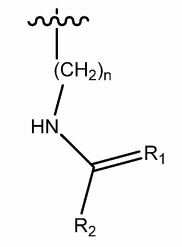
(화학식에서, n은 1 내지 7이고, R1 및 R2 각각은 H, C1-C18 알킬, (C1-C18 알킬)OH, (C1-C18 알킬)NH2, NH, NH2(C1-C18 알킬)SH, (C0-C4 알킬)(C3-C6)시클로알킬, (C0-C4 알킬)(C2-C5 헤테로고리), (C0-C4 알킬)(C6-C10 아릴)R7, 및 (C1-C4 알킬)(C3-C9 헤테로아릴)로 구성된 군으로부터 독립적으로 선택되고, R7은 H 또는 OH이며, 선택적으로 R1 및 R2 중 하나는 유리 아미노 기(-NH3 +)임),
[화학식 II]

(화학식에서, m은 1 내지 7이고, R3 및 R4 각각은 H, C1-C18 알킬, (C1-C18 알킬)OH, (C1-C18 알킬)NH2, (C1-C18 알킬)SH, (C0-C4 알킬)(C3-C6)시클로알킬, (C0-C4 알킬)(C2-C5 헤테로고리), (C0-C4 알킬)(C6-C10 아릴)R8, 및 (C1-C4 알킬)(C3-C9 헤테로아릴)로 구성된 그룹 A로부터 독립적으로 선택되고, R8은 H 또는 OH이고, R5는 선택적으로 존재하며, 존재 시, 그룹 A로부터 선택되고, 선택적으로, R3 및 R4 및 R5 각각은 H임).107. The method of claim 107, wherein the amino acid comprising a positively charged side chain comprises a side chain structure of Formula I or Formula II.
[Formula I]
Wherein n is 1 to 7 and each of R 1 and R 2 is H, C 1 -C 18 alkyl, (C 1 -C 18 alkyl) OH, (C 1 -C 18 alkyl) NH 2 , NH, NH 2 (C 1 -C 18 alkyl) SH, (C 0 -C 4 alkyl) (C 3 -C 6 ) cycloalkyl, (C 0 -C 4 alkyl) (C 2 -C 5 heterocycle), (C 0- C 4 alkyl) (C 6 -C 10 aryl) R 7 , and (C 1 -C 4 alkyl) (C 3 -C 9 heteroaryl), independently selected from the group consisting of R 7 is H or OH Optionally, one of R 1 and R 2 is a free amino group (-NH 3 + ),
[Formula II]
Wherein m is 1 to 7 and each of R 3 and R 4 is H, C 1 -C 18 alkyl, (C 1 -C 18 alkyl) OH, (C 1 -C 18 alkyl) NH 2, (C 1 -C 18 alkyl) SH, (C 0 -C 4 alkyl) (C 3 -C 6 ) cycloalkyl, (C 0 -C 4 alkyl) (C 2 -C 5 heterocycle), (C 0 -C 4 Alkyl) (C 6 -C 10 aryl) R 8 , and (C 1 -C 4 alkyl) (C 3 -C 9 heteroaryl), independently selected from Group A, R 8 is H or OH, R 5 is optionally present and, when present, is selected from group A, optionally, each of R 3 and R 4 and R 5 is H.
a. 약 30 mM 내지 약 80 mM의 L-아르기닌 염산염;
b. 약 20 mM 내지 약 50 mM의 L-페닐알라닌;
c. 약 20 mM 내지 약 50 mM의 L-트립토판;
d. 약 30 mM 내지 약 80 mM의 L-리신 염산염;
e. 약 20 mM 내지 약 50 mM의 L-류신;
f. 약 20 mM 내지 약 50 mM의 L-이소류신;
g. 약 20 mM 내지 약 50 mM의 L-발린; 또는
h. 이의 임의의 조합.136. The method of any one of claims 88-135, comprising combining the antibody or antigen-binding portion with:
a. About 30 mM to about 80 mM L-arginine hydrochloride;
b. About 20 mM to about 50 mM of L-phenylalanine;
c. About 20 mM to about 50 mM L-tryptophan;
d. About 30 mM to about 80 mM L-lysine hydrochloride;
e. L-leucine from about 20 mM to about 50 mM;
f. About 20 mM to about 50 mM of L-isoleucine;
g. L-valine from about 20 mM to about 50 mM; or
h. Any combination thereof.
약 5.0 내지 5.2 미만 범위의 pH의 상기 인간 항-인간 핵 인자 카파-B 리간드 수용체 활성인자(항-RANKL) 단일클론 항체 또는 이의 항원-결합 부분을 포함하는 상기 수성 제약 제형을 제조하는 것을 포함하며,
상기 수성 제약 제형은, 약 5.0 내지 5.2 미만 범위의 pH에 있지 않은 동일한 수성 제약 제형과 비교하여, 약 5.0 내지 5.2 미만 범위의 pH에서 개선된 안정성을 증명하는 것인, 방법.A method for improving the stability of an aqueous pharmaceutical formulation comprising a human anti-human nuclear factor kappa-B ligand receptor activator (anti-RANKL) monoclonal antibody or antigen-binding portion thereof at a concentration of greater than 70 mg / mL,
Preparing said aqueous pharmaceutical formulation comprising said human anti-human nuclear factor kappa-B ligand receptor activator (anti-RANKL) monoclonal antibody or antigen-binding portion thereof at a pH in the range of about 5.0 to less than 5.2; ,
Wherein the aqueous pharmaceutical formulation demonstrates improved stability at a pH in the range of about 5.0 to less than 5.2 compared to the same aqueous pharmaceutical formulation that is not at a pH in the range of less than about 5.0 to less than 5.2.
아미노산 응집 억제제와 혼합하여 상기 인간 항-인간 핵 인자 카파-B 리간드 수용체 활성인자(항-RANKL) 단일클론 항체, 또는 이의 항원-결합 부분을 포함하는 상기 수성 제약 제형을 제조하는 것을 포함하며,
상기 수성 제약 제형은, 아미노산 응집 억제제가 없는 동일한 수성 제약 제형과 비교하여, 아미노산 응집 억제제가 있는 경우가 개선된 안정성을 증명하는 것인, 방법.A method for improving the stability of an aqueous pharmaceutical formulation comprising a human anti-human nuclear factor kappa-B ligand receptor activator (anti-RANKL) monoclonal antibody or antigen-binding portion thereof,
Mixing with an amino acid aggregation inhibitor to prepare said aqueous pharmaceutical formulation comprising said human anti-human nuclear factor kappa-B ligand receptor activator (anti-RANKL) monoclonal antibody, or antigen-binding portion thereof,
Wherein said aqueous pharmaceutical formulation demonstrates improved stability with an amino acid aggregation inhibitor compared to the same aqueous pharmaceutical formulation without an amino acid aggregation inhibitor.
Priority Applications (1)
| Application Number | Priority Date | Filing Date | Title |
|---|---|---|---|
| KR1020247021825A KR20240110083A (en) | 2017-04-28 | 2018-04-27 | Formulations of human anti-rankl antibodies, and methods of using the same |
Applications Claiming Priority (3)
| Application Number | Priority Date | Filing Date | Title |
|---|---|---|---|
| US201762492056P | 2017-04-28 | 2017-04-28 | |
| US62/492,056 | 2017-04-28 | ||
| PCT/US2018/029728 WO2018200918A1 (en) | 2017-04-28 | 2018-04-27 | Formulations of human anti-rankl antibodies, and methods of using the same |
Related Child Applications (1)
| Application Number | Title | Priority Date | Filing Date |
|---|---|---|---|
| KR1020247021825A Division KR20240110083A (en) | 2017-04-28 | 2018-04-27 | Formulations of human anti-rankl antibodies, and methods of using the same |
Publications (2)
| Publication Number | Publication Date |
|---|---|
| KR20190140464A true KR20190140464A (en) | 2019-12-19 |
| KR102681171B1 KR102681171B1 (en) | 2024-07-05 |
Family
ID=62165668
Family Applications (2)
| Application Number | Title | Priority Date | Filing Date |
|---|---|---|---|
| KR1020197034225A Active KR102681171B1 (en) | 2017-04-28 | 2018-04-27 | Human anti-RANKL antibody formulations and methods of using the same |
| KR1020247021825A Pending KR20240110083A (en) | 2017-04-28 | 2018-04-27 | Formulations of human anti-rankl antibodies, and methods of using the same |
Family Applications After (1)
| Application Number | Title | Priority Date | Filing Date |
|---|---|---|---|
| KR1020247021825A Pending KR20240110083A (en) | 2017-04-28 | 2018-04-27 | Formulations of human anti-rankl antibodies, and methods of using the same |
Country Status (37)
| Country | Link |
|---|---|
| US (3) | US11192952B2 (en) |
| EP (3) | EP3615066B1 (en) |
| JP (4) | JP7190822B2 (en) |
| KR (2) | KR102681171B1 (en) |
| CN (2) | CN110621342B (en) |
| AR (1) | AR111497A1 (en) |
| AU (2) | AU2018260750B2 (en) |
| BR (1) | BR112019022188A2 (en) |
| CA (1) | CA3054165A1 (en) |
| CL (3) | CL2019003032A1 (en) |
| CO (1) | CO2019011463A2 (en) |
| CR (2) | CR20250034A (en) |
| DK (2) | DK3615066T5 (en) |
| EA (1) | EA201992570A1 (en) |
| ES (2) | ES2973572T3 (en) |
| FI (2) | FI3615066T3 (en) |
| HR (2) | HRP20241604T1 (en) |
| HU (2) | HUE065544T2 (en) |
| IL (2) | IL293127B2 (en) |
| JO (1) | JOP20190255A1 (en) |
| LT (2) | LT4190355T (en) |
| MA (2) | MA62173B1 (en) |
| MX (1) | MX2023013460A (en) |
| MY (1) | MY202479A (en) |
| PE (2) | PE20251534A1 (en) |
| PH (1) | PH12019502444A1 (en) |
| PL (2) | PL4190355T3 (en) |
| PT (2) | PT3615066T (en) |
| RS (2) | RS66284B1 (en) |
| SG (1) | SG11201909998TA (en) |
| SI (2) | SI3615066T1 (en) |
| SM (2) | SMT202400095T1 (en) |
| TN (2) | TN2019000297A1 (en) |
| TW (2) | TWI903512B (en) |
| UY (2) | UY37707A (en) |
| WO (1) | WO2018200918A1 (en) |
| ZA (1) | ZA202205141B (en) |
Families Citing this family (17)
| Publication number | Priority date | Publication date | Assignee | Title |
|---|---|---|---|---|
| US12257343B2 (en) | 2017-04-28 | 2025-03-25 | Amgen Inc. | Excipients to reduce the viscosity of antibody formulations and formulation compositions |
| JOP20190255A1 (en) | 2017-04-28 | 2019-10-27 | Amgen Inc | Human RANKL antibody formulas, and methods for their use |
| AU2019378544A1 (en) * | 2018-11-16 | 2021-06-10 | Samsung Bioepis Co., Ltd. | Stable liquid composition comprising protein |
| CN109374779A (en) * | 2018-12-17 | 2019-02-22 | 杭州奕安济世生物药业有限公司 | A kind of rapid detection method of cane sugar content |
| KR102735988B1 (en) | 2019-02-18 | 2024-12-03 | 일라이 릴리 앤드 캄파니 | therapeutic antibody preparations |
| AU2020347729C1 (en) * | 2019-09-19 | 2025-12-18 | Innovent Biologics (Suzhou) Co., Ltd. | Method for preventing or treating cholesterol-related diseases by using anti-PCSK9 antibody |
| CN111704670B (en) * | 2020-08-18 | 2020-11-03 | 迈威(上海)生物科技股份有限公司 | Disulfide bond isomer of recombinant anti-RANKL antibody IgG2 type and purification method thereof |
| EP4243931A4 (en) * | 2020-11-11 | 2025-01-01 | HAN, Hq | BIFUNCTIONAL ANTAGONISTS OF ACTIVIN/TGF-BETA AND RANKL AND THEIR USES |
| CA3218542A1 (en) * | 2021-05-12 | 2022-11-17 | Hua Ying | Antigen binding molecule specifically binding to rankl and ngf, and medical use thereof |
| EP4384217A1 (en) | 2021-08-12 | 2024-06-19 | Amgen Inc. | Antibody formulations |
| US20250297020A1 (en) * | 2021-11-23 | 2025-09-25 | Adalta Limited | Rank-l binding molecules |
| WO2023179791A1 (en) * | 2022-03-24 | 2023-09-28 | Angitia Biomedicines Limited | Treatment of musculoskeletal disorders |
| EP4590707A1 (en) | 2022-09-23 | 2025-07-30 | The University of North Carolina at Chapel Hill | Methods and compositions for the treatment of melanoma |
| JP2025539096A (en) * | 2022-11-16 | 2025-12-03 | 蘇州盛迪業生物医薬有限公司 | Pharmaceutical compositions containing anti-RANKL-NGF bispecific antibodies |
| WO2024184280A1 (en) * | 2023-03-03 | 2024-09-12 | Alvotech Hf | Denosumab formulation |
| WO2025036493A1 (en) * | 2023-08-17 | 2025-02-20 | Sinomab Bioscience Limited | Antibodies targeting rankl and sclerostin and uses thereof |
| WO2025116648A1 (en) * | 2023-12-01 | 2025-06-05 | 삼성바이오에피스 주식회사 | STABLE BUFFER-FREE LIQUID FORMULATION OF ANTI-IL-4Rα ANTIBODY |
Citations (2)
| Publication number | Priority date | Publication date | Assignee | Title |
|---|---|---|---|---|
| KR20100138908A (en) * | 2008-02-07 | 2010-12-31 | 암젠 인코퍼레이티드 | Stabilized Protein Composition |
| KR20140066124A (en) * | 2011-04-07 | 2014-05-30 | 글락소스미스클라인 엘엘씨 | Formulations with reduced viscosity |
Family Cites Families (20)
| Publication number | Priority date | Publication date | Assignee | Title |
|---|---|---|---|---|
| CN103232539B (en) | 2001-06-26 | 2015-06-03 | 安姆根弗里蒙特公司 | Antibodies to opgl |
| AR056806A1 (en) | 2005-11-14 | 2007-10-24 | Amgen Inc | RANKL- PTH / PTHRP ANTIBODY CHEMICAL MOLECULES |
| US20080213282A1 (en) * | 2006-12-21 | 2008-09-04 | Jaby Jacob | Formulations |
| WO2009002521A2 (en) | 2007-06-25 | 2008-12-31 | Amgen Inc. | Compositions of specific binding agents to hepatocyte growth factor |
| AR073072A1 (en) | 2008-08-19 | 2010-10-13 | Regeneron Pharma | HUMAN ANTIBODIES FOR THE BINDING OF THE HUMAN NF-KB RECEIVER ACTIVATOR (RANKL) |
| CN102209554A (en) | 2008-09-10 | 2011-10-05 | 弗·哈夫曼-拉罗切有限公司 | Compositions and methods for preventing oxidative degradation of proteins |
| US9265834B2 (en) | 2009-03-05 | 2016-02-23 | Ablynx N.V. | Stable formulations of polypeptides and uses thereof |
| WO2010106812A1 (en) | 2009-03-19 | 2010-09-23 | Chugai Seiyaku Kabushiki Kaisha | Pharmaceutical formulation containing improved antibody molecules |
| CN102946858B (en) | 2010-05-10 | 2015-09-30 | 英塔斯制药有限公司 | The liquid preparation of the polypeptide containing immunoglobulin Fc |
| EP2433644A1 (en) | 2010-09-22 | 2012-03-28 | IMBA-Institut für Molekulare Biotechnologie GmbH | Breast cancer therapeutics |
| JP6176849B2 (en) | 2011-07-19 | 2017-08-09 | 中外製薬株式会社 | A stable protein-containing preparation containing arginine amide or a similar compound |
| CA2951856A1 (en) | 2011-10-28 | 2013-05-02 | Integritybio Inc. | Protein formulations containing amino acids |
| TWI679019B (en) | 2013-04-29 | 2019-12-11 | 法商賽諾菲公司 | Anti-il-4/anti-il-13 bispecific antibody formulations |
| CN103965357B (en) | 2013-12-31 | 2016-08-17 | 嘉和生物药业有限公司 | A kind of anti-human RANKL antibody |
| WO2015121318A1 (en) | 2014-02-12 | 2015-08-20 | Sanofi | Anti-il-4/anti-il-13 bispecific antibody/polyglutamate formulations |
| WO2015134406A1 (en) * | 2014-03-03 | 2015-09-11 | La Jolla Biologics, Inc. | Stable aqueous recombinant protein formulations |
| ES2974895T3 (en) | 2014-05-07 | 2024-07-02 | Takeda Pharmaceuticals Co | Liquid formulation comprising a GM-CSF neutralizing compound |
| EP3240571A4 (en) | 2014-12-31 | 2018-06-13 | NovelMed Therapeutics, Inc. | Formulation of aglycosylated therapeutic antibodies |
| WO2016162819A1 (en) | 2015-04-07 | 2016-10-13 | Lupin Limited | Stable aqueous pharmaceutical composition of anti-tnf alpha antibody |
| JOP20190255A1 (en) | 2017-04-28 | 2019-10-27 | Amgen Inc | Human RANKL antibody formulas, and methods for their use |
-
2017
- 2017-06-16 JO JOP/2019/0255A patent/JOP20190255A1/en unknown
-
2018
- 2018-04-27 JP JP2018086261A patent/JP7190822B2/en active Active
- 2018-04-27 MA MA62173A patent/MA62173B1/en unknown
- 2018-04-27 SI SI201831067T patent/SI3615066T1/en unknown
- 2018-04-27 PE PE2024002513A patent/PE20251534A1/en unknown
- 2018-04-27 SM SM20240095T patent/SMT202400095T1/en unknown
- 2018-04-27 TN TNP/2019/000297A patent/TN2019000297A1/en unknown
- 2018-04-27 FI FIEP18724690.5T patent/FI3615066T3/en active
- 2018-04-27 ES ES18724690T patent/ES2973572T3/en active Active
- 2018-04-27 TN TNP/2021/000055A patent/TN2021000055A1/en unknown
- 2018-04-27 TW TW113118589A patent/TWI903512B/en active
- 2018-04-27 TW TW107114370A patent/TWI839331B/en active
- 2018-04-27 HU HUE18724690A patent/HUE065544T2/en unknown
- 2018-04-27 SI SI201831178T patent/SI4190355T1/en unknown
- 2018-04-27 PL PL22206709.2T patent/PL4190355T3/en unknown
- 2018-04-27 PL PL18724690.5T patent/PL3615066T3/en unknown
- 2018-04-27 BR BR112019022188-3A patent/BR112019022188A2/en unknown
- 2018-04-27 AR ARP180101105A patent/AR111497A1/en not_active Application Discontinuation
- 2018-04-27 LT LTEP22206709.2T patent/LT4190355T/en unknown
- 2018-04-27 WO PCT/US2018/029728 patent/WO2018200918A1/en not_active Ceased
- 2018-04-27 AU AU2018260750A patent/AU2018260750B2/en active Active
- 2018-04-27 HU HUE22206709A patent/HUE069382T2/en unknown
- 2018-04-27 ES ES22206709T patent/ES2997833T3/en active Active
- 2018-04-27 SG SG11201909998T patent/SG11201909998TA/en unknown
- 2018-04-27 PT PT187246905T patent/PT3615066T/en unknown
- 2018-04-27 EP EP18724690.5A patent/EP3615066B1/en active Active
- 2018-04-27 FI FIEP22206709.2T patent/FI4190355T3/en active
- 2018-04-27 PE PE2019002120A patent/PE20200343A1/en unknown
- 2018-04-27 IL IL293127A patent/IL293127B2/en unknown
- 2018-04-27 DK DK18724690.5T patent/DK3615066T5/en active
- 2018-04-27 RS RS20241343A patent/RS66284B1/en unknown
- 2018-04-27 CN CN201880028012.1A patent/CN110621342B/en active Active
- 2018-04-27 RS RS20240313A patent/RS65299B1/en unknown
- 2018-04-27 DK DK22206709.2T patent/DK4190355T3/en active
- 2018-04-27 CR CR20250034A patent/CR20250034A/en unknown
- 2018-04-27 CN CN202411089892.7A patent/CN118987200A/en active Pending
- 2018-04-27 KR KR1020197034225A patent/KR102681171B1/en active Active
- 2018-04-27 EP EP22206709.2A patent/EP4190355B1/en active Active
- 2018-04-27 CR CR20190538A patent/CR20190538A/en unknown
- 2018-04-27 LT LTEPPCT/US2018/029728T patent/LT3615066T/en unknown
- 2018-04-27 PT PT222067092T patent/PT4190355T/en unknown
- 2018-04-27 HR HRP20241604TT patent/HRP20241604T1/en unknown
- 2018-04-27 EA EA201992570A patent/EA201992570A1/en unknown
- 2018-04-27 CA CA3054165A patent/CA3054165A1/en not_active Abandoned
- 2018-04-27 SM SM20240491T patent/SMT202400491T1/en unknown
- 2018-04-27 UY UY0001037707A patent/UY37707A/en active IP Right Grant
- 2018-04-27 HR HRP20240167TT patent/HRP20240167T1/en unknown
- 2018-04-27 MA MA48462A patent/MA48462B1/en unknown
- 2018-04-27 UY UY0001040974A patent/UY40974A/en unknown
- 2018-04-27 KR KR1020247021825A patent/KR20240110083A/en active Pending
- 2018-04-27 EP EP24194699.5A patent/EP4477667A3/en active Pending
- 2018-04-27 MY MYPI2019006326A patent/MY202479A/en unknown
- 2018-04-27 US US16/608,375 patent/US11192952B2/en active Active
-
2019
- 2019-08-14 IL IL268704A patent/IL268704B/en unknown
- 2019-10-16 CO CO2019011463A patent/CO2019011463A2/en unknown
- 2019-10-21 MX MX2023013460A patent/MX2023013460A/en unknown
- 2019-10-23 CL CL2019003032A patent/CL2019003032A1/en unknown
- 2019-10-28 PH PH12019502444A patent/PH12019502444A1/en unknown
-
2020
- 2020-07-31 CL CL2020002012A patent/CL2020002012A1/en unknown
-
2021
- 2021-11-18 US US17/529,794 patent/US11873343B2/en active Active
-
2022
- 2022-01-14 JP JP2022004150A patent/JP7356525B2/en active Active
- 2022-05-10 ZA ZA2022/05141A patent/ZA202205141B/en unknown
-
2023
- 2023-08-10 JP JP2023130715A patent/JP2023166396A/en active Pending
- 2023-08-24 CL CL2023002505A patent/CL2023002505A1/en unknown
- 2023-12-11 US US18/535,068 patent/US20250326853A1/en active Pending
-
2025
- 2025-02-17 JP JP2025023142A patent/JP2025093923A/en active Pending
- 2025-07-15 AU AU2025205470A patent/AU2025205470A1/en active Pending
Patent Citations (2)
| Publication number | Priority date | Publication date | Assignee | Title |
|---|---|---|---|---|
| KR20100138908A (en) * | 2008-02-07 | 2010-12-31 | 암젠 인코퍼레이티드 | Stabilized Protein Composition |
| KR20140066124A (en) * | 2011-04-07 | 2014-05-30 | 글락소스미스클라인 엘엘씨 | Formulations with reduced viscosity |
Also Published As
Similar Documents
| Publication | Publication Date | Title |
|---|---|---|
| KR102681171B1 (en) | Human anti-RANKL antibody formulations and methods of using the same | |
| CA2451955C (en) | Antibodies to opgl | |
| KR20210089215A (en) | Co-Formulation of Anti-LAG3 Antibody and Anti-PD-1 Antibody | |
| CA3060581A1 (en) | Formulations of anti-lag3 antibodies and co-formulations of anti-lag3 antibodies and anti-pd-1 antibodies | |
| AU2017225495A1 (en) | Non-antagonistic antibodies directed against the alpha chain of the IL7 receptor extracellular domain and use thereof in cancer treatment | |
| CN114344460B (en) | Stable preparation containing anti-PCSK 9 antibody and preparation method and application thereof | |
| KR20220044286A (en) | Formulations comprising anti-PD-1/HER2 bispecific antibodies, methods for their preparation and uses | |
| RU2822192C2 (en) | Combined formulations of anti-lag3 antibody and anti-pd-1 antibody | |
| AU2015264940B2 (en) | Antibodies to OPGL | |
| HK40119362A (en) | Formulations of human anti-rankl antibodies, and methods of using the same | |
| HK40092695B (en) | Formulations of human anti-rankl antibodies, and methods of using the same | |
| HK40017180A (en) | Formulations of human anti-rankl antibodies, and methods of using the same | |
| HK40017180B (en) | Formulations of human anti-rankl antibodies, and methods of using the same | |
| HK1256948A1 (en) | Parathyroid hormone - anti-rankl antibody fusion compounds |
Legal Events
| Date | Code | Title | Description |
|---|---|---|---|
| PA0105 | International application |
St.27 status event code: A-0-1-A10-A15-nap-PA0105 |
|
| PG1501 | Laying open of application |
St.27 status event code: A-1-1-Q10-Q12-nap-PG1501 |
|
| A201 | Request for examination | ||
| AMND | Amendment | ||
| E13-X000 | Pre-grant limitation requested |
St.27 status event code: A-2-3-E10-E13-lim-X000 |
|
| P11-X000 | Amendment of application requested |
St.27 status event code: A-2-2-P10-P11-nap-X000 |
|
| P13-X000 | Application amended |
St.27 status event code: A-2-2-P10-P13-nap-X000 |
|
| PA0201 | Request for examination |
St.27 status event code: A-1-2-D10-D11-exm-PA0201 |
|
| E902 | Notification of reason for refusal | ||
| PE0902 | Notice of grounds for rejection |
St.27 status event code: A-1-2-D10-D21-exm-PE0902 |
|
| AMND | Amendment | ||
| P11-X000 | Amendment of application requested |
St.27 status event code: A-2-2-P10-P11-nap-X000 |
|
| P13-X000 | Application amended |
St.27 status event code: A-2-2-P10-P13-nap-X000 |
|
| E601 | Decision to refuse application | ||
| PE0601 | Decision on rejection of patent |
St.27 status event code: N-2-6-B10-B15-exm-PE0601 |
|
| X091 | Application refused [patent] | ||
| AMND | Amendment | ||
| E13-X000 | Pre-grant limitation requested |
St.27 status event code: A-2-3-E10-E13-lim-X000 |
|
| P11-X000 | Amendment of application requested |
St.27 status event code: A-2-2-P10-P11-nap-X000 |
|
| P13-X000 | Application amended |
St.27 status event code: A-2-2-P10-P13-nap-X000 |
|
| PX0901 | Re-examination |
St.27 status event code: A-2-3-E10-E12-rex-PX0901 |
|
| E902 | Notification of reason for refusal | ||
| PE0902 | Notice of grounds for rejection |
St.27 status event code: A-1-2-D10-D21-exm-PE0902 |
|
| AMND | Amendment | ||
| P11-X000 | Amendment of application requested |
St.27 status event code: A-2-2-P10-P11-nap-X000 |
|
| P13-X000 | Application amended |
St.27 status event code: A-2-2-P10-P13-nap-X000 |
|
| PX0701 | Decision of registration after re-examination |
St.27 status event code: A-3-4-F10-F13-rex-PX0701 |
|
| X701 | Decision to grant (after re-examination) | ||
| PA0104 | Divisional application for international application |
St.27 status event code: A-0-1-A10-A18-div-PA0104 St.27 status event code: A-0-1-A10-A16-div-PA0104 |
|
| PR0701 | Registration of establishment |
St.27 status event code: A-2-4-F10-F11-exm-PR0701 |
|
| PR1002 | Payment of registration fee |
St.27 status event code: A-2-2-U10-U12-oth-PR1002 Fee payment year number: 1 |
|
| PG1601 | Publication of registration |
St.27 status event code: A-4-4-Q10-Q13-nap-PG1601 |