KR20120062874A - Actriib antagonists and dosing and uses thereof - Google Patents
Actriib antagonists and dosing and uses thereof Download PDFInfo
- Publication number
- KR20120062874A KR20120062874A KR1020127008733A KR20127008733A KR20120062874A KR 20120062874 A KR20120062874 A KR 20120062874A KR 1020127008733 A KR1020127008733 A KR 1020127008733A KR 20127008733 A KR20127008733 A KR 20127008733A KR 20120062874 A KR20120062874 A KR 20120062874A
- Authority
- KR
- South Korea
- Prior art keywords
- actriib
- amino acid
- glu
- leu
- patient
- Prior art date
- Legal status (The legal status is an assumption and is not a legal conclusion. Google has not performed a legal analysis and makes no representation as to the accuracy of the status listed.)
- Ceased
Links
Images





Classifications
-
- C—CHEMISTRY; METALLURGY
- C07—ORGANIC CHEMISTRY
- C07K—PEPTIDES
- C07K14/00—Peptides having more than 20 amino acids; Gastrins; Somatostatins; Melanotropins; Derivatives thereof
- C07K14/435—Peptides having more than 20 amino acids; Gastrins; Somatostatins; Melanotropins; Derivatives thereof from animals; from humans
- C07K14/705—Receptors; Cell surface antigens; Cell surface determinants
-
- A—HUMAN NECESSITIES
- A61—MEDICAL OR VETERINARY SCIENCE; HYGIENE
- A61K—PREPARATIONS FOR MEDICAL, DENTAL OR TOILETRY PURPOSES
- A61K38/00—Medicinal preparations containing peptides
- A61K38/16—Peptides having more than 20 amino acids; Gastrins; Somatostatins; Melanotropins; Derivatives thereof
- A61K38/17—Peptides having more than 20 amino acids; Gastrins; Somatostatins; Melanotropins; Derivatives thereof from animals; from humans
- A61K38/18—Growth factors; Growth regulators
-
- A—HUMAN NECESSITIES
- A61—MEDICAL OR VETERINARY SCIENCE; HYGIENE
- A61K—PREPARATIONS FOR MEDICAL, DENTAL OR TOILETRY PURPOSES
- A61K31/00—Medicinal preparations containing organic active ingredients
- A61K31/66—Phosphorus compounds
- A61K31/662—Phosphorus acids or esters thereof having P—C bonds, e.g. foscarnet, trichlorfon
- A61K31/663—Compounds having two or more phosphorus acid groups or esters thereof, e.g. clodronic acid, pamidronic acid
-
- A—HUMAN NECESSITIES
- A61—MEDICAL OR VETERINARY SCIENCE; HYGIENE
- A61K—PREPARATIONS FOR MEDICAL, DENTAL OR TOILETRY PURPOSES
- A61K38/00—Medicinal preparations containing peptides
- A61K38/16—Peptides having more than 20 amino acids; Gastrins; Somatostatins; Melanotropins; Derivatives thereof
- A61K38/17—Peptides having more than 20 amino acids; Gastrins; Somatostatins; Melanotropins; Derivatives thereof from animals; from humans
- A61K38/177—Receptors; Cell surface antigens; Cell surface determinants
- A61K38/179—Receptors; Cell surface antigens; Cell surface determinants for growth factors; for growth regulators
-
- A—HUMAN NECESSITIES
- A61—MEDICAL OR VETERINARY SCIENCE; HYGIENE
- A61K—PREPARATIONS FOR MEDICAL, DENTAL OR TOILETRY PURPOSES
- A61K39/00—Medicinal preparations containing antigens or antibodies
- A61K39/395—Antibodies; Immunoglobulins; Immune serum, e.g. antilymphocytic serum
-
- A—HUMAN NECESSITIES
- A61—MEDICAL OR VETERINARY SCIENCE; HYGIENE
- A61P—SPECIFIC THERAPEUTIC ACTIVITY OF CHEMICAL COMPOUNDS OR MEDICINAL PREPARATIONS
- A61P19/00—Drugs for skeletal disorders
-
- A—HUMAN NECESSITIES
- A61—MEDICAL OR VETERINARY SCIENCE; HYGIENE
- A61P—SPECIFIC THERAPEUTIC ACTIVITY OF CHEMICAL COMPOUNDS OR MEDICINAL PREPARATIONS
- A61P19/00—Drugs for skeletal disorders
- A61P19/08—Drugs for skeletal disorders for bone diseases, e.g. rachitism, Paget's disease
-
- A—HUMAN NECESSITIES
- A61—MEDICAL OR VETERINARY SCIENCE; HYGIENE
- A61P—SPECIFIC THERAPEUTIC ACTIVITY OF CHEMICAL COMPOUNDS OR MEDICINAL PREPARATIONS
- A61P19/00—Drugs for skeletal disorders
- A61P19/08—Drugs for skeletal disorders for bone diseases, e.g. rachitism, Paget's disease
- A61P19/10—Drugs for skeletal disorders for bone diseases, e.g. rachitism, Paget's disease for osteoporosis
-
- A—HUMAN NECESSITIES
- A61—MEDICAL OR VETERINARY SCIENCE; HYGIENE
- A61P—SPECIFIC THERAPEUTIC ACTIVITY OF CHEMICAL COMPOUNDS OR MEDICINAL PREPARATIONS
- A61P21/00—Drugs for disorders of the muscular or neuromuscular system
-
- A—HUMAN NECESSITIES
- A61—MEDICAL OR VETERINARY SCIENCE; HYGIENE
- A61P—SPECIFIC THERAPEUTIC ACTIVITY OF CHEMICAL COMPOUNDS OR MEDICINAL PREPARATIONS
- A61P21/00—Drugs for disorders of the muscular or neuromuscular system
- A61P21/06—Anabolic agents
-
- A—HUMAN NECESSITIES
- A61—MEDICAL OR VETERINARY SCIENCE; HYGIENE
- A61P—SPECIFIC THERAPEUTIC ACTIVITY OF CHEMICAL COMPOUNDS OR MEDICINAL PREPARATIONS
- A61P35/00—Antineoplastic agents
-
- A—HUMAN NECESSITIES
- A61—MEDICAL OR VETERINARY SCIENCE; HYGIENE
- A61P—SPECIFIC THERAPEUTIC ACTIVITY OF CHEMICAL COMPOUNDS OR MEDICINAL PREPARATIONS
- A61P35/00—Antineoplastic agents
- A61P35/04—Antineoplastic agents specific for metastasis
-
- A—HUMAN NECESSITIES
- A61—MEDICAL OR VETERINARY SCIENCE; HYGIENE
- A61P—SPECIFIC THERAPEUTIC ACTIVITY OF CHEMICAL COMPOUNDS OR MEDICINAL PREPARATIONS
- A61P43/00—Drugs for specific purposes, not provided for in groups A61P1/00-A61P41/00
-
- A—HUMAN NECESSITIES
- A61—MEDICAL OR VETERINARY SCIENCE; HYGIENE
- A61P—SPECIFIC THERAPEUTIC ACTIVITY OF CHEMICAL COMPOUNDS OR MEDICINAL PREPARATIONS
- A61P7/00—Drugs for disorders of the blood or the extracellular fluid
- A61P7/06—Antianaemics
-
- C—CHEMISTRY; METALLURGY
- C07—ORGANIC CHEMISTRY
- C07K—PEPTIDES
- C07K14/00—Peptides having more than 20 amino acids; Gastrins; Somatostatins; Melanotropins; Derivatives thereof
- C07K14/435—Peptides having more than 20 amino acids; Gastrins; Somatostatins; Melanotropins; Derivatives thereof from animals; from humans
-
- C—CHEMISTRY; METALLURGY
- C07—ORGANIC CHEMISTRY
- C07K—PEPTIDES
- C07K14/00—Peptides having more than 20 amino acids; Gastrins; Somatostatins; Melanotropins; Derivatives thereof
- C07K14/435—Peptides having more than 20 amino acids; Gastrins; Somatostatins; Melanotropins; Derivatives thereof from animals; from humans
- C07K14/475—Growth factors; Growth regulators
-
- C—CHEMISTRY; METALLURGY
- C07—ORGANIC CHEMISTRY
- C07K—PEPTIDES
- C07K16/00—Immunoglobulins [IGs], e.g. monoclonal or polyclonal antibodies
- C07K16/18—Immunoglobulins [IGs], e.g. monoclonal or polyclonal antibodies against material from animals or humans
-
- C—CHEMISTRY; METALLURGY
- C07—ORGANIC CHEMISTRY
- C07K—PEPTIDES
- C07K16/00—Immunoglobulins [IGs], e.g. monoclonal or polyclonal antibodies
- C07K16/18—Immunoglobulins [IGs], e.g. monoclonal or polyclonal antibodies against material from animals or humans
- C07K16/24—Immunoglobulins [IGs], e.g. monoclonal or polyclonal antibodies against material from animals or humans against cytokines, lymphokines or interferons
-
- C—CHEMISTRY; METALLURGY
- C07—ORGANIC CHEMISTRY
- C07K—PEPTIDES
- C07K16/00—Immunoglobulins [IGs], e.g. monoclonal or polyclonal antibodies
- C07K16/18—Immunoglobulins [IGs], e.g. monoclonal or polyclonal antibodies against material from animals or humans
- C07K16/28—Immunoglobulins [IGs], e.g. monoclonal or polyclonal antibodies against material from animals or humans against receptors, cell surface antigens or cell surface determinants
-
- A—HUMAN NECESSITIES
- A61—MEDICAL OR VETERINARY SCIENCE; HYGIENE
- A61K—PREPARATIONS FOR MEDICAL, DENTAL OR TOILETRY PURPOSES
- A61K38/00—Medicinal preparations containing peptides
- A61K38/16—Peptides having more than 20 amino acids; Gastrins; Somatostatins; Melanotropins; Derivatives thereof
-
- A—HUMAN NECESSITIES
- A61—MEDICAL OR VETERINARY SCIENCE; HYGIENE
- A61K—PREPARATIONS FOR MEDICAL, DENTAL OR TOILETRY PURPOSES
- A61K38/00—Medicinal preparations containing peptides
- A61K38/16—Peptides having more than 20 amino acids; Gastrins; Somatostatins; Melanotropins; Derivatives thereof
- A61K38/17—Peptides having more than 20 amino acids; Gastrins; Somatostatins; Melanotropins; Derivatives thereof from animals; from humans
- A61K38/177—Receptors; Cell surface antigens; Cell surface determinants
-
- C—CHEMISTRY; METALLURGY
- C07—ORGANIC CHEMISTRY
- C07K—PEPTIDES
- C07K2319/00—Fusion polypeptide
- C07K2319/30—Non-immunoglobulin-derived peptide or protein having an immunoglobulin constant or Fc region, or a fragment thereof, attached thereto
Landscapes
- Health & Medical Sciences (AREA)
- Life Sciences & Earth Sciences (AREA)
- Chemical & Material Sciences (AREA)
- Medicinal Chemistry (AREA)
- Organic Chemistry (AREA)
- General Health & Medical Sciences (AREA)
- Pharmacology & Pharmacy (AREA)
- Public Health (AREA)
- Animal Behavior & Ethology (AREA)
- Veterinary Medicine (AREA)
- Proteomics, Peptides & Aminoacids (AREA)
- Immunology (AREA)
- Engineering & Computer Science (AREA)
- Bioinformatics & Cheminformatics (AREA)
- Gastroenterology & Hepatology (AREA)
- Zoology (AREA)
- Chemical Kinetics & Catalysis (AREA)
- General Chemical & Material Sciences (AREA)
- Nuclear Medicine, Radiotherapy & Molecular Imaging (AREA)
- Genetics & Genomics (AREA)
- Molecular Biology (AREA)
- Biophysics (AREA)
- Biochemistry (AREA)
- Epidemiology (AREA)
- Physical Education & Sports Medicine (AREA)
- Cell Biology (AREA)
- Toxicology (AREA)
- Orthopedic Medicine & Surgery (AREA)
- Rheumatology (AREA)
- Neurology (AREA)
- Microbiology (AREA)
- Mycology (AREA)
- Oncology (AREA)
- Diabetes (AREA)
- Hematology (AREA)
- Endocrinology (AREA)
- Medicines That Contain Protein Lipid Enzymes And Other Medicines (AREA)
- Peptides Or Proteins (AREA)
- Pharmaceuticals Containing Other Organic And Inorganic Compounds (AREA)
Abstract
특정 측면들에서, 본 발명은 골 성장을 촉진시키고 골 밀도를 증가시키고, 다발성 골수종을 치료하는 조성물 및 방법들을 제공한다. 환자에게 ActRIIb 길항제를 투약하는 방법 또한 제공한다. In certain aspects, the present invention provides compositions and methods for promoting bone growth, increasing bone density, and treating multiple myeloma. Methods of administering an ActRIIb antagonist to the patient are also provided.
Description
관련 출원들Related Applications
본 출원은 2009년 9월 9일자로 제출된 미국 가출원 61/276,287의 장점을 청구한다. 상기 언급된 출원의 모든 교시는 전문이 참고문헌에 통합된다.This application claims the benefit of U.S. Provisional Application No. 61 / 276,287, filed September 9, 2009. All teachings of the above-mentioned applications are incorporated by reference in their entirety.
골다공증에서부터 골절에 이르기까지 골 질환은 일련의 병리학적 상태를 나타내는데, 유효한 약제가 거의 없다. 대신 치료는 고정(immobilization), 운동 및 식이요법의 변화를 포함하는 물리적 그리고 거동적 중재에 초점을 두고 있다. 다양한 뼈 질환을 치료하는 목적으로 뼈 성장을 촉진시키고, 그리고 골밀도를 증가시키는 치료제를 얻는 것이 유익할 것이다. From osteoporosis to fracture, bone disease represents a series of pathological conditions, with few drugs available. Instead, treatment focuses on physical and dynamic interventions, including immobilization, changes in exercise and diet. It would be beneficial to obtain a therapeutic agent that promotes bone growth and increases bone density for the purpose of treating various bone diseases.
뼈 성장 및 광화작용(mineralization)은 연골세포(chondrocytes) 및 맥관구조의 세포들 또한 이들 공정의 주요 측면에 참여하지만, 두 가지 세포 유형 즉, 파골세포(osteoclasts) 및 골아세포(골아세포s)의 활성에 따라 달라진다. 발생학적으로, 뼈 형성은 연골속골화(endochondral ossification)와 막속골화(intramembranous ossification)의 두 가지 기전을 통하여 발생하고, 연골속골화는 세로 뼈 형성을 담당하고, 막속골화는 두개골 뼈와 같은 위상적으로 편편한 뼈의 형성을 담당한다. 연골속뼈화는 성장판에서 연골성 구조의 순차적 형성 및 분해를 요구하는데, 이는 골아세포, 파골세포, 맥관구조의 형성 및 후속 광화작용의 주형으로 작용하다. 막속골화 동안, 결합 조직에서 뼈는 바로 형성된다. 이들 두 가지 공정 모두 골아세포의 침투 및 후속 매트릭스 침착을 요구한다. Bone growth and mineralization involve the chondrocytes and the cells of the vasculature, which also participate in the main aspects of these processes, but the two cell types: osteoclasts and osteocytes (osteocytes) Depending on the activity. Bone formation occurs through two mechanisms: endochondral ossification and intramembranous ossification, cartilage ossification is responsible for vertical bone formation, and facial ossification is topologically similar to skull bone Which is responsible for the formation of a flat bone. The cartilaginous bone formation requires sequential formation and degradation of the cartilaginous structure in the growth plate, which serves as a template for the formation of osteoblasts, osteoclasts, vasculature and subsequent mineralization. During femoral ossification, bones are formed directly in connective tissue. Both of these processes require osteocyte infiltration and subsequent matrix deposition.
골절 및 뼈의 다른 구조적 파괴는 이 과정을 통하여 치료되는데, 적어도 피상적으로 연골성 조직 형성 및 후속 광화작용을 포함하는 골형성의 발생학적 일련의 사건들을 닮는다. 골절 치유(healing) 과정은 두 가지 방식으로 일어날 수 있다. 직접적 또는 1차 뼈 치유는 가골(callus) 형성 없이 일어난다. 간접적 또는 2차적 뼈 치유는 가골 전조 단계와 함께 일어난다. 골절의 1차 치유는 밀접한 설정(closely-set) 붕괴를 넘어 기계적 연속성의 재형성과 관련된다. 적합한 조건하에서, 붕괴 주변 뼈를 재흡수하는 세포들은 터널식(tunnelling) 재흡수성 반응을 보이고, 혈관의 관통 및 후속 치유를 위한 통로를 제공한다. 뼈의 2차 치유는 염증 과정, 연질 가골 형성, 가골 광화작용 및 가골 개형(remodeling)을 따른다. 염증 단계에서, 혈종 및 출혈 형성은 손상 부위에서 골막(periosteal) 및 골내막(뼈표면) 혈관의 붕괴로 인한 것이다. 염증 세포는 이 부위를 침투한다. 연질 가골 형성 단계에서, 세포는 새로운 맥관, 섬유아세포, 세포내 물질 및 지지 세포를 만들고, 골절 단편 사이 공간내 육아 조직(granulation tissue)을 형성한다. 섬유성 또는 연골성 조직 (연질 가골)에 의해 붕괴부위를 가로질러 임상적 연합이 확립된다. 골아세포가 형성되고, 연질 가골의 광화작용을 중재하고, 이는 층판골(lamellar bone)에 의해 대체되어, 정상적인 개형(remodeling) 공정을 거친다. Fractures and other structural destruction of bone are treated through this process, resembling a series of embryonic events of bone formation, including at least superficially cartilaginous tissue formation and subsequent mineralization. The fracture healing process can occur in two ways. Direct or primary bone healing occurs without callus formation. Indirect or secondary bony healing occurs with the bony progenitor stage. The primary healing of the fracture is related to the reshaping of mechanical continuity beyond a close-set collapse. Under appropriate conditions, the cells that reabsorb the collapsed bone show a tunnelling reabsorption response and provide a pathway for penetration and subsequent healing of the blood vessels. Secondary healing of the bones is followed by inflammation process, soft cartilage formation, cartilage mineralization and remodeling. In the inflammatory phase, hematoma and hemorrhage are due to periosteal and collapse of the endosteal (bone surface) vessels at the site of injury. Inflammatory cells penetrate this site. In the soft cartilage formation stage, the cells create new vasculature, fibroblasts, intracellular material and supporting cells, and form granulation tissue in the space between the fracture fragments. A clinical association is established across the collapsed site by fibrous or cartilaginous tissue (soft cartilage). The osteoblasts are formed and mediate the mineralization of the soft cartilage, which is replaced by a lamellar bone and undergoes a normal remodeling process.
골절 및 뼈 구조의 기타 물리적 붕괴에 추가하여, 다양한 광범위한 조건에 의해 뼈 미네랄 함량 및 골량이 상실될 수 있고, 심각한 의학적 문제를 초래할 수 있다. 골량의 변화는 개인 삶에 있어서 상대적으로 예측가능하게 일어난다. 대략 30세까지 연골내 성장판의 선형 성장 및 방사형 성장을 통하여 남녀 모두 뼈가 최대량으로 성장한다. 약 30세 이후(지주골(trabecular bone), 가령, 척추 및 골반과 같은 평평한 뼈의 경우) 그리고 약 40 세이후 (피질골(cortical bone), 가령, 사지에서 볼 수 있는 긴 뼈의 경우), 남녀 모두에게서 골 상실이 서서히 일어난다. 여성의 경우, 폐경후 에스트로겐 결핍으로 인하여 실질적인 골 상실의 최종 상태가 발생한다. 이 상태 동안, 여성들은 피질골에서 골량의 추가 10% 그리고 지주골 격실로부터 25% 추가 골량을 상실할 수도 있다. 점진적 골 상실이 골다공증과 같은 병리적 상태를 초래하는 지에 대해서는 개인의 초기 골량에 대체로 의존적이며, 악화 상태가 있는지에 따라 달라진다. In addition to fractures and other physical disruption of the bone structure, bone mineral content and bone mass can be lost by a wide variety of conditions and can lead to serious medical problems. Changes in bone mass occur relatively predictably in individual life. Through the linear growth and radial growth of the cartilaginous growth plate to approximately 30 years of age, both sexes grow to the maximum amount. After about 30 years of age (trabecular bone, for example, flat bones such as the spine and pelvis) and after about 40 years (cortical bone, for example, long bones seen in the limbs) The bone loss gradually occurs from all. In women, a post-menopausal estrogen deficiency results in a substantial state of bone loss. During this condition, women may lose an additional 10% of bone mass in cortical bone and 25% in bone marrow compartment. Whether progressive bone loss results in a pathological condition, such as osteoporosis, is largely dependent on the initial bone mass of the individual and depends on whether or not it is exacerbated.
골 상실은 일부 경우 정상적인 뼈 개형 과정의 불균형으로 특징화된다. 건강한 뼈는 지속적으로 재구성된다. 개형은 파골세포에 의한 뼈의 재흡수로 시작한다. 재흡수된 뼈는 새로운 뼈 조직에 의해 대체되며, 이는 골아세포에 의한 콜라겐 형성과 후속 석회화(calcification)에 의해 특징화된다. 건강한 개체에서, 재흡수 및 형성율은 균형을 이룬다. 골다공증은 만성적, 진행성 질환으로, 재흡수 쪽으로 이동이 두드러지고, 골량 및 뼈 광화작용이 전반적으로 감소되는 결과를 초래한다. 인간에서 골다공증은 임상적 골감소증 (뼈 미네랄 밀도는 젊은 성인 뼈의 경우 1 표준 편차 이상 그러나 2.5 표준 편차 미만)에 선행한다. 전세계적으로, 대략 7천5백만 사람이 골다공증 위험에 처해있다. Bone loss is characterized, in some cases, by an imbalance in the normal bony opening process. Healthy bones are constantly reconstructed. The breasts begin with bone resorption by osteoclasts. Reabsorbed bones are replaced by new bone tissue, which is characterized by collagen formation by osteoblasts and subsequent calcification. In healthy individuals, reabsorption and formation rates are balanced. Osteoporosis is a chronic, progressive disease with marked migration to the reabsorption, resulting in a general decrease in bone mass and bone mineralization. In humans, osteoporosis precedes clinical osteopenia (bone mineral density is above 1 standard deviation, but less than 2.5 standard deviations for young adult bone). Globally, approximately 75 million people are at risk for osteoporosis.
따라서, 파골세포 및 골아세포 활성간의 균형을 조절하는 방법은 골절 및 뼈에 기타 손상의 치유를 촉진시키고, 그리고 골량의 상실 및 뼈 광화작용과 연관된 골다공증과 같은 질환 치료에 유용할 것이다. Thus, a method of regulating the balance between osteoclast and osteoblastic activity would be useful for treating fractures and other healing of bones and for treating diseases such as osteoporosis associated with loss of bone mass and bone mineralization.
골다공증에 있어서, 에스트로겐, 칼시토닌, 오스테오칼신 및 비타민 K, 또는고약량의 규정식 칼슘 모두 치료 중재로 이용한다. 골다공증에 대한 기타 치요 방법은 비스포스포네이트, 부갑상선 호르몬, 칼슘모방제, 스타틴, 동화성 스테로이드, 란탄 및 스트론튬 염, 및 플루오르화 나트륨을 포함한다. 그러나, 이러한 치료제는 흔히 바람직하지 못한 부작용과 연관된다.For osteoporosis, estrogen, calcitonin, osteocalcin and vitamin K, or a high dose of calcium, are all used as therapeutic interventions. Other methods of treating osteoporosis include bisphosphonates, parathyroid hormone, calcium mimetics, statins, anabolic steroids, lanthanum and strontium salts, and sodium fluoride. However, such therapeutic agents are often associated with undesirable side effects.
따라서, 본 발명의 목적은 뼈 성장 및 광화작용을 촉진하는 조성물 및 방법을 제공하는 것이다. It is therefore an object of the present invention to provide compositions and methods for promoting bone growth and mineralization.
발명의 요약SUMMARY OF THE INVENTION
부분적으로, 본 명세서는 ActRIIb-바탕을 둔 분자들 (예를 들면, ActRIIb 세포외 도메인 또는 이의 변이체의 리간드 결합 부분, 예컨데 ActRIIb-Fc을 포함하는 분자들)과 ActRIIb 신호생성의 기타 길항제들을 포함하는 ActRIIb 길항제들을 골 밀도를 증가시키고, 골 성장을 촉진시키고, 및/또는 골 강도를 증가시키는데 이용할 수 있다는 것을 설명한다. 특히, 본 명세서는 가용성 형태의 ActRIIb가 생체내에서 골 밀도, 골 성장, 및 골강도 증가를 촉진시킨다는 것을 설명한다. In part, the disclosure encompasses the use of ActRIIb-based molecules (e.g., molecules comprising a ligand binding portion of an ActRIIb extracellular domain or variant thereof, such as ActRIIb-Fc) and other antagonists of ActRIIb signaling It is demonstrated that ActRIIb antagonists can be used to increase bone density, promote bone growth, and / or increase bone strength. In particular, this specification illustrates that soluble forms of ActRIIb promote bone density, bone growth, and bone strength in vivo.
골 성장을 촉진시키거나 골 상실을 억제하는 대부분의 약제 물질이 항-이화물질들 (또는 보통 “이화물질(catabolic agents)”이라고도 함) (예를 들면, 비스포스포네이트) 또는 동화 물질들 (예를 들면, 적절하게 투여된 경우 부감상선 호르몬, PTH)로 작용하지만, 가용성 ActRIIb 단백질은 항-이화 및 동화 효과를 모두 가지는 이중 활성을 나타낸다. 따라서, ActRIIb 길항제들은 골 밀도를 증가시키고 골 성장을 촉진시키는데 이용될 수 있다. 항-ActRIIb 항체들, 그리고 ActRIIb-표적화된 작은 분자들과 압타머들(aptamers), 그리고 ActRIIb의 발현을 감소시키는 핵산들은 낮은 골 밀도 또는 낮은 골 강도, 예컨데 골다공증과 관련된 장애를 치료하거나, 또는 이를 필요로 하는 환자들, 예컨대, 뼈 골절 환자들에게서 골 성장을 촉진시키는데 또한 이용할 수 있다(이러한 분자들은 또한 여기에서 사용된 것과 같이 용어 “ActRIIb 길항제들”에 또한 포함된다). 본 명세서에서는 또한 ActRIIb 길항제들은 다발성 골수종 종양들에 의한 뼈 손상을 복구하거나 예방하고, 그리고 뼈로 전이를 예방 또는 복구하는데 유효하며(예를 들면, 유방, 식도, 결장, 전립선 또는 폐 암에서), 추가적으로, ActRIIb 길항제들은 다발성 골수종에서 종양 부하(load)를 감소시킨다고 나타낸다. Most drug substances that promote bone growth or inhibit bone loss are known as anti-catabolic agents (or also commonly referred to as " catabolic agents ") (e.g., bisphosphonates) or assimilating agents , PTH when it is administered properly), but the soluble ActRIIb protein exhibits dual activity with both anti-catabolism and assimilation effects. Thus, ActRIIb antagonists can be used to increase bone density and promote bone growth. Anti-ActRIIb antibodies, and ActRIIb-targeted small molecules and aptamers, and nucleic acids that reduce the expression of ActRIIb, can be used to treat or prevent disorders associated with low bone density or low bone strength, such as osteoporosis It can also be used to promote bone growth in patients in need, such as bone fracture patients (these molecules are also included in the term " ActRIIb antagonists " as used herein). Herein, ActRIIb antagonists are also effective in restoring or preventing bone damage by multiple myeloma tumors and preventing or restoring bone metastasis (for example, in breast, esophagus, colon, prostate or lung cancer) , Indicating that ActRIIb antagonists reduce tumor burden in multiple myeloma.
ActRIIb 길항제들은 다양한 장애또는 몸의 상태, 특히, 근육과 신경근 장애들 (예를 들면, 근위축증, 근위축성 측색 경화증 (ALS), 그리고 근육 위축증), 지방 조직 장애들 (예를 들면, 비만), 대사 장애들 (예를 들면, 유형 2 당뇨병), 신경퇴행성 장애들, 그리고 노년 근육 소모(근육감소증), 전립선 암 요법, 그리고 암 악액질의 치료에 또한 이용할 수 있다. 특정 구체예들에서, ActRIIb 길항제들은 (예를 들면, 가용성 ActRIIb 폴리펩티드들) ActRIIb 활성과 관련된 임의의 과정에서 ActRIIb 수용체를 길항할 수 있다. 선택적으로, 본 발명의 ActRIIb 길항제들은 ActRIIb 수용체의 하나 이상의 리간드, 예컨데 GDF8 (미오스타틴이라고도 부름), GDF11, 악티빈 A, 악티빈 B, 악티빈 AB, Nodal, 및 BMP7 (OP-1이라고도 부름)를 선호적으로 길항하도록 기획될 수 있고, 따라서, 추가 장애들의 치료에 유용할 것이다. 예시적인 ActRIIb 길항제들은 자연 발생적 ActRIIb 폴리펩티드들 뿐만 아니라 이의 기능적 변이체들을 포함한다.ActRIIb antagonists may be used to treat a variety of disorders or conditions of the body, particularly muscle and neuromuscular disorders (e.g., muscular dystrophy, amyotrophic lateral sclerosis (ALS), and muscle atrophy), adipose tissue disorders It can also be used for the treatment of disorders (e. G.,
특정 측면에서, 본 내용은 가용성 ActRIIb 폴리펩티드를 포함하는 폴리펩티드를 제공한다. ActRIIb 폴리펩티드는 ActRIIb 폴리펩티드 및 약제학적으로 수용되는 운반체를 포함하는 약제학적 조제물로 조제될 수 있다. 선택적으로, ActRIIb 폴리펩티드는 1 마이크로몰 미만의 KD 또는 100, 10 또는 1 나노몰 미만의 KD로 악티빈에 결합한다. 바람직하게는, 조성물은 크기 압출 크로마토그래피에 의해 평가하였을 때 다른 폴리펩티드 성분들에 대해 조성물은 최소한 95% 순수이며, 더 바람직하게는, 조성물은 최소한 98% 순수하다. 이러한 조제물에 사용하기 위한 ActRIIb 폴리펩티드는 여기에서 설명되는 임의의 것일 수 있는데, 예를 들면, 서열 번호: 2, 3, 13, 17 또는 20로부터 선택된 아미노산 서열을 가지는 폴리펩티드, 또는 서열 번호:2, 3, 13, 17 또는 20에서 선택된 아미노산 서열에 최소한 80%, 85%, 90%, 95%, 97% 또는 99% 동일한 아미노산 서열을 가지는 폴리펩티드일 수 있다. ActRIIb 폴리펩티드는 천연 ActRIIb 폴리펩티드의 기능적 단편, 가령, In particular aspects, the disclosure provides polypeptides comprising soluble ActRIIb polypeptides. The ActRIIb polypeptide may be formulated with a pharmaceutical formulation comprising an ActRIIb polypeptide and a pharmaceutically acceptable carrier. Alternatively, ActRIIb polypeptide binds to a bad K D K D or less than 100, 10 or 1 nm of less than 1 micromolar mol activin. Preferably, the composition is at least 95% pure for the other polypeptide components when assessed by size extrusion chromatography, more preferably the composition is at least 98% pure. ActRIIb polypeptides for use in such formulations may be any of those described herein, including, for example, polypeptides having an amino acid sequence selected from SEQ ID NO: 2, 3, 13, 17 or 20, A polypeptide having at least 80%, 85%, 90%, 95%, 97% or 99% identical amino acid sequence to the amino acid sequence selected from SEQ ID NO: 3, 13, 17 or 20. ActRIIb polypeptides include functional fragments of native ActRIIb polypeptides,
서열 번호: 1 내지 3에서 선택된 서열 또는 C-말단 10 내지 15개 아미노산(“꼬리”)이 부족한 서열 번호: 2의 서열의 최소한 10, 20 또는 30개 아미노산을 포함하는 단편을 포함할 수 있다. ActRIIb 폴리펩티드는 엄격한(strigent) 조건하에서 서열 번호: 3 또는 5의 핵산에 혼성화되는 핵산에 의해 인코드될 수 있다.20 or 30 amino acids of the sequence of SEQ ID NO: 2 lacking the sequence selected in SEQ ID NOS: 1 to 3 or the C-
가용성, ActRIIb 폴리펩티드는 자연 발생적 ActRIIb 폴리펩티드와 비교하여, 아미노산 서열(가령, 리간드-결합 도메인에서)에서 하나 이상의 변경(alterations)을 포함할 수 있다. 예시적인 변경된 ActRIIb 폴리펩티드들은 여기에 참고자료로 통합된 WO 2006/012627, pp. 59-60에서 제공된다. 아미노산 서열에서 이러한 변경은 예를 들면, 포유동물, 곤충 또는 기타 진핵 세포에서 만들어질 때 폴리펩티드의 당화를 변경시키거나 또는 자연 발생적 ActRIIb 폴리펩티드에 대해 폴리펩티드의 단백질 절단을 변경시킬 수 있다. Soluble, the ActRIIb polypeptide may comprise one or more alterations in the amino acid sequence (e.g., in the ligand-binding domain), as compared to the naturally occurring ActRIIb polypeptide. Exemplary modified ActRIIb polypeptides are described in WO 2006/012627, pp. 59-60. Such alterations in the amino acid sequence can, for example, alter the glycosylation of a polypeptide when made in mammals, insects or other eukaryotic cells, or alter the proteolytic cleavage of a polypeptide to a naturally occurring ActRIIb polypeptide.
ActRIIb 폴리펩티드는 하나의 도메인으로, ActRIIb 폴리펩티드 (가령, ActRIIb 또는 이의 변이체의 리간드-결합 부분)과 바람직한 성질들, 가령, 개선된 약물동력학, 더 용이한 정제, 특정 조직에 표적화와 같은 성질들을 제공하는 하나 이상의 추가 도메인을 가지는 융합 단백질일 수 있다. 예를 들면, 융합 단백질의 도메인은 생체내 안정성, 생체내 반감기, 흡수/투여, 조직 국소화 또는 분포, 단백질 복합체의 형성, 융합 단백질의 다량체화, 및/또는 정제중 하나 이상을 강화시킬 수 있다. 이량체화 또는 다량체화는 증가된 리간드-결합 친화력을 제공할 수 있다. ActRIIb 융합 단백질은 면역글로블린 Fc 도메인 (야생형 또는 돌연변이) 또는 혈청 알부민 또는 개선된 약물동력학, 개선된 용해도 또는 개선된 안전성과 같은 바람직한 성질을 제공하는 기타 폴리펩티드 부분을 포함할 수 있다. 전형적으로, ActRIIb-Fc 융합 단백질은 동종이량체 복합체로 만들어질 것이다. 선택적으로, ActRIIb-Fc 융합은 Fc 도메인과 세포외 ActRIIb 도메인 사이에 위치한 상대적으로 일정한 구조가 없는(unstructured) 링커를 포함한다. 이러한 일정한 구조가 없는 링커는 ActRIIb의 세포외 도메인의 C-말단 단부에서 대략 15개 아미노산의 구조가 없는 부분에 상응할 수 있거나, 또는 이 링커는 1, 2, 3, 4 또는 5개 아미노산의 인위적인 서열이거나 또는 2차적 구조가 상대적으로 없는 5 내지 15, 20, 30, 50개 이상의 아미노산 길이이거나 또는 이들 두 가지의 혼합물일 수 있다. 링커는 글리신 및 프롤린 잔기들이 많을 수 있고, 그리고 예를 들면, 트레오닌/세린 및 글리신의 단일 서열을 포함하거나 또는 트레오닌/세린 및/또는 글리신의 반복 서열을 포함할 수 있다(가령, TG3, TG4, SG3 또는 SG4 단일체 또는 반복체). 융합 단백질은 정제 하위서열, 가령, 에피토프 태그, FLAG 태그, 폴리히스티딘 서열, 및 GST 융합을 포함할 수 있다. 임의로, 가용성 ActRIIb 폴리펩티드는 당화된 아미노산, PEGylated 아미노산, 파르네실화된(farnesylated) 아미노산, 아세틸화된 아미노산, 바이오티닐화된 아미노산, 지질 모이어티에 콘쥬게이트된 아미노산, 그리고 유기 유도화물질에 콘쥬게이트된 아미노산으로부터 선택된 하나 이상의 변형된 아미노산 잔기들을 포함한다. 약제학적 조제물은 또한 골 장애를 치료하는데 이용되는 화합물과 같은 하나 이상의 추가 화합물들을 포함할 수 있다. 바람직하게는, 약제학적 조제물은 실질적으로 발열물질이 없다. 일반적으로, 환자에서 원치않는 면역 반응 가능성을 감소시키기 위하여 ActRIIb 단백질의 적합한 천연 당화를 중재하는 포유동물 세포계에서 ActRIIb 단백질을 발현시키는 것이 바람직하다. 인간 및 CHO 세포계가 성공적으로 이용되어 왔으며, 그리고 기타 통상적인 포유동물 발현 시스템이 유용할 것으로 예상한다.An ActRIIb polypeptide is one domain that provides properties such as an ActRIIb polypeptide (e.g., a ligand-binding portion of ActRIIb or a variant thereof) and desirable properties, such as improved pharmacokinetics, easier purification, targeting to a particular tissue And may be a fusion protein having one or more additional domains. For example, the domain of the fusion protein can potentiate one or more of in vivo stability, in vivo half-life, absorption / administration, localization or distribution of tissue, formation of protein complex, multimerization of fusion protein, and / or purification. Dimerization or multimerization can provide increased ligand-binding affinity. The ActRIIb fusion protein may include other polypeptide moieties that provide desirable properties such as immunoglobulin Fc domain (wild type or mutant) or serum albumin or improved pharmacokinetics, improved solubility or improved safety. Typically, the ActRIIb-Fc fusion protein will be made into a homodimeric complex. Alternatively, the ActRIIb-Fc fusion includes a relatively constant unstructured linker located between the Fc domain and the extracellular ActRIIb domain. A linker without this constant structure may correspond to a portion of the C-terminal end of the < RTI ID = 0.0 > extracellular < / RTI > domain of ActRIIb that lacks a structure of about 15 amino acids or the linker may be an artificial Or 5 to 15, 20, 30, 50 or more amino acids in length or relatively non-secondary structure, or a mixture of the two. The linker can be multidimensional with glycine and proline residues and can comprise, for example, a single sequence of threonine / serine and glycine or it can contain repeated sequences of threonine / serine and / or glycine (e.g., TG 3 , TG 4 , SG 3, or SG 4 monomers or repeats). The fusion protein may comprise a purification subsequence, such as an epitope tag, a FLAG tag, a polyhistidine sequence, and a GST fusion. Optionally, the soluble ActRIIb polypeptides can be conjugated to a glycated amino acid, a PEGylated amino acid, a farnesylated amino acid, an acetylated amino acid, a biotinylated amino acid, an amino acid conjugated to a lipid moiety, ≪ / RTI > amino acid residues. The pharmaceutical preparations may also contain one or more additional compounds, such as the compounds used to treat bone disorders. Preferably, the pharmaceutical preparations are substantially free of pyrogenic substances. In general, it is desirable to express the ActRIIb protein in a mammalian cell line that mediates appropriate natural glycation of the ActRIIb protein to reduce the likelihood of unwanted immune responses in the patient. Human and CHO cell lines have been successfully used, and other conventional mammalian expression systems are expected to be useful.
특정 측면에서, 본 내용은 가용성 ActRIIb 폴리펩티드를 인코드하는 핵산을 제공한다. 단리된 폴리뉴클레오티드는 상기에서 설명하는 것과 같이, 가용성, ActRIIb 폴리펩티드에 대한 코딩 서열을 포함할 수 있다. 예를 들면, 단리된 핵산은 ActRIIb의 세포외 도메인 (가령, 리간드-결합 도메인)의 코딩 서열, 그리고 ActRIIb의 막통과 도메인 및/또는 세포질 도메인 일부 또는 전부를 코드하는 서열, 막통과 도메인내에 위치한 또는 세포질 도메인내에 위치한, 또는 세포외 도메인과 막통과 도메인 또는 세포질 도메인 사이에 위치한 중지 코돈의 코딩 서열을 포함할 수 있다. 예를 들면, 단리된 폴리뉴클레오티드는 전장의 ActRIIb 폴리뉴클레오티드 서열, 가령, 서열 번호: 4 또는 5, 또는 부분적으로 절두된 형태를 포함할 수 있고, 이러한 단리된 폴리뉴클레오티드는 3’-말단 전, 최소한 600개 뉴클레오티드에서 전사 종료 코돈을 더 포함하거나 또는 폴리뉴클레오티드의 해독이 전장 ActRIIb의 절두된 부분에 임의의 융합된 세포외 도메인을 야기하는 위치에 전사 종료 코돈을 포함할 수 있다. 바람직한 핵산 서열은 서열 번호: 18이다. 여기에서 설명되는 핵산들은 발현을 위하여 프로모터에 작용가능하도록 연결될 수 있으며, 본 내용은 이러한 재조합 폴리뉴클레오티드로 형질변환된 세포를 제공한다. 바람직하게는, 세포는 CHO 세포와 같은 포유동물 세포다. In particular aspects, the disclosure provides nucleic acids encoding soluble ActRIIb polypeptides. The isolated polynucleotide may comprise a soluble, coding sequence for an ActRIIb polypeptide, as described above. For example, the isolated nucleic acid may be located within the coding sequence of the extracellular domain of ActRIIb (e. G., The ligand-binding domain) and the sequence encoding a part or all of the transmembrane and / or cytoplasmic domains of ActRIIb, A coding sequence of a stop codon located within the cytoplasmic domain or located between the extracellular domain and the transmembrane domain or the cytoplasmic domain. For example, an isolated polynucleotide may comprise a full-length ActRIIb polynucleotide sequence, such as SEQ ID NO: 4 or 5, or a partially truncated form, and such isolated polynucleotides may be pre- The transcription termination codon may further comprise a transcription termination codon at a position of 600 nucleotides or a position where the detoxification of the polynucleotide causes any fused extracellular domain in the truncated portion of the full-length ActRIIb. The preferred nucleic acid sequence is SEQ ID NO: 18. The nucleic acids described herein may be operably linked to a promoter for expression and the present disclosure provides cells transformed with such recombinant polynucleotides. Preferably, the cell is a mammalian cell, such as a CHO cell.
특정 측면에서, 본 내용은 가용성, ActRIIb 폴리펩티드를 만드는 방법을 제공한다. 이러한 방법은 적절한 세포, 가령, Chinese 햄스터 난소 (CHO) 세포에서 여기에서 설명하는 임의의 핵산(가령, 서열 번호: 4, 5 또는 18)을 발현시키는 것을 포함할 수 있다. 이러한 방법은 다음을 포함할 수 있다: a) ActRIIb 폴리펩티드의 발현에 적합한 조건하에 세포를 배양하고, 이때 세포는 가용성 ActRIIb 발현 구조체로 형질변환되고; 그리고 b) 발현된 ActRIIb 폴리펩티드를 회수한다. ActRIIb 폴리펩티드는 미정제된, 부분적으로 정제된 또는 고순도로 정제된 분취물형태로 회수될 수 있다. 정제는 일련의 정제 단계, 예를 들면, 임의의 순서로 다음중 하나, 둘, 또는 셋 이상을 포함하는 단계에 의해 이루어질 수 있다: 단백질 A 크로마토그래피, 음이온 교환 크로마토그래피 (가령, Q 세파로즈), 소수성 상호작용 크로마토그래피 (가령, 페닐세파로즈), 크기 압출 크로마토그래피, 그리고 양이온 교환 크로마토그래피.In particular aspects, the disclosure provides a method for making soluble, ActRIIb polypeptides. Such methods may include expressing any nucleic acid described herein (e.g., SEQ ID NO: 4, 5 or 18) in a suitable cell, such as Chinese hamster ovary (CHO) cells. Such a method may comprise: a) culturing the cells under conditions suitable for expression of an ActRIIb polypeptide, wherein the cells are transformed with a soluble ActRIIb expression construct; And b) recovering the expressed ActRIIb polypeptide. The ActRIIb polypeptide can be recovered in the form of an untreated, partially purified, or highly purified purified aliquot. The purification can be carried out by a series of purification steps, for example, in any order, including one, two, or more of the following: protein A chromatography, anion exchange chromatography (e.g., Q sepharose) , Hydrophobic interaction chromatography (e.g., phenylseparaz), size extrusion chromatography, and cation exchange chromatography.
특정 측면에서, 여기에서 설명되는 ActRIIb 길항제, 가령, ActRIIb 폴리펩티드는 개체에서 뼈 성장을 촉진시키기 위한 또는 골밀도를 증가시키기 위한 방법에 이용할 수 있다. 특정 구체예들에서, 본 내용은 낮은 골밀도와 관련된 질환의 치료, 또는 뼈 성장 촉진이 필요한 개체에서 뼈 성장을 촉진시키는 방법을 제공한다. 이 방법은 ActRIIb 길항제의 유효량을 이를 필요로 하는 개체에게 투여하는 것을 포함할 수 있다. 특정 측면에서, 본 내용은 여기에서 설명되는 장애 또는 몸 상태를 치료하는 약물의 제조에 ActRIIb 길항제의 용도를 제공한다. In certain aspects, the ActRIIb antagonist described herein, such as an ActRIIb polypeptide, can be used in a method for promoting bone growth in an individual or for increasing bone density. In certain embodiments, the disclosure provides methods of treating diseases associated with low bone density, or promoting bone growth in a subject in need of bone growth promotion. The method may comprise administering to an individual in need thereof an effective amount of an ActRIIb antagonist. In particular aspects, the disclosure provides for the use of an ActRIIb antagonist in the manufacture of a medicament for treating a disorder or condition as described herein.
특정 측면에서, 본 내용은 뼈 성장을 촉진시키는, 또는 뼈의 광화작용을 증가시키는 물질을 확인하는 방법을 제공한다. 이 방법은 a) ActRIIb 폴리펩티드의 리간드-결합 도메인에 결합하는 테스트 물질을 확인하고; 그리고 b) 뼈 성장 또는 뼈 광화작용에 대한 물질의 효과를 평가하는 것을 포함한다.In certain aspects, the disclosure provides a method of identifying a substance that promotes bone growth or increases mineralization of the bone. A) identifying a test substance that binds to the ligand-binding domain of an ActRIIb polypeptide; And b) assessing the effect of the substance on bone growth or bone mineralization.
특정 측면들에서, 본 내용은 ActRIIb-Fc 융합 단백질을 환자에게 투여하는 방법을 제공하는데, 이 방법은 ActRIIb-Fc 융합 단백질의 혈장 농도를 최소한 8 ㎎/㎖으로 유지시키는 투약 일정으로 환자에게 ActRIIb 융합 단백질을 투여하는 것을 포함한다.In certain aspects, the present invention provides a method of administering an ActRIIb-Fc fusion protein to a patient comprising administering to the patient an ActRIIb-Fc fusion protein in a dosage schedule that maintains a plasma concentration of the ActRIIb-Fc fusion protein of at least 8 mg / Lt; / RTI > protein.
특정 측면들에서, 본 내용은 ActRIIb-Fc 융합 단백질을 환자에게 투약하는데 이용되는 화합물을 제공하는데, 여기에서 ActRIIb-Fc 융합 단백질은 ActRIIb-Fc 융합 단백질의 혈장 농도를 최소한 8 ㎎/㎖으로 유지시키는 일정으로 투여된다. 기타 예시적인 화합물들, 용도 및 투약 섭생은 명세서와 청구범위에서 설명된다.In certain aspects, the disclosure provides compounds that are used to administer an ActRIIb-Fc fusion protein to a patient, wherein the ActRIIb-Fc fusion protein maintains a plasma concentration of the ActRIIb-Fc fusion protein of at least 8 mg / It is administered on a regular basis. Other exemplary compounds, uses and dosing regimens are described in the specification and claims.
이 특허 또는 출원은 최소한 하나의 컬러로 된 도면을 포함한다. 이러한 도면을 포함하는 본 특허 또는 특허 출원의 사본은 필요한 임의의 요금 지불과 함께 특허청에 제공될 것이다.
도 1은 다양한 척추동물 ActRIIb 단백질들과 인간 ActRIIA의 다중 서열 배열을 나타낸다.
도 2는 피하로 투여된 단일 투약된 ActRIIb-Fc에 대한 인간 환자에서 약물동태학 (PK) 프로파일을 나타낸다.
도 3는 인간 환자에게 ActRIIb-Fc 단일 투약의 피하 투여후 15, 29 또는 27일 시점에서 제지방량(lean body mass)의 평균 변화율(mean percent change)을 나타낸다.
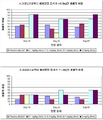
도 4는 인간 환자에게 ActRIIb-Fc 단일 투약의 피하 투여후 15, 29 또는 27일 시점에서 제지방량의 ≥ 0.5 ㎏ (상부 패널) 또는 ≥ 1.0 ㎏ (하부 패널) 증가된 환자의 비율을 나타낸다.
도 5는 인간 환자에게 ActRIIb-Fc 단일 투약의 피하 투여후 다양한 시간대에서 지방 대사의 혈청 생체표식인 렙틴의 변화를 나타낸다.
도 6은 인간 환자에게 ActRIIb-Fc 단일 투약의 피하 투여후 다양한 시간대에서 지방 대사의 혈청 생체표식인 아디포넥틴의 변화를 나타낸다.
도 7은 인간 환자에게 ActRIIb-Fc 단일 투약의 피하 투여후 다양한 시간대에서 골 형성의 혈청 생체표식인 골-특이적 알카리 포스파타제 (BSAP)의 평균 변화율을 나타낸다.
도 8은 인간 환자에게 ActRIIb-Fc 단일 투약의 피하 투여후 다양한 시간대에서 골 재흡수의 혈청 생체표식인 C-말단 유형 1 콜라겐 텔로펩티드 (CTX)의 평균 변화율을 나타낸다.
도 9는 인간 환자에게 ActRIIb-Fc 단일 투약의 피하 투여후 다양한 시간대에서 혈청 난포-자극 호르몬 (FSH)의 평균 변화율을 나타낸다.
도 10은 3 ㎎/㎏ ActRIIb-Fc의 단일 피하 투여에 의해 투약된 대표적인 인간 환자에서 대퇴부 단편의 자기공명영상 (MRI) 스캔을 나타낸다. 상부 패널은 대퇴의 MRI 평가를 나타내고, 중간 패널은 9일 시점에서 기저수준을 나타내고, 아래 패널은 투약후 29일 시점의 결과를 나타낸다. 근육은 회색, 피하 지방은 분홍, 그리고 근육내 지방은 녹색으로 나타낸다.
도 11은 플라시보와 비교하였을 때, 1 ㎎/㎏ ActRIIb-Fc 또는 3 ㎎/㎏ ActRIIb-Fc의 단일 피하 투여로 투약된 인간 개체의 경우 29일 시점에서 대퇴 근육량에서 기준으로부터 형균 변화율을 나타낸다.
도 12는 서열 번호: 1로부터 ActRIIb의 신호 서열과 세포외 도메인(서열 번호: 1의 잔기 1-134)과 서열 번호: 2로 나타낸 ActRIIb의 세포외 도메인의 배열을 나타낸다. 나타낸 것과 같이, 신호 서열은 길이가 19개인 아미노산이다. 따라서, 서열 번호: 1에서 위치 X의 아미노산은 서열 번호: 2에서 X-19에 대응하는 위치를 가진다. 설명하자면, 서열 번호:1에서 위치 30의 아미노산은 서열 번호:2에서 위치 11의 아미노산이다. 여기에서 설명된 다른 ActRIIb 서열에서도 유사한 상관관계를 결정할 수 있다.
도 13은 인간 ActRIIa 및 ActRIIb의 배열을 나타낸다. 박스로 표시된 잔기들은 ActRIIb 및 ActRIIa 다중 결정 구조의 조성 분석에 근거하여 리간드(가령, 리간드 결합 포켓)에 직접적으로 접촉하는 것으로 보이는 아미노산 잔기를 나타낸다.
도 14는 실시예 5에서 설명된 다수의 상승 투약 연구 동안 다양한 시점(일자)에서 혈청내 ActRIIb-hFc의 약물동태학 프로파일을 나타낸다.
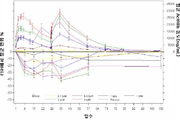
도 15에서 위 축에는 ActRIIb-hFc의 혈청 농도를 나타내고, 아래축에는 난포자극 호르몬(FSH)의 변화율을 나타낸다.
도 16은 DXA로 측정하였을 때 ActRIIb-hFc의 투약을 변화시켜 야기된 전체 제지방량의 변화 비율을 나타낸다. This patent or application includes drawings in at least one color. A copy of this patent or patent application containing such drawings shall be furnished to the JPO together with any payment of any fees required.
Figure 1 shows multiple sequence alignment of various vertebrate ActRIIb proteins and human ActRIIA.
Figure 2 shows a pharmacokinetic (PK) profile in human patients for single-dosed ActRIIb-Fc administered subcutaneously.
Figure 3 shows the mean percent change in lean body mass at 15, 29 or 27 days after subcutaneous administration of a single dose of ActRIIb-Fc to a human patient.
Figure 4 shows the proportion of patients with increased ≥ 0.5 kg (upper panel) or ≥ 1.0 kg (lower panel) of fat mass at 15, 29 or 27 days after subcutaneous administration of ActRIIb-Fc single dose to human patients.
Figure 5 shows the change in leptin, a serum biomarker of fat metabolism, at various time points after subcutaneous administration of ActRIIb-Fc monotherapy to human patients.
Figure 6 shows the change in adiponectin, a serum biomarker of fat metabolism, at various time points after subcutaneous administration of ActRIIb-Fc monotherapy to human patients.
Figure 7 shows the mean rate of change of bone-specific alkaline phosphatase (BSAP), a serum biomarker of bone formation at various time points after subcutaneous administration of ActRIIb-Fc monotherapy to human patients.
Figure 8 shows the mean rate of change of C-
Figure 9 shows the average rate of change of serum follicle-stimulating hormone (FSH) at various time points after subcutaneous administration of ActRIIb-Fc single dose to human patients.
Figure 10 shows a magnetic resonance imaging (MRI) scan of a femoral fragment in a representative human patient dosed by a single subcutaneous administration of 3 mg / kg ActRIIb-Fc. The upper panel shows the MRI evaluation of the femur, the middle panel shows the baseline level at 9 days, and the lower panel shows the results at 29 days after dosing. Muscles are gray, subcutaneous fat is pink, and muscle fat is green.
Fig. 11 shows the rate of change of bacterium from baseline in the amount of femur muscle at 29 days for a human subject administered with a single subcutaneous administration of 1 mg / kg ActRIIb-Fc or 3 mg / kg ActRIIb-Fc as compared to placebo.
Figure 12 shows the sequence of the extracellular domain of ActRIIb from SEQ ID NO: 1 and the extracellular domain of ActRIIb (residues 1-134 of SEQ ID NO: 1) and of ActRIIb of SEQ ID NO: 2. As shown, the signal sequence is an amino acid with 19 amino acids in length. Thus, the amino acid at position X in SEQ ID NO: 1 has a position corresponding to X-19 in SEQ ID NO: 2. To illustrate, the amino acid at
Figure 13 shows the sequence of human ActRIIa and ActRIIb. Boxed residues represent amino acid residues that appear to be in direct contact with a ligand (e. G., A ligand binding pocket) based on a compositional analysis of ActRIIb and ActRIIa multi-crystal structures.
Figure 14 shows the pharmacokinetic profile of ActRIIb-hFc in serum at various time points (days) during the multiple uptake study studies described in Example 5.
In FIG. 15, the upper axis represents the serum concentration of ActRIIb-hFc, and the lower axis represents the rate of change of FSH (follicle stimulating hormone).
Figure 16 shows the percentage change in total fat mass caused by changing the dose of ActRIIb-hFc as measured by DXA.
1. One. 개요summary
TGF-베타 슈퍼패밀리는 다양한 성장 인자들을 포함하는데, 이들은 공통적인 서열 요소들 및 구조적 모티프를 공유한다. 이들 단백질들은 척추동물 및 무척추동물 모두에서 매우 다양한 유형의 세포에 생물학적 영향을 발휘하는 것으로 알려져있다. 슈퍼패밀리 구성원들은 패턴 형성 및 조직 설계에서 배발생동안 중요한 기능을 수행하고, 그리고 지방세포분화(adipogenesis), 근육형성(myogenesis), 연골형성(chondrogenesis), 심장형성(cardiogenesis), 혈액생성(hematopoiesis), 신경발생(neurogenesis), 및 상피세포 분화를 포함하는 다양한 분화 과정에 영향을 줄 수 있다. TGF-베타 패밀리의 구성원의 활성을 조절함으로써, 유기체내에서 유의적인 생리적 변화를 일으키는 것이 가능하다. 예를 들면, Piedmontese 및 Belgian Blue 소 품종은 근육량의 상당한 증가를 야기하는 GDF8 (또는 미오스타틴이라고 부름) 유전자에 기능-상실 돌연변이를 가진다. Grobet et al ., Nat Genet . 1997, 17(1):71-4. 더욱이, 인간에서, GDF8의 비활성 대립유전자는 증가된 근육량과 연관이 있으며, 예외적 강도라고 보고한다. Schuelke et al ., N Engl J Med 2004, 350:2682-8. The TGF-beta superfamily contains a variety of growth factors, which share common sequence elements and structural motifs. These proteins are known to exert a biological effect on a wide variety of cells in both vertebrates and invertebrates. Super family members perform important functions during embryogenesis in pattern formation and tissue design, and are involved in adipogenesis, myogenesis, chondrogenesis, cardiogenesis, hematopoiesis, , Neurogenesis, and epithelial cell differentiation. ≪ RTI ID = 0.0 > By modulating the activity of members of the TGF-beta family, it is possible to cause significant physiological changes in the organism. For example, the Piedmontese and Belgian Blue cattle breeds have function-loss mutations in the GDF8 (or myostatin) gene, which causes a significant increase in muscle mass. Grobet meat al ., Nat Genet . 1997, 17 (1): 71-4. Moreover, in humans, the inactive allele of GDF8 is associated with increased muscle mass and reports an exceptional intensity. Schuelke meat al ., N Engl J Med 2004, 350: 2682-8.
악티빈은 TGF-베타 슈퍼패밀리에 속하는 이량체 폴리펩티드 성장 인자다. 두 개의 밀접하게 관련된 β 소단위의 동종/이종이량체(βAβA, βBβB, 및 βAβB)인 3가지 주요 악티빈 형(A, B 및 AB)이다. 인간 게놈은 또한 악티빈 C 와 악티빈 E를 인코드하는데, 이들은 주로 간에서 발현된다. TGF-베타 슈퍼패밀리에서, 악티빈은 난소 및 태반 세포내에서 호르몬 생산을 자극하고, 신경 세포 생존을 지원하고, 세포 유형에 따라 양성적으로 또는 음성적으로 세포-주기 진행에 영향을 주며, 그리고 최소한 양서류 배에서 중배엽 분화를 유도할 수 있는 독특하고, 다중 기능 인자다(DePaolo et al., 1991, Proc Soc Ep Biol Med . 198:500-512; Dyson et al ., 1997, Curr Biol . 7:81-84; Woodruff, 1998, Biochem Pharmacol . 55:953-963). 더욱이, 자극을 받은 인간 단핵구 백혈구 세포들에서 단리된 적혈구 분화 인자 (EDF)는 악티빈 A와 동일한 것으로 밝혀졌다(Murata et al ., 1988, PNAS , 85:2434). 악티빈 A는 골수에서 적혈구 생성에 있어서 자연적인, 양성 조절물질로 작용한다고 제시되었다. 몇몇 조직에서, 악티빈 신호생성은 이와 관련된 이종이량체, 인히빈(inhibin)에 의해 길항된다. 예를 들면, 뇌하수체로부터 난포-자극 호르몬 (FSH)이 방출되는 동안, 악티빈은 FSH 분비 및 합성을 촉진시키지만, 인히빈은 FSH 분비 및 합성을 억제한다. 악티빈 생체활성을 조절할 수 있는 및/또는 악티빈에 결합할 수 있는 기타 단백질은 폴리스타틴 (FS), 폴리스타틴-관련된 단백질 (FSRP), 그리고α2-마크로글로블린을 포함한다. Actin is a dimeric polypeptide growth factor belonging to the TGF-beta superfamily. A two homogeneous / heterogeneous two closely related β subunits dimer (β A β A, β B β B, β A and β B) of three primary bad activin type (A, B, and AB). The human genome also encodes actin C and actin E, which are mainly expressed in the liver. In the TGF-beta superfamily, actinib stimulates hormone production in ovarian and placental cells, supports neural cell survival, affects cell-cycle progression positively or negatively, depending on cell type, and at least It is a unique, multifunctional factor that can induce mesodermal differentiation in amphibian pear ( DePaolo et al., 1991, Proc Soc Ep Biol Med . 198: 500-512; Dyson meat al ., 1997, Curr Biol . 7: 81-84; Woodruff, 1998, Biochem Pharmacol . 55: 953-963 ). Furthermore, the erythrocyte differentiation factor (EDF) isolated in stimulated human monocytic leukocyte cells was found to be identical to that of actin A ( Murata meat al ., 1988, PNAS , 85: 2434 ). Actin A has been shown to act as a natural, positive regulator of erythropoiesis in the bone marrow. In some tissues, actin signaling is antagonized by an associated heterodimer, inhibin. For example, while follicle-stimulating hormone (FSH) is released from the pituitary gland, actin promotes FSH secretion and synthesis, while inhibin inhibits FSH secretion and synthesis. Other proteins capable of modulating actinib bioactivity and / or capable of binding to actinib include polystatin (FS), polystatin-related protein (FSRP), and alpha 2 -macroglobulin.
TGF-β 패밀리 신호들은 타입 I 및 타입 II 세린/ 트레오닌 키나제 수용체들의 이종 복합체에 의해 중재되고, 리간드 자극 시에 하류 Smad 단백질을 포스포릴화시키고, 활성화시킨다(Massagu , 2000, Nat. Rev . Mol . Cell Biol . 1:169-178). 이들 타입 I 및 타입 II 수용체들은 시스테인이 많은 부분을 가진 리간드-결합 세포외 도메인, 막통과 도메인, 그리고 예측된 세린/트레오닌 특이성을 가진 세포질 도메인으로 구성된, 막통과 단백질이다. 타입 I 수용체들은 신호생성에 필수적이며; 그리고 타입 II 수용체들은 리간드의 결합과 타입 I 수용체들의 발현에 요구된다. 타입 I 및 II 악티빈 수용체들은 리간드 결합 후에 안정적인 복합체를 형성하여, 타입 I 수용체들 by 타입 II 수용체들에 의한 타입 I 수용체들의 포스포릴화를 초래한다. TGF-β family of signals are Type I and Type II are mediated by the two kinds of complexes of serine / threonine kinase receptors, the downstream Smad protein phosphorylation and upon ligand stimulation, activation (Massagu, 2000, Nat. Rev . Mol. Cell Biol . 1: 169-178 ). These type I and type II receptors are transmembrane proteins composed of ligand-associated extracellular domains with cysteine-rich portions, transmembrane domains, and cytoplasmic domains with predicted serine / threonine specificity. Type I receptors are essential for signal generation; And type II receptors are required for ligand binding and expression of type I receptors. Type I and II actin receptors form stable complexes after ligand binding resulting in the phosphorylation of type I receptors by type I receptors by type II receptors.
2가지 관련된 유형 II 수용체, ActRIIa 및 ActRIIb는 악티빈에 대한 유형 II 수용체로 확인되었다( Mathews and Vale , 1991, Cell 65:973-982; Attisano et al ., 1992, Cell 68: 97-108). 게다가 악티빈, ActRIIa 및 ActRIIb는 BMP7, Nodal, GDF8, 그리고 GDF11를 포함하는 몇 가지 다른 TGF-β 패밀리 단백질들과 생화학적으로 상호작용할 수 있다(Yamashita et al ., 1995, J. Cell Biol . 130:217-226; Lee and McPherron , 2001, Proc . Natl . Acad . Sci . 98:9306-9311; Yeo and Whitman , 2001, Mol . Cell 7: 949-957; Oh et al ., 2002, Genes Dev . 16:2749-54). ALK4는 악티빈, 특히 악티빈 A의 주요 유형 I 수용체이며, 그리고 ALK-7은 악티빈, 특히 악티빈 B의 수용체로 작용할 수 있다.Two related type II receptors, ActRIIa and ActRIIb, have been identified as type II receptors for actinib ( Mathews and Vale , 1991, Cell 65: 973-982; Attisano meat al ., 1992, Cell 68: 97-108 ). In addition, actibin, ActRIIa and ActRIIb can interact biochemically with several other TGF-β family proteins, including BMP7, Nodal, GDF8, and GDF11 ( Yamashita meat al ., 1995, J. Cell Biol . 130: 217-226; Lee and McPherron , 2001, Proc . Natl . Acad . Sci . 98: 9306-9311; Yeo and Whitman , 2001, Mol . Cell 7: 949-957; Oh meat al ., 2002, Genes Dev . 16: 2749-54 ). ALK4 is the major type I receptor of actinib, especially actin A, and ALK-7 can act as a receptor for actinib, especially actinib B.
여기에서 설명된 것과 같이, ActRIIb 폴리펩티드 (ActRIIb[20-134]-Fc)는 생체내에서 뼈 성장을 촉진시키고, 골밀도를 증가시키는데 유효하며, 근육량 또한 증가시킨다. 임의의 특정 기전에 결부되는 것을 원하지는 않지만, 뼈에서 ActRIIb의 효과는 악티빈 길항 효과에 의해 주로 원인이 되는 것으로 예상된다. 기전과 무관하게, ActRIIb 길항제는 인간에서 동화/항-재흡수 복합 효과와 일치되는 방식으로 골 밀도를 증가시키고, 골 생체표식에 영향을 주는 것이 분명하다. 뼈는 성장 또는 수축하고, 그리고 뼈를 만들고, 광화작용을 자극하는 인자(주로 골아세포)와 뼈를 파괴하고, 탈광화시키는 인자(주로 파골세포)들의 균형에 따라 밀도가 증가 또는 감소되는 동적인 조직이라는 것이다. 뼈 성장 및 광화작용은 생산 인자에 의해 증가되거나, 파괴 인자에 의해 파괴되거나, 또는 이둘 모두에 의해 증가 또는 감소될 수 있다. “뼈 성장을 촉진시키고” 그리고“뼈 광화작용을 증가시키는”용어는 뼈에서 관찰할 수 있는 물리적 변화를 지칭하며, 뼈에서 일어나는 변화 기전에 중립적인 의도이다. As described herein, ActRIIb polypeptides (ActRIIb [20-134] -Fc) are effective in promoting bone growth in vivo, increasing bone density, and also increasing muscle mass. While not wanting to be bound to any particular mechanism, the effect of ActRIIb in bone is expected to be primarily caused by an antactivin antagonistic effect. Regardless of the mechanism, it is clear that ActRIIb antagonists increase bone density and affect bone biomarkers in a manner consistent with the assimilation / anti-reabsorption complex effect in humans. The bone grows or contracts, and the bones are made up of dynamic (mainly osteoblasts), which increase or decrease in density depending on the balance of factors (mainly osteoblasts) and the factors that degrade and degrade the bone Organization. Bone growth and mineralization may be increased by the production factor, destroyed by the destructive factor, or both increased or decreased by both. The term " promoting bone growth " and " increasing bone mineralization " refers to a physical change that can be observed in the bone, and is a neutral intention to the mechanism of change in bone.
골 성장을 촉진하는 것에 추가하여, 본 내용은 ActRIIb 또는 ActRIIb 리간드의 비정상적인 활성과 관련된 질환 또는 몸의 상태를 치료 또는 예방하는데 ActRIIb를 이용하는 것을 고려한다. 예를 들면, ActRIIb 길항제들은 인간 또는 동물의 장애들 또는 몸의 상태를 치료하는데 이용할 수 있다. 예시적인 이러한 장애들 또는 몸의 상태는 대사 장애들 예컨데 유형 2 당뇨병, 내당능 장애, 대사 증후군 (예를 들면, 증후군 X), 그리고 외상에 의해 유도된 인슐린 저항성 (예를 들면, 화상 또는 질소 불균형); 지방 조직 장애들 (예를 들면, 비만); 근육 및 신경근 장애들 예컨대, 근위축증 (근위축증 포함); 근위축성 측색 경화증 (ALS); 근육 위축증; 장기 위축; 박약; 수근관 증후군; 울혈성 폐쇄성 폐질환; 그리고 근육감소증, 악액질 및 기타 근육 소모 증후군을 포함하나 이에 국한되지 않는다. 다른 예들은 골다공증, 특히 노인 및/또는 폐경기 여성에서 골다공증; 글루코코르티코이드-유도된 골다공증; 골감소증; 골관절염; 그리고 골다공증-관련된 골절을 포함하나 이에 국한되지 않는다. 여전히 추가 예로는 만성 글루코코르티코이드 요법으로 인한 낮은 골량, 조기 성샘 부전, 안드로겐 억제, 비타민 D 결핍, 2차적인 부갑상선항진증, 영양 결핍, 그리고 신경성 식욕부진을 포함한다. In addition to promoting bone growth, the present disclosure contemplates the use of ActRIIb in treating or preventing a disease or condition associated with abnormal activity of an ActRIIb or ActRIIb ligand. For example, ActRIIb antagonists may be used to treat human or animal disorders or conditions of the body. Exemplary such disorders or conditions include, but are not limited to, metabolic disorders such as
본 명세서는 인간에서 뼈 성장을 촉진시키고, 골밀도를 증가시키고, 또한 근육량을 증가시키기 위하여 ActRIIb 폴리펩티드와 기타 ActRIIb 길항제를 이용하는 방법을 제공한다. ActRIIb 길항제는 예를 들면, 리간드-결합 ActRIIb 폴리펩티드들 (예를 들면, ActRIIb-Fc), ActRIIb에 결합하여, 예컨데 악티빈 또는 미오스타틴과 같은 하나 이상의 리간드들의 결합을 방해하는 항체들, ActRIIb 결합에 대해 선택된 비-항체 단백질들(예를 들면, 이러한 단백질의 예시 및 이를 기획하고 선별하는 방법들에 대한 예, WO/2002/088171, WO/2006/055689, 및 WO/2002/032925), Fc 도메인에 흔히 부착된, ActRIIb 결합에 대해 선택된 랜덤화된 펩티드를 포함한다. ActRIIb 결합 활성을 가지는 두 가지 상이한 단백질(또는 기타 모이어티), 특히, 타입 I (가령, 가용성 타입 I 악티빈 수용체) 및 타입 II (가령, 가용성 타입 II 악티빈 수용체) 결합 부위를 차단하는 두 가지 상이한 단백질은 서로 연결되어, 이가기능성 결합 분자를 만들 수 있다. ActRIIb 신호생성 축을 억제하는 핵산 아파타머, 소분자들 및 기타 물질은 ActRIIb 길항제에 포함된다. The present disclosure provides methods of using ActRIIb polypeptides and other ActRIIb antagonists to promote bone growth in humans, increase bone density, and also increase muscle mass. ActRIIb antagonists include, for example, ligands-conjugated ActRIIb polypeptides (e.g., ActRIIb-Fc), antibodies that bind to ActRIIb and interfere with the binding of one or more ligands such as actinib or myostatin, (For example, examples of such proteins and methods for planning and selecting them, WO / 2002/088171, WO / 2006/055689, and WO / 2002/032925), Fc domains Lt; RTI ID = 0.0 > ActRIIb < / RTI > (Or other moiety) that binds to two different proteins (or other moieties) that have an ActRIIb binding activity, particularly one that blocks type I (such as Soluble Type I Aktivine Receptor) and Type II The different proteins can be linked together to form a bifunctional binding molecule. Nucleic acid apatamers, small molecules and other substances that inhibit the ActRIIb signaling axis are included in ActRIIb antagonists.
명세서에서 이용된 용어는 당업계, 그리고 본 내용 및 명세서내에서 이들 용어가 이용된 단락내에서 공지되어 있는 통상의 의미를 가진다. 특정 용어는 명세서 곳곳에서 논의되어 당업자에게 본 발명의 조성물 및 방법을 설명함에 있어서 추가 지침을 제공하며, 이들을 어떻게 만들고 이용하는지를 설명한다. 임의의 용어의 사용 범위 또는 의미는 용어가 이용된 특정 단락으로부터 자명할 것이다. The terms used in the specification have their ordinary meaning as known in the art and in the context of the present disclosure and in the paragraphs in which these terms are used. Certain terms are discussed throughout the specification to provide those skilled in the art with additional guidance in describing the compositions and methods of the present invention and how they are made and utilized. The scope or meaning of any term will be apparent from the particular paragraph in which the term is used.
“약” 및 “대략”은 임의의 측정 성질 또는 정밀성에 있어서 제공된 양의 일반적으로 수용되는 오차 범위를 의미한다. 일반적으로 오차 범위의 예는 주어진 값의 또는 값 범위의 20 (%), 바람직하게는 10% 이내, 그리고 더 바람직하게는 5% 이내가 된다. &Quot; about " and " roughly " mean a generally accepted tolerance range of amounts provided for any measurement property or precision. Typically, an example of an error range is 20 (%), preferably within 10%, and more preferably within 5% of a given value or range of values.
대안으로, 그리고 특정 생물학적 시스템내에서, 용어“약”및 “대략”은 주어진 값의 크기 범위의 10배, 바람직하게는 5-배 그리고 더 바람직하게는 2배가 된다. 여기에서 제공되는 수치 량은 다른 언급이 없는 한, 근사값이며, 용어“약” 또는 “대략”은 명시적으로 언급되지 않을 경우 추론될 수 있다.Alternatively, and within certain biological systems, the terms " about " and " about " are 10 times, preferably 5-fold, and more preferably 2-times the size range of a given value. The numerical quantities provided herein are approximate unless otherwise noted, and the terms " about " or " approximately " may be deduced if not explicitly stated.
본 발명의 방법은 하나 이상의 돌연변이 (서열 변이체)에 대한 야생형 서열을 포함하는 서열을 비교하는 단계들을 포함할 수 있다. 이러한 비교는 일반적으로 폴리머 서열의 배열을 포함하는데, 가령, 당업계에 공지되어 있는 서열 정렬 프로그램 및/또는 알고리즘(예를 들면, BLAST, FASTA 및 MEGALIGN, 및 그 외 몇가지)을 포함한다. 당업자는 이러한 정렬에서 돌연변이는 잔기 삽입 또는 결손을 포함하는 이러한 정렬에서, 서열 정렬은 삽입된 또는 결손된 잔기를 포함하지 않는 폴리머 서열에 “갭” (일반적으로 - 또는 “A”로 나타냄)을 도입시킨다는 것을 인지할 수 있다. The methods of the invention may include comparing sequences comprising wild-type sequences to one or more mutations (sequence variants). Such comparisons generally include an array of polymer sequences, including, for example, sequence alignment programs and / or algorithms known in the art (e.g., BLAST, FASTA, and MEGALIGN, and others). One skilled in the art will appreciate that in such an alignment where the mutation in such an alignment involves residue insertion or deletion, the sequence alignment introduces a " gap " (generally indicated by - or " A ") in the polymer sequence that does not include an inserted or missing residue And the like.
모든 문법적 형태와 철자의 변이성에서“상동성(Homologous)”은 동일한 유기체 종의 슈퍼패밀리의 단백질을 포함한 “공통의 진화 기원”을 보유한 단백질과 상이한 유기체 종의 상동성 단백질의 두 단백질 사이에 상관 관계를 지칭한다. 이러한 단백질 (및 이를 인코드하는 핵산)은 서열 상동성을 가지는데, 동일성 비율 또는 특정 잔기 또는 모티프의 존재 및 보존된 위치들에 의해 서열 유사성이 반영된다."Homologous" in all grammatical forms and variants of spelling means that there is a correlation between the two proteins of a homologous protein of a different organism species than a protein having a "common evolutionary origin" including the proteins of the superfamily of the same organism species Quot; Such proteins (and nucleic acids encoding them) are homologous in sequence, reflecting sequence similarity by the identity ratio or the presence of certain residues or motifs and conserved positions.
모든 문법적 형태에서“서열 유사성(similarity)”은 공통의 진화 지원을 공유하는 또는 공유하지 않는 핵산 또는 아미노산 서열 사이에 동일성 또는 일치 정도를 지칭한다. In all grammatical forms, " similarity " refers to the degree of identity or agreement between nucleic acid or amino acid sequences that share or do not share a common evolutionary support.
그러나, 공통의 용도 및 본 출원에서, “매우”와 같은 부사에 의해 수식될 때, “상동성”은 서열 유사성을 지칭하며, 공통의 서열 기원과 관련되거나 관련되지 않을 수 있다.
However, in common usage and in the present application, when modified by adverbs such as " very "," homology " refers to sequence similarity and may or may not relate to a common sequence origin.
2.2. ActRIIbActRIIb 폴리펩티드들 Polypeptides
특정 측면에서, 본 발명은 ActRIIb 폴리펩티드에 관한 것이다. 여기에서 이용된 것과 같이, “ActRIIb”은 임의의 종 및 돌연변이 또는 기타 변형에 의해 ActRIIb로부터 유도된 변이체의 악티빈 수용체 유형 IIb(ActRIIb) 단백질들의 패밀리 종을 지칭한다. 여기에서 ActRIIb로 언급하는 것은 현재 확인된 임의의 형태를 말하는 것으로 이해한다. ActRIIb 패밀리의 구성원들은 일반적으로, 시스테인이 많은 부분을 가진 리간드-결합 세포외 도메인, 막통과 도메인, 그리고 예측된 세린/트레오닌 키나제 활성을 가진 세포질 도메인을 포함하는 막통과 단백질이다. In particular aspects, the invention is directed to an ActRIIb polypeptide. As used herein, " ActRIIb " refers to a family of actin receptor type IIb (ActRIIb) proteins of a variant derived from ActRIIb by any species and mutation or other variation. It is understood here that referring to ActRIIb refers to any form currently identified. Members of the ActRIIb family are generally transmembrane proteins, including ligand-associated extracellular domains with cysteine-rich portions, transmembrane domains, and cytoplasmic domains with predicted serine / threonine kinase activity.
“ActRIIb 폴리펩티드”는 ActRIIb 패밀리 구성원의 임의의 자연 발생적 폴리펩티드와 유용한 활성을 보유하는 임의의 이의 변이체(돌연변이, 단편들, 융합, 및 펩티드모방체 형태를 포함)를 포함하는 폴리펩티드를 포함한다. 예를 들면, WO/2006/012627 참고, 이의 ActRIIb 폴리펩티드들은 여기 참고자료에 포함된다. 예를 들면, ActRIIb 폴리펩티드는 ActRIIb 폴리펩티드의 서열에 최소한 약 80% 동일성, 바람직하게는 최소한 85%, 90%, 95%, 97%, 99% 또는 그 이상의 동일성을 가지는 임의의 공지의 ActRIIb 서열로부터 유도된 폴리펩티드를 포함한다. 예를 들면, 본 발명의 ActRIIb 폴리펩티드는 ActRIIb 단백질에 결합하고, 이의 기능을 억제할 수 있다. ActRIIb 폴리펩티드는 생체내에서 적혈구 세포 생성을 촉진시키는 활성으로 선택될 수 있다. ActRIIb 폴리펩티드의 예는 인간 ActRIIb 전구 폴리펩티드 (서열 번호: 1) 및 가용성 인간 ActRIIb 폴리펩티드 (가령, 서열 번호: 2, 3, 13, 17 또는 20)를 포함한다.&Quot; ActRIIb polypeptide " includes any naturally occurring polypeptide of the ActRIIb family member and a polypeptide comprising any of its variants (including mutations, fragments, fusions, and peptide mimetic forms) that retain useful activity. For example, see WO / 2006/012627, the ActRIIb polypeptides thereof are included in the excitation reference material. For example, an ActRIIb polypeptide may be derived from any known ActRIIb sequence having at least about 80% identity, preferably at least 85%, 90%, 95%, 97%, 99% or more identity to the sequence of an ActRIIb polypeptide Lt; / RTI > polypeptide. For example, an ActRIIb polypeptide of the present invention can bind to an ActRIIb protein and inhibit its function. ActRIIb polypeptides can be selected as activities that promote red blood cell production in vivo. Examples of ActRIIb polypeptides include human ActRIIb precursor polypeptides (SEQ ID NO: 1) and soluble human ActRIIb polypeptides (e.g., SEQ ID NOs: 2, 3, 13, 17 or 20).
인간 ActRIIb 전구 단백질 서열은 다음과 같다: Human ActRIIb progenitor protein sequences are as follows:

신호 펩티드는 한줄 밑줄로 표시하며; 세포외 도메인은 굵게, 그리고 잠재적인 N-연결된 당화 부위는 박스로 나타낸다. Signal peptides are indicated by a single underline; The extracellular domain is bold, and the potential N-linked glycosylation sites are boxed.
인간 ActRIIb 가용성 (세포외), 프로세스된 폴리펩티드 서열은 다음과 같다:Human ActRIIb solubility (extracellular), the processed polypeptide sequence is as follows:

일부 조건에서, 단백질은 N-말단에 “SGR…” 서열을 가지는 것으로 만들어질 수 있다. 세포외 도메인의 C-말단 “꼬리”는 밑줄로 나타낸다. “꼬리”가 삭제된 서열(Δ15 서열)은 다음과 같다:In some conditions, the protein has a "SGR ... Quot; sequence. ≪ / RTI > The C-terminal " tail " of the extracellular domain is underlined. The sequence (? 15 sequence) from which the " tail " was deleted is as follows:
GRGEAETRECIYYNANWELERTNQSGLERCEGEQDKRLHCYASWANSSGTIELVKKGCWLDDFNCYDRQECVATEENPQVYFCCCEGNFCNERFTHLPEA (서열 번호: 3)GRGEAETRECIYYNANWELERTNQSGLERCEGEQDKRLHCYASWANSSGTIELVKKGCWLDDFNCYDRQECVATEENPQVYFCCCEGNFCNERFTHLPEA (SEQ ID NO: 3)
일부 조건에서, 단백질은 N-말단에 “SGR…” 서열을 가지는 것으로 만들어질 수 있다. 인간 ActRIIb 전구 단백질을 인코드하는 핵산 서열은 다음과 같다: (Genbank entry NM_001106의 뉴클레오티드 5-1543)In some conditions, the protein has a "SGR ... Quot; sequence. ≪ / RTI > Nucleic acid sequences encoding the human ActRIIb precursor protein are as follows: (nucleotides 5-1543 of Genbank entry NM_001106)
GGCTGTTCGATTTGAGCCAGGGAAACCTCCAGGGGACACCCACGGACAGGTAGGCACGAGACGGTACATGGCTCCTGAGGTGCTCGAGGGAGCCATCAACTTCCAGAGAGATGCCTTCCTGCGCATTGACATGTATGCCATGGGGTTGGTGCTGTGGGAGCTTGTGTCTCGCTGCAAGGCTGCAGACGGACCCGTGGATGAGTACATGCTGCCCTTTGAGGAAGAGATTGGCCAGCACCCTTCGTTGGAGGAGCTGCAGGAGGTGGTGGTGCACAAGAAGATGAGGCCCACCATTAAAGATCACTGGTTGAAACACCCGGGCCTGGCCCAGCTTTGTGTGACCATCGAGGAGTGCTGGGACCATGATGCAGAGGCTCGCTTGTCCGCGGGCTGTGTGGAGGAGCGGGTGTCCCTGATTCGGAGGTCGGTCAACGGCACTACCTCGGACTGTCTCGTTTCCCTGGTGACCTCTGTCACCAATGTGGACCTGCCCCCTAAAGAGTCAAGCATCTAA (서열 번호: 4)GGCTGTTCGATTTGAGCCAGGGAAACCTCCAGGGGACACCCACGGACAGGTAGGCACGAGACGGTACATGGCTCCTGAGGTGCTCGAGGGAGCCATCAACTTCCAGAGAGATGCCTTCCTGCGCATTGACATGTATGCCATGGGGTTGGTGCTGTGGGAGCTTGTGTCTCGCTGCAAGGCTGCAGACGGACCCGTGGATGAGTACATGCTGCCCTTTGAGGAAGAGATTGGCCAGCACCCTTCGTTGGAGGAGCTGCAGGAGGTGGTGGTGCACAAGAAGATGAGGCCCACCATTAAAGATCACTGGTTGAAACACCCGGGCCTGGCCCAGCTTTGTGTGACCATCGAGGAGTGCTGGGACCATGATGCAGAGGCTCGCTTGTCCGCGGGCTGTGTGGAGGAGCGGGTGTCCCTGATTCGGAGGTCGGTCAACGGCACTACCTCGGACTGTCTCGTTTCCCTGGTGACCTCTGTCACCAATGTGGACCTGCCCCCTAAAGAGTCAAGCATCTAA (SEQ ID NO: 4)
인간 ActRIIb 가용성 (세포외) 폴리펩티드를 인코드하는 핵산 서열은 다음과 같다: Nucleic acid sequences encoding human ActRIIb soluble (extracellular) polypeptides are as follows:
TCTGGGCGTGGGGAGGCTGAGACACGGGAGTGCATCTACTACAACGCCAACTGGGAGCTGGAGCGCACCAACCAGAGCGGCCTGGAGCGCTGCGAAGGCGAGCAGGACAAGCGGCTGCACTGCTACGCCTCCTGGGCCAACAGCTCTGGCACCATCGAGCTCGTGAAGAAGGGCTGCTGGCTAGATGACTTCAACTGCTACGATAGGCAGGAGTGTGTGGCCACTGAGGAGAACCCCCAGGTGTACTTCTGCTGCTGTGAAGGCAACTTCTGCAACGAGCGCTTCACTCATTTGCCAGAGGCTGGGGGCCCGGAAGTCACGTACGAGCCACCCCCGACAGCCCCCACC (서열 번호: 5)TCTGGGCGTGGGGAGGCTGAGACACGGGAGTGCATCTACTACAACGCCAACTGGGAGCTGGAGCGCACCAACCAGAGCGGCCTGGAGCGCTGCGAAGGCGAGCAGGACAAGCGGCTGCACTGCTACGCCTCCTGGGCCAACAGCTCTGGCACCATCGAGCTCGTGAAGAAGGGCTGCTGGCTAGATGACTTCAACTGCTACGATAGGCAGGAGTGTGTGGCCACTGAGGAGAACCCCCAGGTGTACTTCTGCTGCTGTGAAGGCAACTTCTGCAACGAGCGCTTCACTCATTTGCCAGAGGCTGGGGGCCCGGAAGTCACGTACGAGCCACCCCCGACAGCCCCCACC (SEQ ID NO: 5)
특정 구체예에서, 본 발명은 가용성 ActRIIb 폴리펩티드에 관계한다. 여기에서 설명하는 것과 같이, “가용성 ActRIIb 폴리펩티드”는 일반적으로 ActRIIb 단백질의 세포외 도메인을 포함하는 폴리펩티드를 지칭한다. “가용성 ActRIIb 폴리펩티드”는 여기에서 이용된 것과 같이, ActRIIb 단백질의 임의의 자연 발생적 세포외 도메인과 이의 변이체(돌연변이, 단편들 및 펩티드모방체 형태를 포함)를 포함한다. 악티빈-결합 ActRIIb 폴리펩티드는 예를 들면, 악티빈 AA, AB, BB 또는 C 또는 E 소단위를 포함하는 형태를 포함한 악티빈에 결합하는 능력을 보유하는 펩티드다. 선택적으로, 악티빈-결합 ActRIIb 폴리펩티드는 1 nM 이하의 해리 상수(dissociation constant)로 악티빈 AA에 결합할 것이다. ActRIIb 단백질의 세포외 도메인은 악티빈에 결합하고, 일반적으로 생리학적 조건에서 가용성이며, 따라서, 가용성, 악티빈-결합 ActRIIb 폴리펩티드라고 칭할 수 있다. 가용성, BMP-결합 ActRIIb 폴리펩티드의 예는 서열 번호: 2, 3, 13, 17 또는 20에서 설명된 가용성 폴리펩티드를 포함한다. 서열 번호:13은 ActRIIb(20-134)-hFc라고 하며, 실시예들에서 추가 설명된다. 또다른 가용성 ActRIIb 폴리펩티드의 다른 예는 ActRIIb 단백질의 세포외 도메인에 추가하여, 신호 서열, 예를 들면, 꿀벌 멜리틴 리더 (서열 번호: 14), 조직 플라스미노겐 활성물질(TPA) 리더(서열 번호: 15) 또는 고유 ActRIIb 리더(서열 번호: 16)를 포함한다. 서열 번호: 17에 설명된 ActRIIb-hFc 폴리펩티드는 TPA 리더를 이용한다. In certain embodiments, the invention pertains to soluble ActRIIb polypeptides. As described herein, " soluble ActRIIb polypeptide " refers generally to a polypeptide comprising the extracellular domain of an ActRIIb protein. &Quot; Soluble ActRIIb polypeptide " includes any naturally occurring extracellular domain of ActRIIb protein and variants thereof (including mutations, fragments and peptide mimetic forms), as used herein. An activin-binding ActRIIb polypeptide is a peptide that possesses the ability to bind to an actin, including forms, including, for example, actinib AA, AB, BB, or C or E subunits. Alternatively, an actinib-conjugated ActRIIb polypeptide will bind to an Aktidine AA with a dissociation constant of 1 nM or less. The extracellular domain of the ActRIIb protein binds to actinib and is generally soluble in physiological conditions and may therefore be referred to as a soluble, activin-binding ActRIIb polypeptide. Soluble, BMP-linked ActRIIb polypeptides include the soluble polypeptides set forth in SEQ ID NO: 2, 3, 13, 17 or 20. SEQ ID NO: 13 is referred to as ActRIIb (20-134) -hFc and is further described in the Examples. Other examples of other soluble ActRIIb polypeptides include, in addition to the extracellular domain of the ActRIIb protein, a signal sequence such as a bee melilin leader (SEQ ID NO: 14), a tissue plasminogen active (TPA) leader : 15) or a unique ActRIIb leader (SEQ ID NO: 16). The ActRIIb-hFc polypeptide described in SEQ ID NO: 17 utilizes a TPA reader.
특정 구체예들에서, 본 발명은 ActRIIb 변이체 폴리펩티드들 (예를 들면, 가용성 ActRIIb 폴리펩티드들)에 관계한다. 선택적으로, 단편들, 기능적 변이체들, 그리고 변형된 형태들은 이들의 대응하는 야생형 ActRIIb 폴리펩티드들과 유사한 또는 동일한 생물학적 활성을 가진다. 예를 들면, 본 발명의 ActRIIb 변이체는 ActRIIb 리간드 (예를 들면, 악티빈 A, 악티빈 AB, 악티빈 B, Nodal, GDF8, GDF11 또는 BMP7)에 결합하고, 이의 기능을 억제할 수 있다. 선택적으로, ActRIIb 폴리펩티드는 조직들, 예컨데 뼈, 연골, 근육 또는 지방의 성장을 조절한다. 예시적인 ActRIIb 폴리펩티드들은 인간 ActRIIb 전구 폴리펩티드 (서열 번호: 1)와 가용성 인간 ActRIIb 폴리펩티드들 (예를 들면, 서열 번호: 2, 3, 13, 17, 또는 20)을 포함한다.In certain embodiments, the invention pertains to ActRIIb variant polypeptides (e. G., Soluble ActRIIb polypeptides). Alternatively, the fragments, functional variants, and modified forms have similar or identical biological activities to their corresponding wild-type ActRIIb polypeptides. For example, an ActRIIb variant of the present invention can bind and inhibit the function of an ActRIIb ligand (e.g., actinib A, actinib AB, activin B, Nodal, GDF8, GDF11 or BMP7). Optionally, ActRIIb polypeptides regulate the growth of tissues such as bone, cartilage, muscle or fat. Exemplary ActRIIb polypeptides include human ActRIIb precursor polypeptides (SEQ ID NO: 1) and soluble human ActRIIb polypeptides (e.g., SEQ ID NOs: 2,3, 13,17, or 20).
다른 언급이 없는 한, 여기에서 논의된 ActRIIb 폴리펩티드에서 아미노산 위치는 전구 ActRIIb 폴리펩티드(즉, 서열 번호: 1)를 기준으로 한다. 또다른 ActRIIb 폴리펩티드에서 대응하는 위치는 여기에서 제공하는 정보에 근거하여 바로 확인될 수 있다는 것을 인지해야 한다. 예를 들면, 전구 ActRIIb 폴리펩티드는 서열 번호: 2에 나타낸 것과 같이 ActRIIb의 가용성 세포외 부분에 포함되지 않는 19개 아미노산 리더 서열을 포함한다. 따라서, 서열 번호: 1에서 위치 X의 잔기는 서열 번호: 2에서 잔기 X-19에 대응한다. 예를 들면, 서열 번호: 1의 잔기 30은 서열 번호: 2에서 잔기 11에 대응한다 (도 12 참고). 여기에서 설명된 기타 ActRIIb 서열들에 대해서도 유사한 상관관계를 결정할 수 있다. Unless otherwise stated, the amino acid positions in the ActRIIb polypeptides discussed herein are based on the full-length ActRIIb polypeptide (i.e., SEQ ID NO: 1). It should be appreciated that the corresponding positions in other ActRIIb polypeptides can be identified directly based on the information provided herein. For example, a full-length ActRIIb polypeptide comprises a 19 amino acid leader sequence that is not included in the soluble extracellular portion of ActRIIb as shown in SEQ ID NO: 2. Thus, the residue at position X in SEQ ID NO: 1 corresponds to residue X-19 in SEQ ID NO: 2. For example,
본 내용은 ActRIIb의 기능적으로 활성 부분들과 변이체들을 확인한다. 출원인들은 Hilden et al . ( Blood . 1994 Apr 15;83(8):2163-70)에서 공개된 서열을 가진 Fc 융합 단백질(서열 번호: 1의 아미노산 64(A64)에 대응하는 위치에 알라닌을 가지는)은 악티빈 및 GDF-11에 대해 상대적으로 낮은 친화력을 보유한다. 대조적으로, 위치 64 (R64)에 아르기닌을 보유하는 동일한 Fc 융합 단백질은 낮은 나노몰(nanomolar)에서 높은 피코몰( picomolar) 범위에서 악티빈 및 GDF-11에 대해 높은 친화력을 보유한다. 따라서, R64를 가진 서열은 본 명세서에서 인간 ActRIIb에 대한 야생형 기준 서열로 이용된다. This document identifies functionally active portions and variants of ActRIIb. Applicants are Hilden meat al . ( Having alanine at the position corresponding to amino acid 64 (A64) of SEQ ID NO: 1 ) with the sequence disclosed in Blood 1994
Attisano et al . ( Cell . 1992 Jan 10;68(1):97-108)는 ActRIIb의 세포외 도메인의 C-말단에 프롤린 노트(knot)를 삭제하면 악티빈에 대해 수용체의 친화력이 감소되었다는 것을 보여주었다. 서열 번호: 1의 아미노산 20-119을 보유하는 ActRIIb-Fc 융합 단백질,“ActRIIb(20-119)-Fc”는 ActRIIb(20-134)-Fc와 비교하여 GDF-11 및 악티빈에 대해 감소된 결합을 가지는데, 이 단백질은 프롤린 노트 부분과 완벽한 막근접(juxtamembrane) 도메인 (미국 공개 번호 2009/0005308)을 포함한다. 그러나, ActRIIb(20-129)-Fc 단백질은 비록 프롤린 노트 부분이 파괴되었지만, 야생형과 비교하여 유사한 그러나 다소 감소된 활성을 유지하지한다. 따라서, 아미노산 134, 133, 132, 131, 130 및 129에서 중단된 ActRIIb 세포외 도메인은 모두 활성이 있는 것으로 예측되지만, 134 또는 133에서 중단된 구조체는 대부분 활성이 있을 수 있다. 유사하게, 잔기 129-134중 임의에 돌연변이는 리간드 결합 친화력을 큰 차이로 변경시키는 것으로 예상되지 않는다. 이를 뒷받침하기 위하여, P129 및 P130의 돌연변이는 실질적으로 리간드 결합을 감소시키지 않는다. 따라서, ActRIIb-Fc 융합 단백질은 아미노산 109 (최종 시스테인)와 같이 일찍 끝날 수도 있지만, 그러나, 109 및 119에서 또는 이들 사이에서 끝나는 형태는 리간드 결합이 감소된 것으로 예상된다. 아미노산 119는 잘 보존되지 않았고, 바로 변경되거나 또는 절두되었다. 아미노산 128에서 또는 그 이후에서 끝나는 형태는 리간드 결합 활성을 유지한다. 119 및 127에서 또는 이 사이에서 끝나는 형태는 중간 수준의 결합 능력을 보유할 것이다. ActRIIb(25-118)-hFc는 악티빈 및 기타 리간드들을 억제하고, 근육량을 촉진시키는데 유효하다고 보고되었으며, 따라서, 이러한 절두된 ActRIIb-hFc 단백질들은 여기에서 설명된 방법들에 이용될 수 있다(Zhou et al ., 2010, Cell 142:531-543 참고). 임상적 또는 실험 세팅에 따라 이들 형태중 임의의 것들을 사용하는 것이 바람직하다. Attisano meat al . ( Cell . 1992
ActRIIb의 N-말단에서, 아미노산 29에서 또는 이 앞에서 시작하는 단백질은 리간드 결합 활성을 유지할 것으로 예상된다. 아미노산 29는 초기 시스테인을 나타낸다. 위치 24에서 알라닌이 아스파라진으로 돌연변이는 리간드 결합에 실질적인 영향없이 N-연결된 당화 서열을 도입시킨다. 이는 신호 절단 펩티드와 시스테인 교차-연결된 부분 사이 부분, 아미노산 20-29에 대응하는 부분내 돌연변이는 잘 받아들여진다는 것을 확인한다. 특히, 위치 20, 21, 22, 23 및 24에서 시작하는 구조체들은 활성을 유지할 것이고, 위치 25, 26, 27, 28 및 29에서 시작하는 구조체들 또한 활성을 유지하는 것으로 기대된다. 22, 23, 24 또는 25에서 시작하는 구조체들은 최대 활성을 가질 것이다(미국 공개 번호 2009/0005308 참고). At the N-terminus of ActRIIb, a protein starting at or before
이와 함께, ActRIIb의 활성 부분은 서열 번호: 1의 아미노산 29-109를 포함하며, 구조체는 예를 들면, 아미노산 20-29에 대응하는 잔기에서 시작하고, 아미노산 109-134에 대응하는 위치에서 끝난다. 다른 예들은 위치 20-29 또는 21-29에서 시작하고 위치 118-134, 118-133, 119-134, 119-133 또는 129-134, 129-133에서 끝나는 구조체들을 포함한다. 다른 예들은 위치 20-24 (또는 21-24, 또는 22-25)에서 시작하고, 위치 109-134 (또는 109-133), 118-134 (또는 118-133), 119-134 (또는 119-133) 또는 129-134 (또는 129-133)에서 끝나는 구조체들을 포함한다. 이 범위내의 변이체들 또한 고려되는데, 특히 서열 번호: 2의 대응 부분에 최소한 80%, 85%, 90%, 95% 또는 99% 동일성을 가지는 것들이 고려된다.Together, the active portion of ActRIIb comprises the amino acids 29-109 of SEQ ID NO: 1 and the construct starts at a residue corresponding to amino acids 20-29, for example, and ends at a position corresponding to amino acids 109-134. Other examples include structures starting at positions 20-29 or 21-29 and ending at locations 118-134, 118-133, 119-134, 119-133 or 129-134, 129-133. Other examples start at positions 20-24 (or 21-24, or 22-25), and positions 109-134 (or 109-133), 118-134 (or 118-133), 119-134 (or 119- 133) or 129-134 (or 129-133). Variants within this range are also contemplated, particularly those having at least 80%, 85%, 90%, 95% or 99% identity to the corresponding portion of SEQ ID NO: 2.
ActRIIb의 구조 기능 분석의 방대한 분석은 미국 공개 번호 2009/0005308에서 제공하며, 이 분석은 여기에 참고자료로 통합된다. 결합 포켓내 리간드들과 접촉할 것 같은 ActRIIb 잔기들은 서열 번호: 1의 잔기 Y31, N33, N35, L38 내지 T41, E47, E50, Q53 내지 K55, L57, H58, Y60, S62, K74, W78 내지 N83, Y85, R87, A92, 그리고 E94 내지 F101로 확인되었다. 이들 위치에서, R40A, K55A, F82A와 위치 L79에서 돌연변이와 같이 내성이 있었지만, 보존 돌연변이는 내성이 있을 것으로 기대된다. R40는 발톱개구리(Xenopus)에서 K이고, 이는 이 위치에서 염기성 아미노산이 내성이 있을 것을 나타낸다. Q53는 소의 ActRIIb에서 R이며, 발톱개구리 ActRIIb에서 K이며, 따라서 R, K, Q, N 및 H를 포함하는 아미노산는 이 위치에서 내성이 있을 것이다. 이들 잔기 범위 밖에서, 이러한 변경이 전체적으로 단백질의 구조를 파괴하지 않는다면, 변형은 상대적으로 내성이 있을 것으로 예상된다. 단백질 구조가 파괴될 때, 단백질이 배양 배지에서 잘 발현되지 않는 경향이 있거나 또는 분해되기 때문에 명백하다. 따라서, ActRIIb 변이체 활성 단백질의 일반적인 형태는 아미노산 29-109를 포함하지만, 선택적으로 20-24 또는 22-25 범위의 위치에서 시작하며, 129-134의 위치에서 끝나며, 리간드 결합 포켓 안에 1개, 2개, 5개, 10개 또는 15개 보존 아미노산 변화를 포함하고, 그리고 리간드 결합 포켓 안에서 위치 40, 53, 55, 74, 79 및/또는 82에서 0, 하나 이상의 비-보존 변경을 포함하는 것이다. 이러한 단백질은 서열 번호: 1의 아미노산 29-109에 80%, 90%, 95% 또는 99% 이상의 서열 동일성을 보유할 수 있다. 다양성이 특히 잘 용인되는 결합 포켓 밖의 부위는 세포외 도메인 (상기에서 나타낸 것과 같이)의 아미노 및 카르복시 말단, 그리고 서열 번호: 1의 위치 42-46과 65-73을 포함한다. 위치 65 (N65A)에서 아스파라진이 알라닌으로 변경은 실질적으로 A64 배경에서 리간드 결합을 개선시키고, 따라서 R64 배경에서 리간드 결합에 결정적인 효과를 가지지 않는 것으로 예상된다. 이러한 변화는 아마도 A64 배경내 N65에서 당화를 제거할 것이고, 따라서 이 부분안의 유의적인 변화는 잘 받아드려진다는 것을 설명한다. R64A 변화는 잘 용인되지 않지만, R64K는 잘 용인되고, 따라서 또다른 염기성 잔기, 예컨데 H는 위치 64에서 용인될 수 있다. An extensive analysis of the structural function analysis of ActRIIb is provided in U.S. Publication No. 2009/0005308, which is incorporated herein by reference. ActRIIb residues likely to contact the ligands in the binding pocket are residues Y31, N33, N35, L38 to T41, E47, E50, Q53 to K55, L57, H58, Y60, S62, K74, W78 to N83 of SEQ ID NO: , Y85, R87, A92, and E94 to F101. At these positions, mutations such as R40A, K55A, F82A and position L79 were tolerated, but conserved mutations are expected to be resistant. R40 is K in the toenail (Xenopus), indicating that the basic amino acid at this position is resistant. Q53 is R in bovine ActRIIb and K in toenail frog ActRIIb, so that the amino acids containing R, K, Q, N and H will be resistant at this position. Outside these residues, if the alteration does not destroy the structure of the protein as a whole, the modification is expected to be relatively resistant. When the protein structure is destroyed, it is evident that the protein tends to be poorly expressed in the culture medium or degrades. Thus, the general form of the ActRIIb mutant active protein includes amino acids 29-109 but optionally starts at a position in the range of 20-24 or 22-25, terminates at positions 129-134, Conservative changes at
ActRIIb는 거의 모든 척추동물에서 잘 보존되며, 세포외 도메인의 큰 부분이 완벽하게 보존된다. ActRIIb에 결합하는 많은 리간드들 또한 상당히 보존된다. 따라서, 다양한 척추동물 유기체로부터 ActRIIb 서열을 비교하면, 변경될 수 있는 잔기에 대해 간파할 수 있다. 따라서, 인간의 ActRIIb 활성 변이체는 또다른 척추동물의 ActRIIb 서열로부터 대응하는 위치에서 하나 이상의 아미노산을 포함하거나, 인간 또는 다른 척추동물 서열에 있는 것과 유사한 잔기를 포함할 수 있다. 다음의 실시예는 ActRIIb 활성 변이체를 정의하는 이 방법을 설명한다. 인간 ActRIIb의 L46은 발톱개구리(Xenopus) ActRIIb에서 발린이며, 따라서 이 위치는 변경될 수 있고, 그리고 선택적으로 또다른 소수성 잔기 예컨데 V, I 또는 F, 또는 비-극성 잔기 예컨대, A로 변경될 수 있다. 인간 ActRIIb의 E52는 발톱개구리(Xenopus) ActRIIb에서 K이고, 이는 이 부위가 광범위한 다양한 변화, 예컨데 E, D, K, R, H, S, T, P, G, Y 그리고 아마도 A와 같은 극성 잔기들을 포함하는 변화에 관대할 수 있다. 인간 ActRIIb의 T93은 발톱개구리(Xenopus) ActRIIb에서 K이며, 이 위치에서 광범위한 구조적 변이를 용인하며, 예컨데 S, K, R, E, D, H, G, P, G 및 Y와 같은 극성 잔기를 선호한다는 것을 나타낸다. 인간 ActRIIb의 F108은 발톱개구리(Xenopus) ActRIIb에서 Y이며, 따라서 Y 또는 다른 소수성 기, 예컨데 I, V 또는 L은 용인되어야만 한다. 인간 ActRIIb의 E111은 발톱개구리(Xenopus) ActRIIb에서 K이며, 이 위치에서 D, R, K 및 H, 뿐만 아니라 Q 및 N을 포함하는 하전을 띈 잔기들이 용인될 것이라는 것을 나타낸다. 인간 ActRIIb의 R112는 발톱개구리(Xenopus) ActRIIb에서 K이며, 이는 이 위치에서 R 및 H를 포함하는 염기성 잔기가 용인된다는 것을 나타낸다. 인간 ActRIIb의 위치 119의 A는 상대적으로 잘 보존되지 않고, 설치류의 ActRIIb에서는 P 그리고 발톱개구리(Xenopus) ActRIIb에서는 V로 나타나고, 따라서 이 위치에서 기본적으로 임의의 아미노산은 용인되어야만 한다. ActRIIb is well conserved in almost all vertebrates, and a large part of the extracellular domain is perfectly preserved. Many of the ligands that bind to ActRIIb are also highly conserved. Thus, when comparing ActRIIb sequences from various vertebrate organisms, it is possible to discern any residue that may be altered. Thus, a human ActRIIb active variant may comprise one or more amino acids at corresponding positions from another vertebrate ActRIIb sequence, or may comprise residues similar to those found in human or other vertebrate sequences. The following examples illustrate this method of defining ActRIIb active variants. L46 of the human ActRIIb is valine in the Xenopus ActRIIb and thus this position can be altered and can optionally be changed to another hydrophobic residue, for example V, I or F, or a non-polar residue, have. E52 of the human ActRIIb is K in the Xenopus ActRIIb, which indicates that this site has a wide variety of changes, such as E, D, K, R, H, S, T, P, G, Y, Can be tolerant of changes that include. T93 of the human ActRIIb is K in the Xenopus ActRIIb and allows for a wide range of structural mutations at this position, for example polar residues such as S, K, R, E, D, H, G, P, ≪ / RTI > F108 of the human ActRIIb is Y in the claw frog (Xenopus) ActRIIb and therefore Y or other hydrophobic group, e.g. I, V or L, must be tolerated. E111 of the human ActRIIb is K in the Xenopus ActRIIb, indicating that charged residues at this position, including D, R, K and H, as well as Q and N, will be tolerated. R112 of human ActRIIb is K in Xenopus ActRIIb, indicating that basic residues including R and H are acceptable at this position. A at position 119 in human ActRIIb is relatively poorly conserved, P in rodent ActRIIb and V in toenail frog (Xenopus) ActRIIb, so basically any amino acid at this position must be tolerated.
추가 N-연결된 당화 부위(N-X-S/T)를 추가하면 ActRIIb(R64)-Fc 형태(미국 공개 번호 2009/0005308 참고)와 비교하여, ActRIIb-Fc 융합 단백질의 혈청 반감기를 증가시킨다. 위치 24 (A24N 구조체)에서 아스파라진을 도입시킴으로써, 더 긴 반감기를 부여한 NXT 서열이 만들어진다. 기타 NX(T/S) 서열은 서열 번호: 1의 42-44 (NQS) 및 65-67 (NSS)에서 볼 수 있지만, 후자의 경우는 위치 64에서 R로 효과적으로 당화되지 않을 수 있다. N-X-S/T 서열들은 도 13에서 정의된 리간드 결합 포켓 바깥에 있는 위체에 일반적으로 도입될 수 있다. 비-내생성 N-X-S/T 서열을 도입하기 위한 특별히 적합한 부위는 서열 번호: 1의 아미노산 20-29, 20-24, 22-25, 109-134, 120-134 또는 129-134를 포함한다. N-X-S/T 서열은 또한 ActRIIb 서열과 Fc 또는 기타 융합 성분 사이에 있는 링커로 도입될 수 있다. 이러한 부위는 기존 S 또는 T에 대해 정확한 위치에 N을 도입하거나, 또는 기존 N에 상응하는 위치에 S 또는 T를 도입시킴으로써 최소한의 노력으로 도입시킬 수 있다. 따라서, N-연결된 당화 부위를 만들 수 있는 바람직한 변경은 다음과 같다: A24N, R64N, S67N (아마도 N65A 변경과 복합된), E106N, R112N, G120N, E123N, P129N, A132N, R112S 그리고 R112T. 당화될 것으로 예측되는 임의의 S는 당화에 의해 제공되는 보호로 인하여, 면역원성 부위를 만들지 않고 T로 변경될 수 있다. 유사하게, 당화될 것으로 예측되는 임의의 T는 S로 변경될 수 있다. 따라서 변경 S67T 및 S44T가 고려된다. 유사하게, A24N 변이체에서, S26T 변경도 이용될 수 있다. 따라서, ActRIIb 변이체는 하나 이상의 추가적인 비-내생성 N-연결된 당화 콘센선스 서열을 포함할 수 있다. The addition of an additional N-linked glycosylation site (N-X-S / T) increases the serum half-life of the ActRIIb-Fc fusion protein as compared to the ActRIIb (R64) -Fc form (see US Publication No. 2009/0005308). By introducing asparagine at position 24 (A24N structure), an NXT sequence with a longer half-life is produced. Other NX (T / S) sequences can be found in 42-44 (NQS) and 65-67 (NSS) of SEQ ID NO: 1, but in the latter case they may not be efficiently glycosylated at
위치 L79가 변경되어 악티빈 - 미오스타틴 (GDF-11)의 변경된 결합 성질을 부여할 수 있다. L79A 또는 L79P는 악티빈 결합보다 더 큰 수준으로 GDF-11 결합을 감소시킨다. L79E 또는 L79D는 GDF-11 결합을 유지시킨다. 눈에 띄는 것은, L79E 및 L79D 변이체들은 상당히 감소된 악티빈 결합을 가진다. 생체내 실험들에서, 이들 비-악티빈 수용체들은 근육량을 증가시키는 유의적인 능력은 유지하지만 다른 조직들에서는 감소된 효과를 나타낸다. 이들 데이터는 악티빈에서 감소된 효과를 가지는 폴리펩티드들을 수득하는 것이 바람직하며 실현가능하다는 것을 설명한다.Position L79 may be altered to confer altered binding properties of actibin-myostatin (GDF-11). L79A or L79P reduces GDF-11 binding to a greater level than the actin binding. L79E or L79D maintains GDF-11 binding. Remarkably, the L79E and L79D variants have significantly reduced actin binding. In vivo experiments, these non-actin receptors retain a significant ability to increase muscle mass, but have a reduced effect in other tissues. These data demonstrate that it is desirable and feasible to obtain polypeptides with reduced efficacy in actinib.
설명된 변이는 다양한 방식으로 조합될 수 있다. 추가적으로, 여기에서 설명된 돌연변이생성 프로그램의 결과에서 보존되는 것은 대개 유익한 ActRIIb 내 아미노산 위치들이 있다는 것을 나타낸다. 이들 위치는 위치 64 (염기성 아미노산), 위치 80 (산성 또는 소수성 아미노산), 위치 78 (소수성, 그리고 특히 트립토판), 위치 37 (산성, 그리고 특히 아스파르트산 또는 글루타민산), 위치 56 (염기성 아미노산), 위치 60 (소수성 아미노산, 특히 페닐알라닌 또는 티로신)을 포함한다. 따라서, 여기에서 설명된 각 변이체에서, 본 내용은 보존될 수 있는 아미노산의 골격구조를 제공한다. 보존되는 것이 바람직할 수 있는 기타 위치들은 다음과 같다: 위치 52 (산성 아미노산), 위치 55 (염기성 아미노산), 위치 81 (산성), 98 (극성 또는 하전된, 특히 E, D, R 또는 K). The variations described can be combined in various ways. Additionally, conserved in the results of the mutagenesis programs described herein generally indicate that there are amino acid positions within the informative ActRIIb. These positions include position 64 (basic amino acid), position 80 (acidic or hydrophobic amino acid), position 78 (hydrophobic and especially tryptophan), position 37 (acidic and especially aspartic acid or glutamic acid) 60 (hydrophobic amino acids, especially phenylalanine or tyrosine). Thus, in each variant described herein, the present disclosure provides the backbone structure of amino acids that can be conserved. Other positions that may be preferred to be conserved are: position 52 (acidic amino acid), position 55 (basic amino acid), position 81 (acidic), 98 (polar or charged, in particular E, D, R or K) .
특정 구체예들에서, ActRIIb 폴리펩티드들의 단리된 단편들은 ActRIIb 폴리펩티드를 인코드하는 핵산(예를 들면, 서열 번호: 4 및 5)의 대응 단편으로부터 재조합에 의해 만들어진 폴리펩티드들을 스크리닝하여 수득될 수 있다. 또한, 단편들은 당업계 공지된 기술, 예컨대, 통상적인 Merrifield 고형상 f-Moc 또는 t-Boc 화학을 이용하여 화학적으로 합성될 수 있다. 단편들은 (재조합에 의해 또는 화학적 합성에 의해) 만들어질 수 있고, 그리고 이러한 펩티드 단편들의 기능, 예를 들면, ActRIIb 단백질 또는 ActRIIb 리간드의 길항제들 (억제제) 또는 항진제(활성물질들)로 기능을 하는 펩티드 단편들을 확인하기 위하여 테스트될 수 있다. In certain embodiments, isolated fragments of ActRIIb polypeptides can be obtained by screening polypeptides made by recombination from corresponding fragments of a nucleic acid encoding an ActRIIb polypeptide (e. G., SEQ ID NOS: 4 and 5). Fragments can also be chemically synthesized using techniques known in the art, such as conventional Merrifield solid f-Moc or t-Boc chemistry. Fragments can be made (either by recombination or by chemical synthesis), and can function as functional fragments of such peptide fragments, for example, as antagonists (inhibitors) or agonists (activators) of ActRIIb protein or ActRIIb ligand Can be tested to identify peptide fragments.
특정 구체예들에서, ActRIIb 폴리펩티드들의 기능적 변이체는 서열 번호: 2, 3, 13, 17, 또는 20에서 선택된 아미노산 서열에 최소한 75% 동일한 아미노산 서열을 가진다. 특정 경우들에서, 이러한 기능적 변이체는 서열 번호: 2, 3, 13, 17, 또는 20에서 선택된 아미노산 서열에 최소한 80%, 85%, 90%, 95%, 97%, 98%, 99% 또는 100% 동일한 아미노산 서열을 가진다.In certain embodiments, functional variants of ActRIIb polypeptides have an amino acid sequence that is at least 75% identical to the amino acid sequence selected from SEQ ID NO: 2, 3, 13, 17, In certain instances, such a functional variant has at least 80%, 85%, 90%, 95%, 97%, 98%, 99%, or 100% identity to the amino acid sequence selected from SEQ ID NO: % Identical amino acid sequence.
특정 구체예들에서, 본 발명은 치료 효과 또는 안정성(예를 들면, 생체외 반감기 및 생체내에서 단백질분해에 대한 저항성)을 강화시키는 것과 같은 목적을 위하여 ActRIIb 폴리펩티드의 구조를 변형시킴으로써, 기능적 변이체를 만드는 것을 고려한다. 변형된 ActRIIb 폴리펩티드들은 예를 들면, 아미노산 치환, 결손 또는 추가에 의해 또한 만들 수 있다. 예를 들면, 루신을 이소루신 또는 발린으로, 아스파르테이트를 글루타메이트로, 트레오닌을 세린으로 단리된 치환, 또는 아미노산을 구조적으로 관련된 아미노산으로 유사 치환 (예를 들면, 보존 돌연변이)하면 생성된 분자의 생물학적 활성에 주요한 영향을 주지 않을 것으로 기대하는 것은 합당하다. 보존성 대체는 이들의 측쇄과 관련된 아미노산 패밀리내에서 생기는 것들이다. ActRIIb 폴리펩티드의 아미노산 서열에서 변화가 기능적 상동체를 야기하는 지는 야생형 ActRIIb 폴리펩티드와 유사한 방식으로 세포내에서 반응을 만드는 변이체 ActRIIb 폴리펩티드의 능력을 평가하거나, 또는 야생형과 유사한 방식으로 하나 이상의 리간드들, 예컨데 악티빈, GDF-11 또는 미오스타틴에 결합하는 능력을 평가함으로써 바로 결정할 수 있다.In certain embodiments, the present invention provides functional variants (e. G., Polypeptides) by modifying the structure of ActRIIb polypeptides for purposes such as enhancing therapeutic efficacy or stability (e. G. Consider creating. Modified ActRIIb polypeptides can also be made, for example, by amino acid substitutions, deletions or additions. For example, substitution of leucine with isoleucine or valine, aspartate with glutamate, replacement of threonine with serine, or similar substitution (e. G., Conservative mutagenesis) of amino acids with structurally related amino acids It is reasonable to expect that it will not have a major impact on biological activity. Conservative substitutions are those that occur within the amino acid family associated with their side chains. Whether a change in the amino acid sequence of an ActRIIb polypeptide results in a functional homologue can be assessed by assessing the ability of a mutant ActRIIb polypeptide to produce a response in a cell in a manner similar to the wild type ActRIIb polypeptide or by measuring the activity of one or more ligands, Can be readily determined by assessing the ability to bind to T-ribose, GDF-11 or myostatin.
특정 구체예들에서, 본 발명은 ActRIIb 폴리펩티드의 세포외 도메인(또한 리간드-결합 도메인으로 칭함)에서 돌연변이를 만드는 것을 고려하며, 이러한 변이체 (또는 돌연변이체) ActRIIb 폴리펩티드는 변경된 리간드-결합 활성(예를 들면, 결합 친화력 또는 결합 특이성)을 가진다. 특정 경우에서, 이러한 변이체 ActRIIb 폴리펩티드들은 특이적 리간드에 대해 변경된 (상승된 또는 감소된) 결합 친화력을 가진다. 다른 경우들에서, 변이체 ActRIIb 폴리펩티드들은 이들의 리간드에 대해 변경된 결합 특이성을 가진다. In certain embodiments, the present invention contemplates making a mutation in the extracellular domain (also referred to as the ligand-binding domain) of an ActRIIb polypeptide, wherein such variant (or mutant) ActRIIb polypeptide has altered ligand- Binding affinity or binding specificity). In certain instances, such variant ActRIIb polypeptides have altered (raised or decreased) binding affinity for a specific ligand. In other instances, variant ActRIIb polypeptides have altered binding specificities for their ligands.
예를 들면, 본 내용은 악티빈과 비교하여 GDF8/GDF11에 결합하는 것을 더 선호하는 변이체 ActRIIb 폴리펩티드들을 제공한다. 본 내용은 이러한 선택적 변이체들은 치료 효과를 위하여 근육량의 매우 많은 증가가 필요하고, 어느 정도의 오프-타겟 효과가 수용가능한 심각한 질환들을 치료하는데 다소 덜 바람직할 수 있지만, 오프-타겟 효과를 감소시키기 위하여 이러한 폴리펩티드의 바람직한 상황을 더 확립한다. 예를 들면, ActRIIb 단백질의 아미노산 잔기들, 예컨데 E39, K55, Y60, K74, W78, D80, 및 F101은 리간드-결합 포켓 안에 있고, 이의 리간드들 예컨데 악티빈과 GDF8에 결합을 중재한다. 따라서, 본 발명은 ActRIIb 수용체의 변경된 리간드-결합 도메인 (예를 들면, GDF8-결합 도메인)을 제공하며, 이는 이들 아미노산 잔기들에서 하나 이상의 돌연변이를 포함한다. 선택적으로, 변경된 리간드-결합 도메인은 ActRIIb 수용체의 야생형 리간드-결합 도메인과 비교하여 리간드 예컨데 GDF8에 대한 증가된 선택성을 보유할 수 있다. 설명하자면, 이러한 돌연변이들은 악티빈보다는 GDF8에 대해 변경된 리간드-결합 도메인의 선택성을 증가시킨다. 선택적으로, 변경된 리간드-결합 도메인은 GDF8 결합용 Kd 대 악티빈 결합용 Kd 의 비율은 야생형 리간드-결합 도메인용 비율과 비교하여, 최소한 2, 5, 10, 또는 심지어 100 배 이상으로 더 크다. 선택적으로, 변경된 리간드-결합 도메인은 GDF8 억제용 IC50 대 악티빈 억제용 IC50의 비율은 야생형 리간드-결합 도메인과 비교하여 최소한 2, 5, 10, 또는 심지어 100 배 더 크다. 선택적으로, 변경된 리간드-결합 도메인은 악티빈 억제용 IC50보다 최소한 2, 5, 10, 또는 심지어 100 배 적은 IC50으로 GDF8을 억제한다. For example, the disclosure provides mutant ActRIIb polypeptides that are preferred to bind to GDF8 / GDF11 as compared to actinibine. The present disclosure demonstrates that such selective mutants require a very large increase in muscle mass for therapeutic effects and that some off-target effect may be somewhat less desirable in treating acceptable serious diseases, but in order to reduce off- Further establishing the preferred context of such polypeptides. For example, amino acid residues such as E39, K55, Y60, K74, W78, D80, and F101 of the ActRIIb protein are in ligand-binding pockets and mediate their binding to ligands such as actinib and GDF8. Thus, the invention provides a modified ligand-binding domain (e. G., The GDF8-binding domain) of the ActRIIb receptor, which comprises one or more mutations in these amino acid residues. Alternatively, the modified ligand-binding domain can retain increased selectivity for the ligand, e.g., GDF8, as compared to the wild-type ligand-binding domain of the ActRIIb receptor. To illustrate, these mutations increase the selectivity of the modified ligand-binding domain for GDF8 over actinibine. Optionally, the altered ligand-ratio of the binding domain for binding GDF8 binding K d versus evil activin for K d is the wild-type ligand-compared with the ratio for the binding domain, at least 2, 5, 10, or even greater than 100 times . Alternatively, the modified ligand-binding domain is the ratio of GDF8 inhibition IC 50 IC 50 for inhibiting activin dae bad for the wild-type ligand-at least 2, 5, 10, or even 100 times greater compared to the binding domain. Alternatively, the altered ligand-binding domain inhibits GDF8 with an IC 50 that is at least 2, 5, 10, or even 100 times less than the IC 50 for inhibiting actin.
특정 예로써, 변이체 ActRIIb 폴리펩티드가 악티빈에는 결합하지 않고 GDF8에 선호적으로 결합하도록 ActRIIb의 리간드-결합 도메인의 양전하를 띈 아미노산 잔기 Asp (D80)는 상이한 아미노산 잔기로 돌연변이될 수 있다. 바람직하게는, D80 잔기는 다음으로 구성된 군으로부터 선택된 아미노산 잔기로 바꾼다: 전하를 띄지 않은 아미노산 잔기, 음성 아미노산 잔기, 그리고 소수성 아미노산 잔기. 추가 특정 실시예로써, 소수성 잔기, L79는 산성 아미노산 아스파르트산 또는 글루타민산으로 변경되어 GDF11 결합은 유지되면서 악티빈 결합은 상당히 감소시킬 수 있다. 당업계 숙련자가 인지할 수 있는 바와 같이, 대부분의 설명된 돌연변이, 변이체들 또는 변형은 핵산 수준에서 만들 수 있거나, 일부 경우, 전사후 변형 또는 화학적 변형에 의해 만들 수 있다. 이러한 기술은 당업계에 잘 공지되어 있다. As a specific example, the positively charged amino acid residues Asp (D80) of the ligand-binding domain of ActRIIb can be mutated to different amino acid residues so that variant ActRIIb polypeptides preferentially bind to GDF8 without binding to actinib. Preferably, the D80 residue is replaced with an amino acid residue selected from the group consisting of: an uncharged amino acid residue, a negative amino acid residue, and a hydrophobic amino acid residue. As a further specific embodiment, the hydrophobic residue, L79, can be changed to an acidic amino acid aspartic acid or glutamic acid, so that the GDF11 linkage is retained and the actin binding can be significantly reduced. As will be appreciated by those skilled in the art, most of the mutations, variants or modifications described can be made at the nucleic acid level or, in some cases, can be made by post-transcriptional modification or chemical modification. Such techniques are well known in the art.
특정 구체예들에서, 본 발명은 폴리펩티드의 글리코실화를 변경시키기 위하여 ActRIIb 폴리펩티드의 특정 돌연변이를 고려한다. ActRIIb 폴리펩티드에서 예시적인 글리코실화 부위는 서열 번호: 1에 나타낸다. 하나 이상의 글리코실화 부위, 예를 들면, O-링크된 또는 N-링크된 글리코실화 부위를 도입 또는 제거하기 위하여 이러한 돌연변이를 선택할 수 있다. 아스파라긴-링크된 글리코실화 인식 부위는 일반적으로 적절한 세포의 글리코실화 효소에 의해 특이적으로 인지되는, 삼펩티드 서열, 아스파라긴-X-트레오닌 (또는 아스파라긴-X-세린) (여기서 “X”는 임의의 아미노산임)을 포함한다. 야생형 ActRIIb 폴리펩티드 (O-링크된 글리코실화 부위를 위하여)의 서열에 하나 이상의 세린 또는 트레오닌 잔기들의 추가 또는 치환시켜 변형을 또한 만들 수 있다. 글리코실화 인식 부위의 제 1 또는 제3 위치중 하나 또는 둘다에서 다양한 아미노산 치환 또는 결손(및/또는 제 2 위치에서 아미노산 결손)으로 변형된 삼펩티드 서열에서 비-글리코실화를 초래한다. ActRIIb 폴리펩티드상에 탄수화물 모이어티 수를 증가시키는 또 다른 수단은 ActRIIb 폴리펩티드에 글리코시드의 화학적 또는 효소적 커플링(coupling)이다. 사용된 커플링유형에 따라, 당(sugar)은 (a) 아르기닌 및 히스티딘; (b) 자유카르복실 기; (c) 시스테인의 것과 같은 자유 설프히드릴 기; (d) 세린, 트레오닌, 또는 하이드록시프롤린의 것과 같은 자유 하이드록실 기; (e) 페닐알라닌, 티로신, 또는 트립토판과 같은 방향족 잔기들; 또는 (f) 글루타민의 아미드 기에 부착될 수 있다. 이러한 방법들은 WO 87/05330 (Sep. 11, 1987 공개됨), 및 Aplin and Wriston (1981) CRC Crit . Rev . Biochem., pp . 259-306에서 설명하고 있으며, 전문이 참고문헌에 통합된다. ActRIIb 폴리펩티드 상에 존재하는 하나 이상의 탄수화물 모이어티의 제거는 화학적으로 및/또는 효소적으로 이루어질 수 있다. 화학적 탈글리코실화는 예를 들면, ActRIIb 폴리펩티드를 화합물 트리플로오르메탄술폰산, 또는 등가의 화합물에 노출시키는 것을 포함할 수 있다. 이러한 처리로 연결 당(N-아세틸글루코사민 또는 N-아세틸갈락토사민)을 제외하고, 대부분 또는 모든 슈가는 절단되며, 아미노산 서열은 고유한 상태로 남게 된다. 화학적 탈글리코실화는 Hakimuddin et al . (1987) Arch . Biochem . Biophys. 259:52 and by Edge et al . (1981) Anal . Biochem . 118:131에서 추가 설명된다. ActRIIb 폴리펩티드상에서 탄수화물 모이어티의 효소적 절단은 Thotakura et al . (1987) Meth . Enzymol . 138:350에서 설명하는 것과 같이 다양한 엔도-글리코시다제 및 엑소-글리코시다제를 이용하여 이루어질 수 있다. ActRIIb 폴리펩티드의 서열은 이용되는 발현 시스템의 유형에 따라 적절하게 조정될 수 있는데, 포유류, 효모, 곤충 및 식물 세포는 펩티드의 아미노산 서열에 의해 영향을 받을 수 있는 상이한 글리코실화 패턴들을 도입시킬 수 있기 때문이다. 일반적으로, 인간에서 사용하기 위한 ActRIIb 단백질은 HEK293 또는 CHO 세포계와 같은 적절한 글리코실화를 제공하는 포유류 세포계에서 발현될 수 있지만, 기타 포유류 발현 세포계, 조작된 글리코실화 효소를 가지는 효모 세포계 및 곤충 세포들도 또한 유용할 것으로 기대한다. In certain embodiments, the invention contemplates specific mutations of an ActRIIb polypeptide to alter the glycosylation of the polypeptide. An exemplary glycosylation site in an ActRIIb polypeptide is shown in SEQ ID NO: 1. Such mutations can be selected to introduce or remove one or more glycosylation sites, for example O-linked or N-linked glycosylation sites. The asparagine-linked glycosylation recognition site generally comprises a tripeptide sequence asparagine-X-threonine (or asparagine-X-serine), wherein " X " is an arbitrary Amino acids). Modifications can also be made by adding or substituting one or more serine or threonine residues in the sequence of a wild type ActRIIb polypeptide (for O-linked glycosylation sites). Resulting in non-glycosylation in the tripeptide sequence modified to various amino acid substitutions or deletions (and / or amino acid deletions at the second position) in one or both of the first or third positions of the glycosylation recognition site. Another means of increasing the number of carbohydrate moieties on ActRIIb polypeptides is the chemical or enzymatic coupling of glycosides to ActRIIb polypeptides. Depending on the type of coupling used, sugars may be selected from (a) arginine and histidine; (b) a free carboxyl group; (c) free sulfhydryl groups such as those of cysteine; (d) free hydroxyl groups such as serine, threonine, or hydroxyproline; (e) aromatic moieties such as phenylalanine, tyrosine, or tryptophan; Or (f) an amide group of glutamine. These methods are described in WO 87/05330 (Sep. 11, 1987), and Aplin and Wriston (1981) CRC Crit . Rev. Biochem., Pp . 259-306 , the text of which is incorporated herein by reference. The removal of one or more carbohydrate moieties present on the ActRIIb polypeptide may be chemically and / or enzymatically. Chemical deglycosylation can include, for example, exposing the ActRIIb polypeptide to the compound triflouromethane sulfonic acid, or an equivalent compound. With this treatment, most or all of the sugar is cleaved except for the linking group (N-acetylglucosamine or N-acetylgalactosamine) and the amino acid sequence remains intact. Chemical deglycosylation is described by Hakimuddin meat al . (1987) Arch . Biochem . Biophys. 259: 52 and by Edge meat al . (1981) Anal . Biochem . 118: 131 . Enzymatic cleavage of carbohydrate moieties on ActRIIb polypeptides is described by Thotakura meat al . (1987) Meth . Enzymol . 138: 350. ≪ RTI ID = 0.0 >< / RTI > The sequence of the ActRIIb polypeptide can be suitably adjusted depending on the type of expression system used since mammalian, yeast, insect and plant cells can introduce different glycosylation patterns that can be influenced by the amino acid sequence of the peptide . In general, ActRIIb proteins for use in humans can be expressed in mammalian cell lines that provide appropriate glycosylation such as HEK293 or the CHO cell line, but other mammalian expression cell lines, yeast cell lines with engineered glycosylation enzymes, and insect cells It is also expected to be useful.
본 내용은 또한 돌연변이의 생성, 특히 ActRIIb 폴리펩티드의 복합 돌연변이 세트, 그리고 절두 돌연변이 방법을 추가 고려하고; 복합 돌연변이 풀(pool)은 기능적 변이체 서열을 확인하는데 특히 유용하다. 이러한 복합 라이브러리의 스크리닝 목적은 예컨데 변경된 약물동태학, 또는 변경된 리간드 결합과 같은 변경된 성질을 보유한 ActRIIb 폴리펩티드를 만들기 위함일 수도 있다. 다양한 스크리닝 방법은 하기에서 제공하며, 그리고 이러한 분석들을 이용하여 변이체를 평가할 수 있다. 예를 들면, ActRIIb 폴리펩티드 변이체는 ActRIIb 폴리펩티드에 ActRIIb 리간드의 결합을 방해하기 위하여 ActRIIb 폴리펩티드에 결합하는 능력에 대해 스크리닝될 수 있다. The present disclosure also contemplates the generation of mutants, in particular the complex mutant sets of ActRIIb polypeptides, and the truncated mutation method; A complex mutant pool is particularly useful for identifying functional mutant sequences. The screening purpose of such a composite library may be, for example, to produce an ActRIIb polypeptide with altered pharmacokinetics, or altered properties such as altered ligand binding. A variety of screening methods are provided below, and these assays can be used to evaluate variants. For example, an ActRIIb polypeptide variant can be screened for the ability to bind to an ActRIIb polypeptide to block binding of the ActRIIb ligand to the ActRIIb polypeptide.
ActRIIb 폴리펩티드 또는 이의 변이체의 활성은 세포-기반의 또는 생체 검사에서 또한 테스트할 수 있다. 예를 들면, 골아세포 또는 이의 전구에서 뼈 생산 에 관련된 유전자의 발현에서 ActRIIb 폴리펩티드 변이체의 효과를 평가할 수 있다. 필요하다면, 이 평가는 하나 이상의 재조합 ActRIIb 리간드 단백질 (가령, BMP7) 존재하에 실행할 수 있고, 그리고 ActRIIb 폴리펩티드 및/또는 이의 변이체, 그리고 임의의 ActRIIb 리간드를 만들기 위하여 세포에 형질감염시킬 수 있다. 마찬가지로, ActRIIb 폴리펩티드를 마우스 또는 기타 동물에 투여할 수 있고, 하나 이상의 뼈 성질들, 가령, 밀도 또는 체적을 평가할 수 있다. 뼈 골절에 대한 치유률도 평가할 수 있다. 유사하게, ActRIIb 폴리펩티드 또는 이의 변이체들의 활성은 근육 세포들, 지방세포들 그리고 이들 세포의 성장에 임의의 영향을 주는 신경 세포에서 하기에서 설명하는 분석으로 테스트할 수 있다. 이러한 분석은 잘 공지되어 있고, 당업계에서는 일상적인 것이다. SMAD-반응성 리포터 유전자는 하류 신호생성에 대한 효과를 모니터하기 위하여 이러한 세포계에 이용될 수 있다.The activity of ActRIIb polypeptides or variants thereof can also be tested in cell-based or in vivo assays. For example, the effect of an ActRIIb polypeptide variant on the expression of genes related to bone production in osteoblasts or their precursors can be assessed. If necessary, the assay can be carried out in the presence of one or more recombinant ActRIIb ligand proteins (e.g., BMP7) and transfected into cells to produce ActRIIb polypeptides and / or variants thereof, and any ActRIIb ligand. Likewise, ActRIIb polypeptides can be administered to mice or other animals, and one or more bone properties, such as density or volume, can be assessed. The healing rate for bone fractures can also be assessed. Similarly, the activity of ActRIIb polypeptides or variants thereof can be tested in muscle cells, adipocytes, and neuronal cells that have any effect on the growth of these cells, as described below. Such assays are well known and routine in the art. SMAD-reactive reporter genes can be used in these cell lines to monitor effects on downstream signaling.
복합적으로 유도된 변이체는 자연 발생적 ActRIIb 폴리펩티드에 대해 선택적 강도를 가지도록 만들 수 있다. 이러한 변이체들 단백질은 재조합 DNA 수조에서 발현될 때 유전자 치료 프로토콜에 이용될 수 있다. 마찬가지로, 대응하는 야생형 ActRIIb 폴리펩티드와는 상당히 다른 세포내 반감기를 가지는 변이체를 돌연변이에 의해 만들 수 있다. 예를 들면, 변경된 단백질은 단백질 분해 또는 기타 세포 공정에 더 안정적인 또는 덜 안정적이도록 하여, 고유의 ActRIIb 폴리펩티드를 파괴 또는 그렇지 않으면 비활성화를 초래한다. 이러한 변이체, 및 이를 인코드하는 유전자들을 이용하여 ActRIIb 폴리펩티드의 반감기를 조절함으로써 ActRIIb 폴리펩티드 수준을 변경시킬 수 있다. 예를 들면, 짧은 반감기는 더 일과적인 생물학적 효과를 야기할 수 있고, 그리고 유도성 발현 시스템의 일부는 세포내에서 재조합 ActRIIb 폴리펩티드 수준을 더 엄걱하게 조절하도록 허용할 수 있다. Complexly derived mutants can be made to have selective strength against naturally occurring ActRIIb polypeptides. These variants proteins can be used in gene therapy protocols when expressed in recombinant DNA baths. Likewise, variants with significantly different intracellular half lives than the corresponding wild-type ActRIIb polypeptides can be made by mutagenesis. For example, the altered protein is more stable or less stable to proteolysis or other cellular processes, resulting in destruction or inactivation of native ActRIIb polypeptides. These variants, and the genes encoding them, can be used to alter ActRIIb polypeptide levels by modulating the half-life of ActRIIb polypeptides. For example, a short half-life may result in more routine biological effects, and some of the inducible expression systems may allow more precise regulation of recombinant ActRIIb polypeptide levels within the cell.
특정 구체예들에서, 본 발명의 ActRIIb 폴리펩티드는 ActRIIb 폴리펩티드에 원래 존재하는 임의의 것에 추가하여, 해독후 변형을 더 포함할 수 있다. 이러한 변형은 아세틸화, 카르복실화, 글리코실화, 포스포릴화, 지질화, 그리고 아실화를 포함하나 이에 한정시키지 않는다. 그 결과, 변형된 ActRIIb 폴리펩티드는 비-아미노산 요소들, 예를 들면, 폴리에틸렌 글리콜, 지질, 폴리사카라이드 또는 모노사카라이드, 및 포스페이트를 포함할 수 있다. ActRIIb 폴리펩티드의 기능에서 이러한 비-아미노산 요소들의 효과는 기타 ActRIIb 폴리펩티드 변이체에 대해 여기에서 설명하는 것과 같이 테스트될 수 있다. ActRIIb 폴리펩티드가 ActRIIb 폴리펩티드의 고유 형태를 절단함으로써 세포에서 만들어질 때, 해독후 프로세싱 또한 정확한 폴딩및/또는 단백질의 기능에 중요할 것이다. 상이한 세포들(가령, CHO, HeLa, MDCK, 293, WI38, NIH-3T3 또는 HEK293)은 이러한 해독후 활성에 대한 특정 세포 조직 및 특정 기전을 가지며, ActRIIb 폴리펩티드의 정확한 변형 및 프로세싱을 담보하기 위하여 선택할 수 있다.In certain embodiments, an ActRIIb polypeptide of the invention may further comprise a post-translational modification, in addition to any that is originally present in the ActRIIb polypeptide. Such modifications include, but are not limited to, acetylation, carboxylation, glycosylation, phosphorylation, lipidation, and acylation. As a result, modified ActRIIb polypeptides may include non-amino acid elements, such as polyethylene glycol, lipids, polysaccharides or monosaccharides, and phosphates. The effect of these non-amino acid elements on the function of ActRIIb polypeptides can be tested as described herein for other ActRIIb polypeptide variants. When an ActRIIb polypeptide is made in a cell by cleaving the native form of an ActRIIb polypeptide, post-translational processing will also be important for correct folding and / or protein function. Different cells (e.g., CHO, HeLa, MDCK, 293, WI38, NIH-3T3 or HEK293) have specific cellular tissues and specific mechanisms for such post-translational activity and may be selected to ensure correct transformation and processing of ActRIIb polypeptides .
특정 측면에서, ActRIIb 폴리펩티드의 기능적 변이체 또는 변형된 형태는 ActRIIb 폴리펩티드의 최소한 일부분 및 하나 이상의 융합 도메인을 가지는 융합 단백질을 포함한다. 이러한 융합 도메인의 잘 알려진 예는 폴리히스티딘, Glu-Glu, 글루타티온 S 전이효소 (GST), 티오레독신, 단백질 A, 단백질 G, 면역글로블린 중쇄 불변 부분 (Fc), 말토즈 결합 단백질 (MBP), 또는 인간 혈청 알부민을 포함한다. 융합 도메인은 원하는 성질을 부여하기 위하여 선택될 수 있다. 예를 들면, 일부 융합 도메인은 친화력 크로마토그래피에 의한 융합 단백질의 분리에 특히 유용하다. 친화력 정제를 목적으로, 친화력 크로마토그래피용 관련 매트릭스, 가령 글루타티온-, 아밀라제-, 및 니켈 또는 코발트-콘쥬게이트된 수지를 이용한다. 이러한 많은 매트릭스는 “키트”형태로 이용가능하며, 가령 Pharmacia GST 정제 시스템 및 (HIS6) 융합 파트너에 유용한 QIAexpress™ 시스템 (Qiagen)이 있다. 또다른 예로서, ActRIIb 폴리펩티드의 용이한 탐지를 위하여 융합 도메인을 선택할 수 있다. 이러한 탐지 도메인의 예는 다양한 형광 단백질 (가령, GFP)과 “에피토프 태그”를 포함하는데, 이들은 특정 항체를 이용할 수 있는 통상 짧은 펩티드 서열이다. 특정 단클론 항체에 대한 잘 공지된, 바로 이용가능한 에피토프 테그는 FLAG, 인플루엔자 바이러스 헤마글루티닌 (HA), 그리고 c-myc 태그를 포함한다. 일부 경우, 융합 도메인은 가령 인자 Xa 또는 트롬빈에 대한 프로테아제 절단 부위를 가지며, 이들은 관련 프로테아제가 융합 단백질을 부분적으로 절단하여, 이로부터 재조합 단백질을 자유롭게 한다. 유리된 단백질은 그다음 후속 크로마토그래피 분리에 의해 융합 도메인으로부터 단리될 수 있다. 특정 바람직한 구체예들에서, ActRIIb 폴리펩티드는 생체내에서 ActRIIb 폴리펩티드를 안정화시키는 도메인과 용합된다(“안정화” 도메인). “안정화(stabilizing)”는 감소된 파괴, 신장에 의한 제거의 감소 또는 약물동력학 효과에 의한 제거의 감소 때문인지에 관계없이, 혈청 반감기를 증가시키는 임의의 것을 의미한다. 면역글로블린의 Fc 일부분과의 융합은 광범위한 단백질에서 바람직한 약물동력학 성질들을 부여하는 것으로 알려져 있다. 마찬가지로, 인간 혈청 알부민에 융합은 원하는 성질을 부여할 수 있다. 선택될 수 있는 다른 유형의 융합 도메인은 도메인 및 기능적 도메인(추가 생물학적 기능, 가령 원하는 바와 같이, 뼈 성장 또는 근육 성장의 추가 자극을 부여하는)의 다중화(가령, 이량제화, 사량체화)를 포함한다.In certain aspects, the functional variant or modified form of an ActRIIb polypeptide comprises a fusion protein having at least a portion of an ActRIIb polypeptide and at least one fusion domain. Well known examples of such fusion domains include polyhistidine, Glu-Glu, glutathione S transferase (GST), thioredoxin, protein A, protein G, immunoglobulin heavy chain constant region (Fc), maltose binding protein (MBP) Or human serum albumin. The fusion domain may be selected to confer the desired properties. For example, some fusion domains are particularly useful for the separation of fusion proteins by affinity chromatography. Affinity For the purpose of purification, related matrices for affinity chromatography, such as glutathione-, amylase-, and nickel or cobalt-conjugated resins, are used. Many of these matrices are available in the form of "kits", such as the QIAexpress ™ system (Qiagen), which is useful for Pharmacia GST purification systems and (HIS 6 ) fusion partners. As another example, a fusion domain can be selected for easy detection of an ActRIIb polypeptide. Examples of such detection domains include a variety of fluorescent proteins (e.g., GFP) and "epitope tags", which are usually short peptide sequences that can use a particular antibody. Well known, readily available epitope tags for specific mAb include FLAG, influenza virus hemagglutinin (HA), and c-myc tag. In some cases, the fusion domain has a protease cleavage site, e. G., For factor Xa or thrombin, which partially cleaves the fusion protein from which the associated protease frees the recombinant protein. The liberated protein can then be isolated from the fusion domain by subsequent chromatographic separation. In certain preferred embodiments, the ActRIIb polypeptide is conjugated ("stabilized" domain) with a domain that stabilizes the ActRIIb polypeptide in vivo. &Quot; Stabilizing " means anything that increases the serum half-life, whether due to reduced destruction, decreased kidney removal or reduced elimination by pharmacokinetic effects. Fusion with an Fc portion of an immunoglobulin is known to confer desirable pharmacokinetic properties in a wide range of proteins. Likewise, fusion to human serum albumin can impart desired properties. Other types of fusion domains that may be selected include multiplexing (e. G., Dimerization, tetramerization) of domains and functional domains (which impart additional biological functions, such as additional stimulation of bone growth or muscle growth, as desired) .
특정 예로서, 본 발명은 Fc 도메인(가령, 서열 번호: 6)에 융합된 ActRIIb의 가용성 세포외 도메인을 포함하는 융합 단백질을 제공한다. Fc 도메인의 예는 다음과 같다:As a specific example, the invention provides a fusion protein comprising a soluble extracellular domain of ActRIIb fused to an Fc domain (e. G., SEQ ID NO: 6). An example of an Fc domain is as follows:
THTCPPCPAPELLGGPSVFLFPPKPKDTLMISRTPEVTCVVVD(A)VSHEDPEVKFNWYVDGTHTCPPCPAPAPELLGGPSVFLFPPKPKDTLMISRTPEVTCVVV D (A) VSHEDPEVKFNWYVDG
VEVHNAKTKPREEQYNSTYRVVSVLTVLHQDWLNGKEYKCK(A)VSNKALPVPIEKTISKAKVEVHNAKTKPREEQYNSTYRVVSVLTVLHQDWLNGKEYKC K (A) VSNKALPVPIEKTISKAK
GQPREPQVYTLPPSREEMTKNQVSLTCLVKGFYPSDIAVEWESNGQPENNYKTTPPVLDSDGGQPREPQVYTLPPSREEMTKNQVSLTCLVKGFYPSDIAVEWESNGQPENNYKTTPPVLDSDG
PFFLYSKLTVDKSRWQQGNVFSCSVMHEALHN(A)HYTQKSLSLSPGKPFFLYSKLTVDKSRWQQGNVFSCSVMHEALH N (A) HYTQKSLSLSPGK
바람직하게는, Fc 도메인은 특정 잔기들, 가령 Asp-265, 리신 322, 및 Asn-434에서 하나 이상의 돌연변이를 가진다. 특정 경우들에서, 하나 이상의 이러한 돌연변이 (가령, Asp-265 돌연변이)를 가지는 돌연변이 Fc 도메인은 야생형 Fc 도메인과 비교하여 Fcγ 수용체에 결합하는 능력이 감소된다. 다른 경우들에서, 하나 이상의 이러한 돌연변이 (가령, Asn-434 돌연변이)를 가지는 돌연변이 Fc 도메인은 야생형 Fc 도메인과 비교하여 MHC class I-관련된 Fc-수용체 (FcRN)에 결합하는 능력이 증가된다. Preferably, the Fc domain has at least one mutation in certain residues, such as Asp-265, lysine 322, and Asn-434. In certain cases, a mutated Fc domain having one or more of these mutations (e. G., An Asp-265 mutation) is reduced in its ability to bind to Fc receptors as compared to the wild type Fc domain. In other cases, a mutated Fc domain having one or more of these mutations (e.g., an Asn-434 mutation) has an increased ability to bind to an MHC class I-related Fc-receptor (FcRN) as compared to a wild-type Fc domain.
융합 단백질의 상이한 요소들은 원하는 기능과 일치하도록 배열될 수 있다고 이해한다. 예를 들면, ActRIIb 폴리펩티드는 이종(heterologous) 도메인의 C-말단에 위치할 수 있고, 또는, 대안으로, 이종 도메인이 ActRIIb 폴리펩티드의 C-말단에 위치할 수 있다. ActRIIb 폴리펩티드 도메인 및 이종 도메인은 융합 단백질에 인접할 필요는 없고, 그리고 추가 도메인 또는 아미노산 서열은 이들 도메인의 C- 또는 N-말단에 포함되거나 또는 이들 도메인 사이에 포함될 수 있다.It is understood that different elements of the fusion protein can be arranged to match the desired function. For example, the ActRIIb polypeptide may be located at the C-terminus of the heterologous domain, or, alternatively, the heterologous domain may be located at the C-terminus of the ActRIIb polypeptide. The ActRIIb polypeptide domain and heterologous domain do not need to be contiguous to the fusion protein, and additional domains or amino acid sequences may be included in or between the C- or N-terminus of these domains.
특정 구체예들에서, 본 발명의 ActRIIb 폴리펩티드는 ActRIIb 폴리펩티드를 안정화시킬 수 있는 하나 이상의 변형을 포함한다. 예를 들면, 이러한 변형은 ActRIIb 폴리펩티드의 시험관내 반감기를 강화시키고, ActRIIb 폴리펩티드의 순환 반감기를 강화시키고, 또는 ActRIIb 폴리펩티드의 단백질 분해를 감소시킨다. 이러한 안정화 변형은 융합 단백질 (예를 들면, ActRIIb 폴리펩티드 및 안정화 도메인을 포함하는 융합 단백질 포함), 글리코실화 부위의 변형(예를 들면, ActRIIb 폴리펩티드에 글리코실화 부위 추가를 포함), 그리고 탄수화물 모이어티의 변형(예를 들면, ActRIIb 폴리펩티드로부터 탄수화물 모이어티의 제거를 포함)을 포함하나 이에 한정되지 않는다. 융합 단백질의 경우, ActRIIb 폴리펩티드는 안정화 도메인 가령, IgG 분자 (가령, Fc 도메인)에 융합된다. 여기에서 이용된 것과 같이, “안정화 도메인”은 융합 단백질의 경우 융합 도메인 (가령, Fc)을 지칭할 뿐만 아니라, 가령, 탄수화물 모이어티, 또는 비-단백질성 폴리머, 가령 폴리에틸렌 글리콜와 같은 비-단백질성 변형을 포함한다.In certain embodiments, an ActRIIb polypeptide of the invention comprises one or more modifications that can stabilize an ActRIIb polypeptide. For example, such modification enhances the in vitro half-life of the ActRIIb polypeptide, enhances the circulating half-life of the ActRIIb polypeptide, or reduces proteolysis of the ActRIIb polypeptide. Such stabilization modifications include fusion proteins (including, for example, fusion proteins comprising an ActRIIb polypeptide and a stabilizing domain), modifications of the glycosylation site (including, for example, addition of a glycosylation site to an ActRIIb polypeptide), and modification of the carbohydrate moiety (Including, for example, the removal of a carbohydrate moiety from an ActRIIb polypeptide). In the case of a fusion protein, the ActRIIb polypeptide is fused to a stabilizing domain, such as an IgG molecule (e.g., the Fc domain). As used herein, a " stabilizing domain " refers not only to a fusion domain (e.g., Fc) in the case of a fusion protein, but also to a non-proteinaceous protein, such as a carbohydrate moiety, or a non-proteinaceous polymer, Lt; / RTI >
특정 구체예들에서, 본 발명은 이용가능한 단리된 및/또는 정제된 형태의 ActRIIb 폴리펩티드를 만들고, 이들은 단리된 형태 또는 그렇지 않으면 실질적으로 다른 단백질이 없는 형태다. ActRIIb 폴리펩티드는 재조합 핵산으로부터 유전적으로 만들 수 있다. In certain embodiments, the present invention makes available ActRIIb polypeptides in an isolated and / or purified form, which are in isolated form or otherwise substantially free of other proteins. ActRIIb polypeptides can be made genetically from recombinant nucleic acids.
특정 구체예들에서, 본 발명의 ActRIIb 폴리펩티드들 (변형안된 또는 변형된)은 다양한 당분야에 공지된 기술에 의해 만들어질 수 있다. 예를 들면, 이러한ActRIIb 폴리펩티드들은 예컨데 Bodansky, M. Principles of Peptide Synthesis , Springer Verlag , Berlin (1993) and Grant G. A. (ed.), Synthetic Peptides : A User's Guide , W. H. Freeman and Company , New York (1992)에서 설명된 표준 단백질 화학 기술을 이용하여 합성할 수 있다. 추가로, 자동화된 펩티드 합성기는 상업적으로 이용가능하다(예를 들면, Advanced ChemTech Model 396; Milligen/Biosearch 9600). 대안으로, ActRIIb 폴리펩티드들, 이의 단편들 또는 변이체들은 당분야에 잘 공지된 다양한 발현 시스템 (예를 들면, 대장균, Chinese 햄스터 난소 세포, COS 세포, 베큘로바이러스)을 이용하여 재조합에 의해 만들수도 있다(하기 참고). 추가 구체예에서, 변형된 또는 변형안된 ActRIIb 폴리펩티드들은 예를 들면, 프로테아제, 예를 들면, 트립신, 터모리신, 키모트립신, 펩신 또는 쌍을 이룬 염기성 아미노산 전환 효소(PACE)를 이용하여 자연 발생적 또는 재조합에 의해 생산된 전장의 ActRIIb 폴리펩티드들을 절단하여 만들 수 있다. 컴퓨터 분석(시판되는 이용가능한 소프트웨어, 예를 들면, MacVector, Omega, PCGene, Molecular Simulation, Inc.)을 이용하여 단백질 분해성 절단 부위를 확인할 수 있다. 대안으로, 이러한 ActRIIb 폴리펩티드들은 당분야에 공지된 표준 기술들, 예컨데 화학적 절단 (예를 들면, 시아노겐 브롬화물, 하이드록실아민)과 같은 기술을 이용하여 자연 발생적 또는 재조합적으로 생산된 전장 ActRIIb 폴리펩티드로부터 만들 수 있다.
In certain embodiments, the ActRIIb polypeptides of the invention (unmodified or modified) can be made by a variety of techniques known in the art. For example, such ActRIIb polypeptides are described, for example, in Bodansky, M. Principles of Peptide Synthesis , Springer Verlag , Berlin (1993) and Grant GA (ed.), Synthetic Peptides : A User's Guide , WH Freeman and Company , New York (1992) . ≪ / RTI > In addition, automated peptide synthesizers are commercially available (e.g., Advanced ChemTech Model 396; Milligen / Biosearch 9600) . Alternatively, ActRIIb polypeptides, fragments or variants thereof, may be made by recombination using a variety of expression systems well known in the art (e.g., E. coli, Chinese hamster ovary cells, COS cells, baculovirus) (See below). In a further embodiment, the modified or unmodified ActRIIb polypeptides may be naturally occurring or transformed using, for example, a protease, such as trypsin, teramycin, chymotrypsin, pepsin or a paired basic amino acid convertase (PACE) Lt; RTI ID = 0.0 > ActRIIb < / RTI > polypeptides produced by recombination. A proteolytic cleavage site can be identified using computer analysis (commercially available software, for example, MacVector, Omega, PCGene, Molecular Simulation, Inc.). Alternatively, such ActRIIb polypeptides may be prepared by standard techniques known in the art, such as full length ActRIIb polypeptides spontaneously or recombinantly produced using techniques such as chemical cleavage (e.g., cyanogen bromide, hydroxylamine) Lt; / RTI >
3.3. ActRIIbActRIIb 폴리펩티드들을 인코드하는 핵산 Nucleic acids encoding polypeptides
특정 측면들에서, 본 발명은 여기에서 설명하는 ActRIIb 폴리펩티드 단편들, 기능적 변이체 및 융합 단백질을 포함하는 임의의 ActRIIb 폴리펩티드 (가령, 전장의 가용성 ActRIIb 폴리펩티드)를 인코드하는 단리된 및/또는 재조합 핵산을 제공한다. 예를 들면, 서열 번호: 4는 자연 발생적 인간 ActRIIb 전조 폴리펩티드를 인코드하고, 서열 번호: 5는 ActRIIb의 프로세스된 세포외 도메인을 인코드한다. 대상 핵산은 단일 가닥 또는 이중 가닥일 수 있다. 이러한 핵산은 DNA 또는 RNA 분자일 수 있다. 이들 핵산은 예를 들면, ActRIIb 폴리펩티드를 만드는 방법에 이용되거나 또는 직접적 치료제(가령, 유전자 치료 방법에서)로 이용될 수 있다. In certain aspects, the invention provides isolated and / or recombinant nucleic acids encoding any ActRIIb polypeptide (e.g., a full-length soluble ActRIIb polypeptide) comprising the ActRIIb polypeptide fragments, functional variants and fusion proteins described herein to provide. For example, SEQ ID NO: 4 encodes a naturally occurring human ActRIIb precursor polypeptide and SEQ ID NO: 5 encodes the processed extracellular domain of ActRIIb. The subject nucleic acid can be single stranded or double stranded. Such nucleic acids may be DNA or RNA molecules. These nucleic acids can be used, for example, in methods of making ActRIIb polypeptides or in direct therapeutic agents (e.g., in gene therapy methods).
특정 측면에서, ActRIIb 폴리펩티드를 인코드하는 해당 핵산은 서열 번호: 4 또는 5의 변이체인 핵산을 포함할 수 있는 것으로 더 이해된다. 변이체 뉴클레오티드 서열은 하나 이상의 뉴클레오티드 치환, 추가 또는 결손, 가령, 대립형질 변이체에 의해 상이한 서열들을 포함한다. In particular aspects, it is further understood that the nucleic acid encoding the ActRIIb polypeptide may comprise a nucleic acid that is a variant of SEQ ID NO: 4 or 5. Variant nucleotide sequences include one or more nucleotide substitutions, additions or deletions, e.g., by different allelic variants.
특정 구체예들에서, 본 발명은 서열 번호: 4, 5 또는 18에 최소한 80%, 85%, 90%, 95%, 97%, 98%, 99% 또는 100% 동일한 단리된 또는 재조합 핵산 서열을 제공한다. 당업계에 숙련자는 서열 번호: 4, 5 또는 18에 상보적인 핵산 서열과 서열 번호: 4, 5 또는 18의 변이체 또한 본 발명의 범위내에 있음을 인지할 것이다. 추가 구체예에서, 본 발명의 핵산 서열은 단리된, 재조합, 및/또는 이종 뉴클레오티드 서열과 융합되거나, DNA 라이브러리내에 있다.In certain embodiments, the invention provides isolated or recombinant nucleic acid sequences having at least 80%, 85%, 90%, 95%, 97%, 98%, 99% or 100% identical to SEQ ID NO: 4, to provide. Those skilled in the art will recognize that nucleic acid sequences complementary to SEQ ID NO: 4, 5 or 18 and variants of SEQ ID NO: 4, 5 or 18 are also within the scope of the present invention. In additional embodiments, the nucleic acid sequences of the invention are fused to isolated, recombinant, and / or heterologous nucleotide sequences, or are within a DNA library.
기타 구체예들에서, 본 발명의 핵산은 매우 엄격한(stringent) 조건하에서 서열 번호: 4, 5 또는 18의 뉴클레오티드 서열, 서열 번호: 4, 5 또는 18의 보체 서열, 또는 이의 단편들에 하이브리드되는 뉴클레오티드 서열과 이러한 핵산에 의해 인코드된 ActRIIb 폴리펩티드를 또한 포함한다. 상기에서 논의된 바와 같이, 당업자는 DNA 하이브리드화를 촉진시키는 적절한 엄격한 조건은 변화될 수 있다는 것을 바로 인지할 것이다. 당업자는 DNA 하이브리드화를 촉진시키는 적절한 엄격한 조건은 변화될 수 있다는 것을 바로 인지할 것이다. 예를 들면, 약 45℃에서 6.0 x 염화나트륨/구연산나트륨 (SSC)에서 하이브리드화를 실행하고, 50℃에서 2.0 x SSC로 세척하여 실행할 수 있다. 예를 들면, 세척 단계에서 염 농도는 50℃에서 약 2.0 x SSC의 낮은 엄격성에서부터 50℃에서 0.2 x SSC의 높은 엄격성까지의 범위에서 선택될 수 있다. 추가로, 세척 단계의 온도는 실온, 약 22℃의 낮은 엄격성 조건으로부터 약 65℃의 높은 엄격성 조건까지 증가될 수 있다. 온도 및 염은 모두 변화될 수 있고, 또는 온도 또는 염 농도를 일정하게 유지하고, 다른 변수들을 변화시킬 수 있다. 한 구체예에서, 본 발명은 실온에서 6 x SSC의 낮은 엄격성 조건하에 하이브리드되는 핵산을 제공하고, 실온에서 2 x SSC에서 세척한다. In other embodiments, the nucleic acid of the invention comprises a nucleotide sequence of SEQ ID NO: 4, 5 or 18, a complement sequence of SEQ ID NO: 4, 5 or 18, or a nucleotide that hybridizes to its fragments under stringent conditions As well as ActRIIb polypeptides encoded by such nucleic acids. As discussed above, one of ordinary skill in the art will readily appreciate that the appropriate stringent conditions for promoting DNA hybridization may be varied. One skilled in the art will readily appreciate that the appropriate stringent conditions for promoting DNA hybridization may be varied. For example, hybridization can be carried out at about 45 占 폚 in 6.0 x sodium chloride / sodium citrate (SSC) and washed with 2.0 x SSC at 50 占 폚. For example, the salt concentration in the wash step can be selected from the range of from low stringency of about 2.0 x SSC at 50 캜 to high stringency of 0.2 x SSC at 50 캜. In addition, the temperature of the washing step can be increased from low stringency conditions of room temperature, about 22 占 폚, to high stringency conditions of about 65 占 폚. Both the temperature and the salt can be varied, or the temperature or salt concentration can be kept constant and other variables can be varied. In one embodiment, the invention provides a nucleic acid hybridized under low stringency conditions of 6 x SSC at room temperature and washing at 2 x SSC at room temperature.
서열 번호: 4, 5 또는 18에서 제시한 핵산과 유전자 코드의 축퇴로 인하여 상이한 단리된 핵산들 또한 본 발명의 범위에 포함된다. 예를 들면, 다수의 아미노산이 한 개 이상의 3중 코드에 할당된다. 동일한 또는 유사한 아미노산을 명시하는 코돈(예를 들면, CAU 및 CAC는 히스티딘에 대해 동의적이다)은 “침묵” 돌연변이를 초래하여 단백질의 아미노산 서열에는 영향을 주지 않는다. 그러나, 해당 단백질의 아미노산 서열에 변화를 유도하는 DNA 서열 다형성이 포유류 세포에 존재할 것으로 예상한다. 당업자는 특정 단백질을 인코드하는 핵산의 하나 이상의 뉴클레오티드(최대 뉴클레오티드의 약 3-5%까지)에 이러한 변이는 천연 대립형질 변이로 인하여 주어진 종의 개체들간에 존재할 수 있다는 것을 인지할 것이다. 임의의 그리고 이러한 모든 뉴클레오티드 변이 및 생성된 아미노산 다형성(polymorphisms)은 본 발명의 범위에 속한다. Different isolated nucleic acids are also included within the scope of the present invention due to the degeneracy of the nucleic acid and genetic code set forth in SEQ ID NO: 4, 5 or 18. For example, multiple amino acids are assigned to one or more triple codes. Codons specifying the same or similar amino acids (e.g., CAU and CAC are symmetrical to histidine) result in a " silent " mutation that does not affect the amino acid sequence of the protein. However, it is expected that DNA sequence polymorphisms that induce changes in the amino acid sequence of the protein will be present in mammalian cells. One of ordinary skill in the art will appreciate that at least one nucleotide of the nucleic acid encoding a particular protein (up to about 3-5% of the largest nucleotide) may be present between individuals of a given species due to natural allelic variation. Any and all such nucleotide variations and generated amino acid polymorphisms are within the scope of the present invention.
특정 구체예들에서, 본 발명의 재조합 핵산은 발현 구조체내에 하나 이상의 조절 뉴클레오티드 서열에 작용가능하도록 링크된다. 조절 뉴클레오티드 서열은 발현에 이용되는 숙주 세포에 일반적으로 적합할 것이다. 다양한 숙주 세포에 대해 다양한 유형의 적절한 발현 벡터 및 적합한 조절 서열들이 공지되어 있다. 일반적으로, 하나 이상의 조절 뉴클레오티드 서열은 프로모터 서열, 리더 또는 신호 서열, 리보좀 결합 부위, 전사 시작 및 종료서열, 해독 시작 및 종료 서열, 그리고 헨서 또는 활성물질 서열을 포함하나 이에 한정되지 않는다. 당분야에 공지된 구성 또는 유도성 프로모터도 본 발명에 의해 고려된다. 프로모터는 자연 발생적 프로모터, 또는 한 개 이상의 프로모터의 요소들이 복합된 하이브리드 프로모터일 수 있다. 발현 구조체는 세포내 에피좀 상에, 가령, 플라스미드로 존재할 수 있고, 발현 구조체는 염색체에 삽입될 수 있다. 바람직한 구체예에서, 발현 벡터는 형질변환된 숙주 세포의 선별을 허용하는 선택가능한 표식 유전자를 포함한다. 선택가능한 표식 유전자는 당업계에 잘 공지되어 있고, 이용된 숙주세포에 따라 다양할 것이다. In certain embodiments, the recombinant nucleic acid of the invention is operably linked to one or more regulatory nucleotide sequences within the expression construct. Regulatory nucleotide sequences will generally be suitable for the host cell used for expression. Suitable expression vectors and suitable regulatory sequences of various types for a variety of host cells are known. Generally, one or more control nucleotide sequences include, but are not limited to, a promoter sequence, a leader or signal sequence, a ribosome binding site, a transcription start and stop sequence, a start and stop sequence for translation, and an enhancer or active substance sequence. Constructs or inducible promoters known in the art are also contemplated by the present invention. The promoter may be a naturally occurring promoter, or a hybrid promoter in which elements of one or more promoters are combined. The expression construct may be present on the intracellular episomal, e.g., as a plasmid, and the expression construct may be inserted into the chromosome. In a preferred embodiment, the expression vector comprises an selectable marker gene that allows selection of the transformed host cell. Selectable marker genes are well known in the art and will vary depending on the host cell used.
본 발명의 특정 측면에서, ActRIIb 폴리펩티드를 인코드하고, 최소한 하나의 조절 서열에 작용가능하도록 링크된 뉴클레오티드 서열을 포함하는 해당 핵산이 발현 벡터에 제공된다. 조절 서열은 당업계에 공지되어 있고, ActRIIb 폴리펩티드의 직접적인 발현에 대해 선택된다. 따라서, 조절 서열은 프로모터, 인헨서, 및 기타 발현 조절 요소들을 포함한다. 예시적인 조절 서열들은 Goeddel; Gene Expression Technology : Methods in Enzymology, Academic Press , San Diego , CA (1990)에서 설명된다. 예를 들면, DNA 서열에 작용가능하도록 연결되었을 때, DNA 서열의 발현을 조절하는 다양한 발현 조절 서열중 임의의 것은 ActRIIb 폴리펩티드를 인코드하는 DNA 서열을 발현시키기 위하여 이들 벡터에 이용할 수 있다. 이러한 유용한 발현 조절 서열은 예를 들면, SV40의 초기 및 후기(early and late) 프로모터, tet 프로모터, 아데노바이러스 또는 사이토메갈로바이러스 바로 초기(immediate early) 프로모터, RSV 프로모터, lac 시스템, trp 시스템, TAC 또는 TRC 시스템, T7 프로모터(이의 발현은 T7 RNA 폴리머제에 의해 지시받음), 람다 파아지의 주요 오퍼레이트 및 프로모터 부분, fd 코트 단백질의 조절 부분, 3-포스포글리세레이트 키나제 또는 기타 당분야 효소에 대한 프로모터, 산 포스파타제, 가령, Pho5의 프로모터, 효모 α-메이팅(mating) 인자의 프로모터, 베큘로바이러스 시스템의 폴리헤드론 프로모터 및 원핵 또는 진핵 세포 또는 이들 바이러스의 유전자의 발현을 조절하는 것으로 공지된 기타 서열, 그리고 이들의 다양한 조합을 포함한다. 발현 벡터의 디자인은 형질변환될 숙주 세포의 선택 및/또는 발현시킬 원하는 단백질의 유형과 같은 인자들에 따라 달라진다는 것을 인지해야 한다. 더욱이, 벡터의 카피 수, 카피수를 조절하는 능력, 벡터에 의해 인코드된 가령, 항생제의 표식과 같은 임의의 기타 단백질의 발현도 또한 고려해야만 한다. In certain aspects of the invention, the nucleic acid encoding the ActRIIb polypeptide and comprising the nucleotide sequence linked to at least one regulatory sequence is provided in an expression vector. Regulatory sequences are known in the art and are selected for direct expression of ActRIIb polypeptides. Thus, regulatory sequences include promoters, enhancers, and other expression control elements. Exemplary regulatory sequences are described in Goeddel; Gene Expression Technology : Methods in Enzymology , Academic Press , San Diego , CA (1990) . For example, when operably linked to a DNA sequence, any of a variety of expression control sequences that control the expression of the DNA sequence may be used for these vectors to express a DNA sequence encoding an ActRIIb polypeptide. Such useful expression control sequences include, for example, the early and late promoters of SV40, the tet promoter, the adenovirus or cytomegalovirus immediate early promoter, the RSV promoter, the lac system, the trp system, the TAC, The TRC system, the T7 promoter (whose expression is indicated by the T7 RNA polymerase), the major operator and promoter portion of the lambda phage, the regulatory portion of the fd coat protein, the 3-phosphoglycerate kinase, Promoter, acid phosphatase, such as the promoter of Pho5, the promoter of the yeast a-mating factor, the polyhedron promoter of the baculovirus system and the other known to regulate the expression of the prokaryotic or eukaryotic cells or genes of these viruses Sequences, and various combinations thereof. It should be appreciated that the design of the expression vector will depend on such factors as the choice of host cell to be transformed and / or the type of protein desired to be expressed. Moreover, the number of copies of the vector, the ability to control the number of copies, the expression of any other protein encoded by the vector, such as, for example, an antibiotic marker, must also be considered.
본 발명의 재조합 핵산은 클론된 유전자 또는 이의 일부분을 진핵세포, 원핵세포(효모, 조류, 곤충 또는 포유류) 또는 이들 모두에게 적합한 벡터에 결찰시켜 만들 수 있다. 재조합 ActRIIb 폴리펩티드의 생산을 위한 발현 비이클은 플라스미드 및 기타 벡터를 포함한다. 예를 들면, 적합한 벡터는 원핵세포, 가령, 대장균에서 발현을 위한 다음과 같은 유형의 플라스미드를 포함한다: pBR322-유도된 플라스미드, pEMBL-유도된 플라스미드, pEX-유도된 플라스미드, pBTac-유도된 플라스미드 그리고 pUC-유도된 플라스미드. The recombinant nucleic acid of the present invention can be produced by ligating the cloned gene or a portion thereof into a vector suitable for eukaryotic cells, prokaryotic cells (yeast, algae, insects or mammals) or both. Expression vehicles for the production of recombinant ActRIIb polypeptides include plasmids and other vectors. For example, suitable vectors include the following types of plasmids for expression in prokaryotic cells, such as E. coli: pBR322-derived plasmids, pEMBL-derived plasmids, pEX-derived plasmids, pBTac-derived plasmids And a pUC-induced plasmid.
일부 포유류 발현 벡터는 세균에서 벡터의 증식을 용이하게 하는 원핵 서열과 진핵 세포에서 발현되는 하나 이상의 진핵 전사 단위를 모두 포함한다. pcDNAI/amp, pcDNAI/neo, pRc/CMV, pSV2gpt, pSV2neo, pSV2-dhfr, pTk2, pRSVneo, pMSG, pSVT7, pko-neo 및 pHyg 유도된 벡터는 진핵 세포의 형질감염에 적합한 포유류 발현 벡터의 예들이다. 이들 벡터중 일부는 세균성 플라스미드, 가령 pBR322의 서열로 변형되어, 원핵 및 진핵 세포 모두에서 복제 및 약물 저항성 선별을 용이하게 한다. 대안으로, 바이러스의 유도체 가령, 소 유두종 바이러스 (BPV-1), 또는 Epstein-Barr 바이러스 (pHEBo, pREP-유도된 및 p205)를 진핵 세포에서 단백질의 일과적 발현에 이용할 수 있다. 아래 유전자 요법 전달 시스템 설명에서 기타 바이러스(레트로바이러스 포함)의 예를 찾아볼 수 있다. 플라스미드의 조제물 및 숙주 유기체의 형질전환에 이용된 다양한 방법들은 당업계에 공지되어 있다. 원핵 및 진핵 세포용 기타 적합한 발현 시스템과 일반적인 재조합 과정은 Molecular CloningLaboratory, 3 rd Ed ., ed . by Sambrook , Fritsch and Maniatis ( Cold Spring Harbor Laboratory Press , 2001)을 참고한다. 일부 경우에서, 베큘로바이러스 발현 시스템을 이용하여 재조합 폴리펩티드를 발현시키는 것이 바람직할 수도 있다. 이러한 베큘로바이러스 발현 시스템의 예는 pVL-유도된 벡터 (가령 pVL1392, pVL1393 및 pVL941), pAcUW-유도된 벡터 (가령 pAcUW1), 및 pBlueBac-유도된 벡터 (가령 ß-gal을 포함하는 pBlueBac III)를 포함한다.Some mammalian expression vectors contain both a prokaryotic sequence that facilitates the propagation of the vector in bacteria and one or more eukaryotic transcription units that are expressed in eukaryotic cells. Examples of mammalian expression vectors suitable for transfection of eukaryotic cells are the pcDNAI / amp, pcDNAI / neo, pRc / CMV, pSV2gpt, pSV2neo, pSV2-dhfr, pTk2, pRSVneo, pMSG, pSVT7, pko- . Some of these vectors are transformed into bacterial plasmids, such as the sequence of pBR322, to facilitate cloning and drug resistance screening in both prokaryotic and eukaryotic cells. Alternatively, a derivative of the virus, for example, bovine papilloma virus (BPV-1), or Epstein-Barr virus (pHEBo, pREP-induced and p205) can be used for the routine expression of proteins in eukaryotic cells. An example of other viruses (including retroviruses) can be found in the gene therapy delivery system description below. Various methods for transforming plasmid preparations and host organisms are known in the art. Other suitable expression systems and general recombination procedures for prokaryotic and eukaryotic cells are described in Molecular Cloning Laboratory, 3 rd Ed., Ed. by Sambrook , Fritsch and Maniatis ( Cold Spring Harbor Laboratory Press , 2001) . In some cases, it may be desirable to express the recombinant polypeptide using a baculovirus expression system. Examples of such baculovirus expression systems include pVL-derived vectors such as pVL1392, pVL1393 and pVL941, pAcUW-derived vectors such as pAcUW1, and pBlueBac-derived vectors such as pBlueBac III, .
바람직한 구체예에서, 벡터는 CHO 세포에서 해당 ActRIIb 폴리펩티드를 생산하도록 기획할 수 있는데, 가령, Pcmv-Script 벡터 (Stratagene, La Jolla, Calif.), pcDNA4 벡터 (Invitrogen, Carlsbad, Calif.) 및 pCI-neo 벡터 (Promega, Madison, Wisc.)가 될 수 있다. 자명한 것은, 해당 유전자 구조체를 이용하여 배양물에서 증식된 세포내에서 해당 ActRIIb 폴리펩티드를 발현시켜 정제용 융합 단백질 또는 변이체 단백질을 포함하는 단백질을 생산할 수 있다. In a preferred embodiment, the vector can be engineered to produce the corresponding ActRIIb polypeptide in CHO cells, such as the Pcmv-Script vector (Stratagene, La Jolla, Calif.), The pcDNA4 vector (Invitrogen, Carlsbad, Calif. neo vector (Promega, Madison, Wis.). Obviously, the gene construct can be used to express a corresponding ActRIIb polypeptide in a cell proliferated in a culture to produce a protein containing the fusion protein or variant protein for purification.
본 내용은 또한 하나 이상의 해당 ActRIIb 폴리펩티드의 코딩 서열(가령, 서열 번호: 4, 5 또는 18)을 포함하는 재조합 유전자로 형질감염된 숙주 세포를 포함한다. 숙주 세포는 임의의 원핵 또는 진핵 세포일 수 있다. 예를 들면, 본 발명의 ActRIIb 폴리펩티드는 대장균과 같은 세균성 세포, 곤충 세포(가령, 베큘로바이러스 발현 시스템을 이용한), 효모, 또는 포유류 세포에서 발현될 수 있다. 기타 적합한 숙주 세포들은 당업계에 공지되어 있다. The present disclosure also encompasses host cells transfected with a recombinant gene comprising the coding sequence (e.g., SEQ ID NO: 4, 5 or 18) of one or more corresponding ActRIIb polypeptides. The host cell may be any prokaryotic or eukaryotic cell. For example, the ActRIIb polypeptides of the invention may be expressed in bacterial cells such as E. coli, insect cells (e. G., Using a baculovirus expression system), yeast, or mammalian cells. Other suitable host cells are known in the art.
따라서, 본 발명은 대상 ActRIIb 폴리펩티드를 생산하는 방법을 더 포함한다. 예를 들면, ActRIIb 폴리펩티드를 인코드하는 발현 벡터로 형질감염된 숙주 세포를 ActRIIb 폴리펩티드의 발현이 일어나는 것을 허용하는 적합한 조건하에 배양할 수 있다. ActRIIb 폴리펩티드를 포함하는 세포와 배지의 혼합물로부터 ActRIIb 폴리펩티드가 분비되고, 그리고 단리시킬 수 있다. 대안으로, ActRIIb 폴리펩티드는 세포질에 또는 막 분취물 및 수거된, 용해된 세포 및 단리된 단백질에 남아있을 수 있다. 세포 배양물은 숙주 세포, 배지 및 기타 부산물을 포함한다. 세포 배양에 적합한 배지는 당업계에 공지되어 있다. 대상 ActRIIb 폴리펩티드는 이온-교환 크로마토그래피, 겔 여과 크로마토그래피, 한외여과, 전기영동, ActRIIb 폴리펩티드의 특정 에피토프에 특이적인 항체로 면역친화력 정제 및 ActRIIb 폴리펩티드에 융합된 도메인에 결합하는 물질로 친화력 정제(가령, 단백질 A 컬럼을 이용하여 ActRIIb-Fc 융합을 정제할 수 있다)를 포함하는 단백질을 정제하기 위하여 당업계에 공지되어 있는 기술을 이용하여 세포 배양 배지, 숙주 세포 또는 이둘로부터 단리할 수 있다. 바람직한 구체예에서, ActRIIb 폴리펩티드는 이의 정제를 용이하게 하는 도메인을 포함하는 융합 단백질이다. 바람직한 구체예에서, 정제는 예를 들면, 다음중 3가지 이상을 임의의 순서로 포함하는 컬럼 크로마토그래피 단계에 의해 이루어진다: 단백질 A 크로마토그래피, Q 세파로즈 크로마토그래피, 페닐세파로즈 크로마토그래피, 크기 압출 크로마토그래피, 및 양이온 교환 크로마토그래피. 정제는 바이러스 여과 및 완충액 교환으로 완성될 수 있다. 선택적으로, 정제 과정은 다음을 포함한다: Tris-완충된 염 용액(pH 8.0)내 단백질과 함께 MabSelect™ 단백질 A 컬럼(GE Healthcare), TBS (150 mM NaCl, pH 8.0) 및 TBS (50 mM NaCl, pH 8.0)에서 세척하였고, 0.1 mM 글리신, pH 3.0에서 용출시키고; 용출액은 TBS pH 8.0에서 Q 세파로즈 컬럼을 통하여 통과시킬 수 있고, 그리고 200-250, 210-250, 220-250, 210-230, 215-225 또는 225-235 mM NaCl중 임의의 것을 포함하는 TBS에서 용출시키고; 용출액은 1.1 M NH4SO4, 50 mM Tris pH 8.0로 변경시키고 동일한 완충액으로 세척하였고, 그리고 200-250, 210-250, 220-250, 210-230, 215-225 또는 225-235 mM NH4SO4중 임의의 것에서 pH 7.2 또는 7.4의 인산염 완충액에서 용출시켰다. 용출된 물질은 투석시킬 수 있고, 바이러스 여과시킨 후, 최종 제형에 이용될 수 있다. Accordingly, the present invention further comprises a method of producing a subject ActRIIb polypeptide. For example, a host cell transfected with an expression vector encoding an ActRIIb polypeptide can be cultured under suitable conditions to allow expression of the ActRIIb polypeptide to occur. ActRIIb polypeptides can be secreted and isolated from a mixture of cells and media containing ActRIIb polypeptides. Alternatively, ActRIIb polypeptides may remain in the cytoplasm or in membrane aliquots and collected, lysed cells and isolated proteins. Cell cultures include host cells, media and other by-products. Suitable media for cell culture are known in the art. The subject ActRIIb polypeptide is an antibody specific for a particular epitope of an ActRIIb polypeptide, such as ion-exchange chromatography, gel filtration chromatography, ultrafiltration, electrophoresis, binding to a domain fused to an ActRIIb polypeptide, and affinity purification , A protein A column can be used to purify the ActRIIb-Fc fusion), can be isolated from the cell culture medium, host cell, or both, using techniques known in the art. In a preferred embodiment, the ActRIIb polypeptide is a fusion protein comprising a domain that facilitates its purification. In a preferred embodiment, the tablets are made by column chromatographic steps comprising, for example, three or more of the following in any order: protein A chromatography, Q sepharose chromatography, phenylsepharose chromatography, size extrusion Chromatography, and cation exchange chromatography. Purification can be accomplished by viral filtration and buffer exchange. Alternatively, the purification procedure includes: MabSelect ™ Protein A column (GE Healthcare), TBS (150 mM NaCl, pH 8.0) and TBS (50 mM NaCl, pH 8.0) with protein in Tris- , pH 8.0) and eluted with 0.1 mM glycine, pH 3.0; The eluate can be passed through a Q Sepharose column at TBS pH 8.0 and can be passed through a TBS containing either 200-250, 210-250, 220-250, 210-230, 215-225 or 225-235 mM NaCl Lt; / RTI > Eluent is 1.1 M NH 4 SO 4, 50 mM Tris pH was changed to 8.0 was washed with the same buffer, and 200-250, 210-250, 220-250, 210-230, 215-225 or 225-235 mM NH 4 SO 4 in phosphate buffer at pH 7.2 or 7.4. The eluted material can be dialyzed, viral filtered and then used for final formulation.
또다른 구체예에서, 정제 리더 서열, 가령 재조합 ActRIIb 폴리펩티드의 원하는 일부의 N-말단에서 poly-(His)/엔테로키나제 절단 부위 서열과 같은 정제 리더 서열을 코딩하는 융합 유전자는 Ni2 + 금속 수지를 이용하여 친화력 크로마토그래피에 의해 발현된 융합 단백질의 정제를 허용할 수 있다. 그 다음 정제 리더 서열은 엔테로키나제로 처리하여 제거함으로써 정제된 ActRIIb 폴리펩티드를 제공할 수 있다(가령, Hochuli et al ., (1987) J.크로마토그래피 411:177; 및 Janknecht et al., PNAS USA 88:8972 참고). In another embodiment, the purification leader sequence, such a fusion gene coding for a purification leader sequence, such as recombinant ActRIIb poly- (His) in a portion of the N- terminus of the desired polypeptide / enterokinase cleavage site sequence is Ni 2 + metal resin Can be used to allow purification of the expressed fusion protein by affinity chromatography. The purification leader sequence can then be purified by treatment with enterokinase to provide purified ActRIIb polypeptides (see, for example, Hochuli meat al ., (1987) J. Chromatography 411: 177; And Janknecht et al., PNAS USA 88: 8972 ).
융합 유전자를 만드는 기술들은 잘 공지되어 있다. 기본적으로, 상이한 폴리펩티드 서열을 코딩하는 다양한 DNA 단편들의 결합은 결찰용 블런트-단부 또는 스태거-단부를 이용하고, 적절한 말단을 제공하기 위하여 제한효소 절단하고, 원하지 않는 결합을 피하기 위하여 적절한, 알칼리 포스파타제 처리로 코헤시브 엔드를 메우고, 그리고 효소적 결찰과 같은 전형적인 기술에 따라 시행된다. 대안으로, 유전자 단편들의 PCR 증폭은 2개 연속 유전자 단편들 사이에 상보적인 오버행을 만들기 위하여 엥커 프라이머를 이용하여 실행하고, 오버행은 후속적으로 어닐링되어, 키메라 유전자 서열을 만들 수 있다(예를 들면, Current Protocols in Molecular Biology , eds . Ausubel et al ., John Wiley & Sons : 1992).
Techniques for making fusion genes are well known. Basically, the binding of the various DNA fragments encoding different polypeptide sequences is carried out using the blunt-end or stagger-ends for ligation, restriction enzyme cleavage to provide the appropriate ends, and alkaline phosphatase Filling the cohesive end with treatment, and enzymatic ligation. Alternatively, PCR amplification of the gene fragments may be performed using anchor primers to create a complementary overhang between two consecutive gene fragments, and the overhangs may be subsequently annealed to generate a chimeric gene sequence (e. , Current Protocols in Molecular Biology , eds . Ausubel meat al ., John Wiley & amp; Sons : 1992 ).
4. 4. 대체 how 악티빈Aktivin ActRIIbActRIIb 길항제들 Antagonists
가용성 ActRIIb 폴리펩티드, 특히 ActRIIb-Fc는 바람직한 길항제이지만, 항-ActRIIb 항체, 안티센스, ActRIIb의 생산을 억제하는 RNAi 또는 리보자임 핵산, 다른 ActRIIb 억제제들, 특히ActRIIb 결합을 파괴하는 기타 억제제를 포함한 다른 유형의 ActRIIb 길항제들이 유용할 것으로 기대된다. Soluble ActRIIb polypeptides, in particular ActRIIb-Fc, are preferred antagonists, but may be used in combination with other types of antagonists, including anti-ActRIIb antibodies, antisense, RNAi or ribozyme nucleic acids that inhibit production of ActRIIb, other ActRIIb inhibitors, ActRIIb antagonists are expected to be useful.
ActRIIb 폴리펩티드 (가령, 가용성 ActRIIb 폴리펩티드)와 특이적으로 반응하고, 그리고 ActRIIb 폴리펩티드를 가진 리간드에 경쟁적으로 결합하거나 그렇지 않으면 ActRIIb-중재된 신호생성을 억제하는 항체는 ActRIIb 폴리펩티드 활성의 길항제로 이용할 수 있다. 마찬가지로, BMP 폴리펩티드와 특이적으로 반응하고, 그리고 ActRIIb 결합을 파괴하는 항체를 길항제로 이용할 수 있다. Antibodies that specifically react with an ActRIIb polypeptide (e. G., A soluble ActRIIb polypeptide) and that competitively bind to a ligand with an ActRIIb polypeptide or otherwise inhibit ActRIIb-mediated signaling can be used as antagonists of ActRIIb polypeptide activity. Similarly, antibodies that specifically react with BMP polypeptides and that disrupt ActRIIb binding can be used as antagonists.
ActRIIb 폴리펩티드 또는 BMP 폴리펩티드로부터 유도된 이뮤노겐을 이용함으로써, 표준 프로토콜에 따라 항-단백질/항-펩티드 항혈청 또는 단클론 항체를 만들 수 있다(예를 들면, Antibodies : A Laboratory Manual ed . by Harlow and Lane ( Cold Spring Harbor Press : 1988)). 포유동물, 가령, 마우스, 햄스터 또는 토끼를 ActRIIb 폴리펩티드의 면역원 형, 항체 반응, 또는 융합 단백질을 유도할 수 있는 항원 단편으로 면역주사할 수 있다. 단백질 또는 펩티드에 면역원성을 부여하는 기술은 당업계에 공지되어 있는 운반체에 콘쥬게이션 또는 다른 기술을 포함한다. ActRIIb 폴리펩티드의 면역원성 부분은 어쥬번트 존재하에 투여할 수 있다. 면역 과정은 혈장 또는 혈청중 항체 역가를 탐지함으로써 모니터할 수 있다. 항체 수준을 평가하기 위하여 항원으로 이뮤노겐과 함께 표준 ELISA 또는 다른 면역 분석을 이용할 수 있다. Anti-protein / anti-peptide antisera or monoclonal antibodies can be made according to standard protocols by using an ActRIIb polypeptide or an immunogen derived from a BMP polypeptide (see, e.g., Antibodies : A Laboratory Manual ed . by Harlow and Lane ( Cold Spring Harbor Press : 1988) . A mammal, such as a mouse, hamster or rabbit, may be immunized with an antigenic fragment capable of inducing an immunogenic form, antibody reaction, or fusion protein of an ActRIIb polypeptide. Techniques for imparting immunogenicity to proteins or peptides include conjugation or other techniques to the carriers known in the art. The immunogenic portion of an ActRIIb polypeptide may be administered in the presence of an adjuvant. The immune process can be monitored by detecting antibody titers in plasma or serum. Standard ELISA or other immunoassays can be used with the immunogen as an antigen to assess antibody levels.
ActRIIb 폴리펩티드의 항원 조제물로 동물을 면역주사하고, 항혈청을 수득할 수 있고, 원하는 경우 다클론 항체를 혈청으로부터 단리시킬 수 있다. 단클론 항체를 생산하기 위하여, 항체를 생산하는 세포(림프구)로 면역주사를 맞은 동물로부터 수거하고, 표준 체세포 융합 과정에 의해 하이브리도마 세포를 생산하는 골수종 세포와 같은 불사화 세포와 융합시킬 수 있다. 이러한 기술은 당업계에 공지되어 있고, 그리고 예를 들면, 하이브리도마 기술( Kohler and Milstein , (1975) Nature , 256: 495-497에 의해 독창적으로 개발된), 인간 B 세포 하이브리도마 기술(Kozbar et al ., (1983) Immunology Today , 4: 72), 그리고 인간 단클론 항체를 생산하기 위한 EBV-하이브리도마 기술 (Cole et al ., (1985) Monoclonal Antibodies and Cancer Therapy , Alan R. Liss , Inc . pp . 77-96)을 포함한다. 하이브리도마 세포들은 ActRIIb 폴리펩티드와 특이적으로 반응하는 항체의 생산 및 이러한 하이브리도마 세포를 포함하는 배양물로부터 단리된 단클론 항체를 생산하기 위하여 면역화학적으로 스크리닝할 수 있다.An animal may be immunized with an antigenic preparation of an ActRIIb polypeptide, the antiserum may be obtained and, if desired, the polyclonal antibody may be isolated from the serum. In order to produce a monoclonal antibody, it can be collected from an animal that has been immunized with an antibody-producing cell (lymphocyte) and fused with an immortalized cell such as a myeloma cell producing hybridoma cells by a standard somatic cell fusion process . These techniques are well known in the art, and for example, the hybridoma technique (Kohler and Milstein , (1975) Nature , 256: 495-497 ), human B cell hybridoma technology ( Kozbar meat al ., (1983) Immunology Today , 4: 72 ), and the EBV-hybridoma technique for producing human monoclonal antibodies ( Cole et al ., (1985) Monoclonal Antibodies and Cancer Therapy, Alan R. Liss, Inc. pp . 77-96 ). Hybridoma cells can be immunochemically screened to produce antibodies that specifically react with ActRIIb polypeptides and monoclonal antibodies isolated from cultures containing such hybridoma cells.
여기에서 사용된 용어 “항체”는 전체 항체들, 예를 들면, 임의의 이소타입(IgG, IgA, IgM, IgE, 등)을 포함하는 의미이며, 그리고 선택된 항원에 반응성이 있는 면역글로블린의 단편들 또는 도메인을 포함한다. 통상적인 기술을 이용하여 항체들을 단편화시킬 수 있고, 그리고 단편들은 유용성 및/또는 관심 대상의 특정 에피토프와의 상호작용에 대해 스크리닝된다. 따라서, 이 용어는 특정 단백질과 선택적으로 반응할 수 있는 항체 분자의 단백질분해에 의해 절단된 또는 재조합에 의해 준비된 부분의 부분들을 포함한다. 비-제한적인 단백질분해성 및/또는 재조합 단편들의 예로는 Fab, F(ab')2, Fab', Fv, 및 펩티드 링커에 의해 연결된 VL 및 VH 도메인을 포함하는 단일 쇄 항체들 (scFv)을 포함한다. scFv's는 공유적으로 또는 비-공유적으로 연결된 2개 이상의 결합 부위를 가지는 항체를 형성할 수 있다. 이 용어 항체는 또한 다클론, 단클론 또는 항체 및 재조합 항체들의 기타 정제된 조제물을 포함한다. 용어 “재조합 항체”는 분자 생물학 기술을 이용하여 작제된 핵산으로부터 발현된 항체 또는 면역글로블린의 결합 도메인을 의미하며, 예컨데 인간화된 항체 또는 단일 쇄 항체로부터 발생된 완전한 인간 항체를 의미한다. 단일 도메인 및 단일 쇄 항체들은 또한 “재조합 항체”용어에 포함된다.The term " antibody ", as used herein, is meant to encompass whole antibodies, such as any isotype (IgG, IgA, IgM, IgE, etc.), and fragments of immunoglobulin Or domains. The antibodies can be fragmented using conventional techniques, and fragments are screened for utility and / or interaction with a particular epitope of interest. Thus, the term encompasses portions of a portion cleaved or recombined by proteolysis of an antibody molecule capable of selectively reacting with a particular protein. Examples of non-limiting proteolytic and / or recombinant fragments include single chain antibodies (scFv) comprising the V L and V H domains linked by Fab, F (ab ') 2 , Fab', Fv, . scFv's can form antibodies having two or more binding sites covalently or non-covalently linked. The term antibody also includes polyclonal, monoclonal or other purified preparations of antibodies and recombinant antibodies. The term " recombinant antibody " means the binding domain of an antibody or immunoglobulin expressed from a nucleic acid constructed using molecular biology techniques, for example, a fully human antibody generated from a humanized antibody or single chain antibody. Single domain and single chain antibodies are also included in the term " recombinant antibody ".
특정 구체예들에서, 본 발명의 항체는 단클론 항체이며, 특정 구체예들에서, 본 발명은 신규한 항체를 만들기 위한 이용할 수 있는 방법들을 만든다. 예를 들면, ActRIIb 폴리펩티드에 특이적으로 결합하는 단클론 항체를 만드는 방법은 탐지가능한 면역 반응을 자극하는데 유효한 항원 폴리펩티드를 포함하는 면역원성 조성물을 마우스에게 투여하고, 마우스로부터 항체를 생산하는 세포(가령, 비장 세포)를 얻고, 그리고 항체를 생산하는 세포에 골수종 세포를 융합시켜, 항체를 생산하는 하이브리도마를 얻고, 그리고 항체를 생산하는 하이브리도마를 테스트하여 항원에 특이적으로 결합하는 단클론 항체를 생산하는 하이브리도마를 확인하는 단계를 포함할 수 있다. 일단 수득되면, 하이브리도마는 세포 배양물, 임의로 하이브리도마-유도된 세포가 항원에 특이적으로 결합하는 단클론 항체를 생산하는 배양 조건에서 증식시킬 수 있다. 단클론 항체를 세포 배양물로부터 정제할 수도 있다. In certain embodiments, the antibody of the invention is a monoclonal antibody, and in certain embodiments, the present invention provides methods that can be used to make novel antibodies. For example, a method of making a monoclonal antibody that specifically binds to an ActRIIb polypeptide comprises administering to the mouse an immunogenic composition comprising an antigen polypeptide effective to stimulate a detectable immune response, and administering to the cell (e.g., Splenocytes) and fusing myeloma cells to the cells producing the antibody, obtaining hybridomas producing the antibodies, and testing the hybridomas producing the antibodies to produce monoclonal antibodies that specifically bind to the antigen And identifying the hybridoma that produces it. Once obtained, the hybridoma can be propagated in culture conditions, in which the cell culture, optionally a hybridoma-derived cell, produces a monoclonal antibody that specifically binds to the antigen. Monoclonal antibodies may also be purified from cell cultures.
항체와 관련하여 사용된 부사구 “~와 특이적으로 반응하는”의 의미는 당분야에서 일반적으로 인지되는 바와 같이, 항체는 특정 유형의 생물학적 시료중 관심 항원의 존재를 탐지함에 있어서 관심 항원(가령, ActRIIb 폴리펩티드)과 항체가 이용하지 않는 관심 대상이 아닌 항원 사이에 충분한 선택성이 있는 항체를 의미한다. 항체를 이용하는 특정 방법들에서, 가령 치료 용도에서, 결합에 있어서 더 높은 수준의 특이성이 바람직할 수 있다. 단클론 항체는 일반적으로 원하는 항원과 교차-반응성 폴리펩티드를 효과적으로 구별할 수 있는 경향이 더 크다(다클론 항체와 비교하였을 때). 항체:항원 상호작용의 특이성에 영향을 주는 한 가지 특징은 항원에 대한 항체의 친화력이다. 바람직한 특이성은 광범위한 상이한 친화력을 가질 수 있지만, 일반적으로 바람직한 항체는 약 10-6, 10-7, 10-8, 10-9 이하의 친화력(해리상수)을 가질 수 있다. The term " specifically reacts with " as used in connection with an antibody means that the antibody is capable of specifically detecting the presence of an antigen of interest (e. G., ≪ RTI ID = ≪ / RTI > ActRIIb polypeptide) and an antigen not of interest that the antibody does not utilize. In certain methods of using antibodies, such as in therapeutic applications, higher levels of specificity in binding may be desirable. Monoclonal antibodies generally tend to be more effective in distinguishing cross-reactive polypeptides from desired antigens (as compared to polyclonal antibodies). Antibodies: One characteristic that affects the specificity of antigen interactions is the affinity of the antibody to the antigen. Desirable specificities can have a wide variety of different affinities, but generally preferred antibodies can have an affinity (dissociation constant) of about 10 -6 , 10 -7 , 10 -8 , 10 -9 or less.
또한, 바람직한 항체를 확인하기 위하여 항체를 스크리닝하는데 이용하는 기술들은 수득된 항체의 성질에 영향을 줄 수 있다. 예를 들면, 항체를 용액중 항원에 결합하는데 이용한다면, 용액 결합을 테스트하는 것이 바람직할 수 있다. 특히 바람직한 항체를 확인하기 위하여 항체와 항원 사이의 상호작용을 테스트하는데 다양한 여러 기술들을 이용할 수 있다. 이러한 기술들은 ELISAs, 표면 플라스몬 공명 결합 분석들(가령, Biacore™ 결합 분석, Biacore AB, Uppsala, Sweden), 샌드위치 분석들(가령, 상자성 비드 시스템, IGEN International, Inc., Gaithersburg, Maryland), 웨스턴 블랏, 면역침강 분석, 및 면역조직화학을 포함한다.In addition, techniques used to screen for antibodies to identify preferred antibodies may affect the properties of the resulting antibodies. For example, if antibodies are used to bind antigen in solution, it may be desirable to test solution binding. A variety of techniques may be used to test the interaction between the antibody and the antigen to identify particularly preferred antibodies. These techniques include ELISAs, surface plasmon resonance assays (e.g., Biacore ™ binding assay, Biacore AB, Uppsala, Sweden), sandwich assays (eg, paramagnetic bead system, IGEN International, Inc., Gaithersburg, Maryland) Blot, immunoprecipitation assays, and immunohistochemistry.
ActRIIb 길항제인 핵산 화합물의 예시적인 범주는 안티센스 핵산, RNAi 구조체 및 촉매성 핵산 구조체를 포함한다. 핵산 화합물은 단일 또는 이중 가닥일 수 있다. 이중 가닥 화합물은 오버행 또는 비-상보성 부분을 또한 포함할 수 있는데, 이때 가닥중 하나 또는 다른 하나는 단일 가닥이다. 단일 가닥 화합물은 자가-상보성 부분을 포함하는데, 이는 화합물이 소위 이중 나선 구조 일부를 가진 “헤어핀” 또는 “스템-루프” 구조를 형성한다는 의미다. 핵산 화합물은 전장 ActRIIb 핵산 서열 또는 악티빈 βA, βB, βC, 또는 βE 서열의 겨우 1000개, 겨우 500개, 겨우 250개, 겨우 100개 또는 겨우 50개, 35개, 30개, 25개, 22개, 20개 또는 18개 뉴클레오티드로 구성된 부분에 상보적인 뉴클레오티드 서열을 포함할 수 있다. 상보성 부분은 바람직하게는 최소한 8개 뉴클레오티드, 그리고 임의로 약 18개 내지 35개 뉴클레오티드일 수 있다. 상보성 부분은 가령 인트론, 코딩 서열 또는 표적 전사체, 가령 코딩 서열 일부의 넌-코딩 서열에 포함될 수 있다. 일반적으로, 핵산 화합물은 길이가 약 8 내지 약 500개 뉴클레오티드 또는 염기쌍을 가질 수 있고, 임의로 길이는 약 14개 내지 약 50개 뉴클레오티드일 수 있다. 핵산은 DNA (특히 안티센스로 이용하기 위한), RNA 또는 RNA:DNA 하이브리드일 수 있다. 임의의 한 가닥은 RNA 및 DNA 혼합물과 DNA 또는 RNA로 바로 분류할 수 없는 변형된 형태를 포함할 수 있다. 마찬가지로, 이중 가닥 화합물은 DNA:DNA, DNA:RNA 또는 RNA:RNA일 수 있고, 임의의 한 가닥은 DNA 및 RNA의 혼합물, 그리고 DNA 또는 RNA로 바로 분류할 수 없는 변형된 형태를 포함할 수 있다. 핵산 화합물은 기본 골격(인터 뉴클레오티드 링키지를 포함한, 천연 핵산중 슈가-포스페이트 부분) 또는 염기 부분(천연 핵산의 퓨린 또는 피리미딘 부분)을 포함한 다양한 변형을 포함할 수 있다. 안티센스 핵산 화합물은 바람직하게는 약 15 내지 약 30개 뉴클레오티드 길이를 가질 수 있고, 혈청, 세포 또는 화합물이 운반될 수 있는 위치, 가령, 경구로 운반된 화합물의 경우 위(stomach), 그리고 흡입된 화합물의 경우 폐에서 안전성과 같은 성질을 개선시키기 위하여 하나 이상의 변형을 흔히 포함할 수 있다. RNAi 구조체의 경우, 표적 전사체에 상보적인 가닥은 일반적으로 RNA 또는 이의 변형일 수 있다. 다른 가닥은 RNA, DNA 또는 임의의 기타 변형일 수 있다. 이중 가닥의 듀플렉스 부분 또는 단일 가닥의 “헤어핀”RNAi 구조체는 18 내지 40개 길이의 뉴클레오티드를 가지고, Dicer 기질로 작용하는 한, 임의로 약 21개 내지 23개 뉴클레오티드 길이를 가질 수 있다. 촉매성 또는 효소적 핵산은 리보자임 또는 DNA 효소일 수 있고, 또한 변형된 형태를 포함할 수 있다. 핵산 화합물은 생리학적 조건하에 그리고 넌센스 또는 센스 기준이 거의 효과를 가지지 않는 농도에서 세포와 접촉시켰을 때 약 50%, 75%, 90% 이상 표적의 발현을 억제시킬 수 있다. 핵산 화합물의 효과를 테스트하기 위한 바람직한 농도는 1, 5 및 10 마이크로몰이다. 또한 적혈구 세포 수준에 대한 핵산 화합물들의 영향을 또한 테스트할 수 있다.An exemplary category of nucleic acid compounds that are ActRIIb antagonists include antisense nucleic acids, RNAi constructs and catalytic nucleic acid constructs. The nucleic acid compound may be single or double stranded. The double-stranded compound may also include overhanging or non-complementary moieties, wherein one or the other of the strands is a single strand. Single-stranded compounds include self-complementary moieties, meaning that the compound forms a "hairpin" or "stem-loop" structure with a portion of the so-called double helix structure. Nucleic acid compounds may battlefield only 1000 of ActRIIb nucleic acid sequence or bad activin β A, β B, β C, or β E sequence dog, only 500, only 250, only 100 or only 50, 35, 30, 25, 22, 20, or 18 nucleotides of a nucleotide sequence complementary to a nucleotide sequence complementary thereto. The complementary portion may preferably be at least 8 nucleotides, and optionally about 18 to 35 nucleotides. A complementary portion may be included, for example, in an intron, a coding sequence or a target transcript, such as a non-coding sequence of a portion of a coding sequence. Generally, the nucleic acid compound can have from about 8 to about 500 nucleotides or base pairs in length, and optionally can be from about 14 to about 50 nucleotides in length. The nucleic acid may be DNA (especially for use as antisense), RNA or RNA: DNA hybrid. Any single strand may contain RNA and DNA mixtures and modified forms that can not be classified directly into DNA or RNA. Likewise, the double-stranded compound may be DNA: DNA, DNA: RNA or RNA: RNA, and any single strand may comprise a mixture of DNA and RNA, and modified forms that can not be directly classified as DNA or RNA . The nucleic acid compound may contain various modifications including the basic framework (sugar-phosphate portion of the natural nucleic acid, including the internucleotide linkage) or the base portion (the purine or pyrimidine portion of the native nucleic acid). The antisense nucleic acid compound may have a length of preferably about 15 to about 30 nucleotides and may be at a position where the serum, cell or compound can be delivered, such as in the case of an orally delivered compound, stomach, Lt; RTI ID = 0.0 > a < / RTI > nature such as safety in the lung. In the case of an RNAi construct, the strand complementary to the target transcript may generally be RNA or a variant thereof. The other strand may be RNA, DNA, or any other variation. The double-stranded duplex portion or single-stranded " hairpin " RNAi construct can have a length of 18 to 40 nucleotides and optionally about 21 to 23 nucleotides in length, so long as it acts as a Dicer substrate. The catalytic or enzymatic nucleic acid may be a ribozyme or DNA enzyme, and may also include modified forms. The nucleic acid compound can inhibit expression of the target by about 50%, 75%, 90% or more when contacted with the cell under physiological conditions and at a concentration at which nonsense or sense criteria have little effect. Preferred concentrations for testing the effect of the nucleic acid compound are 1, 5 and 10 micromoles. The effect of nucleic acid compounds on the level of red blood cells can also be tested.
특정 구체예들에서, ActRIIb 길항제는 악티빈 생체활성을 길항하는 및/또는 악티빈에 결합하는 폴리스타틴 폴리펩티드일 수 있다. 용어 "폴리스타틴 폴리펩티드"는 폴리스타틴의 임의의 자연 발생적 폴리펩티드 뿐만 아니라 유용한 활성을 보유하는 이들의 임의의 변이체들(돌연변이체, 단편들, 융합, 및 펩티도모방체형태를 포함)를 포함하는 폴리펩티드들을 포함하고, 그리고 폴리스타틴의 임의의 기능적 단량체 또는 다량체도 더 포함한다. 악티빈 결합 성질을 보유하는 폴리스타틴 폴리펩티드들의 변이체들은 폴리스타틴 및 악티빈 상호작용들을 포함하는 기존 연구에 근거하여 확인할 수 있다. 예를 들면, WO2008/030367은 악티빈 결합에 중요한 것으로 나타난 특이적 폴리스타틴 도메인 ("FSDs")을 공개한다. 서열 번호: 9-11에서 나타낸 것과 같이, N-말단 폴리스타틴 도메인 ("FSND" 서열 번호: 9), FSD2 (서열 번호: 10), 그리고 다소 작은 FSD1 (서열 번호: 11)은 악티빈 결합에 중요한 폴리스타틴내 예시적인 도메인을 나타낸다. 또한, 폴리펩티드들의 라이브러리를 만들고 테스트하는 방법은 ActRIIb 폴리펩티드들의 내용에서 설명하고 있으며, 그리고 이러한 방법들은 폴리스타틴의 변이체들을 만들고 테스트하는 것에 또한 관계한다. 폴리스타틴 폴리펩티드들은 폴리스타틴 폴리펩티드의 서열에 최소한 약 80% 동일한 서열을 가진 그리고 선택적으로 최소한 85%, 90%, 95%, 97%, 99% 또는 그 이상의 동일성을 가진 임의의 공지의 폴리스타틴 서열로부터 유도된 폴리펩티드들을 포함한다. 예시적인 폴리스타틴 폴리펩티드들은 성숙한 폴리스타틴 폴리펩티드 또는 예를 들면, WO2005/025601에서 설명된 인간 폴리스타틴 전구 폴리펩티드(서열 번호: 7)의 더 짧은 이소폼 또는 기타 변이체들을 포함한다. In certain embodiments, the ActRIIb antagonist may be a pol statin polypeptide that antagonizes actinib bioactivity and / or binds to actinib. The term "polystatin polypeptide" refers to a polypeptide comprising any naturally occurring polypeptide of polystatin as well as any variants thereof (including mutants, fragments, fusions, and peptidomimetic forms) , And further comprising any functional monomer or oligomer of polystatin. Variants of polystin polypeptides that possess an actin binding property can be identified based on previous studies involving polystin and actinvin interactions. For example, WO 2008/030367 discloses specific polystin domains ("FSDs") that appear to be important for actin binding. ("FSND" SEQ ID NO: 9), FSD2 (SEQ ID NO: 10), and somewhat smaller FSD1 (SEQ ID NO: 11), as shown in SEQ ID NO: Lt; RTI ID = 0.0 > polystatin. ≪ / RTI > In addition, methods of making and testing libraries of polypeptides are described in the context of ActRIIb polypeptides, and these methods also involve making and testing variants of polystin. Polystatin polypeptides may be derived from any known pol statin sequence having at least about 80% identical sequence to the polystatin polypeptide sequence and optionally at least 85%, 90%, 95%, 97%, 99% Derived polypeptides. Exemplary pol statin polypeptides include mature polystatin polypeptides or shorter isoforms or other variants of the human pol statin precursor polypeptide (SEQ ID NO: 7) as described, for example, in WO2005 / 025601.
인간 폴리스타틴 전구 폴리펩티드 이소폼 FST344은 다음과 같다:The human polistin precursor polypeptide isoform FST344 is as follows:
MVRARHQPGGLCLLLLLLCQFMEDRSAQAGNCWLRQAKNGRCQVLYKTEL MVRARHQPGGLCLLLLLLCQFMEDRSAQA GNCWLRQAKNGRCQVLYKTEL
SKEECCSTGRLSTSWTEEDVNDNTLFKWMIFNGGAPNCIPCKETCENVDCSKEECCSTGRLSTSWTEEDVNDNTLFKWMIFNGGAPNCIPCKETCENVDC
GPGKKCRMNKKNKPRCVCAPDCSNITWKGPVCGLDGKTYRNECALLKARCGPGKKCRMNKKNKPRCVCAPDCSNITWKGPVCGLDGKTYRNECALLKARC
KEQPELEVQYQGRCKKTCRDVFCPGSSTCVVDQTNNAYCVTCNRICPEPAKEQPELEVQYQGRCKKTCRDVFCPGSSTCVVDQTNNAYCVTCNRICPEPA
SSEQYLCGNDGVTYSSACHLRKATCLLGRSIGLAYEGKCIKAKSCEDIQCSSEQYLCGNDGVTYSSACHLRKATCLLGRSIGLAYEGKCIKAKSCEDIQC
TGGKKCLWDFKVGRGRCSLCDELCPDSKSDEPVCASDNATYASECAMKEATGGKKCLWDFKVGRGRCSLCDELCPDSKSDEPVCASDNATYASECAMKEA
ACSSGVLLEVKHGSCNSISEDTEEEEEDEDQDYSFPISSILEW ACSSGVLLEVKHGSCN SISEDTEEEEEDEDQDYSFPISSILEW
(서열 번호: 7; NP_037541.1 폴리스타틴 이소폼 FST344)
(SEQ ID NO: 7; NP_037541.1 Polistatin isoform FST344)
신호 펩티드는 한줄로 밑줄을 그어 표시하였고; 굵게 표시된 마지막 27개 잔기는 아래의 더 짧은 폴리스타틴 이소폼 FST317 (NP_006341)과 비교하였을 때 추가 아미노산을 나타낸다.The signal peptide was underlined in one line; The last 27 residues in bold represent additional amino acids as compared to the shorter polystatin isoform FST317 (NP_006341) below.
인간 폴리스타틴 전구 폴리펩티드 이소폼 FST317은 다음과 같다:The human pol statin precursor polypeptide isoform FST317 is as follows:
MVRARHQPGGLCLLLLLLCQFMEDRSAQAGNCWLRQAKNGRCQVLYKTEL MVRARHQPGGLCLLLLLLCQFMEDRSAQA GNCWLRQAKNGRCQVLYKTEL
SKEECCSTGRLSTSWTEEDVNDNTLFKWMIFNGGAPNCIPCKETCENVDCSKEECCSTGRLSTSWTEEDVNDNTLFKWMIFNGGAPNCIPCKETCENVDC
GPGKKCRMNKKNKPRCVCAPDCSNITWKGPVCGLDGKTYRNECALLKARCGPGKKCRMNKKNKPRCVCAPDCSNITWKGPVCGLDGKTYRNECALLKARC
KEQPELEVQYQGRCKKTCRDVFCPGSSTCVVDQTNNAYCVTCNRICPEPAKEQPELEVQYQGRCKKTCRDVFCPGSSTCVVDQTNNAYCVTCNRICPEPA
SSEQYLCGNDGVTYSSACHLRKATCLLGRSIGLAYEGKCIKAKSCEDIQCSSEQYLCGNDGVTYSSACHLRKATCLLGRSIGLAYEGKCIKAKSCEDIQC
TGGKKCLWDFKVGRGRCSLCDELCPDSKSDEPVCASDNATYASECAMKEATGGKKCLWDFKVGRGRCSLCDELCPDSKSDEPVCASDNATYASECAMKEA
ACSSGVLLEVKHSGSCN (서열 번호: 8)ACSSGVLLEVKHSGSCN (SEQ ID NO: 8)
신호 펩티드는 한줄로 밑줄을 그어 표시한다.
Signal peptides are marked with a single underscore.
N-말단 폴리스타틴 도메인 (FSND) 서열은 다음과 같다:The N-terminal pol statin domain (FSND) sequence is as follows:
GNCWLRQAKNGRCQVLYKTELSKEECCSTGRLSTSWTEEDVNDNTLFKWMGNCWLRQAKNGRCQVLYKTELSKEECCSTGRLSTSWTEEDVNDNTLFKWM
IFNGGAPNCIPCK (서열 번호: 9; FSND)
IFNGGAPNCIPCK (SEQ ID NO: 9; FSND)
FSD1 및 FSD2 서열은 다음과 같다:The FSD1 and FSD2 sequences are as follows:
ETCENVDCGPGKKCRMNKKNKPRCV (서열 번호: 10; FSD1)ETCENVDCGPGKKCRMNKKNKPRCV (SEQ ID NO: 10; FSD1)
KTCRDVFCPGSSTCVVDQTNNAYCVT (서열 번호: 11; FSD2)
KTCRDVFCPGSSTCVVDQTNNAYCVT (SEQ ID NO: 11; FSD2)
다른 구체예들에서, 여기에서 사용하기 위한 길항제는 악티빈 생체활성을 길항하는 및/또는 악티빈 및 ActRIIb-Fc의 것을 닮은 스펙트럼을 가진 기타 리간드들에 결합하는 폴리스타틴-유사 관련 유전자(FLRG)일 수 있다. 용어 "FLRG 폴리펩티드"는 FLRG의 임의의 자연 발생적 폴리펩티드 뿐만 아니라 유용한 활성을 보유하는 이들의 임의의 변이체들(돌연변이체, 단편들, 융합, 그리고 펩티드모방체를 포함)을 포함하는 폴리펩티드들을 포함한다. 악티빈 결합 성질을 보유하는 FLRG 폴리펩티드들의 변이체들은 FLRG 및 악티빈 상호작용을 분석하기 위한 통상의 방법들을 이용하여 확인할 수 있다. 예를 들면, 미국 특허 제6,537,966호 참고. 또한, 폴리펩티드들의 라이브러리를 만들고 테스트하는 방법들은 ActRIIb 폴리펩티드들의 내용에서 설명되며, 이들 방법들은 FLRG의 변이체들을 만들고 테스트하는 것에도 관계한다. FLRG 폴리펩티드들은 FLRG 폴리펩티드의 서열에 최소한 약 80% 동일한 서열과, 선택적으로 최소한 85%, 90%, 95%, 97%, 99% 또는 그 이상의 동일성을 가진 서열을 보유한 임의의 공지된 FLRG의 서열로부터 유도된 폴리펩티드들을 포함한다. In other embodiments, the antagonist for use herein is a pol statin-like related gene (FLRG) that antagonizes actinib bioactivity and / or binds to other ligands with a spectrum resembling actinib and ActRIIb-Fc, Lt; / RTI > The term "FLRG polypeptide" includes any naturally occurring polypeptide of FLRG as well as polypeptides including any variants thereof (including mutants, fragments, fusions, and peptide mimetics) that retain useful activity. Variants of FLRG polypeptides bearing an actibin binding property can be identified using conventional methods for analyzing FLRG and actinvin interaction. See, for example, U.S. Patent No. 6,537,966. Also, methods of making and testing libraries of polypeptides are described in the context of ActRIIb polypeptides, and these methods also involve making and testing variants of FLRG. FLRG polypeptides may be derived from sequences of at least about 80% identical to the sequence of a FLRG polypeptide and optionally from any known FLRG having a sequence having at least 85%, 90%, 95%, 97%, 99% Derived polypeptides.
인간 FLRG 전구 폴리펩티드는 다음과 같다:Human FLRG progenitor polypeptides are as follows:
MRPGAPGPLWPLPWGALAWAVGFVSSMGSGNPAPGGVCWLQQGQEATCSL MRPGAPGPLWPLPWGALAWAVGFVSS MGSGNPAPGGVCWLQQGQEATCSL
VLQTDVTRAECCASGNIDTAWSNLTHPGNKINLLGFLGLVHCLPCKDSCDVLQTDVTRAECCASGNIDTAWSNLTHPGNKINLLGFLGLVHCLPCKDSCD
GVECGPGKACRMLGGRPRCECAPDCSGLPARLQVCGSDGATYRDECELRAGVECGPGKACRMLGGRPRCECAPDCSGLPARLQVCGSDGATYRDECELRA
ARCRGHPDLSVMYRGRCRKSCEHVVCPRPQSCVVDQTGSAHCVVCRAAPCARCRGHPDLSVMYRGRCRKSCEHVVCPRPQSCVVDQTGSAHCVVCRAAPC
VPSSPGQELCGNNNVTYISSCHMRQATCFLGRSIGVRHAGSCAGTPEEPPVPSSPGQELCGNNNVTYISSCHMRQATCFLGRSIGVRHAGSCAGTPEEPP
GGESAEEEENFV (서열 번호: 12; NP_005851)GGESAEEEENFV (SEQ ID NO: 12; NP_005851)
신호 펩티드는 한줄로 밑줄을 그어 표시한다.
Signal peptides are marked with a single underscore.
특정 구체예들에서, 폴리스타틴 폴리펩티드들 및 FLRG 폴리펩티드들의 기능적 변이체들 또는 변형된 형태들은 폴리스타틴 폴리펩티드들 또는 FLRG 폴리펩티드들의 최소한 일부분과 하나 이상의 융합 도메인, 예컨데, 예를 들면, 폴리펩티드의 분리, 탐지, 안정화 또는 다량체화를 촉진하는 도메인을 가지는 융합 단백질을 포함한다. 적합한 융합 도메인들은 ActRIIb 폴리펩티드들을 언급하는 상기 부분에서 상세하게 논의된다. 한 구체예에서, 길항제는 Fc 도메인에 융합된 폴리스타틴 폴리펩티드의 악티빈 결합 부분을 포함하는 융합 단백질이다. 또다른 구체예에서, 길항제는 Fc 도메인에 융합된 FLRG 폴리펩티드의 악티빈 결합 부분을 포함하는 융합 단백질이다. 폴리스타틴 및 FLRG는 문헌에 나타나있으며, FLRG에 대해 출원인은 피코몰 범위로 악티빈 A에 대한 친화력을 보유하는 것을 나타나는데, 이는 이들 물질이 ActRIIb-Fc와 같은 유사한 수준으로 악티빈 A 신호생성을 억제할 것임을 나타낸다.
In certain embodiments, the functional variants or modified forms of polystin polypeptides and FLRG polypeptides are selected from the group consisting of at least a portion of pol statin polypeptides or FLRG polypeptides, one or more fusion domains, e. G., The separation, Stabilizing or < RTI ID = 0.0 > multimerization. ≪ / RTI > Suitable fusion domains are discussed in detail in the above section, which refers to ActRIIb polypeptides. In one embodiment, the antagonist is a fusion protein comprising an actin binding portion of a pol statin polypeptide fused to an Fc domain. In another embodiment, the antagonist is a fusion protein comprising an actin binding portion of a FLRG polypeptide fused to an Fc domain. Polystatin and FLRG are shown in the literature and for FLRG applicants appear to have an affinity for actinib A in the picomolar range because these substances inhibit the production of actin A signal at similar levels such as ActRIIb-Fc .
5. 5. 스크리닝 분석Screening analysis
특정 측면에서, 본 발명은 ActRIIb 신호생성 경로의 항진제 또는 길항제인 화합물(물질)을 확인하기 위하여 ActRIIb 폴리펩티드 (가령, 가용성 ActRIIb 폴리펩티드) 및 BMP 폴리펩티드를 사용하는 용도에 관한 것이다. 이러한 스크리닝을 통하여 확인된 화합물들은 시험관에서 뼈 성장 또는 광화작용을 조절하는 화합물의 능력을 평가하기 위하여 테스트할 수 있다. 임의로, 이들 화합물들은 생체내에서 조직 성장을 조절하는 화합물의 능력을 평가하기 위하여 동물 모델에서 추가 테스트할 수 있다. In particular aspects, the invention relates to the use of an ActRIIb polypeptide (such as a soluble ActRIIb polypeptide) and BMP polypeptides to identify compounds (substances) that are antagonists or antagonists of the ActRIIb signaling pathway. Compounds identified through such screening can be tested in vitro to assess the ability of compounds to modulate bone growth or mineralization. Optionally, these compounds can be further tested in animal models to assess the ability of compounds to modulate tissue growth in vivo.
ActRIIb 폴리펩티드를 표적으로하여 조직 성장을 조절하는 치료제를 스크리닝하는 많은 방법들이 있다. 특정 구체예들에서, 화합물의 고처리량 스크리닝은 뼈에서 ActRIIb 중재된 효과를 교란하는 물질을 확인하기 위하여 실행할 수 있다. 특정 구체예들에서, 이러한 분석은 악티빈 또는 또다른 리간드에 ActRIIb 폴리펩티드의 결합을 특이적으로 억제 또는 감소시키는 화합물을 스크리닝하고 확인하기 위하여 실행한다. 대안으로, 악티빈 또는 또다른 리간드에 ActRIIb 폴리펩티드의 결합을 강화시키는 화합물을 확인하기 위하여 이 분석을 이용할 수 있다. 추가 구체예에서, 화합물이 ActRIIb 폴리펩티드와 상호작용하는 능력에 의해 화합물을 확인할 수 있다.There are many ways to screen therapeutic agents that target tissue growth by targeting ActRIIb polypeptides. In certain embodiments, high throughput screening of the compound can be performed to identify a substance that disrupts the ActRIIb mediated effect in the bone. In certain embodiments, such assays are performed to screen and identify compounds that specifically inhibit or reduce binding of ActRIIb polypeptides to actinib or another ligand. Alternatively, this assay can be used to identify compounds that enhance binding of ActRIIb polypeptides to actibin or another ligand. In a further embodiment, the compound can be identified by its ability to interact with the ActRIIb polypeptide.
다양한 분석 포맷이 충분할 것이지만, 본 내용에 근거하여, 여기에서 명시적으로 설명되지 않은 분석들도 당업계에 숙련자에 의해 인지될 수 있을 것이다. 여기에서 설명하는 것과 같이, 본 발명의 테스트 화합물(물질)은 임의의 복합적 화학 방법에 의해 만들어질 수 있다. 대안으로, 대상 화합물은 생체 또는 시험관에서 합성된 자연 발생적 생물분자일 수 있다. 조직 성장의 조절자로 작용하는 화합물(물질)의 능력에 대해 테스트를 받는 화합물(물질)은 예를 들면, 세균, 효모, 식물 또는 기타 유기체에 의해 만들어지거나(가령, 천연 산물), 화학적으로 생산된(가령, 펩티드모방체를 포함하는 소분자들), 또는 재조합으로 생산될 수 있다. 본 발명에서 테스트 화합물은 비-펩티드 유기 분자, 펩티드, 폴리펩티드, 펩티드모방체, 슈가, 호르몬, 및 핵산 분자를 포함한다. 특정 구체예에서, 테스트 물질은 약 2,000 daltons 미만의 분자량을 가진 작은 유기 분자다. Various analysis formats will suffice, but based on the present disclosure, analyzes not explicitly described herein may be recognized by those skilled in the art. As described herein, the test compounds (materials) of the present invention can be made by any of the multiple chemical methods. Alternatively, the compound of interest may be a naturally occurring biomolecule synthesized in vivo or in vitro. A compound (substance) to be tested for the ability of a compound (substance) to act as a regulator of tissue growth can be made, for example, by a bacterium, yeast, plant or other organism (such as a natural product) (E. G., Small molecules comprising a peptide mimetic), or recombinantly produced. Test compounds in the present invention include non-peptidic organic molecules, peptides, polypeptides, peptide mimetics, sugar, hormones, and nucleic acid molecules. In certain embodiments, the test material is a small organic molecule having a molecular weight less than about 2,000 daltons.
본 발명의 테스트 화합물은 단일, 분리된 엔터티로 제공되거나 또는 복합 화학에 의해 만들어진 더 복잡한 라이브러리로 제공될 수 있다. 이러한 라이브러리들은 예를 들면, 알코올, 알킬 할로겐화물, 아민, 아미드, 에스테르, 알데히드, 에테르 및 다른 부류의 유기 화합물을 포함할 수 있다. 테스트 시스템에서 테스트 화합물은 단리된 형태 또는 화합물의 혼합물의 형태로 특히 초기 스크리닝 단계로 제공될 수 있다. 임의로, 화합물은 임의로 다른 화합물로 유도화될 수 있으며, 이 화합물의 분리를 용이하게 하기 위한 유도화 기를 가질 수 있다. 유도화기의 비-제한적 기는 바이오틴, 플루오레신, 디옥시게닌, 그린 형광 단백질, 동위원소, 폴리히스티딘, 자성 비드, 글루타티온 S 전이효소 (GST), 광활성가능한 교차링커 또는 이의 임의의 복합물을 포함한다. The test compounds of the present invention may be provided as single, discrete entities or as more complex libraries made by complex chemistry. Such libraries may include, for example, alcohols, alkyl halides, amines, amides, esters, aldehydes, ethers and other classes of organic compounds. In a test system, the test compound may be provided in the form of an isolated form or a mixture of compounds, especially in an initial screening step. Optionally, the compounds may optionally be derivatized to other compounds and may have derivatizing groups to facilitate the separation of the compounds. Non-limiting groups of the inducible include biotin, fluorescein, deoxygenine, green fluorescent protein, isotope, polyhistidine, magnetic beads, glutathione S transferase (GST), photoactivatable cross linker or any combination thereof .
화합물 및 천연 추출물의 라이브러리를 테스트하는 많은 약물 스크리닝 프로그램에서, 주어진 시간내에 조사할 화합물의 수를 최대화하기 위하여 고처리량(high throughput) 분석들이 바람직할 수 있다. 무-세포 시스템, 가령, 정제된 또는 반-정제된 단백질로 유도될 수 있는 무-세포 시스템에서 실행되는 분석들은 테스트 화합물에 의해 중재된 분자 표적에서의 변화의 신속한 전개(rapid development) 및 상대적으로 용이한 탐지를 허용하기 위하여 만들어 질 수 있는 “1차” 스크린으로 흔히 바람직하다. 더욱이, 테스트 화합물의 세포 독성 또는 생체이용성의 효과는 시험관 시스템에서 일반적으로 무시될 수 있고, 대신, 이 분석은 ActRIIb 폴리펩티드 및 악티빈 사이의 결합 친화력의 변화가 명백히 나타날 수 있기 때문에 표적 분자에서 약물의 효과에 주로 집중한다. In many drug screening programs that test libraries of compounds and natural extracts, high throughput assays may be desirable to maximize the number of compounds to be irradiated within a given time period. Assays performed in a cell-free system, such as a cell-free system that can be derivatized with a purified or semi-purified protein, may be used for rapid development of changes in the molecular target mediated by the test compound, It is often desirable as a "primary" screen that can be made to allow easy detection. Moreover, the effects of cytotoxic or bioavailability of the test compound can generally be neglected in a test tube system, and instead, this assay can be used to determine the effect of the drug on the target molecule, as the change in binding affinity between ActRIIb polypeptide and actinib may be apparent. Focus mainly on effects.
단순히 설명하기 위하여, 본 발명의 예시적인 스크리닝 분석에서, 관심 화합물은 악티빈에 일반적으로 결합할 수 있는 단리된 그리고 정제된 ActRIIb 폴리펩티드와 접촉한다. 그 다음 화합물 및 ActRIIb 폴리펩티드의 혼합물에 ActRIIb 리간드를 포함하는 조성물을 첨가한다. ActRIIb/악티빈 복합체의 탐지 및 정량화는 ActRIIb 폴리펩티드 및 악티빈 사이에 복합체 형성을 억제(또는 강화)함에 있어서 화합물의 효과를 판단하기 위한 평균을 제공한다. 화합물의 효과는 테스트 화합물의 다양한 농도를 이용하여 수득한 데이터로부터 약량 반응 곡선을 만들어서 평가할 수 있다. 더욱이, 대조군 분석은 조성물에 대한 기준을 제공하기 위하여 또한 실행할 수 있다. 예를 들면, 대조군 분석에서, 단리된 그리고 정제된 악티빈을 ActRIIb 폴리펩티드를 포함하는 조성물에 추가하고, ActRIIb/악티빈 복합체의 형성은 테스트 화합물 없이 정량화한다. 일반적으로, 반응물이 혼합될 수 있는 순서는 가변적일 수 있고, 동시에 혼합될 수 있다는 것을 인지할 것이다. 더욱이, 정제된 단백질을 대신하여, 세포의 추출물 및 용해물을 이용하여 적합한 무-세포 분석 시스템을 제공할 수 있다.To illustrate simply, in an exemplary screening assay of the present invention, the compound of interest is contacted with an isolated and purified ActRIIb polypeptide that is generally capable of binding to actinib. A composition comprising an ActRIIb ligand is then added to the mixture of compound and ActRIIb polypeptide. Detection and quantification of ActRIIb / Aktivine complexes provides an average for determining the effect of compounds in inhibiting (or enhancing) complex formation between ActRIIb polypeptides and actinib. The effect of the compound can be assessed by making a dose response curve from the data obtained using various concentrations of the test compound. Furthermore, control assays can also be performed to provide a basis for the composition. For example, in a control analysis, isolated and purified actin is added to a composition comprising an ActRIIb polypeptide and the formation of an ActRIIb / actin complex is quantified without a test compound. In general, it will be appreciated that the order in which the reactants can be mixed can be variable and mixed at the same time. Furthermore, instead of the purified protein, extracts and lysates of cells can be used to provide a suitable cell-free assay system.
ActRIIb 폴리펩티드 및 악티빈 사이에 복합체 형성은 다양한 기술에 의해 탐지할 수 있다. 예를 들면, 복합체 형성의 조절은 면역 분석 또는 크로마토그래피 탐지에 의해 예를 들면, 탐지가능한 라벨된 단백질 가령 방사능라벨된 (가령, 32P, 35S, 14C 또는 3H), 형광 라벨된 (가령, FITC), 또는 효소적으로 라벨된 ActRIIb 폴리펩티드 또는 악티빈을 이용하여 정량화할 수 있다. Complex formation between ActRIIb polypeptides and actinib can be detected by a variety of techniques. For example, modulation of complex formation may be detected by immunoassay or chromatographic detection, for example, by labeling a detectable labeled protein, such as a radioactively labeled (e.g., 32 P, 35 S, 14 C or 3 H) For example, FITC), or enzymatically labeled ActRIIb polypeptides or actibin.
특정 구체예들에서, 본 발명은 ActRIIb 폴리펩티드 및 이의 결합 단백질 사이에 상호작용 수준을 직접 또는 간접적으로 측정함에 있어서 형광 편광 분석물과 형광 공명 에너지 전달(FRET) 분석의 사용을 고려한다. 더욱이, 다른 양식의 탐지, 가령, 광도 파로(PCT 공개 WO 96/26432 및 미국 특허 제5,677,196호), 표면 플라스몬 공명 (SPR), 표면 하전 센서, 그리고 표면 포스 센스와 같은 것들은 본 발명의 많은 구체예에 허용된다. In certain embodiments, the present invention contemplates the use of fluorescence polarization assays and fluorescence resonance energy transfer (FRET) assays in directly or indirectly measuring the level of interaction between ActRIIb polypeptides and their binding proteins. Moreover, other forms of detection, such as optical waveguides (PCT Publication No. WO 96/26432 and US Pat. No. 5,677,196), surface plasmon resonance (SPR), surface charge sensors, and surface force sensors, Examples are allowed.
더욱이, 본 발명은 ActRIIb 폴리펩티드 및 이의 결합 단백질 사이에 상호작용을 파괴 또는 강화시키는 물질을 확인하기 위하여“2개 하이브리드 분석”이라고도 알려진 상호작용 트랩 분석의 사용을 고려한다, 예를 들면, 미국 특허 제5,283,317호; Zervos et al . (1993) Cell 72:223-232; Madura et al . (1993) J Biol Chem 268:12046-12054; Bartel et al . (1993) Biotechniques 14:920-924; and Iwabuchi et al . (1993) Oncogene 8:1693-1696)을 참고한다. 특정 구체예에서, 본 발명은 ActRIIb 폴리펩티드 및 이의 결합 단백질 사이에 상호작용을 끊어놓는 화합물(가령, 소분자들 또는 펩티드)를 확인하기 위한 역 두 개 하이브리드(reverse two hybrid) 시스템의 사용을 고려한다. 예를 들면, Vidal and Legrain , (1999) Nucleic Acids Res 27:919-29; Vidal and Legrain , (1999) Trends Biotechnol 17:374-81; 및 미국 특허 제5,525,490호; 제5,955,280호; 및 제5,965,368호를 참고.Moreover, the present invention contemplates the use of interactive trap assays, also known as " two hybrid assays, " to identify substances that break or enhance interactions between ActRIIb polypeptides and their binding proteins, 5,283,317; Zervos meat al . (1993) Cell 72: 223-232; Madura et al . (1993) J Biol Chem 268: 12046-12054; Bartel meat al . (1993) Biotechniques 14: 920-924; and Iwabuchi meat al . (1993) Oncogene 8: 1693-1696 ). In certain embodiments, the present invention contemplates the use of a reverse two hybrid system to identify compounds (such as small molecules or peptides) that break down interactions between ActRIIb polypeptides and their binding proteins. For example, Vidal and Legrain , (1999) Nucleic Acids Res 27: 919-29; Vidal and Legrain , (1999) Trends Biotechnol 17: 374-81 ; And U.S. Patent No. 5,525,490; 5,955,280; And 5,965,368.
특정 구체예들에서, 대상 화합물들은 본 발명의 ActRIIb 또는 악티빈 폴리펩티드와 상호작용하는 화합물의 능력으로 확인된다. 화합물과 ActRIIb 또는 악티빈 폴리펩티드 사이의 상호작용은 공유 또는 비-공유적일 수 있다. 예를 들면, 이러한 상호작용은 광-교차결합, 방사능라벨된 리간드 결합, 및 친화력 크로마토그래피를 포함하는 시험관 생물화학적 방법을 이용하여 단백질 수준에서 확인할 수 있다(Jakoby WB et al ., 1974, Methods in Enzymology 46: 1). 특정 경우들에서, 화합물들은 악티빈 또는 ActRIIb 폴리펩티드에 결합하는 화합물을 탐지하기 위한 분석에 근거한 기전에서 스크리닝할 수 있다. 이는 고체 상 또는 유체 상 결합 과정을 포함할 수 있다. 대안으로, 악티빈 또는 ActRIIb 폴리펩티드를 인코드하는 유전자는 리포터 시스템 (가령, β-갈락토시다제, 루시퍼라제, 또는 그린 형광 단백질)과 함께 세포내에 형질감염시키고, 그리고 바람직하게는 고처리량 스크리닝으로 라이브러리에 대해 스크리닝될 수 있고, 또는 라이브러리의 개별 구성요소로 스크리닝될 수 있다. 예를 들면, 자유 에너지에서 변화를 탐지하는 결합 분석과 같은 결합 분석들에 근거한 다른 기전들을 이용할 수 있다. 결합 분석들은 웰, 비드 또는 칩에 고정된 표적 또는 고정된 항체에 의해 포획된 또는 모세관 전기영동에 의해 분해된 표적으로 실행할 수 있다. 결합된 화합물은 비색(colorimetric) 또는 형광 또는 표면 플라스몬 공명을 이용하여 통상적으로 탐지할 수 있다. In certain embodiments, the subject compounds are identified by the ability of a compound to interact with an ActRIIb or an actin polypeptide of the invention. The interaction between a compound and an ActRIIb or an actin polypeptide may be shared or non-shared. For example, such interactions can be confirmed at the protein level using in vitro biochemical methods including light-cross-linking, radiolabeled ligand binding, and affinity chromatography ( Jakoby WB meat al ., 1974, Methods in Enzymology 46: 1 ). In certain instances, the compounds may be screened in an assay based assay for detecting compounds that bind to actinib or ActRIIb polypeptides. This may involve a solid phase or fluid phase bonding process. Alternatively, a gene encoding an Activib or ActRIIb polypeptide may be transfected into a cell with a reporter system (e.g., beta -galactosidase, luciferase, or green fluorescent protein) and preferably screened by high throughput screening Can be screened against the library, or screened into individual components of the library. For example, other mechanisms based on binding assays, such as binding assays that detect changes in free energy, can be used. Binding assays can be carried out with targets immobilized on wells, beads or chips, or targets captured by immobilized antibodies or degraded by capillary electrophoresis. Bound compounds can be commonly detected using colorimetric or fluorescence or surface plasmon resonance.
특정 측면에서,본 발명은 뼈 형성을 조절(자극 또는 억제)하는 그리고 골량을 증가시키는 방법 및 물질을 제공한다. 따라서, 확인된 임의의 화합물은 시험관 또는 생체에서 전체 세포 또는 조직에서 테스트하여 뼈 또는 연골 성장을 조절하는 화합물의 능력을 확인할 수 있다. 당업계에 공지된 다양한 방법들을 이 목적에 이용할 수 있다. In particular aspects, the present invention provides methods and materials for modulating (stimulating or inhibiting) bone formation and increasing bone mass. Thus, any compound identified can be tested in whole cells or tissues in vitro or in vivo to confirm the ability of the compound to modulate bone or cartilage growth. A variety of methods known in the art can be used for this purpose.
예를 들면, 뼈 또는 연골 성장에서 ActRIIb 또는 악티빈 폴리펩티드 또는 테스트 화합물의 효과는 세포 기준 분석들에서 Msx2의 유도 또는 골조상세포의 골아세포로의 분화를 측정함으로써 결정할 수 있다(가령, Daluiski et al ., Nat Genet . 2001, 27(1):84-8; Hino et al ., Front Biosci . 2004, 9:1520-9 참고). 세포-기반 분석들의 또다른 예는 간엽(mesenchymal) 선조세포 및 골아세포에서 대상 ActRIIb 또는 악티빈 폴리펩티드 및 테스트 화합물의 골형성 활성을 분석하는 것을 포함한다. 설명을 위하여, 전능(pluripotent) 간엽 선조세포 C3H10T1/2 세포, 전골아세포성 C2C12 세포, 및 골아세포성 TE-85 세포를 감염시키기 위하여 악티빈 또는 ActRIIb 폴리펩티드를 발현하는 재조합 아데노바이러스를 작제할 수 있다. 그 다음 골형성 활성은 알칼리 포스파타제, 오스테오칼신, 및 매트릭스 광화작용의 유도를 측정함으로써 결정한다(가령, Cheng et al ., J Bone Joint Surg Am . 2003, 85-A(8):1544-52 참고).For example, the effect of an ActRIIb or an actinib polypeptide or a test compound on bone or cartilage growth can be determined by measuring the induction of Msx2 or osteocyte differentiation in cell-based assays (see, for example, Daluiski meat al ., Nat Genet . 2001, 27 (1): 84-8; Hino meat al ., Front Biosci . 2004, 9: 1520-9 ). Another example of cell-based assays involves analyzing the osteogenic activity of the subject ActRIIb or actin polypeptide and test compound in mesenchymal progenitor cells and osteoblasts. For illustration purposes, recombinant adenoviruses expressing actinib or ActRIIb polypeptides can be constructed to infect pluripotent mesenchymal progenitor C3H10T1 / 2 cells, osteoblastic C2C12 cells, and osteoblastic TE-85 cells . The osteogenic activity is then determined by measuring the induction of alkaline phosphatase, osteocalcin, and matrix mineralization (see, for example, Cheng meat al ., J Bone Joint Surg Am . 2003, 85-A (8): 1544-52 ).
본 발명은 뼈 또는 연골 성장을 측정하기 위한 생체내 분석도 고려한다. 예를 들면, Namkung -Matthai et al ., Bone , 28:80-86 (2001)은 골절 연구 후 초기 동안 뼈가 복구되는 쥐 골다공증 모델을 설명한다. Kubo et al ., Steroid Biochemistry & Molecular Biology , 68:197-202 (1999)는 또한 골절을 연구한 후 늦은 기간 동안 뼈가 복구되는 쥐 골다공증 모델을 설명한다. Andersson et al., J. Endocrinol . 170:529- 537는 마우스의 난소를 제거하여 지주골의 뼈 미네랄 밀도의 약 50%를 상실하고, 실질적인 뼈 미네랄 함량 및 뼈 미네랄 밀도를 감소시킨 마우스 골 다공증 모델을 설명한다. 가령, 부갑상선 호르몬과 같은 인자의 투여에 의해 난소가 제거된 마우스에서 골밀도를 증가시킬 수 있다. 특정 측면에서, 본 발명은 당업계에 공지되어 있는 골절 치유 분석들을 이용한다. 이러한 분석들은 골절 기술, 조직 분석 및 생물기계적 분석을 포함하는데, 이들은 예를 들면, 미국 특허 제6,521,750호에서 설명하고 있으며, 골절의 원인 및 정도를 측정하는 실험 프로토콜과 이의 복구 과정을 설명하는 전문이 참고문헌에 통합된다.The present invention also contemplates in vivo assays for measuring bone or cartilage growth. For example, Namkung- Matthai et al ., Bone , 28: 80-86 (2001) describe a rat osteoporosis model in which bones are restored during the early post fracture study. Kubo meat al ., Steroid Biochemistry & Molecular Biology , 68: 197-202 (1999) also describes a rat osteoporosis model in which bones are restored for a period of time after studying fractures. Andersson et al., J. Endocrinol . 170: 529- 537 describes a mouse osteoporosis model that removes approximately 50% of the bone mineral density of the trabecular bone by ovariectomy of the mouse and reduces substantial bone mineral content and bone mineral density. For example, bone density can be increased in ovariectomized mice by the administration of factors such as parathyroid hormone. In particular aspects, the present invention utilizes fracture healing assays known in the art. These assays include fracture techniques, tissue analysis, and biomechanical analysis, which are described, for example, in U.S. Patent No. 6,521,750, which describes an experimental protocol for measuring the cause and extent of a fracture, Incorporated herein by reference.
특정 측면들에서,본 발명은 ActRIIb 폴리펩티드 및/또는 ActRIIb 리간드의 기능을 길항시킴으로써 근육 성장을 촉진시키고, 근육량을 증가시키기 위한 방법 및 물질들을 제공한다. 따라서, 임의의 확인된 화합물은 시험관 또는 생체에서 전체 세포 또는 조직에서 근육 성장을 조절하는 능력을 확인하기 위하여 테스트될 수 있다. 당분야에 공지된 다양한 방법들을 이 목적을 위하여 이용할 수 있다. 예를 들면, ActRIIb 리간드 (예를 들면, GDF8)에 결합함으로써 활성화된 ActRIIb 단백질을 통하여 신호 변환이 감소되거나 억제되도록 본 발명의 방법을 실행한다. 유기체내 근육 조직의 성장은 ActRIIb 단백질을 통하여 신호 변환이 효과를 가지지 못한 대응하는 유기체(또는 유기체 집단)의 근육량과 비교하였을 때, 유기체내에서 근육량의 증가를 야기할 수 있다는 것을 인지할 것이다.In certain aspects, the invention provides methods and materials for promoting muscle growth and increasing muscle mass by antagonizing the function of ActRIIb polypeptides and / or ActRIIb ligands. Thus, any identified compound can be tested in vitro or in vivo to confirm its ability to regulate muscle growth in whole cells or tissues. A variety of methods known in the art can be used for this purpose. For example, the method of the invention is implemented to reduce or suppress signal transduction through an activated ActRIIb protein by binding to an ActRIIb ligand (e. G., GDF8). It will be appreciated that the growth of muscle tissue in the organism may cause an increase in muscle mass in the organism when compared to the muscle mass of the corresponding organism (or organism population) for which signal transduction through the ActRIIb protein is not effective.
예를 들면, 근육 세포 성장/분화에서 ActRIIb 폴리펩티드들 또는 테스트 화합물들의 효과는 근원성 세포의 증식과 관련된 Pax-3 및 Myf-5 유전자의 발현과 근육 분화와 관련된 MyoD 유전자의 발현을 측정함으로써 결정할 수 있다(예를 들면, Amthor et al ., Dev Biol . 2002, 251:241-57). GDF8은 Pax-3 및 Myf-5의 유전자 발현을 하향-조절하고, MyoD의 유전자 발현을 억제하는 것으로 알려져 있다. ActRIIb 폴리펩티드들 또는 테스트 화합물들은 GDF8의 활성을 길항하는 것으로 예상된다. 세포-기반 분석의 또다른 예는 ActRIIb 폴리펩티드들 또는 테스트 화합물들 존재하에 근원세포, 예컨데 C(2)C(12) 근원세포의 증식을 측정하는 것을 포함한다(예를 들면, Thomas et al ., J Biol Chem . 2000, 275:40235-43). For example, the effect of ActRIIb polypeptides or test compounds in muscle cell growth / differentiation can be determined by measuring the expression of the MyoD gene associated with the expression of Pax-3 and Myf-5 genes associated with proliferation of myogenic cells and muscle differentiation (For example, Amthor meat al ., Dev Biol . 2002, 251: 241-57 ). GDF8 is known to downregulate gene expression of Pax-3 and Myf-5 and to inhibit MyoD gene expression. ActRIIb polypeptides or test compounds are expected to antagonize the activity of GDF8. Another example of a cell-based assay involves measuring proliferation of a source cell, such as C (2) C (12) source cells in the presence of ActRIIb polypeptides or test compounds (see, for example, Thomas meat al ., J Biol Chem . 2000, 275: 40235-43 ).
본 발명은 근육량 및 강도를 측정하기 위한 생체내 분석을 또한 고려한다. 예를 들면, Whittemore et al . ( Biochem Biophys Res Commun . 2003, 300:965-71) 는 마우스에서 증가된 골근 근육량과 증가된 악력(grip strength)을 측정하는 방법을 공개한다. 선택적으로, 이 방법을 이용하여 근육 질환 또는 몸의 상태, 예를 들면 근육량이 제한적인 질환에서 테스트 화합물(가령, ActRIIb 폴리펩티드들)의 치료 효과를 결정할 수 있다. The present invention also contemplates in vivo assays for measuring muscle mass and intensity. For example, Whittemore et al . ( Biochem Biophys Res Commun . 2003, 300: 965-71) discloses methods for measuring increased muscle strength and increased grip strength in mice. Alternatively, the method can be used to determine the therapeutic effect of a test compound (e. G., ActRIIb polypeptides) in diseases where muscle conditions or body conditions, such as muscle mass, are limited.
본 발명의 스크리닝 분석은 해당 ActRIIb 폴리펩티드들과 ActRIIb 폴리펩티드들의 변이체들, 뿐만 아니라 ActRIIb 폴리펩티드들의 항진제와 길항제를 포함하는 임의의 테스트 화합물들에 적용할 수 있다는 것을 이해해야 한다. 나아가, 이러한 스크리닝 분석은 약물 표적 확인 및 품질 관리 목적에 유용하다.
It is to be understood that the screening assays of the present invention are applicable to any test compounds, including variants of the ActRIIb polypeptides and ActRIIb polypeptides, as well as agonists and antagonists of ActRIIb polypeptides. Furthermore, such screening assays are useful for drug target identification and quality control purposes.
6. 6. 예시적인 치료 용도Exemplary Therapeutic Uses
특정 구체예들에서, 본 발명의 ActRIIb 길항제 (가령, ActRIIb 폴리펩티드)는 동화성 뼈 성장, 골형성 뼈 종양, 및/또는 근육 성장으로부터 이익을 얻게 될 질환 또는 몸의 상태를 치료 또는 예방하는데 이용할 수 있다. 특정 구체예들에서, 본 발명은 ActRIIb 길항제, 특히 ActRIIb-Fc 구조체들은 암-관련된 골 상실을 치료 또는 예방하는데 이용할 수 있다. 특정 구체예들에서, 본 발명은 ActRIIb 길항체, 특히 ActRIIb 폴리펩티드의 치료 유효량을 이를 필요로 하는 개체에 투여함으로써, 개체에서 뼈 손상을 치료 또는 예방하는 방법을 제공한다. 이러한 방법들은 동물, 그리고 더욱 바람직하게는, 인간의 치료 및 예방을 목적으로 한다. 특정 구체예들에서, 본 내용은 낮은 골밀도 또는 감소된 골강도와 연관된 질환 치료를 위하여 ActRIIb 길항제 (특히 가용성 ActRIIb 폴리펩티드 및 ActRIIb를 표적으로 하는 중화 항체)의 용도를 제공한다.In certain embodiments, an ActRIIb antagonist (e. G., An ActRIIb polypeptide) of the invention can be used to treat or prevent a disease or condition of the body that would benefit from assimilative bone growth, osteogenic bone tumors, and / have. In certain embodiments, the present invention can be used to treat or prevent ActRIIb antagonists, particularly ActRIIb-Fc structures, cancer-associated bone loss. In certain embodiments, the invention provides a method of treating or preventing bone injury in a subject by administering to a subject in need thereof a therapeutically effective amount of an ActRIIb antagonist, particularly an ActRIIb polypeptide. These methods are for the treatment and prevention of animals, and more preferably humans. In certain embodiments, the disclosure provides for the use of an ActRIIb antagonist (particularly a neutralizing antibody targeting soluble ActRIIb polypeptides and ActRIIb) for the treatment of diseases associated with low bone density or reduced bone strength.
여기에서 이용된 것과 같이, 질환 또는 이상을 “예방하는(prevent)”치료제는 통계적 시료에서 처리안된 대조군 시료와 비교하여 처리된 시료에서 질병 또는 이상의 발생을 감소시키거나, 또는 처리안된 대조군 시료와 비교하여 하나 이상의 질병 또는 이상의 증상의 심각성을 지연 또는 감소시키는 화합물을 지칭한다. “치료(treating)”는 언급된 이상의 예방 또는 일단 정착된 이상의 개선 또는 제거를 포함한다. 어떤 경우이건, 예방 또는 치료는 의사가 제공하는 진단 및 치료제의 투여로 인한 의도된 결과에 의해 구별할 수 있다. As used herein, a therapeutic agent for " preventing " a disease or disorder is one that reduces the incidence of disease or disorder in a treated sample compared to an untreated control sample in a statistical sample, Refers to a compound that slows or reduces the severity of one or more diseases or conditions. &Quot; Treating " includes prevention or amelioration or elimination of at least the mentioned mentioned. In any case, the prevention or treatment can be distinguished by the diagnostic results provided by the physician and the intended outcome of administration of the therapeutic agent.
본 내용은 뼈 및/또는 연골 형성을 유도하는 방법, 골 상실을 예방하는 방법, 뼈 광화작용을 증가시키는 방법 또는 뼈의 탈광화작용을 예방하는 방법을 제공한다. 예를 들면, 대상 ActRIIb 길항제는 인간 및 다른 동물들의 골 상실 질환, 가령, 골다공증의 치료 및 뼈 골절의 치유 그리고 연골 결함 또는 기타 뼈 결함, 손상 및 질환의 치료에 용도를 가진다. ActRIIb 폴리펩티드는 준임상적 낮은 골밀도로 진단을 받은 환자에게서 골다공증 발생에 대한 보호 수단으로서 유용할 수 있다.The present invention provides a method of inducing bone and / or cartilage formation, a method of preventing bone loss, a method of increasing bone mineralization, or a method of preventing the de-mineralization of bone. For example, the subject ActRIIb antagonists have utility in the treatment of bone and bony diseases of humans and other animals, such as the treatment of osteoporosis and healing of bone fractures and cartilage defects or other bone defects, injuries and diseases. ActRIIb polypeptides may be useful as a safeguard against the development of osteoporosis in patients diagnosed with sub-clinical low bone density.
한 특정 구체예에서, 본 발명의 방법 및 조성물은 인간 및 기타 동물의 뼈 골절 및 연골 결함의 치유에 의학적으로 유용성을 발견할 것이다. 대상 방법 및 조성물들은 폐쇄 및 개방 골절 감소 및 인공 관절의 개선된 고정에 예방적 용도를 또한 가질 수 있다. 골형성 물질에 의해 유도된 새로운 뼈 형성은 선천적, 외상에 의해 유도된 또는 종양 절단에 의해 유도된 두개안면(craniofacial) 결함의 복구에 기여하고, 그리고 또한 미용 성형 수술에 유용하다. 특정 경우들에서, 대상 ActRIIb 길항제는 뼈-형성 세포를 유인하고, 뼈-형성 세포의 성장을 촉진시키고 또는 뼈-형성 세포의 선조세포의 분화를 유도하는 환경을 제공할 수 있다. 본 발명의 ActRIIb 길항제는 또한 골다공증의 치료에 유용할 수 있다. In one particular embodiment, the methods and compositions of the present invention will find medical utility in the treatment of bone fractures and cartilage defects in humans and other animals. The subject methods and compositions may also have prophylactic uses for reduced occlusion and open fracture and improved fixation of the artificial joint. New osteogenesis induced by osteogenic material contributes to the recovery of craniofacial defects induced by congenital, traumatic or tumor cleavage, and is also useful in cosmetic surgery. In certain instances, the subject ActRIIb antagonist can provide an environment that attracts bone-forming cells, promotes the growth of bone-forming cells, or induces differentiation of osteoblasts of bone-forming cells. The ActRIIb antagonists of the present invention may also be useful in the treatment of osteoporosis.
본 발명의 방법들 및 조성물은 뼈 상실, 예컨데 골다공증 (2차 골다공증을 포함), 부갑상선항진증, Cushing 질환, Paget 질환, 갑상선항진, 만성 설사 상태 또는 흡수 불량, 만성 신장 질환, 신세관성 산증, 또는 신경성 식욕부진에 의한 또는 이들을 야기하는 것을 특징으로 하는 몸의 상태에 적용할 수 있다. The methods and compositions of the present invention are useful for the treatment of bone loss such as osteoporosis (including secondary osteoporosis), hyperparathyroidism, Cushing's disease, Paget's disease, hyperthyroidism, chronic diarrhea or poor absorption, chronic kidney disease, Anorexia nervosa, and anorexia nervosa, or causes them to develop.
골다공증은 다양한 인자들에 의해 야기되거나 또는 이와 연관될 수 있다. 여성이거나, 특히 저체중의 폐경기 여성, 그리고 주로 좌식 생활을 하는 여성은 골다공증 (뼈 미네랄 밀도의 상실로 골절 위험으로 이어진다)에 대해 모두 위험 인자들이다. 다음의 임의의 프로파일을 가진 사람은 ActRIIb 길항제를 이용한 치료에 후보자가 될 수 있다: 폐경기 여성 및 에스트로겐 또는 기타 호르몬 대체 요법을 받지 않는 자; 엉덩이 골절 또는 흡연을 한 개인적 또는 모계력을 가진 자; 키가 크고(5 feet 7 inches 이상(170㎝)) 또는 마른(125 파운드(56㎏) 미만)의 폐경기 여성; 골 상실과 관련된 임상적 이상을 가진 남성; 코르티코스테로이드 가령, 프레드니손™을 포함하는 골 상실의 원인으로 알려진 약물, 가령 Dilantin™ 및 특정 바르비투르산염과 같은 다양한 항-발작제 약물, 또는 고약량의 갑상선 대체 약물을 복용한 자; 타입 1 당뇨병, 간질환, 신장질환, 골다공증의 가족력을 가진 자; 높은 뼈 회전율(turnover)(가령, 소변 시료에서 과도한 콜라겐)을 가진 자; 갑상선 이상, 가령 갑상선항진증을 가진 자; 약한 외상후에도 골절을 경험한 자; 척추 골절 또는 기타 골다공증 징후가 x-선 사진에 나타난 자. Osteoporosis can be caused by or associated with a variety of factors. Women, especially underweight postmenopausal women, and mainly sitting women, are all risk factors for osteoporosis (leading to a risk of fracture due to loss of bone mineral density). Persons with any of the following profiles may be candidates for treatment with ActRIIb antagonists: menopausal women and those who do not receive estrogen or other hormone replacement therapy; A person who has had a hip fracture or has had a personal or maternal history of smoking; Menopausal women who are tall (5 feet 7 inches or greater (170 cm)) or dry (less than 125 pounds (56 kg)); Men with clinical abnormalities associated with bone loss; Corticosteroids Drugs that are known to cause bone loss including, for example, prednisone ™, such as Dilantin ™ and certain anti-seizure drugs such as certain barbiturates, or those taking a high dose of thyroid replacement drug;
상기에서 명시한 바와 같이, 골다공증은 또다른 질병과 연관된 또는 특정 약물의 사용으로 인한 결과일 수도 있다. 약물 또는 또다른 의학 이상으로 인한 골다공증은 2차 골다공증이라고 한다. Cushing 질환으로 알려진 이상에서, 체내에서 생산된 과도한 양의 코르티솔은 골다공증 및 골절을 야기한다. 2차 골다공증과 연관된 가장 흔한 약물은 부신에 의해 자연적으로 생산되는 호르몬인 코르티솔과 유사한 작용을 하는 약물 종류인 코르티코스테로이드이다. 골격 발달에 적정 수준의 갑상선 호르몬(갑상선샘에서 생산되는)이 필요하지만, 과도한 갑상선 호르몬은 시간을 두고 골량을 감소시킬 수 있다. 2차 골다공증을 야기할 수 있는 기타 약물은 발작을 예방하는데 사용되는 페니토인 (Dilantin) 및 바르비투르산염; 메토트렉세이트 (Rheumatrex, Immunex, Folex PFS), 일부 형태의 관절염, 암 및 면역 질환에 대한 약물; 사이클로스포린 (Sandimmune, Neoral), 자가면역 질환을 치료하고, 장기 이식 환자에서 면역 시스템을 억제하는데 이용되는 약물; 전립선 암 및 자궁내막염의 치료에 이용되는 황체형성 호르몬-방출 호르몬 항진제(Lupron, Zoladex); 헤파린 (Calciparine, Liquaemin), 응고방지 약물; 그리고 고콜레스테롤 치료에 이용된 콜레스티라민 (Questran) 및 콜레스티폴 (Colestid)을 포함한다. As noted above, osteoporosis may also be the result of the use of a particular drug or associated with another disease. Osteoporosis caused by drugs or other medical abnormalities is called secondary osteoporosis. In an abnormality known as Cushing's disease, an excessive amount of cortisol produced in the body causes osteoporosis and fracture. The most common drug associated with secondary osteoporosis is the corticosteroid, a drug class that acts similarly to cortisol, a hormone produced naturally by the adrenal gland. Thyroid hormones (produced in the thyroid gland) are needed for skeletal development, but excessive thyroid hormones can reduce bone mass over time. Other drugs that may cause secondary osteoporosis include dilantin and barbiturates used to prevent seizures; Methotrexate (Rheumatrex, Immunex, Folex PFS), drugs for some forms of arthritis, cancer and immune disorders; Cyclosporine (Sandimmune, Neoral), a drug used to treat autoimmune diseases and to suppress the immune system in organ transplant patients; Luteinizing hormone-releasing hormone agonists (Lupron, Zoladex) used in the treatment of prostate cancer and endometritis; Heparin (Calciparine, Liquaemin), anti-clotting drug; And cholestyramine (Questran) and cholestipol (Colestid) used for high cholesterol treatment.
암 요법으로 인한 골 상실은 광범위하게 인지되고 있고, 암 요법에 의해 유도된 골 상실 (CTIBL)이라고 명한다. 뼈 전이는 뼈에 구멍을 만들 수 있고, ActRIIb 길항제를 이용한 치료에 의해 교정될 수 있다.Bone loss due to cancer therapy is widely recognized and is referred to as cancer-induced bone loss (CTIBL). Bone metastasis can make holes in the bones and can be corrected by treatment with ActRIIb antagonists.
바람직한 구체예에서, 여기에서 공개된 ActRIIb 길항제들, 특히 가용성 ActRIIb는 암 환자에게 이용될 수 있다. 여기에서 설명된 것과 같이, ActRIIb-Fc 융합 단백질은 인간 환자들에게서 동화성 골 성장을 촉진시킬 수 있다. 동화성 뼈 물질들은 다발성 골수종을 치료하는데 유용하다고 설명하였다 (예를 들면, Yaccoby et al ., Blood , 109(5):2106-11 (2007); Oyajobi et al ., Br J Haematol. 139(3):434-8 (2007); Fulciniti et al ., Blood , 114(2): 371-9 (2009); Stewart et al . Journal of Cellular Biochemistry 98:1-13 (2006) ). 따라서, 여기에서 설명된 악티빈-ActRIIb 길항제들은 다발성 골수종 및 기타 뼈 종양들을 치료하는데 유용할 것으로 본다. 특정 종양 (가령, 전립선, 유방, 다발성 골수종 또는 부갑상선기능항진증을 야기하는 임의의 종양)을 가진 환자들은 종양에 의해 유도된 골 상실 뿐만 아니라 뼈 전이 및 치료제로 인한 골상실로 인하여 골 상실의 위험에 있다. 이러한 환자들은 골 상실 또는 뼈 전이의 증거 없이도 ActRIIb 길항제로 치료를 할 수 있다. 골 상실 또는 뼈 전이 증거에 대해 환자들을 또한 모니터하고, 위험이 증가되었다고 지표가 제안하는 경우 ActRIIb 길항제로 치료할 수 있다. 일반적으로, DEXA 스캔을 이용하여 골밀도의 변화를 평가하고, 뼈 재구성의 지표를 이용하여 뼈 전이 가능성을 평가할 수 있다. 혈청 표식을 모니터할 수 있다. 뼈 특이적 알칼리 포스파타제 (BSAP)는 골아세포에 존재하는 효소다. BSAP의 혈액 수준은 뼈 전이 및 뼈 재구성을 증가시키는 기타 이상을 가진 환자에서 증가한다. 오스테오칼신 및 프로콜라겐 펩티드는 또한 뼈 형성 및 뼈 전이와 또한 관련있다. 전립선암으로 인한 뼈전이 환자에게서 BSAP가 증가되었음이 탐지되었고, 다소 정도는 약하지만 유방암으로부터 뼈 전이된 환자에서도 BSAP가 증가되었음이 탐지되었다. 뼈 형성 단백질-7 (BMP-7) 수준은 뼈로 전이된 전립선 암에서 높지만, 방광, 피부, 간 또는 폐암으로 인한 뼈 전이에서는 높지 않다. 타입 I 카르복시-말단 텔로펩티드 (ICTP)는 뼈의 재흡수 동안 형성된 콜라겐에서 발견되는 교차링크(crosslink)다. 뼈는 끊임없이 분해되고, 재형성되기 때문에, ICTP는 신체 어느 부위에서도 발견할 수 있다. 그러나, 뼈 전이 부위는 정상 뼈 부위보다 더 높은 수준일 것이다. ICTP는 전립선, 폐 및 유방암으로 인한 뼈 전이에서 높은 수준임을 발견하였다. 또다른 콜라겐 교차링크, 타입 I N-말단 텔로펩티드 (NTx)는 뼈 회전(turnover) 동안 ICTP와 함께 생성된다. NTx의 양은 폐암, 전립선암, 및 유방암을 포함하는 상이한 많은 유형으로 인한 뼈 전이에서 증가된다. 또한, NTx 수준은 뼈 전이의 진행과 함께 증가한다. 따라서, 이러한 표식을 이용하여 전이를 탐지하고 질환의 정도를 측정할 수 있다. 재흡수의 다른 표식은 피리디노린(pyridinoline) 및 데옥시피리디노린을 포함한다. 재흡수 표식 또는 뼈 전이 표식에서 임의의 증가는 환자에서 ActRIIb 길항제 요법이 필요하다는 것을 나타낸다.In a preferred embodiment, the ActRIIb antagonists disclosed herein, particularly the soluble ActRIIb, can be used for cancer patients. As described herein, ActRIIb-Fc fusion proteins can promote assimilative bone growth in human patients. Syngeneic bone materials have been described as useful for treating multiple myeloma (see, for example, Yaccoby meat al ., Blood , 109 (5): 2106-11 (2007); Oyajobi meat al ., Br J Haematol. 139 (3): 434-8 (2007); Fulciniti meat al ., Blood , 114 (2): 371-9 (2009); Stewart meat al . Journal of Cellular Biochemistry 98: 1-13 (2006) ). Thus, the actin-AktRIIb antagonists described herein may be useful for treating multiple myeloma and other osteosarcoma. Patients with certain tumors (such as prostate, breast, multiple myeloma, or any tumors that cause hyperparathyroidism) are at risk of bone loss due to tumor-induced bone loss as well as bone metastases and therapeutic agents. have. These patients can be treated with ActRIIb antagonists without evidence of bone loss or bone metastasis. Patients may also be monitored for bone loss or bone metastasis evidence and treated with an ActRIIb antagonist if the indicator suggests increased risk. In general, DEXA scans can be used to assess changes in bone density, and bone metastasis potential can be assessed using bone remodeling indicators. Serum markers can be monitored. Bone-specific alkaline phosphatase (BSAP) is an enzyme present in osteoblasts. Blood levels of BSAP are increased in patients with bone metastasis and other abnormalities that increase bone remodeling. Osteocalcin and procollagen peptides are also associated with bone formation and bone metastasis. Increased BSAP was detected in patients with bone metastasis from prostate cancer, and an increase in BSAP was detected in patients who were somewhat weak but had bone metastases from breast cancer. Bone-forming protein-7 (BMP-7) levels are high in bone metastasized prostate cancer, but not in bone metastases due to bladder, skin, liver or lung cancer. Type I carboxy-terminal telopeptide (ICTP) is a crosslink found in collagen formed during bone resorption. ICTP can be found in any part of the body because the bones are constantly degraded and reshaped. However, the bone metastasis site will be at a higher level than the normal bone site. ICTP was found to be high in bone metastasis from prostate, lung and breast cancer. Another collagen cross link, Type I N-terminal telopeptide (NTx), is produced with ICTP during bone turnover. The amount of NTx is increased in bone metastasis due to many different types including lung cancer, prostate cancer, and breast cancer. In addition, NTx levels increase with progression of bone metastasis. Thus, such markers can be used to detect metastases and measure disease severity. Other labels of reabsorption include pyridinoline and deoxypyridinoline. Any increase in reabsorption markers or bone metastases indicates that ActRIIb antagonist therapy is required in patients.
ActRIIb-Fc는 골아세포 활성 (예를 들면, BSAP 수준)의 표식들에 대해 명백한 효과를 가지기 때문에, ActRIIb-Fc 분자들은 암-관련된 뼈 손실에 특히 유용할 것이고, 이때 뼈 질환은 골아세포성 특징 보다는 골용해성 성질을 가진다. 이는 일반적으로 다발성 골수종과 다양한 종양들로부터 뼈 전이의 사실이다. 그러나, 특히, 전립선 암으로부터 뼈 전이는 골아세포성 성질인 경향을 가지기 때문에, ActRIIb-Fc 융합 단백질들은 이러한 경우에 유용하지 않을 수 있다.Since ActRIIb-Fc has a clear effect on the markers of osteoblastic activity (e.g., BSAP levels), ActRIIb-Fc molecules will be particularly useful for cancer-related bone loss, where bone disease is characterized by osteoblastic But has osteolytic properties. This is a fact of bone metastasis from multiple myeloma and various tumors in general. However, ActRIIb-Fc fusion proteins may not be useful in such cases, particularly since bone metastasis from prostate cancer has a tendency to be osteoclastic.
ActRIIb 길항제는 다른 약제학적 물질과 공동으로 투여할 수 있다. 공동 투여는 단일 공동-제형, 동시 투여 또는 분리된 시간에 투여에 의해 이루어질 수 있다. ActRIIb 길항제는 다른 뼈-활성 물질과 투여한다면 특히 유익할 수 있다. 환자는 ActRIIb 길항제와 칼슘 보충제, 비타민 D, 적절한 운동 및/또는, 일부 경우 다른 약물을 함께 제공받음으로써 이익을 얻을 수 있다. 기타 약물의 예는 비스포스포네이트 (알렌드로네이트, 이반드로네이트 및 리세드로네이트), 칼시토닌, 에스트로겐s, 부갑상선 호르몬 및 랄옥시펜을 포함한다. 비스포스포네이트 (알렌드로네이트, 이반드로네이트 및 리세드로네이트), 칼시토닌, 에스트로겐 및 랄옥시펜은 뼈 재구성 주기에 영향을 주고, 그리고 항-재흡수성 약물로 분류된다. 뼈 재구성은 두 가지 별개 단계로 구성된다: 뼈 재흡수 및 뼈 형성. 항-재흡수성 약제는 뼈-재구성 주기의 뼈 재흡수 부분을 지연 또는 중단시키지만, 주기의 뼈 형성 부분을 지연시키지는 않는다. 그 결과, 새로운 형성은 뼈 재흡수보다 더 빠른 속도로 지속되고, 그리고 골밀도는 시간이 경과함에 따라 증가할 수 있다. 부갑상선 호르몬 형태인 테리파라티드는 뼈 재구성 주기에서 뼈 형성 속도를 증가시킨다. 알렌드로네이트(Alendronate)는 폐경후 골다공증의 예방(1주에 1회 일일 5 ㎎ 또는 35 ㎎) 및 치료 (1주일에 1회, 일일 10 ㎎ 또는 70 ㎎)용으로 승인을 받았다. 알렌드로네이트는 골 상실을 감소시키고, 골밀도를 증가시키고, 척추, 손목, 엉덩이 골절 위험을 감소시킨다. 알렌드로네이트는 글루코코르티코이드 약제(가령, 프레드니손 및 코르티손)의 장기 사용 결과로 남녀에서 글루코코르티코이드 유도된 골다공증의 치료 및 남성의 골다공증 치료에 승인받았다. 알렌드로네이트와 비타민 D는 폐경기 여성에서 골다공증의 치료(일주일에 1회 70 ㎎+ 비타민 D)와 골다공증을 가진 남성에서 골량을 개선시키기 위한 치료에 승인을 받았다. 이반드로네이트(Ibandronate)는 폐경후 골다공증의 예방 및 치료용으로 승인되었다. 한 달에 한 알(150 ㎎)을 복용할 경우, 이반드로네이트는 매월 동일한 날짜에 복용해야만 한다. 이반드로네이트는 골 상실을 감소시키고, 골밀도를 증가시키고, 척추 골절 위험을 감소시킨다. 리센드로네이트(Risedronate)는 폐경후 골다공증의 예방 및 치료용으로 승인되었다. 매일(5 ㎎ 1회분 투여량) 또는 매주(35 ㎎ 1회분 투여량 또는 35 ㎎ 1회분 투여량+ 칼슘) 복용한다면, 리센드로네이트는 골 상실을 지연시키고, 골밀도를 증가시키고 그리고 척추 및 비-척추 골절 위험을 감소시킨다. 리센드로네이트는 또한 글루코코르티코이드 약제 (가령, 프레드니손 또는 코르티손)의 장기 복용으로 인한 글루코코르티코이드-유도된 골다공증의 예방 및/또는 치료용으로 남녀에 사용 승인받았다. 칼시토닌은 칼슘 조절 및 뼈 대사에 관련된 자연 발생 호르몬이다. 5년 이상 생리가 중단된 여성의 경우, 칼시토닌은 골 상실을 지연시키고, 척추 골밀도를 증가시키고, 그리고 뼈 골절과 관련된 통증을 완화시킬 수 있다. 칼시토닌은 척추 골절 위험을 감소시킨다. 칼시토닌은 주사(일일 50-100 IU) 또는 비강 스프레이(일일 200 IU)로 이용가능하다. 에스트로겐 요법 (ET)/호르몬 요법 (HT)은 골다공증 예방에 승인을 받았다. ET는 척추 및 엉덩이 모두에서 골 상실을 감소시키고, 골밀도를 증가시키고, 그리고 폐경 여성의 엉덩이 및 척추 골절 위험을 감소시킨다. ET는 낮은 1회분 투여량인 대략 0.3 ㎎의 일일 투여량 또는 일일 대략 0.625 ㎎의 표준 1회분 투여량을 제공하는 알약 또는 피부 패취의 형태로 흔히 대부분 투여되며, 70세 이후에도 효과가 있다. 에스트로겐만을 복용할 경우, 자궁 내면의 암 발생(자궁내막암) 위험을 증가시킬 수 있다. 이러한 위험을 감소시키기 위하여, 의료 제공자는 자궁이 온전한 여성들에게 호르몬 프로게스틴을 에스트로겐 (호르몬 대체 요법 또는 HT)과 복합하여 처방한다. ET/HT는 폐경 증후를 완화시키고, 뼈 건강에 유익한 영향을 주는 것으로 나타났다. 부작용은 질 출혈, 유방 유연함, 변덕 및 담당 질환을 포함할 수 있다. 일일 60㎎의 랄옥시펜(Raloxifene)은 폐경 골다공증의 예방 및 치료로 승인되었다. 랄옥시펜은 잠재적 단점없이 에스트로겐의 유익한 효과를 제공하기 위해 개발된 선택적 에스트로겐 수용체 조절물질 (SERMs)로 불리는 약물 부류다. 랄옥시펜은 골량을 증가시키고 척추 골절 위험을 감소시킨다. 랄옥시펜이 엉덩이 및 다른 비-척추 골절의 위험을 감소시킬 수 있다고 설명할 만한 데이터는 없다. 부갑상선 호르몬 형태인 테리파라티드(Teriparatide)는 폐경 여성의 골다공증 및 골절 위험이 있는 남성의 골다공증 치료에 승인되었다. 이 약물은 새로운 뼈 형성을 자극하고 그리고 뼈 미네랄 밀도를 상당히 증가시킨다. 폐경 여성의 척추, 엉덩이, 발, 늑골 및 손목에서 골절 감소가 기록되었다. 남성의 경우, 척추의 골절 감소가 기록되었지만, 다른 부위에서 골절 감소를 평가할 충분한 데이터는 없었다. 테리파라티드는 최대 24시간 동안 매일 주사에 의해 자가-투여한다.ActRIIb antagonists may be administered in conjunction with other pharmaceutical agents. Co-administration may be by a single co-formulation, co-administration or administration at separate times. ActRIIb antagonists may be particularly beneficial when administered with other bone-active agents. Patients may benefit from receiving ActRIIb antagonists and calcium supplements, vitamin D, appropriate exercise and / or, in some cases, other medications. Examples of other drugs include bisphosphonates (alendronate, ibandronate and risedronate), calcitonin, estrogen s, parathyroid hormone and laloxifene. Bisphosphonates (alendronate, ibandronate and risedronate), calcitonin, estrogen and raloxifene affect the bone remodeling cycle and are classified as anti-reabsorbable drugs. Bone remodeling consists of two distinct phases: bone resorption and bone formation. Anti-resorptive agents delay or stop the bone resorption portion of the bone-remodeling cycle, but do not delay the bone forming portion of the cycle. As a result, the new formation lasts at a faster rate than bone resorption, and bone density can increase over time. Teriparatide, a parathyroid hormone form, increases bone formation rate in the bone remodeling cycle. Alendronate was approved for the prevention of postmenopausal osteoporosis (5 mg or 35 mg once daily) and treatment (once a week, 10 mg or 70 mg daily). Alendronate reduces bone loss, increases bone density, and reduces the risk of vertebral, wrist, and hip fractures. Alendronate has been approved for the treatment of glucocorticoid-induced osteoporosis in men and women and the treatment of osteoporosis in men as a result of long-term use of glucocorticoid agents (eg, prednisone and cortisone). Alendronate and vitamin D have been approved for the treatment of osteoporosis in menopausal women (70 mg once a week + vitamin D) and for improving bone mass in men with osteoporosis. Ibandronate has been approved for the prevention and treatment of postmenopausal osteoporosis. If one egg (150 mg) is taken monthly, ibandronate should be taken on the same day of each month. Ibandronate reduces bone loss, increases bone density, and reduces vertebral fracture risk. Risedronate has been approved for the prevention and treatment of postmenopausal osteoporosis. If taken daily (5 mg single dose) or weekly (35 mg single dose or 35 mg single dose + calcium), resedronate will delay bone loss, increase bone density, - Reduce the risk of vertebral fractures. Resendonate has also been approved for use in men and women for the prevention and / or treatment of glucocorticoid-induced osteoporosis due to long-term use of glucocorticoid agents (e.g., prednisone or cortisone). Calcitonin is a naturally occurring hormone involved in calcium regulation and bone metabolism. For women who have stopped menstruation for more than five years, calcitonin may delay bone loss, increase spinal bone density, and relieve pain associated with bone fractures. Calcitonin reduces the risk of vertebral fractures. Calcitonin is available as an injection (50-100 IU / day) or as a nasal spray (200 IU / day). Estrogen therapy (ET) / hormone therapy (HT) has been approved for the prevention of osteoporosis. ET reduces bone loss in both the spine and hip, increases bone density, and reduces the risk of hip and vertebral fractures in postmenopausal women. ET is most often administered in the form of a low dose of approximately 0.3 mg daily dose or a pills or skin patch providing a standard single dose daily dose of approximately 0.625 mg daily and is effective after
여기에서 나타낸 것과 같이, ActRIIb 길항제들은 또한 근육 성장을 촉진시키는데 유용하며, 그리고 그것 자체로 근육-관련된 장애들을 가진 숙주에 유용할 것이다. 예시적인 근육-관련된 몸의 상태는 신경근 장애들 (예를 들면, 근위축증과 근육 위축증), 울혈성 폐쇄성 폐질환 (그리고 COPD와 관련된 근육 소모), 근육 소모증후군, 근육감소증, 악액질, 지방 조직 장애들 (예를 들면, 비만), 유형 2 당뇨병, 그리고 뼈 퇴행성 질환 (예를 들면, 골다공증)을 포함한다. 기타 몸의 상태는 근퇴행성 및 신경근 장애들, 조직 복구(예를 들면, 상처 치유), 신경퇴행성 질환 (예를 들면, 근위축성 측색 경화증), 면역 장애들 (예를 들면, 림프구의 비정상적인 증식 또는 기능과 관련된 장애들), 그리고 함지방 세포의 비정상적인 증식과 관련된 비만 또는 장애들을 포함한다. As shown here, ActRIIb antagonists are also useful for promoting muscle growth, and as such will be useful for hosts with muscle-related disorders. Exemplary muscle-related conditions include, but are not limited to, neuromuscular disorders (e.g., muscular dystrophy and muscular atrophy), congestive obstructive pulmonary disease (and muscle wasting associated with COPD), muscle wasting syndrome, (E. G., Obesity),
특정 구체예들에서, ActRIIb 길항제들은 근위축증의 치료 일부로 이용한다. 용어 “근위축증”은 골격 근육 및 일부 경우 심장 및 호흡기 근육의 점진적 쇠약 및 악화를 특징으로 하는 퇴행성 근육 질환군을 말한다. 근위축증은 근육에서 미시적인 변화로 시작되는 진행성 근육 소모 및 쇠약을 특징으로 하는 유전적 장애다. 근육이 시간이 경과함에 따라 퇴행되면, 인간의 근육 강도는 쇠퇴한다. ActRIIb 폴리펩티드들을 포함하는 섭생으로 치료할 수 있는 예시적인 근위축증은 다음을 포함한다: Duchenne 근위축증 (DMD), Becker 근위축증 (BMD), Emery-Dreifuss 근위축증 (EDMD), 지대형(Limb-Girdle) 근위축증 (LGMD), 안면견갑상완형(Facioscapulohumeral) 근위축증 (FSH 또는 FSHD) (Landouzy-Dejerine으로도 알려짐), 위축성 근경직증(MMD) (또한 Steinert 질환으로도 알려짐), 안인두형(Oculopharyngeal) 근위축증 (OPMD), 원위(Distal) 근위축증 (DD), 선천성 근이영양증(CMD).In certain embodiments, ActRIIb antagonists are used as part of the treatment of muscular atrophy. The term " muscular dystrophy " refers to a group of degenerative muscle disorders characterized by gradual weakening and aggravation of skeletal muscle and, in some cases, cardiac and respiratory muscles. Muscular dystrophy is a genetic disorder characterized by progressive muscle wasting and weakness that begins with microscopic changes in the muscle. If the muscles degenerate over time, the human muscle strength declines. Exemplary muscular dystrophies that can be treated with a regimen comprising ActRIIb polypeptides include: Duchenne Muscular Dystrophy (DMD), Becker Muscular Dystrophy (BMD), Emery-Dreifuss Muscle Dystrophy (EDMD), Limb-Girdle Muscular Dystrophy (LGMD) , Facioscapulohumeral muscular atrophy (FSH or FSHD) (also known as Landouzy-Dejerine), atrophic rhinorrhea (MMD) (also known as Steinert's disease), oculopharyngeal muscular atrophy (OPMD) Distal Muscular Dystrophy (DD), Congenital Muscular Dystrophy (CMD).
Duchenne 근위축증 (DMD)은 1860년대에 프랑스 신경학자, Guillaume Benjamin Amand Duchenne에 의해 처음으로 설명되었다. Becker 근위축증 (BMD)은1950년대 DMD의 변이체를 처음으로 설명한 독일의 의사 Peter Emil Becker의 이름을 딴 것이다. DMD는 남성에서 3,500명당 한 명꼴로 영향을 주는 가장 빈번한 유전 질환중의 하나다. X 염색체의 짧은 팔에 있는 디스트로핀(dystrophin) 유전자가 파괴될 때 DMD이 일어난다. 남자만 X 염색체의 하나의 복사체를 가지고 있기 때문에, 오직 남자들만 디스트로핀 유전자의 하나의 복사체를 가진다. 디스트로핀 단백질이 없다면, 근육은 수축과 이완 주기 동안 쉽게 손상을 받는다. 질환 근육의 초기에는 재생에 의해 보상되지만, 나중에 근육 조상 세포는 진행중인 손상을 따라갈 수 없고, 건강한 근육은 비-기능적 섬유-지방 조직으로 대체된다. 근육 및 뼈에 이중 효과는 근위축증 환자들에게 유용할 것이다. Duchenne muscular dystrophy (DMD) was first described by French neurologist Guillaume Benjamin Amand Duchenne in the 1860s. Becker's muscular dystrophy (BMD) is named after the German physician Peter Emil Becker who first described variants of DMD in the 1950s. DMD is one of the most frequent genetic diseases affecting one in every 3,500 men. DMD occurs when the dystrophin gene in the short arm of the X chromosome is destroyed. Because only one man has one copy of the X chromosome, only men have one copy of the dystrophin gene. Without the dystrophin protein, the muscle is easily damaged during the contraction and relaxation cycle. In the early stages of disease, muscle is compensated by regeneration, but later muscle ancestral cells can not keep up with ongoing damage, and healthy muscles are replaced by non-functional fiber-fat tissue. Dual effects on muscle and bone will be useful for patients with muscular dystrophy.
BMD는 디스트로핀 유전자에서 상이한 돌연변이로 인한 것이다. BMD 환자들은 약간의 디스트로핀을 가지고 있지만, 양적으로 불충분하고, 질적으로도 좋지 않다. 일부 디스트로핀은 BMD 환자의 근육을 DMD 환자와 같이 대단히 또는 신속하게 퇴행되는 것으로부터 보호한다. BMD is due to different mutations in the dystrophin gene. Patients with BMD have some dystrophin, but are both quantitatively inadequate and inferior in quality. Some dystrophins protect the muscles of patients with BMD from extreme or rapid degeneration, such as with DMD patients.
예를 들면, 최근 연구는 생체내에서 GDF8 (ActRIIb 리간드)의 기능을 차단 또는 제거하면 DMD 및 BMD 환자들에게서 최소한 특정 증상을 효과적으로 치료할 수 있다는 것을 설명한다. 따라서, 해당 ActRIIb 길항제들은 GDF8 억제제들 (길항제들) 처럼 작용할 수 있으며, 그리고 DMD 및 BMD 환자들에서 생체내 GDF8 및/또는 ActRIIb의 기능을 차단하는 대안 수단을 구성할 수 있다. ActRIIb-Fc 단백질은 근위축증 마우스 모델에서 근육량을 증가시키는 것을 보여주었다(미국 공개 번호 2009/0005308 참고).For example, recent studies demonstrate that blocking or eliminating the function of GDF8 (ActRIIb ligand) in vivo effectively treats at least certain symptoms in DMD and BMD patients. Thus, the ActRIIb antagonists may act as GDF8 inhibitors (antagonists) and may constitute alternative means of blocking the function of GDF8 and / or ActRIIb in vivo in DMD and BMD patients. The ActRIIb-Fc protein has been shown to increase muscle mass in a model of muscular dystrophy (see U.S. Publication No. 2009/0005308).
유사하게, 해당 ActRIIb 길항제들은 근육 성장이 필요한 기타 질환 상태에서 근육량을 증가시키는 효과적인 수단을 제공한다. 예를 들면, Lou Gehrig 질환으로도 불리는 ALS (운동 신경 질환)은 뇌를 골 근육에 연결시키는 CNS의 성분인 운동 뉴우런을 공격하는 만성적, 불치의 그리고 막을 수 없는 CNS 장애다. ALS에서, 비록 인간의 뇌는 정상적으로 기능을 유지하고 기민하지만, 운동 뉴우런은 쇠퇴하여 결국에는 죽게 되고, 움직이라는 명령은 결코 근육에 도달하지 못한다. ALS에 걸리는 대부분 사람은 40 내지 70내다. 약화된 첫 운동 신경은 팔 또는 다리로 이어지는 신경들이다. ALS에 걸린 사람들은 보행 장애가 있을 수 있고, 물건을 떨어뜨리고, 넘어지고, 발음이 명확하지 않거나 또는 감당하기 어려울 정도로 울 수도 있다. 결국, 사지의 근육은 사용하지 않음으로 퇴화되기 시작한다. 이러한 근육은 쇠약하게 될 것이며, 사람은 휠체어가 필요하게 될 것이며 또는 침대 밖에서 정상적으로 활동할 수 없게 될 것이다. 대부분 ALS 환자들은 질병 개시 3-5년 폐렴과 같이 호흡 부전 또는 인공호흡 장치의 합병증으로 죽게된다. ActRIIb-Fc 단백질은 ALS의 마우스 모델의 외양, 근육량 및 수명을 개선시키는 것을 보여주었다(미국 공개 번호 2009/0005308 참고).Similarly, the ActRIIb antagonists provide an effective means of increasing muscle mass in other disease conditions where muscle growth is required. For example, ALS (also called Lou Gehrig's disease) is a chronic, incurable, and unendurable CNS disorder that attacks motor neurons, a component of the CNS that connects the brain to the bone muscle. In ALS, although the human brain normally functions and is alert, the motor neurons decline and eventually die, and the command to move never reaches the muscles. Most people who take ALS are between 40 and 70 percent. The weakened first motor nerves are the nerves that lead to the arms or legs. People with ALS can have walking problems, drop things, fall over, pronounce them unclear, or cry to such an extent that they can not afford it. Eventually, the limb muscles begin to degenerate without use. These muscles will weaken, people will need a wheelchair, or they will not be able to work normally outside the bed. Most ALS patients die from respiratory failure or complications of the respiratory system, such as 3-5 years of pneumonia. The ActRIIb-Fc protein has been shown to improve the appearance, muscle mass and longevity of the mouse model of ALS (see U.S. Publication No. 2009/0005308).
ActRIIb 길항제들-유도된 증가된 근육량 또한 근육 소모질환을 앓고 있는 사람들에게 유익할 수 있다. GDF8 발현은 인간에서 제지방량 지수와 역관계에 있으며, GDF8 유전자의 증가된 발현은 AIDS 소모증후군을 앓는 남성에서 체중 감소와 연관있는 것으로 관찰되었다. AIDS 환자들에게서 GDF8의 기능을 억제시킴으로써, ADIS의 최소한 특정 증상은 완전히 제거되지 않는다면 경감될 수 있고, 따라서 AIDS 환자들의 삶의 질을 상당히 개선시킨다. ActRIIb antagonists-induced increased muscle mass may also be beneficial to people suffering from muscle wasting disease. GDF8 expression is inversely related to the body mass index in humans, and increased expression of the GDF8 gene has been associated with weight loss in men with AIDS-wasting syndrome. By inhibiting the function of GDF8 in AIDS patients, at least certain symptoms of ADIS can be alleviated if not completely eliminated, thus significantly improving the quality of life of AIDS patients.
GDF8 (ActRIIb 리간드) 기능의 상실은 영양소 섭취 감소없이 지방 손실과 또한 관련있기 때문에, 해당 ActRIIb 길항제들은 나아가 비만 및 유형 II 당뇨병의 발달을 낮추거나 억제하는 치료제로 이용될 수 있다. 이러한 방법은 여기에서 제공되는 데이터로 확인되고 뒷받침되며, 이로 인하여 ActRIIb-Fc 단백질은 비만 아무스에서 대사 상태를 개선시키는 것을 보여주었다. Because the loss of GDF8 (ActRIIb ligand) function is also associated with fat loss without reducing nutrient intake, the ActRIIb antagonists may further be used as therapeutic agents to lower or inhibit the development of obesity and type II diabetes. This method has been confirmed and supported by the data provided here, thus showing that the ActRIIb-Fc protein improves the metabolic state in obese amous.
암 식욕 부진-악액질 증후군은 암의 가장 쇠약하게 만들고, 생명을 위협하는 측면이다. 암 식욕 부진-악액질 증후군에서 진행성 체중 감소는 많은 유형의 암의 공통적인 특징이며, 열악한 삶의 질과 화학요법에 대한 저조한 반응의 원인이며, 뿐만 아니라 체중 감소 없는 필적하는 종양을 가진 환자에서 볼 수 있는 것보다 더 짧은 생존 시간의 원인이다. 식욕 부진, 지방 및 근육 조직 소모, 심리학적 고통 및 낮은 삶의 질과 관련된 악액질은 암과 숙주간의 복잡한 상호작용으로 일어난다. 암 환자들의 사망의 가장 흔한 원인 중에 하나이며, 사망시 80%에 존재한다. 이는 단백질, 탄수화물 및 지방 대사에 영향을 주는 대사 혼란의 복잡한 예가 된다. 현재, 이 과정을 조절하거나 역전시키는 치료는 없다. Cancer Anorexia - Cachexia syndrome is the most debilitating and life-threatening aspect of cancer. Cancer Anorexia-progressive weight loss in cachexia syndrome is a common feature of many types of cancer, and is a cause of poor quality of life and poor response to chemotherapy, as well as in patients with comparable tumors without weight loss It is the cause of the shorter survival time than it is. Cachexia associated with anorexia, fat and muscle tissue exhaustion, psychological distress, and poor quality of life occurs through complex interactions between cancer and the host. It is one of the most common causes of death in cancer patients and is present in 80% of deaths. This is a complex example of metabolic disruption affecting protein, carbohydrate and fat metabolism. Currently, there is no treatment to reverse or regulate this process.
암 식욕 부진-악액질 증후군은 중간 대사에서 사이토킨 생산, 지질-이동 및 단백질분해-유도 인자들의 방출에 영향을 준다. 식욕 부진은 공통적이지만, 음식물 섭취의 감소만으로 암환자들에서 볼 수 있는 체성분의 변화를 설명할 수 없고, 영양분 섭취를 증가시키는 것으로 소모증후군을 역전시킬 수 없다. 암 환자에서 병이 있기 전 체중의 5% 이상 본의 아니게 6개월 이내에 감소된다면 악액질을 의심해야 한다. Cancer Anorexia - Cachexia syndrome affects the release of cytokine production, lipid-transfer, and proteolytic-inducible factors in mediating metabolism. Anorexia is common, but it can not explain the change in body composition seen in cancer patients only by a decrease in food intake, and it can not reverse consumption syndrome by increasing nutrient intake. In cancer patients, if you lose more than 5% of your body weight before the illness, and unintentionally within 6 months, you should suspect cachexia.
성쥐에서 GDF8의 전신 과발현은 인간 악액질 증후군에서 볼 수 있는 것과 유사한 심각한 근육 및 지방 감소를 유도하는 것으로 나타났기 때문에, 약제학적 조성물로써 해당 ActRIIb 길항제들은 근육 성장이 바람직한 악액질 증후군의 증상을 예방, 치료 또는 경감시키는데 유익하게 이용될 수 있다. Since systemic overexpression of GDF8 in mice has been shown to induce severe muscle and fat loss similar to that seen in human cachexia syndrome, the ActRIIb antagonists as pharmaceutical compositions have been shown to prevent, treat, or alleviate the symptoms of cachexia syndrome where muscle growth is desirable Can be advantageously used.
다른 구체예들에서, 본 발명은 동물에서 체지방 함량을 조절하고, 이와 관련된 몸의 상태, 특히 건강을 해치는 상태를 치료 또는 예방하는 조성물 및 방법들을 제공한다. 본 발명에 따르면, 체중을 조절(관리)하는 것은 체중의 감소 또는 증가, 체중 증가율을 감소 또는 증가시키거나, 또는 체중 감소율을 증가 또는 감소시키는 것을 말할 수 있으며, 그리고 또한 체중을 적극적으로 유지시키거나, 또는 체중이 심각하게 변화되지 않는 것(예를 들면, 체중의 증가 또는 감소시킬 수 있는 외부 또는 내부 영향에 대항하여)을 포함한다. 본 발명의 한 구체예는 ActRIIb 길항제를 필요로 하는 동물(예를 들면, 인간)에 ActRIIb 길항제를 투여하여 체중을 조절하는 것에 관한 것이다.In other embodiments, the present invention provides compositions and methods for controlling body fat content in an animal and treating or preventing a condition associated with the body, particularly a condition that is detrimental to health. According to the present invention, controlling (managing) body weight may refer to decreasing or increasing body weight, decreasing or increasing body weight gain, or increasing or decreasing weight loss rate, and also maintaining body weight aggressively , Or those in which the body weight is not significantly changed (e.g., against external or internal influences that can increase or decrease body weight). One embodiment of the present invention is directed to controlling body weight by administering an ActRIIb antagonist to an animal (e. G., Human) in need of an ActRIIb antagonist.
한 특정 구체에에서, 본 발명은 동물에서 체중의 감소 및/또는 체중 증가의 감소를 위한 화합물 및 방법들, 특히, 비만 위험이 있는 또는 비만으로 고통을 받는 환자들에게서 비만을 치료하거나 경감시키는 화합물 및 방법들에 관한 것이다. 또다른 특정 구체예에서, 본 발명은 체중 증가가 불가능한 또는 체중 유지가 안되는 동물(예를 들면, 소모증후군을 앓는 동물)을 치료하기 위한 방법들 및 화합물들에 관한 것이다. 이러한 방법들은 체중 및/또는 체질량을 증가 또는 감소시키는데 유효하며, 또는 바람직하기 않을 정도로 낮은(예를 들면, 건강하지 못한) 체중 및/또는 체질량과 관련된 또는 이로 인한 몸의 상태를 개선시키는데 유효하다.
In one particular embodiment, the invention relates to compounds and methods for reducing body weight and / or reducing weight gain in an animal, particularly for the treatment or amelioration of obesity in obese or obese patients And methods. In yet another specific embodiment, the invention relates to methods and compounds for treating an animal that is unable or unwilling to gain weight, such as an animal suffering from a wasting syndrome. These methods are effective in increasing or decreasing body weight and / or body mass, or in improving the condition of the body associated with or resulting from undesirable (e.g., unhealthy) weight and / or body mass.
7.7. 투여량(Dose ( DosingDosing ))
특정 구체예들에서, 본 내용은 환자에게 ActRIIb 폴리펩티드를 투여하는 방법들을 제공한다. 본 내용의 방법들은 원하는 기간동안 ActRIIb 단백질의 최적의 혈장 농도를 제공하는 투약 일정으로 ActRIIb 단백질을 환자에게 투여하는 것을 포함한다. 환자는 환자에게 투여되는 ActRIIb 폴리펩티드의 양과 ActRIIb 폴리펩티드가 환자에게 투여되는 빈도의 바람직한 조합을 포함하는 일정으로 투약을 받을 수 있다. 이러한 투약 일정에 이용되는 ActRIIb 폴리펩티드는 여기에서 설명된 임의의 것일 수 있으며, 예컨데 서열 번호: 2, 3, 13, 17, 또는 20으로부터 선택된 아미노산 서열을 포함하는 폴리펩티드, 또는 서열 번호: 2, 3, 13, 17, 또는 20으로부터 선택된 아미노산 서열에 최소한 80%, 85%, 90%, 95%, 97%, 98% 또는 99% 동일한 아미노산 서열을 포함하는 폴리펩티드이다. ActRIIb 폴리펩티드는 천연 ActRIIb 폴리펩티드의 기능적 단편, 예컨대, 서열 번호: 1-3로부터 선택된 서열 또는 C-말단에서 10 내지 15개 아미노산 (“꼬리”)가 없는 서열 번호: 2의 서열의 최소한 10, 20 또는 30개 아미노산을 포함하는 단편을 포함한다. 특정 구체예들에서, ActRIIb 폴리펩티드는 ActRIIb의 부분에 최소한 80%, 85%, 90%, 95%, 97%, 98% 또는 99% 동일성을 가진 아미노산 서열을 포함하며, 여기에서 ActRIIb 폴리펩티드의 N-말단은 서열 번호:1의 아미노산 19-25로부터 선택된 아미노산 잔기에 상응하며 그리고 ActRIIb 폴리펩티드의 C-말단은 서열 번호:1의 아미노산 109-134로부터 선택된 아미노산 잔기에 상응한다. 바람직한 구체예들에서, ActRIIb 폴리펩티드는 여기에서 설명된 ActRIIb-Fc 융합 단백질이다. In certain embodiments, the present disclosure provides methods of administering an ActRIIb polypeptide to a patient. Methods of the present invention include administering to a patient an ActRIIb protein with a dosing schedule that provides the optimal plasma concentration of the ActRIIb protein for a desired period of time. The patient can be dosed with a schedule comprising the desired combination of the amount of ActRIIb polypeptide administered to the patient and the frequency with which the ActRIIb polypeptide is administered to the patient. ActRIIb polypeptides used in such a dosing schedule may be any of the ones described herein, and include, for example, polypeptides comprising an amino acid sequence selected from SEQ ID NO: 2, 3, 13, 17, or 20, At least 80%, 85%, 90%, 95%, 97%, 98% or 99% identical to the amino acid sequence selected from SEQ ID NO: 13, ActRIIb polypeptides may comprise a functional fragment of a naturally occurring ActRIIb polypeptide, such as at least 10, 20, or 20 contiguous nucleotides of SEQ ID NO: 2 without a sequence selected from SEQ ID NO: 1-3 or 10-15 amino acids (" tail "Lt; RTI ID = 0.0 > 30 amino acids. ≪ / RTI > In certain embodiments, the ActRIIb polypeptide comprises an amino acid sequence having at least 80%, 85%, 90%, 95%, 97%, 98% or 99% identity to a portion of ActRIIb, wherein the N- Terminus corresponds to an amino acid residue selected from amino acids 19-25 of SEQ ID NO: 1 and the C-terminus of the ActRIIb polypeptide corresponds to an amino acid residue selected from amino acids 109-134 of SEQ ID NO: 1. In preferred embodiments, the ActRIIb polypeptide is the ActRIIb-Fc fusion protein described herein.
ActRIIb 폴리펩티드의 최적의 혈장 농도를 얻기위하여 환자는 투약받을 수 있다. 최적의 혈장 농도는 예를 들면, 생체내에서 원하는 생물학적 효과를 촉진시키는데 충분한 혈장 농도이다. 이러한 생물학적 효과들은 골 성장을 촉진시키고, 골 밀도를 증가시키고, 낮은 골 밀도와 연관된 장애의 치료 또는 예방하고, 신경근 장애들, 지방 조직 장애들, 대사 장애들, 신경퇴행성 장애들, 근육 소모장애들, 또는 암을 치료하는 것을 포함하는 여기에서 설명된 임의의 치료 효과들을 포함한다.Patients can be dosed to obtain optimal plasma concentrations of ActRIIb polypeptides. The optimal plasma concentration is, for example, a plasma concentration sufficient to promote the desired biological effect in vivo. These biological effects can be used to stimulate bone growth, to increase bone density, to treat or prevent disorders associated with low bone density, to treat neuromuscular disorders, adipose tissue disorders, metabolic disorders, neurodegenerative disorders, , ≪ / RTI > or treatment of cancer.
여기에서 설명된 것과 같이, 본 내용의 ActRIIb 폴리펩티드들은 환자들의 ActRIIb 폴리펩티드 혈장 농도가 최소한 10 ㎍/㎖에 도달하여 유지할 때 일관적인 생물학적 효과를 설명한다. 따라서, 특정 구체예들에서, 최소한 8 ㎍/㎖, 10 ㎍/㎖, 12.5 ㎍/㎖, 15 ㎍/㎖, 20 ㎍/㎖, 25 ㎍/㎖, 30 ㎍/㎖, 35 ㎍/㎖, 40 ㎍/㎖, 50 ㎍/㎖, 또는 최소한 70 ㎍/㎖의 ActRIIb 혈장 농도를 유지하는 투약 일정으로 ActRIIb 폴리펩티드를 환자에게 투여할 수 있다. 특정 구체예들에서, ActRIIb 폴리펩티드의 혈장 농도를 최정의 범위, 예를 들면, 약 8 ㎍/㎖ 내지 약 100 ㎍/㎖ 범위(예를 들면, 8-100 ㎍/㎖, 8-70 ㎍/㎖, 8-50 ㎍/㎖, 8-40 ㎍/㎖, 8-35 ㎍/㎖, 8-30 ㎍/㎖, 8-25 ㎍/㎖, 8-20 ㎍/㎖, 8-15 ㎍/㎖, 8-12.5 ㎍/㎖, 8-10 ㎍/㎖, 10-100 ㎍/㎖, 10-70 ㎍/㎖, 10-50 ㎍/㎖, 10-40 ㎍/㎖, 10-35 ㎍/㎖, 10-30 ㎍/㎖, 10-25 ㎍/㎖, 10-20 ㎍/㎖, 10-15 ㎍/㎖, 10-12.5 ㎍/㎖, 12-100 ㎍/㎖, 12-70 ㎍/㎖, 12-50 ㎍/㎖, 12-40 ㎍/㎖, 12-35 ㎍/㎖, 12-30 ㎍/㎖, 12-25 ㎍/㎖, 12-20 ㎍/㎖, 12-15 ㎍/㎖, 15-100 ㎍/㎖, 15-70 ㎍/㎖, 15-50 ㎍/㎖, 15-40 ㎍/㎖, 15-35 ㎍/㎖, 15-30 ㎍/㎖, 15-25 ㎍/㎖, 15-20 ㎍/㎖, 20-70 ㎍/㎖, 20-50 ㎍/㎖, 20-35 ㎍/㎖, 또는 20-30 ㎍/㎖) 범위내로 유지시키는 것이 바람직할 수 있다. As described herein, the ActRIIb polypeptides of the present invention demonstrate consistent biological effects when the patient ' s ActRIIb polypeptide plasma concentration is maintained at at least 10 [mu] g / ml. Thus, in certain embodiments, a concentration of at least 10 μg / ml, 10 μg / ml, 12 μg / ml, 15 μg / ml, 20 μg / ml, 25 μg / ml, 30 μg / ActRIIb polypeptides may be administered to patients in a dosing schedule that maintains a plasma concentration of ActRIIb at a concentration of 50 μg / ml, 50 μg / ml, or at least 70 μg / ml. In certain embodiments, the plasma concentration of the ActRIIb polypeptide is in the range of a minimum, e. G., From about 8 μg / ml to about 100 μg / ml (eg, 8-100 μg / ml, 8-50 / / ㎖, 8-40 / / ㎖, 8-35 / / ㎖, 8-30 / / ㎖, 8-25 / / 10-40 占 퐂 / ml, 10-35 占 퐂 / ml, 10-70 占 퐂 / ml, 10-50 占 퐂 / 12 to 70 mu g / ml, 12 to 70 mu g / ml, 10 to 20 mu g / ml, 10 to 20 mu g / 12 to 15 mu g / ml, 12 to 40 mu g / ml, 12 to 35 mu g / ml, 12 to 30 mu g / 15-40 / / ㎖, 15-35 / / ㎖, 15-30 / / ㎖, 15-25 / / ㎖, 15-20 ㎍ / / Ml, 20-70 g / ml, 20-50 g / ml, 20-35 g / ml, or 20-30 g / ml).
특정 구체예들에서, 본 내용의 투약 일정은 원하는 기간 동안 ActRIIb 단백질의 바람직한 혈장 농도를 유지시키는데 충분한 양과 간격으로 ActRIIb 폴리펩티드를 투여하는 것을 포함한다. 환자에게서 ActRIIb의 바람직한 혈장 농도를 유지하기 위한 바람직한 기간은 원하는 생물학적 효과 (예를 들면, 뼈 장애의 치료)에 따라 달라질 것이다. 예를 들면, 약 1주 내지 1년 또는 그 이상의 기간(예를 들면, 5 일, 7 일, 10 일, 11 일, 12 일, 13 일, 14 일, 15 일, 16 일, 20 일, 25 일, 30 일, 1 내지 2주, 1주 내지 1개월, 2개월, 4개월, 6개월, 1년 또는 2년 이상에 걸쳐 원하는 혈장 농도를 유지하기 위하여)에 걸쳐 원하는 혈장 농도를 유지하는데 충분한 양과 간격으로 ActRIIb 단백질을 환자에게 투여할 수 있다. 바람직하게는, 치료 과정에서 원하는 혈장 농도를 유지하는데 충분한 양과 간격으로 ActRIIb 단백질을 환자에게 투여할 수 있다. 특정 구체예들에서, 투약 일정은 투약 간격 사이(예를 들면, ActRIIb 투여 사이) ActRIIb의 원하는 혈장 농도를 유지하는데 충분하다.In certain embodiments, the dosing schedule of the subject matter comprises administering an ActRIIb polypeptide in an amount and in an interval sufficient to maintain a desired plasma concentration of the ActRIIb protein for a desired period of time. The desired duration to maintain the desired plasma concentration of ActRIIb in a patient will depend upon the desired biological effect (e. G., Treatment of bone disorders). For example, a period of about one week to one year or more (e.g., 5 days, 7 days, 10 days, 11 days, 12 days, 13 days, 14 days, 15 days, 16 days, 20 days, 25 days To maintain the desired plasma concentration over a period of 1 day, 30 days, 1 to 2 weeks, 1 week to 1 month, 2 months, 4 months, 6 months, 1 year or more than 2 years) The ActRIIb protein can be administered to the patient at a dose interval. Preferably, the ActRIIb protein can be administered to the patient in an amount and in an interval sufficient to maintain the desired plasma concentration during the course of treatment. In certain embodiments, the dosing schedule is sufficient to maintain the desired plasma concentration of ActRIIb between dosing intervals (e.g., between ActRIIb doses).
여기에서 공개된 것과 같이, ActRII 폴리펩티드들의 생물학적 효과들은 0.3 ㎎/㎏ 또는 이 이상의 투약으로 수득될 수 있다. 따라서, 특정 구체예들에서, 약 0.3 내지 약 15 ㎎/㎏ (예를 들면, 0.3㎎/㎏, 0.5㎎/㎏, 1.0㎎/㎏, 1.5㎎/㎏, 2.0㎎/㎏, 3.0㎎/㎏, 4.0㎎/㎏, 5.0㎎/㎏, 7.0㎎/㎏, 10.0㎎/㎏, 12.0㎎/㎏, 또는 15.0 ㎎/㎏)의 ActRIIb 폴리펩티드를 환자에게 투여할 수 있다. 바람직한 구체예들에서, 최소한 1.0 ㎎/㎏을 환자에게 투여한다. 추가로, 하기 실험에서 ActRIIb-Fc 융합 단백질의 혈청 반감기는 약 10일 내지 16 일 사이인 것을 나타낸다. 따라서, 특정 측면들에서, 본 발명의 ActRIIb 단백질은 최소 한 달에 한번 환자에게 투약될 수 있다(예를 들면, 5-30 일, 10-16 일, 5 일, 7 일, 10 일, 11 일, 12 일, 13 일, 14 일, 15 일, 또는 16 일에 한번; 또는 한달에 한번 또는 2달에 한번꼴).
As disclosed herein, the biological effects of ActRII polypeptides can be obtained with dosages of 0.3 mg / kg or more. Thus, in certain embodiments, a dose of about 0.3 to about 15 mg / kg (e.g., 0.3 mg / kg, 0.5 mg / kg, 1.0 mg / kg, 1.5 mg / kg, 2.0 mg / , 4.0 mg / kg, 5.0 mg / kg, 7.0 mg / kg, 10.0 mg / kg, 12.0 mg / kg, or 15.0 mg / kg) of ActRIIb polypeptide. In preferred embodiments, at least 1.0 mg / kg is administered to the patient. In addition, the serum half-life of the ActRIIb-Fc fusion protein in the following experiment is between about 10 days and 16 days. Thus, in certain aspects, the ActRIIb protein of the invention can be administered to a patient at least once a month (e.g., 5-30 days, 10-16 days, 5 days, 7 days, 10 days, 11 days , 12 days, 13 days, 14 days, 15 days, or 16 days; once a month or once every two months).
8.8. 약제학적 조성물Pharmaceutical composition
특정 구체예들에서, 본 발명의 ActRIIb 길항제 (가령, ActRIIb 폴리펩티드)는 약제학적으로 수용되는 운반체와 함께 조제한다. 예를 들면, ActRIIb 폴리펩티드는 단독으로 투여할 수 있거나 또는 약제학적 조제물(치료 조성물)의 성분으로 투여할 수 있다. 대상 화합물은 인간 또는 동물 약물에 이용하기 위한 임의의 통상적인 방식으로 투여하도록 조제될 수 있다. In certain embodiments, an ActRIIb antagonist (e. G., An ActRIIb polypeptide) of the invention is formulated with a pharmaceutically acceptable carrier. For example, the ActRIIb polypeptide may be administered alone or as a component of a pharmaceutical preparation (therapeutic composition). The subject compounds may be formulated for administration in any conventional manner for use in human or veterinary medicine.
특정 구체예들에서, 본 발명의 치료 방법은 조성물을 전신으로 투여하거나 또는 이식물 또는 장치로 국소적으로 투여하는 것을 포함한다. 투여하였을 때, 본 발명에 이용되는 치료 조성물은 발열물질-없는, 생리학적으로 수용되는 형태다. 상기에서 설명한 것과 같이, 조성물에 또한 임의로 포함시킬 수 있는 ActRIIb 길항제 이외의 치료에 유용한 물질은 본 발명의 방법에서 대상 화합물(가령, ActRIIb 폴리펩티드)과 동시에 또는 연속적으로 투여할 수 있다. In certain embodiments, the methods of treatment of the invention include administering the composition systemically or locally to an implant or device. When administered, the therapeutic composition used in the present invention is a pyrogen-free, physiologically acceptable form. As described above, a therapeutically useful substance other than an ActRIIb antagonist, which may optionally also be included in the composition, can be administered simultaneously or sequentially with the compound of interest (e.g., an ActRIIb polypeptide) in the methods of the present invention.
전형적으로, ActRIIb 길항제는 장관외, 특히 정맥내 또는 피하로 투여할 것이다. 장관외 투여에 적합한 약제학적 조성물은 하나 이상의 ActRIIb 폴리펩티드와 하나 이상의 약제학적으로 수용되는 멸균 등장성 수성 또는 비수성 용액, 분산액, 현탁액 또는 유상액, 또는 사용직전 멸균 주사용 용액 또는 분산액으로 재구성시킬 수 있는 멸균 분말을 포함할 수 있고, 항산화제, 완충액, 세균발육억제제, 예정 수용자의 혈액과 제형이 등장성이 되도록 만드는 용질, 또는 현탁 또는 농후제를 포함할 수 있다. 본 발명의 약제학적 조성물에 이용될 수 있는 예시적인 적합한 수성 및 비수성 운반체는 물, 에탄올, 폴리올 (가령, 글리세롤, 프로필렌 글리콜, 폴리에틸렌 글리콜, 그리고 이와 유사한 것들), 및 이의 적합한 혼합물들, 식물성 오일, 가령, 올리브 오일, 그리고 주사용 유기 에스테르, 가령, 에틸 올레이트를 포함한다. 예를 들면, 가령 레시틴과 같은 피복 물질을 이용함으로써, 분산액의 경우 요구되는 입자 크기를 유지시킴으로써, 그리고 계면활성제를 사용함으로써 적절한 유동성을 유지시킬 수 있다. Typically, ActRIIb antagonists will be administered extracoronary, especially intravenously or subcutaneously. Pharmaceutical compositions suitable for extravastinal administration may be reconstituted with one or more ActRIIb polypeptides and one or more pharmaceutically acceptable sterile isotonic aqueous or nonaqueous solutions, dispersions, suspensions or emulsions, or just before use with a sterile injectable solution or dispersion And may contain antioxidants, buffers, bacterial growth inhibitors, solutes that make the formulation of the intended recipient with the blood become isotonic, or suspending or thickening agents. Exemplary suitable aqueous and non-aqueous vehicles that can be used in the pharmaceutical compositions of the present invention include water, ethanol, polyols (such as glycerol, propylene glycol, polyethylene glycol, and the like), and suitable mixtures thereof, vegetable oils , Such as olive oil, and injectable organic esters, such as ethyl oleate. For example, by using a coating material such as lecithin, it is possible to maintain adequate fluidity by maintaining the required particle size in the case of dispersion and by using a surfactant.
더욱이, 조성물은 표적 조직 부위 (가령, 뼈 또는 근육)로 전달하기 위하여 포집 또는 주사될 수 있다. 특정 구체예들에서, 본 발명의 조성물은 표적 조직 부위 (가령, 뼈)에 하나 이상의 치료 화합물(가령 ActRIIb 폴리펩티드)를 운반할 수 있는 매트릭스를 포함할 수 있는데, 매트릭스는 조직을 발달시키고, 신체로 재흡수될 수 있는 구조를 제공한다. 예를 들면, 매트릭스는 ActRIIb 폴리펩티드의 지연 방출을 제공할 수 있다. 이러한 매트릭스는 기타 이식된 의료 용도에 현재 사용하는 물질의 형태일 수 있다. Moreover, the composition may be collected or injected for delivery to a target tissue site (e.g., bone or muscle). In certain embodiments, a composition of the present invention may comprise a matrix capable of delivering one or more therapeutic compounds (e.g., ActRIIb polypeptides) to a target tissue site (e.g., bone) Thereby providing a structure that can be reabsorbed. For example, the matrix can provide delayed release of an ActRIIb polypeptide. These matrices may be in the form of materials currently used for other implantable medical applications.
매트릭스 물질의 선택은 생체적합성, 생체분해성, 기계적 성질, 미용적 외양 및 접촉(interface) 성질에 근거한다. 해당 조성물의 특정 용도는 적절한 제형을 한정시킬 것이다. 조성물용 잠재적 매트릭스는 생분해가능하고, 화학적으로 정의된 황산 칼슘염, 삼인산칼슘염, 하이드록시아파타이트, 폴리락트산 및 폴리안하이드리드이다. 기타 잠재적 물질은 생분해가능한 그리고 생물학적으로 잘 정의된 가령 뼈 또는 피부 콜라겐이다. 추가 매트릭스는 순수 단백질 또는 세포외 매트릭스 성분들을 포함한다. 기타 잠재적 매트릭스는 생분해불가능한, 그리고 화학적으로 한정된, 가령 소결 하이드록시아파타이트, 바이오글라스, 알루민산염, 또는 기타 세라믹이다. 매트릭스는 상기 언급된 유형의 임의의 물질의 조합물을 포함할 수 있는데, 가령 폴리락트산 및 하이드록시아파타이트 또는 콜라겐 및 삼인산칼슘염을 포함할 수 있다. 바이오세라믹은 가령 칼슘-알루민산염-인산염의 조성물로 변경될 수 있고, 포어 크기, 입자 크기, 입자 모양 및 생분해성을 변경시키도록 처리될 수 있다. The choice of matrix material is based on biocompatibility, biodegradability, mechanical properties, cosmetic appearance and interface properties. The particular use of the composition will limit appropriate formulations. Potential matrices for the composition are biodegradable, chemically defined calcium sulfate salts, calcium triphosphate salts, hydroxyapatite, polylactic acid and polyanhydride. Other potential substances are biodegradable and biologically well-defined bone or skin collagen, for example. Additional matrices include pure protein or extracellular matrix components. Other potential matrices are non-biodegradable and chemically defined, such as sintered hydroxyapatite, bioglass, aluminates, or other ceramics. The matrix may comprise any combination of materials of the above-mentioned type, for example, polylactic acid and hydroxyapatite or collagen and trisodium phosphate salts. The bioceramics can be modified, for example, to a composition of calcium-aluminate-phosphate, and processed to alter pore size, particle size, particle shape and biodegradability.
특정 구체예들에서, 본 발명의 방법은 가령, 캡슐, 교갑, 알약, 정제, 마름모꼴 알약(향이 나는 베이스, 통상 슈크로즈 및 아카시아 또는 트라가탄을 이용), 분말, 과립형태의 또는 수성 또는 비-수성 액체의 용액 또는 현탁액, 또는 수중유 또는 유중수 유상액, 또는 엘륵시르 또는 시럽 또는 향이 든 정제(가령 잴러탄 및 글리세린 또는 슈크로즈 및 아카시아와 같은 비활성 베이스를 이용), 및/또는 구강 세척제 및 이와 유사한 형태로 경구로 투여할 수 있으며, 각각은 활성 성분으로 에정된 양을 포함한다. 물질은 큰 환약(bolus), 연약(electuary) 또는 페스트(paste)로 투여할 수도 있다. In certain embodiments, the methods of the invention may be used in the form of tablets, capsules, cachets, pills, tablets, lozenges (using a flavored base, usually sucrose and acacia or tragacanth), powder, A solution or suspension of an aqueous liquid, or an oil-in-water or water-in-oil emulsion, or an elvoxir or syrup or flavored tablet (using, for example, an inert base such as jestan and glycerin or sucrose and acacia), and / ≪ / RTI > and the like, each of which contains an amount of the active ingredient. The material may also be administered in large bolus, electuary, or paste.
경구 투여 (캡슐, 정제, 알약, 당과, 분말, 과립 및 이와 유사한 것)용 고형 투약형의 경우, 본 발명의 하나 이상의 치료 화합물은 하나 이상의 약제학적으로 수용되는 운반체, 가령 구연산나트륨 또는 인산이칼슘, 및/또는 다음중 임의의 것과 혼합될 수 있다: (1) 충전제 또는 증량제, 가령 전분, 락토즈, 슈크로즈, 글루코즈, 만니톨, 및/또는 규산; (2) 결합제, 가령, 예를 들면, 카르복시메틸셀룰로오즈, 알긴산, 젤라틴, 폴리비닐 피롤리돈, 슈크로즈, 및/또는 아카시아; (3) 흡습제, 가령 글리세롤; (4) 붕해제, 가령 한천-한천, 탄산칼슘, 감자 또는 타피오카 전분, 알긴산, 특정 규산염 및 탄산나트륨; (5) 용액 지체제, 가령 파라핀; (6) 흡수 가속화제, 가령 4가 암모니움 화합물; (7) 습윤제, 가령, 예를 들면, 세틸 알코올 및 글리세롤 모노스테아레이트; (8) 흡수제, 가령 카올린 및 벤토나이트 클레이; (9) 윤활제, 가령, 활석, 스테아레이트 칼슘, 스테아레이트 마그네슘, 고체 폴리에틸렌 글리콜, 라우릴 설페이트 나트륨, 및 이의 혼합물; 그리고 (10) 발색제. 캡슐, 정제 및 알약의 경우, 약제학적 조성물은 또한 완충제를 포함할 수 있다. 유사한 타입의 고체 조성물은 락토즈 또는 유당 뿐만 아니라 고분자량 폴리에틸렌 글리콜 및 이와 유사한 것을 부형제를 이용하여 연질 및 경질 충진된 젤라틴 캡슐의 충전제로 이용할 수 있다. For solid dosage forms for oral administration (capsules, tablets, pills, sugars, powders, granules and the like), one or more therapeutic compounds of the invention may be formulated with one or more pharmaceutically acceptable carriers, such as sodium citrate or phosphate, Calcium, and / or any of the following: (1) fillers or extenders such as starch, lactose, sucrose, glucose, mannitol, and / or silicic acid; (2) binders, such as carboxymethylcellulose, alginic acid, gelatin, polyvinylpyrrolidone, sucrose, and / or acacia; (3) a hygroscopic agent, such as glycerol; (4) disintegrants such as agar-agar, calcium carbonate, potato or tapioca starch, alginic acid, specific silicates and sodium carbonate; (5) solution retarding agents such as paraffin; (6) absorption accelerators such as quaternary ammonium compounds; (7) wetting agents such as, for example, cetyl alcohol and glycerol monostearate; (8) absorbents, such as kaolin and bentonite clay; (9) Lubricants, such as talc, calcium stearate, magnesium stearate, solid polyethylene glycol, sodium lauryl sulfate, and mixtures thereof; And (10) a coloring agent. In the case of capsules, tablets and pills, the pharmaceutical composition may also comprise a buffer. Solid compositions of a similar type may utilize lactose or lactose as well as high molecular weight polyethylene glycols and the like as fillers in soft and hard-filled gelatin capsules using excipients.
경구 투여를 위한 액체 투약형은 약제학적으로 수용되는 유상액, 미소유상액, 용액, 현탁액, 시럽 및 엘륵시르를 포함한다. 활성 성분에 추가로, 액상 투약형은 당업계 통상적으로 이용되는 비활성 희석제, 가령, 물 또는 기타 용매, 가용화제 및 유화제, 가령, 에틸 알코올, 이소프로필 알코올, 에틸 카르보네이트, 에틸 아세테이트, 벤질 알코올, 벤질 벤조네이트, 프로필렌 글리콜, 1,3-부틸렌 글리콜, 오일(특히, 목화씨, 땅콩, 옥수수, 배, 올리브, 카스터 및 참깨유), 글리세롤, 테트라하이드로퓨릴 알코올, 폴리에틸렌 글리콜 및 소르비탄의 지방산 에스테르 및 이의 혼합물을 포함할 수 있다. 비활성 희석제에 추가하여, 경구 조성물은 어쥬번트, 습윤제, 유화제, 현탁제, 감미제, 풍미, 향료, 발색제, 및 보존제를 포함할 수 있다. Liquid dosage forms for oral administration include pharmaceutically acceptable emulsions, microemulsions, solutions, suspensions, syrups, and elixirs. In addition to the active ingredient, the liquid dosage forms can also include inert diluents commonly used in the art such as water or other solvents, solubilizing agents and emulsifiers, such as ethyl alcohol, isopropyl alcohol, ethyl carbonate, ethyl acetate, benzyl alcohol , Benzyl benzoate, propylene glycol, 1,3-butylene glycol, oils (especially cottonseed, peanut, corn, pear, olive, castor and sesame oil), glycerol, tetrahydrofuryl alcohol, polyethylene glycol and sorbitan Fatty acid esters and mixtures thereof. In addition to the inert diluent, the oral compositions may include adjuvants, wetting agents, emulsifying agents, suspending agents, sweetening agents, flavors, fragrances, coloring agents, and preservatives.
활성 화합물에 추가하여, 현탁액은 현탁제 가령, 에톡실화된 이소스테아릴 알코올, 폴리옥시에틸렌 소르비톨, 및 소르비탄 에스테르, 미소결정 셀룰로오즈, 알루미늄 메타하이드록시드, 벤토나이트, 한천-한천 및 트라가탄 그리고 이의 혼합물을 포함한다. In addition to the active compounds, suspensions may contain suspending agents such as, for example, ethoxylated isostearyl alcohols, polyoxyethylene sorbitol, and sorbitan esters, microcrystalline cellulose, aluminum metahydroxide, bentonite, agar- And mixtures thereof.
본 발명의 조성물은 어쥬번트, 가령, 보존제, 습윤제, 유화제 및 분산제를 포함할 수 있다. 다양한 항균 및 항곰팡이제, 예를 들면, 파라젠, 클로로부탄올, 페놀 소르브산, 및 이와 유사한 것을 포함시켜 미생물 작용 억제를 담보할 수 있다. 등장 물질, 가령, 슈가, 염화나트륨, 및 이와 유사한 것을 조성물에 포함시키는 것이 바람직할 수 있다. 또한, 주사가능한 약제형의 장시간 흡수는 흡수를 지연시키는 물질, 가령 모노스테아레이트 알루미늄 및 젤라틴을 포함시켜 야기시킬 수 있다.The compositions of the present invention may comprise adjuvants, such as preserving agents, wetting agents, emulsifying agents and dispersing agents. Various antimicrobial and antifungal agents may be included, such as paragen, chlorobutanol, phenol sorbic acid, and the like to ensure inhibition of microbial action. It may be desirable to include isotonic agents, such as sugars, sodium chloride, and the like, in the composition. In addition, prolonged absorption of the injectable pharmaceutical form may result in inclusion of substances which delay absorption, for example, monostearate aluminum and gelatin.
투약 섭생은 본 발명의 대상 화합물(가령, ActRIIb 길항제들)의 작용을 변형시키는 다양한 인자들을 고려하여 담당 의사가 결정할 수 있다는 것을 인지할 것이다. 다양한 인자는 형성되는 바람직한 뼈의 양, 상실된 골밀도 수준, 뼈 손상 부위, 손상된 뼈의 상태, 환자의 나이, 성별 및 식이, 골 상실에 기여할 수 있는 임의 질환의 중증도, 투여 시간 및, 기타 임상적 인자들을 포함하나 이에 한정되지 않는다. 임의로, 투약은 재구성에 이용된 매트릭스 유형 및 조성물내 화합물의 유형에 따라 달라질 것이다. 최종 조성물에 기타 공지의 성장 인자를 추가하면 투약에 영향을 줄 수 있다. 진행은 뼈 성장 및/또는 복구의 주기적 평가, 예를 들면, X-rays (DEXA 포함), 조직형태학적 판단 및 테트라사이클린 라벨링에 의해 모니터할 수 있다. It will be appreciated that the dosage regimen may be determined by the attending physician in view of the various factors that modulate the action of the subject compound of the invention (e. G., ActRIIb antagonists). Various factors may include the amount of bone to be formed, the level of bone loss lost, the site of bone injury, the condition of the injured bone, the age, sex and diet of the patient, the severity of any disease that may contribute to bone loss, But are not limited to these. Optionally, the dosage will vary depending on the type of matrix used for reconstitution and the type of compound in the composition. Addition of other known growth factors to the final composition may affect dosage. Progress can be monitored by periodic evaluation of bone growth and / or repair, for example, X-rays (including DEXA), histomorphological determinations, and tetracycline labeling.
하기에 나타낸 실험에서 뼈에 대한 ActRIIb-Fc의 효과는 1 ㎎/㎏ 또는 이 이상의 단일 투약으로 얻을 수 있다는 것을 설명한다. 이 분자의 관찰된 혈청 반감기는 약 10 일 내지 16 일 사이다. 따라서 지속된 효과적인 혈청 수준은 예를 들면, 매주 또는 2주마다 약 0.5 내지 5 ㎎/㎏의 양을 투약하여 얻을 수 있다. 예를 들면, 0.3㎎/㎏, 0.5㎎/㎏, 1㎎/㎏, 2㎎/㎏, 3㎎/㎏ 또는 5 ㎎/㎏ 또는 이 사이 값의 투약을 7일에 한번, 10일에 한번, 15일에 한번 또는 한달에 한번 또는 두달에 한번 이용할 수 있다. 다른 예시적인 투약 일정은 상기에서 제공한다.The following experiments demonstrate that the effect of ActRIIb-Fc on bone can be achieved with a single dose of 1 mg / kg or more. The observed serum half-life of this molecule is about 10 to 16 days. Thus, sustained effective serum levels can be obtained, for example, by dosing about 0.5 to 5 mg / kg every week or every two weeks. For example, doses of 0.3 mg / kg, 0.5 mg / kg, 1 mg / kg, 2 mg / kg, 3 mg / kg or 5 mg / It can be used once every 15 days, once a month or once every two months. Other exemplary dosing schedules are provided above.
특정 구체예들에서, 본 발명은 ActRIIb 폴리펩티드의 생체내 생산을 위한 유전자 요법을 또한 제공한다. 이러한 요법은 상기 언급한 질환을 가진 세포 또는 조직으로 ActRIIb 폴리뉴클레오티드 서열을 도입시킴으로써 이의 치료 효과를 달성할 수 있다. ActRIIb 폴리뉴클레오티드 서열의 전달은 재조합 발현 벡터 가령, 키메라 바이러스 또는 콜로이드성 분산 시스템을 이용하여 이루어질 수 있다. ActRIIb 폴리뉴클레오티드 서열의 치료요법적 전달에 바람직한 것은 표적화된 리포좀의 이용이다. In certain embodiments, the invention also provides for gene therapy for the in vivo production of ActRIIb polypeptides. Such therapy can achieve its therapeutic effect by introducing an ActRIIb polynucleotide sequence into a cell or tissue having the aforementioned diseases. Delivery of the ActRIIb polynucleotide sequence can be accomplished using a recombinant expression vector, such as a chimeric virus or a colloidal dispersion system. Preferred for therapeutic delivery of ActRIIb polynucleotide sequences is the use of targeted liposomes.
여기에서 교시하는 것과 같이, 유전자 요법으로 이용할 수 있는 다양한 바이러스 벡터는 아데노바이러스, 헤르페스 바이러스, 백시니아, 또는, 바람직하게는, RNA 바이러스 가령, 레트로바이러스를 포함한다. 바람직하게는, 레트로바이러스 벡터는 뮤린 또는 조류 레트로바이러스의 유도물이다. 단일 외부 유효량를 삽입할 수 있는 레트로바이러스 벡터의 예는 Moloney 뮤린 백혈병 바이러스 (MoMuLV), Harvey 뮤린 육종 바이러스 (HaMuSV), 뮤린 유방 종양 바이러스 (MuMTV), 및 라우스 육종 바이러스 (RSV)을 포함하나 이에 한정되지 않는다. 많은 추가적인 레트로바이러스 벡터는 다중 유전자를 통합할 수 있다. 이들 모든 벡터는 선택가능한 표식에 대한 유전자를 운반 또는 통합할 수 있어, 형질전환된 세포를 확인 및 생성할 수 있다. 레트로바이러스 벡터는 예를 들면, 슈가, 당지질 또는 단백질을 부착함으로써 표적-특이적으로 만들 수 있다. 바람직한 표적화는 항체를 이용하여 실시한다. 당업자는 특정 폴리뉴클레오티드 서열을 레트로바이러스 게놈으로 삽입하거나 바이러스 외피에 부착시켜, ActRIIb 폴리뉴클레오티드를 포함하는 레트로바이러스 벡터의 표적 특이적 전달을 허용할 수 있다는 것을 인지할 것이다. 바람직한 구체예에서, 벡터는 뼈 또는 연골을 표적으로 한다. As taught herein, the various viral vectors available for gene therapy include adenovirus, herpes virus, vaccinia, or, preferably, RNA viruses, such as retroviruses. Preferably, the retroviral vector is a derivative of a murine or avian retrovirus. Examples of retroviral vectors capable of inserting single exogenous effective amounts include, but are not limited to, Moloney Murine Leukemia Virus (MoMuLV), Harvey Murine Sarcoma Virus (HaMuSV), Murine Breast Tumor Virus (MuMTV), and Rous Sarcoma Virus (RSV) Do not. Many additional retroviral vectors can integrate multiple genes. All of these vectors can carry or integrate genes for selectable markers to identify and produce transformed cells. Retroviral vectors can be made target-specific by, for example, attaching sugars, glycolipids, or proteins. Preferred targeting is carried out using antibodies. Those skilled in the art will appreciate that certain polynucleotide sequences may be inserted into the retroviral genome or attached to the viral envelope to allow for the targeted, specific delivery of retroviral vectors comprising ActRIIb polynucleotides. In a preferred embodiment, the vector targets bone or cartilage.
대안으로, 조직 배양 세포에 전형적인 인산칼슘염 형질감염에 의해 레트로바이러스 구조적 유전자 gag, pol 및 env를 인코드하는 플라스미드로 직접적으로 형질감염시킬 수 있다. 그 다음 이들 세포들은 관심 유전자를 포함하는 벡터 플라스미드로 형질감염된다. 생성 세포는 배양 배지로 레트로바이러스 벡터를 방출한다.Alternatively, tissue culture cells can be directly transfected with a plasmid encoding the retroviral structural genes gag , pol and env by calcium phosphate salt transfection typical. These cells are then transfected with a vector plasmid containing the gene of interest. The resulting cells release the retroviral vector into the culture medium.
ActRIIb 폴리뉴클레오티드의 또다른 표적화된 전달 시스템은 콜로이드성 분산 콜로이드성 분산 시스템이다. 콜로이드성 분산 시스템은 거대분자 복합체, 나노캡슐, 미소구, 비드 및 수중유 유상액, 혼합된 미셀 및 리포좀을 포함하는 지질-기반 시스템을 포함한다. 본 발명의 바람직한 콜로이드성 시스템은 리포좀이다. 리포좀은 시험관 및 생체에서 전달 비이클로 유용한 인공 막 소포다. RNA, DNA 및 고유 비리온은 수성 내부안에 포집되어, 생물학적 활성 형태로 세포에 전달될 수 있다(가령, Fraley , et al ., Trends Biochem . Sci ., 6:77, 1981 참고). 리포좀 비이클을 이용하여 효과적으로 유전자를 전달하는 당법은 당업계에 공지되어 있고, 가령, Mannino , et al ., Biotechniques, 6:682, 1988을 참고한다. 리포좀 조성물은 인지질과 통상적으로 스테로이드, 특히 콜레스트롤과 복합물이다. 기타 인지질 또는 기타 지질을 이용할 수도 있다. 리포좀의 물리적 특징은 pH, 이온 강도 및 이가 양이온의 존재에 따라 달라진다. Another targeted delivery system for ActRIIb polynucleotides is the colloidal dispersion colloidal dispersion system. Colloidal dispersion systems include lipid-based systems including macromolecular complexes, nanocapsules, microspheres, beads and oil-in-water emulsions, mixed micelles and liposomes. A preferred colloidal system of the present invention is a liposome. Liposomes are artificial membrane vesicles useful as delivery vehicles in vitro and in vivo. RNA, DNA, and intrinsic virions can be captured in the aqueous interior and delivered to cells in a biologically active form (eg, Fraley , et al ., Trends Biochem . Sci ., 6: 77, 1981 ). Methods for efficiently delivering genes using liposomal vehicles are well known in the art and are described, for example, in Mannino , et al ., Biotechniques, 6: 682, 1988 . Liposome compositions are complex with phospholipids and usually steroids, especially cholesterol. Other phospholipids or other lipids may be used. The physical properties of liposomes depend on pH, ionic strength and the presence of divalent cations.
리포좀 생산에 유용한 예시적인 지질은 포스파티딜 화합물, 가령 포스파티딜글리세롤, 포스파티딜콜린, 포스파티딜세린, 포스파티딜에탄올아민, 스핑고리피드, 세레브로시드, 및 강글리오시드를 포함한다. 실례가 되는 인지질은 난 포스파티딜콜린, 디팔미토일포스파티딜콜린, 및 디스테아로일포스파티딜콜린을 포함한다. 리포좀의 표적화는 예를 들면, 장기-특이성, 세포-특이성, 및 기관-특이성에 기초하여 가능하며, 당업계에 공지되어 있다. Exemplary lipids useful for liposomal production include phosphatidyl compounds, such as phosphatidylglycerol, phosphatidylcholine, phosphatidylserine, phosphatidylethanolamine, sphingolipids, cervulocides, and gangliosides. Exemplary phospholipids include phosphatidylcholine, dipalmitoylphosphatidylcholine, and distearoylphosphatidylcholine. Targeting of liposomes is possible based on, for example, organ-specificity, cell-specificity, and organ-specificity, and is known in the art.
구체예Concrete example
본 발명은 지금 일반적으로 설명하며, 본 발명의 특정 구체예를 설명하기 위한 목적으로 포함된 다음의 실시예들을 참고하여, 더 용이하게 이해할 수 있지만, 본 발명을 이에 한정시키지는 않는다.The present invention will now be described more generally and with reference to the following examples, which are included for purposes of illustrating specific embodiments of the invention, but are not intended to limit the invention thereto.
실시예Example 1: One: ActRIIbActRIIb -- FcFc 융합 단백질들. Fusion proteins.
출원인은 인간 또는 마우스 Fc 도메인과 인간 ActRIIb의 세포외 도메인이 이들 사이에 최소한의 링커(3개 글리신 아미노산)에 의해 융합된 가용성 ActRIIb 융합 단백질을 만들었다. 이 구조체를 각각 ActRIIb-hFc 와 ActRIIb-mFc로 명명하였다. Applicants have made soluble ActRIIb fusion proteins in which the extracellular domains of human or murine Fc domains and human ActRIIb are fused between them with minimal linkers (three glycine amino acids). This structure was named ActRIIb-hFc and ActRIIb-mFc, respectively.
CHO 세포계로부터 정제된 ActRIIb-hFc는 다음과 같다(서열 번호: 13) The ActRIIb-hFc purified from the CHO cell line is (SEQ ID NO: 13)
GRGEAETRECIYYNANWELERTNQSGLERCEGEQDKRLHCYASWRNSSGTIELVKKGRGEAETRECIYYNANWELERTNQSGLERCEGEQDKRLHCYASWRNSSGTIELVKK
GCWLDDFNCYDRQECVATEENPQVYFCCCEGNFCNERFTHLPEAGGPEVTYEPPPTGCWLDDFNCYDRQECVATEENPQVYFCCCEGNFCNERFTHLPEAGGPEVTYEPPPT
APTGGGTHTCPPCPAPELLGGPSVFLFPPKPKDTLMISRTPEVTCVVVDVSHEDPEVK APT GGGTHTCPPCPAPELLGGPSVFLFPPKPKDTLMISRTPEVTCVVVDVSHEDPEVK
FNWYVDGVEVHNAKTKPREEQYNSTYRVVSVLTVLHQDWLNGKEYKCKVSNKALFNWYVDGVEVHNAKTKPREEQYNSTYRVVSVLTVLHQDWLNGKEYKCKVSNKAL
PVPIEKTISKAKGQPREPQVYTLPPSREEMTKNQVSLTCLVKGFYPSDIAVEWESNGQPVPIEKTISKAKGQPREPQVYTLPPSREEMTKNQVSLTCLVKGFYPSDIAVEWESNGQ
PENNYKTTPPVLDSDGSFFLYSKLTVDKSRWQQGNVFSCSVMHEALHNHYTQKSLSPENNYKTTPPVLDSDGSFFLYSKLTVDKSRWQQGNVFSCSVMHEALHNHYTQKSLS
LSPGKLSPGK
ActRIIb-hFc 및 ActRIIb-mFc 단백질들은 CHO 세포계에서 발현되었다. 3가지 상이한 리더 서열을 고려하였다:ActRIIb-hFc and ActRIIb-mFc proteins were expressed in the CHO cell line. Three different leader sequences were considered:
(i) 꿀벌 멜리틴(HBML): MKFLVNVALVFMVVYISYIYA (서열 번호: 14) (i) Bee Melitin (HBML): MKFLVNVALVFMVVYISYIYA (SEQ ID NO: 14)
(ii) 조직 플라스미노겐 활성물질(TPA): MDAMKRGLCCVLLLCGAVFVSP (서열 번호: 15) (ii) Tissue plasminogen active substance (TPA): MDAMKRGLCCVLLLCGAVFVSP (SEQ ID NO: 15)
(iii) 고유: MGAAAKLAFAVFLISCSSGA (서열 번호: 16).
(iii) Unique: MGAAAKLAFAVFLISCSSGA (SEQ ID NO: 16).
선택된 형태는 TPA 리더와 다음의 처리안된 아미노산 서열을 가진다:The selected form has the following untreated amino acid sequence with the TPA leader:
MDAMKRGLCCVLLLCGAVFVSPGASGRGEAETRECIYYNANWELERTNQSGLERCE MDAMKRGLCCVLLLCGAVFVSPGAS GRGEAETRECIYYNANWELERTNQSGLERCE
GEQDKRLHCYASWRNSSGTIELVKKGCWLDDFNCYDRQECVATEENPQVYFCCCEGEQDKRLHCYASWRNSSGTIELVKKGCWLDDFNCYDRQECVATEENPQVYFCCCE
GNFCNERFTHLPEAGGPEVTYEPPPTAPTGGGTHTCPPCPAPELLGGPSVFLFPPKPKD Gt
TLMISRTPEVTCVVVDVSHEDPEVKFNWYVDGVEVHNAKTKPREEQYNSTYRVVSVTLMISRTPEVTCVVVDVSHEDPEVKFNWYVDGVEVHNAKTKPREEQYNSTYRVVSV
LTVLHQDWLNGKEYKCKVSNKALPVPIEKTISKAKGQPREPQVYTLPPSREEMTKNQLt; / RTI >
VSLTCLVKGFYPSDIAVEWESNGQPENNYKTTPPVLDSDGSFFLYSKLTVDKSRWQQVSLTCLVKGFYPSDIAVEWESNGQPENNYKTTPPVLDSDGSFFLYSKLTVDKSRWQQ
GNVFSCSVMHEALHNHYTQKSLSLSPGK (서열 번호: 17)
GNVFSCSVMHEALHNHYTQKSLSLSPGK (SEQ ID NO: 17)
이 폴리펩티드는 다음의 핵산 서열에 의해 인코드된다(서열 번호:18):This polypeptide is encoded by the following nucleic acid sequence (SEQ ID NO: 18):
A TGGATGCAAT GAAGAGAGGG CTCTGCTGTG TGCTGCTGCT GTGTGGAGCA GTCTTCGTTT CGCCCGGCGC CTCTGGGCGT GGGGAGGCTG AGACACGGGA GTGCATCTAC TACAACGCCA ACTGGGAGCT GGAGCGCACC AACCAGAGCG GCCTGGAGCG CTGCGAAGGC GAGCAGGACA AGCGGCTGCA CTGCTACGCC TCCTGGCGCA ACAGCTCTGG CACCATCGAG CTCGTGAAGA AGGGCTGCTG GCTAGATGAC TTCAACTGCT ACGATAGGCA GGAGTGTGTG GCCACTGAGG AGAACCCCCA GGTGTACTTC TGCTGCTGTG AAGGCAACTT CTGCAACGAG CGCTTCACTC ATTTGCCAGA GGCTGGGGGC CCGGAAGTCA CGTACGAGCC ACCCCCGACA GCCCCCACCG GTGGTGGAAC TCACACATGC CCACCGTGCC CAGCACCTGA ACTCCTGGGG GGACCGTCAG TCTTCCTCTT CCCCCCAAAA CCCAAGGACA CCCTCATGAT CTCCCGGACC CCTGAGGTCA CATGCGTGGT GGTGGACGTG AGCCACGAAG ACCCTGAGGT CAAGTTCAAC TGGTACGTGG ACGGCGTGGA GGTGCATAAT GCCAAGACAA AGCCGCGGGA GGAGCAGTAC AACAGCACGT ACCGTGTGGT CAGCGTCCTC ACCGTCCTGC ACCAGGACTG GCTGAATGGC AAGGAGTACA AGTGCAAGGT CTCCAACAAA GCCCTCCCAG TCCCCATCGA GAAAACCATC TCCAAAGCCA AAGGGCAGCC CCGAGAACCA CAGGTGTACA CCCTGCCCCC ATCCCGGGAG GAGATGACCA AGAACCAGGT CAGCCTGACC TGCCTGGTCA AAGGCTTCTA TCCCAGCGAC ATCGCCGTGG AGTGGGAGAG CAATGGGCAG CCGGAGAACA ACTACAAGAC CACGCCTCCC GTGCTGGACT CCGACGGCTC CTTCTTCCTC TATAGCAAGC TCACCGTGGA CAAGAGCAGG TGGCAGCAGG GGAACGTCTT CTCATGCTCC GTGATGCATG AGGCTCTGCA CAACCACTAC ACGCAGAAGA GCCTCTCCCT GTCTCCGGGT AAATGA A TGGATGCAAT GAAGAGAGGG CTCTGCTGTG TGCTGCTGCT GTGTGGAGCA GTCTTCGTTT CGCCCGGCGC CTCTGGGCGT GGGGAGGCTG AGACACGGGA GTGCATCTAC TACAACGCCA ACTGGGAGCT GGAGCGCACC AACCAGAGCG GCCTGGAGCG CTGCGAAGGC GAGCAGGACA AGCGGCTGCA CTGCTACGCC TCCTGGCGCA ACAGCTCTGG CACCATCGAG CTCGTGAAGA AGGGCTGCTG GCTAGATGAC TTCAACTGCT ACGATAGGCA GGAGTGTGTG GCCACTGAGG AGAACCCCCA GGTGTACTTC TGCTGCTGTG AAGGCAACTT CTGCAACGAG CGCTTCACTC ATTTGCCAGA GGCTGGGGGC CCGGAAGTCA CGTACGAGCC ACCCCCGACA GCCCCCACCG GTGGTGGAAC TCACACATGC CCACCGTGCC CAGCACCTGA ACTCCTGGGG GGACCGTCAG TCTTCCTCTT CCCCCCAAAA CCCAAGGACA CCCTCATGAT CTCCCGGACC CCTGAGGTCA CATGCGTGGT GGTGGACGTG AGCCACGAAG ACCCTGAGGT CAAGTTCAAC TGGTACGTGG ACGGCGTGGA GGTGCATAAT GCCAAGACAA AGCCGCGGGA GGAGCAGTAC AACAGCACGT ACCGTGTGGT CAGCGTCCTC ACCGTCCTGC ACCAGGACTG GCTGAATGGC AAGGAGTACA AGTGCAAGGT CTCCAACAAA GCCCTCCCAG TCCCCATCGA GAAAACCATC TCCAAAGCCA AAGGGCAGCC CCGAGAACCA CAGGTGTACA CCCTGCCCCC ATCCCGGGAG GAGATGACCA AGAACCAGGT CAGCCTGACC TGCCTGGTCA AAGGCTTCTA TCCCAGCGAC ATCGCCGTGG AGTGGGAG AG CAATGGGCAG CCGGAGAACA ACTACAAGAC CACGCCTCCC GTGCTGGACT CCGACGGCTC CTTCTTCCTC TATAGCAAGC TCACCGTGGA CAAGAGCAGG TGGCAGCAGG GGAACGTCTT CTCATGCTCC GTGATGCATG AGGCTCTGCA CAACCACTAC ACGCAGAAGA GCCTCTCCCT GTCTCCGGGT AAATGA
CHO-세포에서 생산된 물질의 N-말단 서열에서 GRGEAE의 주요 서열이 나타났다 (서열 번호: 19). 명백하게는 문헌에서 보고된 다른 구조체들은 SGR… 서열로 시작한다.The major sequence of GRGEAE was found in the N-terminal sequence of the material produced in CHO-cells (SEQ ID NO: 19). Obviously other structures reported in the literature are SGR ... It starts with a sequence.
정제는 예를 들면, 다음의 세 가지 이상의 연속 컬럼 크로마토그래피를 포함하는 일련의 컬럼 크로마토그래피를 임의의 순서로 실시하여 정제를 할 수 있다. : 단백질 A 크로마토그래피, Q 세파로즈 크로마토그래피, 페닐세파로즈 크로마토그래피, 크기 압출 크로마토그래피, 그리고 양이온 교환 크로마토그래피. 정제는 바이러스 여과 및 완충액 교환으로 마무리될 수 있다.Tablets can be purified, for example, by performing a series of column chromatographies involving three or more successive column chromatographies in any order. : Protein A chromatography, Q sepharose chromatography, phenyl sepharose chromatography, size extrusion chromatography, and cation exchange chromatography. The tablets may be terminated by viral filtration and buffer exchange.
ActRIIb-Fc 융합 단백질들은 또한 HEK293 세포 및COS 세포에서 발현되었다. 모든 세포계의 물질 및 합당한 배양 조건이 생체내 근육을 구축하는 단백질을 제공하였지만, 세포계 선택 및/또는 배양 조건과 관련하여 효능의 다양성이 관측되었다. 정제는 상기 명세서에서 설명된 것과 같이 이루어졌다.
ActRIIb-Fc fusion proteins were also expressed in HEK293 cells and COS cells. Although all cell line materials and appropriate culture conditions provided proteins that build muscle in vivo, a variety of potency was observed in terms of cell line selection and / or culture conditions. Tablets were made as described in the above specification.
실시예Example 2: 2: ActRIIbActRIIb -- FcFc 돌연변이체의 생성 Generation of mutants
출원인은 ActRIIb의 세포외 도메인에서 일련의 돌연변이를 만들고, 세포외 ActRIIb와 Fc 도메인 사이에 가용성 융합 단백질로서 이들 돌연변이 단백질들을 만들었다. 기본 ActRIIb-Fc 융합체는 다음의 서열을 가진다(밑줄부분은 Fc 부분 )(서열 번호:20):Applicants made a series of mutations in the extracellular domain of ActRIIb and made these mutant proteins as soluble fusion proteins between the extracellular ActRIIb and Fc domains. The basic ActRIIb-Fc fusions have the following sequence (underlined Fc portion) (SEQ ID NO: 20):
SGRGEAETRECIYYNANWELERTNQSGLERCEGEQDKRLHCYASWRNSSGTIELVKSGRGEAETRECIYYNANWELERTNQSGLERCEGEQDKRLHCYASWRNSSGTIELVK
KGCWLDDFNCYDRQECVATEENPQVYFCCCEGNFCNERFTHLPEAGGPEVTYEPPPKGCWLDDFNCYDRQECVATEENPQVYFCCCEGNFCNERFTHLPEAGGPEVTYEPPP
TAPTGGGTHTCPPCPAPELLGGPSVFLFPPKPKDTLMISRTPEVTCVVVDVSHEDPEV TAPT GGGTHTCPPCPAPELLGGPSVFLFPPKPKDTLMISRTPEVTCVVVDVSHEDPEV
KFNWYVDGVEVHNAKTKPREEQYNSTYRVVSVLTVLHQDWLNGKEYKCKVSNKAKFNWYVDGVEVHNAKTKPREEQYNSTYRVVSVLTVLHQDWLNGKEYKCKVSNKA
LPVPIEKTISKAKGQPREPQVYTLPPSREEMTKNQVSLTCLVKGFYPSDIAVEWESNGLPVPIEKTISKAKGQPREPQVYTLPPSREEMTKNQVSLTCLVKGFYPSDIAVEWESNG
QPENNYKTTPPVLDSDGSFFLYSKLTVDKSRWQQGNVFSCSVMHEALHNHYTQKSLQPENNYKTTPPVLDSDGSFFLYSKLTVDKSRWQQGNVFSCSVMHEALHNHYTQKSL
SLSPGKSLSPGK
N- 및 C-말단 절두를 포함하는 다양한 돌연변이들은 기본 ActRIIb-Fc 단백질로 도입되었다. 실시예 1에서 제시한 데이터에 근거하여, TPA 리더와 함께 발현된다면, 이들 구조는 N-말단 세린이 부족할 것으로 예상된다. PCR 돌연변이 유발에 의해 ActRIIb 세포외 도메인에서 돌연변이가 생성되었다. PCR 후, Qiagen 컬럼을 통하여 단편들을 정제하였고 SfoI 및 AgeI으로 절단하였고, 겔 정제하였다. 이들 단편들을 발현 벡터 pAID4 (WO2006/012627)에 결찰시켜, 결찰에 의해 인간 IgG1와 융합 키메라가 만들어졌다. 대장균(E. coli) DH5 알파로 형질변환시에, 콜로니를 선택하여, DNA를 단리시켰다. 뮤린 구조체(mFc)의 경우, 뮤린 IgG2a는 인간 IgG1를 대신하였다. 모든 돌연변이체는 서열로 확인하였다. Various mutations, including N- and C-terminal truncations, were introduced into the basic ActRIIb-Fc protein. Based on the data presented in Example 1, if expressed with a TPA leader, these structures are expected to lack N-terminal serine. Mutations were generated in the ActRIIb extracellular domain by PCR mutagenesis. After PCR, the fragments were purified through a Qiagen column, cleaved with SfoI and AgeI, and gel purified. These fragments were ligated to the expression vector pAID4 (WO2006 / 012627), resulting in ligation of human IgG1 and fused chimeras. In transforming E. coli DH5 alpha, colonies were selected and DNA was isolated. In the case of the murine construct (mFc), murine IgG2a replaces human IgG1. All mutants were identified as sequences.
모든 돌연변이체는 일시적 형질감염에 의해 HEK293T 세포에서 생산되었다. 요약하면, 500㎖ 스피너에서, HEK293T 세포는 250㎖ 용적의 Freestyle (Invitrogen) 배지에서 6× 10⁵ 세포/㎖에서 셋업되었고, 하룻밤 동안 성장시켰다. 다음 날, 이들 세포를 0.5 ㎍/㎖의 최종 DNA 농도에서 DNA:PEI (1:1)로 처리하였다. 4시간 후, 250 ㎖ 배지를 추가하였고, 세포는 7일간 성장시켰다. 조건화 배지는 세포를 회전에 의해 가라앉히고(spin down), 농축시켜 수거하였다.All mutants were produced in HEK293T cells by transient transfection. In summary, in 500㎖ spinner, HEK293T cells were set up in 6 × 10 5 cells / ㎖ in Freestyle (Invitrogen) medium for 250㎖ volume was grown overnight. The next day, these cells were treated with DNA: PEI (1: 1) at a final DNA concentration of 0.5 [mu] g / ml. After 4 hours, 250 ml of medium was added and the cells were grown for 7 days. The conditioned medium was spun down by centrifugation, concentrated and collected.
돌연변이체는 예를 들면, 단백질 A 컬럼과 낮은 pH (3.0)의 글리신 완충액으로 용리시키는 것을 포함한 다양한 기술을 이용하여 돌연변이체를 정제하였다. 중화후, PBS에 대해 투석하였다.The mutants were purified using a variety of techniques including, for example, eluting with a Protein A column and a low pH (3.0) glycine buffer. After neutralization, dialysis against PBS.
유사한 방법으로 CHO 세포에서 돌연변이를 또한 만들었다. Mutations were also made in CHO cells in a similar manner.
하기에서 설명하는 결합 분석 및/또는 생체분석으로 돌연변이체를 테스트하였다. 일부 경우에서, 분석은 정제된 단백질보다는 조건화 배지로 실시하였다.
Mutants were tested for binding assays and / or biomarkers as described below. In some cases, analysis was performed with conditioned medium rather than with purified protein.
실시예Example 3. 3. GDFGDF -11 및 -11 and 악티빈Aktivin -- 매개된Mediated 신호생성에 대한 생체분석. Biological analysis for signal generation.
A-204 리포터 유전자 분석을 이용하여 GDF-11 및 악티빈 A에 의한 신호생성에서 ActRIIb-Fc 단백질들의 효과를 평가하였다. 세포계: 인간 횡문근육종(근육으로부터 유도됨). 리포터 벡터: pGL3(CAGA)12 (Dennler et al , 1998, EMBO 17: 3091-3100에서 설명됨.) 도 1 참고. CAGA12 모티프는 TGF-베타 반응성 유전자(PAI-1 유전자)에 존재하여, 이 벡터는 Smad2 및 3을 통한 인자 신호생성에 일반적으로 이용된다. The effects of ActRIIb-Fc proteins on signal generation by GDF-11 and actin A were evaluated using A-204 reporter gene analysis. Cell line: Human rhabdomyosarcoma (derived from muscle). Reporter vector: pGL3 ( CAGA ) 12 ( Dennler meat al. , 1998, EMBO 17: 3091-3100 ). See FIG. The CAGA12 motif is present in the TGF-beta reactive gene (PAI-1 gene), which is commonly used to generate factor signals through Smad2 and 3.
1일: A-204 세포를 48-웰 플레이트에 분배한다. Day 1: A-204 cells are dispensed into 48-well plates.
2일: A-204 세포는 10 ㎍의 pGL3(CAGA)12 또는pGL3(CAGA)12(10 ㎍)+ pRLCMV (1 ㎍)과 Fugene으로 형질감염된다.Day 2: A-204 cells are transfected with 10 μg of pGL3 (CAGA) 12 or pGL3 (CAGA) 12 (10 μg) + pRLCMV (1 μg) and Fugene.
3일: 인자들을 첨가한다(배지+ 0.1 % BSA로 희석됨). 억제제들은 세포에 첨가하기 전 1시간 동안 인자들과 사전-항온처리할 필요가 있다. 6 시간 후, 세포를 PBS로 헹구고, 세포를 용해시킨다. 3 days: Add the factors (diluted with medium + 0.1% BSA). Inhibitors need to be pre-incubated with the factors for 1 hour before addition to the cells. After 6 hours, the cells are rinsed with PBS and the cells are lysed.
이 다음 Luciferase 분석을 한다. 임의의 억제제들 없이, 악티빈 A는 리포터 유전자 발현의 10배 자극 및 ~ 2 ng/ml의 ED50을 나타낸다. GDF-11: 16배 자극, ED50: ~ 1.5 ng/ml.This is followed by Luciferase analysis. Without any inhibitors, actin A shows 10-fold stimulation of reporter gene expression and an ED50 of ~ 2 ng / ml. GDF-11: 16-fold stimulation, ED50: ~ 1.5 ng / ml.
이 분석에서 ActRIIb(R64, 20-134)는 악티빈, GDF-8 및 GDF-11 활성의 강력한 억제제다. 변이체들도 이 분석에서 테스트되었다.
In this assay, ActRIIb (R64, 20-134) is a potent inhibitor of actinib, GDF-8 and GDF-11 activity. Mutants were also tested in this assay.
실시예Example 4: 인간 임상 시험, 단일 상승 투약. 4: human clinical trials, single uptake.
건강한 폐경기 여성에서 이 단백질의 안전성을 주로 평가하기 위하여 실행된 무작위, 이중맹검, 플라시보-조절된 연구에서 실시예 1에서 설명된 ActRIIb(20-134)-hFc 단백질은 인간 환자들에게 투여하였다. 48명의 개체를 8명씩 6개 군으로 무작위로 나누고, ActRIIb-hFc 또는 플라시보의 단일 투약을 제공받았다(6명은 활성물질: 2명은 플라시보). 투약 수준은 피하로(SC) 투여된 0.02 내지 3.0 ㎎/㎏의 범위였다. 모든 개체들은 57일간 추적하였다. 연구 참가 6개월 이내에 뼈 대사에 영향을 주는 약물을 복용한 개체들은 연구 참가에서 배제시켰다. 안전성 평가는 투약 점증을 결정하기 위하여 각 군에서 다음과 같이 실행되었다. 약물동태학 (PK) 분석에 추가하여, ActRIIb-hFc의 생물학적 활성은 뼈 형성 및 재흡수 그리고 FSH 수준의 생화학적 표식을 측정함으로써 또한 평가되었다. The ActRIIb (20-134) -hFc protein described in Example 1 was administered to human patients in a randomized, double-blind, placebo-controlled study performed primarily to assess the safety of this protein in healthy postmenopausal women. Forty-eight individuals were randomly divided into 6 groups of 8 patients and received a single dose of ActRIIb-hFc or placebo (6 active substances: 2 placebo). Dosage levels ranged from 0.02 to 3.0 mg / kg administered subcutaneously (SC). All individuals were followed for 57 days. Individuals taking medications that affect bone metabolism within 6 months of study participation were excluded from the study. Safety evaluations were carried out in each group to determine dose increments as follows. In addition to pharmacokinetics (PK) analysis, the biological activity of ActRIIb-hFc was also assessed by measuring bone formation and resorption and biochemical markers of FSH levels.
본 연구에서 심각한 부작용은 보고되지 않았다. No serious side effects were reported in this study.
ActRIIb-hFc의 PK 분석에서 투약에 대해 선형 프로파일을 나타내고, 대략 10-16 일의 평균 반감기를 나타내었다(도 2 참고). ActRIIb-hFc에 대한 곡선 아래 면적(AUC)는 투약에 대해 선형이었으며, SC 투약후 흡수도는 기본적으로 완벽하였다. 더 높은 양으로 투약후, ActRIIb-hFc는 이중 에너지 X-레이 흡광 광도 분석(DXA) 스캔을 이용하여 설명된 것과 같이(도 3 참고) 제지방량(LBM)을 증가시켰다. 기저선과 비교하였을 때, 3 ㎎/㎏에서 투약후 2개월 시점에서 2.6% (0.92 ㎏)이었다. 플라시보 처리된 군은 0.2% 감소되었다. 더 높은 약량(1 및 3 ㎎/㎏)에서 투약된 더 많은 개체는 ActRIIb-hFc으로 투약한 후 빠르면 15일 이내 LBM이 최소 0.5㎏ 증가되었고, 플라시보와 더 낮은 약량으로 투약한 경우와 비교하였을 때, 57일까지 유지되었다(도 4 참고). 1 ㎎/㎏ 및 3 ㎎/㎏에서 ActRIIb-hFc을 투약받은 개체들에게서 지방 대사의 혈청 생체표식에서 유의적인 투약-의존적 변화가 측정되었다(증가된 아디포넥틴과 감소된 렙틴) (도 5 및 6 참고). ActRIIb-hFc는 동화적 골 성장의 표식인 골-특이적 알카리 포스파타제 (BSAP)의 혈청 수준에서 신속하고, 지속적인 투약-의존적 증가를 야기하였고, 뼈 재흡수의 표식인 C-말단 유형 1 콜라겐 텔로펩티드 (CTX)에서 투약-의존적 감소를 야기하였다(도 7 및 8 참고). BSAP 수준은 약물의 최대 투약에서 거의 포화 효과를 나타내었는데, 이는 이러한 동화적 뼈 생체 표식에서 최대 효과의 절반은 1 ㎎/㎏ 또는 이보다 낮은 약량에서 수득될 수 있음을 나타낸다. 이러한 뼈 생체표식 변화는 테스트된 최대 투약 수준에서 대략 57일 지속되었다. 또한 악티빈의 억제와 일관되게 혈청 FSH 수준에서도 투약-의존적 감소가 있었다(도 9 참고). The PK analysis of ActRIIb-hFc showed a linear profile for dosing and showed an average half-life of approximately 10-16 days (see FIG. 2). The area under the curve (AUC) for ActRIIb-hFc was linear for dosing and the absorbance after SC administration was essentially perfect. After higher doses, ActRIIb-hFc increased lean body mass (LBM) as described using dual energy X-ray Absorption Spectrophotometry (DXA) scans (see FIG. 3). Compared with baseline, it was 2.6% (0.92 ㎏) at 2 months after administration at 3 ㎎ / ㎏. The placebo-treated group was reduced by 0.2%. More subjects dosed at higher doses (1 and 3 mg / kg) increased LBM by at least 0.5 kg within 15 days after administration with ActRIIb-hFc and compared with dosing with placebo and lower doses , And remained until day 57 (see FIG. 4). Significant dose-dependent changes in serum biomarkers of fat metabolism were measured (increased adiponectin and reduced leptin) in individuals receiving ActRIIb-hFc at 1 mg / kg and 3 mg / kg (see Figures 5 and 6) ). ActRIIb-hFc resulted in a rapid, sustained, dose-dependent increase in serum levels of bone-specific alkaline phosphatase (BSAP), an indicator of assimilative bone growth, and was associated with a marker of bone resorption, C-
ActRIIb-hFc를 1 및 3 ㎎/㎏에서 단일 투약후 29일 시점에서 자기공명영상(MRI)으로 대퇴부 근육 체적의 증가를 관찰하였는데, 플라시보와 비교하였을 때 최대 투약 (3 ㎎/㎏)에서 유의적인 증가가 있었다(도 10 참고). 특히, 3 ㎎/㎏의 ActRIIb-hFc를 단일 투약으로 투여한 후 29일 시점에서, 근육 면적이 16.4% 증가, 근육 체적이 11.5% 증가, 그리고 피하 지방이 2.2% 감소되었음이 관찰되었다. 플라시보와 비교하였을 때, 1 및 3 ㎎/㎏ 투약 수준에서 29일 시점에서 대퇴부 근육 체적의 기저선으로부터 평균 변화율은 도 11에 나타낸다. At 30 days after single administration of ActRIIb-hFc at 1 and 3 mg / kg, an increase in femoral muscle volume was observed by magnetic resonance imaging (MRI). The maximum dose (3 mg / kg) (See Fig. 10). In particular, at 29 days after administration of 3 mg / kg of ActRIIb-hFc as a single dose, muscle area was increased by 16.4%, muscle volume by 11.5%, and subcutaneous fat by 2.2%. The average rate of change from the baseline of the femoral muscle volume at 29 days at the 1 and 3 mg / kg dose levels when compared to the placebo is shown in Fig.
건강한 폐경기 여성에게 제공된 단일투약의 ActRIIb-hFc는 테스트된 투약 범위에서 안전하고, 내성이 있었다. 이러한 임상 시험은 인간에서 ActRIIb-hFc가 뼈 형성의 증가 및 뼈 재흡수의 감소에 대한 생물학적 증거를 가진 골동화물질(osteoanabolic agent)임을 설명한다. ActRIIb-hFc는 또한 근육 크기 및 기능을 증가시킨다.
The single dose of ActRIIb-hFc provided to healthy postmenopausal women was safe and resistant to the tested dosage range. This clinical trial demonstrates that in humans ActRIIb-hFc is an osteoanabolic agent with biological evidence of increased bone formation and reduced bone resorption. ActRIIb-hFc also increases muscle size and function.
실시예Example 5: 인간 임상 시험, 다중 상승 투약. 5: human clinical trials, multiple ascending doses.
건강한 폐경기 여성에게서 ActRIIb-hFc의 안전성, 내성, PK 및 PD 효과들을 주로 평가하기 위하여, 무작위, 이중맹검, 플라시보-조절된 다중-투약, 투약-상승 연구를 실시하였다. 각 10명으로 구성된 6개 군이 연구에 포함되었다. 각 군의 개체들은 무작위로 ActRIIb-hFc 또는 플라시보(군당 8명의 활성 물질을 제공받은 개체와 2명의 플라시보를 제공받은 개체를 포함)를 제공받았다. A randomized, double-blind, placebo-controlled, multi-dose, dose-up study was conducted to assess the safety, tolerability, PK and PD effects of ActRIIb-hFc in healthy postmenopausal women. Six groups of 10 persons were included in the study. Individuals in each group were randomly assigned to receive either ActRIIb-hFc or placebo (including individuals receiving 8 active substances per group and individuals receiving 2 placebo per group).
각군은 다음과 같이 투약받았다: 1군 (0.1 ㎎/㎏), 2군 (0.3 ㎎/㎏) 및 3군 (1 ㎎/㎏)은 1일, 15일 및 29일 시점에 총 3회 투약으로 매 14일 마다 ActRIIb-hFc를 피하(SC)로 제공받았다. 4군(1 ㎎/㎏), 5군 (2 ㎎/㎏), 및 6군(3 ㎎/㎏)은 1일 및 29일 시점에서 총 2회 투약으로 매 28일 마다 ActRIIb-hFc SC로 제공받았다. Group 1 (0.1 ㎎ / ㎏), Group 2 (0.3 ㎎ / ㎏) and Group 3 (1 ㎎ / ㎏) received three doses at 1, 15 and 29 days ActRIIb-hFc was given subcutaneously (SC) every 14 days. (2 mg / kg), and group 6 (3 mg / kg) were given as ActRIIb-hFc SC every 28 days with a total of two doses at 1 and 29 days received.
다음의 데이터를 평가하였다: 부작용, 임상 실험실 테스트(혈액학, 화학, 소변검사, 내분비 기능 테스트, 부신 기능 테스트, ACTH 자극 테스트), 앙와위 혈압 (최소한 5 분후) 및 기립 혈압 (2분 ± 30 초 후)을 포함하는 생명 징후, ECG, 초음파 심전도(ECHO), 신체 검사 및 항-약물 항체들. 약물동태학: 혈청 ActRIIb-hFc 농도 곡선 아래 면적(AUC), 피크 농도(Cmax), 피크 농도까지의 시간(Tmax), 제거 반감기(t½ ), 제거(Cl/F) 및 분포 체적(Vz/F). 약력학: FSH, 전신 DXA 스캔으로 측정된 제지방량, 요추, 엉덩이 및 전신 DXA 스캔으로 측정한 뼈 광물 밀도(BMD), 3-6군에서 MRI 스캔으로 측정한 근육 크기, 그리고 약력학 효과의 기타 표식들. The following data were evaluated: side effects, clinical laboratory tests (hematology, chemistry, urinalysis, endocrine function test, adrenal function test, ACTH stimulation test), supine blood pressure (at least 5 minutes) and standing blood pressure (at 2 minutes ± 30 seconds ), ECG, ultrasound electrocardiogram (ECHO), physical examination and anti-drug antibodies. Pharmacokinetics: AUC, peak concentration (Cmax), time to peak concentration (Tmax), elimination half-life (t½), elimination (Cl / F) and distribution volume (Vz / F) of serum ActRIIb- ). Pharmacodynamics: FSH, bone mineral density (BMD) as measured by total body DXA scan, lumbar, hip and whole body DXA scans, muscle size as measured by MRI scan in group 3-6, and other markers of pharmacodynamic effects .
도 14에서 볼 수 있는 것과 같이, ActRIIb-hFc의 혈청 농도는 투약량과 빈도와 관련있었다. 눈에 띄는 것은, 28일마다 2 ㎎/㎏ 및 3 ㎎/㎏ 투약으로 현저한 파곡(trough)과 함께 높은 피크 농도를 얻었다. 14일마다 제공된 1 ㎎/㎏ 투약은 더 작은 파곡과 함께 상승하는 농도를 얻었다. 제2 투약 후, 14일 마다 제공된 1 ㎎/㎏는 환자들에서 대략 12㎍/㎖ 이상의 평균 혈장 농도를 유지하였고, 28일마다 제공된 2 ㎎/㎏ 및 3 ㎎/㎏ 투약은 각각 약 8㎍/㎖과 10㎍/㎖의 평균 파곡을 나타내었다. 도 15에서 나타난 바와 같이, 혈장 농도에서 파곡은 FSH에서의 효과가 반영되었다. FSH 생산은 악티빈에 의해 자극된 것으로 보이며, 따라서 악티빈 길항제, 예컨데 ActRIIb-hFc를 이용하면 FSH 생산이 억제될 것으로 예상된다. 사실, ActRIIb-hFc의 모든 투약에서 FSH의 약간의 억제가 나타났다. 이는 도 15에서 X-축 아래로 떨어지는 자취로 나타난다. 흥미로운 것은, 14일마다 제공된 1 ㎎/㎏ 투약으로 투약 기간 동안 FSH 억제에서 큰 감소는 나타나지 않았지만, 28일 마다 제공된 2 ㎎/㎏ 및 3 ㎎/㎏ 투약은 FSH 생산에서 실질적으로 증가되었고 (그러므로 FSH 억제의 감소), 이는 혈장 농도의 파곡에 상응하였다(대략 15일 내지 36일 시점 사이). 우리는 혈장 농도를 8 또는 10 ㎍/㎖과 같이 낮게 떨어뜨리는 방식으로 ActRIIb-hFc 단백질들을 투약하면 약물에 의한 악티빈 신호생성의 억제와 아마도 에서 기타 리간드들, 예컨데 미오스타틴 또는 GDF-11의 억제도 일시적으로 없어지게 된다는 결론을 내렸다. 눈에 띄는 것은 14일 마다 제공된 1 ㎎/㎏ 투약은 2 ㎎/㎏ 및 3 ㎎/㎏으로 덜 빈번하게 투약한 것보다는 총 제지방량으로 측정하였을 때 근육량이 더 많이 증가된 것으로 보였다(도 16 참고). 28일마다 제공된 2 ㎎/㎏ 및 3 ㎎/㎏ 투약에서 환자들은 연구 동안 총 4 또는 6 ㎎/㎏을 제공받았고, 14일마다 제공된 1 ㎎/㎏ 투약에서 환자들은 연구 동안 겨우 총 3 ㎎/㎏을 제공받았다. 그럼에도 불구하고, 더 낮은, 더 빈번한 투약은 근육량에 명백한 더 큰 효과를 제공하였다(이 연구에서 통계학적 유의성에 도달하지 않는 경향으로 나타났다). 더 낮은 투약에서 이러한 우수한 효과는 FSH에서 효과로 나타난 것과 같이 더 빈번한 투약 섭생으로 더 지속된 리간드 억제가 발생하기 때문인 것으로 예측된다. 결과적으로, 약 8㎍/㎖, 10㎍/㎖ 또는 12㎍/㎖ 이상으로 혈장 농도를 유지시키는 투약 샙생은 ActRIIb-hFc 작용 방식에 근거한 약물에 대해 최적의 효과를 제공할 것으로 예상된다. 이 결론은 혈청 반감기에도 불구하고, 이러한 단백질들이 야생형 ActRIIb-hFc와 같은 범위에서 악티빈 및 미오스타틴/GDF-11에 대한 친화력을 보유한다면, 광범위한 배열의 ActRIIb-hFc 단백질들에 적용되어야 할 것이다.
As can be seen in Figure 14, the serum concentration of ActRIIb-hFc was associated with dosage and frequency. Remarkably, high peak concentrations were obtained with remarkable troughs at doses of 2 mg / kg and 3 mg / kg every 28 days. The 1 mg / kg dose given every 14 days gained increasing concentrations with smaller doughs. After the second dose, 1 mg / kg provided every 14 days maintained an average plasma concentration of about 12 g / ml or more in patients, and 2 mg / kg and 3 mg / kg doses administered every 28 days were about 8 g / Ml and 10 占 퐂 / ml, respectively. As shown in Fig. 15, the effect of the FSH on the degradation in plasma concentration was reflected. FSH production appears to have been stimulated by actinib, and thus FSH production is expected to be inhibited by the use of an actinib antagonist, such as ActRIIb-hFc. In fact, all doses of ActRIIb-hFc showed a slight inhibition of FSH. This appears as a trace falling below the X-axis in FIG. Interestingly, no significant decrease in FSH inhibition was seen during the dosing period with the 1 mg / kg dose given every 14 days, but the 2 mg / kg and 3 mg / kg doses given every 28 days were substantially increased in FSH production (hence FSH Inhibition), which corresponded to the breakdown of plasma concentration (between approximately 15 and 36 days). We have shown that administration of ActRIIb-hFc proteins in a manner such that the plasma concentration is reduced as low as 8 or 10 [mu] g / ml inhibits the production of actin signaling by the drug and possibly inhibits other ligands such as myostatin or GDF-11 And that it will disappear temporarily. Noteworthy was that the 1 mg / kg dose given every 14 days showed a greater increase in muscle mass when measured in terms of total lean body mass than less frequent dosing with 2 mg / kg and 3 mg / kg ). At doses of 2 mg / kg and 3 mg / kg given every 28 days, patients were given a total of 4 or 6 mg / kg during the study, and with a 1 mg / kg dose given every 14 days, patients had only a total of 3 mg / kg . Nonetheless, lower, more frequent dosing provided a more pronounced effect on muscle mass (in this study, the statistical significance was not reached). This superior effect in lower doses is predicted to be due to more sustained ligand inhibition resulting from more frequent dosing regimens, as shown by the effect on FSH. As a result, dosing regimens that maintain plasma concentrations at about 8 μg / ml, 10 μg / ml, or 12 μg / ml or more are expected to provide optimal effects for drugs based on the ActRIIb-hFc mode of action. This conclusion, despite their serum half-life, would have to be applied to a broad array of ActRIIb-hFc proteins if these proteins retain affinity for actinib and myostatin / GDF-11 in the same range as wild-type ActRIIb-hFc.
참고자료에 통합Integrate into references
여기에서 언급한 모든 공고 및 특허는 각 개별 공고 또는 특허가 전문이 참고문헌에 명시적으로 그리고 특별히 언급된 것처럼 이들의 전문이 참고문헌에 통합된다. All announcements and patents mentioned herein are incorporated by reference in their entirety as if each individual publication or patent was expressly and specifically mentioned in the professional references.
주제의 특정 구체예들이 논의되고, 상기 명세서에서 설명하지만, 이에 한정되지 않는다. 본 명세서 및 하기 청구범위에 의거하여 당업계에 공지되어 숙련자에게는 많은 변이들이 자명할 것이다. 본 발명의 전체 범위는 청구범위 및 이에 등가의 범위, 명세서 및 이러한 명세서의 변이를 참고하여 결정되어야만 한다. Certain embodiments of the subject matter are discussed and described in the foregoing specification, but are not so limited. Many variations will be apparent to those skilled in the art that are known in the art based on the present disclosure and the following claims. The full scope of the invention should be determined with reference to the claims and their equivalents, specification and variations of these specifications.
SEQUENCE LISTING <110> ACCELERON PHARMA INC. <120> ACTRIIB ANTAGONISTS AND DOSING AND USES THEREOF <130> PHPH-053-WO1 <140> PCT/US2010/048322 <141> 2010-09-09 <150> 61/276,287 <151> 2009-09-09 <160> 35 <170> PatentIn version 3.5 <210> 1 <211> 512 <212> PRT <213> Homo sapiens <400> 1 Met Thr Ala Pro Trp Val Ala Leu Ala Leu Leu Trp Gly Ser Leu Trp 1 5 10 15 Pro Gly Ser Gly Arg Gly Glu Ala Glu Thr Arg Glu Cys Ile Tyr Tyr 20 25 30 Asn Ala Asn Trp Glu Leu Glu Arg Thr Asn Gln Ser Gly Leu Glu Arg 35 40 45 Cys Glu Gly Glu Gln Asp Lys Arg Leu His Cys Tyr Ala Ser Trp Ala 50 55 60 Asn Ser Ser Gly Thr Ile Glu Leu Val Lys Lys Gly Cys Trp Leu Asp 65 70 75 80 Asp Phe Asn Cys Tyr Asp Arg Gln Glu Cys Val Ala Thr Glu Glu Asn 85 90 95 Pro Gln Val Tyr Phe Cys Cys Cys Glu Gly Asn Phe Cys Asn Glu Arg 100 105 110 Phe Thr His Leu Pro Glu Ala Gly Gly Pro Glu Val Thr Tyr Glu Pro 115 120 125 Pro Pro Thr Ala Pro Thr Leu Leu Thr Val Leu Ala Tyr Ser Leu Leu 130 135 140 Pro Ile Gly Gly Leu Ser Leu Ile Val Leu Leu Ala Phe Trp Met Tyr 145 150 155 160 Arg His Arg Lys Pro Pro Tyr Gly His Val Asp Ile His Glu Asp Pro 165 170 175 Gly Pro Pro Pro Pro Ser Pro Leu Val Gly Leu Lys Pro Leu Gln Leu 180 185 190 Leu Glu Ile Lys Ala Arg Gly Arg Phe Gly Cys Val Trp Lys Ala Gln 195 200 205 Leu Met Asn Asp Phe Val Ala Val Lys Ile Phe Pro Leu Gln Asp Lys 210 215 220 Gln Ser Trp Gln Ser Glu Arg Glu Ile Phe Ser Thr Pro Gly Met Lys 225 230 235 240 His Glu Asn Leu Leu Gln Phe Ile Ala Ala Glu Lys Arg Gly Ser Asn 245 250 255 Leu Glu Val Glu Leu Trp Leu Ile Thr Ala Phe His Asp Lys Gly Ser 260 265 270 Leu Thr Asp Tyr Leu Lys Gly Asn Ile Ile Thr Trp Asn Glu Leu Cys 275 280 285 His Val Ala Glu Thr Met Ser Arg Gly Leu Ser Tyr Leu His Glu Asp 290 295 300 Val Pro Trp Cys Arg Gly Glu Gly His Lys Pro Ser Ile Ala His Arg 305 310 315 320 Asp Phe Lys Ser Lys Asn Val Leu Leu Lys Ser Asp Leu Thr Ala Val 325 330 335 Leu Ala Asp Phe Gly Leu Ala Val Arg Phe Glu Pro Gly Lys Pro Pro 340 345 350 Gly Asp Thr His Gly Gln Val Gly Thr Arg Arg Tyr Met Ala Pro Glu 355 360 365 Val Leu Glu Gly Ala Ile Asn Phe Gln Arg Asp Ala Phe Leu Arg Ile 370 375 380 Asp Met Tyr Ala Met Gly Leu Val Leu Trp Glu Leu Val Ser Arg Cys 385 390 395 400 Lys Ala Ala Asp Gly Pro Val Asp Glu Tyr Met Leu Pro Phe Glu Glu 405 410 415 Glu Ile Gly Gln His Pro Ser Leu Glu Glu Leu Gln Glu Val Val Val 420 425 430 His Lys Lys Met Arg Pro Thr Ile Lys Asp His Trp Leu Lys His Pro 435 440 445 Gly Leu Ala Gln Leu Cys Val Thr Ile Glu Glu Cys Trp Asp His Asp 450 455 460 Ala Glu Ala Arg Leu Ser Ala Gly Cys Val Glu Glu Arg Val Ser Leu 465 470 475 480 Ile Arg Arg Ser Val Asn Gly Thr Thr Ser Asp Cys Leu Val Ser Leu 485 490 495 Val Thr Ser Val Thr Asn Val Asp Leu Pro Pro Lys Glu Ser Ser Ile 500 505 510 <210> 2 <211> 115 <212> PRT <213> Homo sapiens <400> 2 Gly Arg Gly Glu Ala Glu Thr Arg Glu Cys Ile Tyr Tyr Asn Ala Asn 1 5 10 15 Trp Glu Leu Glu Arg Thr Asn Gln Ser Gly Leu Glu Arg Cys Glu Gly 20 25 30 Glu Gln Asp Lys Arg Leu His Cys Tyr Ala Ser Trp Ala Asn Ser Ser 35 40 45 Gly Thr Ile Glu Leu Val Lys Lys Gly Cys Trp Leu Asp Asp Phe Asn 50 55 60 Cys Tyr Asp Arg Gln Glu Cys Val Ala Thr Glu Glu Asn Pro Gln Val 65 70 75 80 Tyr Phe Cys Cys Cys Glu Gly Asn Phe Cys Asn Glu Arg Phe Thr His 85 90 95 Leu Pro Glu Ala Gly Gly Pro Glu Val Thr Tyr Glu Pro Pro Pro Thr 100 105 110 Ala Pro Thr 115 <210> 3 <211> 100 <212> PRT <213> Homo sapiens <400> 3 Gly Arg Gly Glu Ala Glu Thr Arg Glu Cys Ile Tyr Tyr Asn Ala Asn 1 5 10 15 Trp Glu Leu Glu Arg Thr Asn Gln Ser Gly Leu Glu Arg Cys Glu Gly 20 25 30 Glu Gln Asp Lys Arg Leu His Cys Tyr Ala Ser Trp Ala Asn Ser Ser 35 40 45 Gly Thr Ile Glu Leu Val Lys Lys Gly Cys Trp Leu Asp Asp Phe Asn 50 55 60 Cys Tyr Asp Arg Gln Glu Cys Val Ala Thr Glu Glu Asn Pro Gln Val 65 70 75 80 Tyr Phe Cys Cys Cys Glu Gly Asn Phe Cys Asn Glu Arg Phe Thr His 85 90 95 Leu Pro Glu Ala 100 <210> 4 <211> 1539 <212> DNA <213> Homo sapiens <400> 4 atgacggcgc cctgggtggc cctcgccctc ctctggggat cgctgtggcc cggctctggg 60 cgtggggagg ctgagacacg ggagtgcatc tactacaacg ccaactggga gctggagcgc 120 accaaccaga gcggcctgga gcgctgcgaa ggcgagcagg acaagcggct gcactgctac 180 gcctcctggg ccaacagctc tggcaccatc gagctcgtga agaagggctg ctggctagat 240 gacttcaact gctacgatag gcaggagtgt gtggccactg aggagaaccc ccaggtgtac 300 ttctgctgct gtgaaggcaa cttctgcaac gagcgcttca ctcatttgcc agaggctggg 360 ggcccggaag tcacgtacga gccacccccg acagccccca ccctgctcac ggtgctggcc 420 tactcactgc tgcccatcgg gggcctttcc ctcatcgtcc tgctggcctt ttggatgtac 480 cggcatcgca agccccccta cggtcatgtg gacatccatg aggaccctgg gcctccacca 540 ccatcccctc tggtgggcct gaagccactg cagctgctgg agatcaaggc tcgggggcgc 600 tttggctgtg tctggaaggc ccagctcatg aatgactttg tagctgtcaa gatcttccca 660 ctccaggaca agcagtcgtg gcagagtgaa cgggagatct tcagcacacc tggcatgaag 720 cacgagaacc tgctacagtt cattgctgcc gagaagcgag gctccaacct cgaagtagag 780 ctgtggctca tcacggcctt ccatgacaag ggctccctca cggattacct caaggggaac 840 atcatcacat ggaacgaact gtgtcatgta gcagagacga tgtcacgagg cctctcatac 900 ctgcatgagg atgtgccctg gtgccgtggc gagggccaca agccgtctat tgcccacagg 960 gactttaaaa gtaagaatgt attgctgaag agcgacctca cagccgtgct ggctgacttt 1020 ggcttggctg ttcgatttga gccagggaaa cctccagggg acacccacgg acaggtaggc 1080 acgagacggt acatggctcc tgaggtgctc gagggagcca tcaacttcca gagagatgcc 1140 ttcctgcgca ttgacatgta tgccatgggg ttggtgctgt gggagcttgt gtctcgctgc 1200 aaggctgcag acggacccgt ggatgagtac atgctgccct ttgaggaaga gattggccag 1260 cacccttcgt tggaggagct gcaggaggtg gtggtgcaca agaagatgag gcccaccatt 1320 aaagatcact ggttgaaaca cccgggcctg gcccagcttt gtgtgaccat cgaggagtgc 1380 tgggaccatg atgcagaggc tcgcttgtcc gcgggctgtg tggaggagcg ggtgtccctg 1440 attcggaggt cggtcaacgg cactacctcg gactgtctcg tttccctggt gacctctgtc 1500 accaatgtgg acctgccccc taaagagtca agcatctaa 1539 <210> 5 <211> 348 <212> DNA <213> Homo sapiens <400> 5 tctgggcgtg gggaggctga gacacgggag tgcatctact acaacgccaa ctgggagctg 60 gagcgcacca accagagcgg cctggagcgc tgcgaaggcg agcaggacaa gcggctgcac 120 tgctacgcct cctgggccaa cagctctggc accatcgagc tcgtgaagaa gggctgctgg 180 ctagatgact tcaactgcta cgataggcag gagtgtgtgg ccactgagga gaacccccag 240 gtgtacttct gctgctgtga aggcaacttc tgcaacgagc gcttcactca tttgccagag 300 gctgggggcc cggaagtcac gtacgagcca cccccgacag cccccacc 348 <210> 6 <211> 225 <212> PRT <213> Artificial Sequence <220> <223> Description of Artificial Sequence: Synthetic polypeptide <220> <221> MOD_RES <222> (43)..(43) <223> Asp or Ala <220> <221> MOD_RES <222> (100)..(100) <223> Lys or Ala <220> <221> MOD_RES <222> (212)..(212) <223> Asn or Ala <400> 6 Thr His Thr Cys Pro Pro Cys Pro Ala Pro Glu Leu Leu Gly Gly Pro 1 5 10 15 Ser Val Phe Leu Phe Pro Pro Lys Pro Lys Asp Thr Leu Met Ile Ser 20 25 30 Arg Thr Pro Glu Val Thr Cys Val Val Val Xaa Val Ser His Glu Asp 35 40 45 Pro Glu Val Lys Phe Asn Trp Tyr Val Asp Gly Val Glu Val His Asn 50 55 60 Ala Lys Thr Lys Pro Arg Glu Glu Gln Tyr Asn Ser Thr Tyr Arg Val 65 70 75 80 Val Ser Val Leu Thr Val Leu His Gln Asp Trp Leu Asn Gly Lys Glu 85 90 95 Tyr Lys Cys Xaa Val Ser Asn Lys Ala Leu Pro Val Pro Ile Glu Lys 100 105 110 Thr Ile Ser Lys Ala Lys Gly Gln Pro Arg Glu Pro Gln Val Tyr Thr 115 120 125 Leu Pro Pro Ser Arg Glu Glu Met Thr Lys Asn Gln Val Ser Leu Thr 130 135 140 Cys Leu Val Lys Gly Phe Tyr Pro Ser Asp Ile Ala Val Glu Trp Glu 145 150 155 160 Ser Asn Gly Gln Pro Glu Asn Asn Tyr Lys Thr Thr Pro Pro Val Leu 165 170 175 Asp Ser Asp Gly Pro Phe Phe Leu Tyr Ser Lys Leu Thr Val Asp Lys 180 185 190 Ser Arg Trp Gln Gln Gly Asn Val Phe Ser Cys Ser Val Met His Glu 195 200 205 Ala Leu His Xaa His Tyr Thr Gln Lys Ser Leu Ser Leu Ser Pro Gly 210 215 220 Lys 225 <210> 7 <211> 343 <212> PRT <213> Homo sapiens <400> 7 Met Val Arg Ala Arg His Gln Pro Gly Gly Leu Cys Leu Leu Leu Leu 1 5 10 15 Leu Leu Cys Gln Phe Met Glu Asp Arg Ser Ala Gln Ala Gly Asn Cys 20 25 30 Trp Leu Arg Gln Ala Lys Asn Gly Arg Cys Gln Val Leu Tyr Lys Thr 35 40 45 Glu Leu Ser Lys Glu Glu Cys Cys Ser Thr Gly Arg Leu Ser Thr Ser 50 55 60 Trp Thr Glu Glu Asp Val Asn Asp Asn Thr Leu Phe Lys Trp Met Ile 65 70 75 80 Phe Asn Gly Gly Ala Pro Asn Cys Ile Pro Cys Lys Glu Thr Cys Glu 85 90 95 Asn Val Asp Cys Gly Pro Gly Lys Lys Cys Arg Met Asn Lys Lys Asn 100 105 110 Lys Pro Arg Cys Val Cys Ala Pro Asp Cys Ser Asn Ile Thr Trp Lys 115 120 125 Gly Pro Val Cys Gly Leu Asp Gly Lys Thr Tyr Arg Asn Glu Cys Ala 130 135 140 Leu Leu Lys Ala Arg Cys Lys Glu Gln Pro Glu Leu Glu Val Gln Tyr 145 150 155 160 Gln Gly Arg Cys Lys Lys Thr Cys Arg Asp Val Phe Cys Pro Gly Ser 165 170 175 Ser Thr Cys Val Val Asp Gln Thr Asn Asn Ala Tyr Cys Val Thr Cys 180 185 190 Asn Arg Ile Cys Pro Glu Pro Ala Ser Ser Glu Gln Tyr Leu Cys Gly 195 200 205 Asn Asp Gly Val Thr Tyr Ser Ser Ala Cys His Leu Arg Lys Ala Thr 210 215 220 Cys Leu Leu Gly Arg Ser Ile Gly Leu Ala Tyr Glu Gly Lys Cys Ile 225 230 235 240 Lys Ala Lys Ser Cys Glu Asp Ile Gln Cys Thr Gly Gly Lys Lys Cys 245 250 255 Leu Trp Asp Phe Lys Val Gly Arg Gly Arg Cys Ser Leu Cys Asp Glu 260 265 270 Leu Cys Pro Asp Ser Lys Ser Asp Glu Pro Val Cys Ala Ser Asp Asn 275 280 285 Ala Thr Tyr Ala Ser Glu Cys Ala Met Lys Glu Ala Ala Cys Ser Ser 290 295 300 Gly Val Leu Leu Glu Val Lys His Gly Ser Cys Asn Ser Ile Ser Glu 305 310 315 320 Asp Thr Glu Glu Glu Glu Glu Asp Glu Asp Gln Asp Tyr Ser Phe Pro 325 330 335 Ile Ser Ser Ile Leu Glu Trp 340 <210> 8 <211> 317 <212> PRT <213> Homo sapiens <400> 8 Met Val Arg Ala Arg His Gln Pro Gly Gly Leu Cys Leu Leu Leu Leu 1 5 10 15 Leu Leu Cys Gln Phe Met Glu Asp Arg Ser Ala Gln Ala Gly Asn Cys 20 25 30 Trp Leu Arg Gln Ala Lys Asn Gly Arg Cys Gln Val Leu Tyr Lys Thr 35 40 45 Glu Leu Ser Lys Glu Glu Cys Cys Ser Thr Gly Arg Leu Ser Thr Ser 50 55 60 Trp Thr Glu Glu Asp Val Asn Asp Asn Thr Leu Phe Lys Trp Met Ile 65 70 75 80 Phe Asn Gly Gly Ala Pro Asn Cys Ile Pro Cys Lys Glu Thr Cys Glu 85 90 95 Asn Val Asp Cys Gly Pro Gly Lys Lys Cys Arg Met Asn Lys Lys Asn 100 105 110 Lys Pro Arg Cys Val Cys Ala Pro Asp Cys Ser Asn Ile Thr Trp Lys 115 120 125 Gly Pro Val Cys Gly Leu Asp Gly Lys Thr Tyr Arg Asn Glu Cys Ala 130 135 140 Leu Leu Lys Ala Arg Cys Lys Glu Gln Pro Glu Leu Glu Val Gln Tyr 145 150 155 160 Gln Gly Arg Cys Lys Lys Thr Cys Arg Asp Val Phe Cys Pro Gly Ser 165 170 175 Ser Thr Cys Val Val Asp Gln Thr Asn Asn Ala Tyr Cys Val Thr Cys 180 185 190 Asn Arg Ile Cys Pro Glu Pro Ala Ser Ser Glu Gln Tyr Leu Cys Gly 195 200 205 Asn Asp Gly Val Thr Tyr Ser Ser Ala Cys His Leu Arg Lys Ala Thr 210 215 220 Cys Leu Leu Gly Arg Ser Ile Gly Leu Ala Tyr Glu Gly Lys Cys Ile 225 230 235 240 Lys Ala Lys Ser Cys Glu Asp Ile Gln Cys Thr Gly Gly Lys Lys Cys 245 250 255 Leu Trp Asp Phe Lys Val Gly Arg Gly Arg Cys Ser Leu Cys Asp Glu 260 265 270 Leu Cys Pro Asp Ser Lys Ser Asp Glu Pro Val Cys Ala Ser Asp Asn 275 280 285 Ala Thr Tyr Ala Ser Glu Cys Ala Met Lys Glu Ala Ala Cys Ser Ser 290 295 300 Gly Val Leu Leu Glu Val Lys His Ser Gly Ser Cys Asn 305 310 315 <210> 9 <211> 63 <212> PRT <213> Homo sapiens <400> 9 Gly Asn Cys Trp Leu Arg Gln Ala Lys Asn Gly Arg Cys Gln Val Leu 1 5 10 15 Tyr Lys Thr Glu Leu Ser Lys Glu Glu Cys Cys Ser Thr Gly Arg Leu 20 25 30 Ser Thr Ser Trp Thr Glu Glu Asp Val Asn Asp Asn Thr Leu Phe Lys 35 40 45 Trp Met Ile Phe Asn Gly Gly Ala Pro Asn Cys Ile Pro Cys Lys 50 55 60 <210> 10 <211> 25 <212> PRT <213> Homo sapiens <400> 10 Glu Thr Cys Glu Asn Val Asp Cys Gly Pro Gly Lys Lys Cys Arg Met 1 5 10 15 Asn Lys Lys Asn Lys Pro Arg Cys Val 20 25 <210> 11 <211> 26 <212> PRT <213> Homo sapiens <400> 11 Lys Thr Cys Arg Asp Val Phe Cys Pro Gly Ser Ser Thr Cys Val Val 1 5 10 15 Asp Gln Thr Asn Asn Ala Tyr Cys Val Thr 20 25 <210> 12 <211> 262 <212> PRT <213> Homo sapiens <400> 12 Met Arg Pro Gly Ala Pro Gly Pro Leu Trp Pro Leu Pro Trp Gly Ala 1 5 10 15 Leu Ala Trp Ala Val Gly Phe Val Ser Ser Met Gly Ser Gly Asn Pro 20 25 30 Ala Pro Gly Gly Val Cys Trp Leu Gln Gln Gly Gln Glu Ala Thr Cys 35 40 45 Ser Leu Val Leu Gln Thr Asp Val Thr Arg Ala Glu Cys Cys Ala Ser 50 55 60 Gly Asn Ile Asp Thr Ala Trp Ser Asn Leu Thr His Pro Gly Asn Lys 65 70 75 80 Ile Asn Leu Leu Gly Phe Leu Gly Leu Val His Cys Leu Pro Cys Lys 85 90 95 Asp Ser Cys Asp Gly Val Glu Cys Gly Pro Gly Lys Ala Cys Arg Met 100 105 110 Leu Gly Gly Arg Pro Arg Cys Glu Cys Ala Pro Asp Cys Ser Gly Leu 115 120 125 Pro Ala Arg Leu Gln Val Cys Gly Ser Asp Gly Ala Thr Tyr Arg Asp 130 135 140 Glu Cys Glu Leu Arg Ala Ala Arg Cys Arg Gly His Pro Asp Leu Ser 145 150 155 160 Val Met Tyr Arg Gly Arg Cys Arg Lys Ser Cys Glu His Val Val Cys 165 170 175 Pro Arg Pro Gln Ser Cys Val Val Asp Gln Thr Gly Ser Ala His Cys 180 185 190 Val Val Cys Arg Ala Ala Pro Cys Val Pro Ser Ser Pro Gly Gln Glu 195 200 205 Leu Cys Gly Asn Asn Asn Val Thr Tyr Ile Ser Ser Cys His Met Arg 210 215 220 Gln Ala Thr Cys Phe Leu Gly Arg Ser Ile Gly Val Arg His Ala Gly 225 230 235 240 Ser Cys Ala Gly Thr Pro Glu Glu Pro Pro Gly Gly Glu Ser Ala Glu 245 250 255 Glu Glu Glu Asn Phe Val 260 <210> 13 <211> 343 <212> PRT <213> Artificial Sequence <220> <223> Description of Artificial Sequence: Synthetic polypeptide <400> 13 Gly Arg Gly Glu Ala Glu Thr Arg Glu Cys Ile Tyr Tyr Asn Ala Asn 1 5 10 15 Trp Glu Leu Glu Arg Thr Asn Gln Ser Gly Leu Glu Arg Cys Glu Gly 20 25 30 Glu Gln Asp Lys Arg Leu His Cys Tyr Ala Ser Trp Arg Asn Ser Ser 35 40 45 Gly Thr Ile Glu Leu Val Lys Lys Gly Cys Trp Leu Asp Asp Phe Asn 50 55 60 Cys Tyr Asp Arg Gln Glu Cys Val Ala Thr Glu Glu Asn Pro Gln Val 65 70 75 80 Tyr Phe Cys Cys Cys Glu Gly Asn Phe Cys Asn Glu Arg Phe Thr His 85 90 95 Leu Pro Glu Ala Gly Gly Pro Glu Val Thr Tyr Glu Pro Pro Pro Thr 100 105 110 Ala Pro Thr Gly Gly Gly Thr His Thr Cys Pro Pro Cys Pro Ala Pro 115 120 125 Glu Leu Leu Gly Gly Pro Ser Val Phe Leu Phe Pro Pro Lys Pro Lys 130 135 140 Asp Thr Leu Met Ile Ser Arg Thr Pro Glu Val Thr Cys Val Val Val 145 150 155 160 Asp Val Ser His Glu Asp Pro Glu Val Lys Phe Asn Trp Tyr Val Asp 165 170 175 Gly Val Glu Val His Asn Ala Lys Thr Lys Pro Arg Glu Glu Gln Tyr 180 185 190 Asn Ser Thr Tyr Arg Val Val Ser Val Leu Thr Val Leu His Gln Asp 195 200 205 Trp Leu Asn Gly Lys Glu Tyr Lys Cys Lys Val Ser Asn Lys Ala Leu 210 215 220 Pro Val Pro Ile Glu Lys Thr Ile Ser Lys Ala Lys Gly Gln Pro Arg 225 230 235 240 Glu Pro Gln Val Tyr Thr Leu Pro Pro Ser Arg Glu Glu Met Thr Lys 245 250 255 Asn Gln Val Ser Leu Thr Cys Leu Val Lys Gly Phe Tyr Pro Ser Asp 260 265 270 Ile Ala Val Glu Trp Glu Ser Asn Gly Gln Pro Glu Asn Asn Tyr Lys 275 280 285 Thr Thr Pro Pro Val Leu Asp Ser Asp Gly Ser Phe Phe Leu Tyr Ser 290 295 300 Lys Leu Thr Val Asp Lys Ser Arg Trp Gln Gln Gly Asn Val Phe Ser 305 310 315 320 Cys Ser Val Met His Glu Ala Leu His Asn His Tyr Thr Gln Lys Ser 325 330 335 Leu Ser Leu Ser Pro Gly Lys 340 <210> 14 <211> 21 <212> PRT <213> Unknown <220> <223> Description of Unknown: Honey bee mellitin peptide <400> 14 Met Lys Phe Leu Val Asn Val Ala Leu Val Phe Met Val Val Tyr Ile 1 5 10 15 Ser Tyr Ile Tyr Ala 20 <210> 15 <211> 22 <212> PRT <213> Unknown <220> <223> Description of Unknown: Tissue plasminogen activator peptide <400> 15 Met Asp Ala Met Lys Arg Gly Leu Cys Cys Val Leu Leu Leu Cys Gly 1 5 10 15 Ala Val Phe Val Ser Pro 20 <210> 16 <211> 20 <212> PRT <213> Unknown <220> <223> Description of Unknown: Native leader peptide <400> 16 Met Gly Ala Ala Ala Lys Leu Ala Phe Ala Val Phe Leu Ile Ser Cys 1 5 10 15 Ser Ser Gly Ala 20 <210> 17 <211> 368 <212> PRT <213> Artificial Sequence <220> <223> Description of Artificial Sequence: Synthetic polypeptide <400> 17 Met Asp Ala Met Lys Arg Gly Leu Cys Cys Val Leu Leu Leu Cys Gly 1 5 10 15 Ala Val Phe Val Ser Pro Gly Ala Ser Gly Arg Gly Glu Ala Glu Thr 20 25 30 Arg Glu Cys Ile Tyr Tyr Asn Ala Asn Trp Glu Leu Glu Arg Thr Asn 35 40 45 Gln Ser Gly Leu Glu Arg Cys Glu Gly Glu Gln Asp Lys Arg Leu His 50 55 60 Cys Tyr Ala Ser Trp Arg Asn Ser Ser Gly Thr Ile Glu Leu Val Lys 65 70 75 80 Lys Gly Cys Trp Leu Asp Asp Phe Asn Cys Tyr Asp Arg Gln Glu Cys 85 90 95 Val Ala Thr Glu Glu Asn Pro Gln Val Tyr Phe Cys Cys Cys Glu Gly 100 105 110 Asn Phe Cys Asn Glu Arg Phe Thr His Leu Pro Glu Ala Gly Gly Pro 115 120 125 Glu Val Thr Tyr Glu Pro Pro Pro Thr Ala Pro Thr Gly Gly Gly Thr 130 135 140 His Thr Cys Pro Pro Cys Pro Ala Pro Glu Leu Leu Gly Gly Pro Ser 145 150 155 160 Val Phe Leu Phe Pro Pro Lys Pro Lys Asp Thr Leu Met Ile Ser Arg 165 170 175 Thr Pro Glu Val Thr Cys Val Val Val Asp Val Ser His Glu Asp Pro 180 185 190 Glu Val Lys Phe Asn Trp Tyr Val Asp Gly Val Glu Val His Asn Ala 195 200 205 Lys Thr Lys Pro Arg Glu Glu Gln Tyr Asn Ser Thr Tyr Arg Val Val 210 215 220 Ser Val Leu Thr Val Leu His Gln Asp Trp Leu Asn Gly Lys Glu Tyr 225 230 235 240 Lys Cys Lys Val Ser Asn Lys Ala Leu Pro Val Pro Ile Glu Lys Thr 245 250 255 Ile Ser Lys Ala Lys Gly Gln Pro Arg Glu Pro Gln Val Tyr Thr Leu 260 265 270 Pro Pro Ser Arg Glu Glu Met Thr Lys Asn Gln Val Ser Leu Thr Cys 275 280 285 Leu Val Lys Gly Phe Tyr Pro Ser Asp Ile Ala Val Glu Trp Glu Ser 290 295 300 Asn Gly Gln Pro Glu Asn Asn Tyr Lys Thr Thr Pro Pro Val Leu Asp 305 310 315 320 Ser Asp Gly Ser Phe Phe Leu Tyr Ser Lys Leu Thr Val Asp Lys Ser 325 330 335 Arg Trp Gln Gln Gly Asn Val Phe Ser Cys Ser Val Met His Glu Ala 340 345 350 Leu His Asn His Tyr Thr Gln Lys Ser Leu Ser Leu Ser Pro Gly Lys 355 360 365 <210> 18 <211> 1107 <212> DNA <213> Artificial Sequence <220> <223> Description of Artificial Sequence: Synthetic polynucleotide <400> 18 atggatgcaa tgaagagagg gctctgctgt gtgctgctgc tgtgtggagc agtcttcgtt 60 tcgcccggcg cctctgggcg tggggaggct gagacacggg agtgcatcta ctacaacgcc 120 aactgggagc tggagcgcac caaccagagc ggcctggagc gctgcgaagg cgagcaggac 180 aagcggctgc actgctacgc ctcctggcgc aacagctctg gcaccatcga gctcgtgaag 240 aagggctgct ggctagatga cttcaactgc tacgataggc aggagtgtgt ggccactgag 300 gagaaccccc aggtgtactt ctgctgctgt gaaggcaact tctgcaacga gcgcttcact 360 catttgccag aggctggggg cccggaagtc acgtacgagc cacccccgac agcccccacc 420 ggtggtggaa ctcacacatg cccaccgtgc ccagcacctg aactcctggg gggaccgtca 480 gtcttcctct tccccccaaa acccaaggac accctcatga tctcccggac ccctgaggtc 540 acatgcgtgg tggtggacgt gagccacgaa gaccctgagg tcaagttcaa ctggtacgtg 600 gacggcgtgg aggtgcataa tgccaagaca aagccgcggg aggagcagta caacagcacg 660 taccgtgtgg tcagcgtcct caccgtcctg caccaggact ggctgaatgg caaggagtac 720 aagtgcaagg tctccaacaa agccctccca gtccccatcg agaaaaccat ctccaaagcc 780 aaagggcagc cccgagaacc acaggtgtac accctgcccc catcccggga ggagatgacc 840 aagaaccagg tcagcctgac ctgcctggtc aaaggcttct atcccagcga catcgccgtg 900 gagtgggaga gcaatgggca gccggagaac aactacaaga ccacgcctcc cgtgctggac 960 tccgacggct ccttcttcct ctatagcaag ctcaccgtgg acaagagcag gtggcagcag 1020 gggaacgtct tctcatgctc cgtgatgcat gaggctctgc acaaccacta cacgcagaag 1080 agcctctccc tgtctccggg taaatga 1107 <210> 19 <211> 6 <212> PRT <213> Artificial Sequence <220> <223> Description of Artificial Sequence: Synthetic peptide <400> 19 Gly Arg Gly Glu Ala Glu 1 5 <210> 20 <211> 344 <212> PRT <213> Artificial Sequence <220> <223> Description of Artificial Sequence: Synthetic polypeptide <400> 20 Ser Gly Arg Gly Glu Ala Glu Thr Arg Glu Cys Ile Tyr Tyr Asn Ala 1 5 10 15 Asn Trp Glu Leu Glu Arg Thr Asn Gln Ser Gly Leu Glu Arg Cys Glu 20 25 30 Gly Glu Gln Asp Lys Arg Leu His Cys Tyr Ala Ser Trp Arg Asn Ser 35 40 45 Ser Gly Thr Ile Glu Leu Val Lys Lys Gly Cys Trp Leu Asp Asp Phe 50 55 60 Asn Cys Tyr Asp Arg Gln Glu Cys Val Ala Thr Glu Glu Asn Pro Gln 65 70 75 80 Val Tyr Phe Cys Cys Cys Glu Gly Asn Phe Cys Asn Glu Arg Phe Thr 85 90 95 His Leu Pro Glu Ala Gly Gly Pro Glu Val Thr Tyr Glu Pro Pro Pro 100 105 110 Thr Ala Pro Thr Gly Gly Gly Thr His Thr Cys Pro Pro Cys Pro Ala 115 120 125 Pro Glu Leu Leu Gly Gly Pro Ser Val Phe Leu Phe Pro Pro Lys Pro 130 135 140 Lys Asp Thr Leu Met Ile Ser Arg Thr Pro Glu Val Thr Cys Val Val 145 150 155 160 Val Asp Val Ser His Glu Asp Pro Glu Val Lys Phe Asn Trp Tyr Val 165 170 175 Asp Gly Val Glu Val His Asn Ala Lys Thr Lys Pro Arg Glu Glu Gln 180 185 190 Tyr Asn Ser Thr Tyr Arg Val Val Ser Val Leu Thr Val Leu His Gln 195 200 205 Asp Trp Leu Asn Gly Lys Glu Tyr Lys Cys Lys Val Ser Asn Lys Ala 210 215 220 Leu Pro Val Pro Ile Glu Lys Thr Ile Ser Lys Ala Lys Gly Gln Pro 225 230 235 240 Arg Glu Pro Gln Val Tyr Thr Leu Pro Pro Ser Arg Glu Glu Met Thr 245 250 255 Lys Asn Gln Val Ser Leu Thr Cys Leu Val Lys Gly Phe Tyr Pro Ser 260 265 270 Asp Ile Ala Val Glu Trp Glu Ser Asn Gly Gln Pro Glu Asn Asn Tyr 275 280 285 Lys Thr Thr Pro Pro Val Leu Asp Ser Asp Gly Ser Phe Phe Leu Tyr 290 295 300 Ser Lys Leu Thr Val Asp Lys Ser Arg Trp Gln Gln Gly Asn Val Phe 305 310 315 320 Ser Cys Ser Val Met His Glu Ala Leu His Asn His Tyr Thr Gln Lys 325 330 335 Ser Leu Ser Leu Ser Pro Gly Lys 340 <210> 21 <211> 4 <212> PRT <213> Artificial Sequence <220> <223> Description of Artificial Sequence: Synthetic peptide <400> 21 Thr Gly Gly Gly 1 <210> 22 <211> 5 <212> PRT <213> Artificial Sequence <220> <223> Description of Artificial Sequence: Synthetic peptide <400> 22 Thr Gly Gly Gly Gly 1 5 <210> 23 <211> 4 <212> PRT <213> Artificial Sequence <220> <223> Description of Artificial Sequence: Synthetic peptide <400> 23 Ser Gly Gly Gly 1 <210> 24 <211> 5 <212> PRT <213> Artificial Sequence <220> <223> Description of Artificial Sequence: Synthetic peptide <400> 24 Ser Gly Gly Gly Gly 1 5 <210> 25 <211> 6 <212> PRT <213> Artificial Sequence <220> <223> Description of Artificial Sequence: Synthetic 6xHis tag <400> 25 His His His His His His 1 5 <210> 26 <211> 150 <212> PRT <213> Rattus sp. <400> 26 Met Thr Ala Pro Trp Ala Ala Leu Ala Leu Leu Trp Gly Ser Leu Cys 1 5 10 15 Ala Gly Ser Gly Arg Gly Glu Ala Glu Thr Arg Glu Cys Ile Tyr Tyr 20 25 30 Asn Ala Asn Trp Glu Leu Glu Arg Thr Asn Gln Ser Gly Leu Glu Arg 35 40 45 Cys Glu Gly Glu Gln Asp Lys Arg Leu His Cys Tyr Ala Ser Trp Pro 50 55 60 Asn Ser Ser Gly Thr Ile Glu Leu Val Lys Lys Gly Cys Trp Leu Asp 65 70 75 80 Asp Phe Asn Cys Tyr Asp Arg Gln Glu Cys Val Ala Thr Glu Glu Asn 85 90 95 Pro Gln Val Tyr Phe Cys Cys Cys Glu Gly Asn Phe Cys Asn Glu Arg 100 105 110 Phe Thr His Leu Pro Glu Pro Gly Gly Pro Glu Val Thr Tyr Glu Pro 115 120 125 Pro Pro Thr Ala Pro Thr Leu Leu Thr Val Leu Ala Tyr Ser Leu Leu 130 135 140 Pro Ile Gly Gly Leu Ser 145 150 <210> 27 <211> 150 <212> PRT <213> Sus sp. <400> 27 Met Thr Ala Pro Trp Ala Ala Leu Ala Leu Leu Trp Gly Ser Leu Cys 1 5 10 15 Val Gly Ser Gly Arg Gly Glu Ala Glu Thr Arg Glu Cys Ile Tyr Tyr 20 25 30 Asn Ala Asn Trp Glu Leu Glu Arg Thr Asn Gln Ser Gly Leu Glu Arg 35 40 45 Cys Glu Gly Glu Gln Asp Lys Arg Leu His Cys Tyr Ala Ser Trp Arg 50 55 60 Asn Ser Ser Gly Thr Ile Glu Leu Val Lys Lys Gly Cys Trp Leu Asp 65 70 75 80 Asp Phe Asn Cys Tyr Asp Arg Gln Glu Cys Val Ala Thr Glu Glu Asn 85 90 95 Pro Gln Val Tyr Phe Cys Cys Cys Glu Gly Asn Phe Cys Asn Glu Arg 100 105 110 Phe Thr His Leu Pro Glu Ala Gly Gly Pro Glu Val Thr Tyr Glu Pro 115 120 125 Pro Pro Thr Ala Pro Thr Leu Leu Thr Val Leu Ala Tyr Ser Leu Leu 130 135 140 Pro Ile Gly Gly Leu Ser 145 150 <210> 28 <211> 150 <212> PRT <213> Mus sp. <400> 28 Met Thr Ala Pro Trp Ala Ala Leu Ala Leu Leu Trp Gly Ser Leu Cys 1 5 10 15 Ala Gly Ser Gly Arg Gly Glu Ala Glu Thr Arg Glu Cys Ile Tyr Tyr 20 25 30 Asn Ala Asn Trp Glu Leu Glu Arg Thr Asn Gln Ser Gly Leu Glu Arg 35 40 45 Cys Glu Gly Glu Gln Asp Lys Arg Leu His Cys Tyr Ala Ser Trp Arg 50 55 60 Asn Ser Ser Gly Thr Ile Glu Leu Val Lys Lys Gly Cys Trp Leu Asp 65 70 75 80 Asp Phe Asn Cys Tyr Asp Arg Gln Glu Cys Val Ala Thr Glu Glu Asn 85 90 95 Pro Gln Val Tyr Phe Cys Cys Cys Glu Gly Asn Phe Cys Asn Glu Arg 100 105 110 Phe Thr His Leu Pro Glu Pro Gly Gly Pro Glu Val Thr Tyr Glu Pro 115 120 125 Pro Pro Thr Ala Pro Thr Leu Leu Thr Val Leu Ala Tyr Ser Leu Leu 130 135 140 Pro Ile Gly Gly Leu Ser 145 150 <210> 29 <211> 150 <212> PRT <213> Homo sapiens <400> 29 Met Thr Ala Pro Trp Val Ala Leu Ala Leu Leu Trp Gly Ser Leu Cys 1 5 10 15 Ala Gly Ser Gly Arg Gly Glu Ala Glu Thr Arg Glu Cys Ile Tyr Tyr 20 25 30 Asn Ala Asn Trp Glu Leu Glu Arg Thr Asn Gln Ser Gly Leu Glu Arg 35 40 45 Cys Glu Gly Glu Gln Asp Lys Arg Leu His Cys Tyr Ala Ser Trp Arg 50 55 60 Asn Ser Ser Gly Thr Ile Glu Leu Val Lys Lys Gly Cys Trp Leu Asp 65 70 75 80 Asp Phe Asn Cys Tyr Asp Arg Gln Glu Cys Val Ala Thr Glu Glu Asn 85 90 95 Pro Gln Val Tyr Phe Cys Cys Cys Glu Gly Asn Phe Cys Asn Glu Arg 100 105 110 Phe Thr His Leu Pro Glu Ala Gly Gly Pro Glu Val Thr Tyr Glu Pro 115 120 125 Pro Pro Thr Ala Pro Thr Leu Leu Thr Val Leu Ala Tyr Ser Leu Leu 130 135 140 Pro Ile Gly Gly Leu Ser 145 150 <210> 30 <211> 150 <212> PRT <213> Unknown <220> <223> Description of Unknown: Bovine ActRIIb polypeptide <400> 30 Met Thr Ala Pro Trp Ala Ala Leu Ala Leu Leu Trp Gly Ser Leu Cys 1 5 10 15 Ala Gly Ser Gly Arg Gly Glu Ala Glu Thr Arg Glu Cys Ile Tyr Tyr 20 25 30 Asn Ala Asn Trp Glu Leu Glu Arg Thr Asn Gln Ser Gly Leu Glu Arg 35 40 45 Cys Glu Gly Glu Arg Asp Lys Arg Leu His Cys Tyr Ala Ser Trp Arg 50 55 60 Asn Ser Ser Gly Thr Ile Glu Leu Val Lys Lys Gly Cys Trp Leu Asp 65 70 75 80 Asp Phe Asn Cys Tyr Asp Arg Gln Glu Cys Val Ala Thr Glu Glu Asn 85 90 95 Pro Gln Val Tyr Phe Cys Cys Cys Glu Gly Asn Phe Cys Asn Glu Arg 100 105 110 Phe Thr His Leu Pro Glu Ala Gly Gly Pro Glu Val Thr Tyr Glu Pro 115 120 125 Pro Pro Thr Ala Pro Thr Leu Leu Thr Val Leu Ala Tyr Ser Leu Leu 130 135 140 Pro Val Gly Gly Leu Ser 145 150 <210> 31 <211> 150 <212> PRT <213> Xenopus sp. <400> 31 Met Gly Ala Ser Val Ala Leu Thr Phe Leu Leu Leu Leu Ala Thr Phe 1 5 10 15 Arg Ala Gly Ser Gly His Asp Glu Val Glu Thr Arg Glu Cys Ile Tyr 20 25 30 Tyr Asn Ala Asn Trp Glu Leu Glu Lys Thr Asn Gln Ser Gly Val Glu 35 40 45 Arg Leu Val Glu Gly Lys Lys Asp Lys Arg Leu His Cys Tyr Ala Ser 50 55 60 Trp Arg Asn Asn Ser Gly Phe Ile Glu Leu Val Lys Lys Gly Cys Trp 65 70 75 80 Leu Asp Asp Phe Asn Cys Tyr Asp Arg Gln Glu Cys Ile Ala Lys Glu 85 90 95 Glu Asn Pro Gln Val Phe Phe Cys Cys Cys Glu Gly Asn Tyr Cys Asn 100 105 110 Lys Lys Phe Thr His Leu Pro Glu Val Glu Thr Phe Asp Pro Lys Pro 115 120 125 Gln Pro Ser Ala Ser Val Leu Asn Ile Leu Ile Tyr Ser Leu Leu Pro 130 135 140 Ile Val Gly Leu Ser Met 145 150 <210> 32 <211> 150 <212> PRT <213> Homo sapiens <400> 32 Met Gly Ala Ala Ala Lys Leu Ala Phe Ala Val Phe Leu Ile Ser Cys 1 5 10 15 Ser Ser Gly Ala Ile Leu Gly Arg Ser Glu Thr Gln Glu Cys Leu Phe 20 25 30 Phe Asn Ala Asn Trp Glu Lys Asp Arg Thr Asn Gln Thr Gly Val Glu 35 40 45 Pro Cys Tyr Gly Asp Lys Asp Lys Arg Arg His Cys Phe Ala Thr Trp 50 55 60 Lys Asn Ile Ser Gly Ser Ile Glu Ile Val Lys Gln Gly Cys Trp Leu 65 70 75 80 Asp Asp Ile Asn Cys Tyr Asp Arg Thr Asp Cys Val Glu Lys Lys Asp 85 90 95 Ser Pro Glu Val Tyr Phe Cys Cys Cys Glu Gly Asn Met Cys Asn Glu 100 105 110 Lys Phe Ser Tyr Phe Pro Glu Met Glu Val Thr Gln Pro Thr Ser Asn 115 120 125 Pro Val Thr Pro Lys Pro Pro Tyr Tyr Asn Ile Leu Leu Tyr Ser Leu 130 135 140 Val Pro Leu Met Leu Ile 145 150 <210> 33 <211> 154 <212> PRT <213> Artificial Sequence <220> <223> Description of Artificial Sequence: Synthetic consensus polypeptide <220> <221> MOD_RES <222> (8)..(8) <223> Thr or Ala <220> <221> MOD_RES <222> (121)..(121) <223> Pro, Ala, Val or Met <400> 33 Met Thr Ala Pro Trp Ala Ala Xaa Leu Ala Leu Leu Trp Gly Ser Leu 1 5 10 15 Cys Ala Gly Ser Gly Arg Gly Glu Ala Glu Thr Arg Glu Cys Ile Tyr 20 25 30 Tyr Asn Ala Asn Trp Glu Leu Glu Arg Thr Asn Gln Ser Gly Leu Glu 35 40 45 Arg Leu Cys Glu Gly Glu Gln Asp Lys Arg Leu His Cys Tyr Ala Ser 50 55 60 Trp Arg Asn Ser Ser Gly Thr Ile Glu Leu Val Lys Lys Gly Cys Trp 65 70 75 80 Leu Asp Asp Phe Asn Cys Tyr Asp Arg Gln Glu Cys Val Ala Thr Glu 85 90 95 Glu Asn Pro Gln Val Tyr Phe Cys Cys Cys Glu Gly Asn Phe Cys Asn 100 105 110 Glu Arg Phe Thr His Leu Pro Glu Xaa Gly Gly Pro Glu Val Thr Tyr 115 120 125 Glu Pro Lys Pro Pro Thr Ala Pro Thr Leu Leu Thr Val Leu Ala Tyr 130 135 140 Ser Leu Leu Pro Ile Gly Gly Leu Ser Met 145 150 <210> 34 <211> 116 <212> PRT <213> Homo sapiens <400> 34 Ile Leu Gly Arg Ser Glu Thr Gln Glu Cys Leu Phe Phe Asn Ala Asn 1 5 10 15 Trp Glu Lys Asp Arg Thr Asn Gln Thr Gly Val Glu Pro Cys Tyr Gly 20 25 30 Asp Lys Asp Lys Arg Arg His Cys Phe Ala Thr Trp Lys Asn Ile Ser 35 40 45 Gly Ser Ile Glu Ile Val Lys Gln Gly Cys Trp Leu Asp Asp Ile Asn 50 55 60 Cys Tyr Asp Arg Thr Asp Cys Val Glu Lys Lys Asp Ser Pro Glu Val 65 70 75 80 Tyr Phe Cys Cys Cys Glu Gly Asn Met Cys Asn Glu Lys Phe Ser Tyr 85 90 95 Phe Pro Glu Met Glu Val Thr Gln Pro Thr Ser Asn Pro Val Thr Pro 100 105 110 Lys Pro Pro Thr 115 <210> 35 <211> 115 <212> PRT <213> Homo sapiens <400> 35 Gly Arg Gly Glu Ala Glu Thr Arg Glu Cys Ile Tyr Tyr Asn Ala Asn 1 5 10 15 Trp Glu Leu Glu Arg Thr Asn Gln Ser Gly Leu Glu Arg Cys Glu Gly 20 25 30 Glu Gln Asp Lys Arg Leu His Cys Tyr Ala Ser Trp Arg Asn Ser Ser 35 40 45 Gly Thr Ile Glu Leu Val Lys Lys Gly Cys Trp Leu Asp Asp Phe Asn 50 55 60 Cys Tyr Asp Arg Gln Glu Cys Val Ala Thr Glu Glu Asn Pro Gln Val 65 70 75 80 Tyr Phe Cys Cys Cys Glu Gly Asn Phe Cys Asn Glu Arg Phe Thr His 85 90 95 Leu Pro Glu Ala Gly Gly Pro Glu Val Thr Tyr Glu Pro Pro Pro Thr 100 105 110 Ala Pro Thr 115 SEQUENCE LISTING <110> ACCELERON PHARMA INC. <120> ACTRIIB ANTAGONISTS AND DOSING AND USES THEREOF <130> PHPH-053-WO1 <140> PCT / US2010 / 048322 <141> 2010-09-09 <150> 61 / 276,287 <151> 2009-09-09 <160> 35 <170> PatentIn version 3.5 <210> 1 <211> 512 <212> PRT <213> Homo sapiens <400> 1 Met Thr Ala Pro Trp Val Ala Leu Ala Leu Leu Trp Gly Ser Leu Trp 1 5 10 15 Pro Gly Ser Gly Arg Gly Glu Ala Glu Thr Arg Glu Cys Ile Tyr Tyr 20 25 30 Asn Ala Asn Trp Glu Leu Glu Arg Thr Asn Gln Ser Gly Leu Glu Arg 35 40 45 Cys Glu Gly Glu Gln Asp Lys Arg Leu His Cys Tyr Ala Ser Trp Ala 50 55 60 Asn Ser Ser Gly Thr Ile Glu Leu Val Lys Lys Gly Cys Trp Leu Asp 65 70 75 80 Asp Phe Asn Cys Tyr Asp Arg Gln Glu Cys Val Ala Thr Glu Glu Asn 85 90 95 Pro Gln Val Tyr Phe Cys Cys Cys Glu Gly Asn Phe Cys Asn Glu Arg 100 105 110 Phe Thr His Leu Pro Glu Ala Gly Gly Pro Glu Val Thr Tyr Glu Pro 115 120 125 Pro Pro Thr Ala Pro Thr Leu Leu Thr Val Leu Ala Tyr Ser Leu Leu 130 135 140 Pro Ile Gly Gly Leu Ser Leu Ile Val Leu Leu Ala Phe Trp Met Tyr 145 150 155 160 Arg His Arg Lys Pro Pro Tyr Gly His Val Asp Ile His Glu Asp Pro 165 170 175 Gly Pro Pro Pro Pro Ser Pro Leu Val Gly Leu Lys Pro Leu Gln Leu 180 185 190 Leu Glu Ile Lys Ala Arg Gly Arg Phe Gly Cys Val Trp Lys Ala Gln 195 200 205 Leu Met Asn Asp Phe Val Ala Val Lys Ile Phe Pro Leu Gln Asp Lys 210 215 220 Gln Ser Trp Gln Ser Glu Arg Glu Ile Phe Ser Thr Pro Gly Met Lys 225 230 235 240 His Glu Asn Leu Leu Gln Phe Ile Ala Ala Glu Lys Arg Gly Ser Asn 245 250 255 Leu Glu Val Glu Leu Trp Leu Ile Thr Ala Phe His Asp Lys Gly Ser 260 265 270 Leu Thr Asp Tyr Leu Lys Gly Asn Ile Ile Thr Trp Asn Glu Leu Cys 275 280 285 His Val Ala Glu Thr Met Ser Arg Gly Leu Ser Tyr Leu His Glu Asp 290 295 300 Val Pro Trp Cys Arg Gly Glu Gly His Lys Pro Ser Ile Ala His Arg 305 310 315 320 Asp Phe Lys Ser Lys Asn Val Leu Leu Lys Ser Asp Leu Thr Ala Val 325 330 335 Leu Ala Asp Phe Gly Leu Ala Val Arg Phe Glu Pro Gly Lys Pro Pro 340 345 350 Gly Asp Thr His Gly Gln Val Gly Thr Arg Arg Tyr Met Ala Pro Glu 355 360 365 Val Leu Glu Gly Ala Ile Asn Phe Gln Arg Asp Ala Phe Leu Arg Ile 370 375 380 Asp Met Tyr Ala Met Gly Leu Val Leu Trp Glu Leu Val Ser Arg Cys 385 390 395 400 Lys Ala Ala Asp Gly Pro Val Asp Glu Tyr Met Leu Pro Phe Glu Glu 405 410 415 Glu Ile Gly Gln His Pro Ser Leu Glu Glu Leu Gln Glu Val Val Val 420 425 430 His Lys Lys Met Arg Pro Thr Ile Lys Asp His Trp Leu Lys His Pro 435 440 445 Gly Leu Ala Gln Leu Cys Val Thr Ile Glu Glu Cys Trp Asp His Asp 450 455 460 Ala Glu Ala Arg Leu Ser Ala Gly Cys Val Glu Glu Arg Val Ser Leu 465 470 475 480 Ile Arg Arg Ser Val Asn Gly Thr Thr Ser Asp Cys Leu Val Ser Leu 485 490 495 Val Thr Ser Val Thr Asn Val Asp Leu Pro Pro Lys Glu Ser Ser Ile 500 505 510 <210> 2 <211> 115 <212> PRT <213> Homo sapiens <400> 2 Gly Arg Gly Glu Ala Glu Thr Arg Glu Cys Ile Tyr Tyr Asn Ala Asn 1 5 10 15 Trp Glu Leu Glu Arg Thr Asn Gln Ser Gly Leu Glu Arg Cys Glu Gly 20 25 30 Glu Gln Asp Lys Arg Leu His Cys Tyr Ala Ser Trp Ala Asn Ser Ser 35 40 45 Gly Thr Ile Glu Leu Val Lys Lys Gly Cys Trp Leu Asp Asp Phe Asn 50 55 60 Cys Tyr Asp Arg Gln Glu Cys Val Ala Thr Glu Glu Asn Pro Gln Val 65 70 75 80 Tyr Phe Cys Cys Cys Glu Gly Asn Phe Cys Asn Glu Arg Phe Thr His 85 90 95 Leu Pro Glu Ala Gly Gly Pro Glu Val Thr Tyr Glu Pro Pro Pro Thr 100 105 110 Ala Pro Thr 115 <210> 3 <211> 100 <212> PRT <213> Homo sapiens <400> 3 Gly Arg Gly Glu Ala Glu Thr Arg Glu Cys Ile Tyr Tyr Asn Ala Asn 1 5 10 15 Trp Glu Leu Glu Arg Thr Asn Gln Ser Gly Leu Glu Arg Cys Glu Gly 20 25 30 Glu Gln Asp Lys Arg Leu His Cys Tyr Ala Ser Trp Ala Asn Ser Ser 35 40 45 Gly Thr Ile Glu Leu Val Lys Lys Gly Cys Trp Leu Asp Asp Phe Asn 50 55 60 Cys Tyr Asp Arg Gln Glu Cys Val Ala Thr Glu Glu Asn Pro Gln Val 65 70 75 80 Tyr Phe Cys Cys Cys Glu Gly Asn Phe Cys Asn Glu Arg Phe Thr His 85 90 95 Leu Pro Glu Ala 100 <210> 4 <211> 1539 <212> DNA <213> Homo sapiens <400> 4 atgacggcgc cctgggtggc cctcgccctc ctctggggat cgctgtggcc cggctctggg 60 cgtggggagg ctgagacacg ggagtgcatc tactacaacg ccaactggga gctggagcgc 120 accaaccaga gcggcctgga gcgctgcgaa ggcgagcagg acaagcggct gcactgctac 180 gcctcctggg ccaacyctc tggcaccatc gagctcgtga agaagggctg ctggctagat 240 gacttcaact gctacgatag gcaggagtgt gtggccactg aggagaaccc ccaggtgtac 300 ttctgctgct gtgaaggcaa cttctgcaac gagcgcttca ctcatttgcc agaggctggg 360 ggcccggaag tcacgtacga gccacccccg acagccccca ccctgctcac ggtgctggcc 420 tactcactgc tgcccatcgg gggcctttcc ctcatcgtcc tgctggcctt ttggatgtac 480 cggcatcgca agccccccta cggtcatgtg gacatccatg aggaccctgg gcctccacca 540 ccatcccctc tggtgggcct gaagccactg cagctgctgg agatcaaggc tcgggggcgc 600 tttggctgtg tctggaaggc ccagctcatg aatgactttg tagctgtcaa gatcttccca 660 ctccaggaca agcagtcgtg gcagagtgaa cgggagatct tcagcacacc tggcatgaag 720 cacgagaacc tgctacagtt cattgctgcc gagaagcgag gctccaacct cgaagtagag 780 ctgtggctca tcacggcctt ccatgacaag ggctccctca cggattacct caaggggaac 840 atcatcacat ggaacgaact gtgtcatgta gcagagacga tgtcacgagg cctctcatac 900 ctgcatgagg atgtgccctg gtgccgtggc gagggccaca agccgtctat tgcccacagg 960 gactttaaaa gtaagaatgt attgctgaag agcgacctca cagccgtgct ggctgacttt 1020 ggcttggctg ttcgatttga gccagggaaa cctccagggg acacccacgg acaggtaggc 1080 acgagacggt acatggctcc tgaggtgctc gagggagcca tcaacttcca gagagatgcc 1140 ttcctgcgca ttgacatgta tgccatgggg ttggtgctgt gggagcttgt gtctcgctgc 1200 aaggctgcag acggacccgt ggatgagtac atgctgccct ttgaggaaga gattggccag 1260 cacccttcgt tggaggagct gcaggaggtg gtggtgcaca agaagatgag gcccaccatt 1320 aaagatcact ggttgaaaca cccgggcctg gcccagcttt gtgtgaccat cgaggagtgc 1380 tgggaccatg atgcagaggc tcgcttgtcc gcgggctgtg tggaggagcg ggtgtccctg 1440 attcggaggt cggtcaacgg cactacctcg gactgtctcg tttccctggt gacctctgtc 1500 accaatgtgg acctgccccc taaagagtca agcatctaa 1539 <210> 5 <211> 348 <212> DNA <213> Homo sapiens <400> 5 tctgggcgtg gggaggctga gacacgggag tgcatctact acaacgccaa ctgggagctg 60 gagcgcacca accagagcgg cctggagcgc tgcgaaggcg agcaggacaa gcggctgcac 120 tgctacgcct cctgggccaa cagctctggc accatcgagc tcgtgaagaa gggctgctgg 180 ctagatgact tcaactgcta cgataggcag gagtgtgtgg ccactgagga gaacccccag 240 gtgtacttct gctgctgtga aggcaacttc tgcaacgagc gcttcactca tttgccagag 300 gctgggggcc cggaagtcac gtacgagcca cccccgacag cccccacc 348 <210> 6 <211> 225 <212> PRT <213> Artificial Sequence <220> <223> Description of Artificial Sequence: Synthetic polypeptide <220> <221> MOD_RES ≪ 222 > (43) <223> Asp or Ala <220> <221> MOD_RES ≪ 222 > (100) <223> Lys or Ala <220> <221> MOD_RES 212, 212, <223> Asn or Ala <400> 6 Thr His Thr Cys Pro Pro Cys Pro Ala Pro Glu Leu Leu Gly Gly Pro 1 5 10 15 Ser Val Phe Leu Phe Pro Pro Lys Pro Lys Asp Thr Leu Met Ile Ser 20 25 30 Arg Thr Pro Glu Val Thr Cys Val Val Val Xaa Val Ser His Glu Asp 35 40 45 Pro Glu Val Lys Phe Asn Trp Tyr Val Asp Gly Val Glu Val His Asn 50 55 60 Ala Lys Thr Lys Pro Arg Glu Glu Gln Tyr Asn Ser Thr Tyr Arg Val 65 70 75 80 Val Ser Val Leu Thr Val Leu His Gln Asp Trp Leu Asn Gly Lys Glu 85 90 95 Tyr Lys Cys Xaa Val Ser Asn Lys Ala Leu Pro Val Pro Ile Glu Lys 100 105 110 Thr Ile Ser Lys Ala Lys Gly Gln Pro Arg Glu Pro Gln Val Tyr Thr 115 120 125 Leu Pro Pro Ser Arg Glu Glu Met Thr Lys Asn Gln Val Ser Leu Thr 130 135 140 Cys Leu Val Lys Gly Phe Tyr Pro Ser Asp Ile Ala Val Glu Trp Glu 145 150 155 160 Ser Asn Gly Gln Pro Glu Asn Asn Tyr Lys Thr Thr Pro Pro Val Leu 165 170 175 Asp Ser Asp Gly Pro Phe Phe Leu Tyr Ser Lys Leu Thr Val Asp Lys 180 185 190 Ser Arg Trp Gln Gln Gly Asn Val Phe Ser Cys Ser Val Met His Glu 195 200 205 Ala Leu His Xaa His Tyr Thr Gln Lys Ser Leu Ser Leu Ser Pro Gly 210 215 220 Lys 225 <210> 7 <211> 343 <212> PRT <213> Homo sapiens <400> 7 Met Val Arg Ala Arg His Gln Pro Gly Gly Leu Cys Leu Leu Leu Leu 1 5 10 15 Leu Leu Cys Gln Phe Met Glu Asp Arg Ser Ala Gln Ala Gly Asn Cys 20 25 30 Trp Leu Arg Gln Ala Lys Asn Gly Arg Cys Gln Val Leu Tyr Lys Thr 35 40 45 Glu Leu Ser Lys Glu Glu Cys Cys Ser Thr Gly Arg Leu Ser Thr Ser 50 55 60 Trp Thr Glu Glu Asp Val Asn Asp Asn Thr Leu Phe Lys Trp Met Ile 65 70 75 80 Phe Asn Gly Gly Ala Pro Asn Cys Ile Pro Cys Lys Glu Thr Cys Glu 85 90 95 Asn Val Asp Cys Gly Pro Gly Lys Lys Cys Arg Met Met Asn Lys Lys Asn 100 105 110 Lys Pro Arg Cys Val Cys Ala Pro Asp Cys Ser Asn Ile Thr Trp Lys 115 120 125 Gly Pro Val Cys Gly Leu Asp Gly Lys Thr Tyr Arg Asn Glu Cys Ala 130 135 140 Leu Leu Lys Ala Arg Cys Lys Glu Gln Pro Glu Leu Glu Val Gln Tyr 145 150 155 160 Gln Gly Arg Cys Lys Lys Thr Cys Arg Asp Val Phe Cys Pro Gly Ser 165 170 175 Ser Thr Cys Val Val Asp Gln Thr Asn Asn Ala Tyr Cys Val Thr Cys 180 185 190 Asn Arg Ile Cys Pro Glu Pro Ala Ser Ser Glu Gln Tyr Leu Cys Gly 195 200 205 Asn Asp Gly Val Thr Tyr Ser Ser Ala Cys His Leu Arg Lys Ala Thr 210 215 220 Cys Leu Leu Gly Arg Ser Ile Gly Leu Ala Tyr Glu Gly Lys Cys Ile 225 230 235 240 Lys Ala Lys Ser Cys Glu Asp Ile Gln Cys Thr Gly Gly Lys Lys Cys 245 250 255 Leu Trp Asp Phe Lys Val Gly Arg Gly Arg Cys Ser Leu Cys Asp Glu 260 265 270 Leu Cys Pro Asp Ser Lys Ser Asp Glu Pro Val Cys Ala Ser Asp Asn 275 280 285 Ala Thr Tyr Ala Ser Glu Cys Ala Met Lys Glu Ala Ala Cys Ser Ser 290 295 300 Gly Val Leu Leu Glu Val Lys His Gly Ser Cys Asn Ser Ile Ser Glu 305 310 315 320 Asp Thr Glu Glu Glu Glu Glu Asp Glu Asp Gln Asp Tyr Ser Phe Pro 325 330 335 Ile Ser Ser Ile Leu Glu Trp 340 <210> 8 <211> 317 <212> PRT <213> Homo sapiens <400> 8 Met Val Arg Ala Arg His Gln Pro Gly Gly Leu Cys Leu Leu Leu Leu 1 5 10 15 Leu Leu Cys Gln Phe Met Glu Asp Arg Ser Ala Gln Ala Gly Asn Cys 20 25 30 Trp Leu Arg Gln Ala Lys Asn Gly Arg Cys Gln Val Leu Tyr Lys Thr 35 40 45 Glu Leu Ser Lys Glu Glu Cys Cys Ser Thr Gly Arg Leu Ser Thr Ser 50 55 60 Trp Thr Glu Glu Asp Val Asn Asp Asn Thr Leu Phe Lys Trp Met Ile 65 70 75 80 Phe Asn Gly Gly Ala Pro Asn Cys Ile Pro Cys Lys Glu Thr Cys Glu 85 90 95 Asn Val Asp Cys Gly Pro Gly Lys Lys Cys Arg Met Met Asn Lys Lys Asn 100 105 110 Lys Pro Arg Cys Val Cys Ala Pro Asp Cys Ser Asn Ile Thr Trp Lys 115 120 125 Gly Pro Val Cys Gly Leu Asp Gly Lys Thr Tyr Arg Asn Glu Cys Ala 130 135 140 Leu Leu Lys Ala Arg Cys Lys Glu Gln Pro Glu Leu Glu Val Gln Tyr 145 150 155 160 Gln Gly Arg Cys Lys Lys Thr Cys Arg Asp Val Phe Cys Pro Gly Ser 165 170 175 Ser Thr Cys Val Val Asp Gln Thr Asn Asn Ala Tyr Cys Val Thr Cys 180 185 190 Asn Arg Ile Cys Pro Glu Pro Ala Ser Ser Glu Gln Tyr Leu Cys Gly 195 200 205 Asn Asp Gly Val Thr Tyr Ser Ser Ala Cys His Leu Arg Lys Ala Thr 210 215 220 Cys Leu Leu Gly Arg Ser Ile Gly Leu Ala Tyr Glu Gly Lys Cys Ile 225 230 235 240 Lys Ala Lys Ser Cys Glu Asp Ile Gln Cys Thr Gly Gly Lys Lys Cys 245 250 255 Leu Trp Asp Phe Lys Val Gly Arg Gly Arg Cys Ser Leu Cys Asp Glu 260 265 270 Leu Cys Pro Asp Ser Lys Ser Asp Glu Pro Val Cys Ala Ser Asp Asn 275 280 285 Ala Thr Tyr Ala Ser Glu Cys Ala Met Lys Glu Ala Ala Cys Ser Ser 290 295 300 Gly Val Leu Leu Glu Val Lys His Ser Gly Ser Cys Asn 305 310 315 <210> 9 <211> 63 <212> PRT <213> Homo sapiens <400> 9 Gly Asn Cys Trp Leu Arg Gln Ala Lys Asn Gly Arg Cys Gln Val Leu 1 5 10 15 Tyr Lys Thr Glu Leu Ser Lys Glu Glu Cys Cys Ser Thr Gly Arg Leu 20 25 30 Ser Thr Ser Trp Thr Glu Glu Asp Val Asn Asp Asn Thr Leu Phe Lys 35 40 45 Trp Met Ile Phe Asn Gly Gly Ala Pro Asn Cys Ile Pro Cys Lys 50 55 60 <210> 10 <211> 25 <212> PRT <213> Homo sapiens <400> 10 Glu Thr Cys Glu Asn Val Asp Cys Gly Pro Gly Lys Lys Cys Arg Met 1 5 10 15 Asn Lys Lys Asn Lys Pro Arg Cys Val 20 25 <210> 11 <211> 26 <212> PRT <213> Homo sapiens <400> 11 Lys Thr Cys Arg Asp Val Phe Cys Pro Gly Ser Ser Thr Cys Val Val 1 5 10 15 Asp Gln Thr Asn Asn Ala Tyr Cys Val Thr 20 25 <210> 12 <211> 262 <212> PRT <213> Homo sapiens <400> 12 Met Arg Pro Gly Ala Pro Gly Pro Leu Trp Pro Leu Pro Trp Gly Ala 1 5 10 15 Leu Ala Trp Ala Val Gly Phe Val Ser Ser Met Gly Ser Gly Asn Pro 20 25 30 Ala Pro Gly Gly Val Cys Trp Leu Gln Gln Gly Gln Glu Ala Thr Cys 35 40 45 Ser Leu Val Leu Gln Thr Asp Val Thr Arg Ala Glu Cys Cys Ala Ser 50 55 60 Gly Asn Ile Asp Thr Ala Trp Ser Asn Leu Thr His Pro Gly Asn Lys 65 70 75 80 Ile Asn Leu Leu Gly Phe Leu Gly Leu Val His Cys Leu Pro Cys Lys 85 90 95 Asp Ser Cys Asp Gly Val Glu Cys Gly Pro Gly Lys Ala Cys Arg Met 100 105 110 Leu Gly Gly Arg Pro Arg Cys Glu Cys Ala Pro Asp Cys Ser Gly Leu 115 120 125 Pro Ala Arg Leu Gln Val Cys Gly Ser Asp Gly Ala Thr Tyr Arg Asp 130 135 140 Glu Cys Glu Leu Arg Ala Ala Arg Cys Arg Gly His Pro Asp Leu Ser 145 150 155 160 Val Met Tyr Arg Gly Arg Cys Arg Lys Ser Cys Glu His Val Val Cys 165 170 175 Pro Arg Pro Gln Ser Cys Val Val Asp Gln Thr Gly Ser Ala His Cys 180 185 190 Val Val Cys Arg Ala Ala Pro Cys Val Pro Ser Ser Pro Gly Gln Glu 195 200 205 Leu Cys Gly Asn Asn Asn Val Thr Tyr Ile Ser Ser Cys His Met Arg 210 215 220 Gln Ala Thr Cys Phe Leu Gly Arg Ser Ile Gly Val Arg His Ala Gly 225 230 235 240 Ser Cys Ala Gly Thr Pro Glu Glu Pro Pro Gly Gly Glu Ser Ala Glu 245 250 255 Glu Glu Glu Asn Phe Val 260 <210> 13 <211> 343 <212> PRT <213> Artificial Sequence <220> <223> Description of Artificial Sequence: Synthetic polypeptide <400> 13 Gly Arg Gly Glu Ala Glu Thr Arg Glu Cys Ile Tyr Tyr Asn Ala Asn 1 5 10 15 Trp Glu Leu Glu Arg Thr Asn Gln Ser Gly Leu Glu Arg Cys Glu Gly 20 25 30 Glu Gln Asp Lys Arg Leu His Cys Tyr Ala Ser Trp Arg Asn Ser Ser 35 40 45 Gly Thr Ile Glu Leu Val Lys Lys Gly Cys Trp Leu Asp Asp Phe Asn 50 55 60 Cys Tyr Asp Arg Gln Glu Cys Val Ala Thr Glu Glu Asn Pro Gln Val 65 70 75 80 Tyr Phe Cys Cys Cys Glu Gly Asn Phe Cys Asn Glu Arg Phe Thr His 85 90 95 Leu Pro Glu Ala Gly Gly Pro Glu Val Thr Tyr Glu Pro Pro Pro Thr 100 105 110 Ala Pro Thr Gly Gly Gly Thr His Thr Cys Pro Pro Cys Pro Ala Pro 115 120 125 Glu Leu Leu Gly Gly Pro Ser Val Phe Leu Phe Pro Pro Lys Pro Lys 130 135 140 Asp Thr Leu Met Ile Ser Arg Thr Pro Glu Val Thr Cys Val Val Val 145 150 155 160 Asp Val Ser His Glu Asp Pro Glu Val Lys Phe Asn Trp Tyr Val Asp 165 170 175 Gly Val Glu Val His Asn Ala Lys Thr Lys Pro Arg Glu Glu Gln Tyr 180 185 190 Asn Ser Thr Tyr Arg Val Val Ser Val Leu Thr Val Leu His Gln Asp 195 200 205 Trp Leu Asn Gly Lys Glu Tyr Lys Cys Lys Val Ser Asn Lys Ala Leu 210 215 220 Pro Val Pro Ile Glu Lys Thr Ile Ser Lys Ala Lys Gly Gln Pro Arg 225 230 235 240 Glu Pro Gln Val Tyr Thr Leu Pro Pro Ser Arg Glu Glu Met Thr Lys 245 250 255 Asn Gln Val Ser Leu Thr Cys Leu Val Lys Gly Phe Tyr Pro Ser Asp 260 265 270 Ile Ala Val Glu Trp Glu Ser Asn Gly Gln Pro Glu Asn Asn Tyr Lys 275 280 285 Thr Pro Pro Val Leu Asp Ser Asp Gly Ser Phe Phe Leu Tyr Ser 290 295 300 Lys Leu Thr Val Asp Lys Ser Arg Trp Gln Gln Gly Asn Val Phe Ser 305 310 315 320 Cys Ser Val Met His Glu Ala Leu His Asn His Tyr Thr Gln Lys Ser 325 330 335 Leu Ser Leu Ser Pro Gly Lys 340 <210> 14 <211> 21 <212> PRT <213> Unknown <220> <223> Description of Unknown: Honey bee mellitin peptide <400> 14 Met Lys Phe Leu Val Asn Val Ala Leu Val Phe Met Val Val Tyr Ile 1 5 10 15 Ser Tyr Ile Tyr Ala 20 <210> 15 <211> 22 <212> PRT <213> Unknown <220> <223> Description of Unknown: Tissue plasminogen activator peptide <400> 15 Met Asp Ala Met Lys Arg Gly Leu Cys Cys Val Leu Leu Leu Cys Gly 1 5 10 15 Ala Val Phe Val Ser Pro 20 <210> 16 <211> 20 <212> PRT <213> Unknown <220> <223> Description of Unknown: Native leader peptide <400> 16 Met Gly Ala Ala Ala Lys Leu Ala Phe Ala Val Phe Leu Ile Ser Cys 1 5 10 15 Ser Ser Gly Ala 20 <210> 17 <211> 368 <212> PRT <213> Artificial Sequence <220> <223> Description of Artificial Sequence: Synthetic polypeptide <400> 17 Met Asp Ala Met Lys Arg Gly Leu Cys Cys Val Leu Leu Leu Cys Gly 1 5 10 15 Ala Val Phe Val Ser Pro Gly Ala Ser Gly Arg Gly Glu Ala Glu Thr 20 25 30 Arg Glu Cys Ile Tyr Tyr Asn Ala Asn Trp Glu Leu Glu Arg Thr Asn 35 40 45 Gln Ser Gly Leu Glu Arg Cys Glu Gly Glu Gln Asp Lys Arg Leu His 50 55 60 Cys Tyr Ala Ser Trp Arg Asn Ser Ser Gly Thr Ile Glu Leu Val Lys 65 70 75 80 Lys Gly Cys Trp Leu Asp Asp Phe Asn Cys Tyr Asp Arg Gln Glu Cys 85 90 95 Val Ala Thr Glu Glu Asn Pro Gln Val Tyr Phe Cys Cys Cys Glu Gly 100 105 110 Asn Phe Cys Asn Glu Arg Phe Thr His Leu Pro Glu Ala Gly Gly Pro 115 120 125 Glu Val Thr Tyr Glu Pro Pro Thr Ala Pro Thr Gly Gly Gly Thr 130 135 140 His Thr Cys Pro Pro Cys Pro Ala Pro Glu Leu Leu Gly Gly Pro Ser 145 150 155 160 Val Phe Leu Phe Pro Pro Lys Pro Lys Asp Thr Leu Met Ile Ser Arg 165 170 175 Thr Pro Glu Val Thr Cys Val Val Val Asp Val Ser Ser Glu Asp Pro 180 185 190 Glu Val Lys Phe Asn Trp Tyr Val Asp Gly Val Glu Val His Asn Ala 195 200 205 Lys Thr Lys Pro Arg Glu Glu Gln Tyr Asn Ser Thr Tyr Arg Val Val 210 215 220 Ser Val Leu Thr Val Leu His Gln Asp Trp Leu Asn Gly Lys Glu Tyr 225 230 235 240 Lys Cys Lys Val Ser Asn Lys Ala Leu Pro Val Pro Ile Glu Lys Thr 245 250 255 Ile Ser Lys Ala Lys Gly Gln Pro Arg Glu Pro Gln Val Tyr Thr Leu 260 265 270 Pro Pro Ser Arg Glu Glu Met Thr Lys Asn Gln Val Ser Leu Thr Cys 275 280 285 Leu Val Lys Gly Phe Tyr Pro Ser Asp Ile Ala Val Glu Trp Glu Ser 290 295 300 Asn Gly Gln Pro Glu Asn Asn Tyr Lys Thr Thr Pro Pro Val Leu Asp 305 310 315 320 Ser Asp Gly Ser Phe Phe Leu Tyr Ser Lys Leu Thr Val Asp Lys Ser 325 330 335 Arg Trp Gln Gln Gly Asn Val Phe Ser Cys Ser Val Met His Glu Ala 340 345 350 Leu His Asn His Tyr Thr Gln Lys Ser Leu Ser Leu Ser Pro Gly Lys 355 360 365 <210> 18 <211> 1107 <212> DNA <213> Artificial Sequence <220> <223> Description of Artificial Sequence: Synthetic 폴리 누리otide <400> 18 atggatgcaa tgaagagagg gctctgctgt gtgctgctgc tgtgtggagc agtcttcgtt 60 tcgcccggcg cctctgggcg tggggaggct gagacacggg agtgcatcta ctacaacgcc 120 aactgggagc tggagcgcac caaccagagc ggcctggagc gctgcgaagg cgagcaggac 180 aagcggctgc actgctacgc ctcctggcgc aacagctctg gcaccatcga gctcgtgaag 240 aagggctgct ggctagatga cttcaactgc tacgataggc aggagtgtgt ggccactgag 300 gagaccccc aggtgtactt ctgctgctgt gaaggcaact tctgcaacga gcgcttcact 360 catttgccag aggctggggg cccggaagtc acgtacgagc cacccccgac agcccccacc 420 ggtggtggaa ctcacacatg cccaccgtgc ccagcacctg aactcctggg gggaccgtca 480 gtcttcctct tccccccaaa acccaaggac accctcatga tctcccggac ccctgaggtc 540 acatgcgtgg tggtggacgt gagccacgaa gaccctgagg tcaagttcaa ctggtacgtg 600 gacggcgtgg aggtgcataa tgccaagaca aagccgcggg aggagcagta caacagcacg 660 taccgtgtgg tcagcgtcct caccgtcctg caccaggact ggctgaatgg caaggagtac 720 aagtgcaagg tctccaacaa agccctccca gtccccatcg agaaaaccat ctccaaagcc 780 aaagggcagc cccgagaacc acaggtgtac accctgcccc catcccggga ggagatgacc 840 aagaaccagg tcagcctgac ctgcctggtc aaaggcttct atcccagcga catcgccgtg 900 gagtgggaga gcaatgggca gccggagaac aactacaaga ccacgcctcc cgtgctggac 960 tccgacggct ccttcttcct ctatagcaag ctcaccgtgg acaagagcag gtggcagcag 1020 gggaacgtct tctcatgctc cgtgatgcat gaggctctgc acaaccacta cacgcagaag 1080 agcctctccc tgtctccggg taaatga 1107 <210> 19 <211> 6 <212> PRT <213> Artificial Sequence <220> <223> Description of Artificial Sequence: Synthetic peptide <400> 19 Gly Arg Gly Glu Ala Glu 1 5 <210> 20 <211> 344 <212> PRT <213> Artificial Sequence <220> <223> Description of Artificial Sequence: Synthetic polypeptide <400> 20 Ser Gly Arg Gly Glu Ala Glu Thr Arg Glu Cys Ile Tyr Tyr Asn Ala 1 5 10 15 Asn Trp Glu Leu Glu Arg Thr Asn Gln Ser Gly Leu Glu Arg Cys Glu 20 25 30 Gly Glu Gln Asp Lys Arg Leu His Cys Tyr Ala Ser Trp Arg Asn Ser 35 40 45 Ser Gly Thr Ile Glu Leu Val Lys Lys Gly Cys Trp Leu Asp Asp Phe 50 55 60 Asn Cys Tyr Asp Arg Gln Glu Cys Val Ala Thr Glu Glu Asn Pro Gln 65 70 75 80 Val Tyr Phe Cys Cys Cys Glu Gly Asn Phe Cys Asn Glu Arg Phe Thr 85 90 95 His Leu Pro Glu Ala Gly Gly Pro Glu Val Thr Tyr Glu Pro Pro Pro 100 105 110 Thr Ala Pro Thr Gly Gly Gly Thr His Thr Cys Pro Pro Cys Pro Ala 115 120 125 Pro Glu Leu Leu Gly Gly Pro Ser Val Phe Leu Phe Pro Pro Lys Pro 130 135 140 Lys Asp Thr Leu Met Ile Ser Arg Thr Pro Glu Val Thr Cys Val Val 145 150 155 160 Val Asp Val Ser His Glu Asp Pro Glu Val Lys Phe Asn Trp Tyr Val 165 170 175 Asp Gly Val Glu Val His Asn Ala Lys Thr Lys Pro Arg Glu Glu Gln 180 185 190 Tyr Asn Ser Thr Tyr Arg Val Val Ser Val Leu Thr Val Leu His Gln 195 200 205 Asp Trp Leu Asn Gly Lys Glu Tyr Lys Cys Lys Val Ser Asn Lys Ala 210 215 220 Leu Pro Val Pro Ile Glu Lys Thr Ile Ser Lys Ala Lys Gly Gln Pro 225 230 235 240 Arg Glu Pro Gln Val Tyr Thr Leu Pro Pro Ser Arg Glu Glu Met Thr 245 250 255 Lys Asn Gln Val Ser Leu Thr Cys Leu Val Lys Gly Phe Tyr Pro Ser 260 265 270 Asp Ile Ala Val Glu Trp Glu Ser Asn Gly Gln Pro Glu Asn Asn Tyr 275 280 285 Lys Thr Pro Pro Val Leu Asp Ser Asp Gly Ser Phe Phe Leu Tyr 290 295 300 Ser Lys Leu Thr Val Asp Lys Ser Arg Trp Gln Gln Gly Asn Val Phe 305 310 315 320 Ser Cys Ser Val Met His Glu Ala Leu His Asn His Tyr Thr Gln Lys 325 330 335 Ser Leu Ser Leu Ser Pro Gly Lys 340 <210> 21 <211> 4 <212> PRT <213> Artificial Sequence <220> <223> Description of Artificial Sequence: Synthetic peptide <400> 21 Thr Gly Gly Gly One <210> 22 <211> 5 <212> PRT <213> Artificial Sequence <220> <223> Description of Artificial Sequence: Synthetic peptide <400> 22 Thr Gly Gly Gly Gly 1 5 <210> 23 <211> 4 <212> PRT <213> Artificial Sequence <220> <223> Description of Artificial Sequence: Synthetic peptide <400> 23 Ser Gly Gly Gly One <210> 24 <211> 5 <212> PRT <213> Artificial Sequence <220> <223> Description of Artificial Sequence: Synthetic peptide <400> 24 Ser Gly Gly Gly Gly 1 5 <210> 25 <211> 6 <212> PRT <213> Artificial Sequence <220> <223> Description of Artificial Sequence: Synthetic 6xHis tag <400> 25 His His His His His 1 5 <210> 26 <211> 150 <212> PRT <213> Rattus sp. <400> 26 Met Thr Ala Pro Trp Ala Leu Ala Leu Leu Trp Gly Ser Leu Cys 1 5 10 15 Ala Gly Ser Gly Arg Gly Glu Ala Glu Thr Arg Glu Cys Ile Tyr Tyr 20 25 30 Asn Ala Asn Trp Glu Leu Glu Arg Thr Asn Gln Ser Gly Leu Glu Arg 35 40 45 Cys Glu Gly Glu Gln Asp Lys Arg Leu His Cys Tyr Ala Ser Trp Pro 50 55 60 Asn Ser Ser Gly Thr Ile Glu Leu Val Lys Lys Gly Cys Trp Leu Asp 65 70 75 80 Asp Phe Asn Cys Tyr Asp Arg Gln Glu Cys Val Ala Thr Glu Glu Asn 85 90 95 Pro Gln Val Tyr Phe Cys Cys Cys Glu Gly Asn Phe Cys Asn Glu Arg 100 105 110 Phe Thr His Leu Pro Glu Pro Gly Gly Pro Glu Val Thr Tyr Glu Pro 115 120 125 Pro Pro Thr Ala Pro Thr Leu Leu Thr Val Leu Ala Tyr Ser Leu Leu 130 135 140 Pro Ile Gly Gly Leu Ser 145 150 <210> 27 <211> 150 <212> PRT <213> Sus sp. <400> 27 Met Thr Ala Pro Trp Ala Leu Ala Leu Leu Trp Gly Ser Leu Cys 1 5 10 15 Val Gly Ser Gly Arg Gly Glu Ala Glu Thr Arg Glu Cys Ile Tyr Tyr 20 25 30 Asn Ala Asn Trp Glu Leu Glu Arg Thr Asn Gln Ser Gly Leu Glu Arg 35 40 45 Cys Glu Gly Glu Gln Asp Lys Arg Leu His Cys Tyr Ala Ser Trp Arg 50 55 60 Asn Ser Ser Gly Thr Ile Glu Leu Val Lys Lys Gly Cys Trp Leu Asp 65 70 75 80 Asp Phe Asn Cys Tyr Asp Arg Gln Glu Cys Val Ala Thr Glu Glu Asn 85 90 95 Pro Gln Val Tyr Phe Cys Cys Cys Glu Gly Asn Phe Cys Asn Glu Arg 100 105 110 Phe Thr His Leu Pro Glu Ala Gly Gly Pro Glu Val Thr Tyr Glu Pro 115 120 125 Pro Pro Thr Ala Pro Thr Leu Leu Thr Val Leu Ala Tyr Ser Leu Leu 130 135 140 Pro Ile Gly Gly Leu Ser 145 150 <210> 28 <211> 150 <212> PRT <213> Mus sp. <400> 28 Met Thr Ala Pro Trp Ala Leu Ala Leu Leu Trp Gly Ser Leu Cys 1 5 10 15 Ala Gly Ser Gly Arg Gly Glu Ala Glu Thr Arg Glu Cys Ile Tyr Tyr 20 25 30 Asn Ala Asn Trp Glu Leu Glu Arg Thr Asn Gln Ser Gly Leu Glu Arg 35 40 45 Cys Glu Gly Glu Gln Asp Lys Arg Leu His Cys Tyr Ala Ser Trp Arg 50 55 60 Asn Ser Ser Gly Thr Ile Glu Leu Val Lys Lys Gly Cys Trp Leu Asp 65 70 75 80 Asp Phe Asn Cys Tyr Asp Arg Gln Glu Cys Val Ala Thr Glu Glu Asn 85 90 95 Pro Gln Val Tyr Phe Cys Cys Cys Glu Gly Asn Phe Cys Asn Glu Arg 100 105 110 Phe Thr His Leu Pro Glu Pro Gly Gly Pro Glu Val Thr Tyr Glu Pro 115 120 125 Pro Pro Thr Ala Pro Thr Leu Leu Thr Val Leu Ala Tyr Ser Leu Leu 130 135 140 Pro Ile Gly Gly Leu Ser 145 150 <210> 29 <211> 150 <212> PRT <213> Homo sapiens <400> 29 Met Thr Ala Pro Trp Val Ala Leu Ala Leu Leu Trp Gly Ser Leu Cys 1 5 10 15 Ala Gly Ser Gly Arg Gly Glu Ala Glu Thr Arg Glu Cys Ile Tyr Tyr 20 25 30 Asn Ala Asn Trp Glu Leu Glu Arg Thr Asn Gln Ser Gly Leu Glu Arg 35 40 45 Cys Glu Gly Glu Gln Asp Lys Arg Leu His Cys Tyr Ala Ser Trp Arg 50 55 60 Asn Ser Ser Gly Thr Ile Glu Leu Val Lys Lys Gly Cys Trp Leu Asp 65 70 75 80 Asp Phe Asn Cys Tyr Asp Arg Gln Glu Cys Val Ala Thr Glu Glu Asn 85 90 95 Pro Gln Val Tyr Phe Cys Cys Cys Glu Gly Asn Phe Cys Asn Glu Arg 100 105 110 Phe Thr His Leu Pro Glu Ala Gly Gly Pro Glu Val Thr Tyr Glu Pro 115 120 125 Pro Pro Thr Ala Pro Thr Leu Leu Thr Val Leu Ala Tyr Ser Leu Leu 130 135 140 Pro Ile Gly Gly Leu Ser 145 150 <210> 30 <211> 150 <212> PRT <213> Unknown <220> <223> Description of Unknown: Bovine ActRIIb polypeptide <400> 30 Met Thr Ala Pro Trp Ala Leu Ala Leu Leu Trp Gly Ser Leu Cys 1 5 10 15 Ala Gly Ser Gly Arg Gly Glu Ala Glu Thr Arg Glu Cys Ile Tyr Tyr 20 25 30 Asn Ala Asn Trp Glu Leu Glu Arg Thr Asn Gln Ser Gly Leu Glu Arg 35 40 45 Cys Glu Gly Glu Arg Asp Lys Arg Leu His Cys Tyr Ala Ser Trp Arg 50 55 60 Asn Ser Ser Gly Thr Ile Glu Leu Val Lys Lys Gly Cys Trp Leu Asp 65 70 75 80 Asp Phe Asn Cys Tyr Asp Arg Gln Glu Cys Val Ala Thr Glu Glu Asn 85 90 95 Pro Gln Val Tyr Phe Cys Cys Cys Glu Gly Asn Phe Cys Asn Glu Arg 100 105 110 Phe Thr His Leu Pro Glu Ala Gly Gly Pro Glu Val Thr Tyr Glu Pro 115 120 125 Pro Pro Thr Ala Pro Thr Leu Leu Thr Val Leu Ala Tyr Ser Leu Leu 130 135 140 Pro Val Gly Gly Leu Ser 145 150 <210> 31 <211> 150 <212> PRT <213> Xenopus sp. <400> 31 Met Gly Ala Ser Val Ala Leu Thr Phe Leu Leu Leu Leu Ala Thr Phe 1 5 10 15 Arg Ala Gly Ser Gly His Asp Glu Val Glu Thr Arg Glu Cys Ile Tyr 20 25 30 Tyr Asn Ala Asn Trp Glu Leu Glu Lys Thr Asn Gln Ser Gly Val Glu 35 40 45 Arg Leu Val Glu Gly Lys Lys Asp Lys Arg Leu His Cys Tyr Ala Ser 50 55 60 Trp Arg Asn Asn Ser Gly Phe Ile Glu Leu Val Lys Lys Gly Cys Trp 65 70 75 80 Leu Asp Asp Phe Asn Cys Tyr Asp Arg Gln Glu Cys Ile Ala Lys Glu 85 90 95 Glu Asn Pro Gln Val Phe Phe Cys Cys Cys Glu Gly Asn Tyr Cys Asn 100 105 110 Lys Lys Phe Thr His Leu Pro Glu Val Glu Thr Phe Asp Pro Lys Pro 115 120 125 Gln Pro Ser Ala Ser Val Leu Asn Ile Leu Ile Tyr Ser Leu Leu Pro 130 135 140 Ile Val Gly Leu Ser Met 145 150 <210> 32 <211> 150 <212> PRT <213> Homo sapiens <400> 32 Met Gly Ala Ala Ala Lys Leu Ala Phe Ala Val Phe Leu Ile Ser Cys 1 5 10 15 Ser Ser Gly Ala Ile Leu Gly Arg Ser Glu Thr Gln Glu Cys Leu Phe 20 25 30 Phe Asn Ala Asn Trp Glu Lys Asp Arg Thr Asn Gln Thr Gly Val Glu 35 40 45 Pro Cys Tyr Gly Asp Lys Asp Lys Arg Arg His Cys Phe Ala Thr Trp 50 55 60 Lys Asn Ile Ser Gly Ser Ile Glu Ile Val Lys Gln Gly Cys Trp Leu 65 70 75 80 Asp Asp Ile Asn Cys Tyr Asp Arg Thr Asp Cys Val Glu Lys Lys Asp 85 90 95 Ser Pro Glu Val Tyr Phe Cys Cys Cys Glu Gly Asn Met Cys Asn Glu 100 105 110 Lys Phe Ser Tyr Phe Pro Glu Met Glu Val Thr Gln Pro Thr Ser Asn 115 120 125 Pro Val Thr Pro Lys Pro Pro Tyr Tyr Asn Ile Leu Leu Tyr Ser Leu 130 135 140 Val Pro Leu Met Leu Ile 145 150 <210> 33 <211> 154 <212> PRT <213> Artificial Sequence <220> <223> Description of Artificial Sequence: Synthetic consensus polypeptide <220> <221> MOD_RES ≪ 222 > (8) <223> Thr or Ala <220> <221> MOD_RES 121, 121, <223> Pro, Ala, Val or Met <400> 33 Met Thr Ala Pro Trp Ala Ala Xaa Leu Ala Leu Leu Trp Gly Ser Leu 1 5 10 15 Cys Ala Gly Ser Gly Arg Gly Glu Ala Glu Thr Arg Glu Cys Ile Tyr 20 25 30 Tyr Asn Ala Asn Trp Glu Leu Glu Arg Thr Asn Gln Ser Gly Leu Glu 35 40 45 Arg Leu Cys Glu Gly Glu Gln Asp Lys Arg Leu His Cys Tyr Ala Ser 50 55 60 Trp Arg Asn Ser Ser Gly Thr Ile Glu Leu Val Lys Lys Gly Cys Trp 65 70 75 80 Leu Asp Asp Phe Asn Cys Tyr Asp Arg Gln Glu Cys Val Ala Thr Glu 85 90 95 Glu Asn Pro Gln Val Tyr Phe Cys Cys Cys Glu Gly Asn Phe Cys Asn 100 105 110 Glu Arg Phe Thr His Leu Pro Glu Xaa Gly Gly Pro Glu Val Thr Tyr 115 120 125 Glu Pro Lys Pro Pro Thr Ala Pro Thr Leu Leu Thr Val Leu Ala Tyr 130 135 140 Ser Leu Leu Pro Ile Gly Gly Leu Ser Met 145 150 <210> 34 <211> 116 <212> PRT <213> Homo sapiens <400> 34 Ile Leu Gly Arg Ser Glu Thr Gln Glu Cys Leu Phe Phe Asn Ala Asn 1 5 10 15 Trp Glu Lys Asp Arg Thr Asn Gln Thr Gly Val Glu Pro Cys Tyr Gly 20 25 30 Asp Lys Asp Lys Arg Arg His Cys Phe Ala Thr Trp Lys Asn Ile Ser 35 40 45 Gly Ser Ile Glu Ile Val Lys Gln Gly Cys Trp Leu Asp Asp Ile Asn 50 55 60 Cys Tyr Asp Arg Thr Asp Cys Val Glu Lys Lys Asp Ser Pro Glu Val 65 70 75 80 Tyr Phe Cys Cys Cys Glu Gly Asn Met Cys Asn Glu Lys Phe Ser Tyr 85 90 95 Phe Pro Glu Met Glu Val Thr Gln Pro Thr Ser Asn Pro Val Thr Pro 100 105 110 Lys Pro Pro Thr 115 <210> 35 <211> 115 <212> PRT <213> Homo sapiens <400> 35 Gly Arg Gly Glu Ala Glu Thr Arg Glu Cys Ile Tyr Tyr Asn Ala Asn 1 5 10 15 Trp Glu Leu Glu Arg Thr Asn Gln Ser Gly Leu Glu Arg Cys Glu Gly 20 25 30 Glu Gln Asp Lys Arg Leu His Cys Tyr Ala Ser Trp Arg Asn Ser Ser 35 40 45 Gly Thr Ile Glu Leu Val Lys Lys Gly Cys Trp Leu Asp Asp Phe Asn 50 55 60 Cys Tyr Asp Arg Gln Glu Cys Val Ala Thr Glu Glu Asn Pro Gln Val 65 70 75 80 Tyr Phe Cys Cys Cys Glu Gly Asn Phe Cys Asn Glu Arg Phe Thr His 85 90 95 Leu Pro Glu Ala Gly Gly Pro Glu Val Thr Tyr Glu Pro Pro Pro Thr 100 105 110 Ala Pro Thr 115
Claims (52)
a) 서열 번호:2, 3 또는 13에 최소한 90% 동일한 아미노산 서열을 포함하는 폴리펩티드;
b) 서열 번호:2, 3 또는 13에 최소한 95% 동일한 아미노산 서열을 포함하는 폴리펩티드;
c) 서열 번호:2, 3 또는 13의 아미노산 서열을 포함하는 폴리펩티드;
d) 서열 번호: 2의 최소한 50개 연속 아미노산을 포함하는 폴리펩티드; 그리고
e) ActRIIb의 일부에 최소한 90% 동일한 아미노산 서열을 포함하는 폴리펩티드, 여기에서 N-말단은 서열 번호:1의 아미노산 19-25에서 선택된 아미노산 잔기에 상응하며, C-말단은 서열 번호:1의 아미노산 109-134에서 선택된 아미노산 잔기에 상응하고;
f) ActRIIb의 일부에 최소한 95% 동일한 아미노산 서열을 포함하는 폴리펩티드, 여기에서 N-말단은 서열 번호:1의 아미노산 19-25에서 선택된 아미노산 잔기에 상응하며, C-말단은 서열 번호:1의 아미노산 109-134에서 선택된 아미노산 잔기에 상응하고; 그리고
g) ActRIIb의 일부분을 포함하는 폴리펩티드, 여기에서 N-말단은 서열 번호:1의 아미노산 19-25에서 선택된 아미노산 잔기에 상응하며, C-말단은 서열 번호:1의 아미노산 109-134에서 선택된 아미노산 잔기에 상응하다. The method of any one of claims 1-16, wherein the ActRIIb-Fc fusion protein is selected from the group consisting of:
a) a polypeptide comprising an amino acid sequence at least 90% identical to SEQ ID NO: 2, 3 or 13;
b) a polypeptide comprising at least 95% identical amino acid sequence to SEQ ID NO: 2, 3 or 13;
c) a polypeptide comprising the amino acid sequence of SEQ ID NO: 2, 3 or 13;
d) a polypeptide comprising at least 50 contiguous amino acids of SEQ ID NO: 2; And
e) a polypeptide comprising at least 90% identical amino acid sequence to a portion of ActRIIb, wherein the N-terminus corresponds to an amino acid residue selected from amino acids 19-25 of SEQ ID NO: 1, and the C-terminus corresponds to the amino acid sequence of SEQ ID NO: Corresponding to amino acid residues selected in 109-134;
f) a polypeptide comprising an amino acid sequence at least 95% identical to a portion of ActRIIb, wherein the N-terminus corresponds to an amino acid residue selected from amino acids 19-25 of SEQ ID NO: 1 and the C-terminus corresponds to the amino acid sequence of SEQ ID NO: Corresponding to amino acid residues selected in 109-134; And
g) a polypeptide comprising a portion of ActRIIb, wherein the N-terminus corresponds to an amino acid residue selected from amino acids 19-25 of SEQ ID NO: 1 and the C-terminus corresponds to an amino acid residue selected from amino acids 109-134 of SEQ ID NO: Lt; / RTI >
최소한 10-7 M의 KD로 ActRIIb 리간드 에 결합하고; 그리고
세포내에서 ActRIIb 신호생성을 억제한다.The method of any one of claims 1-18, wherein the ActRIIb-Fc fusion protein has one or more of the following characteristics:
Binds to an ActRIIb ligand with a K D of at least 10 -7 M; And
Inhibit the production of ActRIIb signaling in the cell.
서열 번호:2, 3 또는 13에 최소한 90% 동일한 아미노산 서열을 포함하는 폴리펩티드;
서열 번호:2, 3 또는 13에 최소한 95% 동일한 아미노산 서열을 포함하는 폴리펩티드;
서열 번호:2, 3 또는 13의 아미노산 서열을 포함하는 폴리펩티드;
서열 번호: 2의 최소한 50개 연속 아미노산을 포함하는 폴리펩티드; 그리고
ActRIIb의 일부에 최소한 90% 동일한 아미노산 서열을 포함하는 폴리펩티드, 여기에서 N-말단은 서열 번호:1의 아미노산 19-25에서 선택된 아미노산 잔기에 상응하며, C-말단은 서열 번호:1의 아미노산 109-134에서 선택된 아미노산 잔기에 상응하고;
ActRIIb의 일부에 최소한 95% 동일한 아미노산 서열을 포함하는 폴리펩티드, 여기에서 N-말단은 서열 번호:1의 아미노산 19-25에서 선택된 아미노산 잔기에 상응하며, C-말단은 서열 번호:1의 아미노산 109-134에서 선택된 아미노산 잔기에 상응하고; 그리고
ActRIIb의 일부분을 포함하는 폴리펩티드, 여기에서 N-말단은 서열 번호:1의 아미노산 19-25에서 선택된 아미노산 잔기에 상응하며, C-말단은 서열 번호:1의 아미노산 109-134에서 선택된 아미노산 잔기에 상응하다. 26. The method of any one of claims 26-36, wherein the ActRIIb-Fc fusion protein is selected from the group consisting of:
A polypeptide comprising at least 90% identical amino acid sequence to SEQ ID NO: 2, 3 or 13;
A polypeptide comprising at least 95% identical amino acid sequence to SEQ ID NO: 2, 3 or 13;
A polypeptide comprising the amino acid sequence of SEQ ID NO: 2, 3 or 13;
A polypeptide comprising at least 50 contiguous amino acids of SEQ ID NO: 2; And
Wherein the N-terminus corresponds to an amino acid residue selected from amino acids 19-25 of SEQ ID NO: 1 and the C-terminus corresponds to an amino acid 109-9 of SEQ ID NO: 1, 134 < / RTI >;
Wherein the N-terminus corresponds to an amino acid residue selected from amino acids 19-25 of SEQ ID NO: 1 and the C-terminus corresponds to an amino acid 109-9 of SEQ ID NO: 1, 134 < / RTI >; And
Wherein the N-terminus corresponds to an amino acid residue selected from amino acids 19-25 of SEQ ID NO: 1 and the C-terminus corresponds to an amino acid residue selected from amino acids 109-134 of SEQ ID NO: 1 Do.
최소한 10-7 M의 KD로 ActRIIb 리간드 에 결합하고; 그리고
세포내에서 ActRIIb 신호생성을 억제한다.37. The method of any one of claims 26-37, wherein the ActRIIb-Fc fusion protein has one or more of the following characteristics:
Binds to an ActRIIb ligand with a K D of at least 10 -7 M; And
Inhibit the production of ActRIIb signaling in the cell.
52. The method of claim 50, wherein the anti-resorbant is a RANK ligand antagonist or an osteoprotegrin antagonist.
Applications Claiming Priority (2)
| Application Number | Priority Date | Filing Date | Title |
|---|---|---|---|
| US27628709P | 2009-09-09 | 2009-09-09 | |
| US61/276,287 | 2009-09-09 |
Related Child Applications (1)
| Application Number | Title | Priority Date | Filing Date |
|---|---|---|---|
| KR1020197011941A Division KR102133683B1 (en) | 2009-09-09 | 2010-09-09 | Actriib antagonists and dosing and uses thereof |
Publications (1)
| Publication Number | Publication Date |
|---|---|
| KR20120062874A true KR20120062874A (en) | 2012-06-14 |
Family
ID=43732801
Family Applications (4)
| Application Number | Title | Priority Date | Filing Date |
|---|---|---|---|
| KR1020217006733A Ceased KR20210029836A (en) | 2009-09-09 | 2010-09-09 | Actriib antagonists and dosing and uses thereof |
| KR1020127008733A Ceased KR20120062874A (en) | 2009-09-09 | 2010-09-09 | Actriib antagonists and dosing and uses thereof |
| KR1020207019417A Ceased KR20200086378A (en) | 2009-09-09 | 2010-09-09 | Actriib antagonists and dosing and uses thereof |
| KR1020197011941A Active KR102133683B1 (en) | 2009-09-09 | 2010-09-09 | Actriib antagonists and dosing and uses thereof |
Family Applications Before (1)
| Application Number | Title | Priority Date | Filing Date |
|---|---|---|---|
| KR1020217006733A Ceased KR20210029836A (en) | 2009-09-09 | 2010-09-09 | Actriib antagonists and dosing and uses thereof |
Family Applications After (2)
| Application Number | Title | Priority Date | Filing Date |
|---|---|---|---|
| KR1020207019417A Ceased KR20200086378A (en) | 2009-09-09 | 2010-09-09 | Actriib antagonists and dosing and uses thereof |
| KR1020197011941A Active KR102133683B1 (en) | 2009-09-09 | 2010-09-09 | Actriib antagonists and dosing and uses thereof |
Country Status (13)
| Country | Link |
|---|---|
| US (3) | US20110070233A1 (en) |
| EP (3) | EP2475427B1 (en) |
| JP (6) | JP6211767B2 (en) |
| KR (4) | KR20210029836A (en) |
| CN (1) | CN102781518A (en) |
| AU (4) | AU2010292203A1 (en) |
| BR (1) | BR112012005225B8 (en) |
| CA (1) | CA2773494A1 (en) |
| ES (2) | ES2613523T3 (en) |
| IL (1) | IL218502A0 (en) |
| IN (1) | IN2012DN02766A (en) |
| MX (2) | MX340451B (en) |
| WO (1) | WO2011031901A1 (en) |
Families Citing this family (47)
| Publication number | Priority date | Publication date | Assignee | Title |
|---|---|---|---|---|
| EP3489257A1 (en) | 2004-07-23 | 2019-05-29 | Acceleron Pharma Inc. | Actrii receptor polypeptides, methods and compositions |
| ES2839549T3 (en) | 2005-11-23 | 2021-07-05 | Acceleron Pharma Inc | Activin-ActRIIa antagonists for use in stimulating bone growth |
| US8128933B2 (en) | 2005-11-23 | 2012-03-06 | Acceleron Pharma, Inc. | Method of promoting bone growth by an anti-activin B antibody |
| CL2007002567A1 (en) | 2006-09-08 | 2008-02-01 | Amgen Inc | ISOLATED PROTEINS FROM LINK TO ACTIVINE TO HUMAN. |
| US8895016B2 (en) | 2006-12-18 | 2014-11-25 | Acceleron Pharma, Inc. | Antagonists of activin-actriia and uses for increasing red blood cell levels |
| MX2009008222A (en) * | 2007-02-01 | 2009-10-12 | Acceleron Pharma Inc | Activin-actriia antagonists and uses for treating or preventing breast cancer. |
| TW201803890A (en) | 2007-02-02 | 2018-02-01 | 艾瑟勒朗法瑪公司 | Variants derived from ActRIIB and their uses |
| BRPI0807506B1 (en) | 2007-02-09 | 2022-02-15 | Acceleron Pharma, Inc | USE OF AN ACTRIIA-FC FUSION PROTEIN FOR THE MANUFACTURE OF A DRUG TO TREAT OR PREVENT MULTIPLE MYELOMA |
| EP2207562B1 (en) | 2007-09-18 | 2017-05-31 | Acceleron Pharma, Inc. | Activin-actriia antagonists and uses for decreasing or inhibiting fsh secretion |
| KR20220002710A (en) * | 2008-06-26 | 2022-01-06 | 악셀레론 파마 인코포레이티드 | Methods for dosing an activin-actriia antagonist and monitoring of treated patients |
| US8216997B2 (en) | 2008-08-14 | 2012-07-10 | Acceleron Pharma, Inc. | Methods for increasing red blood cell levels and treating anemia using a combination of GDF traps and erythropoietin receptor activators |
| PL3494986T3 (en) | 2008-08-14 | 2020-11-16 | Acceleron Pharma Inc. | Gdf traps |
| CA2749544A1 (en) * | 2009-01-13 | 2010-07-22 | Acceleron Pharma Inc. | Methods for increasing adiponectin |
| JP5912078B2 (en) | 2009-06-08 | 2016-04-27 | アクセルロン ファーマ, インコーポレイテッド | Methods for increasing thermogenic adipocytes |
| JP2012529294A (en) | 2009-06-12 | 2012-11-22 | アクセルロン ファーマ, インコーポレイテッド | Cleaved ActRIIB-Fc fusion protein |
| EP3260130B1 (en) * | 2009-11-03 | 2021-03-10 | Acceleron Pharma Inc. | Methods for treating fatty liver disease |
| CA2781152A1 (en) * | 2009-11-17 | 2011-05-26 | Acceleron Pharma Inc. | Actriib proteins and variants and uses therefore relating to utrophin induction for muscular dystrophy therapy |
| EP2638065A4 (en) | 2010-11-08 | 2014-04-09 | Acceleron Pharma Inc | ACTRIIA BINDING AGENTS AND USES THEREOF |
| KR20140108562A (en) | 2011-12-19 | 2014-09-11 | 암젠 인코퍼레이티드 | Variant activin receptor polypeptides, alone or in combination with chemotherapy, and uses thereof |
| NZ707477A (en) | 2012-11-02 | 2019-09-27 | Celgene Corp | Activin-actrii antagonists and uses for treating bone and other disorders |
| US9957309B2 (en) * | 2013-01-25 | 2018-05-01 | Shire Human Genetic Therapies, Inc. | Follistatin in treating duchenne muscular dystrophy |
| US20140220033A1 (en) * | 2013-02-01 | 2014-08-07 | Santa Maria Biotherapeutics, Inc. | Administration of an Anti-Activin-A Compound to a Subject |
| KR20150136061A (en) | 2013-02-01 | 2015-12-04 | 산타 마리아 바이오테라퓨틱스, 인코포레이티드 | Administration of an anti-activin-a compound to a subject |
| WO2015187977A1 (en) * | 2014-06-04 | 2015-12-10 | Acceleron Pharma, Inc. | Methods and compositions for treatment of disorders with follistatin polypeptides |
| TN2016000553A1 (en) | 2014-06-13 | 2018-04-04 | Acceleron Pharma Inc | Methods and compositions for treating ulcers |
| MA41052A (en) | 2014-10-09 | 2017-08-15 | Celgene Corp | TREATMENT OF CARDIOVASCULAR DISEASE USING ACTRII LIGAND TRAPS |
| EP4233889A3 (en) | 2014-12-03 | 2023-10-11 | Celgene Corporation | Activin-actrii antagonists and uses for treating myelodysplastic syndrome |
| JP2018510637A (en) | 2015-03-26 | 2018-04-19 | アクセルロン ファーマ, インコーポレイテッド | Follistatin-related fusion protein and use thereof |
| US10913782B2 (en) | 2015-04-22 | 2021-02-09 | Biogen Ma Inc. | Hybrid ActRIIB ligand trap proteins for treating muscle wasting diseases |
| MY189601A (en) * | 2015-05-13 | 2022-02-18 | Celgene Corp | Treatment of beta-thalassemia using actrii ligand traps |
| US10548976B2 (en) | 2015-05-20 | 2020-02-04 | Celgene Corporation | In vitro cell culture methods for beta-thalassemia using activin type II receptor ligand traps |
| US20170240639A1 (en) * | 2016-02-22 | 2017-08-24 | Acceleron Pharma Inc. | Actrii antagonists for use in increasing immune activity |
| CN116284392A (en) | 2016-03-10 | 2023-06-23 | 艾科赛扬制药股份有限公司 | Activin type 2 receptor binding proteins and uses thereof |
| US11185569B2 (en) * | 2016-05-04 | 2021-11-30 | University Of Cincinnati | ActRIIB:Fc to treat infertility in females |
| US11267865B2 (en) * | 2016-10-05 | 2022-03-08 | Acceleron Pharma Inc. | Variant ActRIIB proteins and uses thereof |
| JOP20190085A1 (en) * | 2016-10-20 | 2019-04-17 | Biogen Ma Inc | Methods for treating muscle wasting and bone disease using novel hybrid actriib ligand trap proteins |
| US11013785B2 (en) | 2016-11-10 | 2021-05-25 | Keros Therapeutics, Inc. | Activin receptor type IIA variants and methods of use thereof |
| JOP20190152A1 (en) * | 2016-12-21 | 2019-06-20 | Novartis Ag | Myostatin, activin or activin receptor antagonists for use in the treatment of obesity and related conditions |
| EP4428147A3 (en) | 2017-11-09 | 2024-10-30 | Keros Therapeutics, Inc. | Activin receptor type iia variants and methods of use thereof |
| AU2019206634B2 (en) | 2018-01-12 | 2024-06-27 | Keros Therapeutics, Inc. | Activin receptor type IIB variants and methods of use thereof |
| CA3098679A1 (en) | 2018-05-09 | 2019-11-14 | Keros Therapeutics, Inc. | Activin receptor type iia variants and methods of use thereof |
| WO2021062163A1 (en) | 2019-09-27 | 2021-04-01 | Disc Medicine, Inc. | Methods for treating myelofibrosis and related conditions |
| EP4121078A4 (en) | 2020-03-20 | 2024-08-14 | Keros Therapeutics, Inc. | Activin receptor type ii chimeras and methods of use thereof |
| EP4121088A4 (en) | 2020-03-20 | 2024-07-03 | Keros Therapeutics, Inc. | METHODS OF USING ACTIVIN RECEPTOR TYPE IIB VARIANTS |
| WO2021231798A1 (en) | 2020-05-13 | 2021-11-18 | Disc Medicine, Inc. | Anti-hemojuvelin (hjv) antibodies for treating myelofibrosis |
| US12186370B1 (en) | 2020-11-05 | 2025-01-07 | Celgene Corporation | ACTRIIB ligand trap compositions and uses thereof |
| EP4243931A4 (en) * | 2020-11-11 | 2025-01-01 | HAN, Hq | BIFUNCTIONAL ANTAGONISTS OF ACTIVIN/TGF-BETA AND RANKL AND THEIR USES |
Family Cites Families (83)
| Publication number | Priority date | Publication date | Assignee | Title |
|---|---|---|---|---|
| WO1987005330A1 (en) | 1986-03-07 | 1987-09-11 | Michel Louis Eugene Bergh | Method for enhancing glycoprotein stability |
| US5080891A (en) | 1987-08-03 | 1992-01-14 | Ddi Pharmaceuticals, Inc. | Conjugates of superoxide dismutase coupled to high molecular weight polyalkylene glycols |
| US5118667A (en) * | 1991-05-03 | 1992-06-02 | Celtrix Pharmaceuticals, Inc. | Bone growth factors and inhibitors of bone resorption for promoting bone formation |
| US5885794A (en) * | 1991-05-10 | 1999-03-23 | The Salk Institute For Biological Studies | Recombinant production of vertebrate activin receptor polypeptides and identification of receptor DNAs in the activin/TGF-β superfamily |
| US20050186593A1 (en) * | 1991-05-10 | 2005-08-25 | The Salk Institute For Biological Studies | Cloning and recombinant production of CRF receptor(s) |
| US6287816B1 (en) * | 1991-06-25 | 2001-09-11 | Genetics Institute, Inc. | BMP-9 compositions |
| US6692925B1 (en) * | 1992-11-17 | 2004-02-17 | Ludwig Institute For Cancer Research | Proteins having serine/threonine kinase domains, corresponding nucleic acid molecules, and their use |
| US5808007A (en) * | 1993-01-12 | 1998-09-15 | The Johns Hopkins University School Of Medicine | Growth differentiation factor-3 |
| US5677196A (en) | 1993-05-18 | 1997-10-14 | University Of Utah Research Foundation | Apparatus and methods for multi-analyte homogeneous fluoro-immunoassays |
| US5831050A (en) * | 1993-06-07 | 1998-11-03 | Creative Biomolecules, Inc. | Morphogen cell surface receptor |
| US5525490A (en) | 1994-03-29 | 1996-06-11 | Onyx Pharmaceuticals, Inc. | Reverse two-hybrid method |
| US5658876A (en) * | 1994-04-28 | 1997-08-19 | The General Hospital Corporation | Activin antagonists as novel contraceptives |
| US5760010A (en) * | 1995-01-01 | 1998-06-02 | Klein; Ira | Method of treating liver disorders with a macrolide antibiotic |
| US5814565A (en) | 1995-02-23 | 1998-09-29 | University Of Utah Research Foundation | Integrated optic waveguide immunosensor |
| DE69636866D1 (en) | 1995-04-11 | 2007-03-15 | Gen Hospital Corp | Reverse "two-hybrid"-systeme |
| EP0771873A3 (en) * | 1995-10-27 | 1998-03-04 | Takeda Chemical Industries, Ltd. | Neuronal cell-specific receptor protein |
| US6605699B1 (en) * | 1997-01-21 | 2003-08-12 | Human Genome Sciences, Inc. | Galectin-11 polypeptides |
| US6231880B1 (en) * | 1997-05-30 | 2001-05-15 | Susan P. Perrine | Compositions and administration of compositions for the treatment of blood disorders |
| WO1999006563A1 (en) | 1997-07-30 | 1999-02-11 | Emory University | Novel bone mineralization proteins, dna, vectors, expression systems |
| US6891082B2 (en) * | 1997-08-01 | 2005-05-10 | The Johns Hopkins University School Of Medicine | Transgenic non-human animals expressing a truncated activintype II receptor |
| US6696260B1 (en) * | 1997-08-01 | 2004-02-24 | The Johns Hopkins University School Of Medicine | Methods to identify growth differentiation factor (GDF) binding proteins |
| WO1999010364A1 (en) | 1997-08-29 | 1999-03-04 | Human Genome Sciences, Inc. | Follistatin-3 |
| US6696411B1 (en) * | 1998-04-22 | 2004-02-24 | Cornell Research Foundation, Inc. | Canine erythropoietin gene and recombinant protein |
| CN1317967A (en) * | 1998-09-17 | 2001-10-17 | 伊莱利利公司 | Protein formulations |
| US6548634B1 (en) * | 1998-09-30 | 2003-04-15 | Chiron Corporation | Synthetic peptides having FGF receptor affinity |
| US6777205B1 (en) * | 1998-11-06 | 2004-08-17 | Sterrenbeld Biotechnologie North America, Inc. | Host cells expressing recombinant human erythropoietin |
| US6468543B1 (en) * | 1999-05-03 | 2002-10-22 | Zymogenetics, Inc. | Methods for promoting growth of bone using ZVEGF4 |
| JP4487376B2 (en) * | 2000-03-31 | 2010-06-23 | 味の素株式会社 | Kidney disease treatment |
| US6627424B1 (en) * | 2000-05-26 | 2003-09-30 | Mj Bioworks, Inc. | Nucleic acid modifying enzymes |
| US6632180B1 (en) * | 2000-09-07 | 2003-10-14 | John H. Laragh | Method for evaluating and treating hypertension |
| DE10045591A1 (en) * | 2000-09-15 | 2002-04-04 | Klaus Pfizenmaier | Site-specific, antibody-mediated activation of proapoptotic cytokines - AMAIZe (Antibody-Mediated Apoptosis Inducing Cytokines) |
| CA2418835A1 (en) | 2000-10-16 | 2002-04-25 | Phylos, Inc. | Protein scaffolds for antibody mimics and other binding proteins |
| US7087224B2 (en) * | 2000-10-31 | 2006-08-08 | Amgen Inc. | Method of treating anemia by administering IL-1ra |
| TWI329129B (en) * | 2001-02-08 | 2010-08-21 | Wyeth Corp | Modified and stabilized gdf propeptides and uses thereof |
| US20040132675A1 (en) * | 2002-02-08 | 2004-07-08 | Calvin Kuo | Method for treating cancer and increasing hematocrit levels |
| WO2002088171A2 (en) | 2001-04-26 | 2002-11-07 | Avidia Research Institute | Combinatorial libraries of monomer domains |
| CA2445969A1 (en) | 2001-04-30 | 2002-11-07 | Cell Genesys, Inc. | Viral-mediated delivery and in vivo expression of polynucleotides encoding anti-angiogenic proteins |
| AUPR638101A0 (en) * | 2001-07-13 | 2001-08-09 | Bioa Pty Limited | Composition and method for treatment of disease |
| US6855344B2 (en) * | 2001-07-17 | 2005-02-15 | Integrated Chinese Medicine Holdings, Ltd. | Compositions and methods for prostate and kidney health and disorders, an herbal preparation |
| US7320789B2 (en) * | 2001-09-26 | 2008-01-22 | Wyeth | Antibody inhibitors of GDF-8 and uses thereof |
| US6784154B2 (en) * | 2001-11-01 | 2004-08-31 | University Of Utah Research Foundation | Method of use of erythropoietin to treat ischemic acute renal failure |
| US20030144203A1 (en) * | 2001-12-19 | 2003-07-31 | Voyager Pharmaceutical Corporation | Methods for slowing senescence and treating and preventing diseases associated with senescence |
| US6998118B2 (en) * | 2001-12-21 | 2006-02-14 | The Salk Institute For Biological Studies | Targeted retrograde gene delivery for neuronal protection |
| BR0307907A2 (en) * | 2002-02-21 | 2011-07-05 | Wyeth Corp | gasp1: protein containing folistatin domain |
| US8053552B2 (en) * | 2002-04-18 | 2011-11-08 | Mtm Laboratories, Ag | Neopeptides and methods useful for detection and treatment of cancer |
| AR047392A1 (en) * | 2002-10-22 | 2006-01-18 | Wyeth Corp | NEUTRALIZATION OF ANTIBODIES AGAINST GDF 8 AND ITS USE FOR SUCH PURPOSES |
| US20040223966A1 (en) * | 2002-10-25 | 2004-11-11 | Wolfman Neil M. | ActRIIB fusion polypeptides and uses therefor |
| AU2002953327A0 (en) * | 2002-12-12 | 2003-01-09 | Monash University | Methods of diagnosing prognosing and treating activin associated diseases and conditions |
| US20040197828A1 (en) * | 2003-03-26 | 2004-10-07 | Gaddy Dana P. | Method for diagnosis and treatment of bone turnover |
| US20070184052A1 (en) * | 2003-05-09 | 2007-08-09 | Lin Herbert Y | Soluble tgf-b type III receptor fusion proteins |
| JP5110877B2 (en) * | 2003-06-02 | 2012-12-26 | ワイス・エルエルシー | Use of myostatin (GDF8) inhibitors in combination with corticosteroids to treat neuromuscular disorders |
| WO2005025601A1 (en) | 2003-09-15 | 2005-03-24 | Monash University | Follistatin isoforms and uses thereof |
| US20050197292A1 (en) * | 2004-01-30 | 2005-09-08 | Glennda Smithson | Compositions and methods for treating T-cell mediated pathological conditions |
| EP3489257A1 (en) * | 2004-07-23 | 2019-05-29 | Acceleron Pharma Inc. | Actrii receptor polypeptides, methods and compositions |
| US20060234299A1 (en) | 2004-11-16 | 2006-10-19 | Avidia Research Institute | Protein scaffolds and uses thereof |
| US8128933B2 (en) * | 2005-11-23 | 2012-03-06 | Acceleron Pharma, Inc. | Method of promoting bone growth by an anti-activin B antibody |
| ES2839549T3 (en) * | 2005-11-23 | 2021-07-05 | Acceleron Pharma Inc | Activin-ActRIIa antagonists for use in stimulating bone growth |
| JP4822562B2 (en) * | 2006-01-20 | 2011-11-24 | ベックマン コールター, インコーポレイテッド | Low hemoglobin concentration cell percentage and method of use in detecting iron deficiency |
| WO2007120767A2 (en) * | 2006-04-14 | 2007-10-25 | Amgen Inc. | Agonist erythropoietin receptor antibodies |
| EP2023913A2 (en) * | 2006-05-09 | 2009-02-18 | Colorado State University Research Foundation | Methods for treating blood disorders |
| JP5335674B2 (en) * | 2006-07-21 | 2013-11-06 | ライン ラボラトリーズ | Liquid composition of calcium acetate |
| WO2008030367A2 (en) | 2006-09-01 | 2008-03-13 | The General Hospital Corporation | Selective myostatin inhibitors |
| US7547781B2 (en) * | 2006-09-11 | 2009-06-16 | Curis, Inc. | Quinazoline based EGFR inhibitors containing a zinc binding moiety |
| ME02335B (en) * | 2006-12-18 | 2013-04-30 | Acceleron Pharma Inc | ACTIVIN ACTRII ANTAGONISTS AND THEIR USES FOR THE TREATMENT OF ANEMIA |
| US8895016B2 (en) * | 2006-12-18 | 2014-11-25 | Acceleron Pharma, Inc. | Antagonists of activin-actriia and uses for increasing red blood cell levels |
| US20100028332A1 (en) * | 2006-12-18 | 2010-02-04 | Acceleron Pharma Inc. | Antagonists of actriib and uses for increasing red blood cell levels |
| MX2009008222A (en) * | 2007-02-01 | 2009-10-12 | Acceleron Pharma Inc | Activin-actriia antagonists and uses for treating or preventing breast cancer. |
| TW201803890A (en) * | 2007-02-02 | 2018-02-01 | 艾瑟勒朗法瑪公司 | Variants derived from ActRIIB and their uses |
| BRPI0807506B1 (en) * | 2007-02-09 | 2022-02-15 | Acceleron Pharma, Inc | USE OF AN ACTRIIA-FC FUSION PROTEIN FOR THE MANUFACTURE OF A DRUG TO TREAT OR PREVENT MULTIPLE MYELOMA |
| MX2009012934A (en) * | 2007-06-01 | 2009-12-15 | Wyeth Corp | Methods and compositions for modulating bmp-10 activity. |
| EP2207562B1 (en) * | 2007-09-18 | 2017-05-31 | Acceleron Pharma, Inc. | Activin-actriia antagonists and uses for decreasing or inhibiting fsh secretion |
| PE20091163A1 (en) * | 2007-11-01 | 2009-08-09 | Wyeth Corp | ANTIBODIES FOR GDF8 |
| KR20220002710A (en) * | 2008-06-26 | 2022-01-06 | 악셀레론 파마 인코포레이티드 | Methods for dosing an activin-actriia antagonist and monitoring of treated patients |
| US8216997B2 (en) * | 2008-08-14 | 2012-07-10 | Acceleron Pharma, Inc. | Methods for increasing red blood cell levels and treating anemia using a combination of GDF traps and erythropoietin receptor activators |
| PL3494986T3 (en) * | 2008-08-14 | 2020-11-16 | Acceleron Pharma Inc. | Gdf traps |
| CA2749544A1 (en) * | 2009-01-13 | 2010-07-22 | Acceleron Pharma Inc. | Methods for increasing adiponectin |
| CA2758290C (en) * | 2009-04-27 | 2018-04-10 | Novartis Ag | Antagonistic activin receptor iib (actriib) antibodies for increasing muscle growth |
| JP5912078B2 (en) * | 2009-06-08 | 2016-04-27 | アクセルロン ファーマ, インコーポレイテッド | Methods for increasing thermogenic adipocytes |
| JP2012529294A (en) * | 2009-06-12 | 2012-11-22 | アクセルロン ファーマ, インコーポレイテッド | Cleaved ActRIIB-Fc fusion protein |
| EP3260130B1 (en) * | 2009-11-03 | 2021-03-10 | Acceleron Pharma Inc. | Methods for treating fatty liver disease |
| CA2781152A1 (en) * | 2009-11-17 | 2011-05-26 | Acceleron Pharma Inc. | Actriib proteins and variants and uses therefore relating to utrophin induction for muscular dystrophy therapy |
| BR122019023174B1 (en) * | 2011-10-17 | 2021-02-23 | Acceleron Pharma, Inc | USE OF A POLYPEPTIDE FOR THE MANUFACTURE OF A MEDICINAL PRODUCT TO TREAT ANEMIA ASSOCIATED WITH SPLENOMEGALIA |
| JP6298762B2 (en) * | 2012-07-02 | 2018-03-20 | 協和発酵キリン株式会社 | Therapeutic agent for anemia such as renal anemia and cancer anemia comprising anti-BMP9 antibody as an active ingredient |
-
2010
- 2010-09-09 ES ES10816109.2T patent/ES2613523T3/en active Active
- 2010-09-09 IN IN2766DEN2012 patent/IN2012DN02766A/en unknown
- 2010-09-09 EP EP10816109.2A patent/EP2475427B1/en active Active
- 2010-09-09 BR BR112012005225A patent/BR112012005225B8/en active IP Right Grant
- 2010-09-09 CN CN2010800516176A patent/CN102781518A/en active Pending
- 2010-09-09 KR KR1020217006733A patent/KR20210029836A/en not_active Ceased
- 2010-09-09 KR KR1020127008733A patent/KR20120062874A/en not_active Ceased
- 2010-09-09 EP EP21167747.1A patent/EP3919068A1/en not_active Withdrawn
- 2010-09-09 AU AU2010292203A patent/AU2010292203A1/en not_active Abandoned
- 2010-09-09 KR KR1020207019417A patent/KR20200086378A/en not_active Ceased
- 2010-09-09 MX MX2012003005A patent/MX340451B/en active IP Right Grant
- 2010-09-09 WO PCT/US2010/048322 patent/WO2011031901A1/en not_active Ceased
- 2010-09-09 KR KR1020197011941A patent/KR102133683B1/en active Active
- 2010-09-09 ES ES16195379T patent/ES2869580T3/en active Active
- 2010-09-09 JP JP2012528909A patent/JP6211767B2/en active Active
- 2010-09-09 US US12/878,988 patent/US20110070233A1/en not_active Abandoned
- 2010-09-09 MX MX2019006655A patent/MX385217B/en unknown
- 2010-09-09 CA CA2773494A patent/CA2773494A1/en not_active Abandoned
- 2010-09-09 EP EP16195379.9A patent/EP3202459B1/en active Active
-
2012
- 2012-03-06 IL IL218502A patent/IL218502A0/en unknown
-
2015
- 2015-02-16 JP JP2015027521A patent/JP2015108012A/en not_active Withdrawn
-
2016
- 2016-03-17 AU AU2016201712A patent/AU2016201712B2/en active Active
- 2016-11-30 JP JP2016232363A patent/JP2017048243A/en not_active Withdrawn
-
2017
- 2017-10-03 JP JP2017193336A patent/JP2018002730A/en not_active Withdrawn
- 2017-11-13 US US15/810,581 patent/US20180194828A1/en not_active Abandoned
-
2018
- 2018-01-19 AU AU2018200463A patent/AU2018200463B2/en active Active
- 2018-12-04 JP JP2018227174A patent/JP2019055977A/en not_active Withdrawn
-
2020
- 2020-05-27 US US16/884,564 patent/US20210115105A1/en not_active Abandoned
- 2020-06-19 JP JP2020105837A patent/JP2020146070A/en active Pending
- 2020-06-23 AU AU2020204176A patent/AU2020204176A1/en not_active Abandoned
Also Published As
Similar Documents
| Publication | Publication Date | Title |
|---|---|---|
| KR102133683B1 (en) | Actriib antagonists and dosing and uses thereof | |
| AU2019206030B2 (en) | Methods for treating fatty liver disease | |
| US20220281951A1 (en) | Variants derived from actriib and uses therefor | |
| AU2021225201A1 (en) | Methods for increasing thermogenic adipocytes | |
| EA034563B1 (en) | Method for treating or preventing iron overload in a patient having thalassemia | |
| RU2814047C2 (en) | Combined use of gdf traps and erythropoietin receptor activators to increase erythrocyte count | |
| AU2013203266B2 (en) | Variants derived from ActRIIB and uses therefor |
Legal Events
| Date | Code | Title | Description |
|---|---|---|---|
| PA0105 | International application |
Patent event date: 20120404 Patent event code: PA01051R01D Comment text: International Patent Application |
|
| PG1501 | Laying open of application | ||
| A201 | Request for examination | ||
| PA0201 | Request for examination |
Patent event code: PA02012R01D Patent event date: 20150903 Comment text: Request for Examination of Application |
|
| E902 | Notification of reason for refusal | ||
| PE0902 | Notice of grounds for rejection |
Comment text: Notification of reason for refusal Patent event date: 20170111 Patent event code: PE09021S01D |
|
| AMND | Amendment | ||
| E90F | Notification of reason for final refusal | ||
| PE0902 | Notice of grounds for rejection |
Comment text: Final Notice of Reason for Refusal Patent event date: 20171122 Patent event code: PE09021S02D |
|
| AMND | Amendment | ||
| E601 | Decision to refuse application | ||
| PE0601 | Decision on rejection of patent |
Patent event date: 20180927 Comment text: Decision to Refuse Application Patent event code: PE06012S01D Patent event date: 20171122 Comment text: Final Notice of Reason for Refusal Patent event code: PE06011S02I Patent event date: 20170111 Comment text: Notification of reason for refusal Patent event code: PE06011S01I |
|
| AMND | Amendment | ||
| PX0901 | Re-examination |
Patent event code: PX09011S01I Patent event date: 20180927 Comment text: Decision to Refuse Application Patent event code: PX09012R01I Patent event date: 20180523 Comment text: Amendment to Specification, etc. Patent event code: PX09012R01I Patent event date: 20170711 Comment text: Amendment to Specification, etc. |
|
| PX0601 | Decision of rejection after re-examination |
Comment text: Decision to Refuse Application Patent event code: PX06014S01D Patent event date: 20190129 Comment text: Amendment to Specification, etc. Patent event code: PX06012R01I Patent event date: 20181227 Comment text: Decision to Refuse Application Patent event code: PX06011S01I Patent event date: 20180927 Comment text: Amendment to Specification, etc. Patent event code: PX06012R01I Patent event date: 20180523 Comment text: Final Notice of Reason for Refusal Patent event code: PX06013S02I Patent event date: 20171122 Comment text: Amendment to Specification, etc. Patent event code: PX06012R01I Patent event date: 20170711 Comment text: Notification of reason for refusal Patent event code: PX06013S01I Patent event date: 20170111 |
|
| A107 | Divisional application of patent | ||
| PA0104 | Divisional application for international application |
Comment text: Divisional Application for International Patent Patent event code: PA01041R01D Patent event date: 20190425 |