KR20070085227A - Synthetic hyperglycosylation, protease resistant polypeptide variants, oral preparations and methods using the same - Google Patents
Synthetic hyperglycosylation, protease resistant polypeptide variants, oral preparations and methods using the same Download PDFInfo
- Publication number
- KR20070085227A KR20070085227A KR1020077005432A KR20077005432A KR20070085227A KR 20070085227 A KR20070085227 A KR 20070085227A KR 1020077005432 A KR1020077005432 A KR 1020077005432A KR 20077005432 A KR20077005432 A KR 20077005432A KR 20070085227 A KR20070085227 A KR 20070085227A
- Authority
- KR
- South Korea
- Prior art keywords
- polypeptide
- protease resistant
- ifn
- amino acid
- protease
- Prior art date
- Legal status (The legal status is an assumption and is not a legal conclusion. Google has not performed a legal analysis and makes no representation as to the accuracy of the status listed.)
- Withdrawn
Links
- 108090000765 processed proteins & peptides Proteins 0.000 title claims abstract description 553
- 102000004196 processed proteins & peptides Human genes 0.000 title claims abstract description 541
- 229920001184 polypeptide Polymers 0.000 title claims abstract description 534
- 108091005804 Peptidases Proteins 0.000 title claims abstract description 485
- 239000004365 Protease Substances 0.000 title claims abstract description 482
- 238000000034 method Methods 0.000 title claims abstract description 67
- 102100037486 Reverse transcriptase/ribonuclease H Human genes 0.000 title claims abstract 104
- 238000002360 preparation method Methods 0.000 title description 6
- 108090000623 proteins and genes Proteins 0.000 claims abstract description 214
- 102000004169 proteins and genes Human genes 0.000 claims abstract description 210
- 239000000556 agonist Substances 0.000 claims abstract description 205
- 108010086140 Interferon alpha-beta Receptor Proteins 0.000 claims abstract description 181
- 102000007438 Interferon alpha-beta Receptor Human genes 0.000 claims abstract description 181
- 230000001225 therapeutic effect Effects 0.000 claims abstract description 179
- 230000013595 glycosylation Effects 0.000 claims abstract description 161
- 238000006206 glycosylation reaction Methods 0.000 claims abstract description 161
- 238000003776 cleavage reaction Methods 0.000 claims abstract description 78
- 230000007017 scission Effects 0.000 claims abstract description 78
- 239000000203 mixture Substances 0.000 claims abstract description 44
- 239000008203 oral pharmaceutical composition Substances 0.000 claims abstract description 26
- 125000000837 carbohydrate group Chemical group 0.000 claims abstract description 24
- 238000009472 formulation Methods 0.000 claims abstract description 5
- 102000035195 Peptidases Human genes 0.000 claims description 381
- 125000003275 alpha amino acid group Chemical group 0.000 claims description 174
- 150000001413 amino acids Chemical class 0.000 claims description 88
- 208000037265 diseases, disorders, signs and symptoms Diseases 0.000 claims description 68
- 201000010099 disease Diseases 0.000 claims description 65
- 102000014150 Interferons Human genes 0.000 claims description 62
- 108010050904 Interferons Proteins 0.000 claims description 62
- 229940079322 interferon Drugs 0.000 claims description 57
- 108010079944 Interferon-alpha2b Proteins 0.000 claims description 47
- 108010010648 interferon alfacon-1 Proteins 0.000 claims description 46
- 239000003814 drug Substances 0.000 claims description 41
- 210000004027 cell Anatomy 0.000 claims description 36
- 102000006992 Interferon-alpha Human genes 0.000 claims description 32
- 108010047761 Interferon-alpha Proteins 0.000 claims description 32
- 238000002347 injection Methods 0.000 claims description 29
- 239000007924 injection Substances 0.000 claims description 29
- 108010015899 Glycopeptides Proteins 0.000 claims description 28
- 102000002068 Glycopeptides Human genes 0.000 claims description 28
- 238000007920 subcutaneous administration Methods 0.000 claims description 27
- 239000008194 pharmaceutical composition Substances 0.000 claims description 26
- 229940079593 drug Drugs 0.000 claims description 25
- 230000004988 N-glycosylation Effects 0.000 claims description 20
- OHDXDNUPVVYWOV-UHFFFAOYSA-N n-methyl-1-(2-naphthalen-1-ylsulfanylphenyl)methanamine Chemical compound CNCC1=CC=CC=C1SC1=CC=CC2=CC=CC=C12 OHDXDNUPVVYWOV-UHFFFAOYSA-N 0.000 claims description 19
- 102000040430 polynucleotide Human genes 0.000 claims description 18
- 108091033319 polynucleotide Proteins 0.000 claims description 18
- 239000002157 polynucleotide Substances 0.000 claims description 18
- 108010074328 Interferon-gamma Proteins 0.000 claims description 17
- DQJCDTNMLBYVAY-ZXXIYAEKSA-N (2S,5R,10R,13R)-16-{[(2R,3S,4R,5R)-3-{[(2S,3R,4R,5S,6R)-3-acetamido-4,5-dihydroxy-6-(hydroxymethyl)oxan-2-yl]oxy}-5-(ethylamino)-6-hydroxy-2-(hydroxymethyl)oxan-4-yl]oxy}-5-(4-aminobutyl)-10-carbamoyl-2,13-dimethyl-4,7,12,15-tetraoxo-3,6,11,14-tetraazaheptadecan-1-oic acid Chemical compound NCCCC[C@H](C(=O)N[C@@H](C)C(O)=O)NC(=O)CC[C@H](C(N)=O)NC(=O)[C@@H](C)NC(=O)C(C)O[C@@H]1[C@@H](NCC)C(O)O[C@H](CO)[C@H]1O[C@H]1[C@H](NC(C)=O)[C@@H](O)[C@H](O)[C@@H](CO)O1 DQJCDTNMLBYVAY-ZXXIYAEKSA-N 0.000 claims description 14
- 230000004989 O-glycosylation Effects 0.000 claims description 14
- 102100037850 Interferon gamma Human genes 0.000 claims description 9
- 239000002773 nucleotide Substances 0.000 claims description 9
- 125000003729 nucleotide group Chemical group 0.000 claims description 9
- 102100040018 Interferon alpha-2 Human genes 0.000 claims description 8
- 239000002552 dosage form Substances 0.000 claims description 8
- 229960003358 interferon alfacon-1 Drugs 0.000 claims description 8
- 239000012729 immediate-release (IR) formulation Substances 0.000 claims description 7
- 108010045648 interferon omega 1 Proteins 0.000 claims description 7
- 210000003527 eukaryotic cell Anatomy 0.000 claims description 6
- 238000006467 substitution reaction Methods 0.000 claims description 6
- 108700010070 Codon Usage Proteins 0.000 claims description 3
- 101000599940 Homo sapiens Interferon gamma Proteins 0.000 claims description 3
- 108020004705 Codon Proteins 0.000 claims description 2
- 239000000546 pharmaceutical excipient Substances 0.000 claims 4
- 229940124531 pharmaceutical excipient Drugs 0.000 claims 4
- 102220360521 c.295T>A Human genes 0.000 claims 3
- 239000013604 expression vector Substances 0.000 claims 2
- 102220224485 rs1060502686 Human genes 0.000 claims 2
- 102200118232 rs33959340 Human genes 0.000 claims 1
- 238000011282 treatment Methods 0.000 abstract description 35
- 230000001965 increasing effect Effects 0.000 abstract description 24
- 235000019419 proteases Nutrition 0.000 description 372
- 235000018102 proteins Nutrition 0.000 description 160
- 235000001014 amino acid Nutrition 0.000 description 107
- 229940024606 amino acid Drugs 0.000 description 82
- 150000001720 carbohydrates Chemical group 0.000 description 47
- 230000000694 effects Effects 0.000 description 38
- 210000002966 serum Anatomy 0.000 description 33
- PBGKTOXHQIOBKM-FHFVDXKLSA-N insulin (human) Chemical compound C([C@@H](C(=O)N[C@@H](CC(C)C)C(=O)N[C@H]1CSSC[C@H]2C(=O)N[C@H](C(=O)N[C@@H](CO)C(=O)N[C@H](C(=O)N[C@H](C(N[C@@H](CO)C(=O)N[C@@H](CC(C)C)C(=O)N[C@@H](CC=3C=CC(O)=CC=3)C(=O)N[C@@H](CCC(N)=O)C(=O)N[C@@H](CC(C)C)C(=O)N[C@@H](CCC(O)=O)C(=O)N[C@@H](CC(N)=O)C(=O)N[C@@H](CC=3C=CC(O)=CC=3)C(=O)N[C@@H](CSSC[C@H](NC(=O)[C@H](C(C)C)NC(=O)[C@H](CC(C)C)NC(=O)[C@H](CC=3C=CC(O)=CC=3)NC(=O)[C@H](CC(C)C)NC(=O)[C@H](C)NC(=O)[C@H](CCC(O)=O)NC(=O)[C@H](C(C)C)NC(=O)[C@H](CC(C)C)NC(=O)[C@H](CC=3NC=NC=3)NC(=O)[C@H](CO)NC(=O)CNC1=O)C(=O)NCC(=O)N[C@@H](CCC(O)=O)C(=O)N[C@@H](CCCNC(N)=N)C(=O)NCC(=O)N[C@@H](CC=1C=CC=CC=1)C(=O)N[C@@H](CC=1C=CC=CC=1)C(=O)N[C@@H](CC=1C=CC(O)=CC=1)C(=O)N[C@@H]([C@@H](C)O)C(=O)N1[C@@H](CCC1)C(=O)N[C@@H](CCCCN)C(=O)N[C@@H]([C@@H](C)O)C(O)=O)C(=O)N[C@@H](CC(N)=O)C(O)=O)=O)CSSC[C@@H](C(N2)=O)NC(=O)[C@H](CCC(N)=O)NC(=O)[C@H](CCC(O)=O)NC(=O)[C@H](C(C)C)NC(=O)[C@@H](NC(=O)CN)[C@@H](C)CC)[C@@H](C)CC)[C@@H](C)O)NC(=O)[C@H](CCC(N)=O)NC(=O)[C@H](CC(N)=O)NC(=O)[C@@H](NC(=O)[C@@H](N)CC=1C=CC=CC=1)C(C)C)C1=CN=CN1 PBGKTOXHQIOBKM-FHFVDXKLSA-N 0.000 description 31
- 125000000613 asparagine group Chemical group N[C@@H](CC(N)=O)C(=O)* 0.000 description 28
- -1 rRNA Proteins 0.000 description 28
- 102000004877 Insulin Human genes 0.000 description 25
- 108090001061 Insulin Proteins 0.000 description 25
- 229940090438 infergen Drugs 0.000 description 25
- 239000003153 chemical reaction reagent Substances 0.000 description 23
- 108090000467 Interferon-beta Proteins 0.000 description 22
- 108091035707 Consensus sequence Proteins 0.000 description 21
- NOESYZHRGYRDHS-UHFFFAOYSA-N insulin Chemical compound N1C(=O)C(NC(=O)C(CCC(N)=O)NC(=O)C(CCC(O)=O)NC(=O)C(C(C)C)NC(=O)C(NC(=O)CN)C(C)CC)CSSCC(C(NC(CO)C(=O)NC(CC(C)C)C(=O)NC(CC=2C=CC(O)=CC=2)C(=O)NC(CCC(N)=O)C(=O)NC(CC(C)C)C(=O)NC(CCC(O)=O)C(=O)NC(CC(N)=O)C(=O)NC(CC=2C=CC(O)=CC=2)C(=O)NC(CSSCC(NC(=O)C(C(C)C)NC(=O)C(CC(C)C)NC(=O)C(CC=2C=CC(O)=CC=2)NC(=O)C(CC(C)C)NC(=O)C(C)NC(=O)C(CCC(O)=O)NC(=O)C(C(C)C)NC(=O)C(CC(C)C)NC(=O)C(CC=2NC=NC=2)NC(=O)C(CO)NC(=O)CNC2=O)C(=O)NCC(=O)NC(CCC(O)=O)C(=O)NC(CCCNC(N)=N)C(=O)NCC(=O)NC(CC=3C=CC=CC=3)C(=O)NC(CC=3C=CC=CC=3)C(=O)NC(CC=3C=CC(O)=CC=3)C(=O)NC(C(C)O)C(=O)N3C(CCC3)C(=O)NC(CCCCN)C(=O)NC(C)C(O)=O)C(=O)NC(CC(N)=O)C(O)=O)=O)NC(=O)C(C(C)CC)NC(=O)C(CO)NC(=O)C(C(C)O)NC(=O)C1CSSCC2NC(=O)C(CC(C)C)NC(=O)C(NC(=O)C(CCC(N)=O)NC(=O)C(CC(N)=O)NC(=O)C(NC(=O)C(N)CC=1C=CC=CC=1)C(C)C)CC1=CN=CN1 NOESYZHRGYRDHS-UHFFFAOYSA-N 0.000 description 21
- 101000976075 Homo sapiens Insulin Proteins 0.000 description 20
- 230000027455 binding Effects 0.000 description 20
- 239000005557 antagonist Substances 0.000 description 19
- 102000003951 Erythropoietin Human genes 0.000 description 17
- 108090000394 Erythropoietin Proteins 0.000 description 17
- 102100026720 Interferon beta Human genes 0.000 description 17
- 230000000670 limiting effect Effects 0.000 description 17
- CKLJMWTZIZZHCS-REOHCLBHSA-N aspartic acid group Chemical group N[C@@H](CC(=O)O)C(=O)O CKLJMWTZIZZHCS-REOHCLBHSA-N 0.000 description 16
- 210000004369 blood Anatomy 0.000 description 15
- 239000008280 blood Substances 0.000 description 15
- 108700027921 interferon tau Proteins 0.000 description 15
- 150000007523 nucleic acids Chemical class 0.000 description 15
- OXCMYAYHXIHQOA-UHFFFAOYSA-N potassium;[2-butyl-5-chloro-3-[[4-[2-(1,2,4-triaza-3-azanidacyclopenta-1,4-dien-5-yl)phenyl]phenyl]methyl]imidazol-4-yl]methanol Chemical compound [K+].CCCCC1=NC(Cl)=C(CO)N1CC1=CC=C(C=2C(=CC=CC=2)C2=N[N-]N=N2)C=C1 OXCMYAYHXIHQOA-UHFFFAOYSA-N 0.000 description 15
- 241000711549 Hepacivirus C Species 0.000 description 13
- 238000003556 assay Methods 0.000 description 13
- KDXKERNSBIXSRK-YFKPBYRVSA-N L-lysine Chemical compound NCCCC[C@H](N)C(O)=O KDXKERNSBIXSRK-YFKPBYRVSA-N 0.000 description 12
- KDXKERNSBIXSRK-UHFFFAOYSA-N Lysine Natural products NCCCCC(N)C(O)=O KDXKERNSBIXSRK-UHFFFAOYSA-N 0.000 description 12
- 238000004519 manufacturing process Methods 0.000 description 12
- 102000039446 nucleic acids Human genes 0.000 description 12
- 108020004707 nucleic acids Proteins 0.000 description 12
- 125000000341 threoninyl group Chemical group [H]OC([H])(C([H])([H])[H])C([H])(N([H])[H])C(*)=O 0.000 description 12
- 108060008682 Tumor Necrosis Factor Proteins 0.000 description 11
- 102000000852 Tumor Necrosis Factor-alpha Human genes 0.000 description 11
- 229940105423 erythropoietin Drugs 0.000 description 11
- 239000012634 fragment Substances 0.000 description 11
- 102000053602 DNA Human genes 0.000 description 10
- 108020004414 DNA Proteins 0.000 description 10
- 102000002227 Interferon Type I Human genes 0.000 description 10
- 108010014726 Interferon Type I Proteins 0.000 description 10
- 206010028980 Neoplasm Diseases 0.000 description 10
- 239000003102 growth factor Substances 0.000 description 10
- 238000000338 in vitro Methods 0.000 description 10
- 102000004127 Cytokines Human genes 0.000 description 9
- 108090000695 Cytokines Proteins 0.000 description 9
- 102000004190 Enzymes Human genes 0.000 description 9
- 108090000790 Enzymes Proteins 0.000 description 9
- 108090000379 Fibroblast growth factor 2 Proteins 0.000 description 9
- 102000003974 Fibroblast growth factor 2 Human genes 0.000 description 9
- 102000002265 Human Growth Hormone Human genes 0.000 description 9
- 108010000521 Human Growth Hormone Proteins 0.000 description 9
- 239000000854 Human Growth Hormone Substances 0.000 description 9
- 150000001875 compounds Chemical class 0.000 description 9
- 238000012377 drug delivery Methods 0.000 description 9
- 229940088598 enzyme Drugs 0.000 description 9
- 102000005962 receptors Human genes 0.000 description 9
- 108020003175 receptors Proteins 0.000 description 9
- 230000004936 stimulating effect Effects 0.000 description 9
- 102000008070 Interferon-gamma Human genes 0.000 description 8
- 239000002253 acid Substances 0.000 description 8
- 230000015556 catabolic process Effects 0.000 description 8
- 238000006731 degradation reaction Methods 0.000 description 8
- 230000014509 gene expression Effects 0.000 description 8
- 239000003112 inhibitor Substances 0.000 description 8
- ISWRGOKTTBVCFA-UHFFFAOYSA-N pirfenidone Chemical compound C1=C(C)C=CC(=O)N1C1=CC=CC=C1 ISWRGOKTTBVCFA-UHFFFAOYSA-N 0.000 description 8
- 229940124597 therapeutic agent Drugs 0.000 description 8
- 210000001519 tissue Anatomy 0.000 description 8
- 101000987586 Homo sapiens Eosinophil peroxidase Proteins 0.000 description 7
- 101000920686 Homo sapiens Erythropoietin Proteins 0.000 description 7
- 108010090613 Human Regular Insulin Proteins 0.000 description 7
- 102000013266 Human Regular Insulin Human genes 0.000 description 7
- 230000008512 biological response Effects 0.000 description 7
- 229940103471 humulin Drugs 0.000 description 7
- 229940125396 insulin Drugs 0.000 description 7
- 229960003130 interferon gamma Drugs 0.000 description 7
- 230000002062 proliferating effect Effects 0.000 description 7
- 229940044551 receptor antagonist Drugs 0.000 description 7
- 239000002464 receptor antagonist Substances 0.000 description 7
- MRKKUGDWODATMF-SECBINFHSA-N (2R)-2-[[5-methoxy-2-(methylamino)pyrimidin-4-yl]amino]hexan-1-ol Chemical compound CCCC[C@H](CO)Nc1nc(NC)ncc1OC MRKKUGDWODATMF-SECBINFHSA-N 0.000 description 6
- DCXYFEDJOCDNAF-UHFFFAOYSA-N Asparagine Natural products OC(=O)C(N)CC(N)=O DCXYFEDJOCDNAF-UHFFFAOYSA-N 0.000 description 6
- 108010074604 Epoetin Alfa Proteins 0.000 description 6
- 206010016654 Fibrosis Diseases 0.000 description 6
- 229940124257 Interferon receptor agonist Drugs 0.000 description 6
- DCXYFEDJOCDNAF-REOHCLBHSA-N L-asparagine Chemical compound OC(=O)[C@@H](N)CC(N)=O DCXYFEDJOCDNAF-REOHCLBHSA-N 0.000 description 6
- 108090001090 Lectins Proteins 0.000 description 6
- 102000004856 Lectins Human genes 0.000 description 6
- 229960001230 asparagine Drugs 0.000 description 6
- 235000009582 asparagine Nutrition 0.000 description 6
- 201000011510 cancer Diseases 0.000 description 6
- 239000003795 chemical substances by application Substances 0.000 description 6
- 230000004761 fibrosis Effects 0.000 description 6
- 108020001507 fusion proteins Proteins 0.000 description 6
- 102000037865 fusion proteins Human genes 0.000 description 6
- 102000044890 human EPO Human genes 0.000 description 6
- 230000005847 immunogenicity Effects 0.000 description 6
- 238000001727 in vivo Methods 0.000 description 6
- 239000002523 lectin Substances 0.000 description 6
- 229940044601 receptor agonist Drugs 0.000 description 6
- 239000000018 receptor agonist Substances 0.000 description 6
- 230000002829 reductive effect Effects 0.000 description 6
- 208000024891 symptom Diseases 0.000 description 6
- 108010077753 type II interferon receptor Proteins 0.000 description 6
- 230000009385 viral infection Effects 0.000 description 6
- 108010008165 Etanercept Proteins 0.000 description 5
- 102000003996 Interferon-beta Human genes 0.000 description 5
- 230000001028 anti-proliverative effect Effects 0.000 description 5
- 239000000427 antigen Substances 0.000 description 5
- 108091007433 antigens Proteins 0.000 description 5
- 102000036639 antigens Human genes 0.000 description 5
- 239000002246 antineoplastic agent Substances 0.000 description 5
- 229940127089 cytotoxic agent Drugs 0.000 description 5
- 210000001035 gastrointestinal tract Anatomy 0.000 description 5
- 125000000291 glutamic acid group Chemical group N[C@@H](CCC(O)=O)C(=O)* 0.000 description 5
- 229960001388 interferon-beta Drugs 0.000 description 5
- 229940047124 interferons Drugs 0.000 description 5
- 230000004048 modification Effects 0.000 description 5
- 238000012986 modification Methods 0.000 description 5
- 229940103453 novolin Drugs 0.000 description 5
- 239000000047 product Substances 0.000 description 5
- 230000035755 proliferation Effects 0.000 description 5
- 230000001105 regulatory effect Effects 0.000 description 5
- 230000004044 response Effects 0.000 description 5
- 239000013598 vector Substances 0.000 description 5
- 108091032973 (ribonucleotides)n+m Proteins 0.000 description 4
- KDCGOANMDULRCW-UHFFFAOYSA-N 7H-purine Chemical compound N1=CNC2=NC=NC2=C1 KDCGOANMDULRCW-UHFFFAOYSA-N 0.000 description 4
- 108010029961 Filgrastim Proteins 0.000 description 4
- 206010017943 Gastrointestinal conditions Diseases 0.000 description 4
- 108010065920 Insulin Lispro Proteins 0.000 description 4
- 108091034117 Oligonucleotide Proteins 0.000 description 4
- 101800001838 Serine protease/helicase NS3 Proteins 0.000 description 4
- 102000004887 Transforming Growth Factor beta Human genes 0.000 description 4
- 108090001012 Transforming Growth Factor beta Proteins 0.000 description 4
- 108090000631 Trypsin Proteins 0.000 description 4
- 102000004142 Trypsin Human genes 0.000 description 4
- 208000036142 Viral infection Diseases 0.000 description 4
- YAJCHEVQCOHZDC-QMMNLEPNSA-N actrapid Chemical compound C([C@@H](C(=O)N[C@@H](CC(C)C)C(=O)N[C@H]1CSSC[C@H]2C(=O)N[C@H](C(=O)N[C@@H](CO)C(=O)N[C@H](C(=O)N[C@@H](C(N[C@@H](CO)C(=O)N[C@@H](CC(C)C)C(=O)N[C@@H](CC=3C=CC(O)=CC=3)C(=O)N[C@@H](CCC(N)=O)C(=O)N[C@@H](CC(C)C)C(=O)N[C@@H](CCC(O)=O)C(=O)N[C@@H](CC(N)=O)C(=O)N[C@@H](CC=3C=CC(O)=CC=3)C(=O)N[C@@H](CSSC[C@H](NC(=O)[C@H](C(C)C)NC(=O)[C@H](CC(C)C)NC(=O)[C@H](CC=3C=CC(O)=CC=3)NC(=O)[C@H](CC(C)C)NC(=O)[C@H](C)NC(=O)[C@H](CCC(O)=O)NC(=O)[C@H](C(C)C)NC(=O)[C@H](CC(C)C)NC(=O)[C@H](CC=3N=CNC=3)NC(=O)[C@H](CO)NC(=O)CNC1=O)C(=O)NCC(=O)N[C@@H](CCC(O)=O)C(=O)N[C@@H](CCCNC(N)=N)C(=O)NCC(=O)N[C@@H](CC=1C=CC=CC=1)C(=O)N[C@@H](CC=1C=CC=CC=1)C(=O)N[C@@H](CC=1C=CC(O)=CC=1)C(=O)N[C@@H]([C@H](C)O)C(=O)N1[C@@H](CCC1)C(=O)N[C@@H](CCCCN)C(=O)N[C@@H]([C@H](C)O)C(O)=O)C(=O)N[C@@H](CC(N)=O)C(O)=O)=O)CSSC[C@@H](C(N2)=O)NC(=O)[C@H](CCC(N)=O)NC(=O)[C@H](CCC(O)=O)NC(=O)[C@H](C(C)C)NC(=O)[C@@H](NC(=O)CN)[C@H](C)CC)[C@H](C)CC)[C@H](C)O)NC(=O)[C@H](CCC(N)=O)NC(=O)[C@@H](NC(=O)[C@@H](NC(=O)[C@@H](N)CC=1C=CC=CC=1)C(C)C)C(N)=O)C1=CNC=N1 YAJCHEVQCOHZDC-QMMNLEPNSA-N 0.000 description 4
- 125000000539 amino acid group Chemical group 0.000 description 4
- 230000033115 angiogenesis Effects 0.000 description 4
- 239000004037 angiogenesis inhibitor Substances 0.000 description 4
- 230000000840 anti-viral effect Effects 0.000 description 4
- 235000003704 aspartic acid Nutrition 0.000 description 4
- 229910052789 astatine Inorganic materials 0.000 description 4
- OQFSQFPPLPISGP-UHFFFAOYSA-N beta-carboxyaspartic acid Natural products OC(=O)C(N)C(C(O)=O)C(O)=O OQFSQFPPLPISGP-UHFFFAOYSA-N 0.000 description 4
- 230000004663 cell proliferation Effects 0.000 description 4
- 229940073621 enbrel Drugs 0.000 description 4
- 125000003630 glycyl group Chemical group [H]N([H])C([H])([H])C(*)=O 0.000 description 4
- 230000003394 haemopoietic effect Effects 0.000 description 4
- 208000006454 hepatitis Diseases 0.000 description 4
- 231100000283 hepatitis Toxicity 0.000 description 4
- 125000000623 heterocyclic group Chemical group 0.000 description 4
- WNRQPCUGRUFHED-DETKDSODSA-N humalog Chemical compound C([C@H](NC(=O)[C@H](CC(C)C)NC(=O)[C@H](CO)NC(=O)[C@H](CS)NC(=O)[C@H]([C@@H](C)CC)NC(=O)[C@H](CO)NC(=O)[C@H]([C@@H](C)O)NC(=O)[C@H](CS)NC(=O)[C@H](CS)NC(=O)[C@H](CCC(N)=O)NC(=O)[C@H](CCC(O)=O)NC(=O)[C@H](C(C)C)NC(=O)[C@@H](NC(=O)CN)[C@@H](C)CC)C(=O)N[C@@H](CCC(N)=O)C(=O)N[C@@H](CC(C)C)C(=O)N[C@@H](CCC(O)=O)C(=O)N[C@@H](CC(N)=O)C(=O)N[C@@H](CC=1C=CC(O)=CC=1)C(=O)N[C@@H](CS)C(=O)N[C@@H](CC(N)=O)C(O)=O)C1=CC=C(O)C=C1.C([C@@H](C(=O)N[C@@H](CC(C)C)C(=O)N[C@H](C(=O)N[C@@H](CCC(O)=O)C(=O)N[C@@H](C)C(=O)N[C@@H](CC(C)C)C(=O)N[C@@H](CC=1C=CC(O)=CC=1)C(=O)N[C@@H](CC(C)C)C(=O)N[C@@H](C(C)C)C(=O)N[C@@H](CS)C(=O)NCC(=O)N[C@@H](CCC(O)=O)C(=O)N[C@@H](CCCNC(N)=N)C(=O)NCC(=O)N[C@@H](CC=1C=CC=CC=1)C(=O)N[C@@H](CC=1C=CC=CC=1)C(=O)N[C@@H](CC=1C=CC(O)=CC=1)C(=O)N[C@@H]([C@@H](C)O)C(=O)N[C@@H](CCCCN)C(=O)N1[C@@H](CCC1)C(=O)N[C@@H]([C@@H](C)O)C(O)=O)C(C)C)NC(=O)[C@H](CO)NC(=O)CNC(=O)[C@H](CS)NC(=O)[C@H](CC(C)C)NC(=O)[C@H](CC=1NC=NC=1)NC(=O)[C@H](CCC(N)=O)NC(=O)[C@H](CC(N)=O)NC(=O)[C@@H](NC(=O)[C@@H](N)CC=1C=CC=CC=1)C(C)C)C1=CN=CN1 WNRQPCUGRUFHED-DETKDSODSA-N 0.000 description 4
- 229940038661 humalog Drugs 0.000 description 4
- 230000002401 inhibitory effect Effects 0.000 description 4
- 239000004026 insulin derivative Substances 0.000 description 4
- 229930182817 methionine Natural products 0.000 description 4
- 239000002777 nucleoside Substances 0.000 description 4
- 239000006186 oral dosage form Substances 0.000 description 4
- 239000011541 reaction mixture Substances 0.000 description 4
- 229940116176 remicade Drugs 0.000 description 4
- 102200115358 rs121918322 Human genes 0.000 description 4
- ZRKFYGHZFMAOKI-QMGMOQQFSA-N tgfbeta Chemical compound C([C@H](NC(=O)[C@H](C(C)C)NC(=O)CNC(=O)[C@H](CCC(O)=O)NC(=O)[C@H](CCCNC(N)=N)NC(=O)[C@H](CC(N)=O)NC(=O)[C@H](CC(C)C)NC(=O)[C@H]([C@@H](C)O)NC(=O)[C@H](CCC(O)=O)NC(=O)[C@H]([C@@H](C)O)NC(=O)[C@H](CC(C)C)NC(=O)CNC(=O)[C@H](C)NC(=O)[C@H](CO)NC(=O)[C@H](CCC(N)=O)NC(=O)[C@@H](NC(=O)[C@H](C)NC(=O)[C@H](C)NC(=O)[C@@H](NC(=O)[C@H](CC(C)C)NC(=O)[C@@H](N)CCSC)C(C)C)[C@@H](C)CC)C(=O)N[C@@H]([C@@H](C)O)C(=O)N[C@@H](C(C)C)C(=O)N[C@@H](CC=1C=CC=CC=1)C(=O)N[C@@H](C)C(=O)N1[C@@H](CCC1)C(=O)N[C@@H]([C@@H](C)O)C(=O)N[C@@H](CC(N)=O)C(=O)N[C@@H](CCC(O)=O)C(=O)N[C@@H](C)C(=O)N[C@@H](CC=1C=CC=CC=1)C(=O)N[C@@H](CCCNC(N)=N)C(=O)N[C@@H](C)C(=O)N[C@@H](CC(C)C)C(=O)N1[C@@H](CCC1)C(=O)N1[C@@H](CCC1)C(=O)N[C@@H](CCCNC(N)=N)C(=O)N[C@@H](CCC(O)=O)C(=O)N[C@@H](CCCNC(N)=N)C(=O)N[C@@H](CO)C(=O)N[C@@H](CCCNC(N)=N)C(=O)N[C@@H](CC(C)C)C(=O)N[C@@H](CC(C)C)C(O)=O)C1=CC=C(O)C=C1 ZRKFYGHZFMAOKI-QMGMOQQFSA-N 0.000 description 4
- WYWHKKSPHMUBEB-UHFFFAOYSA-N tioguanine Chemical compound N1C(N)=NC(=S)C2=C1N=CN2 WYWHKKSPHMUBEB-UHFFFAOYSA-N 0.000 description 4
- 239000012588 trypsin Substances 0.000 description 4
- 230000003442 weekly effect Effects 0.000 description 4
- MTCFGRXMJLQNBG-REOHCLBHSA-N (2S)-2-Amino-3-hydroxypropansäure Chemical compound OC[C@H](N)C(O)=O MTCFGRXMJLQNBG-REOHCLBHSA-N 0.000 description 3
- CMSMOCZEIVJLDB-UHFFFAOYSA-N Cyclophosphamide Chemical compound ClCCN(CCCl)P1(=O)NCCCO1 CMSMOCZEIVJLDB-UHFFFAOYSA-N 0.000 description 3
- 241000588724 Escherichia coli Species 0.000 description 3
- 102000005744 Glycoside Hydrolases Human genes 0.000 description 3
- 108010031186 Glycoside Hydrolases Proteins 0.000 description 3
- 102100039619 Granulocyte colony-stimulating factor Human genes 0.000 description 3
- 108090001007 Interleukin-8 Proteins 0.000 description 3
- 102000004890 Interleukin-8 Human genes 0.000 description 3
- FBOZXECLQNJBKD-ZDUSSCGKSA-N L-methotrexate Chemical compound C=1N=C2N=C(N)N=C(N)C2=NC=1CN(C)C1=CC=C(C(=O)N[C@@H](CCC(O)=O)C(O)=O)C=C1 FBOZXECLQNJBKD-ZDUSSCGKSA-N 0.000 description 3
- 108010055817 Peptide-N4-(N-acetyl-beta-glucosaminyl) Asparagine Amidase Proteins 0.000 description 3
- 102000000447 Peptide-N4-(N-acetyl-beta-glucosaminyl) Asparagine Amidase Human genes 0.000 description 3
- MTCFGRXMJLQNBG-UHFFFAOYSA-N Serine Natural products OCC(N)C(O)=O MTCFGRXMJLQNBG-UHFFFAOYSA-N 0.000 description 3
- 108091005735 TGF-beta receptors Proteins 0.000 description 3
- NKANXQFJJICGDU-QPLCGJKRSA-N Tamoxifen Chemical compound C=1C=CC=CC=1C(/CC)=C(C=1C=CC(OCCN(C)C)=CC=1)/C1=CC=CC=C1 NKANXQFJJICGDU-QPLCGJKRSA-N 0.000 description 3
- 102000016715 Transforming Growth Factor beta Receptors Human genes 0.000 description 3
- 108060008683 Tumor Necrosis Factor Receptor Proteins 0.000 description 3
- 108091008605 VEGF receptors Proteins 0.000 description 3
- 102000009484 Vascular Endothelial Growth Factor Receptors Human genes 0.000 description 3
- 241000700605 Viruses Species 0.000 description 3
- 230000003510 anti-fibrotic effect Effects 0.000 description 3
- 239000003443 antiviral agent Substances 0.000 description 3
- 125000000637 arginyl group Chemical group N[C@@H](CCCNC(N)=N)C(=O)* 0.000 description 3
- 239000002876 beta blocker Substances 0.000 description 3
- 235000014633 carbohydrates Nutrition 0.000 description 3
- 230000000973 chemotherapeutic effect Effects 0.000 description 3
- 230000006378 damage Effects 0.000 description 3
- 238000011161 development Methods 0.000 description 3
- 108010003914 endoproteinase Asp-N Proteins 0.000 description 3
- 239000002532 enzyme inhibitor Substances 0.000 description 3
- 229940089118 epogen Drugs 0.000 description 3
- 230000003176 fibrotic effect Effects 0.000 description 3
- 230000006870 function Effects 0.000 description 3
- 230000002068 genetic effect Effects 0.000 description 3
- 102000035122 glycosylated proteins Human genes 0.000 description 3
- 108091005608 glycosylated proteins Proteins 0.000 description 3
- 108700008776 hepatitis C virus NS-5 Proteins 0.000 description 3
- 208000015181 infectious disease Diseases 0.000 description 3
- 108010042414 interferon gamma-1b Proteins 0.000 description 3
- 239000000463 material Substances 0.000 description 3
- 238000005259 measurement Methods 0.000 description 3
- GLVAUDGFNGKCSF-UHFFFAOYSA-N mercaptopurine Chemical compound S=C1NC=NC2=C1NC=N2 GLVAUDGFNGKCSF-UHFFFAOYSA-N 0.000 description 3
- 125000001360 methionine group Chemical group N[C@@H](CCSC)C(=O)* 0.000 description 3
- 229960000485 methotrexate Drugs 0.000 description 3
- 239000003607 modifier Substances 0.000 description 3
- 239000006201 parenteral dosage form Substances 0.000 description 3
- 108010044644 pegfilgrastim Proteins 0.000 description 3
- 239000012071 phase Substances 0.000 description 3
- 229960003073 pirfenidone Drugs 0.000 description 3
- 239000013615 primer Substances 0.000 description 3
- 230000002797 proteolythic effect Effects 0.000 description 3
- 150000003212 purines Chemical class 0.000 description 3
- 150000003230 pyrimidines Chemical class 0.000 description 3
- 229960004641 rituximab Drugs 0.000 description 3
- HXCHCVDVKSCDHU-PJKCJEBCSA-N s-[(2r,3s,4s,6s)-6-[[(2r,3s,4s,5r,6r)-5-[(2s,4s,5s)-5-(ethylamino)-4-methoxyoxan-2-yl]oxy-4-hydroxy-6-[[(2s,5z,9r,13e)-9-hydroxy-12-(methoxycarbonylamino)-13-[2-(methyltrisulfanyl)ethylidene]-11-oxo-2-bicyclo[7.3.1]trideca-1(12),5-dien-3,7-diynyl]oxy]-2-m Chemical compound C1[C@H](OC)[C@@H](NCC)CO[C@H]1O[C@H]1[C@H](O[C@@H]2C\3=C(NC(=O)OC)C(=O)C[C@@](C/3=C/CSSSC)(O)C#C\C=C/C#C2)O[C@H](C)[C@@H](NO[C@@H]2O[C@H](C)[C@@H](SC(=O)C=3C(=C(OC)C(O[C@H]4[C@@H]([C@H](OC)[C@@H](O)[C@H](C)O4)O)=C(I)C=3C)OC)[C@@H](O)C2)[C@@H]1O HXCHCVDVKSCDHU-PJKCJEBCSA-N 0.000 description 3
- 239000000523 sample Substances 0.000 description 3
- 238000002415 sodium dodecyl sulfate polyacrylamide gel electrophoresis Methods 0.000 description 3
- 108010059339 submandibular proteinase A Proteins 0.000 description 3
- 235000000346 sugar Nutrition 0.000 description 3
- 230000002459 sustained effect Effects 0.000 description 3
- 102000003298 tumor necrosis factor receptor Human genes 0.000 description 3
- 230000002792 vascular Effects 0.000 description 3
- 229940124629 β-receptor antagonist Drugs 0.000 description 3
- YBJHBAHKTGYVGT-ZKWXMUAHSA-N (+)-Biotin Chemical compound N1C(=O)N[C@@H]2[C@H](CCCCC(=O)O)SC[C@@H]21 YBJHBAHKTGYVGT-ZKWXMUAHSA-N 0.000 description 2
- STQGQHZAVUOBTE-UHFFFAOYSA-N 7-Cyan-hept-2t-en-4,6-diinsaeure Natural products C1=2C(O)=C3C(=O)C=4C(OC)=CC=CC=4C(=O)C3=C(O)C=2CC(O)(C(C)=O)CC1OC1CC(N)C(O)C(C)O1 STQGQHZAVUOBTE-UHFFFAOYSA-N 0.000 description 2
- NOWKCMXCCJGMRR-UHFFFAOYSA-N Aziridine Chemical compound C1CN1 NOWKCMXCCJGMRR-UHFFFAOYSA-N 0.000 description 2
- 108010006303 Carboxypeptidases Proteins 0.000 description 2
- 102000005367 Carboxypeptidases Human genes 0.000 description 2
- 102000019034 Chemokines Human genes 0.000 description 2
- 108010012236 Chemokines Proteins 0.000 description 2
- 108091026890 Coding region Proteins 0.000 description 2
- UHDGCWIWMRVCDJ-CCXZUQQUSA-N Cytarabine Chemical compound O=C1N=C(N)C=CN1[C@H]1[C@@H](O)[C@H](O)[C@@H](CO)O1 UHDGCWIWMRVCDJ-CCXZUQQUSA-N 0.000 description 2
- 108010092160 Dactinomycin Proteins 0.000 description 2
- 108010019673 Darbepoetin alfa Proteins 0.000 description 2
- AOJJSUZBOXZQNB-TZSSRYMLSA-N Doxorubicin Chemical compound O([C@H]1C[C@@](O)(CC=2C(O)=C3C(=O)C=4C=CC=C(C=4C(=O)C3=C(O)C=21)OC)C(=O)CO)[C@H]1C[C@H](N)[C@H](O)[C@H](C)O1 AOJJSUZBOXZQNB-TZSSRYMLSA-N 0.000 description 2
- 108010054265 Factor VIIa Proteins 0.000 description 2
- 108010014173 Factor X Proteins 0.000 description 2
- GHASVSINZRGABV-UHFFFAOYSA-N Fluorouracil Chemical compound FC1=CNC(=O)NC1=O GHASVSINZRGABV-UHFFFAOYSA-N 0.000 description 2
- DHMQDGOQFOQNFH-UHFFFAOYSA-N Glycine Chemical compound NCC(O)=O DHMQDGOQFOQNFH-UHFFFAOYSA-N 0.000 description 2
- 102000003886 Glycoproteins Human genes 0.000 description 2
- 108090000288 Glycoproteins Proteins 0.000 description 2
- 102000018997 Growth Hormone Human genes 0.000 description 2
- 108010051696 Growth Hormone Proteins 0.000 description 2
- 229940124771 HCV-NS3 protease inhibitor Drugs 0.000 description 2
- 102000007625 Hirudins Human genes 0.000 description 2
- 108010007267 Hirudins Proteins 0.000 description 2
- 101001054334 Homo sapiens Interferon beta Proteins 0.000 description 2
- 101000599048 Homo sapiens Interleukin-6 receptor subunit alpha Proteins 0.000 description 2
- VEXZGXHMUGYJMC-UHFFFAOYSA-N Hydrochloric acid Chemical compound Cl VEXZGXHMUGYJMC-UHFFFAOYSA-N 0.000 description 2
- 201000009794 Idiopathic Pulmonary Fibrosis Diseases 0.000 description 2
- 108010078049 Interferon alpha-2 Proteins 0.000 description 2
- 108010005716 Interferon beta-1a Proteins 0.000 description 2
- 102000000589 Interleukin-1 Human genes 0.000 description 2
- 108010002352 Interleukin-1 Proteins 0.000 description 2
- 102000051628 Interleukin-1 receptor antagonist Human genes 0.000 description 2
- 108700021006 Interleukin-1 receptor antagonist Proteins 0.000 description 2
- 108010002350 Interleukin-2 Proteins 0.000 description 2
- 102000000588 Interleukin-2 Human genes 0.000 description 2
- 102100037792 Interleukin-6 receptor subunit alpha Human genes 0.000 description 2
- FFEARJCKVFRZRR-BYPYZUCNSA-N L-methionine Chemical compound CSCC[C@H](N)C(O)=O FFEARJCKVFRZRR-BYPYZUCNSA-N 0.000 description 2
- 108090000581 Leukemia inhibitory factor Proteins 0.000 description 2
- 102000004058 Leukemia inhibitory factor Human genes 0.000 description 2
- 239000004472 Lysine Substances 0.000 description 2
- 241000124008 Mammalia Species 0.000 description 2
- ZDZOTLJHXYCWBA-VCVYQWHSSA-N N-debenzoyl-N-(tert-butoxycarbonyl)-10-deacetyltaxol Chemical compound O([C@H]1[C@H]2[C@@](C([C@H](O)C3=C(C)[C@@H](OC(=O)[C@H](O)[C@@H](NC(=O)OC(C)(C)C)C=4C=CC=CC=4)C[C@]1(O)C3(C)C)=O)(C)[C@@H](O)C[C@H]1OC[C@]12OC(=O)C)C(=O)C1=CC=CC=C1 ZDZOTLJHXYCWBA-VCVYQWHSSA-N 0.000 description 2
- 101710144111 Non-structural protein 3 Proteins 0.000 description 2
- 108700026244 Open Reading Frames Proteins 0.000 description 2
- 108010030544 Peptidyl-Lys metalloendopeptidase Proteins 0.000 description 2
- 102000001938 Plasminogen Activators Human genes 0.000 description 2
- 108010001014 Plasminogen Activators Proteins 0.000 description 2
- RJKFOVLPORLFTN-LEKSSAKUSA-N Progesterone Chemical compound C1CC2=CC(=O)CC[C@]2(C)[C@@H]2[C@@H]1[C@@H]1CC[C@H](C(=O)C)[C@@]1(C)CC2 RJKFOVLPORLFTN-LEKSSAKUSA-N 0.000 description 2
- 229940124158 Protease/peptidase inhibitor Drugs 0.000 description 2
- 108010029485 Protein Isoforms Proteins 0.000 description 2
- 102000001708 Protein Isoforms Human genes 0.000 description 2
- CZPWVGJYEJSRLH-UHFFFAOYSA-N Pyrimidine Chemical compound C1=CN=CN=C1 CZPWVGJYEJSRLH-UHFFFAOYSA-N 0.000 description 2
- 101710118046 RNA-directed RNA polymerase Proteins 0.000 description 2
- MUMGGOZAMZWBJJ-DYKIIFRCSA-N Testostosterone Chemical compound O=C1CC[C@]2(C)[C@H]3CC[C@](C)([C@H](CC4)O)[C@@H]4[C@@H]3CCC2=C1 MUMGGOZAMZWBJJ-DYKIIFRCSA-N 0.000 description 2
- FOCVUCIESVLUNU-UHFFFAOYSA-N Thiotepa Chemical compound C1CN1P(N1CC1)(=S)N1CC1 FOCVUCIESVLUNU-UHFFFAOYSA-N 0.000 description 2
- 108010041111 Thrombopoietin Proteins 0.000 description 2
- 102000036693 Thrombopoietin Human genes 0.000 description 2
- 108090000373 Tissue Plasminogen Activator Proteins 0.000 description 2
- 102000003978 Tissue Plasminogen Activator Human genes 0.000 description 2
- 206010066901 Treatment failure Diseases 0.000 description 2
- 150000007513 acids Chemical class 0.000 description 2
- RJURFGZVJUQBHK-UHFFFAOYSA-N actinomycin D Natural products CC1OC(=O)C(C(C)C)N(C)C(=O)CN(C)C(=O)C2CCCN2C(=O)C(C(C)C)NC(=O)C1NC(=O)C1=C(N)C(=O)C(C)=C2OC(C(C)=CC=C3C(=O)NC4C(=O)NC(C(N5CCCC5C(=O)N(C)CC(=O)N(C)C(C(C)C)C(=O)OC4C)=O)C(C)C)=C3N=C21 RJURFGZVJUQBHK-UHFFFAOYSA-N 0.000 description 2
- 230000004913 activation Effects 0.000 description 2
- 229960002964 adalimumab Drugs 0.000 description 2
- 108010060162 alglucerase Proteins 0.000 description 2
- HMFHBZSHGGEWLO-UHFFFAOYSA-N alpha-D-Furanose-Ribose Natural products OCC1OC(O)C(O)C1O HMFHBZSHGGEWLO-UHFFFAOYSA-N 0.000 description 2
- 108010027597 alpha-chymotrypsin Proteins 0.000 description 2
- 238000004458 analytical method Methods 0.000 description 2
- YBBLVLTVTVSKRW-UHFFFAOYSA-N anastrozole Chemical compound N#CC(C)(C)C1=CC(C(C)(C#N)C)=CC(CN2N=CN=C2)=C1 YBBLVLTVTVSKRW-UHFFFAOYSA-N 0.000 description 2
- 108700024685 ancestim Proteins 0.000 description 2
- 239000003242 anti bacterial agent Substances 0.000 description 2
- 230000001772 anti-angiogenic effect Effects 0.000 description 2
- 229940121363 anti-inflammatory agent Drugs 0.000 description 2
- 239000002260 anti-inflammatory agent Substances 0.000 description 2
- 230000000118 anti-neoplastic effect Effects 0.000 description 2
- 229940088710 antibiotic agent Drugs 0.000 description 2
- 229940115115 aranesp Drugs 0.000 description 2
- 239000002585 base Substances 0.000 description 2
- 230000008901 benefit Effects 0.000 description 2
- 238000004166 bioassay Methods 0.000 description 2
- 230000037396 body weight Effects 0.000 description 2
- 229930195731 calicheamicin Natural products 0.000 description 2
- LEMUFSYUPGXXCM-JNEQYSBXSA-N caninsulin Chemical compound [Zn].C([C@@H](C(=O)N[C@@H](CC(C)C)C(=O)N[C@H]1CSSC[C@H]2C(=O)N[C@H](C(=O)N[C@@H](CO)C(=O)N[C@H](C(=O)N[C@H](C(N[C@@H](CO)C(=O)N[C@@H](CC(C)C)C(=O)N[C@@H](CC=3C=CC(O)=CC=3)C(=O)N[C@@H](CCC(N)=O)C(=O)N[C@@H](CC(C)C)C(=O)N[C@@H](CCC(O)=O)C(=O)N[C@@H](CC(N)=O)C(=O)N[C@@H](CC=3C=CC(O)=CC=3)C(=O)N[C@@H](CSSC[C@H](NC(=O)[C@H](C(C)C)NC(=O)[C@H](CC(C)C)NC(=O)[C@H](CC=3C=CC(O)=CC=3)NC(=O)[C@H](CC(C)C)NC(=O)[C@H](C)NC(=O)[C@H](CCC(O)=O)NC(=O)[C@H](C(C)C)NC(=O)[C@H](CC(C)C)NC(=O)[C@H](CC3N=CN=C3)NC(=O)[C@H](CO)NC(=O)CNC1=O)C(=O)NCC(=O)N[C@@H](CCC(O)=O)C(=O)N[C@@H](CCCNC(N)=N)C(=O)NCC(=O)N[C@@H](CC=1C=CC=CC=1)C(=O)N[C@@H](CC=1C=CC=CC=1)C(=O)N[C@@H](CC=1C=CC(O)=CC=1)C(=O)N[C@@H]([C@@H](C)O)C(=O)N1[C@@H](CCC1)C(=O)N[C@@H](CCCCN)C(=O)N[C@@H](C(C)O)C(O)=O)C(=O)N[C@@H](CC(N)=O)C(O)=O)=O)CSSC[C@@H](C(N2)=O)NC(=O)[C@H](CCC(N)=O)NC(=O)[C@H](CCC(O)=O)NC(=O)[C@H](C(C)C)NC(=O)[C@@H](NC(=O)CN)[C@@H](C)CC)[C@@H](C)CC)[C@@H](C)O)NC(=O)[C@H](CCC(N)=O)NC(=O)[C@H](CC(N)=O)NC(=O)[C@@H](NC(=O)[C@@H](N)CC=1C=CC=CC=1)C(C)C)C1C=NC=N1 LEMUFSYUPGXXCM-JNEQYSBXSA-N 0.000 description 2
- 229960005395 cetuximab Drugs 0.000 description 2
- 230000008859 change Effects 0.000 description 2
- 238000006243 chemical reaction Methods 0.000 description 2
- 229960004630 chlorambucil Drugs 0.000 description 2
- JCKYGMPEJWAADB-UHFFFAOYSA-N chlorambucil Chemical compound OC(=O)CCCC1=CC=C(N(CCCl)CCCl)C=C1 JCKYGMPEJWAADB-UHFFFAOYSA-N 0.000 description 2
- 238000007820 coagulation assay Methods 0.000 description 2
- 239000002299 complementary DNA Substances 0.000 description 2
- 238000010276 construction Methods 0.000 description 2
- PSNOPSMXOBPNNV-VVCTWANISA-N cryptophycin 1 Chemical compound C1=C(Cl)C(OC)=CC=C1C[C@@H]1C(=O)NC[C@@H](C)C(=O)O[C@@H](CC(C)C)C(=O)O[C@H]([C@H](C)[C@@H]2[C@H](O2)C=2C=CC=CC=2)C/C=C/C(=O)N1 PSNOPSMXOBPNNV-VVCTWANISA-N 0.000 description 2
- PSNOPSMXOBPNNV-UHFFFAOYSA-N cryptophycin-327 Natural products C1=C(Cl)C(OC)=CC=C1CC1C(=O)NCC(C)C(=O)OC(CC(C)C)C(=O)OC(C(C)C2C(O2)C=2C=CC=CC=2)CC=CC(=O)N1 PSNOPSMXOBPNNV-UHFFFAOYSA-N 0.000 description 2
- 229960004397 cyclophosphamide Drugs 0.000 description 2
- STQGQHZAVUOBTE-VGBVRHCVSA-N daunorubicin Chemical compound O([C@H]1C[C@@](O)(CC=2C(O)=C3C(=O)C=4C=CC=C(C=4C(=O)C3=C(O)C=21)OC)C(C)=O)[C@H]1C[C@H](N)[C@H](O)[C@H](C)O1 STQGQHZAVUOBTE-VGBVRHCVSA-N 0.000 description 2
- 230000001419 dependent effect Effects 0.000 description 2
- 238000001514 detection method Methods 0.000 description 2
- 239000013583 drug formulation Substances 0.000 description 2
- 238000002651 drug therapy Methods 0.000 description 2
- 230000009825 enzymatic declygosylation Effects 0.000 description 2
- 230000002255 enzymatic effect Effects 0.000 description 2
- 229940125532 enzyme inhibitor Drugs 0.000 description 2
- 230000008472 epithelial growth Effects 0.000 description 2
- 108010002601 epoetin beta Proteins 0.000 description 2
- 229940012414 factor viia Drugs 0.000 description 2
- 229960004177 filgrastim Drugs 0.000 description 2
- 229960002949 fluorouracil Drugs 0.000 description 2
- OVBPIULPVIDEAO-LBPRGKRZSA-N folic acid Chemical compound C=1N=C2NC(N)=NC(=O)C2=NC=1CNC1=CC=C(C(=O)N[C@@H](CCC(O)=O)C(O)=O)C=C1 OVBPIULPVIDEAO-LBPRGKRZSA-N 0.000 description 2
- 230000004927 fusion Effects 0.000 description 2
- CHPZKNULDCNCBW-UHFFFAOYSA-N gallium nitrate Chemical compound [Ga+3].[O-][N+]([O-])=O.[O-][N+]([O-])=O.[O-][N+]([O-])=O CHPZKNULDCNCBW-UHFFFAOYSA-N 0.000 description 2
- SDUQYLNIPVEERB-QPPQHZFASA-N gemcitabine Chemical compound O=C1N=C(N)C=CN1[C@H]1C(F)(F)[C@H](O)[C@@H](CO)O1 SDUQYLNIPVEERB-QPPQHZFASA-N 0.000 description 2
- 230000012010 growth Effects 0.000 description 2
- 239000000122 growth hormone Substances 0.000 description 2
- IPCSVZSSVZVIGE-UHFFFAOYSA-N hexadecanoic acid Chemical compound CCCCCCCCCCCCCCCC(O)=O IPCSVZSSVZVIGE-UHFFFAOYSA-N 0.000 description 2
- WQPDUTSPKFMPDP-OUMQNGNKSA-N hirudin Chemical compound C([C@@H](C(=O)N[C@@H](CCC(O)=O)C(=O)N[C@@H](CCC(O)=O)C(=O)N[C@@H]([C@@H](C)CC)C(=O)N1[C@@H](CCC1)C(=O)N[C@@H](CCC(O)=O)C(=O)N[C@@H](CCC(O)=O)C(=O)N[C@@H](CC=1C=CC(OS(O)(=O)=O)=CC=1)C(=O)N[C@@H](CC(C)C)C(=O)N[C@@H](CCC(N)=O)C(O)=O)NC(=O)[C@H](CC(O)=O)NC(=O)CNC(=O)[C@H](CC(O)=O)NC(=O)[C@H](CC(N)=O)NC(=O)[C@H](CC=1NC=NC=1)NC(=O)[C@H](CO)NC(=O)[C@H](CCC(N)=O)NC(=O)[C@H]1N(CCC1)C(=O)[C@H](CCCCN)NC(=O)[C@H]1N(CCC1)C(=O)[C@@H](NC(=O)CNC(=O)[C@H](CCC(O)=O)NC(=O)CNC(=O)[C@@H](NC(=O)[C@@H](NC(=O)[C@H]1NC(=O)[C@H](CCC(N)=O)NC(=O)[C@H](CC(N)=O)NC(=O)[C@H](CCCCN)NC(=O)[C@H](CCC(O)=O)NC(=O)CNC(=O)[C@H](CC(O)=O)NC(=O)[C@H](CO)NC(=O)CNC(=O)[C@H](CC(C)C)NC(=O)[C@H]([C@@H](C)CC)NC(=O)[C@@H]2CSSC[C@@H](C(=O)N[C@@H](CCC(O)=O)C(=O)NCC(=O)N[C@@H](CO)C(=O)N[C@@H](CC(N)=O)C(=O)N[C@H](C(=O)N[C@H](C(NCC(=O)N[C@@H](CCC(N)=O)C(=O)NCC(=O)N[C@@H](CC(N)=O)C(=O)N[C@@H](CCCCN)C(=O)N2)=O)CSSC1)C(C)C)NC(=O)[C@H](CC(C)C)NC(=O)[C@H]1NC(=O)[C@H](CC(C)C)NC(=O)[C@H](CC(N)=O)NC(=O)[C@H](CCC(N)=O)NC(=O)CNC(=O)[C@H](CO)NC(=O)[C@H](CCC(O)=O)NC(=O)[C@H]([C@@H](C)O)NC(=O)[C@@H](NC(=O)[C@H](CC(O)=O)NC(=O)[C@@H](NC(=O)[C@H](CC=2C=CC(O)=CC=2)NC(=O)[C@@H](NC(=O)[C@@H](N)C(C)C)C(C)C)[C@@H](C)O)CSSC1)C(C)C)[C@@H](C)O)[C@@H](C)O)C1=CC=CC=C1 WQPDUTSPKFMPDP-OUMQNGNKSA-N 0.000 description 2
- 229940006607 hirudin Drugs 0.000 description 2
- 229940088597 hormone Drugs 0.000 description 2
- 239000005556 hormone Substances 0.000 description 2
- 238000000099 in vitro assay Methods 0.000 description 2
- 230000001939 inductive effect Effects 0.000 description 2
- 230000005764 inhibitory process Effects 0.000 description 2
- 238000009434 installation Methods 0.000 description 2
- 229940028862 interferon gamma-1b Drugs 0.000 description 2
- 208000036971 interstitial lung disease 2 Diseases 0.000 description 2
- 210000002490 intestinal epithelial cell Anatomy 0.000 description 2
- HPJKCIUCZWXJDR-UHFFFAOYSA-N letrozole Chemical compound C1=CC(C#N)=CC=C1C(N1N=CN=C1)C1=CC=C(C#N)C=C1 HPJKCIUCZWXJDR-UHFFFAOYSA-N 0.000 description 2
- 125000003588 lysine group Chemical group [H]N([H])C([H])([H])C([H])([H])C([H])([H])C([H])([H])C([H])(N([H])[H])C(*)=O 0.000 description 2
- 210000002540 macrophage Anatomy 0.000 description 2
- RQZAXGRLVPAYTJ-GQFGMJRRSA-N megestrol acetate Chemical compound C1=C(C)C2=CC(=O)CC[C@]2(C)[C@@H]2[C@@H]1[C@@H]1CC[C@@](C(C)=O)(OC(=O)C)[C@@]1(C)CC2 RQZAXGRLVPAYTJ-GQFGMJRRSA-N 0.000 description 2
- 239000012528 membrane Substances 0.000 description 2
- 229960001428 mercaptopurine Drugs 0.000 description 2
- 108020004999 messenger RNA Proteins 0.000 description 2
- 230000035772 mutation Effects 0.000 description 2
- 210000005170 neoplastic cell Anatomy 0.000 description 2
- 229940029345 neupogen Drugs 0.000 description 2
- 230000036961 partial effect Effects 0.000 description 2
- HQQSBEDKMRHYME-UHFFFAOYSA-N pefloxacin mesylate Chemical compound [H+].CS([O-])(=O)=O.C1=C2N(CC)C=C(C(O)=O)C(=O)C2=CC(F)=C1N1CCN(C)CC1 HQQSBEDKMRHYME-UHFFFAOYSA-N 0.000 description 2
- 229960001373 pegfilgrastim Drugs 0.000 description 2
- 150000002972 pentoses Chemical class 0.000 description 2
- 239000000137 peptide hydrolase inhibitor Substances 0.000 description 2
- 239000013612 plasmid Substances 0.000 description 2
- 229940127126 plasminogen activator Drugs 0.000 description 2
- BASFCYQUMIYNBI-UHFFFAOYSA-N platinum Chemical compound [Pt] BASFCYQUMIYNBI-UHFFFAOYSA-N 0.000 description 2
- 235000015277 pork Nutrition 0.000 description 2
- 238000012545 processing Methods 0.000 description 2
- 230000017854 proteolysis Effects 0.000 description 2
- 229940024999 proteolytic enzymes for treatment of wounds and ulcers Drugs 0.000 description 2
- 208000005069 pulmonary fibrosis Diseases 0.000 description 2
- RXWNCPJZOCPEPQ-NVWDDTSBSA-N puromycin Chemical compound C1=CC(OC)=CC=C1C[C@H](N)C(=O)N[C@H]1[C@@H](O)[C@H](N2C3=NC=NC(=C3N=C2)N(C)C)O[C@@H]1CO RXWNCPJZOCPEPQ-NVWDDTSBSA-N 0.000 description 2
- 230000009467 reduction Effects 0.000 description 2
- 238000006722 reduction reaction Methods 0.000 description 2
- 108091008601 sVEGFR Proteins 0.000 description 2
- 150000003839 salts Chemical class 0.000 description 2
- 238000002864 sequence alignment Methods 0.000 description 2
- 210000000813 small intestine Anatomy 0.000 description 2
- 210000000130 stem cell Anatomy 0.000 description 2
- PVYJZLYGTZKPJE-UHFFFAOYSA-N streptonigrin Chemical compound C=1C=C2C(=O)C(OC)=C(N)C(=O)C2=NC=1C(C=1N)=NC(C(O)=O)=C(C)C=1C1=CC=C(OC)C(OC)=C1O PVYJZLYGTZKPJE-UHFFFAOYSA-N 0.000 description 2
- 238000010254 subcutaneous injection Methods 0.000 description 2
- 239000007929 subcutaneous injection Substances 0.000 description 2
- 239000000126 substance Substances 0.000 description 2
- 239000000758 substrate Substances 0.000 description 2
- 229910052717 sulfur Inorganic materials 0.000 description 2
- 229960003087 tioguanine Drugs 0.000 description 2
- 229960005267 tositumomab Drugs 0.000 description 2
- 230000014616 translation Effects 0.000 description 2
- 238000013519 translation Methods 0.000 description 2
- 230000029812 viral genome replication Effects 0.000 description 2
- 230000003612 virological effect Effects 0.000 description 2
- URLVCROWVOSNPT-XOTOMLERSA-N (2s)-4-[(13r)-13-hydroxy-13-[(2r,5r)-5-[(2r,5r)-5-[(1r)-1-hydroxyundecyl]oxolan-2-yl]oxolan-2-yl]tridecyl]-2-methyl-2h-furan-5-one Chemical compound O1[C@@H]([C@H](O)CCCCCCCCCC)CC[C@@H]1[C@@H]1O[C@@H]([C@H](O)CCCCCCCCCCCCC=2C(O[C@@H](C)C=2)=O)CC1 URLVCROWVOSNPT-XOTOMLERSA-N 0.000 description 1
- VEEGZPWAAPPXRB-BJMVGYQFSA-N (3e)-3-(1h-imidazol-5-ylmethylidene)-1h-indol-2-one Chemical compound O=C1NC2=CC=CC=C2\C1=C/C1=CN=CN1 VEEGZPWAAPPXRB-BJMVGYQFSA-N 0.000 description 1
- CUKWUWBLQQDQAC-VEQWQPCFSA-N (3s)-3-amino-4-[[(2s)-1-[[(2s)-1-[[(2s)-1-[[(2s,3s)-1-[[(2s)-1-[(2s)-2-[[(1s)-1-carboxyethyl]carbamoyl]pyrrolidin-1-yl]-3-(1h-imidazol-5-yl)-1-oxopropan-2-yl]amino]-3-methyl-1-oxopentan-2-yl]amino]-3-(4-hydroxyphenyl)-1-oxopropan-2-yl]amino]-3-methyl-1-ox Chemical compound C([C@@H](C(=O)N[C@@H]([C@@H](C)CC)C(=O)N[C@@H](CC=1NC=NC=1)C(=O)N1[C@@H](CCC1)C(=O)N[C@@H](C)C(O)=O)NC(=O)[C@@H](NC(=O)[C@H](CCCN=C(N)N)NC(=O)[C@@H](N)CC(O)=O)C(C)C)C1=CC=C(O)C=C1 CUKWUWBLQQDQAC-VEQWQPCFSA-N 0.000 description 1
- MZOFCQQQCNRIBI-VMXHOPILSA-N (3s)-4-[[(2s)-1-[[(2s)-1-[[(1s)-1-carboxy-2-hydroxyethyl]amino]-4-methyl-1-oxopentan-2-yl]amino]-5-(diaminomethylideneamino)-1-oxopentan-2-yl]amino]-3-[[2-[[(2s)-2,6-diaminohexanoyl]amino]acetyl]amino]-4-oxobutanoic acid Chemical compound OC[C@@H](C(O)=O)NC(=O)[C@H](CC(C)C)NC(=O)[C@H](CCCN=C(N)N)NC(=O)[C@H](CC(O)=O)NC(=O)CNC(=O)[C@@H](N)CCCCN MZOFCQQQCNRIBI-VMXHOPILSA-N 0.000 description 1
- TVIRNGFXQVMMGB-OFWIHYRESA-N (3s,6r,10r,13e,16s)-16-[(2r,3r,4s)-4-chloro-3-hydroxy-4-phenylbutan-2-yl]-10-[(3-chloro-4-methoxyphenyl)methyl]-6-methyl-3-(2-methylpropyl)-1,4-dioxa-8,11-diazacyclohexadec-13-ene-2,5,9,12-tetrone Chemical compound C1=C(Cl)C(OC)=CC=C1C[C@@H]1C(=O)NC[C@@H](C)C(=O)O[C@@H](CC(C)C)C(=O)O[C@H]([C@H](C)[C@@H](O)[C@@H](Cl)C=2C=CC=CC=2)C/C=C/C(=O)N1 TVIRNGFXQVMMGB-OFWIHYRESA-N 0.000 description 1
- AESVUZLWRXEGEX-DKCAWCKPSA-N (7S,9R)-7-[(2S,4R,5R,6R)-4-amino-5-hydroxy-6-methyloxan-2-yl]oxy-6,9,11-trihydroxy-9-(2-hydroxyacetyl)-4-methoxy-8,10-dihydro-7H-tetracene-5,12-dione iron(3+) Chemical compound [Fe+3].COc1cccc2C(=O)c3c(O)c4C[C@@](O)(C[C@H](O[C@@H]5C[C@@H](N)[C@@H](O)[C@@H](C)O5)c4c(O)c3C(=O)c12)C(=O)CO AESVUZLWRXEGEX-DKCAWCKPSA-N 0.000 description 1
- HMLGSIZOMSVISS-ONJSNURVSA-N (7r)-7-[[(2z)-2-(2-amino-1,3-thiazol-4-yl)-2-(2,2-dimethylpropanoyloxymethoxyimino)acetyl]amino]-3-ethenyl-8-oxo-5-thia-1-azabicyclo[4.2.0]oct-2-ene-2-carboxylic acid Chemical compound N([C@@H]1C(N2C(=C(C=C)CSC21)C(O)=O)=O)C(=O)\C(=N/OCOC(=O)C(C)(C)C)C1=CSC(N)=N1 HMLGSIZOMSVISS-ONJSNURVSA-N 0.000 description 1
- INAUWOVKEZHHDM-PEDBPRJASA-N (7s,9s)-6,9,11-trihydroxy-9-(2-hydroxyacetyl)-7-[(2r,4s,5s,6s)-5-hydroxy-6-methyl-4-morpholin-4-yloxan-2-yl]oxy-4-methoxy-8,10-dihydro-7h-tetracene-5,12-dione;hydrochloride Chemical compound Cl.N1([C@H]2C[C@@H](O[C@@H](C)[C@H]2O)O[C@H]2C[C@@](O)(CC=3C(O)=C4C(=O)C=5C=CC=C(C=5C(=O)C4=C(O)C=32)OC)C(=O)CO)CCOCC1 INAUWOVKEZHHDM-PEDBPRJASA-N 0.000 description 1
- RCFNNLSZHVHCEK-IMHLAKCZSA-N (7s,9s)-7-(4-amino-6-methyloxan-2-yl)oxy-6,9,11-trihydroxy-9-(2-hydroxyacetyl)-4-methoxy-8,10-dihydro-7h-tetracene-5,12-dione;hydrochloride Chemical compound [Cl-].O([C@H]1C[C@@](O)(CC=2C(O)=C3C(=O)C=4C=CC=C(C=4C(=O)C3=C(O)C=21)OC)C(=O)CO)C1CC([NH3+])CC(C)O1 RCFNNLSZHVHCEK-IMHLAKCZSA-N 0.000 description 1
- NOPNWHSMQOXAEI-PUCKCBAPSA-N (7s,9s)-7-[(2r,4s,5s,6s)-4-(2,3-dihydropyrrol-1-yl)-5-hydroxy-6-methyloxan-2-yl]oxy-6,9,11-trihydroxy-9-(2-hydroxyacetyl)-4-methoxy-8,10-dihydro-7h-tetracene-5,12-dione Chemical compound N1([C@H]2C[C@@H](O[C@@H](C)[C@H]2O)O[C@H]2C[C@@](O)(CC=3C(O)=C4C(=O)C=5C=CC=C(C=5C(=O)C4=C(O)C=32)OC)C(=O)CO)CCC=C1 NOPNWHSMQOXAEI-PUCKCBAPSA-N 0.000 description 1
- IEXUMDBQLIVNHZ-YOUGDJEHSA-N (8s,11r,13r,14s,17s)-11-[4-(dimethylamino)phenyl]-17-hydroxy-17-(3-hydroxypropyl)-13-methyl-1,2,6,7,8,11,12,14,15,16-decahydrocyclopenta[a]phenanthren-3-one Chemical compound C1=CC(N(C)C)=CC=C1[C@@H]1C2=C3CCC(=O)C=C3CC[C@H]2[C@H](CC[C@]2(O)CCCO)[C@@]2(C)C1 IEXUMDBQLIVNHZ-YOUGDJEHSA-N 0.000 description 1
- FDKXTQMXEQVLRF-ZHACJKMWSA-N (E)-dacarbazine Chemical compound CN(C)\N=N\c1[nH]cnc1C(N)=O FDKXTQMXEQVLRF-ZHACJKMWSA-N 0.000 description 1
- AGNGYMCLFWQVGX-AGFFZDDWSA-N (e)-1-[(2s)-2-amino-2-carboxyethoxy]-2-diazonioethenolate Chemical compound OC(=O)[C@@H](N)CO\C([O-])=C\[N+]#N AGNGYMCLFWQVGX-AGFFZDDWSA-N 0.000 description 1
- FONKWHRXTPJODV-DNQXCXABSA-N 1,3-bis[2-[(8s)-8-(chloromethyl)-4-hydroxy-1-methyl-7,8-dihydro-3h-pyrrolo[3,2-e]indole-6-carbonyl]-1h-indol-5-yl]urea Chemical compound C1([C@H](CCl)CN2C(=O)C=3NC4=CC=C(C=C4C=3)NC(=O)NC=3C=C4C=C(NC4=CC=3)C(=O)N3C4=CC(O)=C5NC=C(C5=C4[C@H](CCl)C3)C)=C2C=C(O)C2=C1C(C)=CN2 FONKWHRXTPJODV-DNQXCXABSA-N 0.000 description 1
- MYBLAOJMRYYKMS-RTRLPJTCSA-N 1-(2-chloroethyl)-1-nitroso-3-[(3r,4r,5s,6r)-2,4,5-trihydroxy-6-(hydroxymethyl)oxan-3-yl]urea Chemical compound OC[C@H]1OC(O)[C@H](NC(=O)N(CCCl)N=O)[C@@H](O)[C@@H]1O MYBLAOJMRYYKMS-RTRLPJTCSA-N 0.000 description 1
- BTOTXLJHDSNXMW-POYBYMJQSA-N 2,3-dideoxyuridine Chemical compound O1[C@H](CO)CC[C@@H]1N1C(=O)NC(=O)C=C1 BTOTXLJHDSNXMW-POYBYMJQSA-N 0.000 description 1
- BOMZMNZEXMAQQW-UHFFFAOYSA-N 2,5,11-trimethyl-6h-pyrido[4,3-b]carbazol-2-ium-9-ol;acetate Chemical compound CC([O-])=O.C[N+]1=CC=C2C(C)=C(NC=3C4=CC(O)=CC=3)C4=C(C)C2=C1 BOMZMNZEXMAQQW-UHFFFAOYSA-N 0.000 description 1
- YIMDLWDNDGKDTJ-QLKYHASDSA-N 3'-deamino-3'-(3-cyanomorpholin-4-yl)doxorubicin Chemical compound N1([C@H]2C[C@@H](O[C@@H](C)[C@H]2O)O[C@H]2C[C@@](O)(CC=3C(O)=C4C(=O)C=5C=CC=C(C=5C(=O)C4=C(O)C=32)OC)C(=O)CO)CCOCC1C#N YIMDLWDNDGKDTJ-QLKYHASDSA-N 0.000 description 1
- PWMYMKOUNYTVQN-UHFFFAOYSA-N 3-(8,8-diethyl-2-aza-8-germaspiro[4.5]decan-2-yl)-n,n-dimethylpropan-1-amine Chemical compound C1C[Ge](CC)(CC)CCC11CN(CCCN(C)C)CC1 PWMYMKOUNYTVQN-UHFFFAOYSA-N 0.000 description 1
- QXZBMSIDSOZZHK-DOPDSADYSA-N 31362-50-2 Chemical compound C([C@@H](C(=O)N[C@@H](CC(C)C)C(=O)N[C@@H](CCSC)C(N)=O)NC(=O)CNC(=O)[C@@H](NC(=O)[C@H](C)NC(=O)[C@H](CC=1C2=CC=CC=C2NC=1)NC(=O)[C@H](CCC(N)=O)NC(=O)[C@H](CC(N)=O)NC(=O)CNC(=O)[C@H](CC(C)C)NC(=O)[C@H](CCCNC(N)=N)NC(=O)[C@H](CCC(N)=O)NC(=O)[C@H]1NC(=O)CC1)C(C)C)C1=CNC=N1 QXZBMSIDSOZZHK-DOPDSADYSA-N 0.000 description 1
- AOJJSUZBOXZQNB-VTZDEGQISA-N 4'-epidoxorubicin Chemical compound O([C@H]1C[C@@](O)(CC=2C(O)=C3C(=O)C=4C=CC=C(C=4C(=O)C3=C(O)C=21)OC)C(=O)CO)[C@H]1C[C@H](N)[C@@H](O)[C@H](C)O1 AOJJSUZBOXZQNB-VTZDEGQISA-N 0.000 description 1
- FWMNVWWHGCHHJJ-SKKKGAJSSA-N 4-amino-1-[(2r)-6-amino-2-[[(2r)-2-[[(2r)-2-[[(2r)-2-amino-3-phenylpropanoyl]amino]-3-phenylpropanoyl]amino]-4-methylpentanoyl]amino]hexanoyl]piperidine-4-carboxylic acid Chemical compound C([C@H](C(=O)N[C@H](CC(C)C)C(=O)N[C@H](CCCCN)C(=O)N1CCC(N)(CC1)C(O)=O)NC(=O)[C@H](N)CC=1C=CC=CC=1)C1=CC=CC=C1 FWMNVWWHGCHHJJ-SKKKGAJSSA-N 0.000 description 1
- IDPUKCWIGUEADI-UHFFFAOYSA-N 5-[bis(2-chloroethyl)amino]uracil Chemical compound ClCCN(CCCl)C1=CNC(=O)NC1=O IDPUKCWIGUEADI-UHFFFAOYSA-N 0.000 description 1
- NMUSYJAQQFHJEW-KVTDHHQDSA-N 5-azacytidine Chemical compound O=C1N=C(N)N=CN1[C@H]1[C@H](O)[C@H](O)[C@@H](CO)O1 NMUSYJAQQFHJEW-KVTDHHQDSA-N 0.000 description 1
- FHIDNBAQOFJWCA-UAKXSSHOSA-N 5-fluorouridine Chemical compound O[C@@H]1[C@H](O)[C@@H](CO)O[C@H]1N1C(=O)NC(=O)C(F)=C1 FHIDNBAQOFJWCA-UAKXSSHOSA-N 0.000 description 1
- LVRVABPNVHYXRT-BQWXUCBYSA-N 52906-92-0 Chemical compound C([C@H](N)C(=O)N[C@H](C(=O)N1CCC[C@H]1C(=O)N[C@@H]([C@@H](C)CC)C(=O)N[C@@H](CC=1C=CC=CC=1)C(=O)N[C@@H]([C@@H](C)O)C(=O)N[C@@H](CC=1C=CC(O)=CC=1)C(=O)NCC(=O)N[C@@H](CCC(O)=O)C(=O)N[C@@H](CC(C)C)C(=O)N[C@@H](CCC(N)=O)C(=O)N[C@@H](CCCNC(N)=N)C(=O)N[C@@H](CCSC)C(=O)N[C@@H](CCC(N)=O)C(=O)N[C@@H](CCC(O)=O)C(=O)N[C@@H](CCCCN)C(=O)N[C@@H](CCC(O)=O)C(=O)N[C@@H](CCCNC(N)=N)C(=O)N[C@@H](CC(N)=O)C(=O)N[C@@H](CCCCN)C(=O)NCC(=O)N[C@@H](CCC(N)=O)C(O)=O)C(C)C)C1=CC=CC=C1 LVRVABPNVHYXRT-BQWXUCBYSA-N 0.000 description 1
- WYXSYVWAUAUWLD-SHUUEZRQSA-N 6-azauridine Chemical compound O[C@@H]1[C@H](O)[C@@H](CO)O[C@H]1N1C(=O)NC(=O)C=N1 WYXSYVWAUAUWLD-SHUUEZRQSA-N 0.000 description 1
- YCWQAMGASJSUIP-YFKPBYRVSA-N 6-diazo-5-oxo-L-norleucine Chemical compound OC(=O)[C@@H](N)CCC(=O)C=[N+]=[N-] YCWQAMGASJSUIP-YFKPBYRVSA-N 0.000 description 1
- 229960005538 6-diazo-5-oxo-L-norleucine Drugs 0.000 description 1
- ZGXJTSGNIOSYLO-UHFFFAOYSA-N 88755TAZ87 Chemical compound NCC(=O)CCC(O)=O ZGXJTSGNIOSYLO-UHFFFAOYSA-N 0.000 description 1
- HDZZVAMISRMYHH-UHFFFAOYSA-N 9beta-Ribofuranosyl-7-deazaadenin Natural products C1=CC=2C(N)=NC=NC=2N1C1OC(CO)C(O)C1O HDZZVAMISRMYHH-UHFFFAOYSA-N 0.000 description 1
- ZOZKYEHVNDEUCO-DKXJUACHSA-N Aceglatone Chemical compound O1C(=O)[C@H](OC(C)=O)[C@H]2OC(=O)[C@@H](OC(=O)C)[C@H]21 ZOZKYEHVNDEUCO-DKXJUACHSA-N 0.000 description 1
- QTBSBXVTEAMEQO-UHFFFAOYSA-M Acetate Chemical compound CC([O-])=O QTBSBXVTEAMEQO-UHFFFAOYSA-M 0.000 description 1
- 101800000263 Acidic protein Proteins 0.000 description 1
- 102000002260 Alkaline Phosphatase Human genes 0.000 description 1
- 108020004774 Alkaline Phosphatase Proteins 0.000 description 1
- 108700023418 Amidases Proteins 0.000 description 1
- 101800000733 Angiotensin-2 Proteins 0.000 description 1
- 102400000345 Angiotensin-2 Human genes 0.000 description 1
- 108010078554 Aromatase Proteins 0.000 description 1
- 102000014654 Aromatase Human genes 0.000 description 1
- 108090001008 Avidin Proteins 0.000 description 1
- 241000894006 Bacteria Species 0.000 description 1
- 108010081589 Becaplermin Proteins 0.000 description 1
- 102100026189 Beta-galactosidase Human genes 0.000 description 1
- 102100023995 Beta-nerve growth factor Human genes 0.000 description 1
- 229940122361 Bisphosphonate Drugs 0.000 description 1
- 108010006654 Bleomycin Proteins 0.000 description 1
- 108010051479 Bombesin Proteins 0.000 description 1
- 102000013585 Bombesin Human genes 0.000 description 1
- 101000999356 Bos taurus Interferon alpha-F Proteins 0.000 description 1
- 101000999354 Bos taurus Interferon alpha-H Proteins 0.000 description 1
- COVZYZSDYWQREU-UHFFFAOYSA-N Busulfan Chemical compound CS(=O)(=O)OCCCCOS(C)(=O)=O COVZYZSDYWQREU-UHFFFAOYSA-N 0.000 description 1
- 102100021943 C-C motif chemokine 2 Human genes 0.000 description 1
- 101710155857 C-C motif chemokine 2 Proteins 0.000 description 1
- 102100032367 C-C motif chemokine 5 Human genes 0.000 description 1
- WEDIKSVWBUKTRA-WTKGVUNUSA-N CC[C@H](C)[C@H](NC(=O)CN)C(=O)N[C@@H](C(C)C)C(=O)N[C@@H](CCC(O)=O)C(=O)N[C@@H](CCC(N)=O)C(=O)N[C@H]1CSSC[C@@H]2NC(=O)[C@@H](NC(=O)[C@H](CO)NC(=O)[C@@H](NC(=O)[C@H](CSSC[C@H](NC(=O)[C@H](CC(C)C)NC(=O)[C@H](Cc3c[nH]cn3)NC(=O)[C@H](CCC(N)=O)NC(=O)[C@H](CC(N)=O)NC(=O)[C@@H](NC(=O)[C@@H](N)Cc3ccccc3)C(C)C)C(=O)NCC(=O)N[C@@H](CO)C(=O)N[C@@H](Cc3c[nH]cn3)C(=O)N[C@@H](CC(C)C)C(=O)N[C@@H](C(C)C)C(=O)N[C@@H](CCC(O)=O)C(=O)N[C@@H](C)C(=O)N[C@@H](CC(C)C)C(=O)N[C@@H](Cc3ccc(O)cc3)C(=O)N[C@@H](CC(C)C)C(=O)N[C@@H](C(C)C)C(=O)N[C@@H](CSSC[C@H](NC(=O)[C@H](Cc3ccc(O)cc3)NC(=O)[C@H](CC(N)=O)NC(=O)[C@H](CCC(O)=O)NC(=O)[C@H](CC(C)C)NC(=O)[C@H](CCC(N)=O)NC(=O)[C@H](Cc3ccc(O)cc3)NC(=O)[C@H](CC(C)C)NC(=O)[C@H](CO)NC2=O)C(=O)N[C@@H](CC(N)=O)C(O)=O)C(=O)NCC(=O)N[C@@H](CCC(O)=O)C(=O)N[C@@H](CCCNC(N)=N)C(=O)NCC(=O)N[C@@H](Cc2ccccc2)C(=O)N[C@@H](Cc2ccccc2)C(=O)N[C@@H](Cc2ccc(O)cc2)C(=O)N[C@@H]([C@@H](C)O)C(=O)N[C@@H](CC(O)=O)C(=O)N[C@@H](CCCCN)C(=O)N[C@@H]([C@@H](C)O)C(O)=O)NC1=O)[C@@H](C)O)[C@@H](C)CC Chemical compound CC[C@H](C)[C@H](NC(=O)CN)C(=O)N[C@@H](C(C)C)C(=O)N[C@@H](CCC(O)=O)C(=O)N[C@@H](CCC(N)=O)C(=O)N[C@H]1CSSC[C@@H]2NC(=O)[C@@H](NC(=O)[C@H](CO)NC(=O)[C@@H](NC(=O)[C@H](CSSC[C@H](NC(=O)[C@H](CC(C)C)NC(=O)[C@H](Cc3c[nH]cn3)NC(=O)[C@H](CCC(N)=O)NC(=O)[C@H](CC(N)=O)NC(=O)[C@@H](NC(=O)[C@@H](N)Cc3ccccc3)C(C)C)C(=O)NCC(=O)N[C@@H](CO)C(=O)N[C@@H](Cc3c[nH]cn3)C(=O)N[C@@H](CC(C)C)C(=O)N[C@@H](C(C)C)C(=O)N[C@@H](CCC(O)=O)C(=O)N[C@@H](C)C(=O)N[C@@H](CC(C)C)C(=O)N[C@@H](Cc3ccc(O)cc3)C(=O)N[C@@H](CC(C)C)C(=O)N[C@@H](C(C)C)C(=O)N[C@@H](CSSC[C@H](NC(=O)[C@H](Cc3ccc(O)cc3)NC(=O)[C@H](CC(N)=O)NC(=O)[C@H](CCC(O)=O)NC(=O)[C@H](CC(C)C)NC(=O)[C@H](CCC(N)=O)NC(=O)[C@H](Cc3ccc(O)cc3)NC(=O)[C@H](CC(C)C)NC(=O)[C@H](CO)NC2=O)C(=O)N[C@@H](CC(N)=O)C(O)=O)C(=O)NCC(=O)N[C@@H](CCC(O)=O)C(=O)N[C@@H](CCCNC(N)=N)C(=O)NCC(=O)N[C@@H](Cc2ccccc2)C(=O)N[C@@H](Cc2ccccc2)C(=O)N[C@@H](Cc2ccc(O)cc2)C(=O)N[C@@H]([C@@H](C)O)C(=O)N[C@@H](CC(O)=O)C(=O)N[C@@H](CCCCN)C(=O)N[C@@H]([C@@H](C)O)C(O)=O)NC1=O)[C@@H](C)O)[C@@H](C)CC WEDIKSVWBUKTRA-WTKGVUNUSA-N 0.000 description 1
- 108060001064 Calcitonin Proteins 0.000 description 1
- 102000055006 Calcitonin Human genes 0.000 description 1
- GAGWJHPBXLXJQN-UORFTKCHSA-N Capecitabine Chemical compound C1=C(F)C(NC(=O)OCCCCC)=NC(=O)N1[C@H]1[C@H](O)[C@H](O)[C@@H](C)O1 GAGWJHPBXLXJQN-UORFTKCHSA-N 0.000 description 1
- GAGWJHPBXLXJQN-UHFFFAOYSA-N Capecitabine Natural products C1=C(F)C(NC(=O)OCCCCC)=NC(=O)N1C1C(O)C(O)C(C)O1 GAGWJHPBXLXJQN-UHFFFAOYSA-N 0.000 description 1
- DLGOEMSEDOSKAD-UHFFFAOYSA-N Carmustine Chemical compound ClCCNC(=O)N(N=O)CCCl DLGOEMSEDOSKAD-UHFFFAOYSA-N 0.000 description 1
- 108090000994 Catalytic RNA Proteins 0.000 description 1
- 102000053642 Catalytic RNA Human genes 0.000 description 1
- 102000000844 Cell Surface Receptors Human genes 0.000 description 1
- 108010001857 Cell Surface Receptors Proteins 0.000 description 1
- 108010055166 Chemokine CCL5 Proteins 0.000 description 1
- 102000016950 Chemokine CXCL1 Human genes 0.000 description 1
- 108010014419 Chemokine CXCL1 Proteins 0.000 description 1
- JWBOIMRXGHLCPP-UHFFFAOYSA-N Chloditan Chemical compound C=1C=CC=C(Cl)C=1C(C(Cl)Cl)C1=CC=C(Cl)C=C1 JWBOIMRXGHLCPP-UHFFFAOYSA-N 0.000 description 1
- XCDXSSFOJZZGQC-UHFFFAOYSA-N Chlornaphazine Chemical compound C1=CC=CC2=CC(N(CCCl)CCCl)=CC=C21 XCDXSSFOJZZGQC-UHFFFAOYSA-N 0.000 description 1
- 101800001982 Cholecystokinin Proteins 0.000 description 1
- 102100025841 Cholecystokinin Human genes 0.000 description 1
- 102100022641 Coagulation factor IX Human genes 0.000 description 1
- 102100023804 Coagulation factor VII Human genes 0.000 description 1
- 108020004635 Complementary DNA Proteins 0.000 description 1
- 229930188224 Cryptophycin Natural products 0.000 description 1
- VMQMZMRVKUZKQL-UHFFFAOYSA-N Cu+ Chemical compound [Cu+] VMQMZMRVKUZKQL-UHFFFAOYSA-N 0.000 description 1
- 102000004163 DNA-directed RNA polymerases Human genes 0.000 description 1
- 108090000626 DNA-directed RNA polymerases Proteins 0.000 description 1
- WEAHRLBPCANXCN-UHFFFAOYSA-N Daunomycin Natural products CCC1(O)CC(OC2CC(N)C(O)C(C)O2)c3cc4C(=O)c5c(OC)cccc5C(=O)c4c(O)c3C1 WEAHRLBPCANXCN-UHFFFAOYSA-N 0.000 description 1
- 101000895912 Elizabethkingia meningoseptica Endo-beta-N-acetylglucosaminidase F2 Proteins 0.000 description 1
- 101000895922 Elizabethkingia meningoseptica Endo-beta-N-acetylglucosaminidase F3 Proteins 0.000 description 1
- 241000196324 Embryophyta Species 0.000 description 1
- 108010092674 Enkephalins Proteins 0.000 description 1
- HTIJFSOGRVMCQR-UHFFFAOYSA-N Epirubicin Natural products COc1cccc2C(=O)c3c(O)c4CC(O)(CC(OC5CC(N)C(=O)C(C)O5)c4c(O)c3C(=O)c12)C(=O)CO HTIJFSOGRVMCQR-UHFFFAOYSA-N 0.000 description 1
- OBMLHUPNRURLOK-XGRAFVIBSA-N Epitiostanol Chemical compound C1[C@@H]2S[C@@H]2C[C@]2(C)[C@H]3CC[C@](C)([C@H](CC4)O)[C@@H]4[C@@H]3CC[C@H]21 OBMLHUPNRURLOK-XGRAFVIBSA-N 0.000 description 1
- 229930189413 Esperamicin Natural products 0.000 description 1
- JOYRKODLDBILNP-UHFFFAOYSA-N Ethyl urethane Chemical compound CCOC(N)=O JOYRKODLDBILNP-UHFFFAOYSA-N 0.000 description 1
- 108091029865 Exogenous DNA Proteins 0.000 description 1
- 108010076282 Factor IX Proteins 0.000 description 1
- 108010023321 Factor VII Proteins 0.000 description 1
- 108010054218 Factor VIII Proteins 0.000 description 1
- 102000001690 Factor VIII Human genes 0.000 description 1
- 108010073385 Fibrin Proteins 0.000 description 1
- 102000009123 Fibrin Human genes 0.000 description 1
- BWGVNKXGVNDBDI-UHFFFAOYSA-N Fibrin monomer Chemical compound CNC(=O)CNC(=O)CN BWGVNKXGVNDBDI-UHFFFAOYSA-N 0.000 description 1
- 108090000386 Fibroblast Growth Factor 1 Proteins 0.000 description 1
- 102000003971 Fibroblast Growth Factor 1 Human genes 0.000 description 1
- 108090000385 Fibroblast growth factor 7 Proteins 0.000 description 1
- 102000003972 Fibroblast growth factor 7 Human genes 0.000 description 1
- 102000012673 Follicle Stimulating Hormone Human genes 0.000 description 1
- 108010079345 Follicle Stimulating Hormone Proteins 0.000 description 1
- 208000010412 Glaucoma Diseases 0.000 description 1
- 108060003199 Glucagon Proteins 0.000 description 1
- 102400000321 Glucagon Human genes 0.000 description 1
- 108010017544 Glucosylceramidase Proteins 0.000 description 1
- 102000004547 Glucosylceramidase Human genes 0.000 description 1
- WHUUTDBJXJRKMK-UHFFFAOYSA-N Glutamic acid Natural products OC(=O)C(N)CCC(O)=O WHUUTDBJXJRKMK-UHFFFAOYSA-N 0.000 description 1
- 108010051815 Glutamyl endopeptidase Proteins 0.000 description 1
- 239000004471 Glycine Substances 0.000 description 1
- 239000000579 Gonadotropin-Releasing Hormone Substances 0.000 description 1
- BLCLNMBMMGCOAS-URPVMXJPSA-N Goserelin Chemical compound C([C@@H](C(=O)N[C@H](COC(C)(C)C)C(=O)N[C@@H](CC(C)C)C(=O)N[C@@H](CCCN=C(N)N)C(=O)N1[C@@H](CCC1)C(=O)NNC(N)=O)NC(=O)[C@H](CO)NC(=O)[C@H](CC=1C2=CC=CC=C2NC=1)NC(=O)[C@H](CC=1NC=NC=1)NC(=O)[C@H]1NC(=O)CC1)C1=CC=C(O)C=C1 BLCLNMBMMGCOAS-URPVMXJPSA-N 0.000 description 1
- 108010069236 Goserelin Proteins 0.000 description 1
- 102100039620 Granulocyte-macrophage colony-stimulating factor Human genes 0.000 description 1
- 239000000095 Growth Hormone-Releasing Hormone Substances 0.000 description 1
- 102100021519 Hemoglobin subunit beta Human genes 0.000 description 1
- 108091005904 Hemoglobin subunit beta Proteins 0.000 description 1
- 108010054147 Hemoglobins Proteins 0.000 description 1
- 102000001554 Hemoglobins Human genes 0.000 description 1
- 102000003745 Hepatocyte Growth Factor Human genes 0.000 description 1
- 108090000100 Hepatocyte Growth Factor Proteins 0.000 description 1
- 241001272567 Hominoidea Species 0.000 description 1
- 101000823116 Homo sapiens Alpha-1-antitrypsin Proteins 0.000 description 1
- 101000911390 Homo sapiens Coagulation factor VIII Proteins 0.000 description 1
- 101000746367 Homo sapiens Granulocyte colony-stimulating factor Proteins 0.000 description 1
- 101000746373 Homo sapiens Granulocyte-macrophage colony-stimulating factor Proteins 0.000 description 1
- 101001034828 Homo sapiens Interferon alpha-14 Proteins 0.000 description 1
- 101001034834 Homo sapiens Interferon alpha-17 Proteins 0.000 description 1
- 101001034833 Homo sapiens Interferon alpha-21 Proteins 0.000 description 1
- 101000961126 Homo sapiens Interferon alpha-7 Proteins 0.000 description 1
- 101001002470 Homo sapiens Interferon lambda-1 Proteins 0.000 description 1
- 108010001336 Horseradish Peroxidase Proteins 0.000 description 1
- 102000003839 Human Proteins Human genes 0.000 description 1
- 108090000144 Human Proteins Proteins 0.000 description 1
- VSNHCAURESNICA-UHFFFAOYSA-N Hydroxyurea Chemical compound NC(=O)NO VSNHCAURESNICA-UHFFFAOYSA-N 0.000 description 1
- MPBVHIBUJCELCL-UHFFFAOYSA-N Ibandronate Chemical compound CCCCCN(C)CCC(O)(P(O)(O)=O)P(O)(O)=O MPBVHIBUJCELCL-UHFFFAOYSA-N 0.000 description 1
- DGAQECJNVWCQMB-PUAWFVPOSA-M Ilexoside XXIX Chemical compound C[C@@H]1CC[C@@]2(CC[C@@]3(C(=CC[C@H]4[C@]3(CC[C@@H]5[C@@]4(CC[C@@H](C5(C)C)OS(=O)(=O)[O-])C)C)[C@@H]2[C@]1(C)O)C)C(=O)O[C@H]6[C@@H]([C@H]([C@@H]([C@H](O6)CO)O)O)O.[Na+] DGAQECJNVWCQMB-PUAWFVPOSA-M 0.000 description 1
- 108010021625 Immunoglobulin Fragments Proteins 0.000 description 1
- 102000008394 Immunoglobulin Fragments Human genes 0.000 description 1
- 206010061218 Inflammation Diseases 0.000 description 1
- 102100023915 Insulin Human genes 0.000 description 1
- 108010073961 Insulin Aspart Proteins 0.000 description 1
- 108010057186 Insulin Glargine Proteins 0.000 description 1
- COCFEDIXXNGUNL-RFKWWTKHSA-N Insulin glargine Chemical compound C([C@@H](C(=O)N[C@@H](CC(C)C)C(=O)N[C@H]1CSSC[C@H]2C(=O)N[C@H](C(=O)N[C@@H](CO)C(=O)N[C@H](C(=O)N[C@H](C(N[C@@H](CO)C(=O)N[C@@H](CC(C)C)C(=O)N[C@@H](CC=3C=CC(O)=CC=3)C(=O)N[C@@H](CCC(N)=O)C(=O)N[C@@H](CC(C)C)C(=O)N[C@@H](CCC(O)=O)C(=O)N[C@@H](CC(N)=O)C(=O)N[C@@H](CC=3C=CC(O)=CC=3)C(=O)N[C@@H](CSSC[C@H](NC(=O)[C@H](C(C)C)NC(=O)[C@H](CC(C)C)NC(=O)[C@H](CC=3C=CC(O)=CC=3)NC(=O)[C@H](CC(C)C)NC(=O)[C@H](C)NC(=O)[C@H](CCC(O)=O)NC(=O)[C@H](C(C)C)NC(=O)[C@H](CC(C)C)NC(=O)[C@H](CC=3NC=NC=3)NC(=O)[C@H](CO)NC(=O)CNC1=O)C(=O)NCC(=O)N[C@@H](CCC(O)=O)C(=O)N[C@@H](CCCNC(N)=N)C(=O)NCC(=O)N[C@@H](CC=1C=CC=CC=1)C(=O)N[C@@H](CC=1C=CC=CC=1)C(=O)N[C@@H](CC=1C=CC(O)=CC=1)C(=O)N[C@@H]([C@@H](C)O)C(=O)N1[C@@H](CCC1)C(=O)N[C@@H](CCCCN)C(=O)N[C@@H]([C@@H](C)O)C(=O)N[C@@H](CCCNC(N)=N)C(=O)N[C@@H](CCCNC(N)=N)C(O)=O)C(=O)NCC(O)=O)=O)CSSC[C@@H](C(N2)=O)NC(=O)[C@H](CCC(N)=O)NC(=O)[C@H](CCC(O)=O)NC(=O)[C@H](C(C)C)NC(=O)[C@@H](NC(=O)CN)[C@@H](C)CC)[C@@H](C)CC)[C@@H](C)O)NC(=O)[C@H](CCC(N)=O)NC(=O)[C@H](CC(N)=O)NC(=O)[C@@H](NC(=O)[C@@H](N)CC=1C=CC=CC=1)C(C)C)C1=CN=CN1 COCFEDIXXNGUNL-RFKWWTKHSA-N 0.000 description 1
- 102000001617 Interferon Receptors Human genes 0.000 description 1
- 108010054267 Interferon Receptors Proteins 0.000 description 1
- 102100039733 Interferon alpha-14 Human genes 0.000 description 1
- 102100039729 Interferon alpha-21 Human genes 0.000 description 1
- 102100039350 Interferon alpha-7 Human genes 0.000 description 1
- 108010005714 Interferon beta-1b Proteins 0.000 description 1
- 102100020992 Interferon lambda-3 Human genes 0.000 description 1
- 101710099621 Interferon lambda-3 Proteins 0.000 description 1
- 102100026018 Interleukin-1 receptor antagonist protein Human genes 0.000 description 1
- 101710144554 Interleukin-1 receptor antagonist protein Proteins 0.000 description 1
- 102000000646 Interleukin-3 Human genes 0.000 description 1
- 108010002386 Interleukin-3 Proteins 0.000 description 1
- 102000004388 Interleukin-4 Human genes 0.000 description 1
- 108090000978 Interleukin-4 Proteins 0.000 description 1
- 102100039897 Interleukin-5 Human genes 0.000 description 1
- 108010002616 Interleukin-5 Proteins 0.000 description 1
- 102000004889 Interleukin-6 Human genes 0.000 description 1
- 108090001005 Interleukin-6 Proteins 0.000 description 1
- 108010002586 Interleukin-7 Proteins 0.000 description 1
- 102100021592 Interleukin-7 Human genes 0.000 description 1
- 108010002335 Interleukin-9 Proteins 0.000 description 1
- 102000000585 Interleukin-9 Human genes 0.000 description 1
- 102000015696 Interleukins Human genes 0.000 description 1
- 108010063738 Interleukins Proteins 0.000 description 1
- 208000002260 Keloid Diseases 0.000 description 1
- ONIBWKKTOPOVIA-BYPYZUCNSA-N L-Proline Chemical compound OC(=O)[C@@H]1CCCN1 ONIBWKKTOPOVIA-BYPYZUCNSA-N 0.000 description 1
- 125000000998 L-alanino group Chemical group [H]N([*])[C@](C([H])([H])[H])([H])C(=O)O[H] 0.000 description 1
- WHUUTDBJXJRKMK-VKHMYHEASA-N L-glutamic acid Chemical compound OC(=O)[C@@H](N)CCC(O)=O WHUUTDBJXJRKMK-VKHMYHEASA-N 0.000 description 1
- COLNVLDHVKWLRT-QMMMGPOBSA-N L-phenylalanine Chemical compound OC(=O)[C@@H](N)CC1=CC=CC=C1 COLNVLDHVKWLRT-QMMMGPOBSA-N 0.000 description 1
- JLERVPBPJHKRBJ-UHFFFAOYSA-N LY 117018 Chemical compound C1=CC(O)=CC=C1C1=C(C(=O)C=2C=CC(OCCN3CCCC3)=CC=2)C2=CC=C(O)C=C2S1 JLERVPBPJHKRBJ-UHFFFAOYSA-N 0.000 description 1
- URLZCHNOLZSCCA-VABKMULXSA-N Leu-enkephalin Chemical compound C([C@@H](C(=O)N[C@@H](CC(C)C)C(O)=O)NC(=O)CNC(=O)CNC(=O)[C@@H](N)CC=1C=CC(O)=CC=1)C1=CC=CC=C1 URLZCHNOLZSCCA-VABKMULXSA-N 0.000 description 1
- GQYIWUVLTXOXAJ-UHFFFAOYSA-N Lomustine Chemical compound ClCCN(N=O)C(=O)NC1CCCCC1 GQYIWUVLTXOXAJ-UHFFFAOYSA-N 0.000 description 1
- 108060001084 Luciferase Proteins 0.000 description 1
- 239000005089 Luciferase Substances 0.000 description 1
- 102000009151 Luteinizing Hormone Human genes 0.000 description 1
- 108010073521 Luteinizing Hormone Proteins 0.000 description 1
- 101001018085 Lysobacter enzymogenes Lysyl endopeptidase Proteins 0.000 description 1
- 102100033342 Lysosomal acid glucosylceramidase Human genes 0.000 description 1
- 102100024295 Maltase-glucoamylase Human genes 0.000 description 1
- 229930126263 Maytansine Natural products 0.000 description 1
- 101710151321 Melanostatin Proteins 0.000 description 1
- IVDYZAAPOLNZKG-KWHRADDSSA-N Mepitiostane Chemical compound O([C@@H]1[C@]2(CC[C@@H]3[C@@]4(C)C[C@H]5S[C@H]5C[C@@H]4CC[C@H]3[C@@H]2CC1)C)C1(OC)CCCC1 IVDYZAAPOLNZKG-KWHRADDSSA-N 0.000 description 1
- VFKZTMPDYBFSTM-KVTDHHQDSA-N Mitobronitol Chemical compound BrC[C@@H](O)[C@@H](O)[C@H](O)[C@H](O)CBr VFKZTMPDYBFSTM-KVTDHHQDSA-N 0.000 description 1
- 229930192392 Mitomycin Natural products 0.000 description 1
- 101800002372 Motilin Proteins 0.000 description 1
- 102000002419 Motilin Human genes 0.000 description 1
- 241001529936 Murinae Species 0.000 description 1
- NWIBSHFKIJFRCO-WUDYKRTCSA-N Mytomycin Chemical compound C1N2C(C(C(C)=C(N)C3=O)=O)=C3[C@@H](COC(N)=O)[C@@]2(OC)[C@@H]2[C@H]1N2 NWIBSHFKIJFRCO-WUDYKRTCSA-N 0.000 description 1
- OVBPIULPVIDEAO-UHFFFAOYSA-N N-Pteroyl-L-glutaminsaeure Natural products C=1N=C2NC(N)=NC(=O)C2=NC=1CNC1=CC=C(C(=O)NC(CCC(O)=O)C(O)=O)C=C1 OVBPIULPVIDEAO-UHFFFAOYSA-N 0.000 description 1
- 125000002156 N-acetyl-beta-D-glucosaminyl group Chemical group C(C)(=O)N[C@H]1C(O[C@@H]([C@H]([C@@H]1O)O)CO)* 0.000 description 1
- 108010025020 Nerve Growth Factor Proteins 0.000 description 1
- 102000005348 Neuraminidase Human genes 0.000 description 1
- 108010006232 Neuraminidase Proteins 0.000 description 1
- 102400000064 Neuropeptide Y Human genes 0.000 description 1
- 102400001103 Neurotensin Human genes 0.000 description 1
- 101800001814 Neurotensin Proteins 0.000 description 1
- 208000032234 No therapeutic response Diseases 0.000 description 1
- KGTDRFCXGRULNK-UHFFFAOYSA-N Nogalamycin Natural products COC1C(OC)(C)C(OC)C(C)OC1OC1C2=C(O)C(C(=O)C3=C(O)C=C4C5(C)OC(C(C(C5O)N(C)C)O)OC4=C3C3=O)=C3C=C2C(C(=O)OC)C(C)(O)C1 KGTDRFCXGRULNK-UHFFFAOYSA-N 0.000 description 1
- 101710188652 Non-structural protein 4a Proteins 0.000 description 1
- 108020004711 Nucleic Acid Probes Proteins 0.000 description 1
- 108091028043 Nucleic acid sequence Proteins 0.000 description 1
- 239000004677 Nylon Substances 0.000 description 1
- 102000015636 Oligopeptides Human genes 0.000 description 1
- 108010038807 Oligopeptides Proteins 0.000 description 1
- 102400000050 Oxytocin Human genes 0.000 description 1
- 101800000989 Oxytocin Proteins 0.000 description 1
- XNOPRXBHLZRZKH-UHFFFAOYSA-N Oxytocin Natural products N1C(=O)C(N)CSSCC(C(=O)N2C(CCC2)C(=O)NC(CC(C)C)C(=O)NCC(N)=O)NC(=O)C(CC(N)=O)NC(=O)C(CCC(N)=O)NC(=O)C(C(C)CC)NC(=O)C1CC1=CC=C(O)C=C1 XNOPRXBHLZRZKH-UHFFFAOYSA-N 0.000 description 1
- 229910019142 PO4 Inorganic materials 0.000 description 1
- 229930012538 Paclitaxel Natural products 0.000 description 1
- 235000021314 Palmitic acid Nutrition 0.000 description 1
- 108010057150 Peplomycin Proteins 0.000 description 1
- 108091093037 Peptide nucleic acid Proteins 0.000 description 1
- 108091000080 Phosphotransferase Proteins 0.000 description 1
- 108010005991 Pork Regular Insulin Proteins 0.000 description 1
- 206010060932 Postoperative adhesion Diseases 0.000 description 1
- 108010076181 Proinsulin Proteins 0.000 description 1
- 102000003946 Prolactin Human genes 0.000 description 1
- 108010057464 Prolactin Proteins 0.000 description 1
- ONIBWKKTOPOVIA-UHFFFAOYSA-N Proline Natural products OC(=O)C1CCCN1 ONIBWKKTOPOVIA-UHFFFAOYSA-N 0.000 description 1
- 108010076504 Protein Sorting Signals Proteins 0.000 description 1
- 102100027378 Prothrombin Human genes 0.000 description 1
- 108010094028 Prothrombin Proteins 0.000 description 1
- ZJBMQVPEJHVSQA-OCYVVMCSSA-N Pyrromycin Chemical compound O([C@H]1C[C@]([C@@H](C2=CC=3C(=O)C4=C(O)C=CC(O)=C4C(=O)C=3C(O)=C21)C(=O)OC)(O)CC)[C@H]1C[C@H](N(C)C)[C@H](O)[C@H](C)O1 ZJBMQVPEJHVSQA-OCYVVMCSSA-N 0.000 description 1
- 235000014443 Pyrus communis Nutrition 0.000 description 1
- 101800001554 RNA-directed RNA polymerase Proteins 0.000 description 1
- AHHFEZNOXOZZQA-ZEBDFXRSSA-N Ranimustine Chemical compound CO[C@H]1O[C@H](CNC(=O)N(CCCl)N=O)[C@@H](O)[C@H](O)[C@H]1O AHHFEZNOXOZZQA-ZEBDFXRSSA-N 0.000 description 1
- 108020004511 Recombinant DNA Proteins 0.000 description 1
- 108090000103 Relaxin Proteins 0.000 description 1
- 102000003743 Relaxin Human genes 0.000 description 1
- 108700008625 Reporter Genes Proteins 0.000 description 1
- IWUCXVSUMQZMFG-AFCXAGJDSA-N Ribavirin Chemical compound N1=C(C(=O)N)N=CN1[C@H]1[C@H](O)[C@H](O)[C@@H](CO)O1 IWUCXVSUMQZMFG-AFCXAGJDSA-N 0.000 description 1
- 108091028664 Ribonucleotide Proteins 0.000 description 1
- PYMYPHUHKUWMLA-LMVFSUKVSA-N Ribose Natural products OC[C@@H](O)[C@@H](O)[C@@H](O)C=O PYMYPHUHKUWMLA-LMVFSUKVSA-N 0.000 description 1
- 241000283984 Rodentia Species 0.000 description 1
- 206010039710 Scleroderma Diseases 0.000 description 1
- 108010086019 Secretin Proteins 0.000 description 1
- 102100037505 Secretin Human genes 0.000 description 1
- 238000012300 Sequence Analysis Methods 0.000 description 1
- 102000007562 Serum Albumin Human genes 0.000 description 1
- 108010071390 Serum Albumin Proteins 0.000 description 1
- 108020004682 Single-Stranded DNA Proteins 0.000 description 1
- 102100022831 Somatoliberin Human genes 0.000 description 1
- 101710142969 Somatoliberin Proteins 0.000 description 1
- 102000005157 Somatostatin Human genes 0.000 description 1
- 108010056088 Somatostatin Proteins 0.000 description 1
- 101000857870 Squalus acanthias Gonadoliberin Proteins 0.000 description 1
- 108091081024 Start codon Proteins 0.000 description 1
- 235000021355 Stearic acid Nutrition 0.000 description 1
- NINIDFKCEFEMDL-UHFFFAOYSA-N Sulfur Chemical compound [S] NINIDFKCEFEMDL-UHFFFAOYSA-N 0.000 description 1
- 108091008874 T cell receptors Proteins 0.000 description 1
- BXFOFFBJRFZBQZ-QYWOHJEZSA-N T-2 toxin Chemical compound C([C@@]12[C@]3(C)[C@H](OC(C)=O)[C@@H](O)[C@H]1O[C@H]1[C@]3(COC(C)=O)C[C@@H](C(=C1)C)OC(=O)CC(C)C)O2 BXFOFFBJRFZBQZ-QYWOHJEZSA-N 0.000 description 1
- 102000016266 T-Cell Antigen Receptors Human genes 0.000 description 1
- 108700012411 TNFSF10 Proteins 0.000 description 1
- 108020005038 Terminator Codon Proteins 0.000 description 1
- 108010000499 Thromboplastin Proteins 0.000 description 1
- 102000002262 Thromboplastin Human genes 0.000 description 1
- ATJFFYVFTNAWJD-UHFFFAOYSA-N Tin Chemical compound [Sn] ATJFFYVFTNAWJD-UHFFFAOYSA-N 0.000 description 1
- IWEQQRMGNVVKQW-OQKDUQJOSA-N Toremifene citrate Chemical compound OC(=O)CC(O)(C(O)=O)CC(O)=O.C1=CC(OCCN(C)C)=CC=C1C(\C=1C=CC=CC=1)=C(\CCCl)C1=CC=CC=C1 IWEQQRMGNVVKQW-OQKDUQJOSA-N 0.000 description 1
- FYAMXEPQQLNQDM-UHFFFAOYSA-N Tris(1-aziridinyl)phosphine oxide Chemical compound C1CN1P(N1CC1)(=O)N1CC1 FYAMXEPQQLNQDM-UHFFFAOYSA-N 0.000 description 1
- 102100024598 Tumor necrosis factor ligand superfamily member 10 Human genes 0.000 description 1
- GXBMIBRIOWHPDT-UHFFFAOYSA-N Vasopressin Natural products N1C(=O)C(CC=2C=C(O)C=CC=2)NC(=O)C(N)CSSCC(C(=O)N2C(CCC2)C(=O)NC(CCCN=C(N)N)C(=O)NCC(N)=O)NC(=O)C(CC(N)=O)NC(=O)C(CCC(N)=O)NC(=O)C1CC1=CC=CC=C1 GXBMIBRIOWHPDT-UHFFFAOYSA-N 0.000 description 1
- 102000002852 Vasopressins Human genes 0.000 description 1
- 108010004977 Vasopressins Proteins 0.000 description 1
- JXLYSJRDGCGARV-WWYNWVTFSA-N Vinblastine Natural products O=C(O[C@H]1[C@](O)(C(=O)OC)[C@@H]2N(C)c3c(cc(c(OC)c3)[C@]3(C(=O)OC)c4[nH]c5c(c4CCN4C[C@](O)(CC)C[C@H](C3)C4)cccc5)[C@@]32[C@H]2[C@@]1(CC)C=CCN2CC3)C JXLYSJRDGCGARV-WWYNWVTFSA-N 0.000 description 1
- 235000009754 Vitis X bourquina Nutrition 0.000 description 1
- 235000012333 Vitis X labruscana Nutrition 0.000 description 1
- 240000006365 Vitis vinifera Species 0.000 description 1
- 235000014787 Vitis vinifera Nutrition 0.000 description 1
- PVNFMCBFDPTNQI-UIBOPQHZSA-N [(1S,2R,5S,6S,16E,18E,20R,21S)-11-chloro-21-hydroxy-12,20-dimethoxy-2,5,9,16-tetramethyl-8,23-dioxo-4,24-dioxa-9,22-diazatetracyclo[19.3.1.110,14.03,5]hexacosa-10,12,14(26),16,18-pentaen-6-yl] acetate [(1S,2R,5S,6S,16E,18E,20R,21S)-11-chloro-21-hydroxy-12,20-dimethoxy-2,5,9,16-tetramethyl-8,23-dioxo-4,24-dioxa-9,22-diazatetracyclo[19.3.1.110,14.03,5]hexacosa-10,12,14(26),16,18-pentaen-6-yl] 3-methylbutanoate [(1S,2R,5S,6S,16E,18E,20R,21S)-11-chloro-21-hydroxy-12,20-dimethoxy-2,5,9,16-tetramethyl-8,23-dioxo-4,24-dioxa-9,22-diazatetracyclo[19.3.1.110,14.03,5]hexacosa-10,12,14(26),16,18-pentaen-6-yl] 2-methylpropanoate [(1S,2R,5S,6S,16E,18E,20R,21S)-11-chloro-21-hydroxy-12,20-dimethoxy-2,5,9,16-tetramethyl-8,23-dioxo-4,24-dioxa-9,22-diazatetracyclo[19.3.1.110,14.03,5]hexacosa-10,12,14(26),16,18-pentaen-6-yl] propanoate Chemical compound CO[C@@H]1\C=C\C=C(C)\Cc2cc(OC)c(Cl)c(c2)N(C)C(=O)C[C@H](OC(C)=O)[C@]2(C)OC2[C@H](C)[C@@H]2C[C@@]1(O)NC(=O)O2.CCC(=O)O[C@H]1CC(=O)N(C)c2cc(C\C(C)=C\C=C\[C@@H](OC)[C@@]3(O)C[C@H](OC(=O)N3)[C@@H](C)C3O[C@@]13C)cc(OC)c2Cl.CO[C@@H]1\C=C\C=C(C)\Cc2cc(OC)c(Cl)c(c2)N(C)C(=O)C[C@H](OC(=O)C(C)C)[C@]2(C)OC2[C@H](C)[C@@H]2C[C@@]1(O)NC(=O)O2.CO[C@@H]1\C=C\C=C(C)\Cc2cc(OC)c(Cl)c(c2)N(C)C(=O)C[C@H](OC(=O)CC(C)C)[C@]2(C)OC2[C@H](C)[C@@H]2C[C@@]1(O)NC(=O)O2 PVNFMCBFDPTNQI-UIBOPQHZSA-N 0.000 description 1
- JLCPHMBAVCMARE-UHFFFAOYSA-N [3-[[3-[[3-[[3-[[3-[[3-[[3-[[3-[[3-[[3-[[3-[[5-(2-amino-6-oxo-1H-purin-9-yl)-3-[[3-[[3-[[3-[[3-[[3-[[5-(2-amino-6-oxo-1H-purin-9-yl)-3-[[5-(2-amino-6-oxo-1H-purin-9-yl)-3-hydroxyoxolan-2-yl]methoxy-hydroxyphosphoryl]oxyoxolan-2-yl]methoxy-hydroxyphosphoryl]oxy-5-(5-methyl-2,4-dioxopyrimidin-1-yl)oxolan-2-yl]methoxy-hydroxyphosphoryl]oxy-5-(6-aminopurin-9-yl)oxolan-2-yl]methoxy-hydroxyphosphoryl]oxy-5-(6-aminopurin-9-yl)oxolan-2-yl]methoxy-hydroxyphosphoryl]oxy-5-(6-aminopurin-9-yl)oxolan-2-yl]methoxy-hydroxyphosphoryl]oxy-5-(6-aminopurin-9-yl)oxolan-2-yl]methoxy-hydroxyphosphoryl]oxyoxolan-2-yl]methoxy-hydroxyphosphoryl]oxy-5-(5-methyl-2,4-dioxopyrimidin-1-yl)oxolan-2-yl]methoxy-hydroxyphosphoryl]oxy-5-(4-amino-2-oxopyrimidin-1-yl)oxolan-2-yl]methoxy-hydroxyphosphoryl]oxy-5-(5-methyl-2,4-dioxopyrimidin-1-yl)oxolan-2-yl]methoxy-hydroxyphosphoryl]oxy-5-(5-methyl-2,4-dioxopyrimidin-1-yl)oxolan-2-yl]methoxy-hydroxyphosphoryl]oxy-5-(6-aminopurin-9-yl)oxolan-2-yl]methoxy-hydroxyphosphoryl]oxy-5-(6-aminopurin-9-yl)oxolan-2-yl]methoxy-hydroxyphosphoryl]oxy-5-(4-amino-2-oxopyrimidin-1-yl)oxolan-2-yl]methoxy-hydroxyphosphoryl]oxy-5-(4-amino-2-oxopyrimidin-1-yl)oxolan-2-yl]methoxy-hydroxyphosphoryl]oxy-5-(4-amino-2-oxopyrimidin-1-yl)oxolan-2-yl]methoxy-hydroxyphosphoryl]oxy-5-(6-aminopurin-9-yl)oxolan-2-yl]methoxy-hydroxyphosphoryl]oxy-5-(4-amino-2-oxopyrimidin-1-yl)oxolan-2-yl]methyl [5-(6-aminopurin-9-yl)-2-(hydroxymethyl)oxolan-3-yl] hydrogen phosphate Polymers Cc1cn(C2CC(OP(O)(=O)OCC3OC(CC3OP(O)(=O)OCC3OC(CC3O)n3cnc4c3nc(N)[nH]c4=O)n3cnc4c3nc(N)[nH]c4=O)C(COP(O)(=O)OC3CC(OC3COP(O)(=O)OC3CC(OC3COP(O)(=O)OC3CC(OC3COP(O)(=O)OC3CC(OC3COP(O)(=O)OC3CC(OC3COP(O)(=O)OC3CC(OC3COP(O)(=O)OC3CC(OC3COP(O)(=O)OC3CC(OC3COP(O)(=O)OC3CC(OC3COP(O)(=O)OC3CC(OC3COP(O)(=O)OC3CC(OC3COP(O)(=O)OC3CC(OC3COP(O)(=O)OC3CC(OC3COP(O)(=O)OC3CC(OC3COP(O)(=O)OC3CC(OC3COP(O)(=O)OC3CC(OC3COP(O)(=O)OC3CC(OC3CO)n3cnc4c(N)ncnc34)n3ccc(N)nc3=O)n3cnc4c(N)ncnc34)n3ccc(N)nc3=O)n3ccc(N)nc3=O)n3ccc(N)nc3=O)n3cnc4c(N)ncnc34)n3cnc4c(N)ncnc34)n3cc(C)c(=O)[nH]c3=O)n3cc(C)c(=O)[nH]c3=O)n3ccc(N)nc3=O)n3cc(C)c(=O)[nH]c3=O)n3cnc4c3nc(N)[nH]c4=O)n3cnc4c(N)ncnc34)n3cnc4c(N)ncnc34)n3cnc4c(N)ncnc34)n3cnc4c(N)ncnc34)O2)c(=O)[nH]c1=O JLCPHMBAVCMARE-UHFFFAOYSA-N 0.000 description 1
- 230000002159 abnormal effect Effects 0.000 description 1
- QUHYUSAHBDACNG-UHFFFAOYSA-N acerogenin 3 Natural products C1=CC(O)=CC=C1CCCCC(=O)CCC1=CC=C(O)C=C1 QUHYUSAHBDACNG-UHFFFAOYSA-N 0.000 description 1
- 230000021736 acetylation Effects 0.000 description 1
- 238000006640 acetylation reaction Methods 0.000 description 1
- 229930188522 aclacinomycin Natural products 0.000 description 1
- USZYSDMBJDPRIF-SVEJIMAYSA-N aclacinomycin A Chemical compound O([C@H]1[C@@H](O)C[C@@H](O[C@H]1C)O[C@H]1[C@H](C[C@@H](O[C@H]1C)O[C@H]1C[C@]([C@@H](C2=CC=3C(=O)C4=CC=CC(O)=C4C(=O)C=3C(O)=C21)C(=O)OC)(O)CC)N(C)C)[C@H]1CCC(=O)[C@H](C)O1 USZYSDMBJDPRIF-SVEJIMAYSA-N 0.000 description 1
- 229960004176 aclarubicin Drugs 0.000 description 1
- 229940099550 actimmune Drugs 0.000 description 1
- 229930183665 actinomycin Natural products 0.000 description 1
- RJURFGZVJUQBHK-IIXSONLDSA-N actinomycin D Chemical compound C[C@H]1OC(=O)[C@H](C(C)C)N(C)C(=O)CN(C)C(=O)[C@@H]2CCCN2C(=O)[C@@H](C(C)C)NC(=O)[C@H]1NC(=O)C1=C(N)C(=O)C(C)=C2OC(C(C)=CC=C3C(=O)N[C@@H]4C(=O)N[C@@H](C(N5CCC[C@H]5C(=O)N(C)CC(=O)N(C)[C@@H](C(C)C)C(=O)O[C@@H]4C)=O)C(C)C)=C3N=C21 RJURFGZVJUQBHK-IIXSONLDSA-N 0.000 description 1
- 230000009471 action Effects 0.000 description 1
- 229940099983 activase Drugs 0.000 description 1
- 239000012190 activator Substances 0.000 description 1
- 229950004955 adozelesin Drugs 0.000 description 1
- BYRVKDUQDLJUBX-JJCDCTGGSA-N adozelesin Chemical compound C1=CC=C2OC(C(=O)NC=3C=C4C=C(NC4=CC=3)C(=O)N3C[C@H]4C[C@]44C5=C(C(C=C43)=O)NC=C5C)=CC2=C1 BYRVKDUQDLJUBX-JJCDCTGGSA-N 0.000 description 1
- 210000004100 adrenal gland Anatomy 0.000 description 1
- PYMYPHUHKUWMLA-MROZADKFSA-N aldehydo-L-ribose Chemical compound OC[C@H](O)[C@H](O)[C@H](O)C=O PYMYPHUHKUWMLA-MROZADKFSA-N 0.000 description 1
- 108700025316 aldesleukin Proteins 0.000 description 1
- 229960003122 alglucerase Drugs 0.000 description 1
- 125000000217 alkyl group Chemical group 0.000 description 1
- 229940045714 alkyl sulfonate alkylating agent Drugs 0.000 description 1
- 150000008052 alkyl sulfonates Chemical class 0.000 description 1
- 229940100198 alkylating agent Drugs 0.000 description 1
- 239000002168 alkylating agent Substances 0.000 description 1
- SHGAZHPCJJPHSC-YCNIQYBTSA-N all-trans-retinoic acid Chemical compound OC(=O)\C=C(/C)\C=C\C=C(/C)\C=C\C1=C(C)CCCC1(C)C SHGAZHPCJJPHSC-YCNIQYBTSA-N 0.000 description 1
- 108010028144 alpha-Glucosidases Proteins 0.000 description 1
- 229960003318 alteplase Drugs 0.000 description 1
- 229960000473 altretamine Drugs 0.000 description 1
- 102000005922 amidase Human genes 0.000 description 1
- ROBVIMPUHSLWNV-UHFFFAOYSA-N aminoglutethimide Chemical compound C=1C=C(N)C=CC=1C1(CC)CCC(=O)NC1=O ROBVIMPUHSLWNV-UHFFFAOYSA-N 0.000 description 1
- 229960003437 aminoglutethimide Drugs 0.000 description 1
- 229960002749 aminolevulinic acid Drugs 0.000 description 1
- 229960001220 amsacrine Drugs 0.000 description 1
- XCPGHVQEEXUHNC-UHFFFAOYSA-N amsacrine Chemical compound COC1=CC(NS(C)(=O)=O)=CC=C1NC1=C(C=CC=C2)C2=NC2=CC=CC=C12 XCPGHVQEEXUHNC-UHFFFAOYSA-N 0.000 description 1
- 229960004238 anakinra Drugs 0.000 description 1
- 229960002932 anastrozole Drugs 0.000 description 1
- 229960002616 ancestim Drugs 0.000 description 1
- BBDAGFIXKZCXAH-CCXZUQQUSA-N ancitabine Chemical compound N=C1C=CN2[C@@H]3O[C@H](CO)[C@@H](O)[C@@H]3OC2=N1 BBDAGFIXKZCXAH-CCXZUQQUSA-N 0.000 description 1
- 229950000242 ancitabine Drugs 0.000 description 1
- 239000003098 androgen Substances 0.000 description 1
- 229940030486 androgens Drugs 0.000 description 1
- 239000002870 angiogenesis inducing agent Substances 0.000 description 1
- 229940121369 angiogenesis inhibitor Drugs 0.000 description 1
- 230000002491 angiogenic effect Effects 0.000 description 1
- 230000000964 angiostatic effect Effects 0.000 description 1
- 229950006323 angiotensin ii Drugs 0.000 description 1
- 230000002280 anti-androgenic effect Effects 0.000 description 1
- 229940046836 anti-estrogen Drugs 0.000 description 1
- 230000001833 anti-estrogenic effect Effects 0.000 description 1
- 230000000259 anti-tumor effect Effects 0.000 description 1
- 238000002832 anti-viral assay Methods 0.000 description 1
- 239000000051 antiandrogen Substances 0.000 description 1
- 229940030495 antiandrogen sex hormone and modulator of the genital system Drugs 0.000 description 1
- 239000013059 antihormonal agent Substances 0.000 description 1
- 239000002256 antimetabolite Substances 0.000 description 1
- 229940045687 antimetabolites folic acid analogs Drugs 0.000 description 1
- 239000004599 antimicrobial Substances 0.000 description 1
- 229940034982 antineoplastic agent Drugs 0.000 description 1
- 229940045719 antineoplastic alkylating agent nitrosoureas Drugs 0.000 description 1
- 230000006907 apoptotic process Effects 0.000 description 1
- 238000013459 approach Methods 0.000 description 1
- PYMYPHUHKUWMLA-UHFFFAOYSA-N arabinose Natural products OCC(O)C(O)C(O)C=O PYMYPHUHKUWMLA-UHFFFAOYSA-N 0.000 description 1
- KBZOIRJILGZLEJ-LGYYRGKSSA-N argipressin Chemical compound C([C@H]1C(=O)N[C@@H](CCC(N)=O)C(=O)N[C@@H](CC(N)=O)C(=O)N[C@@H](CSSC[C@@H](C(N[C@@H](CC=2C=CC(O)=CC=2)C(=O)N1)=O)N)C(=O)N1[C@@H](CCC1)C(=O)N[C@@H](CCCN=C(N)N)C(=O)NCC(N)=O)C1=CC=CC=C1 KBZOIRJILGZLEJ-LGYYRGKSSA-N 0.000 description 1
- 229940078010 arimidex Drugs 0.000 description 1
- 229940120638 avastin Drugs 0.000 description 1
- 229940003504 avonex Drugs 0.000 description 1
- 229960002756 azacitidine Drugs 0.000 description 1
- VSRXQHXAPYXROS-UHFFFAOYSA-N azanide;cyclobutane-1,1-dicarboxylic acid;platinum(2+) Chemical compound [NH2-].[NH2-].[Pt+2].OC(=O)C1(C(O)=O)CCC1 VSRXQHXAPYXROS-UHFFFAOYSA-N 0.000 description 1
- 229950011321 azaserine Drugs 0.000 description 1
- 230000001580 bacterial effect Effects 0.000 description 1
- 108010005774 beta-Galactosidase Proteins 0.000 description 1
- 229940021459 betaseron Drugs 0.000 description 1
- 229960000397 bevacizumab Drugs 0.000 description 1
- 230000003115 biocidal effect Effects 0.000 description 1
- 229960002685 biotin Drugs 0.000 description 1
- 235000020958 biotin Nutrition 0.000 description 1
- 239000011616 biotin Substances 0.000 description 1
- 229950008548 bisantrene Drugs 0.000 description 1
- 150000004663 bisphosphonates Chemical class 0.000 description 1
- 229950006844 bizelesin Drugs 0.000 description 1
- 229960001561 bleomycin Drugs 0.000 description 1
- OYVAGSVQBOHSSS-UAPAGMARSA-O bleomycin A2 Chemical compound N([C@H](C(=O)N[C@H](C)[C@@H](O)[C@H](C)C(=O)N[C@@H]([C@H](O)C)C(=O)NCCC=1SC=C(N=1)C=1SC=C(N=1)C(=O)NCCC[S+](C)C)[C@@H](O[C@H]1[C@H]([C@@H](O)[C@H](O)[C@H](CO)O1)O[C@@H]1[C@H]([C@@H](OC(N)=O)[C@H](O)[C@@H](CO)O1)O)C=1N=CNC=1)C(=O)C1=NC([C@H](CC(N)=O)NC[C@H](N)C(N)=O)=NC(N)=C1C OYVAGSVQBOHSSS-UAPAGMARSA-O 0.000 description 1
- 229960000182 blood factors Drugs 0.000 description 1
- 210000000988 bone and bone Anatomy 0.000 description 1
- BGECDVWSWDRFSP-UHFFFAOYSA-N borazine Chemical compound B1NBNBN1 BGECDVWSWDRFSP-UHFFFAOYSA-N 0.000 description 1
- 125000001246 bromo group Chemical group Br* 0.000 description 1
- 229960005520 bryostatin Drugs 0.000 description 1
- MJQUEDHRCUIRLF-TVIXENOKSA-N bryostatin 1 Chemical compound C([C@@H]1CC(/[C@@H]([C@@](C(C)(C)/C=C/2)(O)O1)OC(=O)/C=C/C=C/CCC)=C\C(=O)OC)[C@H]([C@@H](C)O)OC(=O)C[C@H](O)C[C@@H](O1)C[C@H](OC(C)=O)C(C)(C)[C@]1(O)C[C@@H]1C\C(=C\C(=O)OC)C[C@H]\2O1 MJQUEDHRCUIRLF-TVIXENOKSA-N 0.000 description 1
- MUIWQCKLQMOUAT-AKUNNTHJSA-N bryostatin 20 Natural products COC(=O)C=C1C[C@@]2(C)C[C@]3(O)O[C@](C)(C[C@@H](O)CC(=O)O[C@](C)(C[C@@]4(C)O[C@](O)(CC5=CC(=O)O[C@]45C)C(C)(C)C=C[C@@](C)(C1)O2)[C@@H](C)O)C[C@H](OC(=O)C(C)(C)C)C3(C)C MUIWQCKLQMOUAT-AKUNNTHJSA-N 0.000 description 1
- 229960002092 busulfan Drugs 0.000 description 1
- 210000004899 c-terminal region Anatomy 0.000 description 1
- 238000010804 cDNA synthesis Methods 0.000 description 1
- BBBFJLBPOGFECG-VJVYQDLKSA-N calcitonin Chemical compound N([C@H](C(=O)N[C@@H](CC(C)C)C(=O)NCC(=O)N[C@@H](CCCCN)C(=O)N[C@@H](CC(C)C)C(=O)N[C@@H](CO)C(=O)N[C@@H](CCC(N)=O)C(=O)N[C@@H](CCC(O)=O)C(=O)N[C@@H](CC(C)C)C(=O)N[C@@H](CC=1NC=NC=1)C(=O)N[C@@H](CCCCN)C(=O)N[C@@H](CC(C)C)C(=O)N[C@@H](CCC(N)=O)C(=O)N[C@@H]([C@@H](C)O)C(=O)N[C@@H](CC=1C=CC(O)=CC=1)C(=O)N1[C@@H](CCC1)C(=O)N[C@@H](CCCNC(N)=N)C(=O)N[C@@H]([C@@H](C)O)C(=O)N[C@@H](CC(N)=O)C(=O)N[C@@H]([C@@H](C)O)C(=O)NCC(=O)N[C@@H](CO)C(=O)NCC(=O)N[C@@H]([C@@H](C)O)C(=O)N1[C@@H](CCC1)C(N)=O)C(C)C)C(=O)[C@@H]1CSSC[C@H](N)C(=O)N[C@@H](CO)C(=O)N[C@@H](CC(N)=O)C(=O)N[C@@H](CC(C)C)C(=O)N[C@@H](CO)C(=O)N[C@@H]([C@@H](C)O)C(=O)N1 BBBFJLBPOGFECG-VJVYQDLKSA-N 0.000 description 1
- 229960004015 calcitonin Drugs 0.000 description 1
- 208000035269 cancer or benign tumor Diseases 0.000 description 1
- 229960004117 capecitabine Drugs 0.000 description 1
- 102000023852 carbohydrate binding proteins Human genes 0.000 description 1
- 229960004562 carboplatin Drugs 0.000 description 1
- 230000000747 cardiac effect Effects 0.000 description 1
- 230000009787 cardiac fibrosis Effects 0.000 description 1
- XREUEWVEMYWFFA-CSKJXFQVSA-N carminomycin Chemical compound C1[C@H](N)[C@H](O)[C@H](C)O[C@H]1O[C@@H]1C2=C(O)C(C(=O)C3=C(O)C=CC=C3C3=O)=C3C(O)=C2C[C@@](O)(C(C)=O)C1 XREUEWVEMYWFFA-CSKJXFQVSA-N 0.000 description 1
- 229930188550 carminomycin Natural products 0.000 description 1
- XREUEWVEMYWFFA-UHFFFAOYSA-N carminomycin I Natural products C1C(N)C(O)C(C)OC1OC1C2=C(O)C(C(=O)C3=C(O)C=CC=C3C3=O)=C3C(O)=C2CC(O)(C(C)=O)C1 XREUEWVEMYWFFA-UHFFFAOYSA-N 0.000 description 1
- 229960005243 carmustine Drugs 0.000 description 1
- 229950001725 carubicin Drugs 0.000 description 1
- BBZDXMBRAFTCAA-AREMUKBSSA-N carzelesin Chemical compound C1=2NC=C(C)C=2C([C@H](CCl)CN2C(=O)C=3NC4=CC=C(C=C4C=3)NC(=O)C3=CC4=CC=C(C=C4O3)N(CC)CC)=C2C=C1OC(=O)NC1=CC=CC=C1 BBZDXMBRAFTCAA-AREMUKBSSA-N 0.000 description 1
- 229950007509 carzelesin Drugs 0.000 description 1
- CZTQZXZIADLWOZ-CRAIPNDOSA-N cefaloridine Chemical compound O=C([C@@H](NC(=O)CC=1SC=CC=1)[C@H]1SC2)N1C(C(=O)[O-])=C2C[N+]1=CC=CC=C1 CZTQZXZIADLWOZ-CRAIPNDOSA-N 0.000 description 1
- 238000000423 cell based assay Methods 0.000 description 1
- 238000010370 cell cloning Methods 0.000 description 1
- 238000004113 cell culture Methods 0.000 description 1
- 238000012832 cell culture technique Methods 0.000 description 1
- 230000010261 cell growth Effects 0.000 description 1
- 238000001516 cell proliferation assay Methods 0.000 description 1
- 230000001413 cellular effect Effects 0.000 description 1
- 238000002512 chemotherapy Methods 0.000 description 1
- 229950008249 chlornaphazine Drugs 0.000 description 1
- 125000001309 chloro group Chemical group Cl* 0.000 description 1
- 229960001480 chlorozotocin Drugs 0.000 description 1
- 229940107137 cholecystokinin Drugs 0.000 description 1
- ZYVSOIYQKUDENJ-WKSBCEQHSA-N chromomycin A3 Chemical compound O([C@@H]1C[C@@H](O[C@H](C)[C@@H]1OC(C)=O)OC=1C=C2C=C3C[C@H]([C@@H](C(=O)C3=C(O)C2=C(O)C=1C)O[C@@H]1O[C@H](C)[C@@H](O)[C@H](O[C@@H]2O[C@H](C)[C@@H](O)[C@H](O[C@@H]3O[C@@H](C)[C@H](OC(C)=O)[C@@](C)(O)C3)C2)C1)[C@H](OC)C(=O)[C@@H](O)[C@@H](C)O)[C@@H]1C[C@@H](O)[C@@H](OC)[C@@H](C)O1 ZYVSOIYQKUDENJ-WKSBCEQHSA-N 0.000 description 1
- 210000000349 chromosome Anatomy 0.000 description 1
- 230000001684 chronic effect Effects 0.000 description 1
- 208000019425 cirrhosis of liver Diseases 0.000 description 1
- DQLATGHUWYMOKM-UHFFFAOYSA-L cisplatin Chemical compound N[Pt](N)(Cl)Cl DQLATGHUWYMOKM-UHFFFAOYSA-L 0.000 description 1
- 229960004316 cisplatin Drugs 0.000 description 1
- 230000015271 coagulation Effects 0.000 description 1
- 238000005345 coagulation Methods 0.000 description 1
- 238000002648 combination therapy Methods 0.000 description 1
- 230000000295 complement effect Effects 0.000 description 1
- 238000004590 computer program Methods 0.000 description 1
- 238000012790 confirmation Methods 0.000 description 1
- 239000000599 controlled substance Substances 0.000 description 1
- 238000007796 conventional method Methods 0.000 description 1
- 108010006226 cryptophycin Proteins 0.000 description 1
- 108010089438 cryptophycin 1 Proteins 0.000 description 1
- 108010090203 cryptophycin 8 Proteins 0.000 description 1
- 239000013078 crystal Substances 0.000 description 1
- 125000004093 cyano group Chemical group *C#N 0.000 description 1
- 125000004122 cyclic group Chemical group 0.000 description 1
- 229960000684 cytarabine Drugs 0.000 description 1
- 229960003901 dacarbazine Drugs 0.000 description 1
- 229960000640 dactinomycin Drugs 0.000 description 1
- 229960000975 daunorubicin Drugs 0.000 description 1
- 230000034994 death Effects 0.000 description 1
- 230000003247 decreasing effect Effects 0.000 description 1
- 239000005547 deoxyribonucleotide Substances 0.000 description 1
- 125000002637 deoxyribonucleotide group Chemical group 0.000 description 1
- URLVCROWVOSNPT-QTTMQESMSA-N desacetyluvaricin Natural products O=C1C(CCCCCCCCCCCC[C@@H](O)[C@H]2O[C@@H]([C@@H]3O[C@@H]([C@@H](O)CCCCCCCCCC)CC3)CC2)=C[C@H](C)O1 URLVCROWVOSNPT-QTTMQESMSA-N 0.000 description 1
- 238000003745 diagnosis Methods 0.000 description 1
- 235000014113 dietary fatty acids Nutrition 0.000 description 1
- 238000009792 diffusion process Methods 0.000 description 1
- 108091007734 digestive enzymes Proteins 0.000 description 1
- 102000038379 digestive enzymes Human genes 0.000 description 1
- NAGJZTKCGNOGPW-UHFFFAOYSA-K dioxido-sulfanylidene-sulfido-$l^{5}-phosphane Chemical compound [O-]P([O-])([S-])=S NAGJZTKCGNOGPW-UHFFFAOYSA-K 0.000 description 1
- 238000009826 distribution Methods 0.000 description 1
- 239000003534 dna topoisomerase inhibitor Substances 0.000 description 1
- 229960003668 docetaxel Drugs 0.000 description 1
- AMRJKAQTDDKMCE-UHFFFAOYSA-N dolastatin Chemical compound CC(C)C(N(C)C)C(=O)NC(C(C)C)C(=O)N(C)C(C(C)C)C(OC)CC(=O)N1CCCC1C(OC)C(C)C(=O)NC(C=1SC=CN=1)CC1=CC=CC=C1 AMRJKAQTDDKMCE-UHFFFAOYSA-N 0.000 description 1
- 229930188854 dolastatin Natural products 0.000 description 1
- 229960004679 doxorubicin Drugs 0.000 description 1
- NOTIQUSPUUHHEH-UXOVVSIBSA-N dromostanolone propionate Chemical compound C([C@@H]1CC2)C(=O)[C@H](C)C[C@]1(C)[C@@H]1[C@@H]2[C@@H]2CC[C@H](OC(=O)CC)[C@@]2(C)CC1 NOTIQUSPUUHHEH-UXOVVSIBSA-N 0.000 description 1
- 229950004683 drostanolone propionate Drugs 0.000 description 1
- 229960005501 duocarmycin Drugs 0.000 description 1
- VQNATVDKACXKTF-XELLLNAOSA-N duocarmycin Chemical compound COC1=C(OC)C(OC)=C2NC(C(=O)N3C4=CC(=O)C5=C([C@@]64C[C@@H]6C3)C=C(N5)C(=O)OC)=CC2=C1 VQNATVDKACXKTF-XELLLNAOSA-N 0.000 description 1
- 229930184221 duocarmycin Natural products 0.000 description 1
- 229960000284 efalizumab Drugs 0.000 description 1
- 229950000549 elliptinium acetate Drugs 0.000 description 1
- 239000003623 enhancer Substances 0.000 description 1
- JOZGNYDSEBIJDH-UHFFFAOYSA-N eniluracil Chemical compound O=C1NC=C(C#C)C(=O)N1 JOZGNYDSEBIJDH-UHFFFAOYSA-N 0.000 description 1
- 229950010213 eniluracil Drugs 0.000 description 1
- 239000003248 enzyme activator Substances 0.000 description 1
- 229960001904 epirubicin Drugs 0.000 description 1
- 229950002973 epitiostanol Drugs 0.000 description 1
- 229960004579 epoetin beta Drugs 0.000 description 1
- 229930013356 epothilone Natural products 0.000 description 1
- HESCAJZNRMSMJG-KKQRBIROSA-N epothilone A Chemical class C/C([C@@H]1C[C@@H]2O[C@@H]2CCC[C@@H]([C@@H]([C@@H](C)C(=O)C(C)(C)[C@@H](O)CC(=O)O1)O)C)=C\C1=CSC(C)=N1 HESCAJZNRMSMJG-KKQRBIROSA-N 0.000 description 1
- 229940082789 erbitux Drugs 0.000 description 1
- 210000003743 erythrocyte Anatomy 0.000 description 1
- 230000010437 erythropoiesis Effects 0.000 description 1
- 230000000913 erythropoietic effect Effects 0.000 description 1
- ITSGNOIFAJAQHJ-BMFNZSJVSA-N esorubicin Chemical compound O([C@H]1C[C@@](O)(CC=2C(O)=C3C(=O)C=4C=CC=C(C=4C(=O)C3=C(O)C=21)OC)C(=O)CO)[C@H]1C[C@H](N)C[C@H](C)O1 ITSGNOIFAJAQHJ-BMFNZSJVSA-N 0.000 description 1
- 229950002017 esorubicin Drugs 0.000 description 1
- LJQQFQHBKUKHIS-WJHRIEJJSA-N esperamicin Chemical compound O1CC(NC(C)C)C(OC)CC1OC1C(O)C(NOC2OC(C)C(SC)C(O)C2)C(C)OC1OC1C(\C2=C/CSSSC)=C(NC(=O)OC)C(=O)C(OC3OC(C)C(O)C(OC(=O)C=4C(=CC(OC)=C(OC)C=4)NC(=O)C(=C)OC)C3)C2(O)C#C\C=C/C#C1 LJQQFQHBKUKHIS-WJHRIEJJSA-N 0.000 description 1
- 229940011871 estrogen Drugs 0.000 description 1
- 239000000262 estrogen Substances 0.000 description 1
- 239000000328 estrogen antagonist Substances 0.000 description 1
- 239000002834 estrogen receptor modulator Substances 0.000 description 1
- 229960000403 etanercept Drugs 0.000 description 1
- VJJPUSNTGOMMGY-MRVIYFEKSA-N etoposide Chemical compound COC1=C(O)C(OC)=CC([C@@H]2C3=CC=4OCOC=4C=C3[C@@H](O[C@H]3[C@@H]([C@@H](O)[C@@H]4O[C@H](C)OC[C@H]4O3)O)[C@@H]3[C@@H]2C(OC3)=O)=C1 VJJPUSNTGOMMGY-MRVIYFEKSA-N 0.000 description 1
- 230000029142 excretion Effects 0.000 description 1
- 230000001747 exhibiting effect Effects 0.000 description 1
- 229960004222 factor ix Drugs 0.000 description 1
- 229940012413 factor vii Drugs 0.000 description 1
- 229960000301 factor viii Drugs 0.000 description 1
- 229940043168 fareston Drugs 0.000 description 1
- 229930195729 fatty acid Natural products 0.000 description 1
- 239000000194 fatty acid Substances 0.000 description 1
- 229940087476 femara Drugs 0.000 description 1
- 229950003499 fibrin Drugs 0.000 description 1
- 230000020764 fibrinolysis Effects 0.000 description 1
- 229960000390 fludarabine Drugs 0.000 description 1
- GIUYCYHIANZCFB-FJFJXFQQSA-N fludarabine phosphate Chemical compound C1=NC=2C(N)=NC(F)=NC=2N1[C@@H]1O[C@H](COP(O)(O)=O)[C@@H](O)[C@@H]1O GIUYCYHIANZCFB-FJFJXFQQSA-N 0.000 description 1
- 229960002074 flutamide Drugs 0.000 description 1
- MKXKFYHWDHIYRV-UHFFFAOYSA-N flutamide Chemical compound CC(C)C(=O)NC1=CC=C([N+]([O-])=O)C(C(F)(F)F)=C1 MKXKFYHWDHIYRV-UHFFFAOYSA-N 0.000 description 1
- 235000019152 folic acid Nutrition 0.000 description 1
- 239000011724 folic acid Substances 0.000 description 1
- 229960000304 folic acid Drugs 0.000 description 1
- 150000002224 folic acids Chemical class 0.000 description 1
- 229940028334 follicle stimulating hormone Drugs 0.000 description 1
- 229940044658 gallium nitrate Drugs 0.000 description 1
- 229940044627 gamma-interferon Drugs 0.000 description 1
- 229960005277 gemcitabine Drugs 0.000 description 1
- 229940020967 gemzar Drugs 0.000 description 1
- 238000012239 gene modification Methods 0.000 description 1
- 230000005017 genetic modification Effects 0.000 description 1
- 235000013617 genetically modified food Nutrition 0.000 description 1
- 229940063135 genotropin Drugs 0.000 description 1
- 230000002518 glial effect Effects 0.000 description 1
- MASNOZXLGMXCHN-ZLPAWPGGSA-N glucagon Chemical compound C([C@@H](C(=O)N[C@H](C(=O)N[C@@H](CCC(N)=O)C(=O)N[C@@H](CC=1C2=CC=CC=C2NC=1)C(=O)N[C@@H](CC(C)C)C(=O)N[C@@H](CCSC)C(=O)N[C@@H](CC(N)=O)C(=O)N[C@@H]([C@@H](C)O)C(O)=O)C(C)C)NC(=O)[C@H](CC(O)=O)NC(=O)[C@H](CCC(N)=O)NC(=O)[C@H](C)NC(=O)[C@H](CCCNC(N)=N)NC(=O)[C@H](CCCNC(N)=N)NC(=O)[C@H](CO)NC(=O)[C@H](CC(O)=O)NC(=O)[C@H](CC(C)C)NC(=O)[C@H](CC=1C=CC(O)=CC=1)NC(=O)[C@H](CCCCN)NC(=O)[C@H](CO)NC(=O)[C@H](CC=1C=CC(O)=CC=1)NC(=O)[C@H](CC(O)=O)NC(=O)[C@H](CO)NC(=O)[C@@H](NC(=O)[C@H](CC=1C=CC=CC=1)NC(=O)[C@@H](NC(=O)CNC(=O)[C@H](CCC(N)=O)NC(=O)[C@H](CO)NC(=O)[C@@H](N)CC=1NC=NC=1)[C@@H](C)O)[C@@H](C)O)C1=CC=CC=C1 MASNOZXLGMXCHN-ZLPAWPGGSA-N 0.000 description 1
- 229960004666 glucagon Drugs 0.000 description 1
- 239000008103 glucose Substances 0.000 description 1
- 235000013922 glutamic acid Nutrition 0.000 description 1
- 239000004220 glutamic acid Substances 0.000 description 1
- 229930182470 glycoside Natural products 0.000 description 1
- 108700004813 glycosylated insulin Proteins 0.000 description 1
- XLXSAKCOAKORKW-AQJXLSMYSA-N gonadorelin Chemical compound C([C@@H](C(=O)NCC(=O)N[C@@H](CC(C)C)C(=O)N[C@@H](CCCNC(N)=N)C(=O)N1[C@@H](CCC1)C(=O)NCC(N)=O)NC(=O)[C@H](CO)NC(=O)[C@H](CC=1C2=CC=CC=C2NC=1)NC(=O)[C@H](CC=1N=CNC=1)NC(=O)[C@H]1NC(=O)CC1)C1=CC=C(O)C=C1 XLXSAKCOAKORKW-AQJXLSMYSA-N 0.000 description 1
- 229940035638 gonadotropin-releasing hormone Drugs 0.000 description 1
- 229960002913 goserelin Drugs 0.000 description 1
- 210000003714 granulocyte Anatomy 0.000 description 1
- 229940022353 herceptin Drugs 0.000 description 1
- 125000005842 heteroatom Chemical group 0.000 description 1
- UUVWYPNAQBNQJQ-UHFFFAOYSA-N hexamethylmelamine Chemical compound CN(C)C1=NC(N(C)C)=NC(N(C)C)=N1 UUVWYPNAQBNQJQ-UHFFFAOYSA-N 0.000 description 1
- 230000003054 hormonal effect Effects 0.000 description 1
- 102000057593 human F8 Human genes 0.000 description 1
- 102000051631 human SERPINA1 Human genes 0.000 description 1
- 229940065770 humatrope Drugs 0.000 description 1
- 229940048921 humira Drugs 0.000 description 1
- 125000002887 hydroxy group Chemical group [H]O* 0.000 description 1
- 229960001330 hydroxycarbamide Drugs 0.000 description 1
- 229940015872 ibandronate Drugs 0.000 description 1
- 229960001101 ifosfamide Drugs 0.000 description 1
- HOMGKSMUEGBAAB-UHFFFAOYSA-N ifosfamide Chemical compound ClCCNP1(=O)OCCCN1CCCl HOMGKSMUEGBAAB-UHFFFAOYSA-N 0.000 description 1
- RAXXELZNTBOGNW-UHFFFAOYSA-N imidazole Substances C1=CNC=N1 RAXXELZNTBOGNW-UHFFFAOYSA-N 0.000 description 1
- 150000003949 imides Chemical class 0.000 description 1
- 230000002519 immonomodulatory effect Effects 0.000 description 1
- 230000028993 immune response Effects 0.000 description 1
- 239000000367 immunologic factor Substances 0.000 description 1
- 230000001976 improved effect Effects 0.000 description 1
- 230000002757 inflammatory effect Effects 0.000 description 1
- 230000004054 inflammatory process Effects 0.000 description 1
- 230000028709 inflammatory response Effects 0.000 description 1
- 229960000598 infliximab Drugs 0.000 description 1
- 238000001802 infusion Methods 0.000 description 1
- 108010055511 interferon alfa-2c Proteins 0.000 description 1
- 108010006088 interferon alfa-n1 Proteins 0.000 description 1
- 108010018844 interferon type III Proteins 0.000 description 1
- 108010093036 interleukin receptors Proteins 0.000 description 1
- 102000002467 interleukin receptors Human genes 0.000 description 1
- 229940076264 interleukin-3 Drugs 0.000 description 1
- 229940028885 interleukin-4 Drugs 0.000 description 1
- 229940100602 interleukin-5 Drugs 0.000 description 1
- 229940100601 interleukin-6 Drugs 0.000 description 1
- 229940047122 interleukins Drugs 0.000 description 1
- 230000003834 intracellular effect Effects 0.000 description 1
- 229940065638 intron a Drugs 0.000 description 1
- 238000002955 isolation Methods 0.000 description 1
- 210000001117 keloid Anatomy 0.000 description 1
- 229940054136 kineret Drugs 0.000 description 1
- 229940047434 kogenate Drugs 0.000 description 1
- 229940060975 lantus Drugs 0.000 description 1
- 229960003881 letrozole Drugs 0.000 description 1
- 229960002247 lomustine Drugs 0.000 description 1
- 229940040129 luteinizing hormone Drugs 0.000 description 1
- 210000004698 lymphocyte Anatomy 0.000 description 1
- 239000006166 lysate Substances 0.000 description 1
- 230000003211 malignant effect Effects 0.000 description 1
- 210000004962 mammalian cell Anatomy 0.000 description 1
- 125000002960 margaryl group Chemical group [H]C([*])([H])C([H])([H])C([H])([H])C([H])([H])C([H])([H])C([H])([H])C([H])([H])C([H])([H])C([H])([H])C([H])([H])C([H])([H])C([H])([H])C([H])([H])C([H])([H])C([H])([H])C([H])([H])C([H])([H])[H] 0.000 description 1
- WKPWGQKGSOKKOO-RSFHAFMBSA-N maytansine Chemical compound CO[C@@H]([C@@]1(O)C[C@](OC(=O)N1)([C@H]([C@@H]1O[C@@]1(C)[C@@H](OC(=O)[C@H](C)N(C)C(C)=O)CC(=O)N1C)C)[H])\C=C\C=C(C)\CC2=CC(OC)=C(Cl)C1=C2 WKPWGQKGSOKKOO-RSFHAFMBSA-N 0.000 description 1
- 229960004961 mechlorethamine Drugs 0.000 description 1
- HAWPXGHAZFHHAD-UHFFFAOYSA-N mechlorethamine Chemical class ClCCN(C)CCCl HAWPXGHAZFHHAD-UHFFFAOYSA-N 0.000 description 1
- 229940090004 megace Drugs 0.000 description 1
- 210000003593 megakaryocyte Anatomy 0.000 description 1
- 229960004296 megestrol acetate Drugs 0.000 description 1
- SGDBTWWWUNNDEQ-LBPRGKRZSA-N melphalan Chemical compound OC(=O)[C@@H](N)CC1=CC=C(N(CCCl)CCCl)C=C1 SGDBTWWWUNNDEQ-LBPRGKRZSA-N 0.000 description 1
- 229960001924 melphalan Drugs 0.000 description 1
- 210000004379 membrane Anatomy 0.000 description 1
- 229950009246 mepitiostane Drugs 0.000 description 1
- 229910052751 metal Inorganic materials 0.000 description 1
- 239000002184 metal Substances 0.000 description 1
- MYWUZJCMWCOHBA-VIFPVBQESA-N methamphetamine Chemical compound CN[C@@H](C)CC1=CC=CC=C1 MYWUZJCMWCOHBA-VIFPVBQESA-N 0.000 description 1
- CWWARWOPSKGELM-SARDKLJWSA-N methyl (2s)-2-[[(2s)-2-[[2-[[(2s)-2-[[(2s)-2-[[(2s)-5-amino-2-[[(2s)-5-amino-2-[[(2s)-1-[(2s)-6-amino-2-[[(2s)-1-[(2s)-2-amino-5-(diaminomethylideneamino)pentanoyl]pyrrolidine-2-carbonyl]amino]hexanoyl]pyrrolidine-2-carbonyl]amino]-5-oxopentanoyl]amino]-5 Chemical compound C([C@@H](C(=O)NCC(=O)N[C@@H](CC(C)C)C(=O)N[C@@H](CCSC)C(=O)OC)NC(=O)[C@H](CC=1C=CC=CC=1)NC(=O)[C@H](CCC(N)=O)NC(=O)[C@H](CCC(N)=O)NC(=O)[C@H]1N(CCC1)C(=O)[C@H](CCCCN)NC(=O)[C@H]1N(CCC1)C(=O)[C@@H](N)CCCN=C(N)N)C1=CC=CC=C1 CWWARWOPSKGELM-SARDKLJWSA-N 0.000 description 1
- HPNSFSBZBAHARI-UHFFFAOYSA-N micophenolic acid Natural products OC1=C(CC=C(C)CCC(O)=O)C(OC)=C(C)C2=C1C(=O)OC2 HPNSFSBZBAHARI-UHFFFAOYSA-N 0.000 description 1
- 230000000813 microbial effect Effects 0.000 description 1
- 230000005012 migration Effects 0.000 description 1
- 238000013508 migration Methods 0.000 description 1
- 229960005485 mitobronitol Drugs 0.000 description 1
- MXWHMTNPTTVWDM-NXOFHUPFSA-N mitoguazone Chemical compound NC(N)=N\N=C(/C)\C=N\N=C(N)N MXWHMTNPTTVWDM-NXOFHUPFSA-N 0.000 description 1
- 229960003539 mitoguazone Drugs 0.000 description 1
- VFKZTMPDYBFSTM-GUCUJZIJSA-N mitolactol Chemical compound BrC[C@H](O)[C@@H](O)[C@@H](O)[C@H](O)CBr VFKZTMPDYBFSTM-GUCUJZIJSA-N 0.000 description 1
- 229950010913 mitolactol Drugs 0.000 description 1
- 229960004857 mitomycin Drugs 0.000 description 1
- 229960000350 mitotane Drugs 0.000 description 1
- KKZJGLLVHKMTCM-UHFFFAOYSA-N mitoxantrone Chemical compound O=C1C2=C(O)C=CC(O)=C2C(=O)C2=C1C(NCCNCCO)=CC=C2NCCNCCO KKZJGLLVHKMTCM-UHFFFAOYSA-N 0.000 description 1
- 238000012544 monitoring process Methods 0.000 description 1
- 210000000865 mononuclear phagocyte system Anatomy 0.000 description 1
- NKAAEMMYHLFEFN-UHFFFAOYSA-M monosodium tartrate Chemical compound [Na+].OC(=O)C(O)C(O)C([O-])=O NKAAEMMYHLFEFN-UHFFFAOYSA-M 0.000 description 1
- 230000000921 morphogenic effect Effects 0.000 description 1
- 229960000951 mycophenolic acid Drugs 0.000 description 1
- HPNSFSBZBAHARI-RUDMXATFSA-N mycophenolic acid Chemical compound OC1=C(C\C=C(/C)CCC(O)=O)C(OC)=C(C)C2=C1C(=O)OC2 HPNSFSBZBAHARI-RUDMXATFSA-N 0.000 description 1
- WQEPLUUGTLDZJY-UHFFFAOYSA-N n-Pentadecanoic acid Natural products CCCCCCCCCCCCCCC(O)=O WQEPLUUGTLDZJY-UHFFFAOYSA-N 0.000 description 1
- NJSMWLQOCQIOPE-OCHFTUDZSA-N n-[(e)-[10-[(e)-(4,5-dihydro-1h-imidazol-2-ylhydrazinylidene)methyl]anthracen-9-yl]methylideneamino]-4,5-dihydro-1h-imidazol-2-amine Chemical compound N1CCN=C1N\N=C\C(C1=CC=CC=C11)=C(C=CC=C2)C2=C1\C=N\NC1=NCCN1 NJSMWLQOCQIOPE-OCHFTUDZSA-N 0.000 description 1
- 229940086322 navelbine Drugs 0.000 description 1
- QZGIWPZCWHMVQL-UIYAJPBUSA-N neocarzinostatin chromophore Chemical compound O1[C@H](C)[C@H](O)[C@H](O)[C@@H](NC)[C@H]1O[C@@H]1C/2=C/C#C[C@H]3O[C@@]3([C@@H]3OC(=O)OC3)C#CC\2=C[C@H]1OC(=O)C1=C(O)C=CC2=C(C)C=C(OC)C=C12 QZGIWPZCWHMVQL-UIYAJPBUSA-N 0.000 description 1
- 229940053128 nerve growth factor Drugs 0.000 description 1
- 229940071846 neulasta Drugs 0.000 description 1
- PCJGZPGTCUMMOT-ISULXFBGSA-N neurotensin Chemical compound C([C@@H](C(=O)N[C@@H]([C@@H](C)CC)C(=O)N[C@@H](CC(C)C)C(O)=O)NC(=O)[C@H]1N(CCC1)C(=O)[C@H](CCCN=C(N)N)NC(=O)[C@H](CCCN=C(N)N)NC(=O)[C@H]1N(CCC1)C(=O)[C@H](CCCCN)NC(=O)[C@H](CC(N)=O)NC(=O)[C@H](CCC(O)=O)NC(=O)[C@H](CC=1C=CC(O)=CC=1)NC(=O)[C@H](CC(C)C)NC(=O)[C@H]1NC(=O)CC1)C1=CC=C(O)C=C1 PCJGZPGTCUMMOT-ISULXFBGSA-N 0.000 description 1
- 238000006386 neutralization reaction Methods 0.000 description 1
- 230000003472 neutralizing effect Effects 0.000 description 1
- 229960002653 nilutamide Drugs 0.000 description 1
- XWXYUMMDTVBTOU-UHFFFAOYSA-N nilutamide Chemical compound O=C1C(C)(C)NC(=O)N1C1=CC=C([N+]([O-])=O)C(C(F)(F)F)=C1 XWXYUMMDTVBTOU-UHFFFAOYSA-N 0.000 description 1
- 229960001420 nimustine Drugs 0.000 description 1
- VFEDRRNHLBGPNN-UHFFFAOYSA-N nimustine Chemical compound CC1=NC=C(CNC(=O)N(CCCl)N=O)C(N)=N1 VFEDRRNHLBGPNN-UHFFFAOYSA-N 0.000 description 1
- YMVWGSQGCWCDGW-UHFFFAOYSA-N nitracrine Chemical compound C1=CC([N+]([O-])=O)=C2C(NCCCN(C)C)=C(C=CC=C3)C3=NC2=C1 YMVWGSQGCWCDGW-UHFFFAOYSA-N 0.000 description 1
- 229950008607 nitracrine Drugs 0.000 description 1
- 229950009266 nogalamycin Drugs 0.000 description 1
- KGTDRFCXGRULNK-JYOBTZKQSA-N nogalamycin Chemical compound CO[C@@H]1[C@@](OC)(C)[C@@H](OC)[C@H](C)O[C@H]1O[C@@H]1C2=C(O)C(C(=O)C3=C(O)C=C4[C@@]5(C)O[C@H]([C@H]([C@@H]([C@H]5O)N(C)C)O)OC4=C3C3=O)=C3C=C2[C@@H](C(=O)OC)[C@@](C)(O)C1 KGTDRFCXGRULNK-JYOBTZKQSA-N 0.000 description 1
- 229940085033 nolvadex Drugs 0.000 description 1
- 229940063137 norditropin Drugs 0.000 description 1
- 229940112879 novolog Drugs 0.000 description 1
- 229940112216 novoseven Drugs 0.000 description 1
- 239000002853 nucleic acid probe Substances 0.000 description 1
- URPYMXQQVHTUDU-OFGSCBOVSA-N nucleopeptide y Chemical compound C([C@@H](C(=O)N[C@@H]([C@@H](C)CC)C(=O)N[C@@H](CC(N)=O)C(=O)N[C@@H](CC(C)C)C(=O)N[C@@H]([C@@H](C)CC)C(=O)N[C@@H]([C@@H](C)O)C(=O)N[C@@H](CCCNC(N)=N)C(=O)N[C@@H](CCC(N)=O)C(=O)N[C@@H](CCCNC(N)=N)C(=O)N[C@@H](CC=1C=CC(O)=CC=1)C(N)=O)NC(=O)[C@H](CC=1NC=NC=1)NC(=O)[C@H](CCCNC(N)=N)NC(=O)[C@H](CC(C)C)NC(=O)[C@H](C)NC(=O)[C@H](CO)NC(=O)[C@H](CC=1C=CC(O)=CC=1)NC(=O)[C@H](CC=1C=CC(O)=CC=1)NC(=O)[C@H](CCCNC(N)=N)NC(=O)[C@H](C)NC(=O)[C@H](CC(C)C)NC(=O)[C@H](CC(O)=O)NC(=O)[C@H](CCC(O)=O)NC(=O)[C@H](C)NC(=O)[C@H]1N(CCC1)C(=O)[C@H](C)NC(=O)[C@H](CC(O)=O)NC(=O)[C@H](CCC(O)=O)NC(=O)CNC(=O)[C@H]1N(CCC1)C(=O)[C@H](CC(N)=O)NC(=O)[C@H](CC(O)=O)NC(=O)[C@H]1N(CCC1)C(=O)[C@H](CCCCN)NC(=O)[C@H](CO)NC(=O)[C@H]1N(CCC1)C(=O)[C@@H](N)CC=1C=CC(O)=CC=1)C1=CC=C(O)C=C1 URPYMXQQVHTUDU-OFGSCBOVSA-N 0.000 description 1
- 150000003833 nucleoside derivatives Chemical class 0.000 description 1
- 125000003835 nucleoside group Chemical group 0.000 description 1
- 229940063149 nutropin Drugs 0.000 description 1
- 229920001778 nylon Polymers 0.000 description 1
- QIQXTHQIDYTFRH-UHFFFAOYSA-N octadecanoic acid Chemical compound CCCCCCCCCCCCCCCCCC(O)=O QIQXTHQIDYTFRH-UHFFFAOYSA-N 0.000 description 1
- OQCDKBAXFALNLD-UHFFFAOYSA-N octadecanoic acid Natural products CCCCCCCC(C)CCCCCCCCC(O)=O OQCDKBAXFALNLD-UHFFFAOYSA-N 0.000 description 1
- 229960000470 omalizumab Drugs 0.000 description 1
- 229950011093 onapristone Drugs 0.000 description 1
- 125000004043 oxo group Chemical group O=* 0.000 description 1
- 229910052760 oxygen Inorganic materials 0.000 description 1
- XNOPRXBHLZRZKH-DSZYJQQASA-N oxytocin Chemical compound C([C@H]1C(=O)N[C@H](C(N[C@@H](CCC(N)=O)C(=O)N[C@@H](CC(N)=O)C(=O)N[C@@H](CSSC[C@H](N)C(=O)N1)C(=O)N1[C@@H](CCC1)C(=O)N[C@@H](CC(C)C)C(=O)NCC(N)=O)=O)[C@@H](C)CC)C1=CC=C(O)C=C1 XNOPRXBHLZRZKH-DSZYJQQASA-N 0.000 description 1
- 229960001723 oxytocin Drugs 0.000 description 1
- 229960001592 paclitaxel Drugs 0.000 description 1
- 230000001575 pathological effect Effects 0.000 description 1
- QIMGFXOHTOXMQP-GFAGFCTOSA-N peplomycin Chemical compound N([C@H](C(=O)N[C@H](C)[C@@H](O)[C@H](C)C(=O)N[C@@H]([C@H](O)C)C(=O)NCCC=1SC=C(N=1)C=1SC=C(N=1)C(=O)NCCCN[C@@H](C)C=1C=CC=CC=1)[C@@H](O[C@H]1[C@H]([C@@H](O)[C@H](O)[C@H](CO)O1)O[C@@H]1[C@H]([C@@H](OC(N)=O)[C@H](O)[C@@H](CO)O1)O)C=1NC=NC=1)C(=O)C1=NC([C@H](CC(N)=O)NC[C@H](N)C(N)=O)=NC(N)=C1C QIMGFXOHTOXMQP-GFAGFCTOSA-N 0.000 description 1
- 229950003180 peplomycin Drugs 0.000 description 1
- 239000008177 pharmaceutical agent Substances 0.000 description 1
- 230000004526 pharmaceutical effect Effects 0.000 description 1
- COLNVLDHVKWLRT-UHFFFAOYSA-N phenylalanine Natural products OC(=O)C(N)CC1=CC=CC=C1 COLNVLDHVKWLRT-UHFFFAOYSA-N 0.000 description 1
- 239000010452 phosphate Substances 0.000 description 1
- 235000021317 phosphate Nutrition 0.000 description 1
- 150000008298 phosphoramidates Chemical class 0.000 description 1
- 150000003013 phosphoric acid derivatives Chemical class 0.000 description 1
- 229910052698 phosphorus Inorganic materials 0.000 description 1
- 230000026731 phosphorylation Effects 0.000 description 1
- 238000006366 phosphorylation reaction Methods 0.000 description 1
- 102000020233 phosphotransferase Human genes 0.000 description 1
- 230000001766 physiological effect Effects 0.000 description 1
- 229910052697 platinum Inorganic materials 0.000 description 1
- 150000003057 platinum Chemical class 0.000 description 1
- 230000008488 polyadenylation Effects 0.000 description 1
- 229920001223 polyethylene glycol Polymers 0.000 description 1
- 229920000642 polymer Polymers 0.000 description 1
- 238000006116 polymerization reaction Methods 0.000 description 1
- 230000004481 post-translational protein modification Effects 0.000 description 1
- 244000144977 poultry Species 0.000 description 1
- 108010066381 preproinsulin Proteins 0.000 description 1
- 230000002265 prevention Effects 0.000 description 1
- CPTBDICYNRMXFX-UHFFFAOYSA-N procarbazine Chemical compound CNNCC1=CC=C(C(=O)NC(C)C)C=C1 CPTBDICYNRMXFX-UHFFFAOYSA-N 0.000 description 1
- 229960000624 procarbazine Drugs 0.000 description 1
- 230000008569 process Effects 0.000 description 1
- 229940029359 procrit Drugs 0.000 description 1
- 229960003387 progesterone Drugs 0.000 description 1
- 239000000186 progesterone Substances 0.000 description 1
- 210000001236 prokaryotic cell Anatomy 0.000 description 1
- 229940097325 prolactin Drugs 0.000 description 1
- 229940087463 proleukin Drugs 0.000 description 1
- 230000002035 prolonged effect Effects 0.000 description 1
- 230000001737 promoting effect Effects 0.000 description 1
- 230000000069 prophylactic effect Effects 0.000 description 1
- 235000019833 protease Nutrition 0.000 description 1
- 230000004952 protein activity Effects 0.000 description 1
- 108020001580 protein domains Proteins 0.000 description 1
- 229940023143 protein vaccine Drugs 0.000 description 1
- 229940039716 prothrombin Drugs 0.000 description 1
- 238000000746 purification Methods 0.000 description 1
- 229950010131 puromycin Drugs 0.000 description 1
- 229960004622 raloxifene Drugs 0.000 description 1
- GZUITABIAKMVPG-UHFFFAOYSA-N raloxifene Chemical compound C1=CC(O)=CC=C1C1=C(C(=O)C=2C=CC(OCCN3CCCCC3)=CC=2)C2=CC=C(O)C=C2S1 GZUITABIAKMVPG-UHFFFAOYSA-N 0.000 description 1
- 229960002185 ranimustine Drugs 0.000 description 1
- 230000035484 reaction time Effects 0.000 description 1
- 229940038850 rebif Drugs 0.000 description 1
- 108010013773 recombinant FVIIa Proteins 0.000 description 1
- 229940116157 regranex Drugs 0.000 description 1
- 201000002793 renal fibrosis Diseases 0.000 description 1
- 238000011160 research Methods 0.000 description 1
- 229930002330 retinoic acid Natural products 0.000 description 1
- HZCAHMRRMINHDJ-DBRKOABJSA-N ribavirin Natural products O[C@@H]1[C@H](O)[C@@H](CO)O[C@H]1N1N=CN=C1 HZCAHMRRMINHDJ-DBRKOABJSA-N 0.000 description 1
- 229960000329 ribavirin Drugs 0.000 description 1
- 239000002336 ribonucleotide Substances 0.000 description 1
- 125000002652 ribonucleotide group Chemical group 0.000 description 1
- 108091092562 ribozyme Proteins 0.000 description 1
- 239000003730 rna directed rna polymerase inhibitor Substances 0.000 description 1
- 229920002477 rna polymer Polymers 0.000 description 1
- MBABCNBNDNGODA-WPZDJQSSSA-N rolliniastatin 1 Natural products O1[C@@H]([C@@H](O)CCCCCCCCCC)CC[C@H]1[C@H]1O[C@@H]([C@H](O)CCCCCCCCCC[C@@H](O)CC=2C(O[C@@H](C)C=2)=O)CC1 MBABCNBNDNGODA-WPZDJQSSSA-N 0.000 description 1
- VHXNKPBCCMUMSW-FQEVSTJZSA-N rubitecan Chemical compound C1=CC([N+]([O-])=O)=C2C=C(CN3C4=CC5=C(C3=O)COC(=O)[C@]5(O)CC)C4=NC2=C1 VHXNKPBCCMUMSW-FQEVSTJZSA-N 0.000 description 1
- 108010038196 saccharide-binding proteins Proteins 0.000 description 1
- 229940063153 saizen Drugs 0.000 description 1
- 229920006395 saturated elastomer Polymers 0.000 description 1
- 238000012216 screening Methods 0.000 description 1
- 229960002101 secretin Drugs 0.000 description 1
- OWMZNFCDEHGFEP-NFBCVYDUSA-N secretin human Chemical compound C([C@@H](C(=O)N[C@H](C(=O)N[C@@H](CO)C(=O)N[C@@H](CCC(O)=O)C(=O)N[C@@H](CC(C)C)C(=O)N[C@@H](CO)C(=O)N[C@@H](CCCNC(N)=N)C(=O)N[C@@H](CC(C)C)C(=O)N[C@@H](CCCNC(N)=N)C(=O)N[C@@H](CCC(O)=O)C(=O)NCC(=O)N[C@@H](C)C(=O)N[C@@H](CCCNC(N)=N)C(=O)N[C@@H](CC(C)C)C(=O)N[C@@H](CCC(N)=O)C(=O)N[C@@H](CCCNC(N)=N)C(=O)N[C@@H](CC(C)C)C(=O)N[C@@H](CC(C)C)C(=O)N[C@@H](CCC(N)=O)C(=O)NCC(=O)N[C@@H](CC(C)C)C(=O)N[C@@H](C(C)C)C(N)=O)[C@@H](C)O)NC(=O)[C@@H](NC(=O)CNC(=O)[C@H](CC(O)=O)NC(=O)[C@H](CO)NC(=O)[C@@H](N)CC=1NC=NC=1)[C@@H](C)O)C1=CC=CC=C1 OWMZNFCDEHGFEP-NFBCVYDUSA-N 0.000 description 1
- 229910052711 selenium Inorganic materials 0.000 description 1
- 238000000926 separation method Methods 0.000 description 1
- 238000012163 sequencing technique Methods 0.000 description 1
- 229940117012 serostim Drugs 0.000 description 1
- 230000019491 signal transduction Effects 0.000 description 1
- 238000003567 signal transduction assay Methods 0.000 description 1
- 230000011664 signaling Effects 0.000 description 1
- VYPSYNLAJGMNEJ-UHFFFAOYSA-N silicon dioxide Inorganic materials O=[Si]=O VYPSYNLAJGMNEJ-UHFFFAOYSA-N 0.000 description 1
- IZTQOLKUZKXIRV-YRVFCXMDSA-N sincalide Chemical compound C([C@@H](C(=O)N[C@@H](CCSC)C(=O)NCC(=O)N[C@@H](CC=1C2=CC=CC=C2NC=1)C(=O)N[C@@H](CCSC)C(=O)N[C@@H](CC(O)=O)C(=O)N[C@@H](CC=1C=CC=CC=1)C(N)=O)NC(=O)[C@@H](N)CC(O)=O)C1=CC=C(OS(O)(=O)=O)C=C1 IZTQOLKUZKXIRV-YRVFCXMDSA-N 0.000 description 1
- 238000009097 single-agent therapy Methods 0.000 description 1
- 208000017520 skin disease Diseases 0.000 description 1
- 150000003384 small molecules Chemical class 0.000 description 1
- 239000011734 sodium Substances 0.000 description 1
- 229910052708 sodium Inorganic materials 0.000 description 1
- 235000015424 sodium Nutrition 0.000 description 1
- NHXLMOGPVYXJNR-ATOGVRKGSA-N somatostatin Chemical compound C([C@H]1C(=O)N[C@H](C(N[C@@H](CO)C(=O)N[C@@H](CSSC[C@@H](C(=O)N[C@@H](CCCCN)C(=O)N[C@@H](CC(N)=O)C(=O)N[C@@H](CC=2C=CC=CC=2)C(=O)N[C@@H](CC=2C=CC=CC=2)C(=O)N[C@@H](CC=2C3=CC=CC=C3NC=2)C(=O)N[C@@H](CCCCN)C(=O)N[C@H](C(=O)N1)[C@@H](C)O)NC(=O)CNC(=O)[C@H](C)N)C(O)=O)=O)[C@H](O)C)C1=CC=CC=C1 NHXLMOGPVYXJNR-ATOGVRKGSA-N 0.000 description 1
- 229960000553 somatostatin Drugs 0.000 description 1
- VIDRYROWYFWGSY-UHFFFAOYSA-N sotalol hydrochloride Chemical compound Cl.CC(C)NCC(O)C1=CC=C(NS(C)(=O)=O)C=C1 VIDRYROWYFWGSY-UHFFFAOYSA-N 0.000 description 1
- 241000894007 species Species 0.000 description 1
- 229950006315 spirogermanium Drugs 0.000 description 1
- 238000010561 standard procedure Methods 0.000 description 1
- 239000008117 stearic acid Substances 0.000 description 1
- ZSJLQEPLLKMAKR-GKHCUFPYSA-N streptozocin Chemical compound O=NN(C)C(=O)N[C@H]1[C@@H](O)O[C@H](CO)[C@@H](O)[C@@H]1O ZSJLQEPLLKMAKR-GKHCUFPYSA-N 0.000 description 1
- 150000008163 sugars Chemical class 0.000 description 1
- 239000011593 sulfur Substances 0.000 description 1
- 239000013589 supplement Substances 0.000 description 1
- 230000004083 survival effect Effects 0.000 description 1
- 238000013268 sustained release Methods 0.000 description 1
- 239000012730 sustained-release form Substances 0.000 description 1
- 229960001603 tamoxifen Drugs 0.000 description 1
- 239000013076 target substance Substances 0.000 description 1
- RCINICONZNJXQF-MZXODVADSA-N taxol Chemical compound O([C@@H]1[C@@]2(C[C@@H](C(C)=C(C2(C)C)[C@H](C([C@]2(C)[C@@H](O)C[C@H]3OC[C@]3([C@H]21)OC(C)=O)=O)OC(=O)C)OC(=O)[C@H](O)[C@@H](NC(=O)C=1C=CC=CC=1)C=1C=CC=CC=1)O)C(=O)C1=CC=CC=C1 RCINICONZNJXQF-MZXODVADSA-N 0.000 description 1
- RCINICONZNJXQF-XAZOAEDWSA-N taxol® Chemical compound O([C@@H]1[C@@]2(CC(C(C)=C(C2(C)C)[C@H](C([C@]2(C)[C@@H](O)C[C@H]3OC[C@]3(C21)OC(C)=O)=O)OC(=O)C)OC(=O)[C@H](O)[C@@H](NC(=O)C=1C=CC=CC=1)C=1C=CC=CC=1)O)C(=O)C1=CC=CC=C1 RCINICONZNJXQF-XAZOAEDWSA-N 0.000 description 1
- 229940063683 taxotere Drugs 0.000 description 1
- NRUKOCRGYNPUPR-QBPJDGROSA-N teniposide Chemical compound COC1=C(O)C(OC)=CC([C@@H]2C3=CC=4OCOC=4C=C3[C@@H](O[C@H]3[C@@H]([C@@H](O)[C@@H]4O[C@@H](OC[C@H]4O3)C=3SC=CC=3)O)[C@@H]3[C@@H]2C(OC3)=O)=C1 NRUKOCRGYNPUPR-QBPJDGROSA-N 0.000 description 1
- 229960001278 teniposide Drugs 0.000 description 1
- 238000012360 testing method Methods 0.000 description 1
- 229960003604 testosterone Drugs 0.000 description 1
- 238000002560 therapeutic procedure Methods 0.000 description 1
- RYYWUUFWQRZTIU-UHFFFAOYSA-K thiophosphate Chemical compound [O-]P([O-])([O-])=S RYYWUUFWQRZTIU-UHFFFAOYSA-K 0.000 description 1
- 229960001196 thiotepa Drugs 0.000 description 1
- 229960000103 thrombolytic agent Drugs 0.000 description 1
- 230000002537 thrombolytic effect Effects 0.000 description 1
- YFTWHEBLORWGNI-UHFFFAOYSA-N tiamiprine Chemical compound CN1C=NC([N+]([O-])=O)=C1SC1=NC(N)=NC2=C1NC=N2 YFTWHEBLORWGNI-UHFFFAOYSA-N 0.000 description 1
- 229950011457 tiamiprine Drugs 0.000 description 1
- GWEVSGVZZGPLCZ-UHFFFAOYSA-N titanium dioxide Inorganic materials O=[Ti]=O GWEVSGVZZGPLCZ-UHFFFAOYSA-N 0.000 description 1
- 229940044693 topoisomerase inhibitor Drugs 0.000 description 1
- UCFGDBYHRUNTLO-QHCPKHFHSA-N topotecan Chemical compound C1=C(O)C(CN(C)C)=C2C=C(CN3C4=CC5=C(C3=O)COC(=O)[C@]5(O)CC)C4=NC2=C1 UCFGDBYHRUNTLO-QHCPKHFHSA-N 0.000 description 1
- 229960000303 topotecan Drugs 0.000 description 1
- 229960005026 toremifene Drugs 0.000 description 1
- XFCLJVABOIYOMF-QPLCGJKRSA-N toremifene Chemical compound C1=CC(OCCN(C)C)=CC=C1C(\C=1C=CC=CC=1)=C(\CCCl)C1=CC=CC=C1 XFCLJVABOIYOMF-QPLCGJKRSA-N 0.000 description 1
- 108010078749 trafermin Proteins 0.000 description 1
- 229950009227 trafermin Drugs 0.000 description 1
- 238000013518 transcription Methods 0.000 description 1
- 230000035897 transcription Effects 0.000 description 1
- 230000002103 transcriptional effect Effects 0.000 description 1
- 230000009466 transformation Effects 0.000 description 1
- 230000001052 transient effect Effects 0.000 description 1
- 229960000575 trastuzumab Drugs 0.000 description 1
- 229950001353 tretamine Drugs 0.000 description 1
- IUCJMVBFZDHPDX-UHFFFAOYSA-N tretamine Chemical compound C1CN1C1=NC(N2CC2)=NC(N2CC2)=N1 IUCJMVBFZDHPDX-UHFFFAOYSA-N 0.000 description 1
- 229960001727 tretinoin Drugs 0.000 description 1
- 229960001670 trilostane Drugs 0.000 description 1
- KVJXBPDAXMEYOA-CXANFOAXSA-N trilostane Chemical compound OC1=C(C#N)C[C@]2(C)[C@H]3CC[C@](C)([C@H](CC4)O)[C@@H]4[C@@H]3CC[C@@]32O[C@@H]31 KVJXBPDAXMEYOA-CXANFOAXSA-N 0.000 description 1
- 229960000875 trofosfamide Drugs 0.000 description 1
- UMKFEPPTGMDVMI-UHFFFAOYSA-N trofosfamide Chemical compound ClCCN(CCCl)P1(=O)OCCCN1CCCl UMKFEPPTGMDVMI-UHFFFAOYSA-N 0.000 description 1
- HDZZVAMISRMYHH-KCGFPETGSA-N tubercidin Chemical compound C1=CC=2C(N)=NC=NC=2N1[C@@H]1O[C@H](CO)[C@@H](O)[C@H]1O HDZZVAMISRMYHH-KCGFPETGSA-N 0.000 description 1
- 238000011144 upstream manufacturing Methods 0.000 description 1
- 229960001055 uracil mustard Drugs 0.000 description 1
- 230000002227 vasoactive effect Effects 0.000 description 1
- 229960003726 vasopressin Drugs 0.000 description 1
- 238000012795 verification Methods 0.000 description 1
- JXLYSJRDGCGARV-CFWMRBGOSA-N vinblastine Chemical compound C([C@H](C[C@]1(C(=O)OC)C=2C(=CC3=C([C@]45[C@H]([C@@]([C@H](OC(C)=O)[C@]6(CC)C=CCN([C@H]56)CC4)(O)C(=O)OC)N3C)C=2)OC)C[C@@](C2)(O)CC)N2CCC2=C1NC1=CC=CC=C21 JXLYSJRDGCGARV-CFWMRBGOSA-N 0.000 description 1
- 229960003048 vinblastine Drugs 0.000 description 1
- CILBMBUYJCWATM-PYGJLNRPSA-N vinorelbine ditartrate Chemical compound OC(=O)[C@H](O)[C@@H](O)C(O)=O.OC(=O)[C@H](O)[C@@H](O)C(O)=O.C1N(CC=2C3=CC=CC=C3NC=22)CC(CC)=C[C@H]1C[C@]2(C(=O)OC)C1=CC([C@]23[C@H]([C@@]([C@H](OC(C)=O)[C@]4(CC)C=CCN([C@H]34)CC2)(O)C(=O)OC)N2C)=C2C=C1OC CILBMBUYJCWATM-PYGJLNRPSA-N 0.000 description 1
- 229960005080 warfarin Drugs 0.000 description 1
- PJVWKTKQMONHTI-UHFFFAOYSA-N warfarin Chemical compound OC=1C2=CC=CC=C2OC(=O)C=1C(CC(=O)C)C1=CC=CC=C1 PJVWKTKQMONHTI-UHFFFAOYSA-N 0.000 description 1
- XLYOFNOQVPJJNP-UHFFFAOYSA-N water Substances O XLYOFNOQVPJJNP-UHFFFAOYSA-N 0.000 description 1
- 238000001262 western blot Methods 0.000 description 1
- 229940099073 xolair Drugs 0.000 description 1
- 229950009268 zinostatin Drugs 0.000 description 1
- 229960000641 zorubicin Drugs 0.000 description 1
- FBTUMDXHSRTGRV-ALTNURHMSA-N zorubicin Chemical compound O([C@H]1C[C@@](O)(CC=2C(O)=C3C(=O)C=4C=CC=C(C=4C(=O)C3=C(O)C=21)OC)C(\C)=N\NC(=O)C=1C=CC=CC=1)[C@H]1C[C@H](N)[C@H](O)[C@H](C)O1 FBTUMDXHSRTGRV-ALTNURHMSA-N 0.000 description 1
Images


Classifications
-
- A—HUMAN NECESSITIES
- A61—MEDICAL OR VETERINARY SCIENCE; HYGIENE
- A61K—PREPARATIONS FOR MEDICAL, DENTAL OR TOILETRY PURPOSES
- A61K38/00—Medicinal preparations containing peptides
- A61K38/16—Peptides having more than 20 amino acids; Gastrins; Somatostatins; Melanotropins; Derivatives thereof
- A61K38/17—Peptides having more than 20 amino acids; Gastrins; Somatostatins; Melanotropins; Derivatives thereof from animals; from humans
-
- A—HUMAN NECESSITIES
- A61—MEDICAL OR VETERINARY SCIENCE; HYGIENE
- A61K—PREPARATIONS FOR MEDICAL, DENTAL OR TOILETRY PURPOSES
- A61K38/00—Medicinal preparations containing peptides
- A61K38/16—Peptides having more than 20 amino acids; Gastrins; Somatostatins; Melanotropins; Derivatives thereof
- A61K38/17—Peptides having more than 20 amino acids; Gastrins; Somatostatins; Melanotropins; Derivatives thereof from animals; from humans
- A61K38/19—Cytokines; Lymphokines; Interferons
- A61K38/21—Interferons [IFN]
- A61K38/212—IFN-alpha
-
- A—HUMAN NECESSITIES
- A61—MEDICAL OR VETERINARY SCIENCE; HYGIENE
- A61K—PREPARATIONS FOR MEDICAL, DENTAL OR TOILETRY PURPOSES
- A61K38/00—Medicinal preparations containing peptides
- A61K38/04—Peptides having up to 20 amino acids in a fully defined sequence; Derivatives thereof
- A61K38/14—Peptides containing saccharide radicals; Derivatives thereof, e.g. bleomycin, phleomycin, muramylpeptides or vancomycin
-
- A—HUMAN NECESSITIES
- A61—MEDICAL OR VETERINARY SCIENCE; HYGIENE
- A61K—PREPARATIONS FOR MEDICAL, DENTAL OR TOILETRY PURPOSES
- A61K38/00—Medicinal preparations containing peptides
- A61K38/16—Peptides having more than 20 amino acids; Gastrins; Somatostatins; Melanotropins; Derivatives thereof
- A61K38/17—Peptides having more than 20 amino acids; Gastrins; Somatostatins; Melanotropins; Derivatives thereof from animals; from humans
- A61K38/19—Cytokines; Lymphokines; Interferons
- A61K38/21—Interferons [IFN]
-
- A—HUMAN NECESSITIES
- A61—MEDICAL OR VETERINARY SCIENCE; HYGIENE
- A61P—SPECIFIC THERAPEUTIC ACTIVITY OF CHEMICAL COMPOUNDS OR MEDICINAL PREPARATIONS
- A61P19/00—Drugs for skeletal disorders
- A61P19/04—Drugs for skeletal disorders for non-specific disorders of the connective tissue
-
- A—HUMAN NECESSITIES
- A61—MEDICAL OR VETERINARY SCIENCE; HYGIENE
- A61P—SPECIFIC THERAPEUTIC ACTIVITY OF CHEMICAL COMPOUNDS OR MEDICINAL PREPARATIONS
- A61P31/00—Antiinfectives, i.e. antibiotics, antiseptics, chemotherapeutics
- A61P31/12—Antivirals
-
- A—HUMAN NECESSITIES
- A61—MEDICAL OR VETERINARY SCIENCE; HYGIENE
- A61P—SPECIFIC THERAPEUTIC ACTIVITY OF CHEMICAL COMPOUNDS OR MEDICINAL PREPARATIONS
- A61P31/00—Antiinfectives, i.e. antibiotics, antiseptics, chemotherapeutics
- A61P31/12—Antivirals
- A61P31/14—Antivirals for RNA viruses
-
- A—HUMAN NECESSITIES
- A61—MEDICAL OR VETERINARY SCIENCE; HYGIENE
- A61P—SPECIFIC THERAPEUTIC ACTIVITY OF CHEMICAL COMPOUNDS OR MEDICINAL PREPARATIONS
- A61P35/00—Antineoplastic agents
Landscapes
- Health & Medical Sciences (AREA)
- Life Sciences & Earth Sciences (AREA)
- Pharmacology & Pharmacy (AREA)
- Public Health (AREA)
- Veterinary Medicine (AREA)
- General Health & Medical Sciences (AREA)
- Chemical & Material Sciences (AREA)
- Animal Behavior & Ethology (AREA)
- Medicinal Chemistry (AREA)
- Engineering & Computer Science (AREA)
- Bioinformatics & Cheminformatics (AREA)
- Proteomics, Peptides & Aminoacids (AREA)
- Gastroenterology & Hepatology (AREA)
- Immunology (AREA)
- Epidemiology (AREA)
- General Chemical & Material Sciences (AREA)
- Organic Chemistry (AREA)
- Nuclear Medicine, Radiotherapy & Molecular Imaging (AREA)
- Zoology (AREA)
- Chemical Kinetics & Catalysis (AREA)
- Virology (AREA)
- Oncology (AREA)
- Communicable Diseases (AREA)
- Molecular Biology (AREA)
- Biomedical Technology (AREA)
- Physical Education & Sports Medicine (AREA)
- Medicines That Contain Protein Lipid Enzymes And Other Medicines (AREA)
- Peptides Or Proteins (AREA)
Abstract
본 발명은, 하나 이상의 천연 또는 비천연 글리코실화 부위를 포함하는 컨센서스 또는 하이브리드 타입 I 인터페론 수용체 폴리펩티드 아고니스트를 포함하는 합성 타입 I 인터페론 수용체 폴리펩티드 아고니스트를 제공한다. 본 발명은 또한, 프로테아제 저항성 또는 프로테아제 저항성, 초글리코실화 폴리펩티드 변이체의 경구 제제를 제공하며, 폴리펩티드 변이체는, 부모 폴리펩티드 내에서 발견되는 하나 이상의 프로테아제 절단 부위를 결여한 것으로서 부모 폴리펩티드에 비해 증가된 프로테아제 저항성을 나타내고, 추가로, (1) 부모 치료 단백질에서 발견되지 않는 하나 이상의 비천연 글리코실화 부위에 공유 연결된 탄수화물 잔기 또는 (2) 부모 치료 단백질에서 발견되나 글리코실화 되지 않는 하나 이상의 천연 글리코실화 부위에 공유 연결된 탄수화물 잔기를 포함하는 것이다. 본 발명은 나아가, 합성 타입 I 인터페론 수용체 폴리펩티드 아고니스트, 초글리코실화 폴리펩티드 변이체, 프로테아제 저항성 폴리펩티드 변이체, 또는 초글리코실화, 프로테아제 저항성 폴리펩티드 변이체를 포함하는 경구 약학 조성물 포함 조성물을 제공한다. 본 발명은 또한, 합성 타입 I 인터페론 수용체 폴리펩티드 아고니스트, 초글리코실화 폴리펩티드 변이체, 프로테아제 저항성 폴리펩티드 변이체, 또는 초글리코실화, 프로테아제 저항성 폴리펩티드 변이체를 포함하는 용기, 장치 및 키트를 제공한다. 본 발명은 또한, 합성 타입 I 인터페론 수용체 폴리펩티드 아고니스트, 초글리코실화 폴리펩티드 변이체, 프로테아제 저항성 폴리펩티드 변이체, 또는 초글리코실화, 프로테아제 저항성 폴리펩티드 변이체를 포함하는 경구 약학 조성물의 유효량을 치료가 필요한 개인에게 투여함과 관련된 치료 방법을 제공한다.The present invention provides synthetic Type I interferon receptor polypeptide agonists comprising a consensus or hybrid Type I interferon receptor polypeptide agonist comprising one or more natural or unnatural glycosylation sites. The invention also provides oral formulations of protease resistant or protease resistant, ultraglycosylated polypeptide variants, wherein the polypeptide variants have increased protease resistance relative to the parent polypeptide as lacking one or more protease cleavage sites found in the parent polypeptide. And additionally, (1) a carbohydrate moiety covalently linked to one or more non-natural glycosylation sites not found in the parent therapeutic protein or (2) shared to one or more natural glycosylation sites found in the parent therapeutic protein but not glycosylated. It includes linked carbohydrate residues. The present invention further provides compositions comprising oral pharmaceutical compositions comprising synthetic type I interferon receptor polypeptide agonists, hyperglycosylated polypeptide variants, protease resistant polypeptide variants, or hyperglycosylated, protease resistant polypeptide variants. The invention also provides containers, devices, and kits comprising synthetic type I interferon receptor polypeptide agonists, hyperglycosylated polypeptide variants, protease resistant polypeptide variants, or hyperglycosylated, protease resistant polypeptide variants. The invention also administers an effective amount of an oral pharmaceutical composition comprising a synthetic type I interferon receptor polypeptide agonist, a hyperglycosylated polypeptide variant, a protease resistant polypeptide variant, or a hyperglycosylated, protease resistant polypeptide variant to an individual in need thereof. It provides a method of treatment associated with.
Description
본 발명은 글리코실화, 프로테아제 저항성 및 글리코실화 프로테아제 저항성 단백질 치료제 분야에 관련된다.The present invention relates to the field of glycosylation, protease resistant and glycosylated protease resistant protein therapeutics.
치료제로 단백질을 사용하는 것은 임상 중요성을 가진다. 그럼에도 불구하고, 면역원성, 숙주에 의해 생성된 효소에 의한 치료 단백질의 파괴, 최적 이하의 약리 동력학 특성, 등을 포함하는 그 사용에 대한 각종 장애 및 문제가 존재한다. 일례로, 치료 단백질의 면역원성은, 치료하는 대상에서 시간에 걸쳐 생성된 중화 항체에 의해 단백질 활성의 중화를 야기한다. 또한, 치료 단백질의 면역원성은 염증 반응(inflammatory response)을 일으킬 수도 있다. 숙주 효소에 의한 치료 단백질의 파괴는, 특정 투여경로의 사용을 제한할 수 있다. 일례로, 치료 단백질의 경구 투여는, 특정 증상의 치료에 바람직할 수 있다; 그러나, 치료 단백질은 치료받는 개인의 위장관 내 효소에 의해 파괴될 수 있다. 나아가, 치료 단백질은 짧은 혈청 반감기를 가질 수 있는데, 이는, 숙주의 망내피계 (reticuloendothelial system)에 의한 단백질의 신속한 제거에 의한 것으로 그 결 과, 치료 단백질의 약리 동력학 프로필이, 반복되고 잦은 투여를 필요로하는 그러한 것이 될 수 있다.The use of protein as a therapeutic has clinical significance. Nevertheless, various obstacles and problems exist for its use, including immunogenicity, destruction of therapeutic proteins by enzymes produced by the host, sub-optimal pharmacokinetic properties, and the like. In one example, the immunogenicity of a therapeutic protein results in neutralization of protein activity by neutralizing antibodies produced over time in the subject to be treated. In addition, the immunogenicity of the therapeutic proteins may cause an inflammatory response. Destruction of therapeutic proteins by host enzymes may limit the use of particular routes of administration. In one example, oral administration of a therapeutic protein may be desirable for the treatment of certain symptoms; However, therapeutic proteins can be destroyed by enzymes in the gastrointestinal tract of the individual being treated. Furthermore, the therapeutic protein may have a short serum half-life, which is due to the rapid removal of the protein by the host's reticuloendothelial system, resulting in a pharmacokinetic profile of the therapeutic protein resulting in repeated and frequent administration. It can be something you need.
치료능을 가진 많은 단백질은, 하나 이상의 글리코실화 부위, 예컨대, 진핵 세포에 의해 글리코실화되는 아미노산 서열을 포함한다. 다음과 같은 목적을 이루기 위한 치료 단백질의 글리코실화 정도를 증가시키기 위한 각종 보고가 있어 왔다: 1) 감소된 면역원성 2) 단백질의 감소된 빈도로의 투여 3) 증가된 혈청 반감기; 및 4) 염증과 같은 부작용 감소.Many proteins with therapeutic capacity include amino acid sequences that are glycosylated by one or more glycosylation sites, such as eukaryotic cells. Various reports have been made to increase the degree of glycosylation of therapeutic proteins to achieve the following goals: 1) reduced immunogenicity 2) reduced frequency of protein administration 3) increased serum half-life; And 4) reducing side effects such as inflammation.
숙주 효소에 의한 치료 단백질의 파괴가, 투여의 특정 경로의 사용을 제한할 수 있다. 일례로, 치료 단백질의 경구 투여는, 특정 증상 치료에 바람직할 수 있다; 그러나, 치료 단백질은, 치료받는 개인의 혈청중 및/또는 위장관중 단백질 분해 효소에 의해 파괴될 수 있다. 그러한 단백질 분해 효소는 다음을 포함한다; α-키모트립신, 카복시펩티다제, 엔도프로티나제 Arg-C, 엔도프로티나제 Asp-N, 엔도프로티나제 Glu-C, 엔도프로티나제 Lys-C, 및 트립신. 적절한 약리 동력학 특성을 가지는 경구 투여 형태의 치료 단백질을 당업계에서 필요로 한다. 본 발명은 그러한 필요에 대응하는 것이다. Destruction of therapeutic proteins by host enzymes may limit the use of certain routes of administration. In one example, oral administration of a therapeutic protein may be desirable for treating certain symptoms; However, the therapeutic protein may be destroyed by proteolytic enzymes in the serum and / or gastrointestinal tract of the individual being treated. Such proteolytic enzymes include; α-chymotrypsin, carboxypeptidase, endoproteinase Arg-C, endoproteinase Asp-N, endoproteinase Glu-C, endoproteinase Lys-C, and trypsin. There is a need in the art for therapeutic proteins in oral dosage forms with appropriate pharmacokinetic properties. The present invention addresses that need.
문헌; U.S. 특허 No. 6,685,933; U.S. 특허 No. 4,695,623 및 4,897,471; U.S. 특허 No. 6,703,225; U.S. 특허 No. 6, 569,420, U.S. 특허 No. 6,299,877, U.S. 특허 No. 6,586,398, U.S. 특허 No. 6,531, 122; U.S. 특허 No. 6,646,110; Egrie and Brown, Br J Cancer. 2001 Apr;84 Suppl 1:3-10; U.S. 특허 No. 6,127,332; WO 00/26354; WO 02/081507; WO 01/36001; U.S. 특허 No. 5,041,376; U.S. 특허 No. 5,520,911; U.S. 특허 No. 6,673,580; U.S. 특허 No. 5,853,724; 유럽 특허 출원 No. 640,619; WO 04/022747; 및 WO 004/0222593. Nyman et al. (1998) Eur. J: Biochem. 253:485-493; Runkel et al. (1998) Pharmaceutical Research 15:641; Adolf et al. (1990) J. Biol. Chem. 265:9290-9295. literature; U.S. Patent No. 6,685,933; U.S. Patent No. 4,695,623 and 4,897,471; U.S. Patent No. 6,703,225; U.S. Patent No. 6, 569,420, U.S. Patent No. 6,299,877, U.S. Patent No. 6,586,398, U.S. Patent No. 6,531, 122; U.S. Patent No. 6,646,110; Egrie and Brown, Br J Cancer. 2001 Apr; 84 Suppl 1: 3-10; U.S. Patent No. 6,127,332; WO 00/26354; WO 02/081507; WO 01/36001; U.S. Patent No. 5,041,376; U.S. Patent No. 5,520,911; U.S. Patent No. 6,673,580; U.S. Patent No. 5,853,724; European Patent Application No. 640,619; WO 04/022747; And WO 004/0222593. Nyman et al. (1998) Eur. J: Biochem. 253: 485-493; Runkel et al. (1998) Pharmaceutical Research 15: 641; Adolf et al. (1990) J. Biol. Chem. 265: 9290-9295.
발명의 요약Summary of the Invention
본 발명은, 비천연 (non-native) 글리코실화 부위, 프로테아제 저항성 폴리펩티드 변이체 및 프로테아제 저항성 또는 프로테아제 저항성, 초글리코실화(hyperglycosylated) 폴리펩티드 변이체의 경구 제제를 제공하며, 폴리펩티드 변이체는, 부모 폴리펩티드 내에서 발견되는 천연 프로테아제 절단 부위 자리에 하나 이상의 돌연변이 프로테아제 절단 부위를 포함하며, 따라서, 부모 폴리펩티드에 비해 증강된 프로테아제 저항성을 나타내며, 폴리펩티드 변이체는 추가로 다음을 포함한다; (1) 부모 치료 단백질에서 발견되지 않는 비천연 글리코실화 부위 하나 이상에 공유 연결된 탄수화물 잔기 또는 (2) 부모 치료 단백질에서 발견되나, 글리코실화되지 않는 천연 글리코실화 부위 하나 이상에 공유 연결된 탄수화물 잔기. 본 발명은 나아가, 글리코실화 또는 프로테아제 저항성 또는 프로테아제 저항성, 초글리코실화 폴리펩티드 변이체를 포함하는 경구 약학 조성물을 포함하는, 조성물을 추가로 제공한다. 본 발명은 또한, 대상 폴리펩티드 아고니스트를 코딩하는 뉴클레오티드 서열 포함 핵산; 및 대상 핵산을 포함하는 숙주 세포를 제공한다. 본 발명은 나아가, 바이러스성 감염 치료 방법, 섬유증(fibrotic) 질환의 치료 방법, 및 증식성(proliferative) 질환의 치료 방법을 제공하며, 이들 방법은 치료가 필요한 개인에게 대상 폴리펩티드 아고니스트의 유효량을 투여함을 보통 포함한다. 본 발명은 나아가, 초글리코실화 또는 프로테아제 저항성 또는 프로테아제 저항성, 초글리코실화 폴리펩티드 변이체를 포함하는, 용기, 장치, 및 키트를 제공한다. 본 발명은 나아가, 초글리코실화 또는 프로테아제 저항성 또는 프로테아제 저항성, 초글리코실화 폴리펩티드 변이체를 포함하는 경구 약학 조성물의 유효량을 치료가 필요한 개인에게 투여함을 포함하는 치료 방법을 제공한다.The present invention provides oral formulations of non-native glycosylation sites, protease resistant polypeptide variants and protease resistant or protease resistant, hyperglycosylated polypeptide variants, wherein polypeptide variants are found in parent polypeptides. At least one mutant protease cleavage site in place of the native protease cleavage site, thus exhibiting enhanced protease resistance relative to the parent polypeptide, and polypeptide variants further include: (1) carbohydrate residues covalently linked to one or more non-natural glycosylation sites not found in the parent therapeutic protein or (2) carbohydrate residues covalently linked to one or more natural glycosylation sites found in the parent therapeutic protein but not glycosylated. The present invention further provides compositions comprising oral pharmaceutical compositions comprising glycosylated or protease resistant or protease resistant, ultraglycosylated polypeptide variants. The invention also provides a nucleic acid comprising a nucleotide sequence encoding a polypeptide agonist of interest; And a host cell comprising the subject nucleic acid. The present invention further provides a method for treating viral infection, a method for treating fibrotic disease, and a method for treating proliferative disease, wherein the method comprises administering an effective amount of a subject polypeptide agonist to an individual in need thereof. Usually includes. The present invention further provides containers, devices, and kits comprising hyperglycosylated or protease resistant or protease resistant, ultraglycosylated polypeptide variants. The present invention further provides a method of treatment comprising administering to a subject in need thereof an effective amount of an oral pharmaceutical composition comprising a hyperglycosylated or protease resistant or protease resistant, ultraglycosylated polypeptide variant.
발명의 양태Aspect of invention
한 면에서, 본 발명은 부모 치료 단백질(parent protein therapeutic)의, 알려진 초글리코실화 또는 프로테아제 저항성 또는 프로테아제 저항성, 초글리코실화 변이체를 포함하는 경구 약학 조성물을 제공한다.In one aspect, the present invention provides an oral pharmaceutical composition comprising a known hyperglycosylated or protease resistant or protease resistant, hyperglycosylated variant of a parent therapeutic protein.
다른 면에서, 본 발명은, 알려진 초글리코실화 또는 프로테아제 저항성 또는 프로테아제 저항성, 초글리코실화 폴리펩티드 변이체를 제 1 유닛 형태 내에 제 1 몰수만큼 포함한 경구 약학 조성물을 제공하며, 여기에서 부모 치료 단백질의 제 2 몰수를 포함하는 비경구 약학 조성물은, 선택된 투약 간격으로 부모 치료 단백질의 제 2 몰수를 환자에게 투여하는 양으로 피하 볼루스 주사로 환자에게 투여되는, 환자의 질환 치료에 유효한 것으로 입증된 것이며, 여기에서 제 1 몰수는 제 2 몰수 초과이며, 환자에게 제 1 유닛 형태 경구 투여시 초글리코실화 또는 프로테아제 저항성 또는 프로테아제-저항성, 초글리코실화 변이체의 제 1 몰수의 방출에 필요한 시간은, 선택된 투약 간격의 시간 기간 이하인 것이다.In another aspect, the present invention provides an oral pharmaceutical composition comprising a first molar number of known hyperglycosylated or protease resistant or protease resistant, ultraglycosylated polypeptide variants in a first unit form, wherein the second of the parent therapeutic protein Parenteral pharmaceutical compositions comprising moles are proven to be effective in treating a patient's disease, administered to the patient by subcutaneous bolus injection in an amount that administers to the patient a second mole of parent therapeutic protein at a selected dosage interval, wherein Wherein the first mole number is greater than the second mole number, and the time required for release of the first mole number of the hyperglycosylated or protease resistant or protease-resistant, ultraglycosylated variant upon oral administration of the first unit form to the patient is determined by Less than a period of time.
다른 면에서, 본 발명은, 알려진 프로테아제 저항성 또는 프로테아제 저항성, 초글리코실화 폴리펩티드 변이체를 제 1 투여 형태 내에 제 1 투여량으로 포함한 경구 약학 조성물을 제공하며, 여기에서 부모 치료 단백질을 포함하는 비경구 약학 조성물은, 선택된 투약 간격으로 제 2 투여량을 피하 볼루스 주사하여 환자에게 투여할 때 환자의 질환 치료에 유효한 것으로 입증된 것이며, 여기에서 알려진 프로테아제 저항성 또는 프로테아제 저항성, 초글리코실화 폴리펩티드 변이체의 제 1 투여량 중의 환자 체중 1kg 당 몰 양은, 제 1 및 제 2 투여량이 질환으로 고생하는 환자의 총 인원수의 평균 환자 체중에 대해 계산될 때, 제 2 투여량 중 환자 체중 1kg에 대한 부모 치료 단백질의 몰량 초과인 것이고, 제 1 투여량을 환자에게 경구 투여시, 제 1 투여량 중 프로테아제 저항성 또는 프로테아제-저항성, 초글리코실화 변이체 모두의 방출에 필요한 기간은, 선택된 투약 간격 내의 투여 사이 시간 기간 이하인 것이다. 일부 구현에서, 비경구 약학 조성물은, 선택된 투약 간격으로 중량 기재 투여량으로 환자에게 투여시, 즉 제 2 투여량은 중량 기재 투여량이고 비경구 약학 조성물은 중량 기재 투여를 가능하게 하는 형태인 경우, 환자의 질환 치료에 유효한 것으로 입증된다.In another aspect, the present invention provides an oral pharmaceutical composition comprising a known protease resistant or protease resistant, ultraglycosylated polypeptide variant in a first dosage form within a first dosage form, wherein the parenteral pharmaceutical comprising a parent therapeutic protein The composition has been proven effective for treating a patient's disease when administered to a patient by subcutaneous bolus injection at a selected dosage interval, wherein the composition is the first of a protease resistant or protease resistant, hyperglycosylated polypeptide variant as known herein. The molar amount per kilogram of patient weight in the dose is the molar amount of the parent therapeutic protein relative to the kilogram of patient weight in the second dose when the first and second doses are calculated for the average patient weight of the total number of patients suffering from the disease. In excess of the first dose, orally administering the first dose to the patient, Rotterdam kinase or protease resistance - the time necessary to the release of both resistance, early glycosylation variants, is less between the administration of medication in the selected interval time period. In some embodiments, the parenteral pharmaceutical composition is administered to the patient in a weight-based dosage at a selected dosage interval, that is, the second dosage is a weight-based dosage and the parenteral pharmaceutical composition is in a form that allows for weight-based administration. It is proven to be effective in treating diseases of patients.
본 발명은 나아가, 치료가 필요한 개인에게 알려진 프로테아제 저항성 또는 프로테아제 저항성, 초글리코실화 폴리펩티드 변이체를 포함한 경구 약학 조성물을 유효량을 투여함과 관련된 치료 방법을 제공한다.The invention further provides a method of treatment associated with administering an effective amount of an oral pharmaceutical composition comprising a protease resistant or protease resistant, ultraglycosylated polypeptide variant known to an individual in need thereof.
다른 면에서, 본 발명은, 부모 치료 단백질의 알려진 프로테아제 저항성 또는 프로테아제 저항성, 초글리코실화 폴리펩티드 변이체를 포함하는 경구 약학 조성물을 환자에게 투여함을 포함하는 환자의 질환 치료 방법을 제공하며, 알려진 프로테아제 저항성 또는 프로테아제 저항성, 초글리코실화 폴리펩티드 변이체의 제 1 투여량을 제 1 투여 간격으로 환자에게 투여하는 양으로 환자에게 경구 약학 조성물을 투여하며, 부모 치료 단백질을 포함하는 비경구 약학 조성물은, 제 2 투약 간격으로 부모 치료 단백질의 제 2 투여량을 환자에게 투여하는 양으로 환자에게 피하 볼루스 주사하여 투여할 때 환자의 질환 치료에 유효한 것으로 입증된 것이며, 여기에서 프로테아제 저항성 또는 프로테아제 저항성, 초글리코실화 폴리펩티드 변이체의 제 1 투여량의 환자 체중 1kg 당 몰 양은, 제 1 및 제 2 투여량이, 동일한 환자 체중에 대해 계산된 것으로, 환자의 체중 1kg당 부모 치료 단백질의 제 2 투여 몰량을 초과하고, 제 1 투여량을 환자에게 경구 투여시, 제 1 투여량 중 프로테아제 저항성 또는 프로테아제-저항성, 초글리코실화 변이체 모두의 방출에 필요한 시간은, 제 2 투약 간격 내의 투여 사이 시간 기간 이하인 것이다. 일부 구현에서, 비경구 약학 조성물은, 제 2 투약 간격으로 중량 기재 투여량으로 환자에게 투여시, 즉 제 2 투여량은 중량 기재 투여량이고 비경구 약학 조성물은 중량 기재 투여를 가능하게 하는 형태인 경우, 환자의 질환 치료에 유효한 것으로 입증된다. 상기 중 일부 구현에서, 제 1 투여량은 중량 기재 투여량이고 경구 약학 조성물은 중량 기재 투여를 가능하게 하는 형태이다.In another aspect, the present invention provides a method for treating a disease in a patient comprising administering to the patient an oral pharmaceutical composition comprising a known protease resistant or protease resistant, ultraglycosylated polypeptide variant of the parent therapeutic protein. Or administering the oral pharmaceutical composition to the patient in an amount to administer to the patient at a first dose interval a first dose of protease resistant, ultraglycosylated polypeptide variant, wherein the parenteral pharmaceutical composition comprising the parent therapeutic protein is a second dose When administered by subcutaneous bolus injection to a patient in an amount administered to the patient at intervals of a second dose of the parent therapeutic protein, the drug has been proven effective in treating the patient's disease, wherein the protease resistant or protease resistant, hyperglycosylated polypeptide First dose of variant The molar amount per kg body weight of the patient is greater than the second molar amount of parent therapeutic protein per kg body weight of the first and second doses calculated for the same patient weight, and the first dose is orally administered to the patient. The time required for release of both protease resistant or protease-resistant, ultraglycosylated variants in the first dose is less than or equal to the time period between administrations in the second dosing interval. In some embodiments, the parenteral pharmaceutical composition is administered to the patient in a weight-based dosage at a second dosage interval, that is, the second dosage is in a weight-based dosage form and the parenteral pharmaceutical composition is in a form that allows for weight-based administration. The case is proven to be effective in treating the patient's disease. In some embodiments of the above, the first dosage is a weight based dosage and the oral pharmaceutical composition is in a form that allows for weight based administration.
다른 면에서, 본 발명은, 부모 치료 단백질의 알려진 프로테아제 저항성 또는 프로테아제 저항성, 초글리코실화 폴리펩티드 변이체를 포함하는 경구 약학 조성물을 환자에게 투여함을 포함하는 환자의 질환 치료 방법을 제공하며, 여기에서 경구 약학 조성물은, 제 1 투여 간격으로 알려진 프로테아제 저항성 또는 프로테아제 저항성, 초글리코실화 폴리펩티드 변이체의 제 1 투여량을 환자에게 투여하는 양으로 경구 투여되며, 여기에서 부모 치료 단백질 포함 비경구 약학 조성물은, 제 2 투여 간격으로 부모 치료 단백질의 제 2 투여량을 환자에게 투여하는 양으로 피하 볼루스 주사에 의해 환자에게 투여될 때 환자의 질환 치료에서 유효한 것으로 입증된 것으로, 프로테아제 저항성 또는 프로테아제 저항성, 초글리코실화 폴리펩티드 변이체의 환자 체중 1kg 당 제 1 투여량 몰은, 환자 체중 1kg에 대한 부모 치료 단백질의 제 2 투여량 몰 초과인 것이고, 이때 제 1 및 제 2 투여량은 동일한 환자의 체중에 대해 계산된 것이고, 제 1 투약 간격 내에서 투여 간의 시간 기간은, 제 2 투약 간격 내에서 투여 간의 시간 기간 이하인 것이다. 일부 구현에서, 비경구 약학 조성물은, 제 2 투약 간격으로 중량 기재 투여량으로 환자에게 투여시, 즉 제 2 투여량은 중량 기재 투여량이고 비경구 약학 조성물은 중량 기재 투여를 가능하게 하는 형태인 경우, 환자의 질환 치료에 유효한 것으로 입증된다. 앞서 구현들 일부에서, 제 1 투여량은 중량 기재 투여량이고 경구 약학 조성물은 중량 기재 투여를 가능하게 하는 형태이다.In another aspect, the invention provides a method for treating a disease in a patient comprising administering to the patient an oral pharmaceutical composition comprising a known protease resistant or protease resistant, ultraglycosylated polypeptide variant of the parent therapeutic protein, wherein the oral The pharmaceutical composition is administered orally in an amount that administers to the patient a first dose of a protease resistant or protease resistant, ultraglycosylated polypeptide variant known as the first administration interval, wherein the parenteral pharmaceutical composition comprising the parent therapeutic protein comprises: Protease resistant or protease resistant, hyperglycosylated, proven to be effective in treating a patient's disease when administered to a patient by subcutaneous bolus injection in an amount that administers a second dose of the parent therapeutic protein to the patient at two dose intervals. Patient Body of Polypeptide Variants The first dose mole per kilogram is more than the second dose mole of parent therapeutic protein per kilogram of patient weight, where the first and second doses are calculated for the same patient's weight and the first dosing interval The time period between administrations within is less than or equal to the time period between administrations within the second dosing interval. In some embodiments, the parenteral pharmaceutical composition is administered to the patient in a weight-based dosage at a second dosage interval, that is, the second dosage is in a weight-based dosage form and the parenteral pharmaceutical composition is in a form that allows for weight-based administration. The case is proven to be effective in treating the patient's disease. In some of the foregoing embodiments, the first dosage is a weight based dosage and the oral pharmaceutical composition is in a form that allows for weight based administration.
다른 면에서, 본 발명은, 부모 치료 단백질의 알려진 프로테아제 저항성 또는 프로테아제 저항성, 초글리코실화 폴리펩티드 변이체의 제 1 몰수를 포함하는 제 1 유닛 형태의 경구 약학 조성물을 환자에게 투여함을 포함하는 환자의 질환 치료 방법을 제공하며, 여기에서 프로테아제 저항성 또는 프로테아제 저항성, 초글리코실화 폴리펩티드 변이체의 제1 몰수는, 비경구 약학 조성물 중의 부모 치료 단백질의 제 2 몰수를 초과하고, 비경구 약학 조성물은, 피하 볼루스 주사에 적절한 즉시 방출 제형이며, 제 1 유닛 형태는, 제 2 투약 간격 이하인 제 1 투약 간격으로 환자에게 경구 투여되며, 부모 치료 단백질은, 제 2 투약 간격으로 부모 치료 단백질의 제 2 몰수를 환자에게 투여하는 양으로 비경구 약학 조성물을 환자에게 피하 볼루스 주사함에 의해 환자에게 투여하는 환자 질환 치료 방법에서 유효한 것으로 입증된 것이다.In another aspect, the invention provides a disease for a patient comprising administering to the patient an oral pharmaceutical composition in the form of a first unit comprising a first mole of known protease resistant or protease resistant, ultraglycosylated polypeptide variants of the parent therapeutic protein. A method of treatment, wherein the first mole number of protease resistant or protease resistant, ultraglycosylated polypeptide variant is greater than the second mole number of parent therapeutic protein in the parenteral pharmaceutical composition, the parenteral pharmaceutical composition is a subcutaneous bolus An immediate release formulation suitable for injection, wherein the first unit form is administered orally to the patient at a first dosage interval that is less than or equal to the second dosage interval, and the parent therapeutic protein delivers a second molar number of parent therapeutic protein to the patient at a second dosage interval. By parenteral subcutaneous bolus injection of the parenteral pharmaceutical composition in the amount to be administered. It will be proven to be effective in patients with disease treatment administered to.
도 1 은, 인간 성숙 IFN-α2a의 아미노산 서열을 나타낸다. 1 shows the amino acid sequence of human mature IFN-α2a.
도 2 은, 인간 성숙 IFN-α2b 의 아미노산 서열을 나타낸다. 2 shows the amino acid sequence of human mature IFN-α2b.
도 3 은, 인간 성숙 IFN-β 의 아미노산 서열을 나타낸다. 3 shows the amino acid sequence of human mature IFN-β.
도 4 은, 인간 성숙 천연의 IFN-γ의 아미노산 서열을 나타낸다. 4 shows the amino acid sequence of IFN-γ of human mature nature.
도 5 는 G-CSF 의 아미노산 서열을 나타낸다. 5 shows the amino acid sequence of G-CSF.
도 6 는 인간 성장 호르몬의 아미노산 서열을 나타낸다. 6 shows the amino acid sequence of human growth hormone.
도 7 는 에리트로포이에틴의 아미노산 서열을 나타낸다. 7 shows the amino acid sequence of erythropoietin.
도 8은 GM-CSF의 아미노산 서열을 나타낸다. 8 shows the amino acid sequence of GM-CSF.
도 9는 컨센서스 IFN-α의 아미노산 서열을 나타낸다. 9 shows the amino acid sequence of consensus IFN-α.
도 10 는 IFN-αc의 아미노산 서열을 나타낸다. 10 shows the amino acid sequence of IFN-αc.
도 11은 IFN-α2c의 아미노산 서열을 나타낸다.11 shows the amino acid sequence of IFN-α2c.
도 12 는 IFN-αd의 아미노산 서열을 나타낸다. 12 shows the amino acid sequence of IFN-αd.
도 13 는 IFN-α5의 아미노산 서열을 나타낸다. 13 shows the amino acid sequence of IFN-α5.
도 14 는 IFN-α6의 아미노산 서열을 나타낸다. 14 shows the amino acid sequence of IFN-α6.
도 15 는 IFN-α4의 아미노산 서열을 나타낸다. 15 shows the amino acid sequence of IFN-α4.
도 16 는 IFN-α4b의 아미노산 서열을 나타낸다. 16 shows the amino acid sequence of IFN-α4b.
도 17 는 IFN-αI의 아미노산 서열을 나타낸다. 17 shows the amino acid sequence of IFN-αI.
도 18 는 IFN-αJ의 아미노산 서열을 나타낸다. 18 shows the amino acid sequence of IFN-αJ.
도 19 는 IFN-αH의 아미노산 서열을 나타낸다. 19 shows the amino acid sequence of IFN-αH.
도 20 는 IFN-αF의 아미노산 서열을 나타낸다. 20 shows the amino acid sequence of IFN-αF.
도 21 는 IFN-α8의 아미노산 서열을 나타낸다. 21 shows the amino acid sequence of IFN-α8.
도 22 는 IFN-β1의 아미노산 서열을 나타낸다. Figure 22 shows the amino acid sequence of IFN-β1.
도 23 는 IFN-β2a의 아미노산 서열을 나타낸다. 23 shows the amino acid sequence of IFN-β2a.
도 24 는, 천연으로 글리코실화되어 있다고 보고된 타입 I 인터페론 종 (인간 IFN-α2b, SEQ ID NO:2; 인간 IFN-αl4, SEQ ID NO:**; 인간 IFN-β1, SEQ ID NO:**; 인간 IFN-ωl, SEQ ID NO:**) 및 인페르겐 (SEQ ID NO:**) 의 아미노산 서열 비교를 나타낸다. 글리코실화가 발생하는 아미노산 잔기는 굵게 외곽선 처리한 상자로 레벨링하였다. N-연결 글리코실화의 앵커 부위는 아스파라긴 잔기, O-연결 글리코실화의 앵커 부위는 트레오닌 잔기이다. 도 24는 또한, 비교에 따른 주요 서열을 나타낸다 (SEQ ID NO:**).Figure 24 shows Type I interferon species reported to be naturally glycosylated (human IFN-α2b, SEQ ID NO: 2; human IFN-αl4, SEQ ID NO: **; human IFN-β1, SEQ ID NO: * A comparison of amino acid sequences of human IFN-ω, SEQ ID NO: **) and infergen (SEQ ID NO: **) is shown. Amino acid residues in which glycosylation occurs were leveled into bold outlined boxes. The anchor site of N-linked glycosylation is an asparagine residue, and the anchor site of O-linked glycosylation is a threonine residue. 24 also shows major sequences according to comparison (SEQ ID NO: **).
도 25는, 인페르겐 (SEQ ID NO:**) 의 아미노산 서열 61-120 및 보기의 합성 타입 I 인터페론 수용체 폴리펩티드 아고니스트의 아미노산 서열 비교를 나타낸다. 부위 1, 2, 및 3은, 글리코실화 부위가 생성된 위치의 예를 나타낸다. N-연결 글리코실화 부위는 부위 1 및 2에 생성된다. N-연결 및 O-연결 글리코실화 부위 모두는 부위 3에 생성된다. FIG. 25 shows a comparison of amino acid sequences 61-120 of infergen (SEQ ID NO: **) and amino acid sequences of synthetic type I interferon receptor polypeptide agonists of example.
도 26은, 바람직한 인간 코돈 사용을 가진 합성 포유류 인페르겐 핵산 서열; 및 번역된 오픈 리딩 프레임 (SEQ ID NO:**)을 나타낸다. 오픈 리딩 프레임은, 번역된 아미노산 서열과 함께 기재된다 (SEQ ID NO: 1). A 내지 F의 6개의 상보 프라이머 쌍이 교대의 이탤릭 및 굵은 글자로 기재된다.26 shows synthetic mammalian infergen nucleic acid sequences with preferred human codon usage; And a translated open reading frame (SEQ ID NO: **). The open reading frame is described with the translated amino acid sequence (SEQ ID NO: 1). Six complementary primer pairs of A to F are described in alternating italic and bold letters.
프라이머 쌍의 상부 센스 가닥은 홀수로, 하부 넌센스 가닥은 짝수로 표시한다. 개시 코돈 ATG의 상류 영역에서, Kozak 컨센서스 서열인 GCCACC 의 짧은 서열을, 진핵 번역 효율 제고를 위해 고안한다. 2개의 탠덤 종결 코돈 TAA 및 TGA 을 사용하여 번역의 완전 종결을 확실히 한다.The upper sense strands of the primer pairs are odd and the lower nonsense strands are denoted even. In the region upstream of the initiation codon ATG, a short sequence of GCCACC, the Kozak consensus sequence, is designed to enhance eukaryotic translational efficiency. Two tandem termination codons TAA and TGA are used to ensure complete termination of translation.
도 27은, 포유류 인페르겐 및 그 글리코실화 돌연변이체의 핵산 서열 비교를 나타낸다. 차이 나는 뉴클레오티드는 상자내에 표시한다. 바람직한 코돈 사용에 따라 사용된 코돈은 표 8에 개시한다.27 shows a comparison of nucleic acid sequences of mammalian infergens and their glycosylation mutants. Different nucleotides are indicated in boxes. The codons used according to the preferred codon usage are shown in Table 8.
도 28은, 인간 IFN-β1 (SEQ ID NO:**) 의 아미노산 81-140 및 인간 IFN-β1의 보기의 글리코실화 변이체의 아미노산 서열 비교를 나타낸다. 부위 1, 및 2는, 글리코실화 돌연변이체가 생성된 위치를 나타낸다. 일반적으로, N-글리코실화 부위만이 부위 1에 생성된다. N-연결 및 O-연결 글리코실화 모두는 부위 2에 생성된다. 인간 IFN-β1 및 돌연변이체에서 천연 발생하는 N-연결 글리코실화 부위를 상자 내에 나타낸다.FIG. 28 shows a comparison of amino acid sequences of glycosylation variants of amino acids 81-140 of human IFN-β1 (SEQ ID NO: **) and examples of human IFN-β1.
도 29는, 인간 IFN-ω1 (SEQ ID NO:**) 의 아미노산 81-140 및 인간 IFN-ω1 의 보기의 글리코실화 변이체의 아미노산 서열 비교를 나타낸다. 부위 1, 및 2는, 글리코실화 돌연변이체가 생성된 위치를 나타낸다. 일반적으로, N-글리코실화 부위만이 부위 1에 생성된다. N-연결 및 O-연결 글리코실화 모두는 부위 2에 생성된다. 인간 IFN-ω1 및 돌연변이체에서 천연 발생하는 N-연결 글리코실화 부위를 상자 내에 나타낸다.29 shows a comparison of amino acid sequences of glycosylation variants of amino acids 81-140 of human IFN-ω1 (SEQ ID NO: **) and examples of human IFN-ω1.
도 30은, 인페르겐 (SEQ ID NO:**), 인간 IFN-αl4 (SEQ ID NO:**), 인간 IFN-β1 (SEQ ID NO:**), 및 보기로서의 인간 IFN-α14 및 인간 IFN-β 시그널 펩티드의 융합 단백질 (SEQ ID NO:** 및 **, 각각)의 아미노산 서열 배열을 나타낸다. 주요 서열은 위에 나타낸다 (SEQ ID NO:**). Figure 30 shows infergen (SEQ ID NO: **), human IFN-αl4 (SEQ ID NO: **), human IFN-β1 (SEQ ID NO: **), and human IFN-α14 as an example and The amino acid sequence sequence of the fusion proteins (SEQ ID NO: ** and **, respectively) of the human IFN-β signal peptide is shown. Key sequences are shown above (SEQ ID NO: **).
도 31은 성숙, 천연 인간 IFN-γ (SEQ ID NO:**)의 아미노산 서열을 나타낸다.31 shows amino acid sequences of mature, native human IFN-γ (SEQ ID NO: **).
도 32는, Cos-7 세포에 의해 합성된 보기의 단백질의 웨스턴 블랏 분석을 나타낸다. Figure 32 shows Western blot analysis of proteins of the example synthesized by Cos-7 cells.
정의Justice
'폴리펩티드'라는 용어는, 아미노산 중합체에 관련되며 생성물의 특정 길이를 나타내지 않는다; 따라서, 펩티드, 올리고펩티드 및 단백질이 폴리펩티드의 정의내에 포함된다. 이 용어는 또한 일례로 글리코실화, 아세틸화, 인산화 등의 폴리펩티드의 번역후 변형을 의미하거나 배제하지는 않는다. '폴리펩티드'라는 용어에 포함된 것으로 일례로, 아미노산 유사체 하나 이상 포함 폴리펩티드 (일례로, 비천연 아미노산, 코딩되지 않은 아미노산 등 포함), 치환된 연결을 가지는 폴 리펩티드, 및 당업계 공지의 천연 발생 및 비천연 발생 모두의 기타 변형을 포함한다. '폴리펩티드'라는 용어는, 융합 단백질을 포함하며, 이종 아미노산 서열의 융합 단백질, 이종 및 동종 리더 서열의 융합으로, N-말단 메티오닌 잔기 포함 또는 불포함하는 것; 면역 태깅된 단백질 등을 포함하나 이에 제한되지는 않는다.The term 'polypeptide' relates to amino acid polymers and does not indicate a particular length of the product; Thus, peptides, oligopeptides and proteins are included within the definition of polypeptide. The term also does not mean or exclude post-translational modifications of polypeptides such as, for example, glycosylation, acetylation, phosphorylation, and the like. As included in the term 'polypeptide', for example, a polypeptide comprising one or more amino acid analogs (including, for example, non-natural amino acids, unencoded amino acids, etc.), polypeptides with substituted linkages, and naturally occurring ones known in the art And other variations of both non-natural occurrences. The term 'polypeptide' includes fusion proteins and is a fusion of heterologous amino acid sequences with fusion proteins, heterologous and homologous leader sequences, with or without N-terminal methionine residues; Immunotagged proteins, and the like.
'폴리뉴클레오티드' 및 '핵산 분자'라는 용어는, 임의 길이의 뉴클레오티드 중합형태를 언급하기 위해 상호 교환적으로 여기에서 사용된다. 폴리뉴클레오티드는, 데옥시리보뉴클레오티드, 리보뉴클레오티드, 및/또는 그 유사체를 포함 가능하다. 뉴클레오티드는 임의의 3차원 구조를 가질 수 있고, 공지 또는 비공지의 임의의 기능을 수행 가능하다. '폴리뉴클레오티드'라는 용어는, 단일, 2중 가닥, 및 3중 나선 분자를 포함한다. '올리고뉴클레오티드'는, 단일 또는 2중 가닥 DNA의 약 5 - 약 100개 뉴클레오티드의 폴리뉴클레오티드를 보통 말한다. 그러나, 본 개시를 위하여, 올리고뉴클레오티드 길이의 상한은 없다. 올리고머 또는 올리고로 또한 알려진 올리고뉴클레오티드는, 유전자로부터 분리 또는 당업계 공지의 방법으로 화학합성 가능하다. '폴리뉴클레오티드'라는 용어는, 선형 DNA 분자 (즉 절단 단편), 바이러스, 플라스미드 및 염색체 중에서 발견되는 2중 가닥 DNA를 상호 교환적으로 포함한다.The terms 'polynucleotide' and 'nucleic acid molecule' are used herein interchangeably to refer to nucleotide polymerization forms of any length. Polynucleotides may include deoxyribonucleotides, ribonucleotides, and / or analogs thereof. Nucleotides can have any three-dimensional structure and can perform any function known or unknown. The term 'polynucleotide' includes single, double stranded, and triple helix molecules. 'Oligonucleotide' generally refers to a polynucleotide of about 5 to about 100 nucleotides of single or double stranded DNA. However, for the present disclosure, there is no upper limit of oligonucleotide length. Oligonucleotides, also known as oligomers or oligos, can be separated from genes or chemically synthesized by methods known in the art. The term 'polynucleotide' includes interchangeably the double stranded DNA found in linear DNA molecules (ie truncated fragments), viruses, plasmids and chromosomes.
다음은 폴리뉴클레오티드의 비제한적 예이다; 유전자 또는 유전자 단편, 엑손, 인트론, mRNA, tRNA, rRNA, 리보자임, cDNA, 재조합 폴리뉴클레오티드, 분지화 폴리뉴클레오티드, 플라스미드, 벡터, 임의 서열의 분리된 DNA, 임의 서열의 분리된 RNA, 핵산 프로브, 및 프라이머. 핵산 분자는 또한 메틸화 핵산 분자 및 핵 산 분자 유사체와 같은 변형 핵산 분자를 포함할 수 있다. 퓨린 및 피리미딘의 유사체는 당업계 공지이다. 핵산은 천연 발생, 즉 DNA 또는 RNA, 또는 당업계 공지의 합성 유사체일 수 있다. 그러한 유사체는, 어세이 조건하에서 탁월한 안정성 때문에 프로브로서의 사용이 바람직하다. 천연 구조의 변형으로, 주쇄, 당 또는 헤테로고리 염기의 변형을 포함하는 것은, 세포내 안정성 및 결합 친화도를 제고하는 것으로 나타나 있다. 주쇄 화학 중 유용한 변화로는, 포스포로티오에이트, 포스포로디티오에이트 (브릿지되지 않은 2개의 산소가 황으로 치환됨), 포스포로아미데이트, 알킬 포스포트리에스터 및 보라노포스페이트이다. 비(非) 키랄성 포스페이트 유도체는, 3'-O'-5'-S'-포스포로티오에이트, 3'-S'-5'-O'-포스포로티오에이트, 3'-CH2-5'-O-포스포네이트 및 3'-NH-5'-O-포스포로아미데이트를 포함한다. 펩티드 핵산은, 펩티드 결합으로 전체 리보스 포스포디에스터 골격을 대체한다.The following are non-limiting examples of polynucleotides; Gene or gene fragment, exon, intron, mRNA, tRNA, rRNA, ribozyme, cDNA, recombinant polynucleotide, branched polynucleotide, plasmid, vector, isolated DNA of any sequence, isolated RNA of any sequence, nucleic acid probe, And primers. Nucleic acid molecules may also include modified nucleic acid molecules such as methylated nucleic acid molecules and nucleic acid molecule analogs. Analogs of purines and pyrimidines are known in the art. Nucleic acids can be naturally occurring, ie DNA or RNA, or synthetic analogs known in the art. Such analogs are preferred for use as probes due to their excellent stability under assay conditions. Modifications of the natural structure, including modifications of the main chain, sugars or heterocyclic bases, have been shown to enhance intracellular stability and binding affinity. Useful variations in the main chain chemistry are phosphorothioate, phosphorodithioate (two unbridged oxygens are replaced by sulfur), phosphoramidates, alkyl phosphorus esters and boranophosphates. Ratio (非) chiral phosphate derivatives include, 3'-O'-5'-S'- phosphorothioate, 3'-S'-5'-O'- phosphorothioate, 3'-CH 2 -5 '-O-phosphonates and 3'-NH-5'-O-phosphoroamidates. Peptide nucleic acids replace the entire ribose phosphodiester backbone with peptide bonds.
폴리뉴클레오티드 또는 폴리펩티드는 다른 폴리뉴클레오티드 또는 폴리펩티드에 대해 특정 백분율의 '서열 동일성' (sequence identity)을 가지며, 이는, 서로 상호 배열시, 두 서열 비교에서 염기 또는 아미노산이 동일한 백분율이다. 서열 유사성은, 각종 상이한 방법에 의해 측정 가능하다. 서열 동일성 측정을 위해, BLAST를 포함하는 컴퓨터 프로그램 및 방법을 이용하여 서열을 상호 배열가능하다; world wide web, ncbi.nlm. nih.gov/BLAST에서 이용 가능 (일례로, Altschul et al. (1990), J. Mol. Biol. 215:403- 10 참조). 다른 배열 알고리 즘은 FASTA로, Genetics Computing Group (GCG) 패키지로 사용 가능하다 (Madison, Wisconsin, USA, Oxford Molecular Group, Inc.가 전체 소유한 자회사). 배열의 다른 기법은, 문헌에 공지이다; Methods in Enzymology, vol. 266: Computer Methods for Macromolecular Sequence Analysis (1996), ed. Doolittle, Academic Press, Inc., a division of Harcourt Brace & Co., San Diego, California, USA. 특히 흥미있는 배열 프로그램은, 서열간 간극을 허용하는 것이다. Smith- Waterman 는, 서열 배열에서 간극을 허용하는 알고리즘의 한 유형이다 (Meth. Mol. Biol. 70: 173- 187 (1997) 참조). 또한 Needleman 및 Wunsch 배열 법을 이용한 GAP 프로그램을 서열 배열에 이용 가능하다 (J. Mol. Biol. 48: 443-453 (1970) 참조). Polynucleotides or polypeptides have a certain percentage of 'sequence identity' relative to other polynucleotides or polypeptides, which, when arranged with one another, are the same percentage of base or amino acid in the comparison of two sequences. Sequence similarity can be measured by various different methods. For sequence identity determination, sequences can be mutually arranged using computer programs and methods including BLAST; world wide web, ncbi.nlm. available at nih.gov/BLAST (see, eg, Altschul et al. (1990), J. Mol. Biol. 215: 403-10). Another arrangement algorithm is FASTA, which is available in the Genetics Computing Group (GCG) package (a wholly owned subsidiary of Madison, Wisconsin, USA, Oxford Molecular Group, Inc.). Other techniques of arrangement are known in the literature; Methods in Enzymology, vol. 266: Computer Methods for Macromolecular Sequence Analysis (1996), ed. Doolittle, Academic Press, Inc., a division of Harcourt Brace & Co., San Diego, California, USA. Of particular interest are alignment programs, which allow for intersequence gaps. Smith-Waterman is a type of algorithm that allows gaps in sequence alignment (see Meth. Mol. Biol. 70: 173- 187 (1997)). GAP programs using the Needleman and Wunsch alignment methods are also available for sequence alignment (see J. Mol. Biol. 48: 443-453 (1970)).
'숙주 세포'라는 용어는, 임의의 재조합 벡터 (들) 또는 합성 또는 외래 폴리뉴클레오티드의 수용자이거나 수용자일 수 있는 개별 세포 또는 세포 배양물을 포함한다. 숙주 세포는 단일 숙주세포의 자손을 포함하며, 자손은, 천연, 우연 또는 고의의 돌연변이 및/또는 변화에 따라 원 부모 세포에 대해 완전히 동일 (형태 또는 총 상보 DNA)할 필요는 없다. 숙주 세포는 재조합 벡터 또는 합성 또는 외래 폴리뉴클레오티드로 생체 내 또는 시험관내 감염 또는 형질감염된 세포를 포함한다. 본 발명의 재조합 벡터 포함 숙주 세포는 '재조합 숙주 세포'이다. 일부 구현에서, 숙주 세포는 원핵세포이다. 다른 구현에서 숙주세포는 진핵세포이다.The term 'host cell' includes any recombinant vector (s) or individual cells or cell cultures that may or may be recipients of synthetic or foreign polynucleotides. Host cells include the progeny of a single host cell and the progeny need not be completely identical (form or total complementary DNA) to the original parent cell, depending on natural, coincidence or deliberate mutations and / or changes. Host cells include cells infected or transfected in vivo or in vitro with recombinant vectors or synthetic or foreign polynucleotides. The host cell comprising the recombinant vector of the present invention is a 'recombinant host cell'. In some embodiments, the host cell is a prokaryotic cell. In other embodiments the host cell is a eukaryotic cell.
'DNA 조절성 서열' 및 '조절 성분'이라는 용어는, 여기에서 상호 교환적으로 사용되며, 프로모터, 인핸서, 폴리아데닐화 시그널, 종결자, 단백질 분해 시그널 등, 코딩 서열을 제공 및/또는 발현 조절, 및/또는 숙주 세포 내에서 코딩된 폴리펩티드의 생성을 제공 및/또는 조절하는 전사 및 번역 조절 서열을 의미한다.The terms 'DNA regulatory sequence' and 'regulatory component' are used interchangeably herein to provide and / or regulate expression of coding sequences, such as promoters, enhancers, polyadenylation signals, terminators, proteolytic signals, and the like. And / or transcriptional and translational regulatory sequences that provide and / or regulate the production of encoded polypeptides in a host cell.
'형질전환'이라는 용어는 여기에서 '유전자 변형'과 상호 교환적으로 사용되며, 새로운 핵산의 도입 (즉, 세포 외래성 DNA)에 따라 세포 내에 유도된 영구 또는 일시적 유전적 변화를 가리킨다. 유전적 변화 ('변형')은, 숙주 세포의 게놈 내로 새로운 DNA의 도입 또는, 에피조말 성분으로 새로운 DNA를 일시 또는 안정적으로 유지함에 의해 달성 가능하다. 세포가 포유류 세포인 경우, 세포 게놈 내로 DNA의 도입에 의해 영구적 유전 변화가 보통 달성된다. The term 'transformation' is used herein interchangeably with 'genetic modification' and refers to a permanent or transient genetic change induced in a cell following the introduction of a new nucleic acid (ie, cellular exogenous DNA). Genetic changes ('modifications') are achievable by introducing new DNA into the genome of a host cell, or by holding new DNA temporarily or stably with an epimolecular component. When the cell is a mammalian cell, permanent genetic changes are usually achieved by the introduction of DNA into the cell genome.
'작동적으로 연결된'이라는 여기에 사용된 용어는, 기재된 성분들이 그 원하는 방식대로 작용하도록 하는 관계인 병렬배치를 의미한다. 일례로, 프로모터가 코딩 서열의 전사 또는 발현에 영향을 미치면 프로모터는 코딩 서열에 작동적으로 연결된 것이다.As used herein, the term `` operably linked '' refers to parallel configuration, a relationship in which the components described act in the desired manner. In one example, if a promoter affects the transcription or expression of a coding sequence, the promoter is operably linked to the coding sequence.
여기에 사용된 '구축물'이라는 용어는, 특정 뉴클레오티드 서열 (들)의 발현의 목적으로 생산 또는, 기타 재조합 뉴클레오티드 서열의 구축에 사용되는, 재조합 핵산, 보통 재조합 DNA 를 의미한다. As used herein, the term 'construction' refers to a recombinant nucleic acid, usually recombinant DNA, used for the production or construction of other recombinant nucleotide sequences for the purpose of expressing specific nucleotide sequence (s).
여기서 사용된 '치료', '치료하는' 등의 용어는, 목적 약학 및/또는 생리 효과를 얻는 것을 의미한다. 효과는, 질환 또는 그 증상의 완전 또는 부분 방지 면에서 예방적이고/이거나, 질환 및/또는 질환에 기인하는 부작용의 완전 또는 부분 치료 면에서 치료적일 수 있다. 여기에 사용된 '치료'라는 용어는, 포유류, 특히 인간 질환의 임의 치료를 포함하며 이는 다음을 포함한다: (a) 생존 기간의 증가; (b) 질환에 따른 사망 위험 감소; (c) 질환을 가지는 것으로 진단되지는 않았으나, 예정된 것일 수 있는 대상에서의 질환 발생 방지; (d) 질환 억제, 즉, 그 발달 저지 (일례로, 질환 발전 속도를 감소시킴) 및; (e) 질환의 경감, 즉, 질환의 퇴행을 초래함.As used herein, the terms 'treatment', 'treating', etc., mean to obtain the desired pharmaceutical and / or physiological effect. The effect may be prophylactic in terms of complete or partial prevention of the disease or symptoms thereof and / or therapeutic in terms of complete or partial treatment of the disease and / or side effects resulting from the disease. The term 'treatment' as used herein includes any treatment of a mammal, in particular a human disease, which includes: (a) an increase in survival; (b) reducing the risk of death from disease; (c) preventing the occurrence of a disease in a subject who has not been diagnosed as having a disease but may be scheduled; (d) inhibit disease, ie, inhibit its development (eg, reduce the rate of disease development); (e) alleviation of the disease, that is, regression of the disease.
'개인', 숙주', '대상' 및 '환자'라는 용어들은 여기에서 상호 교환적으로 사용되며, 유인원, 설치류, 가금류, 애완동물, 말, 등을 포함하는 포유류를 가리킨다. 일부 구현에서 개인은 인간이다.The terms 'individual', 'host', 'subject' and 'patient' are used interchangeably herein and refer to mammals including apes, rodents, poultry, pets, horses, and the like. In some embodiments the individual is a human.
'치료적 유효량'이라는 용어는, 목적 치료 효과 촉진에 유효한 치료제의 전달 정도 또는 치료제의 양을 의미한다. 정확한 목적 치료 효과는, 치료할 증상, 투여할 제제, 및 당업자에게 공지인 기타 각종 인자에 따라 가변이다.The term 'therapeutically effective amount' refers to the degree of delivery or amount of therapeutic agent effective for promoting the desired therapeutic effect. The exact target therapeutic effect will vary depending on the condition to be treated, the agent to be administered, and various other factors known to those skilled in the art.
질환 치료용 약물 요법의 의미에서 여기에 사용된 '유효한 것으로 입증된'이라는 용어 또는 유사 의미의 임의의 단어는, 기재된 약물 요법이, p ≤ 0.05의 통계적 유의도로 시도(들)의 기본 임상 시도의 종점 하나 이상을 달성하는, 조절된 임상 시도 또는 임상 시도들의 세트 내에서의 질환 치료를 위해, 단독 또는 하나 이상의 추가의 약학제 (들)과 조합으로, 안전하면서도 유효한 것으로 발견되었음을 의미한다. 일반적으로, 약물에 대해 약물 치료가 유효한 것으로 입증되는 것은 다음을 포함한다; (1) 규제 기관에 의해 허용된 약물을 시판할 수 있는 라이센스 내에서 특정된 약물에 대한 임의의 치료 기재 (들); 및 (2) 의학 전문가들의 일반적 인정 실체에 의해 발급된 선언서 내에서 기재된 약물의 임의의 치료 기재 (들) (즉, NIH 컨센서스 선언서). As used herein in the sense of a drug therapy for the treatment of a disease, the term 'proven to be valid' or any word of similar meaning, means that the drug therapy described is based on the base clinical trial of the trial (s) with statistical significance of p ≦ 0.05. It means that it has been found to be safe and effective, alone or in combination with one or more additional pharmaceutical agent (s), for the treatment of a disease within a controlled clinical trial or a set of clinical trials, achieving one or more endpoints. In general, drug treatments that are proven effective for a drug include the following; (1) any therapeutic description (s) for a drug specified within a license to market a drug accepted by a regulatory body; And (2) any therapeutic description (s) of a drug described in a declaration issued by a general recognized entity of medical professionals (ie, NIH consensus declaration).
항체 결합의 내용에서 '특이적으로 결합'이라는 용어는, 특정 폴리펩티드, 즉 폴리펩티드의 에피토프, 일례로, 대상 합성 타입 I 인터페론 수용체 폴리펩티드 아고니스트에 대한 항체의 높은 친화 및/또는 높은 결합을 의미한다. 일례로, 특정의 대상 합성 타입 I 인터페론 수용체 폴리펩티드 아고니스트 또는 그 단편 상의 에피토프에 대한 항체 결합은, 임의의 다른 에피토프, 특히 특정 관심 폴리펩티드로서 동일 샘플과 함께 또는 샘플과 조합된 분자내에 존재 가능한 것들에 대한 동일 항체의 결합보다 강한데, 즉, 특정 대상 합성 타입 I 인터페론 수용체 폴리펩티드 아고니스트 에피토프에 대해서, 임의의 다른 타입 I 인터페론 수용체 폴리펩티드 아고니스트 에피토프보다 더 강하게 결합하여, 결합 조건을 조절함에 따라, 특정 대상 합성 타입I 인터페론 수용체 폴리펩티드 아고니스트 에피토프에만 거의 전적으로 항체가 결합하고, 임의의 다른 타입 I 인터페론 수용체 폴리펩티드 아고니스트 에피토프 또는 에피토프를 포함하지 않는 임의의 기타 폴리펩티드에는 결합하지 않는다. 폴리펩티드에 특이적으로 결합하는 항체는, 다른 폴리펩티드에 약하지만 측정할 수 있는 수준으로 결합 가능하다 (즉, 관심 폴리펩티드에 대한 결합의 10% 이하). 이와 같은 약한 결합 또는 기본 결합은, 대상 폴리펩티드에 대한 특이적 항체 결합으로부터 용이하게 구별가능하며, 일례로, 적절한 대조군의 사용에 의한다. 일반적으로, 주어진 폴리펩티드에 대한 특이적 항체 결합은 결합 친화도가 10-7 M 이상, 일례로 10-8 M 이상이다 (일례로, 10-9 M, 10-10 M, 10-11 M 등). 보통, 10-6 M 이하의 결합 친화도를 가지는 항체는 현재 사용되는 통상의 방법에 의해 측정 수준으로 항원과 결합하지 않아 유용하지 않다. The term 'specifically binding' in the context of antibody binding refers to the high affinity and / or high binding of the antibody to a particular polypeptide, ie an epitope of the polypeptide, eg, a subject synthetic type I interferon receptor polypeptide agonist. In one example, antibody binding to an epitope on a particular subject synthetic Type I interferon receptor polypeptide agonist or fragment thereof may be present in any other epitope, particularly those that may be present in the molecule with or in combination with the same sample as the particular polypeptide of interest. Stronger than the binding of the same antibody to a particular subject, ie, to a particular subject synthetic type I interferon receptor polypeptide agonist epitope, binding more strongly than any other type I interferon receptor polypeptide agonist epitope, thereby regulating the binding conditions, The antibody binds almost exclusively to the synthetic Type I interferon receptor polypeptide agonist epitope and does not bind any other Type I interferon receptor polypeptide agonist epitope or any other polypeptide that does not contain an epitope. It is. Antibodies that specifically bind to a polypeptide are capable of binding to other polypeptides at a weak but measurable level (ie, 10% or less of binding to the polypeptide of interest). Such weak or basic binding is readily distinguishable from specific antibody binding to the polypeptide of interest, for example by use of appropriate controls. In general, specific antibody binding to a given polypeptide has a binding affinity of at least 10 −7 M, such as at least 10 −8 M (eg, 10 −9 M, 10 −10 M, 10 −11 M, etc.). . Usually, antibodies having a binding affinity of 10 −6 M or less are not useful because they do not bind to the antigen at the measurement level by conventional methods currently used.
'섬유성 증상', '섬유성 질병' 및 '섬유성 질환'은 여기에서 상호교환적으로 사용되며, 항섬유 활성을 가진 화합물의 투여에 의해 치료되는 증상, 질병 또는 질환을 의미한다. 섬유성 질환은, 폐섬유증으로, 특발성 폐섬유증 (IPF) 및 알려진 병인학의 폐섬유증, 간섬유증, 및 신장 섬유증을 포함하며 이에 제한되지는 않는다. 기타예의 섬유성 증상은, 근골격 섬유증, 심장섬유증, 수술후 부착, 피부경화증, 녹내장, 및 켈로이드와 같은 피부장애를 포함한다."Fibrous symptoms", "fibrous disease" and "fibrous disease" are used herein interchangeably and refer to a condition, disease or condition treated by administration of a compound having antifibrotic activity. Fibrotic diseases include, but are not limited to, pulmonary fibrosis, idiopathic pulmonary fibrosis (IPF) and pulmonary fibrosis, liver fibrosis, and renal fibrosis of known etiology. Other fibrotic symptoms include musculoskeletal fibrosis, cardiac fibrosis, postoperative adhesion, scleroderma, glaucoma, and skin disorders such as keloids.
'증식성 질환' 및 '증식성 질병'이라는 용어는, 여기에서 상호교환적으로 사용되며, 병리적 세포 성장 또는 증식, 특히 암으로 특징지워지는 임의의 질병 또는 증상을 의미한다.The terms 'proliferative disease' and 'proliferative disease' are used herein interchangeably and refer to any disease or condition characterized by pathological cell growth or proliferation, in particular cancer.
'암', '신생(neoplasm)' 및 '종양'이라는 용어는 여기에서 상호교환적으로 사용되며, 상대적으로 자동 성장을 나타내는 세포를 의미하고, 따라서 세포 증식 조절의 상당한 손실에 의해 특징지워지는 비정상 성장 표현형을 나타내게 된다. 암세포는 양성 또는 악성일 수 있다.The terms 'cancer', 'neoplasm' and 'tumor' are used interchangeably herein and refer to cells that exhibit relatively automatic growth and are therefore abnormal, characterized by a significant loss of cell proliferation control. The growth phenotype. Cancer cells can be benign or malignant.
'간염 바이러스 감염'이라는 용어는 하나 이상의 간염 바이러스, B, C, D, 또는 E 로 감염된 것으로, 혈액으로 인한 간염 바이러스 감염, 특히 간염 바이러스 C 감염이 특히 중요하다.The term 'hepatitis virus infection' is infected with one or more hepatitis viruses, B, C, D, or E, with hepatitis virus infection caused by blood, in particular hepatitis virus C infection being particularly important.
'지속된 바이러스 반응'이라는 여기에 사용된 용어는 (SVR; '지속된 반응' 또는 '지구적 반응'이라고도 또한 언급된), 혈청 HCV 역가의 의미로, HCV 감염 치료계획에 대한 개인의 반응을 의미한다. 보통, '지속된 바이러스 반응'은, 치료 중단 이후, 약 1개월 이상, 약 2개월 이상, 약 3개월 이상, 약 4개월 이상, 약 5개월 이상, 또는 약 6개월 이상의 기간동안 환자의 혈청내에서, 검출할 수 있을 정도의 HCV RNA (즉 혈청 1밀리리터 당, 약 500 미만, 약, 200 미만, 또는 약 100 미만의 게놈 카피)가 발견되지 않음을 의미한다. The term 'sustained viral response' as used herein (SVR; also referred to as 'sustained response' or 'global response') means serum HCV titer, which refers to an individual's response to an HCV infection treatment plan. it means. Usually, a 'sustained viral response' is defined in the patient's serum for a period of at least about 1 month, at least 2 months, at least 3 months, at least 4 months, at least about 5 months, or at least about 6 months after stopping treatment. Means that no detectable amount of HCV RNA (ie less than about 500, less than about 200, or less than about 100 genomic copies per milliliter of serum) is not found.
여기에 사용된 '치료 실패 환자'라는 용어는 (또는 '치료 실패'), HCV에 대한 이전의 치료에 대한 반응에 실패 ('무반응자'로 언급), 또는, 이전의 치료에 초기에 반응하였으나, 치료 반응이 유지되지 않은 HCV 감염 환자 ('재발자'로 언급)을 보통 의미한다. 이전의 치료는 보통, IFN-α 단일치료 또는 IFN-α 조합치료의 치료를 포함하며, 조합 치료는, IFN-α 및 리바비린과 같은 항바이러스제의 투여를 포함할 수 있다. The term 'treatment failure patient' as used herein (or 'treatment failure'), fails to respond to previous treatment for HCV (referred to as 'no responder'), or initially responds to previous treatment. Usually, it refers to patients with HCV infection (referred to as 'relapsers') for which no therapeutic response has been maintained. Previous treatment usually includes treatment of IFN-α monotherapy or IFN-α combination therapy, which may include administration of antiviral agents such as IFN-α and ribavirin.
'투여 사건(dosing event)'이라는 용어는, 여기에서, 약물 분배 장치로부터 항바이러스제 1회 이상을 방출함을 포함하는 사건으로서, 투여가 필요한 환자에게 항바이러스제를 투여함을 의미한다. 따라서 여기에 사용된 '투여 사건'은 지속적 전달 장치의 설치 (즉, 펌프 또는 기타 조절된 주사 가능 방출 시스템); 및 단일 피하 주사 이후 지속적 전달 장치 시스템의 설치를 포함하나 이에 제한되지는 않는다.The term 'dosing event', as used herein, refers to the administration of an antiviral agent to a patient in need thereof, including the release of one or more antiviral agents from the drug delivery device. Thus, the 'administration event' as used herein includes the installation of a continuous delivery device (ie, a pump or other controlled injectable release system); And installation of a continuous delivery device system after a single subcutaneous injection.
약물 전달과 관련하여 사용된 '패턴화된' 또는 '임시의'라는 용어는 패턴, 보통 실질적으로 규칙적 패턴으로 미리 선택된 시간 기간 동안 약물을 전달함을 의 미한다 (즉, 일례로 볼루스 주사와 연관된 시간 이외). '패턴화된' 또는 '임시의' 약물 전달은, 증가, 감소, 실질적으로 일정, 또는 펄스 상, 정도 또는 정도 범위 (즉, 단위 시간당 약물 양 또는 단위 시간당 약물 제제 부피)로 약물을 전달함을 포함하며, 연속 또는 실질적으로 연속 또는 만성의 전달을 또한 포함한다. The term 'patterned' or 'temporary' as used in connection with drug delivery means delivering the drug for a preselected time period in a pattern, usually a substantially regular pattern (ie, associated with bolus injection, for example Outside hours). 'Patternized' or 'temporary' drug delivery can increase, decrease, substantially constant, or deliver a drug in a pulsed phase, degree or degree range (ie, drug amount per unit time or drug formulation volume per unit time). And continuous or substantially continuous or chronic delivery as well.
'조절된 약물 전달 장치'라는 용어는, 약물 또는 그 안에 포함된 기타 목적 물질의 방출 (즉, 방출 속도, 시간)이, 사용 환경에 의해 실질적으로 영향을 입지 않고, 장치 그 자체에 의해 제어 또는 결정되는 것, 또는 사용 환경 내에서 재현적 속도로 방출되는 것이다. The term 'controlled drug delivery device' means that the release (ie release rate, time) of a drug or other target substance contained therein is controlled or controlled by the device itself, without being substantially affected by the environment of use. As determined, or released at a reproducible rate in the environment of use.
일례로 '실질적으로 연속 주입' 또는 '실질적으로 연속 전달'의 내용에서, 여기에 사용된 '실질적으로 연속'은, 미리 선택된 약물 전달 기간 동안 실질적으로 중단되지 않는 방식으로 약물을 전달함을 의미하며, 미리 선택된 기간 중 임의의 8시간 간격 동안 환자에게 투여된 약물의 양이 절대로 제로 값으로 감소하지 않음을 의미한다. 나아가, '실질적으로 연속'인 약물 전달은 또한, 미리 선택된 약물 전달 기간 동안 실질적으로 중단되지 않는, 실질적으로 일정한 미리 선택된 약물 전달 속도 또는 속도 범위의 약물 전달을 포함한다 (즉, 단위 시간 동안 약물의 양 또는, 단위 시간 동안 약물 제형의 부피). For example, in the context of 'substantially continuous infusion' or 'substantially continuous delivery', 'substantially continuous' as used herein means delivering the drug in a substantially uninterrupted manner during a preselected drug delivery period. This means that the amount of drug administered to the patient will never decrease to zero value during any 8 hour interval of the preselected period of time. Furthermore, 'substantially continuous' drug delivery also includes drug delivery in a substantially constant preselected drug delivery rate or rate range that is substantially uninterrupted during the preselected drug delivery period (ie Amount or volume of drug formulation for unit time).
여기에서 사용된 '피르페니돈'이라는 용어는, 5-메틸-1-페닐-2-(1H)-피리 돈을 가리킨다. 여기에서 사용된 '피르페니돈 유사체'라는 용어는, 하기 화학식 I, IIA, 또는 IIB의 임의의 화합물을 가리킨다. '특정 피르페니돈 유사체' 및 그 문법상 변형은, 표 10에 기재된 모든 피르페니돈 유사체를 가리키며 그에 국한 된다.As used herein, the term 'pyrenidone' refers to 5-methyl-1-phenyl-2- (1H) -pyridone. As used herein, the term `` pirfenidone analog '' refers to any compound of formula (I), (IA), or (IIB). 'Specific pirfenidone analogs' and grammatical variations thereof refer to and be limited to all pirfenidone analogs listed in Table 10.
'항섬유' 시약, 약물 또는 화합물의 용어는, 하기를 포함하는 섬유증을 방지 또는 감소시키는 시약을 의미한다; 타입 II 인터페론 수용체 아고니스트 (일례로 인터페론-γ); 피르페니돈 및 피르페니돈 유사체; 항신생혈관제 일례로, VEGF 안타고니스트, VEGF 수용체 안타고니스트, bFGF 안타고니스트, bFGF 수용체 안타고니스트, TGF-β 안타고니스트, 및 TGF-β 수용체 안타고니스트; 및 항염증제로, 종양괴사 인자 (TNF) 안타고니스트를 포함하며, 일례로 항-TNF 항체 (즉, REMICADE™ 항-TNF 모노클로날 항체) 및 가용성 TNF 수용체 (일례로 ENBREL™ TNF 수용체-Ig 면역어드히신), 및 IL-1 안타고니스트, 일례로 IL-1Ra를 포함함. The term 'antifiber' reagent, drug or compound means a reagent that prevents or reduces fibrosis, including; Type II interferon receptor agonists (such as interferon-γ); Pirfenidone and pirfenidone analogs; Antiangiogenic agents include, but are not limited to, VEGF antagonists, VEGF receptor antagonists, bFGF antagonists, bFGF receptor antagonists, TGF-β antagonists, and TGF-β receptor antagonists; And anti-inflammatory agents, including tumor necrosis factor (TNF) antagonists, such as anti-TNF antibodies (ie, REMICADE ™ anti-TNF monoclonal antibodies) and soluble TNF receptors (such as ENBREL ™ TNF receptor-Ig immunoadhesin) ), And IL-1 antagonists, such as IL-1Ra.
'신생혈관제(angiogenic agent)', '신생혈관 화합물' 및 '신생혈관 인자'라는 용어는, 혈관신생을 촉진하는 인자, 일례로 VEGF, bFGF, 및 TGF-β 를 포함하는 시약을 의미한다.The terms 'angiogenic agent', 'neovascular compound' and 'neovascular factor' refer to reagents that promote angiogenesis, such as VEGF, bFGF, and TGF-β.
'항신생혈관성' 또는 '안지오스타틱' 시약, 약물 또는 화합물 또는 '혈관형성 억제제'라는 용어는, 혈관 신생을 감소 또는 방지하는 다음과 같은 시약을 포함하는 의미이다; VEGF 안타고니스트, VEGF 수용체 안타고니스트, bFGF 안타고니스트, bFGF 수용체 안타고니스트, TGF-β 안타고니스트, 및 TGF-β 수용체 안타고니스트. The term 'anti-angiogenic' or 'angiostatic' reagent, drug or compound, or 'angiogenesis inhibitor' is meant to include the following reagents that reduce or prevent angiogenesis; VEGF antagonists, VEGF receptor antagonists, bFGF antagonists, bFGF receptor antagonists, TGF-β antagonists, and TGF-β receptor antagonists.
'뉴클레오시드'라는 여기에 사용된 용어는, 퓨린 (9 위치) 또는 피리미딘 (1 위치)의 천연 위치 또는 유사체의 균등 위치 또는 헤테로고리의 특정 위치에 결합된 임의의 펜토스 또는 변형 펜토스 잔기로 이루어진 화합물을 가리킨다. The term 'nucleoside' as used herein refers to any pentose or modified pentose that is bound to an equivalent position of a natural or analogous position of a purine (9 position) or pyrimidine (1 position) or to a specific position of a heterocycle. It refers to a compound consisting of residues.
여기에 사용된 '뉴클레오티드'라는 용어는, 뉴클레오시드의 5' 위치 상에 치환된 포스페이트 에스터 치환을 가리킨다.The term 'nucleotide' as used herein refers to a phosphate ester substitution substituted on the 5 'position of the nucleoside.
여기에 사용된 '헤테로고리'라는 용어는, 고리내에 N, O, S, Se 또는 P 와 같은 하나 이상의 헤테로 원자를 가지는 포화 또는 불포화 1가 카보시클릭 라디칼을 의미하며, 고리의 각각 가능한 위치는, 일례로 히드록시, 옥소, 아미노, 이미노, 저급 알킬, 브로모, 클로로, 및/또는 시아노로 임의로 독립적으로 치환 가능하다. '헤테로고리'라는 용어는 퓨린과 피리미딘을 포함한다.As used herein, the term 'heterocycle' refers to a saturated or unsaturated monovalent carbocyclic radical having one or more heteroatoms such as N, O, S, Se or P in the ring, each possible position of the ring being Optionally hydroxy, oxo, amino, imino, lower alkyl, bromo, chloro, and / or cyano, for example. The term 'heterocycle' includes purines and pyrimidines.
'퓨린'이라는 용어는, 질소성 2 고리 헤테로고리를 의미한다.The term "purine" means a nitrogenous bicyclic heterocycle.
'피리미딘'이라는 용어는, 질소성 1 고리 헤테로고리를 의미한다.The term 'pyrimidine' means a nitrogenous monocyclic heterocycle.
여기에 사용된 'L-뉴클레오시드'라는 용어는, L-리보스 당잔기를 가지는 뉴클레오시드 화합물을 의미한다.The term 'L-nucleoside' as used herein refers to a nucleoside compound having an L-ribose sugar residue.
'항신생물(antineoplastic)' 시약, 약물 또는 화합물이라는 용어는, 임의의 시약으로, 임의의 화학치료제, 생물 반응 변형제 (제한 없이 (i) 단백질성, 즉, 펩티드성의, 생물 반응을 조절 또는 변화시킬 수 있는 분자 및 (ii) 비단백질성, 즉, 비펩티드성의, 생물 반응을 조절 또는 변화시킬 수 있는 분자 포함), 조직독성제 또는 조직증식억제제로, 신생 세포의 증식을 감소시키는 것을 의미한다. The term 'antineoplastic' reagent, drug or compound is any reagent that can control or alter any chemotherapeutic agent, biological response modifier (without limitation (i) proteinaceous, ie peptidic, biological response). Capable of reducing the proliferation of neoplastic cells, as well as (i) nonproteinaceous, i.e. non-peptide, molecules capable of modulating or altering biological responses), histotoxic agents or tissue proliferation inhibitors. .
'항섬유' 시약, 약물 또는 화합물의 용어는, 하기를 포함하는 섬유증을 방지 또는 감소시키는 시약을 의미한다; 타입 II 인터페론 수용체 아고니스트 (일례로 인터페론-γ); 피르페니돈 및 피르페니돈 유사체; 항신생혈관제 일례로, VEGF 안타고니스트, VEGF 수용체 안타고니스트, bFGF 안타고니스트, bFGF 수용체 안타고니스 트, TGF-β 안타고니스트, 및 TGF-β 수용체 안타고니스트; 및 항염증제로, 종양괴사 인자 (TNF) 안타고니스트를 포함하며, 일례로 항-TNF 항체 (즉, REMICADE™ 항-TNF 모노클로날 항체) 및 가용성 TNF 수용체 (일례로 ENBREL™ TNF 수용체-Ig 면역어드히신), 및 IL-1 안타고니스트, 일례로 IL-1Ra를 포함함.The term 'antifiber' reagent, drug or compound means a reagent that prevents or reduces fibrosis, including; Type II interferon receptor agonists (such as interferon-γ); Pirfenidone and pirfenidone analogs; Antiangiogenic agents include, but are not limited to, VEGF antagonists, VEGF receptor antagonists, bFGF antagonists, bFGF receptor antagonists, TGF-β antagonists, and TGF-β receptor antagonists; And anti-inflammatory agents, including tumor necrosis factor (TNF) antagonists, such as anti-TNF antibodies (ie, REMICADE ™ anti-TNF monoclonal antibodies) and soluble TNF receptors (such as ENBREL ™ TNF receptor-Ig immunoadhesin) ), And IL-1 antagonists, such as IL-1Ra.
'화학치료제' 또는 '화학치료의' (또는, 화학치료제로 치료하는 경우 '화학치료법')의 용어는, 암의 치료에 유용한 비단백질성 (즉, 비 펩티드) 화학물질 임의의 것을 포함한다. 화학치료제의 예는, 다음과 같은 알킬화제를 포함한다; 티오테파 및 시클로포스파미드 (CYTOXAN™); 부술판, 임프로술판 및 피포술판과 같은 알킬 설포네이트; 아지리딘, 일례로, 벤조도파, 카보쿠온, 메투레도파, 및 우레도파; 에틸렌이민 및 메틸아멜라민, 일례로, 알트레타민, 트리에틸렌멜라민, 트리에틸렌포스포르아미드, 트리에틸렌티오포스포르아미드, 및 트리메틸롤로멜라민; 아세토게닌 (특히, 불라타신 및 불라타시논); 캄토테신 (토포테칸의 합성 유사체 포함); 브리오스타틴; 칼리스타틴; CC-1065 (아도젤레신, 카르젤레신 및 비젤레신 합성 유도체 포함); 크립토피신 (특히 크립토피신 1 및 크립토피신 8); 돌라스타틴; 듀오카르미신 (합성 유사체 KW-2189 및 CBI-TMI 포함); 엘레우테로빈; 판크라티스타틴; 사르코딕티인; 스폰지스타틴; 질소 겨자; 일례로, 클로람부실, 클로르나파진, 콜로포스파미드, 에스트라뮤스틴, 이포스파미드, 메클로레타민, 메클로레타민 옥시드 염산, 멜팔란, 노벰비친, 펜에스테린, 프레드니뮤스틴, 트로포스파미드, 유라실 겨자; 니트로소유레아, 일례로, 카르무스틴, 클로로조토신, 포레무스틴, 로무스틴, 니무스틴, 라니무스틴; 항생제, 일례로, 에네디인 항생제 (일례로, 칼리케아미신, 특히 칼리케아미신 감마1I 및 칼리케아미신 피I1(PhiIl), Agnew, Chem. Intl. Ed. Engl., 33: 183-186 (1994) 참조; 디네미신 A를 포함하는 디네미신; 비스포스포네이트, 일례로, 클로드로네이트; 에스페라미신; 또한 네오카르지노스타틴 발색단 및 관련 발색단백질 에네이딘 항생 발색단), 아클라시노마이신, 액티노마이신, 오트라마이신, 아자세린, 블레오마이신, 칵티노마이신, 카라비신, 카르미노마이신, 카르지노필린, 크로모마이신, 닥티노마이신, 다우노루비신, 데토루비신, 6-디아조-5-옥소-L-노르루신, 독소루비신 (Adramycin™) (모폴리노-독소루비신, 시아노 모폴리노-독소루비신, 2-피롤리노-독소루비신 및 디옥시독소루비신 포함), 에피루비신, 에소루비신, 이다루비신, 마셀로마이신, 미토마이신, 일례로, 미토마이신 C, 미코페놀산, 노갈라마이신, 올리보마이신, 페플로마이신, 포트피로마이신, 퓨로마이신, 쿠엘라마이신, 로도루비신, 스트렙토니그린, 스트렙토조신, 투베르시딘, 우베니멕스, 지노스타틴, 조루비신; 항대사제, 일례로, 메토트릭세이트 및 5-플루오로유라실 (5-FU); 엽산 유사체, 일례로 데모프테린, 메토트릭세이트, 프테로프테린, 트리메트릭세이트; 퓨린 유사체, 일례로 플루다라빈, 6-머캅토퓨린, 티아미프린, 티오구아닌; 피리미딘 유사체, 일례로, 안시타빈, 아자시티딘, 6-아자유리딘, 카르모푸어, 시타라빈, 디데옥시유리딘, 독시플루리딘, 에녹시타빈, 플록스유리딘; 안드로겐, 일례로, 칼루스테론, 드로모스타놀론 프로피오네이트, 에피티오스타놀, 메피티오스탄, 테스토락톤; 항 아드레날제, 일례로, 아미노글루테티미드, 미토탄, 트릴로스탄; 엽산 보충제, 일례로, 프롤린산; 아세글라톤; 알도포스파미드 글리코시드; 아미노레불린산; 에닐우라실; 암사크린; 베스트라부실; 비산트렌; 에다트렉세이트; 디포파민; 디메콜친; 다이지쿠온; 엘포르니틴; 엘립티늄 아세테이트; 에포틸론; 에토글루시드; 질산갈륨; 히드록시유레아; 렌티난; 로니다민; 마이탄시노이드, 일례로, 마이탄신 및 안사미토신; 미토구아존; 미토산트론; 모피다몰; 니트라크린; 펜토스파틴; 페나멧; 피라루비신; 로소잔트론; 포도필린산; 2-에틸히드라지드; 프로카르바진; PSK®; 라족산; 리족신; 시조피란; 스피로게르마늄; 테누아존산; 트리아지쿠온; 2,2',2"-트리클로로트리에틸아민; 트리코테센 (특히 T-2 독소, 베라쿠린 A, 로리딘 A 및 안구이니딘); 유레탄; 빈데신; 다카르바진; 만노뮤스틴; 미토브로니톨; 미토락톨; 피포브로만; 가시토신; 아라비노시드 ("Ara-C"); 시클로포스파미드; 티오페타; 택소이드, 일례로 파클리탁셀 (TAXOL®, Bristol Meyers Squibb Oncology, Princeton, NJ) 및 도세탁셀 (TAXOTERE®, Rhone-Poulenc Rorer, Antony, France); 클로람뷰실; 젬시타빈 (Gemzar™); 6-티오구아닌; 머캅토퓨린; 메토트릭세이트; 백금 유사체, 일례로 시스플라틴 및 카보플라틴; 빈블라스틴; 백금; 에토포시드 (VP-16); 이포스파미드; 미트록산트론; 반크리스틴; 비노렐빈 (Navelbine™); 노반트론; 테니포시드; 에다트릭세이트; 다우노마이신; 아미노프테린; 제올로다파; 이반드로네이트; CPT-Il; 토포아이소머라제 억제제 RFS 2000; 디플루로메틸로르니틴 (DMFO); 레티노이드, 일례로, 레티노산; 카페시타빈; 및 상기 임의의 것의 약학 허용염, 산 또는 유도체. '화학치료제'의 정의에 또한 포함되는 것은, 항호르몬제로, 항에스트로겐 및 선택적 에스트로겐 수용체 조절제 (SERM)와 같은 종양에 대한 호르몬 작용을 조절 또는 억제하도록 작용하는 것으로, 일례로 다음을 포함한다: 타목시펜 (Nolvadex™ 포함), 랄록시펜, 드롤록시펜, 4-히드 록시타복시펜, 트리옥시펜, 케옥시펜, LY117018, 오나프리스톤 및 토레미펜 (Fareston™); 아드레날선에서의 에스트로겐 생성을 조절하는 아로마타제 효소 억제제, 일례로, 4(5)-이미다졸, 아미노글루테티미드, 메게스트롤 아세테이트 (Megace™), 에제메스탄, 포르메스탄, 파드로졸, 보로졸 (Rivisor™), 레트로졸 (Femara™), 및 아나스트로졸 (Arimidex™); 및, 플루타미드, 닐루타미드, 비칼루타미드, 루프로리드, 및 고세렐린과 같은 항안드로겐; 및 상기 임의의 것의 약학 허용염, 산 또는 유도체. The term 'chemotherapeutic' or 'chemotherapeutic' (or 'chemotherapeutic' when treated with a chemotherapeutic agent) includes any of the nonproteinaceous (ie, non-peptide) chemicals useful for the treatment of cancer. Examples of chemotherapeutic agents include the following alkylating agents; Thiotepa and cyclophosphamide (CYTOXAN ™); Alkyl sulfonates such as busulfan, impprosulfan and pifosulfan; Aziridine, such as benzodopa, carbocuone, meturedopa, and uredopa; Ethyleneimine and methylamelamine, such as altretamine, triethylenemelamine, triethylenephosphoramide, triethylenethiophosphoramide, and trimethylololomelamine; Acetogenin (particularly bulatacin and bulatacinone); Camptothecins (including synthetic analogs of topotecan); Bryostatin; Calistatin; CC-1065 (including adozelesin, carzelesin and bizelesin synthetic derivatives); Cryptophycin (particularly cryptophycin 1 and cryptophycin 8); Dolastatin; Duocarmycin (including the synthetic analogues KW-2189 and CBI-TMI); Eleuterobins; Pankratisstatin; Sarcodictin; Spongestatin; Nitrogen mustard; For example, chlorambucil, chlornaphazine, colophosphamide, esthramustine, ifosfamide, mechloretamine, mechloretamine oxide hydrochloric acid, melphalan, normovicin, phenesterin, prednisostin , Trophosphamide, uracil mustard; Nitrosoureas, such as carmustine, chlorozotocin, forremustine, lomustine, nimustine, ranimustine; Antibiotics, for example, enedynein antibiotics (eg, calicheamicin, in particular calicheamicin gamma 1I and calicheamicin PiIl, Agnew, Chem. Intl. Ed. Engl., 33: 183-186 ( 1994); dinemycins, including dinemycin A; bisphosphonates, for example, clathronate; esperamicin; also neocardinostatin chromophores and related chromoprotein aneidine antibiotic chromophores), aclacinomycin, actino Mycin, Otramycin, Azaserine, Bleomycin, Cocktinomycin, Carabicin, Carminomycin, Carcinophylline, Chromomycin, Dactinomycin, Daunorubicin, Detorrubicin, 6-diazo-5- Oxo-L-norleucine, doxorubicin (Adramycin ™) (including morpholino-doxorubicin, cyano morpholino-doxorubicin, 2-pyrrolino-doxorubicin and deoxydoxorubicin), epirubicin, esorubicin, Rubicin, maselomycin, mitomycin, for example, mi Tomycin C, mycophenolic acid, nogalamycin, olibomycin, peplomycin, port pyromycin, puromycin, quelamycin, rhorubicin, streptonigrin, streptozosin, tubercidine, ubenimax, Zinostatin, Zorubicin; Antimetabolic agents, such as methotrexate and 5-fluorouracil (5-FU); Folic acid analogs, such as demopterin, methotrexate, putrophtherin, trimetric acetate; Purine analogs such as fludarabine, 6-mercaptopurine, thiamiprine, thioguanine; Pyrimidine analogs, such as ancitabine, azacytidine, 6-azauridine, carmophore, cytarabine, dideoxyuridine, doxyfluridine, enoxitabine, phloxuridine; Androgens, such as calussterone, dromostanolone propionate, epithiostanol, mepitiostane, testosterone; Anti-adrenal agents, such as aminoglutetimide, mitotan, trilostane; Folic acid supplements, such as proline acid; Aceglaton; Aldophosphamide glycosides; Aminolevulinic acid; Eniluracil; Amsacrine; Vestravusyl; Bisantrene; Edda trexate; Diphosphamine; Dimetholchin; Daijikuon; Elponnitine; Elliptinium acetate; Epothilones; Etogluside; Gallium nitrate; Hydroxyurea; Lentinane; Rodidamine; Maytansinoids, such as maytansine and ansamitocin; Mitoguazone; Mitosantron; Fur mallet; Nitracrine; Pentospatin; Penamemet; Pyrarubicin; Rossozantron; Grape filinic acid; 2-ethylhydrazide; Procarbazine; PSK®; Lakamic acid; Lysine; Sizopyran; Spirogermanium; Tenuazone acid; Triazicuone; 2,2 ', 2 "-trichlorotriethylamine; tricothecene (especially T-2 toxin, veracrine A, loridine A and anguinidine); urethane; bindesin; dacarbazine; mannosestin; mitobro Nitol; mitolactol; fibrobroman; pricktocin; arabinoxide ("Ara-C"); cyclophosphamide; thiopeta; taxoids, e.g. paclitaxel (TAXOL®, Bristol Meyers Squibb Oncology, Princeton, NJ) And docetaxel (TAXOTERE®, Rhone-Poulenc Rorer, Antony, France); chlorambucil; gemcitabine (Gemzar ™); 6-thioguanine; mercaptopurine; methotrexate; platinum analogs such as cisplatin and carboplatin ; Vinblastine; Platinum; Etoposide (VP-16); Iposamide; Mitroxanthrone; Vancristine; Vinorelvin (Navelbine ™); Novantrone; Teniposide; Edatricate; Daunomycin; Amymi Nofterin; zeolodaffa; ibandronate; CPT-Il; topoisomerase inhibitor RFS 2000; difluromethylol Tin (DMFO); retinoids, eg, retinoic acid; capecitabine; and pharmaceutically acceptable salts, acids, or derivatives of any of the above Also included in the definition of 'chemotherapeutic agents' are anti-hormonal agents, anti-estrogens and selective Acting to modulate or inhibit hormonal action on tumors such as estrogen receptor modulators (SERMs), including, for example: tamoxifen (including Nolvadex ™), raloxifene, droroxifene, 4-hydroxytaboxifene, Trioxyphene, keoxyphene, LY117018, onapristone and toremifene (Fareston ™); aromatase enzyme inhibitors that regulate estrogen production in the adrenal glands, such as 4 (5) -imidazole, aminoglutetimides Megestrol acetate (Megace ™), ezemestane, formestan, padrazole, borazole (Rivisor ™), letrozole (Femara ™), and anastrozole (Arimidex ™); and, flutamide , Nilutamide, Antiandrogens such as knife rutile imide, lead, and goserelin in a loop; And pharmaceutically acceptable salts, acids or derivatives of any of the above.
'항신생성' 시약, 약물 또는 화합물이라는 용어는, 임의의 시약으로, 임의의 화학치료제, 생물 반응 변형제 (제한 없이 (i) 단백질성, 즉, 펩티드성의, 생물 반응을 조절 또는 변화시킬 수 있는 분자 및 (ii) 비단백질성, 즉, 비펩티드성의, 생물 반응을 조절 또는 변화시킬 수 있는 분자 포함), 조직독성제 또는 조직증식억제제로, 신생 세포의 증식을 감소시키는 것을 의미한다.The term 'anti-neoplastic' reagent, drug, or compound is any reagent that can control or alter any chemotherapeutic agent, bioreaction modifier (without limitation (i) proteinaceous, ie, peptidic, biological response). Molecules and (ii) nonproteinaceous, i.e. non-peptidic, molecules capable of modulating or altering biological responses), histotoxic agents or tissue proliferation inhibitors, meaning reducing the proliferation of neoplastic cells.
'생물 반응 변형제'라는 용어는, 임의의 단백질성 (즉, 펩티드성)의 또는 임의의 비단백질성 (즉, 비펩티드성)의 분자로, 암 치료와 관련한 생물 반응을 조절 또는 변화시킬 수 있는 것을 의미한다. 생물 반응 변형제의 예는, 종양 관련 항원의 안타고니스트, 일례로, 항종양 항원 항체, 세포 증식을 유도할 수 있는 세포 수용체의 안타고니스트, 세포자멸 (apoptosis)를 유도할 수 있는 세포 수용체의 아고니스트, 일례로 Apo-2 리간드, 타입 I 인터페론 수용체 아고니스트, 일례로 인터페론-α 분자 및 인터페론-β 분자, 타입 II 인터페론 수용체 아고니스트, 일례로 인터페론-γ 분자, Type III 인터페론 수용체 아고니스트, 일례로 IL-28A, IL-28B, 및 IL-29, 염증성 사이토카인의 안타고니스트로 종양 괴사 인자 (TNF) 안타고니스트 포함, 일례로 항-TNF 항체 (일례로 REMICADE™ 항-TNF 모노클로날 항체) 및 가용성 TNF 수용체 (일례로 ENBREL™ TNF 수용체-Ig 면역어드히신), 성장 인자 사이토카인, 일례로, 조혈성 사이토카인으로, 에리트로포이에틴을 포함하며, 일례로 EPOGEN™ 이피오틴-알파, 과립 컬러니 자극 인자 (G-CSFs), 일례로 NEUPOGEN™ 필그라스팀, 과립-대식구 컬러니 자극 인자 (GM-CSFs), 및 트롬보포이에틴, 림포사이트 성장 인자 사이토카인, 일례로, 인터루킨-2, 및 성장 인자 사이토카인의 안타고니스트로, 혈관신생 인자의 안타고니스트를 포함하며, 일례로, 혈관 상피 세포 성장 인자 (VEGF) 안타고니스트, 일례로 AVASTIN™ 베바시주마브 (항-VEGF 모노클로날 항체)를 포함한다. The term 'biological response modifier' is a molecule of any proteinaceous (ie, peptidic) or any nonproteinaceous (ie, nonpeptidic) molecule that can modulate or alter the biological response associated with cancer treatment. It means to be. Examples of biological response modifiers include antagonists of tumor-associated antigens, such as antitumor antigen antibodies, antagonists of cell receptors capable of inducing cell proliferation, agonists of cell receptors capable of inducing apoptosis, For example Apo-2 ligand, type I interferon receptor agonist, for example interferon-α molecule and interferon-β molecule, type II interferon receptor agonist, for example interferon-γ molecule, Type III interferon receptor agonist, for example IL -28A, IL-28B, and IL-29, including antagonists of inflammatory cytokines, tumor necrosis factor (TNF) antagonists, such as anti-TNF antibodies (such as REMICADE ™ anti-TNF monoclonal antibodies) and soluble TNF receptors (E.g., ENBREL ™ TNF receptor-Ig immunoadsins), growth factor cytokines, eg, hematopoietic cytokines, include erythropoietin, and, for example, EPOGEN ™ Otin-alpha, granular colorney stimulating factors (G-CSFs) such as NEUPOGEN ™ filgrastim, granule-macrophage colorney stimulating factors (GM-CSFs), and thrombopoietin, lymphocyte growth factor cytokines, eg Rho, interleukin-2, and antagonists of growth factor cytokines, antagonists of angiogenic factors, including, for example, vascular epithelial growth factor (VEGF) antagonists, such as AVASTIN ™ bevacizumab (anti-VEGF monoclones). Raw antibody).
여기에 사용된 'HCV 효소 억제제'라는 용어는, HCV에 의해 코딩되는 효소의 효소 활성을 억제하는 임의 시약을 가리킨다. 'HCV 효소 억제제'라는 용어는, HCV NS3 프로테아제 활성 억제 시약; HCV NS3 헬리카제 활성 억제 시약; 및 HCV NS5B-RNA 의존성 RNA 폴리머라제 활성을 억제하는 임의의 시약을 포함하며 이에 제한되지 않는다.The term 'HCV enzyme inhibitor' as used herein refers to any reagent that inhibits the enzymatic activity of the enzyme encoded by HCV. The term 'HCV enzyme inhibitor' includes: HCV NS3 protease activity inhibitory reagents; HCV NS3 helicase activity inhibitory reagents; And any reagent that inhibits HCV NS5B-RNA dependent RNA polymerase activity.
여기에 사용된 "HCV NS3 프로테아제 억제제" 및 "NS3 프로테아제 억제제'의 용어는, HCV NS3/NS4A 복합체의 프로테아제 활성을 억제하는 임의의 시약을 가리킨다. 특별히 달리 언급되지 않는 한, 'NS3 억제제'는 "HCV NS3 프로테아제 억제제" 및 "NS3 프로테아제 억제제" 용어와 상호 교환적으로 사용된다. As used herein, the terms "HCV NS3 protease inhibitor" and "NS3 protease inhibitor" refer to any reagent that inhibits the protease activity of the HCV NS3 / NS4A complex. Unless otherwise stated, an 'NS3 inhibitor' refers to a " HCV NS3 protease inhibitor "and" NS3 protease inhibitor "are used interchangeably.
여기에 사용된 "HCV NS5B 억제제", 'NS5B 억제제', "HCV NS5B RNA-의존성 RNA 폴리머라제 억제제," "HCV RDRP 억제제," 및" RDRP 억제제'의 용어는, "HCV NS5B RNA-의존성 RNA 폴리머라제 활성을 억제하는 임의의 시약을 가리킨다. As used herein, the terms “HCV NS5B inhibitor”, “NS5B inhibitor”, “HCV NS5B RNA-dependent RNA polymerase inhibitor,” “HCV RDRP inhibitor,” and “RDRP inhibitor” refer to “HCV NS5B RNA-dependent RNA polymer”. It refers to any reagent that inhibits lase activity.
본 발명을 추가로 기재하기 이전에, 본 발명은 기재된 특정 구현에 제한되지 않고, 물론 가변임을 이해하여야한다. 또한, 여기에 사용된 용어는 특정 구현 설명용일 뿐으로써, 제한을 위한 것이 아니며, 이는 본 발명의 범위가 첨부된 청구범위에 의해서만 제한되는 때문이다.Before further describing the invention, it is to be understood that the invention is not limited to the specific implementation described, but of course is variable. It is also to be understood that the terminology used herein is for the purpose of describing particular implementations only, and is not intended to be limiting, since the scope of the present invention is limited only by the appended claims.
어떤 범위의 값들이 제공될 때, 내용상 분명히 다르게 기재하지 않는 한 하한 단위의 1/10까지의, 범위의 상한 및 하한 간의 각 사이의 값들 및 기타 다르게 언급 또는 언급된 범위내의 사이 값들은, 본 발명 내에 포함된다. 이들 작은 범위의 상한 및 하한은, 더 작은 범위내에 독립적으로 포함 가능하고, 또한 본 발명 내에 포함되는 것으로, 언급한 범위에서 임의의 특정 배제된 한계일 수 있다. 언급한 범위가 하나 또는 모두의 한계를 포함할 때, 이들 포함된 한계 하나 또는 모두를 배제하는 범위 또한 본 발명 내에 포함된다.When a range of values is provided, the values between each of the upper and lower limits of the range and other values within or within the stated range, up to 1/10 of the lower limit, unless explicitly stated otherwise in the context, Included within. The upper and lower limits of these small ranges can be included independently within the smaller ranges and are also included within the present invention and can be any particular excluded limit in the ranges mentioned. When the stated range includes one or all of the limits, the range excluding one or all of these included limits is also included within the invention.
다르게 기재되지 않는 한, 여기 사용된 기술 및 과학 용어는, 본 발명이 속한 당업계의 숙련자에 의해 통상 이해되는 것과 동일한 의미를 가진다. 여기 기재된 것과 유사 또는 균등의 임의의 물질 및 방법이 본 발명의 실시 또는 시험에 또한 사용 가능할지라도, 바람직한 방법 및 물질을 이제 기재하고자 한다. 여기 기재된 모든 문헌은, 문헌이 인용된 것과 관련한 방법 또는 물질을 개시하기 위한 참고로 여기 편입된다.Unless stated otherwise, technical and scientific terms used herein have the same meaning as commonly understood by one of ordinary skill in the art to which this invention belongs. Although any materials and methods similar or equivalent to those described herein can also be used in the practice or testing of the present invention, the preferred methods and materials are now described. All documents described herein are incorporated herein by reference to disclose methods or materials in connection with which the documents are cited.
첨가된 청구범위 및 여기에 사용된, "a", "an", 및 "the" 의 단수는, 내용중 에 분명히 다른 것으로 언급되지 않는 한 복수 형태를 포함한다. 따라서 일례로, '프로테아제 저항성 또는 프로테아제 저항성, 초글리코실화 폴리펩티드 변이체'라는 것은, 그러한 폴리펩티드 변이체의 복수개를 포함하며, '경구 제제'라는 것은, 하나 이상의 경구 제제들 및, 당업자에게 공지인 균등물 등을 포함하는 것이다.As used herein, the appended claims and the singular forms "a", "an", and "the" include plural forms unless the context clearly dictates otherwise. Thus, as an example, "protease resistant or protease resistant, ultraglycosylated polypeptide variant" includes a plurality of such polypeptide variants, and "oral preparation" includes one or more oral preparations, equivalents known to those skilled in the art, and the like. It will include.
여기 기재된 문헌들은, 본 출원 출원일 이전의 그들의 개시만을 위해 제공된다. 여기의 어느 것도 선행 발명에 의해 본 발명이 그러한 문헌을 앞서갈 수 없다는 것을 인정하는 것으로 이해되어서는 안 된다. 나아가, 문헌 일자는, 실제 출판 일자와 상이할 수 있어서, 독립적 확인이 필요할 수 있다.The documents described herein are provided only for their disclosure prior to the filing date of the present application. Nothing herein is to be understood as acknowledging that the present invention is not capable of leading such literature. Furthermore, the document date may be different from the actual publication date, and may require independent confirmation.
발명의 상세한 설명 Detailed description of the invention
본 발명은, 부모 치료 단백질의, 알려진 프로테아제 저항성 또는 프로테아제 저항성, 초글리코실화 폴리펩티드 변이체를 포함하는 경구 약학 조성물을 제공한다. 알려진 프로테아제 저항성 또는 프로테아제 저항성, 초글리코실화 폴리펩티드 변이체는 다음을 포함한다; (1) 부모 치료 단백질에서 발견되지 않는 비천연 글리코실화 부위 하나 이상에 공유 연결된 탄수화물 잔기 또는 (2) 부모 치료 단백질에서 발견되나, 글리코실화되지 않는 천연 글리코실화 부위 하나 이상에 공유 연결된 탄수화물 잔기. 나아가, 알려진 프로테아제 저항성 또는 프로테아제 저항성, 초글리코실화 폴리펩티드 변이체는, 부모 치료 단백질에서 발견되는 천연 절단 부위 자리에 하나 이상의 돌연변이 프로테아제 절단 부위를 포함하며 따라서, 부모 치료 단백질에 비해 증가된 프로테아제 저항성을 나타낸다.The present invention provides oral pharmaceutical compositions comprising known protease resistant or protease resistant, ultraglycosylated polypeptide variants of a parent therapeutic protein. Known protease resistant or protease resistant, ultraglycosylated polypeptide variants include; (1) carbohydrate residues covalently linked to one or more non-natural glycosylation sites not found in the parent therapeutic protein or (2) carbohydrate residues covalently linked to one or more natural glycosylation sites found in the parent therapeutic protein but not glycosylated. Furthermore, known protease resistant or protease resistant, ultraglycosylated polypeptide variants include one or more mutant protease cleavage sites in place of the native cleavage site found in the parent therapeutic protein and thus exhibit increased protease resistance relative to the parent therapeutic protein.
본 발명은 나아가, 투여당 더 많은 약물 (몰 기준) 및 비경구 투여 형태 내의 부모 폴리펩티드의 피하 볼루스 주사에 의한 질병 치료에 유효한 것으로 입증된 방법에서 적어도 환자가 투여 받는 단위 시간당 많은 투여 이상인 투여 간격 및 경구 투여 형태로, 알려진 프로테아제 저항성 또는 프로테아제 저항성, 초글리코실화 폴리펩티드 변이체를 환자에게 경구 투여함에 관련된 환자의 질병 치료를 위한 치료 방법을 제공한다. The present invention further provides administration intervals that are at least a greater number of doses per unit time administered by a patient in a method that has been proven effective for treating diseases by subcutaneous bolus injection of parental polypeptides in parenteral dosage forms and more drugs per dose (molar basis). And in oral dosage form, a method of treatment for treating a patient's disease associated with oral administration of a known protease resistant or protease resistant, ultraglycosylated polypeptide variant to a patient.
본 발명은 나아가, 하나 이상의 글리코실화 부위를 포함한 합성 타입 I 인터페론 수용체 폴리펩티드 아고니스트; 및 아고니스트 함유 약학 조성물 포함 조성물을 제공한다. 본 발명은 또한, 대상 폴리펩티드 아고니스트를 코딩하는, 뉴클레오티드 서열 함유 핵산; 및 대상 핵산 함유 숙주 세포를 제공한다. 본 발명은 또한, 대상 폴리펩티드 아고니스트 함유 용기 및 키트를 제공한다.The present invention further provides synthetic type I interferon receptor polypeptide agonists comprising one or more glycosylation sites; And agonist-containing pharmaceutical compositions. The invention also relates to a nucleotide sequence containing nucleic acid encoding a polypeptide agonist of interest; And host nucleic acid-containing host cells. The invention also provides containers and kits containing the subject polypeptide agonist.
대상 합성 타입 I 인터페론 수용체 폴리펩티드 아고니스트는, 하나 이상의 글리코실화 부위를 포함하는 하이브리드 또는 컨센서스 타입 I 인터페론 수용체 폴리펩티드 아고니스트를 포함한다. 글리코실화 부위(들)은, 대상 합성 폴리펩티드 아고니스트 상에 탄수화물 잔기의 결합 부위를 제공하며, 대상 합성 폴리펩티드 아고니스트가 글리코실화할 수 있는 진핵 세포 내에서 생성될 때, 대상 합성 폴리펩티드 아고니스트가 글리코실화된다. 글리코실화는, 부모 타입 I 인터페론 수용체 폴리펩티드 아고니스트에 비해 또는, 천연 발생 타입 I 인터페론 수용체 폴리펩티드 아고니스트에 비해 대상 합성 폴리펩티드 아고니스트 상에 하나 이상의 장점을 제공한다. 그러한 장점은, 증가된 혈청 반감기, 감소된 면역원성, 증가된 기능성 생체내 반감기, 위장관내 조건내에서 감소된 분해, 및 장 상피 세포에 의한 증가된 흡수율을 포함한다. 위장관내 조건내에서 감소된 분해, 및 장 상피 세포에 의한 증가된 흡수율은, 대상 합성 타입 I 인터페론 수용체 폴리펩티드 아고니스트의 장 (즉, 경구 제제) 제제를 위해 중요하다.The subject synthetic type I interferon receptor polypeptide agonist includes a hybrid or consensus type I interferon receptor polypeptide agonist comprising one or more glycosylation sites. The glycosylation site (s) provides a binding site for carbohydrate moieties on the subject synthetic polypeptide agonist, and when the subject synthetic polypeptide agonist is produced in eukaryotic cells capable of glycosylation, the subject synthetic polypeptide agonist is glyco It is a true story. Glycosylation provides one or more advantages over a subject synthetic polypeptide agonist over a parent type I interferon receptor polypeptide agonist or over a naturally occurring type I interferon receptor polypeptide agonist. Such advantages include increased serum half-life, reduced immunogenicity, increased functional in vivo half-life, decreased degradation in gastrointestinal conditions, and increased uptake by intestinal epithelial cells. Reduced degradation in gastrointestinal conditions, and increased uptake by intestinal epithelial cells, are important for enteric (ie oral formulation) preparations of the subject synthetic type I interferon receptor polypeptide agonists.
대상 합성 타입 I 인터페론 수용체 폴리펩티드 아고니스트는, 바이러스 감염, 섬유증 질환, 및 증식성 질환을 포함하는 각종 질환 치료에 유용하다. 따라서, 본 발명은, 바이러스 감염 치료 방법, 섬유증 질환 치료 방법, 및 증식성 질환 치료 방법을 제공하며, 이들 방법은, 대상 합성 폴리펩티드 아고니스트의 유효량을 치료를 필요로 하는 개인에게 투여함과 보통 관련된다. 일부 구현에서, 대상 치료 방법은, 바이러스 감염, 섬유증 질환, 또는 증식성 질환의 치료를 위한 하나 이상의 추가 치료제 투여와 추가로 관련된다. 일부 구현에서, 대상 치료 방법은, 하나 이상의 치료제에 의해 유도된 부작용을 감소시키기 위한 부작용 조절제 하나 이상을 투여함에 추가로 관련된다.Subject synthetic type I interferon receptor polypeptide agonists are useful for the treatment of various diseases including viral infections, fibrosis diseases, and proliferative diseases. Accordingly, the present invention provides a method for treating viral infection, a method for treating fibrosis disease, and a method for treating proliferative disease, which methods are generally associated with administering an effective amount of a subject synthetic polypeptide agonist to an individual in need thereof. do. In some embodiments, the subject therapeutic method further relates to administering one or more additional therapeutic agents for the treatment of a viral infection, fibrosis disease, or proliferative disease. In some embodiments, the subject treatment method further relates to administering one or more side effect modulators to reduce the side effects induced by the one or more therapeutic agents.
다른 구현에서, 본 발명의 합성 타입 I 인터페론 수용체 폴리펩티드 아고니스트는, 타입 I 인터페론 수용체의 검출 및 분리용 시약 용도를 가지며, 일례로, 각종 세포 타입 및 조직에서의 타입 I 인터페론 수용체 발현의 검출로, 세포 군에서의 타입 I 인터페론 수용체의 밀도 및 분포 측정, 및 타입 I 인터페론 수용체 발현에 따른 세포 분리를 포함한다. 다른 면에서, 대상 합성 타입 I 인터페론 수용체 아고니스트는, 대상 합성 타입 I 인터페론 수용체의 그것과 유사한 타입 I 인터페론 수용체와의 결합 또는 활성 패턴을 가지는 시약의 개발에 유용하다. 본 발명의 합성 타입 I 인터페론 수용체 아고니스트는, 타입 I 인터페론 수용체 시그널링의 소분자 아고니스트 또는 안타고니스트를 스크리닝하는, 타입 I 인터페론 수용체 신호 전달 어세이에 사용 가능하다.In another embodiment, the synthetic Type I interferon receptor polypeptide agonists of the present invention have the use of reagents for the detection and isolation of Type I interferon receptors, for example, by the detection of Type I interferon receptor expression in various cell types and tissues, Measurement of the density and distribution of type I interferon receptors in a cell population, and cell separation following type I interferon receptor expression. In another aspect, the subject synthetic type I interferon receptor agonists are useful for the development of reagents having a binding or activity pattern with a type I interferon receptor similar to that of the subject synthetic type I interferon receptor. The synthetic Type I interferon receptor agonists of the present invention can be used in Type I interferon receptor signal transduction assays, which screen for small molecule agonists or antagonists of type I interferon receptor signaling.
폴리펩티드 변이체Polypeptide Variants
본 발명은 프로테아제 저항성 또는 프로테아제 저항성, 초글리코실화 폴리펩티드 변이체에 연관된다. 프로테아제 저항성 또는 프로테아제 저항성, 초글리코실화 폴리펩티드 변이체는, 부모 치료 단백질에서 발견되는 천연 프로테아제 절단 부위 자리에 하나 이상의 돌연변이 프로테아제 절단 부위를 포함하고, 따라서 부모 치료 단백질에 비해 증가된 프로테아제 저항성을 가진다.The present invention relates to protease resistant or protease resistant, ultraglycosylated polypeptide variants. Protease resistant or protease resistant, ultraglycosylated polypeptide variants include one or more mutant protease cleavage sites in place of the native protease cleavage site found in the parent therapeutic protein, and thus have increased protease resistance relative to the parent therapeutic protein.
부모 치료 단백질에서 발견되는 프로테아제 절단 부위 자리이면서, 더 이상 절단되지 않거나, 부모 단백질에서 프로테아제 절단 부위를 절단하는 프로테아제에 의한 절단에 대해 증가된 저항성을 나타내도록 프로테아제 저항성 또는 프로테아제 저항성, 초글리코실화 폴리펩티드 변이체에서 돌연변이된 절단 부위 (즉, 단백질분해 과정에 대한 천연 부위보다 열악한 기질)는, 여기에서 '돌연변이된 프로테아제 절단 부위', 또는 '절단 부위 돌연변이체'로 언급된다. 부모 치료 단백질에서 발견되는 프로테아제 절단 부위는, 여기에서 '천연 프로테아제 절단 부위'라고 불린다.Protease cleavage site sites found in the parent therapeutic protein, which are either no longer cleaved or exhibit increased resistance to cleavage by the protease cleaving the protease cleavage site in the parent protein, protease resistant or protease resistant, hyperglycosylated polypeptide variants A cleavage site mutated at (ie, a substrate that is worse than the native site for the proteolytic process) is referred to herein as a 'mutated protease cleavage site', or a 'cleavage site mutant'. The protease cleavage site found in the parent therapeutic protein is referred to herein as a 'natural protease cleavage site'.
나아가, 프로테아제 저항성 또는 프로테아제 저항성, 초글리코실화 폴리펩티드 변이체는 다음을 포함한다; (1) 부모 치료 단백질에서 발견되지 않는 비천연 글리코실화 부위 하나 이상에 공유 연결된 탄수화물 잔기 또는 (2) 부모 치료 단백질 에서 발견되나, 글리코실화되지 않는 천연 글리코실화 부위 하나 이상에 공유 연결된 탄수화물 잔기. 부모 치료 단백질에서 발견되지 않는 글리코실화 부위는, 여기에서 '비천연 글리코실화 부위'로 불린다. 부모 치료 단백질에서 발견되나, 글리코실화되지 않는 글리코실화 부위는, 여기에서 '천연 글리코실화 부위'로 불린다. 따라서, 프로테아제 저항성 또는 프로테아제 저항성, 초글리코실화 폴리펩티드 변이체는 다음을 포함한다; (1) 비천연 글리코실화 부위 하나 이상에 공유 연결된 탄수화물 잔기 및/또는 (2) 천연 글리코실화 부위 하나 이상에 공유 연결된 탄수화물 잔기. 프로테아제 저항성 또는 프로테아제 저항성, 초글리코실화 폴리펩티드 변이체로, (1) 비천연 글리코실화 부위에 공유 연결된 탄수화물 잔기 또는 (2) 천연 글리코실화 부위에 공유 연결된 탄수화물 잔기를 포함하고, 부모 치료 단백질 내에서 발견되는 천연 프로테아제 절단 부위 자리에 하나 이상의 돌연변이 프로테아제 절단부위를 포함하는 것은, 여기에서 "프로테아제 저항성 또는 프로테아제 저항성, 초글리코실화 폴리펩티드 변이체"로 불린다. Furthermore, protease resistant or protease resistant, ultraglycosylated polypeptide variants include; Carbohydrate residues covalently linked to one or more non-natural glycosylation sites not found in the parent therapeutic protein or carbohydrate residues covalently linked to one or more natural glycosylation sites found in the parent therapeutic protein but not glycosylated. Glycosylation sites not found in the parent therapeutic protein are referred to herein as 'non-natural glycosylation sites'. Glycosylation sites found in the parent therapeutic protein but not glycosylated are referred to herein as 'natural glycosylation sites'. Thus, protease resistant or protease resistant, ultraglycosylated polypeptide variants include; (1) carbohydrate residues covalently linked to one or more non-natural glycosylation sites and / or (2) carbohydrate residues covalently linked to one or more natural glycosylation sites. A protease resistant or protease resistant, hyperglycosylated polypeptide variant, comprising (1) a carbohydrate moiety covalently linked to an unnatural glycosylation site or (2) a carbohydrate moiety covalently linked to a natural glycosylation site and found in a parent therapeutic protein Including one or more mutant protease cleavage sites in place of a native protease cleavage site is referred to herein as "protease resistant or protease resistant, hyperglycosylated polypeptide variant".
'알려진' 프로테아제 저항성 또는 프로테아제 저항성, 초글리코실화 폴리펩티드 변이체는, 임의의 프로테아제 저항성 또는 프로테아제 저항성, 초글리코실화 폴리펩티드 변이체로 다음과 같이 이미 존재 또는 다음과 같도록 생성된 것이다; (1) 부모 치료 단백질의 목적 약학 활성을 유지하고 (2) 유사한 형태 및 유사한 투여량, 투여 빈도 및 투여 경로로 환자에게 투여시, 부모 치료 단백질에 의해 나타나는 것과 비교하여 시간 함수로서의 혈청중 약물 농도 곡선하의 면적 (AUC)이 크거나 또는 긴 혈청 반감기를 나타냄. 본 발명은, 알려진 프로테아제 저항성 또 는 프로테아제 저항성, 초글리코실화 폴리펩티드 변이체를 포함하는, 경구 약학 조성물을 포괄하는 조성물을 제공한다.A 'known' protease resistant or protease resistant, ultraglycosylated polypeptide variant is any protease resistant or protease resistant, ultraglycosylated polypeptide variant that is already present or produced as follows; (1) maintain the desired pharmaceutical activity of the parent therapeutic protein and (2) drug concentration in serum as a function of time as compared to that exhibited by the parent therapeutic protein when administered to a patient in a similar form and at a similar dosage, frequency and route of administration. Area under the curve (AUC) indicates large or long serum half-life. The present invention provides compositions encompassing oral pharmaceutical compositions, including known protease resistant or protease resistant, ultraglycosylated polypeptide variants.
알려진 초글리코실화, 프로테아제 저항성 폴리펩티드 변이체는 경구 전달에 적절한 제제 내에 제공된다. 부모 치료 단백질은 피하 볼루스 주사에 적당한 즉각 방출 제제로 보통 투여된다. 보통, 알려진 프로테아제 저항성 또는 프로테아제 저항성, 초글리코실화 폴리펩티드 변이체의 경구 투여 형태는, 제 1 몰수를 포함하고; 부모 치료 단백질은, 제 2의 몰수를 포함하는 비경구 투여 형태 내에 있다. 일반적으로, 제 1 몰수는 제 2 몰수 초과이다. 그럼에도 불구하고, 경구 투여 형태의 프로테아제 저항성 또는 프로테아제 저항성, 초글리코실화 폴리펩티드 변이체는, 환자의 질병치료를 위해 유효한 것으로 입증된 투여계획에서 부모 치료 단백질의 투여에 사용된 투약 간격 이하인 시간 기간에 걸쳐 방출된다.Known hyperglycosylated, protease resistant polypeptide variants are provided in formulations suitable for oral delivery. The parent therapeutic protein is usually administered in an immediate release formulation suitable for subcutaneous bolus injection. Usually, oral dosage forms of known protease resistant or protease resistant, ultraglycosylated polypeptide variants include a first mole number; The parent therapeutic protein is in a parenteral dosage form comprising a second mole number. In general, the first mole number is greater than the second mole number. Nevertheless, protease resistant or protease resistant, ultraglycosylated polypeptide variants in oral dosage forms are released over a period of time that is below the dosing interval used for the administration of the parent therapeutic protein in a dosage regimen that has been proven effective for treating the patient's disease. do.
부모 단백질은, 보통, 피하 볼루스 주사에 의해 투여되는 비경구 투여 형태로, 이는, 주사 부위 주위의 조직으로부터 약물 확산에 따라 치료 단백질을 혈류내로 서서히 방출하는 '정거장' (depot) 효과를 제공하는 것이다.Parent proteins are parenteral dosage forms, usually administered by subcutaneous bolus injection, which provide a 'depot' effect of slowly releasing therapeutic proteins into the bloodstream following drug diffusion from tissues around the injection site. will be.
본 발명의 대상 방법은, 지속적 방출 또는 정거장 제제가 아닌 장기간 작용 시약 (자신의 부모 단백질보다 높은 혈청 반감기 및/또는 AUC를 가지는 알려진 초글리코실화, 프로테아제 저항성 폴리펩티드 변이체)의 경구 전달에 의해 달성되는 상응하는 약리동력학 프로필로, 피하 볼루스 주사 '정거장' 효과를 대체한다. 즉, 경구 투여시, 알려진 초글리코실화, 프로테아제 저항성 폴리펩티드 변이체의 제 1 몰수 방출에 필요한 시간은, 질병의 치료에 유효한 것으로 입증된 방법에서 피하 볼루스 주사에 의해 투여시 부모 치료 단백질의 투여간의 시간 간격 이하이다. 따라서, 일부 구현에서, 알려진 초글리코실화, 프로테아제 저항성 폴리펩티드 변이체는, 부모 치료 단백질과 적어도 같은 빈도, 또는 많은 경우에서 더 많은 빈도 및 높은 투여량 (몰 기준)으로 투여된다.The subject methods of the invention correspond to the corresponding achieved by oral delivery of prolonged action reagents (known hyperglycosylated, protease resistant polypeptide variants with higher serum half-life and / or AUC than their parent protein) rather than sustained release or station preparations. Pharmacokinetic profile, which replaces the subcutaneous bolus injection 'station' effect. That is, upon oral administration, the time required for the release of the first molar number of known hyperglycosylated, protease resistant polypeptide variants is the time between administration of the parent therapeutic protein when administered by subcutaneous bolus injection in a method that has proven effective for the treatment of the disease It is less than the interval. Thus, in some embodiments, known hyperglycosylated, protease resistant polypeptide variants are administered at least at the same frequency as the parent therapeutic protein, or in many cases at higher frequencies and higher dosages (in moles).
구조적 측면Structural aspect
프로테아제 저항성 또는 프로테아제 저항성, 초글리코실화 폴리펩티드 변이체는, 해당 부모 치료 단백질에서 발견되는 천연 글리코실화 부위 (들) 자리에, 하나 이상의 돌연변이 프로테아제 절단 부위를 포함하는 아미노산 서열을 가지며, (1) 하나 이상의 비천연 글리코실화 부위 및/또는 (2) 하나 이상의 천연 글리코실화 부위를 포함하는 아미노산 서열을 가진다. 따라서, 일례로 목적 폴리펩티드 변이체는, 해당 부모 치료 단백질에서 발견되는 천연 글리코실화 부위 (들) 자리에, 하나 이상의 돌연변이 프로테아제 절단 부위를 포함하는 아미노산 서열을 가지며, 부모 치료 단백질에서 발견되지 않는 하나 이상의 글리코실화 부위 또는, 부모 치료 단백질에서 발견은 되나 글리코실화되지 않은 하나 이상의 글리코실화 부위 포함 아미노산 서열을 가진다. 일부구현에서 부모 치료 단백질은, 해당 천연 발생 폴리펩티드이다. 다른 구현에서, 부모 치료 단백질은, 비천연 발생 폴리펩티드이다 (즉, 합성 폴리펩티드, 하이브리드 폴리펩티드, 컨센서스 폴리펩티드, 융합 폴리펩티드, 재조합 폴리펩티드, 또는 천연 발생 폴리펩티드의 기타 변이체). 여기에서 사용된 '폴리펩티드 변이체' 및 '변이체 폴리펩티드'라는 용어는, 모두, 해당 부모 치료 단백질에서 발견되는 천연 글리코실화 부위 (들) 자리에, 하나 이 상의 돌연변이 프로테아제 절단 부위를 포함하며, (1) 부모 치료 단백질에서 발견되지 않는 하나 이상의 글리코실화 부위 또는 (2) 부모 치료 단백질에서 발견되나 글리코실화 되지 않은 하나 이상의 글리코실화 부위를 포함하는 임의의 폴리펩티드를 가리킨다.Protease resistant or protease resistant, ultraglycosylated polypeptide variants have an amino acid sequence comprising one or more mutant protease cleavage sites, in place of the native glycosylation site (s) found in the parent therapeutic protein, and (1) one or more non A natural glycosylation site and / or (2) one or more natural glycosylation sites. Thus, in one example, the polypeptide variant of interest has at least one glyco having an amino acid sequence comprising one or more mutant protease cleavage sites, in place of the native glycosylation site (s) found in the parent therapeutic protein, and not found in the parent therapeutic protein. It has an amino acid sequence comprising one or more glycosylation sites, which are found in the misfire site or in the parent therapeutic protein but are not glycosylated. In some embodiments, the parent therapeutic protein is a naturally occurring polypeptide of interest. In other embodiments, the parent therapeutic protein is a non-naturally occurring polypeptide (ie, a synthetic polypeptide, hybrid polypeptide, consensus polypeptide, fusion polypeptide, recombinant polypeptide, or other variant of a naturally occurring polypeptide). As used herein, the terms 'polypeptide variant' and 'variant polypeptide' both include one or more mutant protease cleavage sites, in place of the native glycosylation site (s) found in the parent therapeutic protein, and (1) One or more glycosylation sites not found in the parent therapeutic protein or (2) any polypeptide comprising one or more glycosylation sites found in the parent therapeutic protein but not glycosylated.
비천연 및 천연 글리코실화 부위는, N-연결 글리코실화 부위, 및 O-연결 글리코실화 부위를 포함한다. N-연결 글리코실화 부위는, 일례로 Asn-X-Ser/Thr 를 포함하며, 여기에서 아스파라긴 잔기는 N-연결 글리코실화 부위를 제공하고, X는 임의의 아미노산이다. O-연결 글리코실화 부위는, 하나 이상의 세린 및 트레오닌 잔기를 포함한다. 당업계에는 다수의 O-연결 글리코실화 부위가 공지이며, 문헌에 보고된 바 있다. 문헌을 참조한다; Ten Hagen et al. (1999) J Biol. Chem.274(39):27867-74; Hanisch et al. (2001) Gfycobiology 11:731-740; 및 Ten Hagen et al. (2003) Glycobiology 13:1R-16R. Non-natural and natural glycosylation sites include N-linked glycosylation sites, and O-linked glycosylation sites. N-linked glycosylation sites include, for example, Asn-X-Ser / Thr, wherein asparagine residues provide N-linked glycosylation sites, and X is any amino acid. The O-linked glycosylation site comprises one or more serine and threonine residues. Many O-linked glycosylation sites are known in the art and have been reported in the literature. See literature; Ten Hagen et al. (1999) J Biol. Chem. 274 (39): 27867-74; Hanisch et al. (2001) Gfycobiology 11: 731-740; And Ten Hagen et al. (2003) Glycobiology 13: 1R-16R.
모든 구현에서, 폴리펩티드 변이체는 초글리코실화되며, 즉 폴리펩티드 변이체는 다음을 포함한다; (1) 비천연 글리코실화 부위에 공유 연결된 탄수화물 잔기 및/또는 (2) 천연 글리코실화 부위에 공유 연결된 탄수화물 잔기. 많은 구현에서, 알려진 프로테아제 저항성 또는 프로테아제 저항성, 초글리코실화 폴리펩티드 변이체는, 천연 글리코실화 부위에 공유 연결된 탄수화물 잔기 및 비천연 글리코실화 부위에 공유 연결된 탄수화물 잔기를 포함한다. 일부 구현에서, 알려진 프로테아제 저항성 또는 프로테아제 저항성, 초글리코실화 폴리펩티드 변이체는 O-연결 글리코실화를 포함한다. 다른 구현에서, 알려진 프로테아제 저항성 또는 프로테 아제 저항성, 초글리코실화 폴리펩티드 변이체는 N-연결 글리코실화를 포함한다. 다른 구현에서, 알려진 프로테아제 저항성 또는 프로테아제 저항성, 초글리코실화 폴리펩티드 변이체는 O-연결 및 N-연결 글리코실화 모두를 포함한다.In all embodiments, polypeptide variants are hyperglycosylated, ie, polypeptide variants include: (1) carbohydrate moieties covalently linked to an unnatural glycosylation site and / or (2) carbohydrate moieties covalently linked to a natural glycosylation site. In many embodiments, known protease resistant or protease resistant, ultraglycosylated polypeptide variants include carbohydrate residues covalently linked to natural glycosylation sites and carbohydrate residues covalently linked to non-natural glycosylation sites. In some embodiments, known protease resistant or protease resistant, ultraglycosylated polypeptide variants include O-linked glycosylation. In other embodiments, known protease resistant or protease resistant, ultraglycosylated polypeptide variants include N-linked glycosylation. In other embodiments, known protease resistant or protease resistant, ultraglycosylated polypeptide variants include both O-linked and N-linked glycosylation.
일부 구현에서, 알려진 프로테아제 저항성 또는 프로테아제 저항성, 초글리코실화 폴리펩티드 변이체는, 1, 2, 3, 4, 또는 5개의 탄수화물 잔기를 포함하며, 이들 각각은 상이한 글리코실화 부위에 연결된 것이다. 일부 구현에서, 알려진 프로테아제 저항성 또는 프로테아제 저항성, 초글리코실화 폴리펩티드 변이체는, 비천연 글리코실화 부위에 글리코실화 된 것이다. 이들 구현 일부에서, 알려진 프로테아제 저항성 또는 프로테아제 저항성, 초글리코실화 폴리펩티드 변이체는, 단일 비천연 글리코실화 부위에서 글리코실화된다. 다른 구현에서, 알려진 프로테아제 저항성 또는 프로테아제 저항성, 초글리코실화 폴리펩티드 변이체는, 하나 초과의 비천연 글리코실화 부위에서 글리코실화, 즉, 알려진 프로테아제 저항성 또는 프로테아제 저항성, 초글리코실화 폴리펩티드 변이체는, 2, 3, 또는 4개의 비천연 글리코실화 부위에서 글리코실화된다.In some embodiments, known protease resistant or protease resistant, ultraglycosylated polypeptide variants include one, two, three, four, or five carbohydrate moieties, each of which is linked to a different glycosylation site. In some embodiments, known protease resistant or protease resistant, ultraglycosylated polypeptide variants are those that are glycosylated at non-natural glycosylation sites. In some of these embodiments, known protease resistant or protease resistant, ultraglycosylated polypeptide variants are glycosylated at a single non-natural glycosylation site. In other embodiments, known protease resistant or protease resistant, ultraglycosylated polypeptide variants are glycosylated at more than one non-natural glycosylation site, that is, known protease resistant or protease resistant, hyperglycosylated polypeptide variants are 2, 3, Or is glycosylated at four non-natural glycosylation sites.
다른 구현에서, 알려진 프로테아제 저항성 또는 프로테아제 저항성, 초글리코실화 폴리펩티드 변이체는 천연 글리코실화 부위에서 글리코실화된다. 이들 구현 일부에서, 알려진 프로테아제 저항성 또는 프로테아제 저항성, 초글리코실화 폴리펩티드 변이체는, 단일 천연 글리코실화 부위에서 글리코실화된다. 다른 구현에서, 알려진 프로테아제 저항성 또는 프로테아제 저항성, 초글리코실화 폴리펩티드 변이체는, 하나 초과의 천연 글리코실화 부위에서 글리코실화, 즉, 알려진 프 로테아제 저항성 또는 프로테아제 저항성, 초글리코실화 폴리펩티드 변이체는, 2, 3, 또는 4개의 천연 글리코실화 부위에서 글리코실화된다.In other embodiments, known protease resistant or protease resistant, ultraglycosylated polypeptide variants are glycosylated at natural glycosylation sites. In some of these embodiments, known protease resistant or protease resistant, ultraglycosylated polypeptide variants are glycosylated at a single natural glycosylation site. In other embodiments, known protease resistant or protease resistant, ultraglycosylated polypeptide variants are glycosylated at more than one natural glycosylation site, that is, known protease resistant or protease resistant, hyperglycosylated polypeptide variants are 2, 3 Or is glycosylated at four natural glycosylation sites.
다른 구현에서, 알려진 프로테아제 저항성 또는 프로테아제 저항성, 초글리코실화 폴리펩티드 변이체는, 천연 글리코실화 부위 (들) 및 비천연 글리코실화 부위 (들) 모두에서 글리코실화된다.In other embodiments, known protease resistant or protease resistant, ultraglycosylated polypeptide variants are glycosylated at both the natural glycosylation site (s) and the non-natural glycosylation site (s).
알려진 프로테아제 저항성 또는 프로테아제 저항성, 초글리코실화 폴리펩티드 변이체는, N- 및/또는 O-연결 단백질 글리코실화 가능한 진핵 세포내에서 각각 합성될 때, 부모 치료 단백질에서 발견되지 않는 하나 이상의 추가 탄수화물 잔기를 포함 가능하다. 따라서, 부모 치료 단백질과 비교하여, 알려진 프로테아제 저항성 또는 프로테아제 저항성, 초글리코실화 폴리펩티드 변이체는, 추가의 탄수화물 잔기를 하나 이상, 2 이상, 3 이상 또는 4 이상 또 그 이상으로 포함 가능하다. 일례로, 부모 치료 단백질이 하나의 공유 연결된 탄수화물 잔기를 가지는 경우, 알려진 프로테아제 저항성 또는 프로테아제 저항성, 초글리코실화 폴리펩티드 변이체는, 2, 3, 4, 또는 그 이상의 공유 연결된 탄수화물 잔기를 가질 수 있다. 일부 구현에서 알려진 프로테아제 저항성 또는 프로테아제 저항성, 초글리코실화 폴리펩티드 변이체는 비천연 글리코실화 부위에 공유 연결된 탄수화물 잔기가 없고; 그대신 하나 이상, 2 이상, 3 이상 또는 4 이상 또 그 이상의, 천연 글리코실화 부위에 연결된 추가의 탄수화물 잔기를 가진다. 다른 구현에서 알려진 프로테아제 저항성 또는 프로테아제 저항성, 초글리코실화 폴리펩티드 변이체는 천연 글리코실화 부위에 공유 연결된 탄수화물 잔기가 없고; 그대신, 2 이상, 3 이상 또는 4 이상 또 그 이상의, 비천연 글리코실화 부위에 연결된 탄수화물 잔기를 가진다.Known protease resistant or protease resistant, hyperglycosylated polypeptide variants, when synthesized in N- and / or O-linked protein glycosylated eukaryotic cells, respectively, may comprise one or more additional carbohydrate residues not found in the parent therapeutic protein. Do. Thus, compared to the parent therapeutic protein, known protease resistant or protease resistant, ultraglycosylated polypeptide variants may comprise one or more, two or more, three or more or four or more and more carbohydrate moieties. In one example, where the parent therapeutic protein has one covalently linked carbohydrate moiety, a known protease resistant or protease resistant, ultraglycosylated polypeptide variant may have 2, 3, 4, or more covalently linked carbohydrate moieties. Known protease resistant or protease resistant, ultraglycosylated polypeptide variants in some embodiments are free of carbohydrate moieties covalently linked to non-natural glycosylation sites; Instead have at least one, at least two, at least three, or at least four additional carbohydrate moieties linked to natural glycosylation sites. Protease resistant or protease resistant, ultraglycosylated polypeptide variants known in other embodiments are free of carbohydrate moieties covalently linked to natural glycosylation sites; Instead, they have carbohydrate moieties linked to at least two, three or more or four or more non-natural glycosylation sites.
글리코실화 타입 I 인터페론Glycosylated Type I Interferon
대상 합성 타입 I 인터페론 수용체 폴리펩티드 아고니스트는, 하나 이상의 비천연 글리코실화 부위를 포함하는 컨센서스 또는 하이브리드 타입 I 인터페론 수용체 폴리펩티드 아고니스트 아미노산 서열을 포함 가능하다. 즉, 대상 합성 타입 I 인터페론 수용체 폴리펩티드 아고니스트는, 천연 발생 타입 I 인터페론 수용체 폴리펩티드 아고니스트에서 발견되지 않는, 즉 알려진 천연 발생 IFN-α, IFN-β, 또는 IFN-ω 어디서도 발견되지 않는 하나 이상의 글리코실화 부위를 포함하는 아미노산 서열을 포함 가능하다. 여기에 사용된 '비천연 글리코실화 부위'라는 용어는, 그 글리코실화 부위/위치가, 천연 발생 타입 I 인터페론 수용체 폴리펩티드 아고니스트 아미노산 서열에 존재하는 글리코실화 부위/위치와 유사하지 않은(no homologous), 합성 타입 I 인터페론 수용체 폴리펩티드 아고니스트 아미노산 서열 중의 위치에 존재하는 글리코실화 부위로 정의된다.The subject synthetic type I interferon receptor polypeptide agonist may comprise a consensus or hybrid type I interferon receptor polypeptide agonist amino acid sequence comprising one or more non-natural glycosylation sites. That is, the subject synthetic type I interferon receptor polypeptide agonist is one or more glycos that are not found in naturally occurring type I interferon receptor polypeptide agonists, that is, not found anywhere in known naturally occurring IFN-α, IFN-β, or IFN-ω. Amino acid sequences comprising the site of misfire may be included. As used herein, the term 'non-natural glycosylation site' means that the glycosylation site / location is no homologous to the glycosylation site / location present in the naturally occurring type I interferon receptor polypeptide agonist amino acid sequence. And glycosylation sites present at positions in the synthetic type I interferon receptor polypeptide agonist amino acid sequence.
이와 다르게, 대상 합성 타입 I 인터페론 수용체 폴리펩티드 아고니스트는, 컨센서스 또는 하이브리드 타입 I 인터페론 수용체 폴리펩티드 아고니스트 아미노산 서열로, 하나 이상의 천연 발생 또는 천연글리코실화 부위를 가질 수 있다. 여기에 사용된 '천연 글리코실화 부위'라는 용어는, 합성 타입 I 인터페론 수용체 폴리펩티드 아고니스트 아미노산 서열 중의 위치에 존재하며, 그 글리코실화 부위/위치가, 천연 발생 타입 I 인터페론 수용체 폴리펩티드 아고니스트 아미노산 서열 중 적어도 하나에 존재하는 글리코실화 부위/위치와 유사한(homologous), 글리코실화 부위로 정의된다.Alternatively, a subject synthetic type I interferon receptor polypeptide agonist may have one or more naturally occurring or naturally glycosylated sites in a consensus or hybrid type I interferon receptor polypeptide agonist amino acid sequence. As used herein, the term 'natural glycosylation site' is present at a position in the synthetic type I interferon receptor polypeptide agonist amino acid sequence, wherein the glycosylation site / position is in a naturally occurring type I interferon receptor polypeptide agonist amino acid sequence. A glycosylation site, defined as a glycosylation site / position present in at least one.
여기서 사용된 '합성 타입 I 인터페론 수용체 폴리펩티드 아고니스트'라는 용어는, 하나 이상의 글리코실화 부위를 포함하는 임의의 컨센서스 또는 하이브리드 타입 I 인터페론 폴리펩티드 아고니스트로 정의된다. 따라서, '합성 타입 I 인터페론 수용체 폴리펩티드 아고니스트'는, 하나 이상의 글리코실화 부위를 포함하는 임의의 컨센서스 또는 하이브리드 타입 I 인터페론 폴리펩티드 아고니스트를 포괄하며, 이는, 하나 이상의 천연 글리코실화 부위 및/또는 하나 이상의 비천연 글리코실화 부위를 포함하는, 임의의 컨센서스 또는 하이브리드 타입 I 인터페론 폴리펩티드 아고니스트를 포함한다.As used herein, the term 'synthetic type I interferon receptor polypeptide agonist' is defined as any consensus or hybrid type I interferon polypeptide agonist that includes one or more glycosylation sites. Thus, a 'synthetic type I interferon receptor polypeptide agonist' encompasses any consensus or hybrid type I interferon polypeptide agonist comprising one or more glycosylation sites, which may include one or more native glycosylation sites and / or one or more natural glycosylation sites. Any consensus or hybrid type I interferon polypeptide agonist, including non-natural glycosylation sites.
'부모 타입 I 인터페론 수용체 폴리펩티드 아고니스트'는, 타입 I 인터페론 수용체 폴리펩티드 아고니스트로, 비교를 위한 참고점으로 작용하는 것이다. 일부 구현에서, 대상 합성 타입 I 인터페론 수용체 폴리펩티드 아고니스트는, 부모 타입 I 인터페론 수용체 폴리펩티드 아고니스트에서 발견되지 않는 하나 이상의 추가의 글리코실화 부위를 포함한다. 일례로, 일부 구현에서, 부모 타입 I 인터페론 수용체 폴리펩티드 아고니스트는 Infergen® 컨센서스 IFN-α (InterMune, Inc., Brisbane, Calif.)이다. 도 25에 나타난 바와 같이, 대상 합성 타입 I 인터페론 수용체 폴리펩티드 아고니스트는, 부모 Infergen® 컨센서스 IFN-α 에서 발견되지 않는 하나 이상의 글리코실화 부위를 포함한다. The parent type I interferon receptor polypeptide agonist is a type I interferon receptor polypeptide agonist and serves as a reference for comparison. In some embodiments, the subject synthetic type I interferon receptor polypeptide agonist comprises one or more additional glycosylation sites that are not found in the parent type I interferon receptor polypeptide agonist. In one embodiment, in some embodiments, the parental Type I interferon receptor polypeptide agonist is Infergen® consensus IFN-α (InterMune, Inc., Brisbane, Calif.). As shown in FIG. 25, the subject synthetic type I interferon receptor polypeptide agonist comprises one or more glycosylation sites that are not found in the parental Infergen® consensus IFN-α.
대상 합성 타입 I 인터페론 수용체 폴리펩티드 아고니스트는 약 150개 아미 노산 내지 약 200개 아미노산, 즉, 약 150개 아미노산 내지 약 155개 아미노산, 약 155개 아미노산 내지 약 160개 아미노산, 약 160개 아미노산 내지 약 165개 아미노산, 약 165개 아미노산 내지 약 170개 아미노산, 약 170개 아미노산 내지 약 175개 아미노산, 약 175개 아미노산 내지 약 180개 아미노산, 약 180개 아미노산 내지 약 185개 아미노산, 약 185개 아미노산 내지 약 190개 아미노산, 약 190개 아미노산 내지 약 195개 아미노산, 또는 약 195개 아미노산 내지 약 200개 아미노산의 길이를 가진다.The subject synthetic type I interferon receptor polypeptide agonist can be from about 150 amino acids to about 200 amino acids, ie, from about 150 amino acids to about 155 amino acids, from about 155 amino acids to about 160 amino acids, from about 160 amino acids to about 165 Dog amino acids, about 165 amino acids to about 170 amino acids, about 170 amino acids to about 175 amino acids, about 175 amino acids to about 180 amino acids, about 180 amino acids to about 185 amino acids, about 185 amino acids to about 190 Dog amino acid, about 190 amino acids to about 195 amino acids, or about 195 amino acids to about 200 amino acids in length.
일부 구현에서, 천연 발생 타입 I 인터페론 수용체 폴리펩티드 아고니스트의 아미노산 서열은, 하나 이상의 비천연 글리코실화 부위를 가지도록 변형된다. 하나의 비제한적인 예로서, 천연 발생 타입 I 인터페론 수용체 폴리펩티드 아고니스트가 아미노산 서열 KDSS를 가질 때, KDSS 서열은 KNSS 로 변형된다. 다른 비제한적인 예로서, 천연 발생 타입 I 인터페론 수용체 폴리펩티드 아고니스트가 아미노산 서열 WDET 를 가질 때, WDET 서열은 WNET 로 변형된다. 다른 비제한적인 예로서, 천연 발생 타입 I 인터페론 수용체 폴리펩티드 아고니스트가 아미노산 서열 VEET 를 가질 때, VEET 서열은 VTET 로 변형된다. 다른 비제한적인 예로서, 천연 발생 타입 I 인터페론 수용체 폴리펩티드 아고니스트가 아미노산 서열 VEET 를 가질 때, VEET 서열은 VNET 로 변형된다.In some embodiments, the amino acid sequence of a naturally occurring type I interferon receptor polypeptide agonist is modified to have one or more non-natural glycosylation sites. As one non-limiting example, when the naturally occurring type I interferon receptor polypeptide agonist has the amino acid sequence KDSS, the KDSS sequence is modified to KNSS. As another non-limiting example, when the naturally occurring type I interferon receptor polypeptide agonist has the amino acid sequence WDET, the WDET sequence is modified to WNET. As another non-limiting example, when the naturally occurring type I interferon receptor polypeptide agonist has the amino acid sequence VEET, the VEET sequence is modified to VTET. As another non-limiting example, when the naturally occurring type I interferon receptor polypeptide agonist has the amino acid sequence VEET, the VEET sequence is modified to VNET.
많은 구현에서, 대상 합성 타입 I 인터페론 수용체 폴리펩티드 아고니스트는 글리코실화된다. 일부 구현에서, 대상 합성 타입 I 인터페론 수용체 폴리펩티드 아고니스트는 O-연결 글리코실화를 포함한다. 다른 구현에서, 대상 합성 타입 I 인터페론 수용체 폴리펩티드 아고니스트는 N-연결 글리코실화를 포함한다. 다른 구현에서, 대상 합성 타입 I 인터페론 수용체 폴리펩티드 아고니스트는 O-연결 및 N-연결 글리코실화 모두를 포함한다.In many embodiments, the subject synthetic type I interferon receptor polypeptide agonists are glycosylated. In some embodiments, the subject synthetic type I interferon receptor polypeptide agonist comprises O-linked glycosylation. In another embodiment, the subject synthetic type I interferon receptor polypeptide agonist comprises N-linked glycosylation. In other embodiments, the subject synthetic type I interferon receptor polypeptide agonists include both O-linked and N-linked glycosylation.
일부 구현에서, 대상 합성 타입 I 인터페론 수용체 폴리펩티드 아고니스트는 비천연 글리코실화 부위에서 글리코실화된다. 이들 중, 일부 구현에서, 대상 합성 타입 I 인터페론 수용체 폴리펩티드 아고니스트는 단일 비천연 글리코실화 부위에서 글리코실화된다. 다른 구현에서, 대상 합성 타입 I 인터페론 수용체 폴리펩티드 아고니스트는 하나 초과의 비천연 글리코실화 부위에서 글리코실화된다; 즉, 대상 합성 타입 I 인터페론 수용체 폴리펩티드 아고니스트는 2, 3, 또는 4개의 비천연 글리코실화 부위에서 글리코실화된다.In some embodiments, the subject synthetic type I interferon receptor polypeptide agonist is glycosylated at the non-natural glycosylation site. Among these, in some embodiments, the subject synthetic type I interferon receptor polypeptide agonists are glycosylated at a single non-natural glycosylation site. In other embodiments, the subject synthetic type I interferon receptor polypeptide agonists are glycosylated at more than one non-natural glycosylation site; That is, the subject synthetic type I interferon receptor polypeptide agonists are glycosylated at 2, 3, or 4 non-natural glycosylation sites.
다른 구현에서, 대상 합성 타입 I 인터페론 수용체 폴리펩티드 아고니스트는 천연 글리코실화 부위에서 글리코실화된다. 이들 중, 일부 구현에서, 대상 합성 타입 I 인터페론 수용체 폴리펩티드 아고니스트는 단일 천연 글리코실화 부위에서 글리코실화된다. 다른 구현에서, 대상 합성 타입 I 인터페론 수용체 폴리펩티드 아고니스트는 하나 초과의 천연 글리코실화 부위에서 글리코실화된다; 즉, 대상 합성 타입 I 인터페론 수용체 폴리펩티드 아고니스트는 2, 3, 또는 4개의 천연 글리코실화 부위에서 글리코실화된다. In another embodiment, the subject synthetic type I interferon receptor polypeptide agonist is glycosylated at the native glycosylation site. Among these, in some embodiments, the subject synthetic type I interferon receptor polypeptide agonists are glycosylated at a single natural glycosylation site. In other embodiments, the subject synthetic type I interferon receptor polypeptide agonists are glycosylated at more than one native glycosylation site; That is, the subject synthetic type I interferon receptor polypeptide agonists are glycosylated at two, three, or four natural glycosylation sites.
다른 구현에서, 대상 합성 타입 I 인터페론 수용체 폴리펩티드 아고니스트는 비천연 글리코실화 부위 (들) 및 천연 글리코실화 부위 (들) 모두에서 글리코실화된다. In other embodiments, the subject synthetic type I interferon receptor polypeptide agonists are glycosylated at both the non-natural glycosylation site (s) and the natural glycosylation site (s).
대상 합성 타입 I 인터페론 수용체 폴리펩티드 아고니스트의 N-연결 및/또는 O-연결 글리코실화 포함 여부는, 표준기법을 사용하여 쉽게 측정된다; 일례로, "Techniques in Glycobiology" R. Townsend and A. Hotchkiss, eds. (1997) Marcel Dekker; 및 "Glycoanalysis Protocols (Methods in Molecular Biology, Vol. 76)" E. Hounsell, ed. (1998) Humana Press 참조. 화학 또는 효소 탈글리코실화 (일례로, 엔도글리코시다제 및/또는 엑소글리코시다제 이용) 처리 전후의 단백질의 전기 영동 이동상의 변화는, 단백질의 글리코실화 상태 측정에 보통 이용된다. 효소 탈글리코실화는, 임의의 각종 효소를 이용하여 실행 가능하며, 이는 다음을 포함하나 이에 제한되지는 않는다; 펩티드-N4-(N-아세틸-β-D-글루코사미닐) 아스파라긴 아미다제 (PNGase F); 엔도글리코시다제 Fl, 엔도글리코시다제 F2, 엔도글리코시다제 F3, α(2→3,6,8,9) 뉴라미니다제 등. 일례로, 소듐 도데실 설페이트 폴리아크릴아미드 젤 전기영동 (SDS-PAGE) 으로, PNGase F 로 미리 처리 또는 처리되지 않은 단백질 분석을 실시한다. PNGase F 처리 이후 이동 위치의 변화 및 밴드 두께의 현저한 감소는, N-연결 글리코실화의 진단으로 여겨진다. 글리코실화 단백질의 탄수화물 함량은, 또한 단백질 블랏 (일례로, SDS-PAGE에 의해 분리된 단백질을 나일론 막과 같은 지지체에 이동시킴)의 렉틴 분석으로 측정 가능하다. 각종 식물 조직의 탄수화물 결합 단백질인 렉틴은, 당단백질 글리칸 상에 발견되는 규정된 광범위한 당 에피토프에 대해 높은 친화도 및 좁은 선택도 모두를 가진다; Cummings (1994) Methods in Enzymol. 230:66-86. 렉틴은 측정가능하도록 레벨링 (직접 또는 비직접적으로) 되어, 글리코실화 단백질 상의 탄수화물에 대한 렉틴 결합의 측정을 가능하게 한다. 일례로, 비오틴 또는 디옥시게닌과 공액시, 글리코실화 단백질에 결합된 렉틴은 알칼리 포스파타제, β-갈락토시다제, 루시퍼라제, 또는 호스 래디시 퍼옥시다제와 같은 효소에 공액된 아비딘 또는 항 디옥시게닌 항체를 이용한 반응으로 검출 가능한 생성물 생산을 통해 막 블랏 상에서 용이하게 검출 가능하다. 잘 규정된 특이성을 가진 렉틴 패널을 이용한 스크리닝으로, 당단백질의 탄수화물 상보물에 대한 상당한 정보를 얻을 수 있다.Whether the subject synthetic Type I interferon receptor polypeptide agonists contain N-linked and / or O-linked glycosylation is readily determined using standard techniques; In one example, “Techniques in Glycobiology” R. Townsend and A. Hotchkiss, eds. (1997) Marcel Dekker; And "Glycoanalysis Protocols (Methods in Molecular Biology, Vol. 76)" E. Hounsell, ed. (1998) Humana Press. Changes in the electrophoretic mobile phase of a protein before and after chemical or enzyme deglycosylation (eg, using endoglycosidase and / or exoglycosidase) are commonly used to determine glycosylation status of proteins. Enzyme deglycosylation can be performed using any of a variety of enzymes, including but not limited to: Peptide-N4- (N-acetyl-β-D-glucosaminyl) asparagine amidase (PNGase F); Endoglycosidase Fl, endoglycosidase F2, endoglycosidase F3, α (2 → 3,6,8,9) neuraminidase and the like. In one example, sodium dodecyl sulphate polyacrylamide gel electrophoresis (SDS-PAGE) is performed for protein analysis previously or untreated with PNGase F. The change in migration position and significant decrease in band thickness after PNGase F treatment is considered a diagnosis of N-linked glycosylation. The carbohydrate content of glycosylated proteins can also be measured by lectin analysis of protein blots (eg, moving proteins separated by SDS-PAGE to a support such as a nylon membrane). Lectin, a carbohydrate binding protein of various plant tissues, has both high affinity and narrow selectivity for a defined wide range of sugar epitopes found on glycoprotein glycans; Cummings (1994) Methods in Enzymol. 230: 66-86. Lectins are leveled (directly or non-directly) to be measurable, allowing the determination of lectin binding to carbohydrates on glycosylated proteins. In one example, when conjugated with biotin or deoxygenin, the lectin bound to glycosylated protein is avidin or anti-dioxy conjugated to an enzyme such as alkaline phosphatase, β-galactosidase, luciferase, or horse radish peroxidase. It is easily detectable on the membrane blot through the production of a detectable product in a reaction with a kenin antibody. Screening with lectin panels with well-defined specificity can yield considerable information about carbohydrate complements of glycoproteins.
비천연 글리코실화 부위 (들)을 가지는 컨센서스 타입 I 인터페론 수용체 폴리펩티드 아고니스트Consensus Type I Interferon Receptor Polypeptide Agonists with Unnatural Glycosylation Site (s)
일부 구현에서, 대상 합성 타입 I 인터페론 수용체 폴리펩티드 아고니스트는, 컨센서스 아미노산 서열 및 하나 이상의 비천연 글리코실화 부위를 가진다. 다른 구현에서, 대상 합성 타입 I 인터페론 수용체 폴리펩티드 아고니스트는, 컨센서스 아미노산 서열 및 하나 이상의 천연 글리코실화 부위를 가진다In some embodiments, the subject synthetic Type I interferon receptor polypeptide agonist has a consensus amino acid sequence and one or more non-natural glycosylation sites. In another embodiment, the subject synthetic type I interferon receptor polypeptide agonist has a consensus amino acid sequence and one or more native glycosylation sites.
컨센서스 서열은 3개 이상의 아미노산 서열 배열화 및, 2개 이상의 서열간에 공유된 아미노산을 확인함에 의해 유도된다. 일부 구현에서, 합성 타입 I 인터페론 수용체 폴리펩티드 아고니스트는, 천연 발생 인간 IFN-α2b, 천연 발생 인간 IFN-αl4, 및 천연 발생 인간 IFN-βl 의 컨센서스 서열을 검증하여 유도된 컨센서스 서열을 포함한다. 다른 구현에서, 합성 타입 I 인터페론 수용체 폴리펩티드 아고니스트는, 천연 발생 인간 IFN-α2b, 천연 발생 인간 IFN-αl4, 및 천연 발생 인간 IFN-ωl 의 컨센서스 서열을 검증하여 유도된 컨센서스 서열을 포함한다. 다른 구현에서, 합성 타입 I 인터페론 수용체 폴리펩티드 아고니스트는, 천연 발생 인간 IFN-α2b, 천연 발생 인간 IFN-βl, 및 천연 발생 인간 IFN-ωl 의 컨센서스 서열을 검증하여 유도된 컨센서스 서열을 포함한다. 다른 구현에서, 합성 타입 I 인터페론 수용체 폴리펩티드 아고니스트는, 천연 발생 인간 IFN-α14, 천연 발생 인간 IFN-βl, 및 천연 발생 인간 IFN-ωl 의 컨센서스 서열을 검증하여 유도된 컨센서스 서열을 포함한다. 다른 구현에서, 합성 타입 I 인터페론 수용체 폴리펩티드 아고니스트는, 천연 발생 인간 IFN-α2b, 천연 발생 인간 IFN-αl4, 천연 발생 인간 IFN-βl, 및 천연 발생 인간 IFN-ωl 의 컨센서스 서열을 검증하여 유도된 컨센서스 서열을 포함한다. 다른 구현에서, 비교는, Infergen® 컨센서스 IFN-α 의 아미노산 서열을 비교함을 추가로 포함하는 것이다. Consensus sequences are derived by sequencing three or more amino acids and identifying amino acids shared between the two or more sequences. In some embodiments, the synthetic Type I interferon receptor polypeptide agonist comprises a consensus sequence derived by verifying the consensus sequence of naturally occurring human IFN-α2b, naturally occurring human IFN-αl4, and naturally occurring human IFN-βl. In another embodiment, the synthetic Type I interferon receptor polypeptide agonist comprises a consensus sequence derived by verifying the consensus sequence of naturally occurring human IFN-α2b, naturally occurring human IFN-αl4, and naturally occurring human IFN-ωl. In another embodiment, the synthetic Type I interferon receptor polypeptide agonist comprises a consensus sequence derived by verifying the consensus sequence of naturally occurring human IFN-α2b, naturally occurring human IFN-βl, and naturally occurring human IFN-ωl. In another embodiment, the synthetic Type I interferon receptor polypeptide agonist comprises a consensus sequence derived by verifying the consensus sequence of naturally occurring human IFN-α14, naturally occurring human IFN-βl, and naturally occurring human IFN-ωl. In another embodiment, the synthetic Type I interferon receptor polypeptide agonist is derived by verifying consensus sequences of naturally occurring human IFN-α2b, naturally occurring human IFN-αl4, naturally occurring human IFN-βl, and naturally occurring human IFN-ωl. Consensus sequences. In another embodiment, the comparison further comprises comparing the amino acid sequence of the Infergen® consensus IFN-α.
이들 구현 일부에서, 대상 합성 타입 I 인터페론 수용체 폴리펩티드 아고니스트는, 컨센서스 서열을 유도하기 위해 사용된 부모 타입 I 인터페론 수용체 폴리펩티드 아고니스트 아미노산 서열 하나 이상으로부터 유도된 하나 이상의 글리코실화 부위를 포함하는 컨센서스 서열이다. 추가의 구현에서, 컨센서스 서열은, 하나 이상의 비천연 글리코실화 부위를 포함하도록 추가로 변형된다.In some of these embodiments, the subject synthetic type I interferon receptor polypeptide agonist is a consensus sequence comprising one or more glycosylation sites derived from one or more parental type I interferon receptor polypeptide agonist amino acid sequences used to derive the consensus sequence. . In further embodiments, the consensus sequence is further modified to include one or more non-natural glycosylation sites.
한 구현에서, 대상 합성 타입 I 인터페론 수용체 폴리펩티드 아고니스트는, 도 24 (SEQ ID NO:**)에 개시된 주요 서열에 해당하는 아미노산 서열을 포함하며, 하나 이상의 비천연 글리코실화 부위를 포함하도록 추가로 변형된다. In one embodiment, the subject synthetic Type I interferon receptor polypeptide agonist comprises an amino acid sequence corresponding to the major sequence set forth in FIG. 24 (SEQ ID NO: **) and further comprises one or more non-natural glycosylation sites. Is deformed.
다른 구현에서, 대상 합성 타입 I 인터페론 수용체 폴리펩티드 아고니스트는, 도 24 (SEQ ID NO:**)에 개시된 주요 서열에 해당하는 아미노산 서열을 포함하며, IFN-α2b의 VTET 글리코실화 부위, IFN-αl4 의 KNSS글리코실화 부위, IFN-βl 의 WNET 글리코실화 부위, 및 IFN-ωl 의 WNMT 글리코실화 부위의 군으로부터의, 하나 이상의 글리코실화 부위를 포함하도록 추가로 변형된다. 다른 구현에서, 주요 서열은, 하나 이상의 비천연 글리코실화 부위를 포함하도록 추가로 변형된다.In another embodiment, the subject synthetic Type I interferon receptor polypeptide agonist comprises an amino acid sequence corresponding to the major sequence set forth in FIG. 24 (SEQ ID NO: **) and comprising the VTET glycosylation site of IFN-α2b, IFN-αl4 Further modified to include one or more glycosylation sites from the group of KNSS glycosylation sites of, WN glycosylation sites of IFN-βl, and WNMT glycosylation sites of IFN-ωl. In other embodiments, the major sequence is further modified to include one or more non-natural glycosylation sites.
다른 구현에서, 대상 합성 타입 I 인터페론 수용체 폴리펩티드 아고니스트는, 부모 타입 I 인터페론 수용체 폴리펩티드 아고니스트로부터 유래한 글리코실화 부위를 갖지 않는 컨센서스 서열로부터 수득된다. 이들 구현에서, 컨센서스 서열은, 대상 합성 타입 I 인터페론 수용체 폴리펩티드 아고니스트를 수득하기 위해, 하나 이상의 비천연 글리코실화 부위를 포함하도록 추가로 변형된다. 일례로, 일부 구현에서, 컨센서스 서열이 KDSS 포함시, KDSS 서열은 KNSS 또는 KNST로 변형된다. 기타 비제한적인 예로, 컨센서스 서열이 WDET 포함시, WDET 서열은 WNET 또는 WNES 로 변형된다. 기타 비제한적인 예로, 컨센서스 서열이 VEET 포함시, VEET 서열은 VTET, VNES 또는 VNET 로 변형된다.In another embodiment, the subject synthetic type I interferon receptor polypeptide agonist is obtained from a consensus sequence that does not have a glycosylation site derived from a parental type I interferon receptor polypeptide agonist. In these embodiments, the consensus sequence is further modified to include one or more non-natural glycosylation sites to obtain a subject synthetic type I interferon receptor polypeptide agonist. In one embodiment, in some embodiments, when the consensus sequence comprises KDSS, the KDSS sequence is modified to KNSS or KNST. In other non-limiting examples, when the consensus sequence includes WDET, the WDET sequence is modified to WNET or WNES. In other non-limiting examples, when the consensus sequence includes VEET, the VEET sequence is modified to VTET, VNES or VNET.
특정 구현에서, 대상 합성 타입 I 인터페론 수용체 폴리펩티드 아고니스트는, 도 24에서 '주요' (majority)로 표시된 아미노산 서열을 가지며, 추가로 하나 이상의 하기 변형을 포함한다; KDSS 가 KNST로 변형; WDET 가 WNES로 변형; VEET 가 VNES 또는 VNET로 변형. In certain embodiments, the subject synthetic Type I interferon receptor polypeptide agonists have an amino acid sequence, denoted 'majority' in FIG. 24, and further includes one or more of the following modifications; KDSS is modified to KNST; WDET transformed into WNES; VEET transformed to VNES or VNET.
일부 특정 구현에서, 대상 합성 타입 I 인터페론 수용체 폴리펩티드 아고니스트는 도 25에 개시된 바와 같은 SEQ ID NO:*-* 중 임의의 것과 같은 아미노산 서열을 포함한다. In some specific embodiments, the subject synthetic Type I interferon receptor polypeptide agonist comprises an amino acid sequence such as any of SEQ ID NO: *-* as disclosed in FIG. 25.
한 구현에서, 대상 합성 타입 I 인터페론 수용체 폴리펩티드 아고니스트는 도 28 (SEQ ID NO:**)에 개시된 바와 같은 주요 서열에 해당하는 아미노산 서열을 포함하며, 이는, 하나 이상의 비천연 글리코실화 부위 하나 이상을 포함하도록 변형된 것이다. 일부 구현에서, 대상 합성 타입 I 인터페론 수용체 폴리펩티드 아고니스트는 도 28에 개시된 바와 같은 SEQ ID NO:*-* 중 임의의 것과 같은 아미노산 서열을 포함한다.In one embodiment, the subject synthetic type I interferon receptor polypeptide agonist comprises an amino acid sequence corresponding to a major sequence as disclosed in FIG. 28 (SEQ ID NO: **), which includes one or more non-natural glycosylation sites. It is modified to include. In some embodiments, the subject synthetic Type I interferon receptor polypeptide agonist comprises an amino acid sequence such as any of SEQ ID NO: *-* as disclosed in FIG. 28.
한 구현에서, 대상 합성 타입 I 인터페론 수용체 폴리펩티드 아고니스트는 도 29 (SEQ ID NO:**)에 개시된 바와 같은 주요 서열에 해당하는 아미노산 서열을 포함하며, 이는, 하나 이상의 비천연 글리코실화 부위 하나 이상을 포함하도록 변형된 것이다. 일부 구현에서, 대상 합성 타입 I 인터페론 수용체 폴리펩티드 아고니스트는 도 29에 개시된 바와 같은 SEQ ID NO:*-* 중 임의의 것과 같은 아미노산 서열을 포함한다. In one embodiment, the subject synthetic type I interferon receptor polypeptide agonist comprises an amino acid sequence corresponding to a major sequence as disclosed in FIG. 29 (SEQ ID NO: **), which comprises one or more non-natural glycosylation sites It is modified to include. In some embodiments, the subject synthetic Type I interferon receptor polypeptide agonist comprises an amino acid sequence such as any of SEQ ID NO: *-* as disclosed in FIG. 29.
비천연 글리코실화 부위 (들)을 가지는 하이브리드 타입 I 인터페론 수용체 폴리펩티드 아고니스트Hybrid Type I Interferon Receptor Polypeptide Agonists with Unnatural Glycosylation Site (s)
일부 구현에서, 대상 합성 타입 I 인터페론 수용체 폴리펩티드 아고니스트는, 하나 이상의 글리코실화 부위를 가지는 하이브리드 타입 I 인터페론 수용체 폴리펩티드 아고니스트를 포함한다. 다른 구현에서, 대상 합성 타입 I 인터페론 수용체 폴리펩티드 아고니스트는, 천연 발생 타입 I 인터페론 수용체 폴리펩티드 아고니스트의 어느 것에서도 발견되지 않는 하나 이상의 글리코실화 부위를 가진 하이브리드 타입 I 인터페론 수용체 폴리펩티드 아고니스트를 포함한다. 여기에서 사용된 '하이브리드 타입 I 인터페론 수용체 폴리펩티드 아고니스트'는 아미 노산 동일성 및 상이한 천연 발생 타입 I 인터페론 수용체 폴리펩티드 아고니스트의 하부서열의 갯수면에서 대응하는 별개의 하부 서열 함유 아미노산 서열을 가지는 폴리펩티드로, 여기에서 대상 합성 폴리펩티드 아고니스트의 아미노산 서열은, 임의의 천연 발생 타입 I 인터페론 수용체 폴리펩티드 아고니스트의 아미노산 서열과 상이한 것이다. 일부 구현에서, 별개의 하부 서열은, IFN-α2b, IFN-αl4, IFN-βl, 및 IFN-ω로부터 선택되며, 폴리펩티드 아고니스트의 아미노산 서열은, 천연 발생 타입 I 인터페론 수용체 폴리펩티드 아고니스트 IFN-α2b, IFN-αl4, IFN-βl, 및 IFN-ω 의 아미노산 서열과 상이한 것이다.In some embodiments, the subject synthetic Type I interferon receptor polypeptide agonist comprises a hybrid Type I interferon receptor polypeptide agonist having one or more glycosylation sites. In another embodiment, the subject synthetic Type I interferon receptor polypeptide agonist comprises a hybrid Type I interferon receptor polypeptide agonist with one or more glycosylation sites not found in any of the naturally occurring Type I interferon receptor polypeptide agonists. As used herein, a 'hybrid type I interferon receptor polypeptide agonist' is a polypeptide having a corresponding lower sequence containing amino acid sequence in terms of amino acid identity and the number of subsequences of different naturally occurring type I interferon receptor polypeptide agonists. The amino acid sequence of the subject synthetic polypeptide agonist herein is different from the amino acid sequence of any naturally occurring type I interferon receptor polypeptide agonist. In some embodiments, the separate subsequence is selected from IFN-α2b, IFN-αl4, IFN-βl, and IFN-ω, and the amino acid sequence of the polypeptide agonist is a naturally occurring type I interferon receptor polypeptide agonist IFN-α2b And the amino acid sequence of IFN-αl4, IFN-βl, and IFN-ω.
다른 구현에서, 별개의 하부 서열은 IFN-α2b, IFN-αl4, IFN-βl, Infergen® 컨센서스 IFN-α, 및 IFN-ω로부터 선택 가능하며, 폴리펩티드 아고니스트의 아미노산 서열은, 타입 I 인터페론 수용체 폴리펩티드 아고니스트 IFN-α2b, IFN-αl4, IFN-βl, Infergen® 컨센서스 IFN-α, 및 IFN-ω, 각각의 아미노산 서열과 상이하다.In other embodiments, the separate subsequences can be selected from IFN-α2b, IFN-αl4, IFN-βl, Infergen® consensus IFN-α, and IFN-ω, wherein the amino acid sequence of the polypeptide agonist is a type I interferon receptor polypeptide Agonist IFN-α2b, IFN-αl4, IFN-βl, Infergen® consensus IFN-α, and IFN-ω, differ from each amino acid sequence.
이들 구현 중 일부에서, 대상 합성 타입 I 인터페론 수용체 폴리펩티드 아고니스트는 하이브리드 타입 I 인터페론 수용체 폴리펩티드 아고니스트 아미노산 서열로, 하이브리드 서열을 유도하기 위해 사용된 부모 타입 I 인터페론 수용체 폴리펩티드 아고니스트 아미노산 서열 하나 이상에서 유래한 하나 이상의 글리코실화 부위를 포함하는 것이다. 추가의 구현에서, 하이브리드 서열은, 하나 이상의 추가의 비천연 글리코실화 부위를 포함하도록 추가 변형된다 (부모 타입 I 인터페론 수용체 폴리펩티드 아고니스트 아미노산 서열에서 유래한 임의의 비천연 글리코실 화 부위 (들)에 추가하여).In some of these embodiments, the subject synthetic Type I interferon receptor polypeptide agonist is a hybrid Type I interferon receptor polypeptide agonist amino acid sequence derived from one or more parental Type I interferon receptor polypeptide agonist amino acid sequences used to derive the hybrid sequence. One or more glycosylation sites. In further embodiments, the hybrid sequence is further modified to include one or more additional non-natural glycosylation sites (at any non-natural glycosylation site (s) derived from the parent type I interferon receptor polypeptide agonist amino acid sequence). In addition).
본 발명의 합성 타입 I 인터페론 수용체 폴리펩티드 아고니스트는, 다른 부모 IFN-α 아미노산 서열 중의 유사 위치에서 천연 글리코실화 부위를 형성하는 아미노산 잔기 또는 잔기들로 부모 IFN-α 아미노산 서열 중 하나 이상의 아미노산 잔기를 치환함에 의해 형성되는 하이브리드 타입 I 인터페론 폴리펩티드 아고니스트를 포함하는 것으로 이해되어야한다. Synthetic type I interferon receptor polypeptide agonists of the invention replace one or more amino acid residues of a parent IFN-α amino acid sequence with amino acid residues or residues that form a native glycosylation site at analogous positions in other parent IFN-α amino acid sequences. It is to be understood to include hybrid type I interferon polypeptide agonists formed by
하나의 비제한적 구현에서, 대상 합성 타입 I 인터페론 수용체 폴리펩티드 아고니스트는, 인터페론 알파-2a 서열 또는 인터페론 알파-2b 서열 중의 천연 KDSS 잔기를 KNSS로 치환함에 의해 형성되는 하이브리드 서열을 포함하는 하이브리드 타입 I 인터페론 수용체 폴리펩티드 아고니스트이다. 이들 합성 타입 I 수용체 폴리펩티드 아고니스트는 각각 여기에서 IFN-α2a (D99N) 및 IFN-α2b (D99N)로 불리며, 아미노산 서열 번호매김은 도 24에 개시되어 있다.In one non-limiting embodiment, the subject synthetic type I interferon receptor polypeptide agonist comprises a hybrid type I interferon comprising a hybrid sequence formed by replacing a native KDSS residue in an interferon alpha-2a sequence or an interferon alpha-2b sequence with KNSS. Receptor polypeptide agonist. These synthetic Type I receptor polypeptide agonists are referred to herein as IFN-α2a (D99N) and IFN-α2b (D99N), respectively, and amino acid sequence numbering is shown in FIG. 24.
다른 비제한적 예에서, 대상 합성 타입 I 인터페론 수용체 폴리펩티드 아고니스트는, 인터페론 알파-2a 서열 또는 인터페론 알파-2b 서열 중의 천연 WDET 잔기를 WNET 로 치환함에 의해 형성되는 하이브리드 서열을 포함하는 하이브리드 타입 I 인터페론 수용체 폴리펩티드 아고니스트이다. 이들 합성 타입 I 수용체 폴리펩티드 아고니스트는 각각 여기에서 IFN-α2a (D105N) 및 IFN-α2b (D105N)로 불리며, 아미노산 서열 번호매김은 도 24에 개시되어 있다.In another non-limiting example, the subject synthetic type I interferon receptor polypeptide agonist comprises a hybrid type I interferon receptor comprising a hybrid sequence formed by substituting WNET for a native WDET residue in an interferon alpha-2a sequence or interferon alpha-2b sequence. Polypeptide agonist. These synthetic Type I receptor polypeptide agonists are referred to herein as IFN-α2a (D105N) and IFN-α2b (D105N), respectively, and amino acid sequence numbering is shown in FIG. 24.
다른 비제한적 예에서, 대상 합성 타입 I 인터페론 수용체 폴리펩티드 아고니스트는, 인터페론 알파-2a 서열 또는 인터페론 알파-2b 서열 중의 천연 KDSS 및 WDET 잔기를 KNSS 및 WNET 로 치환함에 의해 형성되는 하이브리드 서열을 포함하는 하이브리드 타입 I 인터페론 수용체 폴리펩티드 아고니스트이다. 이들 합성 타입 I 수용체 폴리펩티드 아고니스트는 각각 여기에서 IFN-α2a (D99N, D 105N) 및 IFN-α2b (D99N, D 105N)로 불리며, 아미노산 서열 번호매김은 도 24에 개시되어 있다.In another non-limiting example, a subject synthetic type I interferon receptor polypeptide agonist comprises a hybrid comprising a hybrid sequence formed by replacing native KDSS and WDET residues in the interferon alpha-2a sequence or interferon alpha-2b sequence with KNSS and WNET. Type I interferon receptor polypeptide agonist. These synthetic Type I receptor polypeptide agonists are referred to herein as IFN-α2a (D99N, D 105N) and IFN-α2b (D99N, D 105N), respectively, and amino acid sequence numbering is shown in FIG. 24.
다른 구현에서, 대상 합성 타입 I 인터페론 수용체 폴리펩티드 아고니스트는, 부모 타입 I 인터페론 수용체 폴리펩티드 아고니스트 아미노산 서열에서 유래한 임의의 글리코실화 부위 (들)을 가지지 않는 하이브리드 서열로부터 유도된다. 이들 구현에서, 하이브리드 서열은, 대상 합성 타입 I 인터페론 수용체 폴리펩티드 아고니스트를 수득하기 위해 하나 이상의 비천연 글리코실화 부위를 포함하도록 이후 추가 변형된다. 일례로, 일부 구현에서, 하이브리드 서열이 KDSS를 포함할 때, KDSS 서열은 KNSS로 변형된다. 다른 비제한적 예에서, 하이브리드 서열이 WDET 를 포함할 때, WDET 서열은 WNET 로 변형된다. 다른 비제한적 예에서, 하이브리드 서열이 VEET 를 포함할 때, VEET 서열은 VTET 또는 VNET 로 변형된다.In another embodiment, the subject synthetic type I interferon receptor polypeptide agonist is derived from a hybrid sequence that does not have any glycosylation site (s) derived from the parental type I interferon receptor polypeptide agonist amino acid sequence. In these embodiments, the hybrid sequence is then further modified to include one or more non-natural glycosylation sites to obtain a subject synthetic type I interferon receptor polypeptide agonist. In one embodiment, in some embodiments, when the hybrid sequence comprises KDSS, the KDSS sequence is modified to KNSS. In another non-limiting example, when the hybrid sequence comprises WDET, the WDET sequence is modified to WNET. In another non-limiting example, when the hybrid sequence comprises VEET, the VEET sequence is modified to VTET or VNET.
일부 구현에서 대상 합성 타입 I 인터페론 수용체 폴리펩티드 아고니스트는 N 말단에서 C 말단 순서로, 약 2 내지 약 90, 일례로, 약 2 내지 약 5, 약 5 내지 약 7, 약 7 내지 약 10, 약 10 내지 약 15, 약 15 내지 약 20, 약 20 내지 약 25, 약 25 내지 약 30, 약 30 내지 약 35, 약 35 내지 약 40, 약 40 내지 약 45, 약 45 내지 약 50, 약 50 내지 약 55, 약 55 내지 약 60, 약 60 내지 약 65, 약 65 내지 약 70, 약 75 내지 약 80, 약 80 내지 약 85, 또는 약 85 내지 약 90개의, IFN-α 2b (SEQ ID NO:*), 천연 발생 인간 IFN-αl4 (SEQ ID NO:*), 천연 발생 인간 IFN-βl (SEQ ID NO:*), 및 천연 발생 인간 IFN-ω1(SEQ ID NO:*)으로부터 선택되는 제 1 타입 I 인터페론 수용체 폴리펩티드 아고니스트의 인접(contiguous) 아미노산; 및 약 2 내지 약 90, 일례로, 약 2 내지 약 5, 약 5 내지 약 7, 약 7 내지 약 10, 약 10 내지 약 15, 약 15 내지 약 20, 약 20 내지 약 25, 약 25 내지 약 30, 약 30 내지 약 35, 약 35 내지 약 40, 약 40 내지 약 45, 약 45 내지 약 50, 약 50 내지 약 55, 약 55 내지 약 60, 약 60 내지 약 65, 약 65 내지 약 70, 약 75 내지 약 80, 약 80 내지 약 85, 또는 85 내지 약 90 개의 천연 발생 인간 IFN-α2b, 인간 IFN-αl4, 인간 IFN-βl, 및 인간 IFN-ωl으로부터 선택되는 제 2 타입 I 인터페론 수용체 폴리펩티드 아고니스트의 인접 아미노산을 포함하며, 제 1 및 제 2 타입 I 인터페론 수용체 폴리펩티드 아고니스트는 상이하다.In some embodiments the subject synthetic Type I interferon receptor polypeptide agonist is from N-terminus to C-terminus, about 2 to about 90, such as about 2 to about 5, about 5 to about 7, about 7 to about 10, about 10 To about 15, about 15 to about 20, about 20 to about 25, about 25 to about 30, about 30 to about 35, about 35 to about 40, about 40 to about 45, about 45 to about 50, about 50 to about 55, about 55 to about 60, about 60 to about 65, about 65 to about 70, about 75 to about 80, about 80 to about 85, or about 85 to about 90, IFN-α 2b (SEQ ID NO: * ), A first type selected from naturally occurring human IFN-αl4 (SEQ ID NO: *), naturally occurring human IFN-βl (SEQ ID NO: *), and naturally occurring human IFN-ω1 (SEQ ID NO: *) Contiguous amino acids of I interferon receptor polypeptide agonists; And about 2 to about 90, for example, about 2 to about 5, about 5 to about 7, about 7 to about 10, about 10 to about 15, about 15 to about 20, about 20 to about 25, about 25 to about 30, about 30 to about 35, about 35 to about 40, about 40 to about 45, about 45 to about 50, about 50 to about 55, about 55 to about 60, about 60 to about 65, about 65 to about 70, A second type I interferon receptor polypeptide selected from about 75 to about 80, about 80 to about 85, or 85 to about 90 naturally occurring human IFN-α2b, human IFN-αl4, human IFN-βl, and human IFN-ωl It includes contiguous amino acids of the agonist and the first and second type I interferon receptor polypeptide agonists are different.
일부 구현에서 하이브리드 합성 타입 I 인터페론 수용체 폴리펩티드 아고니스트는, 약 2 내지 약 90, 일례로 약 2 내지 약 5, 약 5 내지 약 7, 약 7 내지 약 10, 약 10 내지 약 15, 약 15 내지 약 20, 약 20 내지 약 25, 약 25 내지 약 30, 약 30 내지 약 35, 약 35 내지 약 40, 약 40 내지 약 45, 약 45 내지 약 50, 약 50 내지 약 55, 약 55 내지 약 60, 약 60 내지 약 65, 약 65 내지 약 70, 약 75 내지 약 80, 약 80 내지 약 85, 또는 약 85 내지 약 90 개의 천연 발생 인간 IFN-α2b, 인간 IFN-αl4, 인간 IFN-βl, 및 인간 IFN-ωl으로부터 선택되는 제 3 타입 I 인터페론 수용체 폴리펩티드 아고니스트의 인접 아미노산을 추가로 포함하며, 제 3 타입 I 인터페론 수용체 폴리펩티드 아고니스트는, 제 1 및 제 2 타입 I 인터페론 수용체 폴리펩티드 아고니스트와 상이하다.In some embodiments the hybrid synthetic Type I interferon receptor polypeptide agonist is about 2 to about 90, such as about 2 to about 5, about 5 to about 7, about 7 to about 10, about 10 to about 15, about 15 to about 20, about 20 to about 25, about 25 to about 30, about 30 to about 35, about 35 to about 40, about 40 to about 45, about 45 to about 50, about 50 to about 55, about 55 to about 60, About 60 to about 65, about 65 to about 70, about 75 to about 80, about 80 to about 85, or about 85 to about 90 naturally occurring human IFN-α2b, human IFN-αl4, human IFN-βl, and human Further comprising contiguous amino acids of the third type I interferon receptor polypeptide agonist selected from IFN-ωl, wherein the third type I interferon receptor polypeptide agonist is different from the first and second type I interferon receptor polypeptide agonists. .
다른 구현에서 하이브리드 합성 타입 I 인터페론 수용체 폴리펩티드 아고니스트는, 약 2 내지 약 90, 일례로 약 2 내지 약 5, 약 5 내지 약 7, 약 7 내지 약 10, 약 10 내지 약 15, 약 15 내지 약 20, 약 20 내지 약 25, 약 25 내지 약 30, 약 30 내지 약 35, 약 35 내지 약 40, 약 40 내지 약 45, 약 45 내지 약 50, 약 50 내지 약 55, 약 55 내지 약 60, 약 60 내지 약 65, 약 65 내지 약 70, 약 75 내지 약 80, 약 80 내지 약 85, 또는 약 85 내지 약 90 개의 천연 발생 인간 IFN-α2b, 인간 IFN-αl4, 인간 IFN-βl, 및 인간 IFN-ωl으로부터 선택되는 제 4 타입 I 인터페론 수용체 폴리펩티드 아고니스트의 인접 아미노산을 추가로 포함하며, 제 4 타입 I 인터페론 수용체 폴리펩티드 아고니스트는, 제 1, 제 2 및 제 3 타입 I 인터페론 수용체 폴리펩티드 아고니스트와 상이하다.In another embodiment the hybrid synthetic Type I interferon receptor polypeptide agonists are about 2 to about 90, such as about 2 to about 5, about 5 to about 7, about 7 to about 10, about 10 to about 15, about 15 to about 20, about 20 to about 25, about 25 to about 30, about 30 to about 35, about 35 to about 40, about 40 to about 45, about 45 to about 50, about 50 to about 55, about 55 to about 60, About 60 to about 65, about 65 to about 70, about 75 to about 80, about 80 to about 85, or about 85 to about 90 naturally occurring human IFN-α2b, human IFN-αl4, human IFN-βl, and human Further comprising a contiguous amino acid of a fourth type I interferon receptor polypeptide agonist selected from IFN-ωl, wherein the fourth type I interferon receptor polypeptide agonist is a first, second and third type I interferon receptor polypeptide agonist. Is different from
특별한 구현에서, 상기한 구현 임의의 것 중 대상 하이브리드 합성 타입 I 인터페론 수용체 폴리펩티드 아고니스트는, 약 4 내지 약 90, 일례로 약 4 내지 약 7, 약 7 내지 약 10, 약 10 내지 약 15, 약 15 내지 약 20, 약 20 내지 약 25, 약 25 내지 약 30, 약 30 내지 약 35, 약 35 내지 약 40, 약 40 내지 약 45, 약 45 내지 약 50, 약 50 내지 약 55, 약 55 내지 약 60, 약 60 내지 약 65, 약 65 내지 약 70, 약 75 내지 약 80, 약 80 내지 약 85, 또는 약 85 내지 약 90개의, 천연 발생 인간 IFN-αl4의 KNSS 아미노산 서열을 적어도 포함하는 인간 IFN-αl4 폴리펩티드 단편의 인접 아미노산을 포함한다. In a particular embodiment, the subject hybrid synthetic Type I interferon receptor polypeptide agonist of any of the preceding embodiments, from about 4 to about 90, such as about 4 to about 7, about 7 to about 10, about 10 to about 15, about 15 to about 20, about 20 to about 25, about 25 to about 30, about 30 to about 35, about 35 to about 40, about 40 to about 45, about 45 to about 50, about 50 to about 55, about 55 to A human comprising at least about 60, about 60 to about 65, about 65 to about 70, about 75 to about 80, about 80 to about 85, or about 85 to about 90, KNSS amino acid sequences of naturally occurring human IFN-αl4 Contiguous amino acids of an IFN-αl4 polypeptide fragment.
특별한 구현에서, 상기한 구현 임의의 것 중 대상 하이브리드 합성 타입 I 인터페론 수용체 폴리펩티드 아고니스트는, 약 4 내지 약 90, 일례로 약 4 내지 약 7, 약 7 내지 약 10, 약 10 내지 약 15, 약 15 내지 약 20, 약 20 내지 약 25, 약 25 내지 약 30, 약 30 내지 약 35, 약 35 내지 약 40, 약 40 내지 약 45, 약 45 내지 약 50, 약 50 내지 약 55, 약 55 내지 약 60, 약 60 내지 약 65, 약 65 내지 약 70, 약 75 내지 약 80, 약 80 내지 약 85, 또는 약 85 내지 약 90개의, 천연 발생 인간 IFN-βl 의 WNET 아미노산 서열을 적어도 포함하는 인간 IFN-βl 폴리펩티드 단편의 인접 아미노산을 포함한다. In a particular embodiment, the subject hybrid synthetic Type I interferon receptor polypeptide agonist of any of the preceding embodiments, from about 4 to about 90, such as about 4 to about 7, about 7 to about 10, about 10 to about 15, about 15 to about 20, about 20 to about 25, about 25 to about 30, about 30 to about 35, about 35 to about 40, about 40 to about 45, about 45 to about 50, about 50 to about 55, about 55 to A human comprising at least about 60, about 60 to about 65, about 65 to about 70, about 75 to about 80, about 80 to about 85, or about 85 to about 90, WNET amino acid sequences of naturally occurring human IFN-βl Contiguous amino acids of an IFN-βl polypeptide fragment.
특별한 구현에서, 상기한 구현 임의의 것 중 대상 하이브리드 합성 타입 I 인터페론 수용체 폴리펩티드 아고니스트는, 약 4 내지 약 90, 일례로 약 4 내지 약 7, 약 7 내지 약 10, 약 10 내지 약 15, 약 15 내지 약 20, 약 20 내지 약 25, 약 25 내지 약 30, 약 30 내지 약 35, 약 35 내지 약 40, 약 40 내지 약 45, 약 45 내지 약 50, 약 50 내지 약 55, 약 55 내지 약 60, 약 60 내지 약 65, 약 65 내지 약 70, 약 75 내지 약 80, 약 80 내지 약 85, 또는 약 85 내지 약 90개의, 천연 발생 인간 IFN-ωl 의 WNMT 아미노산 서열을 적어도 포함하는 인간 IFN-ωl 폴리펩티드 단편의 인접 아미노산을 포함한다. In a particular embodiment, the subject hybrid synthetic Type I interferon receptor polypeptide agonist of any of the preceding embodiments, from about 4 to about 90, such as about 4 to about 7, about 7 to about 10, about 10 to about 15, about 15 to about 20, about 20 to about 25, about 25 to about 30, about 30 to about 35, about 35 to about 40, about 40 to about 45, about 45 to about 50, about 50 to about 55, about 55 to A human comprising at least about 60, about 60 to about 65, about 65 to about 70, about 75 to about 80, about 80 to about 85, or about 85 to about 90, WNMT amino acid sequences of naturally occurring human IFN-ωl Contiguous amino acids of an IFN-ω polypeptide fragment.
특별한 구현에서, 상기한 구현 임의의 것 중 대상 하이브리드 합성 타입 I 인터페론 수용체 폴리펩티드 아고니스트는, 약 4 내지 약 90, 일례로 약 4 내지 약 7, 약 7 내지 약 10, 약 10 내지 약 15, 약 15 내지 약 20, 약 20 내지 약 25, 약 25 내지 약 30, 약 30 내지 약 35, 약 35 내지 약 40, 약 40 내지 약 45, 약 45 내지 약 50, 약 50 내지 약 55, 약 55 내지 약 60, 약 60 내지 약 65, 약 65 내지 약 70, 약 75 내지 약 80, 약 80 내지 약 85, 또는 약 85 내지 약 90개의, 천연 발생 인간 IFN-α2b 의 VTET 아미노산 서열을 적어도 포함하는 인간 IFN-α2b 폴리펩티드 단편의 인접 아미노산을 포함한다. In a particular embodiment, the subject hybrid synthetic Type I interferon receptor polypeptide agonist of any of the preceding embodiments, from about 4 to about 90, such as about 4 to about 7, about 7 to about 10, about 10 to about 15, about 15 to about 20, about 20 to about 25, about 25 to about 30, about 30 to about 35, about 35 to about 40, about 40 to about 45, about 45 to about 50, about 50 to about 55, about 55 to A human comprising at least about 60, about 60 to about 65, about 65 to about 70, about 75 to about 80, about 80 to about 85, or about 85 to about 90, VTET amino acid sequences of naturally occurring human IFN-α2b Contiguous amino acids of the IFN-α2b polypeptide fragment.
기능적 면 Functional aspect
대상 합성 폴리펩티드는 타입 I 인터페론 수용체 폴리펩티드 아고니스트로, 즉, 대상 합성 타입 I 인터페론 수용체 폴리펩티드 아고니스트는 타입 I 인터페론 수용체에 결합하여 그를 통한 신호 전달을 야기한다. 대상 합성 타입 I 인터페론 수용체 폴리펩티드 아고니스트가, 타입 I 인터페론 수용체 아고니스트로 작용하는가의 여부는, 임의의 공지 어세이에 의해 용이하게 측정 가능하다. 그러한 어세이는, 인터페론 반응성 유전자의 활성화 검출을 위한 시험관 내 세포 기재 어세이 등을 포함한다 (즉, 하나 이상의 인터페론 반응성 요소를 함유하는 프로모터에 작동적으로 연결된 리포터 유전자 사용). 그러한 어세이는 다음 '진단 용도'로 기재된 바와 같은 타입 I 인터페론 수용체 활성화 활성도를 위한 KIRA 어세이를 또한 포함한다.The subject synthetic polypeptide is a Type I interferon receptor polypeptide agonist, ie, the subject synthetic Type I interferon receptor polypeptide agonist binds to and causes signal transduction through the type I interferon receptor. Whether the target synthetic type I interferon receptor polypeptide agonist acts as a type I interferon receptor agonist can be easily measured by any known assay. Such assays include in vitro cell based assays for detecting the activation of interferon reactive genes and the like (ie, using a reporter gene operably linked to a promoter containing one or more interferon reactive elements). Such assays also include KIRA assays for type I interferon receptor activation activity as described in the following 'Diagnostic Use'.
일부 구현에서, 대상 합성 타입 I 인터페론 수용체 폴리펩티드 아고니스트는, 다음 활성 하나 이상을 나타낸다; 항증식 활성, 항바이러스 활성, 및 항섬유 활성. 대상 합성 타입 I 인터페론 수용체 폴리펩티드 아고니스트가, 항바이러스 활성을 나타내는가의 여부는, 임의의 공지 어세이에 의해 용이하게 측정 가능하다; 즉, 바이러스 복제 어세이의 시험관 내 세포 기재 억제 포함 (일례로, Patick et al. (1999) Antimicrobial Agents and Chemotherapy 43:2444-2450 참조). 대상 합성 타입 I 인터페론 수용체 폴리펩티드 아고니스트가, 항증식 활성을 나타내는가의 여부는, 임의의 공지 어세이에 의해 용이하게 측정 가능하다; 즉, 증식 어세이의 시험관 세포 내 기재 억제. In some embodiments, the subject synthetic type I interferon receptor polypeptide agonist exhibits one or more of the following activities; Antiproliferative activity, antiviral activity, and antifibrotic activity. Whether a subject synthetic type I interferon receptor polypeptide agonist exhibits antiviral activity can be readily determined by any known assay; That is, including in vitro cell-based inhibition of viral replication assays (see, eg, Patick et al. (1999) Antimicrobial Agents and Chemotherapy 43: 2444-2450). Whether the subject synthetic type I interferon receptor polypeptide agonist exhibits antiproliferative activity can be readily determined by any known assay; Ie, inhibition of substrate in vitro cells of proliferative assays.
대상 합성 타입 I 인터페론 수용체 폴리펩티드 아고니스트는, 다음 활성 하나 이상을 나타낸다; 증가된 혈청 반감기, 감소된 생체내 면역원성, 증가된 생체내 기능성 반감기, 증가된 안정성, 위장관 조건하 분해의 감소, 및 개선된 수용성.The subject synthetic type I interferon receptor polypeptide agonist exhibits one or more of the following activities; Increased serum half-life, reduced in vivo immunogenicity, increased in vivo functional half-life, increased stability, reduction of degradation under gastrointestinal tract conditions, and improved water solubility.
일부 구현에서, 대상 합성 타입 I 인터페론 수용체 폴리펩티드 아고니스트 는, 천연 발생 타입 I 인터페론 수용체 폴리펩티드 아고니스트 또는 부모 타입 I 인터페론 수용체 폴리펩티드 아고니스트에 비해 증가된 혈청 반감기를 가진다. '혈청 반감기'라는 용어는, 여기에서 '혈장 반감기' 및 '순환 반감기'과 상호교환적으로 사용된다. 일부 구현에서, 대상 타입 I 인터페론 수용체 폴리펩티드 아고니스트의 혈청 반감기는, 비천연 글리코실화 부위를 가지지 않는 부모 타입 I 인터페론 수용체 폴리펩티드 아고니스트 또는 천연 발생 타입 I 인터페론 수용체 폴리펩티드 아고니스트에 비해 적어도 약 10%, 적어도 약 15%, 적어도 약 20%, 적어도 약 25%, 적어도 약 30%, 적어도 약 35%, 적어도 약 40%, 적어도 약 45%, 적어도 약 50%, 적어도 약 55%, 적어도 약 60%, 적어도 약 65%, 적어도 약 70%, 적어도 약 75%, 적어도 약 80%, 적어도 약 90%, 적어도 약 100% (또는 2배), 적어도 약 2.5 배, 적어도 약 3 배, 적어도 약 3.5 배, 적어도 약 4 배, 적어도 약 4.5 배, 또는 적어도 약 5 배 크다. 일부 구현에서 대상 합성 타입 I 인터페론 수용체 폴리펩티드 아고니스트의 혈청 반감기는, 천연 발생 타입 I 인터페론 수용체 아고니스트 와 동일한 아미노산 서열을 가지는 타입 I 인터페론 수용체 폴리펩티드 아고니스트 또는 천연 발생 타입 I 인터페론 수용체 폴리펩티드 아고니스트에 비해 적어도 약 10%, 적어도 약 15%, 적어도 약 20%, 적어도 약 25%, 적어도 약 30%, 적어도 약 35%, 적어도 약 40%, 적어도 약 45%, 적어도 약 50%, 적어도 약 55%, 적어도 약 60%, 적어도 약 65%, 적어도 약 70%, 적어도 약 75%, 적어도 약 80%, 적어도 약 90%, 적어도 약 100% (또는 2 배), 적어도 약 2.5 배, 적어도 약 3 배, 적어도 약 3.5 배, 적어도 약 4 배, 적어도 약 4.5 배, 또는 적어도 약 5 배 크다.In some embodiments, the subject synthetic Type I interferon receptor polypeptide agonist has an increased serum half-life compared to a naturally occurring Type I interferon receptor polypeptide agonist or a parent type I interferon receptor polypeptide agonist. The term 'serum half-life' is used herein interchangeably with 'plasma half-life' and 'cyclic half-life'. In some embodiments, the serum half-life of the subject Type I interferon receptor polypeptide agonist is at least about 10% compared to the parental Type I interferon receptor polypeptide agonist or naturally occurring Type I interferon receptor polypeptide agonist that does not have a non-natural glycosylation site, At least about 15%, at least about 20%, at least about 25%, at least about 30%, at least about 35%, at least about 40%, at least about 45%, at least about 50%, at least about 55%, at least about 60%, At least about 65%, at least about 70%, at least about 75%, at least about 80%, at least about 90%, at least about 100% (or double), at least about 2.5 times, at least about 3 times, at least about 3.5 times, At least about 4 times, at least about 4.5 times, or at least about 5 times larger. In some embodiments the serum half-life of the subject synthetic type I interferon receptor polypeptide agonist is compared to a type I interferon receptor polypeptide agonist or naturally occurring type I interferon receptor polypeptide agonist having the same amino acid sequence as the naturally occurring type I interferon receptor agonist. At least about 10%, at least about 15%, at least about 20%, at least about 25%, at least about 30%, at least about 35%, at least about 40%, at least about 45%, at least about 50%, at least about 55%, At least about 60%, at least about 65%, at least about 70%, at least about 75%, at least about 80%, at least about 90%, at least about 100% (or 2 times), at least about 2.5 times, at least about 3 times, At least about 3.5 times, at least about 4 times, at least about 4.5 times, or at least about 5 times larger.
대상 합성 타입 I 인터페론 수용체 폴리펩티드 아고니스트의 혈청 반감기는, 공지의 방법에 의해 쉽게 측정된다. 일례로, 대상 타입 I 인터페론 수용체 아고니스트를 측정가능하도록 레벨링하고, 개인에게 투여하고 (즉, 실험용 비인간 동물 또는 인간 대상), 아고니스트 투여 이후 다양한 시점에서 혈액 샘플을 채취하고 혈액 중 측정가능하게 레벨링된 합성 타입 I 인터페론 수용체 아고니스트의 양을 측정한다.The serum half-life of the subject synthetic type I interferon receptor polypeptide agonist is easily measured by known methods. In one example, subject type I interferon receptor agonists are measurably leveled, administered to an individual (ie, a laboratory non-human animal or human subject), blood samples are taken at various time points after the agonist administration and are measurably leveled in the blood. The amount of synthesized type I interferon receptor agonist was measured.
일부 구현에서, 대상 합성 타입 I 인터페론 수용체 폴리펩티드 아고니스트 는, 천연 발생 타입 I 인터페론 수용체 폴리펩티드 아고니스트 또는 부모 타입 I 인터페론 수용체 폴리펩티드 아고니스트에 비해 위장관 조건에 의한 분해에 대한 증가된 저항성을 가진다. 일부 구현에서, 대상 합성 타입 I 인터페론 수용체 폴리펩티드 아고니스트는, 비천연 글리코실화 부위 (들)을 가지지 않는 부모 타입 I 인터페론 수용체 폴리펩티드 아고니스트 또는 천연 발생 타입 I 인터페론 수용체 폴리펩티드 아고니스트의 분해 수준에 비해 적어도 약 10%, 적어도 약 15%, 적어도 약 20%, 적어도 약 25%, 적어도 약 30%, 적어도 약 35%, 적어도 약 40%, 적어도 약 45%, 적어도 약 50%, 적어도 약 55%, 적어도 약 60%, 적어도 약 65%, 적어도 약 70%, 적어도 약 75%, 적어도 약 80%, 또는 적어도 약 90% 또는 그 이상의 위장관내 분해 감소를 나타낸다.In some embodiments, the subject synthetic Type I interferon receptor polypeptide agonist has increased resistance to degradation by gastrointestinal tract conditions as compared to naturally occurring Type I interferon receptor polypeptide agonists or parental Type I interferon receptor polypeptide agonists. In some embodiments, the subject synthetic Type I interferon receptor polypeptide agonist is at least compared to the level of degradation of a parental Type I interferon receptor polypeptide agonist or a naturally occurring Type I interferon receptor polypeptide agonist that does not have an unnatural glycosylation site (s). About 10%, at least about 15%, at least about 20%, at least about 25%, at least about 30%, at least about 35%, at least about 40%, at least about 45%, at least about 50%, at least about 55%, at least About 60%, at least about 65%, at least about 70%, at least about 75%, at least about 80%, or at least about 90% or more intragastrointestinal degradation reduction.
위장관내 조건하 분해에 대하여 대상 합성 타입 I 인터페론 수용체 폴리펩티드 아고니스트가 증가된 저항성을 나타내는가의 여부는, 공지의 방법에 의해 쉽게 측정 가능하다. 일례로, 대상 합성 타입 I 인터페론 수용체 폴리펩티드 아고니스트를 위장관에서 발견되는 소화 효소로 시험관내에서 접촉시키고, 대상 합성 타입 I 인터페론 수용체 폴리펩티드 아고니스트의 구조 및 기능 완전성에 대한 효소 효과를 검증한다. 위장관 조건에 의한 분해에 대한 저항성 검증을 위한 생체내 방법도 사용 가능하다.Whether a subject synthetic type I interferon receptor polypeptide agonist exhibits increased resistance to degradation under gastrointestinal conditions can be readily determined by known methods. In one example, a subject synthetic type I interferon receptor polypeptide agonist is contacted in vitro with a digestive enzyme found in the gastrointestinal tract, and the enzymatic effect on the structural and functional integrity of the subject synthetic type I interferon receptor polypeptide agonist is verified. In vivo methods may also be used to verify resistance to degradation by gastrointestinal conditions.
여기에 사용하기 적합한 알려진 프로테아제 저항성 또는 프로테아제 저항성, 초글리코실화 폴리펩티드 변이체는, 부모 치료 단백질의 프로테아제 저항성 또는 프로테아제 저항성, 초글리코실화 변이체로, 부모 치료 단백질은, 환자에게 투여시 환자의 질병 또는 상태의 치료에 유효한 임의의 치료 단백질이다. 치료 단백질 예의 리스트는 하기한다. 알려진 프로테아제 저항성 또는 프로테아제 저항성, 초글리코실화 폴리펩티드 변이체는, 해당 부모 치료 단백질에서와 같이 환자의 동일한 질병 또는 증상 치료에 유효하다. Known protease resistant or protease resistant, ultraglycosylated polypeptide variants suitable for use herein are protease resistant or protease resistant, ultraglycosylated variants of the parent therapeutic protein, wherein the parent therapeutic protein is a product of the patient's disease or condition upon administration to the patient. Any therapeutic protein effective for treatment. A list of therapeutic protein examples follows. Known protease resistant or protease resistant, ultraglycosylated polypeptide variants are effective for treating the same disease or condition in a patient as in the parental therapeutic protein of interest.
프로테아제 저항성 또는 프로테아제 저항성, 초글리코실화 폴리펩티드 변이체Protease resistant or protease resistant, hyperglycosylated polypeptide variants
알려진 프로테아제 저항성 또는 프로테아제 저항성, 초글리코실화 폴리펩티 드 변이체는, 치료 단백질의 프로테아제 저항성 또는 프로테아제 저항성, 초글리코실화 변이체로, 많은 구현에서 제 1 유닛 형태로 제공된다. 제 1 유닛 형태는, 경구 약학 조성물 내에 알려진 프로테아제 저항성 또는 프로테아제 저항성, 초글리코실화 폴리펩티드 변이체의 제 1 몰수를 포함한다. 많은 구현에서 부모 치료 단백질은 피하 볼루스 주사를 위해 적절한 즉각 방출성 제제일 수 있고 (즉, 제 2 유닛 형태), 여기에서 제 1 유닛 형태 중의 제 1 몰수는, 제 2 유닛 형태 내의 치료 단백질의 제 2 몰수 초과이다. 일례로, 제 1 몰 수는, 제 2 몰 수의 적어도 약 5%, 적어도 약 10%, 적어도 약 15%, 적어도 약 20%, 적어도 약 25%, 적어도 약 30%, 적어도 약 35%, 적어도 약 40%, 적어도 약 45%, 또는 적어도 약 50%, 또는 적어도 약 75%, 또는 적어도 약 100%, 또는 적어도 약 3 배, 또는 적어도 약 4 배, 또는 적어도 약 5 배, 또는 적어도 약 6 배, 또는 적어도 약 7 배, 또는 적어도 약 8배, 또는 적어도 약 9 배, 또는 적어도 약 10 배, 또는 그 초과이다.Known protease resistant or protease resistant, ultraglycosylated polypeptide variants are protease resistant or protease resistant, ultraglycosylated variants of a therapeutic protein, in many embodiments provided in the form of a first unit. The first unit form comprises a first mole number of known protease resistant or protease resistant, ultraglycosylated polypeptide variants in the oral pharmaceutical composition. In many embodiments the parent therapeutic protein may be an immediate release formulation suitable for subcutaneous bolus injection (ie, a second unit form), wherein the first mole number in the first unit form is determined by the therapeutic protein in the second unit form. Greater than the second mole number. In one example, the first mole number is at least about 5%, at least about 10%, at least about 15%, at least about 20%, at least about 25%, at least about 30%, at least about 35%, at least About 40%, at least about 45%, or at least about 50%, or at least about 75%, or at least about 100%, or at least about 3 times, or at least about 4 times, or at least about 5 times, or at least about 6 times , Or at least about 7 times, or at least about 8 times, or at least about 9 times, or at least about 10 times, or more.
많은 구현에서, 제 1 유닛 형태를 환자에게 경구 투여할 때, 알려진 프로테아제 저항성 또는 프로테아제 저항성, 초글리코실화 폴리펩티드 변이체의 제 1 몰수의 방출에 필요한 시간은, 환자의 질병 또는 증상 치료에 유효한 것으로 입증된 치료 계획에서의 선택된 투여 빈도로 피하 볼루스 주사에 의한 제 2 유닛 단위로 투여되는 부모 치료 단백질의 투여들 사이에 경과되는 시간 기간 이하이다. 따라서, 제 1 유닛 형태의 경구 투여로 알려진 프로테아제 저항성 또는 프로테아제 저항성, 초글리코실화 폴리펩티드 변이체의 제 1 몰수 방출에 필요한 시간은, 선택된 투여 빈도로 피하 볼루스 주사에 의한 제 2 유닛 단위로 투여되는 부모 치료제 의 투여들 사이의 시간 간격보다 적어도 5%, 적어도 약 10%, 적어도 약 15%, 적어도 약 20%, 적어도 약 25%, 적어도 약 30%, 적어도 약 35%, 적어도 약 40%, 적어도 약 45%, 또는 적어도 약 50% 또는 그 이상 적다. 일부 구현에서, 제 1 유닛 형태는 경구 전달에 적절한 즉각 방출 제제이다.In many embodiments, when orally administering a first unit form to a patient, the time required for release of the first mole of a known protease resistant or protease resistant, ultraglycosylated polypeptide variant is proven to be effective in treating the disease or symptom of the patient. The period of time that elapses between administrations of the parent therapeutic protein administered in a second unit by subcutaneous bolus injection at a chosen frequency of administration in the treatment plan. Thus, the time required for the release of the first molar number of protease resistant or protease resistant, ultraglycosylated polypeptide variants known as oral administration of the first unit form is administered in a second unit unit by subcutaneous bolus injection at a chosen frequency of administration. At least 5%, at least about 10%, at least about 15%, at least about 20%, at least about 25%, at least about 30%, at least about 35%, at least about 40%, at least about 45%, or at least about 50% or more. In some embodiments, the first unit form is an immediate release formulation suitable for oral delivery.
알려진 프로테아제 저항성 또는 프로테아제 저항성, 초글리코실화 폴리펩티드 변이체는, 피하 볼루스 주사에 의해 투여되는 해당 부모 폴리펩티드에 비해 더 자주 구강 투여 가능하다. 일례로, 알려진 프로테아제 저항성 또는 프로테아제 저항성, 초글리코실화 폴리펩티드 변이체는, 구강을 통해, 해당 부모 폴리펩티드가 피하 볼루스 주사에 의해 투여되는 것보다 2 배 이상 자주, 2 1/3 배 이상 더 자주, 2.5 배 이상 더 자주, 3 배 이상 더 자주, 3.5 배 이상 더 자주, 4 배 이상 더 자주, 또는 5 배 이상 더 자주, 또는 6 배 이상 더 자주, 또는 더 자주, 투여 가능하다. 따라서, 즉, 부모 치료 폴리펩티드가 1주에 1회 투여되는 경우, 해당 프로테아제 저항성 또는 프로테아제 저항성, 초글리코실화 폴리펩티드 변이체는, 1주 2회, 1주 3회, 매일 1회, 매일 2회, 매일 3회 또는 매일 3회 초과로 투여 가능하다.Known protease resistant or protease resistant, ultraglycosylated polypeptide variants are more orally administrable than their parental polypeptides administered by subcutaneous bolus injection. In one example, a known protease resistant or protease resistant, ultraglycosylated polypeptide variant is, by oral, at least twice as often, at least 2 1/3 times more often than when the parent polypeptide is administered by subcutaneous bolus injection, 2.5 More than fold more often, more than three times more often, more than 3.5 times more often, more than four times more often, or more than five times more often, or more than six times more often, or more frequently, can be administered. Thus, ie, when the parent therapeutic polypeptide is administered once a week, the protease resistant or protease resistant, ultraglycosylated polypeptide variant is twice a week, three times a week, once daily, twice daily, daily Administration can be three or more than three times daily.
비제한적인 한 예로, 부모 치료 단백질은, IFN-γIb이고, IFN- γIb은, 메주 3회 피하로 1 x 10⁶ International Units (IU)/m2 (또는 50 μg/m2 또는 3.0 x 10⁻⁹ mol./m2 의 투여량으로 피하 주사에 적당한 유닛 투여 형태로 주사되며, 주당 총 투여량은 150 μg/m2 (또는 3 x 10⁶ IU/m2 또는 9.0 x 10⁻⁹ mol./m2)이다. 목적하는 IFN-γIb 의 초글리코실화 프로테아제 저항성 변이체는, 경구 투여에 적절한 유닛 투여 형태 내이다; 알려진 초글리코실화, 프로테아제 저항성 IFN-γlb 변이체는 주당 3회 초과로 경구 투여되고 (즉, 주당 4회, 주당 5회, 주당 6회, 매일 1회, 매일 2회 또는 매일 3회); 투여되는 초글리코실화, 프로테아제 저항성 IFN-γlb 변이체의 총 주당 투여량은, 9.0 x 10⁻⁹ mol./m2 이상, 즉, 약 9.0 x 10⁻⁹mol./m2 내지 약 1.0 x 10⁻⁸mol./m2, 약 1.0 x 10⁻⁸ mol./m2 내지 약 2.5 x 10⁻⁸ mol./m2, 약 2.5 x 10⁻⁸ mol./m2 내지 약 5.O x 10-8 mol./m2, 또는 약 5.0 x 10⁻⁸ mol./m2 내지 약 7.5 x 10⁻⁸ mol./m2, 또는 약 7.5 x 10⁻⁸ mol./m2 내지 약 1.0 x 10⁻⁷ mol./m2, 또는 약 1.0 x 10⁻⁷ mol./m2 내지 약 1.0 x 10⁻⁶ mol./m2의 총 주당 투여량이다.Non-limiting example of a parent therapeutic protein, the IFN-γIb, IFN- γIb is Meju 1 x 10 to 3 times subcutaneously 6 International Units (IU) / m 2 ( or 50 μg / m 2 or 3.0 x 10 - It is injected in unit dosage form suitable for subcutaneous injection at a dosage of 9 mol./m 2 , with a total weekly dose of 150 μg / m 2 (or 3 × 10 6 IU / m 2 or 9.0 × 10 −9 mol./ m 2 ) The hyperglycosylated protease resistant variant of the desired IFN-γIb is in a unit dosage form suitable for oral administration; known hyperglycosylated, protease resistant IFN-γlb variants are administered orally more than 3 times per week ( (4 times per week, 5 times per week, 6 times per week, once daily, twice daily or three times daily); the total weekly dose of the superglycosylated, protease resistant IFN-γlb variant administered is 9.0 × 10 − 9 mol./m 2 or more, ie, from about 9.0 x 10 -9 mol./m 2 to about 1.0 x 10 -8 mol./m 2 , from about 1.0 x 10 -8 mol./m 2 to about 2.5 x 10 -8 mol./m 2 , about 2.5 x 10 -8 mol./m 2 to about 5.O x 10 -8 mol./m 2 , or about 5.0 x 10 -8 mol./m 2 to about 7.5 x 10 -8 mol./m 2 , or about 7.5 Total weekly administration of x 10 -8 mol./m 2 to about 1.0 x 10 -7 mol./m 2 , or about 1.0 x 10 -7 mol./m 2 to about 1.0 x 10 -6 mol./m 2 Amount.
다른 면에서, 투여되는 초글리코실화, 프로테아제 저항성 IFN- γlb 변이체의 총 주당 투여량은, 500 μg 이상, 즉, 약 500 μg 내지 약 750 μg, 약 750 μg 내지 약 1,000 μg, 약 1,000 μg 내지 약 1,500 μg, 또는 약 1,500 μg 내지 약 2,000 μg이다.In another aspect, the total weekly dose of the superglycosylated, protease resistant IFN-γlb variant administered is at least 500 μg, ie, from about 500 μg to about 750 μg, from about 750 μg to about 1,000 μg, from about 1,000 μg to about 1,500 μg, or about 1,500 μg to about 2,000 μg.
알려진 프로테아제 저항성 또는 프로테아제 저항성, 초글리코실화 폴리펩티드 변이체는, 해당 부모 폴리펩티드에 비해 증가된 프로테아제 저항성을 나타낸다. 일부 구현에서, 알려진 프로테아제 저항성 또는 프로테아제 저항성, 초글리코실화 폴리펩티드 변이체는, 인간 혈액, 인간 혈청, 또는 하나 이상의 프로테아제 함유 시험관내 혼합물 중의 해당 부모 치료 단백질에 비해, 적어도 약 10%, 적어도 약 15%, 적어도 약 20%, 적어도 약 25%, 적어도 약 30%, 적어도 약 35%, 적어도 약 40%, 적어도 약 45%, 적어도 약 50%, 적어도 약 55%, 적어도 약 60%, 적어도 약 65%, 적어도 약 70%, 적어도 약 75%, 적어도 약 80%, 적어도 약 90%, 적어도 약 100% (또는 2배), 적어도 약 2.5 배, 적어도 약 3 배, 적어도 약 3.5 배, 적어도 약 4 배, 적어도 약 4.5 배, 적어도 약 5 배 (적어도 약 5 배), 적어도 약 6 배, 적어도 약 7 배, 적어도 약 8 배, 적어도 약 9 배, 적어도 약 10 배, 적어도 약 20 배, 적어도 약 30 배, 적어도 약 40 배, 적어도 약 50 배, 적어도 약 60 배, 적어도 약 70 배, 적어도 약 80 배, 적어도 약 90 배, 적어도 약 100 배, 적어도 약 200 배, 적어도 약 300 배, 적어도 약 400 배, 적어도 약 500 배, 적어도 약 600 배, 적어도 약 700 배, 적어도 약 800 배, 적어도 약 900 배, 또는 적어도 약 1000 배 또는 그 초과의 혈청 프로테아제에 대한 저항성을 나타낸다.Known protease resistant or protease resistant, ultraglycosylated polypeptide variants exhibit increased protease resistance compared to the parental polypeptide of interest. In some embodiments, known protease resistant or protease resistant, ultraglycosylated polypeptide variants are at least about 10%, at least about 15%, relative to the corresponding parental therapeutic protein in human blood, human serum, or in vitro mixture containing one or more proteases, At least about 20%, at least about 25%, at least about 30%, at least about 35%, at least about 40%, at least about 45%, at least about 50%, at least about 55%, at least about 60%, at least about 65%, At least about 70%, at least about 75%, at least about 80%, at least about 90%, at least about 100% (or double), at least about 2.5 times, at least about 3 times, at least about 3.5 times, at least about 4 times, At least about 4.5 times, at least about 5 times (at least about 5 times), at least about 6 times, at least about 7 times, at least about 8 times, at least about 9 times, at least about 10 times, at least about 20 times, at least about 30 times At least about 40 times, at least about 50 times, at least about 60 times, At least about 70 times, at least about 80 times, at least about 90 times, at least about 100 times, at least about 200 times, at least about 300 times, at least about 400 times, at least about 500 times, at least about 600 times, at least about 700 times, Resistance to at least about 800 fold, at least about 900 fold, or at least about 1000 fold or more serum protease.
일부 구현에서, 알려진 프로테아제 저항성 또는 프로테아제 저항성, 초글리코실화 폴리펩티드 변이체는, 해당 부모 치료 단백질에 비해 적어도 약 10%, 적어도 약 15%, 적어도 약 20%, 적어도 약 25%, 적어도 약 30%, 적어도 약 35%, 적어도 약 40%, 적어도 약 45%, 적어도 약 50%, 적어도 약 55%, 적어도 약 60%, 적어도 약 65%, 적어도 약 70%, 적어도 약 75%, 적어도 약 80%, 적어도 약 90%, 적어도 약 100% (또는 2배), 적어도 약 2.5 배, 적어도 약 3 배, 적어도 약 3.5 배, 적어도 약 4 배, 적어도 약 4.5 배, 적어도 약 5 배 (적어도 약 5 배), 적어도 약 6 배, 적어도 약 7 배, 적어도 약 8 배, 적어도 약 9 배, 적어도 약 10 배, 적어도 약 20 배, 적어도 약 30 배, 적어도 약 40 배, 적어도 약 50 배, 적어도 약 60 배, 적어 도 약 70 배, 적어도 약 80 배, 적어도 약 90 배, 적어도 약 100 배, 적어도 약 200 배, 적어도 약 300 배, 적어도 약 400 배, 적어도 약 500 배, 적어도 약 600 배, 적어도 약 700 배, 적어도 약 800 배, 적어도 약 900 배, 또는 적어도 약 1000 배 또는 그 이상의, 하나 이상의 α-키모트립신, 엔도프로티나제 Arg-C, 엔도프로티나제 Asp-N, 엔도프로티나제 GIu-C, 엔도프로티나제 Lys-C, 및 트립신에 대한 저항성을 나타낸다. In some embodiments, known protease resistant or protease resistant, ultraglycosylated polypeptide variants are at least about 10%, at least about 15%, at least about 20%, at least about 25%, at least about 30%, at least compared to the parental therapeutic protein of interest. About 35%, at least about 40%, at least about 45%, at least about 50%, at least about 55%, at least about 60%, at least about 65%, at least about 70%, at least about 75%, at least about 80%, at least About 90%, at least about 100% (or 2 times), at least about 2.5 times, at least about 3 times, at least about 3.5 times, at least about 4 times, at least about 4.5 times, at least about 5 times (at least about 5 times), At least about 6 times, at least about 7 times, at least about 8 times, at least about 9 times, at least about 10 times, at least about 20 times, at least about 30 times, at least about 40 times, at least about 50 times, at least about 60 times, At least about 70 times, at least about 80 times, at least about 90 times, at least about 100 times, at least about 200 times At least about 300 times, at least about 400 times, at least about 500 times, at least about 600 times, at least about 700 times, at least about 800 times, at least about 900 times, or at least about 1000 times or more, one or more α-chymo Resistance to trypsin, endoproteinase Arg-C, endoproteinase Asp-N, endoproteinase GIu-C, endoproteinase Lys-C, and trypsin.
일부 구현에서, 폴리펩티드 변이체의 프로테아제 저항성 증가 정도는, 시험관내 인간 혈액 또는 인간 혈청, 또는 하나 이상의 혈청 프로테아제 함유 시험관 내 조성물 중의 해당 부모 치료 단백질의 반감기에 대해 폴리펩티드 변이체의 반감기를 비교함으로써 결정된다. 일례로, 프로테아제 절단에 대한 저항성은, 해당 부모 치료 단백질 및 폴리펩티드 변이체 각각을 프로테아제와 인간 혈청, 또는 인간 혈액과의 혼합물과 별도로 접촉시킴으로써 프로테아제 저항성 폴리펩티드 변이체의 생활성 정도를 측정하고, 이후, 해당 부모 치료 단백질에 대한 폴리펩티드 변이체의 활성을 비교하여 결정한다. 폴리펩티드 변이체의 생활성이 인간 혈청, 인간 혈액 또는 하나 이상의 프로테아제와 인큐베이션된 해당 부모 치료 단백질의 그것보다 높으면, 폴리펩티드 변이체는, 부모 치료 단백질에 비해 증가된 프로테아제 저항성을 가지는 것이다.In some embodiments, the degree of increased protease resistance of a polypeptide variant is determined by comparing the half-life of the polypeptide variant to the half-life of the corresponding parent therapeutic protein in human blood or human serum in vitro, or in vitro composition containing one or more serum proteases. In one example, resistance to protease cleavage determines the degree of bioactivity of the protease resistant polypeptide variant by separately contacting each of the parent therapeutic protein and polypeptide variants with a mixture of protease and human serum, or human blood, and then the parent. It is determined by comparing the activity of polypeptide variants on the therapeutic protein. If the bioactivity of the polypeptide variant is higher than that of the corresponding parental therapeutic protein incubated with human serum, human blood or one or more proteases, then the polypeptide variant has increased protease resistance compared to the parental therapeutic protein.
다음은, 프로테아제 저항성 측정을 위한 시험관내 어세이의 한 비제한적 예이다. 별도의 용기 내에, 폴리펩티드 변이체 및 해당 부모 치료 단백질을, α-키모트립신, 카복시펩티다제, 엔도프로티나제 Arg-C, 엔도프로티나제 Asp-N, 엔도 프로티나제 GIu-C, 엔도프로티나제 Lys-C, 및 트립신을 각각 1.5pg 으로 함유하는 프로테아제 혼합물에 가하여 반응 혼합물을 형성하고; 반응 혼합물을 30분간 25℃에서 보관한다. 30분 반응시간 종결시, 프로테아제 활성 억제 시약을 가하고, 폴리펩티드 변이체 및 해당 부모 치료 단백질의 생활성을 측정한다. 다음은, 프로테아제 저항성 측정을 위한 다른 비제한적 시험관내 어세이의 예이다. 별도의 용기 내에, 폴리펩티드 변이체 및 해당 부모 치료 단백질을, 인간 혈청 또는 인간 혈액의 용출물 (lysate)에 가하여, 반응 혼합물을 형성하고; 반응 혼합물을 적절한 시간 동안 37℃ 에서 보관한다 (즉, 5분, 10분, 15분, 30분, 또는 60분 등). 이후 프로테아제 활성 억제 시약을 가하고, 폴리펩티드 변이체 및 해당 부모 치료 단백질의 생활성을 측정한다.The following is a non-limiting example of an in vitro assay for measuring protease resistance. In a separate container, the polypeptide variant and the corresponding parental therapeutic protein are separated into α-chymotrypsin, carboxypeptidase, endoproteinase Arg-C, endoproteinase Asp-N, endoproteinase GIu-C, endopro Added to the protease mixture containing Tinase Lys-C, and trypsin at 1.5 pg each to form a reaction mixture; The reaction mixture is stored at 25 ° C. for 30 minutes. At the end of the 30 minute reaction time, protease activity inhibitory reagent is added and the bioactivity of the polypeptide variant and the corresponding parental therapeutic protein is measured. The following is an example of another non-limiting in vitro assay for measuring protease resistance. In a separate container, the polypeptide variant and the corresponding parental therapeutic protein are added to an lysate of human serum or human blood to form a reaction mixture; The reaction mixture is stored at 37 ° C. for a suitable time (
해당 부모 치료 단백질은, 적절한 투여 빈도로 제 2 투여 유닛 형태의 피하 볼루스 주사에 의한 즉각 방출 제제로 환자에게 투여시, 환자의 질병 또는 증상의 치료에 유효한 것으로 입증된 임의의 부모 치료 단백질일 수 있다. 이들 구현에서, 알려진 프로테아제 저항성 또는 프로테아제 저항성, 초글리코실화 폴리펩티드 변이체는, 부모 치료 단백질 치료계획 이상의 투여 빈도로 제 1 투여 형태로 환자에게 경구 투여시, 환자의 동일 질병 또는 증상의 치료에 유효하다.The parent therapeutic protein may be any parent therapeutic protein that has been proven effective for the treatment of a patient's disease or condition when administered to a patient in an immediate release formulation by subcutaneous bolus injection in the form of a second dosage unit at an appropriate frequency of administration. have. In these embodiments, known protease resistant or protease resistant, ultraglycosylated polypeptide variants are effective for the treatment of the same disease or condition of a patient when orally administered to a patient in a first dosage form at a frequency of administration beyond the parental therapeutic protein regimen.
많은 구현에서, 알려진 초글리코실화, 프로테아제 저항성 폴리펩티드 변이체는, 포유류 숙주에서 목적 약학 활성을 나타낸다; 즉, 초글리코실화, 프로테아제 저항성 폴리펩티드 변이체는, 해당 부모 치료 단백질의 목적 약학 활성의 적어도 약 50%, 적어도 약 60%, 적어도 약 70%, 적어도 약 80%, 적어도 약 90%, 또는 적어 도 약 95%를 나타낸다. 비제한적 예로, 초글리코실화, 프로테아제 저항성 폴리펩티드 변이체는, 다음 활성중 하나 이상을 나타낼 수 있으며, 활성은, 해당 부모 치료 단백질에서 목적되는 것이다; 항증식 활성, 항바이러스 활성, 항섬유 활성, 조혈활성, 혈관신생 활성, 효소 활성, 성장인자 활성, 키모카인 활성, 수용체 아고니스트 활성, 수용체 안타고니스트 활성, 및 항혈관신생 활성.In many embodiments, known hyperglycosylated, protease resistant polypeptide variants exhibit desired pharmaceutical activity in mammalian hosts; That is, the hyperglycosylated, protease resistant polypeptide variant is at least about 50%, at least about 60%, at least about 70%, at least about 80%, at least about 90%, or at least about, the desired pharmaceutical activity of the parent therapeutic protein. 95%. By way of non-limiting example, a hyperglycosylated, protease resistant polypeptide variant may exhibit one or more of the following activities, the activity of which is desired in the parent therapeutic protein; Antiproliferative activity, antiviral activity, antifibrotic activity, hematopoietic activity, angiogenesis activity, enzyme activity, growth factor activity, chemokine activity, receptor agonist activity, receptor antagonist activity, and antiangiogenic activity.
알려진 초글리코실화, 프로테아제 저항성 폴리펩티드 변이체는, 유사한 조건하에 투여된 부모 치료 단백질에 비해 증가된 결정 반감기 또는 증가된 AUC를 나타낸다.Known hyperglycosylated, protease resistant polypeptide variants exhibit increased crystal half-life or increased AUC compared to parent therapeutic proteins administered under similar conditions.
일부 구현에서 알려진 초글리코실화, 프로테아제 저항성 폴리펩티드 변이체는, 해당 부모 치료 폴리펩티드에 비해, 증가된 혈청 반감기를 가진다. '혈청 반감기'라는 용어는 여기에서 '혈장 반감기' 및 '순환 반감기'의 용어와 상호 교환적으로 사용된다. 일부 구현에서 초글리코실화, 프로테아제 저항성 폴리펩티드 변이체의 혈청 반감기는, 해당 부모 치료 단백질의 혈청 반감기에 비해 적어도 약 10%, 적어도 약 15%, 적어도 약 20%, 적어도 약 25%, 적어도 약 30%, 적어도 약 35%, 적어도 약 40%, 적어도 약 45%, 적어도 약 50%, 적어도 약 55%, 적어도 약 60%, 적어도 약 65%, 적어도 약 70%, 적어도 약 75%, 적어도 약 80%, 적어도 약 90%, 적어도 약 100% (또는 2 배), 적어도 약 2.5 배, 적어도 약 3 배, 적어도 약 3.5 배, 적어도 약 4 배, 적어도 약 4.5 배, 적어도 약 5 배 (적어도 약 5 배), 적어도 약 6 배, 적어도 약 7 배, 적어도 약 8 배, 적어도 약 9 배, 적어도 약 10 배, 적어도 약 20 배, 적어도 약 30 배, 적어도 약 40 배, 적어도 약 50 배, 적어 도 약 60 배, 적어도 약 70 배, 적어도 약 80 배, 적어도 약 90 배, 적어도 약 100 배, 적어도 약 200 배, 적어도 약 300 배, 적어도 약 400 배, 적어도 약 500 배, 적어도 약 600 배, 적어도 약 700 배, 적어도 약 800 배, 적어도 약 900 배, 또는 적어도 약 1000 배, 또는 그 초과이다. 일부 구현에서, 알려진 초글리코실화, 프로테아제 저항성 폴리펩티드 변이체 반감기의 증가 정도는, 알려진 초글리코실화, 프로테아제 저항성 폴리펩티드 변이체의 반감기를, 생체내 인간 혈청 또는 인간 혈액 중 해당 부모 치료 단백질의 반감기와 비교함에 의해 결정된다.In some embodiments, known hyperglycosylated, protease resistant polypeptide variants have an increased serum half-life compared to the parental therapeutic polypeptide of interest. The term 'serum half-life' is used herein interchangeably with the terms 'plasma half-life' and 'circulating half-life'. In some embodiments the serum half-life of the hyperglycosylated, protease resistant polypeptide variant is at least about 10%, at least about 15%, at least about 20%, at least about 25%, at least about 30%, relative to the serum half-life of the parent therapeutic protein. At least about 35%, at least about 40%, at least about 45%, at least about 50%, at least about 55%, at least about 60%, at least about 65%, at least about 70%, at least about 75%, at least about 80%, At least about 90%, at least about 100% (or 2 times), at least about 2.5 times, at least about 3 times, at least about 3.5 times, at least about 4 times, at least about 4.5 times, at least about 5 times (at least about 5 times) At least about 6 times, at least about 7 times, at least about 8 times, at least about 9 times, at least about 10 times, at least about 20 times, at least about 30 times, at least about 40 times, at least about 50 times, at least about 60 times Pear, at least about 70 times, at least about 80 times, at least about 90 times, at least about 100 times, at least about 200 times , At least about 300 times, at least about 400 times, at least about 500 times, at least about 600 times, at least about 700 times, at least about 800 times, at least about 900 times, or at least about 1000 times, or more. In some embodiments, the degree of increase in the known hyperglycosylated, protease resistant polypeptide variant half-life is determined by comparing the half-life of the known hyperglycosylated, protease resistant polypeptide variant to that of the corresponding parent therapeutic protein in human serum or human blood in vivo. Is determined.
일부 구현에서, 알려진 초글리코실화, 프로테아제 저항성 폴리펩티드 변이체의 반감기 증가 정도는, 알려진 초글리코실화, 프로테아제 저항성 폴리펩티드 변이체의 반감기를, 시험관내 인간 혈청 또는 인간 혈액 중, 또는 시험관내 하나 이상의 혈청 프로테아제를 포함한 조성물 중 해당 부모 치료 단백질의 반감기와 비교하여 측정한다. 일례로, 프로테아제 절단에 대한 저항성은, 해당 부모 치료 단백질 및 폴리펩티드 변이체 각각을 프로테아제와 인간 혈청, 또는 인간 혈액과의 혼합물과 별도로 접촉시킴으로써 알려진 초글리코실화, 프로테아제 저항성 폴리펩티드 변이체의 생활성 정도를 측정하고, 이후, 해당 부모 치료 단백질에 대한 폴리펩티드 변이체의 활성을 비교하여 결정한다. 폴리펩티드 변이체의 생활성이 인간 혈청, 인간 혈액 또는 하나 이상의 프로테아제와 인큐베이션된 해당 부모 치료 단백질의 그것보다 높으면, 폴리펩티드 변이체는, 부모 치료 단백질에 비해 증가된 반감기를 가지는 것이다.In some embodiments, the degree of increase in half-life of known hyperglycosylated, protease resistant polypeptide variants comprises a half-life of known hyperglycosylated, protease resistant polypeptide variants, including one or more serum proteases in human serum or human blood in vitro, or in vitro. Measurement is made by comparing the half-life of the parent therapeutic protein in the composition. In one example, resistance to protease cleavage determines the degree of bioactivity of known hyperglycosylated, protease resistant polypeptide variants by contacting each of the parent therapeutic protein and polypeptide variants separately from a mixture of protease and human serum, or human blood. Then, it is determined by comparing the activity of polypeptide variants against the parent therapeutic protein. If the bioactivity of the polypeptide variant is higher than that of the corresponding parental therapeutic protein incubated with human serum, human blood or one or more proteases, then the polypeptide variant has an increased half-life compared to the parental therapeutic protein.
일부 구현에서, 알려진 초글리코실화, 프로테아제 저항성 폴리펩티드 변이체 의 AUC는, 유사한 조건에서 투여된 해당 부모 치료 단백질 AUC의 적어도 약 10%, 적어도 약 15%, 적어도 약 20%, 적어도 약 25%, 적어도 약 30%, 적어도 약 35%, 적어도 약 40%, 적어도 약 45%, 적어도 약 50%, 적어도 약 55%, 적어도 약 60%, 적어도 약 65%, 적어도 약 70%, 적어도 약 75%, 적어도 약 80%, 적어도 약 90%, 적어도 약 100% (또는 2 배), 적어도 약 2.5 배, 적어도 약 3 배, 적어도 약3.5 배, 적어도 약 4 배, 적어도 약 4.5 배, 또는 적어도 약 5 배 초과이다.In some embodiments, the AUC of known hyperglycosylated, protease resistant polypeptide variants is at least about 10%, at least about 15%, at least about 20%, at least about 25%, at least about 10% of the corresponding parental therapeutic protein AUC administered under similar conditions. 30%, at least about 35%, at least about 40%, at least about 45%, at least about 50%, at least about 55%, at least about 60%, at least about 65%, at least about 70%, at least about 75%, at least about 80%, at least about 90%, at least about 100% (or 2 times), at least about 2.5 times, at least about 3 times, at least about 3.5 times, at least about 4 times, at least about 4.5 times, or at least about 5 times more. .
알려진 초글리코실화, 프로테아제 저항성 폴리펩티드 변이체의 혈청 반감기 또는 AUC는, 공지의 방법을 통해 쉽게 결정된다. 일례로, 알려진 초글리코실화, 프로테아제 저항성 폴리펩티드 변이체를 측정가능하도록 레벨링하고, 개인에게 투여하고 (즉, 실험용 비인간 동물 또는 인간 대상), 초글리코실화, 프로테아제 저항성 폴리펩티드 변이체 투여 이후 다양한 시점에서 혈액 샘플을 채취하고 혈액 샘플중 측정가능하게 레벨링된 초글리코실화, 프로테아제 저항성 폴리펩티드 변이체의 양을 측정한다.Serum half-life or AUC of known hyperglycosylated, protease resistant polypeptide variants are readily determined through known methods. In one example, a known hyperglycosylated, protease resistant polypeptide variant is measurably leveled, administered to an individual (ie, a non-human animal or human subject for experimental use), and blood samples are taken at various time points after administration of the hyperglycosylated, protease resistant polypeptide variant. The amount of superglycosylated, protease resistant polypeptide variant that is collected and measurably leveled in the blood sample is measured.
3차원 3D 스캐닝방법Scanning method
부모 치료 단백질의 글리코실화 또는 프로테아제 저항성 또는 프로테아제 저항성, 초글리코실화 폴리펩티드 변이체는, 3차원 스캐닝법 (구조 유사성)을 토해 생성 가능하다. 구조 유사성은, 2개의 단백질간 위상 및 3차원 구조간의 유사성을 가리킨다. 3차원 구조상 유사한 단백질들의 구조상 관련 아미노산 위치의 확인을 위해 당업계에는 많은 방법이 공지이다. 예의 방법은 다음을 포함하며 이에 제한되는 것은 아니다; CATH (Class, Architecture, Topology and Homologous superfamily), 4개의 상이한 등급에 기초한 단백질 도메인 구조의 순위적 분류 (Orengo et al., Structure, 5(8): 1093- 1108, 1997); CE (Combinatorial Extension of the optimal path), 1쌍의 구조적 배열화를 계산하는 방법 (Shindyalov et al., Protein Engineering, 11 (9):739- 747, 1998); FSSP (Fold classification based on Structure-Structure alignment of Proteins), Protein Data Bank (PDB)에 현재 존재하는 3차원 단백질 구조 모두를 완전 비교함에 기초하는 데이터 베이스 (Holm et al., Science, 273:595-602, 1996); SCOP (Structural Classification of Proteins), 구조가 공지된 모든 단백질들간의 구조 및 진화적 관계에 기초한 기술적 데이터 베이스를 제공함 (Murzin et al., J. MoI. Biol, 247:536-540, 1995); 및 VAST (Vector Alignment Search Tool), MMDB/PDB 데이터 베이스에서 발견되는 구조 좌표와 새로이 발견한 3차원 단백질 구조 좌표를 비교함 (Gibrat et al., Current Opinion in Structural Biology, 6:377-385, 1995). Glycosylation or protease resistant or protease resistant, ultraglycosylated polypeptide variants of the parent therapeutic protein can be produced via three-dimensional scanning (structural similarity). Structural similarity refers to the similarity between two protein phase and three dimensional structures. Many methods are known in the art for the identification of structurally related amino acid positions of three-dimensional structurally similar proteins. Example methods include, but are not limited to: CATH (Class, Architecture, Topology and Homologous superfamily), rank classification of protein domain structures based on four different grades (Orengo et al., Structure, 5 (8): 1093-1108, 1997); Combinatorial Extension of the optimal path (CE), a method for calculating a pair of structural arrangements (Shindyalov et al., Protein Engineering, 11 (9): 739-747, 1998); A database based on a complete comparison of all three-dimensional protein structures present in the FSSP (Fold classification based on Structure-Structure alignment of Proteins), Protein Data Bank (PDB) (Holm et al., Science, 273: 595-602) , 1996); SCOP (Structural Classification of Proteins), which provides a technical database based on the structure and evolutionary relationships between all known proteins (Murzin et al., J. MoI. Biol, 247: 536-540, 1995); And VAST (Vector Alignment Search Tool), comparing structural coordinates found in MMDB / PDB databases with newly discovered three-dimensional protein structural coordinates (Gibrat et al., Current Opinion in Structural Biology, 6: 377-385, 1995 ).
하나의 비제한적인 예로, 단백질분해에 증가된 저항성을 가지는 IFN-α2b 돌연변이는, 2차원 논리 스캐닝법에 의해 생성되며, IFN-α2b 에 대한 구조적 유사성을 지니는 사이토카인 패밀리 멤버상의 해당 잔기를 규명하고, 다른 사이토카인 상의 규명된 잔기를 유사하게 변형하여, 단백질 분해에 대한 증가된 저항성을 가지는 사이토카인을 생산한다; 예로써 WO 04/022593 참조. In one non-limiting example, IFN-α2b mutations with increased resistance to proteolysis are generated by two-dimensional logical scanning and identify corresponding residues on cytokine family members with structural similarity to IFN-α2b. Similarly modifying identified residues on other cytokines to produce cytokines with increased resistance to proteolysis; See, eg, WO 04/022593.
치료 단백질Therapeutic protein
알려진 프로테아제 저항성 또는 프로테아제 저항성, 초글리코실화 폴리펩티드 변이체는, 포유류 숙주 내에서 질병 또는 증상의 치료를 위한 포유류 숙주 내 치료 기능을 가지는 폴리펩티드 ('부모 치료 단백질') 의 변이체이다. 알려진 프로테아제 저항성 또는 프로테아제 저항성, 초글리코실화 폴리펩티드 변이체는, 부모 치료 단백질과 같이 숙주 내에서 동일한 질병 또는 증상을 치료한다. Known protease resistant or protease resistant, ultraglycosylated polypeptide variants are variants of polypeptides ('parent therapeutic proteins') having therapeutic functions in a mammalian host for the treatment of a disease or condition in a mammalian host. Known protease resistant or protease resistant, ultraglycosylated polypeptide variants treat the same disease or condition in the host as the parent therapeutic protein.
부모 치료 단백질의 프로테아제 저항성 변이체 생성을 위한 아미노산 대체의 의미에서, 프로테아제 절단 부위를 변경하기 위한 아미노산 대체를 설명하기 위해 사용된 아미노산 번호는, 도 1-23에 개시된 아미노산 번호와 일치함을 주의해야 한다. 부모 치료 단백질의 초글리코실화 변이체 생성을 위한 아미노산 대체의 의미에서, 글리코실화 부위를 생성하기 위한 아미노산 대체를 설명하기 위해 사용된 아미노산 번호는, 도 24-30에 개시된 아미노산 번호와 일치함을 주의해야 한다. 즉 도 1 및 도 24에 개시된 IFN-α 의 해당 아미노산 위치는 바로 식별된다. 일례로, 도 24에 개시된 IFN-α2b의 D99는, 도 2에 개시된 IFN-α2b의 D71에 해당하고, 도 1에 개시된 IFN-α2a의 D71에 해당함이 당업자에게는 명백할 것이다. 따라서, 도 24에 개시된 IFN-α2b 아미노산 서열의 D99 및 D105는, 도 1에 개시된 IFN-α2a 아미노산 서열과, 도 2에 개시된 IFN-α2b 아미노산 서열의 D71 및 D77에 각각 해당하고; 도 24에 개시된 IFN-α2b 아미노산 서열의 R50는, 도 2에 개시된 IFN-α2b 아미노산 서열의 R23에 해당하고; 도 24에 개시된 인페르겐 아미노산 서열의 D99, D 105, 및 El34 는, 도 9에 개시된 컨센서스 IFN-α 아미노산 서열의 D71 및 D77 및 D106에 각각 해당하고; 도 24에 개시된 IFN-βl 아미노산 서열 S99, El34, 및 F136 아미노산 위치는, 도 3에 개시된 IFN-β 아미노산 서열의 S74, E109, 및 F111에 각각 해당하고,; 그리고, 도 31에 개시된 IFN-γ 아미노산 서열 E38, S40, 및 S99 아미노산 위치는, 도 4에 개시된 IFN-γ 아미노산 서열의 E41, S43, 및 S102에 각각 해당한다. In the sense of amino acid replacement for the production of protease resistant variants of the parent therapeutic protein, it should be noted that the amino acid number used to describe the amino acid replacement for altering the protease cleavage site coincides with the amino acid number disclosed in FIGS. 1-23. . It should be noted that in the sense of amino acid substitution for the production of hyperglycosylated variants of the parent therapeutic protein, the amino acid number used to describe the amino acid substitution for generating the glycosylation site coincides with the amino acid number disclosed in FIGS. 24-30. do. That is, the corresponding amino acid positions of IFN-α disclosed in FIGS. 1 and 24 are immediately identified. As an example, it will be apparent to those skilled in the art that D99 of IFN-α2b disclosed in FIG. 24 corresponds to D71 of IFN-α2b disclosed in FIG. 2 and D71 of IFN-α2a disclosed in FIG. 1. Thus, D99 and D105 of the IFN-α2b amino acid sequence disclosed in FIG. 24 correspond to the IFN-α2a amino acid sequence disclosed in FIG. 1 and D71 and D77 of the IFN-α2b amino acid sequence disclosed in FIG. 2, respectively; R50 of the IFN-α2b amino acid sequence disclosed in FIG. 24 corresponds to R23 of the IFN-α2b amino acid sequence disclosed in FIG. 2; D99,
적절한 프로테아제 저항성 또는 프로테아제 저항성, 초글리코실화 폴리펩티드 변이체는, 포유류 숙주를 필요로 하는 임의의 부모 치료 단백질의 프로테아제 저항성 또는 프로테아제 저항성, 초글리코실화 형태를 포함하며, 이는 다음을 포함하나 그에 제한되지는 않는다: 인터페론 (일례로, IFN-γ, IFN-α, IFN-β, IFN-ω; IFN-τ; 하기에 더 상세히 기재됨); 인슐린 (일례로 Novolin, Humulin, Humalog, Lantus, Ultralente, 등); 에리트로포이에틴 (일례로 Procrit®, Eprex®, 또는 Epogen® (에포에틴-α); Aranesp® (다르베포이에틴-α); NeoRecormon®, Epogin® (에포에틴-β); 등); 항체 (일례로 모노클로날 항체) (일례로 Rituxan® (리툭시맵; rituximab); Remicade® (인플릭시마브; infliximab); Herceptin® (트라스트주맵; trastuzumab); Humira™ (아달리무마브; adalimumab); Xolair® (오말리주맵; omalizumab); Bexxar® (토시투모맵; tositumomab); Raptiva™ (에팔리주맵; efalizumab); Erbitux™ (세툭시맵; cetuximab); 등), 모노클로날 항체의 항원 결합 단편 포함; 혈액 인자 (일례로 Activase® (알테플라제; alteplase) 조직 플라스미노겐 활성자; NovoSeven® (재조합 인간 인자 VIIa); 인자 VIIa; 인자 VIII (일례로 Kogenate®); 인자 IX; β글로빈; 헤모글로빈; 등); 컬러니 자극 인자 (일례로 Neupogen® (필그라스팀; filgrastim; G-CSF); Neulasta (페그필그라스팀; pegfilgrastim); 과립구 컬러니 자극 인자 (G-CSF), 과립구-단구 컬러니 자극 인자, 대식세포 컬러니 자극 인자, 거핵세포 컬러니 자극 인자; 등); 성장 호르몬 (일례로 소마토트로핀, 일례로 Genotropin®, Nutropin®, Norditropin®, Saizen®, Serostim®, Humatrope®, 등; 인간 성장 호르몬; 등); 인터루킨 (일례로 IL-I; IL-2 일례로 Proleukin® 포함; IL-3, IL-4, IL-5, IL-6, IL-7, IL-8, IL-9; 등); 성장 인자 (일례로 Regranex® (베클라페르민; PDGF); Fiblast® (트라페르민; bFGF); Stemgen® 안세스팀; 줄기 세포 인자); 케라티노사이트 성장 인자; 산성 파이브로블라스트 성장 인자, 줄기 세포 인자, 염기성 파이브로블라스트 성장 인자, 간세포 성장 인자; 등); 가용성 수용체 (일례로 TNF-α-결합 가용성 수용체, 일례로 Enbrel® (에타네르셉트); 가용성 VEGF 수용체; 가용성 인터루킨 수용체; 가용성 γ/δ T 세포 수용체; 등); 효소 (일례로 α-글루코시다제; Cerazyme® (이미글루카라제; β-글루코세레브로시다제, Ceredase® (알글루세라제; ); 효소 활성자 (일례로 조직 플라스미노겐 활성자); 케모카인 (일례로 IP-10; Mig; Groα/IL-8, RANTES; MIP-Iα; MlP-lβ; MCP-1; PF-4; 등); 혈관신생제 (일례로 혈관 상피 성장 인자 (VEGF) ; 항혈관신생제 (일례로 가용성 VEGF 수용체); 단백질 백신; 신경활성 펩티드, 일례로, 브래드키닌, 콜레시스토 키닌, 개스틴, 세크레틴, 옥시토신, 고나도트로핀 방출 호르몬, β-엔도르핀, 엔케팔린, 물질 P, 소마토스타틴, 프로락틴, 갈라닌, 성장 호르몬 방출 호르몬, 봄베신, 와파린, 디노르핀, 뉴로텐신, 모틸린, 싸이로트로핀, 신경펩티드 Y, 황체 형성 호르몬, 칼시토닌, 인슐린, 글루카곤, 바소프레신, 안지오텐신 II, 싸이로트로핀 방출 호르몬, 혈관활성 소장 펩티드, 수면 펩티드 등; 기타 단백질, 일례로, 혈전용해제, 심장 나트륨배설 펩티드, 골 형성 단백질, 트롬보포이에틴, 릴랙신, 신경교 근원섬유 산성 단백질, 소낭 자극 호르몬, 인간 α-1 항트립신, 백혈병 억제 인자, 전환 성장 인자, 조직 인자, 유사인슐린 성장인자, 황체 형성 호르몬, 소낭 자극 호르몬, 대식구 활성 인자, 종양 괴사 인자, 호중구 주화성 인자, 신경 성장 인자, 금속프로티나제의 조직 억제제; 혈관 활성 소장 펩티드, 안지오제닌, 안지오트로핀, 피브린; 히루딘, 백혈병 억제 인자; IL-1 수용체 안타고니스트 (일례로 Kineret® (anakinra)); 등. 또한 사용에 적합한 것은, 상기 단백질 임의의 것중 전체 또는 일부를 포함하는 융합 단백질이다.Suitable protease resistant or protease resistant, hyperglycosylated polypeptide variants include, but are not limited to, protease resistant or protease resistant, hyperglycosylated forms of any parent therapeutic protein requiring a mammalian host. : Interferon (eg, IFN-γ, IFN-α, IFN-β, IFN-ω; IFN-τ; described in more detail below); Insulin (eg Novolin, Humulin, Humalog, Lantus, Ultralente, etc.); Erythropoietin (such as Procrit®, Eprex®, or Epogen® (epoetin-α); Aranesp® (darbepoietin-α); NeoRecormon®, Epogin® (epoetin-β); etc.); Antibodies (eg monoclonal antibodies) (eg Rituxan® (rituximab; rituximab); Remicade® (infliximab); Herceptin® (trastuzumab); Humira ™ (adalimumab; adalimumab); Xolair® (omalimumab; omalizumab); Bexxar® (tocitumomab; tositumomab); Raptiva ™ (efalizumab); Erbitux ™ (cetuximab; cetuximab); etc.), monoclonal antibodies Including antigen binding fragments; Blood factors (such as Activase® (alteplase) tissue plasminogen activators; NovoSeven® (recombinant human factor VIIa); factor VIIa; factor VIII (e.g. Kogenate®); factor IX; β globin; hemoglobin; Etc); Colorney stimulating factors (e.g. Neupogen® (filgrastim; G-CSF); Neulasta (pegfilgrastim; pegfilgrastim); granulocyte colorney stimulating factor (G-CSF), granulocyte-monocyte colorney stimulating factor, Macrophage colorney stimulating factor, megakaryocyte colorney stimulating factor; Growth hormones (eg somatotropin, such as Genotropin®, Nutropin®, Norditropin®, Saizen®, Serostim®, Humatrope®, etc .; human growth hormone; etc.); Interleukins (eg IL-I; including IL-2, eg Proleukin®; IL-3, IL-4, IL-5, IL-6, IL-7, IL-8, IL-9; etc.); Growth factors (e.g. Regranex® (beclofermine; PDGF); Fiblast® (trafermin; bFGF); Stemgen® ancestim; stem cell factor); Keratinocyte growth factor; Acidic fibroblast growth factor, stem cell factor, basic fibroblast growth factor, hepatocyte growth factor; Etc); Soluble receptors (eg TNF-α-binding soluble receptors, such as Enbrel® (etanercept); soluble VEGF receptors; soluble interleukin receptors; soluble γ / δ T cell receptors, etc.); Enzymes (e.g. α-glucosidase; Cerazyme® (imiglucarase; β-glucocerebrosidase, Ceredase® (alglucerase;)); enzyme activators (e.g. tissue plasminogen activators); Chemokines (eg IP-10; Mig; Groα / IL-8, RANTES; MIP-Iα; MlP-1β; MCP-1; PF-4; etc.); angiogenesis agents (eg vascular epithelial growth factor (VEGF) Antiangiogenic agents (such as soluble VEGF receptors); protein vaccines; neuroactive peptides, such as Bradkinin, cholecystokinin, gastin, secretin, oxytocin, gonadotropin releasing hormone, β-endodorphine, enkephalin , Substance P, somatostatin, prolactin, galanine, growth hormone releasing hormone, bombesin, warfarin, dinonorphine, neurotensin, motilin, throtropin, neuropeptide Y, progesterone, calcitonin, insulin, glucagon, vasopressin , Angiotensin II, Cyrotropin Release Hormone, Vasoactive Small Intestine Peptide, Sleep Peptide Other proteins, such as thrombolytics, cardiac sodium excretion peptides, bone morphogenic proteins, thrombopoietin, relaxin, glial myofibrillary acidic proteins, vesicle stimulating hormone, human α-1 antitrypsin, leukemia inhibitory factor, conversion Tissue inhibitors of growth factor, tissue factor, pseudoinsulin growth factor, luteinizing hormone, follicle stimulating hormone, macrophage activator, tumor necrosis factor, neutrophil chemotactic factor, nerve growth factor, metal proteinase; vascular active small intestine peptide, eye Geogenin, angiotropin, fibrin; hirudin, leukemia inhibitory factor; IL-1 receptor antagonist (eg Kineret® (anakinra)); etc. Also suitable for use include all or part of any of the above proteins Is a fusion protein.
상기한 바와 같이, 알려진 프로테아제 저항성 또는 프로테아제 저항성, 초글리코실화 단백질 변이체는, 해당 부모 단백질의 목적 약학 활성 하나 이상을 나타낸다. 특정 치료 단백질의 어세이에 유용한 방법은 다음을 포함하나 이에 제한되지는 않는다; GMCSF (Eaves, A. C. and Eaves C. J., Erythropoiesis in culture. In: McCullock E A (edt) Cell culture techniques; Clinics in hematology. W B Saunders, Eastbourne, pp 371-91 (1984); Metcalf, D., International Journal of Cell Cloning 10: 116-25 (1992); Testa, N. G., et al., Assays for hematopoietic growth factors. In: Balkwill F R (edt) Cytokines A practical Approach, pp 229-44; IRL Press Oxford 1991) EPO (바이오어세이: Kitamura et al., J. Cell. Physiol. 140 p323 (1989)); Hirudin (혈소판 응고 어세이: Blood Coagul Fibrinolysis 7(2):259-61 (1996)); IFNα (항바이러스 어세이: Rubinstein et al., J. Virol. 37(2):755-8 (1981); 항증식 어세이: Gao Y, et al MoI Cell Biol. 19(ll):7305-13 (1999); 및 bioassay: Czarniecki et al., J. Virol. 49 p490 (1984)); GCSF (바이오어세이: Shirafuji et al., Exp. Hematol. 17 p116 (1989); 쥐과 NFS-60 세포의 증식 (Weinstein et al, Proc Natl Acad Sci 83:5010-4 (1986)); 인슐린 (3H-글루코스 흡수 어세이: Steppan et al., Nature 409(6818):307-12 (2001)); hGH (Ba/F3-hGHR 증식 어세이: J Clin Endocrinol Metab 85(11):4274-9 (2000); International standard for growth 호르몬: Horm Res, 51 Suppl 1 :7-12 (1999)); 인자 X (인자 X 활성 어세이: Van Wijk et al. Thromb Res 22:681-686 (1981)); 인자 VII (프로트롬빈 응고 시간을 이용한 응고 어세이: Belaaouaj et al., J. Biol. Chem. 275:27123-8(2000); Diaz-Collier et al., Thromb Haemost 71:339-46 (1994)). As noted above, known protease resistant or protease resistant, ultraglycosylated protein variants exhibit one or more desired pharmaceutical activities of the parental protein of interest. Methods useful for assaying particular therapeutic proteins include, but are not limited to: GMCSF (Eaves, AC and Eaves CJ, Erythropoiesis in culture.In: McCullock EA (edt) Cell culture techniques; Clinics in hematology.WB Saunders, Eastbourne, pp 371-91 (1984); Metcalf, D., International Journal of Cell Cloning 10: 116-25 (1992); Testa, NG, et al., Assays for hematopoietic growth factors.In: Balkwill FR (edt) Cytokines A practical Approach, pp 229-44; IRL Press Oxford 1991) EPO (Bio Say: Kitamura et al., J. Cell.Physiol. 140 p323 (1989)); Hirudin (platelet coagulation assay: Blood Coagul Fibrinolysis 7 (2): 259-61 (1996)); IFNα (antiviral assay: Rubinstein et al., J. Virol. 37 (2): 755-8 (1981); antiproliferation assay: Gao Y, et al MoI Cell Biol. 19 (ll): 7305-13 (1999) and bioassay: Czarniecki et al., J. Virol. 49 p490 (1984)); GCSF (Bioassay: Shirafuji et al., Exp. Hematol. 17 p116 (1989); Proliferation of Murine NFS-60 Cells (Weinstein et al, Proc Natl Acad Sci 83: 5010-4 (1986)); Insulin ( 3 H-glucose uptake assay: Steppan et al., Nature 409 (6818): 307-12 (2001)); hGH (Ba / F3-hGHR proliferation assay: J Clin Endocrinol Metab 85 (11): 4274-9 ( 2000); International standard for growth hormone: Horm Res, 51 Suppl 1: 7-12 (1999)); Factor X (Factor X activity assay: Van Wijk et al. Thromb Res 22: 681-686 (1981)); Factor VII (coagulation assays using prothrombin coagulation time: Belaaouaj et al., J. Biol. Chem. 275: 27123-8 (2000); Diaz-Collier et al., Thromb Haemost 71: 339-46 (1994)) .
인터페론Interferon
일부 구현에서, 부모 치료 단백질은 인터페론이며, 알려진 프로테아제 저항성 또는 프로테아제 저항성, 초글리코실화 폴리펩티드 변이체는 다음을 포함하고; (1) 부모 인테페론에서 발견되지 않는 비천연 글리코실화 부위 하나 이상에 공유 연결된 탄수화물 잔기 또는 (2) 부모 인터페론에서 발견되나, 글리코실화되지 않는 천연 글리코실화 부위 하나 이상에 공유 연결된 탄수화물 잔기; 및, 부모 치료 단백질에서 발견되는 천연 글리코실화 부위 대신에 하나 이상의 돌연변이 프로테아제 절단 부위를 포함함. In some embodiments, the parent therapeutic protein is interferon and known protease resistant or protease resistant, hyperglycosylated polypeptide variants include; (1) carbohydrate residues covalently linked to one or more non-natural glycosylation sites not found in parental interone or (2) carbohydrate residues covalently linked to one or more native glycosylation sites found in parental interferon but not glycosylated; And one or more mutant protease cleavage sites instead of the native glycosylation sites found in the parent therapeutic protein.
일부 구현에서, 부모 폴리펩티드는, 타입 I 인터페론 수용체 폴리펩티드 아고니스트이다. 타입 I 인터페론 수용체 폴리펩티드 아고니스트는, IFN-α, IFN- β, IFN-τ, 및 IFN-ω를 포함한다. 따라서, 일례로 프로테아제 저항성 또는 프로테아제 저항성, 초글리코실화 폴리펩티드 변이체는, 프로테아제 저항성 또는 프로테아제 저항성, 초글리코실화 타입 I 인터페론 수용체 폴리펩티드 아고니스트 변이체로, 이는 부모 단백질에서 발견되는 하나 이상의 프로테아제 절단 부위가 결여된 초글리코실화 IFN-α, IFN-β, IFN-τ, 및 IFN-ω 변이체를 포함한다.In some embodiments, the parent polypeptide is a type I interferon receptor polypeptide agonist. Type I interferon receptor polypeptide agonists include IFN-α, IFN-β, IFN-τ, and IFN-ω. Thus, for example, protease resistant or protease resistant, ultraglycosylated polypeptide variants are protease resistant or protease resistant, ultraglycosylated type I interferon receptor polypeptide agonist variants, which lack one or more protease cleavage sites found in the parent protein. Hyperglycosylated IFN-α, IFN-β, IFN-τ, and IFN-ω variants.
다른 구현에서, 알려진 프로테아제 저항성 또는 프로테아제 저항성, 초글리코실화 폴리펩티드 변이체는 임의의 프로테아제 저항성 또는 프로테아제 저항성, 글리코실화 합성 타입 I 인터페론 수용체 폴리펩티드 아고니스트로 미국 조약 특허 출원에 기재된 것으로 ("합성 타입 I 인터페론 수용체 폴리펩티드 아고니스트" (USSN 60/600,202), 2004.8.9 출원) 이 출원의 전체 내용은 여기 참조로 편입된다.In other embodiments, known protease resistant or protease resistant, hyperglycosylated polypeptide variants are those described in the US Treaty Patent Application as any protease resistant or protease resistant, glycosylated synthetic Type I interferon receptor polypeptide agonist (“synthetic type I interferon receptor Polypeptide Agonist "(
다른 구현에서, 부모 폴리펩티드는, 타입 II 인터페론 수용체 폴리펩티드 아고니스트이다. 타입 II 인터페론 수용체 폴리펩티드 아고니스트는, 인터페론-γ (IFN-γ)를 포함한다. 따라서, 일례로 프로테아제 저항성 또는 프로테아제 저항성, 초글리코실화 폴리펩티드 변이체는, 프로테아제 저항성 또는 프로테아제 저항성, 초글리코실화 타입 II 인터페론 수용체 폴리펩티드 아고니스트 변이체로, 이는 부모 단백질에서 발견되는 하나 이상의 프로테아제 절단 부위가 결여된 초글리코실화 IFN-γ 를 포함한다.In other embodiments, the parent polypeptide is a type II interferon receptor polypeptide agonist. Type II interferon receptor polypeptide agonists include interferon-γ (IFN-γ). Thus, for example, protease resistant or protease resistant, ultraglycosylated polypeptide variants are protease resistant or protease resistant, ultraglycosylated type II interferon receptor polypeptide agonist variants, which lack one or more protease cleavage sites found in the parent protein. Superglycosylated IFN- [gamma].
IFNIFN -α -α
임의의 알려진 IFN-α 아미노산 서열은, 대상 합성 타입 I 인터페론 수용체 폴리펩티드 아고니스트를 생성하도록 변형 가능하다. 여기에 사용된 '인터페론- α'라는 용어는, 바이러스 복제 및 세포 증식을 억제하고 면역 반응을 조절하는 관련 폴리펩티드 패밀리를 일컫는다.Any known IFN-α amino acid sequence can be modified to produce a subject synthetic type I interferon receptor polypeptide agonist. As used herein, the term 'interferon-α' refers to a family of related polypeptides that inhibit viral replication and cell proliferation and modulate the immune response.
적절한 α 인터페론은 다음을 포함하나 이에 제한되지는 않는다; 천연 발생 IFN-α (천연 발생 IFN-α2a, IFN-α2b, 및 IFN-αl4를 포함하나 이에 제한되지는 않음); 미국 특허 번호 6,704,225에 기재된 IFN-α; 재조합 인터페론 α-2b, 일례로 Schering Corporation, Kenilworth, N.J.에서 시판하는 인트론-A 인터페론; 재조합 인터페론 α-2a, 일례로 Hoffmann-La Roche, Nutley, N. J.에서 시판되는 Roferon 인터페론; 재조합 인터페론 α-2C, 일례로 Boehringer Ingelheim Pharmaceutical, Inc., Ridgefield, Conn 에서 시판하는 Berofor α 2 인터페론; 인터페론 α-nl, 천연 α 인터페론의 정제된 배합물, 일례로 Sumitomo, Japan 에서 시판하는 Sumiferon, 또는 Glaxo- Wellcome Ltd., London, Great Britain 에서 시판하는 Wellferon 인터페론 α-nl (INS); 및 인터페론 α-n3, 즉 Alferon Tradename 의 이름으로 Purdue Frederick Co., Norwalk, Conn 에서 시판하고 Interferon Sciences 에서 제조하는 천연 α 인터페론의 혼합물; 및 IFN-αl4. Suitable α interferons include but are not limited to: Naturally occurring IFN-α (including but not limited to naturally occurring IFN-α2a, IFN-α2b, and IFN-αl4); IFN-α described in US Pat. No. 6,704,225; Recombinant interferon α-2b, such as intron-A interferon sold by Schering Corporation, Kenilworth, N.J .; Recombinant interferon α-2a, such as Roferon interferon sold by Hoffmann-La Roche, Nutley, N. J .; Recombinant interferon α-2C, for
적절한 알려진 프로테아제 저항성 또는 프로테아제 저항성, 초글리코실화 폴리펩티드 변이체는, 임의의 부모 α 인터페론 폴리펩티드의 프로테아제 저항성 또는 프로테아제 저항성, 초글리코실화 형태를 포함한다. 한 면에서, 부모 α 인터페론 폴리펩티드의 알려진 프로테아제 저항성 또는 프로테아제 저항성, 초글리코실화 변이체는, 부모 폴리펩티드에서 발견되지 않는 하나 이상의 글리코실화 부위를 포함하는 정도로, 부모 폴리펩티드의 아미노산 서열과 상이한 아미노산 서열을 가지며; 부모 단백질에서 발견되는 천연 프로테아제 절단 부위 대신에 하나 이상의 돌연변이 프로테아제 절단 부위를 추가로 포함한다.Suitable known protease resistant or protease resistant, hyperglycosylated polypeptide variants include protease resistant or protease resistant, hyperglycosylated forms of any parental α interferon polypeptide. In one aspect, the known protease resistant or protease resistant, ultraglycosylated variants of the parent α interferon polypeptide have an amino acid sequence that differs from the amino acid sequence of the parent polypeptide to the extent that it comprises one or more glycosylation sites not found in the parent polypeptide; It further comprises one or more mutant protease cleavage sites instead of the native protease cleavage sites found in the parent protein.
다른 면에서, 부모 폴리펩티드는 IFN-α2a이고, 알려진 프로테아제 저항성 또는 프로테아제 저항성, 초글리코실화 폴리펩티드 변이체는, [D99N]IFN-α2a 글리코펩티드이며, 여기에서 [D99N]IFN-α2a 글리코펩티드는, 다음을 가지는 IFN-α2a 변이체이다; (a) IFN-α2a 아미노산 서열의 아미노산 위치 99의 천연 아스파르트산 잔기 자리에 아스파라긴 잔기, 및 (b) 상기 아스파라긴 잔기의 R기에 공유연결된 탄수화물기. IFN-α2a의 아미노산 서열은, 도 1에 개시된 아미노산 서열 IFN-α2b의 아미노산 서열과 동일하며, 단 IFN-α2a 서열은, 도 1의 IFN-α2b 서열중 아미노산 위치 50 아르기닌 잔기 자리에 라이신 잔기를 가진다.In another aspect, the parent polypeptide is IFN-α2a and the known protease resistant or protease resistant, ultraglycosylated polypeptide variant is a [D99N] IFN-α2a glycopeptide, wherein the [D99N] IFN-α2a glycopeptide is Branch is an IFN-α2a variant; (a) an asparagine residue at the natural aspartic acid residue position of amino acid position 99 of the IFN-α2a amino acid sequence, and (b) a carbohydrate group covalently linked to the R group of the asparagine residue. The amino acid sequence of IFN-α2a is identical to the amino acid sequence of amino acid sequence IFN-α2b disclosed in FIG. 1, except that the IFN-α2a sequence has a lysine residue at the
다른 면에서, 부모 폴리펩티드는 IFN-α2a이고, 알려진 프로테아제 저항성 또는 프로테아제 저항성, 초글리코실화 폴리펩티드 변이체는, [D99N, D105N]IFN-α2a 글리코펩티드이며, 여기에서 [D99N, D105N]IFN-α2a 글리코펩티드는, 다음을 가지는 IFN-α2a 변이체이다; (a) IFN-α2a 아미노산 서열의 아미노산 각각의 위치 99및 105의 천연 아스파르트산 잔기 자리에 아스파라긴 잔기, 및 (b) 상기 아스파라긴 잔기의 R기들 각각에 공유연결된 탄수화물기. IFN-α2a의 아미노산 서열은, 도 1에 개시된 아미노산 서열 IFN-α2b의 아미노산 서열과 동일하며, 단 IFN-α2a 서열은, 도 1의 IFN-α2b 서열중 아미노산 위치 50 아르기닌 잔기 자리에 라이신 잔기를 가진다.In another aspect, the parent polypeptide is IFN-α2a and known protease resistant or protease resistant, ultraglycosylated polypeptide variants are [D99N, D105N] IFN-α2a glycopeptides, wherein [D99N, D105N] IFN-α2a glycopeptides Is an IFN-α2a variant having: (a) an asparagine residue in place of the natural aspartic acid residue at
다른 면에서, 부모 폴리펩티드는 IFN-α2b이고, 알려진 프로테아제 저항성 또는 프로테아제 저항성, 초글리코실화 폴리펩티드 변이체는, [D99N]IFN-α2b 글리코펩티드이며, 여기에서 [D99N]IFN-α2b 글리코펩티드는, 다음을 가지는 IFN-α2b 변이체이다; (a) 도 1에 개시된 IFN-α2b 아미노산 서열의 아미노산 위치 99 의 천연 아스파르트산 잔기 자리에 아스파라긴 잔기, 및 (b) 상기 아스파라긴 잔기의 R기에 공유연결된 탄수화물기. In another aspect, the parent polypeptide is IFN-α2b and the known protease resistant or protease resistant, ultraglycosylated polypeptide variant is a [D99N] IFN-α2b glycopeptide, wherein the [D99N] IFN-α2b glycopeptide is Branch is an IFN-α2b variant; (a) an asparagine residue at the natural aspartic acid residue site of amino acid position 99 of the IFN-α2b amino acid sequence disclosed in FIG. 1, and (b) a carbohydrate group covalently linked to the R group of the asparagine residue.
다른 면에서, 부모 폴리펩티드는 IFN-α2 b 이고, 알려진 프로테아제 저항성 또는 프로테아제 저항성, 초글리코실화 폴리펩티드 변이체는, [D99N, D105N]IFN-α2 b 글리코펩티드이며, 여기에서 [D99N, D105N]IFN-α2 b 글리코펩티드는, 다음을 가지는 IFN-α2b 변이체이다; (a) 도 1에 개시된 IFN-α2 b 아미노산 서열의 아미노산 각각의 위치 99및 105의 천연 아스파르트산 잔기 자리에 아스파라긴 잔기, 및 (b) 상기 아스파라긴 잔기의 R기들 각각에 공유연결된 탄수화물기. In another aspect, the parent polypeptide is IFN-α2 b and known protease resistant or protease resistant, ultraglycosylated polypeptide variants are [D99N, D105N] IFN-α2 b glycopeptides, wherein [D99N, D105N] IFN-α2 b glycopeptide is an IFN-α2b variant having: (a) an asparagine residue in place of the natural aspartic acid residues at
적절한 α 인터페론은 추가로 컨센서스 IFN-α를 포함한다. 컨센서스 IFN-α ("CIFN" 및 "IFN-con" 및 "컨센서스 인터페론"으로 또한 언급됨)은, 미국 특허 번호 4,695,623 및 4,897,471에 기재되고, IFN-con1, IFN-con2 및 IFN-con3 로 표시된 아미노산 서열; 천연 발생 인터페론 α의 컨센서스 서열의 검증에 의해 정의된 컨센서스 인터페론 (일례로 Infergen®, InterMune, Inc., Brisbane, Calif)을 포함하나 이에 제한되지는 않는다. IFN-con1는 Infergen® 알파콘-1 (alfacon-1) 제품 중의 컨센서스 인터페론 시약이다. Infergen® 컨센서스 인터페론 제품은, 여기에서 그 상품명 (Infergen®) 또는 그 유사명 (인터페론 알파콘- 1)으로 불린다. Suitable α interferons further include consensus IFN-α. Consensus IFN-α (also referred to as “CIFN” and “IFN-con” and “consensus interferon”) is described in US Pat. Nos. 4,695,623 and 4,897,471, IFN-con 1 , IFN-con 2 and IFN-con 3 Amino acid sequence represented by; Consensus interferons (eg Infergen®, InterMune, Inc., Brisbane, Calif) defined by verification of the consensus sequence of naturally occurring interferon a. IFN-con 1 is a consensus interferon reagent in Infergen® alfacon-1 products. Infergen® consensus interferon products are referred to herein by the trade name (Infergen®) or their analogue name (interferon alfacon-1).
적절한 알려진 프로테아제 저항성 또는 프로테아제 저항성, 초글리코실화 폴리펩티드 변이체는, 임의의 부모 컨센서스 IFN-α 폴리펩티드의 초글리코실화 형태를 포함하며; 여기에서 변이체는, 부모 단백질에서 발견되는 하나 이상의 프로테아제 절단 부위를 결여하는 것이다. 한 면에서, 부모 컨센서스 IFN-α 폴리펩티드의 알려진 프로테아제 저항성 또는 프로테아제 저항성, 초글리코실화 변이체는, 변이체가 부모 단백질에서 발견되는 천연 프로테아제 절단 부위 대신에 하나 이상의 돌연변이 프로테아제 절단 부위를 추가로 포함하고, 부모 폴리펩티드에서 발견되지 않는 하나 이상의 글리코실화 부위를 포함하는 정도로, 부모 폴리펩티드의 아미노산 서열과 상이한 아미노산 서열을 가진다.Suitable known protease resistant or protease resistant, ultraglycosylated polypeptide variants include the superglycosylated forms of any parental consensus IFN-α polypeptides; The variant here is one that lacks one or more protease cleavage sites found in the parent protein. In one aspect, known protease resistant or protease resistant, ultraglycosylated variants of the parent consensus IFN-α polypeptide further comprise one or more mutant protease cleavage sites in place of the native protease cleavage site where the variant is found in the parent protein. It has an amino acid sequence that differs from the amino acid sequence of the parent polypeptide to the extent that it includes one or more glycosylation sites not found in the polypeptide.
다른 면에서, 부모 폴리펩티드는, 인터페론 알파콘-1 폴리펩티드이고, 알려진 프로테아제 저항성 또는 프로테아제 저항성, 초글리코실화 폴리펩티드 변이체는, [D99N]인터페론 알파콘-1 글리코펩티드로서, [D99N] 인터페론 알파콘-1 글리코펩티드는, 다음을 가지는 인터페론 알파콘-1 글리코펩티드의 변이체이다; (a) 도 1에 개시된 인페르겐 (인터페론 알파콘-1) 아미노산 서열의 아미노산 위치 99의 천연 아스파르트산 잔기 대신 치환된 아스파라긴 잔기, 및 (b) 상기 아스파라긴 잔기 R 기에 공유 결합된 탄수화물 잔기. In another aspect, the parent polypeptide is an interferon alphacon-1 polypeptide, and the known protease resistant or protease resistant, hyperglycosylated polypeptide variants are [D99N] interferon alphacon-1 glycopeptides, [D99N] interferon alphacon-1 Glycopeptides are variants of interferon alfacon-1 glycopeptides having: (a) an asparagine residue substituted in place of the natural aspartic acid residue at amino acid position 99 of the infergen (interferon alphacon-1) amino acid sequence disclosed in FIG. 1, and (b) a carbohydrate residue covalently bonded to the asparagine residue R group.
다른 면에서, 부모 폴리펩티드는 인터페론 알파콘-1 폴리펩티드이고, 알려진 프로테아제 저항성 또는 프로테아제 저항성, 초글리코실화 폴리펩티드 변이체는, [D99N, D105N]인터페론 알파콘-1 글리코펩티드로서, [D99N, D105N]인터페론 알파콘 -1 글리코펩티드는, 다음을 가지는 인터페론 알파콘-1 폴리펩티드의 변이체이다; (a) 도 1에 개시된 인페르겐 아미노산 서열의 아미노산 위치 99 및 105 각각의 천연 아스파르트산 잔기 대신 치환된 아스파라긴 잔기, 및 (b) 상기 아스파라긴 잔기 R 기들 각각에 공유 결합된 탄수화물 잔기. In another aspect, the parent polypeptide is an interferon alphacon-1 polypeptide and known protease resistant or protease resistant, hyperglycosylated polypeptide variants are [D99N, D105N] interferon alphacon-1 glycopeptides, which are [D99N, D105N] interferon alpha Con-1 glycopeptide is a variant of an interferon alphacon-1 polypeptide having: (a) an asparagine residue substituted in place of the natural aspartic acid residue of amino acid positions 99 and 105 of the infergen amino acid sequence disclosed in FIG. 1, and (b) a carbohydrate residue covalently bonded to each of the asparagine residue R groups.
다른 면에서, 부모 폴리펩티드는 인터페론 알파콘-1 폴리펩티드이고, 알려진 프로테아제 저항성 또는 프로테아제 저항성, 초글리코실화 폴리펩티드 변이체는, [D99N, D105N, E134N] 인터페론 알파콘-1 글리코펩티드로서, [D99N, D105N, E134N]인터페론 알파콘-1 글리코펩티드는, 다음을 가지는 인터페론 알파콘-1 폴리펩티드의 변이체이다; (a) 도 1에 개시된 인페르겐 아미노산 서열의 아미노산 위치 99 및 105 및 134 각각의 천연 아스파르트산, 아스파르트산, 및 글루탐산 대신 치환된 아스파라긴 잔기, 및 (b) 상기 아스파라긴 잔기 R 기들 각각에 공유 결합된 탄수화물 잔기. In another aspect, the parent polypeptide is an interferon alphacon-1 polypeptide and known protease resistant or protease resistant, ultraglycosylated polypeptide variants are [D99N, D105N, E134N] interferon alphacon-1 glycopeptides [D99N, D105N, E134N] interferon alphacon-1 glycopeptide is a variant of an interferon alphacon-1 polypeptide having: (a) a covalent bond to each of the asparagine residues R groups substituted for native aspartic acid, aspartic acid, and glutamic acid at amino acid positions 99 and 105 and 134 of the infergen amino acid sequence disclosed in FIG. Carbohydrate residues.
다른 면에서, 부모 폴리펩티드는 인터페론 알파콘-1 폴리펩티드이고, 알려진 프로테아제 저항성 또는 프로테아제 저항성, 초글리코실화 폴리펩티드 변이체는, [D99N, E134N] 인터페론 알파콘-1 글리코펩티드로서, [D99N, E134N]인터페론 알파콘-1 글리코펩티드는, 다음을 가지는 인터페론 알파콘-1 폴리펩티드의 변이체이다; (a) 도 1에 개시된 인페르겐 아미노산 서열의 아미노산 위치 99 및 및 134 각각의 천연 아스파르트산, 및 글루탐산 잔기 대신 치환된 아스파라긴 잔기, 및 (b) 상기 아스파라긴 잔기 R 기들 각각에 공유 결합된 탄수화물 잔기. In another aspect, the parent polypeptide is an interferon alphacon-1 polypeptide and known protease resistant or protease resistant, ultraglycosylated polypeptide variants are [D99N, E134N] interferon alphacon-1 glycopeptides, [D99N, E134N] interferon alpha Con-1 glycopeptide is a variant of an interferon alphacon-1 polypeptide having: (a) natural aspartic acid at amino acid positions 99 and 134 of the infergen amino acid sequence disclosed in FIG. 1, and asparagine residues substituted for glutamic acid residues, and (b) carbohydrate residues covalently bonded to each of the asparagine residues R groups .
다른 면에서, 부모 폴리펩티드는 인터페론 알파콘-1 폴리펩티드이고, 알려진 프로테아제 저항성 또는 프로테아제 저항성, 초글리코실화 폴리펩티드 변이체는, [D105N, E134N] 인터페론 알파콘-1 글리코펩티드로서, [D105N, E134N]인터페론 알파콘-1 글리코펩티드는, 다음을 가지는 인터페론 알파콘-1 폴리펩티드의 변이체이다; (a) 도 1에 개시된 인페르겐 아미노산 서열의 아미노산 위치 105 및 및 134 각각의 천연 아스파르트산, 및 글루탐산 잔기 대신 치환된 아스파라긴 잔기, 및 (b) 상기 아스파라긴 잔기 R 기들 각각에 공유 결합된 탄수화물 잔기. In another aspect, the parent polypeptide is an interferon alphacon-1 polypeptide and known protease resistant or protease resistant, hyperglycosylated polypeptide variants are [D105N, E134N] interferon alphacon-1 glycopeptides, [D105N, E134N] interferon alpha Con-1 glycopeptide is a variant of an interferon alphacon-1 polypeptide having: (a) natural aspartic acid at
다른 면에서, 부모 폴리펩티드는 인터페론 알파콘-1 폴리펩티드이고, 알려진 프로테아제 저항성 또는 프로테아제 저항성, 초글리코실화 폴리펩티드 변이체는, [D99N, D105N, E134T]인터페론 알파콘-1 글리코펩티드로서, [D99N, D105N, E134T]인터페론 알파콘-1 글리코펩티드는, 다음을 가지는 인터페론 알파콘-1 폴리펩티드의 변이체이다; (a) 도 1에 개시된 인페르겐 아미노산 서열의 아미노산 위치 99 및 105 천연 아스파르트산 잔기 대신 치환된 아스파라긴 잔기, (b) 도 1에 개시된 인페르겐 아미노산 서열의 아미노산 위치 134 천연 글루탐산 잔기 대신 치환된 트레오닌 잔기, 및 (c) 상기 아스파라긴 및 트레오닌 잔기 R 기들 각각에 공유 결합된 탄수화물 잔기. In another aspect, the parent polypeptide is an interferon alphacon-1 polypeptide and known protease resistant or protease resistant, hyperglycosylated polypeptide variants are [D99N, D105N, E134T] interferon alphacon-1 glycopeptides, [D99N, D105N, E134T] interferon alphacon-1 glycopeptide is a variant of an interferon alphacon-1 polypeptide having: (a) an asparagine residue substituted in place of amino acid positions 99 and 105 natural aspartic acid residues of the infergen amino acid sequence disclosed in FIG. 1, (b) an amino acid position of 134 native glutamic acid residue of the infergen amino acid sequence disclosed in FIG. A threonine residue, and (c) a carbohydrate residue covalently attached to each of the asparagine and threonine residue R groups.
다른 면에서, 부모 폴리펩티드는 인터페론 알파콘-1 폴리펩티드이고, 알려진 프로테아제 저항성 또는 프로테아제 저항성, 초글리코실화 폴리펩티드 변이체는, [D99N, E134T]인터페론 알파콘-1 글리코펩티드로서, [D99N, E134T]인터페론 알파콘-1 글리코펩티드는, 다음을 가지는 인터페론 알파콘-1 폴리펩티드의 변이체이다; (a) 도 1에 개시된 인페르겐 아미노산 서열의 아미노산 위치 99 천연 아스파르트산 잔기 대신 치환된 아스파라긴 잔기, (b) 도 1에 개시된 인페르겐 아미노산 서열의 아미노산 위치 134 천연 글루탐산 잔기 대신 치환된 트레오닌 잔기, 및 (c) 상기 아스파라긴 및 트레오닌 잔기 R 기들 각각에 공유 결합된 탄수화물 잔기. In another aspect, the parent polypeptide is an interferon alphacon-1 polypeptide and known protease resistant or protease resistant, hyperglycosylated polypeptide variants are [D99N, E134T] interferon alphacon-1 glycopeptides, [D99N, E134T] interferon alpha Con-1 glycopeptide is a variant of an interferon alphacon-1 polypeptide having: (a) an asparagine residue substituted for the amino acid position 99 native aspartic acid residue of the infergen amino acid sequence disclosed in FIG. 1, (b) a threonine residue substituted for the
다른 면에서, 부모 폴리펩티드는 인터페론 알파콘-1 폴리펩티드이고, 알려진 프로테아제 저항성 또는 프로테아제 저항성, 초글리코실화 폴리펩티드 변이체는, [D105N, E134T]인터페론 알파콘-1 글리코펩티드로서, [D105N, E134T]인터페론 알파콘-1 글리코펩티드는, 다음을 가지는 인터페론 알파콘-1 폴리펩티드의 변이체이다; (a) 도 1에 개시된 인페르겐 아미노산 서열의 아미노산 위치 105 천연 아스파르트산 잔기 대신 치환된 아스파라긴 잔기, (b) 도 1에 개시된 인페르겐 아미노산 서열의 아미노산 위치 134 천연 글루탐산 잔기 대신 치환된 트레오닌 잔기, 및 (c) 상기 아스파라긴 및 트레오닌 잔기 R 기들 각각에 공유 결합된 탄수화물 잔기. In another aspect, the parent polypeptide is an interferon alphacon-1 polypeptide and known protease resistant or protease resistant, hyperglycosylated polypeptide variants are [D105N, E134T] interferon alphacon-1 glycopeptides, [D105N, E134T] interferon alpha Con-1 glycopeptide is a variant of an interferon alphacon-1 polypeptide having: (a) an asparagine residue substituted for the
부모 치료 단백질의 초글리코실화 변이체 생성을 위한 아미노산 대체의 의미에서, 아미노산 번호매김은, 도 24에 개시된 타입 I 인터페론 아미노산 서열을 개시하기 위해 사용한 아미노산 번호와 일치한다. 부모 치료 단백질의 프로테아제 저항성 변이체 생성을 위한 아미노산 대체의 의미에서, IFN-α 변이체를 기재하기 위한 아미노산 번호매김은, 도 1에 개시된 아미노산 번호와 일치한다.In the sense of amino acid replacement for the production of superglycosylated variants of the parent therapeutic protein, amino acid numbering is consistent with the amino acid number used to initiate the Type I interferon amino acid sequence disclosed in FIG. 24. In the sense of amino acid replacement for the production of protease resistant variants of the parent therapeutic protein, the amino acid numbering for describing IFN-α variants is consistent with the amino acid number set forth in FIG. 1.
다른 면에서, 부모 인터페론-α 치료제의 알려진 프로테아제 저항성 또는 프로테아제 저항성, 초글리코실화 폴리펩티드 변이체는, 알려진 프로테아제 저항성 또는 프로테아제 저항성, 초글리코실화 폴리펩티드 변이체가, (1) 부모 인터페론-α 치료제에서 발견되지 않는 비천연 글리코실화 부위에 공유 연결된 탄수화물 잔 기 및/또는 (2) 부모 인터페론-α 치료제에서 발견되는 천연 프로테아제 절단 부위 대신 하나 이상의 돌연변이 프로테아제 절단 부위를 포함하는 정도로 부모 인터페론 α 치료와 상이하다. In another aspect, the known protease resistant or protease resistant, ultraglycosylated polypeptide variants of the parent interferon-α therapeutic agent are those wherein (1) no known protease resistant or protease resistant, ultraglycosylated polypeptide variants are found in the parent interferon-α therapeutic agent. Carbohydrate residues covalently linked to the unnatural glycosylation site and / or (2) differ from parent interferon a treatment to include one or more mutant protease cleavage sites instead of the native protease cleavage sites found in the parent interferon-α treatment.
IFNIFN -β-β
임의의 알려진 IFN-β 의 아미노산 서열은, 대상 합성 타입 I 인터페론 수용체 폴리펩티드 아고니스트를 생성하도록 변형 가능하다. 인터페론-β ("IFN-β") 라는 용어는, IFN-β 폴리펩티드로, 천연 발생; 및 비천연 발생 IFN-β 폴리펩티드를 포함한다. 적절한 β 인터페론은 다음을 포함하나 이에 제한되지 않는다; 천연 발생 IFN-β; IFN-β1a, 일례로 Avonex® (Biogen, Inc.), 및 Rebif® (Serono, SA); IFN-βlb (Betaseron®; Berlex); 등. IFN-β의 아미노산 서열은 공지이다: 일례로, 인간 IFN-β1 아미노산 서열은 GenBank 수탁 번호 NP_002167로 알려져 있고, 도 24에 개시된다 (SEQ ID NO:**). 인간IFN-β 아미노산 서열은 또한 도 3에 개시된다. The amino acid sequence of any known IFN-β can be modified to produce a subject synthetic type I interferon receptor polypeptide agonist. The term interferon-β ("IFN-β") is an IFN-β polypeptide, which occurs naturally; And non-naturally occurring IFN-β polypeptides. Suitable β interferons include, but are not limited to; Naturally occurring IFN-β; IFN-β1a, such as Avonex® (Biogen, Inc.), and Rebif® (Serono, SA); IFN-βlb (Betaseron®; Berlex); Etc. The amino acid sequence of IFN-β is known: In one example, the human IFN-β1 amino acid sequence is known as GenBank Accession No. NP — 002167 and is disclosed in FIG. 24 (SEQ ID NO: **). Human IFN-β amino acid sequences are also disclosed in FIG. 3.
적절한 알려진 프로테아제 저항성 또는 프로테아제 저항성, 초글리코실화 폴리펩티드 변이체는 임의의 부모 IFN-β 폴리펩티드의 초글리코실화 형태를 포함한다. 한 면에서, 부모 IFN-β 폴리펩티드의 알려진 프로테아제 저항성 또는 프로테아제 저항성, 초글리코실화 변이체는, 변이체가, 부모 폴리펩티드에서 발견되지 않는 하나 이상의 글리코실화 부위를 포함하는 정도로 부모 폴리펩티드의 아미노산 서열과 상이하고; 그리고 부모 IFN-β 폴리펩티드에서 발견되는 천연 프로테아제 절단 부위 대신 하나 이상의 돌연변이 프로테아제 절단 부위를 포함한다. 부모 치료 단백질의 초글리코실화 변이체 생성을 위한 아미노산 대체의 의미에서, 아미노산의 번호매김은, 도 24에 개시된 타입 I 인터페론 아미노산 서열을 개시하기 위해 사용한 아미노산 번호와 일치한다. Suitable known protease resistant or protease resistant, ultraglycosylated polypeptide variants include superglycosylated forms of any parental IFN-β polypeptide. In one aspect, the known protease resistant or protease resistant, ultraglycosylated variants of the parent IFN-β polypeptide differ from the amino acid sequence of the parent polypeptide to the extent that the variant comprises one or more glycosylation sites not found in the parent polypeptide; And one or more mutant protease cleavage sites instead of the native protease cleavage sites found in the parent IFN-β polypeptide. In the sense of amino acid replacement for the production of superglycosylated variants of the parent therapeutic protein, the numbering of the amino acids is consistent with the amino acid number used to initiate the Type I interferon amino acid sequence disclosed in FIG. 24.
부모 치료 단백질의 프로테아제 저항성 변이체 생성을 위한 아미노산 대체의 의미에서, IFN-β 변이체를 기재하기 위한 아미노산 번호매김은, 도 3에 개시된 아미노산 번호와 일치한다.In the sense of amino acid replacement for the production of protease resistant variants of the parent therapeutic protein, the amino acid numbering to describe IFN-β variants is consistent with the amino acid numbers set forth in FIG. 3.
다른 면에서, 부모 인터페론 β 치료제의 알려진 프로테아제 저항성 또는 프로테아제 저항성, 초글리코실화 폴리펩티드 변이체는, 프로테아제 저항성 또는 프로테아제 저항성, 초글리코실화 폴리펩티드 변이체가, (1) 부모 인터페론-β 치료제에서 발견되지 않는 비천연 글리코실화 부위에 공유 연결된 탄수화물 잔기 및/또는 (2) 부모 인터페론-β 치료제에서 발견되나 글리코실화 되지 않는 천연 글리코실화 부위에 공유 연결된 탄수화물 잔기를 포함하는 정도로 부모 폴리펩티드의 아미노산 서열과 상이하고; 그리고 부모 IFN-β 폴리펩티드에서 발견되는 천연 프로테아제 절단 부위 대신 하나 이상의 돌연변이 프로테아제 절단 부위를 포함한다.In another aspect, the known protease resistant or protease resistant, hyperglycosylated polypeptide variants of the parent interferon β therapeutics are non-naturally occurring in which (1) protease resistant or protease resistant, hyperglycosylated polypeptide variants are not found in the parent interferon-β therapeutics. Different from the amino acid sequence of the parent polypeptide to include carbohydrate residues covalently linked to the glycosylation site and / or (2) carbohydrate residues covalently linked to a native glycosylation site found in the parent interferon-β therapeutic agent but not glycosylated; And one or more mutant protease cleavage sites instead of the native protease cleavage sites found in the parent IFN-β polypeptide.
IFNIFN -τ-τ
임의의 알려진 IFN-τ의 아미노산 서열은 변형되어, 대상 합성 타입 I 인터페론 수용체 폴리펩티드 아고니스트를 생성할 수 있다. 인터페론-τ라는 용어는, 천연 발생 인터페론-τ 폴리펩티드를 포함하고; 비천연 발생 인터페론-τ 폴리펩티드를 포함한다. 적절한 인터페론-τ는, 다음을 포함하나 제한되지 않는 것이다; 천연 발생 인터페론-τ; Tauferon® (Pepgen Corp.); 등. 인터페론-τ는, GenBank 수탁 번호 P15696; P56828; P56832; P56829; P56831; Q29429; Q28595; Q28594; S08072; Q08071; Q08070; Q08053; P56830; P28169; P28172; 및 P28171 중 임의의 것에 개시된 아미노산 서열을 포함 가능하다. IFN-τ 의 목적 약학 활성을 가지는 임의의 프로테아제 저항성 또는 프로테아제 저항성, 초글리코실화 IFN-τ 폴리펩티드 변이체는, 본 발명의 방법 또는 조성물에 사용 가능하다.The amino acid sequence of any known IFN-τ can be modified to produce a subject synthetic type I interferon receptor polypeptide agonist. The term interferon-τ includes naturally occurring interferon-τ polypeptides; Non-naturally occurring interferon-τ polypeptides. Suitable interferon-τ include, but are not limited to: Naturally occurring interferon-τ; Tauferon® (Pepgen Corp.); Etc. Interferon-τ, GenBank accession no. P15696; P56828; P56832; P56829; P56831; Q29429; Q28595; Q28594; S08072; Q08071; Q08070; Q08053; P56830; P28169; P28172; And amino acid sequences disclosed in any of P28171. Any protease resistant or protease resistant, ultraglycosylated IFN-τ polypeptide variant having the desired pharmaceutical activity of IFN-τ can be used in the methods or compositions of the present invention.
적절한 알려진 프로테아제 저항성 또는 프로테아제 저항성, 초글리코실화 폴리펩티드 변이체는, 임의의 부모 IFN-τ 폴리펩티드의 프로테아제 저항성 또는 프로테아제 저항성, 초글리코실화 형태를 포함한다. 한 면에서, 부모 IFN-τ 폴리펩티드의 알려진 프로테아제 저항성 또는 프로테아제 저항성, 초글리코실화 변이체는, 변이체가, 부모 폴리펩티드에서 발견되지 않는 하나 이상의 글리코실화 부위를 포함하는 정도로 부모 폴리펩티드의 아미노산 서열과 상이하고; 그리고 부모 IFN-τ 폴리펩티드에서 발견되는 천연 프로테아제 절단 부위 대신 하나 이상의 돌연변이 프로테아제 절단 부위를 포함한다.Suitable known protease resistant or protease resistant, ultraglycosylated polypeptide variants include protease resistant or protease resistant, hyperglycosylated forms of any parent IFN-τ polypeptide. In one aspect, the known protease resistant or protease resistant, ultraglycosylated variants of the parent IFN-τ polypeptide differ from the amino acid sequence of the parent polypeptide to such an extent that the variant comprises one or more glycosylation sites not found in the parent polypeptide; And one or more mutant protease cleavage sites instead of the native protease cleavage sites found in the parent IFN-τ polypeptide.
IFNIFN -ω -ω
임의의 알려진 IFN-ω 아미노산 서열은 변형되어, 대상 합성 타입 I 인터페론 수용체 폴리펩티드 아고니스트를 생성할 수 있다. 인터페론-ω ("IFN-ω") 라는 용어는, 천연 발생 IFN-ω 폴리펩티드를 포함하고; 비천연 발생 IFN-ω 폴리펩티드를 포함한다. 적절한 IFN-ω는, 다음을 포함하나 제한되지 않는 것이다; 천연 발생 IFN-ω; 재조합 IFN-ω, 일례로 Biomed 510 (BioMedicines); 등. IFN-ω는 GenBank 수탁번호 NP_002168; 또는 AAA70091에 기재된 아미노산 서열을 포함 가능하다. Any known IFN-ω amino acid sequence can be modified to produce a subject synthetic type I interferon receptor polypeptide agonist. The term interferon-ω (“IFN-ω”) includes naturally occurring IFN-ω polypeptides; Non-naturally occurring IFN-ω polypeptides. Suitable IFN-ωs include, but are not limited to: Naturally occurring IFN-ω; Recombinant IFN-ω, for example Biomed 510 (BioMedicines); Etc. IFN-ω is GenBank Accession No. NP — 002168; Or the amino acid sequence described in AAA70091.
적절한 알려진 프로테아제 저항성 또는 프로테아제 저항성, 초글리코실화 폴리펩티드 변이체는, 임의의 부모 IFN-ω 폴리펩티드의 프로테아제 저항성 또는 프로테아제 저항성, 초글리코실화 형태를 포함한다. 한 면에서, 부모 IFN-ω 폴리펩티드의 알려진 프로테아제 저항성 또는 프로테아제 저항성, 초글리코실화 변이체는, 변이체가, 부모 폴리펩티드에서 발견되지 않는 하나 이상의 글리코실화 부위를 포함하고, 그리고 부모 폴리펩티드에서 발견되는 천연 프로테아제 절단 부위 대신 하나 이상의 돌연변이 프로테아제 절단 부위를 포함하는 정도로 부모 폴리펩티드의 아미노산 서열과 상이하다. Suitable known protease resistant or protease resistant, ultraglycosylated polypeptide variants include protease resistant or protease resistant, hyperglycosylated forms of any parent IFN-ω polypeptide. In one aspect, the known protease resistant or protease resistant, ultraglycosylated variants of the parent IFN-ω polypeptides comprise a natural protease cleavage wherein the variant comprises one or more glycosylation sites that are not found in the parent polypeptide, and found in the parent polypeptide It differs from the amino acid sequence of the parent polypeptide to include one or more mutant protease cleavage sites instead of the sites.
다른 면에서, 부모 폴리펩티드는, IFN-ω1이고, 알려진 프로테아제 저항성 또는 프로테아제 저항성, 초글리코실화 폴리펩티드 변이체는, [R99N] IFN-ω1 글리코폴리펩티드로서, [R99N] IFN-ω1 글리코폴리펩티드는, 다음을 가지는 IFN-ω1 의 변이체이고; (a) IFN-ω1 아미노산 서열의 아미노산 위치 99의 천연 아르기닌 잔기 대신 치환된 아스파라긴 잔기, 및 (b) 상기 아스파라긴 잔기 R 기에 공유 결합된 탄수화물 잔기; 상기 변이체는, 부모 폴리펩티드에서 발견되는 천연 프로테아제 절단 부위 대신 하나 이상의 돌연변이 프로테아제 절단 부위를 포함한다.In another aspect, the parent polypeptide is IFN-ω1 and the known protease resistant or protease resistant, ultraglycosylated polypeptide variant is [R99N] IFN-ω1 glycopolypeptide, and [R99N] IFN-ω1 glycopolypeptide has Is a variant of IFN-ω1; (a) an asparagine residue substituted in place of the native arginine residue at amino acid position 99 of the IFN-ω1 amino acid sequence, and (b) a carbohydrate residue covalently bound to the asparagine residue R group; Such variants include one or more mutant protease cleavage sites instead of the native protease cleavage sites found in the parent polypeptide.
다른 면에서, 부모 폴리펩티드는, IFN-ω1이고, 알려진 프로테아제 저항성 또는 프로테아제 저항성, 초글리코실화 폴리펩티드 변이체는, [G134N] IFN-ω1 글리코폴리펩티드로서, [G134N] IFN-ω1 글리코폴리펩티드는, 다음을 가지는 IFN-ω1의 변이체이고; (a) IFN-ω1 아미노산 서열의 아미노산 위치 134의 천연 글리신 잔기 대신 치환된 아스파라긴 잔기, 및 (b) 상기 아스파라긴 잔기 R 기에 공유 결합된 탄수화물 잔기; 상기 변이체는, 부모 폴리펩티드에서 발견되는 천연 프로테아제 절단 부위 대신 하나 이상의 돌연변이 프로테아제 절단 부위를 포함한다.In another aspect, the parent polypeptide is IFN-ω1 and the known protease resistant or protease resistant, ultraglycosylated polypeptide variant is [G134N] IFN-ω1 glycopolypeptide, [G134N] IFN-ω1 glycopolypeptide has Is a variant of IFN-ω1; (a) an asparagine residue substituted for a native glycine residue at
다른 면에서, 부모 폴리펩티드는, IFN-ω1이고, 알려진 프로테아제 저항성 또는 프로테아제 저항성, 초글리코실화 폴리펩티드 변이체는, [G134T] IFN-ω1 글리코폴리펩티드로서, [G134T]IFN-ω1 글리코폴리펩티드는, 다음을 가지는 IFN-ω1 의 변이체이고; (a) IFN-ω1 아미노산 서열의 아미노산 위치 134의 천연 글리신 잔기 대신 치환된 트레오닌 잔기, 및 (b) 상기 트레오닌 잔기 R 기에 공유 결합된 탄수화물 잔기; 상기 변이체는, 부모 폴리펩티드에서 발견되는 천연 프로테아제 절단 부위 대신 하나 이상의 돌연변이 프로테아제 절단 부위를 포함한다.In another aspect, the parent polypeptide is IFN-ω1 and the known protease resistant or protease resistant, ultraglycosylated polypeptide variant is a [G134T] IFN-ω1 glycopolypeptide, wherein the [G134T] IFN-ω1 glycopolypeptide has Is a variant of IFN-ω1; (a) a threonine residue substituted in place of the native glycine residue at
다른 면에서, 부모 폴리펩티드는 IFN-ω1이고, 알려진 프로테아제 저항성 또는 프로테아제 저항성, 초글리코실화 폴리펩티드 변이체는, [S99N, G134N] IFN-ω1 글리코폴리펩티드로서, [S99N, G134N] IFN-ω1 글리코폴리펩티드는, 다음을 가지는 IFN-ω1의 변이체이고; (a) IFN-ω1 아미노산 서열의 아미노산 위치 99 및 및 134 각각의 천연 세린, 및 글리신 잔기들 대신 치환된 아스파라긴 잔기, 및 (b) 상기 아스파라긴 잔기 R 기들 각각에 공유 결합된 탄수화물 잔기; 상기 변이체는, 부모 폴리펩티드에서 발견되는 천연 프로테아제 절단 부위 대신 하나 이상의 돌연변이 프로테아제 절단 부위를 포함한다.In another aspect, the parent polypeptide is IFN-ω1 and known protease resistant or protease resistant, ultraglycosylated polypeptide variants are [S99N, G134N] IFN-ω1 glycopolypeptides, [S99N, G134N] IFN-ω1 glycopolypeptides, Is a variant of IFN-ω1 having the following; (a) natural serine at amino acid positions 99 and 134 of the IFN-ω1 amino acid sequence, and asparagine residues substituted in place of glycine residues, and (b) carbohydrate residues covalently bonded to each of the asparagine residue R groups; Such variants include one or more mutant protease cleavage sites instead of the native protease cleavage sites found in the parent polypeptide.
다른 면에서, 부모 폴리펩티드는 IFN-ω1이고, 알려진 프로테아제 저항성 또는 프로테아제 저항성, 초글리코실화 폴리펩티드 변이체는, [S99N, G134T] IFN-ω1 글리코폴리펩티드로서, [S99N, G134T]IFN-ω1 글리코폴리펩티드는, 다음을 가지는 IFN-ω1의 변이체이고; (a) IFN-ω1 아미노산 서열 (도 24에 개시된 바와 같이)의 아미노산 위치 99 및 및 134 각각의 천연 세린, 및 글리신 잔기들 대신 치환된 아스파라긴 및 트레오닌 잔기, 및 (b) 상기 아스파라긴 및 트레오닌 잔기 R 기들 각각에 공유 결합된 탄수화물 잔기; 상기 변이체는, 부모 폴리펩티드에서 발견되는 천연 프로테아제 절단 부위 대신 하나 이상의 돌연변이 프로테아제 절단 부위를 포함한다.In another aspect, the parent polypeptide is IFN-ω1 and known protease resistant or protease resistant, ultraglycosylated polypeptide variants are [S99N, G134T] IFN-ω1 glycopolypeptides, [S99N, G134T] IFN-ω1 glycopolypeptides, Is a variant of IFN-ω1 having the following; (a) natural serine at amino acid positions 99 and 134 of the IFN-ω1 amino acid sequence (as disclosed in FIG. 24), and asparagine and threonine residues substituted in place of glycine residues, and (b) the asparagine and threonine residues R Carbohydrate moieties covalently bonded to each of the groups; Such variants include one or more mutant protease cleavage sites instead of the native protease cleavage sites found in the parent polypeptide.
부모 치료 단백질의 초글리코실화 변이체 생성을 위한 아미노산 대체의 의미에서, 아미노산의 번호매김은, 도 24에 개시된 타입 I 인터페론 아미노산 서열을 개시하기 위해 사용한 아미노산 번호와 일치한다. 부모 치료 단백질의 프로테아제 저항성 변이체 생성을 위한 아미노산 대체의 의미에서, IFN-ω 변이체를 기재하기 위한 아미노산 번호매김은, 도 1에 개시된 아미노산 번호와 일치한다.In the sense of amino acid replacement for the production of superglycosylated variants of the parent therapeutic protein, the numbering of the amino acids is consistent with the amino acid number used to initiate the Type I interferon amino acid sequence disclosed in FIG. 24. In the sense of amino acid replacement for the production of protease resistant variants of the parent therapeutic protein, the amino acid numbering to describe IFN-ω variants is consistent with the amino acid number set forth in FIG. 1.
다른 면에서, 부모 인터페론-오메가 치료제의 알려진 프로테아제 저항성 또는 프로테아제 저항성, 초글리코실화 폴리펩티드 변이체는, 알려진 프로테아제 저항성 또는 프로테아제 저항성, 초글리코실화 폴리펩티드 변이체가, (1) 부모 인터페론-오메가 치료제에서 발견되지 않는 비천연 글리코실화 부위에 공유 연결된 탄수화물 잔기 및/또는 (2) 부모 인터페론-오메가 치료제에서 발견되나 글리코실화 되지 않는 천연 글리코실화 부위에 공유 연결된 탄수화물 잔기; 그리고 부모 폴리펩티드에서 발견되는 천연 프로테아제 절단 부위 대신 하나 이상의 돌연변이 프로테아제 절단 부위를 포함하는 정도로 부모 인터페론-오메가 치료제와 상이하다. In other aspects, the known protease resistant or protease resistant, hyperglycosylated polypeptide variants of the parent interferon-omega therapeutics are known that (1) no known protease resistant or protease resistant, hyperglycosylated polypeptide variants are found in (1) the parent interferon-omega therapeutics. Carbohydrate residues covalently linked to an unnatural glycosylation site and / or (2) carbohydrate residues covalently linked to a native glycosylation site found in a parent interferon-omega therapeutic but not glycosylated; And differs from parental interferon-omega therapeutics to include one or more mutant protease cleavage sites instead of the native protease cleavage sites found in the parent polypeptide.
인터페론-γInterferon-γ
IFN-γ 폴리펩티드를 코딩하는 핵산 서열은 일례로 GenBank 및 저널 문헌과 같은 공지 데이터베이스를 통해 접근 가능하다. 각종 포유류 IFN-γ 폴리펩티드가 관심대상이지만, 인간 질병 치료를 위해서는, 보통 인간 단백질이 사용되어진다. 인간 IFN-γ 코딩 서열은, Genbank 수탁 번호 X13274; V00543; 및 NM_000619로 발견 가능하다. 해당 게놈 서열은 Genbank 수탁 번호 J00219; M37265; 및 V00536에서 발견 가능하다. 일례로, Gray et al. (1982) Nature 295:501 (Genbank X13274); 및 Rinderknecht et al. (1984) J. B.C. 259:6790 참조. 일부 구현에서, IFN-γ 는 글리코실화된다.Nucleic acid sequences encoding IFN- [gamma] polypeptides are accessible through known databases such as, for example, GenBank and journal literature. Various mammalian IFN- [gamma] polypeptides are of interest, but for the treatment of human disease, human proteins are usually used. Human IFN- [gamma] coding sequences are described in Genbank Accession No. X13274; V00543; And NM_000619. The genomic sequence of interest is Genbank Accession No. J00219; M37265; And V00536. In one example, Gray et al. (1982) Nature 295: 501 (Genbank X13274); And Rinderknecht et al. (1984) J. B.C. See 259: 6790. In some embodiments, IFN-γ is glycosylated.
IFN-γlb (Actimmune®; 인간 인터페론)는, 140개 아미노산의 단일쇄 폴리펩티드이다. 이는 대장균 내에서 재조합 생산되며 비글리코실화된 것이다 (Rinderknecht et al. 1984, J Biol. Chem. 259:6790-6797). 미국 특허 번호 6,497,871 에 개시된 것과 같은 재조합 IFN-γ 또한 여기에서의 사용에 적절하다.IFN-γlb (Actimmune®; human interferon) is a single amino acid polypeptide of 140 amino acids. It is recombinantly produced and aglycosylated in Escherichia coli (Rinderknecht et al. 1984, J Biol. Chem. 259: 6790-6797). Recombinant IFN-γ as disclosed in US Pat. No. 6,497,871 is also suitable for use herein.
"IFN-γ"라는 단어는, 임의의 IFN-γ, 재조합 IFN-γ 및 이들이 IFN-γ 활성, 특히 인간 IFN-γ 활성을 나타내는 한, 그 유도체를 포함한다. 인간 IFN-γ는, 인터페론의 특성인 항바이러스 및 항증식 성질을 나타내며, 당업계에 알려진 다수의 다른 면역조절 활성을 나타낸다. IFN-γ가 상기한 서열들에 기초한다 하더라도, 단백질의 제조 및 단백질 분해 처리는 그 처리 변이체를 생성할 수 있다. 상기한 Gray et al.에 의해 제공된 비처리 서열은, 166개의 아미노산 (aa)로 이 루어져있다. 대장균에서 제조된 재조합 IFN-γ는 처음에는 146개 아미노산인 것으로 믿어졌으나 (아미노산 20에서 시작), 천연 인간 IFN-γ는 잔기 23 이후 절단되어, 143aa 단백질 또는, 박테리아에서의 발현에 필요한 말단 메티오닌이 존재하는 경우 144aa 단백질을 생성한다. 정제중, 성숙 단백질은 잔기 162 이후 C 말단에서 추가로 절단되어, 139개 아미노산 단백질 또는, 일례로 박테리아 발현에 필요한 경우 초기 메티오닌이 존재하면 140개의 아미노산 단백질을 생산한다. N-말단 메티오닌은, mRNA 번역 '개시' 신호 AUG 에 의해 코딩되는 인공물로, 이는 대장균 발현의 특정 경우 가공되어 버려지지 않는 것이다. 다른 미생물 시스템 또는 진핵 시스템에서, 메티오닌은 제거될 수 있다.The word "IFN- [gamma]" includes any IFN- [gamma], recombinant IFN- [gamma] and derivatives so long as they exhibit IFN- [gamma] activity, in particular human IFN- [gamma] activity. Human IFN- [gamma] exhibits antiviral and antiproliferative properties that are characteristic of interferon and exhibits many other immunomodulatory activities known in the art. Even if IFN- [gamma] is based on the sequences described above, the preparation and proteolytic processing of the protein can produce the processing variants. The untreated sequence provided by Gray et al., Supra, consists of 166 amino acids (aa). Recombinant IFN- [gamma] produced in E. coli was initially believed to be 146 amino acids (starting at amino acid 20), but native human IFN- [gamma] was cleaved after residue 23 to yield 143aa protein or terminal methionine required for expression in bacteria. If present, it produces 144aa protein. During purification, the mature protein is further cleaved at the C terminus after residue 162 to produce 139 amino acid proteins, or 140 amino acid proteins, for example in the presence of initial methionine when required for bacterial expression. N-terminal methionine is an artifact encoded by the mRNA translation 'start' signal AUG, which is not processed in certain cases of E. coli expression. In other microbial or eukaryotic systems, methionine can be removed.
천연 IFN-γ 펩티드, 그 변형물 및 변이체 또는 하나 이상 펩티드의 조합의 임의의 것은, 본 방법 및/또는 조성물 관련하여 부모 폴리펩티드 참고물로 작용 가능하다. 관심 IFN-γ 펩티드는 단편을 포함하며, 전체 서열에 대하 카복시 말단에서 다양하게 감축가능하다. 그러한 단편은, 아미노산 24 내지 약 149 가 존재하기만 한다면 (비가공 폴리펩티드의 잔기 번호매김), 인간 γ 인터페론의 특성을 계속 나타낸다. 활성 손실 없이 아미노산 155 이후에서 아미노산 서열에 대해 외래 서열로 치환가능하다. 일례로 다음을 참조한다; 미국 특허 번호 5,690,925. 천연 IFN-γ 잔기는, 다음의 아미노산 잔기로부터 뻗어나가는 각종 분자를 포함한다; 24-150; 24-151, 24-152; 24-153, 24-155; 및 24-157.Any of the native IFN- [gamma] peptides, variants and variants or combinations of one or more peptides can serve as parent polypeptide reference in connection with the present methods and / or compositions. The IFN- [gamma] peptide of interest comprises fragments and can be variously reduced at the carboxy terminus for the entire sequence. Such fragments continue to characterize human γ interferon as long as amino acids 24 to about 149 are present (residue numbering of the raw polypeptide). The amino acid sequence after
부모 IFN-γ 폴리펩티드의 목적 약학 활성을 유지하는 임의의 알려진 프로테아제 저항성 또는 프로테아제 저항성, 초글리코실화 IFN-γ 폴리펩티드 변이체를 본 발명 방법 및/또는 조성물에 사용가능하다.Any known protease resistant or protease resistant, ultraglycosylated IFN- [gamma] polypeptide variant that maintains the desired pharmaceutical activity of the parent IFN- [gamma] polypeptide can be used in the methods and / or compositions of the present invention.
다른 면에서, 부모 인터페론-γ 치료제의 알려진 프로테아제 저항성 또는 프로테아제 저항성, 초글리코실화 변이체는, 알려진 프로테아제 저항성 또는 프로테아제 저항성, 초글리코실화 폴리펩티드 변이체가, (1) 부모 인터페론-γ 치료제에서 발견되지 않는 비천연 글리코실화 부위에 공유 결합된 탄수화물 기를 포함하고, 및/또는 (2) 그리고 부모 인터페론-γ 치료제에서 발견되나 글리코실화 되지않는 천연 글리코실화 부위에 공유 결합된 탄수화물 기를 포함하는 정도로 부모 인터페론-γ 치료제와 상이하고; 그리고, 부모 IFN-γ 폴리펩티드에서 발견되는 천연 프로테아제 절단 부위 대신 하나 이상의 돌연변이 프로테아제 절단 부위를 포함한다.In another aspect, the known protease resistant or protease resistant, hyperglycosylated variants of the parent interferon- [gamma] therapeutics are those in which the known protease resistant or protease resistant, ultraglycosylated polypeptide variants are (1) non-found in the parent interferon- [gamma] therapeutics. A parent interferon-γ therapeutic agent comprising a carbohydrate group covalently bound to a natural glycosylation site, and / or (2) and a carbohydrate group covalently linked to a native glycosylation site found in the parent interferon-γ therapeutic agent but not glycosylated Different from; And one or more mutant protease cleavage sites instead of the native protease cleavage sites found in the parent IFN- [gamma] polypeptide.
다른 면에서, 부모 치료 단백질은 인터페론 γ-1b이고, 부모 인터페론 γ-1b 치료제의 알려진 프로테아제 저항성 또는 프로테아제 저항성, 초글리코실화 폴리펩티드 변이체는, 천연 글리코실화 (야생형) 인간 IFN-γ의 프로테아제 저항성 변이체이다. 천연 글리코실화 (야생형) 인간 IFN-γ 는 WO 02/081507에 기재되어 있다.In another aspect, the parent therapeutic protein is interferon γ-1b and the known protease resistant or protease resistant, ultraglycosylated polypeptide variants of the parent interferon γ-1b therapeutic are protease resistant variants of native glycosylated (wild-type) human IFN-γ. . Natural glycosylated (wild type) human IFN- [gamma] is described in WO 02/081507.
에리트로포이에틴Erythropoietin
일부 구현에서, 알려진 프로테아제 저항성 또는 프로테아제 저항성, 초글리코실화 폴리펩티드 변이체는, 부모 에리트로포이에틴 폴리펩티드와 비교하여 하나 이상의 비천연 글리코실화 부위를 가지는 에리트로포이에틴 아미노산 서열을 포함하며, 부모 EPO 폴리펩티드에서 발견되는 천연 프로테아제 절단 부위 대신에 하나 이상의 돌연변이 프로테아제 절단 부위를 포함한다. 적절한 에리트로포이에틴 폴리펩티드는, 인간 에리트로포이에틴의 생활성을 가지는 것을 포함하며, 일례로, 에리트로포이에틴 유사체; 에리트로포이에틴 이소폼 (isoform); 에리트로포이에틴 단편; 하이브리드 에리트로포이에틴 단백질; 융합 단백질 및 상기 임의의 것의 올리고머 및 멀티머 (multimer)이다. In some embodiments, known protease resistant or protease resistant, ultraglycosylated polypeptide variants comprise an erythropoietin amino acid sequence having one or more non-natural glycosylation sites as compared to the parent erythropoietin polypeptide and is found in the parent EPO polypeptide. One or more mutant protease cleavage sites instead of native protease cleavage sites. Suitable erythropoietin polypeptides include those that have the bioactivity of human erythropoietin, and include, for example, erythropoietin analogs; Erythropoietin isoform; Erythropoietin fragments; Hybrid erythropoietin protein; Fusion proteins and oligomers and multimers of any of the above.
에리트로포이에틴의 특정예는 다음을 포함하나 이에 제한되지는 않는다; 인간 에리트로포이에틴 (참조, 일례로 Jacobs et al. (1985) Nature 313:806-810; 및 Lin et al. (1985) Proc Natl Acad Sci USA 82:7580-7584); 다음의 미국 특허에 기재된 에리트로포이에틴 폴리펩티드 - 미국 특허 6,696,056 및 6,585,398; GenBank 수탁번호 NP_00790 및 CAA26095로 제공된 아미노산 서열; Epoetin 알파 (EPREX®; ERYPO®); 신규한 적혈구 조혈작용 자극 단백질 (NESP) (재조합 인간 에리트로포이에틴 (Epoetin) 의 초글리코실화 유사체, 유럽 특허 출원 EP 640619에 기재); 인간 에리트로포이에틴 유사체-인간 혈청 알부민 융합 단백질, 국제 특허 출원 WO9966054에 기재; 국제 특허 출원 WO9938890에 기재된 에리트로포이에틴 돌연변이체; 에리트로포이에틴 ω, 미국 특허 출원 5,688,679에 기재된 인간 에리트로포이에틴 유전자의 Apa I 절단 단편으로부터 생성 가능한 것; 국제특허 출원WO9911781에 기재된 변형 글리코실화된 인간 에리트로포이에틴; WO9805363 또는 미국 특허 5,643,575에 기재된 PEG 공액 에리트로포이에틴 유사체. 내재성 인간 에리트로포이에틴의 발현을 위해 변형된 세포주의 특수예는, 문헌에 공지이다; WO9905268 및 WO9412650. Specific examples of erythropoietin include, but are not limited to; Human erythropoietin (see, eg, Jacobs et al. (1985) Nature 313: 806-810; and Lin et al. (1985) Proc Natl Acad Sci USA 82: 7580-7584); Erythropoietin polypeptides described in the following US patents: US Pat. Nos. 6,696,056 and 6,585,398; Amino acid sequences provided as GenBank Accession Nos. NP_00790 and CAA26095; Epoetin alpha (EPREX®; ERYPO®); Novel erythropoietic stimulatory protein (NESP) (superglycosylated analogue of recombinant human erythropoietin (Epoetin), described in European patent application EP 640619); Human erythropoietin analogue-human serum albumin fusion protein, described in International Patent Application WO9966054; Erythropoietin mutants described in international patent application WO9938890; Erythropoietin ω, one capable of being produced from the Apa I cleavage fragment of the human erythropoietin gene described in US Patent Application 5,688,679; Modified glycosylated human erythropoietin described in International Patent Application WO9911781; PEG conjugated erythropoietin analogues described in WO9805363 or US Pat. No. 5,643,575. Specific examples of cell lines modified for expression of endogenous human erythropoietin are known in the literature; WO9905268 and WO9412650.
한 면에서, 부모 에리트로포이에틴 폴리펩티드의 알려진 프로테아제 저항성 또는 프로테아제 저항성, 초글리코실화 변이체는, 환자의 적혈구용적의 모니터링 및 측정에 의해 검출된 부모 에리트로포이에틴의 조혈활성을 유지한다. In one aspect, the known protease resistant or protease resistant, ultraglycosylated variants of the parent erythropoietin polypeptide maintain the hematopoietic activity of the parent erythropoietin detected by monitoring and measuring the erythrocyte volume of the patient.
다른 면에서, 부모 폴리펩티드는 EPOGEN® 이포에틴 알파이고, 알려진 프로테아제 저항성 또는 프로테아제 저항성, 초글리코실화 폴리펩티드 변이체는, ARANESP® 다르베포에틴 알파의 프로테아제 저항성 변이체이다. In another aspect, the parent polypeptide is EPOGEN® Ipoetin Alpha, and the known protease resistant or protease resistant, ultraglycosylated polypeptide variants are protease resistant variants of ARANESP® Darbepoetin alpha.
인슐린insulin
일부 구현에서, 알려진 프로테아제 저항성 또는 프로테아제 저항성, 초글리코실화 폴리펩티드 변이체는, 부모 인슐린 폴리펩티드와 비교하여 하나 이상의 비천연 글리코실화 부위를 가지는 인슐린 아미노산 서열을 포함하며, 부모 인슐린 폴리펩티드에서 발견되는 천연 프로테아제 절단 부위 대신에 하나 이상의 돌연변이 프로테아제 절단 부위를 포함한다. 적절한 인슐린 폴리펩티드는, 다음을 포함하나 이에 제한되는 것은 아니다; 다음 문헌에 공지된 프로인슐린, 프리프로인슐린, 및 인슐린들: 미국 특허 4,992,417; 4,992,418; 5,474,978; 5,514,646; 5,504,188; 5,547,929; 5,650,486; 5,693,609; 5,700,662; 5,747,642; 5,922,675; 5,952,297; 6,034,054; 및 6,211,144; 및 출판된 PCT 출원 WO 00/121197; WO 09/010645; 및 WO 90/12814. 인슐린 유사체는, 다음을 포함하나 이에 제한되는 것은 아니다: 초활성 인슐린 유사체, 모노머성 인슐린 및 간특이적 인슐린 유사체. 각종 형태의 인슐린은 다음을 포함한다: Humalog®; Humalog® Mix 50/50™; Humalog® Mix 75/25™; Humulin® 50/50; Humulin® 70/30; Humulin® L; Humulin® N; Humulin® R; Humulin® Ultralente; Laiirus®; Lente® Iletin® II; Lente® 인슐린; Lente® L; Novolin® 70/30; Novolin® L; Novolin® N; Novolin® R; NovoLog™; NPH Iletin® I; NPH-N; Pork NPH Iletin® II; Pork Regular Iletin® II; Regular (농축된 것); Iletin® II U-500; Regular Iletin® I; 및 Velosulin® BR 인간 (완충화된 것). In some embodiments, known protease resistant or protease resistant, ultraglycosylated polypeptide variants comprise an insulin amino acid sequence having one or more non-natural glycosylation sites compared to a parent insulin polypeptide and a native protease cleavage site found in the parent insulin polypeptide. Instead it comprises one or more mutant protease cleavage sites. Suitable insulin polypeptides include, but are not limited to: Proinsulin, preproinsulin, and insulins known in the following references: US Pat. No. 4,992,417; 4,992,418; 5,474,978; 5,514,646; 5,504,188; 5,547,929; 5,650,486; 5,693,609; 5,700,662; 5,747,642; 5,922,675; 5,952,297; 6,034,054; And 6,211,144; And published PCT application WO 00/121197; WO 09/010645; And WO 90/12814. Insulin analogs include, but are not limited to: superactive insulin analogs, monomeric insulins and hepatospecific insulin analogs. Various forms of insulin include: Humalog®;
본 발명에 따른 사용 및 변형에 적합한 인슐린 폴리펩티드는, 다음을 포함한다: 위치 B28가 Asp, Lys, Leu, Val 또는 Ala 및 위치 B29 가 Lys 또는 Pro인 인간 인슐린의 유사체; des(B28-B30) 인간 인슐린; des(B27) 인간 인슐린; des(B30) 인간 인슐린; 인간 인슐린 유사체로, 위치 B28 가 Asp이고 위치 B29 가 Lys 또는 Pro; 인간 인슐린 유사체로, 위치 B28 가 Lys이고, 위치 B29 가 Lys 또는 Pro; AspB28 인간 인슐린; LysB28 ProB29 인간 인슐린; B29-Nε-미리스토일-des(B30) 인간 인슐린; B29-Nε-팔미토일-des(B30) 인간 인슐린; B29-Nε- 미리스토일 인간 인슐린; B29-Nε-팔미토일 인간 인슐린; B28-Nε-미리스토일 LysB28 ProB29 인간 인슐린; B28-Nε-팔미토일 LysB28 ProB29 인간 인슐린; B30-Nε-미리스토일-ThrB29 LysB30 인간 인슐린; B30-Nε-팔미토일-ThrB29 LysB30 인간 인슐린; B29-Nε-(N-팔미토일-γ-글루타밀)-des(B30) 인간 인슐린; B29-Nε-(N-리토콜릴-γ-글루타밀)-des(B30) 인간 인슐린; B29-Nε-(ω-카복시헵타데카노일)-des(B30) 인간 인슐린 및 B29-Nε-(ω-카복시헵타데카노일) 인간 인슐린. Insulin polypeptides suitable for use and modification according to the present invention include: analogs of human insulin where position B28 is Asp, Lys, Leu, Val or Ala and position B29 is Lys or Pro; des (B28-B30) human insulin; des (B27) human insulin; des (B30) human insulin; Human insulin analogues wherein position B28 is Asp and position B29 is Lys or Pro; Human insulin analogues wherein position B28 is Lys and position B29 is Lys or Pro; Asp B28 human insulin; Lys B28 Pro B29 human insulin; B29-N ε -myristoyl-des (B30) human insulin; B29-N ε -palmitoyl-des (B30) human insulin; B29-N ε -myristoyl human insulin; B29-N ε -palmitoyl human insulin; B28-N ε -myristoyl Lys B28 Pro B29 human insulin; B28-N ε -palmitoyl Lys B28 Pro B29 human insulin; B30-N ε -myristoyl-Thr B29 Lys B30 human insulin; B30-N ε -palmitoyl-Thr B29 Lys B30 human insulin; B29-N ε - (N- palmitoyl -γ- glutamyl) -des (B30) human insulin; B29-N ε - (N- lithocholic reel -γ- glutamyl) -des (B30) human insulin; B29-N ε - (ω- carboxy heptadecyl decanoyl) -des (B30) human insulin and B29-N ε - (ω- carboxy heptadecyl decanoyl) human insulin.
각종 인슐린 폴리펩티드의 아미노산 서열은 공지로, 일례로, GenBank, 저널 문헌, 특허 및 출판 특허 출원 등과 같은 공공 데이터 베이스에 공지이다. 일례로, 인간 인슐린의 아미노산 서열은, 다음과 같은 수탁번호로 GenBank에서 발견된다: CAA00714; CAA00713; CAA00712; CAA01254; IHISA 및 IHISB; 1 HIQA 및 1 HIQB; IHITA 및 IHITB; 1 HLSA 및 IHLSB; IVKTA 및 IVKTB. Amino acid sequences of various insulin polypeptides are known, for example, in public databases such as GenBank, journal literature, patents and published patent applications. In one example, the amino acid sequence of human insulin is found in GenBank with the following accession number: CAA00714; CAA00713; CAA00712; CAA01254; IHISA and IHISB; 1 HIQA and 1 HIQB; IHITA and IHITB; 1 HLSA and IHLSB; IVKTA and IVKTB.
추가로, 인슐린 유도체 및 그 프로테아제 저항성 또는 프로테아제 저항성, 초글리코실화 형태는, 본 발명의 방법 및/또는 조성물에서, 부모 폴리펩티드 및 알려진 프로테아제 저항성 또는 프로테아제 저항성, 초글리코실화 폴리펩티드 변이체로 각각 사용 가능하다. 인슐린 유도체는, 아실화 인슐린, 글리코실화 인슐린 등을 포함하나 이에 제한되지는 않는다. 아실화 인슐린의 예는 미국 특허 번호 5,922,675에 공지된 것, 일례로 C6-C21 지방산 (일례로 미리스트산, 펜타데실산, 팔미트산, 헵타데실산, 또는 스테아르산) 으로, 글리신, 페닐알라닌 또는 라이신의 α- 또는 ε-아미노산에서 유도체화된 인슐린을 포함한다. In addition, the insulin derivatives and their protease resistant or protease resistant, ultraglycosylated forms can be used in the methods and / or compositions of the invention, respectively, as parent polypeptides and known protease resistant or protease resistant, hyperglycosylated polypeptide variants. Insulin derivatives include, but are not limited to, acylated insulin, glycosylated insulin, and the like. Examples of acylated insulins are those known from US Pat. No. 5,922,675, for example C 6 -C 21 fatty acids (such as myristic acid, pentadecyl acid, palmitic acid, heptadecyl acid, or stearic acid), glycine, Insulins derivatized from the α- or ε-amino acids of phenylalanine or lysine.
항체 Antibodies
일부 구현에서, 알려진 프로테아제 저항성 또는 프로테아제 저항성, 초글리코실화 폴리펩티드 변이체는 항체 폴리펩티드 아미노산 서열을 포함하며, 추가로, 부모 항체 폴리펩티드에 비해 하나 이상의 비천연 글리코실화 부위를 포함하고; 추가로, 부모 폴리펩티드에서 발견되는 천연 프로테아제 절단 부위 대신 하나 이상의 돌연변이 프로테아제 절단 부위를 포함한다. 적절한 항체는 다음을 포함하나 이 에 제한되지는 않는다: 각종 이소형태의 항체 (일례로 IgGl, IgG3 및 IgG4); 임의의 방법으로 생산된 모노클로날 항체; 인간화 항체; 키메라 항체; 단쇄 항체; 항체 단편, 일례로 Fv, F(ab')2, Fab', Fab, Facb, 등; 등으로, 여기에서 항체는, 항원에 결합 가능한 것이다. 적절한 모노클로날 항체는, 세포 표면 수용체에 특이적이고, 수용체에 대해 안타고니스트로 작용하는 것을 포함하며, 이는 다음을 포함하나 이에 제한되는 것은 아니다: TGF-β 수용체에 대한 항체, TNF-α 수용체에 대한 항체, VEGF 수용체에 대한 항체, (일례로 미국 특허 번호 6,617,160, 6,448,077, 및 6,365,157 참조), 상피 성장 인자 수용체에 대한 항체, 등; 수용체 리간드 특이적 항체로 다음을 포함하나 이에 제한되지 않는 것, 일례로 TGF-β 에 대한 항체, TNF-α 에 대한 항체, VEGF 에 대한 항체 등; 종양 관련 항원에 특이적인 항체; CD20에 특이적인 항체; 상피 성장 인자 수용체-2에 특이적인 항체; IgE의 수용체 결합 도메인에 특이적인 항체; 접착 분자에 특이적인 (일례로 LFA-I α 하부단위 (CD11a) 에 특이적인 항체; α4β7에 특이적인 항체; 등); 등. In some embodiments, known protease resistant or protease resistant, ultraglycosylated polypeptide variants comprise an antibody polypeptide amino acid sequence and further comprise one or more non-natural glycosylation sites relative to a parent antibody polypeptide; In addition, it comprises one or more mutant protease cleavage sites instead of the native protease cleavage sites found in the parent polypeptide. Suitable antibodies include, but are not limited to: antibodies of various isoforms (eg, IgGl, IgG3 and IgG4); Monoclonal antibodies produced by any method; Humanized antibodies; Chimeric antibodies; Single chain antibodies; Antibody fragments such as Fv, F (ab ') 2 , Fab', Fab, Facb, and the like; Etc. Here, an antibody can bind an antigen. Suitable monoclonal antibodies include those which are specific for cell surface receptors and act as antagonists for the receptor, including but not limited to: antibodies against TGF-β receptors, against TNF-α receptors Antibodies, antibodies against VEGF receptors (see, eg, US Pat. Nos. 6,617,160, 6,448,077, and 6,365,157), antibodies to epidermal growth factor receptors, and the like; Receptor ligand specific antibodies, including but not limited to: antibodies to TGF-β, antibodies to TNF-α, antibodies to VEGF, and the like; Antibodies specific for tumor associated antigens; Antibodies specific for CD20; Antibodies specific for epidermal growth factor receptor-2; Antibodies specific for the receptor binding domain of IgE; Specific for an adhesion molecule (eg, an antibody specific for LFA-I α subunit (CD11a); an antibody specific for α4β7; etc.); Etc.
혈액 인자Blood factor
일부 구현에서, 알려진 프로테아제 저항성 또는 프로테아제 저항성, 초글리코실화 폴리펩티드 변이체는 혈액 인자 폴리펩티드 아미노산 서열을 포함하며, 추가로, 부모 혈액 인자 폴리펩티드에 비해 하나 이상의 비천연 글리코실화 부위를 포함하고; 추가로, 부모 폴리펩티드에서 발견되는 천연 프로테아제 절단 부위 대신 하나 이상의 돌연변이 프로테아제 절단 부위를 포함한다. 적절한 혈액 인자 폴 리펩티드는 다음을 포함하나 이에 제한되지는 않는다: 조직 플라스미노겐 활성자 (TPA); 인자 VIla; 인자 VIII; 인자 IX; β-글로빈; 헤모글로빈; 등. 각종 혈액 인자의 아미노산 서열은 공지이다. 일례로, GenBank, 저널 문헌, 특허 및 출판 특허 출원 등과 같은 공공 데이터 베이스에 공지이다. 일례로, 인간 TPA 아미노산 서열은, 다음과 같은 수탁번호로 GenBank에서 발견된다: P0070, NP_127509, 및 NP-000921; 인간 인자 VIla 의 아미노산 서열은, GenBank 수탁번호 KFHU7로 발견되고; 인간 인자 IX 의 아미노산 서열은, GenBank 수탁번호 P00740 및 NP_000124로 발견되고; 인간 인자 VIII 의 아미노산 서열은, GenBank 수탁번호 AAH64380, AAH22513, 및 P00451로 발견된다.In some embodiments, known protease resistant or protease resistant, hyperglycosylated polypeptide variants comprise a blood factor polypeptide amino acid sequence and further comprise one or more non-natural glycosylation sites relative to the parental blood factor polypeptide; In addition, it comprises one or more mutant protease cleavage sites instead of the native protease cleavage sites found in the parent polypeptide. Suitable blood factor polypeptides include, but are not limited to: tissue plasminogen activator (TPA); Factor VIla; Factor VIII; Factor IX; β-globin; hemoglobin; Etc. Amino acid sequences of various blood factors are known. In one example, it is known in public databases such as GenBank, journal literature, patents and published patent applications. In one example, human TPA amino acid sequences are found in GenBank with the following accession numbers: P0070, NP_127509, and NP-000921; The amino acid sequence of human factor VIla is found under GenBank accession number KFHU7; The amino acid sequences of human factor IX are found under GenBank Accession Nos. P00740 and NP_000124; The amino acid sequences of human factor VIII are found under GenBank Accession Nos. AAH64380, AAH22513, and P00451.
한 면에서, 부모 폴리펩티드는, ACTIVASE® 알테플라제이고, 프로테아제 저항성, 폴리펩티드 변이체는, TNKase™ 테넥테플라제의 프로테아제 저항성 변이체이다. In one aspect, the parent polypeptide is ACTIVASE® alteplase, and the protease resistant, polypeptide variant is a protease resistant variant of TNKase ™ Tenectase.
컬러니 자극 인자Colorney Stimulation Factor
일부 구현에서, 알려진 프로테아제 저항성 또는 프로테아제 저항성, 초글리코실화 폴리펩티드 변이체는 컬러니 자극 인자 폴리펩티드 아미노산 서열을 포함하고, 추가로, 부모 컬러니 자극 인자 폴리펩티드에 비해 하나 이상의 비천연 글리코실화 부위를 포함하고; 부모 폴리펩티드에서 발견되는 천연 프로테아제 절단 부위 대신 하나 이상의 돌연변이 프로테아제 절단 부위를 포함한다. 적절한 컬러니 자극 인자 폴리펩티드는 다음을 포함하나 이에 제한되지 않는다: 과립구 컬러니 자극 인자 (G-CSF), 일례로 NEUPOGEN® filgrastim 및 NEULASTA™ pegfilgrastim, 과 립구-단구 컬러니 자극 인자 (GM-CSF), 일례로 LEUKINE® sargramostim, 대식구 컬러니 자극 인자, 거핵세포 컬러니 자극 인자; IL-3; 줄기세포 인자 (SCF); 등. In some embodiments, known protease resistant or protease resistant, ultraglycosylated polypeptide variants comprise a colorney stimulating factor polypeptide amino acid sequence and further comprise one or more non-natural glycosylation sites relative to the parent colorney stimulating factor polypeptide; One or more mutant protease cleavage sites instead of the native protease cleavage sites found in the parent polypeptide. Suitable colorney stimulating factor polypeptides include, but are not limited to: granulocyte colorney stimulating factor (G-CSF), such as NEUPOGEN® filgrastim and NEULASTA ™ pegfilgrastim, granulocyte-monocyte colorney stimulating factor (GM-CSF) For example LEUKINE® sargramostim, macrophage colorney stimulating factor, megakaryocyte colorney stimulating factor; IL-3; Stem cell factor (SCF); Etc.
각종 혈액 인자의 아미노산 서열은 공지이다. 일례로, GenBank, 저널 문헌, 특허 및 출판 특허 출원 등과 같은 공공 데이터 베이스에 공지이다. 일례로, 인간 IL-3 아미노산 서열은, 미국 특허 번호 4,877,729 및 4,959,455, 및 국제 출원 No. WO 88/00598에 개시되어 있고; 인간 G-CSF의 아미노산 서열은, 미국 특허 번호 4,810,643 에 개시되어 있고; WO 91/02754 및 WO 92/04455 는, IL-3를 포함하는 융합 단백질의 아미노산 서열을 개시하며; WO 95/21197, WO 95/21254, 및 미국 특허 번호 6,730,303은, 다기능 조혈 성질을 가지는 융합 단백질을 개시하고; 인간 G-CSF 의 아미노산 서열은 다음과 같은 수탁번호로 GenBank에서 발견되고 - NP_757374, P09919, FQHUGL, 및 NP_000750; 및 인간 GM-CSF 의 아미노산 서열은 다음과 같은 수탁번호로 GenBank에서 발견되고 - NP_000749 및 P04141; IL-3 의 아미노산 서열은 다음과 같은 수탁번호로 GenBank에서 발견된다 - AAH66272, AAH66273, 및 AAH66276; 등.Amino acid sequences of various blood factors are known. In one example, it is known in public databases such as GenBank, journal literature, patents and published patent applications. In one example, human IL-3 amino acid sequences are disclosed in US Pat. Nos. 4,877,729 and 4,959,455, and in International Application No. Disclosed in WO 88/00598; Amino acid sequences of human G-CSF are disclosed in US Pat. No. 4,810,643; WO 91/02754 and WO 92/04455 disclose amino acid sequences of fusion proteins comprising IL-3; WO 95/21197, WO 95/21254, and US Pat. No. 6,730,303 disclose fusion proteins with multifunctional hematopoietic properties; The amino acid sequences of human G-CSF are found in GenBank with the following accession numbers: NP_757374, P09919, FQHUGL, and NP_000750; And amino acid sequences of human GM-CSF are found in GenBank with the following accession numbers: NP_000749 and P04141; The amino acid sequence of IL-3 is found in GenBank with the following accession numbers: AAH66272, AAH66273, and AAH66276; Etc.
성장 호르몬Growth hormone
일부 구현에서, 알려진 프로테아제 저항성 또는 프로테아제 저항성, 초글리코실화 폴리펩티드 변이체는 성장 호르몬 폴리펩티드 아미노산 서열을 포함하고, 추가로, 부모 성장 호르몬 폴리펩티드에 비해 하나 이상의 비천연 글리코실화 부위를 포함하고; 부모 폴리펩티드에서 발견되는 천연 프로테아제 절단 부위 대신 하나 이상의 돌연변이 프로테아제 절단 부위를 포함한다. 적절한 성장 호르몬 폴리펩 티드는 다음을 포함하나 이에 제한되지 않는다: 소마토트로핀; 인간 성장 호르몬; 미국 특허 번호 6,143,523, 6,136,563, 6,022,711, 및 5,688,666에 기재된 성장 호르몬 임의의 변이체; 성장 호르몬 포함 융합 단백질, 일례로 미국 특허 번호 5,889,144에 기재된 것; 성장 호르몬 활성을 유지한 성장 호르몬 단편; 미국 특허 번호 6,387,879에 기재된 성장 호르몬 수용체 폴리펩티드; 등. 성장 호르몬은, 알려진 성장 호르몬의 다른 형태, 일례로, 인간 성장 호르몬 (hGH)의 다른 형태로, 천연 발생 유도체, 변이체 및 대사 산물, 주로 생합성 hGH의 분해 산물 및 재조합방법에 의해 생성된 hGH의 엔지니어링된 변이체 (일례로 미국 특허 번호 6,348,444 참조). In some embodiments, known protease resistant or protease resistant, hyperglycosylated polypeptide variants comprise growth hormone polypeptide amino acid sequences and further comprise one or more non-natural glycosylation sites relative to the parent growth hormone polypeptide; One or more mutant protease cleavage sites instead of the native protease cleavage sites found in the parent polypeptide. Suitable growth hormone polypeptides include, but are not limited to: somatotropin; Human growth hormone; Any of the growth hormone variants described in US Pat. Nos. 6,143,523, 6,136,563, 6,022,711, and 5,688,666; Growth hormone containing fusion proteins, such as those described in US Pat. No. 5,889,144; Growth hormone fragments retaining growth hormone activity; Growth hormone receptor polypeptides described in US Pat. No. 6,387,879; Etc. Growth hormone is another form of known growth hormone, for example, another form of human growth hormone (hGH), which is naturally occurring derivatives, variants and metabolites, mainly the degradation products of biosynthetic hGH and engineering of hGH produced by recombinant methods. Variants (see, eg, US Pat. No. 6,348,444).
성장 인자Growth factor
일부 구현에서, 알려진 프로테아제 저항성 또는 프로테아제 저항성, 초글리코실화 폴리펩티드 변이체는 부모 성장 호르몬 폴리펩티드에 비해 하나 이상의 비천연 글리코실화 부위를 포함하는 성장 인자 아미노산 서열을 포함하고; 부모 폴리펩티드에서 발견되는 천연 프로테아제 절단 부위 대신 하나 이상의 돌연변이 프로테아제 절단 부위를 포함한다. 적절한 성장 인자 폴리펩티드는 다음을 포함하나 이에 제한되지 않는다: 케라티노사이트 성장 인자; 산성 섬유아세포 성장 인자, 줄기세포 인자, 염기성 섬유아세포 성장 인자, 간세포 성장 인자, 유사인슐린 성장 인자 등.; 성장 인자의 활성 단편; 성장 인자 포함 융합 단백질; 등. 각종 성장 인자의 아미노산 서열은 공지이다. 일례로, GenBank, 저널 문헌, 특허 및 출판 특허 출원 등과 같은 공공 데이터 베이스에 공지이다. 일례로, bFGF 아미노 산 서열은, GenBank 수탁번호 AAB20640, AAA57275, A43498, 및 AAB20639로 발견되고; aFGF 아미노산 서열은, GenBank 수탁번호 AAB29059, CAA46661, 및 1605206A 로 발견되고; 줄기 세포 인자의 아미노산 서열은, GenBank 수탁번호 AAH69733, AAH69783, 및 AAH69797로 발견되고; 케라티노사이트 성장 인자의 아미노산 서열은, GenBank 수탁번호 035565, AAL05875, 및 P21781로 발견되고; 간세포 성장인자 아미노산 서열은, 수탁번호 AAA64239, AAB20169, 및 CAA40802로 발견된다. In some embodiments, known protease resistant or protease resistant, hyperglycosylated polypeptide variants comprise a growth factor amino acid sequence comprising one or more non-natural glycosylation sites relative to a parent growth hormone polypeptide; One or more mutant protease cleavage sites instead of the native protease cleavage sites found in the parent polypeptide. Suitable growth factor polypeptides include, but are not limited to: keratinocyte growth factor; Acidic fibroblast growth factor, stem cell factor, basic fibroblast growth factor, hepatocyte growth factor, pseudoinsulin growth factor and the like; Active fragments of growth factors; Growth factor-containing fusion proteins; Etc. Amino acid sequences of various growth factors are known. In one example, it is known in public databases such as GenBank, journal literature, patents and published patent applications. In one example, the bFGF amino acid sequence is found under GenBank Accession Nos. AAB20640, AAA57275, A43498, and AAB20639; aFGF amino acid sequences are found under GenBank Accession Nos. AAB29059, CAA46661, and 1605206A; The amino acid sequence of the stem cell factor is found under GenBank Accession Nos. AAH69733, AAH69783, and AAH69797; The amino acid sequences of keratinocyte growth factor are found under GenBank Accession Nos. 035565, AAL05875, and P21781; Hepatocyte growth factor amino acid sequences are found under accession numbers AAA64239, AAB20169, and CAA40802.
가용성 수용체 Soluble receptor
일부 구현에서, 알려진 프로테아제 저항성 또는 프로테아제 저항성, 초글리코실화 폴리펩티드 변이체는 가용성 수용체 폴리펩티드 아미노산 서열을 포함하고, 추가로, 부모 가용성 수용체 폴리펩티드에 비해 하나 이상의 비천연 글리코실화 부위를 포함하고; 부모 폴리펩티드에서 발견되는 천연 프로테아제 절단 부위 대신 하나 이상의 돌연변이 프로테아제 절단 부위를 포함한다. 적절한 수용체 폴리펩티드는 다음을 포함하나 이에 제한되지 않는다: TNF-α-결합 가용성 수용체; 가용성 VEGF 수용체; 가용성 인터루킨 수용체; 가용성 IL-I 수용체; 가용성 타입 II IL-I 수용체; 가용성 γ/δ T 세포 수용체; 가용성 수용체의 리간드 결합 단편; 등. 적절한 가용성 수용체는, 정상의 생리 조건하에서, 해당 막 결합 또는 세포 표면 수용체에 결합하여 활성화시키는 리간드에 결합한다. 따라서, 적절한 가용성 수용체는, 천연 형태 (일례로 막결합된)의 수용체에 보통 결합하는 리간드에 결합함으로써, 수용체 안타고니스트로 작용하는 것이다.In some embodiments, known protease resistant or protease resistant, ultraglycosylated polypeptide variants comprise a soluble receptor polypeptide amino acid sequence and further comprise one or more non-natural glycosylation sites relative to a parent soluble receptor polypeptide; One or more mutant protease cleavage sites instead of the native protease cleavage sites found in the parent polypeptide. Suitable receptor polypeptides include, but are not limited to: TNF-α-binding soluble receptors; Soluble VEGF receptors; Soluble interleukin receptors; Soluble IL-I receptor; Soluble type II IL-I receptor; Soluble γ / δ T cell receptor; Ligand binding fragments of soluble receptors; Etc. Suitable soluble receptors, under normal physiological conditions, bind ligands that bind to and activate corresponding membrane binding or cell surface receptors. Thus, a suitable soluble receptor is one that acts as a receptor antagonist by binding to a ligand that normally binds to a receptor in its natural form (such as membrane-bound).
각종 가용성 수용체의 아미노산 서열은 공지이다. 일례로, GenBank, 저널 문헌, 특허 및 출판 특허 출원 등과 같은 공공 데이터 베이스에 공지이다. 일례로 가용성 VEGF 수용체 아미노산 서열은, GenBank 수탁번호 AAC50060, 및 NP-002010으로 발견되고; 가용성 VEGF 수용체는, 미국 특허 번호 6,383,486, 6,375,929, 및 6,100,071에 기재되어 있고; 가용성 IL-4 수용체는, 미국 특허 번호 5,599,905에 기재되어 있고; 가용성 IL-1 수용체는, 미국 특허 출판 번호 20040023869; 등에 기재되어 있다. The amino acid sequences of the various soluble receptors are known. In one example, it is known in public databases such as GenBank, journal literature, patents and published patent applications. In one example the soluble VEGF receptor amino acid sequence is found as GenBank Accession No. AAC50060, and NP - 002010; Soluble VEGF receptors are described in US Pat. Nos. 6,383,486, 6,375,929, and 6,100,071; Soluble IL-4 receptors are described in US Pat. No. 5,599,905; Soluble IL-1 receptors are described in US Patent Publication No. 20040023869; And the like.
키모카인Chemokine
일부 구현에서, 알려진 프로테아제 저항성 또는 프로테아제 저항성, 초글리코실화 폴리펩티드 변이체는 키모카인 폴리펩티드 아미노산 서열을 포함하고, 추가로, 부모 키모카인 폴리펩티드에 비해 하나 이상의 비천연 글리코실화 부위를 포함하고; 부모 폴리펩티드에서 발견되는 천연 프로테아제 절단 부위 대신 하나 이상의 돌연변이 프로테아제 절단 부위를 포함한다. 적절한 키모카인 폴리펩티드는 다음을 포함하나 이에 제한되지 않는다: IP-10; Mig; Groα/IL-8, RANTES; MIP-1a; MIP-1β; MCP-1; PF-4; 등; 또한, 키모카인 함유 융합 단백질. 각종 키모카인의 아미노산 서열은 공지이다. 일례로, GenBank, 저널 문헌, 특허 및 출판 특허 출원 등과 같은 공공 데이터 베이스에 공지이다. 일례로 IP-10 아미노산 서열은, 미국 특허 번호 6,491,906, 5,935,567, 6,153,600, 5,728,377, 및 5,994,292에 기재되어 있고; Mig 아미노산 서열은, 미국 특허 번호 6,491,906, 및Farber (1993) Biochemical and Biophysical Research Communications 192(l):223-230에 기재되어 있고; RANTES 아미노산 서열은, 6,709,649, 6,168,784, 및 5,965,697; 등에 기재되어 있다. In some embodiments, known protease resistant or protease resistant, ultraglycosylated polypeptide variants comprise a chemokine polypeptide amino acid sequence and further comprise one or more non-natural glycosylation sites relative to a parent chemokine polypeptide; One or more mutant protease cleavage sites instead of the native protease cleavage sites found in the parent polypeptide. Suitable chemokine polypeptides include, but are not limited to: IP-10; Mig; Groα / IL-8, RANTES; MIP-1a; MIP-1β; MCP-1; PF-4; Etc; In addition, chemokine-containing fusion proteins. The amino acid sequences of various chemokines are known. In one example, it is known in public databases such as GenBank, journal literature, patents and published patent applications. In one example, the IP-10 amino acid sequence is described in US Pat. Nos. 6,491,906, 5,935,567, 6,153,600, 5,728,377, and 5,994,292; Mig amino acid sequences are described in US Pat. No. 6,491,906, and Farber (1993) Biochemical and Biophysical Research Communications 192 (l): 223-230; RANTES amino acid sequences are 6,709,649, 6,168,784, and 5,965,697; And the like.
혈관형성제Angiogenic agents
일부 구현에서, 알려진 프로테아제 저항성 또는 프로테아제 저항성, 초글리코실화 폴리펩티드 변이체는 혈관형성 폴리펩티드 아미노산 서열을 포함하고, 추가로, 부모 혈관형성 폴리펩티드에 비해 하나 이상의 비천연 글리코실화 부위를 포함하고; 부모 폴리펩티드에서 발견되는 천연 프로테아제 절단 부위 대신 하나 이상의 돌연변이 프로테아제 절단 부위를 포함한다. 적절한 혈관형성 폴리펩티드는 다음을 포함하나 이에 제한되지 않는다: VEGF 폴리펩티드로, 다음을 포함하는 것, VEGF121, VEGF165, VEGF-C, VEGF-2, 등; 형질전환 성장 인자-β; 염기성 섬유아세포 성장 인자; 신경교종 유도된 성장 인자; 안지오제닌; 안지오제닌-2; 등. 각종 혈관형성제의 아미노산 서열은 공지이다. 일례로, GenBank, 저널 문헌, 특허 및 출판 특허 출원 등과 같은 공공 데이터 베이스에 공지이다. 일례로 VEGF 폴리펩티드 아미노산 서열은, 미국 특허 번호 5,194,596, 5,332,671, 5,240,848, 6,475,796, 6,485,942, 및 6,057,428에 기재되어 있고; VEGF-2 폴리펩티드 아미노산 서열은, 미국 특허 번호 5,726,152 및 6,608,182에 기재되어 있고; 신경교종 유도된 성장인자의 아미노산 서열은 미국 특허 번호 5,338,840 및 5,532,343에 기재되어 있고; 안지오제닌의 아미노산 서열은 GenBank 수탁번호 AAA72611, AAA51678, AAA02369, AAL67710, AAL67711, AAL67712, AAL67713, 및 AAL67714; 등으로 발견된 다. In some embodiments, known protease resistant or protease resistant, ultraglycosylated polypeptide variants comprise angiogenic polypeptide amino acid sequences and further comprise one or more non-natural glycosylation sites relative to the parent angiogenic polypeptide; One or more mutant protease cleavage sites instead of the native protease cleavage sites found in the parent polypeptide. Suitable angiogenic polypeptides include, but are not limited to: VEGF polypeptides, including: VEGF 121 , VEGF 165 , VEGF-C, VEGF-2, and the like; Transforming growth factor-β; Basic fibroblast growth factor; Glioma induced growth factor; Angiogenin; Angiogenin-2; Etc. Amino acid sequences of various angiogenic agents are known. In one example, it is known in public databases such as GenBank, journal literature, patents and published patent applications. In one example VEGF polypeptide amino acid sequences are described in US Pat. Nos. 5,194,596, 5,332,671, 5,240,848, 6,475,796, 6,485,942, and 6,057,428; VEGF-2 polypeptide amino acid sequences are described in US Pat. Nos. 5,726,152 and 6,608,182; Amino acid sequences of glioma derived growth factors are described in US Pat. Nos. 5,338,840 and 5,532,343; The amino acid sequences of angiogenin include GenBank Accession Nos. AAA72611, AAA51678, AAA02369, AAL67710, AAL67711, AAL67712, AAL67713, and AAL67714; Found on the back;
신경활성 펩티드 Neuroactive peptide
일부 구현에서, 알려진 프로테아제 저항성 또는 프로테아제 저항성, 초글리코실화 폴리펩티드 변이체는 신경활성 폴리펩티드 아미노산 서열을 포함하고, 추가로, 부모 신경활성 폴리펩티드에 비해 하나 이상의 비천연 글리코실화 부위를 포함하고; 부모 폴리펩티드에서 발견되는 천연 프로테아제 절단 부위 대신 하나 이상의 돌연변이 프로테아제 절단 부위를 포함한다. 적절한 신경활성 폴리펩티드는 다음을 포함하나 이에 제한되지 않는다: 신경 성장 인자, 브래드키닌, 콜레시스토키닌, 개스틴, 세크레틴, 옥시토신, 고나도트로핀 방출 호르몬, β-엔도르핀, 엔케팔린, 물질 P, 소마토스타틴, 프로락틴, 갈라닌, 성장 호르몬-방출 호르몬, 봄베신, 디노르핀, 뉴로텐신, 모틸린, 타이로트로핀, 신경펩티드 Y, 황체 형성 호르몬, 칼시토닌, 인슐린, 글루카곤, 바소프레신, 안지오텐신 II, 타이로트로핀 방출 호르몬, 혈관활성 소장 펩티드, 수면 펩티드 등. In some embodiments, known protease resistant or protease resistant, hyperglycosylated polypeptide variants comprise a neuroactive polypeptide amino acid sequence and further comprise one or more non-natural glycosylation sites relative to a parent neuroactive polypeptide; One or more mutant protease cleavage sites instead of the native protease cleavage sites found in the parent polypeptide. Suitable neuroactive polypeptides include, but are not limited to: nerve growth factor, Bradkinin, cholecystokinin, gastin, secretin, oxytocin, gonadotropin releasing hormone, β-endodorpin, enkephalin, substance P, somatostatin, prolactin, Galanine, growth hormone-releasing hormone, bombesin, dynorphine, neurotensin, motiline, tyrotropin, neuropeptide Y, progesterone, calcitonin, insulin, glucagon, vasopressin, angiotensin II, tyrotropin release Hormones, vasoactive intestinal peptides, sleep peptides and the like.
추가 단백질Additional protein
가장 넓은 의미로, 본 발명의 조성물 및 방법은, 관심상 약학적인 부모 폴리펩티드에서 유도된 아미노산 서열을 포함하고; 그리고 부모 폴리펩티드에 비해 하나 이상의 비천연 글리코실화 부위 하나 이상을 포함하고; 그리고, 부모 폴리펩티드에서 발견되는 천연 프로테아제 절단 부위 대신에 하나 이상의 돌연변이된 프로테아제 절단 부위를 포함하는, 임의의 알려진 프로테아제 저항성 또는 프로테아제 저항성, 초글리코실화 폴리펩티드 변이체의 용도에 관련된다. 다른 관심상 약학 단백질은, 다음을 포함하나 이에 제한되지는 않는다; 혈전용해제, 심장 나트륨 배설 펩티드, 골형성 단백질, 트롬보포이에틴, 신경교 원섬유성 산성 단백질, 소낭 자극 호르몬, 인간 α-1 항트립신, 백혈병 억제 인자, 형질전환 성장 인자, 유사 인슐린 성장인자, 황체 형성 호르몬, 대식구 활성 인자, 종양 괴사 인자, 중성구 키모택틱 인자, 신경 성장 인자, 금속프로티나제의 조직 억제자; 혈관작용성 소장 펩티드, 안지오트로핀, 피브린; 히루딘; 백혈병 억제 인자; 등. 각종 치료 단백질의 아미노산 서열은, 공지이며, 일례로, GenBank, 저널 문헌, 특허 및 출판 특허 출원 등과 같은 공공 데이터 베이스에 공지이다. 일례로 조직 플라스미노겐 활성자의 아미노산 서열은, GenBank 수탁번호 P00750, AAA01895, AAA01378, AAB06956, 및 CAA00642에 기재되어 있다.In the broadest sense, the compositions and methods of the present invention comprise an amino acid sequence derived from a pharmaceutical parental polypeptide of interest; And one or more non-natural glycosylation sites relative to the parent polypeptide; And relates to the use of any known protease resistant or protease resistant, ultraglycosylated polypeptide variant, comprising one or more mutated protease cleavage sites instead of the native protease cleavage sites found in the parent polypeptide. Other pharmaceutical proteins of interest include, but are not limited to: Thrombolytics, cardiac sodium excretion peptides, bone morphogenetic proteins, thrombopoietins, glial fibrillar acidic proteins, vesicle stimulating hormone, human α-1 antitrypsin, leukemia inhibitory factor, transforming growth factor, pseudo insulin growth factor, corpus luteum Tissue suppressors of forming hormones, macrophage activating factor, tumor necrosis factor, neutrophil chymotic factor, nerve growth factor, metal proteinase; Angiogenic small intestine peptide, angiotropin, fibrin; Hirudin; Leukemia inhibitory factor; Etc. The amino acid sequences of the various therapeutic proteins are known and are known in public databases such as, for example, GenBank, journal literature, patents and published patent applications. For example, the amino acid sequences of tissue plasminogen activators are described in GenBank Accession Nos. P00750, AAA01895, AAA01378, AAB06956, and CAA00642.
일부 구현에서, 알려진 프로테아제 저항성 또는 프로테아제 저항성, 초글리코실화 폴리펩티드 변이체는 릴랙신 아미노산 서열을 포함하고, 추가로, 부모 릴랙신 폴리펩티드에 비해 하나 이상의 비천연 글리코실화 부위를 포함하고; 부모 폴리펩티드에서 발견되는 천연 프로테아제 절단 부위 대신 하나 이상의 돌연변이 프로테아제 절단 부위를 포함한다. 릴랙신 폴리펩티드는 천연 발생 릴랙신 또는 합성 릴랙신일 수 있다. 천연 발생 생물 활성 릴랙신은 인간, 쥐 (즉, 래트 또는 마우스), 돼지, 또는 기타 포유류 원에서 유도된 것일 수 있다. '릴랙신'이라는 용어는, 인간 H1 프리프로릴랙신, 프로릴랙신, 및 릴랙신; H2 프리프로릴랙신, 프로릴랙신, 및 릴랙신; 및 재조합 인간 릴랙신 (rhRLX); 및 H3 프리프로릴랙신, 프로릴랙신, 및 릴랙신을 포함한다. H3 릴랙신은, 당업계에 공지이다; 다음을 참 조 - 일례로 Sudo et al. (2003) J Biol Chem. 7;278(10):7855-62. 인간 릴랙신의 아미노산 서열은 문헌에 공지이다, 일례로, 인간 릴랙신 아미노산 서열은 다음의 GenBank 수탁번호에서 발견된다: Q3WXF3, 인간 H3 프로릴랙신; P04808, 인간 Hl 프로릴랙신; NP_604390 및 NP_005050, 인간 H2 프로릴랙신; AAH05956, 인간 릴랙신 1 프리프로단백질; NP_008842, 인간 Hl 프리프로릴랙신; 등. 릴랙신 폴리펩티드는 N- 및/또는 C-말단이 감축된 A 및 B 쇄 포함 릴랙신 폴리펩티드일 수 있다. 일례로, H2 릴랙신에서, A 쇄는 A(1-24) 부터 A(10-24)까지 가변이며, B 쇄는 B(l-33) 부터 B(10-22) 까지 가변이고; H1 릴랙신에서, A 쇄는 A(1-24) 부터 A(10-24)까지 가변이며, B 쇄는 B(l-32) 부터 B(10-22) 까지 가변이다. 변형에 또한 적절한 것은 야생형 (일례로 천연 발생) 서열과 상이한 아미노산 서열을 가지는 릴랙신 유도체이며 이는 다음을 포함하나 이에 제한되지는 않는다; 미국 특허 번호 5,811,395, 및 미국 특허 번호 6,200,953에 개시된 릴랙신 유사체. 다른 적절한 릴랙신 및 릴랙신 제제는 미국 특허 번호 5,945,402에서 발견된다. 기타 가능한 릴랙신 폴리펩티드는, 상이한 아미노산 (천연 아미노산의 D 형 포함)으로 B 및/또는 A쇄의 천연 아미노산 하나 이상이 대체된 아미노산을 포함하며, 제한이 아닌 그 예는, B24의 Met 잔기를 노르루신 (NIe), 발린 (Val), 알라닌 (Ala), 글리신 (GIy), 세린 (Ser), 또는 호모세린 (HomoSer)으로 대체하는 것을 포함한다. 기타 가능한 릴랙신 폴리펩티드는, 프로릴랙신의 B/C 및 C/A 연결 부위에서 아미노산 치환을 가짐으로 인해 그 변형이 프로릴랙신으로부터 C 쇄의 절단을 촉진하는 릴랙신; 및 일례로 미국 특허 번호 5,759,807에 기재된, 비천연 발생 C 펩티드를 포함 하는 변이체 릴랙신을 포함한다.In some embodiments, known protease resistant or protease resistant, ultraglycosylated polypeptide variants comprise a relaxin amino acid sequence and further comprise one or more non-natural glycosylation sites relative to the parent relaxin polypeptide; One or more mutant protease cleavage sites instead of the native protease cleavage sites found in the parent polypeptide. The relaxin polypeptide may be a naturally occurring relaxin or a synthetic relaxin. Naturally occurring biologically active relaxins may be derived from humans, mice (ie rats or mice), pigs, or other mammalian sources. The term 'relaxine' includes human H1 preprolaxine, prolaxine, and relaxin; H2 preprolaxine, prolaxine, and relaxin; And recombinant human relaxin (rhRLX); And H3 preprolaccin, prolaxine, and relaxin. H3 relaxin is known in the art; See – Sudo et al. (2003) J Biol Chem. 7: 278 (10): 7855-62. The amino acid sequences of human relaxin are known in the literature, eg, human relaxin amino acid sequences are found in the GenBank accession number: Q3WXF3, human H3 prolysine; P04808, human Hl prolysine; NP_604390 and NP_005050, human H2 prolysine; AAH05956,
부모 사이토카인 폴리펩티드의 프로테아제 저항성 또는 프로테아제 저항성, 초글리코실화 폴리펩티드 변이체Protease resistant or protease resistant, hyperglycosylated polypeptide variants of the parent cytokine polypeptide
일부 구현에서, 알려진 프로테아제 저항성 또는 프로테아제 저항성, 초글리코실화 폴리펩티드 변이체는 부모 치료 단백질의 변이체이며, 부모 치료 단백질은 사이토카인이다. 일부 구현에서, 알려진 프로테아제 저항성 또는 프로테아제 저항성, 초글리코실화 폴리펩티드 변이체는 비변형 부모 사이토카인에 비해 하나 이상의 아미노산 대체를 포함하고, 이는 다음 중 임의에 개시된 아미노산 서열에 개시된 바와 같고: SEQ ID NO:2-181 (IFN-α2b 변이체), 233-289 (IFN-β 변이체), 290-311 (IFN-γ 변이체), 362-400 (GM-CSF 변이체), 631-662 (G-CSF 변이체), 850-895 (hGH 변이체), 940-977 (EPO 변이체), 978-988 (IFN-α 변이체), 및 989-1302 (IFN-β 변이체); 변이체가 부모 폴리펩티드에서 발견되지 않는 하나 이상의 글리코실화 부위를 포함하는 정도로, 부모 폴리펩티드의 아미노산 서열과 다른 아미노산 서열을 추가로 포함한다. 초글리코실화를 생성하기 위한 일례의 아미노산 대체는, 도 23-30에 개시된다. 일부 구현에서, 알려진 프로테아제 저항성 또는 프로테아제 저항성, 초글리코실화 폴리펩티드 변이체는, 다음 중 임의의 것에 개시된 아미노산 서열을 포함하는 단백질의 구조적 유사체이며: SEQ ID NO:2-181 (IFN-α2b 변이체), 233-289 (IFN-β 변이체), 290-311 (IFN-γ 변이체), 362-400 (GM-CSF 변이체), 631-662 (G-CSF 변이체), 850-895 (hGH 변이체), 940-977 (EPO 변이체), 978-988 (IFN-α 변이체), 및 989-1302 (IFN-β 변이체); 변이체가 부모 폴리펩티드에서 발견되지 않는 하나 이상의 글리코실화 부위를 포함하는 정도로, 부모 폴리펩티드의 아미노산 서열과 다른 아미노산 서열을 추가로 포함한다.In some embodiments, known protease resistant or protease resistant, ultraglycosylated polypeptide variants are variants of the parent therapeutic protein and the parent therapeutic protein is a cytokine. In some embodiments, known protease resistant or protease resistant, ultraglycosylated polypeptide variants comprise one or more amino acid substitutions relative to an unmodified parent cytokine, as disclosed in the amino acid sequence disclosed in any of the following: SEQ ID NO: 2 -181 (IFN-α2b variant), 233-289 (IFN-β variant), 290-311 (IFN-γ variant), 362-400 (GM-CSF variant), 631-662 (G-CSF variant), 850 -895 (hGH variant), 940-977 (EPO variant), 978-988 (IFN-α variant), and 989-1302 (IFN-β variant); It further comprises an amino acid sequence that differs from the amino acid sequence of the parent polypeptide to the extent that the variant comprises one or more glycosylation sites that are not found in the parent polypeptide. Exemplary amino acid substitutions to produce hyperglycosylation are disclosed in FIGS. 23-30. In some embodiments, known protease resistant or protease resistant, ultraglycosylated polypeptide variants are structural analogs of proteins comprising amino acid sequences disclosed in any of the following: SEQ ID NO: 2-181 (IFN-α2b variant), 233 -289 (IFN-β variant), 290-311 (IFN-γ variant), 362-400 (GM-CSF variant), 631-662 (G-CSF variant), 850-895 (hGH variant), 940-977 (EPO variant), 978-988 (IFN-α variant), and 989-1302 (IFN-β variant); It further comprises an amino acid sequence that differs from the amino acid sequence of the parent polypeptide to the extent that the variant comprises one or more glycosylation sites not found in the parent polypeptide.
일부 구현에서, 알려진 프로테아제 저항성 또는 프로테아제 저항성, 초글리코실화 폴리펩티드 변이체는 비변형 부모 사이토카인에 비해 하나 이상의 아미노산 대체를 포함하고, 이는 다음 중 임의에 개시된 아미노산 서열에 개시된 바와 같고: SEQ ID NO: 87, 89, 90, 93, 96, 101, 103, 107, 124, 979, 980, 983, 984, 986, 및 987; 변이체가 부모 폴리펩티드에서 발견되지 않는 하나 이상의 글리코실화 부위를 포함하는 정도로, 부모 폴리펩티드의 아미노산 서열과 다른 아미노산 서열을 추가로 포함한다. In some embodiments, known protease resistant or protease resistant, ultraglycosylated polypeptide variants comprise one or more amino acid substitutions relative to unmodified parent cytokines, as disclosed in the amino acid sequences disclosed in any of the following: SEQ ID NO: 87 89, 90, 93, 96, 101, 103, 107, 124, 979, 980, 983, 984, 986, and 987; It further comprises an amino acid sequence that differs from the amino acid sequence of the parent polypeptide to the extent that the variant comprises one or more glycosylation sites that are not found in the parent polypeptide.
일부 구현에서, 알려진 프로테아제 저항성 또는 프로테아제 저항성, 초글리코실화 폴리펩티드 변이체는 SEQ ID NO:87, 89, 90, 93, 96, 101, 103, 107, 124, 979, 980, 983, 984, 986, 및 987 중 임의의 것과 3차원 구조상 유사성에 기초하여 변형된 사이토카인으로; 여기에서 변이체는 부모 폴리펩티드에서 발견되지 않는 하나 이상의 글리코실화 부위를 포함하는 정도로, 부모 폴리펩티드의 아미노산 서열과 다른 아미노산 서열을 추가로 포함한다.In some embodiments, known protease resistant or protease resistant, ultraglycosylated polypeptide variants include SEQ ID NOs: 87, 89, 90, 93, 96, 101, 103, 107, 124, 979, 980, 983, 984, 986, and With cytokines modified based on three-dimensional structural similarity to any of 987; Wherein the variant further comprises an amino acid sequence that differs from the amino acid sequence of the parent polypeptide to the extent that it comprises one or more glycosylation sites that are not found in the parent polypeptide.
일부 구현에서, 알려진 프로테아제 저항성 또는 프로테아제 저항성, 초글리코실화 사이토카인 변이체는, 다음의 프로테아제 저항성 또는 프로테아제 저항성, 초글리코실화 변이체들로부터 선택된다: 인터루킨-10 (IL-10), 인터페론 β (IFNβ), 인터페론 α- 2a (IFN-α2a), 인터페론 α-2b (IFN-α2b), 인터페론 γ (IFN-γ), 과립구 컬러니 자극 인자 (G-CSF), 백혈병 억제 인자 (LIF), 인간 성장 호르 몬 (hGH), 섬모성 호중구 인자 (CNTF), 렙틴, 온코스타틴 M, 인터루킨-6 (IL-6), 인터루킨-12 (IL-12), 에리트로포이에틴 (EPO), 과립구-대식구 컬러니 자극 인자 (GM-CSF), 인터루킨-2 (IL-2), 인터루킨-3 (IL-3), 인터루킨-4 (IL-4), 인터루킨-5 (IL-5), 인터루킨-13 (IL-13), Flt3 리간드 및 줄기 세포 인자 (SCF). 특별한 구현에서, 알려진 프로테아제 저항성 또는 프로테아제 저항성, 초글리코실화 사이토카인 변이체는, IFNβ, IFN-α2a, IFN-α2b, IFN-γ, G-CSF, hGH, EPO, 및 GM-CSF의 프로테아제 저항성 또는 프로테아제 저항성, 초글리코실화 변이체로부터 선택된다. 특별한 구현에서, 알려진 프로테아제 저항성 사이토카인 변이체는 인터페론이다. In some embodiments, known protease resistant or protease resistant, ultraglycosylated cytokine variants are selected from the following protease resistant or protease resistant, hyperglycosylated variants: interleukin-10 (IL-10), interferon β (IFNβ) , Interferon α-2a (IFN-α2a), interferon α-2b (IFN-α2b), interferon γ (IFN-γ), granulocyte colorney stimulating factor (G-CSF), leukemia inhibitory factor (LIF), human growth hormone (HGH), ciliary neutrophil factor (CNTF), leptin, oncotin M, interleukin-6 (IL-6), interleukin-12 (IL-12), erythropoietin (EPO), granulocyte-macrophage colorney stimulation Factor (GM-CSF), Interleukin-2 (IL-2), Interleukin-3 (IL-3), Interleukin-4 (IL-4), Interleukin-5 (IL-5), Interleukin-13 (IL-13 ), Flt3 ligand and stem cell factor (SCF). In particular embodiments, known protease resistant or protease resistant, ultraglycosylated cytokine variants are protease resistant or protease of IFNβ, IFN-α2a, IFN-α2b, IFN-γ, G-CSF, hGH, EPO, and GM-CSF. Resistant, hyperglycosylated variants. In a particular embodiment, the known protease resistant cytokine variant is interferon.
부모 사이토카인의 알려진 프로테아제 저항성 또는 프로테아제 저항성, 초글리코실화 사이토카인 변이체는 비변형 (부모) 사이토카인에 비해 단백질분해에 대한 증가된 저항성을 나타낸다. 일부 구현에서, 알려진 프로테아제 저항성 또는 프로테아제 저항성, 초글리코실화 사이토카인 변이체는 인터페론 변이체이다. 일부 구현에서, 알려진 프로테아제 저항성 또는 프로테아제 저항성, 초글리코실화 사이토카인 변이체는 IFN-α2a 변이체이다. 일부 구현에서, 알려진 프로테아제 저항성 또는 프로테아제 저항성, 초글리코실화 사이토카인 변이체는 IFN-α2b 변이체이다. 일부 구현에서, 알려진 프로테아제 저항성 또는 프로테아제 저항성, 초글리코실화 사이토카인 변이체는 IFN-β 변이체이다. 일부 구현에서, 알려진 프로테아제 저항성 또는 프로테아제 저항성, 초글리코실화 사이토카인 변이체는 IFN-γ 변이체이다. 일부 구현에서, 알려진 프로테아제 저항성 또는 프로테아제 저 항성, 초글리코실화 사이토카인 변이체는 도 9 또는 도 24에 개시된 또는 SEQ ID NO:232로 정의된 아미노산 서열 함유 컨센서스 인터페론 변이체이다. Known protease resistance or protease resistance, ultraglycosylated cytokine variants of parental cytokines exhibit increased resistance to proteolysis compared to unmodified (parent) cytokines. In some embodiments, known protease resistant or protease resistant, ultraglycosylated cytokine variants are interferon variants. In some embodiments, known protease resistant or protease resistant, ultraglycosylated cytokine variants are IFN-α2a variants. In some embodiments, known protease resistant or protease resistant, ultraglycosylated cytokine variants are IFN-α2b variants. In some embodiments, known protease resistant or protease resistant, ultraglycosylated cytokine variants are IFN-β variants. In some embodiments, known protease resistant or protease resistant, ultraglycosylated cytokine variants are IFN- [gamma] variants. In some embodiments, known protease resistant or protease resistant, ultraglycosylated cytokine variants are amino acid sequence containing consensus interferon variants disclosed in FIG. 9 or FIG. 24 or defined as SEQ ID NO: 232.
IFNIFN -α 폴리펩티드 변이체-α polypeptide variant
일부 구현에서, 알려진 프로테아제 저항성 또는 프로테아제 저항성, 초글리코실화 폴리펩티드 변이체는 도 1에 나타난 돌연변이 하나 이상을 포함하며, 여기에서 아미노산 번호는, 도 1에 개시된 아미노산 번호와 일치하고; 부모 폴리펩티드에서 발견되지 않는 하나 이상의 글리코실화 부위를 변이체가 포함하는 정도로, 부모 폴리펩티드의 아미노산 서열과 다른 아미노산 서열을 추가로 포함한다.In some embodiments, known protease resistant or protease resistant, ultraglycosylated polypeptide variants comprise one or more of the mutations shown in FIG. 1, wherein the amino acid number matches the amino acid number disclosed in FIG. 1; It further comprises an amino acid sequence that differs from the amino acid sequence of the parent polypeptide to the extent that the variant comprises one or more glycosylation sites not found in the parent polypeptide.
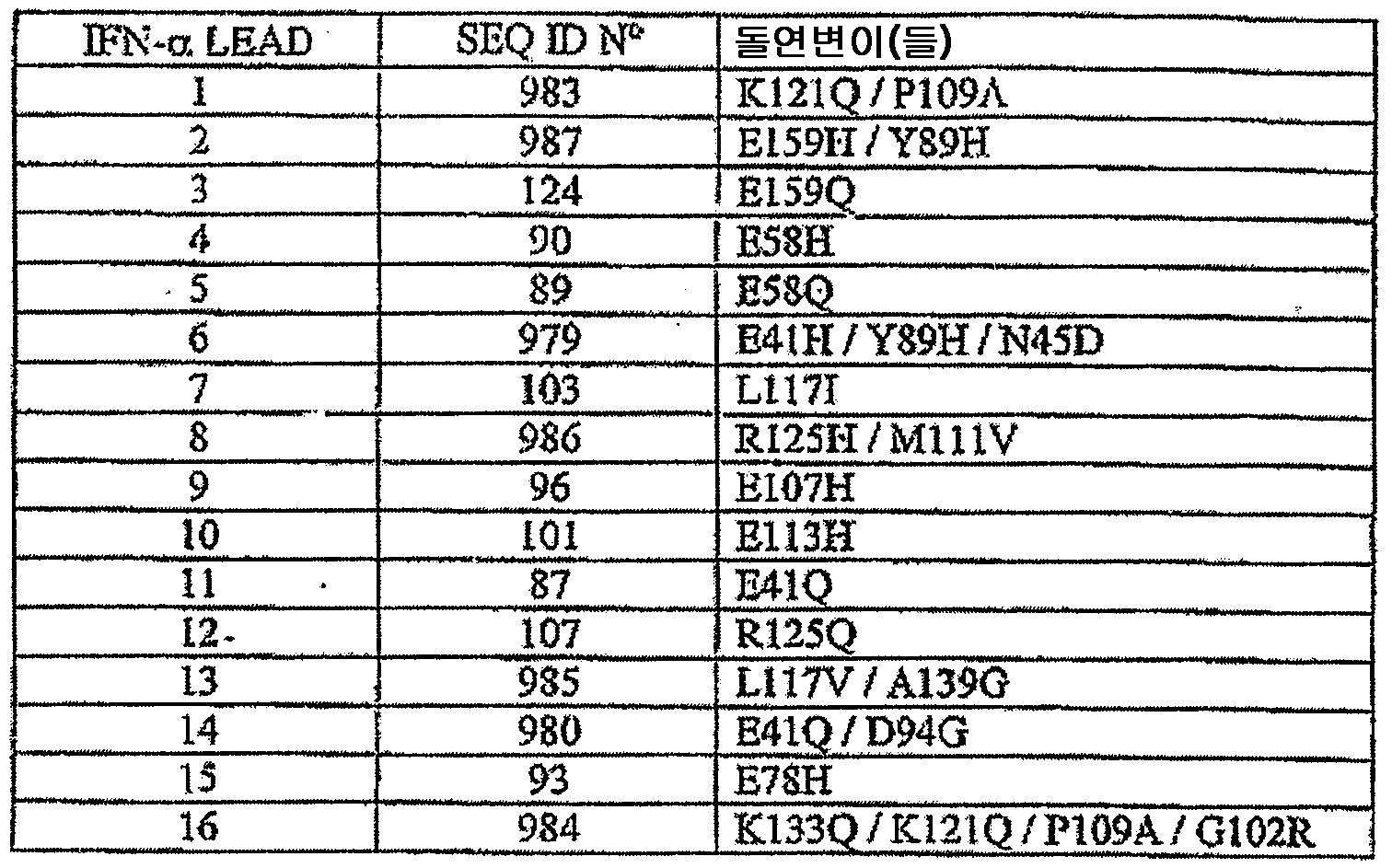
한 면에서, 부모 폴리펩티드는 IFN-α2a 또는 IFN-α2b이고 알려진 프로테아제 저항성 또는 프로테아제 저항성, 초글리코실화 폴리펩티드 변이체는, 도 1에 개시된 IFN-α2a 아미노산 서열 또는 도 2 에 개시된 IFN-α2b 아미노산 서열의 하나 이상의 단일 아미노산 치환을 포함하며, 이는 다음의 대체에 해당하는 것이다: L을 V로 위치 3 에서; L을 I로 위치 3 에서; P를 S로 위치 4 에서; P를 A로 위치 4 에서; R을 H로 위치 12 에서; R을 Q로 위치 12 에서; R을 H로 위치 13 에서; R을 Q로 위치 13 에서; M을 V로 위치 16 에서; M을 I로 위치 16 에서; R을 H로 위치 22 에서; R을 Q로 위치 22 에서; R 또는 K를 H 로 위치 23 에서; R 또는 K를 Q로 위치 23 에서; F를 I로 위치 27 에서; F를 V로 위치 27 에서; L을 V 로 위치 30 에서; L을 I로 위치 30 에서; K를 Q로 위치 31 에서; K를 T로 위치 31 에서; R을 H 로 위치 33 에서; R을 Q로 위치 33 에서; E를 Q로 위치 41 에서; E를 H로 위치 41 에서; K를 Q 로 위치 49 에서; K를 T로 위치 49 에서; E를 Q로 위치 58 에서; E를 H로 위치 58 에서; K를 Q 로 위치 70 에서; K를 T로 위치 70 에서; E를 Q로 위치 78 에서; E를 H로 위치 78 에서; K를 Q 로 위치 83 에서; K를 T로 위치 83 에서; Y를 H로 위치 89 에서; Y를 I로 위치 89 에서; E를 Q 로 위치 96 에서; E를 H로 위치 96 에서; E를 Q로 위치 107 에서; E를 H로 위치 107 에서; P를 S 로 위치 109 에서; P를 A로 위치 109 에서; L을 V로 위치 110 에서; L을 I로 위치 110 에서; M을 V 로 위치 111 에서; M을 I로 위치 111 에서; E를 Q로 위치 113 에서; E를 H로 위치 113 에서; L을 V 로 위치 117 에서; L을 I로 위치 117 에서; R을 H로 위치 120 에서; R을 Q로 위치 120 에서; K를 Q 로 위치 121 에서; K를 T로 위치 121 에서; R을 H로 위치 125 에서; R을 Q로 위치 125 에서; L을 V로 위치 128 에서; L을 I로 위치 128 에서; K를 Q로 위치 131 에서; K를 T로 위치 131 에서; E를 Q 로 위치 132 에서; E를 H로 위치 132 에서; K를 Q로 위치 133 에서; K를 T로 위치 133 에서; K를 Q 로 위치 134 에서; K를 T로 위치 134 에서; Y를 H로 위치 135 에서; Y를 I로 위치 135 에서; P를 S로 위치 137 에서; P를 A로 위치 137 에서; M을 V로 위치 148 에서; M을 I로 위치 148 에서; R을 H로 위치 149 에서; R을 Q로 위치 149 에서; E를 Q로 위치 159 에서; E를 H로 위치 159 에서; L을 V로 위치 161 에서; L을 I로 위치 161 에서; R을 H로 위치 162 에서; R을 Q로 위치 162 에서; K를 Q로 위치 164 에서; K를 T로 위치 164 에서; E를 Q로 위치 165 에서; 및 E를 H로 위치 165 에서이며, 여기에서 잔기 1은, 도 1에 개시된 성숙 IFN-α2a단백질의 잔기 1에 해당하거나 또는, 잔기 1은 도 2에 개시된 성숙 IFN-α2b 단백질의 잔기 1에 해당하고; 변이체가 부모 폴리펩티드에서 발견되지 않는 하나 이상의 글리코실화 부위를 포함하는 정도로, 부모 폴리펩티드의 아미노산 서열과 다른 아미노산 서열을 추가로 포함한다.In one aspect, the parent polypeptide is IFN-α2a or IFN-α2b and the known protease resistant or protease resistant, ultraglycosylated polypeptide variant is one of the IFN-α2a amino acid sequence disclosed in FIG. 1 or the IFN-α2b amino acid sequence disclosed in FIG. 2. One or more single amino acid substitutions, corresponding to the following substitutions: L to V at position 3; L at position 3; P at position 4; P at position 4; R at position 12; R at position 12 at Q; R at position 13; R at Q at position 13; M at position 16; M at position 16; R at position 22; R at Q at position 22; R or K at position 23; R or K at Q at position 23; F at position 27; F at position 27; L at position 30; L at position 30; K at Q at position 31; K at position 31; R at position 33; R at Q at position 33; E at Q at position 41; E at position 41; K at Q at position 49; K at position at position 49; E at position 58; E at position 58; K at Q at position 70; K at position at position 70; E at position 78; E at position 78; K at position 83; K at T at position 83; Y at position 89; Y at position 89; E at Q at position 96; E at position 96; E at Q at position 107; E at position 107; P at position 109 to S; P at position 109 at A; L at position at position 110; L at position 110; M at position 111; M at position 111; E at Q at position 113; E at position 113; L at position 117; L at position 117; R at position 120; R at Q at position 120; K at Q position 121; K at position at 121; R at position 125; R at Q at position 125; L at V at position 128; L at position 128; K at Q at position 131; K at position 131; E at Q at position 132; E at position 132 in H; K at Q at position 133; K at T at position 133; K at Q at position 134; K at position 134; Y at position 135; Y at position 135; P at position 137 to S; P at position 137 at A; M at V at position 148; M at position I 148; R at position 149; R at Q at position 149; E at Q at position 159; E at position 159 to H; L at V at position 161; L at position 161; R at position 162; R at Q at position 162; K at Q at position 164; K at T at position 164; E at Q at position 165; And E is at position 165, wherein residue 1 corresponds to residue 1 of the mature IFN-α2a protein disclosed in FIG. 1 or residue 1 corresponds to residue 1 of the mature IFN-α2b protein disclosed in FIG. and; It further comprises an amino acid sequence that differs from the amino acid sequence of the parent polypeptide to the extent that the variant comprises one or more glycosylation sites that are not found in the parent polypeptide.
다른 면에서, 부모 폴리펩티드는 IFN-α2a 또는 IFN-α2b이고, 알려진 프로테아제 저항성 또는 프로테아제 저항성, 초글리코실화 폴리펩티드 변이체는, 도 1에 개시된 IFN-α2a 아미노산 서열 또는 도 2 에 개시된 IFN-α2b 아미노산 서열의 하나 이상의 단일 아미노산 치환을 포함하며, 이는 다음의 대체에 해당하는 것이다: F를 V로 위치 27 에서; R을 H로 위치 33 에서; E를 Q로 위치 41 에서; E를 H로 위치 41 에서; E를 Q로 위치 58 에서; E를 H로 위치 58 에서; E를 Q로 위치 78 에서; E를 H로 위치 78 에서; Y를 H로 위치 89 에서; E를 Q로 위치 107 에서; E를 H로 위치 107 에서; P를 A로 위치 109 에서; L을 V로 위치 110 에서; M을 V로 위치 111 에서; E를 Q로 위치 113 에서; E를 H로 위치 113 에서; L을 V로 위치 117 에서; L을 I로 위치 117 에서; K를 Q로 위치 121 에서; K를 T로 위치 121 에서; R을 H로 위치 125 에서; R을 Q로 위치 125 에서; K를 Q로 위치 133 에서; K를 T로 위치 133 에서; E를 Q로 위치 159 에서 그리고 E를 H로 위치 159 에서이며, 여기에서 잔기 1은, 도 1에 개시된 성숙 IFN-α2a단백질의 잔기 1에 해당하거나 또는, 잔기 1은 도 2에 개시된 성숙 IFN-α2b 단백질의 잔기 1에 해당하고; 변이체가 부모 폴리펩티드에서 발견되지 않는 하나 이상의 글리코실화 부위를 포함하는 정도로, 부모 폴리펩티드의 아미노산 서열과 다른 아미노산 서열을 추가로 포함한다. In another aspect, the parent polypeptide is IFN-α2a or IFN-α2b, and known protease resistant or protease resistant, hyperglycosylated polypeptide variants are those of the IFN-α2a amino acid sequence disclosed in FIG. 1 or the IFN-α2b amino acid sequence disclosed in FIG. 2. One or more single amino acid substitutions, corresponding to the following substitutions: F to position V at position 27; R at position 33; E at Q at
다른 면에서, 부모 폴리펩티드는 IFN-α2a 또는 IFN-α2b이고, 알려진 프로테아제 저항성 또는 프로테아제 저항성, 초글리코실화 폴리펩티드 변이체는, 도 1에 개시된 IFN-α2a 아미노산 서열 또는 도 2 에 개시된 IFN-α2b 아미노산 서열의 2중 아미노산 치환의 하나 이상의 세트를 포함하며, 이는 다음의 대체에 해당하는 것이다: In another aspect, the parent polypeptide is IFN-α2a or IFN-α2b, and known protease resistant or protease resistant, hyperglycosylated polypeptide variants are those of the IFN-α2a amino acid sequence disclosed in FIG. 1 or the IFN-α2b amino acid sequence disclosed in FIG. 2. One or more sets of double amino acid substitutions, corresponding to the following substitutions:
D를 N으로 위치 2 에서 그리고 P를 S로 위치 4 에서; D at
D를 N으로 위치 2 에서 그리고 P를 T로 위치 4 에서; D at
L을 N으로 위치 3 에서 그리고 Q를 S로 위치 5 에서; L at
L을 N으로 위치 3 에서 그리고 Q를 T로 위치 5 에서; L at
P를 N으로 위치 4 에서 그리고 T를 S로 위치 6 에서; P at
P를 N으로 위치 4 에서 그리고 T를 T로 위치 6 에서; P at
Q를 N으로 위치 5 에서 그리고 H를 S로 위치 7 에서; Q at
Q를 N으로 위치 5 에서 그리고 H를 T로 위치 7 에서; Q at
T를 N으로 위치 6 에서 그리고 S를 S로 위치 8 에서; T at
T를 N으로 위치 6 에서 그리고 S를 T로 위치 8 에서; T at
H를 N으로 위치 7 에서 그리고 L을 S로 위치 9 에서; H at
H를 N으로 위치 7 에서 그리고 L을 T로 위치 9 에서; H at
S를 N으로 위치 8 에서 그리고 G를 S로 위치 10 에서; S at
S를 N으로 위치 8 에서 그리고 G를 T로 위치 10 에서; S at
L을 N으로 위치 9 에서 그리고 S를 S로 위치 11 에서; L at
L을 N으로 위치 9 에서 그리고 S를 T로 위치 11 에서; L at
M을 N으로 위치 21 에서 그리고 K를 S로 위치 23 에서; M at
M을 N으로 위치 21 에서 그리고 K를 T로 위치 23 에서; M at
R을 N으로 위치 22 에서 그리고 I를 S로 위치 24 에서; R at
R을 N으로 위치 22 에서 그리고 I를 T로 위치 24 에서; R at
R 또는 K를 N으로 위치 23 에서 그리고 S를 S로 위치 25 에서; R or K at position 23 in S and S at
R 또는 K를 N으로 위치 23 에서 그리고 S를 T로 위치 25 에서; R or K at position 23 in S and S at
I를 N으로 위치 24 에서 그리고 L을 S로 위치 26 에서; I at position 24 and L at position 26;
I를 N으로 위치 24 에서 그리고 L을 T로 위치 26 에서; I at position 24 and L at position 26;
S를 N으로 위치 25 에서 그리고 F를 S로 위치 27 에서; S at
S를 N으로 위치 25 에서 그리고 F를 T로 위치 27 에서; S at
L을 N으로 위치 26 에서 그리고 S를 S로 위치 28 에서; L at position 26 and S at position 28;
L을 N으로 위치 26 에서 그리고 S를 T로 위치 28 에서; L at position 26 and S at position 28;
S를 N으로 위치 28 에서 그리고 L을 S로 위치 30 에서; S at position 28 and L at
S를 N으로 위치 28 에서 그리고 L을 T로 위치 30 에서; S at position 28 and L at
L을 N으로 위치 30 에서 그리고 D를 S로 위치 32 에서; L at
L을 N으로 위치 30 에서 그리고 D를 T로 위치 32 에서; L at
K를 N으로 위치 31 에서 그리고 R을 S로 위치 33 에서; K at
K를 N으로 위치 31 에서 그리고 R을 T로 위치 33 에서; K at
D를 N으로 위치 32 에서 그리고 H를 S로 위치 34 에서; D at position 32 and H at position 34;
D를 N으로 위치 32 에서 그리고 H를 T로 위치 34 에서; D at position 32 and H at position 34;
R을 N으로 위치 33 에서 그리고 D를 S로 위치 35 에서; R at position 33 and D at
R을 N으로 위치 33 에서 그리고 D를 T로 위치 35 에서; R at position 33 and D at
H를 N으로 위치 34 에서 그리고 F를 S로 위치 36 에서; H at position 34 and F at S position 36;
H를 N으로 위치 34 에서 그리고 F를 T로 위치 36 에서; H at position 34 and F at position 36;
D를 N으로 위치 35 에서 그리고 G를 S로 위치 37 에서; D at
D를 N으로 위치 35 에서 그리고 G를 T로 위치 37 에서; D at
F를 N으로 위치 36 에서 그리고 F를 S로 위치 38 에서; F at position 36 and F at
F를 N으로 위치 36 에서 그리고 F를 T로 위치 38 에서; F at position 36 and F at
G를 N으로 위치 37 에서 그리고 P를 S로 위치 39 에서; G at
G를 N으로 위치 37 에서 그리고 P를 T로 위치 39 에서; G at
F를 N으로 위치 38 에서 그리고 Q를 S로 위치 40 에서; F at
F를 N으로 위치 38 에서 그리고 Q를 T로 위치 40 에서; F at
P를 N으로 위치 39 에서 그리고 E를 S로 위치 41 에서; P at position 39 and E at
P를 N으로 위치 39 에서 그리고 E를 T로 위치 41 에서; P at position 39 and E at
Q를 N으로 위치 40 에서 그리고 E를 S로 위치 42 에서; Q at
Q를 N으로 위치 40 에서 그리고 E를 T로 위치 42 에서; Q at
E를 N으로 위치 41 에서 그리고 F를 S로 위치 43 에서; E at
E를 N으로 위치 41 에서 그리고 F를 T로 위치 43 에서; E at
E를 N으로 위치 42 에서 그리고 G를 S로 위치 44 에서; E at position 42 and G at S position 44;
E를 N으로 위치 42 에서 그리고 G를 T로 위치 44 에서; E at position 42 and G at T position 44;
F를 N으로 위치 43 에서 그리고 N을 S로 위치 45 에서; F at position 43 and N at
F를 N으로 위치 43 에서 그리고 N을 T로 위치 45 에서; F at position 43 and N at
G를 N으로 위치 44 에서 그리고 Q를 S로 위치 46 에서; G at position 44 and Q at S position 46;
G를 N으로 위치 44 에서 그리고 Q를 T로 위치 46 에서; G at position 44 and Q at T position 46;
N을 N으로 위치 45 에서 그리고 F를 S로 위치 47 에서; N at
N을 N으로 위치 45 에서 그리고 F를 T로 위치 47 에서; N at
Q를 N으로 위치 46 에서 그리고 Q를 S로 위치 48 에서; Q at position 46 and Q at S position 48;
Q를 N으로 위치 46 에서 그리고 Q를 T로 위치 48 에서; Q at position 46 and Q at T at position 48;
F를 N으로 위치 47 에서 그리고 K를 S로 위치 49 에서; F at position 47 and K at S position 49;
F를 N으로 위치 47 에서 그리고 K를 T로 위치 49 에서; F at position 47 and K at T position 49;
Q를 N으로 위치 48 에서 그리고 A을 S로 위치 50 에서; Q at position 48 and A at S at
Q를 N으로 위치 48 에서 그리고 A을 T로 위치 50 에서; Q at position 48 and A at T at
K를 N으로 위치 49 에서 그리고 E를 S로 위치 51 에서; K at position 49 and E at position 51;
K를 N으로 위치 49 에서 그리고 E를 T로 위치 51 에서; K at position 49 and E at T position 51;
A을 N으로 위치 50 에서 그리고 T를 S로 위치 52 에서; A at
A을 N으로 위치 50 에서 그리고 T를 T로 위치 52 에서; A at
S를 N으로 위치 68 에서 그리고 K를 S로 위치 70 에서; S at position 68 and K at
S를 N으로 위치 68 에서 그리고 K를 T로 위치 70 에서; S at position 68 and K at
K를 N으로 위치 70 에서 그리고 S를 S로 위치 72 에서; K at
K를 N으로 위치 70 에서 그리고 S를 T로 위치 72 에서; K at
A을 N으로 위치 75 에서 그리고 D를 S로 위치 77 에서; A at
A을 N으로 위치 75 에서 그리고 D를 T로 위치 77 에서; A at
D를 N으로 위치 77 에서 그리고 T를 S로 위치 79 에서; D at
D를 N으로 위치 77 에서 그리고 T를 T로 위치 79 에서; D at
I를 N으로 위치 100 에서 그리고 G를 S로 위치 102 에서; I at
I를 N으로 위치 100 에서 그리고 G를 T로 위치 102 에서; I at
Q를 N으로 위치 101 에서 그리고 V를 S로 위치 103 에서; Q at
Q를 N으로 위치 101 에서 그리고 V를 T로 위치 103 에서; Q at
G를 N으로 위치 102 그리고 G를 S로 위치 104 에서; G at position 102 and G at S position 104;
G를 N으로 위치 102 그리고 G를 T로 위치 104 에서; G at position 102 and G at T position 104;
V를 N으로 위치 103 그리고 V를 S로 위치 105 에서; V at position 103 and V at
V를 N으로 위치 103 그리고 V를 T로 위치 105 에서; V at position 103 and V at
G를 N으로 위치 104 그리고 T를 S로 위치 106 에서; G at position 104 and T at position 106;
G를 N으로 위치 104 그리고 T를 T로 위치 106 에서; G at position 104 and T at position 106;
V를 N으로 위치 105 에서 그리고 E를 S로 위치 107 에서; V to N at
V를 N으로 위치 105 에서 그리고 E를 T로 위치 107 에서; V at
T를 N으로 위치 106 에서 그리고 T를 S로 위치 108 에서; T at position 106 and T at position 108;
T를 N으로 위치 106 에서 그리고 T를 T로 위치 108 에서; T at position 106 and T at position 108;
E를 N으로 위치 107 에서 그리고 P를 S로 위치 109 에서E to position 107 and P to S position 109
E를 N으로 위치 107 에서 그리고 P를 T로 위치 109 에서; E at position 107 and P at position 109;
T를 N으로 위치 108 에서 그리고 I를 S로 위치 110 에서; T at position 108 and I at
T를 N으로 위치 108 에서 그리고 I를 T로 위치 110 에서; T at position 108 and I at
K를 N으로 위치 134 그리고 S를 S로 위치 136 에서; K at
K를 N으로 위치 134 그리고 S를 T로 위치 136 에서; K at
S를 N으로 위치 154 그리고 N을 S로 위치 156 에서; S at position 154 and N at S position 156;
S를 N으로 위치 154 그리고 N을 T로 위치 156 에서; S at position 154 and N at position 156;
T를 N으로 위치 155 에서 그리고 L을 S로 위치 157 에서; T at
T를 N으로 위치 155 에서 그리고 L을 T로 위치 157 에서; T at
N을 N으로 위치 156 에서 그리고 Q를 S로 위치 158 에서; N at position 156 and Q at
N을 N으로 위치 156 에서 그리고 Q를 T로 위치 158 에서; N at position 156 and Q at
L을 N으로 위치 157 에서 그리고 E를 S로 위치 159 에서; L at
L을 N으로 위치 157 에서 그리고 E를 T로 위치 159 에서; L at
Q를 N으로 위치 158 에서 그리고 S를 S로 위치 160 에서; Q at
Q를 N으로 위치 158 에서 그리고 S를 T로 위치 160 에서; Q at
E를 N으로 위치 159 에서 그리고 L을 S로 위치 161 에서; E at position 159 and L at position 161 at S;
E를 N으로 위치 159 에서 그리고 L을 T로 위치 161 에서; E at position 159 and L at position 161 at T;
S를 N으로 위치 160 에서 그리고 R을 S로 위치 162 에서; S at
S를 N으로 위치 160 에서 그리고 R을 T로 위치 162 에서; S at
L을 N으로 위치 161 에서 그리고 S를 S로 위치 163 에서; L at position 161 and S at position 163;
L을 N으로 위치 161 에서 그리고 S를 T로 위치 163 에서; L at position 161 and S at position 163;
R을 N으로 위치 162 그리고 K를 S로 위치 164 에서; R at position 162 and K at position 164;
R을 N으로 위치 162 그리고 K를 T로 위치 164 에서; R at position 162 and K at position 164;
S를 N으로 위치 163 그리고 E를 S로 위치 165 에서; S to position 163 and E to position
S를 N으로 위치 163 그리고 E를 T로 위치 165 에서이며, 여기에서 잔기 1은, 도 1에 개시된 성숙 IFN-α2a단백질 또는, 도 2에 개시된 성숙 IFN-α2b 단백질의 잔기 1에 해당하고; 변이체가 부모 폴리펩티드에서 발견되지 않는 하나 이상의 글리코실화 부위를 포함하는 정도로, 부모 폴리펩티드의 아미노산 서열과 다른 아미노산 서열을 추가로 포함한다.S is at position 163 and E is at
다른 면에서, 부모 폴리펩티드는 IFN-α2a 또는 IFN-α2b이고 알려진 프로테아제 저항성 또는 프로테아제 저항성, 초글리코실화 폴리펩티드 변이체는, 도 1에 개시된 IFN-α2a 아미노산 서열 또는 도 2 에 개시된 IFN-α2b 아미노산 서열의 2중 아미노산 치환의 하나 이상의 세트를 포함하며, 이는 다음의 대체에 해당하는 것이다: In another aspect, the parent polypeptide is IFN-α2a or IFN-α2b and the known protease resistant or protease resistant, ultraglycosylated polypeptide variants are 2 of the IFN-α2a amino acid sequence disclosed in FIG. 1 or the IFN-α2b amino acid sequence disclosed in FIG. 2. One or more sets of amino acid substitutions, corresponding to the following substitutions:
Q를 N으로 위치 5 에서 그리고 H를 S로 위치 7 에서; Q at
P를 N으로 위치 39 에서 그리고 E를 S로 위치 41 에서; P at position 39 and E at
P를 N으로 위치 39 에서 그리고 E를 T로 위치 41 에서; P at position 39 and E at
Q를 N으로 위치 40 에서 그리고 E를 S로 위치 42 에서; Q at
Q를 N으로 위치 40 에서 그리고 E를 T로 위치 42 에서; Q at
E를 N으로 위치 41 에서 그리고 F를 S로 위치 43 에서; E at
E를 N으로 위치 41 에서 그리고 F를 T로 위치 43 에서; E at
F를 N으로 위치 43 그리고 N을 S로 위치 45 에서; F at position 43 and N at S at
G를 N으로 위치 44 그리고 Q를 T로 위치 46 에서; G at position 44 and Q at T position 46;
N을 N으로 위치 45 에서 그리고 F를 S로 위치 47 에서; N at
N을 N으로 위치 45 에서 그리고 F를 T로 위치 47 에서; N at
Q를 N으로 위치 46 에서 그리고 Q를 S로 위치 48 에서; Q at position 46 and Q at S position 48;
F를 N으로 위치 47 에서 그리고 K를 S로 위치 49 에서; F at position 47 and K at S position 49;
F를 N으로 위치 47 에서 그리고 K를 T로 위치 49 에서; F at position 47 and K at T position 49;
I를 N으로 위치 100 에서 그리고 G를 S로 위치 102 에서; I at
I를 N으로 위치 100 에서 그리고 G를 T로 위치 102 에서; I at
V를 N으로 위치 105 에서 그리고 E를 S로 위치 107 에서; V to N at
V를 N으로 위치 105 에서 그리고 E를 T로 위치 107 에서; V at
T를 N으로 위치 106 에서 그리고 T를 S로 위치 108 에서; T at position 106 and T at position 108;
T를 N으로 위치 106 에서 그리고 T를 T로 위치 108 에서; T at position 106 and T at position 108;
E를 N으로 위치 107 에서 그리고 P를 S로 위치 109 에서; E at position 107 and P at position 109;
E를 N으로 위치 107 에서 그리고 P를 T로 위치 109 에서; E at position 107 and P at position 109;
L을 N으로 위치 157 에서 그리고 E를 S로 위치 159 에서; L at
L을 N으로 위치 157 에서 그리고 E를 T로 위치 159 에서; L at
E를 N으로 위치 159 에서 그리고 L을 S로 위치 161 에서; 및 E at position 159 and L at position 161 at S; And
E를 N으로 위치 159 에서 그리고 L을 T로 위치 161 에서이며, 여기에서 잔기 1은, 도 1에 개시된 성숙 IFN-α2a단백질 또는 도 2에 개시된 성숙 IFN-α2b 단백질의 잔기 1에 해당하고; 변이체가 부모 폴리펩티드에서 발견되지 않는 하나 이상의 글리코실화 부위를 포함하는 정도로, 부모 폴리펩티드의 아미노산 서열과 다른 아미노산 서열을 추가로 포함한다.E is at position 159 and L is at position 161, wherein
일부 구현에서, 알려진 프로테아제 저항성 또는 프로테아제 저항성, 초글리코실화 사이토카인 변이체는 IFN-α2a, IFN-α2b 또는 IFN-2c 변이체로, 이는 다음에 해당하는 하나 이상의 단일 아미노산 대체를 포함하는 것이다: N을 D로 위치 45 에서; D를 G로 위치 94 에서; G를 R로 위치 102 에서; A을 G로 위치 139 에서; 또는 그 임의의 조합으로, 아미노산 번호는 도 1에 개시된 바와 같다.In some embodiments, known protease resistant or protease resistant, ultraglycosylated cytokine variants are IFN-α2a, IFN-α2b or IFN-2c variants, which comprise one or more single amino acid substitutions that correspond to: N to D At
일부 구현에서, 알려진 프로테아제 저항성 또는 프로테아제 저항성, 초글리코실화 사이토카인 변이체는 IFN-α2a, IFN-α2b 또는 IFN-2c 변이체로, 이는 다음에 해당하는 SEQ ID No. 1, 182, 185 또는 232 중 어느 하나에서 (일례로 도 2, 1, 11 및 9에 각각 개시된 임의의 서열) 하나 이상의 단일 아미노산 대체를 포함하는 것이다: L을 V로 위치 3 에서; L을 I로 위치 3 에서; P를 S로 위치 4 에서; P를 S로 위치 4 에서; P를 A로 위치 4 에서; R을 H로 위치 12 에서; R을 Q로 위치 12 에서; R을 H로 위치 13 에서; R을 Q로 위치 13 에서; M을 V로 위치 16 에서; M을 I로 위치 16 에서; R을 H로 위치 22 에서; R을 Q로 위치 22 에서; R 또는 K를 H로 위치 23 에서; R 또는 K를 Q로 위치 23 에서; F를 I로 위치 27 에서; F를 V로 위치 27 에서; L을 V로 위치 30 에서; L을 I로 위치 30 에서; K를 Q로 위치 31 에서; K를 T로 위치 31 에서; R을 H로 위치 33 에서; R을 Q로 위치 33 에서; E를 Q로 위치 41 에서; E를 H로 위치 41 에서; K를 Q로 위치 49 에서; K를 T로 위치 49 에서; E를 Q로 위치 58 에서; E를 H로 위치 58 에서; K를 Q로 위치 70 에서; K를 T로 위치 70 에서; E를 Q로 위치 78 에서; E를 H로 위치 78 에서; K를 Q로 위치 83 에서; K를 T로 위치 83 에서; Y를 H로 위치 89 에서; Y를 I로 위치 89 에서; E를 Q로 위치 96 에서; E를 H로 위치 96 에서; E를 Q로 위치 107 에서; E를 H로 위치 107 에서; P를 S로 위치 109 에서; P를 A로 위치 109 에서; L을 V로 위치 110 에서; L을 I로 위치 110 에서; M을 V로 위치 111 에서; M을 I로 위치 111 에서; E를 Q로 위치 113 에서; E를 H로 위치 113 에서; L을 V로 위치 117 에서; L을 I로 위치 117 에서; R을 H로 위치 120 에서; R을 Q로 위치 120 에서; K를 Q로 위치 121 에서; K를 T로 위치 121 에서; R을 H로 위치 125 에서; R을 Q로 위치 125 에서; L을 V로 위치 128 에서; L을 I로 위치 128 에서; K를 Q로 위치 131 에서; K를 T로 위치 131 에서; E를 Q로 위치 132 에서; E를 H로 위치 132 에서; K를 Q로 위치 133 에서; K를 T로 위치 133 에서; K를 Q로 위치 134 에서; K를 T로 위치 134 에서; Y를 H로 위치 135 에서; Y를 I로 위치 135 에서; P를 S로 위치 137 에서; P를 A로 위치 137 에서; M을 V로 위치 148 에서; M을 I로 위치 148 에서; R을 H로 위치 149 에서; R을 Q로 위치 149 에서; E를 Q로 위치 159 에서; E를 H로 위치 159 에서; L을 V로 위치 161 에서; L을 I로 위치 161 에서; R을 H로 위치 162 에서; R을 Q로 위치 162 에서; K를 Q로 위치 164 에서; K를 T로 위치 164 에서; E를 Q로 위치 165 에서; 또는 E를 H로 위치 165 에서; 또는 그 임의의 조합이며, 잔기 1은, 아미노산 번호는 SEQ ID NO :1 또는 182 (또는 도 2 및 1에 각각 개시된 바와 같은)에 개시된 성숙 IFN-α2b 또는 IFN-α2a 사이토카인의 잔기 1에 해당하고; 변이체가 부모 폴리펩티드에서 발견되지 않는 하나 이상의 글리코실화 부위를 포함하는 정도로, 부모 폴리펩티드의 아미노산 서열과 다른 아미노산 서열을 추가로 포함한다.In some embodiments, known protease resistant or protease resistant, ultraglycosylated cytokine variants are IFN-α2a, IFN-α2b or IFN-2c variants, which correspond to SEQ ID No. One or more single amino acid substitutions in any one of 1, 182, 185 or 232 (eg, any sequence disclosed in FIGS. 2, 1, 11 and 9, respectively): L to position V at position 3; L at position 3; P at position 4; P at position 4; P at position 4; R at position 12; R at position 12 at Q; R at position 13; R at Q at position 13; M at position 16; M at position 16; R at position 22; R at Q at position 22; R or K at H in position 23; R or K at Q at position 23; F at position 27; F at position 27; L at position 30; L at position 30; K at Q at position 31; K at position 31; R at position 33; R at Q at position 33; E at Q at position 41; E at position 41; K at Q at position 49; K at position at position 49; E at position 58; E at position 58; K at Q at position 70; K at position at position 70; E at position 78; E at position 78; K at position 83; K at T at position 83; Y at position 89; Y at position 89; E at Q at position 96; E at position 96; E at Q at position 107; E at position 107; P at position 109 in S; P at position 109 at A; L at position at position 110; L at position 110; M at position 111; M at position 111; E at Q at position 113; E at position 113; L at position 117; L at position 117; R at position 120; R at Q at position 120; K at Q at position 121; K at position at 121; R at position 125; R at Q at position 125; L at V at position 128; L at position 128; K at Q at position 131; K at position 131; E at Q at position 132; E at position 132 in H; K at Q at position 133; K at T at position 133; K at Q at position 134; K at position 134; Y at position 135; Y at position 135; P at position 137 to S; P at position 137 at A; M at V at position 148; M at position I 148; R at position 149; R at Q at position 149; E at Q at position 159; E at position 159 to H; L at V at position 161; L at position 161; R at position 162; R at Q at position 162; K at Q at position 164; K at T at position 164; E at Q at position 165; Or E at position 165; Or any combination thereof, wherein residue 1 corresponds to residue 1 of the mature IFN-α2b or IFN-α2a cytokine disclosed in SEQ ID NO: 1 or 182 (or as disclosed in FIGS. 2 and 1, respectively) and; It further comprises an amino acid sequence that differs from the amino acid sequence of the parent polypeptide to the extent that the variant comprises one or more glycosylation sites that are not found in the parent polypeptide.
일부 구현에서, 알려진 프로테아제 저항성 또는 프로테아제 저항성, 초글리코실화 사이토카인 변이체는 IFN-α2a, IFN-α2b 또는 IFN-2c 변이체로, 이는 다음에 해당하는 SEQ ID No. 1, 182, 185 또는 232 중 어느 하나에서 (일례로 도 2, 1, 11 및 9에 각각 개시된 임의의 서열) 하나 이상의 단일 아미노산 대체를 포함하는 것이다: L을 V로 위치 3 에서; L을 I로 위치 3 에서; P를 S로 위치 4 에서; P를 A로 위치 4 에서; R을 H로 위치 12 에서; R을 Q로 위치 12 에서; R을 H로 위치 13 에서; R을 Q로 위치 13 에서; M을 V로 위치 16 에서; M을 I로 위치 16 에서; R을 H로 위치 22 에서; R을 Q로 위치 22 에서; R 또는 K를 H로 위치 23 에서; R 또는 K를 Q로 위치 23 에서; F를 I로 위치 27 에서; F를 V로 위치 27 에서; L을 V로 위치 30 에서; L을 I로 위치 30 에서; K를 Q로 위치 31 에서; K를 T로 위치 31 에서; R을 H로 위치 33 에서; R을 Q로 위치 33 에서; E를 Q로 위치 41 에서; E를 H로 위치 41 에서; K를 Q로 위치 49 에서; K를 T로 위치 49 에서; E를 Q로 위치 58 에서; E를 H로 위치 58 에서; K를 Q로 위치 70 에서; K를 T로 위치 70 에서; E를 Q로 위치 78 에서; E를 H로 위치 78 에서; K를 Q로 위치 83 에서; K를 T로 위치 83 에서; Y를 H로 위치 89 에서; Y를 I로 위치 89 에서; E를 Q로 위치 96 에서; E를 H로 위치 96 에서; E를 Q로 위치 107 에서; E를 H로 위치 107 에서; P를 S로 위치 109 에서; P 를 A로 위치 109 에서; L을 V로 위치 110 에서: L 을 I로 위치 110 에서; M을 V로 위치 111에서; M 을 I로 위치 111 에서; E를 Q로 위치 113 에서; E를 H로 위치 113 에서; L을 V로 위치 117 에서: L 을 I로 위치 117 에서; R을 H로 위치 120 에서: R 을 Q로 위치 120 에서; K를 Q로 위치 121 에서; K를 T로 위치 121 에서; R을 H로 위치 125 에서; R을 Q로 위치 125 에서; L을 V로 위치 128 에서; L을 I로 위치 128 에서; K를 Q로 위치 131 에서; K를 T로 위치 131 에서; E를 Q로 위치 132 에서; E를 H로 위치 132 에서; K를 Q로 위치 133 에서; K를 T로 위치 133 에서; K를 Q로 위치 134 에서; K를 T로 위치 134 에서; Y를 H로 위치 135 에서; Y를 I로 위치 135 에서; P를 S로 위치 137 에서; P를 A로 위치 137 에서; M을 V로 위치 148 에서; M을 I로 위치 148 에서; R을 H로 위치 149 에서; R을 Q로 위치 149 에서; E를 Q로 위치 159 에서; E를 H로 위치 159 에서; L을 V로 위치 161 에서; L을 I로 위치 161 에서; R을 H로 위치 162 에서; R을 Q로 위치 162 에서; K를 Q로 위치 164 에서; K를 T로 위치 164 에서; E를 Q로 위치 165 에서; E를 H로 위치 165 에서; N을 D로 위치 45 에서; D를 G로 위치 94 에서; G를 R로 위치 102 에서; 또는 A을 G로 위치 139 에서; 또는 그 임의의 조합이며, 잔기 1은, 아미노산 번호는 SEQ ID NO :1 또는 182의 성숙 IFN-α2b 또는 IFN-α2a 사이토카인의 잔기 1에 해당하고; 변이체가 부모 폴리펩티드에서 발견되지 않는 하나 이상의 글리코실화 부위를 포함하는 정도로, 부모 폴리펩티드의 아미노산 서열과 다른 아미노산 서열을 추가로 포함한다. In some embodiments, known protease resistant or protease resistant, ultraglycosylated cytokine variants are IFN-α2a, IFN-α2b or IFN-2c variants, which correspond to SEQ ID No. One or more single amino acid substitutions in any one of 1, 182, 185 or 232 (eg, any sequence disclosed in FIGS. 2, 1, 11 and 9, respectively): L to position V at position 3; L at position 3; P at position 4; P at position 4; R at position 12; R at position 12 at Q; R at position 13; R at Q at position 13; M at position 16; M at position 16; R at position 22; R at Q at position 22; R or K at H in position 23; R or K at Q at position 23; F at position 27; F at position 27; L at position 30; L at position 30; K at Q at position 31; K at position 31; R at position 33; R at Q at position 33; E at Q at position 41; E at position 41; K at Q at position 49; K at position at position 49; E at position 58; E at position 58; K at Q at position 70; K at position at position 70; E at position 78; E at position 78; K at position 83; K at T at position 83; Y at position 89; Y at position 89; E at Q at position 96; E at position 96; E at Q at position 107; E at position 107; P at position 109 in S; P at position 109 at A; L to V at position 110: L to I at position 110; M at position 111; M at position 111; E at Q at position 113; E at position 113; L at position 117 at L: L at position 117 at I; R at position 120 at R: R at position 120; K at Q at position 121; K at position at 121; R at position 125; R at Q at position 125; L at V at position 128; L at position 128; K at Q at position 131; K at position 131; E at Q at position 132; E at position 132 in H; K at Q at position 133; K at T at position 133; K at Q at position 134; K at position 134; Y at position 135; Y at position 135; P at position 137 to S; P at position 137 at A; M at V at position 148; M at position I 148; R at position 149; R at Q at position 149; E at Q at position 159; E at position 159 to H; L at V at position 161; L at position 161; R at position 162; R at Q at position 162; K at Q at position 164; K at T at position 164; E at Q at position 165; E at position 165; N at position 45; D at G at position 94; G at position 102; Or A at G at position 139; Or any combination thereof, wherein residue 1 corresponds to residue 1 of the mature IFN-α2b or IFN-α2a cytokine of SEQ ID NO: 1 or 182; It further comprises an amino acid sequence that differs from the amino acid sequence of the parent polypeptide to the extent that the variant comprises one or more glycosylation sites that are not found in the parent polypeptide.
일부 구현에서, 상기한 임의의 프로테아제 저항성 또는 프로테아제 저항성, 초글리코실화 IFN-α2a 변이체는, [D99N]IFN-α2a 글리코펩티드이며, [D99N]IFN-α2a 글리코펩티드는 다음을 포함하는 IFN-α2a 변이체이다; (a) IFN-α2a 서열의 아미노산 위치 99 의 천연 아스파르트산 잔기 (아미노산 위치는 도 24에 개시된 것과 같고; 도 1에 개시된 D71에 해당함) 대신 아스파라긴 잔기; 및 (b) 상기 아스파라긴 잔기의 R 기에 공유 결합된 탄수화물 잔기를 포함한다. 일부 구현에서 IFN-α2a 서열은 도 24에 개시된 IFN-α2b 서열의 아미노산 위치 50 (도 2에 개시된 IFN-α2b 서열의 아미노산 위치 23에 해당)의 아르기닌 잔기 대신 라이신 잔기를 가진다.In some embodiments, any of the protease resistant or protease resistant, ultraglycosylated IFN-α2a variants described above is a [D99N] IFN-α2a glycopeptide, and the [D99N] IFN-α2a glycopeptide comprises an IFN-α2a variant comprising to be; (a) an asparagine residue instead of the natural aspartic acid residue at amino acid position 99 of the IFN-α2a sequence (the amino acid position is as disclosed in FIG. 24; corresponds to D71 disclosed in FIG. 1); And (b) a carbohydrate moiety covalently linked to the R group of the asparagine moiety. In some embodiments the IFN-α2a sequence has a lysine residue instead of an arginine residue at
일부 구현에서, 상기한 임의의 프로테아제 저항성 또는 프로테아제 저항성, 초글리코실화 IFN-α2a 변이체는, [D99N, D105N]IFN-α2a 글리코펩티드이며, [D99N, D105N]IFN-α2a 글리코펩티드는 다음을 포함하는 IFN-α2a 변이체이다; (a) IFN-α2a 서열의 아미노산 위치 99 및 105의 천연 아스파르트산 잔기 (아미노산 위치는 도 24에 개시된 것과 같고; 도 24의 D99 및 D105는, 도 1에 개시된 D71 및 D77에 각각 해당함) 각각 대신 아스파라긴 잔기; 및 (b) 상기 아스파라긴 잔기 각각의 R 기에 공유 결합된 탄수화물 잔기를 포함한다. 일부 구현에서 IFN-α2a 서열은 도 24에 개시된 IFN-α2b 서열의 아미노산 위치 50 (도 2에 개시된 IFN-α2b 서열의 Arg 23에 해당)의 아르기닌 잔기 대신 라이신 잔기를 가진다.In some embodiments, any of the protease resistant or protease resistant, ultraglycosylated IFN-α2a variants described above is [D99N, D105N] IFN-α2a glycopeptide, and [D99N, D105N] IFN-α2a glycopeptide comprises IFN-α2a variant; (a) native aspartic acid residues at amino acid positions 99 and 105 of the IFN-α2a sequence (amino acid positions are as shown in FIG. 24; D99 and D105 in FIG. 24 correspond to D71 and D77, respectively, shown in FIG. 1), respectively; Asparagine residues; And (b) carbohydrate residues covalently bonded to the R groups of each of the asparagine residues. In some embodiments the IFN-α2a sequence has a lysine residue instead of the arginine residue at
일부 구현에서, 상기한 임의의 프로테아제 저항성 또는 프로테아제 저항성, 초글리코실화 IFN-α2b 변이체는 [D99N] IFN-α2b 글리코펩티드이며, [D99N] IFN-α2b 글리코펩티드는 다음을 포함하는 IFN-α2b 변이체이다; (a) IFN-α2b 서열의 아미노산 위치 99 의 천연 아스파르트산 잔기 (아미노산 위치는 도 24에 개시된 것과 같고; 도 24의 D99는 도 1 및 도 2에 개시된 D71에 해당함) 대신 아스파라긴 잔기; 및 (b) 상기 아스파라긴 잔기의 R 기에 공유 결합된 탄수화물 잔기를 포함한다. In some embodiments, any of the protease resistant or protease resistant, ultraglycosylated IFN-α2b variants described above is [D99N] IFN-α2b glycopeptide, and [D99N] IFN-α2b glycopeptide is an IFN-α2b variant comprising ; (a) an asparagine residue instead of the natural aspartic acid residue at amino acid position 99 of the IFN-α2b sequence (amino acid position is as shown in FIG. 24; D99 in FIG. 24 corresponds to D71 as shown in FIGS. 1 and 2); And (b) a carbohydrate moiety covalently linked to the R group of the asparagine moiety.
일부 구현에서, 상기한 임의의 프로테아제 저항성 또는 프로테아제 저항성, 초글리코실화 IFN-α2b 변이체는 [D99N, D105N]IFN-α2b 글리코펩티드이며, [D99N, D105N]IFN-α2b 글리코펩티드는 다음을 포함하는 IFN-α2b 변이체이다; (a) 도 24의 IFN-α2b 서열의 아미노산 위치 99 및 105의 천연 아스파르트산 잔기 (아미노산 위치는 도 24에 개시된 것과 같고; 도 24의 D99 및 D105는, 도 1에 개시된 D71 및 D77에 각각 해당함) 각각 대신 아스파라긴 잔기; 및 (b) 상기 아스파라긴 잔기 각각의 R 기에 공유 결합된 탄수화물 잔기를 포함한다. In some embodiments, any of the protease resistant or protease resistant, ultraglycosylated IFN-α2b variants described above is [D99N, D105N] IFN-α2b glycopeptide, and [D99N, D105N] IFN-α2b glycopeptide comprises IFN -α2b variant; (a) Natural aspartic acid residues at amino acid positions 99 and 105 of the IFN-α2b sequence of FIG. 24 (amino acid positions are as shown in FIG. 24; D99 and D105 in FIG. 24 correspond to D71 and D77 as shown in FIG. 1, respectively. ) Asparagine residues instead of each; And (b) carbohydrate residues covalently bonded to the R groups of each of the asparagine residues.
다른 면에서, 상기한 프로테아제 저항성 또는 프로테아제 저항성, 초글리코실화 IFN-α2a 또는 IFN-α2b 폴리펩티드 변이체는, 하나 이상의 슈도 야생형 돌연변이를 추가로 포함한다. 특정 구현에서, 상기한 프로테아제 저항성 또는 프로테아제 저항성, 초글리코실화 IFN-α2a 폴리펩티드 변이체는 도 1에 개시된 바와 같은 9, 10, 17, 20, 24, 25, 35, 37, 41, 52, 54, 56, 57, 58, 60, 63, 64, 65, 76, 89, 및 90 아미노산 잔기 하나 이상의 슈도 야생형 타입 돌연변이 하나 이상을 추가로 포함하며, 여기에서 돌연변이 (들)는, 천연 아미노산 잔기의 대체, 결실 및 첨가 하나 이상이다. In another aspect, the protease resistant or protease resistant, ultraglycosylated IFN-α2a or IFN-α2b polypeptide variants described above further comprise one or more pseudo wild type mutations. In certain embodiments, the protease resistant or protease resistant, ultraglycosylated IFN-α2a polypeptide variants described above are 9, 10, 17, 20, 24, 25, 35, 37, 41, 52, 54, 56 as disclosed in FIG. And at least one pseudo wild type mutation, at least one of 57, 58, 60, 63, 64, 65, 76, 89, and 90 amino acid residues, wherein the mutation (s) is a substitution, deletion of a natural amino acid residue. And addition at least one.
다른 특정 구현에서, 상기한 프로테아제 저항성 또는 프로테아제 저항성, 초글리코실화 IFN-α2 b 폴리펩티드 변이체는 도 2에 개시된 바와 같은 9, 10, 17, 20, 24, 25, 35, 37, 41, 52, 54, 56, 57, 58, 60, 63, 64, 65, 76, 89, 및 90 아미노산 잔기 하나 이상의 슈도 야생형 타입 돌연변이 하나 이상을 추가로 포함하며, 여기에서 돌연변이 (들)는, 천연 아미노산 잔기의 대체, 결실 및 첨가 하나 이상이다.In other specific embodiments, the protease resistant or protease resistant, ultraglycosylated IFN-α2 b polypeptide variants described above are 9, 10, 17, 20, 24, 25, 35, 37, 41, 52, 54 as disclosed in FIG. 2. And at least one pseudo wild type mutation, at least one of 56, 57, 58, 60, 63, 64, 65, 76, 89, and 90 amino acid residues, wherein the mutation (s) is a substitution of a natural amino acid residue. , Deletion and addition of one or more.
슈도 야생형 대체의 예는, 도 1 에 개시된 IFN-α2a 아미노산 서열, 또는 도 2에 개시된 IFN-α2b 아미노산 서열 내의 다음과 같은 하나 이상의 돌연변이이다: P를 A로 위치 4 에서; Q를 A로 위치 5, T를 A로 위치 6 에서; L을 A로 위치 9에서, L를 A로 위치 10 에서; L을 A로 위치 17에서, Q를 A로 위치 20 에서; I를 A로 위치 24에서, S를 A로 위치 25 에서; D를 A로 위치 35 에서, G를 A로 위치 37 에서; G를 A로 위치 39 에서; E를 A로 위치 41 에서; E를 A로 위치 42 에서, E를 A로 위치 51 에서; T를 A로 위치 52 에서, P를 A로 위치 54 에서; V를 A로 위치 55 에서, L을 A로 위치 56 에서; H를 A로 위치 57 에서, E를 A로 위치 58 에서; I를 A로 위치 60 에서, I을 A로 위치 63 에서; F를 A로 위치 64 에서, N을 A로 위치 65 에서; W을 A로 위치 76 에서, D를 A로 위치 77 에서; E를 A로 위치 78에서, L을 A로 위치 81 에서; Y를 A로 위치 85 에서, Y를 A로 위치 89 에서; Q를 A로 위치 90 에서, G를 A로 위치 104 에서; L을 A로 위치 110에서, S를 A로 위치 115 에서 그리고 E를 A로 위치 146에서 대체함. Examples of pseudo wild type substitutions are one or more mutations in the IFN-α2a amino acid sequence disclosed in FIG. 1, or the IFN-α2b amino acid sequence disclosed in FIG. 2: P at
다른 면에서, 상기한 프로테아제 저항성 또는 프로테아제 저항성, 초글리코실화 IFN-α2a 또는 IFN-α2b 폴리펩티드 변이체는, 하나 이상의 슈도 야생형 돌연변이를 추가로 포함한다. 특정 구현에서, 상기한 프로테아제 저항성 또는 프로테아제 저항성, 초글리코실화 IFN-α2a 폴리펩티드 변이체는 도 1에 개시된 바와 같은 4, 5, 6, 9, 10, 17, 20, 24, 25, 35, 37, 39, 41, 42, 51, 52, 54, 56, 57, 58, 60, 63, 64, 65, 76, 77, 78, 81, 85, 89, 90, 104, 110, 115 및 146 아미노산 잔기 하나 이상의 슈도 야생형 타입 돌연변이 하나 이상을 추가로 포함하며, 여기에서 돌연변이 (들)는, 천연 아미노산 잔기의 대체, 결실 및 첨가 하나 이상이다. 다른 특정 구현에서, 상기한 프로테아제 저항성 또는 프로테아제 저항성, 초글리코실화 IFN-α2b 폴리펩티드 변이체는 도 2에 개시된 바와 같은 4, 5, 6, 9, 10, 17, 20, 24, 25, 35, 37, 39, 41, 42, 51, 52, 54, 56, 57, 58, 60, 63, 64, 65, 76, 77, 78, 81, 85, 89, 90, 104, 110, 115 및 146 아미노산 잔기 하나 이상의 슈도 야생형 타입 돌연변이 하나 이상을 추가로 포함하며, 여기에서 돌연변이 (들)는, 천연 아미노산 잔기의 대체, 결실 및 첨가 하나 이상이다.In another aspect, the protease resistant or protease resistant, ultraglycosylated IFN-α2a or IFN-α2b polypeptide variants described above further comprise one or more pseudo wild type mutations. In certain embodiments, the protease resistant or protease resistant, ultraglycosylated IFN-α2a polypeptide variants described above are 4, 5, 6, 9, 10, 17, 20, 24, 25, 35, 37, 39 as disclosed in FIG. At least one of 41, 42, 51, 52, 54, 56, 57, 58, 60, 63, 64, 65, 76, 77, 78, 81, 85, 89, 90, 104, 110, 115, and 146 amino acid residues Further comprises one or more pseudo wild type type mutations, wherein the mutation (s) is one or more of the replacement, deletion and addition of a natural amino acid residue. In other specific embodiments, the protease resistant or protease resistant, ultraglycosylated IFN-α2b polypeptide variants described above are 4, 5, 6, 9, 10, 17, 20, 24, 25, 35, 37, One amino acid residue at 39, 41, 42, 51, 52, 54, 56, 57, 58, 60, 63, 64, 65, 76, 77, 78, 81, 85, 89, 90, 104, 110, 115 and 146 Further comprises one or more pseudo wild type type mutations, wherein the mutation (s) is one or more of the substitutions, deletions, and additions of natural amino acid residues.
슈도 야생형 대체의 예는, 도 1 에 개시된 IFN-α2a 아미노산 서열, 또는 도 2에 개시된 IFN-α2b 아미노산 서열 내에 다음과 같은 하나 이상의 돌연변이이다: P를 A로 위치 4 에서; Q를 A로 위치 5 에서; T를 A로 위치 6 에서; L을 A로 위치 9 에서; LG를 A로 위치 10 에서; L을 A로 위치 17 에서; Q를 A로 위치 20 에서; I를 A로 위치 24 에서; S를 A로 위치 25 에서; D를 A로 위치 35 에서; G를 A로 위치 37 에서; G를 A로 위치 39 에서; E를 A로 위치 41 에서; E를 A로 위치 42 에서; E를 A로 위치 51 에서; T를 A로 위치 52 에서; P를 A로 위치 54 에서; V를 A로 위치 55 에서; L을 A로 위치 56 에서; H를 A로 위치 57 에서; E를 A로 위치 58 에서; I를 A로 위치 60 에서; I를 A로 위치 63 에서; F를 A로 위치 64 에서; N을 A로 위치 65 에서; W을 A로 위치 76 에서; D를 A로 위치 77 에서; E를 A로 위치 78 에서; L을 A로 위치 81 에서; Y를 A로 위치 85 에서; Y를 A로 위치 89에서, Q를 A로 위치 90 에서; G를 A로 위치 104 에서; L을 A로 위치 110 에서; S를 A로 위치 115 에서, 그리고 E를 A로 위치 146에서 대체함. Examples of pseudo wild type substitutions are one or more mutations within the IFN-α2a amino acid sequence disclosed in FIG. 1, or the IFN-α2b amino acid sequence disclosed in FIG. 2: P at
일부 구현에서, 알려진 프로테아제 저항성 또는 프로테아제 저항성, 초글리코실화 폴리펩티드 변이체는 항바이러스 활성을 나타내는 부모 사이토카인의 변이체이다. 일부 구현에서, 알려진 프로테아제 저항성 또는 프로테아제 저항성, 초글리코실화 항바이러스 사이토카인 (일례로 IFN-α2a 폴리펩티드, IFN-α2b 폴리펩티드, 또는 IFN-γ 폴리펩티드의 프로테아제 저항성 또는 프로테아제 저항성, 초글리코실화 변이체)는, 해당 비변형 (부모) 사이토카인과 비교하여, 적어도 약 10%, 적어도 약 20%, 적어도 약 30%, 적어도 약 40%, 적어도 약 50%, 적어도 약 60%, 적어도 약 70%, 적어도 약 80%, 적어도 약 90%, 또는 약 100%까지의 항바이러스 활성 유지 정도를 나타낸다 (일례로 부모 IFN-α2a 폴리펩티드, IFN-α2b 폴리펩티드, 또는 IFN-γ 폴리펩티드와 비교시).In some embodiments, known protease resistant or protease resistant, ultraglycosylated polypeptide variants are variants of parental cytokines that exhibit antiviral activity. In some embodiments, known protease resistant or protease resistant, ultraglycosylated antiviral cytokines (eg, protease resistant or protease resistant, proglycosylated variants of IFN-α2a polypeptide, IFN-α2b polypeptide, or IFN-γ polypeptides), At least about 10%, at least about 20%, at least about 30%, at least about 40%, at least about 50%, at least about 60%, at least about 70%, at least about 80 compared to the corresponding unmodified (parent) cytokine Percent, at least about 90%, or up to about 100% retention of antiviral activity (as compared to a parent IFN-α2a polypeptide, IFN-α2b polypeptide, or IFN-γ polypeptide, for example).
항바이러스 활성은 임의의 공지 어세이를 사용하여 용이하게 검증된다. 일례로, IFN-α2a 폴리펩티드의 항바이러스 활성은 하기의 방식으로 시험관내에서 테스트 된다. 인터페론 민감성 HeLa 세포주 (일례로 ATCC 수탁번호 CCL-2)를, 시험관내에서 IFN-α2a 폴리펩티드와 접촉시키고; 이어서 세포를 뇌심근염 바이러스 (EMCV)와 접촉시킨다. 세포변성 효과(CPE)를 측정; 또는 역전사 중합효소 연쇄 반응 (RT-PCR)에 의해 감염 세포 추출물 중 EMCV mRNA 의 양을 측정함에 의하여 항바이러스 활성을 검출한다.Antiviral activity is readily validated using any known assay. In one example, the antiviral activity of an IFN-α2a polypeptide is tested in vitro in the following manner. Interferon sensitive HeLa cell line (eg ATCC Accession No. CCL-2) is contacted with IFN-α2a polypeptide in vitro; The cells are then contacted with cerebral myocarditis virus (EMCV). Measuring cytopathic effect (CPE); Or antiviral activity is detected by measuring the amount of EMCV mRNA in the infected cell extract by reverse transcriptase polymerase chain reaction (RT-PCR).
어세이는 정량적일 수 있다. 일례로, 일부 구현에서, 어세이는 역전사 정량 중합효소 연쇄 반응 (RT- qPCR)에 의해 평가 가능하다. 일례로, 컨플루언트 세포는 (일례로 ATCC 수탁 번호 CCL-2) 적절한 배양 매질 (일례로 DMEM 5% SVF 매질) 내에 2 x 10⁴ 세포/웰의 밀도로 도말된다. 세포를 이후 500 U/ml 의 농도로 37℃ 에서 24시간 동안 IFN-α2b와 인큐베이션하고, 24시간 동안 IFN-α2b와 인큐베이션 이후 세포를 EMCV (MOI = 100)로 챌런지한다. 바이러스와 인큐베이션 16 시간 이후, 또는 IFN-α2b 로 처리되지 않은 대조군 세포에서의 바이러스 유도 CPE가 거의 최대치일 때, 각 웰 내의 EMCV 입자의 개수를 세포 용해물 중 EMCV mRNA의 RT- PCR 정량화에 의해 측정한다. RNA는 세포 용해물로부터 분리하며, 일례로 미국 특허 출판 번호 2004/0132977를 참조한다. Assays can be quantitative. In one embodiment, the assay can be assessed by reverse transcription quantitative polymerase chain reaction (RT-qPCR). In one example, the confluent cells (eg ATCC Accession No. CCL-2) are plated at a density of 2 × 10 4 cells / well in a suitable culture medium (eg DMEM 5% SVF medium). The cells are then incubated with IFN-α2b for 24 hours at 37 ° C. at a concentration of 500 U / ml and the cells are challenged with EMCV (MOI = 100) after incubation with IFN-α2b for 24 hours. After 16 hours of incubation with the virus, or when the virus-induced CPE in control cells not treated with IFN-α2b was near maximum, the number of EMCV particles in each well was determined by RT-PCR quantification of EMCV mRNA in cell lysates. do. RNA is isolated from cell lysates, see, eg, US Patent Publication No. 2004/0132977.
일부 구현에서, 알려진 프로테아제 저항성 또는 프로테아제 저항성, 초글리코실화 폴리펩티드 변이체는, 개인의 바이러스 부하 (load) 감소에 효과적이다. 바이러스 부하는, 혈청중 바이러스의 수준 또는 역가를 측정하여 측정한다. 이들 방법은 정량적 중합효소 연쇄 반응 (PCR) 및 분지화 DNA (bDNA) 테스트를 포함하나 이에 제한되지 않는다. HCV RNA 바이러스 부하 (역가)를 측정하는 정량적 어세이는 개발된 바 있다. 그러한 많은 어세이들이 시판중이며 다음을 포함한다: 정량적 역전사 PCR (RT-PCR) (Amplicor HCV Monitor™, Roche Molecular Systems, New Jersey); 및 분지화 DNA (deoxyribonucleic acid) 신호 증폭 어세이 (Quantiplex™ HCV RNA Assay (bDNA), Chiron Corp., Emeryville, California). 일례로 문헌을 참고한다 (Gretch et al. (1995) Ann. Intern. "Med. 123:321-329). 또한 핵산 테스트가 흥미를 끈다 [NAT, Gen-Probe Inc. (San Diego) 및 Chiron Corporation 개발, Chiron Corporation 시판, 상표명 Procleix®, NAT는 HIV-I 및 HCV 의 존재를 동시에 테스트함]. 일례로 Vargo et al. (2002) Transfusion 42:876-885을 참조한다. In some embodiments, known protease resistant or protease resistant, ultraglycosylated polypeptide variants are effective in reducing viral load in an individual. Viral load is determined by measuring the level or titer of virus in serum. These methods include, but are not limited to, quantitative polymerase chain reaction (PCR) and branched DNA (bDNA) tests. Quantitative assays to measure HCV RNA viral load (titer) have been developed. Many such assays are commercially available and include: Quantitative Reverse Transcription PCR (RT-PCR) (Amplicor HCV Monitor ™, Roche Molecular Systems, New Jersey); And deoxyribonucleic acid signal amplification assay (Quantiplex ™ HCV RNA Assay (bDNA), Chiron Corp., Emeryville, California). See, eg, Gret et al. (1995) Ann. Intern. "Med. 123: 321-329. Nucleic acid testing is also of interest (NAT, Gen-Probe Inc. (San Diego) and Chiron Corporation). Developed, commercially available from Chiron Corporation, trade name Procleix®, NAT simultaneously tests for the presence of HIV-I and HCV] See, eg, Vargo et al. (2002) Transfusion 42: 876-885.
일부 구현에서, 알려진 프로테아제 저항성 또는 프로테아제 저항성, 초글리코실화 항바이러스 사이토카인 변이체 (일례로 IFN-α2a 폴리펩티드, IFN-α2b 폴리펩티드, IFN-γ 폴리펩티드의 프로테아제 저항성 변이체)는, 비변형 (부모) 사이토카인 치료 단백질과 비교하여 항증식 활성의 유지를 나타낸다.In some embodiments, known protease resistant or protease resistant, ultraglycosylated antiviral cytokine variants (eg, IFN-α2a polypeptides, IFN-α2b polypeptides, protease resistant variants of IFN-γ polypeptides) are unmodified (parent) cytokines. Maintenance of anti-proliferative activity as compared to therapeutic protein.
항증식 활성은, 임의의 공지 방법을 사용하여 용이하게 검증된다. 일례로, 항증식 활성은, 프로테아제 저항성 항바이러스 사이토카인 변이체의 존재하에 세포 증식을 측정하여 평가 가능하며, 여기에서 세포 증식은 임의의 간편한 어세이로 측정된다. 세포 증식은 3H-티미딘 혼입; 티미딘 유사체 BrdU의 혼입; 테트라졸륨염의 절단; DNA-염료 복합체 형성; 등에 기초한 어세이로 측정된다. 세포 증식에 적절한 어세이의 한 비제한적인 예는, CellTiter 96® AQueous Non-Radioactive Cell Proliferation Assay (Promega)이다. CellTiter 96® Aqueous Assay는, 화학민감성 또는 증식 어세이에서의 생존가능 세포의 개수를 측정하는 발색 방법이다. CellTiter 96® AQueous Assay 는, 테트라졸륨 화합물 (3-(4,5-디메틸티아졸-2-일)-5-(3-카복시메톡시페닐)-2-(4-설포페닐)-2H-테트라졸륨, 내부염; MTS) 및 전자 커플링 시약 (페나진 메토설페이트; PMS)의 용액들로 구성된다. MTS는, 조직 세포 매질 내에서 가용성인 포르마잔 생성물내로 세포내에서 생물환원된다. 490nm 에서 포르마잔의 흡수는, 추가의 처리 없이 96 웰 어세이 플레이트에서 직접 측정 가능하다. 수성, 가용성 포르마잔으로 MTS가 전환되는 것은, 대사적으로 활성인 세포 내에서 발견되는 탈수소 효소에 의해 달성된다. 490nm 흡광량에 의해 측정된 포르마잔 생성물의 양은, 배양 중 생존 세포의 개수에 직접 비례한다. Antiproliferative activity is readily verified using any known method. In one example, antiproliferative activity can be assessed by measuring cell proliferation in the presence of protease resistant antiviral cytokine variants, where cell proliferation is measured by any convenient assay. Cell proliferation was determined by 3 H-thymidine incorporation; Incorporation of the thymidine analog BrdU; Cleavage of tetrazolium salts; DNA-dye complex formation; It is measured by an assay based on the back. One non-limiting example of an assay suitable for cell proliferation is CellTiter 96® AQueous Non-Radioactive Cell Proliferation Assay (Promega). CellTiter 96® Aqueous Assay is a colorimetric method that measures the number of viable cells in a chemosensitive or proliferative assay. CellTiter 96® AQueous Assay is a tetrazolium compound (3- (4,5-dimethylthiazol-2-yl) -5- (3-carboxymethoxyphenyl) -2- (4-sulfophenyl) -2H-tetra It consists of solutions of zoleum, internal salt; MTS) and electron coupling reagent (phenazine methosulfate; PMS). MTS is bioreduced intracellularly into formazan product that is soluble in tissue cell medium. Absorption of formazan at 490 nm can be measured directly in 96 well assay plates without further treatment. The conversion of MTS to aqueous, soluble formazan is accomplished by dehydrogenase found in metabolically active cells. The amount of formazan product, measured by 490 nm absorbance, is directly proportional to the number of viable cells in culture.
일부 구현에서, 알려진 프로테아제 저항성 또는 프로테아제 저항성, 초글리코실화 항바이러스 사이토카인 변이체 (일례로 IFN-α2a 폴리펩티드, IFN-α2b 폴리펩티드, 및 IFN-γ 폴리펩티드의 초글리코실화, 프로테아제 저항성 변이체)는, 인터페론 수용체에 결합하나 비변형 (부모) 사이토카인 치료 단백질에 비해 감소된 항바이러스 활성을 나타내거나, 또는, 부모 사이토카인 치료 단백질에 비해 감소된 항증식 활성을 나타낸다.In some embodiments, known protease resistant or protease resistant, ultraglycosylated antiviral cytokine variants (eg, hyperglycosylated, protease resistant variants of IFN-α2a polypeptides, IFN-α2b polypeptides, and IFN-γ polypeptides) are interferon receptors. Binds to, but exhibits reduced antiviral activity relative to an unmodified (parent) cytokine therapeutic protein, or reduced antiproliferative activity relative to a parent cytokine therapeutic protein.
일부 구현에서, 알려진 프로테아제 저항성 또는 프로테아제 저항성, 초글리코실화 항바이러스 사이토카인 변이체 (일례로 IFN-α2a 폴리펩티드, IFN-α2b 폴리펩티드, IFN-γ 폴리펩티드의 프로테아제 저항성 변이체)는, 2개 이상의 돌연변이를 포함한다. 일례로, 프로테아제 저항성 항바이러스 사이토카인 변이체는, 해당 부모 사이토카인에 비해, 2, 3, 4, 5, 6, 7, 8, 9, 또는 10개의 단일 아미노산 변화를 포함한다. 일부 구현에서, 알려진 프로테아제 저항성 또는 프로테아제 저항성, 초글리코실화 항바이러스 사이토카인 변이체는 IFN-α2a 폴리펩티드의 변이체이다. 다른 구현에서, 알려진 프로테아제 저항성 또는 프로테아제 저항성, 초글리코실화 항바이러스 사이토카인 변이체는 IFN-α2a 폴리펩티드의 변이체이다. 다른 구현에서, 알려진 프로테아제 저항성 또는 프로테아제 저항성, 초글리코실화 항바이러스 사이토카인 변이체는 IFN-γ 폴리펩티드의 변이체이다. In some embodiments, known protease resistant or protease resistant, ultraglycosylated antiviral cytokine variants (eg, IFN-α2a polypeptides, IFN-α2b polypeptides, protease resistant variants of IFN-γ polypeptides) comprise two or more mutations. . In one example, a protease resistant antiviral cytokine variant comprises 2, 3, 4, 5, 6, 7, 8, 9, or 10 single amino acid changes relative to the parental cytokine of interest. In some embodiments, known protease resistant or protease resistant, ultraglycosylated antiviral cytokine variants are variants of IFN-α2a polypeptides. In other embodiments, known protease resistant or protease resistant, ultraglycosylated antiviral cytokine variants are variants of IFN-α2a polypeptides. In other embodiments, known protease resistant or protease resistant, ultraglycosylated antiviral cytokine variants are variants of IFN- [gamma] polypeptides.
일부 구현에서, 알려진 프로테아제 저항성 또는 프로테아제 저항성, 초글리코실화 폴리펩티드 사이토카인 변이체는, SEQ ID No. 2-181 중 어느 하나의 아미노산 서열을 포함하며, 여기에서 위치 23의 아르기닌이 라이신으로 대체되고, 변이체가 부모 폴리펩티드에서 발견되지 않는 하나 이상의 글리코실화 부위를 포함하는 정도로, 부모 폴리펩티드의 아미노산 서열과 다른 아미노산 서열을 추가로 포함한다. 다른 구현에서, 알려진 프로테아제 저항성 또는 프로테아제 저항성, 초글리코실화 폴리펩티드 사이토카인 변이체는, 비변형 (부모) 사이토카인에 비해 단백질분해에 대해 더 큰 저항성을 나타내고, 프로테아제 저항성 또는 프로테아제 저항성, 초글리코실화 폴리펩티드 사이토카인 변이체는, 도 9에 개시된 IFN-α2a 폴리펩티드, IFN-α2b 폴리펩티드, IFN-α2c 폴리펩티드, 또는 컨센서스 IFN-α 의 3차원 구조 내에 관련 구조 변형된 아미노산 위치에 해당하는, 사이토카인 상의 하나 이상의 위치에 하나 이상의 아미노산 대체를 포함한다. 일부 구현에서, 단백질분해에 대한 저항성은, 상기한 바와 같이 폴리펩티드 변이체를 시험관 내에서 접촉시켜 측정한다. 다른 구현에서, 시험관내 또는 생체내의 폴리펩티드 변이체를 혈액 (예를 들어 인간 혈액)과 접촉시켜 단백질분해에 대한 저항성을 측정한다. 다른 구현에서, 상기한 바와 같이, 시험관내의 폴리펩티드 변이체를 혈청 (예를 들어 인간 혈청)과 접촉시켜 단백질분해에 대한 저항성을 측정한다.In some embodiments, known protease resistant or protease resistant, ultraglycosylated polypeptide cytokine variants include SEQ ID No. Comprising the amino acid sequence of any one of 2-181, wherein the arginine at position 23 is replaced by lysine and the variant comprises one or more glycosylation sites not found in the parent polypeptide, differing from the amino acid sequence of the parent polypeptide Further comprises an amino acid sequence. In other embodiments, known protease resistant or protease resistant, ultraglycosylated polypeptide cytokine variants exhibit greater resistance to proteolysis compared to unmodified (parent) cytokines, and are protease resistant or protease resistant, hyperglycosylated polypeptide cytokines. Caine variants are at one or more positions on the cytokine corresponding to relevant structurally modified amino acid positions within the three-dimensional structure of the IFN-α2a polypeptide, IFN-α2b polypeptide, IFN-α2c polypeptide, or consensus IFN-α disclosed in FIG. 9. One or more amino acid substitutions. In some embodiments, resistance to proteolysis is measured by contacting polypeptide variants in vitro as described above. In another embodiment, polypeptide variants in vitro or in vivo are contacted with blood (eg, human blood) to determine resistance to proteolysis. In another embodiment, as described above, in vitro polypeptide variants are contacted with serum (eg, human serum) to determine resistance to proteolysis.
일부 구현에서, 임의의 상기한 프로테아제 저항성 또는 프로테아제 저항성, 초글리코실화 폴리펩티드 IFN-α2b 변이체는, 비변형 (부모) 사이토카인에 비해 제고된 안정성을 가지고, 여기에서, 안정성은, 상기한 바와 같이 프로테아제의 혼합물, 개별 프로테아제, 혈액 용해물, 또는 혈청과 인큐베이션후, 적절한 세포 내에서 세포 증식을 억제 또는 바이러스 복제를 억제하는 잔류 생활성을 측정하여 평가한다.In some embodiments, any of the aforementioned protease resistant or protease resistant, ultraglycosylated polypeptide IFN-α2b variants have enhanced stability relative to unmodified (parent) cytokines, wherein the stability is protease as described above. After incubation with a mixture of, individual proteases, blood lysates, or serum, residual bioactivity that inhibits cell proliferation or inhibits viral replication in the appropriate cells is assessed.
일부 구현에서, 임의의 상기한 프로테아제 저항성 또는 프로테아제 저항성, 초글리코실화 폴리펩티드 IFN-α2b 변이체는 비변형 (부모) 사이토카인에 비해 제고된 생활성을 가지고, 여기에서, 활성은, 상기한 바와 같이 프로테아제의 혼합물, 개별 프로테아제, 혈액 용해물, 또는 혈청과 인큐베이션후, 적절한 세포 내에서 세포 증식을 억제 또는 적절한 세포 내에서 바이러스 복제를 억제하는 능력을 측정하여 평가한다.In some embodiments, any of the aforementioned protease resistant or protease resistant, ultraglycosylated polypeptide IFN-α2b variants have enhanced bioactivity relative to unmodified (parent) cytokines, wherein activity is protease as described above. After incubation with a mixture of, individual proteases, blood lysates, or serum, the ability to inhibit cell proliferation in appropriate cells or to inhibit viral replication in appropriate cells is assessed.
일부 구현에서, 임의의 상기한 프로테아제 저항성 또는 프로테아제 저항성, 초글리코실화 폴리펩티드 IFN-α2a 변이체는, 비변형 (부모) 사이토카인에 비해 제고된 안정성을 가지고, 여기에서, 안정성은, 상기한 바와 같이 프로테아제의 혼합물, 개별 프로테아제, 혈액 용해물, 또는 혈청과 인큐베이션후, 적절한 세포 내에서 세포 증식을 억제 또는 바이러스 복제를 억제하는 잔류 생활성을 측정하여 평가한다.In some embodiments, any of the aforementioned protease resistant or protease resistant, ultraglycosylated polypeptide IFN-α2a variants have enhanced stability relative to unmodified (parent) cytokines, wherein the stability is protease as described above. After incubation with a mixture of, individual proteases, blood lysates, or serum, residual bioactivity that inhibits cell proliferation or inhibits viral replication in the appropriate cells is assessed.
일부 구현에서, 임의의 상기한 프로테아제 저항성 또는 프로테아제 저항성, 초글리코실화 폴리펩티드 IFN-α2a 변이체는 비변형 (부모) 사이토카인에 비해 제고된 생활성을 가지고, 여기에서, 활성은, 상기한 바와 같이 프로테아제의 혼합물, 개별 프로테아제, 혈액 용해물, 또는 혈청과 인큐베이션후, 적절한 세포 내에서 세포 증식을 억제 또는 적절한 세포 내에서 바이러스 복제를 억제하는 능력을 측정하여 평가한다.In some embodiments, any of the aforementioned protease resistant or protease resistant, ultraglycosylated polypeptide IFN-α2a variants have enhanced bioactivity relative to unmodified (parent) cytokines, wherein activity is protease as described above. After incubation with a mixture of, individual proteases, blood lysates, or serum, the ability to inhibit cell proliferation in appropriate cells or to inhibit viral replication in appropriate cells is assessed.
일부 구현에서, 임의의 상기한 프로테아제 저항성 또는 프로테아제 저항성, 초글리코실화 폴리펩티드 IFN-2c 변이체는, 비변형 (부모) 사이토카인에 비해 제고된 안정성을 가지고, 여기에서, 안정성은, 상기한 바와 같이 프로테아제의 혼합물, 개별 프로테아제, 혈액 용해물, 또는 혈청과 인큐베이션후, 잔류 생활성을 측정하여 평가한다.In some embodiments, any of the aforementioned protease resistant or protease resistant, ultraglycosylated polypeptide IFN-2c variants have enhanced stability relative to unmodified (parent) cytokines, wherein the stability is protease as described above. After incubation with a mixture of, individual proteases, blood lysates, or serum, residual bioactivity is measured and evaluated.
일부 구현에서, 임의의 상기한 프로테아제 저항성 또는 프로테아제 저항성, 초글리코실화 폴리펩티드 IFN-α2c 변이체는 상기한 바와 같이 프로테아제의 혼합물, 개별 프로테아제, 혈액 용해물, 또는 혈청과 인큐베이션후, 비변형 (부모) 사이토카인에 비해 제고된 생활성을 가진다. In some embodiments, any of the above-described protease resistant or protease resistant, ultraglycosylated polypeptide IFN-α2c variants may be a mixture of proteases, individual proteases, blood lysates, or post-incubation with serum, unmodified (parent) cytology, as described above. It has an improved life compared to Cain.
3차원 구조 유사체3-D structural analogue
일부 구현에서, 초글리코실화, 프로테아제 저항성 폴리펩티드 변이체는 변형된 사이토카인이다. 일부 구현에서, 초글리코실화, 프로테아제 저항성 사이토카인 변이체는 변형된 인터페론이다. 일부 구현에서, IFN-α2b 의 구조 유사체인 상기한 임의의 초글리코실화, 프로테아제 저항성 사이토카인 변이체는, 도 9에 개시된 바와 같은 변형 IFN-α2b, IFN-α2a, IFN-α2c, 또는 컨센서스 IFN-α 의 3차원 구조 내에 3차원 구조상 유사한 변형된 위치에 해당하는 위치에 하나 이상의 아미노산 대체를 포함한다. 일부 구현에서, 구조 유사체는, 비변형 (부모) 사이토카인 대응물과 비교하여 단백질분해에 대해 증가된 저항성을 가지며, 여기에서 단백질분해에 대한 저항성은, 상기한 바와 같이 시험관내 프로테아제의 혼합물을 혈액과 인큐베이션 또는 혈청과 인큐베이션하여 측정한다. In some embodiments, the hyperglycosylated, protease resistant polypeptide variant is a modified cytokine. In some embodiments, the hyperglycosylated, protease resistant cytokine variant is a modified interferon. In some embodiments, any of the hyperglycosylated, protease resistant cytokine variants described above, which are structural analogs of IFN-α2b, may be modified IFN-α2b, IFN-α2a, IFN-α2c, or consensus IFN-α as disclosed in FIG. 9. At least one amino acid substitution at a position corresponding to a three-dimensional structurally similar modified position within the three-dimensional structure of the. In some embodiments, the structural analogue has increased resistance to proteolysis compared to the unmodified (parent) cytokine counterpart, wherein the resistance to proteolysis is performed by injecting a mixture of in vitro proteases into the blood. Measured by incubation with or incubation with serum.
일부 구현에서, 초글리코실화, 프로테아제 저항성 사이토카인 변이체는 IFN-α 사이토카인의 구조 유사체이다. 일부 구현에서, 초글리코실화, 프로테아제 저항성 IFN-α 변이체는 IFN-α2b 사이토카인의 구조 유사체이다. 이들 구현 일부에서, IFN-α 사이토카인은, IFN-α2a, IFN-α2c, IFN-αc, IFN-αd, IFN-α5, IFN-α6, IFN-α4, IFN-α4b, IFN-αI, IFN-αJ, IFN-αH, IFN-αF, IFN-α8, 및 컨센서스 IFN-α의 변이체들로부터 선택된다. 따라서 일부 구현에서, 알려진 초글리코실화, 프로테아제 저항성 IFN-α 변이체는, 상기한 IFN-α2b 변형 단백질의 3차원 구조 내에서 구조 연관 개질 아미노산의 위치에 해당하는, IFN-α2a, IFN-α2c, IFN-αc, IFN-αd, IFN-α5, IFN-α6, IFN-α4, IFN-α4b, IFN-αI, IFN-αJ, IFN-αH, IFN-αF, IFN-α8, 또는 컨센서스 IFN-α 의 아미노산 서열 중 하나 이상의 목적 위치에 아미노산 이상의 아미노산 대체를 포함한다. 이러한 대체는, 일례로 부모 IFN-α2a, 또는 IFN-α2b 폴리펩티드에 비해, 비변형 부모 IFN-α에 비해, 혈청과 인큐베이션 또는 혈액 용해물과 또는 프로테아제와의 인큐베이션에 의해 평가되는, 프로테아제에 대한 더 큰 저항성을 도모한다.In some embodiments, the hyperglycosylated, protease resistant cytokine variant is a structural analog of the IFN-α cytokine. In some embodiments, the hyperglycosylated, protease resistant IFN-α variant is a structural analog of the IFN-α2b cytokine. In some of these embodiments, the IFN-α cytokine is IFN-α2a, IFN-α2c, IFN-αc, IFN-αd, IFN-α5, IFN-α6, IFN-α4, IFN-α4b, IFN-αI, IFN- αJ, IFN-αH, IFN-αF, IFN-α8, and variants of the consensus IFN-α. Thus, in some embodiments, known hyperglycosylated, protease resistant IFN-α variants are IFN-α2a, IFN-α2c, IFN, corresponding to the positions of structurally related modified amino acids within the three-dimensional structure of the IFN-α2b modified protein described above. amino acids of αc, IFN-αd, IFN-α5, IFN-α6, IFN-α4, IFN-α4b, IFN-αI, IFN-αJ, IFN-αH, IFN-αF, IFN-α8, or consensus IFN-α Amino acid substitutions of amino acids or more at one or more desired positions in the sequence. Such replacement is further assessed for protease, as assessed by incubation with serum and incubation or blood lysates or with protease, as compared to parental IFN-α2a or IFN-α2b polypeptides, for example. We aim at big resistance.
일부 구현에서, 초글리코실화, 프로테아제 저항성 IFN-α 변이체는 변형된 IFN-α2a 사이토카인으로, 상기한 IFN-α2b 변이체의 3차원 구조 이내에 구조 관련 변형된 아미노산의 위치에 해당하는 도 1에 개시된 아미노산 서열 (또는 SEQ ID NO: 182) 의 하나 이상의 목적 위치에 하나 이상의 아미노산 대체를 포함하며, 여기에서 이러한 대체 (들)은 비변형 부모 IFN-α2a에 비해, 혈청과 인큐베이션 또는 혈액 용해물과 또는 프로테아제와의 인큐베이션에 의해 평가되는 (상기한 바와 같은), 프로테아제에 대한 더 큰 저항성을 도모한다.In some embodiments, the hyperglycosylated, protease resistant IFN-α variant is a modified IFN-α2a cytokine, the amino acid disclosed in FIG. 1 corresponding to the position of the structure related modified amino acid within the three-dimensional structure of the IFN-α2b variant described above. One or more amino acid substitutions in one or more desired positions of the sequence (or SEQ ID NO: 182), wherein such replacement (s) are incubated with serum or incubated with blood lysates or with proteases as compared to the unmodified parent IFN-α2a Greater resistance to proteases, as assessed by incubation with (as described above).
일부 구현에서, 초글리코실화, 프로테아제 저항성 IFN-α2a 변이체는, 41, 58, 78, 107, 117, 125, 133 및 159 아미노산 위치의 임의에 해당하는, SEQ ID NO: 182 (또는 도 1에 개시된 아미노산 서열)의 하나 이상의 목적 위치에 하나 이상의 아미노산 대체를 포함하며, 변이체가 부모 폴리펩티드에서 발견되지 않는 하나 이상의 글리코실화 부위를 포함하는 정도로, 부모 폴리펩티드의 아미노산 서열과 다른 아미노산 서열을 추가로 포함한다.In some embodiments, the hyperglycosylated, protease resistant IFN-α2a variant comprises SEQ ID NO: 182 (or disclosed in FIG. 1), corresponding to any of the 41, 58, 78, 107, 117, 125, 133 and 159 amino acid positions. One or more amino acid substitutions in one or more desired positions of the amino acid sequence, and further include amino acid sequences that differ from the amino acid sequence of the parent polypeptide, such that the variant comprises one or more glycosylation sites that are not found in the parent polypeptide.
다른 구현에서, 초글리코실화, 프로테아제 저항성 IFN-α 변이체는 변형된 IFN-αc 사이토카인으로, 상기한 IFN-α2b 폴리펩티드 변이체의 3차원 구조 이내에 구조 관련 변형된 아미노산의 위치에 해당하는 SEQ ID NO: 183 (도 10에 개시된 아미노산 서열과 같이)의 하나 이상의 목적 위치에 하나 이상의 아미노산 대체를 포함하며, 여기에서 이러한 대체 (들)은 비변형 IFN-αc에 비해, 혈청과 인큐베이션 또는 혈액 용해물과 또는 프로테아제와의 인큐베이션에 의해 평가되는 (상기한 바와 같은), 프로테아제에 대한 더 큰 저항성을 도모한다. 이들 일부 구현에서, 변형된 IFN-αc 는, 41, 59, 79, 108, 118, 126, 134 및 160 아미노산 위치의 임의에 해당하는, SEQ ID NO: 183 (도 10에 개시된 아미노산 서열과 같은)의 하나 이상의 목적 위치에 하나 이상의 아미노산 대체를 포함하는 단백질들로부터 선택되며, 변이체가 부모 폴리펩티드에서 발견되지 않는 하나 이상의 글리코실화 부위를 포함하는 정도로, 부모 폴리펩티드의 아미노산 서열과 다른 아미노산 서열을 변이체가 추가로 포함한다.In another embodiment, the hyperglycosylated, protease resistant IFN-α variant is a modified IFN-αc cytokine, corresponding to the position of the structurally related modified amino acid within the three-dimensional structure of the IFN-α2b polypeptide variant described above: One or more amino acid substitutions at one or more desired positions of 183 (such as the amino acid sequence disclosed in FIG. 10), wherein such replacement (s) are in combination with serum and incubation or blood lysate relative to unmodified IFN-αc or Greater resistance to the protease, as assessed by incubation with the protease (as described above). In some of these embodiments, the modified IFN-αc corresponds to any of the 41, 59, 79, 108, 118, 126, 134 and 160 amino acid positions, SEQ ID NO: 183 (such as the amino acid sequence set forth in FIG. 10) Wherein the variant is selected from proteins comprising one or more amino acid substitutions in one or more desired positions of the variant, such that the variant comprises one or more glycosylation sites that are not found in the parent polypeptide; It includes.
다른 구현에서, 초글리코실화, 프로테아제 저항성 IFN-α 변이체는 변형된 IFN-α2c 사이토카인으로, 상기한 IFN-α2b 폴리펩티드 변이체의 3차원 구조 이내에 구조 관련 변형된 아미노산의 위치에 해당하는 SEQ ID NO: 185 (도 11에 개시된 아미노산 서열과 같은)의 하나 이상의 목적 위치에 하나 이상의 아미노산 대체를 포함하며, 여기에서 이러한 대체 (들)은 비변형 IFN-α2c에 비해, 혈청과 인큐베이션 또는 혈액 용해물과 또는 프로테아제와의 인큐베이션에 의해 평가되는 (상기한 바와 같은), 프로테아제에 대한 더 큰 저항성을 도모한다. 이들 일부 구현에서, 변형된 IFN-α2c 는, 41, 58, 78, 107, 117, 125, 133 및 159 아미노산 위치의 임의에 해당하는 또는, 27, 33, 41, 59, 79, 90, 108, 110, 111, 112, 114, 118, 122, 126, 134, 및 160 아미노산 위치의 임의에 해당하는, SEQ ID NO: 185 (도 11에 개시된 아미노산 서열과 같은)의 하나 이상의 목적 위치에 하나 이상의 아미노산 대체를 포함하는 단백질들로부터 선택되며, 변이체가 부모 폴리펩티드에서 발견되지 않는 하나 이상의 글리코실화 부위를 포함하는 정도로, 부모 폴리펩티드의 아미노산 서열과 다른 아미노산 서열을 변이체가 추가로 포함한다.In another embodiment, the hyperglycosylated, protease resistant IFN-α variant is a modified IFN-α2c cytokine, corresponding to the position of the structurally related modified amino acid within the three-dimensional structure of the IFN-α2b polypeptide variant described above: One or more amino acid substitutions at one or more desired positions of 185 (such as the amino acid sequence disclosed in FIG. 11), wherein such replacement (s) are in combination with serum and incubation or blood lysate relative to unmodified IFN-α2c or Greater resistance to the protease, as assessed by incubation with the protease (as described above). In some of these embodiments, modified IFN-α2c corresponds to any of the 41, 58, 78, 107, 117, 125, 133 and 159 amino acid positions or, 27, 33, 41, 59, 79, 90, 108, One or more amino acids at one or more desired positions of SEQ ID NO: 185 (such as the amino acid sequence set forth in FIG. 11), corresponding to any of the 110, 111, 112, 114, 118, 122, 126, 134, and 160 amino acid positions The variant further comprises an amino acid sequence that is selected from the proteins comprising the replacement and wherein the variant comprises one or more glycosylation sites that are not found in the parent polypeptide.
일부 구현에서, 임의의 상기한 초글리코실화, 프로테아제 저항성 IFN-α2c 변이체는, 비변형 (부모) 사이토카인에 비해 제고된 안정성을 가지고, 여기에서, 안정성은, 상기한 바와 같이 프로테아제의 혼합물, 개별 프로테아제, 혈액 용해물, 또는 혈청과 인큐베이션후, 잔류 생활성을 측정하여 평가한다. 다른 구현에서, 임의의 상기한 초글리코실화, 프로테아제 저항성 IFN-α2c 변이체는, 상기한 바와 같이 프로테아제의 혼합물, 개별 프로테아제, 혈액 용해물, 또는 혈청과 인큐베이션후 비변형 (부모) 사이토카인에 비해 제고된 생활성을 가진다.In some embodiments, any of the aforementioned hyperglycosylated, protease resistant IFN-α2c variants have enhanced stability relative to unmodified (parent) cytokines, wherein the stability is a mixture of proteases, as described above, individual After incubation with protease, blood lysate, or serum, residual bioactivity is measured and evaluated. In another embodiment, any of the aforementioned hyperglycosylated, protease resistant IFN-α2c variants are enhanced relative to a mixture of proteases, individual proteases, blood lysates, or unmodified (parent) cytokines after incubation with serum, as described above. Have a living life.
다른 구현에서, 초글리코실화, 프로테아제 저항성 IFN-α 변이체는 변형된 IFN-αd 사이토카인으로, 상기한 IFN-α2b 폴리펩티드 변이체의 3차원 구조 이내에 구조 관련 변형된 아미노산의 위치에 해당하는 SEQ ID NO: 186 (도 12에 개시된 아미노산 서열과 같은)의 하나 이상의 목적 위치에 하나 이상의 아미노산 대체를 포함하며, 여기에서 이러한 대체 (들)은 비변형 IFN-αd에 비해, 혈청과 인큐베이션 또는 혈액 용해물과 또는 프로테아제와의 인큐베이션에 의해 평가되는 (상기한 바와 같은), 프로테아제에 대한 더 큰 저항성을 도모한다. 이들 일부 구현에서, 변형된 IFN-αd는, 41, 59, 79, 108, 118, 126, 134 및 160 아미노산 위치 또는 27, 33, 41, 59, 79, 90, 108, 110, 111, 112, 114, 118, 122, 126, 134, 및 160 아미노산 위치의 임의에 해당하는, SEQ ID NO: 186 (도 12에 개시된 아미노산 서열과 같은)의 하나 이상의 목적 위치에 하나 이상의 아미노산 대체를 포함하는 단백질들로부터 선택되며, 변이체가 부모 폴리펩티드에서 발견되지 않는 하나 이상의 글리코실화 부위를 포함하는 정도로, 부모 폴리펩티드의 아미노산 서열과 다른 아미노산 서열을 변이체가 추가로 포함한다. In another embodiment, the hyperglycosylated, protease resistant IFN-α variant is a modified IFN-αd cytokine, corresponding to the position of the structure related modified amino acid within the three-dimensional structure of the IFN-α2b polypeptide variant described above: One or more amino acid substitutions at one or more desired positions of 186 (such as the amino acid sequence disclosed in FIG. 12), wherein such replacement (s) are in combination with serum and incubation or blood lysate relative to unmodified IFN-αd or Greater resistance to the protease, as assessed by incubation with the protease (as described above). In some of these embodiments, the modified IFN-αd is 41, 59, 79, 108, 118, 126, 134 and 160 amino acid positions or 27, 33, 41, 59, 79, 90, 108, 110, 111, 112, Proteins comprising one or more amino acid substitutions at one or more desired positions of SEQ ID NO: 186 (such as the amino acid sequence set forth in FIG. 12), corresponding to any of the 114, 118, 122, 126, 134, and 160 amino acid positions. And wherein the variant further comprises an amino acid sequence that is different from the amino acid sequence of the parent polypeptide, such that the variant comprises one or more glycosylation sites that are not found in the parent polypeptide.
일부 구현에서, 임의의 상기한 초글리코실화, 프로테아제 저항성 IFN-αd 변이체는, 비변형 (부모) 사이토카인에 비해 제고된 안정성을 가지고, 여기에서, 안정성은, 상기한 바와 같이 프로테아제의 혼합물, 개별 프로테아제, 혈액 용해물, 또는 혈청과 인큐베이션후, 잔류 생활성을 측정하여 평가한다. 다른 구현에서, 임의의 상기한 초글리코실화, 프로테아제 저항성 IFN-αd 변이체는, 상기한 바와 같이 프로테아제의 혼합물, 개별 프로테아제, 혈액 용해물, 또는 혈청과 인큐베이션후 비변형 (부모) 사이토카인에 비해 제고된 생활성을 가진다.In some embodiments, any of the aforementioned hyperglycosylated, protease resistant IFN-αd variants have enhanced stability relative to unmodified (parent) cytokines, wherein the stability is a mixture of proteases, as described above, individual After incubation with protease, blood lysate, or serum, residual bioactivity is measured and evaluated. In other embodiments, any of the aforementioned hyperglycosylated, protease resistant IFN-αd variants are enhanced relative to a mixture of proteases, individual proteases, blood lysates, or unmodified (parent) cytokines after incubation with serum, as described above. Have a living life.
다른 구현에서, 초글리코실화, 프로테아제 저항성 IFN-α 변이체는 변형된 IFN-α5 사이토카인으로, 상기한 IFN-α2b 폴리펩티드 변이체의 3차원 구조 이내에 구조 관련 변형된 아미노산의 위치에 해당하는 SEQ ID NO: 187 (도 13에 개시된 아미노산 서열과 같이)의 하나 이상의 목적 위치에 하나 이상의 아미노산 대체를 포함하며, 여기에서 이러한 대체 (들)은 비변형 IFN-α5에 비해, 혈청과 인큐베이션 또는 혈액 용해물과 또는 프로테아제와의 인큐베이션에 의해 평가되는 (상기한 바와 같은), 프로테아제에 대한 더 큰 저항성을 도모한다. 이들 일부 구현에서, 변형된 IFN-α5는, 41, 59, 79, 108, 118, 126, 134 및 160 아미노산 위치 또는 27, 33, 41, 59, 79, 90, 108, 110, 111, 112, 114, 118, 122, 126, 134, 및 160 아미노산 위치의 임의에 해당하는, SEQ ID NO: 187 (도 13에 개시된 아미노산 서열과 같은)의 하나 이상의 목적 위치에 하나 이상의 아미노산 대체를 포함하는 단백질들로부터 선택되며, 변이체가 부모 폴리펩티드에서 발견되지 않는 하나 이상의 글리코실화 부위를 포함하는 정도로, 부모 폴리펩티드의 아미노산 서열과 다른 아미노산 서열을 변이체가 추가로 포함한다. In another embodiment, the hyperglycosylated, protease resistant IFN-α variant is a modified IFN-α5 cytokine, corresponding to the position of the structure related modified amino acid within the three-dimensional structure of the IFN-α2b polypeptide variant described above: One or more amino acid substitutions at one or more desired positions of 187 (such as the amino acid sequence disclosed in FIG. 13), wherein such replacement (s) are in combination with serum and incubation or blood lysate relative to unmodified IFN-α5 or Greater resistance to the protease, as assessed by incubation with the protease (as described above). In some of these embodiments, the modified IFN-α5 is 41, 59, 79, 108, 118, 126, 134 and 160 amino acid positions or 27, 33, 41, 59, 79, 90, 108, 110, 111, 112, Proteins comprising one or more amino acid substitutions in one or more desired positions of SEQ ID NO: 187 (such as the amino acid sequence set forth in FIG. 13), corresponding to any of the 114, 118, 122, 126, 134, and 160 amino acid positions And wherein the variant further comprises an amino acid sequence that is different from the amino acid sequence of the parent polypeptide, such that the variant comprises one or more glycosylation sites that are not found in the parent polypeptide.
일부 구현에서, 임의의 상기한 초글리코실화, 프로테아제 저항성 IFN-α5 변이체는, 비변형 (부모) 사이토카인에 비해 제고된 안정성을 가지고, 여기에서, 안정성은, 상기한 바와 같이 프로테아제의 혼합물, 개별 프로테아제, 혈액 용해물, 또는 혈청과 인큐베이션후, 잔류 생활성을 측정하여 평가한다. 다른 구현에서, 임의의 상기한 초글리코실화, 프로테아제 저항성 IFN-α5 변이체는, 상기한 바와 같이 프로테아제의 혼합물, 개별 프로테아제, 혈액 용해물, 또는 혈청과 인큐베이션후 비변형 (부모) 사이토카인에 비해 제고된 생활성을 가진다.In some embodiments, any of the aforementioned hyperglycosylated, protease resistant IFN-α5 variants have enhanced stability relative to unmodified (parent) cytokines, wherein the stability is a mixture of proteases, as described above, individual After incubation with protease, blood lysate, or serum, residual bioactivity is measured and evaluated. In another embodiment, any of the aforementioned hyperglycosylated, protease resistant IFN- [alpha] 5 variants are enhanced compared to a mixture of proteases, individual proteases, blood lysates, or unmodified (parent) cytokines after incubation with serum, as described above. Have a living life.
다른 구현에서, 초글리코실화, 프로테아제 저항성 IFN-α 변이체는 변형된 IFN-α6 사이토카인으로, 상기한 IFN-α2b 폴리펩티드 변이체의 3차원 구조 이내에 구조 관련 변형된 아미노산의 위치에 해당하는 SEQ ID NO: 188 (도 14에 개시된 아미노산 서열과 같이)의 하나 이상의 목적 위치에 하나 이상의 아미노산 대체를 포함하며, 여기에서 이러한 대체 (들)은 비변형 IFN-α6에 비해, 혈청과 인큐베이션 또는 혈액 용해물과 또는 프로테아제와의 인큐베이션에 의해 평가되는 (상기한 바와 같은), 프로테아제에 대한 더 큰 저항성을 도모한다. 이들 일부 구현에서, 변형된 IFN-α6는, 41, 59, 79, 108, 118, 126, 134 및 160 아미노산 위치 또는 27, 33, 41, 59, 79, 90, 108, 110, 111, 112, 114, 118, 122, 126, 134, 및 160 아미노산 위치의 임의에 해당하는, SEQ ID NO: 188 (도 14에 개시된 아미노산 서열과 같은)의 하나 이상의 목적 위치에 하나 이상의 아미노산 대체를 포함하는 단백질들로부터 선택되며, 변이체가 부모 폴리펩티드에서 발견되지 않는 하나 이상의 글리코실화 부위를 포함하는 정도로, 부모 폴리펩티드의 아미노산 서열과 다른 아미노산 서열을 변이체가 추가로 포함한다. In another embodiment, the hyperglycosylated, protease resistant IFN-α variant is a modified IFN-α6 cytokine, corresponding to the position of the structurally related modified amino acid within the three-dimensional structure of the IFN-α2b polypeptide variant described above: One or more amino acid substitutions at one or more desired positions of 188 (such as the amino acid sequence disclosed in FIG. 14), wherein such replacement (s) are in combination with serum and incubation or blood lysate relative to unmodified IFN-α6 or Greater resistance to the protease, as assessed by incubation with the protease (as described above). In some of these embodiments, the modified IFN-α6 is 41, 59, 79, 108, 118, 126, 134 and 160 amino acid positions or 27, 33, 41, 59, 79, 90, 108, 110, 111, 112, Proteins comprising one or more amino acid substitutions in one or more desired positions of SEQ ID NO: 188 (such as the amino acid sequence set forth in FIG. 14), corresponding to any of the 114, 118, 122, 126, 134, and 160 amino acid positions And wherein the variant further comprises an amino acid sequence that is different from the amino acid sequence of the parent polypeptide, such that the variant comprises one or more glycosylation sites that are not found in the parent polypeptide.
일부 구현에서, 임의의 상기한 초글리코실화, 프로테아제 저항성 IFN-α6 변이체는, 비변형 (부모) 사이토카인에 비해 제고된 안정성을 가지고, 여기에서, 안정성은, 상기한 바와 같이 프로테아제의 혼합물, 개별 프로테아제, 혈액 용해물, 또는 혈청과 인큐베이션후, 잔류 생활성을 측정하여 평가한다. 다른 구현에서, 임의의 상기한 초글리코실화, 프로테아제 저항성 IFN-α6 변이체는, 상기한 바와 같이 프로테아제의 혼합물, 개별 프로테아제, 혈액 용해물, 또는 혈청과 인큐베이션후 비변형 (부모) 사이토카인에 비해 제고된 생활성을 가진다.In some embodiments, any of the aforementioned hyperglycosylated, protease resistant IFN-α6 variants have enhanced stability relative to unmodified (parent) cytokines, wherein the stability is a mixture of proteases, as described above, individual After incubation with protease, blood lysate, or serum, residual bioactivity is measured and evaluated. In another embodiment, any of the aforementioned hyperglycosylated, protease resistant IFN- [alpha] 6 variants are enhanced relative to a mixture of proteases, individual proteases, blood lysates, or unmodified (parent) cytokines after incubation with serum, as described above. Have a living life.
다른 구현에서, 초글리코실화, 프로테아제 저항성 IFN-α 변이체는 변형된 IFN-α4 사이토카인으로, 상기한 IFN-α2b 폴리펩티드 변이체의 3차원 구조 이내에 구조 관련 변형된 아미노산의 위치에 해당하는 SEQ ID NO: 189 (도 15에 개시된 아미노산 서열과 같이)의 하나 이상의 목적 위치에 하나 이상의 아미노산 대체를 포함하며, 여기에서 이러한 대체 (들)은 비변형 IFN-α4에 비해, 혈청과 인큐베이션 또는 혈액 용해물과 또는 프로테아제와의 인큐베이션에 의해 평가되는 (상기한 바와 같은), 프로테아제에 대한 더 큰 저항성을 도모한다. 이들 일부 구현에서, 변형된 IFN-α4는, 41, 59, 79, 108, 118, 126, 134 및 160 아미노산 위치 또는 27, 33, 41, 59, 79, 90, 108, 110, 111, 112, 114, 118, 122, 126, 134, 및 160 아미노산 위치의 임의에 해당하는, SEQ ID NO: 189 (도 15에 개시된 아미노산 서열과 같은)의 하나 이상의 목적 위치에 하나 이상의 아미노산 대체를 포함하는 단백질들로부터 선택되며, 변이체가 부모 폴리펩티드에서 발견되지 않는 하나 이상의 글리코실화 부위를 포함하는 정도로, 부모 폴리펩티드의 아미노산 서열과 다른 아미노산 서열을 변이체가 추가로 포함한다. In another embodiment, the hyperglycosylated, protease resistant IFN-α variant is a modified IFN-α4 cytokine, corresponding to the position of the structure related modified amino acid within the three-dimensional structure of the IFN-α2b polypeptide variant described above: At least one amino acid substitution at one or more target positions of 189 (such as the amino acid sequence disclosed in FIG. 15), wherein such replacement (s) is in combination with serum and incubation or blood lysate relative to unmodified IFN-α4 or Greater resistance to the protease, as assessed by incubation with the protease (as described above). In some of these embodiments, the modified IFN-α4 is 41, 59, 79, 108, 118, 126, 134 and 160 amino acid positions or 27, 33, 41, 59, 79, 90, 108, 110, 111, 112, Proteins comprising one or more amino acid substitutions in one or more desired positions of SEQ ID NO: 189 (such as the amino acid sequence set forth in FIG. 15), corresponding to any of the 114, 118, 122, 126, 134, and 160 amino acid positions And wherein the variant further comprises an amino acid sequence that is different from the amino acid sequence of the parent polypeptide, such that the variant comprises one or more glycosylation sites that are not found in the parent polypeptide.
일부 구현에서, 임의의 상기한 초글리코실화, 프로테아제 저항성 IFN-α4 변이체는, 비변형 (부모) 사이토카인에 비해 제고된 안정성을 가지고, 여기에서, 안정성은, 상기한 바와 같이 프로테아제의 혼합물, 개별 프로테아제, 혈액 용해물, 또는 혈청과 인큐베이션후, 잔류 생활성을 측정하여 평가한다. 다른 구현에서, 임의의 상기한 초글리코실화, 프로테아제 저항성 IFN-α4 변이체는, 상기한 바와 같이 프로테아제의 혼합물, 개별 프로테아제, 혈액 용해물, 또는 혈청과 인큐베이션후 비변형 (부모) 사이토카인에 비해 제고된 생활성을 가진다.In some embodiments, any of the aforementioned hyperglycosylated, protease resistant IFN-α4 variants have enhanced stability relative to unmodified (parent) cytokines, wherein the stability is a mixture of proteases, as described above, individual After incubation with protease, blood lysate, or serum, residual bioactivity is measured and evaluated. In another embodiment, any of the aforementioned hyperglycosylated, protease resistant IFN- [alpha] 4 variants are enhanced compared to a mixture of proteases, individual proteases, blood lysates, or unmodified (parent) cytokines after incubation with serum, as described above. Have a living life.
다른 구현에서, 초글리코실화, 프로테아제 저항성 IFN-α 변이체는 변형된 IFN-α4b 사이토카인으로, 상기한 IFN-α2b 폴리펩티드 변이체의 3차원 구조 이내에 구조 관련 변형된 아미노산의 위치에 해당하는 SEQ ID NO: 190 (도 16에 개시된 아미노산 서열과 같이)의 하나 이상의 목적 위치에 하나 이상의 아미노산 대체를 포함하며, 여기에서 이러한 대체 (들)은 비변형 IFN-α4b에 비해, 혈청과 인큐베이션 또는 혈액 용해물과 또는 프로테아제와의 인큐베이션에 의해 평가되는 (상기한 바와 같은), 프로테아제에 대한 더 큰 저항성을 도모한다. 이들 일부 구현에서, 변형된 IFN-α4b는, 41, 59, 79, 108, 118, 126, 134 및 160 아미노산 위치 또는 27, 33, 41, 59, 79, 90, 108, 110, 111, 112, 114, 118, 122, 126, 134, 및 160 아미노산 위치의 임의에 해당하는, SEQ ID NO: 190 (도 16에 개시된 아미노산 서열과 같은)의 하나 이상의 목적 위치에 하나 이상의 아미노산 대체를 포함하는 단백질들로부터 선택되며, 변이체가 부모 폴리펩티드에서 발견되지 않는 하나 이상의 글리코실화 부위를 포함하는 정도로, 부모 폴리펩티드의 아미노산 서열과 다른 아미노산 서열을 변이체가 추가로 포함한다. In another embodiment, the hyperglycosylated, protease resistant IFN-α variant is a modified IFN-α4b cytokine, corresponding to the position of the structure related modified amino acid within the three-dimensional structure of the IFN-α2b polypeptide variant described above: One or more amino acid substitutions at one or more desired positions of 190 (such as the amino acid sequence disclosed in FIG. 16), wherein such replacement (s) are in combination with serum and incubation or blood lysate relative to unmodified IFN-α4b or Greater resistance to the protease, as assessed by incubation with the protease (as described above). In some of these embodiments, the modified IFN-α4b is 41, 59, 79, 108, 118, 126, 134 and 160 amino acid positions or 27, 33, 41, 59, 79, 90, 108, 110, 111, 112, Proteins comprising one or more amino acid substitutions in one or more desired positions of SEQ ID NO: 190 (such as the amino acid sequence set forth in FIG. 16), corresponding to any of the 114, 118, 122, 126, 134, and 160 amino acid positions. And wherein the variant further comprises an amino acid sequence that is different from the amino acid sequence of the parent polypeptide, such that the variant comprises one or more glycosylation sites that are not found in the parent polypeptide.
일부 구현에서, 임의의 상기한 초글리코실화, 프로테아제 저항성 IFN-α4b 변이체는, 비변형 (부모) 사이토카인에 비해 제고된 안정성을 가지고, 여기에서, 안정성은, 상기한 바와 같이 프로테아제의 혼합물, 개별 프로테아제, 혈액 용해물, 또는 혈청과 인큐베이션후, 잔류 생활성을 측정하여 평가한다. 다른 구현에서, 임의의 상기한 초글리코실화, 프로테아제 저항성 IFN-α4b 변이체는, 상기한 바와 같이 프로테아제의 혼합물, 개별 프로테아제, 혈액 용해물, 또는 혈청과 인큐베이션후 비변형 (부모) 사이토카인에 비해 제고된 생활성을 가진다.In some embodiments, any of the aforementioned hyperglycosylated, protease resistant IFN-α4b variants have enhanced stability relative to unmodified (parent) cytokines, wherein the stability is a mixture of proteases, as described above, individual After incubation with protease, blood lysate, or serum, residual bioactivity is measured and evaluated. In other embodiments, any of the aforementioned hyperglycosylated, protease resistant IFN-α4b variants are enhanced relative to a mixture of proteases, individual proteases, blood lysates, or unmodified (parent) cytokines after incubation with serum, as described above. Have a living life.
다른 구현에서, 초글리코실화, 프로테아제 저항성 IFN-α 변이체는 변형된 IFN-αI 사이토카인으로, 상기한 IFN-α2b 폴리펩티드 변이체의 3차원 구조 이내에 구조 관련 변형된 아미노산의 위치에 해당하는 SEQ ID NO: 191 (도 17에 개시된 아미노산 서열과 같이)의 하나 이상의 목적 위치에 하나 이상의 아미노산 대체를 포함하며, 여기에서 이러한 대체 (들)은 비변형 IFN-αI에 비해, 혈청과 인큐베이션 또는 혈액 용해물과 또는 프로테아제와의 인큐베이션에 의해 평가되는 (상기한 바와 같은), 프로테아제에 대한 더 큰 저항성을 도모한다. 이들 일부 구현에서, 변형된 IFN-αI는, 41, 59, 79, 108, 118, 126, 134 및 160 아미노산 위치 또는 27, 33, 41, 59, 79, 90, 108, 110, 111, 112, 114, 118, 122, 126, 134, 및 160 아미노산 위치의 임의에 해당하는, SEQ ID NO: 191 (도 17에 개시된 아미노산 서열과 같은)의 하나 이상의 목적 위치에 하나 이상의 아미노산 대체를 포함하는 단백질들로부터 선택되며, 변이체가 부모 폴리펩티드에서 발견되지 않는 하나 이상의 글리코실화 부위를 포함하는 정도로, 부모 폴리펩티드의 아미노산 서열과 다른 아미노산 서열을 변이체가 추가로 포함한다. In another embodiment, the hyperglycosylated, protease resistant IFN-α variant is a modified IFN-αI cytokine, corresponding to the position of the structure related modified amino acid within the three-dimensional structure of the IFN-α2b polypeptide variant described above: One or more amino acid substitutions at one or more desired positions of 191 (such as the amino acid sequence disclosed in FIG. 17), wherein such replacement (s) are in combination with serum and incubation or blood lysate, as compared to unmodified IFN-αI Greater resistance to the protease, as assessed by incubation with the protease (as described above). In some of these embodiments, the modified IFN-αI is 41, 59, 79, 108, 118, 126, 134 and 160 amino acid positions or 27, 33, 41, 59, 79, 90, 108, 110, 111, 112, Proteins comprising one or more amino acid substitutions at one or more target positions of SEQ ID NO: 191 (such as the amino acid sequence set forth in FIG. 17), corresponding to any of the 114, 118, 122, 126, 134, and 160 amino acid positions. And wherein the variant further comprises an amino acid sequence that is different from the amino acid sequence of the parent polypeptide, such that the variant comprises one or more glycosylation sites that are not found in the parent polypeptide.
일부 구현에서, 임의의 상기한 초글리코실화, 프로테아제 저항성 IFN-αI 변이체는, 비변형 (부모) 사이토카인에 비해 제고된 안정성을 가지고, 여기에서, 안정성은, 상기한 바와 같이 프로테아제의 혼합물, 개별 프로테아제, 혈액 용해물, 또는 혈청과 인큐베이션후, 잔류 생활성을 측정하여 평가한다. 다른 구현에서, 임의의 상기한 초글리코실화, 프로테아제 저항성 IFN-αI 변이체는, 상기한 바와 같이 프로테아제의 혼합물, 개별 프로테아제, 혈액 용해물, 또는 혈청과 인큐베이션후 비변형 (부모) 사이토카인에 비해 제고된 생활성을 가진다.In some embodiments, any of the aforementioned hyperglycosylated, protease resistant IFN-αI variants have enhanced stability relative to unmodified (parent) cytokines, wherein the stability is a mixture of proteases, as described above, individual After incubation with protease, blood lysate, or serum, residual bioactivity is measured and evaluated. In other embodiments, any of the aforementioned hyperglycosylated, protease resistant IFN-αI variants, as described above, are enhanced compared to a mixture of proteases, individual proteases, blood lysates, or unmodified (parent) cytokines after incubation with serum. Have a living life.
다른 구현에서, 초글리코실화, 프로테아제 저항성 IFN-α 변이체는 변형된 IFN-αJ 사이토카인으로, 상기한 IFN-α2b 폴리펩티드 변이체의 3차원 구조 이내에 구조 관련 변형된 아미노산의 위치에 해당하는 SEQ ID NO: 192 (도 18에 개시된 아미노산 서열과 같이)의 하나 이상의 목적 위치에 하나 이상의 아미노산 대체를 포함하며, 여기에서 이러한 대체 (들)은 비변형 IFN-αJ에 비해, 혈청과 인큐베이션 또는 혈액 용해물과 또는 프로테아제와의 인큐베이션에 의해 평가되는 (상기한 바와 같은), 프로테아제에 대한 더 큰 저항성을 도모한다. 이들 일부 구현에서, 변형된 IFN-αJ는, 41, 59, 79, 108, 118, 126, 134 및 160 아미노산 위치 또는: 27, 33, 41, 59, 79, 90, 108, 110, 111, 112, 114, 118, 122, 126, 134, 및 160 아미노산 위치의 임의에 해당하는, SEQ ID NO: 192 (도 18에 개시된 아미노산 서열과 같은)의 하나 이상의 목적 위치에 하나 이상의 아미노산 대체를 포함하는 단백질들로부터 선택되며, 변이체가 부모 폴리펩티드에서 발견되지 않는 하나 이상의 글리코실화 부위를 포함하는 정도로, 부모 폴리펩티드의 아미노산 서열과 다른 아미노산 서열을 변이체가 추가로 포함한다.In another embodiment, the hyperglycosylated, protease resistant IFN-α variant is a modified IFN-αJ cytokine, corresponding to the position of the structure related modified amino acid within the three-dimensional structure of the IFN-α2b polypeptide variant described above: One or more amino acid substitutions at one or more desired positions of 192 (such as the amino acid sequence disclosed in FIG. 18), wherein such replacement (s) is in combination with serum and incubation or blood lysate relative to unmodified IFN-αJ or Greater resistance to the protease, as assessed by incubation with the protease (as described above). In some of these embodiments, the modified IFN-αJ is 41, 59, 79, 108, 118, 126, 134 and 160 amino acid positions or: 27, 33, 41, 59, 79, 90, 108, 110, 111, 112 A protein comprising one or more amino acid substitutions at one or more desired positions of SEQ ID NO: 192 (such as the amino acid sequence set forth in FIG. 18), corresponding to any of the
일부 구현에서, 임의의 상기한 초글리코실화, 프로테아제 저항성 IFN-αJ 변이체는, 비변형 (부모) 사이토카인에 비해 제고된 안정성을 가지고, 여기에서, 안정성은, 상기한 바와 같이 프로테아제의 혼합물, 개별 프로테아제, 혈액 용해물, 또는 혈청과 인큐베이션후, 잔류 생활성을 측정하여 평가한다. 다른 구현에서, 임의의 상기한 초글리코실화, 프로테아제 저항성 IFN-αJ 변이체는, 상기한 바와 같이 프로테아제의 혼합물, 개별 프로테아제, 혈액 용해물, 또는 혈청과 인큐베이션후 비변형 (부모) 사이토카인에 비해 제고된 생활성을 가진다.In some embodiments, any of the aforementioned hyperglycosylated, protease resistant IFN-αJ variants have enhanced stability relative to unmodified (parent) cytokines, wherein the stability is a mixture of proteases, as described above, individual After incubation with protease, blood lysate, or serum, residual bioactivity is measured and evaluated. In another embodiment, any of the aforementioned hyperglycosylated, protease resistant IFN-αJ variants are enhanced compared to a mixture of proteases, individual proteases, blood lysates, or unmodified (parent) cytokines after incubation with serum, as described above. Have a living life.
다른 구현에서, 초글리코실화, 프로테아제 저항성 IFN-α 변이체는 변형된 IFN-αH 사이토카인으로, 상기한 IFN-α2b 폴리펩티드 변이체의 3차원 구조 이내에 구조 관련 변형된 아미노산의 위치에 해당하는 SEQ ID NO: 193 (도 19에 개시된 아미노산 서열과 같이)의 하나 이상의 목적 위치에 하나 이상의 아미노산 대체를 포함하며, 여기에서 이러한 대체 (들)은 비변형 부모 IFN-αH에 비해, 혈청과 인큐베이션 또는 혈액 용해물과 또는 프로테아제와의 인큐베이션에 의해 평가되는 (상기한 바와 같은), 프로테아제에 대한 더 큰 저항성을 도모한다. 이들 일부 구현에서, 변형된 IFN-αH는, 41, 59, 79, 108, 118, 126, 134 및 160 아미노산 위치 또는: 27, 33, 41, 59, 79, 90, 108, 110, 111, 112, 114, 118, 122, 126, 134, 및 160 아미노산 위치의 임의에 해당하는, SEQ ID NO: 193 (도 19에 개시된 아미노산 서열과 같은)의 하나 이상의 목적 위치에 하나 이상의 아미노산 대체를 포함하는 단백질들로부터 선택되며, 변이체가 부모 폴리펩티드에서 발견되지 않는 하나 이상의 글리코실화 부위를 포함하는 정도로, 부모 폴리펩티드의 아미노산 서열과 다른 아미노산 서열을 변이체가 추가로 포함한다. In another embodiment, the hyperglycosylated, protease resistant IFN-α variant is a modified IFN-αH cytokine, corresponding to the position of the structure related modified amino acid within the three-dimensional structure of the IFN-α2b polypeptide variant described above: One or more amino acid substitutions at one or more target positions of 193 (such as the amino acid sequence disclosed in FIG. 19), wherein such replacement (s) are in combination with serum and incubation or blood lysate relative to unmodified parent IFN-αH. Or greater resistance to proteases, as assessed by incubation with proteases (as described above). In some of these embodiments, the modified IFN-αH is 41, 59, 79, 108, 118, 126, 134 and 160 amino acid positions or: 27, 33, 41, 59, 79, 90, 108, 110, 111, 112 A protein comprising one or more amino acid substitutions in one or more desired positions of SEQ ID NO: 193 (such as the amino acid sequence set forth in FIG. 19), corresponding to any of the
일부 구현에서, 임의의 상기한 초글리코실화, 프로테아제 저항성 IFN-αH 변이체는, 비변형 (부모) 사이토카인에 비해 제고된 안정성을 가지고, 여기에서, 안정성은, 상기한 바와 같이 프로테아제의 혼합물, 개별 프로테아제, 혈액 용해물, 또는 혈청과 인큐베이션후, 잔류 생활성을 측정하여 평가한다. 다른 구현에서, 임의의 상기한 초글리코실화, 프로테아제 저항성 IFN-αH 변이체는, 상기한 바와 같이 프로테아제의 혼합물, 개별 프로테아제, 혈액 용해물, 또는 혈청과 인큐베이션후 비변형 (부모) 사이토카인에 비해 제고된 생활성을 가진다.In some embodiments, any of the aforementioned hyperglycosylated, protease resistant IFN-αH variants have enhanced stability relative to unmodified (parent) cytokines, wherein the stability is a mixture of proteases, as described above, individual After incubation with protease, blood lysate, or serum, residual bioactivity is measured and evaluated. In another embodiment, any of the aforementioned hyperglycosylated, protease resistant IFN-αH variants, as described above, enhance the mixture of proteases, individual proteases, blood lysates, or unmodified (parent) cytokines after incubation with serum. Have a living life.
다른 구현에서, 초글리코실화, 프로테아제 저항성 IFN-α 변이체는 변형된 IFN-αF 사이토카인으로, 상기한 IFN-α2b 폴리펩티드 변이체의 3차원 구조 이내에 구조 관련 변형된 아미노산의 위치에 해당하는 SEQ ID NO: 194 (도 20에 개시된 아미노산 서열과 같이)의 하나 이상의 목적 위치에 하나 이상의 아미노산 대체를 포함하며, 여기에서 이러한 대체 (들)은 비변형 IFN-αF에 비해, 혈청과 인큐베이션 또는 혈액 용해물과 또는 프로테아제와의 인큐베이션에 의해 평가되는 (상기한 바와 같은), 프로테아제에 대한 더 큰 저항성을 도모한다. 이들 일부 구현에서, 변형된 IFN-αF는, 41, 59, 79, 108, 118, 126, 134 및 160 아미노산 위치 또는: 27, 33, 41, 59, 79, 90, 108, 110, 111, 112, 114, 118, 122, 126, 134, 및 160 아미노산 위치의 임의에 해당하는, SEQ ID NO: 194 (도 20에 개시된 아미노산 서열과 같은)의 하나 이상의 목적 위치에 하나 이상의 아미노산 대체를 포함하는 단백질들로부터 선택되며, 변이체가 부모 폴리펩티드에서 발견되지 않는 하나 이상의 글리코실화 부위를 포함하는 정도로, 부모 폴리펩티드의 아미노산 서열과 다른 아미노산 서열을 변이체가 추가로 포함한다.In another embodiment, the hyperglycosylated, protease resistant IFN-α variant is a modified IFN-αF cytokine, corresponding to the position of the structure related modified amino acid within the three-dimensional structure of the IFN-α2b polypeptide variant described above: One or more amino acid substitutions at one or more target positions of 194 (such as the amino acid sequence disclosed in FIG. 20), wherein such replacement (s) are in combination with serum and incubation or blood lysate, as compared to unmodified IFN-αF Greater resistance to the protease, as assessed by incubation with the protease (as described above). In some of these embodiments, the modified IFN-αF is 41, 59, 79, 108, 118, 126, 134 and 160 amino acid positions or: 27, 33, 41, 59, 79, 90, 108, 110, 111, 112 A protein comprising one or more amino acid substitutions at one or more desired positions of SEQ ID NO: 194 (such as the amino acid sequence set forth in FIG. 20), corresponding to any of the
일부 구현에서, 임의의 상기한 초글리코실화, 프로테아제 저항성 IFN-αF 변이체는, 비변형 (부모) 사이토카인에 비해 제고된 안정성을 가지고, 여기에서, 안정성은, 상기한 바와 같이 프로테아제의 혼합물, 개별 프로테아제, 혈액 용해물, 또는 혈청과 인큐베이션후, 잔류 생활성을 측정하여 평가한다. 다른 구현에서, 임의의 상기한 초글리코실화, 프로테아제 저항성 IFN-αF 변이체는, 상기한 바와 같이 프로테아제의 혼합물, 개별 프로테아제, 혈액 용해물, 또는 혈청과 인큐베이션후 비변형 (부모) 사이토카인에 비해 제고된 생활성을 가진다.In some embodiments, any of the aforementioned hyperglycosylated, protease resistant IFN-αF variants have enhanced stability relative to unmodified (parent) cytokines, wherein the stability is a mixture of proteases, as described above, individual After incubation with protease, blood lysate, or serum, residual bioactivity is measured and evaluated. In other embodiments, any of the aforementioned hyperglycosylated, protease resistant IFN-αF variants are enhanced compared to a mixture of proteases, individual proteases, blood lysates, or unmodified (parent) cytokines after incubation with serum, as described above. Have a living life.
다른 구현에서, 초글리코실화, 프로테아제 저항성 IFN-α 변이체는 변형된 IFN-α8 사이토카인으로, 상기한 IFN-α2b 폴리펩티드 변이체의 3차원 구조 이내에 구조 관련 변형된 아미노산의 위치에 해당하는 SEQ ID NO: 195 (도 21에 개시된 아미노산 서열과 같이)의 하나 이상의 목적 위치에 하나 이상의 아미노산 대체를 포함하며, 여기에서 이러한 대체 (들)은 비변형 IFN-α8에 비해, 혈청과 인큐베이션 또는 혈액 용해물과 또는 프로테아제와의 인큐베이션에 의해 평가되는 (상기한 바와 같은), 프로테아제에 대한 더 큰 저항성을 도모한다. 이들 일부 구현에서, 변형된 IFN-α8는, 41, 59, 79, 108, 118, 126, 134 및 160 아미노산 위치 또는: 27, 33, 41, 59, 79, 90, 108, 110, 111, 112, 114, 118, 122, 126, 134, 및 160 아미노산 위치의 임의에 해당하는, SEQ ID NO: 195 (도 21에 개시된 아미노산 서열과 같은)의 하나 이상의 목적 위치에 하나 이상의 아미노산 대체를 포함하는 단백질들로부터 선택되며, 변이체가 부모 폴리펩티드에서 발견되지 않는 하나 이상의 글리코실화 부위를 포함하는 정도로, 부모 폴리펩티드의 아미노산 서열과 다른 아미노산 서열을 변이체가 추가로 포함한다.In another embodiment, the hyperglycosylated, protease resistant IFN-α variant is a modified IFN-α8 cytokine, corresponding to the position of the structure related modified amino acid within the three-dimensional structure of the IFN-α2b polypeptide variant described above: One or more amino acid substitutions at one or more target positions of 195 (such as the amino acid sequence disclosed in FIG. 21), wherein such replacement (s) are in combination with serum and incubation or blood lysate relative to unmodified IFN-α8 or Greater resistance to the protease, as assessed by incubation with the protease (as described above). In some of these embodiments, the modified IFN-α8 is 41, 59, 79, 108, 118, 126, 134 and 160 amino acid positions or: 27, 33, 41, 59, 79, 90, 108, 110, 111, 112 A protein comprising one or more amino acid substitutions at one or more desired positions of SEQ ID NO: 195 (such as the amino acid sequence set forth in FIG. 21), corresponding to any of the
일부 구현에서, 임의의 상기한 초글리코실화, 프로테아제 저항성 IFN-α8 변이체는, 비변형 (부모) 사이토카인에 비해 제고된 안정성을 가지고, 여기에서, 안정성은, 상기한 바와 같이 프로테아제의 혼합물, 개별 프로테아제, 혈액 용해물, 또는 혈청과 인큐베이션후, 잔류 생활성을 측정하여 평가한다. 다른 구현에서, 임의의 상기한 초글리코실화, 프로테아제 저항성 IFN-α8 변이체는, 상기한 바와 같이 프로테아제의 혼합물, 개별 프로테아제, 혈액 용해물, 또는 혈청과 인큐베이션후 비변형 (부모) 사이토카인에 비해 제고된 생활성을 가진다.In some embodiments, any of the aforementioned hyperglycosylated, protease resistant IFN-α8 variants have enhanced stability relative to unmodified (parent) cytokines, wherein the stability is a mixture of proteases, as described above, individual After incubation with protease, blood lysate, or serum, residual bioactivity is measured and evaluated. In another embodiment, any of the aforementioned hyperglycosylated, protease resistant IFN-α8 variants are enhanced compared to a mixture of proteases, individual proteases, blood lysates, or unmodified (parent) cytokines after incubation with serum, as described above. Have a living life.
컨센서스 Consensus IFNIFN -α 폴리펩티드 변이체-α polypeptide variant
다른 구현에서, 초글리코실화, 프로테아제 저항성 IFN-α 변이체는 변형된 컨센서스 IFN-α 사이토카인으로, 상기한 IFN-α2b 폴리펩티드 변이체의 3차원 구조 이내에 구조 관련 변형된 아미노산의 위치에 해당하는 SEQ ID NO: 232 (도 9에 개시된 아미노산 서열과 같이)의 하나 이상의 목적 위치에 하나 이상의 아미노산 대체를 포함하며, 여기에서 이러한 대체 (들)은 비변형 컨센서스 IFN-α 에 비해, 혈청과 인큐베이션 또는 혈액 용해물과 또는 프로테아제와의 인큐베이션에 의해 평가되는 (상기한 바와 같은), 프로테아제에 대한 더 큰 저항성을 도모한다. 이들 일부 구현에서, 변형된 컨센서스 IFN-α 변이체는, 41, 58, 78, 107, 117, 125, 133 및 159 아미노산 위치 또는: 27, 33, 41, 59, 79, 90, 108, 110, 111, 112, 114, 118, 122, 126, 134, 및 160 아미노산 위치의 임의에 해당하는, SEQ ID NO: 232 (도 9에 개시된 아미노산 서열과 같은)의 하나 이상의 목적 위치에 하나 이상의 아미노산 대체를 포함하는 단백질들로부터 선택되며, 변이체가 부모 폴리펩티드에서 발견되지 않는 하나 이상의 글리코실화 부위를 포함하는 정도로, 부모 폴리펩티드의 아미노산 서열과 다른 아미노산 서열을 변이체가 추가로 포함한다. In another embodiment, the hyperglycosylated, protease resistant IFN-α variant is a modified consensus IFN-α cytokine, corresponding to the location of the structure related modified amino acid within the three-dimensional structure of the IFN-α2b polypeptide variant described above. : One or more amino acid substitutions at one or more desired positions of 232 (such as the amino acid sequence disclosed in FIG. 9), wherein such replacement (s) are incubated with serum or blood lysate, as compared to the unmodified consensus IFN-α. Greater resistance to proteases (as described above), as assessed by incubation with and / or proteases. In some of these embodiments, the modified consensus IFN-α variant comprises 41, 58, 78, 107, 117, 125, 133 and 159 amino acid positions or: 27, 33, 41, 59, 79, 90, 108, 110, 111 At least one amino acid substitution at one or more target positions of SEQ ID NO: 232 (such as the amino acid sequence set forth in FIG. 9), corresponding to any of the
일부 구현에서, 임의의 상기한 컨센서스 IFN-α 변이체는, [D99N]인터페론 알파콘-1 글리코펩티드이며, 여기에서 [D99N]인터페론 알파콘-1 글리코펩티드는, 다음을 가지는 인터페론 알파콘-1 폴리펩티드 변이체이다; (a) 도 24 에 개시된 인페르겐 (인터페론 알파콘-1) 아미노산 서열의 위치 99 아미노산인 천연 아스파르트산 잔기 대신 치환된 아스파라긴 잔기 (아미노산 위치는 도 24에 개시된 바와 같고; 도 24의 D99는 도 9의 D71에 해당함), 및 (b) 상기 아스파라긴 잔기의 R기에 공유연결된 탄수화물기. In some embodiments, any of the aforementioned consensus IFN-α variants is [D99N] interferon alphacon-1 glycopeptide, wherein the [D99N] interferon alphacon-1 glycopeptide is an interferon alphacon-1 polypeptide having It is a variant; (a) a substituted asparagine residue in place of the natural aspartic acid residue at position 99 amino acid of the infergen (interferon alphacon-1) amino acid sequence disclosed in FIG. 24 (amino acid position is as shown in FIG. 24; Corresponding to D71 of 9), and (b) a carbohydrate group covalently linked to the R group of the asparagine residue.
일부 구현에서, 임의의 상기한 컨센서스 IFN-α 변이체는, [D99N, D105N]인터페론 알파콘-1 글리코펩티드이며, 여기에서 [D99N, D105N]인터페론 알파콘-1 글리코펩티드는, 다음을 가지는 인터페론 알파콘-1 폴리펩티드 변이체이다; (a) 도 24 에 개시된 인페르겐 아미노산 서열의 위치 99 및 105의 아미노산인 천연 아스파르트산 잔기들 각각 대신 치환된 아스파라긴 잔기 (아미노산 위치는 도 24에 개시된 바와 같고; 도 24의 D99 및 D107는 도 9의 D71 및 D77에 각각 해당함), 및 (b) 상기 각각의 아스파라긴 잔기의 R기에 공유연결된 탄수화물기.In some embodiments, any of the aforementioned consensus IFN-α variants is [D99N, D105N] interferon alphacon-1 glycopeptide, wherein the [D99N, D105N] interferon alphacon-1 glycopeptide is an interferon alpha having Con-1 polypeptide variant; (a) Asparagine residues substituted in place of each of the natural aspartic acid residues, amino acids at
일부 구현에서, 임의의 상기한 컨센서스 IFN-α 변이체는, [D99N, D105N, E134N]인터페론 알파콘-1 글리코펩티드이며, 여기에서 [D99N, D105N, E134N]인터페론 알파콘-1 글리코펩티드는, 다음을 가지는 인터페론 알파콘-1 폴리펩티드 변이체이다; (a) 도 24 에 개시된 인페르겐 아미노산 서열의 위치 99, 105 및 134의 아미노산인 천연 아스파르트산, 아스파르트산 및 글루탐산 잔기들 각각 대신 치환된 아스파라긴 잔기 (아미노산 위치는 도 24에 개시된 바와 같고; 도 24의 D99, D105,및 E134는 도 9의 D71, D77 및 E106에 각각 해당함), 및 (b) 상기 각각의 아스파라긴 잔기의 R기에 공유연결된 탄수화물기.In some embodiments, any of the aforementioned consensus IFN-α variants is [D99N, D105N, E134N] interferon alphacon-1 glycopeptide, wherein [D99N, D105N, E134N] interferon alphacon-1 glycopeptide is Interferon alphacon-1 polypeptide variant having; (a) substituted asparagine residues in place of each of the natural aspartic acid, aspartic acid and glutamic acid residues, amino acids at
일부 구현에서, 임의의 상기한 컨센서스 IFN-α 변이체는, [D99N, E134N]인터페론 알파콘-1 글리코펩티드이며, 여기에서 [D99N, E134N]인터페론 알파콘-1 글리코펩티드는, 다음을 가지는 인터페론 알파콘-1 폴리펩티드 변이체이다; (a) 도 24 에 개시된 인페르겐 아미노산 서열의 위치 99 및 134의 아미노산인 천연 아스파르트산 및 글루탐산 잔기들 각각 대신 치환된 아스파라긴 잔기 (아미노산 위치는 도 24에 개시된 바와 같고; 도 24의 D99 및 E134 는 도 9의 D71 및 E106에 각각 해당함), 및 (b) 상기 각각의 아스파라긴 잔기의 R기에 공유연결된 탄수화물기.In some embodiments, any of the aforementioned consensus IFN-α variants is [D99N, E134N] interferon alphacon-1 glycopeptide, wherein the [D99N, E134N] interferon alphacon-1 glycopeptide is an interferon alpha having Con-1 polypeptide variant; (a) substituted asparagine residues in place of the natural aspartic acid and glutamic acid residues, respectively, amino acids at
일부 구현에서, 임의의 상기한 컨센서스 IFN-α 변이체는, [D105N, E134N]인터페론 알파콘-1 글리코펩티드이며, 여기에서 [D105N, E134N]인터페론 알파콘-1 글리코펩티드는, 다음을 가지는 인터페론 알파콘-1 폴리펩티드 변이체이다; (a) 도 24 에 개시된 인페르겐 아미노산 서열의 위치 105 및 134의 아미노산인 천연 아스파르트산 및 글루탐산 잔기들 각각 대신 치환된 아스파라긴 잔기 (아미노산 위치는 도 24에 개시된 바와 같고; 도 24의 D105 및 E134 는 도 9의 D77 및 E106에 각각 해당함), 및 (b) 상기 각각의 아스파라긴 잔기의 R기에 공유연결된 탄수화물기.In some embodiments, any of the aforementioned consensus IFN-α variants is [D105N, E134N] interferon alphacon-1 glycopeptide, wherein the [D105N, E134N] interferon alphacon-1 glycopeptide has an interferon alpha having Con-1 polypeptide variant; (a) Asparagine residues substituted in place of the natural aspartic acid and glutamic acid residues, respectively, amino acids at
일부 구현에서, 임의의 상기한 컨센서스 IFN-α 변이체는, [D99N, D105N, E134T]인터페론 알파콘-1 글리코펩티드이며, 여기에서 [D99N, D105N, E134T]인터페론 알파콘-1 글리코펩티드는, 다음을 가지는 인터페론 알파콘-1 폴리펩티드 변이체이다; (a) 도 24 에 개시된 인페르겐 아미노산 서열의 위치 99, 105 의 아미노산 천연 아스파르트산 잔기들 각각 대신 치환된 아스파라긴 잔기; (b) 도 24 에 개시된 인페르겐 아미노산 서열의 위치 134의 아미노산 천연 글루탐산 잔기 대신 치환된 트레오닌 잔기 (아미노산 위치는 도 24에 개시된 바와 같고; 도 24의 D99, D105, 및 E134는 도 9의 D71, D77 및 E106에 각각 해당함), 및 (c) 상기 각각의 아스파라긴 및 트레오닌 잔기의 R기에 공유연결된 탄수화물기.In some embodiments, any of the aforementioned consensus IFN-α variants is [D99N, D105N, E134T] interferon alphacon-1 glycopeptide, wherein [D99N, D105N, E134T] interferon alphacon-1 glycopeptide is Interferon alphacon-1 polypeptide variant having; (a) substituted asparagine residues in place of each of the amino acid natural aspartic acid residues at
일부 구현에서, 임의의 상기한 컨센서스 IFN-α 변이체는, [D99N, E134T]인터페론 알파콘-1 글리코펩티드이며, 여기에서 [D99N, E134T]인터페론 알파콘-1 글리코펩티드는, 다음을 가지는 인터페론 알파콘-1 폴리펩티드 변이체이다; (a) 도 24 에 개시된 인페르겐 아미노산 서열의 위치 99의 아미노산 천연 아스파르트산 잔기 대신 치환된 아스파라긴 잔기; (b) 도 24 에 개시된 인페르겐 아미노산 서열의 위치 134의 아미노산 천연 글루탐산 잔기 대신 치환된 트레오닌 잔기 (아미노산 위치는 도 24에 개시된 바와 같고; 도 24의 D99, 및 E134는 도 9의 D71, 및 E106에 각각 해당함), 및 (c) 상기 각각의 아스파라긴 및 트레오닌 잔기의 R기에 공유연결된 탄수화물기.In some embodiments, any of the aforementioned consensus IFN-α variants is [D99N, E134T] interferon alphacon-1 glycopeptide, wherein the [D99N, E134T] interferon alphacon-1 glycopeptide has an interferon alpha having Con-1 polypeptide variant; (a) an asparagine residue substituted in place of the amino acid natural aspartic acid residue at position 99 of the infergen amino acid sequence disclosed in FIG. 24; (b) a threonine residue substituted in place of the amino acid natural glutamic acid residue at
일부 구현에서, 임의의 상기한 컨센서스 IFN-α 변이체는, [D105N, E134T]인터페론 알파콘-1 글리코펩티드이며, 여기에서 [D105N, E134T]인터페론 알파콘-1 글리코펩티드는, 다음을 가지는 인터페론 알파콘-1 폴리펩티드 변이체이다; (a) 도 24 에 개시된 인페르겐 아미노산 서열의 위치 105의 아미노산 천연 아스파르트산 잔기 대신 치환된 아스파라긴 잔기; (b) 도 24 에 개시된 인페르겐 아미노산 서열의 위치 134의 아미노산 천연 글루탐산 잔기 대신 치환된 트레오닌 잔기 (아미노산 위치는 도 24에 개시된 바와 같고; 도 24의 D105, 및 E134는 도 9의 D77, 및 E106에 각각 해당함), 및 (c) 상기 각각의 아스파라긴 및 트레오닌 잔기의 R기에 공유연결된 탄수화물기.In some embodiments, any of the aforementioned consensus IFN-α variants is [D105N, E134T] interferon alphacon-1 glycopeptide, wherein [D105N, E134T] interferon alphacon-1 glycopeptide has an interferon alpha having Con-1 polypeptide variant; (a) an asparagine residue substituted in place of the amino acid natural aspartic acid residue at
하이브리드 타입 I 인터페론 수용체 폴리펩티드 아고니스트Hybrid Type I Interferon Receptor Polypeptide Agonists
여기에 사용된 "하이브리드 타입 I 인터페론 수용체 폴리펩티드 아고니스트"는, 그 아미노산 동일성 및 개수에 있어 상이한 천연 발생 타입 I 인터페론 수용체 아고니스트 하부 서열에 해당하는 별개의 하부 서열들을 포함하는 아미노산 서열 포함 폴리펩티드로써, 대상 폴리펩티드 아고니스트의 아미노산 서열은, 임의의 천연 발생 타입 I 인터페론 수용체 폴리펩티드 아고니스트의 그것과 상이하다. 일부 구현에서, 폴리펩티드 변이체는, IFN-α2b, IFN-α14, IFN-β1, 및 IFN-ω로부터 선택되는 별개의 하부서열들로 이루어지며, 폴리펩티드 변이체 아고니스트의 아미노산 서열은, IFN-α2b, IFN-α14, IFN-β1, 및 IFN-ω의 아미노산 서열들과 상이하다. 다른 구현에서, 폴리펩티드 변이체는, IFN-α2b, IFN-α14, IFN-β1, 인페르겐® 컨센서스 IFN-α, 및 IFN-ω로부터 선택되는 별개의 하부서열들로 이루어지며, 폴리펩티드 변이체의 아미노산 서열은, IFN-α2b, IFN-α14, IFN-β1, 인페르겐® 컨센서스 IFN-α, 및 IFN-ω의 아미노산 서열들과 상이하다.As used herein, a “hybrid type I interferon receptor polypeptide agonist” is an amino acid sequence comprising polypeptide comprising distinct subsequences corresponding to naturally occurring type I interferon receptor agonist subsequences that differ in their amino acid identity and number, The amino acid sequence of the subject polypeptide agonist differs from that of any naturally occurring type I interferon receptor polypeptide agonist. In some embodiments, the polypeptide variant consists of distinct subsequences selected from IFN-α2b, IFN-α14, IFN-β1, and IFN-ω, and the amino acid sequence of the polypeptide variant agonist is IFN-α2b, IFN different from the amino acid sequences of -α14, IFN-β1, and IFN-ω. In another embodiment, the polypeptide variant consists of distinct subsequences selected from IFN-α2b, IFN-α14, IFN-β1, Infergen® consensus IFN-α, and IFN-ω, wherein the amino acid sequence of the polypeptide variant Is different from the amino acid sequences of IFN-α2b, IFN-α14, IFN-β1, Infergen® consensus IFN-α, and IFN-ω.
적절한 프로테아제 저항성 또는 프로테아제 저항성, 초글리코실화 폴리펩티드 변이체는, 임의의 부모 하이브리드 타입 I 인터페론 수용체 폴리펩티드 아고니스트의 프로테아제 저항성 또는 프로테아제 저항성, 초글리코실화 형태를 포함한다. 한 면에서, 부모 하이브리드 타입 I 인터페론 수용체 폴리펩티드 아고니스트의 프로테아제 저항성 또는 프로테아제 저항성, 초글리코실화 변이체는, 변이체가 부모 폴리펩티드에서 발견되지 않는 하나 이상의 글리코실화 부위를 포함하는 정도로, 부모 폴리펩티드의 아미노산 서열과 다른 아미노산 서열을 가지고; 부모 폴리펩티드에서 발견되는 천연 프로테아제 절단 부위 자리에 하나 이상의 돌연변이 절단 부위를 포함한다.Suitable protease resistant or protease resistant, hyperglycosylated polypeptide variants include protease resistant or protease resistant, hyperglycosylated forms of any parent hybrid type I interferon receptor polypeptide agonists. In one aspect, the protease resistant or protease resistant, ultraglycosylated variant of the parent hybrid Type I interferon receptor polypeptide agonist is comprised of an amino acid sequence of the parent polypeptide such that the variant comprises one or more glycosylation sites that are not found in the parent polypeptide. Has a different amino acid sequence; At least one mutant cleavage site in place of the native protease cleavage site found in the parent polypeptide.
한 면에서, 부모 하이브리드 타입 I 인터페론 수용체 폴리펩티드 아고니스트는, [D99N] IFN-α2a 글리코펩티드이며, 여기에서 [D99N] IFN-α2a 글리코펩티드는, IFN-α2a 아미노산 서열의 위치 99 아미노산에서의 천연 아스파르트산 잔기 대신 아스파라긴 잔기를 가지는 IFN-α2a 변이체이고; 부모 폴리펩티드의 프로테아제 저항성 또는 프로테아제 저항성, 초글리코실화 폴리펩티드 변이체는, 프로테아제 저항성 [D99N, D105N]IFN-α2a 글리코펩티드로 프로테아제 저항성 [D99N, D105N]IFN-α2a 글리코펩티드는 다음을 포함하며, (a) IFN-α2a 아미노산 서열의 위치 99 및 105의 아미노산 천연 아스파르트산 잔기들 각각 대신 치환된 아스파라긴 잔기 (D99, 및 D105 아미노산 위치는 도 24에 개시된 바와 같고, 이는 도 1에 개시된 IFN-α2a 아미노산 서열의 D71 및 D77 각각에 해당함), 및 (b) 상기 각각의 아스파라긴 잔기들의 R기에 공유연결된 탄수화물기; 및 부모 폴리펩티드에서 발견되는 천연 프로테아제 절단 부위 자리에 하나 이상의 돌연변이 프로테아제 절단 부위를 포함한다. IFN-α2a의 아미노산 서열은, 도 24에 개시된 IFN-α2b의 아미노산 서열과 동일함을 인지하여야 하며, 단, IFN-α2a 서열은, 도 24에 개시된 IFN-α2b 서열의 위치 50 아미노산에서의 아르기닌 잔기 (도 2의 IFN-α2b 서열에서 R50에 해당) 대신 라이신 잔기를 가지는 것이다. In one aspect, the parent hybrid type I interferon receptor polypeptide agonist is [D99N] IFN-α2a glycopeptide, wherein [D99N] IFN-α2a glycopeptide is a natural aspartic acid at position 99 amino acid of the IFN-α2a amino acid sequence IFN-α2a variants having asparagine residues instead of acid residues; Protease resistant or protease resistant, ultraglycosylated polypeptide variants of the parent polypeptide include protease resistant [D99N, D105N] IFN-α2a glycopeptides with protease resistant [D99N, D105N] IFN-α2a glycopeptides, comprising: (a) Asparagine residues substituted for amino acid native aspartic acid residues at
다른 면에서, 부모 하이브리드 타입 I 인터페론 수용체 폴리펩티드 아고니스트는, [D99N] IFN-α2b 글리코펩티드이며, 여기에서 [D99N] IFN-α2b 글리코펩티드는, 도 24의 IFN-α2b 아미노산 서열의 위치 99 아미노산에서의 천연 아스파르트산 잔기 대신 아스파라긴 잔기를 가지는 IFN-α2b 변이체이고; 부모 폴리펩티드의 프로테아제 저항성 또는 프로테아제 저항성, 초글리코실화 폴리펩티드 변이체는, 프로테아제 저항성 [D99N, D105N]IFN-α2b 글리코펩티드로, 프로테아제 저항성 [D99N, D105N]IFN-α2b 글리코펩티드는 다음을 포함하는 IFN-α2b의 변이체이고, (a) 도 24 에 개시된 IFN-α2b 아미노산 서열의 위치 99 및 105의 아미노산 천연 아스파르트산 잔기들 각각 대신 치환된 아스파라긴 잔기 (D99, 및 D105 아미노산 위치는 도 24에 개시된 바와 같고, 이는 도 2에 개시된 IFN-α2b 아미노산 서열의 D71 및 D77 각각에 해당함), 및 (b) 상기 각각의 아스파라긴 잔기들의 R기에 공유연결된 탄수화물기; 및 부모 폴리펩티드에서 발견되는 천연 프로테아제 절단 부위 자리에 하나 이상의 돌연변이 프로테아제 절단 부위를 포함한다.In another aspect, the parent hybrid type I interferon receptor polypeptide agonist is a [D99N] IFN-α2b glycopeptide, wherein the [D99N] IFN-α2b glycopeptide is at position 99 amino acid of the IFN-α2b amino acid sequence of FIG. 24. Is an IFN-α2b variant having an asparagine residue instead of a natural aspartic acid residue of Protease resistant or protease resistant, ultraglycosylated polypeptide variants of the parent polypeptide are protease resistant [D99N, D105N] IFN-α2b glycopeptides, protease resistant [D99N, D105N] IFN-α2b glycopeptides comprising IFN-α2b (A) substituted asparagine residues (D99, and D105 amino acid positions as shown in FIG. 24), wherein (a) substituted asparagine residues (D99, and D105 amino acid positions) in place of each of the amino acid natural aspartic acid residues at
다른 면에서, 부모 하이브리드 타입 I 인터페론 수용체 폴리펩티드 아고니스트는, 인터페론 알파콘-1 폴리펩티드이며; 부모 폴리펩티드의 프로테아제 저항성 또는 프로테아제 저항성, 초글리코실화 폴리펩티드 변이체는, [D99N]인터페론 알파콘-1 글리코펩티드로, [D99N]인터페론 알파콘-1 글리코펩티드는 다음을 포함하는 인터페론 알파콘-1 폴리펩티드의 변이체이고, (a) 도 24 에 개시된 인페르겐 아미노산 서열의 위치 99 의 아미노산 천연 아스파르트산 잔기 대신 치환된 아스파라긴 잔기 (D99 아미노산 위치는 도 24에 개시된 바와 같고, 이는 도 9에 개시된 컨센서스 IFN-α 아미노산 서열의 D71에 해당함), 및 (b) 상기 아스파라긴 잔기의 R기에 공유연결된 탄수화물기; 및 부모 폴리펩티드에서 발견되는 천연 프로테아제 절단 부위 자리에 하나 이상의 돌연변이 프로테아제 절단 부위를 포함한다.In another aspect, the parent hybrid type I interferon receptor polypeptide agonist is an interferon alphacon-1 polypeptide; Protease resistant or protease resistant, ultraglycosylated polypeptide variants of the parent polypeptide are [D99N] interferon alphacon-1 glycopeptides, [D99N] interferon alphacon-1 glycopeptides of interferon alphacon-1 polypeptides comprising Variant, and (a) an asparagine residue substituted in place of the amino acid natural aspartic acid residue at position 99 of the infergen amino acid sequence disclosed in FIG. 24 (the D99 amino acid position is as shown in FIG. 24, which is the consensus IFN-α disclosed in FIG. 9). Corresponding to D71 of the amino acid sequence), and (b) a carbohydrate group covalently linked to the R group of the asparagine residue; And at least one mutant protease cleavage site in place of the native protease cleavage site found in the parent polypeptide.
다른 면에서, 부모 하이브리드 타입 I 인터페론 수용체 폴리펩티드 아고니스트는, 인터페론 알파콘-1 폴리펩티드이며; 여기에서 부모 폴리펩티드의 프로테아제 저항성 또는 프로테아제 저항성, 초글리코실화 폴리펩티드 변이체는, [D99N, D105N]인터페론 알파콘-1 글리코펩티드로 [D99N, D105N]인터페론 알파콘-1 글리코펩티드는 다음을 포함하는 인터페론 알파콘-1 폴리펩티드의 변이체로, (a) 도 24 에 개시된 인페르겐 아미노산 서열의 위치 99 및 105의 아미노산 천연 아스파르트산 잔기들 각각 대신 치환된 아스파라긴 잔기 (D99, 및 D105 아미노산 위치는 도 24에 개시된 바와 같고, 이는 도 9에 개시된 컨센서스 IFN-α 아미노산 서열의 D71 및 D77 각각에 해당함), 및 (b) 상기 각각의 아스파라긴 잔기들의 R기에 공유연결된 탄수화물기; 및 부모 폴리펩티드에서 발견되는 천연 프로테아제 절단 부위 자리에 하나 이상의 돌연변이 프로테아제 절단 부위를 포함한다.In another aspect, the parent hybrid type I interferon receptor polypeptide agonist is an interferon alphacon-1 polypeptide; Wherein the protease resistant or protease resistant, ultraglycosylated polypeptide variant of the parent polypeptide is [D99N, D105N] interferon alphacon-1 glycopeptide and [D99N, D105N] interferon alphacon-1 glycopeptide comprises Variants of the Con-1 polypeptide, wherein (a) substituted asparagine residues (D99, and D105 amino acid positions are substituted for amino acid natural aspartic acid residues at
다른 면에서, 부모 하이브리드 타입 I 인터페론 수용체 폴리펩티드 아고니스트는, 인터페론 알파콘-1 폴리펩티드이며; 부모 폴리펩티드의 프로테아제 저항성 또는 프로테아제 저항성, 초글리코실화 폴리펩티드 변이체는 [D99N, D105N, E134N]인터페론 알파콘-1 글리코펩티드로, [D99N, D105N, E134N]인터페론 알파콘-1 글리코펩티는 다음을 포함하는 인터페론 알파콘-1 폴리펩티드의 변이체로, (a) 도 24 에 개시된 인페르겐 아미노산 서열의 위치 99, 105 및 134의 아미노산 천연 아스파르트산, 아스파르트산, 및 글루탐산 잔기들 각각 대신 치환된 아스파라긴 잔기 (D99, D105 및 D134 아미노산 위치는 도 24에 개시된 바와 같고, 이는 도 9에 개시된 컨센서스 IFN-α 아미노산 서열의 D71, D77 및 E106 각각에 해당함), 및 (b) 상기 각각의 아스파라긴 잔기들의 R기에 공유연결된 탄수화물기; 및 부모 폴리펩티드에서 발견되는 천연 프로테아제 절단 부위 자리에 하나 이상의 돌연변이 프로테아제 절단 부위를 포함한다.In another aspect, the parent hybrid type I interferon receptor polypeptide agonist is an interferon alphacon-1 polypeptide; Protease resistant or protease resistant, hyperglycosylated polypeptide variants of the parent polypeptide are [D99N, D105N, E134N] interferon alphacon-1 glycopeptides, [D99N, D105N, E134N] interferon alphacon-1 glycopeptides include Variants of the interferon alphacon-1 polypeptide, comprising: (a) substituted asparagine residues (D99) in place of the amino acid natural aspartic acid, aspartic acid, and glutamic acid residues at
다른 면에서, 부모 하이브리드 타입 I 인터페론 수용체 폴리펩티드 아고니스트는, 인터페론 알파콘-1 폴리펩티드이며; 부모 폴리펩티드의 프로테아제 저항성 또는 프로테아제 저항성, 초글리코실화 폴리펩티드 변이체는, [D99N, E134N]인터페론 알파콘-1 글리코펩티드로, [D99N, E134N]인터페론 알파콘-1 글리코펩티드는 인터페론 알파콘-1 폴리펩티드의 변이체로, 다음을 포함하며, (a) 도 24 에 개시된 인페르겐 아미노산 서열의 위치 99 및 134의 아미노산 천연 아스파르트산 및 글루탐산 잔기들 각각 대신 치환된 아스파라긴 잔기 (D99, 및 D134 아미노산 위치는 도 24에 개시된 바와 같고, 이는 도 9에 개시된 컨센서스 IFN-α 아미노산 서열의 D71 및 E106 각각에 해당함), 및 (b) 상기 각각의 아스파라긴 잔기들의 R기에 공유연결된 탄수화물기; 및 부모 폴리펩티드에서 발견되는 천연 프로테아제 절단 부위 자리에 하나 이상의 돌연변이 프로테아제 절단 부위를 포함한다.In another aspect, the parent hybrid type I interferon receptor polypeptide agonist is an interferon alphacon-1 polypeptide; Protease resistant or protease resistant, ultraglycosylated polypeptide variants of the parent polypeptide are [D99N, E134N] interferon alphacon-1 glycopeptides, and [D99N, E134N] interferon alphacon-1 glycopeptides of the interferon alphacon-1 polypeptides. Variants, which include: (a) substituted asparagine residues (D99, and D134 amino acid positions in place of the amino acid natural aspartic acid and glutamic acid residues at
다른 면에서, 부모 하이브리드 타입 I 인터페론 수용체 폴리펩티드 아고니스트는, 인터페론 알파콘-1 폴리펩티드이며; 부모 폴리펩티드의 프로테아제 저항성 또는 프로테아제 저항성, 초글리코실화 폴리펩티드 변이체는, [D105N, E134N]인터페론 알파콘-1 글리코펩티드로, [D105N, E134N]인터페론 알파콘-1 글리코펩티드는 인터페론 알파콘-1 폴리펩티드의 변이체로, 다음을 포함하며, (a) 도 24 에 개시된 인페르겐 아미노산 서열의 위치 105 및 134의 아미노산 천연 아스파르트산 및 글루탐산 잔기들 각각 대신 치환된 아스파라긴 잔기 (D105 및 E134 아미노산 위치는 도 24에 개시된 바와 같고, 이는 도 9에 개시된 컨센서스 IFN-α 아미노산 서열의 D77 및 E106 각각에 해당함), 및 (b) 상기 각각의 아스파라긴 잔기들의 R기에 공유연결된 탄수화물기; 및 부모 폴리펩티드에서 발견되는 천연 프로테아제 절단 부위 자리에 하나 이상의 돌연변이 프로테아제 절단 부위를 포함한다.In another aspect, the parent hybrid type I interferon receptor polypeptide agonist is an interferon alphacon-1 polypeptide; Protease resistant or protease resistant, ultraglycosylated polypeptide variants of the parent polypeptide are [D105N, E134N] interferon alphacon-1 glycopeptides, [D105N, E134N] interferon alphacon-1 glycopeptides of interferon alphacon-1 polypeptides. Variants, which include: (a) substituted asparagine residues (D105 and E134 amino acid positions in place of amino acids natural aspartic acid and glutamic acid residues at
다른 면에서, 부모 하이브리드 타입 I 인터페론 수용체 폴리펩티드 아고니스트는, 인터페론 알파콘-1 폴리펩티드이며; 부모 폴리펩티드의 프로테아제 저항성 또는 프로테아제 저항성, 초글리코실화 폴리펩티드 변이체는 [D99N, D105N, E134T]인터페론 알파콘-1 글리코펩티드로, [D99N, D105N, E134T]인터페론 알파콘-1 글리코펩티드는 인터페론 알파콘-1 글리코펩티드의 변이체로, 다음을 포함하며, (a) 도 24 에 개시된 인페르겐 아미노산 서열의 위치 99, 105 의 아미노산 천연 아스파르트산 잔기들 각각 대신 치환된 아스파라긴 잔기; (b) 도 24 에 개시된 인페르겐 아미노산 서열의 위치 134의 아미노산 천연 글루탐산 잔기 대신 치환된 트레오닌 잔기 (D99, D105, 및 E134 아미노산 위치는 도 24에 개시된 바와 같고, 도 9에 개시된 컨센서스 IFN-α 의 아미노산 서열의 D71, D77 및 E106에 각각 해당함), 및 (c) 상기 각각의 아스파라긴 및 트레오닌 잔기의 R기에 공유연결된 탄수화물기; 및 부모 폴리펩티드에서 발견되는 천연 프로테아제 절단 부위 자리에 하나 이상의 돌연변이 프로테아제 절단 부위를 포함한다.In another aspect, the parent hybrid type I interferon receptor polypeptide agonist is an interferon alphacon-1 polypeptide; Protease resistant or protease resistant, ultraglycosylated polypeptide variants of the parent polypeptide are [D99N, D105N, E134T] interferon alphacon-1 glycopeptide, [D99N, D105N, E134T] interferon alphacon-1 glycopeptide is interferon alphacon- Variants of one glycopeptide, comprising: (a) an asparagine residue substituted in place of each of the amino acid natural aspartic acid residues at
다른 면에서, 부모 하이브리드 타입 I 인터페론 수용체 폴리펩티드 아고니스트는, 인터페론 알파콘-1 폴리펩티드이며; 부모 폴리펩티드의 프로테아제 저항성 또는 프로테아제 저항성, 초글리코실화 폴리펩티드 변이체는 [D99N, E134T]인터페론 알파콘-1 글리코펩티드로, [D99N, E134T]인터페론 알파콘-1 글리코펩티드는 인터페론 알파콘-1 폴리펩티드의 변이체로, 다음을 포함하며, (a) 도 24 에 개시된 인페르겐 아미노산 서열의 위치 99의 아미노산 천연 아스파르트산 잔기 대신 치환된 아스파라긴 잔기; (b) 도 24 에 개시된 인페르겐 아미노산 서열의 위치 134의 아미노산 천연 글루탐산 잔기 대신 치환된 트레오닌 잔기 (D99, 및 E134 아미노산 위치는 도 24에 개시된 바와 같고, 도 9에 개시된 컨센서스 IFN-α 의 아미노산 서열의 D71, 및 E106에 각각 해당함), 및 (c) 상기 각각의 아스파라긴 및 트레오닌 잔기들의 R기에 공유연결된 탄수화물기; 및 부모 폴리펩티드에서 발견되는 천연 프로테아제 절단 부위 자리에 하나 이상의 돌연변이 프로테아제 절단 부위를 포함한다.In another aspect, the parent hybrid type I interferon receptor polypeptide agonist is an interferon alphacon-1 polypeptide; Protease resistant or protease resistant, ultraglycosylated polypeptide variants of the parent polypeptide are [D99N, E134T] interferon alphacon-1 glycopeptides, and [D99N, E134T] interferon alphacon-1 glycopeptides are variants of the interferon alphacon-1 polypeptides. Including: (a) an asparagine residue substituted in place of the amino acid natural aspartic acid residue at position 99 of the infergen amino acid sequence disclosed in FIG. 24; (b) a threonine residue substituted in place of the amino acid natural glutamic acid residue at
다른 면에서, 부모 하이브리드 타입 I 인터페론 수용체 폴리펩티드 아고니스트는, 인터페론 알파콘-1 폴리펩티드이며; 부모 폴리펩티드의 프로테아제 저항성 또는 프로테아제 저항성, 초글리코실화 폴리펩티드 변이체는 [D105N, E134T]인터페론 알파콘-1 글리코펩티드로, [D105N, E134T]인터페론 알파콘-1 글리코펩티드는 인터페론 알파콘-1 폴리펩티드의 변이체로, 다음을 포함하며, (a) 도 24 에 개시된 인페르겐 아미노산 서열의 위치 105의 아미노산 천연 아스파르트산 잔기 대신 치환된 아스파라긴 잔기; (b) 도 24 에 개시된 인페르겐 아미노산 서열의 위치 134의 아미노산 천연 글루탐산 잔기 대신 치환된 트레오닌 잔기 (D105, 및 E134 아미노산 위치는 도 24에 개시된 바와 같고, 도 9에 개시된 컨센서스 IFN-α 의 아미노산 서열의 D77, 및 E106에 각각 해당함), 및 (c) 상기 각각의 아스파라긴 및 트레오닌 잔기들의 R기에 공유연결된 탄수화물기; 및 부모 폴리펩티드에서 발견되는 천연 프로테아제 절단 부위 자리에 하나 이상의 돌연변이 프로테아제 절단 부위를 포함한다. In another aspect, the parent hybrid type I interferon receptor polypeptide agonist is an interferon alphacon-1 polypeptide; Protease resistant or protease resistant, ultraglycosylated polypeptide variants of the parent polypeptide are [D105N, E134T] interferon alphacon-1 glycopeptides, and [D105N, E134T] interferon alphacon-1 glycopeptides are variants of interferon alphacon-1 polypeptides. Including: (a) an asparagine residue substituted in place of the amino acid natural aspartic acid residue at
다른 면에서, 부모 하이브리드 타입 I 인터페론 수용체 폴리펩티드 아고니스트는 도 24에 개시된 '주요' 컨센서스 타입 I 인터페론 아미노산 서열이고; 부모 폴리펩티드의 프로테아제 저항성 또는 프로테아제 저항성, 초글리코실화 폴리펩티드 변이체는, [D99N]"주요" 컨센서스 타입 I 인터페론 글리코펩티드로, [D99N]"주요" 컨센서스 타입 I 인터페론 글리코펩티드는 다음을 포함하는 도 24에 개시된 "주요" 아미노산 서열이고, (a) "주요" 아미노산 서열의 위치 99 의 아미노산 천연 아스파르트산 잔기 대신 치환된 아스파라긴 잔기 및 (b) 상기 아스파라긴 잔기의 R기에 공유연결된 탄수화물기; 및 부모 폴리펩티드에서 발견되는 천연 프로테아제 절단 부위 자리에 하나 이상의 돌연변이 프로테아제 절단 부위를 포함한다.In another aspect, the parent hybrid type I interferon receptor polypeptide agonist is the 'major' consensus type I interferon amino acid sequence disclosed in FIG. 24; The protease resistant or protease resistant, ultraglycosylated polypeptide variant of the parent polypeptide is [D99N] "major" consensus type I interferon glycopeptide, and [D99N] "major" consensus type I interferon glycopeptide comprises in (A) an asparagine residue substituted for an amino acid native aspartic acid residue at position 99 of the "major" amino acid sequence and (b) a carbohydrate group covalently linked to the R group of the asparagine residue; And at least one mutant protease cleavage site in place of the native protease cleavage site found in the parent polypeptide.
다른 면에서, 부모 하이브리드 타입 I 인터페론 수용체 폴리펩티드 아고니스트는, 도 24에 개시된 "주요" 컨센서스 타입 I 인터페론 아미노산 서열이며; 부모 폴리펩티드의 프로테아제 저항성 또는 프로테아제 저항성, 초글리코실화 폴리펩티드 변이체는, [D99N, D105N] "주요" 컨센서스 타입 I 인터페론 글리코펩티드로, [D99N, D105N] "주요" 컨센서스 타입 I 인터페론 글리코펩티드는 도 24에 개시된 "주요" 아미노산 서열로 다음을 포함하며, (a) "주요" 아미노산 서열의 위치 99 및 105의 아미노산 천연 아스파르트산 잔기들 각각 대신 치환된 아스파라긴 잔기 및 (b) 상기 각각의 아스파라긴 잔기들의 R기에 공유연결된 탄수화물기; 및 부모 폴리펩티드에서 발견되는 천연 프로테아제 절단 부위 자리에 하나 이상의 돌연변이 프로테아제 절단 부위를 포함한다.In another aspect, the parent hybrid type I interferon receptor polypeptide agonist is the “major” consensus type I interferon amino acid sequence disclosed in FIG. 24; Protease resistant or protease resistant, ultraglycosylated polypeptide variants of the parent polypeptide are [D99N, D105N] “major” consensus type I interferon glycopeptides, [D99N, D105N] “major” consensus type I interferon glycopeptides are shown in FIG. 24. The disclosed "major" amino acid sequences include the following: (a) an asparagine residue substituted in place of each of the amino acid natural aspartic acid residues at
다른 면에서, 부모 하이브리드 타입 I 인터페론 수용체 폴리펩티드 아고니스트는, 도 24에 개시된 "주요" 컨센서스 타입 I 인터페론 아미노산 서열이며; 부모 폴리펩티드의 프로테아제 저항성 또는 프로테아제 저항성, 초글리코실화 폴리펩티드 변이체는, [D99N, D105N, E134N] "주요" 컨센서스 타입 I 인터페론 글리코펩티드로, [D99N, D105N, E134N] "주요" 컨센서스 타입 I 인터페론 글리코펩티드는 도 24에 개시된 "주요" 아미노산 서열로 다음을 포함하며, (a) "주요" 아미노산 서열의 위치 99, 105, 및 134의 아미노산 천연 아스파르트산, 아스파르트산 및 글루탐산 잔기들 각각 대신 치환된 아스파라긴 잔기 및 (b) 상기 각각의 아스파라긴 잔기들의 R기에 공유연결된 탄수화물기; 및 부모 폴리펩티드에서 발견되는 천연 프로테아제 절단 부위 자리에 하나 이상의 돌연변이 프로테아제 절단 부위를 포함한다.In another aspect, the parent hybrid type I interferon receptor polypeptide agonist is the “major” consensus type I interferon amino acid sequence disclosed in FIG. 24; Protease resistant or protease resistant, hyperglycosylated polypeptide variants of the parent polypeptide are [D99N, D105N, E134N] "major" consensus type I interferon glycopeptides, [D99N, D105N, E134N] "major" consensus type I interferon glycopeptides Is the "major" amino acid sequence disclosed in Figure 24, including (a) substituted asparagine residues in place of the amino acid natural aspartic acid, aspartic acid and glutamic acid residues at
다른 면에서, 부모 하이브리드 타입 I 인터페론 수용체 폴리펩티드 아고니스트는, 도 24에 개시된 "주요" 컨센서스 타입 I 인터페론 아미노산 서열이며; 부모 폴리펩티드의 프로테아제 저항성 또는 프로테아제 저항성, 초글리코실화 폴리펩티드 변이체는, [D99N, E134N] "주요" 컨센서스 타입 I 인터페론 글리코펩티드로, [D99N, E134N] "주요" 컨센서스 타입 I 인터페론 글리코펩티드는 도 24에 개시된 "주요" 아미노산 서열로 다음을 포함하며, (a) "주요" 아미노산 서열의 위치 99, 및 134의 아미노산 천연 아스파르트산, 및 글루탐산 잔기들 각각 대신 치환된 아스파라긴 잔기 (여기에서 아미노산 위치는 도 24에 개시된 바와 같음) 및 (b) 상기 각각의 아스파라긴 잔기들의 R기에 공유연결된 탄수화물기; 및 부모 폴리펩티드에서 발견되는 천연 프로테아제 절단 부위 자리에 하나 이상의 돌연변이 프로테아제 절단 부위를 포함한다.In another aspect, the parent hybrid type I interferon receptor polypeptide agonist is the “major” consensus type I interferon amino acid sequence disclosed in FIG. 24; Protease resistant or protease resistant, ultraglycosylated polypeptide variants of the parent polypeptide are [D99N, E134N] “major” consensus type I interferon glycopeptides, [D99N, E134N] “major” consensus type I interferon glycopeptides are shown in FIG. 24. The disclosed "major" amino acid sequences include the following: (a) positions 99 of the "major" amino acid sequence, and amino acid native aspartic acid at 134, and substituted asparagine residues in place of glutamic acid residues, respectively, wherein the amino acid position is shown in FIG. And (b) carbohydrate groups covalently linked to the R groups of the respective asparagine residues; And at least one mutant protease cleavage site in place of the native protease cleavage site found in the parent polypeptide.
다른 면에서, 부모 하이브리드 타입 I 인터페론 수용체 폴리펩티드 아고니스트는, 도 24에 개시된 "주요" 컨센서스 타입 I 인터페론 아미노산 서열이며; 부모 폴리펩티드의 프로테아제 저항성 또는 프로테아제 저항성, 초글리코실화 폴리펩티드 변이체는, [D105N, E134N] "주요" 컨센서스 타입 I 인터페론 글리코펩티드로, [D105N, E134N] "주요" 컨센서스 타입 I 인터페론 글리코펩티드는 도 24에 개시된 "주요" 아미노산 서열로 다음을 포함하며, (a) "주요" 아미노산 서열의 위치 105 및 134의 아미노산 천연 아스파르트산, 및 글루탐산 잔기들 각각 대신 치환된 아스파라긴 잔기 (여기에서 아미노산 위치는 도 24에 개시된 바와 같음) 및 (b) 상기 각각의 아스파라긴 잔기들의 R기에 공유연결된 탄수화물기; 및 부모 폴리펩티드에서 발견되는 천연 프로테아제 절단 부위 자리에 하나 이상의 돌연변이 프로테아제 절단 부위를 포함한다.In another aspect, the parent hybrid type I interferon receptor polypeptide agonist is the “major” consensus type I interferon amino acid sequence disclosed in FIG. 24; Protease resistant or protease resistant, ultraglycosylated polypeptide variants of the parent polypeptide are [D105N, E134N] “major” consensus type I interferon glycopeptides, [D105N, E134N] “major” consensus type I interferon glycopeptides are shown in FIG. 24. The disclosed "major" amino acid sequences include the following: (a) amino acid natural aspartic acid at
다른 면에서, 부모 하이브리드 타입 I 인터페론 수용체 폴리펩티드 아고니스트는, 도 24에 개시된 "주요" 컨센서스 타입 I 인터페론 아미노산 서열이며; 부모 폴리펩티드의 프로테아제 저항성 또는 프로테아제 저항성, 초글리코실화 폴리펩티드 변이체는, [D99N, D105N, E134T] "주요" 컨센서스 타입 I 인터페론 글리코펩티드로, [D99N, D105N, E134T] "주요" 컨센서스 타입 I 인터페론 글리코펩티드는 도 24에 개시된 "주요" 아미노산 서열로 다음을 포함하며, (a) "주요" 아미노산 서열의 위치 99, 및 105의 아미노산 천연 아스파르트산 잔기들 각각 대신 치환된 아스파라긴 잔기, (b) "주요" 아미노산 서열의 위치 134의 아미노산 천연 글루탐산 잔기 대신 치환된 트레오닌 잔기 및 (c) 상기 각각의 아스파라긴 및 트레오닌 잔기들의 R기에 공유연결된 탄수화물기; 및 부모 폴리펩티드에서 발견되는 천연 프로테아제 절단 부위 자리에 하나 이상의 돌연변이 프로테아제 절단 부위를 포함한다. In another aspect, the parent hybrid type I interferon receptor polypeptide agonist is the “major” consensus type I interferon amino acid sequence disclosed in FIG. 24; Protease resistant or protease resistant, hyperglycosylated polypeptide variants of the parent polypeptide are [D99N, D105N, E134T] "major" consensus type I interferon glycopeptides, [D99N, D105N, E134T] "major" consensus type I interferon glycopeptides Is the "major" amino acid sequence disclosed in Figure 24, including (a) substituted asparagine residues in place of each of the amino acid natural aspartic acid residues at
다른 면에서, 부모 하이브리드 타입 I 인터페론 수용체 폴리펩티드 아고니스트는, 도 24에 개시된 "주요" 컨센서스 타입 I 인터페론 아미노산 서열이며; 부모 폴리펩티드의 프로테아제 저항성 또는 프로테아제 저항성, 초글리코실화 폴리펩티드 변이체는, [D99N, E134T] "주요" 컨센서스 타입 I 인터페론 글리코펩티드로, [D99N, E134T] "주요" 컨센서스 타입 I 인터페론 글리코펩티드는 도 24에 개시된 "주요" 아미노산 서열로 다음을 포함하며, (a) "주요" 아미노산 서열의 위치 99의 아미노산 천연 아스파르트산 잔기 대신 치환된 아스파라긴 잔기, (b) "주요" 아미노산 서열의 위치 134의 아미노산 천연 글루탐산 잔기 대신 치환된 트레오닌 잔기 및 (c) 상기 각각의 아스파라긴 및 트레오닌 잔기들의 R기에 공유연결된 탄수화물기; 및 부모 폴리펩티드에서 발견되는 천연 프로테아제 절단 부위 자리에 하나 이상의 돌연변이 프로테아제 절단 부위를 포함한다.In another aspect, the parent hybrid type I interferon receptor polypeptide agonist is the “major” consensus type I interferon amino acid sequence disclosed in FIG. 24; Protease resistant or protease resistant, ultraglycosylated polypeptide variants of the parent polypeptide are [D99N, E134T] “major” consensus type I interferon glycopeptides, [D99N, E134T] “major” consensus type I interferon glycopeptides are shown in FIG. 24. The disclosed "major" amino acid sequence includes (a) an asparagine residue substituted for the amino acid native aspartic acid residue at position 99 of the "major" amino acid sequence, and (b) the amino acid natural glutamic acid at
다른 면에서, 부모 하이브리드 타입 I 인터페론 수용체 폴리펩티드 아고니스트는, 도 24에 개시된 "주요" 컨센서스 타입 I 인터페론 아미노산 서열이며; 부모 폴리펩티드의 프로테아제 저항성 또는 프로테아제 저항성, 초글리코실화 폴리펩티드 변이체는, [D105N, E134T] "주요" 컨센서스 타입 I 인터페론 글리코펩티드로, [D105N, E134T] "주요" 컨센서스 타입 I 인터페론 글리코펩티드는 도 24에 개시된 "주요" 아미노산 서열로 다음을 포함하며, (a) "주요" 아미노산 서열의 위치 105의 아미노산 천연 아스파르트산 잔기 대신 치환된 아스파라긴 잔기, (b) "주요" 아미노산 서열의 위치 134의 아미노산 천연 글루탐산 잔기 대신 치환된 트레오닌 잔기 (아미노산 위치는 도 24에 개시된 바와 같음) 및 (c) 상기 각각의 아스파라긴 및 트레오닌 잔기들의 R기에 공유연결된 탄수화물기; 및 부모 폴리펩티드에서 발견되는 천연 프로테아제 절단 부위 자리에 하나 이상의 돌연변이 프로테아제 절단 부위를 포함한다.In another aspect, the parent hybrid type I interferon receptor polypeptide agonist is the “major” consensus type I interferon amino acid sequence disclosed in FIG. 24; Protease resistant or protease resistant, ultraglycosylated polypeptide variants of the parent polypeptide are [D105N, E134T] "major" consensus type I interferon glycopeptides, [D105N, E134T] "major" consensus type I interferon glycopeptides are shown in FIG. 24. The disclosed "major" amino acid sequence includes (a) an asparagine residue substituted in place of the amino acid natural aspartic acid residue at
부모 하이브리드 타입 I 수용체 폴리펩티드 아고니스트의 프로테아제 저항성 또는 프로테아제 저항성, 초글리코실화 폴리펩티드 변이체를 기술하기 위해 사용된 아미노산 대체 번호는 (부모 치료 단백질의 초글리코실화 변이체 생성 내용과 관련하여 논의됨), 여기에서 도 24에 개시된 타입 I 인터페론 아미노산 서열을 기술하기 위해 사용된 아미노산 번호 매김과 동일하다. Amino acid substitution numbers used to describe protease resistant or protease resistant, ultraglycosylated polypeptide variants of the parent hybrid type I receptor polypeptide agonists (discussed in connection with the generation of superglycosylated variants of the parent therapeutic protein), herein Same as amino acid numbering used to describe the type I interferon amino acid sequence disclosed in FIG. 24.
다른 면에서, 부모 하이브리드 타입 I 인터페론 수용체 폴리펩티드 치료 아고니스트의 프로테아제 저항성 또는 프로테아제 저항성, 초글리코실화 폴리펩티드 변이체는, 부모 하이브리드 타입 I 인터페론 수용체 폴리펩티드 치료 아고니스트와 비교하여, 프로테아제 저항성 또는 프로테아제 저항성, 초글리코실화 폴리펩티드 변이체가 다음을 포함하는 정도로 상이하다; (1) 부모 하이브리드 타입 I 인터페론 수용체 폴리펩티드 치료 아고니스트에서 발견되지 않는 비천연 글리코실화 부위에 공유 연결된 탄수화물 잔기 및/또는, (2) 부모 하이브리드 타입 I 인터페론 수용체 폴리펩티드 치료 아고니스트에서 발견되나 글리코실화되지 않는 천연 글리코실화 부위에 공유 연결된 탄수화물 잔기. In another aspect, the protease resistant or protease resistant, ultraglycosylated polypeptide variants of the parent hybrid type I interferon receptor polypeptide therapeutic agonists, compared to the parent hybrid type I interferon receptor polypeptide therapeutic agonists, are protease resistant or protease resistant, ultraglyco The misfired polypeptide variants are so different that they include the following; (1) carbohydrate moieties covalently linked to a non-natural glycosylation site not found in the parent hybrid type I interferon receptor polypeptide therapeutic agonist, and / or (2) found but not glycosylated in the parent hybrid type I interferon receptor polypeptide therapeutic agonist. Carbohydrate moieties not covalently linked to natural glycosylation sites.
일부 구현에서, 임의의 상기한 초글리코실화, 프로테아제 저항성 컨센서스 IFN-α 변이체는, 비변형 (부모) 사이토카인에 비해 제고된 안정성을 가지고, 여기에서, 안정성은, 상기한 바와 같이 프로테아제의 혼합물, 개별 프로테아제, 혈액 용해물, 또는 혈청과 인큐베이션후, 잔류 생활성을 측정하여 평가한다. 다른 구현에서, 임의의 상기한 초글리코실화, 프로테아제 저항성 컨센서스 IFN-α 변이체는, 상기한 바와 같이 프로테아제의 혼합물, 개별 프로테아제, 혈액 용해물, 또는 혈청과 인큐베이션 후, 비변형 (부모) 사이토카인에 비해 제고된 생활성을 가진다.In some embodiments, any of the aforementioned hyperglycosylated, protease resistant consensus IFN-α variants have enhanced stability relative to unmodified (parent) cytokines, wherein the stability is a mixture of proteases as described above, After incubation with individual proteases, blood lysates, or serum, residual bioactivity is measured and evaluated. In another embodiment, any of the aforementioned hyperglycosylated, protease resistant consensus IFN-α variants are subjected to a mixture of proteases, individual proteases, blood lysates, or incubation with serum, followed by incubation with an unmodified (parent) cytokine, as described above. Compared to improved living.
IFNIFN -β 폴리펩티드 변이체-β polypeptide variants
일부 구현에서, 프로테아제 저항성 또는 프로테아제 저항성, 초글리코실화 사이토카인 변이체는 IFN-β 변이체이다. 일부 구현에서, 프로테아제 저항성 또는 프로테아제 저항성, 초글리코실화 IFN-β 변이체는 다음 중 하나 이상에 해당하는 대체로, SEQ ID NO: 196 (또는 도 3에 개시된 아미노산 서열) 중 하나 이상의 단일 아미노산 대체를 포함한다: M을 V로 위치 1에서, M을 I로 위치 1에서, M을 T로 위치 1에서, M을 Q로 위치 1에서, M을 A로 위치 1에서, L을 V로 위치 5에서, L을 I로 위치 5에서, L을 T로 위치 5에서, L을 Q로 위치 5에서, L을 H로 위치 5에서, L을 A로 위치 5에서, F를 I로 위치 8에서, F를 V로 위치 8에서, L을 V로 위치 9에서, L을 I로 위치 9에서, L을 T로 위치 9에서, L을 Q로 위치 9에서, L을 H로 위치 9에서, L을 A로 위치 9에서, R을 H로 위치 11에서, R을 Q로 위치 11에서, F를 I로 위치 15에서, F를 V로 위치 15에서, K를 Q로 위치 19에서, K를 T로 위치 19에서, K를 S로 위치 19에서, K를 H로 위치 19에서, W를 S로 위치 22에서, W를 H로 위치 22에서, N을 H로 위치 25에서, N을 S로 위치 25에서, N을 Q로 위치 25에서, R을 H 위치 27에서, R을 Q 위치 27에서, L을 V로 위치 28에서, L을 I로 위치 28에서, L을 T로 위치 28에서, L을 Q로 위치 28에서, L을 H로 위치 28에서, L을 A로 위치 28에서, E를 Q로 위치 29에서, E를 H로 위치 29에서, Y를 H로 위치 30에서, Y를 I로 위치 30에서, L을 V로 위치 32에서, L을 I로 위치 32에서, L을 T로 위치 32에서, L을 Q로 위치 32에서, L을 H로 위치 32에서, L을 A로 위치 32에서, K를 Q로 위치 33에서, K를 T로 위치 33에서, K를 S로 위치 33에서, K를 H로 위치 33에서, R을 H로 위치 35에서, R을 Q로 위치 35에서, M을 V로 위치 36에서, M을 I로 위치 36에서, M을 T로 위치 36에서, M을 Q로 위치 36에서, M을 A로 위치 36에서, D를 Q로 위치 39에서, D를 H로 위치 39에서, D를 G로 위치 39에서, E를 Q로 위치 42에서, E를 H로 위치 42에서, K를 Q로 위치 45에서, K를 T로 위치 45에서, K를 S로 위치 45에서, K를 H로 위치 45에서, L을 V로 위치 47에서, L을 I로 위치 47에서, L을 T로 위치 47에서, L 을 Q로 위치 47에서, L을 H로 위치 47에서, L을 A로 위치 47에서, K를 Q로 위치 52에서, K를 T로 위치 52에서, K를 S로 위치 52에서, K를 H로 위치 52에서, F를 I로 위치 67에서, F를 V로 위치 67에서, R을 H로 위치 71에서, R을 Q로 위치 71에서, D를 Q로 위치 73에서, D를 H로 위치 73에서, D를 G로 위치 73에서, E를 Q로 위치 81에서, E를 H로 위치 81에서, E를 Q로 위치 85에서, E를 H로 위치 85에서, Y를 H로 위치 92에서, Y를 I로 위치 92에서, K를 Q로 위치 99에서, K를 T로 위치 99에서, K를 S로 위치 99에서, K를 H로 위치 99에서, E를 Q로 위치 103에서, E를 H로 위치 103에서, E를 Q로 위치 104에서, E를 H로 위치 104에서, K를 Q로 위치 105에서, K를 T로 위치 105에서, K를 S로 위치 105에서, K를 H로 위치 105에서, E를 Q로 위치 107에서, E를 H로 위치 107에서, K를 Q로 위치 108에서, K를 T로 위치 108에서, K를 S로 위치 108에서, K를 H로 위치 108에서, E를 Q로 위치 109에서, E를 H로 위치 109에서, D를 Q로 위치 110에서, D를 H로 위치 110에서, D를 G로 위치 110에서, F를 I로 위치 111에서, F를 V로 위치 111에서, R을 H로 위치 113에서, R을 Q로 위치 113에서, L을 V로 위치 116에서, L을 I로 위치 116에서, L을 T로 위치 116에서, L을 Q로 위치 116에서, L을 H로 위치 116에서, L을 A로 위치 116에서, L을 V로 위치 120에서, L을 I로 위치 120에서, L을 T로 위치 120에서, L을 Q로 위치 120에서, L을 H로 위치 120에서, L을 A로 위치 120에서, K를 Q로 위치 123에서, K를 T로 위치 123에서, K를 S로 위치 123에서, K를 H로 위치 123에서, R을 H로 위치 124에서, R을 Q로 위치 124에서, R을 H로 위치 128에서, R을 Q로 위치 128에서, L을 V로 위치 130에서, L을 I로 위치 130에서, L을 T로 위치 130에서, L을 Q로 위치 130에서, L을 H로 위치 130에서, L을 A로 위치 130에서, K를 Q로 위치 134에서, K를 T로 위치 134에서, K를 S로 위치 134에서, K를 H로 위치 134에서, K를 Q로 위치 136에서, K를 T로 위치 136에서, K를 S로 위치 136에서, K를 H로 위치 136에서, E를 Q로 위치 137에서, E를 H로 위치 137에서, Y를 H로 위치 138에서, Y를 I로 위치 138에서, R을 H로 위치 152에서, R을 Q로 위치 152에서, Y를 H로 위치 155에서, Y를 I로 위치 155에서, R을 H로 위치 159에서, R을 Q로 위치 159에서, Y를 H로 위치 163에서, Y를 I로 위치 163에서, R을 H로 위치 165에서, R을 Q로 위치 165에서, M을 D로 위치 1에서, M을 E로 위치 1에서, M을 K로 위치 1에서, M을 N로 위치 1에서, M을 R로 위치 1에서, M을 S로 위치 1, L을 D로 위치 5에서, L을 E로 위치 5에서, L을 K로 위치 5에서, L을 N로 위치 5에서, L을 R로 위치 5에서, L을 S로 위치 5에서, L을 D로 위치 6에서, L을 E로 위치 6에서, L을 K로 위치 6에서, L을 N로 위치 6에서, L을 R로 위치 6에서, L을 S로 위치 6에서, L을 Q로 위치 6에서, L을 T로 위치 6에서, F를 E로 위치 8에서, F를 K로 위치 8에서, F를 R로 위치 8에서, F를 D로 위치 8에서, L을 D로 위치 9에서, L을 E로 위치 9에서, L을 K로 위치 9에서, L을 N로 위치 9에서, L을 R로 위치 9에서, L을 S로 위치 9에서, Q를 D로 위치 10에서, Q를 E로 위치 10에서, Q를 K로 위치 10에서, Q를 N로 위치 10에서, Q를 R로 위치 10에서, Q를 S로 위치 10에서, Q를 T로 위치 10에서, S를 D로 위치 12에서, S를 E로 위치 12에서, S를 K로 위치 12에서, S를 R로 위치 12에서, S를 D로 위치 13에서, S를 E로 위치 13에서, S를 K로 위치 13에서, S를 R로 위치 13에서, S를 N로 위치 13에서, S를 Q로 위치 13에서, S를 T로 위치 13에서, N을 D로 위치 14에서, N을 E로 위치 14에서, N을 K로 위치 14에서, N을 Q로 위치 14에서, N을 R로 위치 14에서, N을 S로 위치 14에서, N을 T로 위치 14에서, F를 D로 위치 15에서, F를 E로 위치 15에서, F를 K로 위치 15에서, F를 R로 위치 15에서, Q를 D로 위치 16에서, Q를 E로 위치 16에서, Q를 K로 위치 16에서, Q를 N로 위치 16에서, Q를 R로 위치 16에서, Q를 S로 위치 16에서, Q를 T로 위치 16에서, C를 D로 위치 17에서, C를 E로 위치 17에서, C를 K로 위치 17에서, C를 N로 위치 17에서, C를 Q로 위치 17에서, C를 R로 위치 17에서, C를 S로 위치 17에서, C를 T로 위치 17에서, L을 N로 위치 20에서, L을 Q로 위치 20에서, L을 R로 위치 20에서, L을 S로 위치 20에서, L을 T로 위치 20에서, L을 D로 위치 20에서, L을 E로 위치 20에서, L을 K로 위치 20에서, W를 D로 위치 22에서, W를 E로 위치 22에서, W를 K로 위치 22에서, W를 R로 위치 22에서, Q를 D로 위치 23에서, Q를 E로 위치 23에서, Q를 K로 위치 23에서, Q를 R로 위치 23에서, L을 D로 위치 24에서, L을 E로 위치 24에서, L을 K로 위치 24에서, L을 R로 위치 24에서, W를 D로 위치 79에서, W를 E로 위치 79에서, W를 K로 위치 79에서, W를 R로 위치 79에서, N을 D로 위치 80에서, N을 E로 위치 80에서, N을 K로 위치 80에서, N을 R로 위치 80에서, T를 D로 위치 82에서, T를 E로 위치 82에서, T를 K로 위치 82에서, T를 R로 위치 82에서, I를 D로 위치 83에서, I를 E로 위치 83에서, I를 K로 위치 83에서, I를 R로 위치 83에서, I를 N로 위치 83에서, I를 Q로 위치 83에서, I를 S로 위치 83에서, I를 T로 위치 83에서, N을 D로 위치 86에서, N을 E로 위치 86에서, N을 K로 위치 86에서, N을 R로 위치 86에서, N을 Q로 위치 86에서, N을 S로 위치 86에서, N을 T로 위치 86에서, L을 D로 위치 87에서, L을 E로 위치 87에서, L을 K로 위치 87에서, L을 R로 위치 87에서, L을 N로 위치 87에서, L을 Q로 위치 87에서, L을 S로 위치 87에서, L을 T로 위치 87에서, A를 D로 위치 89에서, A를 E로 위치 89에서, A를 K로 위치 89에서, A를 R로 위치 89에서, N을 D로 위치 90에서, N을 E로 위치 90에서, N을 K로 위치 90에서, N을 Q로 위치 90에서, N을 R로 위치 90에서, N을 S로 위치 90에서, N을 T로 위치 90에서, V를 D로 위치 91에서, V를 E로 위치 91에서, V를 K로 위치 91에서, V를 N로 위치 91에서, V를 Q로 위치 91에서, V를 R로 위치 91에서, V를 S로 위치 91에서, V를 T로 위치 91에서, Q를 D로 위치 94에서, Q를 E로 위치 94에서, Q를 Q로 위치 94에서, Q를 N로 위치 94에서, Q를 R로 위치 94에서, Q를 S로 위치 94에서, Q를 T로 위치 94에서, I를 D로 위치 95에서, I를 E로 위치 95에서, I를 K로 위치 95에서, I를 N로 위치 95에서, I를 Q로 위치 95에서, I를 R로 위치 95에서, I를 S로 위치 95에서, I를 T로 위치 95에서, H를 D로 위치 97에서, H를 E로 위치 97에서, H를 K로 위치 97에서, H를 N로 위치 97에서, H를 Q로 위치 97에서, H를 R로 위치 97에서, H를 S로 위치 97에서, H를 T로 위치 97에서, L을 D로 위치 98에서, L을 E로 위치 98에서, L을 K로 위치 98에서, L을 N로 위치 98에서, L을 Q로 위치 98에서, L을 R로 위치 98에서, L을 S로 위치 98에서, L을 T로 위치 98에서, V를 D로 위치 101에서, V를 E로 위치 101에서, V를 K로 위치 101에서, V를 N로 위치 101에서, V를 Q로 위치 101에서, V를 R로 위치 101에서, V를 S로 위치 101에서, V를 T로 위치 101에서, M을 C로 위치 1에서, L을 C로 위치 6에서, Q를 C로 위치 10에서, S를 C로 위치 13에서, Q를 C로 위치 16에서, L을 C로 위치 17에서, V를 C로 위치 101에서, L을 C로 위치 98에서, H를 C로 위치 97에서, Q를 C로 위치 94에서, V를 C로 위치 91에서, 또는 N을 C로 위치 90에서, 여기에서, 잔기 1은, SEQ ID NO: 196에 개시된 성숙 IFN-β 사이토카인의 잔기 1에 해당하며; 변이체가 부모 폴리펩티드에서 발견되지 않는 하나 이상의 글리코실화 부위를 포함하는 정도로, 부모 폴리펩티드의 아미노산 서열과 다른 아미노산 서열을 추가로 포함한다.In some embodiments, the protease resistant or protease resistant, ultraglycosylated cytokine variant is an IFN-β variant. In some embodiments, the protease resistant or protease resistant, ultraglycosylated IFN-β variant comprises a single amino acid replacement of one or more of SEQ ID NO: 196 (or the amino acid sequence set forth in FIG. 3), generally corresponding to one or more of the following: : M to V in position 1, M to I in position 1, M to T in position 1, M to Q in position 1, M to A in position 1, L to V in position 5, L To I at position 5, L to T at position 5, L to Q at position 5, L to H at position 5, L to A at position 5, F to I at position 8, F to V In position 8, L to V in position 9, L to I in position 9, L to T in position 9, L to Q in position 9, L to H in position 9, and L to A At 9, R at H at position 11, R at Q at position 11, F at I at position 15, F at V at position 15, K at Q at position 19, K at T at position 19 , K to position S at 19, K to position H At 19, W is at position 22, W is at position 22, N is at position 25, N is at position 25, N is at position 25, N is at position 25, and R is at position 27, R at Q position 27, L to V position 28, L to I position 28, L to T position 28, L to Q position 28, L to H position 28, L to A In position 28, E in Q position 29, E in H position 29, Y in H position 30, Y in I position 30, L in V position 32, L in I position At 32, L to T at position 32, L to Q at position 32, L to H at position 32, L to A at position 32, K to Q at position 33, K to T at position 33 K at position 33, K at H position 33, R at H position 35, R at Q position 35, M at V position 36, M at I position 36, M In position 36 in T, in position 36 in M, in position 36 in M, in position 39 in D, in position 39 in D, in position 39 in position D, in position 39 in position 39 , E to Q at position 42, E to H to position 42, K to Q to position 45, K to T to position 45, K to S to position 45, K to H to position 45, L To V at position 47, L to I at position 47, L to T at position 47, L to Q at position 47, L to H at position 47, L to A at position 47, K to Q In position 52, K in T position 52, K in S position 52, K in H position 52, F in I position 67, F in V position 67, R in H At 71, R at Q at 71, D at Q at 73, D at H at 73, D at G at 73, E at Q at 81, E at H at 81 , From E to Q at position 85, from E to H from position 85, from Y to H at position 92, from Y to position I at 92, from K to position Q at position 99, from K to position T at position 99, To S at position 99, K to H position 99, E to Q position 103, E to H position 103, E to Q position 104, E to H position 104 K at Q position 105, K at T position 105, K at S position 105, K at H position 105, E at Q position 107, E at H position 107, K at position 108, K at T position 108, K at S position 108, K at H position 108, E at Q position 109, E at H position 109, D From position 110 to Q, from D to H from position 110, from D to G from position 110, from F to position I from 111, from position F to position V from position 111, from position R to position 113, from position R to Q. In position 113, L to V in position 116, L to I in position 116, L to T in position 116, L to Q in position 116, L to H in position 116, L to A in position 116 L at V position 120, L to I position 120, L to T position 120, L to Q position 120, L to H position 120, L to A position 120, K to Q in position 123, K to T in position 123, K to S in position 123, K to H in position 123, R to H At position 124, at position 124 at R, at position 128 at R, at position 128 at R, at position 130 at L, at position 130 at L, at position 130 at L, at position 130 L at Q at position 130, L at H at position 130, L at A at position 130, K at Q at position 134, K at T at position 134, K at S at position 134, K at position 134, K at Q position 136, K at T position 136, K at S position 136, K at H position 136, E at Q position 137, E At position 137, Y at position 138, Y at position 138, Y at position 138, R at position 152, R at position 152, Y at position 155, Y at position Y In position 155, R into H in position 159, R into Q in position 159, Y into H in position 163, Y into I in position 163, R into H in position 165, R in position 165 At M at D at M, M at E, M at K, M at K, M at N, M at R At value 1, M at S, 1 at L, 5 at L, 5 at L, 5 at L, 5 at L, 5 at L, 5 at L, 5 at L , L to S at position 5, L to D at position 6, L to E at position 6, L to K at position 6, L to N at position 6, L to R at position 6, L To S in position 6, L to Q in position 6, L to T in position 6, F to E in position 8, F to K in position 8, F to R in position 8, F to D At position 8, L to D at position 9, L to E at position 9, L to K at position 9, L to N at position 9, L to R at position 9, L to S In 9, Q is in position 10, Q is in position 10, Q is in position 10, Q is in position 10, Q is in position 10, Q is in position 10, Q is in position 10, and Q is in position 10. , Q to T at position 10, S to D to position 12, S to E to position 12, S to K to position 12, S to R to position 12, S to D to position 13, S Position to E 13 , At S to K at position 13, S to R at position 13, S to N at position 13, S to Q at position 13, S to T at position 13, N to D at position 14, N to E at position 14, N to K at position 14, N to Q at position 14, N to R at position 14, N to S at position 14, N to T at position 14, F D to position 15, F to E to position 15, F to K to position 15, F to R to position 15, Q to D to position 16, Q to E to position 16, Q to K In position 16, Q in N position 16, Q in R position 16, Q in S position 16, Q in T position 16, C in D position 17, C in E position 17 At C at K at 17, C at N at 17, C at Q at 17, C at R at 17, C at S at 17, C at T at 17, L to position 20, L to Q to position 20, L to R to position 20, L to S to position 20, L to T to position 20, L to D to position 20 L at position 20, L at K position 20, W at D position 22, W at E position 22, W at K position 22, W at R position 22, Q at position 23, Q at E position 23, Q at K position 23, Q at R position 23, L at D position 24, L at E position 24, L K into position 24, L to R in position 24, W to D in position 79, W to E in position 79, W to K in position 79, W to R in position 79, N to D In position 80, N in E, in position 80, N in K, position 80, N in R, position 80, T in position D, 82 in position T, position E in position 82, T position in position K , At T to R at position 82, I to D at position 83, I to E at position 83, I to K at position 83, I to R at position 83, I to N at position 83, I to Q at position 83, I to S to position 83, I to T to position 83, N to D to position 86, N to E to position 86, N to K to position 86 N at position 86 at N, N at Q at 86, N at S at 86, N at T at 86, L at D at 87, L at E at 87, L at position 87, L at R position 87, L at N position 87, L at Q position 87, L at S position 87, L at T position 87, A D in position 89, A in position E in position 89, A in position K in position A, in position R in position 89, N in position in position N, N in position in position N, in position N in position 90 In position 90, N in Q in position 90, N in R in position 90, N in S in position 90, N in T in position 90, V in D in position 91, V in E position 91 At V at K in position 91, V at N in position 91, V at Q in position 91, V at R in position 91, V at S in position 91, V at T in position 91, Q at position 94, Q at E position 94, Q at Q position 94, Q at N position 94, Q at R position 94, Q at S position 94 Q at position 94, I at position 95, I at position 95, I at position 95, I at position 95, I at position 95, I at position 95, I at position 95, I at S position 95, I at T position 95, H at D position 97, H at E position 97, H at K position 97, H N to position 97, H to Q to position 97, H to R to position 97, H to S to position 97, H to T to position 97, L to D to position 98, L to E At position 98, L to K position 98, L to N position 98, L to Q position 98, L to R position 98, L to S position 98, L to T 98 In V in position 101, V in E in position 101, V in K in position 101, V in N in position 101, V in Q in position 101, V in R in position 101, V to S in position 101, V to T in position 101, M to C in position 1, L to C in position 6, Q to C in position 10, S to C in position At 13, Q is at position C at 16, L is at position C at 17, V is at position C at 101, L is at position C at 98, H is position at C at 97, Q is position at C at 94 At position 91 in V, or at position 90 in C, wherein residue 1 corresponds to residue 1 of the mature IFN-β cytokine disclosed in SEQ ID NO: 196; It further comprises an amino acid sequence that differs from the amino acid sequence of the parent polypeptide to the extent that the variant comprises one or more glycosylation sites that are not found in the parent polypeptide.
3차원 구조 유사체3-D structural analogue
다른 구현에서, 초글리코실화, 프로테아제 저항성 인터페론 변이체는 변형된 IFN-β 사이토카인으로, 상기 IFN-α2b 폴리펩티드 변이체의 3차원 구조 내에 구조 관련 변형 아미노산 위치에 해당하는 SEQ ID NO: 196 (도 3에 개시된 바와 같은) 중의 하나 이상의 목적 위치에 하나 이상의 아미노산 대체를 포함하며, 여기에서, 대체 (들)은, 비변형 IFN-β 과 비교하여, 프로테아제 또는 혈액 용해물과 인큐베이션 또는 혈청과 인큐베이션에 의해 평가할 때 (상기한 바와 같이), 프로테아제에 대한 제고된 저항성을 유도하는 것이다. 이들 일부 구현에서, 변형된 IFN-β는 다음 아미노산 위치의 임의의 것에 해당하는, SEQ ID NO: 196 (도 3에 개시된 바와 같은) 중 하나 이상의 목적 아미노산 위치에서 하나 이상의 단일 아미노산 대체를 포함하는 단백질들로부터 선택되며: 39, 42, 45, 47, 52, 67, 71, 73, 81, 107, 108, 109, 110, 111, 113, 116, 120, 123, 124, 128, 130, 134, 136, 137, 163 및 165; 여기에서 돌연변이는, 천연 아미노산 잔기 (들)의 대체, 결실 및 첨가를 포함하고; 변이체가 부모 폴리펩티드에서 발견되지 않는 하나 이상의 글리코실화 부위를 포함하는 정도로, 부모 폴리펩티드의 아미노산 서열과 다른 아미노산 서열을 변이체가 추가로 포함한다. In another embodiment, the hyperglycosylated, protease resistant interferon variant is a modified IFN-β cytokine, corresponding to SEQ ID NO: 196 corresponding to a structurally related modified amino acid position within the three-dimensional structure of the IFN-α2b polypeptide variant (in FIG. 3). One or more amino acid substitutions at one or more desired positions), wherein the replacement (s) are to be assessed by incubation with protease or blood lysate or incubation with serum, as compared to unmodified IFN-β. When (as described above), induces increased resistance to proteases. In some of these embodiments, the modified IFN-β comprises a protein comprising one or more single amino acid substitutions at one or more target amino acid positions of one or more of SEQ ID NO: 196 (as disclosed in FIG. 3), corresponding to any of the following amino acid positions: Selected from: 39, 42, 45, 47, 52, 67, 71, 73, 81, 107, 108, 109, 110, 111, 113, 116, 120, 123, 124, 128, 130, 134, 136 , 137, 163 and 165; Wherein the mutations include replacement, deletion and addition of natural amino acid residue (s); The variant further comprises an amino acid sequence that differs from the amino acid sequence of the parent polypeptide to the extent that the variant comprises one or more glycosylation sites that are not found in the parent polypeptide.
다른 구현에서, 초글리코실화, 프로테아제 저항성 인터페론 변이체는 변형된 IFN-β 사이토카인으로, 하나 이상의 아미노산 대체를 포함하며, 여기에서 대체는, 다음에 해당하는 SEQ ID NO: 196 (도 3에 개시된 바와 같은) 중의 아미노산 치환으로부터 선택된다: D를 Q로 위치 39에서, D를 H로 위치 39에서, D를 G로 위치 39에서, E를 Q로 위치 42에서, E를 H로 위치 42에서, K를 Q로 위치 45에서, K를 T로 위치 45에서, K를 S로 위치 45에서, K를 H로 위치 45에서, L을 V로 위치 47에서, L을 I로 위치 47에서, L을 T로 위치 47에서, L을 Q로 위치 47에서, L을 H로 위치 47에서, L을 A로 위치 47에서, K를 Q로 위치 52에서, K를 T로 위치 52에서, K를 S로 위치 52에서, K를 H로 위치 52에서, F를 I로 위치 67에서, F를 V로 위치 67에서, R을 H로 위치 71에서, R을 Q로 위치 71에서, D를 H로 위치 73에서, D를 G로 위치 73에서, D를 Q로 위치 73에서, E를 Q로 위치 81에서, E를 H로 위치 81에서, E를 Q로 위치 107에서, E를 H로 위치 107에서, K를 Q로 위치 108에서, K를 T로 위치 108에서, K를 S로 위치 108에서, K를 H로 위치 108에서, E를 Q로 위치 109에서, E를 H로 위치 109에서, D를 Q로 위치 110에서, D를 H로 위치 110에서, D를 G로 위치 110에서, F를 I로 위치 111에서, F를 V로 위치 111에서, R을 H로 위치 113에서, R을 Q로 위치 113에서, L을 V로 위치 116에서, L을 I로 위치 116에서, L을 T로 위치 116에서, L을 Q로 위치 116에서, L을 H로 위치 116에서, L을 A로 위치 116에서, L을 V로 위치 120에서, L을 I로 위치 120에서, L을 T로 위치 120에서, L을 Q로 위치 120에서, L을 H로 위치 120에서, L을 A로 위치 120에서, K를 Q로 위치 123에서, K를 T로 위치 123에서, K를 S로 위치 123에서, K를 H로 위치 123에서, R을 H로 위치 124에서, R을 Q로 위치 124에서, R을 H로 위치 128에서, R을 Q로 위치 128에서, L을 V로 위치 130에서, L을 I로 위치 130에서, L을 T로 위치 130에서, L을 Q로 위치 130에서, L을 H로 위치 130에서, L을 A로 위치 130에서, K를 Q로 위치 134에서, K를 T로 위치 134에서, K를 S로 위치 134에서, K를 H로 위치 134에서, K를 Q로 위치 136에서, K를 T로 위치 136에서, K를 S로 위치 136에서, K를 H로 위치 136에서, E를 Q로 위치 137에서, E를 H로 위치 137에서, Y를 H로 위치 163에서, Y를 I로 위치 1631에서, R을 H로 위치 165에서, 또는 R을 Q로 위치 165에서; 여기에서 기재된 제 1 아미노산은 표시된 위치에서 제 2의 아미노산으로 치환되며; 변이체가 부모 폴리펩티드에서 발견되지 않는 하나 이상의 글리코실화 부위를 포함하는 정도로, 부모 폴리펩티드의 아미노산 서열과 다른 아미노산 서열을 변이체가 추가로 포함한다. In another embodiment, the hyperglycosylated, protease resistant interferon variant is a modified IFN-β cytokine, comprising one or more amino acid substitutions, wherein the substitutions correspond to SEQ ID NO: 196 (as shown in FIG. 3). And D at Q at position 39, D at H at position 39, D at G at position 39, E at Q at position 42, E at H at position 42, and To Q at position 45, K to T position 45, K to S position 45, K to H position 45, L to V position 47, L to I position 47, L to T In position 47, L in Q in position 47, L in H in position 47, L in A in position 47, K in Q in position 52, K in T in position 52, K in S At 52, K at H at 52, F at I at 67, F at V at 67, R at H at 71, R at Q at 71, D at H at 73 Up D, G At 73, D at Q, at 73, E at Q, at 81, E at H, at 81, E at Q, at 107, E at H, at 107, K at Q, at 108 , K to T in position 108, K to S in position 108, K to H in position 108, E to Q in position 109, E to H in position 109, D to Q in position 110, D At H at position 110, D at G at position 110, F at I position 111, F at V position 111, R at H position 113, R at Q 113, L at V At position 116, L at I position 116, L at T position 116, L at Q position 116, L at H position 116, L at A position 116, L at V At 120, L at I at position 120, L at T at position 120, L at Q at position 120, L at H at position 120, L at A at position 120, K at Q at position 123 , K to T at position 123, K to S at position 123, K to H at position 123, R to H at position 124, R to Q At position 124, at position 128 at R, at position 128 at R, at position 130 at L, at position 130 at L, at position 130 at L, at position 130, at position 130 L at H at position 130, L at A at position 130, K at Q at position 134, K at T at position 134, K at S at position 134, K at H at position 134, K to Q at position 136, K to T at position 136, K to S at position 136, K to H at position 136, E to Q at position 137, E to H at position 137, Y At position 163 in H, Y in position 1631, R in position 165, or R in position 165; The first amino acid described herein is substituted with a second amino acid at the indicated position; The variant further comprises an amino acid sequence that differs from the amino acid sequence of the parent polypeptide to the extent that the variant comprises one or more glycosylation sites that are not found in the parent polypeptide.
일부 구현에서, 임의의 상기한 초글리코실화, 프로테아제 저항성 IFN-β 변이체는, 비변형 (부모) 사이토카인에 비해 제고된 안정성을 가지고, 여기에서, 안정성은, 상기한 바와 같이 프로테아제의 혼합물, 개별 프로테아제, 혈액 용해물, 또는 혈청과 인큐베이션후, 잔류 생활성을 측정하여 평가한다. 다른 구현에서, 임의의 상기한 초글리코실화, 프로테아제 저항성 IFN-β 변이체는 상기한 바와 같이 프로테아제의 혼합물, 개별 프로테아제, 혈액 용해물, 또는 혈청과 인큐베이션후, 비변형 (부모) 사이토카인에 비해 제고된 생활성을 가진다.In some embodiments, any of the aforementioned hyperglycosylated, protease resistant IFN-β variants have enhanced stability relative to unmodified (parent) cytokines, wherein the stability is a mixture of proteases, as described above, individual After incubation with protease, blood lysate, or serum, residual bioactivity is measured and evaluated. In other embodiments, any of the aforementioned hyperglycosylated, protease resistant IFN-β variants are enhanced relative to unmodified (parent) cytokines after a mixture of proteases, individual proteases, blood lysates, or incubation with serum, as described above. Have a living life.
다른 구현에서, 초글리코실화, 프로테아제 저항성 인터페론 변이체는 변형된 IFN-β1 사이토카인으로, 상기 IFN-α2b 폴리펩티드 변이체의 3차원 구조 내에 구조 관련 변형 아미노산 위치에 해당하는 SEQ ID NO: 197 (도 22에 개시된 바와 같은) 중의 하나 이상의 목적 위치에 하나 이상의 아미노산 대체를 포함하며, 여기에서, 대체 (들)은, 비변형 IFN-β1 과 비교하여, 프로테아제 또는 혈액 용해물과의 인큐베이션 또는 혈청과 인큐베이션에 의해 평가할 때 (상기한 바와 같이), 프로테아제에 대한 제고된 저항성을 유도하는 것이다. 이들 일부 구현에서, 변형된 IFN-β1은 다음 아미노산 위치의 임의의 것에 해당하는, SEQ ID NO: 197 (도 22에 개시된 바와 같은) 중 하나 이상의 목적 아미노산 위치에서 하나 이상의 단일 아미노산 대체를 포함하는 단백질들로부터 선택되며: 39, 42, 45, 47, 52, 67, 71, 73, 81, 107, 108, 109, 110, 111, 113, 116, 120, 123, 124, 128, 130, 134, 136, 137, 163 및 165; 여기에서 돌연변이는, 천연 아미노산 잔기 (들)의 대체, 결실 및 첨가를 포함하고; 변이체가 부모 폴리펩티드에서 발견되지 않는 하나 이상의 글리코실화 부위를 포함하는 정도로, 부모 폴리펩티드의 아미노산 서열과 다른 아미노산 서열을 변이체가 추가로 포함한다.In another embodiment, the hyperglycosylated, protease resistant interferon variant is a modified IFN-β1 cytokine, SEQ ID NO: 197 corresponding to a structurally related modified amino acid position within the three-dimensional structure of the IFN-α2b polypeptide variant (in FIG. 22). One or more amino acid substitutions at one or more desired positions, as disclosed herein, wherein the replacement (s) is by incubation with protease or blood lysate or incubation with serum as compared to unmodified IFN-β1 When evaluated (as described above), it is to induce enhanced resistance to proteases. In some of these embodiments, the modified IFN-β1 comprises a protein comprising one or more single amino acid substitutions at one or more target amino acid positions of one or more of SEQ ID NO: 197 (as disclosed in FIG. 22), corresponding to any of the following amino acid positions: Selected from: 39, 42, 45, 47, 52, 67, 71, 73, 81, 107, 108, 109, 110, 111, 113, 116, 120, 123, 124, 128, 130, 134, 136 , 137, 163 and 165; Wherein the mutations include replacement, deletion and addition of natural amino acid residue (s); The variant further comprises an amino acid sequence that differs from the amino acid sequence of the parent polypeptide to the extent that the variant comprises one or more glycosylation sites that are not found in the parent polypeptide.
일부 구현에서, 임의의 상기한 초글리코실화, 프로테아제 저항성 IFN-β1 변이체는, 비변형 (부모) 사이토카인에 비해 제고된 안정성을 가지고, 여기에서, 안정성은, 상기한 바와 같이 프로테아제의 혼합물, 개별 프로테아제, 혈액 용해물, 또는 혈청과 인큐베이션후, 잔류 생활성을 측정하여 평가한다. 다른 구현에서, 임의의 상기한 초글리코실화, 프로테아제 저항성 IFN-β1 변이체는 상기한 바와 같이 프로테아제의 혼합물, 개별 프로테아제, 혈액 용해물, 또는 혈청과 인큐베이션후, 비변형 (부모) 사이토카인에 비해 제고된 생활성을 가진다.In some embodiments, any of the aforementioned hyperglycosylated, protease resistant IFN-β1 variants have enhanced stability relative to unmodified (parent) cytokines, wherein the stability is a mixture of proteases, as described above, individual After incubation with protease, blood lysate, or serum, residual bioactivity is measured and evaluated. In other embodiments, any of the aforementioned hyperglycosylated, protease resistant IFN-β1 variants are enhanced relative to unmodified (parent) cytokines after a mixture of proteases, individual proteases, blood lysates, or incubation with serum, as described above. Have a living life.
다른 구현에서, 초글리코실화, 프로테아제 저항성 인터페론 변이체는 변형된 IFN-β2a 사이토카인으로, 상기 IFN-α2b 폴리펩티드 변이체의 3차원 구조 내에 구조 관련 변형 아미노산 위치에 해당하는 SEQ ID NO: 198 (도 23에 개시된 바와 같은) 중의 하나 이상의 목적 위치에 하나 이상의 아미노산 대체를 포함하며, 여기에서, 대체 (들)은, 비변형 IFN-β2a 과 비교하여, 프로테아제 또는 혈액 용해물과의 인큐베이션 또는 혈청과 인큐베이션에 의해 평가할 때 (상기한 바와 같이), 프로테아제에 대한 제고된 저항성을 유도하는 것이다. 이들 일부 구현에서, 변형된 IFN-β2a 는 다음 아미노산 위치의 임의의 것에 해당하는, SEQ ID NO: 198 (도 23에 개시된 바와 같은) 중 하나 이상의 목적 아미노산 위치에서 하나 이상의 단일 아미노산 대체를 포함하는 단백질들로부터 선택되며: 39, 42, 45, 47, 52, 67, 71, 73, 81, 107, 108, 109, 110, 111, 113, 116, 120, 123, 124, 128, 130, 134, 136, 137, 163 및 165; 여기에서 돌연변이는, 천연 아미노산 잔기 (들)의 대체, 결실 및 첨가를 포함하고; 변이체가 부모 폴리펩티드에서 발견되지 않는 하나 이상의 글리코실화 부위를 포함하는 정도로, 부모 폴리펩티드의 아미노산 서열과 다른 아미노산 서열을 변이체가 추가로 포함한다. In another embodiment, the hyperglycosylated, protease resistant interferon variant is a modified IFN-β2a cytokine, SEQ ID NO: 198 corresponding to a structurally related modified amino acid position within the three-dimensional structure of the IFN-α2b polypeptide variant. One or more amino acid substitutions at one or more desired positions, as disclosed, wherein the replacement (s) is by incubation with a protease or blood lysate or incubation with serum as compared to unmodified IFN-β2a When evaluated (as described above), it is to induce enhanced resistance to proteases. In some of these embodiments, the modified IFN-β2a comprises a protein comprising one or more single amino acid substitutions at one or more target amino acid positions of one or more of SEQ ID NO: 198 (as disclosed in FIG. 23), corresponding to any of the following amino acid positions: Selected from: 39, 42, 45, 47, 52, 67, 71, 73, 81, 107, 108, 109, 110, 111, 113, 116, 120, 123, 124, 128, 130, 134, 136 , 137, 163 and 165; Wherein the mutations include replacement, deletion and addition of natural amino acid residue (s); The variant further comprises an amino acid sequence that differs from the amino acid sequence of the parent polypeptide to the extent that the variant comprises one or more glycosylation sites that are not found in the parent polypeptide.
일부 구현에서, 임의의 상기한 초글리코실화, 프로테아제 저항성 IFN-β2a 변이체는, 비변형 (부모) 사이토카인에 비해 제고된 안정성을 가지고, 여기에서, 안정성은, 상기한 바와 같이 프로테아제의 혼합물, 개별 프로테아제, 혈액 용해물, 또는 혈청과 인큐베이션후, 잔류 생활성을 측정하여 평가한다. 다른 구현에서, 임의의 상기한 초글리코실화, 프로테아제 저항성 IFN-β2a 변이체는 상기한 바와 같이 프로테아제의 혼합물, 개별 프로테아제, 혈액 용해물, 또는 혈청과 인큐베이션후, 비변형 (부모) 사이토카인에 비해 제고된 생활성을 가진다.In some embodiments, any of the aforementioned hyperglycosylated, protease resistant IFN-β2a variants have enhanced stability relative to unmodified (parent) cytokines, wherein the stability is a mixture of proteases, as described above, individual After incubation with protease, blood lysate, or serum, residual bioactivity is measured and evaluated. In another embodiment, any of the aforementioned hyperglycosylated, protease resistant IFN-β2a variants are enhanced relative to unmodified (parent) cytokines after a mixture of proteases, individual proteases, blood lysates, or incubation with serum, as described above. Have a living life.
다른 면에서, 본 발명은, 임의의 상기한 프로테아제 저항성 IFN-β 변이체의 사이토카인 구조 유사체를 제공하며, 여기에서, 유사체는 변형된 IFN-β 의 3차원 구조 내에 3차원 구조적으로 유사하게 변형된 위치에 해당하는 위치에서 하나 이상의 아미노산 대체를 포함한다. 많은 구현에서, 유사체는, 비변형 사이토카인 대응물과 비교하여 단백질분해에 대해 증가된 저항성을 가지며, 여기에서 단백질분해에 대한 저항성은, 상기한 바와 같이 시험관내 프로테아제의 혼합물을 혈액과 인큐베이션 또는 혈청과 인큐베이션하여 측정한다. 많은 구현에서 사이토카인은 IFN-β 사이토카인이다.In another aspect, the present invention provides cytokine structural analogs of any of the foregoing protease resistant IFN-β variants, wherein the analogs are three-dimensional structurally similarly modified within the three-dimensional structure of the modified IFN-β. At least one amino acid substitution at the position corresponding to the position. In many embodiments, the analogs have increased resistance to proteolysis compared to the unmodified cytokine counterparts, wherein the resistance to proteolysis involves incubating or incubating a mixture of proteases with blood as described above. Measure by incubation with. In many embodiments the cytokine is an IFN-β cytokine.
다른 면에서, 본 발명은, 변형된 IFN-β 사이토카인 (일례로 초글리코실화, 프로테아제 저항성 IFN-β 변이체)를 제공하며, 이는, 임의의 상기한 IFN-β 변형된 사이토카인의 3차원 구조 내에 구조 관련 변형 아미노산 위치에 해당하는 SEQ ID NO: 196 (도 3에 개시된 바와 같은) 중의 하나 이상의 목적 위치에 하나 이상의 아미노산 대체를 포함하며, 여기에서 대체는, 비변형 IFN-β와 비교하여, 프로테아제 또는 혈액 용해물과의 인큐베이션 또는 혈청과 인큐베이션에 의해 평가할 때 프로테아제에 대한 제고된 저항성을 유도하는 것이다.In another aspect, the present invention provides a modified IFN-β cytokine (such as ultraglycosylated, protease resistant IFN-β variant), which is a three-dimensional structure of any of the aforementioned IFN-β modified cytokines. At least one amino acid substitution at one or more target positions in SEQ ID NO: 196 (as disclosed in FIG. 3) corresponding to a structurally related modified amino acid position within the substitution, wherein the replacement is as compared to unmodified IFN-β When assessed by incubation with proteases or blood lysates or by incubation with serum it is to induce enhanced resistance to proteases.
일부 구현에서, 임의의 상기한 초글리코실화, 프로테아제 저항성 IFN-β변이체는, 비변형 (부모) 사이토카인에 비해 제고된 안정성을 가지고, 여기에서, 안정성은, 상기한 바와 같이 프로테아제의 혼합물, 개별 프로테아제, 혈액 용해물, 또는 혈청과 인큐베이션후, 적절한 세포 내에서 세포 증식을 촉진 또는 바이러스 복제를 억제하는 잔류 생활성을 측정하여 평가한다. In some embodiments, any of the aforementioned hyperglycosylated, protease resistant IFN-β variants have enhanced stability relative to unmodified (parent) cytokines, wherein the stability is a mixture of proteases, individual as described above. After incubation with protease, blood lysate, or serum, residual bioactivity to promote cell proliferation or inhibit viral replication in the appropriate cells is measured and evaluated.
일부 구현에서, 임의의 상기한 초글리코실화, 프로테아제 저항성 IFN-β 변이체는, 비변형 (부모) 사이토카인에 비해 제고된 생활성을 가지고, 여기에서, 안정성은, 상기한 바와 같이 프로테아제의 혼합물, 개별 프로테아제, 혈액 용해물, 또는 혈청과 인큐베이션후, 적절한 세포 내에서 세포 증식을 억제 또는 적절한 세포 내에서 바이러스 복제를 억제하는 능력을 측정하여 평가한다.In some embodiments, any of the aforementioned hyperglycosylated, protease resistant IFN-β variants have enhanced bioactivity relative to unmodified (parent) cytokines, wherein the stability is a mixture of proteases, as described above, After incubation with individual proteases, blood lysates, or serum, the ability to inhibit cell proliferation in appropriate cells or to inhibit viral replication in appropriate cells is assessed.
일부 구현에서, 초글리코실화, 프로테아제 저항성 IFN-β 변이체 ('변형된 IFN-β 사이토카인')은, 다음의 대체에 해당하는 SEQ ID NO: 196 (도 3에 개시된 바와 같은) 중의 하나 이상의 아미노산 치환을 포함하는 단백질 군으로부터 선택된다: M을 V로 위치 1에서, M을 I로 위치 1에서, M을 T로 위치 1에서, M을 Q로 위치 1에서, M을 A로 위치 1에서, L을 V로 위치 5에서, L을 I로 위치 5에서, L을 T로 위치 5에서, L을 Q로 위치 5에서, L을 H로 위치 5에서, L을 A로 위치 5에서, F를 I로 위치 8에서, F를 V로 위치 8에서, L을 V로 위치 9에서, L을 I로 위치 9에서, L을 T로 위치 9에서, L을 Q로 위치 9에서, L을 H로 위치 9에서, L을 A로 위치 9에서, R을 H로 위치 11에서, R을 Q로 위치 11에서, F를 I로 위치 15에서, F를 V로 위치 15에서, K를 Q로 위치 19에서, K를 T로 위치 19에서, K를 S로 위치 19에서, K를 H로 위치 19에서, W를 S로 위치 22에서, W를 H로 위치 22에서, N을 H로 위치 25에서, N을 S로 위치 25에서, N을 Q로 위치 25에서, R을 H 위치 27에서, R을 Q 위치 27에서, L을 V로 위치 28에서, L을 I로 위치 28에서, L을 T로 위치 28에서, L을 Q로 위치 28에서, L을 H로 위치 28에서, L을 A로 위치 28에서, E를 Q로 위치 29에서, E를 H로 위치 29에서, Y를 H로 위치 30에서, Y를 I로 위치 30에서, L을 V로 위치 32에서, L을 I로 위치 32에서, L을 T로 위치 32에서, L을 Q로 위치 32에서, L을 H로 위치 32에서, L을 A로 위치 32에서, K를 Q로 위치 33에서, K를 T로 위치 33에서, K를 S로 위치 33에서, K를 H로 위치 33에서, R을 H로 위치 35에서, R을 Q로 위치 35에서, M을 V로 위치 36에서, M을 I로 위치 36에서, M을 T로 위치 36에서, M을 Q로 위치 36에서, M을 A로 위치 36에서, D를 Q로 위치 39에서, D를 H로 위치 39에서, D를 G로 위치 39에서, E를 Q로 위치 42에서, E를 H로 위치 42에서, K를 Q로 위치 45에서, K를 T로 위치 45에서, K를 S로 위치 45에서, K를 H로 위치 45에서, L을 V로 위치 47에서, L을 I로 위치 47에서, L을 T로 위치 47에서, L을 Q로 위치 47에서, L을 H로 위치 47에서, L을 A로 위치 47에서, K를 Q로 위치 52에서, K를 T로 위치 52에서, K를 S로 위치 52에서, K를 H로 위치 52에서, F를 I로 위치 67에서, F를 V로 위치 67에서, R을 H로 위치 71에서, R을 Q로 위치 71에서, D를 Q로 위치 73에서, D를 H로 위치 73에서, D를 G로 위치 73에서, E를 Q로 위치 81에서, E를 H로 위치 81에서, E를 Q로 위치 85에서, E를 H로 위치 85에서, Y를 H로 위치 92에서, Y를 I로 위치 92에서, K를 Q로 위치 99에서, K를 T로 위치 99에서, K를 S로 위치 99에서, K를 H로 위치 99에서, E를 Q로 위치 103에서, E를 H로 위치 103에서, E를 Q로 위치 104에서, E를 H로 위치 104에서, K를 Q로 위치 105에서, K를 T 위치 105에서, K를 S로 위치 105에서, K를 H로 위치 105에서, E를 Q로 위치 107에서, E를 H 위치 107에서, K를 Q로 위치 108에서, K를 T로 위치 108에서, K를 S로 위치 108에서, K를 H로 위치 108에서, E를 Q로 위치 109에서, E를 H로 위치 109에서, D를 Q로 위치 110에서, D를 H로 위치 110에서, D를 G로 위치 110에서, F를 I로 위치 111에서, F를 V로 위치 111에서, R을 H로 위치 113에서, R을 Q로 위치 113에서, L을 V로 위치 116에서, L을 I로 위치 116에서, L을 T로 위치 116에서, L을 Q로 위치 116에서, L을 H로 위치 116에서, L을 A로 위치 116에서, L을 V로 위치 120에서, L을 I로 위치 120에서, L을 T로 위치 120에서, L을 Q로 위치 120에서, L을 H로 위치 120에서, L을 A로 위치 120에서, K를 Q로 위치 123에서, K를 T로 위치 123에서, K를 S로 위치 123에서, K를 H로 위치 123에서, R을 H로 위치 124에서, R을 Q로 위치 124에서, R을 H로 위치 128에서, R을 Q로 위치 128에서, L을 V로 위치 130에서, L을 I로 위치 130에서, L을 T로 위치 130에서, L을 Q로 위치 130에서, L을 H로 위치 130에서, L을 A로 위치 130에서, K를 Q로 위치 134에서, K를 T로 위치 134에서, K를 S로 위치 134에서, K를 H로 위치 134에서, K를 Q로 위치 136에서, K를 T로 위치 136에서, K를 S로 위치 136에서, K를 H로 위치 136에서, E를 Q로 위치 137에서, E를 H로 위치 137에서, Y를 H로 위치 138에서, Y를 I로 위치 138에서, R을 H로 위치 152에서, R을 Q로 위치 152에서, Y를 H로 위치 155에서, Y를 I로 위치 155에서, R을 H로 위치 159에서, R을 Q로 위치 159에서, Y를 H로 위치 163에서, Y를 I로 위치 163에서, R을 H로 위치 165에서, R을 Q로 위치 165에서, M을 D로 위치 1에서, M을 E로 위치 1에서, M을 K로 위치 1에서, M을 N로 위치 1에서, M을 R로 위치 1에서, M을 S로 위치 1에서, L을 D로 위치 5에서, L을 E로 위치 5에서, L을 K로 위치 5에서, L을 N로 위치 5에서, L을 R로 위치 5에서, L을 S로 위치 5에서, L을 D로 위치 6에서, L을 E로 위치 6에서, L을 K로 위치 6에서, L을 N로 위치 6에서, L을 R로 위치 6에서, L을 S로 위치 6에서, L을 Q로 위치 6에서, L을 T로 위치 6에서, F를 E로 위치 8에서, F를 K로 위치 8에서, F를 R로 위치 8에서, F를 D로 위치 8에서, L을 D로 위치 9에서, L을 E로 위치 9에서, L을 K로 위치 9에서, L을 N로 위치 9에서, L을 R로 위치 9에서, L을 S로 위치 9에서, Q를 D로 위치 10에서, Q를 E로 위치 10에서, Q를 K로 위치 10에서, Q를 N로 위치 10에서, Q를 R로 위치 10에서, Q를 S로 위치 10에서, Q를 T로 위치 10에서, S를 D로 위치 12에서, S를 E로 위치 12에서, S를 K로 위치 12에서, S를 R로 위치 12에서, S를 D로 위치 13에서, S를 E로 위치 13에서, S를 K로 위치 13에서, S를 R로 위치 13에서, S를 N로 위치 13에서, S를 Q로 위치 13에서, S를 T로 위치 13에서, N을 D로 위치 14에서, N을 E로 위치 14에서, N을 K로 위치 14에서, N을 Q로 위치 14에서, N을 R로 위치 14에서, N을 S로 위치 14에서, N을 T로 위치 14에서, F를 D로 위치 15에서, F를 E로 위치 15에서, F를 K로 위치 15에서, F를 R로 위치 15에서, Q를 D로 위치 16에서, Q를 E로 위치 16에서, Q를 K로 위치 16에서, Q를 N로 위치 16에서, Q를 R로 위치 16에서, Q를 S로 위치 16에서, Q를 T로 위치 16에서, C를 D로 위치 17에서, C를 E로 위치 17에서, C를 K로 위치 17에서, C를 N로 위치 17에서, C를 Q로 위치 17에서, C를 R로 위치 17에서, C를 S로 위치 17에서, C를 T로 위치 17에서, L을 N로 위치 20에서, L을 Q로 위치 20에서, L을 R로 위치 20에서, L을 S로 위치 20에서, L을 T로 위치 20에서, L을 D로 위치 20에서, L을 E로 위치 20에서, L을 K로 위치 20에서, W를 D로 위치 22에서, W를 E로 위치 22에서, W를 K로 위치 22에서, W를 R로 위치 22에서, Q를 D로 위치 23에서, Q를 E로 위치 23에서, Q를 K로 위치 23에서, Q를 R로 위치 23에서, L을 D로 위치 24에서, L을 E로 위치 24에서, L을 K로 위치 24에서, L을 R로 위치 24에서, W를 D로 위치 79에서, W를 E로 위치 79에서, W를 K로 위치 79에서, W를 R로 위치 79에서, N을 D로 위치 80에서, N을 E로 위치 80에서, N을 K로 위치 80에서, N을 R로 위치 80에서, T를 D로 위치 82에서, T를 E로 위치 82에서, T를 K로 위치 82에서, T를 R로 위치 82에서, I를 D로 위치 83에서, I를 E로 위치 83에서, I를 K로 위치 83에서, I를 R로 위치 83에서, I를 N로 위치 83에서, I를 Q로 위치 83에서, I를 S로 위치 83에서, I를 T로 위치 83에서, N을 D로 위치 86에서, N을 E로 위치 86에서, N을 K로 위치 86에서, N을 R로 위치 86에서, N을 Q로 위치 86에서, N을 S로 위치 86에서, N을 T로 위치 86에서, L을 D로 위치 87에서, L을 E로 위치 87에서, L을 K로 위치 87에서, L을 R로 위치 87에서, L을 N로 위치 87에서, L을 Q로 위치 87에서, L을 S로 위치 87에서, L을 T로 위치 87에서, A를 D로 위치 89에서, A를 E로 위치 89에서, A를 K로 위치 89에서, A를 R로 위치 89에서, N을 D로 위치 90에서, N을 E로 위치 90에서, N을 K로 위치 90에서, N을 Q로 위치 90에서, N을 R로 위치 90에서, N을 S로 위치 90에서, N을 T로 위치 90에서, V를 D로 위치 91에서, V를 E로 위치 91에서, V를 K로 위치 91에서, V를 N로 위치 91에서, V를 Q로 위치 91에서, V를 R로 위치 91에서, V를 S로 위치 91에서, V를 T로 위치 91에서, Q를 D로 위치 94에서, Q를 E로 위치 94에서, Q를 Q로 위치 94에서, Q를 N로 위치 94에서, Q를 R로 위치 94에서, Q를 S로 위치 94에서, Q를 T로 위치 94에서, I를 D로 위치 95에서, I를 E로 위치 95에서, I를 K로 위치 95에서, I를 N로 위치 95에서, I를 Q로 위치 95에서, I를 R로 위치 95에서, I를 S로 위치 95에서, I를 T로 위치 95에서, H를 D로 위치 97에서, H를 E로 위치 97에서, H를 K로 위치 97에서, H를 N로 위치 97에서, H를 Q로 위치 97에서, H를 R로 위치 97에서, H를 S로 위치 97에서, H를 T로 위치 97에서, L을 D로 위치 98에서, L을 E로 위치 98에서, L을 K로 위치 98에서, L을 N로 위치 98에서, L을 Q로 위치 98에서, L을 R로 위치 98에서, L을 S로 위치 98에서, L을 T로 위치 98에서, V를 D로 위치 101에서, V를 E로 위치 101에서, V를 K로 위치 101에서, V를 N로 위치 101에서, V를 Q로 위치 101에서, V를 R로 위치 101에서, V를 S로 위치 101에서, V를 T로 위치 101에서, M을 C로 위치 1에서, L을 C로 위치 6에서, Q를 C로 위치 10에서, S를 C로 위치 13에서, Q를 C로 위치 16에서, L을 C로 위치 17에서, V를 C로 위치 101에서, L을 C로 위치 98에서, H를 C로 위치 97에서, Q를 C로 위치 94에서, V를 C로 위치 91에서, 또는 N을 C로 위치 90에서 또는 이들 대체의 임의의 조합이며, 여기에서 잔기 1은, SEQ ID NO: 196 (도 3에 개시된 바와 같은)에 개시된 성숙 IFN-β. 사이토카인의 잔기 1에 해당하고; 변이체가 부모 폴리펩티드에서 발견되지 않는 하나 이상의 글리코실화 부위를 포함하는 정도로, 부모 폴리펩티드의 아미노산 서열과 다른 아미노산 서열을 변이체가 추가로 포함한다.In some embodiments, the hyperglycosylated, protease resistant IFN-β variant ('modified IFN-β cytokine') comprises one or more amino acids of SEQ ID NO: 196 (as disclosed in FIG. 3) corresponding to the following substitution: From a group of proteins comprising substitutions: M to V at position 1, M to I at position 1, M to T at position 1, M to Q at position 1, M to A at position 1, L at position 5, L to I at position 5, L to T at position 5, L to Q at position 5, L to H at position 5, L to A at position 5, F I to position 8, F to V to position 8, L to V to position 9, L to I to position 9, L to T to position 9, L to Q to position 9, L to H In position 9, L into A, in position 9, R into H in position 11, R into Q in position 11, F into I in position 15, F into V in position 15, K into Q 19 At, K to T at position 19, K to S at position 19, K to H In position 19, W in S position 22, W in H position 22, N in H position 25, N in S position 25, N in Q position 25, R in H position 27 , R in Q position 27, L in V position 28, L in I position 28, L in T position 28, L in Q position 28, L in H position 28, L In position 28, E in Q in position 29, E in H in position 29, Y in H in position 30, Y in I in position 30, L in V in position 32, L in I In position 32, L in T in position 32, L in Q in position 32, L in H in position 32, L in A in position 32, K in Q in position 33, K in T 33 , At K in position 33, K in H position 33, R in H position 35, R in Q position 35, M in V position 36, M in I position 36, M at T at position 36, M at Q at position 36, M at A at position 36, D at Q at position 39, D at H position 39, D at G position At 39, E to Q at position 42, E to H to position 42, K to Q to position 45, K to T to position 45, K to S to position 45, K to H to position 45 , L to V in position 47, L to I in position 47, L to T in position 47, L to Q in position 47, L to H in position 47, L to A in position 47, K At Q at position 52, K at T at position 52, K at S at position 52, K at H at position 52, F at I at position 67, F at V at position 67, R at H In position 71, R in Q position 71, D in Q position 73, D in H position 73, D in G position 73, E in Q position 81, E in H At 81, E to Q at position 85, E to H at position 85, Y to H at position 92, Y to I at position 92, K to Q at position 99, K to T at position 99 , K to S at position 99, K to H at position 99, E to Q at position 103, E to H at position 103, E to Q at position 104, E to H At 104, K at Q 105, K at T 105, K at S 105, K at H 105, E at Q 107, E at H 107, K To Q at position 108, K to T position 108, K to S position 108, K to H position 108, E to Q position 109, E to H position 109, D to Q At position 110, D to H position 110, D to G position 110, F to I position 111, F to V position 111, R to H position 113, R to Q position At 113, L to V at position 116, L to I at position 116, L to T at position 116, L to Q at position 116, L to H at position 116, L to A at position 116 , L to V at position 120, L to I at position 120, L to T at position 120, L to Q at position 120, L to H at position 120, L to A at position 120, K To Q at position 123, K to T at position 123, K to S at position 123, K to H at position 123, and R to H At position 124, at position 124 at R, at position 128 at R, at position 128 at R, at position 130 at L, at position 130 at L, at position 130 at L, at position 130 L at Q at position 130, L at H at position 130, L at A at position 130, K at Q at position 134, K at T at position 134, K at S at position 134, K at position 134, K at Q position 136, K at T position 136, K at S position 136, K at H position 136, E at Q position 137, E At position 137, Y at position 138, Y at position 138, Y at position 138, R at position 152, R at position 152, Y at position 155, Y at position Y In position 155, R into H in position 159, R into Q in position 159, Y into H in position 163, Y into I in position 163, R into H in position 165, R in position 165 At M at D, M at E, M at K, M at K, M at N, M at R At value 1, M is at position S, L is at position 5, L is at position 5, L is at position 5, L is at position 5, L is located at position 5, L is placed at position 5 L at position 5, L to D at position 6, L to E at position 6, L to K at position 6, L to N at position 6, L to R at position 6, L at position 6, L to Q at position 6, L to T at position 6, F to E at position 8, F to K at position 8, F to R at position 8, F D in position 8, L in D in position 9, L in E in position 9, L in K in position 9, L in N in position 9, L in R in position 9, L in S In position 9, Q into D in position 10, Q into E in position 10, Q into K in position 10, Q into N in position 10, Q into R in position 10, Q into S in position 10 , At Q at position 10, S at D position 12, S at E position 12, S at K position 12, S at R position 12, S at D position 13, S to E At 13, S to K at position 13, S to R at position 13, S to N at position 13, S to Q at position 13, S to T at position 13, N to D 14 At N at E at position 14, N at K at position 14, N at Q at position 14, N at R at position 14, N at S at position 14, N at T at position 14, F at position 15, F to E position 15, F to K position 15, F to R position 15, Q to D position 16, Q to E position 16, Q In position 16 in K, in position 16 in Q, in position 16 in Q, in position 16 in Q, in position 16 in Q, in position 16 in Q, in position 17 in C, in position 17 in C, in position C in E In position 17, C in K position 17, C in N position 17, C in Q position 17, C in R position 17, C in S position 17, C in T position 17 L in N at position 20, L in Q in position 20, L in R in position 20, L in S in position 20, L in T in position 20, L in D At 20, L at E at position 20, L at K at position 20, W at D at position 22, W at E at position 22, W at K at position 22, W at R 22 At Q at position 23, Q at E position 23, Q at K position 23, Q at R position 23, L at D position 24, L at E position 24, L to K at position 24, L to R at position 24, W to D at position 79, W to E at position 79, W to K at position 79, W to R at position 79, N D to position 80, N to E to position 80, N to K to position 80, N to R to position 80, T to D to position 82, T to E to position 82, T to K In position 82, T in R position 82, I in D position 83, I in E position 83, I in K position 83, I in R position 83, I in N position 83 At I at Q in position 83, I at S in position 83, I at T in position 83, N at D in position 86, N at E in position 86, and N on K. At 86, N to R at 86, N to Q at 86, N to S at 86, N to T at 86, L to D at 87, L to E at 87 , L in K position 87, L in R position 87, L in N position 87, L in Q position 87, L in S position 87, L in T position 87, A At D at position 89, A at E position 89, A at K position 89, A to R position 89, N to D position 90, N to E position 90, N to K At position 90, N to Q at position 90, N to R at position 90, N to S at position 90, N to T at position 90, V to D at position 91, V to E At 91, V at K at position 91, V at N position 91, V at Q position 91, V at R position 91, V at S position 91, V at T position 91 , Q to D in position 94, Q to E in position 94, Q to Q in position 94, Q to N in position 94, Q to R in position 94, Q to S At 94, Q at T, at position 94, I at D, at position 95, I at E, at position 95, I at K, at position 95, I at N, at position 95, I at Q, at position 95 I at position 95, I at position 95, I at position 95, I at position 95, H at position 97, H at position 97, H at position 97, H at position K, At N in position 97, H at Q in position 97, H at R in position 97, H at S in position 97, H at T in position 97, L at D in position 98, and L at E At position 98, L to K position 98, L to N position 98, L to Q position 98, L to R position 98, L to S position 98, L to T At 98, V at position 101, V at E position 101, V at K position 101, V at N position 101, V at Q position 101, V at R position 101 , V to S at position 101, V to T at position 101, M to C at position 1, L to C at position 6, Q to C at position 10, S to C In position 13, Q in C position 16, L in C position 17, V in C position 101, L in C position 98, H in C position 97, Q in C 94 , At position 91 in V, or at position 90 in C, or any combination of these substitutions, wherein residue 1 is a mature IFN disclosed in SEQ ID NO: 196 (as disclosed in FIG. 3). -β. Corresponds to
다른 구현에서, 초글리코실화, 프로테아제 저항성 IFN-β 변이체 ('변형된 IFN-β 사이토카인')는, 다음의 대체에 해당하는 SEQ ID NO: 196 (도 3에 개시된 바와 같은) 중의 하나 이상의 아미노산 치환을 포함하는 단백질 군으로부터 선택되고: D를 Q로 위치 39에서, D를 H로 위치 39에서, D를 G로 위치 39에서, E를 Q로 위치 42에서, E를 H로 위치 42에서, K를 Q로 위치 45에서, K를 T로 위치 45에서, K를 S로 위치 45에서, K를 H로 위치 45에서, L을 V로 위치 47에서, L을 I로 위치 47에서, L을 T로 위치 47에서, L을 Q로 위치 47에서, L을 H로 위치 47에서, L을 A로 위치 47에서, K를 Q로 위치 52에서, K를 T로 위치 52에서, K를 S로 위치 52에서, K를 H로 위치 52에서, F를 I로 위치 67에서, F를 V로 위치 67에서, R을 H로 위치 71에서, R을 Q로 위치 71에서, D를 H로 위치 73에서, D를 G로 위치 73에서, D를 Q로 위치 73에서, E를 Q로 위치 81에서, E를 H로 위치 81에서, E를 Q로 위치 107에서, E를 H로 위치 107에서, K를 Q로 위치 108에서, K를 T로 위치 108에서, K를 S로 위치 108에서, K를 H로 위치 108에서, E를 Q로 위치 109에서, E를 H로 위치 109에서, D를 Q로 위치 110에서, D를 H로 위치 110에서, D를 G로 위치 110에서, F를 I로 위치 111에서, F를 V로 위치 111에서, R을 H로 위치 113에서, R을 Q로 위치 113에서, L을 V로 위치 116에서, L을 I로 위치 116에서, L을 T로 위치 116에서, L을 Q로 위치 116에서, L을 H로 위치 116에서, L을 A로 위치 116에서, L을 V로 위치 120에서, L을 I로 위치 120에서, L을 T로 위치 120에서, L을 Q로 위치 120에서, L을 H로 위치 120에서, L을 A로 위치 120에서, K를 Q로 위치 123에서, K를 T로 위치 123에서, K를 S로 위치 123에서, K를 H로 위치 123에서, R을 H로 위치 124에서, R을 Q로 위치 124에서, R을 H로 위치 128에서, R을 Q로 위치 128에서, L을 V로 위치 130에서, L을 I로 위치 130에서, L을 T로 위치 130에서, L을 Q로 위치 130에서, L을 H로 위치 130에서, L을 A로 위치 130에서, K를 Q로 위치 134에서, K를 T로 위치 134에서, K를 S로 위치 134에서, K를 H로 위치 134에서, K를 Q로 위치 136에서, K를 T로 위치 136에서, K를 S로 위치 136에서, K를 H로 위치 136에서, E를 Q로 위치 137에서, E를 H로 위치 137에서, Y를 H로 위치 163에서, Y를 I로 위치 1631에서, R을 H로 위치 165에서, 또는 R을 Q로 위치 165에서, 또는 이들 대체의 임의의 조합이며, 여기에서 기재된 제 1 아미노산은 지시된 위치에서 제 2 아미노산에 의해 치환되고; 변이체가 부모 폴리펩티드에서 발견되지 않는 하나 이상의 글리코실화 부위를 포함하는 정도로, 부모 폴리펩티드의 아미노산 서열과 다른 아미노산 서열을 변이체가 추가로 포함한다.In another embodiment, the hyperglycosylated, protease resistant IFN-β variant ('modified IFN-β cytokine') comprises one or more amino acids of SEQ ID NO: 196 (as disclosed in FIG. 3) corresponding to the following substitution: And from D to Q at position 39, D to H at position 39, D to G at position 39, E to Q at position 42, E to H at position 42, K at position 45, K to T position 45, K to S position 45, K to H position 45, L to V position 47, L to I position 47, L At position 47, L to Q at position 47, L to H at position 47, L to A at position 47, K to Q at position 52, K to T at position 52, K to S In position 52, K in H in position 52, F in I in position 67, F in V in position 67, R in H in position 71, R in Q in position 71, D in H position 73 At D at G at 73 at D at Q At 73, E at Q at position 81, E at H at position 81, E at Q at position 107, E at H at position 107, K at Q at 108, K at T at 108 , K at position 108, K at H position 108, E at Q position 109, E at H position 109, D at Q position 110, D at H position 110, D To G at position 110, F to I position 111, F to V position 111, R to H position 113, R to Q position 113, L to V position 116, L to I At position 116, L to T position 116, L to Q position 116, L to H position 116, L to A position 116, L to V position 120, L to I position At 120, L at T at position 120, L at Q at position 120, L at H at position 120, L at A at position 120, K at Q at position 123, K at T at position 123 , K to S at position 123, K to H at position 123, R to H at position 124, R to Q at position 124, R to H At 128, R at Q at position 128, L at V at position 130, L at I at position 130, L at T at position 130, L at Q at position 130, and L at H 130 L at A at position 130, K at Q at position 134, K at T at position 134, K at S at position 134, K at H at position 134, K at Q at position 136, K at position 136, K at S position 136, K at H position 136, E at Q position 137, E at H position 137, Y at H position 163, Y At position 1631 at I, R at H at position 165, or R at Q at position 165, or any combination of these substitutions, wherein the first amino acid described herein is substituted by a second amino acid at the indicated position; ; The variant further comprises an amino acid sequence that differs from the amino acid sequence of the parent polypeptide to the extent that the variant comprises one or more glycosylation sites that are not found in the parent polypeptide.
일부 구현에서, 초글리코실화, 프로테아제 저항성 IFN-β 변이체 ('변형된 IFN-β 사이토카인')는, 다음의 대체에 해당하는 SEQ ID NO: 196 (도 3에 개시된 바와 같은) 중의 하나 이상의 아미노산 치환을 포함하는 단백질 군으로부터 선택되고: M을 V로 위치 1에서, M을 I로 위치 1에서, M을 T로 위치 1에서, M을 Q 로 위치 1에서, M을 A로 위치 1에서, L을 V로 위치 5에서, L을 I로 위치 5에서, L을 T로 위치 5에서, L을 Q로 위치 5에서, L을 H로 위치 5에서, L을 A로 위치 5에서, F를 I로 위치 8에서, F를 V로 위치 8에서, L을 V로 위치 9에서, L을 I로 위치 9에서, L을 T로 위치 9에서, L을 Q로 위치 9에서, L을 H로 위치 9에서, L을 A로 위치 9에서, R을 H로 위치 11에서, R을 Q로 위치 11에서, F를 I로 위치 15에서, F를 V로 위치 15에서, K를 Q로 위치 19에서, K를 T로 위치 19에서, K를 S로 위치 19에서, K를 H로 위치 19에서, W를 S로 위치 22에서, W를 H로 위치 22에서, N을 H로 위치 25에서, N을 S로 위치 25에서, N을 Q로 위치 25에서, R을 H 위치 27에서, R을 Q 위치 27에서, L을 V로 위치 28에서, L을 I로 위치 28에서, L을 T로 위치 28에서, L을 Q로 위치 28에서, L을 H로 위치 28에서, L을 A로 위치 28에서, E를 Q로 위치 29에서, E를 H로 위치 29에서, Y를 H로 위치 30에서, Y를 I로 위치 30에서, L을 V로 위치 32에서, L을 I로 위치 32에서, L을 T 로 위치 32에서, L을 Q로 위치 32에서, L을 H로 위치 32에서, L을 A로 위치 32에서, K를 Q로 위치 33에서, K를 T로 위치 33에서, K를 S로 위치 33에서, K를 H로 위치 33에서, R을 H 로 위치 35에서, R을 Q로 위치 35에서, M을 V로 위치 36에서, M을 I로 위치 36에서, M을 T로 위치 36에서, M을 Q로 위치 36에서, M을 A로 위치 36에서, D를 Q로 위치 39에서, D를 H로 위치 39에서, D를 G로 위치 39에서, E를 Q로 위치 42에서, E를 H로 위치 42에서, K를 Q로 위치 45에서, K를 T로 위치 45에서, K를 S로 위치 45에서, K를 H로 위치 45에서, L을 V로 위치 47에서, L을 I로 위치 47에서, L을 T로 위치 47에서, L을 Q로 위치 47에서, L을 H로 위치 47에서, L을 A로 위치 47에서, K를 Q로 위치 52에서, K를 T로 위치 52에서, K를 S로 위치 52에서, K를 H로 위치 52에서, F를 I로 위치 67에서, F를 V로 위치 67에서, R을 H로 위치 71에서, R을 Q로 위치 71에서, D를 Q로 위치 73에서, D를 H로 위치 73에서, D를 G로 위치 73에서, E를 Q로 위치 81에서, E를 H로 위치 81에서, E를 Q로 위치 85에서, E를 H로 위치 85에서, Y를 H로 위치 92에서, Y를 I로 위치 92에서, K를 O로 위치 99에서, K를 T로 위치 99에서, K를 S로 위치 99에서, K를 H로 위치 99에서, E를 Q로 위치 103에서, E를 H로 위치 103에서, E를 Q로 위치 104에서, E를 H로 위치 104에서, K를 Q로 위치 105에서, K를 T로 위치 105에서, K를 S로 위치 105에서, K를 H로 위치 105에서, E를 Q로 위치 107에서, E를 H로 위치 107에서, K를 Q로 위치 108에서, K를 T로 위치 108에서, K를 S로 위치 108에서, K를 H로 위치 108에서, E를 Q로 위치 109에서, E를 H로 위치 109에서, D를 Q로 위치 110에서, D를 H로 위치 110에서, D를 G로 위치 110에서, F를 I로 위치 111에서, F를 V로 위치 111에서, R을 H로 위치 113에서, R을 Q로 위치 113에서, L을 V로 위치 116에서, L을 I로 위치 116에서, L을 T로 위치 116에서, L을 Q로 위치 116에서, L을 H로 위치 116에서, L을 A로 위치 116에서, L을 V로 위치 120에서, L을 I로 위치 120에서, L을 T로 위치 120에서, L을 Q로 위치 120에서, L을 H로 위치 120에서, L을 A로 위치 120에서, K를 Q로 위치 123에서, K를 T로 위치 123에서, K를 S로 위치 123에서, K를 H로 위치 123에서, R을 H로 위치 124에서, R을 Q로 위치 124에서, R을 H로 위치 128에서, R을 Q로 위치 128에서, L을 V로 위치 130에서, L을 I로 위치 130에서, L을 T로 위치 130에서, L을 Q로 위치 130에서, L을 H로 위치 130에서, L을 A로 위치 130에서, K를 Q로 위치 134에서, K를 T로 위치 134에서, K를 S로 위치 134에서, K를 H로 위치 134에서, K를 Q로 위치 136에서, K를 T로 위치 136에서, K를 S로 위치 136에서, K를 H로 위치 136에서, E를 Q로 위치 137에서, E를 H로 위치 137에서, Y를 H로 위치 138에서, Y를 I로 위치 138에서, R을 H로 위치 152에서, R을 Q로 위치 152에서, Y를 H로 위치 155에서, Y를 I로 위치 155에서, R을 H로 위치 159에서, R을 Q로 위치 159에서, Y를 H로 위치 163에서, Y를 I로 위치 163에서, R을 H로 위치 165에서, R을 Q로 위치 165에서, M을 D로 위치 1에서, M을 E로 위치 1에서, M을 K로 위치 1에서, M을 N로 위치 1에서, M을 R로 위치 1에서, M을 S로 위치 1에서, L을 D로 위치 5에서, L을 E로 위치 5에서, L을 K로 위치 5에서, L을 N로 위치 5에서, L을 R로 위치 5에서, L을 S로 위치 5에서, L을 D로 위치 6에서, L을 E로 위치 6에서, L을 K로 위치 6에서, L을 N로 위치 6에서, L을 R로 위치 6에서, L을 S로 위치 6에서, L을 Q로 위치 6에서, L을 T로 위치 6에서, F를 E로 위치 8에서, F를 K로 위치 8에서, F를 R로 위치 8에서, F를 D로 위치 8에서, L을 D로 위치 9에서, L을 E로 위치 9에서, L을 K로 위치 9에서, L을 N로 위치 9에서, L을 R로 위치 9에서, L을 S로 위치 9에서, Q를 D로 위치 10에서, Q를 E로 위치 10에서, Q를 K로 위치 10에서, Q를 N로 위치 10에서, Q를 R로 위치 10에서, Q를 S로 위치 10에서, Q를 T로 위치 10에서, S를 D로 위치 12에서, S를 E로 위치 12에서, S를 K로 위치 12에서, S를 R로 위치 12에서, S를 D로 위치 13에서, S를 E로 위치 13에서, S를 K로 위치 13에서, S를 R로 위치 13에서, S를 N로 위치 13에서, S를 Q로 위치 13에서, S를 T로 위치 13에서, N을 D로 위치 14에서, N을 E로 위치 14에서, N을 K로 위치 14에서, N을 Q로 위치 14에서, N을 R로 위치 14에서, N을 S로 위치 14에서, N을 T로 위치 14에서, F를 D로 위치 15에서, F를 E로 위치 15에서, F를 K로 위치 15에서, F를 R로 위치 15에서, Q를 D로 위치 16에서, Q를 E로 위치 16에서, Q를 K로 위치 16에서, Q를 N로 위치 16에서, Q를 R로 위치 16에서, Q를 S로 위치 16에서, Q를 T로 위치 16에서, C를 D로 위치 17에서, C를 E로 위치 17에서, C를 K로 위치 17에서, C를 N로 위치 17에서, C를 Q로 위치 17에서, C를 R로 위치 17에서, C를 S로 위치 17에서, C를 T로 위치 17에서, L을 N로 위치 20에서, L을 Q로 위치 20에서, L을 R로 위치 20에서, L을 S로 위치 20에서, L을 T로 위치 20에서, L을 D로 위치 20에서, L을 E로 위치 20에서, L을 K로 위치 20에서, W를 D로 위치 22에서, W를 E로 위치 22에서, W를 K로 위치 22에서, W를 R로 위치 22에서, Q를 D로 위치 23에서, Q를 E로 위치 23에서, Q를 K로 위치 23에서, Q를 R로 위치 23에서, L을 D로 위치 24에서, L을 E로 위치 24에서, L을 K로 위치 24에서, L을 R로 위치 24에서, W를 D로 위치 79에서, W를 E로 위치 79에서, W를 K로 위치 79에서, W를 R로 위치 79에서, N을 D로 위치 80에서, N을 E로 위치 80에서, N을 K로 위치 80에서, N을 R로 위치 80에서, T를 D로 위치 82에서, T를 E로 위치 82에서, T를 K로 위치 82에서, T를 R로 위치 82에서, I를 D로 위치 83에서, I를 E로 위치 83에서, I를 K로 위치 83에서, I를 R로 위치 83에서, I를 N로 위치 83에서, I를 Q로 위치 83에서, I를 S로 위치 83에서, I를 T로 위치 83에서, N을 D로 위치 86에서, N을 E로 위치 86에서, N을 K로 위치 86에서, N을 R로 위치 86에서, N을 Q로 위치 86에서, N을 S로 위치 86에서, N을 T로 위치 86에서, L을 D로 위치 87에서, L을 E로 위치 87에서, L을 K로 위치 87에서, L을 R로 위치 87에서, L을 N로 위치 87에서, L을 Q로 위치 87에서, L을 S로 위치 87에서, L을 T로 위치 87에서, A를 D로 위치 89에서, A를 E로 위치 89에서, A를 K로 위치 89에서, A를 R로 위치 89에서, N을 D로 위치 90에서, N을 E로 위치 90에서, N을 K로 위치 90에서, N을 Q로 위치 90에서, N을 R로 위치 90에서, N을 S로 위치 90에서, N을 T로 위치 90에서, V를 D로 위치 91에서, V를 E로 위치 91에서, V를 K로 위치 91에서, V를 N로 위치 91에서, V를 Q로 위치 91에서, V를 R로 위치 91에서, V를 S로 위치 91에서, V를 T로 위치 91에서, Q를 D로 위치 94에서, Q를 E로 위치 94에서, Q를 Q로 위치 94에서, Q를 N로 위치 94에서, Q를 R로 위치 94에서, Q를 S로 위치 94에서, Q를 T로 위치 94에서, I를 D로 위치 95에서, I를 E로 위치 95에서, I를 K로 위치 95에서, I를 N로 위치 95에서, I를 Q로 위치 95에서, I를 R로 위치 95에서, I를 S로 위치 95에서, I를 T로 위치 95에서, H를 D로 위치 97에서, H를 E로 위치 97에서, H를 K로 위치 97에서, H를 N로 위치 97에서, H를 Q로 위치 97에서, H를 R로 위치 97에서, H를 S로 위치 97에서, H를 T로 위치 97에서, L을 D로 위치 98에서, L을 E로 위치 98에서, L을 K로 위치 98에서, L을 N로 위치 98에서, L을 Q로 위치 98에서, L을 R로 위치 98에서, L을 S로 위치 98에서, L을 T로 위치 98에서, V를 D로 위치 101에서, V를 E로 위치 101에서, V를 K로 위치 101에서, V를 N로 위치 101에서, V를 Q로 위치 101에서, V를 R로 위치 101에서, V를 S로 위치 101에서, V를 T로 위치 101에서, M을 C로 위치 1에서, L을 C로 위치 6에서, Q를 C로 위치 10에서, S를 C로 위치 13에서, Q를 C로 위치 16에서, L을 C로 위치 17에서, V를 C로 위치 101에서, L을 C로 위치 98에서, H를 C로 위치 97에서, Q를 C로 위치 94에서, V를 C로 위치 91에서, N을 C로 위치 90에서, D를 Q로 위치 39에서, D를 H로 위치 39에서, D를 G로 위치 39에서, E를 Q로 위치 42에서, E를 H로 위치 42에서, K를 Q로 위치 45에서, K를 T로 위치 45에서, K를 S로 위치 45에서, K를 H로 위치 45에서, L을 V로 위치 47에서, L을 I로 위치 47에서, L을 T로 위치 47에서, L을 Q로 위치 47에서, L을 H로 위치 47에서, L을 A로 위치 47에서, K를 Q로 위치 52에서, K를 T로 위치 52에서, K를 S로 위치 52에서, K를 H로 위치 52에서, F를 I로 위치 67에서, F를 V로 위치 67에서, R을 H로 위치 71에서, R을 Q로 위치 71에서, D를 H로 위치 73에서, D를 G로 위치 73에서, D를 Q로 위치 73에서, E를 Q로 위치 81에서, E를 H로 위치 81에서, E를 Q로 위치 107에서, E를 H로 위치 107에서, K를 Q로 위치 108에서, K를 T로 위치 108에서, K를 S로 위치 108에서, K를 H로 위치 108에서, E를 Q로 위치 109에서, E를 H로 위치 109에서, D를 Q로 위치 110에서, D를 H로 위치 110에서, D를 G로 위치 110에서, F를 I로 위치 111에서, F를 V로 위치 111에서, R을 H로 위치 113에서, R을 Q로 위치 113에서, L을 V로 위치 116에서, L을 I로 위치 116에서, L을 T로 위치 116에서, L을 Q로 위치 116에서, L을 H로 위치 116에서, L을 A로 위치 116에서, L을 V로 위치 120에서, L을 I로 위치 120에서, L을 T로 위치 120에서, L을 Q로 위치 120에서, L을 H로 위치 120에서, L을 A로 위치 120에서, K를 Q로 위치 123에서, K를 T로 위치 123에서, K를 S로 위치 123에서, K를 H로 위치 123에서, R을 H로 위치 124에서, R을 Q로 위치 124에서, R을 H로 위치 128에서, R을 Q로 위치 128에서, L을 V로 위치 130에서, L을 I로 위치 130에서, L을 T로 위치 130에서, L을 Q로 위치 130에서, L을 H로 위치 130에서, L을 A로 위치 130에서, K를 Q로 위치 134에서, K를 T로 위치 134에서, K를 S로 위치 134에서, K를 H로 위치 134에서, K를 Q로 위치 136에서, K를 T로 위치 136에서, K를 S로 위치 136에서, K를 H로 위치 136에서, E를 Q로 위치 137에서, E를 H로 위치 137에서, Y를 H로 위치 163에서, Y를 I로 위치 163에서, R을 H로 위치 165에서, 또는 R을 Q로 위치 165에서, 또는 이들 대체의 임의의 조합이며, 여기에서 기재된 제 1 아미노산은 지시된 위치에서 제 2 아미노산에 의해 치환되고; 변이체가 부모 폴리펩티드에서 발견되지 않는 하나 이상의 글리코실화 부위를 포함하는 정도로, 부모 폴리펩티드의 아미노산 서열과 다른 아미노산 서열을 변이체가 추가로 포함한다.In some embodiments, the hyperglycosylated, protease resistant IFN-β variant ('modified IFN-β cytokine') comprises one or more amino acids of SEQ ID NO: 196 (as disclosed in FIG. 3) corresponding to the following substitution: And from M to V position 1, M to I position 1, M to T position 1, M to Q position 1, M to A position 1, L at position 5, L to I at position 5, L to T at position 5, L to Q at position 5, L to H at position 5, L to A at position 5, F I to position 8, F to V to position 8, L to V to position 9, L to I to position 9, L to T to position 9, L to Q to position 9, L to H In position 9, L into A, in position 9, R into H in position 11, R into Q in position 11, F into I in position 15, F into V in position 15, K into Q 19 , K to T at position 19, K to S at position 19, K to H In position 19, W in S position 22, W in H position 22, N in H position 25, N in S position 25, N in Q position 25, R in H position 27 , R in Q position 27, L in V position 28, L in I position 28, L in T position 28, L in Q position 28, L in H position 28, L In position 28, E in Q in position 29, E in H in position 29, Y in H in position 30, Y in I in position 30, L in V in position 32, L in I In position 32, L in T in position 32, L in Q in position 32, L in H in position 32, L in A in position 32, K in Q in position 33, K in T 33 , At K in position 33, K in H in position 33, R in H in position 35, R in Q in position 35, M in V in position 36, M in I in position 36, M to T at position 36, M to Q at position 36, M to A at position 36, D to Q at position 39, D to H at position 39, D to G At 39, E to Q at position 42, E to H at position 42, K to Q at position 45, K to T at position 45, K to S at position 45, K to H position 45 At L at V in position 47, L at I in position 47, L at T in position 47, L at Q in position 47, L at H in position 47, L at A in position 47, K at position 52, K at T position 52, K at S position 52, K at H position 52, F at I position 67, F at V position 67, R At position 71, R at Q position 71, D at Q position 73, D at H position 73, D at G position 73, E at Q position 81, E to H In position 81, E into Q in position 85, E into H in position 85, Y into H in position 92, Y into I in position 92, K into O in position 99, K into T in position 99 , At K at position 99, K at H at position 99, E at Q at position 103, E at H at position 103, E at Q at position 104, and E at H At 104, K to Q at position 105, K to T at position 105, K to S at position 105, K to H at position 105, E to Q at position 107, E to H position 107 , At K at Q position 108, K at T position 108, K at S position 108, K at H position 108, E at Q position 109, E at H position 109, D at Q at position 110, D at H at position 110, D at G at position 110, F at I at position 111, F at V at position 111, R at H at position 113, R At position 113, at L at V at position 116, at L at I in position 116, at L at T in position 116, at L at Q in position 116, at L in position 116, in L at A At position 116, L to V at position 120, L to I at position 120, L to T at position 120, L to Q at position 120, L to H at position 120, L to A position 120 At K at Q position 123, K at T position 123, K at S position 123, K at H position 123, In position 124 in H, in position 124 in R, in position 128 in R, in position 128 in R, in position 128 in R in Q, in position 130 in L, in position 130 in L, in position L in T At position 130, L to Q at position 130, L to H at position 130, L to A at position 130, K to Q at position 134, K to T at position 134, K to S position 134 At K at position 134, K at Q position 136, K at T position 136, K at S position 136, K at H position 136, E at Q position 137, E to H at position 137, Y to H at position 138, Y to I at position 138, R to H at position 152, R to Q at position 152, Y to H at position 155, Y At position 155 at I, R at H at position 159, R at Q at position 159, Y at H at position 163, Y at I at position 163, R at H at position 165, R at Q At position 165, M to D at position 1, M to E at position 1, M to K at position 1, M to N at position 1, M R to position 1, M to S to position 1, L to D to position 5, L to E to position 5, L to K to position 5, L to N to position 5, L to R In position 5, L to S in position 5, L to D in position 6, L to E in position 6, L to K in position 6, L to N in position 6, L to R in position 6 L at position 6, L to Q at position 6, L to T at position 6, F to E at position 8, F to K at position 8, F to R at position 8, F at position 8, L to D at position 9, L to E at position 9, L to K at position 9, L to N at position 9, L to R at position 9, L S to position 9, Q to D to position 10, Q to E to position 10, Q to K to position 10, Q to N to position 10, Q to R to position 10, Q to S In position 10, Q into T, position 10, S into D, position 12, S into E, position 12, S into K, position 12, S into R, position 12, S into position 13 In, S E to position 13, S to K to position 13, S to R to position 13, S to N to position 13, S to Q to position 13, S to T to position 13, N to D In position 14, N to E in position 14, N to K in position 14, N to Q in position 14, N to R in position 14, N to S in position 14, N to T position 14 F at position 15, F to E position 15, F to K position 15, F to R position 15, Q to D position 16, Q to E position 16, Q at position 16, Q at position 16, Q at position 16, Q at position 16, Q at position 16, Q at position 16, C at position C, E to position 17, C to K to position 17, C to N to position 17, C to Q to position 17, C to R to position 17, C to S to position 17, C to T In position 17, L into N in position 20, L into Q in position 20, L into R in position 20, L into S in position 20, L into T in position 20, L D to position 20, L to E to position 20, L to K to position 20, W to D to position 22, W to E to position 22, W to K to position 22, W to R In position 22, Q in D position 23, Q in E position 23, Q in K position 23, Q in R position 23, L in D position 24, L in E position 24 At L at K at position 24, L at R at position 24, W at D at position 79, W at E at position 79, W at K at position 79, W at R at position 79, N at position 80, N to E position 80, N to K position 80, N to R position 80, T to D position 82, T to E position 82, T In position 82 at K, in position T in position R, in position I in position D in position 83 in position I in position E in position 83 in position I in position K in position 83 in position I in position N in position In position 83, I in Q in position 83, I in S in position 83, I in T in position 83, N in D in position 86, N in E in position 86, N From K to position 86, N to R from position 86, N to Q from position 86, N to S from position 86, N to T from position 86, L to D from position 87, L to E In position 87, L to K in position 87, L to R in position 87, L to N in position 87, L to Q in position 87, L to S in position 87, L to T in position 87 At A at D at position 89, A at E position at 89, A at K position at 89, A at R position at 89, N at D at position 90, N at E at position 90, N at K at position 90, N at Q at position 90, N at R at position 90, N at S at position 90, N at T at position 90, V at D at position 91, V E into position 91, V into K in position 91, V into N in position 91, V into Q in position 91, V into R in position 91, V into S in position 91, V into T At position 91, Q to D at position 94, Q to E at position 94, Q to Q at position 94, Q to N at position 94, Q to R at position 94, Q to S At position 94, Q to T position 94, I to D position 95, I to E position 95, I to K position 95, I to N position 95, I to Q position At 95, I to R at position 95, I to S at position 95, I to T at position 95, H to D at position 97, H to E at position 97, H to K at position 97 , From H to N in position 97, H to Q in position 97, H to R in position 97, H to S in position 97, H to T in position 97, L to D in position 98, L To E at position 98, L to K position 98, L to N position 98, L to Q position 98, L to R position 98, L to S position 98, L to T At position 98, V to D at position 101, V to E at position 101, V to K at position 101, V to N at position 101, V to Q at position 101, V to R At 101, V at S at position 101, V at T at position 101, M at C at position 1, L at C at position 6, Q at C at position 10, S To C at position 13, Q to C at position 16, L to C at position 17, V to C at position 101, L to C at position 98, H to C at position 97, Q to C In position 94, V in C position 91, N in C position 90, D in Q position 39, D in H position 39, D in G position 39, E in Q At 42, E at H at 42, K at Q at 45, K at T at 45, K at S at 45, K at H at 45, L at V at 47 , L to I at position 47, L to T at position 47, L to Q at position 47, L to H at position 47, L to A at position 47, K to Q at position 52, K At T at position 52, K at S position 52, K at H position 52, F at I position 67, F at V position 67, R at H position 71, R at Q At position 71, D to H at position 73, D to G at position 73, D to Q at position 73, E to Q at position 81, E to H at position 81, E At Q at position 107, E at H at position 107, K at Q at position 108, K at T at position 108, K at S at position 108, K at H at 108, E at Q In position 109, E in H position 109, D in Q position 110, D in H position 110, D in G position 110, F in I position 111, F in V At 111, R at H at 113, R at Q at 113, L at V at position 116, L at I at position 116, L at T at position 116, L at Q at 116 , L at position 116, L at A position 116, L at V position 120, L at I position 120, L at T position 120, L at Q position 120, L In position 120 in H, L in position A in 120, K in position 123 in Q, K in position 123 in K, K in position 123 in S, K in position 123 in R, At position 124, R to Q at position 124, R to H at position 128, R to Q at position 128, L to V position 130 L at position 130, L at position 130, L at position 130, L at position 130, L at position 130, L at position 130, K at position 134, K to T at position 134, K to S at position 134, K to H at position 134, K to Q at position 136, K to T at position 136, K to S at position 136, K In position 136 in H, E in position 137, E in position 137, E in position 163, Y in position 163, Y in position 163, R in position 165, or R in Q Or at position 165, or any combination of these substitutions, wherein the first amino acid described herein is substituted by a second amino acid at the indicated position; The variant further comprises an amino acid sequence that differs from the amino acid sequence of the parent polypeptide to the extent that the variant comprises one or more glycosylation sites that are not found in the parent polypeptide.
특별한 구현에서, 초글리코실화, 프로테아제 저항성 IFN-β 변이체 ('변형된 IFN-β 사이토카인')는, 임의의 SEQ ID No. 234-289 및 989-1302에 개시된 아미노산 서열을 포함하는 변형된 IFN-β로 이루어지는 군으로부터 선택되고; 변이체가 부모 폴리펩티드에서 발견되지 않는 하나 이상의 글리코실화 부위를 포함하는 정도로, 부모 폴리펩티드의 아미노산 서열과 다른 아미노산 서열을 변이체가 추가로 포함한다.In a particular embodiment, the hyperglycosylated, protease resistant IFN-β variant ('modified IFN-β cytokine') is any SEQ ID No. Selected from the group consisting of modified IFN-β comprising amino acid sequences disclosed in 234-289 and 989-1302; The variant further comprises an amino acid sequence that differs from the amino acid sequence of the parent polypeptide to the extent that the variant comprises one or more glycosylation sites that are not found in the parent polypeptide.
특별한 구현에서, 초글리코실화, 프로테아제 저항성 IFN-β 변이체 ('변형된 IFN-β 사이토카인')는, 표 2에 개시된 아미노산 대체 (IFN-β) 하나 이상을 포함하며; 변이체가 부모 폴리펩티드에서 발견되지 않는 하나 이상의 글리코실화 부위를 포함하는 정도로, 부모 폴리펩티드의 아미노산 서열과 다른 아미노산 서열을 변이체가 추가로 포함한다.In a particular embodiment, the hyperglycosylated, protease resistant IFN-β variant ('modified IFN-β cytokine') comprises one or more amino acid substitutions (IFN-β) disclosed in Table 2; The variant further comprises an amino acid sequence that differs from the amino acid sequence of the parent polypeptide to the extent that the variant comprises one or more glycosylation sites that are not found in the parent polypeptide.
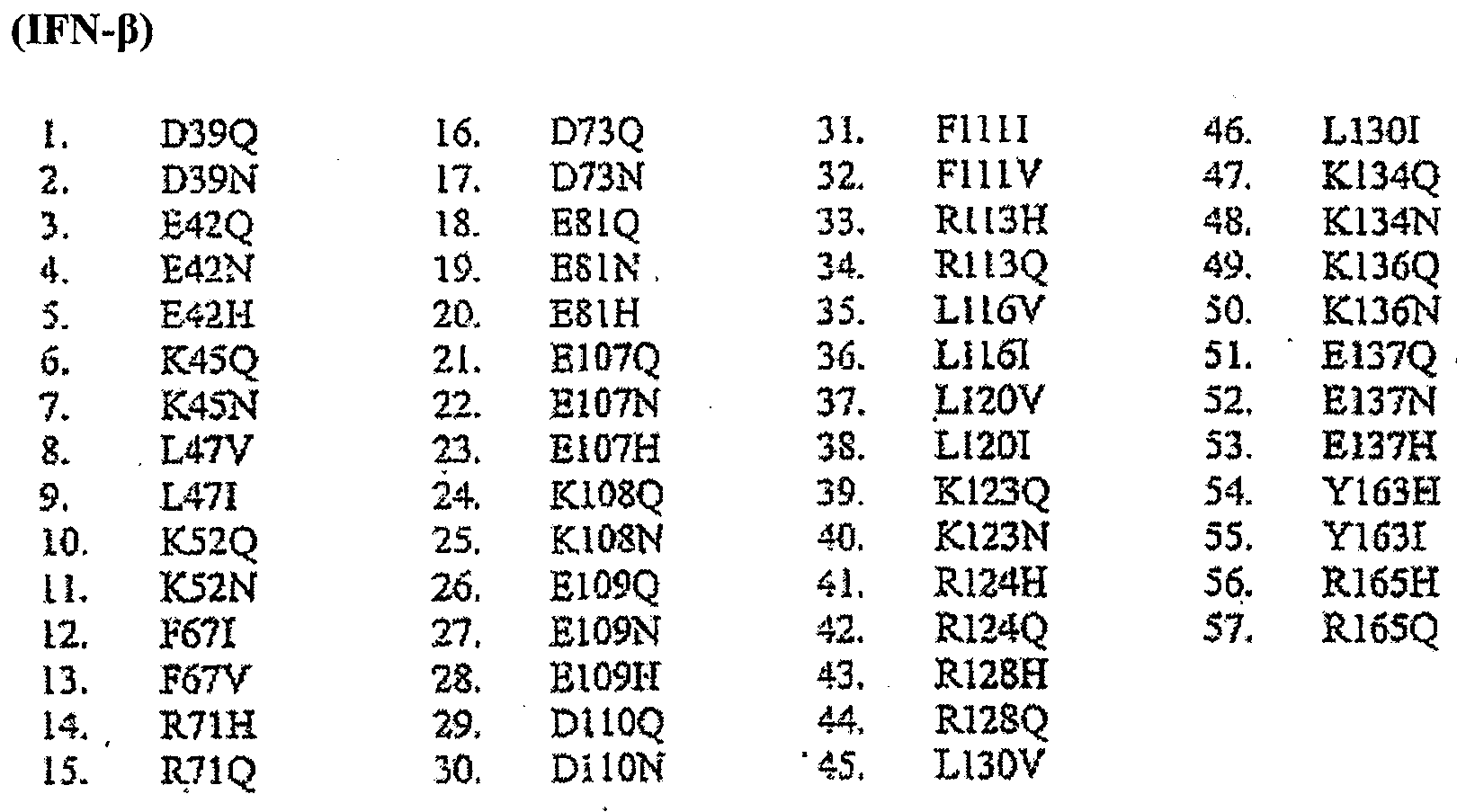
일부 구현에서, 임의의 상기한 프로테아제 저항성 또는 프로테아제 저항성, 초글리코실화 IFN-β 변이체는, IFN-β1a의 변이체이고, 변이체는, [S99N]IFN-β1a 글리코펩티드이며, [S99N]IFN-β1a 글리코펩티드는 다음을 가지는 IFN-β1a의 변이체이다; (a) IFN-β1a의 아미노산 서열에서 위치 99의 아미노산 천연 세린 잔기 대신 치환된 아스파라긴 잔기 (S99 아미노산 위치는 도 24에 개시된 바와 같고; 도 3의 IFN-β 아미노산 서열 중 S74에 해당함), 및 (b) 상기 아스파라긴 잔기의 R기에 공유연결된 탄수화물기. In some embodiments, any of the aforementioned protease resistant or protease resistant, ultraglycosylated IFN-β variants are variants of IFN-β1a, and the variants are [S99N] IFN-β1a glycopeptides, and [S99N] IFN-β1a glyco Peptides are variants of IFN-β1a with (a) an asparagine residue substituted in place of the amino acid native serine residue at position 99 in the amino acid sequence of IFN-β1a (S99 amino acid position is as disclosed in FIG. 24; corresponds to S74 in the IFN-β amino acid sequence of FIG. 3), and ( b) a carbohydrate group covalently linked to the R group of the asparagine residue.
일부 구현에서, 임의의 상기한 프로테아제 저항성 또는 프로테아제 저항성, 초글리코실화 IFN-β 변이체는, IFN-β1a 의 변이체이고, 변이체는, [S99N, E134N]IFN-β1a 글리코펩티드이며, [S99N, E134N]IFN-β1a 글리코펩티드는 다음을 가지는 IFN-β1a의 변이체이다; (a) IFN-β1a의 아미노산 서열에서 위치 99 및 134의 아미노산 천연 세린 및 글루탐산 잔기 각각 대신 치환된 아스파라긴 잔기 (S99 및 E134 아미노산 위치는 도 24에 개시된 바와 같고; 도 3의 IFN-β 아미노산 서열 중 S74 및 E109에 각각 해당함), 및 (b) 상기 아스파라긴 잔기들의 R기에 공유연결된 탄수화물기. In some embodiments, any of the aforementioned protease resistant or protease resistant, ultraglycosylated IFN-β variants are variants of IFN-β1a, and the variants are [S99N, E134N] IFN-β1a glycopeptides, and [S99N, E134N] IFN-β1a glycopeptide is a variant of IFN-β1a with: (a) substituted asparagine residues in place of amino acid natural serine and glutamic acid residues at
일부 구현에서, 임의의 상기한 프로테아제 저항성 또는 프로테아제 저항성, 초글리코실화 IFN-β 변이체는, IFN-β1a 의 변이체이고, 변이체는, [S99N, E134N, F136T]IFN-β1a 글리코펩티드이며, [S99N, E134N, F136T]IFN-β1a 글리코펩티드는 다음을 가지는 IFN-β1a의 변이체이다; (a) IFN-β1a의 아미노산 서열에서 위치 99, 134 및 136의 아미노산 천연 세린, 글루탐산 및 페닐알라닌 잔기 각각 대신 치환된 아스파라긴, 아스파라긴 및 트레오닌 잔기 (S99 및 E134, F136 아미노산 위치는 도 24에 개시된 바와 같고; 도 3의 IFN-β 아미노산 서열 중 S74 및 E109 및 F111에 각각 해당함), 및 (b) 상기 아스파라긴 잔기들의 R기에 공유연결된 탄수화물기.In some embodiments, any of the aforementioned protease resistant or protease resistant, ultraglycosylated IFN-β variants are variants of IFN-β1a, and variants are [S99N, E134N, F136T] IFN-β1a glycopeptides, [S99N, E134N, F136T] IFN-β1a glycopeptide is a variant of IFN-β1a with (a) substituted asparagine, asparagine and threonine residues (S99 and E134, F136 amino acid positions in place of amino acids natural serine, glutamic acid and phenylalanine residues at
일부 구현에서, 임의의 상기한 프로테아제 저항성 또는 프로테아제 저항성, 초글리코실화 IFN-β 변이체는, IFN-β1a 의 변이체이고, 변이체는, [E134N]IFN-β1a 글리코펩티드이며, [E134N]IFN-β1a 글리코펩티드는 다음을 가지는 IFN-β1a의 변이체이다; (a) IFN-β1a의 아미노산 서열에서 위치 134의 아미노산 천연 글루탐산 잔기 대신 치환된 아스파라긴 잔기 (아미노산 위치는 도 24에 개시된 바와 같음), 및 (b) 상기 아스파라긴 잔기의 R기에 공유연결된 탄수화물기. In some embodiments, any of the aforementioned protease resistant or protease resistant, ultraglycosylated IFN-β variants are variants of IFN-β1a, and the variants are [E134N] IFN-β1a glycopeptides, and [E134N] IFN-β1a glyco Peptides are variants of IFN-β1a with (a) a substituted asparagine residue in place of the amino acid natural glutamic acid residue at
일부 구현에서, 임의의 상기한 프로테아제 저항성 또는 프로테아제 저항성, 초글리코실화 IFN-β 변이체는, IFN-β1a 의 변이체이고, 변이체는, [E134N, F136T]IFN-β1a 글리코펩티드이며, [E134N, F136T]IFN-β1a 글리코펩티드는 다음을 가지는 IFN-β1a의 변이체이다; (a) IFN-β1a의 아미노산 서열에서 위치 134 및 136의 아미노산 천연 글루탐산 및 페닐알라닌 잔기 각각 대신 치환된 아스파라긴 및 트레오닌 잔기 (아미노산 위치는 도 24에 개시된 바와 같음), 및 (b) 상기 아스파라긴 잔기의 R기에 공유연결된 탄수화물기.In some embodiments, any of the aforementioned protease resistant or protease resistant, ultraglycosylated IFN-β variants are variants of IFN-β1a, and the variants are [E134N, F136T] IFN-β1a glycopeptides, [E134N, F136T] IFN-β1a glycopeptide is a variant of IFN-β1a with: (a) substituted asparagine and threonine residues in place of amino acid natural glutamic acid and phenylalanine residues at
일부 구현에서, 임의의 상기한 프로테아제 저항성 또는 프로테아제 저항성, 초글리코실화 IFN-β 변이체는, IFN-β1a 의 변이체이고, 변이체는, [E134T]IFN-β1a 글리코펩티드이며, [E134T]IFN-β1a 글리코펩티드는 다음을 가지는 IFN-β1a의 변이체이다; (a) IFN-β1a의 아미노산 서열에서 위치 134의 아미노산 천연 글루탐산 잔기 대신 치환된 트레오닌 잔기 (아미노산 위치는 도 24에 개시된 바와 같음), 및 (b) 상기 트레오닌 잔기의 R기에 공유연결된 탄수화물기. In some embodiments, any of the aforementioned protease resistant or protease resistant, ultraglycosylated IFN-β variants are variants of IFN-β1a, the variant is an [E134T] IFN-β1a glycopeptide, and an [E134T] IFN-β1a glyco Peptides are variants of IFN-β1a with (a) a threonine residue substituted in place of the amino acid natural glutamic acid residue at
일부 구현에서, 임의의 상기한 프로테아제 저항성 또는 프로테아제 저항성, 초글리코실화 IFN-β 변이체는, IFN-β1a 의 변이체이고, 변이체는, [S99N, E134T]IFN-β1a 글리코펩티드이며, [S99N, E134T]IFN-β1a 글리코펩티드는 다음을 가지는 IFN-β1a의 변이체이다; (a) IFN-β1a의 아미노산 서열에서 위치 99 및 134의 아미노산 천연 세린 및 글루탐산 잔기 각각 대신 치환된 아스파라긴 및 트레오닌 잔기 (아미노산 위치는 도 24에 개시된 바와 같음), 및 (b) 상기 아스파라긴 및 트레오닌 잔기 각각의 R기에 공유연결된 탄수화물기.In some embodiments, any of the aforementioned protease resistant or protease resistant, ultraglycosylated IFN-β variants are variants of IFN-β1a, and the variants are [S99N, E134T] IFN-β1a glycopeptides, [S99N, E134T] IFN-β1a glycopeptide is a variant of IFN-β1a with (a) substituted asparagine and threonine residues in place of amino acid natural serine and glutamic acid residues at
일부 구현에서, 임의의 상기한 프로테아제 저항성 또는 프로테아제 저항성, 초글리코실화 IFN-β 변이체는 IFN-β1b의 변이체이고, 변이체는, [S99N]IFN-β1b 글리코펩티드이며, [S99N]IFN-β1b 글리코펩티드는 다음을 가지는 IFN-β1b의 변이체이다; (a) IFN-β1b의 아미노산 서열에서 위치 99의 아미노산 천연 세린 잔기 대신 치환된 아스파라긴 잔기 (아미노산 위치는 도 24에 개시된 바와 같음), 및 (b) 상기 아스파라긴 잔기의 R기에 공유연결된 탄수화물기.In some embodiments, any of the aforementioned protease resistant or protease resistant, ultraglycosylated IFN-β variants are variants of IFN-β1b, and the variants are [S99N] IFN-β1b glycopeptides, and [S99N] IFN-β1b glycopeptides Is a variant of IFN-β1b with (a) a substituted asparagine residue in place of the amino acid natural serine residue at position 99 in the amino acid sequence of IFN-β1b (amino acid position is as disclosed in FIG. 24), and (b) a carbohydrate group covalently linked to the R group of the asparagine residue.
일부 구현에서, 임의의 상기한 프로테아제 저항성 또는 프로테아제 저항성, 초글리코실화 IFN-β 변이체는, IFN-β1b의 변이체이고, 변이체는, [S99N, E134N]IFN-β1b 글리코펩티드이며, [S99N, E134N]IFN-β1b 글리코펩티드는 다음을 가지는 IFN-β1b의 변이체이다; (a) IFN-β1b의 아미노산 서열에서 위치 99 및 134의 아미노산 천연 세린 및 글루탐산 잔기 각각 대신 치환된 아스파라긴 잔기 (아미노산 위치는 도 24에 개시된 바와 같음), 및 (b) 상기 아스파라긴 잔기들 각각의 R기에 공유연결된 탄수화물기.In some embodiments, any of the aforementioned protease resistant or protease resistant, ultraglycosylated IFN-β variants are variants of IFN-β1b, and the variants are [S99N, E134N] IFN-β1b glycopeptides, and [S99N, E134N] IFN-β1b glycopeptide is a variant of IFN-β1b with (a) substituted asparagine residues in place of amino acid natural serine and glutamic acid residues at
일부 구현에서, 임의의 상기한 프로테아제 저항성 또는 프로테아제 저항성, 초글리코실화 IFN-β 변이체는, IFN-β1b의 변이체이고, 변이체는, [S99N, E134N, F136T]IFN-β1b 글리코펩티드이며, [S99N, E134N, F136T]IFN-β1b 글리코펩티드는 다음을 가지는 IFN-β1b의 변이체이다; (a) IFN-β1b의 아미노산 서열에서 위치 99, 134 및 136의 아미노산 천연 세린, 글루탐산 및 페닐알라닌 잔기 각각 대신 치환된 아스파라긴, 아스파라긴 및 트레오닌 잔기 (아미노산 위치는 도 24에 개시된 바와 같음), 및 (b) 상기 아스파라긴 잔기들 각각의 R기에 공유연결된 탄수화물기.In some embodiments, any of the aforementioned protease resistant or protease resistant, ultraglycosylated IFN-β variants are variants of IFN-β1b, and the variants are [S99N, E134N, F136T] IFN-β1b glycopeptides, [S99N, E134N, F136T] IFN-β1b glycopeptide is a variant of IFN-β1b with (a) substituted asparagine, asparagine and threonine residues in place of amino acid natural serine, glutamic acid and phenylalanine residues at
일부 구현에서, 임의의 상기한 프로테아제 저항성 또는 프로테아제 저항성, 초글리코실화 IFN-β 변이체는 IFN-β1b의 변이체이고, 변이체는, [E134N]IFN-β1b 글리코펩티드이며, [E134N]IFN-β1b 글리코펩티드는 다음을 가지는 IFN-β1b의 변이체이다; (a) IFN-β1b의 아미노산 서열에서 위치 134의 아미노산 천연 글루탐산 잔기 대신 치환된 아스파라긴 잔기 (아미노산 위치는 도 24에 개시된 바와 같음), 및 (b) 상기 아스파라긴 잔기의 R기에 공유연결된 탄수화물기.In some embodiments, any of the aforementioned protease resistant or protease resistant, ultraglycosylated IFN-β variants are variants of IFN-β1b, and the variants are [E134N] IFN-β1b glycopeptides, and [E134N] IFN-β1b glycopeptides Is a variant of IFN-β1b with (a) an asparagine residue substituted in place of the amino acid natural glutamic acid residue at
일부 구현에서, 임의의 상기한 프로테아제 저항성 또는 프로테아제 저항성, 초글리코실화 IFN-β 변이체는, IFN-β1b의 변이체이고, 변이체는, [E134N, F136T]IFN-β1b 글리코펩티드이며, [E134N, F136T]IFN-β1b 글리코펩티드는 다음을 가지는 IFN-β1b의 변이체이다; (a) IFN-β1b의 아미노산 서열에서 위치 134 및 136의 아미노산 천연 글루탐산 및 페닐알라닌 잔기 각각 대신 치환된 아스파라긴 및 트레오닌 잔기 (아미노산 위치는 도 24에 개시된 바와 같음), 및 (b) 상기 아스파라긴 잔기의 R기에 공유연결된 탄수화물기.In some embodiments, any of the aforementioned protease resistant or protease resistant, ultraglycosylated IFN-β variants are variants of IFN-β1b, and the variants are [E134N, F136T] IFN-β1b glycopeptides, [E134N, F136T] IFN-β1b glycopeptide is a variant of IFN-β1b with (a) substituted asparagine and threonine residues in place of amino acid natural glutamic acid and phenylalanine residues at
일부 구현에서, 임의의 상기한 프로테아제 저항성 또는 프로테아제 저항성, 초글리코실화 IFN-β 변이체는 IFN-β1b의 변이체이고, 변이체는, [E134T]IFN-β1b 글리코펩티드이며, [E134T]IFN-β1b 글리코펩티드는 다음을 가지는 IFN-β1b의 변이체이다; (a) IFN-β1b의 아미노산 서열에서 위치 134의 아미노산 천연 글루탐산 잔기 대신 치환된 트레오닌 잔기 (아미노산 위치는 도 24에 개시된 바와 같음), 및 (b) 상기 트레오닌 잔기의 R기에 공유연결된 탄수화물기.In some embodiments, any of the aforementioned protease resistant or protease resistant, ultraglycosylated IFN-β variants are variants of IFN-β1b, and the variants are [E134T] IFN-β1b glycopeptides, and [E134T] IFN-β1b glycopeptides Is a variant of IFN-β1b with (a) a threonine residue substituted in place of the amino acid natural glutamic acid residue at
일부 구현에서, 임의의 상기한 프로테아제 저항성 또는 프로테아제 저항성, 초글리코실화 IFN-β 변이체는, IFN-β1b의 변이체이고, 변이체는, [S99N, E134T]IFN-β1b 글리코펩티드이며, [S99N, E134T]IFN-β1b 글리코펩티드는 다음을 가지는 IFN-β1b의 변이체이다; (a) IFN-β1b의 아미노산 서열에서 위치 99 및 134의 아미노산 천연 세린 및 글루탐산 잔기 각각 대신 치환된 아스파라긴 및 트레오닌 잔기 (아미노산 위치는 도 24에 개시된 바와 같음), 및 (b) 상기 아스파라긴 및 트레오닌 잔기들 각각의 R기에 공유연결된 탄수화물기.In some embodiments, any of the aforementioned protease resistant or protease resistant, ultraglycosylated IFN-β variants are variants of IFN-β1b, and the variants are [S99N, E134T] IFN-β1b glycopeptides, and [S99N, E134T] IFN-β1b glycopeptide is a variant of IFN-β1b with (a) substituted asparagine and threonine residues in place of amino acid natural serine and glutamic acid residues at
IFNIFN -γ 폴리펩티드 변이체-γ polypeptide variant
다른 구현에서, 초글리코실화, 프로테아제 저항성 인터페론 변이체는 변형된 IFN-γ 사이토카인으로, 상기 IFN-α2b 폴리펩티드 변이체의 3차원 구조 내에 구조 관련 변형 아미노산 위치에 해당하는 SEQ ID NO: 199 (도 4에 개시된 바와 같은) 중의 하나 이상의 목적 위치에 하나 이상의 아미노산 대체를 포함하며, 여기에서, 대체 (들)은, 비변형 IFN-γ 과 비교하여, 프로테아제 또는 혈액 용해물과의 인큐베이션 또는 혈청과 인큐베이션에 의해 평가할 때 (상기한 바와 같이), 프로테아제에 대한 제고된 저항성을 유도하는 것이다. 이들 일부 구현에서, 변형된 IFN-γ 는 다음 아미노산 위치의 임의의 것에 해당하는, SEQ ID NO: 199 (도 4에 개시된 바와 같은) 중 하나 이상의 목적 아미노산 위치에서 하나 이상의 단일 아미노산 대체를 포함하는 단백질들로부터 선택되며: 33, 37, 40, 41, 42, 58, 61, 64, 65 및 66; 여기에서 돌연변이는, 천연 아미노산 잔기 (들)의 대체, 결실 및 첨가를 포함한다. 특별한 구현에서는, 하기 표 3에 개시된 SEQ ID NO: 199 중의 아미노산 대체로부터 대체가 선택되며, 여기에서 기재된 제 1 아미노산은 표시한 위치에서 제 2 아미노산으로 치환되고; 변이체가 부모 폴리펩티드에서 발견되지 않는 하나 이상의 글리코실화 부위를 포함하는 정도로, 부모 폴리펩티드의 아미노산 서열과 다른 아미노산 서열을 변이체가 추가로 포함한다.In another embodiment, the hyperglycosylated, protease resistant interferon variant is a modified IFN- [gamma] cytokine, SEQ ID NO: 199 corresponding to a structurally related modified amino acid position within the three-dimensional structure of said IFN- [alpha] 2b polypeptide variant. One or more amino acid substitutions at one or more desired positions, as disclosed, wherein the replacement (s) is by incubation with proteases or blood lysates or by incubation with serum, as compared to unmodified IFN-γ When evaluated (as described above), it is to induce enhanced resistance to proteases. In some of these embodiments, the modified IFN-γ comprises a protein comprising one or more single amino acid substitutions at one or more target amino acid positions of SEQ ID NO: 199 (as disclosed in FIG. 4), corresponding to any of the following amino acid positions: Selected from: 33, 37, 40, 41, 42, 58, 61, 64, 65 and 66; Mutations herein include replacement, deletion and addition of natural amino acid residue (s). In a particular embodiment, the substitution is selected from the amino acid substitutions in SEQ ID NO: 199 set forth in Table 3 below, wherein the first amino acid described herein is substituted with a second amino acid at the indicated position; The variant further comprises an amino acid sequence that differs from the amino acid sequence of the parent polypeptide to the extent that the variant comprises one or more glycosylation sites that are not found in the parent polypeptide.

다른 구현에서 변형된 IFN-γ는 SEQ ID NO: 290-311의 임의의 것에 해당하는 아미노산 서열을 포함하며, 추가로 부모 폴리펩티드에서 발견되지 않는 하나 이상의 글리코실화 부위를 포함한다.In other embodiments the modified IFN- [gamma] comprises an amino acid sequence corresponding to any of SEQ ID NOs: 290-311 and further comprises one or more glycosylation sites that are not found in the parent polypeptide.
일부 구현에서, 임의의 상기한 프로테아제 저항성 또는 프로테아제 저항성, 초글리코실화 IFN-γ 변이체는, [S99T]IFN-γ 글리코펩티드로서, [S99T]IFN-γ 글리코펩티드는 다음을 가지는 성숙한 천연 IFN-γ의 변이체이다; (a) 도 31의 IFN-γ 아미노산 서열 위치 99 아미노산에서 천연 세린 잔기 대신 트레오닌 잔기가 치환되고 (도 4에 개시된 IFN-γ 아미노산 서열의 S102에 해당) (b) (a)의 아미노산 서열 위치 97의 아미노산 위치 아스파라긴 잔기의 R 기에 공유연결된 탄수화물기; 및 부모 IFN-γ 폴리펩티드에서 발견되는 천연 프로테아제 절단부위 대신 하나 이상의 돌연변이된 프로테아제 절단 부위. In some embodiments, any of the aforementioned protease resistant or protease resistant, ultraglycosylated IFN- [gamma] variants are [S99T] IFN- [gamma] glycopeptides, wherein [S99T] IFN- [gamma] glycopeptides are mature native IFN- [gamma]. Is a variant of; (a) the threonine residue is substituted for the native serine residue in the IFN- [gamma] amino acid sequence position 99 amino acid of FIG. 31 (corresponding to S102 of the IFN- [gamma] amino acid sequence disclosed in FIG. 4) and (b) amino acid sequence position 97 of (a) Carbohydrate groups covalently linked to the R group of the amino acid position asparagine residues of; And one or more mutated protease cleavage sites instead of the native protease cleavage sites found in the parent IFN- [gamma] polypeptide.
[S99T]IFN-γ 변이체에서 N97, Y98, S99 에 의해 형성된 글리코실화 부위가 천연 IFN-γ에서 N97, Y98, T99 에 의해 형성된 글리코실화 부위와 상이하므로, N97, Y98, T99 글리코실화 부위는 부모 폴리펩티드에서 발견되지 않는 비천연 글리코실화 부위가 될 자격이 있다. 또한, WO 02/081507에 기재된 바와 같이, 천연 IFN-γ 아미노산 서열 중 S99T 치환은, 천연 IFN-γ의 N97, Y98, S99 글리코실화 부위에서의 글리코실화 효율에 비해 [S99T]IFN-γ 변이체에서의 N97, Y98, T99 글리코실화 부위에서의 글리코실화 효율의 제고를 도모한다. 따라서, [S99T]IFN-γ는, 부모 IFN-γ 폴리펩티드의 초글리코실화 폴리펩티드 변이체로서의 자격을 가진다 (도 31에 개시된 IFN-γ 아미노산 서열 중 아미노산 위치 N97, Y98 및 S99는, 도 4에 개시된 IFN-γ 아미노산 서열 중 아미노산 위치 N100, Y101, 및 S102 에 해당한다).Since the glycosylation sites formed by N97, Y98, S99 in the [S99T] IFN- [gamma] variants differ from the glycosylation sites formed by N97, Y98, T99 in native IFN- [gamma], the N97, Y98, T99 glycosylation sites are parental. It is qualified to be a non-natural glycosylation site not found in polypeptides. In addition, as described in WO 02/081507, S99T substitutions in the native IFN- [gamma] amino acid sequences are more evident in the [S99T] IFN- [gamma] variants compared to the glycosylation efficiency at the N97, Y98, S99 glycosylation sites of native IFN- [gamma]. The glycosylation efficiency at the N97, Y98, and T99 glycosylation sites is improved. Thus, [S99T] IFN- [gamma] has the qualification as a superglycosylated polypeptide variant of the parent IFN- [gamma] polypeptide (amino acid positions N97, Y98 and S99 in the IFN- [gamma] amino acid sequence disclosed in FIG. corresponding to amino acid positions N100, Y101, and S102 in the -γ amino acid sequence).
일부 구현에서, 임의의 상기한 프로테아제 저항성 또는 프로테아제 저항성, 초글리코실화 IFN-γ 변이체는, [E38N]IFN-γ 글리코펩티드로서, [E38N]IFN-γ 글리코펩티드는 다음을 가지는 성숙한 천연 IFN-γ의 변이체이다; (a) 도 31의 IFN-γ 아미노산 서열 위치 38 아미노산에서 천연 글루탐산 잔기 대신 아스파라긴 잔기가 치환되고 (도 31에 개시된 IFN-γ의 아미노산 서열 중 E38은, 도 4에 개시된 IFN-γ의 아미노산 서열 중 E41에 해당) (b) (a)의 아미노산 서열 위치 38의 아미노산 위치 아스파라긴 잔기의 R 기에 공유연결된 탄수화물기; 및 부모 IFN-γ 폴리펩티드에서 발견되는 천연 프로테아제 절단부위 대신 하나 이상의 돌연변이된 프로테아제 절단 부위. In some embodiments, any of the aforementioned protease resistant or protease resistant, ultraglycosylated IFN- [gamma] variants are [E38N] IFN- [gamma] glycopeptides, wherein [E38N] IFN- [gamma] glycopeptides are mature native IFN- [gamma]. Is a variant of; (a) an asparagine residue is substituted for a native glutamic acid residue in the IFN-γ amino
일부 구현에서, 임의의 상기한 프로테아제 저항성 또는 프로테아제 저항성, 초글리코실화 IFN-γ 변이체는, [E38N, S99T]IFN-γ 글리코펩티드로서, [E38N, S99T]IFN-γ 글리코펩티드는 다음을 가지는 성숙한 천연 IFN-γ의 변이체이다; (a) 도 31의 IFN-γ 아미노산 서열 위치 38 및 99 아미노산에서 천연 글루탐산 및 세린 잔기들 대신 아스파라긴 및 트레오닌 잔기가 치환되고 (도 31에 개시된 IFN-γ의 아미노산 서열 중 E38 및 S99은, 도 4에 개시된 IFN-γ의 아미노산 서열 중 E41 및 S102에 각각 해당) (b) (a)의 아미노산 서열 위치 38 및 97의 아미노산 위치 각각의 아스파라긴 잔기 R 기에 공유연결된 탄수화물기; 및 부모 IFN-γ 폴리펩티드에서 발견되는 천연 프로테아제 절단부위 대신 하나 이상의 돌연변이된 프로테아제 절단 부위.In some embodiments, any of the aforementioned protease resistant or protease resistant, ultraglycosylated IFN- [gamma] variants are [E38N, S99T] IFN- [gamma] glycopeptides, wherein [E38N, S99T] IFN- [gamma] glycopeptides are mature with It is a variant of native IFN-γ; (a) Asparagine and threonine residues are substituted for native glutamic and serine residues at the IFN- [gamma] amino acid sequence positions 38 and 99 amino acids of FIG. 31 (E38 and S99 in the amino acid sequence of IFN- [gamma] Corresponding to E41 and S102 respectively of the amino acid sequences of IFN- [gamma] disclosed in (b) a carbohydrate group covalently linked to an asparagine residue R group at each of the amino acid positions of amino acid sequence positions 38 and 97 of (a); And one or more mutated protease cleavage sites instead of the native protease cleavage sites found in the parent IFN- [gamma] polypeptide.
일부 구현에서, 임의의 상기한 프로테아제 저항성 또는 프로테아제 저항성, 초글리코실화 IFN-γ 변이체는, [E38N, S40T]IFN-γ 글리코펩티드로서, [E38N, S40T]IFN-γ 글리코펩티드는 다음을 가지는 성숙한 천연 IFN-γ의 변이체이다; (a) 도 31의 IFN-γ 아미노산 서열 위치 38 및 40 아미노산에서 천연 글루탐산 및 세린 잔기들 대신 아스파라긴 및 트레오닌 잔기가 치환되고 (도 31에 개시된 IFN-γ의 아미노산 서열 중 E38 및 S40은, 도 4에 개시된 IFN-γ의 아미노산 서열 중 E41 및 S43에 각각 해당) (b) (a)의 아미노산 서열 위치 38 의 아미노산 위치 아스파라긴 잔기 R 기에 공유연결된 탄수화물기; 및 부모 IFN-γ 폴리펩티드에서 발견되는 천연 프로테아제 절단부위 대신 하나 이상의 돌연변이된 프로테아제 절단 부위.In some embodiments, any of the aforementioned protease resistant or protease resistant, ultraglycosylated IFN-γ variants are [E38N, S40T] IFN-γ glycopeptides, wherein [E38N, S40T] IFN-γ glycopeptides are mature with It is a variant of native IFN-γ; (a) Asparagine and threonine residues are substituted for native glutamic acid and serine residues at the IFN- [gamma] amino acid sequence positions 38 and 40 amino acids of FIG. 31 (E38 and S40 in the amino acid sequence of IFN- [gamma] disclosed in FIG. Corresponding to E41 and S43 in the amino acid sequence of IFN- [gamma] disclosed in each of the following: (b) a carbohydrate group covalently linked to the amino acid position asparagine residue R group of amino
일부 구현에서, 임의의 상기한 프로테아제 저항성 또는 프로테아제 저항성, 초글리코실화 IFN-γ 변이체는, [E38N, S40T, S99T]IFN-γ 글리코펩티드로서, [E38N, S40T, S99T]IFN-γ 글리코펩티드는 다음을 가지는 성숙한 천연 IFN-γ의 변이체이다; (a) 도 31의 IFN-γ 아미노산 서열 위치 38, 40 및 99 아미노산에서 천연 글루탐산, 세린 및 세린 잔기들 각각 대신 아스파라긴, 트레오닌 및 트레오닌 잔기가 치환되고 (도 31에 개시된 IFN-γ의 아미노산 서열 중 E38 및 S40 및 S99는, 도 4에 개시된 IFN-γ의 아미노산 서열 중 E41 및 S43 및 S102 각각에 해당) (b) (a)의 아미노산 서열 위치 38 의 아미노산 위치 아스파라긴 잔기 R 기에 공유연결된 탄수화물기; 및 임의로 다음을 추가로 포함하며 (c) (a)의 아미노산 서열 위치 97 의 아미노산 위치 아스파라긴 잔기 R 기에 공유연결된 탄수화물기; 및 부모 IFN-γ 폴리펩티드에서 발견되는 천연 프로테아제 절단부위 대신 하나 이상의 돌연변이된 프로테아제 절단 부위를 포함함.In some embodiments, any of the aforementioned protease resistant or protease resistant, ultraglycosylated IFN-γ variants are [E38N, S40T, S99T] IFN-γ glycopeptides, wherein [E38N, S40T, S99T] IFN-γ glycopeptides It is a variant of mature native IFN-γ with (a) Asparagine, threonine and threonine residues are substituted in place of the natural glutamic acid, serine and serine residues at the IFN- [gamma] amino acid sequence positions 38, 40 and 99 amino acids of FIG. E38 and S40 and S99 correspond to E41 and S43 and S102 respectively in the amino acid sequence of IFN- [gamma] disclosed in Fig. 4) (b) a carbohydrate group covalently linked to the amino acid position asparagine residue R group of amino
일부 구현에서, 임의의 상기한 초글리코실화, 프로테아제 저항성 IFN-γ 변이체는, 비변형 (부모) 사이토카인에 비해 제고된 안정성을 가지고, 여기에서, 안정성은, 상기한 바와 같이 프로테아제의 혼합물, 개별 프로테아제, 혈액 용해물, 또는 혈청과 인큐베이션후, 잔류 생활성을 측정하여 평가한다. 다른 구현에서, 임의의 상기한 프로테아제 저항성 IFN-γ 변이체는 상기한 바와 같이 프로테아제의 혼합물, 개별 프로테아제, 혈액 용해물, 또는 혈청과 인큐베이션후, 비변형 (부모) 사이토카인과의 인큐베이션 후에 제고된 생활성을 가진다. In some embodiments, any of the aforementioned hyperglycosylated, protease resistant IFN- [gamma] variants have enhanced stability relative to unmodified (parent) cytokines, wherein the stability is a mixture of proteases, as described above, individual After incubation with protease, blood lysate, or serum, residual bioactivity is measured and evaluated. In another embodiment, any of the above described protease resistant IFN- [gamma] variants are enhanced life after incubation with a mixture of proteases, individual proteases, blood lysates, or serum, and after incubation with an unmodified (parent) cytokine, as described above. Have a last name
에리트로포이에틴 폴리펩티드 변이체Erythropoietin Polypeptide Variants
다른 구현에서, 초글리코실화, 프로테아제 저항성 사이토카인 변이체는 변형된 에리트로포이에틴 사이토카인으로, 상기 IFN-α2b 폴리펩티드 변이체의 3차원 구조 내에 구조 관련 변형 아미노산 위치에 해당하는 SEQ ID NO: 201 (도 7에 개시된 바와 같은) 중의 하나 이상의 목적 위치에 하나 이상의 아미노산 대체를 포함하며, 여기에서, 대체 (들)은, 비변형 에리트로포이에틴과 비교하여, 프로테아제 또는 혈액 용해물과의 인큐베이션 또는 혈청과 인큐베이션에 의해 평가할 때 (상기한 바와 같이), 프로테아제에 대한 제고된 저항성을 유도하는 것이다. 이들 일부 구현에서, 변형된 에리트로포이에틴은, 다음 아미노산 위치의 임의의 것에 해당하는, SEQ ID NO: 201 (도 7에 개시된 바와 같은) 중 하나 이상의 목적 아미노산 위치에서 하나 이상의 단일 아미노산 대체를 포함하는 단백질들로부터 선택되며: 43, 45, 48, 49, 52, 53, 55, 72, 75, 76, 123, 129, 130, 131, 162 및 165; 여기에서 돌연변이는, 천연 아미노산 잔기 (들)의 대체, 결실 및 첨가를 포함한다. 특별한 구현에서는, 하기 표 4에 개시된 SEQ ID NO: 201 중의 아미노산 대체로부터 대체가 선택되며, 여기에서 기재된 제 1 아미노산은 표시한 위치에서 제 2 아미노산으로 치환되고; 변이체가 부모 폴리펩티드에서 발견되지 않는 하나 이상의 글리코실화 부위를 포함하는 정도로, 부모 폴리펩티드의 아미노산 서열과 다른 아미노산 서열을 변이체가 추가로 포함한다. In another embodiment, the hyperglycosylated, protease resistant cytokine variant is a modified erythropoietin cytokine, SEQ ID NO: 201 corresponding to the structure related modified amino acid position within the three-dimensional structure of the IFN-α2b polypeptide variant (FIG. 7). One or more amino acid substitutions at one or more desired positions), wherein the replacement (s) is incubated with a protease or blood lysate or in serum and incubation as compared to unmodified erythropoietin. As assessed (as described above), this leads to enhanced resistance to proteases. In some of these embodiments, the modified erythropoietin comprises one or more single amino acid substitutions at one or more target amino acid positions of one or more of SEQ ID NO: 201 (as disclosed in FIG. 7), corresponding to any of the following amino acid positions: Proteins are selected from: 43, 45, 48, 49, 52, 53, 55, 72, 75, 76, 123, 129, 130, 131, 162 and 165; Mutations herein include replacement, deletion and addition of natural amino acid residue (s). In a particular embodiment, the substitution is selected from the amino acid substitutions in SEQ ID NO: 201 set forth in Table 4 below, wherein the first amino acid described herein is substituted with a second amino acid at the indicated position; The variant further comprises an amino acid sequence that differs from the amino acid sequence of the parent polypeptide to the extent that the variant comprises one or more glycosylation sites that are not found in the parent polypeptide.

다른 구현에서, 변형된 에리트로포이에틴은, SEQ ID NO: 940-977 중 임의에 해당하는 아미노산 서열을 포함하며, 부모 폴리펩티드에서 발견되지 않는 하나 이상의 글리코실화 부위를 추가로 포함한다.In other embodiments, the modified erythropoietin comprises an amino acid sequence corresponding to any of SEQ ID NOs: 940-977 and further comprises one or more glycosylation sites not found in the parent polypeptide.
GM-CSF 폴리펩티드 변이체GM-CSF Polypeptide Variants
다른 구현에서, 초글리코실화, 프로테아제 저항성 사이토카인 변이체는 변형된 GM-CSF 사이토카인으로, 상기 에리트로포이에틴 폴리펩티드 변이체의 3차원 구조 내에 구조 관련 변형 아미노산 위치에 해당하는 SEQ ID NO: 202 (도 8에 개시된 바와 같은) 중의 하나 이상의 목적 위치에 하나 이상의 아미노산 대체를 포함하며, 여기에서, 대체 (들)은, 비변형 GM-CSF와 비교하여, 프로테아제 또는 혈액 용해물과의 인큐베이션 또는 혈청과 인큐베이션에 의해 평가할 때 (상기한 바와 같이), 프로테아제에 대한 제고된 저항성을 유도하는 것이다. 이들 일부 구현에서, 변형된 GM-CSF는, 다음 아미노산 위치의 임의의 것에 해당하는, SEQ ID NO: 202 (도 8에 개시된 바와 같은) 중 하나 이상의 목적 아미노산 위치에서 하나 이상의 단일 아미노산 대체를 포함하는 단백질들로부터 선택되며: 38, 41, 45, 46, 48, 49, 51, 60, 63, 67, 92, 93, 119, 120, 123 및 124; 여기에서 돌연변이는, 천연 아미노산 잔기 (들)의 대체, 결실 및 첨가를 포함한다. 특별한 구현에서는, 하기 표 5에 개시된 SEQ ID NO: 202 중의 아미노산 대체로부터 대체가 선택되며, 여기에서 기재된 제 1 아미노산은 표시한 위치에서 제 2 아미노산으로 치환되고; 변이체가 부모 폴리펩티드에서 발견되지 않는 하나 이상의 글리코실화 부위를 포함하는 정도로, 부모 폴리펩티드의 아미노산 서열과 다른 아미노산 서열을 변이체가 추가로 포함한다. In another embodiment, the hyperglycosylated, protease resistant cytokine variant is a modified GM-CSF cytokine, SEQ ID NO: 202 corresponding to the structure related modified amino acid position within the three-dimensional structure of the erythropoietin polypeptide variant. One or more amino acid substitutions at one or more desired positions), wherein the replacement (s) is incubated with proteases or blood lysates or in serum and incubation, as compared to unmodified GM-CSF. As assessed (as described above), this leads to enhanced resistance to proteases. In some of these embodiments, the modified GM-CSF comprises one or more single amino acid substitutions at one or more target amino acid positions of one or more of SEQ ID NO: 202 (as disclosed in FIG. 8), corresponding to any of the following amino acid positions: Proteins are selected from: 38, 41, 45, 46, 48, 49, 51, 60, 63, 67, 92, 93, 119, 120, 123 and 124; Mutations herein include replacement, deletion and addition of natural amino acid residue (s). In a particular embodiment, the substitution is selected from the amino acid substitutions in SEQ ID NO: 202 set forth in Table 5 below, wherein the first amino acid described herein is substituted with a second amino acid at the indicated position; The variant further comprises an amino acid sequence that differs from the amino acid sequence of the parent polypeptide to the extent that the variant comprises one or more glycosylation sites that are not found in the parent polypeptide.
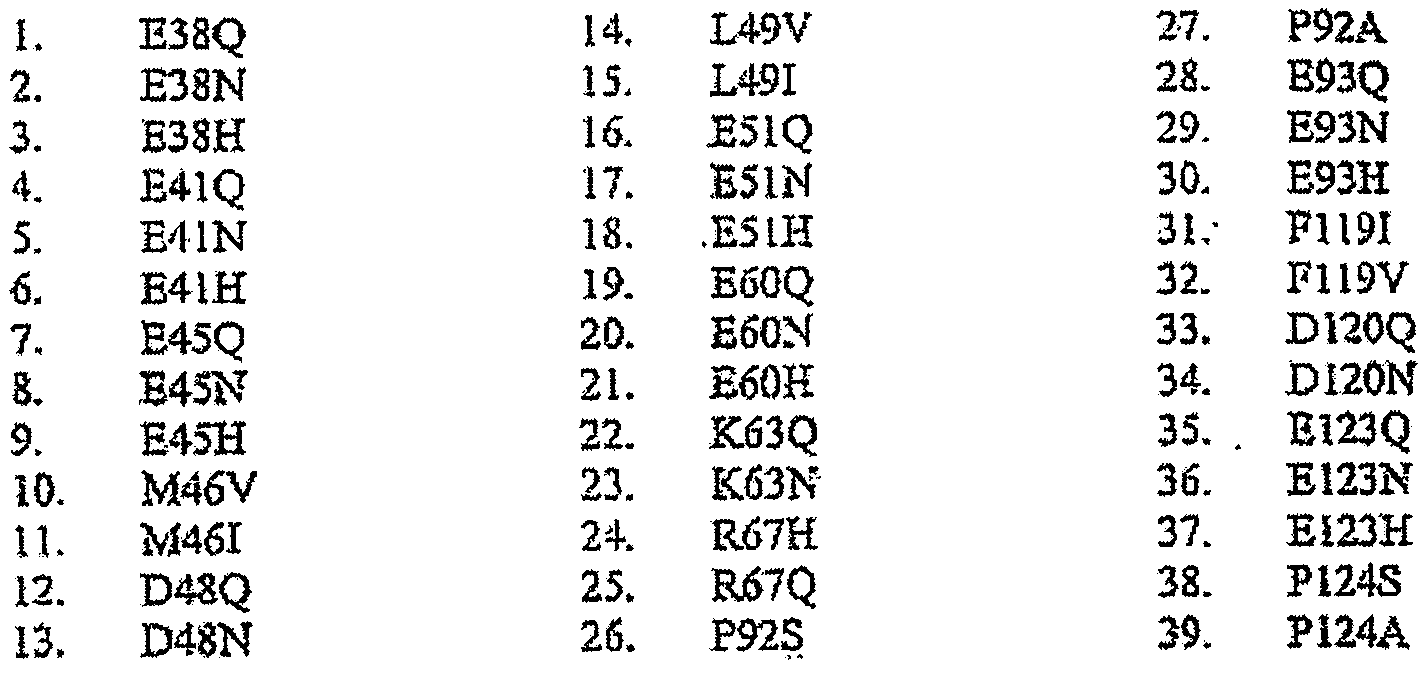
다른 구현에서, 변형된 GM-CSF는, SEQ ID NO: 362-400중 임의에 해당하는 아미노산 서열을 포함하며, 부모 폴리펩티드에서 발견되지 않는 하나 이상의 글리코실화 부위를 추가로 포함한다.In other embodiments, the modified GM-CSF comprises an amino acid sequence corresponding to any of SEQ ID NOs: 362-400 and further comprises one or more glycosylation sites not found in the parent polypeptide.
G-CSF 폴리펩티드 변이체G-CSF Polypeptide Variants
다른 구현에서, 초글리코실화, 프로테아제 저항성 사이토카인 변이체는 변형된 G-CSF 사이토카인으로, 상기 IFN-α2b 폴리펩티드 변이체의 3차원 구조 내에 구조 관련 변형 아미노산 위치에 해당하는 SEQ ID NO: 210 (도 5에 개시된 바와 같은) 중의 하나 이상의 목적 위치에 하나 이상의 아미노산 대체를 포함하며, 여기에서, 대체 (들)은, 비변형 G-CSF와 비교하여, 프로테아제 또는 혈액 용해물과의 인큐베이션 또는 혈청과 인큐베이션에 의해 평가할 때 (상기한 바와 같이), 프로테아제에 대한 제고된 저항성을 유도하는 것이다. 이들 일부 구현에서, 변형된 G-CSF는, 다음 아미노산 위치의 임의의 것에 해당하는, SEQ ID NO: 210 (도 5에 개시된 바와 같은) 중 하나 이상의 목적 아미노산 위치에서 하나 이상의 단일 아미노산 대체를 포함하는 단백질들로부터 선택되며: 61, 63, 68, 72, 86, 96, 100, 101, 131, 133, 135, 147, 169, 172, 및 177; 여기에서 돌연변이는, 천연 아미노산 잔기 (들)의 대체, 결실 및 첨가를 포함한다. 특별한 구현에서는, 하기 표 6에 개시된 SEQ ID NO: 210 중의 아미노산 대체로부터 대체가 선택되며, 여기에서 기재된 제 1 아미노산은 표시한 위치에서 제 2 아미노산으로 치환되고; 변이체가 부모 폴리펩티드에서 발견되지 않는 하나 이상의 글리코실화 부위를 포함하는 정도로, 부모 폴리펩티드의 아미노산 서열과 다른 아미노산 서열을 변이체가 추가로 포함한다. In another embodiment, the hyperglycosylated, protease resistant cytokine variant is a modified G-CSF cytokine, SEQ ID NO: 210 corresponding to the structure related modified amino acid position within the three-dimensional structure of the IFN-α2b polypeptide variant. One or more amino acid substitutions at one or more desired positions), wherein the replacement (s) is incubated with proteases or blood lysates or in serum and incubation, as compared to unmodified G-CSF. As assessed (as described above), this leads to enhanced resistance to proteases. In some of these embodiments, the modified G-CSF comprises one or more single amino acid substitutions at one or more target amino acid positions of SEQ ID NO: 210 (as disclosed in FIG. 5), corresponding to any of the following amino acid positions: Proteins are selected from: 61, 63, 68, 72, 86, 96, 100, 101, 131, 133, 135, 147, 169, 172, and 177; Mutations herein include replacement, deletion and addition of natural amino acid residue (s). In a particular embodiment, the substitution is selected from the amino acid substitutions in SEQ ID NO: 210 set forth in Table 6 below, wherein the first amino acid described herein is substituted with a second amino acid at the indicated position; The variant further comprises an amino acid sequence that differs from the amino acid sequence of the parent polypeptide to the extent that the variant comprises one or more glycosylation sites that are not found in the parent polypeptide.
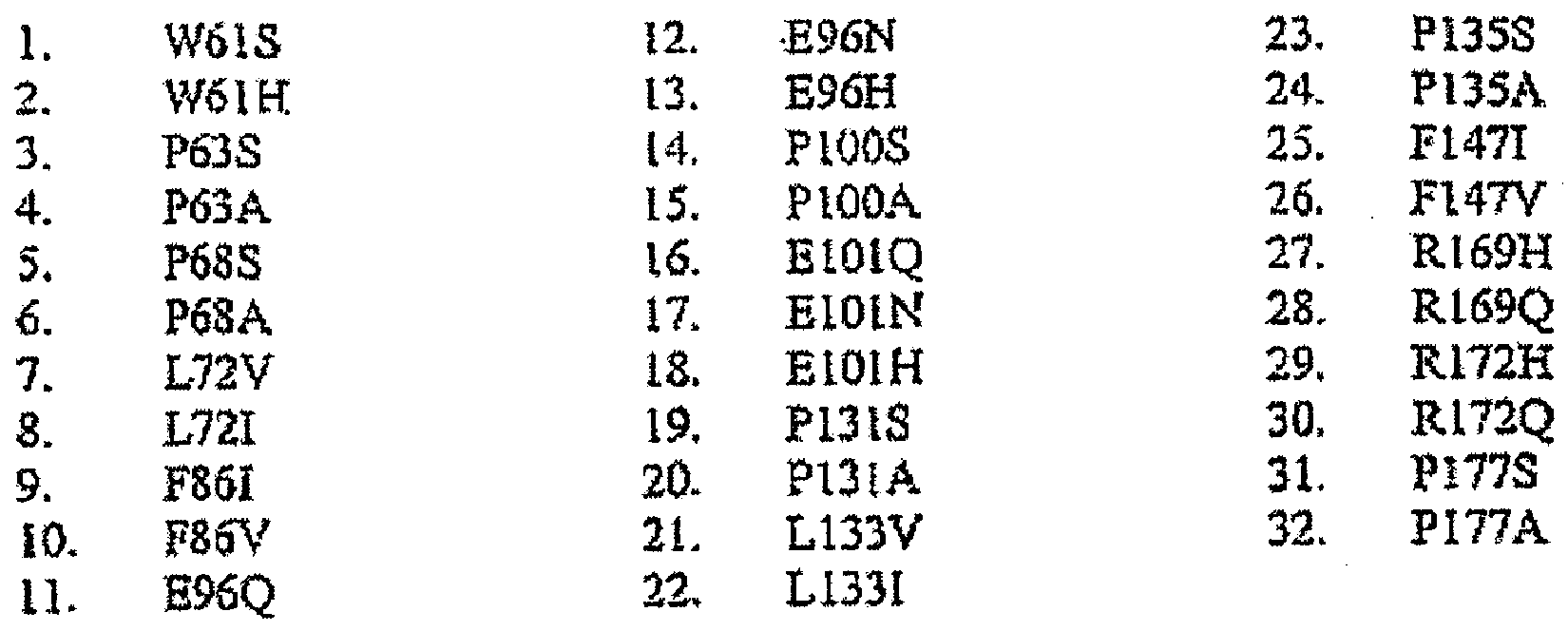
다른 구현에서, 변형된 G-CSF는, SEQ ID NO: 631-662 중 임의에 해당하는 아미노산 서열을 포함하며, 부모 폴리펩티드에서 발견되지 않는 하나 이상의 글리코실화 부위를 추가로 포함한다.In other embodiments, the modified G-CSF comprises an amino acid sequence corresponding to any of SEQ ID NOs: 631-662 and further comprises one or more glycosylation sites not found in the parent polypeptide.
인간 성장 호르몬 폴리펩티드 변이체Human Growth Hormone Polypeptide Variants
다른 구현에서, 초글리코실화, 프로테아제 저항성 사이토카인 변이체는 변형된 인간 성장 호르몬 (hGH) 사이토카인으로, 상기 G-CSF 폴리펩티드 변이체의 3차원 구조 내에 구조 관련 변형 아미노산 위치에 해당하는 SEQ ID NO: 216 (도 6에 개시된 바와 같은) 중의 하나 이상의 목적 위치에 하나 이상의 아미노산 대체를 포함하며, 여기에서, 대체 (들)은, 비변형 hGH 와 비교하여, 프로테아제 또는 혈액 용해물과의 인큐베이션 또는 혈청과 인큐베이션에 의해 평가할 때 (상기한 바와 같이), 프로테아제에 대한 제고된 저항성을 유도하는 것이다. 이들 일부 구현에서, 변형된 hGH 는, 다음 아미노산 위치의 임의의 것에 해당하는, SEQ ID NO: 216 (도 6에 개시된 바와 같은) 중 하나 이상의 목적 아미노산 위치에서 하나 이상의 단일 아미노산 대체를 포함하는 단백질들로부터 선택되며: 56, 59, 64, 65, 66, 88, 92, 94, 101, 129, 130, 133, 134, 140, 143, 145, 146, 147, 183, 및 186; 여기에서 돌연변이는, 천연 아미노산 잔기 (들)의 대체, 결실 및 첨가를 포함한다. 특별한 구현에서는, 하기 표 7에 개시된 SEQ ID NO: 216 중의 아미노산 대체로부터 대체가 선택되며, 여기에서 기재된 제 1 아미노산은 표시한 위치에서 제 2 아미노산으로 치환되고; 변이체가 부모 폴리펩티드에서 발견되지 않는 하나 이상의 글리코실화 부위를 포함하는 정도로, 부모 폴리펩티드의 아미노산 서열과 다른 아미노산 서열을 변이체가 추가로 포함한다.In another embodiment, the hyperglycosylated, protease resistant cytokine variant is a modified human growth hormone (hGH) cytokine, corresponding to a structurally related modified amino acid position within the three-dimensional structure of the G-CSF polypeptide variant. One or more amino acid substitutions in one or more desired positions (as disclosed in FIG. 6), wherein the replacement (s) is incubation with protease or blood lysate or incubation with serum as compared to unmodified hGH As assessed by (as described above), this leads to enhanced resistance to proteases. In some of these embodiments, the modified hGH is proteins comprising one or more single amino acid substitutions at one or more target amino acid positions of one or more of SEQ ID NO: 216 (as disclosed in FIG. 6), corresponding to any of the following amino acid positions: Selected from: 56, 59, 64, 65, 66, 88, 92, 94, 101, 129, 130, 133, 134, 140, 143, 145, 146, 147, 183, and 186; Mutations herein include replacement, deletion and addition of natural amino acid residue (s). In a particular embodiment, the substitution is selected from the amino acid substitutions in SEQ ID NO: 216 set forth in Table 7 below, wherein the first amino acid described herein is substituted with a second amino acid at the indicated position; The variant further comprises an amino acid sequence that differs from the amino acid sequence of the parent polypeptide to the extent that the variant comprises one or more glycosylation sites that are not found in the parent polypeptide.
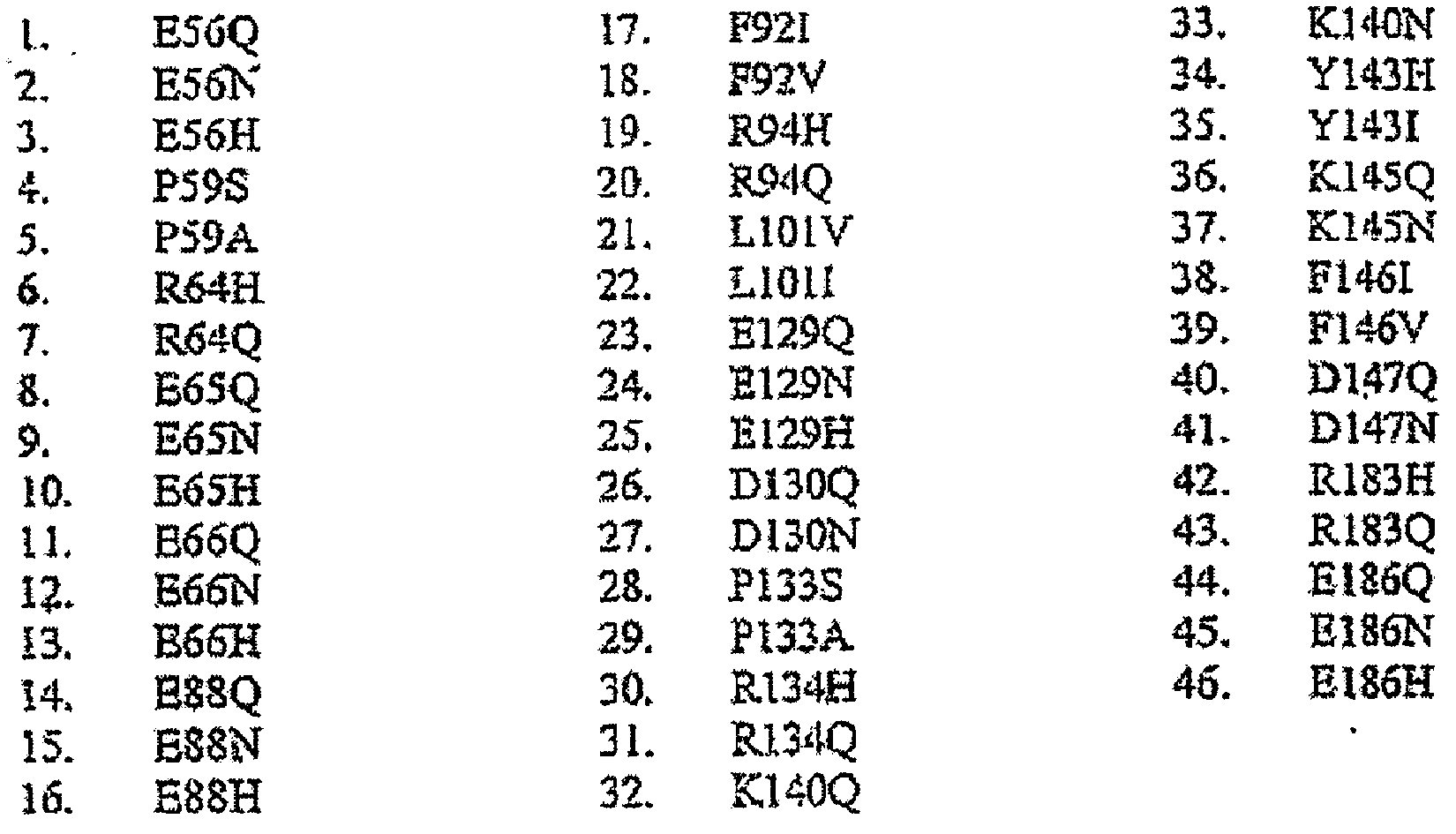
다른 구현에서, 변형된 hGH는, SEQ ID NO: 850-895 중 임의에 해당하는 아미노산 서열을 포함하며, 부모 폴리펩티드에서 발견되지 않는 하나 이상의 글리코실화 부위를 추가로 포함한다.In other embodiments, the modified hGH comprises an amino acid sequence corresponding to any of SEQ ID NOs: 850-895 and further comprises one or more glycosylation sites not found in the parent polypeptide.
다른 구현에서, 초글리코실화, 프로테아제 저항성 사이토카인 변이체는 변형된 사이토카인으로, 해당 비변형 (부모) 사이토카인과 비교하여 단백질분해에 대해 더 큰 저항성을 나타내며, 여기에서 변형된 사이토카인은, 상기 IFN-β 폴리펩티드 변이체의 3차원 구조 내에 구조 관련 변형 아미노산 위치에 해당하는 사이토카인 상에서의 하나 이상의 목적 위치에서 하나 이상의 아미노산 대체를 포함한다. 아미노산 대체 (들)은, 비변형 (부모) 사이토카인과 비교하여, 단백질분해에 대해 더 큰 저항성을 나타낸다. 단백질 분해에 대한 증가된 저항성은, 비변형 hGH와 비교하여, 프로테아제 또는 혈액 용해물과의 인큐베이션 또는 혈청과 인큐베이션에 의해 평가한다 (상기한 바와 같음). In another embodiment, the hyperglycosylated, protease resistant cytokine variant is a modified cytokine that exhibits greater resistance to proteolysis compared to the corresponding unmodified (parent) cytokine, wherein the modified cytokine is One or more amino acid substitutions at one or more desired positions on the cytokine that correspond to structurally related modified amino acid positions within the three-dimensional structure of the IFN-β polypeptide variant. Amino acid substitution (s) show greater resistance to proteolysis compared to unmodified (parent) cytokines. Increased resistance to proteolysis is assessed by incubation with proteases or blood lysates or incubation with serum as compared to unmodified hGH (as described above).
추가 변형Additional variations
보통, 프로테아제 저항성 또는 프로테아제 저항성, 초글리코실화 폴리펩티드 변이체는, 부모 폴리펩티드의 아미노산 서열과 실질적으로 유사한 아미노산 서열을 가진다. 일례로, 초글리코실화, 프로테아제 저항성 폴리펩티드 변이체는, 부모 폴리펩티드 아미노산 서열과 비교하여, 하나 이상의 아미노산과 상이하고, 2 내지 약 10개의 아미노산이 상이한 아미노산 서열을 가질 수 있다. 서열 변화는, 치환, 삽입 또는 결실일 수 있다. 알라닌 또는 기타 잔기를 시스템적으로 도입하는 스캐닝 돌연변이를 사용하여 주요 아미노산을 검증 가능하다. 관심상의 특정 아미노산 치환은 보존성 또는 비보존성 변화를 포함한다. 보존성 아미노산 치환은 보통 다음 군 범위 내의 치환을 포함한다: (글리신, 알라닌); (발린, 이소루신, 루신); (아스파르트산, 글루탐산); (아스파라긴, 글루타민); (세린, 트레오닌); (라이신, 아르기닌); 또는 (페닐알라닌, 트레오닌).Usually, protease resistant or protease resistant, ultraglycosylated polypeptide variants have an amino acid sequence substantially similar to that of the parent polypeptide. In one example, the ultraglycosylated, protease resistant polypeptide variant may differ from one or more amino acids, and from 2 to about 10 amino acids, in comparison to the parent polypeptide amino acid sequence, having a different amino acid sequence. Sequence changes can be substitutions, insertions, or deletions. Scanning mutations that systematically introduce alanine or other residues can be used to verify key amino acids. Particular amino acid substitutions of interest include conservative or non-conservative changes. Conservative amino acid substitutions usually include substitutions within the following group ranges: (glycine, alanine); (Valine, isoleucine, leucine); (Aspartic acid, glutamic acid); (Asparagine, glutamine); (Serine, threonine); (Lysine, arginine); Or (phenylalanine, threonine).
부모 치료 단백질의 1차 아미노산 서열을 변화 또는 변화시키지 않을 수 있는 관심이 되는 추가의 변형은 폴리펩티드의 화학적 유도체화, 일례로 아세틸화 또는 카복시화; 단백질의 PEG화를 용이하게 하는 아미노산 서열 중의 변화; 등을 포함한다. 초글리코실화, 프로테아제 저항성 폴리펩티드 변이체는, 하나 이상의 폴리에틸렌 글리콜 잔기로 변형될 수 있다 (PEG화). 한 구현에서, 본 발명은, 감소된 혈청 소제율 (clearance)을 가지는 PEG-유도체화 폴리펩티드를 제공하도록 엔지니어링된 하나 이상의 비천연 발생 PEG화 부위를 가지는 폴리펩티드 변이체의 용도를 고려한다. 또한, 일례로 포스포타이로신, 포스포세린, 또는 포스포트레오닌인 인산화 아미노산 잔기를 가지는 서열을 포함한다.Further modifications of interest that may or may not alter the primary amino acid sequence of the parent therapeutic protein include chemical derivatization of the polypeptide, such as acetylation or carboxylation; Changes in amino acid sequence that facilitate PEGylation of proteins; And the like. Ultraglycosylated, protease resistant polypeptide variants may be modified (PEGylated) with one or more polyethylene glycol residues. In one embodiment, the present invention contemplates the use of polypeptide variants having one or more non-naturally occurring PEGylation sites engineered to provide PEG-derivatized polypeptides with reduced serum clearance. Also included are sequences having phosphorylated amino acid residues that are, for example, phosphotyrosine, phosphoserine, or phosphorleonin.
본 발명 관련하여 사용에 또한 적당한 것은, 치료제로서 보다 적합하게 하거나 용해성을 최적화하기 위해, 또는 단백질분해에 대한 이들의 저항성이 개선되도록 통상의 화학 기법을 사용하여 변형된 폴리펩티드이다. 일례로, 펩티드 주 골격은, 안정성 제고를 위해 고리화 가능하다 (일례로, 다음을 참조; Friedler et al. 2000, J Biol. Chem. 275:23783-23789). 유사체로서, 일례로 D 아미노산 또는 비천연 발생 합성 아미노산과 같은 천연 발생 L 아미노산 이외의 것을 포함하는 것도 사용 가능하다. 단백질은 안정성 제고를 위해 PEG화 가능하다.Also suitable for use in connection with the present invention are polypeptides that have been modified using conventional chemical techniques to make them more suitable as therapeutic agents or to optimize solubility, or to improve their resistance to proteolysis. In one example, the peptide main backbone is cyclizable for enhanced stability (see, eg, Friedler et al. 2000, J Biol. Chem. 275: 23783-23789). As analogs, for example, those containing other than naturally occurring L amino acids such as D amino acids or non-naturally occurring synthetic amino acids can be used. Proteins can be PEGylated for enhanced stability.
1차 아미노산 서열을 변형 또는 변형하지 않는 관심상의 변형은, 폴리펩티드의 화학적 유도체화를 포함한다: 일례로 아세틸화 또는 키복시화; 단백질의 PEG화 (폴리에틸렌 글리콜 잔기의 첨가)를 용이하게 하는 아미노산 서열 중의 변화; 등. 한 구현에서 본 발명은, 감소된 혈청 소제율 (clearance)을 가지는 PEG-유도체화 폴리펩티드를 제공하도록 엔지니어링된 하나 이상의 비천연 발생 PEG화 부위를 추가로 가지는 합성 타입 I 인터페론 수용체 아고니스트 변이체, 초글리코실화, 프로테아제 저항성 폴리펩티드 변이체의 용도를 고려한다. 따라서 본 발명은, PEG화 합성 타입 I 인터페론 수용체 폴리펩티드 아고니스트를 포함한다. 또한 글리코실화 변형, 일례로 합성 및 가공 또는 추가의 가공 단계 동안 폴리펩티드의 글리코실화 패턴을 변형; 일례로 포유류 글리코실화 또는 탈글리코실화 효소와 같은 글리코실화에 영향을 기치는 효소에 대해 폴리펩티드를 노출시킴에 의해 만들어진 것을 포함한다. 본 발명은 임의의 PEG화된 초글리코실화, PEG화된 프로테아제 저항성 및 PEG화된 프로테아제 저항성 초글리코실화 폴리펩티드 변이체의 용도를 고려한다. 또한, 일례로 포스포타이로신, 포스포세린, 또는 포스포트레오닌인 인산화 아미노산 잔기를 가지는 서열을 포함한다.Modifications of interest that do not modify or alter the primary amino acid sequence include chemical derivatization of the polypeptide: for example acetylation or carboxylation; Changes in amino acid sequence that facilitate PEGylation of proteins (addition of polyethylene glycol residues); Etc. In one embodiment, the present invention provides a synthetic type I interferon receptor agonist variant, ultraglyco, further having one or more non-naturally occurring PEGylation sites engineered to provide PEG-derivatized polypeptides with reduced serum clearance. Consider the use of misfired, protease resistant polypeptide variants. Accordingly, the present invention includes PEGylated synthetic Type I interferon receptor polypeptide agonists. Also glycosylation modifications, such as modifying the glycosylation pattern of a polypeptide during synthesis and processing or further processing steps; Examples include those made by exposing a polypeptide to an enzyme that affects glycosylation, such as mammalian glycosylation or deglycosylation enzyme. The present invention contemplates the use of any PEGylated hyperglycosylated, PEGylated protease resistant and PEGylated protease resistant hyperglycosylated polypeptide variants. Also included are sequences having phosphorylated amino acid residues that are, for example, phosphotyrosine, phosphoserine, or phosphorleonin.
융합 단백질 Fusion protein
일부 구현에서, 초글리코실화, 프로테아제 저항성 폴리펩티드 변이체는 이종성 폴리펩티드를 추가로 포함하여 (일례로 융합 파트너), 융합 단백질을 형성한다. 적절한 융합 파트너는, 생체 내에서 증가된 안정성 (일례로 증가된 혈청 반감기)을 제공; 정제의 용이성을 제공, 일례로 (His)n, 일례로 6His, 등; 세포로부터 융합 단백질의 분비를 제공; 에피토프 태그, 일례로 GST, 헤마글루티닌 (HA; 일례로 CYPYDVPDYA; SEQ ID NO:1304), FLAG (일례로 DYKDDDDK; SEQ ID NO:1305), c-myc (일례로 CEQKLISEEDL; SEQ ID NO:1306), 등을 제공; 측정가능 시그널, 일례로, 측정가능한 생성물을 생산하는 효소 (일례로 β-갈락토시다제, 루시퍼라제), 또는 그 자체로 측정가능한 단백질, 일례로 녹색 형광 단백질 등을 제공; 다중체화 (multimerization) 제공, 일례로 면역글로불린의 Fc 부분과 같은 다중체화 영역; 등을 제공하는 펩티드 및 폴리펩티드 등을 포함한다. In some embodiments, the hyperglycosylated, protease resistant polypeptide variant further comprises a heterologous polypeptide (eg, a fusion partner) to form a fusion protein. Suitable fusion partners provide increased stability in vivo (such as increased serum half-life); Providing ease of purification, for example (His) n , for example 6His, and the like; Providing secretion of fusion proteins from cells; Epitope tags, eg GST, hemagglutinin (HA; eg CYPYDVPDYA; SEQ ID NO: 1304), FLAG (eg DYKDDDDK; SEQ ID NO: 1305), c-myc (eg CEQKLISEEDL; SEQ ID NO: 1306), and the like; Providing a measurable signal, such as an enzyme that produces a measurable product (such as β-galactosidase, luciferase), or a protein that is measurable by itself, such as a green fluorescent protein; Providing multimerization regions, for example multimerization regions such as the Fc portion of an immunoglobulin; Peptides and polypeptides, and the like, and the like.
융합 단백질은, 세포로부터 융합 단백질의 분비를 제공하는 아미노산 서열을 포함 가능하다. 당업자는, 그러한 분비 시그널 서열을 알 수 있다. 박테리아에서 사용에 적절한 분비 시그널은, 다음을 포함하나 이에 제한되지는 않는다; E. 콜라이 (E. coli), S. 마르센스 (S. marcescens), E. 아밀로소라 (E. amylosora), M. 모르가니 (M. morganii), 및 P. 미라빌리스 (P. mirabilis)의 브라운 지단백질의 분비 시그널, E. 콜라이 및 살모넬라 (Salmonella)의 TraT 단백질; B. 리체니포르미스 (B. licheniformis) 및 B.세레우스 (B. cereus) 및 S. 아우레우스 (S. aureus)의 페니실리나제 (PenP) 단백질; 클렙시엘라 뉴모니아 (Klebsiella pneumoniae) 및 클렙시엘라 에로게네스 (Klebsiella aerogenese)의 풀루라나제 단백질; E. 콜라이 지단백질 1pp-28, Pa1, Rp1A, Rp1B, OsmB, N1pB, 및 Orl17; V. 하르세이 (V. harseyi)의 키토비아세 단백질; 슈도모나스 솔라나세아룸 (Pseudomonas solanacearum)의 β-l,4-엔도글루카나제 단백질, H. 인플루엔자 (H. influenzae)의 Pal 및 Pcp 의 단백질; P. 에루기노사 (P. aeruginosa)의 OprI 단백질; S. 뉴모니아 (S. pneumoniae)의 MalX 및 AmiA 단백질; 트레포네마 팔라듐 (Treponema pallidum)의 34 kda 항원 및 TpmA 단백질; 미코플라스마 효르히니스 (Mycoplasma hyorhinis)의 P37 단백질; 바실러스 아밀로리쿠에파시엔스 (Bacillus amyloliquefaciens)의 중성 프로테아제; 및 리케챠 리케시 (Rickettsia Rickettsii)의 17 kda 항원. 효모에서 사용 적당한 분비 시그널 서열은 공지로써, 사용 가능하며, 일례로 미국 특허 번호 5,712,113을 참조한다.The fusion protein may comprise an amino acid sequence that provides for secretion of the fusion protein from the cell. One skilled in the art can know such secretory signal sequences. Secretion signals suitable for use in bacteria include, but are not limited to; E. coli, S. marcescens, E. amylosora, M. morganii, and P. mirabilis Secretion signals of Brown lipoproteins), TraT protein of E. coli and Salmonella; Penicillase (PenP) proteins of B. licheniformis and B. cereus and S. aureus; Pullulanase proteins of Klebsiella pneumoniae and Klebsiella aerogenese; E. coli lipoproteins 1pp-28, Pa1, Rp1A, Rp1B, OsmB, N1pB, and Orl17; Chitoviase protein from V. harseyi; Β-l, 4-endoglucanase protein of Pseudomonas solanacearum, Pal of H. influenzae and protein of Pcp; OprI protein from P. aeruginosa; MalX and AmiA proteins of S. pneumoniae; 34 kda antigen and TpmA protein of Treponema pallidum; P37 protein of Mycoplasma hyorhinis; Neutral protease of Bacillus amyloliquefaciens; And 17 kda antigen of Rickettsia Rickettsii. Use in Yeast Suitable secretory signal sequences are known and available, see eg US Pat. No. 5,712,113.
일부 구현에서, IFN-α14의 시그널 펩티드를 사용한다. 다른 구현에서는 IFN-β 시그널 펩티드가 사용된다. IFN-αl4 또는 IFN-β 시그널 펩디드를 포함하는 합성 타입 I 인터페론 수용체 폴리펩티드 아고니스트는, 실시예 2에 제공된다. 이들 시그널 펩티드는, 포유류 세포로부터의 분비를 제공한다.In some embodiments, a signal peptide of IFN-α14 is used. In another embodiment, an IFN-β signal peptide is used. Synthetic type I interferon receptor polypeptide agonists comprising IFN-αl4 or IFN-β signal peptides are provided in Example 2. These signal peptides provide secretion from mammalian cells.
일부 구현에서, 초글리코실화, 프로테아제 저항성 폴리펩티드 변이체는, 융합 파트너 및 폴리펩티드 변이체의 나머지 사이에 위치한 프로테아제 절단 부위 및 융합 파트너를 포함한다.In some embodiments, the hyperglycosylated, protease resistant polypeptide variant comprises a protease cleavage site and a fusion partner located between the fusion partner and the remainder of the polypeptide variant.
단백질 분해 부위는 당업자에게 공지로서; 다양한 종류가 공지이며 다음을 포함하는 문헌에 광범위하게 기재되어 있다; 일례로 Handbook of Proteolytic Enzymes (1998) AJ Barrett, ND Rawlings, and JF Woessner, eds., Academic Press. 단백질분해 절단 부위는 비제한적으로 다음을 포함한다; 엔테로키나제 절단 부위: (Asp)4Lys (SEQ ID NO: 1307); 인자 Xa 절단 부위: Ile-Glu-Gly-Arg (SEQ ID NO: 1308); 트롬빈 절단 부위, 일례로 Leu-Val-Pro-Arg-Gly-Ser (SEQ ID NO: 1309); 레닌 절단 부위, 일례로 His-Pro-Phe-His-Leu-Val-Ile-His (SEQ ID NO: 1310); 콜라게나제 절단 부위, 일례로 X-Gly-Pro (식 중 X는 임의의 아미노산임); 트립신 절단 부위, 일례로 Arg-Lys; 바이러스성 프로테아제 절단 부위, 일례로 바이러스성 2A 또는 3C 프로테아제 절단 부위로 비제한적으로 다음을 포함한다: 피코르나바이러스로부터의 프로테아제 2A 절단 부위 (일례로 Sommergruber et al. (1994) Virol. 198:741-745 참조), 간염 A 바이러스 3C 절단 부위 (일례로 Schultheiss et al. (1995) J. Virol. 69:1727-1733 참조), 인간 라이노바이러스 2A 프로테아제 절단 부위 (일례로 Wang et al. (1997) Biochem. Biophys. Res. Comm. 235:562-566 참조), 및 피코르나바이러스 3 프로테아제 절단 부위 (일례로 Walker et al. (1994) Biotechnol. 12:601-605 참조). Proteolytic sites are known to those skilled in the art; Various types are known and are extensively described in the literature, including; See, eg, Handbook of Proteolytic Enzymes (1998) AJ Barrett, ND Rawlings, and JF Woessner, eds., Academic Press. Proteolytic cleavage sites include, but are not limited to: Enterokinase cleavage site: (Asp) 4 Lys (SEQ ID NO: 1307); Factor Xa cleavage site: Ile-Glu-Gly-Arg (SEQ ID NO: 1308); Thrombin cleavage sites, such as Leu-Val-Pro-Arg-Gly-Ser (SEQ ID NO: 1309); Renin cleavage sites, such as His-Pro-Phe-His-Leu-Val-Ile-His (SEQ ID NO: 1310); Collagenase cleavage sites, such as X-Gly-Pro, where X is any amino acid; Trypsin cleavage sites, such as Arg-Lys; Viral protease cleavage sites, such as but not limited to viral 2A or 3C protease cleavage sites, include: protease 2A cleavage sites from picornaviruses (eg Sommergruber et al. (1994) Virol. 198: 741 -745), hepatitis A virus 3C cleavage site (see for example Schultheiss et al. (1995) J. Virol. 69: 1727-1733), human rhinovirus 2A protease cleavage site (for example Wang et al. (1997) Biochem. Biophys. Res. Comm. 235: 562-566), and
초글리코실화, 프로테아제 저항성 폴리펩티드 변이체의 제조Preparation of Hyperglycosylated, Protease Resistant Polypeptide Variants
대상 합성 타입 I 인터페론 수용체 폴리펩티드 아고니스트는 임의의 공지 방법을 이용하여 간편히 제조되며, 이는, 화학합성법, 표준 재조합 기법을 이용한 제조 및 그 조합을 포함한다. 일례로, 대상 합성 타입 I 인터페론 수용체 폴리펩티드 아고니스트는, 자동화 고체상 tert-부톡시카보닐 및 벤질 보호 방법을 이용하여 합성 가능하다. 대상 합성 타입 I 인터페론 수용체 폴리펩티드 아고니스트는, 천연 화학 결찰에 의해, 일례로, 약 15 내지 약 40 아미노산 길이의 단편 (일례로 약 15 내지 약 20, 약 20 내지 약 25, 약 25 내지 약 30, 약 30 내지 약 35, 또는 약 35 내지 약 40 아미노산 길이의 단편)은 화학합성의 표준 방법에 의해 합성하여, 공지된 방법을 사용하여 단편을 결찰하여 합성 가능하다 (Dawson, et al. (1994) Science 266:776-779). 합성된 폴리펩티드의 순도는, 역상 고성능 액체 크로마토그래피 (HPLC) 및 등전이점 집속에 의해 평가 가능하다. 리간드의 1차 구조는, 에드만 서열 방법에 의해 검증 가능하다.Subject synthetic Type I interferon receptor polypeptide agonists are readily prepared using any known method, including chemical synthesis, preparation using standard recombinant techniques, and combinations thereof. In one example, the subject synthetic type I interferon receptor polypeptide agonists can be synthesized using automated solid phase tert-butoxycarbonyl and benzyl protection methods. A subject synthetic type I interferon receptor polypeptide agonist is, by natural chemical ligation, for example, a fragment of about 15 to about 40 amino acids in length (eg, about 15 to about 20, about 20 to about 25, about 25 to about 30, Fragments about 30 to about 35, or about 35 to about 40 amino acids in length) can be synthesized by standard methods of chemical synthesis and ligated to fragments using known methods (Dawson, et al. (1994) Science 266: 776-779. The purity of the synthesized polypeptide can be evaluated by reverse phase high performance liquid chromatography (HPLC) and isotransition point focusing. The primary structure of the ligand can be verified by the Edman sequencing method.
많은 구현에서, 대상 합성 타입 I 인터페론 수용체 폴리펩티드 아고니스트를 코딩하는 뉴클레오티드 서열을 포함하는 발현 벡터는, 통상의 방법으로 제조되며, 숙주 세포, 특히 단백질 글리코실화 가능한 진핵 세포 내로 도입된다. 발현 벡터는, 합성 대상 합성 타입 I 인터페론 수용체 폴리펩티드 아고니스트의 숙주 세포 내 제조를 제공한다. 따라서, 본 발명은 합성 타입 I 인터페론 수용체 폴리펩티드 아고니스트의 제조 방법을 제공하며, 본 방법은, 대상 재조합 발현 벡터를 포함하는 진핵 숙주 세포를, 합성 타입 I 인터페론 수용체 폴리펩티드 아고니스트의 제조를 도모하는 조건하에서 배양하고; 합성 타입 I 인터페론 수용체 폴리펩티드 아고니스트를 배양으로부터 분리함을 포함한다. 대상 폴리펩티드 아고니스트는, 80% 초과, 90% 초과, 95% 초과, 98% 초과, 또는 99% 초과의 순도로 분리 및 정제 가능하다.In many embodiments, expression vectors comprising nucleotide sequences encoding a subject synthetic Type I interferon receptor polypeptide agonist are prepared by conventional methods and introduced into host cells, particularly protein glycosylated eukaryotic cells. Expression vectors provide for the preparation in a host cell of a synthetic type I interferon receptor polypeptide agonist of synthesis. Accordingly, the present invention provides a method for producing a synthetic type I interferon receptor polypeptide agonist, wherein the method provides conditions for producing a synthetic type I interferon receptor polypeptide agonist in a eukaryotic host cell comprising a recombinant expression vector of interest. Incubated under; Isolating synthetic type I interferon receptor polypeptide agonists from the culture. The subject polypeptide agonist can be isolated and purified with greater than 80%, greater than 90%, greater than 95%, greater than 98%, or greater than 99% purity.
폴리펩티드는, 발현의 목적에 따라 통상의 방법으로 원핵 또는 진핵생물에서 발현 가능하다. 많은 구현에서 상기한 바와 같이, 대상 합성 타입 I 인터페론 수용체 폴리펩티드 아고니스트는 진핵세포 내에서 합성된다. 단백질의 대규모 합성을 위해, S.세레비시에 (S. cerevisiae)와 같은 단세포 생물, 배큘로바이러스 벡터와 조합된 곤충 세포, 또는 척추동물 특히 포유류와 같은 고등 생물의 세포, 일례로 COS 7 세포, CHO 세포, HEK293 세포, 등을 발현 숙주 세포로 사용 가능하다. 많은 구현에서, 단백질의 천연 폴딩 및 번역 후 변형의 이점을 취할 수 있는 진핵 세포 내의 유전자 발현이 바람직하다.A polypeptide can be expressed in prokaryotic or eukaryotic organisms by conventional methods depending on the purpose of expression. As noted above in many embodiments, the subject synthetic type I interferon receptor polypeptide agonists are synthesized in eukaryotic cells. For large-scale synthesis of proteins, unicellular organisms such as S. cerevisiae, insect cells in combination with baculovirus vectors, or cells of higher organisms such as vertebrates, in particular mammals, such as
발현 숙주를 이용하여 단백질, 또는 그 절편을 다량으로 수득함으로써, 단백질은 통상의 방법에 따라 분리 및 정제 가능하다. 발현 숙주의 용해물을 제조하여 용해물을 HPLC, 소수성 상호작용 크로마토그래피 (HIC), 음이온 교환 크로마토그래피, 양이온 교환 크로마토그래피, 크기 배척 크로마토그래피, 한외여과, 젤 전기영동, 친화 크로마토그래피, 또는 다른 정제 기법을 사용하여 정제 가능하다.By obtaining a large amount of the protein, or fragment thereof, using an expression host, the protein can be isolated and purified according to conventional methods. A lysate of the expression host can be prepared to lyse the lysate by HPLC, hydrophobic interaction chromatography (HIC), anion exchange chromatography, cation exchange chromatography, size exclusion chromatography, ultrafiltration, gel electrophoresis, affinity chromatography, or other. Purification is possible using purification techniques.
대상 합성 타입 I 인터페론 수용체 폴리펩티드 아고니스트는 또한, 통상의 방법을 사용하여 세포 용해물로부터 또는 세포 배양 상층액으로부터 분리 및 정제 가능하다. 일례로, 발현 숙주의 용해물을 제조하여 용해물을 HPLC, 소수성 상호작용 크로마토그래피 (HIC), 음이온 교환 크로마토그래피, 양이온 교환 크로마토그래피, 크기 배척 크로마토그래피, 한외여과, 젤 전기영동, 친화 크로마토그래피, 또는 다른 정제 기법을 사용하여 정제 가능하다. 대부분의 경우 사용되는 조성물은, 생성물 제조 및 그 정제의 방법과 관련한 오염물과 관련하여, 목적 생성물을 적어도 20 중량%, 더 일반적으로는 적어도 약 75중량%, 바람직하게는 적어도 약 95중량% 이상, 그리고 치료 목적을 위해서는 보통 적어도 약 99.5중량% 포함하게 된다. 보통, 백분율은 총 단백질을 기준으로 한 것이다. Subject synthetic Type I interferon receptor polypeptide agonists can also be isolated and purified from cell lysates or from cell culture supernatants using conventional methods. In one example, a lysate of an expression host is prepared so that the lysate is HPLC, hydrophobic interaction chromatography (HIC), anion exchange chromatography, cation exchange chromatography, size exclusion chromatography, ultrafiltration, gel electrophoresis, affinity chromatography Or, or using other purification techniques. In most cases the compositions used comprise at least 20% by weight of the desired product, more generally at least about 75% by weight, preferably at least about 95% by weight, with respect to contaminants associated with the product preparation and the method of its purification, And for therapeutic purposes it will usually contain at least about 99.5% by weight. Usually, percentages are based on total protein.
많은 구현에서, 대상 합성 타입 I 인터페론 수용체 폴리펩티드 아고니스트는 정제된다. 일례로 대상 합성 타입 I 인터페론 수용체 폴리펩티드 아고니스트는, 대상이 아닌 다른 단백질이 없고, 다른 거대분자가 없는 것이다 (일례로, 탄수화물, 지방, 등). 많은 구현에서 대상 합성 타입 I 인터페론 수용체 폴리펩티드 아고니스트는 적어도 약 75% 순도, 적어도 약 80% 순도, 적어도 약 85% 순도, 적어도 약 90% 순도, 적어도 약 95% 순도, 적어도 약 98% 순도 또는 적어도 약 99% 순도, 또는 99% 초과 순도이다. 단백질이 다른 단백질 및 기타 거대분자를 포함하는 여부를 검증하는 방법은 당업계 공지이다.In many embodiments, the subject synthetic type I interferon receptor polypeptide agonists are purified. For example, a subject synthetic type I interferon receptor polypeptide agonist is free of proteins other than the subject and free of other macromolecules (eg, carbohydrates, fats, etc.). In many embodiments the subject synthetic Type I interferon receptor polypeptide agonist is at least about 75% pure, at least about 80% pure, at least about 85% pure, at least about 90% pure, at least about 95% pure, at least about 98% pure, or at least About 99% purity, or greater than 99% purity. Methods for verifying whether a protein contains other proteins and other macromolecules are known in the art.
초글리코실화, 프로테아제 저항성 폴리펩티드 변이체는, 당업계 공지인 통상의 기법을 사용하여 재조합 방법으로 제조 가능하다. 제조의 특정 순서 및 방식은, 간편성, 경제성, 요구되는 순도 등에 따라 결정된다.Ultraglycosylated, protease resistant polypeptide variants can be prepared by recombinant methods using conventional techniques known in the art. The specific order and manner of manufacture depends on simplicity, economy, required purity and the like.
일반적으로, 목적 폴리펩티드 변이체의 아미노산 서열을 코딩하는 올리고뉴클레오티드는, 일례로 올리고뉴클레오티드 합성기를 사용하여 화학 합성으로 제조되며, 여기에서 올리고뉴클레오티드는 목적 폴리펩티드의 아미노산 서열에 따라 디자인되며, 많은 구현에서 재조합 폴리펩티드가 생성되는 숙주 세포 내에서 바람직한 코돈이 선택된다. 일례로, 목적 폴리펩티드의 부분을 코딩하는 다수의 작은 올리고뉴클레오티드를 PCR, 결찰 또는 결찰 쇄 반응 (LCR)에 의해 합성 및 어셈블 가능하다. 개별 올리고뉴클레오티드는, 상보 어셈블리를 위해 보통 5' 또는 3' 오버행 (overhang)을 가진다. 일단 어셈블되면, 폴리펩티드 변이체를 코딩하는 뉴클레오티드 서열은 재조합 벡터 내로 삽입되고, 목적 형질전환 숙주 세포 내에서 목적 핵산의 발현 및 대상 폴리펩티드의 연이은 생산을 위해 필요한 조절 서열에 작동적으로 연결된다.In general, oligonucleotides encoding the amino acid sequence of the desired polypeptide variant are prepared by chemical synthesis using, for example, an oligonucleotide synthesizer, wherein the oligonucleotide is designed according to the amino acid sequence of the desired polypeptide, and in many embodiments is a recombinant polypeptide. Preferred codons are selected in the host cell from which is generated. In one example, multiple small oligonucleotides encoding portions of the polypeptide of interest can be synthesized and assembled by PCR, ligation or ligation chain reaction (LCR). Individual oligonucleotides usually have a 5 'or 3' overhang for complementary assembly. Once assembled, the nucleotide sequence encoding the polypeptide variant is inserted into a recombinant vector and operably linked to the regulatory sequences necessary for the expression of the target nucleic acid in the target transgenic host cell and the subsequent production of the subject polypeptide.
일부 구현에서, 목적 핵산은 인간 서열에서 바람직한 코돈의 적어도 약 10%, 적어도 약 20%, 적어도 약 30%, 적어도 약 40%, 적어도 약 50%, 적어도 약 60%, 적어도 약 70%, 적어도 약 80%, 또는 적어도 약 90%, 또는 그 이상의 코돈이 되도록 생성된다. 일례로 하기 표 8을 참고한다.In some embodiments, the nucleic acid of interest is at least about 10%, at least about 20%, at least about 30%, at least about 40%, at least about 50%, at least about 60%, at least about 70%, at least about 80%, or at least about 90%, or more codons. See Table 8 as an example.
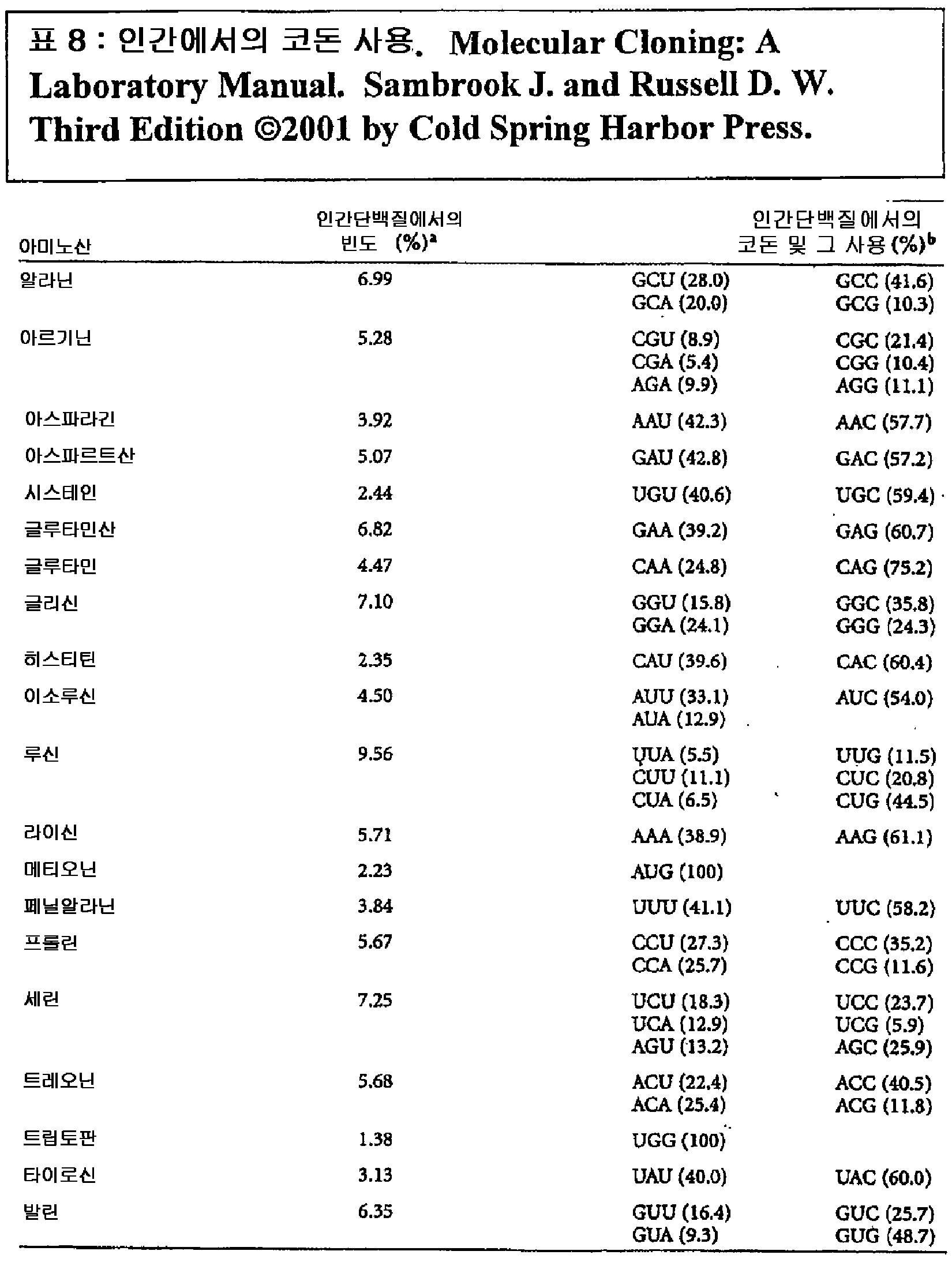
폴리펩티드를 코딩하는 핵산 분자는 벡터 내에 분자를 위치시킴에 의해 보통 증폭된다. 바이러스 및 비(非)바이러스성 벡터가 사용되며, 플라스미드도 포함된다. 플라스미드의 선택은, 증폭의 목적 및 증폭을 원하는 세포 유형에 의존한다. 목적 DNA 서열의 증폭 및 과량 생산을 위해 특정 벡터가 유용하다.Nucleic acid molecules encoding polypeptides are usually amplified by positioning the molecule in a vector. Viral and nonviral vectors are used, including plasmids. The choice of plasmid depends on the purpose of the amplification and the cell type to be amplified. Certain vectors are useful for amplifying and overproducing the desired DNA sequence.
재조합 발현 벡터는 일례로 초글리코실화, 프로테아제 저항성 폴리펩티드 변이체의 생성을 위한, 세포 내 폴리펩티드 코딩 핵산 분자의 발현 구현을 위해 유용하다. 적절한 벡터의 선택은, 충분히 당업자 능력 이내이다. 그러한 많은 벡터가 시판된다.Recombinant expression vectors are useful for implementing expression of intracellular polypeptide encoding nucleic acid molecules, for example for the production of hyperglycosylated, protease resistant polypeptide variants. Selection of the appropriate vector is well within the ability of those skilled in the art. Many such vectors are commercially available.
발현 벡터는 배양중 세포의 발현에 적절하다. 이러한 벡터는, 작동적으로 연결된 목적 폴리뉴클레오티드의 발현을 구현하기 위해 필요한 조정 서열 ('조절 서열' 또는 '조절 영역')을 보통 포함한다.Expression vectors are suitable for expression of cells in culture. Such vectors usually include regulatory sequences ('regulatory sequences' or 'regulatory regions') necessary to effect expression of the operably linked polynucleotide of interest.
발현 벡터는 일반적으로 프로모터 서열 근처에 위치한, 소망하는 단백질 또는 기타 단백질을 코딩하는 핵산 서열의 삽입을 제공하기에 편리한 제한 부위를 갖는다. 발현 숙주 내에서 작동가능한 선택가능한 마커가 존재할 수 있다. 발현 벡터는 융합 단백질의 생산에 사용될 수 있으며, 이때 외인성 융합 펩티드는 부가적 기능성, 즉 증가된 단백질 합성, 안정성, 정의된 항혈청과의 반응성, 효소 마커, 예를 들면 β-갈락토시다제, 루시퍼라제 등을 제공한다.Expression vectors generally have convenient restriction sites that provide for insertion of a nucleic acid sequence encoding a desired protein or other protein, located near the promoter sequence. There may be selectable markers operable in the expression host. Expression vectors can be used for the production of fusion proteins, wherein exogenous fusion peptides have additional functionality, ie increased protein synthesis, stability, reactivity with defined antisera, enzyme markers such as β-galactosidase, lucifer Laze et al.
전사 개시 영역, 프로모터 영역 (예를 들면, 진핵세포에서 기능적인 프로모터), 소망하는 폴리뉴클레오티드, 및 전사 종결 영역을 포함하는 발현 카세트가 존재할 수 있다. DNA의 도입 후에는, 상기 구조물을 함유하는 세포가 선택가능한 마커에 의해 선택될 수 있고, 세포는 확장된 후 발현에 사용될 수 있다.There may be an expression cassette comprising a transcription initiation region, a promoter region (eg, a promoter functional in eukaryotic cells), a desired polynucleotide, and a transcription termination region. After introduction of the DNA, cells containing the construct can be selected by a selectable marker, and the cells can be expanded and used for expression.
상기 발현 카세트는 진핵 숙주 세포 발현, 예를 들면 플라스미드, HAC, YAC, 동물 바이러스 유래 벡터, 예를 들면, 몰로니(Moloney) 쥐 백혈병 바이러스, SV40, 백시니아 바이러스(vaccinia virus), 바큘로바이러스, 레트로바이러스, 또는 식물 바이러스, 예를 들면 콜리플라워 모자이크 바이러스, 담배 모자이크 바이러스 등에 적당한 다양한 벡터 내로 도입될 수 있으며, 이때 벡터는 보통 발현 벡터를 포함하는 세포의 선택을 제공하는 능력에 의해 특징지어진다. 벡터는 특히 플라스미드 또는 바이러스로서 염색체 외의 유지, 또는 숙주 염색체 내로의 통합을 제공한다. 염색체 외의 유지가 소망되는 경우에는, 원래 서열이 플라스미드의 복제를 위해 제공되는데, 이는 카피 수가 적거나 높을 수 있다. 광범위한 마커가 선택에 이용가능하며, 특히 독소에 대해, 보다 특별하게는 항생제에 대해 보호하는 것들이 이용가능하다. 선택된 특정 마커는 숙주의 성질에 따라 선택되며, 이때 일부 경우에서는, 영양요구성(auxotrophic) 숙주와의 상보성이 채택될 수 있다. 숙주 세포 내로의 DNA구조물의 도입은 임의의 편리한 방법, 예를 들면 칼슘-침전된 DNA, 전기천공법, 융합, 트랜스펙션, 바이러스성 벡터로의 감염, DNA 입자총법(biolistics) 등이 사용될 수 있다.The expression cassette can be eukaryotic host cell expression, eg plasmids, HAC, YAC, animal virus derived vectors such as Moloney rat leukemia virus, SV40, vaccinia virus, baculovirus, Retroviruses, or plant viruses, such as cauliflower mosaic virus, tobacco mosaic virus, etc., can be introduced into a variety of vectors, wherein the vector is usually characterized by its ability to provide for the selection of cells comprising expression vectors. The vector provides for extracellular chromosome maintenance, or integration into the host chromosome, in particular as a plasmid or virus. If extrachromosomal maintenance is desired, the original sequence is provided for replication of the plasmid, which may be low or high in copy number. A wide range of markers are available for selection, particularly those that protect against toxins, and more particularly against antibiotics. The particular marker selected is selected according to the nature of the host, in which case complementarity with an axoxotrophic host may be adopted. Introduction of DNA constructs into host cells can be used in any convenient manner, such as calcium-precipitated DNA, electroporation, fusion, transfection, infection with viral vectors, DNA biolistics, and the like. have.
본 발명은 또한, 분리된 숙주 세포일 수도 있는, 유전자 변형된 숙주 세포 내에서의 초글리코실화, 프로테아제 저항성 폴리펩티드 변이체의 생산에 관한 것으로서, 상기 숙주 세포가 상기 폴리펩티드 변이체를 코딩하는 폴리뉴클레오티드를 포함하거나, 또는 일부 구현예에서는 그러한 폴리뉴클레오티드를 발현할 수 있는 발현 벡터를 포함하는 것이다. 적당한 숙주 세포로는, 바큘로바이러스와 조합된 곤충 세포, 효모 세포, 예컨대 사카로마이세스 세레비시애(Saccharomyces cerevisiae), 또는 양서류 (예를 들면, 제노푸스 라에비스(Xenopus laevis) 난자) 및 포유동물, 특히 포유동물을 포함하는 척추동물과 같은 고등생물의 세포, 예를 들면 COS 세포, CHO 세포, HEK293 세포, MA-10 세포 등이 발현 숙주 세포로서 사용될 수 있다. 특히, 상기 숙주 세포는 단백질의 글리코실화가 가능한 진핵 숙주 세포이다.The invention also relates to the production of hyperglycosylated, protease resistant polypeptide variants in genetically modified host cells, which may be isolated host cells, wherein said host cells comprise polynucleotides encoding said polypeptide variants or Or, in some embodiments, it comprises an expression vector capable of expressing such polynucleotides. Suitable host cells include, in the baculovirus and the virus to the combination of an insect cell, a yeast cell, for example Saccharomyces My process celebrity bicyclic Ke (Saccharomyces cerevisiae), or amphibian (for example, Zeno crispus Laevis ( Xenopus laevis ) eggs) and mammalian cells, particularly cells of higher organisms such as vertebrates including mammals, such as COS cells, CHO cells, HEK293 cells, MA-10 cells and the like can be used as expression host cells. In particular, the host cell is a eukaryotic host cell capable of glycosylation of the protein.
초글리코실화, 프로테아제 저항성 폴리펩티드 변이체는 생산 숙주 세포로부터 수확된 후, 재조합 합성의 통상적 방법에 따라 분리 및 정제될 수 있다. 발현 숙주의 용출물이 제조될 수 있으며, 용출물은 고성능 액체 크로마토그래피, 배제 크로마토그래피, 젤 전기영동, 친화성 크로마토그래피, 또는 기타 정제 기법을 사용하여 정제될 수 있다. 대부분, 사용되는 조성물은 소망하는 생성물을, 생성물의 제조 및 정제 방법에 관련된 오염물에 대해 20 중량% 이상, 보다 통상적으로는 약 75 중량% 이상, 바람직하게는 약 95 중량% 이상, 그리고 치료 목적을 위해서는, 보통 약 99.5 중량% 이상으로 포함할 것이다. 보통 백분율은 총 단백질을 기준으로 한다.Ultraglycosylated, protease resistant polypeptide variants can be harvested from the production host cell and then isolated and purified according to conventional methods of recombinant synthesis. Eluates of the expression host can be prepared, and the eluate can be purified using high performance liquid chromatography, exclusion chromatography, gel electrophoresis, affinity chromatography, or other purification techniques. Most of the time, the composition used comprises the desired product at least 20% by weight, more typically at least about 75% by weight, preferably at least about 95% by weight, and for therapeutic purposes relative to contaminants associated with the production and purification methods of the product. In order to do this, it will usually comprise at least about 99.5% by weight. Usually percentages are based on total protein.
PEGPEG 화 타입 I 인터페론 수용체 폴리펩티드 아고니스트Type I interferon receptor polypeptide agonist
상기 언급한 바와 같이, 일부 구현예에서는, 대상 합성 타입 I 인터페론 수용체 폴리펩티드 아고니스트가 하나 이상의 폴리에틸렌 글리콜 부분으로 변형된다, 즉, PEG화된다(PEGylated). PEG 분자는 대상 폴리펩티드 아고니스트의 하나 이상의 아미노산 측쇄에 공액된다. 일부 구현예에서는, 대상 PEG화 폴리펩티드 아고니스트가 단 하나의 아미노산에만 PEG 부분을 함유한다. 또 다른 구현예에서는, 둘 이상의 아미노산에 PEG 부분을 함유하며, 예를 들어 대상 PEG화 폴리펩티드 아고니스트는 둘, 셋, 넷, 다섯, 여섯, 일곱, 여덟, 아홉 또는 열 개의 상이한 아미노산 잔기에 부착된 PEG 부분을 함유한다.As mentioned above, in some embodiments, the subject synthetic type I interferon receptor polypeptide agonist is modified with one or more polyethylene glycol moieties, ie, PEGylated. PEG molecules are conjugated to one or more amino acid side chains of a subject polypeptide agonist. In some embodiments, the subject PEGylated polypeptide agonist contains a PEG moiety in only one amino acid. In another embodiment, two or more amino acids contain a PEG moiety, eg, a subject PEGylated polypeptide agonist is attached to two, three, four, five, six, seven, eight, nine or ten different amino acid residues. It contains a PEG moiety.
대상 폴리펩티드는 아미노기, 술피드릴기, 히드록시기, 또는 카복시기를 통해 PEG에 직접 (즉, 연결기 없이) 커플링될 수 있다.The polypeptide of interest can be coupled directly (ie, without a linking group) to the PEG via an amino group, sulfidyl group, hydroxy group, or carboxy group.
일부 구현예에서는, PEG화 대상 폴리펩티드가 대상 폴리펩티드의 아미노 말단 (N-말단)에서 또는 그 근처에서 PEG화되며, 예를 들면 PEG 부분이 1번 아미노산 내지 4번 아미노산, 또는 5번 아미노산 내지 약 10번의 하나 이상의 아미노산 잔기에서 대상 폴리펩티드에 공액된다. 또 다른 구현예에서는, PEG화 대상 폴리펩티드가 약 10번 내지 약 28번의 하나 이상의 아미노산 잔기에서 PEG화된다. 또 다른 구현예에서는, PEG화 대상 폴리펩티드가 대상 폴리펩티드의 카복시 말단 (C-말단)에서 또는 그 근처에서, 156-166번 아미노산, 또는 150 내지 155번 아미노산의 하나 이상의 잔기에서 PEG화된다. 또 다른 구현예에서는, PEG화 대상 폴리펩티드가 100 내지 114번 아미노산의 하나 이상의 잔기에서 하나 이상의 아미노산 잔기에서 PEG화된다.In some embodiments, the polypeptide to be PEGylated is PEGylated at or near the amino terminus (N-terminus) of the subject polypeptide, eg, the PEG moiety is from
대상 단백질의 수용체 결합 및/또는 활성 부위 도메인의 또는 그 근처의 아미노산 잔기의 폴리에틸렌 글리콜 유도체화는 이들 도메인의 기능을 붕괴시킬 수 있다. 본 발명의 특정 구현예에서는, PEG화를 피해야 할 아미노산으로서, 30번 아미노산 내지 40번 아미노산의 아미노산 잔기; 및 113번 아미노산 내지 149번 아미노산의 아미노산 잔기가 포함된다.Polyethylene glycol derivatization of the receptor binding of the protein of interest and / or amino acid residues at or near the active site domain can disrupt the function of these domains. In certain embodiments of the invention, amino acids to avoid PEGylation include amino acid residues of amino acids 30-40; And amino acid residues of amino acids 113 to 149.
일부 구현예에서는, PEG가 연결기를 통해 대상 폴리펩티드에 부착된다. 연결기는 임의의 생체적합성 연결기로서, 여기서 “생체적합성(biocompatible"이란 화합물 또는 기가 비독성이고, 손상, 병세, 질환, 또는 죽음을 유발하지 않으면서 시험관내 또는 생체내에서 활용될 수 있음을 의미한다. PEG는 연결기에, 예를 들면 에테르 결합, 에스테르 결합, 티올 결합 또는 아미드 결합을 통해 결합될 수 있다. 적당한 생체적합성 연결기에는 에스테르기, 아미드기, 이미드기, 카바메이트기, 카복시기, 히드록시기, 탄수화물, 숙신이미드기 (예를 들면, 숙신이미딜 석시네이트 (SS), 숙신이미딜 프로피오네이트 (SPA), 숙신이미딜 부타노에이트 (SBA), 숙신이미딜 카복시메틸레이트 (SCM), 숙신이미딜 숙신아미드 (SSA) 또는 N-히드록시 숙신이미드 (NHS) 포함), 에폭시드기, 옥시카보닐이미다졸기 (예를 들면, 카보닐디이미다졸 (CDI) 포함), 니트로페닐기 (예를 들면, 니트로페닐 카보네이트 (NPC) 또는 트리클로로페닐 카보네이트 (TPC) 포함), 트리실레이트기, 알데히드기, 이소시아네이트기, 비닐술폰기, 티로신기, 시스테인기, 히스티딘기 또는 일차 아민이 포함되나, 이에 한정되지는 않는다.In some embodiments, PEG is attached to the subject polypeptide via a linking group. A linker is any biocompatible linker, where "biocompatible" means that the compound or group is nontoxic and can be utilized in vitro or in vivo without causing damage, condition, disease, or death. PEG may be linked to a linking group, for example, via an ether bond, ester linkage, thiol linkage or amide linkage, and suitable biocompatible linkage groups include ester groups, amide groups, imide groups, carbamate groups, carboxy groups, hydroxy groups, Carbohydrates, succinimide groups (e.g., succinimidyl succinate (SS), succinimidyl propionate (SPA), succinimidyl butanoate (SBA), succinimidyl carboxymethylate (SCM), Succinimidyl succinamide (SSA) or N-hydroxy succinimide (NHS)), epoxide groups, oxycarbonylimidazole groups (including carbonyldiimidazole (CDI), for example) Phenyl groups (including, for example, nitrophenyl carbonate (NPC) or trichlorophenyl carbonate (TPC)), trisylate groups, aldehyde groups, isocyanate groups, vinylsulfone groups, tyrosine groups, cysteine groups, histidine groups or primary amines However, it is not limited thereto.
숙신이미딜 프로피오네이트 (SPA) 및 숙신이미딜 부타노에이트 (SBA) 에스테르-활성화 PEG의 제조 방법은 미국특허 제 5,672,662 호 (Harris 등) 및 WO 97/03106 에 기술되어 있다.Methods of preparing succinimidyl propionate (SPA) and succinimidyl butanoate (SBA) ester-activated PEG are described in US Pat. No. 5,672,662 (Harris et al.) And WO 97/03106.
PEG를 폴리펩티드에 부착시키는 방법은 당해 분야에 공지되어 있으며, 임의의 공지 방법이 사용될 수 있다. 예를 들면, Park 등, Anticancer Res., 1:373-376 (1981); Zaplipsky 및 Lee, Polyethylene Glycol Chemistry: Biotechnical and Biomedical Applications, J.M. Harris, 편저., Plenum Press, NY, 제 21 장 (1992); 미국특허 제 5,985,265 호; 미국특허 제 5,672,662 호 (Harris 등) 및 WO 97/03106 호를 참조한다.Methods of attaching PEG to polypeptides are known in the art, and any known method can be used. For example, Park et al., Anticancer Res ., 1: 373-376 (1981); Zaplipsky and Lee, Polyethylene Glycol Chemistry: Biotechnical and Biomedical Applications, JM Harris, ed., Plenum Press, NY, Chapter 21 (1992); US Patent No. 5,985,265; See US Pat. No. 5,672,662 to Harris et al. And WO 97/03106.
다수의 구현예에서는, PEG가 대상 폴리펩티드 상의 일차 아민기와 반응하는 모노메톡시PEG 분자이다. 환원성 알킬화를 통해 폴리펩티드를 모노메톡시PEG로 수식시키는 방법은 당해 분야에 공지되어 있다. 예를 들면, Chamow 등, (1994) Bioconj . Chem. 5:133-140을 참조한다.In many embodiments, PEG is a monomethoxyPEG molecule that reacts with a primary amine group on a subject polypeptide. Methods of modifying a polypeptide to monomethoxyPEG via reductive alkylation are known in the art. For example, Chamow et al. (1994) Bioconj . Chem . 5: 133-140.
폴리에틸렌 글리콜Polyethylene glycol
대상 폴리펩티드와의 공액에 적당한 폴리에틸렌 글리콜은 실온에서 수용성이며, 일반식 R(O-CH2-CH2)nO-R [식 중, R은 수소, 또는 알킬 또는 알칸올기와 같은 보호기이고, n은 1 내지 1000의 정수이다]을 갖는다. R이 보호기이면, 그것은 일반적으로 탄소수가 1 내지 8이다.Polyethylene glycols suitable for conjugation with the polypeptide of interest are water soluble at room temperature and have the general formula R (O-CH 2 -CH 2 ) n OR [ where R is hydrogen or a protecting group such as an alkyl or alkanol group, n is 1 To an integer of 1000]. If R is a protecting group, it generally has 1 to 8 carbon atoms.
다수의 구현예에서는, PEG는 하나 이상의 히드록실기, 예를 들면 말단 히드록시기를 가지는데, 이 히드록시기는 아미노기, 예를 들면 라이신 잔기의 엡실론 아미노기, 폴리펩티드의 N-말단에서의 유리 아미노기, 또는 아스파라긴, 글루타민, 아르기닌 또는 히스티딘의 아미노기와 같은 임의의 기타 아미노기와 반응하는 작용기를 생성하도록 변형된 것이다.In many embodiments, PEG has one or more hydroxyl groups, for example terminal hydroxyl groups, which hydroxyl groups are amino groups, for example epsilon amino groups of lysine residues, free amino groups at the N-terminus of the polypeptide, or asparagine, Modified to produce functional groups that react with any other amino group, such as the amino group of glutamine, arginine or histidine.
또 다른 구현예에서는, PEG가 대상 폴리펩티드 내 유리 카복시기, 예를 들면 대상 폴리펩티드의 카복시 말단의 유리 카복시기와 반응하도록 유도체화된다. 대상 폴리펩티드의 카복시-말단의 유리 카복시기와 반응하는 PEG의 적당한 유도체에는 PEG-아민 및 PEG의 히드라진 유도체 (예를 들면, PEG-NH-NH2)가 포함되나, 이에 한정되지는 않는다.In another embodiment, PEG is derivatized to react with free carboxyl groups in the subject polypeptide, eg, free carboxyl groups at the carboxy terminus of the subject polypeptide. Suitable derivatives of PEG that react with the carboxy-terminal free carboxy group of the polypeptide of interest include, but are not limited to, PEG-amines and hydrazine derivatives of PEG (eg, PEG-NH-NH 2 ).
또 다른 구현예에서는, PEG가, 아미노기와 선택적으로 반응하여 아미드 유도체를 생성시키는 말단 티오카복시산기, -COSH를 포함하도록 유도체화된다. 티오산의 반응성 성질로 인해, 다른 것에 비한 특정 아미노기의 선택성이 이루어진다. 예를 들면, -SH는 적절한 pH 조건 하에서 N-말단 아미노기와의 반응에 있어서 충분한 이탈기 능력을 나타내어, 라이신 잔기 내 ε-아미노기가 양성자첨가되고 비-친핵성으로 남는다. 반면, 적당한 pH 조건 하에서의 반응은 이용가능한 라이신 잔기의 일부가 선택성을 가지고 반응하게 할 수 있다.In another embodiment, PEG is derivatized to include a terminal thiocarboxylic acid group, -COSH, which selectively reacts with an amino group to produce an amide derivative. Due to the reactive nature of thio acids, the selectivity of certain amino groups over other ones is achieved. For example, -SH exhibits sufficient leaving group capacity for reaction with N-terminal amino groups under appropriate pH conditions such that the ε-amino group in the lysine residue is protonated and remains non-nucleophilic. On the other hand, reactions under moderate pH conditions may cause some of the available lysine residues to react with selectivity.
또 다른 구현예에서는, PEG가 PEG 사슬의 말단에 N-히드록시 숙신이미데이트와 같은 반응성 에스테르를 포함한다. 그러한 N-히드록시숙신이미데이트-함유 PEG 분자는 중성인 6.5 내지 7.5와 같은 특정 pH 조건 하에서 선택된 아미노기와 반응한다. 예를 들면, N-말단 아미노기는 중성 pH 조건 하에서 선택적으로 변형될 수 있다. 그러나 시약의 반응성이 매우 높다면, 라이신의 이용가능한 NH2 기 또한 반응할 수 있다.In another embodiment, the PEG comprises a reactive ester such as N-hydroxy succinidate at the end of the PEG chain. Such N-hydroxysuccinimide-containing PEG molecules react with selected amino groups under certain pH conditions, such as 6.5 to 7.5 being neutral. For example, the N-terminal amino group can be optionally modified under neutral pH conditions. However, if the reagent is very reactive, the available NH 2 groups of lysine can also react.
PEG는 대상 폴리펩티드에 직접, 또는 연결기를 통해 공액될 수 있다. 일부 구현예에서는, 연결기가 대상 폴리펩티드에 부가되어 연결기-변형된 폴리펩티드를 형성한다. 이와 같은 연결기는 다양한 작용기성, 예를 들면, PEG 시약을 연결기-변형된 폴리펩티드에 커플링시킬 술피드릴, 아미노, 또는 카복시기와 같은 반응성 기를 제공한다.PEG can be conjugated directly to the subject polypeptide or via a linking group. In some embodiments, the linker is added to the subject polypeptide to form a linker-modified polypeptide. Such linkers provide a variety of functionalities, for example reactive groups such as sulfidyl, amino, or carboxy groups to couple PEG reagents to linker-modified polypeptides.
일부 구현예에서는, 대상 폴리펩티드에 공액된 PEG가 직쇄이다. 또 다른 구현예에서는, 대상 폴리펩티드에 공액된 PEG가 분지쇄이다. 미국특허 제 5,643,575 호에 기재된 것들과 같은 분지쇄 PEG, “성상(star)-PEG" 및 Shearwater Polymers 사의 카탈로그 ”폴리에틸렌 글리콜 유도체 1997-1998“에 기재된 것들과 같은 다지(multi-armed) PEG. 성상 PEG는 예를 들면 미국특허 제 6,046,305 호의 것을 포함하여 선행기술에 기술되어 있다.In some embodiments, the PEG conjugated to the subject polypeptide is straight chain. In another embodiment, PEG conjugated to the subject polypeptide is a branched chain. Branched PEGs, such as those described in US Pat. No. 5,643,575, “star-PEG” and multi-armed PEGs, such as those described in the catalog “Polyethylene glycol derivative 1997-1998” by Shearwater Polymers. Are described in the prior art, including for example in US Pat. No. 6,046,305.
분자량이 약 2 kDa 내지 약100 kDa의 범위인 PEG가 일반적으로 사용되는데, 여기서 용어 “약”은 PEG의 맥락에 있어서 폴리에틸렌 글리콜의 제조 중에 일부 분자가 언급된 분자량보다 중량이 더 높거나 일부는 덜 높음을 의미한다. 예를 들면, 대상 폴리펩티드로의 공액에 적당한 PEG는 분자량이 약 2 kDa 내지 약 5 kDa, 약 5 kDa 내지 약 10 kDa, 약 10 kDa 내지 약15 kDa, 약 15 kDa 내지 약 20 kDa, 약 20 kDa 내지 약 25 kDa, 약 25 kDa 내지 약 30 kDa, 약 30 kDa 내지 약 40 kDa, 약 40 kDa 내지 약 50 kDa, 약 50 kDa 내지 약 60 kDa, 약 60 kDa 내지 약 70 kDa, 약 70 kDa 내지 약 80 kDa, 약 80 kDa 내지 약 90 kDa, 또는 약 90 kDa 내지 약 100 kDa이다.PEG, which has a molecular weight in the range of about 2 kDa to about 100 kDa, is generally used, wherein the term “about” is in the context of PEG where some molecules are heavier in weight or some less than the molecular weight mentioned during the preparation of polyethylene glycol. Means high. For example, PEG suitable for conjugation to a subject polypeptide has a molecular weight of about 2 kDa to about 5 kDa, about 5 kDa to about 10 kDa, about 10 kDa to about 15 kDa, about 15 kDa to about 20 kDa, about 20 kDa To about 25 kDa, about 25 kDa to about 30 kDa, about 30 kDa to about 40 kDa, about 40 kDa to about 50 kDa, about 50 kDa to about 60 kDa, about 60 kDa to about 70 kDa, about 70 kDa to about 80 kDa, about 80 kDa to about 90 kDa, or about 90 kDa to about 100 kDa.
대상 합성 타입 I 인터페론 수용체 폴리펩티드 아고니스트의 집단Populations of Target Synthetic Type I Interferon Receptor Polypeptide Agonists
본 발명은 상술한 바와 같은 합성 타입 I 인터페론 수용체 폴리펩티드 아고니스트의 집단을 포함하는 조성물을 제공한다. 대상 조성물은 대상 폴리펩티드의 집단을 포함하는데, 이때 상기 집단은 둘 이상의 상이한 대상 합성 타입 I 인터페론 수용체 폴리펩티드 아고니스트 (예를 들면, 아미노산 서열에 있어서 서로 하나 이상의 아미노산의 차이가 나는 폴리펩티드 아고니스트들)를 포함한다.The present invention provides a composition comprising a population of synthetic Type I interferon receptor polypeptide agonists as described above. The subject composition comprises a population of subject polypeptides, wherein said population comprises two or more different subject synthetic type I interferon receptor polypeptide agonists (eg, polypeptide agonists that differ from one another in the amino acid sequence by one or more amino acids). Include.
일반적으로, 주어진 대상 합성 타입 I 인터페론 수용체 폴리펩티드 아고니스트는 한 집단 내에서 합성 타입 I 인터페론 수용체 폴리펩티드 아고니스트의 총 집단의 약 0.5% 내지 약 99.5%를 나타내며, 예를 들면, 주어진 변형된 합성 타입 I 인터페론 수용체 폴리펩티드 아고니스트는 한 집단 내에서 합성 타입 I 인터페론 수용체 폴리펩티드 아고니스트의 총 집단의 약 0.5%, 약 1%, 약 2%, 약 3%, 약 4%, 약 5%, 약 10%, 약 15%, 약 20%, 약 25%, 약 30%, 약 35%, 약 40%, 약 45%, 약 50%, 약 55%, 약 60%, 약 65%, 약 70%, 약 75%, 약 80%, 약 85%, 약 90%, 약 95%, 약 99%, 또는 약 99.5%를 나타낸다.In general, a given subject synthetic type I interferon receptor polypeptide agonist represents about 0.5% to about 99.5% of the total population of synthetic type I interferon receptor polypeptide agonists within a population, for example, given a modified synthetic type I The interferon receptor polypeptide agonist is about 0.5%, about 1%, about 2%, about 3%, about 4%, about 5%, about 10%, of the total population of synthetic type I interferon receptor polypeptide agonists within one population, About 15%, about 20%, about 25%, about 30%, about 35%, about 40%, about 45%, about 50%, about 55%, about 60%, about 65%, about 70%, about 75 %, About 80%, about 85%, about 90%, about 95%, about 99%, or about 99.5%.
조성물Composition
본 발명은 대상 합성 타입 I 인터페론 수용체 폴리펩티드 아고니스트, 알려진 초글리코실화 폴리펩티드 변이체, 알려진 프로테아제 저항성 폴리펩티드 변이체, 또는 알려진 초글리코실화, 프로테아제 저항성 폴리펩티드 변이체, 즉 부모 치료 단백질에서 발견되는 천연 프로테아제 절단 부위 대신에 하나 이상의 돌연변이 프로테아제 절단 부위를 포함하는 부모 치료 단백질의 폴리펩티드 변이체를 포함하는 것으로서, (1) 부모 치료 단백질에서 발견되지 않는, 하나 이상의 비-천연 글리코실화 부위에 공유 결합된 탄수화물 부분 및/또는 (2) 부모 치료 단백질에서 발견되지만 글리코실화되지는 않는 하나 이상의 천연 글리코실화 부위에 공유 결합된 탄수화물 부분을 포함하는, 약학적 조성물을 포함하는 조성물을 제공한다. 조성물은 대상 합성 타입 I 인터페론 수용체 폴리펩티드 아고니스트, 알려진 초글리코실화 폴리펩티드 변이체, 알려진 프로테아제 저항성 폴리펩티드 변이체, 또는 알려진 초글리코실화, 프로테아제 저항성 폴리펩티드 변이체; 및 부분적으로 폴리펩티드 변이체의 용도를 기준으로 선택되는 하나 이상의 부가적 성분을 포함할 것이다. 적당한 부가적 성분에는 염, 완충제, 가용화제, 안정화제, 세제, 프로테아제-억제제 등이 포함되나, 이에 한정되지는 않는다.The present invention replaces a synthetic protease cleavage site found in a subject synthetic type I interferon receptor polypeptide agonist, known hyperglycosylated polypeptide variant, known protease resistant polypeptide variant, or known hyperglycosylated, protease resistant polypeptide variant, ie, a parent therapeutic protein. A polypeptide variant of a parent therapeutic protein comprising at least one mutant protease cleavage site, comprising: (1) a carbohydrate moiety covalently linked to at least one non-natural glycosylation site, not found in the parent therapeutic protein, and / or (2) ) A composition comprising a pharmaceutical composition, comprising a carbohydrate moiety covalently linked to one or more natural glycosylation sites found in the parent therapeutic protein but not glycosylated. The composition may comprise a subject synthetic type I interferon receptor polypeptide agonist, known hyperglycosylated polypeptide variant, known protease resistant polypeptide variant, or known hyperglycosylated, protease resistant polypeptide variant; And at least one additional component selected in part based on the use of the polypeptide variant. Suitable additional ingredients include, but are not limited to, salts, buffers, solubilizers, stabilizers, detergents, protease-inhibitors, and the like.
일부 구현예에서는, 대상 조성물이 대상 합성 타입 I 인터페론 수용체 폴리펩티드 아고니스트, 알려진 초글리코실화 폴리펩티드 변이체, 알려진 프로테아제 저항성 폴리펩티드 변이체, 또는 알려진 초글리코실화, 프로테아제 저항성 폴리펩티드 변이체 및 약학적으로 허용가능한 부형제를 포함한다. 광범위한 약학적으로 허용가능한 부형제가 당해 분야에 공지되어 있으며, 본원에서는 상세히 설명할 필요가 없다. 약학적으로 허용가능한 부형제는, 예를 들면, A. Gennaro (2000) "Remington: The Science and Practice of Pharmacy," 제 20 판, Lippincott, Williams, & Wilkins; Pharmaceutical Dosage Forms and Drug Delivery Systems (1999) H.C. Ansel 등 편저, 제 7 판, Lippincott, Williams, & Wilkins; 및 Handbook of Pharmaceutical Excipients (2000) A.H. Kibbe 등 편저, 제 3 판. Amer. Pharmaceutical Assoc.을 포함하는 다양한 문헌에서 충분히 기술되었다.In some embodiments, the subject composition comprises a subject synthetic type I interferon receptor polypeptide agonist, a known hyperglycosylated polypeptide variant, a known protease resistant polypeptide variant, or a known hyperglycosylated, protease resistant polypeptide variant and a pharmaceutically acceptable excipient. do. A wide range of pharmaceutically acceptable excipients are known in the art and need not be described in detail herein. Pharmaceutically acceptable excipients are described, for example, in A. Gennaro (2000) "Remington: The Science and Practice of Pharmacy," 20th Edition, Lippincott, Williams, &Wilkins; Pharmaceutical Dosage Forms and Drug Delivery Systems (1999) H.C. Edited by Ansel et al., 7th Edition, Lippincott, Williams, &Wilkins; And Handbook of Pharmaceutical Excipients (2000) A.H. Edited by Kibbe et al., 3rd edition. Amer. It has been fully described in various documents including Pharmaceutical Assoc.
약학적 투약 형태에서는, 대상 합성 타입 I 인터페론 수용체 폴리펩티드 아고니스트, 알려진 초글리코실화 폴리펩티드 변이체, 알려진 프로테아제- 저항성 폴리펩티드 변이체, 또는 알려진 초글리코실화, 프로테아제 저항성 폴리펩티드 변이체가 일부 구현예에서는 약학적으로 허용가능한 염의 형태로서 제공되며, 단독으로 사용되거나 다른 약학적으로 활성인 화합물과 적절하게 공동으로, 그리고 조합되어 사용된다.In pharmaceutical dosage forms, the subject synthetic type I interferon receptor polypeptide agonist, known hyperglycosylated polypeptide variant, known protease-resistant polypeptide variant, or known hyperglycosylated, protease resistant polypeptide variant are pharmaceutically acceptable in some embodiments. It is provided in the form of a salt and used alone or suitably in combination with and in combination with other pharmaceutically active compounds.
주사에 적당한 Suitable for injection 제형물Formulation
대상 합성 타입 I 인터페론 수용체 폴리펩티드 아고니스트는 일부 구현예에서, 상기 아고니스트를 수성 용매 (예를 들면, 식염수 등) 또는 비수성 용매, 예컨대 식물성 또는 기타 유사 오일, 합성 지방산 글리세리드, 고급 지방산 또는 프로필렌 글리콜의 에스테르에; 그리고 소망하는 경우, 가용화제, 등장화제, 현탁제, 유화제, 안정화제 및 보존제와 같은 통상적인 첨가제와 함께, 용해, 현탁 또는 유화시킴으로써, 주사 (예를 들면, 피하, 근육내, 피부내, 경피, 또는 기타 주사 경로)에 적당한 제제로 제형된다.The subject synthetic type I interferon receptor polypeptide agonist may, in some embodiments, convert the agonist into an aqueous solvent (eg, saline, etc.) or a non-aqueous solvent such as vegetable or other similar oils, synthetic fatty acid glycerides, higher fatty acids or propylene glycol. To esters of; And if desired, by dissolving, suspending or emulsifying, with conventional additives such as solubilizers, isotonic agents, suspending agents, emulsifiers, stabilizers and preservatives, for example, by injection (eg subcutaneous, intramuscular, intradermal, transdermal). , Or other routes of injection).
장용성Jang Sung 전달용 For delivery 제형물Formulation
경구 제제용으로는, 대상제 (예를 들면, 대상 합성 타입 I 인터페론 수용체 폴리펩티드 아고니스트)가 단독으로, 또는 정제, 분말, 과립 또는 캡슐을 제조하기 위한 적절한 첨가제와 조합되어, 예를 들면 통상적 첨가제, 예컨대 락토오스, 만니톨, 옥수수 전분 또는 감자 전분과 같은 통상적 첨가제와 조합되어; 결합제, 예컨대 결정성 셀룰로스, 셀룰로스 유도체, 아카시아, 옥수수 전분 또는 젤라틴과 조합되어; 붕괴제, 예컨대 옥수수 전분, 감자 전분, 또는 소듐 카복시메틸셀룰로오스와 조합되어; 윤활제, 예컨대 활석 또는 스테아르산마그네슘과 조합되어; 원하는 경우, 희석제, 완충제, 습윤제, 보존제 및 풍미제와 조합되어, 제형된다.For oral formulations, the subject agent (eg, the subject synthetic type I interferon receptor polypeptide agonist), alone or in combination with appropriate additives for preparing tablets, powders, granules or capsules, for example conventional additives For example in combination with conventional additives such as lactose, mannitol, corn starch or potato starch; In combination with a binder such as crystalline cellulose, cellulose derivatives, acacia, corn starch or gelatin; In combination with disintegrants such as corn starch, potato starch, or sodium carboxymethylcellulose; In combination with lubricants such as talc or magnesium stearate; If desired, it is formulated in combination with diluents, buffers, wetting agents, preservatives and flavoring agents.
또한 대상 아고니스트는 유화 기제 또는 수용성 기제와 같은 다양한 기제와 혼합함으로써 좌약으로 제조될 수 있다. 대상 아고니스트는 좌약을 통해 직장 투여될 수 있다. 좌약은 체온에서 녹지만 실온에서는 고체화되는 코코아 버터, 카보왁스 및 폴리에틸렌 글리콜과 같은 운반체를 포함할 수 있다.Subject agonists can also be prepared as suppositories by mixing with various bases such as emulsifying bases or water-soluble bases. Subject agonists can be administered rectally via suppositories. Suppositories can include carriers such as cocoa butter, carbowax, and polyethylene glycol, which melt at body temperature but solidify at room temperature.
시럽, 엘릭시르 및 현탁액과 같은 경구 또는 직장 투여용 단위 투약 형태로서, 각 투약 단위, 예를 들면 작은 한 숟갈, 큰 한 숟갈, 정제 또는 좌약이 하나 이상의 활성제를 함유하는 조성물을 소정량 함유하는 것인 단위 투약 형태가 제공된다. 유사하게, 주사 또는 정맥내 투여용 단위 투약 형태는 조성물 중에 아고니스트를 살균수, 보통 식염수 또는 또 다른 약학적으로 허용가능한 담체 중의 용액으로서 포함할 수 있다.Unit dosage forms for oral or rectal administration, such as syrups, elixirs and suspensions, wherein each dosage unit, for example, one small spoon, one large spoon, tablets or suppositories contains a predetermined amount of a composition containing one or more active agents Unit dosage forms are provided. Similarly, unit dosage forms for injection or intravenous administration may comprise agonist in the composition as a solution in sterile water, usually saline or another pharmaceutically acceptable carrier.
장용성(enteric) 전달을 위해서는, 일부 구현예에서는 대상 제형물이 장용성-가용성 코팅 물질을 포함할 것이다. 적당한 장용성-가용성 코팅 물질에는 히드록시프로필 메틸셀룰로스 아세테이트 숙시네이트 (HPMCAS), 히드록시프로필 메틸 셀룰로스 프탈레이트 (HPMCP), 셀룰로스 아세테이트 프탈레이트 (CAP), 폴리비닐 프탈릭 아세테이트 (PVPA), 유드라짓(Eudragit™), 및 쉘락이 포함된다.For enteric delivery, in some embodiments the subject formulation will comprise an enteric-soluble coating material. Suitable enteric-soluble coating materials include hydroxypropyl methylcellulose acetate succinate (HPMCAS), hydroxypropyl methyl cellulose phthalate (HPMCP), cellulose acetate phthalate (CAP), polyvinyl phthalic acetate (PVPA), Eudragit (Eudragit) ™), and shellac.
적당한 경구 제형물의 한 비제한적인 예로서, 대상 합성 타입 I 인터페론 수용체 폴리펩티드 아고니스트는 미국특허 제 6,346,269 호에 기재된 바와 같이 하나 이상의 약학적 부형제와 함께 제형되고 장용성 코팅으로 코팅될 수 있다. 예를 들면, 용매, 대상 합성 타입 I 인터페론 수용체 폴리펩티드 아고니스트, 및 안정화제를 포함하는 용액이 약학적으로 허용가능한 부형제를 포함하는 핵상에 코팅되어, 활성제로 코팅된 핵을 형성하고; 활성제로 코팅된 핵에 서브-코팅층이 도포되고, 이는 다시 장용성 코팅층으로 코팅된다. 핵은 일반적으로 락토오스, 전분, 만니톨, 소듐 카복시메틸 셀룰로스, 소듐 전분 글리콜레이트, 염화소듐, 염화포타슘, 안료, 알긴산 염, 활석, 이산화티탄, 스테아르산, 스테아르산염, 미소결정성 셀룰로스, 글리세린, 폴리에틸렌 글리콜, 트리에틸 시트레이트, 트리부틸 시트레이트, 프로파닐 트리아세테이트, 이염기성 인산칼슘, 삼염기성 인산소듐, 황산칼슘, 시클로덱스트린, 및 피마자유와 같은 약학적으로 불활성인 성분을 포함한다. 활성제에 적당한 용매는 수성 용매를 포함한다. 적당한 안정화제는 알칼리 금속 및 알칼리 토금속, 인산염 및 유기산염의 염기 및 유기 아민을 포함한다. 서브-코팅층은 하나 이상의 점착제, 가소화제, 및 항점착성제(anti-tackiness agent) 중 하나 이상을 포함한다. 적당한 항점착성제에는 활석, 스테아르산, 스테아르산염, 소듐 스테아릴 푸마레이트, 글리세릴 베헤네이트, 카올린 및 에어로실이 포함된다. 적당한 점착제에는 폴리비닐 피롤리돈 (PVP), 젤라틴, 히드록시에틸 셀룰로스 (HEC), 히드록시프로필 셀룰로스 (HPC), 히드록시프로필 메틸 셀룰로스 (HPMC), 비닐 아세테이트 (VA), 폴리비닐 알코올 (PVA), 메틸 셀룰로스 (MC), 에틸 셀룰로스 (EC), 히드록시프로필 메틸 셀룰로스 프탈레이트 (HPMCP), 셀룰로스 아세테이트 프탈레이트 (CAP), 잔탄 검, 알긴산, 알긴산염, 유드라짓(Eudragit™), 메틸아크릴산/메틸 메타크릴레이트와 폴리비닐 아세테이트 프탈레이트 (PVAP)와의 공중합체가 포함된다. 적당한 가소화제에는 글리세린, 폴리에틸렌 글리콜, 트리에틸 시트레이트, 트리부틸 시트레이트, 프로파닐 트리아세테이트 및 피마자유가 포함된다. 적당한 장용성-가용성 코팅 물질에는 히드록시프로필 메틸셀룰로스 아세테이트 숙시네이트 (HPMCAS), 히드록시프로필 메틸 셀룰로스 프탈레이트 (HPMCP), 셀룰로스 아세테이트 프탈레이트 (CAP), 폴리비닐 프탈릭 아세테이트 (PVPA), 유드라짓™ 및 쉘락이 포함된다.As one non-limiting example of a suitable oral formulation, the subject synthetic Type I interferon receptor polypeptide agonist may be formulated with one or more pharmaceutical excipients and coated with an enteric coating as described in US Pat. No. 6,346,269. For example, a solution comprising a solvent, a subject synthetic type I interferon receptor polypeptide agonist, and a stabilizer is coated onto a nucleus comprising a pharmaceutically acceptable excipient to form a nucleus coated with an active agent; A sub-coating layer is applied to the nucleus coated with the active agent, which in turn is coated with an enteric coating layer. The nucleus is generally lactose, starch, mannitol, sodium carboxymethyl cellulose, sodium starch glycolate, sodium chloride, potassium chloride, pigments, alginic acid salts, talc, titanium dioxide, stearic acid, stearates, microcrystalline cellulose, glycerin, polyethylene Pharmaceutically inert ingredients such as glycol, triethyl citrate, tributyl citrate, propanyl triacetate, dibasic calcium phosphate, sodium tribasic sodium phosphate, calcium sulfate, cyclodextrin, and castor oil. Suitable solvents for the active agents include aqueous solvents. Suitable stabilizers include bases and organic amines of alkali and alkaline earth metals, phosphates and organic acid salts. The sub-coating layer includes one or more of one or more tackifiers, plasticizers, and anti-tackiness agents. Suitable antitacking agents include talc, stearic acid, stearate, sodium stearyl fumarate, glyceryl behenate, kaolin and aerosil. Suitable adhesives include polyvinyl pyrrolidone (PVP), gelatin, hydroxyethyl cellulose (HEC), hydroxypropyl cellulose (HPC), hydroxypropyl methyl cellulose (HPMC), vinyl acetate (VA), polyvinyl alcohol (PVA ), Methyl cellulose (MC), ethyl cellulose (EC), hydroxypropyl methyl cellulose phthalate (HPMCP), cellulose acetate phthalate (CAP), xanthan gum, alginic acid, alginate, Eudragit ™, methylacrylic acid / Copolymers of methyl methacrylate with polyvinyl acetate phthalate (PVAP). Suitable plasticizers include glycerin, polyethylene glycol, triethyl citrate, tributyl citrate, propanyl triacetate and castor oil. Suitable enteric-soluble coating materials include hydroxypropyl methylcellulose acetate succinate (HPMCAS), hydroxypropyl methyl cellulose phthalate (HPMCP), cellulose acetate phthalate (CAP), polyvinyl phthalic acetate (PVPA), Eudragit ™ and Shellac is included.
적당한 경구 제형물은 또한 하기 중 임의의 것과 함께 제형된 대상 합성 타입 I 인터페론 수용체 폴리펩티드 아고니스트를 포함한다: 미세과립 (예를 들면, 미국특허 제 6,458,398 호 참조); 생분해성 매크로머 (예를 들면, 미국특허 제 6,703,037 호 참조); 생분해성 하이드로젤 (예를 들면, Graham 및 McNeill (1989) Biomaterials 5:27-36 참조); 생분해성 입자상 벡터 (예를 들면, 미국특허 제 5,736,371 호 참조); 생체흡수성 락톤 고분자 (예를 들면, 미국특허 제 5,631,015 호 참조); 서방성 단백질 고분자 (예를 들면, 미국특허 제 6,699,504 호 참조; Pelias Technologies, Inc.); 폴리(락티드-코-글리콜리드/폴리에틸렌 글리콜 블록 공중합체 (예를 들면, 미국특허 제 6,630,155 호 참조; Atrix Laboratories, Inc.); 생체적합성 고분자 및 금속 양이온-안정화된 작용제의 입자가 고분자 내에 분산된 조성물 (예를 들면, 미국특허 제 6,379,701 호 참조; Alkermes Controlled Therapeutics, Inc.); 및 미소구체 (예를 들면, 미국특허 제 6,303,148 호 참조; Octoplus, B.V.).Suitable oral formulations also include subject synthetic Type I interferon receptor polypeptide agonists formulated with any of the following: microgranules (see, eg, US Pat. No. 6,458,398); Biodegradable macromers (see, eg, US Pat. No. 6,703,037); Biodegradable hydrogels (see, eg, Graham and McNeill (1989) Biomaterials 5: 27-36); Biodegradable particulate vectors (see, eg, US Pat. No. 5,736,371); Bioabsorbable lactone polymers (see, eg, US Pat. No. 5,631,015); Sustained release protein polymers (see, eg, US Pat. No. 6,699,504; Pelias Technologies, Inc.); Poly (lactide-co-glycolide / polyethylene glycol block copolymers (see, eg, US Pat. No. 6,630,155; Atrix Laboratories, Inc.); particles of biocompatible polymers and metal cation-stabilized agents are dispersed within the polymer Compositions (see, eg, US Pat. No. 6,379,701; Alkermes Controlled Therapeutics, Inc.); and microspheres (see, eg, US Pat. No. 6,303,148; Octoplus, BV).
적당한 경구 제형물은 또한 하기 중 임의의 것과 함께 제형된 대상 합성 타입 I 인터페론 수용체 폴리펩티드 아고니스트를 포함한다: 에미스피어(Emisphere®) (Emisphere Technologies, Inc.)와 같은 담체; TIMERx, 덱스트로스의 존재 하에서 수중 강력한 결합제 젤을 형성하는, 잔탄과 로커스트 빈 검을 합한 친수성 매트릭스 (Penwest); 제미넥스(Geminex™) (Penwest); 프로사이즈(Procise™) (GlaxoSmithKline); 새빗(SAVIT™) (Mistral Pharma Inc.); 링캡(RingCap™) (Alza Corp.); 스마트릭스(Smartrix®) (Smartrix Technologies, Inc.); SQZ젤(SQZgel™) (MacroMed, Inc.); 지오매트릭스(Geomatrix™) (Skye Pharma, Inc.); 오로스 트리-레이어 (Oros® Tri-layer) (Alza Corporation); 등.Suitable oral formulations also include subject synthetic Type I interferon receptor polypeptide agonists formulated with any of the following: carriers such as Emisphere® (Emisphere Technologies, Inc.); TIMERx, a hydrophilic matrix that combines xanthan and locust bean gum to form a strong binder gel in water in the presence of dextrose; Genexex ™ (Penwest); Procise ™ (GlaxoSmithKline); SAVIT ™ (Mistral Pharma Inc.); RingCap ™ (Alza Corp.); Smartrix® (Smartrix Technologies, Inc.); SQZgel ™ (MacroMed, Inc.); Geomatrix ™ (Skye Pharma, Inc.); Oros® Tri-layer (Alza Corporation); Etc.
또한 사용하기에 적당한 제형물은 미국특허 제 6,296,842 호 (Alkermes Controlled Therapeutics, Inc.); 미국특허 제 6,187,330 호 (Scios, Inc.); 등에 기술된 것들이다.Formulations suitable for use also include US Pat. No. 6,296,842 (Alkermes Controlled Therapeutics, Inc.); US Patent No. 6,187,330 to Scios, Inc .; And the like.
경구 전달용 For oral delivery 제형물Formulation
본 발명은 대상 합성 타입 I 인터페론 수용체 폴리펩티드 아고니스트, 알려진 초글리코실화 폴리펩티드 변이체, 알려진 프로테아제 저항성 폴리펩티드 변이체, 또는 알려진 초글리코실화, 프로테아제 저항성 폴리펩티드 변이체; 및 경구 전달에 적당한 약학적 부형제를 포함하는 약학적 조성물을 제공한다.The present invention provides a subject synthetic type I interferon receptor polypeptide agonist, known hyperglycosylated polypeptide variant, known protease resistant polypeptide variant, or known hyperglycosylated, protease resistant polypeptide variant; And pharmaceutical excipients suitable for oral delivery.
경구 제제를 위해서는, 대상 합성 타입 I 인터페론 수용체 폴리펩티드 아고니스트, 알려진 초글리코실화 폴리펩티드 변이체, 알려진 프로테아제 저항성 폴리펩티드 변이체, 또는 알려진 초글리코실화, 프로테아제 저항성 폴리펩티드 변이체가 단독으로, 또는 정제, 분말, 과립 또는 캡슐을 제조하기에 적합한 첨가제와 조합되어, 예를 들면 통상적 첨가제, 예컨대 락토오스, 만니톨, 옥수수 전분 또는 감자 전분과 조합되어; 결합제, 예컨대 결정성 셀룰로스, 셀룰로스 유도체, 아카시아, 옥수수 전분 또는 젤라틴과 조합되어; 붕괴제, 예컨대 옥수수 전분, 감자 전분 또는 소듐 카복시메틸셀룰로스와 조합되어; 윤활제, 예컨대 활석 또는 스테아르산마그네슘과 조합되어; 그리고 원하는 경우, 희석제, 완충제, 습윤제, 보존제 및 풍미제와 조합되어 제형된다.For oral preparations, the subject synthetic type I interferon receptor polypeptide agonists, known hyperglycosylated polypeptide variants, known protease resistant polypeptide variants, or known hyperglycosylated, protease resistant polypeptide variants alone or in tablets, powders, granules or capsules. In combination with additives suitable for the preparation of, for example, conventional additives such as lactose, mannitol, corn starch or potato starch; In combination with a binder such as crystalline cellulose, cellulose derivatives, acacia, corn starch or gelatin; In combination with disintegrants such as corn starch, potato starch or sodium carboxymethylcellulose; In combination with lubricants such as talc or magnesium stearate; And if desired, in combination with diluents, buffers, wetting agents, preservatives and flavoring agents.
시럽, 엘릭시르 및 현탁액과 같은 경구 또는 직장 투여용 단위 투약 형태로서, 각 투약 단위, 예를 들면 작은 한 숟갈, 큰 한 숟갈, 정제가 하나 이상의 활성제를 함유하는 조성물을 소정량 함유하는 것인 단위 투약 형태가 제공된다.Unit dosage forms for oral or rectal administration such as syrups, elixirs and suspensions, wherein each dosage unit, for example, one small spoon, one large spoon, contains a predetermined amount of a composition containing one or more active agents Form is provided.
경구 전달을 위해서는, 일부 구현예에서는 대상 제형물이 장용성-가용성 코팅 물질을 포함할 것이다. 적당한 장용성-가용성 코팅 물질에는 히드록시프로필 메틸셀룰로스 아세테이트 숙시네이트 (HPMCAS), 히드록시프로필 메틸 셀룰로스 프탈레이트 (HPMCP), 셀룰로스 아세테이트 프탈레이트 (CAP), 폴리비닐 프탈릭 아세테이트 (PVPA), 유드라짓™, 및 쉘락이 포함된다.For oral delivery, in some embodiments the subject formulation will comprise an enteric-soluble coating material. Suitable enteric-soluble coating materials include hydroxypropyl methylcellulose acetate succinate (HPMCAS), hydroxypropyl methyl cellulose phthalate (HPMCP), cellulose acetate phthalate (CAP), polyvinyl phthalic acetate (PVPA), Eudragit ™, And shellac.
적당한 경구 제형물의 한 비제한적인 예로서, 대상 합성 타입 I 인터페론 수용체 폴리펩티드 아고니스트, 알려진 초글리코실화 폴리펩티드 변이체, 알려진 프로테아제 저항성 폴리펩티드 변이체, 또는 알려진 초글리코실화, 프로테아제 저항성 폴리펩티드 변이체는 미국특허 제 6,346,269 호에 기재된 바와 같이 하나 이상의 약학적 부형제와 함께 제형되고 장용성 코팅으로 코팅될 수 있다. 예를 들면, 용매, 초글리코실화, 프로테아제 저항성 폴리펩티드 변이체, 및 안정화제를 포함하는 용액이 약학적으로 허용가능한 부형제를 포함하는 핵상에 코팅되어, 활성제로 코팅된 핵을 형성하고; 활성제로 코팅된 핵에 서브-코팅층이 도포되고, 이는 다시 장용성 코팅층으로 코팅된다. 핵은 일반적으로 락토오스, 전분, 만니톨, 소듐 카복시메틸 셀룰로스, 소듐 전분 글리콜레이트, 염화소듐, 염화포타슘, 안료, 알긴산 염, 활석, 이산화티탄, 스테아르산, 스테아르산염, 미소결정성 셀룰로스, 글리세린, 폴리에틸렌 글리콜, 트리에틸 시트레이트, 트리부틸 시트레이트, 프로파닐 트리아세테이트, 이염기성 인산칼슘, 삼염기성 인산소듐, 황산칼슘, 시클로덱스트린, 및 피마자유와 같은 약학적으로 불활성인 성분을 포함한다. 활성제에 적당한 용매는 수성 용매를 포함한다. 적당한 안정화제는 알칼리 금속 및 알칼리 토금속, 인산염 및 유기산염의 염기 및 유기 아민을 포함한다. 서브-코팅층은 하나 이상의 점착제, 가소화제, 및 항-점착성제(anti-tackiness agent) 중 하나 이상을 포함한다. 적당한 항-점착성제에는 활석, 스테아르산, 스테아르산염, 소듐 스테아릴 푸마레이트, 글리세릴 베헤네이트, 카올린 및 에어로실이 포함된다. 적당한 점착제에는 폴리비닐 피롤리돈 (PVP), 젤라틴, 히드록시에틸 셀룰로스 (HEC), 히드록시프로필 셀룰로스 (HPC), 히드록시프로필 메틸 셀룰로스 (HPMC), 비닐 아세테이트 (VA), 폴리비닐 알코올 (PVA), 메틸 셀룰로스 (MC), 에틸 셀룰로스 (EC), 히드록시프로필 메틸 셀룰로스 프탈레이트 (HPMCP), 셀룰로스 아세테이트 프탈레이트 (CAP), 잔탄 검, 알긴산, 알긴산염, 유드라짓™, 메틸 아크릴산/메틸 메타크릴레이트와 폴리비닐 아세테이트 프탈레이트 (PVAP)와의 공중합체가 포함된다. 적당한 가소화제에는 글리세린, 폴리에틸렌 글리콜, 트리에틸 시트레이트, 트리부틸 시트레이트, 프로파닐 트리아세테이트 및 피마자유가 포함된다. 적당한 장용성-가용성 코팅 물질에는 히드록시프로필 메틸셀룰로스 아세테이트 숙시네이트 (HPMCAS), 히드록시프로필 메틸 셀룰로스 프탈레이트 (HPMCP), 셀룰로스 아세테이트 프탈레이트 (CAP), 폴리비닐 프탈릭 아세테이트 (PVPA), 유드라짓™ 및 쉘락이 포함된다.As a non-limiting example of a suitable oral formulation, subject synthetic Type I interferon receptor polypeptide agonists, known hyperglycosylated polypeptide variants, known protease resistant polypeptide variants, or known hyperglycosylated, protease resistant polypeptide variants are described in US Pat. No. 6,346,269. It may be formulated with one or more pharmaceutical excipients and coated with an enteric coating as described below. For example, a solution comprising a solvent, hyperglycosylation, protease resistant polypeptide variant, and a stabilizer is coated onto a nucleus comprising a pharmaceutically acceptable excipient to form a nucleus coated with an active agent; A sub-coating layer is applied to the nucleus coated with the active agent, which in turn is coated with an enteric coating layer. The nucleus is generally lactose, starch, mannitol, sodium carboxymethyl cellulose, sodium starch glycolate, sodium chloride, potassium chloride, pigments, alginic acid salts, talc, titanium dioxide, stearic acid, stearates, microcrystalline cellulose, glycerin, polyethylene Pharmaceutically inert ingredients such as glycol, triethyl citrate, tributyl citrate, propanyl triacetate, dibasic calcium phosphate, sodium tribasic sodium phosphate, calcium sulfate, cyclodextrin, and castor oil. Suitable solvents for the active agents include aqueous solvents. Suitable stabilizers include bases and organic amines of alkali and alkaline earth metals, phosphates and organic acid salts. The sub-coating layer comprises one or more of one or more tackifiers, plasticizers, and anti-tackiness agents. Suitable anti-tackifiers include talc, stearic acid, stearate, sodium stearyl fumarate, glyceryl behenate, kaolin and aerosil. Suitable adhesives include polyvinyl pyrrolidone (PVP), gelatin, hydroxyethyl cellulose (HEC), hydroxypropyl cellulose (HPC), hydroxypropyl methyl cellulose (HPMC), vinyl acetate (VA), polyvinyl alcohol (PVA ), Methyl cellulose (MC), ethyl cellulose (EC), hydroxypropyl methyl cellulose phthalate (HPMCP), cellulose acetate phthalate (CAP), xanthan gum, alginic acid, alginate, eudragit ™, methyl acrylic acid / methyl methacryl Copolymers of late with polyvinyl acetate phthalate (PVAP). Suitable plasticizers include glycerin, polyethylene glycol, triethyl citrate, tributyl citrate, propanyl triacetate and castor oil. Suitable enteric-soluble coating materials include hydroxypropyl methylcellulose acetate succinate (HPMCAS), hydroxypropyl methyl cellulose phthalate (HPMCP), cellulose acetate phthalate (CAP), polyvinyl phthalic acetate (PVPA), Eudragit ™ and Shellac is included.
적당한 경구 제형물은 또한 하기 중 임의의 것과 함께 제형된 대상 합성 타입 I 인터페론 수용체 폴리펩티드 아고니스트, 알려진 초글리코실화 폴리펩티드 변이체, 알려진 프로테아제- 저항성 폴리펩티드 변이체, 또는 알려진 초글리코실화, 프로테아제 저항성 폴리펩티드 변이체를 포함한다: 미세과립 (예를 들면, 미국특허 제 6,458,398 호 참조); 생분해성 매크로머 (예를 들면, 미국특허 제 6,703,037 호 참조); 생분해성 하이드로젤 (예를 들면, Graham 및 McNeill (1989) Biomaterials 5:27-36 참조); 생분해성 입자상 벡터 (예를 들면, 미국특허 제 5,736,371 호 참조); 생체흡수성 락톤 고분자 (예를 들면, 미국특허 제 5,631,015 호 참조); 서방성 단백질 고분자 (예를 들면, 미국특허 제 6,699,504 호 참조; Pelias Technologies, Inc.); 폴리(락티드-코-글리콜리드/폴리에틸렌 글리콜 블록 공중합체 (예를 들면, 미국특허 제 6,630,155 호 참조; Atrix Laboratories,Inc.); 생체적합성 고분자 및 금속 양이온-안정화된 작용제의 입자가 고분자 내에 분산된 조성물 (예를 들면, 미국특허 제 6,379,701 호 참조; Alkermes Controlled Therapeutics , Inc.); 및 미소구체 (예를 들면, 미국특허 제 6,303,148 호 참조; Octoplus, B.V.).Suitable oral formulations also include subject synthetic type I interferon receptor polypeptide agonists, known hyperglycosylated polypeptide variants, known protease-resistant polypeptide variants, or known hyperglycosylated, protease resistant polypeptide variants formulated with any of the following: Microgranules (see, eg, US Pat. No. 6,458,398); Biodegradable macromers (see, eg, US Pat. No. 6,703,037); Biodegradable hydrogels (see, eg, Graham and McNeill (1989) Biomaterials 5: 27-36); Biodegradable particulate vectors (see, eg, US Pat. No. 5,736,371); Bioabsorbable lactone polymers (see, eg, US Pat. No. 5,631,015); Sustained release protein polymers (see, eg, US Pat. No. 6,699,504; Pelias Technologies, Inc.); Poly (lactide-co-glycolide / polyethylene glycol block copolymers (see, eg, US Pat. No. 6,630,155; Atrix Laboratories, Inc.); particles of biocompatible polymers and metal cation-stabilized agents are dispersed within the polymer Compositions (see, eg, US Pat. No. 6,379,701; Alkermes Controlled Therapeutics, Inc.); and microspheres (see, eg, US Pat. No. 6,303,148; Octoplus, BV).
적당한 경구 제형물은 또한 하기 중 임의의 것과 함께 제형된 대상 합성 타입 I 인터페론 수용체 폴리펩티드 아고니스트, 알려진 초글리코실화 폴리펩티드 변이체, 알려진 프로테아제- 저항성 폴리펩티드 변이체, 또는 알려진 초글리코실화, 프로테아제 저항성 폴리펩티드 변이체를 포함한다: 에미스피어(Emisphere®) (Emisphere Technologies, Inc.)와 같은 담체; TIMERx, 덱스트로스의 존재 하에서 수중 강력한 결합제 젤을 형성하는, 잔탄과 로커스트 빈 검을 합한 친수성 매트릭스 (Penwest); 제미넥스™ (Penwest); 프로사이즈™ (GlaxoSmithKline); 새빗™ (Mistral Pharma, Inc.); 링캡™ (Alza Corp.); 스마트릭스® (Smartrix Technologies, Inc.); SQZ젤™ (MacroMed, Inc.); 지오매트릭스™ (Skye Pharma, Inc.); 오로스 트리-레이어® (Alza Corporation); 등.Suitable oral formulations also include subject synthetic type I interferon receptor polypeptide agonists, known hyperglycosylated polypeptide variants, known protease-resistant polypeptide variants, or known hyperglycosylated, protease resistant polypeptide variants formulated with any of the following: Carriers such as Emisphere® (Emisphere Technologies, Inc.); TIMERx, a hydrophilic matrix that combines xanthan and locust bean gum to form a strong binder gel in water in the presence of dextrose; Geminex ™ (Penwest); Prosize ™ (GlaxoSmithKline); Sabit ™ (Mistral Pharma, Inc.); Ringcap ™ (Alza Corp.); Smartrix® (Smartrix Technologies, Inc.); SQZ Gel ™ (MacroMed, Inc.); Geomatrix ™ (Skye Pharma, Inc.); Oros tri-layer® (Alza Corporation); Etc.
또한 사용하기에 적당한 제형물은 미국특허 제 6,296,842 호 (Alkermes Controlled Therapeutics, Inc.); 미국특허 제 6,187,330 호 (Scios, Inc.); 등에 기술된 것들이다.Formulations suitable for use also include US Pat. No. 6,296,842 (Alkermes Controlled Therapeutics, Inc.); US Patent No. 6,187,330 to Scios, Inc .; And the like.
또한 본원에서 사용하기에 적당한 것은 장관 흡수 증진제를 포함하는 제형물이다. 적당한 장관 흡수 증진제에는 칼슘 킬레이트화제 (예를 들면, 시트레이트, 에틸렌디아민 테트라아세트산); 계면활성제 (예를 들면, 소듐 도데실 술페이트, 담즙산 염, 팔미토일카르니틴, 및 지방산의 소듐염); 독소 (예를 들면, 조눌라 오클루덴스(zonula occludens) 독소); 등이 포함되나, 이에 한정되지는 않는다.Also suitable for use herein are formulations comprising intestinal absorption enhancers. Suitable enteric absorption enhancers include calcium chelating agents (eg citrate, ethylenediamine tetraacetic acid); Surfactants (eg, sodium dodecyl sulfate, bile salts, palmitoylcarnitine, and sodium salts of fatty acids); Toxins (eg, zonula occludens toxins); And the like, but are not limited thereto.
한 측면에서는, 대상 합성 타입 I 인터페론 수용체 폴리펩티드 아고니스트, 알려진 초글리코실화 폴리펩티드 변이체, 알려진 프로테아제 저항성 폴리펩티드 변이체, 또는 알려진 초글리코실화, 프로테아제 저항성 폴리펩티드 변이체가 경구 전달되는 제형물의 제 1 유닛 형태를 갖는다. 알려진 합성 타입 I 인터페론 수용체 폴리펩티드 아고니스트, 초글리코실화 폴리펩티드 변이체, 프로테아제 저항성 폴리펩티드 변이체, 또는 초글리코실화, 프로테아제 저항성 폴리펩티드 변이체는 부모 치료 단백질의 변이체이다. 이들 구현예에서는, 제 1 유닛 형태가 제 1 몰수의 알려진 합성 타입 I 인터페론 수용체 폴리펩티드 아고니스트, 초글리코실화 폴리펩티드 변이체, 프로테아제 저항성 폴리펩티드 변이체, 또는 초글리코실화, 프로테아제 저항성 폴리펩티드 변이체를 포함한다. 부모 치료 단백질은 제 2 유닛 형태의, 제 2 몰수의 부모 치료 단백질의 투여량으로 통상 투여되는 것으로서, 이때 제 2 유닛 형태는 속방성(immediate release) 제형물, 예를 들면 피하 주사에 적당한 속방성 제형물이다. 부모 치료 단백질은 선택된 투약 횟수로 피하 볼루스 주사에 의해 전달된다. 부모 치료 단백질은 선택된 투약 횟수로 피하 볼루스 주사에 의해 제 2 유닛 형태로 환자에 투여되었을 때, 환자에 있어서 질환의 치료에 효과적임이 입증되어야 한다. 제 1 유닛 형태의 제 1 몰수는 제 2 유닛 형태의 제 2 몰수를 초과한다. 그럼에도 불구하고, 제 1 유닛 형태가 환자에게 경구 투여되는 경우, 제 1 몰수의 알려진 초글리코실화, 프로테아제 저항성 폴리펩티드 변이체는 선택된 투약 횟수에 있어서 부모 치료 단백질의 투여량 사이의 시간 간격 이하의 기간에 걸쳐 제 1 유닛 형태에 의해 방출된다.In one aspect, the subject synthetic type I interferon receptor polypeptide agonist, known hyperglycosylated polypeptide variant, known protease resistant polypeptide variant, or known hyperglycosylated, protease resistant polypeptide variant has the first unit form of a formulation orally delivered. Known synthetic type I interferon receptor polypeptide agonists, hyperglycosylated polypeptide variants, protease resistant polypeptide variants, or hyperglycosylated, protease resistant polypeptide variants are variants of parent therapeutic proteins. In these embodiments, the first unit form comprises a first molar number of known synthetic Type I interferon receptor polypeptide agonists, hyperglycosylated polypeptide variants, protease resistant polypeptide variants, or hyperglycosylated, protease resistant polypeptide variants. The parent therapeutic protein is normally administered in a dosage of a second molar number of parent therapeutic protein, in a second unit form, where the second unit form is an immediate release formulation, eg immediate release suitable for subcutaneous injection. Formulation. The parent therapeutic protein is delivered by subcutaneous bolus injection at a selected number of doses. The parent therapeutic protein, when administered to the patient in the form of a second unit by subcutaneous bolus injection at a selected number of doses, should prove effective in treating the disease in the patient. The first mole number of the first unit form exceeds the second mole number of the second unit form. Nevertheless, when the first unit form is administered orally to a patient, the first molar number of known hyperglycosylated, protease resistant polypeptide variants will be over a period of time or less between the doses of the parent therapeutic protein in the selected number of doses. Emitted by the first unit form.
또 다른 측면에서는, 본 발명의 경구 약학적 조성물이 제 1 투여량의 알려진 합성 타입 I 인터페론 수용체 폴리펩티드 아고니스트, 초글리코실화 폴리펩티드 변이체, 프로테아제 저항성 폴리펩티드 변이체, 또는 초글리코실화, 프로테아제 저항성 폴리펩티드 변이체를 제 1 유닛 형태로 포함한다. 이들 구현예에서는, 부모 치료 단백질이 비경구 약학적 조성물 중 부모 단백질의 제 2 투여량으로 투여되는 것으로서, 이때 비경구 약학적 조성물은 속방성 제형물, 예를 들면 선택된 투약 횟수로 제 2 투여량의 볼루스 주사에 적당한 속방성 제형물이다. 부모 치료 단백질은, 일정량의 비경구 약학적 조성물로서 피하 볼루스 주사에 의해 환자에게 투여됨으로써, 환자가 선택된 투약 횟수로 제 2 투여량의 부모 치료 단백질을 투여받는 경우, 환자에 있어 질환의 치료가 효과적임이 입증되어야 한다. 제 1 투여량의 알려진 합성 타입 I 인터페론 수용체 폴리펩티드 아고니스트, 초글리코실화 폴리펩티드 변이체, 프로테아제 저항성 폴리펩티드 변이체, 또는 초글리코실화, 프로테아제 저항성 폴리펩티드 변이체는 환자에게 경구 투여되며, 제 1 투여량에 있어서 알려진 합성 타입 I 인터페론 수용체 폴리펩티드 아고니스트, 초글리코실화 폴리펩티드 변이체, 프로테아제 저항성 폴리펩티드 변이체, 또는 초글리코실화, 프로테아제- 저항성 폴리펩티드 변이체 모두가 방출되는 데 필요한 시간은 선택된 투약 간격의 투여량 사이의 시간 이하이다. 환자 체중 1 킬로그램 당 약물의 몰수로 표시되는, 제 1 투여량에서의 알려진 합성 타입 I 인터페론 수용체 폴리펩티드 아고니스트, 초글리코실화 폴리펩티드 변이체, 프로테아제 저항성 폴리펩티드 변이체, 또는 초글리코실화, 프로테아제 저항성 폴리펩티드 변이체의 양은, 질환을 앓고 있는 환자의 총 집단에서의 평균 환자 체중에 대해 제 1 및 제 2 투여량을 계산했을 때, 제 2 투여량에서의 환자 체중 1 킬로그램 당 약물의 몰수로 표시되는 부모 치료 단백질의 양을 초과한다.In another aspect, an oral pharmaceutical composition of the invention provides a first dose of a known synthetic type I interferon receptor polypeptide agonist, a hyperglycosylated polypeptide variant, a protease resistant polypeptide variant, or a hyperglycosylated, protease resistant polypeptide variant. Included in 1 unit form. In these embodiments, the parent therapeutic protein is administered in a second dose of the parent protein in the parenteral pharmaceutical composition, wherein the parenteral pharmaceutical composition is in a second release in an immediate release formulation, eg, a selected number of doses. Immediate release formulation suitable for bolus injection. The parent therapeutic protein is administered to the patient by subcutaneous bolus injection as a quantity of parenteral pharmaceutical composition, so that when the patient is administered a second dose of the parent therapeutic protein at a selected number of doses, treatment of the disease in the patient It must be proven effective. Known synthetic Type I interferon receptor polypeptide agonists, hyperglycosylated polypeptide variants, protease resistant polypeptide variants, or hyperglycosylated, protease resistant polypeptide variants at a first dose are administered orally to a patient, and at the first dose, the synthetic The time required for the release of Type I interferon receptor polypeptide agonists, hyperglycosylated polypeptide variants, protease resistant polypeptide variants, or both hyperglycosylated, protease-resistant polypeptide variants is less than or equal to the time between doses of the selected dosing intervals. The amount of known synthetic Type I interferon receptor polypeptide agonist, hyperglycosylated polypeptide variant, protease resistant polypeptide variant, or hyperglycosylated, protease resistant polypeptide variant at the first dose, expressed in moles of drug per kilogram of patient's weight, , The amount of parent therapeutic protein expressed in moles of drug per kilogram of patient weight at the second dose when the first and second doses are calculated for the average patient weight in the total population of patients with the disease Exceeds.
일부 구현예에서는, 제 2 투여량이 중량 기준 투여량이며, 약물의 몰수로 표시되는 제 1 투여량은 환자 체중 1 킬로그램 당 약물의 몰수로 표시되는 제 2 투여량을 평균 환자의 체중 (예를 들면, 75 킬로그램)으로 곱한 값 초과이다.In some embodiments, the second dose is a weight-based dose, and the first dose, expressed in moles of drug, comprises the second dose expressed in moles of drug per kilogram of patient's body weight (eg, , 75 kilograms).
또 다른 구현예에서는, 제 2 투여량이 환자 체중에 의해 계층화된다, 즉 제 2 투여량은 환자 체중에 의해 계층화된 둘 이상의 투여량의 한 세트로부터 선택되고 (예를 들면, 체중이 75 kg 이하인 환자에 대해서는 1,000 mg의 약물, 및 체중이 75 kg 초과인 환자에 대해서는 1,200 mg의 약물), 제 1 투여량은 약물의 몰수로 해서 환자 체중으로 계층화된 투여량 세트에서 최대 투여량을 초과한다.In another embodiment, the second dose is stratified by the patient's weight, ie the second dose is selected from one set of two or more doses stratified by the patient's weight (eg, a patient weighing 75 kg or less) 1,000 mg of drug, and 1,200 mg of drug for patients weighing more than 75 kg), and the first dose exceeds the maximum dose in a dose set stratified by patient weight as moles of drug.
또 다른 구현예에서는, 제 2 투여량이 고정된 투여량이고, 제 1 투여량이 약물의 몰수로 해서 제 2 투여량을 초과한다.In another embodiment, the second dose is a fixed dose and the first dose exceeds the second dose as a mole of drug.
한 비제한적인 예에서는, 본 발명은, 하기 IFN-α를 이용한 치료 방법“에 기술된 치료 방법에 있어서 알려진 합성 IFN-α 수용체 폴리펩티드 아고니스트, 초글리코실화 폴리펩티드 변이체, 프로테아제 저항성 폴리펩티드 변이체, 또는 초글리코실화, 프로테아제 저항성 폴리펩티드 변이체를 경구 투여하는 데 사용되는 임의의 경구 약학적 조성물을 제공한다.In one non-limiting example, the present invention provides synthetic IFN-α receptor polypeptide agonists, hyperglycosylated polypeptide variants, protease resistant polypeptide variants, or candles known in the therapeutic methods described in “Therapeutic Methods Using IFN-α” below. Provided are any oral pharmaceutical compositions used for oral administration of glycosylated, protease resistant polypeptide variants.
또 다른 비제한적인 예에서는, 본 발명은 하기 IFN-β를 이용한 치료 방법“에 기술된 치료 방법에 있어서 알려진 대상 합성 IFN-β 수용체 폴리펩티드 아고니스트, 알려진 초글리코실화 폴리펩티드 변이체, 알려진 프로테아제 저항성 폴리펩티드 변이체, 또는 알려진 초글리코실화, 프로테아제 저항성 폴리펩티드 변이체를 경구 투여하는 데 사용되는 임의의 경구 약학적 조성물을 제공한다.In another non-limiting example, the present invention provides a subject synthetic IFN-β receptor polypeptide agonist, a known hyperglycosylated polypeptide variant, a known protease resistant polypeptide variant in the therapeutic methods described in "Methods for Treatment with IFN-β". Or any oral pharmaceutical composition used for oral administration of known hyperglycosylated, protease resistant polypeptide variants.
또 다른 비제한적인 예에서는, 본 발명은 하기 IFN-γ를 이용한 치료 방법“에 기술된 치료 방법에 있어서 알려진 합성 IFN-γ 수용체 폴리펩티드 아고니스트, 초글리코실화 폴리펩티드 변이체, 프로테아제 저항성 폴리펩티드 변이체, 또는 초글리코실화, 프로테아제 저항성 폴리펩티드 변이체를 경구 투여하는 데 사용되는 임의의 경구 약학적 조성물을 제공한다.In another non-limiting example, the present invention provides synthetic IFN- [gamma] receptor polypeptide agonists, hyperglycosylated polypeptide variants, protease resistant polypeptide variants, or candles known in the methods of treatment described in "Therapeutic Methods Using IFN- [gamma] below." Provided are any oral pharmaceutical compositions used for oral administration of glycosylated, protease resistant polypeptide variants.
펩티드 담체를 이용한 경구 Oral with Peptide Carrier 제형물Formulation
본원에서 사용하기에 적당한 부가적 경구 제형물은 WO 03/066859 에 기재된 바와 같은 경구 전달용 담체와 함께 제형된 알려진 대상 합성 타입 I 인터페론 수용체 폴리펩티드 변이체, 알려진 초글리코실화 폴리펩티드 변이체, 알려진 프로테아제 저항성 폴리펩티드 변이체, 또는 알려진 초글리코실화, 프로테아제- 저항성 폴리펩티드 변이체를 포함한다. Additional oral formulations suitable for use herein include known subject synthetic type I interferon receptor polypeptide variants, known hyperglycosylated polypeptide variants, known protease resistant polypeptide variants formulated with a carrier for oral delivery as described in WO 03/066859. Or known hyperglycosylated, protease-resistant polypeptide variants.
예를 들면, 적당한 경구 제형물은 소망하는 합성 타입 I 인터페론 수용체 폴리펩티드 아고니스트, 초글리코실화 폴리펩티드 변이체, 프로테아제- 저항성 폴리펩티드 변이체, 또는 초글리코실화, 프로테아제 저항성 폴리펩티드 변이체; 및 침투용(penetrating) 펩티드 (“펩티드 담체”라고도 함)를 포함한다. 침투용 펩티드는 생물학적 배리어, 예를 들면 위장관 내벽을 이루는 상피층을 가로지르는 물질의 이동을 용이하게 하는 임의의 펩티드이다. 적당한 펩티드 담체에는 내재성 막 단백질(integral membrane protein), 박테리아 독소, 비-병원성 박테리움, 바이러스 단백질, 세포외 단백질 등을 포함하나, 이에 한정되지는 않는 다양한 단백질에서 유래한 것들이 포함된다. 펩티드 담체의 아미노산 서열은 천연 발생 단백질의 아미노산 수열과 동일할 수 있거나, 상기와 같은 펩티드의 변경된 버전 (예를 들면, 천연-발생 펩티드에 비해 하나 이상의 아미노산 치환을 포함하는 것)일 수 있다.For example, suitable oral formulations may include the desired synthetic type I interferon receptor polypeptide agonists, hyperglycosylated polypeptide variants, protease-resistant polypeptide variants, or hyperglycosylated, protease resistant polypeptide variants; And penetrating peptides (also called “peptide carriers”). Penetrating peptides are any peptides that facilitate the transfer of material across a biological barrier, such as the epithelial layer that forms the lining of the gastrointestinal tract. Suitable peptide carriers include those derived from various proteins including, but not limited to, integral membrane proteins, bacterial toxins, non-pathogenic bacterium, viral proteins, extracellular proteins, and the like. The amino acid sequence of the peptide carrier may be identical to the amino acid sequence of a naturally occurring protein or may be an altered version of such a peptide (eg, comprising one or more amino acid substitutions relative to a naturally-occurring peptide).
펩티드 담체는 통상 길이가 약 10 개의 아미노산 내지 약 30 개의 아미노산, 예를 들면 길이가 약 10 개의 아미노산 내지 약 15 개의 아미노산, 약 15 개의 아미노산 내지 약 20 개의 아미노산, 약 20 개의 아미노산 내지 약 25 개의 아미노산, 또는 약 25 개의 아미노산 내지 약 30 개의 아미노산이다.Peptide carriers are usually from about 10 amino acids to about 30 amino acids in length, such as from about 10 amino acids to about 15 amino acids in length, from about 15 amino acids to about 20 amino acids, from about 20 amino acids to about 25 amino acids Or from about 25 amino acids to about 30 amino acids.
적당한 펩티드 담체는 하기 표 9에 나타난 것과 같은 펩티드 1번 내지 34번 중 어느 하나를 포함하나, 이에 한정되지는 않는다 (서열번호:1311-1326)Suitable peptide carriers include, but are not limited to, any of peptides 1-34 as shown in Table 9 below (SEQ ID NOs: 1311-1326)
적당한 펩티드 담체는 또한 표 9에 나타난 것과 같은 펩티드 1번 내지 34번 중 어느 하나의 변이체, 예를 들면 펩티드 1번 내지 34번 중 어느 하나와 약 1 개의 아미노산 내지 약 5 개의 아미노산이 차이나는 변이체; 및 펩티드 1번 내지 34번 중 어느 하나의 단편을 포함한다. 펩티드 1번 내지 34번 중 어느 하나의 변이체에는, 펩티드 1번 내지 34번 중 어느 하나의 아미노산 서열에 비해 약 1 개 내지 약 5 개의 보존적 아미노산 치환 및/또는 비-보존적 아미노산 치환을 갖는 것들이 포함된다. 펩티드 1번 내지 34번 중 어느 하나의 단편에는, 펩티드 1번 내지 34번 중 어느 하나의 약 10 개의 인접 아미노산 내지 약 15 개의 인접 아미노산을 함유하는 단편, 약 15 개의 인접 아미노산 내지 약 20 개의 인접 아미노산을 함유하는 단편, 및 약 20 개의 인접 아미노산 내지 약 25 개의 인접 아미노산을 함유하는 단편이 포함된다.Suitable peptide carriers also include variants of any one of peptides 1-34, such as those shown in Table 9, such as those in which any of peptides 1-34 differs from about 1 amino acid to about 5 amino acids; And fragments of any one of peptides 1-34. Variants of any of peptides 1-34 include those having from about 1 to about 5 conservative amino acid substitutions and / or non-conservative amino acid substitutions relative to the amino acid sequence of any of peptides 1-34. Included. A fragment of any one of peptides 1-34 includes a fragment containing about 10 contiguous amino acids to about 15 contiguous amino acids of any of
펩티드 담체는 소망하는 합성 타입 I 인터페론 수용체, 초글리코실화, 프로테아제 저항성, 또는 초글리코실화, 프로테아제 저항성 단백질과, 예를 들면 공유 상호작용, 이온성 상호작용, 소수성 상호작용, 수소결합, 또는 기타 유형의 회합 (예를 들면 반데르발스 상호작용; 용매 선호성으로 인한 비특이적 회합; 등)을 포함하는 다수의 방식 중 임의의 방식으로 “회합(associated with)" (”융합(fused to)", "커플링(coupled to)", "연결(linked to)", 또는 “부착(attached to)"이라고도 함)될 수 있다. 펩티드 담체의 소망하는 단백질로의 부착은 당해 분야의 숙련자에게 공지된 임의의 화학적, 생화학적, 효소적 또는 유전자 커플링 방법에 의해 달성된다.The peptide carrier may be a desired synthetic type I interferon receptor, hyperglycosylated, protease resistant, or hyperglycosylated, protease resistant protein, eg, covalent, ionic, hydrophobic, hydrogen, or other types. "Associated with" ("fused to", "couple" in any of a number of ways, including associating of (e.g. van der Waals interaction; nonspecific association due to solvent preference; etc.). Also referred to as "coupled to", "linked to", or "attached to." The attachment of the peptide carrier to the desired protein is any chemical known to those skilled in the art. By biochemical, enzymatic or gene coupling methods.
펩티드 담체가 소망하는 합성 타입 I 인터페론 수용체, 초글리코실화, 프로테아제 저항성, 또는 초글리코실화 및 프로테아제 저항성 단백질에 커플링되는 경우에는, 통상 소망하는 단백질의 N-말단이 펩티드 담체의 카복시 말단에 커플링된다. 소망하는 합성 타입 I 인터페론 수용체, 초글리코실화, 프로테아제 저항성, 또는 초글리코실화 및 프로테아제 저항성 단백질은 공유 결합을 통해 직접 또는 간접적으로 펩티드 담체에 커플링될 수 있다. 예를 들면, 공유 결합은 펩티드 결합일 수 있거나; 또는 공유 결합은 호모- 또는 헤테로-작용기성 가교 시약(bridging reagent)에 의해 이루어질 수도 있다. 가교 시약은 숙신이미딜-(N-말레이미도메틸)시클로헥산-1-카복실레이트 (SMCC)-유형 담체일 수 있다. 공유 결합은 펩티드 연결기를 이용하여 이루어질 수도 있다.When a peptide carrier is coupled to a desired synthetic type I interferon receptor, hyperglycosylation, protease resistant, or hyperglycosylated and protease resistant protein, usually the N-terminus of the desired protein is coupled to the carboxy terminus of the peptide carrier. do. The desired synthetic Type I interferon receptor, hyperglycosylated, protease resistant, or hyperglycosylated and protease resistant proteins can be coupled to the peptide carrier either directly or indirectly via covalent bonds. For example, the covalent bond can be a peptide bond; Alternatively, the covalent bond may be made by homo- or hetero-functional bridging reagent. The crosslinking reagent may be a succinimidyl- (N-maleimidomethyl) cyclohexane-1-carboxylate (SMCC) -type carrier. Covalent bonds can also be made using peptide linkers.
일부 구현예에서는, 소망하는 합성 타입 I 인터페론 수용체, 초글리코실화, 프로테아제 저항성, 또는 초글리코실화 및 프로테아제 저항성 단백질이 절단가능할 수도 있는 연결기 펩티드를 통해 펩티드 담체에 커플링된다. 연결기 펩티드는 임의의 다양한 아미노산 서열을 가질 수 있다. 단백질은, 일반적으로 유연성 성질의 스페이서 펩티드에 의해 결합될 수 있으나, 다른 화학적 연결들도 제외되지는 않는다. 현재, 가장 유용한 연결기 서열은 일반적으로 약 6 개 내지 약 40 개의 아미노산 길이, 또는 약 6 개 내지 약 25 개 아미노산 길이의 펩티드일 것으로 추정된다. 이러한 연결기는 일반적으로 합성, 연결기-코딩 올리고뉴클레오티드를 이용하여 단백질에 커플링시킴으로써 제조된다. 어느 정도의 유연성을 갖는 펩티드 연결기가 일반적으로 바람직하다. 연결 펩티드는 거의 임의의 아미노산 서열을 가질 수 있으나, 바람직한 연결기는 일반적으로 유연한 펩티드를 생성하는 서열을 갖는다는 것을 염두에 두어야 한다. 작은 아미노산, 예컨대 글리신 및 알라닌의 사용은 유연성 펩티드를 생성하는 사용이다. 이와 같은 서열의 생성은 당해 분야의 숙련자에게는 일상적인 것이다. 다양한 연결기가 상업적으로 입수가능하며, 본 발명에 따른 사용에 적당한 것으로 여겨진다.In some embodiments, the desired synthetic Type I interferon receptor, hyperglycosylation, protease resistant, or hyperglycosylated and protease resistant protein is coupled to the peptide carrier via a linker peptide that may be cleavable. The linker peptide may have any of various amino acid sequences. Proteins can generally be bound by spacer peptides of flexible nature, but other chemical linkages are not excluded. Currently, the most useful linker sequences are generally assumed to be peptides of about 6 to about 40 amino acids in length, or about 6 to about 25 amino acids in length. Such linkers are generally prepared by coupling to proteins using synthetic, linker-encoding oligonucleotides. Peptide linkers with some degree of flexibility are generally preferred. The linking peptide can have almost any amino acid sequence, but it should be borne in mind that preferred linking groups generally have sequences that produce flexible peptides. The use of small amino acids such as glycine and alanine is the use to generate flexible peptides. Generation of such sequences is routine to those skilled in the art. Various linkers are commercially available and are considered suitable for use in accordance with the present invention.
알라닌 및 프롤린 잔기가 풍부한 아미노산 서열은 다중-도메인 단백질 구조에 유연성을 부여하는 것으로 알려져 있다. 예를 들면, 상기와 같은 서열은 2-옥소산 탈수소효소 복합체, 예컨대 파이루베이트 탈수소효소 복합체 및 2-옥소 글루타레이트 탈수소효소 복합체의 이른바 E2 성분의 도메인들을 연결한다. 알라닌-프롤린 풍부 영역은 경쇄 마이오신에서도 발견된다. 본 발명에서의 사용을 위한 예시적인 연결기는 글리신, 알라닌, 프롤린 및 메티오닌 잔기의 조합, 예컨대 AAAGGM (서열번호: 1332); AAAGGMPP AAAGGM (서열번호: 1333); AAAGGM (서열번호: 1334); and PPAAAGGM2 (서열번호: 1335)을 갖는다. 기타 예시적인 연결기 펩티드에는 IEGR (서열번호: 1336; 인자 Xa에 의해 절단될 수 있는 것) 및 GGKGGK (서열번호:1337)가 포함된다. 그러나 일반적으로 약 6 개 내지 약 40 개의 아미노산 길이의 임의의 유연성 연결기가 사용될 수 있다. 연결기는 상기 예시된 유형의 알라닌-프롤린 풍부 서열을 포함하여 전반적으로 유연성인 펩티드를 생성하는 거의 임의의 서열을 가질 수 있다.Amino acid sequences rich in alanine and proline residues are known to give flexibility to multi-domain protein structures. For example, such sequences link the domains of the so-called E2 components of 2-oxo acid dehydrogenase complexes such as pyruvate dehydrogenase complex and 2-oxo glutarate dehydrogenase complex. Alanine-proline rich regions are also found in light chain myosin. Exemplary linkers for use in the present invention include combinations of glycine, alanine, proline and methionine residues, such as AAAGGM (SEQ ID NO: 1332); AAAGGMPP AAAGGM (SEQ ID NO .: 1333); AAAGGM (SEQ ID NO: 1334); and PPAAAGGM 2 (SEQ ID NO .: 1335). Other exemplary linker peptides include IEGR (SEQ ID NO: 1336; one that can be cleaved by Factor Xa) and GGKGGK (SEQ ID NO: 1337). Generally, however, any flexible linker of about 6 to about 40 amino acids in length may be used. The linking group can have almost any sequence that produces an overall flexible peptide, including alanine-proline rich sequences of the types exemplified above.
일부 구현예에서는, 소망하는 합성 타입 I 인터페론 수용체, 초글리코실화, 프로테아제 저항성, 또는 초글리코실화 및 프로테아제 저항성 단백질이 효소에 의해 절단가능한 연결기 펩티드를 통해 펩티드 담체에 커플링된다. 일부 구현예에서는, 효소가 특정 생리학적 조건 하에서 조건적으로 활성화된다.In some embodiments, the desired synthetic Type I interferon receptor, hyperglycosylation, protease resistant, or hyperglycosylated and protease resistant protein is coupled to the peptide carrier via a linker peptide cleavable by an enzyme. In some embodiments, the enzyme is conditionally activated under certain physiological conditions.
또 다른 구현예에서는, 소망하는 합성 타입 I 인터페론 수용체, 초글리코실화, 프로테아제 저항성, 또는 초글리코실화 및 프로테아제 저항성 단백질이 비-공유 결합을 통해 펩티드 담체에 커플링되는데, 이때 비-공유 결합은, 소수성 부분이 펩티드 담체가 소망하는 합성타입 I 인터페론 수용체, 초글리코실화, 프로테아제 저항성, 또는 초글리코실화 및 프로테아제 저항성 폴리펩티드가 함유된 소수성 운반체의 계면에서 혼입되게 하도록 소수성 부분이 펩티드 담체에 부착함으로써 이루어진다. 또 다른 구현예에서는, 비-공유 결합이 비-공유, 고친화성 결합, 예컨대 비오틴-아비딘 또는 비오틴-스트렙타비딘 결합이다.In another embodiment, the desired synthetic Type I interferon receptor, hyperglycosylation, protease resistant, or hyperglycosylated and protease resistant protein is coupled to the peptide carrier via a non-covalent bond, wherein the non-covalent bond is The hydrophobic moiety is made by attaching the hydrophobic moiety to the peptide carrier such that the peptide carrier is incorporated at the interface of the hydrophobic carrier containing the desired synthetic type I interferon receptor, hyperglycosylation, protease resistant, or hyperglycosylated and protease resistant polypeptide. In another embodiment, the non-covalent bond is a non-covalent, high affinity bond, such as a biotin-avidin or biotin-streptavidin bond.
펩티드는 화학적 또는 효소적으로 합성될 수 있거나, 재조합적으로 생성될 수 있거나, 천연 공급원에서 분리될 수 있거나, 또는 상기의 조합으로 마련될 수 있다. 펩티드는, 고성능 크로마토그래피, 배제 크로마토그래피, 젤 전기영동, 친화성 크로마토그래피, 및 기타 정제 기법을 포함하나, 이에 한정되지는 않는 당해 분야에 공지된 표준 단백질 정제 방법을 사용하여 천연 공급원으로부터 분리될 수 있다. 고체상 펩티드 합성 기법을 채택할 수도 있는데, 그러한 기법은 당해 분야의 숙련자에게 공지되어 있다. Jones, The Chemical Synthesis of Peptides (Clarendon Press, Oxford) (1994)를 참조한다. 일반적으로, 상기와 같은 방법에서는 펩티드가 고체상에 결합된 성장 펩티드 사슬에 활성화 단량체 단위를 순차적으로 부가함으로써 생산된다. 체계화된 재조합 DNA 기법이 펩티드의 생산에 채택될 수 있다.Peptides may be synthesized chemically or enzymatically, may be produced recombinantly, may be isolated from natural sources, or may be prepared in a combination of the above. Peptides may be isolated from natural sources using standard protein purification methods known in the art including, but not limited to, high performance chromatography, exclusion chromatography, gel electrophoresis, affinity chromatography, and other purification techniques. Can be. Solid phase peptide synthesis techniques may also be employed, which techniques are known to those skilled in the art. Jones, The Chemical Synthesis of Peptides (Clarendon Press, Oxford) (1994). In general, such a method is produced by sequentially adding activating monomer units to a growing peptide chain in which the peptide is bound to a solid phase. Systematic recombinant DNA techniques can be employed in the production of peptides.
예시적인 경구 제형물에는 펩티드 담체; 소망하는 합성 타입 I 인터페론 수용체, a 초글리코실화, a 프로테아제 저항성, 또는 a 초글리코실화, 프로테아제 저항성 단백질; 및 a) 희석제, 예컨대 락토오스, 덱스트로스, 수크로스, 만니톨, 소르비톨, 셀룰로스 및/또는 글리신; b) 아프로티닌 또는 트라실올과 같은 프로테아제 저해제; c) 윤활제, 예를 들면 실리카, 탈컴, 스테아르산, 그의 마그네슘 및/또는 칼슘 염, 폴록사머 또는 폴리에틸렌 글리콜; d) 결합제 (예를 들면, 정제용), 예를 들면 마그네슘 알루미늄 실리케이트, 전분 페이스트, 젤라틴, 트라가칸스, 메틸셀룰로스, 소듐 카복시메틸셀룰로스 및/또는 폴리비닐피롤리돈; e) 담즙산염과 같은 이온성 표면 활성제; f) 붕괴제, 예를 들면 전분, 한천, 알긴산 또는 그의 소듐 염, 또는 발포 혼합물; 및 g) 하나 이상의 흡수제, 착색제, 풍미제 및 감미제 중 하나 이상을 포함하는 장용성 코팅된 정제 및 젤라틴 캡슐이 포함된다. 일부 구현예에서는 경구 제형물이 보존제, 안정화제, 습윤제, 유화제, 용해 촉진제, 염, 및 완충제 중 하나 이상을 추가 포함한다.Exemplary oral formulations include peptide carriers; Desired synthetic Type I interferon receptors, a hyperglycosylated, a protease resistant, or a ultraglycosylated, protease resistant protein; And a) diluents such as lactose, dextrose, sucrose, mannitol, sorbitol, cellulose and / or glycine; b) protease inhibitors such as aprotinin or trasylol; c) lubricants, for example silica, talcum, stearic acid, magnesium and / or calcium salts thereof, poloxamer or polyethylene glycol; d) binders (eg for tablets) such as magnesium aluminum silicate, starch paste, gelatin, tragacanth, methylcellulose, sodium carboxymethylcellulose and / or polyvinylpyrrolidone; e) ionic surface active agents such as bile salts; f) disintegrants, for example starch, agar, alginic acid or its sodium salt, or effervescent mixtures; And g) enteric coated tablets and gelatin capsules comprising one or more of one or more absorbents, colorants, flavors and sweeteners. In some embodiments, oral formulations further comprise one or more of preservatives, stabilizers, wetting agents, emulsifiers, dissolution promoters, salts, and buffers.
일부 구현예에서는 경구 제형물이 비이온성 세제, 이온성 세제, 프로테아제 저해제 및 환원제 중 하나 이상을 추가 포함할 것이다. 비이온성 세제는 플루로닉 F-68과 같은 폴록사머일 수 있고; 이온성 세제는 타우로데옥시콜레이트와 같은 담즙산 염일 수 있고; 프로테아제 저해제는 아프로티닌 또는 대두 트립신 저해제일 수 있으며; 환원제는 N-아세틸-1-시스테인일 수 있다.In some embodiments, oral formulations will further comprise one or more of nonionic detergents, ionic detergents, protease inhibitors and reducing agents. The nonionic detergent may be a poloxamer such as Pluronic F-68; The ionic detergent may be a bile salt such as taurodeoxycholate; Protease inhibitors may be aprotinin or soy trypsin inhibitors; The reducing agent may be N-acetyl-1-cysteine.
조합 Combination 제형물Formulation
본 발명은 글리코실화된 대상 합성 타입 I 인터페론 수용체 폴리펩티드 아고니스트; 글리코실화 IFN-γ; 및 약학적으로 허용가능한 부형제를 포함하는 약학적 조성물을 제공한다. 일부 구현예에서는, 대상 글리코실화 합성 타입 I 인터페론 수용체 폴리펩티드 아고니스트 및 글리코실화 IFN-γ가 공동-제형된다. 일부 구현예에서는, 대상 글리코실화 합성 타입 I 인터페론 수용체 폴리펩티드 아고니스트 및 글리코실화 IFN-γ가 약물 전달 장치에서의 사용을 위해 단일 저장소에 함유된 단일 액체 제형물로 공동-제형된다. 일부 구현예에서는, 대상 글리코실화 합성 타입 I 인터페론 수용체 폴리펩티드 아고니스트 및 글리코실화 IFN-γ가 주사에 의한 전달에 적당한 제형물로 된다. 또 다른 구현예에서는, 대상 글리코실화 합성 타입 I 인터페론 수용체 폴리펩티드 아고니스트 및 글리코실화 IFN-γ가 경구 전달에 적당한 제형물로 된다. 경구 전달에 적당한 제형물은 상기에 언급한 것들을 포함한다.The invention provides glycosylated subject synthetic type I interferon receptor polypeptide agonists; Glycosylated IFN-γ; And it provides a pharmaceutical composition comprising a pharmaceutically acceptable excipient. In some embodiments, the subject glycosylated synthetic Type I interferon receptor polypeptide agonists and glycosylated IFN-γ are co-formulated. In some embodiments, the subject glycosylated synthetic Type I interferon receptor polypeptide agonists and glycosylated IFN-γ are co-formulated into a single liquid formulation contained in a single reservoir for use in drug delivery devices. In some embodiments, the subject glycosylated synthetic Type I interferon receptor polypeptide agonist and glycosylated IFN-γ are in a formulation suitable for delivery by injection. In another embodiment, the subject glycosylated synthetic Type I interferon receptor polypeptide agonists and glycosylated IFN- [gamma] are formulated for oral delivery. Formulations suitable for oral delivery include those mentioned above.
본 발명은, 환자의 치료에 있어 대상 글리코실화 합성 타입 I 인터페론 수용체 폴리펩티드 아고니스트 및 글리코실화 IFN-γ의 공동-투여를 채택하는, 본원에 기술된 임의의 방법에서 하기에 충분한 단일 투여량의 대상 글리코실화 합성 타입 I 인터페론 수용체 폴리펩티드 아고니스트 및 단일 투여량의 글리코실화 IFN-γ를 포함하는 약학적 제형물을 제공한다. 일부 측면에서는, 본 발명은 액체로 공동제형된 대상 글리코실화 합성 타입 I 인터페론 수용체 폴리펩티드 아고니스트 및 글리코실화 IFN-γ를 함유하는 약물 저장소 또는 기타 용기로서, 대상 글리코실화 합성 타입 I 인터페론 수용체 폴리펩티드 아고니스트 및 글리코실화 IFN-γ 모두가 각각의 단일 투여량에 적당한 양으로 제형물 중에 존재하는 약물 저장소 또는 기타 용기를 제공한다. 투여량은 본원에 기재되어 있다. 상기 저장소는 카트리지, 주사기, 연속적 전달 장치의 저장소 등을 포함하나, 이에 한정되지는 않는 임의의 다양한 형태로 제공될 수 있다.The present invention provides a single dose of a subject sufficient for the following in any of the methods described herein that employs co-administration of a subject glycosylated synthetic Type I interferon receptor polypeptide agonist and glycosylated IFN-γ in the treatment of a patient. Glycosylated Synthetic Type I interferon receptor polypeptide agonists and pharmaceutical formulations comprising a single dose of glycosylated IFN-γ are provided. In some aspects, the invention provides a subject glycosylated synthetic Type I interferon receptor polypeptide agonist as a drug reservoir or other container containing a subject glycosylated synthetic Type I interferon receptor polypeptide agonist and glycosylated IFN-γ co-formed in a liquid. And glycosylated IFN- [gamma] are all present in the drug reservoir or other container in the formulation in an amount suitable for each single dose. Dosages are described herein. The reservoir may be provided in any of a variety of forms, including but not limited to cartridges, syringes, reservoirs of continuous delivery devices, and the like.
일부 구현예에서는, 대상 글리코실화 합성 타입 I 인터페론 수용체 폴리펩티드 아고니스트 및 글리코실화 IFN-γ 폴리펩티드를 포함하는 약학적 조성물이, a) 대상 글리코실화 합성 타입 I 인터페론 수용체 폴리펩티드 아고니스트를 살균수 용액 중에 포함하는 약학적 조성물; 및 b) 살균수 용액 중에 글리코실화 IFN-γ를 포함하는 약학적 조성물의 혼합물에 의해 형성된다.In some embodiments, a pharmaceutical composition comprising a subject glycosylated synthetic Type I interferon receptor polypeptide agonist and a glycosylated IFN- [gamma] polypeptide comprises a) comprising a subject glycosylated synthetic Type I interferon receptor polypeptide agonist in a sterile water solution. Pharmaceutical compositions; And b) a pharmaceutical composition comprising glycosylated IFN- [gamma] in sterile water solution.
폴리뉴클레오티드, 벡터 및 숙주 세포Polynucleotides, vectors, and host cells
본 발명은 또한 대상 합성 타입 I 인터페론 수용체 폴리펩티드 아고니스트를 코딩하는 뉴클레오티드 서열을 포함하는 폴리뉴클레오티드 ("핵산"), 대상 폴리뉴클레오티드를 포함하는 벡터, 및 대상 폴리뉴클레오티드 또는 벡터를 포함하는 숙주 세포를 제공한다. 대상 폴리뉴클레오티드는 대상 폴리펩티드 아고니스트의 생산에 유용한 대상 발현 벡터 및 유전적으로 변형된 숙주 세포를 생성하는 데 유용하다.The invention also provides a polynucleotide comprising a nucleotide sequence encoding a subject synthetic Type I interferon receptor polypeptide agonist (“nucleic acid”), a vector comprising the subject polynucleotide, and a host cell comprising the subject polynucleotide or vector do. Subject polynucleotides are useful for generating subject expression vectors and genetically modified host cells useful for the production of subject polypeptide agonists.
본 발명은 대상 합성 타입 I 인터페론 수용체 폴리펩티드 아고니스트를 코딩하는 핵산 조성물을 제공한다. 본원에서 사용된 바와 같은 용어 “핵산 조성물”은, 합성 타입 I 인터페론 수용체 폴리펩티드 아고니스트를 코딩하고, 적절한 조건 하에서 대상 합성 타입 I 인터페론 수용체 폴리펩티드 아고니스트가 상기 핵산을 포함하는 숙주 세포 내에서 생산되도록 발현될 수 있는 오픈 리딩 프레임을 갖는 핵산 서열을 포함하는 조성물을 가리킨다. 상기 용어에는 또한 대상 합성 타입 I 인터페론 수용체 폴리펩티드 아고니스트를 코딩하는 핵산과 상동이거나 실질적으로 유사하거나 동일한 핵산도 포함된다.The present invention provides a nucleic acid composition encoding a subject synthetic type I interferon receptor polypeptide agonist. The term “nucleic acid composition” as used herein, encodes a synthetic type I interferon receptor polypeptide agonist and, under appropriate conditions, expresses such that the subject synthetic type I interferon receptor polypeptide agonist is produced in a host cell comprising the nucleic acid. It refers to a composition comprising a nucleic acid sequence having an open reading frame that can be. The term also includes nucleic acids that are homologous, substantially similar or identical to nucleic acids encoding a subject synthetic type I interferon receptor polypeptide agonist.
따라서 본 발명은 대상 합성 타입 I 인터페론 수용체 폴리펩티드 아고니스트를 코딩하는 뉴클레오티드 서열을 포함하는 핵산, 및 상기와 같은 핵산과 실질적인 뉴클레오티드 서열 동일성을 갖는 핵산 (예를 들면, 상동체)을 제공한다. 다수의 구현예에서는, 대상 핵산이 대상 합성 타입 I 인터페론 수용체 폴리펩티드 아고니스트를 코딩하고, 대상 합성 타입 I 인터페론 수용체 폴리펩티드 아고니스트를 코딩하는 뉴클레오티드 서열 (특히 뉴클레오티드 서열의 대상 폴리펩티드 코딩 영역)과 약 75% 이상, 약 80% 이상, 약 85% 이상, 약 90% 이상, 약 95% 이상, 약 98% 이상, 또는 약 99% 이상, 또는 그 이상의 뉴클레오티드 서열 동일성을 갖는 뉴클레오티드 서열을 포함한다.Accordingly, the present invention provides nucleic acids comprising nucleotide sequences encoding subject synthetic Type I interferon receptor polypeptide agonists, and nucleic acids (eg, homologues) having substantial nucleotide sequence identity with such nucleic acids. In many embodiments, about 75% of the subject nucleic acid encodes a subject synthetic type I interferon receptor polypeptide agonist and encodes a subject synthetic type I interferon receptor polypeptide agonist (particularly the subject polypeptide coding region of the nucleotide sequence). At least about 80%, at least about 85%, at least about 90%, at least about 95%, at least about 98%, or at least about 99%, or more nucleotide sequences having nucleotide sequence identity.
일부 구현예에서는, 대상 핵산이 서열번호: 9-19 중 어느 하나에서 기재된 바와 같은 아미노산 서열을 포함하는 합성 타입 I 인터페론 수용체 폴리펩티드 아고니스트를 코딩하는 뉴클레오티드 서열을 포함한다. 일부 구현예에서는, 대상 핵산이 서열번호: 24-34 중 어느 하나에 기재된 바와 같은 뉴클레오티드 서열을 포함한다.In some embodiments, the nucleic acid of interest comprises a nucleotide sequence encoding a synthetic Type I interferon receptor polypeptide agonist comprising an amino acid sequence as described in any one of SEQ ID NOs: 9-19. In some embodiments, the nucleic acid of interest comprises a nucleotide sequence as described in any one of SEQ ID NOs: 24-34.
일부 구현예에서는, 대상 핵산이 서열번호: 48-52 중 어느 하나에 기재된 아미노산 서열을 포함하는 합성 타입 I 인터페론 수용체 폴리펩티드 아고니스트를 코딩하는 뉴클레오티드 서열을 포함한다. 일부 구현예에서는, 대상 핵산이 서열번호: 55-59 중 어느 하나에 기재된 바와 같은 아미노산 서열을 포함하는 합성 타입 I 인터페론 수용체 폴리펩티드 아고니스트를 코딩하는 뉴클레오티드 서열을 포함한다.In some embodiments, the nucleic acid of interest comprises a nucleotide sequence encoding a synthetic Type I interferon receptor polypeptide agonist comprising the amino acid sequence set forth in any one of SEQ ID NOs: 48-52. In some embodiments, the nucleic acid of interest comprises a nucleotide sequence encoding a synthetic Type I interferon receptor polypeptide agonist comprising an amino acid sequence as described in any one of SEQ ID NOs: 55-59.
서열 유사성은 기준 서열을 기초로 계산하는데, 기준 서열은 보다 큰 서열의 서브세트, 예컨대 보존된 모티프, 코딩 영역, 측부(flanking) 영역 등일 수 있다. 기준 서열은 보통 약 18 nt 이상의 길이, 보다 통상적으로는 약 30 nt 이상의 길이이며, 비교되는 완전한 서열로 확장될 수 있다. 서열 분석 알고리즘은 Altschul 등 (1990), J. MoI . Biol . 215:403-10에 기재된 BLAST (디폴트 설정 사용, 즉 파라미터 w=4 및 T=17)와 같이, 당해 분야에 공지되어 있다.Sequence similarity is calculated based on reference sequences, which may be a subset of larger sequences such as conserved motifs, coding regions, flanking regions, and the like. The reference sequence is usually at least about 18 nt in length, more typically at least about 30 nt in length, and can extend to the complete sequence being compared. Sequence analysis algorithms are described in Altschul et al. (1990), J. MoI . Biol . It is known in the art, such as BLAST described in 215: 403-10 (use of the default setting, ie parameters w = 4 and T = 17).
또한, 엄격한 조건 하에서 상술한 핵산으로 하이브리드 형성하는 핵산이 제공된다. 엄격한 하이브리드 형성 조건의 한 예는 50℃ 이상 및 0.1 x SSC (15 mM 염화소듐/1.5 mM 소듐 시트레이트)에서의 하이브리드 형성이다. 엄격한 하이브리드 형성 조건의 또 다른 예는 50% 포름아미드, 5 x SSC (150 mM NaCl, 15 mM 트리소듐 시트레이트), 50 mM 인산소듐 (pH 7.6), 5 x 덴하르트 용액(Denhardt's solution), 10% 덱스트란 술페이트, 및 20 μg/ml 변성, 전단된 연어 정자 DNA의 용액 중에서 42℃에서 밤새 인큐베이션 한 후, 약 65℃에서 0.1 x SSC로 필터를 세척하는 것이다. 엄격한 하이브리드 형성 조건은 적어도 상기의 대표적 조건만큼 엄격한 하이브리드 형성 조건이다. 기타 엄격한 하이브리드 형성 조건은 당해 분야에 공지되어 있으며, 또한 본 발명의 본 특정 구현예의 핵산을 동정하는 데 사용될 수도 있다.Also provided are nucleic acids that hybridize to the nucleic acids described above under stringent conditions. One example of stringent hybrid formation conditions is hybrid formation at 50 ° C. or higher and 0.1 × SSC (15 mM sodium chloride / 1.5 mM sodium citrate). Another example of stringent hybrid formation conditions is 50% formamide, 5 x SSC (150 mM NaCl, 15 mM trisodium citrate), 50 mM sodium phosphate (pH 7.6), 5 x Denhardt's solution, 10 Incubate overnight at 42 ° C. in a solution of% dextran sulfate, and 20 μg / ml denatured, sheared salmon sperm DNA, then wash the filter at 0.1 × SSC at about 65 ° C. Stringent hybrid formation conditions are hybrid formation conditions that are at least as stringent as the above representative conditions. Other stringent hybrid formation conditions are known in the art and may also be used to identify nucleic acids of this particular embodiment of the invention.
본 발명의 단백질 및 폴리펩티드를 코딩하는 핵산은 다수의 구현예에서 cDNA를 포함한 DNA이다. 본원에서 사용되는 바와 같은 용어 “합성 타입 I 인터페론 수용체 폴리펩티드 아고니스트 핵산”은 특정 대상 폴리펩티드를 코딩하는 오픈 리딩 프레임을 비롯하여, 발현 제어에 관련된 인접한 5' 및 3' 비-코딩 뉴클레오티드 서열, 예를 들면 코딩 영역 밖의 약 100 bp 내지 약 20 kb이나, 양 방향으로 더 확장될 수도 있는 것을 가리킨다. 핵산은 하기에 더 상세히 기재되는 바와 같이, 염색체외 유지 또는 숙주 게놈으로의 통합에 적합한 벡터 내로 도입될 수 있다.Nucleic acids encoding proteins and polypeptides of the invention are DNA, including cDNAs, in many embodiments. As used herein, the term “synthetic type I interferon receptor polypeptide agonist nucleic acid” refers to adjacent 5 ′ and 3 ′ non-coding nucleotide sequences related to expression control, including an open reading frame encoding a particular subject polypeptide. It refers to about 100 bp to about 20 kb outside the coding region, but may extend further in both directions. The nucleic acid may be introduced into a vector suitable for extrachromosomal maintenance or integration into the host genome, as described in more detail below.
본 발명의 핵산 조성물은 대상 합성타입 I 인터페론 수용체 폴리펩티드 아고니스트의 전부 또는 일부를 코딩할 수 있다. 통상적인 방법에 따라 제한효소 분해에 의해, 중합효소 연쇄 반응 (PCR) 증폭 등에 의해 올리고뉴클레오티드를 화학적으로 합성함으로써 DNA 서열로부터 이중 또는 단일 가닥의 단편이 수득될 수 있다.The nucleic acid composition of the present invention may encode all or part of a subject synthetic type I interferon receptor polypeptide agonist. Double or single stranded fragments can be obtained from DNA sequences by chemically synthesizing oligonucleotides by restriction enzyme digestion, polymerase chain reaction (PCR) amplification, or the like according to conventional methods.
일부 구현예에서는, 대사 핵산이 화학적 합성에 의해, 예를 들면 올리고뉴클레오티드 합성기를 사용함으로써 제조되는데, 이때 올리고뉴클레오티드는 소망하는 폴리펩티드의 아미노산 서열을 기준으로 고안되며, 많은 구현예에서는, 재조합 폴리펩티드가 생산될 숙주 세포에서 선호되는 코돈을 선택함으로써 제조된다. 예를 들면, 소망하는 폴리펩티드의 일부를 코딩하는 몇 가지 소형 올리고뉴클레오티드가 합성되고 PCR, 결찰 또는 결찰 연쇄 반응 (LCR)에 의해 조립될 수 있다. 개별 올리고뉴클레오티드는 통상 상보적 어셈블리에 대해 5' 또는 3' 오버행(overhang)을 함유한다. 일단 조립되면, 대상 폴리펩티드를 코딩하는 뉴클레오티드 서열이 재조합 벡터 내로 삽입되고, 소망하는 형질변환된 숙주 세포 내에서의 대상 핵산의 발현, 및 후속의 대상 폴리펩티드 생산에 필요한 제어 서열에 작동가능하게 연결된다.In some embodiments, metabolic nucleic acids are prepared by chemical synthesis, eg, using oligonucleotide synthesizers, wherein the oligonucleotides are designed based on the amino acid sequence of the desired polypeptide, and in many embodiments, recombinant polypeptides are produced. It is prepared by selecting a preferred codon in the host cell to be. For example, several small oligonucleotides encoding portions of the desired polypeptide can be synthesized and assembled by PCR, ligation or ligation chain reaction (LCR). Individual oligonucleotides usually contain 5 'or 3' overhangs for complementary assembly. Once assembled, the nucleotide sequence encoding the subject polypeptide is inserted into the recombinant vector and operably linked to the control sequences necessary for expression of the subject nucleic acid in the desired transformed host cell, and subsequent production of the subject polypeptide.
일부 구현예에서는, 대상 핵산이, 코돈의 약 10% 이상, 약 20% 이상, 약 30% 이상, 약 40% 이상, 약 50% 이상, 약 60% 이상, 약 70% 이상, 약 80% 이상, 또는 약 90% 이상, 또는 그 이상이 인간 서열에 바람직한 코돈이 되도록 생성된다. 예를 들면, 하기의 표 8을 참조한다.In some embodiments, the subject nucleic acid is at least about 10%, at least about 20%, at least about 30%, at least about 40%, at least about 50%, at least about 60%, at least about 70%, at least about 80% , Or at least about 90%, or more are generated to be the preferred codons for the human sequence. See, for example, Table 8 below.
대상 핵산 분자는 일반적으로 분자를 벡터 내에 위치시킴으로써 증식된다. 플라스미드를 포함하여, 바이러스성 및 비-바이러스성 벡터가 사용된다. 플라스미드의 선택은 증식이 소망되는 세포의 종류 및 증식의 목적에 의존할 것이다. 소망하는 DNA 서열을 대량 증폭시키고 제조하는 데에는 특정 벡터가 유용하다.The nucleic acid molecule of interest is generally propagated by placing the molecule in a vector. Including plasmids, viral and non-viral vectors are used. The choice of plasmid will depend on the type of cell in which proliferation is desired and the purpose of the proliferation. Certain vectors are useful for mass amplification and preparation of desired DNA sequences.
본 발명은 또한 대상 폴리뉴클레오티드를 포함하는 재조합 벡터 (“구조물”)을 제공한다. 재조합 벡터는 본 발명의 폴리뉴클레오티드의 증식에 사용되는 벡터, 및 발현 벡터를 포함한다. 재조합 벡터는 대상 폴리뉴클레오티드 (클로닝 벡터)의 증식에 유용하다. 대상 재조합 발현 벡터는, 예를 들면 대상 합성 타입 I 인터페론 수용체 폴리펩티드 아고니스트의 생산을 위해 세포 내에서의 대상 폴리뉴클레오티드의 발현을 실시하는 데 유용하다. 적합한 벡터의 선택은 당업자의 능력 범위 내이다. 다수의 상기와 같은 벡터가 상업적으로 입수가능하다.The invention also provides recombinant vectors (“structures”) comprising the subject polynucleotides. Recombinant vectors include vectors used for propagation of polynucleotides of the invention, and expression vectors. Recombinant vectors are useful for propagation of a subject polynucleotide (cloning vector). The subject recombinant expression vector is useful for performing expression of the subject polynucleotide in cells, for example for the production of the subject synthetic type I interferon receptor polypeptide agonists. Selection of a suitable vector is within the capabilities of those skilled in the art. Many such vectors are commercially available.
발현 벡터는 배양액 중의 세포에서의 발현에 적당하다. 이러한 벡터는 일반적으로 상기 벡터가 작동가능하게 연결된 대상 폴리뉴클레오티드의 발현을 실시하는 데 필요한 조절 서열 (“제어 서열” 또는 “제어 영역”)을 포함할 것이다. 또 다른 벡터는 전(全) 생물 또는 사람에서 세포 내 전이 및 발현에 적당하다.Expression vectors are suitable for expression in cells in culture. Such vectors will generally comprise regulatory sequences (“control sequences” or “control regions”) necessary to effect expression of the polynucleotide of interest to which the vector is operably linked. Another vector is suitable for intracellular metastasis and expression in whole organisms or humans.
발현 벡터는 일반적으로 이종 단백질을 코딩하는 핵산 서열의 삽입을 제공하기에 편리한, 프로모터 서열 근처에 위치한 제한 부위를 갖는다. 발현 숙주 내에서 작동하는 선택가능한 마커가 존재할 것이다. 발현 벡터는 융합 단백질의 생산에 사용될 수 있는데, 이때 외인성 융합 펩티드가 부가적 기능성, 즉 증가된 단백질 합성, 안정성, 정의된 항혈청과의 반응성, 효소 마커, 예를 들면 β-갈락토시다제, 루시퍼라제 등을 제공한다.Expression vectors generally have restriction sites located near the promoter sequence that are convenient for providing insertion of nucleic acid sequences encoding heterologous proteins. There will be selectable markers that operate in the expression host. Expression vectors can be used for the production of fusion proteins, wherein exogenous fusion peptides have additional functionality, ie increased protein synthesis, stability, reactivity with defined antisera, enzyme markers such as β-galactosidase, lucifer Laze et al.
전사 개시 영역, 프로모터 영역 (예를 들면, 진핵세포 내에서 기능성인 프로모터), 대상 폴리뉴클레오티드, 및 전사 종결 영역을 포함하는 발현 카세트가 제조될 수 있다. DNA의 도입 후에는, 상기 구조물을 함유하는 세포가 선택가능한 마커에 의해 선택될 수 있으며, 세포는 확장된 후 발현에 사용될 수 있다.An expression cassette can be prepared comprising a transcription initiation region, a promoter region (eg, a promoter functional in eukaryotic cells), a polynucleotide of interest, and a transcription termination region. After introduction of the DNA, cells containing the construct can be selected by a selectable marker, and the cells can be expanded and used for expression.
발현 카세트는 다양한 벡터, 예를 들면 플라스미드, BAC, HAC, YAC, 람다, P1, M13 등과 같은 박테리오파지, 동물 또는 식물 바이러스 등으로 도입될 수 있는데, 이때 벡터는 보통 발현 벡터를 포함하는 세포의 선택을 제공하는 능력에 의해 특징지어진다. 벡터는 특히 플라스미드 또는 바이러스로서의 염색체외 유지, 또는 숙주 염색체 내로의 통합을 제공할 수 있다. 염색체 외의 유지가 소망되는 경우에는, 원래 서열이 플라스미드의 복제를 위해 제공되는데, 이는 카피 수가 적거나 높을 수 있다. 광범위한 마커가 선택에 이용가능하며, 특히 독소에 대해, 보다 특별하게는 항생제에 대해 보호하는 것들이 이용가능하다. 선택된 특정 마커는 숙주의 성질에 따라 선택되며, 이때 일부 경우에서는, 영양요구성 숙주와의 상보성이 채택될 수 있다. 숙주 세포 내로의 DNA구조물의 도입은 임의의 편리한 방법, 예를 들면 칼슘-침전된 DNA, 전기천공법, 융합, 트랜스펙션, 바이러스성 벡터로의 감염, DNA 입자총법(biolistics) 등이 사용될 수 있다.Expression cassettes can be introduced into a variety of vectors such as plasmids, BACs, HACs, YACs, lambdas, P1, M13, and the like, such as bacteriophages, animal or plant viruses, etc., wherein the vector usually allows selection of cells comprising the expression vectors. Characterized by the ability to provide. Vectors can in particular provide extrachromosomal maintenance as a plasmid or virus, or integration into a host chromosome. If extrachromosomal maintenance is desired, the original sequence is provided for replication of the plasmid, which may be low or high in copy number. A wide range of markers are available for selection, particularly those that protect against toxins, and more particularly against antibiotics. The particular marker selected is selected according to the nature of the host, in which case complementarity with the trophogenic host may be employed. Introduction of DNA constructs into host cells can be used in any convenient manner, such as calcium-precipitated DNA, electroporation, fusion, transfection, infection with viral vectors, DNA biolistics, and the like. have.
포유류 세포 숙주 시스템 형질변환의 일반적인 측면이 1983년 8월 16일에 허여된 미국특허 제 4,399,216 호에서 Axel에 의해 기술되었다. 효모로의 형질변환은 통상 Van Solingen 등, J. Bact, 130: 946 (1977) 및 Hsiao 등, Proc . Natl. Acad . Sci. (USA), 76: 3829 (1979)의 방법에 따라 수행된다. 진핵 숙주 세포의 인산칼슘 트랜스펙션을 위한 최적화된 방법은 미국특허 제 5,484,720 호 및 제 5,593,875 호에서 Wurm 및 Jordan에 의해 기술되었다. 그러나 핵 주사, 전기천공법, 또는 프로토플라스트 융합에 의하는 것과 같은, 세포 내로 DNA를 도입하는 다른 방법들도 사용될 수 있다.A general aspect of mammalian cell host system transformation was described by Axel in US Pat. No. 4,399,216, issued August 16, 1983. Transformation with yeast is commonly described by Van Solingen et al., J. Bact , 130: 946 (1977) and Hsiao et al . , Proc . Natl. Acad . Sci . (USA), 76: 3829 (1979). Optimized methods for calcium phosphate transfection of eukaryotic host cells have been described by Wurm and Jordan in US Pat. Nos. 5,484,720 and 5,593,875. However, other methods of introducing DNA into cells, such as by nuclear injection, electroporation, or protoplasm fusion, can also be used.
본 발명은 또한 분리된 숙주 세포일 수도 있는 유전적으로 변형된 숙주 세포로서, 대상 폴리뉴클레오티드, 또는 일부 구현예에서는, 대상 발현 벡터를 포함하는 숙주 세포를 제공한다. 적당한 숙주 세포는, 이. 콜라이 , 비. 서브틸리스와 같은 원핵생물; 바큘로바이러스와 조합된 곤충 세포, 효모 세포, 예컨대 사카로마이세스 세레비시애(Saccharomyces cerevisiae), 또는 양서류 (예를 들면, 제노푸스 라에비스(Xenopus laevis) 난자) 및 포유동물, 특히 포유동물을 포함하는 척추동물과 같은 고등생물의 세포, 예를 들면 COS 세포, CHO 세포, HEK293 세포, MA-IO 세포 등을 포함하는 진핵생물이 발현 숙주 세포로서 사용될 수 있다. 숙주 세포는 대상 합성 타입 I 인터페론 수용체 폴리펩티드 아고니스트의 생산을 위해 대상 폴리뉴클레오티드의 증식의 목적으로 사용될 수 있다. 다수의 구현예에서는, 숙주 세포가 진핵 숙주 세포이다. 특히, 다수의 구현예에서 숙주 세포는 단백질의 글리코실화가 가능한 진핵 숙주 세포이다.The invention also provides a host cell comprising a subject polynucleotide, or in some embodiments, a subject expression vector, as a genetically modified host cell, which may be an isolated host cell. Suitable host cells are E. coli . E. coli , b. Prokaryotes such as subtilis ; Insect cells, yeast cells, such as Saccharomyces , in combination with baculovirus Serenity Vichy kids (Saccharomyces cerevisiae), or amphibian (for example, Zeno crispus la Ebisu (Xenopus laevis ) eggs) and mammals, in particular cells of higher organisms such as vertebrates, including mammals, e.g. eukaryotes including COS cells, CHO cells, HEK293 cells, MA-IO cells and the like as expression host cells. Can be used. Host cells can be used for the purpose of propagation of a subject polynucleotide for the production of a subject synthetic type I interferon receptor polypeptide agonist. In many embodiments, the host cell is a eukaryotic host cell. In particular, in many embodiments the host cell is a eukaryotic host cell capable of glycosylation of the protein.
대상 합성 타입 I 인터페론 수용체 폴리펩티드 아고니스트의 생산에 사용되는 포유류 숙주 세포는 다양한 배지 중에서 배양될 수 있다. Ham's F10 (Sigma), 최소 필수 배지(Minimal Essential Medium (MEM), Sigma), RPMI-1640 (Sigma), 및 Dulbecco's Modified Eagle's Medium ((DMEM), Sigma)과 같은 상업적으로 입수가능한 배지가 숙주 세포의 배양에 적당하다. 또한, 본원에 참고문헌으로 인용된 Ham 및 Wallace, Meth. Enz., 58: 44 (1979), Barnes 및 Sato, Anal Biochem., 102: 255 (1980), 미국특허 제 4,767,704 호; 제 4,657,866 호; 제 4,927,762 호; 또는 미국특허 제 4,560,655 호; WO 90/03430 호; WO 87/00195 호; 미국특허 재등록 제 30,985 호; 또는 미국특허 제 5,122,469 호에 기재된 배지 중 임의의 것이 숙주 세포를 위한 배양액 배지로서 사용될 수 있다. 이들 배지 중 어느 것이나 필요에 따라 호르몬 및/또는 기타 성장 인자 (예컨대 인슐린, 트랜스퍼린, 또는 표피 성장 인자), 염 (예컨대, 염화소듐, 칼슘, 마그네슘 및 인산염), 완충제 (예컨대 HEPES), 뉴클레오시드 (예컨대, 아데노신 및 티미딘), 항생제 (예컨대 겐타마이신(Gentamycin™) 약물), 미량 원소 (보통 마이크로몰 범위의 최종 농도로 존재하는 무기 화합물로 정의됨), 및 글루코스 또는 대등한 에너지 공급원으로 보충될 수 있다. 임의의 기타 필수 보충물 또한 당해 분야의 숙련자에게 공지된 적절한 농도로 포함될 수도 있다. 배양 조건, 예컨대 온도, pH 등은 발현을 위해 선택된 숙주 세포에 대해 이전에 사용된 것들이며, 당업자에게는 명백할 것이다.Mammalian host cells used in the production of the subject synthetic Type I interferon receptor polypeptide agonists can be cultured in a variety of media. Commercially available media such as Ham's F10 (Sigma), Minimal Essential Medium (MEM), Sigma), RPMI-1640 (Sigma), and Dulbecco's Modified Eagle's Medium ((DMEM), Sigma) may be used for Suitable for cultivation See also Ham and Wallace, Meth. Enz., 58: 44 (1979), Barnes and Sato, Anal Biochem., 102: 255 (1980), US Pat. No. 4,767,704; No. 4,657,866; No. 4,927,762; Or US Pat. No. 4,560,655; WO 90/03430; WO 87/00195; US Patent Re-Registration No. 30,985; Or any of the mediums described in US Pat. No. 5,122,469 can be used as culture medium for host cells. Any of these media can optionally contain hormones and / or other growth factors (such as insulin, transferrin, or epidermal growth factor), salts (such as sodium chloride, calcium, magnesium and phosphate), buffers (such as HEPES), nucleo As seeds (eg adenosine and thymidine), antibiotics (eg Gentamycin ™ drugs), trace elements (usually defined as inorganic compounds present in final concentrations in the micromolar range), and glucose or equivalent energy sources Can be supplemented. Any other necessary supplements may also be included at appropriate concentrations known to those skilled in the art. Culture conditions, such as temperature, pH, etc., are those previously used for the host cell selected for expression and will be apparent to those skilled in the art.
항체 조성물Antibody Composition
또한, 대상 합성 타입 I 인터페론 수용체 폴리펩티드 아고니스트와 특이적으로 결합하는 항체가 제공된다. 적당한 항체는 숙주 동물을 대상 단백질의 전부 또는 일부를 포함하는 펩티드로써 면역시켜서 수득한다. 적당한 숙주 동물에는 마우스, 랫트, 양, 염소, 햄스터, 토끼 등이 포함된다. 다수의 구현예에서는, 대상 항체가 분리되고; 다수의 구현예에서는 대상 항체가 정제된다.Also provided are antibodies that specifically bind to a subject synthetic type I interferon receptor polypeptide agonist. Suitable antibodies are obtained by immunizing a host animal with a peptide comprising all or part of the protein of interest. Suitable host animals include mice, rats, sheep, goats, hamsters, rabbits and the like. In many embodiments, the antibody of interest is isolated; In many embodiments the subject antibody is purified.
면역원은 완전한 단백질, 또는 그의 단편 및 유도체를 포함할 수 있다. 예시적인 면역원은 단백질의 전부 또는 일부를 포함하며, 이때 이러한 잔기는 천연 표적 단백질 상에서 발견되는 번역 후 변형을 함유한다. 면역원은 당해 분야에서 공지된 다양한 방식, 예를 들면 통상적인 재조합 방법을 사용한 클론된 유전자의 발현, 합성 타입 I 인터페론 수용체 폴리펩티드 아고니스트 폴리펩티드의 화학적 합성 등으로 생산된다.Immunogens can include complete proteins, or fragments and derivatives thereof. Exemplary immunogens include all or part of a protein, where such residues contain post-translational modifications found on natural target proteins. Immunogens are produced in a variety of ways known in the art, including expression of cloned genes using conventional recombinant methods, chemical synthesis of synthetic type I interferon receptor polypeptide agonist polypeptides, and the like.
다클론 항체의 제조에 있어서, 제 1 단계는 숙주 동물을 표적 단백질로 면역시키는 것인데, 표적 단백질은 바람직하게는 실질적으로 순수한 형태이며, 약 1% 미만의 오염물을 포함하는 것이다. 면역원은 완전한 표적 단백질, 그의 단편 또는 유도체를 포함할 수 있다. 숙주 동물의 면역 반응을 증가시키기 위해, 표적 단백질은 항원보강제(adjuvant)와 조합될 수 있는데, 이때 적당한 항원보강제에는 알럼, 덱스트란, 황산염, 대형 고분자 음이온, 오일 및 물의 에멀젼, 예를 들면 프로인트 항원보강제(Freund's adjuvant), 프로인트 완전 항원보강제 등이 포함된다. 표적 단백질은 또한 합성 담체 단백질 또는 합성 항원에 공액될 수도 있다. 다양한 숙주가 다클론 항체를 생산하도록 면역될 수 있다. 이와 같은 숙주에는 토끼, 기니피그, 설치류, 예를 들면 마우스, 랫트, 양, 염소 등이 포함된다. 표적 단백질은 숙주에게, 보통 내피 투여되며, 초기 투약에 이어서 1회 이상, 보통 2회 이상의 부가적 부스터 투약이 이루어진다. 면역화 후에는, 숙주의 혈액을 채집한 후, 혈액 세포로부터 혈청을 분리한다. 수득된 항혈청에 존재하는 Ig는 공지 방법, 예컨대 암모늄염 분획, DEAE 크로마토그래피 등을 이용하여 추가 분획된다.In preparing polyclonal antibodies, the first step is to immunize the host animal with the target protein, which is preferably in substantially pure form and contains less than about 1% contaminants. Immunogens can include complete target proteins, fragments or derivatives thereof. To increase the immune response of the host animal, the target protein can be combined with an adjuvant, where suitable adjuvant includes emulsions of alum, dextran, sulfate, macromolecular anions, oils and water such as Freund Freund's adjuvant, Freund's complete adjuvant, and the like. The target protein may also be conjugated to a synthetic carrier protein or synthetic antigen. Various hosts can be immunized to produce polyclonal antibodies. Such hosts include rabbits, guinea pigs, rodents such as mice, rats, sheep, goats and the like. The target protein is usually administered endothelially to the host, followed by an initial boost followed by one or more, usually two or more additional booster doses. After immunization, blood of the host is collected and serum is separated from the blood cells. Ig present in the obtained antiserum is further fractionated using known methods such as ammonium salt fraction, DEAE chromatography and the like.
단일클론 항체는 통상적인 기법에 의해 제조된다. 일반적으로, 면역된 숙주 동물의 비장 및/또는 림프절이 혈장 세포의 공급원을 제공한다. 혈장 세포는 하이브리도마 세포를 생성하도록 골수종 세포와의 융합에 의해 불멸화된다. 개별 하이브리도마의 배양액 상청액은 소망하는 특이성을 갖는 항체를 생산하는 것들을 동정하는 표준 기법을 사용하여 선별된다. 인간 단백질에 대한 단일클론 항체의 생산에 적당한 동물에는 마우스, 랫트, 햄스터 등이 포함된다. 마우스 단백질에 대한 항체를 얻는 데는, 동물은 일반적으로 햄스터, 기니피그, 토끼 등이다. 항체는 통상적 기법, 예를 들면 불용성 지지체, 단백질 A 세파로즈 등에 결합된 단백질을 이용하는 친화성 크로마토그래피에 의해, 하이브리도마 세포 상청액 또는 복수액(ascites fluid)으로부터 정제될 수 있다.Monoclonal antibodies are prepared by conventional techniques. In general, the spleen and / or lymph nodes of an immunized host animal provide a source of plasma cells. Plasma cells are immortalized by fusion with myeloma cells to produce hybridoma cells. Culture supernatants of individual hybridomas are screened using standard techniques to identify those producing antibodies with the desired specificity. Animals suitable for the production of monoclonal antibodies against human proteins include mice, rats, hamsters and the like. In obtaining antibodies against mouse proteins, animals are generally hamsters, guinea pigs, rabbits, and the like. Antibodies can be purified from hybridoma cell supernatants or ascites fluids by conventional techniques such as affinity chromatography using proteins bound to insoluble supports, Protein A Sepharose, and the like.
항체는 보통의 다량체 구조 대신에 단쇄로서 제조될 수 있다. 단쇄 항체는 Jost 등 (1994) J. Biol . Chem. 269:26267-73 등에 기재되어 있다. 중쇄의 가변 영역 및 경쇄의 가변 영역을 코딩하는 DNA 서열은, 글리신 및/또는 세린을 포함한 작은 중성 아미노산의 약 4 개 이상의 아미노산을 코딩하는 스페이서에 결찰된다. 상기 융합에 의해 코딩된 단백질은 원래 항체의 특이성 및 친화성을 유지하는 기능성 가변 영역의 조립을 가능하게 한다.Antibodies can be prepared as single chains instead of the usual multimeric structures. Single chain antibodies are described in Jost et al. (1994) J. Biol . Chem . 269: 26267-73 and the like. The DNA sequence encoding the variable region of the heavy chain and the variable region of the light chain is ligated to a spacer encoding at least about 4 amino acids of small neutral amino acids, including glycine and / or serine. The protein encoded by this fusion allows for the assembly of functional variable regions that retain the specificity and affinity of the original antibody.
특정 구현예에서의 관심 대상은 인간화 항체이다. 항체의 인간화 방법은 당해 분야에서 공지되어 있다. 인간화 항체는 유전자도입(transgenic) 인간 면역글로불린 불변 영역 유전자를 갖는 동물의 생성물일 수 있다 (예를 들면, 국제특허출원 WO 90/10077 호 및 WO 90/04036 호 참조). 대안적으로는, 관심대상인 항체가 CH1, CH2, CH3, 경첩(hinge) 도메인, 및/또는 상응하는 인간 서열을 갖는 프레임워크 도메인을 치환하도록 재조합 DNA 기법에 의해 유전자 조작될 수 있다 (WO 92/02190 호 참조).Of particular interest are humanized antibodies. Methods for humanizing antibodies are known in the art. Humanized antibodies may be products of animals having transgenic human immunoglobulin constant region genes (see, eg, International Patent Applications WO 90/10077 and WO 90/04036). Alternatively, the antibody of interest can be genetically engineered by recombinant DNA techniques to replace a framework domain with CH1, CH2, CH3, hinge domains, and / or corresponding human sequences (WO 92 / 02190).
키메라성 면역글로불린 유전자의 건조를 위한 Ig cDNA의 사용은 당해 분야에 공지되어 있다 (Liu 등 (1987) Proc . Natl . Acad . Sci . USA 84:3439 및 (1987) J. Immunol . 139:3521). mRNA는 상기 항체를 생산하는 하이브리도마 또는 기타 세포로부터 분리되고 cDNA를 생성하는 데 사용된다. 관심대상은 cDNA는 특정 프라이머를 사용하는 중합효소 연쇄 반응에 의해 증폭될 수 있다 (미국특허 제 4,683,195 호 및 제 4,683,202 호). 대안적으로는, 라이브러리를 생성하고 선별하여 관심대상인 서열을 분리할 수 있다. 항체의 가변 영역을 코딩하는 DNA 서열은 그후 인간 불변 영역 서열에 융합된다. 이간 불변 영역 유전자의 서열은 Kabat 등 (1991) Sequences of Proteins of Immunological Interest, N.I.H. 출간 제 91-3242 호에서 찾을 수 있다. 인간 C 영역 유전자는 알려진 클론으로부터 쉽게 입수가능하다. 아이소타입(isotype)의 선택은 소망하는 효과기 기능, 예컨대 보체 고정화, 또는 항체-의존성 세포 독성에서의 활성에 따를 것이다. 예시적인 아이소타입은 IgG1, IgG3 및 IgG4이다. 인간 경쇄 불변 영역, 카파 또는 람다 중 하나가 사용될 수 있다. 키메라성 인간화 항체는 이어서 통상적인 방법으로 발현된다.The use of Ig cDNAs for the drying of chimeric immunoglobulin genes is known in the art (Liu et al. (1987) Proc . Natl . Acad . Sci . USA 84: 3439 and (1987) J. Immunol . 139: 3521). . mRNA is isolated from hybridomas or other cells producing the antibody and used to generate cDNA. Of interest, cDNA can be amplified by polymerase chain reaction using specific primers (US Pat. Nos. 4,683,195 and 4,683,202). Alternatively, libraries can be generated and screened to isolate sequences of interest. The DNA sequence encoding the variable region of the antibody is then fused to a human constant region sequence. Apart from the constant region sequences of genes, such as Kabat (1991) Sequences of Proteins of Immunological Interest , NIH Publication 91-3242. Human C region genes are readily available from known clones. The choice of isotype will depend on the desired effector function, such as complement immobilization, or activity in antibody-dependent cellular toxicity. Exemplary isotypes are IgG1, IgG3 and IgG4. Either human light chain constant region, kappa or lambda can be used. Chimeric humanized antibodies are then expressed in a conventional manner.
항체 단편, 예컨대 Fv, F(ab')2 및 Fab은 예를 들면 프로테아제 또는 화학적 절단에 의해 온전한 단백질의 절단에 의해 제조될 수 있다. 대안적으로는, 절제된(truncated) 유전자가 고안된다. 예를 들면, F(ab')2 단편의 일부를 코딩하는 키메라 유전자는 CH1 도메인 및 H 사슬의 경첩 영역을 코딩하는 DNA 서열을 포함할 것이며, 이어서 절제된 분자를 생성하는 번역 종결 코돈을 포함할 것이다.Antibody fragments such as Fv, F (ab ') 2 and Fab can be prepared by cleavage of intact proteins, for example by proteases or chemical cleavage. Alternatively, truncated genes are designed. For example, the chimeric gene encoding a portion of the F (ab ') 2 fragment will comprise a DNA sequence encoding the hinge region of the CH1 domain and the H chain, and will then include a translation termination codon to generate a truncated molecule. .
H 및 L J 영역의 콘센서스 서열을 사용하여, 후속적으로 인간 C 영역 절편에 V 영역 절편을 연결시키기 위해 J 영역 내로 유용한 제한 부위를 도입하는 프라이머로서 사용될 올리고뉴클레오티드를 고안할 수 있다. C 영역 cDNA는 인간 서열 내 유사 위치의 제한 부위를 위치시키기 위한 부위 지향적인 돌연변이유발에 의해 변형될 수 있다.Using consensus sequences of the H and L J regions, oligonucleotides can be devised to be used as primers which subsequently introduce useful restriction sites into the J region for linking the V region fragment to the human C region segment. C region cDNA can be modified by site-directed mutagenesis to locate restriction sites of analogous positions in the human sequence.
발현 벡터는 플라스미드, 레트로바이러스, YAC, EBV 유래 에피좀 등을 포함한다. 편리한 벡터는, 임의의 VH 또는 VL 서열이 용이하게 삽입 및 발현될 수 있도록 제한 부위가 적절히 조작된, 기능적으로 완전한 인간 CH 또는 CL 면역글로불린 서열을 코딩하는 것이다. 그러한 벡터에서는, 스플라이싱(splicing)이 보통, 삽입된 J 영역 내 스플라이스 공여체 부위와 인간 C 영역 이전의 스플라이스 수용체 부위 사이에서 일어나며, 또한 인간 CH 엑손 내에서 발생하는 스플라이스 영역에서 일어난다. 폴리아데닐화 및 전사 종결은 코딩 영역의 하류에 있는 천연 염색체 부위에서 일어난다. 수득되는 키메라 항체는 임의의 강력한 프로모터, 레트로바이러스 LTR, 예를 들면 SV-40 초기 프로모터 (Okayama 등 (1983) Mol. Cell . Bio . 3:280), 라우스(Rous) 육종 바이러스 LTR (Gorman 등 (1982) Proc. Natl . Acad . Sci . USA 79:6777), 및 몰로니 쥐 백혈병 바이러스 LTR (Grosschedl 등 (1985) Cell 41:885); 천연 Ig 프로모터 등을 포함하는 프로모터에 결합될 수 있다.Expression vectors include plasmids, retroviruses, YACs, EBV derived episomes, and the like. A convenient vector is one that encodes a functionally complete human CH or CL immunoglobulin sequence in which a restriction site is appropriately engineered so that any VH or VL sequence can be easily inserted and expressed. In such vectors, splicing usually occurs between the splice donor site in the inserted J region and the splice acceptor site before the human C region, and also occurs in the splice region that occurs within the human CH exon. Polyadenylation and transcription termination occur at native chromosomal sites downstream of the coding region. The chimeric antibodies obtained can be any powerful promoter, retrovirus LTR, such as the SV-40 early promoter (Okayama et al. (1983) Mol. Cell . Bio . 3: 280), Rous sarcoma virus LTR (Gorman et al. ( 1982) Proc. Natl . Acad . Sci . USA 79: 6777), and Moroni rat leukemia virus LTR (Grosschedl et al. (1985) Cell 41: 885); And promoters, including natural Ig promoters and the like.
진단용 용도Diagnostic use
본 발명의 합성 타입 I 인터페론 수용체 폴리펩티드 아고니스트는 화학적 라이브러리 선별에서 사용될 타입 I 인터페론 활성 템플리트를 제공하는 독특한 연구 시약이며, 이때 수행자는 대상 합성 타입 I 인터페론 수용체 폴리펩티드 아고니스트의 타입 I 인터페론 활성 패턴과 유사한 폭넓은 배열의 타입 I 인터페론 활성을 저해하는 작용제에 대한 초기의 고용량 스크린으로서, 신호전달 분석을 이용할 수 있다. 이러한 방식으로, 광범위한 스펙트럼의 타입 I 인터페론 활성 (대상 합성 타입 I 인터페론 수용체 폴리펩티드 아고니스트의 활성 프로파일과 유사함)을 저해할 것 같은 후보 작용제가 용이하게 수득될 수 있고, 엄청나게 비싸고 논리적으로 불가능한 수의 바이러스 성장 저해 분석 또는 대형 화학적 라이브러리에 대한 세포 증식 저해 분석을 피할 수 있다.The synthetic Type I interferon receptor polypeptide agonists of the invention are unique research reagents that provide a Type I interferon activity template for use in chemical library selection, wherein the performer is similar to the Type I interferon activity pattern of the subject synthetic Type I interferon receptor polypeptide agonist. As an initial high dose screen for agents that inhibit a broad array of Type I interferon activity, signaling assays can be used. In this way, candidate agents that are likely to inhibit a broad spectrum of Type I interferon activity (similar to the activity profile of the subject synthetic Type I interferon receptor polypeptide agonist) can be readily obtained, and an enormously expensive and logically impossible number of Virus growth inhibition assays or cell growth inhibition assays for large chemical libraries can be avoided.
한 구현예에서는, 본 발명의 합성 타입 I 인터페론 수용체 폴리펩티드 아고니스트를 사용하여 WO 95/14930 호 (1995년 6월 1일에 공개)에 기재된 바와 같은 키나제 수용체 활성화 (KIRA) 분석에 있어 화학적 라이브러리를 스크리닝한다. KIRA 분석은 본원에서 사용하기에 적당한데, 그 이유는 Platanias 및 Colamonici, J. Biol . Chem ., 269: 17761-17764 (1994)에서 교시하는 바와 같이, 상기 수용체를 발현하는 숙주 세포의 표면 상에서 타입 I 인터페론 수용체 복합체와 현장(in situ) 결합하는 리간드가 상기 수용체의 IFNAR1 및 IFNAR2 성분 모두의 세포내 도메인에서의 티로신 잔기의 인산화의 빠른 증가를 유발하기 때문이다. 티로신 인산화의 수준은 신호 전달의 척도로서 사용될 수 있다. KIRA 분석에서 대상 합성타입 I 인터페론 수용체 폴리펩티드 아고니스트에 의해 유발되는 티로신 인산화의 수준에 대한 라이브러리 화합물의 효과는, 대상 합성 타입 I 인터페론 수용체 폴리펩티드 아고니스트에 의해 모사되는 폭넓은 배열의 타입 I 인터페론에 대한 상기 화합물의 저해 활성의 지표가 된다.In one embodiment, the chemical library for kinase receptor activation (KIRA) assays as described in WO 95/14930 (published June 1, 1995) using the synthetic type I interferon receptor polypeptide agonists of the present invention. Screen it. KIRA assays are suitable for use herein because of Platanias and Colamonici, J. Biol . Chem . 269: 17761-17764 (1994), a ligand that binds in situ with a type I interferon receptor complex on the surface of a host cell expressing the receptor is a cell of both the IFNAR1 and IFNAR2 components of the receptor. This is because it causes a rapid increase in phosphorylation of tyrosine residues in my domain. The level of tyrosine phosphorylation can be used as a measure of signal transduction. The effect of the library compound on the level of tyrosine phosphorylation induced by the subject synthetic type I interferon receptor polypeptide agonist in the KIRA assay is directed to a broad array of type I interferons simulated by the subject synthetic type I interferon receptor polypeptide agonist. It is an index of the inhibitory activity of the compound.
본원에서 사용하기에 적당한 KIRA 분석은 (a) 타입 I 인터페론 수용체 (수용체의 IFNAR1 및 IFNAR2 성분 모두)를 발현하는 숙주 세포, 및 (b) 관심대상인 저해제 프로파일을 정의하는 대상 합성 타입 I 인터페론 수용체 폴리펩티드 아고니스트를 이용한다. 인간 타입 I 인터페론 수용체를 천연적으로 발현하는 세포, 예컨대 Colamonici 및 Domanski, J. Biol . Chem . 268: 10895-10899 (1993)에 기재된 인간 다우디(Daudi) 세포 및 U-266 인간 골수종 세포가 사용될 수 있다. 또한, IFNAR1 및 IFNAR2 성분으로 트랜스펙션되고, 타입 I 인터페론 신호 전달에 필요한 세포내 신호 단백질을 함유하는 세포, 예컨대 Domanski 등, J. Biol . Chem. 270: 21606-21611 (1995)에 기재된 것과 같은 마우스 1-929 세포가 사용될 수 있다. KIRA 분석에서는, 후보 안타고니스트가 시험할 대상 합성 타입 I 인터페론 수용체 폴리펩티드 아고니스트와 함께 인큐베이션되며, 인큐베이션 혼합물은 타입 I 인터페론 수용체 발현 숙주 세포와 접촉된다. 처리된 세포는 용해되며, 세포 용해물 중의 IFNAR2 단백질은 고체상 항-IFNAR2 항체에 의해 포획되어 고정화된다. 신호 전달은 포획된 IFNAR2의 세포내 도메인 (ICD)에 존재하는 티로신 인산화의 양, 및 임의의 공동-포획된 IFNAR1의 세포내 도메인에 존재하는 티로신 인산화의 양을 측정함으로써 분석된다. 대안적으로는, IFNAR1의 공동 포획을 피하고, IFNAR2 티로신 인산화 단독의 측정을 가능하게 하기 위해, 예를 들면 Platanias 등, J. Biol . Chem ., 271: 23630- 23633 (1996)에 기재된 바와 같이 세포 용해 및 면역침전을 변성 조건 하에서 수행할 수 있다. 티로신 인산화의 수준은 표지된 항-포스포티로신 항체로써 정확하게 측정될 수 있으며, 상기 항체는 인산화된 티로신 잔기를 동정한다.Suitable KIRA assays for use herein include: (a) a host cell expressing a type I interferon receptor (both IFNAR1 and IFNAR2 components of the receptor), and (b) a subject synthetic type I interferon receptor polypeptide that defines the inhibitor profile of interest. Use a varnish. Cells that naturally express human type I interferon receptors, such as Colamonici and Domanski, J. Biol . Chem . 268: 10895-10899 (1993) human Daudi cells and U-266 human myeloma cells can be used. In addition, cells transfected with IFNAR1 and IFNAR2 components and contain intracellular signal proteins required for type I interferon signal transduction, such as Domanski et al . , J. Biol . Chem. 270: Mouse 1-929 cells as described in 21606-21611 (1995) can be used. In the KIRA assay, candidate antagonists are incubated with the subject synthetic type I interferon receptor polypeptide agonists to be tested and the incubation mixture is contacted with a type I interferon receptor expressing host cell. The treated cells are lysed and the IFNAR2 protein in the cell lysate is captured and immobilized by the solid phase anti-IFNAR2 antibody. Signal transduction is analyzed by measuring the amount of tyrosine phosphorylation present in the intracellular domain (ICD) of captured IFNAR2, and the amount of tyrosine phosphorylation present in the intracellular domain of any co-captured IFNAR1. Alternatively, to avoid co-capture of IFNAR1 and to enable measurement of IFNAR2 tyrosine phosphorylation alone, see, eg, Platanias et al . , J. Biol . Chem . 271: 23630-23633 (1996), cell lysis and immunoprecipitation can be performed under denaturing conditions. Levels of tyrosine phosphorylation can be accurately measured with labeled anti-phosphotyrosine antibodies, which identify phosphorylated tyrosine residues.
또 다른 구현예에서는, IFNAR1, 및 카복시 말단에서 친화성 취급 폴리펩티드에 융합된 IFNAR2를 함유하는 키메라 구조물을 공동발현하는 숙주 세포가 KIRA 분석에 사용된다. 키메라 IFNAR2 구조물은 상기 친화성 취급 폴리펩티드에 특이적인 고체상 포획제 (항-IFNAR2 항체 대신으로)를 사용하여, 세포 용해물로부터의 구조물의 포획을 가능하게 한다. 바람직한 구현예에서는, WO 95/14930 호의 실시예 2 및 3에 기재된 바와 같이, 친화성 취급 폴리펩티드가 헤르페스 심플렉스 바이러스 당단백질 D (gD)이며, 포획제가 항-gD 단일클론 항체이다.In another embodiment, host cells co-expressing chimeric constructs containing IFNAR1 and IFNAR2 fused to an affinity handling polypeptide at the carboxy terminus are used for KIRA analysis. Chimeric IFNAR2 constructs enable the capture of constructs from cell lysates using solid phase capture agents (instead of anti-IFNAR2 antibodies) specific for such affinity handling polypeptides. In a preferred embodiment, as described in Examples 2 and 3 of WO 95/14930, the affinity handling polypeptide is herpes simplex virus glycoprotein D (gD) and the capture agent is an anti-gD monoclonal antibody.
상기 시스템에서는, 관심대상인 타입 I 인터페론 활성 프로파일을 보유하는 본 발명의 합성 타입 I 인터페론 수용체 폴리펩티드 아고니스트가, 스크리닝되는 화학적 라이브러리의 구성원에 의해 생성되는 티로신 인산화 저해 패턴 분석을 위한 표준으로서 사용된다. 합성 타입 I 인터페론 수용체 폴리펩티드 아고니스트 표준에 의해 생성되는 IFNAR2 ICD 티로신 인산화 패턴은, 라이브러리 화합물의 존재 하에서 표준에 의해 생성되는 티로신 인산화 패턴과 비교되고, 티로신 인산화의 저해를 나타내는 것으로 밝혀진 패턴은 표준에 의해 모사되는 타입 I 인터페론 활성 스펙트럼과 유사한 타입 I 인터페론 활성 범위를 저해할 것 같은 후보 작용제를 동정한다. 따라서 본 발명의 합성 타입 I 인터페론 수용체 폴리펩티드 아고니스트는, 대상 합성 타입 I 인터페론 수용체 폴리펩티드 아고니스트가 나타내는 특정 스펙트럼의 타입 I 인터페론 활성을 저해할 것 같은 화합물에 대한 대형 화학적 라이브러리를 신속하고 효율적으로 선별하는 데 유용한 수단을 제공한다.In such a system, a synthetic Type I interferon receptor polypeptide agonist of the present invention having a Type I interferon activity profile of interest is used as a standard for assaying tyrosine phosphorylation inhibition patterns generated by members of the chemical library being screened. The IFNAR2 ICD tyrosine phosphorylation pattern produced by the synthetic type I interferon receptor polypeptide agonist standard is compared to the tyrosine phosphorylation pattern produced by the standard in the presence of a library compound, and the pattern found to be indicative of inhibition of tyrosine phosphorylation by the standard. Candidate agents are identified that are likely to inhibit the type I interferon activity range similar to the type I interferon activity spectrum being simulated. Thus, the synthetic Type I interferon receptor polypeptide agonists of the present invention can rapidly and efficiently screen large chemical libraries for compounds that are likely to inhibit the specific spectrum of Type I interferon activity exhibited by the subject synthetic Type I interferon receptor polypeptide agonists. Provides a useful means to
또한, 본 발명의 합성 타입 I 인터페론 수용체 폴리펩티드 아고니스트는, 특정 세포 또는 조직에서의 타입 I 인터페론 수용체 발현에 대한 진단 분석에 유용하다. 이러한 분석에서는, 대상 합성 타입 I 인터페론 수용체 폴리펩티드 아고니스트가 하기에 기재된 바와 같이 표지되고/되거나, 샘플 내 타입 I 인터페론 수용체의 검출을 가능하게 하는 불용성 매트릭스 상에 고정화된다.In addition, the synthetic type I interferon receptor polypeptide agonists of the present invention are useful for diagnostic analysis of type I interferon receptor expression in specific cells or tissues. In this assay, the subject synthetic Type I interferon receptor polypeptide agonist is labeled as described below and / or immobilized on an insoluble matrix that allows detection of the Type I interferon receptor in the sample.
대상 합성 타입 I 인터페론 수용체 폴리펩티드 아고니스트는 다수의 잘 알려진 진단 분석 방법 중 어느 하나에서 타입 I 인터페론 수용체의 검출에 사용될 수 있다. 예를 들면, 한 생물학적 샘플은, 상기 샘플을 소망하는 공급원에서 수득하고, 샘플을 대상 합성 타입 I 인터페론 수용체 폴리펩티드 아고니스트와 혼합하여 대상 합성 타입I 인터페론 수용체 폴리펩티드 아고니스트가 혼합물 중에 존재하는 임의의 타입 I 인터페론 수용체와 아고니스트/타입 I 인터페론 수용체 복합체를 형성하게 하고, 혼합물 중에 존재하는 임의의 아고니스트/타입 I 인터페론 수용체 복합체를 검출함으로써, 타입 I 인터페론 수용체에 대해 분석할 수 있다. 상기 생물학적 샘플은 상기 특정 샘플에 적당한, 당해 분야에 공지된 방법에 의해 분석을 위해 제조될 수 있다. 샘플을 대상 합성 타입 I 인터페론 수용체 폴리펩티드 아고니스트와 혼합하는 방법, 및 아고니스트/타입 I 인터페론 수용체 복합체를 검출하는 방법은 사용되는 분석의 유형에 따라 선택된다. 상기와 같은 분석은 경쟁적 및 샌드위치 분석, 입체 저해(steric inhibition) 분석을 포함한다. 경쟁적 및 샌드위치 방법은 방법의 통합적 부분으로서 상-분리 단계를 채택하는 반면, 입체 저해 분석은 단일 반응 혼합물에서 수행된다.The subject synthetic type I interferon receptor polypeptide agonists can be used for the detection of type I interferon receptors in any of a number of well known diagnostic assay methods. For example, one biological sample is obtained from a desired source, and the sample is mixed with a subject synthetic type I interferon receptor polypeptide agonist such that any type of subject synthetic type I interferon receptor polypeptide agonist is present in the mixture. The type I interferon receptor can be analyzed by allowing the formation of an agonist / type I interferon receptor complex with the I interferon receptor and detecting any agonist / type I interferon receptor complex present in the mixture. The biological sample can be prepared for analysis by methods known in the art, suitable for the particular sample. The method of mixing a sample with a subject synthetic type I interferon receptor polypeptide agonist and the method of detecting agonist / type I interferon receptor complexes are selected according to the type of assay used. Such assays include competitive and sandwich assays, steric inhibition assays. Competitive and sandwich methods employ a phase-separation step as an integral part of the method, while steric inhibition assays are performed in a single reaction mixture.
타입 I 인터페론 수용체에 대한 분석 방법은 모두 하기 시약 중 하나 이상을 사용한다: 표지된 타입 I 인터페론 수용체 유사체, 고정화된 타입 I 인터페론 수용체 유사체, 표지된 합성 타입 I 인터페론 수용체 폴리펩티드 아고니스트, 고정화된 합성 타입 I 인터페론 수용체 폴리펩티드 아고니스트, 및 입체 공액체. 표지된 시약은 “트레이서(tracer)"로도 알려져 있다.All assay methods for type I interferon receptors use one or more of the following reagents: labeled type I interferon receptor analogs, immobilized type I interferon receptor analogs, labeled synthetic type I interferon receptor polypeptide agonists, immobilized synthetic types I interferon receptor polypeptide agonists, and steric conjugates. Labeled reagents are also known as "tracers."
사용되는 라벨은, 타입 I 인터페론 수용체와 대상 합성 타입 I 인터페론 수용체 폴리펩티드 아고니스트와의 결합을 방해하지 않는, 임의의 검출가능한 작용기이다. 수많은 라벨이 면역분석에서 사용하도록 알려져 있으며, 예로는 직접 검출될 수 있는 부분, 예컨대 형광색소(fluorochrome), 화학발광 및 방사성 라벨, 및 효소와 같이, 검출되려면 반응하거나 유도체화되어야만 하는 부분이 포함된다. 이와 같은 라벨의 예에는 방사성 동위원소 32P, 14C, 1251, 3H, 및 131I, 희토류 킬레이트 또는 플루오레세인 및 그 유도체와 같은 형광발색단(fluorophore), 로다민 및 그의 유도체, 단실, 움벨리페론, 루시퍼라제, 예를 들면 반딧불이 루시퍼라제 및 박테리아 루시퍼라제 (미국특허 제 4,737,456 호), 루시페린, 2,3-디히드로프탈라진디온, 호스래디시 퍼옥시다제 (HRP), 알칼리성 포스파타제, β-갈락토시다제, 글루코아밀라제, 라이소자임, 사카라이드 옥시다제, 예를 들면 글루코스 옥시다제, 갈락토스 옥시다제 및 글루코스-6-인산염 데히드로게나제, 과산화수소를 이용하여 HRP와 같은 색소 전구체를 산화시키는 효소와 커플링된, 유리카제 및 잔틴 옥시다제와 같은 헤테로시클릭 옥시다제, 락토퍼옥시다제, 또는 마이크로퍼옥시다제, 비오틴/아비딘, 스핀 라벨, 박테리오파지 라벨, 안정한 자유 라디칼 등이 포함된다.The label used is any detectable functional group that does not interfere with the binding of the type I interferon receptor to the subject synthetic type I interferon receptor polypeptide agonist. Numerous labels are known for use in immunoassays, including those that can be detected directly, such as fluorochromes, chemiluminescent and radioactive labels, and enzymes, which must be reacted or derivatized to be detected. . Examples of such labels include radioisotopes 32 P, 14 C, 125 1, 3 H, and 131 I, rare earth chelates or fluorophores such as fluorescein and derivatives thereof, rhodamine and derivatives thereof, monocots, Umbeliferon, luciferases such as firefly luciferase and bacterial luciferase (US Pat. No. 4,737,456), luciferin, 2,3-dihydrophthalazinedione, horseradish peroxidase (HRP), alkaline phosphatase, oxidizing pigment precursors such as HRP using β-galactosidase, glucoamylase, lysozyme, saccharide oxidase such as glucose oxidase, galactose oxidase and glucose-6-phosphate dehydrogenase, hydrogen peroxide Heterocyclic oxidases, such as freecase and xanthine oxidases, lactoperoxidases, or microperoxidases, biotin / avidin, spin labels, foils, coupled with enzymes Rio, and the like held labels, stable free radicals.
이러한 라벨을 단백질 또는 폴리펩티드에 공유 결합시키는 데에는 통상적 방법이 이용가능하다. 예를 들면, 디알데하이드, 카보디이미드, 디말레이미드, 비스-이미데이트, 비스-디아조화 벤지딘 등과 같은 커플링제를 사용하여, 항체에 상술한 형광, 화학발광, 및 효소 라벨을 표지할 수 있다. 예를 들면, 미국특허 제 3,940,475 호 (형광계) 및 제 3,645,090 호 (효소); Hunter 등, Nature, 144: 945 (1962); David 등, Biochemistry, 13: 1014-1021 (1974); Pain 등, J. Immunol. Methods, 40: 219- 230 (1981); 및 Nygren, J. Histochem . and Cytochem., 30: 407-412 (1982) 를 참조한다. 본원에서 바람직한 라벨은 호스래디시 퍼옥시다제 및 알칼리성 포스파타제와 같은 효소이다.Conventional methods are available for covalently binding such a label to a protein or polypeptide. For example, coupling agents such as dialdehydes, carbodiimides, dimaleimides, bis-imidates, bis-diazotized benzidine and the like can be used to label the antibodies with the above-described fluorescence, chemiluminescence, and enzyme labels. . For example, US Pat. Nos. 3,940,475 (fluorescence system) and 3,645,090 (enzymes); Hunter et al ., Nature , 144: 945 (1962); David et al., Biochemistry , 13: 1014-1021 (1974); Pain et al. , J. Immunol. Methods , 40: 219-230 (1981); And Nygren, J. Histochem . and Cytochem. , 30: 407-412 (1982). Preferred labels herein are enzymes such as horseradish peroxidase and alkaline phosphatase.
효소를 포함한 상기와 같은 라벨을 항체에 공액시키는 것은 면역분석 기법의 숙련자에게는 표준 조작 절차이다. 예를 들면, O'Sullivan 등 "Methods for the Preparation of Enzyme-Antibody Conjugates for Use in Enzyme Immunoassay," Methods in Enzymology, J.J. Langone 및 H. Van Vunakis 편저, 제 73 권 (Academic Press, 뉴욕, N.Y., 1981), pp. 147-166을 참조한다.Conjugation of such labels with enzymes to antibodies is a standard manipulation procedure for those skilled in immunoassay techniques. For example, O'Sullivan et al., "Methods for the Preparation of Enzyme-Antibody Conjugates for Use in Enzyme Immunoassay," Methods in Enzymology , edited by JJ Langone and H. Van Vunakis, Vol. 73 (Academic Press, New York, NY, 1981), pp. See 147-166.
특정 분석 방법에 있어서는 시약의 고정화가 필요하다. 고정화에는 용액 중에 자유롭게 잔존하는 임의의 타입 I 인터페론 수용체로부터 합성 타입 I 인터페론 수용체 폴리펩티드 아고니스트를 분리하는 것이 따른다. 이는 통상적으로, 분석 절차 전에 합성 타입 I 인터페론 수용체 폴리펩티드 아고니스트 또는 타입 I 인터페론 수용체 유사체를 수불용성 매트릭스 또는 표면에 흡착시키거나 (Bennich 등, 미국특허 제 3,720,760 호), 공유 커플링 (예를 들면, 글루타르알데히드 가교를 이용하여)시켜서 불용화시키거나, 또는 합성타입 I 인터페론 수용체 폴리펩티드 아고니스트 또는 타입 I 인터페론 수용체 유사체를 후에, 예를 들면 면역침전에 의해 불용화시킴으로써 달성된다.Certain assay methods require immobilization of the reagents. Immobilization entails separating the synthetic type I interferon receptor polypeptide agonists from any type I interferon receptor that remains free in solution. This is typically done by adsorbing a synthetic Type I interferon receptor polypeptide agonist or Type I interferon receptor analog to a water insoluble matrix or surface (Bennich et al., US Pat. No. 3,720,760), or by covalent coupling (eg, By glutaraldehyde crosslinking) or by insolubilizing the synthetic Type I interferon receptor polypeptide agonist or Type I interferon receptor analogues later, for example by immunoprecipitation.
경쟁적 또는 샌드위치 분석으로 알려진 기타 분석 방법은 상업적 진단 산업에서 잘 구축되어 있으며 널리 사용되고 있다.Other analytical methods known as competitive or sandwich assays are well established and widely used in the commercial diagnostics industry.
경쟁적 분석은, 트레이서 타입 I 인터페론 수용체 유사체가 한정된 수의 합성 타입 I 인터페론 수용체 폴리펩티드 아고니스트 결합 부위에 대해 시험 샘플 타입 I 인터페론 수용체와 경쟁하는 능력에 의존한다. 합성 타입 I 인터페론 수용체 폴리펩티드 아고니스트는 일반적으로 경쟁 전 또는 후에 불용화되고, 이어서 상기 합성 타입 I 인터페론 수용체 폴리펩티드 아고니스트에 결합된 트레이서 및 타입 I 인터페론 수용체가 결합되지 않은 트레이서 및 타입 I 인터페론 수용체로부터 분리된다. 이 분리는 경사분리(decanting) (결합 파트너가 예비불용화된 경우) 또는 원심분리 (결합 파트너가 경쟁적 반응 후에 침전된 경우)에 의해 달성된다. 시험 샘플 타입 I 인터페론 수용체의 양은, 마커 물질의 양에 의해 측정되는 결합된 트레이서의 양에 반비례한다. 알려진 양의 타입 I 인터페론 수용체에 대한 투여량-반응 곡선을 제작하고 시험 결과와 비교하여, 시험 샘플에 존재하는 타입 I 인터페론 수용체의 양을 정량적으로 구한다. 이러한 분석은, 효소를 검출가능한 마커로 사용한 경우 ELISA 시스템이라 부른다.Competitive assays rely on the ability of the tracer type I interferon receptor analogs to compete with the test sample type I interferon receptor for a limited number of synthetic type I interferon receptor polypeptide agonist binding sites. Synthetic type I interferon receptor polypeptide agonists are generally insolubilized either before or after competition, and then separated from tracers bound to the synthetic type I interferon receptor polypeptide agonists and type I interferon receptors to which type I interferon receptors are not bound. do. This separation is achieved by decanting (if the binding partner is preinsolubilized) or centrifugation (if the binding partner is precipitated after the competitive reaction). The amount of test sample type I interferon receptor is inversely proportional to the amount of bound tracer measured by the amount of marker substance. Dose-response curves for known amounts of type I interferon receptors are prepared and compared to test results to quantitatively determine the amount of type I interferon receptors present in the test sample. This assay is called an ELISA system when the enzyme is used as a detectable marker.
“균질” 분석이라 불리는 또 다른 종류의 경쟁적 분석은 상분리를 필요로 하지 않는다. 여기서는, 효소와 타입 I 인터페론 수용체의 공액체가, 합성 타입 I 인터페론 수용체 폴리펩티드 아고니스트가 타입 I 인터페론 수용체와 결합할 때, 합성 타입 I 인터페론 수용체 폴리펩티드 아고니스트의 존재가 효소 활성을 변형시키도록 제조되고 사용된다. 이 경우에는, 타입 I 인터페론 수용체 또는 그의 면역학적으로 활성인 단편이 퍼옥시다제와 같은 효소에 이작용기성 유기 다리(bridge)로써 공액된다. 공액체는, 합성 타입 I 인터페론 수용체 폴리펩티드 아고니스트의 결합이 라벨의 효소 활성을 저해하거나 증대시키도록, 합성 타입 I 인터페론 수용체 폴리펩티드 아고니스트와의 사용을 위해 선택된다. 이 방법 자체는 EMIT란 명칭 하에 널리 시행되고 있다.Another kind of competitive analysis called "homogeneous" analysis does not require phase separation. Here, the conjugate of the enzyme and the type I interferon receptor is prepared such that when the synthetic type I interferon receptor polypeptide agonist binds to the type I interferon receptor, the presence of the synthetic type I interferon receptor polypeptide agonist modifies the enzyme activity. Used. In this case, the type I interferon receptor or immunologically active fragment thereof is conjugated to an enzyme such as peroxidase as a bifunctional organic bridge. The conjugate is selected for use with a synthetic type I interferon receptor polypeptide agonist such that binding of the synthetic type I interferon receptor polypeptide agonist inhibits or enhances the enzymatic activity of the label. This method itself is widely practiced under the name EMIT.
입체 공액체는 균질 분석을 위한 입체 부자유 방법에서 사용된다. 이들 공액체는, 햅텐에 대한 항체가 합성 타입 I 인터페론 수용체 폴리펩티드 아고니스트와 동시에 공액체와 실질적으로 결합할 수 없도록, 저분자량 햅텐을 작은 타입 I 인터페론 수용체 단편에 공유 연결시킴으로써 합성된다. 이 분석 절차 하에서는, 시험 샘플에 존재하는 타입 I 인터페론 수용체가 합성 타입 I 인터페론 수용체 폴리펩티드 아고니스트와 결합함으로써, 항-햅텐이 상기 공액체와 결합할 수 있게 하여, 공액체 햅텐의 특징의 변화, 예를 들면 햅텐이 형광발색단인 경우에는 형광의 변화를 초래한다.Stereoconjugates are used in stereoindependence methods for homogeneous analysis. These conjugates are synthesized by covalently linking low molecular weight hapten to small type I interferon receptor fragments such that antibodies against hapten cannot substantially bind conjugates simultaneously with the synthetic type I interferon receptor polypeptide agonists. Under this assay procedure, the type I interferon receptor present in the test sample binds to the synthetic type I interferon receptor polypeptide agonist, thereby enabling the anti-hapten to bind to the conjugate, thus changing the characteristics of the conjugate hapten, eg For example, if the hapten is a fluorophore, it causes a change in fluorescence.
샌드위치 분석은 샘플 중의 타입 I 인터페론 수용체의 결정에 특히 유용하다. 순차적 샌드위치 분석에서는, 고정화된 합성 타입I 인터페론 수용체 폴리펩티드 아고니스트가 시험 샘플 타입 I 인터페론 수용체를 흡착하는 데 사용되고, 시험 샘플은 세척에 의해 제거되고, 결합된 타입 I 인터페론 수용체는 표지된 항-타입 I 인터페론 수용체 항체를 흡착하는 데 사용되며, 결합된 물질은 이어서 잔류 트레이서로부터 분리된다. 결합된 트레이서의 양은 시험 샘플 타입 I 인터페론 수용체에 정비례한다. “동시” 샌드위치 분석에서는, 시험 샘플이 표지된 항-타입 I 인터페론 수용체 항체를 첨가하기 전에 분리되지 않는다.Sandwich assays are particularly useful for the determination of type I interferon receptors in a sample. In sequential sandwich analysis, immobilized synthetic Type I interferon receptor polypeptide agonists are used to adsorb test sample Type I interferon receptors, test samples are removed by washing, and bound Type I interferon receptors are labeled anti-Type I Used to adsorb interferon receptor antibodies, the bound material is then separated from the residual tracer. The amount of bound tracer is directly proportional to the test sample type I interferon receptor. In the "simultaneous" sandwich assay, the test sample is not separated before adding the labeled anti-type I interferon receptor antibody.
상기는 단순히 예시적인 타입 I 인터페론 수용체의 진단 분석이다. 타입 I 인터페론 수용체의 결정을 위해 합성 타입 I 인터페론 수용체 폴리펩티드 아고니스트를 사용하는 현재 개발되거나 이후에 개발될 기타 방법들은, 상술한 생물학적 분석을 포함하여, 본원의 범위 내에 포함된다.This is simply a diagnostic analysis of exemplary Type I interferon receptors. Other methods now or later developed using synthetic Type I interferon receptor polypeptide agonists for the determination of type I interferon receptors are included within the scope of this application, including the biological assays described above.
치료 방법How to treat
본 발명은 섬유증 장애의 치료 방법을 제공한다. 대상 방법은 일반적으로 치료가 필요한 개인에게 대상 합성 타입 I 인터페론 수용체 폴리펩티드 아고니스트, 초글리코실화 폴리펩티드 변이체, 프로테아제 저항성 폴리펩티드 변이체, 또는 초글리코실화, 프로테아제 저항성 폴리펩티드 변이체 및 타입 II 인터페론 수용체 아고니스트의 유효한 조합을 투여하는 것을 포함한다. 일부 구현예에서는, 대상 치료 방법이 하나 이상의 부가적 항-섬유증제를 투여하는 것을 추가로 포함한다.The present invention provides a method of treating a fibrotic disorder. The subject methods generally provide for individuals in need of treatment an effective combination of the subject synthetic type I interferon receptor polypeptide agonist, hyperglycosylated polypeptide variant, protease resistant polypeptide variant, or hyperglycosylated, protease resistant polypeptide variant and type II interferon receptor agonist. It includes administering. In some embodiments, the subject treatment method further comprises administering one or more additional anti-fibrotic agents.
본 발명은 또한 암의 치료 방법을 제공한다. 대상 방법은 일반적으로 치료가 필요한 개인에게 유효량의 대상 합성 타입 I 인터페론 수용체 폴리펩티드 아고니스트, 초글리코실화 폴리펩티드 변이체, 프로테아제 저항성 폴리펩티드 변이체, 또는 초글리코실화, 프로테아제 저항성 폴리펩티드 변이체를 투여하는 것을 포함한다. 일부 구현예에서는, 대상 방법이 하나 이상의 부가적 항암제를 투여하는 것을 추가로 포함한다.The invention also provides a method of treating cancer. The subject methods generally comprise administering to the individual in need thereof an effective amount of the subject synthetic type I interferon receptor polypeptide agonist, hyperglycosylated polypeptide variant, protease resistant polypeptide variant, or hyperglycosylated, protease resistant polypeptide variant. In some embodiments, the subject methods further comprise administering one or more additional anticancer agents.
본 발명은 바이러스 감염의 치료 방법을 부가적으로 제공한다. 대상 방법은 일반적으로 치료가 필요한 개인에게 유효량의 대상 합성 타입 I 인터페론 수용체 폴리펩티드 아고니스트, 초글리코실화 폴리펩티드 변이체, 프로테아제 저항성 폴리펩티드 변이체, 또는 초글리코실화, 프로테아제 저항성 폴리펩티드 변이체를 투여하는 것을 포함한다. 일부 구현예에서는, 대상 방법이 하나 이상의 부가적 항바이러스제를 투여하는 것을 추가로 포함한다.The present invention additionally provides a method of treating a viral infection. The subject methods generally comprise administering to the individual in need thereof an effective amount of the subject synthetic type I interferon receptor polypeptide agonist, hyperglycosylated polypeptide variant, protease resistant polypeptide variant, or hyperglycosylated, protease resistant polypeptide variant. In some embodiments, the subject methods further comprise administering one or more additional antiviral agents.
일부 구현예에서는, 대상 치료 방법이, 치료제에 의해 유발되는 부작용을 치료하기 위해 부작용 관리 작용제를 투여하는 것을 추가로 포함한다.In some embodiments, the subject treatment method further comprises administering a side effect management agent to treat side effects caused by the therapeutic agent.
섬유증 장애Fibrosis disorder
본 발명은 섬유증 장애를 가진 개인에서의 섬유증 장애의 치료 방법을 제공한다. 상기 방법은 일반적으로 대상 합성 타입 I 인터페론 수용체 폴리펩티드 아고니스트, 초글리코실화 폴리펩티드 변이체, 프로테아제 저항성 폴리펩티드 변이체, 또는 초글리코실화, 프로테아제 저항성 폴리펩티드 변이체, 및 타입 II 인터페론 수용체 아고니스트의 유효 조합을 투여하는 것을 포함한다. 상기 방법은 특발성 폐섬유증과 같이 폐에 영향을 미치는 것, 알려진 병인으로 인한 폐섬유증, 간 섬유증 또는 경화, 심장 섬유증 및 신장 섬유증을 포함하는 섬유증 질환의 치료를 제공한다. 병인은 독소, 신진대사, 유전적 및 감염성 작용제를 포함하는 임의의 급성 또는 만성 상해(insult)로 인한 것일 수 있다.The present invention provides a method of treating a fibrotic disorder in an individual with a fibrotic disorder. The method generally involves administering an effective combination of a subject synthetic type I interferon receptor polypeptide agonist, a hyperglycosylated polypeptide variant, a protease resistant polypeptide variant, or a hyperglycosylated, protease resistant polypeptide variant, and a type II interferon receptor agonist. Include. The method provides for the treatment of fibrotic diseases including those affecting the lung, such as idiopathic pulmonary fibrosis, pulmonary fibrosis due to known etiologies, liver fibrosis or cirrhosis, heart fibrosis and kidney fibrosis. The etiology can be due to any acute or chronic injury, including toxins, metabolism, genetic and infectious agents.
섬유증은 일반적으로 콜라겐성 결합조직의 병적 또는 과다 축적으로 특징지어진다. 섬유증 장애에는 콜라겐 질환, 간질성 폐질환, 인간 섬유증 폐질환 (예를 들면, 폐쇄성 세기관지염, 특발성 폐섬유증, 알려진 병인으로 인한 폐섬유증, 폐질환에서의 종양 기질(stroma), 폐에 영향을 미치는 전신성 경화증,Hermansky-Pudlak 증후군, 광부의 진폐증, 석면증, 규폐증, 만성 폐 고혈압, AIDS-관련 폐 고혈압 등), 섬유증 혈관 질환, 동맥경화증, 죽상경화증, 정맥류, 관상동맥 경색, 뇌경색, 심근 섬유증, 근골격 섬유증, 외과수술 후 유착, 인간 신장 질환 (예를 들면, 신염 증후군, 알포트 증후군, HIV-관련 신장병증, 다낭성 신장 질환, 패브리(Fabry) 질환, 당뇨성 신장병증, 만성 사구체신염, 전신성 루푸스에 수반되는 신장염 등), 피부 켈로이드 형성, 진행성 전신성 경화증 (PSS), 원발성 경화성 담관염 (PSC), 간섬유증, 간경화, 신장 섬유증, 폐섬유증, 낭성 섬유증, 만성 이식편 대 숙주 질환, 피부경화증 (국소 및 전신성), 그레이브스(Graves) 안병증, 당뇨성 망막병증, 녹내장, 페이로니(Peyronie)병, 음경 섬유증, 방광경을 사용한 시험 후의 요관협착증, 외과수술 후의 내부 유착, 흉터남음, 골수섬유증, 특발성 복막후 섬유증, 알려진 병인으로 인한 복막 섬유증, 약물 유발 맥각중독(ergotism), 양성 또는 악성 암에 일어나기 쉬운 섬유증, 미생물 감염 (예를 들면, 바이러스, 박테리아, 기생충, 진균 등)에서 일어나기 쉬운 섬유증, 알츠하이머병, 염증성 장질환에 일어나기 쉬운 섬유증 (크론병 및 미시적 대장염에서의 협착 형성 포함), 화학적 또는 환경적 상해 (예를 들면, 암 화학요법, 살충제, 방사선 (예를 들면, 암 방사선요법) 등)에 의해 유발되는 섬유증 등이 포함되나, 이에 한정되지는 않는다.Fibrosis is generally characterized by the pathological or overaccumulation of collagen connective tissue. Fibrotic disorders include collagen disease, interstitial lung disease, human fibrosis lung disease (e.g. obstructive bronchiolitis, idiopathic pulmonary fibrosis, pulmonary fibrosis from known etiologies, tumor stroma in lung disease, systemic effects on lungs) Sclerosis, Hermansky-Pudlak syndrome, miner's pneumoconiosis, asbestosis, silicosis, chronic pulmonary hypertension, AIDS-related pulmonary hypertension, etc.), fibrosis vascular disease, arteriosclerosis, atherosclerosis, varicose veins, coronary infarction, cerebral infarction, myocardial fibrosis, musculoskeletal Fibrosis, adhesions after surgery, human kidney disease (e.g. nephritis syndrome, Alport syndrome, HIV-related nephropathy, polycystic kidney disease, Fabry disease, diabetic nephropathy, chronic glomerulonephritis, systemic lupus erythematosus Concomitant nephritis), skin keloid formation, progressive systemic sclerosis (PSS), primary sclerotic cholangitis (PSC), liver fibrosis, cirrhosis of the liver, kidney fibrosis, pulmonary fibrosis, cystic islet Symptoms, chronic graft-versus-host disease, scleroderma (local and systemic), Graves' eye disease, diabetic retinopathy, glaucoma, Peyronie's disease, penile fibrosis, ureteral stenosis after surgery with cystoscope, surgery Posterior internal adhesions, scarring, myelofibrosis, idiopathic peritoneal fibrosis, peritoneal fibrosis due to a known etiology, drug-induced ergotism, fibrosis susceptible to benign or malignant cancer, microbial infections (e.g., viruses, bacteria, Fibrosis prone to parasites, fungi, etc., Alzheimer's disease, fibrosis prone to inflammatory bowel disease (including stenosis formation in Crohn's disease and microcolitis), chemical or environmental injuries (eg cancer chemotherapy, pesticides, radiation) Fibrosis caused by (eg, cancer radiotherapy) and the like, but is not limited thereto.
일부 구현예에서는, 유효량의 합성 타입 I 인터페론 수용체 폴리펩티드 아고니스트 및 타입 II 인터페론 수용체 아고니스트란, 섬유증 장애를 가진 개인에게 투여되었을 때, 치료 이전의 개인에서의 섬유증의 정도에 비해, 또는 치료의 부재 하에 환자가 경험했을 법한 섬유증의 진행률에 비해, 섬유증을 감소시키거나 섬유증의 진행률을 약 10% 이상, 약 15% 이상, 약 20% 이상, 약 25% 이상, 약 30% 이상, 약 35% 이상, 약 40% 이상, 약 45% 이상, 또는 약 50% 이상, 또는 그 이상 감소시키는 데 유효한 임의 조합된 투여량이다.In some embodiments, an effective amount of synthetic Type I interferon receptor polypeptide agonist and Type II interferon receptor agonist, when administered to an individual with fibrosis disorder, compared to the extent of fibrosis in the individual prior to treatment, or the absence of treatment Compared to the progression of fibrosis that the patient may have experienced under , Any combination dosage effective to reduce by at least about 40%, at least about 45%, or at least about 50%, or more.
일부 구현예에서는, 유효량의 대상 합성 타입 I 인터페론 수용체 폴리펩티드 아고니스트, 초글리코실화 폴리펩티드 변이체, 프로테아제 저항성폴리펩티드 변이체, 또는 초글리코실화, 프로테아제 저항성 폴리펩티드 변이체 및 타입 II 인터페론 수용체 아고니스트란, 섬유증 장애를 가진 개인에게 투여되었을 때, 치료 이전의 개인에서의 기관 기능의 기선 수준에 비해, 또는 치료의 부재 하에서 개인이 경험했을 법한 기관 기능의 저하율에 비해, 섬유증이 영향을 미치는 기관 (예를 들면, 폐, 간, 신장 등)의 하나 이상의 기능을 약 10% 이상, 약 15% 이상, 약 20% 이상, 약 25% 이상, 약 30% 이상, 약 35% 이상, 약 40% 이상, 약 45% 이상, 또는 약 50% 이상, 또는 그 이상 증가시키거나, 상기 기능의 저하율을 감소시키는 데 유효한 임의 조합된 투여량이다.In some embodiments, an effective amount of a subject synthetic type I interferon receptor polypeptide agonist, hyperglycosylated polypeptide variant, protease resistant polypeptide variant, or hyperglycosylated, protease resistant polypeptide variant and type II interferon receptor agonist, with fibrosis disorders When administered to an individual, compared to the baseline level of organ function in the individual prior to treatment, or to the rate of decrease in organ function likely to be experienced by the individual in the absence of treatment, the organ in which fibrosis affects (eg, lung, At least about 10%, at least about 15%, at least about 20%, at least about 25%, at least about 30%, at least about 35%, at least about 40%, at least about 45%, Or any combined dose effective to increase at least about 50%, or more, or to reduce the rate of degradation of the function.
주어진 기관에서의 섬유증의 정도를 측정하는 방법, 및 임의의 주어진 기관의 기능을 측정하는 방법은 당해 분야에 잘 알려져 있다.Methods of measuring the degree of fibrosis in a given organ, and methods of measuring the function of any given organ, are well known in the art.
특발성 폐섬유증Idiopathic pulmonary fibrosis
본 발명은 특발성 폐섬유증 (IPF)의 치료 방법을 제공한다. 상기 방법은 일반적으로 IPF를 가진 개인에게 유효량의 대상 합성 타입 I 인터페론 수용체 폴리펩티드 아고니스트, 초글리코실화 폴리펩티드 변이체, 프로테아제 저항성 폴리펩티드 변이체, 또는 초글리코실화, 프로테아제 저항성 폴리펩티드 변이체 및 타입 II 인터페론 수용체 아고니스트를 투여하는 것을 포함한다.The present invention provides a method of treating idiopathic pulmonary fibrosis (IPF). The method generally involves an effective amount of a subject synthetic type I interferon receptor polypeptide agonist, a hyperglycosylated polypeptide variant, a protease resistant polypeptide variant, or a hyperglycosylated, protease resistant polypeptide variant and a type II interferon receptor agonist in an individual with IPF. Administering.
일부 구현예에서는, IPF의 진단이 외과수술적 생검에 의해 수득되는 폐조직의 조직학적 평가 시 통상성 간질성 폐렴 (UIP)의 발견에 의해 확인된다. IPF의 진단에 대한 기준은 공지되어 있다. Ryu 등 (1998) Mayo Clin . Proc. 73:1085-1101.In some embodiments, the diagnosis of IPF is confirmed by the discovery of conventional interstitial pneumonia (UIP) in histological evaluation of lung tissue obtained by surgical biopsy. Criteria for the diagnosis of IPF are known. Ryu et al. (1998) Mayo Clin . Proc . 73: 1085-1101.
다른 구현예에서는, IPF의 진단이 고해상도 전산화 단층촬영술 (HRCT)에 의해 이루어지는 확정(definite) 또는 추정(probable) IPF이다. HRCT에 의한 진단에서는, 하기 특징의 존재에 주목한다: (1) 근본 및 말초에 지배적인 망상 이상증 및/또는 견인성 기관지확장증의 존재; (2) 근본 및 말초에 지배적인 벌집모양의 존재; 및 (3) 미세결절, 기관지혈관주위 결절, 경화, 분리된 (비-벌집모양) 포낭, 간유리음영(ground glass attenuation) (또는, 있다면, 망상 불투명보다는 덜 광범위함), 및 종격동 선병증(mediastinal adenopathy) (또는, 있다면, 흉부 x-선 촬영으로 보일만큼 충분히 광범위하지 않음)과 같은 비전형적 특징의 부재. 확정 IPF의 진단은 특징 (1), (2) 및 (3)이 충족되는 경우에 이루어진다. 추정 IPF의 진단은 특징 (1) 및 (3)이 충족되는 경우에 이루어진다.In another embodiment, the diagnosis of IPF is a definite or probable IPF made by high resolution computed tomography (HRCT). In diagnosis by HRCT, attention is paid to the presence of the following features: (1) the presence of underlying and peripheral dominant delusional and / or tractional bronchiectasis; (2) the presence of honeycomb dominant root and peripheral; And (3) micronodules, bronchovascular nodules, hardening, isolated (non-honeycomb) vesicles, ground glass attenuation (or less extensive than reticulated opacity if present), and mediastinal adenopathy ( absence of atypical features such as mediastinal adenopathy (or, if any, not extensive enough to be seen on chest x-rays). The diagnosis of definite IPF is made when features (1), (2) and (3) are met. Diagnosis of the estimated IPF is made when features (1) and (3) are met.
일부 구현예에서는, "유효량"의 대상 합성 타입 I 인터페론 수용체 폴리펩티드 아고니스트, 초글리코실화 폴리펩티드 변이체, 프로테아제 저항성 폴리펩티드 변이체, 또는 초글리코실화, 프로테아제 저항성 폴리펩티드 변이체 및 타입 II 인터페론 수용체 아고니스트란, 위약 대조군 또는 무처리 대조군에 비해 질환 진행을 약 10% 이상, 약 15% 이상, 약 20% 이상, 약 25% 이상, 약 30% 이상, 약 35% 이상, 약 40% 이상, 약 45% 이상, 약 50% 이상, 약 55% 이상, 약 60% 이상, 약 65% 이상, 약 70% 이상, 또는 그 이상 감소시키는 데 유효한 조합된 투여량이다.In some embodiments, an “effective amount” of a subject synthetic type I interferon receptor polypeptide agonist, hyperglycosylated polypeptide variant, protease resistant polypeptide variant, or hyperglycosylated, protease resistant polypeptide variant and type II interferon receptor agonistan, placebo control Or at least about 10%, at least about 15%, at least about 20%, at least about 25%, at least about 30%, at least about 35%, at least about 40%, at least about 45%, about as compared to the untreated control group. A combined dosage effective to reduce at least 50%, at least about 55%, at least about 60%, at least about 65%, at least about 70%, or more.
질환 진행은 하기 중 하나 이상의 현상이다: (1) 10% 이상의 예측된 FVC의 감소; (2) 5 mm Hg 이상의 A-a 구배의 증가; (3) 15% 이상의 단일 호흡 DLCO 감소. 질환 진행이 일어났는지의 여부는 4 내지 14 주 간격으로 2회 연속적 발생 시 상기 파라미터 중 하나 이상을 측정하고, 그 값을 기선과 비교함으로써 결정된다.Disease progression is one or more of the following: (1) a reduction in predicted FVC of at least 10%; (2) an increase in the Aa gradient above 5 mm Hg; (3) reduced single respiratory DL CO by at least 15%. Whether disease progression has occurred is determined by measuring one or more of these parameters on two consecutive occurrences at intervals of 4 to 14 weeks and comparing the value to baseline.
따라서 예를 들면 무처리되거나 위약-처리된 개인이 일정 기간에 걸쳐 FVC의 50% 감소를 나타내는 경우, 합성 타입 I 인터페론 수용체 폴리펩티드 아고니스트 및 타입 II 인터페론 수용체 아고니스트의 유효 조합이 투여된 개인은 동일한 기간에 걸쳐 45%, 약 42%, 약 40%, 약 37%, 약 35%, 약 32%, 약 30%, 또는 그 이하의 FVC 감소를 나타낸다.Thus, for example, if an untreated or placebo-treated individual exhibits a 50% reduction in FVC over a period of time, the individual administered the effective combination of the synthetic type I interferon receptor polypeptide agonist and the type II interferon receptor agonist is the same. FVC reduction of 45%, about 42%, about 40%, about 37%, about 35%, about 32%, about 30%, or less over time.
일부 구현예에서는, "유효량"의 대상 합성 타입 I 인터페론 수용체 폴리펩티드 아고니스트, 초글리코실화 폴리펩티드 변이체, 프로테아제 저항성 폴리펩티드 변이체, 또는 초글리코실화, 프로테아제 저항성 폴리펩티드 변이체 및 타입 II 인터페론 수용체 아고니스트란, 위약-처리되거나 무처리 대조군의 개인에 비해, 무진행(progression-free) 생존 시간을 증가시키는, 예를 들면 기선 (예를 들면, 치료를 시작하기 1일 내지 28일 전의 시점)으로부터 사망 또는 질환 진행까지의 시간이 약 10% 이상, 약 20% 이상, 약 25% 이상, 약 30% 이상, 약 40% 이상, 약 50% 이상, 약 60% 이상, 약 70% 이상, 약 80% 이상, 약 90% 이상, 약 2 배 이상, 약 3 배 이상, 약 4 배 이상, 약 5 배 이상, 또는 그 이상 증가되는 데 유효한 임의 조합된 투여량이다. 따라서 예를 들면, 일부 구현예에서는 유효량의 대상 합성 타입 I 인터페론 수용체 폴리펩티드 아고니스트, 초글리코실화 폴리펩티드 변이체, 프로테아제 저항성 폴리펩티드 변이체, 또는 초글리코실화, 프로테아제 저항성 폴리펩티드 변이체 및 타입 II 인터페론 수용체 아고니스트란, 위약-처리되거나 무처리 대조군에 비해 무진행 생존 시간을 약 1 주 이상, 약 2 주 이상, 약 3 주 이상, 약 4 주 이상, 약 2 개월 이상, 약 3 개월 이상, 약 4 개월 이상, 약 5 개월 이상, 약 6 개월 이상, 약 8 개월 이상, 약 10 개월 이상, 약 12 개월 이상, 약 18 개월 이상, 약 2 년 이상, 약 3 년 이상, 또는 그 이상 증가시키는 데 유효한 임의 조합된 투여량이다.In some embodiments, an “effective amount” of a subject synthetic type I interferon receptor polypeptide agonist, hyperglycosylated polypeptide variant, protease resistant polypeptide variant, or hyperglycosylated, protease resistant polypeptide variant and type II interferon receptor agonistran, placebo- Compared to individuals in the treated or untreated controls, for example, from progression (eg, from baseline (eg, 1 day to 28 days before starting treatment)) to death or disease progression, which increases progression-free survival time More than about 10%, about 20% or more, about 25% or more, about 30% or more, about 40% or more, about 50% or more, about 60% or more, about 70% or more, about 80% or more, about 90 Any combination dosage effective to increase by at least%, about 2 times, about 3 times, about 4 times, about 5 times, or more. Thus, for example, in some embodiments, an effective amount of a subject synthetic type I interferon receptor polypeptide agonist, hyperglycosylated polypeptide variant, protease resistant polypeptide variant, or hyperglycosylated, protease resistant polypeptide variant and type II interferon receptor agonistran, Progression-free survival times of at least one week, at least two weeks, at least three weeks, at least four weeks, at least two months, at least three months, at least four months, and about placebo-treated or untreated controls. Any combination dose effective for increasing at least 5 months, at least about 6 months, at least about 8 months, at least 10 months, at least about 12 months, at least 18 months, at least about 2 years, at least about 3 years, or more Amount.
일부 구현예에서는, 유효량의 대상 합성 타입 I 인터페론 수용체 폴리펩티드 아고니스트, 초글리코실화 폴리펩티드 변이체, 프로테아제 저항성 폴리펩티드 변이체, 또는 초글리코실화, 프로테아제 저항성 폴리펩티드 변이체 및 타입 II 인터페론 수용체 아고니스트란, 무처리된 개인 또는 위약-처리된 대조군의 개인에 비해 폐 기능의 하나 이상의 파라미터를 증가시키는 데 유효한 임의 조합된 투여량, 예를 들면 폐 기능의 하나 이상의 파라미터를 약 10% 이상, 약 20% 이상, 약 25% 이상, 약 30% 이상, 약 40% 이상, 약 50% 이상, 약 60% 이상, 약 70% 이상, 약 80% 이상, 약 90% 이상, 약 2 배 이상, 약 3 배 이상, 약 4 배 이상, 약 5 배 이상, 또는 그 이상 증가시키는 조합된 투여량이다. 이러한 구현예 중 일부에서는, 폐 기능의 파라미터가 증가되는지의 여부의 결정이, 치료 시작 후, 예를 들면, 치료 시작 후 48 주 후, 또는 치료 시작 후의 두 시점 사이, 예를 들면 약 4 내지 약 14 주 간격 사이의 임의 시점에서의 값을 기선 값과 비교함으로써 이루어진다.In some embodiments, an effective amount of a subject synthetic type I interferon receptor polypeptide agonist, hyperglycosylated polypeptide variant, protease resistant polypeptide variant, or hyperglycosylated, protease resistant polypeptide variant and type II interferon receptor agonist, untreated individual Or any combined dose effective for increasing one or more parameters of pulmonary function, eg, one or more parameters of pulmonary function, at least about 10%, at least about 20%, at least about 25% relative to an individual in a placebo-treated control group. Or more, about 30% or more, about 40% or more, about 50% or more, about 60% or more, about 70% or more, about 80% or more, about 90% or more, about 2 times or more, about 3 times or more, about 4 times Or a combined dosage that increases by at least about 5 times or more. In some of these embodiments, the determination of whether the parameter of pulmonary function is increased is after the start of treatment, for example 48 weeks after start of treatment, or between two time points after start of treatment, for example about 4 to about. This is done by comparing the value at baseline with the baseline value at any time between the 14 week intervals.
일부 구현예에서는, 유효량의 대상 합성 타입 I 인터페론 수용체 폴리펩티드 아고니스트, 초글리코실화 폴리펩티드 변이체, 프로테아제 저항성 폴리펩티드 변이체, 또는 초글리코실화, 프로테아제 저항성 폴리펩티드 변이체 및 타입 II 인터페론 수용체 아고니스트란, 4 내지 14 주 간격으로 2회의 연속적 발생 시의 기선에 비해 FVC를 약 10% 이상, 약 20% 이상, 약 25% 이상, 약 30% 이상, 약 40% 이상, 약 50% 이상, 약 60% 이상, 약 70% 이상, 약 80% 이상, 약 90% 이상, 약 2 배 이상, 약 3 배 이상, 약 4 배 이상, 약 5 배 이상, 또는 그 이상 증가시키는 데 유효한 임의 조합된 투여량이다.In some embodiments, an effective amount of a subject synthetic type I interferon receptor polypeptide agonist, hyperglycosylated polypeptide variant, protease resistant polypeptide variant, or hyperglycosylated, protease resistant polypeptide variant and type II interferon receptor agonistan, 4 to 14 weeks More than about 10%, about 20%, about 25%, about 30%, about 40%, about 50%, about 60%, about 70 Any combination dosage effective for increasing at least%, at least about 80%, at least about 90%, at least about 2 times, at least about 3 times, at least about 4 times, at least about 5 times, or more.
일부 구현예에서는, 유효량의 대상 합성 타입 I 인터페론 수용체 폴리펩티드 아고니스트, 초글리코실화 폴리펩티드 변이체, 프로테아제 저항성 폴리펩티드 변이체, 또는 초글리코실화, 프로테아제 저항성 폴리펩티드 변이체 및 타입 II 인터페론 수용체 아고니스트란, 기선에 비해 폐포 대 동맥 (A-a) 구배를 약 5 mm Hg 이상, 약 7 mm Hg 이상, 약 10 mm Hg 이상, 약 12 mm Hg 이상, 약 15 mm Hg 이상, 또는 그 이상 감소시키는 임의 조합된 투여량이다.In some embodiments, an effective amount of a subject synthetic type I interferon receptor polypeptide agonist, hyperglycosylated polypeptide variant, protease resistant polypeptide variant, or hyperglycosylated, protease resistant polypeptide variant and type II interferon receptor agonist, alveolar compared to baseline Any combination dose that reduces the aortic (Aa) gradient at least about 5 mm Hg, at least about 7 mm Hg, at least about 10 mm Hg, at least about 12 mm Hg, at least about 15 mm Hg, or more.
일부 구현예에서는, 유효량의 대상 합성 타입 I 인터페론 수용체 폴리펩티드 아고니스트, 초글리코실화 폴리펩티드 변이체, 프로테아제 저항성 폴리펩티드 변이체, 또는 초글리코실화, 프로테아제 저항성 폴리펩티드 변이체 및 타입 II 인터페론 수용체 아고니스트란, 기선에 비해 단일 호흡 DLCO 를 약 15 % 이상, 약 20% 이상, 약 30% 이상, 약 40% 이상, 약 50% 이상, 약 60% 이상, 약 70% 이상, 약 80% 이상, 약 90% 이상, 약 2 배 이상, 약 3 배 이상, 약 4 배 이상, 약 5 배 이상, 또는 그 이상 증가시키는 임의 조합된 투여량이다. CLCO 는 일산화탄소에 대한 폐 확산 용량이며, mL CO/mm Hg/초로 표시된다.In some embodiments, an effective amount of a subject synthetic type I interferon receptor polypeptide agonist, hyperglycosylated polypeptide variant, protease resistant polypeptide variant, or hyperglycosylated, protease resistant polypeptide variant and Type II interferon receptor agonist, single compared to baseline respiratory DL CO about 15%, about 20%, about 30%, at least about 40%, at least about 50%, at least about 60%, at least about 70%, at least about 80%, at least about 90%, about Any combined dose that increases by at least 2 times, at least about 3 times, at least about 4 times, at least about 5 times, or more. CL CO is the lung diffusion capacity for carbon monoxide, expressed in mL CO / mm Hg / sec.
폐 기능의 파라미터에는 노력성 폐활량(forced vital capacity; FVC); 노력성 호기량(forced expiratory volume; FEV1); 총 폐용량; 정지시 동맥 산소 분압; 최대 운동시 동맥 산소 분압이 포함되나, 이에 한정되지는 않는다.Parameters of pulmonary function include forced vital capacity (FVC); Forced expiratory volume (FEV1); Total lung capacity; Arterial oxygen partial pressure at rest; Arterial oxygen partial pressure at maximal exercise is included, but is not limited thereto.
폐 기능은 폐활량측정법(spirometry)를 포함하나, 이에 한정되지는 않는 임의의 공지 방법을 사용하여 측정될 수 있다.Pulmonary function can be measured using any known method, including but not limited to spirometry.
간섬유증Liver fibrosis
본 발명은 임상적 간섬유증의 감소, 간섬유증이 일어날 가망의 감소, 및 간섬유증에 수반되는 파라미터의 감소를 포함하는 간섬유증의 치료 방법을 제공한다. 상기 방법은 일반적으로 치료가 필요한 개인에게 유효량의 대상 합성 타입 I 인터페론 수용체 폴리펩티드 아고니스트, 초글리코실화 폴리펩티드 변이체, 프로테아제 저항성 폴리펩티드 변이체, 또는 초글리코실화, 프로테아제 저항성 폴리펩티드 변이체 및 유효량의 타입 II 인터페론 수용체 아고니스트의 조합을 투여하는 것을 포함한다. 다수의 구현예에서 특히 관심을 끄는 것은 인간의 치료이다.The present invention provides a method of treating hepatic fibrosis comprising a reduction in clinical hepatic fibrosis, a decrease in the likelihood that hepatic fibrosis will occur, and a decrease in parameters associated with hepatic fibrosis. The method generally comprises an effective amount of a subject synthetic type I interferon receptor polypeptide agonist, a hyperglycosylated polypeptide variant, a protease resistant polypeptide variant, or a hyperglycosylated, protease resistant polypeptide variant and an effective amount of a type II interferon receptor antigen in an individual in need thereof. Administering a combination of varnishes. Of particular interest in many embodiments is the treatment of humans.
간섬유증은 간경화증에 수반되는 합병증, 예컨대 문맥성 고혈압, 진행성 간 기능부족, 및 간세포 암종에 대한 전구체이다. 따라서 간섬유증의 감소는 그러한 합병증의 발생을 감소시킨다. 따라서 본 발명은 개인에게서 간의 경화증에 수반되는 합병증이 발생할 가망을 감소시키는 방법을 추가로 제공한다.Hepatic fibrosis is a precursor to complications associated with cirrhosis such as portal hypertension, progressive liver failure, and hepatocellular carcinoma. Thus, the reduction of liver fibrosis reduces the incidence of such complications. The present invention therefore further provides a method of reducing the likelihood of developing complications associated with cirrhosis of the liver in an individual.
본 발명의 방법은 일반적으로 치료적 유효량의 대상 합성 타입 I 인터페론 수용체 폴리펩티드 아고니스트, 초글리코실화 폴리펩티드 변이체, 프로테아제 저항성 폴리펩티드 변이체, 또는 초글리코실화, 프로테아제 저항성 폴리펩티드 변이체 및 타입 II 인터페론 수용체 아고니스트를 투여하는 것을 포함한다. 본원에서 사용된 바와 같은, “유효량”의 대상 합성 타입 I 인터페론 수용체 폴리펩티드 아고니스트, 초글리코실화 폴리펩티드 변이체, 프로테아제 저항성 폴리펩티드 변이체, 또는 초글리코실화, 프로테아제 저항성 폴리펩티드 변이체 및 타입 II 인터페론 수용체 아고니스트란, 간섬유증을 감소시키거나 간섬유증의 진행률을 감소시키는 데 유효하고/하거나; 개인에게서 간섬유증이 발생할 가망을 감소시키는 데 유효하고/하거나; 간섬유증에 수반되는 파라미터를 감소시키는 데 유효하고/하거나; 간의 경화증에 수반되는 장애를 감소시키는 데 유효한 임의 조합된 투여량이다.The methods of the present invention generally administer a therapeutically effective amount of a subject synthetic type I interferon receptor polypeptide agonist, hyperglycosylated polypeptide variant, protease resistant polypeptide variant, or hyperglycosylated, protease resistant polypeptide variant and type II interferon receptor agonist. It involves doing. As used herein, an “effective amount” of a subject synthetic type I interferon receptor polypeptide agonist, hyperglycosylated polypeptide variant, protease resistant polypeptide variant, or hyperglycosylated, protease resistant polypeptide variant and type II interferon receptor agonistran, Effective in reducing hepatic fibrosis or reducing the progression of hepatic fibrosis; Effective in reducing the likelihood of developing liver fibrosis in an individual; Is effective in reducing parameters associated with hepatic fibrosis; Any combination dose that is effective for reducing the disorder associated with cirrhosis of the liver.
본 발명은 또한 개인에서의 간섬유증의 치료 방법으로서, 상기 개인의 간섬유증의 예방 또는 치료에 효과적인, 예를 들면 생존확률을 증가시키거나, 사망 위험도를 감소시키거나, 질환의 부담을 경감시키거나, 상기 개인에 있어서 질환의 진행을 늦추는 데 효과적인 양의 대상 합성 타입 I 인터페론 수용체 폴리펩티드 아고니스트, 초글리코실화 폴리펩티드 변이체, 프로테아제 저항성 폴리펩티드 변이체, 또는 초글리코실화, 프로테아제 저항성 폴리펩티드 변이체 및 그러한 양의 타입 II 인터페론 수용체 아고니스트의 조합을, 상기 개인에게 투여하는 것을 포함하는 방법을 제공한다.The present invention is also a method of treating liver fibrosis in an individual, which is effective in preventing or treating liver fibrosis in an individual, for example, increasing the probability of survival, reducing the risk of death, or reducing the burden of disease. , An amount of a subject synthetic type I interferon receptor polypeptide agonist, a hyperglycosylated polypeptide variant, a protease resistant polypeptide variant, or a hyperglycosylated, protease resistant polypeptide variant, and an amount thereof that is effective to slow disease progression in the individual. A method comprising administering a combination of interferon receptor agonists to the individual is provided.
대상 합성 타입 I 인터페론 수용체 폴리펩티드 아고니스트, 초글리코실화 폴리펩티드 변이체, 프로테아제 저항성 폴리펩티드 변이체, 또는 초글리코실화, 프로테아제 저항성 폴리펩티드 변이체 및 타입 II 인터페론 수용체 아고니스트의 조합을 이용한 치료가 간섬유증을 감소시키는 데 효과적인지의 여부는 간섬유증 및 간 기능을 측정하기 위한 다수의 잘 구축된 임의 기법에 의해 결정된다. 간섬유증이 감소되었는지의 여부는 간 생검 샘플을 분석함으로써 결정된다. 간 생검의 분석은, 심각도 및 진행 중인 질환 활성의 척도로서 “등급"으로 평가되는 괴사성염증, 및 장기 질환 진행을 반영하는 것으로서 ”단계“로 평가되는 섬유증의 병변 및 실질조직 및 혈관 리모델링의 두 가지 주요 성분의 평가를 포함한다. 예를 들면, Brunt (2000) Hepatol. 31 :241-246; 및 METAVIR (1994) Hepatology 20:15-20을 참조한다. 간 생검 분석을 근거로, 점수가 매겨진다. 섬유증의 정도 및 심각도의 정량적 평가를 제공하는 몇 가지 표준화된 점수체계가 존재한다. 이들에는 METAVIR, Knodell, Scheuer, Ludwig, 및 Ishak 점수체계가 포함된다.Subjective synthetic Type I interferon receptor polypeptide agonists, hyperglycosylated polypeptide variants, protease resistant polypeptide variants, or combinations of hyperglycosylated, protease resistant polypeptide variants and type II interferon receptor agonists are effective in reducing liver fibrosis. Recognition is determined by any of a number of well-established techniques for measuring liver fibrosis and liver function. Whether hepatic fibrosis has been reduced is determined by analyzing liver biopsy samples. Analysis of liver biopsies includes necrosis, assessed as "grade" as a measure of severity and ongoing disease activity, and lesions of the fibrosis and parenchymal and vascular remodeling assessed as "stage" as reflecting long-term disease progression. Evaluation of three key components, see, for example, Brunt (2000) Hepatol . 31: 241-246 and METAVIR (1994) Hepatology 20: 15-20. There are several standardized scoring systems that provide a quantitative assessment of the degree and severity of fibrosis, including the METAVIR, Knodell, Scheuer, Ludwig, and Ishak scoring systems.
METAVIR 점수체계는, 섬유증 (문맥섬유증, 중심소엽(centrilobular) 섬유증 및 경화증); 괴사 (단편적인 소엽 괴사, 호산성 퇴축, 및 풍선 변성); 염증 (문맥관 염증, 문맥 림프구 응집, 및 문맥 염증의 분포); 담관 변화; 및 Knodell 지표 (문맥주위 괴사, 소엽 괴사, 문맥 염증, 섬유증, 및 전체 질환 활성의 점수)를 포함한 간 생검의 다양한 특징의 분석을 기초로 한다. METAVIR 체계에서의 각 단계의 정의는 다음과 같다: 점수: 0, 괴사 없음; 점수: 1, 문맥관의 성상(stellate) 확대, 그러나 격막 형성은 없음; 점수: 2, 문맥관의 확대 및 드문 격막 형성; 점수: 3, 경화증 없는 다수의 격막; 및 점수: 4, 경화증.The METAVIR scoring system includes fibrosis (portal fibrosis, centrilobular fibrosis and sclerosis); Necrosis (fragmentary lobules necrosis, eosinophilic degeneration, and balloon degeneration); Inflammation (portal inflammation, portal lymphocyte aggregation, and distribution of portal inflammation); Bile duct changes; And Knodell indicators (peritoneal necrosis, lobular necrosis, portal inflammation, fibrosis, and scores of overall disease activity). The definition of each step in the METAVIR system is as follows: score: 0, no necrosis; Score: 1, enlargement of the portal stellate, but no septa formation; Score: 2, enlargement of portal tract and rare septa formation; Score: 3, multiple septum without sclerosis; And score: 4, sclerosis.
간염 활성 지표로도 불리는 Knodell의 점수체계는 조직상 특징의 네 부류에 대한 점수를 근거로 시편을 분류한다: I. 문맥주위 및/또는 교량성 괴사; II. 소엽내 변성 및 초점성 괴사; III. 문맥 염증; 및 IV. 섬유증. Knodell 단계적 체계에서는, 점수가 하기와 같다: 점수: 0, 섬유증 없음; 점수: 1, 경증 섬유증 (섬유성 문맥 확장); 점수: 2, 중간 정도의 섬유증; 점수: 3, 중증 섬유증 (교량성 섬유증); 및 점수: 4, 경화증. 점수가 높을수록, 간조직 손상이 더 심각하다. Knodell (1981) Hepatol. 1:431.Knodell's scoring system, also called hepatitis activity indicator, classifies specimens based on scores for four classes of tissue features: I. periportal and / or bridge necrosis; II. Intralobular degeneration and focal necrosis; III. Portal inflammation; And IV. fibrosis. In the Knodell step system, the scores are as follows: score: 0, no fibrosis; Score: 1, mild fibrosis (fibrous portal dilation); Score: 2, moderate fibrosis; Score: 3, severe fibrosis (bridge fibrosis); And score: 4, sclerosis. The higher the score, the more severe the liver tissue damage. Knodell (1981) Hepatol . 1: 431.
Scheuer 점수체계에서는, 점수가 다음과 같다: 점수: 0, 섬유증 없음; 점수: 1, 확장된 섬유증성 문맥관; 점수: 2, 문맥주위 또는 문맥-문맥 격막, 그러나 온전한 구조; 점수: 3, 구조 변형이 수반된 섬유증, 그러나 명백한 경화증은 없음; 점수: 4, 추정 또는 확정 경화증. Scheuer (199I) J. Hepatol. 13:372.In the Scheuer scoring system, the scores are as follows: score: 0, no fibrosis; Score: 1, expanded fibrotic portal tract; Score: 2, periportal or portal-portal septum, but intact structure; Score: 3, fibrosis with structural modifications, but no obvious sclerosis; Score: 4, presumptive or definitive sclerosis. Scheuer (199I) J. Hepatol . 13: 372.
Ishak 점수체계는 Ishak (1995) J. Hepatol. 22:696-699에 기재되어 있다. 단계 0, 섬유증 없음; 단계 1, 일부 문맥 부위의 섬유성 확장, 짧은 섬유성 격막 존재 또는 부재; 단계 2, 대부분의 문맥 부위의 섬유성 확장, 짧은 섬유성 격막 존재 또는 부재; 단계 3, 대부분의 문맥 부위의 섬유성 확장, 및 간헐성 문맥 대 문맥 (P-P) 교량형성; 단계 4, 문맥 부위의 섬유성 확장, 및 현저한 교량형성 (P-P)를 비롯하여 문맥-중심 (P-C) 교량형성; 단계 5, 현저한 교량형성 (P-P 및/또는 P-C), 및 간헐적 결절 (불완전 경화증); 단계 6, 경화증, 추정 또는 확정. 항-섬유증 치료의 유익성은 Child-Pugh 점수체계를 이용하여 측정 및 평가될 수도 있는데, 상기 체계는 혈청 빌리루빈 수준, 혈청 알부민 수준, 프로트롬빈 시간, 복수(ascites)의 존재 및 심각도, 및 뇌병증의 존재 및 심각도의 이상을 근거로 하는 다성분점 체계를 포함한다. 이러한 파라미터의 이상의 존재 및 심각도를 근거로, 환자는 A, B 또는 C의 임상적 질환의 증가하는 심각도의 세 부류 중 하나에 속할 수 있다.Ishak scoring system is Ishak (1995) J. Hepatol . 22: 696-699.
일부 구현예에서는, 대상 합성 타입 I 인터페론 수용체 폴리펩티드 아고니스트, 초글리코실화 폴리펩티드 변이체, 프로테아제 저항성 폴리펩티드 변이체, 또는 초글리코실화, 프로테아제 저항성 폴리펩티드 변이체 및 타입 II 인터페론 수용체 아고니스트의 치료적으로 유효한 조합이란, 치료전 및 치료후 간 생검을 근거로 한 섬유증 단계에 있어 한 단위 이상의 변화를 초래하는 임의 조합된 투여량이다. 특정 구현예에서는, 치료적으로 유효한 조합 투여량이 간섬유증을 상기 METAVIR, Knodell, Scheuer, Ludwig, 또는 Ishak 점수체계에 있어 한 단위 이상 감소시킨다.In some embodiments, a therapeutically effective combination of a subject synthetic type I interferon receptor polypeptide agonist, a hyperglycosylated polypeptide variant, a protease resistant polypeptide variant, or a hyperglycosylated, protease resistant polypeptide variant and a Type II interferon receptor agonist Any combination dosage that results in one or more changes in the fibrosis stage based on pre- and post-treatment liver biopsies. In certain embodiments, a therapeutically effective combination dose reduces hepatic fibrosis by one or more units in the METAVIR, Knodell, Scheuer, Ludwig, or Ishak scoring system.
간 기능의 이차 또는 간접 지표 또한 대상 합성 타입 I 인터페론 수용체 폴리펩티드 아고니스트, 초글리코실화 폴리펩티드 변이체, 프로테아제 저항성 폴리펩티드 변이체, 또는 초글리코실화, 프로테아제 저항성 폴리펩티드 변이체 및 타입 II 인터페론 수용체 아고니스트를 이용한 치료의 효능을 평가하는 데 사용될 수 있다. 간섬유증의 콜라겐 및/또는 혈청 마커의 특정 염색을 기초로 한, 간섬유증의 정량적 정도의 형태계측적(morphometric) 전산화 반자동화 평가 또한 대상 치료 방법의 효능을 나타내는 것으로서 측정될 수 있다. 간 기능의 이차 지표에는 혈청 트랜스아미나제 수준, 프로트롬빈 시간, 빌리루빈, 혈소판 계수, 문맥압, 알부민 수준 및 Child-Pugh 점수의 평가가 포함되나, 이에 한정되지는 않는다.Secondary or indirect indicators of liver function are also efficacy of treatment with a subject synthetic type I interferon receptor polypeptide agonist, hyperglycosylated polypeptide variant, protease resistant polypeptide variant, or hyperglycosylated, protease resistant polypeptide variant and type II interferon receptor agonist. Can be used to evaluate Quantitative computerized semi-automated assessment of quantitative degrees of hepatic fibrosis, based on specific staining of collagen and / or serum markers of hepatic fibrosis, can also be measured as indicating the efficacy of the subject treatment method. Secondary indicators of liver function include, but are not limited to, evaluation of serum transaminase levels, prothrombin time, bilirubin, platelet counts, portal pressure, albumin levels, and Child-Pugh scores.
또 다른 구현예에서는, 대상 합성 타입 I 인터페론 수용체 폴리펩티드 아고니스트, 초글리코실화 폴리펩티드 변이체, 프로테아제 저항성 폴리펩티드 변이체, 또는 초글리코실화, 프로테아제 저항성 폴리펩티드 변이체 및 타입 II 인터페론 수용체 아고니스트의 유효 조합이란, 무처리된 개인 또는 위약-처리된 개인에서의 간 기능 지표에 비해 간 기능 지표를 약 10% 이상, 약 20% 이상, 약 25% 이상, 약 30% 이상, 약 35% 이상, 약 40% 이상, 약 45% 이상, 약 50% 이상, 약 55% 이상, 약 60% 이상, 약 65% 이상, 약 70% 이상, 약 75% 이상, 또는 약 80% 이상, 또는 그 이상 증가시키는 데 효과적인 임의 조합된 투여량이다. 당업자는 그러한 간 기능 지표를 표준 평가 방법을 이용하여 용이하게 측정할 수 있으며, 상기 방법은 다수가 상업적으로 이용가능하고 임상적 환경에서 일상적으로 사용된다.In another embodiment, an effective combination of a subject synthetic type I interferon receptor polypeptide agonist, a hyperglycosylated polypeptide variant, a protease resistant polypeptide variant, or a hyperglycosylated, protease resistant polypeptide variant and a Type II interferon receptor agonist At least about 10%, at least about 20%, at least about 25%, at least about 30%, at least about 35%, at least about 40%, about Any combination effective to increase at least 45%, at least about 50%, at least about 55%, at least about 60%, at least about 65%, at least about 70%, at least about 75%, or at least about 80%, or more. Dosage. Those skilled in the art can readily determine such liver function indicators using standard assessment methods, many of which are commercially available and routinely used in clinical settings.
간섬유증의 혈청 마커 또한 대상 치료 방법의 효능의 지수로서 측정될 수 있다. 간섬유증의 혈청 마커에는 히알루론산염, N-말단 프로콜라겐 III 펩티드, 타입 IV 콜라겐의 7S 도메인, C-말단 프로콜라겐 I 펩티드, 및 라미닌이 포함되나, 이에 한정되지는 않는다. 간섬유증의 부가적 생화학적 마커에는 α-2-매크로글로불린, 햅토글로빈, 감마 글로불린, 아포지질단백질 A, 및 감마 글루타밀 트랜스펩티다제가 포함된다.Serum markers of hepatic fibrosis can also be measured as an index of efficacy of a subject treatment method. Serum markers of hepatic fibrosis include, but are not limited to, hyaluronic acid salt, N-terminal procollagen III peptide, 7S domain of type IV collagen, C-terminal procollagen I peptide, and laminin. Additional biochemical markers of hepatic fibrosis include α-2-macroglobulin, heptoglobin, gamma globulin, apolipoprotein A, and gamma glutamyl transpeptidase.
또 다른 구현예에서는, 대상 합성 타입 I 인터페론 수용체 폴리펩티드 아고니스트, 초글리코실화 폴리펩티드 변이체, 프로테아제 저항성 폴리펩티드 변이체, 또는 초글리코실화, 프로테아제 저항성 폴리펩티드 변이체 및 타입 II 인터페론 수용체 아고니스트의 치료적으로 유효한 조합이란, 무처리된 개인, 또는 위약-처리된 개인에서의 마커의 수준에 비해 간섬유증의 마커의 혈청 수준을 약 10% 이상, 약 20% 이상, 약 25% 이상, 약 30% 이상, 약 35% 이상, 약 40% 이상, 약 45% 이상, 약 50% 이상, 약 55% 이상, 약 60% 이상, 약 65% 이상, 약 70% 이상, 약 75% 이상, 또는 약 80% 이상, 또는 그 이상 감소시키는 데 유효한 임의 조합된 투여량이다. 당업자는 표준 평가 방법을 이용하여 그러한 간섬유증의 혈청 마커를 용이하게 측정할 수 있으며, 상기 방법 중 다수가 상업적으로 이용가능하고 임상적 환경에서 일상적으로 사용된다. 혈청 마커의 측정 방법에는 주어진 혈청 마커에 특이적인 항체를 이용하는, 면역학을 기초로 한 방법, 예를 들면 효소 결합 면역흡착제 평가 (ELISA), 방사성 면역평가 등이 포함된다.In another embodiment, a therapeutically effective combination of a subject synthetic type I interferon receptor polypeptide agonist, a hyperglycosylated polypeptide variant, a protease resistant polypeptide variant, or a hyperglycosylated, protease resistant polypeptide variant and a type II interferon receptor agonist A serum level of at least about 10%, at least about 20%, at least about 25%, at least about 30%, about 35% of the marker of hepatic fibrosis relative to the level of the marker in the untreated, or placebo-treated individuals At least about 40%, at least about 45%, at least about 50%, at least about 55%, at least about 60%, at least about 65%, at least about 70%, at least about 75%, or at least about 80%, or Any combined dose effective to reduce abnormalities. One skilled in the art can readily measure serum markers of such liver fibrosis using standard assay methods, many of which are commercially available and routinely used in clinical settings. Methods of measuring serum markers include immunologically based methods, such as enzyme-linked immunosorbent assay (ELISA), radioimmunoassay, etc., using antibodies specific for a given serum marker.
간의 기능적 잔기(functional liver reserve)의 정량적 시험 또한 대상 합성 타입 I 인터페론 수용체 폴리펩티드 아고니스트, 초글리코실화 폴리펩티드 변이체, 프로테아제 저항성 폴리펩티드 변이체, 또는 초글리코실화, 프로테아제 저항성 폴리펩티드 변이체 및 타입 II 인터페론 수용체 아고니스트를 이용한 치료의 효능을 평가하는 데 사용될 수 있다. 여기에는: 인도시아닌 그린 제거율 (ICG), 갈락토스 제거능 (GEC), 아미노피린 호흡 시험 (ABT), 안티피린 제거율, 모노에틸글리신-자일리디드 (MEG-X) 제거율, 및 카페인 제거율이 포함된다.Quantitative testing of functional liver reserves can also be performed by subjecting synthetic synthetic Type I interferon receptor polypeptide agonists, hyperglycosylated polypeptide variants, protease resistant polypeptide variants, or hyperglycosylated, protease resistant polypeptide variants and type II interferon receptor agonists. It can be used to assess the efficacy of the treatment used. This includes: indocyanine green removal rate (ICG), galactose removal ability (GEC), aminopyrin respiration test (ABT), antipyrine removal rate, monoethylglycine-xylide (MEG-X) removal rate, and caffeine removal rate.
본원에서 사용된 바와 같은 “간의 경화증에 수반되는 합병증”은 대상부전된(decompensated) 간 질환의 후유증이거나, 즉 간섬유증 발생에 뒤이어서 그 결과로 일어나는 장애를 가리키며, 복수의 발생, 정맥류성 출혈, 문맥 고혈압, 황달, 진행성 간 기능부족, 뇌병증, 간세포 암종, 간 이식을 필요로 하는 간부전, 및 간-관련 사망이 포함되나, 이에 한정되지는 않는다.As used herein, “complications associated with cirrhosis of the liver” refers to sequelae of decompensated liver disease, ie, the resulting disorder following hepatic fibrosis, and includes multiple incidences, varicose bleeding, portal vein. High blood pressure, jaundice, progressive liver failure, encephalopathy, hepatocellular carcinoma, hepatic failure requiring liver transplantation, and liver-related death.
또 다른 구현예에서는, 대상 합성 타입 I 인터페론 수용체 폴리펩티드 아고니스트, 초글리코실화 폴리펩티드 변이체, 프로테아제 저항성 폴리펩티드 변이체, 또는 초글리코실화, 프로테아제 저항성 폴리펩티드 변이체 및 타입 II 인터페론 수용체 아고니스트의 치료적으로 유효한 조합이란, 무처리된 개인 또는 위약-처리된 개인에 비해 간의 경화증에 수반되는 장애의 발생률 (예를 들면, 개인에 있어서 발생할 가망)을 약 10% 이상, 약 20% 이상, 약 25% 이상, 약 30% 이상, 약 35% 이상, 약40% 이상, 약 45% 이상, 약 50% 이상, 약 55% 이상, 약 60% 이상, 약 65% 이상, 약 70% 이상, 약 75% 이상, 또는 약 80% 이상, 또는 그 이상 감소시키는 데 효과적인 임의 조합된 투여량이다.In another embodiment, a therapeutically effective combination of a subject synthetic type I interferon receptor polypeptide agonist, a hyperglycosylated polypeptide variant, a protease resistant polypeptide variant, or a hyperglycosylated, protease resistant polypeptide variant and a type II interferon receptor agonist At least about 10%, at least about 20%, at least about 25%, and at least about 30% of the incidence of disorders associated with cirrhosis of the liver relative to untreated or placebo-treated individuals. At least about 35%, at least about 40%, at least about 45%, at least about 50%, at least about 55%, at least about 60%, at least about 65%, at least about 70%, at least about 75%, or about Any combined dose effective to reduce by at least 80%, or more.
대상 합성 타입 I 인터페론 수용체 폴리펩티드 아고니스트, 초글리코실화 폴리펩티드 변이체, 프로테아제 저항성 폴리펩티드 변이체, 또는 초글리코실화, 프로테아제 저항성 폴리펩티드 변이체 및 타입 II 인터페론 수용체 아고니스트의 병용요법이 간의 경화증에 수반되는 장애의 발생률을 감소시키는 데 효과적인지의 여부는 당업자에 의해 용이하게 결정될 수 있다.Combination therapy of subject synthetic Type I interferon receptor polypeptide agonists, hyperglycosylated polypeptide variants, protease resistant polypeptide variants, or hyperglycosylation, protease resistant polypeptide variants and type II interferon receptor agonists may improve the incidence of disorders associated with cirrhosis of the liver. Whether it is effective to reduce can be readily determined by one skilled in the art.
간섬유증의 감소는 간 기능을 증가시킨다. 따라서 본 발명은 간 기능을 증가시키는 방법으로서, 일반적으로 치료적으로 유효한 조합된 투여량의 대상 합성 타입 I 인터페론 수용체 폴리펩티드 아고니스트, 초글리코실화 폴리펩티드 변이체, 프로테아제 저항성 폴리펩티드 변이체, 또는 초글리코실화, 프로테아제 저항성 폴리펩티드 변이체 및 타입 II 인터페론 수용체 아고니스트를 투여하는 것을 포함하는 방법을 제공한다. 간 기능에는 혈청 단백질 (예를 들면, 알부민, 응고 인자, 알칼리성 포스파타제, 아미노트랜스퍼라제 (예를 들면, 알라닌 트랜스아미나제, 아스파테이트 트랜스아미나제), 5'-뉴클레오시다제, γ-글루타미닐트랜스펩티다제 등)과 같은 단백질의 합성, 빌리루빈의 합성, 콜레스테롤의 합성, 및 담즙산의 합성; 탄수화물 대사, 아미노산 및 암모니아 대사, 호르몬 대사, 및 지질 대사를 포함하나 이에 한정되지는 않는 간 신진대사 기능; 외인성 약물의 해독; 내장 및 문맥 혈류역학을 포함하는 혈류역학적 기능; 등이 포함되나, 이에 한정되지는 않는다.Reduction of liver fibrosis increases liver function. Thus, the present invention is a method of increasing liver function, generally comprising a therapeutically effective combined dose of a subject synthetic type I interferon receptor polypeptide agonist, a hyperglycosylated polypeptide variant, a protease resistant polypeptide variant, or a hyperglycosylation, protease A method comprising administering a resistant polypeptide variant and a type II interferon receptor agonist is provided. Liver functions include serum proteins (e.g. albumin, coagulation factor, alkaline phosphatase, aminotransferases (e.g. alanine transaminase, aspartate transaminase), 5'-nucleosidase, γ-glutami Synthesis of proteins such as niltranspeptidase and the like, synthesis of bilirubin, synthesis of cholesterol, and synthesis of bile acids; Liver metabolic functions, including but not limited to carbohydrate metabolism, amino acid and ammonia metabolism, hormonal metabolism, and lipid metabolism; Detoxification of exogenous drugs; Hemodynamic functions, including visceral and portal hemodynamics; And the like, but are not limited thereto.
간 기능이 증가되었는지의 여부는 간 기능에 대한 잘 구축된 시험을 이용하여 당업자가 용이하게 확인할 수 있다. 따라서 알부민, 알칼리성 포스파타제, 알라닌 트랜스아미나제, 아스파테이트 트랜스아미나제, 빌리루빈 등과 같은 간 기능 마커의 합성은 표준 면역학적 및 효소 분석법을 이용하여 혈청 중의 상기 마커의 수준을 측정함으로써 평가될 수 있다. 내장 순환 및 문맥 혈류역학은 표준 방법을 이용하여 문맥 쐐기압(wedge pressure) 및/또는 저항에 의해 측정할 수 있다. 대사 기능은 혈청 중의 암모니아 수준을 측정함으로써 측정될 수 있다.Whether hepatic function has been increased can be readily determined by one skilled in the art using well-established tests of liver function. Thus, the synthesis of liver function markers such as albumin, alkaline phosphatase, alanine transaminase, aspartate transaminase, bilirubin and the like can be assessed by measuring the levels of these markers in serum using standard immunological and enzymatic assays. Visceral circulation and portal hemodynamics can be measured by portal wedge pressure and / or resistance using standard methods. Metabolic function can be measured by measuring ammonia levels in serum.
보통 간에 의해 분비되는 혈청 단백질이 정상 범위 내인지의 여부는 표준 면역학적 및 효소 분석법을 이용하여 상기와 같은 단백질의 수준을 측정함으로써 결정될 수 있다. 당업자는 상기와 같은 혈청 단백질의 정상 범위를 알고 있다. 하기는 비제한적 예이다. 알라닌 트랜스아미나제의 정상 범위는 혈청 1 리터 당 약 7 내지 약 56 단위이다. 아스파테이트 트랜스아미나제의 정상 범위는 혈청 1 리터 당 약 5 내지 약 40 단위이다. 빌리루빈은 표준 분석법을 이용하여 측정된다. 정상 빌리루빈 수준을 보통 약 1.2 mg/dL 미만이다. 혈청 알부민 수준은 표준 분석법을 이용하여 측정된다. 혈청 알부민의 정상 수준은 약 35 내지 약 55 g/L의 범위이다. 프로트롬빈 시간의 연장은 표준 분석법을 이용하여 측정된다. 정상 프로트롬빈 시간은 대조군보다 약 4 초 미만으로 더 길다.Whether the serum proteins normally secreted by the liver are within the normal range can be determined by measuring the levels of such proteins using standard immunological and enzymatic assays. One skilled in the art knows the normal range of such serum proteins. The following is a non-limiting example. The normal range of alanine transaminase is about 7 to about 56 units per liter of serum. The normal range of aspartate transaminase is about 5 to about 40 units per liter of serum. Bilirubin is measured using standard assays. Normal bilirubin levels are usually below about 1.2 mg / dL. Serum albumin levels are measured using standard assays. Normal levels of serum albumin range from about 35 to about 55 g / L. Extension of prothrombin time is measured using standard assays. Normal prothrombin time is less than about 4 seconds longer than the control.
또 다른 구현예에서는, 대상 합성 타입 I 인터페론 수용체 폴리펩티드 아고니스트, 초글리코실화 폴리펩티드 변이체, 프로테아제 저항성 폴리펩티드 변이체, 또는 초글리코실화, 프로테아제 저항성 폴리펩티드 변이체 및 타입 II 인터페론 수용체 아고니스트의 치료적으로 유효한 조합이란, 간 기능을 약 10% 이상, 약 20% 이상, 약 30% 이상, 약 40% 이상, 약 50% 이상, 약 60% 이상, 약 70% 이상, 약 80% 이상, 또는 그 이상 증가시키는 데 효과적인 임의 조합된 투여량이다. 예를 들면, 대상 합성 타입 I 인터페론 수용체 폴리펩티드 아고니스트, 초글리코실화 폴리펩티드 변이체, 프로테아제 저항성 폴리펩티드 변이체, 또는 초글리코실화, 프로테아제 저항성 폴리펩티드 변이체 및 타입 II 인터페론 수용체 아고니스트의 치료적으로 유효한 조합은 간 기능의 혈청 마커의 상승된 수준을 약 10% 이상, 약 20% 이상, 약 30% 이상, 약 40% 이상, 약 50% 이상, 약 60% 이상, 약 70% 이상, 약 80% 이상, 또는 그 이상 감소시키거나, 간 기능의 혈청 마커의 수준을 정상 범위 내로 감소시키는 데 효과적인 임의 조합된 투여량을 포함한다. 대상 합성 타입 I 인터페론 수용체 폴리펩티드 아고니스트, 초글리코실화 폴리펩티드 변이체, 프로테아제 저항성 폴리펩티드 변이체, 또는 초글리코실화, 프로테아제 저항성 폴리펩티드 변이체 및 타입 II 인터페론 수용체 아고니스트의 치료적으로 유효한 조합은 또한 간 기능의 혈청 마커의 감소된 수준을 약 10% 이상, 약 20% 이상, 약 30% 이상, 약 40% 이상, 약 50% 이상, 약 60% 이상, 약 70% 이상, 약 80% 이상, 또는 그 이상 증가시키거나, 간 기능의 혈청 마커의 수준을 정상 범위 내로 증가시키는 데 효과적인 임의 조합된 투여량을 포함한다.In another embodiment, a therapeutically effective combination of a subject synthetic type I interferon receptor polypeptide agonist, a hyperglycosylated polypeptide variant, a protease resistant polypeptide variant, or a hyperglycosylated, protease resistant polypeptide variant and a type II interferon receptor agonist To increase liver function by at least about 10%, at least about 20%, at least about 30%, at least about 40%, at least about 50%, at least about 60%, at least about 70%, at least about 80%, or more. Any combined dose that is effective. For example, a therapeutically effective combination of a subject synthetic type I interferon receptor polypeptide agonist, a hyperglycosylated polypeptide variant, a protease resistant polypeptide variant, or a hyperglycosylated, protease resistant polypeptide variant and a type II interferon receptor agonist may be a liver function. Elevated levels of serum markers of at least about 10%, at least about 20%, at least about 30%, at least about 40%, at least about 50%, at least about 60%, at least about 70%, at least about 80%, or Any combined dose effective to reduce abnormality or to reduce the level of serum markers of liver function to within normal ranges. A therapeutically effective combination of a subject synthetic type I interferon receptor polypeptide agonist, hyperglycosylated polypeptide variant, protease resistant polypeptide variant, or hyperglycosylated, protease resistant polypeptide variant and type II interferon receptor agonist may also be a serum marker of liver function. Increase the reduced levels of at least about 10%, at least about 20%, at least about 30%, at least about 40%, at least about 50%, at least about 60%, at least about 70%, at least about 80%, or more. Or any combined dose effective to increase the level of serum markers of liver function to within the normal range.
신장 섬유증Renal fibrosis
본 발명은 신장 섬유증의 치료 방법을 제공한다. 상기 방법은 일반적으로 신장 섬유증을 가진 개인에게 유효량의 대상 합성 타입 I 인터페론 수용체 폴리펩티드 아고니스트, 초글리코실화 폴리펩티드 변이체, 프로테아제 저항성 폴리펩티드 변이체, 또는 초글리코실화, 프로테아제 저항성 폴리펩티드 변이체 및 타입 II 인터페론 수용체 아고니스트를 투여하는 것을 포함한다. 본원에서 사용된 바와 같은 “유효량”의 대상 합성 타입 I 인터페론 수용체 폴리펩티드 아고니스트, 초글리코실화 폴리펩티드 변이체, 프로테아제 저항성 폴리펩티드 변이체, 또는 초글리코실화, 프로테아제 저항성 폴리펩티드 변이체 및 타입 II 인터페론 수용체 아고니스트란, 신장 섬유증을 감소시키는 데 효과적이고/이거나; 개인에 있어서 신장 섬유증이 발생할 가망을 감소시키는 데 효과적이고/이거나; 신장 섬유증에 수반되는 파라미터를 감소시키는 데 효과적이고/이거나; 신장의 섬유증에 수반되는 장애를 감소시키는 데 효과적인 임의 조합된 투여량이다.The present invention provides a method of treating renal fibrosis. The method generally comprises an effective amount of a subject synthetic type I interferon receptor polypeptide agonist, hyperglycosylated polypeptide variant, protease resistant polypeptide variant, or hyperglycosylated, protease resistant polypeptide variant and type II interferon receptor agonist in individuals with renal fibrosis. It includes administering. As used herein, an “effective amount” of a subject synthetic type I interferon receptor polypeptide agonist, hyperglycosylated polypeptide variant, protease resistant polypeptide variant, or hyperglycosylated, protease resistant polypeptide variant and type II interferon receptor agonistran, kidney Effective in reducing fibrosis and / or; Effective in reducing the likelihood of developing renal fibrosis in an individual; Effective in reducing the parameters involved in renal fibrosis; Any combination dose that is effective for reducing the disorder associated with fibrosis of the kidney.
한 구현예에서는, 유효량의 대상 합성 타입 I 인터페론 수용체 폴리펩티드 아고니스트, 초글리코실화 폴리펩티드 변이체, 프로테아제 저항성 폴리펩티드 변이체, 또는 초글리코실화, 프로테아제 저항성 폴리펩티드 변이체 및 타입 II 인터페론 수용체 아고니스트란, 치료 전의 개인에서의 신장 섬유증의 정도에 비해, 또는 치료의 부재 하에 환자가 경험했을 법한 신장 섬유증의 진행 속도에 비해, 신장 섬유증 또는 신장 섬유증의 진행 속도를 약 10% 이상, 약 15% 이상, 약 20% 이상, 약 25% 이상, 약 30% 이상, 약 35% 이상, 약 40% 이상, 약 45% 이상, 약 50% 이상 감소시키기에 충분한 임의 조합된 투여량이다.In one embodiment, an effective amount of a subject synthetic type I interferon receptor polypeptide agonist, hyperglycosylated polypeptide variant, protease resistant polypeptide variant, or hyperglycosylated, protease resistant polypeptide variant and type II interferon receptor agonist, in an individual prior to treatment At least about 10%, at least about 15%, at least about 20% of the rate of progression of renal fibrosis or renal fibrosis, relative to the degree of renal fibrosis in the patient, or in the absence of treatment Any combination dosage sufficient to reduce by at least about 25%, at least about 30%, at least about 35%, at least about 40%, at least about 45%, at least about 50%.
섬유증이 신장에서 감소되었는지의 여부는 임의의 공지 방법을 이용하여 결정된다. 예를 들면, ECM 축적 및/또는 섬유증의 정도에 대한 신장 생검 샘플의 조직화학적 분석이 당해 분야에 알려져 있다. Masseroli 등 (1998) Lab . Invest. 78:511-522; 미국특허 제 6,214,542 호를 참조한다.Whether fibrosis has been reduced in the kidneys is determined using any known method. For example, histochemical analysis of kidney biopsy samples for ECM accumulation and / or degree of fibrosis is known in the art. Masseroli et al. (1998) Lab . Invest . 78: 511-522; See US Pat. No. 6,214,542.
일부 구현예에서는, 유효량의 대상 합성 타입 I 인터페론 수용체 폴리펩티드 아고니스트, 초글리코실화 폴리펩티드 변이체, 프로테아제 저항성 폴리펩티드 변이체, 또는 초글리코실화, 프로테아제 저항성 폴리펩티드 변이체 및 타입 II 인터페론 수용체 아고니스트란, 치료 전의 개인에 있어서 신장 기능의 기선 수준에 비해 신장 기능을 약 10% 이상, 약 15% 이상, 약 20% 이상, 약 25% 이상, 약 30% 이상, 약 35% 이상, 약 40% 이상, 약 45% 이상, 약 50% 이상 증가시키는 데 효과적인 임의 조합된 투여량이다.In some embodiments, an effective amount of a subject synthetic type I interferon receptor polypeptide agonist, hyperglycosylated polypeptide variant, protease resistant polypeptide variant, or hyperglycosylated, protease resistant polypeptide variant and type II interferon receptor agonist, to an individual prior to treatment In comparison to the baseline level of renal function, renal function is at least about 10%, at least about 15%, at least about 20%, at least about 25%, at least about 30%, at least about 35%, at least about 40%, at least about 45% , Any combined dose effective to increase by at least about 50%.
일부 구현예에서는, 유효량의 대상 합성 타입 I 인터페론 수용체 폴리펩티드 아고니스트, 초글리코실화 폴리펩티드 변이체, 프로테아제 저항성 폴리펩티드 변이체, 또는 초글리코실화, 프로테아제 저항성 폴리펩티드 변이체 및 타입 II 인터페론 수용체 아고니스트란, 치료의 부재 하에서 일어날 신장 기능의 저하에 비해 신장 기능의 저하를 약 10% 이상, 약 15% 이상, 약 20% 이상, 약 25% 이상, 약 30% 이상, 약 35% 이상, 약 40% 이상, 약 45% 이상, 약 50% 이상 늦추는 데 효과적인 임의 조합된 투여량이다.In some embodiments, an effective amount of a subject synthetic type I interferon receptor polypeptide agonist, hyperglycosylated polypeptide variant, protease resistant polypeptide variant, or hyperglycosylated, protease resistant polypeptide variant and type II interferon receptor agonist, in the absence of
신장 기능은 혈장 크레아티닌 수준 (정상 수준은 일반적으로 약 0.6 내지 약 1.2 mg/dL의 범위이다); 크레아티닌 제거율 (크레아티닌 제거율의 정상 범위는 남성에서는 약 97 내지 약 137 mL/분이고, 여성에서는 약 88 내지 약 128 mL/분이다); 사구체 여과율 (이눌린 제거율 또는 다른 방법으로부터 계산되거나 수득됨), 혈중 요소 질소 (정상 범위는 약 7 내지 약 20 mg/dL이다); 및 요단백질 수준을 포함하나, 이에 한정되지는 않는 임의의 공지 분석법을 이용하여 측정할 수 있다.Renal function is plasma creatinine levels (normal levels generally range from about 0.6 to about 1.2 mg / dL); Creatinine clearance (the normal range of creatinine clearance is about 97 to about 137 mL / min in men and about 88 to about 128 mL / min in women); Glomerular filtration rate (calculated or obtained from inulin removal rate or other methods), urea nitrogen in blood (normal range is about 7 to about 20 mg / dL); And urine protein levels can be measured using any known assay.
부가적 항-Additional terms 섬유증제Fibrosis
섬유증성 장애의 치료를 위한 상술한 병용요법은 어느 것이나 하나 이상의 부가적 항-섬유증제의 공동-투여를 포함하도록 변형될 수 있다. 따라서 본 발명은 섬유증성 장애의 치료 방법으로서, 일반적으로 대상 합성 타입 I 인터페론 수용체 폴리펩티드 아고니스트, 초글리코실화 폴리펩티드 변이체, 프로테아제 저항성 폴리펩티드 변이체, 또는 초글리코실화, 프로테아제 저항성 폴리펩티드 변이체 및 타입 II 인터페론 수용체 아고니스트를 하나 이상의 부가적 항-섬유증제와 함께 병용요법으로 투여하는 것을 포함하는 방법을 제공한다. 적당한 부가적 항-섬유증제에는 SAPK 저해제 (예를 들면, 피르페니돈 또는 피르페니돈 유사체), TNF 안타고니스트, TGF-β 안타고니스트, 엔도텔린 수용체 안타고니스트 등이 포함되나, 이에 한정되지는 않는다.Any of the above combination therapies for the treatment of fibrotic disorders can be modified to include co-administration of one or more additional anti-fibrotic agents. Accordingly, the present invention is a method of treating fibrotic disorders, which generally comprises a subject synthetic type I interferon receptor polypeptide agonist, a hyperglycosylated polypeptide variant, a protease resistant polypeptide variant, or a hyperglycosylated, protease resistant polypeptide variant and a type II interferon receptor antigen. Provided is a method comprising administering a varnish in combination with one or more additional anti-fibrotic agents. Suitable additional anti-fibrotic agents include, but are not limited to, SAPK inhibitors (eg, pirfenidone or pirfenidone analogs), TNF antagonists, TGF-β antagonists, endothelin receptor antagonists, and the like.
비제한적인 예로서, 환자의 섬유증성 장애의 치료에 효과적인 조합된 투여량의 대상 합성 타입 I 인터페론 수용체 폴리펩티드 아고니스트, 초글리코실화 폴리펩티드 변이체, 프로테아제 저항성 폴리펩티드 변이체, 또는 초글리코실화, 프로테아제 저항성 폴리펩티드 변이체 및 타입 II 인터페론 수용체 아고니스트를 이용한 치료를 특징으로 하는 상술한 치료 방법은 어느 것이나, 상기 환자에게 합성 타입 I 인터페론 수용체 폴리펩티드 아고니스트 및 타입 II 인터페론 수용체 아고니스트 병용요법의 항-섬유증 효과를 증대시키는 데 유효한 양의 SAPK 저해제 (예를 들면, 피르페니돈 또는 피르페니돈 유사체)를 소망하는 치료기간 동안 공동-투여하는 것을 포함하도록 변형될 수 있다.By way of non-limiting example, a combined dose of a subject synthetic type I interferon receptor polypeptide agonist, a hyperglycosylated polypeptide variant, a protease resistant polypeptide variant, or a hyperglycosylated, protease resistant polypeptide variant that is effective in the treatment of a fibrotic disorder in a patient. And any of the aforementioned therapeutic methods characterized by treatment with a type II interferon receptor agonist, which enhances the anti-fibrotic effect of the combined type I interferon receptor polypeptide agonist and type II interferon receptor agonist therapy in the patient. An effective amount of the SAPK inhibitor (eg, pirfenidone or pirfenidone analog) can be modified to include co-administration for the desired duration of treatment.
비제한적인 예로서, 환자의 섬유증성 장애의 치료에 효과적인 조합된 투여량의 대상 합성 타입 I 인터페론 수용체 폴리펩티드 아고니스트, 초글리코실화 폴리펩티드 변이체, 프로테아제 저항성 폴리펩티드 변이체, 또는 초글리코실화, 프로테아제 저항성 폴리펩티드 변이체 및 타입 II 인터페론 수용체 아고니스트를 이용한 치료를 특징으로 하는 상술한 치료 방법은 어느 것이나, 상기 환자에게 합성 타입 I 인터페론 수용체 폴리펩티드 아고니스트 및 타입 II 인터페론 수용체 아고니스트 병용요법의 항-섬유증 효과를 증대시키는 데 유효한 양의 TNF 안타고니스트 (예를 들면, 에타네르셉트, 인플릭시마브, 또는 아달리무마브)를 소망하는 치료기간 동안 공동-투여하는 것을 포함하도록 변형될 수 있다.By way of non-limiting example, a combined dose of a subject synthetic type I interferon receptor polypeptide agonist, a hyperglycosylated polypeptide variant, a protease resistant polypeptide variant, or a hyperglycosylated, protease resistant polypeptide variant that is effective in the treatment of a fibrotic disorder in a patient. And any of the aforementioned therapeutic methods characterized by treatment with a type II interferon receptor agonist, which enhances the anti-fibrotic effect of the combined type I interferon receptor polypeptide agonist and type II interferon receptor agonist therapy in the patient. An effective amount of TNF antagonist (eg, etanercept, infliximab, or adalimumab) can be modified to include co-administration for the desired duration of treatment.
비제한적인 예로서, 환자의 섬유증성 장애의 치료에 효과적인 조합된 투여량의 대상 합성 타입 I 인터페론 수용체 폴리펩티드 아고니스트, 초글리코실화 폴리펩티드 변이체, 프로테아제 저항성 폴리펩티드 변이체, 또는 초글리코실화, 프로테아제 저항성 폴리펩티드 변이체 및 타입 II 인터페론 수용체 아고니스트를 이용한 치료를 특징으로 하는 상술한 치료 방법은 어느 것이나, 상기 환자에게 합성 타입 I 인터페론 수용체 폴리펩티드 아고니스트 및 타입 II 인터페론 수용체 아고니스트 병용요법의 항-섬유증 효과를 증대시키는 데 유효한 양의 TGF-β 안타고니스트 (예를 들면, 글리벡)를 소망하는 치료기간 동안 공동-투여하는 것을 포함하도록 변형될 수 있다.By way of non-limiting example, a combined dose of a subject synthetic type I interferon receptor polypeptide agonist, a hyperglycosylated polypeptide variant, a protease resistant polypeptide variant, or a hyperglycosylated, protease resistant polypeptide variant that is effective in the treatment of a fibrotic disorder in a patient. And any of the aforementioned therapeutic methods characterized by treatment with a type II interferon receptor agonist, which enhances the anti-fibrotic effect of the combined type I interferon receptor polypeptide agonist and type II interferon receptor agonist therapy in the patient. An effective amount of TGF-β antagonist (eg, Gleevec) can be modified to include co-administration for the desired duration of treatment.
비제한적인 예로서, 환자의 섬유증성 장애의 치료에 효과적인 조합된 투여량의 대상 합성 타입 I 인터페론 수용체 폴리펩티드 아고니스트, 초글리코실화 폴리펩티드 변이체, 프로테아제 저항성 폴리펩티드 변이체, 또는 초글리코실화, 프로테아제 저항성 폴리펩티드 변이체 및 타입 II 인터페론 수용체 아고니스트를 이용한 치료를 특징으로 하는 상술한 치료 방법은 어느 것이나, 상기 환자에게 합성 타입 I 인터페론 수용체 폴리펩티드 아고니스트 및 타입 II 인터페론 수용체 아고니스트 병용요법의 항-섬유증 효과를 증대시키는 데 유효한 양의 엔도텔린 수용체 안타고니스트 (예를 들면, 트라클리어)를 소망하는 치료기간 동안 공동-투여하는 것을 포함하도록 변형될 수 있다.By way of non-limiting example, a combined dose of a subject synthetic type I interferon receptor polypeptide agonist, a hyperglycosylated polypeptide variant, a protease resistant polypeptide variant, or a hyperglycosylated, protease resistant polypeptide variant that is effective in the treatment of a fibrotic disorder in a patient. And any of the aforementioned therapeutic methods characterized by treatment with a type II interferon receptor agonist, which enhances the anti-fibrotic effect of the combined type I interferon receptor polypeptide agonist and type II interferon receptor agonist therapy in the patient. It may be modified to include co-administration of an effective amount of the endothelin receptor antagonist (eg, trachler) during the desired treatment period.
비제한적인 예로서, 환자의 섬유증성 장애의 치료에 효과적인 조합된 투여량의 대상 합성 타입 I 인터페론 수용체 폴리펩티드 아고니스트, 초글리코실화 폴리펩티드 변이체, 프로테아제 저항성 폴리펩티드 변이체, 또는 초글리코실화, 프로테아제 저항성 폴리펩티드 변이체 및 타입 II 인터페론 수용체 아고니스트를 이용한 치료를 특징으로 하는 상술한 치료 방법은 어느 것이나, 상기 환자에게 합성 타입 I 인터페론 수용체 폴리펩티드 아고니스트 및 타입 II 인터페론 수용체 아고니스트 병용요법의 항-섬유증 효과를 증대시키는 데 유효한 조합된 투여량의 SAPK 저해제 (예를 들면, 피르페니돈 또는 피르페니돈 유사체) 및 TNF 안타고니스트 (예를 들면, 에타네르셉트, 인플릭시마브, 또는 아달리무마브)를 소망하는 치료기간 동안 공동-투여하는 것을 포함하도록 변형될 수 있다.By way of non-limiting example, a combined dose of a subject synthetic type I interferon receptor polypeptide agonist, a hyperglycosylated polypeptide variant, a protease resistant polypeptide variant, or a hyperglycosylated, protease resistant polypeptide variant that is effective in the treatment of a fibrotic disorder in a patient. And any of the aforementioned therapeutic methods characterized by treatment with a type II interferon receptor agonist, which enhances the anti-fibrotic effect of the combined type I interferon receptor polypeptide agonist and type II interferon receptor agonist therapy in the patient. Desired treatment of combined doses of SAPK inhibitors (eg, pirfenidone or pirfenidone analogs) and TNF antagonists (eg, etanercept, infliximab, or adalimumab) effective for treating Include co-administration for a period of time That may be modified.
비제한적인 예로서, 환자의 섬유증성 장애의 치료에 효과적인 조합된 투여량의 대상 합성 타입 I 인터페론 수용체 폴리펩티드 아고니스트, 초글리코실화 폴리펩티드 변이체, 프로테아제 저항성 폴리펩티드 변이체, 또는 초글리코실화, 프로테아제 저항성 폴리펩티드 변이체 및 타입 II 인터페론 수용체 아고니스트를 이용한 치료를 특징으로 하는 상술한 치료 방법은 어느 것이나, 상기 환자에게 합성 타입 I 인터페론 수용체 폴리펩티드 아고니스트 및 타입 II 인터페론 수용체 아고니스트 병용요법의 항-섬유증 효과를 증대시키는 데 유효한 조합된 투여량의 SAPK 저해제 (예를 들면, 피르페니돈 또는 피르페니돈 유사체) 및 TGF-β 안타고니스트 (예를 들면, 글리벡)를 소망하는 치료기간 동안 공동-투여하는 것을 포함하도록 변형될 수 있다.By way of non-limiting example, a combined dose of a subject synthetic type I interferon receptor polypeptide agonist, a hyperglycosylated polypeptide variant, a protease resistant polypeptide variant, or a hyperglycosylated, protease resistant polypeptide variant that is effective in the treatment of a fibrotic disorder in a patient. And any of the aforementioned therapeutic methods characterized by treatment with a type II interferon receptor agonist, which enhances the anti-fibrotic effect of the combined type I interferon receptor polypeptide agonist and type II interferon receptor agonist therapy in the patient. Combined doses of SAPK inhibitors (eg, pirfenidone or pirfenidone analogs) and TGF-β antagonists (eg, Gleevec), which are effective for modifying to include co-administration for the desired duration of treatment. Can be.
비제한적인 예로서, 환자의 섬유증성 장애의 치료에 효과적인 조합된 투여량의 대상 합성 타입 I 인터페론 수용체 폴리펩티드 아고니스트, 초글리코실화 폴리펩티드 변이체, 프로테아제 저항성 폴리펩티드 변이체, 또는 초글리코실화, 프로테아제 저항성 폴리펩티드 변이체 및 타입 II 인터페론 수용체 아고니스트를 이용한 치료를 특징으로 하는 상술한 치료 방법은 어느 것이나, 상기 환자에게 합성 타입 I 인터페론 수용체 폴리펩티드 아고니스트 및 타입 II 인터페론 수용체 아고니스트 병용요법의 항-섬유증 효과를 증대시키는 데 유효한 조합된 투여량의 SAPK 저해제 (예를 들면, 피르페니돈 또는 피르페니돈 유사체) 및 엔도텔린 수용체 안타고니스트 (예를 들면, 트라클리어)를 소망하는 치료기간 동안 공동-투여하는 것을 포함하도록 변형될 수 있다.By way of non-limiting example, a combined dose of a subject synthetic type I interferon receptor polypeptide agonist, a hyperglycosylated polypeptide variant, a protease resistant polypeptide variant, or a hyperglycosylated, protease resistant polypeptide variant that is effective in the treatment of a fibrotic disorder in a patient. And any of the aforementioned therapeutic methods characterized by treatment with a type II interferon receptor agonist, which enhances the anti-fibrotic effect of the combined type I interferon receptor polypeptide agonist and type II interferon receptor agonist therapy in the patient. Modified to include co-administration of combined doses of SAPK inhibitors (eg, pirfenidone or pirfenidone analogs) and endothelin receptor antagonists (eg, trachler) effective for a desired treatment period. Can be .
비제한적인 예로서, 환자의 섬유증 장애의 치료에 효과적인 조합된 투여량의 대상 합성 타입 I 인터페론 수용체 폴리펩티드 아고니스트, 초글리코실화 폴리펩티드 변이체, 프로테아제 저항성 폴리펩티드 변이체, 또는 초글리코실화, 프로테아제 저항성 폴리펩티드 변이체 및 타입 II 인터페론 수용체 아고니스트를 이용한 치료를 특징으로 하는 상술한 치료 방법은 어느 것이나, 상기 환자에게 합성 타입 I 인터페론 수용체 폴리펩티드 아고니스트 및 타입 II 인터페론 수용체 아고니스트 병용요법의 항-섬유증 효과를 증대시키는 데 유효한 조합된 투여량의 TNF 안타고니스트 (예를 들면, 에타네르셉트, 인플릭시마브, 또는 아달리무마브) 및 TGF-β 안타고니스트 (예를 들면, 글리벡)를 소망하는 치료기간 동안 공동-투여하는 것을 포함하도록 변형될 수 있다.As a non-limiting example, a combined dose of a subject synthetic type I interferon receptor polypeptide agonist, a hyperglycosylated polypeptide variant, a protease resistant polypeptide variant, or a hyperglycosylated, protease resistant polypeptide variant, which is effective in the treatment of a patient's fibrosis disorder Any of the aforementioned treatments characterized by treatment with a Type II interferon receptor agonist may be used to enhance the anti-fibrotic effect of the combination Type I interferon receptor polypeptide agonist and Type II interferon receptor agonist therapy in the patient. Effective combined doses of TNF antagonists (eg etanercept, infliximab, or adalimumab) and TGF-β antagonists (eg Gleevec) are co-administered during the desired treatment period. Can be modified to include .
비제한적인 예로서, 환자의 섬유증성 장애의 치료에 효과적인 조합된 투여량의 대상 합성 타입 I 인터페론 수용체 폴리펩티드 아고니스트, 초글리코실화 폴리펩티드 변이체, 프로테아제 저항성 폴리펩티드 변이체, 또는 초글리코실화, 프로테아제 저항성 폴리펩티드 변이체 및 타입 II 인터페론 수용체 아고니스트를 이용한 치료를 특징으로 하는 상술한 치료 방법은 어느 것이나, 상기 환자에게 합성 타입 I 인터페론 수용체 폴리펩티드 아고니스트 및 타입 II 인터페론 수용체 아고니스트 병용요법의 항-섬유증 효과를 증대시키는 데 유효한 조합된 투여량의 TNF 안타고니스트 (예를 들면, 에타네르셉트, 인플릭시마브, 또는 아달리무마브) 및 엔도텔린 수용체 안타고니스트 (예를 들면, 트라클리어)를 소망하는 치료기간 동안 공동-투여하는 것을 포함하도록 변형될 수 있다.By way of non-limiting example, a combined dose of a subject synthetic type I interferon receptor polypeptide agonist, a hyperglycosylated polypeptide variant, a protease resistant polypeptide variant, or a hyperglycosylated, protease resistant polypeptide variant that is effective in the treatment of a fibrotic disorder in a patient. And any of the aforementioned therapeutic methods characterized by treatment with a type II interferon receptor agonist, which enhances the anti-fibrotic effect of the combined type I interferon receptor polypeptide agonist and type II interferon receptor agonist therapy in the patient. Co-doses of TNF antagonists (eg etanercept, infliximab, or adalimumab) and endothelin receptor antagonists (eg tracler), which are effective for treating Including administering It may be rock deformation.
비제한적인 예로서, 환자의 섬유증성 장애의 치료에 효과적인 조합된 투여량의 대상 합성 타입 I 인터페론 수용체 폴리펩티드 아고니스트, 초글리코실화 폴리펩티드 변이체, 프로테아제 저항성 폴리펩티드 변이체, 또는 초글리코실화, 프로테아제 저항성 폴리펩티드 변이체 및 타입 II 인터페론 수용체 아고니스트를 이용한 치료를 특징으로 하는 상술한 치료 방법은 어느 것이나, 상기 환자에게 합성 타입 I 인터페론 수용체 폴리펩티드 아고니스트 및 타입 II 인터페론 수용체 아고니스트 병용요법의 항-섬유증 효과를 증대시키는 데 유효한 조합된 투여량의 TGF-β 안타고니스트 (예를 들면, 글리벡) 및 엔도텔린 수용체 안타고니스트 (예를 들면, 트라클리어)를 소망하는 치료기간 동안 공동-투여하는 것을 포함하도록 변형될 수 있다.By way of non-limiting example, a combined dose of a subject synthetic type I interferon receptor polypeptide agonist, a hyperglycosylated polypeptide variant, a protease resistant polypeptide variant, or a hyperglycosylated, protease resistant polypeptide variant that is effective in the treatment of a fibrotic disorder in a patient. And any of the aforementioned therapeutic methods characterized by treatment with a type II interferon receptor agonist, which enhances the anti-fibrotic effect of the combined type I interferon receptor polypeptide agonist and type II interferon receptor agonist therapy in the patient. Combined doses of TGF-β antagonists (eg, Gleevec) and endothelin receptor antagonists (eg, trachler), which are effective for treating, may be modified to include co-administration for the desired duration of treatment.
비제한적인 예로서, 환자의 섬유증성 장애의 치료에 효과적인 조합된 투여량의 대상 합성 타입 I 인터페론 수용체 폴리펩티드 아고니스트, 초글리코실화 폴리펩티드 변이체, 프로테아제 저항성 폴리펩티드 변이체, 또는 초글리코실화, 프로테아제 저항성 폴리펩티드 변이체 및 타입 II 인터페론 수용체 아고니스트를 이용한 치료를 특징으로 하는 상술한 치료 방법은 어느 것이나, 상기 환자에게 합성 타입 I 인터페론 수용체 폴리펩티드 아고니스트 및 타입 II 인터페론 수용체 아고니스트 병용요법의 항-섬유증 효과를 증대시키는 데 유효한 조합된 투여량의 SAPK 저해제 (예를 들면, 피르페니돈 또는 피르페니돈 유사체), TNF 안타고니스트 (예를 들면, 에타네르셉트, 인플릭시마브, 또는 아달리무마브) 및 TGF-β 안타고니스트 (예를 들면, 글리벡)를 소망하는 치료기간 동안 공동-투여하는 것을 포함하도록 변형될 수 있다.By way of non-limiting example, a combined dose of a subject synthetic type I interferon receptor polypeptide agonist, a hyperglycosylated polypeptide variant, a protease resistant polypeptide variant, or a hyperglycosylated, protease resistant polypeptide variant that is effective in the treatment of a fibrotic disorder in a patient. And any of the aforementioned therapeutic methods characterized by treatment with a type II interferon receptor agonist, which enhances the anti-fibrotic effect of the combined type I interferon receptor polypeptide agonist and type II interferon receptor agonist therapy in the patient. Combined doses of SAPK inhibitors (eg, pirfenidone or pirfenidone analogs), TNF antagonists (eg, etanercept, infliximab, or adalimumab) and TGF-β that are effective at Wishing antagonists (eg, Gleevec) During treatment cavity it may be modified to comprise administering.
비제한적인 예로서, 환자의 섬유증성 장애의 치료에 효과적인 조합된 투여량의 대상 합성 타입 I 인터페론 수용체 폴리펩티드 아고니스트, 초글리코실화 폴리펩티드 변이체, 프로테아제 저항성 폴리펩티드 변이체, 또는 초글리코실화, 프로테아제 저항성 폴리펩티드 변이체 및 타입 II 인터페론 수용체 아고니스트를 이용한 치료를 특징으로 하는 상술한 치료 방법은 어느 것이나, 상기 환자에게 합성 타입 I 인터페론 수용체 폴리펩티드 아고니스트 및 타입 II 인터페론 수용체 아고니스트 병용요법의 항-섬유증 효과를 증대시키는 데 유효한 조합된 투여량의 SAPK 저해제 (예를 들면, 피르페니돈 또는 피르페니돈 유사체), TNF 안타고니스트 (예를 들면, 에타네르셉트, 인플릭시마브, 또는 아달리무마브) 및 엔도텔린 수용체 안타고니스트 (예를 들면, 트라클리어)를 소망하는 치료기간 동안 공동-투여하는 것을 포함하도록 변형될 수 있다.By way of non-limiting example, a combined dose of a subject synthetic type I interferon receptor polypeptide agonist, a hyperglycosylated polypeptide variant, a protease resistant polypeptide variant, or a hyperglycosylated, protease resistant polypeptide variant that is effective in the treatment of a fibrotic disorder in a patient. And any of the aforementioned therapeutic methods characterized by treatment with a type II interferon receptor agonist, which enhances the anti-fibrotic effect of the combined type I interferon receptor polypeptide agonist and type II interferon receptor agonist therapy in the patient. Combined doses of SAPK inhibitors (eg, pirfenidone or pirfenidone analogs), TNF antagonists (eg, etanercept, infliximab, or adalimumab) and endothelin receptors effective for Antagonists (e.g. Rear) may be modified to include co-administration for the desired duration of treatment.
비제한적인 예로서, 환자의 섬유증성 장애의 치료에 효과적인 조합된 투여량의 대상 합성 타입 I 인터페론 수용체 폴리펩티드 아고니스트, 초글리코실화 폴리펩티드 변이체, 프로테아제 저항성 폴리펩티드 변이체, 또는 초글리코실화, 프로테아제 저항성 폴리펩티드 변이체 및 타입 II 인터페론 수용체 아고니스트를 이용한 치료를 특징으로 하는 상술한 치료 방법은 어느 것이나, 상기 환자에게 합성 타입 I 인터페론 수용체 폴리펩티드 아고니스트 및 타입 II 인터페론 수용체 아고니스트 병용요법의 항-섬유증 효과를 증대시키는 데 유효한 조합된 투여량의 TNF 안타고니스트 (예를 들면, 에타네르셉트, 인플릭시마브, 또는 아달리무마브), TGF-β 안타고니스트 (예를 들면, 글리벡) 및 엔도텔린 수용체 안타고니스트 (예를 들면, 트라클리어)를 소망하는 치료기간 동안 공동-투여하는 것을 포함하도록 변형될 수 있다.By way of non-limiting example, a combined dose of a subject synthetic type I interferon receptor polypeptide agonist, a hyperglycosylated polypeptide variant, a protease resistant polypeptide variant, or a hyperglycosylated, protease resistant polypeptide variant that is effective in the treatment of a fibrotic disorder in a patient. And any of the aforementioned therapeutic methods characterized by treatment with a type II interferon receptor agonist, which enhances the anti-fibrotic effect of the combined type I interferon receptor polypeptide agonist and type II interferon receptor agonist therapy in the patient. Combined doses of TNF antagonists (eg, etanercept, infliximab, or adalimumab), TGF-β antagonists (eg, Gleevec) and endothelin receptor antagonists (eg, Chi who wishes (clear) It may be modified to comprise administering-cavity for a period.
비제한적인 예로서, 환자의 섬유증성 장애의 치료에 효과적인 조합된 투여량의 대상 합성 타입 I 인터페론 수용체 폴리펩티드 아고니스트, 초글리코실화 폴리펩티드 변이체, 프로테아제 저항성 폴리펩티드 변이체, 또는 초글리코실화, 프로테아제 저항성 폴리펩티드 변이체 및 타입 II 인터페론 수용체 아고니스트를 이용한 치료를 특징으로 하는 상술한 치료 방법은 어느 것이나, 상기 환자에게 합성 타입 I 인터페론 수용체 폴리펩티드 아고니스트 및 타입 II 인터페론 수용체 아고니스트 병용요법의 항-섬유증 효과를 증대시키는 데 유효한 조합된 투여량의 SAPK 저해제 (예를 들면, 피르페니돈 또는 피르페니돈 유사체), TGF-β 안타고니스트 (예를 들면, 글리벡) 및 엔도텔린 수용체 안타고니스트 (예를 들면, 트라클리어)를 소망하는 치료기간 동안 공동-투여하는 것을 포함하도록 변형될 수 있다.By way of non-limiting example, a combined dose of a subject synthetic type I interferon receptor polypeptide agonist, a hyperglycosylated polypeptide variant, a protease resistant polypeptide variant, or a hyperglycosylated, protease resistant polypeptide variant that is effective in the treatment of a fibrotic disorder in a patient. And any of the aforementioned therapeutic methods characterized by treatment with a type II interferon receptor agonist, which enhances the anti-fibrotic effect of the combined type I interferon receptor polypeptide agonist and type II interferon receptor agonist therapy in the patient. Combined doses of SAPK inhibitors (eg, pirfenidone or pirfenidone analogs), TGF-β antagonists (eg, Gleevec) and endothelin receptor antagonists (eg, Triclear) effective for During the treatment period It can be modified to include open.
비제한적인 예로서, 환자의 섬유증성 장애의 치료에 효과적인 조합된 투여량의 대상 합성 타입 I 인터페론 수용체 폴리펩티드 아고니스트, 초글리코실화 폴리펩티드 변이체, 프로테아제 저항성 폴리펩티드 변이체, 또는 초글리코실화, 프로테아제 저항성 폴리펩티드 변이체 및 타입 II 인터페론 수용체 아고니스트를 이용한 치료를 특징으로 하는 상술한 치료 방법은 어느 것이나, 상기 환자에게 합성 타입 I 인터페론 수용체 폴리펩티드 아고니스트 및 타입 II 인터페론 수용체 아고니스트 병용요법의 항-섬유증 효과를 증대시키는 데 유효한 조합된 투여량의 SAPK 저해제 (예를 들면, 피르페니돈 또는 피르페니돈 유사체), TNF 안타고니스트 (예를 들면, 에타네르셉트, 인플릭시마브, 또는 아달리무마브), TGF-β 안타고니스트 (예를 들면, 글리벡) 및 엔도텔린 수용체 안타고니스트 (예를 들면, 트라클리어)를 소망하는 치료기간 동안 공동-투여하는 것을 포함하도록 변형될 수 있다.By way of non-limiting example, a combined dose of a subject synthetic type I interferon receptor polypeptide agonist, a hyperglycosylated polypeptide variant, a protease resistant polypeptide variant, or a hyperglycosylated, protease resistant polypeptide variant that is effective in the treatment of a fibrotic disorder in a patient. And any of the aforementioned therapeutic methods characterized by treatment with a type II interferon receptor agonist, which enhances the anti-fibrotic effect of the combined type I interferon receptor polypeptide agonist and type II interferon receptor agonist therapy in the patient. Combined doses of SAPK inhibitors (eg, pirfenidone or pirfenidone analogs), TNF antagonists (eg, etanercept, infliximab, or adalimumab), TGF-β that are effective at Antagonists (eg, Gleevec) and endothelin Receptor antagonists (eg, trachler) can be modified to include co-administration for the desired treatment period.
비제한적인 예로서, 환자의 섬유증성 장애의 치료에 효과적인 조합된 투여량의 대상 합성 타입 I 인터페론 수용체 폴리펩티드 아고니스트, 초글리코실화 폴리펩티드 변이체, 프로테아제 저항성 폴리펩티드 변이체, 또는 초글리코실화, 프로테아제 저항성 폴리펩티드 변이체 및 타입 II 인터페론 수용체 아고니스트를 이용한 치료를 특징으로 하는 상술한 치료 방법은 어느 것이나, 하나 이상의 부가적 항-섬유증제(들)의 공동-투여와 함께 또는 공동-투여 없이, 상기 병용요법의 항-섬유증 효과를 증대시키는 데 유효한 양의 N-아세틸시스테인 (NAC)을 소망하는 치료기간 동안 공동-투여하는 것으로 포함하도록 추가적으로 변형될 수 있다.By way of non-limiting example, a combined dose of a subject synthetic type I interferon receptor polypeptide agonist, a hyperglycosylated polypeptide variant, a protease resistant polypeptide variant, or a hyperglycosylated, protease resistant polypeptide variant that is effective in the treatment of a fibrotic disorder in a patient. And any of the aforementioned methods of treatment characterized by treatment with a Type II interferon receptor agonist, with or without co-administration of one or more additional anti-fibrotic agent (s). -An additional amount of N-acetylcysteine (NAC) effective to enhance the fibrosis effect can be further modified to include co-administration for the desired duration of treatment.
암cancer
본 발명은 증식성 장애 (예를 들면, 암)의 치료 방법으로서, 일반적으로 치료가 필요한 개인에게 유효량의 대상 합성 타입 I 인터페론 수용체 폴리펩티드 아고니스트, 초글리코실화 폴리펩티드 변이체, 프로테아제 저항성 폴리펩티드 변이체, 또는 초글리코실화, 프로테아제 저항성 폴리펩티드 변이체를 투여하는 것을 포함하는 방법을 제공한다.The present invention provides a method of treating a proliferative disorder (eg cancer), wherein an effective amount of a subject synthetic type I interferon receptor polypeptide agonist, a hyperglycosylated polypeptide variant, a protease resistant polypeptide variant, or a candle is generally available to an individual in need thereof. Provided are methods comprising administering glycosylation, protease resistant polypeptide variants.
상기 방법은 적당한 대조군에 비해 종양의 성장률을 약 5% 이상, 약 10% 이상, 약 20% 이상, 약 25% 이상, 약 50% 이상, 약 75% 이상, 약 85% 이상, 또는 약 90% 이상, 종양의 성장의 완전 저해에 이르기까지 감소시키는 데 효과적이다. 따라서 이 구현예들에서는, 대상 합성 타입 I 인터페론 수용체 폴리펩티드 아고니스트, 초글리코실화 폴리펩티드 변이체, 프로테아제 저항성 폴리펩티드 변이체, 또는 초글리코실화, 프로테아제 저항성 폴리펩티드 변이체의 "유효량"이란, 적당한 대조군에 비해 종양 성장률을 약 5% 이상, 약 10% 이상, 약 20% 이상, 약 25% 이상, 약 50% 이상, 약 75% 이상, 약 85% 이상, 또는 약90% 이상, 종양의 성장의 완전 저해에 이르기까지 감소시키기에 충분한 양이다. 한 실험 동물 시스템에서는, 적당한 대조군은 유전적으로 동일하나 합성 타입 I 인터페론 수용체 폴리펩티드 아고니스트로 처리되지 않은 동물일 수 있다. 비-실험적 시스템에서는, 적당한 대조군은 합성 타입 I 인터페론 수용체 폴리펩티드 아고니스트를 투여하기 전에 존재하는 종양 부하(load)일 수 있다. 기타 적당한 대조군은 위약 대조군일 수 있다.The method increases the tumor growth rate by at least about 5%, at least about 10%, at least about 20%, at least about 25%, at least about 50%, at least about 75%, at least about 85%, or at least about 90% compared to a suitable control. In the above, it is effective in reducing up to complete inhibition of tumor growth. Thus, in these embodiments, an “effective amount” of a subject synthetic type I interferon receptor polypeptide agonist, hyperglycosylated polypeptide variant, protease resistant polypeptide variant, or hyperglycosylated, protease resistant polypeptide variant refers to tumor growth rate compared to an appropriate control. At least about 5%, at least about 10%, at least about 20%, at least about 25%, at least about 50%, at least about 75%, at least about 85%, or at least about 90%, to complete inhibition of tumor growth It is an amount sufficient to reduce. In one experimental animal system, a suitable control may be an animal that is genetically identical but not treated with a synthetic type I interferon receptor polypeptide agonist. In non-experimental systems, a suitable control may be a tumor load that exists prior to administering the synthetic type I interferon receptor polypeptide agonist. Other suitable controls may be placebo controls.
종양의 성장이 저해되는지의 여부는 실시예에 기재된 증식 분석; 3H-티미딘 흡수율 분석 등이 포함되나, 이에 한정되지는 않는 임의의 공지 방법을 이용하여 결정될 수 있다.Whether tumor growth is inhibited is determined by the proliferation assay described in the Examples; 3 H-thymidine uptake assays and the like can be determined using any known method, including but not limited to.
상기 방법은 암종, 육종, 백혈병 및 림프종을 포함한 광범위한 암을 치료하는 데 유용하다.The method is useful for treating a wide range of cancers, including carcinomas, sarcomas, leukemias and lymphomas.
대상 방법을 이용하여 치료될 수 있는 암종에는 식도 암종, 간세포 암종, 기저 세포 암종 (피부암의 한 형태), 편평상피 세포 암종 (다양한 조직), 이행세포 암종 (방광의 악성 신생물)을 포함한 방광 암종, 기관지유래 암종, 직장 암종, 직장결장 암종, 위장 암종, 폐의 소세포 암종 및 비-소세포 암종을 포함한 폐 암종, 부신피질 암종, 갑상선 암종, 췌장 암종, 유방 암종, 난소 암종, 전립선 암종, 선암종, 땀샘 암종, 피지선 암종, 유두 암종, 유두 선암종, 낭선암종, 골수 암종, 신장세포 암종, 관상피내 암종(ductal carcinoma in situ) 또는 담관 암종, 융모막 암종, 정상피종, 배아 암종, 빌름스 종양, 자궁경부 암종, 자궁 암종, 고환 암종, 골원성 암종, 상피 암종, 및 비인두 암종 등이 포함되나, 이에 한정되지는 않는다.Carcinomas that can be treated using the subject methods include esophageal carcinoma, hepatocellular carcinoma, basal cell carcinoma (a form of skin cancer), squamous cell carcinoma (various tissue), transitional cell carcinoma (malignant neoplasm of bladder) , Bronchial carcinoma, rectal carcinoma, colorectal carcinoma, gastrointestinal carcinoma, lung carcinoma including small cell carcinoma of the lung and non-small cell carcinoma, adrenal cortex carcinoma, thyroid carcinoma, pancreatic carcinoma, breast carcinoma, ovarian carcinoma, prostate carcinoma, adenocarcinoma, Gland carcinoma, sebaceous gland carcinoma, papillary carcinoma, papillary adenocarcinoma, cystic carcinoma, myeloma carcinoma, renal cell carcinoma, ductal carcinoma in situ or cholangiocarcinoma, chorionic carcinoma, normal carcinoma, embryonic carcinoma, Wilms' tumor, cervix Carcinoma, uterine carcinoma, testicular carcinoma, osteogenic carcinoma, epithelial carcinoma, and nasopharyngeal carcinoma, and the like.
대상 방법을 이용하여 치료될 수 있는 육종에는 섬유육종, 점액육종, 지질육종, 연골육종, 척삭종, 골원성 육종, 골육종, 혈관육종, 내피육종, 림프관육종, 림프관내피육종, 윤활막종, 중피종, 유잉 육종, 평활근육종, 횡문근육종 및 기타 연조직 육종이 포함되나, 이에 한정되지는 않는다.Sarcomas that can be treated using the subject methods include fibrosarcoma, myxedema, liposarcoma, chondrosarcoma, chordoma, osteogenic sarcoma, osteosarcoma, angiosarcoma, endothelial sarcoma, lymphangiosarcoma, lymphangioendosarcoma, synovial sarcoma, mesothelioma, Ewing's sarcoma, leiomy sarcoma, rhabdomyosarcoma, and other soft tissue sarcomas are included.
대상 방법을 이용하여 치료될 수 있는 기타 고체 종양에는 신경아교종, 성상세포종, 수모세포종, 두개인두종, 뇌실막세포종, 송과체종, 혈관모세포종, 청신경종, 핍지교종, 수막종, 흑색종, 신경모세포종, 및 망막모세포종이 포함되나, 이에 한정되지는 않는다.Other solid tumors that can be treated using the subject methods include glioma, astrocytoma, medulloblastoma, craniocytoma, ventricular hematoma, pineal gland, hemangioblastoma, auditory neuroma, oligodendroma, meningioma, melanoma, neuroblastoma, and retinoblastoma. This includes, but is not limited to:
대상 방법을 이용하여 치료될 수 있는 백혈병에는 a) 만성 골수증식 증후군 (다능성 조혈간세포의 신생물성 장애); b) 급성 골수성 백혈병 (다능성 조혈간세포 또는 제한된 직계 잠재성 조혈세포의 신생물성 변환); c) B-세포 CLL, T-세포 CLL 전림프구성 백혈병, 및 모발상세포 백혈병을 포함한 만성 림프구성 백혈병 (CLL; 면역학적으로 미숙하고 기능적으로 무능한 소림프구의 클론 증식); 및 d) 급성 림프모세포 백혈병 (림프모세포의 축적을 특징으로 함)이 포함되나, 이에 한정되지는 않는다. 대상 방법을 이용하여 치료될 수 있는 림프종에는 B-세포 림프종 (예를 들면, 버킷 림프종); 호지킨 림프종; 등이 포함되나, 이에 제한되지는 않는다. Leukemias that can be treated using the subject methods include a) chronic myeloproliferative syndrome (neoplastic disorders of pluripotent hematopoietic stem cells); b) acute myeloid leukemia (neoplastic transformation of pluripotent hematopoietic stem cells or limited lineal latent hematopoietic cells); c) chronic lymphocytic leukemia (CLL; clone proliferation of immunologically immature and functionally incompetent small lymphocytes), including B-cell CLL, T-cell CLL prolymphocytic leukemia, and hairy cell leukemia; And d) acute lymphoblastic leukemia (characterized by accumulation of lymphocytes). Lymphomas that can be treated using the subject methods include B-cell lymphoma (eg, Burkitt's lymphoma); Hodgkin's lymphoma; And the like, but are not limited thereto.
병용요법Combination Therapy
일부 구현예에서는, 본 발명은 암의 치료를 위한 병용요법을 제공한다. 따라서 본 발명은 암의 치료 방법으로서, 일반적으로 대상 합성 타입 I 인터페론 수용체 폴리펩티드 아고니스트, 초글리코실화 폴리펩티드 변이체, 프로테아제 저항성 폴리펩티드 변이체, 또는 초글리코실화, 프로테아제 저항성 폴리펩티드 변이체를 하나 이상의 제 2 치료제와 함께 병용요법으로 투여하는 것을 포함하는 방법을 제공한다.In some embodiments, the present invention provides combination therapies for the treatment of cancer. Accordingly, the present invention provides a method of treating cancer, generally comprising a subject synthetic type I interferon receptor polypeptide agonist, a hyperglycosylated polypeptide variant, a protease resistant polypeptide variant, or a hyperglycosylated, protease resistant polypeptide variant with one or more second therapeutic agents. Provided are methods comprising administering in combination therapy.
다른 구현예에서는, 본 발명은 대상 합성 타입 I 인터페론 수용체 폴리펩티드 아고니스트, 초글리코실화 폴리펩티드 변이체, 프로테아제 저항성 폴리펩티드 변이체, 또는 초글리코실화, 프로테아제 저항성 폴리펩티드 변이체 및 제 2 치료제의 공동상승적 조합을 투여하는 것을 포함하는 암의 치료 방법을 제공한다. 본원에서 사용된 바와 같은, 대상 합성 타입 I 인터페론 수용체 폴리펩티드 아고니스트, 초글리코실화 폴리펩티드 변이체, 프로테아제 저항성 폴리펩티드 변이체, 또는 초글리코실화, 프로테아제 저항성 폴리펩티드 변이체 및 제 2 치료제의 “공동상승적(synergistic) 조합”이란, 암의 치료적 또는 예방적 치료에 있어 (i) 단일요법으로서 동일 투여량으로 투여된 경우의 대상 합성타입 I 인터페론 수용체 폴리펩티드 아고니스트, 초글리코실화 폴리펩티드 변이체, 프로테아제 저항성 폴리펩티드 변이체, 또는 초글리코실화, 프로테아제 저항성 폴리펩티드 변이체의 치료적 또는 예방적 유익, 및 (ii) 단일요법으로서 동일 투여량으로 투여된 경우의 제 2 치료제의 치료적 또는 예방적 유익의 단순한 부가적 조합으로부터 예측되거나 예상될 수 있는 치료 결과의 증식성 개선에 비해 더 효과적인 조합된 투여량이다.In another embodiment, the invention relates to administering a subject synthetic type I interferon receptor polypeptide agonist, a hyperglycosylated polypeptide variant, a protease resistant polypeptide variant, or a co-synergistic combination of hyperglycosylated, protease resistant polypeptide variant and a second therapeutic agent. It provides a method for treating cancer comprising. As used herein, a “synergistic combination” of a subject synthetic type I interferon receptor polypeptide agonist, a hyperglycosylated polypeptide variant, a protease resistant polypeptide variant, or a hyperglycosylated, protease resistant polypeptide variant and a second therapeutic agent. Iran, a subject synthetic type I interferon receptor polypeptide agonist, hyperglycosylated polypeptide variant, protease resistant polypeptide variant, or hyperglyco when administered at the same dose as (i) monotherapy in the therapeutic or prophylactic treatment of cancer Can be predicted or expected from simple additional combinations of misfire, therapeutic or prophylactic benefit of protease resistant polypeptide variants, and (ii) therapeutic or prophylactic benefit of a second therapeutic agent when administered at the same dose as a monotherapy. Treatment results The combined dose is more effective than the proliferative improvement of.
일부 구현예에서는, 대상 합성 타입 I 인터페론 수용체 폴리펩티드 아고니스트, 초글리코실화 폴리펩티드 변이체, 프로테아제 저항성 폴리펩티드 변이체, 또는 초글리코실화, 프로테아제 저항성 폴리펩티드 변이체가 표준 암 치료법에 대한 항원보강제 요법으로서 투여된다. 표준 암 치료법에는 외과수술 (예를 들면, 암성 조직의 외과수술적 제거), 방사선 요법, 골수 이식, 화학요법 치료, 생물학적 반응 조절물질 치료, 및 상기의 특정 조합이 포함된다.In some embodiments, subject synthetic Type I interferon receptor polypeptide agonists, hyperglycosylated polypeptide variants, protease resistant polypeptide variants, or hyperglycosylated, protease resistant polypeptide variants are administered as adjuvant therapy for standard cancer therapy. Standard cancer therapies include surgery (eg, surgical removal of cancerous tissue), radiation therapy, bone marrow transplantation, chemotherapy treatments, biological response modifier treatments, and certain combinations of the above.
방사선 요법에는 빔과 같은 외부적으로 적용되는 공급원으로부터, 또는 소형 방사성 공급원의 이식에 의해 전달되는 x-선 또는 감마선이 포함되나, 이에 한정되지는 않는다.Radiation therapy includes, but is not limited to, x-rays or gamma rays delivered from externally applied sources such as beams, or by implantation of small radioactive sources.
화학요법제는 암 세포의 증식을 감소시키고 세포독성제 및 세포증식 억제제를 포함하는 비-펩티드성 (즉, 비-단백질성) 화합물이다. 화학요법제의 비제한적인 예에는 알킬화제, 니트로소유레아, 항대사물질, 항종양 항생제, 식물 (빈카) 알칼로이드, 및 스테로이드 호르몬이 포함된다.Chemotherapeutic agents are non-peptidic (ie non-proteinaceous) compounds that reduce the proliferation of cancer cells and include cytotoxic agents and cytostatic agents. Non-limiting examples of chemotherapeutic agents include alkylating agents, nitrosoureas, antimetabolic agents, antitumor antibiotics, plant (vinca) alkaloids, and steroid hormones.
세포 증식을 감소시키도록 작용하는 작용제는 당해 분야에 공지되어 있으며 널리 사용된다. 이와 같은 작용제에는 알킬화제, 예컨대 질소 머스타드, 니트로소유레아, 에틸렌이민 유도체, 알킬 술포네이트, 및 트리아젠이 포함되며, 메클로레타민, 시클로포스파미드 (사이톡산(Cytoxan™)), 멜팔란 (1-사르코라이신), 카무스틴 (BCNU), 로무스틴 (CCNU), 세무스틴 (메틸-CCNU), 스트렙토조신, 클로로조토신, 유라실 머스타드, 클로르메틴, 이포스파미드, 클로람부실, 피포브로만, 트리에틸렌멜라민, 트리에틸렌티오포스포라민, 부술판, 다카르바진 및 테모졸로미드가 포함되나 이에 한정되지는 않는다.Agents that act to reduce cell proliferation are known in the art and are widely used. Such agents include alkylating agents such as nitrogen mustards, nitrosoureas, ethyleneimine derivatives, alkyl sulfonates, and triazenes, and mechloretamine, cyclophosphamide (Cytoxan ™), melphalan ( 1-sarcolysine), carmustine (BCNU), romustine (CCNU), semustine (methyl-CCNU), streptozosin, chlorozotocin, uracil mustard, chlormethine, ifosfamide, chlorambucil, pifobro But, but not limited to, triethylenemelamine, triethylenethiophosphoramine, busulfan, dacarbazine and temozolomide.
항대사물질제에는 엽산 유사체, 피리미딘 유사체, 퓨린 유사체, 및 아데노신 데아미나제 저해제가 포함되며, 시타라빈 (사이토사-U), 사이토신 아라비노시드, 플루오로유라실 (5-FU), 플록슈리딘 (FudR), 6-티오구아닌, 6-머캡토퓨린 (6-MP), 펜토스타틴, 5-플루오로유라실 (5-FU), 메토트렉세이트, 10-프로파질-5,8-디데아자폴레이트 (PDDF, CB3717), 5,8-디데아자테트라히드로엽산 (DDATHF), 류코보린, 플루다라빈 포스페이트, 펜토스타틴, 및 겜시타빈이 포함되나 이에 한정되지는 않는다.Antimetabolic agents include folic acid analogs, pyrimidine analogs, purine analogs, and adenosine deaminase inhibitors, including cytarabine (cytosa-U), cytosine arabinosides, fluorouracil (5-FU), Phloxridine (FudR), 6-thioguanine, 6-mercaptopurine (6-MP), pentostatin, 5-fluorouracil (5-FU), methotrexate, 10-propazyl-5,8-dide Azafolate (PDDF, CB3717), 5,8- didadezatetrahydrofolic acid (DDATHF), leucovorin, fludarabine phosphate, pentostatin, and gemcitabine.
적당한 천연 생성물 및 그 유도체 (예를 들면, 빈카 알칼로이드, 항종양 항생제, 효소, 림포카인, 및 에피포도필로톡신)에는 아라-C, 파클리탁셀 (탁솔(Taxol®)), 도세탁셀 (탁소티어(Taxotere®)), 데옥시코포르마이신, 마이토마이신-C, 1-아스파라지나제, 아자티오프린; 브레퀴나르; 알칼로이드, 예를 들면 빈크리스틴, 빈블라스틴, 비노렐빈, 빈데신 등; 포도필로톡신, 예를 들면 에토포시드, 테니포시드 등; 항생제, 예를 들면 안트라시클린, 도노루비신 염산염 (도노마이신, 루비도마이신, 세루비딘), 이다루비신, 독소루비신, 에피루비신 및 모르폴리노 유도체 등; 페녹시존 비스시클로펩티드, 예를 들면 닥티노마이신; 염기성 글리코펩티드, 예를 들면 블레오마이신; 안트라퀴논 글리코시드, 예를 들면 플리카마이신 (미트라마이신); 안트라센디온, 예를 들면 마이톡산트론; 아지리노피롤로 인돌디온, 예를 들면 마이토마이신; 거대고리형 면역억제제, 예를 들면 사이클로스포린, FK-506 (타크롤리무스, 프로그라프), 라파마이신 등; 등이 포함되나, 이에 한정되지는 않는다.Suitable natural products and derivatives thereof (e.g. vinca alkaloids, antitumor antibiotics, enzymes, lymphokines, and epipodophyllotoxins) include ara-C, paclitaxel (Taxol®), docetaxel (Taxotere ®)), deoxycoformycin, mitomycin-C, 1-asparaginase, azathioprine; Brequinar; Alkaloids such as vincristine, vinblastine, vinorelbine, vindesine and the like; Grapephytotoxins such as etoposide, teniposide and the like; Antibiotics such as anthracycline, donorubicin hydrochloride (donomycin, rubidomycin, cerubidine), idarubicin, doxorubicin, epirubicin and morpholino derivatives and the like; Phenoxyzone biscyclopeptides such as dactinomycin; Basic glycopeptides such as bleomycin; Anthraquinone glycosides such as plicamycin (mithramycin); Anthracenedione such as mitoxantrone; Aziripyrrolo indoldiones such as mitomycin; Macrocyclic immunosuppressants such as cyclosporin, FK-506 (tacrolimus, progra), rapamycin and the like; And the like, but are not limited thereto.
기타 항증식성 세포독성제는 나벨벤, CPT-11, 아나스트라졸, 레트라졸, 카페시타빈, 렐록사핀, 시클로포스파미드, 이포사미드 및 드롤록사핀이다.Other antiproliferative cytotoxic agents are navelben, CPT-11, anastazole, retrazole, capecitabine, reloxapin, cyclophosphamide, ifosamide and droloxapine.
항증식성 활성을 갖는, 미세관에 영향을 미치는 작용제가 또한 사용하기에 적당하며, 알로콜히친 (NSC 406042), 할리콘드린 B (NSC 609395), 콜히친 (NSC 757), 콜히친 유도체 (예를 들면, NSC 33410), 돌스타틴 10 (NSC 376128), 메이탠신 (NSC 153858), 라이족신 (NSC 332598), 파클리탁셀 (탁솔®), 탁솔® 유도체, 도세탁셀 (탁소티어®), 티오콜히친 (NSC 361792), 트리틸 시스테린, 빈블라스틴 술페이트, 빈크리스틴 술페이트, 에포틸론 A, 에포틸론 B, 디스코더몰리드를 포함하나 이에 한정되지는 않는 천연 및 합성 에포틸론; 에스트라무스틴, 노코다졸 등이 포함되나, 이에 한정되지는 않는다.Agents that affect the microtubules with antiproliferative activity are also suitable for use, including allocolchicine (NSC 406042), haliconerin B (NSC 609395), colchicine (NSC 757), colchicine derivatives (eg , NSC 33410), dolstatin 10 (NSC 376128), maytansine (NSC 153858), lysine (NSC 332598), paclitaxel (taxol®), taxol® derivatives, docetaxel (taxoteere®), thiocolhitchin (NSC 361792) Natural and synthetic epothilones including, but not limited to, trityl cysterin, vinblastine sulphate, vincristine sulphate, epothilone A, epothilone B, discodermolide; Estramusstin, nocodazole, and the like.
사용하기에 적당한 호르몬 조절제 및 스테로이드 (합성 유사체 포함)에는 부신코르티코스테로이드, 예를 들면 프레드니손, 덱사메타손 등; 에스트로겐 및 프레제스틴, 예를 들면 히드록시프로제스테론 카프로에이트, 메드록시프로제스테론 아세테이트, 메제스트롤 아세테이트, 에스트라디올, 클로미펜, 타목시펜 등; 및 부신피질 억제제, 예를 들면 아미노글루테티미드; 17α-에티닐에스트라디올; 디에틸스틸베스트롤, 테스토스테론, 플루옥시메스테론, 드로모스타놀론 프로피오네이트, 테스토락톤, 메틸프레드니솔론, 메틸-테스토스테론, 프레드니솔론, 트리암시놀론, 클로로트리아니센, 히드록시프로제스테론, 아미노글루테티미드, 에스트라무스틴, 메드록시프로제스테론 아세테이트, 류프롤리드, 플루타미드 (드로게닐), 토레미펜 (파레스톤), 및 졸라덱스(Zoladex®)가 포함되나, 이에 한정되지는 않는다. 에스트로겐은 증식 및 분화를 자극하므로, 에스트로겐 수용체에 결합하는 화합물이 상기 활성을 차단하는 데 사용된다. 코르티코스테로이드는 T 세포 증식을 저해할 수 있다.Hormonal modulators and steroids (including synthetic analogs) suitable for use include adrenal corticosteroids such as prednisone, dexamethasone, and the like; Estrogens and pregestins such as hydroxyprogesterone caproate, hydroxyprogesterone acetate, megestrol acetate, estradiol, clomiphene, tamoxifen and the like; And corticosteroids such as aminoglutetimides; 17α-ethynylestradiol; Diethylstilbestrol, testosterone, fluoxymesterone, dromostanolone propionate, testosterone, methylprednisolone, methyl-testosterone, prednisolone, triamcinolone, chlorotrinicene, hydroxyprogesterone, aminoglutetimide, estradiom Stine, methoxyprogesterone acetate, leuprolide, flutamide (drogenyl), toremifene (pareston), and zoladex® are included, but are not limited to these. Since estrogens stimulate proliferation and differentiation, compounds that bind to estrogen receptors are used to block this activity. Corticosteroids can inhibit T cell proliferation.
기타 화학요법제에는 금속 착체, 예를 들면 시스플라틴 (시스-DDP), 카보플라틴 등; 요소, 예를 들면 히드록시유레아; 및 히드라진, 예를 들면 N-메틸히드라진; 에피도필로톡신; 토포아이소머라제 저해제; 프로카바진; 미톡산트론; 류코보린; 테가푸르; 등이 포함된다. 관심대상인 기타 항-증식제에는 면역억제제, 예를 들면 미코페놀산, 탈리도미드, 데스옥시스퍼구알린, 아자스포린, 레플루노미드, 미조리빈, 아자스피란 (SKF 105685); 이레사(Iressa®) (ZD 1839, 4-(3-클로로-4-플루오로페닐아미노)-7-메톡시-6-(3-(4-모르폴리닐)프로폭시)퀴나졸린); 등이 포함된다.Other chemotherapeutic agents include metal complexes such as cisplatin (cis-DDP), carboplatin and the like; Urea such as hydroxyurea; And hydrazines such as N-methylhydrazine; Epidophyllotoxins; Topoisomerase inhibitors; Procarbazine; Mitoxantrone; Leucovorin; Tegapur; Etc. are included. Other anti-proliferative agents of interest include immunosuppressants such as mycophenolic acid, thalidomide, desoxyspergualin, azasporin, leflunomide, myzoribin, azaspiran (SKF 105685); Iressa® (ZD 1839, 4- (3-chloro-4-fluorophenylamino) -7-methoxy-6- (3- (4-morpholinyl) propoxy) quinazolin); Etc. are included.
“탁산”은 파클리탁셀을 비롯하여 임의의 활성 탁산 유도체 또는 전구약물을 포함한다. “파클리탁셀” (본원에서는 유사체, 제형물, 및 예를 들면 도세탁셀, 탁솔(TAXOL™), 탁소티어(TAXOTERE™) (도세탁셀의 제형물), 파클리탁셀의 10-데스아세틸 유사체 및 파클리탁셀의 3'N-데스벤조일-3'N-t-부톡시카보닐 유사체를 포함하는 것으로 이해되어야 함)은 당업자에게 공지된 기법을 이용하여 용이하게 제조되거나 (WO 94/07882, WO 94/07881, WO 94/07880, WO 94/07876, WO 93/23555, WO 93/10076; 미국특허 제 5,294,637 호; 제 5,283,253 호; 제 5,279,949 호; 제 5,274,137 호; 제 5,202,448 호; 제 5,200,534 호; 제 5,229,529 호; 및 EP 590,267 호 또한 참조), 또는 예를 들면 Sigma Chemical Co., St. Louis, MO를 포함한 다양한 상업적 공급원 (탁수스 브레비폴리아(Taxus brevifolia)로부터 T7402; 또는 탁수스 얀나넨시스(Taxus yannanensis)로부터 T-1912)으로부터 수득될 수 있다."Taxane" includes any active taxane derivative or prodrug, including paclitaxel. “Paclitaxel” (an analog, formulation herein, and for example docetaxel, TAXOL ™, TAXOTERE ™ (formulation of docetaxel), 10-desacetyl analogue of paclitaxel and 3′N- of paclitaxel) It should be understood that the desbenzoyl-3'Nt-butoxycarbonyl analogs are readily prepared using techniques known to those skilled in the art (WO 94/07882, WO 94/07881, WO 94/07880, WO See also 94/07876, WO 93/23555, WO 93/10076; US Pat. Nos. 5,294,637; 5,283,253; 5,279,949; 5,274,137; 5,202,448; 5,200,534; 5,229,529; and EP 590,267 ), Or for example Sigma Chemical Co., St. Louis, a variety of commercial sources, including MO (turbid's breather non polyamic (Taxus brevifolia) from T7402; or turbid's From yarn nanen sheath (Taxus yannanensis) can be obtained from T-1912).
파클리탁셀은 파클리탁셀의 흔히 화학적으로 입수가능한 형태뿐만 아니라, 유사체 및 유도체 (예를 들면, 상기 언급한 바와 같이 탁소티어™ 도세탁셀) 및 파클리탁셀 공액체 (예를 들면 파클리탁셀-PEG, 파클리탁셀-덱스트란, 또는 파클리탁셀-자일로스)를 또한 가리키는 것으로 이해되어야 한다.Paclitaxel is a common chemically available form of paclitaxel, as well as analogs and derivatives (eg, Taxoteer ™ docetaxel as mentioned above) and paclitaxel conjugates (eg paclitaxel-PEG, paclitaxel-dextran, or paclitaxel) Xylose) is also to be understood.
용어 “탁산”에는 또한 친수성 유도체 및 소수성 유도체를 모두 포함하는 다양한 공지의 유도체가 포함된다. 탁산 유도체에는 국제특허출원 제 WO 99/18113 호에 기재된 갈락토스 및 만노스 유도체; WO 99/14209에 기재된 피페라지노 및 기타 유도체; WO 99/09021, WO 98/22451, 및 미국특허 제 5,869,680 호에 기재된 탁산 유도체; WO 98/28288에 기재된 6-티오 유도체; 미국특허 제 5,821,263 호에 기재된 술펜아미드 유도체; 및 미국특허 제 5,415,869 호에 기재된 탁솔 유도체가 포함되나, 이에 한정되지는 않는다. 추가로, WO 98/58927; WO 98/13059; 및 미국특허 제 5,824,701 호에 기재된 것들을 포함하나 이에 한정되지는 않는 파클리탁셀의 전구약물도 포함된다.The term “taxane” also includes various known derivatives, including both hydrophilic and hydrophobic derivatives. Taxane derivatives include galactose and mannose derivatives described in International Patent Application WO 99/18113; Piperazino and other derivatives described in WO 99/14209; Taxane derivatives described in WO 99/09021, WO 98/22451, and US Pat. No. 5,869,680; 6-thio derivatives described in WO 98/28288; Sulfenamide derivatives described in US Pat. No. 5,821,263; And taxol derivatives described in US Pat. No. 5,415,869. In addition, WO 98/58927; WO 98/13059; And prodrugs of paclitaxel, including but not limited to those described in US Pat. No. 5,824,701.
본 발명의 방법과 연계하여 사용하기에 적당한 생물학적 반응조절제에는 (1) 티로신 키나제 (RTK) 활성 저해제; (2) 세린/트레오닌 키나제 활성 저해제; (3) 종양-관련 항원 안타고니스트, 예컨대 종양 항원에 특이적으로 결합하는 항체; (4) 세포자멸사 수용체 아고니스트; (5) 인터류킨-2; (6) IFN-α; (7) IFN-γ; (8) 집락-자극 인자; 및 (9) 혈관신생 저해제가 포함되나, 이에 한정되지는 않는다.Suitable biological response modifiers for use in connection with the methods of the invention include (1) tyrosine kinase (RTK) activity inhibitors; (2) serine / threonine kinase activity inhibitors; (3) tumor-associated antigen antagonists, such as antibodies that specifically bind to tumor antigens; (4) apoptosis receptor agonists; (5) interleukin-2; (6) IFN-α; (7) IFN-γ; (8) colony-stimulating factors; And (9) inhibitors of angiogenesis.
한 측면에서는, 본 발명은 대상 합성 타입 I 인터페론 수용체 폴리펩티드 아고니스트, 초글리코실화 폴리펩티드 변이체, 프로테아제 저항성 폴리펩티드 변이체, 또는 초글리코실화, 프로테아제 저항성 폴리펩티드 변이체의 조합을, 암 환자가 하나 이상의 부가적 항신생물 약물을 이용한 치료를 받는 임의 요법에 있어서, 이때 부가적 약물이 티로신 키나제 저해제인 요법에 대한 항원보강제로서 고려한다. 일부 구현예에서는, 상기 티로신 키나제 저해제가 수용체 티로신 키나제 (RTK) 저해제, 예컨대 타입 I 수용체 티로신 키나제 저해제 (예를 들면, 표피성장인자 수용체의 저해제), 타입 II 수용체 티로신 키나제 저해제 (예를 들면, 인슐린 수용체의 저해제), 타입 III 수용체 티로신 키나제 저해제 (예를 들면, 혈소판 유래 성장인자 수용체의 저해제), 및 타입 IV 수용체 티로신 키나제 저해제 (예를 들면, 섬유모세포 성장인자 수용체)이다. 다른 구현예에서는, 상기 티로신 키나제 저해제가 비-수용체 티로신 키나제 저해제, 예컨대 src 키나제 또는 야누스체 키나제의 저해제이다.In one aspect, the invention provides a combination of a subject synthetic type I interferon receptor polypeptide agonist, a hyperglycosylated polypeptide variant, a protease resistant polypeptide variant, or a combination of hyperglycosylated, protease resistant polypeptide variant, wherein the cancer patient has one or more additional anti-neoplastic In any therapy that receives treatment with the drug, the additional drug is considered as an adjuvant for therapy where the additional drug is a tyrosine kinase inhibitor. In some embodiments, the tyrosine kinase inhibitor is a receptor tyrosine kinase (RTK) inhibitor, such as a type I receptor tyrosine kinase inhibitor (eg, an inhibitor of epidermal growth factor receptor), a type II receptor tyrosine kinase inhibitor (eg, insulin Inhibitors), type III receptor tyrosine kinase inhibitors (eg, inhibitors of platelet derived growth factor receptors), and type IV receptor tyrosine kinase inhibitors (eg, fibroblast growth factor receptors). In other embodiments, the tyrosine kinase inhibitor is a non-receptor tyrosine kinase inhibitor, such as an src kinase or an inhibitor of Janus kinase.
또 다른 측면에서는, 본 발명은 대상 합성 타입 I 인터페론 수용체 폴리펩티드 아고니스트, 초글리코실화 폴리펩티드 변이체, 프로테아제 저항성 폴리펩티드 변이체, 또는 초글리코실화, 프로테아제 저항성 폴리펩티드 변이체의 조합을, 암 환자가 하나 이상의 부가적 항신생물 약물을 이용한 치료를 받는 임의 요법에 있어서, 이때 부가적 약물이 성장인자 신호전달 경로(들)에 관련된 수용체 티로신 키나제의 저해제인 요법에 대한 항원보강제로서 고려한다. 일부 구현예에서는, 상기 저해제가 제니스테인이다. 다른 구현예에서는, 상기 저해제가 EGFR 티로신 키나제-특이적 안타고니스트, 예컨대 이레사(IRESSA™) 게피티니브 (ZD1 8398; Novartis), 타세바(TARCEVA™) 에롤로티니브 (OSI-774; Roche; Genentech; OSI Pharmaceuticals), 또는 티르포스틴 AG1478 (4-(3-클로로아닐리노)-6,7- 디메톡시퀴나졸린)이다. 또 다른 구현예에서는, 상기 저해제가 미국특허출원 공개 제 2002/0183364 A1 호에 기재된 Flk-1/KDR (VEGF-R2) 티로신 키나제 활성의 인돌리논 안타고니스트, 예컨대 상기 문헌의 4-5면의 표 1에 개시된 Flk-1/KDR (VEGF-R2) 티로신 키나제 활성의 인돌리논 안타고니스트이다. 또 다른 구현예에서는, 상기 저해제가 Sun, L. 등, J. Med . Chem.. 43(14):2655-2663 (2000)에 개시된 Flk-1/KDR (VEGF-R2), FGF-R1 또는 PDGF-R 티로신 키나제 활성의 치환된 3-[(4,5,6,7-테트라히드로-1H-인돌-2-일)메틸렌]-l,3-디히드로인돌-2-온 안타고니스트 중 임의의 것이다. 부가적 구현예에서는, 상기 저해제가 Sun, L. 등, J. Med. Chem ., 42(25):5120-5130 (1999)에 개시된 Flt-1 (VEGF-R1), Flk-1/KDR (VEGF-R2), FGF-R1 또는 PDGF-R 티로신 키나제 활성의 임의 치환된 3-[(3- 또는 4-카복시에틸피롤-2-일)메틸리데닐]인돌린-2-온 안타고니스트이다.In another aspect, the present invention provides a subject synthetic type I interferon receptor polypeptide agonist, a hyperglycosylated polypeptide variant, a protease resistant polypeptide variant, or a combination of hyperglycosylated, protease resistant polypeptide variant, wherein the cancer patient has one or more additional In any therapy that receives treatment with a biologic drug, the additional drug is considered as an adjuvant for therapy that is an inhibitor of receptor tyrosine kinase related to growth factor signaling pathway (s). In some embodiments, the inhibitor is genistein. In another embodiment, the inhibitor is an EGFR tyrosine kinase-specific antagonist such as IRESSA ™ gefitinib (ZD1 8398; Novartis), TARCEVA ™ erorotinib (OSI-774; Roche; Genentech; OSI Pharmaceuticals), or tyrphostin AG1478 (4- (3-chloroanilino) -6,7-dimethoxyquinazolin). In another embodiment, the inhibitor is an indolinone antagonist of Flk-1 / KDR (VEGF-R2) tyrosine kinase activity described in US Patent Application Publication No. 2002/0183364 A1, such as Table 1 on pages 4-5 of the document. Flk-1 / KDR (VEGF-R2) tyrosine kinase activity as disclosed in Indolinone antagonists. In another embodiment, the inhibitor is Sun, L. et al . , J. Med . Chem .. 43 (14): 2655-2663 disclosed (2000) Flk-1 / KDR (VEGF-R2), FGF-R1 or PDGF-R tyrosine kinase activity of the substituted 3 - [(4,5,6, 7-tetrahydro-1H-indol-2-yl) methylene] -1,3-dihydroindol-2-one antagonist. In additional embodiments, the inhibitor is Sun, L. et al . , J. Med. Chem . Optionally substituted 3- of Flt-1 (VEGF-R1), Flk-1 / KDR (VEGF-R2), FGF-R1 or PDGF-R tyrosine kinase activity disclosed in 42 (25): 5120-5130 (1999) [(3- or 4-carboxyethylpyrrole-2-yl) methylidedenyl] indolin-2-one antagonist.
또 다른 측면에서는, 본 발명은 대상 합성 타입 I 인터페론 수용체 폴리펩티드 아고니스트, 초글리코실화 폴리펩티드 변이체, 프로테아제 저항성 폴리펩티드 변이체, 또는 초글리코실화, 프로테아제 저항성 폴리펩티드 변이체의 조합을, 암 환자가 하나 이상의 부가적 항신생물 약물을 이용한 치료를 받는 임의 요법에 있어서, 이때 부가적 약물이 성자인자 신호전달 경로(들)에 관련된 비-수용체 티로신 키나제인 요법에 대한 항원보강제로서 고려한다. 일부 구현예에서는, 상기 저해제가 JAK2 티로신 키나제 활성의 안타고니스트, 예컨대 티르포스틴 AG490 (2-시아노-3-(3,4-디히드록시페닐)-N-(벤질)-2-프로펜아미드)이다. 다른 구현예에서는, 상기 저해제가 bcr-abl 티로신 키나제 활성의 안타고니스트, 예컨대 글리벡™ 이마티니브 메실레이트 (STI-571; Novartis)이다.In another aspect, the present invention provides a subject synthetic type I interferon receptor polypeptide agonist, a hyperglycosylated polypeptide variant, a protease resistant polypeptide variant, or a combination of hyperglycosylated, protease resistant polypeptide variant, wherein the cancer patient has one or more additional In any therapy that receives treatment with a biologic drug, the additional drug is considered as an adjuvant for non-receptor tyrosine kinase therapy related to the saint factor signaling pathway (s). In some embodiments, the inhibitor is an antagonist of JAK2 tyrosine kinase activity, such as tyrphostin AG490 (2-cyano-3- (3,4-dihydroxyphenyl) -N- (benzyl) -2-propenamide )to be. In another embodiment, the inhibitor is an antagonist of bcr-abl tyrosine kinase activity, such as Gleevec ™ imatinib mesylate (STI-571; Novartis).
또 다른 측면에서는, 본 발명은 대상 합성 타입 I 인터페론 수용체 폴리펩티드 아고니스트, 초글리코실화 폴리펩티드 변이체, 프로테아제 저항성 폴리펩티드 변이체, 또는 초글리코실화, 프로테아제 저항성 폴리펩티드 변이체의 조합을, 암 환자가 하나 이상의 부가적 항신생물 약물을 이용한 치료를 받는 임의 요법에 있어서, 이때 부가적 약물이 세포주기 조절에 관련된 하나 이상의 키나제의 저해제인 요법에 대한 항원보강제로서 고려한다. 일부 구현예에서는, 상기 저해제가 CDK2 활성화의 안타고니스트, 예컨대 티르포스틴 AG490 (2-시아노-3-(3,4-디히드록시페닐)-N-(벤질)-2-프로펜아미드)이다. 다른 구현예에서는, 상기 저해제가 CDK1/사이클린 B 활성의 안타고니스트, 예컨대 알스터폴론이다. 또 다른 구현예에서는, 상기 저해제가 CDK2 키나제 활성의 안타고니스트, 예컨대 인디루빈-3'-모노옥심이다. 부가적 구현예에서는, 상기 저해제가 ATP 풀 안타고니스트, 예컨대 로메트렉솔 (미국특허출원 공개 제 2002/0156023 A1 호에 기재)이다.In another aspect, the present invention provides a subject synthetic type I interferon receptor polypeptide agonist, a hyperglycosylated polypeptide variant, a protease resistant polypeptide variant, or a combination of hyperglycosylated, protease resistant polypeptide variant, wherein the cancer patient has one or more additional In any therapy that receives treatment with a biologic drug, the additional drug is considered as an adjuvant to therapy where the additional drug is an inhibitor of one or more kinases involved in cell cycle regulation. In some embodiments, the inhibitor is an antagonist of CDK2 activation, such as tyrphostin AG490 (2-cyano-3- (3,4-dihydroxyphenyl) -N- (benzyl) -2-propenamide) . In other embodiments, the inhibitor is an antagonist of CDK1 / cyclin B activity, such as alsterpolon. In another embodiment, the inhibitor is an antagonist of CDK2 kinase activity, such as indirubin-3'-monoxime. In additional embodiments, the inhibitor is an ATP pool antagonist, such as rometrexole (described in US Patent Application Publication No. 2002/0156023 A1).
또 다른 측면에서는, 본 발명은 대상 합성 타입 I 인터페론수용체 폴리펩티드 아고니스트, 초글리코실화 폴리펩티드 변이체, 프로테아제 저항성 폴리펩티드 변이체, 또는 초글리코실화, 프로테아제 저항성 폴리펩티드 변이체의 조합을, 암 환자가 하나 이상의 부가적 항신생물 약물을 이용한 치료를 받는 임의 요법에 있어서, 이때 부가적 약물이 종양-관련 항원 안타고니스트, 예컨대 항체 안타고니스트인 요법에 대한 항원보강제로서 고려한다. HER2-발현 종양의 치료에 관련된 일부 구현예에서는, 상기 종양-관련 항원 안타고니스트가 항-HER2 단일클론 항체, 예컨대 허셉틴(HERCEPTIN™) 트라스투주마브이다. CD20-발현 종양, 예컨대 B-세포 림프종의 치료에 관련된 일부 구현예에서는, 상기 종양-관련 항원 안타고니스트가 항-CD20 단일클론 항체, 예컨대 리툭산(RITUXAN™) 리툭시맵이다.In another aspect, the invention provides a subject synthetic type I interferon receptor polypeptide agonist, a hyperglycosylated polypeptide variant, a protease resistant polypeptide variant, or a combination of hyperglycosylated, protease resistant polypeptide variant, wherein the cancer patient has one or more additional In any therapy that receives treatment with a biologic drug, the additional drug is considered as an adjuvant for therapy which is a tumor-associated antigen antagonist, such as an antibody antagonist. In some embodiments related to the treatment of HER2-expressing tumors, the tumor-associated antigen antagonist is an anti-HER2 monoclonal antibody such as Herceptin ™ trastuzumab. In some embodiments related to the treatment of CD20-expressing tumors, such as B-cell lymphoma, the tumor-associated antigen antagonists are anti-CD20 monoclonal antibodies, such as Rituxan (RITUXAN ™) rituximab.
또 다른 측면에서는, 본 발명은 대상 합성 타입 I 인터페론 수용체 폴리펩티드 아고니스트, 초글리코실화 폴리펩티드 변이체, 프로테아제 저항성 폴리펩티드 변이체, 또는 초글리코실화, 프로테아제 저항성 폴리펩티드 변이체의 조합을, 암 환자가 하나 이상의 부가적 항신생물 약물을 이용한 치료를 받는 임의 요법에 있어서, 이때 부가적 약물이 종양성장인자 안타고니스트인 요법에 대한 항원보강제로서 고려한다. 일부 구현예에서는, 상기 종양성장인자 안타고니스트가 표피성장인자 (EGF)의 안타고니스트, 예컨대 항-EGF 단일클론 항체이다. 다른 구현예에서는, 상기 종양성장인자 안타고니스트가 표피성장인자 수용체 erbB1 (EGFR)의 안타고니스트, 예컨대 EGFR 활성화 또는 신호 전달의 항-EGFR 단일클론 항체 저해제, 예를 들면 얼비툭스(ERBITUX™) 세툭시마브이다.In another aspect, the present invention provides a subject synthetic type I interferon receptor polypeptide agonist, a hyperglycosylated polypeptide variant, a protease resistant polypeptide variant, or a combination of hyperglycosylated, protease resistant polypeptide variant, wherein the cancer patient has one or more additional In any therapy that receives treatment with a biologic drug, the additional drug is considered as an adjuvant for therapy that is a tumor growth factor antagonist. In some embodiments, the tumor growth factor antagonists are antagonists of epidermal growth factor (EGF), such as anti-EGF monoclonal antibodies. In another embodiment, the tumor growth factor antagonist is an antagonist of epidermal growth factor receptor erbB1 (EGFR), such as an anti-EGFR monoclonal antibody inhibitor of EGFR activation or signal transduction, for example ERBITUX ™ cetuximab.
또 다른 측면에서는, 본 발명은 대상 합성 타입 I 인터페론 수용체 폴리펩티드 아고니스트, 초글리코실화 폴리펩티드 변이체, 프로테아제 저항성 폴리펩티드 변이체, 또는 초글리코실화, 프로테아제 저항성 폴리펩티드 변이체의 조합을, 암 환자가 하나 이상의 부가적 항신생물 약물을 이용한 치료를 받는 임의 요법에 있어서, 이때 부가적 약물이 아포-2 리간드 아고니스트인 요법에 대한 항원보강제로서 고려한다. 일부 구현예에서는, 상기 아포-2 리간드 아고니스트가 WO 97/25428에 기재된 아포-2 리간드 폴리펩티드 중 임의의 것이다.In another aspect, the present invention provides a subject synthetic type I interferon receptor polypeptide agonist, a hyperglycosylated polypeptide variant, a protease resistant polypeptide variant, or a combination of hyperglycosylated, protease resistant polypeptide variant, wherein the cancer patient has one or more additional In any therapy that receives treatment with a biologic drug, it is considered as an adjuvant for therapy where the additional drug is an apo-2 ligand agonist. In some embodiments, the apo-2 ligand agonist is any of the apo-2 ligand polypeptides described in WO 97/25428.
또 다른 측면에서는, 본 발명은 대상 합성 타입 I 인터페론 수용체 폴리펩티드 아고니스트, 초글리코실화 폴리펩티드 변이체, 프로테아제 저항성 폴리펩티드 변이체, 또는 초글리코실화, 프로테아제 저항성 폴리펩티드 변이체의 조합을, 암 환자가 하나 이상의 부가적 항신생물 약물을 이용한 치료를 받는 임의 요법에 있어서, 이때 부가적 약물이 항-혈관신생제인 요법에 대한 항원보강제로서 고려한다. 일부 구현예에서는, 상기 항-혈관신생제가 혈관내피세포 성장인자 (VEGF) 안타고니스트, 예컨대 항-VEGF 단일클론 항체, 예를 들면 아바스틴(AVASTIN™) 베바시주마브 (Genentech). 다른 구현예에서는, 상기 항-혈관신생제가 VEGF-R1의 안타고니스트, 예컨대 항-VEGF-R1 단일클론 항체이다. 다른 구현예에서는, 상기 항-혈관신생제가 VEGF-R2의 안타고니스트, 예컨대 항-VEGF-R2 단일클론 항체이다. 다른 구현예에서는, 상기 항-혈관신생제가 염기성 섬유모세포 성장인자 (bFGF)의 안타고니스트, 예컨대 항-bFGF 단일클론 항체이다. 다른 구현예에서는, 상기 항-혈관신생인자가 bFGF 수용체의 안타고니스트, 예컨대 항-bFGF 수용체 단일클론 항체이다. 다른 구현예에서는, 상기 항-혈관신생제가 TGF-β의 안타고니스트, 예컨대 항-TGF-β 단일클론 항체이다. 다른 구현예에서는, 상기 항-혈관신생제가 TGF-β 수용체의 안타고니스트, 예컨대 항-TGF-β 수용체 단일클론 항체이다. 다른 구현예에서는, 상기 항-혈관신생제가 레티노산 수용체 (RXR) 리간드, 예컨대 미국특허출원 공개 제 2001/0036955 A1 또는 미국특허 제 5,824,685 호; 제 5,780,676 호; 제 5,399,586 호; 제 5,466,861 호; 제 4,810,804 호; 제 5,770,378 호; 제 5,770,383 호; 또는 제 5,770,382 호 중 어느 것에 기재되어 있는 임의의 RXR 리간드이다. 또 다른 구현예에서는, 상기 항-혈관신생제가 퍼옥시좀 증식제-활성화 수용체 (PPAR) 감마 리간드, 예컨대 미국특허출원 공개 제 2001/0036955 A1 호에 기재된 임의의 PPAR 감마 리간드이다.In another aspect, the present invention provides a subject synthetic type I interferon receptor polypeptide agonist, a hyperglycosylated polypeptide variant, a protease resistant polypeptide variant, or a combination of hyperglycosylated, protease resistant polypeptide variant, wherein the cancer patient has one or more additional For any therapy that receives treatment with a biologic drug, the additional drug is considered as an adjuvant for therapy where the additional drug is an anti-angiogenic agent. In some embodiments, the anti-angiogenic agent is a vascular endothelial growth factor (VEGF) antagonist, such as an anti-VEGF monoclonal antibody such as AVASTIN ™ bevacizumab (Genentech). In other embodiments, the anti-angiogenic agent is an antagonist of VEGF-R1, such as an anti-VEGF-R1 monoclonal antibody. In other embodiments, the anti-angiogenic agent is an antagonist of VEGF-R2, such as an anti-VEGF-R2 monoclonal antibody. In another embodiment, the anti-angiogenic agent is an antagonist of basic fibroblast growth factor (bFGF), such as an anti-bFGF monoclonal antibody. In other embodiments, the anti-angiogenic factor is an antagonist of bFGF receptor, such as an anti-bFGF receptor monoclonal antibody. In other embodiments, the anti-angiogenic agent is an antagonist of TGF-β, such as an anti-TGF-β monoclonal antibody. In other embodiments, the anti-angiogenic agent is an antagonist of the TGF-β receptor, such as an anti-TGF-β receptor monoclonal antibody. In other embodiments, the anti-angiogenic agent is a retinoic acid receptor (RXR) ligand, such as US Patent Application Publication No. 2001/0036955 A1 or US Pat. No. 5,824,685; No. 5,780,676; 5,399,586; 5,399,586; 5,466,861; 5,466,861; No. 4,810,804; No. 5,770,378; No. 5,770,383; Or any RXR ligand described in any of 5,770,382. In another embodiment, the anti-angiogenic agent is a peroxysome proliferator-activated receptor (PPAR) gamma ligand, such as any PPAR gamma ligand described in US Patent Application Publication No. 2001/0036955 A1.
비제한적인 예로서, 환자의 암 치료를 위해 유효량의 대상 합성 타입 I 인터페론 수용체 폴리펩티드 아고니스트, 초글리코실화 폴리펩티드 변이체, 프로테아제 저항성 폴리펩티드 변이체, 또는 초글리코실화, 프로테아제 저항성 폴리펩티드 변이체를 이용하는 요법을 특징으로 하는 상술한 치료 방법은 어느 것이나, 상기 환자에게 합성 타입 I 인터페론 수용체 폴리펩티드 아고니스트 요법의 항암 효과를 증대시키는 데 유효한 양의 IFN-γ를 소망하는 치료기간 동안 공동-투여하는 것을 포함하도록 변형될 수 있다.As a non-limiting example, therapies utilize an effective amount of a subject synthetic type I interferon receptor polypeptide agonist, a hyperglycosylated polypeptide variant, a protease resistant polypeptide variant, or a hyperglycosylated, protease resistant polypeptide variant for the treatment of a patient's cancer. Any of the aforementioned therapeutic methods can be modified to include co-administration of the IFN-γ in an amount effective to enhance the anticancer effect of synthetic Type I interferon receptor polypeptide agonist therapy to the patient during the desired treatment period. have.
비제한적인 예로서, 환자의 암 치료를 위해 유효량의 대상 합성 타입 I 인터페론 수용체 폴리펩티드 아고니스트, 초글리코실화 폴리펩티드 변이체, 프로테아제 저항성 폴리펩티드 변이체, 또는 초글리코실화, 프로테아제 저항성 폴리펩티드 변이체를 이용하는 요법을 특징으로 하는 상술한 치료 방법은 어느 것이나, 상기 환자에게 합성 타입 I 인터페론 수용체 폴리펩티드 아고니스트 요법의 항암 효과를 증대시키는 데 유효한 양의 SAPK 저해제 (예를 들면, 피르페니돈 또는 피르페니돈 유사체)를 소망하는 치료기간 동안 공동-투여하는 것을 포함하도록 변형될 수 있다.As a non-limiting example, therapies utilize an effective amount of a subject synthetic type I interferon receptor polypeptide agonist, a hyperglycosylated polypeptide variant, a protease resistant polypeptide variant, or a hyperglycosylated, protease resistant polypeptide variant for the treatment of a patient's cancer. Any of the aforementioned methods of treatment, wherein the patient desires an amount of SAPK inhibitor (eg, pirfenidone or pirfenidone analog) effective to enhance the anticancer effect of synthetic Type I interferon receptor polypeptide agonist therapy. It can be modified to include co-administration during the treatment period.
비제한적인 예로서, 환자의 암 치료를 위해 유효량의 대상 합성 타입 I 인터페론 수용체 폴리펩티드 아고니스트, 초글리코실화 폴리펩티드 변이체, 프로테아제 저항성 폴리펩티드 변이체, 또는 초글리코실화, 프로테아제 저항성 폴리펩티드 변이체를 이용하는 요법을 특징으로 하는 상술한 치료 방법은 어느 것이나, 상기 환자에게 합성 타입 I 인터페론 수용체 폴리펩티드 아고니스트 요법의 항암 효과를 증대시키는 데 유효한 양의 IFN-γ 및 유효한 양의 SAPK 저해제 (예를 들면, 피르페니돈 또는 피르페니돈 유사체)를 소망하는 치료기간 동안 공동-투여하는 것을 포함하도록 변형될 수 있다.As a non-limiting example, therapies utilize an effective amount of a subject synthetic type I interferon receptor polypeptide agonist, a hyperglycosylated polypeptide variant, a protease resistant polypeptide variant, or a hyperglycosylated, protease resistant polypeptide variant for the treatment of a patient's cancer. Either of the above-described treatment methods, the effective amount of IFN-γ and an effective amount of SAPK inhibitor (e.g., pirfenidone or pir) for enhancing the anticancer effect of synthetic Type I interferon receptor polypeptide agonist therapy in the patient. Phenidone analogs) can be modified to include co-administration for the desired duration of treatment.
비제한적인 예로서, 환자의 암 치료를 위해 유효량의 대상 합성 타입 I 인터페론 수용체 폴리펩티드 아고니스트, 초글리코실화 폴리펩티드 변이체, 프로테아제 저항성 폴리펩티드 변이체, 또는 초글리코실화, 프로테아제 저항성 폴리펩티드 변이체, 및 유효량의, IFN-γ 이외의 부가적 항암제를 이용하는 병용요법을 특징으로 하는 상술한 치료 방법은 어느 것이나, 상기 환자에게 합성 타입 I 인터페론 수용체 폴리펩티드 아고니스트 및 부가적 항암제 병용요법의 항암 효과를 증대시키는 데 유효한 양의 IFN-γ를 소망하는 치료기간 동안 공동-투여하는 것을 포함하도록 변형될 수 있다.As a non-limiting example, an effective amount of a subject synthetic type I interferon receptor polypeptide agonist, a hyperglycosylated polypeptide variant, a protease resistant polypeptide variant, or a hyperglycosylated, protease resistant polypeptide variant, and an effective amount of IFN for treating a patient's cancer. Any of the treatment methods described above characterized by a combination therapy using an additional anticancer agent other than -γ is effective in increasing the anticancer effect of the synthetic type I interferon receptor polypeptide agonist and the additional anticancer combination therapy to the patient. It can be modified to include co-administration of IFN- [gamma] for the desired treatment period.
비제한적인 예로서, 환자의 암 치료를 위해 유효량의 대상 합성 타입 I 인터페론 수용체 폴리펩티드 아고니스트, 초글리코실화 폴리펩티드 변이체, 프로테아제 저항성 폴리펩티드 변이체, 또는 초글리코실화, 프로테아제 저항성 폴리펩티드 변이체, 및 유효량의, IFN-γ 또는 SAPK 저해제 (예를 들면, 피르페니돈 또는 피르페니돈 유사체) 이외의 부가적 항암제를 이용하는 병용요법을 특징으로 하는 상술한 치료 방법은 어느 것이나, 상기 환자에게 합성 타입 I 인터페론 수용체 폴리펩티드 아고니스트 및 부가적 항암제 병용요법의 항암 효과를 증대시키는 데 유효한 양의 IFN-γ 및 유효한 양의 SAPK 저해제 (예를 들면, 피르페니돈 또는 피르페니돈 유사체)를 소망하는 치료기간 동안 공동-투여하는 것을 포함하도록 변형될 수 있다.As a non-limiting example, an effective amount of a subject synthetic type I interferon receptor polypeptide agonist, a hyperglycosylated polypeptide variant, a protease resistant polypeptide variant, or a hyperglycosylated, protease resistant polypeptide variant, and an effective amount of IFN for treating a patient's cancer. Any of the aforementioned treatments characterized by combination therapy with additional anticancer agents other than -γ or SAPK inhibitors (e.g., pirfenidone or pirfenidone analogues), is known to the patient as a synthetic type I interferon receptor polypeptide. Co-administration of an effective amount of IFN-γ and an effective amount of SAPK inhibitor (eg, pirfenidone or pirfenidone analog) to enhance the anticancer effect of the nysted and additional anticancer combination therapy during the desired treatment period. It may be modified to include.
바이러스 감염Virus infection
본 발명은 바이러스 감염을 앓는 환자에 있어서 바이러스 감염의 치료 방법, 및 바이러스 부하를 감소시키거나, 바이러스 제거에 걸리는 시간을 감소시키거나, 임상 결과에서 이환률(morbidity) 또는 사망률(mortality)을 감소시키는 방법을 제공한다. 본 발명은 개인에 있어서 임상적 후유증이 있는 병리학적 바이러스 감염이 발생할 위험도를 감소시키는 방법을 추가로 제공한다. 상기 방법은 일반적으로 바이러스 감염의 치료를 위해 치료적 유효량의 대상 합성 타입 I 인터페론 수용체 폴리펩티드 아고니스트, 초글리코실화 폴리펩티드 변이체, 프로테아제 저항성 폴리펩티드 변이체, 또는 초글리코실화, 프로테아제 저항성 폴리펩티드 변이체를 투여하는 것을 포함한다.The present invention provides a method of treating a viral infection in a patient with a viral infection, and a method of reducing viral load, reducing time to virus removal, or reducing morbidity or mortality in clinical outcomes. To provide. The invention further provides a method of reducing the risk of developing a pathological viral infection with clinical sequelae in an individual. The method generally comprises administering a therapeutically effective amount of a subject synthetic type I interferon receptor polypeptide agonist, a hyperglycosylated polypeptide variant, a protease resistant polypeptide variant, or a hyperglycosylated, protease resistant polypeptide variant for the treatment of a viral infection. do.
일부 구현예에서는, 대상 치료 방법이 예방적이다. 대상 치료 방법이 예방적인 경우에는, 상기 방법은 개인에 있어서 바이러스로 인한 병리학적 감염이 발생할 위험도를 감소시킨다. 유효량의 대상 합성 타입 I 인터페론 수용체 폴리펩티드 아고니스트, 초글리코실화 폴리펩티드 변이체, 프로테아제 저항성 폴리펩티드 변이체, 또는 초글리코실화, 프로테아제 저항성 폴리펩티드 변이체란, 개인에 있어서 바이러스로 인한 병리학적 감염이 발생할 위험도를 감소시키거나 그러한 확률을 감소시키는 양이다. 예를 들면, 유효량은 개인에 있어서 병리학적 감염이 발생할 위험도를, 대상 작용제를 이용한 치료의 부재 하에 바이러스로 인한 병리학적 감염이 발생할 위험도에 비해 약 10% 이상, 약 20% 이상, 약 25% 이상, 약 30% 이상, 약 35% 이상, 약 40% 이상, 약 50% 이상, 약 60% 이상, 약 70% 이상, 약 80% 이상, 약 90% 이상, 또는 그 이상 감소시킨다.In some embodiments, the subject treatment is prophylactic. If the subject treatment is prophylactic, the method reduces the risk of developing a pathological infection due to the virus in an individual. An effective amount of a subject synthetic type I interferon receptor polypeptide agonist, hyperglycosylated polypeptide variant, protease resistant polypeptide variant, or hyperglycosylated, protease resistant polypeptide variant is used to reduce the risk of developing a pathological infection caused by a virus in an individual or It is the amount that reduces that probability. For example, an effective amount is at least about 10%, at least about 20%, at least about 25% of the risk of developing a pathological infection in an individual relative to the risk of developing a pathological infection due to a virus in the absence of treatment with a target agent , At least about 30%, at least about 35%, at least about 40%, at least about 50%, at least about 60%, at least about 70%, at least about 80%, at least about 90%, or more.
일부 구현예에서는, 유효량의 대상 합성 타입 I 인터페론 수용체 폴리펩티드 아고니스트, 초글리코실화 폴리펩티드 변이체, 프로테아제 저항성 폴리펩티드 변이체, 또는 초글리코실화, 프로테아제 저항성 폴리펩티드 변이체란, 대상 작용제를 이용한 치료의 부재 하의 바이러스 부하에 비해 바이러스 부하를 약 10% 이상, 약 20% 이상, 약 25% 이상, 약 30% 이상, 약 35% 이상, 약 40% 이상, 약 50% 이상, 약 60% 이상, 약 70% 이상, 약 80% 이상, 약 90% 이상, 또는 그 이상 감소시키는 양이다.In some embodiments, an effective amount of a subject synthetic type I interferon receptor polypeptide agonist, a hyperglycosylated polypeptide variant, a protease resistant polypeptide variant, or a hyperglycosylated, protease resistant polypeptide variant is a viral load in the absence of treatment with a subject agent. More than about 10%, about 20%, about 25%, about 30%, about 35%, about 40%, about 50%, about 60%, about 70%, about An amount of at least 80%, at least about 90%, or more.
일부 구현예에서는, 유효량의 대상 합성 타입 I 인터페론 수용체 폴리펩티드 아고니스트, 초글리코실화 폴리펩티드 변이체, 프로테아제 저항성 폴리펩티드 변이체, 또는 초글리코실화, 프로테아제 저항성 폴리펩티드 변이체란, 치료의 부재 하에 바이러스 제거에 걸리는 시간에 비해 바이러스 제거에 걸리는 시간을 약 10% 이상, 약 20% 이상, 약 25% 이상, 약 30% 이상, 약 35% 이상, 약 40% 이상, 약 50% 이상, 약 60% 이상, 약 70% 이상, 약 80% 이상, 약 90% 이상, 또는 그 이상 감소시키는 양이다.In some embodiments, an effective amount of a subject synthetic type I interferon receptor polypeptide agonist, hyperglycosylated polypeptide variant, protease resistant polypeptide variant, or hyperglycosylated, protease resistant polypeptide variant is compared to the time taken for virus removal in the absence of treatment. About 10% or more, about 20%, about 25%, about 30%, about 35%, about 40%, about 50%, about 60%, about 70% or more , At least about 80%, at least about 90%, or more.
일부 구현예에서는, 유효량의 대상 합성 타입 I 인터페론 수용체 폴리펩티드 아고니스트, 초글리코실화 폴리펩티드 변이체, 프로테아제 저항성 폴리펩티드 변이체, 또는 초글리코실화, 프로테아제 저항성 폴리펩티드 변이체란, 치료의 부재 하의 이환률 또는 사망률에 비해 바이러스 감염으로 인한 이환률 또는 사망률을 약 10% 이상, 약 20% 이상, 약 25% 이상, 약 30% 이상, 약 35% 이상, 약 40% 이상, 약 50% 이상, 약 60% 이상, 약 70% 이상, 약 80% 이상, 약 90% 이상, 또는 그 이상 감소시키는 양이다.In some embodiments, an effective amount of a subject synthetic type I interferon receptor polypeptide agonist, hyperglycosylated polypeptide variant, protease resistant polypeptide variant, or hyperglycosylated, protease resistant polypeptide variant is a viral infection compared to morbidity or mortality in the absence of treatment. At least about 10%, at least about 20%, at least about 25%, at least about 30%, at least about 35%, at least about 40%, at least about 50%, at least about 60%, at least about 70% , At least about 80%, at least about 90%, or more.
대상 치료 방법이 병리학적 바이러스 감염의 위험도를 감소시키거나, 바이러스 부하를 감소시키거나, 바이러스 제거에 걸리는 시간을 감소시키거나, 또는 바이러스 감염으로 인한 이환률 또는 사망률을 감소시키는 데 유효한지의 여부는 당업자에 의해 용이하게 결정된다. 바이러스 부하는 혈청 중의 바이러스 역가 또는 수준을 측정함으로써 용이하게 측정된다. 혈청 중 바이러스의 개수는, 예를 들면 분석되는 바이러스에 특이적인 올리고뉴클레오티드 프라이머를 이용하는 정량적 중합효소 연쇄 반응 분석을 포함하는 임의의 공지된 분석법을 이용하여 결정될 수 있다. 이환률이 감소되는지의 여부는, 고열, 호흡기 증상 (예를 들면, 기침, 호흡의 용이함 또는 곤란함 등)을 포함하여 바이러스 감염에 수반되는 임의 증상을 측정함으로써 결정될 수 있다.Whether the treatment method is effective for reducing the risk of pathological viral infection, reducing viral load, reducing the time it takes to remove the virus, or reducing the morbidity or mortality caused by the viral infection It is easily determined by Virus load is readily determined by measuring viral titer or level in serum. The number of viruses in the serum can be determined using any known assay, including, for example, quantitative polymerase chain reaction analysis using oligonucleotide primers specific for the virus being analyzed. Whether morbidity is reduced or not can be determined by measuring any symptoms associated with viral infection, including high fever, respiratory symptoms (eg, coughing, ease or difficulty breathing, etc.).
일부 구현예에서는, 본 발명은 바이러스에 노출된 개인 (예를 들면, 바이러스에 감염된 개인과 접촉한 개인)에 있어서 바이러스 부하를 감소시키고/시키거나, 바이러스 제거에 걸리는 시간을 감소시키고/시키거나, 이환률 또는 사망률을 감소시키는 방법으로서, 유효량의 대상 합성 타입 I 인터페론 수용체 폴리펩티드 아고니스트를 투여하는 것을 포함하는 방법을 제공한다. 이러한 구현예에서는, 요법이 노출 후 약 1 시간 내지 약 14 일, 예를 들면 바이러스에 노출 후 약 1 시간 내지 약 24 시간, 약 24 시간 내지 약 48 시간, 약 48 시간 내지 약 3 일, 약 3 일 내지 약 4 일, 약 4 일 내지 약 7 일, 약 7 일 내지 약 10 일, 또는 약 10 일 내지 약 14 일 후에 시작된다.In some embodiments, the present invention reduces viral load and / or reduces time taken for virus removal in individuals exposed to the virus (eg, individuals in contact with an individual infected with the virus), A method of reducing morbidity or mortality is provided, the method comprising administering an effective amount of a subject synthetic type I interferon receptor polypeptide agonist. In such embodiments, the therapy is about 1 hour to about 14 days after exposure, such as about 1 hour to about 24 hours after exposure to the virus, about 24 hours to about 48 hours, about 48 hours to about 3 days, about 3 One to about four days, about four days to about seven days, about seven days to about ten days, or about ten days to about 14 days.
일부 구현예에서는, 본 발명은 바이러스에 노출된 개인에 있어서 임상적 후유증과 함께 병리학적 바이러스 감염이 발생할 위험도를 감소시키는 방법으로서, 유효량의 대상 합성 타입 I 인터페론 수용체 폴리펩티드 아고니스트, 초글리코실화 폴리펩티드 변이체, 프로테아제 저항성 폴리펩티드 변이체, 또는 초글리코실화, 프로테아제 저항성 폴리펩티드 변이체를 투여하는 것을 포함하는 방법을 제공한다. 이러한 구현예에서는, 요법이 노출 후 약 1 시간 내지 약 35 일, 예를 들면 바이러스에 노출 후 약 1 시간 내지 약 24 시간, 약 24 시간 내지 약 48 시간, 약 48 시간 내지 약 3 일, 약 3 일 내지 약 4 일, 약 4 일 내지 약 7 일, 약 7 일 내지 약 10 일, 약 10 일 내지 약 14 일, 약 14 일 내지 약 21 일, 또는 약 21 일 내지 약 35 일 후에 시작된다.In some embodiments, the present invention provides a method of reducing the risk of developing a pathological viral infection with clinical sequelae in an individual exposed to a virus, comprising an effective amount of a subject synthetic type I interferon receptor polypeptide agonist, hyperglycosylated polypeptide variant. , Protease resistant polypeptide variants, or hyperglycosylated, protease resistant polypeptide variants are provided. In such embodiments, the therapy is about 1 hour to about 35 days after exposure, eg, about 1 hour to about 24 hours after exposure to the virus, about 24 hours to about 48 hours, about 48 hours to about 3 days, about 3 One to about four days, about four days to about seven days, about seven days to about ten days, about ten days to about 14 days, about 14 days to about 21 days, or about 21 days to about 35 days.
일부 구현예에서는, 본 발명은 바이러스에 감염되었을 수 있거나 감염되지 않았을 수도 있고, 바이러스에 노출된 개인에 있어서 바이러스 부하를 감소시키고/시키거나, 바이러스 제거에 걸리는 시간을 감소시키고/시키거나, 이환률 또는 사망률을 감소시키는 방법을 제공한다. 이러한 구현예 중 일부에서는, 상기 방법은 바이러스에 노출된 지 24 시간 이내에 유효량의 대상 합성 타입 I 인터페론 수용체 폴리펩티드 아고니스트, 초글리코실화 폴리펩티드 변이체, 프로테아제 저항성 폴리펩티드 변이체, 또는 초글리코실화, 프로테아제 저항성 폴리펩티드 변이체를 투여하는 것을 포함한다.In some embodiments, the present invention may or may not have been infected with a virus, reduce viral load, reduce time taken for virus removal, and / or morbidity or Provide a method of reducing mortality. In some of these embodiments, the method comprises an effective amount of a subject synthetic type I interferon receptor polypeptide agonist, a hyperglycosylated polypeptide variant, a protease resistant polypeptide variant, or a hyperglycosylated, protease resistant polypeptide variant within 24 hours of exposure to the virus. It includes administering.
일부 구현예에서는, 본 발명은 바이러스에 감염되지는 않고 바이러스에 노출된 개인에 있어서 바이러스 부하를 감소시키고/시키거나, 바이러스 제거에 걸리는 시간을 감소시키고/시키거나, 이환률 또는 사망률을 감소시키는 방법을 제공한다. 이러한 구현예 중 일부에서는, 상기 방법은 바이러스에 노출된 지 48 시간 이내에 유효량의 SAPK 저해제 (예를 들면, 피르페니돈 또는 피르페니돈 유사체) 및 타입 I 인터페론 수용체 아고니스트를 투여하는 것을 포함한다.In some embodiments, the present invention provides a method of reducing viral load, reducing time taken for virus removal, and / or reducing morbidity or mortality in an individual who is not infected with the virus and exposed to the virus. to provide. In some of these embodiments, the method comprises administering an effective amount of an SAPK inhibitor (eg, pirfenidone or pirfenidone analog) and a type I interferon receptor agonist within 48 hours of exposure to the virus.
일부 구현예에서는, 본 발명은 바이러스에는 감염되지 않았고, 바이러스에 노출된 개인에 있어서 바이러스 부하를 감소시키고/시키거나, 바이러스 제거에 걸리는 시간을 감소시키고/시키거나, 이환률 또는 사망률을 감소시키는 방법을 제공한다. 상기 방법은 바이러스로의 노출 후 48 시간 초과 후, 예를 들면 노출 후 72 시간 내지 약 35 일, 예를 들면 72 시간, 4 일, 5 일, 6 일 또는 7 일 후, 또는 바이러스에 노출 후 약 7 일 내지 약 10 일, 약 10 일 내지 약 14 일, 약 14 일 내지 약 17 일, 약 17 일 내지 약 21 일, 약 21 일 내지 약 25 일, 약 25 일 내지 약 30 일, 또는 약 30 일 내지 약 35 일 후에 대상 작용제를 투여하는 것을 포함한다. 이러한 구현예의 일부에서는, 상기 방법이 바이러스에 노출 후 48 시간 초과 후에 유효량의 대상 합성 타입 I 인터페론 수용체 폴리펩티드 아고니스트, 초글리코실화 폴리펩티드 변이체, 프로테아제 저항성 폴리펩티드 변이체, 또는 초글리코실화, 프로테아제 저항성 폴리펩티드 변이체를 투여하는 것을 포함한다.In some embodiments, the present invention provides a method for reducing viral load, reducing time taken for virus removal, and / or reducing morbidity or mortality in an individual who has not been infected with a virus and who has been exposed to the virus. to provide. The method is more than 48 hours after exposure to the virus, for example 72 hours to about 35 days after exposure, such as 72 hours, 4 days, 5 days, 6 days or 7 days, or after exposure to the virus. 7 days to about 10 days, about 10 days to about 14 days, about 14 days to about 17 days, about 17 days to about 21 days, about 21 days to about 25 days, about 25 days to about 30 days, or about 30 Administering the subject agent after one to about 35 days. In some of such embodiments, the method comprises an effective amount of a subject synthetic type I interferon receptor polypeptide agonist, hyperglycosylated polypeptide variant, protease resistant polypeptide variant, or hyperglycosylated, protease resistant polypeptide variant after more than 48 hours after exposure to the virus. Administering.
일부 구현예에서는, 본 발명은 바이러스에 노출된 개인에 있어서 임상적 후유증과 함께 병리학적 바이러스 감염이 발생할 위험도를 감소시키는 방법을 제공한다. 이러한 구현예의 일부에서는, 상기 방법이 바이러스에 노출 후 24 시간 이내에 유효량의 대상 합성 타입 I 인터페론 수용체 폴리펩티드 아고니스트, 초글리코실화 폴리펩티드 변이체, 프로테아제 저항성 폴리펩티드 변이체, 또는 초글리코실화, 프로테아제 저항성 폴리펩티드 변이체를 투여하는 것을 포함한다.In some embodiments, the present invention provides a method of reducing the risk of developing a pathological viral infection with clinical sequelae in an individual exposed to the virus. In some of these embodiments, the method administers an effective amount of a subject synthetic type I interferon receptor polypeptide agonist, a hyperglycosylated polypeptide variant, a protease resistant polypeptide variant, or a hyperglycosylated, protease resistant polypeptide variant within 24 hours after exposure to the virus. It involves doing.
일부 구현예에서는, 본 발명은 바이러스에 노출된 개인 (예를 들면, 바이러스에 감염된 개인과 접촉한 개인)에 있어서 임상적 후유증과 함께 병리학적 바이러스 감염이 발생할 위험도를 감소시키는 방법을 제공한다. 이러한 구현예 중 일부에서는, 상기 방법이 바이러스에 노출 후 48 시간 이내에 유효량의 대상 합성 타입 I 인터페론 수용체 폴리펩티드 아고니스트, 초글리코실화 폴리펩티드 변이체, 프로테아제 저항성 폴리펩티드 변이체, 또는 초글리코실화, 프로테아제 저항성 폴리펩티드 변이체를 투여하는 것을 포함한다.In some embodiments, the present invention provides a method of reducing the risk of developing a pathological viral infection with clinical sequelae in an individual exposed to the virus (eg, an individual in contact with an individual infected with the virus). In some of these embodiments, the method may comprise an effective amount of a subject synthetic type I interferon receptor polypeptide agonist, hyperglycosylated polypeptide variant, protease resistant polypeptide variant, or hyperglycosylated, protease resistant polypeptide variant within 48 hours after exposure to the virus. Administering.
간염 바이러스 감염Hepatitis virus infection
본 발명은 간염 바이러스 감염의 치료 방법을 제공한다. 특정 구현예에서는, 본 발명은 HCV 감염을 앓는 환자에 있어서 C형 간염 바이러스 (HCV) 감염의 치료 방법; HCV에 수반된 합병증 및 간의 경화증의 발생률을 감소시키는 방법; 및 바이러스 부하를 감소시키거나 바이러스 제거에 걸리는 시간을 감소시키거나 임상 결과에서의 이환률 또는 사망률을 감소시키는 방법을 제공한다. 상기 방법은 일반적으로 상기 개인에게 유효량의 대상 합성 타입 I 인터페론 수용체 폴리펩티드 아고니스트, 초글리코실화 폴리펩티드 변이체, 프로테아제 저항성 폴리펩티드 변이체, 또는 초글리코실화, 프로테아제 저항성 폴리펩티드 변이체를 투여하는 것을 포함한다.The present invention provides a method of treating a hepatitis virus infection. In certain embodiments, the present invention provides a method of treating hepatitis C virus (HCV) infection in a patient suffering from HCV infection; Reducing the incidence of complications associated with HCV and sclerosis of the liver; And a method of reducing viral load, reducing time to virus removal, or reducing morbidity or mortality in clinical outcomes. The method generally comprises administering to the individual an effective amount of a subject synthetic type I interferon receptor polypeptide agonist, a hyperglycosylated polypeptide variant, a protease resistant polypeptide variant, or a hyperglycosylated, protease resistant polypeptide variant.
다수의 구현예에서는, 대상 치료 방법이 개인에 있어서 바이러스 부하를 감소시키고 바이러스 반응을 지연시키는 데 효과적이다. 경우에 따라, 대상 방법은 상기 개인에게 유효량의 뉴클레오시드 유사체, 예컨대 리바비린, 레보비린 및 비라미딘을 투여하는 것을 추가로 제공한다. 다수의 구현예 중 특히 관심을 끄는 것은 인간의 치료이다.In many embodiments, the subject treatment methods are effective in reducing viral load and delaying viral response in an individual. If desired, the subject methods further provide administering to the individual an effective amount of nucleoside analogs, such as ribavirin, levobilin, and viramidine. Of particular interest among humans is the treatment of humans.
대상 방법이 HCV 감염의 치료에 유효한지의 여부는 바이러스 부하를 측정하거나, HCV 감염에 수반되는 파라미터를 측정함으로써 결정될 수 있는데, 상기 파라미터는 간섬유증, 혈청 트랜스아미나제 수준의 상승, 및 간의 괴사성 염증 활성을 포함하나, 이에 한정되지는 않는다. 간섬유증의 지표는 하기에 상세히 설명한다.Whether a subject method is effective in the treatment of HCV infection can be determined by measuring viral load or by measuring parameters associated with HCV infection, which parameters include hepatic fibrosis, elevated serum transaminase levels, and necrosis of the liver. Inflammatory activity, including but not limited to. Indicators of liver fibrosis are described in detail below.
바이러스 부하는 혈청 중 바이러스의 역가 또는 수준을 측정함으로써 측정될 수 있다. 이러한 방법에는 정량적 중합효소 연쇄 반응 (PCR) 및 분지형 DNA (bDNA) 시험이 포함되나, 이에 한정되지는 않는다. HCV RNA의 바이러스 부하 (역가)의 측정을 위한 정량적 분석법이 개발되었다. 정량적 역전사 PCR (RT-PCR) (Amplicor HCV Monitor™, Roche Molecular Systems 사, New Jersey); 및 분지형 DNA (데옥시리보핵산) 시그널 증폭 분석 (Quantiplex™ HCV RNA 분석 (bDNA), Chiron Corp., Emeryville, California)를 포함하여, 다수의 그러한 분석법이 상업적으로 입수가능하다. 예를 들면, Gretch 등 (1995) Ann . Intern . Med. 123:321-329을 참조한다. 또한 관심대상인 것은 Gen-Probe Inc. (San Diego) 및 Chiron Corporation 에 의해 개발되고, 상표명 Procleix® 하에 Ciron Corporation에서 판매하는 핵산 시험 (NAT)으로서, NAT가 HIV-1 및 HCV의 존재를 동시에 시험하는 것이다. 예를 들면, Vargo 등 (2002) Transfusion 42:876- 885를 참조한다.Viral load can be measured by measuring the titer or level of virus in serum. Such methods include, but are not limited to, quantitative polymerase chain reaction (PCR) and branched DNA (bDNA) tests. Quantitative assays have been developed for the determination of viral load (titer) of HCV RNA. Quantitative reverse transcription PCR (RT-PCR) (Amplicor HCV Monitor ™, Roche Molecular Systems, New Jersey); And many such assays are commercially available, including branched DNA (deoxyribonucleic acid) signal amplification assays (Quantiplex ™ HCV RNA Assay (bDNA), Chiron Corp., Emeryville, California). See, eg, Gretch et al. (1995) Ann . Intern . Med. See 123: 321-329. Also of interest are Gen-Probe Inc. Nucleic acid test (NAT), developed by San Diego and Chiron Corporation, and sold by Ciron Corporation under the trade name Procleix®, wherein NAT simultaneously tests for the presence of HIV-1 and HCV. For example, Vargo et al. (2002) Transfusion 42: 876-885.
일반적으로, 대상 작용제 (예를 들면, 대상 합성 타입 I 인터페론 수용체 폴리펩티드 아고니스트, 초글리코실화 폴리펩티드 변이체, 프로테아제 저항성 폴리펩티드 변이체, 또는 초글리코실화, 프로테아제 저항성 폴리펩티드 변이체)의 유효량이란, 바이러스 부하를 검출 불가능한 수준, 예를 들면 혈청 1 mL 당 약 5000 미만, 약 1000 미만, 약 500 미만, 약 200 미만 개의 게놈 카피로 감소시키는 데 유효한 양이다. 일부 구현예에서는, 대상 작용제의 유효량이란 바이러스 부하를 혈청 1 mL 당 100 개 미만의 게놈 카피로 감소시키는 데 유효한 양이다. 다수의 구현예에서는, 본 발명의 방법이 바이러스 반응을 지연시키며, 예를 들면 바이러스 부하가 치료의 중지 후 약 1 개월 이상의 기간, 약 2 개월 이상, 약 3 개월 이상, 약 4 개월 이상, 약 5 개월 이상, 또는 약 6 개월 이상 동안 검출 불가능한 수준으로 감소된다.Generally, an effective amount of a subject agent (e.g., a subject synthetic type I interferon receptor polypeptide agonist, a hyperglycosylated polypeptide variant, a protease resistant polypeptide variant, or a hyperglycosylated, protease resistant polypeptide variant) means that no viral load can be detected. An amount effective to reduce a level, eg, less than about 5000, less than about 1000, less than about 500, less than about 200 genomic copies per mL of serum. In some embodiments, an effective amount of a subject agent is an amount effective to reduce viral load to less than 100 genomic copies per mL of serum. In many embodiments, the methods of the present invention delay the viral response, for example, when the viral load is at least about 1 month, at least about 2 months, at least about 3 months, at least about 4 months, about 5 Reduced to undetectable levels for at least months, or at least about 6 months.
대상 방법이 HCV 감염을 치료하는 데 효과적인지의 여부는 HCV 감염에 수반되는 파라미터, 예컨대 간섬유증을 측정함으로써 결정될 수 있다. 간섬유증의 정도를 결정하는 방법은 하기에 상세히 설명될 것이다. 일부 구현예에서는, 간섬유증의 혈청 마커의 수준이 간섬유증의 정도를 나타낸다.Whether a subject method is effective in treating HCV infection can be determined by measuring parameters associated with HCV infection, such as liver fibrosis. The method of determining the degree of liver fibrosis will be described in detail below. In some embodiments, the level of serum marker of liver fibrosis indicates the extent of liver fibrosis.
한 비제한적인 예로서, 혈청 알라닌 아미노트랜스퍼라제 (ALT)의 수준을 표준 분석법을 이용하여 측정한다. 일반적으로, 약 45 국제 단위의 ALT 수준이 정상인 것으로 고려된다. 일부 구현예에서는, 대상 병용요법의 일부로서 투여되는 치료제의 유효량은 ALT 수준을 약 45 U/ml의 혈청 미만으로 감소시키는 데 유효한 양이다.As one non-limiting example, the level of serum alanine aminotransferase (ALT) is measured using standard assays. In general, ALT levels of about 45 international units are considered normal. In some embodiments, the effective amount of therapeutic agent administered as part of the subject combination therapy is an amount effective to reduce the ALT level to less than about 45 U / ml serum.
병용요법Combination Therapy
일부 구현예에서는, 본 발명은 바이러스 감염의 치료를 위한 병용요법을 제공한다. 따라서 본 발명은 바이러스 감염의 치료 방법으로서, 대상 합성 타입 I 인터페론 수용체 폴리펩티드 아고니스트, 초글리코실화 폴리펩티드 변이체, 프로테아제 저항성 폴리펩티드 변이체, 또는 초글리코실화, 프로테아제 저항성 폴리펩티드 변이체를 하나 이상의 제 2 치료제와 함께 병용요법으로서 투여하는 것으로 포함하는 방법을 제공한다. 적당한 부가적 치료제에는 리바비린 및 비라미딘과 같은 뉴클레오시드 유사체, 레보비린과 같은 L-뉴클레오시드, 타입 II 인터페론 수용체 아고니스트 (예를 들면, IFN-γ), TNF 안타고니스트, 티모신-α, SAPK 저해제 (예를 들면, 피르페니돈 또는 피르페니돈 유사체), 아만티딘 등이 포함되나, 이에 한정되지는 않는다. HCV 감염의 치료를 위한 병용요법과 연계하여, 적당한 부가적 치료제에는 리바비린, 레보비린 및 비라미딘과 같은 뉴클레오시드 유사체, 타입 II 인터페론 수용체 아고니스트 (예를 들면, IFN-γ), TNF 안타고니스트, NS3 저해제, NS5B 저해제, 알파-글루코시다제 저해제, 티모신-α, SAPK 저해제 (예를 들면, 피르페니돈 또는 피르페니돈 유사체), 아만티딘 등이 포함되나, 이에 한정되지는 않는다.In some embodiments, the present invention provides combination therapies for the treatment of viral infections. Accordingly, the present invention provides a method of treating a viral infection in which a subject synthetic type I interferon receptor polypeptide agonist, a hyperglycosylated polypeptide variant, a protease resistant polypeptide variant, or a hyperglycosylated, protease resistant polypeptide variant is combined with one or more second therapeutic agents. It provides a method comprising administering as a therapy. Suitable additional therapeutic agents include nucleoside analogs such as ribavirin and viramidine, L-nucleosides such as levovirin, type II interferon receptor agonists (eg IFN-γ), TNF antagonists, thymosin-α , SAPK inhibitors (eg, pirfenidone or pirfenidone analogs), amantidine, and the like. In conjunction with combination therapies for the treatment of HCV infection, suitable additional therapeutic agents include nucleoside analogs such as ribavirin, levovirin and viramidine, type II interferon receptor agonists (eg IFN-γ), TNF antagonists , NS3 inhibitors, NS5B inhibitors, alpha-glucosidase inhibitors, thymosin-α, SAPK inhibitors (eg, pirfenidone or pirfenidone analogs), amantidine, and the like.
비제한적인 예로서, 환자에 있어서 바이러스 감염, 예를 들면 HCV 감염의 치료에 유효한 양의 대상 합성 타입 I 인터페론 수용체 폴리펩티드 아고니스트, 초글리코실화 폴리펩티드 변이체, 프로테아제 저항성 폴리펩티드 변이체, 또는 초글리코실화, 프로테아제 저항성 폴리펩티드 변이체를 이용한 요법을 특징으로 하는 상술한 치료 방법은 어느 것이나, 상기 환자에게 합성 타입 I 인터페론 수용체 폴리펩티드 아고니스트 요법의 항-바이러스 효과를 증대시키는 데 유효한 양의 IFN-γ를 소망하는 치료기간 동안 공동-투여하도록 변형될 수 있다.By way of non-limiting example, an effective amount of a subject synthetic type I interferon receptor polypeptide agonist, hyperglycosylated polypeptide variant, protease resistant polypeptide variant, or hyperglycosylation, protease in a patient effective in the treatment of a viral infection, eg, HCV infection. Any of the aforementioned methods of treatment characterized by therapy with resistant polypeptide variants, the desired duration of therapy in said patient with an amount of IFN-γ effective in enhancing the anti-viral effect of synthetic Type I interferon receptor polypeptide agonist therapy. Can be modified to co-administer.
비제한적인 예로서, 환자에 있어서 바이러스 감염, 예를 들면 HCV 감염의 치료에 유효한 양의 대상 합성 타입 I 인터페론 수용체 폴리펩티드 아고니스트, 초글리코실화 폴리펩티드 변이체, 프로테아제 저항성 폴리펩티드 변이체, 또는 초글리코실화, 프로테아제 저항성 폴리펩티드 변이체를 이용한 요법을 특징으로 하는 상술한 치료 방법은 어느 것이나, 상기 환자에게 합성 타입 I 인터페론 수용체 폴리펩티드 아고니스트 요법의 항-바이러스 효과를 증대시키는 데 유효한 양의 SAPK 저해제 (예를 들면, 피르페니돈 또는 피르페니돈 유사체)를 소망하는 치료기간 동안 공동-투여하도록 변형될 수 있다.By way of non-limiting example, an effective amount of a subject synthetic type I interferon receptor polypeptide agonist, hyperglycosylated polypeptide variant, protease resistant polypeptide variant, or hyperglycosylation, protease in a patient effective in the treatment of a viral infection, eg, HCV infection. In any of the aforementioned methods of treatment characterized by therapy with resistant polypeptide variants, an amount of SAPK inhibitor (eg, Pir) effective to enhance the anti-viral effect of synthetic Type I interferon receptor polypeptide agonist therapy in the patient. Phenidone or pirfenidone analogs) can be modified to co-administer during the desired treatment period.
비제한적인 예로서, 환자에 있어서 바이러스 감염, 예를 들면 HCV 감염의 치료에 유효한 양의 대상 합성 타입 I 인터페론 수용체 폴리펩티드 아고니스트, 초글리코실화 폴리펩티드 변이체, 프로테아제 저항성 폴리펩티드 변이체, 또는 초글리코실화, 프로테아제 저항성 폴리펩티드 변이체를 이용한 요법을 특징으로 하는 상술한 치료 방법은 어느 것이나, 상기 환자에게 합성 타입 I 인터페론 수용체 폴리펩티드 아고니스트 요법의 항-바이러스 효과를 증대시키는 데 유효한 양의 뉴클레오시드 유사체를 소망하는 치료기간 동안 공동-투여하도록 변형될 수 있다.By way of non-limiting example, an effective amount of a subject synthetic type I interferon receptor polypeptide agonist, hyperglycosylated polypeptide variant, protease resistant polypeptide variant, or hyperglycosylation, protease in a patient effective in the treatment of a viral infection, eg, HCV infection. Any of the aforementioned methods of treatment characterized by therapy with resistant polypeptide variants, wherein the patient desires an amount of nucleoside analogs effective in augmenting the anti-viral effect of synthetic Type I interferon receptor polypeptide agonist therapy. It can be modified to co-administer for a period of time.
비제한적인 예로서, 환자에 있어서 바이러스 감염, 예를 들면 HCV 감염의 치료에 유효한 양의 대상 합성 타입 I 인터페론 수용체 폴리펩티드 아고니스트, 초글리코실화 폴리펩티드 변이체, 프로테아제 저항성 폴리펩티드 변이체, 또는 초글리코실화, 프로테아제 저항성 폴리펩티드 변이체를 이용한 요법을 특징으로 하는 상술한 치료 방법은 어느 것이나, 상기 환자에게 합성 타입 I 인터페론 수용체 폴리펩티드 아고니스트 요법의 항-바이러스 효과를 증대시키는 데 유효한 양의 리바비린을 소망하는 치료기간 동안 공동-투여하도록 변형될 수 있다.By way of non-limiting example, an effective amount of a subject synthetic type I interferon receptor polypeptide agonist, hyperglycosylated polypeptide variant, protease resistant polypeptide variant, or hyperglycosylation, protease in a patient effective in the treatment of a viral infection, eg, HCV infection. Any of the aforementioned methods of treatment characterized by therapy with resistant polypeptide variants can be administered to the patient during the desired treatment period with an amount of ribavirin effective for enhancing the anti-viral effect of synthetic Type I interferon receptor polypeptide agonist therapy. Can be modified to administer.
비제한적인 예로서, 환자에 있어서 바이러스 감염, 예를 들면 HCV 감염의 치료에 유효한 양의 대상 합성 타입 I 인터페론 수용체 폴리펩티드 아고니스트, 초글리코실화 폴리펩티드 변이체, 프로테아제 저항성 폴리펩티드 변이체, 또는 초글리코실화, 프로테아제 저항성 폴리펩티드 변이체를 이용한 요법을 특징으로 하는 상술한 치료 방법은 어느 것이나, 상기 환자에게 합성 타입 I 인터페론 수용체 폴리펩티드 아고니스트 요법의 항-바이러스 효과를 증대시키는 데 유효한 양의 L-뉴클레오시드 (예를 들면, 레보비린)를 소망하는 치료기간 동안 공동-투여하도록 변형될 수 있다.By way of non-limiting example, an effective amount of a subject synthetic type I interferon receptor polypeptide agonist, hyperglycosylated polypeptide variant, protease resistant polypeptide variant, or hyperglycosylation, protease in a patient effective in the treatment of a viral infection, eg, HCV infection. Either of the above therapeutic methods characterized by therapy with resistant polypeptide variants, an amount of L-nucleoside (e.g., effective to enhance the anti-viral effect of synthetic Type I interferon receptor polypeptide agonist therapy on the patient) For example, levovirin) can be modified to co-administer for the desired duration of treatment.
비제한적인 예로서, 환자에 있어서 바이러스 감염, 예를 들면 HCV 감염의 치료에 유효한 양의 대상 합성 타입 I 인터페론 수용체 폴리펩티드 아고니스트, 초글리코실화 폴리펩티드 변이체, 프로테아제 저항성 폴리펩티드 변이체, 또는 초글리코실화, 프로테아제 저항성 폴리펩티드 변이체를 이용한 요법을 특징으로 하는 상술한 치료 방법은 어느 것이나, 상기 환자에게 합성 타입 I 인터페론 수용체 폴리펩티드 아고니스트 요법의 항-바이러스 효과를 증대시키는 데 유효한 양의 비라미딘을 소망하는 치료기간 동안 공동-투여하도록 변형될 수 있다.By way of non-limiting example, an effective amount of a subject synthetic type I interferon receptor polypeptide agonist, hyperglycosylated polypeptide variant, protease resistant polypeptide variant, or hyperglycosylation, protease in a patient effective in the treatment of a viral infection, eg, HCV infection. Any of the aforementioned methods of treatment characterized by therapy with resistant polypeptide variants, the desired duration of treatment for said patient with an amount of viramidine effective to augment the anti-viral effect of synthetic Type I interferon receptor polypeptide agonist therapy. Can be modified to co-administer.
비제한적인 예로서, 환자에 있어서 바이러스 감염, 예를 들면 HCV 감염의 치료에 유효한 양의 대상 합성 타입 I 인터페론 수용체 폴리펩티드 아고니스트, 초글리코실화 폴리펩티드 변이체, 프로테아제 저항성 폴리펩티드 변이체, 또는 초글리코실화, 프로테아제 저항성 폴리펩티드 변이체를 이용한 요법을 특징으로 하는 상술한 치료 방법은 어느 것이나, 상기 환자에게 합성 타입 I 인터페론 수용체 폴리펩티드 아고니스트 요법의 항-바이러스 효과를 증대시키는 데 유효한 양의 TNF 안타고니스트 (예를 들면, 에타네르셉트, 인플릭시마브 또는 아달리무마브)를 소망하는 치료기간 동안 공동-투여하도록 변형될 수 있다.By way of non-limiting example, an effective amount of a subject synthetic type I interferon receptor polypeptide agonist, hyperglycosylated polypeptide variant, protease resistant polypeptide variant, or hyperglycosylation, protease in a patient effective in the treatment of a viral infection, eg, HCV infection. In any of the aforementioned methods of treatment characterized by therapy with resistant polypeptide variants, an amount of TNF antagonist (eg, eta) effective to enhance the anti-viral effect of synthetic Type I interferon receptor polypeptide agonist therapy in the patient. Nercept, infliximab or adalimumab) can be modified to co-administer during the desired treatment period.
비제한적인 예로서, 환자에 있어서 바이러스 감염, 예를 들면 HCV 감염의 치료에 유효한 양의 대상 합성 타입 I 인터페론 수용체 폴리펩티드 아고니스트, 초글리코실화 폴리펩티드 변이체, 프로테아제 저항성 폴리펩티드 변이체, 또는 초글리코실화, 프로테아제 저항성 폴리펩티드 변이체를 이용한 요법을 특징으로 하는 상술한 치료 방법은 어느 것이나, 상기 환자에게 합성 타입 I 인터페론 수용체 폴리펩티드 아고니스트 요법의 항-바이러스 효과를 증대시키는 데 유효한 양의 티모신-α를 소망하는 치료기간 동안 공동-투여하도록 변형될 수 있다.By way of non-limiting example, an effective amount of a subject synthetic type I interferon receptor polypeptide agonist, hyperglycosylated polypeptide variant, protease resistant polypeptide variant, or hyperglycosylation, protease in a patient effective in the treatment of a viral infection, eg, HCV infection. Any of the aforementioned methods of treatment characterized by therapy with resistant polypeptide variants, wherein the patient desires an amount of thymosin-α that is effective to augment the anti-viral effect of synthetic Type I interferon receptor polypeptide agonist therapy. It can be modified to co-administer for a period of time.
비제한적인 예로서, 환자에 있어서 HCV 감염의 치료에 유효한 양의 대상 합성 타입 I 인터페론 수용체 폴리펩티드 아고니스트, 초글리코실화 폴리펩티드 변이체, 프로테아제 저항성 폴리펩티드 변이체, 또는 초글리코실화, 프로테아제 저항성 폴리펩티드 변이체를 이용한 요법을 특징으로 하는 상술한 치료 방법은 어느 것이나, 상기 환자에게 합성 타입 I 인터페론 수용체 폴리펩티드 아고니스트 요법의 항-바이러스 효과를 증대시키는 데 유효한 양의 NS3 저해제를 소망하는 치료기간 동안 공동-투여하도록 변형될 수 있다.By way of non-limiting example, therapy in a patient with an effective amount of a subject synthetic type I interferon receptor polypeptide agonist, hyperglycosylated polypeptide variant, protease resistant polypeptide variant, or hyperglycosylated, protease resistant polypeptide variant in a patient Any of the aforementioned methods of treatment characterized in that the subject is modified to co-administer the patient with an amount of NS3 inhibitor effective for enhancing the anti-viral effect of the synthetic Type I interferon receptor polypeptide agonist therapy during the desired treatment period. Can be.
비제한적인 예로서, 환자에 있어서 HCV 감염의 치료에 유효한 양의 대상 합성 타입 I 인터페론 수용체 폴리펩티드 아고니스트, 초글리코실화 폴리펩티드 변이체, 프로테아제 저항성 폴리펩티드 변이체, 또는 초글리코실화, 프로테아제 저항성 폴리펩티드 변이체를 이용한 요법을 특징으로 하는 상술한 치료 방법은 어느 것이나, 상기 환자에게 합성 타입 I 인터페론 수용체 폴리펩티드 아고니스트 요법의 항-바이러스 효과를 증대시키는 데 유효한 양의 NS5B를 소망하는 치료기간 동안 공동-투여하도록 변형될 수 있다.By way of non-limiting example, therapy in a patient with an effective amount of a subject synthetic type I interferon receptor polypeptide agonist, hyperglycosylated polypeptide variant, protease resistant polypeptide variant, or hyperglycosylated, protease resistant polypeptide variant in a patient Any of the aforementioned methods of treatment characterized in that the subject can be modified to co-administer the patient with an amount of NS5B effective for enhancing the anti-viral effect of synthetic Type I interferon receptor polypeptide agonist therapy during the desired treatment period. have.
비제한적인 예로서, 환자에 있어서 HCV 감염의 치료에 유효한 양의 대상 합성 타입 I 인터페론 수용체 폴리펩티드 아고니스트, 초글리코실화 폴리펩티드 변이체, 프로테아제 저항성 폴리펩티드 변이체, 또는 초글리코실화, 프로테아제 저항성 폴리펩티드 변이체를 이용한 요법을 특징으로 하는 상술한 치료 방법은 어느 것이나, 상기 환자에게 합성 타입 I 인터페론 수용체 폴리펩티드 아고니스트 요법의 항-바이러스 효과를 증대시키는 데 유효한 양의 알파-글루코시다제 저해제를 소망하는 치료기간 동안 공동-투여하도록 변형될 수 있다.By way of non-limiting example, therapy in a patient with an effective amount of a subject synthetic type I interferon receptor polypeptide agonist, hyperglycosylated polypeptide variant, protease resistant polypeptide variant, or hyperglycosylated, protease resistant polypeptide variant in a patient Any of the aforementioned methods of treatment characterized by co-administration of an alpha-glucosidase inhibitor in an amount effective to enhance the anti-viral effect of synthetic Type I interferon receptor polypeptide agonist therapy on the patient. It can be modified to administer.
비제한적인 예로서, 환자에 있어서 바이러스 감염 (예를 들면, HCV 감염)의 치료에 유효한 양의 대상 합성 타입 I 인터페론 수용체 폴리펩티드 아고니스트, 초글리코실화 폴리펩티드 변이체, 프로테아제 저항성 폴리펩티드 변이체, 또는 초글리코실화, 프로테아제 저항성 폴리펩티드 변이체를 이용한 요법을 특징으로 하는 상술한 치료 방법은 어느 것이나, 상기 환자에게 합성 타입 I 인터페론 수용체 폴리펩티드 아고니스트 요법의 항-바이러스 효과를 증대시키는 데 유효한 양의 IFN-γ 및 유효한 양의 SAPK 저해제 (예를 들면, 피르페니돈 또는 피르페니돈 유사체)를 소망하는 치료기간 동안 공동-투여하도록 변형될 수 있다.By way of non-limiting example, a subject effective amount of a subject synthetic type I interferon receptor polypeptide agonist, hyperglycosylated polypeptide variant, protease resistant polypeptide variant, or hyperglycosylation in a patient effective for the treatment of a viral infection (eg, HCV infection). In any of the above therapeutic methods characterized by therapy with protease resistant polypeptide variants, an amount of IFN-γ and an effective amount effective for enhancing the anti-viral effect of the synthetic type I interferon receptor polypeptide agonist therapy on the patient. SAPK inhibitors (eg, pirfenidone or pirfenidone analogs) can be modified to co-administer for the desired duration of treatment.
비제한적인 예로서, 환자에 있어서 바이러스 감염 (예를 들면, HCV 감염)의 치료에 유효한 양의 대상 합성 타입 I 인터페론 수용체 폴리펩티드 아고니스트, 초글리코실화 폴리펩티드 변이체, 프로테아제 저항성 폴리펩티드 변이체, 또는 초글리코실화, 프로테아제 저항성 폴리펩티드 변이체를 이용한 요법을 특징으로 하는 상술한 치료 방법은 어느 것이나, 상기 환자에게 합성 타입 I 인터페론 수용체 폴리펩티드 아고니스트 요법의 항-바이러스 효과를 증대시키는 데 유효한 양의 IFN-γ 및 유효한 양의 뉴클레오시드 유사체를 소망하는 치료기간 동안 공동-투여하도록 변형될 수 있다.By way of non-limiting example, a subject effective amount of a subject synthetic type I interferon receptor polypeptide agonist, hyperglycosylated polypeptide variant, protease resistant polypeptide variant, or hyperglycosylation in a patient effective for the treatment of a viral infection (eg, HCV infection). In any of the above therapeutic methods characterized by therapy with protease resistant polypeptide variants, an amount of IFN-γ and an effective amount effective for enhancing the anti-viral effect of the synthetic type I interferon receptor polypeptide agonist therapy on the patient. The nucleoside analogs of may be modified to co-administer for the desired duration of treatment.
비제한적인 예로서, 환자에 있어서 바이러스 감염 (예를 들면, HCV 감염)의 치료에 유효한 양의 대상 합성 타입 I 인터페론 수용체 폴리펩티드 아고니스트, 초글리코실화 폴리펩티드 변이체, 프로테아제 저항성 폴리펩티드 변이체, 또는 초글리코실화, 프로테아제 저항성 폴리펩티드 변이체를 이용한 요법을 특징으로 하는 상술한 치료 방법은 어느 것이나, 상기 환자에게 합성 타입 I 인터페론 수용체 폴리펩티드 아고니스트 요법의 항-바이러스 효과를 증대시키는 데 유효한 양의 IFN-γ 및 유효한 양의 리바비린을 소망하는 치료기간 동안 공동-투여하도록 변형될 수 있다.By way of non-limiting example, a subject effective amount of a subject synthetic type I interferon receptor polypeptide agonist, hyperglycosylated polypeptide variant, protease resistant polypeptide variant, or hyperglycosylation in a patient effective for the treatment of a viral infection (eg, HCV infection). In any of the above therapeutic methods characterized by therapy with protease resistant polypeptide variants, an amount of IFN-γ and an effective amount effective for enhancing the anti-viral effect of the synthetic type I interferon receptor polypeptide agonist therapy on the patient. Ribavirin can be modified to co-administer for the desired treatment period.
비제한적인 예로서, 환자에 있어서 바이러스 감염 (예를 들면, HCV 감염)의 치료에 유효한 양의 대상 합성 타입 I 인터페론 수용체 폴리펩티드 아고니스트, 초글리코실화 폴리펩티드 변이체, 프로테아제 저항성 폴리펩티드 변이체, 또는 초글리코실화, 프로테아제 저항성 폴리펩티드 변이체를 이용한 요법을 특징으로 하는 상술한 치료 방법은 어느 것이나, 상기 환자에게 합성 타입 I 인터페론 수용체 폴리펩티드 아고니스트 요법의 항-바이러스 효과를 증대시키는 데 유효한 양의 IFN-γ 및 유효한 양의 L-뉴클레오시드 (예를 들면, 레보비린)를 소망하는 치료기간 동안 공동-투여하도록 변형될 수 있다.By way of non-limiting example, a subject effective amount of a subject synthetic type I interferon receptor polypeptide agonist, hyperglycosylated polypeptide variant, protease resistant polypeptide variant, or hyperglycosylation in a patient effective for the treatment of a viral infection (eg, HCV infection). In any of the above therapeutic methods characterized by therapy with protease resistant polypeptide variants, an amount of IFN-γ and an effective amount effective for enhancing the anti-viral effect of the synthetic type I interferon receptor polypeptide agonist therapy on the patient. L-nucleosides (eg, levovirin) can be modified to co-administer for the desired duration of treatment.
비제한적인 예로서, 환자에 있어서 바이러스 감염 (예를 들면, HCV 감염)의 치료에 유효한 양의 대상 합성 타입 I 인터페론 수용체 폴리펩티드 아고니스트, 초글리코실화 폴리펩티드 변이체, 프로테아제 저항성 폴리펩티드 변이체, 또는 초글리코실화, 프로테아제 저항성 폴리펩티드 변이체를 이용한 요법을 특징으로 하는 상술한 치료 방법은 어느 것이나, 상기 환자에게 합성 타입 I 인터페론 수용체 폴리펩티드 아고니스트 요법의 항-바이러스 효과를 증대시키는 데 유효한 양의 IFN-γ 및 유효한 양의 비라미딘을 소망하는 치료기간 동안 공동-투여하도록 변형될 수 있다.By way of non-limiting example, a subject effective amount of a subject synthetic type I interferon receptor polypeptide agonist, hyperglycosylated polypeptide variant, protease resistant polypeptide variant, or hyperglycosylation in a patient effective for the treatment of a viral infection (eg, HCV infection). In any of the above therapeutic methods characterized by therapy with protease resistant polypeptide variants, an amount of IFN-γ and an effective amount effective for enhancing the anti-viral effect of the synthetic type I interferon receptor polypeptide agonist therapy on the patient. Can be modified to co-administer for the desired duration of treatment.
비제한적인 예로서, 환자에 있어서 바이러스 감염 (예를 들면, HCV 감염)의 치료에 유효한 양의 대상 합성 타입 I 인터페론 수용체 폴리펩티드 아고니스트, 초글리코실화 폴리펩티드 변이체, 프로테아제 저항성 폴리펩티드 변이체, 또는 초글리코실화, 프로테아제 저항성 폴리펩티드 변이체를 이용한 요법을 특징으로 하는 상술한 치료 방법은 어느 것이나, 상기 환자에게 합성 타입 I 인터페론 수용체 폴리펩티드 아고니스트 요법의 항-바이러스 효과를 증대시키는 데 유효한 양의 IFN-γ 및 유효한 양의 TNF 안타고니스트 (예를 들면, 에타네르셉트, 인플릭시마브 또는 아달리무마브)를 소망하는 치료기간 동안 공동-투여하도록 변형될 수 있다.By way of non-limiting example, a subject effective amount of a subject synthetic type I interferon receptor polypeptide agonist, hyperglycosylated polypeptide variant, protease resistant polypeptide variant, or hyperglycosylation in a patient effective for the treatment of a viral infection (eg, HCV infection). In any of the above therapeutic methods characterized by therapy with protease resistant polypeptide variants, an amount of IFN-γ and an effective amount effective for enhancing the anti-viral effect of the synthetic type I interferon receptor polypeptide agonist therapy on the patient. TNF antagonists (eg etanercept, infliximab or adalimumab) can be modified to co-administer during the desired treatment period.
비제한적인 예로서, 환자에 있어서 바이러스 감염 (예를 들면, HCV 감염)의 치료에 유효한 양의 대상 합성 타입 I 인터페론 수용체 폴리펩티드 아고니스트, 초글리코실화 폴리펩티드 변이체, 프로테아제 저항성 폴리펩티드 변이체, 또는 초글리코실화, 프로테아제 저항성 폴리펩티드 변이체를 이용한 요법을 특징으로 하는 상술한 치료 방법은 어느 것이나, 상기 환자에게 합성 타입 I 인터페론 수용체 폴리펩티드 아고니스트 요법의 항-바이러스 효과를 증대시키는 데 유효한 양의 IFN-γ 및 유효한 양의 티모신-α를 소망하는 치료기간 동안 공동-투여하도록 변형될 수 있다.By way of non-limiting example, a subject effective amount of a subject synthetic type I interferon receptor polypeptide agonist, hyperglycosylated polypeptide variant, protease resistant polypeptide variant, or hyperglycosylation in a patient effective for the treatment of a viral infection (eg, HCV infection). In any of the above therapeutic methods characterized by therapy with protease resistant polypeptide variants, an amount of IFN-γ and an effective amount effective for enhancing the anti-viral effect of the synthetic type I interferon receptor polypeptide agonist therapy on the patient. Thymosin-α may be modified to co-administer for the desired treatment period.
비제한적인 예로서, 환자에 있어서 HCV 감염의 치료에 유효한 양의 대상 합성 타입 I 인터페론 수용체 폴리펩티드 아고니스트, 초글리코실화 폴리펩티드 변이체, 프로테아제 저항성 폴리펩티드 변이체, 또는 초글리코실화, 프로테아제 저항성 폴리펩티드 변이체를 이용한 요법을 특징으로 하는 상술한 치료 방법은 어느 것이나, 상기 환자에게 합성 타입 I 인터페론 수용체 폴리펩티드 아고니스트 요법의 항-바이러스 효과를 증대시키는 데 유효한 양의 IFN-γ 및 유효한 양의 NS3 저해제를 소망하는 치료기간 동안 공동-투여하도록 변형될 수 있다.By way of non-limiting example, therapy in a patient with an effective amount of a subject synthetic type I interferon receptor polypeptide agonist, hyperglycosylated polypeptide variant, protease resistant polypeptide variant, or hyperglycosylated, protease resistant polypeptide variant in a patient Any of the aforementioned methods of treatment characterized in that the patient desires an effective amount of IFN-γ and an effective amount of NS3 inhibitor to enhance the anti-viral effect of synthetic Type I interferon receptor polypeptide agonist therapy. Can be modified to co-administer.
비제한적인 예로서, 환자에 있어서 HCV 감염의 치료에 유효한 양의 대상 합성 타입 I 인터페론 수용체 폴리펩티드 아고니스트, 초글리코실화 폴리펩티드 변이체, 프로테아제 저항성 폴리펩티드 변이체, 또는 초글리코실화, 프로테아제 저항성 폴리펩티드 변이체를 이용한 요법을 특징으로 하는 상술한 치료 방법은 어느 것이나, 상기 환자에게 합성 타입 I 인터페론 수용체 폴리펩티드 아고니스트 요법의 항-바이러스 효과를 증대시키는 데 유효한 양의 IFN-γ 및 유효한 양의 NS5B를 소망하는 치료기간 동안 공동-투여하도록 변형될 수 있다.By way of non-limiting example, therapy in a patient with an effective amount of a subject synthetic type I interferon receptor polypeptide agonist, hyperglycosylated polypeptide variant, protease resistant polypeptide variant, or hyperglycosylated, protease resistant polypeptide variant in a patient Any of the aforementioned methods of treatment characterized in that the patient has an amount of IFN-γ and an effective amount of NS5B effective for enhancing the anti-viral effect of synthetic Type I interferon receptor polypeptide agonist therapy during the desired treatment period. It can be modified to co-administer.
비제한적인 예로서, 환자에 있어서 HCV 감염의 치료에 유효한 양의 대상 합성 타입 I 인터페론 수용체 폴리펩티드 아고니스트, 초글리코실화 폴리펩티드 변이체, 프로테아제 저항성 폴리펩티드 변이체, 또는 초글리코실화, 프로테아제 저항성 폴리펩티드 변이체를 이용한 요법을 특징으로 하는 상술한 치료 방법은 어느 것이나, 상기 환자에게 합성 타입 I 인터페론 수용체 폴리펩티드 아고니스트 요법의 항-바이러스 효과를 증대시키는 데 유효한 양의 IFN-γ 및 유효한 양의 알파-글루코시다제 저해제를 소망하는 치료기간 동안 공동-투여하도록 변형될 수 있다.By way of non-limiting example, therapy in a patient with an effective amount of a subject synthetic type I interferon receptor polypeptide agonist, hyperglycosylated polypeptide variant, protease resistant polypeptide variant, or hyperglycosylated, protease resistant polypeptide variant in a patient Any of the aforementioned methods of treatment characterized in that the patient is provided with an amount of IFN-γ and an amount of alpha-glucosidase inhibitor effective to enhance the anti-viral effect of synthetic Type I interferon receptor polypeptide agonist therapy. It can be modified to co-administer for the desired treatment period.
비제한적인 예로서, 환자에 있어서 바이러스 감염 (예를 들면, HCV 감염)의 치료에 유효한 양의 대상 합성 타입 I 인터페론 수용체 폴리펩티드 아고니스트, 초글리코실화 폴리펩티드 변이체, 프로테아제 저항성 폴리펩티드 변이체, 또는 초글리코실화, 프로테아제 저항성 폴리펩티드 변이체를 이용한 요법을 특징으로 하는 상술한 치료 방법은 어느 것이나, 상기 환자에게 합성 타입 I 인터페론 수용체 폴리펩티드 아고니스트 요법의 항-바이러스 효과를 증대시키는 데 유효한 양의 뉴클레오시드 유사체 (예를 들면, 리바비린, 비라미딘, 또는 레보비린과 같은 L-뉴클레오시드) 및 유효한 양의 IFN-γ를 소망하는 치료기간 동안 공동-투여하도록 변형될 수 있다.By way of non-limiting example, a subject effective amount of a subject synthetic type I interferon receptor polypeptide agonist, hyperglycosylated polypeptide variant, protease resistant polypeptide variant, or hyperglycosylation in a patient effective for the treatment of a viral infection (eg, HCV infection). In any of the above therapeutic methods characterized by therapy with protease resistant polypeptide variants, an amount of nucleoside analogues (eg, an amount effective to augment the anti-viral effect of synthetic Type I interferon receptor polypeptide agonist therapy on the patient) For example, L-nucleosides such as ribavirin, viramidine, or levobilin) and an effective amount of IFN- [gamma] can be modified to co-administer during the desired treatment period.
비제한적인 예로서, 환자에 있어서 바이러스 감염 (예를 들면, HCV 감염)의 치료에 유효한 양의 대상 합성 타입 I 인터페론 수용체 폴리펩티드 아고니스트, 초글리코실화 폴리펩티드 변이체, 프로테아제 저항성 폴리펩티드 변이체, 또는 초글리코실화, 프로테아제 저항성 폴리펩티드 변이체를 이용한 요법을 특징으로 하는 상술한 치료 방법은 어느 것이나, 상기 환자에게 합성 타입 I 인터페론 수용체 폴리펩티드 아고니스트 요법의 항-바이러스 효과를 증대시키는 데 유효한 양의 뉴클레오시드 유사체 (예를 들면, 리바비린, 비라미딘, 또는 레보비린과 같은 L-뉴클레오시드) 및 유효한 양의 티모신-α를 소망하는 치료기간 동안 공동-투여하도록 변형될 수 있다.By way of non-limiting example, a subject effective amount of a subject synthetic type I interferon receptor polypeptide agonist, hyperglycosylated polypeptide variant, protease resistant polypeptide variant, or hyperglycosylation in a patient effective for the treatment of a viral infection (eg, HCV infection). In any of the above therapeutic methods characterized by therapy with protease resistant polypeptide variants, an amount of nucleoside analogues (eg, an amount effective to augment the anti-viral effect of synthetic Type I interferon receptor polypeptide agonist therapy on the patient) For example, L-nucleosides such as ribavirin, viramidine, or levobilin) and an effective amount of thymosin-α can be modified to co-administer during the desired treatment period.
비제한적인 예로서, 환자에 있어서 바이러스 감염 (예를 들면, HCV 감염)의 치료에 유효한 양의 대상 합성 타입 I 인터페론 수용체 폴리펩티드 아고니스트, 초글리코실화 폴리펩티드 변이체, 프로테아제 저항성 폴리펩티드 변이체, 또는 초글리코실화, 프로테아제 저항성 폴리펩티드 변이체를 이용한 요법을 특징으로 하는 상술한 치료 방법은 어느 것이나, 상기 환자에게 합성 타입 I 인터페론 수용체 폴리펩티드 아고니스트 요법의 항-바이러스 효과를 증대시키는 데 유효한 양의 뉴클레오시드 유사체 (예를 들면, 리바비린, 비라미딘, 또는 레보비린과 같은 L-뉴클레오시드) 및 유효한 양의 SAPK 저해제 (예를 들면, 피르페니돈 또는 피르페니돈 유사체)를 소망하는 치료기간 동안 공동-투여하도록 변형될 수 있다.By way of non-limiting example, a subject effective amount of a subject synthetic type I interferon receptor polypeptide agonist, hyperglycosylated polypeptide variant, protease resistant polypeptide variant, or hyperglycosylation in a patient effective for the treatment of a viral infection (eg, HCV infection). In any of the above therapeutic methods characterized by therapy with protease resistant polypeptide variants, an amount of nucleoside analogues (eg, an amount effective to augment the anti-viral effect of synthetic Type I interferon receptor polypeptide agonist therapy on the patient) For example, L-nucleosides such as ribavirin, viramidine, or levovirin) and an effective amount of an SAPK inhibitor (eg, pirfenidone or pirfenidone analog) to be co-administered during the desired treatment period. It can be modified.
비제한적인 예로서, 환자에 있어서 HCV 감염의 치료에 유효한 양의 대상 합성 타입 I 인터페론 수용체 폴리펩티드 아고니스트, 초글리코실화 폴리펩티드 변이체, 프로테아제 저항성 폴리펩티드 변이체, 또는 초글리코실화, 프로테아제 저항성 폴리펩티드 변이체를 이용한 요법을 특징으로 하는 상술한 치료 방법은 어느 것이나, 상기 환자에게 합성 타입 I 인터페론 수용체 폴리펩티드 아고니스트 요법의 항-바이러스 효과를 증대시키는 데 유효한 양의 뉴클레오시드 유사체 (예를 들면, 리바비린, 비라미딘, 또는 레보비린과 같은 L-뉴클레오시드) 및 유효한 양의 NS3 저해제를 소망하는 치료기간 동안 공동-투여하도록 변형될 수 있다.By way of non-limiting example, therapy in a patient with an effective amount of a subject synthetic type I interferon receptor polypeptide agonist, hyperglycosylated polypeptide variant, protease resistant polypeptide variant, or hyperglycosylated, protease resistant polypeptide variant in a patient Any of the aforementioned methods of treatment characterized in that the patient has an amount of nucleoside analogues (eg, ribavirin, viramidine effective for enhancing the anti-viral effect of synthetic Type I interferon receptor polypeptide agonist therapy). , Or L-nucleosides such as levovirin) and an effective amount of NS3 inhibitor can be modified to co-administer for the desired duration of treatment.
비제한적인 예로서, 환자에 있어서 HCV 감염의 치료에 유효한 양의 대상 합성 타입 I 인터페론 수용체 폴리펩티드 아고니스트, 초글리코실화 폴리펩티드 변이체, 프로테아제 저항성 폴리펩티드 변이체, 또는 초글리코실화, 프로테아제 저항성 폴리펩티드 변이체를 이용한 요법을 특징으로 하는 상술한 치료 방법은 어느 것이나, 상기 환자에게 합성 타입 I 인터페론 수용체 폴리펩티드 아고니스트 요법의 항-바이러스 효과를 증대시키는 데 유효한 양의 뉴클레오시드 유사체 (예를 들면, 리바비린, 비라미딘, 또는 레보비린과 같은 L-뉴클레오시드) 및 유효한 양의 NS5B 저해제를 소망하는 치료기간 동안 공동-투여하도록 변형될 수 있다.By way of non-limiting example, therapy in a patient with an effective amount of a subject synthetic type I interferon receptor polypeptide agonist, hyperglycosylated polypeptide variant, protease resistant polypeptide variant, or hyperglycosylated, protease resistant polypeptide variant in a patient Any of the aforementioned methods of treatment characterized in that the patient has an amount of nucleoside analogues (eg, ribavirin, viramidine effective for enhancing the anti-viral effect of synthetic Type I interferon receptor polypeptide agonist therapy). , Or L-nucleosides such as levovirin) and an effective amount of the NS5B inhibitor can be modified to co-administer for the desired duration of treatment.
비제한적인 예로서, 환자에 있어서 HCV 감염의 치료에 유효한 양의 대상 합성 타입 I 인터페론 수용체 폴리펩티드 아고니스트, 초글리코실화 폴리펩티드 변이체, 프로테아제 저항성 폴리펩티드 변이체, 또는 초글리코실화, 프로테아제 저항성 폴리펩티드 변이체를 이용한 요법을 특징으로 하는 상술한 치료 방법은 어느 것이나, 상기 환자에게 합성 타입 I 인터페론 수용체 폴리펩티드 아고니스트 요법의 항-바이러스 효과를 증대시키는 데 유효한 양의 뉴클레오시드 유사체 (예를 들면, 리바비린, 비라미딘, 또는 레보비린과 같은 L-뉴클레오시드) 및 유효한 양의 TNF 안타고니스트 (예를 들면, 에타네르셉트, 인플릭시마브, 또는 아달리무마브)를 소망하는 치료기간 동안 공동-투여하도록 변형될 수 있다.By way of non-limiting example, therapy in a patient with an effective amount of a subject synthetic type I interferon receptor polypeptide agonist, hyperglycosylated polypeptide variant, protease resistant polypeptide variant, or hyperglycosylated, protease resistant polypeptide variant in a patient Any of the aforementioned methods of treatment characterized in that the patient has an amount of nucleoside analogues (eg, ribavirin, viramidine effective for enhancing the anti-viral effect of synthetic Type I interferon receptor polypeptide agonist therapy). Or L-nucleosides such as levovirin) and an effective amount of TNF antagonists (eg etanercept, infliximab, or adalimumab) to be co-administered during the desired treatment period. Can be.
비제한적인 예로서, 환자에 있어서 HCV 감염의 치료에 유효한 양의 대상 합성 타입 I 인터페론 수용체 폴리펩티드 아고니스트, 초글리코실화 폴리펩티드 변이체, 프로테아제 저항성 폴리펩티드 변이체, 또는 초글리코실화, 프로테아제 저항성 폴리펩티드 변이체를 이용한 요법을 특징으로 하는 상술한 치료 방법은 어느 것이나, 상기 환자에게 합성 타입 I 인터페론 수용체 폴리펩티드 아고니스트 요법의 항-바이러스 효과를 증대시키는 데 유효한 양의 NS3 저해제 및 유효한 양의 TNF 안타고니스트 (예를 들면, 에타네르셉트, 인플릭시마브, 또는 아달리무마브)를 소망하는 치료기간 동안 공동-투여하도록 변형될 수 있다.By way of non-limiting example, therapy in a patient with an effective amount of a subject synthetic type I interferon receptor polypeptide agonist, hyperglycosylated polypeptide variant, protease resistant polypeptide variant, or hyperglycosylated, protease resistant polypeptide variant in a patient Any of the aforementioned methods of treatment characterized by an amount of NS3 inhibitor and an effective amount of TNF antagonist (eg, eta) effective to augment the anti-viral effect of synthetic Type I interferon receptor polypeptide agonist therapy in the patient. Nercept, infliximab, or adalimumab) can be modified to co-administer for the desired duration of treatment.
비제한적인 예로서, 환자에 있어서 HCV 감염의 치료에 유효한 양의 대상 합성 타입 I 인터페론 수용체 폴리펩티드 아고니스트, 초글리코실화 폴리펩티드 변이체, 프로테아제 저항성 폴리펩티드 변이체, 또는 초글리코실화, 프로테아제 저항성 폴리펩티드 변이체를 이용한 요법을 특징으로 하는 상술한 치료 방법은 어느 것이나, 상기 환자에게 합성 타입 I 인터페론 수용체 폴리펩티드 아고니스트 요법의 항-바이러스 효과를 증대시키는 데 유효한 양의 NS5B 저해제 및 유효한 양의 TNF 안타고니스트 (예를 들면, 에타네르셉트, 인플릭시마브, 또는 아달리무마브)를 소망하는 치료기간 동안 공동-투여하도록 변형될 수 있다.By way of non-limiting example, therapy in a patient with an effective amount of a subject synthetic type I interferon receptor polypeptide agonist, hyperglycosylated polypeptide variant, protease resistant polypeptide variant, or hyperglycosylated, protease resistant polypeptide variant in a patient Any of the aforementioned methods of treatment characterized in that the patient has an effective amount of NS5B inhibitor and an effective amount of TNF antagonist (e.g., eta) for enhancing the anti-viral effect of synthetic Type I interferon receptor polypeptide agonist therapy. Nercept, infliximab, or adalimumab) can be modified to co-administer for the desired duration of treatment.
비제한적인 예로서, 환자에 있어서 HCV 감염의 치료에 유효한 양의 대상 합성 타입 I 인터페론 수용체 폴리펩티드 아고니스트, 초글리코실화 폴리펩티드 변이체, 프로테아제 저항성 폴리펩티드 변이체, 또는 초글리코실화, 프로테아제 저항성 폴리펩티드 변이체를 이용한 요법을 특징으로 하는 상술한 치료 방법은 어느 것이나, 상기 환자에게 합성 타입 I 인터페론 수용체 폴리펩티드 아고니스트 요법의 항-바이러스 효과를 증대시키는 데 유효한 양의 알파-글루코시다제 저해제 및 유효한 양의 TNF 안타고니스트 (예를 들면, 에타네르셉트, 인플릭시마브, 또는 아달리무마브)를 소망하는 치료기간 동안 공동-투여하도록 변형될 수 있다.By way of non-limiting example, therapy in a patient with an effective amount of a subject synthetic type I interferon receptor polypeptide agonist, hyperglycosylated polypeptide variant, protease resistant polypeptide variant, or hyperglycosylated, protease resistant polypeptide variant in a patient Any of the aforementioned methods of treatment characterized in that the patient has an effective amount of an alpha-glucosidase inhibitor and an effective amount of TNF antagonist (eg, to enhance the anti-viral effect of synthetic Type I interferon receptor polypeptide agonist therapy) For example, etanercept, infliximab, or adalimumab) can be modified to co-administer for the desired duration of treatment.
비제한적인 예로서, 환자에 있어서 HCV 감염의 치료에 유효한 양의 대상 합성 타입 I 인터페론 수용체 폴리펩티드 아고니스트, 초글리코실화 폴리펩티드 변이체, 프로테아제 저항성 폴리펩티드 변이체, 또는 초글리코실화, 프로테아제 저항성 폴리펩티드 변이체를 이용한 요법을 특징으로 하는 상술한 치료 방법은 어느 것이나, 상기 환자에게 합성 타입 I 인터페론 수용체 폴리펩티드 아고니스트 요법의 항-바이러스 효과를 증대시키는 데 유효한 양의 SAPK 저해제 (예를 들면, 피르페니돈 또는 피르페니돈 유사체) 및 유효한 양의 TNF 안타고니스트 (예를 들면, 에타네르셉트, 인플릭시마브, 또는 아달리무마브)를 소망하는 치료기간 동안 공동-투여하도록 변형될 수 있다.By way of non-limiting example, therapy in a patient with an effective amount of a subject synthetic type I interferon receptor polypeptide agonist, hyperglycosylated polypeptide variant, protease resistant polypeptide variant, or hyperglycosylated, protease resistant polypeptide variant in a patient Any of the aforementioned methods of treatment characterized in that the patient has an effective amount of an SAPK inhibitor (eg, pirfenidone or pirfenidone to enhance the anti-viral effect of synthetic Type I interferon receptor polypeptide agonist therapy). Analog) and an effective amount of TNF antagonist (eg etanercept, infliximab, or adalimumab) can be modified to co-administer during the desired treatment period.
비제한적인 예로서, 환자에 있어서 HCV 감염의 치료에 유효한 양의 대상 합성 타입 I 인터페론 수용체 폴리펩티드 아고니스트, 초글리코실화 폴리펩티드 변이체, 프로테아제 저항성 폴리펩티드 변이체, 또는 초글리코실화, 프로테아제 저항성 폴리펩티드 변이체를 이용한 요법을 특징으로 하는 상술한 치료 방법은 어느 것이나, 상기 환자에게 합성 타입 I 인터페론 수용체 폴리펩티드 아고니스트 요법의 항-바이러스 효과를 증대시키는 데 유효한 양의 티모신-α 및 유효한 양의 TNF 안타고니스트 (예를 들면, 에타네르셉트, 인플릭시마브, 또는 아달리무마브)를 소망하는 치료기간 동안 공동-투여하도록 변형될 수 있다.By way of non-limiting example, therapy in a patient with an effective amount of a subject synthetic type I interferon receptor polypeptide agonist, hyperglycosylated polypeptide variant, protease resistant polypeptide variant, or hyperglycosylated, protease resistant polypeptide variant in a patient Any of the aforementioned methods of treatment characterized by an effective amount of thymosin-α and an effective amount of TNF antagonist (eg, for enhancing the anti-viral effect of synthetic Type I interferon receptor polypeptide agonist therapy in the patient) , Etanercept, infliximab, or adalimumab) may be modified to co-administer during the desired treatment period.
비제한적인 예로서, 환자에 있어서 HCV 감염의 치료에 유효한 양의 대상 합성 타입 I 인터페론 수용체 폴리펩티드 아고니스트, 초글리코실화 폴리펩티드 변이체, 프로테아제 저항성 폴리펩티드 변이체, 또는 초글리코실화, 프로테아제 저항성 폴리펩티드 변이체를 이용한 요법을 특징으로 하는 상술한 치료 방법은 어느 것이나, 상기 환자에게 합성 타입 I 인터페론 수용체 폴리펩티드 아고니스트 요법의 항-바이러스 효과를 증대시키는 데 유효한 양의 뉴클레오시드 유사체 (예를 들면, 리바비린, 비라미딘 또는 레보비린과 같은 L-뉴클레오시드) 및 유효한 양의 티모신-α를 소망하는 치료기간 동안 공동-투여하도록 변형될 수 있다.By way of non-limiting example, therapy in a patient with an effective amount of a subject synthetic type I interferon receptor polypeptide agonist, hyperglycosylated polypeptide variant, protease resistant polypeptide variant, or hyperglycosylated, protease resistant polypeptide variant in a patient Any of the aforementioned methods of treatment characterized in that the patient has an amount of nucleoside analogues (eg, ribavirin, viramidine effective for enhancing the anti-viral effect of synthetic Type I interferon receptor polypeptide agonist therapy). Or L-nucleosides such as levovirin) and an effective amount of thymosin-α can be modified to co-administer for the desired duration of treatment.
비제한적인 예로서, 환자에 있어서 HCV 감염의 치료에 유효한 양의 대상 합성 타입 I 인터페론 수용체 폴리펩티드 아고니스트, 초글리코실화 폴리펩티드 변이체, 프로테아제 저항성 폴리펩티드 변이체, 또는 초글리코실화, 프로테아제 저항성 폴리펩티드 변이체를 이용한 요법을 특징으로 하는 상술한 치료 방법은 어느 것이나, 상기 환자에게 합성 타입 I 인터페론 수용체 폴리펩티드 아고니스트 요법의 항-바이러스 효과를 증대시키는 데 유효한 양의 SAPK 저해제 (예를 들면, 피르페니돈 또는 피르페니돈 유사체) 및 유효한 양의 티모신-α를 소망하는 치료기간 동안 공동-투여하도록 변형될 수 있다.By way of non-limiting example, therapy in a patient with an effective amount of a subject synthetic type I interferon receptor polypeptide agonist, hyperglycosylated polypeptide variant, protease resistant polypeptide variant, or hyperglycosylated, protease resistant polypeptide variant in a patient Any of the aforementioned methods of treatment characterized in that the patient has an effective amount of an SAPK inhibitor (eg, pirfenidone or pirfenidone to enhance the anti-viral effect of synthetic Type I interferon receptor polypeptide agonist therapy). Analog) and an effective amount of thymosin-α can be modified to co-administer for the desired duration of treatment.
비제한적인 예로서, 환자에 있어서 HCV 감염의 치료에 유효한 양의 대상 합성 타입 I 인터페론 수용체 폴리펩티드 아고니스트, 초글리코실화 폴리펩티드 변이체, 프로테아제 저항성 폴리펩티드 변이체, 또는 초글리코실화, 프로테아제 저항성 폴리펩티드 변이체를 이용한 요법을 특징으로 하는 상술한 치료 방법은 어느 것이나, 상기 환자에게 합성 타입 I 인터페론 수용체 폴리펩티드 아고니스트 요법의 항-바이러스 효과를 증대시키는 데 유효한 양의 NS3 저해제 및 유효한 양의 티모신-α를 소망하는 치료기간 동안 공동-투여하도록 변형될 수 있다.By way of non-limiting example, therapy in a patient with an effective amount of a subject synthetic type I interferon receptor polypeptide agonist, hyperglycosylated polypeptide variant, protease resistant polypeptide variant, or hyperglycosylated, protease resistant polypeptide variant in a patient Any of the aforementioned methods of treatment characterized in that the patient desires an effective amount of NS3 inhibitor and an effective amount of thymosin-α to augment the anti-viral effect of synthetic Type I interferon receptor polypeptide agonist therapy. It can be modified to co-administer for a period of time.
비제한적인 예로서, 환자에 있어서 HCV 감염의 치료에 유효한 양의 대상 합성 타입 I 인터페론 수용체 폴리펩티드 아고니스트, 초글리코실화 폴리펩티드 변이체, 프로테아제 저항성 폴리펩티드 변이체, 또는 초글리코실화, 프로테아제 저항성 폴리펩티드 변이체를 이용한 요법을 특징으로 하는 상술한 치료 방법은 어느 것이나, 상기 환자에게 합성 타입 I 인터페론 수용체 폴리펩티드 아고니스트 요법의 항-바이러스 효과를 증대시키는 데 유효한 양의 NS5B 저해제 및 유효한 양의 티모신-α를 소망하는 치료기간 동안 공동-투여하도록 변형될 수 있다.By way of non-limiting example, therapy in a patient with an effective amount of a subject synthetic type I interferon receptor polypeptide agonist, hyperglycosylated polypeptide variant, protease resistant polypeptide variant, or hyperglycosylated, protease resistant polypeptide variant in a patient Any of the aforementioned methods of treatment characterized in that the patient desires an effective amount of NS5B inhibitor and an effective amount of thymosin-α to augment the anti-viral effect of synthetic Type I interferon receptor polypeptide agonist therapy. It can be modified to co-administer for a period of time.
비제한적인 예로서, 환자에 있어서 HCV 감염의 치료에 유효한 양의 대상 합성 타입 I 인터페론 수용체 폴리펩티드 아고니스트, 초글리코실화 폴리펩티드 변이체, 프로테아제 저항성 폴리펩티드 변이체, 또는 초글리코실화, 프로테아제 저항성 폴리펩티드 변이체를 이용한 요법을 특징으로 하는 상술한 치료 방법은 어느 것이나, 상기 환자에게 합성 타입 I 인터페론 수용체 폴리펩티드 아고니스트 요법의 항-바이러스 효과를 증대시키는 데 유효한 양의 알파-글루코시다제 저해제 및 유효한 양의 티모신-α를 소망하는 치료기간 동안 공동-투여하도록 변형될 수 있다.By way of non-limiting example, therapy in a patient with an effective amount of a subject synthetic type I interferon receptor polypeptide agonist, hyperglycosylated polypeptide variant, protease resistant polypeptide variant, or hyperglycosylated, protease resistant polypeptide variant in a patient Any of the aforementioned methods of treatment characterized by an amount of alpha-glucosidase inhibitor and an effective amount of thymosin-α effective to augment the anti-viral effect of synthetic Type I interferon receptor polypeptide agonist therapy in the patient. Can be modified to co-administer for the desired treatment period.
비제한적인 예로서, 환자에 있어서 HCV 감염의 치료에 유효한 양의 대상 합성 타입 I 인터페론 수용체 폴리펩티드 아고니스트, 초글리코실화 폴리펩티드 변이체, 프로테아제 저항성 폴리펩티드 변이체, 또는 초글리코실화, 프로테아제 저항성 폴리펩티드 변이체를 이용한 요법을 특징으로 하는 상술한 치료 방법은 어느 것이나, 상기 환자에게 합성 타입 I 인터페론 수용체 폴리펩티드 아고니스트 요법의 항-바이러스 효과를 증대시키는 데 유효한 양의 뉴클레오시드 유사체 (예를 들면, 리바비린, 비라미딘 또는 레보비린과 같은 L-뉴클레오시드) 및 유효한 양의 SAPK 저해제 (예를 들면, 피르페니돈 또는 피르페니돈 유사체)를 소망하는 치료기간 동안 공동-투여하도록 변형될 수 있다.By way of non-limiting example, therapy in a patient with an effective amount of a subject synthetic type I interferon receptor polypeptide agonist, hyperglycosylated polypeptide variant, protease resistant polypeptide variant, or hyperglycosylated, protease resistant polypeptide variant in a patient Any of the aforementioned methods of treatment characterized in that the patient has an amount of nucleoside analogues (eg, ribavirin, viramidine effective for enhancing the anti-viral effect of synthetic Type I interferon receptor polypeptide agonist therapy). Or L-nucleosides such as levovirin) and effective amounts of SAPK inhibitors (eg, pirfenidone or pirfenidone analogs) can be modified to co-administer during the desired treatment period.
비제한적인 예로서, 환자에 있어서 HCV 감염의 치료에 유효한 양의 대상 합성 타입 I 인터페론 수용체 폴리펩티드 아고니스트, 초글리코실화 폴리펩티드 변이체, 프로테아제 저항성 폴리펩티드 변이체, 또는 초글리코실화, 프로테아제 저항성 폴리펩티드 변이체를 이용한 요법을 특징으로 하는 상술한 치료 방법은 어느 것이나, 상기 환자에게 합성 타입 I 인터페론 수용체 폴리펩티드 아고니스트 요법의 항-바이러스 효과를 증대시키는 데 유효한 양의 NS3 저해제 및 유효한 양의 SAPK 저해제 (예를 들면, 피르페니돈 또는 피르페니돈 유사체)를 소망하는 치료기간 동안 공동-투여하도록 변형될 수 있다.By way of non-limiting example, therapy in a patient with an effective amount of a subject synthetic type I interferon receptor polypeptide agonist, hyperglycosylated polypeptide variant, protease resistant polypeptide variant, or hyperglycosylated, protease resistant polypeptide variant in a patient Any of the aforementioned methods of treatment characterized in that the patient has an effective amount of NS3 inhibitor and an effective amount of SAPK inhibitor (e.g., pyr) to enhance the anti-viral effect of synthetic Type I interferon receptor polypeptide agonist therapy. Phenidone or pirfenidone analogs) can be modified to co-administer during the desired treatment period.
비제한적인 예로서, 환자에 있어서 HCV 감염의 치료에 유효한 양의 대상 합성 타입 I 인터페론 수용체 폴리펩티드 아고니스트, 초글리코실화 폴리펩티드 변이체, 프로테아제 저항성 폴리펩티드 변이체, 또는 초글리코실화, 프로테아제 저항성 폴리펩티드 변이체를 이용한 요법을 특징으로 하는 상술한 치료 방법은 어느 것이나, 상기 환자에게 합성 타입 I 인터페론 수용체 폴리펩티드 아고니스트 요법의 항-바이러스 효과를 증대시키는 데 유효한 양의 NS5B 저해제 및 유효한 양의 SAPK 저해제 (예를 들면, 피르페니돈 또는 피르페니돈 유사체)를 소망하는 치료기간 동안 공동-투여하도록 변형될 수 있다.By way of non-limiting example, therapy in a patient with an effective amount of a subject synthetic type I interferon receptor polypeptide agonist, hyperglycosylated polypeptide variant, protease resistant polypeptide variant, or hyperglycosylated, protease resistant polypeptide variant in a patient Any of the aforementioned methods of treatment characterized in that the patient has an effective amount of an NS5B inhibitor and an effective amount of an SAPK inhibitor (e.g., pyr) to enhance the anti-viral effect of synthetic Type I interferon receptor polypeptide agonist therapy. Phenidone or pirfenidone analogs) can be modified to co-administer during the desired treatment period.
비제한적인 예로서, 환자에 있어서 HCV 감염의 치료에 유효한 양의 대상 합성 타입 I 인터페론 수용체 폴리펩티드 아고니스트, 초글리코실화 폴리펩티드 변이체, 프로테아제 저항성 폴리펩티드 변이체, 또는 초글리코실화, 프로테아제 저항성 폴리펩티드 변이체를 이용한 요법을 특징으로 하는 상술한 치료 방법은 어느 것이나, 상기 환자에게 합성 타입 I 인터페론 수용체 폴리펩티드 아고니스트 요법의 항-바이러스 효과를 증대시키는 데 유효한 양의 알파-글루코시다제 저해제 및 유효한 양의 SAPK 저해제 (예를 들면, 피르페니돈 또는 피르페니돈 유사체)를 소망하는 치료기간 동안 공동-투여하도록 변형될 수 있다.By way of non-limiting example, therapy in a patient with an effective amount of a subject synthetic type I interferon receptor polypeptide agonist, hyperglycosylated polypeptide variant, protease resistant polypeptide variant, or hyperglycosylated, protease resistant polypeptide variant in a patient Any of the aforementioned methods of treatment characterized by an amount of an alpha-glucosidase inhibitor and an effective amount of an SAPK inhibitor that is effective to augment the anti-viral effect of synthetic Type I interferon receptor polypeptide agonist therapy in the patient (eg For example, pirfenidone or pirfenidone analogs can be modified to co-administer for the desired duration of treatment.
비제한적인 예로서, 환자에 있어서 HCV 감염의 치료에 유효한 양의 대상 합성 타입 I 인터페론 수용체 폴리펩티드 아고니스트, 초글리코실화 폴리펩티드 변이체, 프로테아제 저항성 폴리펩티드 변이체, 또는 초글리코실화, 프로테아제 저항성 폴리펩티드 변이체를 이용한 요법을 특징으로 하는 상술한 치료 방법은 어느 것이나, 상기 환자에게 합성 타입 I 인터페론 수용체 폴리펩티드 아고니스트 요법의 항-바이러스 효과를 증대시키는 데 유효한 양의 뉴클레오시드 유사체 (예를 들면, 리바비린, 비라미딘 또는 레보비린과 같은 L-뉴클레오시드) 및 유효한 양의 알파-글루코시다제 저해제를 소망하는 치료기간 동안 공동-투여하도록 변형될 수 있다.By way of non-limiting example, therapy in a patient with an effective amount of a subject synthetic type I interferon receptor polypeptide agonist, hyperglycosylated polypeptide variant, protease resistant polypeptide variant, or hyperglycosylated, protease resistant polypeptide variant in a patient Any of the aforementioned methods of treatment characterized in that the patient has an amount of nucleoside analogues (eg, ribavirin, viramidine effective for enhancing the anti-viral effect of synthetic Type I interferon receptor polypeptide agonist therapy). Or L-nucleosides such as levovirin) and an effective amount of an alpha-glucosidase inhibitor can be modified to co-administer during the desired treatment period.
비제한적인 예로서, 환자에 있어서 HCV 감염의 치료에 유효한 양의 대상 합성 타입 I 인터페론 수용체 폴리펩티드 아고니스트, 초글리코실화 폴리펩티드 변이체, 프로테아제 저항성 폴리펩티드 변이체, 또는 초글리코실화, 프로테아제 저항성 폴리펩티드 변이체를 이용한 요법을 특징으로 하는 상술한 치료 방법은 어느 것이나, 상기 환자에게 합성 타입 I 인터페론 수용체 폴리펩티드 아고니스트 요법의 항-바이러스 효과를 증대시키는 데 유효한 양의 NS5B 저해제 및 유효한 양의 NS3 저해제를 소망하는 치료기간 동안 공동-투여하도록 변형될 수 있다.By way of non-limiting example, therapy in a patient with an effective amount of a subject synthetic type I interferon receptor polypeptide agonist, hyperglycosylated polypeptide variant, protease resistant polypeptide variant, or hyperglycosylated, protease resistant polypeptide variant in a patient Any of the aforementioned methods of treatment characterized in that the patient has an amount of NS5B inhibitor and an effective amount of NS3 inhibitor effective for enhancing the anti-viral effect of synthetic Type I interferon receptor polypeptide agonist therapy during the desired treatment period. It can be modified to co-administer.
비제한적인 예로서, 환자에 있어서 HCV 감염의 치료에 유효한 양의 대상 합성 타입 I 인터페론 수용체 폴리펩티드 아고니스트, 초글리코실화 폴리펩티드 변이체, 프로테아제 저항성 폴리펩티드 변이체, 또는 초글리코실화, 프로테아제 저항성 폴리펩티드 변이체를 이용한 요법을 특징으로 하는 상술한 치료 방법은 어느 것이나, 상기 환자에게 합성 타입 I 인터페론 수용체 폴리펩티드 아고니스트 요법의 항-바이러스 효과를 증대시키는 데 유효한 양의 알파-글루코시다제 저해제 및 유효한 양의 NS3 저해제를 소망하는 치료기간 동안 공동-투여하도록 변형될 수 있다.By way of non-limiting example, therapy in a patient with an effective amount of a subject synthetic type I interferon receptor polypeptide agonist, hyperglycosylated polypeptide variant, protease resistant polypeptide variant, or hyperglycosylated, protease resistant polypeptide variant in a patient Any of the aforementioned methods of treatment characterized by a desired amount of alpha-glucosidase inhibitor and an effective amount of NS3 inhibitor effective for enhancing the anti-viral effect of synthetic Type I interferon receptor polypeptide agonist therapy in the patient. Can be modified to co-administer during the treatment period.
비제한적인 예로서, 환자에 있어서 HCV 감염의 치료에 유효한 양의 대상 합성 타입 I 인터페론 수용체 폴리펩티드 아고니스트를 이용한 요법을 특징으로 하는 상술한 치료 방법은 어느 것이나, 상기 환자에게 합성 타입 I 인터페론 수용체 폴리펩티드 아고니스트 요법의 항-바이러스 효과를 증대시키는 데 유효한 양의 NS5B 저해제 및 유효한 양의 알파-글루코시다제 저해제를 소망하는 치료기간 동안 공동-투여하도록 변형될 수 있다.By way of non-limiting example, any of the methods of treatment described above characterized by therapy with a subject synthetic type I interferon receptor polypeptide agonist in an amount effective for the treatment of HCV infection in the patient, the patient may have a synthetic type I interferon receptor polypeptide. An effective amount of NS5B inhibitor and an effective amount of alpha-glucosidase inhibitor to enhance the anti-viral effect of agonist therapy can be modified to co-administer during the desired treatment period.
환자 식별Patient identification
특정 구현예에서는, HCV 환자의 치료에 사용되는 약물요법의 특정 투약계획이 환자가 나타내는 특정 질환 파라미터, 예컨대 초기 바이러스 부하, 환자에서의 HCV 감염의 유전자형, 환자에서의 간 조직학 및/또는 간섬유증의 단계에 따라 선택된다.In certain embodiments, the particular dosing regimen of the pharmacotherapy used to treat HCV patients may affect the specific disease parameters indicated by the patient, such as initial viral load, genotype of HCV infection in the patient, liver histology in the patient and / or liver fibrosis It is selected according to the stage.
따라서 일부 구현예에서는, 본 발명은 상술한 HCV 감염의 치료 방법 중 임의의 것으로서, 대상 방법이 48 주의 기간 동안 치료 실패 환자를 치료하도록 변형된 방법을 제공한다.Thus, in some embodiments, the present invention provides a method of any of the aforementioned methods of treating HCV infection, wherein the subject method is modified to treat a treatment failure patient for a 48 week period.
또 다른 구현예에서는, 본 발명은 대상 방법이 비-반응자 환자를 치료하도록 변형된 상술한 HCV의 치료 방법 중 임의의 것으로서, 상기 환자가 48 주 과정의 요법을 받는 방법을 제공한다.In another embodiment, the invention provides any of the aforementioned methods of treatment of HCV, wherein the subject method is modified to treat a non-responder patient, wherein the patient receives a 48 week course of therapy.
또 다른 구현예에서는, 본 발명은 대상 방법이 재발 환자를 치료하도록 변형된 상술한 HCV 감염의 치료 방법 중 임의의 것으로서, 상기 환자가 48 주 과정의 요법을 받는 방법을 제공한다.In another embodiment, the invention provides any of the aforementioned methods of treating HCV infection wherein the subject method is modified to treat a relapsed patient, wherein the patient receives a 48 week course of therapy.
또 다른 구현예에서는, 본 발명은 대상 방법이 HCV 유전자형 1에 감염된, 미치료(naive) 환자를 치료하도록 변형된 상술한 HCV 감염의 치료 방법 중 임의의 것으로서, 상기 환자가 48 주 과정의 요법을 받는 방법을 제공한다.In another embodiment, the invention is any of the aforementioned methods of treating HCV infection wherein the subject method is modified to treat a naive patient infected with
또 다른 구현예에서는, 본 발명은 대상 방법이 HCV 유전자형 4에 감염된 미치료 환자를 치료하도록 변형된 상술한 HCV 감염의 치료 방법 중 임의의 것으로서, 상기 환자가 48 주 과정의 요법을 받는 방법을 제공한다.In another embodiment, the present invention provides a method of treating a HCV infection as described above wherein the subject method is modified to treat an untreated patient infected with
또 다른 구현예에서는, 본 발명은 대상 방법이 HCV 유전자형 1에 감염된 미치료 환자를 치료하도록 변형된 상술한 HCV 감염의 치료 방법 중 임의의 것으로서, 상기 환자가 고바이러스 부하 (HVL) 환자인데, 이때 “HVL"은 혈청 1 mL 당 2 x 10⁶ HCV 게놈 카피 초과의 HCV 바이러스 부하를 가리키며, 또한 상기 환자가 48 주 과정의 요법을 받는 방법을 제공한다.In another embodiment, the invention is any of the aforementioned methods of treating HCV infection wherein the subject method is modified to treat an untreated patient infected with
한 구현예에서는, 본 발명은 상술한 HCV 감염의 치료 방법 중 임의의 것으로서, 대상 방법이 (1) Knodell 점수 3 또는 4로 측정되는 진전되거나 심각한 간섬유증을 앓는 환자를 식별한 후, (2) 상기 환자에게 대상 방법의 약물 요법을 약 24 주 내지 약 60 주, 또는 약 30 주 내지 약 1 년, 또는 약 36 주 내지 약 50 주, 또는 약 40 주 내지 약 48 주, 또는 약 24 주 이상, 또는 약 30 주 이상, 또는 약 36 주 이상, 또는 약 40 주 이상, 또는 약 48 주 이상, 또는 약 60 주 이상의 기간 동안 투여하는 단계를 포함하도록 변형된 방법을 제공한다.In one embodiment, the invention is any of the methods of treating HCV infection described above, wherein the subject method (1) identifies a patient with advanced or severe hepatic fibrosis as measured by
또 다른 구현예에서는, 본 발명은 상술한 HCV 감염의 치료 방법 중 임의의 것으로서, 대상 방법이 (1) Knodell 점수 3 또는 4로 측정되는 진전되거나 심각한 간섬유증을 앓는 환자를 식별한 후, (2) 상기 환자에게 대상 방법의 약물 요법을 약 40 주 내지 약 50 주, 또는 약 48 주의 기간 동안 투여하는 단계를 포함하도록 변형된 방법을 제공한다.In another embodiment, the invention is any of the methods of treating HCV infection described above, wherein the subject method comprises (1) identifying a patient suffering from advanced or severe liver fibrosis, as measured by a Knodell score of 3 or 4. ) A method modified to include administering to the patient a drug regimen of the subject method for a period of from about 40 weeks to about 50 weeks, or about 48 weeks.
또 다른 구현예에서는, 본 발명은 상술한 HCV 감염의 치료 방법 중 임의의 것으로서, 대상 방법이 (1) HCV 유전자형 1 감염, 및 환자의 혈청 1 ml 당 2백만 바이러스 게놈 카피 초과의 초기 바이러스 부하를 가진 환자를 식별한 후, (2) 상기 환자에게 대상 방법의 약물 요법을 약 24 주 내지 약 60 주, 또는 약 30 주 내지 약 1 년, 또는 약 36 주 내지 약 50 주, 또는 약 40 주 내지 약 48 주, 또는 약 24 주 이상, 또는 약 30 주 이상, 또는 약 36 주 이상, 또는 약 40 주 이상, 또는 약 48 주 이상, 또는 약 60 주 이상의 기간 동안 투여하는 단계를 포함하도록 변형된 방법을 제공한다.In another embodiment, the invention is any of the methods of treating HCV infection described above, wherein the subject method comprises (1)
또 다른 구현예에서는, 본 발명은 상술한 HCV 감염의 치료 방법 중 임의의 것으로서, 대상 방법이 (1) HCV 유전자형 1 감염, 및 환자의 혈청 1 ml 당 2백만 바이러스 게놈 카피 초과의 초기 바이러스 부하를 가진 환자를 식별한 후, (2) 상기 환자에게 대상 방법의 약물 요법을 약 40 주 내지 약 50 주, 또는 약 48 주의 기간 동안 투여하는 단계를 포함하도록 변형된 방법을 제공한다.In another embodiment, the invention is any of the methods of treating HCV infection described above, wherein the subject method comprises (1)
또 다른 구현예에서는, 본 발명은 상술한 HCV 감염의 치료 방법 중 임의의 것으로서, 대상 방법이 (1) HCV 유전자형 1 감염, 및 환자의 혈청 1 ml 당 2백만 바이러스 게놈 카피 초과의 초기 바이러스 부하를 가지고, 간섬유증이 없거나 Knodell 점수 0, 1 또는 2로 측정되는 초기 단계 간섬유증을 가진 환자를 식별한 후, (2) 상기 환자에게 대상 방법의 약물 요법을 약 24 주 내지 약 60 주, 또는 약 30 주 내지 약 1 년, 또는 약 36 주 내지 약 50 주, 또는 약 40 주 내지 약 48 주, 또는 약 24 주 이상, 또는 약 30 주 이상, 또는 약 36 주 이상, 또는 약 40 주 이상, 또는 약 48 주 이상, 또는 약 60 주 이상의 기간 동안 투여하는 단계를 포함하도록 변형된 방법을 제공한다.In another embodiment, the invention is any of the methods of treating HCV infection described above, wherein the subject method comprises (1)
또 다른 구현예에서는, 본 발명은 상술한 HCV 감염의 치료 방법 중 임의의 것으로서, 대상 방법이 (1) HCV 유전자형 1 감염, 및 환자의 혈청 1 ml 당 2백만 바이러스 게놈 카피 초과의 초기 바이러스 부하를 가지고, 간섬유증이 없거나 Knodell 점수 0, 1 또는 2로 측정되는 초기 단계 간섬유증을 가진 환자를 식별한 후, (2) 상기 환자에게 대상 방법의 약물 요법을 약 40 주 내지 약 50 주, 또는 약 48 주의 기간 동안 투여하는 단계를 포함하도록 변형된 방법을 제공한다.In another embodiment, the invention is any of the methods of treating HCV infection described above, wherein the subject method comprises (1)
또 다른 구현예에서는, 본 발명은 상술한 HCV 감염의 치료 방법 중 임의의 것으로서, 대상 방법이 (1) HCV 유전자형 1 감염, 및 환자의 혈청 1 ml 당 2백만 바이러스 게놈 카피 이하의 초기 바이러스 부하를 가진 환자를 식별한 후, (2) 상기 환자에게 대상 방법의 약물 요법을 약 20 주 내지 약 50 주, 또는 약 24 주 내지 약 48 주, 또는 약 30 주 내지 약 40 주, 또는 약 20 주 이하, 또는 약 24 주 이하, 또는 약 30 주 이하, 또는 약 36 주 이하, 또는 약 48 주 이하의 기간 동안 투여하는 단계를 포함하도록 변형된 방법을 제공한다.In another embodiment, the invention is any of the methods of treating HCV infection described above, wherein the subject method comprises (1)
또 다른 구현예에서는, 본 발명은 상술한 HCV 감염의 치료 방법 중 임의의 것으로서, 대상 방법이 (1) HCV 유전자형 1 감염, 및 환자의 혈청 1 ml 당 2백만 바이러스 게놈 카피 이하의 초기 바이러스 부하를 가진 환자를 식별한 후, (2) 상기 환자에게 대상 방법의 약물 요법을 약 20 주 내지 약 24 주의 기간 동안 투여하는 단계를 포함하도록 변형된 방법을 제공한다.In another embodiment, the invention is any of the methods of treating HCV infection described above, wherein the subject method comprises (1)
또 다른 구현예에서는, 본 발명은 상술한 HCV 감염의 치료 방법 중 임의의 것으로서, 대상 방법이 (1) HCV 유전자형 1 감염, 및 환자의 혈청 1 ml 당 2백만 바이러스 게놈 카피 이하의 초기 바이러스 부하를 가진 환자를 식별한 후, (2) 상기 환자에게 대상 방법의 약물 요법을 약 24 주 내지 약 48 주의 기간 동안 투여하는 단계를 포함하도록 변형된 방법을 제공한다.In another embodiment, the invention is any of the methods of treating HCV infection described above, wherein the subject method comprises (1)
또 다른 구현예에서는, 본 발명은 상술한 HCV 감염의 치료 방법 중 임의의 것으로서, 대상 방법이 (1) HCV 유전자형 2 또는 3에 감염된 환자를 식별한 후, (2) 상기 환자에게 대상 방법의 약물 요법을 약 24 주 내지 약 60 주, 또는 약 30 주 내지 약 1 년, 또는 약 36 주 내지 약 50 주, 또는 약 40 주 내지 약 48 주, 또는 약 24 주 이상, 또는 약 30 주 이상, 또는 약 36 주 이상, 또는 약 40 주 이상, 또는 약 48 주 이상, 또는 약 60 주 이상의 기간 동안 투여하는 단계를 포함하도록 변형된 방법을 제공한다.In another embodiment, the invention is any of the methods of treating HCV infection described above, wherein the subject method comprises (1) identifying a patient infected with
또 다른 구현예에서는, 본 발명은 상술한 HCV 감염의 치료 방법 중 임의의 것으로서, 대상 방법이 (1) HCV 유전자형 2 또는 3에 감염된 환자를 식별한 후, (2) 상기 환자에게 대상 방법의 약물 요법을 약 20 주 내지 약 50 주, 또는 약 24 주 내지 약 48 주, 또는 약 30 주 내지 약 40 주, 또는 약 20 주 이하, 또는 약 24 주 이하, 또는 약 30 주 이하, 또는 약 36 주 이하, 또는 약 48 주 이하의 기간 동안 투여하는 단계를 포함하도록 변형된 방법을 제공한다.In another embodiment, the invention is any of the methods of treating HCV infection described above, wherein the subject method comprises (1) identifying a patient infected with
또 다른 구현예에서는, 본 발명은 상술한 HCV 감염의 치료 방법 중 임의의 것으로서, 대상 방법이 (1) HCV 유전자형 2 또는 3에 감염된 환자를 식별한 후, (2) 상기 환자에게 대상 방법의 약물 요법을 약 20 주 내지 약 24 주의 기간 동안 투여하는 단계를 포함하도록 변형된 방법을 제공한다.In another embodiment, the invention is any of the methods of treating HCV infection described above, wherein the subject method comprises (1) identifying a patient infected with
또 다른 구현예에서는, 본 발명은 상술한 HCV 감염의 치료 방법 중 임의의 것으로서, 대상 방법이 (1) HCV 유전자형 2 또는 3에 감염된 환자를 식별한 후, (2) 상기 환자에게 대상 방법의 약물 요법을 약 24 주 이상의 기간 동안 투여하는 단계를 포함하도록 변형된 방법을 제공한다.In another embodiment, the invention is any of the methods of treating HCV infection described above, wherein the subject method comprises (1) identifying a patient infected with
또 다른 구현예에서는, 본 발명은 상술한 HCV 감염의 치료 방법 중 임의의 것으로서, 대상 방법이 (1) HCV 유전자형 1 또는 4에 감염된 환자를 식별한 후, (2) 상기 환자에게 대상 방법의 약물 요법을 약 24 주 내지 약 60 주, 또는 약 30 주 내지 약 1 년, 또는 약 36 주 내지 약 50 주, 또는 약 40 주 내지 약 48 주, 또는 약 24 주 이상, 또는 약 30 주 이상, 또는 약 36 주 이상, 또는 약 40 주 이상, 또는 약 48 주 이상, 또는 약 60 주 이상의 기간 동안 투여하는 단계를 포함하도록 변형된 방법을 제공한다.In another embodiment, the invention is any of the methods of treating HCV infection described above, wherein the subject method comprises (1) identifying a patient infected with
또 다른 구현예에서는, 본 발명은 상술한 HCV 감염의 치료 방법 중 임의의 것으로서, 대상 방법이 (1) HCV 유전자형 5, 6, 7, 8 및 9 중 임의의 것으로 특징지어지는 HCV에 감염된 환자를 식별한 후, (2) 상기 환자에게 대상 방법의 약물 요법을 약 20 주 내지 약 50 주의 기간 동안 투여하는 단계를 포함하도록 변형된 방법을 제공한다.In another embodiment, the invention is any of the methods of treating HCV infection described above, wherein the subject method comprises a patient infected with HCV characterized by (1) any of
또 다른 구현예에서는, 본 발명은 상술한 HCV 감염의 치료 방법 중 임의의 것으로서, 대상 방법이 (1) HCV 유전자형 5, 6, 7, 8 및 9 중 임의의 것으로 특징지어지는 HCV에 감염된 환자를 식별한 후, (2) 상기 환자에게 대상 방법의 약물 요법을 약 24 주 이상 및 약 48 주 이하의 기간 동안 투여하는 단계를 포함하도록 변형된 방법을 제공한다.In another embodiment, the invention is any of the methods of treating HCV infection described above, wherein the subject method comprises a patient infected with HCV characterized by (1) any of
타입 type IIII 인터페론 수용체 아고니스트 Interferon receptor agonists
본원에서 사용된 바와 같은 용어 “타입 II 인터페론 수용체 아고니스트”는 상기 수용체에 결합하고 상기 수용체를 통해 신호전달을 유발하는, 인간 타입 II 인터페론 수용체의 임의의 천연발생 또는 비-천연발생 리간드를 포함한다. 타입 II 인터페론 수용체 아고니스트에는 인터페론, 변형된 인터페론, 합성 인터페론, PEG화 인터페론, 인터페론과 이종 단백질를 포함하는 융합 단백질, 개조된(shuffled) 인터페론; 인터페론 수용체에 특이적인 항체; 비-펩티드 화학적 아고니스트 등이 포함된다.The term “type II interferon receptor agonist” as used herein includes any naturally occurring or non-naturally occurring ligand of the human type II interferon receptor that binds to and causes signaling through the receptor. . Type II interferon receptor agonists include interferons, modified interferons, synthetic interferons, PEGylated interferons, fusion proteins including interferons and heterologous proteins, shuffled interferons; Antibodies specific for interferon receptors; Non-peptide chemical agonists and the like.
타입 II 인터페론 수용체 아고니스트의 특정 예는 IFN-감마 및 그의 변이체들이다. 본 발명은 IFN-감마 폴리펩티드의 용도를 예시하지만, 임의의 타입 II 인터페론 수용체 아고니스트가 대상 방법에서 사용될 수 있음은 용이하게 명백할 것이다.Particular examples of type II interferon receptor agonists are IFN-gamma and variants thereof. Although the present invention illustrates the use of IFN-gamma polypeptides, it will be readily apparent that any type II interferon receptor agonist can be used in the subject methods.
SAPKSAPK 저해제 Inhibitor
대상 치료 방법에서 사용되기에 적당한 SAPK 저해제에는 구체적으로 피르페니돈 및 피르페니돈 유사체가 포함되며; 또한 구체적으로 미국특허 공개 제 20030149041 호에 기재된 바와 같은 화학식 I의 임의 화합물이 포함된다.Suitable SAPK inhibitors for use in the subject therapeutic methods specifically include pirfenidone and pirfenidone analogs; Also specifically included are any compounds of formula (I) as described in US Patent Publication No. 20030149041.
본원에서 사용되기에 적당한 부가적 SAPK 저해제에는, SAPK 저해제의 부재 하에 SAPK의 효소 활성에 비해 SAPK의 효소 활성을 약 10% 이상, 약 20% 이상, 약 25% 이상, 약 30% 이상, 약 35% 이상, 약 40% 이상, 약 50% 이상, 약 60% 이상, 약 70% 이상, 약 80% 이상, 또는 약 90% 이상, 또는 그 이상 저해하는 작용제가 포함된다.Additional SAPK inhibitors suitable for use herein include at least about 10%, at least about 20%, at least about 25%, at least about 30%, at least about 35% of the enzyme activity of SAPK relative to the enzyme activity of SAPK in the absence of the SAPK inhibitor. Agents that inhibit at least%, at least about 40%, at least about 50%, at least about 60%, at least about 70%, at least about 80%, or at least about 90%, or more.
미토겐-활성화 단백질 키나제 (MAPK)를 사용하는 신호 전달 경로는, 성장, 스트레스 유발성 유전자 발현, 및 환경의 변화에 대한 보상을 포함하는 다양한 세포 반응에서 중요한 역할을 맡는다. MAPK의 SAPK 군은 c-Jun N-말단 키나제 (JNK) 및 p38 키나제를 포함한다. MAPK의 p38 군은 p38 또는 p38α, p38β, p38γ, 및 p38δ로 명명된 4 개 이상의 구성원을 포함한다. 다양한 종의 p38α, p38β 및 p38γ의 아미노산 서열이 알려져 있다. 예를 들면, 인간 p38α, p38β 및 p38γ의 아미노산 서열은 하기의 젠뱅크 수탁번호 하에 발견된다: 1) Q16539, NP_620583, 및 NP_001306은 인간 p38α 폴리펩티드의 아미노산 서열을 제공하고; 2) NP_620478, NP_002742, 및 Q15759는 인간 p38β 폴리펩티드의 아미노산 서열을 제공하고; 3) NP_002960, P53778, 및 JC5252는 인간 p38γ 폴리펩티드의 아미노산 서열을 제공한다.Signal transduction pathways using mitogen-activated protein kinases (MAPKs) play an important role in various cellular responses, including compensation for growth, stress-induced gene expression, and environmental changes. The SAPK family of MAPKs includes c-Jun N-terminal kinases (JNK) and p38 kinases. The p38 group of MAPKs includes four or more members named p38 or p38α, p38β, p38γ, and p38δ. The amino acid sequences of various species of p38α, p38β and p38γ are known. For example, the amino acid sequences of human p38α, p38β and p38γ are found under the Genbank Accession Number: 1) Q16539, NP_620583, and NP_001306 provide the amino acid sequences of human p38α polypeptides; 2) NP_620478, NP_002742, and Q15759 provide the amino acid sequences of human p38β polypeptides; 3) NP_002960, P53778, and JC5252 provide the amino acid sequences of human p38γ polypeptides.
일부 구현예에서는, 적당한 SAPK 저해제란 p38α, p38β 및 p38γ의 효소 활성을 저해하는 작용제이다. 또 다른 구현예에서는, 적당한 SAPK 저해제란 p38α 및 p38β의 효소 활성을 우선적으로 저해하는 작용제, 즉 p38γ의 효소 활성보다 p38α 및 p38β의 효소 활성에 대해 더 강력한 저해제이며, 예를 들면 p38α 및 p38β에 대한 상기 작용제의 IC50가 p38γ에 대한 상기 작용제의 IC50 보다 약 2 배 이상 더 낮거나, 약 5 배 더 낮거나, 약 10 배 더 낮거나, 또는 그 이상 더 낮다.In some embodiments, a suitable SAPK inhibitor is an agent that inhibits the enzymatic activity of p38α, p38β and p38γ. In another embodiment, a suitable SAPK inhibitor is an agent that preferentially inhibits the enzymatic activity of p38α and p38β, i.e., a more potent inhibitor of enzymatic activity of p38α and p38β than the enzymatic activity of p38γ, for example against p38α and p38β. The
또 다른 구현예에서는, 적당한 SAPK 저해제란 p38γ를 우선적으로 저해하는 작용제, 즉 p38α 및 p38β의 효소 활성보다 p38γ의 효소 활성에 대해 더 강력한 저해제이며, 예를 들면 p38γ에 대한 상기 작용제의 IC50가 p38α 및 p38β에 대한 상기 작용제의 IC50보다 약 2 배 이상 더 낮거나, 약 5 배 더 낮거나, 약 10 배 더 낮거나, 또는 그 이상 더 낮다.In another embodiment, a suitable SAPK inhibitor is an agent that preferentially inhibits p38γ, i.e., a more potent inhibitor of the enzymatic activity of p38γ than the enzymatic activities of p38α and p38β, for example the IC50 of the agent for p38γ is defined as p38α and about 2 times lower, about 5 times lower, about 10 times lower, or more than the
일부 구현예에서는, SAPK 저해제가 SAPK의 경쟁적 저해제, 예를 들면 p38α, p38β, 또는 p38γ이다. 이러한 구현예의 일부에서는, SAPK 저해제가 p38α, p38β, 또는 p38γ의 ATP 결합 부위로의 결합을 위해 아데노신 트리포스페이트 (ATP)와 경쟁하는 것이다.In some embodiments, the SAPK inhibitor is a competitive inhibitor of SAPK, such as p38α, p38β, or p38γ. In some of these embodiments, the SAPK inhibitor is one that competes with adenosine triphosphate (ATP) for binding p38α, p38β, or p38γ to the ATP binding site.
또한, 대상 병용요법에서 사용하기에 적당한 스트레스-활성화 단백질 키나제 (SAPK) 저해제에는, 미국특허 제 6,548,520 호에 개시된 바와 같은 임의의 2-알킬 이미다졸; 미국특허 제 6,489,325 호에 개시된 1,4,5-치환된 이미다졸 화합물 중 임의의 것; 미국특허 제 6,569,871 호에 개시된 1,4,5-치환된 이미다졸 화합물; 미국특허출원 공개 제 2003/0073832 호에 개시된 헤테로아릴 아미노페닐 케톤 화합물; 미국특허 제 6,288,089 호에 개시된 피리딜 이미다졸 화합물; 및 미국특허 제 6,432,962 호에 개시된 헤테로아릴 아미노벤조페논이 포함된다. 또한 사용하기에 적당한 것은 미국특허 제 6,214,854 호에 개시된 화합물이다. 또한 사용하기에 적당한 것은 WO 99/61426 호에 거론된 헤테로고리 화합물이다.In addition, stress-activated protein kinase (SAPK) inhibitors suitable for use in the subject combination therapy include any 2-alkyl imidazole as disclosed in US Pat. No. 6,548,520; Any of the 1,4,5-substituted imidazole compounds disclosed in US Pat. No. 6,489,325; 1,4,5-substituted imidazole compounds disclosed in US Pat. No. 6,569,871; Heteroaryl aminophenyl ketone compounds disclosed in US Patent Application Publication No. 2003/0073832; Pyridyl imidazole compounds disclosed in US Pat. No. 6,288,089; And heteroaryl aminobenzophenones disclosed in US Pat. No. 6,432,962. Also suitable for use are the compounds disclosed in US Pat. No. 6,214,854. Also suitable for use are the heterocyclic compounds mentioned in WO 99/61426.
구체적으로 포함되는 피르페니돈 및 피르페니돈 유사체에 대해 하기에 상세히 설명한다. 상기에 기술한 바와 같이, 미국특허 공개 제 20030149041 호의 화학식 I의 화합물이 구체적으로 포함된다. 화학식 I은 하기와 같다:Pirfenidone and pirfenidone analogs specifically included are described in detail below. As described above, specifically included are compounds of formula (I) in US Patent Publication No. 20030149041. Formula I is as follows:
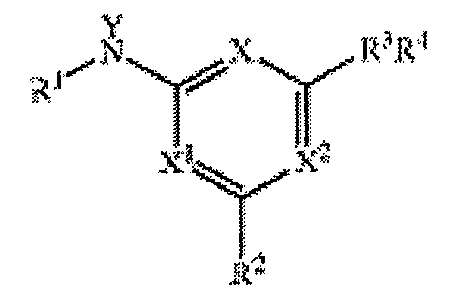
[식 중, R1은 -H, C1 내지 C20 탄화수소, 아미노카보닐알킬, 알콕시알킬, 치환 아릴알킬, 헤테로아릴, 헤테로아릴알킬, 헤테로시클릴알킬 및 치환 헤테로시클릴알킬에서 선택되고;[Wherein R 1 is selected from —H, C 1 to C 20 hydrocarbons, aminocarbonylalkyl, alkoxyalkyl, substituted arylalkyl, heteroaryl, heteroarylalkyl, heterocyclylalkyl and substituted heterocyclylalkyl;
R2는 할로겐, C1 내지 C20 탄화수소, 히드록시, 헤테로아릴, 치환 헤테로아릴, 헤테로시클릴, 치환 헤테로시클릴에서 선택되며;R 2 is selected from halogen, C 1 to C 20 hydrocarbons, hydroxy, heteroaryl, substituted heteroaryl, heterocyclyl, substituted heterocyclyl;
R5는 -H, 알킬 및 치환 알킬에서 선택되고;R 5 is selected from -H, alkyl and substituted alkyl;
R6은 직접 결합, 알킬, 아릴, 치환 아릴 및 헤테로아릴에서 선택되며;R 6 is selected from direct bond, alkyl, aryl, substituted aryl and heteroaryl;
R7은 -H, 아실, 알킬, 치환 알킬, 알콕시카보닐, 아미딘, 아릴, 아릴알킬, 헤테로시클릴, 헤테로아릴, 치환 헤테로아릴, 치환 아릴옥시, 헤테로아릴술폰아미도, 디알킬술폰아미도,R 7 is —H, acyl, alkyl, substituted alkyl, alkoxycarbonyl, amidine, aryl, arylalkyl, heterocyclyl, heteroaryl, substituted heteroaryl, substituted aryloxy, heteroarylsulfonamido, dialkylsulfonamido Degree,
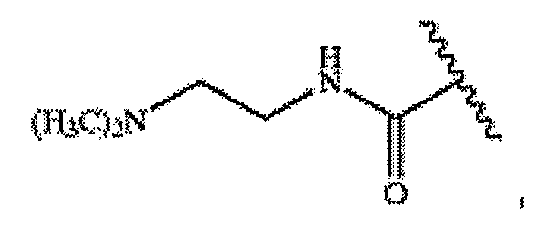
-C(O)NR8R9, -C(NH)NR8R9 및 -NR8R9에서 선택되고;-C (O) NR 8 R 9 , -C (NH) NR 8 R 9 and -NR 8 R 9 ;
R8은 -H 및 알킬에서 선택되고;R 8 is selected from -H and alkyl;
R9는 -H, 알킬, 치환 알킬, 아릴, 헤테로아릴, 알킬카보닐 및 아릴카보닐에서 선택되며;R 9 is selected from -H, alkyl, substituted alkyl, aryl, heteroaryl, alkylcarbonyl and arylcarbonyl;
R3은 직접 결합,R 3 is a direct bond,
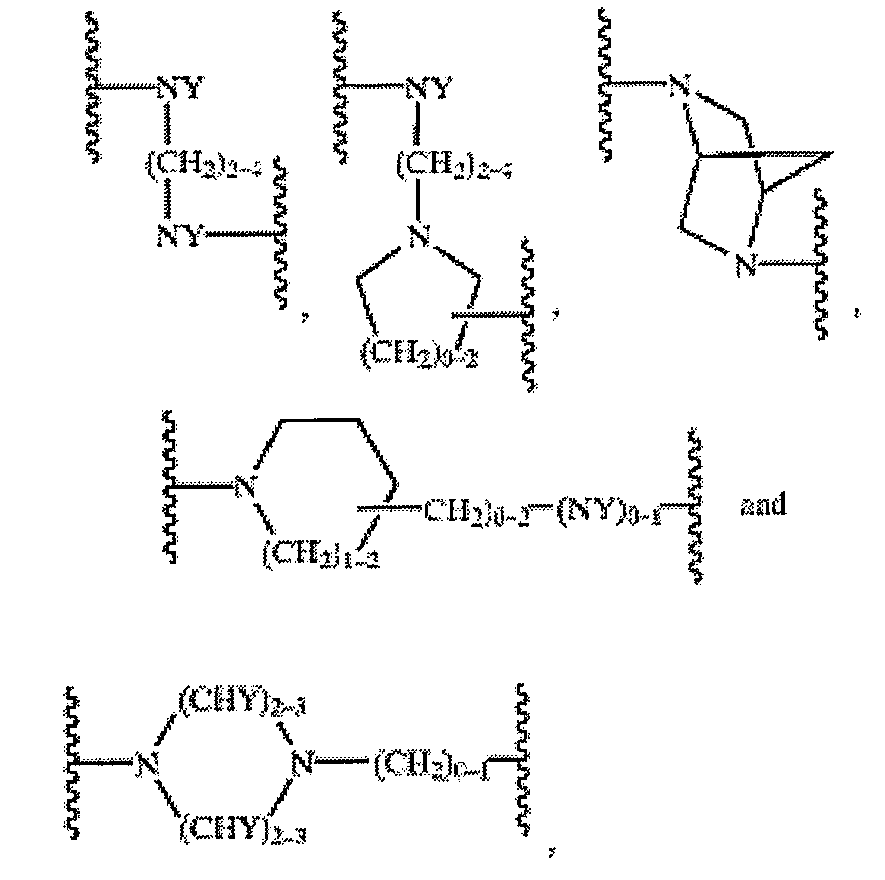
{식 중, 왼쪽 결합은 고리에 대한 부착점이고, 오른쪽 결합은 R4에 대한 부착점이다}에서 선택되고;Wherein the left bond is the point of attachment to the ring and the right bond is the point of attachment to R 4 ;
R4는 -H, 할로겐, 알킬, 헤테로시클릴, 알킬아미노, 아미노카보닐,R 4 is —H, halogen, alkyl, heterocyclyl, alkylamino, aminocarbonyl,

-C(S)NHR12, -CHR13R14, -C(0)NHR15, -C(O)(CH2)0-2R16, -S(O2)R17, -OR18,-C (S) NHR 12 , -CHR 13 R 14 , -C (0) NHR 15 , -C (O) (CH 2 ) 0-2 R 16 , -S (O 2 ) R 17 , -OR 18 ,
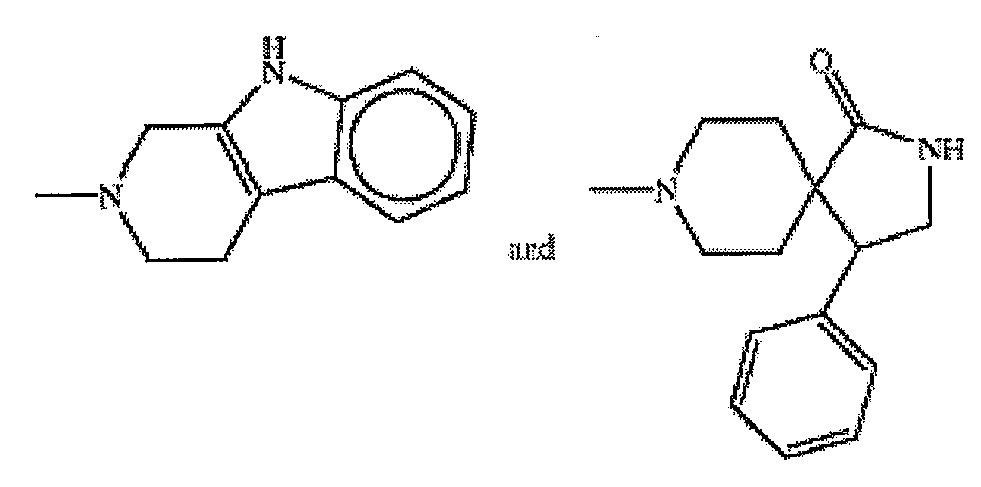
{식 중, R10은 -H, -OH, 알킬, 시클로알킬 및 치환 시클로알킬에서 선택되고; R11은 -H, -OH, -COOH, 아릴, 치환 아릴, 헤테로아릴, 치환 헤테로아릴, 아릴 치환 알킬, 시클로알킬, 치환 시클로알킬, 알콕시, 아미노카보닐, 아미노카보닐알킬,Wherein R 10 is selected from —H, —OH, alkyl, cycloalkyl and substituted cycloalkyl; R 11 is —H, —OH, —COOH, aryl, substituted aryl, heteroaryl, substituted heteroaryl, aryl substituted alkyl, cycloalkyl, substituted cycloalkyl, alkoxy, aminocarbonyl, aminocarbonylalkyl,
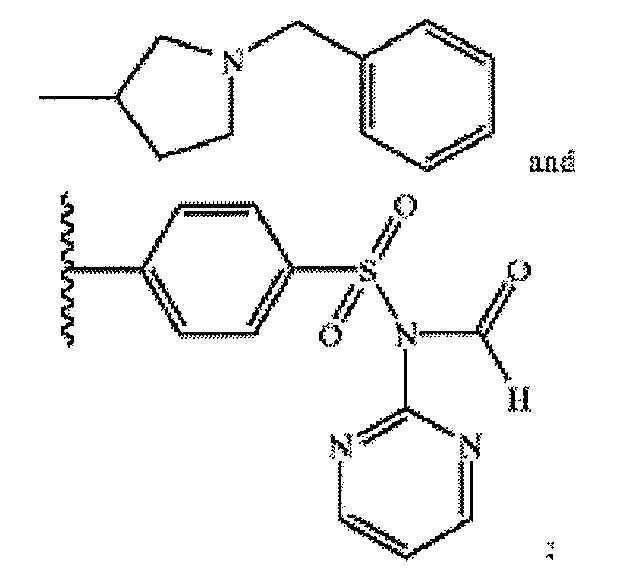
에서 선택되며; R12는 알킬 및 아릴에서 선택되고; R13은 -H 및 아릴에서 선택되며; R14는 아릴, 치환 아릴, 헤테로아릴, 치환 알킬, 아릴 치환 알킬 및 알콕시 치환 알킬에서 선택되고; R15는 알킬, 아릴, 치환 아릴 및 치환 알킬에서 선택되며; R16은 아릴, 치환 아릴, 헤테로아릴, 카복시, 알콕시, 치환 알킬, 시클로알킬, 치환 시클로알킬, 아미노카보닐, 치환 아미노카보닐, 헤테로시클릴 및Is selected from; R 12 is selected from alkyl and aryl; R 13 is selected from -H and aryl; R 14 is selected from aryl, substituted aryl, heteroaryl, substituted alkyl, aryl substituted alkyl and alkoxy substituted alkyl; R 15 is selected from alkyl, aryl, substituted aryl and substituted alkyl; R 16 is aryl, substituted aryl, heteroaryl, carboxy, alkoxy, substituted alkyl, cycloalkyl, substituted cycloalkyl, aminocarbonyl, substituted aminocarbonyl, heterocyclyl and

에서 선택되고; R17은 알킬 및 디알킬아미노에서 선택되며; R18은 C1 내지 C20 탄화수소, 치환 C1 내지 C20 탄화수소 및 헤테로아릴에서 선택되고; Y는 -H 및 저급 알킬에서 선택되거나, 또는 Y와 R1은 부착된 N과 함께 헤테로시클릴, 치환 헤테로시클릴, 헤테로아릴 및 치환 헤테로아릴에서 선택될 수 있으며; X, X1 및 X2 중 둘 이상은 -N=이고, 나머지는 -C(H)= 및 -N=에서 선택된다}에서 선택된다].Is selected from; R 17 is selected from alkyl and dialkylamino; R 18 is selected from C 1 to C 20 hydrocarbons, substituted C 1 to C 20 hydrocarbons and heteroaryl; Y can be selected from -H and lower alkyl, or Y and R 1 together with the attached N can be selected from heterocyclyl, substituted heterocyclyl, heteroaryl and substituted heteroaryl; Two or more of X, X 1 and X 2 are -N =, and the rest are selected from -C (H) = and -N =}.
일부 구현예에서 특별히 관심대상인 것은 하기 SAPK 저해제 화합물, 또는 그의 약학적으로 허용가능한 염, 또는 유도체, 또는 에스테르 또는 유사체 중 어느 것의 용도이다:Of special interest in some embodiments is the use of any of the following SAPK inhibitor compounds, or pharmaceutically acceptable salts, or derivatives, or esters or analogs thereof:
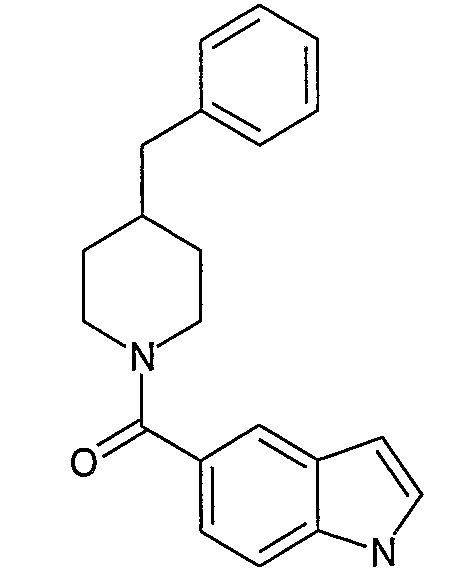
상기 화합물은 IUPAC 명칭이 (4-벤질-피페리딘-1-일)-(1H-인돌-5-일)-메탄온이다. 또한 사용하기에 적당한 것은 하기 화합물 중 임의의 것이다: (4-벤질-피페리딘-1-일)-(6-클로로-1H-인돌-5-일)-메탄온; (4-클로로-1H-인돌-5-일)-[4-(4-플루오로-벤질)-피페리딘-1-일]-메탄온; (4-벤질-피페리딘-1-일)-(4-메톡시-1H-인돌-5-일)-메탄온; (4-벤질-피페리딘-1-일)- {1-[3-(시클로헥실메틸-아미노)-2-히드록시-프로필]-1H-인돌-5-일}-메탄온; (4-벤질-피페리딘-1-일)-{1-[2-히드록시-3-(4-메틸-피페라진-1-일)-프로필]-1H-인돌-5-일}-메탄온; [1-(3-벤질아미노-2-히드록시-프로필)-1H-인돌-5-일]-(4-벤질-피페리딘-1-일)-메탄온; (4-벤질-피페리딘-1-일)-{1-[2-히드록시-3-(4-메톡시- 벤질아미노)-프로필]-1H-인돌-5-일}-메탄온; (4-벤질-피페리딘-1-일)-[1-(2-히드록시-3-프로필아미노-프로필)-1H-인돌-5-일]-메탄온; (4-벤질-피페리딘-1-일)-[1-(피리딘-4-카보닐)-1H-인돌-5-일]-메탄온; 1-[5-(4-벤질-피페리딘-1-카보닐)-인돌-1-일]-에탄온; 2-[5-(4-벤질-피페리딘-1-카보닐)-인돌-1-일]-N-(4-메톡시-벤질)-아세트아미드; 5-(4-벤질-피페리딘-1-카보닐)-1H-인돌-3-카복시산 (2-메톡시-에틸)-아미드; 5-(4-벤질-피페리딘-1-카보닐)-1H-인돌-3-카복시산 (2-메틸아미노-에틸)-아미드; 5-(4-벤질-피페리딘-1-카보닐)-1H-인돌-3-카복시산 (2-아미노-에틸)-아미드; [3-(4-벤질-피페리딘-1-카보닐)-1H-인돌-5-일]-(4-벤질-피페리딘-1-일)-메탄온; [3-(4-벤질-피페리딘-1-카보닐)-1H-인돌-6-일]-(4-벤질-피페리딘-1-일)-메탄온; 5-(4-벤질-피페리딘-1-카보닐)-1H-인돌-3-카복시산 4-플루오로-벤질아미드; 5-(4-벤질-피페리딘-1-카보닐)-1H-인돌-3-카복시산 [2-(3,5-디메톡시-페닐)-에틸]-아미드; (4-벤질-피페리딘-1-일)-(6-메톡시-1H-인돌-5-일)-메탄온; 1-[5-(4-벤질-피페리딘-1-카보닐)-1H-인돌-3-일]-2,2,2-트리플루오로-에탄온; 5-(4-벤질-피페리딘-1-카보닐)-6-메톡시-1H-인돌-3-카복시산 (2-디메틸아미노-에틸)-아미드; 5-(4-벤질-피페리딘-1-카보닐)-1H-인돌-3-카복시산 5-(4-벤질-피페리딘-1-카보닐)-1H-인돌-3-카복시산 (2-디메틸아미노-에틸)-아미드; (1H-벤조이미다졸-5-일)-(4-벤질-피페리딘-1-일)-메탄온; (1H-벤조이미다졸-5-일)-[4-(4-플루오로-벤질)-피페리딘-1-일]-메탄온; (4-벤질-피페리딘-1-일)-(3-모르폴린-4-일메틸-1H-인돌-5-일)-메탄온; 1-[6-(4-벤질-피페리딘-1-카보닐)-1H-인돌-3-일]-2,2,2-트리플루오로-에탄온; (4-벤질-피페리딘-1-일)-[ 1-(피리딘-4-카보닐)-1H-인돌-6-일]-메탄온; (3-벤질-8-아자-비시클로[3.2.1]옥트-8-일)-(6-메톡시-1H-인돌-5-일)-메탄온; (3H-벤조이미다졸-5-일)-(3-벤질-8-아자-비시클로[3.2.1]옥트-8-일)-메탄온; [3-(4-플루오로-벤질)-피롤리딘-1-일]-(1H-인돌-6-일)-메탄온; (1H-벤조이미다졸-5-일)-[4-(2,6-디플루오로-벤질)-피페라진-1-일]-메탄온; (1H-벤조이미다졸-5-일)-[4-(4-메틸술파닐-벤질)-피페라진-1-일]-메탄온; (1H-벤조이미다졸-5-일)- [4-(2,3-디플루오로-벤질)-피페라진-1-일]-메탄온; (1H-벤조이미다졸-5-일)-[4-(3,5-디플루오로-벤질)-피페라진-1-일]- 메탄온; (1H-벤조이미다졸-5-일)-[4-(3-클로로-벤질)-피페라진-1-일]-메탄온; 4-[4-(1H-벤조이미다졸-5-카보닐)-피페라진-1-일메틸]-벤조산 메틸 에스테르 (1H-벤조이미다졸-5-일)-[4-(4-메톡시-벤질)-피페라진-1-일]-메탄온; (1H-벤조이미다졸- 5-일)-[4-(4-트리플루오로메톡시-벤질)-피페라진-1-일]-메탄온; (1H-벤조이미다졸-5-일)-[4-(4-메틸-벤질)-피페라진-1-일]-메탄온; (1H-벤조이미다졸-5-일)-[4-(2,4-디클로로- 벤조일)-피페라진-1-일]-메탄온; (1H-벤조이미다졸-5-일)-[4-(3,4-디클로로-벤조일)-피페라진-1-일]-메탄온; 트랜스-1-[4-(1H-벤조이미다졸-5-카보닐)-피페라진-1-일]-3-(3-트리플루오로메틸-페닐)-프로펜온; (1H-벤조이미다졸-5-일)-[4-(4-클로로-벤조일)-피페라진-1-일]-메탄온; (1H-벤조이미다졸-5-일)-(4-벤조일-피페라진-1-일)-메탄온; (1H-벤조이미다졸-5-일)-[4-(2-트리플루오로메틸-벤조일)-피페라진-1-일]-메탄온; (1H-벤조이미다졸-5-일)-[4-(4-메톡시-벤조일)-피페라진-1-일]-메탄온; (1H-벤조이미다졸-5-일)-[4-(3,4-디클로로-페닐)-피페라진-1-일]-메탄온; (1H-벤조이미다졸-5-일)-{4-[(4-클로로-페닐)-페닐-메틸]-피페라진-1-일}-메탄온; 트랜스-(1H-벤조이미다졸-5-일)-[4-(3-페닐-알릴)-피페라진-1-일]-메탄온; (1H-벤조이미다졸-5-일)-{4-[비스-(4-플루오로-페닐)-메틸]-피페라진-1-일}-메탄온; (1H-벤조이미다졸-5-일)-[4-(4-클로로-벤질)-피페라진-1-일]-메탄온; (1H-벤조이미다졸-5-일)-[4-(2-클로로-벤질)-피페라진-1-일]-메탄온; (1H-벤조이미다졸-5-일)-[4-(3,4,5 -트리메톡시-벤질)-피페라진-1-일]-메탄온; (1H-벤조이미다졸-5-일)-[4-(4-디에틸아미노-벤질)-피페라진-1-일]-메탄온; (1H-벤조이미다졸-5-일)-(4-비페닐-4-일메틸-피페라진-1-일)-메탄온; (1H-벤조이미다졸-5-일)-[4-(4-페녹시-벤질)-피페라진-1-일]-메탄온; (4-벤질-피페리딘-1-일)-(6-메톡시-1H-벤조이미다졸-5-일)-메탄온; (4-벤질-피페리딘-1-일)-(1-이소프로필-1H-벤조이미다졸-5-일)-메탄온; (4-벤질-피페리딘-1-일)-(3-이소프로필-3H-벤조이미다졸-5-일)-메탄온; (4-벤질-피페리딘-1-일)-(1-이소프로필-1H-인돌-5-일)-메탄온; [4-(4-클로로-벤질)-피페라진-1-일]-(1-이소프로필-1H-인돌-5-일)-메탄온; (1H-벤조트리아졸-5-일)-(4-벤질-피페리딘-1-일)-메탄온; (4-벤질-피페리딘-1-일)-(1-이소프로필-1H-벤조트리아졸-5-일)-메탄온; [4-(4-클로로-벤질)-피페리딘-1-일]-(1H-인돌-5-일)-메탄온; [4-(3-클로로-벤질)-피페리딘-1-일]-(1H-인돌-5-일)-메탄온; [4-(2-클로로-벤질)-피페리딘-1-일]-(1 H-인돌-5-일)-메탄온; (4-벤질-2-메틸-피페리딘-1-일)-(1H-인돌-5-일)-메탄온; (4-벤질-피페리딘-1-일)-(4-클로로-1H-인돌-5-일)-메탄온; (4-벤질-피페리딘-1-일)-[7-클로로-1-(피리딘-3-카보닐)-1H-인돌-6-일]-메탄온; (4-벤질-피페리딘-1-일)-(5-클로로-1H-인돌-6-일)-메탄온; (4-벤질-피페리딘-1-일)-(7-클로로-1H-인돌-6-일)-메탄온; 6-(4-벤질-피페리딘-1-카보닐)-7-클로로-1-(피리딘-3-카보닐)-1H-인돌-3-카복시산 (2-디메틸아미노-에틸)-아미드; (4-벤질-피페리딘-1-일)-(1-피리딘-4-일메틸-1H-인돌-5-일)-메탄온; (4-벤질-피페리딘-1-일)-[6-메톡시-1-(피리딘-3-카보닐)-1H-인돌-5-일]-메탄온; [5-(4-벤질-피페리딘-1-카보닐)-인돌-1-일]-아세트산 메틸 에스테르; 1-[5-(4-벤질-피페리딘-1-카보닐)-인돌-1-일]-3-이소프로필아미노-프로판-1-온; 1-[5-(4-벤질-피페리딘-1-카보닐)-인돌-1-일]-3-피페라진-1-일-프로판-1-온; 3-벤질아미노-1-[5-(4-벤질-피페리딘-1-카보닐)-인돌-1-일] -프로판-1-온; 1-[5-(4-벤질-피페리딘-1-카보닐)-인돌-1-일]-3-모르폴린-4-일-프로판-1-온; 2-[5-(4-벤질-피페리딘-1-카보닐)-인돌-1-일]-N-프로필-아세트아미드; (4-벤질-피페리딘-1-일)-[1-(2-디에틸아미노-에틸)-6-메톡시-1H-인돌-5-일]-메탄온; (4-벤질-피페리딘-1-일)-[1-(3-디에틸아미노-프로필)-1H-인돌-5-일]-메탄온; (4-벤질-피페리딘-1-일)-[1-(2-디에틸아미노-에틸)-1H-인돌-5-일]-메탄온; (4-벤질-피페리딘-1-일)-[6-클로로-1-(3-디에틸아미노-프로필)-1H-인돌-5-일]-메탄온; [1-(2-디에틸아미노-에틸)-1H-인돌-5-일]-[4-(4-플루오로-벤질)-피페리딘-1-일]-메탄온; (4-벤질-피페리딘-1-일)-[1-(3-디에틸아미노-프로필)-6-메톡시-1H-인돌-5-일]-메탄온; 5-(4-벤질-피페리딘-1-카보닐)-1H-인돌-3-카복시산 (2-아미노-에틸)-메틸-아미드; 5-(4-벤질-피페리딘-1-카보닐)-1H-인돌-3-카복시산 [2-(3,4-디메톡시-페닐)-에틸]-아미드; (4-벤질-피페리딘-1-일)-(3-디에틸아미노메틸-1H-인돌-5-일)-메탄온; [4-(4-플루오로-벤질)-피페리딘-1-일]-(6-메톡시-1H-인돌-5-일)-메탄온; (4-벤질-피페리딘-1-일)-(1-피리딘-4-일-1H-인돌-5-일)-메탄온; 및 4(4-벤질-피페리딘-1-일)-(4-클로로-2-메틸-1H-인돌-5-일)-메탄온; 또는 상기 화합물 중 어느 것의 약학적으로 허용가능한 염, 또는 유도체, 또는 에스테르, 또는 유사체.The compound has the IUPAC name (4-benzyl-piperidin-1-yl)-(1H-indol-5-yl) -methanone. Also suitable for use are any of the following compounds: (4-benzyl-piperidin-1-yl)-(6-chloro-lH-indol-5-yl) -methanone; (4-Chloro-1H-indol-5-yl)-[4- (4-fluoro-benzyl) -piperidin-1-yl] -methanone; (4-benzyl-piperidin-1-yl)-(4-methoxy-1 H-indol-5-yl) -methanone; (4-benzyl-piperidin-1-yl)-{1- [3- (cyclohexylmethyl-amino) -2-hydroxy-propyl] -1 H-indol-5-yl} -methanone; (4-benzyl-piperidin-1-yl)-{1- [2-hydroxy-3- (4-methyl-piperazin-1-yl) -propyl] -1 H-indol-5-yl}- Methanone; [1- (3-benzylamino-2-hydroxy-propyl) -1H-indol-5-yl]-(4-benzyl-piperidin-1-yl) -methanone; (4-benzyl-piperidin-1-yl)-{1- [2-hydroxy-3- (4-methoxy-benzylamino) -propyl] -1 H-indol-5-yl} -methanone; (4-benzyl-piperidin-1-yl)-[1- (2-hydroxy-3-propylamino-propyl) -1H-indol-5-yl] -methanone; (4-benzyl-piperidin-1-yl)-[1- (pyridin-4-carbonyl) -1H-indol-5-yl] -methanone; 1- [5- (4-benzyl-piperidin-1-carbonyl) -indol-1-yl] -ethanone; 2- [5- (4-benzyl-piperidin-1-carbonyl) -indol-1-yl] -N- (4-methoxy-benzyl) -acetamide; 5- (4-benzyl-piperidine-1-carbonyl) -1H-indole-3-carboxylic acid (2-methoxy-ethyl) -amide; 5- (4-Benzyl-piperidine-1-carbonyl) -1 H-indole-3-carboxylic acid (2-methylamino-ethyl) -amide; 5- (4-benzyl-piperidine-1-carbonyl) -1H-indole-3-carboxylic acid (2-amino-ethyl) -amide; [3- (4-benzyl-piperidin-1-carbonyl) -1H-indol-5-yl]-(4-benzyl-piperidin-1-yl) -methanone; [3- (4-benzyl-piperidin-1-carbonyl) -1H-indol-6-yl]-(4-benzyl-piperidin-1-yl) -methanone; 5- (4-benzyl-piperidine-1-carbonyl) -1H-indole-3-carboxylic acid 4-fluoro-benzylamide; 5- (4-Benzyl-piperidine-1-carbonyl) -1 H-indole-3-carboxylic acid [2- (3,5-dimethoxy-phenyl) -ethyl] -amide; (4-benzyl-piperidin-1-yl)-(6-methoxy-1 H-indol-5-yl) -methanone; 1- [5- (4-benzyl-piperidin-1-carbonyl) -1H-indol-3-yl] -2,2,2-trifluoro-ethanone; 5- (4-Benzyl-piperidine-1-carbonyl) -6-methoxy-1 H-indole-3-carboxylic acid (2-dimethylamino-ethyl) -amide; 5- (4-benzyl-piperidine-1-carbonyl) -1H-indole-3-carboxylic acid 5- (4-benzyl-piperidine-1-carbonyl) -1H-indole-3-carboxylic acid (2-dimethylamino-ethyl) -amide; (1H-Benzoimidazol-5-yl)-(4-benzyl-piperidin-1-yl) -methanone; (1H-Benzoimidazol-5-yl)-[4- (4-fluoro-benzyl) -piperidin-1-yl] -methanone; (4-benzyl-piperidin-1-yl)-(3-morpholin-4-ylmethyl-1H-indol-5-yl) -methanone; 1- [6- (4-benzyl-piperidin-1-carbonyl) -1H-indol-3-yl] -2,2,2-trifluoro-ethanone; (4-benzyl-piperidin-1-yl)-[1- (pyridin-4-carbonyl) -1H-indol-6-yl] -methanone; (3-benzyl-8-aza-bicyclo [3.2.1] oct-8-yl)-(6-methoxy-1 H-indol-5-yl) -methanone; (3H-Benzoimidazol-5-yl)-(3-benzyl-8-aza-bicyclo [3.2.1] oct-8-yl) -methanone; [3- (4-Fluoro-benzyl) -pyrrolidin-1-yl]-(1H-indol-6-yl) -methanone; (1H-Benzoimidazol-5-yl)-[4- (2,6-difluoro-benzyl) -piperazin-1-yl] -methanone; (1H-Benzoimidazol-5-yl)-[4- (4-methylsulfanyl-benzyl) -piperazin-1-yl] -methanone; (1H-Benzoimidazol-5-yl)-[4- (2,3-difluoro-benzyl) -piperazin-1-yl] -methanone; (1H-Benzoimidazol-5-yl)-[4- (3,5-difluoro-benzyl) -piperazin-1-yl] -methanone; (1H-Benzoimidazol-5-yl)-[4- (3-chloro-benzyl) -piperazin-1-yl] -methanone; 4- [4- (1H-Benzoimidazol-5-carbonyl) -piperazin-1-ylmethyl] -benzoic acid methyl ester (1H-benzoimidazol-5-yl)-[4- (4-methoxy -Benzyl) -piperazin-1-yl] -methanone; (1H-Benzoimidazol-5-yl)-[4- (4-trifluoromethoxy-benzyl) -piperazin-1-yl] -methanone; (1H-Benzoimidazol-5-yl)-[4- (4-methyl-benzyl) -piperazin-1-yl] -methanone; (1H-Benzoimidazol-5-yl)-[4- (2,4-dichloro- benzoyl) -piperazin-1-yl] -methanone; (1H-Benzoimidazol-5-yl)-[4- (3,4-dichloro-benzoyl) -piperazin-1-yl] -methanone; Trans-1- [4- (1H-benzoimidazol-5-carbonyl) -piperazin-1-yl] -3- (3-trifluoromethyl-phenyl) -propenone; (1H-Benzoimidazol-5-yl)-[4- (4-chloro-benzoyl) -piperazin-1-yl] -methanone; (1H-Benzoimidazol-5-yl)-(4-benzoyl-piperazin-1-yl) -methanone; (1H-Benzoimidazol-5-yl)-[4- (2-trifluoromethyl-benzoyl) -piperazin-1-yl] -methanone; (1H-Benzoimidazol-5-yl)-[4- (4-methoxy-benzoyl) -piperazin-1-yl] -methanone; (1H-Benzoimidazol-5-yl)-[4- (3,4-dichloro-phenyl) -piperazin-1-yl] -methanone; (1H-Benzoimidazol-5-yl)-{4-[(4-chloro-phenyl) -phenyl-methyl] -piperazin-1-yl} -methanone; Trans- (1H-benzoimidazol-5-yl)-[4- (3-phenyl-allyl) -piperazin-1-yl] -methanone; (1H-Benzoimidazol-5-yl)-{4- [bis- (4-fluoro-phenyl) -methyl] -piperazin-1-yl} -methanone; (1H-Benzoimidazol-5-yl)-[4- (4-chloro-benzyl) -piperazin-1-yl] -methanone; (1H-Benzoimidazol-5-yl)-[4- (2-chloro-benzyl) -piperazin-1-yl] -methanone; (1H-Benzoimidazol-5-yl)-[4- (3,4,5-trimethoxy-benzyl) -piperazin-1-yl] -methanone; (1H-Benzoimidazol-5-yl)-[4- (4-diethylamino-benzyl) -piperazin-1-yl] -methanone; (1H-Benzoimidazol-5-yl)-(4-biphenyl-4-ylmethyl-piperazin-1-yl) -methanone; (1H-Benzoimidazol-5-yl)-[4- (4-phenoxy-benzyl) -piperazin-1-yl] -methanone; (4-benzyl-piperidin-1-yl)-(6-methoxy-1 H-benzoimidazol-5-yl) -methanone; (4-benzyl-piperidin-1-yl)-(1-isopropyl-1H-benzoimidazol-5-yl) -methanone; (4-benzyl-piperidin-1-yl)-(3-isopropyl-3H-benzoimidazol-5-yl) -methanone; (4-benzyl-piperidin-1-yl)-(1-isopropyl-1H-indol-5-yl) -methanone; [4- (4-Chloro-benzyl) -piperazin-1-yl]-(1-isopropyl-1H-indol-5-yl) -methanone; (1H-Benzotriazol-5-yl)-(4-benzyl-piperidin-1-yl) -methanone; (4-benzyl-piperidin-1-yl)-(1-isopropyl-1H-benzotriazol-5-yl) -methanone; [4- (4-Chloro-benzyl) -piperidin-1-yl]-(1H-indol-5-yl) -methanone; [4- (3-Chloro-benzyl) -piperidin-1-yl]-(1H-indol-5-yl) -methanone; [4- (2-Chloro-benzyl) -piperidin-1-yl]-(1 H-indol-5-yl) -methanone; (4-benzyl-2-methyl-piperidin-1-yl)-(1H-indol-5-yl) -methanone; (4-benzyl-piperidin-1-yl)-(4-chloro-1H-indol-5-yl) -methanone; (4-benzyl-piperidin-1-yl)-[7-chloro-1- (pyridin-3-carbonyl) -1H-indol-6-yl] -methanone; (4-benzyl-piperidin-1-yl)-(5-chloro-lH-indol-6-yl) -methanone; (4-benzyl-piperidin-1-yl)-(7-chloro-1H-indol-6-yl) -methanone; 6- (4-Benzyl-piperidine-1-carbonyl) -7-chloro-1- (pyridine-3-carbonyl) -1H-indole-3-carboxylic acid (2-dimethylamino-ethyl) -amide ; (4-benzyl-piperidin-1-yl)-(1-pyridin-4-ylmethyl-1H-indol-5-yl) -methanone; (4-benzyl-piperidin-1-yl)-[6-methoxy-1- (pyridin-3-carbonyl) -1H-indol-5-yl] -methanone; [5- (4-Benzyl-piperidin-1-carbonyl) -indol-1-yl] -acetic acid methyl ester; 1- [5- (4-benzyl-piperidin-1-carbonyl) -indol-1-yl] -3-isopropylamino-propan-1-one; 1- [5- (4-benzyl-piperidin-1-carbonyl) -indol-1-yl] -3-piperazin-1-yl-propan-1-one; 3-benzylamino-1- [5- (4-benzyl-piperidin-1-carbonyl) -indol-1-yl] -propan-1-one; 1- [5- (4-benzyl-piperidin-1-carbonyl) -indol-1-yl] -3-morpholin-4-yl-propan-1-one; 2- [5- (4-benzyl-piperidin-1-carbonyl) -indol-1-yl] -N-propyl-acetamide; (4-benzyl-piperidin-1-yl)-[1- (2-diethylamino-ethyl) -6-methoxy-1 H-indol-5-yl] -methanone; (4-benzyl-piperidin-1-yl)-[1- (3-diethylamino-propyl) -1 H-indol-5-yl] -methanone; (4-benzyl-piperidin-1-yl)-[1- (2-diethylamino-ethyl) -1 H-indol-5-yl] -methanone; (4-benzyl-piperidin-1-yl)-[6-chloro-1- (3-diethylamino-propyl) -1 H-indol-5-yl] -methanone; [1- (2-Diethylamino-ethyl) -1 H-indol-5-yl]-[4- (4-fluoro-benzyl) -piperidin-1-yl] -methanone; (4-benzyl-piperidin-1-yl)-[1- (3-diethylamino-propyl) -6-methoxy-1 H-indol-5-yl] -methanone; 5- (4-Benzyl-piperidine-1-carbonyl) -1 H-indole-3-carboxylic acid (2-amino-ethyl) -methyl-amide; 5- (4-benzyl-piperidine-1-carbonyl) -1H-indole-3-carboxylic acid [2- (3,4-dimethoxy-phenyl) -ethyl] -amide; (4-benzyl-piperidin-1-yl)-(3-diethylaminomethyl-1 H-indol-5-yl) -methanone; [4- (4-Fluoro-benzyl) -piperidin-1-yl]-(6-methoxy-1H-indol-5-yl) -methanone; (4-benzyl-piperidin-1-yl)-(1-pyridin-4-yl-1H-indol-5-yl) -methanone; And 4 (4-benzyl-piperidin-1-yl)-(4-chloro-2-methyl-1H-indol-5-yl) -methanone; Or a pharmaceutically acceptable salt, or derivative, or ester, or analog of any of the above compounds.
일부 구현예에서 특히 관심대상인 것은 하기 SAPK 저해제 화합물, 또는 그의 약학적으로 허용가능한 염, 또는 유도체, 또는 에스테르, 또는 유사체 중 어느 것의 용도이다:Of particular interest in some embodiments is the use of any of the following SAPK inhibitor compounds, or pharmaceutically acceptable salts, or derivatives, or esters, or analogs thereof:
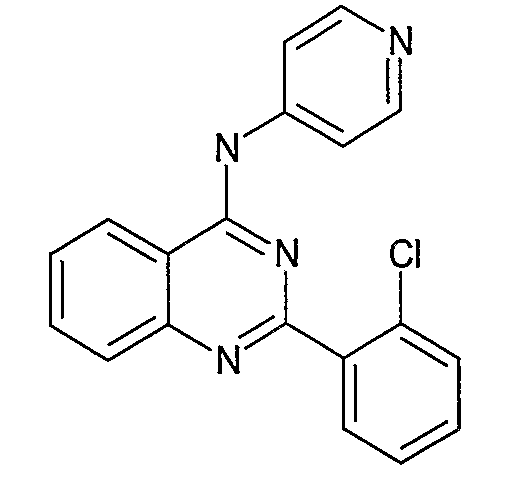
상기 화합물의 IUPAC 명칭은 [2-(2-클로로-페닐)-퀴나졸린-4-일]-피리딘-4-일-아민이다. 또한 사용하기에 적당한 것은 하기 화합물 중 어느 것이다: [2-(2,6-디클로로-페닐)-퀴나졸린-4-일]-피리딘-4-일-아민; 피리딘-4-일-(2-o-톨릴-퀴나졸린-4-일)-아민; [2-(2-브로모-페닐)-퀴나졸린-4-일]-피리딘-4-일-아민; [2-(2-플루오로-페닐)-퀴나졸린-4-일]-피리딘-4-일-아민; [2-(2,6-디플루오로-페닐)-퀴나졸린-4-일]-피리딘-4-일-아민; (2-페닐-퀴나졸린-4-일)-피리딘-4-일-아민; [2-(4-플루오로-페닐)-퀴나졸린-4-일]-피리딘-4-일-아민; [2-(4-메톡시-페닐)-퀴나졸린-4-일]-피리딘-4-일-아민; [2-(3-플루오로-페닐)-퀴나졸린-4-일]-피리딘-4-일-아민; 이소프로필-(2-페닐-퀴나졸린-4-일)-피리딘-4-일-아민; (4-메톡시-벤질)-(2-페닐-퀴나졸린-4-일)-피리딘-4-일-아민; (2-페닐-퀴나졸린-4-일)-피리딘-4-일메틸-아민; [2-(4-클로로-페닐)-퀴나졸린-4-일]-피리딘-4-일메틸-아민; (2-페닐-퀴나졸린-4-일)-피리딘-3-일-아민; (2-페닐-퀴나졸린-4-일)-피리딘-2-일메틸-아민; (2-페닐-퀴나졸린-4-일)-피리딘-3-일메틸-아민; (2-페닐-퀴나졸린-4-일)-(2-피리딘-2-일-에틸)-아민; (2-페닐-퀴나졸린-4-일)-피리미딘-4-일-아민; (2-페닐-퀴나졸린-4-일)-피리미딘-2-일-아민; 페닐-(2-페닐-퀴나졸린-4-일)-아민; 벤질-[2-(3-클로로-페닐)-퀴나졸린-4-일]-아민; 3-(2-페닐-퀴나졸린-4- 일아미노)-페놀; 2-(2-페닐-퀴나졸린-4-일아미노)-페놀; 4-(2-페닐-퀴나졸린-4-일아미노)-페놀; (1H-인돌-4-일)-(2-페닐-퀴나졸린-4-일)-아민; (1H-인돌-5-일)-(2-페닐-퀴나졸린-4-일)-아민; (4-메톡시-페닐)-(2-페닐-퀴나졸린-4-일)-아민; (3-메톡시-페닐)-(2-페닐-퀴나졸린-4-일)-아민; (2-메톡시-페닐)-(2-페닐-퀴나졸린-4-일)-아민; 2-[4-(2-페닐-퀴나졸린-4-일아미노)-페닐]-에탄올; 3-(2-페닐-퀴나졸린-4-일아미노)-벤조니트릴; (2,5-디플루오로-벤질)-(2-페닐-퀴나졸린-4-일)-아민; [4-(2-부틸)-페닐]-(2-페닐-퀴나졸린-4-일)-아민; N,N-디메틸-N'-(2-페닐-퀴나졸린-4-일)-벤젠-l,4-디아민; [2-(2-클로로-페닐)-6,7-디메톡시-퀴나졸린-4-일]-피리딘-4-일-아민; [2-(2-플루오로-페닐)-6-니트로-퀴나졸린-4-일]-피리딘-4-일-아민; 2-(2-플루오로-페닐)-N4-피리딘-4-일-퀴나졸린-4,6-디아민; 2-(2-플루오로-페닐)-N4-피리딘-4-일-퀴나졸린-4,7-디아민; 2-(2-플루오로-페닐)-N6-(3-메톡시-벤질)-N4-피리딘-4-일-퀴나졸린-4,6-디아민; 2-(2-플루오로-페닐)-N6-(4-메톡시-벤질)-N4-피리딘-4-일- 퀴나졸린-4,6-디아민; N6-이소부틸-2-(2-플루오로-페닐)-N4-피리딘-4-일-퀴나졸린-4,6-디아민; 2-(2-플루오로-페닐)-N6-(4-메틸술파닐-벤질)-N4-피리딘-4-일-퀴나졸린-4,6-디아민; 4-(4-피리딜아미노)-2-(4-클로로페닐)퀴나졸린; 2-페닐-4-(2-피리딜아미노)-퀴나졸린; 및 [2-(2-플루오로-페닐)-피리도[2,3-d]피리미딘-4-일]-피리딘-4-일-아민; 또는 상기 화합물 중 어느 것의 약학적으로 허용가능한 염, 또는 유도체, 또는 에스테르, 또는 유사체.The IUPAC name of the compound is [2- (2-Chloro-phenyl) -quinazolin-4-yl] -pyridin-4-yl-amine. Also suitable for use are any of the following compounds: [2- (2,6-dichloro-phenyl) -quinazolin-4-yl] -pyridin-4-yl-amine; Pyridin-4-yl- (2-o-tolyl-quinazolin-4-yl) -amine; [2- (2-Bromo-phenyl) -quinazolin-4-yl] -pyridin-4-yl-amine; [2- (2-Fluoro-phenyl) -quinazolin-4-yl] -pyridin-4-yl-amine; [2- (2,6-Difluoro-phenyl) -quinazolin-4-yl] -pyridin-4-yl-amine; (2-phenyl-quinazolin-4-yl) -pyridin-4-yl-amine; [2- (4-Fluoro-phenyl) -quinazolin-4-yl] -pyridin-4-yl-amine; [2- (4-methoxy-phenyl) -quinazolin-4-yl] -pyridin-4-yl-amine; [2- (3-Fluoro-phenyl) -quinazolin-4-yl] -pyridin-4-yl-amine; Isopropyl- (2-phenyl-quinazolin-4-yl) -pyridin-4-yl-amine; (4-methoxy-benzyl)-(2-phenyl-quinazolin-4-yl) -pyridin-4-yl-amine; (2-phenyl-quinazolin-4-yl) -pyridin-4-ylmethyl-amine; [2- (4-Chloro-phenyl) -quinazolin-4-yl] -pyridin-4-ylmethyl-amine; (2-phenyl-quinazolin-4-yl) -pyridin-3-yl-amine; (2-phenyl-quinazolin-4-yl) -pyridin-2-ylmethyl-amine; (2-phenyl-quinazolin-4-yl) -pyridin-3-ylmethyl-amine; (2-phenyl-quinazolin-4-yl)-(2-pyridin-2-yl-ethyl) -amine; (2-phenyl-quinazolin-4-yl) -pyrimidin-4-yl-amine; (2-phenyl-quinazolin-4-yl) -pyrimidin-2-yl-amine; Phenyl- (2-phenyl-quinazolin-4-yl) -amine; Benzyl- [2- (3-chloro-phenyl) -quinazolin-4-yl] -amine; 3- (2-phenyl-quinazolin-4-ylamino) -phenol; 2- (2-phenyl-quinazolin-4-ylamino) -phenol; 4- (2-phenyl-quinazolin-4-ylamino) -phenol; (1H-Indol-4-yl)-(2-phenyl-quinazolin-4-yl) -amine; (1H-Indol-5-yl)-(2-phenyl-quinazolin-4-yl) -amine; (4-methoxy-phenyl)-(2-phenyl-quinazolin-4-yl) -amine; (3-methoxy-phenyl)-(2-phenyl-quinazolin-4-yl) -amine; (2-methoxy-phenyl)-(2-phenyl-quinazolin-4-yl) -amine; 2- [4- (2-phenyl-quinazolin-4-ylamino) -phenyl] -ethanol; 3- (2-phenyl-quinazolin-4-ylamino) -benzonitrile; (2,5-difluoro-benzyl)-(2-phenyl-quinazolin-4-yl) -amine; [4- (2-butyl) -phenyl]-(2-phenyl-quinazolin-4-yl) -amine; N, N-dimethyl-N '-(2-phenyl-quinazolin-4-yl) -benzene-l, 4-diamine; [2- (2-Chloro-phenyl) -6,7-dimethoxy-quinazolin-4-yl] -pyridin-4-yl-amine; [2- (2-Fluoro-phenyl) -6-nitro-quinazolin-4-yl] -pyridin-4-yl-amine; 2- (2-Fluoro-phenyl) -N4-pyridin-4-yl-quinazolin-4,6-diamine; 2- (2-Fluoro-phenyl) -N4-pyridin-4-yl-quinazolin-4,7-diamine; 2- (2-Fluoro-phenyl) -N6- (3-methoxy-benzyl) -N4-pyridin-4-yl-quinazolin-4,6-diamine; 2- (2-Fluoro-phenyl) -N6- (4-methoxy-benzyl) -N4-pyridin-4-yl-quinazolin-4,6-diamine; N6-isobutyl-2- (2-fluoro-phenyl) -N4-pyridin-4-yl-quinazolin-4,6-diamine; 2- (2-Fluoro-phenyl) -N6- (4-methylsulfanyl-benzyl) -N4-pyridin-4-yl-quinazolin-4,6-diamine; 4- (4-pyridylamino) -2- (4-chlorophenyl) quinazolin; 2-phenyl-4- (2-pyridylamino) -quinazolin; And [2- (2-Fluoro-phenyl) -pyrido [2,3-d] pyrimidin-4-yl] -pyridin-4-yl-amine; Or a pharmaceutically acceptable salt, or derivative, or ester, or analog of any of the above compounds.
또 다른 적당한 SAPK 저해제는 BIRB796 (1-(5-tert-부틸-2-p-톨릴-2H-피라졸-3- 일)-3-[4-(2-모르폴린-4-일-에톡시)-나프탈렌-1-일]-우레아)이며; 미국특허 제 6,319,921 호를 참조한다.Another suitable SAPK inhibitor is BIRB796 (1- (5-tert-butyl-2-p-tolyl-2H-pyrazol-3-yl) -3- [4- (2-morpholin-4-yl-ethoxy ) -Naphthalen-1-yl] -urea); See US Pat. No. 6,319,921.
BIRB796은 하기의 구조를 갖는다:BIRB796 has the following structure:
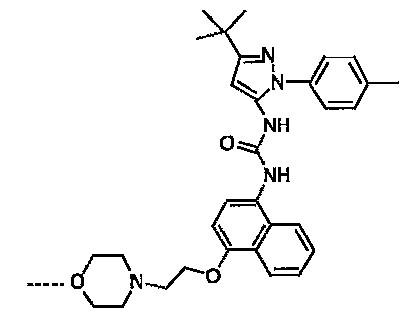
또한 사용하기에 적당한 것은 BIRB796의 약학적으로 활성인 유도체, 유사체, 에스테르 및 염이다.Also suitable for use are pharmaceutically active derivatives, analogs, esters and salts of BIRB796.
또 다른 적당한 SAPK 저해제는 하기에 나타난 바와 같은 2(1H)-퀴나졸린온이다:Another suitable SAPK inhibitor is 2 (1H) -quinazolinone, as shown below:
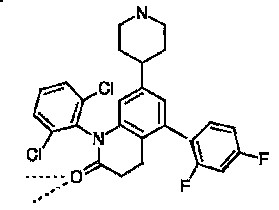
또한 사용하기에 적당한 것은 2(1H)-퀴나졸린온의 약학적으로 활성인 유도체, 유사체, 에스테르, 및 염이다.Also suitable for use are pharmaceutically active derivatives, analogs, esters, and salts of 2 (1H) -quinazolinone.
부가적으로 사용하기에 적당한 것은 VX-745 (Vertex Pharmaceuticals 및 Kissei Pharmaceutical Co.)이다. VX-745는 p38-α, p38-β 및 p38-γ를 포함하여 p38의 몇 가지 아이소타입을 저해하는 것으로 보고되었다.Further suitable for use are VX-745 (Vertex Pharmaceuticals and Kissei Pharmaceutical Co.). VX-745 has been reported to inhibit several isotypes of p38, including p38-α, p38-β and p38-γ.
피르페니돈 및 그의 유사체Pirfenidone and its analogues
피르페니돈 (5-메틸-1-페닐-2-(1H)-피리돈) 및 특정 피르페니돈 유사체는 본원에 개시된 HCV 감염에 대한 치료 방법을 증진시키는 데 사용될 수 있다.Pirfenidone (5-methyl-1-phenyl-2- (1H) -pyridone) and certain pirfenidone analogs can be used to enhance the methods of treatment for HCV infections disclosed herein.
피르페니돈Pirfenidone

피르페니돈 유사체Pirfenidone analogs

치환기 Substituent RR 1One , , RR 22 , X에 대한 설명, Description of X
R 1 : 카보시클릭 (포화 및 불포화), 헤테로시클릭 (포화 또는 불포화), 알킬 (포화 및 불포화). 예로는 페닐, 벤질, 피리미딜, 나프틸, 인돌릴, 피롤릴, 푸릴, 티에닐, 이미다졸릴, 시클로헥실, 피페리딜, 피롤리딜, 모르폴리닐, 시클로헥세닐, 부타디에닐 등이 포함된다. R 1 : carbocyclic (saturated and unsaturated), heterocyclic (saturated or unsaturated), alkyl (saturated and unsaturated). Examples include phenyl, benzyl, pyrimidyl, naphthyl, indolyl, pyrrolyl, furyl, thienyl, imidazolyl, cyclohexyl, piperidyl, pyrrolidyl, morpholinyl, cyclohexenyl, butadienyl, etc. This includes.
R1은 카보시클릭 또는 헤테로시클릭 부분 상에 할로겐, 니트로, 아미노, 히드록시, 알콕시, 카복시, 시아노, 티오, 알킬, 아릴, 헤테로알킬, 헤테로아릴 및 이들의 조합과 같은 치환기로의 치환을 추가로 포함할 수 있으며, 예를 들면 4-니트로페닐, 3-클로로페닐, 2,5-디니트로페닐, 4-메톡시페닐, 5-메틸-피롤릴, 2,5-디클로로시클로헥실, 구아니디닐-시클로헥세닐 등이다.R 1 is substituted on the carbocyclic or heterocyclic moiety with substituents such as halogen, nitro, amino, hydroxy, alkoxy, carboxy, cyano, thio, alkyl, aryl, heteroalkyl, heteroaryl and combinations thereof It may further include, for example 4-nitrophenyl, 3-chlorophenyl, 2,5-dinitrophenyl, 4-methoxyphenyl, 5-methyl-pyrrolyl, 2,5-dichlorocyclohexyl, Guanidinyl-cyclohexenyl and the like.
R 2 : 알킬, 카보시클릭, 아릴, 헤테로시클릭, 히드록시, 알콕시, 카복시. 예로는: 메틸, 에틸, 프로필, 이소프로필, 페닐, 4-니트로페닐, 티에닐, 히드록시, 메톡시, 카복시 등이 포함된다. R 2 : alkyl, carbocyclic, aryl, heterocyclic, hydroxy, alkoxy, carboxy. Examples include: methyl, ethyl, propyl, isopropyl, phenyl, 4-nitrophenyl, thienyl, hydroxy, methoxy, carboxy and the like.
X: 카보시클릭 또는 헤테로시클릭 고리 상의 임의 수 (1 내지 3)의 치환기일 수 있다. 치환기는 동일하거나 상이할 수 있다. 치환기에는 수소, 알킬, 헤테로알킬, 아릴, 헤테로아릴, 할로, 니트로, 카복시, 히드록시, 시아노, 아미노, 티오, 알킬아미노, 할로아릴 등이 포함될 수 있다. X : may be any number (1 to 3) substituents on the carbocyclic or heterocyclic ring. The substituents can be the same or different. Substituents may include hydrogen, alkyl, heteroalkyl, aryl, heteroaryl, halo, nitro, carboxy, hydroxy, cyano, amino, thio, alkylamino, haloaryl, and the like.
상기 치환기는 경우에 따라 알킬, 아릴, 니트로, 알콕시, 히드록시 및 할로 기로 이루어진 군으로부터의 1 내지 3 개의 치환기로 추가 치환될 수 있다. 예로는: 메틸, 2,3-디메틸, 페닐, p-톨릴, 4-클로로페닐, 4-니트로페닐, 2,5-디클로로페닐, 푸릴, 티에닐 등이 포함된다.The substituent may optionally be further substituted with one to three substituents from the group consisting of alkyl, aryl, nitro, alkoxy, hydroxy and halo groups. Examples include: methyl, 2,3-dimethyl, phenyl, p-tolyl, 4-chlorophenyl, 4-nitrophenyl, 2,5-dichlorophenyl, furyl, thienyl and the like.
구체적 예에는 표 10에 나타낸 것들이 포함된다.Specific examples include those shown in Table 10.
미국특허 제 3,974,281 호; 제 3,839,346 호; 제 4,042,699 호; 제 4,052,509 호; 제 5,310,562 호; 제 5,518,729 호; 제 5,716,632 호; 및 제 6,090,822 호에는 본 발명의 방법에서 사용하기에 적당한 약학적 조성물 중 피르페니돈 및 특정 피르페니돈 유사체의 합성 및 제형 방법이 기술되어 있다.US Patent No. 3,974,281; 3,839,346; No. 4,042,699; No. 4,052,509; No. 5,310,562; No. 5,518,729; 5,716,632; 5,716,632; And 6,090,822 describe methods for the synthesis and formulation of pirfenidone and certain pirfenidone analogs in pharmaceutical compositions suitable for use in the methods of the present invention.
TNFTNF 안타고니스트 Antagonist
본원에서 사용하기에 적당한 TNF-α 안타고니스트에는 TNF-α 합성 수준을 감소시키는 작용제, TNF-α의 TNF-α 수용체 (TNFR)로의 결합을 차단하거나 저해하는 작용제, 및 TNFR-매개 신호전달을 차단하거나 저해하는 작용제가 포함된다. 달리 언급되지 않는 한, 본원의 모든 “TNF-α 안타고니스트" 또는 "TNF 안타고니스트"란 호칭은 SAPK 저해제 (피르페니돈 및 피르페니돈 유사체 포함) 이외의 TNF-α 안타고니스트를 의미하는 것으로 이해될 것이다.TNF-α antagonists suitable for use herein include agents that reduce the level of TNF-α synthesis, agents that block or inhibit the binding of TNF-α to the TNF-α receptor (TNFR), and block TNFR-mediated signaling, or Inhibitors are included. Unless stated otherwise, all “TNF-α antagonists” or “TNF antagonists” herein will be understood to mean TNF-α antagonists other than SAPK inhibitors (including pirfenidone and pirfenidone analogs).
본원에서 사용된 바와 같은 용어 “TNF 수용체 폴리펩티드" 및 "TNFR 폴리펩티드"는 TNF와 결합할 수 있는 TNFR (임의의 종에서 유래한 것)에서 유래하는 폴리펩티드를 가리킨다. 두 가지 구별되는 세포-표면 TNFR: 타입 II TNFR (또는 p75 TNFR 또는 TNFRII) 및 타입 I TNFR (또는 p55 TNFR 또는 TNFRI)이 기술되었다. 성숙한 전장 인간 p75 TNFR은 분자량이 약 75 내지 80 킬로달톤 (kD)인 당단백질이다. 성숙한 전장 인간 p55 TNFR은 분자량이 약 55 내지 60 kD인 당단백질이다. 예시적인 TNFR 폴리펩티드는 TNFR 타입 I 및/또는 TNFR 타입 II에서 유래한다. 가용성 TNFR에는 p75 TNFR 폴리펩티드; p75 TNFR과 이종 융합 상대, 예를 들면 면역글로불린의 Fc 부분과의 융합물이 포함된다.The terms “TNF receptor polypeptide” and “TNFR polypeptide” as used herein refer to polypeptides derived from TNFR (from any species) capable of binding to TNF. Two distinct cell-surface TNFRs: Type II TNFR (or p75 TNFR or TNFRII) and Type I TNFR (or p55 TNFR or TNFRI) are described.Mature full length human p75 TNFR is a glycoprotein having a molecular weight of about 75 to 80 kilodaltons (kD). p55 TNFR is a glycoprotein having a molecular weight of about 55 to 60 kD Exemplary TNFR polypeptides are derived from TNFR Type I and / or TNFR Type II.Soluble TNFR includes p75 TNFR polypeptides; Fusions with the Fc portion of immunoglobulins are included.
TNFR 폴리펩티드는 온전한 TNFR 또는 적당한 TNFR의 단편일 수 있다. 미국특허 제 5,605,690 호는 가용성 TNFR 폴리펩티드를 포함하여, 본 발명에서 사용하기에 적합한 TNFR 폴리펩티드의 예를 제공한다. 다수의 구현예에서는, TNFR 폴리펩티드가 TNFR의 세포외 도메인을 포함한다. 일부 구현예에서는, TNFR 폴리펩티드가, TNFR의 세포외 도메인이 면역글로불린 분자의 불변 도메인에 연결되어 있는 융합 폴리펩티드이다. 또 다른 구현예에서는, 상기 TNFR 폴리펩티드가, p75 TNFR의 세포외 도메인이 IgG1 분자의 불변 도메인에 연결되어 있는 융합 폴리펩티드이다. 일부 구현예에서는, 인간에의 투여를 고려할 때 융합 단백질에 사용되는 Ig가 인간의 것, 예를 들면 IgG1이다.The TNFR polypeptide may be an intact TNFR or a fragment of a suitable TNFR. US Pat. No. 5,605,690 provides examples of TNFR polypeptides suitable for use in the present invention, including soluble TNFR polypeptides. In many embodiments, the TNFR polypeptide comprises an extracellular domain of TNFR. In some embodiments, the TNFR polypeptide is a fusion polypeptide in which the extracellular domain of TNFR is linked to the constant domain of an immunoglobulin molecule. In another embodiment, the TNFR polypeptide is a fusion polypeptide in which the extracellular domain of p75 TNFR is linked to the constant domain of an IgG1 molecule. In some embodiments, the Ig used for the fusion protein is human, eg IgG1, when considering administration to humans.
TNFR 폴리펩티드의 일가 또는 다가 형태가 본 발명에서 사용될 수 있다. TNFR 폴리펩티드의 다가 형태는 하나 초과의 TNF 결합 부위를 보유한다. 일부 구현예에서는, TNFR이 TNFR의 이가, 또는 이량체 형태이다. 예를 들면, 미국특허 제 5,605,690 호 및 Mohler 등, 1993, J. Immunol., 151:1548-1561에 기술된 바와 같이, TNFR 세포외 도메인이 면역글로불린 중쇄 또는 경쇄 둘 중 하나 또는 둘 다의 가변 도메인을 치환하고 있는 키메라성 항체 폴리펩티드는 본 발명을 위한 TNFR 폴리펩티드를 제공할 것이다. 일반적으로, 그러한 키메라성 TNFR:항체 폴리펩티드가 세포에 의해 생산되는 경우에는, 그것은 면역글로불린 도메인 사이의 이황화물 연결기를 통해 이가 분자를 형성한다. 그러한 키메라성 TNFR:항체 폴리펩티드를 TNFR:Fc라 한다.Monovalent or multivalent forms of TNFR polypeptides can be used in the present invention. Multivalent forms of TNFR polypeptides carry more than one TNF binding site. In some embodiments, the TNFR is a divalent, or dimeric form of TNFR. For example, as described in US Pat. No. 5,605,690 and Mohler et al ., 1993, J. Immunol ., 151: 1548-1561, the TNFR extracellular domain is a variable domain of one or both of an immunoglobulin heavy or light chain. Chimeric antibody polypeptides substituted with will provide a TNFR polypeptide for the present invention. In general, when such chimeric TNFR: antibody polypeptide is produced by a cell, it forms a bivalent molecule via disulfide linkages between immunoglobulin domains. Such chimeric TNFR: antibody polypeptides are called TNFR: Fc.
한 구현예에서는, 대상 방법이 유효량의 가용성 TNFR 엔브렐(ENBREL®) 에타네르셉트의 투여를 포함한다. 엔브렐®은 인간 75 킬로달톤 (p75) TNFR의 세포외 리간드-결합 부분이 인간 IgG1의 Fc 부분에 연결된 것으로 이루어진 이량체 융합 단백질이다. 엔브렐®의 Fc 성분은 CH2 도메인, CH3 도메인 및 경첩 영역을 함유하나, IgG1의 CH1 도메인은 함유하지 않는다. 엔브렐®은 차이니즈 햄스터 난소 (CHO) 포유류 세포 발현 시스템에서 생산된다. 이는 934 개의 아미노산으로 이루어지고, 겉보기 분자량이 대략 150 킬로달톤이다. Smith 등 (1990) Science 248:1019-1023; Mohler 등 (1993) J. Immunol . 151:1548-1561; 미국특허 제 5,395,760 호; 및 미국특허 제 5,605,690 호.In one embodiment, the subject method comprises the administration of an effective amount of soluble TNFR Enbrel (ENBREL®) etanercept. Enbrel® is a dimeric fusion protein in which the extracellular ligand-binding portion of human 75 kilodalton (p75) TNFR is linked to the Fc portion of human IgG1. The Fc component of Enbrel® contains a CH2 domain, a CH3 domain and a hinge region, but does not contain a CH1 domain of IgG1. Enbrel® is produced in the Chinese hamster ovary (CHO) mammalian cell expression system. It consists of 934 amino acids and has an apparent molecular weight of approximately 150 kilodaltons. Smith et al. (1990) Science 248: 1019-1023; Mohler et al . (1993) J. Immunol . 151: 1548-1561; US Patent No. 5,395,760; And US Pat. No. 5,605,690.
또한 사용하기에 적당한 것은 TNF-α와 결합하는 단일클론 항체이다. 단일클론 항체는 “인간화” 마우스 단일클론 항체; 키메라성 항체; 아미노산 서열의 약 80% 이상, 약 90% 이상, 약 95% 이상, 또는 100%가 인간의 것인 단일클론 항체; 등을 포함한다. 예를 들면, WO 90/10077; WO 90/04036; 및 WO 92/02190을 참조한다. 적당한 단일클론 항체에는 항체 단편, 예컨대 Fv, F(ab')2 및 Fab; 합성 항체; 인공 항체; 파아지 디스플레이 항체; 등이 포함된다.Also suitable for use are monoclonal antibodies that bind TNF-α. Monoclonal antibodies include “humanized” mouse monoclonal antibodies; Chimeric antibodies; Monoclonal antibodies wherein at least about 80%, at least about 90%, at least about 95%, or 100% of the amino acid sequences are human; And the like. For example, WO 90/10077; WO 90/04036; And WO 92/02190. Suitable monoclonal antibodies include antibody fragments such as Fv, F (ab ') 2 and Fab; Synthetic antibodies; Artificial antibodies; Phage display antibodies; Etc. are included.
적당한 단일클론 항체의 예에는 인플릭시마브 (레미케이드(REMICADE)®, Centocor); 및 아달리무마브 (휴미라(HUMIRA)™, Abbott)이 포함된다. 레미케이드®는 약 25%의 마우스 아미노산 서열 및 약 75%의 인간 아미노산 서열을 포함하는 키메라성 단일클론 항-TNF-α 항체이다. 레미케이드®는 마우스 단일클론 항-TNF-α 항체의 가변 영역이 인간 IgG1의 불변 영역에 융합되어 있다. Elliott 등 (1993) Arthritis Rheum. 36:1681-1690; Elliott 등 (1994) Lancet 344:1105-1110; Baert 등 (1999) Gastroenterology 116:22-28. 휴미라™는 파아지 디스플레이 기술을 이용하여 동정된 인간의 전장 IgG1 단일클론 항체이다. Piascik (2003) J Am . Pharm . Assoc . 43:327-328.Examples of suitable monoclonal antibodies include Infliximab (REMICADE®, Centocor); And adalimumab (HUMIRA ™, Abbott). Remicade® is a chimeric monoclonal anti-TNF-α antibody comprising about 25% mouse amino acid sequence and about 75% human amino acid sequence. Remicade® has the variable region of the mouse monoclonal anti-TNF-α antibody fused to the constant region of human IgG1. Elliott et al. (1993) Arthritis Rheum . 36: 1681-1690; Elliott et al. (1994) Lancet 344: 1105-1110; Baert et al. (1999) Gastroenterology 116: 22-28. Humira ™ is a human full-length IgG1 monoclonal antibody identified using phage display technology. Piascik (2003) J Am . Pharm . Assoc . 43: 327-328.
TNF 안타고니스트 활성의 평가 방법은 당해 분야에 공지되어 있으며, 본원에 예시되어 있다. 예를 들면, TNF 안타고니스트 활성은 세포-기반 경쟁적 결합 분석을 이용하여 평가될 수 있다. 그러한 분석법에서는, 방사성 표지된 TNF가 일련의 희석된 TNF 안타고니스트, 및 세포막에 결합된 TNFR을 발현하는 세포와 혼합된다. 현탁액의 일부를 원심분리하여 유리 및 결합 TNF를 분리하고, 유리 및 결합 분획의 방사능량을 구한다. TNF 안타고니스트 활성은 TNF 안타고니스트의 존재 하에 세포에 결합하는 TNF의 저해에 의해 평가된다.Methods of assessing TNF antagonist activity are known in the art and are exemplified herein. For example, TNF antagonist activity can be assessed using cell-based competitive binding assays. In such assays, radiolabeled TNF is mixed with a series of diluted TNF antagonists and cells expressing TNFR bound to the cell membrane. A portion of the suspension is centrifuged to separate free and bound TNF and to obtain the radioactivity of the free and bound fractions. TNF antagonist activity is assessed by inhibition of TNF that binds to cells in the presence of TNF antagonists.
또 다른 예로서, TNF 안타고니스트는, TNF의 세포독성 활성에 영향을 받기 쉬운 세포를 표적 세포로 사용하는 생물학적 분석에서 시험관내 TNF 활성을 중성화시키는 능력에 대해 분석할 수 있다. 상기와 같은 분석법에서는, TNF와 함께 배양된 표적 세포를 다양한 양의 TNF 안타고니스트로 처리하고, 이어서 세포용해에 대해 검사한다. TNF 안타고니스트 활성은 TNF 안타고니스트의 존재 하 TNF-유발 표적 세포 용해의 감소에 의해 평가된다.As another example, TNF antagonists can analyze the ability to neutralize in vitro TNF activity in biological assays using cells that are susceptible to cytotoxic activity of TNF as target cells. In such assays, target cells incubated with TNF are treated with varying amounts of TNF antagonists and then tested for cytolysis. TNF antagonist activity is assessed by the reduction of TNF-induced target cell lysis in the presence of TNF antagonists.
TGFTGF -β 안타고니스트-β antagonist
대상 치료 방법에서 사용하기에 적당한 TGF-β 안타고니스트에는 TGF-β 합성 수준을 감소시키는 작용제, TGF-β의 TGF-β 수용체로의 결합을 차단하거나 저해하는 작용제, 및 TGF-β 수용체-매개 신호전달을 차단하거나 저해하는 작용제가 포함된다. 본원에서 사용된 바와 같은 용어 “TGF-β 안타고니스트"는 TGF-β 합성 수준을 감소시키는 임의 작용제, TGF-β의 TGF-β 수용체로의 결합을 차단하거나 저해하는 임의 작용제, 및 TGF-β 수용체-매개 신호 전달을 차단하거나 저해하는 임의 작용제를 가리킨다. 달리 언급되지 않는 한, 본원의 모든 ”TGF-β 안타고니스트"의 호칭은 SAPK 저해제 (피르페니돈 및 피르페니돈 유사체 포함) 이외의 TGF-β 안타고니스트를 의미하는 것으로 이해될 것이다. 본원에서 사용된 바와 같은 용어 “TGF-β"는 TGF-β1, TGF-β2, 및 TGF-β3을 포함하여 임의의 TGF-β 서브타입을 포함한다. 적당한 TGF-β 안타고니스트에는 TGF-β에 특이적인 항체 (특정 TGF-β 서브타입에 특이적인 항체; 및 둘 이상의 TGF-β 서브타입과 교차반응 가능한 항체 포함); TGF-β 수용체에 대한 항체; 가용성 TGF-β 수용체; 데코린; 및 TGF-β 신호전달을 저해하는 작용제가 포함된다.TGF-β antagonists suitable for use in the subject therapeutic methods include agents that reduce TGF-β synthesis levels, agents that block or inhibit the binding of TGF-β to TGF-β receptors, and TGF-β receptor-mediated signaling. Agents that block or inhibit As used herein, the term “TGF-β antagonist” refers to any agent that reduces TGF-β synthesis levels, any agent that blocks or inhibits the binding of TGF-β to TGF-β receptor, and TGF-β receptor- Refers to any agent that blocks or inhibits mediated signal transduction Unless stated otherwise, all “TGF-β antagonists” herein refer to TGF-β antagonists other than SAPK inhibitors (including pirfenidone and pirfenidone analogs). It will be understood to mean. The term "TGF-β" as used herein includes any TGF-β subtype, including TGF-β1, TGF-β2, and TGF-β3. Specific TGF-β antagonists are specific for TGF-β Antibodies (including antibodies specific for a particular TGF-β subtype; and antibodies capable of cross-reacting with two or more TGF-β subtypes); antibodies to TGF-β receptors; soluble TGF-β receptors; decorin; and TGF- Agents that inhibit β signaling are included.
적당한 TGF-β 안타고니스트에는 TGF-β에 특이적인 항체가 포함된다. TGF-β에 특이적인 항체는 당해 분야에 공지되어 있다. 예를 들면, 미국특허 제 5,783,185 호, 제 5,772,998 호, 제 5,674,843 호, 제 5,571,714 호, 제 5,462,925 호, 및 제 5,426,098 호; WO 97/13844; 및 미국특허 공개 제 20030064069 호 및 제 20030091566 호를 참조한다. 적당한 항-TGF-β 항체의 비제한적인 예에는 CAT-152 (러델리부마브; 트라비오(Trabio™); Cambridge Antibody Technology), 인간 항-TGF-β2 단일클론 항체; CAT-192 (메텔리무마브; Cambridge Antibody Technology), 인간 항-TGF-β1 단일클론 항체; 및 TGF-β1, TGF-β2 및 TGF-β3에 대한 범-특이적 인간 단일클론 항체인 GC-1008 (Genzyme Corp.)이 포함된다.Suitable TGF-β antagonists include antibodies specific for TGF-β. Antibodies specific for TGF-β are known in the art. For example, US Pat. Nos. 5,783,185, 5,772,998, 5,674,843, 5,571,714, 5,462,925, and 5,426,098; WO 97/13844; And US Patent Publication Nos. 20030064069 and 20030091566. Non-limiting examples of suitable anti-TGF-β antibodies include CAT-152 (Rudelibumab; Trarabio; Cambridge Antibody Technology), human anti-TGF-β2 monoclonal antibody; CAT-192 (methelimumab; Cambridge Antibody Technology), human anti-TGF-β1 monoclonal antibody; And GC-1008 (Genzyme Corp.), a pan-specific human monoclonal antibody against TGF-β1, TGF-β2 and TGF-β3.
적당한 TGF-β 안타고니스트에는 가용성 TGF-β 수용체가 포함된다. 가용성 TGF-β 수용체는 통상 천연 발생 TGF-β 수용체의 막횡단(transmembrane) 부분의 대부분 또는 전부가 결핍되어, 상기 단백질은 막에 결합되어 있지 않으나, TGF-β 결합을 유지하도록 되어 있다. 가용성 TGF-β 수용체에는, TGF-β 수용체가 이종 (비-TGF-β 수용체) 단백질 (“융합 상대”)에 인-프레임(in-frame)으로 융합되어 있는 가용성 융합 단백질이 포함된다. 융합 상대의 비제한적인 예에는 면역글로불린 Fc, 폴리-히스티딘 등이다. 가용성 TGF-β 수용체는 당해 분야에 기술되어 있다. 예를 들면, Wang 등 (1999) Thorax 54:805-812; George 등 (1999) Proc . Natl . Acad . Sci USA 96:12719-12724; Muraoka 등 (2002) J. Clin. Invest . 109:1551-1559; 및 Yata 등 (2002) Hepatology 35:1022-1030을 참조한다.Suitable TGF-β antagonists include soluble TGF-β receptors. Soluble TGF-β receptors typically lack most or all of the transmembrane portion of naturally occurring TGF-β receptors so that the protein is not bound to the membrane but is intended to maintain TGF-β binding. Soluble TGF-β receptors include soluble fusion proteins in which the TGF-β receptor is fused in-frame to heterologous (non-TGF-β receptor) proteins ("fusion partners"). Non-limiting examples of fusion partners are immunoglobulin Fc, poly-histidine, and the like. Soluble TGF-β receptors are described in the art. See, eg, Wang et al. (1999) Thorax 54: 805-812; George et al. (1999) Proc . Natl . Acad . Sci USA 96: 12719-12724; Muraoka et al. (2002) J. Clin. Invest . 109: 1551-1559; And Yata et al. (2002) Hepatology 35: 1022-1030.
TGF-β 안타고니스트에는 글리벡™이 포함된다. 글리벡™ (STI-571, 또는 CGP57148B로도 알려져 있음)은 화학명이 4-[(4-메틸-1-피페라지닐)메틸]-N-[4-메틸-3-[[4-(3-피리디닐)-2-피리미디닐]아미노-페닐]벤즈아미드 메탄술포네이트로서, 흔히 이마티니브 메실레이트로 알려져 있고 상표명 글리벡™으로 판매된다. 글리벡™은 Bcr-Abl 티로신 키나제의 키나제 도메인의 ATP-결합 부위를 표적으로 하는 2-페닐아미노피리미딘이다 (예를 들면, Druker 등 (1996) Nature Med . 2, 561; 및 Buchdunger 등 (1993) Proc . Natl . Acad . Sci . USA 92:2558-2562).TGF-β antagonists include Gleevec ™. Gleevec ™ (also known as STI-571, or CGP57148B) has the chemical name 4-[(4-methyl-1-piperazinyl) methyl] -N- [4-methyl-3-[[4- (3-pyrid Diyl) -2-pyrimidinyl] amino-phenyl] benzamide methanesulfonate, commonly known as imatinib mesylate and sold under the trade name Gleevec ™. Gleevec ™ is a 2-phenylaminopyrimidine that targets the ATP-binding site of the kinase domain of Bcr-Abl tyrosine kinase (eg, Druker et al. (1996) Nature Med . 2, 561; And Buchdunger et al. (1993) Proc . Natl . Acad . Sci . USA 92: 2558-2562).
특정 구현예에서는, 상기 작용제가, 개시내용이 본원에 참고문헌으로서 인용된 미국특허 제 5,521,184 호에 기술되어 있는 피리미딘 유도체이다. 이러한 구현예에서는, 관심대상이 화학식 I의 N-페닐-2-피리미딘-아민 유도체이다:In certain embodiments, the agent is a pyrimidine derivative described in US Pat. No. 5,521,184, the disclosure of which is incorporated herein by reference. In this embodiment, of interest are N-phenyl-2-pyrimidin-amine derivatives of Formula (I):
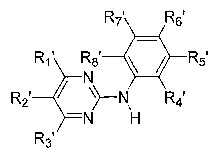
[식 중[In meals
R9'는 수소 또는 저급 알킬이고;R 9 ' is hydrogen or lower alkyl;
X는 옥소, 티오, 이미노, N-저급 알킬-이미노, 히드록시이미노 또는 O-저급 알킬 히드록시이미노이고,X is oxo, thio, imino, N-lower alkyl-imino, hydroxyimino or O-lower alkyl hydroxyimino,
Y는 산소 또는 NH 기이고,Y is oxygen or NH group,
k는 0 또는 1 이고, k is 0 or 1,
R10은 탄소수 5 이상의 지방족 라디칼, 또는 방향족, 방향족-지방족, 시클로지방족, 시클로지방족-지방족, 헤테로시클릭 또는 헤테로시클릭-지방족 라디칼이고,R 10 is an aliphatic radical having 5 or more carbon atoms or an aromatic, aromatic-aliphatic, cycloaliphatic, cycloaliphatic-aliphatic, heterocyclic or heterocyclic-aliphatic radical,
나머지 라디칼 R4', R5', R6', R7' 및 R8'은 각각 서로에 대해 독립적으로 수소; 비치환, 또는 유리 또는 알킬화 아미노, 피페라지닐, 피페리디닐, 피롤리디닐 또는 모르폴리닐로 치환된 저급 알킬, 또는 저급 알카노일, 트리플루오로메틸, 유리, 에테르화 또는 에스테르화 히드록시, 유리, 알킬화 또는 아실화 아미노 또는 유리 또는 에스테르화 카복시, 및 하나 이상의 염-형성 기를 갖는 상기와 같은 화합물의 염이다.The remaining radicals R 4 ′ , R 5 ′ , R 6 ′ , R 7 ′ and R 8 ′ are each independently hydrogen; Lower alkyl, unsubstituted or substituted with free or alkylated amino, piperazinyl, piperidinyl, pyrrolidinyl or morpholinyl, or lower alkanoyl, trifluoromethyl, free, etherified or esterified hydroxy, Salts of such compounds having free, alkylated or acylated amino or free or esterified carboxy, and one or more salt-forming groups.
이러한 구현예에서는:In this embodiment:
1-메틸-1H-피롤릴이 바람직하게는 1-메틸-1H-피롤-2-일 또는 1-메틸-1H-피롤-3-일이다.1-methyl-1H-pyrrolyl is preferably 1-methyl-1H-pyrrol-2-yl or 1-methyl-1H-pyrrol-3-yl.
각 경우의 아미노기가 유리, 알킬화 또는 아실화된 것인 아미노- 또는 아미노-저급 알킬-치환된 페닐 R1은 임의의 소망하는 위치 (오르쏘, 메타 또는 파라)에서 치환된 페닐인데, 이때 알킬화 아미노기는 바람직하게는 모노- 또는 디-저급 알킬아미노, 예를 들면 디메틸아미노이고, 아미노-저급 알킬의 저급 알킬 부분은 바람직하게는 직쇄 C1-C3 알킬, 예컨대 특히 메틸 또는 에틸이다.The amino- or amino-lower alkyl-substituted phenyl R 1 in which the amino group in each case is free, alkylated or acylated is phenyl substituted at any desired position (ortho, meta or para), wherein the alkylated amino group Is preferably mono- or di-lower alkylamino, for example dimethylamino, and the lower alkyl portion of the amino-lower alkyl is preferably straight-chain C 1 -C 3 alkyl, such as especially methyl or ethyl.
5-원 고리의 탄소 원자에 결합된 1H-인돌릴은 1H-인돌-2-일 또는 1H-인돌-3-일이다.1H-indolyl bonded to a carbon atom of a 5-membered ring is 1H-indol-2-yl or 1H-indol-3-yl.
고리 탄소 원자에 결합된 비치환 또는 저급 알킬-치환된 피리딜은 저급 알킬-치환되거나 또는 바람직하게는 비치환인 2- 또는 바람직하게는 3- 또는 4-피리딜, 예를 들면 3-피리딜, 2-메틸-3-피리딜, 4-메틸-3 -피리딜 또는 4-피리딜이다. 질소 원자에서 산소로 치환된 피리딜은 피리딘 N-옥사이드에서 유도된 라디칼, 즉 N-옥시도-피리딜, 예를 들면 N-옥시도-4-피리딜이다.Unsubstituted or lower alkyl-substituted pyridyls bonded to ring carbon atoms are lower alkyl-substituted or preferably unsubstituted 2- or preferably 3- or 4-pyridyl, for example 3-pyridyl, 2-methyl-3-pyridyl, 4-methyl-3-pyridyl or 4-pyridyl. Pyridyl substituted with oxygen at the nitrogen atom is a radical derived from pyridine N-oxide, ie N-oxido-pyridyl, for example N-oxido-4-pyridyl.
플루오로-치환 저급 알콕시는 하나 이상, 그러나 바람직하게는 몇 개의 플루오로 치환기를갖는 저급 알콕시, 특히 트리플루오로메톡시 또는 바람직하게는 1,1,2,2-테트라플루오로-에톡시이다.Fluoro-substituted lower alkoxy is lower alkoxy having at least one, but preferably several fluoro substituents, in particular trifluoromethoxy or preferably 1,1,2,2-tetrafluoro-ethoxy.
X가 옥소, 티오, 이미노, N-저급 알킬-이미노, 히드록스이미노 또는 O-저급 알킬-히드록스이미노인 경우에는, C=X 기는 상기 순서로 각각 라디칼 C=O, C=S, C=N-H, C=N-저급 알킬, C=N-OH 또는 CN-O-저급 알킬이다. X는 바람직하게는 옥소이다.When X is oxo, thio, imino, N-lower alkyl-imino, hydroxideimino or O-lower alkyl-hydroxyimino, the C = X groups are in the above order respectively a radical C = O, C = S, C = NH, C = N-lower alkyl, C = N-OH or CN-O-lower alkyl. X is preferably oxo.
k는 바람직하게는 0이다, 즉 Y 기는 존재하지 않는다.k is preferably 0, ie no Y group is present.
Y는 존재하는 경우에는 바람직하게는 NH 기이다.Y, if present, is preferably an NH group.
본 맥락의 범위 내에서 용어 “저급”은 7 개 이하, 바람직하게는 4 개 이하의 탄소 원자를 갖는 라디칼을 의미한다.The term "lower" within the scope of this context means a radical having up to 7, preferably up to 4 carbon atoms.
저급 알킬 R1', R2', R3' 및 R9' 는 바람직하게는 메틸 또는 에틸이다.Lower alkyl R 1 ' , R 2' , R 3 ' and R 9' are preferably methyl or ethyl.
5 개 이상의 탄소 원자를 갖는 지방족 라디칼 R10은 바람직하게는 22 개 이하의 탄소 원자, 일반적으로 10 개 이하의 탄소 원자를 가지며, 상기와 같이 치환 또는 바람직하게는 비치환인 지방족 탄화수소 라디칼, 즉 상기와 같은 치환 또는 바람직하게는 비치환 알키닐, 알케닐 또는 바람직하게는 알킬 라디칼, 예컨대 C5-C7 알킬, 예를 들면 n-펜틸이다. 방향족 라디칼 R10은 20 개 이하의 탄소 원자를 가지며 비치환 또는 치환된 것으로서, 예를 들면 각 경우 비치환 또는 치환 나프틸, 예컨대 특히 2-나프틸, 또는 바람직하게는 페닐이며, 치환기는 바람직하게는 시아노, 비치환 또는 히드록시-, 아미노- 또는 4-메틸-피페라지닐-치환된 저급 알킬, 예컨대 특히 메틸, 트리플루오로메틸, 유리, 에테르화 또는 에스테르화 히드록시, 유리, 알킬화 또는 아실화 아미노 및 유리 또는 에스테르화 카복시에서 선택되는 것이다. 방항족-지방족 라디칼 R10에서, 방향족 부분은 상기 정의된 바와 같고, 지방족 부분은 바람직하게는 저급 알킬, 예컨대 특히 치환 또는 바람직하게는 비치환 C1-C2 알킬이며, 예를 들면 벤질이다. 시클로지방족 라디칼 R10은 특히 30 개 이하, 보다 특별히 20 개 이하, 가장 특별히 10 개 이하의 탄소 원자를 가지며, 단일고리형 또는 다중고리형이고, 치환 또는 바람직하게는 비치환된 것으로서, 예를 들면 상기와 같은 시클로알킬 라디칼, 특히 상기와 같은 5- 또는 6-원 시클로알킬 라디칼, 예컨대 바람직하게는 시클로헥실이다. 시클로지방족-지방족 라디칼 R10에서는, 시클로지방족 부분은 상기 정의한 바와 같고, 지방족 부분은 바람직하게는 저급 알킬, 예컨대 특히 치환 또는 바람직하게는 비치환 C1-C2 알킬이다. 헤테로고리 라디칼 R10은 특히 20 개 이하의 탄소 원자를 함유하며, 바람직하게는 5 또는 6 개의 고리 구성원 및 바람직하게는 질소, 산소 및 황에서 선택되는 1 내지 3 개의 헤테로원자를 갖는 포화 또는 불포화 단일고리 라디칼이며, 특히 예를 들면 티에닐 또는 2-, 3- 또는 4-피리딜, 또는 하나 또는 두 개의 벤젠 라디칼이 상술한 단일고리 라디칼에 축합고리화 (융합)되어 있는 비- 또는 트리-시클릭 라디칼이다. 헤테로고리-지방족 라디칼 R10에서는, 헤테로고리 부분은 상기 정의된 바와 같고, 지방족 부분은 바람직하게는 저급 알킬, 예컨대 특히 치환 또는 바람직하게는 비치환 C1-C2 알킬이다.Aliphatic radicals R 10 having 5 or more carbon atoms are preferably aliphatic hydrocarbon radicals having 22 or less carbon atoms, generally 10 or less carbon atoms, and substituted or preferably unsubstituted as described above, ie, Same substituted or preferably unsubstituted alkynyl, alkenyl or preferably alkyl radicals such as C 5 -C 7 alkyl, for example n-pentyl. The aromatic radical R 10 has up to 20 carbon atoms and is unsubstituted or substituted, for example in each case unsubstituted or substituted naphthyl, such as in particular 2-naphthyl, or preferably phenyl, the substituents being preferably Is cyano, unsubstituted or hydroxy-, amino- or 4-methyl-piperazinyl-substituted lower alkyl, such as in particular methyl, trifluoromethyl, free, etherified or esterified hydroxy, free, alkylated or Acylated amino and free or esterified carboxy. In the room-aliphatic-aliphatic radicals R 10 , the aromatic moiety is as defined above and the aliphatic moiety is preferably lower alkyl, such as in particular substituted or preferably unsubstituted C 1 -C 2 alkyl, for example benzyl. Cycloaliphatic radicals R 10 are in particular having up to 30, more particularly up to 20, most particularly up to 10 carbon atoms, monocyclic or polycyclic, substituted or preferably unsubstituted, for example Such cycloalkyl radicals, in particular such 5- or 6-membered cycloalkyl radicals, such as preferably cyclohexyl. In cycloaliphatic-aliphatic radicals R 10 , the cycloaliphatic moiety is as defined above and the aliphatic moiety is preferably lower alkyl, such as in particular substituted or preferably unsubstituted C 1 -C 2 alkyl. Heterocyclic radicals R 10 in particular contain up to 20 carbon atoms and are preferably saturated or unsaturated single having 5 or 6 ring members and preferably 1 to 3 heteroatoms selected from nitrogen, oxygen and sulfur Non- or tri-cyclic ring radicals, in particular thienyl or 2-, 3- or 4-pyridyl, or one or two benzene radicals condensed (fused) to the above-mentioned monocyclic radicals Is a click radical. In heterocyclic-aliphatic radicals R 10 , the heterocyclic moiety is as defined above and the aliphatic moiety is preferably lower alkyl, such as in particular substituted or preferably unsubstituted C 1 -C 2 alkyl.
에테르화 히드록시는 바람직하게는 저급 알콕시이다. 에스테르화 히드록시는 바람직하게는 유기 카복시산으로 에스테르화된 히드록시산, 예컨대 저급 알칸산, 또는 미네랄산, 예컨대 할로겐화수소산, 예를 들면 저급 알카노일옥시 또는 특히 할로겐, 예컨대 요오드, 브롬 또는 특히 불소 또는 염소이다.The etherified hydroxy is preferably lower alkoxy. The esterified hydroxy is preferably a hydroxy acid esterified with an organic carboxylic acid, such as lower alkanoic acid, or a mineral acid, such as hydrohalic acid, such as lower alkanoyloxy or especially halogen, such as iodine, bromine or especially fluorine Or chlorine.
알킬화 아미노는, 예를 들면 저급 알킬아미노, 예컨대 메틸아미노, 또는 디-저급 알킬아미노, 예컨대 디메틸아미노이다. 아실화 아미노는, 예를 들면 저급 알카노일아미노 또는 벤조일아미노이다.Alkylated amino is, for example, lower alkylamino, such as methylamino, or di-lower alkylamino, such as dimethylamino. Acylated amino is, for example, lower alkanoylamino or benzoylamino.
에스테르화 카복시는, 예를 들면 저급 알콕시카르보닐, 예컨대 메톡시카르보닐이다.The esterified carboxy is for example lower alkoxycarbonyl, such as methoxycarbonyl.
치환 페닐 라디칼은 5 개 이하의 치환기, 예컨대 불소를 가질 수 있으나, 특히 비교적 큰 치환기의 경우에는 일반적으로 단지 1 내지 3 개의 치환기로 치환될 수 있다. 특별히 언급될 수 있는 치환 페닐의 예는 4-클로로-페닐, 펜타플루오로-페닐, 2-카복시-페닐, 2-메톡시-페닐, 4-플루오로페닐, 4-시아노- 페닐 및 4-메틸-페닐이다.Substituted phenyl radicals may have up to 5 substituents, such as fluorine, but in particular in the case of relatively large substituents they may generally be substituted with only 1 to 3 substituents. Examples of substituted phenyls which may be mentioned specifically are 4-chloro-phenyl, pentafluoro-phenyl, 2-carboxy-phenyl, 2-methoxy-phenyl, 4-fluorophenyl, 4-cyano-phenyl and 4- Methyl-phenyl.
화학식 (I)의 화합물에서 염-형성 기는 염기성 또는 산성 특성을 갖는 기 또는 라디칼이다. 하나 이상의 염기성 기 또는 하나 이상의 염기성 라디칼, 예를 들면 유리 아미노기, 피라지닐 라디칼 또는 피리딜 라디칼을 갖는 화합물은 예를 들면 무기산, 예컨대 염산, 황산 또는 인산과 함께, 또는 적당한 유기 카복시산 또는 술폰산, 예를 들면 지방족 모노- 또는 디-카복시산, 예컨대 트리플루오로아세트산, 아세트산, 프로피온산, 글리콜산, 숙신산, 말레산, 푸마르산, 히드록시말레산, 말산, 타르타르산, 시트르산 또는 옥살산, 또는 아르기닌 또는 라이신과 같은 아미노산, 방향족 카복시산, 예컨대 벤조산, 2-페녹시-벤조산, 2-아세톡시벤조산, 살리실산, 4-아미노살리실산, 방향족-지방족 카복시산, 예컨대 만델산 또는 신남산, 헤테로방향족 카복시산, 예컨대 니코틴산 또는 이소니코틴산, 지방족 술폰산, 예컨대 메탄-, 에탄- 또는 2-히드록시에탄-술폰산, 또는 방향족 술폰산, 예를 들면 벤젠-, p-톨루엔- 또는 나프탈렌-2-술폰산과 함께 산 부가염을 형성할 수 있다. 몇 개의 염기성 기가 존재하는 경우에는, 모노- 또는 폴리-산 부가염이 형성될 수 있다.Salt-forming groups in compounds of formula (I) are groups or radicals having basic or acidic properties. Compounds having one or more basic groups or one or more basic radicals, for example free amino groups, pyrazinyl radicals or pyridyl radicals, for example together with inorganic acids such as hydrochloric acid, sulfuric acid or phosphoric acid, or suitable organic carboxylic or sulfonic acids, for example For example aliphatic mono- or di-carboxylic acids such as trifluoroacetic acid, acetic acid, propionic acid, glycolic acid, succinic acid, maleic acid, fumaric acid, hydroxymaleic acid, malic acid, tartaric acid, citric acid or oxalic acid, or arginine or lysine Amino acids, aromatic carboxylic acids such as benzoic acid, 2-phenoxy-benzoic acid, 2-acetoxybenzoic acid, salicylic acid, 4-aminosalicylic acid, aromatic-aliphatic carboxylic acid such as mandelic acid or cinnamic acid, heteroaromatic carboxylic acid such as nicotinic acid or Isicotinic acid, aliphatic sulfonic acids such as methane-, ethane- or 2-hydroxyethane-sulphate Acid addition salts may be formed with phonic acid, or aromatic sulfonic acids such as benzene-, p-toluene- or naphthalene-2-sulfonic acid. If several basic groups are present, mono- or poly-acid addition salts may be formed.
라디칼 R10에 산성 기, 예를 들면 유리 카복시기를 갖는 화학식 (I)의 화합물은 금속 또는 암모늄 염, 예컨대 알칼리 금속 또는 알칼리 토금속 염, 예를 들 소듐, 포타슘, 마그네슘 또는 칼슘 염을, 또는 암모니아 또는 적당한 유기 아민, 예컨대 삼차 모노아민, 예를 들면 트리에틸아민 또는 트리-(2-히드록시에틸)-아민, 또는 헤테로시클릭 염기, 예를 들면 N-에틸피페리딘 또는 N,N'-디메틸-피페라진과 함께 암모늄 염을 형성할 수 있다.Compounds of formula (I) having acidic groups, for example free carboxy groups, on radicals R 10 are metal or ammonium salts, such as alkali or alkaline earth metal salts, for example sodium, potassium, magnesium or calcium salts, or ammonia or Suitable organic amines such as tertiary monoamines such as triethylamine or tri- (2-hydroxyethyl) -amine, or heterocyclic bases such as N-ethylpiperidine or N, N'-dimethyl It is possible to form ammonium salts with piperazine.
산성 및 염기성 기를 둘 다 갖는 화학식 (I)의 화합물은 내부 염을 형성할 수 있다.Compounds of formula (I) having both acidic and basic groups can form internal salts.
이러한 구현예에서 특히 관심대상이 되는 것은, R1'이 3-피리딜이고, R2', R3', R5', R6' 및 R8'이 각각 수소이고, R4'가 메틸이고, R7'이 화학식 (II)의 기로서, 이때 R9'가 수소, X가 옥소, k가 0, R10이 4-[(4-메틸-1-피페라지닐)메틸]페닐인 피리미딘 유도체이다. 화학명이 4-[(4-메틸-1-피페라지닐)메틸]-N-[4-메틸-3-[[4-(3-피리디닐)-2-피리미디닐]아미노-페닐]벤즈아미드 메탄술포네이트인 상기 화합물의 메실레이트 염은 지금은 흔히 이마티니브 메실레이트로 알려져 있으며 상표명 글리벡™으로 판매된다.Of particular interest in this embodiment are those in which R 1 ′ is 3-pyridyl, R 2 ′ , R 3 ′ , R 5 ′ , R 6 ′ and R 8 ′ are each hydrogen and R 4 ′ is methyl R 7 ' is a group of formula (II) wherein R 9' is hydrogen, X is oxo, k is 0, R 10 is 4-[(4-methyl-1-piperazinyl) methyl] phenyl Pyrimidine derivatives. Chemical name 4-[(4-methyl-1-piperazinyl) methyl] -N- [4-methyl-3-[[4- (3-pyridinyl) -2-pyrimidinyl] amino-phenyl] benz The mesylate salt of this compound, an amide methanesulfonate, is now commonly known as imatinib mesylate and is sold under the trade name Gleevec ™.
엔도텔린Endothelin 수용체 안타고니스트 Receptor antagonists
본 발명에 사용하기에 적당한 엔도텔린 안타고니스트에는 엔도텔린 합성 수준을 감소시키는 작용제, 엔도텔린의 엔도텔린 수용체에 대한 결합을 차단하거나 저해하는 작용제, 및 엔도텔린 수용체-매개 신호 전달을 차단하거나 저해하는 작용제가 포함된다. 본원에서 사용되는 바와 같은 용어 “엔도텔린 안타고니스트"는 엔도텔린 합성 수준을 감소시키는 임의 작용제, 엔도텔린의 엔도텔린 수용체에 대한 결합을 차단하거나 저해하는 임의 작용제, 및 엔도텔린 수용체-매개 신호 전달을 차단하거나 저해하는 임의 작용제를 가리킨다.Endothelin antagonists suitable for use in the present invention include agents that reduce the level of endothelin synthesis, agents that block or inhibit the binding of endothelin to the endothelin receptor, and those that block or inhibit endothelin receptor-mediated signal transduction. I include As used herein, the term “endothelin antagonist” refers to any agent that reduces the level of endothelin synthesis, any agent that blocks or inhibits the binding of endothelin to the endothelin receptor, and the endothelin receptor-mediated signal transduction. Refers to any agent that inhibits or inhibits.
일부 구현예에서는, 엔도텔린 수용체 안타고니스트는 엔도텔린 A (ETA) 수용체에 대해 선택적이다. 일부 구현예에서는, 엔도텔린 수용체 안타고니스트는 엔도텔린 B (ETB) 수용체에 대해 선택적이다. 또 다른 구현예에서는, 엔도텔린 수용체 안타고니스트는 ETA 및 ETB 수용체 모두의 안타고니스트이다.In some embodiments, the endothelin receptor antagonists are selective for the endothelin A (ETA) receptor. In some embodiments, the endothelin receptor antagonists are selective for the endothelin B (ETB) receptor. In another embodiment, the endothelin receptor antagonist is an antagonist of both the ETA and ETB receptors.
본 발명에서 유용한 엔도텔린 안타고니스트의 구체적 예에는 아트라센탄 (ABT-627; Abbott Laboratories), 벨레트리(Veletri™) (테조센탄; Actelion Pharmaceuticals, Ltd.), 시탁스센탄 (ICOS-Texas Biotechnology), 엔라센탄 (GlaxoSmithKline), 다루센탄 (LUl 35252; Myogen), BMS-207940 (Bristol-Myers Squibb), BMS-193884 (Bristol-Myers Squibb), BMS-182874 (Bristol-Myers Squibb), J-104132 (Banyu Pharmaceutical), VML 588/Ro 61-1790 (Vanguard Medica), T-O115 (Tanabe Seiyaku), TAK- 044 (Takeda), BQ-788 (Banyu Pharmaceutical), BQ123, YM-598 (Yamanouchi Pharma), PD 145065 (Parke-Davis), A- 127722 (Abbott Laboratories), A-192621 (Abbott Laboratories), A-182086 (Abbott Laboratories), TBC3711 (ICOS-Texas Biotechnology), BSF208075 (Myogen), S-0139 (Shionogi), TBC2576 (Texas Biotechnology), TBC3214 (Texas Biotechnology), PD156707 (Parke-Davis), PD180988 (Parke-Davis), ABT-546 (Abbott Laboratories), ABT-627 (Abbott Laboratories), SB247083 (GlaxoSmithKline), SB209670 (GlaxoSmithKline); 및 선행기술, 예를 들면 Davenport 및 Battistini (2002) Clinical Science 103:15-35, Wu-Wong 등 (2002) Clinical Science 103:1075-1115, 및 Luescher 및 Barton (2000) Circulation 102:2434-2440에서 거론된 엔도텔린 수용체 안타고니스트가 포함되나, 이에 한정되지는 않는다.Specific examples of endothelin antagonists useful in the present invention include atrasentane (ABT-627; Abbott Laboratories), Veletri ™ (Tezocentane; Actelion Pharmaceuticals, Ltd.), citaxentane (ICOS-Texas Biotechnology) , Enracentan (GlaxoSmithKline), Darsentan (LUl 35252; Myogen), BMS-207940 (Bristol-Myers Squibb), BMS-193884 (Bristol-Myers Squibb), BMS-182874 (Bristol-Myers Squibb), J- 104132 (Banyu Pharmaceutical), VML 588 / Ro 61-1790 (Vanguard Medica), T-O115 (Tanabe Seiyaku), TAK-044 (Takeda), BQ-788 (Banyu Pharmaceutical), BQ123, YM-598 (Yamanouchi Pharma) PD 145065 (Parke-Davis), A-127722 (Abbott Laboratories), A-192621 (Abbott Laboratories), A-182086 (Abbott Laboratories), TBC3711 (ICOS-Texas Biotechnology), BSF208075 (Myogen), S-0139 ( Shionogi), TBC2576 (Texas Biotechnology), TBC3214 (Texas Biotechnology), PD156707 (Parke-Davis), PD180988 (Parke-Davis), ABT-546 (Abbott Laboratories), ABT-627 (Abbott Laboratories), SB247083 (GlaxoSmithKline) SB20 9670 (GlaxoSmithKline); And prior art, for example Davenport and Battistini (2002) Clinical Science 103: 15-35, Wu-Wong et al. (2002) Clinical Science 103: 1075-1115, and Luescher and Barton (2000) Endothelin receptor antagonists discussed in Circulation 102: 2434-2440, including but not limited to.
적당한 엔도텔린 수용체 안타고니스트는 트라클리어™ (보센탄; Actelion Pharmaceuticals, Ltd. 제조)이다. 트라클리어™는 경구적으로 활성인 이중 엔도텔린 수용체 안타고니스트이며, 엔도텔린이 그의 수용체 모두, 엔도텔린 수용체 A 및 엔도텔린 수용체 B에 결합하는 것을 차단한다.A suitable endothelin receptor antagonist is Traclear ™ (Bosentan; manufactured by Actelion Pharmaceuticals, Ltd.). Traclear ™ is an orally active dual endothelin receptor antagonist and blocks the endothelin binding to both its receptors, endothelin receptor A and endothelin receptor B.
트라클리어™는 키랄 중심이 없는, 고도로 치환된 피리미딘 유도체의 부류에 속한다. 화학적으로는 4-tert-부틸-N-[6-(2-히드록시-에톡시)-5-(2-메톡시-페녹시)-[2,2']-비피리미딘-4-일]-벤젠술폰아미드 일수화물로 명명되며, 하기의 구조식을 갖는다:Traclear ™ belongs to the class of highly substituted pyrimidine derivatives without chiral centers. Chemically 4-tert-butyl-N- [6- (2-hydroxy-ethoxy) -5- (2-methoxy-phenoxy)-[2,2 ']-bipyrimidin-4-yl ] -Benzenesulfonamide monohydrate, having the structure:
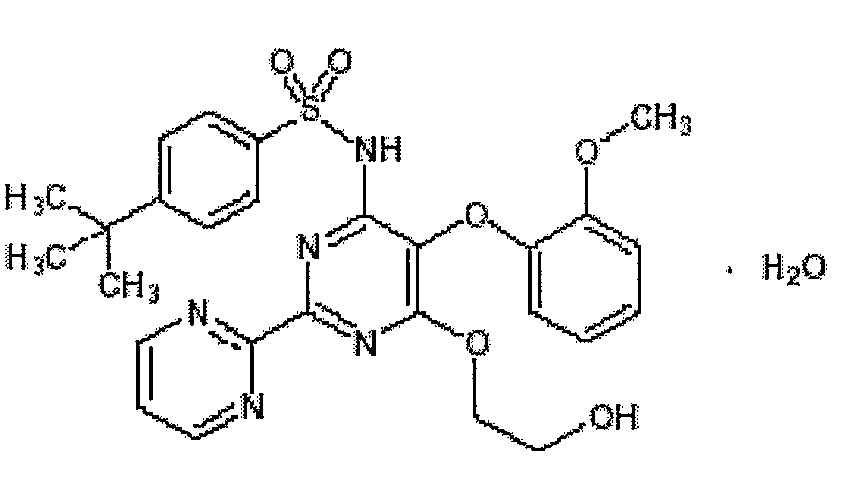
일부 구현예에서 트라클리어™ 치료는 62.5 mg 씩의 투여량이 4 주 동안 경구적으로 투여되고, 125 mg 씩의 유지 투여량이 경구적으로 투여된다.In some embodiments, the Traclear ™ treatment is administered orally for 4 weeks at a dose of 62.5 mg and a maintenance dose of 125 mg at oral dose.
N-아세틸시스테인 (N-acetylcysteine ( NACNAC ))
N-아세틸시스테인 (NAC)은 황 아미노산 L-시스테인의 안정한 형태이다. NAC는 H2O2 및 기타 라디칼을 포획하는 항산화제이다. 이것은 글루타티온 (주요 항산화제)의 전구체이며, 글루타티온 합성을 위해 시스테인 기질을 제공한다. NAC는 처방 없이 판매되는 영양보충제 또는 건강기능식품으로서 상업적으로 입수가능하다. 본원에서 사용하기에 적당한 NAC 제품에는 Source Naturals 사 (1000 mg 정제), Biochem 사 (750 mg 정제), Twinlab 사 (600 mg 정제), Nutricology/Allergy Research Group 사 (500 mg 정제) 등에서 제조한 NAC 영양보충제 제품이 포함된다. 상기와 같은 제품은 견강식품 상점 및 영양보충제 소매상, 예컨대 General Nutrion Corporation (GNC)으로부터 최저 가격으로 구매할 수 있다.N-acetylcysteine (NAC) is a stable form of the sulfur amino acid L-cysteine. NAC is an antioxidant that traps H 2 O 2 and other radicals. It is a precursor of glutathione (the main antioxidant) and provides a cysteine substrate for glutathione synthesis. NAC is commercially available as an over-the-counter nutritional supplement or dietary supplement. Suitable NAC products for use herein include NAC Nutrition manufactured by Source Naturals (1000 mg tablets), Biochem (750 mg tablets), Twinlab (600 mg tablets), Nutricology / Allergy Research Group (500 mg tablets), and the like. Supplement products are included. Such products are available at the lowest prices from canine food stores and nutritional supplement retailers such as General Nutrion Corporation (GNC).
티모신Thymosin -α-α
티모신-α (자닥신(Zadaxin™); SciClone Pharmaceuticals, Inc., San Mateo, CA에서 입수가능)는, 순환계에서 천연으로 발견되고 흉선에서 생성되는 호르몬인 티모신 알파 1의 합성 형태이다. 티모신-α는 T 세포 및 NK 세포의 활성을 증가시킨다. 피하 주사제로 제형된 자닥신™은 인간 티모신 알파 1과 동일한 화학적으로 합성된 티모신 알파 1의 정제된 살균 동결건조 제제이다. 티모신 알파 1은 하기 서열을 갖는 아세틸화 폴리펩티드이며: Ac- Ser-Asp-Ala-Ala-Val-Asp-Thr-Ser-Ser-Glu-Ile-Thr-Thr-Lys-Asp-Leu-Lys-Glu-Lys-Lys-Glu- Val-Val-Glu-Glu-Ala-Glu-Asn-OH (서열번호: 103), 분자량이 3,108 달톤이다. 동결건조된 제제는 1.6 mg의 합성 티모신-α, 50 mg의 만니톨, 및 pH를 6.8로 조정하는 인산소듐 완충액을 함유한다.Thymosin-α (Zadaxin ™; available from SciClone Pharmaceuticals, Inc., San Mateo, Calif.) Is a synthetic form of
리바비린Ribavirin
ICN Pharmaceuticals, Inc., Costa Mesa, Calif. 에서 입수가능한 리바비린, 1-β-D-리보퓨라노실-1H-1,2,4-트리아졸-3-카복스아미드는 머크 인덱스, 제 11 판에서 화합물 번호 8199번으로 기재되어 있다. 이의 제조 및 제형은 미국특허 제 4,211,771 호에 기술되어 있다. 본 발명은 또한 리바비린의 유도체의 용도를 고려한다 (예를 들면, 미국특허 제 6,277,830 호 참조). 리바비린은 캡슐 또는 정제 형태로 경구 투여되거나, IFN-α (PEG화되거나 비-PEG화된 형태)와 동일하거나 상이한 투여 형태 및 동일하거나 상이한 경로로 투여될 수 있다. 물론, 양 약제가 입수가능함에 따라 이들의 다른 유형의 투여, 예컨대 비강 스프레이에 의해, 경피적으로, 좌약에 의해, 서방성 투여 형태 등에 의해 투여되는 것도 고려된다. 활성 성분의 파괴없이 적절한 투여량이 전달되는 한, 아무 투여 형태나 가능하다.ICN Pharmaceuticals, Inc., Costa Mesa, Calif. Ribavirin, 1-β-D-ribofuranosyl-1H-1,2,4-triazole-3-carboxamide, available from is described by Merck Index, compound number 8199 in the eleventh edition. Its preparation and formulation are described in US Pat. No. 4,211,771. The present invention also contemplates the use of derivatives of ribavirin (see, eg, US Pat. No. 6,277,830). Ribavirin can be administered orally in capsule or tablet form, or in the same or different dosage form as the IFN-α (PEGylated or non-PEGylated form) and in the same or different routes. Of course, it is also contemplated that both medicaments will be administered as available, such as by nasal spray, percutaneously, by suppository, by sustained release dosage form and the like. Any dosage form is possible so long as an appropriate dosage is delivered without destroying the active ingredient.
리바비린은 일반적으로 1일 약 400 mg 내지 약 1200 mg, 약 600 mg 내지 약 1000 mg, 또는 약 700 mg 내지 약 900 mg 범위의 양으로 투여된다. 일부 구현예에서는, 리바비린은 PEG화 IFN-α 또는 비-PEG화 IFN-α 요법의 전 과정을 통해 투여된다. 다른 구현예에서는, 리바비린은 단지 첫 번째 기간 동안만 투여된다. 또 다른 구현예에서는, 리바비린은 단지 두 번째 기간 동안만 투여된다.Ribavirin is generally administered in an amount ranging from about 400 mg to about 1200 mg, about 600 mg to about 1000 mg, or about 700 mg to about 900 mg per day. In some embodiments, ribavirin is administered throughout the entire course of PEGylated IFN-α or non-PEGylated IFN-α therapy. In other embodiments, ribavirin is administered only for the first period. In another embodiment, ribavirin is administered only for a second period of time.
레보비린Levovirin
레보비린은 리바비린의 L-거울상 이성질체이며, Th2 면역 반응에 비해 Th1 면역 반응을 증대시키는 특성을 나타낸다. 레보비린은 ICN Pharmaceuticals 사에서 제조된다.Levovirin is the L-enantiomer of ribavirin and exhibits properties that enhance the Th1 immune response compared to the Th2 immune response. Levovirin is manufactured by ICN Pharmaceuticals.
레보비린은 하기 구조를 갖는다:Levovirin has the following structure:
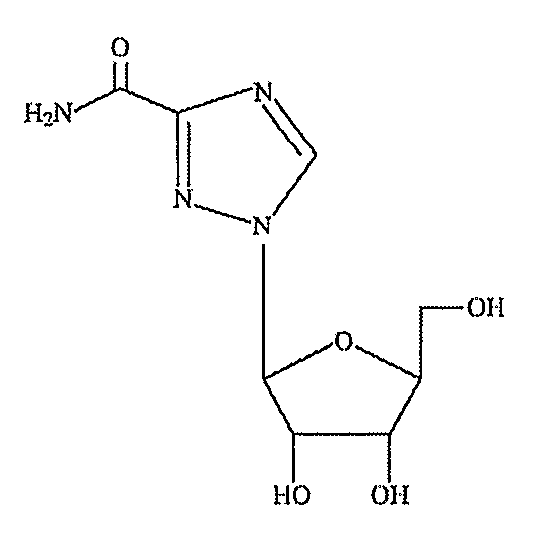
비라미딘Viramidine
비라미딘은 리바비린의 3-카복스아미딘 유도체이며, 리바비린의 전구약물로서 작용한다. 이것은 아데노신 데아미나제에 의해 효율적으로 리바비린으로 전환된다.Biramidine is a 3-carboxamidine derivative of ribavirin and acts as a prodrug of ribavirin. It is efficiently converted to ribavirin by adenosine deaminase.
비라미딘은 하기 구조를 갖는다:Biramidine has the following structure:

뉴클레오시드 유사체Nucleoside analogues
대상 요법에 사용하기에 적당한 뉴클레오시드 유사체에는 리바비린, 레보비린, 비라미딘, 이사토리빈, 미국특허 제 5,559,101 호에 기재되고 미국특허 제 5,559,101 호의 화학식 I에 포함되는 L-리보퓨라노실 뉴클레오시드 (예를 들면, 1-β-L-리보퓨라노실유라실, 1-β-L-리보퓨라노실-5-플루오로유라실, 1-β-L-리보퓨라노실사이토신, 9-β-L-리보퓨라노실아데닌, 9-β-L-리보퓨라노실하이포잔틴, 9-β-L-리보퓨라노실구아닌, 9-β-L-리보퓨라노실-6-티오구아닌, 2-아미노-α-L-리보퓨란[1',2':4,5]옥사졸린, O2,02-안하이드로-1-α-L-리보퓨라노실유라실, 1-α-L-리보퓨라노실유라실, l-(2,3,5-트리-O-벤조일-α-리보퓨라노실)-4-티오유라실, 1-α-L-리보퓨라노실사이토신, 1-α-L-리보퓨라노실-4-티오유라실, 1-α-L-리보퓨라노실-5-플루오로유라실, 2-아미노-β-L-아라비노퓨라노[1',2':4,5]옥사졸린, O2,O2-안하이드로-β-L-아라비노퓨라노실유라실, 2'-데옥시-β-L-유리딘, 3'5'-디-O-벤조일-2'-데옥시-4-티오-β-L-유리딘, 2'-데옥시-β-L-사이티딘, 2'-데옥시-β-L-4-티오유리딘, 2'-데옥시-β-L-티미딘, 2'-데옥시-β-L-5-플루오로유리딘, 2',3'-디데옥시-β-L-유리딘, 2'-데옥시-β-L-5-플루오로유리딘, 및 2'-데옥시-β-L-이노신); 미국특허 제 6,423,695 호에 개시되고 미국특허 제 6,423,695 호의 화학식 I에 포함되는 화합물; 미국특허 공개 제 2002/0058635 호에 개시되고 미국특허 공개 제 2002/0058635 호의 화학식 1에 포함되는 화합물; WO 01/90121 A2 (Idenix)에 개시된 바와 같은 뉴클레오시드 유사체; WO 02/069903 A2 (Biocryst Pharmaceuticals Inc.)에 개시된 바와 같은 뉴클레오시드 유사체; WO 02/057287 A2 또는 WO 02/057425 A2 (모두 Merck/Isis)에 개시된 바와 같은 뉴클레오시드; 등이 포함되나, 이에 한정되지는 않는다.Nucleoside analogs suitable for use in the subject therapies include ribavirin, levovirin, biramidine, isatoribin, L-ribofuranosyl nucleophiles described in U.S. Patent 5,559,101 and included in U.S. Patent 5,559,101. Cleosides (eg 1-β-L-ribofuranosyluracil, 1-β-L-ribofuranosyl-5-fluorouracil, 1-β-L-ribofuranosylcytosine , 9-β-L-ribofuranosyladenin, 9-β-L-ribofuranosylhypoxanthine, 9-β-L-ribofuranosylguanine, 9-β-L-ribofuranosyl-6 -Thioguanine, 2-amino-α-L-ribofuran [1 ', 2': 4,5] oxazoline, O 2 , 0 2 -anhydro-1-α-L-ribofuranosyluracil, 1-α-L-ribofuranosyluracil, l- (2,3,5-tri-O-benzoyl-α-ribofuranosyl) -4-thiouracil, 1-α-L-ribofu Lanosylcytosine, 1-α-L-ribofuranosyl-4-thiouracil, 1-α-L-ribofuranosyl-5-fluorouracil, 2-amino-β-L-arabino Furano [1 ', 2': 4,5] Oxa Lin, O 2, O 2 - anhydro--β-L- arabino Pew pyrano room uracil, 2'-deoxy-uridine -β-L-, 3'5'- di -O- benzoyl-2'- Deoxy-4-thio-β-L-uridine, 2'-deoxy-β-L-cytidine, 2'-deoxy-β-L-4-thiouridine, 2'-deoxy-β -L-thymidine, 2'-deoxy-β-L-5-fluorouridine, 2 ', 3'-dideoxy-β-L-uridine, 2'-deoxy-β-L-5 -Fluorouridine, and 2'-deoxy-β-L-inosine); Compounds disclosed in US Pat. No. 6,423,695 and included in Formula I of US Pat. No. 6,423,695; Compounds disclosed in US Patent Publication No. 2002/0058635 and included in
NCVNCV NS3NS3 저해제 Inhibitor
적당한 HCV 비-구조 단백질-3 (NS3) 저해제에는, 미국특허 제 6,642,204 호, 제 6,534,523 호, 제 6,420,380 호, 제 6,410,531 호, 제 6,329,417 호, 제 6,329,379 호, 및 제 6,323,180 호 (Boehringer-Ingelheim)에 개시된 바와 같은 트리-펩티드; 미국특허 제 6,143,715 호 (Boehringer-Ingelheim)에 개시된 바와 같은 화합물; 미국특허 제 6,608,027 호 (Boehringer-Ingelheim)에 개시된 바와 같은 거대고리 화합물; 미국특허 제 6,617,309 호, 제 6,608,067 호, 및 제 6,265,380 호 (Vertex Pharmaceuticals)에 개시된 바와 같은 NS3 저해제; 미국특허 제 6,624,290 호 (Schering)에 개시된 바와 같은 아자펩티드 화합물; 미국특허 제 5,990,276 호 (Schering)에 개시된 바와 같은 화합물; Pause 등 (2003) J. Biol. Chem . 278:20374-20380에 개시된 바와 같은 화합물; NS3 저해제 BILN 2061 (Boehringer-Ingelheim; Lamarre 등 (2002) Hepatology 36:301A; 및 Lamarre 등 (10월 26일, 2003) Nature doi:10.1038/nature02099); NS3 저해제 VX-950 (Vertex Pharmaceuticals; Kwong 등 (10월 24-28일, 2003) 제 54 회 AASLD 연례 학회); NS3 저해제 SCH6 (Abib 등 (10월 24-28일, 2003) 초록 137. 제 54 회 미국 간질환 연구 협회 (the American Association for the Study of Liver Diseases; AASLD) 연례 학회의 프로그램 및 초록. 10월 24-28일, 2003. Boston, MA); WO 99/07733, WO 99/07734, WO 00/09558, WO 00/09543, WO 00/59929 또는 WO 02/060926에 개시된 바와 같은 임의의 NS3 프로테아제 저해제 (예를 들면, WO 02/060926의 224-226 면의 표에 개시된 화합물 2, 3, 5, 6, 8, 10, 11, 18, 19, 29, 30, 31, 32, 33, 37, 38, 55, 59, 71, 91, 103, 104, 105, 112, 113, 114, 115, 116, 120, 122, 123, 124, 125, 126 및 127); 미국특허 공개 제 2003019067, 20030187018, 및 20030186895 호 중 어느 하나에 개시된 바와 같은 NS3 프로테아제 저해제; 등이 포함되나, 이에 한정되지는 않는다.Suitable HCV non-structural protein-3 (NS3) inhibitors include US Pat. Nos. 6,642,204, 6,534,523, 6,420,380, 6,410,531, 6,329,417, 6,329,379, and 6,323,180 to Boehringer-Ingelheim. Tri-peptides as disclosed; Compounds as disclosed in US Pat. No. 6,143,715 to Boehringer-Ingelheim; Macrocyclic compounds as disclosed in US Pat. No. 6,608,027 to Boehringer-Ingelheim; NS3 inhibitors as disclosed in US Pat. Nos. 6,617,309, 6,608,067, and 6,265,380 (Vertex Pharmaceuticals); Azapeptide compounds as disclosed in US Pat. No. 6,624,290 (Schering); Compounds as disclosed in US Pat. No. 5,990,276 (Schering); Pause et al. (2003) J. Biol. Chem . A compound as disclosed in 278: 20374-20380; NS3 inhibitors BILN 2061 (Boehringer-Ingelheim; Lamarre et al. (2002) Hepatology 36: 301A; and Lamarre et al. (October 26, 2003) Nature doi: 10.1038 / nature02099); NS3 inhibitor VX-950 (Vertex Pharmaceuticals; Kwong et al. (October 24-28, 2003) 54th AASLD Annual Society); NS3 Inhibitor SCH6 (Abib et al. (October 24-28, 2003) Abstract 137. Program and Abstract of the 54th Annual Association of the American Association for the Study of Liver Diseases (AASLD). -28 days, 2003. Boston, MA); Any NS3 protease inhibitor as disclosed in WO 99/07733, WO 99/07734, WO 00/09558, WO 00/09543, WO 00/59929 or WO 02/060926 (eg, 224- of WO 02/060926).
다수의 구현예에서 특히 관심대상인 것은 특이적 NS3 저해제인 NS3 저해제, 예를 들면 NS3 세린 프로테아제 활성을 저해하고, 인간 백혈구 엘라스타제, 돼지 췌장 엘라스타제, 또는 소 췌장 카이모트립신과 같은 다른 세린 프로테아제, 또는 인간 간 카텝신 B와 같은 시스테인 프로테아제에 대해서는 별다른 저해 활성을 나타내지 않는 NS3 저해제이다.Of particular interest in many embodiments are specific NS3 inhibitors that inhibit NS3 inhibitors, such as NS3 serine protease activity, and other serine proteases such as human leukocyte elastase, porcine pancreatic elastase, or bovine pancreatic chymotrypsin. Or NS3 inhibitors that show no inhibitory activity against cysteine proteases such as human liver cathepsin B.
다수의 구현예에서 특히 관심대상인 것은 HCV 비-구조 단백질-4 (NS4) 헬리카제 활성을 나타내고, 인간 백혈구 엘라스타제, 돼지 췌장 엘라스타제, 또는 소 췌장 카이모트립신과 같은 다른 세린 프로테아제, 또는 인간 간 카텝신 B와 같은 시스테인 프로테아제에 대해서는 별다른 저해 활성을 나타내지 않는 NS3 저해제이다.Of particular interest in many embodiments is HCV non-structural protein-4 (NS4) helicase activity, and other serine proteases such as human leukocyte elastase, porcine pancreatic elastase, or bovine pancreatic chymotrypsin, or humans It is an NS3 inhibitor that does not show any inhibitory activity against cysteine proteases such as hepatic cathepsin B.
NS5BNS5B 저해제 Inhibitor
적당한 HCV 비-구조 단백질-5 (NS5; RNA-의존성 RNA 중합효소) 저해제에는, 미국특허 제 6,479,508 호 (Boehringer-Ingelheim)에 개시된 바와 같은 화합물; 국제특허출원 제 PCT/CA02/01127 호, 제 PCT/CA02/01128 호, 및 제 PCT/CA02/01129 호 (모두 Boehringer Ingelheim에 의해 2002년 7월 18일에 출원됨) 중 하나에 개시된 바와 같은 화합물; 미국특허 제 6,440,985 호 (ViroPharma)에 개시된 바와 같은 화합물; WO 01/47883에 개시된 바와 같은 화합물, 예를 들면 JTK-003 (Japan Tobacco); Zhong 등 (2003) Antimicrob . Agents Chemother. 47:2674-2681에 개시된 바와 같은 디뉴클레오티드 유사체; Dhanak 등 (2002) J. Biol Chem. 277(41):38322-7에 개시된 바와 같은 벤조티아디아진 화합물; WO 02/100846 A1 또는 WO 02/100851 A2 (모두 Shire)에 개시된 바와 같은 NS5B 저해제; WO 01/85172 Al 또는 WO 02/098424 Al (모두 Glaxo SmithKline)에 개시된 바와 같은 NS5B 저해제; WO 00/06529 또는 WO 02/06246 A1 (모두 Merck)에 개시된 바와 같은 NS5B 저해제; WO 03/000254 (Japan Tobacco)에 개시된 바와 같은 NS5B 저해제; EP 1 256,628 A2 (Agouron)에 개시된 바와 같은 NS5B 저해제; JTK-002 (Japan Tobacco); JTK-109 (Japan Tobacco); 등이 포함되나, 이에 한정되지는 않는다.Suitable HCV non-structural protein-5 (NS5; RNA-dependent RNA polymerase) inhibitors include compounds as disclosed in US Pat. No. 6,479,508 (Boehringer-Ingelheim); Compounds as disclosed in one of International Patent Applications PCT / CA02 / 01127, PCT / CA02 / 01128, and PCT / CA02 / 01129 (all filed on July 18, 2002 by Boehringer Ingelheim) ; Compounds as disclosed in US Pat. No. 6,440,985 (ViroPharma); Compounds as disclosed in WO 01/47883, for example JTK-003 (Japan Tobacco); Zhong et al. (2003) Antimicrob . Agents Chemother . Dinucleotide analogues as disclosed in 47: 2674-2681; Dhanak et al . (2002) J. Biol Chem . Benzothiadiazine compounds as disclosed in 277 (41): 38322-7; NS5B inhibitors as disclosed in WO 02/100846 A1 or WO 02/100851 A2 (both Shire); NS5B inhibitors as disclosed in WO 01/85172 Al or WO 02/098424 Al (both Glaxo SmithKline); NS5B inhibitors as disclosed in WO 00/06529 or WO 02/06246 A1 (all Merck); NS5B inhibitors as disclosed in WO 03/000254 (Japan Tobacco); NS5B inhibitors as disclosed in
다수의 구현예에서 특히 관심대상이 되는 것은 특이적 NS5 저해제인 NS5 저해제, 예를 들면 NS5 RNA-의존성 RNA 중합효소를 억제하고, 다른 RNA 의존성 RNA 중합효소 및 DNA 의존성 RNA 중합효소에 대해서는 별다른 저해 효과가 없는 NS5 저해제이다.Of particular interest in many embodiments is the inhibition of specific NS5 inhibitors, NS5 inhibitors, such as NS5 RNA-dependent RNA polymerase, with distinct inhibitory effects on other RNA dependent RNA polymerase and DNA dependent RNA polymerase. Free NS5 inhibitors.
알파-Alpha- 글루코시다제Glucosidase 저해제 Inhibitor
알파-글루코시다제 저해제는 타입 2 당뇨 환자에 있어서, 장관으로부터 탄수화물의 흡수를 감소시켜서, 하루 종일, 특히 식사 후에 혈중 글루코스 상승을 더디게 하는, 타입 2 당뇨병을 위한 경구 약제의 한 부류이다. 대상 병용요법에서 사용하기에 적당한 알파-글루코시다제 저해제에는 n-(n-노닐)-데옥시갈락토노지리마이신 (n,n-DGJ); N-노닐-데옥시노지리마이신 (N-노닐-DNJ); N-부틸-데옥시노지리마이신 (NB-DNJ); 1-데옥시노지리마이신 (DNM); 과부틸화-N-부틸-1-데옥시노지로마이신 (p-N-부틸-DNJ); 및 6-O-부타노일 카스타노스퍼민; 등이 포함되나, 이에 한정되지는 않는다.Alpha-glucosidase inhibitors are a class of oral medications for
부가적 항바이러스 치료제Additional Antiviral Therapeutics
대상 병용요법에서 투여될 수 있는 부가적 항바이러스 치료제에는 알파-글루코시다제 저해제; 이노신 모노포스페이트 데히드로게나제 (IMPDH)의 저해제; 바이러스 뉴클레오티드 서열에 상보적인 리보자임; 안티센스 RNA 저해제 등이 포함되나, 이에 한정되지는 않는다.Additional antiviral therapies that may be administered in the subject combination therapy include alpha-glucosidase inhibitors; Inhibitors of inosine monophosphate dehydrogenase (IMPDH); Ribozymes complementary to viral nucleotide sequences; Antisense RNA inhibitors and the like, but is not limited thereto.
알파-Alpha- 글루코시다제Glucosidase 저해제 Inhibitor
알파-글루코시다제 저해제는 타입 2 당뇨 환자에 있어서, 장관으로부터 탄수화물의 흡수를 감소시켜서, 하루 종일, 특히 식사 후에 혈중 글루코스 상승을 더디게 하는, 타입 2 당뇨병을 위한 경구 약제의 한 부류이다. 대상 병용요법에서 사용하기에 적당한 알파-글루코시다제 저해제에는 n-(n-노닐)-데옥시갈락토노지리마이신 (n,n-DGJ); N-노닐-데옥시노지리마이신 (N-노닐-DNJ); N-부틸-데옥시노지리마이신 (NB-DNJ); 1-데옥시노지리마이신 (DNM); 과부틸화-N-부틸-1-데옥시노지로마이신 (p-N-부틸-DNJ); 및 6-O-부타노일 카스타노스퍼민; 등이 포함되나, 이에 한정되지는 않는다.Alpha-glucosidase inhibitors are a class of oral medications for
IMPDHIMPDH 저해제 Inhibitor
대상 병용요법에서 사용하기에 적당한 IMPDH 저해제에는 VX-497 ((S)-N-3-[3-(3-메톡시-4-옥사졸-5-일-페닐)-유레이도]-벤질-카르밤산 테트라히드로푸란-3-일-에스테르); Vertex Pharmaceuticals 사; 예를 들면, Markland 등 (2000) Antimicrob. Agents Chemother . 44:859-866) 참조; 리바비린; 레보비린 (Ribapharm; 예를 들면, Watson (2002) Curr Opin Investig Drugs 3(5):680-3 참조); 비라미딘 (Ribapharm); 등이 포함되나, 이에 한정되지는 않는다.Suitable IMPDH inhibitors for use in the subject combination therapy include VX-497 ((S) -N-3- [3- (3-methoxy-4-oxazol-5-yl-phenyl) -ureido] -benzyl- Carbamic acid tetrahydrofuran-3-yl-ester); Vertex Pharmaceuticals; For example, Markland et al. (2000) Antimicrob. Agents Chemother . 44: 859-866; Ribavirin; Ribopharm (Ribapharm; for example, Watson (2002) Curr Opin Investig Drugs 3 (5): 680-3); Viramidine (Ribapharm); And the like, but are not limited thereto.
리보자임Ribozyme 및 And 안티센스Antisense
대상 병용요법에 사용하기에 적당한 리보자임 및 안티센스 항바이러스제에는 ISIS 14803 (ISIS Pharmaceuticals/Elan Corporation; 예를 들면, Witherell (2001) Curr Opin Investig Drugs. 2(11):1523-9 참조); 헵타자임(Heptazyme™); 등이 포함되나, 이에 한정되지는 않는다.Suitable ribozymes and antisense antivirals for use in subject combination therapies include ISIS 14803 (ISIS Pharmaceuticals / Elan Corporation; see, eg, Witherell (2001) Curr ). Opin Investig Drugs . 2 (11): 1523-9); Heptazyme ™; And the like, but are not limited thereto.
부작용 관리제Side Effects Management
일부 구현예에서는, 대상 요법이 완화제(palliative agent) (예를 들면, 치료제로 인한 환자의 불편함을 감소시키는 작용제), 또는 치료제의 부작용의 기피, 치료 또는 감소를 위한 기타 작용제를 투여하는 것을 포함한다. 그러한 작용제는 “부작용 관리제(side effect management agent)”로도 불린다.In some embodiments, the subject therapy comprises administering a palliative agent (eg, an agent that reduces patient discomfort due to the therapeutic agent), or other agent for avoiding, treating, or reducing the side effects of the therapeutic agent. do. Such agents are also called "side effect management agents."
적당한 부작용 관리제에는 통증 관리에 유효한 작용제; 위장관 불편을 완화시키는 작용제; 진통제, 항염증제, 항정신병약, 항신경증약, 항불안제, 및 조혈제가 포함된다. 또한, 본 발명은 대상 요법을 이용한 치료 과정에서 통증 또는 기타 부작용을 앓는 환자의 고식적 의료를 위한 임의 화합물의 용도를 고려한다. 예시적인 완화제에는 아세타미노펜, 이부프로펜 및 기타 NSAID, H2 차단제 및 제산제가 포함된다.Suitable side effects managers include agents that are effective in managing pain; Agents to relieve gastrointestinal discomfort; Analgesics, anti-inflammatory agents, antipsychotics, anti-neuropaths, anti-anxiety agents, and hematopoietic agents. The present invention also contemplates the use of any compound for the palliative care of a patient suffering from pain or other side effects in the course of treatment with the subject therapy. Exemplary emollients include acetaminophen, ibuprofen and other NSAIDs, H2 blockers and antacids.
본 발명의 방법에서 통증을 경감시키는 데 사용될 수 있는 진통제에는 비-스테로이드성 항염증 약물 (NSAID)인 아세타미노펜, 살리실레이트, 아세틸-살리실산 (아스피린, 디플루니살), 이부프로펜, 모트린, 나프로신, 날폰 및 트릴리세이트, 인도메타신, 글루카메타신, 아세메타신, 술린닥, 나프록센, 피록시캄, 디클로페낙, 베녹사프로펜, 케토프로펜, 옥사프로진, 에토돌락, 케토롤락 트로메타민, 케토롤락, 나부메톤 등과 같은 비-마약성 진통제, 및 상기의 둘 이상의 혼합물이 포함된다.Analgesics that can be used to relieve pain in the methods of the invention include non-steroidal anti-inflammatory drugs (NSAIDs), acetaminophene, salicylate, acetyl-salicylic acid (aspirin, diflunisal), ibuprofen, motrin, Naprosin, napons and trilysates, indomethacin, glucametacin, acemethacin, sulindac, naproxen, pyroxhamm, diclofenac, benoxapropene, ketoprofen, oxaprozin, etodollac, keto Non-drug analgesics such as rollac tromethamine, ketorolac, nabumethone, and the like, and mixtures of two or more thereof.
기타 적당한 진통제에는 펜타닐, 부프레노르핀, 코데인 술페이트, 모르핀 염산염, 코데인, 히드로모르핀 (디라우디드), 레보르파놀 (레보-드로모란), 메타돈 (돌로핀), 모르핀, 옥시코돈 (페르코단 중), 및 옥시모르폰 (뉴모르판)이 포함된다. 또한 사용하기에 적당한 것은 플루라제팜 (달만), 디아제팜 (발륨)이 포함되나 이에 한정되지는 않는 벤조디아제핀, 및 베르세드 등이다.Other suitable analgesics include fentanyl, buprenorphine, codeine sulfate, morphine hydrochloride, codeine, hydromorphine (dilaurad), levorphanol (levo-dromoran), methadone (dolopine), morphine, oxycodone (percodan Medium), and oxymorphone (pneumorphan). Also suitable for use are benzodiazepines, including but not limited to flulazepam (dalman), diazepam (valium), and bersed et al.
항염증제Anti-inflammatory
적당한 항염증제에는 스테로이드성 항염증제, 및 비-스테로이드성 항염증제가 포함되나, 이에 한정되지는 않는다.Suitable anti-inflammatory agents include, but are not limited to, steroidal anti-inflammatory agents, and non-steroidal anti-inflammatory agents.
적당한 스테로이드성 항염증제에는 히드로코르티손, 히드록실트리암시놀론, 알파-메틸덱사메타손, 덱사메타손-포스페이트, 베클로메타손 디프로피오네이트, 클로베타솔 발레레이트, 데소니드, 데스옥시메타손, 데스옥시코르티코스테론 아세테이트, 덱사메타손, 디클로리손, 디플로라손 디아세테이트, 디플루코르톨론 발레레이트, 플루아드레놀론, 플루클로롤론 아세토니드, 플루드로코르티손, 플루메타손 피발레이트, 플루오시놀론 아세토니드, 플루오시노니드, 플루코르틴 부틸 에스테르, 플루오코르톨론, 플루프레드니덴 (플루프레드닐리덴) 아세테이트, 플루란드레놀론, 할시노니드, 히드로코르티손 아세테이트, 히드로코르티손 부티레이트, 메틸프레드니솔론, 트리암시놀론 아세토니드, 코니손, 코르토독손, 플루세토니드, 플루드로코르티손, 디플루오로손 디아세테이트, 플루라드레놀론 아세토니드, 메드리손, 암시나펠, 암시나피드, 베타메타손 및 그의 에스테르 나머지, 클로로프레드니손, 클로르프레드니손 아세테이트, 클로코르텔론, 클레시놀론, 디클로리손, 디플루프레드네이트, 플루클로로니드, 플루니솔리드, 플루오로메탈론, 플루페롤론, 플루프레드니솔론, 히드로코르티손 발레레이트, 히드로코르티손 시클로펜틸프로피오네이트, 히드로코르타메이트, 메프레드니손, 파라메타손, 프레드니솔론, 프레드니손, 베클로메타손 디프로피오네이트, 트리암시놀론, 및 상기의 둘 이상의 혼합물이 포함되나, 이에 한정되지는 않는다.Suitable steroidal anti-inflammatory agents include hydrocortisone, hydroxyltriamcinolone, alpha-methyldexamemethasone, dexamethasone-phosphate, beclomethasone dipropionate, clobetasol valerate, desonide, desoxymethasone, desoxycorticosterone Acetate, dexamethasone, dichlorisone, diplosonone diacetate, diflucortolone valerate, fluadenolone, fluclolone acetonide, fludrocortisone, flumethasone pivalate, fluorinolone acetonide, fluorinolone Nf, flucortin butyl ester, fluorocortolone, fluprednidene (fluprednilidene) acetate, fluandrenonelone, hacinononide, hydrocortisone acetate, hydrocortisone butyrate, methylprednisolone, triamcinolone acetonide, connisone, Cortodoxone, flucetonide, fludrocortisone, Fluoroson diacetate, fluladrenolone acetonide, medridone, amcinafell, amsinapid, betamethasone and its ester remainder, chloroprednisone, chlorprednisone acetate, clocortelone, clecinolone, dichlorison, difluf Redate, Fluchloronide, Flunisolid, Fluorometallon, Fluperolone, Fluprednisolone, Hydrocortisone valerate, Hydrocortisone cyclopentylpropionate, Hydrocortamate, Meprednison, Paramethasone, Prednisolone, Prednisone , Beclomethasone dipropionate, triamcinolone, and mixtures of two or more thereof.
적당한 비-스테로이드성 항염증제에는 1) 옥시캄, 예컨대 피록시캄, 이속시캄, 테녹시캄, 및 수독시캄; 2) 살리실레이트, 예컨대 아스피린, 디살시드, 베노릴레이트, 트릴리세이트, 사파프린, 솔프린, 디플루니살, 및 펜도살; 3) 아세트산 유도체, 예컨대 디클로페낙, 펜클로페낙, 인도메타신, 술린닥, 톨메틴, 이속세팍, 푸로페낙, 티오피낙, 지도메타신, 아세마타신, 펜티아작, 조메피락트, 클리다낙, 옥세피낙, 및 펠비낙; 4) 페나메이트, 예컨대 메페남산, 메클로페남산, 플루페남산, 니플룸산, 및 톨페남산; 5) 프로피온산 유도체, 예컨대 이부프로펜, 나프록센, 베녹사프로펜, 플루르비프로펜, 케토프로펜, 페노프로펜, 펜부펜, 인도프로펜, 피르프로펜, 카르프로펜, 옥사프로진, 프라노프로펜, 미로프로펜, 티옥사프로펜, 수프로펜, 알미노프로펜, 및 티아프로페닉; 및 6) 피라졸, 예컨대 페닐부타존, 옥시펜부타존, 페프라존, 아자프로파존, 및 트리메타존이 포함되나, 이에 한정되지는 않으며, 이들 비-스테로이드성 항염증제의 혼합물을 비롯하여 이들 작용제의 약학적으로 허용가능한 염 및 에스테르 또한 채택될 수 있다.Suitable non-steroidal anti-inflammatory agents include, but are not limited to, 1) oxycams such as pyroxicam, isoxicam, tenoxycam, and sudoxicam; 2) salicylates, such as aspirin, dissalside, benolylate, trilysate, sapaprin, solphrine, diflunisal, and pendosal; 3) acetic acid derivatives such as diclofenac, fenclofenac, indomethacin, sulindac, tolmetin, isoxepac, furofenac, thiopinac, zidomethacin, acematashin, pentiazac, jomepilac, klidanac, Oxepinac, and felbinac; 4) phenamates such as mefenamic acid, meclofenamic acid, flufenamic acid, niflumic acid, and tolfenamic acid; 5) Propionic acid derivatives such as ibuprofen, naproxen, venoxapropene, flurbiprofen, ketoprofen, phenopropene, fenbufen, indopropene, pyrpropene, carpropene, oxaprozin, prano Propene, miroprofen, thioxapropene, suprofen, aminopropene, and thiapropenic; And 6) pyrazoles such as phenylbutazone, oxyphenbutazone, peprazone, azapropazone, and trimetazone, including, but not limited to, mixtures of these non-steroidal anti-inflammatory agents Pharmaceutically acceptable salts and esters of may also be employed.
적당한 항염증제에는 알클로페낙; 알클로메타손 디프로피오네이트; 알제스톤 아세토니드; 알파 아밀라제; 암시나팔; 암시나피드; 암페낙 소듐; 아미프릴로스 염산염; 아나킨라; 아니롤락; 아니트라자펜; 아파존; 발살라지드 이소듐; 벤다작; 베녹사프로펜; 벤지다민 염산염; 브로멜라인; 프로퍼라몰; 부데소니드; 카르프로펜; 시클로프로펜; 신타존; 클리프로펜; 클로베타솔 프로피오네이트; 클로베타손 부티레이트; 클로피락; 클로티카손 프로피오네이트; 코르메타손 아세테이트; 코르토독손; 데플라자코르트; 데소니드; 데스옥시메타손; 덱사메타손 디프로피오네이트; 디클로페낙 포타슘; 디클로페낙 소듐; 디플로라손 디아세테이트; 디플루미돈 소듐; 디플루니살; 디플루프레드네이트; 디프탈론; 디메틸 술폭사이드; 드로시노니드; 엔드리손; 엔리모마브; 에놀리캄 소듐; 에피리졸; 에토돌락; 에토페나메이트; 펠비낙; 페나몰; 펜부펜; 펜클로페낙; 펜클로락; 펜도살; 펜피팔론; 펜티아작; 플라잘론; 플루아자코르트; 플루페남산; 플루미졸; 플루니솔리드 아세테이트; 플루닉신; 플루닉신 메글루민; 플루오코르틴 부틸; 플루오로메톨론 아세테이트; 플루쿠아존; 플러비프로펜; 플루레토펜; 플루티카손 프로피오네이트; 푸라프로펜; 푸로부펜; 할시노니드; 할로베타솔 프로피오네이트; 할로프레돈 아세테이트; 이부페낙; 이부프로펜; 이부프로펜 알루미늄; 이부프로펜 피코놀; 일로니답; 인도메타신; 인도메타신 소듐; 인도프로펜; 인독솔; 인트라졸; 이소플루프레돈 아세테이트; 이속세팍; 이속시캄; 케토프로펜; 로페미졸 염산염; 로르녹시캄; 로테프레드놀 에타보네이트; 메클로페나메이트 소듐; 메클로페남산; 메클로리손 디부티레이트; 메페남산; 메살라민; 메세클라존; 메틸프레드니솔론 술렙타네이트; 모르니플루메이트; 나부메톤; 나프록센; 나프록센 소듐; 나프록솔; 니마존; 올살라진 소듐; 오르고테인; 오르파녹신; 옥사프로진; 옥시펜부타존; 파라닐린 염산염; 펜토산 폴리술페이트 소듐; 펜부타존 소듐 글리세레이트; 피르페니돈; 피록시캄; 피록시캄 신나메이트; 피록시캄 올라민; 피르프로펜; 프레드나제이트; 프리펠론; 프로돌산; 프로쿠아존; 프록사졸; 프록사졸 시트레이트; 리멕솔론; 로마자리트; 살콜렉스; 살나세딘; 살살레이트; 생귀나륨 클로라이드; 세클라존; 세르메타신; 수독시캄; 술린닥; 수프로펜; 탈메타신; 탈니플루메이트; 탈로살레이트; 테부펠론; 테니답; 테니답 소듐; 네녹시캄; 테시캄; 테시미드; 테트리다민; 티오피낙; 틱소코르톨 피발레이트; 톨메틴; 톨메틴 소듐; 트리클로니드; 트리플루미데이트; 지도메타신; 조메피락 소듐이 포함되나, 이에 한정되지는 않는다.Suitable anti-inflammatory agents include alclofenac; Alclomethasone dipropionate; Alzestone acetonide; Alpha amylase; Hints; Amsinapid; Ampfenac sodium; Amiprilos hydrochloride; Anakinra; Anirolact; Anitzafen; Apazone; Valsalazide isodium; Bendazac; Benoxapropene; Benzidamine hydrochloride; Bromelain; Proparamol; Budesonide; Carpropene; Cyclopropene; Syntazone; Cliprofen; Clobetasol propionate; Clobetason butyrate; Clopilac; Cloticasone propionate; Cormethasone acetate; Cortodoxone; Deplazacort; Desonide; Desoxymethasone; Dexamethasone dipropionate; Diclofenac potassium; Diclofenac sodium; Diflorasone diacetate; Diflumidone sodium; Diflunisal; Difluprenate; Diphthalone; Dimethyl sulfoxide; Drocinoid; Endlison; Enlimab; Enolicam sodium; Epirisol; Etodolak; Etophenamate; Felbinac; Phenamol; Penbufen; Fenclofenac; Fenchlorac; Pen slaughter; Fenpipallon; Pentiazac; Flazalon; Fluazacort; Flufenamic acid; Flumizol; Flunisolid acetate; Flunicin; Flunicin meglumine; Fluorocortin butyl; Fluorometholone acetate; Fluquazone; Flubiprofen; Fluretofen; Fluticasone propionate; Furapropene; Furobufen; Halogeninide; Halobetasol propionate; Halopredone acetate; Ibufenac; Ibuprofen; Ibuprofen aluminum; Ibuprofen piconol; Iloniadab; Indomethacin; Indomethacin sodium; Indopropene; Indosol; Intrazole; Isoflupredone acetate; Isox Sepak; Isoxiccam; Ketoprofen; Lofemizol hydrochloride; Lornoxicam; Loteprednol ethanecarbonate; Meclofenamate sodium; Meclofenamic acid; Mechlorisone dibutyrate; Mefenamic acid; Mesalamine; Mececlazone; Methylprednisolone sulfeptanate; Morniflumate; Nabumetone; Naproxen; Naproxen sodium; Naproxol; Nimazone; Olsalised sodium; Orgotane; Orphanoxine; Oxaprozin; Oxyphenbutazone; Paraniline hydrochloride; Pentosan polysulfate sodium; Fenbutazone sodium glycerate; Pirfenidone; Pyroxycam; Pyoxycampin cinnamate; Pyoxycham olamine; Pirprofen; Predazate; Prepellon; Prodolic acid; Proquazone; Proxazole; Proxazole citrate; Limexolone; Romanis; Salcholex; Salasedine; Salsalate; Raw guinium chloride; Seclazone; Cermethasine; Sudoxicam; Sulindac; Suprofen; Demethasin; Talni flu mate; Thalosalate; Tebupelone; Tennyb; Tenidab sodium; Nenoxicam; Tesicam; Tesimid; Tetridamine; Thiopinac; Thixocortol pivalate; Tolmetin; Tolmethine sodium; Triclonide; Triflumidate; Mapmetacin; Zomepilac sodium includes, but is not limited to.
본 발명의 방법에서 정신성 부작용을 경감시키는 데 사용될 수 있는 항정신병 및 항신경증 약물에는 임의의, 그리고 모든 선택성 세로토닌 수용체 저해제 (SSRI) 및 기타 항우울증제, 항불안증제 (예를 들면, 알프라졸람) 등이 포함된다. 항우울증제에는 셀렉사®, 데시렐®, 에펙서®, 루복스®, 팍실®, 프로작®, 졸로프트®, 및 세르존®과 같은 세로토닌 재흡수 저해제; 아다핀®, 아나프리닐®, 엘라빌®, 자니민®, 루디오밀®, 파멜러®, 토프라닐®, 비박틸®, 시네콴®, 및 수르몬틸®과 같은 트리시클릭; 엘데프릴®, 마플란®, 나르딜®, 및 파르네이트®과 같은 모노아민 옥시다제 저해제가 포함되나, 이에 한정되지는 않는다. 항불안증제에는 부스파®와 같은 아자스피론, 아티반®과 같은 벤조디아제핀, 리브륨®, 트란젠®, 센트락스®, 클로노핀®, 팍시팜®, 세락스®, 발륨®, 및 자낙스®; 및 인데랄® 및 테노르민®과 같은 베타-차단제가 포함되나, 이에 한정되지는 않는다.Antipsychotic and anti-neuropathic drugs that can be used to alleviate mental side effects in the methods of the present invention include any and all selective serotonin receptor inhibitors (SSRIs) and other antidepressants, anti-anxiety agents (eg, alprazolam) ), And the like. Antidepressants include inhibitors of serotonin reuptake, such as Selecta®, Decirel®, Apex®, Lubox®, Paxil®, Prozac®, Zoloft®, and Serzon®; Tricyclics such as adapine®, anaprinyl®, elaville®, zanmine®, ludiomil®, palmer®, topranil®, bibactyl®, cinequan®, and sourmonthyl®; Monoamine oxidase inhibitors such as, but not limited to, eldefril®, maplan®, nardil®, and parnate®. Anti-anxiety agents include azaspirons such as Buspa®, benzodiazepines such as Ativan®, ribium®, transzen®, centrax®, clonopine®, faxifam®, cerax®, valium®, and xanax®. ; And beta-blockers such as Inderal® and Tenormin®.
메스꺼움, 설사, 위장관 경련 등과 같은 위장관 불편을 감소시키는 작용제는 대상 병용요법에 사용하기에 적당한 완화제이다. 적당한 작용제에는 항구토제, 항설사제, H2 차단제, 제산제 등이 포함되나, 이에 한정되지는 않는다.Agents that reduce gastrointestinal discomfort, such as nausea, diarrhea, gastrointestinal spasms, and the like, are suitable emollients for use in the subject combination therapy. Suitable agents include, but are not limited to, antiemetic, antidiarrheal, H2 blockers, antacids and the like.
대상 요법에서 완화제로서 사용하기에 적당한 H2 차단제 (히스타민 타입 2 수용체 안타고니스트)에는 시메티딘 (예를 들면, 타가메트, 펩톨, 뉴-시메트, 아포-시메티딘, 비-시메티딘); 라니티딘 (예를 들면, 잔탁, 뉴-라니트, 노보-란딘, 및 아포-라니티딘); 및 파모티딘 (펩시드, 아포-파모티딘, 및 노보-파모티딘)이 포함되나, 이에 한정되지는 않는다.Suitable H2 blockers (
적당한 제산제에는 알루미늄 및 마그네슘 수산화물 (마알록스®, 마일란타®); 탄산알루미늄 젤 (바사젤®); 수산화알루미늄 (암포젤®, 알터나젤®); 탄산칼슘 (텀스®, 티트랄락®); 수산화마그네슘; 및 중탄산소듐이 포함되나, 이에 한정되지는 않는다.Suitable antacids include aluminum and magnesium hydroxides (Maalox®, Mylanta®); Aluminum carbonate gel (Basagel®); Aluminum hydroxide (amphogel®, alternagel®); Calcium carbonate (Thumbs®, Titralac®); Magnesium hydroxide; And sodium bicarbonate, but are not limited thereto.
항구토제에는 5-히드록시트립토판-3 (5HT3) 저해제; 덱사메타손 및 메틸프레드니솔론과 같은 코르티코스테로이드; 마리놀® (드로나비놀); 프로클로르페라진; 벤조디아제핀; 프로메타진; 및 메토클로프라미드 시사프리드; 알로세트론 염산염; 바타노프리드 염산염; 베메세트론; 벤즈퀴나미드 클로르프로마진; 클로르프로마진 염산염; 클레보프리드; 시클리진 염산염; 디멘히드리네이트; 디페니돌; 디페니돌 염산염; 디페니돌 파모에이트; 돌라세트론 메실레이트; 돔페리돈; 드로나비놀; 플루도렉스; 플루메리돈; 갈단세트론 염산염; 그라니세트론; 그라니세트론 염산염; 루로세트론 메실레이트; 메클리진 염산염; 메토클로프라미드 염산염; 메토피마진; 온단세트론 염산염; 판코프리드; 프로클로르페라진; 프로클로르페라진 에디실레이트; 프로클로르페라진 말레에이트; 프로메타진 염산염; 티에틸페라진; 티에틸페라진 말레이트; 티에틸페라진 말레에이트; 트리메토벤즈아미드 염산염; 자코프리드 염산염가 포함되나, 이에 한정되지는 않는다.Antiemetic agents include 5-hydroxytryptophan-3 (5HT3) inhibitors; Corticosteroids such as dexamethasone and methylprednisolone; Marinol® (dronabinol); Prochlorperazine; Benzodiazepines; Promethazine; And metoclopramide cisapride; Allosetron hydrochloride; Batanoprid hydrochloride; Bemesetron; Benzquinamide chlorpromazine; Chlorpromazine hydrochloride; Clevoprid; Ciclizin hydrochloride; Dimenhydrinate; Diphenidol; Diphenidol hydrochloride; Diphenidol pamoate; Dolacetron mesylate; Domperidone; Dronabinol; Fludorex; Flumeridone; Galdansetron hydrochloride; Granistron; Granistron hydrochloride; Lurosetron mesylate; Meclizin hydrochloride; Metoclopramide hydrochloride; Metopi margin; Ondansetron hydrochloride; Pancoprid; Prochlorperazine; Prochlorperazine disylate; Prochlorperazine maleate; Promethazine hydrochloride; Thiethylperazine; Thiethylperazine maleate; Thiethylperazine maleate; Trimethobenzamide hydrochloride; Jacobided hydrochloride is included, but is not limited thereto.
항설사제에는 롤가미딘, 디페녹실레이트 염산염 (로모틸), 메트로니다졸 (플라질), 메틸프레드니솔론 (메드롤), 술파살라진 (아줄피딘) 등이 포함되나, 이에 한정되지는 않는다.Antidiarrheal agents include, but are not limited to, rolfamidine, diphenoxylate hydrochloride (lomotyl), metronidazole (flazyl), methylprednisolone (medrol), sulfasalazine (azulfidine), and the like.
본 발명의 방법에서 저하된 혈액 세포 개체수를 방지하거나 회복시키는 데 사용될 수 있는 적당한 조혈제에는 에리트로포이에틴, 예컨대 에포겐(EPOGEN™) 에포에틴-알파, 과립구 집락 자극 인자 (G-CSF), 예컨대 뉴포겐(NEUPOGEN™) 필그라스팀, 과립구-매크로파지 집락 자극 인자 (GM-CSF), 트롬보포이에틴 등이 포함된다.Suitable hematopoietic agents that can be used to prevent or restore a degraded blood cell population in the methods of the invention include erythropoietins such as EPOGEN ™ epoetin-alpha, granulocyte colony stimulating factor (G-CSF) such as nu NEUPOGEN ™ filgrastim, granulocyte-macrophage colony stimulating factor (GM-CSF), thrombopoietin, and the like.
치료 방법How to treat
본 발명은 환자의 질환, 장애 또는 상태의 치료 방법을 제공한다. 한 측면으로는, 대상 치료 방법은 알려진 부모 치료 단백질의 초글리코실화, 프로테아제 저항성 폴리펩티드 변이체를 포함하는 경구 약학적 제형물을 이용하는데, 상기 알려진 프로테아제 저항성 폴리펩티드 변이체는 부모 치료 단백질에 존재하는 천연 프로테아제 절단 부위 대신에 하나 이상의 돌연변이 프로테아제 절단 부위를 포함하며; i) 부모 치료 단백질에는 존재하지 않는 하나 이상의 비-천연 글리코실화 부위에 공유 부착된 탄수화물 부분; 또는 ii) 부모 치료 단백질에 존재하지만 글리코실화되지는 않은 하나 이상의 천연 글리코실화 부위에 공유 부착된 탄수화물 부분을 포함한다. 상기 경구 약학적 조성물은 환자에게, 환자가 제 1 투여 간격으로 제 1 몰수의 알려진 초글리코실화, 프로테아제 저항성 폴리펩티드 변이체를 투여받는 양으로 경구 투여된다. 상기 알려진 초글리코실화, 프로테아제- 저항성 변이체의 제 1 몰수는 비경구 약학적 조성물 중 부모 치료 단백질의 제 2 몰수를 초과한다. 비경구 약학적 조성물은 피하 볼루스 주사에 적당한 속방성 제형물이며, 부모 폴리펩티드는 비경구 약학적 조성물을, 상기 환자가 제 2 투여 간격으로 제 2 몰수의 부모 치료 단백질을 투여받는 양으로 피하 볼루스 주사에 의해 투여될 때 상기 환자의 질환, 장애 또는 상태의 치료에 효과적인 것으로 입증되었다. 환자의 질환을 치료하는 대상 방법에서는, 상기 방법은 환자에게 경구 약학적 조성물을, 상기 환자가 제 2 투여 간격 이하인 제 1 투여 간격으로 알려진 초글리코실화, 프로테아제 저항성 폴리펩티드 변이체의 제 1 몰수를 투여받는 양으로 경구 투여하는 것을 포함한다.The present invention provides a method of treating a disease, disorder or condition in a patient. In one aspect, the subject therapeutic method utilizes an oral pharmaceutical formulation comprising a hyperglycosylated, protease resistant polypeptide variant of a known parent therapeutic protein, wherein the known protease resistant polypeptide variant is a natural protease cleavage present in the parent therapeutic protein. One or more mutant protease cleavage sites instead of sites; i) a carbohydrate moiety covalently attached to one or more non-natural glycosylation sites that are not present in the parent therapeutic protein; Or ii) a carbohydrate moiety covalently attached to one or more natural glycosylation sites present in the parent therapeutic protein but not glycosylated. The oral pharmaceutical composition is administered orally to a patient in an amount in which the patient is administered a first molar number of known hyperglycosylated, protease resistant polypeptide variant at a first administration interval. The first mole number of the known hyperglycosylated, protease-resistant variant exceeds the second mole number of the parent therapeutic protein in the parenteral pharmaceutical composition. The parenteral pharmaceutical composition is an immediate release formulation suitable for subcutaneous bolus injection, and the parent polypeptide contains the parenteral pharmaceutical composition in a subcutaneous volume in an amount such that the patient receives a second molar number of parent therapeutic protein at a second administration interval. When administered by loose injections it has been proven effective in the treatment of diseases, disorders or conditions of such patients. In a subject method of treating a disease in a patient, the method receives the patient with an oral pharmaceutical composition and a first mole number of a hyperglycosylated, protease resistant polypeptide variant known as the first administration interval that the patient is less than or equal to the second administration interval. Oral administration in amounts.
따라서 알려진 초글리코실화, 프로테아제 저항성 폴리펩티드 변이체는, 소망하는 치료기간 동안 제 1 투여 간격으로 제 1 몰수의 투여량으로 환자에게 경구 투여될 때 환자의 질환, 장애 또는 상태의 치료에 효과적이다.Thus known hyperglycosylated, protease resistant polypeptide variants are effective in the treatment of a disease, disorder or condition in a patient when orally administered to a patient at a first molar dose at a first dosage interval for a desired treatment period.
또 다른 측면으로는, 본 발명은 상술한 환자의 질환, 장애 또는 상태의 치료 방법의 변형예로서, 상기 알려진 초글리코실화, 프로테아제 저항성 폴리펩티드 변이체를 포함하는 경구 약학적 조성물이 상기 환자에게 제 1 투여 빈도로 제 1 투여량으로 경구 투여되며, 비경구 약학적 조성물은 제 2 투여 빈도로 제 2 투여량의 부모 치료 단백질의 피하 볼루스 주사에 의해 상기 환자에게 투여될 때 환자의 질환의 치료에 효과적임이 입증되었고, 제 1 및 제 2 투여량을 동일한 환자 체중에 대해 계산했을 때, 환자의 체중 1 kg 당 알려진 초글리코실화, 프로테아제 저항성 폴리펩티드 변이체의 제 1 투여량 (몰량)이 환자의 체중 1 kg 당 부모 치료 단백질의 제 2 투여량 (몰량)을 초과하며, 제 1 투여량의 알려진 초글리코실화, 프로테아제 저항성 폴리펩티드 변이체를 상기 환자에게 경구 투여할 때에, 제 1 투여량 중 모든 알려진 초글리코실화, 프로테아제 저항성 폴리펩티드 변이체가 제 2 투여 빈도의 투여량 간의 기간 이하의 기간 동안에 방출되는 변형예를 제공한다. 일부 구현예에서는, 상기 비경구 약학적 조성물이, 제 2 투여 간격으로 부모 치료 단백질의 중량-기준 투여량으로 상기 환자에게 투여되었을 때 환자의 질환, 장애 또는 상태의 치료에 효과적인 것으로 입증되었다. 즉, 제 2 투여량은 중량-기준 투여량이며, 상기 비경구 약학적 조성물은 중량-기준 투여를 허용하는 형태이다. 상기 구현예 중 일부에서는, 제 1 투여량은 알려진 초글리코실화, 프로테아제 저항성 폴리펩티드 변이체의 중량-기준 투여량이고, 상기 경구 약학적 조성물은 중량-기준 투여를 허용하는 형태이다.In another aspect, the invention is a variation of the method of treating a disease, disorder or condition described above, wherein the oral pharmaceutical composition comprising the known hyperglycosylated, protease resistant polypeptide variant is first administered to the patient. Administered orally at a first dose at a frequency, and the parenteral pharmaceutical composition is effective in treating a patient's disease when administered to the patient by subcutaneous bolus injection of a parental therapeutic protein at a second dose at a second frequency of administration. When the first and second doses were calculated for the same patient weight, the first dose (molar amount) of known hyperglycosylated, protease resistant polypeptide variant per kilogram of patient's body weight was 1 kg of patient's body weight. Exceeding the second dose (molar amount) of the parent parent therapeutic protein, and the first dose of the known hyperglycosylated, protease resistant polypeptide variant When orally administered to the patient, a variant is provided wherein all known hyperglycosylated, protease resistant polypeptide variants in the first dose are released for a period of time or less between the doses of the second dose. In some embodiments, the parenteral pharmaceutical composition has been shown to be effective in treating a patient's disease, disorder or condition when administered to the patient at a second dose interval at a weight-based dose of the parent therapeutic protein. That is, the second dosage is a weight-based dosage, and the parenteral pharmaceutical composition is in a form that permits weight-based administration. In some of these embodiments, the first dose is a weight-based dose of a known hyperglycosylated, protease resistant polypeptide variant, and the oral pharmaceutical composition is in a form that allows weight-based administration.
또 다른 측면으로는, 본 발명은 상술한 환자의 질환, 장애 또는 상태의 치료 방법의 변형예로서, 상기 알려진 초글리코실화, 프로테아제 저항성 폴리펩티드 변이체를 포함하는 경구 약학적 조성물이 상기 환자에게 제 1 투여 빈도로 제 1 투여량으로 경구 투여되며, 비경구 약학적 조성물은 제 2 투여 빈도로 제 2 투여량의 부모 치료 단백질의 피하 볼루스 주사에 의해 상기 환자에게 투여될 때 환자의 질환, 장애 또는 상태의 치료에 효과적임이 입증되었고, 제 1 및 제 2 투여량을 동일한 환자 체중에 대해 계산했을 때, 환자의 체중 1 kg 당 알려진 초글리코실화, 프로테아제 저항성 폴리펩티드 변이체의 제 1 투여량 (몰량)이 환자의 체중 1 kg 당 부모 치료 단백질의 제 2 투여량 (몰량)을 초과하며, 제 1 투여 빈도의 투여량 간의 기간이 제 2 투여 빈도의 투여량 간의 기간 이하인 변형체를 제공한다. 일부 구현예에서는, 상기 비경구 약학적 조성물이, 제 2 투여 간격으로 부모 치료 단백질의 중량-기준 투여량으로 상기 환자에게 투여되었을 때 환자의 질환, 장애 또는 상태의 치료에 효과적인 것으로 입증되었다. 즉, 제 2 투여량은 중량-기준 투여량이며, 상기 비경구 약학적 조성물은 중량-기준 투여를 허용하는 형태이다. 상기 구현예 중 일부에서는, 제 1 투여량은 중량-기준 투여량이고, 상기 경구 약학적 조성물은 중량-기준 투여를 허용하는 형태이다.In another aspect, the invention is a variation of the method of treating a disease, disorder or condition described above, wherein the oral pharmaceutical composition comprising the known hyperglycosylated, protease resistant polypeptide variant is first administered to the patient. The disease, disorder or condition of the patient when administered orally at a first dose at a frequency, and the parenteral pharmaceutical composition is administered to the patient by subcutaneous bolus injection of a parental therapeutic protein at a second dose at a second frequency of administration. It has been proven effective in the treatment of, and when the first and second doses are calculated for the same patient body weight, the first dose (molar amount) of the known hyperglycosylated, protease resistant polypeptide variant per kilogram of body weight of the patient Dose exceeding the second dose (molar amount) of the parent therapeutic protein per kg of body weight, and the period between doses of the first dose frequency of the second dose frequency It provides a less variant period of time between. In some embodiments, the parenteral pharmaceutical composition has been shown to be effective in treating a patient's disease, disorder or condition when administered to the patient at a second dose interval at a weight-based dose of the parent therapeutic protein. That is, the second dosage is a weight-based dosage, and the parenteral pharmaceutical composition is in a form that permits weight-based administration. In some of the above embodiments, the first dosage is a weight-based dosage and the oral pharmaceutical composition is in a form that permits weight-based administration.
초글리코실화, 프로테아제 저항성 폴리펩티드 변이체의 선택은 부분적으로는 치료되는 질환, 장애 또는 상태에 의존할 것이다. 상기 언급한 바와 같이, 바람직한 초글리코실화, 프로테아제 저항성 폴리펩티드 변이체는 부모 치료 단백질로 치료가능한 질환, 장애 또는 상태를 치료하는 데 효과적이다. 하기는 비제한적인 예이다.The choice of hyperglycosylated, protease resistant polypeptide variants will depend, in part, on the disease, disorder or condition being treated. As mentioned above, preferred hyperglycosylated, protease resistant polypeptide variants are effective in treating diseases, disorders or conditions treatable with parent therapeutic proteins. The following is a non-limiting example.
IFNIFN -α를 이용한 치료 방법Treatment with -α
한 측면으로는, 알려진 초글리코실화, 프로테아제 저항성 폴리펩티드 변이체가 알려진 초글리코실화, 프로테아제 저항성 IFN-α인 경우, 대상 방법은 바이러스 감염, 예를 들면 C형 간염 바이러스 (HCV) 감염의 치료 방법에 있어서 치료가 필요한 개인에게 치료적 유효량의 상기 알려진 초글리코실화, 프로테아제 저항성 IFN-α를 투여하는 것을 제공한다. 일부 구현예에서는, 상기 방법은 일반적으로 치료가 필요한 개인에게 부모 IFN-α2의 알려진 초글리코실화, 프로테아제 저항성 폴리펩티드 변이체를, 치료가 필요한 개인에게 부모 IFN-α2의 비경구 제형물을 제 2 투여 빈도로 제 2 투여량으로 투여하는 것을 포함하는 HCV 감염의 치료를 위한 투약계획에 유효한 것으로 입증된 제 2 투여 빈도에 비해 적어도 동일하거나 더 잦은 제 1 투여 빈도로 제 1 투여량으로 경구 투여하는 것을 포함하며, 이때 제 1 투여량은, 제 2 투여량 중 부모 IFN-α2의 제 2 몰수 초과인 제 1 몰수의 알려진 초글리코실화, 프로테아제 저항성 폴리펩티드 변이체를 포함한다.In one aspect, where the known hyperglycosylated, protease resistant polypeptide variant is a known hyperglycosylated, protease resistant IFN-α, the subject method is a method of treating a viral infection, such as hepatitis C virus (HCV) infection. An individual in need thereof is provided for administering a therapeutically effective amount of said known hyperglycosylated, protease resistant IFN-α. In some embodiments, the method generally provides a second frequency of administration of a known hyperglycosylated, protease resistant polypeptide variant of parental IFN-α2 to an individual in need thereof, and a parenteral formulation of parental IFN-α2 to an individual in need thereof. Orally administering at the first dose at least the same or more frequent than the second frequency of administration, which is proven effective for a dosing regimen for the treatment of HCV infection, including administering at a second dose. Wherein the first dose comprises a first mole number of known hyperglycosylated, protease resistant polypeptide variants that are greater than the second mole number of parent IFN-α2 in the second dose.
한 비제한적인 예에서, 부모 IFN-α2는, 치료가 필요한 환자에게 3백만 유닛 (또는 15 마이크로그램)의 IFN-α2를 피하 볼루스 주사에 의해 48 주 동안 1주 3회 투여하는 것을 포함하는 방법에 있어서 HCV 감염의 치료에 효과적인 것으로 입증되었다. 이러한 구현예 중 일부에서는, 부모 IFN-α2의 알려진 프로테아제 저항성 또는 프로테아제- 저항성, 초글리코실화 폴리펩티드 변이체는, 예를 들면 [D99N]IFN-α2a, [D99N,D105N]IFN-α2a, [D99N]IFN-α2b, 및 [D99N,D105N]IFN-α2b 글리코펩티드 변이체 (여기서 아미노산 번호매김은 도 24에 나타낸 바와 같다)의 군에서 선택될 수 있는데; 이때 상기 변이체가 부모 IFN-α2에서 발견되는 천연 프로테아제 절단 부위 대신에 하나 이상의 돌연변이된 프로테아제 절단 부위를 포함하도록, 아미노산 위치: 41, 58, 78, 107, 117, 125, 133 및 159 (이때 아미노산 번호매김은 도 2에 나타낸 바와 같다) 중 임의의 것, 또는 표 1에 도시된 돌연변이체 중 임의의 것에 해당하는 하나 이상의 표적 위치에서의 하나 이상의 단일 아미노산 치환을 추가로 포함한다. 상기 변이체는 상기 환자에게, 제 1 투여 빈도로 제 1 몰수의 상기 변이체를 함유하는 제 1 투여량으로 경구 투여되는데, 이때 제 1 몰수는 부모 IFN-α2의 3백만 유닛 (또는 15 마이크로그램) 중 부모 IFN-α2의 몰수를 초과하고, 상기 제 1 투여 빈도는 1주 3회 이상이다. 대안적으로는, 상기 제 1 투여 빈도는 1주 4회, 1주 5회, 1주 6회, 1일 1회, 1일 2회, 또는 1일 3회이다.In one non-limiting example, parental IFN-α2 comprises administering 3 million units (or 15 micrograms) of IFN-α2 three times a week for 48 weeks by subcutaneous bolus injection to a patient in need thereof. The method has proven to be effective in the treatment of HCV infection. In some of these embodiments, known protease resistant or protease-resistant, ultraglycosylated polypeptide variants of the parent IFN-α2 are described, for example, [D99N] IFN-α2a, [D99N, D105N] IFN-α2a, [D99N] IFN -α2b, and [D99N, D105N] IFN-α2b glycopeptide variants, wherein the amino acid numbering is as shown in FIG. 24; Wherein the variant comprises one or more mutated protease cleavage sites instead of the native protease cleavage sites found in the parent IFN-α2, wherein the amino acid positions are: 41, 58, 78, 107, 117, 125, 133 and 159, wherein the amino acid number The pagination further comprises one or more single amino acid substitutions at one or more target positions corresponding to any of (as shown in FIG. 2), or any of the mutants shown in Table 1. The variant is administered orally to the patient at a first dose containing the first mole number of the variant at a first frequency of administration, wherein the first mole number is in 3 million units (or 15 micrograms) of parental IFN-α2. The number of moles of parental IFN-α2 is exceeded and the first frequency of administration is at least three times a week. Alternatively, the first dose frequency is four times a week, five times a week, six times a week, once a day, twice a day, or three times a day.
일부 구현예에서는, 본 발명은 IFN-α2의 알려진 프로테아제 저항성 또는 프로테아제 저항성, 초글리코실화 폴리펩티드 변이체를 이용하는 상기 HCV 감염의 치료 방법 중 임의의 것으로서, 상기 알려진 프로테아제 저항성 또는 프로테아제 저항성, 초글리코실화 폴리펩티드 변이체가, 상기 표 9에 기재된 담체 펩티드 중 임의의 것이 소망하는 폴리펩티드 변이체와 공유 또는 비-공유 회합되어 있는 것인 방법을 제공한다. 이러한 구현예 중 일부에서는, 상기 알려진 프로테아제 저항성 또는프로테아제 저항성, 초글리코실화 폴리펩티드 변이체는, 소망하는 폴리펩티드 변이체의 N-말단에 융합된 상기와 같은 담체 펩티드를 비제한적으로 포함하여, 상기와 같은 담체 펩티드가 상기 소망하는 폴리펩티드 변이체와 직접 또는 간접 공유 연결되어 있는 것이다.In some embodiments, the invention is any of the above methods of treating HCV infection using known protease resistant or protease resistant, ultraglycosylated polypeptide variants of IFN-α2, wherein the known protease resistant or protease resistant, hyperglycosylated polypeptide variants A method is provided wherein any of the carrier peptides described in Table 9 above are covalently or non-covalently associated with the desired polypeptide variant. In some of these embodiments, the known protease resistant or protease resistant, ultraglycosylated polypeptide variants include, but are not limited to, such carrier peptides fused to the N-terminus of the desired polypeptide variant. Is a direct or indirect covalent linkage with the desired polypeptide variant.
또 다른 비제한적인 예에서는, 부모 IFN-α2는, 치료가 필요한 환자에게 15 마이크로그램 (또는 8.0 x 10⁻¹⁰ 몰)의 IFN-α2를 피하 볼루스 주사에 의해 48 주 동안 1주 3회 투여하는 것을 포함하는 방법에 있어서 HCV 감염의 치료에 효과적임이 입증되었다. 이러한 구현예 중 일부에서는, 상기 부모 IFN-α2의 알려진 프로테아제 저항성 또는 프로테아제- 저항성, 초글리코실화 폴리펩티드 변이체는, 예를 들면, [D99N]IFN-α2a, [D99N,D105N]IFN-α2a, [D99N]IFN-α2b, 및 [D99N,D105N]IFN-α2b 글리코펩티드 변이체 (여기서 아미노산 번호매김은 도 24에 나타낸 바와 같다)의 군에서 선택될 수 있는데, 이때 상기 변이체가 부모 IFN-α2에서 발견되는 천연 프로테아제 절단 부위 대신에 하나 이상의 돌연변이된 프로테아제 절단 부위를 포함하도록, 상기 변이체는 아미노산 위치: 41, 58, 78, 107, 117, 125, 133 및 159 (여기서 아미노산 번호매김은 도 2에 나타낸 바와 같다) 중 임의의 것, 또는 표 1에 도시된 돌연변이체 중 임의의 것에 해당하는 하나 이상의 표적 위치에서의 하나 이상의 단일 아미노산 치환을 추가로 포함하며; 상기 변이체는 제 1 투여 빈도로 제 1 몰수의 상기 변이체를 함유하는 제 1 투여량으로 상기 환자에게 경구 투여되는데, 이때 제 1 몰수가 8.0 x 10⁻¹⁰ 몰 초과, 또는 약 1.6 x 10⁻⁹ 몰 이상, 또는 약 2.4 x 10⁻⁹ 몰 이상, 또는 약 3.2 x 10⁻⁹ 몰 이상, 또는 약 4.0 x 10⁻⁹ 몰 이상, 또는 약 4.8 x 10⁻⁹ 몰 이상, 또는 약 5.6 x 10⁻⁹ 몰 이상, 또는 약 6.4 x 10⁻⁹ 몰 이상, 또는 약 7.2 x 10⁻⁹ 몰 이상, 또는 약 8.0 x 10⁻⁹ 몰 이상, 또는 약 8.0 x 10⁻⁸ 몰 이상이고, 상기 제 1 투여 빈도는 1주 3 회 이상이다. 대안적으로는, 상기 제 1 투여 빈도는 1주 4회, 1주 5회, 1주 6회, 1일 1회, 1일 2회, 또는 1일 3회이다.In another non-limiting example, parental IFN-α2 is administered three times per week for 48 weeks by subcutaneous bolus injection of 15 micrograms (or 8.0 × 10 −10 moles) of IFN-α2 to a patient in need thereof. It has been shown to be effective in the treatment of HCV infection in a method comprising In some of these embodiments, the known protease resistant or protease-resistant, ultraglycosylated polypeptide variants of the parent IFN-α2 are, eg, [D99N] IFN-α2a, [D99N, D105N] IFN-α2a, [D99N]. ] IFN-α2b, and [D99N, D105N] IFN-α2b glycopeptide variants, wherein the amino acid numbering is as shown in FIG. 24, wherein the variants are naturally occurring found in parental IFN-α2 To include one or more mutated protease cleavage sites instead of protease cleavage sites, the variants have amino acid positions: 41, 58, 78, 107, 117, 125, 133 and 159 (amino acid numbering as shown in FIG. 2). Further comprises one or more single amino acid substitutions in one or more target positions corresponding to any of or any of the mutants shown in Table 1; The variant is administered orally to the patient at a first dose containing a first mole number of the variant at a first frequency of administration, wherein the first mole number is greater than 8.0 × 10 −10 moles, or about 1.6 × 10 −9 moles Or at least about 2.4 x 10 -9 moles, or at least about 3.2 x 10 -9 moles, or at least about 4.0 x 10 -9 moles, or at least about 4.8 x 10 -9 moles, or about 5.6 x 10 -9 moles Or at least about 6.4 x 10 -9 moles, or at least about 7.2 x 10 -9 moles, or at least about 8.0 x 10 -9 moles, or at least about 8.0 x 10 -8 moles, wherein the first frequency of administration is 1 3 or more times a week. Alternatively, the first dose frequency is four times a week, five times a week, six times a week, once a day, twice a day, or three times a day.
또 다른 측면으로는, 알려진 초글리코실화, 프로테아제 저항성 폴리펩티드 변이체가 알려진 프로테아제 저항성 또는 프로테아제 저항성, 초글리코실화 콘센서스 IFN-α인 경우, 대상 방법은 바이러스 감염, 예를 들면 C형 간염 바이러스 (HCV) 감염의 치료 방법에 있어서 치료가 필요한 개인에게 치료적 유효량의 상기 알려진 프로테아제 저항성 또는 프로테아제 저항성, 초글리코실화 콘센서스 IFN-α를 투여하는 것을 제공한다. 일부 구현예에서는, 상기 방법은 일반적으로 치료가 필요한 개인에게 부모 콘센서스 IFN-α2의 알려진 프로테아제 저항성 또는 프로테아제 저항성 초글리코실화 폴리펩티드 변이체를, 치료가 필요한 개인에게 부모 콘센서스 IFN-α2의 비경구 제형물을 제 2 투여 빈도로 제 2 투여량으로 투여하는 것을 포함하는 HCV 감염의 치료를 위한 투약계획에 유효한 것으로 입증된 제 2 투여 빈도에 비해 적어도 동일하거나 더 잦은 제 1 투여 빈도로 제 1 투여량으로 경구 투여하는 것을 포함하며, 이때 제 1 투여량은, 제 2 투여량 중 부모 콘센서스 IFN-α의 제 2 몰수 초과인 제 1 몰수의 알려진 프로테아제 저항성 또는 프로테아제 저항성, 초글리코실화 폴리펩티드 변이체를 포함한다.In another aspect, if the known hyperglycosylated, protease resistant polypeptide variant is a known protease resistant or protease resistant, hyperglycosylated consensus IFN-α, the subject method is a viral infection, such as hepatitis C virus (HCV). A method of treating infection is provided to administer to a subject in need thereof a therapeutically effective amount of said known protease resistant or protease resistant, ultraglycosylated consensus IFN-α. In some embodiments, the method generally comprises a known protease resistant or protease resistant hyperglycosylated polypeptide variant of parental consensus IFN-α2 to an individual in need thereof, and a parenteral formulation of parental consensus IFN-α2 to an individual in need of treatment. A first dose at a first dose frequency that is at least equal or more frequent than a second dose frequency proven to be effective for a dosing regimen for treatment of HCV infection comprising administering water at a second dose at a second dose frequency. Oral administration, wherein the first dosage comprises a known protease resistant or protease resistant, hyperglycosylated polypeptide variant of the first mole number that is greater than the second mole number of the parent consensus IFN-α in the second dose. do.
한 비제한적인 예에서, 부모 인터페론 알파콘-1은, 치료가 필요한 환자에게 9백만 유닛 (또는 9 마이크로그램)의 인페르겐(INFERGEN)® 인터페론 알파콘-1을 피하 볼루스 주사에 의해 48 주 동안 1주 3 회 투여하는 것을 포함하는 방법에 있어서 HCV 감염의 치료에 효과적인 것으로 입증되었다. 이러한 구현예 중 일부에서는, 부모 인터페론 알파콘-1의 알려진 프로테아제 저항성 또는 프로테아제- 저항성, 초글리코실화 폴리펩티드 변이체는, 예를 들면 [D99N]인터페론 알파콘-1, [D99N,D105N]인터페론 알파콘-1, [D99N,D105N,E134N]인터페론 알파콘-1, [D105N,E134N]인터페론 알파콘-1, [E134N]인터페론 알파콘-1 및 [D99N, E134N]인터페론 알파콘-1 글리코펩티드 (여기서 아미노산 번호매김은 도 24에 나타낸 바와 같다)의 군에서 선택될 수 있는데; 이때 상기 글리코펩티드는, 부모 콘센서스 IFN-α2에서 발견되는 천연 프로테아제 절단 부위 대신에 하나 이상의 돌연변이된 프로테아제 절단 부위를 포함하도록, 아미노산 위치: 41, 58, 78, 107, 117, 125, 133 및 159 (이때 아미노산 번호매김은 도 9에 나타낸 바와 같다) 중 임의의 것에 해당하는 하나 이상의 표적 위치에서의 하나 이상의 단일 아미노산 치환을 추가로 포함하며; 상기 변이체는 상기 환자에게, 제 1 투여 빈도로 제 1 몰수의 알려진 프로테아제 저항성 또는 프로테아제 저항성, 초글리코실화 폴리펩티드 변이체를 함유하는 제 1 투여량으로 경구 투여되는데, 이때 제 1 몰수는 인터페론 알파콘-1의 9백만 유닛 (또는 9 마이크로그램) 중 인터페론 알파콘-1의 몰수를 초과하고, 상기 제 1 투여 빈도는 1주 3회 이상이다. 대안적으로는, 상기 제 1 투여 빈도는 1주 4회, 1주 5회, 1주 6회, 1일 1회, 1일 2회, 또는 1일 3회이다.In one non-limiting example, parent interferon alfacon-1 is administered by subcutaneous bolus injection of 9 million units (or 9 micrograms) of INFERGEN® interferon alfacon-1 to patients in need thereof. It has been shown to be effective in the treatment of HCV infection in a method comprising three weekly administrations during a week. In some of these embodiments, known protease resistant or protease-resistant, ultraglycosylated polypeptide variants of the parent interferon alphacon-1 may be, eg, [D99N] interferon alphacon-1, [D99N, D105N] interferon alphacon- 1, [D99N, D105N, E134N] interferon alfacon-1, [D105N, E134N] interferon alfacon-1, [E134N] interferon alfacon-1 and [D99N, E134N] interferon alfacon-1 glycopeptide (where amino acids Numbering can be selected from the group (as shown in FIG. 24); Wherein the glycopeptide comprises at least one mutated protease cleavage site instead of the native protease cleavage site found in the parent consensus IFN-α2, amino acid positions: 41, 58, 78, 107, 117, 125, 133 and 159 Further comprises one or more single amino acid substitutions at one or more target positions corresponding to any of those wherein amino acid numbering is as shown in FIG. 9; The variant is administered orally to the patient at a first dose containing a first mole number of known protease resistant or protease resistant, ultraglycosylated polypeptide variants at a first frequency of administration, wherein the first mole number is interferon alfacon-1 The mole of interferon alfacon-1 in 9 million units (or 9 micrograms) of is exceeded, and the first frequency of administration is at least three times a week. Alternatively, the first dose frequency is four times a week, five times a week, six times a week, once a day, twice a day, or three times a day.
또 다른 비제한적인 예에서는, 부모 인터페론 알파콘-1은, 치료가 필요한 환자에게 천오백만 유닛 (또는 15 마이크로그램)의 인페르겐® 인터페론 알파콘-1을 피하 볼루스 주사에 의해 48 주 동안 1주 3회 투여하는 것을 포함하는 방법에 있어서 HCV 감염의 치료에 효과적임이 입증되었다. 이러한 구현예 중 일부에서는, 상기 부모 인터페론 알파콘-1의 알려진 프로테아제 저항성 또는 프로테아제 저항성, 초글리코실화 폴리펩티드 변이체는, 예를 들면, [D99N]인터페론 알파콘-1, [D99N,D105N]인터페론 알파콘-1, [D99N,D105N,E134N]인터페론 알파콘-1, [D105N,E134N]인터페론 알파콘-1, [E134N]인터페론 알파콘-1, 및 [D99N,E134N]인터페론 알파콘-1 글리코펩티드 (여기서 아미노산 번호매김은 도 24에 나타낸 바와 같다)의 군에서 선택될 수 있는데, 이때 상기 변이체가 부모 콘센서스 IFN-α에서 발견되는 천연 프로테아제 절단 부위 대신에 하나 이상의 돌연변이된 프로테아제 절단 부위를 포함하도록, 상기 글리코펩티드는 아미노산 위치: 41, 58, 78, 107, 117, 125, 133 및 159 (여기서 아미노산 번호매김은 도 9에 나타낸 바와 같다) 중 임의의 것에 해당하는 하나 이상의 표적 위치에서의 하나 이상의 단일 아미노산 치환을 추가로 포함하며; 상기 변이체는 제 1 투여 빈도로 제 1 몰수의 상기 알려진 프로테아제 저항성 또는 프로테아제 저항성, 초글리코실화 폴리펩티드 변이체를 함유하는 제 1 투여량으로 상기 환자에게 경구 투여되는데, 이때 제 1 몰수가 인터페론 알파콘-1의 천오백만 유닛 (또는 15 마이크로그램) 중 인터페론 알파콘-1의 몰수를 초과하고, 제 1 투여 빈도는 1주 3회 이상이다. 대안적으로는, 상기 제 1 투여 빈도는 1주 4회, 1주 5회, 1주 6회, 1일 1회, 1일 2회, 또는 1일 3회이다.In another non-limiting example, parental interferon alfacon-1 is administered for 15 weeks by subcutaneous bolus injection of 15 million units (or 15 micrograms) of infergen® interferon alfacon-1 to patients in need thereof. It has been shown to be effective in the treatment of HCV infection in a method comprising administering three times a week. In some of these embodiments, the known protease resistant or protease resistant, ultraglycosylated polypeptide variants of the parent interferon alphacon-1 are, for example, [D99N] interferon alphacon-1, [D99N, D105N] interferon alphacon -1, [D99N, D105N, E134N] interferon alphacon-1, [D105N, E134N] interferon alphacon-1, [E134N] interferon alphacon-1, and [D99N, E134N] interferon alphacon-1 glycopeptide ( Wherein the amino acid numbering is as shown in FIG. 24, wherein the variant comprises one or more mutated protease cleavage sites instead of the native protease cleavage sites found in the parent consensus IFN-α, The glycopeptide is one or more targets corresponding to any of the amino acid positions: 41, 58, 78, 107, 117, 125, 133 and 159, wherein the amino acid numbering is as shown in FIG. 9. Further comprises one or more single amino acid substitutions at the position; The variant is administered orally to the patient at a first dose containing a first mole number of the known protease resistant or protease resistant, ultraglycosylated polypeptide variant at a first frequency of administration, wherein the first mole number is interferon alfacon-1 The mole of interferon alfacon-1 in 15 million units (or 15 micrograms) of is exceeded, and the first frequency of administration is at least three times a week. Alternatively, the first dose frequency is four times a week, five times a week, six times a week, once a day, twice a day, or three times a day.
또 다른 비제한적인 예에서는, 부모 인터페론 알파콘-1은, 치료가 필요한 환자에게 9 마이크로그램 (또는 4.6 x 10⁻¹⁰ 몰)의 인터페론 알파콘-1을 피하 볼루스 주사에 의해 48 주 동안 1주 3회 투여하는 것을 포함하는 방법에 있어서 HCV 감염의 치료에 효과적임이 입증되었다. 이러한 구현예 중 일부에서는, 상기 부모 인터페론 알파콘-1의 알려진 프로테아제 저항성 또는 프로테아제 저항성, 초글리코실화 폴리펩티드 변이체는, 예를 들면 [D99N]인터페론 알파콘-1, [D99N,D105N]인터페론 알파콘-1, [D99N,D105N,E134N]인터페론 알파콘-1, [D105N,E134N]인터페론 알파콘-1, [E134N]인터페론 알파콘-1, 및 [D99N,E134N]인터페론 알파콘-1 글리코펩티드 (여기서 아미노산 번호매김은 도 24에 나타낸 바와 같다)의 군에서 선택될 수 있는데, 이때 상기 변이체가 부모 콘센서스 IFN-α에서 발견되는 천연 프로테아제 절단 부위 대신에 하나 이상의 돌연변이된 프로테아제 절단 부위를 포함하도록, 상기 글리코펩티드는 아미노산 위치: 41, 58, 78, 107, 117, 125, 133 및 159 (여기서 아미노산 번호매김은 도 9에 나타낸 바와 같다) 중 임의의 것에 해당하는 하나 이상의 표적 위치에서의 하나 이상의 단일 아미노산 치환을 추가로 포함하며; 상기 변이체는 제 1 투여 빈도로 제 1 몰수의 알려진 프로테아제 저항성 또는 프로테아제 저항성, 초글리코실화 폴리펩티드 변이체를 함유하는 제 1 투여량으로 상기 환자에게 경구 투여되는데, 이때 제 1 몰수가 4.6 x 10⁻¹⁰ 몰 초과, 또는 약 9.2 x 10⁻¹⁰ 몰 이상, 또는 약 1.4 x 10⁻⁹ 몰 이상, 또는 약 1.8 x 10⁻⁹ 몰 이상, 또는 약 2.3 x 10⁻⁹ 몰 이상, 또는 약 2.8 x 10⁻⁹ 몰 이상, 또는 약 3.2 x 10⁻⁹ 몰 이상, 또는 약 3.7 x 10⁻⁹ 몰 이상, 또는 약 4.1 x 10⁻⁹ 몰 이상, 또는 약 4.6 x 10⁻⁹ 몰 이상, 또는 약 4.6 x 10⁻⁸ 몰 이상이고, 상기 제 1 투여 빈도는 1주 3 회 이상이다. 대안적으로는, 상기 제 1 투여 빈도는 1주 4회, 1주 5회, 1주 6회, 1일 1회, 1일 2회, 또는 1일 3회이다.In another non-limiting example, parent interferon alfacon-1 is administered for 48 weeks by subcutaneous bolus injection of 9 micrograms (or 4.6 x 10 -10 moles) of interferon alfacon-1 to patients in need of treatment. It has been shown to be effective in the treatment of HCV infection in a method comprising three times weekly administration. In some of these embodiments, the known protease resistant or protease resistant, ultraglycosylated polypeptide variants of the parent interferon alphacon-1 are, for example, [D99N] interferon alphacon-1, [D99N, D105N] interferon alphacon- 1, [D99N, D105N, E134N] interferon alphacon-1, [D105N, E134N] interferon alphacon-1, [E134N] interferon alphacon-1, and [D99N, E134N] interferon alphacon-1 glycopeptide (where Amino acid numbering may be selected from the group shown in FIG. 24, wherein the variant comprises one or more mutated protease cleavage sites instead of the native protease cleavage sites found in the parent consensus IFN-α. Glycopeptides have one or more targets corresponding to any of the amino acid positions: 41, 58, 78, 107, 117, 125, 133 and 159, wherein the amino acid numbering is as shown in FIG. 9. Further comprises at least one single amino acid substitution in the value, and; The variant is administered orally to the patient in a first dose containing a first mole number of known protease resistant or protease resistant, ultraglycosylated polypeptide variants at a first frequency of administration, wherein the first mole number is 4.6 x 10 -10 moles. Greater than, or at least about 9.2 x 10 -10 moles, or at least about 1.4 x 10 -9 moles, or at least about 1.8 x 10 -9 moles, or at least about 2.3 x 10 -9 moles, or about 2.8 x 10 -9 moles Or at least about 3.2 x 10 -9 moles, or at least about 3.7 x 10 -9 moles, or at least about 4.1 x 10 -9 moles, or at least about 4.6 x 10 -9 moles, or about 4.6 x 10 -8 moles As mentioned above, the said 1st administration frequency is 3 or more times a week. Alternatively, the first dose frequency is four times a week, five times a week, six times a week, once a day, twice a day, or three times a day.
또 다른 비제한적인 예에서는, 부모 인터페론 알파콘-1은, 치료가 필요한 환자에게 15 마이크로그램 (또는 7.6 x 10⁻¹⁰ 몰)의 인터페론 알파콘-1을 피하 볼루스 주사에 의해 48 주 동안 1주 3회 투여하는 것을 포함하는 방법에 있어서 HCV 감염의 치료에 효과적임이 입증되었다. 이러한 구현예 중 일부에서는, 상기 부모 인터페론 알파콘-1의 알려진 프로테아제 저항성 또는 프로테아제 저항성, 초글리코실화 폴리펩티드 변이체는, 예를 들면 [D99N]인터페론 알파콘-1, [D99N,D105N]인터페론 알파콘-1, [D99N,D105N,E134N]인터페론 알파콘-1, [D105N,E134N]인터페론 알파콘-1, [E134N]인터페론 알파콘-1, 및 [D99N,E134N]인터페론 알파콘-1 글리코펩티드의 군에서 선택될 수 있는데, 이때 상기 변이체가 부모 콘센서스 IFN-α에서 발견되는 천연 프로테아제 절단 부위 대신에 하나 이상의 돌연변이된 프로테아제 절단 부위를 포함하도록, 상기 글리코펩티드는 아미노산 위치: 41, 58, 78, 107, 117, 125, 133 및 159 중 임의의 것에 해당하는 하나 이상의 표적 위치에서의 하나 이상의 단일 아미노산 치환을 추가로 포함하며; 상기 변이체는 제 1 투여 빈도로 제 1 몰수의 알려진 프로테아제 저항성 또는 프로테아제 저항성, 초글리코실화 폴리펩티드 변이체를 함유하는 제 1 투여량으로 상기 환자에게 경구 투여되는데, 이때 제 1 몰수가 7.6 x 10⁻¹⁰ 몰 초과, 또는 약 1.5 x 10⁻⁹ 몰 이상, 또는 약 2.3 x 10⁻⁹ 몰 이상, 또는 약 3.0 x 10⁻⁹ 몰 이상, 또는 약 3.8 x 10⁻⁹ 몰 이상, 또는 약 4.6 x 10⁻⁹ 몰 이상, 또는 약 5.3 x 10⁻⁹ 몰 이상, 또는 약 6.1 x 10⁻⁹ 몰 이상, 또는 약 6.8 x 10⁻⁹ 몰 이상, 또는 약 7.6 x 10⁻⁹ 몰 이상, 또는 약 7.6 x 10⁻⁸ 몰 이상이고, 상기 제 1 투여 빈도는 1주 3 회 이상이다. 대안적으로는, 상기 제 1 투여 빈도는 1주 4회, 1주 5회, 1주 6회, 1일 1회, 1일 2회, 또는 1일 3회이다.In another non-limiting example, parental interferon alfacon-1 is administered for 48 weeks by subcutaneous bolus injection of 15 micrograms (or 7.6 x 10 -10 moles) of interferon alfacon-1 to patients in need of treatment. It has been shown to be effective in the treatment of HCV infection in a method comprising three times weekly administration. In some of these embodiments, the known protease resistant or protease resistant, ultraglycosylated polypeptide variants of the parent interferon alphacon-1 are, for example, [D99N] interferon alphacon-1, [D99N, D105N] interferon alphacon- 1, group of [D99N, D105N, E134N] interferon alphacon-1, [D105N, E134N] interferon alphacon-1, [E134N] interferon alphacon-1, and [D99N, E134N] interferon alphacon-1 glycopeptide Wherein the variant comprises one or more mutated protease cleavage sites instead of the native protease cleavage sites found in the parent consensus IFN-α, wherein the glycopeptide is located at amino acid positions: 41, 58, 78, 107 At least one single amino acid substitution at one or more target positions corresponding to any of 117, 125, 133 and 159; The variant is administered orally to the patient in a first dose containing a first mole number of known protease resistant or protease resistant, superglycosylated polypeptide variants at a first frequency of administration, wherein the first mole number is 7.6 × 10 −10 moles. Greater than, or at least about 1.5 x 10 -9 moles, or at least about 2.3 x 10 -9 moles, or at least about 3.0 x 10 -9 moles, or at least about 3.8 x 10 -9 moles, or about 4.6 x 10 -9 moles Or at least about 5.3 x 10 -9 moles, or at least about 6.1 x 10 -9 moles, or at least about 6.8 x 10 -9 moles, or at least about 7.6 x 10 -9 moles, or about 7.6 x 10 -8 moles As mentioned above, the said 1st administration frequency is 3 or more times a week. Alternatively, the first dose frequency is four times a week, five times a week, six times a week, once a day, twice a day, or three times a day.
또 다른 비제한적인 예에서는, 부모 인터페론 알파콘-1은, 치료가 필요한 환자에게 9 마이크로그램 (또는 4.5 x 10⁻⁸ 몰)의 인터페론 알파콘-1을 피하 볼루스 주사에 의해 48 주 동안 1일 1회 투여하는 것을 포함하는 방법에 있어서 HCV 감염의 치료에 효과적임이 입증되었다. 이러한 구현예 중 일부에서는, 상기 부모 인터페론 알파콘-1의 알려진 프로테아제 저항성 또는 프로테아제 저항성, 초글리코실화 폴리펩티드 변이체는, 예를 들면 [D99N]인터페론 알파콘-1, [D99N,D105N]인터페론 알파콘-1, [D99N,D105N,E134N]인터페론 알파콘-1, [D105N,E134N]인터페론 알파콘-1, [E134N]인터페론 알파콘-1, 및 [D99N,E134N]인터페론 알파콘-1 글리코펩티드의 군에서 선택될 수 있는데, 이때 상기 변이체가 부모 콘센서스 IFN-α에서 발견되는 천연 프로테아제 절단 부위 대신에 하나 이상의 돌연변이된 프로테아제 절단 부위를 포함하도록, 상기 글리코펩티드는 아미노산 위치: 41, 58, 78, 107, 117, 125, 133 및 159 중 임의의 것에 해당하는 하나 이상의 표적 위치에서의 하나 이상의 단일 아미노산 치환을 추가로 포함하며; 상기 변이체는 제 1 투여 빈도로 제 1 몰수의 알려진 프로테아제 저항성 또는 프로테아제 저항성, 초글리코실화 폴리펩티드 변이체를 함유하는 제 1 투여량으로 상기 환자에게 경구 투여되는데, 이때 제 1 몰수가 4.6 x 10⁻¹⁰ 몰 초과, 또는 약 9.2 x 10⁻¹⁰ 몰 이상, 또는 약 1.4 x 10⁻⁹ 몰 이상, 또는 약 1.8 x 10⁻⁹ 몰 이상, 또는 약 2.3 x 10⁻⁹ 몰 이상, 또는 약 2.8 x 10⁻⁹ 몰 이상, 또는 약 3.2 x 10⁻⁹ 몰 이상, 또는 약 3.7 x 10⁻⁹ 몰 이상, 또는 약 4.1 x 10⁻⁹ 몰 이상, 또는 약 4.6 x 10⁻⁹ 몰 이상, 또는 약 4.6 x 10⁻⁸ 몰 이상이고, 상기 제 1 투여 빈도는 1일 1회 이상이다. 대안적으로는, 상기 제 1 투여 빈도는 1일 2회, 또는 1일 3회이다.In another non-limiting example, parent interferon alfacon-1 is administered for 48 weeks by subcutaneous bolus injection of 9 micrograms (or 4.5 x 10 -8 moles) of interferon alfacon-1 to patients in need of treatment. It has been shown to be effective in the treatment of HCV infection in a method comprising administration once daily. In some of these embodiments, the known protease resistant or protease resistant, ultraglycosylated polypeptide variants of the parent interferon alphacon-1 are, for example, [D99N] interferon alphacon-1, [D99N, D105N] interferon alphacon- 1, group of [D99N, D105N, E134N] interferon alphacon-1, [D105N, E134N] interferon alphacon-1, [E134N] interferon alphacon-1, and [D99N, E134N] interferon alphacon-1 glycopeptide Wherein the variant comprises one or more mutated protease cleavage sites instead of the native protease cleavage sites found in the parent consensus IFN-α, wherein the glycopeptide is located at amino acid positions: 41, 58, 78, 107 At least one single amino acid substitution at one or more target positions corresponding to any of 117, 125, 133 and 159; The variant is administered orally to the patient in a first dose containing a first mole number of known protease resistant or protease resistant, ultraglycosylated polypeptide variants at a first frequency of administration, wherein the first mole number is 4.6 x 10 -10 moles. Greater than, or at least about 9.2 x 10 -10 moles, or at least about 1.4 x 10 -9 moles, or at least about 1.8 x 10 -9 moles, or at least about 2.3 x 10 -9 moles, or about 2.8 x 10 -9 moles Or at least about 3.2 x 10 -9 moles, or at least about 3.7 x 10 -9 moles, or at least about 4.1 x 10 -9 moles, or at least about 4.6 x 10 -9 moles, or about 4.6 x 10 -8 moles The first administration frequency is at least once a day. Alternatively, the first frequency of administration is twice a day, or three times a day.
또 다른 비제한적인 예에서는, 부모 인터페론 알파콘-1은, 치료가 필요한 환자에게 15 마이크로그램 (또는 7.5 x 10⁻⁸ 몰)의 인터페론 알파콘-1을 피하 볼루스 주사에 의해 48 주 동안 1일 1회 투여하는 것을 포함하는 방법에 있어서 HCV 감염의 치료에 효과적임이 입증되었다. 이러한 구현예 중 일부에서는, 상기 부모 인터페론 알파콘-1의 알려진 프로테아제 저항성 또는 프로테아제 저항성, 초글리코실화 폴리펩티드 변이체는, 예를 들면 [D99N]인터페론 알파콘-1, [D99N,D105N]인터페론 알파콘-1, [D99N,D105N,E134N]인터페론 알파콘-1, [D105N,E134N]인터페론 알파콘-1, [E134N]인터페론 알파콘-1, 및 [D99N,E134N]인터페론 알파콘-1 글리코펩티드의 군에서 선택될 수 있는데, 이때 상기 변이체가 부모 콘센서스 IFN-α에서 발견되는 천연 프로테아제 절단 부위 대신에 하나 이상의 돌연변이된 프로테아제 절단 부위를 포함하도록, 상기 글리코펩티드는 아미노산 위치: 41, 58, 78, 107, 117, 125, 133 및 159 중 임의의 것에 해당하는 하나 이상의 표적 위치에서의 하나 이상의 단일 아미노산 치환을 추가로 포함하며; 상기 변이체는 제 1 투여 빈도로 제 1 몰수의 알려진 프로테아제 저항성 또는 프로테아제 저항성, 초글리코실화 폴리펩티드 변이체를 함유하는 제 1 투여량으로 상기 환자에게 경구 투여되는데, 이때 제 1 몰수가 7.6 x 10⁻¹⁰ 몰 초과, 또는 약 1.5 x 10⁻⁹ 몰 이상, 또는 약 2.3 x 10⁻⁹ 몰 이상, 또는 약 3.0 x 10⁻⁹ 몰 이상, 또는 약 3.8 x 10⁻⁹ 몰 이상, 또는 약 4.6 x 10⁻⁹ 몰 이상, 또는 약 5.3 x 10⁻⁹ 몰 이상, 또는 약 6.1 x 10⁻⁹ 몰 이상, 또는 약 6.8 x 10⁻⁹ 몰 이상, 또는 약 7.6 x 10⁻⁹ 몰 이상, 또는 약 7.6 x 10⁻⁸ 몰 이상이고, 상기 제 1 투여 빈도는 1일 1회 이상이다. 대안적으로는, 상기 제 1 투여 빈도는 1일 2회, 또는 1일 3회이다.In another non-limiting example, parent interferon alfacon-1 is administered for 48 weeks by subcutaneous bolus injection of 15 micrograms (or 7.5 x 10 -8 moles) of interferon alfacon-1 to patients in need of treatment. It has been shown to be effective in the treatment of HCV infection in a method comprising administration once daily. In some of these embodiments, the known protease resistant or protease resistant, ultraglycosylated polypeptide variants of the parent interferon alphacon-1 are, for example, [D99N] interferon alphacon-1, [D99N, D105N] interferon alphacon- 1, group of [D99N, D105N, E134N] interferon alphacon-1, [D105N, E134N] interferon alphacon-1, [E134N] interferon alphacon-1, and [D99N, E134N] interferon alphacon-1 glycopeptide Wherein the variant comprises one or more mutated protease cleavage sites instead of the native protease cleavage sites found in the parent consensus IFN-α, wherein the glycopeptide is located at amino acid positions: 41, 58, 78, 107 At least one single amino acid substitution at one or more target positions corresponding to any of 117, 125, 133 and 159; The variant is administered orally to the patient in a first dose containing a first mole number of known protease resistant or protease resistant, superglycosylated polypeptide variants at a first frequency of administration, wherein the first mole number is 7.6 × 10 −10 moles. Greater than, or at least about 1.5 x 10 -9 moles, or at least about 2.3 x 10 -9 moles, or at least about 3.0 x 10 -9 moles, or at least about 3.8 x 10 -9 moles, or about 4.6 x 10 -9 moles Or at least about 5.3 x 10 -9 moles, or at least about 6.1 x 10 -9 moles, or at least about 6.8 x 10 -9 moles, or at least about 7.6 x 10 -9 moles, or about 7.6 x 10 -8 moles The first administration frequency is at least once a day. Alternatively, the first frequency of administration is twice a day, or three times a day.
일부 구현예에서는, 본 발명은 상술한 콘센서스 IFN-α의 알려진 프로테아제 저항성 또는 프로테아제 저항성, 초글리코실화 폴리펩티드 변이체를 이용한 HCV 감염의 치료 방법 중 임의의 것으로서, 상기 알려진 프로테아제 저항성 또는 프로테아제- 저항성, 초글리코실화 폴리펩티드 변이체가, 상기 표 9에 기재된 담체 펩티드 중 임의의 것이 소망하는 폴리펩티드 변이체와 공유 또는 비-공유 회합되어 있는 것인 방법을 제공한다. 이러한 구현예 중 일부에서는, 상기 알려진 프로테아제 저항성 또는프로테아제- 저항성, 초글리코실화 폴리펩티드 변이체는, 임의의 상기와 같은 담체 펩티드가, 소망하는 폴리펩티드 변이체의 N-말단에 융합되어 있는 것을 비제한적으로 포함하여, 임의의 상기와 같은 담체 펩티드가 소망하는 폴리펩티드 변이체와 직접 또는 간접 공유 연결되어 있는 것이다.In some embodiments, the present invention is any of the aforementioned methods of treating HCV infection with known protease resistant or protease resistant, hyperglycosylated polypeptide variants of consensus IFN-α, wherein said known protease resistant or protease-resistant, ultra Provided are glycosylated polypeptide variants wherein any of the carrier peptides described in Table 9 above are covalently or non-covalently associated with the desired polypeptide variant. In some of these embodiments, the known protease resistant or protease-resistant, ultraglycosylated polypeptide variants include, but are not limited to, any such carrier peptide is fused to the N-terminus of the desired polypeptide variant. , Any such carrier peptide is one that is directly or indirectly covalently linked to the desired polypeptide variant.
IFNIFN -γ를 이용한 치료 방법Treatment with -γ
또 다른 측면으로는, 상기 알려진 프로테아제 저항성 또는 프로테아제 저항성, 초글리코실화 폴리펩티드 변이체가 초글리코실화 IFN-γ인 경우, 대상 방법은 바이러스 감염, 예를 들면 HCV 감염의 치료 방법에 있어서 치료가 필요한 개인에게 치료적 유효량의 상기 알려진 프로테아제 저항성 또는 프로테아제 저항성, 초글리코실화 IFN-γ를 투여하는 것을 제공한다. 일부 구현예에서는, 상기 방법은 일반적으로 치료가 필요한 개인에게 부모 IFN-γ의 알려진 프로테아제 저항성 또는 프로테아제 저항성, 초글리코실화 폴리펩티드 변이체를, 치료가 필요한 개인에게 치료적 유효량의 IFN-α을 투여하고 부모 IFN-γ의 비경구 제형물을 제 2 투여 빈도로 제 2 투여량으로 공동-투여하는 것을 포함하는 HCV 감염의 치료를 위한 투약계획에 유효한 것으로 입증된 제 2 투여 빈도에 비해 적어도 동일하거나 더 잦은 제 1 투여 빈도로 제 1 투여량으로 경구 투여하는 것을 포함하며, 이때 제 1 투여량은, 제 2 투여량 중 부모 IFN-γ의 제 2 몰수 초과인 제 1 몰수의 알려진 프로테아제 저항성 또는 프로테아제 저항성, 초글리코실화 폴리펩티드 변이체를 포함한다.In another aspect, where the known protease resistant or protease resistant, ultraglycosylated polypeptide variant is a superglycosylated IFN-γ, the subject method may be directed to an individual in need of treatment in a method of treating a viral infection, such as an HCV infection. Provided is the administration of a therapeutically effective amount of said known protease resistant or protease resistant, ultraglycosylated IFN-γ. In some embodiments, the method generally comprises administering to a subject in need thereof a known protease resistant or protease resistant, ultraglycosylated polypeptide variant of parent IFN-γ, and administering a therapeutically effective amount of IFN-α to the individual in need thereof. At least the same or more frequent than a second frequency of administration proven to be effective in a dosing regimen for the treatment of HCV infection comprising co-administering a parenteral formulation of IFN-γ at a second dose at a second frequency of administration. Administering orally at a first dose at a first frequency of administration, wherein the first dose is a known protease resistance or protease resistance of a first mole number that is greater than the second mole number of parent IFN-γ in the second dose, Hyperglycosylated polypeptide variants.
한 비제한적인 예에서, 부모 IFN-γ는 IFN-γ 1b이며, 치료가 필요한 환자에게 치료적 유효량의 IFN-α를 투여하고 100 마이크로그램 (6.0 x 10⁻⁹ 몰)의 IFN-γ 1b를 피하 볼루스 주사에 의해 48 주 동안 1주 3회 공동-투여하는 것을 포함하는 방법에 있어서 HCV 감염의 치료에 효과적인 것으로 입증되었다. 이러한 구현예 중 일부에서는, 부모 IFN-γ 1b의 알려진 프로테아제 저항성 또는 프로테아제- 저항성, 초글리코실화 폴리펩티드 변이체는, 예를 들면 [S99T]IFN-γ, [E38N]IFN-γ,[E38N,S40T]IFN-γ, [E38N,S99T]IFN-γ, 및 [E38N,S40T,S99T]IFN-γ 글리코펩티드의 군에서 선택될 수 있는데; 이때 상기 글리코펩티드 변이체가 부모 IFN-γ 폴리펩티드에서 발견되는 천연 프로테아제 절단 부위 대신에 하나 이상의 돌연변이된 프로테아제 절단 부위를 포함하도록, 표 3 (IFN-γ)에 나타낸 하나 이상의 아미노산 치환을 추가로 포함하고; 상기 변이체는 상기 환자에게, 제 1 투여 빈도로 제 1 몰수의 상기 알려진 프로테아제 저항성 또는 프로테아제 저항성, 초글리코실화 폴리펩티드 변이체를 함유하는 제 1 투여량으로 경구 투여되는데, 이때 제 1 몰수는 IFN-γ 1b의 100 마이크로그램 (6.0 x 10⁻⁹ 몰) 중 IFN-γ 1b의 몰수를 초과하고, 상기 제 1 투여 빈도는 1주 3회 이상이다. 대안적으로는, 상기 제 1 투여 빈도는 1주 4회, 1주 5회, 1주 6회, 1일 1회, 1일 2회, 또는 1일 3회이다.In one non-limiting example, the parent IFN-γ is IFN-γ 1b and the patient in need of treatment receives a therapeutically effective amount of IFN-α and receives 100 micrograms (6.0 x 10 -9 moles) of IFN-γ 1b. It has proven effective in the treatment of HCV infection in a method comprising co-administration three times per week for 48 weeks by subcutaneous bolus injection. In some of these embodiments, known protease resistant or protease-resistant, ultraglycosylated polypeptide variants of the parent IFN-γ 1b are, for example, [S99T] IFN-γ, [E38N] IFN-γ, [E38N, S40T] IFN-γ, [E38N, S99T] IFN-γ, and [E38N, S40T, S99T] IFN-γ glycopeptides; Wherein the glycopeptide variant further comprises one or more amino acid substitutions shown in Table 3 (IFN-γ) such that the glycopeptide variant comprises one or more mutated protease cleavage sites instead of the native protease cleavage sites found in the parent IFN-γ polypeptide; The variant is administered orally to the patient at a first dose containing a first mole number of the known protease resistant or protease resistant, ultraglycosylated polypeptide variant at a first frequency of administration, wherein the first mole number is IFN-γ 1b The number of moles of IFN-γ 1b in 100 micrograms (6.0 x 10 -9 moles) of is exceeded, and the first frequency of administration is at least three times a week. Alternatively, the first dose frequency is four times a week, five times a week, six times a week, once a day, twice a day, or three times a day.
또 다른 비제한적인 예에서, 부모 IFN-γ는 IFN-γ 1b이며, 치료가 필요한 환자에게 치료적 유효량의 IFN-α를 투여하고 50 마이크로그램 (3.0 x 10⁻⁹ 몰)의 IFN-γ 1b를 피하 볼루스 주사에 의해 48 주 동안 1주 3회 공동-투여하는 것을 포함하는 방법에 있어서 HCV 감염의 치료에 효과적인 것으로 입증되었다. 이러한 구현예 중 일부에서는, 부모 IFN-γ 1b의 알려진 프로테아제 저항성 또는 프로테아제- 저항성, 초글리코실화 폴리펩티드 변이체는, 예를 들면 [S99T]IFN-γ, [E38N]IFN-γ,[E38N,S40T]IFN-γ, [E38N,S99T]IFN-γ, 및 [E38N,S40T,S99T]IFN-γ 글리코펩티드의 군에서 선택될 수 있는데; 이때 상기 글리코펩티드 변이체가 부모 IFN-γ 폴리펩티드에서 발견되는 천연 프로테아제 절단 부위 대신에 하나 이상의 돌연변이된 프로테아제 절단 부위를 포함하도록, 표 3 (IFN-γ)에 기재된 하나 이상의 아미노산 치환을 추가로 포함하고; 상기 변이체는 상기 환자에게, 제 1 투여 빈도로 제 1 몰수의 상기 알려진 프로테아제 저항성 또는 프로테아제 저항성, 초글리코실화 폴리펩티드 변이체를 함유하는 제 1 투여량으로 경구 투여되는데, 이때 제 1 몰수는 IFN-γ 1b의 50 마이크로그램 (3.0 x 10⁻⁹ 몰) 중 IFN-γ 1b의 몰수를 초과하고, 상기 제 1 투여 빈도는 1주 3회 이상이다. 대안적으로는, 상기 제 1 투여 빈도는 1주 4회, 1주 5회, 1주 6회, 1일 1회, 1일 2회, 또는 1일 3회이다.In another non-limiting example, the parental IFN-γ is IFN-γ 1b, with 50 micrograms (3.0 x 10 -9 moles) of IFN-γ 1b administered a therapeutically effective amount of IFN-α to the patient in need thereof. Has been proven effective in the treatment of HCV infection in a method comprising co-administration three times per week for 48 weeks by subcutaneous bolus injection. In some of these embodiments, known protease resistant or protease-resistant, ultraglycosylated polypeptide variants of the parent IFN-γ 1b are, for example, [S99T] IFN-γ, [E38N] IFN-γ, [E38N, S40T] IFN-γ, [E38N, S99T] IFN-γ, and [E38N, S40T, S99T] IFN-γ glycopeptides; Wherein the glycopeptide variant further comprises one or more amino acid substitutions set forth in Table 3 (IFN-γ) such that the glycopeptide variant comprises one or more mutated protease cleavage sites instead of the native protease cleavage sites found in the parent IFN-γ polypeptide; The variant is administered orally to the patient at a first dose containing a first mole number of the known protease resistant or protease resistant, ultraglycosylated polypeptide variant at a first frequency of administration, wherein the first mole number is IFN-γ 1b The number of moles of IFN-γ 1b in 50 micrograms (3.0 x 10 -9 moles) of is exceeded, and the first frequency of administration is at least three times a week. Alternatively, the first dose frequency is four times a week, five times a week, six times a week, once a day, twice a day, or three times a day.
또 다른 비제한적인 예에서, 부모 IFN-γ는 IFN-γ 1b이며, 치료가 필요한 환자에게 치료적 유효량의 IFN-α를 투여하고 100 마이크로그램 (6.0 x 10⁻⁹ 몰)의 IFN-γ 1b를 피하 볼루스 주사에 의해 48 주 동안 1주 3회 공동-투여하는 것을 포함하는 방법에 있어서 HCV 감염의 치료에 효과적인 것으로 입증되었다. 이러한 구현예 중 일부에서는, 부모 IFN-γ 1b의 알려진 프로테아제 저항성 또는 프로테아제- 저항성, 초글리코실화 폴리펩티드 변이체는, 예를 들면 [S99T]IFN-γ, [E38N]IFN-γ,[E38N,S40T]IFN-γ, [E38N,S99T]IFN-γ, 및 [E38N,S40T,S99T]IFN-γ 글리코펩티드의 군에서 선택될 수 있는데; 이때 상기 글리코펩티드 변이체가 부모 IFN-γ 폴리펩티드에서 발견되는 천연 프로테아제 절단 부위 대신에 하나 이상의 돌연변이된 프로테아제 절단 부위를 포함하도록, 표 3 (IFN-γ)에 나타낸 하나 이상의 아미노산 치환을 추가로 포함하고; 상기 변이체는 상기 환자에게, 제 1 투여 빈도로 제 1 몰수의 상기 알려진 프로테아제 저항성 또는 프로테아제 저항성, 초글리코실화 폴리펩티드 변이체를 함유하는 제 1 투여량으로 경구 투여되는데, 이때 제 1 몰수는 6.0 x 10⁻⁹ 몰 초과, 또는 약 1.2 x 10⁻⁸ 몰 이상, 또는 약 1.8 x 10⁻⁸ 몰 이상, 또는 약 2.4 x 10⁻⁸ 몰 이상, 또는 약 3.0 x 10⁻⁸ 몰 이상, 또는 약 3.6 x 10⁻⁸ 몰 이상, 또는 약 4.2 x 10⁻⁸ 몰 이상, 또는 약 4.8 x 10⁻⁸ 몰 이상, 또는 약 5.4 x 10⁻⁸ 몰 이상, 또는 약 6.0.x 10-8 몰 이상, 또는 약 6.0 x 10⁻⁷ 몰 이상이고, 상기 제 1 투여 빈도는 1주 3회 이상이다. 대안적으로는, 상기 제 1 투여 빈도는 1주 4회, 1주 5회, 1주 6회, 1일 1회, 1일 2회, 또는 1일 3회이다.In another non-limiting example, the parent IFN-γ is IFN-γ 1b, with 100 micrograms (6.0 x 10 -9 moles) of IFN-γ 1b administered a therapeutically effective amount of IFN-α to the patient in need thereof. Has been proven effective in the treatment of HCV infection in a method comprising co-administration three times per week for 48 weeks by subcutaneous bolus injection. In some of these embodiments, known protease resistant or protease-resistant, ultraglycosylated polypeptide variants of the parent IFN-γ 1b are, for example, [S99T] IFN-γ, [E38N] IFN-γ, [E38N, S40T] IFN-γ, [E38N, S99T] IFN-γ, and [E38N, S40T, S99T] IFN-γ glycopeptides; Wherein the glycopeptide variant further comprises one or more amino acid substitutions shown in Table 3 (IFN-γ) such that the glycopeptide variant comprises one or more mutated protease cleavage sites instead of the native protease cleavage sites found in the parent IFN-γ polypeptide; The variant is administered orally to the patient at a first dose containing a first mole of the known protease resistant or protease resistant, ultraglycosylated polypeptide variant at a first frequency of administration, wherein the first mole is 6.0 × 10 −. 9 molar excess, preferably about 1.2 x 10 -8 mole or more, preferably about 1.8 x 10 -8 mole or more, preferably about 2.4 x 10 -8 mole or more, preferably about 3.0 x 10 -8 mole or more, preferably about 3.6 x 10 - At least 8 moles, or at least about 4.2 x 10 -8 moles, or at least about 4.8 x 10 -8 moles, or at least about 5.4 x 10 -8 moles, or at least about 6.0.x 10 -8 moles, or about 6.0 x 10 More than -7 moles, and the first frequency of administration is at least three times a week. Alternatively, the first dose frequency is four times a week, five times a week, six times a week, once a day, twice a day, or three times a day.
또 다른 비제한적인 예에서, 부모 IFN-γ는 IFN-γ 1b이며, 치료가 필요한 환자에게 치료적 유효량의 IFN-α를 투여하고 50 마이크로그램 (3.0 x 10⁻⁹ 몰)의 IFN-γ 1b를 피하 볼루스 주사에 의해 48 주 동안 1주 3회 공동-투여하는 것을 포함하는 방법에 있어서 HCV 감염의 치료에 효과적인 것으로 입증되었다. 이러한 구현예 중 일부에서는, 부모 IFN-γ 1b의 알려진 프로테아제 저항성 또는 프로테아제- 저항성, 초글리코실화 폴리펩티드 변이체는, 예를 들면 [S99T]IFN-γ, [E38N]IFN-γ,[E38N,S40T]IFN-γ, [E38N,S99T]IFN-γ, 및 [E38N,S40T,S99T]IFN-γ 글리코펩티드의 군에서 선택될 수 있는데; 이때 상기 글리코펩티드 변이체가 부모 IFN-γ 폴리펩티드에서 발견되는 천연 프로테아제 절단 부위 대신에 하나 이상의 돌연변이된 프로테아제 절단 부위를 포함하도록, 표 3 (IFN-γ)에 나타낸 하나 이상의 아미노산 치환을 추가로 포함하고; 상기 변이체는 상기 환자에게, 제 1 투여 빈도로 제 1 몰수의 상기 알려진 프로테아제 저항성 또는 프로테아제 저항성, 초글리코실화 폴리펩티드 변이체를 함유하는 제 1 투여량으로 경구 투여되는데, 이때 제 1 몰수는 3.0 x 10⁻⁹ 몰 초과, 또는 약 6.0 x 10⁻⁹ 몰 이상, 또는 약 9.0 x 10⁻⁹ 몰 이상, 또는 약 1.2 x 10⁻⁸ 몰 이상, 또는 약 1.5 x 10⁻⁸ 몰 이상, 또는 약 1.8 x 10⁻⁸ 몰 이상, 또는 약 2.1 x 10⁻⁸ 몰 이상, 또는 약 2.4 x 10⁻⁸ 몰 이상, 또는 약 2.7 x 10⁻⁸ 몰 이상, 또는 약 3.0.x 10-8 몰 이상, 또는 약 3.0 x 10⁻⁷ 몰 이상이고, 상기 제 1 투여 빈도는 1주 3회 이상이다. 대안적으로는, 상기 제 1 투여 빈도는 1주 4회, 1주 5회, 1주 6회, 1일 1회, 1일 2회, 또는 1일 3회이다.In another non-limiting example, the parental IFN-γ is IFN-γ 1b, with 50 micrograms (3.0 x 10 -9 moles) of IFN-γ 1b administered a therapeutically effective amount of IFN-α to the patient in need thereof. Has been proven effective in the treatment of HCV infection in a method comprising co-administration three times per week for 48 weeks by subcutaneous bolus injection. In some of these embodiments, known protease resistant or protease-resistant, ultraglycosylated polypeptide variants of the parent IFN-γ 1b are, for example, [S99T] IFN-γ, [E38N] IFN-γ, [E38N, S40T] IFN-γ, [E38N, S99T] IFN-γ, and [E38N, S40T, S99T] IFN-γ glycopeptides; Wherein the glycopeptide variant further comprises one or more amino acid substitutions shown in Table 3 (IFN-γ) such that the glycopeptide variant comprises one or more mutated protease cleavage sites instead of the native protease cleavage sites found in the parent IFN-γ polypeptide; The variant is administered orally to the patient at a first dose containing a first mole of the known protease resistant or protease resistant, ultraglycosylated polypeptide variant at a first frequency of administration, wherein the first mole is 3.0 × 10 −. Greater than 9 moles, or about 6.0 x 10 -9 moles or more, or about 9.0 x 10 -9 moles or more, or about 1.2 x 10 -8 moles or more, or about 1.5 x 10 -8 moles or more, or about 1.8 x 10 − At least 8 moles, or at least about 2.1 x 10 -8 moles, or at least about 2.4 x 10 -8 moles, or at least about 2.7 x 10 -8 moles, or at least about 3.0.x 10 -8 moles, or about 3.0 x 10 More than -7 moles, and the first frequency of administration is at least three times a week. Alternatively, the first dose frequency is four times a week, five times a week, six times a week, once a day, twice a day, or three times a day.
일부 구현예에서는, 본 발명은 상술한 IFN-γ의 알려진 프로테아제 저항성 또는 프로테아제 저항성, 초글리코실화 폴리펩티드 변이체를 이용한 HCV 감염의 치료 방법 중 임의의 것으로서, 상기 알려진 프로테아제 저항성 또는 프로테아제- 저항성, 초글리코실화 폴리펩티드 변이체가, 상기 표 9에 기재된 담체 펩티드 중 임의의 것이 소망하는 폴리펩티드 변이체와 공유 또는 비-공유 회합되어 있는 것인 방법을 제공한다. 이러한 구현예 중 일부에서는, 상기 알려진 프로테아제 저항성 또는프로테아제- 저항성, 초글리코실화 폴리펩티드 변이체는, 임의의 상기와 같은 담체 펩티드가, 소망하는 폴리펩티드 변이체의 N-말단에 융합되어 있는 것을 비제한적으로 포함하여, 임의의 상기와 같은 담체 펩티드가 소망하는 폴리펩티드 변이체와 직접 또는 간접 공유 연결되어 있는 것이다.In some embodiments, the present invention is any of the above-described methods of treating HCV infection with known protease resistant or protease resistant, ultraglycosylated polypeptide variants of IFN- [gamma], wherein said known protease resistant or protease-resistant, hyperglycosylated A polypeptide variant is provided wherein any of the carrier peptides described in Table 9 above are covalently or non-covalently associated with the desired polypeptide variant. In some of these embodiments, the known protease resistant or protease-resistant, ultraglycosylated polypeptide variants include, but are not limited to, any such carrier peptide is fused to the N-terminus of the desired polypeptide variant. , Any such carrier peptide is one that is directly or indirectly covalently linked to the desired polypeptide variant.
본 IFN-α 및 IFN-γ 병용요법을 이용한 HCV 감염의 치료 방법에서 사용하기에 적당한 IFN-α의 치료적 유효량은 상기 “IFN-α를 이용한 치료 방법”의 제목 하에 기재된 IFN-α 요법을 이용한 HCV 감염의 치료 방법에 제공된다. 또한, 본 IFN-α 및 IFN-γ 병용요법을 이용한 HCV 감염의 치료 방법에서 사용하기에 적당한 IFN-α의 치료적 유효량은 WO 03/030613에 기재된 IFN-α 및 IFN-γ 병용요법을 이용한 HCV 감염의 치료 방법에서 제공된다.A therapeutically effective amount of IFN-α suitable for use in the method of treating HCV infection using this IFN-α and IFN-γ combination therapy may be obtained using IFN-α therapy described under the heading “Methods using IFN-α”. Provided is a method of treating HCV infection. In addition, a therapeutically effective amount of IFN-α suitable for use in the method of treating HCV infection using the present IFN-α and IFN-γ combination therapy is HCV using IFN-α and IFN-γ combination therapy described in WO 03/030613. In a method of treating infection is provided.
또 다른 측면으로는, 상기 알려진 프로테아제 저항성 또는 프로테아제 저항성, 초글리코실화 폴리펩티드 변이체가 초글리코실화 IFN-γ인 경우, 대상 방법은 섬유증 장애, 예를 들면 폐섬유증 장애 또는 간섬유증 장애의 치료 방법에 있어서 치료가 필요한 개인에게 치료적 유효량의 상기 알려진 프로테아제 저항성 또는 프로테아제 저항성, 초글리코실화 IFN-γ를 투여하는 것을 제공한다. 일부 구현예에서는, 상기 방법은 일반적으로 치료가 필요한 개인에게 부모 IFN-γ의 알려진 프로테아제 저항성 또는 프로테아제 저항성, 초글리코실화 폴리펩티드 변이체를, 치료가 필요한 개인에게 부모 IFN-γ의 비경구 약학적 제형물을 제 2 투여 빈도로 제 2 투여량으로 투여하는 것을 포함하는 섬유증 장애의 치료를 위한 투약계획에 유효한 것으로 입증된 제 2 투여 빈도에 비해 적어도 동일하거나 더 잦은 제 1 투여 빈도로 제 1 투여량으로 경구 투여하는 것을 포함하며, 이때 제 1 투여량은, 제 2 투여량 중 부모 IFN-γ의 제 2 몰수 초과인 제 1 몰수의 알려진 프로테아제 저항성 또는 프로테아제 저항성, 초글리코실화 폴리펩티드 변이체를 포함한다.In another aspect, if the known protease resistant or protease resistant, ultraglycosylated polypeptide variant is a superglycosylated IFN-γ, the subject method is a method for treating a fibrosis disorder, such as a pulmonary fibrosis disorder or a liver fibrosis disorder. An individual in need thereof is provided with a therapeutically effective amount of said known protease resistant or protease resistant, ultraglycosylated IFN-γ. In some embodiments, the method generally comprises a known protease resistant or protease resistant, ultraglycosylated polypeptide variant of parent IFN-γ to an individual in need thereof, and a parenteral pharmaceutical formulation of parent IFN-γ to an individual in need of treatment. At a first dose at a first dose frequency that is at least equal or more frequent than the second dose frequency proven to be effective in a dosing regimen for the treatment of a fibrosis disorder comprising administering at a second dose at a second dose frequency. Oral administration, wherein the first dosage comprises a known protease resistant or protease resistant, hyperglycosylated polypeptide variant of a first mole number that is greater than the second mole number of parent IFN-γ in the second dose.
한 비제한적인 예에서, 부모 IFN-γ는 IFN-γ 1b이며, 치료가 필요한 환자에게 200 마이크로그램 (1.2 x 10⁻⁸ 몰)의 IFN-γ 1b를 피하 볼루스 주사에 의해 1년 이상 동안 1주 3회 투여하는 것을 포함하는 방법에 있어서 섬유증 장애의 치료에 효과적인 것으로 입증되었다. 이러한 구현예 중 일부에서는, 부모 IFN-γ 1b의 알려진 프로테아제 저항성 또는 프로테아제- 저항성, 초글리코실화 폴리펩티드 변이체는, 예를 들면 [S99T]IFN-γ, [E38N]IFN-γ,[E38N,S40T]IFN-γ, [E38N,S99T]IFN-γ, 및 [E38N,S40T,S99T]IFN-γ 글리코펩티드의 군에서 선택될 수 있는데; 이때 상기 글리코펩티드 변이체가 부모 IFN-γ 폴리펩티드에서 발견되는 천연 프로테아제 절단 부위 대신에 하나 이상의 돌연변이된 프로테아제 절단 부위를 포함하도록, 표 3 (IFN-γ)에 기재된 하나 이상의 아미노산 치환을 추가로 포함하고; 상기 변이체는 상기 환자에게, 제 1 투여 빈도로 제 1 몰수의 상기 알려진 프로테아제 저항성 또는 프로테아제 저항성, 초글리코실화 폴리펩티드 변이체를 함유하는 제 1 투여량으로 경구 투여되는데, 이때 제 1 몰수는 1.2 x 10⁻⁸ 몰 초과, 또는 약 2.4 x 10⁻⁸ 몰 이상, 또는 약 3.6 x 10⁻⁸ 몰 이상, 또는 약 4.8 x 10⁻⁸ 몰 이상, 또는 약 6.0 x 10⁻⁸ 몰 이상, 또는 약 7.2 x 10⁻⁸ 몰 이상, 또는 약 8.4 x 10⁻⁸ 몰 이상, 또는 약 9.6 x 10⁻⁸ 몰 이상, 또는 약 1.1 x 10⁻⁷ 몰 이상, 또는 약 1.2.x 10-7 몰 이상, 또는 약 1.0 x 10⁻⁶ 몰 이상이고, 상기 제 1 투여 빈도는 1주 3회 이상이다. 대안적으로는, 상기 제 1 투여 빈도는 1주 4회, 1주 5회, 1주 6회, 1일 1회, 1일 2회, 또는 1일 3회이다.In one non-limiting example, the parent IFN-γ is IFN-γ 1b and the patient in need of 200 micrograms (1.2 x 10 -8 moles) of IFN-γ 1b for at least 1 year by subcutaneous bolus injection. It has been proven effective in the treatment of fibrotic disorders in a method comprising administration three times a week. In some of these embodiments, known protease resistant or protease-resistant, ultraglycosylated polypeptide variants of the parent IFN-γ 1b are, for example, [S99T] IFN-γ, [E38N] IFN-γ, [E38N, S40T] IFN-γ, [E38N, S99T] IFN-γ, and [E38N, S40T, S99T] IFN-γ glycopeptides; Wherein the glycopeptide variant further comprises one or more amino acid substitutions set forth in Table 3 (IFN-γ) such that the glycopeptide variant comprises one or more mutated protease cleavage sites instead of the native protease cleavage sites found in the parent IFN-γ polypeptide; The variant is administered orally to the patient at a first dose containing a first mole of the known protease resistant or protease resistant, superglycosylated polypeptide variant at a first frequency of administration, wherein the first mole is 1.2 × 10 −. 8 molar excess, or about 2.4 x 10 -8 mol or more, or about 3.6 x 10 -8 mol or more, or about 4.8 x 10 -8 mol or more, or about 6.0 x 10 -8 mol or more, or about 7.2 x 10 - At least 8 moles, or at least about 8.4 x 10 -8 moles, or at least about 9.6 x 10 -8 moles, or at least about 1.1 x 10 -7 moles, or at least about 1.2.x 10 -7 moles, or about 1.0 x 10 More than -6 moles, and the first frequency of administration is at least three times a week. Alternatively, the first dose frequency is four times a week, five times a week, six times a week, once a day, twice a day, or three times a day.
일부 구현예에서는, 본 발명은 상술한 IFN-γ의 알려진 프로테아제 저항성 또는 프로테아제 저항성, 초글리코실화 폴리펩티드 변이체를 이용한 섬유증 장애의 치료 방법 중 임의의 것으로서, 상기 섬유증 장애가 폐섬유증 장애, 예컨대 특발성 폐섬유증, 또는 간섬유증 장애인 방법을 제공한다. 특발성 폐섬유증을 치료하기 위한 대상 방법 중 일부에서는, 환자의 초기 노력성 폐활량 (FVC)이 예상된 정상 FVC의 55% 이상이다. 특발성 폐섬유증을 치료하기 위한 본 발명의 다른 방법에서는, 환자의 초기 일산화탄소 확산 능력 (DLCO)이 예상된 정상 DLCO의 35% 이상이다. 특발성 폐섬유증을 치료하기 위한 본 발명의 또 다른 방법에서는, 환자의 초기 노력성 폐활성 (FVC)이 예상된 정상 FVC의 55% 이상이고, 초기 일산화탄소 확산 능력 (DLCO)이 예상된 정상 DLCO의 35% 이상이다.In some embodiments, the present invention is directed to any of the methods of treating fibrosis disorders described above with known protease resistant or protease resistant, hyperglycosylated polypeptide variants of IFN-γ, wherein the fibrosis disorder is a pulmonary fibrosis disorder such as idiopathic pulmonary fibrosis, Or provide a method for people with liver fibrosis disorder. In some of the subject methods for treating idiopathic pulmonary fibrosis, the patient's initial effort spirometry (FVC) is at least 55% of the expected normal FVC. In another method of the present invention for treating idiopathic pulmonary fibrosis, the patient's initial carbon monoxide diffusion ability (DL CO ) is at least 35% of the expected normal DL CO . In another method of the present invention for treating idiopathic pulmonary fibrosis, the patient's initial effort pulmonary activity (FVC) is at least 55% of the expected normal FVC, and the normal DL CO with an initial carbon monoxide diffusion capacity (DL CO ) is expected. More than 35% of the time.
일부 구현예에서는, 본 발명은 상술한 IFN-γ의 알려진 프로테아제 저항성 또는 프로테아제 저항성, 초글리코실화 폴리펩티드 변이체를 이용한 섬유증 장애의 치료 방법 중 임의의 것으로서, 상기 알려진 프로테아제 저항성 또는 프로테아제 저항성, 초글리코실화 폴리펩티드 변이체가, 상기 표 9에 기재된 담체 펩티드 중 임의의 것이 소망하는 폴리펩티드 변이체와 공유 또는 비-공유 회합되어 있는 것인 방법을 제공한다. 이러한 구현예 중 일부에서는, 상기 알려진 프로테아제 저항성 또는 프로테아제 저항성, 초글리코실화 폴리펩티드 변이체가, 상기와 같은 담체 펩티드가 소망하는 폴리펩티드 변이체의 N-말단에 융합된 상기와 같은 담체 펩티드를 비제한적으로 포함하여, 소망하는 폴리펩티드 변이체와 직접 또는 간접 공유 연결되어 있는 것이다.In some embodiments, the present invention is any of the above-described methods of treating fibrosis disorders using known protease resistant or protease resistant, hyperglycosylated polypeptide variants of IFN- [gamma], wherein said known protease resistant or protease resistant, hyperglycosylated polypeptides Provided are those wherein the variant is covalently or non-covalently associated with any of the carrier peptides described in Table 9 above with the desired polypeptide variant. In some of these embodiments, the known protease resistant or protease resistant, ultraglycosylated polypeptide variants include, but are not limited to, such carrier peptides wherein the carrier peptide is fused to the N-terminus of the desired polypeptide variant. The direct or indirect covalent linkage with the desired polypeptide variant.
일부 구현예에서는, 본 발명은 상술한 부모 IFN-γ 1b 치료제의 알려진 프로테아제 저항성 또는 프로테아제 저항성, 초글리코실화 폴리펩티드 변이체를 이용한 환자의 질환의 치료 방법 중 임의의 것으로서, 상기 방법이 글리코실화 천연 (야생형) 인간 IFN-γ (WO 02/081507에 기재됨)의 임의 프로테아제 저항성 변이체를, 상기 부모 IFN-γ 1b 치료제의 알려진 프로테아제 저항성 또는 프로테아제 저항성, 초글리코실화 폴리펩티드 변이체로서 사용하도록 변형된다. 한 비제한적 예에서는, 글리코실화 천연 인간 IFN-γ의 프로테아제 저항성 변이체는, 상기 변이체가 부모 IFN-γ 1b 폴리펩티드의 천연 프로테아제 절단 부위 대신에 하나 이상의 돌연변이된 프로테아제 절단 부위를 포함하도록, 표 3 (IFN-γ)에 기재된 하나 이상의 아미노산 치환을 포함한다.In some embodiments, the invention is any of the methods of treating a patient's disease with a known protease resistant or protease resistant, ultraglycosylated polypeptide variant of the parental IFN-γ 1b therapeutic described above, wherein the method is glycosylated naturally occurring (wild type). A) any protease resistant variant of human IFN- [gamma] (described in WO 02/081507) is modified for use as a known protease resistant or protease resistant, ultraglycosylated polypeptide variant of said parental IFN- [gamma] b treatment. In one non-limiting example, the protease resistant variant of glycosylated native human IFN- [gamma] is selected from Table 3 (IFN) such that the variant comprises one or more mutated protease cleavage sites instead of the native protease cleavage site of the parent IFN- [gamma] 1b polypeptide. one or more amino acid substitutions described in -γ).
IFNIFN -β를 이용한 치료 방법Treatment with -β
일부 구현예에서는, 알려진 프로테아제 저항성 또는 프로테아제 저항성, 초글리코실화 폴리펩티드 변이체가 알려진 프로테아제 저항성 또는 프로테아제 저항성, 초글리코실화 IFN-β인 경우, 대상 방법은 다발성 경화증의 치료 방법에 있어서 치료가 필요한 개인에게 치료적 유효량의 상기 알려진 프로테아제 저항성 또는 프로테아제 저항성, 초글리코실화 IFN-β를 투여하는 것을 제공한다. 상기 방법은 일반적으로 치료가 필요한 개인에게 부모 IFN-β의 알려진 프로테아제 저항성 또는 프로테아제 저항성, 초글리코실화 폴리펩티드 변이체를, 치료가 필요한 개인에게 부모 IFN-β의 비경구 제형물을 제 2 투여 빈도로 제 2 투여량으로 투여하는 것을 포함하는 다발성 경화증의 치료를 위한 투약계획에 유효한 것으로 입증된 제 2 투여 빈도에 비해 적어도 동일하거나 더 잦은 제 1 투여 빈도로 제 1 투여량으로 경구 투여하는 것을 포함하며, 이때 제 1 투여량은, 제 2 투여량 중 부모 IFN-β의 제 2 몰수 초과인 제 1 몰수의 알려진 프로테아제 저항성 또는 프로테아제 저항성, 초글리코실화 폴리펩티드 변이체를 포함한다.In some embodiments, when the known protease resistant or protease resistant, ultraglycosylated polypeptide variant is a known protease resistant or protease resistant, ultraglycosylated IFN-β, the subject method is used to treat an individual in need thereof in a method of treating multiple sclerosis. Provided is the administration of an effective amount of said known protease resistant or protease resistant, ultraglycosylated IFN-β. The method generally involves the use of a known protease resistant or protease resistant, ultraglycosylated polypeptide variant of the parent IFN-β in an individual in need thereof and a parenteral formulation of parent IFN-β in an individual in need thereof at a second frequency of administration. Orally administering at the first dose at least the same or more frequent than the second frequency of administration, which has been proven effective for a dosing regimen for the treatment of multiple sclerosis comprising administration at two doses, Wherein the first dose comprises a known protease resistant or protease resistant, ultraglycosylated polypeptide variant of the first mole number that is greater than the second mole number of parent IFN-β in the second dose.
한 비제한적인 예에서, 부모 IFN-β 치료제는 IFN-β1b이며, 치료가 필요한 환자에게 0.25 mg (또는 1.35 x 10⁻⁸ 몰)의 IFN-β1b (베타세론(BETASERON®)를 피하 볼루스 주사에 의해 소망하는 치료기간 동안 격일마다 투여하는 것을 포함하는 방법에 있어서 다발성 경화증의 치료에 효과적인 것으로 입증되었다. 이러한 구현예 중 일부에서는, 상기 알려진 프로테아제 저항성 또는 프로테아제- 저항성, 초글리코실화 폴리펩티드 변이체는 아보넥스(AVONEX®) IFN-β1a의 활성 성분의 알려진 프로테아제 저항성 변이체 (예를 들면, 상기 프로테아제 저항성 변이체가 표 2에 기재된 아미노산 변화 중 하나 이상을 포함하는 경우)이며, 상기 환자에게 제 1 투여 빈도로 제 1 몰수의 상기 변이체를 함유하는 제 1 투여량으로 경구 투여되는데, 이때 제 1 몰수는 1.35 x 10⁻⁸ 몰 초과, 또는 약 2.7 x 10⁻⁸ 몰 이상, 또는 약 4.0 x 10⁻⁸ 몰 이상, 또는 약 5.4 x 10⁻⁸ 몰 이상, 또는 약 6.75 x 10⁻⁸ 몰 이상, 또는 약 8.1 x 10⁻⁸ 몰 이상, 또는 약 9.45 x 10⁻⁸ 몰 이상, 또는 약 1.1 x 10⁻⁷ 몰 이상, 또는 약 1.2 x 10⁻⁷ 몰 이상, 또는 약 1.35 x 10⁻⁷ 몰 이상, 또는 약 1.35 x 10⁻⁶ 몰 이상이고, 상기 제 1 투여 빈도는 격일마다 1회 이상이다. 대안적으로는, 상기 제 1 투여 빈도는 1주 4회, 1주 5회, 1주 6회, 1일 1회, 1일 2회, 또는 1일 3회이다.In one non-limiting example, the parent IFN-β therapeutic agent is IFN-β1b and subcutaneous bolus injection of 0.25 mg (or 1.35 x 10 -8 moles) of IFN-β1b (BETASERON®) to patients in need of treatment. It has been proven effective in the treatment of multiple sclerosis in a method comprising administering every other day for the desired duration of treatment in some of these embodiments, the known protease resistant or protease-resistant, hyperglycosylated polypeptide variants Known protease resistant variants of the active ingredient of AVONEX® IFN-β1a (e.g., when said protease resistant variant comprises one or more of the amino acid changes listed in Table 2) and at a first frequency of administration to said patient Administered orally at a first dose containing a first molar number of said variant, wherein the first mole number is greater than 1.35 × 10 −8 moles, or about At least 2.7 x 10 -8 moles, or at least about 4.0 x 10 -8 moles, or at least about 5.4 x 10 -8 moles, or at least about 6.75 x 10 -8 moles, or at least about 8.1 x 10 -8 moles, or about At least 9.45 x 10 -8 moles, or at least about 1.1 x 10 -7 moles, or at least about 1.2 x 10 -7 moles, or at least about 1.35 x 10 -7 moles, or at least about 1.35 x 10 -6 moles, and The first dosing frequency is at least once every other day, alternatively, the first dosing frequency is 4 times a week, 5 times a week, 6 times a week, once a day, twice a day, or 1 3 times a day.
에리트로포이에틴 (Erythropoietin ( EPOEPO )를 이용한 치료 방법Treatment method using
일부 구현예에서는, 상기 알려진 프로테아제 저항성 또는 프로테아제 저항성, 초글리코실화 폴리펩티드 변이체가 알려진 프로테아제 저항성 또는 프로테아제 저항성, 초글리코실화 EPO인 경우, 빈혈의 치료 방법에 있어서 치료가 필요한 개인에게 치료적 유효량의 알려진 프로테아제 저항성 또는 프로테아제 저항성, 초글리코실화 EPO를 투여하는 것을 제공한다. 상기 방법은 일반적으로 치료가 필요한 개인에게 부모 EPO의 알려진 프로테아제 저항성 또는 프로테아제 저항성, 초글리코실화 폴리펩티드 변이체를, 치료가 필요한 개인에게 부모 EPO의 비경구 제형물을 제 2 투여 빈도로 제 2 투여량으로 투여하는 것을 포함하는 빈혈의 치료를 위한 투약계획에 유효한 것으로 입증된 제 2 투여 빈도에 비해 적어도 동일하거나 더 잦은 제 1 투여 빈도로 제 1 투여량으로 경구 투여하는 것을 포함하며, 이때 제 1 투여량은, 제 2 투여량 중 부모 EPO의 제 2 몰수 초과인 제 1 몰수의 알려진 프로테아제 저항성 또는 프로테아제 저항성, 초글리코실화 폴리펩티드 변이체를 포함한다.In some embodiments, if the known protease resistant or protease resistant, ultraglycosylated polypeptide variant is a known protease resistant or protease resistant, ultraglycosylated EPO, a therapeutically effective amount of a known protease to an individual in need thereof in a method of treating anemia Administration of resistant or protease resistant, ultraglycosylated EPO is provided. The method generally comprises a known protease resistant or protease resistant, ultraglycosylated polypeptide variant of the parent EPO to an individual in need thereof, and a parenteral formulation of the parental EPO to an individual in need thereof at a second dosage frequency. Administering orally at a first dose at a first frequency of at least the same or more frequent than a second frequency of frequency proven effective for a dosing regimen for the treatment of anemia comprising administering, wherein the first dose Includes a known protease resistant or protease resistant, hyperglycosylated polypeptide variant of the first mole number that is greater than the second mole number of the parent EPO in the second dose.
한 비제한적인 예에서, 부모 EPO는 치료가 필요한 환자에게 환자의 체중 1 킬로그램 당 100 유닛 (770 마이크로그램 또는 2.5 x 10⁻⁸ 몰)의 에포겐® 에포에틴 알파를 피하 볼루스 주사에 의해 소망하는 치료기간 동안 1주 3회 투여하는 것을 포함하는 방법에 있어서 빈혈의 치료에 효과적인 것으로 입증되었다. 이러한 구현예 중 일부에서는, 상기 알려진 프로테아제 저항성 또는 프로테아제- 저항성, 초글리코실화 폴리펩티드 변이체는 아라네스프(ARANESP®) 다르베포에틴 알파의 활성 성분의 알려진 프로테아제 저항성 변이체 (예를 들면, 상기 프로테아제 저항성 또는 프로테아제 저항성, 초글리코실화 변이체가 표 4에 기재된 아미노산 변화 중 하나 이상을 포함하는 경우)이며, 상기 환자에게 제 1 투여 빈도로 제 1 몰수의 상기 변이체를 함유하는 제 1 투여량으로 경구 투여되는데, 이때 제 1 몰수는 환자의 체중 1 킬로그램 당 2.5 x 10⁻⁸ 몰 초과, 또는 약 5.0 x 10⁻⁸ 몰 이상, 또는 약 7.5 x 10⁻⁸ 몰 이상, 또는 약 1.0 x 10⁻⁷ 몰 이상, 또는 약 1.25 x 10⁻⁷ 몰 이상, 또는 약 1.5 x 10⁻⁷ 몰 이상, 또는 약 1.75 x 10⁻⁷ 몰 이상, 또는 약 2.0 x 10⁻⁷ 몰 이상, 또는 약 2.25 x 10⁻⁷ 몰 이상, 또는 약 2.5 x 10⁻⁷ 몰 이상, 또는 약 2.5 x 10⁻⁶ 몰 이상을 환자의 체중으로 곱한 값이고, 상기 제 1 투여 빈도는 1주 3회 이상이다. 대안적으로는, 상기 제 1 투여 빈도는 1주 4회, 1주 5회, 1주 6회, 1일 1회, 1일 2회, 또는 1일 3회이다.In one non-limiting example, parental EPO is desired by subcutaneous bolus injection of 100 units (770 micrograms or 2.5 x 10 -8 moles) of Epogen® epoetin alfa to a patient in need of treatment. It has been shown to be effective in the treatment of anemia in a method comprising administering three times a week during the treatment period. In some of these embodiments, the known protease resistant or protease-resistant, ultraglycosylated polypeptide variants are known protease resistant variants of the active ingredient of ARANESP® darbepoetin alfa (eg, the protease resistant or protease resistant). , If the hyperglycosylated variant comprises one or more of the amino acid changes listed in Table 4), and orally administered to the patient at a first dose containing the first molar number of the variant at a first frequency of administration, wherein One mole is greater than 2.5 x 10 -8 moles, or at least about 5.0 x 10 -8 moles, or at least about 7.5 x 10 -8 moles, or at least about 1.0 x 10 -7 moles, or about 1.25 per kilogram of body weight of the patient. at least x 10 -7 moles, or at least about 1.5 x 10 -7 moles, or at least about 1.75 x 10 -7 moles, or at least about 2.0 x 10 -7 moles, or at least about 2.25 x 10 -7 moles, or At least about 2.5 × 10 −7 moles, or at least about 2.5 × 10 −6 moles, multiplied by the weight of the patient, wherein the first frequency of administration is at least three times a week. Alternatively, the first dose frequency is four times a week, five times a week, six times a week, once a day, twice a day, or three times a day.
또 다른 비제한적인 예에서는, 부모 EPO는 치료가 필요한 환자에게 환자의 체중 1 킬로그램 당 50 유닛 (385 마이크로그램 또는 1.25 x 10⁻⁸ 몰)의 에포겐® 에포에틴 알파를 피하 볼루스 주사에 의해 소망하는 치료기간 동안 1주 3회 투여하는 것을 포함하는 방법에 있어서 빈혈의 치료에 효과적인 것으로 입증되었다. 이러한 구현예 중 일부에서는, 상기 알려진 프로테아제 저항성 또는 프로테아제- 저항성, 초글리코실화 폴리펩티드 변이체는 아라네스프® 다르베포에틴 알파의 활성 성분의 알려진 프로테아제 저항성 변이체 (예를 들면, 상기 프로테아제 저항성 또는 프로테아제 저항성, 초글리코실화 변이체가 표 4에 기재된 아미노산 변화 중 하나 이상을 포함하는 경우)이며, 상기 환자에게 제 1 투여 빈도로 제 1 몰수의 상기 변이체를 함유하는 제 1 투여량으로 경구 투여되는데, 이때 제 1 몰수는 환자의 체중 1 킬로그램 당 1.25 x 10⁻⁸ 몰 초과, 또는 약 2.5 x 10⁻⁸ 몰 이상, 또는 약 3.75 x 10⁻⁸ 몰 이상, 또는 약 5.0 x 10⁻⁸ 몰 이상, 또는 약 6.25 x 10⁻⁸ 몰 이상, 또는 약 7.5 x 10⁻⁸ 몰 이상, 또는 약 8.75 x 10⁻⁸ 몰 이상, 또는 약 1.0 x 10⁻⁷ 몰 이상, 또는 약 1.125 x 10⁻⁷ 몰 이상, 또는 약 1.25 x 10⁻⁷ 몰 이상, 또는 약 1.25 x 10⁻⁶ 몰 이상을 환자의 체중으로 곱한 값이고, 상기 제 1 투여 빈도는 1주 3회 이상이다. 대안적으로는, 상기 제 1 투여 빈도는 1주 4회, 1주 5회, 1주 6회, 1일 1회, 1일 2회, 또는 1일 3회이다.In another non-limiting example, parent EPO is administered by subcutaneous bolus injection of 50 units (385 micrograms or 1.25 x 10 -8 moles) of Epogen® epoetin alfa to a patient in need of treatment. It has been proven effective in the treatment of anemia in a method comprising administering three times a week for the desired treatment period. In some of these embodiments, the known protease resistant or protease-resistant, ultraglycosylated polypeptide variants are known protease resistant variants of the active ingredient of Aranesp® Darbepoetin alfa (e.g., the protease resistant or protease resistant, superglyco The misfired variant comprises one or more of the amino acid changes listed in Table 4) and orally administered to the patient at a first dose containing the first molar number of the variant at a first frequency of administration, wherein the first mole number is More than 1.25 x 10 -8 moles, or at least about 2.5 x 10 -8 moles, or at least about 3.75 x 10 -8 moles, or at least about 5.0 x 10 -8 moles, or about 6.25 x 10 - per kilogram of body weight of the patient At least 8 moles, or at least about 7.5 x 10 -8 moles, or at least about 8.75 x 10 -8 moles, or at least about 1.0 x 10 -7 moles, or at least about 1.125 x 10 -7 moles, or about 1. 25 × 10 −7 moles or more, or about 1.25 × 10 −6 moles or more, multiplied by the weight of the patient, and the first frequency of administration is at least 3 times a week. Alternatively, the first dose frequency is four times a week, five times a week, six times a week, once a day, twice a day, or three times a day.
키트Kit 및 용기 And containers
본 발명은 알려진 프로테아제 저항성 또는 프로테아제 저항성, 초글리코실화 폴리펩티드 변이체를 포함하는 용기를 제공한다. 본 발명은 또한 알려진 프로테아제 저항성 또는 프로테아제 저항성, 초글리코실화 폴리펩티드 변이체의 단위 투여 형태를 용기 내에 포함하는 제형물을 포함하는 키트, 및 상기 키트의 용도에 대한 지시사항을 제공하는 라벨을 제공한다.The present invention provides a container comprising a known protease resistant or protease resistant, ultraglycosylated polypeptide variant. The invention also provides a kit comprising a formulation comprising a unit dosage form of a known protease resistant or protease resistant, ultraglycosylated polypeptide variant in a container, and a label providing instructions for the use of the kit.
적당한 용기에는, 주사기 (바늘을 이용한 용도), 인젝터 펜(injector pen) 등을 포함한, 피하 주사에 의한 투여에 적합한 것들이 포함된다. 일부 구현예에서는, 대상 아고니스트가 펜 인젝터 (예를 들면, 약제 전달 펜)를 이용하여 투여되며, 이는 다수가 당해 분야에 공지되어 있다. 본 방법에서 사용하기에 적합할 수 있는 예시적 장치는 Becton Dickinson 사의다양한 펜 인젝터, 예를 들면 BD™ 펜, BD™ 펜 II, BD™ 오토-인젝터; Innoject, Inc. 사의 펜 인젝터; 미국특허 제 5,728,074 호, 제 6,096,010 호, 제 6,146,361 호, 제 6,248,095 호, 제 6,277,099 호, 및 제 6,221,053 호에 거론된 약제 전달 펜 장치 중 임의의 것 등이다. 약제 전달 펜은 일회용이거나, 또는 재사용가능하고 재충전 가능할 수 있다. 또한 사용하기에 적당한 것은 인트라젝트(Intraject®) 무바늘 주사 시스템 (Aradigm Corp.)이다.Suitable containers include those suitable for administration by subcutaneous injection, including syringes (uses with needles), injector pens, and the like. In some embodiments, subject agonists are administered using a pen injector (eg, a drug delivery pen), many of which are known in the art. Exemplary devices that may be suitable for use in the method include various pen injectors from Becton Dickinson, such as BD ™ Pen, BD ™ Pen II, BD ™ Auto-Injector; Innoject, Inc. Four pen injectors; Any of the drug delivery pen devices discussed in US Pat. Nos. 5,728,074, 6,096,010, 6,146,361, 6,248,095, 6,277,099, and 6,221,053. The medication delivery pen may be disposable or reusable and rechargeable. Also suitable for use is the Intraject® needleless injection system (Aradigm Corp.).
본 발명은 또한 대상 글리코실화 합성 타입 I 인터페론 수용체 폴리펩티드 아고니스트의 단일 투여량을 포함하는 액체 제형물을 함유하는 저장소를 포함하는 (예를 들면, 예비-부하된) 약물 전달 장치를 제공한다. 일부 구현예에서는, 본 발명은 대상 글리코실화 합성 타입 I 인터페론 수용체 폴리펩티드 아고니스트를 포함하는 약학적 조성물을 포함하는 예비-충전된 주사기를 제공한다.The invention also provides a (eg, pre-loaded) drug delivery device comprising a reservoir containing a liquid formulation comprising a single dose of a subject glycosylated synthetic Type I interferon receptor polypeptide agonist. In some embodiments, the present invention provides a pre-filled syringe comprising a pharmaceutical composition comprising a subject glycosylated synthetic Type I interferon receptor polypeptide agonist.
본 발명은 약물 전달 장치에서의 사용을 위해, 대상 글리코실화 합성 타입 I 인터페론 수용체 폴리펩티드 아고니스트 및 글리코실화 IFN-γ를, 단일 저장소에 함유된 단일 액체 제형물에 포함하는 제형물을 제공한다. 일부 측면으로는, 본 발명은 대상 글리코실화 합성타입 I 인터페론 수용체 폴리펩티드 아고니스트 및 글리코실화 IFN-γ가 액체 중에 공동제형된 것을 함유하는 약물 저장소 또는 기타 용기로서, 대상 글리코실화 합성타입 I 인터페론 수용체 폴리펩티드 아고니스트 및 글리코실화 IFN-γ 모두가 상기 제형물 중에 각각 1회 투여량에 적당한 양으로 존재하는 약물 저장소 또는 기타 용기를 제공한다. 상기 저장소는 카트리지, 주사기, 연속 전달 장치의 저장소 등을 포함하나 이에 한정되지는 않는, 임의의 다양한 형태로 제공될 수 있다.The present invention provides a formulation comprising a subject glycosylated synthetic Type I interferon receptor polypeptide agonist and glycosylated IFN-γ in a single liquid formulation contained in a single reservoir, for use in a drug delivery device. In some aspects, the invention provides a subject reservoir or other container comprising a subject glycosylated synthetic Type I interferon receptor polypeptide agonist and a glycosylated IFN-γ co-formulated in a liquid, wherein the subject glycosylated synthetic Type I interferon receptor polypeptide Both agonists and glycosylated IFN- [gamma] provide drug reservoirs or other containers in each of which are present in appropriate amounts for a single dose. The reservoir may be provided in any of a variety of forms, including but not limited to cartridges, syringes, reservoirs of continuous delivery devices, and the like.
본 발명은 또한 단일 투여량의 대상 글리코실화 합성타입 I 인터페론 수용체 폴리펩티드 아고니스트 및 단일 투여량의 글리코실화 IFN-γ를 포함하는 액체 제형물을 함유하는 저장소를 포함하는 (예를 들면, 예비-부하된) 약물 전달 장치를 제공한다. 예시적이고, 비제한적안 약물 전달 장치에는 주사 장치, 예컨대 펜 인젝터, 바늘/주사 장치, 연속 전달 장치 등이 포함된다. 공동상승적 유효량을 포함하여, 본원에 기술된 투여량은 어느 것이나 상기 약학적 제형물에, 상기 저장소에, 또는 약물 전달 장치에 사용될 수 있다.The invention also includes (eg, pre-loaded) a reservoir containing a single dose of a subject glycosylated synthetic Type I interferon receptor polypeptide agonist and a liquid formulation comprising a single dose of glycosylated IFN-γ. Provided). Exemplary, non-limiting drug delivery devices include injection devices such as pen injectors, needle / injection devices, continuous delivery devices, and the like. Any of the dosages described herein, including synergistically effective amounts, can be used in the pharmaceutical formulation, in the reservoir, or in the drug delivery device.
일부 구현예에서는, 본 발명은 대상 글리코실화 합성 타입 I 인터페론 수용체 폴리펩티드 아고니스트, 글리코실화 IFN-γ, 및 약학적으로 허용가능한 부형제를 포함하는 약학적 조성물을 포함하는 예비-충전된 주사기로서, 상기 대상 글리코실화 합성 타입 I 인터페론 수용체 폴리펩티드 아고니스트 및 글리코실화 IFN-γ가 공동제형되어 있는 주사기를 제공한다.In some embodiments, the present invention is a pre-filled syringe comprising a pharmaceutical composition comprising a subject glycosylated synthetic Type I interferon receptor polypeptide agonist, glycosylated IFN-γ, and a pharmaceutically acceptable excipient, wherein Provided are syringes in which a subject glycosylated synthetic Type I interferon receptor polypeptide agonist and glycosylated IFN-γ are coformulated.
다른 구현예에서는, 본 발명은 (a) 대상 글리코실화 합성 타입 I 인터페론 수용체 폴리펩티드 아고니스트를 포함하는 약학적 조성물로 예비-충전된 제 1 배럴, (b) 글리코실화 IFN-γ를 포함하는 약학적 조성물로 예비-충전된 제 2 배럴을 포함하는 주사기가 제공된다.In another embodiment, the invention provides a pharmaceutical composition comprising (a) a first barrel pre-filled with a pharmaceutical composition comprising a subject glycosylated synthetic Type I interferon receptor polypeptide agonist, (b) a glycosylated IFN-γ A syringe is provided that includes a second barrel pre-filled with the composition.
일부 구현예에서는, 본 발명은 알려진 프로테아제 저항성 또는 프로테아제 저항성, 초글리코실화 폴리펩티드 변이체를 경구 전달에 적당한 제형물 중에 포함하는 용기를 제공한다. 경구 전달에 적당한 제형물에는 액체 제형물, 고체 제형물 (예를 들면, 정제, 캡슐 등), 및 반-고체 제형물 (예를 들면, 젤, 젤 캡슐 등)이 포함된다.In some embodiments, the present invention provides a container comprising a known protease resistant or protease resistant, ultraglycosylated polypeptide variant in a formulation suitable for oral delivery. Formulations suitable for oral delivery include liquid formulations, solid formulations (eg, tablets, capsules, and the like), and semi-solid formulations (eg, gels, gel capsules, and the like).
치료에 적당한 대상A suitable target for treatment
대상 방법은 다양한 장애가 있거나 장애가 있기 쉬운 개인을 치료하는 데 적당하다. 다수의 구현예에서는, 상기 개인이 인간이다.The subject method is suitable for treating individuals with or having a variety of disorders. In many embodiments, the individual is a human.
섬유증 장애Fibrosis disorder
섬유증 장애의 치료를 위한 대상 방법은 섬유증 장애가 있는 것으로 진단된 개인의 치료에 적당하다. 섬유증 장애에는 특발성 폐섬유증 (IPF) 및 알려진 병인으로 인한 폐섬유증을 포함한 폐섬유증, 간섬유증, 및 신장 섬유증이 포함되나, 이에 한정되지는 않는다. 기타 예시적인 섬유증 상태에는 근골격 섬유증, 심장 섬유증, 외과수술 후 점착, 피부경화증, 녹내장, 및 켈로이드와 같은 피부 병변이 포함된다.Subject methods for the treatment of fibrotic disorders are suitable for the treatment of individuals diagnosed with fibrotic disorders. Fibrosis disorders include, but are not limited to, idiopathic pulmonary fibrosis (IPF) and pulmonary fibrosis, including hepatic fibrosis due to known etiology, liver fibrosis, and kidney fibrosis. Other exemplary fibrosis conditions include musculoskeletal fibrosis, cardiac fibrosis, postoperative surgical adhesion, scleroderma, glaucoma, and skin lesions such as keloids.
암cancer
암의 치료를 위한 대상 방법을 이용한 치료에 적당한 대상에는 임의 종류의 암이 있는 개인이 포함된다. 또한 치료에 적당한 대상은 표준 암 화학요법제를 이용한 이전의 암 치료에서 실패한 개인이다. 또한 치료에 적당한 대상은 표준 암 화학요법제를 이용하여 이전에 치료되었고, 초기에는 그러한 치료에 반응하였으며, 암이 후속적으로 재발한 개인이다. 또한 치료에 적당한 대상은 또 다른 암 치료제를 이용한 치료에 반응 실패한 개인이다.Subjects suitable for treatment using a subject method for the treatment of cancer include individuals with any kind of cancer. Also suitable for treatment are individuals who have failed previous cancer treatment with standard cancer chemotherapeutic agents. Also suitable for treatment are individuals previously treated with standard cancer chemotherapeutic agents, initially responding to such treatment, and subsequently recurring cancer. Also suitable for treatment are individuals who have failed to respond to treatment with another cancer treatment.
HCVHCV 감염 infection
HCV 감염의 치료를 위한 본 발명의 방법에 따라 치료될 개인에는 HCV에 감염된 것으로 임상적으로 진단된 개인이 포함된다. HCV에 감염된 개인은 그들의 혈액 중에 HCV RNA를 가지고/가지거나, 혈청 중에 항-HCV 항체를 갖는 것으로 식별된다.Individuals to be treated according to the methods of the present invention for the treatment of HCV infection include individuals who have been clinically diagnosed as infected with HCV. Individuals infected with HCV are identified as having HCV RNA in their blood and / or having anti-HCV antibodies in serum.
HCV에 감염된 것으로 임상적으로 진단된 개인에는 치료받은 적이 없는 개인 (예를 들면, HCV에 대해 이전에 치료된 적이 없는 개인, 특히 이전에 IFN-α-기재 및/또는 리바비린-기재 요법을 받은 적이 없는 이들) 및 HCV에 대한 이전의 치료에 실패한 개인 (“치료 실패” 환자)이다. 치료 실패 환자에는 비-반응자 (즉, HCV 역가가 HCV에 대한 이전의 치료, 예를 들면 이전의 IFN-α 단일요법, 이전의 IFN-α 및 리바비린 병용요법, 또는 이전의 PEG화 IFN-α 및 리바비린 병용요법에 의해 현저히 또는 충분히 감소되지 않은 개인); 및 재발자 (즉, 이전에 HCV에 대해 치료되었고, 예를 들면 이전의 IFN-α 단일요법, 이전의 IFN-α 및 리바비린 병용요법, 또는 이전의 PEG화 IFN-α 및 리바비린 병용요법을 받았고, HCV 역가가 감소되었고, 이후에 증가된 개인)가 포함된다.Individuals who have been clinically diagnosed as infected with HCV have not been treated (eg, have not previously been treated for HCV, especially if they have previously received IFN-α- and / or ribavirin-based therapy) None) and individuals who failed previous treatment for HCV (“untreated” patients). Patients with treatment failure may have a non-responder (ie, a HCV titer prior to treatment with HCV, eg, previous IFN-α monotherapy, previous IFN-α and ribavirin combinations, or previous PEGylated IFN-α and Individuals not significantly or sufficiently reduced by ribavirin combination therapy); And relapse (ie, previously treated for HCV and received, for example, previous IFN-α monotherapy, previous IFN-α and ribavirin combinations, or previous PEGylated IFN-α and ribavirin combinations, HCV titers decreased and then increased individuals).
관심대상인 특정 구현예에서는, 개인의 HCV 역가가 혈청 1 밀리리터 당 HCV 게놈 카피 약 105 이상, 약 5 x 10⁵ 이상, 또는 약 106 이상, 또는 약 2 x 10⁶ 이상이다. 환자는 임의의 HCV 유전자형 (유전자형 1, 1a 및 1b 포함, 2, 3, 4, 6 등, 및 서브타입 (예를 들면, 2a, 2b, 3a 등)), 특히 HCV 유전자형 1 및 특정 HCV 서브타입 및 유사종(quasispecies)과 같은 치료하기 어려운 유전자형에 감염될 수도 있다.In certain embodiments of interest, the HCV titer of the individual is at least about 10 5, at least about 5 × 10 5 , or at least about 10 6 , or at least about 2 × 10 6 HCV genome copies per milliliter of serum. The patient may be of any HCV genotype (including
또한 관심대상인 것은, 심각한 섬유증 또는 초기 경화증 (비-대상부전, Child's-Pugh 부류 A 이하), 또는 만성 HCV 감염으로 인한 더 진전된 경화증 (대상부전, Child's-Pugh 부류 B 또는 C)을 나타내고, IFN-α-기재 요법을 이용한 이전의 항-바이러스 치료에도 불구하고 바이러스 혈증이 있거나 IFN-α-기재 요법을 견디지 못하거나, 그러한 요법에 금기증(contraindication)이 있는 HCV-양성 개인 (상기한 바와 같음)이다. 관심대상인 특정 구현예에서는, METAVIR 점수체계에 따라 3 또는 4 단계 간섬유증이 있는 HCV-양성 개인이 본 발명의 방법을 이용한 치료에 적당하다. 다른 구현예에서는, 본 발명의 방법을 이용한 치료에 적당한 개인은, 간 이식수술을 기다리고 있는 이들을 포함하여 많이 진전된 간경화증이 있는 환자를 포함한, 임상적 발현이 있는 대상부전 경화증이 있는 환자이다. 또 다른 구현예에서는, 본 발명의 방법을 이용한 치료에 적당한 개인에는, 초기 섬유증 (METAVIR, Ludwig 및 Scheuer 점수체계에서 1 및 2 단계; 또는 Ishak 점수체계에서 1, 2, 또는 3 단계)이 있는 이들을 포함하여, 보다 온화한 정도의 섬유증이 있는 환자들이 포함된다.Also of interest indicates severe fibrosis or early sclerosis (non-substitution, Child's-Pugh class A or below), or more advanced sclerosis (subsequence, Child's-Pugh class B or C) due to chronic HCV infection, IFN HCV-positive individuals (as described above) who have viremia, do not tolerate IFN-α-based therapies, or have contraindications to such therapies, despite previous anti-viral treatment with -α-based therapies to be. In certain embodiments of interest, HCV-positive individuals with
하기 실시예는 당업자들에게 본 발명을 제조하고 사용하는 방법에 대한 완전한 개시 및 설명을 제공하기 위해 제시되는 것이고, 본 발명자들이 발명으로서 여기는 범위를 제한하려는 의도가 있거나, 하기 실험이 수행된 실험의 전부 또는 단독임을 나타내려는 의도가 있는 것도 아니다. 사용된 숫자 (예를 들면, 양, 온도 등)에 대해 정확성을 보장하려고 노력했지만, 일부 실험 착오 및 편차는 예상되어야 한다. 달리 표시되지 않는 한, 부는 중량부를, 분자량은 중량 평균 분자량을, 온도는 섭씨 온도를, 압력은 대기압 또는 그 근방을 나타낸다. 표준 약어가 사용될 수도 있다; 예를 들면 bp, 염기쌍(들); kb, 킬로베이스(s); pl, 피코리터(들); s 또는 sec, 초(들); min, 분(들); h 또는 hr, 시간(들); aa, 아미노산(들); kb, 킬로베이스(들); bp, 염기쌍(들); nt, 뉴클레오티드(들); i.m., 근육내(로); i.p., 복강내(로); s.c., 피하(적으로); 등.The following examples are presented to provide those skilled in the art with a complete disclosure and description of how to make and use the invention, and are intended to limit the scope of the inventors' invention to the invention, Nor is it intended to be all or alone. Efforts have been made to ensure accuracy with respect to numbers used (eg amounts, temperature, etc.) but some experimental errors and deviations should be expected. Unless indicated otherwise, parts are parts by weight, molecular weight is weight average molecular weight, temperature is in degrees Celsius, and pressure is at or near atmospheric. Standard abbreviations may be used; For example bp, base pair (s); kb, kilobase (s); pl, picoliter (s); s or sec, second (s); min, minute (s); h or hr, time (s); aa, amino acid (s); kb, kilobase (s); bp, base pair (s); nt, nucleotide (s); i.m., intramuscularly; i.p., intraperitoneally; s.c., subcutaneously; Etc.
실시예 1: 비-천연 글리코실화 부위를 가진 하이브리드 타입 I 인터페론 수용체 폴리펩티드 아고니스트의 구축 Example 1 Construction of Hybrid Type I Interferon Receptor Polypeptide Agonists with Non-Natural Glycosylation Sites
타입 I 인터페론 중, 두 개의 인터페론 알파 서브타입 (IFN 알파 2b 및 14), IFN 베타 1 및 IFN 오메가 1이 포유류 세포에서 천연적으로 글리코실화된다 (도 24). 도 24는 인페르겐 서열번호:**) 및 천연적으로 글리코실화된 것으로 보고된 타입 I 인터페론 종 (서열번호:**-**)의 아미노산 서열의 아미노산 서열 비교를 제공한다. 글리코실화가 일어난 아미노산 잔기는 굵게 테두리된 상자로 표지되었다. 아스파라긴 잔기는 N-연결 글리코실화에 대한 앵커링 부위이며, 트레오닌 잔기는 O-연결 글리코실화에 대한 앵커링 부위이다. 서열 대부분은 상기에 나타난 대로이다 (서열번호: **).Among type I interferons, two interferon alpha subtypes (
인페르겐과 기타 타입 I 인터페론 사이의 고도의 아미노산 서열 동일성을 근거로 하여, 인페르겐과 천연적으로 글리코실화된 타입 I 인터페론과의 아미노산 정렬을 기초로 인페르겐의 글리코실화 부위를 고안하였다 (도 25). 도 25는 인페르겐 (서열번호: **)의 아미노산 61-120 및 대상 글리코실화 돌연변이들(서열번호: **-**)의 다양한 구현예의 아미노산 서열의 아미노산 서열 비교를 제공한다. 부위 1, 2 및 3은 글리코실화 부위가 생성된 위치의 예이다. N-연결 글리코실화 부위만이 부위 1 및 2에서 생성된다. N-연결 및 O-연결 글리코실화 부위 모두가 부위 3에서 생성된다. N-연결 및 O-연결 글리코실화 부위는 인페르겐 내로 조작되었다. N-연결 글리코실화는 Asn-X-Ser/Thr 모티프에서 발견되는 아스파라긴 잔기에 부착된 독특한 올리고당 분지 구조와 관련된다. O-연결 글리코실화는 세린 또는 트레오닌 잔기의 OH 기에 부가된 올리고당 사슬 또는 글리코스아미노글리칸 사슬로 구성된다. 서열의 대부분은 상기에 나타난 바와 같다 (서열번호: **).Based on the high amino acid sequence identity between infergen and other type I interferons, glycosylation sites of infergens were devised based on the amino acid alignment of infergens with naturally glycosylated type I interferons. (Figure 25). FIG. 25 provides a comparison of amino acid sequences of amino acid sequences of various embodiments of amino acids 61-120 of infergen (SEQ ID NO: **) and glycosylation mutations of interest (SEQ ID NO: **-**).
실험 디자인Experiment design
인간 세포에서의 발현을 위해 최적화된 Optimized for expression in human cells 인페르겐Infergen 유전자의 고안 Gene design
현재 인페르겐은 이. 콜라이에서 생산되므로, 박테리아 발현을 위해 최적화 된 코돈을 함유한다. 글리코실화 인페르겐은 포유류 세포주에서 생성되어야만 한다. 포유류 세포에서의 단백질 발현 수준을 증가시키기 위해, 선택되는 각 아미노산에 대해 가장 빈번한 코돈을 사용하여, 인간 코돈 사용 선호도를 갖는 새로운 인페르겐 유전자 (표 8)를 고안 및 합성하였다 (도 26). 도 26은 바람직한 인간 코돈을 사용한 예시적인 합성 포유류 인페르겐 핵산 서열 (서열번호: ** 및 **)를 도시한다. 오픈 리딩 프레임은 번역된 인페르겐 아미노산 서열 (서열번호: **)로 표시되었다. A 내지 F의 상보 프라이머 6쌍을 교대로 이탤릭체 및 굵은 글씨로 나타낸다. 프라이머 쌍의 상부 센스 가닥은 홀수로, 하부 넌센스 가닥은 짝수로 표시한다. 개시 코돈 ATG의 상류 영역에서는, Kozak 콘센서스 서열인 GCCACC 의 짧은 서열을, 진핵 번역 효율 증가를 위해 고안한다. 2개의 탠덤 정지 코돈 TAA 및 TGA 룰 사용하여 번역의 완전한 종결을 확실히 한다. 표 8 (상기)은 인간 코돈 사용 선호도를 제공한다. “Molecular Cloning: A Laboratory Manual" Sambrook J. 및 Russell D.W. 제 3 판 (2001) Cold Spring Harbor Press에서 발췌.Infergen is now. Because it is produced in E. coli , it contains codons optimized for bacterial expression. Glycosylated infergen must be produced in mammalian cell lines. To increase protein expression levels in mammalian cells, the most frequent codons for each amino acid selected were designed and synthesized with a new infergen gene (Table 8) with human codon usage preferences (FIG. 26). FIG. 26 depicts exemplary synthetic mammalian infergen nucleic acid sequences (SEQ ID NOs: ** and **) using preferred human codons. The open reading frame is represented by the translated infergen amino acid sequence (SEQ ID NO: **). Six pairs of complementary primers A to F are alternately italicized and bold. The upper sense strands of the primer pairs are odd and the lower nonsense strands are denoted even. In the upstream region of the start codon ATG, a short sequence of GCCACC, the Kozak consensus sequence, is designed to increase eukaryotic translational efficiency. Two tandem stop codons TAA and TGA rules are used to ensure complete termination of translation. Table 8 (above) provides human codon usage preferences. From "Molecular Cloning: A Laboratory Manual" Sambrook J. and Russell DW 3rd Edition (2001) Cold Spring Harbor Press.
합성 포유류 Synthetic mammals 인페르겐Infergen 유전자의 구축을 위한 계획 Scheme for Gene Construction
상기 새로운 포유류 인페르겐 DNA 서열이 천연이 아니라 합성이므로, 상기 유전자의 화학적 합성은 가능한 합성 경로이다. 통상 유전자의 화학적 합성은 짧은 올리고뉴클레오티드의 합성, 이의 어닐링, 결찰 및 플라스미드로의 클로닝을 포함한다. 합성 포유류 인페르겐 유전자를 생산하는 데 총 6쌍의 올리고뉴클레 오티드가 사용되었다 (도 26).Since the new mammalian infergen DNA sequence is synthetic rather than natural, chemical synthesis of the gene is a possible synthetic pathway. Chemical synthesis of genes usually involves the synthesis of short oligonucleotides, their annealing, ligation and cloning into plasmids. A total of six pairs of oligonucleotides were used to produce the synthetic mammalian infergen gene (FIG. 26).
각 쌍의 어닐링된 프라이머는 인접한 올리고뉴클레오티드로 어닐링되게 하는 말단 서열을 갖는다. 합성 유전자의 5' 및 3' 말단은 각각 HindIII 및 EcoRI 제한 엔도뉴클레아제 부위를 함유하며, 이들은 플라스미드로의 결찰을 가능하게 한다. 이들 프라이머의 상세한 서열 정보가 주어져 있다 (표 11).Each pair of annealed primers has a terminal sequence that allows for annealing with adjacent oligonucleotides. The 5 'and 3' ends of the synthetic gene contain HindIII and EcoRI restriction endonuclease sites, respectively, which allow for ligation into the plasmid. Detailed sequence information of these primers is given (Table 11).
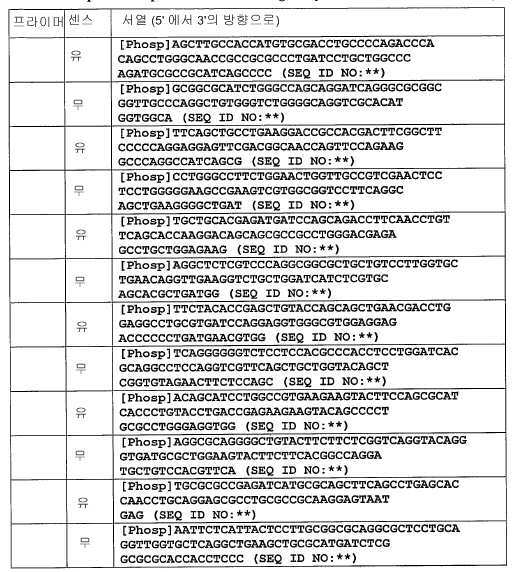
포유류 mammalia 인페르겐Infergen 글리코실화Glycosylation 돌연변이유발을 위한 계획 Scheme for Mutagenesis
포유류성 글리코실화 가능한 인페르겐을 생산하는 데 필요한 서열 변화는 약소하며, 표준 부위 지향적 돌연변이유발 기법에 의해 상기 합성 유전자 내로 도입될 수 있다 (도 27). 도 27은 포유류 인페르겐 (서열번호: **) 및 그의 글리코실화 돌연변이체 (서열번호: **-**)의 핵산 서열의 비교를 도시하며; 서열의 대부분은 상기에 나타내었다 (서열번호: **). 상이한 뉴클레오티드는 상자 내에 나타낸다. 사용된 코돈은 포유류에서의 바람직한 코돈 사용에 근거하였다 (도 8). 서열의 대부분과 상이한 뉴클레오티드는 상자 내에 나타낸다.The sequence changes required to produce mammalian glycosylated infergens are minor and can be introduced into the synthetic gene by standard site-directed mutagenesis techniques (FIG. 27). 27 shows a comparison of nucleic acid sequences of mammalian infergens (SEQ ID NO: **) and glycosylated mutants thereof (SEQ ID NO: **-**); Most of the sequences are shown above (SEQ ID NO: **). Different nucleotides are shown in boxes. The codons used were based on the preferred codon usage in mammals (FIG. 8). Nucleotides that differ from most of the sequence are shown in boxes.
도 28은 인간 인터페론 베타 1 (서열번호: **) 및 예시적인 IFN-β1 글리코실화 돌연변이체 (서열번호: **-**)의 아미노산 서열 비교를 도시하며; 서열의 대부분 (서열번호: **)은 상기에 나타내었다. 부위 1 및 2는 글리코실화 돌연변이체가 생성된 위치이다. 일반적으로, N-연결 글리코실화 부위만이 부위 1에 생성된다. N-연결 및 O-연결 글리코실화 부위 모두가 부위 2에 생성된다. 인간 IFN-β1 및 돌연변이체에서 천연 발생하는 N-연결 글리코실화 부위는 상자 내에 나타낸다.FIG. 28 shows a comparison of amino acid sequences of human interferon beta 1 (SEQ ID NO: **) and exemplary IFN-β1 glycosylation mutants (SEQ ID NO: **-**); Most of the sequence (SEQ ID NO: **) is shown above.
도 29는 인간 인터페론 오메가-1 (서열번호: **) 및 예시적인 글리코실화 돌연변이체 (서열번호: **-**)의 아미노산 서열 비교를 도시하며; 서열의 대부분 (서열번호: **)은 상기에 나타내었다. 부위 1 및 2는 글리코실화 돌연변이체가 생성된 위치이다. 일반적으로, N-연결 글리코실화 부위만이 부위 1에서 생성된다. N-연결 및 O-연결 글리코실화 부위 모두가 부위 2에서 생성된다. 인간 IFN-ω1 및 돌연변이체에서 천연 발생하는 N-연결 글리코실화 부위를 상자 내에 나타낸다.FIG. 29 shows a comparison of amino acid sequences of human interferon omega-1 (SEQ ID NO: **) and exemplary glycosylated mutants (SEQ ID NO: **-**); Most of the sequence (SEQ ID NO: **) is shown above.
실시예 2: 기타 타입 I 인터페론 신호 펩티드를 가진 포유류 인페르겐 융합 구조물의 고안, 구축, 발현 및 글리코실화 부위 생성 Example 2 Design, Construction, Expression and Generation of Glycosylation Sites of Mammalian Infergen Fusion Constructs with Other Type I Interferon Signaling Peptides
물질 및 방법Substances and Methods
융합 유전자의 구축Construction of Fusion Genes
인페르겐, 및 예시적인 인페르겐 융합 단백질, 인간 인터페론 알파 14 및 베타의 아미노산 정렬을 도 30에 나타내었다. 제시된 융합 단백질을 위한 융합 유전자를 합성하기 위해 2단계 중합효소 연쇄 반응 계획을 고안하였다. PCR 반응에서 사용된 프라이머를 하기 표 12에 기재한다.The amino acid alignments of infergen, and exemplary infergen fusion proteins,
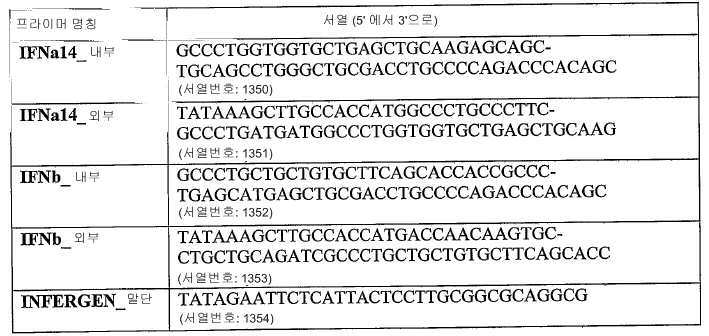
포유류 인페르겐 유전자를 합성하고 pcDNA3.1 (Invitrogen, Carlsbad, CA) 플라스미드 내로 클론하고 템플리트로 사용하였다. 인간 인터페론 알파 14 신호 펩티드를 가진 융합 인페르겐 유전자를 생성하기 위한 제 1차 PCR를 위해, IFNa14_내부 프라이머를 INFERGEN_말단 프라이머와 합하여 제 2차 PCR를 위한 PCR 템플리트를 생성하였고, 상기 제 2차 PCR은 INFERGEN_말단 프라이머와 조합된 IFNa14_외부 프라이머를 사용하여 수행되었다. 최종 PCR 생성물은 HindIII 및 EcoRI 모두로 분해하고, 예비분해된 pcDNA3.1 벡터 내로 클론되었다. IFNb_내부 및 외부 프라이머를 사용하여 각각 IFNa14_내부 및 외부 프라이머를 대체한 것을 제외하고는, 동일한 절차를 거쳐 인간 인터페론 베타 신호 펩티드를 갖는 인페르겐 유전자를 생성하였다.Mammalian infergen genes were synthesized and cloned into pcDNA3.1 (Invitrogen, Carlsbad, Calif.) Plasmids and used as templates. For the first PCR to generate the fusion infergen gene with
일시적 temporary 트랜스펙션Transfection 및 And 웨스턴Weston 분석 analysis
인페르겐을 일시적으로 과발현하도록 Cos-7 세포주를 선택하였다. Fugene-6 (Roche Applied Science, Indianapolis, IN))을 트랜스펙션 시약으로서 사용하였고, 제조업자의 프로토콜을 따랐다. 트랜스펙션한지 3일 후, 적응용 배지(conditioned medium)를 수집한 후, 0.22 μM 조직배양 필터 유닛을 통해 여과하고 Centriplus YM-10 원심분리 필터 유닛 (Millipore, Billerica, MA)으로 농축하였다. 단백질 농도를 측정하였다. 부착된 세포를 채집하고, 통상적인 방법을 사용하여 제조된 세포용해물을 수집하였다. E.Coli 과발현된 인페르겐에 대해 제조된 토끼 다클론 항체을 웨스턴 분석에서 일차 항체로서 사용하였다.Cos-7 cell line was selected to transiently overexpress infergen. Fugene-6 (Roche Applied Science, Indianapolis, IN) was used as the transfection reagent and followed the manufacturer's protocol. After 3 days of transfection, the conditioned medium was collected, filtered through a 0.22 μM tissue culture filter unit and concentrated with Centriplus YM-10 centrifugal filter unit (Millipore, Billerica, Mass.). Protein concentration was measured. Attached cells were harvested and cytolysates prepared using conventional methods were collected. Rabbit polyclonal antibodies prepared against E.Coli overexpressed infergen were used as primary antibodies in Western assays.
부위-지향적 돌연변이유발Site-Oriented Mutagenesis
두 개의 융합 인페르겐 단백질에서의 예시적 글리코실화 부위의 위치를 도 25에 나타내었다. QuikChange 부위-지향적 돌연변이유발 키트 (Stratagene, La Jolla, CA)를 사용하여 상기 돌연변이를 생성하였다.The location of exemplary glycosylation sites in two fusion infergen proteins is shown in FIG. 25. The mutations were generated using the QuikChange site-directed mutagenesis kit (Stratagene, La Jolla, Calif.).
결과result
융합 구조물을 생성시켰고, 서열을 확인하였다. 도 30은 인페르겐 (서열번호: **), 인간 IFN-α14 (서열번호: **), 인간 IFN-β1 (서열번호: **), 및 인간 IFN-α14 및 인간 IFN-β 신호 펩티드 (각각 서열번호: ** 및 **)를 갖는 예시적인 융합 단백질의 아미노산 서열 정렬을 도시한다. 서열의 대부분은 상기에 나타내었다 (서열번호: **).Fusion constructs were generated and sequences confirmed. Figure 30 shows infergen (SEQ ID NO: **), human IFN-α14 (SEQ ID NO: **), human IFN-β1 (SEQ ID NO: **), and human IFN-α14 and human IFN-β signal peptides Amino acid sequence alignments of exemplary fusion proteins with (SEQ ID NOs: ** and **, respectively) are shown. Most of the sequences are shown above (SEQ ID NO: **).
이어서 구조물을 일시적으로 Cos-7 세포 내로 트랜스펙션시키고, 상기 트랜스펙션 결과를, 인페르겐에 대한 토끼 다클론 항체를 사용한 웨스턴 블랏으로 분석하였다. 결과를 도 32에 나타내었다.The construct was then temporarily transfected into Cos-7 cells and the transfection results analyzed by Western blot using rabbit polyclonal antibodies against infergen. The results are shown in FIG. 32.
도 32는 일시적 트랜스펙션 결과의 웨스턴 블랏을 도시한다. 레인 1 내지 4는, IFN-α14 신호 펩티드를 갖는 인페르겐 (레인 1); IFN-β 신호 펩티드를 갖는 인페르겐 (레인 2); 신호 펩티드가 없는 인페르겐 (레인 3); 및 β-갈락토시다제 (레인 4)를 코딩하는 뉴클레오티드 서열을 함유하는 플라스미드로 트랜스펙션된 Cos-7 세포 유래의 적응용 배지가 부하되었다. 레인 5 내지 8은, IFN-α14 신호 펩티드를 갖는 인페르겐 (레인 5); IFN-β 신호 펩티드를 갖는 인페르겐 (레인 6); 신호 펩티드가 없는 인페르겐 (레인 7); 및 β-갈락토시다제 (레인 8)를 코딩하는 뉴클레오티드를 함유하는 플라스미드로 트랜스펙션된 Cos-7 세포의 세포용해물이 로딩되었다. 레인 9는, E.Coli에 의해 생산되고 상업적 공급원에서 수득된 30 ng의 인페르겐이 로딩되었다.32 shows western blot of transient transfection results.
결과는, 융합 단백질은 모두가 발현이 잘 되었고 대부분 세포에 의해 적응용 배지 내로 분비된 반면, 신호 펩티드가 없는 인페르겐은 불량하게 발현되었고, 세포내에 존재하였다. 두 개의 융합 유전자를 글리코실화 부위 생성용 템플리트로서 선택하였다.The results showed that the fusion protein was all well expressed and was mostly secreted by the cells into the adaptation medium, whereas the infergen without signal peptide was poorly expressed and was present in the cells. Two fusion genes were selected as templates for generating glycosylation sites.
본 발명을 그 구체적인 구현예를 참조하여 설명하였으나, 당업자는 본 발명의 사상 및 범위를 벗어나지 않으면서 다양한 변화가 이루어질 수 있고 균등물이 대체될 수 있다는 점을 이해해야 한다. 또한, 특정 상황, 물질, 물질의 조성, 공정, 공정 단계 또는 단계들을 본 발명의 목적, 사상 및 범위에 적응시키기 위해 다수의 변형예가 이루어질 수도 있다. 그러한 모든 변형예는 여기에 첨부된 청구범위의 범위 이내인 것으로 의도된다.While the invention has been described with reference to specific embodiments thereof, those skilled in the art should understand that various changes may be made and equivalents may be substituted without departing from the spirit and scope of the invention. In addition, many modifications may be made to adapt a particular situation, material, composition of matter, process, process step or steps, to the purposes, spirit and scope of the invention. All such modifications are intended to be within the scope of the claims appended hereto.
Claims (59)
Applications Claiming Priority (8)
| Application Number | Priority Date | Filing Date | Title |
|---|---|---|---|
| US60013404P | 2004-08-09 | 2004-08-09 | |
| US60020204P | 2004-08-09 | 2004-08-09 | |
| US60/600,202 | 2004-08-09 | ||
| US60/600,134 | 2004-08-09 | ||
| US60441504P | 2004-08-24 | 2004-08-24 | |
| US60428004P | 2004-08-24 | 2004-08-24 | |
| US60/604,280 | 2004-08-24 | ||
| US60/604,415 | 2004-08-24 |
Publications (1)
| Publication Number | Publication Date |
|---|---|
| KR20070085227A true KR20070085227A (en) | 2007-08-27 |
Family
ID=35908080
Family Applications (1)
| Application Number | Title | Priority Date | Filing Date |
|---|---|---|---|
| KR1020077005432A Withdrawn KR20070085227A (en) | 2004-08-09 | 2005-08-08 | Synthetic hyperglycosylation, protease resistant polypeptide variants, oral preparations and methods using the same |
Country Status (9)
| Country | Link |
|---|---|
| US (2) | US20060182716A1 (en) |
| EP (1) | EP1789074A4 (en) |
| JP (1) | JP2008513356A (en) |
| KR (1) | KR20070085227A (en) |
| AU (1) | AU2005273968A1 (en) |
| CA (1) | CA2576030A1 (en) |
| IL (1) | IL181083A0 (en) |
| MX (1) | MX2007001589A (en) |
| WO (1) | WO2006020580A2 (en) |
Cited By (1)
| Publication number | Priority date | Publication date | Assignee | Title |
|---|---|---|---|---|
| KR101432714B1 (en) * | 2014-02-21 | 2014-08-25 | 순천향대학교 산학협력단 | Marker and kit for detecting contamination of benzoanthracene |
Families Citing this family (30)
| Publication number | Priority date | Publication date | Assignee | Title |
|---|---|---|---|---|
| EP1539960B1 (en) | 2002-09-09 | 2010-04-28 | Hanall Pharmaceutical Co., Ltd. | Protease-resistant modified interferon alpha polypeptides |
| AU2005269265B2 (en) * | 2004-08-02 | 2012-01-12 | Zenyth Operations Pty Ltd | A method of treating cancer comprising a VEGF-B antagonist |
| US7597884B2 (en) * | 2004-08-09 | 2009-10-06 | Alios Biopharma, Inc. | Hyperglycosylated polypeptide variants and methods of use |
| US20060251619A1 (en) * | 2005-05-04 | 2006-11-09 | Gilles Borrelly | Modified interferon-gamma polypeptides and methods for using modified interferon-gamma polypeptides |
| WO2007000769A2 (en) | 2005-06-29 | 2007-01-04 | Yeda Research And Development Co. Ltd. At The Weizmann Institute Of Science | RECOMBINANT INTERFERON α2 (IFNα2) MUTANTS |
| US8007790B2 (en) * | 2006-04-03 | 2011-08-30 | Stowers Institute For Medical Research | Methods for treating polycystic kidney disease (PKD) or other cyst forming diseases |
| US8383388B2 (en) | 2006-06-19 | 2013-02-26 | Catalyst Biosciences, Inc. | Modified coagulation factor IX polypeptides and use thereof for treatment |
| AR078117A1 (en) | 2006-06-20 | 2011-10-19 | Protech Pharma S A | A RECOMBINANT MUTEIN OF THE GLICOSILATED HUMAN ALPHA INTERFERON, A CODIFYING GENE FOR SUCH MUTEIN, A METHOD OF PRODUCTION OF SUCH GENE, A METHOD FOR OBTAINING A EUCARIOTE CELL MANUFACTURING THIS MUTEINE, A METHOD FOR A MUTE DIFFERENT PROCEDURE |
| ES2538265T3 (en) * | 2006-10-03 | 2015-06-18 | Genzyme Corporation | Antibodies against TGF-beta for use in the treatment of infants at risk of developing bronchopulmonary dysplasia |
| US8516515B2 (en) | 2007-04-03 | 2013-08-20 | Google Inc. | Impression based television advertising |
| US7625555B2 (en) | 2007-06-18 | 2009-12-01 | Novagen Holding Corporation | Recombinant human interferon-like proteins |
| JP5749155B2 (en) | 2008-03-18 | 2015-07-15 | ノボ・ノルデイスク・エー/エス | Protease stabilized acylated insulin analogue |
| US8637466B2 (en) | 2008-08-11 | 2014-01-28 | Nektar Therapeutics | Multi-arm polymeric alkanoate conjugates |
| WO2011103507A1 (en) | 2010-02-19 | 2011-08-25 | Pacific Biosciences Of California, Inc. | Optics collection and detection system and method |
| WO2012088422A1 (en) | 2010-12-22 | 2012-06-28 | Nektar Therapeutics | Multi-arm polymeric prodrug conjugates of taxane-based compounds |
| US10894087B2 (en) | 2010-12-22 | 2021-01-19 | Nektar Therapeutics | Multi-arm polymeric prodrug conjugates of cabazitaxel-based compounds |
| AU2012317325B2 (en) | 2011-10-01 | 2016-10-06 | Glytech, Inc. | Glycosylated polypeptide and pharmaceutical composition containing same |
| SG10201603411WA (en) * | 2011-10-28 | 2016-07-28 | Teva Pharmaceuticals Australia Pty Ltd | Polypeptide constructs and uses thereof |
| ES2800426T3 (en) * | 2012-03-03 | 2020-12-30 | Immungene Inc | Modified Interferon Antibody-Mutant Fusion Molecules |
| BR112014025132A2 (en) | 2012-04-11 | 2017-07-11 | Novo Nordisk As | insulin formulations |
| WO2014157107A1 (en) | 2013-03-29 | 2014-10-02 | 株式会社糖鎖工学研究所 | Polypeptide having sialylated sugar chains attached thereto |
| US10739338B2 (en) | 2014-03-24 | 2020-08-11 | Qt Holdings Corp | Shaped articles including hydrogels and methods of manufacture and use thereof |
| US9790467B2 (en) * | 2015-09-22 | 2017-10-17 | Qt Holdings Corp | Methods and compositions for activation or expansion of T lymphocytes |
| HUE060149T2 (en) | 2016-12-16 | 2023-02-28 | Novo Nordisk As | Insulin containing pharmaceutical compositions |
| US12291533B2 (en) | 2017-08-02 | 2025-05-06 | Northwestern University | Substituted fused pyrimidine compounds and uses thereof |
| RU2020131433A (en) | 2018-03-29 | 2022-05-04 | Хельсингин Илиописто | CDNF C-TERMINAL FRAGMENTS, PHARMACEUTICAL COMPOSITIONS CONTAINING THESE FRAGMENTS AND USES OF THESE FRAGMENTS AND COMPOSITIONS |
| EP3801599A1 (en) * | 2018-06-01 | 2021-04-14 | ILC Therapeutics Ltd | Compositions and methods relating to the treatment of diseases |
| WO2021034727A1 (en) * | 2019-08-16 | 2021-02-25 | Applied Molecular Transport Inc. | Compositions, formulations, and interleukin production and purification |
| AR117715A1 (en) * | 2019-12-17 | 2021-08-25 | Univ Nacional Del Litoral Unl | HYPERGLYCOSILATED INTERFERON WITH REDUCED IMMUNOGENICITY |
| EP3901168A1 (en) * | 2020-04-21 | 2021-10-27 | Universität Duisburg-Essen | Interferon alpha 2 variants and uses thereof |
Family Cites Families (107)
| Publication number | Priority date | Publication date | Assignee | Title |
|---|---|---|---|---|
| US3720760A (en) * | 1968-09-06 | 1973-03-13 | Pharmacia Ab | Method for determining the presence of reagin-immunoglobulins(reagin-ig)directed against certain allergens,in aqueous samples |
| DE2031216A1 (en) * | 1969-06-19 | 1971-01-14 | Citizen Watch Co Ltd , Tokio | Day and date setting device for clocks with calendar |
| US3940475A (en) * | 1970-06-11 | 1976-02-24 | Biological Developments, Inc. | Radioimmune method of assaying quantitatively for a hapten |
| US4211771A (en) * | 1971-06-01 | 1980-07-08 | Robins Ronald K | Treatment of human viral diseases with 1-B-D-ribofuranosyl-1,2,4-triazole-3-carboxamide |
| CA1049411A (en) * | 1972-12-18 | 1979-02-27 | Affiliated Medical Research | N-substituted pyridone and general method for preparing pyridones |
| USRE30985E (en) * | 1978-01-01 | 1982-06-29 | Serum-free cell culture media | |
| US6936694B1 (en) * | 1982-05-06 | 2005-08-30 | Intermune, Inc. | Manufacture and expression of large structural genes |
| US4657866A (en) * | 1982-12-21 | 1987-04-14 | Sudhir Kumar | Serum-free, synthetic, completely chemically defined tissue culture media |
| US4767704A (en) * | 1983-10-07 | 1988-08-30 | Columbia University In The City Of New York | Protein-free culture medium |
| US4683202A (en) * | 1985-03-28 | 1987-07-28 | Cetus Corporation | Process for amplifying nucleic acid sequences |
| US4683195A (en) * | 1986-01-30 | 1987-07-28 | Cetus Corporation | Process for amplifying, detecting, and/or-cloning nucleic acid sequences |
| US4737456A (en) * | 1985-05-09 | 1988-04-12 | Syntex (U.S.A.) Inc. | Reducing interference in ligand-receptor binding assays |
| US4810643A (en) * | 1985-08-23 | 1989-03-07 | Kirin- Amgen Inc. | Production of pluripotent granulocyte colony-stimulating factor |
| US4927762A (en) * | 1986-04-01 | 1990-05-22 | Cell Enterprises, Inc. | Cell culture medium with antioxidant |
| US4810804A (en) * | 1987-03-26 | 1989-03-07 | Allergan, Inc. | Acetylenes disubstituted with a phenyl group and a heterobicyclic group having retinoid-like activity |
| EP0407401B1 (en) * | 1988-02-26 | 1993-04-21 | Genentech, Inc. | Human relaxin formulation |
| US5270198A (en) * | 1988-05-20 | 1993-12-14 | Genentech, Inc. | DNA molecules encoding variants of tissue plasminogen activators, vectors, and host cells |
| US5534617A (en) * | 1988-10-28 | 1996-07-09 | Genentech, Inc. | Human growth hormone variants having greater affinity for human growth hormone receptor at site 1 |
| US5240848A (en) * | 1988-11-21 | 1993-08-31 | Monsanto Company | Dna sequences encoding human vascular permeability factor having 189 amino acids |
| US5571714A (en) * | 1988-12-22 | 1996-11-05 | Celtrix Pharmaceuticals, Inc. | Monoclonal antibodies which bind both transforming growth factors β1 and β2 and methods of use |
| US5514646A (en) * | 1989-02-09 | 1996-05-07 | Chance; Ronald E. | Insulin analogs modified at position 29 of the B chain |
| US5332671A (en) * | 1989-05-12 | 1994-07-26 | Genetech, Inc. | Production of vascular endothelial cell growth factor and DNA encoding same |
| DE69024261T2 (en) * | 1989-05-24 | 1996-07-18 | Merck & Co Inc | Purification and characterization of a growth factor derived from a glioma |
| US5194596A (en) * | 1989-07-27 | 1993-03-16 | California Biotechnology Inc. | Production of vascular endothelial cell growth factor |
| US5605690A (en) * | 1989-09-05 | 1997-02-25 | Immunex Corporation | Methods of lowering active TNF-α levels in mammals using tumor necrosis factor receptor |
| US5395760A (en) * | 1989-09-05 | 1995-03-07 | Immunex Corporation | DNA encoding tumor necrosis factor-α and -β receptors |
| US5716632A (en) * | 1989-11-22 | 1998-02-10 | Margolin; Solomon B. | Compositions and methods for reparation and prevention of fibrotic lesions |
| US5310562A (en) * | 1989-11-22 | 1994-05-10 | Margolin Solomon B | Composition and method for reparation and prevention of fibrotic lesions |
| US5518729A (en) * | 1989-11-22 | 1996-05-21 | Margolin; Solomon B. | Compositions and methods for reparation and prevention of fibrotic lesions |
| US5726152A (en) * | 1990-09-21 | 1998-03-10 | Merck & Co., Inc. | Vascular endothelial cell growth factor II |
| US5122469A (en) * | 1990-10-03 | 1992-06-16 | Genentech, Inc. | Method for culturing Chinese hamster ovary cells to improve production of recombinant proteins |
| TW197439B (en) * | 1991-04-04 | 1993-01-01 | Ueno Pharmaceutics Applic Res Co Ltd | |
| US5736371A (en) * | 1991-06-04 | 1998-04-07 | A Et S Biovecteurs | Biodegradable particulate vector for transporting molecules having biological activity |
| US5283253A (en) * | 1991-09-23 | 1994-02-01 | Florida State University | Furyl or thienyl carbonyl substituted taxanes and pharmaceutical compositions containing them |
| US5200534A (en) * | 1992-03-13 | 1993-04-06 | University Of Florida | Process for the preparation of taxol and 10-deacetyltaxol |
| US5521184A (en) * | 1992-04-03 | 1996-05-28 | Ciba-Geigy Corporation | Pyrimidine derivatives and processes for the preparation thereof |
| US5780676A (en) * | 1992-04-22 | 1998-07-14 | Ligand Pharmaceuticals Incorporated | Compounds having selective activity for Retinoid X Receptors, and means for modulation of processes mediated by Retinoid X Receptors |
| US5711968A (en) * | 1994-07-25 | 1998-01-27 | Alkermes Controlled Therapeutics, Inc. | Composition and method for the controlled release of metal cation-stabilized interferon |
| US5686268A (en) * | 1992-06-19 | 1997-11-11 | Pfizer Inc. | Fused proteins |
| US5294637A (en) * | 1992-07-01 | 1994-03-15 | Bristol-Myers Squibb Company | Fluoro taxols |
| US5202448A (en) * | 1992-08-14 | 1993-04-13 | Napro Biotherapeutics, Inc. | Processes of converting taxanes into baccatin III |
| CA2141602A1 (en) * | 1992-08-26 | 1994-03-03 | Philip Leder | Use of the cytokine ip-10 as an anti-tumor agent |
| FR2696458B1 (en) * | 1992-10-05 | 1994-11-10 | Rhone Poulenc Rorer Sa | Process for the preparation of taxane derivatives. |
| US6214542B1 (en) * | 1992-10-20 | 2001-04-10 | The United States Of America As Represented By The Department Of Health And Human Services | Quantification of indicators of fibrosis |
| US5279949A (en) * | 1992-12-07 | 1994-01-18 | Board Of Trustees Operating Michigan State University | Process for the isolation and purification of taxol and taxanes from Taxus spp |
| WO1995000645A2 (en) * | 1993-06-21 | 1995-01-05 | Genentech, Inc. | Process for producing relaxin |
| US5728377A (en) * | 1993-07-20 | 1998-03-17 | Board Of Regents, The University Of Texas System | Methods and compositions incorporating IP-10 |
| JP3220331B2 (en) * | 1993-07-20 | 2001-10-22 | エチコン・インコーポレーテツド | Absorbable liquid copolymers for parenteral administration |
| US5426098A (en) * | 1993-09-02 | 1995-06-20 | Celtrix Pharmaceuticals, Inc. | Increase in hematopoietic progenitor cells in peripheral blood by transforming growth factor beta |
| US5643575A (en) * | 1993-10-27 | 1997-07-01 | Enzon, Inc. | Non-antigenic branched polymer conjugates |
| US5415869A (en) * | 1993-11-12 | 1995-05-16 | The Research Foundation Of State University Of New York | Taxol formulation |
| DE69426289T2 (en) * | 1993-12-10 | 2001-04-12 | Korea Institute Of Science And Technology, Seoul/Soul | Signal sequences for the secretion of heterologous proteins from yeast |
| US5861499A (en) * | 1994-02-10 | 1999-01-19 | Imclone Systems Incorporated | Nucleic acid molecules encoding the variable or hypervariable region of a monoclonal antibody that binds to an extracellular domain |
| US5536249A (en) * | 1994-03-09 | 1996-07-16 | Visionary Medical Products, Inc. | Pen-type injector with a microprocessor and blood characteristic monitor |
| US5461031A (en) * | 1994-06-16 | 1995-10-24 | Eli Lilly And Company | Monomeric insulin analog formulations |
| US5504188A (en) * | 1994-06-16 | 1996-04-02 | Eli Lilly And Company | Preparation of stable zinc insulin analog crystals |
| US5484720A (en) * | 1994-09-08 | 1996-01-16 | Genentech, Inc. | Methods for calcium phosphate transfection |
| US5547929A (en) * | 1994-09-12 | 1996-08-20 | Eli Lilly And Company | Insulin analog formulations |
| US5693609A (en) * | 1994-11-17 | 1997-12-02 | Eli Lilly And Company | Acylated insulin analogs |
| US5770378A (en) * | 1994-12-30 | 1998-06-23 | Ligand Pharmaceuticals, Inc. | Tricyclic retinoids, methods for their production and use |
| US5770383A (en) * | 1994-12-30 | 1998-06-23 | Ligand Pharmaceuticals, Inc. | Tricyclic retinoids, methods for their production and use |
| US5770382A (en) * | 1994-12-30 | 1998-06-23 | Ligand Pharmaceuticals, Inc. | Tricyclic retinoids, methods for their production and use |
| US6090822A (en) * | 1995-03-03 | 2000-07-18 | Margolin; Solomon B. | Treatment of cytokine growth factor caused disorders |
| US5811395A (en) * | 1995-06-07 | 1998-09-22 | Medical University Of South Carolina | Relaxin analogs and derivatives methods and uses thereof |
| US6020473A (en) * | 1995-08-25 | 2000-02-01 | Genentech, Inc. | Nucleic acids encoding variants of vascular endothelial cell growth factor |
| US6066318A (en) * | 1995-10-05 | 2000-05-23 | G.D. Searle & Co. | Multi-functional hematopoietic fusion proteins between sequence rearranged C-MPL receptor agonists and other hematopoietic factors |
| US6100071A (en) * | 1996-05-07 | 2000-08-08 | Genentech, Inc. | Receptors as novel inhibitors of vascular endothelial growth factor activity and processes for their production |
| CA2266419A1 (en) * | 1996-09-24 | 1998-04-02 | Merck & Co., Inc. | Gene therapy for inhibition of angiogenesis |
| AU4751897A (en) * | 1996-10-09 | 1998-05-05 | Boehringer Mannheim Pharmaceuticals Corporation-Smithkline Beecham Corporation Limited Partnership No. 1 | Method for inhibiting stress-activated protein kinases |
| JP2001524936A (en) * | 1996-10-16 | 2001-12-04 | アイ・シー・エヌ・フアーマシユーテイカルズ・インコーポレイテツド | Purine L-nucleosides and uses thereof |
| UA66767C2 (en) * | 1996-10-18 | 2004-06-15 | Вертекс Фармасьютикалс Інкорпорейтед | Serine proteases inhibitors, pharmaceutical composition, a method for inhibitining activity and a method for treatment or prevention of viral infection of hepatitis c |
| ZA984697B (en) * | 1997-06-13 | 1999-12-01 | Lilly Co Eli | Stable insulin formulations. |
| TW517055B (en) * | 1997-07-02 | 2003-01-11 | Smithkline Beecham Corp | Novel substituted imidazole compounds |
| KR20010022007A (en) * | 1997-07-18 | 2001-03-15 | 추후보정 | Biodegradable macromers for the controlled release of biologically active substances |
| US6168784B1 (en) * | 1997-09-03 | 2001-01-02 | Gryphon Sciences | N-terminal modifications of RANTES and methods of use |
| ZA9811070B (en) * | 1997-12-08 | 2000-07-03 | Genentech Inc | Type I interferons. |
| JP2001526033A (en) * | 1997-12-08 | 2001-12-18 | ジェネンテク・インコーポレイテッド | Human interferon-epsilon, a type I interferon |
| CA2313225A1 (en) * | 1997-12-12 | 1999-06-17 | Macromed, Inc. | Heterofunctionalized star-shaped poly(ethylene glycols) for protein modification |
| US6387879B1 (en) * | 1997-12-15 | 2002-05-14 | Dgi Biotechnologies, Inc. | Compounds that bind growth to hormone receptor |
| US6423695B1 (en) * | 1998-01-13 | 2002-07-23 | Ribapharm, Inc. | Cytokine related treatments of disease |
| JP4549529B2 (en) * | 1998-01-30 | 2010-09-22 | サイオス,インコーポレーテッド | Controlled release delivery of peptides or proteins |
| US6221053B1 (en) * | 1998-02-20 | 2001-04-24 | Becton, Dickinson And Company | Multi-featured medication delivery pen |
| US5961495A (en) * | 1998-02-20 | 1999-10-05 | Becton, Dickinson And Company | Medication delivery pen having a priming mechanism |
| US6248095B1 (en) * | 1998-02-23 | 2001-06-19 | Becton, Dickinson And Company | Low-cost medication delivery pen |
| CN1302296A (en) * | 1998-05-22 | 2001-07-04 | 史密丝克莱恩比彻姆公司 | Novel 2-alkyl substituted imidazole compounds |
| US6685933B1 (en) * | 1998-07-28 | 2004-02-03 | The United States Of America As Represented By The Department Of Health And Human Services | Interferon α hybrids |
| US6323180B1 (en) * | 1998-08-10 | 2001-11-27 | Boehringer Ingelheim (Canada) Ltd | Hepatitis C inhibitor tri-peptides |
| US6211144B1 (en) * | 1998-10-16 | 2001-04-03 | Novo Nordisk A/S | Stable concentrated insulin preparations for pulmonary delivery |
| IT1303736B1 (en) * | 1998-11-11 | 2001-02-23 | San Raffaele Centro Fond | PEPTIDES DERIVED FROM RANTES WITH ANTI-HIV ACTIVITY. |
| EP1016414B1 (en) * | 1998-12-17 | 2004-09-08 | Applied Research Systems ARS Holding N.V. | Human growth hormone to stimulate hematopoiesis and immune reconstitution after hematopoietic stem cell transplantation in humans |
| US6703225B1 (en) * | 1999-01-12 | 2004-03-09 | Sumitomo Pharmaceuticals Company, Limited | Interferon-α |
| TR200103788T2 (en) * | 1999-04-09 | 2002-05-21 | Ortho-Mcneil Pharmaceutical, Inc. | Pharmaceutical erythropoietin compositions |
| US6492497B1 (en) * | 1999-04-30 | 2002-12-10 | Cambridge Antibody Technology Limited | Specific binding members for TGFbeta1 |
| US6531122B1 (en) * | 1999-08-27 | 2003-03-11 | Maxygen Aps | Interferon-β variants and conjugates |
| US20040002474A1 (en) * | 1999-10-07 | 2004-01-01 | Maxygen Inc. | IFN-alpha homologues |
| US6586398B1 (en) * | 2000-04-07 | 2003-07-01 | Amgen, Inc. | Chemically modified novel erythropoietin stimulating protein compositions and methods |
| US6346269B1 (en) * | 2000-05-08 | 2002-02-12 | Standard Chem. & Pharm. Co., Ltd. | Method for preparing an oral formulation containing acid-sensitive drugs and oral formulation made thereby |
| AU2001259758A1 (en) * | 2000-05-12 | 2001-11-26 | Immunex Corporation | Interleukin-1 inhibitors in the treatment of diseases |
| US6673580B2 (en) * | 2000-10-27 | 2004-01-06 | Genentech, Inc. | Identification and modification of immunodominant epitopes in polypeptides |
| US6958388B2 (en) * | 2001-04-06 | 2005-10-25 | Maxygen, Aps | Interferon gamma polypeptide variants |
| IL157896A0 (en) * | 2001-04-06 | 2004-03-28 | Maxygen Holdings Ltd | Interferon gamma polypeptide variants |
| AU2002338286A1 (en) * | 2001-04-10 | 2002-10-28 | Leo Pharma A/S | Novel aminophenyl ketone derivatives |
| US6585398B1 (en) * | 2001-06-22 | 2003-07-01 | Genlyte Thomas Group, Llc | Post top deck light fixture |
| KR20040104504A (en) * | 2002-03-12 | 2004-12-10 | 맥시겐 에이피에스 | Interferon beta-like molecules for treatment of stroke |
| CN1684979A (en) * | 2002-08-31 | 2005-10-19 | 希杰株式会社 | Glycosylated human interferon alpha isoform |
| EP1539960B1 (en) * | 2002-09-09 | 2010-04-28 | Hanall Pharmaceutical Co., Ltd. | Protease-resistant modified interferon alpha polypeptides |
| KR100781666B1 (en) * | 2004-11-02 | 2007-12-03 | 신영기 | Human Interferon-beta Variants |
-
2005
- 2005-08-08 KR KR1020077005432A patent/KR20070085227A/en not_active Withdrawn
- 2005-08-08 EP EP05783926A patent/EP1789074A4/en not_active Withdrawn
- 2005-08-08 CA CA002576030A patent/CA2576030A1/en not_active Abandoned
- 2005-08-08 JP JP2007525713A patent/JP2008513356A/en not_active Withdrawn
- 2005-08-08 WO PCT/US2005/028165 patent/WO2006020580A2/en not_active Ceased
- 2005-08-08 MX MX2007001589A patent/MX2007001589A/en unknown
- 2005-08-08 AU AU2005273968A patent/AU2005273968A1/en not_active Abandoned
-
2006
- 2006-01-11 US US11/330,917 patent/US20060182716A1/en not_active Abandoned
-
2007
- 2007-01-31 IL IL181083A patent/IL181083A0/en unknown
-
2009
- 2009-10-19 US US12/581,723 patent/US20100099851A1/en not_active Abandoned
Cited By (1)
| Publication number | Priority date | Publication date | Assignee | Title |
|---|---|---|---|---|
| KR101432714B1 (en) * | 2014-02-21 | 2014-08-25 | 순천향대학교 산학협력단 | Marker and kit for detecting contamination of benzoanthracene |
Also Published As
| Publication number | Publication date |
|---|---|
| IL181083A0 (en) | 2007-07-04 |
| CA2576030A1 (en) | 2006-02-23 |
| AU2005273968A2 (en) | 2006-02-23 |
| JP2008513356A (en) | 2008-05-01 |
| AU2005273968A1 (en) | 2006-02-23 |
| MX2007001589A (en) | 2007-08-02 |
| WO2006020580A2 (en) | 2006-02-23 |
| US20100099851A1 (en) | 2010-04-22 |
| WO2006020580A3 (en) | 2006-12-07 |
| EP1789074A4 (en) | 2009-08-12 |
| EP1789074A2 (en) | 2007-05-30 |
| US20060182716A1 (en) | 2006-08-17 |
Similar Documents
| Publication | Publication Date | Title |
|---|---|---|
| US7597884B2 (en) | Hyperglycosylated polypeptide variants and methods of use | |
| KR20070085227A (en) | Synthetic hyperglycosylation, protease resistant polypeptide variants, oral preparations and methods using the same | |
| US7407973B2 (en) | Use of pirfenidone in therapeutic regimens | |
| TWI375679B (en) | Macrocyclic carboxylic acids and acylsulfonamides as inhibitors of hcv replication | |
| JP2011172572A (en) | Synthetic chemokine receptor ligand and method of use thereof | |
| WO2006016930A2 (en) | Methods for treating hcv infection | |
| US20070258946A1 (en) | Combination Therapy for Treating Hepatitis C Virus Infection | |
| JP2002543144A (en) | HIV therapy combined with PEGylated interferon αCCR5 antagonist | |
| WO2005067963A1 (en) | Use of polyethylene glycol-modified interferon-alpha in therapeutic dosing regimens | |
| WO2004105684A2 (en) | Combination therapy for proliferative disorders | |
| RU2392963C2 (en) | Synthetic versions of hyperglycolised protease-resistive polypeptide, oral compositions and methods of using such versions | |
| Satchell et al. | Interferon-β reduces proteinuria in experimental glomerulonephritis | |
| WO2005062949A2 (en) | Method for treating hepatitis virus infection | |
| WO2005110478A2 (en) | Combination therapy for treating fibrotic disorders | |
| Taylor et al. | IFN-α 1, 8 Inhibits Tumor-Induced Angiogenesis in Murine Angiosarcomas | |
| WO2005110455A2 (en) | Combination therapy for treating hepatitis virus infection | |
| HK1136584A (en) | Hyperglycosylated variants of interferon alfacon-1 | |
| CN101102787A (en) | Synthetic hyperglycosylated, protease-resistant polypeptide variants, oral formulations and methods of use thereof | |
| WO2005039598A1 (en) | Method of treating alcoholic liver disease | |
| Shen | The Challenges and Strategies of Biopharmaceutical Development and Global Management–PharmaEssentia | |
| Pannu | In vitro and in vivo antagonism of transforming growth factor-[beta] production by interferon-[alpha] 2b | |
| Miller et al. | Therapeutic for Hepatitis C |
Legal Events
| Date | Code | Title | Description |
|---|---|---|---|
| PA0105 | International application |
Patent event date: 20070307 Patent event code: PA01051R01D Comment text: International Patent Application |
|
| PG1501 | Laying open of application | ||
| PC1203 | Withdrawal of no request for examination | ||
| WITN | Application deemed withdrawn, e.g. because no request for examination was filed or no examination fee was paid |