KR20070073735A - Headset for separation of language signals in noisy environments - Google Patents
Headset for separation of language signals in noisy environments Download PDFInfo
- Publication number
- KR20070073735A KR20070073735A KR1020077004079A KR20077004079A KR20070073735A KR 20070073735 A KR20070073735 A KR 20070073735A KR 1020077004079 A KR1020077004079 A KR 1020077004079A KR 20077004079 A KR20077004079 A KR 20077004079A KR 20070073735 A KR20070073735 A KR 20070073735A
- Authority
- KR
- South Korea
- Prior art keywords
- microphone
- signal
- housing
- language
- noise
- Prior art date
- Legal status (The legal status is an assumption and is not a legal conclusion. Google has not performed a legal analysis and makes no representation as to the accuracy of the status listed.)
- Withdrawn
Links
- 238000000926 separation method Methods 0.000 title claims abstract description 112
- 238000000034 method Methods 0.000 claims description 194
- 230000008569 process Effects 0.000 claims description 113
- 238000012880 independent component analysis Methods 0.000 claims description 89
- 230000000694 effects Effects 0.000 claims description 38
- 230000004044 response Effects 0.000 claims description 16
- 238000011946 reduction process Methods 0.000 claims description 12
- 230000003213 activating effect Effects 0.000 claims 1
- 230000008676 import Effects 0.000 claims 1
- 230000005540 biological transmission Effects 0.000 abstract description 21
- 230000007613 environmental effect Effects 0.000 abstract description 6
- 230000006854 communication Effects 0.000 description 52
- 238000004891 communication Methods 0.000 description 42
- 238000012545 processing Methods 0.000 description 41
- 230000003044 adaptive effect Effects 0.000 description 28
- 230000006870 function Effects 0.000 description 28
- 238000004422 calculation algorithm Methods 0.000 description 27
- 238000001914 filtration Methods 0.000 description 18
- 238000012805 post-processing Methods 0.000 description 17
- 230000006978 adaptation Effects 0.000 description 13
- 239000002131 composite material Substances 0.000 description 13
- 239000000523 sample Substances 0.000 description 12
- 230000003595 spectral effect Effects 0.000 description 12
- 230000005534 acoustic noise Effects 0.000 description 11
- 238000010586 diagram Methods 0.000 description 11
- 230000005236 sound signal Effects 0.000 description 11
- 238000013461 design Methods 0.000 description 9
- 239000000203 mixture Substances 0.000 description 9
- 238000013459 approach Methods 0.000 description 7
- 239000000872 buffer Substances 0.000 description 7
- 238000001228 spectrum Methods 0.000 description 7
- 230000001629 suppression Effects 0.000 description 7
- 230000003321 amplification Effects 0.000 description 6
- 238000004458 analytical method Methods 0.000 description 6
- 230000002238 attenuated effect Effects 0.000 description 6
- 230000008859 change Effects 0.000 description 6
- 238000004519 manufacturing process Methods 0.000 description 6
- 239000011159 matrix material Substances 0.000 description 6
- 238000003199 nucleic acid amplification method Methods 0.000 description 6
- 206010019133 Hangover Diseases 0.000 description 5
- 230000008901 benefit Effects 0.000 description 5
- 238000002592 echocardiography Methods 0.000 description 5
- 230000007246 mechanism Effects 0.000 description 5
- 238000001514 detection method Methods 0.000 description 4
- 238000009499 grossing Methods 0.000 description 4
- 238000005259 measurement Methods 0.000 description 4
- 229920006395 saturated elastomer Polymers 0.000 description 4
- 230000035945 sensitivity Effects 0.000 description 4
- 238000012360 testing method Methods 0.000 description 4
- 230000000903 blocking effect Effects 0.000 description 3
- 230000000295 complement effect Effects 0.000 description 3
- 230000001276 controlling effect Effects 0.000 description 3
- 230000003111 delayed effect Effects 0.000 description 3
- 230000007774 longterm Effects 0.000 description 3
- 239000012528 membrane Substances 0.000 description 3
- 230000009467 reduction Effects 0.000 description 3
- 230000001755 vocal effect Effects 0.000 description 3
- 238000003491 array Methods 0.000 description 2
- 230000006399 behavior Effects 0.000 description 2
- 230000015556 catabolic process Effects 0.000 description 2
- 238000006731 degradation reaction Methods 0.000 description 2
- 230000001934 delay Effects 0.000 description 2
- 230000009977 dual effect Effects 0.000 description 2
- 210000005069 ears Anatomy 0.000 description 2
- 230000006872 improvement Effects 0.000 description 2
- 230000002452 interceptive effect Effects 0.000 description 2
- 238000002156 mixing Methods 0.000 description 2
- 238000012986 modification Methods 0.000 description 2
- 230000004048 modification Effects 0.000 description 2
- 238000003672 processing method Methods 0.000 description 2
- 238000013139 quantization Methods 0.000 description 2
- 238000012546 transfer Methods 0.000 description 2
- 230000001131 transforming effect Effects 0.000 description 2
- 241000136406 Comones Species 0.000 description 1
- 241000139306 Platt Species 0.000 description 1
- 230000004913 activation Effects 0.000 description 1
- 239000000654 additive Substances 0.000 description 1
- 230000000996 additive effect Effects 0.000 description 1
- 238000013528 artificial neural network Methods 0.000 description 1
- 230000009286 beneficial effect Effects 0.000 description 1
- 238000004364 calculation method Methods 0.000 description 1
- 230000001413 cellular effect Effects 0.000 description 1
- 230000001427 coherent effect Effects 0.000 description 1
- 238000005094 computer simulation Methods 0.000 description 1
- 238000007796 conventional method Methods 0.000 description 1
- 230000008878 coupling Effects 0.000 description 1
- 238000010168 coupling process Methods 0.000 description 1
- 238000005859 coupling reaction Methods 0.000 description 1
- 238000012217 deletion Methods 0.000 description 1
- 230000037430 deletion Effects 0.000 description 1
- 230000001419 dependent effect Effects 0.000 description 1
- 230000000368 destabilizing effect Effects 0.000 description 1
- 230000001627 detrimental effect Effects 0.000 description 1
- 238000009826 distribution Methods 0.000 description 1
- 238000005516 engineering process Methods 0.000 description 1
- 238000011156 evaluation Methods 0.000 description 1
- 230000003203 everyday effect Effects 0.000 description 1
- 238000000605 extraction Methods 0.000 description 1
- 235000013410 fast food Nutrition 0.000 description 1
- 238000007667 floating Methods 0.000 description 1
- 238000009472 formulation Methods 0.000 description 1
- 238000011835 investigation Methods 0.000 description 1
- 238000002955 isolation Methods 0.000 description 1
- 230000004807 localization Effects 0.000 description 1
- 238000010801 machine learning Methods 0.000 description 1
- 238000013178 mathematical model Methods 0.000 description 1
- 230000000116 mitigating effect Effects 0.000 description 1
- 238000012544 monitoring process Methods 0.000 description 1
- NKAAEMMYHLFEFN-UHFFFAOYSA-M monosodium tartrate Chemical compound [Na+].OC(=O)C(O)C(O)C([O-])=O NKAAEMMYHLFEFN-UHFFFAOYSA-M 0.000 description 1
- 230000001537 neural effect Effects 0.000 description 1
- 230000009022 nonlinear effect Effects 0.000 description 1
- 238000005457 optimization Methods 0.000 description 1
- 230000008447 perception Effects 0.000 description 1
- 238000007781 pre-processing Methods 0.000 description 1
- 238000002360 preparation method Methods 0.000 description 1
- 230000001681 protective effect Effects 0.000 description 1
- 230000001105 regulatory effect Effects 0.000 description 1
- 238000010079 rubber tapping Methods 0.000 description 1
- 238000007665 sagging Methods 0.000 description 1
- 239000012723 sample buffer Substances 0.000 description 1
- 239000004065 semiconductor Substances 0.000 description 1
- 230000001953 sensory effect Effects 0.000 description 1
- 238000010183 spectrum analysis Methods 0.000 description 1
- 230000006641 stabilisation Effects 0.000 description 1
- 238000011105 stabilization Methods 0.000 description 1
- 239000013589 supplement Substances 0.000 description 1
- 230000002123 temporal effect Effects 0.000 description 1
- 230000007704 transition Effects 0.000 description 1
- 230000002087 whitening effect Effects 0.000 description 1
Images



Classifications
-
- H—ELECTRICITY
- H04—ELECTRIC COMMUNICATION TECHNIQUE
- H04R—LOUDSPEAKERS, MICROPHONES, GRAMOPHONE PICK-UPS OR LIKE ACOUSTIC ELECTROMECHANICAL TRANSDUCERS; DEAF-AID SETS; PUBLIC ADDRESS SYSTEMS
- H04R3/00—Circuits for transducers, loudspeakers or microphones
- H04R3/005—Circuits for transducers, loudspeakers or microphones for combining the signals of two or more microphones
-
- G—PHYSICS
- G10—MUSICAL INSTRUMENTS; ACOUSTICS
- G10K—SOUND-PRODUCING DEVICES; METHODS OR DEVICES FOR PROTECTING AGAINST, OR FOR DAMPING, NOISE OR OTHER ACOUSTIC WAVES IN GENERAL; ACOUSTICS NOT OTHERWISE PROVIDED FOR
- G10K11/00—Methods or devices for transmitting, conducting or directing sound in general; Methods or devices for protecting against, or for damping, noise or other acoustic waves in general
- G10K11/16—Methods or devices for protecting against, or for damping, noise or other acoustic waves in general
-
- G—PHYSICS
- G10—MUSICAL INSTRUMENTS; ACOUSTICS
- G10L—SPEECH ANALYSIS TECHNIQUES OR SPEECH SYNTHESIS; SPEECH RECOGNITION; SPEECH OR VOICE PROCESSING TECHNIQUES; SPEECH OR AUDIO CODING OR DECODING
- G10L15/00—Speech recognition
- G10L15/20—Speech recognition techniques specially adapted for robustness in adverse environments, e.g. in noise, of stress induced speech
-
- G—PHYSICS
- G10—MUSICAL INSTRUMENTS; ACOUSTICS
- G10L—SPEECH ANALYSIS TECHNIQUES OR SPEECH SYNTHESIS; SPEECH RECOGNITION; SPEECH OR VOICE PROCESSING TECHNIQUES; SPEECH OR AUDIO CODING OR DECODING
- G10L21/00—Speech or voice signal processing techniques to produce another audible or non-audible signal, e.g. visual or tactile, in order to modify its quality or its intelligibility
- G10L21/02—Speech enhancement, e.g. noise reduction or echo cancellation
- G10L21/0208—Noise filtering
-
- G—PHYSICS
- G10—MUSICAL INSTRUMENTS; ACOUSTICS
- G10L—SPEECH ANALYSIS TECHNIQUES OR SPEECH SYNTHESIS; SPEECH RECOGNITION; SPEECH OR VOICE PROCESSING TECHNIQUES; SPEECH OR AUDIO CODING OR DECODING
- G10L21/00—Speech or voice signal processing techniques to produce another audible or non-audible signal, e.g. visual or tactile, in order to modify its quality or its intelligibility
- G10L21/02—Speech enhancement, e.g. noise reduction or echo cancellation
- G10L21/0272—Voice signal separating
-
- H—ELECTRICITY
- H04—ELECTRIC COMMUNICATION TECHNIQUE
- H04R—LOUDSPEAKERS, MICROPHONES, GRAMOPHONE PICK-UPS OR LIKE ACOUSTIC ELECTROMECHANICAL TRANSDUCERS; DEAF-AID SETS; PUBLIC ADDRESS SYSTEMS
- H04R1/00—Details of transducers, loudspeakers or microphones
- H04R1/10—Earpieces; Attachments therefor ; Earphones; Monophonic headphones
-
- G—PHYSICS
- G10—MUSICAL INSTRUMENTS; ACOUSTICS
- G10L—SPEECH ANALYSIS TECHNIQUES OR SPEECH SYNTHESIS; SPEECH RECOGNITION; SPEECH OR VOICE PROCESSING TECHNIQUES; SPEECH OR AUDIO CODING OR DECODING
- G10L21/00—Speech or voice signal processing techniques to produce another audible or non-audible signal, e.g. visual or tactile, in order to modify its quality or its intelligibility
- G10L21/02—Speech enhancement, e.g. noise reduction or echo cancellation
- G10L21/0208—Noise filtering
- G10L21/0216—Noise filtering characterised by the method used for estimating noise
- G10L2021/02161—Number of inputs available containing the signal or the noise to be suppressed
-
- G—PHYSICS
- G10—MUSICAL INSTRUMENTS; ACOUSTICS
- G10L—SPEECH ANALYSIS TECHNIQUES OR SPEECH SYNTHESIS; SPEECH RECOGNITION; SPEECH OR VOICE PROCESSING TECHNIQUES; SPEECH OR AUDIO CODING OR DECODING
- G10L21/00—Speech or voice signal processing techniques to produce another audible or non-audible signal, e.g. visual or tactile, in order to modify its quality or its intelligibility
- G10L21/02—Speech enhancement, e.g. noise reduction or echo cancellation
- G10L21/0208—Noise filtering
- G10L21/0216—Noise filtering characterised by the method used for estimating noise
- G10L2021/02161—Number of inputs available containing the signal or the noise to be suppressed
- G10L2021/02165—Two microphones, one receiving mainly the noise signal and the other one mainly the speech signal
-
- H—ELECTRICITY
- H04—ELECTRIC COMMUNICATION TECHNIQUE
- H04R—LOUDSPEAKERS, MICROPHONES, GRAMOPHONE PICK-UPS OR LIKE ACOUSTIC ELECTROMECHANICAL TRANSDUCERS; DEAF-AID SETS; PUBLIC ADDRESS SYSTEMS
- H04R2430/00—Signal processing covered by H04R, not provided for in its groups
- H04R2430/20—Processing of the output signals of the acoustic transducers of an array for obtaining a desired directivity characteristic
- H04R2430/25—Array processing for suppression of unwanted side-lobes in directivity characteristics, e.g. a blocking matrix
Landscapes
- Engineering & Computer Science (AREA)
- Physics & Mathematics (AREA)
- Acoustics & Sound (AREA)
- Signal Processing (AREA)
- Health & Medical Sciences (AREA)
- Multimedia (AREA)
- Human Computer Interaction (AREA)
- Audiology, Speech & Language Pathology (AREA)
- Computational Linguistics (AREA)
- Quality & Reliability (AREA)
- General Health & Medical Sciences (AREA)
- Otolaryngology (AREA)
- Circuit For Audible Band Transducer (AREA)
- Measurement Of Velocity Or Position Using Acoustic Or Ultrasonic Waves (AREA)
- Headphones And Earphones (AREA)
Abstract
소란한 음향 환경에서 음향적으로 구분된 언어 신호를 생성하도록 헤드셋(12)이 구성된다. 헤드셋은 이격된 한 쌍의 마이크로폰(32-33)을 사용자의 입 근처에 배치한다. 마이크로폰은 각각 사용자의 언어를 수신하고 또한 음향 환경 소음을 수신한다. 소음 및 정보 성분을 둘 다 가진 마이크로폰 신호는 분리 프로세스(355) 내로 수신된다. 분리 프로세스는 상당히 감소된 소음 성분을 가진 언어 신호(356)를 생성한다. 다음으로 언어 신호는 전송(368)을 위해 프로세스된다. 일 예에서는, 전송 프로세스가 블루투스 라디오(27)를 사용하여 로컬 제어 모듈(14)로 언어 신호(370)를 보내는 것을 포함한다. The headset 12 is configured to generate an acoustically separated language signal in a noisy acoustic environment. The headset places a pair of spaced microphones 32-33 near the user's mouth. The microphones each receive the user's language and also receive acoustic environmental noise. Microphone signals with both noise and information components are received into the separation process 355. The separation process produces a language signal 356 with a significantly reduced noise component. The language signal is then processed for transmission 368. In one example, the transmission process includes sending a language signal 370 to the local control module 14 using the Bluetooth radio 27.
Description
본 발명은 소란한 환경으로부터 언어 신호(speech signal)를 분리하기 위한 전자 통신 장치에 관한 것이다. 보다 상세하게는, 본 발명의 일 예는 언어 신호를 생성하기 위한 무선 헤드셋(headset) 또는 이어피스(earpiece)를 제공한다.The present invention relates to an electronic communication device for separating speech signals from a disturbing environment. More specifically, one example of the present invention provides a wireless headset or earpiece for generating a speech signal.
음향 환경은 흔히 소란한데, 이는 원하는 정보 신호에 대해 신뢰성 있게 감지 및 반응하는 것을 어렵게 한다. 예를 들어, 한 사람이 음성 통신 채널을 사용하여 다른 사람과 통신하고자 할 수 있다. 채널은, 예를 들어 모바일 무선 핸드셋(handset), 무전기, 양방향(two-way) 라디오, 또는 기타 통신 장치를 사용하여 제공될 수 있다. 사용성을 개선하기 위해, 이 사람은 통신 장치에 연결된 헤드셋 또는 이어피스를 사용할 수 있다. 헤드셋 또는 이어피스는 흔히 하나 이상의 이어 스피커(ear speakers)와 마이크로폰을 가진다. 통상적으로, 마이크로폰은 붐(boom) 상에서 사람의 입을 향해 연장되어, 사람이 이야기하는 소리를 마이크로폰이 픽업(pick up)할 가능성을 증가시킨다. 사람이 이야기할 때, 마이크로폰은 사람의 음 성 신호를 수신하고, 이를 전자 신호로 전환(convert)한다. 마이크로폰은 또한 다양한 소음원으로부터 음신호(sound signals)를 수신하며, 따라서 전자 신호에 소음 성분을 포함시킨다. 헤드셋은 마이크로폰을 사람의 입에서 수 인치 떨어져 있도록 배치할 수 있고, 환경은 다수의 제어불가능한 소음원을 가질 수 있으므로, 결과 전자 신호는 상당한 소음 성분을 가질 수 있다. 이러한 상당한 소음 성분은 통신 경험을 불만족스럽게 하며, 통신 장치가 비효율적으로 작동하게 하여 배터리 고갈(battery drain)을 증가시킬 수 있다.The acoustic environment is often noisy, which makes it difficult to reliably detect and respond to the desired information signal. For example, one person may wish to communicate with another person using a voice communication channel. The channel may be provided using, for example, a mobile wireless handset, a walkie talkie, a two-way radio, or other communication device. To improve usability, this person can use a headset or earpiece connected to a communication device. Headsets or earpieces often have one or more ear speakers and a microphone. Typically, the microphone extends over the boom toward the person's mouth, increasing the likelihood that the microphone picks up the sound the person speaks. When a person speaks, the microphone receives the person's voice signal and converts it to an electronic signal. The microphone also receives sound signals from various noise sources, thus including the noise component in the electronic signal. The headset can place the microphone several inches away from the mouth of the person, and the environment can have multiple uncontrollable noise sources, so that the resulting electronic signal can have significant noise components. These significant noise components can make the communication experience unsatisfactory and can cause the communication device to operate inefficiently, leading to increased battery drain.
하나의 특정 예에서는, 소란한 환경에서 언어 신호가 생성되고, 언어 신호를 환경 소음으로부터 분리하는 데 언어 프로세싱 방법들이 사용된다. 이러한 언어 신호 프로세싱은 일상 통신의 여러 분야에서 중요한데, 실사회 조건에서 소음은 거의 언제나 존재하기 때문이다. 소음(noise)은 해당 언어 신호를 간섭하거나 퇴화시키는 모든 신호의 복합으로 정의된다. 실사회에는 복수의 소음원이 가득한데, 여기에는 단일 지점 소음원(single point noise sources)들이 포함되며, 이는 흔히 복수의 소리로 경계를 넘어 잔향을 초래한다. 배경 소음으로부터 분리 및 고립되지 않는 한, 원하는 언어 신호를 신뢰성 있게, 효율적으로 사용하는 것은 어렵다. 배경 소음은 일반 환경에서 생성되는 수많은 소음 신호, 다른 사람들의 배경 대화에 의해 생성되는 신호, 그리고 각 신호로부터 생성된 반사(reflections) 및 잔향(reverberation)을 포함할 수 있다. 사용자가 흔히 소란한 환경에서 말하는 통신에서는, 사용자의 언어 신호를 배경 소음으로부터 분리하는 것이 바람직하다. 핸드폰(cell phones), 스피커폰, 헤드셋, 무선 전화, 원격회의(teleconferences), CB 라디오, 무전기, 컴퓨터 전화 응용, 컴퓨터 및 자동차 음성 명령 응용 및 기타 핸즈프리(hands-free) 응용, 인터콤(intercoms), 마이크로폰 시스템 등과 같은 언어 통신 매체는 원하는 언어 신호를 배경 소음으로부터 분리하는 데에 언어 신호 프로세싱을 이용할 수 있다. In one particular example, language signals are generated in a noisy environment, and language processing methods are used to separate language signals from environmental noise. This verbal signal processing is important in many areas of everyday communication, because noise is almost always present in real-world conditions. Noise is defined as the composite of all signals that interfere or degrade the language signal. The real world is full of multiple sources of noise, including single point noise sources, which often cause reverberation across boundaries with multiple sounds. Unless isolated and isolated from background noise, it is difficult to reliably and efficiently use the desired language signal. Background noise may include numerous noise signals generated in a general environment, signals generated by background conversations of others, and reflections and reverberations generated from each signal. In communications where the user often speaks in a noisy environment, it is desirable to separate the user's speech signal from background noise. Cell phones, speakerphones, headsets, cordless phones, teleconferences, CB radios, radios, computer phone applications, computer and car voice command applications, and other hands-free applications, intercoms, microphones Language communication media, such as systems, may use language signal processing to separate a desired language signal from background noise.
원하는 음신호를 배경 소음 신호로부터 분리하기 위한 여러 가지 방법들이 만들어졌으며, 여기에는 단순 필터링 프로세스가 포함된다. 종래기술의 소음 필터는 사전 결정된 특징을 가진 신호를 백색소음 신호로 파악하며, 이러한 신호들을 입력 신호에서 차감(subtract)한다. 이러한 방법은 단순하고 음신호의 실시간 프로세싱을 위해 충분히 빠르지만, 상이한 음환경에 용이하게 적응시켜지지 않으며, 환원시키고자 하는 언어 신호의 상당한 퇴화를 초래할 수 있다. 소음 특징에 대한 사전 결정된 가정은 상한포괄적(over-inclusive) 또는 하한포괄적(under-inclusive)일 수 있다. 그 결과, 어느 사람의 언어(speech)의 일부는 이러한 방법에 의해서는 "소음"으로 간주되고 따라서 출력 언어 신호로부터 제거될 수 있으며, 음악 또는 대화와 같은 배경 소음의 일부는 이러한 방법에 의해 비소음(non-noise)으로 간주되고 따라서 출력 언어 신호에 포함될 수 있다.Various methods have been created to separate the desired sound signal from the background noise signal, which includes a simple filtering process. Prior art noise filters identify signals with predetermined characteristics as white noise signals and subtract these signals from the input signal. This method is simple and fast enough for real-time processing of sound signals, but is not easily adapted to different sound environments and can result in significant degradation of the language signal to be reduced. The predetermined assumption for the noise characteristic may be over-inclusive or under-inclusive. As a result, part of someone's speech is considered "noise" by this method and can therefore be removed from the output language signal, and part of the background noise, such as music or dialogue, is non-noisy by this method. It is considered (non-noise) and can therefore be included in the output language signal.
신호 프로세싱 응용에서는, 마이크로폰과 같은 변환 센서(transducer sensor)를 사용하여 하나 이상의 입력 신호가 통상적으로 수득된다. 센서에 의해 제공되는 신호들은 다수의 소스(sources)의 혼재형태(mixtures)이다. 일반적으로, 신호 소스들 및 그 혼재(mixture) 특징은 알려져 있지 않다. 소스 독립성의 일반 통계 가정 외에 신호 소스에 대한 지식이 없는 경우, 이러한 신호 프로세싱 과제는 당업계에서 "블라인드 소스 분리(blind source separation, BBS) 과제"로 알려져 있다. 블라인드 분리 과제는 여러 가지 낯익은 형태로 접하게 된다. 예를 들어, 인간은 하나의 음원에 주의를 집중할 수 있는 것으로, 특히 그러한 소스를 다수 포함하는 환경에서도 그러한 것으로 잘 알려져 있으며, 이 현상은 보통 "칵테일 파티 효과(cocktail-party effect)"로 지칭된다. 소스 신호 각각은 소스에서 마이크로폰으로 전송되는 동안 시간에 따라 변화하는(time varying) 어떤 방식으로 지연 및 감쇠되고, 마이크로폰에서 이는 독립적으로 지연 및 감쇠된 다른 소스 신호들과 혼재(mixed)되는데, 여기에는 그 신호 자체의 다경로 버전(multipath versions)(잔향)이 포함되고, 이들은 상이한 방향에서 도달하는 지연된 버전들이다. 이러한 음향 신호를 모두 수신하는 사람은 다경로 신호들을 포함하는 다른 간섭하는 소스들을 필터(filtering out) 또는 무시하면서 한 세트의 특정 음원을 들을 능력이 있을 수 있다.In signal processing applications, one or more input signals are typically obtained using a transducer sensor such as a microphone. The signals provided by the sensor are a mixture of multiple sources. In general, signal sources and their mix features are not known. In the absence of knowledge of signal sources other than the general statistical assumptions of source independence, these signal processing challenges are known in the art as "blind source separation (BBS) challenges". The blind separation task comes in many familiar forms. For example, humans can focus their attention on a single sound source, especially in environments containing many such sources, and this phenomenon is commonly referred to as the "cocktail-party effect." . Each of the source signals is delayed and attenuated in some way that varies from time to time during transmission from the source to the microphone, where it is mixed with other source signals that are independently delayed and attenuated, including Multipath versions (reverberation) of the signal itself are included, which are delayed versions arriving in different directions. A person receiving all of these acoustic signals may be able to hear a set of specific sound sources while filtering out or ignoring other interfering sources, including multipath signals.
종래기술에는 물리적인 장치 및 그러한 장치의 연산 시뮬레이션 양면으로 칵테일 파티 효과를 해결하기 위한 상당한 노력이 있어 왔다. 현재 다양한 소음 경감(noise mitigation) 기법들이 이용되고 있는데, 여기에는 분석 이전의 신호의 단순 삭제에서부터 소음 스펙트럼의 적응성 추정 수법들에까지 이르며, 이들은 언어 및 비언어(non-speech) 신호 사이의 올바른 구분에 의존한다. 이러한 기법들의 설명이 미국특허 제6,002,776호(참조에 의해 여기에 포함됨)에 일반적으로 특징지어진다. 특히, 미국특허 제6,002,776호는 둘 이상의 마이크로폰이 그와 동일한 수 이하의 구분된 음원을 포함하는 환경 내에 설치된 경우 소스 신호들을 분리하는 수법 을 설명한다. 도달방향(direction-of-arrival) 정보를 사용하여, 제1 모듈은 원시 소스 신호들의 추출을 시도하고, 채널간 잔여 크로스토크(crosstalk)는 제2 모듈에 의해 제거된다. 이러한 배치는 공간상 국부적(localized)이고 명확히 규정된 도달방향을 가진 점 소스(point sources)들을 분리함에 있어서는 효율적일 수 있으나, 특정 도달방향을 판단할 수 없는 실사회의 공간적으로 분포된 소음 환경에서 언어 신호는 분리해내지 못한다. There has been considerable effort in the prior art to address the cocktail party effect on both physical devices and computational simulation of such devices. Various noise mitigation techniques are currently used, ranging from simple deletion of the signal prior to analysis to adaptive estimation techniques of the noise spectrum, which are responsible for the correct distinction between verbal and non-speech signals. Depends. A description of these techniques is generally characterized in US Pat. No. 6,002,776, which is incorporated herein by reference. In particular, US Pat. No. 6,002,776 describes a technique for separating source signals when two or more microphones are installed in an environment that includes up to the same number of discrete sound sources. Using direction-of-arrival information, the first module attempts to extract the original source signals, and the interchannel residual crosstalk is eliminated by the second module. This arrangement may be efficient in separating point sources with spatially localized and clearly defined directions of arrival, but in a real-world spatially distributed noise environment where a particular direction of arrival cannot be determined. Cannot be separated.
독립 성분 분석(Independent Component Analysis, "ICA") 등의 방법들은 소음원으로부터 언어 신호를 분리하는 상대적으로 정확하고 유연한 수단을 제공한다. ICA는 서로 독립인 것으로 추측되는, 혼재된 소스 신호(성분)들을 분리하는 기법이다. 단순화된 형태에서, 독립 성분 분석은 혼재 신호에 "비혼재(un-mixing)"시키는 가중치 행렬을 작용시켜, 예를 들어 행렬에 혼재 신호를 곱하여, 분리된 신호들을 제공한다. 가중치들에는 초기값이 배정된 후, 정보 중복(redundancy)을 최소화하기 위하여 신호들의 공동 엔트로피(joint entropy)가 최고화되도록 조절된다. 이러한 가중치 조절 및 엔트로피 증가 프로세스는 신호들의 정보 중복이 최소한으로 감소할 때까지 반복된다. 이 기법은 각 신호의 소스에 대한 정보를 요구하지 않기 때문에, "블라인드 소스 분리" 방법으로 알려져 있다. 블라인드 분리 과제는 복수의 독립 소스로부터 오는 혼재 신호를 분리하는 개념을 지칭한다.Methods such as Independent Component Analysis (ICA) provide a relatively accurate and flexible means of separating linguistic signals from noise sources. ICA is a technique for separating mixed source signals (components) that are supposed to be independent of each other. In a simplified form, independent component analysis acts on a weighting matrix that "un-mixes" the mixed signal, for example by multiplying the matrix by the mixed signal, providing separate signals. The weights are assigned an initial value and then adjusted to maximize the joint entropy of the signals to minimize information redundancy. This weighting and entropy increasing process is repeated until information duplication of signals is reduced to a minimum. This technique is known as a "blind source separation" method because it does not require information about the source of each signal. The blind separation task refers to the concept of separating mixed signals from a plurality of independent sources.
그 성능을 최적화하기 위한 여러 가지 대중적인 ICA 알고리듬이 개발되었는데, 여기에는 10년 전에만 존재하던 것들이 중대한 변경에 의해 진화된 몇몇의 경우들이 포함된다. 예를 들어, A. J. Bell 및 TJ Sejnowski저, 신경 연산(Neural Computation) 7:1129-1159 (1995), 및 Bell, A.J. 미국특허 제5,706,402호에 설명된 연구는 보통 그 특허받은 형태로 사용되지 않는다. 대신, 그 성능을 최적화하기 위하여 이 알고리듬은 몇몇의 상이한 주체에 의한 몇 번의 재특징화(recharacterizations)를 거쳤다. 그러한 변화 한 가지에는 Amari, Cichocki, Yang (1996)에 설명되어 있는 "자연 기울기(natural gradient)"의 사용이 포함된다. 기타 대중적인 ICA 알고리듬에는 누적률(cumulants)과 같은 고차(higher-order) 통계치를 연산하는 방법들이 포함된다(Cardoso, 1992; Comon, 1994; Hyvaerinen and Oja, 1997).Several popular ICA algorithms have been developed to optimize its performance, including some cases where something that only existed ten years ago evolved with significant changes. See, eg, A. J. Bell and TJ Sejnowski, Neural Computation 7: 1129-1159 (1995), and Bell, A.J. The study described in US Pat. No. 5,706,402 is usually not used in its patented form. Instead, to optimize its performance, this algorithm has undergone several recharacterizations by several different subjects. One such change involves the use of the "natural gradient" described in Amari, Cichocki, Yang (1996). Other popular ICA algorithms include methods for computing higher-order statistics, such as cumulants (Cardoso, 1992; Comon, 1994; Hyvaerinen and Oja, 1997).
그러나 알려진 ICA 알고리듬 다수는, 본질적으로 음향 반향(echoes)을 포함하는, 예를 들어 실내 아키텍처(room architecture) 관련 반사에 의한 것과 같은, 실제 환경에서 기록된(recorded) 신호들을 효과적으로 분리하지 못한다. 지금까지 언급된 방법들은 소스 신호들의 선형, 고정 혼재형태로부터의 신호 분리에 한정된다는 점이 강조된다. 직접 경로 신호(direct path signals) 및 그 반향 상대를 더한 결과 나타나는 현상은 잔향(reverberation)이라 명명되는데, 인공 언어 향상 및 인식 시스템에서 주요한 문제가 된다. ICA 알고리듬에는 그러한 시간지연 및 반향된 신호를 분리할 수 있는 기다란 필터가 요구되며, 이로써 효과적인 실시간 사용을 불가능하게 한다.However, many of the known ICA algorithms do not effectively separate the recorded signals in a real environment, such as due to room architecture-related reflections, which inherently include acoustic echoes. It is emphasized that the methods mentioned so far are limited to signal separation from the linear, fixed mixture of source signals. The phenomenon that results from the addition of direct path signals and their echo counterparts, called reverberation, is a major problem in artificial language enhancement and recognition systems. The ICA algorithm requires long filters to separate such delays and echoed signals, which makes effective real-time use impossible.
알려진 ICA 신호 분리 시스템들은 통상적으로 신경망(neural network) 역할을 하는 필터의 네트워크를 사용하여 필터 네트워크에 입력된 어떠한 수의 혼재 신호들로부터 개별 신호를 환원한다. 즉, 한 세트의 음신호를, 각 신호가 특정 음원 을 대표하는 보다 정리된(ordered) 한 세트의 신호로 분리하는 데 ICA 네트워크가 사용된다. 예를 들어, ICA 네트워크가 피아노 음악과 어떤 사람의 이야기를 포함하는 음신호를 수신하면, 2-포트 ICA 네트워크는 이 소리를 두 개의 신호로, 즉 주로 피아노 음악을 가지는 하나의 신호와 주로 언어를 가지는 다른 신호로 분리할 것이다.Known ICA signal separation systems typically reduce the individual signal from any number of mixed signals input to the filter network using a network of filters that act as a neural network. That is, the ICA network is used to separate a set of sound signals into a more ordered set of signals where each signal represents a particular sound source. For example, if the ICA network receives a sound signal containing piano music and someone's story, the two-port ICA network uses this sound as two signals, namely one signal with mainly piano music and mostly language. Branches will separate into different signals.
종래의 또 한 가지 기법은 청각 장면 분석(auditory scene analysis)에 근거하여 소리를 분리하는 것이다. 이 분석에서는 존재하는 소스들의 본성에 대한 가정이 활발히 사용된다. 소리는 톤(tones) 및 분출(bursts)과 같은 작은 요소들로 나뉘어질 수 있고, 이들 역시 조화성(harmonicity) 및 시간상의 연속성(continuity in time)과 같은 속성들에 따라 그룹화될 수 있는 것으로 가정된다. 청각 장면 분석은 단일의 마이크로폰 또는 여러 개의 마이크로폰으로부터의 정보를 사용하여 수행될 수 있다. 청각 장면 분석의 분야는 연산기계학습(computational machine learning) 접근법의 사용가능성에 의해 보다 많은 관심을 얻게 되어, 연산 청각 장면 분석(computational auditory scene analysis) 또는 CASA로 이어지게 되었다. 인간의 청각 프로세싱의 이해와 관련되므로 과학적으로 흥미롭기는 하지만, 모델 가정 및 연산 기법들은 현실적인 칵테일 파티 시나리오(scenario)를 해결하는 데 있어서는 아직 유람기에 있다.Another conventional technique is to separate sounds based on auditory scene analysis. In this analysis, assumptions about the nature of existing sources are actively used. It is assumed that sound can be divided into small elements, such as tones and bursts, which can also be grouped according to properties such as harmony and continuity in time. . Auditory scene analysis can be performed using information from a single microphone or multiple microphones. The field of auditory scene analysis has gained more attention due to the availability of computational machine learning approaches, leading to computational auditory scene analysis or CASA. Although scientifically interesting as it relates to the understanding of human auditory processing, model assumptions and computational techniques are still at cruise in solving realistic cocktail party scenarios.
소리를 분리하기 위한 다른 기법들은 그 소스들의 공간적 분리를 이용한다. 이 원리에 근거한 장치들은 그 복잡도에 있어 다양하다. 이러한 장치 중 가장 단순한 것은 고도로 선택적이지만 고정된 민감도 패턴을 가진 마이크로폰이다. 예를 들 어, 방향성 마이크로폰은 특정 방향에서 방사되는 소리들에 대해 최고 민감도를 가지도록 디자인되어 있으며, 따라서 하나의 오디오 소스를 다른 것들에 비해 향상시키는 데 사용될 수 있다. 이와 유사하게, 화자(speaker)의 입 가까이에 설치된 근접용(close-talking) 마이크로폰은 원거리의 소스들을 배제시킬 수 있다. 그 후, 마이크로폰-어레이 프로세싱(microphone-array processing) 기법들이 사용되어 인지된 공간적 분리를 이용하여 소스들이 분리된다. 이 기법들은 경합하는 음원을 충분히 억제하는 것이 달성될 수 없기 때문에 실용적이지 않은데, 이는 적어도 하나의 마이크로폰은 원하는 신호만을 포함한다는 가정에 의한 것으로서, 음향 환경에서 실제적이지 않은 것이다.Other techniques for separating sound use spatial separation of their sources. Devices based on this principle vary in complexity. The simplest of these devices is a microphone with a highly selective but fixed sensitivity pattern. For example, directional microphones are designed to have the highest sensitivity to sounds radiated in a particular direction, and thus can be used to enhance one audio source over others. Similarly, a close-talking microphone installed near the speaker's mouth can eliminate remote sources. Then, microphone-array processing techniques are used to separate the sources using the perceived spatial separation. These techniques are not practical because sufficient suppression of competing sound sources cannot be achieved, with the assumption that at least one microphone contains only the desired signal, which is not practical in an acoustic environment.
선형(linear) 마이크로폰-어레이 프로세싱을 위한 널리 알려진 기법 한 가지는 흔히 "빔형성(beamforming)"으로 지칭된다. 이 방법에서는 마이크로폰들의 공간적 차이에 의한 신호들 사이의 시간적 차이가 신호를 향상시키는 데 사용된다. 보다 상세하게는, 마이크로폰 중 하나가 언어 소스를 보다 직접적으로 "바라볼(look)" 가능성이 큰 반면, 다른 마이크로폰은 상대적으로 감쇠된 신호를 생성할 수 있다. 일부 감쇠가 달성될 수 있으나, 빔형성기(beamformer)는 파장이 어레이보다 큰 주파수 성분의 상대적 감쇠를 제공하지 못한다. 이러한 기법들은 빔을 음원을 향하도록 방향잡고(steer) 따라서 다른 방향에서는 공백(null)을 놓도록 하는 공간적 필터링 방법이다. 빔형성 기법들은 음원에 대해서는 어떠한 가정을 하지 않지만, 신호의 잔향제거(dereverberating) 또는 음원의 국부화(localizing)의 목적을 위해 소스 및 센서 사이의 형상(geometry) 또는 음신호 자체가 알려져 있는 것 을 가정한다.One well known technique for linear microphone-array processing is commonly referred to as "beamforming." In this method, the temporal difference between signals due to the spatial difference of the microphones is used to enhance the signal. More specifically, one of the microphones is more likely to "look" the language source more directly, while the other microphone can produce a relatively attenuated signal. While some attenuation can be achieved, beamformers do not provide relative attenuation of frequency components whose wavelengths are larger than the array. These techniques are spatial filtering methods that steer the beam towards the sound source and thus leave nulls in other directions. Beamforming techniques make no assumptions about the sound source, but the geometry between the source and the sensor or the sound signal itself is known for the purpose of deverberating the signal or localizing the sound source. Assume
로버스트 적응 빔형성(robust adaptive beamforming)에서 알려진 기법 한 가지로서 "범용 사이드로브 상쇄(Generalized Sidelobe Canceling)"(GSC)라 지칭되는 기법이 Hoshuyama, O., Sugiyama, A., Hirano, A., "구속 적응 필터를 사용하는 차단 메트릭스를 가진 마이크로폰 어레이를 위한 로버스트 적응 빔형성기(A Robust Adaptive Beamformer for Microphone Arrays with a Blocking Matrix using Constrained Adaptive Filters), 신호 프로세싱에 대한 IEEE 회보(IEEE Transactions on Signal Processing), vol 47, No 10, pp 2677-2684, 1999년 10월호에서 논의된다. GSC는 한 세트의 측정치 x로부터 원하는 단일 신호 z_i를 필터하는 것을 목적으로 하며, 이는 GSC 원리(The GSC principle), Griffiths, L.J., Jim, C. W., 선형 구속 적응 빔형성에 대한 대안적 접근법(An alternative approach to linear constrained adaptive beamforming), 안테나 및 전파 IEEE 회보(IEEE Transaction Antennas and Propagation), vol 30, no 1, pp.27-34, 1982년 1월호에 보다 온전히 설명되어 있다. 일반적으로, GSC는 신호에 독립적인 빔형성기 c가 원하는 소스로부터의 직접 경로는 왜곡되지 않는 반면, 이상적으로는 다른 방향들은 억제되도록 센서 신호를 필터하는 것으로 사전 정의(predefine)한다. 대부분의 경우, 원하는 소스의 위치는 추가적인 국부화 방법에 의해 사전 결정되어야 한다. 하부의, 측면 경로에서 적응 차단 매트릭스 B는 원하는 신호 z_i에서 비롯되는 모든 성분을 억제하는 것을 목적으로 하여 B의 출력에는 소음 성분만이 나타난다. 이것들로부터 적응 간섭 상쇄기 a는 총 출력 파워 E(z_i*z_i)의 추정치를 최소 화함으로써 c의 출력 내의 나머지 소음 성분에 대한 추정치를 도출한다. 이로써 고정된 빔형성기 c 및 간섭 상쇄기 a는 공동으로 간섭 억제를 수행한다. GSC는 원하는 화자가 제한된 추적 영역(tracking region)으로 구속될 것이 요구되므로, 그 적용성은 공간적으로 경직된 시나리오로 제한된다.One technique known in robust adaptive beamforming is called "Generalized Sidelobe Canceling" (GSC), which is described in Hoshuyama, O., Sugiyama, A., Hirano, A., "a robust adaptive beamformer for microphone arrays with a blocking matrix using the constraining the adaptive filter (a robust adaptive Beamformer for Microphone Arrays with a Blocking Matrix using Constrained Adaptive Filters ), IEEE Transactions on Signal Processing,
또 하나의 알려진 기법은, 소리 분리와 관련된 능동 상쇄 알고리듬 부류이다. 그러나 이 기법에서는 "기준 신호(reference signal)," 즉 소스들 중 단 하나로부터만 도출된 신호가 요구된다. 능동 소음 상쇄 및 반향 상쇄 기법들은 이 기법을 광범위하게 사용하며, 소음 감소는 소음만을 포함하는 알려진 신호를 필터링하고 이를 혼재형태로부터 차감하므로 그 소음의 혼재형태에서의 기여도에 대해 상대적이다. 이 방법은 측정된 신호 중 하나는 오직 하나만의 소스를 포함하는 것을 가정하는데, 이 가정은 다수의 실생활 배경에서는 현실적이지 않은 것이다.Another known technique is the class of active cancellation algorithms associated with sound separation. However, this technique requires a "reference signal," i.e. a signal derived only from one of the sources. Active noise canceling and echo canceling techniques use this technique extensively, and noise reduction is relative to the contribution of the noise in the mix since it filters out known signals containing only noise and subtracts it from the mix. This method assumes that one of the measured signals contains only one source, which is not realistic for many real-life backgrounds.
기준 신호를 요구하지 않는 능동 상쇄를 위한 기법들은 "블라인드(blind)"라 불리며 본 명세서에서 주요 관심사이다. 이들은 현재, 원하지 않는 신호들이 마이크로폰에 도착하는 음향 프로세스에 관한 기초 가정의 현실성 정도에 근거하여 분류되어 있다. 블라인드 능동 상쇄 기법의 한 부류는 "게인 기반(gain-based)"라 불릴 수 있고 또한 "순간 혼재(instantaneous mixing)"로도 알려져 있다: 각 소스에서 생산되는 파형은 마이크로폰에서 동시에, 그러나 다양한 상대적 게인을 가지고 수신되는 것으로 예정된다. (요구되는 게인 차이를 생산하는 데 대부분의 경우 방향성 마이크로폰이 사용된다.) 이와 같이, 게인 기반 시스템은 마이크로폰 신호들에 상대적 게인을 적용시키고 차감하되, 시간 지연 또는 기타 필터링을 적용시키지 않음으로써 상이한 마이크로폰 신호에서 원하지 않는 소스의 사본을 상쇄하려 시도한다. 블라인드 능동 상쇄를 위한 수많은 게인 기반 방법들이 제안된 바 있다; Herault and Jutten (1986), Tong et al. (1991), 및 Molgedey and Schuster (1994) 참조. 대부분의 음향 응용에서와 같이 마이크로폰들이 공간에서 분리되어 있을 때 게인 기반 혹은 순간 혼재 가정은 위반된다. 이 방법의 단순한 연장 한 가지는 시간 지연 인자를 포함하되 다른 어떠한 필터링도 포함하지 않는 것으로서, 이는 무반향(anechoic) 조건 하에서 효과가 있을 것이다. 그러나 소스들로부터 마이크로폰까지의 음향 전파의 이러한 단순한 모델은 반향 및 잔향이 존재하는 경우 그 사용이 제한된다. 현재 알려진 가장 현실적인 능동 상쇄 기법들은 "회선적(convolutive)"이다: 각 소스로부터 각 마이크로폰까지의 음향 전파의 효과는 회선적 필터로 모델된다. 이 기법들은 게인 기반 및 지연 기반(delay-based) 기법들보다 더 현실적인데, 이들은 마이크로폰 상호간(inter-microphone) 분리, 반향, 및 잔향의 효과를 명시적으로(explicitly) 취급(accommodate)하기 때문이다. 이들은 또한 더 일반적인데, 게인 및 지연이 원리상으로는 회선적 필터링의 특수한 경우들이기 때문이다.Techniques for active cancellation that do not require a reference signal are called "blinds" and are a major concern herein. These are currently classified based on the degree of reality of the underlying assumptions about the acoustic process in which unwanted signals arrive at the microphone. One class of blind active cancellation techniques can be called "gain-based" and also known as "instantaneous mixing": the waveforms produced at each source simultaneously, but with varying relative gains at the microphone. It is expected to be received with. (In most cases, a directional microphone is used to produce the required gain difference.) As such, a gain-based system applies different microphones by applying and subtracting relative gain to the microphone signals, but without applying time delay or other filtering. Attempt to cancel a copy of the unwanted source from the signal. Numerous gain-based methods for blind active cancellation have been proposed; Herault and Jutten (1986), Tong et al. (1991), and Molgedey and Schuster (1994). As in most acoustic applications, gain-based or momentary assumptions are violated when the microphones are separated in space. One simple extension of this method is to include a time delay factor but no other filtering, which will work under anechoic conditions. However, this simple model of acoustic propagation from sources to the microphone is limited in its use when echo and reverb exist. The most realistic active cancellation techniques known at present are "convolutive": the effect of sound propagation from each source to each microphone is modeled with a convolutional filter. These techniques are more realistic than gain-based and delay-based techniques because they explicitly accommodate the effects of microphone inter-microphone separation, echo, and reverberation. . They are also more common, since gain and delay are in principle special cases of convolutional filtering.
회선적 블라인드 상쇄 기법들은 다수의 연구자들에 의해 설명된 바 있으며, 여기에는 Jutten et al. (1992), Van Compernolle and Van Gerven (1992), Platt and Faggin (1992), Bell and Sejnowski (1995), Torkkola (1996), Lee (1998) 및 Parra et al. (2000)이 포함된다. 마이크로폰의 어레이를 통한 다중 채널 관측(multiple channel observations)의 경우 탁월하게 사용되는 수학 모델, 다중 소 스 모델은 아래와 같이 형식화될 수 있다:Convolutional blind cancellation techniques have been described by a number of researchers, including Jutten et al. (1992), Van Compernolle and Van Gerven (1992), Platt and Faggin (1992), Bell and Sejnowski (1995), Torkkola (1996), Lee (1998) and Parra et al. (2000). In the case of multiple channel observations through an array of microphones, the mathematical model, the multiple source model, which is used predominantly, can be formatted as follows:

여기서, x(t)는 관측된 데이터를 나타내고, s(t)는 숨은 소스 신호이며, n(t)는 가산 지각 소음 신호(additive sensory noise signal)이고, a(t)는 혼재 필터이다. 파라미터(parameter) m은 소스의 수이고, L은 회선 차수(convolution order)로서 환경 음향에 의존하며, t는 시간 지표를 가리킨다. 첫 번째 합은 환경 내에서 소스들의 필터링에 의한 것이고, 두 번째 합은 상이한 소스들의 혼재에 의한 것이다. ICA에 대한 연구의 대부분은, 첫 번째 합이 제거되고 작업이 혼재 메트릭스 a의 역을 구하는 것으로 단순화된, 순간 혼재 시나리오를 위한 알고리듬을 중심으로 하였다. 약간의 변경예로는, 잔향이 없을 것을 가정하는 경우 점 소스들로부터 비롯되는 신호들이 상이한 마이크로폰 위치에서 기록될 때 증폭 인수 및 지연을 제외하고는 동일한 것으로 볼 수 있다는 것이다. 상기 수식에서 설명된 과제는 다중채널 블라인드 회선제거(deconvolution) 과제로 알려져 있다. 적응 신호 프로세싱에서의 대표적인 연구에는 Yellin and Weinstein (1996)이 포함되는데, 여기에서는 지각 입력 신호간의 공동 정보(mutual information)를 근사(approximate)하는 데에 고차 통계 정보가 사용된다. ICA 및 BSS 연구를 회선적 혼재형태에 연장시킨 것에는 Lambert (1996), Torkkola (1997), Lee et al. (1997) 및 Parra et al. (2000)이 포함된다.Where x (t) represents the observed data, s (t) is a hidden source signal, n (t) is an additive sensory noise signal, and a (t) is a mixed filter. The parameter m is the number of sources, L is dependent on the environmental sound as the convolution order, and t is the time indicator. The first sum is due to the filtering of the sources in the environment, and the second sum is due to the mixing of different sources. Most of the work on ICA has centered on the algorithm for instantaneous mixed scenarios, where the first sum is eliminated and the work is simplified to inverse the mixed matrix a. A slight variation is that assuming that there is no reverberation, the signals coming from the point sources can be viewed as identical except for the amplification factor and delay when recorded at different microphone positions. The problem described in the above equation is known as the multichannel blind deconvolution problem. Representative studies in adaptive signal processing include Yellin and Weinstein (1996), where higher-order statistical information is used to approximate the mutual information between perceptual input signals. Extensions of the ICA and BSS studies to convolutional hybrids include Lambert (1996), Torkkola (1997), Lee et al. (1997) and Parra et al. (2000).
다중채널 블라인드 회선제거 과제를 해결하기 위한 ICA 및 BSS 기반 알고리 듬은 음향적으로 혼재된 소스들의 분리를 해결함에 있어서의 잠재력으로 인해 점차적으로 인기를 얻어 왔다. 그러나 그 알고리듬에는 현실적인 시나리오에서의 적용성을 제한하는 강한 가정이 아직도 있다. 가정 중 가장 부조화한 것 중 한 가지는 적어도 분리되어야 하는 소스 수 이상의 센서를 가져야 한다는 요구조건이다. 이것은 수학적으로는 도리에 맞다. 그러나 실제적으로 볼 때, 소스의 수는 통상적으로 동적으로 변화하고 센서 수는 고정되어 있을 필요가 있다. 더욱이, 많은 수의 센서를 구비하는 것은 여러 응용에서 실제적이지 못하다. 대부분의 알고리듬에서 올바른 밀도 추정 및 이에 따라 매우 다양한 소스 신호의 분리를 보장하는 데에 통계적 소스 신호 모델이 적응된다. 이 요구조건은 연산적으로 부담이 되는데, 필터의 적응에 더해 소스 모델의 적응은 온라인(online)으로 이루어져야 하기 때문이다. 소스간에 통계적 독립성을 가정하는 것은 어느 정도 현실적인 가정이지만, 공동 정보의 연산은 집약적(intensive)이고 어렵다. 실제적인 시스템에서는 양호한 근사치들이 요구된다. 더욱이, 센서 소음은 보통 감안되지 않는데, 이는 고사양(high end) 마이크로폰이 사용될 때에는 합당한 가정이다. 그러나 단순한 마이크로폰은 센서 소음을 나타내고, 이는 알고리듬이 온당한 성능을 달성하기 위해 프로세스되어야 하는 것이다. 마지막으로, 대부분의 ICA 형식(ICA formulation)은 기초가 되는(underlying) 소스 신호들이 각각의 반향 및 잔향을 가진다 해도 본질적으로는 공간적으로 국부화된 점 소스로부터 비롯된다고 암시적으로 가정한다. 여러 방향에서 비슷한(comparable) 음압 레벨(sound pressure levels)로 방사되는 풍소음(wind noise)과 같이 강하게 확산된 또는 공간적으로 분포된 소음원에 대해서는 이 가정 이 보통 유효하지 않다. 이러한 종류의 분포된 소음 시나리오에 대해서는, ICA 접근법으로 달성가능한 분리만으로는 충분하지 못하다. Algorithms for ICA and BSS-based algorithms to address the challenges of multichannel blind line removal have become increasingly popular due to their potential in solving the separation of acoustically mixed sources. However, the algorithm still has strong assumptions that limit its applicability in realistic scenarios. One of the most incongruent assumptions is the requirement to have at least sensors with at least the number of sources to be separated. This is mathematically correct. In practice, however, the number of sources typically changes dynamically and the number of sensors needs to be fixed. Moreover, having a large number of sensors is not practical in many applications. In most algorithms, the statistical source signal model is adapted to ensure correct density estimation and thus separation of a wide variety of source signals. This requirement is computationally expensive because in addition to the adaptation of the filter, the adaptation of the source model must be done online. Assuming statistical independence between sources is a somewhat realistic assumption, the computation of joint information is intensive and difficult. Good approximations are required in practical systems. Moreover, sensor noise is usually not taken into account, which is a reasonable assumption when high end microphones are used. Simple microphones, however, exhibit sensor noise, which is an algorithm that must be processed to achieve reasonable performance. Finally, most ICA formulations implicitly assume that the underlying source signals originate from spatially localized point sources, even if they have their respective reverberations and reverberations. This assumption is usually not valid for highly diffused or spatially distributed noise sources such as wind noise radiated at comparable sound pressure levels in many directions. For distributed noise scenarios of this kind, separation that is achievable with the ICA approach is not sufficient.
요망되는 것은, 거의 실시간으로 배경 소음으로부터 언어 신호를 분리할 수 있는 단순화된 언어 프로세싱 방법으로서, 상당한 연산 파워를 요구하지 않으면서도 상대적으로 정확한 결과를 생산하고 상이한 환경에 유연하게 적응할 수 있는 방법이 요망된다.What is desired is a simplified language processing method that can separate language signals from background noise in near real time, requiring a way to produce relatively accurate results and flexibly adapt to different environments without requiring significant computational power. do.
간략하게는, 본 발명은 소란한 음향 환경에서 음향적으로 구분된(distinct) 언어 신호를 생성하도록 구성된 헤드셋을 제공한다. 헤드셋은 복수의 이격된 마이크로폰을 사용자의 입 근처에 배치한다. 마이크로폰은 각각 사용자의 언어(speech)를 수신하고 또한 음향 환경 소음을 수신한다. 소음 및 정보 성분을 둘 다 가진 마이크로폰 신호는 분리 프로세스 내로 수신된다. 분리 프로세스는 상당히 감소된 소음 성분을 가진 언어 신호를 생성한다. 다음으로 언어 신호는 전송을 위해 프로세스된다. 일 예에서는, 전송 프로세스가 블루투스(Bluetooth) 라디오를 사용하여 로컬(local) 제어 모듈로 언어 신호를 보내는 것을 포함한다. Briefly, the present invention provides a headset configured to generate an acoustically distinct language signal in a noisy acoustic environment. The headset places a plurality of spaced microphones near the user's mouth. The microphones each receive a user's speech and also receive acoustic environmental noise. Microphone signals with both noise and information components are received into the separation process. The separation process produces a speech signal with significantly reduced noise components. The language signal is then processed for transmission. In one example, the transmission process includes sending a language signal to a local control module using a Bluetooth radio.
보다 구체적인 예에서는, 헤드셋이 귀에 착용가능한 이어피스(earpiece)이다. 이어피스는 붐(boom)을 지지하고 프로세서 및 블루투스 라디오를 수용하는 하우징을 가진다. 붐의 단부에는 제1 마이크로폰이 위치하며, 하우징 상에는 이격된 배열로 제2 마이크로폰이 위치한다. 각 마이크로폰은 전기적 신호를 생성하는데, 두 경우 모두 소음 및 정보 성분을 가진다. 마이크로폰 신호는 프로세서 내로 수신되고, 여기서 이는 분리 프로세스를 사용하여 프로세스된다. 분리 프로세스는, 예를 들어, 블라인드 신호 소스 분리(blind signal source separation) 또는 독립 성분 분석(independent component analysis) 프로세스일 수 있다. 분리 프로세스는 상당한 감소된 소음 성분을 가진 언어 신호를 생성하고, 소음 성분을 나타내는 신호를 생성할 수도 있는데, 이는 언어 신호를 더 후처리(post-process)하는 데 사용될 수 있다. 언어 신호는 다음으로 블루투스 라디오에 의해 전송을 위해 프로세스된다. 이어피스는 또한 언어가 발생되고 있을 가능성이 클 때 제어 신호를 생성하는 음성 활동 감지기를 포함할 수 있다. 이 제어 신호는 언어가 발생하는 때에 따라 프로세스가 가동, 조절, 또는 제어되게 하여, 보다 효율적이고 효과적인 작동을 가능하게 한다. 예를 들어, 제어 신호가 꺼지고(off) 언어가 존재하지 않을 때 독립 성분 분석 프로세스가 중단될 수 있다.In a more specific example, the headset is an earpiece wearable on the ear. The earpiece has a housing that supports the boom and houses the processor and the Bluetooth radio. At the end of the boom a first microphone is positioned and on the housing a second microphone is positioned in a spaced arrangement. Each microphone generates an electrical signal, both of which have noise and information components. The microphone signal is received into the processor, where it is processed using a detach process. The separation process can be, for example, a blind signal source separation or independent component analysis process. The separation process produces a speech signal with a significant reduced noise component and may generate a signal representing the noise component, which can be used to further post-process the speech signal. The language signal is then processed for transmission by the Bluetooth radio. The earpiece may also include a voice activity detector that generates a control signal when the language is likely to be occurring. This control signal allows the process to be run, regulated, or controlled as language occurs, allowing for more efficient and effective operation. For example, the independent component analysis process may be aborted when the control signal is off and no language is present.
유리하게, 본 헤드셋은 고품질 언어 신호를 생성한다. 더 나아가, 분리 프로세스가 안정되고 예측가능한 방식으로 작동하게 되어, 전체적인 효과성 및 효율성이 증가한다. 헤드셋 구성은 다양한 종류의 장치, 프로세스, 및 응용에 적응할 수 있다. 기타 측면 및 실시예가 도면에 도시되어 있거나, 아래 "상세한 설명" 부분에 설명되어 있거나, 또는 청구항에 규정되어 있다.Advantageously, the headset produces a high quality language signal. Furthermore, the separation process operates in a stable and predictable manner, increasing overall effectiveness and efficiency. Headset configurations can adapt to various kinds of devices, processes, and applications. Other aspects and embodiments are shown in the drawings, described in the "Detailed Description" section below, or as defined in the claims.
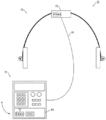
도 1은 본 발명에 따른 무선 헤드셋의 도면;1 is a diagram of a wireless headset in accordance with the present invention;
도 2는 본 발명에 따른 헤드셋의 도면;2 is a view of a headset according to the present invention;
도 3은 본 발명에 따른 무선 헤드셋의 도면;3 is a diagram of a wireless headset in accordance with the present invention;
도 4는 본 발명에 따른 무선 헤드셋의 도면;4 is a diagram of a wireless headset in accordance with the present invention;
도 5는 본 발명에 따른 무선 이어피스의 도면;5 is a view of a wireless earpiece in accordance with the present invention;
도 6은 본 발명에 따른 무선 이어피스의 도면;6 is a view of a wireless earpiece in accordance with the present invention;
도 7은 본 발명에 따른 무선 이어피스의 도면;7 is a view of a wireless earpiece in accordance with the present invention;
도 8은 본 발명에 따른 무선 이어피스의 도면;8 is a view of a wireless earpiece in accordance with the present invention;
도 9는 본 발명에 따른 헤드셋에 작동하는 프로세스의 블록도;9 is a block diagram of a process for operating a headset in accordance with the present invention;
도 10은 본 발명에 따른 헤드셋에 작동하는 프로세스의 블록도; 10 is a block diagram of a process for operating a headset in accordance with the present invention;
도 11은 본 발명에 따른 음성 감지 프로세스의 블록도; 11 is a block diagram of a voice sensing process in accordance with the present invention;
도 12는 본 발명에 따른 헤드셋에 작동하는 프로세스의 블록도; 12 is a block diagram of a process for operating a headset in accordance with the present invention;
도 13은 본 발명에 따른 음성 감지 프로세스의 블록도; 13 is a block diagram of a voice sensing process in accordance with the present invention;
도 14는 본 발명에 따른 헤드셋에 작동하는 프로세스의 블록도; 14 is a block diagram of a process for operating a headset in accordance with the present invention;
도 15는 본 발명에 따른 분리 프로세스의 순서도;15 is a flow chart of a separation process in accordance with the present invention;
도 16은 본 발명에 따른 개선된 ICA 프로세싱 서브모듈의 일 실시예의 블록도;16 is a block diagram of one embodiment of an improved ICA processing submodule in accordance with the present invention;
도 17은 본 발명에 따른 개선된 ICA 언어 분리 프로세스의 일 실시예의 블록도이다.17 is a block diagram of one embodiment of an improved ICA language separation process in accordance with the present invention.
도 1을 참조하면, 무선 헤드셋 시스템(10)이 도시되어 있다. 무선 헤드셋 시스템(10)은 제어 모듈(14)과 무선으로 통신하는 헤드셋(12)을 가진다. 헤드셋(12)은 착용하거나 기타 방법으로 사용자에 부착되도록 구성되어 있다. 헤드셋(12)은 헤드밴드(headband)(17)의 형태로 하우징(16)을 가진다. 헤드셋(12)이 스테레오 헤드셋(stereo headset)으로 도시되어 있으나, 헤드셋(12)이 대안적인 형태를 가질 수 있음을 이해할 것이다. 헤드밴드(17)는 요구되는 전자 시스템을 수용하기 위해 전자 하우징(23)을 가진다. 예를 들어, 전자 하우징(23)은 프로세서(25) 및 라디오(27)를 포함할 수 있다. 라디오(27)는 제어 모듈(14)과의 통신을 가능하게 하도록 안테나(29)와 같은 다양한 서브모듈(sub modules)을 가질 수 있다. 전자 하우징(23)은 통상적으로 배터리 또는 재충전가능 배터리(미도시)와 같은 휴대용(portable) 에너지원을 수용한다. 헤드셋 시스템이 바람직한 실시예의 맥락에서 설명되지만, 당업자라면 소란한 음향 환경으로부터 언어 신호를 분리하기 위해 설명된 기법들이 소란한 환경 또는 다중소음(multi-noise) 환경에서 활용되는 다양한 전자 통신 장치에 대해서도 마찬가지로 적합하다는 것을 이해할 것이다. 이와 같이, 음성 응용을 위한 무선 헤드셋 시스템에 대한 설명된 예시적 실시예는 예시만을 위한 것이며 한정을 위한 것이 아니다.Referring to FIG. 1, a
전자 하우징 내의 회로는 한 세트의 스테레오 이어 스피커에 결합된다. 예를 들어, 헤드셋(12)은 사용자를 위해 입체음(stereophonic sound)을 제공하도록 배열되어 있는 이어 스피커(19) 및 이어 스피커(21)를 가진다. 보다 상세하게는, 각 이어 스피커가 사용자의 귀에 얹히도록 배열되어 있다. 헤드셋(12)은 또한 오디오 마 이크로폰들(32, 33)의 형태로 한 쌍의 변환기를 가진다. 도 1에 도시된 바와 같이, 마이크로폰(32)은 이어 스피커(19)에 인접하게 위치하고, 마이크로폰(33)은 이어 스피커(19) 위에 위치한다. 이와 같이, 사용자가 헤드셋(12)을 착용한 경우, 각 마이크로폰은 스피커의 입으로 상이한 오디오 경로를 가지고, 마이크로폰(32)은 언제나 화자의 입에 더 가깝다. 이에 따라, 각 마이크로폰은 사용자의 언어와 또한 주변(ambient) 음향 소음의 한 가지 버전을 수신한다. 마이크로폰이 이격되어 있기 때문에, 각 마이크로폰은 약간 상이한 주변 소음 신호를 수신할 것이다. 오디오 신호에서의 이러한 작은 차이는 프로세서(25)에서 향상된 언어 분리를 가능하게 한다. 또한, 마이크로폰(32)이 마이크로폰(33)보다 화자의 입에 근접하기 때문에, 마이크로폰(32)으로부터의 신호가 언제나 원하는 언어 신호를 먼저 수신할 것이다. 언어 신호의 이러한 알려진 순서는 단순화되고 보다 효율적인 신호 분리 프로세스를 가능하게 한다.The circuitry in the electronic housing is coupled to a set of stereo ear speakers. For example, the
마이크로폰들(32, 33)이 이어 스피커에 인접하게 위치하는 것으로 도시되어 있으나, 여러 가지 다른 위치가 유용할 수 있음을 이해할 것이다. 예를 들어, 마이크로폰 중 하나가 또는 둘 모두가 붐 상에 연장될 수 있다. 대안적으로, 마이크로폰들이 사용자의 머리의 다른 쪽에, 다른 방향으로, 또는 어레이(array)와 같은 이격된 배열로 위치할 수 있다. 구체적인 응용 및 물리적인 제약에 따라, 마이크로폰이 앞 또는 옆을 향하거나, 전방향성(omni directional) 또는 방향성(directional)이거나, 또는 적어도 두 개의 마이크로폰이 각각 소음 및 언어의 상이한 비율을 수신하도록 하는 기타 국부성(locality) 또는 물리적 제약을 가질 수 있음을 이해할 것이다.Although
프로세서(25)는 마이크로폰(32)으로부터 전자 마이크로폰 신호를 수신하고 또한 마이크로폰(33)으로부터 원시(raw) 마이크로폰 신호를 수신한다. 신호는 디지털화, 필터링, 또는 기타 전처리(pre-processed)될 수 있음을 이해할 것이다. 프로세서(25)는 음향 소음으로부터 언어를 분리하기 위한 신호 분리 프로세스를 작동시킨다. 일 예에서는, 신호 분리 프로세스가 블라인드 신호 분리 프로세스이다. 보다 구체적인 예에서는, 신호 분리 프로세스가 독립 성분 분석 프로세스이다. 마이크로폰(32)이 마이크로폰(33)보다 화자의 입에 더 근접하기 때문에, 마이크로폰(32)로부터의 신호는 언제나 원하는 언어 신호를 먼저 수신할 것이고, 마이크로폰(32) 기록된 채널이 마이크로폰(33) 기록된 채널보다 소리가 더 클 것인데, 이는 언어 신호를 파악하는 데 도움이 된다. 신호 분리 프로세스로부터의 출력은 정결 언어 신호(clean speech signal)로서, 라디오(27)에 의해 전송을 위해 프로세스 및 준비된다. 정결 언어 신호는 소음의 상당한 부분이 제거되었으나, 신호에 얼마의 소음 성분이 여전히 있을 가능성이 크다. 라디오(27)는 변조된 언어 신호를 제어 모듈(14)로 전송한다. 일 예에서는, 라디오(27)가 블루투스® 통신 표준을 준수한다. 블루투스는 전자 장치가 보통 30 피트(feet) 미만의 근거리 통신을 할 수 있게 하는, 잘 알려진 개인 지역 통신망(personal area network) 통신 표준이다. 블루투스는 또한 오디오 레벨 전송을 지원하기에 충분한 속도에서의 통신을 가능하게 한다. 다른 예에서는, 라디오(27)가 IEEE 802.11 표준 혹은 이와 같은 기타 무선 통신 표준을 따라 작동할 수 있다(여기에서 사용된 용어 라디오는 이러한 무선 통신 표준을 지칭한다). 다른 예에서는, 라디오(27)가 구체적이고 보안을 갖춘(secure) 통신을 가능하게 하는 사유의(proprietary) 상용 또는 군용(military) 표준을 따라 작동할 수 있다.
제어 모듈(14) 또한 라디오(27)와 통신하도록 설정된 라디오(49)를 가진다. 이에 따라, 라디오(49)는 라디오(27)과 동일한 표준을 따라, 그리고 동일한 채널 설정으로 작동한다. 라디오(49)는 라디오(27)로부터 변조된 언어 신호를 수신하고, 프로세서(47)를 사용하여 인커밍(incoming) 신호에 대해 요구되는 어떠한 조정을 수행한다. 제어 모듈(14)은 무선 모바일 장치(38)로 도시되어 있다. 무선 모바일 장치(38)는 영상 디스플레이(graphical display)(40), 입력 키패드(42), 및 기타 사용자 조종장치(39)를 포함한다. 무선 모바일 장치(38)는 CDMA, WCDMA, CDMA2000, GSM, EDGE, UMTS, PHS, PCM 또는 기타 통신 표준과 같은 무선 통신 표준을 따라 작동한다. 이에 따라, 라디오(45)는 요구되는 통신 표준을 준수하여 작동하도록 구성되어 있으며, 무선 인프라스트럭쳐(infrastructure) 시스템과의 통신을 용이하게 한다. 이러한 방법으로, 제어 모듈(14)은 무선 캐리어(carrier) 인프라스트럭쳐로의 원격 통신 링크(51)를 가지며, 또한 헤드셋(12)으로의 로컬 무선 링크(50)를 가진다.The
작동에 있어서, 무선 헤드셋 시스템(10)은 음성 통신을 발신 및 수신하기 위한 무선 모바일 장치로서 작동한다. 예를 들어, 사용자는 무선 전화 통화를 걸기 위해 제어 모듈(14)을 사용할 수 있다. 프로세서(47) 및 라디오(45)는 연동하여 무선 캐리어 인프라스트럭쳐와 원격 통신 링크(51)를 설립한다. 무선 인프라스트럭쳐 와 음성 채널이 설립되면, 사용자는 음성 통신을 이행하기 위해 헤드셋(12)을 사용할 수 있다. 사용자가 이야기함에 따라, 화자의 음성 그리고 또한 주변 소음은 마이크로폰(32) 및 마이크로폰(33)에 의해 수신된다. 마이크로폰 신호는 프로세서(25)에서 수신된다. 프로세서(25)는 신호 분리 프로세스를 사용하여 정결 언어 신호를 생성한다. 정결 언어 신호는 라디오(27)에 의해 제어 모듈(14)로, 예를 들어 블루투스 표준을 사용하여 전송된다. 수신된 언어 신호는 다음으로 라디오(45)를 사용한 통신을 위해 프로세스 및 변조된다. 라디오(45)는 통신(51)을 통해 언어 신호를 무선 인프라스트럭쳐로 통신한다. 이러한 방법으로, 정결 언어 신호는 원격 청자(listener)에게 통신된다. 원격 청자로부터 오는 언어 신호는 무선 인프라스트럭쳐를 통해 통신(51)을 거쳐 라디오(45)로 보내진다. 프로세서(47) 및 라디오(49)는 수신된 신호를 블루투스와 같은 로컬 라디오 포맷으로 전환 및 포맷(format)하며, 인커밍 신호를 라디오(27)로 통신한다. 인커밍 신호는 다음으로 이어 스피커(19, 21)로 보내져, 로컬 사용자가 원격 사용자의 언어를 들을 수 있다. 이러한 방법으로, 전이중(full duplex) 음성 통신 시스템이 가능해진다.In operation, the
마이크로폰 배열은 원하는 화자의 음성을 분리하는 것이 가능할 정도로 하나의 마이크로폰으로부터 다른 것으로의 원하는 언어 신호의 지연이 충분히 크거나 그리고/또는 두 개의 기록된 입력 채널 사이의 원하는 음성 컨텐트(content)가 충분히 다르도록, 예를 들면, 언어의 픽업(pick up)이 일차(primary) 마이크로폰에서 더 최적이 되도록 하는 것이다. 여기에는 방향성 마이크로폰 또는 전방향성 마이크로폰의 비선형 배열의 사용을 통한 음성 플러스 소음 혼재형태(voice plus noise mixtures)의 변조가 포함된다. 마이크로폰의 구체적인 배치는 기대되는 음향 소음, 예상되는 풍소음, 바이오메카니컬(biomechanical) 디자인 고려사항 및 라우드스피커(loudspeaker)로부터의 음향적 반향과 같은 기대되는 환경 특성에 따라 고려 및 조절되어야 할 것이다. 일 마이크로폰 설정예는 음향 소음 시나리오 및 음향적 반향 우물(echo well)을 다룰 수 있다. 그러나 이러한 음향/반향 소음 상쇄 작업은 보통 이차(secondary) 마이크로폰(음 중심 마이크로폰 또는 상당한 소음을 포함하는 음 혼재형태의 기록을 담당하는 마이크로폰)이 일차 마이크로폰이 향하는 방향에서 돌려지게 하는 것이 요구된다. 여기에서 사용되는 바로는, 일차 마이크로폰이 목표 화자에 가장 근접한 마이크로폰이다. 최적의 마이크로폰 배열은 지향성(directivity) 또는 국부성(비선형 마이크로폰 설정, 마이크로폰 특성 방향성 패턴) 및 풍난류(wind turbulence)에 대한 마이크로폰 막(microphone membrane)의 음향 차폐(shielding) 사이의 절충안일 수 있다.The microphone arrangement may be such that the delay of the desired language signal from one microphone to the other is large enough so that it is possible to separate the desired speaker's voice and / or the desired voice content between the two recorded input channels is sufficiently different. For example, to make the language pick up more optimal in the primary microphone. This includes modulation of voice plus noise mixtures through the use of nonlinear arrangements of directional or omnidirectional microphones. The specific arrangement of the microphone will have to be considered and adjusted according to the expected environmental characteristics such as expected acoustic noise, expected wind noise, biomechanical design considerations and acoustic echo from the loudspeaker. One microphone setup can deal with acoustic noise scenarios and acoustic echo wells. However, this acoustic / echo noise canceling operation usually requires a secondary microphone (a sound center microphone or a microphone that is responsible for recording sound mixtures containing significant noise) to be turned in the direction that the primary microphone is directed. As used herein, the primary microphone is the microphone closest to the target speaker. The optimal microphone arrangement can be a compromise between directivity or locality (nonlinear microphone setting, microphone characteristic directional pattern) and acoustic shielding of the microphone membrane against wind turbulence.
휴대폰 핸드셋 및 헤드셋과 같은 모바일 응용에서는, 원하는 화자 이동에 대한 로버스트니스(robustness)는 가장 가능성이 높은 장치/화자 입 배열의 범위에 대해 동일한 음성/소음 채널 출력 순서(order)로 이어지게 하는 마이크로폰 설정예의 선정 및 분리하는 ICA 필터의 지향성 패턴의 적응(adaptation)을 통한 파인튜닝(fine tuning)에 의해 달성된다. 그러므로 마이크로폰은 하드웨어의 각 측면에 대칭으로가 아니라, 모바일 장치의 나눔선(divide line)에 배열되는 것이 바람직하다. 이러한 방법으로, 모바일 장치가 사용될 때, 발명 장치의 위치와 무관하게 동일한 마이크로폰이 언제나 가장 많은 언어를 가장 효율적으로 수신하도록 위치하는 데, 예를 들면, 일차 마이크로폰이 장치의 사용자 배치와 무관하게 화자의 입에 가장 근접하도록 위치한다. 이러한 일정하고 사전 규정된 배치는 ICA 프로세스가 더 나은 디폴트(default) 값을 가지게 하고, 보다 용이하게 언어 신호를 파악하게 한다.In mobile applications such as cell phone handsets and headsets, the microphone's robustness to desired speaker movement leads to the same voice / noise channel output order for the most likely range of device / speaker arrangements. This is achieved by fine tuning through adaptation of the directivity pattern of the ICA filter to select and separate examples. Therefore, the microphone is preferably arranged on a divide line of the mobile device, not symmetrically on each side of the hardware. In this way, when a mobile device is used, the same microphone is always positioned to most efficiently receive the most languages irrespective of the location of the invention device, for example, the primary microphone is independent of the speaker's user placement. Located closest to the mouth. This constant and predefined arrangement allows the ICA process to have better default values and to more easily identify language signals.
음향 소음을 다룰 때에는 방향성 마이크로폰의 사용이 바람직한데, 이는 이들이 통상적으로 더 나은 초기 SNR을 내기 때문이다. 그러나 방향성 마이크로폰은 풍소음에 더 민감하고 더 높은 내부 소음(저 주파수 전자 소음 픽업)을 가진다. 마이크로폰 배열은 전방향성 및 방향성 마이크로폰 모두와 작동하도록 적응시켜질 수 있으나 음향 소음 제거가 풍소음 제거와 트레이드오프(traded off)되어야 한다.The use of directional microphones is preferred when dealing with acoustic noise, since they typically produce better initial SNR. However, directional microphones are more sensitive to wind noise and have higher internal noise (low frequency electronic noise pickup). The microphone arrangement can be adapted to work with both omni and directional microphones, but acoustic noise cancellation must be traded off with wind noise cancellation.
풍소음은 통상적으로 연장된(extended) 힘의 공기가 마이크로폰의 변환기 막에 직접적으로 가해지는 것에 의해 일어난다. 고도로 민감한 막은 크고, 가끔은 포화된(saturated) 전자 신호를 생성한다. 이 신호는 언어 컨텐트를 포함하는 마이크로폰 신호 내의 어떠한 유용한 정보를 압도하고 흔히 소멸시킨다. 더 나아가, 풍소음이 매우 강하기 때문에, 이는 신호 분리 프로세스, 그리고 또한 후처리(post processing) 단계에서 포화도 및 안정성 과제가 생기게 할 수 있다. 또한, 전송되는 어떠한 풍소음은 청자에게 불쾌하고 거북한 청취 경험을 초래한다. 불운하게도, 풍소음은 헤드셋 및 이어피스 장치에 있어 특별히 어려운 과제였다.Wind noise is typically caused by the application of extended force air directly to the transducer membrane of the microphone. Highly sensitive membranes produce large, sometimes saturated electronic signals. This signal overwhelms and often extinguishes any useful information in the microphone signal containing the language content. Furthermore, because the wind noise is very strong, this can create saturation and stability challenges in the signal separation process and also in the post processing step. In addition, any wind noise transmitted results in an unpleasant and disturbing listening experience for the listener. Unfortunately, wind noise has been a particularly challenging task for headsets and earpiece devices.
그러나 무선 헤드셋의 이-마이크로폰(two-microphone) 배열은 바람(wind)을 감지하는 보다 로버스트한 방법과, 풍소음의 불온한 효과를 최소화하는 마이크로폰 배열 또는 디자인을 가능하게 한다. 무선 헤드셋은 두 개의 마이크로폰을 가지기 때문에, 헤드셋은 풍소음의 존재를 보다 정확하게 파악하는 프로세스를 작동할 수 있다. 전술된 바와 같이, 두 개의 마이크로폰은 그 입력 포트가 상이한 방향을 향하도록 배열되거나, 각각 상이한 방향에서 바람을 수신하도록 차폐될 수 있다. 이러한 배열에서는, 바람의 분출은 바람을 향하는 마이크로폰 내에 극적인 에너지 레벨 상승을 일으키는 반면 다른 마이크로폰은 극미하게만 영향을 받을 것이다. 따라서 헤드셋이 하나의 마이크로폰에만 큰 에너지 급등을 감지할 때, 헤드셋은 마이크로폰이 바람을 받고 있다고 판단할 수 있다. 더 나아가, 이 급등이 풍소음에 의한 것이라는 점을 더 확증하기 위해 다른 프로세스가 적용될 수 있다. 예를 들어, 풍소음은 통상적으로 저주파수 패턴을 가지며, 이러한 패턴이 하나의 또는 양 채널에 발견될 때, 풍소음의 존재가 나타날 수 있다. 대안적으로, 풍소음에 대해 구체적인 기계적 또는 공학적 디자인이 고려될 수 있다.However, the two-microphone arrangement of wireless headsets allows for a more robust way of sensing wind and a microphone arrangement or design that minimizes the detrimental effects of wind noise. Since the wireless headset has two microphones, the headset can operate the process of more accurately identifying the presence of wind noise. As mentioned above, the two microphones may be arranged so that their input ports face different directions, or each may be shielded to receive wind in different directions. In this arrangement, the blowout of the wind will cause a dramatic rise in energy levels in the wind facing microphone, while the other microphone will only be affected slightly. Thus, when the headset senses a significant energy spike in only one microphone, the headset can determine that the microphone is in the wind. Furthermore, other processes can be applied to further confirm that this spike is due to wind noise. For example, wind noise typically has a low frequency pattern, and when such a pattern is found in one or both channels, the presence of wind noise may appear. Alternatively, specific mechanical or engineering designs may be considered for wind noise.
마이크로폰 중 하나가 바람을 맞고 있다는 것을 헤드셋이 발견하면, 헤드셋은 바람의 영향을 최소화하는 프로세스를 작동할 수 있다. 예를 들어, 프로세스는 바람을 받고 있는 마이크로폰으로부터의 신호를 차단하고, 다른 마이크로폰의 신호만을 프로세스할 수 있다. 이 경우, 분리 프로세스 또한 비가동되고, 소음 감소 프로세스는 보다 전례적인 단일 마이크로폰 시스템으로서 작동된다. 마이크로폰이 더 이상 바람을 맞지 않으면, 헤드셋은 정상적인 이채널(two channel) 작동으로 복귀할 수 있다. 일부 마이크로폰 배열에서는, 화자로부터 더 멀리 있는 마이크로폰이 너무나 제한된 레벨의 언어 신호를 수신하여 단독 마이크로폰 입력으로 작동할 수 없다. 이러한 경우, 화자로부터 가장 근접한 마이크로폰은 바람을 받는 때에도 비 가동 또는 비강조(de-emphasized)될 수 없다.If the headset finds that one of the microphones is being winded, the headset can initiate a process that minimizes the effects of the wind. For example, the process may block the signal from the microphone under the wind and process only the signal from another microphone. In this case, the separation process is also disabled, and the noise reduction process is operated as a more conventional single microphone system. If the microphone is no longer winded, the headset can return to normal two channel operation. In some microphone arrangements, microphones further away from the speaker cannot receive too limited levels of language signals and operate as a single microphone input. In this case, the microphone closest to the speaker cannot be deactivated or de-emphasized even under wind.
이와 같이, 마이크로폰이 상이한 풍향을 향하도록 배열함으로써, 바람 부는 조건은 하나의 마이크로폰에서만 상당한 소음을 일으킬 수 있다. 다른 마이크로폰은 거의 영향받지 않기 때문에, 이는 단독으로 사용되어 다른 마이크로폰이 바람의 습격을 받는 동안 고품질의 언어 신호를 헤드셋에 제공할 수 있다. 이러한 프로세스를 사용하여, 무선 헤드셋은 바람 부는 환경에서 유리하게 사용될 수 있다. 다른 예에서는, 사용자가 이중 채널(dual channel) 모드에서 단일 채널 모드로 스위치할 수 있도록 헤드셋은 헤드셋 외부에 기계식 노브(knob)를 가진다. 개별 마이크로폰이 방향성이면, 단일 마이크로폰 작동마저도 여전히 풍소음에 지나치게 민감할 수 있다. 그러나 개별 마이크로폰이 전방향성이면, 음향 소음 억제가 저하될 것이지만, 풍소음 아티팩트(wind noise artifacts)는 어느 정도 완화될 것이다. 풍소음 및 음향 소음을 동시에 다룰 때에는 신호의 질에 있어서 본질적인 트레이드오프(trade-off)가 있다. 이러한 밸런싱(balancing)의 일부는 소프트웨어로 취급될 수 있고, 일부 결정은 사용자 선호치에 대응하도록, 예를 들어 사용자가 단일 또는 이중 채널 작동 사이에서 선택하도록 할 수 있다. 일부 배열에서는, 사용자가 또한 마이크로폰 중 어느 것을 단일 채널 입력으로 사용할 것인지 선택할 수 있다.As such, by arranging the microphones to face different wind directions, windy conditions can cause significant noise in only one microphone. Since other microphones are rarely affected, they can be used alone to provide a high quality language signal to the headset while the other microphone is attacked by the wind. Using this process, wireless headsets can be advantageously used in windy environments. In another example, the headset has a mechanical knob outside the headset so that the user can switch from dual channel mode to single channel mode. If the individual microphones are directional, even a single microphone operation may still be too sensitive to wind noise. However, if the individual microphones are omni-directional, acoustic noise suppression will be degraded, but wind noise artifacts will be alleviated to some extent. When dealing with wind noise and acoustic noise simultaneously, there is an inherent trade-off in signal quality. Some of this balancing can be treated as software, and some decisions can be made to correspond to user preferences, for example, allowing the user to choose between single or dual channel operation. In some arrangements, the user can also select which of the microphones to use as a single channel input.
도 2를 참조하면, 유선 헤드셋 시스템(75)이 도시되어 있다. 유선 헤드셋 시스템(75)은 전술된 무선 헤드셋 시스템(10)과 유사하므로 이 시스템(75)은 상세히 설명되지 않을 것이다. 무선 헤드셋 시스템(75)은 도 1을 참조하여 설명된 바와 같이 두 개의 마이크로폰 및 스테레오 이어 스피커 한 세트를 가진 헤드셋(76)을 가 진다. 헤드셋 시스템(75)에서는, 각 마이크로폰이 각 이어피스에 인접하게 위치한다. 이러한 방법으로, 각 마이크로폰은 화자의 입으로부터 대략 동일한 거리에 위치한다. 이에 따라, 분리 프로세스는 언어 신호를 파악하는 보다 정교한 방법과 보다 정교한 BSS 알고리듬을 사용할 수 있다. 예를 들어, 채널 간 분리의 정도를 보다 정확하게 측정하기 위해 추가적 프로세싱 파워가 적용되고, 버퍼 사이즈(buffer sizes)가 증가될 필요가 있을 수 있다. 헤드셋(76)은 또한 프로세서를 수용하는 전자 하우징(79)을 가진다. 그러나 전자 하우징(79)은 제어 모듈(77)에 연결되는 케이블(81)을 가진다. 이에 따라, 헤드셋(76)에서 제어 모듈(77)로의 통신은 와이어(81)를 통한다. 이러한 면에서, 모듈 전자기기(module electronics)(83)는 로컬 통신을 위한 라디오를 필요로 하지 않는다. 모듈 전자기기(83)는 무선 인프라스트럭쳐 시스템과 통신을 설립하기 위한 프로세서 및 라디오를 가진다.2, a
도 3을 참조하면, 무선 헤드셋 시스템(100)이 도시되어 있다. 무선 헤드셋 시스템(100)은 전술된 무선 헤드셋 시스템(10)와 유사하므로, 상세히 설명되지 않을 것이다. 무선 헤드셋 시스템(100)은 헤드밴드(102) 형태의 하우징(101)을 가진다. 헤드밴드(102)는 프로세서 및 로컬 라디오(111)를 가지는 전자 하우징(107)을 수용한다. 로컬 라디오(111)는, 예로서, 블루투스 라디오일 수 있다. 라디오(111)는 로컬 지역 내의 제어 모듈과 통신하도록 설정되어 있다. 예를 들어, 라디오(111)가 IEEE 802.11 표준을 따라 작동하면, 그 연계된(associated) 제어 모듈은 일반적으로 라디오(111)로부터 약 100 피트 이내에 있어야 할 것이다. 제어 모듈은 무선 모바일 장치일 수 있으며, 또는 보다 로컬한 사용을 위해 구성될 수 있음을 이해할 것이다.Referring to FIG. 3, a
구체적인 예에서, 헤드셋(100)은 패스트 푸드 음식점과 같은 상용 또는 산업용 응용을 위한 헤드셋으로 사용된다. 제어 모듈은 음식점 내에 중앙식으로 위치하여 음식점 부근 지역 어느 곳에서든 직원들이 서로 또는 고객과 통신하게 할 수 있다. 다른 예에서, 라디오(111)는 더 넓은 지역 통신을 위해 구성된다. 일 예에서는, 라디오(111)가 수 마일(miles)에 걸쳐 통신할 수 있는 상용 라디오이다. 이러한 설정은 비상 1차 대응자(emergency first-responders) 그룹이 특정 지리적 지역에 있는 중에 특정 인프라스트럭쳐의 사용가능성에 의존할 필요 없이 통신을 유지하게 할 수 있을 것이다. 이 예를 계속하면, 하우징(102)은 헬멧 또는 기타 비상 보호용 장비의 일부일 수 있다. 다른 예에서는, 라디오(111)가 군용 채널 상에서 작동하도록 구성되고, 하우징(102)은 군용 요소 또는 헤드셋에 통합적으로 형성되어 있다. 무선 헤드셋(100)은 단일 모노 이어 스피커(104)를 가진다. 제1 마이크로폰(106)은 이어 스피커(104)에 인접하게 위치하며, 제2 마이크로폰(105)은 이어피스 위에 위치한다. 이러한 방법으로, 마이크로폰은 이격되어 있으면서도 화자의 입으로의 오디오 경로를 가능하게 한다. 더욱이, 마이크로폰(106)은 언제나 화자의 입에 더 근접하여, 언어 소스의 단순화된 파악을 가능하게 할 것이다. 마이크로폰은 대안적으로 배치될 수 있음을 이해할 것이다. 일 예에서는, 마이크로폰 중 하나 또는 둘 모두가 붐 상에 배치될 수 있다.In a specific example,
도 4를 참조하면, 무선 헤드셋 시스템(125)이 도시되어 있다. 무선 헤드셋 시스템(125)은 전술된 무선 헤드셋 시스템(10)와 유사하므로, 상세히 설명되지 않 을 것이다. 무선 헤드셋 시스템(125)은 한 세트의 스테레오 스피커(131, 127)를 가지는 헤드셋 하우징을 가진다. 제1 마이크로폰(133)은 헤드셋 하우징에 부착되어 있다. 제2 마이크로폰(134)은 와이어(136)의 단부에 있는 제2 하우징 내에 있다. 와이어(136)는 헤드셋 하우징에 부착되며, 프로세서와 전기적으로 결합된다. 와이어(136)는 제2 하우징 및 마이크로폰(134)를 상대적으로 일정한 위치에 고정시키는 클립(138)을 포함할 수 있다. 이러한 방법으로, 마이크로폰(133)은 사용자의 귀 중 하나에 인접하게 위치하며, 제2 마이크로폰(134)은 사용자의 옷에, 예를 들어 가슴 가운데에 클립될 수 있다. 이러한 마이크로폰 배열은 마이크로폰이 꽤 멀리 이격되면서도 여전히 화자의 입으로부터 각 마이크로폰까지의 통신 경로를 가능하게 한다. 바람직한 사용에서는, 제2 마이크로폰이 제1 마이크로폰(133)보다 언제나 화자의 입으로부터 더 멀어, 단순화된 신호 파악 프로세스를 가능하게 한다. 그러나 사용자는 부주의로 마이크로폰을 입에 너무 근접하게 배치하여, 마이크로폰(133)이 더 멀리 있게 되는 결과를 가져올 수 있다. 이에 따라, 헤드셋(125)을 위한 분리 프로세스에는 마이크로폰의 불분명한 배열을 감안하는 추가적 정교함 및 프로세스와 또한 보다 강력한 BSS 알고리듬이 요구될 수 있다.Referring to FIG. 4, a
도 5를 참조하면, 무선 헤드셋 시스템(150)이 도시되어 있다. 무선 헤드셋 시스템(150)은 통합된 붐 마이크로폰을 가진 이어피스로 구성된다. 무선 헤드셋 시스템(150)은 도 5에 좌측(151)으로부터 그리고 우측(152)으로부터 도시되어 있다. 무선 헤드셋 시스템(150)은 사용자의 귀에 또는 그 주위에 부착되는 이어 클립(ear clip)(157)을 가진다. 하우징(153)은 스피커(156)를 수용한다. 사용 중에, 이어 클 립 157번은 하우징(153)을 사용자의 귀 중 하나에 맞댐으로써, 스피커(156)를 사용자의 귀에 인접하게 배치한다. 하우징은 또한 마이크로폰 붐(155)을 가진다. 마이크로폰 붐은 다양한 길이로 만들어질 수 있으나, 통상적으로 1 내지 4 인치의 범위 내에 있다. 제1 마이크로폰(160)은 마이크로폰 붐(155)의 단부에 위치한다. 제1 마이크로폰(160)은 화자의 입까지 상대적으로 직접적인 경로를 가지도록 구성되어 있다. 제2 마이크로폰(161) 또한 하우징(153) 상에 위치한다. 제2 마이크로폰(161)은 제1 마이크로폰(160)으로부터 이격된 위치에서 마이크로폰 붐(155) 상에 위치할 수 있다. 일 예에서는, 제2 마이크로폰(161)이 화자의 입까지 덜 직접적인 경로를 가지도록 위치한다. 그러나 붐(155)이 충분히 길다면, 양 마이크로폰이 붐의 동일한 측에 배치되어 화자의 입까지 상대적으로 직접적인 경로를 가질 수 있음을 이해할 것이다. 그러나, 도시된 바와 같이, 제2 마이크로폰(161)은 붐(155)의 외측(outside)에 위치하는데, 붐의 내측은 사용자의 얼굴과 접촉할 가능성이 크기 때문이다. 마이크로폰(161)은 붐 상의 더 뒤쪽에 또는 하우징의 주요 부분 상에 위치할 수 있음도 또한 이해할 것이다. Referring to FIG. 5, a
하우징(153)은 또한 프로세서, 라디오, 및 전원(power supply)을 수용한다. 전원은 통상적으로 재충전가능 배터리의 형태이며, 라디오는 블루투스 표준과 같은 표준에 준수하는 것일 수 있다. 무선 헤드셋 시스템(150)이 블루투스 표준을 준수하는 것이면, 무선 헤드셋(150)은 로컬 블루투스 제어 모듈과 통신한다. 예를 들어, 로컬 제어 모듈은 무선 통신 인프라스트럭쳐에서 작동하도록 구성된 무선 모바일 장치일 수 있다. 이는 제어 모듈에서 광지역 통신을 지원하는 데 필요한 상대적 으로 크고 정교한 전자기기를 가능하게 하는데, 이는 벨트에 착용되거나 서류가방에 휴대될 수 있고, 더 소형인 로컬 블루투스 라디오만이 하우징(153) 내에 수용되는 것을 가능하게 한다. 그러나 기술이 발달함에 따라 광지역 라디오 또한 하우징(153) 내에 포함될 수 있음을 이해할 것이다. 이러한 방법으로, 사용자는 음성 가동 명령 및 지시를 사용하여 통신 및 제어할 것이다.
하나의 구체적인 예에서, 블루투스 헤드셋을 위한 하우징은 대략 6cm × 3cm × 1.5cm이다. 제1 마이크로폰(160)은 소음 상쇄형 방향성 마이크로폰으로서, 소음 상쇄 포트가 마이크 픽업 포트로부터 180도 돌이켜 향한다. 제2 마이크로폰 또한 방향성 소음 상쇄 마이크로폰으로서, 그 픽업 포트가 제1 마이크로폰(160)의 픽업 포트에 직교하게 위치한다. 마이크로폰들은 3-4 cm 떨어져 위치한다. 마이크로폰들은 저주파수 성분의 분리가 가능하도록 너무 근접하게 위치하지 않아야 할 것이며, 고주파수 대역에서 공간 앨리어싱(spatial aliasing)을 방지하도록 너무 멀리 위치하지 않아야 할 것이다. 대안적인 배열에서, 마이크로폰은 둘 모두 방향성 마이크로폰이지만, 소음 상쇄 포트가 마이크 픽업 포트로부터 90도 돌이켜 향한다. 이 배열에서는, 어느 정도 더 큰 간격이, 예를 들면 4cm가 요망될 수 있다. 전방향성 마이크로폰이 사용되면, 간격은 요망에 따라 약 6cm로 증가되고, 소음 상쇄 포트는 마이크 픽업 포트로부터 180도 돌이켜 향할 수 있다. 마이크로폰 배열이 각 마이크로폰에 충분히 상이한 신호 혼재형태를 가능하게 할 때에는 전방향 마이크가 사용될 수 있다. 마이크로폰의 픽업 패턴은 전방향성, 방향성, 카디오이드형(cardioid), 팔자형(figure-eight), 또는 원거리장(far-field) 소음 상쇄일 수 있다. 특정 응용 및 물리적 제약을 지원하기 위해 기타 배열이 선택될 수 있음을 이해할 것이다.In one specific example, the housing for a Bluetooth headset is approximately 6 cm x 3 cm x 1.5 cm. The
도 5의 무선 헤드셋(150)은 마이크로폰 위치 및 화자의 입 사이에 잘 규정된 관계를 가진다. 이러한 굴곡 있고(ridged) 사전 규정된 물리적 배열에서, 무선 헤드셋은 소음을 필터하는 데 범용 사이드로브 상쇄기(Generalized Sidelobe Canceller)를 사용함으로써, 상대적으로 정결한 언어 신호를 드러낼 수 있다. 이러한 방법으로, 무선 헤드셋은 신호 분리 프로세스를 작동하지 않고, 화자의 규정된 위치에 따라, 그리고 소음이 오는 규정된 지역에 대해, 범용 사이드로브 상쇄기 내의 필터 계수를 지정(set)할 것이다.The
도 6을 참조하면, 무선 헤드셋 시스템(175)이 도시되어 있다. 무선 헤드셋 시스템(175)은 제1 이어피스(176) 및 제2 이어피스(177)를 가진다. 이러한 방법으로, 사용자는 하나의 이어피스를 좌측 귀에 위치시키고, 다른 이어피스를 우측 귀에 위치시킨다. 제1 이어피스(176)는 사용자의 귀 중 하나에 결합하기 위한 이어 클립(184)을 가진다. 하우징(181)은 그 말단에 마이크로폰(183)이 위치하고 있는 붐 마이크로폰(182)을 가진다. 제2 이어피스는 사용자의 다른 귀에 부착하기 위한 이어 클립(189)과, 말단에 제2 마이크로폰(188)을 가지는 붐 마이크로폰(187)이 있는 하우징(186)을 가진다. 하우징(181)은 제어 모듈과 통신하기 위한, 블루투스 라디오와 같은, 로컬 라디오를 수용한다. 하우징(186)은 또한 로컬 제어 모듈과 통신하기 위한, 블루투스 라디오와 같은, 로컬 라디오를 가진다. 이어피스(176, 177) 각각은 로컬 모듈에 마이크로폰 신호를 통신한다. 로컬 모듈은 음향 소음으로부터 정결 언어 신호를 분리하기 위해 언어 분리 프로세스를 적용하는 프로세서를 가진다. 무선 헤드셋 시스템(175)은 하나의 이어피스가 마이크로폰 신호를 다른 이어피스로 전송하고 다른 이어피스가 분리 알고리듬을 적용하기 위한 프로세서를 가지도록 구성될 수 있음을 이해할 것이다. 이러한 방법으로, 정결 언어 신호가 제어 모듈로 전송된다.Referring to FIG. 6, a
대안적인 구성에서, 프로세서(25)는 제어 모듈(14)과 연계된다. 이 배열에서는, 라디오(27)가 마이크로폰(32)으로부터 수신된 신호와 마이크로폰(33)으로부터 수신된 신호를 전송한다. 마이크로폰 신호는 블루투스 라디오일 수 있는 로컬 라디오(27)를 사용하여 제어 모듈로 전송되고, 이는 제어 모듈(14)에 의해 수신된다. 프로세서(47)는 다음으로 정결 언어 신호를 생성하기 위한 신호 분리 알고리듬을 작동할 수 있다. 대안적인 배열에서는, 프로세서가 모듈 전자기기(83) 내에 포함되어 있다. 이러한 방법으로, 마이크로폰 신호는 와이어(81)를 통해 제어 모듈(77)로 전송되고, 제어 모듈 내의 프로세서는 신호 분리 프로세스를 적용한다.In an alternative configuration,
도 7을 참조하면, 무선 헤드셋 시스템(200)이 도시되어 있다. 무선 헤드셋 시스템(200)은 사용자의 귀에 또는 그 주위에 결합하기 위한 이어 클립(202)을 가지는 이어피스의 형태이다. 이어피스(200)는 스피커(208)를 가지는 하우징(203)을 가진다. 하우징(203)은 또한 블루투스 라디오와 같은 로컬 라디오 및 프로세서를 수용한다. 하우징(203)은 또한 MEMS 마이크로폰 어레이(205)를 수용하는 붐(204)을 가진다. MEMS(마이크로 전자 기계 시스템) 마이크로폰은 하나 이상의 집적회로 장치 상에 배열된 복수의 마이크로폰을 가지는 반도체 장치이다. 이러한 마이크로폰 은 제조가 상대적으로 저렴하고, 안정되고 일정한 특성을 가져 헤드셋 응용에 좋다. 도 7에 도시된 바와 같이, 여러 개의 MEMS 마이크로폰이 붐(204)을 따라 위치할 수 있다. 음향 조건에 근거하여, 특정 MEMS 마이크로폰이 제1 마이크로폰(207) 및 제2 마이크로폰(206)으로 작동하도록 선택될 수 있다. 예를 들어, 마이크로폰의 특정 세트는 풍소음에, 또는 마이크로폰 간 공간적 분리를 증가시키려는 요망에 근거하여 선택될 수 있다. 사용가능한 MEMS 마이크로폰의 특정 세트를 선택 및 가동하는 데 하우징(203) 내의 프로세서가 사용될 수 있다. 마이크로폰 어레이는 하우징(203) 상의 대안적인 위치에 위치하거나, 보다 전례적인 변환기 스타일 마이크로폰을 보충하는 데 사용될 수 있음을 이해할 것이다.Referring to FIG. 7, a
도 8을 참조하면, 무선 헤드셋 시스템(210)이 도시되어 있다. 무선 헤드셋 시스템(210)은 이어클립(213)을 가지는 이어피스 하우징(212)을 가진다. 하우징(212)은 블루투스 라디오와 같은 로컬 라디오 및 프로세서를 수용한다. 하우징(212)은 말단에 제1 마이크로폰(216)을 가지는 붐(205)을 가진다. 와이어(219)는 하우징(212) 내의 전자기기에 연결되고 말단에 마이크로폰(217)을 가지는 제2 하우징을 가진다. 와이어(219)에는 마이크로폰(217)을 사용자에게 보다 견고하게 부착하기 위한 클립(222)이 제공될 수 있다. 사용 중에는, 제1 마이크로폰(216)은 화자의 입까지 상대적으로 직접적인 경로를 가지도록 위치하고, 제2 마이크로폰(217)은 사용자에게로의 상이한 직접 오디오 경로를 가지도록 하는 위치에 클립된다. 제2 마이크로폰(217)은 화자의 입으로부터 꽤 멀리 고정될 수 있기 때문에, 마이크로폰(216, 217)은 화자의 입까지 음향 경로를 유지하면서 상대적으로 멀리 이격될 수 있다. 바람직한 사용에서는, 제2 마이크로폰이 제1 마이크로폰(216)보다 언제나 화자의 입으로부터 더 멀리 배치되어, 단순화된 신호 파악 프로세스를 가능하게 한다. 그러나 사용자는 부주의로 마이크로폰을 입에 너무 근접하게 배치하여, 마이크로폰(216)이 더 멀리 있게 되는 결과를 가져올 수 있다. 이에 따라, 헤드셋(210)을 위한 분리 프로세스에는 마이크로폰의 불분명한 배열을 감안하는 추가적 정교함 및 프로세스와 또한 보다 강력한 BSS 알고리듬이 요구될 수 있다.Referring to FIG. 8, a
도 9를 참조하면, 통신 헤드셋을 작동하기 위한 프로세스(225)가 도시되어 있다. 프로세스(225)에서는 제1 마이크로폰(227)이 제1 마이크로폰 신호를 생성하고, 제2 마이크로폰(229)이 제2 마이크로폰 신호를 생성한다. 방법(225)이 두 개의 마이크로폰에 대하여 도시되었으나, 두 개 초과의 마이크로폰 및 마이크로폰 신호가 사용될 수 있음을 이해할 것이다. 마이크로폰 신호는 언어 분리 프로세스(230) 내로 수신된다. 언어 분리 프로세스(230)는, 예를 들어, 블라인드 신호 분리 프로세스일 수 있다. 보다 구체적인 예에서는, 언어 분리 프로세스(230)가 독립 성분 분석 프로세스일 수 있다. "다중-변환기 배열에서 목표 음향 신호의 분리(Separation of Target Acoustic Signals in a Multi-Transducer Arrangement)" 제목의 미국특허출원 10/897,219호는 언어 신호 생성을 위한 구체적인 프로세스를 보다 온전히 기술하는데, 이는 그 전체가 여기에 포함된다. 언어 분리 프로세스(230)는 정결 언어 신호(231)를 생성한다. 정결 언어 신호(231)는 전송 서브시스템(transmission subsystem)(232) 내로 수신된다. 전송 서브시스템(232)은, 예를 들어, 블루투스 라디오, IEEE 802.11 라디오, 또는 유선 연결일 수 있다. 더 나아 가, 전송은 로컬 지역 라디오 모듈 또는 광지역 인프라스트럭쳐를 위한 라디오로의 전송일 수 있음을 이해할 것이다. 이러한 방법으로, 전송된 신호(235)는 정결 언어 신호를 나타내는 정보를 가진다. Referring to FIG. 9, a
도 10을 참조하면, 통신 헤드셋을 작동하기 위한 프로세스(250)가 도시되어 있다. 통신 프로세스(250)에서는 제1 마이크로폰(251)이 제1 마이크로폰 신호를 언어 분리 프로세스(254)에 제공하고, 제2 마이크로폰(252)이 제2 마이크로폰 신호를 언어 분리 프로세스(254)에 제공한다. 언어 분리 프로세스(254)는 정결 언어 신호(255)를 생성하고, 이는 전송 서브시스템(258) 내로 수신된다. 전송 서브시스템(258)은, 예를 들어, 블루투스 라디오, IEEE 802.11 라디오, 또는 유선 연결일 수 있다. 전송 서브시스템은 전송 신호(262)를 제어 모듈 또는 기타 원격 라디오로 전송한다. 정결 언어 신호(255)는 또한 사이드 톤 프로세싱 모듈(side tone processing module)(256)에 의해 수신된다. 사이드 톤 프로세싱 모듈(256)은 감쇠된 정결 언어 신호를 로컬 스피커(260)에 피드(feed)시킨다. 이러한 방법으로, 헤드셋 상의 이어피스는 사용자에게 보다 자연스러운 오디오 피드백(feedback)을 제공한다. 사이드 톤 프로세싱 모듈(256)은 로컬 음향 조건에 대응하여 스피커(260)에 보내진 사이드 톤 신호의 볼륨(volume)을 조절할 수 있음을 이해할 것이다. 예를 들어, 언어 분리 프로세스(254)는 또한 소음 볼륨을 나타내는 신호를 출력할 수도 있다. 로컬하게(locally) 소란한 환경에서는, 사이드 톤 프로세싱 모듈(256)이 더 높은 레벨의 정결 언어 신호를 피드백으로서 사용자에게 출력하도록 조절될 수 있다. 사이드 톤 프로세싱 신호를 위한 감쇠 레벨을 지정함에 있어 기타 인자가 사 용될 수 있음을 이해할 것이다.Referring to FIG. 10, a
무선 통신 헤드셋을 위한 신호 분리 프로세스는 로버스트하고 정확한 음성 활동 감지기(voice activity detector)로부터 유익을 얻을 수 있다. 특히 로버스트하고 정확한 음성 활동 감지(voice activity detection, VAD) 프로세스가 도 11에 도시되어 있다. VAD 프로세스(265)는 두 개의 마이크로폰을 가지는데, 마이크로폰 중 첫 번째는 블록(266)에 나타난 바와 같이 두 번째 마이크로폰보다 화자의 입에 근접하도록 무선 헤드셋 상에 위치한다. 각 마이크로폰은 블록(267)에 나타난 바와 같이 각기 마이크로폰 신호를 생성한다. 음성 활동 감지기는 블록(268)에 나타난 바와 같이 마이크로폰 신호 각각의 에너지 레벨을 모니터(monitors)하고 측정된 에너지 레벨을 비교한다. 하나의 단순한 구현예에서는, 신호 간 에너지 레벨의 차이가 사전 규정된 임계를 초과하는지에 대해 마이크로폰 신호가 모니터된다. 이러한 임계값은 고정적이거나, 또는 음향 환경에 따라 적응하는 것일 수 있다. 에너지 레벨의 크기를 비교함으로써, 음성 활동 감지기는 에너지 급등이 목표 사용자의 이야기에 의해 일어난 것인지를 정확하게 판단할 수 있다. 통상적으로, 비교는 다음의 결과 중 하나로 이어진다:The signal separation process for a wireless communication headset can benefit from a robust and accurate voice activity detector. In particular, a robust and accurate voice activity detection (VAD) process is shown in FIG. The
(1) 블록(269)에 나타난 바와 같이, 제1 마이크로폰 신호가 제2 마이크로폰 신호보다 높은 에너지 레벨을 가지는 경우. 신호의 에너지 레벨 간 차이는 사전 규정된 임계값을 초과한다. 제1 마이크로폰이 화자에게 더 근접하기 때문에, 이러한 에너지 레벨의 관계는, 블록(272)에 나타난 바와 같이, 목표 사용자가 이야기하고 있다는 것을 나타내며; 원하는 언어 신호가 존재한다는 것을 나타내도록 제어 신호 가 사용될 수 있고, 또는 (1) As shown by
(2) 블록(270)에 나타난 바와 같이, 제2 마이크로폰 신호가 제1 마이크로폰 신호보다 높은 에너지 레벨을 가지는 경우. 신호의 에너지 레벨 간 차이는 사전 규정된 임계값을 초과한다. 제1 마이크로폰이 화자에게 더 근접하기 때문에, 이러한 에너지 레벨의 관계는, 블록(273)에 나타난 바와 같이, 목표 사용자가 이야기하고 있지 않다는 것을 나타내며; 신호가 소음뿐이라는 것을 나타내도록 제어 신호가 사용될 수 있다.(2) As shown in
실제로 하나의 마이크로폰이 사용자의 입에 더 근접하기 때문에, 그 마이크로폰에서 그 언어 컨텐트가 소리가 더 클 것이고 사용자의 언어 활동은 두 기록된 마이크로폰 채널 사이의 동반하는(accompanying) 큰 에너지 차이로 추적(tracked)될 수 있다. 또한, BSS/ICA 단계가 다른 채널로부터 사용자의 언어를 제거하기 때문에, 채널 간 에너지 차이는 BSS/ICA 출력 레벨에서는 더 커질 수 있다. BSS/ICA 프로세스로부터의 출력 신호를 사용하는 VAD가 도 13에 나타나 있다. VAD 프로세스(300)는 두 개의 마이크로폰을 가지는데, 마이크로폰 중 첫 번째는 블록(301)에 나타난 바와 같이 두 번째 마이크로폰보다 화자의 입에 근접하도록 무선 헤드셋 상에 위치한다. 각 마이크로폰은 각기 마이크로폰 신호를 생성하고, 이는 신호 분리 프로세스 내로 수신된다. 신호 분리 프로세스는 블록(302)에 나타난 바와 같이 소음-우세(noise-dominant) 신호와 또한 언어 컨텐트를 가지는 신호를 생성한다. 음성 활동 감지기는 블록(303)에 나타난 바와 같이 신호 각각의 에너지 레벨을 모니 터하고 측정된 에너지 레벨을 비교한다. 하나의 단순한 구현예에서는, 신호 간 에너지 레벨의 차이가 사전 규정된 임계를 초과하는지에 대해 신호가 모니터된다. 이러한 임계값은 고정적이거나, 또는 음향 환경에 따라 적응하는 것일 수 있다. 에너지 레벨의 크기를 비교함으로써, 음성 활동 감지기는 에너지 급등이 목표 사용자의 이야기에 의해 일어난 것인지를 정확하게 판단할 수 있다. 통상적으로, 비교는 다음의 결과 중 하나로 이어진다:In fact, because one microphone is closer to the user's mouth, the language content at that microphone will be louder and the user's language activity will be tracked as the accompanying large energy difference between the two recorded microphone channels. Can be Also, because the BSS / ICA stage removes the user's language from other channels, the energy difference between the channels can be greater at the BSS / ICA output level. The VAD using the output signal from the BSS / ICA process is shown in FIG. 13. The
(1) 블록(304)에 나타난 바와 같이, 언어-컨텐트 신호가 소음-우세 신호보다 높은 에너지 레벨을 가지는 경우. 신호의 에너지 레벨 간 차이는 사전 규정된 임계값을 초과한다. 언어-컨텐트 신호가 언어 컨텐트를 가지는 것으로 사전 결정되어 있기 때문에, 이러한 에너지 레벨의 관계는, 블록(307)에 나타난 바와 같이, 목표 사용자가 이야기하고 있다는 것을 나타내며; 원하는 언어 신호가 존재한다는 것을 나타내도록 제어 신호가 사용될 수 있고, 또는 (1) As shown in
(2) 블록(305)에 나타난 바와 같이, 소음-우세 신호가 언어-컨텐트 신호보다 높은 에너지 레벨을 가지는 경우. 신호의 에너지 레벨 간 차이는 사전 규정된 임계값을 초과한다. 언어-컨텐트 신호가 언어 컨텐트를 가지는 것으로 사전 결정되어 있기 때문에, 이러한 에너지 레벨의 관계는, 블록(308)에 나타난 바와 같이, 목표 사용자가 이야기하고 있지 않다는 것을 나타내며; 신호가 소음뿐이라는 것을 나타내도록 제어 신호가 사용될 수 있다.(2) As shown in
이채널 VAD의 다른 예에서는, 도 11 및 도 13을 참조하여 설명된 프로세스가 모두 사용된다. 이 배열에서는, VAD가 마이크로폰 신호를 사용하여 하나의 비교를 하고(도 11), 신호 분리 프로세스로부터의 출력을 사용하여 또 다른 비교를 한다(도 13). 마이크로폰 기록 레벨 및 ICA 단계의 출력에서의 에너지 차이의 복합 형태가 사용되어 현재 프로세스되는 프레임(frame)이 원하는 언어를 포함하는지 여부에 대한 로버스트한 평가가 제공될 수 있다.In another example of this channel VAD, all of the processes described with reference to FIGS. 11 and 13 are used. In this arrangement, the VAD makes one comparison using the microphone signal (FIG. 11) and another comparison using the output from the signal separation process (FIG. 13). A complex form of energy difference at the microphone recording level and at the output of the ICA stage may be used to provide a robust assessment of whether the frame currently being processed includes the desired language.
이채널 음성 감지 프로세스(265)는 알려져 있는 단일 채널 감지기에 대해 현저한 장점을 가진다. 예를 들어, 라우드스피커 상의 음성은 단일 채널 감지기가 언어가 존재하는 것을 나타내게 할 수 있는데, 이채널 프로세스(265)는 라우드스피커가 목표 화자보다 멀리 있음을 이해할 것이고 따라서 채널 중의 큰 에너지 차이를 초래하지 않음으로써 소음임을 나타낼 것이다. 에너지 측정만에 근거한 신호 채널 VAD는 신뢰성이 낮으므로, 그 유용성은 크게 제한되었으며, 선험적으로(a priori) 원하는 화자의 언어 시간 및 주파수 모델 또는 제로 교차 속도(zero crossing rates)와 같은 추가적인 기준으로 보완될 필요가 있었다. 그러나 이채널 프로세스(265)의 로버스트니스 및 정확도는 VAD가 무선 헤드셋의 작동을 감독, 제어, 및 조절하는 데 중심적인 역할을 하게 한다.The two channel
활동적인(active) 언어를 포함하지 않는 디지털 음성 샘플을 VAD가 감지하는 메커니즘은 다양한 방법으로 구현될 수 있다. 그러한 메커니즘 한 가지에는 짧은 기간에 걸쳐(여기서, 기간의 길이는 통상적으로 10 내지 30msec의 범위 내에 있다) 디지털 음성 샘플의 에너지 레벨을 모니터하는 것이 수반된다. 채널 간 에너지 레벨 차이가 고정된 임계를 초과하면, 디지털 음성 샘플은 활동적인 것으로 선언되 고, 그렇지 않으면 비활동적인(inactive) 것으로 선언된다. 대안적으로, VAD의 임계 레벨이 적응성일 수 있으며, 배경 소음 에너지가 추적될 수 있다. 이것 역시 다양한 방법으로 구현될 수 있다. 일 실시예에서는, 쾌적 소음 추정기(comfort noise estimator)에 의한 배경 소음 추정치와 같은 특정 임계보다 현재 기간의 에너지가 충분히 크면, 디지털 음성 샘플은 활동적인 것으로 선언되고, 그렇지 않으면 비활동적인 것으로 선언된다.The mechanism by which VAD detects digital speech samples that do not contain active language can be implemented in a variety of ways. One such mechanism involves monitoring the energy level of a digital speech sample over a short period of time, where the length of the period is typically in the range of 10 to 30 msec. If the energy level difference between channels exceeds a fixed threshold, the digital speech sample is declared active, otherwise it is declared inactive. Alternatively, the threshold level of the VAD may be adaptive and background noise energy may be tracked. This can also be implemented in a variety of ways. In one embodiment, the digital speech sample is declared active if the energy of the current period is greater than a certain threshold, such as a background noise estimate by a comfort noise estimator, otherwise declared inactive.
적응성 임계 레벨을 활용하는 단일 채널 VAD에서는, 제로 교차 속도, 스펙트럴 틸트(spectral tilt), 에너지 및 스펙트럴 동력(dynamics)과 같은 언어 파라미터가 측정되고 소음에 대한 값과 비교된다. 음성에 대한 파라미터가 소음에 대한 파라미터와 현저히 다르면, 이는 디지털 음성 샘플의 에너지 레벨이 낮은 경우에도 활동적인 언어가 존재한다는 것을 나타낸다. 본 실시예에서는, 상이한 채널들 간에 비교가, 특히 음성-중심 채널(예를 들면, 음성+소음 또는 기타)과 다른 채널과의 비교가 이루어질 수 있는데, 이 다른 채널이 분리된 소음 채널이건, 향상 또는 분리되었거나 되지 않은 소음 중심 채널(예를 들면, 소음+음성)이건, 또는 소음에 대한 저장된 또는 추정된 값이건 간에 그러하다. In a single channel VAD utilizing adaptive threshold levels, linguistic parameters such as zero crossing speed, spectral tilt, energy and spectral dynamics are measured and compared with values for noise. If the parameters for speech are significantly different from those for noise, this indicates that there is active language even when the energy levels of the digital speech samples are low. In the present embodiment, comparisons between different channels can be made, in particular between voice-centric channels (eg voice + noise or other) and other channels, whether or not these other channels are separate noise channels. Or is a separate or unnoticed noise center channel (e.g., noise + voice), or a stored or estimated value for the noise.
비활동적인 언어를 감지하는 데에 디지털 음성 샘플의 에너지를 측정하는 것이 충분할 수 있으나, 오디오 스펙트라 및 장기(long term) 배경 소음이 있는 긴 음성 세그먼트(segments) 사이의 구별에 있어 고정된 임계에 대한 디지털 음성 샘플의 스펙트럴 동력이 유용할 수 있다. 스펙트럴 분석을 이용하는 VAD의 예시적 실시예에서는, VAD가 이타쿠라(Itakura) 또는 이타쿠라-사이토(Itakura-Saito) 왜곡 을 사용하는 자기상관(auto-correlation)을 수행하여 배경 소음에 근거한 장기 추정치를 디지털 음성 샘플의 기간에 근거한 단기 추정치에 대해 비교한다. 이에 더해, 음성 인코더(voice encoder)에 의해 지원된다면, 선스펙트럼 쌍(line spectrum pairs, LSPs)을 사용하여 배경 소음에 근거한 장기 LSP 추정치를 디지털 음성 샘플의 기간에 근거한 단기 추정치에 대해 비교할 수 있다. 대안적으로, 스펙트럼이 다른 소프트웨어 모듈로부터 사용가능할 때 FFT 방법이 사용될 수 있다.It may be sufficient to measure the energy of a digital speech sample to detect inactive language, but for a fixed threshold in the distinction between audio spectra and long speech segments with long term background noise The spectral power of digital speech samples can be useful. In an exemplary embodiment of a VAD using spectral analysis, the VAD performs auto-correlation using Itakura or Itakura-Saito distortions to provide long-term estimates based on background noise. Is compared against a short-term estimate based on the duration of the digital speech sample. In addition, if supported by a voice encoder, line spectrum pairs (LSPs) can be used to compare long term LSP estimates based on background noise against short term estimates based on the duration of the digital speech sample. Alternatively, the FFT method can be used when the spectrum is available from another software module.
바람직하게는, 활동적인 언어가 있는 디지털 음성 샘플의 활동적인 기간 끝에는 행오버(hangover)가 적용되어야 할 것이다. 행오버는 짧은 비활동적 세그먼트를 브리지(bridges)시켜 조용하고 처지는 (/s/와 같은) 무성음(unvoiced sounds) 또는 저 SNR 전이(low SNR transition) 컨텐트가 활동적인 것으로 분류될 것을 보장한다. 행오버의 양은 VAD의 작동 모드에 따라 조절될 수 있다. 긴 활동 기간 다음의 기간이 명백히 비활동적이면(즉, 매우 낮은 에너지에 스펙트럼이 측정된 배경 소음과 유사한 경우), 행오버 기간의 길이는 감소될 수 있다. 일반적으로, 활동적 언어 분출 다음에 오는 약 20 내지 500msec의 범위의 비활동적 언어는 행오버에 의해 활동적 언어로 선언될 것이다. 임계는 약 -100 및 약 -30dBm 사이에서 조절될 수 있고 디폴트 값이 약 -60dBm 내지 약 -50dBm 사이이며, 임계는 음성의 질, 시스템 효율 및 대역너비 요건, 또는 가청 임계 레벨에 근거한다. 대안적으로, 임계는 적응성으로서, 소음의(예를 들면, 다른 채널에서의) 값 이상의 어떠한 고정된 또는 가변인 값일 수 있다. Preferably, a hangover should be applied at the end of the active period of the digital speech sample with active language. Hangovers bridge short inactive segments to ensure that quiet and sagging unvoiced sounds (such as / s /) or low SNR transition content are classified as active. The amount of hangover can be adjusted according to the operating mode of the VAD. If the period following the long active period is obviously inactive (ie, similar to the background noise at which spectrum is measured at very low energy), the length of the hangover period can be reduced. In general, inactive languages in the range of about 20 to 500 msec following active language ejection will be declared as active languages by hangovers. The threshold can be adjusted between about -100 and about -30 dBm and the default value is between about -60 dBm and about -50 dBm, and the threshold is based on voice quality, system efficiency and bandwidth width requirements, or audible threshold levels. Alternatively, the threshold may be any fixed or variable value above the value of noise (eg, in another channel) as adaptive.
예시적 실시예에서, VAD는 음성 질, 시스템 효율 및 대역너비 요건 사이에 시스템 트레이드오프를 제공하도록 복수의 모드에서 작동하게 설정될 수 있다. 일 모드에서는, VAD가 언제나 꺼있고(disabled) 모든 디지털 음성 샘플을 활동적 언어로 선언한다. 그러나 통상적인 전화 대화는 60퍼센트까지의 침묵 또는 비활동적 컨텐트를 가진다. 그러므로 이러한 기간 중에 활동적인 VAD에 의해 디지털 음성 샘플이 억제되면 높은 대역너비 게인이 구해질 수 있다. 더욱이, VAD에 의해서는, 특히 적응성 VAD에 의해서는 에너지 절약, 저감된 프로세싱 요건, 향상된 음성 질 또는 개선된 유저 인터페이스와 같은 여러 가지 시스템 효율성이 구해질 수 있다. 활동적인 VAD는 활동적인 언어를 포함하는 디지털 음성 샘플을 감지하려고 시도할 뿐만 아니라, 고품질 VAD는 또한 소음 또는 음성의 에너지 또는 소음 및 언어 샘플 사이의 값 범위를 포함하는 (분리된 또는 분리되지 않은) 디지털 음성(소음) 샘플의 파라미터를 감지 및 활용할 수 있다. 이와 같이, 활동적인 VAD, 특히 적응성 VAD는 시스템 효율을 증가시키는, 분리 및/또는 후(전)처리 단계의 변조를 포함하는 여러 가지 추가적 특징(features)을 가능하게 한다. 예를 들어, 디지털 음성 샘플을 활동적 언어로 파악하는 VAD는 분리 프로세스 또는 어떠한 전/후처리 단계를 키거나 끄도록 스위치하거나, 대안적으로는, 상이한 분리 및/또는 프로세싱 기법 또는 그 복합형태를 적용할 수 있다. VAD가 활동적 언어를 파악하지 않으면, VAD는 또한 상이한 배경 소음의 감쇠 또는 상쇄, 소음 파라미터 추정 또는 신호 및/또는 하드웨어 파라미터의 정상화(normalizing) 또는 변조를 포함하는 상이한 프로세스를 변조할 수 있다. In an example embodiment, the VAD may be set to operate in multiple modes to provide system tradeoffs between voice quality, system efficiency, and bandwidth width requirements. In one mode, the VAD is always disabled and declares all digital voice samples in the active language. However, typical telephone conversations have up to 60 percent of silent or inactive content. Therefore, if the digital speech sample is suppressed by active VAD during this period, a high band width gain can be obtained. Moreover, various system efficiencies such as energy saving, reduced processing requirements, improved voice quality or improved user interface can be obtained by the VAD, in particular by the adaptive VAD. Active VAD not only attempts to detect digital speech samples that contain active language, but high quality VADs also contain (separate or non-separated) noise or speech energy or ranges of values between noise and language samples. The parameters of the digital speech (noise) samples can be detected and utilized. As such, active VADs, particularly adaptive VADs, allow for a number of additional features including modulation of separation and / or post-processing steps, which increase system efficiency. For example, a VAD that captures digital speech samples in active language may switch to turn on or off the separation process or any pre / post processing steps, or alternatively, apply different separation and / or processing techniques or combinations thereof. can do. If the VAD does not grasp the active language, the VAD may also modulate different processes, including attenuation or cancellation of different background noise, noise parameter estimation or normalizing or modulation of signals and / or hardware parameters.
도 12를 참조하면, 통신 프로세스(275)가 도시되어 있다. 통신 프로세 스(275)에서는 제1 마이크로폰(277)이 언어 분리 프로세스(280) 내로 수신되는 제1 마이크로폰 신호(278)를 생성한다. 제2 마이크로폰(275)은 역시 언어 분리 프로세스(280) 내로 수신되는 제2 마이크로폰 신호(282)를 생성한다. 일 설정예에서는, 음성 활동 감지기(285)가 제1 마이크로폰 신호(278) 및 제2 마이크로폰 신호(282)를 수신한다. 마이크로폰 신호는 필터, 디지털화(digitized), 또는 기타 방법으로 프로세스될 수 있음을 이해할 것이다. 제1 마이크로폰(277) 마이크로폰(279)보다 화자의 입에 더 근접하게 위치한다. 이러한 사전 규정된 배열은 언어 신호의 단순화된 파악과 또한 개선된 음성 활동 감지를 가능하게 한다. 예를 들어, 이채널 음성 활동 감지기(285)는 도 11 또는 도 13을 참조하여 설명된 프로세스와 유사한 프로세스를 작동할 수 있다. 음성 활동 감지 회로의 일반적인 디자인은 잘 알려져 있으므로, 상세히 설명되지 않을 것이다. 유리하게, 음성 활동 감지기(285)는 도 11 또는 도 13을 참조하여 설명한 것과 같은, 이채널 음성 활동 감지기이다. 이것은 VAD(285)가 온당한 SNR에 대해 특별히 로버스트하고 정확하며, 따라서 통신 프로세스(275)에서 코어 제어 메커니즘(core control mechanism)으로 확신 있게 사용될 수 있음을 의미한다. 이채널 음성 활동 감지기(285)는 언어를 감지할 때, 제어 신호(286)를 생성한다.Referring to FIG. 12, a
제어 신호(286) 통신 프로세스(275) 내의 여러 프로세스를 가동, 제어, 또는 조절하는 데 유리하게 사용될 수 있다. 예를 들어, 언어 분리 프로세스(280)는 적응성이어서 구체적인 음향 환경에 따라 학습하는 것일 수 있다. 언어 분리 프로세스(280)는 또한 특정 마이크로폰 배치, 음향 환경, 또는 특정 사용자의 언어에 적 응할 수 있다. 언어 분리 프로세스의 적응성을 개선하기 위해, 음성 활동 제어 신호(286)에 대응하여 학습 프로세스(288)가 가동될 수 있다. 이러한 방법으로, 언어 분리 프로세스는 언어가 발생하고 있을 가능성이 큰 때에만 그 적응성 학습 프로세스를 적용한다. 또한, 소음만이 존재(또는 대안적으로, 부재)할 때에는 학습 프로세스를 비가동시킴으로써, 프로세싱 및 배터리 파워를 보존시킬 수 있다.
설명의 목적으로, 언어 분리 프로세스가 독립 성분 분석(ICA) 프로세스로 설명될 것이다. 일반적으로, ICA 모듈은 원하는 화자가 이야기하고 있지 않은 때에는 그 주요 분리 함수(function)를 수행할 수 없으며, 따라서 꺼놓을 수 있다. 이러한 "켜짐(on)" 및 "꺼짐(off)" 상태는 구체적인 스펙트럴 특색(spectral signatures)과 같은 원하는 화자 선험적 지식 또는 입력 채널 간의 에너지 컨텐트 비교에 근거하여 음성 활동 감지 모듈(285)에 의해 모니터 및 제어될 수 있다. 언어가 존재하지 않을 때 ICA를 꺼놓음으로써, ICA 필터는 부적절하게 적응하지 않아, 그러한 적응이 분리 개선을 달성할 수 있을 때에만 적응을 가능하게 한다. ICA 필터의 적응을 제어하는 것은 ICA 프로세스가 오랜 기간 동안의 원하는 화자 침묵 후에도 양호한 분리 질을 달성 및 유지하고 ICA 단계가 해결하지 못하는 상황을 다루려는 보람 없는(unfruitful) 분리 노력에 의한 알고리듬 특이사항(singularities)을 방지할 수 있게 한다. 다양한 ICA 알고리듬은 등방성(isotropic) 소음에 대해 상이한 정도의 로버스트니스 또는 안정성을 나타내지만, 원하는 화자 부재(또는 대안적으로, 소음 부재) 중에 ICA 단계를 꺼놓는 것은 방법론에 현저한 로버스트니스 또는 안정성을 부가한다. 또한, 소음만이 존재할 때 ICA 프로세싱을 비가동시킴으로써, 프로 세싱 및 배터리 파워를 보존시킬 수 있다. For purposes of explanation, the language separation process will be described as an independent component analysis (ICA) process. In general, an ICA module cannot perform its main detach function when the desired speaker is not talking, and can therefore be turned off. These “on” and “off” states are monitored by the voice
ICA 구현에 대한 일 예에서는 무한 임펄스 반응 필터(infinite impulsive response filters)가 사용되기 때문에, 이론적 방법으로 복합된/학습된 프로세스의 안정성이 항상 보장될 수는 없다. 그러나 동일한 성능을 가진 FIR 필터에 비한 IIR 필터 시스템의 매우 바람직한 효율, 즉 동급 ICA FIR 필터는 훨씬 길며 현저히 더 높은 MIPS를 요구함, , 및 현재 IIR 필터 구조에서 백색화 아티팩트(whitening artifacts)의 부재는 매력 있으며, 닫힌 루프(closed loop) 시스템의 폴(pole) 배치에 대략적으로 관련되는 안정성 체크(stability checks)가 포함되어, 필터 히스토리(filter history) 초기 조건과 또한 ICA 필터 초기 조건의 리셋(reset)을 트리거링(triggering)한다. IIR 필터링 자체가 과거 필터 에러(수치상 불안정성)의 축적에 의해 무계 출력치(non bounded outputs)의 결과로 이어질 수 있으므로, 유한 정밀 코딩(coding)에서 불안정성을 체크하기 위해 사용되는 기법 전반이 사용될 수 있다. 이상(anomalies)을 감지하고 필터 및 필터링 히스토리를 감독(supervisory) 모듈에 의해 제공된 값들로 리셋하는 데 ICA 필터링 단계로의 입력 및 출력 에너지의 명시적 평가가 사용된다.In one example for the ICA implementation, since infinite impulsive response filters are used, the stability of the combined / learned process in a theoretical manner cannot always be guaranteed. However, the very desirable efficiency of an IIR filter system over an FIR filter with the same performance, namely the equivalent ICA FIR filter, is much longer and requires significantly higher MIPS, and the absence of whitening artifacts in current IIR filter structures is attractive. Stability checks, which are approximately related to the pole placement of a closed loop system, are included to reset the filter history initial condition and also the ICA filter initial condition. Triggering Since the IIR filtering itself can lead to non bounded outputs by accumulating past filter errors (numeric instability), the whole technique used to check instability in finite precision coding can be used. . An explicit evaluation of the input and output energy into the ICA filtering step is used to detect anomalies and reset the filter and filtering history to the values provided by the supervisory module.
다른 예에서는, 볼륨 조절(289)을 지정하는 데 음성 활동 감지기 제어 신호(286)가 사용된다. 예를 들어, 음성 활동이 감지되지 않는 때에는 언어 신호(281)에 대한 볼륨이 상당히 감소될 수 있다. 다음, 음성 활동이 감지될 때에는 언어 신호(281)에 대한 볼륨이 증가될 수 있다. 이러한 볼륨 조절은 또한 어떠한 후처리 단계에서 이루어질 수 있다. 이는 더 나은 통신 신호를 가능하게 할 뿐만 아니라, 제한된 배터리 파워를 절약한다. 유사한 방법으로, 음성 활동이 감지되지 않을 때 소음 감소 프로세스가 보다 적극적으로(aggressively) 작동할 수 있는 때를 판단하는 데 소음 추정 프로세스(290)가 사용될 수 있다. 소음 추정 프로세스(290)는 이제 신호가 소음뿐인 때를 알기 때문에, 소음 신호를 보다 정확하게 특징지을 수 있다. 이러한 방법으로, 소음 프로세스는 실제 소음 특징에 더 잘 맞게 조절될 수 있으며, 언어가 없는 기간에 보다 적극적으로 적용될 수 있다. 다음, 음성 활동이 감지될 때, 소음 감소 프로세스는 언어 신호에 퇴화하는 효과를 더 적게 하도록 조절될 수 있다. 예를 들어, 일부 소음 감소 프로세스는 소음을 감소하는 데에는 매우 효과적이더라도 언어 신호에 원하지 않는 아티팩트를 일으키는 것으로 알려져 있다. 이러한 소음 프로세스는 언어 신호가 존재하지 않는 때에 작동될 수 있으나, 언어가 존재할 가능성이 클 때에는 꺼지거나 조절될 수 있다.In another example, voice activity
다른 예에서는, 일부 소음 감소 프로세스(292)를 조절하는 데 제어 신호(286)가 사용될 수 있다. 예를 들어, 소음 감소 프로세스(292)는 스펙트럴 차감(spectral subtraction) 프로세스일 수 있다. 보다 상세하게는, 신호 분리 프로세스(280)가 소음 신호(296) 및 언어 신호(281)를 생성한다. 언어 신호(281)는 여전히 소음 성분을 가질 수 있으며, 소음 신호(296)가 소음을 정확하게 특징짓기 때문에, 언어 신호에서 소음을 더 제거하는 데 스펙트럴 차감 프로세스(292)가 사용될 수 있다. 그러나 이러한 스펙트럴 차감은 또한 나머지 언어 신호의 에너지 레벨을 감소시킨다. 이에 따라, 제어 신호가 언어가 존재하는 것으로 나타낼 때, 소음 감소 프로세스는 나머지 언어 신호에 상대적으로 작은 증폭을 적용시킴으로써 스펙 트럴 차감에 대해 보상하도록 조절될 수 있다. 이 적은 레벨의 증폭은 그 결과 보다 자연스럽고 일정한 언어 신호를 제공한다. 또한, 소음 감소 프로세스(290)은 스펙트럴 차감이 얼마나 적극적으로 수행되었는지 알기 때문에, 증폭 레벨은 상응하게 조절될 수 있다. In another example,
제어 신호(286)는 또한 자동 게인 제어(automatic gain control, AGC) 함수(function)(294)를 제어하는 데 사용될 수도 있다. AGC는 언어 신호(281)의 출력에 적용되고, 언어 신호를 사용가능한 에너지 레벨로 유지하는 데 사용된다. AGC는 언어가 존재하는 때를 알기 때문에, AGC는 보다 정확하게 게인 제어를 언어 신호에 적용할 수 있다. 출력 언어 신호를 보다 정확하게 제어 또는 정상화함으로써, 후처리 함수가 보다 용이하고 효과적으로 적용되게 할 수 있다. 제어 신호(286)가 기타 후처리(295) 함수를 포함하여 통신 시스템 내의 여러 프로세스를 제어 또는 조절하는 데에 유리하게 사용될 수 있음이 이해될 것이다.
예시적 실시예에서, AGC는 완전 적응성(fully adaptive)이거나 고정된 게인을 가질 수 있다. 바람직하게는, AGC가 약 -30dB 내지 30dB 범위의 완전 적응성 작동 모듈을 지원한다. 디폴트 게인 값이 독립적으로 설립될 수 있는데, 통상적으로 0dB이다. 적응성 게인 제어가 사용되면, 초기 게인 값은 이 디폴트 게인에 의해 특정된다. AGC는 입력 신호(281)의 파워 레벨에 상응하게 게인 인수를 조절한다. 낮은 에너지 레벨의 입력 신호(281)는 쾌적한 음레벨(sound level)로 증폭되고, 높은 에너지 신호는 감쇠된다.In an exemplary embodiment, the AGC may be fully adaptive or have a fixed gain. Preferably, the AGC supports a fully adaptive operating module in the range of about -30 dB to 30 dB. Default gain values can be established independently, typically 0 dB. If adaptive gain control is used, the initial gain value is specified by this default gain. The AGC adjusts the gain factor according to the power level of the
증배기(multiplier)는 입력 신호에 게인 인수를 적용하고 이는 그 다음 출력 된다. 초기에는 통상적으로 0dB인 디폴트 게인이 입력 신호에 적용된다. 파워 추정기(power estimator)는 게인 조절된 신호의 단기 평균 파워(short term average power)를 추정한다. 입력 신호의 단기 평균 파워는 바람직하게는 매 여덟 샘플마다 계산되는데, 통상적으로 8kHz 신호에서 매 1ms이다. 클립핑 논리(clipping logic)는 단기 평균 파워를 분석하여 사전 결정된 클립핑 임계보다 큰 진폭(amplitudes)을 가진 게인 조절된 신호를 파악한다. 클립핑 논리는 게인 조절된 신호의 진폭이 사전 결정된 클립핑 임계를 초과할 때 입력 신호를 미디어 큐(media queue)로 직접 연결하는 AGC 바이패스 스위치(AGC bypass switch)를 제어한다.AGC 바이패스 스위치는 AGC가 게인 조절된 신호의 진폭이 클립핑 임계 미만으로 하강하도록 적응할 때까지 업(up) 또는 바이패스 위치에 남아 있는다.The multiplier applies a gain factor to the input signal, which is then output. Initially, a default gain of typically 0 dB is applied to the input signal. The power estimator estimates a short term average power of the gain adjusted signal. The short term average power of the input signal is preferably calculated every eight samples, typically every 1 ms in an 8 kHz signal. Clipping logic analyzes short-term average power to identify gain-adjusted signals with amplitudes greater than a predetermined clipping threshold. The clipping logic controls an AGC bypass switch that connects the input signal directly to the media queue when the amplitude of the gain adjusted signal exceeds a predetermined clipping threshold. The AGC bypass switch controls the AGC bypass switch. The gain-adjusted signal remains in the up or bypass position until it adapts to fall below the clipping threshold.
설명된 예시적 실시예에서, AGC는 천천히 적응하도록 디자인되는데, 오버플로우(overflow) 또는 클립핑이 감지되면 어느 정도 빠르게 적응해야 할 것이다. 시스템 관점에서 보면, AGC 적응은 음성이 비활동적인 것으로 VAD가 판단하면 배경 소음을 감쇠 또는 상쇄하도록 디자인되거나 고정되어야 할 것이다.In the example embodiment described, the AGC is designed to adapt slowly, which will have to adapt somewhat quickly if overflow or clipping is detected. From a system point of view, AGC adaptation would have to be designed or fixed to attenuate or cancel background noise if VAD determines that speech is inactive.
다른 예에서, 제어 신호(286)는 전송 서브시스템(291)을 가동 및 비가동시키는 데 사용될 수 있다. 특히, 전송 서브시스템(291)이 무선 라디오이면, 무선 라디오는 음성 활동이 감지되는 때에만 가동되거나 또는 온전히 파워공급(powered)하면 된다. 이러한 방법으로, 음성 활동이 감지되지 않을 때에는 전송 파워가 감소될 수 있다. 로컬 라디오 시스템은 배터리에 의해 파워공급될 가능성이 크기 때문에, 전송 파워를 절약하는 것은 헤드셋 시스템에 사용성을 증가시켜 준다. 일 예에서는, 전송 시스템(291)으로부터 전송되는 신호가 제어 모듈 내의 상응하는 블루투스 수신기에 의해 수신될 블루투스 신호(293)이다.In another example,
도 14를 참조하면, 통신 프로세스(350)가 도시되어 있다. 통신 프로세스(350)에서는 제1 마이크로폰(351)이 제1 마이크로폰 신호를 언어 분리 프로세스(355)에 제공하고, 제2 마이크로폰(352)이 제2 마이크로폰 신호를 언어 분리 프로세스(355)에 제공한다. 언어 분리 프로세스(355)는 상대적으로 정결한 언어 신호(356)와 또한 음향 소음(357)을 나타내는 신호를 생성한다. 이채널 음성 활동 감지기(360)는 언어가 발생하고 있을 가능성이 큰 때가 언제인지 판단하기 위하여 언어 분리 프로세스로부터 한 쌍의 신호를 수신하고, 언어가 발생하고 있을 가능성이 큰 때에 제어 신호(361)를 생성한다. 음성 활동 감지기(360)는 도 11 또는 도 13을 참조하여 설명된 것과 같은 VAD 프로세스를 작동한다. 제어 신호(361)는 소음 추정 프로세스(363)를 가동 또는 조절하는 데 사용될 수 있다. 신호(357)가 언어를 포함하지 않을 가능성이 큰 때를 소음 추정 프로세스(363)가 안다면, 소음 추정 프로세스(363)는 보다 정확하게 소음을 특징지을 수 있다. 음향 소음의 특징에 대한 이러한 지식은 다음으로 소음 감소 프로세스(365)에서 소음을 보다 온전히 그리고 정확하게 감소시키는 데 사용될 수 있다. 언어 분리 프로세스로부터 오는 언어 신호(356)는 얼마의 소음 성분을 가질 수 있기 때문에, 추가의 소음 감소 프로세스(365)가 언어 신호의 질을 더 개선시킬 수 있다. 이러한 방법으로 전송 프로세스(368)로부터 수신된 신호는 소음 성분이 더 낮은, 더 나은 질을 가지게 된다. 제어 신호(361)가 언어 분리 프로세스의 가동 또는 소음 감소 프로세스 또는 전송 프 로세스의 가동과 같이 통신 프로세스(350)의 기타 측면을 제어하는 데 사용될 수 있음도 이해할 것이다. (분리된 또는 분리되지 않은) 소음 샘플의 에너지는 출력 향상(output enhanced) 음성의 에너지 또는 원단(far end) 사용자의 언어의 에너지를 변조하는 데 활용될 수 있다. 더 나아가, VAD는 발명 프로세스의 이전, 중, 및 이후에 신호의 파라미터를 변조할 수 있다. Referring to FIG. 14, a communication process 350 is shown. In the communication process 350, the
일반적으로, 설명된 분리 프로세스는 적어도 두 개의 이격된 마이크로폰 한 세트를 사용한다. 일부 경우에는, 마이크로폰이 화자의 음성까지 상대적으로 직접적인 경로를 가지는 것이 요망된다. 이러한 경로에서는, 화자의 음성이 어떠한 방해하는 물리적 장애물 없이 각 마이크로폰에 직접적으로 이동한다. 다른 경우에는, 마이크로폰이 하나는 상대적으로 직접적인 경로를 가지고 다른 하나는 화자로부터 돌이켜 향하도록 배치될 수 있다. 구체적인 마이크로폰 배치는, 예를 들어, 의도하는 음향 환경, 물리적 제한, 및 사용가능한 프로세싱 파워에 따라 이루어질 수 있음을 이해할 것이다. 보다 로버스트한 분리를 요구하는 응용에서, 또는 배치 제약이 더 많은 수의 마이크로폰이 유용하게 하는 곳에서는 분리 프로세스가 둘 이상의 마이크로폰을 가질 수 있다. 예를 들어, 일부 응용에서는 화자가 하나 이상의 마이크로폰으로부터 차폐된 위치에 화자가 배치되는 가능성이 있을 수 있다. 이러한 경우, 적어도 두 개의 마이크로폰이 화자의 음성까지 상대적으로 직접적인 경로를 가질 가능성을 증가시키도록 추가의 마이크로폰이 사용될 것이다. 마이크로폰 각각은 언어 소스와 또한 소음원으로부터 음향 에너지를 수신하고, 언어 성분 및 소음 성분 모두를 가지는 복합 마이크로폰 신호를 생성한다. 마이크로폰 각각은 다른 모든 마이크로폰으로부터 분리되어 있기 때문에, 각 마이크로폰은 어느 정도 상이한 복합 신호를 생성할 것이다. 예를 들어, 소음 및 언어의 상대적인 컨텐트는 다양할 수 있으며, 또한 각 음원에 대한 타이밍 및 지연도 그러하다.In general, the described detachment process uses at least two sets of spaced microphones. In some cases it is desired that the microphone have a relatively direct path to the speaker's voice. In this path, the speaker's voice travels directly to each microphone without any obstructing physical obstacles. In other cases, the microphone may be arranged such that one has a relatively direct path and the other turns away from the speaker. It will be appreciated that specific microphone placement may be made, for example, depending on the intended acoustical environment, physical limitations, and processing power available. In applications that require more robust separation, or where placement constraints make more microphones useful, the separation process may have more than one microphone. For example, in some applications it may be possible for a speaker to be placed in a location shielded from one or more microphones. In such cases, additional microphones will be used to increase the likelihood that at least two microphones will have a relatively direct path to the speaker's voice. Each of the microphones receives acoustic energy from a speech source and also from a noise source and produces a composite microphone signal having both speech and noise components. Since each microphone is separated from all other microphones, each microphone will produce a somewhat different composite signal. For example, the relative content of noise and language may vary, as well as the timing and delay for each sound source.
각 마이크로폰에서 생성된 복합 신호는 분리 프로세스에 의해 수신된다. 분리 프로세스는 수신된 복합 신호를 프로세스하고 언어 신호와 소음을 나타내는 신호를 생성한다. 일 예에서는, 분리 프로세스가 두 개의 신호를 생성하는 독립 성분 분석(ICA) 프로세스를 사용한다. ICA 프로세스는, 바람직하게는 비선형 유계 함수(nonlinear bounded functions)를 가진 무한 임펄스 반응 필터인, 크로스 필터(cross filters)를 사용하여 수신된 복합 신호를 필터한다. 비선형 유계 함수는 빨리 연산될 수 있는 사전 결정된 최고 및 최저 값을 가지는 비선형 함수, 예를 들어, 입력값에 근거하여 양수 또는 음수 값을 출력하는 사인 함수이다. 신호의 반복 피드백 후, 출력 신호의 두 채널이 제공되는데, 한 채널은 소음이 우세하여 실질적으로 소음 성분으로 이루어지고, 다른 한 채널은 소음 및 언어의 복합형태를 포함한다. 본 명세와 일관하는 기타 ICA 필터 함수 및 프로세스가 사용될 수 있음이 이해될 것이다. 대안적으로, 본 발명에는 기타 소스 분리 기법의 이용이 사료된다. 예를 들어, 분리 프로세스는 상당히 유사한 신호 분리를 달성하기 위해 음향 환경에 대한 어느 정도의 선험적 지식을 사용하는 응용 특유의(application specific) 적응성 필터 프로세스 또는 블라인드 신호 소스(BSS) 프로세스를 사용할 수 있다.The composite signal generated at each microphone is received by a separation process. The separation process processes the received composite signal and generates a signal representing speech and noise. In one example, the separation process uses an independent component analysis (ICA) process to generate two signals. The ICA process filters the received composite signal using cross filters, which are preferably infinite impulse response filters with nonlinear bounded functions. Nonlinear bounded functions are nonlinear functions with predetermined high and low values that can be quickly computed, for example, a sine function that outputs positive or negative values based on input values. After repeated feedback of the signal, two channels of the output signal are provided, one of which is predominantly noise, consisting essentially of noise components, and the other of which contains a combination of noise and language. It will be appreciated that other ICA filter functions and processes consistent with this specification may be used. Alternatively, the present invention contemplates the use of other source separation techniques. For example, the separation process may use an application specific adaptive filter process or a blind signal source (BSS) process that uses some priori knowledge of the acoustic environment to achieve significantly similar signal separation.
헤드셋 배열에서, 마이크로폰들의 상대적 위치를 사전에 알 수 있으며, 이러한 위치 정보는 언어 신호를 파악하는 데 유용하다. 예를 들어, 일부 마이크로폰 배열에서는, 마이크로폰 중 하나가 화자에게 가장 근접하고 다른 마이크로폰 모두는 더 멀리 있을 가능성이 매우 클 수 있다. 이러한 사전 규정된 위치 정보를 사용하여, 파악 프로세스(identification process)가 분리된 채널 중 어느 것이 언어 신호가 되고 어느 것이 소음-우세 신호가 될지를 사전 결정할 수 있다. 이 접근법을 사용하는 것은 먼저 신호를 현저히 프로세스할 필요 없이 어느 것이 언어 채널이고 어느 것이 소음-우세 채널인지 파악할 수 있다는 장점을 가진다. 이에 따라, 이 방법은 효율적이고 빠른 채널 파악을 가능하게 하지만, 보다 규정된 마이크로폰 배열을 사용하므로 유연성(flexibility)이 더 적다. 헤드셋에서는, 마이크로폰 중 하나가 언제나 화자의 입에 가장 근접하도록 마이크로폰 배치가 선택될 수 있다. 파악 프로세스는 채널들이 올바르게 파악되었음을 확인하도록 여전히 하나 이상의 다른 파악 프로세스를 적용할 수 있다. In a headset arrangement, the relative positions of the microphones can be known in advance, and this position information is useful for identifying language signals. For example, in some microphone arrangements, it is very likely that one of the microphones is closest to the speaker and all of the other microphones are farther away. Using this predefined location information, the identification process can predetermine which of the separate channels will be the speech signal and which will be the noise-dominance signal. Using this approach has the advantage of being able to figure out which is the language channel and which is the noise-dominant channel without first having to process the signal significantly. Thus, this method allows for efficient and fast channel identification, but with less flexibility since it uses a more defined microphone arrangement. In a headset, the microphone placement may be selected such that one of the microphones always closest to the speaker's mouth. The identification process may still apply one or more other identification processes to confirm that the channels have been identified correctly.
도 15를 참조하면, 구체적인 분리 프로세스(400)가 도시되어 있다. 프로세스(400)는, 블록(402, 404)에 나타난 바와 같이, 음향 정보 및 소음을 수신하도록 변환기를 위치하고, 추가 프로세싱을 위해 복합 신호를 생성한다. 복합 신호는 블록(406)에 나타난 바와 같이 채널로 프로세스된다. 흔히, 프로세스(406)는 적응성 필터 계수가 있는 한 세트의 필터를 포함한다. 예를 들어, 프로세스(406)가 ICA 프로세스를 사용하면, 프로세스(406)는 여러 필터를 가지며, 각각은 적응가능하고 조절가능한 필터 계수를 가진다. 프로세스(406)가 작동함에 따라, 블록(421)에 나타난 바와 같이 계수는 분리 성능을 개선하도록 조절되며, 블록(423)에 나타난 바와 같이 새 계수가 필터에 적용 및 사용된다. 필터 계수의 이러한 지속적인 적응은 프 로세스(406)가 변화하는 음향 환경에서도 충분한 레벨의 분리를 제공할 수 있게 한다.Referring to FIG. 15, a
프로세스(406)는 통상적으로 두 개의 채널을 생성하는데, 이는 블록(408)에서 파악된다. 구체적으로, 하나의 채널은 소음-우세 신호로 파악되고, 다른 채널은 소음 및 정보의 복합형태일 수 있는 언어 신호로 파악된다. 블록(415)에 나타난 바와 같이, 소음-우세 신호 또는 복합 신호를 측정하여 신호 분리의 레벨을 감지할 수 있다. 예를 들어, 소음-우세 신호를 측정하여 언어 성분의 레벨을 감지할 수 있고, 측정치에 대응하여 마이크로폰의 게인을 조절할 수 있다. 이러한 측정 및 조절은 프로세스(400)의 작동 중에 수행되거나, 프로세스를 위한 준비 중에 수행될 수 있다. 이러한 방법으로, 요망되는 게인 인수가 디자인, 시험, 또는 제조 프로세스 중에 프로세스에 대해 선택 및 사전 규정되고, 이로 인해 프로세스(400)가 작동 중에 이러한 측정 및 지정을 수행하는 것에서 자유로워지게 할 수 있다. 또한, 게인의 올바른 지정은 디자인, 시험, 또는 제조 단계에서 가장 효율적으로 사용되는 고속 디지털 오실로스코프(oscilloscopes)와 같이 정교한 전자 시험 기구의 사용으로부터 유익을 얻을 수 있다. 초기 게인 세팅(settings)은 디자인, 시험, 또는 제조 단계에서 이루어질 수 있고, 게인 세팅의 추가적 튜닝은 프로세스(100)의 실제 작동(live operation) 중에 이루어질 수 있음이 이해될 것이다.
도 16은 ICA 또는 BSS 프로세싱 함수의 일 실시예(500)를 도시한다. 도 16 및 도 17을 참조하여 설명되는 ICA 프로세스는 도 5, 도 6, 및 도 7에 도시된 헤드셋 디자인에 특히 적합하다. 이러한 구성은 잘 규정되고 사전 규정된 마이크로폰 배치를 가지고, 두 언어 신호가 화자의 입 앞의 상대적으로 작은 "버블(bubble)"에서 추출될 수 있게 한다. 입력 신호 X1 및 X2는 각각 채널(510) 및 채널(520)로부터 수신된다. 통상적으로, 이러한 신호 각각은 적어도 하나의 마이크로폰으로부터 올 것이지만, 기타 소스가 사용될 수 있음을 이해할 것이다. 크로스 필터 W1 및 W2는 입력 신호 각각에 적용되어 분리된 신호 U1의 채널(530)과 분리된 신호 U2의 채널(540)을 제공한다. 채널(530)(언어 채널)은 주로 원하는 신호를 포함하고, 채널(540)(소음 채널)은 주로 소음 신호를 포함한다. "언어 채널" 및 "소음 채널"이라는 용어가 사용되었으나, "언어" 및 "소음"이라는 용어가 요망에 따라 상호변경가능함을, 예를 들면, 하나의 언어 및/또는 소음이 다른 언어 및/또는 소음보다 요망되는 경우일 수 있음을 이해해야 할 것이다. 더 나아가, 방법은 또한 둘 이상의 소스로부터의 혼재 소음 신호를 분리하는 데에도 사용될 수 있다. 16 illustrates one
무한 임펄스 반응 필터는 본 프로세싱 프로세스에서 바람직하게 사용된다. 무한 임펄스 반응 필터는 그 출력 신호가 입력 신호의 적어도 일부로서 필터 내로 다시 피드(fed back)되는 필터이다. 유한 임펄스 반응 필터는 그 출력 신호가 입력으로 피드백되지 않는 필터이다. 크로스 필터 W21 및 W12는 시간에 걸쳐 성기게(sparsely) 분포된 계수를 가져 장기간의 시간 지연을 포착(capture)한다. 가장 단순화된 형태에서, 크로스 필터 W21 및 W12는 필터당 하나의 필터 계수만을 가진 게인 인수, 예를 들어 출력 신호 및 피드백 입력 신호 사이의 시간 지연에 대한 지연 게인 인수 및 입력 신호를 증폭시키기 위한 증폭 게인 인수다. 다른 형태에서는, 크로스 필터가 각각 수십(dozens), 수백 또는 수천 개의 필터 계수를 가질 수 있다. 후술되는 바와 같이, 출력 신호 U1 및 U2는 후처리 서브모듈, 디노이징(de-noising) 모듈 또는 언어 특징 추출 모듈에 의해 더 프로세스될 수 있다.Infinite impulse response filters are preferably used in the present processing process. An infinite impulse response filter is a filter whose output signal is fed back into the filter as at least part of the input signal. A finite impulse response filter is a filter whose output signal is not fed back to the input. Cross filters W 21 and W 12 have coefficients sparsely distributed over time to capture long time delays. In the simplest form, the cross filters W 21 and W 12 are used to amplify the input signal with a gain factor with only one filter coefficient per filter, for example a delay gain factor for the time delay between the output signal and the feedback input signal. This is an amplification gain factor. In another form, the cross filter may have dozens, hundreds or even thousands of filter coefficients, respectively. As described below, the output signals U 1 and U 2 may be further processed by a post processing submodule, de-noising module or language feature extraction module.
블라인드 소스 분리를 달성하기 위해 ICA 학습 규칙(ICA learning rule)이 명시적으로 도출되었으나, 이를 음향 환경에서의 언어 프로세싱에 대해 실용적으로 구현하는 것은 필터링 체계(scheme)의 불안정한 행동으로 이어질 수 있다. 이 시스템의 안정성을 보장하기 위해서는, W12 및 마찬가지로 W21의 적응 동력(adaptation dynamics)이 먼저 안정적이어야 한다. 이러한 시스템에서는 게인 마진(gain margin)이 일반적으로 낮은데, 이것은 비고정(non stationary) 언어 신호에서 발견되는 것과 같은 입력 게인의 증가는 불안정성으로, 그리고 따라서 가중치 계수(weight coefficients)의 기하급수적인(exponential) 증가로 이어질 수 있음을 의미한다. 언어 신호는 일반적으로 제로 평균(zero mean)으로 성긴(sparse) 분포를 나타내기 때문에, 부호(sign) 함수는 시간에 대해 빈번히 진동(oscillate)하고 불안정한 행동에 기여할 것이다. 마지막으로, 빠른 수렴(convergence)을 위해서는 큰 학습 파라미터가 요망되기 때문에, 안정성 및 성능 사이에는 본질적인 트레이드오프가 있는데, 큰 입력 게인은 시스템을 더 불안정하게 할 것이기 때문이다. 알려진 학습 규칙은 불안정성으로 이어질 뿐만 아니라, 또한 비선형 부호 함수에 의해 진동하는 경향이 있으며, 특히 안정성 한계에 접근할 때 그러한데, 이는 필터된 출력 신호 U1(t) 및 U2(t)의 잔향으로 이어진다. 이러한 문제를 다루기 위해, W12 및 W21에 대한 적응 규칙(adaptation rules)이 안정화될 필요가 있다. 필터 계수를 위한 학습 규칙이 안정적이고 X에서 U까지의 시스템 전달 함수(system transfer function)의 닫힌 루프 폴이 단위 원(unit circle) 내에 위치하면, 시스템이 BIBO(유계 입력 유계 출력, bounded input bounded output)에서 안정적임이 광범위한 분석 및 실험 조사에서 나타난 바 있다. 전체 프로세싱 체계의 마지막 상응하는 목적은 따라서 안정성 제약 하에서 소란한 언어 신호의 블라인드 소스 분리가 될 것이다. ICA learning rules have been explicitly derived to achieve blind source separation, but implementing them practically for language processing in an acoustic environment can lead to unstable behavior of the filtering scheme. To ensure the stability of this system, the adaptation dynamics of W 12 and likewise W 21 must first be stable. In such systems, the gain margin is generally low, which is an increase in input gain, such as that found in non stationary language signals, is instability, and therefore exponential of weight coefficients. ) May lead to an increase. Since verbal signals generally exhibit a sparse distribution with a zero mean, the sign function will frequently oscillate over time and contribute to unstable behavior. Finally, since large learning parameters are required for fast convergence, there is an inherent tradeoff between stability and performance, because large input gains will make the system more unstable. Known learning rules not only lead to instability, but also tend to oscillate by nonlinear sign functions, especially when approaching stability limits, which are reflected in the reverberation of the filtered output signals U 1 (t) and U 2 (t) It leads. To address this problem, the adaptation rules for W 12 and W 21 need to be stabilized. If the learning rules for the filter coefficients are stable and the closed loop pole of the system transfer function from X to U is located in the unit circle, the system is bounded input bounded output. ) Has been shown in extensive analytical and experimental investigations. The last corresponding purpose of the overall processing scheme will thus be blind source separation of fuzzy language signals under stability constraints.
안정성을 보장하기 위한 주요 방법은 따라서 입력을 적절하게 스케일(scale)하는 것이다. 본 프레임워크(framework)에서 스케일링 인수 sc_fact는 인커밍 입력 신호 특징에 근거하여 적응된다. 예를 들어, 입력이 너무 높으면, 이는 sc_fact의 증가로 이어져 입력 증폭을 감소시킬 것이다. 성능 및 안정성 사이에 절충(compromise)이 있다. 입력을 sc_fact의 비율로 낮추어 스케일링하는 것은 SNR을 감소시키고 이는 저하된 분리 성능으로 이어진다. 입력은 따라서 안정성을 보장하는 데 필요한 정도로만 스케일되어야 할 것이다. 매 샘플마다 가중치 계수의 단기 요동(fluctuation)을 감안하는 필터 아키텍쳐를 실행시키고, 이로 인해 연관된 잔향을 방지함으로써 크로스 필터에 대해 추가적으로 안정화가 달성될 수 있다. 이러한 적응 규칙 필터는 시간 영역 평활화(time domain smoothing)로 볼 수 있다. 추가적 필터 평활화가 주파수 영역에서 수행되어 수렴된 분리 필터가 이웃하는 주파수 빈에 걸쳐 통일성(coherence)을 가지도록 할 수 있다. 이는 K-탭 필터(K-tap filter)를 길이 L로 제로 탭핑(zero tapping)하고, 이 필터를 증가된 시간 지원(time support)으로 푸리에 변환(Fourier transforming)한 뒤 역변환(Inverse Transforming)함으로써 간편하게 이루어질 수 있다. 필터가 직사각형 시간 영역 윈도우(window)로 효과적으로 윈도우(windowed)되었으므로, 이는 주파수 영역에서 사인 함수(sine function)에 의해 상응하게 평활화된다. 이러한 주파수 영역 평활화는 규칙적인 시간 간격마다 달성되어 적응된 필터 계수를 통일성 있는 해(coherent solution)로 주기적으로 재초기화(reinitialize)할 수 있다.The main way to ensure stability is therefore to properly scale the input. In this framework, the scaling factor sc_fact is adapted based on the incoming input signal feature. For example, if the input is too high, this will lead to an increase in sc_fact and reduce input amplification. There is a compromise between performance and stability. Scaling the input down to the ratio of sc_fact reduces the SNR, which leads to degraded isolation performance. The input will therefore only need to be scaled to the extent necessary to ensure stability. Further stabilization can be achieved for the cross filter by implementing a filter architecture that takes into account short-term fluctuations of the weighting coefficients for each sample, thereby avoiding associated reverberation. This adaptive rule filter can be viewed as time domain smoothing. Additional filter smoothing may be performed in the frequency domain such that the converged separation filters have coherence across neighboring frequency bins. This is easily done by zero tapping the K-tap filter to length L, Fourier transforming the filter with increased time support and then Inverse Transforming. Can be done. Since the filter was effectively windowed into a rectangular time domain window, it is correspondingly smoothed by a sine function in the frequency domain. This frequency domain smoothing can be achieved at regular time intervals to periodically reinitialize the adapted filter coefficients into a coherent solution.
다음 수식은 매 시간 샘플 t에 대해 사용될 수 있는 ICA 필터 구조의 예로서, k는 시간 증분(time increment) 변수이다.The following equation is an example of an ICA filter structure that can be used for every time sample t, where k is a time increment variable.


함수 f(x)는 비선형 유계 함수, 즉 사전 결정된 최고값 및 사전 결정된 최소값을 가지는 비선형 함수이다. 바람직하게는, f(x)가 변수 x의 부호에 따라 최고값 또는 최소값에 빨리 접근하는 비선형 유계 함수이다. 예를 들어, 단순한 유계 함수로서 부호 함수가 사용될 수 있다. 부호 함수 f(x)는 x가 양수인지 음수인지에 따라 1 또는 -1의 두(binary) 값을 가지는 함수이다. 비선형 유계 함수의 예는 다음을 포함하나, 이에 한정되지는 않는다.The function f (x) is a nonlinear bounded function, i.e. a nonlinear function having a predetermined maximum and a predetermined minimum. Preferably, f (x) is a nonlinear bounded function that quickly approaches the highest or lowest value depending on the sign of the variable x. For example, a sign function can be used as a simple bound function. The sign function f (x) is a function having a binary value of 1 or -1 depending on whether x is positive or negative. Examples of nonlinear bounded functions include, but are not limited to:


이러한 규칙은 필요한 연산을 수행하기 위해 변동소수점 정밀도(floating point precision)이 사용가능함을 가정한다. 변동소수점 정밀도가 바람직하지만, 고정소수점(fixed point) 산술 또한 사용될 수 있으며, 특히 최소의 연산 프로세싱 능력을 가진 장치에 적용될 때 그러하다. 고정소수점 산술을 이용할 능력에도 불구하고, 최적의 ICA 해(solution)로의 수렴은 더 어렵다. 실제로 ICA 알고리듬은 간섭하는 소스가 상쇄되어야 한다는 원칙에 근거한 것이다. 거의 동일한 수가 차감되는 (또는 매우 상이한 수가 가산되는) 때의 상황에서 고정소수점 산술의 일부 부정확성 때문에, ICA 알고리듬은 최적이지 못한 수렴 특성을 나타낼 수 있다.This rule assumes that floating point precision is available to perform the required operations. Fixed-point precision is preferred, but fixed-point arithmetic can also be used, especially when applied to devices with minimal computational processing capability. Despite the ability to use fixed-point arithmetic, convergence to the optimal ICA solution is more difficult. Indeed, the ICA algorithm is based on the principle that interfering sources should be offset. Because of some inaccuracies of fixed-point arithmetic in situations where nearly equal numbers are subtracted (or very different numbers are added), the ICA algorithm may exhibit less than optimal convergence characteristics.
분리 성능에 영향을 미칠 수 있는 다른 인자는 필터 계수 양자화 오차 효과(quantization error effect)이다. 제한된 필터 계수 레졸루션(resolution), 필터 계수의 적응은 어느 시점에서 점차적인 추가 분리 개선과 따라서 수렴 특성 판단에서의 고려사항을 제공할 것이다. 양자화 오차 효과는 여러 가지 인자에 의존하지만 주로 사용되는 비트 레졸루션(bit resolution) 및 필터 길이의 함수이다. 전술된 입력 스케일링 문제는 유한 정밀 연산에서도 필요한데, 여기에서는 수치적 오버플로우(numerical overflow)를 예방한다. 필터링 프로세스에 관련되는 회 선(convolutions)은 잠재적으로 사용가능한 레졸루션 범위 이상의 수로 누적될 수 있기 때문에, 스케일링 인수는 필터 입력이 이를 방지할 정도로 충분히 작을 것을 보장해야 한다.Another factor that can affect separation performance is the filter coefficient quantization error effect. Limited filter coefficient resolution, the adaptation of the filter coefficients, at some point will provide gradual further separation improvement and thus considerations in determining convergence characteristics. The quantization error effect depends on a number of factors but is a function of the commonly used bit resolution and filter length. The input scaling problem described above is also required for finite precision operations, which prevents numerical overflow. Since the convolutions involved in the filtering process can accumulate in numbers beyond the potentially usable resolution range, the scaling factor must ensure that the filter input is small enough to prevent this.
본 프로세싱 함수는 마이크로폰과 같은 적어도 두 개의 오디오 입력 채널로부터 입력 신호를 수신한다. 오디오 입력 채널의 수는 최소 두 채널 초과로 증가될 수 있다. 입력 채널의 수가 증가함에 따라, 언어 분리 질은 개선될 수 있으며, 일반적으로 입력 채널의 수가 오디오 신호 소스의 수와 같아지기까지 그러하다. 예를 들어, 입력 오디오 신호의 소스가 화자, 배경 화자(speaker), 배경 음악 소스, 및 원거리 도로 소음 및 풍소음에 의해 제공되는 일반 배경 소음을 포함하면, 사채널(four-channel) 언어 분리 시스템이 보통 이채널 시스템을 능가(outperform)할 것이다. 물론, 보다 많은 수의 입력 채널이 사용됨에 따라, 더 많은 수의 필터 및 더 많은 수의 연산 파워가 요구된다. 대안적으로, 원하는 분리된 신호 및 일반적인 소음에 대한 채널이 있는 한, 소스의 전체 수 미만이 구현될 수 있다.The processing function receives an input signal from at least two audio input channels, such as a microphone. The number of audio input channels can be increased by at least two channels. As the number of input channels increases, language separation quality can be improved, generally until the number of input channels equals the number of audio signal sources. For example, a four-channel language separation system, where the source of the input audio signal includes a speaker, a background speaker, a background music source, and general background noise provided by far road noise and wind noise. This will usually outperform this two-channel system. Of course, as more input channels are used, more filters and more computational power are required. Alternatively, as long as there are channels for the desired isolated signal and general noise, less than the total number of sources may be implemented.
본 프로세싱 서브모듈 및 프로세스는 둘 초과의 입력 신호를 분리하는 데 사용될 수 있다. 예를 들어, 핸드폰 응용에서, 하나의 채널은 실질적으로 원하는 언어 신호를 포함하고, 다른 채널은 실질적으로 하나의 소음원으로부터의 소음 신호를 포함하며, 또 다른 채널은 실질적으로 또 다른 소음원으로부터의 오디오 신호를 포함할 수 있다. 예를 들어, 다중 사용자(multi-user) 환경에서는, 하나의 채널은 주로 하나의 목표 사용자로부터의 언어를 포함하고, 다른 채널은 주로 상이한 목표 사용자로부터의 언어를 포함할 수 있다. 제3 채널은 소음을 포함하고, 두 언어 채 널을 더 프로세스하는 데 유용할 수 있다. 추가적인 언어 또는 목표 채널이 유용할 수 있음을 이해할 것이다.The present processing submodules and processes may be used to separate more than two input signals. For example, in cellular phone applications, one channel contains substantially the desired language signal, the other channel contains substantially the noise signal from one noise source, and the other channel substantially contains the audio signal from another noise source. It may include. For example, in a multi-user environment, one channel may mainly include languages from one target user, and the other channel may mainly include languages from different target users. The third channel contains noise and may be useful for further processing the bilingual channel. It will be appreciated that additional languages or target channels may be useful.
일부 응용은 원하는 언어 신호의 소스 하나만 관련되지만, 다른 응용에서는 원하는 언어 신호의 소스가 복수일 수 있다. 예를 들어, 텔레컨퍼런스(teleconference) 응용 또는 오디오 감시 응용은 배경 소음으로부터 그리고 서로로부터 복수의 화자의 언어 신호를 분리하는 것이 요구될 수 있다. 본 프로세스는 배경 소음으로부터 한 소스의 언어 신호를 분리하는 것 뿐만 아니라 한 화자의 언어 신호를 다른 화자의 언어 신호로부터 분리하는 데 사용될 수 있다. 본 발명은 적어도 하나의 마이크로폰이 화자에게 상대적으로 직접적인 경로를 가지는 한, 복수의 소스를 취급할 것이다. 양 마이크로폰이 사용자의 귀 근처에 위치하고 입으로의 직접 음향 경로가 사용자의 볼(cheek)에 의해 막히는 경우의 헤드셋 응용에서와 같이 그러한 직접 경로가 얻어질 수 없어도, 본 발명은 여전히 효과가 있을 것인데, 사용자의 언어 신호가 여전히 공간상 온당하게 작은 영역(입 주위의 언어 버블)에 국한되기 때문이다.Some applications involve only one source of the desired language signal, while in other applications there may be multiple sources of the desired language signal. For example, teleconference applications or audio surveillance applications may require separating the speech signals of a plurality of speakers from background noise and from each other. The process can be used to separate the speech signal of one source from the background signal as well as the speech signal of one speaker from the speech signal of another speaker. The present invention will handle multiple sources as long as at least one microphone has a relatively direct path to the speaker. Even if such a direct path cannot be obtained, such as in a headset application where both microphones are located near the user's ear and the direct acoustic path to the mouth is blocked by the user's cheek, the present invention will still work. This is because the user's speech signal is still confined to a fairly small area in the space (the speech bubble around the mouth).
본 프로세스는 음신호를 적어도 두 개의 채널로, 예를 들어 소음 신호가 우세한 하나의 채널(소음-우세 채널)과 언어 및 소음 신호를 위한 하나의 채널(복합 채널)로 분리한다. 도 15에 나타난 바와 같이, 채널(630)이 복합 채널이고 채널(640)이 소음-우세 채널이다. 소음-우세 채널이 낮은 레벨의 언어 신호를 여전히 포함할 가능성이 꽤 있다. 예를 들어, 둘 초과의 중요한 음원과 단 두 개의 마이크로폰이 있는 경우, 또는 두 마이크로폰은 서로 근접하게 위치하지만 음원은 멀리 떨어져 위치하는 경우, 프로세싱 자체만으로는 항상 소음을 온전히 분리하지 못할 수 있다. 따라서 프로세스된 신호에는 배경 소음의 잔여 레벨을 제거하기 위해 및/또는 언어 신호의 질을 더 개선하기 위해 추가적인 언어 프로세싱이 필요할 수 있다. 이는 분리된 출력을 단일 또는 다중 채널 언어 향상 알고리듬에, 예를 들어 소음 스펙트럼이 소음-우세 출력을 사용하여 추정되는 위너 필터(Wiener filter)에(제2 채널이 오직 소음-우세이므로 통상적으로 VAD가 필요하지 않다) 피드시킴으로써 달성된다. 위너 필터는 또한 긴 시간 지원(long time support)으로 배경 소음에 의해 퇴화된 신호에 대해 더 나은 SNR을 달성하기 위해 음성 활동 감지기로 감지된 비언어 시간 간격을 사용할 수 있다. 더 나아가, 유계 함수는 결합 엔트로피(joint entropy) 계산에 대한 단순화된 근사(approximation)일 뿐이며, 언제나 신호의 정보 중복성(redundancy)를 완전히 감소시키지는 못할 수 있다. 그러므로 신호가 본 분리 프로세스를 사용하여 분리된 후, 언어 신호의 질을 더 개선하기 위해 후처리가 수행될 수 있다.The process separates the sound signal into at least two channels, for example one channel (noise-dominance channel) where the noise signal prevails and one channel (complex channel) for speech and noise signals. As shown in FIG. 15,
소음-우세 채널 내의 소음 신호는 복합 채널 내의 소음 신호와 유사한 신호 특색을 가진다는 온당한 가정에 근거하여, 복합 채널에서 소음-우세 채널 신호의 특색과 유사한 특색을 가진 소음 신호는 언어 프로세싱 함수에서 필터되어야 할 것이다. 예를 들어, 이러한 프로세싱을 수행하는 데 스펙트럴 차감 기법이 사용될 수 있다. 소음 채널 내의 신호의 특색이 파악된다. 소음 특징에 대해 사전 결정된 가정에 릴레이(relay)하는 종래기술의 소음 필터와 비교할 때, 언어 프로세싱이 더 유연한데, 특정 환경의 소음 특색을 분석하고 그 특정 환경을 대표하는 소음 신호 를 제거하기 때문이다. 이는 따라서 소음 제거에 있어 상한포괄적 또는 하한포괄적일 가능성이 더 적다. 언어 후처리를 수행하는 데 위너 필터링 및 칼만 필터링(Kalman filtering)과 같은 기타 필터링 기법이 사용될 수도 있다. ICA 필터 해는 정해(true solution)의 한계 사이클(limit cycle)로만 수렴하기 때문에, 필터 계수는 더 나은 분리 성능을 제공하는 일 없이 계속 적응할 것이다. 일부 계수는 그 레졸루션 한계(resolution limits)까지 표류(drift)하는 것으로 관찰되었다. 그러므로 원하는 화자 신호를 포함하는 ICA 출력의 후처리된 버전은 도시된 바와 같이 IIR 피드백 구조를 통해 다시 피드(fed back)되고 ICA 알고리듬이 불안정화되지 않으면서 수렴 한계 사이클이 극복(overcome)된다. 이 절차의 유익한 부작용은 수렴이 상당히 가속된다는 점이다.Based on the reasonable assumption that noise signals in a noise-dominant channel have similar signal characteristics to noise signals in the composite channel, noise signals with characteristics similar to those of the noise-dominant channel signals in the composite channel are filtered in the language processing function. Should be. For example, spectral subtraction techniques can be used to perform this processing. The characteristics of the signal in the noise channel are identified. Compared to prior art noise filters that relay to a predetermined assumption about noise characteristics, language processing is more flexible because it analyzes the noise characteristics of a specific environment and removes the noise signal representative of that specific environment. . This is therefore less likely to be upper or lower bound in noise reduction. Other filtering techniques, such as Wiener filtering and Kalman filtering, may be used to perform the language post-processing. Since the ICA filter solution only converges to the limit cycle of the true solution, the filter coefficients will continue to adapt without providing better separation performance. Some coefficients were observed to drift to their resolution limits. Therefore, the post-processed version of the ICA output containing the desired speaker signal is fed back through the IIR feedback structure as shown and the convergence limit cycle is overcome without destabilizing the ICA algorithm. A beneficial side effect of this procedure is that convergence is significantly accelerated.
ICA 프로세스가 일반적으로 설명됨으로, 헤드셋 또는 이어피스 장치에 일부 구체적인 특징이 사용가능해진다. 예를 들어, 일반 ICA 프로세스는 적응성 리셋 메커니즘을 제공하도록 조절된다. 전술된 바와 같이, ICA 프로세스는 작동 중 적응하는 필터를 가진다. 이러한 필터가 적응함에 따라, 전체 프로세스가 결국은 불안정해지고, 그 결과 신호가 왜곡 또는 포화(saturated)될 수 있다. 출력 신호가 포화되는 때에는, 필터가 리셋될 필요가 있는데, 이는 생성된 신호에 성가신 "팝(pop)"을 초래할 수 있다. 하나의 특히 바람직한 배열에서는, ICA 프로세스가 학습 단계 및 출력 단계를 가진다. 학습 단계는 상대적으로 적극적인 ICA 필터 배열을 이용하지만, 그 출력은 출력 단계를 "교육(teach)"하는 데에만 사용된다. 출력 단계는 평활화 함수를 제공하고, 변화하는 조건에 더 천천히 적응한다. 이러한 방법으로, 학 습 단계는 빠르게 적응하고 출력 단계에 가해지는 변화를 지도하며, 출력 단계는 변화에 대한 저항 또는 불활동(inertia)을 나타낸다. ICA 리셋 프로세스는 각 단계의 값과 또한 최종 출력 신호를 모니터한다. 학습 단계가 적극적으로 작동하고 있기 때문에, 학습 단계가 출력 단계보다 더 자주 포화될 가능성이 크다. 포화 시, 학습 단계 필터 계수는 디폴트 조건으로 리셋되며, 학습 ICA는 그 필터 히스토리를 최근 샘플 값으로 대체한다. 그러나 학습 ICA의 출력은 어떠한 출력 신호와도 직접적으로 연결되어 있지 않기 때문에, 그 결과 "결함(glitch)"은 어떠한 인지가능한 또는 가청의(audible) 왜곡을 일으키지 않는다. 오히려, 변화는 단지 다른 세트의 필터 계수가 출력 단계로 보내지는 결과를 제공할 뿐이다. 하지만, 출력 단계는 상대적으로 천천히 변화하기 때문에, 이 역시 어떠한 인지가능한 또는 가청의 왜곡을 생성하지 않는다. 학습 단계만을 리셋함으로써, ICA 프로세스는 리셋에 의한 상당한 왜곡 없이 작동하게 된다. 물론, 출력 단계는 여전히 가끔씩 리셋될 필요가 있을 수 있는데, 이는 보통의 "팝"을 초래할 수 있다. 그러나 그 발생은 상대적으로 드물다.As the ICA process is generally described, some specific features are made available to the headset or earpiece device. For example, the generic ICA process is adjusted to provide an adaptive reset mechanism. As mentioned above, the ICA process has a filter that adapts during operation. As such a filter adapts, the entire process eventually becomes unstable, and as a result the signal may be distorted or saturated. When the output signal is saturated, the filter needs to be reset, which can lead to annoying "pop" in the generated signal. In one particularly preferred arrangement, the ICA process has a learning phase and an output phase. The learning phase uses a relatively aggressive ICA filter array, but its output is only used to "teach" the output phase. The output stage provides a smoothing function and adapts more slowly to changing conditions. In this way, the learning phase adapts quickly and directs the change to the output phase, which indicates resistance or inertia to the change. The ICA reset process monitors the value of each step and also the final output signal. Because the learning phase is actively working, the learning phase is more likely to be saturated than the output phase. Upon saturation, the learning stage filter coefficients are reset to default conditions, and the learning ICA replaces that filter history with the latest sample values. However, because the output of the learning ICA is not directly connected to any output signal, the result is that "glitch" does not cause any perceptible or audible distortion. Rather, the change only gives the result that another set of filter coefficients is sent to the output stage. However, since the output stage changes relatively slowly, this too does not produce any perceptible or audible distortion. By resetting only the learning phase, the ICA process works without significant distortion by the reset. Of course, the output stage may still need to be reset from time to time, which can result in a normal "pop". However, its occurrence is relatively rare.
또한, 사용자가 결과 오디오에서 최소의 왜곡 및 불연속성(discontinuity)을 인지하게 하는 안정된 분리 ICA 필터된 출력을 만드는 리셋 메커니즘이 요망된다. 스테레오 버퍼 샘플의 배치(batch)에 대해, 그리고 ICA 필터링 후에 포화도 체크가 평가되기 때문에, 버퍼는 실용적인 한 작게 선정되어야 할 것인데, ICA 단계에서의 리셋 버퍼가 폐기(discarded)될 것이고 현재 샘플 기간 안에 ICA 필터링을 다시 할 충분한 시간이 없기 때문이다. 과거 필터 히스토리는 양 ICA 필터 단계에 대해 현 재 기록된 입력 버퍼값으로 재초기화된다. 후처리 단계는 현재 기록된 언어+소음 신호 및 현재 기록된 소음 채널 신호를 기준으로서 수신할 것이다. ICA 버퍼 사이즈는 4ms로 감소될 수 있기 때문에, 이는 원하는 화자 음성 출력에 인지불가능한 불연속을 일으킨다.There is also a need for a reset mechanism that produces a stable isolated ICA filtered output that allows the user to perceive minimal distortion and discontinuity in the resulting audio. Since the saturation check is evaluated for batches of stereo buffer samples and after ICA filtering, the buffer should be chosen as small as practical, in which the reset buffer at the ICA stage will be discarded and within the current sample period. This is because there is not enough time to filter again. The past filter history is reinitialized with the input buffer values currently recorded for both ICA filter steps. The post processing step will receive based on the currently recorded language + noise signal and the currently recorded noise channel signal. Since the ICA buffer size can be reduced to 4 ms, this causes an unrecognizable discontinuity in the desired speaker voice output.
ICA 프로세스가 시작 또는 리셋될 때, 필터값 또는 탭(taps)은 사전 규정된 값으로 리셋된다. 헤드셋 또는 이어피스는 흔히 제한된 범위의 작동 조건만을 가지기 때문에, 탭에 대한 디폴트 값은 기대되는 작동 마련을 감안하도록 선택될 수 있다. 예를 들어, 각 마이크로폰으로부터 화자의 입까지의 거리는 보통 작은 범위 내에 수용되며, 화자의 음성의 기대되는 주파수는 상대적으로 작은 범위 내에 있을 가능성이 크다. 이러한 제약과, 또한 실제 작동 값들을 사용하여, 한 세트의 온당하게 정확한 탭 값이 결정될 수 있다. 디폴트 값을 신중히 선택함으로써, 기대할 수 있는 분리를 ICA가 수행하기 위한 시간이 감소된다. 가능한 해결 공간(solution space)을 제약하기 위한 필터 탭의 범위에 대한 명시적 제약이 포함되어야 할 것이다. 디폴트 값은 시간에 걸쳐 그리고 환경 조건에 따라 적응할 수 있음도 이해할 것이다.When the ICA process is started or reset, the filter values or taps are reset to predefined values. Because headsets or earpieces often have only a limited range of operating conditions, the default values for the taps can be selected to account for the expected operating arrangement. For example, the distance from each microphone to the speaker's mouth is usually accommodated within a small range, and the expected frequency of the speaker's voice is likely to be within a relatively small range. Using this constraint and also the actual operating values, a set of reasonably accurate tap values can be determined. By carefully choosing the default values, the time for ICA to perform the expected separation is reduced. Explicit constraints on the range of filter tabs should be included to constrain possible solution spaces. It will also be appreciated that the default values can be adapted over time and depending on the environmental conditions.
통신 시스템은 하나 초과의 디폴트 값 세트를 가질 수 있음도 이해할 것이다. 예를 들어, 한 세트의 디폴트 값은 매우 소란한 환경에서 사용될 수 있고, 다른 세트의 디폴트 값은 보다 조용한 환경에서 사용될 수 있다. 다른 예에서는, 상이한 사용자에 대해 상이한 디폴트 값이 저장될 수 있다. 하나 초과의 디폴트 값 세트가 제공되면, 현재 작동하는 환경을 판단하고 사용가능한 디폴트 값 세트 중 어느 것이 사용될지를 판단하는 감독 모듈이 포함될 것이다. 다음으로, 리셋 명령이 수신될 때, 감독 프로세스는 선택된 디폴트 값을 ICA 프로세스로 인도하고 새로운 디폴트 값을 예를 들어 칩셋(chipset) 상의 플래시 메모리(Flash memory)에 저장할 것이다.It will also be appreciated that a communication system may have more than one default value set. For example, one set of default values can be used in a very noisy environment and another set of default values can be used in a quieter environment. In another example, different default values may be stored for different users. If more than one set of default values is provided, a supervisory module will be included that determines the current operating environment and which of the available set of default values will be used. Next, when a reset command is received, the supervisor process will direct the selected default value to the ICA process and store the new default value in, for example, flash memory on a chipset.
한 세트의 초기 조건으로부터 분리 최적화를 시작하는 어떠한 접근법이 수렴을 가속하는 데 사용된다. 어떠한 주어진 시나리오에 대해, 감독 모듈은 특정 세트의 초기 조건이 적합한지 결정하고 이를 구현해야 할 것이다. Any approach that initiates separation optimization from a set of initial conditions is used to accelerate convergence. For any given scenario, the oversight module will need to determine if a particular set of initial conditions are appropriate and implement them.
음향 반향 과제는 헤드셋에서 자연히 발생하는데, 공간 또는 디자인 제한에 의해 마이크로폰이 이어 스피커에 근접하게 위치할 수 있기 때문이다. 예를 들어, 도 17에는 마이크로폰(32)이 이어 스피커(19)에 근접하다. 원단 사용자로부터의 언어가 이어 스피커에서 재생됨에 따라, 이 언어도 마이크로폰에 픽업되고 원단 사용자에게 반향될 것이다. 이어 스피커의 볼륨 및 마이크로폰의 위치에 따라, 이러한 원하지 않는 반향은 소리가 크고 성가실 수 있다.Acoustic echo challenges occur naturally in headsets because of the space or design constraints that the microphone can be placed close to the ear speaker. For example, in FIG. 17, the
음향 반향은 간섭 소음으로 간주되고 동일한 프로세싱 알고리듬에 의해 제거될 수 있다. 하나의 크로스 필터에 대한 필터 제약은 하나의 채널에서 원하는 화자를 제거할 필요를 반영하고 그 해결 범위(solution range)를 제한한다. 다른 하나의 크로스필터는 어떠한 가능한 외부 간섭 및 라우드스피커로부터의 음향 반향을 제거한다. 제2 크로스필터에 대한 제약은 따라서 반향을 제거하기 위해 충분한 적응 유연성(adaptation flexibility)을 주는 것에 의해 결정된다. 이 크로스필터를 위한 학습률(learning rate)도 변화될 필요가 있을 수 있고, 소음 억제에 필요한 것과 상이한 것일 수 있다. 헤드셋 셋업(setup)에 따라, 마이크로폰에 대한 이어 스피커의 상대적 위치가 고정(fixed)될 수 있다. 이어 스피커언어를 제거하기 위한 필요한 제2 크로스필터는 미리 학습되고 고정될 수 있다. 반면, 마이크로폰의 전달 특징(transfer characteristics)은 시간에 걸쳐 또는 온도와 같은 환경이 변화함에 따라 표류할 수 있다. 마이크로폰의 위치는 어느 정도 사용자에 의해 조절가능할 수 있다. 반향을 더 잘 배제시키기 위해 이 모두는 크로스필터 계수의 조절을 요구한다. 이러한 계수는 고정된 학습된 계수 세트 주위에 있도록 적응 중에 제약될 수 있다. Acoustic echo is considered interference noise and can be eliminated by the same processing algorithm. Filter constraints for one cross filter reflect the need to remove the desired speaker from one channel and limit its solution range. The other cross filter eliminates any possible external interference and acoustic echo from the loudspeakers. The constraint on the second crossfilter is thus determined by giving sufficient adaptation flexibility to eliminate echoes. The learning rate for this cross filter may also need to be changed, and may be different from that required for noise suppression. Depending on the headset setup, the relative position of the ear speaker relative to the microphone may be fixed. The necessary second cross filter for removing the speaker language can then be learned and fixed in advance. On the other hand, the transfer characteristics of a microphone can drift over time or as the environment changes, such as temperature. The position of the microphone may be adjustable to some extent by the user. All of this requires adjustment of the crossfilter coefficients to better exclude echoes. Such coefficients may be constrained during adaptation to be around a fixed set of learned coefficients.
수식 (1) 내지 (4)에 설명된 동일한 알고리듬이 음향 반향을 제거하는 데 사용될 수 있다. 출력 U1이 반향이 없는 원하는 근단(near end) 사용자 언어일 것이다. U2는 근단 사용자고부터의 언어가 제거된 소음 기준 채널일 것이다.The same algorithm described in equations (1) to (4) can be used to eliminate acoustic echo. The output U 1 will be the desired near end user language without echo. U 2 will be a noise reference channel with speech removed from the near-end user level.
기존에는, 적응성인 정상화 최소 평균 제곱(normalized least mean square, NLMS) 알고리듬과 기준으로서의 원단 신호를 사용하여 음향 반향이 제거된다. 근단 사용자의 침묵은 감지될 필요가 있고, 마이크로폰에 의해 픽업된 신호는 이때 반향만을 포함하는 것으로 가정된다. NLMS 알고리듬은 원단 신호를 필터 입력으로, 그리고 마이크로폰 신호를 필터 출력으로 사용하여 음향 반향의 선형 필터 모델을 구축한다. 원단 및 근단 사용자 모두가 이야기하는 것으로 감지되는 때에는, 학습된 필터가 동결(frozen)되고 인커밍 원단 신호에 적용되어 반향의 추정치가 생성된다. 이러한 추정된 반향은 다음으로 마이크로폰 신호에서 차감되고 결과 신호는 반향에 대해 정결해진 상태로 보내진다.Conventionally, acoustic echo is eliminated using adaptive normalized least mean square (NLMS) algorithms and far-end signals as reference. The silence of the near-end user needs to be detected, and the signal picked up by the microphone is then assumed to contain only echo. The NLMS algorithm builds a linear filter model of acoustic echo using the far-end signal as the filter input and the microphone signal as the filter output. When both far-end and near-end users are detected as talking, the learned filter is frozen and applied to the incoming far-end signal to produce an estimate of the echo. This estimated echo is then subtracted from the microphone signal and the resulting signal is sent clean for the echo.
상기 체계의 단점은 근단 사용자의 침묵의 양호한 감지를 요구한다는 점이다. 이것은 사용자가 소란한 환경에 있으면 달성하기 어려울 수 있다. 상기 체계는 또한 이어 스피커 내지 마이크로폰 픽업 경로로의 인커밍 원단 전기 신호에 선형 프로세스를 가정한다. 이어 스피커는 전기 신호를 소리로 전환할 때 선형 장치인 경우가 드물다. 스피커가 높은 볼륨으로 구동될 때에는 비선형 효과가 두드러진다. 이는 포화되거나 배음(harmonics) 또는 왜곡을 야기할 수 있다. 이마이크로폰 셋업(two microphone setup)을 사용하면, 이어 스피커로부터의 왜곡된 음향 신호는 양 마이크로폰에 의해 픽업될 것이다. 반향은 제2 크로스필터에 의해 U2로 추정되고 제1 크로스필터에 의해 일차 마이크로폰에서 제거될 것이다. 이는 반향이 없는(echo free) 신호 U1 결과로서 제공한다. 이 체계는 원단 신호 내지 마이크로폰 경로의 비선형성을 모델할 필요를 배제시킨다. 학습 규칙(3-4)는 근단 사용자가 침묵하는지에 상관없이 작동한다. 이것은 더블 토크 감지기(double talk detector)를 없애며 크로스필터는 대화 내내 업데이트될 수 있다.A disadvantage of this scheme is that it requires good detection of silence of the near end user. This can be difficult to achieve if the user is in a noisy environment. The scheme also assumes a linear process for the incoming far end electrical signal to the speaker to microphone pickup path. Speakers are rarely linear devices when converting electrical signals into sound. The nonlinear effect is noticeable when the speakers are driven at high volume. This can cause saturation or harmonics or distortion. Using two microphone setup, the distorted acoustic signal from the ear speaker will then be picked up by both microphones. The echo will be estimated by U 2 by the second cross filter and will be removed from the primary microphone by the first cross filter. This gives as an echo free signal U 1 result. This scheme eliminates the need to model the nonlinearity of the far-end signal to the microphone path. Learning rules 3-4 work regardless of whether the near-end user is silent. This eliminates the double talk detector and the cross filter can be updated throughout the conversation.
제2 마이크로폰이 사용가능하지 않은 상황에서는, 근단 마이크로폰 신호 및 인커밍 원단 신호가 입력 X1 및 X2로 사용될 수 있다. 본 특허에 설명된 알고리듬은 여전히 반향을 제거하는 데 적용될 수 있다. 단 한 가지 변경사항은, 원단 신호 X2가 어떠한 근단 언어를 포함하지 않을 것이므로 가중치 W21k를 모두 영(zero)으로 지정하는 것이다. 그 결과 학습 규칙(4)는 제거될 것이다. 이 단일 마이크로폰 셋업에서는 비선형성 문제가 해결되지 않을 것이지만, 크로스필터는 여전히 대화 내내 업데이트될 수 있으며 더블 토크 감지기가 필요하지 않다. 이마이크로폰 또는 단일 마이크로폰 구성 어떠한 것에서든, 잔여 반향을 제거하는 데 기존의 반향 억제 방법이 여전히 적용될 수 있다. 이러한 방법에는 음향 반향 억제 및 보완 콤 필터링(complementary comb filtering)이 포함된다. 보완 콤 필터링에서는, 이어 스피커로의 신호가 우선 콤 필터의 밴드(bands)를 통과한다. 마이크로폰은 그 스톱 밴드(stop bands)가 제1 필터의 패스 밴드(pass band)인 보완 콤 필터에 결합된다. 음향 반향 억제에서는, 근단 사용자가 침묵하는 것으로 감지되는 때에 마이크로폰 신호가 6dB 이상 감쇠된다.In situations where the second microphone is not available, the near-end microphone signal and the incoming far end signal can be used as inputs X 1 and X 2 . The algorithm described in this patent can still be applied to eliminate echoes. The only change is that since the far-end signal X 2 will not contain any near-end language, the weights W 21k are all set to zero. As a result, the learning rule 4 will be removed. This single microphone setup will not solve the nonlinearity problem, but the crossfilter can still be updated throughout the conversation and no double talk detector is needed. In either the microphone or single microphone configuration, existing echo suppression methods can still be applied to remove residual echoes. Such methods include acoustic echo suppression and complementary comb filtering. In complementary comb filtering, the signal to the speaker then first passes through the bands of the comb filter. The microphone is coupled to a complementary comb filter whose stop bands are the pass bands of the first filter. In acoustic echo suppression, the microphone signal is attenuated by more than 6 dB when the near-end user is detected as silent.
통신 프로세스는 언어-컨텐트 신호로부터 추가 소음이 제거되는 후처리 단계를 흔히 가진다. 일 예에서는, 언어 신호로부터 소음을 스펙트럴 차감하는 데 소음 특색이 사용된다. 차감의 적극성은 과잉-포화-인자(over-saturation-factor, OSF)에 의해 제어된다. 그러나 스펙트럴 차감의 적극적인 적용은 불쾌하거나 부자연스러운 언어 신호를 초래할 수 있다. 요구되는 스펙트럼 차감을 감소하기 위해, 통신 프로세스는 ICA/BSS 프로세스로의 입력에 스케일링을 적용할 수 있다. 음성+소음 및 소음-전용(noise-only) 채널 사이의 각 주파수 빈에서 소음 특색과 진폭을 매치(match)시키기 위하여, 좌측 및 우측 입력 채널은 서로를 기준으로 스케일되어 소음 채널로부터 음성+소음 채널 내 소음의 가능한 한 근접한 모델이 얻어지게 할 수 있다. 프로세싱 단계에서 과잉-차감 인자(OSF) 인자를 튜닝하는 대신, 이러한 스케일링은 일반적으로 더 나은 음성 질을 제공하는데, ICA 단계가 등방성 소음의 방향성 성분을 가능한 한 많이 제거하도록 강요되기 때문이다. 특정 예에서는, 추가적 소음 감소가 필요할 때 소음-우세 신호가 더 적극적으로 증폭될 수 있다. 이러한 방법으로, ICA/BSS 프로세스는 추가 분리를 제공하고, 필요한 후처리가 더 적다.The communication process often has a post-processing step in which additional noise is removed from the language-content signal. In one example, a noise feature is used to spectral subtract the noise from the speech signal. The aggressiveness of the deduction is controlled by an over-saturation-factor (OSF). However, active application of spectral deductions can lead to unpleasant or unnatural language cues. To reduce the required spectrum subtraction, the communication process can apply scaling to the input to the ICA / BSS process. In order to match the noise characteristic and amplitude in each frequency bin between the voice + noise and noise-only channels, the left and right input channels are scaled relative to each other to form the voice + noise channel from the noise channel. It is possible to get a model as close as possible to my noise. Instead of tuning the over-subtraction factor (OSF) factor in the processing step, this scaling generally provides better speech quality since the ICA step is forced to remove as much of the directional component of the isotropic noise as possible. In certain instances, the noise-dominant signal may be amplified more aggressively when additional noise reduction is needed. In this way, the ICA / BSS process provides additional separation and requires less post-processing.
실제 마이크로폰은 주파수 및 민감도 미스매치(mismatch)를 가질 수 있고, ICA 단계는 각 채널에서 고/저 주파수의 불완전한 분리를 제공할 수 있다. 따라서 가능한 한 최상의 음성 질을 달성하기 위해 각 주파수 빈 또는 빈의 범위에서 OSF의 개별 스케일링이 필요할 수 있다. 또한, 선택된 주파수 빈은 인지(perception)을 개선하기 위해 강조 또는 비강조(de-emphasized)될 수 있다.Real microphones may have frequency and sensitivity mismatches, and the ICA stage may provide incomplete separation of high and low frequencies in each channel. Therefore, individual scaling of the OSF in each frequency bin or range of bins may be necessary to achieve the best possible voice quality. In addition, the selected frequency bin can be emphasized or de-emphasized to improve perception.
원하는 ICA/BSS 학습률에 따라, 또는 후처리 방법의 보다 효과적인 적용을 가능하게 하기 위해, 마이크로폰으로부터의 입력 레벨 또한 조절될 수 있다. ICA/BSS 및 후처리 샘플 버퍼는 다양한 범위의 진폭을 거쳐 진화한다. 높은 입력 레벨에서는 ICA 학습률의 다운스케일링(downscaling)이 요망된다. 예를 들어, 높은 입력 레벨에서는, ICA 필터값이 급속히 변화하고 보다 빠르게 포화되거나 불안정해질 수 있다. 입력 신호를 스케일링 또는 감쇠함으로써, 학습률은 절절히 감소될 수 있다. 왜곡을 초래하는 언어 및 소음 파워의 러프(rough)한 추정치의 연산을 방지하기 위해 후처리 입력의 다운스케일링 또한 바람직하다. ICA 단계에서 안정성 및 오버플로우 문제를 방지하고 또한 후처리 단계에서 최대한 큰 동적 범위(dynamic range)의 유익을 얻기 위해, ICA/BSS 및 후처리 단계로의 입력 데이터의 적응성 스 케일링이 적용될 수 있다. 일 예에서는, DSP 입력/출력 레졸루션에 비해 높은 중간 단계(intermediate stage) 버퍼 레졸루션을 적합하게 선정함으로써 음질(sound quality)이 전체적으로 향상될 수 있다.Depending on the desired ICA / BSS learning rate, or to enable more effective application of the post-processing method, the input level from the microphone can also be adjusted. ICA / BSS and post-processing sample buffers evolve over a wide range of amplitudes. At high input levels downscaling of the ICA learning rate is desired. For example, at high input levels, ICA filter values may change rapidly and saturate or become unstable faster. By scaling or attenuating the input signal, the learning rate can be reduced appropriately. Downscaling of post-processing inputs is also desirable to prevent computation of rough estimates of speech and noise power that result in distortion. Adaptive scaling of input data into the ICA / BSS and post processing steps can be applied to avoid stability and overflow issues at the ICA stage and to benefit from the largest dynamic range in the post processing stage. . In one example, sound quality may be improved overall by suitably selecting a high intermediate stage buffer resolution as compared to a DSP input / output resolution.
입력 스케일링은 또한 두 마이크로폰 사이의 진폭 캘리브레이션(calibration)을 돕는 데에도 사용될 수 있다. 전술된 바와 같이, 두 마이크로폰은 올바르게 매치되는 것이 요망된다. 일부 캘리브레이션은 동적으로 이루어질 수 있으나, 다른 캘리브레이션 및 선택은 제조 프로세스에서 이루어질 수 있다. ICA 및 후처리 단계에서 튜닝을 최소화하기 위해, 주파수 및 전체적인 민감도를 매치하기 위한 캘리브레이션이 양 마이크로폰에 수행되어야 할 것이다. 여기에는 하나의 마이크로폰의 주파수 응답(frequency response)의 역변환(inversion)으로써 다른 하나의 응답을 얻는 것이 요구될 수 있다. 이 목적을 위해 블라인드 채널 역변환(inversion)을 포함하여 채널 역변환을 달성하기 위한, 문헌에 알려진 모든 기법이 사용될 수 있다. 하드웨어 캘리브레이션은 생산 마이크로폰의 풀(pool)에서 마이크로폰을 적합하게 매칭시킴으로써 수행될 수 있다. 오프라인 또는 온라인 튜닝이 고려될 수 있다. 온라인 튜닝에서는 소음-전용 시간 간격에 캘리브레이션 세팅을 조절하는 데 VAD의 도움이 요구될 것이다, 즉, 모든 주파수를 수정할 수 있기 위해서는 마이크로폰 주파수 범위가 백색 소음에 의해 우선적으로 여기(excited)될 필요가 있다.Input scaling can also be used to help with amplitude calibration between two microphones. As mentioned above, it is desired that the two microphones match correctly. Some calibrations can be made dynamically, while other calibrations and selections can be made in the manufacturing process. To minimize tuning in the ICA and post-processing steps, calibration to match frequency and overall sensitivity would have to be performed on both microphones. It may be required to obtain the other response by inversion of the frequency response of one microphone. For this purpose any technique known in the literature can be used to achieve channel inversion, including blind channel inversion. Hardware calibration may be performed by suitably matching the microphones in a pool of production microphones. Offline or online tuning may be considered. On-line tuning will require the help of the VAD to adjust the calibration settings at noise-only time intervals, ie the microphone frequency range needs to be first excited by white noise in order to be able to modify all frequencies. .
본 발명의 특정 바람직한 및 대안적인 실시예가 개시되었으나, 본 발명의 기재내용을 사용하여 전술된 기술의 여러 가지 다양한 변경 및 연장이 구현될 수 있 음을 이해할 것이다. 그러한 변경 및 연장 모두는 첨부된 청구항의 기술적 사상 및 범위 내에 속하는 것으로 의도된다. While certain preferred and alternative embodiments of the invention have been disclosed, it will be understood that various modifications and extensions of the above described techniques may be implemented using the description of the invention. All such modifications and extensions are intended to fall within the spirit and scope of the appended claims.
Claims (42)
Applications Claiming Priority (2)
| Application Number | Priority Date | Filing Date | Title |
|---|---|---|---|
| US10/897,219 | 2004-07-22 | ||
| US10/897,219 US7099821B2 (en) | 2003-09-12 | 2004-07-22 | Separation of target acoustic signals in a multi-transducer arrangement |
Publications (1)
| Publication Number | Publication Date |
|---|---|
| KR20070073735A true KR20070073735A (en) | 2007-07-10 |
Family
ID=35786754
Family Applications (1)
| Application Number | Title | Priority Date | Filing Date |
|---|---|---|---|
| KR1020077004079A Withdrawn KR20070073735A (en) | 2004-07-22 | 2005-07-22 | Headset for separation of language signals in noisy environments |
Country Status (8)
| Country | Link |
|---|---|
| US (3) | US7099821B2 (en) |
| EP (2) | EP1784816A4 (en) |
| JP (1) | JP2008507926A (en) |
| KR (1) | KR20070073735A (en) |
| CN (1) | CN101031956A (en) |
| AU (2) | AU2005266911A1 (en) |
| CA (2) | CA2574793A1 (en) |
| WO (2) | WO2006028587A2 (en) |
Cited By (4)
| Publication number | Priority date | Publication date | Assignee | Title |
|---|---|---|---|---|
| KR101119931B1 (en) * | 2010-10-22 | 2012-03-16 | 주식회사 이티에스 | Headset for wireless mobile conference and system using the same |
| KR101258491B1 (en) * | 2008-03-18 | 2013-04-26 | 퀄컴 인코포레이티드 | Method and apparatus of processing audio signals in a communication system |
| KR200489156Y1 (en) | 2018-11-16 | 2019-05-10 | 최미경 | Baby bib for table |
| KR20200018965A (en) * | 2018-08-13 | 2020-02-21 | 대우조선해양 주식회사 | Information communication system and method in factory environment |
Families Citing this family (505)
| Publication number | Priority date | Publication date | Assignee | Title |
|---|---|---|---|---|
| US8019091B2 (en) | 2000-07-19 | 2011-09-13 | Aliphcom, Inc. | Voice activity detector (VAD) -based multiple-microphone acoustic noise suppression |
| US8280072B2 (en) | 2003-03-27 | 2012-10-02 | Aliphcom, Inc. | Microphone array with rear venting |
| US8452023B2 (en) * | 2007-05-25 | 2013-05-28 | Aliphcom | Wind suppression/replacement component for use with electronic systems |
| AU2003296976A1 (en) | 2002-12-11 | 2004-06-30 | Softmax, Inc. | System and method for speech processing using independent component analysis under stability constraints |
| US9066186B2 (en) | 2003-01-30 | 2015-06-23 | Aliphcom | Light-based detection for acoustic applications |
| EP1463246A1 (en) * | 2003-03-27 | 2004-09-29 | Motorola Inc. | Communication of conversational data between terminals over a radio link |
| US9099094B2 (en) | 2003-03-27 | 2015-08-04 | Aliphcom | Microphone array with rear venting |
| EP1509065B1 (en) * | 2003-08-21 | 2006-04-26 | Bernafon Ag | Method for processing audio-signals |
| US20050058313A1 (en) | 2003-09-11 | 2005-03-17 | Victorian Thomas A. | External ear canal voice detection |
| US7099821B2 (en) * | 2003-09-12 | 2006-08-29 | Softmax, Inc. | Separation of target acoustic signals in a multi-transducer arrangement |
| US7280943B2 (en) * | 2004-03-24 | 2007-10-09 | National University Of Ireland Maynooth | Systems and methods for separating multiple sources using directional filtering |
| US8189803B2 (en) * | 2004-06-15 | 2012-05-29 | Bose Corporation | Noise reduction headset |
| US7533017B2 (en) * | 2004-08-31 | 2009-05-12 | Kitakyushu Foundation For The Advancement Of Industry, Science And Technology | Method for recovering target speech based on speech segment detection under a stationary noise |
| JP4097219B2 (en) * | 2004-10-25 | 2008-06-11 | 本田技研工業株式会社 | Voice recognition device and vehicle equipped with the same |
| US7746225B1 (en) | 2004-11-30 | 2010-06-29 | University Of Alaska Fairbanks | Method and system for conducting near-field source localization |
| US8509703B2 (en) * | 2004-12-22 | 2013-08-13 | Broadcom Corporation | Wireless telephone with multiple microphones and multiple description transmission |
| US20070116300A1 (en) * | 2004-12-22 | 2007-05-24 | Broadcom Corporation | Channel decoding for wireless telephones with multiple microphones and multiple description transmission |
| US7983720B2 (en) * | 2004-12-22 | 2011-07-19 | Broadcom Corporation | Wireless telephone with adaptive microphone array |
| US20060133621A1 (en) * | 2004-12-22 | 2006-06-22 | Broadcom Corporation | Wireless telephone having multiple microphones |
| US7729909B2 (en) * | 2005-03-04 | 2010-06-01 | Panasonic Corporation | Block-diagonal covariance joint subspace tying and model compensation for noise robust automatic speech recognition |
| CN100449282C (en) * | 2005-03-23 | 2009-01-07 | 江苏大学 | Infrared spectrum denoising method and device based on independent components |
| FR2883656B1 (en) * | 2005-03-25 | 2008-09-19 | Imra Europ Sas Soc Par Actions | CONTINUOUS SPEECH TREATMENT USING HETEROGENEOUS AND ADAPTED TRANSFER FUNCTION |
| US8457614B2 (en) | 2005-04-07 | 2013-06-04 | Clearone Communications, Inc. | Wireless multi-unit conference phone |
| US7983922B2 (en) * | 2005-04-15 | 2011-07-19 | Fraunhofer-Gesellschaft Zur Foerderung Der Angewandten Forschung E.V. | Apparatus and method for generating multi-channel synthesizer control signal and apparatus and method for multi-channel synthesizing |
| US7464029B2 (en) * | 2005-07-22 | 2008-12-09 | Qualcomm Incorporated | Robust separation of speech signals in a noisy environment |
| US8031878B2 (en) * | 2005-07-28 | 2011-10-04 | Bose Corporation | Electronic interfacing with a head-mounted device |
| US7974422B1 (en) * | 2005-08-25 | 2011-07-05 | Tp Lab, Inc. | System and method of adjusting the sound of multiple audio objects directed toward an audio output device |
| WO2007028250A2 (en) * | 2005-09-09 | 2007-03-15 | Mcmaster University | Method and device for binaural signal enhancement |
| US7697827B2 (en) | 2005-10-17 | 2010-04-13 | Konicek Jeffrey C | User-friendlier interfaces for a camera |
| US7515944B2 (en) * | 2005-11-30 | 2009-04-07 | Research In Motion Limited | Wireless headset having improved RF immunity to RF electromagnetic interference produced from a mobile wireless communications device |
| US20070136446A1 (en) * | 2005-12-01 | 2007-06-14 | Behrooz Rezvani | Wireless media server system and method |
| US8090374B2 (en) * | 2005-12-01 | 2012-01-03 | Quantenna Communications, Inc | Wireless multimedia handset |
| US20070165875A1 (en) * | 2005-12-01 | 2007-07-19 | Behrooz Rezvani | High fidelity multimedia wireless headset |
| JP2007156300A (en) * | 2005-12-08 | 2007-06-21 | Kobe Steel Ltd | Device, program, and method for sound source separation |
| US7876996B1 (en) | 2005-12-15 | 2011-01-25 | Nvidia Corporation | Method and system for time-shifting video |
| US8738382B1 (en) * | 2005-12-16 | 2014-05-27 | Nvidia Corporation | Audio feedback time shift filter system and method |
| US20070147635A1 (en) * | 2005-12-23 | 2007-06-28 | Phonak Ag | System and method for separation of a user's voice from ambient sound |
| EP1640972A1 (en) | 2005-12-23 | 2006-03-29 | Phonak AG | System and method for separation of a users voice from ambient sound |
| US20070160243A1 (en) * | 2005-12-23 | 2007-07-12 | Phonak Ag | System and method for separation of a user's voice from ambient sound |
| US8345890B2 (en) * | 2006-01-05 | 2013-01-01 | Audience, Inc. | System and method for utilizing inter-microphone level differences for speech enhancement |
| JP4496186B2 (en) * | 2006-01-23 | 2010-07-07 | 株式会社神戸製鋼所 | Sound source separation device, sound source separation program, and sound source separation method |
| US8204252B1 (en) | 2006-10-10 | 2012-06-19 | Audience, Inc. | System and method for providing close microphone adaptive array processing |
| US9185487B2 (en) | 2006-01-30 | 2015-11-10 | Audience, Inc. | System and method for providing noise suppression utilizing null processing noise subtraction |
| US8744844B2 (en) | 2007-07-06 | 2014-06-03 | Audience, Inc. | System and method for adaptive intelligent noise suppression |
| US8194880B2 (en) * | 2006-01-30 | 2012-06-05 | Audience, Inc. | System and method for utilizing omni-directional microphones for speech enhancement |
| JP2009529699A (en) * | 2006-03-01 | 2009-08-20 | ソフトマックス,インコーポレイテッド | System and method for generating separated signals |
| US8874439B2 (en) * | 2006-03-01 | 2014-10-28 | The Regents Of The University Of California | Systems and methods for blind source signal separation |
| US7627352B2 (en) * | 2006-03-27 | 2009-12-01 | Gauger Jr Daniel M | Headset audio accessory |
| US8848901B2 (en) * | 2006-04-11 | 2014-09-30 | Avaya, Inc. | Speech canceler-enhancer system for use in call-center applications |
| US20070253569A1 (en) * | 2006-04-26 | 2007-11-01 | Bose Amar G | Communicating with active noise reducing headset |
| US7970564B2 (en) * | 2006-05-02 | 2011-06-28 | Qualcomm Incorporated | Enhancement techniques for blind source separation (BSS) |
| US8706482B2 (en) * | 2006-05-11 | 2014-04-22 | Nth Data Processing L.L.C. | Voice coder with multiple-microphone system and strategic microphone placement to deter obstruction for a digital communication device |
| US7761106B2 (en) * | 2006-05-11 | 2010-07-20 | Alon Konchitsky | Voice coder with two microphone system and strategic microphone placement to deter obstruction for a digital communication device |
| US8204253B1 (en) | 2008-06-30 | 2012-06-19 | Audience, Inc. | Self calibration of audio device |
| US8934641B2 (en) | 2006-05-25 | 2015-01-13 | Audience, Inc. | Systems and methods for reconstructing decomposed audio signals |
| US8949120B1 (en) | 2006-05-25 | 2015-02-03 | Audience, Inc. | Adaptive noise cancelation |
| US8150065B2 (en) | 2006-05-25 | 2012-04-03 | Audience, Inc. | System and method for processing an audio signal |
| US8849231B1 (en) | 2007-08-08 | 2014-09-30 | Audience, Inc. | System and method for adaptive power control |
| EP2033489B1 (en) | 2006-06-14 | 2015-10-28 | Personics Holdings, LLC. | Earguard monitoring system |
| DE102006027673A1 (en) * | 2006-06-14 | 2007-12-20 | Friedrich-Alexander-Universität Erlangen-Nürnberg | Signal isolator, method for determining output signals based on microphone signals and computer program |
| US7706821B2 (en) * | 2006-06-20 | 2010-04-27 | Alon Konchitsky | Noise reduction system and method suitable for hands free communication devices |
| EP2044804A4 (en) | 2006-07-08 | 2013-12-18 | Personics Holdings Inc | PERSONAL HEARING AID AND METHOD |
| TW200820813A (en) * | 2006-07-21 | 2008-05-01 | Nxp Bv | Bluetooth microphone array |
| US7710827B1 (en) | 2006-08-01 | 2010-05-04 | University Of Alaska | Methods and systems for conducting near-field source tracking |
| US8280304B2 (en) | 2006-08-15 | 2012-10-02 | Nxp B.V. | Device with an EEPROM having both a near field communication interface and a second interface |
| JP4827675B2 (en) * | 2006-09-25 | 2011-11-30 | 三洋電機株式会社 | Low frequency band audio restoration device, audio signal processing device and recording equipment |
| US20100332222A1 (en) * | 2006-09-29 | 2010-12-30 | National Chiao Tung University | Intelligent classification method of vocal signal |
| RS49875B (en) * | 2006-10-04 | 2008-08-07 | Micronasnit, | SYSTEM AND PROCEDURE FOR FREE SPEECH COMMUNICATION WITH A MICROPHONE STRIP |
| US8073681B2 (en) | 2006-10-16 | 2011-12-06 | Voicebox Technologies, Inc. | System and method for a cooperative conversational voice user interface |
| US20080147394A1 (en) * | 2006-12-18 | 2008-06-19 | International Business Machines Corporation | System and method for improving an interactive experience with a speech-enabled system through the use of artificially generated white noise |
| US20080152157A1 (en) * | 2006-12-21 | 2008-06-26 | Vimicro Corporation | Method and system for eliminating noises in voice signals |
| KR100863184B1 (en) | 2006-12-27 | 2008-10-13 | 충북대학교 산학협력단 | Multi-level blind deconvolution method for interference and echo signal cancellation |
| US7920903B2 (en) * | 2007-01-04 | 2011-04-05 | Bose Corporation | Microphone techniques |
| US8140325B2 (en) * | 2007-01-04 | 2012-03-20 | International Business Machines Corporation | Systems and methods for intelligent control of microphones for speech recognition applications |
| US8917894B2 (en) | 2007-01-22 | 2014-12-23 | Personics Holdings, LLC. | Method and device for acute sound detection and reproduction |
| KR100892095B1 (en) * | 2007-01-23 | 2009-04-06 | 삼성전자주식회사 | Transmission and reception voice signal processing apparatus and method in a headset |
| US8380494B2 (en) * | 2007-01-24 | 2013-02-19 | P.E.S. Institute Of Technology | Speech detection using order statistics |
| US7818176B2 (en) | 2007-02-06 | 2010-10-19 | Voicebox Technologies, Inc. | System and method for selecting and presenting advertisements based on natural language processing of voice-based input |
| GB2441835B (en) * | 2007-02-07 | 2008-08-20 | Sonaptic Ltd | Ambient noise reduction system |
| US8259926B1 (en) | 2007-02-23 | 2012-09-04 | Audience, Inc. | System and method for 2-channel and 3-channel acoustic echo cancellation |
| JP5530720B2 (en) * | 2007-02-26 | 2014-06-25 | ドルビー ラボラトリーズ ライセンシング コーポレイション | Speech enhancement method, apparatus, and computer-readable recording medium for entertainment audio |
| US8160273B2 (en) * | 2007-02-26 | 2012-04-17 | Erik Visser | Systems, methods, and apparatus for signal separation using data driven techniques |
| KR20090123921A (en) * | 2007-02-26 | 2009-12-02 | 퀄컴 인코포레이티드 | Systems, methods and apparatus for signal separation |
| JP4281814B2 (en) * | 2007-03-07 | 2009-06-17 | ヤマハ株式会社 | Control device |
| US11750965B2 (en) | 2007-03-07 | 2023-09-05 | Staton Techiya, Llc | Acoustic dampening compensation system |
| JP4950733B2 (en) | 2007-03-30 | 2012-06-13 | 株式会社メガチップス | Signal processing device |
| US8111839B2 (en) * | 2007-04-09 | 2012-02-07 | Personics Holdings Inc. | Always on headwear recording system |
| US11217237B2 (en) | 2008-04-14 | 2022-01-04 | Staton Techiya, Llc | Method and device for voice operated control |
| US8254561B1 (en) * | 2007-04-17 | 2012-08-28 | Plantronics, Inc. | Headset adapter with host phone detection and characterization |
| JP5156260B2 (en) * | 2007-04-27 | 2013-03-06 | ニュアンス コミュニケーションズ,インコーポレイテッド | Method for removing target noise and extracting target sound, preprocessing unit, speech recognition system and program |
| US11856375B2 (en) | 2007-05-04 | 2023-12-26 | Staton Techiya Llc | Method and device for in-ear echo suppression |
| US11683643B2 (en) | 2007-05-04 | 2023-06-20 | Staton Techiya Llc | Method and device for in ear canal echo suppression |
| US10194032B2 (en) | 2007-05-04 | 2019-01-29 | Staton Techiya, Llc | Method and apparatus for in-ear canal sound suppression |
| US8488803B2 (en) * | 2007-05-25 | 2013-07-16 | Aliphcom | Wind suppression/replacement component for use with electronic systems |
| US8767975B2 (en) | 2007-06-21 | 2014-07-01 | Bose Corporation | Sound discrimination method and apparatus |
| US8126829B2 (en) * | 2007-06-28 | 2012-02-28 | Microsoft Corporation | Source segmentation using Q-clustering |
| US8189766B1 (en) | 2007-07-26 | 2012-05-29 | Audience, Inc. | System and method for blind subband acoustic echo cancellation postfiltering |
| US8855330B2 (en) | 2007-08-22 | 2014-10-07 | Dolby Laboratories Licensing Corporation | Automated sensor signal matching |
| US7869304B2 (en) * | 2007-09-14 | 2011-01-11 | Conocophillips Company | Method and apparatus for pre-inversion noise attenuation of seismic data |
| US8175871B2 (en) * | 2007-09-28 | 2012-05-08 | Qualcomm Incorporated | Apparatus and method of noise and echo reduction in multiple microphone audio systems |
| US8954324B2 (en) * | 2007-09-28 | 2015-02-10 | Qualcomm Incorporated | Multiple microphone voice activity detector |
| KR101434200B1 (en) * | 2007-10-01 | 2014-08-26 | 삼성전자주식회사 | Method and apparatus for identifying sound source from mixed sound |
| WO2009044562A1 (en) * | 2007-10-04 | 2009-04-09 | Panasonic Corporation | Noise extraction device using microphone |
| KR101456866B1 (en) * | 2007-10-12 | 2014-11-03 | 삼성전자주식회사 | Method and apparatus for extracting a target sound source signal from a mixed sound |
| US8046219B2 (en) * | 2007-10-18 | 2011-10-25 | Motorola Mobility, Inc. | Robust two microphone noise suppression system |
| US8428661B2 (en) * | 2007-10-30 | 2013-04-23 | Broadcom Corporation | Speech intelligibility in telephones with multiple microphones |
| US8199927B1 (en) | 2007-10-31 | 2012-06-12 | ClearOnce Communications, Inc. | Conferencing system implementing echo cancellation and push-to-talk microphone detection using two-stage frequency filter |
| US8050398B1 (en) | 2007-10-31 | 2011-11-01 | Clearone Communications, Inc. | Adaptive conferencing pod sidetone compensator connecting to a telephonic device having intermittent sidetone |
| US8515886B2 (en) * | 2007-11-28 | 2013-08-20 | Honda Research Institute Europe Gmbh | Artificial cognitive system with amari-type dynamics of a neural field |
| KR101238362B1 (en) | 2007-12-03 | 2013-02-28 | 삼성전자주식회사 | Method and apparatus for filtering the sound source signal based on sound source distance |
| US8219387B2 (en) * | 2007-12-10 | 2012-07-10 | Microsoft Corporation | Identifying far-end sound |
| US9392360B2 (en) | 2007-12-11 | 2016-07-12 | Andrea Electronics Corporation | Steerable sensor array system with video input |
| WO2009076523A1 (en) | 2007-12-11 | 2009-06-18 | Andrea Electronics Corporation | Adaptive filtering in a sensor array system |
| US8175291B2 (en) * | 2007-12-19 | 2012-05-08 | Qualcomm Incorporated | Systems, methods, and apparatus for multi-microphone based speech enhancement |
| GB0725111D0 (en) * | 2007-12-21 | 2008-01-30 | Wolfson Microelectronics Plc | Lower rate emulation |
| US8143620B1 (en) | 2007-12-21 | 2012-03-27 | Audience, Inc. | System and method for adaptive classification of audio sources |
| US8180064B1 (en) | 2007-12-21 | 2012-05-15 | Audience, Inc. | System and method for providing voice equalization |
| EP2081189B1 (en) * | 2008-01-17 | 2010-09-22 | Harman Becker Automotive Systems GmbH | Post-filter for beamforming means |
| US8223988B2 (en) * | 2008-01-29 | 2012-07-17 | Qualcomm Incorporated | Enhanced blind source separation algorithm for highly correlated mixtures |
| US20090196443A1 (en) * | 2008-01-31 | 2009-08-06 | Merry Electronics Co., Ltd. | Wireless earphone system with hearing aid function |
| US8194882B2 (en) | 2008-02-29 | 2012-06-05 | Audience, Inc. | System and method for providing single microphone noise suppression fallback |
| US8812309B2 (en) * | 2008-03-18 | 2014-08-19 | Qualcomm Incorporated | Methods and apparatus for suppressing ambient noise using multiple audio signals |
| US8184816B2 (en) * | 2008-03-18 | 2012-05-22 | Qualcomm Incorporated | Systems and methods for detecting wind noise using multiple audio sources |
| US8355511B2 (en) | 2008-03-18 | 2013-01-15 | Audience, Inc. | System and method for envelope-based acoustic echo cancellation |
| US8355515B2 (en) * | 2008-04-07 | 2013-01-15 | Sony Computer Entertainment Inc. | Gaming headset and charging method |
| US8611554B2 (en) * | 2008-04-22 | 2013-12-17 | Bose Corporation | Hearing assistance apparatus |
| US8818000B2 (en) | 2008-04-25 | 2014-08-26 | Andrea Electronics Corporation | System, device, and method utilizing an integrated stereo array microphone |
| US8542843B2 (en) | 2008-04-25 | 2013-09-24 | Andrea Electronics Corporation | Headset with integrated stereo array microphone |
| EP2301017B1 (en) * | 2008-05-09 | 2016-12-21 | Nokia Technologies Oy | Audio apparatus |
| US9197181B2 (en) | 2008-05-12 | 2015-11-24 | Broadcom Corporation | Loudness enhancement system and method |
| US9336785B2 (en) * | 2008-05-12 | 2016-05-10 | Broadcom Corporation | Compression for speech intelligibility enhancement |
| US9305548B2 (en) | 2008-05-27 | 2016-04-05 | Voicebox Technologies Corporation | System and method for an integrated, multi-modal, multi-device natural language voice services environment |
| US8831936B2 (en) * | 2008-05-29 | 2014-09-09 | Qualcomm Incorporated | Systems, methods, apparatus, and computer program products for speech signal processing using spectral contrast enhancement |
| US8321214B2 (en) * | 2008-06-02 | 2012-11-27 | Qualcomm Incorporated | Systems, methods, and apparatus for multichannel signal amplitude balancing |
| WO2009151578A2 (en) * | 2008-06-09 | 2009-12-17 | The Board Of Trustees Of The University Of Illinois | Method and apparatus for blind signal recovery in noisy, reverberant environments |
| US8515096B2 (en) | 2008-06-18 | 2013-08-20 | Microsoft Corporation | Incorporating prior knowledge into independent component analysis |
| US8521530B1 (en) | 2008-06-30 | 2013-08-27 | Audience, Inc. | System and method for enhancing a monaural audio signal |
| US8554556B2 (en) * | 2008-06-30 | 2013-10-08 | Dolby Laboratories Corporation | Multi-microphone voice activity detector |
| US8774423B1 (en) | 2008-06-30 | 2014-07-08 | Audience, Inc. | System and method for controlling adaptivity of signal modification using a phantom coefficient |
| US8630685B2 (en) * | 2008-07-16 | 2014-01-14 | Qualcomm Incorporated | Method and apparatus for providing sidetone feedback notification to a user of a communication device with multiple microphones |
| US8538749B2 (en) * | 2008-07-18 | 2013-09-17 | Qualcomm Incorporated | Systems, methods, apparatus, and computer program products for enhanced intelligibility |
| US8290545B2 (en) * | 2008-07-25 | 2012-10-16 | Apple Inc. | Systems and methods for accelerometer usage in a wireless headset |
| US8285208B2 (en) | 2008-07-25 | 2012-10-09 | Apple Inc. | Systems and methods for noise cancellation and power management in a wireless headset |
| KR101178801B1 (en) * | 2008-12-09 | 2012-08-31 | 한국전자통신연구원 | Apparatus and method for speech recognition by using source separation and source identification |
| US8600067B2 (en) | 2008-09-19 | 2013-12-03 | Personics Holdings Inc. | Acoustic sealing analysis system |
| US9129291B2 (en) | 2008-09-22 | 2015-09-08 | Personics Holdings, Llc | Personalized sound management and method |
| US8456985B2 (en) * | 2008-09-25 | 2013-06-04 | Sonetics Corporation | Vehicle crew communications system |
| GB0817950D0 (en) * | 2008-10-01 | 2008-11-05 | Univ Southampton | Apparatus and method for sound reproduction |
| EP2338285B1 (en) | 2008-10-09 | 2015-08-19 | Phonak AG | System for picking-up a user's voice |
| US8913961B2 (en) * | 2008-11-13 | 2014-12-16 | At&T Mobility Ii Llc | Systems and methods for dampening TDMA interference |
| US9202455B2 (en) * | 2008-11-24 | 2015-12-01 | Qualcomm Incorporated | Systems, methods, apparatus, and computer program products for enhanced active noise cancellation |
| US9883271B2 (en) * | 2008-12-12 | 2018-01-30 | Qualcomm Incorporated | Simultaneous multi-source audio output at a wireless headset |
| JP2010187363A (en) * | 2009-01-16 | 2010-08-26 | Sanyo Electric Co Ltd | Acoustic signal processing apparatus and reproducing device |
| US8185077B2 (en) * | 2009-01-20 | 2012-05-22 | Raytheon Company | Method and system for noise suppression in antenna |
| JP5605575B2 (en) | 2009-02-13 | 2014-10-15 | 日本電気株式会社 | Multi-channel acoustic signal processing method, system and program thereof |
| US8954323B2 (en) | 2009-02-13 | 2015-02-10 | Nec Corporation | Method for processing multichannel acoustic signal, system thereof, and program |
| US8326637B2 (en) | 2009-02-20 | 2012-12-04 | Voicebox Technologies, Inc. | System and method for processing multi-modal device interactions in a natural language voice services environment |
| US20100217590A1 (en) * | 2009-02-24 | 2010-08-26 | Broadcom Corporation | Speaker localization system and method |
| US8229126B2 (en) * | 2009-03-13 | 2012-07-24 | Harris Corporation | Noise error amplitude reduction |
| DK2234415T3 (en) * | 2009-03-24 | 2012-02-13 | Siemens Medical Instr Pte Ltd | Method and acoustic signal processing system for binaural noise reduction |
| US8184180B2 (en) * | 2009-03-25 | 2012-05-22 | Broadcom Corporation | Spatially synchronized audio and video capture |
| US8477973B2 (en) * | 2009-04-01 | 2013-07-02 | Starkey Laboratories, Inc. | Hearing assistance system with own voice detection |
| US9219964B2 (en) | 2009-04-01 | 2015-12-22 | Starkey Laboratories, Inc. | Hearing assistance system with own voice detection |
| US9202456B2 (en) * | 2009-04-23 | 2015-12-01 | Qualcomm Incorporated | Systems, methods, apparatus, and computer-readable media for automatic control of active noise cancellation |
| US8396196B2 (en) * | 2009-05-08 | 2013-03-12 | Apple Inc. | Transfer of multiple microphone signals to an audio host device |
| WO2010133246A1 (en) * | 2009-05-18 | 2010-11-25 | Oticon A/S | Signal enhancement using wireless streaming |
| FR2947122B1 (en) * | 2009-06-23 | 2011-07-22 | Adeunis Rf | DEVICE FOR ENHANCING SPEECH INTELLIGIBILITY IN A MULTI-USER COMMUNICATION SYSTEM |
| WO2011002823A1 (en) * | 2009-06-29 | 2011-01-06 | Aliph, Inc. | Calibrating a dual omnidirectional microphone array (doma) |
| JP5375400B2 (en) * | 2009-07-22 | 2013-12-25 | ソニー株式会社 | Audio processing apparatus, audio processing method and program |
| US8233352B2 (en) * | 2009-08-17 | 2012-07-31 | Broadcom Corporation | Audio source localization system and method |
| US8644517B2 (en) * | 2009-08-17 | 2014-02-04 | Broadcom Corporation | System and method for automatic disabling and enabling of an acoustic beamformer |
| US20110058676A1 (en) * | 2009-09-07 | 2011-03-10 | Qualcomm Incorporated | Systems, methods, apparatus, and computer-readable media for dereverberation of multichannel signal |
| US8731210B2 (en) * | 2009-09-21 | 2014-05-20 | Mediatek Inc. | Audio processing methods and apparatuses utilizing the same |
| US8666734B2 (en) * | 2009-09-23 | 2014-03-04 | University Of Maryland, College Park | Systems and methods for multiple pitch tracking using a multidimensional function and strength values |
| US8948415B1 (en) * | 2009-10-26 | 2015-02-03 | Plantronics, Inc. | Mobile device with discretionary two microphone noise reduction |
| JP5499633B2 (en) | 2009-10-28 | 2014-05-21 | ソニー株式会社 | REPRODUCTION DEVICE, HEADPHONE, AND REPRODUCTION METHOD |
| DE102009051508B4 (en) * | 2009-10-30 | 2020-12-03 | Continental Automotive Gmbh | Device, system and method for voice dialog activation and guidance |
| KR20110047852A (en) * | 2009-10-30 | 2011-05-09 | 삼성전자주식회사 | Sound recording device adaptable to operating environment and method |
| US8989401B2 (en) * | 2009-11-30 | 2015-03-24 | Nokia Corporation | Audio zooming process within an audio scene |
| CH702399B1 (en) * | 2009-12-02 | 2018-05-15 | Veovox Sa | Apparatus and method for capturing and processing the voice |
| US8676581B2 (en) * | 2010-01-22 | 2014-03-18 | Microsoft Corporation | Speech recognition analysis via identification information |
| US8718290B2 (en) | 2010-01-26 | 2014-05-06 | Audience, Inc. | Adaptive noise reduction using level cues |
| US9008329B1 (en) | 2010-01-26 | 2015-04-14 | Audience, Inc. | Noise reduction using multi-feature cluster tracker |
| JP5691618B2 (en) | 2010-02-24 | 2015-04-01 | ヤマハ株式会社 | Earphone microphone |
| JP5489778B2 (en) * | 2010-02-25 | 2014-05-14 | キヤノン株式会社 | Information processing apparatus and processing method thereof |
| US8660842B2 (en) * | 2010-03-09 | 2014-02-25 | Honda Motor Co., Ltd. | Enhancing speech recognition using visual information |
| AU2010347741A1 (en) * | 2010-03-10 | 2012-09-13 | Energy Telecom, Inc. | Communication eyewear assembly |
| JP2011191668A (en) * | 2010-03-16 | 2011-09-29 | Sony Corp | Sound processing device, sound processing method and program |
| US8473287B2 (en) | 2010-04-19 | 2013-06-25 | Audience, Inc. | Method for jointly optimizing noise reduction and voice quality in a mono or multi-microphone system |
| US8798290B1 (en) | 2010-04-21 | 2014-08-05 | Audience, Inc. | Systems and methods for adaptive signal equalization |
| US9378754B1 (en) * | 2010-04-28 | 2016-06-28 | Knowles Electronics, Llc | Adaptive spatial classifier for multi-microphone systems |
| EP2567377A4 (en) * | 2010-05-03 | 2016-10-12 | Aliphcom | Wind suppression/replacement component for use with electronic systems |
| KR101658908B1 (en) * | 2010-05-17 | 2016-09-30 | 삼성전자주식회사 | Apparatus and method for improving a call voice quality in portable terminal |
| US20110288860A1 (en) * | 2010-05-20 | 2011-11-24 | Qualcomm Incorporated | Systems, methods, apparatus, and computer-readable media for processing of speech signals using head-mounted microphone pair |
| US9053697B2 (en) | 2010-06-01 | 2015-06-09 | Qualcomm Incorporated | Systems, methods, devices, apparatus, and computer program products for audio equalization |
| US8583428B2 (en) * | 2010-06-15 | 2013-11-12 | Microsoft Corporation | Sound source separation using spatial filtering and regularization phases |
| US9140815B2 (en) | 2010-06-25 | 2015-09-22 | Shell Oil Company | Signal stacking in fiber optic distributed acoustic sensing |
| US9025782B2 (en) | 2010-07-26 | 2015-05-05 | Qualcomm Incorporated | Systems, methods, apparatus, and computer-readable media for multi-microphone location-selective processing |
| TW201208335A (en) * | 2010-08-10 | 2012-02-16 | Hon Hai Prec Ind Co Ltd | Electronic device |
| BR112012031656A2 (en) * | 2010-08-25 | 2016-11-08 | Asahi Chemical Ind | device, and method of separating sound sources, and program |
| US20220386063A1 (en) * | 2010-09-01 | 2022-12-01 | Jonathan S. Abel | Method and apparatus for estimating spatial content of soundfield at desired location |
| KR101782050B1 (en) | 2010-09-17 | 2017-09-28 | 삼성전자주식회사 | Apparatus and method for enhancing audio quality using non-uniform configuration of microphones |
| US8938078B2 (en) | 2010-10-07 | 2015-01-20 | Concertsonics, Llc | Method and system for enhancing sound |
| US9078077B2 (en) | 2010-10-21 | 2015-07-07 | Bose Corporation | Estimation of synthetic audio prototypes with frequency-based input signal decomposition |
| US9552840B2 (en) * | 2010-10-25 | 2017-01-24 | Qualcomm Incorporated | Three-dimensional sound capturing and reproducing with multi-microphones |
| US9031256B2 (en) | 2010-10-25 | 2015-05-12 | Qualcomm Incorporated | Systems, methods, apparatus, and computer-readable media for orientation-sensitive recording control |
| JP6035702B2 (en) * | 2010-10-28 | 2016-11-30 | ヤマハ株式会社 | Sound processing apparatus and sound processing method |
| JP5949553B2 (en) * | 2010-11-11 | 2016-07-06 | 日本電気株式会社 | Speech recognition apparatus, speech recognition method, and speech recognition program |
| US8924204B2 (en) | 2010-11-12 | 2014-12-30 | Broadcom Corporation | Method and apparatus for wind noise detection and suppression using multiple microphones |
| US20120128168A1 (en) * | 2010-11-18 | 2012-05-24 | Texas Instruments Incorporated | Method and apparatus for noise and echo cancellation for two microphone system subject to cross-talk |
| US9253304B2 (en) * | 2010-12-07 | 2016-02-02 | International Business Machines Corporation | Voice communication management |
| US20120150542A1 (en) * | 2010-12-09 | 2012-06-14 | National Semiconductor Corporation | Telephone or other device with speaker-based or location-based sound field processing |
| US9322702B2 (en) | 2010-12-21 | 2016-04-26 | Shell Oil Company | Detecting the direction of acoustic signals with a fiber optical distributed acoustic sensing (DAS) assembly |
| EP2659487B1 (en) | 2010-12-29 | 2016-05-04 | Telefonaktiebolaget LM Ericsson (publ) | A noise suppressing method and a noise suppressor for applying the noise suppressing method |
| US12349097B2 (en) | 2010-12-30 | 2025-07-01 | St Famtech, Llc | Information processing using a population of data acquisition devices |
| CN103688245A (en) | 2010-12-30 | 2014-03-26 | 安比恩特兹公司 | Information processing using a population of data acquisition devices |
| US9171551B2 (en) * | 2011-01-14 | 2015-10-27 | GM Global Technology Operations LLC | Unified microphone pre-processing system and method |
| JP5538249B2 (en) * | 2011-01-20 | 2014-07-02 | 日本電信電話株式会社 | Stereo headset |
| US8494172B2 (en) * | 2011-02-04 | 2013-07-23 | Cardo Systems, Inc. | System and method for adjusting audio input and output settings |
| US9538286B2 (en) * | 2011-02-10 | 2017-01-03 | Dolby International Ab | Spatial adaptation in multi-microphone sound capture |
| US8670554B2 (en) * | 2011-04-20 | 2014-03-11 | Aurenta Inc. | Method for encoding multiple microphone signals into a source-separable audio signal for network transmission and an apparatus for directed source separation |
| US10362381B2 (en) | 2011-06-01 | 2019-07-23 | Staton Techiya, Llc | Methods and devices for radio frequency (RF) mitigation proximate the ear |
| JP5872687B2 (en) * | 2011-06-01 | 2016-03-01 | エプコス アーゲーEpcos Ag | Assembly comprising an analog data processing unit and method of using the assembly |
| JP5817366B2 (en) * | 2011-09-12 | 2015-11-18 | 沖電気工業株式会社 | Audio signal processing apparatus, method and program |
| JP6179081B2 (en) * | 2011-09-15 | 2017-08-16 | 株式会社Jvcケンウッド | Noise reduction device, voice input device, wireless communication device, and noise reduction method |
| JP2013072978A (en) | 2011-09-27 | 2013-04-22 | Fuji Xerox Co Ltd | Voice analyzer and voice analysis system |
| US8838445B1 (en) * | 2011-10-10 | 2014-09-16 | The Boeing Company | Method of removing contamination in acoustic noise measurements |
| CN102368793B (en) * | 2011-10-12 | 2014-03-19 | 惠州Tcl移动通信有限公司 | Cell phone and conversation signal processing method thereof |
| WO2013069229A1 (en) * | 2011-11-09 | 2013-05-16 | 日本電気株式会社 | Voice input/output device, method and programme for preventing howling |
| EP2770684B1 (en) * | 2011-11-16 | 2016-02-10 | Huawei Technologies Co., Ltd. | Method and device for generating microwave predistortion signal |
| US9961442B2 (en) * | 2011-11-21 | 2018-05-01 | Zero Labs, Inc. | Engine for human language comprehension of intent and command execution |
| US8995679B2 (en) | 2011-12-13 | 2015-03-31 | Bose Corporation | Power supply voltage-based headset function control |
| US9648421B2 (en) | 2011-12-14 | 2017-05-09 | Harris Corporation | Systems and methods for matching gain levels of transducers |
| US8712769B2 (en) | 2011-12-19 | 2014-04-29 | Continental Automotive Systems, Inc. | Apparatus and method for noise removal by spectral smoothing |
| JP5867066B2 (en) | 2011-12-26 | 2016-02-24 | 富士ゼロックス株式会社 | Speech analyzer |
| JP6031761B2 (en) | 2011-12-28 | 2016-11-24 | 富士ゼロックス株式会社 | Speech analysis apparatus and speech analysis system |
| US8923524B2 (en) | 2012-01-01 | 2014-12-30 | Qualcomm Incorporated | Ultra-compact headset |
| DE102012200745B4 (en) * | 2012-01-19 | 2014-05-28 | Siemens Medical Instruments Pte. Ltd. | Method and hearing device for estimating a component of one's own voice |
| US20130204532A1 (en) * | 2012-02-06 | 2013-08-08 | Sony Ericsson Mobile Communications Ab | Identifying wind direction and wind speed using wind noise |
| US9184791B2 (en) | 2012-03-15 | 2015-11-10 | Blackberry Limited | Selective adaptive audio cancellation algorithm configuration |
| TWI483624B (en) * | 2012-03-19 | 2015-05-01 | Universal Scient Ind Shanghai | Method and system of equalization pre-processing for sound receiving system |
| CN102625207B (en) * | 2012-03-19 | 2015-09-30 | 中国人民解放军总后勤部军需装备研究所 | A kind of audio signal processing method of active noise protective earplug |
| CN103366758B (en) * | 2012-03-31 | 2016-06-08 | 欢聚时代科技(北京)有限公司 | The voice de-noising method of a kind of mobile communication equipment and device |
| JP2013235050A (en) * | 2012-05-07 | 2013-11-21 | Sony Corp | Information processing apparatus and method, and program |
| US20130315402A1 (en) * | 2012-05-24 | 2013-11-28 | Qualcomm Incorporated | Three-dimensional sound compression and over-the-air transmission during a call |
| US9881616B2 (en) * | 2012-06-06 | 2018-01-30 | Qualcomm Incorporated | Method and systems having improved speech recognition |
| US9100756B2 (en) | 2012-06-08 | 2015-08-04 | Apple Inc. | Microphone occlusion detector |
| US9641933B2 (en) * | 2012-06-18 | 2017-05-02 | Jacob G. Appelbaum | Wired and wireless microphone arrays |
| US8831935B2 (en) * | 2012-06-20 | 2014-09-09 | Broadcom Corporation | Noise feedback coding for delta modulation and other codecs |
| CN102800323B (en) | 2012-06-25 | 2014-04-02 | 华为终端有限公司 | Method and device for reducing noises of voice of mobile terminal |
| US9094749B2 (en) | 2012-07-25 | 2015-07-28 | Nokia Technologies Oy | Head-mounted sound capture device |
| US9053710B1 (en) * | 2012-09-10 | 2015-06-09 | Amazon Technologies, Inc. | Audio content presentation using a presentation profile in a content header |
| CN102892055A (en) * | 2012-09-12 | 2013-01-23 | 深圳市元征科技股份有限公司 | Multifunctional headset |
| US20140074472A1 (en) * | 2012-09-12 | 2014-03-13 | Chih-Hung Lin | Voice control system with portable voice control device |
| US9049513B2 (en) | 2012-09-18 | 2015-06-02 | Bose Corporation | Headset power source managing |
| EP2898510B1 (en) * | 2012-09-19 | 2016-07-13 | Dolby Laboratories Licensing Corporation | Method, system and computer program for adaptive control of gain applied to an audio signal |
| US9438985B2 (en) | 2012-09-28 | 2016-09-06 | Apple Inc. | System and method of detecting a user's voice activity using an accelerometer |
| US9313572B2 (en) | 2012-09-28 | 2016-04-12 | Apple Inc. | System and method of detecting a user's voice activity using an accelerometer |
| US9640194B1 (en) | 2012-10-04 | 2017-05-02 | Knowles Electronics, Llc | Noise suppression for speech processing based on machine-learning mask estimation |
| US8798283B2 (en) * | 2012-11-02 | 2014-08-05 | Bose Corporation | Providing ambient naturalness in ANR headphones |
| US9685171B1 (en) * | 2012-11-20 | 2017-06-20 | Amazon Technologies, Inc. | Multiple-stage adaptive filtering of audio signals |
| US20140170979A1 (en) * | 2012-12-17 | 2014-06-19 | Qualcomm Incorporated | Contextual power saving in bluetooth audio |
| JP6221257B2 (en) * | 2013-02-26 | 2017-11-01 | 沖電気工業株式会社 | Signal processing apparatus, method and program |
| US20140278393A1 (en) * | 2013-03-12 | 2014-09-18 | Motorola Mobility Llc | Apparatus and Method for Power Efficient Signal Conditioning for a Voice Recognition System |
| WO2014165032A1 (en) * | 2013-03-12 | 2014-10-09 | Aawtend, Inc. | Integrated sensor-array processor |
| US20140270260A1 (en) * | 2013-03-13 | 2014-09-18 | Aliphcom | Speech detection using low power microelectrical mechanical systems sensor |
| US9236050B2 (en) * | 2013-03-14 | 2016-01-12 | Vocollect Inc. | System and method for improving speech recognition accuracy in a work environment |
| US9363596B2 (en) | 2013-03-15 | 2016-06-07 | Apple Inc. | System and method of mixing accelerometer and microphone signals to improve voice quality in a mobile device |
| US9083782B2 (en) | 2013-05-08 | 2015-07-14 | Blackberry Limited | Dual beamform audio echo reduction |
| CN105378838A (en) * | 2013-05-13 | 2016-03-02 | 汤姆逊许可公司 | Method, apparatus and system for isolating microphone audio |
| US9711166B2 (en) | 2013-05-23 | 2017-07-18 | Knowles Electronics, Llc | Decimation synchronization in a microphone |
| KR20160010606A (en) | 2013-05-23 | 2016-01-27 | 노우레스 일렉트로닉스, 엘엘시 | Vad detection microphone and method of operating the same |
| US10020008B2 (en) | 2013-05-23 | 2018-07-10 | Knowles Electronics, Llc | Microphone and corresponding digital interface |
| KR102282366B1 (en) | 2013-06-03 | 2021-07-27 | 삼성전자주식회사 | Method and apparatus of enhancing speech |
| CN105473988B (en) | 2013-06-21 | 2018-11-06 | 布鲁尔及凯尔声音及振动测量公司 | Method for determining the noise-acoustic contribution of a noise source in a motor vehicle |
| US9536540B2 (en) | 2013-07-19 | 2017-01-03 | Knowles Electronics, Llc | Speech signal separation and synthesis based on auditory scene analysis and speech modeling |
| US8879722B1 (en) * | 2013-08-20 | 2014-11-04 | Motorola Mobility Llc | Wireless communication earpiece |
| US9288570B2 (en) | 2013-08-27 | 2016-03-15 | Bose Corporation | Assisting conversation while listening to audio |
| US9190043B2 (en) * | 2013-08-27 | 2015-11-17 | Bose Corporation | Assisting conversation in noisy environments |
| US20150063599A1 (en) * | 2013-08-29 | 2015-03-05 | Martin David Ring | Controlling level of individual speakers in a conversation |
| US9870784B2 (en) * | 2013-09-06 | 2018-01-16 | Nuance Communications, Inc. | Method for voicemail quality detection |
| US9685173B2 (en) * | 2013-09-06 | 2017-06-20 | Nuance Communications, Inc. | Method for non-intrusive acoustic parameter estimation |
| US9167082B2 (en) | 2013-09-22 | 2015-10-20 | Steven Wayne Goldstein | Methods and systems for voice augmented caller ID / ring tone alias |
| US9286897B2 (en) * | 2013-09-27 | 2016-03-15 | Amazon Technologies, Inc. | Speech recognizer with multi-directional decoding |
| US9502028B2 (en) * | 2013-10-18 | 2016-11-22 | Knowles Electronics, Llc | Acoustic activity detection apparatus and method |
| US9894454B2 (en) * | 2013-10-23 | 2018-02-13 | Nokia Technologies Oy | Multi-channel audio capture in an apparatus with changeable microphone configurations |
| US9147397B2 (en) | 2013-10-29 | 2015-09-29 | Knowles Electronics, Llc | VAD detection apparatus and method of operating the same |
| EP3053356B8 (en) * | 2013-10-30 | 2020-06-17 | Cerence Operating Company | Methods and apparatus for selective microphone signal combining |
| EP2871857B1 (en) | 2013-11-07 | 2020-06-17 | Oticon A/s | A binaural hearing assistance system comprising two wireless interfaces |
| WO2015080800A1 (en) * | 2013-11-27 | 2015-06-04 | Bae Systems Information And Electronic Systems Integration Inc. | Facilitating radio communication using targeting devices |
| EP2882203A1 (en) | 2013-12-06 | 2015-06-10 | Oticon A/s | Hearing aid device for hands free communication |
| US9392090B2 (en) * | 2013-12-20 | 2016-07-12 | Plantronics, Inc. | Local wireless link quality notification for wearable audio devices |
| US10043534B2 (en) | 2013-12-23 | 2018-08-07 | Staton Techiya, Llc | Method and device for spectral expansion for an audio signal |
| JP6253671B2 (en) * | 2013-12-26 | 2017-12-27 | 株式会社東芝 | Electronic device, control method and program |
| US9524735B2 (en) | 2014-01-31 | 2016-12-20 | Apple Inc. | Threshold adaptation in two-channel noise estimation and voice activity detection |
| JP2017510193A (en) * | 2014-03-14 | 2017-04-06 | ▲華▼▲為▼▲終▼端有限公司 | Dual microphone headset and noise reduction processing method for audio signal during a call |
| US9432768B1 (en) * | 2014-03-28 | 2016-08-30 | Amazon Technologies, Inc. | Beam forming for a wearable computer |
| CN105096961B (en) * | 2014-05-06 | 2019-02-01 | 华为技术有限公司 | Speech separation method and device |
| US9467779B2 (en) | 2014-05-13 | 2016-10-11 | Apple Inc. | Microphone partial occlusion detector |
| KR102245098B1 (en) | 2014-05-23 | 2021-04-28 | 삼성전자주식회사 | Mobile terminal and control method thereof |
| US9620142B2 (en) * | 2014-06-13 | 2017-04-11 | Bose Corporation | Self-voice feedback in communications headsets |
| US10153801B2 (en) * | 2014-07-04 | 2018-12-11 | Wizedsp Ltd. | Systems and methods for acoustic communication in a mobile device |
| US9817634B2 (en) * | 2014-07-21 | 2017-11-14 | Intel Corporation | Distinguishing speech from multiple users in a computer interaction |
| CN105474610B (en) | 2014-07-28 | 2018-04-10 | 华为技术有限公司 | Sound signal processing method and device for communication equipment |
| EP2991379B1 (en) | 2014-08-28 | 2017-05-17 | Sivantos Pte. Ltd. | Method and device for improved perception of own voice |
| CN106797512B (en) | 2014-08-28 | 2019-10-25 | 美商楼氏电子有限公司 | Method, system and non-transitory computer readable storage medium for multi-source noise suppression |
| US10325591B1 (en) * | 2014-09-05 | 2019-06-18 | Amazon Technologies, Inc. | Identifying and suppressing interfering audio content |
| US10388297B2 (en) * | 2014-09-10 | 2019-08-20 | Harman International Industries, Incorporated | Techniques for generating multiple listening environments via auditory devices |
| EP3195145A4 (en) | 2014-09-16 | 2018-01-24 | VoiceBox Technologies Corporation | Voice commerce |
| EP3007170A1 (en) * | 2014-10-08 | 2016-04-13 | GN Netcom A/S | Robust noise cancellation using uncalibrated microphones |
| JP5907231B1 (en) * | 2014-10-15 | 2016-04-26 | 富士通株式会社 | INPUT INFORMATION SUPPORT DEVICE, INPUT INFORMATION SUPPORT METHOD, AND INPUT INFORMATION SUPPORT PROGRAM |
| US10306359B2 (en) | 2014-10-20 | 2019-05-28 | Sony Corporation | Voice processing system |
| EP3015975A1 (en) * | 2014-10-30 | 2016-05-04 | Speech Processing Solutions GmbH | Steering device for a dictation machine |
| US9648419B2 (en) | 2014-11-12 | 2017-05-09 | Motorola Solutions, Inc. | Apparatus and method for coordinating use of different microphones in a communication device |
| CN104378474A (en) * | 2014-11-20 | 2015-02-25 | 惠州Tcl移动通信有限公司 | Mobile terminal and method for lowering communication input noise |
| WO2016093854A1 (en) | 2014-12-12 | 2016-06-16 | Nuance Communications, Inc. | System and method for speech enhancement using a coherent to diffuse sound ratio |
| GB201509483D0 (en) * | 2014-12-23 | 2015-07-15 | Cirrus Logic Internat Uk Ltd | Feature extraction |
| MX370825B (en) | 2014-12-23 | 2020-01-08 | Degraye Timothy | Method and system for audio sharing. |
| WO2016118480A1 (en) | 2015-01-21 | 2016-07-28 | Knowles Electronics, Llc | Low power voice trigger for acoustic apparatus and method |
| TWI566242B (en) * | 2015-01-26 | 2017-01-11 | 宏碁股份有限公司 | Speech recognition apparatus and speech recognition method |
| TWI557728B (en) * | 2015-01-26 | 2016-11-11 | 宏碁股份有限公司 | Speech recognition apparatus and speech recognition method |
| US10121472B2 (en) | 2015-02-13 | 2018-11-06 | Knowles Electronics, Llc | Audio buffer catch-up apparatus and method with two microphones |
| US11694707B2 (en) | 2015-03-18 | 2023-07-04 | Industry-University Cooperation Foundation Sogang University | Online target-speech extraction method based on auxiliary function for robust automatic speech recognition |
| US10991362B2 (en) * | 2015-03-18 | 2021-04-27 | Industry-University Cooperation Foundation Sogang University | Online target-speech extraction method based on auxiliary function for robust automatic speech recognition |
| US12268523B2 (en) | 2015-05-08 | 2025-04-08 | ST R&DTech LLC | Biometric, physiological or environmental monitoring using a closed chamber |
| US9558731B2 (en) * | 2015-06-15 | 2017-01-31 | Blackberry Limited | Headphones using multiplexed microphone signals to enable active noise cancellation |
| US9613615B2 (en) * | 2015-06-22 | 2017-04-04 | Sony Corporation | Noise cancellation system, headset and electronic device |
| US9734845B1 (en) * | 2015-06-26 | 2017-08-15 | Amazon Technologies, Inc. | Mitigating effects of electronic audio sources in expression detection |
| US9646628B1 (en) | 2015-06-26 | 2017-05-09 | Amazon Technologies, Inc. | Noise cancellation for open microphone mode |
| US9407989B1 (en) | 2015-06-30 | 2016-08-02 | Arthur Woodrow | Closed audio circuit |
| US9478234B1 (en) | 2015-07-13 | 2016-10-25 | Knowles Electronics, Llc | Microphone apparatus and method with catch-up buffer |
| US10122421B2 (en) * | 2015-08-29 | 2018-11-06 | Bragi GmbH | Multimodal communication system using induction and radio and method |
| WO2017065092A1 (en) | 2015-10-13 | 2017-04-20 | ソニー株式会社 | Information processing device |
| WO2017064914A1 (en) * | 2015-10-13 | 2017-04-20 | ソニー株式会社 | Information-processing device |
| EP3364663B1 (en) * | 2015-10-13 | 2020-12-02 | Sony Corporation | Information processing device |
| US10397710B2 (en) | 2015-12-18 | 2019-08-27 | Cochlear Limited | Neutralizing the effect of a medical device location |
| US10825465B2 (en) * | 2016-01-08 | 2020-11-03 | Nec Corporation | Signal processing apparatus, gain adjustment method, and gain adjustment program |
| CN106971741B (en) * | 2016-01-14 | 2020-12-01 | 芋头科技(杭州)有限公司 | Method and system for voice noise reduction for separating voice in real time |
| US10616693B2 (en) | 2016-01-22 | 2020-04-07 | Staton Techiya Llc | System and method for efficiency among devices |
| US9965247B2 (en) | 2016-02-22 | 2018-05-08 | Sonos, Inc. | Voice controlled media playback system based on user profile |
| US10743101B2 (en) | 2016-02-22 | 2020-08-11 | Sonos, Inc. | Content mixing |
| US9811314B2 (en) | 2016-02-22 | 2017-11-07 | Sonos, Inc. | Metadata exchange involving a networked playback system and a networked microphone system |
| US10095470B2 (en) | 2016-02-22 | 2018-10-09 | Sonos, Inc. | Audio response playback |
| US10264030B2 (en) | 2016-02-22 | 2019-04-16 | Sonos, Inc. | Networked microphone device control |
| US9947316B2 (en) | 2016-02-22 | 2018-04-17 | Sonos, Inc. | Voice control of a media playback system |
| US10806381B2 (en) * | 2016-03-01 | 2020-10-20 | Mayo Foundation For Medical Education And Research | Audiology testing techniques |
| GB201604295D0 (en) | 2016-03-14 | 2016-04-27 | Univ Southampton | Sound reproduction system |
| CN105847470B (en) * | 2016-03-27 | 2018-11-27 | 深圳市润雨投资有限公司 | A kind of wear-type full voice control mobile phone |
| US9936282B2 (en) * | 2016-04-14 | 2018-04-03 | Cirrus Logic, Inc. | Over-sampling digital processing path that emulates Nyquist rate (non-oversampling) audio conversion |
| US9978390B2 (en) | 2016-06-09 | 2018-05-22 | Sonos, Inc. | Dynamic player selection for audio signal processing |
| US10085101B2 (en) | 2016-07-13 | 2018-09-25 | Hand Held Products, Inc. | Systems and methods for determining microphone position |
| US10134399B2 (en) | 2016-07-15 | 2018-11-20 | Sonos, Inc. | Contextualization of voice inputs |
| US10152969B2 (en) | 2016-07-15 | 2018-12-11 | Sonos, Inc. | Voice detection by multiple devices |
| US10090001B2 (en) | 2016-08-01 | 2018-10-02 | Apple Inc. | System and method for performing speech enhancement using a neural network-based combined symbol |
| US10482899B2 (en) | 2016-08-01 | 2019-11-19 | Apple Inc. | Coordination of beamformers for noise estimation and noise suppression |
| US10115400B2 (en) | 2016-08-05 | 2018-10-30 | Sonos, Inc. | Multiple voice services |
| EP3282678B1 (en) * | 2016-08-11 | 2019-11-27 | GN Audio A/S | Signal processor with side-tone noise reduction for a headset |
| US10652381B2 (en) * | 2016-08-16 | 2020-05-12 | Bose Corporation | Communications using aviation headsets |
| CN106210960B (en) * | 2016-09-07 | 2019-11-19 | 合肥中感微电子有限公司 | Headset device with local call status confirmation mode |
| US9954561B2 (en) * | 2016-09-12 | 2018-04-24 | The Boeing Company | Systems and methods for parallelizing and pipelining a tunable blind source separation filter |
| US9942678B1 (en) | 2016-09-27 | 2018-04-10 | Sonos, Inc. | Audio playback settings for voice interaction |
| US9743204B1 (en) | 2016-09-30 | 2017-08-22 | Sonos, Inc. | Multi-orientation playback device microphones |
| US10181323B2 (en) | 2016-10-19 | 2019-01-15 | Sonos, Inc. | Arbitration-based voice recognition |
| EP3529801B1 (en) * | 2016-10-24 | 2020-12-23 | Avnera Corporation | Automatic noise cancellation using multiple microphones |
| US20180166073A1 (en) * | 2016-12-13 | 2018-06-14 | Ford Global Technologies, Llc | Speech Recognition Without Interrupting The Playback Audio |
| US10726835B2 (en) * | 2016-12-23 | 2020-07-28 | Amazon Technologies, Inc. | Voice activated modular controller |
| EP3566464B1 (en) | 2017-01-03 | 2021-10-20 | Dolby Laboratories Licensing Corporation | Sound leveling in multi-channel sound capture system |
| RU2758192C2 (en) * | 2017-01-03 | 2021-10-26 | Конинклейке Филипс Н.В. | Sound recording using formation of directional diagram |
| US10056091B2 (en) * | 2017-01-06 | 2018-08-21 | Bose Corporation | Microphone array beamforming |
| DE102018102821B4 (en) | 2017-02-08 | 2022-11-17 | Logitech Europe S.A. | A DEVICE FOR DETECTING AND PROCESSING AN ACOUSTIC INPUT SIGNAL |
| US10237654B1 (en) * | 2017-02-09 | 2019-03-19 | Hm Electronics, Inc. | Spatial low-crosstalk headset |
| JP6472824B2 (en) * | 2017-03-21 | 2019-02-20 | 株式会社東芝 | Signal processing apparatus, signal processing method, and voice correspondence presentation apparatus |
| JP6472823B2 (en) * | 2017-03-21 | 2019-02-20 | 株式会社東芝 | Signal processing apparatus, signal processing method, and attribute assignment apparatus |
| JP6646001B2 (en) * | 2017-03-22 | 2020-02-14 | 株式会社東芝 | Audio processing device, audio processing method and program |
| JP2018159759A (en) * | 2017-03-22 | 2018-10-11 | 株式会社東芝 | Voice processor, voice processing method and program |
| US11183181B2 (en) | 2017-03-27 | 2021-11-23 | Sonos, Inc. | Systems and methods of multiple voice services |
| CN107135443B (en) * | 2017-03-29 | 2020-06-23 | 联想(北京)有限公司 | Signal processing method and electronic equipment |
| JP6543848B2 (en) * | 2017-03-29 | 2019-07-17 | 本田技研工業株式会社 | Voice processing apparatus, voice processing method and program |
| US10535360B1 (en) * | 2017-05-25 | 2020-01-14 | Tp Lab, Inc. | Phone stand using a plurality of directional speakers |
| US10825480B2 (en) * | 2017-05-31 | 2020-11-03 | Apple Inc. | Automatic processing of double-system recording |
| FR3067511A1 (en) * | 2017-06-09 | 2018-12-14 | Orange | SOUND DATA PROCESSING FOR SEPARATION OF SOUND SOURCES IN A MULTI-CHANNEL SIGNAL |
| FI3654895T3 (en) | 2017-07-18 | 2024-04-23 | Invisio As | An audio device with adaptive auto-gain |
| EP3662413A4 (en) | 2017-08-04 | 2021-08-18 | Outward Inc. | IMAGE PROCESSING TECHNIQUES BASED ON MACHINE LEARNING |
| US10475449B2 (en) | 2017-08-07 | 2019-11-12 | Sonos, Inc. | Wake-word detection suppression |
| US10706868B2 (en) | 2017-09-06 | 2020-07-07 | Realwear, Inc. | Multi-mode noise cancellation for voice detection |
| US10546581B1 (en) * | 2017-09-08 | 2020-01-28 | Amazon Technologies, Inc. | Synchronization of inbound and outbound audio in a heterogeneous echo cancellation system |
| US10048930B1 (en) | 2017-09-08 | 2018-08-14 | Sonos, Inc. | Dynamic computation of system response volume |
| US10446165B2 (en) | 2017-09-27 | 2019-10-15 | Sonos, Inc. | Robust short-time fourier transform acoustic echo cancellation during audio playback |
| US10621981B2 (en) | 2017-09-28 | 2020-04-14 | Sonos, Inc. | Tone interference cancellation |
| US10051366B1 (en) | 2017-09-28 | 2018-08-14 | Sonos, Inc. | Three-dimensional beam forming with a microphone array |
| US10482868B2 (en) | 2017-09-28 | 2019-11-19 | Sonos, Inc. | Multi-channel acoustic echo cancellation |
| US10466962B2 (en) | 2017-09-29 | 2019-11-05 | Sonos, Inc. | Media playback system with voice assistance |
| GB2567503A (en) * | 2017-10-13 | 2019-04-17 | Cirrus Logic Int Semiconductor Ltd | Analysing speech signals |
| JP7194912B2 (en) * | 2017-10-30 | 2022-12-23 | パナソニックIpマネジメント株式会社 | headset |
| CN107635173A (en) * | 2017-11-10 | 2018-01-26 | 东莞志丰电子有限公司 | Sports high-definition call touch bluetooth headset |
| CN107910013B (en) * | 2017-11-10 | 2021-09-24 | Oppo广东移动通信有限公司 | A kind of output processing method and device of voice signal |
| DE102017010604A1 (en) * | 2017-11-16 | 2019-05-16 | Drägerwerk AG & Co. KGaA | Communication systems, respirator and helmet |
| EP3714452B1 (en) * | 2017-11-23 | 2023-02-15 | Harman International Industries, Incorporated | Method and system for speech enhancement |
| CN107945815B (en) * | 2017-11-27 | 2021-09-07 | 歌尔科技有限公司 | Voice signal noise reduction method and device |
| US10805740B1 (en) * | 2017-12-01 | 2020-10-13 | Ross Snyder | Hearing enhancement system and method |
| KR20240033108A (en) | 2017-12-07 | 2024-03-12 | 헤드 테크놀로지 에스아에르엘 | Voice Aware Audio System and Method |
| US10880650B2 (en) | 2017-12-10 | 2020-12-29 | Sonos, Inc. | Network microphone devices with automatic do not disturb actuation capabilities |
| US10818290B2 (en) | 2017-12-11 | 2020-10-27 | Sonos, Inc. | Home graph |
| WO2019152722A1 (en) | 2018-01-31 | 2019-08-08 | Sonos, Inc. | Device designation of playback and network microphone device arrangements |
| KR102486728B1 (en) * | 2018-02-26 | 2023-01-09 | 엘지전자 주식회사 | Method of controling volume with noise adaptiveness and device implementing thereof |
| US10817252B2 (en) | 2018-03-10 | 2020-10-27 | Staton Techiya, Llc | Earphone software and hardware |
| DE102019107173A1 (en) * | 2018-03-22 | 2019-09-26 | Sennheiser Electronic Gmbh & Co. Kg | Method and apparatus for generating and outputting an audio signal for enhancing the listening experience at live events |
| US10951994B2 (en) | 2018-04-04 | 2021-03-16 | Staton Techiya, Llc | Method to acquire preferred dynamic range function for speech enhancement |
| CN108322845B (en) * | 2018-04-27 | 2020-05-15 | 歌尔股份有限公司 | Noise reduction earphone |
| US11175880B2 (en) | 2018-05-10 | 2021-11-16 | Sonos, Inc. | Systems and methods for voice-assisted media content selection |
| CN108766455B (en) * | 2018-05-16 | 2020-04-03 | 南京地平线机器人技术有限公司 | Method and device for denoising mixed signal |
| US10847178B2 (en) * | 2018-05-18 | 2020-11-24 | Sonos, Inc. | Linear filtering for noise-suppressed speech detection |
| US10959029B2 (en) | 2018-05-25 | 2021-03-23 | Sonos, Inc. | Determining and adapting to changes in microphone performance of playback devices |
| US10951859B2 (en) | 2018-05-30 | 2021-03-16 | Microsoft Technology Licensing, Llc | Videoconferencing device and method |
| EP3811360A4 (en) * | 2018-06-21 | 2021-11-24 | Magic Leap, Inc. | PORTABLE VOICE PROCESSING SYSTEM |
| US10951996B2 (en) | 2018-06-28 | 2021-03-16 | Gn Hearing A/S | Binaural hearing device system with binaural active occlusion cancellation |
| US10681460B2 (en) | 2018-06-28 | 2020-06-09 | Sonos, Inc. | Systems and methods for associating playback devices with voice assistant services |
| US10679603B2 (en) * | 2018-07-11 | 2020-06-09 | Cnh Industrial America Llc | Active noise cancellation in work vehicles |
| CN109068213B (en) * | 2018-08-09 | 2020-06-26 | 歌尔科技有限公司 | Earphone loudness control method and device |
| US10461710B1 (en) | 2018-08-28 | 2019-10-29 | Sonos, Inc. | Media playback system with maximum volume setting |
| US11076035B2 (en) | 2018-08-28 | 2021-07-27 | Sonos, Inc. | Do not disturb feature for audio notifications |
| US10878811B2 (en) | 2018-09-14 | 2020-12-29 | Sonos, Inc. | Networked devices, systems, and methods for intelligently deactivating wake-word engines |
| US10587430B1 (en) | 2018-09-14 | 2020-03-10 | Sonos, Inc. | Networked devices, systems, and methods for associating playback devices based on sound codes |
| US11024331B2 (en) * | 2018-09-21 | 2021-06-01 | Sonos, Inc. | Voice detection optimization using sound metadata |
| US10811015B2 (en) | 2018-09-25 | 2020-10-20 | Sonos, Inc. | Voice detection optimization based on selected voice assistant service |
| US11100923B2 (en) | 2018-09-28 | 2021-08-24 | Sonos, Inc. | Systems and methods for selective wake word detection using neural network models |
| US10692518B2 (en) | 2018-09-29 | 2020-06-23 | Sonos, Inc. | Linear filtering for noise-suppressed speech detection via multiple network microphone devices |
| CN109451386A (en) * | 2018-10-20 | 2019-03-08 | 东北大学秦皇岛分校 | Return sound functional component, sound insulation feedback earphone and its application and sound insulation feedback method |
| US11899519B2 (en) | 2018-10-23 | 2024-02-13 | Sonos, Inc. | Multiple stage network microphone device with reduced power consumption and processing load |
| EP3654249A1 (en) | 2018-11-15 | 2020-05-20 | Snips | Dilated convolutions and gating for efficient keyword spotting |
| CN109391871B (en) * | 2018-12-04 | 2021-09-17 | 安克创新科技股份有限公司 | Bluetooth earphone |
| US11183183B2 (en) | 2018-12-07 | 2021-11-23 | Sonos, Inc. | Systems and methods of operating media playback systems having multiple voice assistant services |
| US11132989B2 (en) | 2018-12-13 | 2021-09-28 | Sonos, Inc. | Networked microphone devices, systems, and methods of localized arbitration |
| US10957334B2 (en) * | 2018-12-18 | 2021-03-23 | Qualcomm Incorporated | Acoustic path modeling for signal enhancement |
| US10602268B1 (en) | 2018-12-20 | 2020-03-24 | Sonos, Inc. | Optimization of network microphone devices using noise classification |
| JP2022514325A (en) * | 2018-12-21 | 2022-02-10 | ジーエヌ ヒアリング エー/エス | Source separation and related methods in auditory devices |
| DE102019200954A1 (en) * | 2019-01-25 | 2020-07-30 | Sonova Ag | Signal processing device, system and method for processing audio signals |
| US10867604B2 (en) | 2019-02-08 | 2020-12-15 | Sonos, Inc. | Devices, systems, and methods for distributed voice processing |
| US11315556B2 (en) | 2019-02-08 | 2022-04-26 | Sonos, Inc. | Devices, systems, and methods for distributed voice processing by transmitting sound data associated with a wake word to an appropriate device for identification |
| US11587563B2 (en) | 2019-03-01 | 2023-02-21 | Magic Leap, Inc. | Determining input for speech processing engine |
| US11049509B2 (en) * | 2019-03-06 | 2021-06-29 | Plantronics, Inc. | Voice signal enhancement for head-worn audio devices |
| CN109765212B (en) * | 2019-03-11 | 2021-06-08 | 广西科技大学 | Elimination of Asynchronous Fade Fluorescence in Raman Spectroscopy |
| JP7560480B2 (en) | 2019-04-19 | 2024-10-02 | マジック リープ, インコーポレイテッド | Identifying input for a speech recognition engine |
| US11120794B2 (en) | 2019-05-03 | 2021-09-14 | Sonos, Inc. | Voice assistant persistence across multiple network microphone devices |
| CN110191387A (en) * | 2019-05-31 | 2019-08-30 | 深圳市荣盛智能装备有限公司 | Automatic starting control method, device, electronic equipment and the storage medium of earphone |
| CN110428806B (en) * | 2019-06-03 | 2023-02-24 | 交互未来(北京)科技有限公司 | Waking up electronic device, method and medium based on voice interaction based on microphone signal |
| US11200894B2 (en) | 2019-06-12 | 2021-12-14 | Sonos, Inc. | Network microphone device with command keyword eventing |
| US10586540B1 (en) | 2019-06-12 | 2020-03-10 | Sonos, Inc. | Network microphone device with command keyword conditioning |
| US11361756B2 (en) | 2019-06-12 | 2022-06-14 | Sonos, Inc. | Conditional wake word eventing based on environment |
| CN114127846B (en) * | 2019-07-21 | 2025-09-12 | 纽安思听力有限公司 | Voice tracking listening device |
| US11138975B2 (en) | 2019-07-31 | 2021-10-05 | Sonos, Inc. | Locally distributed keyword detection |
| US11138969B2 (en) | 2019-07-31 | 2021-10-05 | Sonos, Inc. | Locally distributed keyword detection |
| US10871943B1 (en) | 2019-07-31 | 2020-12-22 | Sonos, Inc. | Noise classification for event detection |
| US11328740B2 (en) | 2019-08-07 | 2022-05-10 | Magic Leap, Inc. | Voice onset detection |
| US10735887B1 (en) * | 2019-09-19 | 2020-08-04 | Wave Sciences, LLC | Spatial audio array processing system and method |
| EP4032084A4 (en) * | 2019-09-20 | 2023-08-23 | Hewlett-Packard Development Company, L.P. | NOISE GENERATOR |
| WO2021074818A1 (en) | 2019-10-16 | 2021-04-22 | Nuance Hearing Ltd. | Beamforming devices for hearing assistance |
| US11189286B2 (en) | 2019-10-22 | 2021-11-30 | Sonos, Inc. | VAS toggle based on device orientation |
| US11238853B2 (en) | 2019-10-30 | 2022-02-01 | Comcast Cable Communications, Llc | Keyword-based audio source localization |
| JP7486145B2 (en) * | 2019-11-21 | 2024-05-17 | パナソニックIpマネジメント株式会社 | Acoustic crosstalk suppression device and acoustic crosstalk suppression method |
| TWI725668B (en) * | 2019-12-16 | 2021-04-21 | 陳筱涵 | Attention assist system |
| US11200900B2 (en) | 2019-12-20 | 2021-12-14 | Sonos, Inc. | Offline voice control |
| CN113038315A (en) * | 2019-12-25 | 2021-06-25 | 荣耀终端有限公司 | Voice signal processing method and device |
| US11562740B2 (en) | 2020-01-07 | 2023-01-24 | Sonos, Inc. | Voice verification for media playback |
| US11556307B2 (en) | 2020-01-31 | 2023-01-17 | Sonos, Inc. | Local voice data processing |
| US11145319B2 (en) * | 2020-01-31 | 2021-10-12 | Bose Corporation | Personal audio device |
| US11308958B2 (en) | 2020-02-07 | 2022-04-19 | Sonos, Inc. | Localized wakeword verification |
| US11917384B2 (en) | 2020-03-27 | 2024-02-27 | Magic Leap, Inc. | Method of waking a device using spoken voice commands |
| US11521643B2 (en) * | 2020-05-08 | 2022-12-06 | Bose Corporation | Wearable audio device with user own-voice recording |
| US11308962B2 (en) | 2020-05-20 | 2022-04-19 | Sonos, Inc. | Input detection windowing |
| US11482224B2 (en) | 2020-05-20 | 2022-10-25 | Sonos, Inc. | Command keywords with input detection windowing |
| US11727919B2 (en) | 2020-05-20 | 2023-08-15 | Sonos, Inc. | Memory allocation for keyword spotting engines |
| US12387716B2 (en) | 2020-06-08 | 2025-08-12 | Sonos, Inc. | Wakewordless voice quickstarts |
| US11854564B1 (en) * | 2020-06-16 | 2023-12-26 | Amazon Technologies, Inc. | Autonomously motile device with noise suppression |
| US11698771B2 (en) | 2020-08-25 | 2023-07-11 | Sonos, Inc. | Vocal guidance engines for playback devices |
| JP7387565B2 (en) * | 2020-09-16 | 2023-11-28 | 株式会社東芝 | Signal processing device, trained neural network, signal processing method, and signal processing program |
| WO2022072752A1 (en) | 2020-09-30 | 2022-04-07 | Magic Leap, Inc. | Voice user interface using non-linguistic input |
| WO2022081678A1 (en) | 2020-10-15 | 2022-04-21 | Dolby Laboratories Licensing Corporation | Frame-level permutation invariant training for source separation |
| US12283269B2 (en) | 2020-10-16 | 2025-04-22 | Sonos, Inc. | Intent inference in audiovisual communication sessions |
| KR102848738B1 (en) * | 2020-11-11 | 2025-08-22 | 삼성전자 주식회사 | Appartus and method for controlling input/output of micro phone in a wireless audio device when mutli-recording of an electronic device |
| US11984123B2 (en) | 2020-11-12 | 2024-05-14 | Sonos, Inc. | Network device interaction by range |
| KR102263135B1 (en) * | 2020-12-09 | 2021-06-09 | 주식회사 모빌린트 | Method and device of cancelling noise using deep learning algorithm |
| CN112599133A (en) * | 2020-12-15 | 2021-04-02 | 北京百度网讯科技有限公司 | Vehicle-based voice processing method, voice processor and vehicle-mounted processor |
| US11671777B2 (en) | 2020-12-18 | 2023-06-06 | Bose Corporation | Sensor management for wireless devices |
| CN112541480B (en) * | 2020-12-25 | 2022-06-17 | 华中科技大学 | Online identification method and system for tunnel foreign matter invasion event |
| CN112820287B (en) * | 2020-12-31 | 2024-08-27 | 乐鑫信息科技(上海)股份有限公司 | Distributed speech processing system and method |
| US11551700B2 (en) | 2021-01-25 | 2023-01-10 | Sonos, Inc. | Systems and methods for power-efficient keyword detection |
| CN114257908A (en) * | 2021-04-06 | 2022-03-29 | 北京安声科技有限公司 | Method and device for reducing noise of earphone during conversation, computer readable storage medium and earphone |
| CN114257921A (en) * | 2021-04-06 | 2022-03-29 | 北京安声科技有限公司 | Sound pickup method and device, computer readable storage medium and earphone |
| US11657829B2 (en) * | 2021-04-28 | 2023-05-23 | Mitel Networks Corporation | Adaptive noise cancelling for conferencing communication systems |
| US11776556B2 (en) * | 2021-09-27 | 2023-10-03 | Tencent America LLC | Unified deep neural network model for acoustic echo cancellation and residual echo suppression |
| EP4409933A1 (en) | 2021-09-30 | 2024-08-07 | Sonos, Inc. | Enabling and disabling microphones and voice assistants |
| EP4202922A1 (en) * | 2021-12-23 | 2023-06-28 | GN Audio A/S | Audio device and method for speaker extraction |
| US12380871B2 (en) | 2022-01-21 | 2025-08-05 | Band Industries Holding SAL | System, apparatus, and method for recording sound |
| US12327549B2 (en) | 2022-02-09 | 2025-06-10 | Sonos, Inc. | Gatekeeping for voice intent processing |
| CN114566160B (en) * | 2022-03-01 | 2025-04-18 | 游密科技(深圳)有限公司 | Voice processing method, device, computer equipment, and storage medium |
| US12506836B1 (en) * | 2022-05-17 | 2025-12-23 | Apple Inc. | Method and system for controlling echo cancellation |
| US12525217B2 (en) * | 2023-02-15 | 2026-01-13 | Micron Technology, Inc. | Audio communication between proximate devices |
| US12499518B2 (en) * | 2023-03-16 | 2025-12-16 | Hrl Laboratories, Llc | Using blind source separation to reduce noise in a sensor signal |
| CN117727311B (en) * | 2023-04-25 | 2024-10-22 | 书行科技(北京)有限公司 | Audio processing method and device, electronic equipment and computer readable storage medium |
| US12464296B2 (en) | 2023-09-28 | 2025-11-04 | Nuance Hearing Ltd. | Hearing aid with own-voice mitigation |
| TWI885535B (en) * | 2023-10-19 | 2025-06-01 | 宏碁股份有限公司 | Processing method of sound receiving and sound signal processing apparatus |
| US12452611B2 (en) | 2023-10-23 | 2025-10-21 | Nuance Hearing Ltd. | Feedback cancellation in a hearing aid device using tap coherence values |
| CN117202077B (en) * | 2023-11-03 | 2024-03-01 | 恩平市海天电子科技有限公司 | A microphone intelligent correction method |
| CN118870242A (en) * | 2024-09-24 | 2024-10-29 | 广州市森锐科技股份有限公司 | Method, device, equipment and medium for collecting and processing sound of Xinchuang business equipment |
Family Cites Families (61)
| Publication number | Priority date | Publication date | Assignee | Title |
|---|---|---|---|---|
| US4649505A (en) * | 1984-07-02 | 1987-03-10 | General Electric Company | Two-input crosstalk-resistant adaptive noise canceller |
| US4912767A (en) * | 1988-03-14 | 1990-03-27 | International Business Machines Corporation | Distributed noise cancellation system |
| US5327178A (en) * | 1991-06-17 | 1994-07-05 | Mcmanigal Scott P | Stereo speakers mounted on head |
| US5208786A (en) * | 1991-08-28 | 1993-05-04 | Massachusetts Institute Of Technology | Multi-channel signal separation |
| US5353376A (en) * | 1992-03-20 | 1994-10-04 | Texas Instruments Incorporated | System and method for improved speech acquisition for hands-free voice telecommunication in a noisy environment |
| US5251263A (en) * | 1992-05-22 | 1993-10-05 | Andrea Electronics Corporation | Adaptive noise cancellation and speech enhancement system and apparatus therefor |
| US5715321A (en) * | 1992-10-29 | 1998-02-03 | Andrea Electronics Coporation | Noise cancellation headset for use with stand or worn on ear |
| US5732143A (en) * | 1992-10-29 | 1998-03-24 | Andrea Electronics Corp. | Noise cancellation apparatus |
| US5383164A (en) * | 1993-06-10 | 1995-01-17 | The Salk Institute For Biological Studies | Adaptive system for broadband multisignal discrimination in a channel with reverberation |
| US5375174A (en) * | 1993-07-28 | 1994-12-20 | Noise Cancellation Technologies, Inc. | Remote siren headset |
| US5706402A (en) * | 1994-11-29 | 1998-01-06 | The Salk Institute For Biological Studies | Blind signal processing system employing information maximization to recover unknown signals through unsupervised minimization of output redundancy |
| US6002776A (en) * | 1995-09-18 | 1999-12-14 | Interval Research Corporation | Directional acoustic signal processor and method therefor |
| US5770841A (en) * | 1995-09-29 | 1998-06-23 | United Parcel Service Of America, Inc. | System and method for reading package information |
| US5675659A (en) * | 1995-12-12 | 1997-10-07 | Motorola | Methods and apparatus for blind separation of delayed and filtered sources |
| US6130949A (en) * | 1996-09-18 | 2000-10-10 | Nippon Telegraph And Telephone Corporation | Method and apparatus for separation of source, program recorded medium therefor, method and apparatus for detection of sound source zone, and program recorded medium therefor |
| US6108415A (en) * | 1996-10-17 | 2000-08-22 | Andrea Electronics Corporation | Noise cancelling acoustical improvement to a communications device |
| US5999567A (en) * | 1996-10-31 | 1999-12-07 | Motorola, Inc. | Method for recovering a source signal from a composite signal and apparatus therefor |
| FR2759824A1 (en) * | 1997-02-18 | 1998-08-21 | Philips Electronics Nv | SYSTEM FOR SEPARATING NON-STATIONARY SOURCES |
| US7072476B2 (en) * | 1997-02-18 | 2006-07-04 | Matech, Inc. | Audio headset |
| US6151397A (en) * | 1997-05-16 | 2000-11-21 | Motorola, Inc. | Method and system for reducing undesired signals in a communication environment |
| US6167417A (en) * | 1998-04-08 | 2000-12-26 | Sarnoff Corporation | Convolutive blind source separation using a multiple decorrelation method |
| US6898612B1 (en) * | 1998-11-12 | 2005-05-24 | Sarnoff Corporation | Method and system for on-line blind source separation |
| US6606506B1 (en) * | 1998-11-19 | 2003-08-12 | Albert C. Jones | Personal entertainment and communication device |
| US6343268B1 (en) | 1998-12-01 | 2002-01-29 | Siemens Corporation Research, Inc. | Estimator of independent sources from degenerate mixtures |
| US6381570B2 (en) * | 1999-02-12 | 2002-04-30 | Telogy Networks, Inc. | Adaptive two-threshold method for discriminating noise from speech in a communication signal |
| US6526148B1 (en) * | 1999-05-18 | 2003-02-25 | Siemens Corporate Research, Inc. | Device and method for demixing signal mixtures using fast blind source separation technique based on delay and attenuation compensation, and for selecting channels for the demixed signals |
| GB9922654D0 (en) * | 1999-09-27 | 1999-11-24 | Jaber Marwan | Noise suppression system |
| US6424960B1 (en) * | 1999-10-14 | 2002-07-23 | The Salk Institute For Biological Studies | Unsupervised adaptation and classification of multiple classes and sources in blind signal separation |
| US6778674B1 (en) * | 1999-12-28 | 2004-08-17 | Texas Instruments Incorporated | Hearing assist device with directional detection and sound modification |
| US6549630B1 (en) * | 2000-02-04 | 2003-04-15 | Plantronics, Inc. | Signal expander with discrimination between close and distant acoustic source |
| US8903737B2 (en) * | 2000-04-25 | 2014-12-02 | Accenture Global Service Limited | Method and system for a wireless universal mobile product interface |
| US6879952B2 (en) * | 2000-04-26 | 2005-04-12 | Microsoft Corporation | Sound source separation using convolutional mixing and a priori sound source knowledge |
| US20030179888A1 (en) * | 2002-03-05 | 2003-09-25 | Burnett Gregory C. | Voice activity detection (VAD) devices and methods for use with noise suppression systems |
| JP4028680B2 (en) * | 2000-11-01 | 2007-12-26 | インターナショナル・ビジネス・マシーンズ・コーポレーション | Signal separation method for restoring original signal from observation data, signal processing device, mobile terminal device, and storage medium |
| US7206418B2 (en) * | 2001-02-12 | 2007-04-17 | Fortemedia, Inc. | Noise suppression for a wireless communication device |
| AU2002250080A1 (en) * | 2001-02-14 | 2002-08-28 | Gentex Corporation | Vehicle accessory microphone |
| US6622117B2 (en) * | 2001-05-14 | 2003-09-16 | International Business Machines Corporation | EM algorithm for convolutive independent component analysis (CICA) |
| US20030055535A1 (en) * | 2001-09-17 | 2003-03-20 | Hunter Engineering Company | Voice interface for vehicle wheel alignment system |
| US7706525B2 (en) * | 2001-10-01 | 2010-04-27 | Kyocera Wireless Corp. | Systems and methods for side-tone noise suppression |
| US7167568B2 (en) * | 2002-05-02 | 2007-01-23 | Microsoft Corporation | Microphone array signal enhancement |
| JP3950930B2 (en) * | 2002-05-10 | 2007-08-01 | 財団法人北九州産業学術推進機構 | Reconstruction method of target speech based on split spectrum using sound source position information |
| US20030233227A1 (en) * | 2002-06-13 | 2003-12-18 | Rickard Scott Thurston | Method for estimating mixing parameters and separating multiple sources from signal mixtures |
| WO2003107591A1 (en) * | 2002-06-14 | 2003-12-24 | Nokia Corporation | Enhanced error concealment for spatial audio |
| US7613310B2 (en) * | 2003-08-27 | 2009-11-03 | Sony Computer Entertainment Inc. | Audio input system |
| AU2003296976A1 (en) * | 2002-12-11 | 2004-06-30 | Softmax, Inc. | System and method for speech processing using independent component analysis under stability constraints |
| US7142682B2 (en) * | 2002-12-20 | 2006-11-28 | Sonion Mems A/S | Silicon-based transducer for use in hearing instruments and listening devices |
| KR100480789B1 (en) | 2003-01-17 | 2005-04-06 | 삼성전자주식회사 | Method and apparatus for adaptive beamforming using feedback structure |
| KR100486736B1 (en) * | 2003-03-31 | 2005-05-03 | 삼성전자주식회사 | Method and apparatus for blind source separation using two sensors |
| US7099821B2 (en) | 2003-09-12 | 2006-08-29 | Softmax, Inc. | Separation of target acoustic signals in a multi-transducer arrangement |
| US7496387B2 (en) * | 2003-09-25 | 2009-02-24 | Vocollect, Inc. | Wireless headset for use in speech recognition environment |
| WO2005040739A2 (en) * | 2003-10-22 | 2005-05-06 | Softmax, Inc. | System and method for spectral analysis |
| US7587053B1 (en) * | 2003-10-28 | 2009-09-08 | Nvidia Corporation | Audio-based position tracking |
| US7515721B2 (en) * | 2004-02-09 | 2009-04-07 | Microsoft Corporation | Self-descriptive microphone array |
| US20050272477A1 (en) * | 2004-06-07 | 2005-12-08 | Boykins Sakata E | Voice dependent recognition wireless headset universal remote control with telecommunication capabilities |
| US7464029B2 (en) * | 2005-07-22 | 2008-12-09 | Qualcomm Incorporated | Robust separation of speech signals in a noisy environment |
| US20070147635A1 (en) * | 2005-12-23 | 2007-06-28 | Phonak Ag | System and method for separation of a user's voice from ambient sound |
| KR20090123921A (en) * | 2007-02-26 | 2009-12-02 | 퀄컴 인코포레이티드 | Systems, methods and apparatus for signal separation |
| US8160273B2 (en) * | 2007-02-26 | 2012-04-17 | Erik Visser | Systems, methods, and apparatus for signal separation using data driven techniques |
| US7742746B2 (en) * | 2007-04-30 | 2010-06-22 | Qualcomm Incorporated | Automatic volume and dynamic range adjustment for mobile audio devices |
| US8175291B2 (en) * | 2007-12-19 | 2012-05-08 | Qualcomm Incorporated | Systems, methods, and apparatus for multi-microphone based speech enhancement |
| US9113240B2 (en) * | 2008-03-18 | 2015-08-18 | Qualcomm Incorporated | Speech enhancement using multiple microphones on multiple devices |
-
2004
- 2004-07-22 US US10/897,219 patent/US7099821B2/en not_active Expired - Lifetime
-
2005
- 2005-07-22 EP EP05810444A patent/EP1784816A4/en not_active Withdrawn
- 2005-07-22 CA CA002574793A patent/CA2574793A1/en not_active Abandoned
- 2005-07-22 CN CNA2005800298325A patent/CN101031956A/en active Pending
- 2005-07-22 CA CA002574713A patent/CA2574713A1/en not_active Abandoned
- 2005-07-22 WO PCT/US2005/026195 patent/WO2006028587A2/en not_active Ceased
- 2005-07-22 WO PCT/US2005/026196 patent/WO2006012578A2/en not_active Ceased
- 2005-07-22 AU AU2005266911A patent/AU2005266911A1/en not_active Abandoned
- 2005-07-22 EP EP05778314A patent/EP1784820A4/en not_active Withdrawn
- 2005-07-22 JP JP2007522827A patent/JP2008507926A/en not_active Withdrawn
- 2005-07-22 US US11/572,409 patent/US7983907B2/en active Active
- 2005-07-22 AU AU2005283110A patent/AU2005283110A1/en not_active Abandoned
- 2005-07-22 KR KR1020077004079A patent/KR20070073735A/en not_active Withdrawn
-
2006
- 2006-08-09 US US11/463,376 patent/US7366662B2/en not_active Expired - Lifetime
Cited By (5)
| Publication number | Priority date | Publication date | Assignee | Title |
|---|---|---|---|---|
| KR101258491B1 (en) * | 2008-03-18 | 2013-04-26 | 퀄컴 인코포레이티드 | Method and apparatus of processing audio signals in a communication system |
| US9113240B2 (en) | 2008-03-18 | 2015-08-18 | Qualcomm Incorporated | Speech enhancement using multiple microphones on multiple devices |
| KR101119931B1 (en) * | 2010-10-22 | 2012-03-16 | 주식회사 이티에스 | Headset for wireless mobile conference and system using the same |
| KR20200018965A (en) * | 2018-08-13 | 2020-02-21 | 대우조선해양 주식회사 | Information communication system and method in factory environment |
| KR200489156Y1 (en) | 2018-11-16 | 2019-05-10 | 최미경 | Baby bib for table |
Also Published As
| Publication number | Publication date |
|---|---|
| US7983907B2 (en) | 2011-07-19 |
| CN101031956A (en) | 2007-09-05 |
| US20080201138A1 (en) | 2008-08-21 |
| JP2008507926A (en) | 2008-03-13 |
| EP1784816A2 (en) | 2007-05-16 |
| CA2574793A1 (en) | 2006-03-16 |
| AU2005283110A1 (en) | 2006-03-16 |
| CA2574713A1 (en) | 2006-02-02 |
| US20070038442A1 (en) | 2007-02-15 |
| US20050060142A1 (en) | 2005-03-17 |
| EP1784816A4 (en) | 2009-06-24 |
| US7366662B2 (en) | 2008-04-29 |
| AU2005266911A1 (en) | 2006-02-02 |
| US7099821B2 (en) | 2006-08-29 |
| EP1784820A4 (en) | 2009-11-11 |
| WO2006012578A3 (en) | 2006-08-17 |
| WO2006028587A3 (en) | 2006-06-08 |
| WO2006028587A2 (en) | 2006-03-16 |
| EP1784820A2 (en) | 2007-05-16 |
| WO2006012578A2 (en) | 2006-02-02 |
Similar Documents
| Publication | Publication Date | Title |
|---|---|---|
| US7983907B2 (en) | Headset for separation of speech signals in a noisy environment | |
| US7464029B2 (en) | Robust separation of speech signals in a noisy environment | |
| US10535362B2 (en) | Speech enhancement for an electronic device | |
| US10269369B2 (en) | System and method of noise reduction for a mobile device | |
| CN110741654B (en) | Earplug voice estimation | |
| US8180067B2 (en) | System for selectively extracting components of an audio input signal | |
| US8885850B2 (en) | Cardioid beam with a desired null based acoustic devices, systems and methods | |
| US9312826B2 (en) | Apparatuses and methods for acoustic channel auto-balancing during multi-channel signal extraction | |
| CN101903948B (en) | Systems, methods, and apparatus for multi-microphone based speech enhancement | |
| US8787587B1 (en) | Selection of system parameters based on non-acoustic sensor information | |
| US9633670B2 (en) | Dual stage noise reduction architecture for desired signal extraction | |
| EP3422736B1 (en) | Pop noise reduction in headsets having multiple microphones | |
| JP2013532308A (en) | System, method, device, apparatus and computer program product for audio equalization | |
| JP2022533391A (en) | Microphone placement for eyeglass devices, systems, apparatus, and methods | |
| HK1112526A (en) | Headset for separation of speech signals in a noisy environment | |
| Tashev et al. | A compact multi-sensor headset for hands-free communication | |
| HK40022875A (en) | Earbud speech estimation | |
| HK40022875B (en) | Earbud speech estimation |
Legal Events
| Date | Code | Title | Description |
|---|---|---|---|
| PA0105 | International application |
Patent event date: 20070221 Patent event code: PA01051R01D Comment text: International Patent Application |
|
| PG1501 | Laying open of application | ||
| PC1203 | Withdrawal of no request for examination | ||
| WITN | Application deemed withdrawn, e.g. because no request for examination was filed or no examination fee was paid |