KR102282961B1 - Systems and methods for sensory and cognitive profiling - Google Patents
Systems and methods for sensory and cognitive profiling Download PDFInfo
- Publication number
- KR102282961B1 KR102282961B1 KR1020157010313A KR20157010313A KR102282961B1 KR 102282961 B1 KR102282961 B1 KR 102282961B1 KR 1020157010313 A KR1020157010313 A KR 1020157010313A KR 20157010313 A KR20157010313 A KR 20157010313A KR 102282961 B1 KR102282961 B1 KR 102282961B1
- Authority
- KR
- South Korea
- Prior art keywords
- subject
- stimuli
- data
- physiological
- cognitive
- Prior art date
- Legal status (The legal status is an assumption and is not a legal conclusion. Google has not performed a legal analysis and makes no representation as to the accuracy of the status listed.)
- Active
Links
Images


Classifications
-
- G—PHYSICS
- G06—COMPUTING OR CALCULATING; COUNTING
- G06F—ELECTRIC DIGITAL DATA PROCESSING
- G06F16/00—Information retrieval; Database structures therefor; File system structures therefor
- G06F16/20—Information retrieval; Database structures therefor; File system structures therefor of structured data, e.g. relational data
- G06F16/28—Databases characterised by their database models, e.g. relational or object models
- G06F16/284—Relational databases
- G06F16/285—Clustering or classification
-
- A—HUMAN NECESSITIES
- A61—MEDICAL OR VETERINARY SCIENCE; HYGIENE
- A61B—DIAGNOSIS; SURGERY; IDENTIFICATION
- A61B5/00—Measuring for diagnostic purposes; Identification of persons
- A61B5/24—Detecting, measuring or recording bioelectric or biomagnetic signals of the body or parts thereof
- A61B5/316—Modalities, i.e. specific diagnostic methods
- A61B5/369—Electroencephalography [EEG]
- A61B5/375—Electroencephalography [EEG] using biofeedback
-
- A—HUMAN NECESSITIES
- A61—MEDICAL OR VETERINARY SCIENCE; HYGIENE
- A61B—DIAGNOSIS; SURGERY; IDENTIFICATION
- A61B5/00—Measuring for diagnostic purposes; Identification of persons
- A61B5/16—Devices for psychotechnics; Testing reaction times ; Devices for evaluating the psychological state
- A61B5/163—Devices for psychotechnics; Testing reaction times ; Devices for evaluating the psychological state by tracking eye movement, gaze, or pupil change
-
- A—HUMAN NECESSITIES
- A61—MEDICAL OR VETERINARY SCIENCE; HYGIENE
- A61B—DIAGNOSIS; SURGERY; IDENTIFICATION
- A61B5/00—Measuring for diagnostic purposes; Identification of persons
- A61B5/24—Detecting, measuring or recording bioelectric or biomagnetic signals of the body or parts thereof
- A61B5/316—Modalities, i.e. specific diagnostic methods
- A61B5/369—Electroencephalography [EEG]
- A61B5/377—Electroencephalography [EEG] using evoked responses
-
- G—PHYSICS
- G06—COMPUTING OR CALCULATING; COUNTING
- G06F—ELECTRIC DIGITAL DATA PROCESSING
- G06F16/00—Information retrieval; Database structures therefor; File system structures therefor
- G06F16/20—Information retrieval; Database structures therefor; File system structures therefor of structured data, e.g. relational data
- G06F16/24—Querying
- G06F16/245—Query processing
- G06F16/2457—Query processing with adaptation to user needs
- G06F16/24578—Query processing with adaptation to user needs using ranking
-
- G06K9/00496—
-
- G—PHYSICS
- G16—INFORMATION AND COMMUNICATION TECHNOLOGY [ICT] SPECIALLY ADAPTED FOR SPECIFIC APPLICATION FIELDS
- G16H—HEALTHCARE INFORMATICS, i.e. INFORMATION AND COMMUNICATION TECHNOLOGY [ICT] SPECIALLY ADAPTED FOR THE HANDLING OR PROCESSING OF MEDICAL OR HEALTHCARE DATA
- G16H10/00—ICT specially adapted for the handling or processing of patient-related medical or healthcare data
- G16H10/20—ICT specially adapted for the handling or processing of patient-related medical or healthcare data for electronic clinical trials or questionnaires
-
- A—HUMAN NECESSITIES
- A61—MEDICAL OR VETERINARY SCIENCE; HYGIENE
- A61B—DIAGNOSIS; SURGERY; IDENTIFICATION
- A61B5/00—Measuring for diagnostic purposes; Identification of persons
- A61B5/16—Devices for psychotechnics; Testing reaction times ; Devices for evaluating the psychological state
- A61B5/165—Evaluating the state of mind, e.g. depression, anxiety
-
- A—HUMAN NECESSITIES
- A61—MEDICAL OR VETERINARY SCIENCE; HYGIENE
- A61B—DIAGNOSIS; SURGERY; IDENTIFICATION
- A61B5/00—Measuring for diagnostic purposes; Identification of persons
- A61B5/16—Devices for psychotechnics; Testing reaction times ; Devices for evaluating the psychological state
- A61B5/167—Personality evaluation
-
- A—HUMAN NECESSITIES
- A61—MEDICAL OR VETERINARY SCIENCE; HYGIENE
- A61B—DIAGNOSIS; SURGERY; IDENTIFICATION
- A61B5/00—Measuring for diagnostic purposes; Identification of persons
- A61B5/16—Devices for psychotechnics; Testing reaction times ; Devices for evaluating the psychological state
- A61B5/168—Evaluating attention deficit, hyperactivity
-
- A—HUMAN NECESSITIES
- A61—MEDICAL OR VETERINARY SCIENCE; HYGIENE
- A61B—DIAGNOSIS; SURGERY; IDENTIFICATION
- A61B5/00—Measuring for diagnostic purposes; Identification of persons
- A61B5/24—Detecting, measuring or recording bioelectric or biomagnetic signals of the body or parts thereof
- A61B5/316—Modalities, i.e. specific diagnostic methods
- A61B5/369—Electroencephalography [EEG]
- A61B5/377—Electroencephalography [EEG] using evoked responses
- A61B5/378—Visual stimuli
-
- A—HUMAN NECESSITIES
- A61—MEDICAL OR VETERINARY SCIENCE; HYGIENE
- A61B—DIAGNOSIS; SURGERY; IDENTIFICATION
- A61B5/00—Measuring for diagnostic purposes; Identification of persons
- A61B5/24—Detecting, measuring or recording bioelectric or biomagnetic signals of the body or parts thereof
- A61B5/316—Modalities, i.e. specific diagnostic methods
- A61B5/369—Electroencephalography [EEG]
- A61B5/377—Electroencephalography [EEG] using evoked responses
- A61B5/38—Acoustic or auditory stimuli
-
- A—HUMAN NECESSITIES
- A61—MEDICAL OR VETERINARY SCIENCE; HYGIENE
- A61B—DIAGNOSIS; SURGERY; IDENTIFICATION
- A61B5/00—Measuring for diagnostic purposes; Identification of persons
- A61B5/24—Detecting, measuring or recording bioelectric or biomagnetic signals of the body or parts thereof
- A61B5/316—Modalities, i.e. specific diagnostic methods
- A61B5/369—Electroencephalography [EEG]
- A61B5/377—Electroencephalography [EEG] using evoked responses
- A61B5/381—Olfactory or gustatory stimuli
-
- A—HUMAN NECESSITIES
- A61—MEDICAL OR VETERINARY SCIENCE; HYGIENE
- A61B—DIAGNOSIS; SURGERY; IDENTIFICATION
- A61B5/00—Measuring for diagnostic purposes; Identification of persons
- A61B5/24—Detecting, measuring or recording bioelectric or biomagnetic signals of the body or parts thereof
- A61B5/316—Modalities, i.e. specific diagnostic methods
- A61B5/389—Electromyography [EMG]
-
- A—HUMAN NECESSITIES
- A61—MEDICAL OR VETERINARY SCIENCE; HYGIENE
- A61B—DIAGNOSIS; SURGERY; IDENTIFICATION
- A61B5/00—Measuring for diagnostic purposes; Identification of persons
- A61B5/40—Detecting, measuring or recording for evaluating the nervous system
- A61B5/4005—Detecting, measuring or recording for evaluating the nervous system for evaluating the sensory system
- A61B5/4011—Evaluating olfaction, i.e. sense of smell
-
- A—HUMAN NECESSITIES
- A61—MEDICAL OR VETERINARY SCIENCE; HYGIENE
- A61B—DIAGNOSIS; SURGERY; IDENTIFICATION
- A61B5/00—Measuring for diagnostic purposes; Identification of persons
- A61B5/40—Detecting, measuring or recording for evaluating the nervous system
- A61B5/4005—Detecting, measuring or recording for evaluating the nervous system for evaluating the sensory system
- A61B5/4017—Evaluating sense of taste
-
- A—HUMAN NECESSITIES
- A61—MEDICAL OR VETERINARY SCIENCE; HYGIENE
- A61B—DIAGNOSIS; SURGERY; IDENTIFICATION
- A61B5/00—Measuring for diagnostic purposes; Identification of persons
- A61B5/68—Arrangements of detecting, measuring or recording means, e.g. sensors, in relation to patient
- A61B5/6801—Arrangements of detecting, measuring or recording means, e.g. sensors, in relation to patient specially adapted to be attached to or worn on the body surface
- A61B5/6813—Specially adapted to be attached to a specific body part
- A61B5/6814—Head
Landscapes
- Engineering & Computer Science (AREA)
- Health & Medical Sciences (AREA)
- Life Sciences & Earth Sciences (AREA)
- Physics & Mathematics (AREA)
- Databases & Information Systems (AREA)
- Theoretical Computer Science (AREA)
- General Health & Medical Sciences (AREA)
- Public Health (AREA)
- Medical Informatics (AREA)
- Psychiatry (AREA)
- Biomedical Technology (AREA)
- Veterinary Medicine (AREA)
- Animal Behavior & Ethology (AREA)
- Surgery (AREA)
- Molecular Biology (AREA)
- Heart & Thoracic Surgery (AREA)
- Pathology (AREA)
- Biophysics (AREA)
- Psychology (AREA)
- General Engineering & Computer Science (AREA)
- Data Mining & Analysis (AREA)
- General Physics & Mathematics (AREA)
- Epidemiology (AREA)
- Primary Health Care (AREA)
- Computational Linguistics (AREA)
- Developmental Disabilities (AREA)
- Child & Adolescent Psychology (AREA)
- Educational Technology (AREA)
- Hospice & Palliative Care (AREA)
- Social Psychology (AREA)
- Measurement And Recording Of Electrical Phenomena And Electrical Characteristics Of The Living Body (AREA)
- Measurement Of The Respiration, Hearing Ability, Form, And Blood Characteristics Of Living Organisms (AREA)
- Medical Treatment And Welfare Office Work (AREA)
- Management, Administration, Business Operations System, And Electronic Commerce (AREA)
- Acoustics & Sound (AREA)
Abstract
인지 및/또는 감각 프로파일을 생성하는 방법, 장치, 및 시스템을 개시한다. 한 측면에서, 대상체의 인지 또는 감각을 평가하는 방법은 인지 수행 프로파일, 감각 수행 프로파일, 및 인지 및 감각 수행 프로파일로부터 프로파일 카테고리를 선택하는 단계, 대상체에게 일련의 자극을 제시하는 단계로서, 여기서, 일련의 자극은 선택된 프로파일 카테고리에 기초하는 것인 단계, 일련의 자극을 제시하기 전, 그동안, 그 이후에 대상체의 생리학적 신호를 획득하여 생리학적 데이터를 생성하는 단계, 및 생리학적 데이터를 처리하여 선택된 프로파일 카테고리와 관련된 하나 이상의 정량 값을 포함하는 정보 세트를 생성하는 단계를 포함한다.Methods, devices, and systems for generating cognitive and/or sensory profiles are disclosed. In one aspect, a method of assessing cognition or sensation in a subject includes selecting a profile category from a cognitive performance profile, a sensory performance profile, and a cognitive and sensory performance profile, presenting a series of stimuli to a subject, wherein the series the stimulation of which is based on the selected profile category, obtaining physiological signals of the subject before, during, and after presentation of the series of stimuli to generate physiological data, and processing the physiological data to select the selected generating an information set comprising one or more quantitative values associated with the profile category.

Description
관련 출원에 대한 상호 참조CROSS-REFERENCE TO RELATED APPLICATIONS
본 특허 문서는 2012년 9월 28일 출원된 미국 가특허 출원 번호 제61/707,613호 (발명의 명칭: "METHOD AND APPARATUS FOR ACQUISITION, ANALYSIS AND EVALUATION OF BRAIN SIGNALS AND CORRELATED INDIVIDUAL KNOWLEDGE AND/OR STATE OF AWARENESS PROFILE")의 우선권의 이점을 주장한다. 상기 특허 출원의 전문이 본 출원의 개시 내용의 일부로서 참조로 포함된다. This patent document is entitled U.S. Provisional Patent Application No. 61/707,613, filed September 28, 2012, entitled "METHOD AND APPARATUS FOR ACQUISITION, ANALYSIS AND EVALUATION OF BRAIN SIGNALS AND CORRELATED INDIVIDUAL KNOWLEDGE AND/OR STATE OF AWARNESS PROFILE") asserts the advantage of priority. The entirety of this patent application is incorporated by reference as part of the disclosure of this application.
기술 분야technical field
본 특허 문서는 뇌 기능 분석을 위한 시스템, 장치, 및 방법에 관한 것이다. This patent document relates to a system, apparatus, and method for brain function analysis.
뇌파 검사 (EEG)는 대상체의 두피 상에 배치된 전극을 사용하여 뇌가 보이는 전기적 활동을 기록하는 것으로서, 이를 통해 EEG 데이터 세트를 포함하는 신경 신호 진동의 스펙트럼 컨텐트가 형성된다. 예를 들어, EEG 기법에 의해 검출되는 뇌의 전기적 활동으로는 예컨대, 뇌의 뉴런 내의 이온 전류 흐름으로부터 생성되는 전압 변동을 포함할 수 있다. 일부 문맥에서, EEG는 예컨대, 1시간 미만의 단기간에 걸쳐 뇌의 자발적 전기적 활동을 기록하는 것을 의미한다. EEG는 간질, 코마, 뇌병증, 뇌사, 및 다른 질환 및 결함을 비롯한, 임상 진단 적용에 사용될 수 있을 뿐만 아니라, 수면 및 수면 장애 연구에서도 사용될 수 있다. 일부 경우에서, EEG는 종양, 뇌졸중 및 다른 소상성 뇌 장애를 진단하는 데에도 사용되어 왔다. Electroencephalography (EEG) is to record electrical activity seen by the brain using electrodes placed on the scalp of a subject, through which spectral content of neural signal oscillations including EEG data sets is formed. For example, brain electrical activity detected by EEG techniques may include, for example, voltage fluctuations generated from the flow of ionic currents within neurons in the brain. In some contexts, EEG means recording the brain's spontaneous electrical activity over a short period of time, eg, less than an hour. EEG can be used in clinical diagnostic applications, including epilepsy, coma, encephalopathy, brain death, and other diseases and defects, as well as in the study of sleep and sleep disorders. In some cases, EEG has also been used to diagnose tumors, strokes and other microplastic brain disorders.
EEG 기법의 일례로는 주어진 이벤트 (예컨대, 단순 자극 및 복합 프로세스)와 상관관계가 있는 EEG 기록 뇌 반응을 의미하는 것인 이벤트 관련 전위 (ERP)를 기록하는 것을 포함한다. 예를 들어, ERP는 감각, 운동, 및/또는 인지 과정과 관련된 전기적 뇌 반응-뇌파를 포함한다. ERP는 지각 (예컨대, 시각, 청각 등) 및 인지 (예컨대, 주의력, 언어 구사, 의사 결정 등)에 대한 뇌 척도와 관련이 있다. 전형적인 ERP 파형은 컴포넌트로 언급되는 양 및 음의 전압 편향의 시간적 전개를 포함한다. 예를 들어, 전형적인 컴포넌트는, 그에 대해 상기 컴포넌트가 유발되는 문자 (N/P: 음/양), 및 수치 (자극 이벤트로부터의 레이턴시 (단위: 밀리초)를 나타낸다)를 사용하여 분류된다. An example of an EEG technique involves recording an event-related potential (ERP), which refers to an EEG recording brain response that correlates with a given event (eg, simple stimuli and complex processes). For example, ERP includes electrical brain response-brain waves associated with sensory, motor, and/or cognitive processes. ERP relates to brain scales for perception (eg, sight, hearing, etc.) and cognition (eg, attention, speech, decision-making, etc.). A typical ERP waveform contains a temporal evolution of positive and negative voltage deflections referred to as components. For example, a typical component is classified using the letter (N/P: negative/positive) for which it is triggered, and a number (representing the latency (in milliseconds) from the stimulus event).
요약summary
개체 및/또는 군의 정신 능력 (예컨대, 인지 및/또는 감각 수행), 심리적 상태 (예컨대, 인식 수준), 및 행동 선호에 관한 독특한 정보 세트를 추론하고 생성하기 위한 목적으로 생리학적 데이터 (예컨대, 뇌 신호) 및/또는 행동 데이터를 유도하기 위하여 전문화된 자극 제시 구조 (예컨대, 영상 및 소리 포함)를 사용하기 위한 방법, 시스템, 및 장치를 개시한다. Physiological data (e.g., e.g., Methods, systems, and apparatus for using specialized stimulus presentation structures (eg, including images and sounds) to derive brain signals) and/or behavioral data are disclosed.
한 측면에서, 대상체의 인지 또는 감각을 평가하는 방법은 인지 수행 프로파일, 감각 수행 프로파일, 및 인지 및 감각 수행 프로파일로부터 프로파일 카테고리를 선택하는 단계, 대상체에게 일련의 자극을 제시하는 단계로서, 여기서, 일련의 자극은 선택된 프로파일 카테고리에 기초하는 것인 단계, 일련의 자극을 제시하기 전, 그동안, 그 이후에 대상체의 생리학적 신호를 획득하여 생리학적 데이터를 생성하는 단계, 및 생리학적 데이터를 처리하여 선택된 프로파일 카테고리와 관련된 하나 이상의 정량 값을 포함하는 정보 세트를 생성하는 단계를 포함한다. In one aspect, a method of assessing cognition or sensation in a subject includes selecting a profile category from a cognitive performance profile, a sensory performance profile, and a cognitive and sensory performance profile, presenting a series of stimuli to a subject, wherein the series the stimulation of which is based on the selected profile category, obtaining physiological signals of the subject before, during, and after presentation of the series of stimuli to generate physiological data, and processing the physiological data to select the selected generating an information set comprising one or more quantitative values associated with the profile category.
본 방법의 구현은 임의적으로 하기 예시적인 특징들 중 하나 이상의 것을 포함할 수 있다. 일부 일례에서, 획득하는 단계는 대상체에 의해 수행되는 행동 반응 없이 구현될 수 있다. 예를 들어, 일련의 자극은 선택된 프로파일 카테고리에 기초한 시각, 청각, 후각, 촉각, 또는 미각 자극 매체 중 1 이상을 포함할 수 있다. 예를 들어, 하나 이상의 정량 값은 대상체의 주의력, 기억력, 학습 능력, 작화 특징, 패턴 통합 능력, 의미론적 통합 능력, 표적 검출 능력, 정서가, 또는 선호 중 1 이상의 것에 기초한 인지 및 감각 수행 중 하나 또는 그 둘 모두의 수준을 표시하는 정량적 점수를 포함할 수 있으며, 여기서, 정량적 점수는 특정 시점에서의 수준을 표시한다. 예를 들어, 하나 이상의 정량 값은 특정 시점에서의 대상체의 인식 수준 또는 상태를 표시하는 정량적 점수를 포함할 수 있다. 본 방법의 일부 구현에서, 처리하는 단계는 제시된 자극 및 선택된 프로파일 카테고리에 기초하여 생리학적 신호와 관련된 시간 간격을 확인하고, 시간 간격에 상응하는 생리학적 데이터를 하나 이상의 분류된 데이터 세트로 분류하고, 분류된 데이터 세트 간의, 또는 분류된 데이터 세트 내의 관계의 통계학적 척도를 제공하여 선택된 프로파일 카테고리에 대한 하나 이상의 정량 값을 생성하는 것을 포함할 수 있다. 예를 들어, 일부 구현에서, 본 방법은 분류된 데이터 세트의 신호 대 잡음비를 증가시키기 위해 생리학적 데이터를 처리하는 단계를 추가로 포함할 수 있다. 예를 들어, 분류는 개별 자극의 미리 지정된 카테고리 또는 연속 자극의 연관 관계 중 적어도 하나에 기초하여 결정될 수 있다. 본 방법의 일부 구현에서, 처리하는 단계는 제시된 자극 및 선택된 프로파일 카테고리에 기초하여 생리학적 신호와 관련된 시간 간격을 확인하고, 시간 간격에 상응하는 생리학적 데이터를 하나 이상의 분류된 데이터 세트로 분류하고, 대상체 또는 다른 대상체들로부터 획득한 이전 생리학적 데이터를 사용하여 분류된 데이터 세트 간의, 또는 분류된 데이터 세트 내의 관계의 통계학적 척도를 제공함으로써 선택된 프로파일 카테고리에 대한 하나 이상의 정량 값을 생성하는 것을 포함할 수 있다. 본 방법의 일부 구현에서, 처리하는 단계는 제시된 자극 및 선택된 프로파일 카테고리에 기초하여 생리학적 신호와 관련된 시간 간격을 확인하고, 시간 간격에 상응하는 생리학적 데이터를 하나 이상의 초기 분류된 데이터 세트로 분류하고, 초기 분류된 데이터 세트를 포함하는 통계 검정을 사용함으로써 대상체에게 제시된 일련의 자극의 각 자극을 분류하고, 분류된 자극에 기초하여, 시간 간격에 상응하는 생리학적 데이터를 하나 이상의 분류된 데이터 세트로 재분류하고, 분류된 데이터 세트 간의, 또는 분류된 데이터 세트 내의 관계의 통계학적 척도를 제공하여 선택된 프로파일 카테고리에 대한 하나 이상의 정량 값을 생성하는 것을 포함할 수 있다. 예를 들어, 일부 구현에서, 본 방법은 대상체에 대해 생성된 정보 세트를 사용하여 변형된 일련의 자극을 형성하는 단계, 및 변형된 일련의 자극을 대상체에게 제시하는 단계를 추가로 포함할 수 있다. 예를 들어, 일부 구현에서, 본 방법은 변형된 일련의 자극을 제시하기 전, 그동안, 그 이후에 대상체의 생리학적 신호를 획득하여 새로운 생리학적 데이터를 생성하는 단계, 및 새로운 생리학적 데이터를 처리하여 선택된 프로파일 카테고리와 관련된 하나 이상의 증강된 정량 값을 포함하는 증강된 정보 세트를 생성하는 단계를 추가로 포함할 수 있다. 예를 들어, 일부 구현에서, 본 방법은 각 프로파일 카테고리에 대한 초기 일련의 자극을 생성하는 단계를 추가로 포함할 수 있다. 일부 일례에서, 생리학적 신호를 획득하는 단계는 대상체에 의해 생성된 뇌파도 (EEG) 신호를 기록하는 것을 포함할 수 있다. 예를 들어, EEG 신호를 기록하는 것은 대상체의 두피에 장착된 하나 이상의 가요성 EEG 전극 센서 장치를 사용하여 기록된 EEG 신호를 측정하고, 원격 처리 유닛으로 전송하는 것을 포함할 수 있다. 일부 일례에서, 생리학적 신호를 획득하는 단계는 대상체에 의해 생성된 근전도 (EMG) 신호를 기록하는 것을 포함할 수 있다. 예를 들어, 일부 구현에서, 본 방법은 생리학적 신호의 신호 대 잡음비를 증가시키기 위해 처리 단계 이전에 생리학적 신호를 필터링하는 단계를 추가로 포함할 수 있다. 예를 들어, 일부 구현에서, 본 방법은 처리 단계 이전에 생리학적 데이터를 분할하거나, 또는 생리학적 데이터로부터 특징을 확인하는 것 중 하나 이상의 것을 비롯한, 생리학적 데이터를 전처리하는 단계를 추가로 포함할 수 있다. 예를 들어, 일부 구현에서, 본 방법은 대상체에 대해 생성된 정보 세트에 기초하여 기계와 대상체 사이의 상호작용을 생성하는 단계를 추가로 포함할 수 있다. 예를 들어, 일부 구현에서, 본 방법은 일련의 자극을 제시하기 전에 대상체의 기준선 생리학적 신호를 획득하여 기준선 생리학적 데이터를 생성하는 단계를 추가로 포함할 수 있다. 일부 일례에서, 대상체에게 제시되는 일련의 자극은 대상체의 뇌 반응을 수동적으로 자극시키는 환경 자극을 포함할 수 있다. 예를 들어, 일부 구현에서, 본 방법은 일련의 자극을 제시하기 전, 그동안, 그 이후에 대상체의 행동 신호를 획득하여 생리학적 데이터를 생성하는 단계, 및 생리학적 데이터와 함께 행동 데이터를 처리하여 선택된 프로파일 카테고리와 관련된 하나 이상의 정량 값을 포함하는 정보 세트를 생성하는 단계를 추가로 포함할 수 있다. Implementations of the method may optionally include one or more of the following exemplary features. In some examples, the obtaining step may be implemented without a behavioral response being performed by the subject. For example, the set of stimuli may include one or more of visual, auditory, olfactory, tactile, or gustatory stimulation media based on the selected profile category. For example, the one or more quantitative values are one or more of cognitive and sensory performance based on one or more of the subject's attention, memory, learning ability, drawing characteristics, pattern integration ability, semantic integration ability, target detection ability, affective ability, or preference. or a quantitative score indicating a level of both, wherein the quantitative score indicates a level at a particular time point. For example, the one or more quantitative values may include a quantitative score indicative of the subject's recognition level or status at a particular time point. In some implementations of the method, the processing comprises: identifying a time interval associated with a physiological signal based on a presented stimulus and a selected profile category; classifying the physiological data corresponding to the time interval into one or more classified data sets; providing a statistical measure of a relationship between or within the classified data set to generate one or more quantitative values for the selected profile category. For example, in some implementations, the method can further include processing the physiological data to increase the signal-to-noise ratio of the classified data set. For example, the classification may be determined based on at least one of a predefined category of individual stimuli or an association relationship of successive stimuli. In some implementations of the method, the processing comprises: identifying a time interval associated with a physiological signal based on a presented stimulus and a selected profile category; classifying the physiological data corresponding to the time interval into one or more classified data sets; generating one or more quantitative values for a selected profile category by providing a statistical measure of a relationship between or within the classified data set using prior physiological data obtained from the subject or other subjects. can In some implementations of the method, the processing comprises identifying a time interval associated with a physiological signal based on the presented stimulus and the selected profile category, classifying the physiological data corresponding to the time interval into one or more initially classified data sets; , classify each stimulus in a series of stimuli presented to the subject by using a statistical test comprising the initially classified data set, and based on the classified stimuli, the physiological data corresponding to the time interval into one or more classified data sets. reclassifying and providing a statistical measure of a relationship between or within the classified data set to generate one or more quantitative values for the selected profile category. For example, in some implementations, the method may further comprise forming a modified set of stimuli using the set of information generated about the subject, and presenting the modified set of stimuli to the subject. . For example, in some implementations, the method includes obtaining physiological signals from a subject before, during, and after presenting a modified set of stimuli to generate new physiological data, and processing the new physiological data. to generate an augmented information set comprising one or more augmented quantitative values associated with the selected profile category. For example, in some implementations, the method can further include generating an initial set of stimuli for each profile category. In some examples, acquiring the physiological signal may include recording an electroencephalogram (EEG) signal generated by the subject. For example, recording the EEG signal may include measuring the recorded EEG signal using one or more flexible EEG electrode sensor devices mounted on the subject's scalp and transmitting the recorded EEG signal to a remote processing unit. In some examples, acquiring the physiological signal may include recording an electromyography (EMG) signal generated by the subject. For example, in some implementations, the method can further include filtering the physiological signal prior to the processing step to increase the signal-to-noise ratio of the physiological signal. For example, in some implementations, the method may further comprise preprocessing the physiological data, including one or more of segmenting the physiological data or identifying characteristics from the physiological data prior to the processing step. can For example, in some implementations, the method can further include generating an interaction between the machine and the object based on the set of information generated about the object. For example, in some implementations, the method may further comprise acquiring baseline physiological signals of the subject prior to presenting the series of stimuli to generate baseline physiological data. In some examples, the series of stimuli presented to the subject may include environmental stimuli that passively stimulate the subject's brain response. For example, in some implementations, the method includes obtaining a behavioral signal of a subject before, during, and after presenting a series of stimuli to generate physiological data, and processing the behavioral data along with the physiological data. The method may further comprise generating an information set comprising one or more quantitative values associated with the selected profile category.
또 다른 측면에서, 그 안에 코드가 저장되어 있는 컴퓨터-판독가능한 저장 매체를 포함하는 컴퓨터 프로그램 제품으로서, 여기서, 상기 코드는 실행시 통신망 중의 컴퓨터 또는 컴퓨터 시스템의 프로세서가 대상체의 인지 또는 감각을 평가하는 방법을 구현하게 하고, 여기서, 컴퓨터 프로그램 제품은 본 방법을 구현하는 컴퓨터 또는 컴퓨터 시스템에 의해 작동되는 것인, 컴퓨터 프로그램 제품을 개시한다. 컴퓨터 구현 방법은 프롬프트를 대상체에게 제공하여 인지 수행 프로파일, 감각 수행 프로파일, 및 인지 및 감각 수행 프로파일을 포함하는 프로파일 카테고리를 선택하는 단계, 대상체에게 제시되는 일련의 자극을 장치를 통해 제어하는 단계로서, 여기서, 일련의 자극은 선택된 프로파일 카테고리에 기초하는 것인 단계, 일련의 자극을 제시하기 전, 그동안, 그 이후에 대상체로부터 획득된 생리학적 신호를 나타내는 생리학적 데이터를 수신하는 단계, 및 생리학적 데이터를 처리하여 선택된 프로파일 카테고리와 관련된 하나 이상의 정량 값을 포함하는 정보 세트를 생성하는 단계를 포함한다. In another aspect, there is provided a computer program product comprising a computer-readable storage medium having code stored therein, wherein the code, when executed, causes a computer in a communication network or a processor of a computer system to evaluate perception or sensation of an object. Disclose a computer program product to implement a method, wherein the computer program product is actuated by a computer or computer system implementing the method. The computer-implemented method comprises providing a prompt to a subject to select a profile category comprising a cognitive performance profile, a sensory performance profile, and a cognitive and sensory performance profile, controlling a series of stimuli presented to the subject through a device; wherein the set of stimuli is based on a selected profile category, receiving physiological data representative of physiological signals obtained from the subject before, during, and after presenting the set of stimuli, and the physiological data processing to generate a set of information comprising one or more quantitative values related to the selected profile category.
컴퓨터 프로그램 제품의 구현은 임의적으로 하기 예시적인 특징들 중 하나 이상의 것을 포함할 수 있다. 예를 들어, 컴퓨터 프로그램 제품에서, 방법 중 처리하는 단계는 제시된 자극 및 선택된 프로파일 카테고리에 기초하여 생리학적 신호와 관련된 시간 간격을 확인하고, 시간 간격에 상응하는 생리학적 데이터를 하나 이상의 분류된 데이터 세트로 분류하고, 분류된 데이터 세트 간의, 또는 분류된 데이터 세트 내의 관계의 통계학적 척도를 제공하여 선택된 프로파일 카테고리에 대한 하나 이상의 정량 값을 생성하는 것을 포함할 수 있다. 일부 구현에서, 컴퓨터 프로그램 제품의 컴퓨터 구현 방법은 분류된 데이터 세트의 신호 대 잡음비를 증가시키기 위해 생리학적 데이터를 처리하는 단계를 추가로 포함할 수 있다. 예를 들어, 분류는 개별 자극의 미리 지정된 카테고리 또는 연속 자극의 연관 관계 중 적어도 하나에 기초하여 결정될 수 있다. 예를 들어, 컴퓨터 프로그램 제품에서 방법 중 처리하는 단계는 제시된 자극 및 선택된 프로파일 카테고리에 기초하여 생리학적 신호와 관련된 시간 간격을 확인하고, 시간 간격에 상응하는 생리학적 데이터를 하나 이상의 분류된 데이터 세트로 분류하고, 대상체 또는 다른 대상체들로부터 획득한 이전 생리학적 데이터를 사용하여 분류된 데이터 세트 간의, 또는 분류된 데이터 세트 내의 관계의 통계학적 척도를 제공함으로써 선택된 프로파일 카테고리에 대한 하나 이상의 정량 값을 생성하는 것을 포함할 수 있다. 예를 들어, 컴퓨터 프로그램 제품에서 방법 중 처리하는 단계는 제시된 자극 및 선택된 프로파일 카테고리에 기초하여 생리학적 신호와 관련된 시간 간격을 확인하고, 시간 간격에 상응하는 생리학적 데이터를 하나 이상의 초기 분류된 데이터 세트로 분류하고, 초기 분류된 데이터 세트를 포함하는 통계 검정을 사용함으로써 대상체에게 제시된 일련의 자극의 각 자극을 분류하고, 분류된 자극에 기초하여, 시간 간격에 상응하는 생리학적 데이터를 하나 이상의 분류된 데이터 세트로 재분류하고, 분류된 데이터 세트 간의, 또는 분류된 데이터 세트 내의 관계의 통계학적 척도를 제공하여 선택된 프로파일 카테고리에 대한 하나 이상의 정량 값을 생성하는 것을 포함할 수 있다. 일부 구현에서, 컴퓨터 프로그램 제품의 컴퓨터 구현 방법은 대상체에 대해 생성된 정보 세트를 사용하여 변형된 일련의 자극을 형성하는 단계, 및 대상체에게 제시되는 변형된 일련의 자극을 장치를 통해 제어하는 단계를 추가로 포함할 수 있다. 일부 구현에서, 컴퓨터 프로그램 제품의 컴퓨터 구현 방법은 변형된 일련의 자극을 제시하기 전, 그동안, 그 이후에 대상체로부터 획득된 생리학적 신호를 나타내는 새로운 생리학적 데이터를 수신하는 단계, 및 새로운 생리학적 데이터를 처리하여 선택된 프로파일 카테고리와 관련된 하나 이상의 증강된 정량 값을 포함하는 증강된 정보 세트를 생성하는 단계를 추가로 포함할 수 있다.An implementation of a computer program product may optionally include one or more of the following exemplary features. For example, in a computer program product, the processing step of the method identifies a time interval associated with a physiological signal based on a presented stimulus and a selected profile category, and collects physiological data corresponding to the time interval into one or more classified data sets. and providing a statistical measure of a relationship between or within the classified data set to generate one or more quantitative values for the selected profile category. In some implementations, the computer-implemented method of the computer program product can further include processing the physiological data to increase the signal-to-noise ratio of the classified data set. For example, the classification may be determined based on at least one of a predefined category of individual stimuli or an association relationship of successive stimuli. For example, in a computer program product, the processing step of the method identifies a time interval associated with a physiological signal based on a presented stimulus and a selected profile category, and converts physiological data corresponding to the time interval into one or more classified data sets. classifying and generating one or more quantitative values for a selected profile category by providing a statistical measure of a relationship between or within the classified data set using prior physiological data obtained from the subject or other subjects. may include For example, in a computer program product, the processing step of the method identifies a time interval associated with a physiological signal based on a presented stimulus and a selected profile category, and generates physiological data corresponding to the time interval into one or more initially classified data sets. classify each stimulus in a series of stimuli presented to the subject by using a statistical test comprising the initially classified data set, and based on the classified stimuli, classify physiological data corresponding to the time interval into one or more classified reclassifying into a data set and providing a statistical measure of a relationship between or within the classified data set to generate one or more quantitative values for the selected profile category. In some implementations, a computer-implemented method of a computer program product includes forming a modified set of stimuli using a set of information generated about a subject, and controlling, via a device, the modified set of stimuli presented to the subject. may additionally include. In some implementations, a computer-implemented method of a computer program product includes receiving new physiological data indicative of a physiological signal obtained from a subject prior to, during, and after presenting the modified series of stimuli, and the new physiological data. processing to generate an augmented information set comprising one or more augmented quantitative values associated with the selected profile category.
또 다른 측면에서, 인지 또는 감각 평가용 시스템은 대상체에게 일련의 자극을 제시하기 전, 그동안, 그 이후에 대상체가 보이는 생리학적 신호를 검출하는, 대상체에게 접속하고 있는 센서 장치로서, 여기서, 일련의 자극은 인지 수행 프로파일, 감각 수행 프로파일, 및 인지 및 감각 수행 프로파일을 포함하는 인지-감각 프로파일 카테고리에 기초하는 것인 센서 장치, 및 센서 장치와 통신하고, 하나 이상의 메모리 유닛 및 생리학적 데이터로서 생리학적 신호를 처리하여 인지-감각 프로파일 카테고리와 관련된 하나 이상의 정량 값을 포함하는 정보 세트를 생성하도록 설정된 하나 이상의 프로세서를 포함하도록 구조화된 데이터 처리 시스템을 포함한다. In another aspect, a system for cognitive or sensory evaluation is a sensor device connecting to a subject that detects physiological signals seen by the subject before, during, and after presentation of a series of stimuli to the subject, wherein the series of stimuli is a sensor device, wherein the stimulation is based on a cognitive performance profile, a sensory performance profile, and a cognitive-sensory profile category comprising a cognitive and sensory performance profile; and in communication with the sensor device, one or more memory units and physiological data as physiological data. and a data processing system structured to include one or more processors configured to process the signal to generate a set of information comprising one or more quantitative values related to cognitive-sensory profile categories.
시스템의 구현은 임의적으로 하기 예시적인 특징들 중 하나 이상의 것을 포함할 수 있다. 일부 일례에서, 센서 장치에 의해 검출되는 생리학적 신호는 대상체에 의한 행동 반응을 포함하지 않는다. 일부 구현에서, 예를 들어, 시스템은 대상체에게 제시되는 일련의 자극을 생성하는 자극 전달 장치를 추가로 포함할 수 있으며, 여기서, 자극은 시각, 청각, 후각, 촉각, 또는 미각 자극 매체 중 1 이상을 포함할 수 있다. 예를 들어, 자극 전달 장치는 일련의 영상을 생성하는 디스플레이 스크린을 포함할 수 있다. 예를 들어, 자극 전달 장치는 일련의 소리를 생성하는 스피커를 포함할 수 있다. 예를 들어, 자극 전달 장치는 일련의, 후각, 촉각, 또는 미각 자극 중 1 이상의 자극을 생성하는 작동기를 포함할 수 있다. 일부 구현에서, 자극 전달 장치는 데이터 처리 시스템과 통신할 수 있도록 설정될 수 있으며, 여기서, 데이터 처리 시스템은 생성된 정보 세트에 기초하여 기계 절차를 진행시키도록 설정되고, 여기서, 데이터 처리 유닛에 의해 진행되는 기계 절차는 자극 전달 장치가 다음 회차에 대상체에게 제시하기 위한 일련의 자극을 변형시키도록 유발한다. 예를 들어, 자극 전달 장치로는 데스크톱 컴퓨터, 랩톱 컴퓨터, 또는 스마트폰 또는 태블릿을 포함하는 이동 통신 장치를 포함할 수 있다. 예를 들어, 데이터 처리 시스템은 이동 통신 장치 내에 구성되어 있을 수 있다. 예를 들어, 데이터 처리 시스템은 생성된 정보 세트에 기초하여 기계 절차를 진행시키도록 설정될 수 있고, 여기서, 기계 절차는 또 다른 장치 또는 시스템이 생성된 정보 세트 내에 포함되어 있는 정보로부터 유도된 기능을 수행할 수 있도록 작동시킨다. 예를 들어, 하나 이상의 정량 값은 대상체의 주의력, 기억력, 학습 능력, 작화 특징, 패턴 통합 능력, 의미론적 통합 능력, 표적 검출 능력, 정서가, 선호, 또는 인식 중 1 이상의 것에 기초한 인지 및 감각 수행 중 하나 또는 그 둘 모두의 수준을 표시하는 정량적 점수를 포함할 수 있으며, 여기서, 정량적 점수는 특정 시점에서의 수준을 표시한다. 시스템의 일부 구현에서, 예를 들어, 센서 장치는 가요성 기판, 가요성 기판 상의 센서 전극, 및 전극과 전기적으로 통신하고, 가요성 기판 상에 있는 전송기 유닛을 포함할 수 있으며, 여기서, 센서 장치는 뇌파도 (EEG) 신호를 기록하고, 기록된 EEG 신호를 데이터 처리 유닛 또는 원격 컴퓨터 시스템 중 적어도 하나에 전송하도록 하는, 대상체의 두피 상에 장착된 하나 이상의 착용가능한 패치로서 구성된다. 시스템의 일부 구현에서, 예를 들어, 센서 장치는 대상체로부터 전기적 신호를 수신하는, 대상체에 부착가능한 전극을 포함할 수 있다. 예를 들어, 센서 장치는 대상체의 모션 또는 움직임을 나타내는 대상체의 영상을 포착하는 영상화 장치를 포함할 수 있다. 일부 일례에서, 영상화 장치는 대상체의 시선 움직임을 포착한다. 예를 들어, 시스템의 일부 구현에서, 데이터 처리 시스템은 센서 장치로부터 검출된 생리학적 신호를 수신하는 센서 장치에 근접하게 위치하고, 그와 통신하는 로컬 컴퓨터로서, 이는 검출된 생리학적 신호의 초기 처리를 수행하여 초기 생리학적 신호 데이터를 생성하도록 설정된 것인 로컬 컴퓨터, 및 통신망 또는 링크를 통해 로컬 컴퓨터와 통신하여 로컬 컴퓨터로부터 초기 생리학적 신호 데이터를 수신하고, 초기 생리학적 신호 데이터를 처리하여 인지-감각 프로파일 카테고리와 관련된 하나 이상의 정량 값을 포함하는 정보 세트를 생성하는 원격 컴퓨터를 포함할 수 있다. 예를 들어, 로컬 컴퓨터는 대상체에 특이적인 개별 데이터로서 초기 생리학적 신호 데이터를 생성하도록 설정될 수 있고, 원격 컴퓨터는 초기 생리학적 신호 데이터를 처리하여 대상체에 개별화된 정보 세트를 생성하도록 설정될 수 있다. 일부 구현에서, 예를 들어, 시스템은 대상체의 위치에 위치하고, 대상체에게 제시되는 일련의 자극을 생성하도록 설정된 자극 전달 장치로서, 여기서, 자극은 시각, 청각, 후각, 촉각, 또는 미각 자극 매체 중 1 이상의 것을 포함하는 것인 자극 전달 장치 뿐만 아니라, 원격 컴퓨터와 통신하여 인지-감각 프로파일 카테고리와 관련된 하나 이상의 정량 값을 포함하는 정보 세트와 관련되거나, 그로부터 도출된 데이터를 수신하여 대상체에 대한 일련의 자극을 변형시킴으로써 대상체에 대해 개별화된 변형된 일련의 자극을 생성하는 것인 자극 제시 컴퓨터로서, 이는 변형된 일련의 자극이 대상체에게 적용될 수 있도록 하는 자극 전달 장치에 커플링되어 있는 것인 자극 제시 컴퓨터를 포함할 수 있다. 일부 구현에서, 예를 들어, 원격 컴퓨터는 초기 생리학적 신호 데이터를 처리할 때, 하나 이상의 대상체 군 중의 다른 대상체의 생리학적 신호 데이터에 접속하고, 다른 대상체의 생리학적 신호 데이터를 사용하여 대상체에 개별화된 정보 세트를 생성하도록 설정될 수 있다. 예를 들어, 일부 구현에서, 시스템은 원격 컴퓨터와 자극 제시 컴퓨터 사이에 구성되어 있고, 대상체에 대해 개별화된 변형된 일련의 자극을 생성할 때, 대상체에 개별화된 정보 세트를 자극 제시 컴퓨터에 의해 사용되는 적응 변화 또는 조정으로 변환시켜 대상체에 대한 일련의 자극을 변형시키도록 설정된 뇌-기계 인터페이스 모듈을 추가로 포함할 수 있다.Implementations of the system may optionally include one or more of the following exemplary features. In some examples, the physiological signal detected by the sensor device does not include a behavioral response by the subject. In some implementations, for example, the system can further comprise a stimulus delivery device that generates a series of stimuli presented to the subject, wherein the stimulus is one or more of a visual, auditory, olfactory, tactile, or gustatory stimulation medium. may include. For example, the stimulus delivery device may include a display screen that generates a series of images. For example, the stimulus delivery device may include a speaker that produces a series of sounds. For example, the stimulus delivery device may include an actuator that generates one or more of a series of olfactory, tactile, or gustatory stimuli. In some implementations, the stimulus delivery device may be configured to be capable of communicating with a data processing system, wherein the data processing system is configured to advance a mechanical procedure based on a generated set of information, wherein by the data processing unit An ongoing mechanical procedure causes the stimulus delivery device to transform a set of stimuli for presentation to the subject on the next round. For example, stimulation delivery devices may include desktop computers, laptop computers, or mobile communication devices including smartphones or tablets. For example, the data processing system may be configured within a mobile communication device. For example, the data processing system may be configured to proceed a machine procedure based on a generated set of information, wherein the machine procedure is another device or system that is a function derived from information contained within the generated set of information. to operate so that For example, the one or more quantitative values may be cognition and sensory performance based on one or more of the subject's attention, memory, learning ability, drawing characteristics, pattern integration ability, semantic integration ability, target detection ability, affective ability, preference, or cognition. and a quantitative score indicative of a level of one or both, wherein the quantitative score indicates a level at a particular time point. In some implementations of the system, for example, a sensor device may include a flexible substrate, a sensor electrode on the flexible substrate, and a transmitter unit in electrical communication with the electrode and on the flexible substrate, wherein the sensor device is configured as one or more wearable patches mounted on the subject's scalp to record electroencephalogram (EEG) signals and to transmit the recorded EEG signals to at least one of a data processing unit or a remote computer system. In some implementations of the system, for example, a sensor device may include an electrode attachable to a subject that receives an electrical signal from the subject. For example, the sensor device may include an imaging device that captures an image of an object indicating motion or movement of the object. In some examples, the imaging device captures the gaze movement of the subject. For example, in some implementations of the system, the data processing system is a local computer located proximate to, and in communication with, a sensor device that receives a detected physiological signal from the sensor device, which performs initial processing of the detected physiological signal. a local computer configured to perform and generate initial physiological signal data, and communicate with the local computer through a communication network or link to receive initial physiological signal data from the local computer, and process the initial physiological signal data for cognitive-sensory It may include a remote computer that generates a set of information comprising one or more quantitative values associated with a profile category. For example, a local computer may be configured to generate initial physiological signal data as individual data specific to the subject, and a remote computer may be configured to process the initial physiological signal data to generate a set of individualized information in the subject. there is. In some implementations, for example, the system is a stimulus delivery device positioned at a location on a subject and configured to generate a series of stimuli presented to the subject, wherein the stimulus is one of a visual, auditory, olfactory, tactile, or gustatory stimulation medium. A stimulus delivery device comprising: a set of stimuli for a subject by receiving data associated with or derived from a set of information in communication with a remote computer and comprising one or more quantitative values associated with a category of cognitive-sensory profile. A stimulus presentation computer that generates an individualized modified set of stimuli for a subject by modifying may include In some implementations, for example, when the remote computer processes the initial physiological signal data, it accesses physiological signal data of another subject in one or more groups of subjects, and uses the physiological signal data of the other subject to individualize to the subject. It can be configured to create a set of information. For example, in some implementations, a system is configured between a remote computer and a stimulus presentation computer, wherein the set of information personalized to the subject is used by the stimulus presentation computer when generating a modified series of stimuli personalized for the subject. It may further include a brain-machine interface module configured to transform a series of stimuli for the object by converting it into an adaptive change or adjustment.
또 다른 측면에서, 대상체의 인지 또는 감각을 평가하는 방법은 인지-감각 프로파일 카테고리에 기초하여 생성된 일련의 자극의 제시에 대해 대응하는 개체의 생리학적 데이터 및 행동 데이터 중 하나 또는 그 둘 모두를 처리하는 단계를 포함하며, 여기서, 상기 처리 단계를 통해 개체의 인지 수행 수준, 감각 수행 수준, 또는 인지 및 감각 수행 수준을 특징으로 하는 하나 이상의 정량 값을 포함하는 정보 세트가 생성된다. 처리하는 단계는 제시된 자극 및 선택된 프로파일 카테고리에 기초하여 생리학적 데이터 및/또는 행동 데이터 내의 관심 시간 간격을 선택하고, 선택된 관심 시간 간격에 상응하는 생리학적 데이터 및/또는 행동 데이터를 하나 이상의 분류된 데이터 세트로 분류하고, 분류된 데이터 세트 간의, 또는 분류된 데이터 세트 내의 관계의 통계학적 척도를 제공하여 하나 이상의 정량 값을 생성하는 것을 포함한다. In another aspect, a method of evaluating a subject's cognition or sensation processes one or both of the subject's physiological data and behavioral data in response to presentation of a series of stimuli generated based on a cognitive-sensory profile category. wherein the processing step generates a set of information comprising one or more quantitative values characterizing an individual's cognitive performance level, sensory performance level, or cognitive and sensory performance level. The processing includes selecting a time interval of interest within the physiological data and/or behavioral data based on the presented stimulus and the selected profile category, and combining the physiological data and/or behavioral data corresponding to the selected time interval of interest into one or more classified data. classifying into sets and providing a statistical measure of a relationship between or within the classified data sets to generate one or more quantitative values.
본 방법의 구현은 임의적으로 하기 예시적인 특징들 중 하나 이상의 것을 포함할 수 있다. 본 방법의 일부 구현에서, 예를 들어, 통계학적 척도를 제공하는 단계는 하나 이상의 군 중 개체 또는 다른 개체들로부터 획득한 이전 생리학적 데이터 및/또는 행동 데이터를 사용하여 하나 이상의 정량 값을 생성하는 것을 포함할 수 있다. 일부 구현에서, 예를 들어, 본 방법은 개체에 대해 생성된 정보 세트를 사용하여 변형된 일련의 자극을 형성하는 단계를 추가로 포함할 수 있다. Implementations of the method may optionally include one or more of the following exemplary features. In some implementations of the method, for example, providing a statistical measure comprises generating one or more quantitative values using prior physiological data and/or behavioral data obtained from an individual or other individuals in one or more groups. may include In some implementations, for example, the method may further comprise forming a modified set of stimuli using the set of information generated about the subject.
또 다른 측면에서, 대상체의 인지 또는 감각을 평가하는 시스템은 통신망 또는 링크를 통해 원격 컴퓨터 장치와 통신하는 하나 이상의 컴퓨터를 포함한다. 하나 이상의 컴퓨터는 인지-감각 프로파일 카테고리에 기초하여 생성된 일련의 자극의 제시에 대한 반응으로 개체로부터 획득된 생리학적 데이터 및 행동 데이터 중 하나 또는 그 둘 모두를 처리함으로써 개체의 인지 수행 수준, 감각 수행 수준, 또는 인지 및 감각 수행 수준을 특징으로 하는 하나 이상의 정량 값을 포함하는 정보 세트를 생성하도록 설정된다. 하나 이상의 컴퓨터는 생성된 정보 세트를 원격 컴퓨터 장치에 제공하도록 설정된다. In another aspect, a system for assessing cognition or sensation in a subject includes one or more computers in communication with a remote computer device via a communication network or link. The one or more computers process one or both of physiological data and behavioral data obtained from the subject in response to the presentation of a series of stimuli generated based on the cognitive-sensory profile category, thereby determining the subject's cognitive performance level, sensory performance. level, or a set of information comprising one or more quantitative values characterizing a level of cognitive and sensory performance. The one or more computers are configured to provide the generated set of information to a remote computer device.
시스템의 구현은 임의적으로 하기 예시적인 특징들 중 하나 이상의 것을 포함할 수 있다. 예를 들어, 하나 이상의 컴퓨터는 생리학적 데이터 및 행동 데이터 중 하나 또는 그 둘 모두를 처리하여 정보 세트를 생성할 수 있으며, 여기서, 처리하는 단계는 제시된 자극 및 선택된 프로파일 카테고리에 기초하여 생리학적 데이터 및/또는 행동 데이터 내의 관심 시간 간격을 선택하고, 선택된 관심 시간 간격에 상응하는 생리학적 데이터 및/또는 행동 데이터를 하나 이상의 분류된 데이터 세트로 분류하고, 분류된 데이터 세트 간의, 또는 분류된 데이터 세트 내의 관계의 통계학적 척도를 제공하여 하나 이상의 정량 값을 생성하는 것을 포함한다.Implementations of the system may optionally include one or more of the following exemplary features. For example, one or more computers may process one or both of physiological data and behavioral data to generate a set of information, wherein the processing comprises physiological data and physiological data based on a presented stimulus and a selected profile category. /or select a time interval of interest within the behavioral data, classify physiological data and/or behavioral data corresponding to the selected time interval of interest into one or more classified data sets, between the classified data sets, or within the classified data sets providing a statistical measure of the relationship to generate one or more quantitative values.
또 다른 측면에서, 대상체의 인지 또는 감각을 평가하는 방법은 인지 또는 감각 기능의 하나 이상의 측면을 나타내는 인지-감각 프로파일 카테고리를 선택하는 단계, 대상체에게 일련의 자극을 제시하는 단계로서, 여기서, 일련의 자극은 선택된 인지-감각 프로파일 카테고리에 기초하는 것인 단계, 일련의 자극을 제시하기 전, 그동안, 그 이후에 대상체의 생리학적 신호를 획득하여 생리학적 데이터를 생성하는 단계, 및 생리학적 데이터를 처리하여 선택된 인지-감각 프로파일 카테고리와 관련된 하나 이상의 정량 값을 포함하는 정보 세트를 생성하는 단계를 포함한다. In another aspect, a method of assessing cognition or sensation in a subject includes selecting a cognitive-sensory profile category that represents one or more aspects of cognitive or sensory function, presenting a set of stimuli to the subject, wherein the set of stimuli comprises: wherein the stimulus is based on the selected cognitive-sensory profile category, obtaining physiological signals of the subject before, during, and after presentation of the series of stimuli to generate physiological data, and processing the physiological data and generating an information set comprising one or more quantitative values related to the selected cognitive-sensory profile category.
본 방법의 구현은 임의적으로 하기 예시적인 특징들 중 하나 이상의 것을 포함할 수 있다. 예를 들어, 일련의 자극은 선택된 인지-감각 프로파일 카테고리에 기초하여 시각, 청각, 후각, 촉각, 또는 미각 자극 매체 중 1 이상의 것을 포함할 수 있다. 예를 들어, 하나 이상의 정량 값은 대상체의 주의력, 기억력, 학습 능력, 작화 특징, 패턴 통합 능력, 의미론적 통합 능력, 표적 검출 능력, 정서가, 선호, 또는 인식 상태 중 1 이상의 것에 기초한 인지 및/또는 감각 수행 수준을 표시하는 정량적 점수를 포함할 수 있으며, 여기서, 정량적 점수는 특정 시점에서의 수준을 표시한다. 본 방법의 일부 구현에서, 예를 들어, 처리하는 단계는 제시된 자극 및 선택된 인지-감각 프로파일 카테고리에 기초하여 생리학적 신호와 관련된 시간 간격을 확인하고, 시간 간격에 상응하는 생리학적 데이터를 하나 이상의 분류된 데이터 세트로 분류하고, 분류된 데이터 세트 간의, 또는 분류된 데이터 세트 내의 관계의 통계학적 척도를 제공하여 선택된 인지-감각 프로파일 카테고리에 대한 하나 이상의 정량 값을 생성하는 것을 포함할 수 있다. 일부 구현에서, 예를 들어, 본 방법은 분류된 데이터 세트의 신호 대 잡음비를 증가시키기 위해 생리학적 데이터를 처리하는 단계를 추가로 포함할 수 있다. 예를 들어, 분류는 개별 자극의 미리 지정된 카테고리 또는 연속 자극의 연관 관계 중 적어도 하나에 기초하여 결정될 수 있다. 본 방법의 일부 구현에서, 예를 들어, 처리하는 단계는 제시된 자극 및 선택된 인지-감각 프로파일 카테고리에 기초하여 생리학적 신호와 관련된 시간 간격을 확인하고, 시간 간격에 상응하는 생리학적 데이터를 하나 이상의 분류된 데이터 세트로 분류하고, 대상체 또는 다른 대상체들로부터 획득한 이전 생리학적 데이터를 사용하여 분류된 데이터 세트 간의, 또는 분류된 데이터 세트 내의 관계의 통계학적 척도를 제공함으로써 선택된 인지-감각 프로파일 카테고리에 대한 하나 이상의 정량 값을 생성하는 것을 포함할 수 있다. 본 방법의 일부 구현에서, 예를 들어, 처리하는 단계는 제시된 자극 및 선택된 인지-감각 프로파일 카테고리에 기초하여 생리학적 신호와 관련된 시간 간격을 확인하고, 시간 간격에 상응하는 생리학적 데이터를 하나 이상의 초기 분류된 데이터 세트로 분류하고, 초기 분류된 데이터 세트를 포함하는 통계 검정을 사용함으로써 대상체에게 제시된 일련의 자극의 각 자극을 분류하고, 분류된 자극에 기초하여, 시간 간격에 상응하는 생리학적 데이터를 하나 이상의 분류된 데이터 세트로 재분류하고, 분류된 데이터 세트 간의, 또는 분류된 데이터 세트 내의 관계의 통계학적 척도를 제공하여 선택된 인지-감각 프로파일 카테고리에 대한 하나 이상의 정량 값을 생성하는 것을 포함할 수 있다. 일부 구현에서, 예를 들어, 본 방법은 대상체에 대해 생성된 정보 세트를 사용하여 변형된 일련의 자극을 형성하는 단계, 및 변형된 일련의 자극을 대상체에게 제시하는 단계를 추가로 포함할 수 있다. 일부 구현에서, 예를 들어, 본 방법은 변형된 일련의 자극을 제시하기 전, 그동안, 그 이후에 대상체의 생리학적 신호를 획득하여 새로운 생리학적 데이터를 생성하는 단계, 및 새로운 생리학적 데이터를 처리하여 선택된 인지-감각 프로파일 카테고리와 관련된 하나 이상의 증강된 정량 값을 포함하는 증강된 정보 세트를 생성하는 단계를 추가로 포함할 수 있다. 일부 구현에서, 예를 들어, 본 방법은 각 인지-감각 프로파일 카테고리에 대한 초기 일련의 자극을 생성하는 단계를 추가로 포함할 수 있다. 일부 구현에서, 예를 들어, 본 방법은 대상체에 대해 생성된 정보 세트에 기초하여 기계와 대상체 사이의 상호작용을 생성하는 단계를 추가로 포함할 수 있다. Implementations of the method may optionally include one or more of the following exemplary features. For example, the set of stimuli may include one or more of visual, auditory, olfactory, tactile, or gustatory stimulation media based on the selected cognitive-sensory profile category. For example, the one or more quantitative values may be cognition and/or cognition based on one or more of the subject's attention, memory, learning ability, drawing characteristics, pattern integration ability, semantic integration ability, target detection ability, affective ability, preference, or cognitive state. or a quantitative score indicating a level of sensory performance, wherein the quantitative score indicates a level at a specific time point. In some implementations of the method, for example, the processing identifies a time interval associated with a physiological signal based on the presented stimulus and the selected cognitive-sensory profile category, and classifies one or more physiological data corresponding to the time interval. classifying into the classified data set, and providing a statistical measure of a relationship between or within the classified data set to generate one or more quantitative values for the selected cognitive-sensory profile category. In some implementations, for example, the method may further include processing the physiological data to increase the signal-to-noise ratio of the classified data set. For example, the classification may be determined based on at least one of a predefined category of individual stimuli or an association relationship of successive stimuli. In some implementations of the method, for example, the processing identifies a time interval associated with a physiological signal based on the presented stimulus and the selected cognitive-sensory profile category, and classifies one or more physiological data corresponding to the time interval. for a selected cognitive-sensory profile category by providing a statistical measure of the relationship between or within the classified data set using prior physiological data obtained from the subject or other subjects. generating one or more quantitative values. In some implementations of the method, for example, the processing comprises identifying a time interval associated with a physiological signal based on the presented stimulus and the selected cognitive-sensory profile category, and generating one or more initial physiological data corresponding to the time interval. classify each stimulus in a series of stimuli presented to the subject by using a statistical test comprising the initial classified data set, and, based on the classified stimuli, obtain physiological data corresponding to a time interval reclassifying into one or more classified data sets, and providing a statistical measure of a relationship between or within the classified data sets to generate one or more quantitative values for the selected cognitive-sensory profile category. there is. In some implementations, for example, the method may further comprise forming a modified set of stimuli using the set of information generated about the subject, and presenting the modified set of stimuli to the subject. . In some implementations, for example, the method includes obtaining physiological signals from a subject before, during, and after presenting a modified set of stimuli to generate new physiological data, and processing the new physiological data. to generate an augmented information set comprising one or more augmented quantitative values related to the selected cognitive-sensory profile category. In some implementations, for example, the method may further comprise generating an initial set of stimuli for each cognitive-sensory profile category. In some implementations, for example, the method can further include generating an interaction between the machine and the object based on the set of information generated about the object.
도 1A는 개체 또는 군의 지식 및/또는 인식 상태 프로파일을 생성하기 위하여 생리학적 신호를 획득, 분석, 및 평가하기 위한 개시된 기술의 예시적인 시스템에 관한 다이어그램을 보여주는 것이다.
도 1B-1D는 예시적인 인지 및/또는 감각 프로파일의 정량적 정보 세트를 생성하는 예시적인 방법에 관한 프로세스 다이어그램을 보여주는 것이다.
도 2는 예시적인 제시된 일련의 시각 자극에 대한 다이어그램을 보여주는 것이다.
도 3은 시각 자극을 사용하여 개념적 카테고리 변화 사이를 구별하는 뇌 패턴을 보여주는 한 군의 통계학적 분석으로부터 얻은 예시적인 결과를 제공하는 데이터 플롯을 나타내는 것이다.
도 4는 시각 자극을 사용한 다중 시험 간에 걸쳐 수집된, 350 ms 내지 450 ms의 시간 창을 나타내는 한 축 상의 EEG 데이터를 보여주는 3차원 플롯을 나타내는 것이다.
도 5A 및 5B는 상이한 두 시각 자극 조건 하에서의 예시적인 두 전극 채널로부터의 예시적인 개별 대상체의 평균 및 표준 편차를 보여주는 데이터 플롯을 나타내는 것이다.
도 6은 시각 자극 패러다임에 대한 대상체-감독 분류기의 예시적인 수행을 표시하는 데이터 플롯 및 상응하는 표를 보여주는 것이다.
도 7은 개별화된 지식 및/또는 인식 프로파일을 제공하는 가이드된 분류 알고리즘 및 그에 후속된 요약 통계에 관한 예시적인 구현을 표시하는 예시적인 다이어그램을 보여주는 것이다.
도 8은 예시적인 대상체로부터의 예시적인 전극 채널에 관한 감독 분류기에 대한 예시적인 특징을 보여주는 것이다.
도 9는 대상체의 예시적인 개체 지식 평가 프로파일 (IKEP)에 관한 다이어그램을 보여주는 것이다.
도 10은 부류 A로부터의 데이터 및 부류 B로부터의 데이터가 같은 통계학적 분포로부터 유래되었는지 여부를 명시하는 것에 관한 예시적인 가설 검정을 위한 p 값을 추정하는 비파라미터 방법을 도시하는 다이어그램을 보여주는 것이다.
도 11은 시각 자극을 사용하는 AA vs B의 예시적인 rANOVA 분석에 대한 데이터 플롯 및 상응하는 데이터 표를 보여주는 것이다.
도 12는 시각 자극을 사용하는 AA vs B의 예시적인 NML 파라미터 분석을 위한 데이터 플롯 및 상응하는 데이터 표를 보여주는 것이다.
도 13은 시각 자극을 사용하는 AA vs B의 예시적인 NML 비파라미터 분석을 위한 데이터 플롯 및 상응하는 데이터 표를 보여주는 것이다.
도 14는 개별 대상체에 대한 개체 지식 평가 프로파일 및 한 군에 기초한 대상체에 대한 군 지식 평가 프로파일의 일례에 관한 다이어그램을 보여주는 것이다.
도 15는 예시적인 제시된 일련의 청각 자극에 대한 다이어그램을 보여주는 것이다.
도 16은 청각 자극의 맥락상 변화 사이를 구별하는 뇌 패턴을 보여주는 한 군의 통계학적 분석으로부터 얻은 예시적인 결과를 제공하는 데이터 플롯을 나타내는 것이다.
도 17은 청각 자극을 이용한 다중 시험 간에 걸쳐 수집된, 350 ms 내지 450 ms의 시간 창을 나타내는 한 축 상의 EEG 데이터를 보여주는 3차원 플롯을 나타내는 것이다.
도 18A 및 18B는 상이한 두 청각 자극 조건 하에서의 예시적인 두 전극 채널로부터의 예시적인 개별 대상체의 평균 및 표준 편차를 보여주는 특징 플롯을 나타내는 것이다.
도 19는 청각 자극 패러다임에 대한 대상체-감독 분류기의 예시적인 수행을 표시하는 데이터 플롯 및 상응하는 표를 보여주는 것이다.
도 20은 개별화된 지식 및/또는 인식 프로파일을 제공하는 가이드된 분류 알고리즘 및 그에 후속된 요약 통계에 관한 예시적인 구현을 표시하는 예시적인 다이어그램을 보여주는 것이다.
도 21은 예시적인 대상체로부터의 예시적인 전극 채널에 관한 감독 분류기에 대한 예시적인 특징을 보여주는 것이다.
도 22는 대상체에 대한 예시적인 개체 인식 상태 프로파일 (ISAP)에 관한 다이어그램을 보여주는 것이다.
도 23은 청각 자극을 사용하는 I vs C의 예시적인 rANOVA 분석을 위한 데이터 플롯 및 상응하는 데이터 표를 보여주는 것이다.
도 24는 청각 자극을 사용하는 I vs C의 예시적인 NML 파라미터 분석을 위한 데이터 플롯 및 상응하는 데이터 표를 보여주는 것이다.
도 25는 청각 자극을 사용하는 I vs C의 예시적인 NML 비파라미터 분석을 위한 데이터 플롯 및 상응하는 데이터 표를 보여주는 것이다.
도 26은 개별 대상체에 대한 개체 인식 상태 프로파일 및 한 군에 기초한 대상체에 대한 군 인식 상태 프로파일의 일례에 관한 다이어그램을 보여주는 것이다.
도 27은 예시적인 제시된 일련의 시각 자극에 대한 다이어그램을 보여주는 것이다.
도 28A 및 28B는 예시적인 강성 전극 EEG 시스템을 사용하여 예시적인 방법의 구현으로부터 얻은 예시적인 결과의 영상 및 데이터 플롯을 보여주는 것이다.
도 29A 및 29B는 예시적인 가요성 전자 장치 센서 EEG 시스템을 사용하여 예시적인 방법의 구현으로부터 얻은 예시적인 결과의 영상 및 데이터 플롯을 보여주는 것이다.
도 30-33은 강성 전극 EEG 시스템 및 가요성 표피 전자 장치 센서 EEG 시스템을 사용하는 IKEP 정량적 분석의 예시적인 결과를 표시하는 다이어그램을 보여주는 것이다.
도 34A는 인지 및/또는 감각 프로파일을 정제하기 위해 개시된 방법에서 뇌 기계 인터페이스를 사용하기 위한 예시적인 모델의 블록 다이어그램을 보여주는 것이다.
도 34B는 원하는 정보를 최적으로 추출하는 자극 패러다임을 적응 방식으로 디자인하는 예시적인 방법에 대한 프로세스 다이어그램을 보여주는 것이다.
도 35는 단위 간격 [0,1] 선의 모든 가능한 문자열 세트로의 맵핑을 보여주는 것이다.
도 36은 예컨대, 시스템이 이를 적용하여 모든 가능한 문장을 다시 구상해 내는, 예시적인 최적의 맵의 전산 처리 이후의 맵핑을 보여주는 것이다.
도 37은 예컨대, 분류 및 관계를 반영하는 그래프로서 개체 지식 또는 인식 (W)을 나타내는 일례의 예시적인 다이어그램을 보여주는 것이다.
도 38은 예컨대, 사진 속에서 한점을 나타내는 것과 같이, 내부 지식 W가 2차원의 한 점인 것인 예시적인 상황을 표시하는 예시적인 영상을 보여주는 것이다. 1A shows a diagram of an exemplary system of the disclosed technology for acquiring, analyzing, and evaluating physiological signals to generate a knowledge and/or cognitive status profile of an individual or group.
1B-1D show process diagrams of an exemplary method for generating a quantitative information set of exemplary cognitive and/or sensory profiles.
2 shows a diagram for an exemplary presented set of visual stimuli.
3 is a data plot providing exemplary results from a statistical analysis of a group showing brain patterns that discriminate between conceptual category changes using visual stimuli.
4 shows a three-dimensional plot showing EEG data on one axis representing a time window of 350 ms to 450 ms, collected over multiple trials using visual stimuli.
5A and 5B show data plots showing the mean and standard deviation of exemplary individual subjects from exemplary two electrode channels under two different visual stimulus conditions.
6 shows data plots and corresponding tables indicating exemplary performance of a subject-supervised classifier on a visual stimulus paradigm.
7 shows an example diagram representing an example implementation of a guided classification algorithm providing individualized knowledge and/or recognition profiles and summary statistics subsequent thereto.
8 shows exemplary features for a supervised classifier for an exemplary electrode channel from an exemplary subject.
9 shows a diagram of an exemplary Entity Knowledge Assessment Profile (IKEP) of a subject.
10 shows a diagram illustrating a non-parametric method of estimating p values for an exemplary hypothesis test regarding specifying whether data from class A and data from class B are from the same statistical distribution.
11 shows data plots and corresponding data tables for an exemplary rANOVA analysis of AA vs B using visual stimuli.
12 shows data plots and corresponding data tables for exemplary NML parameter analysis of AA vs B using visual stimuli.
13 shows data plots and corresponding data tables for an exemplary NML non-parametric analysis of AA vs B using visual stimuli.
14 shows a diagram of an example of an individual knowledge assessment profile for an individual subject and a group knowledge assessment profile for a subject based on a group.
15 shows a diagram for an exemplary presented set of auditory stimuli.
16 presents a data plot providing exemplary results from a statistical analysis of a group showing brain patterns that discriminate between contextual changes in auditory stimuli.
17 shows a three-dimensional plot showing EEG data on one axis representing a time window of 350 ms to 450 ms, collected over multiple trials with auditory stimuli.
18A and 18B show feature plots showing the mean and standard deviation of exemplary individual subjects from exemplary two electrode channels under two different auditory stimulation conditions.
19 shows data plots and corresponding tables indicating exemplary performance of subject-supervised classifiers on auditory stimulation paradigms.
20 shows an example diagram representing an example implementation of a guided classification algorithm providing individualized knowledge and/or recognition profiles and summary statistics subsequent thereto.
21 shows exemplary features for a supervised classifier for an exemplary electrode channel from an exemplary subject.
22 shows a diagram of an exemplary Entity Recognition Status Profile (ISAP) for a subject.
23 shows data plots and corresponding data tables for an exemplary rANOVA analysis of I vs C using auditory stimuli.
24 shows data plots and corresponding data tables for exemplary NML parameter analysis of I vs C using auditory stimuli.
25 shows data plots and corresponding data tables for an exemplary NML non-parametric analysis of I vs C using auditory stimuli.
26 shows a diagram of an example of an object recognition status profile for an individual subject and a group recognition status profile for a subject based on a group.
27 shows a diagram for an exemplary presented set of visual stimuli.
28A and 28B show images and data plots of exemplary results obtained from implementation of exemplary methods using exemplary rigid electrode EEG systems.
29A and 29B show images and data plots of exemplary results obtained from implementation of exemplary methods using exemplary flexible electronic device sensor EEG systems.
30-33 show diagrams displaying exemplary results of IKEP quantitative analysis using a rigid electrode EEG system and a flexible epidermal electronic device sensor EEG system.
34A shows a block diagram of an exemplary model for using a brain machine interface in the disclosed method to refine a cognitive and/or sensory profile.
34B shows a process diagram for an exemplary method for adaptively designing a stimulation paradigm that optimally extracts desired information.
Fig. 35 shows the mapping of unit spaced [0,1] lines to all possible character string sets.
Fig. 36 shows post-computational mapping of an exemplary optimal map, eg, where the system applies it to reconstruct all possible sentences.
37 shows an example diagram illustrating an entity knowledge or perception (W) as a graph reflecting, for example, classifications and relationships.
38 shows an exemplary image for displaying an exemplary situation in which internal knowledge W is a two-dimensional point, such as, for example, representing a point in a photograph.
상세한 설명details
한 개인의 뇌 신호와 그/그녀의 인지/심리적 상태 (예컨대, 사고) 사이의 신뢰할 수 있는 상관 관계를 확립하는 것은 매우 다양한 적용을 위해 가치가 있으며, 원하는 목표가 된다. 기초 과학에서 광범위하게 연구되어 온, 상기 상관 관계는 예컨대, 인지 장애 평가 및 신체 장애자가 의사 소통할 수 있도록 하는 것과 같은 분화된 적용으로의 다양한 해석적 시도의 초점이 되어 왔다. Establishing reliable correlations between an individual's brain signals and his/her cognitive/psychological state (eg, thinking) is valuable and a desired goal for a wide variety of applications. This correlation, which has been studied extensively in basic science, has been the focus of various interpretive trials with differentiated applications, such as assessing cognitive impairment and enabling people with physical disabilities to communicate.
인지 상태 및 심리적 상태의 특징을 규명하기 위한 일부 시스템은 예컨대, 기능적 자기 공명 영상화 (fMRI) 및 뇌파 검사 (EEG)와 같은 다양한 행동 및 뇌 영상화 기법에 의존해 왔다. 예를 들어, fMRI는 상관 대사 기능 (예컨대, 혈류내 산소 소비)에 의한 뇌 기능의 간접적인 측정인 반면, EEG는 신경 세포에 의해 일어난 전기적 활동으로부터 유도되는 두피에 존재하는 전기장의 변화를 기록함으로써 수행되는 뇌 활성에 대한 직접적인 측정이다. 현존 기법은 전형적으로 "뇌 판독"의 한 유형에 초점을 맞추는 바, 이에 현존 기법은 단지 상기 목적으로만 디자인된 것이다. Some systems for characterizing cognitive and psychological states have relied on various behavioral and brain imaging techniques, such as, for example, functional magnetic resonance imaging (fMRI) and electroencephalography (EEG). For example, fMRI is an indirect measure of brain function by correlated metabolic function (e.g., oxygen consumption in the bloodstream), whereas EEG records changes in the electric field present in the scalp that result from electrical activity caused by nerve cells. It is a direct measure of brain activity being performed. Existing techniques typically focus on one type of "brain reading", and existing techniques are designed for this purpose only.
사용되는 특정 뇌 영상화 시스템과 관계없이, 본 기법은 주로 시험되는 대상체 "작동 행동"에 의존하는 방법론적인 프레임워크를 사용하여 개별 인지 정보를 추론하고 (예컨대, 대상체는 제시되는 자극에 대하여 행동 반응을 보여야 한다), 그에 대한 "뇌 반응 주형"이 수학적 알고리즘에 의해 생성된 것인 선험적인 시험된 특정 지식 카테고리에 기초하여, 및 그에 한정되는 지식을 추론한다. 상기 기법은 대상체로부터 활발한 참여와 협동을 요구하는 것, 그에 대하여 수학적 알고리즘이 "훈련된" 것인 카테고리의 유형 및 개수에 의해 지식을 평가하는 것, 및 대상체 특이 주형 (즉, 오직 단일 대상체에게만 적용될 수 있는 주형)을 사용하는 것을 비롯한, 수개의 방식으로 제한적이다. Irrespective of the particular brain imaging system used, the present technique uses a methodological framework that relies primarily on the subject "operating behavior" being tested to infer individual cognitive information (e.g., a subject can generate a behavioral response to a presented stimulus). should be shown), inferring knowledge based on, and limited to, a priori tested specific knowledge categories for which a "brain response template" is generated by a mathematical algorithm. The technique requires active participation and collaboration from a subject, assessing knowledge by the type and number of categories for which mathematical algorithms have been "trained", and subject-specific templates (i.e., to be applied only to a single subject). It is limited in several ways, including the use of a template that can
대상체에 대한 감각 및/또는 인지 정보를 측정하기 위해, 방법은 대상체의 반응을 일으키는 데 사용되는 자극의 유형 (예컨대, 시각 자극의 경우: 영상, 문자 언어 등; 청각 자극의 경우: 구어, 동물 발성, 합성 소리 등), 지속 기간, 자극간 간격, 각 제시의 반복 횟수, 소리 또는 명도 또는 대비 수준, 각 자극 제시 개시와 관련된 디지털 마커, 기록 센서 및 시스템을 고려하여야 한다. 또한, 사용되는 생리학적 파라미터(들) (예컨대, 전압, 전력, 빈도 등), 분석을 위한 관련된 시간 창, 및 분석 구조가 뇌 신호 기록 및 상관 인지 평가에 영향을 줄 수 있다. 하나 또는 다수의 상기 파라미터로부터의 이탈 또는 오류가 유용한 방법 또는 인위적인, 무용한 방법 사이의 차이를 만들 수 있다. To measure sensory and/or cognitive information about a subject, the method may include the type of stimulus used to elicit the subject's response (eg, for visual stimuli: image, written language, etc.; for auditory stimuli: spoken language, animal vocalizations). , synthetic sounds, etc.), duration, interval between stimuli, number of repetitions of each presentation, sound or brightness or contrast level, digital markers associated with the initiation of each stimulus presentation, and recording sensors and systems should be considered. In addition, the physiological parameter(s) used (eg, voltage, power, frequency, etc.), the relevant time window for the analysis, and the analysis structure may influence brain signal recording and correlated cognitive assessment. Deviations or errors from one or more of the above parameters can make the difference between a useful method or an artificial, useless method.
개체 및/또는 군의 인지 및/또는 감각 수행, 심리적 상태, 및 행동 선호에 관한 인지 및/또는 감각 프로파일을 생성하기 위해 생리학적 정보 (예컨대, 뇌 신호) 및/또는 행동 정보를 사용하기 위한 방법, 시스템, 및 장치를 개시한다. Methods for using physiological information (eg, brain signals) and/or behavioral information to generate cognitive and/or sensory profiles relating to cognitive and/or sensory performance, psychological states, and behavioral preferences of individuals and/or groups , a system, and an apparatus.
예를 들어, 개시된 방법 및 시스템은 개체의 개념 지식 (예컨대, 상이한 정보를 어떻게 분류하는지, 및 특정 주제에 대하여 어떤 정보를 가질 수 있는지에 관한 것), 인식 상태 (예컨대, 개체가 어떤 외현적 행동을 보이지 않고도 얼마나 의식이 있는지 또는 없는지에 관한 것) 및 심리적 및 행동 선호 (예컨대, 특정 항목, 예컨대, 다른 것들 중에서 특히 신발, 자동차, 책 등에 대한 개체의 개인적인 증가된 주의력 및/또는 선호)를 평가하고, 추론하는 데 사용될 수 있다. 예를 들어, 개시된 기술은 다양한 교육, 건강, 오락 및 마케팅 적용에서 사용될 수 있다. For example, the disclosed methods and systems relate to an individual's conceptual knowledge (eg, how to classify different information, and what information they may have on a particular subject), cognitive state (eg, what overt behaviors the individual may have). Assessing psychological and behavioral preferences (e.g., an individual's increased attention and/or preference for certain items, e.g., shoes, cars, books, among others, among others) and how conscious they are without showing and can be used to make inferences. For example, the disclosed technology may be used in a variety of educational, health, entertainment, and marketing applications.
일부 구현에서, 예를 들어, 자극으로부터 유도된 뇌파 검사 (EEG) 신호 데이터 및 행동 반응 데이터는 개체의 뇌 신호를 인지 정보와 상호 연관시키고, 뇌-기계 인터페이스를 잠재적으로 가이드하는, 신규하고 전문화된 검사 및 분석 방법 세트 (예컨대, 제한하는 것은 아니지만, 시각 및 청각 자극, 기계 학습 및 다른 통계학적 알고리즘 등)를 생성하는 데 함께 사용된다. In some implementations, for example, stimulation-derived electroencephalography (EEG) signal data and behavioral response data are novel and specialized, correlating an individual's brain signals with cognitive information, potentially guiding brain-machine interfaces. used together to create a set of test and analysis methods (such as, but not limited to, visual and auditory stimuli, machine learning and other statistical algorithms, etc.).
개시된 방법은 모든 사람들에게 공통된 뇌 마커를 사용할 수 있다. 예를 들어, 기술된 방법 및 시스템은 대상체 또는 카테고리에 특이적이지 않은 제시 자극을 사용할 수 있다. 개시된 기술의 구현을 통해 선험적 카테고리에 한정되지 않는 지식 및 인식 상태를 추론해 낼 수 있고, 상기 구현은 모든 사람에 대해 일반화될 수 있고, (예컨대, 한 개인의 응낙 또는 어떤 종류의 외현적 행동 반응도 요구하지 않는 것과 같이) 완전히 수동적인 방식으로 정보를 추출해 낼 수 있다. 본 방법은 개체의 감각 및 인지 수행 및 인식 상태를 직접 사정/평가, 둘 모두를 수행하는 데 뿐만 아니라, 뇌-기계 인터페이스 시스템을 위한 드라이브로서 사용될 수 있다. 예를 들어, 개시된 시스템 및 방법의 구현은 맞춤형으로 인지 및/또는 감각 수행을 평가할 수 있고, 일부 구현에서는 군의 인지 및/또는 감각 수행을 평가할 수 있다. The disclosed methods can use brain markers common to all people. For example, the described methods and systems may use presentation stimuli that are not specific to a subject or category. Implementations of the disclosed techniques allow inferring knowledge and cognitive states that are not limited to a priori categories, such implementations can be generalized to all people (e.g., one individual's compliance or overt behavioral responses of any kind). information can be extracted in a completely passive manner (as if not required). The method can be used as a drive for brain-machine interface systems, as well as to directly assess/evaluate the sensory and cognitive performance and cognitive state of an individual. For example, implementations of the disclosed systems and methods may tailor cognitive and/or sensory performance, and in some implementations, assess group cognitive and/or sensory performance.
개시된 기술은 확장가능하고, 매우 다양한 적용 범위에 적용될 수 있으며, '무형의' 뇌 판독 또는 평가 사례 (예컨대, 개체가 외현적 행동 반응을 일으킬 수 없거나, 그러한 의향이 없는 경우)에 대한 해결안을 제공할 수 있다. 예를 들어, 개시된 시스템 및 방법은 임상 환경에서, 예컨대, 생명 유지 시스템에 의존하는 환자의 경우를 비롯한, 코마인 환자 또는 다르게는 비반응 환자에서 사용될 수 있으며, 이로써, 환자의 인식 상태 및/또는 인지 능력에 대한 프로파일을 제공할 수 있다. The disclosed technology is scalable, can be applied to a wide variety of applications, and provides a solution to 'intangible' brain reading or evaluation instances (eg, when an individual is unable or unwilling to elicit an overt behavioral response). can do. For example, the disclosed systems and methods can be used in a clinical setting, such as in coma or otherwise non-responsive patients, including those who are dependent on a life support system, such that the patient's cognitive status and/or It can provide a profile of cognitive ability.
개시된 시스템 및 방법은 대상체 또는 대상체들의 인지 및/또는 감각 프로파일을 제공하는 데 비전문가, 예컨대, 신경과학자, 심리학자, 또는 전문의도 아닌 사용자에 의해 효과적으로 사용될 수 있다. 예를 들어, 개시된 시스템은 안전하고 정확하게 일반 소비자에 의해 사용될 수 있으며, 이로써, 매우 다양한 정황 및 위치에서 자유롭게 사용될 수 있으며, 사용 비용 및 요건은 현저히 감소될 수 있다. 예를 들어, 비전문가 사용자는 개시된 시스템 및 방법을 구현함으로써 평가받는 사람(들), 예컨대, 그들 자신 또는 그 이외의 사람들의 인식 및 정신 정보 프로파일을 수득할 수 있다. The disclosed systems and methods can be effectively used by a non-specialist, such as a neuroscientist, psychologist, or non-specialist, to provide a cognitive and/or sensory profile of a subject or subjects. For example, the disclosed system can be safely and accurately used by ordinary consumers, thereby allowing it to be freely used in a wide variety of contexts and locations, and the cost and requirements of use can be significantly reduced. For example, non-expert users may obtain cognitive and mental information profiles of the person(s) being assessed, such as themselves or others, by implementing the disclosed systems and methods.
개시된 방법 및 시스템의 예시적인 실시양태Exemplary Embodiments of Disclosed Methods and Systems
도 1A는 개체 또는 군의 인지 및/또는 감각 프로파일을 생성하기 위하여 생리학적 신호를 획득, 분석, 및 평가하기 위한 개시된 기술의 예시적인 모듈러 시스템 (100)에 관한 다이어그램을 보여주는 것이다. 예를 들어, 시스템은 평가 시점에 대상체의 인지 및/또는 감각 능력을 나타내는 인지 수행 프로파일, 감각 수행 프로파일, 및 인지 및 감각 수행 프로파일을 제공하도록 구현될 수 있다. 예를 들어, 인지 및/또는 감각 프로파일의 유형은 예컨대, 주의력, 기억력, 학습, 작화, 패턴 통합, 의미론적 통합, 표적 검출, 정서가, 선호, 및 인식 상태를 포함하나, 이에 한정되지 않는 인지 및/또는 감각 수행의 정량 수준을 포함하는 정보 세트를 제공할 수 있도록 사용자 (예컨대, 대상체 또는 시스템 운용자)에 의해 선택될 수 있다. 시스템을 통해 운용자는 생성되는 프로파일의 유형을 선택할 수 있다. 1A shows a diagram of an exemplary
일부 구현에서, 시스템은 예컨대, 대상체로부터 유도된 어떤 외현적 행동 반응도 없이, 오직 대상체로부터 획득된 생리학적 데이터만을 사용하여 인지 및/또는 감각 프로파일을 제공할 수 있도록 구현될 수 있다. 다른 구현에서, 시스템은 대상체로부터 행동 데이터, 또는 생리학적 데이터 및 행동 데이터, 둘 모두를 사용하여 인지 및/또는 감각 프로파일을 제공할 수 있도록 구현될 수 있다. 일부 구현에서, 시스템은 대상체, 또는 다른 대상체들로부터 획득한 이전 생리학적 데이터 및/또는 행동 데이터 (예컨대, 군의 데이터)를 포함하는 인지 및/또는 감각 프로파일을 제공할 수 있도록 구현될 수 있다. 이로써, 시스템은 예를 들어, 한 군에 대한 인지 및/또는 감각 프로파일을 제공할 수 있도록 구현될 수 있다. In some implementations, the system may be implemented to provide a cognitive and/or sensory profile using only physiological data obtained from a subject, eg, without any overt behavioral response elicited from the subject. In other implementations, the system may be implemented to provide a cognitive and/or sensory profile using behavioral data, or both physiological and behavioral data, from a subject. In some implementations, the system may be implemented to provide a cognitive and/or sensory profile that includes prior physiological data and/or behavioral data (eg, group data) obtained from a subject, or other subjects. As such, the system may be implemented to provide, for example, a cognitive and/or sensory profile for a group.
도 1A에 제시되어 있는 바와 같이, 시스템 (100)은 각종 상이한 실시양태로 설정될 수 있는 독립 모듈러 유닛 또는 장치를 포함하도록 설정된다. 1A ,
시스템 (100)은 대상체 (121)에게 자극 또는 일련의 자극을 제시하는 특정 자극 제시 구조 (111)를 설정하는 자극 제시 모듈 (110)을 포함한다. 일부 일례에서, 자극 제시 모듈 (110)은 예컨대, 프로세서 및 메모리 유닛을 포함하는 컴퓨팅 장치에서 구현된다. 예를 들어, 자극은 시각, 청각, 후각, 촉각, 또는 미각 자극 매체를 비롯한, 임의의 자극 유형을 포함할 수 있다. 특정 자극 제시 구조 (111)는 제한하는 것은 아니지만, 특정 자극 유형 또는 유형들, 자극 제시 지속 기간, 자극 사이의 간격, (존재할 경우) 각 제시의 반복 횟수, 자극 유형과 관련된 크기 및/또는 빈도 파라미터 (예컨대, 소리 강도 또는 빛의 명도 또는 대비 수준), 각 자극 제시 개시와 관련된 디지털 마커, 및 자극의 라벨 또는 카테고리 (예컨대, 표적 또는 비표적)을 포함하도록 설정될 수 있다. The
시스템 (100)은 예컨대, 자극 제시 구조 (111)에 기초하여 대상체 (121)에게 자극 또는 일련의 자극을 제시하기 위하여 자극 제시 모듈 (110)과 통신하는 자극 전달 모듈 (120)을 포함할 수 있다. 예를 들어, 자극 전달 모듈 (120)은 시각 디스플레이, 청각 스피커, 및 후각, 촉각, 및/또는 미각 자극을 제공하는 작동기 중 1 이상을 포함할 수 있다. 일부 구현에서, 예를 들어, 자극 제시 모듈 (110) 및 자극 전달 모듈 (120)은 같은 장치, 예컨대, 컴퓨터 또는 이동 통신 및/또는 컴퓨팅 장치 내에 구성되어 있을 수 있다. The
시스템 (100)은 자극 전달 모듈 (120)을 통해 자극 또는 일련의 자극을 제시하기 전, 그동안, 그 이후에 대상체 (121)의 생리학적 신호 및/또는 행동 신호를 획득하는 생리학적 데이터 및/또는 행동 데이터 획득 모듈 (130)을 포함한다. 예를 들어, 생리학적 데이터 및/또는 행동 데이터 획득 모듈 (130)은 그 중에서도 특히 뇌파 검사 (EEG) 시스템, 심전도 검사 (ECG) 시스템, 근전도 검사 (EMG) 시스템, 전기 화학 감지 시스템, 및 시선 추적 시스템을 포함할 수 있지만, 이에 한정되지 않는다. 일부 구현에서, 예를 들어, 생리학적 데이터 및/또는 행동 데이터 획득 모듈 (130)은 예컨대, 메모리에 커플링된 아날로그 또는 디지털 증폭기와 같은 신호 획득 장치에 커플링된 생리학적 센서, 예컨대, EEG, ECG, EMG, 전기 화학, 또는 다른 유형의 센서 장치를 포함할 수 있다. 예를 들어, 생리학적 데이터 및/또는 행동 데이터 획득 모듈 (130)은 강성 전극이 있는 표준 EEG 시스템 또는 대상체 (121)에 장착될 수 있는 가요성 전자 장치를 사용하는 휴대용 EEG 시스템 내에 구성되어 있을 수 있다. 예를 들어, 생리학적 데이터 및/또는 행동 데이터 획득 모듈 (130)은 예컨대, 졸음 또는 얼굴 표정과 관련된 움직임을 검출할 수 있는, 강성 전극이 있는 표준 EMG 시스템 또는 대상체 (121)에 장착될 수 있는 가요성 전자 장치를 사용하는 휴대용 EMG 시스템 내에 구성되어 있을 수 있다. The
시스템 (100)은 데이터로서 획득된 생리학적 신호 및/또는 행동 신호를 수신하고, 일부 구현에서, 획득된 데이터에 대하여 전처리 분석 기법을 실시하는 분석 전처리 모듈 (140)을 포함한다. 예를 들어, 분석 전처리 모듈 (140)은 생리학적 데이터 (예컨대, EEG 데이터) 중의 예시적인 개시 마커를 확인하고, 생리학적 데이터를 분할하고, 신호 대 잡음을 증가시키기 위하여 원시 신호 데이터를 필터링 등을 하도록 구현될 수 있다. 일부 구현에서, 예를 들어, 분석 전처리 (140)는 생리학적 데이터 및/또는 행동 데이터 획득 모듈 (130)을 구현하는 예시적인 장치 또는 시스템과 통신하는 컴퓨터 장치에서 구현될 수 있다. 일부 구현에서, 예를 들어, 분석 전처리 (140)는 생리학적 데이터 및/또는 행동 데이터 획득 모듈 (130)을 구현하는 같은 예시적인 장치 또는 시스템 내에 구성되어 있을 수 있다.
시스템 (100)은 생리학적 데이터 및/또는 행동 데이터를 처리하여 대상체 (121)의, 또는 일부 일례에서는 한 군의 인지 또는 감각을 평가하는 프로파일 생성 모듈 (150)을 포함한다. 예를 들어, 프로파일 생성 모듈 (150)은 생리학적 데이터 및/또는 행동 데이터를 처리하여 선택된 프로파일 카테고리, 예컨대, 지식 평가 또는 인식 상태 프로파일과 관련된 하나 이상의 정량 값을 포함하는 정보 세트 (152)를 생성한다. 예를 들어, 정보 세트 (152)는 심리적 및 신경생리학적인 자연 이벤트 척도 그 이상의 것을 제공한다. 예를 들어, 프로파일은 특정 이슈에 관한 한 개인의 (또는 군의) 지식 수준에 대해서 (예컨대, 특정 주제, 이벤트, 학습된 기술, 또는 심지어는 선호에 대한 주어진 한 사람의 지식 측정) 및/또는 의식적 (또는 비의식적) 인식 상태에 대해서 개체 (또는 군)를 평가할 수 있다.The
도 1B는 예컨대, 프로파일 생성 모듈 (150)에 의해 구현되는, 인지 및/또는 감각 프로파일과 관련된 정보 세트를 생성하는 예시적인 방법 (170)에 관한 프로세스 다이어그램을 보여주는 것이다. 방법 (170)은 제시된 자극 및 선택된 프로파일 카테고리에 기초하여 생리학적 신호 및/또는 행동 신호 데이터와 관련된 시간 간격을 확인하는 프로세스 (171)를 포함할 수 있다. 예를 들어, 시간 간격은 연속형, 불연속, 연속, 이산, 또는 단일 시점을 포함할 수 있다. 방법 (170)은 시간 간격에 상응하는 데이터 (예컨대, 생리학적 데이터 및/또는 행동 데이터)를 하나 이상의 분류된 데이터 세트로 분류하는 프로세스 (172)를 포함할 수 있다. 예를 들어, 프로세스 (172)는 개별 자극의 미리 지정된 카테고리 및/또는 연속 자극의 연관 관계에 기초하여 생리학적 데이터 및/또는 행동 데이터를 분류하는 것을 포함할 수 있다. 방법 (170)은 분류된 데이터 세트 간의, 또는 분류된 데이터 세트 내의 관계의 통계학적 척도를 제공함으로써 선택된 프로파일 카테고리에 대한 하나 이상의 정량 값을 생성하는 프로세스 (173)를 포함할 수 있다. 일부 구현에서, 예를 들어, 방법 (170)은 분류된 데이터 세트 중의 생리학적 데이터 및/또는 행동 데이터의 신호를 증강시키는 프로세스를 포함할 수 있다. 1B shows a process diagram of an
도 1C는 예컨대, 프로파일 생성 모듈 (150)에 의해 구현되는, 개체 및/또는 군의 이전 정보를 사용하여 인지 및/또는 감각 프로파일과 관련된 정보 세트를 생성하는 예시적인 방법 (180)의 프로세스 다이어그램을 보여주는 것이다. 방법 (180)은 제시된 자극 및 선택된 프로파일 카테고리에 기초하여 생리학적 신호 및/또는 행동 신호 데이터와 관련된 시간 간격을 확인하는 프로세스 (181)를 포함할 수 있다. 방법 (180)은 시간 간격에 상응하는 데이터 (예컨대, 생리학적 데이터 및/또는 행동 데이터)를 하나 이상의 분류된 데이터 세트로 분류하는 프로세스 (182)를 포함할 수 있다. 예를 들어, 프로세스 (182)는 개별 자극의 미리 지정된 카테고리 및/또는 연속 자극의 연관 관계에 기초하여 생리학적 데이터 및/또는 행동 데이터를 분류하는 것을 포함할 수 있다. 방법 (180)은 대상체 및/또는 다른 대상체 (예컨대, 하나 이상의 군 포함)로부터 획득한 이전 생리학적 데이터 및/또는 행동 데이터를 사용하여 분류된 데이터 세트 간의, 또는 분류된 데이터 세트 내의 관계의 통계학적 척도를 제공함으로써 선택된 프로파일 카테고리에 대한 하나 이상의 정량 값을 생성하는 프로세스 (182)를 포함할 수 있다. 1C is a process diagram of an
도 1D는 예컨대, 프로파일 생성 모듈 (150)에 의해 구현되는, 가이드된 분류 기법을 사용하여 인지 및/또는 감각 프로파일과 관련된 정보 세트를 생성하는 예시적인 방법 (190)의 프로세스 다이어그램을 보여주는 것이다. 방법 (190)은 제시된 자극 및 선택된 프로파일 카테고리에 기초하여 생리학적 신호 및/또는 행동 신호 데이터와 관련된 시간 간격을 확인하는 프로세스 (191)를 포함할 수 있다. 방법 (190)은 시간 간격에 상응하는 데이터 (예컨대, 생리학적 데이터 및/또는 행동 데이터)를 하나 이상의 초기 분류된 데이터 세트로 분류하는 프로세스 (192)를 포함할 수 있다. 방법 (190)은 초기 분류된 데이터 세트를 포함하는 통계 검정을 사용함으로써 대상체에게 제시된 일련의 자극의 각 자극을 분류하는 프로세스 (193)를 포함할 수 있다. 방법 (190)은 분류된 자극에 기초하여 시간 간격에 상응하는 생리학적 데이터 및/또는 행동 데이터를 하나 이상의 분류된 데이터 세트로 재분류하는 프로세스 (194)를 포함할 수 있다. 방법 (190)은 분류된 데이터 세트 간의, 또는 분류된 데이터 세트 내의 관계의 통계학적 척도를 제공하여 선택된 프로파일 카테고리에 대한 하나 이상의 정량 값을 생성하는 프로세스 (195)를 포함할 수 있다. 1D shows a process diagram of an
일부 일례에서, 프로파일 생성 모듈 (150)은 예컨대, 다른 것들 중에서 특히 ANOVA 기반 기법 (151a), 서포트 벡터 기계 기반 기법 (151b), 및 최소 기술 길이 기법 (151c)을 포함하나, 이에 한정되지 않는, 다양한 분류 및 통계 방법을 가이드하고, 그로부터 선택하기 위해 컨텍스트 특정 파라미터를 이용하여 가이드된 분류 알고리즘을 구현할 수 있다. 일부 구현에서, 프로파일 생성 모듈 (150)은 하나 이상의 원격 전산 처리 장치 (예컨대, 클라우드내 서버)를 포함하는 컴퓨터 시스템 또는 통신망 ('클라우드'로도 지칭된다)에서 구현될 수 있다. In some examples, the
시스템 (100)은 생성된 인지 및/또는 감각 프로파일을 정제하고/거나, 사용자와 기계 사이의 상호작용을 작동시키는 뇌-기계 인터페이스 모듈 (160)을 포함한다. 일례에서, 뇌-기계 인터페이스 모듈 (160)은 프로파일 생성 모듈 (150)로부터, 예컨대, 계속 진행 중인 시스템 (100)의 구현으로부터 생성된 개별 대상체 또는 한 군의 대상체의 인지 및/또는 감각 프로파일, 또는 시스템 (100)에 의해 생성된 이전 프로파일에 기초하여 새로운 자극 또는 다수의 자극을 자극 제시 모듈 (110)에 피드백 방식으로 전달할 수 있다. 예를 들어, 뇌-기계 인터페이스 모듈 (160)은 원하는 목적을 최대화시키기 위해 분석적으로 처리되는 대상체로부터 정보를 최적으로 추출하는 자극 패러다임을 적응 방식으로 바꾸거나, 디자인할 수 있다. 예를 들어, 뇌-기계 인터페이스 모듈 (160)의 일부 구현은 지원 학습 및 표적 검출 적용을 포함할 수 있지만, 이에 한정되지 않는다. The
시스템 (100)의 일부 구현에서, 프로파일 생성 모듈 (150), 자극 제시 모듈 (110), 자극 전달 모듈 (120), 및 뇌- 기계 인터페이스 모듈 (160) (및 일부 경우에, 데이터 획득 모듈 (130))은 단일 컴퓨팅 시스템, 예컨대, 데스크톱 컴퓨터, 랩톱 컴퓨터, 또는 스마트폰 또는 태블릿을 포함하는 이동 통신 장치에서 구현될 수 있다. 다른 구현에서, 모듈 (150), (110), (120), 및 (160)은 서로 통신하고, 모듈 (150), (110), (120), 및 (160)의 다양한 조합을 포함하는, 2개 이상의 컴퓨팅 장치 내에 구성되어 있을 수 있다. In some implementations of
일부 구현에서, 시스템 (100)은 생리학적 데이터 및/또는 행동 데이터 획득 모듈 (130) 및 프로파일 생성 모듈 (150)만을 포함하도록 설정될 수 있다. 상기 예시적인 구현에서, 시스템 (100)은 대상체의 주변 환경에서 현재 이용가능한 환경 자극 (예컨대, 빛, 소리, 냄새, 맛, 및/또는 촉각 접촉)을 이용할 수 있다. 상기 예에서, 시스템 (100)은 단일 컴퓨팅 장치 상에서 구현될 수 있으며, 여기서, 예컨대, 모듈 (130)은 대상체로부터 행동 반응을 수신하고/거나, 장치의 입력부를 통해 생리학적 데이터를 기록하도록 설정되어 있을 수 있다. In some implementations, the
개시된 방법 및 시스템의 예시적인 구현Exemplary Implementations of the Disclosed Methods and Systems
예컨대, 하기 예시적인 프로파일 카테고리: 인지 수행 프로파일, 감각 수행 프로파일, 인지 및 감각 수행 프로파일, 및/또는 인식 상태 프로파일 중 1 이상의 것을 포함하는, 대상체의 인지 및/또는 감각을 평가하기 위한 개시된 방법 및 시스템에 관한 예시적인 구현을 기술한다. 기술된 예시적인 구현은 시각 자극 및 청각 자극을 사용하여 EEG 기록에 의해 측정되는 다양한 뇌 ERP (예컨대, N400 및 P300)를 유도하고, 추출하여 인지 수행, 감각 수행, 및/또는 인식 상태 프로파일에 상응하는 정량 값을 제공하는 정보 세트를 생성한다. 개시된 방법 및 시스템의 일부 일례에서, 시선 추적 데이터는 예시적인 EEG 기록 생리학적 데이터 이외에, 또는 그에 대한 별법으로 사용될 수 있다. Disclosed methods and systems for assessing cognition and/or sensation in a subject, including, for example, one or more of the following exemplary profile categories: a cognitive performance profile, a sensory performance profile, a cognitive and sensory performance profile, and/or a cognitive state profile. Describes an example implementation of The described exemplary implementations use visual and auditory stimuli to derive and extract various brain ERPs (eg, N400 and P300) as measured by EEG recordings, corresponding to cognitive performance, sensory performance, and/or cognitive state profiles. Create a set of information that provides quantitative values that In some examples of the disclosed methods and systems, eye tracking data may be used in addition to, or as an alternative to, exemplary EEG recording physiological data.
예를 들어, 대상체로부터의 EEG 신호를 기록하는 동안, 특정 자극 세트를 제시하여 관심 이벤트 관련 전위 뿐만 아니라, 상관된 신경 주파 진동을 유도한다. 예시적인 구현에서 사용되는 예시적인 ERP로는 N400 및 P300 뿐만 아니라, 본 발명자들에 의해 확인된, 보상 감정/생각의 인지 과정에 관한 ERP 반응을 포함하나, 이에 한정되지 않는다. 하기 섹션에서 기술되는 바와 같이, 개시된 방법 및 시스템의 예시적인 적용은 예시적인 방법을 구현하는 방법, 예컨대, 자극 디자인 및 제시, 생리학적 신호 (예컨대, EEG) 기록, 생리학적 데이터 (예컨대, ERP) 분석, 및 인지 및/또는 감각 프로파일 생성 (예컨대, 인지 및/또는 인식 상태 추론 포함)을 기술하는 데 예시적인 일례로서 이들 3가지 ERP를 사용한다. 일례에서, 예시적인 인지 및/또는 감각 프로파일 생성 방법의 적용은 시각 및/또는 청각 자극을 사용하여 N400 측정을 위해 구현된다. 또 다른 일례에서, 예시적인 인지 및/또는 감각 프로파일 생성 방법의 적용은 시각 및/또는 청각 자극을 사용하여 P300 측정, 및 "보상" 경험과 관련된 ERP를 위해 구현된다. 추가로, 예시적인 인지 및/또는 감각 프로파일 생성 방법의 적용은 예컨대, 비휴대용 종래 시스템 및 착용가능한 전자 장치 시스템을 비롯한, 상이한 EEG 기록 기법을 사용하여 구현된다. 또한, 예시적인 인지 및/또는 감각 프로파일 생성 방법은 (예컨대, N400 일례 구현에서 제시된 바와 같이) 사람들로 이루어진 한 군에, 이 뿐만 아니라, (예컨대, P300 일례 구현에서 제시된 바와 같이) 단일 개체에 적용된다. 개시된 인지 및/또는 감각 프로파일 생성 방법 및 시스템은 뇌 마커를 측정하는 데 사용될 수 있지만, 추가로 상기 방법 및 시스템은 상기 정보를 평가하고, 이를 개체 지식 평가 및/또는 인식 상태 프로파일을 생성하는 새로운 유형의 의도된 데이터로 변환시킨다. 또한, 일부 구현에서, 예를 들어, 개시된 방법 및 시스템은 상기 프로파일을 사용하여 뇌-기계 인터페이스 시스템을 가이드할 수 있다. For example, while recording EEG signals from a subject, a specific set of stimuli is presented to induce event-related potentials of interest, as well as correlated neural frequency oscillations. Exemplary ERPs used in the exemplary implementation include, but are not limited to, the N400 and P300, as well as ERP responses regarding cognitive processes of reward emotions/thoughts, as identified by the inventors. As described in the sections below, exemplary applications of the disclosed methods and systems include methods implementing the exemplary methods, such as stimuli design and presentation, recording physiological signals (eg, EEG), physiological data (eg, ERP). We use these three ERPs as illustrative examples to describe the analysis, and the generation of cognitive and/or sensory profiles (eg, including cognitive and/or cognitive state inference). In one example, application of the exemplary cognitive and/or sensory profile generation method is implemented for N400 measurements using visual and/or auditory stimuli. In another example, application of the exemplary cognitive and/or sensory profile generation method is implemented for P300 measurements using visual and/or auditory stimuli, and ERP associated with “rewarded” experiences. Additionally, applications of the exemplary cognitive and/or sensory profile generation methods are implemented using different EEG recording techniques, including, for example, non-portable conventional systems and wearable electronic device systems. In addition, the exemplary methods for generating cognitive and/or sensory profiles are applied to a group of people (eg, as presented in the N400 exemplary implementation), as well as a single individual (eg, as presented in the P300 exemplary implementation). do. While the disclosed methods and systems for generating cognitive and/or sensory profiles can be used to measure brain markers, the methods and systems further provide a novel type of evaluating the information and generating an individual knowledge assessment and/or cognitive status profile. converted to the intended data of Also, in some implementations, for example, the disclosed methods and systems can use the profile to guide a brain-machine interface system.
각각의 특징 조절이 당면한 특정 과제 뿐만 아니라, 그의 기본적인 심리적 및 생리학적 기전에 의해 가이드되는 패턴 분류기 (예컨대, 소프트웨어를 사용하여 컴퓨터 시스템에서 구현되는 알고리즘) 또한 기술한다. 이러한 예시적인 분류기 부류는 확인가능한 인지 및 생리학적 파라미터를 사용하여 분류 방법에 관련된 특징을 구조화함으로써 신경 신호로부터 뇌 상태를 추론할 수 있다. 예를 들어, 예시적인 분류기는 자극을 제공하고, 신경 신호를 획득하고, 반복하는 일련의 프로세스의 일부로서 뇌-판독 적용에서 적용될 수 있다. 이들 자극을 제공하는 방법에 관한 상세한 내용(예컨대, 컨텍스트)이 인지 상태에 영향을 줄 수 있으며, 이는 결국 획득된 신호의 통계에 영향을 미칠 수 있다. 예시적인 분류기는 컨텍스트에 의해 가이드될 수 있으며, 여기서, 특징들은 그에 따라 조절될 수 있다.Pattern classifiers (eg, algorithms implemented in computer systems using software) guided by their underlying psychological and physiological mechanisms, as well as the specific challenges faced by each feature modulation are also described. This exemplary class of classifiers can infer brain states from neural signals by using identifiable cognitive and physiological parameters to structure features relevant to the classification method. For example, the exemplary classifier may be applied in brain-reading applications as part of a series of processes that provide stimulation, acquire neural signals, and repeat. Details of how to present these stimuli (eg, context) can affect cognitive status, which in turn can affect statistics of the signals obtained. An example classifier may be guided by context, where features may be adjusted accordingly.
I. I. N400N400
30년보다도 더 그 이전에 인간에서 발견된 N400은 감지된 항목, 예컨대, 단어, 그림, 기호 등 중에서 의미 있는 관계의 처리에 대한 마커로서 확인되었다. 항목 개시 후 대략 400 밀리초 경과시에 피크에 도달하는 음으로 향하는 편향인 것에 기인하여 이러한 유형의 뇌파의 라벨 "N400"이 주어졌다. N400 진폭은 의미론적으로 긴밀한 관계를 공유하지 않는 항목보다 그러한 관계를 공유하는 항목에 대하여 (예컨대, "테이블" 다음 보다는 "고양이" 다음의 "개"에 대해) 더 작다. 하기 기술되는 바와 같이, 개시된 방법은 (예컨대, 청각 자극, 시각 자극, 또는 그 둘 모두, 또는 후각, 촉각, 또는 미각을 포함하는 이에 한정되지 않는 다른 자극 매체를 이용하여) N400 ERP를 유도하고 추출하는 데 적용될 수 있고, 이어서, 인지 관련 정보를 추론하는 데 사용될 수 있다. Found in humans more than 30 years ago, N400 was identified as a marker for the processing of meaningful relationships among detected items, such as words, pictures, symbols, etc. This type of brainwave has been given the label "N400" due to its negative-to-negative bias that peaks approximately 400 milliseconds after entry initiation. The N400 amplitude is smaller for items that do not share a semantically close relationship (eg, for "dog" after "cat" than after "table") than for items that do not share such a relationship. As described below, the disclosed method induces and extracts N400 ERP (e.g., using an auditory stimulus, a visual stimulus, or both, or other stimulus media including, but not limited to, smell, touch, or taste) can be used to infer cognitively relevant information.
I.1. 시각 자극 패러다임을 이용하는 I.1. using the visual stimulus paradigm N400N400
I.1.1. 예시적인 자극 I.1.1. Exemplary stimuli
일례의 구현에서, (예컨대, 동물 몸체, 동물 얼굴, 인간 얼굴, 원숭이 얼굴, 과일, 가정용 물품, 실험실용 물품 및 장소를 포함하는) 8가지 카테고리의 영상에 대한 37명의 성인 대상체로부터의 뇌 반응을 조사하였다. 예를 들어, 한 카테고리당 18가지의 자극 전형 예 (예컨대, 영상)가 사용되었고, 총 144가지의 표본이 존재하였다. 영상은 12개의 제시 블록으로 나뉘었고, 각 대상체에게 무작위로 선택된 6개의 블록이 제시되었다. 다양한 공급원으로부터 영상 풀을 수득하고, 사진 편집 소프트웨어를 사용하여 영상의 불필요한 부분을 잘라내고, 356 x 356 픽셀 (13.18°x 13.18° 시각도, 디스플레이 모니터로부터의 거리 57 cm)인 흰색 배경 상에 배치시켰다. 자극을 1024 x 768 픽셀의 해상도로 풀 스크린, 검은색 모니터 배경 상에 배치시켰다. In an exemplary embodiment, brain responses from 37 adult subjects to eight categories of images (including, e.g., animal body, animal face, human face, monkey face, fruit, household items, laboratory items and locations) were analyzed. investigated. For example, 18 stimulus archetypes (eg, images) were used per category, and there were a total of 144 samples. The image was divided into 12 presentation blocks, and each subject was presented with 6 randomly selected blocks. An image pool was obtained from various sources, unnecessary portions of the image were cropped using photo editing software, and placed on a white background of 356 x 356 pixels (13.18° x 13.18° perspective view, 57 cm distance from the display monitor). did it Stimuli were placed on a full screen, black monitor background with a resolution of 1024 x 768 pixels.
모든 자극은 웨버(Weber) 대비 공식 (여기서, L c 및 L b 는 콘텐트 및 흰색 배경의 휘도 값을 나타낸다)을 사용하여 휘도에 대해 조절하였다. (예컨대, MATLAB 스크립트를 사용하여 프로그램화된) 컴퓨터 구현 프로세스는 상기 언급된 공식을 사용하고, 흰색 배경과 비교하여 콘텐트의 휘도를 50% 대비로 조정하였다. 예를 들어, 프로세스는 먼저 콘텐트를 그의 흰색 배경으로부터 분리하였다. 본 일례에서, 픽셀이 배경의 일부로 확인되는지 여부를 측정하는 데 2가지 기준이 사용되었다: 첫째, 모든 배경 픽셀은 RGB 값이 255여야 했고 (예컨대, 8 비트의 그레이 스케일 영상의 최대값); 둘째, 모든 배경 픽셀은 이미 확인된 배경 픽셀에 바로 옆에 인접해 있어야 했다. 배경으로 확인되지 않은 남은 픽셀은 모두 콘텐트로 간주되었다. 이어서, 프로세스는 콘텐트의 평균 휘도를 계산하였고, 50% 대비를 달성하기 위해 모든 콘텐트 픽셀에 RGB 값을 가산 또는 감산함으로써 그의 평균 휘도 값을 조정하였다. All stimuli are based on the Weber contrast formula (where L c and L b represents the luminance value of the content and white background). A computer implemented process (eg, programmed using a MATLAB script) used the above-mentioned formula and adjusted the luminance of the content to 50% contrast compared to a white background. For example, the process first separated the content from its white background. In this example, two criteria were used to determine whether a pixel was identified as part of the background: first, all background pixels had to have an RGB value of 255 (eg, the maximum value of an 8-bit grayscale image); Second, every background pixel had to be immediately adjacent to an already identified background pixel. Any remaining pixels not identified as backgrounds were considered content. The process then calculated the average luminance of the content and adjusted its average luminance value by adding or subtracting RGB values to all content pixels to achieve 50% contrast.
휘도에 대해 조절한 후, (예컨대, MATLAB 스크립트를 사용하여 프로그램화된) 또 다른 컴퓨터 구현 프로세스를 사용하여 각 자극 표본 상에 중앙부에 위치하는 고정 점을 배치하였다. 예를 들어, 이는 대상체가 고정을 유지하고, 임의의 빈번한 단속성 안구 운동을 최소화하는 데 도움을 주었다. 이러한 예시적인 프로세스는 먼저 업로드된 영상의 크기를 측정하였다. 상기 측정치를 사용하여 영상의 중심을 계산한 후, 원에 대한 표준 방정식을 사용하여 고정 점을 만들었다. 픽셀의 적색 건을 255로, 녹색 건을 0으로, 및 청색 건을 0으로 바꿈으로써 중심 주변의 7 픽셀 길이의 반경 내의 픽셀을 변경시켰다. After adjusting for luminance, another computer implemented process (eg, programmed using a MATLAB script) was used to place a centrally located anchor point on each stimulus specimen. For example, this helped the subject maintain immobility and minimize any frequent saccades of eye movements. This exemplary process first measured the size of the uploaded image. After calculating the center of the image using these measurements, a fixed point was created using the standard equation for a circle. Pixels within a 7 pixel long radius around the center were altered by changing the pixel's red key to 255, green key to 0, and blue key to 0.
마지막으로, 2개의 예시적인 방법을 사용하여 고정 점 및 청색 사각형 자극을 만들었다. 예를 들어, 고정 점의 경우, (예컨대, MATLAB 스크립트를 사용하여 프로그램화된) 또 다른 컴퓨터 구현 프로세스를 사용하여 높이 및 너비가 350 픽셀인 검은색 배경 영상 (예컨대, 적색 건 = 0; 녹색 건 = 0; 청색 건 = 0)을 만들었다. 이어서, 예시적인 스크립트는 원에 대한 표준 방정식을 사용하여 중첩 포 루프(nested for-loop)를 진행함으로써 예컨대, 영상의 적색 건을 255로, 녹색 건을 0으로, 및 청색 건을 0으로 바꿈으로써 7 픽셀 길이의 반경 내의 픽셀을 적색으로 변경시켰다. 예를 들어, 청색 사각형 자극의 경우, 영상화 소프트웨어를 사용하여 예컨대, 그의 적색 건은 0이고, 녹색은 0이고, 청색은 255인, 157 x 157 픽셀 크기의 영상을 만들었다. Finally, two exemplary methods were used to create anchor points and blue square stimuli. For example, for a fixed point, a black background image (eg, red key = 0; green key) with a height and width of 350 pixels using another computer implemented process (eg, programmed using a MATLAB script). = 0; blue key = 0). The example script then uses the standard equation for circles to go through a nested for-loop by, for example, changing the red key to 255, the green key to 0, and the blue key to 0 in the image. Pixels within a radius of 7 pixels long were changed to red. For example, for a blue square stimulus, imaging software was used to create an image of size 157 x 157 pixels, eg, its red key is 0, green is 0, and blue is 255.
I.1.2. EEG 기록을 위한 I.1.2. for EEG recording 대상체object 준비 Preparations
EEG 기록을 위해 예시적인 대상체를 준비시키기 위하여, 각 대상체를 기록 챔버 내의 의자에 착석시키고, EEG 캡핑 프로세스를 시작하였다. 예를 들어, 상기 프로세스는 전통 EEG 캡을 대상체의 머리에 놓고, 고무 턱끈으로 이를 고정시키는 것을 포함하였다. 일부 일례에서, 예상되는 대상체의 머리 크기에 기초하여 직경이 56 cm 또는 58 cm인 캡이 사용되었다. 이어서, (예컨대, 파커 라보라토리즈(Parker Laboratories)로부터 입수한) 시그나(Signa) 전극 겔을 곡선 모양의 플라스틱 시린지를 사용하여 각각의 캡 전극 아래에 주사하여 전극 그 자체와 대상체의 두피 사이에 전도성 브릿지를 만들었다. 또한, 예를 들어, 임피던스를 낮춤으로써 더욱 강력한 전도도를 구축하기 위해 목재 Q-팁을 사용하여 겔을 마사지하였다. 예를 들어, 상기 기법을 사용함으로써 예컨대, 접지 전극 및 기준 전극을 비롯한, 각 전극에 대해 임피던스 수준을 <5 kΩ으로 낮추었다. EEG 기록을 사용하여 예시적인 구현을 시작하기 전, 대상체를 제시 모니터 앞에 착석시키고, 신경생리학적 데이터 중 모션 아티팩트를 막기 위하여 단지 실험 진행 기간 동안 내내 적색의 중앙 고정 점에 시각 고정을 유지하도록 하고, 그의 운동 움직임을 가능한 한 제한하도록 요구하였다. 이후, 이어서 기록실의 조명을 낮추고, 자극 프로세스 및 EEG 기록을 시작하였다. To prepare exemplary subjects for EEG recording, each subject was seated on a chair in the recording chamber and the EEG capping process started. For example, the process involved placing a traditional EEG cap on the subject's head and securing it with a rubber chin strap. In some instances, a cap with a diameter of 56 cm or 58 cm was used based on the expected subject's head size. A Signa electrode gel (eg, obtained from Parker Laboratories) is then injected under each cap electrode using a curved plastic syringe to ensure conductivity between the electrode itself and the subject's scalp. made a bridge Also, for example, a wooden Q-tip was used to massage the gel to build a stronger conductivity by lowering the impedance. For example, using the above technique lowered the impedance level to <5 kΩ for each electrode, including, for example, the ground electrode and the reference electrode. Before starting the example implementation using EEG recording, the subject is seated in front of a presenting monitor, and the visual fixation is maintained at the central fixed point in red throughout the duration of the experiment only to avoid motion artifacts in the neurophysiological data, He demanded that his motor movements be limited as much as possible. Then, the lighting of the recording room was lowered and the stimulation process and EEG recordings were started.
I.1.3. 예시적인 자극 제시 프로세스I.1.3. Exemplary stimulus presentation process
예컨대, 정확한 타이밍에 자극을 제시하고 반응을 기록할 수 있도록 디자인된 MATLAB 툴박스와 같은 코젠트(Cogent) 2000을 사용하여 본 일례의 자극 제시 프로세스에서 사용된 예시적인 자극 제시 패러다임을 프로그램화하였다. 예시적인 자극 제시 구조는 예컨대, 한 제시 블록당 연속적으로 제시되는 (한 표본당 25회 반복) 의사 무작위 방식으로(pseudo-randomly) 제시되는 300개의 영상을 포함하였다. 예를 들어, 각 영상은 750 ms 동안 제시되었고, 이어서, 750 ms 내지 1,000 ms의 무작위 방식으로 지터링된(jittered) 자극간 간격 (ISI)이 이어졌다. 예컨대, 대상체가 고정을 유지하는 데 도움을 주기 위하여 각 자극 제시 및 ISI 동안 적색의 중앙 고정 점이 존재하였다. 각 자극 개시를 표시하기 위해, 병렬 포트를 통해 예시적인 자극 제시 패러다임을 운용하는 제시 컴퓨터로부터 2개의 트리거를 전송받았다. 예를 들어, 제1 트리거를 EEG 기록 컴퓨터로 전송하여 진행 중인 신경생리학적 기록에 대해 자극 개시를 표시하였다. 예를 들어, 제2 트리거를 ISCAN 시선-추적 컴퓨터 (예컨대, ISCAN ETL-200)로 전송하여 시선-추적 기록에 대해 자극 개시, 그의 전체 구간, 및 그의 오프셋을 표시하였다. 각 트리거는 당면한 자극이 속하는 목적 카테고리에 관한 정보를 코딩하였다. 예를 들어, 매 4 내지 6회의 시도 이후에, 청색 사각형을 1,500 ms 동안 대상체에게 제시하였다. 이때, 고정 점은 디스플레이하지 않았다. 예를 들어, 인간 대상체인 경우, 상기 청색 사각형은 "미니리세스/보상" 신호를 보냈으며, 여기서, 이는 대상체가 잘하고 있음을 나타내고, 그가 원하는 경우, 잠시 휴식을 취할 수 있게 하고, 가려운 곳을 긁을 수 있게 하고, 그의 좌석 위치를 조정할 수 있게 하는 등, 그러한 것들을 허용하였다. 비인간인 영장류 (NHP) 대상체인 예시적인 경우에서, 상기 청색 사각형은 쥬스 보상 신호를 보냈다. 청색 사각형의 오프셋 이후, 다음 자극 제시 시작 전에 고정 점은 복귀하고, 750 ms 동안 유지되었다. 예를 들어, 이러한 단기간의 휴지를 사용하여 고정 점의 개시로부터의 자극이 후속 영상 표본으로부터의 자극을 방해하지 않도록 하였다. For example, the exemplary stimulus presentation paradigm used in this example stimulus presentation process was programmed using Cogent 2000, a MATLAB toolbox designed to present stimuli at precise timing and record responses. An exemplary stimulus presentation structure included, for example, 300 images presented in a pseudo-randomly manner (25 repetitions per sample) presented successively per one presentation block. For example, each image was presented for 750 ms, followed by a jittered interstimulus interval (ISI) in a random fashion from 750 ms to 1,000 ms. For example, there was a red central fixation point during each stimulus presentation and ISI to help the subject maintain fixation. To mark each stimulus initiation, two triggers were sent via a parallel port from a presentation computer running the exemplary stimulus presentation paradigm. For example, a first trigger was sent to the EEG recording computer to indicate the onset of stimulation for an ongoing neurophysiological recording. For example, a second trigger was sent to an ISCAN eye-tracking computer (eg, ISCAN ETL-200) to indicate the stimulus onset, its full duration, and its offset for the eye-tracking recording. Each trigger was coded with information about the target category to which the current stimulus belongs. For example, after every 4-6 trials, a blue square is presented to the subject for 1,500 ms. At this time, the fixed point was not displayed. For example, in the case of a human subject, the blue square sent a “mini-recess/reward” signal, where it indicates that the subject is doing well, allowing him to take a break if he wants to, and relieve the itch. They allowed him to scratch, adjust his seat position, etc. In the exemplary case of a non-human primate (NHP) subject, the blue squares signaled a juice reward. After the offset of the blue square, the fixation point returned and held for 750 ms before the start of the next stimulus presentation. For example, such short pauses were used to ensure that stimulation from the onset of a fixation point did not interfere with stimulation from subsequent imaging specimens.
예컨대, MATLAB의 "randperm() 함수"를 사용하여 300개의 영상의 제시 순서를 무작위 방식으로 순열식으로 변경하여 자극 제시 프로세스의 예시적인 코드를 시작하였다. 이어서, "randi() 함수"를 사용하여 각 자극에 대한 ISI를 무작위 방식으로 계산하였다. 이어서, 디스플레이, 로그 파일, 및 병렬 포트를 초기화하고, 설정하였다. 각 자극 표본을 예컨대, 고정 점, 청색 사각형, 및 (각 자극 후 ISI 동안 디스플레이되는) 검은색 스크린을 포함하는 메모리 버퍼로 로딩하였다. 예를 들어, 자극 제시는 루프를 포함하였다. 먼저, 순열식으로 변경되는 제시 순서를 아래로 반복함으로써 제시되는 표본을 계산하였다. 이어서, 4개의 목적 카테고리 중 하나에 대한 표본의 구성원에 기초하여 적절한 트리거 코드를 계산하고, EEG 기록 컴퓨터 및 ISCAN 시선-추적 컴퓨터로 전송하였다. 소니 트리니트론(Sony Trinitron) GDM-C520 모니터를 사용하여 시각 자극을 제시하였다.For example, using the "randperm() function" of MATLAB, the presentation order of 300 images was permuted in a random manner to start an exemplary code of the stimulus presentation process. Then, the "randi() function" was used to calculate the ISI for each stimulus in a random manner. Next, the display, log file, and parallel port were initialized and set. Each stimulation specimen was loaded into a memory buffer containing, for example, a fixed point, a blue square, and a black screen (displayed during ISI after each stimulation). For example, stimulus presentation included a loop. First, the presented sample was calculated by repeating the presentation order changed in a permutation formula down. Appropriate trigger codes were then calculated based on the membership of the sample for one of the four objective categories and transmitted to the EEG recording computer and the ISCAN eye-tracking computer. Visual stimuli were presented using a Sony Trinitron GDM-C520 monitor.
도 2는 예시적인 제시된 일련의 시각 자극에 대한 다이어그램을 보여주는 것이다. 본 다이어그램에는 구체적으로 제시된 표본의 영상 및 미리 프로그램화된 의사 무작위형 제시 순서가 묘사되어 있다. 관심의 대상이 되는 각각의 감각 프로파일 및 인지 프로파일에 대해 적절한 자극 제시 구조를 가지는 것이 개시된 방법의 고유하고, 중요한 부분이 된다. 본 일례에서, 관련 측면은 예를 들어, Cat "O" - 물체; Cat "AB" - 동물 몸체; Cat "AF" - 동물 얼굴; 및 Cat "HF" - 인간 얼굴과 같이, 각 영상이 어느 개념적 카테고리 (Cat)에 속하는지에 관한 것이다. 예시적인 자극 제시 구조는 본 특허 문서 후반부에서 기술되는 바와 같이, 주어진 카테고리의 반복 (예컨대, A A) 및 차후의 카테고리 변화 (예컨대, B)를 포함하도록 설정될 수 있으며, 이는 자극 제시 구조 및 후속 분석 기법의 주된 특징이다. 2 shows a diagram for an exemplary presented set of visual stimuli. This diagram depicts images of a specifically presented sample and a pre-programmed pseudo-random presentation sequence. Having an appropriate stimulus presentation structure for each sensory and cognitive profile of interest is a unique and important part of the disclosed method. In this example, relevant aspects include, for example, Cat “O”—object; Cat "AB" - animal body; Cat "AF" - animal face; and Cat "HF" - to which conceptual category (Cat) each image belongs, such as a human face. Exemplary stimulus presentation structures can be set up to include repetitions of a given category (eg, AA) and subsequent category changes (eg, B), as described later in this patent document, which include stimulus presentation structures and subsequent analysis This is the main characteristic of the technique.
I.1.4. 예시적인 뇌파 (EEG) 기록I.1.4. Exemplary electroencephalogram (EEG) recording
일부 구현에서, 강성 전극을 이용하는 전통 EEG 시스템을 사용하여 뇌파를 획득하였다. 예시적인 EEG 시스템으로는 브레인Amp(BrainAmp) DC 32-채널 시스템; 브레인비젼 리코더(BrainVision Recorder); 패스트 n 이지(Fast n Easy) 32-채널 EEG 기록 캡 크기 56 cm; 패스트 n 이지 32-채널 EEG 기록 캡 크기 58 cm; 5k 레지스터가 장착된 브레인캡-MR(BrainCap-MR)용 PCB 리본 케이블(PCB Ribbon Cable); 및 브레인캡 MR 박스(Brain캡 MR Box) 1.2를 포함하였다.In some implementations, EEG was acquired using a traditional EEG system using rigid electrodes. Exemplary EEG systems include BrainAmp DC 32-channel system; BrainVision Recorder; Fast n Easy 32-channel EEG recording cap size 56 cm; Fast n Easy 32-channel EEG recording cap size 58 cm; PCB Ribbon Cable for BrainCap-MR with 5k Resistor; and Braincap MR Box 1.2.
I.1.5. 예시적인 전처리 분석 기법I.1.5. Exemplary Preprocessing Analysis Techniques
시각 자극 패러다임을 사용하는 개시된 방법의 예시적인 분석 전처리 기법은 마커 데이터를 처리하는 기법을 포함할 수 있다. 예를 들어, 각 기록 세션 후, 예시적인 EEG 기록 시스템은 3개의 파일: 데이터 파일 (.eeg), 헤더 파일 (.vhdr), 및 마커 파일 (.vmrk)을 작성하였다. 마커 파일은 각 자극 개시에 대한 이벤트 트리거를 포함하였다. 인간 대상체인 경우, 예를 들어, 각 목적 카테고리를 하기 마커 코드로 표지화하였다: 구현 1 - 동물 몸체 = "S 1", 과일 = "S 2", 인간 얼굴 = "S 3", 인간 가정용 물품 = "S 4"; 및 구현 2 - 동물 얼굴 = "S 1", 붉은털 원숭이 얼굴 = "S 2", 장소 = "S 3", 실험실 관련 물체 = "S 4." NHP 대상체의 경우, 예를 들어, 각 카테고리를 하기 마커 코드로 표지화하였다: NGP 구현 1 - 동물 몸체 = "S 1", 과일 = "S 2", 붉은털 원숭이 얼굴 = "S 3", 실험실 관련 물체 = "S 4"; 및 NHP 구현 2 - 동물 얼굴 = "S 1", 인간 얼굴 = "S 2", 장소 = "S 3", 가정용 물품 = "S 4." 분석 전처리 기법은 마커 파일에 로딩되고, 표본이 처음으로 제시된 시점을 조사하는 (예컨대, MATLAB 스크립트를 사용하여 프로그램화된) 제1 프로세스를 포함한다. 상기 시험을 "A1" 포맷으로 재코딩하였다. 예를 들어, 1차 제시된 인간 얼굴 표본을 [A1인간얼굴]로 재코딩하였다. 이어서, 영상은 의사 무작위 방식으로 제시되었기 때문에, (예컨대, MATLAB 스크립트를 사용하여 프로그램화된) 제2 프로세스를 사용하여 EEG 기록 시스템에 의해 작성된 마커 파일을 조사하여 목적 카테고리 반복에 이어서, 목적 카테고리에 변화가 있는 사례를 검색하였다. 예를 들어, 가능한 N400 시험은 [과일; 과일; 인간 얼굴]일 수 있다. 상기 사례를 예시적인 MATLAB 스크립트에 의해 A, AA, B 포맷 (예컨대, "A" 및 "AA"는 같은 카테고리로부터의 표본을 나타내고, "B"는 다른 카테고리로부터의 표본을 나타낸다)을 사용하여 재코딩하였다. 상기 언급된 일례를 계속 진행하기 위해, [과일; 과일; 인간 얼굴]을 [A과일; AA과일; B인간얼굴]로 재코딩하는 것으로 하였다. 이어서, (예컨대, MATLAB 스크립트를 사용하여 프로그램화된) 제3 프로세스를 구현하여 카테고리가 반복되지 않은 경우를 찾았다. 예를 들어, 가능한 사례는 [과일; 인간 얼굴; 동물 몸체]일 수 있다. 이러한 특정 경우는 MATLAB 스크립트에 의해 C, D, E 포맷 (예컨대, 예컨대, "C," "D," 및 "E"는 각각 다른 목적 카테고리를 나타낸다)을 사용하여 재코딩하는 것으로 하였다. 상기의 예시적인 사례에서, [과일; 인간 얼굴; 동물 몸체]는 [C과일; D; 인간 얼굴; E동물 몸체]로 재코딩하는 것으로 하였다. Exemplary analysis pre-processing techniques of the disclosed methods using the visual stimulus paradigm may include techniques for processing marker data. For example, after each recording session, the exemplary EEG recording system created three files: a data file (.eeg), a header file (.vhdr), and a marker file (.vmrk). The marker file contained event triggers for each stimulus initiation. For human subjects, for example, each objective category was labeled with the following marker code: Implementation 1 - Animal Body = "
시선 추적 데이터를 사용하는 일례에서, 개시된 방법의 예시적인 분석 전처리 기법은 시선 데이터를 저장하고 처리하는 기법을 포함할 수 있다. 상기 일례에서, 각 기록 세션 후, 각 대상체의 시선-추적 데이터는 ASCII.tda 파일로 저장될 수 있다. 상기 데이터 파일을 먼저 각각 코드 "100" 및 "101"을 사용하여 각 자극의 개시 및 오프셋을 마킹하는 (예컨대, MATLAB 스크립트를 사용하여 프로그램화된) 컴퓨터 구현 프로세스에 의해 처리할 수 있다. 이어서, 시선-추적 데이터 파일을 예컨대, 실험 후 시선 움직임 분석을 위한 [MATLAB 툴박스] 프로그램인 ILAB로 로딩할 수 있다. 각 데이터 파일을 위해, 예를 들어, ISCAN 시선-추적 카메라의 해상도 좌표를 제시 모니터의 해상도 좌표와 상호 연관시킴으로써 측위 데이터 값을 보정할 수 있다. 이후, 예컨대, 모니터와 대상체 사이의 거리를 57 cm로, 모니터 너비를 40.64 cm로, 및 모니터 높이를 30.48 cm로 설정하는 것과 같이, 제시 모니터 파라미터를 입력할 수 있다. ILAB 내에서 시선 유지 점검을 수행함으로써 각 대상체의 시선 고정 수행능을 계산할 수 있다. 예를 들어, 먼저 적색 고정 점 중앙에 위치하는 5°x 5° (시각도)의 사각형의 창을 이용하여 관심 영역 (ROI)을 설정할 수 있다. 상기 ROI를 사용하여, 대상체가 전체 영상 제시 중 75% 이상에 대하여 전체 자극 지속 기간 (예컨대, 750 ms) 동안 상기 창 내에서 고정을 유지하도록 할 수 있다. 일부 일례에서, 상기 수행 수준으로 또는 그보다 높게 수행하지 못한 대상체는 예시적인 EEG/ERP 분석으로부터 배제될 수 있다. 시선 유지 기능을 하기 단계, 예컨대, (1) 전체 자극 지속 기간 동안 고정을 요구하는 단계; (2) 중앙 고정 점 중앙에 위치하는 관심 영역을 선택하는 단계; 및 (3) 시선 유지 결과를 처리 유닛 (예컨대 MATLAB 작업 영역 포함)으로 익스포팅하여 대상체의 정확도(%)를 계산하는 단계를 포함할 수 있다. In one example of using gaze tracking data, exemplary analysis pre-processing techniques of the disclosed methods may include techniques for storing and processing gaze data. In the example above, after each recording session, each subject's eye-tracking data may be saved as an ASCII.tda file. The data file may be processed by a computer implemented process (eg, programmed using a MATLAB script) that first marks the onset and offset of each stimulus using codes "100" and "101", respectively. Then, the eye-tracking data file can be loaded into, for example, ILAB, a [MATLAB toolbox] program for analysis of gaze movement after an experiment. For each data file, the positioning data values can be corrected, for example, by correlating the resolution coordinates of the ISCAN eye-tracking camera with the resolution coordinates of the presenting monitor. Thereafter, for example, the presenting monitor parameters may be input, such as setting the distance between the monitor and the object to 57 cm, the monitor width to 40.64 cm, and the monitor height to 30.48 cm. By performing the gaze maintenance check within the ILAB, the gaze fixation performance of each object can be calculated. For example, first, a region of interest (ROI) can be set using a rectangular window of 5° x 5° (view of view) located in the center of the red fixed point. The ROI can be used to cause the subject to remain stationary within the window for the entire duration of stimulation (eg, 750 ms) for at least 75% of the total image presentation. In some examples, subjects that do not perform at or above the above performance levels can be excluded from the exemplary EEG/ERP analysis. performing a gaze maintenance function, eg, (1) requiring fixation for the entire duration of the stimulus; (2) selecting a region of interest located in the center of a central fixed point; and (3) exporting the gaze maintenance result to a processing unit (eg, including a MATLAB workspace) to calculate an accuracy (%) of the object.
개시된 방법의 예시적인 분석 전처리 기법은 일반 군에 대한 통계학적 분석 기법을 포함한다. 본원에 기술된 예시적인 구현에서, 통계학적 분석을 위해 MATLAB와 스타트소프트 스타티스티카(Statsoft Statistica) (버전 8.0) 소프트웨어의 조합을 사용하였다. 데이터 처리 및 분석 후, 예시적인 EEG 기록 시스템의 브레인비젼 애널라이저(BrainVision Analyzer)는 조건, 대상체, 시험, 전극 채널, 최고 레이턴시, 최고 전압, 및 평균 전압 진폭에 관한 데이터 값을 포함하는 텍스트 파일을 익스포팅하였다. 익스포팅된 텍스트 파일을 컴퓨터 구현 프로그램 (예컨대, MATLAB 프로그램)에 로딩하여 데이터를 더욱 액세스 가능한 포맷으로 분류하고, 조직화하였다. 구체적으로, 예를 들어, 예시적인 컴퓨터 구현 프로그램을 통해 예컨대, MATLAB의 변수 편집기를 사용함으로써 열에 의해 데이터를 더욱 쉽게 선택할 수 있다. 선택한 후, 데이터를 복사하여 스타티스티카 데이터 스프레드시트에 붙였다. 일부 구현에서, 예를 들어, 예컨대, 대상체 간, 및 각 종에 대한 목적 카테고리 간에 AA 대 B, AA 대 D, 및 B 대 D 효과를 비교함으로써 각 스프레드시트에 대하여 반복 측정 ANOVA를 수행하였다. 인간 대상체인 경우, 예를 들어, 각 스프레드시트는 하기, 예컨대, (1) 실험: 실험 1, 실험 2, 또는 실험 1과 2의 조합 (실험 1과 2로부터의 전체 대상체의 인원수 사용); 및 (2) 전극 채널: F3, Fz, F4, P7, P8, Fp1, Fp2, Tp10, F3 + Fz + F4 (전극 풀), P7 + P8 (전극 풀), 또는 Fp1 + Fp2 (전극 풀)에 대하여 특이적이었다. 유사하게, NHP 대상체의 경우, 예를 들어, 각 스프레드시트는 하기, 예컨대, (1) 실험: 실험 1, 실험 2, 또는 실험 1과 2의 조합 (실험 1과 2로부터의 전체 대상체의 마리수 사용); 및 (2) 전극 채널: Cz, F1, FT3, O1, O2, Pz, Cz + Pz (전극 풀), Cz + Pz + O1 + O2 (전극 풀), O1 + O2 (전극 풀)에 대하여 특이적이었다. 예를 들어, 단일 전극 채널 분석을 위해 일원 (인자 1: 조건) 반복 측정 ANOVA를 실행하였다. 예를 들어, 풀링된 전극 분석을 위해, 이원 반복 측정 (인자 1: 조건; 인자 2: 전극 채널) ANOVA를 실행하였다. 두 대상체 풀 모두에 대하여 대상체 수를 카테고리별 예측 변수로 사용하였다. 전두부 및 두정부 전극에서 N400/N300 ERP 효과 (예컨대, 276 내지 376 ms 사이)에 반영된 의미론적인 프라이밍 및 위반 조건 (예컨대, "AA," "D," 및 "B")에 대한 통계학적 분석을 통해 하기와 같은 예시적인 결과가 밝혀졌다. 전극 (Fz) "AA vs B"를 통해 F(1,4175) = 4.4527 및 P 값 = 0.0349를 얻었고; "AA vs D"를 통해 F(1,4018) = 6.8894 및 P 값 = 0.0087을 얻었고; 전극 (P7 및 P8) "AA vs B"를 통해 F(1,4175) = 11.669 및 P 값 = 0.00064를 얻었고; "AA vs D"를 통해 F(1,4018) = 13.297 및 P 값 = 0.00027을 얻었다. Exemplary analysis pretreatment techniques of the disclosed methods include statistical analysis techniques for the general population. In the exemplary implementation described herein, a combination of MATLAB and Statsoft Statistica (version 8.0) software was used for statistical analysis. After data processing and analysis, the BrainVision Analyzer of the exemplary EEG recording system exports a text file containing data values pertaining to condition, subject, test, electrode channel, peak latency, peak voltage, and average voltage amplitude. did. The exported text file was loaded into a computer implemented program (eg, a MATLAB program) to classify and organize the data into a more accessible format. Specifically, it may be easier to select data by column, for example, by using a variable editor in MATLAB, for example, through an exemplary computer implemented program. After selection, the data was copied and pasted into the Statistica data spreadsheet. In some implementations, repeated measures ANOVA was performed for each spreadsheet, for example, by comparing AA vs. B, AA vs. D, and B vs. D effects, eg, between subjects and between target categories for each species. For human subjects, for example, each spreadsheet may contain the following: (1) Experiment:
예를 들어, 개시된 방법을 통해 자극을 제시하기 전, 그동안, 그 이후에 대상체의 생리학적 데이터 (예컨대, 신경생리학적 데이터 포함)를 '수동적으로" 획득하고, 분석할 수 있다. 개시된 방법은 전통적인 접근법과는 다른 방식으로 구현될 수 있으며, 이로써 N400 ERP, 예컨대, "작동" 패러다임 (예컨대, 능동적 구별 및 행동 반응을 수행하는 대상체를 포함하는 작동 패러다임)을 사용하는 것을 유도할 수 있다. 예를 들어, 개시된 방법을 사용하여 대상체로부터 생리학적 신호 데이터를 획득할 때, 대상체는 어떤 외현적 행동 반응을 제공하여야 할 필요는 없으며-그/그녀가 행할 수 있는 모든 것들은 제시 (디스플레이) 스크린을 수동적으로 보는 것이다. 예를 들어, 상이한 뇌 마커의 진폭에 대한 내포된 조절에 기반을 두고 (예컨대, 본 경우에서는 N400/N300 시각 ERP), 개시된 방법은 대상체가 제시된 다른 자극을 관련시키는 방법 및 그들 사이에 개념적 카테고리를 확립하는 방법을 추론할 수 있다. 구체적으로, 개시된 방법을 구현함으로써 대상체가 일련의 다른 자극들을 연상하거나, 구별하는 방법을 확인할 수 있다. For example, the disclosed method may 'passively' acquire and analyze a subject's physiological data (including, for example, neurophysiological data) before, during, and after presentation of a stimulus. It may be implemented in a manner other than the approach, which may lead to the use of an N400 ERP, such as an "operational" paradigm (eg, an operation paradigm involving a subject performing an active discrimination and behavioral response). For example, when acquiring physiological signal data from a subject using the disclosed method, the subject need not provide any overt behavioral response - all he/she can do is manually display the presenting (display) screen. For example, based on implicit modulation of the amplitudes of different brain markers (eg, N400/N300 visual ERP in this case), the disclosed methods include how a subject associates and intervenes with other presented stimuli. It is possible to infer how to establish a conceptual category, specifically, by implementing the disclosed method, it is possible to identify how a subject associates or distinguishes a set of different stimuli.
도 3은 예컨대, 도 2의 시각 자극 제시와 같은 시각 자극을 사용하여 개념적 카테고리 변화 사이를 구별하는 뇌 패턴을 보여주는 한 군의 통계학적 분석으로부터 얻은 예시적인 결과를 제공하는 데이터 플롯을 나타내는 것이다. 도 3에서, 플롯 (301) 및 플롯 (302)은 각각 개념적/의미론적인 카테고리 변화와 관련된 전두부 및 두정부 채널 (예컨대, 각각 해부학상 두피의 전방 및 후방 위치)로부터의 뇌 파형 (예컨대, ERP)을 나타낸다. 3 is a data plot providing exemplary results from a statistical analysis of a group showing brain patterns that discriminate between conceptual category changes using visual stimuli, eg, the visual stimuli presentation of FIG. 2 . In FIG. 3 ,
도 3에 제시된 일례에서, 대상체의 견지 (예컨대, 지식)에서 영상이 이전에 제시된 것과 같은 카테고리에 있을 경우, 이때 상기 제2 영상 (A)에 대한 뇌파 반응은 제1의 이전 영상 (D)에 대한 반응보다 더 낮은 진폭을 나타낼 것이며 - 이는 "의미론적인 프라이밍"으로서 지칭되는 현상이다. 그러나, 대상체가 이어서 다음 자극을 이전에 제시된 것과 다른 카테고리에 속하는 것으로 인식하는 경우, 생성되는 뇌파 (B)는 다시 더 높은 진폭을 가지게 될 것이다 (예컨대, "의미론적인 위반"). 도 3의 플롯 (301) 및 (302)에서 화살표 표시는 뇌파에서 관심 효과를 나타낸다. 이를 통해 본 발명자들은 그/그녀의 제시된 자극에 대한 지식 및/또는 이해 수준을 조사하고, 해석하거나, 추론할 수 있다. 특별히 자극을 제시함으로써 (예컨대, 편재 방식으로 자극을 순차적으로 제시함으로써) 프라이밍 및 카테고리 변화를 촉진시킬 수 있는데, 이는 분리가능한 특이 뇌 마커를 유도할 수 있으며, 그로부터 데이터를 추출할 수 있으며, 이어서, 이는 개시된 방법의 분석 프로세스를 사용함으로써 감각 및/또는 인지 프로파일, 예컨대, 개별화된 지식 평가 프로파일(Individual Knowledge Evaluation Profile: IKEP)로 변환될 수 있다.In the example shown in FIG. 3 , when an image is in the same category as previously presented from the subject's point of view (eg, knowledge), then the EEG response to the second image (A) is in the first previous image (D) will exhibit a lower amplitude than the response to - this is a phenomenon referred to as "semantic priming". However, if the subject then perceives the next stimulus as belonging to a different category than previously presented, the resulting EEG (B) will again have a higher amplitude (eg, “semantic violation”). The arrow marks in the
I.1.6. (예컨대, I.1.6. (for example, 컨텍스트context 특정 파라미터 이용하는) 예시적인 처리 및 가이드된 분류 기법 Exemplary processing and guided classification techniques (using specific parameters)
예시적인 구현은 개별 대상체의 획득된 생리학적 신호 (예컨대, EEG 기록으로부터의 신경 신호)를 사용하는 분류 방법의 프레임워크를 사용하여 개별 대상체의 뇌 신호와 인지 상태를 상호 연관시킴으로써 대상체의 개념 지식 (예컨대, 감각 및/또는 인지 수행) 및/또는 인식 상태에 대한 정보 세트, 예컨대, 통계학적 정보를 포함하는 정보 세트를 제공하는 처리 기법을 구현하는 것을 포함하였다. 이러한 예시적인 처리 기법은 또한 단지 한 군에만 기초하는 것 뿐만 아니라, 일일이 한 대상체씩에 대해 그에 기초하여 적용함으로써 군 분석을 수행하여 개념 지식을 확인할 수 있다. 이러한 군 분석을 제공하는 것은 개체가 정보를 분류하는 방법, 예컨대, 개체간의 차이를 명확하게 확인하거나, 이용하는 방법을 확인하는 데 유익할 수 있다. Exemplary implementations use the framework of classification methods that use the individual subject's acquired physiological signals (eg, neural signals from EEG recordings) to correlate a subject's conceptual knowledge ( implementation of a processing technique that provides a set of information about, eg, sensory and/or cognitive performance) and/or cognitive state, eg, a set of information comprising statistical information. This exemplary treatment technique may also perform group analysis to confirm conceptual knowledge by applying not only based on only one group, but also based on that for each subject one by one. Providing such a group analysis can be beneficial to ascertain how individuals classify information, eg, unambiguously identify or utilize differences between individuals.
예를 들어, 개시된 방법은 조사하고자 하는 특정 지식과 관련하여 종종 맥락상 일치하고, 종종 맥락상 불일치하는 일련의 자극을 의도적으로 제공함으로써 주제를 이용하여 대상체의 친숙도의 특징을 규명하는 데 사용될 수 있다. 측정되고, 분석된 대상체의 뇌 반응에 기초하여, 본 방법은 "친숙도 정도" 결과를 특정 감각 및/또는 인지 프로파일 카테고리 (예컨대, 개체 지식 평가 프로파일)로 표현될 수 있는 인간 운용자로, 또는 결과 (정보 세트)를 뇌-기계 인터페이스 (BMI)에 통합시켜 개체에 대한 후속 피드백을 제공하는 개시된 기술의 또 다른 프로세스로 개발할 수 있다.For example, the disclosed methods can be used to characterize a subject's familiarity with a subject by intentionally providing a series of often contextually consistent and often contextually inconsistent stimuli with respect to the particular knowledge being investigated. there is. Based on the measured and analyzed subject's brain response, the method may assign a "familiarity level" result to a human operator, which can be expressed in a particular sensory and/or cognitive profile category (eg, subject knowledge assessment profile), or the result (a set of information) can be integrated into a brain-machine interface (BMI) to develop another process in the disclosed technology to provide subsequent feedback to an individual.
하기 기술되는 바와 같이, 시각 자극 패러다임을 사용하는 개시된 처리 및 가이드된 분류 기법의 예시적인 구현은 일일이 한 대상체씩에 대해 그에 기초하는 개념 지식 평가를 예시한 이전 섹션에 기술된 바와 같이 같은 데이터 세트를 사용하는 일례를 제공한다. As described below, an exemplary implementation of the disclosed processing and guided classification technique using the visual stimulation paradigm uses a data set as described in the previous section illustrating the evaluation of conceptual knowledge based thereon for each subject one by one. An example of its use is provided.
예를 들어, 예시적인 시각 데이터 세트에서 사용되는 독립 변수에 대한 기술은 하기를 포함한다: For example, descriptions of independent variables used in the exemplary visual data set include:
· 대상체 수 s, 1 내지 28Number of subjects s, 1 to 28
· 채널 수 e, 1 내지 31 Number of channels e, 1 to 31
· 조건 c, 1 내지 2 (카테고리 변화가 없는 경우, 1="AA", 카테고리 변화가 있는 경우, 2="B") Condition c, 1 to 2 (if there is no category change, 1="AA", if there is a category change, 2="B")
· 시도 횟수 k, 1 내지 120 The number of trials k, 1 to 120
· 간격 내 관심 시점 t, 1 내지 T. The time point of interest t, 1 to T within the interval.
o 예를 들어, 간격은 [352 ms, 452 ms]가 되도록 한다. 샘플링 속도는 250 Hz였다. 이때, T=(0.452-0.352)*250 = 25 o For example, let the interval be [352 ms, 452 ms]. The sampling rate was 250 Hz. In this case, T=(0.452-0.352)*250 = 25
따라서, y[s,e,c,k,t]는 EEG 전압을 나타내는 실수이다. 임의의 대상체의 경우, 본 발명자들은 s를 일정하게 고정시킨다. 본 섹션에서 예시적인 분석 목적으로, 본 발명자들은 또한 전극 위치 e를 일정하게 고정시킨다. 따라서, 본 섹션에서 추가 분석을 위한 출발점은 EEG 전압을 나타내는 실수인 y[c,k,t]이다. Thus, y[s,e,c,k,t] is a real number representing the EEG voltage. For any subject, we hold s constant. For the purposes of the exemplary analysis in this section, we also hold the electrode position e constant. Therefore, the starting point for further analysis in this section is the real number y[c,k,t] representing the EEG voltage.
I.1.6.1. 훈련 데이터를 이용하는 감독 분류기I.1.6.1. Supervised classifier using training data
본 일례는 개체 그 스스로가 상이한 항목, 예컨대, 아이디어 또는 개념을 조직화하고 분류하는 방법을 연구할 때 감독 분류기를 사용한다. 완전히 의식이 있고, 인식하고 있는 개체에 대해 운용할 때, 감독 분류기는 먼저 개체에 대해 "훈련될 수 있으며," 이는 그/그녀에 특이적인 임의의 자연적인 변동성을 설명한다. 이러한 훈련은 상기 설명된 바와 같이, 먼저 대상체에게 카테고리별로 일치하는 (AA) 및 불일치하는 (B) 자극 군의 한 세트를 제공함으로써 수행된다. 이러한 자극 군은 주의 깊게 구축되며, 이로써, 상기 군은 모든 참가자에 대해 분명하게 AA 또는 B에 속하게 된다. This example uses a supervised classifier when studying how an entity itself organizes and classifies different items, such as ideas or concepts. When operating on a fully conscious, aware entity, the supervisory classifier can first be “trained” on the entity, which accounts for any natural variability specific to him/her. This training is performed by first giving the subject one set of matching (AA) and non-matching (B) stimulus groups by category, as described above. This stimulus group is carefully constructed, so that the group is clearly AA or B for all participants.
일단 분류기가 충분히 훈련을 받고 나면, 표지되지 않은 새로운 자극 군 세트가 제시된다. 이러한 자극은 각 대상체의 뇌가 정보를 분류하는 방식에 따라 상이한 뇌 분류를 유도할 수 있는 입력값을 나타낸다. 각 개체는 예컨대, 교육 수준, 인종 배경, 선호, 창의성 등인 범위의 매우 다양한 인자에 기초하여 상기 군들을 일치하는 것 또는 불일치하는 것으로 간주할 수 있는 가능성을 가지고 있다. 이는 바로 개시된 방법을 사용하여 조사되고 정량화될 수 있는 풍부한 변동성 공간이 되며, 이는 예컨대, 개체의 뇌가 정보를 분류하는 방법에 관한 깊은 통찰력을 제공한다. Once the classifier has been sufficiently trained, a new set of unlabeled stimulus groups is presented. These stimuli represent input values capable of inducing different brain classification according to a method in which the brain of each subject classifies information. Each individual has the potential to regard the groups as congruent or inconsistent based on a wide variety of factors, ranging from, for example, education level, racial background, preferences, creativity, and the like. This immediately becomes a rich variability space that can be investigated and quantified using the disclosed methods, providing deep insights into, for example, how an individual's brain classifies information.
감독 분류기의 예시적인 구현 방법Example implementation of a supervised classifier
분류를 위해 일부 관심 특징을 개발하기 위해 본 발명자들은 조건 "c" 및 시점 "t"를 고정시켜 전체 모든 시험 "k"에 걸친 y[c,k,t]의 평균 및 표준 편차를 계산한다. 특정 시점 "t"에 대한, 전체 시험에 걸친 평균을 구하는 예시적인 방법은 하기 제시되어 있다. 예를 들어, 이는 대상체 전체에 대한 평균을 구하지 않는다는 점-개별 대상체에 특이적이라는 점을 제외하면, 이벤트 관련 전위 플롯을 생성하는 방법과 유사하다. To develop some features of interest for classification, we fix condition "c" and time point "t" to calculate the mean and standard deviation of y[c,k,t] over all tests "k". An exemplary method for averaging over the entire trial for a particular time point "t" is presented below. For example, this is similar to the method of generating an event-related potential plot, except that it is not averaged across subjects - it is specific to an individual subject.
도 4는 수직 축에 제시된 다중 시험 간에 걸쳐 수집된, 350 ms 내지 450 ms의 시간 창을 나타내는 한 축 상의 EEG 데이터를 보여주는 3차원 플롯 (401)을 나타내는 것이다. 전체 모든 시험 k에 걸쳐 시점 y[c,k,t]에 대한 EEG의 평균을 구하여 350 ms 내지 450 ms 구간 내의 시점 t에서의 조건 c에 대한 y[c,t] 평균 전압을 얻는다.4 shows a three-
유사한 계산을 구현하여 고정된 c 및 t에 대해, 전체 시험 k에 걸친 y[c,k,t]의 표준 편차를 산정한다. 두 개별 채널 (예컨대, FP1 (채널 1) 및 FP2 (채널 2))에 있어서, 평균 및 분산의 가장 기본적인 특징이 조건 "B"와 비교하여 조건 "AA"에 따라 어떻게 공변하는지 도 5A 및 5B에 제시되어 있다. 예를 들어, 각각의 청색 및 녹색 동그라미 표시는 특정 시점 "c"에 대한 "평균, std" 특징을 나타낸다. 청색은 조건 "AA"를 나타내고, 녹색은 조건 "B"를 나타낸다. A similar calculation is implemented to estimate the standard deviation of y[c,k,t] over the entire test k, for fixed c and t. For two separate channels (e.g., FP1 (channel 1) and FP2 (channel 2)), how the most basic characteristics of mean and variance covariate according to condition "AA" compared to condition "B" are shown in Figures 5A and 5B. is presented. For example, each blue and green circle mark represents the "mean, std" feature for a particular time point "c". Blue indicates condition “AA” and green indicates condition “B”.
도 5A는 상이한 두 자극 조건, "AA" 및 "B" 하에서의 FP1 (채널 1) 전극으로부터의 개별 대상체 (예컨대, 대상체 10)의 평균 및 표준 편차를 보여주는 특징 플롯을 나타내는 것이다. 도 5B는 예시적인 상이한 두 자극 조건, "AA" 및 "B" 하에서의 FP2 (채널 2) 전극으로부터의 개별 대상체 (예컨대, 대상체 10)의 평균 및 표준 편차를 보여주는 특징 플롯을 나타내는 것이다. 도 5A 및 5B의 플롯에 제시된 바와 같이, 특징들은 뚜렷한 클러스터링을 나타내고, 이는 정확도가 높은 분류 방법으로 이어질 수 있다. 예를 들어, 5-분할 교차 검증(5-fold cross-validation)을 이용한 정확도는 채널 FP1 및 FP2, 둘 모두에 대해 100%였다.5A shows a feature plot showing the mean and standard deviation of individual subjects (eg, subject 10) from the FP1 (channel 1) electrode under two different stimulation conditions, “AA” and “B”. 5B shows a feature plot showing the mean and standard deviation of individual subjects (eg, subject 10) from the FP2 (channel 2) electrode under two exemplary different stimulation conditions, “AA” and “B”. As shown in the plots of Figures 5A and 5B, the features exhibit distinct clustering, which can lead to a high-accuracy classification method. For example, the accuracy using 5-fold cross-validation was 100% for both channels FP1 and FP2.
예를 들어, 이들 특징들은 상이한 조건에 대해서 공통원이 없는 군으로 클러스터링하는 것이 주목된다. 예를 들어, 입력값으로서 상이한 조건에 있는 상기 언급된 예시적인 특징들을 사용하여 Matlab 통계학적 툴박스에서 가우시안(Gaussian) 커널을 이용하는 서포트 벡터 기계를 구현하였다. 예를 들어: For example, it is noted that these features cluster into groups that do not have a common source for different conditions. For example, a support vector machine using a Gaussian kernel was implemented in the Matlab statistical toolbox using the above-mentioned exemplary features in different conditions as input. E.g:
· 데이터세트를 분할하여 1/5은 검정하고, 4/5는 훈련시키고,Split the dataset, 1/5 to test, 4/5 to train,
· 전체 모든 데이터에 걸쳐 검정할 때까지 검정 세트를 로테이트시키고, Rotate the test set until testing across all data,
· 분류 평균을 구하는 것과 같이,· As in finding the classification mean,
5-분할 교차 검증을 사용하여 분류 비율(%)을 계산하였다. Five-split cross-validation was used to calculate percent classification.
분류기에 대한 예시적인 정확도 제어 Exemplary Accuracy Controls for Classifiers
하기 기술되는 도면 중 일부에서, 예컨대, 다중 대상체 및 채널 간에 걸친 서포트 벡터 기계의 수행의 예시적인 요약 통계가 제시되어 있다. 각 도면에서, x축은 다른 채널을 나타내고, y축은 다른 대상체별로 다양한, 상기 채널에 대한 박스 플롯에 관한 것이다. 예시적인 분류 방법은 개별 대상체로부터 획득된 예시적인 신경 데이터를 사용하였으며, 예컨대, 여기서, 분석된 데이터는 다중 대상체 및 다중 채널 간에 걸친 수행의 예시적인 요약 통계로 제시된다. 각 도면에서, 각 박스 플롯은 데이터 점의 다섯 수치 요약을 나타낸다. 예를 들어, 박스의 하단 및 상단은 항상 25번째 및 75번째 백분위수 (각각 상위 및 하위 사분위수)이고; 박스 중앙부 부근의 밴드는 항상 50번째 백분위수 (중위수)이고; "휘스커"는 데이터의 평균 미만 및 초과 값의 표준 편차를 나타내고; 적색 "+" 마크는 이상점을 나타낸다. 각 박스 플롯 아래에는 중위수의 정확도를 제공하는 샘플 표가 있다. In some of the figures described below, for example, exemplary summary statistics of the performance of a support vector machine across multiple objects and channels are presented. In each figure, the x-axis represents a different channel, and the y-axis relates to a box plot for the channel, which varies for different objects. Exemplary classification methods used exemplary neural data obtained from individual subjects, eg, wherein the analyzed data is presented as exemplary summary statistics of performance across multiple subjects and across multiple channels. In each figure, each box plot represents a five numerical summary of data points. For example, the bottom and top of a box are always the 25th and 75th percentiles (upper and lower quartiles, respectively); The band near the middle of the box is always the 50th percentile (median); "Whisker" refers to the standard deviation of values below and above the mean of the data; Red "+" marks indicate outliers. Below each boxplot is a table of samples providing median accuracy.
도 6은 예시적인 구현에서 시각 자극 패러다임에 대한 대상체-감독 분류기 수행을 표시하는 플롯 및 상응하는 표를 보여주는 것이다. 각각의 개별 채널의 경우 (예컨대, 플롯의 열), 분류기가 각 대상체에 대해 수행한 방법에 대한 요약 통계 정보를 제공한다. 도 6의 박스 플롯은 각 전극 위치당 5-분할 교차 검증 후 분류기 정확도를 나타내는 예시적인 결과를 보여주는 것이다. 도 6의 표에는 예시적인 FP1, FP2, P7, 또는 P8 전극을 사용하였을 때, 대상체 간에 걸친 중위수의 정확도가 열거되어 있다. 6 shows a plot and corresponding table indicating subject-supervised classifier performance for a visual stimulus paradigm in an exemplary implementation. For each individual channel (eg, a column of plots), it provides summary statistical information about how the classifier performed for each subject. The box plot of FIG. 6 shows exemplary results showing classifier accuracy after 5-split cross-validation for each electrode position. The table of FIG. 6 lists the median accuracy across subjects when using the exemplary FP1, FP2, P7, or P8 electrodes.
예컨대, 다수의 적용에서 사용될 수 있는 전두부 전극 FP1 및 FP2는 극도로 높은 분류 정확도를 입증하고, 가장 간단한 가능한 특징 및 MATLAB로부터의 커널에 달려있음에 주목한다. 다른 일례에서, 더욱 복잡한 접근법이 더욱 큰 범위의 대상체들 간에 더욱더 높은 분류 정확도를 제공할 수 있다. Note that, for example, the frontal electrodes FP1 and FP2, which can be used in many applications, demonstrate extremely high classification accuracy and depend on the simplest possible features and kernels from MATLAB. In another example, a more complex approach may provide even higher classification accuracy among a larger range of subjects.
예시적인 인지 및/또는 감각 프로파일: 개체 지식 평가 프로파일 (Exemplary Cognitive and/or Sensory Profiles: Subject Knowledge Assessment Profile ( IKEPIKEP ) )
상기 기술된 바와 같이, 대상체에게 자극을 제공하고, 대상체로부터 생리학적 데이터를 획득하고, 통계학적 정보를 알아낸 후, 예시적인 기법에서 다음 단계는 개체 지식 및/또는 인식 상태 프로파일을 생성하는 것을 포함한다. 도 7은 개별화된 지식 및/또는 인식 프로파일을 제공하는 가이드된 분류 알고리즘 및 그에 후속된 요약 통계에 관한 예시적인 구현을 표시하는 예시적인 다이어그램을 보여주는 것이다. 예를 들어, 예시적인 지식 평가 및/또는 인식 상태 프로파일은 특정 자극에 대한 사용자의 뇌 반응에 관한 간결한 요약 정보를 제공할 수 있다. As described above, after providing a stimulus to a subject, obtaining physiological data from the subject, and ascertaining statistical information, the next step in the exemplary technique includes generating an individual knowledge and/or cognitive state profile. do. 7 shows an example diagram representing an example implementation of a guided classification algorithm providing individualized knowledge and/or recognition profiles and summary statistics subsequent thereto. For example, an exemplary knowledge assessment and/or cognitive status profile may provide concise summary information regarding a user's brain response to a particular stimulus.
기술된 상기 제1 일례에서, 감독 분류기를 이용하여 "지식 평가" 컨텍스트 내에서 (이전 일례에서와 같이) 대상체 10에 대해 개별 프로파일을 계산한다. 구체적으로, 예를 들어, 도 5A 및 5B에 제시된 바와 같이, B 군 (녹색 동그라미) 및 AA 군 (청색 동그라미)에 대한 특징을 확인한다. In the first example described above, a supervised classifier is used to compute an individual profile for subject 10 (as in the previous example) within the context of “knowledge assessment”. Specifically, the characteristics are identified for group B (green circle) and group AA (blue circle), for example, as shown in FIGS. 5A and 5B .
도 8은 대상체 10으로부터의 예시적인 채널 FP2에 관한 감독 분류기에 대한 예시적인 특징을 보여주는 것이다. 받침 초평면 (예컨대, 검은색 굵은 선)이 판정 경계로서의 역할을 한다. 검정하고자 하는 임의의 특징 (예컨대, 도 8에서 적색 동그라미)이 경계의 한쪽에 있다면, 이는 청색으로 분류될 것이며 (이 경우, AA), 나머지 다른 한쪽에 있다면, 이는 녹색으로 분류될 것이다 (이 경우, B). 경계까지의 거리 "d"는 분류에서 통계학적 신뢰도를 제공하는 프록시로서의 역할을 할 수 있다. 경계까지의 거리가 클수록, 분류에서 본 발명자들은 더욱 큰 신뢰도를 가지게 된다. 8 shows exemplary features for a supervisory classifier for an exemplary channel FP2 from
대상체를 시험할 때, 이들 특징은 구축된다. 관심 특징 (이 경우, 적색 동그라미)이 판정 경계의 한쪽에 있다면, 본 발명자들은 "AA"라고 선언하고, 그렇지 않다면, 본 발명자들은 "B"라고 선언한다. 하드 판정과 함께, 본 발명자들은 본 발명자들의 선언에 있어 얼마나 신뢰하는지를 제안하는 "소프트" 정보 또한 명시한다. 적색 점과 판정 경계 상의 임의의 점 사이의 최단 거리가 IKEP를 명시하는 함수에의 입력값으로서의 역할을 할 수 있다. 더욱 구체적으로, 예를 들어, 본 발명자들은 인식/지식 확률 = (2-e -d )/2를 선언할 수 있다. When testing a subject, these characteristics are built. If the feature of interest (in this case, the red circle) is on either side of the decision boundary, we declare "AA", otherwise we declare "B". Along with the hard verdict, we also specify "soft" information suggesting how much we trust the inventors' statements. The shortest distance between the red point and any point on the decision boundary can serve as an input to a function specifying IKEP. More specifically, for example, we may declare that the probability of recognition/knowledge = (2-e -d )/2.
예를 들어, 경계까지의 거리가 0일 경우, 구별 확률은 ½, 즉, 운이다 (예컨대, 대상체가 검정되는 두 조건 사이의 특징을 구별해 낼 수 있는 신뢰가능한 지식을 가지고 있지 않거나, 또는 다시 말해, 대상체는 한 항목과 나머지 다른 한 항목 사이를 구별해내지 못한다). 한편, 예를 들어, 경계까지의 거리가 매우 클 경우, 이때, 지식 확률은 예상대로 1이 되는 경향이 있다 (예컨대, 대상체는 제시되는 카테고리들 각각에 대해 알고, 그를 분간하는 방법을 알고 있다). 따라서, 예시적인 통계학적 신호 처리 프레임워크는 소프트 판정, 예를 들어: Psc=P(같은 카테고리)=0.8, Pdc=P(다른 카테고리 = 0.2)를 추가로 제공할 수 있다. For example, if the distance to the boundary is 0, then the probability of distinction is ½, i.e., luck (eg, the subject does not have reliable knowledge to distinguish between the two conditions under test, or again that is, the subject cannot distinguish between one item and the other). On the other hand, for example, if the distance to the boundary is very large, then the knowledge probability tends to be 1 as expected (eg, the subject knows about each of the presented categories and knows how to distinguish them) . Thus, the exemplary statistical signal processing framework may further provide soft decisions, for example: P sc =P (same category) = 0.8, P dc =P (different category = 0.2).
이제, 본 일례는 이전에 기술된 것과 동일한 시각 제시 데이터 세트를 사용하여 예시적인 IKEP를 하기와 같이 확인할 수 있다. 도 8에서와 같이 예시적인 대상체 (대상체 10) 사용하에서, 본 발명자들이 청색 및 녹색 라벨을 이용하여 분류기를 훈련시켰다고 가정하였을 때, 적색 점에 대한 특징을 수득할 수 있고, 본 발명자들은 이를 "AA" 또는 "B"로 분류하고자 한다. 적색 동그라미에 대한 특징은 순서쌍 (예컨대, 0.75,12)이라는 점에 주목한다. 경계에 가장 가까운 점은 (0,11)이다. 따라서, 본 일례에서, 상기 두 점 사이의 거리는 1.25이고, 상기 대상체 (예컨대, 대상체 10)에 대한 후속 IKEP는 (2-e-1.25)/2 = 85.67%이다. 도 9는 예시적인 대상체 10의 개체 지식 평가 프로파일에 대한 상기 예시적인 정량적 데이터에 관한 다이어그램을 보여주는 것이다. Now, this example can confirm an exemplary IKEP as follows, using the same visual presentation data set as previously described. Using the exemplary subject (subject 10) as in FIG. 8 , assuming that we trained the classifier using blue and green labels, a characteristic for the red dot can be obtained, which we call "AA " or "B". Note that the feature for the red circle is an ordered pair (eg 0.75,12). The closest point to the boundary is (0,11). Thus, in this example, the distance between the two points is 1.25, and the subsequent IKEP for the subject (eg, subject 10) is (2-e -1.25 )/2 = 85.67%. 9 shows a diagram of the exemplary quantitative data for the subject knowledge assessment profile of
I.1.6.2. I.1.6.2. 우도비Woo Do-bi 검정을 이용한 예시적인 Exemplary Using Assay 비감독unsupervised 분류기 classifier
"비감독" 분류기를 사용하는 본 일례에서, 본 기법은 분류기를 훈련시키는 어떤 훈련 데이터도 사용하지 않는다. 오히려, 분류기는 데이터를 일괄 입수한 후, 다른 자극으로부터의 정보를 같은 방식으로, 또는 다르게 분류하는 뇌의 우도에 관한 판정을 명시한다. 여기서, 본 발명자들은 대상체에게 예컨대, 그/그녀가 안다는 가정하에서 공지 반응을 가진 자극을 의도적으로 제공한다. In this example using an “unsupervised” classifier, the technique does not use any training data to train the classifier. Rather, the classifier specifies a decision about the brain's likelihood of classifying information from different stimuli in the same way, or differently, after acquiring data in batches. Here, we intentionally provide the subject with a stimulus with a known response, eg, assuming he/she knows.
비감독unsupervised 분류기의 예시적인 구현 방법 An example implementation of a classifier
본 일례에서, 본 발명자들은 먼저 k에 걸친 평균 값을 구하여 (y[c,k,t]: k=l,...,K), y[c,t]를 얻는다. 검정하고자 하는 핵심 가설은 하기와 같다: In this example, we first average over k to get (y[c,k,t]: k=l,...,K), y[c,t]. The key hypotheses to be tested are:
· H0 (널): (AA 및 B에 관한) y[1,t] 및 y[2,t]의 통계치는 동일하다. • H0 (null): The statistics of y[1,t] and y[2,t] (with respect to AA and B) are the same.
· H1 (대체): (AA 및 B에 관한) y[1,t] 및 y[2,t]의 통계치는 동일하지 않다. H1 (replacement): The statistics of y[1,t] and y[2,t] (with respect to AA and B) are not equal.
예시적인 자극 패러다임의 경우, y[1,t]-y[2,t]는 가우시안인 것으로 추정된다. 따라서, 널 가설 하에서, 이러한 차이의 평균은 0이고, 분산은 알려져 있지 않다. 대체 가설 하에서, 차이의 평균은 0이 아니고, 분산은 알려져 있지 않다 (H0 하의 분산과 반드시 동일한 것은 아니다). For the exemplary stimulus paradigm, y[1,t]-y[2,t] is assumed to be Gaussian. Thus, under the null hypothesis, the mean of these differences is zero, and the variance is unknown. Under the alternative hypothesis, the mean of the difference is not zero, and the variance is unknown (not necessarily equal to the variance under H0).
예를 들어, H0 하의 분산 및 H1 하의 평균, 분산이 알려져 있지 않기 때문에, 이는 복합 가설 검정 문제가 되며, 예컨대, 각 가설 하에 많은 분포가 존재한다. For example, since the variance under H0 and the mean under H1, the variance are unknown, this becomes a complex hypothesis testing problem, e.g., there are many distributions under each hypothesis.
예시적인 구현은 다른 가정 하에 다른 방식으로 이론상 타당한 복합 가설 검정에 관한 한 군의 비감독 분류기를 구현하는 것을 포함하였다. 먼저, 관찰된 데이터의 함수인 검정 통계치를 밝혀낸다. 상기 검정 통계치로부터 p 값을 계산하거나, 추정하고, 이를 역치, 예컨대, 0.05와 비교한다. 본 일례에서, p 값이 0.05를 초과할 경우, 널 가설은 용인되고; 그렇지 않다며, 널 가설은 기각된다.Exemplary implementations included implementing a set of unsupervised classifiers for complex hypothesis tests that are theoretically valid in different ways under different assumptions. First, the test statistic, which is a function of the observed data, is revealed. A p value is calculated or estimated from the test statistic and compared to a threshold such as 0.05. In this example, if the p-value is greater than 0.05, the null hypothesis is accepted; If not, the null hypothesis is rejected.
검정 통계치. 일반적으로, 차 (d[t]=y[1,t]-y[2,t]: t=1:T)를 수집하고, 검정 통계치 u=g(d)를 밝혀내는 데, 이는 관찰된 데이터의 함수이며, 널 가설 하에서보다 대체 가설 하에서 그 값은 더 크다. 구축될 수 있는 검정 통계치 유형의 일례는 하기와 같다: test statistic . In general, we collect the difference (d[t]=y[1,t]-y[2,t]: t=1:T) and reveal the test statistic u=g(d), which is the observed It is a function of the data, and its value is greater under the alternative hypothesis than under the null hypothesis. An example of the type of test statistic that can be constructed is:
T.A: P0 및 P1의 정규화된 최대 우도 (NML) 추정치를 가지는 로그 우도비. 예를 들어, 본 발명자들은 P0 (평균 0, 분산은 알려져 있지 않음) 및 P1 (평균은 0이 아니고, 분산은 알려져 있지 않음) 하에 분포를 모델링한다. 정규화된 최대 우도 방법을 통해 최악의 경우에는 복합 가설들 중 하나의 가설 하에 있는 모든 가능한 분포에 관하여 가능한 잘 수행하는 각 가설에 관한 통계 법칙을 만든다. 예를 들어, H0 하에서, 평균은 알려져 있지 않음 바, 이에 평균은 0이고, 분산은 알려져 있지 않은 모든 정규 분포의 통계 법칙을 조합하여 상기 부류 중의 임의 분포에 대하여 가능한 예측성을 띠는 통계 법칙을 만든다. 유사하게, H1에 대한 추정치를 밝혀낼 수 있으며, 여기서, 평균 및 분산이 사용된다. 검정 통계치 g(d)는 
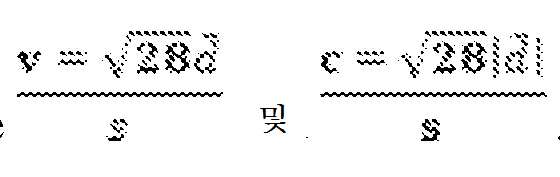
T.B: 표준 통계학적 방법, 예컨대, 평균 및 분산 추정치에 기초한, ANOVA에 대한 F 점수. TB : F score for ANOVA, based on standard statistical methods such as mean and variance estimates.
P 값. 검정 통계치를 계산한 후, 널 가설 하에서 최소한 관찰된 것만큼 극치인 검정 통계치를 관찰할 수 있는 우도를 계산한다. 널 가설하에서는 분산이 알려져 있지 않지 않은 바, 이는 복합 가설 검정 문제가 되며, p 값을 계산할 수 있는 특정의 자연 방법은 존재하지 않는다. 본 발명자들은 p 값을 추정할 수 있는 다중의 방법을 개발한다: P value . After calculating the test statistic, the likelihood of observing a test statistic that is at least as extreme as those observed under the null hypothesis is calculated. Since the variance is not known under the null hypothesis, this becomes a complex hypothesis testing problem, and there is no specific natural way to calculate the p-value. We develop multiple methods to estimate the p value:
P.A: 데이터로부터 추정되는 분산을 포함하는 정규 분포의 가정하에, P0 추정치를 사용하여 확률식을 평가하는 파라미터 방법 수행: PA : Perform a parametric method to evaluate a probabilistic expression using the P0 estimate, under the assumption of a normal distribution containing the variance estimated from the data:
P.A.1: H0 하에 검정 통계치, g(d)의 분포가 폐쇄형인 것으로 알려져 있다면 (예컨대, t, Z, F, ANOVA 검정인 경우), 이때 본 발명자들은 직접 계산할 수 있거나, Matlab에서 순람표를 사용할 수 있다. If the distribution of the test statistic, g(d), under PA1: H0 is known to be closed (e.g., for t, Z, F, ANOVA tests), then we can calculate directly or use a lookup table in Matlab. there is.
P.A.2: 더욱 복잡한 검정 통계치 (예컨대, 정규화된 우도비)가 사용된다면, 이때 본 발명자들은 몬테 카를로(Monte Carlo) 방법을 구현하여 확률을 추정한다. 데이터로부터 추정된 평균 0 및 분산을 포함하는 정규 분포 하에서 도출된 다수의 독립적이며 동일한 분포를 따르는 샘플 d[1]...d[N]을 생성한다. g(d[i])가 검정 통계치를 초과하는 (>) 시간 분율을 계수한다. PA2 : If a more complex test statistic (eg, normalized likelihood ratio) is used, then we implement the Monte Carlo method to estimate the probability. Generate a number of independent, identically distributed samples d[1]...d[N] derived under a normal distribution containing the mean zero and variance estimated from the data. Count the fraction of time (>) where g(d[i]) exceeds the test statistic.
P.B: 비파라미터 부트스트랩 방법을 수행한다. y'의 무작위 순열인 N iid 샘플 d[1]...d[N]을 생성하여; "어떤 의미에서는," g(d[i])는 H0 하에서 g(d)에 따라 도출된다. g(d[i]) > t인 시간 분율을 계수한다. 도 10은 본 발명자들이 두 실험 조건에 대해 두 데이터 세트를 가질 때 (각각 n회 시험), 비파라미터 통계학적 검정을 수행하는 방법을 도시한 것이다. (1) 단일 세트로 두 실험 조건 (A 및 B)에 대한 n회 시험을 수집한다. (2) 조건 A에서의 시험만큼 상기 "조합된" 데이터 세트로부터 다수의 시험 (n회 시험)을 무작위 방식으로 이끌어 내고, 상기 시험을 서브세트 1에 배치한다. 이어서, 나머지 시험 (n회 시험)을 서브세트 2에 배치한다. 본 방법은 무작위 분할로 명명될 수 있다. (3) 상기 무작위 분할에 대해 검정 통계치를 계산한다. 검정 통계치를 계산하기 위해 관심 시간 동안 전체 모든 시험에 걸친 서브세트 1 및 2 각각에 대한 파형의 평균을 구한다. 서브세트 1의 파형 평균치를 서브세트 2의 파형 평균치로부터 감산한 후, 모든 차이의 요약으로서 검정 통계치를 계산한다. (4) 단계 및 3을 예컨대, 다회에 걸쳐 반복하고, 검정 통계치의 히스토그램을 구축한다. (5) (무작위 순열 없이) 본 발명자들의 원본 데이터 세트로부터 실제로 관찰되는 검정 통계치 및 단계 4의 히스토그램으로부터 관찰된 것보다 더 큰 검정 통계치를 형성하는 무작위 분할의 비율을 계산한다. 이 비율을 p 값으로 명명할 수 있다. PB : Perform non-parameter bootstrap method. by generating N iid samples d[1]...d[N] which are random permutations of y';"In a sense," g(d[i]) is derived according to g(d) under H0. Count the fraction of time where g(d[i]) > t. Figure 10 shows how to perform non-parametric statistical tests when we have two data sets for two experimental conditions (n tests each). (1) Collect n trials for both experimental conditions (A and B) as a single set. (2) draw in a random fashion as many trials (n trials) from the "combined" data set as the trials in condition A, and place the trials in
도 10은 부류 A로부터의 데이터 및 부류 B로부터의 데이터가 같은 통계학적 분포로부터 유래되었는지 여부를 명시하는 것에 관한 가설 검정을 위한 p 값을 추정하는 비파라미터 방법을 도시하는 다이어그램을 보여주는 것이다. 부류 A 및 부류 B에 대한 시험을 무작위 방식으로 순열식으로 변경하여 널 가설로부터 도출되는 검정 통계치를 생성한다. 이로부터, p 값 평가를 수행할 수 있는 히스토그램이 형성된다.10 shows a diagram illustrating a non-parametric method of estimating p values for hypothesis testing regarding specifying whether data from class A and data from class B are from the same statistical distribution. Tests for class A and class B are permuted in a random manner to generate test statistics derived from the null hypothesis. From this, a histogram is formed from which p-value evaluation can be performed.
예를 들어, 일단 p 값이 계산되었을 때, 이 p 값이 0.05 미만일 경우, 널 가설은 기각되고; 그렇지 않을 경우, 이는 용인된다. 예시적인 구현에서, 대상체들은 모두 알고 있고, 제시된 예시적인 자극이 상기 조건 하에서 명백하게 맥락상 불일치하거나, 일치하거나, 또는 반복적으로 일치하기 때문에, 널 가설은 대부분의 대상체에 있어서 기각되어야 한다. 상기 예시적인 접근법의 수행은 하기와 같이, 널 가설이 기각되는 대상체 및 전극의 수를 정량화함으로써 특징이 규명된다.For example, once the p-value has been calculated, if this p-value is less than 0.05, the null hypothesis is rejected; Otherwise, this is acceptable. In an exemplary implementation, the null hypothesis should be rejected for most subjects because the subjects are all aware and the presented exemplary stimuli are clearly contextually inconsistent, congruent, or repetitively congruent under the above conditions. The performance of this exemplary approach is characterized by quantifying the number of subjects and electrodes for which the null hypothesis is rejected, as follows.
예시적인 결과Exemplary Results
대상체에게 제시된 각각의 예시적인 자극 패러다임에 있어서, 상이한 검정 통계치의 예시적인 수행 및 p 값을 계산하는 방법이 도 11-13에 제시되어 있다. 도 11은 시각 자극을 사용하는 AA vs B의 예시적인 rANOVA 분석에 대한 데이터 플롯 및 상응하는 데이터 표를 보여주는 것이다. 도 12는 시각 자극을 사용하는 AA vs B의 예시적인 NML 파라미터 분석을 위한 데이터 플롯 및 상응하는 데이터 표를 보여주는 것이다. 도 13은 시각 자극을 사용하는 AA vs B의 예시적인 NML 비파라미터 분석을 위한 데이터 플롯 및 상응하는 데이터 표를 보여주는 것이다. For each exemplary stimulation paradigm presented to a subject, exemplary performance of different test statistics and methods of calculating p-values are presented in FIGS. 11-13 . 11 shows data plots and corresponding data tables for an exemplary rANOVA analysis of AA vs B using visual stimuli. 12 shows data plots and corresponding data tables for exemplary NML parameter analysis of AA vs B using visual stimuli. 13 shows data plots and corresponding data tables for an exemplary NML non-parametric analysis of AA vs B using visual stimuli.
도 11-13에서, 분류기의 p 값의 박스 플롯은 특정의 관심 전극 위치, 예컨대, FP1, FP2, P7, 및 P8에 대해 제공된다. 박스 플롯은 중위수 (적색 선), 표준 편차 (너비) 및 이상점 정보를 제공한다. 각 데이터 플롯을 가로지르는 녹색 수평선은 0.05인 p 값의 역치에 상응한다. 따라서, p 값 미만의 대상체 모두가 정확하게 분류되며, 그 초과인 모두는 부정확하게 분류된다. 각 박스 플롯과 함께, 전체 모든 대상체에 걸쳐 정확한 분류 (p 값 역치 0.05)의 전체 분율을 기술하는 간결한 상응 표 또한 존재한다. 11-13 , box plots of the p-values of the classifier are provided for specific electrode positions of interest, eg, FP1, FP2, P7, and P8. Box plots provide median (red line), standard deviation (width) and outlier information. The green horizontal line across each data plot corresponds to a threshold of p-value of 0.05. Thus, all subjects below the p value are classified correctly, and all above the p value are classified incorrectly. Along with each box plot, there is also a concise correspondence table describing the overall fraction of correct classifications (p-value threshold 0.05) across all subjects.
도 11-13에서, 명명법은 하기와 같다: 11-13, the nomenclature is as follows:
· "AA vs B"는 d[t]=y[1,t]-y[2,t]: t=1:T (여기서, y[1,t]는 A 시각 자극에 관한 것이고, y[2,t]는 B 시각 자극에 관한 것이다)를 의미한다. "AA vs B" is d[t]=y[1,t]-y[2,t]: t=1:T where y[1,t] relates to A visual stimulus, y[ 2,t] is for B visual stimulus).
· "NML"은 섹션 T.A.의 검정 통계치를 계산하는 정규화된 최대 우도 방법에 대해 간결하게 된 것이다. · "NML" is a shortened version of the normalized maximum likelihood method of calculating the test statistics of section TA.
· "파라미터"는 p 값의 몬테 카를로 추정을 수행함으로써 (여기서, 검정 통계치에의 입력값은 샘플로부터 추정된 평균 및 분산을 포함하는 정규 분포에 따라 도출되었다) 섹션 P.A에 기술된, p 값을 추정하는 파라미터 방법을 나타내는 것이다. The "parameter" is the p value, described in section PA , by performing a Monte Carlo estimation of the p value (where the input to the test statistic was derived according to a normal distribution including the mean and variance estimated from the sample). It shows the parameter method for estimating.
· "비파라미터"는 P.B의, p 값을 추정하기 위한 비파라미터 방법을 나타내는 것이다. · "Non-parametric" refers to a non-parametric method for estimating the p value of PB.
· "rANOVA"는 방법 P.A.I의 표준 반복 측정 ANOVA 방법론을 사용하는 검정 통계치 및 p 값 계산 패러다임을 나타낸다. · "rANOVA" refers to the test statistic and p-value calculation paradigm using the standard repeated measures ANOVA methodology of Method PAI.
상기와 같은 예시적인 분석을 개별적으로 수행한 후, 17명의 대상체를 포함하는 한 군의 데이터세트에 대한 평균을 구하였다. 예를 들어, 두드러지게 채널 FP1 및 FP2 (전부두이고, 모발의 겔화를 필요로 하지 않고, 따라서, 일부 적용에서 바람직한 실시양태로 사용될 수 있는)의 경우, 상기 분류 방법의 정확도는 균일하게 80-100% 범위이다. 이러한 예시적인 결과는 오직 전두부 전극만을 가지는 시스템이 높은 수행을 유도할 수 있다는 것을 제안한다. 개시된 방법은 전두부 활성을 획득하는 것을 항상 포함할 필요는 없다. After performing the above exemplary analyzes individually, one group of datasets containing 17 subjects was averaged. For example, prominently for channels FP1 and FP2 (which are follicular, do not require gelation of the hair, and thus can be used as a preferred embodiment in some applications), the accuracy of this classification method is uniformly 80- 100% coverage. These exemplary results suggest that a system with only frontal electrodes can induce high performance. The disclosed methods need not always include obtaining frontal activity.
예시적인 인지 및/또는 감각 프로파일: 군 지식 평가 프로파일 (Exemplary cognitive and/or sensory profiles: Military knowledge assessment profiles ( GKEPGKEP ) 및 개체 지식 평가 프로파일 () and the object knowledge assessment profile ( IKEPIKEP ) )
비감독 분류기 실시양태의 상기의 마지막 일례를 사용하고, 전두부 전극 FP1을 선택하여 상기 프로파일을 예시할 때, 본 방법의 예시적인 구현의 최종 생성물은 군 지식 평가 프로파일 (GKEP) 형태, 또는 개체 지식 평가 프로파일 (IKEP) 형태의 것일 수 있다. Using the last example above of an unsupervised classifier embodiment, and selecting the frontal electrode FP1 to illustrate this profile, the final product of the exemplary implementation of the method is in the form of a group knowledge assessment profile (GKEP), or an individual knowledge assessment It may be in the form of a profile (IKEP).
예를 들어, 본 발명자들은 임의의 대상체에 대한 p 값을 확인하고, 검정된 카테고리 내에서 구별의 척도로서 (도 13에 제시된 바와 같은) 비파라미터 우도비 검정을 사용하여 100% p 값을 수행한다. 개체인 경우, 예시적인 대상체 10에 있어서, 이는 99.8%였다. 군 수준에서는 중위수 수준이 94.1%였다. 이러한 예시적인 결과는 도 14에 제시되어 있다. 도 14는 개별 대상체에 대한 개체 지식 평가 프로파일 및 한 군에 기초한 대상체에 대한 군 지식 평가 프로파일의 일례에 관한 다이어그램을 보여주는 것이다. For example, we identify a p-value for any subject and perform a 100% p-value using a non-parametric likelihood ratio test (as shown in Figure 13) as a measure of differentiation within the tested category. . For subjects, for
I.2. 청각 자극 패러다임을 이용하는 I.2. using the auditory stimulus paradigm N400N400
I.2.1. 예시적인 자극 I.2.1. Exemplary stimuli
또 다른 일례 구현에서, 언어 자극에 대한 신경 반응, 더욱 정확하게, 영어 내의 맥락상 일치 및 불일치에 대한 조절 반응을 조사하였다. 예를 들어, 어도비 사운드부쓰(Adobe Soundbooth) CS5를 사용하여 총 80개의 자극 표본을 위해 각각 4명의 화자 (예컨대, 남성 2명, 여성 2명)로부터 20개의 단어 목록을 녹음하였다. 각 화자는 하기 예시적인 단어를 녹음하였다: 액션, 생일, 카메라, 양초, 치즈, 충돌, 위험, 사망, 마시다, 운전하다, 싸우다, 식품, 선물, 행복, 빛, 살인, 독물, 쏘다, 미소, 맛있다. 또한, 예를 들어, 어도비 사운드부쓰 CS5를 사용하여 하기 단계를 이용함으로써 자극내 및 자극간 조절을 수행하였다: (1) 각 자극을 정규화하는 단계 (예컨대, 처리 > 정규화), (2) 각 자극을 등화시키는 단계 (예컨대, 처리 > 볼륨 크기 등화), (3) 모든 자극 파일 간의 볼륨 크기를 등화시키는 단계 (예컨대, 모든 파일 선택 > 과제 진행 > 파일을 매칭되는 파일로 드래그 > 파일 매칭 > 목록내 제1 파일 선택). 예를 들어, 자극 풀의 지속 기간은 380 ms 내지 834 ms 범위, 예컨대, 평균적으로 615.675 ms였다. 이어서, 상기 예시적인 단어를 사용하여 뚜렷이 다른 90개의 3단어 문자열을 구축하였다. In another exemplary implementation, neural responses to verbal stimuli, more precisely, regulatory responses to contextual agreements and inconsistencies in English were investigated. For example, an Adobe Soundbooth CS5 was used to record 20 word lists from each of 4 speakers (eg, 2 males, 2 females) for a total of 80 stimulus samples. Each speaker recorded the following illustrative words: action, birthday, camera, candle, cheese, collision, danger, death, drink, drive, fight, food, gift, happy, light, murder, poison, shoot, smile, it's good. In addition, intra- and inter-stimulus regulation was performed using, for example, Adobe Soundbooth CS5 using the following steps: (1) normalizing each stimulus (eg, processing > normalization), (2) each stimulus (e.g., processing > equalizing volume size), (3) equalizing volume sizes between all stimulus files (e.g., selecting all files > task progress > dragging files to matching files > matching files > in the list) 1st file selection). For example, the duration of the stimulus pool ranged from 380 ms to 834 ms, eg, 615.675 ms on average. Then, using the example words above, 90 distinct three-word strings were constructed.
이러한 예시적인 90개의 문자열을 동일하게 3개의 조건으로 나누었다: 일치 (30개의 문자열), 불일치 (30개), 및 반복적으로 일치 (30개). 각 문자열에서, 처음 두 단어가 컨텍스트를 생성하였다. 세번째 단어는 이전 두 단어에 의한 컨텍스트 세트와 매칭되거나 (일치) 또는 매칭되지 않았다 (불일치). 예를 들어, 반복적으로 일치하는 조건에서, 세번째 단어는 문자열 중 두번째 단어를 반복시켜 세트 컨텍스트와 매칭되었다. 또한, 4명의 화자가 존재하는 바, 예를 들어, 총 360개의 문자열 표본이 존재하였다. 문자열 내에서, 각각은 세 단어 각각에 대해 화자가 일치하였다. 그러나, 화자 및 화자의 성별이 문자열 사이에도 달라질 수 있다. 또한, 예를 들어, 최종 이벤트 관련 전위 및 통계학적 분석을 위해 단지 상기 문자열의 서브세트만을 사용하였다. 상기 서브세트를 조건간 단어 출현 및 빈도에 대해 조절하였다. 분석에 모든 다른 문자열을 사용하지는 않았으며, 대신 다양한 대상체의 감각 형성을 위해 "필러"로서 사용하였다. These exemplary 90 strings were equally divided into three conditions: match (30 strings), mismatch (30), and recursively match (30). In each string, the first two words created the context. The third word either matched (matched) or did not match (mismatched) the context set by the previous two words. For example, in the repeated matching condition, the third word was matched with the set context by repeating the second word in the string. Also, there are 4 speakers, for example, a total of 360 character string samples. Within the string, each has a speaker match for each of the three words. However, the speaker and the speaker's gender may also vary between strings. Also, for example, only a subset of these strings were used for final event-related translocation and statistical analysis. This subset was adjusted for word appearance and frequency between conditions. Not all different strings were used in the analysis, but instead were used as “fillers” for sensory formation in various subjects.
2개의 예시적인 방법을 구현하여 고정 점 및 청색 사각형 자극을 만들었다. 예를 들어, 고정 점의 경우, (예컨대, MATLAB 스크립트를 사용하여 프로그램화된) 컴퓨터 구현 프로세스를 사용하여 높이 및 너비가 350 픽셀인 검은색 배경 영상 (예컨대, 적색 건 = 0; 녹색 건 = 0; 청색 건 = 0)을 만들었다. 이어서, 예시적인 스크립트는 원에 대한 표준 방정식을 사용하여 중첩 포 루프을 진행함으로써 영상의 적색 건을 255로, 녹색 건을 0으로, 및 청색 건을 0으로 바꿈으로써 7 픽셀 길이의 반경 내의 픽셀을 적색으로 변경시켰다. 예를 들어, 청색 사각형 자극의 경우, 영상화 소프트웨어 (예컨대, 어도비 포토샵(Adobe Photoshop))를 사용하여 예컨대, 그의 적색 건은 0이고, 녹색은 0이고, 청색은 255인, 157 x 157 픽셀 크기의 영상을 만들었다. Two exemplary methods were implemented to create anchor points and blue square stimuli. For example, for a fixed point, a black background image (eg, red key = 0; green key = 0) with a height and width of 350 pixels using a computer implemented process (eg, programmed using a MATLAB script). ; blue key = 0). The example script then uses the standard equation for circles to transform pixels within a radius of 7 pixels in length by going through an overlap four loop, replacing the red key with 255, the green key with 0, and the blue key with 0 in the image by going through an overlapping four loop. changed to For example, for a blue square stimulus, use imaging software (e.g., Adobe Photoshop) to have a size of 157 x 157 pixels, e.g., its red key is 0, green is 0, and blue is 255. made a video
I.2.2. EEG 기록을 위한 I.2.2. for EEG recording 대상체object 준비 Preparations
EEG 기록을 위해 예시적인 대상체를 준비시키기 위하여, 각 대상체를 기록 챔버 내의 의자에 착석시키고, EEG 캡핑 프로세스를 시작하였다. 예를 들어, 상기 프로세스는 전통 EEG 캡을 대상체의 머리에 놓고, 고무 턱끈으로 이를 고정시키는 것을 포함하였다. 일부 일례에서, 예상되는 대상체의 머리 크기에 기초하여 직경이 56 cm 또는 58 cm인 캡이 사용되었다. 이어서, (예컨대, 파커 라보라토리즈로부터 입수한) 시그나 전극 겔을 곡선 모양의 플라스틱 시린지를 사용하여 각각의 캡 전극 아래에 주사하여 전극 그 자체와 대상체의 두피 사이에 전도성 브릿지를 만들었다. 또한, 예를 들어, 임피던스를 낮춤으로써 더욱 강력한 전도도를 구축하기 위해 목재 Q-팁을 사용하여 겔을 마사지하였다. 예를 들어, 상기 기법을 사용함으로써 예컨대, 접지 전극 및 기준 전극을 비롯한, 각 전극에 대해 임피던스 수준을 <5 kΩ으로 낮추었다. EEG 기록을 사용하여 예시적인 구현을 시작하기 전, 대상체를 제시 모니터 및 오디오 스피커 앞에 착석시키고, 가능한 한 신경생리학적 데이터 중 모션 아티팩트를 막기 위하여 단지 실험 진행 기간 동안 내내 적색의 중앙 고정 점에 시각 고정을 유지하도록 하고, 그의 운동 움직임을 제한하도록 요구하였다. 일부 일례에서, 대상체에게 온라인 상의 그의 원본 뇌파 기록을 보여줌으로써, 예컨대, 대상체가 눈을 깜빡이거고/거나, 이를 악물었을 때 데이터에 발생하는 것을 대상체에게 보여줌으로써 이러한 사항들을 강조하였다. 이후, 이어서 기록실의 조명을 낮추고, 자극 프로세스 및 EEG 기록을 시작하였다. 기록실의 창문을 완전하게 차단하고, 외부 빛이 들어가지 못하도록 그의 갈라진 틈을 실링하는 조치를 취하였다. To prepare exemplary subjects for EEG recording, each subject was seated on a chair in the recording chamber and the EEG capping process started. For example, the process involved placing a traditional EEG cap on the subject's head and securing it with a rubber chin strap. In some instances, a cap with a diameter of 56 cm or 58 cm was used based on the expected subject's head size. A SIGNA electrode gel (eg, obtained from Parker Laboratories) was then injected under each cap electrode using a curved plastic syringe to create a conductive bridge between the electrode itself and the subject's scalp. Also, for example, a wooden Q-tip was used to massage the gel to build a stronger conductivity by lowering the impedance. For example, using the above technique lowered the impedance level to <5 kΩ for each electrode, including, for example, the ground electrode and the reference electrode. Before starting the example implementation using EEG recording, the subject is seated in front of a presenting monitor and audio speaker, and visually fixed at the central fixed point in red only throughout the duration of the experiment to avoid motion artifacts in the neurophysiological data as far as possible. and asked to limit his motor movements. In some examples, these are highlighted by showing the subject his original EEG recording online, eg, by showing the subject what happens to the data when the subject blinks and/or clenches their teeth. Then, the lighting of the recording room was lowered and the stimulation process and EEG recordings were started. The window of the recording room was completely blocked, and measures were taken to seal the cracks to prevent outside light from entering.
I.2.3. 예시적인 자극 제시 프로세스 I.2.3. Exemplary stimulus presentation process
코젠트 2000을 사용하여 본 일례의 자극 제시 프로세스에서 사용된 예시적인 자극 제시 패러다임을 프로그램화하였다. 예시적인 자극 제시를 화자에 기초하여 2개의 블록을 나누었다. 예를 들어, 블록 1은 총 180개의 문자열을 포함하였는데, 90개의 문자열은 남성 화자에 의한 것이고, 90개의 문자열은 여성 화자에 의한 것이었다. 블록 2는 또 다른 180개의 문자열을 포함하였는데, 90개의 문자열은 또 다른 남성 화자에 의한 것이고, 90개의 문자열은 또 다른 여성 화자에 의한 것이었다. 180개의 문자열들은 각각 1개의 제시 블록당 단 1번만 제시하였다. 문자열내 각 단어 제시 후, 1,000 ms의 자극간 간격 (ISI)이 주어졌다. 각 문자열 사이에는 2,500 ms의 시험간 간격 (ITI)을 줌으로써 각 문자열 제시 사이에 뚜렷한 휴지 기간을 형성하였다. 예를 들어, 매 6 내지 9개의 문자열 후, 2,000 ms 동안 청색 사각형을 제시하였는데, 이는 대상체가 잠시 동안 중단하고, 휴식을 취하고, 코를 긁을 수 있는 "단기 휴지 기간"을 나타내었다. Cogent 2000 was used to program the exemplary stimulus presentation paradigm used in this exemplary stimulus presentation process. The exemplary stimulus presentation was divided into two blocks based on the speaker. For example, block 1 contained a total of 180 strings, 90 strings by male speakers and 90 strings by female speakers.
자극 제시 전, (예컨대, MATLAB 스크립트에서 프로그램화된) 프로세스는 먼저 예컨대, MATLAB의 randperm() 함수를 사용하여 문자열이 제시되는 순서를 무작위 방식으로 순열식으로 변경하였다. 이어서, 프로세스는 예시적인 randi() 함수를 사용하여 어느 시험 다음에 청색 사각형 자극이 이어지게 할지를 무작위 방식으로 결정하였다. 디스플레이, 사운드 카드, 및 병렬 포트를 설정하는 것 이외에도, 코젠트 2000 시스템을 사용하여 로그 파일을 설정하고, 초기화하였다. 예를 들어, 상기 로그 파일을 사용하여 자극, 즉 특정 문자열의 구성원에 관한 정보를 저장하였다. 이어서, 청각 및 시각 (예컨대, 고정 점, 청색 사각형) 자극, 둘 모두를 메모리 버퍼에 로딩하였다. 전산상 부하를 줄이고, 레이턴시 정밀도를 증가시키기 위하여 자극 제시 전에 상기 언급된 단계를 수행하였다.Prior to stimulus presentation, a process (eg, programmed in a MATLAB script) first permuted the sequence in which strings were presented in a random manner, eg, using MATLAB's randperm() function. The process then used the exemplary randi() function to determine in a random manner which test was followed by the blue square stimulus. In addition to setting up the display, sound card, and parallel port, a log file was set up and initialized using a Cogent 2000 system. For example, the log files were used to store information about stimuli, ie members of specific strings. Both auditory and visual (eg, fixed dots, blue squares) stimuli were then loaded into the memory buffer. To reduce computational load and increase latency precision, the above-mentioned steps were performed before stimulus presentation.
청각 자극을 이용하는 예시적인 구현에서 사용된 예시적인 자극 제시 프로세스는 중첩 포 루프를 포함하였다. 예를 들어, "외부" 루프 내에서 비교체형 무작위 방식(random-without-replacement)으로 선택된 문자열을 확인하고, 문자열의 첫번째 단어/호출 개시 전 1,000 ms 동안 적색의 중앙 고정 점을 제시하였다. 고정 점을 문자열을 제시하는 전 기간 동안 내내 디스플레이하고, 세번째 단어/호출 오프셋 후 1,000 ms 동안 전원을 껐다. 예를 들어, "내부" 루프 내에서, 문자열 그 자체에 기초하여 트리거 정보를 계산하고, EEG 기록 컴퓨터로 전송하였다. 예시적인 MATLAB 내의 그의 위치가 자극 트리거에 대해 필요한 정보를 제공할 수 있도록 하는 방식으로 문자열을 조직화하였다. "내부" 루프 종료점에서, 표본을 제시하고, 병렬 포트를 0으로 재설정하고, 시험간 간격을 주었다. 예를 들어, 어드벤트 파워드 파트너즈(Advent Powered Partners) AV570 스피커를 사용하여 청각 자극을 제시하고, 소니 트리니트론 GDM-C520 모니터를 사용하여 시각 자극을 제시하였다.The exemplary stimulus presentation process used in the example implementation using auditory stimuli included overlapping four loops. For example, within the "outer" loop, a selected string was identified in a random-without-replacement manner, and a red central fixed point was presented for 1,000 ms prior to initiation of the first word/call of the string. A fixed point was displayed throughout the entire duration of presenting the string and powered off for 1,000 ms after the third word/call offset. For example, within the "inner" loop, trigger information was calculated based on the string itself and sent to the EEG recording computer. The strings are organized in such a way that their location within the example MATLAB can provide the necessary information about the stimulus triggers. At the "inner" loop endpoint, samples were presented, parallel ports were reset to zero, and inter-trial intervals were given. For example, an auditory stimulus was presented using an Advent Powered Partners AV570 speaker, and a visual stimulus was presented using a Sony Trinitron GDM-C520 monitor.
도 15는 예시적인 제시된 일련의 청각 자극에 대한 다이어그램을 보여주는 것이다. 도 15의 예시적인 다이어그램 (1501) 및 (1502)는 3 단어로 이루어진 문자열로 된 특정의 제시되는 표본의 오디오 파형 및 스펙트로그램을 보여주는 것이다. 예를 들어, 다이어그램 (1501)에 제시된 예시적인 제시된 일련의 청각 자극은 맥락상 "일치하는" 문자열을 형성하는, "생일," "선물," 및 "행복"을 비롯한 연속되는 3개의 영어 단어를 포함하였다. 또한, 예를 들어, 다이어그램 (1502)에 제시된 예시적인 제시된 일련의 청각 자극은 맥락상 "불일치하는" 문자열을 형성하는, "독물," "위험," 및 "행복"을 비롯한 연속되는 3개의 영어 단어를 포함하였다. 다이어그램 (1501) 및 (1502)에서 제시된 두 일례 모두에서 처음 두 단어가 컨텍스트를 확립하고, 세번째 것은 맥락상 일치 또는 불일치하는 것과 일관성을 가진다. 또 다른 일련의 일례에서, 또 다른 검정 조건으로 문자열 중 두번째 및 세번째 단어가 정확하게 동일한 "반복적 일치" 또한 제시될 수 있다. 15 shows a diagram for an exemplary presented set of auditory stimuli. Exemplary diagrams 1501 and 1502 of FIG. 15 show audio waveforms and spectrograms of a particular presented sample in a three-word string. For example, the exemplary presented set of auditory stimuli presented in diagram 1501 may contain three consecutive English words, including "birthday," "gift," and "happiness," that form the string "matching" in context. included. Also, for example, the exemplary presented series of auditory stimuli presented in diagram 1502 is a sequence of three consecutive English words, including "poison," "risk," and "happiness," forming a contextually "mismatched" string. included words. In both examples presented in diagrams 1501 and 1502, the first two words establish the context, and the third is consistent with the contextual agreement or disagreement. In another set of examples, as another test condition, "repeat matches" in which the second and third words of a string are exactly the same may also be presented.
I.2.4. 예시적인 뇌파 (EEG) 기록I.2.4. Exemplary electroencephalogram (EEG) recording
일부 구현에서, 강성 전극을 이용하는 전통 EEG 시스템을 사용하여 뇌파를 획득하였다. 예시적인 EEG 시스템으로는 브레인Amp DC 32-채널 시스템; 브레인비젼 리코더; 패스트 n 이지 32-채널 EEG 기록 캡 크기 56 cm; 패스트 n 이지 32-채널 EEG 기록 캡 크기 58 cm; 5k 레지스터가 장착된 브레인캡-MR용 PCB 리본 케이블; 및 브레인캡 MR 박스 1.2를 포함하였다.In some implementations, EEG was acquired using a traditional EEG system using rigid electrodes. Exemplary EEG systems include: BrainAmp DC 32-channel system; brainvision recorder; Fast n Easy 32-channel EEG recording cap size 56 cm; Fast n Easy 32-channel EEG recording cap size 58 cm; PCB Ribbon Cable for Braincap-MR with 5k Resistor; and Braincap MR Box 1.2.
I.2.5. 예시적인 전처리 분석 기법I.2.5. Exemplary Preprocessing Analysis Techniques
청각 자극 패러다임을 사용하는 개시된 방법의 예시적인 분석 전처리 기법은 마커 데이터를 처리하는 기법을 포함할 수 있다. 예를 들어, 각 기록 세션 후, 예시적인 EEG 기록 시스템은 3개의 파일: 데이터 파일 (.eeg), 헤더 파일 (.vhdr), 및 마커 파일 (.vmrk)을 작성하였다. 마커 파일은 각 자극 개시에 대한 이벤트 트리거를 포함하였다. 본 일례에서, 병렬 포트 내에서는 출력값에 제한이 있기 때문에, 예시적인 코젠트 2000 로그 파일을 사용하여 표본의 특정 문자열의 구성원에 관한 추가 정보를 저장하였다. 그로부터, 분석 전처리 기법은 로그 파일 및 예시적인 EEG 기록 시스템 마커 파일, 둘 모두로부터 정보를 통합하고, 마커 파일 내의 자극 코드를 변경하여 하기와 같은 각 자극에 대한 정보, 예컨대, 조건 (일치, 불일치, 반복적 일치), 단어/호출 위치 (첫번째, 두번째, 세번째), 화자 성별 (영어 단어의 경우), 및 특정 단어/호출 (예컨대, "행복," "생일," "구구구구 소리(coo)," "비명")을 나타내는 (예컨대, MATLAB 스크립트를 사용하여 프로그램화된) 프로세스를 포함한다. 예를 들어, 일치하는 영어 단어 문자열 [생일; 선물; 행복]은 [C1M_2; C2M_13; C3M_14]로 재코딩되도록 하였다. 본 일례에서, 첫번째 디짓은 조건을 나타내고 (본 일례에서, 일치하는 경우, "C"), 두번째 디짓은 문자열내 위치를 나타내고 (첫번째, 두번째, 세번째), 세번째 디짓은 화자의 성별을 나타내고 (남성인 경우, "M," 여성인 경우, "F"), 및 밑줄 표시 다음의 디짓은 제시된 특정 단어를 나타낸다 (생일인 경우, "2," 선물이 경우, "13," 및 행복인 경우, "14"). Exemplary analysis preprocessing techniques of the disclosed methods using the auditory stimulation paradigm may include techniques for processing marker data. For example, after each recording session, the exemplary EEG recording system created three files: a data file (.eeg), a header file (.vhdr), and a marker file (.vmrk). The marker file contained event triggers for each stimulus initiation. In this example, since there is a limit to the output value within the parallel port, an exemplary Cogent 2000 log file was used to store additional information about the members of a particular string in the sample. From there, the analysis preprocessing technique incorporates information from both the log file and the exemplary EEG recording system marker file, and changes the stimulus code in the marker file to provide information about each stimulus, such as a condition (match, mismatch, repetitive match), word/call location (first, second, third), speaker gender (for English words), and specific word/call (eg, "happiness," "birthday," "coo," process (eg, programmed using a MATLAB script) that "scream"). For example, the English word string that matches [birthday; Gift; happiness] is [C1M_2; C2M_13; C3M_14] to be recoded. In this example, the first digit represents the condition (in this example, "C" for a match), the second digit represents the position in the string (first, second, third), and the third digit represents the speaker's gender (male If , "M," if female, "F"), and the digit following the underscore indicates the specific word presented ("2," for a birthday, "13," for a gift, and "13," for happiness; "14").
개시된 방법의 예시적인 분석 전처리 기법은 일반 군에 대한 통계학적 분석 기법을 포함한다. 본원에 기술된 예시적인 구현에서, 통계학적 분석을 위해 MATLAB와 스타트소프트 스타티스티카 (버전 8.0) 소프트웨어의 조합을 사용하였다. 데이터 처리 및 분석 후, 예시적인 EEG 기록 시스템의 브레인비젼 애널라이저는 조건, 대상체, 시험, 전극 채널, 최고 레이턴시, 최고 전압, 및 평균 전압 진폭에 관한 데이터 값을 포함하는 텍스트 파일을 익스포팅하였다. 익스포팅된 텍스트 파일을 컴퓨터 구현 프로그램 (예컨대, MATLAB 프로그램)에 로딩하여 데이터를 더욱 액세스 가능한 포맷으로 분류하고, 조직화하였다. 구체적으로, 예를 들어, 예시적인 컴퓨터 구현 프로그램을 통해 예컨대, MATLAB의 변수 편집기를 사용함으로써 열에 의해 데이터를 더욱 쉽게 선택할 수 있다. 선택한 후, 데이터를 복사하여 스타티스티카 데이터 스프레드시트에 붙였다. 일부 구현에서, 예를 들어, 예컨대, 조건 효과, 즉, 영어 단어 및 붉은털 원숭이 호출, 둘 모두에 대한, 각 종의 일치, 불일치, 및 반복적 일치를 비교함으로써 각 스프레드시트에 대하여 반복 측정 ANOVA를 수행하였다. 인간 대상체인 경우, 예를 들어, 각 스프레드시트는 하기: 1) 실험: 영어 단어 또는 붉은털 원숭이 호출; 2) 컴포넌트: N400 또는 N800; 3) 전극 채널: Cz + Pz (전극 풀), Cz + Pz + Cp1 + Cp2 + P3 (전극 풀), Cz + Pz + Cp1 + Cp2 (전극 풀), 또는 Pz + Cp1 + Cp2 (전극 풀)에 대하여 특이적이었다. 예를 들어, 이러한 예시적인 풀링된 전극 분석을 위해, 이원 반복 측정 (예컨대, 인자 1: 조건; 인자 2: 전극 채널) ANOVA를 실행하였다. 유사하게, NHP 대상체의 경우, 예를 들어, 각 스프레드시트는 하기: 1) 실험: 영어 단어 또는 붉은털 원숭이 호출; 2) 컴포넌트: N400 또는 N800; 3) 전극 채널: Cz + Pz (전극 풀), Cz + Pz + P1 (전극 풀), Cz + Pz + P1 + Tp3 + C1 (전극 풀), O1 + O2 (전극 풀)에 대하여 특이적이었다. 이러한 예시적인 풀링된 전극 분석을 위해, 이원 반복 측정 (예컨대, 인자 1: 조건; 인자 2: 전극 채널) ANOVA를 실행하였다. Exemplary analysis pretreatment techniques of the disclosed methods include statistical analysis techniques for the general population. In the exemplary implementation described herein, a combination of MATLAB and Startsoft Statistica (version 8.0) software was used for statistical analysis. After data processing and analysis, the brainvision analyzer of the exemplary EEG recording system exported a text file containing data values pertaining to condition, subject, test, electrode channel, peak latency, peak voltage, and average voltage amplitude. The exported text file was loaded into a computer implemented program (eg, a MATLAB program) to classify and organize the data into a more accessible format. Specifically, it may be easier to select data by column, for example, by using a variable editor in MATLAB, for example, through an exemplary computer implemented program. After selection, the data was copied and pasted into the Statistica data spreadsheet. In some implementations, repeated measures ANOVA is performed for each spreadsheet, for example, by comparing concordance, discrepancy, and recurrent concordance of each species, e.g., for conditional effects, i.e., English words and rhesus monkey calls. carried out. For human subjects, for example, each spreadsheet contains the following: 1) Experiment: English words or rhesus monkey calls; 2) Components: N400 or N800; 3) Electrode channel: Cz + Pz (electrode pool), Cz + Pz + Cp1 + Cp2 + P3 (electrode pool), Cz + Pz + Cp1 + Cp2 (electrode pool), or Pz + Cp1 + Cp2 (electrode pool) was specific for For example, for this exemplary pooled electrode analysis, two-way repeated measures (eg, factor 1: condition; factor 2: electrode channel) ANOVA was performed. Similarly, for NHP subjects, for example, each spreadsheet contains the following: 1) Experiment: English words or rhesus monkey calls; 2) Components: N400 or N800; 3) Electrode channels: Cz + Pz (electrode pool), Cz + Pz + P1 (electrode pool), Cz + Pz + P1 + Tp3 + C1 (electrode pool), O1 + O2 (electrode pool) were specific. For this exemplary pooled electrode analysis, two-way repeated measures (eg, factor 1: condition; factor 2: electrode channel) ANOVA was performed.
일부 일례에서, 조건 간의 첫번째와 세번째 위치의 단어/호출 사이의 효과 또한 분석하고, 억제를 검토하였다. 인간 대상체인 경우, 예를 들어, 각 스프레드시트는 하기: 1) 실험: 영어 단어 또는 붉은털 원숭이 호출; 2) 컴포넌트: N1, P2, N400, 또는 N800; 3) 전극 채널: Cz, 또는 Cz + Pz (전극 풀)에 대하여 특이적이었다. 유사하게, NHP 대상체의 경우, 예를 들어, 각 스프레드시트는 하기: 1) 실험: 영어 단어 또는 붉은털 원숭이 호출; 2) 컴포넌트: N1, P2, N400, 또는 N800; 3) 전극 채널: Cz, 또는 Cz + Pz (전극 풀)에 대하여 특이적이었다. 예를 들어, 단일 전극 분석을 위해, 이원 반복 측정 (인자 1: 위치; 인자 2: 조건) ANOVA를 실행하였다. 풀링된 전극 분석을 위해, 삼원 반복 측정 (예컨대, 인자 1: 위치; 인자 2: 전극; 인자 3: 조건) ANOVA를 실행하였다. 예를 들어, 일치 및 억제 효과 분석, 둘 모두를 위해 두 대상체 풀 모두에 대하여 대상체 수를 카테고리별 예측 변수로 사용하였다. 예를 들어, 본 발명자들의 영어 단어 패러다임을 사용한, 전극 Cz 및 Pz에서 (352와 452 ms 사이의) N400 ERP 효과에 반영된 일치 비교 (C3, I3, 및 CR3)에 관한 통계학적 분석으로 하기와 같은 결과가 밝혀졌다: F(2, 954) = 5.5791 및 P 값 = 0.0039. 예를 들어, 사후 피셔(Fisher) 검정으로 하기 P 값을 얻었다: C3 vs 13 = .008332 및 CR3 vs 13 = .037043. 이는 예시적인 방법을 구현함으로써 상이한 일치 조건 사이를 통계학상 유의적인 방식으로 구별할 수 있다는 것을 입증한다. In some instances, the effect between the first and third position word/call between conditions was also analyzed and inhibition was examined. For human subjects, for example, each spreadsheet contains the following: 1) Experiment: English words or rhesus monkey calls; 2) Component: N1, P2, N400, or N800; 3) Electrode channel: specific for Cz, or Cz + Pz (electrode pool). Similarly, for NHP subjects, for example, each spreadsheet contains the following: 1) Experiment: English words or rhesus monkey calls; 2) Component: N1, P2, N400, or N800; 3) Electrode channel: specific for Cz, or Cz + Pz (electrode pool). For example, for single electrode analysis, a two-way repeated measures (factor 1: location; factor 2: condition) ANOVA was performed. For pooled electrode analysis, a three-way repeated measure (eg, factor 1: location; factor 2: electrode; factor 3: condition) ANOVA was performed. For example, the number of subjects was used as a categorical predictor for both pools of subjects for both concordance and inhibitory effect analysis. For example, using our English word paradigm, a statistical analysis of concordance comparisons (C3, I3, and CR3) reflected in the N400 ERP effect (between 352 and 452 ms) at electrodes Cz and Pz as follows: The results were found: F(2, 954) = 5.5791 and P value = 0.0039. For example, a post hoc Fisher test yielded the following P values: C3 vs 13 = .008332 and CR3 vs 13 = .037043. This demonstrates that by implementing the exemplary method, it is possible to distinguish between different match conditions in a statistically significant manner.
도 16은 (예컨대, 영어 단어를 사용하여) 청각 자극의 맥락상 변화 사이를 구별하는 뇌 패턴을 보여주는 한 군의 통계학적 분석으로부터 얻은 예시적인 결과를 제공하는 데이터 플롯을 나타내는 것이다. 도 16에서, 플롯 (1601) 및 플롯 (1602)은 각각 의미론적인 컨텍스트 변화와 관련된 전두부 및 두정부 채널 (예컨대, 각각 해부학상 두피의 전방 및 후방 위치)로부터의 뇌 파형 (예컨대, ERP)을 나타낸다. 16 presents a data plot providing exemplary results from a statistical analysis of a group showing brain patterns that discriminate between contextual changes in auditory stimuli (eg, using English words). In FIG. 16 ,
도 16에 제시된 일례에서, 시각 N400의 경우에서와 같이, 의미론적인 위반이 있을 때-이 경우, 문자열의 "불일치" 유형의 컨텍스트 위반이 있을 때, 청각 N400 반응의 진폭이 더 높다. 예시적인 구현에서, 각 세트로부터 문자열의 세번째 단어에 대한 ERP를 계산하고, 예시적인 방법의 후속 단계, 예컨대, 분석 프로세스, 가이드된 분류 알고리즘 등에서 입력 데이터로서 N400 반응의 진폭 조절을 사용하여 예컨대, 대상체의 인식 상태 프로파일을 비롯한, 감각 및/또는 인지 프로파일을 생성하였다. 플롯 (1601) 및 (1602)의 청색-음영 처리된 영역(들)은 관심 효과에 대한 시간 간격을 나타낸다. 각 플롯에서, 적색 선은 "불일치" 문자열에 대한 ERP를 나타내고, 청색 선은 "일치" 문자열에 대한 ERP를 나타내고, 녹색 선은 "반복적 일치" 문자열에 대한 ERP를 나타낸다. 이는 각성/인식 상태의 대상체로 이루어진 한 군의 일례이며, 여기서, 맥락상 불일치 문자열에 대한 ERP 반응의 진폭이 일치 문자열에 대한 것보다 높다는 것을 알 수 있다. 시각 N400을 사용한 이전 일례에서와 같이, 기술된 방법론은 수동적이다 (예컨대, 청각 자극은 스피커 또는 헤드폰에 의해 전달되고, 대상체는 어떤 외현적 반응도 보일 필요는 없다). 일치 및 불일치하는 일련의 연속 사건에 대한 차등적인 반응에 기초하여, 기술된 방법을 이용하는 본 예시적인 구현의 적용은 어떤 종류의 행동 반응도 수행할 수 없는 주어진 사람의 인식 (또는 비-인식) 수준으로서, 일부 일례에서는 인식 상태 프로파일로 지칭되는 것을 평가할 수 있다. In the example presented in FIG. 16 , as in the case of time N400, when there is a semantic violation—in this case, when there is a contextual violation of the “inconsistent” type of string, the amplitude of the auditory N400 response is higher. In an exemplary implementation, compute the ERP for the third word of the string from each set and use, for example, the amplitude adjustment of the N400 response as input data in a subsequent step of the exemplary method, e.g., an analysis process, a guided classification algorithm, etc., the subject sensory and/or cognitive profiles were generated, including the cognitive state profile of The blue-shaded region(s) of
I.2.6. (예컨대, I.2.6. (for example, 컨텍스트context 특정 파라미터 이용하는) 예시적인 처리 및 가이드된 분류 기법 Exemplary processing and guided classification techniques (using specific parameters)
시각 자극과 함께 N400을 이용하는 예시적인 구현에서와 같이, 청각 자극과 함께 N400을 이용하는 예시적인 구현은 개별 대상체의 획득된 생리학적 신호 (예컨대, EEG 기록으로부터의 신경 신호)를 사용하는 분류 방법의 프레임워크를 사용하여 개별 대상체의 뇌 신호와 인지 상태를 상호 연관시킴으로써 대상체의 개념 지식 및/또는 인식 상태에 대한 정보 세트, 예컨대, 통계학적 정보를 포함하는 정보 세트를 제공하는 처리 기법을 구현하는 것을 포함하였다. 이러한 예시적인 처리 기법은 또한 단지 한 군에만 기초하는 것 뿐만 아니라, 일일이 한 대상체씩에 대해 그에 기초하여 적용함으로써 군 분석을 수행하여 개념 지식을 확인할 수 있는데 이는 개체가 정보를 분류하는 방법, 예컨대, 개체 간의 차이를 명확하게 확인하거나, 이용하는 방법을 확인하는 데 유익할 수 있다. As in the example implementation using the N400 in conjunction with a visual stimulus, the example implementation using the N400 in combination with an auditory stimulus is a frame of a classification method using an individual subject's acquired physiological signals (eg, neural signals from EEG recordings). Correlating brain signals and cognitive states of an individual subject using the walk, thereby implementing a processing technique that provides a set of information about the subject's conceptual knowledge and/or cognitive state, e.g., a set of information comprising statistical information did. This exemplary processing technique can also confirm conceptual knowledge by performing group analysis, not only based on one group, but also by applying it based on each subject one by one, which is how individuals classify information, such as, It may be useful to clearly identify differences between individuals, or to determine how to use them.
본 일례에서는 시각 자극 대신 청각 자극을 사용함으로써 예컨대, 본 방법론이 상이한 양식에 의해 수득된 뇌 반응에 성공적으로 적용될 수 있다는 것을 예시하고, 추가로, 최종 프로파일이 IKEP 대신 개체 인식 상태 프로파일(ISAP)이 되는 일례를 예시한다. 따라서, 본 예시적인 경우에서, 대상체가 맥락상 "일치하거나" 또는 맥락상 "불일치하는" 일련의 소리로부터의 정보를 통합하는 방법에 있어서의 차이를 이용한다. 예를 들어, 뇌가 방송되는 청각의 단어 문자열의 일치와 상관 관계가 있는 그의 신경 반응을 조절할 수 있도록 하기 위해서는 대상체는 각 단어를 듣고, 추가로 그 의미를 이해하여야 하며, 제시되는 처음 두 단어 사이의 맥락상의 상관 관계를 확립한 후, 이어서, 맥락상의 상관 관계를 세번째 단어의 의미와 비교하여 일치 또는 불일치 문자열과 일관되게 뇌 신호를 조절하여야 한다. 다시 말해, 대상체가 소리를 듣는 것은 충분하지 않고, 그/그녀는 인식적으로 그/그녀가 듣는 단어를 능동적으로 이해하고 상호 연관시켜야 한다. 예시적인 방법을 사용함으로써, 이는 상기 조절로부터의 추론에 의해 시험되는 사람의 인식 확률을 반영하는 개별 프로파일이 예컨대, 그/그녀로부터의 어떤 외현적 행동 반응 없이도 생성될 수 있도록 한다. 청각 자극 패러다임을 사용하는 하기 기술되는 이러한 예시적인 분석을 위해, 이전 섹션에서 제시된 것과 같은 청각 N400 데이터 세트를 사용하였다. This example illustrates that the present methodology can be successfully applied to brain responses obtained by, for example, different modalities, by using auditory stimuli instead of visual stimuli, further that the final profile is an entity recognition status profile (ISAP) instead of IKEP. An example of being Thus, in this exemplary case, we take advantage of differences in how the subject integrates information from a set of sounds that are either "contextually matched" or "contextually inconsistent". For example, in order for the brain to be able to modulate its neural response that correlates with the matching of a string of words in an auditory being broadcast, the subject must hear each word, further understand its meaning, and between the first two words presented. After establishing the contextual correlation of In other words, it is not enough for the subject to hear the sound, and he/she must cognitively actively understand and correlate the words he/she hears. By using the exemplary method, this allows an individual profile that reflects a person's cognitive probabilities being tested by inferences from the conditioning can be generated without, for example, any overt behavioral response from him/her. For this exemplary analysis described below using the auditory stimulation paradigm, the auditory N400 data set as presented in the previous section was used.
이는 수동적인 (행동을 보이지 않는) 사람으로부터 "개체 인식 상태 프로파일" (ISAP)을 수득하는 데 있어 주목할 만한 수행도를 가진 본 발명자들의 프레임워크를 구체적으로 입증하는 역할을 한다. 본 발명자들의 일반적인 방법론은 상기 접근법에 특이적인 것은 아니다; 오히려, 본 섹션에서는 본 발명자들의 프레임워크가 일일이 한 대상체씩에 대해 그에 기초하여 상기 정보를 구별할 수 있음을 보여준다.This serves to specifically demonstrate our framework with notable performance in obtaining an “Entity Recognition Status Profile” (ISAP) from a passive (non-behavioral) person. Our general methodology is not specific to this approach; Rather, this section shows that our framework is capable of distinguishing the information on a per-subject basis and on that basis.
하기 기술되는 바와 같이, 청각 자극 패러다임을 이용하는 개시된 처리 및 가이드된 분류 기법의 예시적인 구현은 일일이 한 대상체씩에 대해 그에 기초하여 수동적인 (행동을 보이지 않는) 사람으로부터 인식 상태 감각-인지 프로파일을 예시하는 이전 섹션에 기술되어 있는 것과 같은 데이터 세트를 사용하는 일례를 제공한다. As described below, an exemplary implementation of the disclosed processing and guided classification technique using the auditory stimulation paradigm illustrates a cognitive state sensory-cognitive profile from a passive (non-behavioral) person based thereon on an object-by-subject basis. provides an example of using a data set such as that described in the previous section.
예를 들어, 예시적인 청각 데이터 세트에서 사용되는 독립 변수에 대한 기술은 하기를 포함하였다: For example, descriptions of independent variables used in the exemplary auditory data set included:
· 대상체 수 s, 1 내지 25Number of subjects s, 1 to 25
· 채널 수 e, 1 내지 31 Number of channels e, 1 to 31
· 조건 c, 1 내지 3 (불일치하는 경우, 1="I", 일치하는 경우, 2="C," 반복적으로 일치하는 경우, 3="CR") Condition c, 1 to 3 (if no match, 1="I", if match, 2="C," if repeated match, 3="CR")
· 시도 횟수 k, 1 내지 28The number of trials k, 1 to 28
· 간격 내 관심 시점 t, 1 내지 T. The time point of interest t, 1 to T within the interval.
o 예를 들어, 간격은 [352 ms, 452 ms]가 되도록 한다. 샘플링 속도는 250 Hz였다. 이때, T=(0.452-0.352)*250 = 25 o For example, let the interval be [352 ms, 452 ms]. The sampling rate was 250 Hz. In this case, T=(0.452-0.352)*250 = 25
따라서, y[s,e,c,k,t]는 EEG 전압을 나타내는 실수이다. 임의의 대상체의 경우, 본 발명자들은 s를 일정하게 고정시킨다. 본 섹션에서 예시적인 분석 목적으로, 본 발명자들은 또한 전극 위치 e를 일정하게 고정시킨다. 따라서, 본 섹션에서 추가 분석을 위한 출발점은 EEG 전압을 나타내는 실수인 y[c,k,t]이다. Thus, y[s,e,c,k,t] is a real number representing the EEG voltage. For any subject, we hold s constant. For the purposes of the exemplary analysis in this section, we also hold the electrode position e constant. Therefore, the starting point for further analysis in this section is the real number y[c,k,t] representing the EEG voltage.
I.2.6.1. 훈련 데이터를 이용하는 감독 분류기I.2.6.1. Supervised classifier using training data
앞서 논의된 바와 같이, 감독 분류기는 개체가 상이한 항목을 조직화하고 분류하는 방법을 연구할 때 사용될 수 있다. 완전히 의식이 있고, 인식하고 있는 개체에 대해 운용할 때, 감독 분류기는 먼저 개체에 대해 "훈련될 수 있으며," 이는 청각 섹션에서 상기 설명된 바와 같이 잘 확립된 불일치 (I), 및 일치 (C) 자극 군 세트를 시작으로 그/그녀에 특이적인 임의의 자연적인 변동성을 설명한다. 이는 확실히 분명하게 I, 또는 C 카테고리에 속하도록 주의 깊게 구축된 자극 군이 될 것이다. As discussed above, supervised classifiers can be used when studying how individuals organize and classify different items. When operating on a fully conscious, aware entity, the supervising classifier can first be "trained" on the entity, which, as described above in the auditory section, has well-established discrepancies (I), and congruences (C). ), start with a set of stimulus groups and account for any natural variability specific to him/her. This would certainly be a carefully constructed stimuli group to fall into either category I, or C category.
감독 분류기의 예시적인 구현 방법Example implementation of a supervised classifier
시각 자극 일례에서와 같이, 분류를 위해 관심 특징을 개발하기 위해, 조건 "c" 및 시점 "t"를 고정시켜 전체 모든 시험 "k"에 걸친 y[c,k,t]의 평균 및 표준 편차를 계산한다. 예를 들어, 특정 시점 "t"에 대한, 전체 시험에 걸친 평균을 구하는 방법은 하기 기술되어 있다. 예를 들어, 이는 대상체 전체에 대한 평균을 구하지 않는다는 점-개별 대상체에 특이적이라는 점을 제외하면, 이벤트 관련 전위 플롯을 생성하는 방법과 유사할 수 있다. As in the visual stimulus example, to develop the feature of interest for classification, the mean and standard deviation of y[c,k,t] over all all trials "k", fixing condition "c" and time point "t" to calculate For example, for a particular time point "t", a method for averaging over the entire trial is described below. For example, this may be similar to a method of generating an event-related potential plot, except that it is not averaged across subjects - it is specific to an individual subject.
도 17은 수직 축에 제시된, 청각 자극을 이용한 다중 시험 간에 걸쳐 수집된, 350 ms 내지 450 ms의 시간 창을 나타내는 한 축 상의 EEG 데이터를 보여주는 3차원 플롯 (1701)을 나타내는 것이다. 전체 모든 시험 k에 걸쳐 시점 y[c,k,t]에 대한 EEG의 평균을 구하여 350 ms 내지 450 ms 구간 내의 시점 t에서의 조건 c에 대한 y[c,t] 평균 전압을 얻는다.17 shows a three-
유사한 계산을 구현하여 고정된 c 및 t에 대해, 전체 시험 k에 걸친 y[c,k,t]의 표준 편차를 산정하였다. 두 개별 채널 (예컨대, FP1 (채널 1) 및 FP2 (채널 2))에 있어서, 평균 및 분산의 가장 기본적인 특징이 조건 "I"와 비교하여 조건 "C"에 따라 어떻게 공변하는지 도 18A 및 18B에 제시되어 있다. 예를 들어, 각각의 청색 및 녹색 동그라미 표시는 특정 시점 "c"에 대한 "평균, std" 특징을 나타낸다. 청색은 조건 "C"를 나타내고, 녹색은 조건 "I"를 나타낸다.A similar calculation was implemented to estimate the standard deviation of y[c,k,t] over the entire trial k, for fixed c and t. For two separate channels (e.g., FP1 (channel 1) and FP2 (channel 2)), how the most basic characteristics of mean and variance covariate according to condition "C" compared to condition "I" are shown in Figures 18A and 18B. is presented. For example, each blue and green circle mark represents the "mean, std" feature for a particular time point "c". Blue indicates condition “C” and green indicates condition “I”.
도 18A는 상이한 두 자극 조건, "I" 및 "C" 하에서의 FP1 (채널 1) 전극으로부터의 개별 대상체 (예컨대, 대상체 5)의 평균 및 표준 편차를 보여주는 특징 플롯을 나타내는 것이다. 도 18B는 상이한 두 자극 조건, "I" 및 "C" 하에서의 FP2 (채널 2) 전극으로부터의 개별 대상체 (예컨대, 대상체 5)의 평균 및 표준 편차를 보여주는 특징 플롯을 나타내는 것이다. 도 18A 및 18B의 플롯에 제시된 바와 같이, 특징들은 뚜렷한 클러스터링을 나타내고, 이는 정확도가 높은 분류 방법으로 이어질 수 있다. 예를 들어, 5-분할 교차 검증을 이용한 정확도는 채널 FP1 및 FP2, 둘 모두에 대해 100%였다.18A shows a feature plot showing the mean and standard deviation of individual subjects (eg, subject 5) from the FP1 (channel 1) electrode under two different stimulation conditions, “I” and “C”. 18B shows a feature plot showing the mean and standard deviation of individual subjects (eg, subject 5) from the FP2 (channel 2) electrode under two different stimulation conditions, “I” and “C”. As shown in the plots of FIGS. 18A and 18B , the features exhibit distinct clustering, which can lead to a high-accuracy classification method. For example, the accuracy using 5-split cross validation was 100% for both channels FP1 and FP2.
예를 들어, 이들 특징들은 상이한 조건에 대해서 공통원이 없는 군으로 클러스터링하는 것이 주목된다. 이들 특징들은 MATLAB 통계학적 툴박스를 포함하는 컴퓨터 시스템 상에서 구현되는 예시적인 서포트 벡터 기계 분류 알고리즘에의 입력값으로서의 역할을 한다. 예를 들어, 예시적인 구현에서, 5 중 1로 5-분할 교차 검증을 수행하였다. 예를 들어, 전두부 전극 FP1 및 FP2는 극도로 높은 분류 정확도를 입증하고, 이는 본 예시적인 구현에서 간단한 특징 및 MATLAB로부터의 커널을 이용하여 달성되었다는 것에 주목한다. 예시적인 방법은 개별 대상체 수준에서 상기 정보를 추출하도록 설정될 수 있다. For example, it is noted that these features cluster into groups that do not have a common source for different conditions. These features serve as inputs to an exemplary support vector machine classification algorithm implemented on a computer system including a MATLAB statistical toolbox. For example, in an exemplary implementation, a 5-split cross-validation was performed with 1 out of 5. Note that, for example, the frontal electrodes FP1 and FP2 demonstrate extremely high classification accuracy, which was achieved using simple features and a kernel from MATLAB in this exemplary implementation. Exemplary methods may be set up to extract such information at the individual subject level.
분류기에 대한 예시적인 정확도 제어 Exemplary Accuracy Controls for Classifiers
하기 기술되는 도면 중 일부에서, 예컨대, 다중 대상체 및 채널 간에 걸친 서포트 벡터 기계의 수행의 예시적인 요약 통계가 제시되어 있다. 각 도면에서, x축은 다른 채널을 나타내고, y축은 다른 대상체별로 다양한, 상기 채널에 대한 박스 플롯에 관한 것이다. 예시적인 분류 방법은 개별 대상체로부터 획득된 예시적인 신경 데이터를 사용하였으며, 예컨대, 여기서, 분석된 데이터는 다중 대상체 및 다중 채널 간에 걸친 수행의 예시적인 요약 통계로 제시된다. 각 도면에서, 각 박스 플롯은 데이터 점의 다섯 수치 요약을 나타낸다. 예를 들어, 박스의 하단 및 상단은 항상 25번째 및 75번째 백분위수 (각각 상위 및 하위 사분위수)이고; 박스 중앙부 부근의 밴드는 항상 50번째 백분위수 (중위수)이고; "휘스커"는 데이터의 평균 미만 및 초과 값의 표준 편차를 나타내고; 적색 "+" 마크는 이상점을 나타낸다. 각 박스 플롯 아래에는 중위수의 정확도를 제공하는 샘플 표가 있다. In some of the figures described below, for example, exemplary summary statistics of the performance of a support vector machine across multiple objects and channels are presented. In each figure, the x-axis represents a different channel, and the y-axis relates to a box plot for the channel, which varies for different objects. Exemplary classification methods used exemplary neural data obtained from individual subjects, eg, wherein the analyzed data is presented as exemplary summary statistics of performance across multiple subjects and across multiple channels. In each figure, each box plot represents a five numerical summary of data points. For example, the bottom and top of a box are always the 25th and 75th percentiles (upper and lower quartiles, respectively); The band near the middle of the box is always the 50th percentile (median); "Whisker" refers to the standard deviation of values below and above the mean of the data; Red "+" marks indicate outliers. Below each boxplot is a table of samples providing median accuracy.
도 19는 예시적인 구현에서 청각 자극 패러다임에 대한 대상체-감독 분류기 수행을 표시하는 플롯 및 상응하는 표를 보여주는 것이다. 각각의 개별 채널의 경우 (예컨대, 플롯의 열), 분류기가 각 대상체에 대해 수행한 방법에 대한 요약 통계 정보를 제공한다. 도 19의 박스 플롯은 각 전극 위치당 5-분할 교차 검증 후 분류기 정확도를 나타내는 예시적인 결과를 보여주는 것이다. 도 19의 표에는 예시적인 FP1, FP2, P7, 또는 P8 전극을 사용하였을 때, 대상체 간에 걸친 중위수의 정확도가 열거되어 있다. 19 shows plots and corresponding tables indicating subject-supervised classifier performance for auditory stimulation paradigms in an exemplary implementation. For each individual channel (eg, a column of plots), it provides summary statistical information about how the classifier performed for each subject. The box plot of FIG. 19 shows exemplary results showing classifier accuracy after 5-split cross-validation for each electrode position. The table of FIG. 19 lists the median accuracy across subjects when using exemplary FP1, FP2, P7, or P8 electrodes.
예를 들어, 다수의 적용에서 사용될 수 있는 전두부 전극 FP1 및 FP2는 극도로 높은 분류 정확도를 입증한다는 점에 주목한다. 다른 일례에서, 더욱 복잡한 접근법이 더욱 큰 범위의 대상체들 간에 더욱더 높은 분류 정확도를 제공할 수 있다. Note that, for example, the frontal electrodes FP1 and FP2, which can be used in multiple applications, demonstrate extremely high classification accuracy. In another example, a more complex approach may provide even higher classification accuracy among a larger range of subjects.
예시적인 인지 및/또는 감각 프로파일: 개체 인식 상태 프로파일 (Exemplary Cognitive and/or Sensory Profiles: Object Recognition State Profile ( ISAPISAP ) )
상기 기술된 바와 같이, 대상체에게 자극을 제공하고, 대상체로부터 생리학적 데이터를 획득하고, 통계학적 정보를 알아낸 후, 예시적인 기법에서 다음 단계는 개체 지식 및/또는 인식 상태 프로파일을 생성하는 것을 포함한다. 본 일례에서는 ISAP를 선택한다. 도 20은 개별화된 개별화된 지식 프로파일을 제공하는 가이드된 분류 알고리즘 및 그에 후속된 요약 통계에 관한 예시적인 구현을 표시하는 예시적인 다이어그램을 보여주는 것이다. 예를 들어, 예시적인 지식 평가 및/또는 인식 상태 프로파일은 특정 자극에 대한 사용자의 뇌 반응에 관한 간결한 요약 정보를 제공할 수 있다. As described above, after providing a stimulus to a subject, obtaining physiological data from the subject, and ascertaining statistical information, the next step in the exemplary technique includes generating an individual knowledge and/or cognitive state profile. do. In this example, ISAP is selected. 20 shows an example diagram representing an example implementation of a guided classification algorithm that provides an individualized individualized knowledge profile and summary statistics subsequent thereto. For example, an exemplary knowledge assessment and/or cognitive status profile may provide concise summary information regarding a user's brain response to a particular stimulus.
감독 분류기를 이용하여 "지식 평가" 컨텍스트 내에서 예시적인 대상체 5에 대해 개별 프로파일을 계산하였다. 구체적으로, 예를 들어, 도 18A 및 18B에 제시된 바와 같이, I 군 (녹색 동그라미) 및 C 군 (청색 동그라미)에 대한 특징을 확인한다. Individual profiles were calculated for exemplary subject 5 within the context of “knowledge assessment” using a supervised classifier. Specifically, the characteristics are identified for group I (green circle) and group C (blue circle), for example, as shown in FIGS. 18A and 18B .
도 21은 대상체 5로부터의 예시적인 채널 FP2에 관한 감독 분류기에 대한 예시적인 특징을 보여주는 것이다. 받침 초평면 (예컨대, 검은색 굵은 선)이 판정 경계로서의 역할을 한다. 예를 들어, 검정하고자 하는 임의의 특징 (예컨대, 도 21에서 적색 동그라미)이 경계의 한쪽에 있다면, 이는 청색으로 분류될 것이며 (이 경우, C), 나머지 다른 한쪽에 있다면, 이는 녹색으로 분류될 것이다 (이 경우, I). 경계까지의 거리 "d"는 분류에서 통계학적 신뢰도를 제공하는 프록시로서의 역할을 할 수 있다. 경계까지의 거리가 클수록, 분류에서 신뢰도는 더 커진다. 21 shows exemplary features for a supervisory classifier for exemplary channel FP2 from subject 5. FIG. The fulcrum hyperplane (eg, black bold line) serves as the judgment boundary. For example, if any feature to be tested (eg, the red circle in FIG. 21 ) is on one side of the boundary, it will be classified as blue (in this case, C), and if it is on the other side, it will be classified as green. will (in this case, I). The distance “d” to the boundary can serve as a proxy providing statistical confidence in classification. The greater the distance to the boundary, the greater the confidence in the classification.
대상체를 시험할 때, 이들 특징은 구축된다. 관심 특징 (이 경우, 적색 동그라미)이 판정 경계의 한쪽에 있다면, 본 발명자들은 "I"라고 선언하고, 그렇지 않다면, 본 발명자들은 "C"라고 선언한다. 하드 판정과 함께, 본 발명자들은 본 발명자들의 선언에 있어 얼마나 신뢰하는지를 제안하는 "소프트" 정보 또한 명시한다. 적색 점과 판정 경계 상의 임의의 점 사이의 최단 거리가 ISAP를 명시하는 함수에의 입력값으로서의 역할을 할 수 있다. 더욱 구체적으로, 예를 들어, 본 발명자들은 인식/지식 확률 = (2-e -d )/2를 선언할 수 있다. When testing a subject, these characteristics are built. If the feature of interest (in this case, the red circle) is on either side of the decision boundary, we declare "I", otherwise we declare "C". Along with the hard verdict, we also specify "soft" information suggesting how much we trust the inventors' statements. The shortest distance between the red point and any point on the decision boundary can serve as an input to a function specifying the ISAP. More specifically, for example, we may declare that the probability of recognition/knowledge = (2-e -d )/2.
예를 들어, 경계까지의 거리가 0일 경우, 구별 확률은 ½, 즉, 운이다 (예컨대, 대상체가 검정되는 두 조건 사이의 특징을 구별해 낼 수 있는 신뢰가능한 지식을 가지고 있지 않거나, 또는 다시 말해, 대상체는 한 항목과 나머지 다른 한 항목 사이를 구별해내지 못한다). 한편, 예를 들어, 경계까지의 거리가 매우 클 경우, 이때, 지식 확률은 예상대로 1이 되는 경향이 있다 (예컨대, 대상체는 제시되는 카테고리들 각각에 대해 알고, 그를 분간하는 방법을 알고 있다). 따라서, 예시적인 통계학적 신호 처리 골격은 소프트 판정, 예를 들어: Psc=P(같은 카테고리)=0.8, Pdc=P(다른 카테고리 = 0.2)를 추가로 제공할 수 있다. For example, if the distance to the boundary is 0, then the probability of distinction is ½, i.e., luck (eg, the subject does not have reliable knowledge to distinguish between the two conditions under test, or again that is, the subject cannot distinguish between one item and the other). On the other hand, for example, if the distance to the boundary is very large, then the knowledge probability tends to be 1 as expected (eg, the subject knows about each of the presented categories and knows how to distinguish them) . Thus, an exemplary statistical signal processing framework may further provide soft decisions, for example: P sc =P (same category)=0.8, P dc =P (different category = 0.2).
이제, 본 일례에서 이전에 기술된 것과 동일한 청각 제시 데이터 세트를 사용하여 예시적인 ISAP를 하기와 같이 확인할 수 있다. 도 21에서와 같이 예시적인 대상체 (대상체 5) 사용하에서, 본 발명자들이 청색 및 녹색 라벨을 이용하여 분류기를 훈련시켰다고 가정하였을 때, 적색 점에 대한 특징을 수득할 수 있고, 본 발명자들은 이를 "I" 또는 "C"로 분류하고자 한다. 적색 동그라미에 대한 특징은 순서쌍 (예컨대, 1, 16.5)이라는 점에 주목한다. 경계에 가장 가까운 점은 (3,16)이다. 따라서, 상기 두 점 사이의 거리는 2.06이고, 상기 대상체 (예컨대, 대상체 5)에 대한 후속 ISAP는 (2-e-2.06)/2 = 93.64%이다. 도 22는 예시적인 대상체 5의 개체 인식 상태 프로파일에 대한 상기 예시적인 정량적 데이터에 관한 다이어그램을 보여주는 것이다. Now, using the same auditory presentation data set as previously described in this example, an exemplary ISAP can be identified as follows. Under the use of an exemplary subject (subject 5) as in FIG. 21 , assuming that we trained a classifier using blue and green labels, a characteristic for the red dot can be obtained, and we " or "C". Note that the feature for the red circle is an ordered pair (
I.2.6.2. I.2.6.2. 우도비Woo Do-bi 검정을 이용한 예시적인 Exemplary Using Assay 비감독unsupervised 분류기 classifier
"비감독" 분류기를 사용하는 본 일례에서, 본 기법은 분류기를 훈련시키는 어떤 훈련 데이터도 사용하지 않는다. 오히려, 분류기는 데이터를 일괄 입수한 후, 일치도가 다른 단어 문자열로부터의 정보를 같은 방식으로, 또는 다르게 분류하는 뇌의 우도에 관한 판정을 명시한다. In this example using an “unsupervised” classifier, the technique does not use any training data to train the classifier. Rather, the classifier specifies a decision about the likelihood of the brain to classify information from strings of words with different degrees of agreement in the same way, or differently, after acquiring the data in batches.
비감독unsupervised 분류기의 예시적인 구현 방법 An example implementation of a classifier
대상체에게 제시되는 청각 자극을 사용하는 예시적인 구현에서 비감독 분류기에 대한 예시적인 방법은 예시적인 시각 자극 구현에 대한 이전 섹션에 기술된 바와 같은 방식으로 구현되었다. An example method for an unsupervised classifier in an example implementation using an auditory stimulus presented to a subject was implemented in a manner as described in the previous section for an example visual stimulus implementation.
예시적인 결과Exemplary Results
대상체에게 제시된 각각의 예시적인 청각 자극 패러다임에 있어서, 상이한 검정 통계치의 예시적인 수행 및 p 값을 계산하는 방법이 도 23-25에 제시되어 있다. 도 23은 청각 자극을 사용하는 I vs C의 예시적인 rANOVA 분석에 대한 데이터 플롯 및 상응하는 데이터 표를 보여주는 것이다. 도 24는 청각 자극을 사용하는 I vs C의 예시적인 NML 파라미터 분석에 대한 데이터 플롯 및 상응하는 데이터 표를 보여주는 것이다. 도 25는 청각 자극을 사용하는 I vs C의 예시적인 NML 비파라미터 분석에 대한 데이터 플롯 및 상응하는 데이터 표를 보여주는 것이다. For each exemplary auditory stimulation paradigm presented to a subject, exemplary performance of different test statistics and methods of calculating p-values are presented in FIGS. 23-25. 23 shows data plots and corresponding data tables for an exemplary rANOVA analysis of I vs C using auditory stimuli. 24 shows data plots and corresponding data tables for an exemplary NML parameter analysis of I vs C using auditory stimuli. 25 shows data plots and corresponding data tables for an exemplary NML non-parametric analysis of I vs C using auditory stimuli.
도 23-25에서, 분류기의 p 값의 박스 플롯은 특정의 관심 전극 위치, 예컨대, FP1, FP2, P7, 및 P8에 대해 제공된다. 박스 플롯은 중위수 (적색 선), 표준 편차 (너비) 및 이상점 정보를 제공한다. 각 데이터 플롯을 가로지르는 녹색 수평선은 0.05인 p 값의 역치에 상응한다. 따라서, p 값 미만의 대상체 모두가 정확하게 분류되며, 그 초과인 모두는 부정확하게 분류된다. 각 박스 플롯과 함께, 전체 모든 대상체에 걸쳐 정확한 분류 (p 값 역치 0.05)의 전체 분율을 기술하는 간결한 상응 표 또한 존재한다. In FIGS. 23-25 , box plots of the p-values of the classifier are provided for specific electrode positions of interest, eg, FP1, FP2, P7, and P8. Box plots provide median (red line), standard deviation (width) and outlier information. The green horizontal line across each data plot corresponds to a threshold of p-value of 0.05. Thus, all subjects below the p value are classified correctly, and all above the p value are classified incorrectly. Along with each box plot, there is also a concise correspondence table describing the overall fraction of correct classifications (p-value threshold 0.05) across all subjects.
도 23-25에서, 명명법은 하기와 같다: 23-25, the nomenclature is as follows:
· "I vs C"는 d[t]=y[1,t]-y[2,t]: t=1:T (여기서, y[1,t]는 불일치하는 "I" 청각 자극에 관한 것이고, y[2,t]는 일치하는 "C" 청각 자극에 관한 것이다)를 의미한다. "NML"은 섹션 T.A.의 검정 통계치를 계산하는 정규화된 최대 우도 방법에 대해 간결하게 된 것이지만, 검정 통계치 g(d)는 
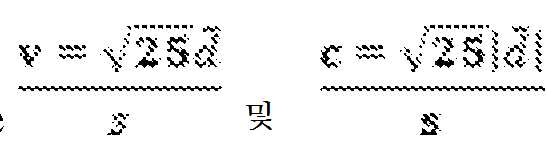
· "파라미터"는 p 값의 몬테 카를로 추정을 수행함으로써 (여기서, 검정 통계치에의 입력값은 샘플로부터 추정된 평균 및 분산을 포함하는 정규 분포에 따라 도출되었다) 섹션 P.A에 기술된, p 값을 추정하는 파라미터 방법을 나타내는 것이다. The "parameter" is the p value, described in section PA , by performing a Monte Carlo estimation of the p value (where the input to the test statistic was derived according to a normal distribution including the mean and variance estimated from the sample). It shows the parameter method for estimating.
· "비파라미터"는 P.B의, p 값을 추정하는 비파라미터 방법을 나타내는 것이다. · "Non-parametric" indicates a non-parametric method of estimating the p value of PB.
· "rANOVA"는 방법 P.A.I의 표준 반복 측정 ANOVA 방법론을 사용하는 검정 통계치 및 p 값 계산 패러다임을 나타낸다. · "rANOVA" refers to the test statistic and p-value calculation paradigm using the standard repeated measures ANOVA methodology of Method PAI.
상기와 같은 예시적인 분석을 개별적으로 수행한 후, 20명의 대상체를 포함하는 한 군의 데이터세트에 대한 평균을 구하였다. 상기 예시적인 구현에서, (전부두이고, 모발의 겔화를 필요로 하지 않는) 채널 FP1 및 FP2의 경우, 상기 예시적인 분류의 정확도는 균일하게 70-100% 범위인 것으로 예시되는 것에 주목한다. 이러한 예시적인 결과는 오직 전두부 전극만을 가지는 시스템이 높은 수행을 유도할 수 있다는 것을 제안한다. 개시된 방법은 전두부 활성을 획득하는 것을 항상 포함할 필요는 없다. After performing the above exemplary analyzes individually, one group of datasets containing 20 subjects was averaged. Note that, in the above exemplary implementation, for channels FP1 and FP2 (which are all fossa and do not require gelation of the hair), the accuracy of the exemplary classification is uniformly illustrated as being in the range of 70-100%. These exemplary results suggest that a system with only frontal electrodes can induce high performance. The disclosed methods need not always include obtaining frontal activity.
예시적인 인지 및/또는 감각 프로파일: 군 인식 상태 프로파일 (Exemplary cognitive and/or sensory profiles: group cognitive status profiles ( GSAPGSAP ) 및 개체 인식 상태 프로파일 () and object recognition status profile ( ISAPISAP ) )
비감독 분류기 실시양태의 상기의 마지막 일례를 사용하고, 전두부 전극 FP1을 선택하여 상기 프로파일을 예시할 때, 본 방법의 예시적인 구현의 최종 생성물은 개체 인식 상태 프로파일 (ISAP) 형태, 또는 군 인식 상태 프로파일 (GSAP)의 것일 수 있다. Using the last example above of an unsupervised classifier embodiment, and selecting the frontal electrode FP1 to illustrate this profile, the final product of the exemplary implementation of the method is in the form of an Individual Recognition Status Profile (ISAP), or Group Recognition Status profile (GSAP).
예를 들어, 본 발명자들은 임의의 대상체에 대한 p 값을 확인하고, 검정된 카테고리 내에서 구별의 척도로서 (도 25에 제시된 바와 같은) 비파라미터 우도비 검정을 사용하여 100% p 값을 수행한다. 개체인 경우, 예시적인 대상체 5에 있어서, ISAP는 99.9%였다. 군 수준에서 (예컨대, 1군) 중위수 GSAP 수준이 94.1%였다. 이러한 예시적인 결과는 도 26에 제시되어 있다. 도 26은 개별 대상체에 대한 개체 인식 상태 프로파일 및 한 군에 기초한 대상체에 대한 군 인식 상태 프로파일의 일례에 관한 다이어그램을 보여주는 것이다. For example, we identify a p-value for any subject and perform a 100% p-value using a non-parametric likelihood ratio test (as shown in Figure 25) as a measure of differentiation within the tested category. . For subjects, for Exemplary Subject 5, the ISAP was 99.9%. The median GSAP level at the group level (eg, Group 1) was 94.1%. These exemplary results are presented in FIG. 26 . 26 shows a diagram of an example of an object recognition status profile for an individual subject and a group recognition status profile for a subject based on a group.
II. II. P300P300
P300은 중앙-두정부 최대 두피 분포와 함께 300 내지 800 ms 사이의 양으로 향하는 전기적 반응을 특징으로 하는 뇌 내인성 반응이다. P300은 항목의 주관적 발생 확률과 반비례하는 상관 관계가 있다. 예를 들어, P300은 표적이 다른 항목보다 더 높은 진폭 P300을 유도하는 시각 표적 검출 과제에서 사용되었다. P300 is an endogenous brain response characterized by a positively directed electrical response between 300 and 800 ms with a central-parietal maximal scalp distribution. P300 has an inverse correlation with the subjective probability of occurrence of an item. For example, P300 was used in a visual target detection task where the target elicited a higher amplitude P300 than others.
P300을 사용하는, 본원에 기술된 예시적인 구현에서, 임의의 시각 단서 (예컨대, 녹색 동그라미)를 형성하고, 시험되는 대상체는 이를 "보상" 생각과 관련시키도록 지시를 받았다. 이어서, 이러한 "보상" 자극에 대한 뇌 반응을 분석하였다. P300을 사용하는 개시된 방법의 예시적인 예시가 다양한 EEG 기록 기법 간의 광범위한 방법 적용을 설명한다. 예를 들어, 본 방법은 전통 강성 전극 EEG 시스템을 사용하여 기록된 뇌 데이터 (예컨대, EEG 신호) 뿐만 아니라, 착용가능한, 가요성 표피 전자 센서 (EES)를 사용하여 획득된 EEG 데이터를 이용하여 인지 및/또는 감각 프로파일을 평가하는 데 적용된다. In an exemplary implementation described herein, using a P300, any visual cue (eg, green circle) is formed, and the subject being tested is instructed to associate it with a "reward" thought. Brain responses to these “reward” stimuli were then analyzed. Illustrative examples of the disclosed methods using the P300 illustrate a wide range of method applications among various EEG recording techniques. For example, the method uses brain data (eg, EEG signals) recorded using a traditional rigid electrode EEG system, as well as EEG data acquired using a wearable, flexible epidermal electronic sensor (EES) for cognitive recognition. and/or to evaluate a sensory profile.
EES 장치의 일례에서, 장치는 모두 생물학상 불활성인 가요성 중합체에 얹혀 있는 사형(serpentine) 유사 와이어에 의해 서로 연결된 초박 실리콘 아일랜드를 포함한다. EES는 예컨대, 온도, 스트레인, 광학, 및 전기 생리학 (예컨대, EEG, 심전도 (ECG), 및 근전도 (EMG) 신호)을 포함하나, 이에 한정되지 않는 다양한 신호 양식을 감지할 수 있고, 일부 구현에서, 장치에 구성된 처리 유닛을 사용하여 검출된 신호를 처리한다. 일부 일례에서, 처리 유닛은 트랜지스터, 커패시터, 레지스터, 인덕터, 및 다른 회로 소자 등을 포함하도록 구성될 수 있다. 일부 구현에서, 예를 들어, EES 장치의 처리 유닛은 프로세서 및 메모리 유닛을 포함할 수 있다. EES 장치는 인간 모발보다 두껍지 않은 두께를 가지도록 구성될 수 있다. EES 장치는 피부에 기계적으로 매칭되는 가요성이고 연신성인 기판으로서, 여기서, 센서 컴포넌트 및 처리 유닛 컴포넌트는 기판 상에 또는 그 안에 구성되어 있을 수 있는 기판을 포함하도록 구조화될 수 있다. 일부 구현에서, EES 장치는 예컨대, 대상체가 그 눈을 감았을 때 생성되는 예를 들어, 알파 리듬파를 검출하는 것과 같이, 예컨대, 심장, 골격근 (예컨대, 대화하는 동안의 인후 근육 활성 또는 눈 깜빡임) 및 뇌에 의해 일어나는 생리학적 활성을 비롯한, 측정된/검출된 활성 정보를 전송하는 전송기 유닛을 포함할 수 있다. In one example of an EES device, the device comprises ultra-thin silicone islands interconnected by serpentine-like wires that all rest on a flexible, biologically inert polymer. EES can sense a variety of signal modalities including, but not limited to, temperature, strain, optics, and electrophysiology (e.g., EEG, electrocardiogram (ECG), and electromyography (EMG) signals), for example, and in some implementations , processing the detected signal using a processing unit configured in the device. In some examples, processing units may be configured to include transistors, capacitors, resistors, inductors, and other circuit elements, and the like. In some implementations, for example, a processing unit of an EES device may include a processor and a memory unit. The EES device may be configured to have a thickness no greater than that of human hair. An EES device is a flexible, extensible substrate that mechanically matches the skin, wherein the sensor component and the processing unit component may be structured to include a substrate that may be configured on or within the substrate. In some implementations, the EES device is capable of eg, heart, skeletal muscle (eg, throat muscle activation or blinking during conversation), such as by detecting eg, an alpha rhythm wave generated when the subject closes its eyes. ) and a transmitter unit for transmitting measured/detected activity information, including physiological activity caused by the brain.
II.1. 시각 및/또는 청각 자극 패러다임을 이용하는 II.1. using visual and/or auditory stimulation paradigms P300P300
II.1.1. 예시적인 자극 II.1.1. Exemplary stimuli
일례 구현에서, 다중 뇌파 검사 (EEG) 기법 간의 표적 검출 과제에서 컬러 영상에 대한 반응으로 P300 뇌 마커를 사용하는 뇌 반응을 조사하였다. 예를 들어, 2가지 뇌 기록 기법: 전통 강성 전극 EEG 시스템 (예컨대, 이전 섹션에서 기술된 바와 같은 브레인 프로덕츠(Brain Products) 시스템) 및 EES 장치가 구현되었다. 추가로, 보상 감정/생각에 대한 신경 반응 또한 조사하였다. 두 ERP (P300 및 "보상") 모두 이는 각각 상관 관계가 있는 시각 자극에 의해 유도되었다. 예를 들어, 자극은 예컨대, 동물; 자동차; 얼굴; 꽃; 집; 임의의 물체; 오토바이; 비행기; 및 건물을 비롯한, 다중의 영상 카테고리로 구성되었다. 다양한 공급처로부터 예시적인 자극 풀을 입수하였다. 자극 풀을 입수한 후, (예컨대, MATLAB 스크립트로 프로그램화된) 컴퓨터 구현 방법을 사용하여 각 표본의 상대 휘도를 조절하였다. 예를 들어, 컴퓨터 구현 방법을 구현하여 먼저 컬러 영상으로 로딩하고, 하기의 예시적인 공식을 사용하여 상기 영상의 상대 휘도를 계산하였다:In one example implementation, brain responses using P300 brain markers were investigated in response to color images in a target detection task between multiple electroencephalography (EEG) techniques. For example, two brain recording techniques have been implemented: a traditional rigid electrode EEG system (eg, the Brain Products system as described in the previous section) and an EES device. In addition, neural responses to reward emotions/thoughts were also investigated. Both ERPs (P300 and "reward") were each induced by a correlated visual stimulus. For example, the stimulus may be, for example, an animal; automobile; Face; flower; House; any object; motorcycle; airplane; and buildings, including multiple image categories. Exemplary stimulation pools were obtained from various sources. After the stimulus pool was obtained, the relative luminance of each specimen was adjusted using a computer implemented method (eg, programmed with a MATLAB script). For example, a computer implemented method was implemented to first load a color image, and the following exemplary formula was used to calculate the relative luminance of the image:

(여기서, Y, R, G, 및 B는 각각 상대 휘도, 적색 건 값, 녹색 건 값, 및 청색 건 값을 나타낸다).(where Y, R, G , and B represent relative luminance, red key value, green key value, and blue key value, respectively).
예를 들어, 원하는 상대 휘도 값이 120이 되도록 설정하였다. 스크립트가 각 영상의 초기 상대 휘도를 측정한 후, 평균 상대 휘도가 120이 되도록 하기 위해 영상내 모든 픽셀에 RGB 값을 가산하거나, 또는 감산하였다. 이어서, 영상을 100% 화질로 저장하였다. For example, a desired relative luminance value is set to 120. After the script measures the initial relative luminance of each image, RGB values are added or subtracted to all pixels in the image so that the average relative luminance is 120. Then, the image was saved in 100% quality.
휘도를 조절한 후, (예컨대, MATLAB 스크립트를 사용하여 프로그램화된) 또 다른 컴퓨터 구현 프로세스를 사용하여 각 자극 표본 상에 중앙부에 위치하는 고정 점을 배치하였다. 예를 들어, 이는 대상체가 고정을 유지하고, 임의의 빈번한 단속성 안구 운동을 최소화하는 데 도움을 주었다. 이러한 예시적인 프로세스는 먼저 업로드된 영상의 크기를 측정하였다. 상기 측정치를 사용하여 영상의 중심을 계산한 후, 원에 대한 표준 방정식을 사용하여 고정 점을 만들었다. 픽셀의 적색 건을 255로, 녹색 건을 0으로, 및 청색 건을 0으로 바꿈으로써 중심 주변의 7 픽셀 길이의 반경 내의 픽셀을 변경시켰다. After adjusting the luminance, another computer implemented process (eg, programmed using a MATLAB script) was used to place a centrally located anchor point on each stimulus specimen. For example, this helped the subject maintain immobility and minimize any frequent saccades of eye movements. This exemplary process first measured the size of the uploaded image. After calculating the center of the image using these measurements, a fixed point was created using the standard equation for a circle. Pixels within a 7 pixel long radius around the center were altered by changing the pixel's red key to 255, green key to 0, and blue key to 0.
마지막으로, 고정 점에 대한 시각 자극 및 "보상"에 대한 임의의 시각 단서를 만들었다. 예를 들어, 고정 점의 경우, (예컨대, MATLAB 스크립트를 사용하여 프로그램화된) 컴퓨터 구현 프로세스를 사용하여 높이 및 너비가 350 픽셀인 회색 배경 영상 (예컨대, 적색 건 = 150; 녹색 건 = 150; 청색 건 = 150)을 만들었다. 이어서, 예시적인 스크립트는 원에 대한 표준 방정식을 사용하여 중첩 포 루프를 진행함으로써 예컨대, 영상의 적색 건을 255로, 녹색 건을 0으로, 및 청색 건을 0으로 바꿈으로써 7 픽셀 길이의 반경 내의 픽셀을 적색으로 변경시켰다. "보상"의 경우, 영상화 소프트웨어를 사용하여 350 x 350 픽셀의 회색 배경 (예컨대, 적색 건 = 150; 녹색 건 = 150; 청색 건 = 150) 배경 상에 녹색 동그라미 (예컨대, 적색 건 = 0; 녹색 건 = 255; 청색 건 = 0)를 만들었다. Finally, arbitrary visual cues for visual stimuli and “reward” for anchor points were created. For example, for a fixed point, a gray background image (eg, red key = 150; green key = 150; eg, red key = 150; green key = 150; blue key = 150). The example script then uses the standard equation for circles to go through an overlap four loop by, for example, replacing the red key of the image with 255, the green key with 0, and the blue key with 0 within a radius of 7 pixels long. Changed the pixel to red. For "compensation", use the imaging software to draw a green circle (eg, red key = 0; green) on a gray background (eg, red key = 150; green key = 150; blue key = 150) background of 350 x 350 pixels. key = 255; blue key = 0).
II.1.2. EEG 기록을 위한 II.1.2. for EEG recording 대상체object 준비 Preparations
EEG 기록을 위해 예시적인 대상체를 준비시키기 위하여, 각 대상체를 기록 챔버 내의 의자에 착석시키고, EEG 캡핑 프로세스를 시작하였다. 각 대상체는 2가지 EEG 기록 기법 (예컨대, 강성 전극 (브레인 프로덕츠) 양식 및 가요성, 착용가능한, 휴대용 전자 장치 (예컨대, 예시적인 EES 장치) 양식)을 각각 받았다. To prepare exemplary subjects for EEG recording, each subject was seated on a chair in the recording chamber and the EEG capping process started. Each subject received two EEG recording techniques (eg, a rigid electrode (Brain Products) modality and a flexible, wearable, portable electronic device (eg, exemplary EES device) modality), respectively.
강성 전극 양식을 사용하는 예시적인 구현을 위해, 상기 프로세스는 전통 EEG 캡을 대상체의 머리에 놓고, 고무 턱끈으로 이를 고정시키는 것을 포함하였다. 일부 일례에서, 예상되는 대상체의 머리 크기에 기초하여 직경이 56 cm 또는 58 cm인 캡이 사용되었다. 이어서, (예컨대, 파커 라보라토리즈로부터 입수한) 시그나 전극 겔을 곡선 모양의 플라스틱 시린지를 사용하여 각각의 캡 전극 아래에 주사하여 전극 그 자체와 대상체의 두피 사이에 전도성 브릿지를 만들었다. 또한, 예를 들어, 임피던스를 낮춤으로써 더욱 강력한 전도도를 구축하기 위해 목재 Q-팁을 사용하여 겔을 마사지하였다. 예를 들어, 상기 기법을 사용함으로써 예컨대, 접지 전극 및 기준 전극을 비롯한, 각 전극에 대해 임피던스 수준을 <5 kΩ으로 낮추었다. For an exemplary implementation using a rigid electrode modality, the process involved placing a traditional EEG cap on the subject's head and securing it with a rubber chin strap. In some instances, a cap with a diameter of 56 cm or 58 cm was used based on the expected subject's head size. A SIGNA electrode gel (eg, obtained from Parker Laboratories) was then injected under each cap electrode using a curved plastic syringe to create a conductive bridge between the electrode itself and the subject's scalp. Also, for example, a wooden Q-tip was used to massage the gel to build a stronger conductivity by lowering the impedance. For example, using the above technique lowered the impedance level to <5 kΩ for each electrode, including, for example, the ground electrode and the reference electrode.
예시적인 EES 장치를 사용하는 예시적인 구현을 위해, 먼저 대상체의 이마를 알콜 면봉 및 살균 처리된 거즈로 세정하였다. 알콜을 건조시킨 후, 예시적인 EES 장치를 대상체의 이마 위에 놓고, EES' ACF 케이블은 대상체의 오른쪽을 향하게 하였다. 예컨대, 곡선 모양의 플라스틱 시린지를 사용하여 예시적인 EES 장치를 수돗물로 적셨기 때문에, 대상체를 그/그녀의 머리를 뒤로 젖히도록 지시하였다. 동시에, 대상체는 물을 피하기 위하여 종이 타올을 사용하여 눈을 덮었다. 예를 들어, EES가 이마에 부착되어 같은 평면상에 있게 될 때까지, 촉촉한 손가락을 사용하여 EES를 부드럽게 문지를 수 있다. 이후, 본 일례에서, 넥스케어 노 스팅 리퀴드 밴디지(Nexcare No Sting Liquid Bandage)를 사용하여 EES를 이마에 더욱 단단하게 접착시켰다. 리퀴드 밴디지를 마르게 한 후, 보호 테이프를 사용하여 EES' DIN 케이블을 대상체의 머리에 붙여 놓았다. 예를 들어, 이는 케이블이 대상체의 시야에서 떨어지지 않게 하며, 또한 케이블이 EES 그 자체를 당기지 못하게 하였다. 또한, 예를 들어, DIN 케이블을 대상체의 셔츠 칼라에 고정시킴으로써 당기지 않게 하는 추가 조치를 취하였다. For an exemplary implementation using the exemplary EES device, the subject's forehead was first cleaned with an alcohol swab and sterile gauze. After drying the alcohol, an exemplary EES device was placed on the subject's forehead, and the EES' ACF cable was directed to the subject's right side. For example, since the exemplary EES device was wetted with tap water using a curved plastic syringe, the subject was instructed to tilt his/her head back. At the same time, subjects covered their eyes with paper towels to avoid water. For example, you can use a moistened finger to gently rub the EES until it adheres to your forehead and is flush. Then, in this example, the EES was more firmly adhered to the forehead using Nexcare No Sting Liquid Bandage. After the Liquid Bandage was dried, an EES' DIN cable was attached to the subject's head using protective tape. For example, this prevented the cable from falling out of the subject's field of view, and also prevented the cable from pulling the EES itself. Additionally, additional measures were taken to avoid pulling, for example by securing the DIN cable to the subject's shirt collar.
EEG 기록을 사용하여 예시적인 구현을 시작하기 전, 대상체에게 설명서를 주고 읽도록 하였다. 예를 들어, 상기 설명서에는 실험 패러다임의 일반 편성 및 바라봐야 하는 것, 즉, 표적, 방해 자극, 고정 점 및 청색 사각형이 기술되어 있었다. 각 제시 블록에서 블록이 변경될 것이라는 설명 또한 있었다. 예를 들어, 블록 1에서, 과제는 그가 하나 이상의 인간 얼굴이 있는 영상을 본 횟수를 계수하는 것이었다. 블록 2에서, 과제는 그가 하나 이상의 자동차가 있는 영상을 본 횟수를 계수하는 것이었다. 블록 3에서, 과제는 그가 하나 이상의 동물이 있는 영상을 본 횟수를 계수하는 것이었다. 모든 다른 사진은 방해 자극인 것으로 간주하고, 이는 계수하지 않도록 대상체에게 지시하였다. 각각의 제시 블록 후, 대상체 그가 본 표적의 갯수를 보고하도록 요청하였다. 예를 들어, 청색 사각형은 보상을 나타내었다. 대상체 대상체를 제시 모니터 앞에 착석시키고, 신경생리학적 데이터 중 모션 아티팩트를 막기 위하여 단지 실험 진행 기간 동안 내내 적색의 중앙 고정 점에 시각 고정을 유지하도록 하고, 그의 운동 움직임을 가능한 한 제한하도록 요구하였다. 이후, 이어서 기록실의 조명을 낮추고, 자극 프로세스 및 EEG 기록을 시작하였다. Before starting the example implementation using EEG recordings, subjects were given instructions and asked to read them. For example, the manual described the general organization of the experimental paradigm and what to look at: target, interfering stimulus, anchor point, and blue rectangle. There was also an explanation that at each presentation block the block would change. For example, in
II.1.3. 예시적인 자극 제시 프로세스 II.1.3. Exemplary stimulus presentation process
코젠트 2000을 사용하여 본 일례의 자극 제시 프로세스에서 사용된 예시적인 자극 제시 패러다임을 프로그램화하고, 제시 지속 기간을 짧게 하여 일련의 시각 자극 제시를 포함하였다. 예를 들어, 고정 점 및 녹색 동그라미를 포함하지 않는, 자극 풀을 두 기록 기법 각각에 대해 하나씩으로 하는 2개의 군으로 나누었다. 각 기법은 900개의 자극을 포함하였으며, 기록 기법에 걸쳐 총 1,800개의 자극을 포함하였다. 예를 들어, 한 기법에서 표적 및 방해 자극을 포함하는 900개의 자극은 각각 100 ms 동안 제시되었으며, 이를 3개의 제시 블록으로 나누었다. 청색 사각형 자극 제시는 1,000 ms 동안 지속되었고, 각 제시 블록에서 30회 제시되었다. 고정 점은 모든 표적 시험, 방해 자극 시험, 및 자극간 간격 (ISI) 동안 가시적이었다. Cogent 2000 was used to program the exemplary stimulus presentation paradigm used in this exemplary stimulus presentation process, and to include a series of visual stimulus presentations with short presentation durations. For example, the stimulus pools, containing no anchor points and green circles, were divided into two groups, one for each of the two recording techniques. Each technique included 900 stimuli, for a total of 1,800 stimuli across the recording technique. For example, in one technique 900 stimuli, including target and interfering stimuli, were presented for 100 ms each, divided into three presentation blocks. The blue square stimulus presentation lasted for 1,000 ms and was presented 30 times in each presentation block. Anchor points were visible during all target tests, interstimulation tests, and interstimulus intervals (ISI).
예를 들어, 블록 1에서, 표적은 인간 얼굴이었다. 블록 2에서, 표적은 자동차였다. 블록 3에서, 표적은 동물이었다. 기록 기법을 무작위화하는 것 이외에도, 본 발명자들은 또한 각 기법 내에서 제시 블록의 순서도 무작위화하였다. 제시 블록은 기법 간에 절대 연속하여 반복되지 않았다 (예컨대, 블록 1, 블록 2, 블록 3, 블록 3, 블록 2, 블록 1, 블록 1, 블록 3, 블록 2). 대상체는 그가 특정 표적을 본 횟수를 계수하도록 지시를 받았는 바, 본 발명자들은 각 블록에 대한 표적의 정확한 개수를 달리하였다. 블록 1 (표적: 얼굴)에는 56개의 표적 및 244개의 방해 자극이 존재하였다. 블록 2 (표적: 자동차)에는, 62개의 표적 및 238개의 방해 자극이 존재하였다. 블록 3 (표적: 동물)에는, 60개의 표적 및 240개의 방해 자극이 존재하였다. 방해 자극은 모든 비표적 목적 카테고리로 구성되었다. 예를 들어, 블록 1 (표적: 얼굴)에서, 방해 자극은 자동차, 동물, 꽃, 집 등을 포함하였다. MATLAB 코드는 실험자가 대상체의 이니셜을 입력하고 어느 블록을 제시할지를 선택하라고 촉구함으로써 시작되었다. 선택된 블록 번호에 따라, 스크립트는 어느 목적 카테고리가 표적이 되는, 표적의 개수, 방해 자극의 개수를 계산하였다. 이후, MATLAB randperm() 함수를 사용하여 자극 제시 순서를 무작위화하였다. randperm() 함수를 20회 진행시켜 제시 순서가 더욱 잘 무작위화되도록 하였다. 이어서, randi() 함수를 사용하여 각 시험을 위한 자극간 간격 (ISI)을 생성하였다. 자극간 간격 범위는 500 ms 내지 600 ms였다. 디스플레이, 사운드 카드, 및 병렬 포트를 설정하는 것 이외에도, 코젠트 2000 내에서 로그 파일을 설정하고, 초기화하였다. 상기 로그 파일을 사용하여 그의 자극 유형 (표적, 방해 자극 및 청색 사각형)에 관한 모든 시험 이력을 작성하였다. 이어서, 자극을 메모리 버퍼에 로딩하였다. 전산상 부하를 줄이고, 레이턴시 정밀도를 증가시키기 위하여 자극 제시 전에 상기 언급된 단계를 수행하였다. 자극 제시는 미리 결정된 제시 순서를 반복한 포-루프를 사용하는 것을 포함하였다. 예를 들어, 제시 순서의 현재 자극 값에 기초하여, 컴퓨터 구현 프로세스는 그의 자극 유형을 산정하였고, 그의 자극 유형에 관한 적절한 정보를 로그 파일 및 병렬 포트로 전송하였고, 그의 트리거를 EEG 기록 컴퓨터로 전송하였다. 이어서, 프로그램은 ISI을 제시하였다. 각 제시 종료시, 병렬 포트를 0으로 재설정하고, 다음 시험을 준비하였다. For example, in
도 27은 예시적인 제시된 일련의 시각 자극에 대한 다이어그램을 보여주는 것이다. 본 다이어그램에는 구체적으로 제시된 표본의 영상 및 미리 프로그램화된 의사 무작위형 제시 순서가 묘사되어 있다. 각 해결안에 대해 적절한 자극 제시 구조를 가지는 것이 예시적인 방법의 고유하고, 중요한 부분이 된다. 본 일례에서, 관련 측면은 미리 결정된 "표적"을 나타내는 영상 대 ("방해 자극"으로 표지화된) 모든 다른 영상과, 미리 결정된 "표적"을 나타내는 영상 대 앞서 "보상" 표시와 연관되어진 청색 사각형 사이의 구별이다. 일련의 다른 영상 중에서 구현되는 표적으로서 관심 영상의 특정 콘텐트를 가지는 적절한 자극 구조 및 기술된 후속되는 전문화된 분석이 예시적인 방법에서 관련 뇌 마커를 사용하는 데, 예컨대, 본 예시적인 경우에서는 P300 및 "보상" 유도 ERP를 사용하여 개체 지식, 주의력 수준 및 특정 항목에 대한 선호를 평가하고 측정함으로써 개체 지식/선호 프로파일을 작성하는 데 중요하다. 27 shows a diagram for an exemplary presented set of visual stimuli. This diagram depicts images of a specifically presented sample and a pre-programmed pseudo-random presentation sequence. Having an appropriate stimulus presentation structure for each solution is a unique and important part of the exemplary method. In this example, the relevant aspect is between an image representing a predetermined "target" versus all other images (labeled "disturbing stimulus") and an image representing a predetermined "target" versus the blue rectangle previously associated with the "reward" indication. is the distinction of An appropriate stimulus structure with the specific content of the image of interest as a target to be implemented among a series of other images and the subsequent specialized analysis described uses relevant brain markers in an exemplary method, such as P300 and " It is important to build an individual knowledge/preference profile by using "reward" guided ERP to evaluate and measure individual knowledge, attention levels, and preferences for specific items.
예를 들어, 일부 적용에서, 이어서, 상기 프로파일은 후속 자극의 적응 변화를 제어하는 뇌-기계 인터페이스를 가이드하고/거나, 조정하는 사후 매칭 알고리즘에 의해 평가된다. 이는 예를 들어, 지원 학습 적용 또는 선호 분류 적용에서 사용될 수 있으며, 예컨대, 개인의 지식 또는 선호 프로파일을 결정한 후, 학생이 처음 사례에서 학습 결함을 보인 경우에는 정보 유형을 보강하거나, 또는 추후에는 다음에 제시된 항목을 개인의 선호 세트로 조정함으로써 뇌-기계 인터페이스는 후속 자극을 조정할 수 있다. For example, in some applications, the profile is then evaluated by a post-matching algorithm that guides and/or adjusts the brain-machine interface that controls adaptive changes in subsequent stimuli. This can be used, for example, in supportive learning applications or preference classification applications, for example, after determining an individual's knowledge or preference profile, to reinforce information types if a student exhibits a learning deficit in the first instance, or later to: By adjusting the items presented in , to an individual's preference set, the brain-machine interface can coordinate subsequent stimuli.
II.1.4. 예시적인 뇌파 (EEG) 기록 II.1.4. Exemplary electroencephalogram (EEG) recording
일부 구현에서, 강성 전극을 사용하는 전통 EEG 시스템을 이용하여 뇌파를 획득하였다. 예시적인 EEG 시스템으로는 브레인Amp DC 32-채널 시스템; 브레인비젼 리코더; 패스트 n 이지 32-채널 EEG 기록 캡 크기 56 cm; 패스트 n 이지 32-채널 EEG 기록 캡 크기 58 cm; 5k 레지스터가 장착된 브레인캡-MR용 PCB 리본 케이블; 및 브레인캡 MR 박스 1.2를 포함하였다. 예시적인 EES 센서 케이블을 상기와 동일한 EEG 시스템에 연결시켰다. In some implementations, EEG was acquired using a traditional EEG system using rigid electrodes. Exemplary EEG systems include: BrainAmp DC 32-channel system; brainvision recorder; Fast n Easy 32-channel EEG recording cap size 56 cm; Fast n Easy 32-channel EEG recording cap size 58 cm; PCB Ribbon Cable for Braincap-MR with 5k Resistor; and Braincap MR Box 1.2. An exemplary EES sensor cable was connected to the same EEG system as above.
II.1.5. 예시적인 전처리 분석 기법 II.1.5. Exemplary Preprocessing Analysis Techniques
시각 자극 패러다임을 사용하는 개시된 방법의 예시적인 분석 전처리 기법은 마커 데이터를 처리하는 기법을 포함할 수 있다. 예를 들어, 각 기록 세션 후, 예시적인 EEG 기록 시스템은 3개의 파일: 데이터 파일 (.eeg), 헤더 파일 (.vhdr), 및 마커 파일 (.vmrk)을 작성하였다. 마커 파일은 각 자극 개시에 대한 이벤트 트리거를 포함하였다. 본 일례에서, 병렬 포트 내에서는 출력값에 제한이 있기 때문에, 코젠트 2000 로그 파일을 사용하여 표본의 자극 유형 (예컨대, 표적, 방해 자극 또는 녹색 동그라미)에 관한 추가의 판독가능한 정보를 저장하였다. 그로부터, (예컨대, MATLAB 스크립트를 사용하여 프로그램화된) 프로세스는 일대일 교체 방식으로 마커 파일 (.vmrk)의 이벤트 트리거를 로그 파일로부터의 이벤트 코드로 교체하였다. 예를 들어, .vmrk 파일의 제1 마커를 로그 파일의 제1 마커로 교체하고; .vmrk 파일의 제2 마커를 로그 파일의 제2 마커로 교체하는 것 등이 이루어졌다. Exemplary analysis pre-processing techniques of the disclosed methods using the visual stimulus paradigm may include techniques for processing marker data. For example, after each recording session, the exemplary EEG recording system created three files: a data file (.eeg), a header file (.vhdr), and a marker file (.vmrk). The marker file contained event triggers for each stimulus initiation. In this example, due to the limitations of the output within the parallel port, a Cogent 2000 log file was used to store additional readable information regarding the stimulus type of the specimen (eg, target, interfering stimulus, or green circle). From there, the process (eg, programmed using a MATLAB script) replaced the event triggers in the marker file (.vmrk) with the event code from the log file in a one-to-one replacement manner. For example, replacing the first marker in the .vmrk file with the first marker in the log file; replacing the second marker in the .vmrk file with the second marker in the log file, and so on.
개시된 방법의 예시적인 분석 전처리 기법은 일반 개체에 대한 통계학적 분석 기법을 포함한다. 본원에 기술된 예시적인 구현에서, 통계학적 분석을 위해 MATLAB와 스타트소프트 스타티스티카 (버전 8.0) 소프트웨어의 조합을 사용하였다. 데이터 처리 및 분석 후, 예시적인 EEG 기록 시스템의 브레인비젼 애널라이저는 조건, 대상체, 시험, 전극 채널, 및 평균 전압 진폭에 관한 데이터 값을 포함하는 텍스트 파일을 익스포팅하였다. 예를 들어, 32 전극 EEG 캡 기법의 경우, 하기와 같은 관심 시간 간격 동안 전두부 전극 (FP2)에 대한 평균 전압 진폭을 추출하였다: 표적 및 방해 자극 - 자극 개시 후 352 ms 내지 452 ms; 보상 자극 - 자극 개시 후 452 ms 내지 552 ms. EES 기법 전두부 전극에 대해서는 같은 파라미터를 사용하였다. 상기 데이터를 예시적인 EEG 기록 시스템의 브레인비젼 애널라이저에 의해 텍스트 파일로 작성한 후, 컴퓨터 구현 프로그램 (예컨대, MATLAB 프로그램)에 로딩하여 데이터를 더욱 액세스 가능한 포맷으로 분류하고, 조직화하였다. 구체적으로, 예를 들어, 예시적인 컴퓨터 구현 프로그램을 통해 예컨대, MATLAB의 변수 편집기를 사용함으로써 열에 의해 데이터를 더욱 쉽게 선택할 수 있다. 선택한 후, 데이터를 복사하여 스타티스티카 데이터 스프레드시트에 붙였다. Exemplary analysis preprocessing techniques of the disclosed methods include statistical analysis techniques for the general population. In the exemplary implementation described herein, a combination of MATLAB and Startsoft Statistica (version 8.0) software was used for statistical analysis. After data processing and analysis, the brainvision analyzer of the exemplary EEG recording system exported a text file containing data values pertaining to condition, subject, test, electrode channel, and average voltage amplitude. For example, for the 32-electrode EEG cap technique, the mean voltage amplitudes for the frontal electrode (FP2) were extracted for the following time intervals of interest: target and disturbing stimuli—352 ms to 452 ms after stimulation initiation; Compensatory stimulation - 452 ms to 552 ms after stimulation initiation. The same parameters were used for the EES technique frontal electrode. The data was written into text files by the brainvision analyzer of the exemplary EEG recording system and then loaded into a computer implemented program (eg, a MATLAB program) to classify and organize the data into a more accessible format. Specifically, it may be easier to select data by column, for example, by using a variable editor in MATLAB, for example, through an exemplary computer implemented program. After selection, the data was copied and pasted into the Statistica data spreadsheet.
예를 들어, 각 EEG 기록 기법에 대한 방해 자극과 표적 사이의 비교를 위해 각 스타티스티카 스프레드시트 상에서 일원 (인자 1: 조건) 반복 측정 ANOVA를 실행하였다. 예를 들어, 각 스프레드시트는 하기: (1) EEG 기법: 강성 전극 EEG 캡 또는 EES 전극; (2) 비교: 방해 자극 vs. 표적에 대하여 특이적이었다. 보상 조건의 경우, 0에 대해 보상 추출된 평균 진폭 값을 비교하는 T 검정을 실행하였다. 예를 들어, 각 스프레드시트는 하기: (1) EEG 기법: 강성 전극 EEG 캡 또는 EES 전극; (2) 비교: 방해 자극 vs. 표적에 대하여 특이적이었다. 브레인 프로덕츠 EEG캡으로부터의 Fp2 전극을 사용하여 방해 자극과 표적 사이를 비교한 경우, F(1,140) = 12.184 및 p 값 = 0.00064인 유의적인 효과를 발견하게 되었다. EES' 기록 전극을 사용하여 방해 자극과 표적 사이를 비교한 경우, F(1,148) = 17.307 및 p 값 = 0.00005인 유의적인 효과를 발견하게 되었다. 브레인 프로덕츠 EEG 캡으로부터의 Fp2 전극으로부터 보상과 상수 0을 비교한 경우, 평균 = 218.180138571428, 표준 편차 = 895.427245848706, N 샘플 크기 = 89, 표준 오차 = 34.6498548937238, T 값 = -3.13915892165244, 자유도 = 88, 및 p 값 = 0.00230642892515112인 유의적인 효과를 발견하게 되었다. EES' 기록 전극으로부터 보상과 상수 0을 비교한 경우, 평균 = 218.180138571428, 표준 편차 = 895.427245848706, N 샘플 크기 = 70, 표준 오차 = 107.024026181588, T 값 = 2.03860895871402, 자유도 = 69, 및 p 값 = 0.0453228914525858인 유의적인 효과를 발견하게 되었다. For example, a one-way (factor 1: condition) repeated measures ANOVA was run on each Statistica spreadsheet for comparisons between interfering stimuli and targets for each EEG recording technique. For example, each spreadsheet contains the following: (1) EEG technique: a rigid electrode EEG cap or EES electrode; (2) Comparison: Interfering stimuli vs. It was specific for the target. For the compensation condition, a T test was performed comparing the compensation extracted mean amplitude values to zero. For example, each spreadsheet contains the following: (1) EEG technique: a rigid electrode EEG cap or EES electrode; (2) Comparison: Interfering stimuli vs. It was specific for the target. When comparing between the disturbing stimulus and the target using the Fp2 electrode from the Brain Products EEG cap, we found a significant effect with F(1,140) = 12.184 and p value = 0.00064. When comparing between the disturbing stimulus and the target using EES' recording electrodes, a significant effect was found with F(1148) = 17.307 and p-value = 0.00005. Comparing compensation and constant 0 from Fp2 electrodes from Brain Products EEG caps, mean = 218.180138571428, standard deviation = 895.427245848706, N sample size = 89, standard error = 34.6498548937238, T value = -3.13915892165244, degrees of freedom = 88, and A significant effect with p value = 0.00230642892515112 was found. Comparing compensation and constant 0 from EES' recording electrodes, mean = 218.180138571428, standard deviation = 895.427245848706, N sample size = 70, standard error = 107.024026181588, T value = 2.03860895871402, degrees of freedom = 69, and p value = 0.0453228914525858 A significant effect was found.
I.1.6. 상이한 EEG I.1.6. different EEG 센싱sensing 기술 간의 예시적인 구현 Example implementations between technologies
섹션 II.1.2 EEG 기록을 위한 대상체 준비에 기술된 바와 같이, EEG 기록 기술 간의 예시적인 방법의 실현 가능성 및 정확도 유지 둘 모두를 입증하기 위해, 강성 전극이 있는 전통의 전체 EEG 캡과 예컨대, 가요성 전자 장치 전극이 있는 표피 전자 장치 시스템과 같은, 예시적인 착용가능한, 휴대용 EEG 센서 시스템을 사용하여 같은 패러다임을 구현하였다. Section as described in the subject preparation for II.1.2 EEG recording, to demonstrate both the viability and the example method of maintaining accuracy between EEG recording techniques, all of the traditional EEG cap with a rigid electrode and for example, the flexible The same paradigm was implemented using an exemplary wearable, portable EEG sensor system, such as an epidermal electronic device system with electronic device electrodes.
II.1.6.1. 강성 전극 EEG 시스템 II.1.6.1. Rigid Electrode EEG System
도 28A 및 28B는 예시적인 강성 전극 EEG 시스템을 사용하여 예시적인 방법의 데이터 획득 및 처리 프로세스의 구현으로부터 얻은 예시적인 결과의 영상 및 데이터 플롯을 보여주는 것으로서, 여기서, 개체 (예컨대, 단일 대상체) 통계학적 분석은 "표적"과 "방해 자극" 영상 사이의 구별에 관한 뇌 패턴 및 "보상" 생각과 관련된 뇌 패턴을 보여준다. 도 28A는 EEG 시스템의 강성 전극 EEG 센서 캡 (2800)를 착용한 개별 대상체를 보여주는 영상을 나타내는 것이다. 도 28B는 "표적" (적색 선) 대 "방해 자극" (검은색 선)에 대한 예시적인 ERP 반응을 보여주는 플롯 (2801) 및 "보상" (청색 선)과 관련된 청색 사각형 영상에 대한 ERP 반응을 보여주는 플롯 (2802)을 보여주는 것으로서, 여기서, 플롯 (2801) 및 (2802)에 디스플레이된 예시적인 데이터는 이용가능한 EEG 분석 소프트웨어 (예컨대, 브레인비젼 애널라이저 2)를 사용하여 수행된 처리로부터 측정된 것이다. 도 28B는 "표적" (적색 선) 대 "방해 자극" (검은색 선)에 대한 예시적인 ERP 반응을 보여주는 플롯 (2811) 및 "보상" (청색 선)과 관련된 청색 사각형 영상에 대한 ERP 반응을 보여주는 플롯 (2812)을 보여주는 것으로서, 여기서, 플롯 (2811) 및 (2812)에 디스플레이된 예시적인 데이터는 본 발명자들에 의해 개발된 주문 디자인된 코드를 사용하여 같은 처리 분석으로부터 측정된 것이다.28A and 28B show images and data plots of exemplary results obtained from implementation of the data acquisition and processing process of the exemplary method using the exemplary rigid electrode EEG system, wherein the subject (eg, single subject) statistical The analysis reveals brain patterns related to the distinction between “target” and “disturbing stimulus” images and brain patterns related to “reward” thoughts. 28A shows an image showing an individual object wearing a rigid electrode EEG sensor cap 2800 of an EEG system. 28B is a
놀랍게도, 도 28B에 도시된 바와 같이, 분석 프로세스 중 적어도 일부를 포함하는, 예시적인 방법의 적어도 일부를 적용시킴으로써 강성 전극 EEG 캡을 사용하여 뇌 데이터를 획득할 수 있고, 그가 (통계학상 유의적인 방식으로) 개별 반응을 다른 영상으로부터 관심 영상을 구별하는 것으로, 및 "보상"과 관련된 시각 단서로 반영하도록 처리할 수 있다. 이어서, 예시적인 방법의 나머지 프로세스 (예컨대, 가이드된 분류 알고리즘 등)는 적용될 수 있고, 구현됨으로써 개별화된 지식 평가 프로파일을 생성할 수 있다. 또한, 예를 들어, 도 28B에 제시되어 있는 바와 같이, 본 발명자들에 의해 주문 디자인된 예시적인 코드를 사용함으로써 같은 ERP 계산 분석을 수행할 수 있고, 이로써, 강성 전극 EEG 시스템을 사용하였을 때 유사한 수행 정확도 (예컨대, 유사한 p 값)을 얻었다 (예컨대, 표적 vs. 방해 자극: 시판용 소프트웨어 (p=0.00064) 및 본 발명자들의 예시적인 주문 디자인된 분석 코드 (p=0.0000); 보상: 시판용 소프트웨어 (p=0.0023) 및 본 발명자들의 분석 코드 (p=0.0144)). Surprisingly, as shown in FIG. 28B , it is possible to acquire brain data using a rigid electrode EEG cap by applying at least a portion of an exemplary method, including at least a portion of an analysis process, which results in a (statistically significant) ) can be processed to reflect individual responses as distinguishing images of interest from other images, and as visual cues associated with “reward”. The remaining processes of the exemplary method (eg, guided classification algorithm, etc.) may then be applied and implemented to create a personalized knowledge assessment profile. In addition, the same ERP computational analysis can be performed by using the example code custom designed by the present inventors, for example, as shown in FIG. Performance accuracy (e.g., similar p values) was obtained (e.g., target vs. interfering stimuli: commercial software (p=0.00064) and our exemplary custom designed assay code (p=0.0000); Reward: commercial software (p =0.0023) and our analysis code (p=0.0144)).
II.1.6.2. 표피 전자 장치 센서 EEG 시스템II.1.6.2. Epidermal Electronics Sensor EEG System
도 29A 및 29B는 예시적인 가요성 표피 전자 장치 센서 장치 EEG 시스템을 사용하여 예시적인 방법의 데이터 획득 및 처리 프로세스의 구현으로부터 얻은 예시적인 결과의 영상 및 데이터 플롯을 보여주는 것으로서, 여기서, 개체 (예컨대, 단일 대상체) 통계학적 분석은 "표적"과 "방해 자극" 영상 사이의 구별에 관한 뇌 패턴 및 "보상" 생각과 관련된 뇌 패턴을 보여준다. 도 29A는 EEG 시스템의 예시적인 EES 장치 (2900)를 착용한 개별 대상체를 보여주는 영상을 나타내는 것이다. 도 29B는 "표적" (적색 선) 대 "방해 자극" (검은색 선)에 대한 예시적인 ERP 반응을 보여주는 플롯 (2901) 및 "보상" (청색 선)과 관련된 청색 사각형 영상에 대한 ERP 반응을 보여주는 플롯 (2902)을 보여주는 것으로서, 여기서, 플롯 (2901) 및 (2902)에 디스플레이된 예시적인 데이터는 이용가능한 EEG 분석 소프트웨어 (예컨대, 브레인비젼 애널라이저 2)를 사용하여 수행된 처리로부터 측정된 것이다. 도 29B는 "표적" (적색 선) 대 "방해 자극" (검은색 선)에 대한 예시적인 ERP 반응을 보여주는 플롯 (2911) 및 "보상" (청색 선)과 관련된 청색 사각형 영상에 대한 ERP 반응을 보여주는 플롯 (2912)을 보여주는 것으로서, 여기서, 플롯 (2911) 및 (2912)에 디스플레이된 예시적인 데이터는 본 발명자들에 의해 개발된 주문 디자인된 코드를 사용하여 같은 처리 분석으로부터 측정된 것이다.29A and 29B show images and data plots of exemplary results obtained from implementation of an exemplary method data acquisition and processing process using an exemplary flexible epidermal electronic device sensor device EEG system, wherein an individual (e.g., A single subject) statistical analysis reveals brain patterns related to the distinction between "target" and "disturbing stimulus" images and brain patterns related to "reward" thoughts. 29A shows an image showing an individual subject wearing an
놀랍게도, 도 29B에 도시된 바와 같이, 분석 프로세스 중 적어도 일부를 포함하는, 예시적인 방법의 적어도 일부를 적용시킴으로써 사용자-착용가능한 EES 장치를 사용하여 뇌 데이터를 획득할 수 있고, 그가 (통계학상 유의적인 방식으로) 개별 반응을 다른 영상으로부터 관심 영상을 구별하는 것으로, 및 "보상"과 관련된 시각 단서로 반영하도록 처리할 수 있다. 이어서, 예시적인 방법의 나머지 프로세스 (예컨대, 가이드된 분류 알고리즘 등)는 적용될 수 있고, 구현됨으로써 개별화된 지식 평가 프로파일을 생성할 수 있다. 또한, 예를 들어, 도 29B에 제시된 바와 같이, 본 발명자들에 의해 주문 디자인된 예시적인 코드를 사용함으로써 같은 ERP 계산 분석을 수행할 수 있고, 이로써, 가요성, 착용가능한 전자 장치 EEG 시스템을 사용하였을 때 유사한 수행 정확도 (예컨대, 유사한 p 값)을 얻었다 (예컨대, 표적 vs. 방해 자극: 시판용 소프트웨어 (p=0.0000) 및 본 발명자들의 예시적인 주문 디자인된 분석 코드 (p=0.0000); 보상: 시판용 소프트웨어 (p=0.0453) 및 본 발명자들의 분석 코드 (p=0.0002)).Surprisingly, as shown in FIG. 29B , it is possible to acquire brain data using a user-wearable EES device by applying at least a portion of an exemplary method, including at least a portion of an analysis process, which (statistically significant individual responses) can be processed to differentiate images of interest from other images, and to reflect them as visual cues associated with "reward". The remaining processes of the exemplary method (eg, guided classification algorithm, etc.) may then be applied and implemented to create a personalized knowledge assessment profile. It is also possible to perform the same ERP computational analysis by using the example code custom designed by the inventors, for example, as shown in FIG. 29B , thereby using a flexible, wearable electronic device EEG system. similar performance accuracies (e.g., similar p values) when software (p=0.0453) and our analysis code (p=0.0002)).
II.1.6.3. (예컨대, 컨텍스트 특정 파라미터 이용하는) 예시적인 처리 및 가이드된 분류 기법 II.1.6.3. Exemplary processing and guided classification techniques (eg, using context specific parameters)
본 섹션에서는 개체 지식 및 보상 평가를 위한 분류기를 개발할 수 있는 능력을 기술한다. 예를 들어, 예시적인 구현에서, 앞서 논의된 바와 같이, 각 대상체에게 (예컨대, 강성 전극 EEG 시스템을 위한) 전체 EEG 캡 뿐만 아니라, 착용가능한 이마 탑재형 EEG 센서 장치를 제공하였다. 이전 섹션에서 보고된 예시적인 P 값은 개체로부터의 것이며, 따라서, 본 컨텍스트에서 직접 적용가능하였다. 따라서, 보상 및 방해 자극인 자극을 제공할 수 있으며, 예컨대, 강성 또는 표피 전자 장치 시스템을 사용한 전극 FP1로부터 기록된 바와 같이, 표적 및 방해 자극 파형 사이의 차이에 관한 t 검정을 사용하여 P 값을 계산할 수 있다. 예를 들어, 상기와 같은 경우, 100% - P 값을 개체 지식 평가 프로파일 (IKEP)에 대한 척도로서 사용할 수 있다. 예를 들어, 보상을 평가하는 데 유사한 방법이 직접 적용될 수 있다. This section describes the ability to develop classifiers for object knowledge and reward evaluation. For example, in an exemplary implementation, each subject was provided with a wearable forehead mounted EEG sensor device, as well as a full EEG cap (eg, for a rigid electrode EEG system), as discussed above. The exemplary P values reported in the previous section are from individuals and, therefore, were directly applicable in this context. Thus, it is possible to provide a stimulus that is both a reward and a disturbing stimulus, e.g., using a t-test for the difference between the target and disturbing stimulus waveforms, as recorded from electrode FP1 using a rigid or epidermal electronic device system, the P value can be calculated can be calculated For example, in such a case, the 100%-P value can be used as a measure for the Individual Knowledge Assessment Profile (IKEP). For example, a similar method can be applied directly for evaluating rewards.
따라서, 도 30-33의 다이어그램에 제시되어 있는 바와 같이, 이전 섹션으로부터 얻은 p 값을 사용하여, 하기 개별화된 지식 평가 프로파일에서 예시적인 결과를 확인하였다. 도 30은 P300 ERP의 경우, 강성 전극 EEG 시스템, FP1 전극을 사용한 예시적인 대상체 (예컨대, 대상체 1)의 표적과 방해 자극 구별에 대한 예시적인 IKEP 정량 수준으로서, 이는 99.9999% (높음)로 측정된 것을 표시하는 다이어그램을 보여주는 것이다. 도 31은 전두부 P300 ERP의 경우, 표피 전자 장치 센서 장치 EEG 시스템을 사용한 예시적인 대상체 (예컨대, 대상체 1)의 표적과 방해 자극 구별에 대한 예시적인 IKEP 정량 수준으로서, 이는 99.9999% (높음)로 측정된 것을 표시하는 다이어그램을 보여주는 것이다. 도 32는 강성 전극 EEG 시스템, FP1 전극을 사용한 예시적인 대상체의 보상에 대한 예시적인 IKEP 정량 수준으로서, 이는 98.56% (높음)로 측정된 것을 표시하는 다이어그램을 보여주는 것이다. 도 33은 표피 전자 장치 센서 장치 EEG 시스템을 사용한 예시적인 대상체의 보상에 대한 예시적인 IKEP 정량 수준으로서, 이는 99.98% (높음)로 측정된 것을 표시하는 다이어그램을 보여주는 것이다. Thus, as presented in the diagrams of FIGS. 30-33 , exemplary results were identified in the individualized knowledge assessment profile below, using the p values obtained from the previous section. 30 is an exemplary IKEP quantification level for target and disturbing stimuli discrimination of an exemplary subject (eg, subject 1) using a rigid electrode EEG system, FP1 electrode, for P300 ERP, measured as 99.9999% (high). It shows a diagram that shows what 31 is an exemplary IKEP quantification level for target and obstructive stimuli discrimination of an exemplary subject (eg, subject 1) using the epidermal electronic device sensor device EEG system for the frontal P300 ERP, measured as 99.9999% (high). A diagram showing what has been done is shown. 32 shows a diagram showing an exemplary IKEP quantification level for compensation of an exemplary subject using a rigid electrode EEG system, an FP1 electrode, measured as 98.56% (high). 33 is a diagram showing an exemplary IKEP quantification level for compensation of an exemplary subject using an epidermal electronic device sensor device EEG system, measured as 99.98% (high).
뇌-brain- 기계machine 인터페이스 interface
앞서 도 1A에 제시된 바와 같이, 시스템 (100)은, 사용자와 기계 사이의 상호작용을 작동시킬 수 있는 뇌-기계 인터페이스 모듈 (160)을 포함한다. 일례에서, 뇌-기계 인터페이스 모듈 (160)은 프로파일 생성 모듈 (150)로부터, 예컨대, 시스템 (100)의 진행 중인 구현으로부터 또는 시스템 (100)에 의해 앞서 생성된 프로파일로부터 생성된 개별 대상체 또는 군 대상체의 인지 및/또는 감각 프로파일 (예컨대, IKEP, ISAP, GKEP, GSAP)에 기초하여 새로운 자극 또는 다중 자극을 자극 제시 모듈 (110)로 피드백을 전달할 수 있다.As previously presented in FIG. 1A ,
본 섹션에서, 예시적인 프레임워크는, 사용자를 조사하여 그/그녀 인지 상태에 대한 의미를 추출하는 순차적인 방식인 일련의 실험 디자인에 일반적으로 적용될 수 있는 것으로 기술된다. 본 예시적인 일례에서, 예를 들어, 사용자는 그에 대한 줌이 그/그녀의 관심의 대상이 되는 것인 특정 지점을 맵 상에 가지고 있다고 가정한다. 일련의 실험 디자인 방법 및 시스템의 구현을 사용하여 복수 개의 부분 맵 (예컨대, 4개의 사분면)으로 맵을 분할하여 신경 및/또는 행동 반응이 관심 지점을 포함하는 부분 맵 (예컨대, 사분면)과 통계학상 서로 연관되는 실험을 디자인한다. 시스템을 관심점에 대한 그의 지식을 업데이트하고, 후속된 맵 및/또는 사분면 디스플레이를 최적화시킨다. 관심점이 (고성능으로) 추출될 때까지 실험 (예컨대, 자극을 조사하는 실험) 수행 횟수를 최소화하도록 시스템을 디자인할 수 있다. In this section, the exemplary framework is described as being generally applicable to a series of experimental designs that are sequential ways of examining a user and extracting meaning for his/her cognitive state. In this illustrative example, assume, for example, that the user has a particular point on the map of which his/her interest is zoomed thereon. Using an implementation of a set of experimental design methods and systems, the map is partitioned into a plurality of sub-maps (e.g., four quadrants) so that neural and/or behavioral responses can be statistically compared to sub-maps (e.g., quadrants) containing points of interest. Design interrelated experiments. The system updates its knowledge of points of interest and optimizes subsequent map and/or quadrant display. The system can be designed to minimize the number of times an experiment (eg, an experiment examining a stimulus) is performed until a point of interest is extracted (with high performance).
예를 들어, 상기 환경 설정에서, 실험을 수행함으로써 어느 부류의 가설이 발생하는지 추측할 수 있다. 증거 수집 후, 후속 실험을 수행하게 된다. 발생한 가설에 대한 불확실성을 빠르게 감소시키기 위해, 2차 실험 디자인은 전형적으로 1차 실험 결과 (예컨대, 획득한 정보)에 의존하여야 한다. For example, in the above environment setting, it is possible to guess which class of hypotheses arose by conducting an experiment. After collecting evidence, follow-up experiments will be conducted. In order to rapidly reduce uncertainty about the hypotheses that have arisen, secondary experimental designs typically must rely on primary experimental results (eg, information obtained).
개시된 기술의 예시적인 프레임워크의 컨텍스트 내에서, 이전 실험의 결과는 구축된 행동 정보와 함께 개별화된 지식 평가 프로파일 또는 인식 상태 프로파일에 관한 것이다. 예를 들어, 다른 것과 비교하여 특정 가설의 우도에 대한 한 세트의 통계학적 신뢰도를 코딩하는 것이 상기 프로파일에 중요하다. 후속 자극 제시를 가이드하여 시스템이 사용자/대상체에 대한 정보를 가능한 한 효율적으로 추출할 수 있도록 하는 프레임워크를 기술한다. Within the context of the exemplary framework of the disclosed technology, the results of previous experiments relate to individualized knowledge assessment profiles or cognitive status profiles along with built up behavioral information. For example, it is important for the profile to code one set of statistical confidences for the likelihood of a particular hypothesis compared to another. We describe a framework that guides the presentation of subsequent stimuli so that the system can extract information about the user/subject as efficiently as possible.
도 34A는 인지 및/또는 감각 프로파일을 정제하기 위해 개시된 방법에서 뇌 기계 인터페이스를 사용하기 위한 예시적인 모델의 블록 다이어그램을 보여주는 것이다. 블록 다이어그램에 제시된 바와 같이, 인덱스 "i"는 수행되고 있는 현 구현의 인텍스에 관한 것이다. 인덱스 "i" 및 (우측에서 좌측으로의) 피드백 화살표 표시는 프레임워크의 순차적인 성질, 및 뇌에 대한 이전 실험 및 통계학적 정보가 후속 감각 자극이 어느 것이 될지에 대해 어떻게 영향을 주는지를 나타내는 것이다. "W"는 정보의 뇌 상태 (예컨대, 대상체가 정보를 어떻게 분류하는지)를 나타낸다. 'Xi"는 W 및 현 감각 자극 Vi에 의존하는 맥락상 뇌 상태 (예컨대, 트리거된 기억력, 분류 위반, 또는 행동 계획 등)를 나타낸다. 처리 모듈 (3420) (예컨대, 컴퓨터)은 그가 유지하고 업데이트하는 확률 분포 πi 측면에서 고려하여 그의 통계학적 정보를 업데이트한다. 예를 들어, 생리학적 데이터 및/또는 행동 데이터를 수집한 후, 예컨대, πi로 주어지는 데이터 처리 모듈 (3420)에 의해 지식/인식 프로파일을 생성한다. 지식/인식 프로파일 (πi)은 전산을 실행하고, 후속 실험의 기초를 이루는 다음 후속 자극을 확인하는 판정 엔진 (3410)으로 제공되는 통계학적 정보를 포함한다. 다이어그램에 제시된 바와 같이, 대상체에게 제공되는 자극 (Vi로 표시)은 대상체의 지식/인식 (W로 표시)과 상호작용하여 후속 뇌 반응 (Xi로 표시)을 생성할 수 있다. 이는 신경 및/또는 행동 신호 (Yi로 표시)를 측정하고/거나, 분석하는 데이터 처리 모듈 (3420)에 의해 잡음 채널에 걸쳐 관찰된다. 뇌-기계 인터페이스의 구현으로 후속 감각 자극 Vi를 명시할 수 있고, 이로써, W에 대한 정보는 가능한 한 효율적으로 추출된다.34A shows a block diagram of an exemplary model for using a brain machine interface in the disclosed method to refine a cognitive and/or sensory profile. As shown in the block diagram, index "i" relates to the index of the current implementation being performed. The index "i" and feedback arrow indications (from right to left) indicate the sequential nature of the framework, and how previous experimental and statistical information about the brain influences which subsequent sensory stimuli will be . "W" represents the brain state of the information (eg, how the subject categorizes the information). 'X i "represents the W and the current sense stimulation context a brain state that depends on V i (for example, the trigger memory, sorted violation or action plan, etc.). Processing module 3420 (e.g., a computer) that he maintained and update its statistical information taking into account in terms of the updating probability distribution π i . For example, after collecting physiological data and/or behavioral data, by the
따라서, 예시적인 일련의 실험 디자인은 절차를 포함하며, 이에 n 실험 사용 후, 하기는 최대화된다: 지식/인식 (W로 표시)과, 획득된 신경 및/또는 행동 신호 (Y1...Yn으로 표시) 사이의 상호 정보 (또는 동등하게, 불확실성 최소화), I(W;Yn): Thus, an exemplary set of experiments design includes procedures such that, after using n experiments, the following is maximized: knowledge/cognition (denoted as W) and acquired neural and/or behavioral signals (Y 1 ... Y Reciprocal information (or equivalently, minimize uncertainty) between n ), I(W;Y n ):

1회 실험당 추출될 수 있는 정보량은 맥락상 뇌 상태 X와 신경 및/또는 행동 기록 Y 상의 잡음 채널의 채널 용량에 의해 상한 경계가 정의된다. 따라서, 정규화된 상호 정보는 상기와 같이 경계가 정의된다. 본원에서는 이전 부등식이 등식이 되도록 후속 실험 디자인을 조정하는 일련의 감각 자극 패러다임을 제공한다. 예를 들어, 이에 대한 충분한 조건은 "부족한 것을 디코더에 전송하는 것"이며, 이는 후속 맥락상 뇌 상태 Xi가 이전 신경 기록 Y1....Yi -1 모두와 통계학상 서로 관계가 없어야 한다는 것을 의미한다. 많은 일련의 실험 디자인 패러다임의 핵심 목표는 상기 언급된 부등식이 실제 등식이 되도록 자극 패러다임을 적응 방식으로 디자인하는 것이다. 본 섹션 나머지 부분 전역에 걸쳐, 상기 등식인 결과를 초래하는 임의의 방법은 "최적인" 것으로 언급된다. The amount of information that can be extracted per experiment is contextually bounded by the channel capacity of the noise channel on brain state X and neural and/or behavioral recording Y. Accordingly, the normalized mutual information has a boundary defined as described above. A set of sensory stimulation paradigms is provided herein that adjusts subsequent experimental designs so that previous inequalities are equal. For example, a sufficient condition for this is "send what is lacking to the decoder", which in the subsequent context requires that brain state X i is not statistically correlated with any of the previous neural records Y 1 ....Y i -1 . means to do A key goal of many sets of experimental design paradigms is to design stimulus paradigms in an adaptive way so that the above-mentioned inequalities are real equations. Throughout the remainder of this section, any method that results in the above equation is said to be "optimal."
개시된 기술은 정보를 최적으로 추출하는 자극 패러다임을 적응 방식으로 디자인하는 방법을 포함한다. 예를 들어, 본 발명자들은 관심의 대상이 되는 잠재 정보가 임의 차원에 있을 때, 입증가능하게 최적해로 수렴되는 기법으로 명시적인 효율적 알고리즘을 제공한다. 예시적인 접근법은 실시간으로 (예컨대, 그 중에서도 특히 휴대폰, 태블릿, 데스크톱 및/또는 랩톤 컴퓨터 프로세서를 포함하는) 다양한 하드웨어 구현에서 효율적으로 구현될 수 있는 순차적인 방법론을 가져온다. The disclosed techniques include methods for adaptively designing stimulation paradigms that optimally extract information. For example, we provide an explicit efficient algorithm as a technique that verifiably converges to an optimal solution when the latent information of interest is in any dimension. The exemplary approach results in a sequential methodology that can be efficiently implemented in real time in various hardware implementations (eg, including, inter alia, cell phones, tablets, desktops, and/or lapton computer processors, among others).
도 34B는 원하는 정보를 최적으로 추출하는 자극 패러다임을 적응 방식으로 디자인하는 예시적인 방법에 대한 프로세스 다이어그램을 보여주는 것이다. 예를 들어, 도 34B에 제시된 방법 구현은 실시간으로 원하는 목표를 달성할 수 있도록 뇌 기능 측면에 관한 통계학적 지식을 순차적으로 추정하고/거나, 조정하는 방식을 제공할 수 있다. 추론 및/또는 제어하고자 하는 뇌 기능의 측면에 관한 것이기 때문에, 본 방법은 (예컨대, 상기 사용자를 이용한 이전 사용으로부터, 예컨대, 상기 사용자의 공지된 임상적 상태로부터, 또는 상기 개체와 유사성을 공유하는 다른 사용자, 예컨대, 특정의 신경학적 결함 또는 병리가 있는 타인들에 관한 군 지식으로부터) 사용자의 관심 뇌 기능 측면에 관한 선험적인 통계학적 정보를 평가하는 프로세스 (3450)를 포함할 수 있다. 본 방법은 (1) 관심의 대상이 되는 감각 자극 (또는 일련의 자극), 및 (2) 추론 및/또는 제어하고자 하는 뇌 기능의 원하는 측면이 어떻게 3) 기록된 생리학적 및/또는 행동 관찰 결과와 관련되는지에 관한 통계학적 모델을 평가하는 프로세스 (3451)를 포함할 수 있다. 본 방법은 원하는 목표를 최대화시키기 위해 상기 통계학적 지식을 사용하는 전산 방법을 사용함으로써 디자인 및 자극 (또는 일련의 자극), 예컨대, 시각, 청각, 체성 감각, 미각 등의 제시를 최적화하고, 이로써 장기간 목표가 최대화되는 것인 프로세스 (3452)를 포함할 수 있다. 본 방법은 사용자에게 자극 (또는 일련의 자극)을 전달하는 프로세스 (3453)를 포함할 수 있다. 본 방법은 자극 (또는 일련의 자극)에 대한 생리학적 및/또는 행동 반응을 사용자로부터 기록하는 프로세스 (3454)를 포함할 수 있다. 본 방법은 프로세스 (3450)에서 언급된 선험적인 통계학적 지식, 및 (1) 관심 감각 자극, (2) 뇌 기능의 내부 측면, 및 (3) 기록된 생리학적 및/또는 행동 반응 사이의 관계에 관한 통계학적 모델을 사용하여 관심의 대상이 되는 뇌 기능의 상태에 관한 통계학적 정보를 정제하는 프로세스 (3455)를 포함할 수 있다. 본 방법은 예컨대, 예시적인 일례에서, 컴퓨터 스크린 상의 커서 위치, 로보트 시스템의 동적 토크, 또는 컴퓨터 스크린 상의 픽셀의 컬러 맵을 결정하고/거나, 제어하는 것과 같이, 상기 통계학적 정보의, 외부 장치의 파라미터 또는 제어 신호로의 최적의 변환을 정량적으로 결정하는 프로세스 (3456)를 포함할 수 있다. 본 방법은 프로세스 (3456)에서 최적화된 상기 파라미터 또는 제어 신호로 외부 장치를 작동시키는 프로세스 (3457)를 포함할 수 있다. 본 방법은 외부 시스템 상태의, 사용자에 대한 감각 자극으로의 최적의 변환을 정량적으로 결정하여 장기간 목표가 최대화되는, 프로세스 (3458)를 포함할 수 있다. 예를 들어, 예시적인 일례는 로보트 시스템의 동적 토크를, 사용자에게 다시 디스플레이되는 소리로 맵핑하는 것을 포함할 수 있다. 본 방법은 프로세스 (3453)에서 방법을 반복하는 것을 포함할 수 있다. 일부 일례에서, 장기간 목표를 최대화시키는 것은 대상체의 마음 속에서 원하는 궤도와 예시적인 외부 시스템 (예컨대, 로보트 시스템)의 실제 궤도 사이의 오차 합을 최소화하는 것을 포함할 수 있다. 일부 일례에서, 장기간 목표를 최대화시키는 것은 관심의 대상이 되는 뇌 상태에 관한 통계학적 정보가 충분히 고성능일 때까지 반복되는 방법에서 실행되는 순환 루프 횟수를 최소화하는 것을 포함할 수 있다. 기술된 방법은 일반적으로 학습되거나, 또는 유발되는 다양한 뇌 상태에 관한 통계학적 지식을 최적화하고 정제하기 위해 광범위한 범주의 적용에 걸쳐 적용될 수 있다. 34B shows a process diagram for an exemplary method for adaptively designing a stimulation paradigm that optimally extracts desired information. For example, the method implementation presented in FIG. 34B may provide a way to sequentially estimate and/or adjust statistical knowledge about aspects of brain function to achieve a desired goal in real time. As it relates to aspects of brain function that one wishes to infer and/or control, the method can be used (e.g., from previous use with the user, e.g., from a known clinical condition of the user, or sharing similarities with the subject). a process 3450 of evaluating a priori statistical information about an aspect of the user's brain function of interest (from military knowledge about other users, such as others with particular neurological deficits or pathologies). The method describes how (1) the sensory stimulus (or series of stimuli) of interest, and (2) the desired aspect of the brain function to reason and/or control, 3) the recorded physiological and/or behavioral observations. and evaluating the statistical model as to whether it is related to (3451). The method optimizes the design and presentation of stimuli (or sets of stimuli), such as sight, hearing, somatosensory, taste, etc., by using computational methods that use the above statistical knowledge to maximize a desired goal, thereby resulting in long-term a
일부 접근법에서, 관심의 대상이 되는 잠재 정보, W는 단위 간격 상의 한 점 (예컨대, [0,1] 선)으로 표시될 수 있고, 이론상 최적이고, 상호 정보를 최대화시키는 비율로 "줌-인"을 진행하는 "확률론적 이분법"의 절차가 사용될 수 있다. 이러한 프레임워크는 뇌-컴퓨터 인터페이스가 문장을 명시하고, 경로를 평활화하는 데 사용될 수 있다. In some approaches, the latent information of interest, W, can be represented by a point on a unit interval (eg, the [0,1] line), is theoretically optimal, and "zoom-in" to a ratio that maximizes mutual information. The procedure of "stochastic dichotomy" which proceeds with " can be used. Such frameworks can be used by brain-computer interfaces to specify sentences and smooth paths.
도 35는 단위 간격 [0,1] 선의 모든 가능한 문자열 세트로의 예시적인 맵핑을 보여주는 것이다. 맵핑 다이어그램에 제시되어 있는 바와 같이, 예를 들어, "t"로 시작된 모든 문장 세트는 유의적인 양의 공간을 차지한다. 사용되는 공간량은 문자가 출현하는 우도비에 비례한다. "th" 열은 "t"에 대한 간격 범위 내에 포함되어 있다는 것에 주목한다. 이러한 의미에서, 예를 들어, 이는 데이터 압축 및 언어 통계에 기초하여 시각 디스플레이를 바꾸는 일부 시스템과 유사하다. 그러나, 중요한 차이는 본원에서 기술된 상기 방법론은 언어 통계 뿐만 아니라, 잡음 채널 간에도 신호를 받고 있다는 사실을 고려하여 그 스스로 순차적으로 업데이트되고 있다는 점이다. 본 일례의 경우에서, 사용자는 관심 표적 W가 현재 디스플레이 상에 놓여 있음을 확인한다. 적색 수직선 좌측에 있다면, 그/그녀는 왼손을 꽉 쥐는 것을 상상하고, 그렇지 않을 경우에는 오른손을 꽉 쥐는 것을 상상한다. 시스템은 신경 신호를 획득하고, 그의 사후 신뢰도 πi를 업데이트한다. 개시된 기술의 예시적인 시스템은 상기 정보를 취하여 가능성이 더 큰 것에 대해서는 "줌인"하고, 가능성이 더 작은 것에 대해서는 줌아웃하고, 확률론적으로 가능한 빠르게 표적 문장 W에 대해서 줌인된다는 것을 보장한다. 35 shows an exemplary mapping of unit spaced [0,1] lines to all possible character string sets. As shown in the mapping diagram, for example, every set of sentences beginning with "t" occupies a significant amount of space. The amount of space used is proportional to the likelihood ratio in which the character appears. Note that the "th" column is included within the interval range for "t". In this sense, for example, it is analogous to some systems that change the visual display based on data compression and linguistic statistics. The important difference, however, is that the methodology described herein is being updated sequentially by itself taking into account the fact that it is being signaled between noise channels as well as linguistic statistics. In the case of this example, the user confirms that the target W of interest currently lies on the display. If it is to the left of the red vertical line, imagine him/her clenching his left hand, otherwise imagine clenching his right hand. The system acquires the neural signal and updates its posterior confidence π i . An exemplary system of the disclosed technology takes this information and ensures that it "zooms in" for the more probable, zooms out for the less probable, and zooms in on the target sentence W as probabilistically as fast as possible.
도 35에서 영어 알파벳으로 된 각 문자는 A에서부터 Z로까지 오름차순으로 배열된, [0,1] 선의 비-중복 간격에 관한 것임에 주목한다. 또한, 가능성이 더 큰 문자는 너비가 더 넓다. 임의 문자 (예컨대, T) 내 영어 알파벳이 다시 오름차순으로 배치된다. 상기 간격 내에서 임의 문자의 너비는 첫번째 문자가 T라고 가정할 때, 상기 문자를 볼 수 있는 우도에 비례한다. 이는 영어 알파벳의 통계학적 모델에 기초하여 구체화되었다. 본 일례에서, 잠재 뇌 상태 W는 문장, 예컨대, "THE BLACK CAT JUMPED OVER THE LAZY DOG"를 포함하는 문자열에 관한 것이다. 대상체는 그의 잠재 뇌 상태 (또는 의도)를 조합하고, 적색 수직 막대와의 비교로 현재 디스플레이 Vi의 위치를 비교한다. 한쪽에 위치하는 경우, 이때 대상체는 (예컨대, 오른손과의 비교로, 왼속을 꽉 쥐는 것을 상상하는 것과 같이) 이진법 입력값을 제공하고, 시스템은 입력값의 "잡음" 버전인 신경 신호를 획득한다. 시스템은 획득한 신경 신호를 고려하여, 모든 가능한 문장의 우도에 대한 그의 사후 신뢰도를 업데이트한다. 이와 함께, 사후 분포의 누적 분포 함수에 관한 맵을 통해 반복함으로써 간단히 모든 가능한 문장을 다시 구상해 냄으로써 확률론적 이분법을 구현한다. Note that each letter of the English alphabet in FIG. 35 relates to a non-overlapping interval of the [0,1] line, arranged in ascending order from A to Z. Also, the more likely characters are wider. The English alphabet within any letter (eg, T) is again placed in ascending order. The width of any character within the interval is proportional to the likelihood of seeing the character, assuming that the first character is T. This was specified based on a statistical model of the English alphabet. In this example, the latent brain state W relates to a string containing a sentence, such as "THE BLACK CAT JUMPED OVER THE LAZY DOG." The object is a combination of his brain potential state (or intended), to compare the position of the current display V i in comparison with the red vertical bar. When positioned on one side, the subject then provides a binary input (such as imagining a grip on the left side, as compared to the right hand), and the system acquires a neural signal that is a “noisy” version of the input . The system takes into account the acquired neural signals and updates its posterior confidence in the likelihood of all possible sentences. Together, we implement the probabilistic dichotomy by simply reconstructing all possible sentences by iterating through the map of the cumulative distribution function of the posterior distribution.
도 36은 예컨대, 시스템이 이를 적용하여 모든 가능한 문장을 다시 구상해 내는, 예시적인 최적의 맵의 전산 처리 이후의 맵핑을 보여주는 것이다. 본 경우에서, W는 문장 "The black cat jumped over the lazy dog"에 관한 것이다. "The ..."로 시작되는 문장은 유의적으로 줌인된다는 점에 주목한다. 도 36에 제시된 바와 같이 상기 맵 적용 후, "T"로 시작되는 문장은 줌인되고, 그 외의 것은 줌아웃된다. 비록 고유한 잡음이 존재하기는 하지만, 시스템이 여전히 "이분법-유사" 접근법을 구현하며, 궁극적으로는 최상의 문장W에 대해 "줌인"될 수 있다. Fig. 36 shows post-computational mapping of an exemplary optimal map, eg, where the system applies it to reconstruct all possible sentences. In this case, W relates to the sentence "The black cat jumped over the lazy dog". Note that sentences beginning with "The ..." are significantly zoomed in. As shown in FIG. 36 , after applying the map, sentences beginning with "T" are zoomed in, and others are zoomed out. Although there is inherent noise, the system still implements a "binary-like" approach, which can ultimately be "zoomed in" for the best sentence W.
일반적으로, 일부 접근법의 경우, 예컨대, 특히 개체 지식 또는 인식에 관한 W를 확인하고자 시도하는 경우, W를 1차원 공간으로 내장하는 것이 항상 당연한 것은 아니다. 실제로, 많은 개념적 분류 도구 및 데이터베이스는 그래프, 예컨대, 고유하게 2차원 이상인 그래프를 이용한다. 예를 들어, 일부 관계 데이터베이스 시스템은 단어 간의 관계를 확인하여 적절하고 효율적으로 검색을 실행하는 2차원 시스템이다 (예컨대, "벨"은 알렉산더 그라함 벨(Alexander Graham Bell), 또는 초등 학교의 벨을 지칭할 수 있다). 도 37은 예컨대, 분류 및 관계를 반영하는 그래프로서 개체 지식 또는 인식 W를 나타내는 일례의 예시적인 다이어그램을 보여주는 것이다. W는 당연히 [0,1] 선 상의 한 점으로 표시될 수 없으며; 오히려, 이는 그래픽 특성을 가지는 고차원 공간으로 표시될 수 있다는 것을 고려하는 것이 중요하다. 그러한 환경 설정에서, 실험을 다시 질의하는 일련의 실험 디자인에 대한 폐쇄 형태의 표현은 없다. 예를 들어, 1차원을 초과하는 경우, 관심의 대상이 되는 원하는 잠재 변수에 대해 "줌인"하는 맵핑을 개발하는 방법에 있어서, 특히, 지식 정보의 상태를 추출하는 것을 포함하는 개시된 방법과 관련하여 문제가 발생한다. In general, for some approaches, it is not always obvious to embed W into a one-dimensional space, eg, especially when attempting to ascertain W with respect to entity knowledge or perception. Indeed, many conceptual classification tools and databases use graphs, such as graphs that are inherently two or more dimensions. For example, some relational database systems are two-dimensional systems that identify relationships between words and execute searches appropriately and efficiently (e.g., "Bell" refers to Alexander Graham Bell, or Bell in elementary school) can do). 37 shows an exemplary diagram of an example representing entity knowledge or recognition W, eg, as a graph reflecting classification and relationships. W of course cannot be represented as a point on the [0,1] line; Rather, it is important to consider that it can be represented as a high-dimensional space with graphical properties. In such an environment, there is no closed-form representation of a series of experimental designs that re-query the experiment. For example, in a method of developing a mapping that "zooms in" to a desired latent variable of interest, when more than one dimension, in particular with respect to the disclosed method comprising extracting a state of knowledge information. A problem arises.
개시된 시스템 및 방법은 본 발명자들이 잡음과 함께 획득하는 반응을 제공하는 시스템을 순차적으로 질의함으로써 불확실한 점에 "전념하기 위하여" 순차적인 질의에 대한 해결안 프레임워크를 제공할 수 있다. 예를 들어, 특히 관심의 대상이 되는 것은 W가 [0,1] 선 상에 있지 않을 때이다 (그러한 경우, 폐쇄형의 최적해가 존재한다). 이와 같이 더욱 일반적인 경우에서, 전산 알고리즘이 구현될 수 있지만, 그러나, 예컨대, 일반적으로 해결안을 기술하는 단순 방식은 일반적으로 존재하지 않는다. 상호 정보를 최대화시키기 위하여, 다음 뇌 반응 Xi는 이제까지 획득된 신경 신호 (Yi...Yi -1)와 통계학상 서로 관계가 없어야 한다는 것은 중요하다. 예를 들어, W가 1차원인 아닌 상황에서 이를 보장하는 실험 디자인 패러다임을 체계적으로 제공하는 현 확장자는 공지되어 있지 않다. The disclosed system and method can provide a solution framework for sequential queries to "commit" to the uncertainty by the inventors sequentially querying a system that provides the response it acquires with noise. For example, of particular interest is when W is not on the [0,1] line (in such a case, a closed-form optimal solution exists). In this more general case, a computational algorithm may be implemented, however, for example, there is generally no simple way to describe a solution in general. In order to maximize mutual information, it is important that the next brain response X i should not be statistically correlated with the neural signals obtained so far (Y i ... Y i -1 ). For example, no current extensions are known that systematically provide an experimental design paradigm that guarantees this in situations where W is not one-dimensional.
상기 프레임워크를 입증하는 한 예시적인 적용은 하기와 같다. 불확실한 지식은 관심 위치 (예컨대, 프랑스 다운타운 및 에펠탑)에 관한, 2차원으로 된 점 W로서 추출된다. 일련의 세계에 대한 서브영상을 무작위 방식으로 제시한다. 실험 i에서, 시각 자극이 에펠탑을 포함한다면, 이때 Xi=1로 모델링되는 "ah-ha" 모멘트가 뇌 상태로서 발생하게 되며; 그렇지 않다면, 실험 i에서, Xi=0이다. 예를 들어, "ah-ha" 모멘트를 통해 P300 이벤트 관련 전위는 신경 활동 Yi에서 "표적"으로서 일어나고; 그렇지 않다면, 신경 활동에 "방해 자극"이 존재하게 될 것이다. P300 이벤트 관련 전위에 의해 입증된 바와 같이, Xi=0일 때와 관련된 Yi의 통계치는 Xi=1일 때와 다르며, 특히 300 ms의 시간 영역 내에서 그러하다. 개시된 기술의 예시적인 실험 디자인 패러다임은 출력 신경 활동 Y1,...,Yi - 1를 취하고, 맵 상의 어느 점이 표적이고, 어느 것이 방해 자극인지에 대한 확률 분포 또는 신뢰도를 진행한다. 개시된 기술의 예시적인 프레임워크는 디스플레이할 후속 영상을 확인하고, 이중 일부는 추가 질의를 위해 줌인되고, 그 나머지는 표적일 가능성이 없기 때문에 줌아웃된다. 이러한 맵핑을 최적으로 수행하고, 추가로는 이로써 효율적으로 수행될 수 있다. 2차원 사진 상의 한 점과 서브 영상에 관한, 상기 아이디어의 일례는 도 38에 제시되어 있다. One exemplary application demonstrating the framework is as follows. The uncertain knowledge is extracted as a point W in two dimensions about a location of interest (eg, downtown France and the Eiffel Tower). Sub-images of a series of worlds are presented in a random manner. In experiment i, if the visual stimulus included the Eiffel Tower, then an “ah-ha” moment, modeled as X i =1, would occur as a brain state; Otherwise, in experiment i, X i =0. For example, through an “ah-ha” moment, a P300 event-related potential occurs as a “target” in neural activity Y i ; Otherwise, there will be “interfering stimuli” in neural activity. As evidenced by the P300 event-related potential, the statistics of Y i associated with X i =0 are different than those with X i =1, especially within the time domain of 300 ms. An exemplary experimental design paradigm of the disclosed technique takes the output neural activity Y 1 ,...,Y i - 1 and proceeds with a probability distribution or confidence as to which points on the map are targets and which are disturbing stimuli. An exemplary framework of the disclosed technology identifies subsequent images for display, some of which are zoomed in for further inquiry, and others are zoomed out because they are unlikely to be targets. This mapping is performed optimally, and in addition can thus be performed efficiently. An example of this idea, regarding a point on a two-dimensional picture and a sub-image, is presented in FIG. 38 .
도 38은 (예컨대, 영상 (3801) 및 (3802) 상에서 청색 화살표가 가리키는 지점으로 표시되는) 사진 속에서 한점을 나타내는 것과 같이, 내부 지식 W가 2차원의 한 점인 것인 일례의 상황으로서 2개의 예시적인 영상 (3801) 및 (3802)을 보여주는 것이다. 영상 (3801)에서, 경계가 적색 수직선 및 수평선으로 표시되어 있는 4개의 서브 영상이 디스플레이된다. 일련의 상기 서브 영상이 디스플레이된다. 관심 점을 포함하는 한 서브 영상이 디스플레이될 때, "ah-ha" 내부 뇌 상태가 일어나고 (Xi=1), 이는 EEG에서 이벤트 관련 전위를 일으키며; 그렇지 않다면, Xi=0이다. 영상 (3802)에서, 예시적인 시스템은 이전의 일련의 영상으로부터 획득한 신경 신호를 통합하고, 일련의 서브 영상을 다시 제시하여 후속 실험시, 우도가 더 높은, 개체 지식 (W)을 포함하는 서브 영상은 추가로 줌인되고, 나머지는 줌아웃된다. 이는 두부는 줌인되고, 원본 영상의 다른 부분은 줌아웃되는, 도 38의 영상 (3802)에서 입증된다. 이러한 "줌인"은 정보-이론상 최적이며; 상호 정보 I(W;Y1,...Yn)를 최대화시키고, 확률론적으로 개체 지식 (W)에 대한 "줌인"이 가능한 한 효율적으로 이루어질 수 있도록 이를 보장한다. 38 is an exemplary situation in which internal knowledge W is a two-dimensional point, such as representing a point in a photograph (eg, indicated by the points indicated by blue arrows on
개시된 기술의 예시적인 기법은 낮은 복잡도로 상기 일련의 실험 디자인이 최적으로 수행될 수 있도록 구현될 수 있다. 예를 들어, 지식에 대한 줌인이 가능한 한 효율적으로 이루어질 수 있도록 하는 도전 과제는 최적의 전송에 관하여 개시된 기법을 통해 해결될 수 있다. 현재 신뢰도 "p"를 관심의 대상이 되는 후속 신뢰도 "q"로 맵핑하는 것에 관한 핵심 방정식은 개체 지식 W가 분포 p를 가지고, Z = S(W)라면, 이때 Z는 q에 따라 도출될 것이라는 맵 "S"를 찾는 것이다.Exemplary techniques of the disclosed technology can be implemented with low complexity so that the above set of experimental designs can be optimally performed. For example, the challenge of ensuring that zooming in on knowledge can be done as efficiently as possible can be addressed through the disclosed technique with respect to optimal transmission. The key equation for mapping the current confidence "p" to the subsequent confidence q of interest is that if the individual knowledge W has a distribution p, and Z = S(W), then Z will be derived according to q. To find the map "S".

방정식 (3)은 분포 (예컨대, 통계학적 기술 또는 우도)가 맵 S에 의해 어떻게 형상화되는지에 관한 야코비안 방정식을 나타내는 것이다. 일반적으로 상기 방정식에 대한 해답을 찾는 것은 비볼록형이며, 도전 과제가 된다 (예컨대, NP 하드). Equation (3) represents the Jacobian equation for how a distribution (eg, a statistical description or likelihood) is shaped by a map S. In general, finding a solution to the above equation is non-convex and is challenging (eg, NP hard).
일례로, 도 38의 영상 (3801) 상에서 픽셀 컬러를 모든 가능 점에 연관시킴으로써 사진을 "줌인"하는 것에 관한 것이다. (예컨대, 2차원으로 명시된) 점 u가 영상 (3801) 상에서 특정 픽셀 컬러 c를 가질 경우, 이때 점 S(u)는 영상 (3802) 상에서 동일한 특정 픽셀 컬러 c를 가지게 된다. 이는 영상의 특정 부분에 대한 "줌인"의 효과를 가지며, 그 이외의 다른 것은 줌아웃시킨다. 특정 분포 p 및 q를 명시함으로써 상호 정보는 상기 절차를 적용시키고, 상기 야코비안 방정식에 대한 해답 S(u)를 찾음으로써 최대화될 수 있다는 점 (예컨대, 존재하는 영상 중 관심의 대상이 되는 점에 대해 가능한 한 효율적으로 줌인이 이루어질 수 있다는 점)이 여기서 입증된다. 여기서, p는 가능한 W 값에 걸쳐 균일한 분포를 나타내고, q는 실험 i 이후의 사후 분포, πi를 나타낸다. As an example, it relates to “zooming in” a photo by associating pixel colors to all possible points on
또한, 예를 들어, 잡음 채널 모델 p(y│x)에 대한 적절한 가정하에 상기 야코비안 방정식에 대한 해답을 찾는 것 (그리고, 이로써, 상호 정보를 최대화시키기 위한 실험 디자인의 문제에 대한 해답을 찾는 것)이 전산상 효율적이다. 예를 들어, 신경 우도 p(y│x)가 x에서 로그-오목인 경우, 이때 최적의 맵을 찾는 것은 "쉽다" (즉, 볼록 최적화 문제).Also, for example, finding a solution to the Jacobian equation under appropriate assumptions for the noise channel model p(y|x) (and thus finding a solution to the problem of experimental design to maximize mutual information) ) is computationally efficient. For example, if the neural likelihood p(y│x) is log-concave in x, then it is "easy" to find the optimal map (ie, a convex optimization problem).
로그-오목성이라는 가정은 예를 들어, x가 유한인 모든 채널 모델에 대해 적용가능하다 (예컨대, 본 특허 문서에서는 상기 언급된 적용에 대한 관심이 가장 크다). 또한, p(y│x)의 다수의 연속 입력 통계학적 모델, 예컨대, 가우시안, 푸아송(Poisson), 로지스틱, 및 모든 지수족 또한 상기와 같은 예시적인 특성을 나타낸다. The assumption of log-concavity is, for example, applicable for all channel models where x is finite (eg, in this patent document the above-mentioned application is of greatest interest). In addition, many continuous input statistical models of p(y|x), such as Gaussian, Poisson, logistic, and all exponential families, also exhibit such exemplary properties.
전산상 효율적인 볼록 최적화 문제에 관한 예시적인 기법은 하기와 같다:An exemplary technique for a computationally efficient convex optimization problem is as follows:

예를 들어, 최적의 전송에 관하여 기술된 기법을 사용하여, 예시적인 문제 P4는 예컨대, (예컨대, 예시적인 CVX 볼록 최적화 소프트웨어 애드-온을 사용하는, MATLAB 스크립트로 프로그램화된) 개시된 기술의 컴퓨터 구현 방법을 구현함으로써 야코비안 방정식을 충족시키는 맵 S를 구할 수 있다. 다이어그램 (3802)는 본 컴퓨터 구현 방법의 예시적인 구현의 예시적인 결과를 보여주는 것이며, 예컨대, 잡음 채널을 통해 관심의 대상이 되는 한 점을 확인하는 것에 관한 의도에 대해 "줌인"을 실시하는 시뮬레이션을 보여주는 것이다. For example, using the techniques described with respect to optimal transfer, exemplary problem P4 is solved by, for example, a computer of the disclosed technology (eg, programmed with a MATLAB script, using the exemplary CVX convex optimization software add-on). By implementing the implementation method, it is possible to obtain a map S that satisfies the Jacobian equation. Diagram 3802 illustrates exemplary results of an exemplary implementation of the present computer-implemented method, eg, a simulation that "zooms in" to the intent of identifying a point of interest through a noise channel. it will show
예를 들어, 본 섹션에 기술된 바와 같이, 개시된 프레임워크는 베이지안 추론(Bayesian inference)에서 임의 문제에 적용될 수 있다. 특정 가정 (예컨대, 로그-오목성 - 대부분의 통계학적 모델에 적용가능)이 적용될 때, 기술된 기법은 전산상 효율적인 방식으로 관심의 대상이 되는 특징에 대한 "줌인"이 이루어질 수 있도록 구현될 수 있다. 본 일례에 의해 입증된 바와 같이, 기술된 일련의 실험 디자인 및 뇌-기계 인터페이스에 대한 결과는 매우 광범위하다. For example, as described in this section, the disclosed framework can be applied to any problem in Bayesian inference. When certain assumptions (e.g. log-concavity - applicable to most statistical models) are applied, the described technique can be implemented such that "zoom-in" to the feature of interest can be made in a computationally efficient manner. there is. As demonstrated by this example, the results for the described set of experimental designs and brain-machine interfaces are very broad.
본 특허 문서에 기술된 주제 및 기능적 연산의 구현은 다양한 시스템, 디지털 전자 회로에서, 또는 본 명세서에 개시된 구조 및 그의 구조 등가물을 비롯한, 컴퓨터 소프트웨어, 펌웨어, 또는 하드웨어에서, 또는 그 중 하나 이상의 것의 조합에서 구현될 수 있다. 본 명세서에 기술된 주제 구현은 하나 이상의 컴퓨터 프로그램 제품으로서, 즉, 데이터 처리 장치에 의한 실행을 위한, 또는 데이터 처리 장치의 연산을 제어하는 유형의 및 비-일시적인 컴퓨터 판독가능한 매체에 코딩된 컴퓨터 프로그램 명령의 하나 이상의 모듈로서 구현될 수 있다. 컴퓨터 판독가능한 매체는 기계-판독가능한 저장 장치, 기계-판독가능한 저장 기판, 메모리 장치, 기계-판독가능한 전송 신호를 수행하는 물질 조성물, 또는 그 중 하나 이상의 것의 조합일 수 있다. "데이터 처리 장치"라는 용어는 일례로 프로그램 가능한 프로세서, 컴퓨터, 또는 다중 프로세서 또는 컴퓨터를 비롯한, 데이터를 처리하는 모든 기구, 장치, 및 기계를 포함한다. 상기 장치는 하드웨어 이외에도, 해당 컴퓨터 프로그램에 대한 실행 환경을 생성하는 코드, 예컨대, 프로세서 펌웨어를 구성하는 코드, 프로토콜 스택, 데이터베이스 관리 시스템, 운영 시스템, 또는 그 중 하나 이상의 것의 조합을 포함할 수 있다. Implementation of the subject matter and functional operations described in this patent document may be implemented in various systems, digital electronic circuits, or in computer software, firmware, or hardware, including the structures disclosed herein and structural equivalents thereof, or in combinations of one or more thereof. can be implemented in The subject matter implementations described herein may be implemented as one or more computer program products, ie, a computer program coded on a tangible and non-transitory computer readable medium for execution by, or controlling the operation of, a data processing device. It may be implemented as one or more modules of instructions. A computer-readable medium may be a machine-readable storage device, a machine-readable storage substrate, a memory device, a composition of matter carrying a machine-readable transmission signal, or a combination of one or more thereof. The term "data processing apparatus" includes all apparatus, apparatus, and machines that process data, including by way of example a programmable processor, computer, or multiple processors or computers. In addition to hardware, the device may include code that creates an execution environment for a corresponding computer program, for example, code constituting processor firmware, a protocol stack, a database management system, an operating system, or a combination of one or more thereof.
(프로그램, 소프트웨어, 소프트웨어 애플리케이션, 스크립트, 또는 코드로도 알려져 있는) 컴퓨터 프로그램은 컴파일된 언어 또는 해석 언어를 비롯한, 임의의 프로그래밍 언어 형태로 작성될 수 있고, 자립형 프로그램으로서, 또는 모듈, 컴포넌트, 서브루틴, 또는 컴퓨팅 환경에서 사용하기에 적합한 다른 유닛으로서 임의 형태로 배치될 수 있다. 컴퓨터 프로그램이 반드시 파일 시스템 중의 파일에 상응할 필요는 없다. 프로그램은 다른 프로그램 또는 데이터를 저장하는 파일의 일부 (예컨대, 마크업 언어 문서에 저장된 하나 이상의 스크립트)에, 해당 프로그램 전용의 단일 파일에, 또는 다중 조정된 파일 (예컨대, 하나 이상의 모듈, 부프로그램, 또는 코드 일부를 저장하는 파일)에 저장될 수 있다. 컴퓨터 프로그램은 한 사이트에 위치하거나, 다중 사이트에 걸쳐 분산되어 있고, 통신망에 의해 연결되어 있는 단일 컴퓨터 또는 다중 컴퓨터 상에서 수행될 수 있도록 배치될 수 있다. A computer program (also known as a program, software, software application, script, or code) may be written in the form of any programming language, including compiled or interpreted language, and may be written as a standalone program or as a module, component, sub It may be deployed in any form as a routine, or other unit suitable for use in a computing environment. A computer program does not necessarily have to correspond to a file in the file system. A program may be stored in another program or part of a file that stores data (e.g., one or more scripts stored in a markup language document), in a single file dedicated to that program, or in multiple coordinated files (e.g., one or more modules, subprograms, or in a file that stores portions of code). The computer program may be deployed so that it can be executed on a single computer or multiple computers located at one site, distributed over multiple sites, and connected by a communication network.
본 명세서에 기술된 프로세스 및 논리 흐름은 입력 데이터에 대해 운영하고, 출력값을 생성함으로써 하나 이상의 컴퓨터 프로그램을 실행하여 기능을 수행함에 따라 하나 이상의 프로그램 가능한 프로세서에 의해 실행될 수 있다. 프로세스 및 논리 흐름은 또한 특수 목적 논리 회로, 예컨대, FPGA (필드 프로그램 가능한 게이트 어레이) 또는 ASIC (응용 주문형 집적 회로)에 의해 실행될 수 있고, 장치는 또한 그러한 특수 목적 논리 회로로서 구현될 수 있다. The processes and logic flows described herein may be executed by one or more programmable processors as they perform functions by executing one or more computer programs by operating on input data and generating output values. Processes and logic flows may also be executed by special-purpose logic circuits, such as FPGAs (Field Programmable Gate Arrays) or ASICs (Application Application-Specific Integrated Circuits), and the apparatus may also be implemented as such special-purpose logic circuits.
컴퓨터 프로그램을 실행하는 데 적합한 프로세서로는 일례로 범용 및 특수 목적 마이크로프로세서 및 임의 종류의 디지털 컴퓨터의 임의의 하나 이상의 프로세서를 포함한다. 일반적으로, 프로세서는 읽기 전용 메모리 또는 랜덤 액세스 메모리, 또는 그 둘 모두로부터 명령 및 데이터를 수신하게 될 것이다. 컴퓨터의 필수 소자는 명령을 실행하는 프로세서 및 명령 및 데이터를 저장하는 하나 이상의 메모리 장치이다. 일반적으로, 컴퓨터는 또한 데이터를 저장하기 위한 하나 이상의 대용량 저장 장치, 예컨대, 자기 디스크, 광자기 디스크, 또는 광디스크를 포함하거나, 또는 상기 저장 장치로부터 데이터를 수신하거나, 그로 데이터를 전송하도록 작동적으로 커플링될 것이다. 그러나, 컴퓨터는 상기 장치를 가질 필요는 없다. 컴퓨터 프로그램 명령 및 데이터를 저장하는 데 적합한 컴퓨터 판독가능한 매체는 일례로 반도체 메모리 장치, 예컨대, EPROM, EEPROM, 및 플래시 메모리 장치를 비롯한, 모든 형태의 비휘발성 메모리, 매체 및 메모리 장치를 포함한다. 프로세서 및 메모리는 특수 목적 논리 회로에 의해 보완되거나, 또는 그에 도입될 수 있다. Processors suitable for executing computer programs include, by way of example, general and special purpose microprocessors and any one or more processors of any kind of digital computer. Generally, the processor will receive instructions and data from either read-only memory or random access memory, or both. The essential elements of a computer are a processor that executes instructions and one or more memory devices that store instructions and data. In general, a computer also includes one or more mass storage devices for storing data, such as magnetic disks, magneto-optical disks, or optical disks, or is operative to receive data from, or transmit data to, the storage devices. will be coupled However, the computer need not have such a device. Computer-readable media suitable for storing computer program instructions and data include all forms of non-volatile memory, media and memory devices, including, by way of example, semiconductor memory devices such as EPROMs, EEPROMs, and flash memory devices. The processor and memory may be supplemented by, or introduced into, special purpose logic circuitry.
본 특허 문서는 다수의 세부 사항들을 포함할 수 있지만, 이들은 임의 발명의 범주, 또는 청구될 수 있는 것에 대해 한정하는 것으로 해석되지 않아야 하며, 오히려 특정 발명의 특정 실시양태에 특이적일 수 있는 특징을 설명하는 것으로서 해석되어야 한다. 본 특허 문서에 별개의 실시양태의 맥락에서 기술된 특정 특징들은 또한 단일 실시양태에서 조합되어 구현될 수 있다. 반대로, 단일 실시양태의 맥락에서 기술된 다양한 특징들은 또한 다중 실시양태에서 별개로, 또는 임의의 적합한 서브 조합으로서 구현될 수 있다. 또한 비록 특징들이 특정 조합으로 작용하는 것으로 상기 기술될 수 있고, 심지어는 처음 그와 같이 청구될 수 있지만, 일부 경우에서 청구되는 조합으로부터의 하나 이상의 특징이 상기 조합으로부터 배제될 수 있고, 청구되는 조합은 서브조합 또는 서브조합의 변형으로 지시될 수 있다. While this patent document may contain numerous details, these should not be construed as limiting the scope of any invention, or as to what may be claimed, but rather set forth features that may be specific to particular embodiments of a particular invention. should be interpreted as Certain features that are described in this patent document in the context of separate embodiments may also be implemented in combination in a single embodiment. Conversely, various features that are described in the context of a single embodiment may also be implemented in multiple embodiments separately or as any suitable subcombination. Also, although features may be described above as acting in a particular combination, and even initially claimed as such, in some cases one or more features from a claimed combination may be excluded from the combination, and the claimed combination may be It may be indicated as a subcombination or a variant of a subcombination.
유사하게, 연산이 도면에서 특정 순서로 도시되어 있지만, 이는 상기 연산이 제시된 바와 같이 특정 순서로 또는 순차적인 순서로 실행되어야 하는 것으로서 또는 바람직한 결과를 달성하기 위해서는 모든 도시된 연산이 실행되어야 하는 것으로서 이해되지 않아야 한다. 또한, 본 특허 문서에 기술된 실시양태에서 다양한 시스템 컴포넌트의 분리가 모든 실시양태에서 그러한 분리를 필요로 하는 것으로서 이해되지 않아야 한다. Similarly, although operations are shown in a particular order in the figures, it is understood that the operations must be performed in a particular order or sequential order as presented, or that all illustrated operations must be performed to achieve a desired result. shouldn't be Furthermore, separation of various system components in the embodiments described in this patent document should not be construed as requiring such separation in all embodiments.
오직 일부 구현 및 일례만이 기술되었고, 본 특허 문서에 기술되고 예시된 것에 기초하여 다른 구현, 개선 및 변형이 이루어질 수 있다. Only some implementations and examples have been described, and other implementations, improvements, and modifications may be made based on what is described and illustrated in this patent document.
Claims (67)
대상체에게 일련의 자극을 제시하는 단계로서, 여기서, 일련의 자극은 선택된 프로파일 카테고리에 기초하는 것인 단계;
일련의 자극을 제시하기 전, 그동안, 그 이후에 대상체의 생리학적 신호를 획득하여 생리학적 데이터를 생성하는 단계;
생리학적 데이터를 처리하여 선택된 프로파일 카테고리와 관련된 하나 이상의 정량 값을 포함하는 정보 세트를 생성하는 단계;
대상체에 대해 생성된 정보 세트를 사용하여 변형된 일련의 자극을 형성하는 단계; 및
변형된 일련의 자극을 대상체에게 제시하는 단계를 포함하는, 시스템에 의해 대상체의 인지 또는 감각을 평가하는 방법.selecting a profile category from a cognitive performance profile, a sensory performance profile, and a cognitive and sensory performance profile;
presenting a set of stimuli to the subject, wherein the set of stimuli is based on a selected profile category;
generating physiological data by acquiring physiological signals of the subject before, during, and after presentation of the series of stimuli;
processing the physiological data to generate a set of information comprising one or more quantitative values related to the selected profile category;
forming a modified series of stimuli using the generated information set for the subject; and
A method of evaluating cognition or sensation in a subject by a system, comprising presenting to the subject a modified series of stimuli.
제시된 자극 및 선택된 프로파일 카테고리에 기초하여 생리학적 신호와 관련된 시간 간격을 확인하고,
시간 간격에 상응하는 생리학적 데이터를 하나 이상의 분류된 데이터 세트로 분류하고,
분류된 데이터 세트 간의, 또는 분류된 데이터 세트 내의 관계의 통계학적 척도를 제공하여 선택된 프로파일 카테고리에 대한 하나 이상의 정량 값을 생성하는 것을 포함하는 것인, 시스템에 의해 대상체의 인지 또는 감각을 평가하는 방법.The method of claim 1, wherein the processing step
identifying a time interval associated with a physiological signal based on the presented stimulus and the selected profile category;
classifying the physiological data corresponding to the time interval into one or more classified data sets,
A method of assessing cognition or sensation in a subject by a system comprising providing a statistical measure of a relationship between or within a classified data set to generate one or more quantitative values for a selected profile category. .
제시된 자극 및 선택된 프로파일 카테고리에 기초하여 생리학적 신호와 관련된 시간 간격을 확인하고,
시간 간격에 상응하는 생리학적 데이터를 하나 이상의 분류된 데이터 세트로 분류하고,
대상체 또는 다른 대상체들로부터 획득한 이전 생리학적 데이터를 사용하여 분류된 데이터 세트 간의, 또는 분류된 데이터 세트 내의 관계의 통계학적 척도를 제공함으로써 선택된 프로파일 카테고리에 대한 하나 이상의 정량 값을 생성하는 것을 포함하는 것인, 시스템에 의해 대상체의 인지 또는 감각을 평가하는 방법.The method of claim 1, wherein the processing step
identifying a time interval associated with a physiological signal based on the presented stimulus and the selected profile category;
classifying the physiological data corresponding to the time interval into one or more classified data sets,
generating one or more quantitative values for a selected profile category by providing a statistical measure of a relationship between or within the classified data set using prior physiological data obtained from the subject or other subjects; A method for evaluating a subject's cognition or sensation by the system.
제시된 자극 및 선택된 프로파일 카테고리에 기초하여 생리학적 신호와 관련된 시간 간격을 확인하고,
시간 간격에 상응하는 생리학적 데이터를 하나 이상의 초기 분류된 데이터 세트로 분류하고,
초기 분류된 데이터 세트를 포함하는 통계 검정을 사용함으로써 대상체에게 제시된 일련의 자극의 각 자극을 분류하고,
분류된 자극에 기초하여, 시간 간격에 상응하는 생리학적 데이터를 하나 이상의 분류된 데이터 세트로 재분류하고,
분류된 데이터 세트 간의, 또는 분류된 데이터 세트 내의 관계의 통계학적 척도를 제공하여 선택된 프로파일 카테고리에 대한 하나 이상의 정량 값을 생성하는 것을 포함하는 것인, 시스템에 의해 대상체의 인지 또는 감각을 평가하는 방법.The method of claim 1, wherein the processing step
identifying a time interval associated with a physiological signal based on the presented stimulus and the selected profile category;
classify the physiological data corresponding to the time interval into one or more initially classified data sets,
classify each stimulus in a series of stimuli presented to the subject by using a statistical test comprising an initially classified data set;
reclassifying the physiological data corresponding to the time interval into one or more classified data sets based on the classified stimuli;
A method of assessing cognition or sensation in a subject by a system comprising providing a statistical measure of a relationship between or within a classified data set to generate one or more quantitative values for a selected profile category. .
변형된 일련의 자극을 제시하기 전, 그동안, 그 이후에 대상체의 생리학적 신호를 획득하여 새로운 생리학적 데이터를 생성하는 단계; 및
새로운 생리학적 데이터를 처리하여 선택된 프로파일 카테고리와 관련된 하나 이상의 증강된 정량 값을 포함하는 증강된 정보 세트를 생성하는 단계를 추가로 포함하는 것인, 시스템에 의해 대상체의 인지 또는 감각을 평가하는 방법.According to claim 1,
generating new physiological data by acquiring physiological signals of the subject before, during, and after presenting the modified series of stimuli; and
and processing the new physiological data to generate an augmented information set comprising one or more augmented quantitative values related to the selected profile category.
일련의 자극을 제시하기 전, 그동안, 그 이후에 대상체의 행동 신호를 획득하여 생리학적 데이터를 생성하는 단계; 및
생리학적 데이터와 함께 행동 데이터를 처리하여 선택된 프로파일 카테고리와 관련된 하나 이상의 정량 값을 포함하는 정보 세트를 생성하는 단계를 추가로 포함하는 것인, 시스템에 의해 대상체의 인지 또는 감각을 평가하는 방법.According to claim 1,
generating physiological data by acquiring a behavioral signal of the subject before, during, and after presenting a series of stimuli; and
and processing the behavioral data along with the physiological data to generate an information set comprising one or more quantitative values related to the selected profile category.
프롬프트를 대상체에게 제공하여 인지 수행 프로파일, 감각 수행 프로파일, 및 인지 및 감각 수행 프로파일을 포함하는 프로파일 카테고리를 선택하는 단계;
대상체에게 제시되는 일련의 자극을 장치를 통해 제어하는 단계로서, 여기서, 일련의 자극은 선택된 프로파일 카테고리에 기초하는 것인 단계;
일련의 자극을 제시하기 전, 그동안, 그 이후에 대상체로부터 획득된 생리학적 신호를 나타내는 생리학적 데이터를 수신하는 단계;
생리학적 데이터를 처리하여 선택된 프로파일 카테고리와 관련된 하나 이상의 정량 값을 포함하는 정보 세트를 생성하는 단계;
대상체에 대해 생성된 정보 세트를 사용하여 변형된 일련의 자극을 형성하는 단계; 및
대상체에게 제시되는 변형된 일련의 자극을 장치를 통해 제어하는 단계를 포함하는 방법을 구현하는, 컴퓨터-판독가능한 저장 매체.A computer-readable storage medium having code stored therein, wherein the code, when executed, causes a computer in a communication network or a processor of a computer system to implement a method for evaluating cognition or sensation of an object, wherein the code comprises: executed by a computer or computer system;
providing a prompt to the subject to select a profile category comprising a cognitive performance profile, a sensory performance profile, and a cognitive and sensory performance profile;
controlling via the device a set of stimuli presented to the subject, wherein the set of stimuli is based on a selected profile category;
receiving physiological data indicative of physiological signals obtained from the subject before, during, and after presentation of the series of stimuli;
processing the physiological data to generate a set of information comprising one or more quantitative values related to the selected profile category;
forming a modified series of stimuli using the generated information set for the subject; and
A computer-readable storage medium embodying a method comprising controlling, via a device, a modified series of stimuli presented to a subject.
제시된 자극 및 선택된 프로파일 카테고리에 기초하여 생리학적 신호와 관련된 시간 간격을 확인하고,
시간 간격에 상응하는 생리학적 데이터를 하나 이상의 분류된 데이터 세트로 분류하고,
분류된 데이터 세트 간의, 또는 분류된 데이터 세트 내의 관계의 통계학적 척도를 제공하여 선택된 프로파일 카테고리에 대한 하나 이상의 정량 값을 생성하는 것을 포함하는 것인, 컴퓨터-판독가능한 저장 매체.24. The method of claim 23, wherein the processing comprises:
identifying a time interval associated with a physiological signal based on the presented stimulus and the selected profile category;
classifying the physiological data corresponding to the time interval into one or more classified data sets,
and providing a statistical measure of a relationship between or within the classified data set to generate one or more quantitative values for the selected profile category.
분류된 데이터 세트의 신호 대 잡음비를 증가시키기 위해 생리학적 데이터를 처리하는 단계를 추가로 포함하는 것인 컴퓨터-판독가능한 저장 매체.25. The method of claim 24, wherein the method comprises:
and processing the physiological data to increase the signal-to-noise ratio of the classified data set.
제시된 자극 및 선택된 프로파일 카테고리에 기초하여 생리학적 신호와 관련된 시간 간격을 확인하고,
시간 간격에 상응하는 생리학적 데이터를 하나 이상의 분류된 데이터 세트로 분류하고,
대상체 또는 다른 대상체들로부터 획득한 이전 생리학적 데이터를 사용하여 분류된 데이터 세트 간의, 또는 분류된 데이터 세트 내의 관계의 통계학적 척도를 제공함으로써 선택된 프로파일 카테고리에 대한 하나 이상의 정량 값을 생성하는 것을 포함하는 것인 컴퓨터-판독가능한 저장 매체.24. The method of claim 23, wherein the processing comprises:
identifying a time interval associated with a physiological signal based on the presented stimulus and the selected profile category;
classifying the physiological data corresponding to the time interval into one or more classified data sets,
generating one or more quantitative values for a selected profile category by providing a statistical measure of a relationship between or within the classified data set using prior physiological data obtained from the subject or other subjects; a computer-readable storage medium.
제시된 자극 및 선택된 프로파일 카테고리에 기초하여 생리학적 신호와 관련된 시간 간격을 확인하고,
시간 간격에 상응하는 생리학적 데이터를 하나 이상의 초기 분류된 데이터 세트로 분류하고,
초기 분류된 데이터 세트를 포함하는 통계 검정을 사용함으로써 대상체에게 제시된 일련의 자극의 각 자극을 분류하고,
분류된 자극에 기초하여, 시간 간격에 상응하는 생리학적 데이터를 하나 이상의 분류된 데이터 세트로 재분류하고,
분류된 데이터 세트 간의, 또는 분류된 데이터 세트 내의 관계의 통계학적 척도를 제공하여 선택된 프로파일 카테고리에 대한 하나 이상의 정량 값을 생성하는 것을 포함하는 것인 컴퓨터-판독가능한 저장 매체.24. The method of claim 23, wherein the processing comprises:
identifying a time interval associated with a physiological signal based on the presented stimulus and the selected profile category;
classify the physiological data corresponding to the time interval into one or more initially classified data sets,
classify each stimulus in a series of stimuli presented to the subject by using a statistical test comprising an initially classified data set;
reclassifying the physiological data corresponding to the time interval into one or more classified data sets based on the classified stimuli;
and providing a statistical measure of a relationship between or within the classified data set to generate one or more quantitative values for the selected profile category.
변형된 일련의 자극을 제시하기 전, 그동안, 그 이후에 대상체로부터 획득된 생리학적 신호를 나타내는 새로운 생리학적 데이터를 수신하는 단계; 및
새로운 생리학적 데이터를 처리하여 선택된 프로파일 카테고리와 관련된 하나 이상의 증강된 정량 값을 포함하는 증강된 정보 세트를 생성하는 단계를 추가로 포함하는 것인 컴퓨터-판독가능한 저장 매체.24. The method of claim 23, wherein the method comprises:
receiving new physiological data representative of physiological signals obtained from the subject before, during, and after presentation of the modified series of stimuli; and
and processing the new physiological data to generate an augmented information set comprising one or more augmented quantitative values associated with the selected profile category.
센서 장치와 통신하고, 하나 이상의 메모리 유닛 및 생리학적 데이터로서 생리학적 신호를 처리하여 인지-감각 프로파일 카테고리와 관련된 하나 이상의 정량 값을 포함하는 정보 세트를 생성하도록 설정된 하나 이상의 프로세서를 포함하도록 구조화된 데이터 처리 시스템을 포함하고,
상기 데이터 처리 시스템이
센서 장치에 근접하게 위치하고, 그와 통신하여 센서 장치로부터 검출된 생리학적 신호를 수신하는 로컬 컴퓨터로서, 이는 검출된 생리학적 신호의 초기 처리를 수행하여 초기 생리학적 신호 데이터를 생성하도록 설정된 것인 로컬 컴퓨터, 및
통신망 또는 링크를 통해 로컬 컴퓨터와 통신하여 로컬 컴퓨터로부터 초기 생리학적 신호 데이터를 수신하고, 초기 생리학적 신호 데이터를 처리하여 인지-감각 프로파일 카테고리와 관련된 하나 이상의 정량 값을 포함하는 정보 세트를 생성하는 원격 컴퓨터를 포함하고,
상기 데이터 처리 시스템은 대상체에게의 자극의 지속적인 제시 동안 일련의 자극을 적응적으로 수정함으로써 변형된 일련의 자극을 생성하도록 구성되며, 상기 변형된 일련의 자극은, 대상체에게의 자극의 지속적인 제시 동안 대상체에게 변형된 일련의 자극이 제시되도록, 상기 생성된 정보 세트와 연관되거나 또는 그로부터 도출된 데이터에 기초하는, 인지 또는 감각 평가용 시스템.A sensor device in connection with a subject that detects physiological signals seen by the subject before, during, and after presentation of a series of stimuli to the subject, wherein the set of stimuli comprises a cognitive performance profile, a sensory performance profile, and a cognitive performance profile. and a sensor device based on a cognitive-sensory profile category comprising a sensory performance profile; and
data structured to include one or more memory units in communication with the sensor device and one or more processors configured to process physiological signals as physiological data to generate a set of information comprising one or more quantitative values related to cognitive-sensory profile categories processing system;
the data processing system
A local computer located proximate to, and in communication with, a sensor device to receive a detected physiological signal from the sensor device, the local computer configured to perform initial processing of the detected physiological signal to generate initial physiological signal data. computer, and
A remote computer communicating with a local computer via a telecommunication network or link to receive initial physiological signal data from the local computer, and processing the initial physiological signal data to generate a set of information comprising one or more quantitative values related to cognitive-sensory profile categories. including computer;
The data processing system is configured to generate a modified set of stimuli by adaptively modifying the set of stimuli during continuous presentation of the stimuli to the subject, wherein the modified set of stimuli is configured to: A system for cognitive or sensory evaluation, based on data associated with or derived from the generated set of information, such that a modified set of stimuli is presented to the user.
대상체의 위치에 위치하고, 대상체에게 제시되는 일련의 자극을 생성하도록 설정된 자극 전달 장치로서, 여기서, 자극은 시각, 청각, 후각, 촉각, 또는 미각 자극 매체 중 1 이상의 것을 포함하는 것인 자극 전달 장치; 및
원격 컴퓨터와 통신하여 인지-감각 프로파일 카테고리와 관련된 하나 이상의 정량 값을 포함하는 정보 세트와 관련되거나, 그로부터 도출된 데이터를 수신하여 대상체에 대한 일련의 자극을 적응적으로 변형시킴으로써 대상체에 대해 개별화된 변형된 일련의 자극을 생성하는 것인 자극 제시 컴퓨터 - 자극 제시 컴퓨터는 변형된 일련의 자극이 상기 지속적인 제시 동안 대상체에게 적용될 수 있도록 하는 자극 전달 장치에 커플링됨 - 를 더 포함하는 것인, 인지 또는 감각 평가용 시스템. 48. The method of claim 47,
a stimulus delivery device positioned at a location on a subject and configured to generate a series of stimuli presented to the subject, wherein the stimulus comprises one or more of a visual, auditory, olfactory, tactile, or gustatory stimulation medium; and
Individualized modifications to a subject by communicating with a remote computer and receiving data associated with or derived from a set of information comprising one or more quantitative values related to categories of cognitive-sensory profiles to adaptively modify a set of stimuli for the subject. cognition or sensory, further comprising a stimulus presentation computer generating a set of stimuli, wherein the stimulus presentation computer is coupled to a stimulus delivery device that allows the modified set of stimuli to be applied to the subject during said continuous presentation. system for evaluation.
여기서, 상기 처리하는 단계를 통해 개체의 인지 수행 수준, 감각 수행 수준, 또는 인지 및 감각 수행 수준을 특징으로 하는 하나 이상의 정량 값을 포함하는 정보 세트를 생성하고,
처리하는 단계는
제시된 자극 및 선택된 프로파일 카테고리에 기초하여 생리학적 데이터 및/또는 행동 데이터 내의 관심 시간 간격을 선택하고,
선택된 관심 시간 간격에 상응하는 생리학적 데이터 및/또는 행동 데이터를 하나 이상의 분류된 데이터 세트로 분류하고,
분류된 데이터 세트 간의, 또는 분류된 데이터 세트 내의 관계의 통계학적 척도를 제공하여 하나 이상의 정량 값을 생성하고,
대상체에 대해 생성된 정보 세트를 사용하여 대상체에 관하여 개별화된 변형된 일련의 자극을 형성하고,
개별화된 변형된 일련의 자극을 대상체에게 제시하고,
변형된 일련의 자극을 제시하기 전, 그동안, 그 이후에 대상체의 생리학적 신호를 획득하여 새로운 생리학적 데이터를 생성하고, 그리고
새로운 생리학적 데이터를 처리하여 선택된 프로파일 카테고리와 관련된 하나 이상의 증강된 정량 값을 포함하는 증강된 정보 세트를 생성하는 것을 포함하는 것인, 시스템에 의해 대상체의 인지 또는 감각을 평가하는 방법.processing one or both of physiological data and behavioral data of a corresponding subject for presentation of a set of stimuli generated based on the cognitive-sensory profile category;
wherein the processing generates an information set comprising one or more quantitative values characterizing a cognitive performance level, a sensory performance level, or a cognitive and sensory performance level of an individual,
steps to process
selecting a time interval of interest in the physiological data and/or behavioral data based on the presented stimulus and the selected profile category;
classifying the physiological data and/or behavioral data corresponding to the selected time interval of interest into one or more classified data sets;
providing a statistical measure of a relationship between or within the classified data set to generate one or more quantitative values;
use the generated information set for the subject to form a personalized modified set of stimuli with respect to the subject;
presenting the individualized modified series of stimuli to the subject;
generating new physiological data by acquiring physiological signals of the subject before, during, and after presenting the modified series of stimuli; and
A method for assessing cognition or sensation in a subject by a system comprising processing the new physiological data to generate an augmented information set comprising one or more augmented quantitative values related to a selected profile category.
여기서, 하나 이상의 컴퓨터는 인지-감각 프로파일 카테고리에 기초하여 생성된 일련의 자극의 제시에 대한 반응으로 개체로부터 획득된 생리학적 데이터 및 행동 데이터 중 하나 또는 그 둘 모두를 처리함으로써 개체의 인지 수행 수준, 감각 수행 수준, 또는 인지 및 감각 수행 수준을 특징으로 하는 하나 이상의 정량 값을 포함하는 정보 세트를 생성하도록 설정되고,
여기서, 하나 이상의 컴퓨터는 생성된 정보 세트를 원격 컴퓨터 장치에 제공하도록 설정되고, 그리고
하나 이상의 컴퓨터는 대상체에 대해 생성된 정보 세트를 사용하여 대상체에 관하여 개별화된 변형된 일련의 자극을 형성하고, 개별화된 변형된 일련의 자극을 대상체에게 제시하고, 변형된 일련의 자극을 제시하기 전, 그동안, 그 이후에 대상체의 생리학적 신호를 획득하여 새로운 생리학적 데이터를 생성하고, 그리고 새로운 생리학적 데이터를 처리하여 선택된 프로파일 카테고리와 관련된 하나 이상의 증강된 정량 값을 포함하는 증강된 정보 세트를 생성하도록 구성된 것인, 대상체의 인지 또는 감각을 평가하는 시스템.one or more computers in communication with a remote computer device via a communication network or link;
wherein the one or more computers process one or both of physiological data and behavioral data obtained from the subject in response to presentation of a series of stimuli generated based on the cognitive-sensory profile category, thereby determining the subject's cognitive performance level; configured to generate a set of information comprising one or more quantitative values characterizing a level of sensory performance, or a level of cognitive and sensory performance,
wherein the one or more computers are configured to provide the generated set of information to a remote computer device, and
The one or more computers use the set of information generated about the subject to form an individualized modified set of stimuli with respect to the subject, present the individualized modified set of stimuli to the subject, and prior to presenting the modified set of stimuli. , meanwhile, thereafter acquiring a physiological signal of the subject to generate new physiological data, and processing the new physiological data to generate an augmented information set comprising one or more augmented quantitative values related to the selected profile category. A system for assessing cognition or sensation in a subject, configured to:
제시된 자극 및 선택된 프로파일 카테고리에 기초하여 생리학적 데이터 및/또는 행동 데이터 내의 관심 시간 간격을 선택하고,
선택된 관심 시간 간격에 상응하는 생리학적 데이터 및/또는 행동 데이터를 하나 이상의 분류된 데이터 세트로 분류하고,
분류된 데이터 세트 간의, 또는 분류된 데이터 세트 내의 관계의 통계학적 척도를 제공하여 하나 이상의 정량 값을 생성하는 것을 포함하는 것인 대상체의 인지 또는 감각을 평가하는 시스템.55. The method of claim 54, wherein processing one or both of physiological data and behavioral data by one or more computers comprises:
selecting a time interval of interest in the physiological data and/or behavioral data based on the presented stimulus and the selected profile category;
classifying the physiological data and/or behavioral data corresponding to the selected time interval of interest into one or more classified data sets;
A system for assessing cognition or sensation in a subject comprising providing a statistical measure of a relationship between or within a classified data set to generate one or more quantitative values.
대상체에게 일련의 자극을 제시하는 단계로서, 여기서, 일련의 자극은 선택된 인지-감각 프로파일 카테고리에 기초하는 것인 단계;
일련의 자극을 제시하기 전, 그동안, 그 이후에 대상체의 생리학적 신호를 획득하여 생리학적 데이터를 생성하는 단계;
생리학적 데이터를 처리하여 선택된 인지-감각 프로파일 카테고리와 관련된 하나 이상의 정량 값을 포함하는 정보 세트를 생성하는 단계;
대상체에 대해 생성된 정보 세트를 사용하여 변형된 일련의 자극을 형성하는 단계;
변형된 일련의 자극을 대상체에게 제시하는 단계;
변형된 일련의 자극을 제시하기 전, 그동안, 그 이후에 대상체의 생리학적 신호를 획득하여 새로운 생리학적 데이터를 생성하는 단계; 및
새로운 생리학적 데이터를 처리하여 선택된 인지-감각 프로파일 카테고리와 관련된 하나 이상의 증강된 정량 값을 포함하는 증강된 정보 세트를 생성하는 단계를 포함하는 것인, 시스템에 의해 대상체의 인지 또는 감각을 평가하는 방법.selecting a cognitive-sensory profile category representing one or more aspects of cognitive or sensory function;
presenting a set of stimuli to the subject, wherein the set of stimuli is based on a selected cognitive-sensory profile category;
generating physiological data by acquiring physiological signals of the subject before, during, and after presentation of the series of stimuli;
processing the physiological data to generate a set of information comprising one or more quantitative values related to the selected cognitive-sensory profile category;
forming a modified series of stimuli using the generated information set for the subject;
presenting the modified series of stimuli to the subject;
generating new physiological data by acquiring physiological signals of the subject before, during, and after presenting the modified series of stimuli; and
A method for assessing cognition or sensation in a subject by a system comprising processing the new physiological data to generate an augmented information set comprising one or more augmented quantitative values related to a selected cognitive-sensory profile category. .
제시된 자극 및 선택된 인지-감각 프로파일 카테고리에 기초하여 생리학적 신호와 관련된 시간 간격을 확인하고,
시간 간격에 상응하는 생리학적 데이터를 하나 이상의 분류된 데이터 세트로 분류하고,
분류된 데이터 세트 간의, 또는 분류된 데이터 세트 내의 관계의 통계학적 척도를 제공하여 선택된 인지-감각 프로파일 카테고리에 대한 하나 이상의 정량 값을 생성하는 것을 포함하는 것인, 시스템에 의해 대상체의 인지 또는 감각을 평가하는 방법.57. The method of claim 56, wherein the processing comprises:
identifying a time interval associated with a physiological signal based on the presented stimulus and the selected cognitive-sensory profile category;
classifying the physiological data corresponding to the time interval into one or more classified data sets,
cognition or sensation of a subject by a system comprising generating one or more quantitative values for a selected cognitive-sensory profile category by providing a statistical measure of a relationship between or within the classified data set. How to evaluate.
제시된 자극 및 선택된 인지-감각 프로파일 카테고리에 기초하여 생리학적 신호와 관련된 시간 간격을 확인하고,
시간 간격에 상응하는 생리학적 데이터를 하나 이상의 분류된 데이터 세트로 분류하고,
대상체 또는 다른 대상체들로부터 획득한 이전 생리학적 데이터를 사용하여 분류된 데이터 세트 간의, 또는 분류된 데이터 세트 내의 관계의 통계학적 척도를 제공함으로써 선택된 인지-감각 프로파일 카테고리에 대한 하나 이상의 정량 값을 생성하는 것을 포함하는 것인, 시스템에 의해 대상체의 인지 또는 감각을 평가하는 방법.57. The method of claim 56, wherein the processing comprises:
identifying a time interval associated with a physiological signal based on the presented stimulus and the selected cognitive-sensory profile category;
classifying the physiological data corresponding to the time interval into one or more classified data sets,
generating one or more quantitative values for a selected cognitive-sensory profile category by providing a statistical measure of a relationship between or within a classified data set using prior physiological data obtained from a subject or other subjects; A method of assessing cognition or sensation in a subject by the system, comprising:
제시된 자극 및 선택된 인지-감각 프로파일 카테고리에 기초하여 생리학적 신호와 관련된 시간 간격을 확인하고,
시간 간격에 상응하는 생리학적 데이터를 하나 이상의 초기 분류된 데이터 세트로 분류하고,
초기 분류된 데이터 세트를 포함하는 통계 검정을 사용함으로써 대상체에게 제시된 일련의 자극의 각 자극을 분류하고,
분류된 자극에 기초하여, 시간 간격에 상응하는 생리학적 데이터를 하나 이상의 분류된 데이터 세트로 재분류하고,
분류된 데이터 세트 간의, 또는 분류된 데이터 세트 내의 관계의 통계학적 척도를 제공하여 선택된 인지-감각 프로파일 카테고리에 대한 하나 이상의 정량 값을 생성하는 것을 포함하는 것인, 시스템에 의해 대상체의 인지 또는 감각을 평가하는 방법.57. The method of claim 56, wherein the processing comprises:
identifying a time interval associated with a physiological signal based on the presented stimulus and the selected cognitive-sensory profile category;
classify the physiological data corresponding to the time interval into one or more initially classified data sets,
classify each stimulus in a series of stimuli presented to the subject by using a statistical test comprising an initially classified data set;
reclassifying the physiological data corresponding to the time interval into one or more classified data sets based on the classified stimuli;
cognition or sensation of a subject by a system comprising generating one or more quantitative values for a selected cognitive-sensory profile category by providing a statistical measure of a relationship between or within the classified data set. How to evaluate.
Applications Claiming Priority (3)
| Application Number | Priority Date | Filing Date | Title |
|---|---|---|---|
| US201261707613P | 2012-09-28 | 2012-09-28 | |
| US61/707,613 | 2012-09-28 | ||
| PCT/US2013/062491 WO2014052938A1 (en) | 2012-09-28 | 2013-09-27 | Systems and methods for sensory and cognitive profiling |
Publications (2)
| Publication Number | Publication Date |
|---|---|
| KR20150076167A KR20150076167A (en) | 2015-07-06 |
| KR102282961B1 true KR102282961B1 (en) | 2021-07-29 |
Family
ID=50389044
Family Applications (1)
| Application Number | Title | Priority Date | Filing Date |
|---|---|---|---|
| KR1020157010313A Active KR102282961B1 (en) | 2012-09-28 | 2013-09-27 | Systems and methods for sensory and cognitive profiling |
Country Status (10)
| Country | Link |
|---|---|
| US (2) | US9886493B2 (en) |
| EP (1) | EP2901342B1 (en) |
| JP (1) | JP2015533559A (en) |
| KR (1) | KR102282961B1 (en) |
| CN (1) | CN104871160B (en) |
| BR (1) | BR112015007002B1 (en) |
| CA (1) | CA2886095C (en) |
| ES (1) | ES2838682T3 (en) |
| PT (1) | PT2901342T (en) |
| WO (1) | WO2014052938A1 (en) |
Families Citing this family (86)
| Publication number | Priority date | Publication date | Assignee | Title |
|---|---|---|---|---|
| KR102282961B1 (en) | 2012-09-28 | 2021-07-29 | 더 리젠츠 오브 더 유니버시티 오브 캘리포니아 | Systems and methods for sensory and cognitive profiling |
| EP3003473B1 (en) | 2013-05-30 | 2018-08-22 | Graham H. Creasey | Topical neurological stimulation |
| US11229789B2 (en) | 2013-05-30 | 2022-01-25 | Neurostim Oab, Inc. | Neuro activator with controller |
| US20150294580A1 (en) * | 2014-04-11 | 2015-10-15 | Aspen Performance Technologies | System and method for promoting fluid intellegence abilities in a subject |
| WO2015172017A1 (en) * | 2014-05-08 | 2015-11-12 | Medical Care Corporation | Systems and methods for assessing human cognition, including a quantitative approach to assessing executive function |
| WO2015184391A1 (en) | 2014-05-29 | 2015-12-03 | Gil Da Costa Ricardo | Physiological signal detection and analysis systems and devices |
| CN105208185B (en) * | 2014-06-30 | 2019-05-28 | 展讯通信(上海)有限公司 | A kind of status display system and mobile terminal |
| SG10201407018YA (en) * | 2014-10-28 | 2016-05-30 | Chee Seng Keith Lim | System and method for processing heartbeat information |
| CN114461062A (en) * | 2014-11-07 | 2022-05-10 | 索尼公司 | Information processing system, control method, and computer-readable storage medium |
| US10786173B2 (en) * | 2014-11-17 | 2020-09-29 | National Institute Of Advanced Industrial Science And Technology | Similarity evaluation method using brain waves, evaluation device, evaluation system, and program |
| US11077301B2 (en) | 2015-02-21 | 2021-08-03 | NeurostimOAB, Inc. | Topical nerve stimulator and sensor for bladder control |
| US9443409B1 (en) * | 2015-03-23 | 2016-09-13 | Elwha Llc | Systems to monitor proximity of body portions relative to an environment |
| WO2016183591A1 (en) * | 2015-05-14 | 2016-11-17 | Anthrotronix, Inc. | Multi-symptom toolkit for evaluating readiness |
| KR101594740B1 (en) | 2015-09-08 | 2016-02-26 | 김종길 | Display System for calculating a Coordinate of Impact Object and Drive Method of the Same |
| KR101758198B1 (en) * | 2015-10-08 | 2017-07-14 | (주)라온스퀘어 | System and method for detecting multiple-intelligence |
| WO2017070207A1 (en) * | 2015-10-19 | 2017-04-27 | Sherwin Jason | System and method to evaluate decision-making |
| US10599980B2 (en) * | 2015-12-21 | 2020-03-24 | Intel Corporation | Technologies for cognitive cuing based on knowledge and context |
| US9711056B1 (en) * | 2016-03-14 | 2017-07-18 | Fuvi Cognitive Network Corp. | Apparatus, method, and system of building and processing personal emotion-based computer readable cognitive sensory memory and cognitive insights for enhancing memorization and decision making skills |
| EP3258833B1 (en) * | 2016-04-29 | 2018-07-11 | Guger, Christoph | Method of determining person's perception capability |
| AU2016412145B2 (en) | 2016-06-17 | 2021-11-11 | Razer (Asia-Pacific) Pte. Ltd. | Display devices and methods for controlling a display device |
| CN106108847A (en) * | 2016-06-21 | 2016-11-16 | 北京理工大学 | Signal processing method, Apparatus and system |
| US10530776B2 (en) | 2016-06-29 | 2020-01-07 | International Business Machines Corporation | Dynamic cognitive access control list management |
| WO2018020334A1 (en) * | 2016-07-28 | 2018-02-01 | Tata Consultancy Services Limited | System and method for aiding communication |
| US10713264B2 (en) * | 2016-08-25 | 2020-07-14 | International Business Machines Corporation | Reduction of feature space for extracting events from medical data |
| CN110022768B (en) * | 2016-08-26 | 2022-07-01 | 阿克利互动实验室公司 | Cognitive platform coupled with physiological components |
| US10796246B2 (en) * | 2016-12-29 | 2020-10-06 | Arizona Board Of Regents On Behalf Of Arizona State University | Brain-mobile interface optimization using internet-of-things |
| CN106937873A (en) * | 2017-04-28 | 2017-07-11 | 中国科学院心理研究所 | A kind of angry aggressiveness based on crystal methamphetamine addict is excited and appraisal procedure |
| DE102017005867A1 (en) * | 2017-06-22 | 2018-12-27 | Hochschule RheinMain | Automated analysis of evoked potential signals or event-related potential signals of neural activity |
| WO2019008773A1 (en) | 2017-07-07 | 2019-01-10 | 株式会社島津製作所 | Cognitive function determination method |
| ES2969621T3 (en) * | 2017-08-15 | 2024-05-21 | Akili Interactive Labs Inc | Cognitive platform that includes computerized elements |
| US11723579B2 (en) | 2017-09-19 | 2023-08-15 | Neuroenhancement Lab, LLC | Method and apparatus for neuroenhancement |
| KR20190033689A (en) * | 2017-09-21 | 2019-04-01 | 재단법인대구경북과학기술원 | System and method for providing stimulation to a user's senses |
| CA3082390C (en) | 2017-11-07 | 2023-01-31 | Neurostim Oab, Inc. | Non-invasive nerve activator with adaptive circuit |
| US11717686B2 (en) | 2017-12-04 | 2023-08-08 | Neuroenhancement Lab, LLC | Method and apparatus for neuroenhancement to facilitate learning and performance |
| CN107891448A (en) * | 2017-12-25 | 2018-04-10 | 胡明建 | The design method that a kind of computer vision sense of hearing tactile is mutually mapped with the time |
| US12280219B2 (en) | 2017-12-31 | 2025-04-22 | NeuroLight, Inc. | Method and apparatus for neuroenhancement to enhance emotional response |
| US11318277B2 (en) | 2017-12-31 | 2022-05-03 | Neuroenhancement Lab, LLC | Method and apparatus for neuroenhancement to enhance emotional response |
| US11457855B2 (en) * | 2018-03-12 | 2022-10-04 | Persyst Development Corporation | Method and system for utilizing empirical null hypothesis for a biological time series |
| US11364361B2 (en) | 2018-04-20 | 2022-06-21 | Neuroenhancement Lab, LLC | System and method for inducing sleep by transplanting mental states |
| US10890968B2 (en) * | 2018-05-07 | 2021-01-12 | Apple Inc. | Electronic device with foveated display and gaze prediction |
| US20210315507A1 (en) * | 2018-09-11 | 2021-10-14 | Icm (Institut Du Cerveau Et De La Moelle Épinière) | System and methods for consciousness evaluation in non-communicating subjects |
| WO2020056418A1 (en) | 2018-09-14 | 2020-03-19 | Neuroenhancement Lab, LLC | System and method of improving sleep |
| US12026636B2 (en) | 2018-10-15 | 2024-07-02 | Akili Interactive Labs, Inc. | Cognitive platform for deriving effort metric for optimizing cognitive treatment |
| US10664489B1 (en) * | 2018-11-16 | 2020-05-26 | Fuvi Cognitive Network Corp. | Apparatus, method, and system of cognitive data blocks and links for personalization, comprehension, retention, and recall of cognitive contents of a user |
| US12114989B2 (en) | 2018-12-04 | 2024-10-15 | Brainvivo Ltd. | Apparatus and method for utilizing a brain feature activity map database to characterize content |
| WO2020132941A1 (en) * | 2018-12-26 | 2020-07-02 | 中国科学院深圳先进技术研究院 | Identification method and related device |
| JP7165910B2 (en) * | 2019-01-24 | 2022-11-07 | パナソニックIpマネジメント株式会社 | Impression evaluation system and impression evaluation method |
| JP7156081B2 (en) * | 2019-02-20 | 2022-10-19 | 株式会社島津製作所 | Cognitive function indexing method |
| JP7272027B2 (en) * | 2019-03-18 | 2023-05-12 | オムロンヘルスケア株式会社 | Biometric information acquisition device and biometric information acquisition method |
| US11786694B2 (en) | 2019-05-24 | 2023-10-17 | NeuroLight, Inc. | Device, method, and app for facilitating sleep |
| CN110262658B (en) * | 2019-06-14 | 2023-02-03 | 长春理工大学 | A brain-computer interface character input system and implementation method based on enhanced attention |
| WO2020264214A1 (en) | 2019-06-26 | 2020-12-30 | Neurostim Technologies Llc | Non-invasive nerve activator with adaptive circuit |
| WO2021075548A1 (en) * | 2019-10-18 | 2021-04-22 | 株式会社Splink | Brain state estimation device, computer program, brain state estimation method, and system and method for examining brain function |
| WO2021086274A1 (en) * | 2019-10-30 | 2021-05-06 | Chulalongkorn University | A stimulating system for collaborative functions of brain and body |
| US12419514B2 (en) * | 2019-11-04 | 2025-09-23 | Versitech Limited | Eye movement analysis with co-clustering of hidden Markov models (EMHMM with co-clustering) and with switching hidden Markov models (EMSHMM) |
| US11730958B2 (en) | 2019-12-16 | 2023-08-22 | Neurostim Solutions, Llc | Non-invasive nerve activator with boosted charge delivery |
| US20210290890A1 (en) * | 2020-02-07 | 2021-09-23 | Washington University | Recursive artificial intelligence neuromodulation system |
| CN111297379A (en) * | 2020-02-10 | 2020-06-19 | 中国科学院深圳先进技术研究院 | A brain-computer integration system and method based on sensory transmission |
| JP7528489B2 (en) * | 2020-03-23 | 2024-08-06 | 株式会社リコー | Information analysis device and information analysis method |
| US11625636B2 (en) | 2020-03-31 | 2023-04-11 | Raytheon Company | System and method for organic cognitive response (OCR) feedback for adaptive work instructions |
| US12343157B2 (en) | 2020-04-14 | 2025-07-01 | Neurotype Inc. | Assessing motivated attention with cue reactivity |
| CN116569124A (en) | 2020-06-03 | 2023-08-08 | 苹果公司 | Eye gaze-based biofeedback |
| US20210378582A1 (en) * | 2020-06-08 | 2021-12-09 | Covidien Lp | Systems and methods for assessing stroke risk |
| CN112200066B (en) * | 2020-10-09 | 2022-04-08 | 河北工业大学 | Somatosensory stimulation brain-computer interface paradigm combining space and frequency and implementation method |
| JP7558749B2 (en) * | 2020-10-22 | 2024-10-01 | Pgv株式会社 | Determination device and program |
| US20240008796A1 (en) * | 2020-11-30 | 2024-01-11 | Innoneuro Limited | Method and system for analysing brain activity |
| IL302522A (en) * | 2020-12-09 | 2023-07-01 | Ze Corractions Ltd | A system and method for monitoring individual daily activity |
| CN112587136B (en) * | 2020-12-09 | 2022-02-25 | 北京意图科技有限公司 | Taste sensory evaluation method and system |
| CN115335102B (en) * | 2021-02-08 | 2024-06-04 | 张鸿勋 | Method, system and brain keyboard for generating feedback in the brain |
| ES2923102A1 (en) * | 2021-03-12 | 2022-09-23 | Univ Castilla La Mancha | TOUCH DEVICE FOR OBTAINING INFORMATION FROM A USER, SYSTEM THAT INTEGRATES SAID DEVICE AND PROCEDURE FOR USING SAID SYSTEM |
| US11660040B2 (en) | 2021-06-03 | 2023-05-30 | Moshe OFER | Methods and systems for displaying eye images to subjects and for interacting with virtual objects |
| US11263749B1 (en) * | 2021-06-04 | 2022-03-01 | In-Med Prognostics Inc. | Predictive prognosis based on multimodal analysis |
| US12099654B1 (en) | 2021-06-21 | 2024-09-24 | Apple Inc. | Adaptation of electronic content |
| CA3221974A1 (en) | 2021-06-28 | 2023-01-05 | Moshe OFER | Methods and systems for auditory nerve signal conversion |
| US12223105B2 (en) * | 2021-07-29 | 2025-02-11 | Moshe OFER | Methods and systems for controlling and interacting with objects based on non-sensory information rendering |
| KR20240038786A (en) * | 2021-07-29 | 2024-03-25 | 모세 오페르 | Method and system for rendering and injecting non-sensory information |
| EP4151152A1 (en) * | 2021-09-20 | 2023-03-22 | Koninklijke Philips N.V. | Adaptive testing for impulse control |
| US11856592B2 (en) * | 2021-10-27 | 2023-12-26 | International Business Machines Corporation | Multi-dimensional mapping and user cognitive profile based device control and channel assignment |
| US20230178215A1 (en) * | 2021-12-07 | 2023-06-08 | Unitedhealth Group Incorporated | Audio stimulus prediction machine learning models |
| US12424338B2 (en) | 2021-12-13 | 2025-09-23 | Unitedhealth Group Incorporated | Transfer learning techniques for using predictive diagnosis machine learning models to generate telehealth visit recommendation scores |
| US20250169740A1 (en) * | 2022-03-10 | 2025-05-29 | Ice Neurosystems, Inc. | Systems and methods for guided eeg stimulation |
| CA3194585A1 (en) | 2022-03-31 | 2023-09-30 | Institut National D'optique | Computer-implemented method of performing a comparison between an actual response to image stimuli and a response template |
| AU2023276013A1 (en) * | 2022-05-25 | 2025-01-16 | Sens.Ai Inc | Method and apparatus for wearable device with timing synchronized interface for cognitive testing |
| US20240016438A1 (en) * | 2022-07-13 | 2024-01-18 | Brainvivo Ltd. | Segmenting audiences using brain type information |
| CN115295153B (en) * | 2022-09-30 | 2023-01-20 | 北京智精灵科技有限公司 | Cognitive assessment method and cognitive task pushing method based on deep learning |
| CN118948283A (en) * | 2024-10-12 | 2024-11-15 | 威莱(广州)日用品有限公司 | Multimodal emotion evaluation method and device based on physiological signals and facial expressions |
Citations (7)
| Publication number | Priority date | Publication date | Assignee | Title |
|---|---|---|---|---|
| JP2008503261A (en) * | 2004-06-18 | 2008-02-07 | ニューロントリックス インコーポレイテッド | Evoked response testing system for neurological disorders |
| JP2009521246A (en) * | 2005-09-12 | 2009-06-04 | エモーティブ システムズ ピーティーワイ リミテッド | Detection of mental state and dialogue using it |
| US20090216091A1 (en) * | 2008-02-25 | 2009-08-27 | Ideal Innovations Incorporated | System and Method for Knowledge Verification Utilizing Biopotentials and Physiologic Metrics |
| JP2009542276A (en) * | 2006-07-07 | 2009-12-03 | ダイアグノスティック・ポテンシャルズ・リミテッド | Investigation of neurological function |
| JP2010526379A (en) * | 2007-05-01 | 2010-07-29 | ニューロフォーカス・インコーポレーテッド | Neural information storage system |
| JP2011186667A (en) * | 2010-03-05 | 2011-09-22 | Osaka Univ | Apparatus control device, apparatus system, apparatus control method, apparatus control program and recording medium |
| WO2011160222A1 (en) * | 2010-06-22 | 2011-12-29 | National Research Council Of Canada | Cognitive function assessment in a patient |
Family Cites Families (58)
| Publication number | Priority date | Publication date | Assignee | Title |
|---|---|---|---|---|
| US4092981A (en) | 1976-07-15 | 1978-06-06 | John Paul Ertl | Method and apparatus for brain waveform examination |
| USRE34015E (en) | 1981-05-15 | 1992-08-04 | The Children's Medical Center Corporation | Brain electrical activity mapping |
| US4987903A (en) | 1988-11-14 | 1991-01-29 | William Keppel | Method and apparatus for identifying and alleviating semantic memory deficiencies |
| US5406956A (en) | 1993-02-11 | 1995-04-18 | Francis Luca Conte | Method and apparatus for truth detection |
| US6463328B1 (en) | 1996-02-02 | 2002-10-08 | Michael Sasha John | Adaptive brain stimulation method and system |
| US6066163A (en) * | 1996-02-02 | 2000-05-23 | John; Michael Sasha | Adaptive brain stimulation method and system |
| US6542081B2 (en) | 1996-08-19 | 2003-04-01 | William C. Torch | System and method for monitoring eye movement |
| US6032065A (en) * | 1997-07-21 | 2000-02-29 | Nellcor Puritan Bennett | Sensor mask and method of making same |
| US6385486B1 (en) | 1997-08-07 | 2002-05-07 | New York University | Brain function scan system |
| US6016449A (en) | 1997-10-27 | 2000-01-18 | Neuropace, Inc. | System for treatment of neurological disorders |
| US7277758B2 (en) | 1998-08-05 | 2007-10-02 | Neurovista Corporation | Methods and systems for predicting future symptomatology in a patient suffering from a neurological or psychiatric disorder |
| US6434419B1 (en) * | 2000-06-26 | 2002-08-13 | Sam Technology, Inc. | Neurocognitive ability EEG measurement method and system |
| RU2004106636A (en) | 2001-08-07 | 2005-03-10 | Лоренс ФАРУЭЛЛ (US) | METHOD FOR PSYCHOPHYSIOLOGICAL DETECTION OF DECEPTION BY ANALYSIS OF THE ACTIVITY OF THE BRAIN |
| US6832110B2 (en) * | 2001-09-05 | 2004-12-14 | Haim Sohmer | Method for analysis of ongoing and evoked neuro-electrical activity |
| AU785226B2 (en) | 2001-09-25 | 2006-11-16 | United States Department Of Veterans Affairs | Method and apparatus for diagnosing schizophrenia and schizophrenia subtype |
| US20040002635A1 (en) | 2002-02-04 | 2004-01-01 | Hargrove Jeffrey B. | Method and apparatus for utilizing amplitude-modulated pulse-width modulation signals for neurostimulation and treatment of neurological disorders using electrical stimulation |
| US20100010336A1 (en) | 2002-02-07 | 2010-01-14 | Pettegrew Jay W | Method and system for diagnosis of neuropsychiatric disorders including attention deficit hyperactivity disorder (adhd), autism, and schizophrenia |
| US7130673B2 (en) | 2003-04-08 | 2006-10-31 | Instrumentarium Corp. | Method of positioning electrodes for central nervous system monitoring and sensing pain reactions of a patient |
| ATE531314T1 (en) | 2003-06-19 | 2011-11-15 | Neuronetrix Solutions Llc | APPARATUS AND METHOD FOR AN AUTOMATIC EEG SYSTEM FOR AUDITORIAL EVOKE RESPONSE |
| GB2421329B (en) | 2003-06-20 | 2007-10-24 | Brain Fingerprinting Lab Inc | Apparatus for a classification guilty knowledge test and integrated system for detection of deception and information |
| US20050131288A1 (en) | 2003-08-15 | 2005-06-16 | Turner Christopher T. | Flexible, patient-worn, integrated, self-contained sensor systems for the acquisition and monitoring of physiologic data |
| US20060293608A1 (en) | 2004-02-27 | 2006-12-28 | Axon Sleep Research Laboratories, Inc. | Device for and method of predicting a user's sleep state |
| US7688816B2 (en) | 2004-03-15 | 2010-03-30 | Jinsoo Park | Maintaining packet sequence using cell flow control |
| US20050273017A1 (en) | 2004-03-26 | 2005-12-08 | Evian Gordon | Collective brain measurement system and method |
| WO2006076543A2 (en) * | 2005-01-14 | 2006-07-20 | Nonlinear Medicine, Inc. | Knowledge determination system |
| KR20060085543A (en) | 2005-01-24 | 2006-07-27 | 이순혁 | Wireless EEG measurement, training, and neurofeedback training system using an external Bluetooth module with TTA standard 24-pin connector. |
| US20070100214A1 (en) | 2005-03-10 | 2007-05-03 | Steinert John W | Method and apparatus for stimulating exercise |
| US7904144B2 (en) | 2005-08-02 | 2011-03-08 | Brainscope Company, Inc. | Method for assessing brain function and portable automatic brain function assessment apparatus |
| US7647098B2 (en) | 2005-10-31 | 2010-01-12 | New York University | System and method for prediction of cognitive decline |
| US20090220425A1 (en) | 2006-01-19 | 2009-09-03 | Drexel University | Method to Quantitatively Measure Effect of Psychotropic Drugs on Sensory Discrimination |
| CA2643258C (en) * | 2006-03-13 | 2016-08-23 | Ivs Psychotechnologies Corporation | Psychological testing or teaching a subject using subconscious image exposure |
| USD597676S1 (en) | 2006-10-24 | 2009-08-04 | Zeo, Inc. | Headband with physiological sensors |
| US7844324B2 (en) | 2007-02-14 | 2010-11-30 | The General Electric Company | Measurement of EEG reactivity |
| US20080221422A1 (en) | 2007-03-08 | 2008-09-11 | General Electric Company | Sensor measurement system having a modular electrode array and method therefor |
| US9402558B2 (en) * | 2007-04-05 | 2016-08-02 | New York University | System and method for pain detection and computation of a pain quantification index |
| WO2009036769A2 (en) | 2007-09-21 | 2009-03-26 | Medotech A/S | Electrode assemblies and bruxism monitoring apparatus |
| EP2207591A2 (en) | 2007-10-04 | 2010-07-21 | Neuronix Ltd. | Systems and methods for treatment of medical conditions related to the central nervous system and for enhancing cognitive functions |
| WO2009061920A1 (en) | 2007-11-06 | 2009-05-14 | Hydrodot, Inc. | Device and method for performing electroencephalography |
| WO2009102430A1 (en) | 2008-02-13 | 2009-08-20 | Neurosky, Inc. | Audio headset with bio-signal sensors |
| CN101296554B (en) | 2008-06-19 | 2011-01-26 | 友达光电股份有限公司 | Plasma processing device and its upper electrode plate |
| US8473024B2 (en) | 2008-08-12 | 2013-06-25 | Brainscope Company, Inc. | Flexible headset for sensing brain electrical activity |
| US20100099954A1 (en) | 2008-10-22 | 2010-04-22 | Zeo, Inc. | Data-driven sleep coaching system |
| NZ735173A (en) | 2008-12-09 | 2022-10-28 | Stephanie Fryar Williams | Biomarkers for the diagnosis and/or prediction of susceptibility to mental and neurodegenerative disorders |
| WO2010124247A2 (en) * | 2009-04-24 | 2010-10-28 | Advanced Brain Monitoring, Inc. | Adaptive performance trainer |
| WO2010147913A1 (en) | 2009-06-15 | 2010-12-23 | Brain Computer Interface Llc | A brain-computer interface test battery for the physiological assessment of nervous system health |
| WO2011051955A2 (en) * | 2009-11-02 | 2011-05-05 | Jonathan Bentwich | Computerized system or device and method for diagnosis and treatment of human, physical and planetary conditions |
| US20110109879A1 (en) * | 2009-11-09 | 2011-05-12 | Daphna Palti-Wasserman | Multivariate dynamic profiling system and methods |
| US20110245633A1 (en) | 2010-03-04 | 2011-10-06 | Neumitra LLC | Devices and methods for treating psychological disorders |
| WO2011150407A2 (en) | 2010-05-28 | 2011-12-01 | The Regents Of The University Of California | Cell-phone based wireless and mobile brain-machine interface |
| CN102711601B (en) | 2010-06-14 | 2015-01-14 | 松下电器产业株式会社 | Electroencephalogram measurement system, electroencephalogram measurement method |
| WO2011163663A1 (en) * | 2010-06-25 | 2011-12-29 | Department Of Veterans Affairs | Computer-implemented interactive behavioral training technique for the optimization of attention or remediation of disorders of attention |
| US8478394B2 (en) | 2010-08-16 | 2013-07-02 | Brainscope Company, Inc. | Field deployable concussion assessment device |
| CA2810677A1 (en) | 2010-09-10 | 2012-03-15 | Neuronetrix Solutions, Llc | Electrode system with in-band impedance detection |
| US8577440B2 (en) | 2011-03-29 | 2013-11-05 | Covidien Lp | Method and system for positioning a sensor |
| KR101218203B1 (en) | 2011-03-31 | 2013-01-03 | (주)락싸 | Wearable sensor-set and operating method of the smae |
| KR102282961B1 (en) | 2012-09-28 | 2021-07-29 | 더 리젠츠 오브 더 유니버시티 오브 캘리포니아 | Systems and methods for sensory and cognitive profiling |
| EP2906115B1 (en) | 2012-10-12 | 2020-05-06 | The Regents of the University of California | Configuration and spatial placement of frontal electrode sensors to detect physiological signals |
| WO2014075029A1 (en) | 2012-11-10 | 2014-05-15 | The Regents Of The University Of California | Systems and methods for evaluation of neuropathologies |
-
2013
- 2013-09-27 KR KR1020157010313A patent/KR102282961B1/en active Active
- 2013-09-27 WO PCT/US2013/062491 patent/WO2014052938A1/en not_active Ceased
- 2013-09-27 US US14/431,734 patent/US9886493B2/en active Active
- 2013-09-27 JP JP2015534783A patent/JP2015533559A/en active Pending
- 2013-09-27 CN CN201380058185.5A patent/CN104871160B/en active Active
- 2013-09-27 BR BR112015007002-7A patent/BR112015007002B1/en active IP Right Grant
- 2013-09-27 EP EP13842699.4A patent/EP2901342B1/en active Active
- 2013-09-27 ES ES13842699T patent/ES2838682T3/en active Active
- 2013-09-27 PT PT138426994T patent/PT2901342T/en unknown
- 2013-09-27 CA CA2886095A patent/CA2886095C/en active Active
-
2018
- 2018-01-24 US US15/879,396 patent/US10891313B2/en active Active
Patent Citations (7)
| Publication number | Priority date | Publication date | Assignee | Title |
|---|---|---|---|---|
| JP2008503261A (en) * | 2004-06-18 | 2008-02-07 | ニューロントリックス インコーポレイテッド | Evoked response testing system for neurological disorders |
| JP2009521246A (en) * | 2005-09-12 | 2009-06-04 | エモーティブ システムズ ピーティーワイ リミテッド | Detection of mental state and dialogue using it |
| JP2009542276A (en) * | 2006-07-07 | 2009-12-03 | ダイアグノスティック・ポテンシャルズ・リミテッド | Investigation of neurological function |
| JP2010526379A (en) * | 2007-05-01 | 2010-07-29 | ニューロフォーカス・インコーポレーテッド | Neural information storage system |
| US20090216091A1 (en) * | 2008-02-25 | 2009-08-27 | Ideal Innovations Incorporated | System and Method for Knowledge Verification Utilizing Biopotentials and Physiologic Metrics |
| JP2011186667A (en) * | 2010-03-05 | 2011-09-22 | Osaka Univ | Apparatus control device, apparatus system, apparatus control method, apparatus control program and recording medium |
| WO2011160222A1 (en) * | 2010-06-22 | 2011-12-29 | National Research Council Of Canada | Cognitive function assessment in a patient |
Also Published As
| Publication number | Publication date |
|---|---|
| BR112015007002A2 (en) | 2017-07-04 |
| US10891313B2 (en) | 2021-01-12 |
| US9886493B2 (en) | 2018-02-06 |
| BR112015007002B1 (en) | 2022-10-18 |
| KR20150076167A (en) | 2015-07-06 |
| US20150248470A1 (en) | 2015-09-03 |
| PT2901342T (en) | 2020-12-11 |
| CN104871160B (en) | 2018-12-07 |
| CA2886095C (en) | 2023-04-04 |
| EP2901342A1 (en) | 2015-08-05 |
| ES2838682T3 (en) | 2021-07-02 |
| US20180285442A1 (en) | 2018-10-04 |
| EP2901342A4 (en) | 2016-06-22 |
| CA2886095A1 (en) | 2014-04-03 |
| WO2014052938A1 (en) | 2014-04-03 |
| CN104871160A (en) | 2015-08-26 |
| EP2901342B1 (en) | 2020-11-04 |
| JP2015533559A (en) | 2015-11-26 |
Similar Documents
| Publication | Publication Date | Title |
|---|---|---|
| KR102282961B1 (en) | Systems and methods for sensory and cognitive profiling | |
| US11199904B2 (en) | Brain-computer interface platform and process for classification of covert speech | |
| Nicolas-Alonso et al. | Brain computer interfaces, a review | |
| JP6454944B2 (en) | Configuration and spatial arrangement of front electrode sensor for detecting physiological signals | |
| Wickramasuriya et al. | A marked point process filtering approach for tracking sympathetic arousal from skin conductance | |
| Baghdadi et al. | Dasps: A database for anxious states based on a psychological stimulation | |
| WO2015111331A1 (en) | Cognitive function evaluation apparatus, method, system, and program | |
| Rozado et al. | Improving the performance of an EEG-based motor imagery brain computer interface using task evoked changes in pupil diameter | |
| Mahesh et al. | Requirements for a reference dataset for multimodal human stress detection | |
| Tan | Using a low-cost eeg sensor to detect mental states | |
| Chu et al. | Physiological signals based quantitative evaluation method of the pain | |
| Nia et al. | FEAD: Introduction to the fNIRS-EEG affective database-video stimuli | |
| Cacioppo et al. | Spatio-temporal dynamics of the mirror neuron system during social intentions | |
| Rafique et al. | Towards estimation of emotions from eye pupillometry with low-cost devices | |
| Andreeßen | Towards real-world applicability of neuroadaptive technologies: investigating subject-independence, task-independence and versatility of passive brain-computer interfaces | |
| Vourvopoulos et al. | Brain–computer interfacing with interactive systems—case study 2 | |
| Geddam et al. | Enhancing learning abilities in students using a cognitive neuroscience model based on brain-computer interface signal analysis | |
| Moeini | Investigating EEG-based motor imagery decoding in the continuous control BCI paradigm | |
| Pont | Design and development of a clinical tool based on brain-computer interface (BCI) technology for motor rehabilitation | |
| US20250025660A1 (en) | System and method for estimating emotional valence based on measurements of respiration | |
| Tian | Emotion Recognition Based on Physiological Signal | |
| Nicolae | Advanced EEG signal processing with applications in brain-computer interfaces: evaluating user focused paradigms for the purpose of enhancing brain-computer interaction | |
| Kingphai | Deep learning classification model of mental workload levels using EEG signals | |
| Badr | Detecting Mental Stress using EEG and Deep Learning | |
| Davis III | Crowdsourcing using brain signals |
Legal Events
| Date | Code | Title | Description |
|---|---|---|---|
| PA0105 | International application |
Patent event date: 20150421 Patent event code: PA01051R01D Comment text: International Patent Application |
|
| PG1501 | Laying open of application | ||
| A201 | Request for examination | ||
| PA0201 | Request for examination |
Patent event code: PA02012R01D Patent event date: 20180921 Comment text: Request for Examination of Application |
|
| E902 | Notification of reason for refusal | ||
| PE0902 | Notice of grounds for rejection |
Comment text: Notification of reason for refusal Patent event date: 20200907 Patent event code: PE09021S01D |
|
| E701 | Decision to grant or registration of patent right | ||
| PE0701 | Decision of registration |
Patent event code: PE07011S01D Comment text: Decision to Grant Registration Patent event date: 20210518 |
|
| PR0701 | Registration of establishment |
Comment text: Registration of Establishment Patent event date: 20210722 Patent event code: PR07011E01D |
|
| PR1002 | Payment of registration fee |
Payment date: 20210723 End annual number: 3 Start annual number: 1 |
|
| PG1601 | Publication of registration |