KR101431253B1 - A binaural object-oriented audio decoder - Google Patents
A binaural object-oriented audio decoder Download PDFInfo
- Publication number
- KR101431253B1 KR101431253B1 KR1020107001528A KR20107001528A KR101431253B1 KR 101431253 B1 KR101431253 B1 KR 101431253B1 KR 1020107001528 A KR1020107001528 A KR 1020107001528A KR 20107001528 A KR20107001528 A KR 20107001528A KR 101431253 B1 KR101431253 B1 KR 101431253B1
- Authority
- KR
- South Korea
- Prior art keywords
- head
- transfer function
- parameter
- related transfer
- function parameters
- Prior art date
- Legal status (The legal status is an assumption and is not a legal conclusion. Google has not performed a legal analysis and makes no representation as to the accuracy of the status listed.)
- Expired - Fee Related
Links
Images


Classifications
-
- H—ELECTRICITY
- H04—ELECTRIC COMMUNICATION TECHNIQUE
- H04S—STEREOPHONIC SYSTEMS
- H04S3/00—Systems employing more than two channels, e.g. quadraphonic
- H04S3/008—Systems employing more than two channels, e.g. quadraphonic in which the audio signals are in digital form, i.e. employing more than two discrete digital channels
-
- H—ELECTRICITY
- H04—ELECTRIC COMMUNICATION TECHNIQUE
- H04S—STEREOPHONIC SYSTEMS
- H04S2400/00—Details of stereophonic systems covered by H04S but not provided for in its groups
- H04S2400/01—Multi-channel, i.e. more than two input channels, sound reproduction with two speakers wherein the multi-channel information is substantially preserved
-
- H—ELECTRICITY
- H04—ELECTRIC COMMUNICATION TECHNIQUE
- H04S—STEREOPHONIC SYSTEMS
- H04S2400/00—Details of stereophonic systems covered by H04S but not provided for in its groups
- H04S2400/11—Positioning of individual sound objects, e.g. moving airplane, within a sound field
-
- H—ELECTRICITY
- H04—ELECTRIC COMMUNICATION TECHNIQUE
- H04S—STEREOPHONIC SYSTEMS
- H04S2420/00—Techniques used stereophonic systems covered by H04S but not provided for in its groups
- H04S2420/01—Enhancing the perception of the sound image or of the spatial distribution using head related transfer functions [HRTF's] or equivalents thereof, e.g. interaural time difference [ITD] or interaural level difference [ILD]
-
- H—ELECTRICITY
- H04—ELECTRIC COMMUNICATION TECHNIQUE
- H04S—STEREOPHONIC SYSTEMS
- H04S2420/00—Techniques used stereophonic systems covered by H04S but not provided for in its groups
- H04S2420/03—Application of parametric coding in stereophonic audio systems
Landscapes
- Engineering & Computer Science (AREA)
- Multimedia (AREA)
- Physics & Mathematics (AREA)
- Acoustics & Sound (AREA)
- Signal Processing (AREA)
- Stereophonic System (AREA)
Abstract
헤드-관련 전달 함수 파라미터들에 기초하여 적어도 하나의 오디오 오브젝트를 디코딩 및 렌더링하기 위한 디코딩 수단을 포함하는 바이노럴 오브젝트-지향 오디오 디코더가 제안된다. 디코딩 수단은 오디오 오브젝트를 가상 3-차원 공간에 포지셔닝시키기 위해 배열된다. 헤드-관련 전달 함수 파라미터들은 엘러베이션 파라미터, 방위각 파라미터, 및 거리 파라미터에 기초한다. 파라미터들은 가상 3-차원 공간에서 오디오 오브젝트의 위치에 대응한다. 바이노럴 오브젝트-지향 오디오 디코더는 헤드-관련 전달 함수 파라미터들을 수신하기 위해 구성되고, 수신된 헤드-관련 전달 함수 파라미터들은 엘러베이션 파라미터 및 방위각 파라미터에 대해서만 변화한다. 바이노럴 오브젝트-지향 오디오 디코더는 수신된 원하는 거리 파라미터에 따라 수신된 헤드-관련 전달 함수 파라미터들을 수정하기 위한 거리 프로세싱 수단을 포함하는 것을 특징으로 한다. 수정된 헤드-관련 전달 함수 파라미터들은 원하는 거리에서 3-차원들에 오디오 오브젝트를 포지셔닝시키기 위해 사용된다. 헤드-관련 전달 함수 파라미터들의 수정이 수신된 헤드-관련 전달 함수 파라미터들에 대한 미리 결정된 거리 파라미터에 기초한다.A binaural object-oriented audio decoder is proposed that includes decoding means for decoding and rendering at least one audio object based on head-related transfer function parameters. The decoding means is arranged to position the audio object in a virtual three-dimensional space. The head-related transfer function parameters are based on an elaboration parameter, an azimuth parameter, and a distance parameter. The parameters correspond to the position of the audio object in the virtual three-dimensional space. The binaural object-oriented audio decoder is configured to receive head-related transfer function parameters, and the received head-related transfer function parameters change only for the elaboration parameter and the azimuth parameter. The binaural object-oriented audio decoder is characterized in that it comprises distance processing means for modifying the received head-related transfer function parameters according to the received desired distance parameter. The modified head-related transfer function parameters are used to position the audio object in three-dimensions at a desired distance. The modification of the head-related transfer function parameters is based on a predetermined distance parameter for the received head-related transfer function parameters.
Description
본 발명은 헤드-관련 전달 함수 파라미터(head-related transfer function parameter)들에 기초하여 적어도 하나의 오디오 오브젝트(audio object)를 디코딩(decoding) 및 렌더링(rendering)하기 위한 디코딩 수단을 디코딩 수단을 포함하는 바이노럴 오브젝트-지향 오디오 디코더(binaural object-oriented audio decoder)로서, 디코딩 수단이 가상 3-차원 공간에 오디오 오브젝트를 포지셔닝(positioning)시키기 위해 배열되고, 헤드-관련 전달 함수 파라미터들이 엘러베이션 파라미터(elevation parameter), 방위각 파라미터(azimuth parameter), 및 거리 파라미터에 기초하고, 파라미터들이 가상 3-차원 공간에서의 오디오 오브젝트의 위치에 대응하고, 바이노럴 오브젝트-지향 오디오 디코더가 헤드-관련 전달 함수 파라미터들을 수신하기 위해 구성되고, 수신된 헤드-관련 전달 함수 파라미터들이 엘러베이션 파라미터 및 방위각 파라미터에 대해서만 변화하는, 상기 바이노럴 오브젝트-지향 오디오 디코더에 관한 것이다.The present invention includes decoding means for decoding and rendering at least one audio object based on head-related transfer function parameters, A binaural object-oriented audio decoder, in which decoding means are arranged to position audio objects in a virtual three-dimensional space, and wherein head-related transfer function parameters are associated with an elaboration parameter elevation parameter, azimuth parameter, and distance parameter, the parameters corresponding to the location of the audio object in the virtual three-dimensional space, and the binaural object-oriented audio decoder to determine the head- And the received head-related transfer function parameters are stored in an < RTI ID = 0.0 > Changing only the Orientation Parameter and azimuth parameters, the binaural object-oriented relates to an audio decoder.
3-차원 음원 포지셔닝(Three-dimensional sound source positioning)은 점점 더 많은 관심을 받고 있다. 이것은 특히 모바일 도메인(mobile domain)에 대해 그러하다. 모바일 게임(mobile game)들에서의 음악 재생 및 음향 효과(sound effect)들은 3-차원 공간에 포지셔닝될 때 소비자에 대한 상당한 경험을 부가할 수 있다. 통상적으로, 3-차원 포지셔닝은 F. L. Wightman 및 D. J. Kistler의 "Headphone simulation of free-field listening. I. Stimulus systhesis" J. Acoust. Soc. Am., 85:858-867, 1989에서 설명된 바와 같은, 소위 헤드-관련 전달 함수(head-related transfer function; HRTF)들을 이용한다.Three-dimensional sound source positioning is getting more and more attention. This is especially true for mobile domains. Music playback and sound effects in mobile games can add considerable experience to the consumer when positioned in a three-dimensional space. Typically, three-dimensional positioning is described by F. L. Wightman and D. J. Kistler in "Headphone simulation of free-field listening. I. Stimulus systhesis" Soc. Called head-related transfer function (HRTF), as described in U.S.A. Am., 85: 858-867, 1989.
이들 함수들은 임펄스 응답(impulse response) 또는 헤드-관련 전달 함수에 의하여 어떤 음원 위치로부터 고막들로의 전달을 설명한다.These functions describe the transfer from any sound source location to the eardrum by an impulse response or a head-related transfer function.
MPEG 표준화 기구 내에서, 3-차원 바이노럴 디코딩 및 렌더링 방법이 표준화되고 있다. 이 방법은 종래의 스테레오 입력 신호 또는 모노 입력 신호 중 하나로부터의 바이노럴 스테레오 출력 오디오의 발생을 포함한다. 이 소위 바이노럴 디코딩 방법은 Breebaart, J., Herre, J., Villemoes, L., Jin. C., 
본 발명의 목적은 공간에서 오브젝트들의 임의의 가상 포지셔닝을 허용하는 강화된 바이노럴 오브젝트-지향 오디오 디코더를 제공하는 것이다.It is an object of the present invention to provide an enhanced binaural object-oriented audio decoder that allows any virtual positioning of objects in space.
이 목적은 청구항 1에 규정된 바와 같은 본 발명에 따른 바이노럴 오브젝트-지향 오디오 디코더에 의해 성취된다. 바이노럴 오브젝트-지향 오디오 디코더는 적어도 하나의 오디오 오브젝트를 디코딩 및 렌더링하기 위한 디코딩 수단을 포함한다. 디코딩 및 렌더링은 헤드-관련 전달 함수 파라미터들에 기초한다. (종종 하나의 단계로 조합된) 디코딩 및 렌더링은 디코딩된 오디오 오브젝트를 가상 3-차원 공간에 포지셔닝시키기 위해 사용된다. 헤드-관련 전달 함수 파라미터들은 엘러베이션 파라미터, 방위각 파라미터, 및 거리 파라미터에 기초한다. 이들 파라미터들은 3-차원 공간에서 오디오 오브젝트의 (원하는) 위치에 대응한다. 바이노럴 오브젝트-지향 오디오 디코더는 엘러베이션 파라미터 및 방위각 파라미터에 대해서만 변화하는 헤드-관련 전달 함수 파라미터들을 수신하기 위해 구성된다.This object is achieved by a binaural object-oriented audio decoder according to the invention as defined in claim 1. The binaural object-oriented audio decoder includes decoding means for decoding and rendering at least one audio object. Decoding and rendering are based on head-related transfer function parameters. (Often combined in one step) decoding and rendering are used to position the decoded audio object in a virtual three-dimensional space. The head-related transfer function parameters are based on an elaboration parameter, an azimuth parameter, and a distance parameter. These parameters correspond to the (desired) position of the audio object in three-dimensional space. The binaural object-oriented audio decoder is configured to receive head-related transfer function parameters that vary only for the elation and azimuth parameters.
헤드-관련 전달 함수 파라미터들에 대한 거리 효과가 제공되지 않는 단점을 극복하기 위해, 본 발명은 수신된 원하는 거리에 따라 수신된 헤드-관련 전달 함수 파라미터들을 수정하는 것을 제안한다. 수정된 헤드-관련 전달 함수 파라미터들은 원하는 거리에서 3-차원 공간에 오디오 오브젝트를 포지셔닝시키기 위해 사용된다. 헤드-관련 전달 함수 파라미터들의 수정은 수신된 헤드-관련 전달 함수 파라미터에 대한 미리 결정된 거리 파라미터에 기초한다.To overcome the disadvantage that a distance effect on head-related transfer function parameters is not provided, the present invention proposes modifying the received head-related transfer function parameters according to the received desired distance. The modified head-related transfer function parameters are used to position the audio object in a three-dimensional space at a desired distance. The modification of the head-related transfer function parameters is based on a predetermined distance parameter for the received head-related transfer function parameter.
본 발명에 따른 바이노럴-오브젝트-지향 오디오 디코더의 장점은 헤드-관련 전달 함수 파라미터들이 파라미터들을 미리 결정된 거리로부터 원하는 거리로 수정함으로써 획득되는 거리 파라미터에 의해 확장될 수 있다는 것이다. 이 확장은 헤드-관련 전달 함수 파라미터들의 결정 동안 사용되었던 거리 파라미터의 명시적인 프로비저닝(explicit provisioning) 없이 성취된다. 이 방식으로, 바이노럴 오브젝트-지향 오디오 디코더는 엘러베이션 및 방위각 파라미터들만을 사용하는 고유의 한계가 없어지게 된다. 이 속성은 헤드-관련 전달 함수 파라미터들 중 대부분이 변화하는 거리 파라미터를 전혀 포함하지 않고, 엘러베이션, 방위각, 및 거리의 함수로서 헤드-관련 전달 함수 파라미터들의 측정이 매우 비용이 많이 들고 시간을 소비하기 때문에, 상당한 가치가 있다. 또한, 헤드-관련 전달 함수 파라미터들을 저장하기 위해 요구된 데이터의 량이 거리 파라미터가 포함되지 않을 때 상당히 감소된다.An advantage of the binaural-object-oriented audio decoder according to the present invention is that head-related transfer function parameters can be extended by distance parameters obtained by modifying the parameters from a predetermined distance to a desired distance. This extension is achieved without explicit provisioning of the distance parameter that was used during the determination of the head-related transfer function parameters. In this way, binaural object-oriented audio decoders have no inherent limitation of using only the elation and azimuth parameters. This attribute is very costly and time consuming to measure the head-related transfer function parameters as a function of elation, azimuth, and distance, without including any of the varying distance parameters of most of the head-related transfer function parameters Because of this, it is of considerable value. Also, the amount of data required to store the head-related transfer function parameters is significantly reduced when the distance parameter is not included.
부가적인 장점들은 다음과 같다. 제안된 발명에 의하면, 정확한 거리 프로세싱이 매우 제한된 계산적인 오버헤드(computational overhead)로 성취된다. 사용자는 작동 중에 오디오 오브젝트의 지각된 거리를 수정할 수 있다. 거리의 수정은 파라미터 도메인(parameter domain)에서 수행되고, 이는 헤드-관련 전달 함수 임펄스 응답에 대해 작용하는 거리 수정과 비교할 때(종래의 3-차원 합성 방법들을 적용할 때) 상당한 복잡성 감소를 야기한다. 게다가, 거리 수정은 원래 헤드-관련 임펄스 응답(head-related impulse response)들의 가용성(availability) 없이 적용될 수 있다.Additional advantages include: According to the proposed invention, accurate distance processing is achieved with very limited computational overhead. The user can modify the perceived distance of the audio object during operation. The modification of the distance is performed in the parameter domain, which results in a considerable reduction in complexity (when applying conventional three-dimensional synthesis methods) compared to a distance modification acting on the head-related transfer function impulse response . In addition, the distance correction can be applied without the availability of the original head-related impulse response.
일 실시예에서, 거리 프로세싱 수단은 오디오 오브젝트에 대응하는 거리 파라미터의 증가에 따라 헤드-관련 전달 함수 파라미터들의 레벨 파라미터들을 감소시키기 위해 배열된다. 이 실시예에 의하면, 거리 변화는 거리 변화가 실제로 현실에서 발생할 때 헤드-관련 전달 함수 파라미터들에 적절하게 영향을 미친다.In one embodiment, the distance processing means is arranged to reduce the level parameters of the head-related transfer function parameters as the distance parameter corresponding to the audio object increases. According to this embodiment, the change in distance appropriately affects the head-related transfer function parameters when the change in distance actually occurs in reality.
일 실시예에서, 거리 프로세싱 수단은 미리 결정된 거리 파라미터, 및 원하는 거리의 함수인 스케일 팩터(scalefactor)들에 의한 스케일링(scaling)을 사용하기 위해 배열된다. 스케일링의 장점은 계산적인 노력이 스케일 팩터 계산 및 단순한 승산(multiplication)으로 제한된다는 것이다. 승산은 큰 계산적인 오버헤드를 도입하지 않는 매우 간단한 연산이다.In one embodiment, the distance processing means is arranged to use scaling by a predetermined distance parameter and scalefactors that are a function of the desired distance. The advantage of scaling is that the computational effort is limited to scale factor calculations and simple multiplication. Multiplication is a very simple operation that does not introduce large computational overhead.
일 실시예에서, 스케일 팩터는 미리 결정된 거리 파라미터 및 원하는 거리의 비율이다. 스케일 팩터를 계산하는 이러한 방식은 매우 간단하고 충분히 정확하다.In one embodiment, the scale factor is a predetermined distance parameter and a ratio of the desired distance. This method of calculating the scale factor is very simple and sufficiently accurate.
일 실시예에서, 스케일 팩터들은 2개의 귀(ear)들 각각에 대해 계산되고, 각 스케일 팩터는 2개의 귀들에 대한 경로-길이 차들을 포함한다. 스케일 팩터들을 계산하는 이 방식은 거리 모델링/수정에 대한 더 많은 정확성을 제공한다.In one embodiment, the scale factors are calculated for each of the two ears, and each scale factor includes path-length differences for the two ears. This method of calculating the scale factors provides more accuracy for distance modeling / modification.
일 실시예에서, 미리 결정된 거리 파라미터는 대략 2 미터의 값을 취한다. 상기 언급된 바와 같이, 측정 데이터의 량을 감소시키기 위해서, 헤드-관련 전달 함수 파라미터들은 주로 약 1 내지 2 미터의 고정된 거리에서 측정되는데, 그 이유는 전방 2 미터로부터, HRTF들의 양귀간 속성(inter-aural property)들이 거리에 따라 가상적으로 일정하다는 것이 공지되기 때문이다.In one embodiment, the predetermined distance parameter takes a value of approximately 2 meters. As mentioned above, in order to reduce the amount of measurement data, the head-related transfer function parameters are measured mainly at a fixed distance of about 1 to 2 meters, since from the forward 2 meters, inter-aural properties) are virtually constant along the distance.
일 실시예에서, 원하는 거리 파라미터는 오브젝트-지향 오디오 인코더에 의해 제공된다. 이것은 디코더가 오디오 오브젝트들의 위치를 3-차원 공간에서 적절하게 재생하도록 한다.In one embodiment, the desired distance parameter is provided by the object-oriented audio encoder. This allows the decoder to properly reproduce the position of the audio objects in a three-dimensional space.
일 실시예에서, 원하는 거리 파라미터는 사용자에 의한 전용 인터페이스를 통해 제공된다. 이것은 사용자가 디코딩된 오디오 오브젝트들을 그/그녀가 원하는 3-차원 공간에 자유롭게 포지셔닝시키도록 한다.In one embodiment, the desired distance parameter is provided via a dedicated interface by the user. This allows the user to freely position the decoded audio objects in the three-dimensional space he / she desires.
일 실시예에서, 디코딩 수단은 MPEG 서라운드 표준에 따른 디코더를 포함한다. 이 속성은 기존의 MPEG 서라운드 디코더의 재-사용을 허용하고, 디코더가 다르게 이용가능하지 않은 새로운 특징들을 획득할 수 있도록 한다.In one embodiment, the decoding means comprises a decoder according to the MPEG Surround standard. This attribute allows re-use of existing MPEG surround decoders and allows the decoder to acquire new features that are not otherwise available.
본 발명은 방법 청구항들 뿐만 아니라, 프로그래밍가능한 디바이스가 본 발명에 따른 방법을 수행할 수 있도록 하는 컴퓨터 프로그램 제품을 추가로 제공한다.The present invention further provides, not only method claims, but also a computer program product that enables a programmable device to perform the method according to the present invention.
본 발명의 이들 양태들 및 다른 양태들은 도면들에 도시된 실시예들로부터 명백해질 것이고 상기 실시예들을 참조하여 설명될 것이다.These and other aspects of the present invention will become apparent from the embodiments shown in the drawings and will be described with reference to the embodiments.
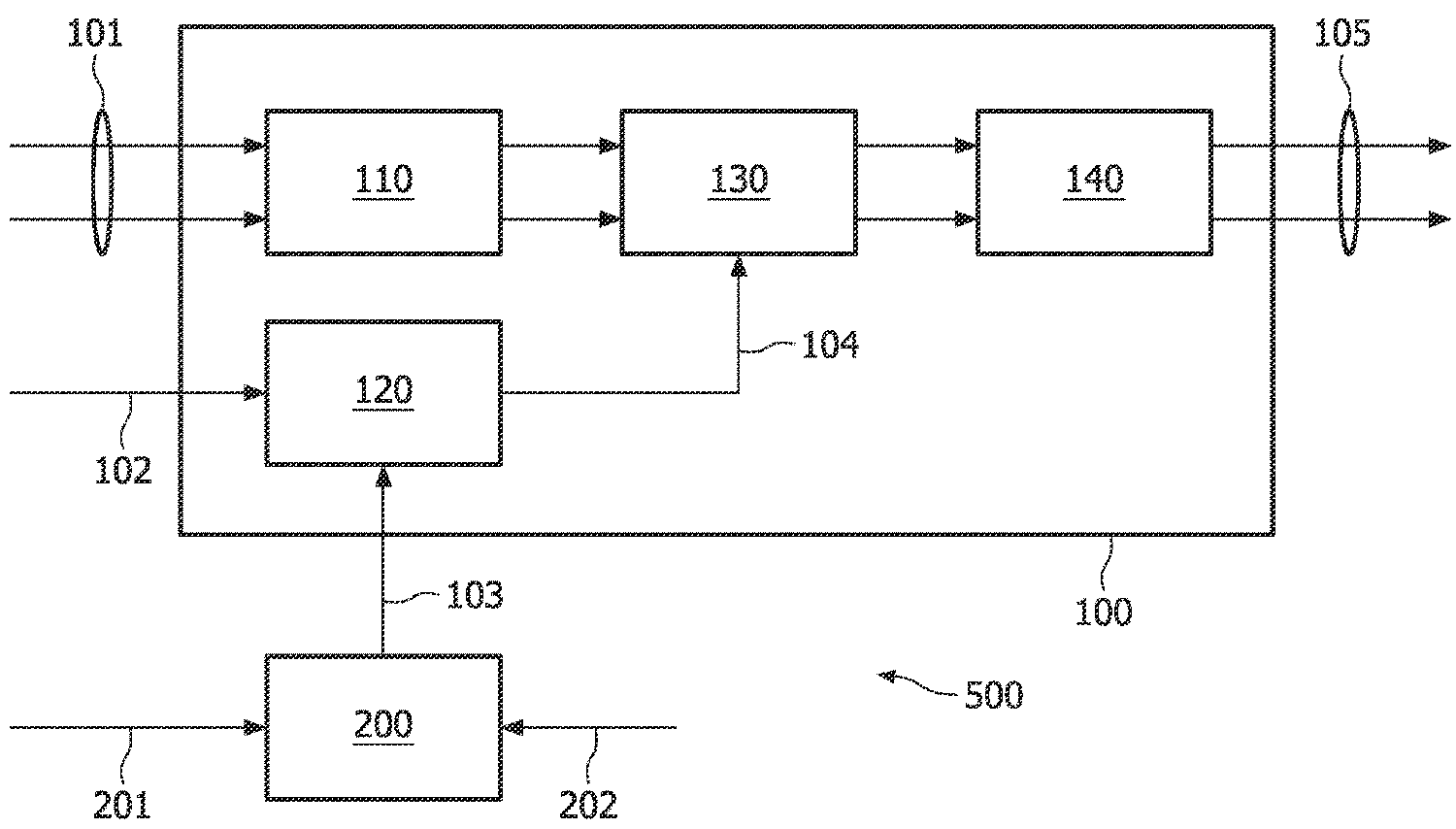
도 1은 미리 결정된 거리 파라미터에 대한 헤드-관련 전달 함수 파라미터들을 원하는 거리에 대한 새로운 헤드-관련 전달 함수 파라미터들로 수정하기 위한 거리 프로세싱 수단을 포함하는 오브젝트-지향 오디오 디코더를 개략적으로 도시한 도면.
도 2는 동측성 귀(ipsilateral ear), 대측성 귀(contralateral ear), 및 오디오 오브젝트의 지각된 위치를 개략적으로 도시한 도면.
도 3은 본 발명의 일부 실시예들에 따른 디코딩 방법에 대한 흐름도.1 schematically illustrates an object-oriented audio decoder including distance processing means for modifying head-related transfer function parameters for a predetermined distance parameter to new head-related transfer function parameters for a desired distance;
Fig. 2 schematically illustrates the perceived location of an ipsilateral ear, a contralateral ear, and an audio object; Fig.
3 is a flow chart of a decoding method in accordance with some embodiments of the present invention.
도면들 전체에 걸쳐, 동일한 참조 번호들은 유사하거나 대응하는 피처(feature)들을 나타낸다. 도면들에 표시된 피처들 중 일부는 전형적으로 소프트웨어로 구현되고, 이와 같이, 소프트웨어 모듈들 또는 오브젝트들과 같은, 소프트웨어 엔티티들(software entities)을 표현한다.Throughout the Figures, the same reference numerals indicate similar or corresponding features. Some of the features shown in the figures are typically implemented in software and thus represent software entities, such as software modules or objects.
도 1은 미리 결정된 거리 파라미터에 대한 헤드-관련 전달 함수 파라미터들을 원하는 거리에 대한 새로운 헤드-관련 전달 함수 파라미터들로 수정하기 위한 거리 프로세싱 수단(200)을 포함하는 오브젝트-지향 오디오 디코더(500)를 개략적으로 도시한다. 디코더 디바이스(100)는 현재 표준화된 바이노럴 오브젝트-지향 오디오 디코더를 표현한다. 디코더 디바이스(100)는 헤드-관련 전달 함수 파라미터들에 기초하여 적어도 하나의 오디오 오브젝트를 디코딩 및 렌더링하기 위한 디코딩 수단을 포함한다. 예시적 디코딩 수단은 QMF 분석 유닛(110), 파라미터 변환 유닛(120), 공간적 합성기(spatial systhesis)(130), 및 QMF 합성 유닛(140)을 포함한다. 바이노럴 오브젝트-지향 디코딩의 세부사항들은 Breebaart, J., Herre, J., Villemoes, L., Jin, C., 
다운-믹스(down-mix)(101)가 파라미터 변환 유닛(120)에 공급된 바와 같은, 오브젝트 파라미터들(102) 및 헤드-관련 전달 함수 파라미터들에 기초하여 다운-믹스로부터의 오디오 오브젝트들을 디코딩 및 렌더링하는 디코딩 수단 내로 공급될 때, (종종 하나의 단계로 조합된) 상기 디코딩 및 렌더링은 디코딩된 오디오 오브젝트를 가상 3-차원 공간에 포지셔닝시킨다.The down-
더 구체적으로, 다운 믹스(101)는 QMF 분석 유닛(110) 내로 공급된다. 이 유닛에 의해 수행된 프로세싱은 Breebaart, J., van de Par, S., Kohlrausch, A., 및 Schuijers, E.(2005)의 Parametric coding of stereo audio. Eurasip J. Applied Signal Proc., issue 9: special issue on anthropomorphic processing of audio and speech, 1305-1322에 설명된다.More specifically, the
오브젝트 파라미터들(102)은 파라미터 변환 유닛(120) 내로 공급된다. 파라미터 변환 유닛은 수신된 HRTF 파라미터들에 기초한 오브젝트 파라미터들을 바이노럴 파라미터들(104)로 변환한다. 바이노럴 파라미터들은 모두가 가상 공간에서 자신의 위치를 갖는 하나 이상의 오브젝트 신호들에 동시적으로 기인하는 레벨 차들, 위상 차들 및 간섭 값들을 포함한다. 바이노럴 파 라미터들의 세부사항들은 Breebaart, J., Herre, J., Villemoes, L., Jin, C., 
QMF 분석 유닛의 출력 및 바이노럴 파라미터들이 공간적 합성 유닛(130) 내로 공급된다. 이 유닛에 의해 수행된 프로세싱은 Breebaart, J., van de Par, S., Kohlrausch, A., 및 Schuijers, E(2005)의 Parametric coding of stereo audio. Eurasip J. Applied Signal Proc., issue 9: special issue on anthropomorphic processing of audio and speech, 1305-1322에 설명된다. 후속적으로, 공간적 합성 유닛(130)의 출력은 3차원 스테레오 출력을 생성하는 QMF 합성 유닛(140) 내로 공급된다.The output of the QMF analysis unit and the binaural parameters are fed into the
헤드-관련 전달 함수(HRTF) 파라미터들은 엘러베이션 파라미터, 방위각 파라미터, 및 거리 파라미터에 기초한다. 이들 파라미터들은 3-차원 공간에서 오디오 오브젝트의 (원하는) 위치에 대응한다.The head-related transfer function (HRTF) parameters are based on an elaboration parameter, an azimuth parameter, and a distance parameter. These parameters correspond to the (desired) position of the audio object in three-dimensional space.
개발되었던 바이노럴 오브젝트-지향 오디오 디코더(100) 내에서, 디코더에 헤드-관련 전달 함수 파라미터들을 제공하기 위한 파라미터 변환 유닛(120)으로의 인터페이스가 규정된다. 그러나, 현재의 인터페이스는 제한된 세트의 엘러베이션 및/또는 방위각 파라미터들에 대해서만 규정된다는 단점을 갖는다.Within the developed binaural object-oriented
헤드-관련 전달 함수 파라미터들에 대한 거리 효과를 가능하게 하기 위해, 본 발명은 수신된 원하는 거리 파라미터에 따라 수신된 헤드-관련 전달 함수 파라미터들을 수정하는 것을 제안한다. HRTF 파라미터들의 수정은 수신된 HRTF 파라미터들에 대한 미리 결정된 거리 파라미터에 기초한다. 이 수정은 거리 프로세싱 수단(200)에서 발생한다. 오디오 오브젝트 당 원하는 거리(202)와 함께 HRTF 파라미터들(201)이 거리 프로세싱 수단(200) 내로 공급된다. 거리 프로세싱 수단에 의해 생성된 바와 같은 수정된 헤드-관련 전달 함수 파라미터들(103)이 파라미터 변환 유닛(120) 내로 공급되고, 원하는 거리에서 가상 3-차원 공간에 오디오 오브젝트를 포지셔닝시키기 위해 사용된다.To enable a distance effect on the head-related transfer function parameters, the present invention proposes modifying the received head-related transfer function parameters according to the received desired distance parameter. The modification of the HRTF parameters is based on a predetermined distance parameter for the received HRTF parameters. This modification occurs in the distance processing means 200.
본 발명에 따른 바이노럴 오브젝트-지향 오디오 디코더의 장점은 헤드-관련 전달 함수 파라미터들이 미리 결정된 거리로부터 원하는 거리로 파라미터들을 수정함으로써 획득되는 거리 파라미터에 의해 확장될 수 있다는 것이다. 이 확장은 헤드-관련 전달 함수 파라미터들의 결정 동안 사용되었던 거리 파라미터의 명시적인 프로비저닝 없이 성취된다. 이 방식으로, 바이노럴 오브젝트-지향 오디오 디코더(500)는 디코더 디바이스(100)의 경우인 엘러베이션 및 방위각 파라미터들만을 사용하는 고유의 한계가 없어지게 된다. 이 속성은 헤드-관련 전달 함수 파라미터들 중 대부분이 변화하는 거리 파라미터를 전혀 포함하지 않고, 엘러베이션, 방위각, 및 거리의 함수로서 헤드-관련 전달 함수 파라미터들의 측정이 매우 비용이 많이 들고 시간을 소비하기 때문에, 상당한 가치가 있다. 또한, 헤드-관련 전달 함수 파라미터들을 저장하기 위해 요구된 데이터의 량이 거리 파라미터가 포함되지 않을 때 상당히 감소된다.An advantage of the binaural object-oriented audio decoder according to the present invention is that head-related transfer function parameters can be extended by distance parameters obtained by modifying parameters from a predetermined distance to a desired distance. This expansion is accomplished without explicit provisioning of the distance parameter that was used during the determination of the head-related transfer function parameters. In this manner, the binaural object-oriented
부가적인 장점들은 다음과 같다. 제안된 발명에 의하면, 정확한 거리 프로세싱이 매우 제한된 계산적인 오버헤드로 성취된다. 사용자는 작동 중에 오디오 오브젝트의 지각된 거리를 수정할 수 있다. 거리의 수정은 파라미터 도메인에서 수행되고, 이는 헤드-관련 전달 함수 임펄스 응답에 대해 작용하는 거리 수정과 비교할 때(종래의 3-차원 합성 방법들을 적용할 때) 상당한 복잡성 감소를 야기한다. 게다가, 거리 수정은 원래 헤드-관련 임펄스 응답들의 가용성 없이 적용될 수 있다.Additional advantages include: According to the proposed invention, accurate distance processing is achieved with very limited computational overhead. The user can modify the perceived distance of the audio object during operation. Modification of the distance is performed in the parameter domain, which results in a considerable reduction in complexity (when applying conventional three-dimensional synthesis methods) as compared to distance correction acting on the head-related transfer function impulse response. In addition, the distance correction can be applied without the availability of the original head-related impulse responses.
도 2는 동측성 귀, 대측성 귀, 및 오디오 오브젝트의 지각된 위치를 개략적으로 도시한다. 오디오 오브젝트는 위치(320)에 가상적으로 포지셔닝된다. 오디오 오브젝트는 오디오 오브젝트까지의 각각의 귀의 거리(302 및 303)에 따라 사용자의 동측성(=좌측) 귀 및 대측성(=우측) 귀에 의해 상이하게 지각된다. 사용자의 기준 거리(301)는 동측성 귀와 대측성 귀 사이의 간격의 중심으로부터 오디오 오브젝트의 위치까지 측정된다.Fig. 2 schematically shows the perceived position of the ipsilateral ear, the contralateral ear, and the audio object. The audio object is virtually positioned at
일 실시예에서, 헤드-관련 전달 함수 파라미터들은 적어도 동측성 귀에 대한 레벨, 대측성 귀에 대한 레벨, 및 동측성 귀와 대측성 귀 사이의 위상 차를 포함하고, 파라미터들은 오디오 오브젝트의 지각된 위치를 결정한다. 이들 파라미터들은 주파수 대역 인덱스(frequency band index)(b), 엘러베이션 각도(e) 및 방위 각도(a)의 각각의 조합에 대해 결정된다. 동측성 귀에 대한 레벨은 Pi(a,e,b)로 표시되고, 대측성 귀에 대한 레벨은 Pc(a,e,b)로 표시되고, 동측성 귀와 대측성 귀 사이의 위상 차는 φ(a,e,b)로 표시된다. HRTF들에 대한 상세한 정보는 F. L. Wightman 및 D. J. Kistler의 "Headphone simulation of free-field listening, I. Stimulus synthesis" J. Acoust. Soc. Am., 85: 858-867, 1989에서 발견된다. 주파수 대역 당 레벨 파라미터들은 (스펙트럼에서 특정 피크(peak)들 및 트러프(trough)들에 기인한) 엘러베이션 뿐만 아니라, (각 대역에 대한 레벨 파라미터들의 비율에 의해 결정된) 방위각에 대한 레벨 차이들 둘 모두를 용이하게 한다. 절대 위상 값들 또는 위상 차 값들에 의해 양 귀들 사이의 도착 시간 차이들이 캡처(capture)되고, 도착 시간은 또한 오디오 오브젝트 방위각에 대한 중요한 큐(cue)들이다.In one embodiment, the head-related transfer function parameters include at least a level for the ipsilateral ear, a level for the contralateral ear, and a phase difference between the ipsilateral ear and the contralateral ear, and the parameters determine the perceived location of the audio object do. These parameters are determined for each combination of frequency band index (b), elation angle (e) and azimuth angle (a). The level for the ipsilateral ear is represented by P i (a, e, b), the level for the contralateral ear is represented by P c (a, e, b), and the phase difference between the ipsilateral ear and the contralateral ear is represented by φ a, e, b). For more information on HRTFs, see FL Wightman and DJ Kistler, "Headphone simulation of free-field listening, I. Stimulus synthesis" Soc. Am., 85: 858-867, 1989. Level parameters per frequency band include not only level variations (due to specific peaks and troughs in the spectrum), but also level differences (as determined by the ratio of level parameters for each band) It facilitates both. The arrival time differences between the ears are captured by absolute phase values or phase difference values, and the arrival times are also important cues for the audio object azimuth angle.
거리 프로세싱 수단(200)은 주어진 엘러베이션 각도(e), 방위 각도(a), 및 주파수 대역(b) 뿐만 아니라, 번호 202로 도시된, 원하는 거리(d)에 대한 HRTF 파라미터들(201)을 수신한다. 거리 프로세싱 수단(200)의 출력은 파라미터 변환 유닛(120)으로의 입력으로서 사용되는 수정된 HRTF 파라미터들(Pi'(a,e,b), Pc'(a,e,b) 및 φ'(a,e,b))을 포함하고:The distance processing means 200 calculates the
{Pi'(a,e,b),Pc'(a,e,b),φ'(a,e,b)}=D(Pi(a,e,b),Pc(a,e,b),φ(a,e,b),d) {P i '(a, e , b), P c' (a, e, b), φ '(a, e, b)} = D (P i (a, e, b), P c (a , e, b), φ (a, e, b), d)
여기서, 인덱스(i)는 동측성 귀에 대해 사용되고, 인덱스(c)는 대측성 귀에 대해 사용되고, d는 원하는 거리를 나타내고, 함수(D)는 필요한 수정 프로세싱을 표현한다. 위상 차가 오디오 오브젝트까지의 거리의 변화에 따라 변화하지 않기 때문에 레벨들만이 변경된다는 점이 주의되어야 한다.Here, index (i) is used for the ipsilateral ear, index (c) is used for the contralateral ear, d represents the desired distance, and function ( D ) represents the necessary correction processing. It should be noted that only the levels are changed because the phase difference does not change with changes in the distance to the audio object.
일 실시예에서, 거리 프로세싱 수단은 오디오 오브젝트에 대응하는 거리 파라미터의 증가에 따라 헤드-관련 전달 함수 파라미터들의 레벨 파라미터들을 감소시키기 위해 배열된다. 이 실시예에 의하면, 거리 변화는 거리 변화가 실제로 현실에서 발생할 때 헤드-관련 전달 함수 파라미터들에 적절하게 영향을 미친다.In one embodiment, the distance processing means is arranged to reduce the level parameters of the head-related transfer function parameters as the distance parameter corresponding to the audio object increases. According to this embodiment, the change in distance appropriately affects the head-related transfer function parameters when the change in distance actually occurs in reality.
일 실시예에서, 거리 프로세싱 수단은 미리 결정된 거리 파라미터(dref)(301) 및 원하는 거리(d)의 함수인 스케일 팩터들에 의한 스케일링을 사용하기 위해 배열되고:In one embodiment, the distance processing means is arranged to use scaling by scale factors which are a function of a predetermined
P'x(a,e,b)=gx(a,e,b,d)Px(a,e,b)P x (a, e, b) = g x (a, e, b,
여기서, 레벨의 인덱스(X)는 동측성 귀 및 대측성 귀에 대해 각각 값 i 또는 c를 취한다.Here, the index X of the level takes the value i or c for the ipsilateral ear and the opposite ear respectively.
스케일 팩터들(gi 및 gc)은 거리의 함수로서 HRTF 파라미터들(Px)의 변화를 예측하는 어떤 거리 모델(G(a,e,b,d))로부터 기인하고:The scale factors g i and g c result from a certain distance model G (a, e, b, d) that predicts a change in HRTF parameters P x as a function of distance:
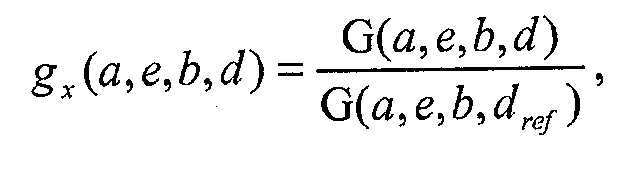
여기서, d는 원하는 거리이고, dref는 HRTF 측정치들의 거리(301)이다. 스케일링의 장점은 계산적인 노력이 스케일 팩터 계산 및 단순한 승산으로 제한된다는 것이다. 승산은 큰 계산적인 오버헤드를 도입하지 않는 매우 간단한 연산이다.Where d is the desired distance and d ref is the
일 실시예에서, 스케일 팩터는 미리 결정된 거리 파라미터(dref) 및 원하는 거리(d)의 비율이다:In one embodiment, the scale factor is the ratio of the predetermined distance parameter d ref and the desired distance d:
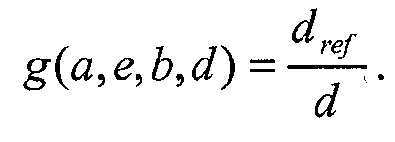
스케일 팩터를 계산하는 이러한 방식은 매우 간단하고 충분히 정확하다.This method of calculating the scale factor is very simple and sufficiently accurate.
일 실시예에서, 스케일 팩터들은 2개의 귀들 각각에 대해 계산되고, 각 스케일 팩터는 2개의 귀들에 대한 경로-길이 차들, 즉, 302 및 303 사이의 차를 포함한다. 그 다음, 동측성 귀 및 대측성 귀에 대한 스케일 팩터들이 다음으로서 표현되고:In one embodiment, the scale factors are calculated for each of the two ears, and each scale factor includes path-length differences for the two ears, i. E., The difference between 302 and 303. [ The scale factors for the ipsilateral ear and the contralateral ear are then expressed as:

여기서, β는 헤드의 반경(전형적으로 8 내지 9cm)이다. 스케일 팩터들을 계산하는 이 방식은 거리 모델링/수정에 대한 더 많은 정확성을 제공한다.Where beta is the radius of the head (typically 8 to 9 cm). This method of calculating the scale factors provides more accuracy for distance modeling / modification.
대안적으로, 함수(D)는 HRTF 파라미터들(Pi 및 Pc)에 대해 적용된 스케일 팩터(gi)로서의 승산으로서 구현되는 것이 아니라, 거리의 증가에 따라 Pi 및 Pc의 값을 감소시키는 더 일반적인 함수인데, 예를 들면:Alternatively, the function D is not implemented as a multiplication as a scale factor g i applied to the HRTF parameters P i and P c , but rather decreases the values of P i and P c as the distance increases This is a more general function, for example:

여기서, ε은 매우 작은 거리들에서 비헤이비어(behavior)에 영향을 주고 0에 의한 나눗셈을 방지하는 변수이다.Here, ε is a variable that affects behavior at very small distances and prevents division by zero.
일 실시예에서, 미리 결정된 거리 파라미터는 대략 2 미터의 값을 취하는데, 이는 이 가정 A. Kan, C. Jin, A. van Schaik의 "Psychoacoustic evaluation of a new method for simulating near-field virtual auditory space", Proc. 120th AES convention, Paris, France(2006)에 대한 설명을 참조하라. 상기 언급된 바와 같이, 측정 데이터의 량을 감소시키기 위해서, 헤드-관련 전달 함수 파라미터들은 주로 약 1 내지 2 미터의 고정된 거리에서 측정된다. 0 내지 2 미터의 범위의 거리의 변동이 헤드-관련 전달 함수 파라미터들의 상당한 파라미터 변화들을 야기한다는 점이 주의되어야 한다.In one embodiment, the predetermined distance parameter takes a value of approximately 2 meters, which is based on this assumption A. Kan, C. Jin, A. van Schaik, "Psychoacoustic evaluation of a new method for simulating near-field virtual auditory space Quot ;, Proc. See the description for 120 th AES convention, Paris, France (2006). As mentioned above, in order to reduce the amount of measurement data, the head-related transfer function parameters are measured at a fixed distance of mainly about 1 to 2 meters. It should be noted that variations in the distance in the range of 0 to 2 meters cause significant parameter changes of the head-related transfer function parameters.
일 실시예에서, 원하는 거리 파라미터는 오브젝트-지향 오디오 인코더에 의해 제공된다. 이것은 디코더가 레코딩/인코딩 시에 존재하였던 바와 같은 오디오 오브젝트들의 위치를 3-차원 공간에서 적절하게 재생하도록 한다.In one embodiment, the desired distance parameter is provided by the object-oriented audio encoder. This allows the decoder to properly reproduce the location of audio objects as they existed during recording / encoding in a three-dimensional space.
일 실시예에서, 원하는 거리 파라미터는 사용자에 의한 전용 인터페이스를 통해 제공된다. 이것은 사용자가 디코딩된 오디오 오브젝트들을 그/그녀가 원하는 3-차원 공간에 자유롭게 포지셔닝시키도록 한다.In one embodiment, the desired distance parameter is provided via a dedicated interface by the user. This allows the user to freely position the decoded audio objects in the three-dimensional space he / she desires.
일 실시예에서, 디코딩 수단(100)은 MPEG 서라운드 표준에 따른 디코더를 포함한다. 이 속성은 기존의 MPEG 서라운드 디코더의 재-사용을 허용하고, 디코더가 다르게 이용가능하지 않은 새로운 특징들을 얻을 수 있도록 한다.In one embodiment, the decoding means 100 comprises a decoder according to the MPEG Surround standard. This attribute allows re-use of existing MPEG surround decoders and allows the decoder to obtain new features that are not otherwise available.
도 3은 본 발명의 일부 실시예들에 따른 디코딩 방법에 대한 흐름도를 도시한다. 단계(410)에서, 대응하는 오브젝트 파라미터들과의 다운-믹스가 수신된다. 단계(420)에서, 원하는 거리 및 HRTF 파라미터들이 획득된다. 후속적으로, 단계(430)에서, 거리 프로세싱이 수행된다. 이 단계의 결과로서, 미리 결정된 거리 파라미터에 대한 HRTF 파라미터들이 수신된 원하는 거리에 대한 수정된 HRTF 파라미터들로 변환된다. 단계(440)에서, 수신된 다운-믹스가 수신된 오브젝트 파라미터들에 기초하여 디코딩된다. 단계(450)에서, 디코딩된 오디오 오브젝트들이 수정된 HRTF 파라미터들에 따라 3-차원 공간에 배치된다. 마지막 2개의 단계들은 효율성 때문에 하나의 단계에서 조합될 수 있다.Figure 3 shows a flow diagram of a decoding method in accordance with some embodiments of the present invention. At
일 실시예에서, 컴퓨터 프로그램 제품이 본 발명에 따른 방법을 실행한다.In one embodiment, a computer program product implements the method according to the present invention.
일 실시예에서, 오디오 재생 디바이스는 본 발명에 따른 바이노럴 오브젝트-지향 오디오 디코더를 포함한다.In one embodiment, the audio playback device comprises a binaural object-oriented audio decoder according to the present invention.
상기 언급된 실시예들이 본 발명을 제한하기보다는 오히려 예시한다는 점이 주의되어야 하고, 당업자들은 첨부된 청구항들의 범위로부터 벗어남이 없이 많은 대안적인 실시예들을 디자인할 수 있을 것이다.It should be noted that the above-mentioned embodiments illustrate rather than limit the invention, and those skilled in the art will be able to design many alternative embodiments without departing from the scope of the appended claims.
첨부된 청구항들에서, 괄호들 사이에 배치된 임의의 참조 부호들은 청구항을 제한하는 것으로서 해석되어서는 안될 것이다. 단어 "포함하는(comprising)"은 청구항에서 목록화된 것들 이외의 소자들 및 단계들의 존재를 배제하지 않는다. 소자 앞의 단어 "a" 또는 "an"은 복수의 이러한 소자들의 존재를 배제하지 않는다. 본 발명은 여러 상이한 소자들을 포함하는 하드웨어, 및 적합하게 프로그래밍된 컴퓨터에 의해 구현될 수 있다.In the appended claims, any reference signs placed between parentheses shall not be construed as limiting the claim. The word "comprising" does not exclude the presence of elements and steps other than those listed in a claim. The word "a " or" an "preceding the element does not exclude the presence of a plurality of such elements. The present invention may be implemented by hardware comprising a number of different elements, and by a suitably programmed computer.
100: 디코더 디바이스 101: 다운-믹스
102: 오브젝트 파라미터들
103: 수정된 헤드-관련 전달 함수 파라미터들
104: 바이노럴 파라미터들 110: QMF 분석 유닛
120: 파라미터 변환 유닛 130: 공간적 합성기
140: QMF 합성 유닛 200: 거리 프로세싱 유닛
201: HRTF 파라미터들
202: 오디오 오브젝트 당 원하는 거리
500: 바이노럴 오브젝트-지향 오디오 디코더 100: Decoder device 101: Down-mix
102: Object parameters
103: modified head-related transfer function parameters
104: Binaural parameters 110: QMF analysis unit
120: parameter conversion unit 130: spatial synthesis unit
140: QMF synthesis unit 200: distance processing unit
201: HRTF parameters
202: desired distance per audio object
500: Binaural object-oriented audio decoder
Claims (16)
수신된 원하는 거리 파라미터에 따라 상기 수신된 헤드-관련 전달 함수 파라미터들을 수정하기 위한 거리 프로세싱 수단으로서, 상기 수정된 헤드-관련 전달 함수 파라미터들은 원하는 거리에서 3-차원에 상기 오디오 오브젝트를 포지셔닝시키도록 사용되고, 상기 헤드-관련 전달 함수 파라미터들의 상기 수정은 상기 수신된 헤드-관련 함수 파라미터들에 대한 미리 결정된 거리 파라미터에 기초하는, 상기 거리 프로세싱 수단을 포함하고,
상기 헤드-관련 전달 함수 파라미터들은 적어도 동측성 귀(ipsilateral ear)에 대한 레벨 파라미터, 대측성 귀(contra lateral ear)에 대한 레벨 파라미터, 및 상기 동측성 귀와 상기 대측성 귀 사이의 위상 차를 포함하고, 상기 파라미터들은 상기 오디오 오브젝트의 지각된 위치를 결정하고,
상기 거리 프로세싱 수단은 상기 오디오 오브젝트에 대응하는 상기 거리 파라미터의 증가에 따라 상기 헤드-관련 함수 파라미터들의 레벨 파라미터들을 감소시키도록 구성되는 것을 특징으로 하는, 바이노럴 오브젝트-지향 오디오 디코더.A binaural object-oriented audio decoder comprising decoding means for decoding and rendering at least one audio object based on head-related transfer function parameters, Wherein the means is configured to position the audio object in a virtual three-dimensional space, the head-related transfer function parameters being based on an elevation parameter, an azimuth parameter, and a distance parameter, Wherein the parameters correspond to a position of the audio object in the virtual three-dimensional space and the binaural object-oriented audio decoder is configured to receive the head-related transfer function parameters, The parameters are calculated for the electromyogram parameter and the azimuth parameter In the binaural object-oriented audio decoder,
Distance processing means for modifying the received head-related transfer function parameters according to a received desired distance parameter, the modified head-related transfer function parameters being used to position the audio object in three dimensions at a desired distance , Said modification of said head-related transfer function parameters comprising said distance processing means being based on a predetermined distance parameter for said received head-related function parameters,
The head-related transfer function parameters include at least a level parameter for the ipsilateral ear, a level parameter for the contra lateral ear, and a phase difference between the ipsilateral ear and the contralateral ear , The parameters determining a perceived location of the audio object,
Wherein the distance processing means is configured to reduce the level parameters of the head-related function parameters in accordance with an increase in the distance parameter corresponding to the audio object.
상기 거리 프로세싱 수단은 스케일 팩터들(scalefactors)에 의한 스케일링(scaling)을 사용하도록 구성되고, 상기 스케일 팩터들은 상기 미리 결정된 거리 파라미터, 및 상기 원하는 거리의 함수인, 바이노럴 오브젝트-지향 오디오 디코더.The method according to claim 1,
Wherein the distance processing means is configured to use scaling by scalefactors and wherein the scale factors are a function of the predetermined distance parameter and the desired distance.
상기 스케일 팩터는 상기 미리 결정된 거리 파라미터 및 상기 원하는 거리의 비율인, 바이노럴 오브젝트-지향 오디오 디코더.5. The method of claim 4,
Wherein the scale factor is a ratio of the predetermined distance parameter and the desired distance.
상기 스케일 팩터들은 2개의 귀들 각각에 대해 계산되고, 각 스케일 팩터는 상기 2개의 귀들에 대한 경로-길이 차들을 포함하는, 바이노럴 오브젝트-지향 오디오 디코더.5. The method of claim 4,
Wherein the scale factors are calculated for each of the two ears, and wherein each scale factor comprises path-length differences for the two ears.
상기 미리 결정된 거리 파라미터는 2 미터의 값을 취하는, 바이노럴 오브젝트-지향 오디오 디코더.The method according to claim 1,
Wherein the predetermined distance parameter takes a value of 2 meters.
상기 원하는 거리 파라미터는 오브젝트-지향 오디오 인코더에 의해 제공되는, 바이노럴 오브젝트-지향 오디오 디코더.The method according to claim 1,
Wherein the desired distance parameter is provided by an object-oriented audio encoder.
상기 원하는 거리 파라미터는 사용자에 의한 전용 인터페이스를 통해 제공되는, 바이노럴 오브젝트-지향 오디오 디코더.The method according to claim 1,
Wherein the desired distance parameter is provided via a dedicated interface by a user.
상기 디코딩 수단은 MPEG 서라운드 표준에 따른 디코더를 포함하는, 바이노럴 오브젝트-지향 오디오 디코더.The method according to claim 1,
Wherein the decoding means comprises a decoder according to the MPEG Surround standard.
수신된 원하는 거리 파라미터에 따라 상기 수신된 헤드-관련 전달 함수 파라미터들을 수정하는 단계로서, 상기 수정된 헤드-관련 전달 함수 파라미터들은 원하는 거리에서 3-차원에 상기 오디오 오브젝트를 포지셔닝시키도록 사용되고, 상기 헤드-관련 전달 함수 파라미터들의 상기 수정은 상기 수신된 헤드-관련 함수 파라미터들에 대한 미리 결정된 거리 파라미터에 기초하는, 상기 수신된 헤드-관련 전달 함수 파라미터들 수정 단계를 특징으로 하고,
상기 헤드-관련 전달 함수 파라미터들은 적어도 동측성 귀(ipsilateral ear)에 대한 레벨 파라미터, 대측성 귀(contra lateral ear)에 대한 레벨 파라미터, 및 상기 동측성 귀와 상기 대측성 귀 사이의 위상 차를 포함하고, 상기 파라미터들은 상기 오디오 오브젝트의 지각된 위치를 결정하고,
상기 헤드-관련 함수 파라미터들의 레벨 파라미터들은 상기 오디오 오브젝트에 대응하는 상기 거리 파라미터의 증가에 따라 감소하도록 구성되는 것을 특징으로 하는, 오디오 디코딩 방법.A method for decoding audio comprising decoding and rendering at least one audio object based on head-related transfer function parameters, the decoding and rendering step comprising positioning the audio object in a virtual three-dimensional space Wherein the head-related transfer function parameters are based on an elaboration parameter, an azimuth parameter, and a distance parameter, the parameters corresponding to a position of the audio object in the virtual three-dimensional space, and the decoding and rendering step Wherein the received head-related transfer function parameters are changed only for the elation parameter and the azimuth parameter, the received head-related transfer function parameters being based on received head-related transfer function parameters,
Modifying the received head-related transfer function parameters according to a received desired distance parameter, wherein the modified head-related transfer function parameters are used to position the audio object in three dimensions at a desired distance, The modification of the related transfer function parameters is characterized by the step of modifying the received head-related transfer function parameters based on a predetermined distance parameter for the received head-related function parameters,
The head-related transfer function parameters include at least a level parameter for the ipsilateral ear, a level parameter for the contra lateral ear, and a phase difference between the ipsilateral ear and the contralateral ear , The parameters determining a perceived location of the audio object,
Wherein the level parameters of the head-related function parameters are configured to decrease as the distance parameter corresponding to the audio object increases.
상기 헤드-관련 전달 함수 파라미터들을 수정하는 단계는 스케일 팩터들로서, 상기 미리 결정된 거리 파라미터, 및 상기 원하는 거리의 함수인, 상기 스케일 팩터들에 의한 스케일링을 통해 수행되는, 오디오 디코딩 방법.12. The method of claim 11,
Wherein modifying the head-related transfer function parameters is performed through scaling by the scale factors, the scale factors being the function of the predetermined distance parameter and the desired distance.
상기 디코딩 단계 및 상기 렌더링 단계는 바이노럴 MPEG 서라운드 표준에 따라 수행되는, 오디오 디코딩 방법.12. The method of claim 11,
Wherein the decoding step and the rendering step are performed according to a binaural MPEG surround standard.
Applications Claiming Priority (3)
| Application Number | Priority Date | Filing Date | Title |
|---|---|---|---|
| EP07111073.8 | 2007-06-26 | ||
| EP07111073 | 2007-06-26 | ||
| PCT/IB2008/052469 WO2009001277A1 (en) | 2007-06-26 | 2008-06-23 | A binaural object-oriented audio decoder |
Publications (2)
| Publication Number | Publication Date |
|---|---|
| KR20100049555A KR20100049555A (en) | 2010-05-12 |
| KR101431253B1 true KR101431253B1 (en) | 2014-08-21 |
Family
ID=39811962
Family Applications (1)
| Application Number | Title | Priority Date | Filing Date |
|---|---|---|---|
| KR1020107001528A Expired - Fee Related KR101431253B1 (en) | 2007-06-26 | 2008-06-23 | A binaural object-oriented audio decoder |
Country Status (7)
| Country | Link |
|---|---|
| US (1) | US8682679B2 (en) |
| EP (1) | EP2158791A1 (en) |
| JP (1) | JP5752414B2 (en) |
| KR (1) | KR101431253B1 (en) |
| CN (1) | CN101690269A (en) |
| TW (1) | TW200922365A (en) |
| WO (1) | WO2009001277A1 (en) |
Families Citing this family (39)
| Publication number | Priority date | Publication date | Assignee | Title |
|---|---|---|---|---|
| IL186237A (en) | 2007-09-24 | 2013-11-28 | Alon Schaffer | Flexible bicycle derailleur hanger |
| CN102549655B (en) * | 2009-08-14 | 2014-09-24 | Dts有限责任公司 | A system for adaptively streaming audio objects |
| EP2346028A1 (en) | 2009-12-17 | 2011-07-20 | Fraunhofer-Gesellschaft zur Förderung der Angewandten Forschung e.V. | An apparatus and a method for converting a first parametric spatial audio signal into a second parametric spatial audio signal |
| KR20120004909A (en) | 2010-07-07 | 2012-01-13 | 삼성전자주식회사 | Stereo playback method and apparatus |
| WO2012122397A1 (en) | 2011-03-09 | 2012-09-13 | Srs Labs, Inc. | System for dynamically creating and rendering audio objects |
| BR112014004129A2 (en) | 2012-07-02 | 2017-06-13 | Sony Corp | decoding and coding devices and methods, and, program |
| TWI517142B (en) | 2012-07-02 | 2016-01-11 | Sony Corp | Audio decoding apparatus and method, audio coding apparatus and method, and program |
| CN103765508B (en) | 2012-07-02 | 2017-11-24 | 索尼公司 | Decoding apparatus, coding/decoding method, code device and coding method |
| KR20150032649A (en) | 2012-07-02 | 2015-03-27 | 소니 주식회사 | Decoding device and method, encoding device and method, and program |
| BR112015016412A2 (en) * | 2013-01-14 | 2017-07-11 | Koninklijke Philips Nv | audio encoder arranged to communicate a position; audio decoder for receiving a position given by at least a first value and a second value; method for an audio decoder to communicate a position; A method for an audio decoder to receive a position given by at least a first value and a second value; audio bitstream; and computer program product |
| EP2946571B1 (en) * | 2013-01-15 | 2018-04-11 | Koninklijke Philips N.V. | Binaural audio processing |
| CN105264600B (en) | 2013-04-05 | 2019-06-07 | Dts有限责任公司 | Layered Audio Coding and Transmission |
| WO2014171791A1 (en) | 2013-04-19 | 2014-10-23 | 한국전자통신연구원 | Apparatus and method for processing multi-channel audio signal |
| US9319819B2 (en) * | 2013-07-25 | 2016-04-19 | Etri | Binaural rendering method and apparatus for decoding multi channel audio |
| CN108712711B (en) | 2013-10-31 | 2021-06-15 | 杜比实验室特许公司 | Binaural rendering of headphones using metadata processing |
| DK2869599T3 (en) | 2013-11-05 | 2020-12-14 | Oticon As | Binaural hearing aid system that includes a database of key related transfer functions |
| CN104869524B (en) * | 2014-02-26 | 2018-02-16 | 腾讯科技(深圳)有限公司 | Sound processing method and device in three-dimensional virtual scene |
| WO2015134658A1 (en) | 2014-03-06 | 2015-09-11 | Dolby Laboratories Licensing Corporation | Structural modeling of the head related impulse response |
| US9602946B2 (en) * | 2014-12-19 | 2017-03-21 | Nokia Technologies Oy | Method and apparatus for providing virtual audio reproduction |
| US9602947B2 (en) | 2015-01-30 | 2017-03-21 | Gaudi Audio Lab, Inc. | Apparatus and a method for processing audio signal to perform binaural rendering |
| TWI607655B (en) * | 2015-06-19 | 2017-12-01 | Sony Corp | Coding apparatus and method, decoding apparatus and method, and program |
| JP6642989B2 (en) * | 2015-07-06 | 2020-02-12 | キヤノン株式会社 | Control device, control method, and program |
| AU2017210021B2 (en) * | 2016-01-19 | 2019-07-11 | Sphereo Sound Ltd. | Synthesis of signals for immersive audio playback |
| WO2017126895A1 (en) * | 2016-01-19 | 2017-07-27 | 지오디오랩 인코포레이티드 | Device and method for processing audio signal |
| CN105933826A (en) * | 2016-06-07 | 2016-09-07 | 惠州Tcl移动通信有限公司 | Method, system and earphone for automatically setting sound field |
| US9906885B2 (en) * | 2016-07-15 | 2018-02-27 | Qualcomm Incorporated | Methods and systems for inserting virtual sounds into an environment |
| EP3488623B1 (en) * | 2016-07-20 | 2020-12-02 | Dolby Laboratories Licensing Corporation | Audio object clustering based on renderer-aware perceptual difference |
| EP3822968B1 (en) | 2016-10-28 | 2023-09-06 | Panasonic Intellectual Property Corporation of America | Binaural rendering apparatus and method for playing back of multiple audio sources |
| EP3422743B1 (en) | 2017-06-26 | 2021-02-24 | Nokia Technologies Oy | An apparatus and associated methods for audio presented as spatial audio |
| CN111034225B (en) * | 2017-08-17 | 2021-09-24 | 高迪奥实验室公司 | Audio signal processing method and apparatus using stereo reverberation signal |
| EP3726859A4 (en) | 2017-12-12 | 2021-04-14 | Sony Corporation | SIGNAL PROCESSING DEVICE AND METHOD, AND PROGRAM |
| FR3075443A1 (en) * | 2017-12-19 | 2019-06-21 | Orange | PROCESSING A MONOPHONIC SIGNAL IN A 3D AUDIO DECODER RESTITUTING A BINAURAL CONTENT |
| EP3777246B1 (en) * | 2018-04-09 | 2022-06-22 | Dolby International AB | Methods, apparatus and systems for three degrees of freedom (3dof+) extension of mpeg-h 3d audio |
| US10667072B2 (en) * | 2018-06-12 | 2020-05-26 | Magic Leap, Inc. | Efficient rendering of virtual soundfields |
| EP3824463A4 (en) | 2018-07-18 | 2022-04-20 | Sphereo Sound Ltd. | AUDIO PANORAMIC DETECTION AND SYNTHESIS OF THREE-DIMENSIONAL (3D) AUDIO CONTENT FROM ENVELOPING CHANNEL LIMITED SOUND |
| CN109413546A (en) * | 2018-10-30 | 2019-03-01 | Oppo广东移动通信有限公司 | Audio processing method and device, terminal equipment and storage medium |
| US12183351B2 (en) | 2019-09-23 | 2024-12-31 | Dolby Laboratories Licensing Corporation | Audio encoding/decoding with transform parameters |
| KR20220122992A (en) | 2020-01-07 | 2022-09-05 | 소니그룹주식회사 | Signal processing apparatus and method, sound reproduction apparatus, and program |
| CN115497485B (en) * | 2021-06-18 | 2024-10-18 | 华为技术有限公司 | Three-dimensional audio signal encoding method, device, encoder and system |
Citations (2)
| Publication number | Priority date | Publication date | Assignee | Title |
|---|---|---|---|---|
| US20060133628A1 (en) * | 2004-12-01 | 2006-06-22 | Creative Technology Ltd. | System and method for forming and rendering 3D MIDI messages |
| WO2007045016A1 (en) * | 2005-10-20 | 2007-04-26 | Personal Audio Pty Ltd | Spatial audio simulation |
Family Cites Families (14)
| Publication number | Priority date | Publication date | Assignee | Title |
|---|---|---|---|---|
| JPH08107600A (en) * | 1994-10-04 | 1996-04-23 | Yamaha Corp | Sound image localization device |
| JP3528284B2 (en) * | 1994-11-18 | 2004-05-17 | ヤマハ株式会社 | 3D sound system |
| JP3258195B2 (en) | 1995-03-27 | 2002-02-18 | シャープ株式会社 | Sound image localization control device |
| US6421446B1 (en) * | 1996-09-25 | 2002-07-16 | Qsound Labs, Inc. | Apparatus for creating 3D audio imaging over headphones using binaural synthesis including elevation |
| US7085393B1 (en) * | 1998-11-13 | 2006-08-01 | Agere Systems Inc. | Method and apparatus for regularizing measured HRTF for smooth 3D digital audio |
| GB9726338D0 (en) | 1997-12-13 | 1998-02-11 | Central Research Lab Ltd | A method of processing an audio signal |
| GB2343347B (en) * | 1998-06-20 | 2002-12-31 | Central Research Lab Ltd | A method of synthesising an audio signal |
| JP2002176700A (en) * | 2000-09-26 | 2002-06-21 | Matsushita Electric Ind Co Ltd | Signal processing device and recording medium |
| KR100606734B1 (en) * | 2005-02-04 | 2006-08-01 | 엘지전자 주식회사 | 3D stereo sound implementation method and device therefor |
| JP4602204B2 (en) * | 2005-08-31 | 2010-12-22 | ソニー株式会社 | Audio signal processing apparatus and audio signal processing method |
| CN102395098B (en) * | 2005-09-13 | 2015-01-28 | 皇家飞利浦电子股份有限公司 | Method of and device for generating 3D sound |
| JP4921470B2 (en) * | 2005-09-13 | 2012-04-25 | コーニンクレッカ フィリップス エレクトロニクス エヌ ヴィ | Method and apparatus for generating and processing parameters representing head related transfer functions |
| KR101512995B1 (en) * | 2005-09-13 | 2015-04-17 | 코닌클리케 필립스 엔.브이. | A spatial decoder unit, a spatial decoder unit, an audio system, a method for generating a pair of binaural output channels |
| US7876903B2 (en) * | 2006-07-07 | 2011-01-25 | Harris Corporation | Method and apparatus for creating a multi-dimensional communication space for use in a binaural audio system |
-
2008
- 2008-06-23 KR KR1020107001528A patent/KR101431253B1/en not_active Expired - Fee Related
- 2008-06-23 WO PCT/IB2008/052469 patent/WO2009001277A1/en not_active Ceased
- 2008-06-23 JP JP2010514202A patent/JP5752414B2/en not_active Expired - Fee Related
- 2008-06-23 CN CN200880022228A patent/CN101690269A/en active Pending
- 2008-06-23 EP EP08763420A patent/EP2158791A1/en not_active Withdrawn
- 2008-06-23 US US12/665,106 patent/US8682679B2/en not_active Expired - Fee Related
- 2008-06-25 TW TW097123767A patent/TW200922365A/en unknown
Patent Citations (2)
| Publication number | Priority date | Publication date | Assignee | Title |
|---|---|---|---|---|
| US20060133628A1 (en) * | 2004-12-01 | 2006-06-22 | Creative Technology Ltd. | System and method for forming and rendering 3D MIDI messages |
| WO2007045016A1 (en) * | 2005-10-20 | 2007-04-26 | Personal Audio Pty Ltd | Spatial audio simulation |
Also Published As
| Publication number | Publication date |
|---|---|
| WO2009001277A1 (en) | 2008-12-31 |
| TW200922365A (en) | 2009-05-16 |
| KR20100049555A (en) | 2010-05-12 |
| JP5752414B2 (en) | 2015-07-22 |
| US8682679B2 (en) | 2014-03-25 |
| JP2010531605A (en) | 2010-09-24 |
| CN101690269A (en) | 2010-03-31 |
| EP2158791A1 (en) | 2010-03-03 |
| US20100191537A1 (en) | 2010-07-29 |
Similar Documents
| Publication | Publication Date | Title |
|---|---|---|
| KR101431253B1 (en) | A binaural object-oriented audio decoder | |
| Cuevas-Rodríguez et al. | 3D Tune-In Toolkit: An open-source library for real-time binaural spatialisation | |
| TWI569259B (en) | Decoder, encoder and method for informed loudness estimation in object-based audio coding systems | |
| US10741187B2 (en) | Encoding of multi-channel audio signal to generate encoded binaural signal, and associated decoding of encoded binaural signal | |
| US11423917B2 (en) | Audio decoder and decoding method | |
| JP6328662B2 (en) | Binaural audio processing | |
| KR101782917B1 (en) | Audio signal processing method and apparatus | |
| US8265284B2 (en) | Method and apparatus for generating a binaural audio signal | |
| RU2643644C2 (en) | Coding and decoding of audio signals | |
| US10939222B2 (en) | Three-dimensional audio playing method and playing apparatus | |
| Poirier-Quinot et al. | The Anaglyph binaural audio engine | |
| Tomasetti et al. | Latency of spatial audio plugins: a comparative study | |
| KR102195976B1 (en) | Audio signal processing method and apparatus | |
| CN120283419A (en) | Apparatus and method employing perception-based spatial audio distance metrics | |
| JP2021015310A (en) | Audo decoder and decoding method |
Legal Events
| Date | Code | Title | Description |
|---|---|---|---|
| PA0105 | International application |
St.27 status event code: A-0-1-A10-A15-nap-PA0105 |
|
| PG1501 | Laying open of application |
St.27 status event code: A-1-1-Q10-Q12-nap-PG1501 |
|
| R18-X000 | Changes to party contact information recorded |
St.27 status event code: A-3-3-R10-R18-oth-X000 |
|
| A201 | Request for examination | ||
| P11-X000 | Amendment of application requested |
St.27 status event code: A-2-2-P10-P11-nap-X000 |
|
| P13-X000 | Application amended |
St.27 status event code: A-2-2-P10-P13-nap-X000 |
|
| PA0201 | Request for examination |
St.27 status event code: A-1-2-D10-D11-exm-PA0201 |
|
| PN2301 | Change of applicant |
St.27 status event code: A-3-3-R10-R13-asn-PN2301 St.27 status event code: A-3-3-R10-R11-asn-PN2301 |
|
| E902 | Notification of reason for refusal | ||
| PE0902 | Notice of grounds for rejection |
St.27 status event code: A-1-2-D10-D21-exm-PE0902 |
|
| T11-X000 | Administrative time limit extension requested |
St.27 status event code: U-3-3-T10-T11-oth-X000 |
|
| E13-X000 | Pre-grant limitation requested |
St.27 status event code: A-2-3-E10-E13-lim-X000 |
|
| P11-X000 | Amendment of application requested |
St.27 status event code: A-2-2-P10-P11-nap-X000 |
|
| P13-X000 | Application amended |
St.27 status event code: A-2-2-P10-P13-nap-X000 |
|
| E701 | Decision to grant or registration of patent right | ||
| PE0701 | Decision of registration |
St.27 status event code: A-1-2-D10-D22-exm-PE0701 |
|
| PR0701 | Registration of establishment |
St.27 status event code: A-2-4-F10-F11-exm-PR0701 |
|
| PR1002 | Payment of registration fee |
St.27 status event code: A-2-2-U10-U12-oth-PR1002 Fee payment year number: 1 |
|
| PG1601 | Publication of registration |
St.27 status event code: A-4-4-Q10-Q13-nap-PG1601 |
|
| LAPS | Lapse due to unpaid annual fee | ||
| PC1903 | Unpaid annual fee |
St.27 status event code: A-4-4-U10-U13-oth-PC1903 Not in force date: 20170812 Payment event data comment text: Termination Category : DEFAULT_OF_REGISTRATION_FEE |
|
| PC1903 | Unpaid annual fee |
St.27 status event code: N-4-6-H10-H13-oth-PC1903 Ip right cessation event data comment text: Termination Category : DEFAULT_OF_REGISTRATION_FEE Not in force date: 20170812 |
|
| R18-X000 | Changes to party contact information recorded |
St.27 status event code: A-5-5-R10-R18-oth-X000 |
|
| R18-X000 | Changes to party contact information recorded |
St.27 status event code: A-5-5-R10-R18-oth-X000 |
|
| R18-X000 | Changes to party contact information recorded |
St.27 status event code: A-5-5-R10-R18-oth-X000 |