KR101198715B1 - Asymmetric liposomes with higher encapsulation efficiency of nucleic acids and hydrophilic anion chemicals - Google Patents
Asymmetric liposomes with higher encapsulation efficiency of nucleic acids and hydrophilic anion chemicals Download PDFInfo
- Publication number
- KR101198715B1 KR101198715B1 KR1020100045399A KR20100045399A KR101198715B1 KR 101198715 B1 KR101198715 B1 KR 101198715B1 KR 1020100045399 A KR1020100045399 A KR 1020100045399A KR 20100045399 A KR20100045399 A KR 20100045399A KR 101198715 B1 KR101198715 B1 KR 101198715B1
- Authority
- KR
- South Korea
- Prior art keywords
- dope
- lipid
- asymmetric
- external
- lipids
- Prior art date
- Legal status (The legal status is an assumption and is not a legal conclusion. Google has not performed a legal analysis and makes no representation as to the accuracy of the status listed.)
- Active
Links
- 239000002502 liposome Substances 0.000 title claims abstract description 161
- 108020004707 nucleic acids Proteins 0.000 title claims abstract description 63
- 150000007523 nucleic acids Chemical class 0.000 title claims abstract description 63
- 102000039446 nucleic acids Human genes 0.000 title claims abstract description 63
- 150000001450 anions Chemical class 0.000 title claims abstract description 11
- 239000000126 substance Substances 0.000 title description 14
- 238000005538 encapsulation Methods 0.000 title 1
- 150000002632 lipids Chemical class 0.000 claims abstract description 116
- -1 anion compounds Chemical class 0.000 claims abstract description 42
- 230000007935 neutral effect Effects 0.000 claims abstract description 34
- 238000000034 method Methods 0.000 claims abstract description 32
- 150000001449 anionic compounds Chemical class 0.000 claims abstract description 16
- 125000002091 cationic group Chemical group 0.000 claims abstract description 9
- HVYWMOMLDIMFJA-DPAQBDIFSA-N cholesterol Chemical compound C1C=C2C[C@@H](O)CC[C@]2(C)[C@@H]2[C@@H]1[C@@H]1CC[C@H]([C@H](C)CCCC(C)C)[C@@]1(C)CC2 HVYWMOMLDIMFJA-DPAQBDIFSA-N 0.000 claims description 82
- 150000003904 phospholipids Chemical class 0.000 claims description 45
- 235000012000 cholesterol Nutrition 0.000 claims description 41
- RTZKZFJDLAIYFH-UHFFFAOYSA-N Diethyl ether Chemical compound CCOCC RTZKZFJDLAIYFH-UHFFFAOYSA-N 0.000 claims description 32
- 239000000693 micelle Substances 0.000 claims description 30
- 239000000203 mixture Substances 0.000 claims description 27
- 239000000872 buffer Substances 0.000 claims description 25
- 108090000765 processed proteins & peptides Proteins 0.000 claims description 24
- LFQSCWFLJHTTHZ-UHFFFAOYSA-N Ethanol Chemical compound CCO LFQSCWFLJHTTHZ-UHFFFAOYSA-N 0.000 claims description 23
- 239000000463 material Substances 0.000 claims description 16
- 238000002360 preparation method Methods 0.000 claims description 15
- 125000000524 functional group Chemical group 0.000 claims description 13
- 238000004519 manufacturing process Methods 0.000 claims description 13
- KILNVBDSWZSGLL-KXQOOQHDSA-N 1,2-dihexadecanoyl-sn-glycero-3-phosphocholine Chemical compound CCCCCCCCCCCCCCCC(=O)OC[C@H](COP([O-])(=O)OCC[N+](C)(C)C)OC(=O)CCCCCCCCCCCCCCC KILNVBDSWZSGLL-KXQOOQHDSA-N 0.000 claims description 11
- 238000000502 dialysis Methods 0.000 claims description 10
- 125000000129 anionic group Chemical group 0.000 claims description 9
- 238000002156 mixing Methods 0.000 claims description 9
- JZNWSCPGTDBMEW-UHFFFAOYSA-N Glycerophosphorylethanolamin Natural products NCCOP(O)(=O)OCC(O)CO JZNWSCPGTDBMEW-UHFFFAOYSA-N 0.000 claims description 8
- 150000008104 phosphatidylethanolamines Chemical class 0.000 claims description 8
- 239000003960 organic solvent Substances 0.000 claims description 7
- OKKJLVBELUTLKV-UHFFFAOYSA-N Methanol Chemical compound OC OKKJLVBELUTLKV-UHFFFAOYSA-N 0.000 claims description 6
- 239000000243 solution Substances 0.000 claims description 6
- 238000001704 evaporation Methods 0.000 claims description 5
- 238000003756 stirring Methods 0.000 claims description 5
- 239000011259 mixed solution Substances 0.000 claims description 4
- WTJKGGKOPKCXLL-RRHRGVEJSA-N phosphatidylcholine Chemical compound CCCCCCCCCCCCCCCC(=O)OC[C@H](COP([O-])(=O)OCC[N+](C)(C)C)OC(=O)CCCCCCCC=CCCCCCCCC WTJKGGKOPKCXLL-RRHRGVEJSA-N 0.000 claims description 3
- 239000007853 buffer solution Substances 0.000 claims description 2
- 150000001768 cations Chemical class 0.000 claims description 2
- NRJAVPSFFCBXDT-HUESYALOSA-N 1,2-distearoyl-sn-glycero-3-phosphocholine Chemical compound CCCCCCCCCCCCCCCCCC(=O)OC[C@H](COP([O-])(=O)OCC[N+](C)(C)C)OC(=O)CCCCCCCCCCCCCCCCC NRJAVPSFFCBXDT-HUESYALOSA-N 0.000 claims 12
- SLKDGVPOSSLUAI-PGUFJCEWSA-N 1,2-dihexadecanoyl-sn-glycero-3-phosphoethanolamine zwitterion Chemical compound CCCCCCCCCCCCCCCC(=O)OC[C@H](COP(O)(=O)OCCN)OC(=O)CCCCCCCCCCCCCCC SLKDGVPOSSLUAI-PGUFJCEWSA-N 0.000 claims 9
- 239000004698 Polyethylene Substances 0.000 claims 2
- 229920000573 polyethylene Polymers 0.000 claims 2
- 238000012377 drug delivery Methods 0.000 abstract description 11
- 238000001415 gene therapy Methods 0.000 abstract description 4
- 238000003384 imaging method Methods 0.000 abstract description 4
- 229940002612 prodrug Drugs 0.000 abstract description 4
- 239000000651 prodrug Substances 0.000 abstract description 4
- 239000002872 contrast media Substances 0.000 abstract description 3
- MWRBNPKJOOWZPW-CLFAGFIQSA-N dioleoyl phosphatidylethanolamine Chemical compound CCCCCCCC\C=C/CCCCCCCC(=O)OCC(COP(O)(=O)OCCN)OC(=O)CCCCCCC\C=C/CCCCCCCC MWRBNPKJOOWZPW-CLFAGFIQSA-N 0.000 description 88
- 108020004459 Small interfering RNA Proteins 0.000 description 58
- 210000004027 cell Anatomy 0.000 description 43
- KRKNYBCHXYNGOX-UHFFFAOYSA-N citric acid Chemical compound OC(=O)CC(O)(C(O)=O)CC(O)=O KRKNYBCHXYNGOX-UHFFFAOYSA-N 0.000 description 21
- DEGAKNSWVGKMLS-UHFFFAOYSA-N calcein Chemical compound O1C(=O)C2=CC=CC=C2C21C1=CC(CN(CC(O)=O)CC(O)=O)=C(O)C=C1OC1=C2C=C(CN(CC(O)=O)CC(=O)O)C(O)=C1 DEGAKNSWVGKMLS-UHFFFAOYSA-N 0.000 description 17
- 229960002378 oftasceine Drugs 0.000 description 17
- 229940079593 drug Drugs 0.000 description 16
- 239000003814 drug Substances 0.000 description 16
- 230000000694 effects Effects 0.000 description 11
- 101100006310 Neurospora crassa (strain ATCC 24698 / 74-OR23-1A / CBS 708.71 / DSM 1257 / FGSC 987) chol-1 gene Proteins 0.000 description 10
- 101100297828 Neurospora crassa (strain ATCC 24698 / 74-OR23-1A / CBS 708.71 / DSM 1257 / FGSC 987) chol-2 gene Proteins 0.000 description 10
- 230000035699 permeability Effects 0.000 description 10
- 238000004458 analytical method Methods 0.000 description 8
- 238000005516 engineering process Methods 0.000 description 8
- 108090000623 proteins and genes Proteins 0.000 description 8
- BHNQPLPANNDEGL-UHFFFAOYSA-N 2-(4-octylphenoxy)ethanol Chemical compound CCCCCCCCC1=CC=C(OCCO)C=C1 BHNQPLPANNDEGL-UHFFFAOYSA-N 0.000 description 7
- AOJJSUZBOXZQNB-TZSSRYMLSA-N Doxorubicin Chemical compound O([C@H]1C[C@@](O)(CC=2C(O)=C3C(=O)C=4C=CC=C(C=4C(=O)C3=C(O)C=21)OC)C(=O)CO)[C@H]1C[C@H](N)[C@H](O)[C@H](C)O1 AOJJSUZBOXZQNB-TZSSRYMLSA-N 0.000 description 7
- 102000004196 processed proteins & peptides Human genes 0.000 description 7
- APKFDSVGJQXUKY-INPOYWNPSA-N amphotericin B Chemical compound O[C@H]1[C@@H](N)[C@H](O)[C@@H](C)O[C@H]1O[C@H]1/C=C/C=C/C=C/C=C/C=C/C=C/C=C/[C@H](C)[C@@H](O)[C@@H](C)[C@H](C)OC(=O)C[C@H](O)C[C@H](O)CC[C@@H](O)[C@H](O)C[C@H](O)C[C@](O)(C[C@H](O)[C@H]2C(O)=O)O[C@H]2C1 APKFDSVGJQXUKY-INPOYWNPSA-N 0.000 description 6
- 239000008280 blood Substances 0.000 description 6
- 210000004369 blood Anatomy 0.000 description 6
- 238000005259 measurement Methods 0.000 description 6
- 238000012758 nuclear staining Methods 0.000 description 6
- 239000001294 propane Substances 0.000 description 6
- XIAYFENBYCWHGY-UHFFFAOYSA-N 2-[2,7-bis[[bis(carboxymethyl)amino]methyl]-3-hydroxy-6-oxoxanthen-9-yl]benzoic acid Chemical compound C=12C=C(CN(CC(O)=O)CC(O)=O)C(=O)C=C2OC=2C=C(O)C(CN(CC(O)=O)CC(=O)O)=CC=2C=1C1=CC=CC=C1C(O)=O XIAYFENBYCWHGY-UHFFFAOYSA-N 0.000 description 5
- 102000004169 proteins and genes Human genes 0.000 description 5
- 238000000246 agarose gel electrophoresis Methods 0.000 description 4
- 201000010099 disease Diseases 0.000 description 4
- 208000037265 diseases, disorders, signs and symptoms Diseases 0.000 description 4
- 238000001727 in vivo Methods 0.000 description 4
- 208000002154 non-small cell lung carcinoma Diseases 0.000 description 4
- 239000000725 suspension Substances 0.000 description 4
- 210000001519 tissue Anatomy 0.000 description 4
- 208000029729 tumor suppressor gene on chromosome 11 Diseases 0.000 description 4
- SNKAWJBJQDLSFF-NVKMUCNASA-N 1,2-dioleoyl-sn-glycero-3-phosphocholine Chemical compound CCCCCCCC\C=C/CCCCCCCC(=O)OC[C@H](COP([O-])(=O)OCC[N+](C)(C)C)OC(=O)CCCCCCC\C=C/CCCCCCCC SNKAWJBJQDLSFF-NVKMUCNASA-N 0.000 description 3
- 102000020313 Cell-Penetrating Peptides Human genes 0.000 description 3
- 108010051109 Cell-Penetrating Peptides Proteins 0.000 description 3
- LYCAIKOWRPUZTN-UHFFFAOYSA-N Ethylene glycol Chemical compound OCCO LYCAIKOWRPUZTN-UHFFFAOYSA-N 0.000 description 3
- 206010058467 Lung neoplasm malignant Diseases 0.000 description 3
- PEEHTFAAVSWFBL-UHFFFAOYSA-N Maleimide Chemical compound O=C1NC(=O)C=C1 PEEHTFAAVSWFBL-UHFFFAOYSA-N 0.000 description 3
- 206010028980 Neoplasm Diseases 0.000 description 3
- 206010057249 Phagocytosis Diseases 0.000 description 3
- 229940098178 ambisome Drugs 0.000 description 3
- 239000002246 antineoplastic agent Substances 0.000 description 3
- 230000017531 blood circulation Effects 0.000 description 3
- 201000011510 cancer Diseases 0.000 description 3
- 238000011161 development Methods 0.000 description 3
- 238000010790 dilution Methods 0.000 description 3
- 239000012895 dilution Substances 0.000 description 3
- 238000009826 distribution Methods 0.000 description 3
- 229940115080 doxil Drugs 0.000 description 3
- 229960004657 indocyanine green Drugs 0.000 description 3
- MOFVSTNWEDAEEK-UHFFFAOYSA-M indocyanine green Chemical compound [Na+].[O-]S(=O)(=O)CCCCN1C2=CC=C3C=CC=CC3=C2C(C)(C)C1=CC=CC=CC=CC1=[N+](CCCCS([O-])(=O)=O)C2=CC=C(C=CC=C3)C3=C2C1(C)C MOFVSTNWEDAEEK-UHFFFAOYSA-M 0.000 description 3
- 201000005202 lung cancer Diseases 0.000 description 3
- 208000020816 lung neoplasm Diseases 0.000 description 3
- 210000002540 macrophage Anatomy 0.000 description 3
- 230000008782 phagocytosis Effects 0.000 description 3
- 239000000047 product Substances 0.000 description 3
- 238000001179 sorption measurement Methods 0.000 description 3
- 230000032258 transport Effects 0.000 description 3
- HZAXFHJVJLSVMW-UHFFFAOYSA-N 2-Aminoethan-1-ol Chemical compound NCCO HZAXFHJVJLSVMW-UHFFFAOYSA-N 0.000 description 2
- 229930183010 Amphotericin Natural products 0.000 description 2
- QGGFZZLFKABGNL-UHFFFAOYSA-N Amphotericin A Natural products OC1C(N)C(O)C(C)OC1OC1C=CC=CC=CC=CCCC=CC=CC(C)C(O)C(C)C(C)OC(=O)CC(O)CC(O)CCC(O)C(O)CC(O)CC(O)(CC(O)C2C(O)=O)OC2C1 QGGFZZLFKABGNL-UHFFFAOYSA-N 0.000 description 2
- 206010017533 Fungal infection Diseases 0.000 description 2
- 208000031888 Mycoses Diseases 0.000 description 2
- 229920000362 Polyethylene-block-poly(ethylene glycol) Polymers 0.000 description 2
- FAPWRFPIFSIZLT-UHFFFAOYSA-M Sodium chloride Chemical compound [Na+].[Cl-] FAPWRFPIFSIZLT-UHFFFAOYSA-M 0.000 description 2
- 229940009444 amphotericin Drugs 0.000 description 2
- 229940041181 antineoplastic drug Drugs 0.000 description 2
- 230000008901 benefit Effects 0.000 description 2
- 150000001735 carboxylic acids Chemical class 0.000 description 2
- 210000000170 cell membrane Anatomy 0.000 description 2
- 230000000295 complement effect Effects 0.000 description 2
- 239000000470 constituent Substances 0.000 description 2
- 210000000805 cytoplasm Anatomy 0.000 description 2
- 229960004679 doxorubicin Drugs 0.000 description 2
- 239000003937 drug carrier Substances 0.000 description 2
- 238000009509 drug development Methods 0.000 description 2
- 238000002073 fluorescence micrograph Methods 0.000 description 2
- 230000002209 hydrophobic effect Effects 0.000 description 2
- 230000015788 innate immune response Effects 0.000 description 2
- 231100001231 less toxic Toxicity 0.000 description 2
- 239000003446 ligand Substances 0.000 description 2
- 210000004185 liver Anatomy 0.000 description 2
- 239000002547 new drug Substances 0.000 description 2
- 229940046166 oligodeoxynucleotide Drugs 0.000 description 2
- 210000000056 organ Anatomy 0.000 description 2
- 229920000642 polymer Polymers 0.000 description 2
- 230000007928 solubilization Effects 0.000 description 2
- 238000005063 solubilization Methods 0.000 description 2
- 210000000952 spleen Anatomy 0.000 description 2
- 239000010409 thin film Substances 0.000 description 2
- 231100000331 toxic Toxicity 0.000 description 2
- 230000002588 toxic effect Effects 0.000 description 2
- 231100000419 toxicity Toxicity 0.000 description 2
- 230000001988 toxicity Effects 0.000 description 2
- XLYOFNOQVPJJNP-UHFFFAOYSA-N water Substances O XLYOFNOQVPJJNP-UHFFFAOYSA-N 0.000 description 2
- JKMHFZQWWAIEOD-UHFFFAOYSA-N 2-[4-(2-hydroxyethyl)piperazin-1-yl]ethanesulfonic acid Chemical compound OCC[NH+]1CCN(CCS([O-])(=O)=O)CC1 JKMHFZQWWAIEOD-UHFFFAOYSA-N 0.000 description 1
- OSBLTNPMIGYQGY-UHFFFAOYSA-N 2-amino-2-(hydroxymethyl)propane-1,3-diol;2-[2-[bis(carboxymethyl)amino]ethyl-(carboxymethyl)amino]acetic acid;boric acid Chemical compound OB(O)O.OCC(N)(CO)CO.OC(=O)CN(CC(O)=O)CCN(CC(O)=O)CC(O)=O OSBLTNPMIGYQGY-UHFFFAOYSA-N 0.000 description 1
- FWBHETKCLVMNFS-UHFFFAOYSA-N 4',6-Diamino-2-phenylindol Chemical compound C1=CC(C(=N)N)=CC=C1C1=CC2=CC=C(C(N)=N)C=C2N1 FWBHETKCLVMNFS-UHFFFAOYSA-N 0.000 description 1
- BDDLHHRCDSJVKV-UHFFFAOYSA-N 7028-40-2 Chemical compound CC(O)=O.CC(O)=O.CC(O)=O.CC(O)=O BDDLHHRCDSJVKV-UHFFFAOYSA-N 0.000 description 1
- 229920000936 Agarose Polymers 0.000 description 1
- 108020005544 Antisense RNA Proteins 0.000 description 1
- 208000023275 Autoimmune disease Diseases 0.000 description 1
- ZAMOUSCENKQFHK-UHFFFAOYSA-N Chlorine atom Chemical compound [Cl] ZAMOUSCENKQFHK-UHFFFAOYSA-N 0.000 description 1
- 101710164760 Chlorotoxin Proteins 0.000 description 1
- 208000035473 Communicable disease Diseases 0.000 description 1
- 208000030453 Drug-Related Side Effects and Adverse reaction Diseases 0.000 description 1
- 102000002322 Egg Proteins Human genes 0.000 description 1
- 108010000912 Egg Proteins Proteins 0.000 description 1
- 102000004190 Enzymes Human genes 0.000 description 1
- 108090000790 Enzymes Proteins 0.000 description 1
- 239000007995 HEPES buffer Substances 0.000 description 1
- 208000026350 Inborn Genetic disease Diseases 0.000 description 1
- 206010061218 Inflammation Diseases 0.000 description 1
- 102000006992 Interferon-alpha Human genes 0.000 description 1
- 108010047761 Interferon-alpha Proteins 0.000 description 1
- 239000000232 Lipid Bilayer Substances 0.000 description 1
- 102000004895 Lipoproteins Human genes 0.000 description 1
- 108090001030 Lipoproteins Proteins 0.000 description 1
- OAICVXFJPJFONN-UHFFFAOYSA-N Phosphorus Chemical compound [P] OAICVXFJPJFONN-UHFFFAOYSA-N 0.000 description 1
- 101001000212 Rattus norvegicus Decorin Proteins 0.000 description 1
- 108091081021 Sense strand Proteins 0.000 description 1
- 239000008051 TBE buffer Substances 0.000 description 1
- 102000002689 Toll-like receptor Human genes 0.000 description 1
- 108020000411 Toll-like receptor Proteins 0.000 description 1
- 239000007983 Tris buffer Substances 0.000 description 1
- 238000010521 absorption reaction Methods 0.000 description 1
- 238000009825 accumulation Methods 0.000 description 1
- 238000013019 agitation Methods 0.000 description 1
- 239000000556 agonist Substances 0.000 description 1
- 125000000217 alkyl group Chemical group 0.000 description 1
- 229940045799 anthracyclines and related substance Drugs 0.000 description 1
- 229940121375 antifungal agent Drugs 0.000 description 1
- 239000003429 antifungal agent Substances 0.000 description 1
- 239000003963 antioxidant agent Substances 0.000 description 1
- WFFZELZOEWLYNK-CLFAGFIQSA-N bis[(z)-octadec-9-enyl] hydrogen phosphate Chemical compound CCCCCCCC\C=C/CCCCCCCCOP(O)(=O)OCCCCCCCC\C=C/CCCCCCCC WFFZELZOEWLYNK-CLFAGFIQSA-N 0.000 description 1
- KGBXLFKZBHKPEV-UHFFFAOYSA-N boric acid Chemical compound OB(O)O KGBXLFKZBHKPEV-UHFFFAOYSA-N 0.000 description 1
- 239000004327 boric acid Substances 0.000 description 1
- 125000003917 carbamoyl group Chemical group [H]N([H])C(*)=O 0.000 description 1
- 229920006317 cationic polymer Polymers 0.000 description 1
- 230000007910 cell fusion Effects 0.000 description 1
- 230000001413 cellular effect Effects 0.000 description 1
- 238000007385 chemical modification Methods 0.000 description 1
- 239000003795 chemical substances by application Substances 0.000 description 1
- 239000000460 chlorine Substances 0.000 description 1
- 229910052801 chlorine Inorganic materials 0.000 description 1
- QPAKKWCQMHUHNI-GQIQPHNSSA-N chlorotoxin Chemical compound C([C@H]1C(=O)NCC(=O)N2CCC[C@H]2C(=O)N[C@@H](CCC(N)=O)C(=O)N[C@H]2CSSC[C@H]3C(=O)N[C@@H](CC(O)=O)C(=O)N[C@@H](CC(O)=O)C(=O)N[C@H]4CSSC[C@@H](C(N[C@@H](CCSC)C(=O)N5CCC[C@H]5C(=O)N[C@@H](CSSC[C@@H](C(=O)N1)NC(=O)[C@H](CCCCN)NC(=O)CNC(=O)[C@H](CCCNC(N)=N)NC(=O)CNC(=O)[C@H](CCCCN)NC(=O)CNC(=O)CNC(=O)[C@H](CSSC[C@H](NC(=O)[C@H](CC(C)C)NC2=O)C(=O)N[C@@H](CCCNC(N)=N)C(N)=O)NC4=O)C(=O)N[C@@H](CC=1C=CC=CC=1)C(=O)N[C@@H]([C@@H](C)O)C(=O)N[C@@H]([C@@H](C)O)C(=O)N[C@@H](CC(O)=O)C(=O)N[C@@H](CC=1N=CNC=1)C(=O)N[C@@H](CCC(N)=O)C(=O)N[C@@H](CCSC)C(=O)N[C@@H](C)C(=O)N[C@@H](CCCNC(N)=N)C(=O)N[C@@H](CCCCN)C(=O)N3)=O)NC(=O)[C@@H](N)CCSC)C1=CC=C(O)C=C1 QPAKKWCQMHUHNI-GQIQPHNSSA-N 0.000 description 1
- 229960005534 chlorotoxin Drugs 0.000 description 1
- 239000011248 coating agent Substances 0.000 description 1
- 238000000576 coating method Methods 0.000 description 1
- 239000003184 complementary RNA Substances 0.000 description 1
- 229940125904 compound 1 Drugs 0.000 description 1
- 229940125782 compound 2 Drugs 0.000 description 1
- 231100000433 cytotoxic Toxicity 0.000 description 1
- 230000001472 cytotoxic effect Effects 0.000 description 1
- 230000006378 damage Effects 0.000 description 1
- 230000007423 decrease Effects 0.000 description 1
- 230000001419 dependent effect Effects 0.000 description 1
- 239000003599 detergent Substances 0.000 description 1
- 238000003745 diagnosis Methods 0.000 description 1
- 238000010586 diagram Methods 0.000 description 1
- 238000007865 diluting Methods 0.000 description 1
- GZWGEAAWWHKLDR-JDVCJPALSA-M dimethyl-bis[(z)-octadec-9-enoyl]azanium;chloride Chemical compound [Cl-].CCCCCCCC\C=C/CCCCCCCC(=O)[N+](C)(C)C(=O)CCCCCCC\C=C/CCCCCCCC GZWGEAAWWHKLDR-JDVCJPALSA-M 0.000 description 1
- 150000002009 diols Chemical group 0.000 description 1
- FVJZSBGHRPJMMA-UHFFFAOYSA-N distearoyl phosphatidylglycerol Chemical compound CCCCCCCCCCCCCCCCCC(=O)OCC(COP(O)(=O)OCC(O)CO)OC(=O)CCCCCCCCCCCCCCCCC FVJZSBGHRPJMMA-UHFFFAOYSA-N 0.000 description 1
- 238000001647 drug administration Methods 0.000 description 1
- 229940088679 drug related substance Drugs 0.000 description 1
- 235000013345 egg yolk Nutrition 0.000 description 1
- 210000002969 egg yolk Anatomy 0.000 description 1
- 238000001962 electrophoresis Methods 0.000 description 1
- 229940093476 ethylene glycol Drugs 0.000 description 1
- 230000008020 evaporation Effects 0.000 description 1
- 238000002474 experimental method Methods 0.000 description 1
- 238000012921 fluorescence analysis Methods 0.000 description 1
- 238000000799 fluorescence microscopy Methods 0.000 description 1
- 238000009472 formulation Methods 0.000 description 1
- 238000001476 gene delivery Methods 0.000 description 1
- 208000016361 genetic disease Diseases 0.000 description 1
- 150000004676 glycans Chemical class 0.000 description 1
- 230000036571 hydration Effects 0.000 description 1
- 238000006703 hydration reaction Methods 0.000 description 1
- 238000010348 incorporation Methods 0.000 description 1
- 230000004054 inflammatory process Effects 0.000 description 1
- 238000002347 injection Methods 0.000 description 1
- 239000007924 injection Substances 0.000 description 1
- 230000003834 intracellular effect Effects 0.000 description 1
- 231100000053 low toxicity Toxicity 0.000 description 1
- 210000004072 lung Anatomy 0.000 description 1
- 229920001427 mPEG Polymers 0.000 description 1
- 239000011159 matrix material Substances 0.000 description 1
- 239000012528 membrane Substances 0.000 description 1
- 125000000956 methoxy group Chemical group [H]C([H])([H])O* 0.000 description 1
- 238000013508 migration Methods 0.000 description 1
- 230000005012 migration Effects 0.000 description 1
- NFQBIAXADRDUGK-KWXKLSQISA-N n,n-dimethyl-2,3-bis[(9z,12z)-octadeca-9,12-dienoxy]propan-1-amine Chemical compound CCCCC\C=C/C\C=C/CCCCCCCCOCC(CN(C)C)OCCCCCCCC\C=C/C\C=C/CCCCC NFQBIAXADRDUGK-KWXKLSQISA-N 0.000 description 1
- 230000001662 opsonic effect Effects 0.000 description 1
- 239000002245 particle Substances 0.000 description 1
- 230000000149 penetrating effect Effects 0.000 description 1
- 239000012466 permeate Substances 0.000 description 1
- 229920001223 polyethylene glycol Polymers 0.000 description 1
- 229940104181 polyflex Drugs 0.000 description 1
- 229920001282 polysaccharide Polymers 0.000 description 1
- 239000005017 polysaccharide Substances 0.000 description 1
- 150000003384 small molecules Chemical class 0.000 description 1
- 239000011780 sodium chloride Substances 0.000 description 1
- 238000006557 surface reaction Methods 0.000 description 1
- 230000001839 systemic circulation Effects 0.000 description 1
- 125000003396 thiol group Chemical group [H]S* 0.000 description 1
- 238000012546 transfer Methods 0.000 description 1
- LENZDBCJOHFCAS-UHFFFAOYSA-N tris Chemical compound OCC(N)(CO)CO LENZDBCJOHFCAS-UHFFFAOYSA-N 0.000 description 1
Images






Classifications
-
- A—HUMAN NECESSITIES
- A61—MEDICAL OR VETERINARY SCIENCE; HYGIENE
- A61K—PREPARATIONS FOR MEDICAL, DENTAL OR TOILETRY PURPOSES
- A61K9/00—Medicinal preparations characterised by special physical form
- A61K9/10—Dispersions; Emulsions
- A61K9/127—Synthetic bilayered vehicles, e.g. liposomes or liposomes with cholesterol as the only non-phosphatidyl surfactant
- A61K9/1271—Non-conventional liposomes, e.g. PEGylated liposomes or liposomes coated or grafted with polymers
- A61K9/1272—Non-conventional liposomes, e.g. PEGylated liposomes or liposomes coated or grafted with polymers comprising non-phosphatidyl surfactants as bilayer-forming substances, e.g. cationic lipids or non-phosphatidyl liposomes coated or grafted with polymers
-
- A—HUMAN NECESSITIES
- A61—MEDICAL OR VETERINARY SCIENCE; HYGIENE
- A61K—PREPARATIONS FOR MEDICAL, DENTAL OR TOILETRY PURPOSES
- A61K31/00—Medicinal preparations containing organic active ingredients
- A61K31/12—Ketones
- A61K31/122—Ketones having the oxygen directly attached to a ring, e.g. quinones, vitamin K1, anthralin
-
- A—HUMAN NECESSITIES
- A61—MEDICAL OR VETERINARY SCIENCE; HYGIENE
- A61K—PREPARATIONS FOR MEDICAL, DENTAL OR TOILETRY PURPOSES
- A61K31/00—Medicinal preparations containing organic active ingredients
- A61K31/70—Carbohydrates; Sugars; Derivatives thereof
-
- A—HUMAN NECESSITIES
- A61—MEDICAL OR VETERINARY SCIENCE; HYGIENE
- A61K—PREPARATIONS FOR MEDICAL, DENTAL OR TOILETRY PURPOSES
- A61K31/00—Medicinal preparations containing organic active ingredients
- A61K31/70—Carbohydrates; Sugars; Derivatives thereof
- A61K31/7088—Compounds having three or more nucleosides or nucleotides
- A61K31/713—Double-stranded nucleic acids or oligonucleotides
-
- A—HUMAN NECESSITIES
- A61—MEDICAL OR VETERINARY SCIENCE; HYGIENE
- A61K—PREPARATIONS FOR MEDICAL, DENTAL OR TOILETRY PURPOSES
- A61K9/00—Medicinal preparations characterised by special physical form
- A61K9/10—Dispersions; Emulsions
- A61K9/127—Synthetic bilayered vehicles, e.g. liposomes or liposomes with cholesterol as the only non-phosphatidyl surfactant
- A61K9/1271—Non-conventional liposomes, e.g. PEGylated liposomes or liposomes coated or grafted with polymers
-
- A—HUMAN NECESSITIES
- A61—MEDICAL OR VETERINARY SCIENCE; HYGIENE
- A61K—PREPARATIONS FOR MEDICAL, DENTAL OR TOILETRY PURPOSES
- A61K9/00—Medicinal preparations characterised by special physical form
- A61K9/10—Dispersions; Emulsions
- A61K9/127—Synthetic bilayered vehicles, e.g. liposomes or liposomes with cholesterol as the only non-phosphatidyl surfactant
- A61K9/1277—Preparation processes; Proliposomes
Landscapes
- Health & Medical Sciences (AREA)
- Chemical & Material Sciences (AREA)
- Life Sciences & Earth Sciences (AREA)
- Medicinal Chemistry (AREA)
- Pharmacology & Pharmacy (AREA)
- Epidemiology (AREA)
- Animal Behavior & Ethology (AREA)
- General Health & Medical Sciences (AREA)
- Public Health (AREA)
- Veterinary Medicine (AREA)
- Dispersion Chemistry (AREA)
- Molecular Biology (AREA)
- Biophysics (AREA)
- Biochemistry (AREA)
- Medicinal Preparation (AREA)
Abstract
본 발명은 핵산 및 친수성 음이온 화합물의 고효율 포획을 위한 비대칭 리포솜 및 이의 제조방법에 관한 것으로, 구체적으로, 내부지질로서 헤드(head)가 작은 양이온 지질, 외부지질로써 헤드(head)가 큰 중성 또는 페길화(PEGylation)된 지질로 구성되고, 상기 내부지질에 핵산 및/또는 음이온 화합물이 포획된 비대칭 리포솜에 관한 것이다. 본 발명에 따르면, 핵산 및 친수성 음이온 화합물이 고효율로 포획된 비대칭 리포솜을 제조할 수 있어, 유전자 치료분야뿐만 아니라 프로드러그로 제조가 어려운 친수성 음이온 약물전달 및 형광 조영제를 상기 리포솜에 포획하여 약물전달, 이미징 등의 다양한 목적에 사용할 수 있다.The present invention relates to asymmetric liposomes for high efficiency capture of nucleic acids and hydrophilic anion compounds and a method for preparing the same. Specifically, cationic lipids having small heads as internal lipids, and neutral or phenomena having large heads as external lipids. It relates to asymmetric liposomes consisting of Pegylated lipids, wherein nucleic acids and / or anionic compounds are trapped in the internal lipids. According to the present invention, it is possible to prepare asymmetric liposomes in which nucleic acids and hydrophilic anion compounds are captured with high efficiency, and thus, drug delivery by capturing hydrophilic anion drug delivery and fluorescent contrast agents, which are difficult to prepare with prodrug as well as gene therapy, It can be used for various purposes such as imaging.
Description
본 발명은 핵산 및 친수성 음이온 화합물의 고효율 포획을 위한 비대칭 리포솜 및 이의 제조방법에 관한 것이다.
The present invention relates to asymmetric liposomes for high efficiency capture of nucleic acids and hydrophilic anionic compounds and methods for their preparation.
의약 제제 산업에 있어 약물의 부작용을 줄이고 효능 및 효과를 극대화시켜 필요한 양의 약물을 효율적으로 전달할 수 있도록 설계한 약물전달시스템(DDS; Drug Delivery System)은 신약개발과 맞먹는 경제적 이익을 창출할 수 있으면서 성공 가능성이 큰 고부가가치 핵심기술로서 약물투여를 효율화 함으로서 환자 치료의 질을 높이는 데 그 목적이 있다.The drug delivery system (DDS), designed to reduce the side effects of drugs and maximize the efficacy and effectiveness of drugs in the pharmaceutical industry, efficiently delivers the required amount of drugs, while creating economic benefits comparable to drug development. As a high value-added technology with high potential for success, the aim is to improve the quality of patient care by streamlining drug administration.
약물전달시스템의 핵심기술 중의 하나인 약물흡수 촉진 기술에 속하는 난용성 약물의 가용화 기술은 신약 물질의 개발비용을 줄일 수 있는 동시에 현재 출시되어 있는 의약품의 부가가치를 높일 수 있는 가장 합리적인 방법으로 여겨지고 있다. 특히, 우리나라와 같이 신약개발 여건이 열악한 상황에서 약물의 가용화 기술의 개발을 통한 개량 신약의 개발은 적은 비용으로 막대한 부가가치를 창출할 수 있는 분야이다(KAIST 기술동향보고서, 2004).The solubilization technology of poorly soluble drugs, which belongs to the drug absorption promotion technology, which is one of the core technologies of the drug delivery system, is considered to be the most rational way to reduce the development cost of new drug substance and at the same time increase the added value of the drugs on the market. In particular, the development of new drugs through the development of drug solubilization technology is a field that can create enormous added value at low cost in the situation of poor drug development like in Korea (KAIST Technology Trend Report, 2004).
오늘날 유전자의 전달이나 약물전달의 수단으로 가장 각광받고 있는 물질 가운데 하나가 리포솜이라 할 수 있다. Liposomes are one of the most popular materials for gene and drug delivery today.
리포솜은 양친매성 지질의 생체세포막의 구성성분인 인지질(phospholipid)을 주성분으로 사용하여 형성된 지질-이중막(lipid-bilayer)구조의 소포체(vesicle)로서 내부 수상(aqueous compartment)에 수용성 약물을 봉입시키거나 지질-이중막에 소수성 약물을 담지 시킬 수 있는 약물전달체이다. 이러한 리포솜의 막 구조는 세포막의 구조와 비슷하여 독성이 적고 세포와의 융합이나 세포 내 이입을 통해 약물전달이 가능하며 또한, 조합에 따라 크기, 표면 전하 및 화학적 개질 등 특성의 조절이 가능하고 특히, 우수한 생체적합성 때문에 약물전달체로서 연구가 활발히 진행되어 왔다(Bangham, Torchilin, V. P. 2005, Nat . Rev . Drug Discov., 4; 145).Liposomes are lipid-bilayer vesicles formed using phospholipids, constituents of the biological cell membranes of amphiphilic lipids, to enclose a water-soluble drug in an aqueous compartment. Or a drug carrier capable of supporting a hydrophobic drug in a lipid-double layer. The membrane structure of these liposomes is similar to that of the cell membrane, so it is less toxic, and drug delivery is possible through cell fusion or incorporation into cells, and the combination of the characteristics such as size, surface charge, and chemical modification can be controlled. Therefore, excellent biocompatibility as a drug delivery system that has been studied actively (Bangham, Torchilin, VP 2005, Nat. Rev. drug Discov ., 4; 145).
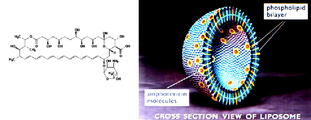
상용화된 리포솜 제제로서 미국 Gilead사와 일본 Fujisawa사가 진균 감염증을 적응증으로 개발한 Ambisome을 들 수 있다(도 1 참조). Ambisome은 약 100 nm의 크기를 갖는 리포솜의 단일 이중층(unilamellar bilayer)에 진균 감염증 치료제인 Amphotericin이 인지질의 장쇄 알킬기와의 소수성 인력에 의해 삽입시킨 제형이며, hydrogenated soy phosphatidylcholine(HSPC), cholesterol, distearoylphosphatidyl glycerol(DSPG), 산화방지제, 응집방지제 등의 성분으로 이루어진 동결건조 제품이다(미국FDA product information Amphotericin).
Commercially available liposome preparations include Ambisome, which was developed as an indication for fungal infections by Gilead, USA and Fujisawa, Japan (see FIG. 1). Ambisome is a formulation of Amphotericin, a fungal infection agent, hydrophobic attraction with long-chain alkyl groups of phospholipids in a single bilayer of liposomes with a size of about 100 nm. (DSPG), a freeze-dried product consisting of antioxidants and anti-agglomerates (US FDA product information Amphotericin).
전신순환을 목적으로 하는 다른 입자형 약물전달체의 경우와 마찬가지로 리포솜은 혈중 단백질의 흡착으로 인해 간이나 비장에 많이 존재하는 대식세포의 식작용(phagocytosis)에 의해 순환계에서 소실되거나, 혈중 순환과정 중 리포솜으로부터 약물이 유출되는 문제점이 있었다. 특히, 대식세포의 식작용은 리포솜 표면에 옵소닌 단백질(opsonic protein)의 흡착을 통해 발생하기 때문에 이러한 문제점을 해결하는 기술로서 인지질의 말단에 PEG(poly[ethylene glycol])을 결합시킨 인지질-PEG유도체를 리포솜의 구성성분으로 사용하거나, 제조된 리포솜의 표면을 PEG 또는 다당류 등으로 코팅함으로써 옵소닌 단백질의 흡착을 억제할 수 있는 리포솜이 개발되었다. 이러한 리포솜은 대식세포의 식작용에 의한 약물의 소실을 감소시킴으로써 약물의 혈중순환시간을 연장하고, 나아가 표적 장기로의 약물 도달률을 높이는 효과를 발휘한다. 특히, 미국 Alza사에 의해 개발된 100 nm크기의 PEG-리포솜 기술은 흔히 스텔스-리포솜(Stealth liposome)으로 불리며, 혈중순환시간이 증가 된 리포솜화 항암제로 상용화되었다. 미국 Ortho Biotech사는 스텔스-리포솜 기술을 세포독성 안트라사이클린(anthracycline)계 항암제인 독소루비신(doxorubicin)에 적용한 Doxil을 상용화하였다(미국FDA product information Doxil).
Like other particulate drug carriers for systemic circulation, liposomes are lost in the circulatory system by phagocytosis of macrophages in the liver or spleen due to the adsorption of proteins in the blood, or from liposomes during blood circulation. There was a problem that the drug is leaked. In particular, phagocytosis of macrophages occurs through the adsorption of opsonic proteins on the surface of liposomes. As a technique to solve this problem, phospholipids-PEG derivatives incorporating PEG (poly [ethylene glycol]) at the ends of phospholipids Liposomes that can inhibit the adsorption of opsonine proteins have been developed by using as a constituent of liposomes or by coating the surface of the prepared liposomes with PEG or polysaccharides. These liposomes reduce the loss of the drug by the phagocytosis of macrophages, thereby prolonging the blood circulation time of the drug and further increasing the drug arrival rate to the target organ. In particular, the 100 nm PEG-liposomal technology developed by Alza, USA, is commonly referred to as stealth liposome, and has been commercialized as a liposome anticancer agent with increased blood circulation time. Ortho Biotech Corp. has commercialized Doxil applying stealth-liposomal technology to doxorubicin, a cytotoxic anthracycline anticancer drug (US FDA product information Doxil).
Antisense RNA, siRNA등의 핵산은 생체 내에서 특정 단백질의 발현을 억제할 수 있는 물질로, 암, 유전병, 감염 질병, 자가면역 질환 등의 치료에 중요한 도구로 각광받고 있다(Novina and Sharp, Nature, 430, 161-164, 2004). 그러나 siRNA와 같은 핵산은 세포 내로 직접 전달이 어렵고, 혈액 내에서 효소에 의해 쉽게 분해되므로 이를 극복하기 위한 연구들이 많이 진행되고 있다. Nucleic acids such as antisense RNA and siRNA are substances that can suppress the expression of specific proteins in vivo, and are being spotlighted as important tools for the treatment of cancer, genetic diseases, infectious diseases, autoimmune diseases, etc. (Novina and Sharp, Nature , 430, 161-164, 2004). However, since nucleic acids such as siRNA are difficult to directly transfer into cells and are easily degraded by enzymes in the blood, many studies are being conducted to overcome them.
현재까지 핵산을 세포 내로 운반하는 방법으로 양전하 지질 또는 중합체와 섞어 운반하는 방법(각각 지질-DNA 접합체(lipoflex) 및 폴리머-DNA 접합체(polyflex)라 명명함)이 주로 사용되고 있다(Hirko등, Curr . Med. Chem ., 10, 1185-1193, 2003; Merdan등, Adv . Drug . Deliv . Rev ., 54, 715-758, 2002; Spagnou등, Biochemistry, 43, 13348-13356, 2004). 지질-DNA 접합체는 핵산과 결합하여 세포 내로 핵산을 잘 전달시켜 세포수준에서 많이 사용되고 있으나, 생체 내에서는 국부적으로 주사 시 많은 경우 체내에서 염증을 유발시키며(Filonand 및 Phillips, Biochim . Biophys . Acta, 1329, 345-356, 1997), 혈관 내 주사 시 주로 1차 통과기관들인 폐, 간, 비장 등과 같은 조직에 축적되는 단점이 있다(Ren 등, Gene Therapy, 7, 764-768, 2000). 반면에 체내에서 존재하는 인지질은 중성 또는 음전하를 띠므로, 핵산 결합력이 매우 낮은 단점이 있다. To date, a method of transporting nucleic acids into cells by mixing with positively charged lipids or polymers (referred to as lipid-DNA conjugates (lipoflex) and polymer-DNA conjugates (polyflex), respectively) is mainly used (Hirko et al . , Curr . Med Chem, 10, 1185-1193, 2003 ;.. Merdan etc., Adv Drug Deliv Rev, 54, 715-758, 2002;.... Spagnou etc., Biochemistry, 43, 13348-13356, 2004 ). Lipid-DNA conjugates are widely used at the cellular level because they bind nucleic acids and deliver nucleic acids well into cells, but in vivo they cause inflammation in many cases when injected locally (Filonand and Phillips, Biochim . Biophys . Acta , 1329). , 345-356, 1997), and there is a drawback of accumulation in tissues such as lungs, liver and spleen, which are primarily primary organs during intravascular injection (Ren et al., Gene Therapy, 7, 764-768, 2000). On the other hand, since the phospholipids present in the body are neutral or negatively charged, nucleic acid binding strength is very low.
이를 극복하는 방법으로 siRNA의 비주형가닥(sense strand)에 콜레스테롤등 다른 지질에 결합시켜 siRNA를 운반하는 방법이 시도되고 있으나, 이들 결합체들은 혈액 내의 LDL 및 HDL등 리포프로테인과 결합 되어 운반되어 주로 간 조직 특이성을 보인다(Soutschek 등, Nature, 432, 173-178, 2004; Wolfrum등, Nat. Biotechnol., 25, 1149-1157, 2007). As a method of overcoming this, a method of transporting siRNA by binding to other lipids such as cholesterol to the non-sense strand of siRNA has been attempted, but these conjugates are transported by being combined with lipoproteins such as LDL and HDL in the blood. Tissue specificity is shown (Soutschek et al., Nature, 432, 173-178, 2004; Wolfrum et al., Nat. Biotechnol., 25, 1149-1157, 2007).
또한, 양이온성 폴리머에 핵산을 결합시킨 결합체(polyplex)도 보체(complement)에 의하여 제거되는 등 원하는 조직으로의 운반 효율이 낮은 단점이 있다(Plank등, Human Gene Ther ., 7, 1437-1446, 1996; Chui등, Chem. Biol., 11, 1165-1175, 2004; Elmen등, Nucleic Acids Res ., 33, 439-447, 2005). In addition, the complex (polyplex) in which the nucleic acid is bound to the cationic polymer is also removed by complement (complement) has a disadvantage of low transport efficiency to the desired tissue (Plank et al., Human Gene Ther . , 7, 1437-1446, 1996; Chui et al. , Chem. Biol ., 11, 1165-1175, 2004; Elmen et al., Nucleic Acids Res . , 33, 439-447, 2005).
이외에도 siRNA의 노출은 톨-유사 수용체(Toll-like receptor)에 효능제(agonist)로 작용하여 비특이적으로 인터페론 알파 발현을 증가시키거나(Hornung등, Nat. Med., 11, 263-270, 2005) 비특이 선천성 면역 반응을 일으키기도 한다(Judge등, Nat. Biotech., 23, 457-462, 2005). In addition, siRNA exposure acts as an agonist to toll-like receptors to non-specifically increase interferon alpha expression (Hornung et al., Nat. Med., 11, 263-270, 2005). It also causes nonspecific innate immune responses (Judge et al., Nat. Biotech., 23, 457-462, 2005).
siRNA의 안정성을 높이고 비 특이 면역반응을 없애고자 하는 연구로는 siRNA의 2'-OH를 2'-F, 2'-OMe 및 2'-H 치환하는 방법이 사용되지만(Morrissey등, Hepatology, 41, 1349-1356, 2005), 합성 비용이 많이 드는 단점이 있고, delivery를 위해서는 지질-DNA 접합체(lipoflex) 및 폴리머-DNA 접합체(poliflex)를 만들어야 한다.
In order to improve the stability of the siRNA and eliminate the nonspecific immune response, the method of substituting 2'-OH, 2'-OMe and 2'-H of siRNA is used (Morrissey et al., Hepatology, 41). , 1349-1356, 2005), which is expensive to synthesize, and requires delivery of lipid-DNA conjugates (lipoflex) and polymer-DNA conjugates (poliflex).
친수성 음이온 약물은 세포투과가 매우 어렵기 때문에 이들에 대해서는 대부분 세포투과가 가능한 프로드러그 형태로 만들어 치료제로 개발하고 있다. 또한, 칼세인(calcein), 인도사이아닌-그린(indocyanine green), 클로로톡신(Cy5.5)등 친수성 음이온 형광물질들은 생체 내에서 리포솜의 이동을 측정할 수 있는 중요한 이미징 도구로 사용할 수 있다.Since hydrophilic anion drugs are very difficult to penetrate, most of them are developed as prodrugs that can penetrate cells. In addition, hydrophilic anionic fluorophores such as calcein, indocyanine green and chlorotoxin (Cy5.5) can be used as important imaging tools to measure the migration of liposomes in vivo.
리포솜에 핵산을 포획하는 방법으로는 핵산의 강력한 음이온 성질을 이용하여 양이온 지질이 포함된 지질 복합체에 포획시키는 방법들이 사용되고 있다. 현재까지 개발된 방법 중 고분자 핵산의 포획률이 높은 방법들로는 난황 포스파티딜콜린/콜레스테롤/라이신-디파미토일 포스파티딜에타놀아민 (EPC/CH/lysine-DPPE)을 사용하는 초음파를 이용한 교반 방법(다양한 핵산에 대한 포획률, 60-100%)(Puyal등, Eur. J. Biochem. 15, 697-703, 1995), 디올레오일포스파티딜에탄올아민/폴리에틸렌글라이콜-세린/디올레오일디메틸암모늄-클로라이드(DOPE/PEG-Cer/DODAC)를 사용하는 계면활성제 투석(detergent dialysis) 방법(4-10 Kbp, 포획률 60-70%)(Wheeler등, Gene Ther., 6, 271-281,1999), 디올레일디메틸아모늄-프로판/콜레스테롤/디스테아로일-sn-글리세롤-포스포콜린/폴리에틸렌글라이콜-세린(DODAP/Chol/DSPC/PEG-cer) 또는 디스테아로일-sn-글리세롤-포스포콜린/콜레스테롤/N-[메톡시 폴리(에틸렌글라이콜)2000)카바모일]-1,2-디마이리스틸록실프로필-3-아민/1,2-디리놀레이록시-3-디메틸아미노프로판(DSPC/Chol/PEG-C-DMA/DLinDMA)을 사용 하는 에탄올 투석법(각각 올리고데옥시뉴클레오티드(ODN) 포획률 50% 또는 siRNA 포획률 93%)(Semple, 2001 Biocheim . Biophys . Acta, 1510; 152-166, ; Morrissey, 2005, Nat Biotech., 23; 1002-1007, ), 디올레이록시프로필-트라이메틸암모늄-클로라이드/콜레스테롤/디올레오일포스파티딜에탄올아민/폴리에틸렌글라이콜-세린(DOTAP/Chol/DOPE/PEG-cer를 사용하는 동결건조된 매트릭스의 수화작용 방법(siRNA 포획률, 95%)(Wu등, Pharm. Res., 26, 512-522, 2009)등이 많은 방법이 개발되었으나, 모든 경우 제조시 지질 혼합액을 한가지 동일한 조성을 사용하여 핵산을 포획하는 방법을 사용하였으며, 이는 저 분자량 친수성 음이온 물질을 효과적으로 포획하기 어려운 단점이 있다.
As a method of capturing nucleic acids in liposomes, methods of capturing a lipid complex containing cationic lipids by using the strong anionic properties of nucleic acids have been used. Among the methods developed so far, high capture rate of polymer nucleic acid includes agitation method using ultrasonic wave using egg yolk phosphatidylcholine / cholesterol / lysine-difamitoyl phosphatidylethanolamine (EPC / CH / lysine-DPPE) (for various nucleic acids Capture rate, 60-100%) (Puyal et al., Eur. J. Biochem. 15, 697-703, 1995), dioleoylphosphatidylethanolamine / polyethyleneglycol-serine / dioleoyldimethylammonium chloride (DOPE Detergent dialysis method (4-10 Kbp, capture rate 60-70%) using / PEG-Cer / DODAC) (Wheeler et al., Gene Ther., 6, 271-281,1999), Dioleil Dimethylamonium-propane / cholesterol / distearoyl-sn-glycerol-phosphocholine / polyethyleneglycol-serine (DODAP / Chol / DSPC / PEG-cer) or distearoyl-sn-glycerol-phospho Choline / Cholesterol / N- [methoxy poly (ethyleneglycol) 2000) carbamoyl] -1,2-dimyristyrylpropyl-3-amine / 1,2 Ethanol dialysis using dilinoleyloxy-3-dimethylaminopropane (DSPC / Chol / PEG-C-DMA / DLinDMA) (50% oligodeoxynucleotide (ODN) capture rate or 93% siRNA capture rate, respectively) (Semple, 2001 Biocheim . Biophys . Acta , 1510; 152-166 ,; Morrissey, 2005, Nat Biotech ., 23; 1002-1007,), of lyophilized matrix using dioleooxypropyl-trimethylammonium-chloride / cholesterol / dioleoylphosphatidylethanolamine / polyethyleneglycol-serine (DOTAP / Chol / DOPE / PEG-cer) Many methods have been developed such as hydration method (siRNA capture rate, 95%) (Wu et al., Pharm. Res., 26, 512-522, 2009). The capture method was used, which has the disadvantage that it is difficult to effectively capture the low molecular weight hydrophilic anionic material.
이에 본 발명자들은 내부에는 독성이 강하나 핵산 및 친수성 음이온 화합물 포획에 유리하고, 헤드(head) 그룹이 작아 리포솜 내부에 잘 위치할 수 있는 양이온 지질을, 외부에는 헤드(head) 그룹이 크고, 세포표면과 유사하여 독성이 적은 중성 및 음이온 지질 조성을 갖는 비대칭 리포솜을 제조하고 상기 리포솜이 siRNA 및 친수성 음이온 화합물을 포획할 수 있음을 확인하고 본 발명을 완성하였다.
Accordingly, the present inventors have a strong toxicity inside, but are advantageous for capturing nucleic acids and hydrophilic anion compounds, and have a small head group and a cationic lipid that can be well located inside the liposome. The outside has a large head group and a cell surface. Similarly, asymmetric liposomes with neutral and anionic lipid composition with low toxicity were prepared and confirmed that the liposomes could capture siRNA and hydrophilic anionic compounds and completed the present invention.
본 발명의 목적은 핵산 및 친수성 음이온 화합물의 고효율 포획을 위한 비대칭 리포솜 및 이의 제조방법을 제공하는 데 있다.
It is an object of the present invention to provide an asymmetric liposome for high efficiency capture of nucleic acids and hydrophilic anion compounds and a method for preparing the same.
상기 목적을 달성하기 위하여, 본 발명은 내부지질로서 헤드(head)가 작은 양이온 지질, 외부지질로써 헤드(head)가 큰 중성 또는 페길화(PEGylation)된 지질로 구성되고, 상기 내부지질에 핵산 및/또는 음이온 화합물이 포획된 비대칭 리포솜을 제공한다.In order to achieve the above object, the present invention comprises a cationic lipid having a small head as internal lipid, a neutral or PEGylated lipid having a large head as external lipid, and a nucleic acid and And / or provide an asymmetric liposome in which an anionic compound is trapped.
또한, 본 발명은 에테르/완충액 혼합용액을 사용하여 양이온 지질에 핵산 또는 친수성 음이온 화합물이 포획된 내부 역상 마이셀을 제조하는 단계(단계 1); In addition, the present invention comprises the steps of preparing an internal reversed phase micelle in which a nucleic acid or a hydrophilic anion compound is trapped in a cationic lipid using an ether / buffer mixture solution (step 1);
에테르/에탄올/완충액 혼합용액을 사용하여 중성 지질, 콜레스테롤, 페길화된 지질에 대한 외부 역상 마이셀을 제조하는 단계(단계 2); 및Preparing an external reversed phase micelle for neutral lipids, cholesterol, and pegylated lipids using an ether / ethanol / buffer mixture (step 2); And
상기 단계 1 및 단계 2에서 제조된 내부 역상 마이셀과 외부 역상 마이셀을 혼합한 다음 유기용매를 증발시키고 투석에 의해 핵산 또는 친수성 음이온 화합물이 포획된 비대칭 리포솜을 제조하는 단계(단계 3)를 포함하는 비대칭 리포솜의 제조방법을 제공한다.
Asymmetric comprising the step (step 3) of mixing the internal reversed phase micelles and the external reversed phase micelles prepared in steps 1 and 2, followed by evaporating the organic solvent and trapping the nucleic acid or the hydrophilic anion compound by dialysis. Provided are methods for preparing liposomes.
본 발명에 따르면, 핵산 및 친수성 음이온 화합물이 고효율로 포획된 비대칭 리포솜을 제조할 수 있어, 유전자 치료분야뿐만 아니라 프로드러그로 제조가 어려운 친수성 음이온 약물전달 및 형광 조영제를 상기 리포솜에 포획하여 약물전달, 이미징 등의 다양한 목적에 사용할 수 있다.
According to the present invention, it is possible to prepare asymmetric liposomes in which nucleic acids and hydrophilic anion compounds are captured with high efficiency, and thus, drug delivery by capturing hydrophilic anion drug delivery and fluorescent contrast agents, which are difficult to prepare with prodrug as well as gene therapy, It can be used for various purposes such as imaging.
도 1은 종래기술의 항진균제 Amphotericine B의 화학구조 및 Ambisome®의 단면도이다.
도 2는 종래기술의 항암제 Doxorubicin의 화학구조 및 Doxil®의 단면도이다.
도 3은 본 발명의 핵산 및 친수성 음이온 화합물을 고효율로 포획하기 위한 비대칭 리포솜의 제조방법의 모식도이다.
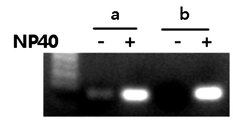
도 4는 내부 양전하 지질 및 pH가 siRNA 포획에 미치는 영향 나타내는 아가로우즈 젤 전기영동 사진이이며, NP-40 비처리군(-)은 포획되지 않은 siRNA를, 처리군(+)은 전체 siRNA를 나타낸다.
도 5는 외부지질의 포스피이티딜클로린/포스페이티딜에타놀아민 조합이 핵산 포획에 미치는 영향을 나타내는 사진이다.
도 6은 외부지질의 콜레스테롤 몰 비가 핵산 포획에 미치는 영향을 나타내는 사진이다.
도 7은 외부지질의 디스테마릴포스페이티딜콜린(DSPC):디올레오일포스파티딜에탄올아민(DOPE) 비율이 핵산 포획에 미치는 영향을 나타내는 사진이다.
도 8은 기능기를 갖는 외부지질의 폴리에틸렌글라이콜-포스페이티딜에타놀아민(PEG-PE), 말레이마이드PEG-PE(miPEG-PE) 및 카복실산PEG-PE(caPEG-PE)가 siRNA 포획에 미치는 영향을 나타내는 사진이다.
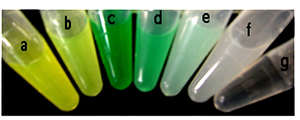
도 9는 본 발명의 일실시예에 따른 형광물질 및 siRNA가 포획된 리포솜의 색분포를 나타내는 사진이다.
도 10은 본 발명의 일실시예에 따른 인도사이아닌-그린(ICG)이 포획된 리포솜의 ICG 농도에 따른 근적외선 형광색 분포를 나타내는 사진이다.
도 11은 본 발명의 일실시예에 따른 인도사이아닌-그린(ICG)이 포획된 리포솜을 NP40으로 파괴전과 후의 근적외선 형광 사진이다.
도 12는 siRNA에 칼세인(calcein)의 포함 유무에 따른 siRNA의 리포솜 포획에 미치는 영향을 나타내는 사진이다.
도 13은 외부에 폴리에틸렌글라이콜-포스페이티딜에타놀아민(PEG-PE), 말레이마이드PEG-PE(miPEG-PE) 및 카복실산PEG-PE(caPEG-PE)을 갖는 리포솜들에 대해 ICG 농도에 따른 siRNA의 리포솜 포획에 미치는 영향을 나타내는 사진이다.
도 14는 도 13보다 낮은 농도의 ICG를 처리시 siRNA의 리포솜 포획에 미치는 영향을 나타내는 사진이다.
도 15는 표면에 R12 펩타이드가 부착되지 않은 칼세인 포획 리포솜 (a 및 b) 및 부착된 칼세인이 포획 리포솜 (c 및 d)의 폐암 세포(A5409) 세포투과성을 분석한 사진이다. e는 d를 확대한 사진이다.
도 16은 표면에 R12 펩타이드가 부착되지 않은 칼세인 포획 리포솜 (a 및 b) 및 부착된 칼세인이 포획 리포솜 (c 및 d)의 폐암 세포(NCI-H322) 세포투과성을 분석한 사진이다. e는 d를 확대한 사진이다.
도 17은 ICG가 포획된 리포솜들 표면에 R8(c), R12(d) 및 PC5-2(e) 펩티드가 부착 유무에 따른 A549 세포투과성을 나타낸 사진이다.
도 18은 ICG가 포획된 리포솜들이 표면에 R8(c), R12(d) 및 PC5-2(e) 펩티드가 부착 유무에 따른 NCI-H322 세포투과성을 나타낸 사진이다. 1 is a cross-sectional view of the chemical structure and Ambisome ® of the antifungal agent Amphotericine B of the prior art.
2 is a cross-sectional view of the chemical structure and Doxil ® of the anticancer drug Doxorubicin of the prior art.
Figure 3 is a schematic diagram of a method for producing an asymmetric liposome to capture the nucleic acid and the hydrophilic anion compound of the present invention with high efficiency.
Figure 4 is agarose gel electrophoresis picture showing the effect of internal positive charge lipids and pH on siRNA capture, NP-40 untreated group (-) is not captured siRNA, treatment group (+) is the whole siRNA Indicates.
5 is a photograph showing the effect of phosphatidylchlorine / phosphatidylethanolamine combination of external lipids on nucleic acid capture.
6 is a photograph showing the effect of the cholesterol molar ratio of the foreign lipids on the nucleic acid capture.
FIG. 7 is a photograph showing the effect of the distearylylphosphatidylcholine (DSPC): dioleoylphosphatidylethanolamine (DOPE) ratio of external lipids on nucleic acid capture.
FIG. 8 shows the effect of external lipid polyethyleneglycol-phosphatidylethanolamine (PEG-PE), maleimide PEGG-PE (miPEG-PE) and carboxylic acid PEGG-PE (caPEG-PE) on siRNA capture It is photograph showing influence.
9 is a photograph showing the color distribution of the liposome trapped by the fluorescent material and siRNA according to an embodiment of the present invention.
FIG. 10 is a photograph showing near-infrared fluorescent color distribution according to ICG concentration of liposomes trapped with indocyannine-green (ICG) according to an embodiment of the present invention.
FIG. 11 is a near-infrared fluorescence photograph before and after destruction of liposomes trapped with indocyanine-green (ICG) according to an embodiment of the present invention with NP40.
12 is a photograph showing the effect on the liposome capture of siRNA with or without calcein (calcein) in the siRNA.
FIG. 13 shows the ICG concentration for liposomes with polyethyleneglycol-phosphatidylethanolamine (PEG-PE), maleimide PEGG-PE (miPEG-PE) and carboxylic acid PEGG-PE (caPEG-PE) on the outside; It is a photograph showing the effect on the liposome capture of siRNA according.
FIG. 14 is a photograph showing the effect of siRNA on liposome capture when treating ICG at a lower concentration than FIG. 13. FIG.
Fig. 15 is a photograph showing analysis of cell permeability of lung cancer cells (A5409) of calcein capture liposomes (a and b) to which the R12 peptide is not attached to the surface and calcein attached to the capture liposomes (c and d). e is an enlarged photograph of d.
16 is a photograph showing analysis of cell permeability of lung cancer cells (NCI-H322) of calcein capture liposomes (a and b) to which the R12 peptide is not attached to the surface and calcein attached to the capture liposomes (c and d). e is an enlarged photograph of d.
Figure 17 is a photograph showing the A549 cell permeability with or without the R8 (c), R12 (d) and PC5-2 (e) peptide attached to the surface of the liposomes captured ICG.
FIG. 18 is a photograph showing NCI-H322 cell permeability according to the presence or absence of R8 (c), R12 (d) and PC5-2 (e) peptides on the surface of the ICG-captured liposomes.
이하, 본 발명을 상세히 설명한다.
Hereinafter, the present invention will be described in detail.
본 발명은 내부지질로써 헤드(head)가 작은 양이온 지질, 외부지질로써 헤드(head)가 큰 중성 또는 페길화(PEGylation)된 지질로 구성되고, 상기 내부지질에 핵산 및/또는 음이온 화합물이 포획된 비대칭 리포솜을 제공한다.The present invention is composed of a cationic lipid having a small head as an internal lipid, a neutral or PEGylated lipid having a large head as an external lipid, and a nucleic acid and / or anionic compound captured by the internal lipid. Provide asymmetric liposomes.
본 발명에 따른 비대칭 리포솜에 있어서, 내부지질은 양이온 지질을 사용하여 독성이 강하나 헤드 그룹이 작으므로 핵산 및 친수성 음이온 화합물 포획에 유리하고, 헤드(head) 그룹이 작아 리포솜 내부에 잘 위치할 수 있으며, 외부지질은 중성 또는 음이온 지질을 사용하여 헤드(head) 그룹이 커 리포솜 외부에 위치하는 것이 유리하고, 세포표면과 유사하므로 비특이적으로 혈액 내 단백질과 세포들에 결합 되지 않는 장점이 있다.In the asymmetric liposomes according to the present invention, the internal lipids are highly toxic using cationic lipids, but have a small head group, which is advantageous for capturing nucleic acids and hydrophilic anion compounds, and the small head groups can be well positioned inside the liposomes. External lipids are neutral or anionic lipids, the head (head) group is advantageously located outside the liposomes, and similar to the cell surface has the advantage of not specifically bound to proteins and cells in the blood.
본 발명에 따른 비대칭 리포솜에 있어서, 상기 친수성 음이온 화합물은, 약물, 진단용 형광 물질 등을 포함한다.
In the asymmetric liposome according to the present invention, the hydrophilic anionic compound includes a drug, a diagnostic fluorescent substance, and the like.
본 발명에 따른 비대칭 리포솜에 있어서, 상기 내부지질의 성분은 디올레일다이메틸암모늄-프로판(DODAP)과 디올레일포스페이티일에타놀아민(DOPE) 또는 디팔미틸포스페이티틸에타놀아민(DPPE)를 사용하는 것이 바람직하고, 이들의 몰 비율은 DODAP와 DOPE 또는 DPPE가 1:1 내지 9:1인 것이 바람직하다.
In the asymmetric liposome according to the present invention, the components of the internal lipids are dioleyldimethylammonium-propane (DODAP) and dioleylphosphatiyl ethanolamine (DOPE) or dipalmitylphosphatitylethanolamine (DPPE). It is preferable that the molar ratio of DODAP and DOPE or DPPE is 1: 1 to 9: 1.
본 발명에 따른 비대칭 리포솜에 있어서, 상기 외부지질은 중성 인지질, 페길화된 인지질(PEG-PE) 및 콜레스테롤을 포함하며, 이때 상기 중성 인지질은 DPPE/DOPE, DSPC/DPPE 또는 DSPC/DOPE로 이루어지는 군으로부터 선택되는 것이 바람직하며, DSPC/DOPE인 것이 더욱 바람직하다. 이때, 상기 중성 인지질의 합의 몰비는 전체 외부지질 중 1/2 이하이고, DPPE/DOPE, DSPC/DPPE 또는 DSPC/DOPE의 비율은 몰비로 1:1~3:0인 것이 바람직하다. 또한, 상기 외부지질 중 상기 콜레스테롤은 전체 외부지질의 1/3 이상으로 함유되는 것이 바람직하다.In the asymmetric liposome according to the present invention, the external lipid includes neutral phospholipid, PEGylated phospholipid (PEG-PE) and cholesterol, wherein the neutral phospholipid is a group consisting of DPPE / DOPE, DSPC / DPPE or DSPC / DOPE It is preferably selected from among them, more preferably DSPC / DOPE. In this case, the molar ratio of the sum of the neutral phospholipids is 1/2 or less of the total external lipids, and the ratio of DPPE / DOPE, DSPC / DPPE or DSPC / DOPE is preferably in a molar ratio of 1: 1 to 3: 0. In addition, the cholesterol in the external lipids is preferably contained in 1/3 or more of the total external lipids.
본 발명에 따른 비대칭 리포솜에 있어서, 상기 외부지질 중 페길화된 인지질(PEG-PE)은 전체 외부지질의 1/6 내지 1/4로 함유되는 것이 바람직하다. In the asymmetric liposome according to the present invention, the PEGylated phospholipid (PEG-PE) in the external lipid is preferably contained in 1/6 to 1/4 of the total external lipid.
본 발명에 따른 비대칭 리포솜은 표면에 세포 표적 지향적 전달 및 세포투과를 위한 기능기를 부착할 수 있다. 이때, 상기 기능기로서 항체, 펩티드, 저분자 리간드 등이 사용될 수 있다. 상기 기능기를 부착시키기 위해 페길화된 인지질은 기능성 페길화된 인지질을 더 첨가할 수 있다. 상기 기능성 페길화된 인지질로는 말레이마이드-PEG-PE(miPEG-PE), 카복실릭-PEG-PE(caPEG-PE) 등을 사용할 수 있으나, 이에 제한되는 것은 아니다. 이때, 상기 기능성 페길화된 인지질은 전체 외부지질의 1/60 이하로 함유되는 것이 바람직하다. Asymmetric liposomes according to the invention can attach functional groups for cell target-directed delivery and cell permeation to the surface. In this case, an antibody, a peptide, a low molecular ligand, or the like may be used as the functional group. Pegylated phospholipids can be further added functional pegylated phospholipids to attach the functional groups. The functional PEGylated phospholipid may be, but is not limited to, maleimide-PEG-PE (miPEG-PE), carboxylic-PEG-PE (caPEG-PE), and the like. At this time, the functional PEGylated phospholipid is preferably contained less than 1/60 of the total external lipid.
본 발명에 따른 비대칭 리포좀에 있어서, 핵산과 양이온 지질의 음이온/양이온(N/P) 비율은 1:2 이하가 바람직한바, 그 이상이 되면 핵산 포획률이 감소한다.In the asymmetric liposomes according to the present invention, the anion / cation (N / P) ratio of the nucleic acid and the cationic lipid is preferably 1: 2 or less, and when it is higher, the nucleic acid capture rate decreases.
나아가 본 발명에 따른 비대칭 리포솜을 구성하는 전체 내부지질과 외부지질의 몰 비율은 1:1.2인 것이 바람직하다.
Furthermore, the molar ratio of the total internal lipid and external lipid constituting the asymmetric liposome according to the present invention is preferably 1: 1.2.
또한, 본 발명은In addition,
에테르/완충액 혼합용액을 사용하여 양이온 지질에 핵산 및/또는 친수성 음이온 화합물이 포획된 내부 역상 마이셀을 제조하는 단계(단계 1); Preparing an internal reversed phase micelle trapped with a nucleic acid and / or a hydrophilic anionic compound in a cationic lipid using an ether / buffer mixture (step 1);
에테르/알코올/완충액 혼합용액을 사용하여 중성 지질 및 페길화된 지질에 대한 외부 역상 마이셀을 제조하는 단계(단계 2); 및Preparing an external reversed phase micelle for neutral lipids and pegylated lipids using an ether / alcohol / buffer mixture (step 2); And
상기 단계 1 및 단계 2에서 제조된 내부 역상 마이셀과 외부 역상 마이셀을 혼합한 다음 유기용매를 증발시키고 투석에 의해 핵산 또는 친수성 음이온 화합물이 포획된 비대칭 리포솜을 제조하는 단계(단계 3)를 포함하는 핵산 및/또는 친수성 음이온 화합물이 포획된 비대칭 리포솜의 제조방법을 제공한다.
A nucleic acid comprising a step (step 3) of mixing the internal reverse phase micelles and the external reverse phase micelles prepared in steps 1 and 2, followed by evaporation of an organic solvent and dialysis to prepare an asymmetric liposome in which the nucleic acid or the hydrophilic anion compound is trapped. And / or a method for producing an asymmetric liposome in which a hydrophilic anion compound is captured.
상기 단계 1은 에테르/완충액 혼합용액을 사용하여 양이온 지질에 핵산 및/또는 친수성 음이온 화합물이 포획된 내부 역상 마이셀을 제조하는 단계로서, 구체적으로 pH가 4인 완충액에 양이온 지질과 핵산 및/또는 친수성 음이온 물질을 현탁 시킨 후, 에테르를 넣고 초음파로 교반시켜 내부 역상 마이셀을 제조한다.Step 1 is a step of preparing an internal reverse phase micelle trapped with a nucleic acid and / or hydrophilic anionic compound in the cationic lipid using an ether / buffer mixture solution, specifically, cationic lipid and nucleic acid and / or hydrophilic in a pH 4 buffer After the anionic material is suspended, ether is added and stirred with ultrasonic waves to prepare internal reversed micelles.
이때, 상기 내부지질로서 디올레일다이메틸암모늄-프로판(DODAP)과 디올레일포스페이티일에타놀아민(DOPE) 또는 디팔미틸포스페이티틸에타놀아민(DPPE)를 사용하는 것이 바람직하고, 이들의 몰 비율은 DODAP와 DOPE 또는 DPPE가 1:1 내지 9:1인 것이 바람직하다.At this time, it is preferable to use dioleyldimethylammonium-propane (DODAP) and dioleylphosphatiylethanolamine (DOPE) or dipalmitylphosphatitylethanolamine (DPPE) as the internal lipid, and the molar ratio thereof. It is preferred that the DODAP and DOPE or DPPE are 1: 1 to 9: 1.
본 발명에 따른 제조방법에 있어서, 핵산과 양이온 지질의 N/P 비율은 1:2 이하인 것이 바람직하다.In the production method according to the present invention, the N / P ratio of the nucleic acid and the cationic lipid is preferably 1: 2 or less.
본 발명에 따른 제조방법에 있어서, 친수성 음이온 화합물 및 핵산은 단독 또는 동시에 포획될 수 있다.
In the production method according to the present invention, the hydrophilic anionic compound and the nucleic acid may be captured alone or simultaneously.
다음으로, 상기 단계 2는 에테르/알코올/완충액 혼합용액을 사용하여 중성 지질 및 페길화된 지질에 대한 외부 역상 마이셀을 제조하는 단계로서, 구체적으로 알코올과 완충용액에 중성지질 및 페길화된 지질을 넣고 현탁 시킨 후, 에테르를 넣고 초음파로 교반시켜 외부 역상 마이셀을 제조한다.Next, step 2 is to prepare an external reversed phase micelle for neutral lipids and pegylated lipids using an ether / alcohol / buffer mixture solution, specifically, neutral lipids and pegylated lipids in alcohol and buffer solution. After adding and suspending, adding ether and stirring by ultrasonic to prepare an external reversed phase micelle.
이때, 상기 알코올로는 에탄올 또는 메탄올을 사용할 수 있으며, 상기 알코올과 완충액 혼합용액은 2:1 내지 1:1 비율로 혼합되는 것이 바람직하다.In this case, ethanol or methanol may be used as the alcohol, and the alcohol and the buffer mixed solution are preferably mixed in a ratio of 2: 1 to 1: 1.
본 발명에 따른 제조방법 있어서, 상기 외부지질은 중성 인지질, 페길화된 인지질(PEG-PE) 및 콜레스테롤을 포함하며, 이때 상기 중성 인지질은 DPPE/DOPE, DSPC/DPPE 또는 DSPC/DOPE로 이루어지는 군으로부터 선택되는 것이 바람직하며, DSPC/DOPE인 것이 더욱 바람직하다. 이때, 상기 중성 인지질의 합의 몰비는 전체 외부지질 중 1/2 이하이고, DPPE/DOPE, DSPC/DPPE 또는 DSPC/DOPE의 비율은 몰비로 1:1~3:0인 것이 바람직하다. 또한, 상기 외부지질 중 상기 콜레스테롤은 전체 외부지질의 1/3 이상으로 함유되는 것이 바람직하다.In the production method according to the present invention, the external lipid is neutral phospholipid, PEGylated phospholipid (PEG-PE) and cholesterol, wherein the neutral phospholipid is from the group consisting of DPPE / DOPE, DSPC / DPPE or DSPC / DOPE It is preferred to be selected, more preferably DSPC / DOPE. In this case, the molar ratio of the sum of the neutral phospholipids is 1/2 or less of the total external lipids, and the ratio of DPPE / DOPE, DSPC / DPPE or DSPC / DOPE is preferably in a molar ratio of 1: 1 to 3: 0. In addition, the cholesterol in the external lipids is preferably contained in 1/3 or more of the total external lipids.
본 발명에 따른 제조방법에 있어서, 상기 외부지질 중 페길화된 인지질(PEG-PE)은 혈중에서의 리포솜의 안정성을 증진시키는 역할을 하며, 전체 외부지질의 몰비로 1/6 내지 1/4로 함유되는 것이 바람직하다. In the production method according to the present invention, the PEGylated phospholipid (PEG-PE) in the external lipids serves to enhance the stability of liposomes in the blood, 1/6 to 1/4 in the molar ratio of the total external lipids It is preferable to contain.
본 발명에 따른 제조방법에 있어서, 상기 페길화된 인지질은 기능성 페길화된 인지질을 더 첨가할 수 있다. 상기 기능성 페길화된 인지질로는 miPEG-PE, caPEG-PE 등을 사용할 수 있으나, 이에 제한되는 것은 아니다. 이때, 상기 기능성 페길화된 인지질은 전체 외부지질의 1/60 이하로 함유되는 것이 바람직하다.
In the production method according to the present invention, the PEGylated phospholipid may further add a functional PEGylated phospholipid. The functional PEGylated phospholipid may be miPEG-PE, caPEG-PE and the like, but is not limited thereto. At this time, the functional PEGylated phospholipid is preferably contained less than 1/60 of the total external lipid.
다음으로, 상기 단계 3은 비대칭 리포솜을 제조하는 단계로서, 상기 단계 1 및 단계 2에서 제조된 내부 역상 마이셀과 외부 역상 마이셀을 혼합한 다음 유기용매를 증발시키고 투석함으로써 핵산 및/또는 친수성 음이온 화합물이 포획된 비대칭 리포솜을 제조할 수 있다.
Next, step 3 is to prepare an asymmetric liposome, the nucleic acid and / or hydrophilic anionic compound is prepared by mixing the internal reverse phase micelles and the external reverse phase micelles prepared in steps 1 and 2, and then evaporating and dialysis the organic solvent Captured asymmetric liposomes can be prepared.
또한, 제조된 리포솜은 세포 표적 지향적 전달 및 세포투과를 위하여 표면에 기능기를 부착하는 제조하는 단계(단계 4)를 추가로 수행할 수 있다.
In addition, the prepared liposomes may be further subjected to the step of attaching functional groups to the surface (step 4) for cell target-oriented delivery and cell permeation.
본 발명에서 제조된 핵산포획 비대칭 리포솜은 외부가 중성 또는 음이온 지질로 만들어져 독성이 적고, 내부에는 핵산 포획에는 유리하나, 독성이 있는 양이온성 지질을 함유하게 제조하여 이로 인한 독성을 최소화할 수 있으며, 외부지질로서 PEG-PE이 포함됨으로써 혈액 내에서 리포솜의 안정성을 증가시킬 수 있으며, 기능기를 지닌 PEG-PE에 표적지향성 물질(항체, 펩티드, 저분자 리간드등)을 부착하여 특정조직에 운반 및 세포투과를 가능하게 할 수 있다.
The nucleic acid capture asymmetric liposomes prepared in the present invention are less toxic because they are made of neutral or anionic lipids on the outside, and are advantageous for capturing nucleic acids, but can contain toxic cationic lipids to minimize toxicity. The inclusion of PEG-PE as an external lipid can increase the stability of liposomes in the blood, and transports and cell permeates to specific tissues by attaching target-oriented substances (antibodies, peptides, small molecule ligands, etc.) to PEG-PE with functional groups. Can be enabled.
따라서 본 발명에 따르면, 핵산 및 친수성 음이온 화합물이 고효율로 포획된 비대칭 리포솜을 제조할 수 있어, 유전자 치료분야뿐만 아니라 프로드러그로 제조가 어려운 친수성 음이온 약물전달 및 형광 조영제를 상기 리포솜에 포획하여 약물전달, 이미징 등의 다양한 목적에 사용할 수 있다.
Therefore, according to the present invention, it is possible to prepare asymmetric liposomes in which nucleic acids and hydrophilic anion compounds are captured with high efficiency, so that hydrophilic anion drug delivery and fluorescent contrast agents, which are difficult to prepare with prodrugs as well as gene therapy fields, are trapped on the liposomes for drug delivery. It can be used for various purposes such as, imaging.
이하, 실시예 및 실험예를 통하여 본 발명을 상세히 설명한다. 단, 하기의 실시 예는 본 발명을 예시하는 것일 뿐, 본 발명의 내용이 하기의 실시 예에 의해 한정되는 것은 아니다.
Hereinafter, the present invention will be described in detail through Examples and Experimental Examples. However, the following examples are merely to illustrate the invention, but the content of the present invention is not limited by the following examples.
<< 실시예Example 1> 핵산이 포획된 리포솜의 제조 1 1> Preparation of Liposomes with Nucleic Acid Captured 1
도 3에 나타낸 바와 같은 방법으로 본 발명에 따른 핵산이 포획된 리포솜을 제조하였다.In the method as shown in Figure 3 was prepared a liposome entrapped nucleic acid according to the present invention.
구체적으로, 내부 양이온 지질은 디올레일다이메틸암모늄-프로판(DODAP)에 디올레일포스페이티일에타놀아민(DOPE)을 1:1로 섞은 지질혼합액(지질로 1 mg)을 얇은 막으로 만들어 완전히 건조한 다음, 100 ㎍의 서열번호 1 및 2의 이중(duplex) siRNA(N/P ratio= 2)를 150 ㎍의 100 mM 시트르산 완충액(pH 4)에 가하여 현탁액을 제조하였다. 상기 현탁액에 400 ㎕의 에테르를 가한 다음, 수조 타입의 초음파로 교반하여 siRNA이 포획된 내부 역상 마이셀을 제조하였다. Specifically, the internal cationic lipid is dried completely by thinly preparing a lipid mixture (1 mg of lipid) mixed with dioleyldimethylammonium-propane (DODAP) in a 1: 1 ratio of dioleylphosphatiylethanolamine (DOPE). , Suspension was prepared by adding 100 μg of duplex siRNA of SEQ ID NO: 1 and 2 (N / P ratio = 2) to 150 μg of 100 mM citric acid buffer (pH 4). 400 μl of ether was added to the suspension, followed by stirring with a water bath-type ultrasonic wave to prepare an internal reversed phase micelle captured with siRNA.
외부지질은 디스테릴포스페이티딜클로린:디올레일포스페이티일에타놀아민:메톡시PEG2000-디스테릴포스페이티딜에탄올아민:콜레스테롤(DSPC:DOPE:PEG-PE:CH)=1.5:1.5:1:2 몰 비로 섞은 지질혼합액(지질; 1.7 mg)을 얇은 막으로 만들어 완전히 건조한 다음, HBS(20 mM HEPES, 150 mM 염화나트륨, pH 7.3~7.5) 200 ㎕와 에탄올 120 ㎕를 가하여 현탁액을 만든 다음, 600 ㎕의 에테르를 가하고 수조 형태의 초음파기로 교반함으로써 외부 역상 마이셀을 제조하였다. 이후, 핵산이 포획된 내부 역상 마이셀 용액과 외부 역상 마이셀 용액을 내부지질:외부지질=1:1.21이 되도록 혼합한 다음 유기용매를 증발시키고, HBS로 투석에 의해 잔류 유기용매를 제거하여 siRNA이 포획된 비대칭 리포솜을 제조하였다.
External lipids are disterylphosphatidylchlorine: diolylphosphatiylethanolamine: methoxyPEG2000- disterylphosphatidylethanolamine: cholesterol (DSPC: DOPE: PEG-PE: CH) = 1.5: 1.5: 1: 2 Lipid mixture (lipid; 1.7 mg) mixed in a molar ratio was made into a thin film and completely dried. Then, a suspension was made by adding 200 μl of HBS (20 mM HEPES, 150 mM sodium chloride, pH 7.3 to 7.5) and 120 μl of ethanol, followed by 600 μl. Of ether was added and an external reversed phase micelle was prepared by stirring with a sonicator in the form of a bath. Thereafter, the inner reversed phase micelle solution and the reversed phase micelle solution in which the nucleic acid is trapped are mixed to be internal lipid: external lipid = 1: 1.21, and then the organic solvent is evaporated, and the residual organic solvent is removed by dialysis with HBS to capture siRNA. Asymmetric liposomes were prepared.
<< 실험예Experimental Example 1> 내부지질 및 1> Internal lipid and 완충액Buffer 조성에 따른 According to composition siRNAsiRNA 의 of 포획률Capture rate 분석 analysis
내부 양이온 지질은 디올레일다이메틸암모늄-프로판(DODAP) 또는 디올레일트리메틸암모늄-프로판(DOTAP)에 디올레일포스페이티일에타놀아민(DOPE)을 1:1 내지 9:1로 섞은 지질혼합액(지질로 1 mg)을 얇은 막으로 만들어 완전히 건조한 다음, 1100 ㎍의 서열번호 1 및 2의 이중(duplex) siRNA(N/P ratio= 2 ~ 4)를 150의 50-150mM 시트르산 완충액(pH 4 또는 5)에 가하여 현탁액을 제조하는 것을 제외하고는 실시예 1과 동일한 방법으로 siRNA이 포획된 리포솜을 제조하였다.Internal cationic lipids are lipid mixtures (dilipyldimethylammonium-propane (DODAP) or dioleyltrimethylammonium-propane (DOTAP) mixed with dioleylphosphatiylethanolamine (DOPE) 1: 1 to 9: 1 1 mg) into a thin film and completely dried, and then 1100 μg of duplex siRNAs of SEQ ID NOS: 1 and 2 (N / P ratio = 2-4) in 150 50-150 mM citric acid buffer (pH 4 or 5). A siRNA-captured liposome was prepared in the same manner as in Example 1 except for adding a suspension.
상기 리포솜의 내부지질 및 외부지질의 조성 및 비율, 완충액의 조성 및 pH를 하기 표 1에 나타내었다.The composition and ratio of the internal lipid and external lipid of the liposome, the composition of the buffer and the pH are shown in Table 1 below.
division
시트르산0.15M
Citric acid
시트르산0.15M
Citric acid
시트르산0.15M
Citric acid
시트르산0.15M
Citric acid
제조된 리포솜은 0.5 × TBE 완충액[5.4 g의 트리스 염기(Tris base), 2.75 g의 붕산(boric acid), 2 ml의 0.5M 에틸렌디아민테트라아세트산(ethylendiamine tetraacetic acid(pH 8.0))을 1L 물에 용해시켜 제조함]을 이용하여 4% 아가로즈(agarose) 전기영동으로 리포솜의 siRNA 포획율을 측정하여 그 결과를 도 4에 나타내었다.The prepared liposomes were mixed with 0.5 × TBE buffer [5.4 g of Tris base, 2.75 g of boric acid, 2 ml of 0.5M ethyldiamine tetraacetic acid (pH 8.0) in 1 L water. Prepared by dissolving] to measure the siRNA capture rate of liposomes by 4% agarose electrophoresis and the results are shown in FIG. 4.
도 4에서 nonidet-P40(NP40)은 전체 siRNA의 양을 분석하기 위하여 첨가해 준 물질로 NP40이 없을 때 나타나는 밴드는 포획되지 않은 siRNA이다.In FIG. 4, nonidet-P40 (NP40) is a substance added to analyze the total siRNA amount, and a band that appears when NP40 is absent is an uncaptured siRNA.
측정 결과 외부 역상 마이셀 제조시 첨가하는 에탄올은 PEG-PE가 들어있는 외부 역상 마이셀의 형성을 도와주며, 제거시 역상 마이셀이 형성되지 않았다(결과는 보이지 않음). 도 4의 (a) 및 (c)에 나타낸 바와 같이, 완충액의 pH가 4이고 내부 양이온 지질로서 DODAP을 사용한 경우 포획률이 높았으며, 완충액 농도에 따른 효과는 나타나지 않았다. 반면에 도 4의 (b)에 나타낸 바와 같이, 내부 양이온 지질로서 DOTAP을 사용한 경우에는 siRNA가 포획되지 않았으며, 도 4의 (d)에 나타낸 바와 같이, 내부 역상 마이셀 제조시 pH 5의 완충액을 사용한 경우에도 siRNA가 포획되지 않았다. As a result of the measurement, ethanol added during the preparation of the external reversed phase micelles helped to form the external reversed phase micelles containing PEG-PE. As shown in (a) and (c) of FIG. 4, when the pH of the buffer was 4 and DODAP was used as the internal cationic lipid, the capture rate was high, and the effect of the buffer concentration did not appear. On the other hand, as shown in (b) of Figure 4, when using the DOTAP as an internal cationic lipid siRNA was not captured, as shown in (d) of Figure 4, the pH 5 buffer in the preparation of the internal reverse phase micelles SiRNA was not captured even when used.
이로부터 본 발명에 따른 리포솜의 제조에 있어서, 핵산의 포획시 내부 양이온 지질은 DODAP를 사용하는 것이 바람직하며, 완충액의 pH는 4인 것이 바람직한 것을 알 수 있다.
From this, in the preparation of liposomes according to the present invention, it is preferable to use DODAP as the internal cationic lipid when capturing the nucleic acid, and the pH of the buffer is preferably 4.
<< 실험예Experimental Example 2> 외부지질 조성에 따른 2> according to external lipid composition siRNAsiRNA 포획률 분석 Capture Rate Analysis
내부지질은 DODAP 및 DOPE로 고정하고, 150 mM 시트르산 완충액, pH 4로 고정하고, 외부지질 중 포스파디일콜린/포스파티딜에타놀아민(PC/PE)의 조성을 하기 표 2에 나타낸 바와 같이 다양하게 변화시킨 것을 제외하고는 상기 실시예 1과 동일한 방법으로 핵산이 포획된 리포솜을 제조하고, 상기 실험예 1과 동일한 방법으로 리포솜의 siRNA 포획율을 측정하여 그 결과를 도 5에 나타내었다.Internal lipids were fixed with DODAP and DOPE, fixed with 150 mM citric acid buffer, pH 4, and the composition of phosphadiylcholine / phosphatidylethanolamine (PC / PE) in external lipids was varied as shown in Table 2 below. Except for preparing liposomes in which the nucleic acid was captured in the same manner as in Example 1, and measuring the siRNA capture rate of liposomes in the same manner as in Experimental Example 1 is shown in Figure 5 the results.
표 2에 있어서, DPPC는 디올릴포스페이티닐클로린이고, DOPC는 디올릴포스페이티닐클로린이고, DSPC는 디스테릴포스페이티딜클로린이고, DPPE는 디팔미틸포스페이티틸에타놀아민이고, DOPE는 디팔미틸포스페이티틸에타놀아민이다.In Table 2, DPPC is diolylphosphatitinylchlorine, DOPC is diolylphosphatitinylchlorine, DSPC is disterylphosphatidylchlorine, DPPE is dipalmitylphosphatitylethanolamine, and DOPE is diol Palmitylphosphatitylethanolamine.
division
도 5에 나타낸 바와 같이, 측정 결과 포스파디일콜린/포스파티딜에타놀아민(PC/PE) 조성에서 디올릴포스페이티닐클로린/디팔미틸포스페이티틸에타놀아민(DPPC/DPPE) 및 디올릴포스페이티닐클로린/디팔미틸포스페이티틸에타놀아민(DOPC/DPPE) 조합을 사용한 경우 포획률이 낮았으며(도 5의 b 및 d 참조), 다른 조합 (디팔미틸포스페이티틸에타놀아민/디올레일포스페이티일에타놀아민(DPPE/DOPE), 디스테릴포스페이티딜클로린/디팔미틸포스페이티틸에타놀아민(DSPC/DPPE) 및 디스테릴포스페이티딜클로린/디올레일포스페이티일에타놀아민(DSPC/DOPE))은 모두 90% 이상의 높은 포획률을 나타냈다(도 5의 a, c 및 e 참조). As shown in FIG. 5, the measurement results of diolylphosphinylchlorine / dipalmitylphosphatitylethanolamine (DPPC / DPPE) and diolylphosphinyl in the composition of phosphadiylcholine / phosphatidylethanolamine (PC / PE) The capture rate was low with the chlorine / dipalmitylphosphatitylethanolamine (DOPC / DPPE) combination (see b and d in FIG. 5), and the other combination (dipalmitylphosphatitylethanolamine / dioleylphosphate). Thiylethanolamine (DPPE / DOPE), disterylphosphatidylchlorine / dipalmitylphosphatitylethanolamine (DSPC / DPPE) and disterylphosphatidylchlorine / dioleylphosphatiylethanolamine (DSPC / DOPE)) All showed a high capture rate of at least 90% (see a, c and e in FIG. 5).
이로부터 본 발명에 따른 리포솜의 제조에 있어서, 핵산의 포획시 외부지질은 DPPE/DOPE, DSPC/DPPE 또는 DSPC/DOPE의 조합을 사용하는 것이 바람직한 것을 알 수 있다.
From this, in the preparation of liposomes according to the present invention, it can be seen that it is preferable to use a combination of DPPE / DOPE, DSPC / DPPE or DSPC / DOPE as an external lipid when capturing nucleic acids.
이에, 외부지질 중성 지질의 조합을 DSPC/DOPE의 조합으로 고정하고 콜레스테롤(CHOL)의 조성을 하기 표 3에 나타낸 바와 같이 다양하게 변화시킨 것을 제외하고는 상기 실시예 1과 동일한 방법으로 핵산이 포획된 리포솜을 제조하고, 상기 실험예 1과 동일한 방법으로 리포솜의 siRNA 포획율을 측정하여 그 결과를 도 6에 나타내었다.Thus, the nucleic acid was captured in the same manner as in Example 1 except that the combination of external lipid neutral lipids was fixed with a combination of DSPC / DOPE and the composition of cholesterol (CHOL) was variously changed as shown in Table 3 below. Liposomes were prepared, and siRNA capture rate of liposomes was measured in the same manner as in Experimental Example 1, and the results are shown in FIG. 6.
division
도 6에 나타낸 바와 같이, 콜레스테롤은 몰 비를 기준으로 전체 외부지질의 1/6 몰 비를 사용한 경우 포획률이 감소하였으나, 1/3 내지 1/2의 몰 비를 사용한 경우 포획률이 95% 이상으로 나타났다. As shown in Figure 6, the cholesterol was reduced when the 1/6 mole ratio of the total external lipids based on the molar ratio, the capture rate is 95% when using a molar ratio of 1/3 to 1/2 It appeared as above.
이로부터 본 발명에 따른 리포솜의 제조에 있어서, 핵산의 포획시 콜레스테로의 비율은 전체 외부지질의 1/3 내지 1/2의 몰 비를 사용하는 것이 바람직한 것을 알 수 있다.
From this, it can be seen that in the preparation of liposomes according to the present invention, the ratio of cholesterol when capturing nucleic acids is preferably used in a molar ratio of 1/3 to 1/2 of the total external lipid.
또한, 외부지질 중성 지질의 조합을 DSPC/DOPE의 조합으로 고정시키고 DSPC/DOPE의 비율을 하기 표 4에 나타낸 바와 같이 다양하게 변화시킨 것을 제외하고는 상기 실시예 1과 동일한 방법으로 핵산이 포획된 리포솜을 제조하고, 상기 실험예 1과 동일한 방법으로 리포솜의 siRNA 포획율을 측정하여 그 결과를 도 7에 나타내었다.In addition, nucleic acid was captured in the same manner as in Example 1 except that the combination of external lipid neutral lipids was fixed with a combination of DSPC / DOPE and the ratio of DSPC / DOPE was variously changed as shown in Table 4 below. Liposomes were prepared, and siRNA capture rate of liposomes was measured in the same manner as in Experimental Example 1, and the results are shown in FIG. 7.
division
도 7에 나타낸 바와 같이, DSPC:DOPE의 몰 비를 전체 외부지질에서 1/4:1/4 내지 1/2:0으로 조절하여 포획 비율을 측정한 결과, 모두 90% siRNA의 포획률을 나타냈다. As shown in FIG. 7, the capture ratio was measured by adjusting the molar ratio of DSPC: DOPE to 1/4: 1/4 to 1/2: 0 in all the external lipids, and all showed 90% siRNA capture rate. .
상기 실험을 바탕으로 외부지질은 DSPC/DOPE/PEG-PE/CH을 선택하였고, 조성은 DSPC는 외부지질 중 몰 비로 1/4 내지 1/2, DOPE는 0 내지 1/4, PEG-PE는 1/6 및 콜레스테롤은 1/3 내지 1/2에서 대부분의 siRNA를 포획할 수 있음을 알 수 있다.
Based on the above experiment, the external lipid was selected as DSPC / DOPE / PEG-PE / CH, and the composition of the DSPC was 1/4 to 1/2 in molar ratio of external lipid, DOPE was 0 to 1/4, and PEG-PE was It can be seen that 1/6 and cholesterol can capture most siRNA in 1/3 to 1/2.
<< 실험예Experimental Example 3> 외부지질에 3> to external lipid 기능기Function 도입에 따른 According to introduction siRNAsiRNA 포획률 분석 Capture Rate Analysis
리포솜 표면에 세포투과를 위한 펩티드 결합을 위한 기능기 도입을 위하여 하기 표 5에 나타낸 바와 같이 PEG-PE 대신 PEG-PE/miPEG-PE 또는 PEG-PE/caPEG-PE를 9:1 비율로 섞고, 다양한 siRNA(서열번호 1 및 2의 이중(duplex) siRNA, 서열번호 3 및 4의 이중 siRNA, 및 서열번호 5 및 6의 이중 siRNA)를 사용한 것을 제외하고는 상기 실시예 1과 동일한 방법으로 핵산이 포획된 리포솜을 제조하고, 상기 실험예 1과 동일한 방법으로 리포솜의 siRNA 포획율을 측정하여 그 결과를 도 8에 나타내었다.To introduce a functional group for peptide binding for cell permeation on the liposome surface, PEG-PE / miPEG-PE or PEG-PE / caPEG-PE is mixed in a 9: 1 ratio instead of PEG-PE, as shown in Table 5 below. Nucleic acid was prepared in the same manner as in Example 1 except that various siRNAs (duplex siRNAs of SEQ ID NOs: 1 and 2, double siRNAs of SEQ ID NOs: 3 and 4, and double siRNAs of SEQ ID NOs: 5 and 6) were used. Captured liposomes were prepared, and siRNA capture rate of liposomes was measured in the same manner as in Experimental Example 1, and the results are shown in FIG. 8.
division
도 8에 나타낸 바와 같이, 리포솜 표면에 기능기 도입에 관계없이 siRNA의 포획률은 모두 95% 이상으로 나타났다. 따라서, 본 발명에 따른 리포솜은 세포투과를 위하여 추가적으로 표면에 기능기를 도입할 수 있음을 알 수 있다.
As shown in Figure 8, regardless of the introduction of functional groups on the liposome surface, the capture rate of siRNA was all 95% or more. Therefore, it can be seen that the liposome according to the present invention can additionally introduce functional groups on the surface for cell permeation.
<< 실시예Example 2> 친수성 음이온 화합물이 포획된 리포솜의 제조 1 2> Preparation of Liposome Captured with Hydrophilic Anion Compound 1
내부지질은 DODAP:DOPE=1:1, 외부지질은 DSPC:DOPE:PEG-PE:CHOL=2:1:1:2 몰 비로, 그리고 전체 내부와 외부지질의 몰 비는 1:1.2로 하고, 핵산 대신 친수성 음이온 화합물로서 음이온 형광물질인 칼세인(calcein)을 100 ㎍ 또는 30 ㎍ 사용하는 것을 제외하고는 실시예 1의 방법과 동일한 방법으로 수행하여 친수성 음이온 화합물이 포획된 리포솜을 제조하였다.
The internal lipid is DODAP: DOPE = 1: 1, the external lipid is DSPC: DOPE: PEG-PE: CHOL = 2: 1: 1: 2 molar ratio, and the total internal and external lipid ratio is 1: 1.2. A liposome in which a hydrophilic anion compound was captured was prepared in the same manner as in Example 1 except that 100 μg or 30 μg of an anionic fluorescent substance calcein was used as a hydrophilic anion compound instead of a nucleic acid.
<< 실시예Example 3> 친수성 음이온 화합물이 포획된 리포솜의 제조 2 3> Preparation of Liposome Captured with Hydrophilic Anion Compound 2
친수성 음이온 화합물로서 음이온 형광물질인 인도시아니딘-그린(indocyanine green (ICG))을 100 ㎍, 30 ㎍ 또는 10 ㎍ 사용하는 것을 제외하고는 실시예 1의 방법과 동일한 방법으로 수행하여 친수성 음이온 화합물이 포획된 리포솜을 제조하였다.
The hydrophilic anion compound was carried out in the same manner as in Example 1, except that 100 占 30, 30 占 또는 or 10 占 음이온 of an anionic fluorescent substance, indocyanine green (ICG), was used as the hydrophilic anion compound. This captured liposome was prepared.
<< 실시예Example 4> 친수성 음이온 화합물이 포획된 리포솜의 제조 3-4 4> Preparation of Liposomes Captured with Hydrophilic Anion Compounds 3-4
외부에 세포투과를 위한 펩티드 결합시키기 위하여 PEG-PE 대신 PEG-PE/miPEG-PE를 9:1 비율로 사용하는 것을 제외하고는 실시예 2 또는 3의 방법과 동일한 방법으로 수행하여 친수성 음이온 화합물이 포획된 리포솜을 제조하였다.
A hydrophilic anionic compound was prepared in the same manner as in Example 2 or 3 except that PEG-PE / miPEG-PE was used in a 9: 1 ratio instead of PEG-PE to bind the peptide for cell permeation to the outside. Captured liposomes were prepared.
<< 실시예Example 5> 친수성 음이온 화합물이 포획된 리포솜의 제조 5-6 5> Preparation of Liposomes Captured with Hydrophilic Anion Compounds 5-6
외부에 세포투과를 위한 펩티드 결합시키기 위하여 PEG-PE 대신 PEG-PE/caPEG-PE를 9:1 비율로 사용하는 것을 제외하고는 실시예 2 또는 3의 방법과 동일한 방법으로 수행하여 친수성 음이온 화합물이 포획된 리포솜을 제조하였다.
A hydrophilic anionic compound was prepared in the same manner as in Example 2 or 3 except that PEG-PE / caPEG-PE was used in a 9: 1 ratio instead of PEG-PE to bind the peptide for cell permeation to the outside. Captured liposomes were prepared.
<< 실험예Experimental Example 4> 친수성 음이온 화합물의 리포솜 포획 분석 4> Liposomal Capture Analysis of Hydrophilic Anionic Compounds
형광 물질들이 포획된 리포솜들은 리포솜의 표적 지향적 전달 및 세포 투과를 분석할 수 있는 유용한 도구 이용될 수 있다. 이에 본 발명에 따른 리포솜의 형광 물질 포획률을 다음과 같이 측정하였다.Liposomes entrapped with fluorescent materials can be used as useful tools to analyze target-directed delivery and cell permeation of liposomes. Thus, the capture rate of the fluorescent material of the liposome according to the present invention was measured as follows.
실시예 2~5에서 제조된 친수성 음이온 화합물이 포획된 리포솜을 투석함으로써 포획되지 않은 형광물질을 측정하여 리포솜의 형광 물질 포획률을 측정하였다.Fluorescent material not captured by dialysis of the liposome trapped by the hydrophilic anion compound prepared in Examples 2 to 5 was measured to determine the capture rate of the fluorescent material of the liposome.
그 결과를 도 9 내지 11에 나타내었다.The results are shown in FIGS. 9 to 11.
측정 결과, 모든 경우 기능기 존재 유무에 관계없이 95% 이상의 형광물질이 포획된 것을 알 수 있다(결과는 보이지 않음). As a result of the measurement, it can be seen that more than 95% of the fluorescent material was captured regardless of the presence or absence of functional groups (the result is not shown).
도 9는 친수성 음이온 형광물질이 포획된 리포솜을 보여주는 도면이며, 구체적으로, (a)는 100 ㎍의 칼세인이 포획된 리포좀, (b)는 30 ㎍의 칼세인이 포획된 리포좀, (c)는 100 ㎍의 ICG가 포획된 리포좀, (d)는 30 ㎍의 ICG가 포획된 리포좀, (e)는 10 ㎍의 ICG가 포획된 리포좀, (f)는 siRNA가 포획된 리포솜 및 (g)는 완충액을 나타낸다.9 is a view showing a liposome trapped by a hydrophilic anion fluorescent substance, specifically, (a) is liposome trapped 100g calcein, (b) liposome trapped 30g calcein, (c) Is liposome with 100 μg of ICG, (d) liposome with 30 μg of ICG, (e) liposome with 10 μg of ICG, (f) liposome with siRNA, and (g) Buffer.
도 10은 리포솜 내 포획된 ICG((a) 0 ㎍, (b) 2 ㎍,(c) 5 ㎍, (d) 10 ㎍, (e) 30 ㎍, 및 (f) 100 ㎍)를 775±25 nm에서 여기 시키고, 845±27.5 nm에서 방출 파장에서 형광을 측정한 결과를 나타내는 도면으로, 리포솜 내부의 ICG 농도가 5 ㎍일 경우 형광이 가장 높았으며, 다음으로 2 ㎍, 10 ㎍, 30 ㎍ 순서로 높은 형광을 나타내었다. 그리고 100 ㎍에서는 전혀 형광이 나타나지 않았다. 이는 ICG가 고농도에서는 오히려 형광성을 억제하는 특성이 있음을 보여준다. 10 shows 775 ± 25 of ICG captured in liposomes ((a) 0 μg, (b) 2 μg, (c) 5 μg, (d) 10 μg, (e) 30 μg, and (f) 100 μg) Fluorescence was measured at the emission wavelength at 845 ± 27.5 nm at 845 ± 27.5 nm, showing the highest fluorescence when the ICG concentration in liposomes was 5 ㎍, followed by 2 ㎍, 10 ㎍, 30 ㎍ in order. High fluorescence. At 100 μg, no fluorescence was observed. This shows that ICG has a property of suppressing fluorescence at high concentrations.
도 11은 30 ㎍및 100 ㎍의 ICG가 들어 있는 리포솜을 각각 PBS로 1/3 및 1/10로 희석한 후 형광성을 분석한 도면으로, (a) 및 (b)는 각각 30 ㎍의 ICG가 들어 있는 리포솜을 희석한 후 NP40으로 처리하기 전과 후의 형광 현미경 사진이고, (c) 및 (d)는 각각 100 ㎍의 ICG가 들어 있는 리포솜을 희석한 후, NP40으로 처리하기 전과 후의 형광 현미경 사진이다.11 is a fluorescence analysis after diluting liposomes containing 30 μg and 100 μg of ICG in PBS 1/3 and 1/10, respectively. (A) and (b) show that 30 μg of ICG is Fluorescence micrographs after dilution of liposomes before and after treatment with NP40, and (c) and (d) are fluorescence micrographs before and after treatment with NP40 after dilution of liposomes containing 100 μg of ICG, respectively. .
도 11에 나타낸 바와 같이, 희석에 의한 효과는 나타나지 않았으나(도 11의 a 및 c 참조), 이들 리포솜을 NP40를 사용하여 파괴한 경우에는 강한 형광을 나타내는 것으로 나타났다(도 11의 b 및 d 참조).As shown in FIG. 11, no effect of dilution was observed (see a and c of FIG. 11), but when these liposomes were destroyed using NP40, strong fluorescence was shown (see b and d of FIG. 11). .
이 결과는 오히려 질병 진단에는 유리한 것으로, 암과 같은 질환 부위에서 특이적으로 고농도 ICG가 포획된 리포솜이 파괴되도록 제조하면, 암 등 질환 부위에서 ICG가 방출되어 생체 내 질환 진단에 유용하게 사용할 수 있다.
This result is rather advantageous for the diagnosis of the disease. If the liposomes trapped with high concentrations of ICG are specifically destroyed at disease sites such as cancer, ICG is released at disease sites such as cancer and thus can be useful for diagnosing diseases in vivo. .
<< 실시예Example 6> 6> siRNAsiRNA 및 형광물질이 동시 포획된 리포솜 제조 And liposomes simultaneously captured by the fluorescent material
내부지질 및 외부지질의 조성을 하기 표 6 내지 표 8에 나타낸 바와 같이 다양하게 변화시키고, 전체 내부와 외부지질의 몰 비는 1:1.2로 하고, siRNA 100 ㎍은 형광물질 0 ~ 100 ㎍ 섞어 사용하는 것을 제외하고는 실시예 1의 방법과 동일한 방법으로 수행하여 siRNA 및 형광물질이 포획된 리포솜을 제조하였다.The composition of internal lipids and external lipids is variously changed as shown in Tables 6 to 8 below, the molar ratio of total internal and external lipids is 1: 1.2, and 100 μg of siRNA is used by mixing 0-100 μg of fluorescent material. Liposomes in which siRNA and fluorescent material were trapped were prepared in the same manner as in Example 1, except that.
division
Capture substance
division
division
Capture substance
제조된 리포솜은 투석함으로써 포획되지 않은 형광물질을 측정하여 리포솜의 형광 물질 포획률을 측정하였다. 측정 결과를 도 12 내지 도 14에 나타내었다.The prepared liposomes were measured by dialysis to measure the fluorescent material not captured, and thus the capture rate of the liposomes was measured. Measurement results are shown in FIGS. 12 to 14.
구체적으로, 도 12는 표 6의 조성을 가진 리포솜의 siRNA 포획률을 나타내는 아가로즈 젤 전기영동 사진, 도 13은 ICG가 각각 100 , 30 및 0 을 siRNA 100 과 섞고 표 7의 조성을 가진 리포솜들의 제조시 siRNA 포획률을 나타내는 아가로즈 젤 전기영동 사진이며, 도 14는 표 8의 조성을 가진 리포솜의 siRNA 포획률을 나타내는 아가로즈 젤 전기영동 사진이다.Specifically, Figure 12 is agarose gel electrophoresis picture showing the siRNA capture rate of liposomes having a composition of Table 6, Figure 13 shows the ICG is mixed with
측정 결과, 형광물질의 포획률은 siRNA존재 유무에 관계없이 고효율로 포획되었지만(결과는 보이지 않음), siRNA의 포획률은 형광물질 농도에 의존적으로 억제되었다(도 12 및 13 참조). 그러나 ICG 농도를 10 ㎍ 이하로 사용한 경우, siRNA 포획에는 거의 영향을 미치지 않는 것으로 나타났다(도 14 참조).
As a result of the measurement, the capture rate of the fluorescent material was captured with high efficiency regardless of the presence or absence of siRNA (results are not shown), but the capture rate of the siRNA was suppressed depending on the phosphor concentration (see FIGS. 12 and 13). However, when ICG concentrations were used at 10 μg or less, little effect was shown on siRNA capture (see FIG. 14).
<< 실험예Experimental Example 5> 형광물질이 포획되고 세포 투과를 위한 펩티드로 표면이 표지 된 리포솜의 세포투과성 분석 5> Cell permeability analysis of liposomes labeled with phosphors and peptides for cell permeation
리포솜 내부에 포획된 물질이 세포를 투과하여 세포질 내로 운반되는 가를 알아보기 위하여, 상기 실시예 2 또는 3에서 제조한 형광물질이 포획된 리포솜에, 세포 투과를 할 수 있는 펩티드의 설프히드린(sulfhydryl)기를 리포솜 표면의 말레이미드(maleimide)에 표지한 다음, 세포투과성 및 세포 내 분포 양상을 분석했다. In order to determine whether the substance trapped inside the liposome is permeated into the cell and transported into the cytoplasm, sulfhydryl of a peptide capable of cell permeation to the liposome captured by the fluorescent material prepared in Example 2 or 3 above. ) Was labeled on the maleimide of the liposome surface and then analyzed for cell permeability and intracellular distribution.
분석 결과를 도 15 내지 도 18에 나타내었다.The analysis results are shown in FIGS. 15 to 18.
구체적으로 도 15 및 도 16은 각각 칼세인(calcein)이 포획된 리포솜의 세포투과 펩티드의 존재 유무에 따른 A549 및 H322 폐암세포(non-small cell lung cancer, NSCLC)의 세포투과성을 분석한 사진으로, 상기 사진 중 (a)는 세포투과 펩티드(R12 펩티드(서열번호 7))가 결합이 안된 리포솜의 핵염색 사진(DAPI), (b)는 세포투과 펩티드가 결합 되지않은 리포솜의 칼세인 형광 사진, (c)는 세포투과 펩티드가 결합 된 리포솜의 핵염색 사진, (d)는 세포투과 펩티드가 결합 된 리포솜의 칼세인 형광 사진, 및 (e)는 상기 (d)의 확대 사진이다.Specifically, FIG. 15 and FIG. 16 are photographs of cell permeability of A549 and H322 non-small cell lung cancer (NSCLC) according to the presence or absence of the cell-penetrating peptide of liposome trapped calcein (calcein), respectively. , (A) is a nuclear staining picture (DAPI) of the liposome that the cell permeation peptide (R12 peptide (SEQ ID NO: 7)) is not bound, (b) is a calcein fluorescence picture of liposomes that do not bind the cell permeation peptide (c) is a nuclear staining picture of liposomes bound to cell permeation peptides, (d) is a calcein fluorescence picture of liposomes bound to cell permeation peptides, and (e) is an enlarged picture of (d) above.
도 15 내지 16에 나타낸 바와 같이, 칼세인을 포획한 리포솜의 경우, 펩티드를 표지하지 않은 리포솜은 세포투과성을 나타내지 않았으나(도 15 및 16, b 참조), R12 펩티드로 표지한 리포솜은 A549 및 H322 폐암세포(non-small cell lung cancer, NSCLC)를 투과하여 세포 내에서 칼세인(calcein) 특이 형광을 나타냈다(도 15 및 16, d 참조). 또한, 펩티드가 결합 된 리포솜을 처리한 경우의 칼세인(calcein) 형광을 분석한 결과, 표면에 강한 형광입자가 나타났다. 이는 칼세인(calcein)이 포획된 리포솜이 펩티드에 의존적으로 세포 표면에 붙어 나타나는 결과이다.As shown in FIGS. 15 to 16, in the case of liposomes captured with calcein, liposomes not labeled with peptides did not show cell permeability (see FIGS. 15 and 16 and b), while liposomes labeled with R12 peptides were A549 and H322. Penetrating lung cancer cells (non-small cell lung cancer, NSCLC) showed a calcein (calcein) specific fluorescence in the cells (see FIGS. 15 and 16, d). In addition, when the calcein (calcein) fluorescence of the peptide-bound liposomes was analyzed, strong fluorescent particles appeared on the surface. This is the result of liposomes trapped in calcein (calcein) attached to the cell surface depending on the peptide.
도 17 및 18은 ICG가 포획된 리포솜을 R8(서열번호 8), R12(서열번호 7) 및 PC5-2(서열번호 9); Chang등, PLos One, 4, 1-11, 2009)으로 표지한 다음, 세포투과성을 형광현미경으로 분석(ex 775±50/ em 845±55)한 결과로, 상기 사진 중 (a)는 리포솜을 처리하지 않은 사진, (b)는 세포투과 펩티드가 결합이 안된 리포솜의 핵염색 또는 ICG 형광 사진, (c)는 세포투과 펩티드(R8(서열번호 8))가 결합된 리포솜의 핵염색 또는 ICG 형광 사진, (d)는 세포투과 펩티드(R12(서열번호 7))가 결합된 리포솜의 핵염색 또는 ICG 형광 사진, 및 (e)는 세포투과 펩티드(PC5-2(서열번호 9))가 결합된 리포솜의 핵염색 또는 ICG 형광 사진이다.17 and 18 show the liposomes captured by ICG with R8 (SEQ ID NO: 8), R12 (SEQ ID NO: 7) and PC5-2 (SEQ ID NO: 9); Chang et al., PLos One , 4, 1-11, 2009) and cell permeability analyzed by fluorescence microscopy (ex 775 ± 50 / em 845 ± 55). , (b) nuclear staining or ICG fluorescence of liposomes to which cell-penetrating peptides are not bound, (c) nuclear staining or ICG fluorescence of liposomes to which cell-penetrating peptides (R8 (SEQ ID NO: 8)) are bound, (d ) Is nuclear staining or ICG fluorescence of liposomes bound to cell permeation peptide (R12 (SEQ ID NO: 7)), and (e) nuclear staining of liposomes bound to cell permeation peptide (PC5-2 (SEQ ID NO: 9)) Or ICG fluorescence photo.
도 17 및 도 18에 나타낸 바와 같이, 측정 결과 정도의 차이는 있지만 A549 및 H322 세포에 대해 모든 조성의 펩티드 의존적인 투과성을 나타냈다.As shown in FIG. 17 and FIG. 18, there was a difference in the degree of measurement, but showed peptide-dependent permeability of all compositions to A549 and H322 cells.
따라서, 본 발명에 따른 비대칭 리포솜은 용이하게 세포를 투과할 수 있어 내부에 포획된 물질을 세포질 내로 운반하는 데 유용하게 사용될 수 있다.Therefore, the asymmetric liposomes according to the present invention can easily penetrate the cells and can be usefully used to transport the substances trapped therein into the cytoplasm.
서열목록 전자파일 첨부Attach an electronic file to a sequence list
Claims (31)
It is composed of cationic lipids with small heads as internal lipids, cholesterol, and neutral phospholipids with large heads, and PEGylated phospholipids as external lipids, from the nucleic acids and hydrophilic anionic compounds. At least one selected is trapped and the external lipid is asymmetric liposomes that are neutral or negatively charged.
The asymmetric liposome of claim 1, wherein the functional group is attached to the asymmetric liposome surface for cell target-directed delivery and cell permeation, wherein the functional group is selected from the group consisting of an antibody or a peptide.
The method of claim 1, wherein the small-head cationic lipid is dioleyldimethylammoniumpropane (DODAP), and the internal lipid is dipalmitoylphosphatidylethanolamine (DPPE) or dioleylphosphatidylethanolamine (DOPE). Further comprising, wherein the composition ratio is DODAP: DOPE or DODAP: DPPE = 1: 1 to 9: 1, characterized in that the asymmetric liposome.
The method of claim 1, wherein the neutral phospholipid of the external lipid comprises phosphatidylcholine (PC) -based neutral phospholipid of distearoylphosphatidylcholine (DSPC) or dipalmitoylphosphatidylcholine (DPPC) Asymmetric liposomes characterized by.
The method of claim 5, wherein the neutral phospholipid of the external lipid is distearoylphosphatidylcholine / dioleylphosphatidylethanolamine (DSPC / DOPE), dipalmitoylphosphatidylcholine / dioleylphosphatidylethanolamine (DPPC / DOPE) or distearoylphosphatidylcholine / dipalmitoylphosphatidylethanolamine (DSPC / DPPE).
The asymmetric liposome according to claim 1, wherein the content of the neutral phospholipid is 3/7 to 1/2 of the total external lipid in molar ratio.
The asymmetric liposome according to claim 6, wherein the content of the phosphatidylethanolamine (PE) -based neutral phospholipid is 1/2 or less of the total neutral phospholipid which is DSPC / DOPE, DPPC / DOPE or DSPC / DPPE.
The asymmetric liposome according to claim 1, wherein the content of cholesterol is 1/3 to 1/2 of the total external lipid in molar ratio.
The method of claim 1, wherein the pegylated phospholipids include polyethylene glycol-phosphatidylethanolamine (PEG-PE) and functional PEG-PE for introducing functional groups, wherein the content of pegylated phospholipids is molar. Asymmetric liposomes, characterized in that 1/6 to 1/4 of the total external lipids.
The asymmetric liposome according to claim 10, wherein the content of the functional PEG-PE is 1/60 or less of the total external lipid in molar ratio.
The asymmetric liposome of claim 1, wherein an anion / cationic (N / P) ratio of the nucleic acid and the cationic lipid is in a molar ratio of 1: 2 to 1:10.
The asymmetric liposome according to claim 1, wherein the external lipid is used in a molar ratio of 1.1-1.2 times higher than the internal lipid.
에테르/알코올/완충액 혼합용액을 사용하여 중성 인지질, 페길화된 인지질 및 콜레스테롤의 혼합에 대한 외부 역상 마이셀을 제조하는 단계(단계 2); 및
상기 단계 1 및 단계 2에서 제조된 내부 역상 마이셀과 외부 역상 마이셀을 혼합한 다음 유기용매를 증발시키고 투석에 의해 핵산 및 친수성 음이온 화합물로부터 선택되는 1종 이상이 포획된 비대칭 리포솜을 제조하는 단계(단계 3)를 포함하는 제1항의 비대칭 리포솜의 제조방법.
Preparing an internal reversed phase micelle trapped with one or more selected from nucleic acids and hydrophilic anionic compounds in internal lipids containing cationic lipids using an ether / buffer mixed solution (step 1);
Preparing an external reversed phase micelle for the mixing of neutral phospholipids, PEGylated phospholipids and cholesterol using an ether / alcohol / buffer mixture (step 2); And
Mixing the internal reversed phase micelles and the external reversed phase micelles prepared in steps 1 and 2, and then evaporating the organic solvent and preparing at least one asymmetric liposome trapped from the nucleic acid and the hydrophilic anion compound by dialysis (step A method for producing the asymmetric liposome of claim 1 comprising 3).
The method of claim 15, wherein the step 1 is suspended at least one selected from the internal lipid containing a cationic lipid and a nucleic acid and a hydrophilic anionic material in a buffer of pH 4, the ether is added and stirred by ultrasonic stirring to reverse the internal phase micelles Method for producing an asymmetric liposome, characterized in that to prepare a.
The method of claim 15, wherein the anion / cation (N / P) ratio of the nucleic acid and the cationic lipid in the preparation of the liposome captured by the nucleic acid in step 1 is 1: 2 to 1:10 by the molar ratio of the preparation of the asymmetric liposome Way.
16. The method of claim 15, wherein the internal lipid of Step 1 is mixed with DOPE or DPPE in a ratio of 1: 1 to 9: 1 in DODAP.
16. The method of claim 15, wherein at least one selected from the nucleic acid and the hydrophilic anion compound in step 1 is captured alone or simultaneously.
The asymmetric liposome of claim 15, wherein the step 2 is suspended by adding neutral phospholipid, pegylated phospholipid and cholesterol to alcohol and a buffer solution, and then adding ether and stirring with ultrasonic waves. Manufacturing method.
21. The method of claim 20, wherein the alcohol and buffer mixed solution is a solution mixed in a 2: 1 to 1: 1 ratio.
22. The method of claim 20 or 21, wherein the alcohol is methanol or ethanol.
21. The method of claim 20, wherein the neutral phospholipid is DSPC / DOPE, DPPC / DOPE or DSPC / DPPE.
21. The method of claim 20, wherein the content of the neutral phospholipid is 1/3 to 1/2 of the total external lipid in molar ratio.
The asymmetric liposome of claim 23, wherein the content of the phosphatidylethanolamine (PE) -based neutral phospholipid is 1/2 or less of the total neutral phospholipid which is DSPC / DOPE, DPPC / DOPE or DSPC / DPPE. Manufacturing method.
The method of claim 20, wherein the cholesterol content is in a molar ratio of 1/3 to 1/2 of the total external lipids.
The PEGylated phospholipid of claim 20, wherein the PEGylated phospholipid comprises polyethylene glycol-phosphatidylethanolamine (PEG-PE) and functional PEG-PE for introducing functional groups, wherein the content of the PEGylated phospholipid is molar. A method for producing an asymmetric liposome, characterized in that 1/6 to 1/4 of the total external lipids.
The method of claim 27, wherein the content of the functional PEG-PE is 1/60 or less of the total external lipid in a molar ratio.
에테르/에탄올/완충액 혼합용액을 사용하여 중성 인지질, 페길화된 인지질 및 콜레스테롤의 혼합에 대한 외부 역상 마이셀을 제조하는 단계(단계 2);
상기 단계 1 및 단계 2에서 제조된 내부 역상 마이셀과 외부 역상 마이셀을 혼합한 다음 유기용매를 증발시키고 투석에 의해 핵산 및 친수성 음이온 화합물로부터 선택되는 1종 이상이 포획된 비대칭 리포솜을 제조하는 단계(단계 3); 및
상기 단계 3에서 제조된 비대칭 리포솜 표면에 기능기를 부착하는 단계(단계 4)를 포함하는 제2항의 비대칭 리포솜의 제조방법.Preparing an internal reversed phase micelle trapped with one or more selected from nucleic acids and hydrophilic anionic compounds in internal lipids containing cationic lipids using an ether / buffer mixed solution (step 1);
Preparing an external reversed phase micelle for the mixing of neutral phospholipids, PEGylated phospholipids and cholesterol using an ether / ethanol / buffer mixture (step 2);
Mixing the internal reversed phase micelles and the external reversed phase micelles prepared in steps 1 and 2, and then evaporating the organic solvent and preparing at least one asymmetric liposome trapped from the nucleic acid and the hydrophilic anion compound by dialysis (step 3); And
A method for producing an asymmetric liposome of claim 2 comprising attaching a functional group to the asymmetric liposome surface prepared in step 3 (step 4).
Priority Applications (3)
| Application Number | Priority Date | Filing Date | Title |
|---|---|---|---|
| KR1020100045399A KR101198715B1 (en) | 2010-05-14 | 2010-05-14 | Asymmetric liposomes with higher encapsulation efficiency of nucleic acids and hydrophilic anion chemicals |
| US13/697,705 US9326940B2 (en) | 2010-05-14 | 2010-11-12 | Asymmetric liposomes for the highly efficient encapsulation of nucleic acids and hydrophilic anionic compounds, and method for preparing same |
| PCT/KR2010/007994 WO2011142515A1 (en) | 2010-05-14 | 2010-11-12 | Asymmetric liposomes for the highly efficient encapsulation of nucleic acids and hydrophilic anionic compounds, and method for preparing same |
Applications Claiming Priority (1)
| Application Number | Priority Date | Filing Date | Title |
|---|---|---|---|
| KR1020100045399A KR101198715B1 (en) | 2010-05-14 | 2010-05-14 | Asymmetric liposomes with higher encapsulation efficiency of nucleic acids and hydrophilic anion chemicals |
Publications (2)
| Publication Number | Publication Date |
|---|---|
| KR20110125818A KR20110125818A (en) | 2011-11-22 |
| KR101198715B1 true KR101198715B1 (en) | 2012-11-13 |
Family
ID=44914551
Family Applications (1)
| Application Number | Title | Priority Date | Filing Date |
|---|---|---|---|
| KR1020100045399A Active KR101198715B1 (en) | 2010-05-14 | 2010-05-14 | Asymmetric liposomes with higher encapsulation efficiency of nucleic acids and hydrophilic anion chemicals |
Country Status (3)
| Country | Link |
|---|---|
| US (1) | US9326940B2 (en) |
| KR (1) | KR101198715B1 (en) |
| WO (1) | WO2011142515A1 (en) |
Families Citing this family (26)
| Publication number | Priority date | Publication date | Assignee | Title |
|---|---|---|---|---|
| BR112013031553A2 (en) | 2011-06-08 | 2020-11-10 | Shire Human Genetic Therapies, Inc. | compositions, mrna encoding a gland and its use, use of at least one mrna molecule and a vehicle for transfer and use of an mrna encoding for exogenous protein |
| KR101493961B1 (en) * | 2012-05-16 | 2015-02-17 | 한국생명공학연구원 | A extrusion-free method for producing nucleic acid-containing nano liposome |
| KR20160042917A (en) | 2013-07-25 | 2016-04-20 | 엑시큐어, 인크. | Spherical nucleic acid-based constructs as immunostimulatory agents for prophylactic and therapeutic use |
| CN112107693B (en) | 2013-12-03 | 2023-05-26 | 西北大学 | Liposome particles, method for preparing said liposome particles and use thereof |
| US10434064B2 (en) | 2014-06-04 | 2019-10-08 | Exicure, Inc. | Multivalent delivery of immune modulators by liposomal spherical nucleic acids for prophylactic or therapeutic applications |
| KR20170063949A (en) | 2014-10-06 | 2017-06-08 | 엑시큐어, 인크. | Anti-tnf compounds |
| US10078092B2 (en) | 2015-03-18 | 2018-09-18 | Northwestern University | Assays for measuring binding kinetics and binding capacity of acceptors for lipophilic or amphiphilic molecules |
| CA2980721C (en) | 2015-03-24 | 2023-10-24 | Kyowa Hakko Kirin Co., Ltd. | Nucleic acid-containing lipid nanoparticles |
| AU2016294594A1 (en) * | 2015-07-14 | 2018-02-08 | Exicure, Inc. | Spherical nucleic acid (SNA)-mediated delivery of lipid-complexes to cells |
| ITUB20154631A1 (en) * | 2015-10-12 | 2017-04-12 | Univ Degli Studi Magna Grecia Di Catanzaro | Vesicular systems formed by asymmetric bilayers with double structure for the transmission of genetic material |
| EP3158992A1 (en) * | 2015-10-21 | 2017-04-26 | Universität Heidelberg | Liposomes containing cell penetrating peptides and tetraetherlipids for the oral delivery of macromolecules |
| US11866700B2 (en) | 2016-05-06 | 2024-01-09 | Exicure Operating Company | Liposomal spherical nucleic acid (SNA) constructs presenting antisense oligonucleotides (ASO) for specific knockdown of interleukin 17 receptor mRNA |
| WO2017213092A1 (en) * | 2016-06-06 | 2017-12-14 | 和光純薬工業株式会社 | Peptide for transfection promotion |
| WO2018089799A1 (en) * | 2016-11-11 | 2018-05-17 | Dnalite Therapeutics, Inc. | Structures and methods for gene therapy |
| US10975388B2 (en) | 2016-12-14 | 2021-04-13 | Ligandal, Inc. | Methods and compositions for nucleic acid and protein payload delivery |
| WO2018201090A1 (en) | 2017-04-28 | 2018-11-01 | Exicure, Inc. | Synthesis of spherical nucleic acids using lipophilic moieties |
| AU2018314159A1 (en) | 2017-07-13 | 2020-01-30 | Northwestern University | General and direct method for preparing oligonucleotide-functionalized metal-organic framework nanoparticles |
| WO2019027055A1 (en) | 2017-08-04 | 2019-02-07 | 協和発酵キリン株式会社 | Nucleic acid-containing lipid nanoparticles |
| TWI851592B (en) * | 2018-08-10 | 2024-08-11 | 國立大學法人京都大學 | Method for tansfection into cardiomyocyte using cationic lipid |
| TWI837161B (en) * | 2018-08-10 | 2024-04-01 | 日商武田藥品工業股份有限公司 | Cationic lipids |
| EP3628309A1 (en) | 2018-09-28 | 2020-04-01 | Universität Heidelberg | Method of making oral dosage forms |
| KR20210093232A (en) | 2018-10-09 | 2021-07-27 | 더 유니버시티 오브 브리티시 콜롬비아 | Compositions and systems and related methods comprising transfection competent vesicles free of organic solvent and detergent |
| US12319711B2 (en) | 2019-09-20 | 2025-06-03 | Northwestern University | Spherical nucleic acids with tailored and active protein coronae |
| US12378560B2 (en) | 2019-10-29 | 2025-08-05 | Northwestern University | Sequence multiplicity within spherical nucleic acids |
| US20240002934A1 (en) * | 2020-11-16 | 2024-01-04 | Korea Research Institute Of Bioscience And Biotechnology | Composition for detecting target nucleic acid and method for detecting target nucleic acid using same |
| CN113058042B (en) * | 2021-04-01 | 2023-06-30 | 易慧生物技术(上海)有限公司 | Preparation method of lipid nanoparticle capable of being subjected to nasal spraying and used for stably delivering RNA molecules |
Citations (3)
| Publication number | Priority date | Publication date | Assignee | Title |
|---|---|---|---|---|
| US20040191306A1 (en) | 2003-03-31 | 2004-09-30 | Yuanpeng Zhang | Lipid particles having asymmetric lipid coating and method of preparing same |
| US20050064595A1 (en) | 2003-07-16 | 2005-03-24 | Protiva Biotherapeutics, Inc. | Lipid encapsulated interfering RNA |
| US7341738B2 (en) | 1997-05-14 | 2008-03-11 | The University Of British Columbia | Lipid-encapsulated polyanionic nucleic acid |
Family Cites Families (6)
| Publication number | Priority date | Publication date | Assignee | Title |
|---|---|---|---|---|
| GB8824593D0 (en) * | 1988-10-20 | 1988-11-23 | Royal Free Hosp School Med | Liposomes |
| US6056973A (en) * | 1996-10-11 | 2000-05-02 | Sequus Pharmaceuticals, Inc. | Therapeutic liposome composition and method of preparation |
| DE19713096A1 (en) * | 1997-03-27 | 1998-10-01 | Sueddeutsche Kalkstickstoff | Oil-free glycerophospholipid formulations and process for their preparation |
| EP1049491A1 (en) * | 1998-01-06 | 2000-11-08 | Roman Perez-Soler | Gene therapy of tumors using non-viral delivery system |
| KR20010112301A (en) * | 1999-03-02 | 2001-12-20 | 질레스피 카롤 | Encapsulation of bioactive complexes in liposomes |
| JP4058108B2 (en) * | 2006-04-11 | 2008-03-05 | 株式会社バイオメディア | Method and apparatus for producing liposome dispersion |
-
2010
- 2010-05-14 KR KR1020100045399A patent/KR101198715B1/en active Active
- 2010-11-12 WO PCT/KR2010/007994 patent/WO2011142515A1/en not_active Ceased
- 2010-11-12 US US13/697,705 patent/US9326940B2/en not_active Expired - Fee Related
Patent Citations (3)
| Publication number | Priority date | Publication date | Assignee | Title |
|---|---|---|---|---|
| US7341738B2 (en) | 1997-05-14 | 2008-03-11 | The University Of British Columbia | Lipid-encapsulated polyanionic nucleic acid |
| US20040191306A1 (en) | 2003-03-31 | 2004-09-30 | Yuanpeng Zhang | Lipid particles having asymmetric lipid coating and method of preparing same |
| US20050064595A1 (en) | 2003-07-16 | 2005-03-24 | Protiva Biotherapeutics, Inc. | Lipid encapsulated interfering RNA |
Non-Patent Citations (2)
| Title |
|---|
| 논문1: LANGMUIR |
| 논문2: RNA |
Also Published As
| Publication number | Publication date |
|---|---|
| US9326940B2 (en) | 2016-05-03 |
| WO2011142515A1 (en) | 2011-11-17 |
| US20130149374A1 (en) | 2013-06-13 |
| KR20110125818A (en) | 2011-11-22 |
Similar Documents
| Publication | Publication Date | Title |
|---|---|---|
| KR101198715B1 (en) | Asymmetric liposomes with higher encapsulation efficiency of nucleic acids and hydrophilic anion chemicals | |
| Storm et al. | Liposomes: quo vadis? | |
| KR101727333B1 (en) | Vesicle preparation | |
| US20160235671A1 (en) | Liposomal pharmaceutical preparation and method for manufacturing the same | |
| TWI362931B (en) | Irinotecan formulation | |
| CN105496961A (en) | Targeted lipidosome drug-loading system containing aptamers, preparation method and application | |
| US10182987B2 (en) | Lipid membrane structure for intracellular delivery of siRNA | |
| US20070248541A1 (en) | Liposome | |
| JP7621657B2 (en) | Method of manufacturing liposomes | |
| US20150297749A1 (en) | Low-density lipoprotein analogue nanoparticles, and composition comprising same for targeted diagnosis and treatment of liver | |
| CN104334194A (en) | PH-sensitive carrier and method for production thereof, pH-sensitive medicine and pH-sensitive pharmaceutical composition each containing said carrier, and culture method using said ph-sensitive medicine or said ph-sensitive pharmaceutical composition | |
| WO2010060068A1 (en) | Liposome drug carriers with ph-sensitivity | |
| JP5787323B2 (en) | Lipid membrane structure | |
| Corrêa et al. | Preparation and characterization of nanoliposomes for the entrapment of bioactive hydrophilic globular proteins | |
| Bangale et al. | Stealth liposomes: a novel approach of targeted drug delivery in cancer therapy | |
| KR102708349B1 (en) | C. ALGD ACCP K modified long-circulating liposome | |
| KR100996975B1 (en) | Liposomes modified with proteins for increasing circulation time in the bloodstream and preparation method thereof | |
| CN110898231A (en) | A kind of functionalized larottaxel liposome and its preparation method and application | |
| WO2023230711A1 (en) | Lipid nanoparticle for the delivery of rna | |
| Vyas | pH-sensitive liposomes in drug delivery | |
| WO1997031624A1 (en) | Liposomal delivery system | |
| JP4904573B2 (en) | Composition for enhancing uptake of target substance into brain capillary endothelial cells | |
| KR20090013848A (en) | Liposomes for encapsulation of anthracycline anticancer drugs and preparation method thereof | |
| JP4694776B2 (en) | Fine particle composition or liposome preparation | |
| Batra et al. | Liposomal drug delivery |
Legal Events
| Date | Code | Title | Description |
|---|---|---|---|
| A201 | Request for examination | ||
| PA0109 | Patent application |
Patent event code: PA01091R01D Comment text: Patent Application Patent event date: 20100514 |
|
| PA0201 | Request for examination | ||
| PG1501 | Laying open of application | ||
| E902 | Notification of reason for refusal | ||
| PE0902 | Notice of grounds for rejection |
Comment text: Notification of reason for refusal Patent event date: 20120426 Patent event code: PE09021S01D |
|
| E701 | Decision to grant or registration of patent right | ||
| PE0701 | Decision of registration |
Patent event code: PE07011S01D Comment text: Decision to Grant Registration Patent event date: 20121031 |
|
| GRNT | Written decision to grant | ||
| PR0701 | Registration of establishment |
Comment text: Registration of Establishment Patent event date: 20121101 Patent event code: PR07011E01D |
|
| PR1002 | Payment of registration fee |
Payment date: 20121102 End annual number: 3 Start annual number: 1 |
|
| PG1601 | Publication of registration | ||
| FPAY | Annual fee payment |
Payment date: 20151103 Year of fee payment: 4 |
|
| PR1001 | Payment of annual fee |
Payment date: 20151103 Start annual number: 4 End annual number: 4 |
|
| FPAY | Annual fee payment |
Payment date: 20161102 Year of fee payment: 5 |
|
| PR1001 | Payment of annual fee |
Payment date: 20161102 Start annual number: 5 End annual number: 5 |
|
| FPAY | Annual fee payment |
Payment date: 20170802 Year of fee payment: 18 |
|
| PR1001 | Payment of annual fee |
Payment date: 20170802 Start annual number: 6 End annual number: 18 |