JP7621461B2 - Compositions and methods for treating EGFR positive cancer - Google Patents
Compositions and methods for treating EGFR positive cancer Download PDFInfo
- Publication number
- JP7621461B2 JP7621461B2 JP2023512379A JP2023512379A JP7621461B2 JP 7621461 B2 JP7621461 B2 JP 7621461B2 JP 2023512379 A JP2023512379 A JP 2023512379A JP 2023512379 A JP2023512379 A JP 2023512379A JP 7621461 B2 JP7621461 B2 JP 7621461B2
- Authority
- JP
- Japan
- Prior art keywords
- seq
- sequence
- cells
- receptor
- hla
- Prior art date
- Legal status (The legal status is an assumption and is not a legal conclusion. Google has not performed a legal analysis and makes no representation as to the accuracy of the status listed.)
- Active
Links
Classifications
-
- C—CHEMISTRY; METALLURGY
- C12—BIOCHEMISTRY; BEER; SPIRITS; WINE; VINEGAR; MICROBIOLOGY; ENZYMOLOGY; MUTATION OR GENETIC ENGINEERING
- C12N—MICROORGANISMS OR ENZYMES; COMPOSITIONS THEREOF; PROPAGATING, PRESERVING, OR MAINTAINING MICROORGANISMS; MUTATION OR GENETIC ENGINEERING; CULTURE MEDIA
- C12N5/00—Undifferentiated human, animal or plant cells, e.g. cell lines; Tissues; Cultivation or maintenance thereof; Culture media therefor
- C12N5/06—Animal cells or tissues; Human cells or tissues
- C12N5/0602—Vertebrate cells
- C12N5/0634—Cells from the blood or the immune system
- C12N5/0636—T lymphocytes
-
- A—HUMAN NECESSITIES
- A61—MEDICAL OR VETERINARY SCIENCE; HYGIENE
- A61K—PREPARATIONS FOR MEDICAL, DENTAL OR TOILETRY PURPOSES
- A61K35/00—Medicinal preparations containing materials or reaction products thereof with undetermined constitution
- A61K35/12—Materials from mammals; Compositions comprising non-specified tissues or cells; Compositions comprising non-embryonic stem cells; Genetically modified cells
- A61K35/14—Blood; Artificial blood
- A61K35/17—Lymphocytes; B-cells; T-cells; Natural killer cells; Interferon-activated or cytokine-activated lymphocytes
-
- A—HUMAN NECESSITIES
- A61—MEDICAL OR VETERINARY SCIENCE; HYGIENE
- A61K—PREPARATIONS FOR MEDICAL, DENTAL OR TOILETRY PURPOSES
- A61K40/00—Cellular immunotherapy
- A61K40/10—Cellular immunotherapy characterised by the cell type used
- A61K40/11—T-cells, e.g. tumour infiltrating lymphocytes [TIL] or regulatory T [Treg] cells; Lymphokine-activated killer [LAK] cells
-
- A—HUMAN NECESSITIES
- A61—MEDICAL OR VETERINARY SCIENCE; HYGIENE
- A61K—PREPARATIONS FOR MEDICAL, DENTAL OR TOILETRY PURPOSES
- A61K40/00—Cellular immunotherapy
- A61K40/30—Cellular immunotherapy characterised by the recombinant expression of specific molecules in the cells of the immune system
- A61K40/31—Chimeric antigen receptors [CAR]
-
- A—HUMAN NECESSITIES
- A61—MEDICAL OR VETERINARY SCIENCE; HYGIENE
- A61K—PREPARATIONS FOR MEDICAL, DENTAL OR TOILETRY PURPOSES
- A61K40/00—Cellular immunotherapy
- A61K40/40—Cellular immunotherapy characterised by antigens that are targeted or presented by cells of the immune system
- A61K40/41—Vertebrate antigens
- A61K40/42—Cancer antigens
- A61K40/4202—Receptors, cell surface antigens or cell surface determinants
- A61K40/4203—Receptors for growth factors
- A61K40/4204—Epidermal growth factor receptors [EGFR]
-
- A—HUMAN NECESSITIES
- A61—MEDICAL OR VETERINARY SCIENCE; HYGIENE
- A61P—SPECIFIC THERAPEUTIC ACTIVITY OF CHEMICAL COMPOUNDS OR MEDICINAL PREPARATIONS
- A61P35/00—Antineoplastic agents
-
- C—CHEMISTRY; METALLURGY
- C07—ORGANIC CHEMISTRY
- C07K—PEPTIDES
- C07K14/00—Peptides having more than 20 amino acids; Gastrins; Somatostatins; Melanotropins; Derivatives thereof
- C07K14/435—Peptides having more than 20 amino acids; Gastrins; Somatostatins; Melanotropins; Derivatives thereof from animals; from humans
- C07K14/705—Receptors; Cell surface antigens; Cell surface determinants
-
- C—CHEMISTRY; METALLURGY
- C07—ORGANIC CHEMISTRY
- C07K—PEPTIDES
- C07K14/00—Peptides having more than 20 amino acids; Gastrins; Somatostatins; Melanotropins; Derivatives thereof
- C07K14/435—Peptides having more than 20 amino acids; Gastrins; Somatostatins; Melanotropins; Derivatives thereof from animals; from humans
- C07K14/705—Receptors; Cell surface antigens; Cell surface determinants
- C07K14/70503—Immunoglobulin superfamily
-
- C—CHEMISTRY; METALLURGY
- C07—ORGANIC CHEMISTRY
- C07K—PEPTIDES
- C07K14/00—Peptides having more than 20 amino acids; Gastrins; Somatostatins; Melanotropins; Derivatives thereof
- C07K14/435—Peptides having more than 20 amino acids; Gastrins; Somatostatins; Melanotropins; Derivatives thereof from animals; from humans
- C07K14/705—Receptors; Cell surface antigens; Cell surface determinants
- C07K14/70503—Immunoglobulin superfamily
- C07K14/7051—T-cell receptor (TcR)-CD3 complex
-
- C—CHEMISTRY; METALLURGY
- C07—ORGANIC CHEMISTRY
- C07K—PEPTIDES
- C07K14/00—Peptides having more than 20 amino acids; Gastrins; Somatostatins; Melanotropins; Derivatives thereof
- C07K14/435—Peptides having more than 20 amino acids; Gastrins; Somatostatins; Melanotropins; Derivatives thereof from animals; from humans
- C07K14/705—Receptors; Cell surface antigens; Cell surface determinants
- C07K14/70503—Immunoglobulin superfamily
- C07K14/70539—MHC-molecules, e.g. HLA-molecules
-
- C—CHEMISTRY; METALLURGY
- C07—ORGANIC CHEMISTRY
- C07K—PEPTIDES
- C07K16/00—Immunoglobulins [IGs], e.g. monoclonal or polyclonal antibodies
- C07K16/18—Immunoglobulins [IGs], e.g. monoclonal or polyclonal antibodies against material from animals or humans
- C07K16/28—Immunoglobulins [IGs], e.g. monoclonal or polyclonal antibodies against material from animals or humans against receptors, cell surface antigens or cell surface determinants
- C07K16/2803—Immunoglobulins [IGs], e.g. monoclonal or polyclonal antibodies against material from animals or humans against receptors, cell surface antigens or cell surface determinants against the immunoglobulin superfamily
-
- C—CHEMISTRY; METALLURGY
- C07—ORGANIC CHEMISTRY
- C07K—PEPTIDES
- C07K16/00—Immunoglobulins [IGs], e.g. monoclonal or polyclonal antibodies
- C07K16/18—Immunoglobulins [IGs], e.g. monoclonal or polyclonal antibodies against material from animals or humans
- C07K16/28—Immunoglobulins [IGs], e.g. monoclonal or polyclonal antibodies against material from animals or humans against receptors, cell surface antigens or cell surface determinants
- C07K16/2803—Immunoglobulins [IGs], e.g. monoclonal or polyclonal antibodies against material from animals or humans against receptors, cell surface antigens or cell surface determinants against the immunoglobulin superfamily
- C07K16/2833—Immunoglobulins [IGs], e.g. monoclonal or polyclonal antibodies against material from animals or humans against receptors, cell surface antigens or cell surface determinants against the immunoglobulin superfamily against MHC-molecules, e.g. HLA-molecules
-
- C—CHEMISTRY; METALLURGY
- C07—ORGANIC CHEMISTRY
- C07K—PEPTIDES
- C07K16/00—Immunoglobulins [IGs], e.g. monoclonal or polyclonal antibodies
- C07K16/18—Immunoglobulins [IGs], e.g. monoclonal or polyclonal antibodies against material from animals or humans
- C07K16/28—Immunoglobulins [IGs], e.g. monoclonal or polyclonal antibodies against material from animals or humans against receptors, cell surface antigens or cell surface determinants
- C07K16/2863—Immunoglobulins [IGs], e.g. monoclonal or polyclonal antibodies against material from animals or humans against receptors, cell surface antigens or cell surface determinants against receptors for growth factors, growth regulators
-
- C—CHEMISTRY; METALLURGY
- C12—BIOCHEMISTRY; BEER; SPIRITS; WINE; VINEGAR; MICROBIOLOGY; ENZYMOLOGY; MUTATION OR GENETIC ENGINEERING
- C12N—MICROORGANISMS OR ENZYMES; COMPOSITIONS THEREOF; PROPAGATING, PRESERVING, OR MAINTAINING MICROORGANISMS; MUTATION OR GENETIC ENGINEERING; CULTURE MEDIA
- C12N5/00—Undifferentiated human, animal or plant cells, e.g. cell lines; Tissues; Cultivation or maintenance thereof; Culture media therefor
- C12N5/06—Animal cells or tissues; Human cells or tissues
- C12N5/0602—Vertebrate cells
- C12N5/0693—Tumour cells; Cancer cells
-
- C—CHEMISTRY; METALLURGY
- C07—ORGANIC CHEMISTRY
- C07K—PEPTIDES
- C07K2317/00—Immunoglobulins specific features
- C07K2317/60—Immunoglobulins specific features characterized by non-natural combinations of immunoglobulin fragments
- C07K2317/62—Immunoglobulins specific features characterized by non-natural combinations of immunoglobulin fragments comprising only variable region components
- C07K2317/622—Single chain antibody (scFv)
-
- C—CHEMISTRY; METALLURGY
- C07—ORGANIC CHEMISTRY
- C07K—PEPTIDES
- C07K2319/00—Fusion polypeptide
- C07K2319/01—Fusion polypeptide containing a localisation/targetting motif
- C07K2319/02—Fusion polypeptide containing a localisation/targetting motif containing a signal sequence
-
- C—CHEMISTRY; METALLURGY
- C07—ORGANIC CHEMISTRY
- C07K—PEPTIDES
- C07K2319/00—Fusion polypeptide
- C07K2319/01—Fusion polypeptide containing a localisation/targetting motif
- C07K2319/03—Fusion polypeptide containing a localisation/targetting motif containing a transmembrane segment
-
- C—CHEMISTRY; METALLURGY
- C12—BIOCHEMISTRY; BEER; SPIRITS; WINE; VINEGAR; MICROBIOLOGY; ENZYMOLOGY; MUTATION OR GENETIC ENGINEERING
- C12N—MICROORGANISMS OR ENZYMES; COMPOSITIONS THEREOF; PROPAGATING, PRESERVING, OR MAINTAINING MICROORGANISMS; MUTATION OR GENETIC ENGINEERING; CULTURE MEDIA
- C12N2501/00—Active agents used in cell culture processes, e.g. differentation
- C12N2501/10—Growth factors
- C12N2501/11—Epidermal growth factor [EGF]
-
- C—CHEMISTRY; METALLURGY
- C12—BIOCHEMISTRY; BEER; SPIRITS; WINE; VINEGAR; MICROBIOLOGY; ENZYMOLOGY; MUTATION OR GENETIC ENGINEERING
- C12N—MICROORGANISMS OR ENZYMES; COMPOSITIONS THEREOF; PROPAGATING, PRESERVING, OR MAINTAINING MICROORGANISMS; MUTATION OR GENETIC ENGINEERING; CULTURE MEDIA
- C12N2501/00—Active agents used in cell culture processes, e.g. differentation
- C12N2501/50—Cell markers; Cell surface determinants
- C12N2501/515—CD3, T-cell receptor complex
-
- C—CHEMISTRY; METALLURGY
- C12—BIOCHEMISTRY; BEER; SPIRITS; WINE; VINEGAR; MICROBIOLOGY; ENZYMOLOGY; MUTATION OR GENETIC ENGINEERING
- C12N—MICROORGANISMS OR ENZYMES; COMPOSITIONS THEREOF; PROPAGATING, PRESERVING, OR MAINTAINING MICROORGANISMS; MUTATION OR GENETIC ENGINEERING; CULTURE MEDIA
- C12N2510/00—Genetically modified cells
Landscapes
- Health & Medical Sciences (AREA)
- Chemical & Material Sciences (AREA)
- Life Sciences & Earth Sciences (AREA)
- Immunology (AREA)
- Organic Chemistry (AREA)
- General Health & Medical Sciences (AREA)
- Genetics & Genomics (AREA)
- Medicinal Chemistry (AREA)
- Biochemistry (AREA)
- Engineering & Computer Science (AREA)
- Biophysics (AREA)
- Molecular Biology (AREA)
- Proteomics, Peptides & Aminoacids (AREA)
- Animal Behavior & Ethology (AREA)
- Public Health (AREA)
- Veterinary Medicine (AREA)
- Zoology (AREA)
- Biomedical Technology (AREA)
- Cell Biology (AREA)
- Epidemiology (AREA)
- Biotechnology (AREA)
- Wood Science & Technology (AREA)
- Bioinformatics & Cheminformatics (AREA)
- Toxicology (AREA)
- Gastroenterology & Hepatology (AREA)
- Pharmacology & Pharmacy (AREA)
- Nuclear Medicine, Radiotherapy & Molecular Imaging (AREA)
- General Chemical & Material Sciences (AREA)
- Microbiology (AREA)
- Chemical Kinetics & Catalysis (AREA)
- General Engineering & Computer Science (AREA)
- Oncology (AREA)
- Hematology (AREA)
- Developmental Biology & Embryology (AREA)
- Virology (AREA)
- Medicines Containing Material From Animals Or Micro-Organisms (AREA)
- Medicines That Contain Protein Lipid Enzymes And Other Medicines (AREA)
- Micro-Organisms Or Cultivation Processes Thereof (AREA)
- Peptides Or Proteins (AREA)
- Pharmaceuticals Containing Other Organic And Inorganic Compounds (AREA)
Description
関連出願
本出願は、2020年8月20日に出願された米国仮特許出願第63/068,249号、2020年10月26日に出願された米国仮特許出願第63/105,639号、及び2021年8月6日に出願された米国仮特許出願第63/230,632号の優先権を主張し、これらの各々の内容は、参照によりそれらの全体が本明細書に組み込まれる。
RELATED APPLICATIONS This application claims priority to U.S. Provisional Patent Application No. 63/068,249, filed August 20, 2020, U.S. Provisional Patent Application No. 63/105,639, filed October 26, 2020, and U.S. Provisional Patent Application No. 63/230,632, filed August 6, 2021, the contents of each of which are incorporated by reference in their entirety herein.
本出願は、概して、細胞療法用途において使用するための操作された受容体及び当該受容体を含む免疫細胞組成物に関する。 This application relates generally to engineered receptors and immune cell compositions containing the receptors for use in cell therapy applications.
配列表の参照
配列表の項目の出願は、EFS-WEBを介してASCIIフォーマットで提出されている配列表を含み、参照によりその全体が本明細書に組み込まれる。2021年8月17日に作成された当該ASCIIコピーは、A2BI_021_02WO_SeqList_ST25.txtという名前であり、675KBサイズである。
REFERENCE TO SEQUENCE LISTING The application in the Sequence Listing section contains a Sequence Listing that has been submitted in ASCII format via EFS-WEB and is hereby incorporated by reference in its entirety. The ASCII copy, created on August 17, 2021, is named A2BI_021_02WO_SeqList_ST25.txt and is 675KB in size.
細胞療法は、様々な疾患、特にがんの治療のための強力なツールである。従来の養子細胞療法において、免疫細胞は、特異的受容体、例えば、キメラ抗原受容体(CAR)又はT細胞受容体(TCR)を発現するように操作され、これにより、標的細胞によって発現されるリガンドとの受容体の相互作用を介して細胞標的に対する免疫細胞の活性化が誘導される。多くの標的が正常な組織で発現されるため、好適な標的分子の同定は依然として困難である。この発現は、移植された細胞が、標的分子を発現する正常な組織を標的とするときに毒性をもたらし得る。したがって、養子細胞療法による、疾患、特にがんの治療に有用な組成物及び方法が当該技術分野において必要とされている。 Cell therapy is a powerful tool for the treatment of various diseases, especially cancer. In conventional adoptive cell therapy, immune cells are engineered to express specific receptors, such as chimeric antigen receptors (CARs) or T cell receptors (TCRs), which induce activation of immune cells against cellular targets through receptor interaction with ligands expressed by the target cells. Identification of suitable target molecules remains challenging, as many targets are expressed in normal tissues. This expression can result in toxicity when transplanted cells target normal tissues that express the target molecule. Thus, there is a need in the art for compositions and methods useful for the treatment of diseases, especially cancer, by adoptive cell therapy.
本開示は、養子細胞療法において使用される免疫細胞の特異性を増加させるための組成物及び方法を提供する。本開示は、標的抗原を発現する標的細胞に対する免疫細胞の特異性を増加させる2受容体系を含む、免疫細胞を提供する。免疫細胞は、標的抗原による第1の受容体の結合に応答して免疫細胞を活性化する第1の活性化因子受容体を含む。免疫細胞は、非標的抗原に特異的な第2の抑制性受容体を更に含む。この第2の受容体は、第2の受容体が非標的抗原によって結合されているとき、第1の受容体が標的抗原によって結合されているときであっても、免疫細胞の活性化を阻害する。 The present disclosure provides compositions and methods for increasing the specificity of immune cells used in adoptive cell therapy. The present disclosure provides immune cells comprising a two-receptor system that increases the specificity of the immune cells for target cells expressing a target antigen. The immune cells comprise a first activator receptor that activates the immune cell in response to binding of the first receptor by the target antigen. The immune cells further comprise a second inhibitory receptor specific for a non-target antigen. The second receptor inhibits activation of the immune cell when the second receptor is bound by the non-target antigen, even when the first receptor is bound by the target antigen.
一態様では、本開示は、免疫細胞であって、a)上皮増殖因子受容体(EGFR)に特異的な細胞外リガンド結合ドメインを含む、第1の受容体と、b)ヘテロ接合性の喪失によりEGFR+がんにおいて喪失した非標的抗原に特異的な細胞外リガンド結合ドメインを含む、第2の受容体と、を含み、第1の受容体が、EGFRに応答する活性化因子受容体であり、第2の受容体が、非標的抗原に応答する抑制性受容体である、免疫細胞を提供する。 In one aspect, the disclosure provides an immune cell comprising: a) a first receptor comprising an extracellular ligand binding domain specific for epidermal growth factor receptor (EGFR); and b) a second receptor comprising an extracellular ligand binding domain specific for a non-target antigen lost in EGFR+ cancers due to loss of heterozygosity, wherein the first receptor is an activator receptor responsive to EGFR and the second receptor is an inhibitory receptor responsive to the non-target antigen.
いくつかの実施形態において、第2の受容体の細胞外リガンド結合ドメインは、MHCタンパク質の対立遺伝子バリアントに特異的に結合する。いくつかの実施形態において、第2の受容体の細胞外リガンド結合ドメインは、HLA-A、HLA-B、又はHLA-Cタンパク質の対立遺伝子バリアントに特異的に結合する。いくつかの実施形態において、第2の受容体の細胞外リガンド結合ドメインは、HLA-A*02に特異的に結合する。いくつかの実施形態において、第2の受容体の細胞外リガンド結合ドメインは、HLA-A*01、HLA-A*03、HLA-A*11、HLA-C*07、又はHLA-B*07に特異的に結合する。 In some embodiments, the extracellular ligand binding domain of the second receptor specifically binds to an allelic variant of an MHC protein. In some embodiments, the extracellular ligand binding domain of the second receptor specifically binds to an allelic variant of an HLA-A, HLA-B, or HLA-C protein. In some embodiments, the extracellular ligand binding domain of the second receptor specifically binds to HLA-A*02. In some embodiments, the extracellular ligand binding domain of the second receptor specifically binds to HLA-A*01, HLA-A*03, HLA-A*11, HLA-C*07, or HLA-B*07.
いくつかの実施形態において、第2の受容体の細胞外リガンド結合ドメインは、表5に開示されるような相補性決定領域(CDR)CDR-L1、CDR-L2、CDR-L3、CDR-H1、CDR-H2、CDR-H3、又は表5のCDRと比較して、最大で1、2、若しくは3個の置換、欠失、若しくは挿入を有するCDR配列を含む。 In some embodiments, the extracellular ligand binding domain of the second receptor comprises complementarity determining regions (CDRs) CDR-L1, CDR-L2, CDR-L3, CDR-H1, CDR-H2, CDR-H3 as disclosed in Table 5, or CDR sequences having up to 1, 2, or 3 substitutions, deletions, or insertions compared to the CDRs of Table 5.
いくつかの実施形態において、第2の受容体の細胞外リガンド結合ドメインは、配列番号101~106若しくは配列番号106~112の相補性決定領域(CDR)CDR-L1、CDR-L2、CDR-L3、CDR-H1、CDR-H2、CDR-H3、又は表5のCDRと比較して、最大で1、2、若しくは3個の置換、欠失、若しくは挿入を有するCDR配列を含む。 In some embodiments, the extracellular ligand binding domain of the second receptor comprises a CDR sequence having up to 1, 2, or 3 substitutions, deletions, or insertions compared to the complementarity determining regions (CDRs) CDR-L1, CDR-L2, CDR-L3, CDR-H1, CDR-H2, CDR-H3 of SEQ ID NOs: 101-106 or SEQ ID NOs: 106-112, or a CDR of Table 5.
いくつかの実施形態において、第2の受容体の細胞外リガンド結合ドメインは、表4に開示されるポリペプチド配列、又はそれと少なくとも85%、少なくとも90%、少なくとも95%、少なくとも97%若しくは少なくとも99%の同一性を有する配列から選択されるポリペプチド配列を含む。いくつかの実施形態において、第2の受容体の細胞外リガンド結合ドメインは、配列番号89~100のうちのいずれか1つ、又はそれと少なくとも85%、少なくとも90%、少なくとも95%、少なくとも97%若しくは少なくとも99%の同一性を有する配列を含む。 In some embodiments, the extracellular ligand binding domain of the second receptor comprises a polypeptide sequence selected from the polypeptide sequences disclosed in Table 4, or a sequence having at least 85%, at least 90%, at least 95%, at least 97%, or at least 99% identity thereto. In some embodiments, the extracellular ligand binding domain of the second receptor comprises any one of SEQ ID NOs: 89-100, or a sequence having at least 85%, at least 90%, at least 95%, at least 97%, or at least 99% identity thereto.
いくつかの実施形態において、第1の受容体は、キメラ抗原受容体(CAR)である。 In some embodiments, the first receptor is a chimeric antigen receptor (CAR).
いくつかの実施形態において、第1の受容体の細胞外リガンド結合ドメインは、表3に記載の配列群から選択される重鎖相補性決定領域(HC-CDR)のセットを含む重鎖可変(VH)部分、及び/若しくは表3に記載の配列群からの軽鎖相補性決定領域(LC-CDR)のセットを含む軽鎖可変(VL)部分、又は各CDRにおいて最大で1、2、3、4個の置換、挿入、若しくは欠失を有するCDR配列を含む。 In some embodiments, the extracellular ligand-binding domain of the first receptor comprises a heavy chain variable (VH) portion comprising a set of heavy chain complementarity determining regions (HC-CDRs) selected from the sequence group set forth in Table 3, and/or a light chain variable (VL) portion comprising a set of light chain complementarity determining regions (LC-CDRs) from the sequence group set forth in Table 3, or CDR sequences having up to 1, 2, 3, 4 substitutions, insertions, or deletions in each CDR.
いくつかの実施形態において、第1の受容体の細胞外リガンド結合ドメインは、表2に記載のVH配列から選択される配列を有する重鎖可変(VH)部分、及び/若しくは表2に記載の配列を含む軽鎖可変(VL)部分、又はそれと少なくとも70%、少なくとも85%、少なくとも90%、若しくは少なくとも95%の同一性を有する配列を含む。 In some embodiments, the extracellular ligand-binding domain of the first receptor comprises a heavy chain variable (VH) portion having a sequence selected from the VH sequences set forth in Table 2, and/or a light chain variable (VL) portion comprising a sequence set forth in Table 2, or a sequence having at least 70%, at least 85%, at least 90%, or at least 95% identity thereto.
いくつかの実施形態において、第1の受容体の細胞外リガンド結合ドメインは、表1に記載の配列群から選択される配列、又はそれと少なくとも85%、少なくとも90%、少なくとも95%、少なくとも97%若しくは少なくとも99%の同一性を有する配列を含む。 In some embodiments, the extracellular ligand-binding domain of the first receptor comprises a sequence selected from the group of sequences set forth in Table 1, or a sequence having at least 85%, at least 90%, at least 95%, at least 97%, or at least 99% identity thereto.
いくつかの実施形態において、第1の受容体の細胞外リガンド結合ドメインは、配列番号9~18からなる群から選択されるscFv配列、又はそれと少なくとも85%、少なくとも90%、少なくとも95%、少なくとも97%、若しくは少なくとも99%の同一性を有する配列を含む。 In some embodiments, the extracellular ligand-binding domain of the first receptor comprises an scFv sequence selected from the group consisting of SEQ ID NOs: 9-18, or a sequence having at least 85%, at least 90%, at least 95%, at least 97%, or at least 99% identity thereto.
いくつかの実施形態において、第2の受容体は、LILRB1細胞内ドメイン又はその機能的バリアントを含む。いくつかの実施形態において、LILRB1細胞内ドメインは、配列番号129と少なくとも90%、少なくとも95%、少なくとも97%、少なくとも99%同一であるか、又はそれと同一である配列を含む。 In some embodiments, the second receptor comprises the LILRB1 intracellular domain or a functional variant thereof. In some embodiments, the LILRB1 intracellular domain comprises a sequence that is at least 90%, at least 95%, at least 97%, at least 99% identical to, or identical to, SEQ ID NO:129.
いくつかの実施形態において、第2の受容体は、LILRB1膜貫通ドメイン又はその機能的バリアントを含む。いくつかの実施形態において、LILRB1膜貫通ドメイン又はその機能的バリアントは、配列番号133と少なくとも90%、少なくとも95%、少なくとも97%、少なくとも99%同一であるか、又はそれと同一である配列を含む。 In some embodiments, the second receptor comprises a LILRB1 transmembrane domain or a functional variant thereof. In some embodiments, the LILRB1 transmembrane domain or a functional variant thereof comprises a sequence that is at least 90%, at least 95%, at least 97%, at least 99% identical to, or identical to, SEQ ID NO:133.
いくつかの実施形態において、第2の受容体は、LILRB1ヒンジドメイン又はその機能的バリアントを含む。いくつかの実施形態において、LILRB1ヒンジドメインは、配列番号132、配列番号125、配列番号126と少なくとも90%、少なくとも95%、少なくとも97%、少なくとも99%同一であるか、又はそれらと同一である配列を含む。 In some embodiments, the second receptor comprises a LILRB1 hinge domain or a functional variant thereof. In some embodiments, the LILRB1 hinge domain comprises a sequence that is at least 90%, at least 95%, at least 97%, at least 99% identical to, or identical to, SEQ ID NO:132, SEQ ID NO:125, or SEQ ID NO:126.
いくつかの実施形態において、第2の受容体は、LILRB1細胞内ドメイン、LILRB1膜貫通ドメイン、LILRB1ヒンジドメイン、それらのうちのいずれかの機能的バリアント、又はそれらの組み合わせを含む。いくつかの実施形態において、LILRB1細胞内ドメイン及びLILRB1膜貫通ドメインは、配列番号128、又は配列番号128と少なくとも95%同一の配列を含む。 In some embodiments, the second receptor comprises a LILRB1 intracellular domain, a LILRB1 transmembrane domain, a LILRB1 hinge domain, a functional variant of any of these, or a combination thereof. In some embodiments, the LILRB1 intracellular domain and the LILRB1 transmembrane domain comprise SEQ ID NO: 128, or a sequence at least 95% identical to SEQ ID NO: 128.
いくつかの実施形態において、EGFR+がん細胞は、肺がん細胞、小細胞肺がん細胞、非小細胞肺がん細胞、膵管がん細胞、結腸直腸がん細胞、頭頸部がん細胞、食道及び胃腺がん細胞、卵巣がん細胞、多形神経膠芽腫細胞、子宮頸部扁平上皮がん細胞、腎がん細胞、乳頭腎がん細胞、腎臓腎明細胞がん細胞、膀胱がん細胞、乳がん細胞、胆管がん細胞、肝臓がん細胞、前立腺がん細胞、肉腫細胞、甲状腺がん細胞、胸腺がん細胞、胃がん細胞、又は子宮がん細胞である。 In some embodiments, the EGFR+ cancer cells are lung cancer cells, small cell lung cancer cells, non-small cell lung cancer cells, pancreatic ductal cancer cells, colorectal cancer cells, head and neck cancer cells, esophageal and gastric adenocarcinoma cells, ovarian cancer cells, glioblastoma multiforme cells, cervical squamous cell carcinoma cells, renal cancer cells, papillary renal carcinoma cells, renal clear cell carcinoma cells, bladder cancer cells, breast cancer cells, cholangiocarcinoma cells, liver cancer cells, prostate cancer cells, sarcoma cells, thyroid cancer cells, thymic cancer cells, gastric cancer cells, or uterine cancer cells.
いくつかの実施形態において、EGFR+がん細胞は、HLA-A*02を発現しないEGFR+/HLA-A*02-がん細胞、又はHLA-A*02を発現しないHLA-A*02+個体に由来するがん細胞である。いくつかの実施形態において、EGFR+/HLA-A*02-がん細胞は、HLA-A*02の喪失をもたらす、HLA-Aにおけるヘテロ接合性の喪失によってEGFR+/HLA-A*02+細胞から派生する。 In some embodiments, the EGFR+ cancer cells are EGFR+/HLA-A*02- cancer cells that do not express HLA-A*02, or cancer cells derived from an HLA-A*02+ individual that does not express HLA-A*02. In some embodiments, the EGFR+/HLA-A*02- cancer cells are derived from EGFR+/HLA-A*02+ cells by loss of heterozygosity in HLA-A, resulting in loss of HLA-A*02.
いくつかの実施形態において、第1の受容体及び第2の受容体は共に、ヘテロ接合性の喪失を有するEGFR/HLA-A*02-がん細胞の存在下で免疫細胞を特異的に活性化する。 In some embodiments, the first receptor and the second receptor together specifically activate immune cells in the presence of EGFR/HLA-A*02- cancer cells with loss of heterozygosity.
いくつかの実施形態において、第1の受容体及び第2の受容体は共に、ヘテロ接合性の喪失によってHLA-A*02を喪失していないEGFR+細胞の存在下では免疫細胞を特異的に活性化しない。 In some embodiments, both the first receptor and the second receptor do not specifically activate immune cells in the presence of EGFR+ cells that have not lost HLA-A*02 by loss of heterozygosity.
いくつかの実施形態において、免疫細胞は、T細胞、マクロファージ、NK細胞、iNKT細胞、又はガンマデルタT細胞である。いくつかの実施形態において、T細胞は、CD8+CD4-T細胞である。 In some embodiments, the immune cells are T cells, macrophages, NK cells, iNKT cells, or gamma delta T cells. In some embodiments, the T cells are CD8+CD4- T cells.
いくつかの実施形態において、免疫細胞は、MHCクラスI遺伝子の低下又は除去された発現及び/又は機能を更に含む。 In some embodiments, the immune cells further comprise reduced or ablated expression and/or function of MHC class I genes.
いくつかの実施形態において、MHCクラスI遺伝子は、ベータ-2-マイクログロブリン(B2M)である。 In some embodiments, the MHC class I gene is beta-2-microglobulin (B2M).
いくつかの実施形態において、免疫細胞は、干渉RNAを含むポリヌクレオチドを更に含み、干渉RNAが、B2M mRNAの配列(配列番号172)に相補的な配列を含む。いくつかの実施形態において、干渉RNAは、B2M mRNAのRNAi媒介性分解を誘導することができる。いくつかの実施形態において、干渉RNAは、ショートヘアピンRNA(shRNA)である。いくつかの実施形態において、shRNAは、a.)B2M mRNAの配列に相補的な配列を5’末端から3’末端に有する、第1の配列と、b.)第1の配列に相補的な配列を5’末端から3’末端に有する、第2の配列と、を含み、第1の配列及び第2の配列が、shRNAを形成する。 In some embodiments, the immune cell further comprises a polynucleotide comprising an interfering RNA, the interfering RNA comprising a sequence complementary to a sequence of B2M mRNA (SEQ ID NO: 172). In some embodiments, the interfering RNA can induce RNAi-mediated degradation of B2M mRNA. In some embodiments, the interfering RNA is a short hairpin RNA (shRNA). In some embodiments, the shRNA comprises: a.) a first sequence having a sequence complementary to a sequence of B2M mRNA from its 5' to 3' end; and b.) a second sequence having a sequence complementary to the first sequence from its 5' to 3' end, the first sequence and the second sequence forming an shRNA.
いくつかの実施形態において、免疫細胞は、B2Mをコードする配列(配列番号170)に対する1つ以上の修飾を含み、1つ以上の修飾が、B2Mの発現を低下させ、かつ/又は機能を除去する。いくつかの実施形態において、1つ以上の修飾は、B2Mをコードする内因性遺伝子の1つ以上の不活性化変異を含む。いくつかの実施形態において、1つ以上の不活性化変異は、欠失、挿入、置換、又はフレームシフト変異を含む。いくつかの実施形態において、1つ以上の不活性化変異は、B2Mをコードする内因性遺伝子の配列(配列番号170)を特異的に標的とする少なくとも1つのガイド核酸(gNA)との複合体において、核酸誘導型エンドヌクレアーゼとともに導入される。 In some embodiments, the immune cells include one or more modifications to a sequence encoding B2M (SEQ ID NO: 170), the one or more modifications reducing expression and/or eliminating function of B2M. In some embodiments, the one or more modifications include one or more inactivating mutations of an endogenous gene encoding B2M. In some embodiments, the one or more inactivating mutations include a deletion, an insertion, a substitution, or a frameshift mutation. In some embodiments, the one or more inactivating mutations are introduced with a nucleic acid-guided endonuclease in complex with at least one guide nucleic acid (gNA) that specifically targets the sequence of the endogenous gene encoding B2M (SEQ ID NO: 170).
いくつかの実施形態において、MHCクラスI遺伝子は、HLA-A*02である。 In some embodiments, the MHC class I gene is HLA-A*02.
いくつかの実施形態において、免疫細胞は、HLA-A*02 mRNAの配列(配列番号171)に相補的な配列を含む、干渉RNAを含むポリヌクレオチドを更に含む。いくつかの実施形態において、干渉RNAは、HLA-A*02 mRNAのRNA干渉(RNAi)媒介性分解を誘導することができる。いくつかの実施形態において、干渉RNAは、a.)HLA-A*02 mRNAの配列に相補的な配列を5’末端から3’末端に有する、第1の配列と、b.)第1の配列に相補的な配列を5’末端から3’末端に有する、第2の配列と、を含む、ショートヘアピンRNA(shRNA)であり、第1の配列及び第2の配列は、shRNAを形成する。 In some embodiments, the immune cell further comprises a polynucleotide comprising an interfering RNA comprising a sequence complementary to the sequence of HLA-A*02 mRNA (SEQ ID NO: 171). In some embodiments, the interfering RNA can induce RNA interference (RNAi)-mediated degradation of HLA-A*02 mRNA. In some embodiments, the interfering RNA is a short hairpin RNA (shRNA) comprising: a.) a first sequence having a sequence complementary to the sequence of HLA-A*02 mRNA from its 5' to 3' end; and b.) a second sequence having a sequence complementary to the first sequence from its 5' to 3' end, wherein the first sequence and the second sequence form the shRNA.
いくつかの実施形態において、免疫細胞は、HLA-A*02をコードする内因性遺伝子の配列(配列番号169)に対する1つ以上の修飾を含み、1つ以上の修飾が、HLA-A*02の発現を低下させ、かつ/又は機能を除去する。いくつかの実施形態において、1つ以上の修飾は、HLA-A*02をコードする内因性遺伝子の1つ以上の不活性化変異を含む。いくつかの実施形態において、1つ以上の不活性化変異は、欠失、挿入、置換、又はフレームシフト変異を含む。いくつかの実施形態において、1つ以上の不活性化変異は、HLA-A*02をコードする内因性遺伝子の配列を特異的に標的とする少なくとも1つのガイド核酸(gNA)との複合体において、核酸誘導型エンドヌクレアーゼとともに導入される。 In some embodiments, the immune cells include one or more modifications to the sequence of an endogenous gene encoding HLA-A*02 (SEQ ID NO: 169), where the one or more modifications reduce expression and/or eliminate function of HLA-A*02. In some embodiments, the one or more modifications include one or more inactivating mutations of the endogenous gene encoding HLA-A*02. In some embodiments, the one or more inactivating mutations include a deletion, an insertion, a substitution, or a frameshift mutation. In some embodiments, the one or more inactivating mutations are introduced with a nucleic acid-guided endonuclease in complex with at least one guide nucleic acid (gNA) that specifically targets the sequence of the endogenous gene encoding HLA-A*02.
いくつかの実施形態において、第1の受容体は、配列番号177、又はそれと少なくとも75%、少なくとも80%、少なくとも85%、少なくとも90%、少なくとも95%、若しくは少なくとも98%の同一性を共有する配列を含み、第2の受容体は、配列番号174、又はそれと少なくとも75%、少なくとも80%、少なくとも85%、少なくとも90%、少なくとも95%、若しくは少なくとも98%の同一性を共有する配列を含む。 In some embodiments, the first receptor comprises SEQ ID NO: 177, or a sequence sharing at least 75%, at least 80%, at least 85%, at least 90%, at least 95%, or at least 98% identity therewith, and the second receptor comprises SEQ ID NO: 174, or a sequence sharing at least 75%, at least 80%, at least 85%, at least 90%, at least 95%, or at least 98% identity therewith.
いくつかの実施形態において、第1の受容体は、配列番号177、又はそれと少なくとも75%、少なくとも80%、少なくとも85%、少なくとも90%、少なくとも95%、若しくは少なくとも98%の同一性を共有する配列を含み、第2の受容体は、配列番号173、又はそれと少なくとも75%、少なくとも80%、少なくとも85%、少なくとも90%、少なくとも95%、若しくは少なくとも98%の同一性を共有する配列を含む。 In some embodiments, the first receptor comprises SEQ ID NO: 177, or a sequence sharing at least 75%, at least 80%, at least 85%, at least 90%, at least 95%, or at least 98% identity therewith, and the second receptor comprises SEQ ID NO: 173, or a sequence sharing at least 75%, at least 80%, at least 85%, at least 90%, at least 95%, or at least 98% identity therewith.
いくつかの実施形態において、第1の受容体は、配列番号175、又はそれと少なくとも75%、少なくとも80%、少なくとも85%、少なくとも90%、少なくとも95%、若しくは少なくとも98%の同一性を共有する配列を含み、第2の受容体は、配列番号174、又はそれと少なくとも75%、少なくとも80%、少なくとも85%、少なくとも90%、少なくとも95%、若しくは少なくとも98%の同一性を共有する配列を含む。 In some embodiments, the first receptor comprises SEQ ID NO: 175, or a sequence sharing at least 75%, at least 80%, at least 85%, at least 90%, at least 95%, or at least 98% identity therewith, and the second receptor comprises SEQ ID NO: 174, or a sequence sharing at least 75%, at least 80%, at least 85%, at least 90%, at least 95%, or at least 98% identity therewith.
いくつかの実施形態において、第1の受容体は、配列番号175、又はそれと少なくとも75%、少なくとも80%、少なくとも85%、少なくとも90%、少なくとも95%、若しくは少なくとも98%の同一性を共有する配列を含み、第2の受容体は、配列番号173、又はそれと少なくとも75%、少なくとも80%、少なくとも85%、少なくとも90%、少なくとも95%、若しくは少なくとも98%の同一性を共有する配列を含む。 In some embodiments, the first receptor comprises SEQ ID NO: 175, or a sequence sharing at least 75%, at least 80%, at least 85%, at least 90%, at least 95%, or at least 98% identity therewith, and the second receptor comprises SEQ ID NO: 173, or a sequence sharing at least 75%, at least 80%, at least 85%, at least 90%, at least 95%, or at least 98% identity therewith.
いくつかの実施形態において、第1の受容体は、配列番号176、又はそれと少なくとも75%、少なくとも80%、少なくとも85%、少なくとも90%、少なくとも95%、若しくは少なくとも98%の同一性を共有する配列を含み、第2の受容体は、配列番号173、又はそれと少なくとも75%、少なくとも80%、少なくとも85%、少なくとも90%、少なくとも95%、若しくは少なくとも98%の同一性を共有する配列を含む。 In some embodiments, the first receptor comprises SEQ ID NO: 176, or a sequence sharing at least 75%, at least 80%, at least 85%, at least 90%, at least 95%, or at least 98% identity therewith, and the second receptor comprises SEQ ID NO: 173, or a sequence sharing at least 75%, at least 80%, at least 85%, at least 90%, at least 95%, or at least 98% identity therewith.
いくつかの実施形態において、第1の受容体は、配列番号176、又はそれと少なくとも75%、少なくとも80%、少なくとも85%、少なくとも90%、少なくとも95%、若しくは少なくとも98%の同一性を共有する配列を含み、第2の受容体は、配列番号173、又はそれと少なくとも75%、少なくとも80%、少なくとも85%、少なくとも90%、少なくとも95%、若しくは少なくとも98%の同一性を共有する配列を含む。 In some embodiments, the first receptor comprises SEQ ID NO: 176, or a sequence sharing at least 75%, at least 80%, at least 85%, at least 90%, at least 95%, or at least 98% identity therewith, and the second receptor comprises SEQ ID NO: 173, or a sequence sharing at least 75%, at least 80%, at least 85%, at least 90%, at least 95%, or at least 98% identity therewith.
いくつかの実施形態において、免疫細胞は、T2A自己切断ペプチドを更に含み、T2A自己切断ペプチドが、配列番号178、又はそれと少なくとも75%、少なくとも80%、少なくとも85%、少なくとも90%、少なくとも95%、若しくは少なくとも98%の同一性を共有する配列を含む。 In some embodiments, the immune cells further comprise a T2A autocleaving peptide, the T2A autocleaving peptide comprising SEQ ID NO: 178, or a sequence sharing at least 75%, at least 80%, at least 85%, at least 90%, at least 95%, or at least 98% identity therewith.
いくつかの実施形態において、免疫細胞は、干渉RNAを更に含み、干渉RNAが、配列番号179、又はそれと少なくとも75%、少なくとも80%、少なくとも85%、少なくとも90%、少なくとも95%、若しくは少なくとも98%の同一性を共有する配列を含む。 In some embodiments, the immune cell further comprises an interfering RNA, the interfering RNA comprising SEQ ID NO: 179, or a sequence sharing at least 75%, at least 80%, at least 85%, at least 90%, at least 95%, or at least 98% identity therewith.
いくつかの実施形態において、免疫細胞は、自己由来である。いくつかの実施形態において、免疫細胞は、同種異系である。 In some embodiments, the immune cells are autologous. In some embodiments, the immune cells are allogeneic.
一態様において、本開示は、治療有効量の本明細書に記載の免疫細胞を含む、医薬組成物を提供する。いくつかの実施形態において、免疫細胞は、第1の受容体及び第2の受容体の両方を発現する。いくつかの実施形態において、免疫細胞の少なくとも約50%、約55%、約60%、約65%、約70%、約75%、約80%、約85%、約90%、又は約95%は、第1の受容体及び第2の受容体の両方を発現する。いくつかの実施形態において、免疫細胞の少なくとも90%は、第1の受容体及び第2の受容体の両方を発現する。いくつかの実施形態において、医薬組成物は、薬学的に許容される担体、希釈剤、又は賦形剤を更に含む。いくつかの実施形態において、本明細書に記載の医薬組成物は、EGFR+がんの治療において医薬として使用するためのものである。 In one aspect, the disclosure provides a pharmaceutical composition comprising a therapeutically effective amount of an immune cell described herein. In some embodiments, the immune cell expresses both the first receptor and the second receptor. In some embodiments, at least about 50%, about 55%, about 60%, about 65%, about 70%, about 75%, about 80%, about 85%, about 90%, or about 95% of the immune cells express both the first receptor and the second receptor. In some embodiments, at least 90% of the immune cells express both the first receptor and the second receptor. In some embodiments, the pharmaceutical composition further comprises a pharma- ceutical acceptable carrier, diluent, or excipient. In some embodiments, the pharmaceutical composition described herein is for use as a medicament in the treatment of EGFR+ cancer.
一態様において、本開示は、ポリヌクレオチド又はポリヌクレオチド系であって、a.)内皮増殖因子受容体(EGFR)に特異的な細胞外リガンド結合ドメインを含む、第1の受容体と、b.)ヘテロ接合性の喪失により、EGFR+がん細胞において喪失している非標的抗原に特異的な細胞外リガンド結合ドメインを含む、第2の受容体と、をコードするポリヌクレオチド配列を含む、1つ以上のポリヌクレオチドを含み、第1の受容体が、EGFR+がん細胞上のEGFRに応答する活性化因子受容体であり、第2の受容体が、非標的抗原に応答する抑制性受容体である、ポリヌクレオチド又はポリヌクレオチド系を提供する。 In one aspect, the disclosure provides a polynucleotide or polynucleotide system comprising one or more polynucleotides comprising polynucleotide sequences encoding: a.) a first receptor comprising an extracellular ligand binding domain specific for endothelial growth factor receptor (EGFR); and b.) a second receptor comprising an extracellular ligand binding domain specific for a non-target antigen that is lost in EGFR+ cancer cells due to loss of heterozygosity, wherein the first receptor is an activator receptor that responds to EGFR on EGFR+ cancer cells and the second receptor is an inhibitory receptor that responds to the non-target antigen.
一態様において、本開示は、ポリヌクレオチド又はポリヌクレオチド系であって、本明細書に記載の免疫細胞の生成に使用するための、第1の受容体及び第2の受容体をコードするポリヌクレオチド配列を含む、1つ以上のポリヌクレオチドを含む、ポリヌクレオチド又はポリヌクレオチド系を提供する。 In one aspect, the present disclosure provides a polynucleotide or polynucleotide system comprising one or more polynucleotides comprising a polynucleotide sequence encoding a first receptor and a second receptor for use in generating an immune cell as described herein.
本開示のポリヌクレオチド又はポリヌクレオチド系のいくつかの実施形態において、ポリヌクレオチド又はポリヌクレオチド系は、B2Mに特異的なshRNAをコードする配列を含む。いくつかの実施形態において、第1の受容体、第2の受容体、及びB2Mに特異的なshRNAをコードする配列は、同じポリヌクレオチドによってコードされる。 In some embodiments of the polynucleotide or polynucleotide system of the present disclosure, the polynucleotide or polynucleotide system comprises a sequence encoding an shRNA specific for B2M. In some embodiments, the sequences encoding the first receptor, the second receptor, and the shRNA specific for B2M are encoded by the same polynucleotide.
一態様において、本開示は、本明細書に記載の1つ以上のポリヌクレオチドを含む、ベクターを提供する。 In one aspect, the present disclosure provides a vector comprising one or more of the polynucleotides described herein.
一態様において、本開示は、MHCクラスI遺伝子座におけるヘテロ接合性の喪失を有するEGFR+がん細胞を死滅させる方法であって、有効量の本明細書に記載の免疫細胞又は本明細書に記載の医薬組成物を対象に投与することを含む、方法を提供する。 In one aspect, the disclosure provides a method of killing EGFR+ cancer cells having loss of heterozygosity at the MHC class I locus, the method comprising administering to a subject an effective amount of an immune cell described herein or a pharmaceutical composition described herein.
いくつかの実施形態において、EGFR+がん細胞は、肺がん細胞、小細胞肺がん細胞、非小細胞肺がん細胞、膵管がん細胞、結腸直腸がん細胞、頭頸部がん細胞、食道及び胃腺がん細胞、卵巣がん細胞、多形神経膠芽腫細胞、子宮頸部扁平上皮がん細胞、腎がん細胞、乳頭腎がん細胞、腎臓腎明細胞がん細胞、膀胱がん細胞、乳がん細胞、胆管がん細胞、肝臓がん細胞、前立腺がん細胞、肉腫細胞、甲状腺がん細胞、胸腺がん細胞、胃がん細胞、又は子宮がん細胞である。いくつかの実施形態において、EGFR+がん細胞は、肺がん細胞である。 In some embodiments, the EGFR+ cancer cells are lung cancer cells, small cell lung cancer cells, non-small cell lung cancer cells, pancreatic ductal cancer cells, colorectal cancer cells, head and neck cancer cells, esophageal and gastric adenocarcinoma cells, ovarian cancer cells, glioblastoma multiforme cells, cervical squamous cell carcinoma cells, renal cancer cells, papillary renal cancer cells, renal clear cell carcinoma cells, bladder cancer cells, breast cancer cells, cholangiocarcinoma cells, liver cancer cells, prostate cancer cells, sarcoma cells, thyroid cancer cells, thymic cancer cells, gastric cancer cells, or uterine cancer cells. In some embodiments, the EGFR+ cancer cells are lung cancer cells.
いくつかの実施形態において、EGFR+がん細胞は、HLA-A*02を発現しないEGFR+/HLA-A*02-がん細胞、又はHLA-A*02を発現しないHLA-A*02+個体に由来するがん細胞である。いくつかの実施形態において、EGFR+/HLA-A*02-がん細胞は、HLA-A*02の喪失をもたらす、HLA-Aにおけるヘテロ接合性の喪失によってEGFR+/HLA-A*02+細胞から派生する。 In some embodiments, the EGFR+ cancer cells are EGFR+/HLA-A*02- cancer cells that do not express HLA-A*02, or cancer cells derived from an HLA-A*02+ individual that does not express HLA-A*02. In some embodiments, the EGFR+/HLA-A*02- cancer cells are derived from EGFR+/HLA-A*02+ cells by loss of heterozygosity in HLA-A, resulting in loss of HLA-A*02.
一態様において、本開示は、非標的抗原をコードする遺伝子座におけるヘテロ接合性の喪失を有するEGFR+腫瘍を有する対象においてEGFR+がんを治療する方法であって、有効量の本明細書に記載の免疫細胞又は本明細書に記載の医薬組成物を対象に投与することを含む、方法を提供する。 In one aspect, the disclosure provides a method of treating EGFR+ cancer in a subject having an EGFR+ tumor with loss of heterozygosity at a locus encoding a non-target antigen, the method comprising administering to the subject an effective amount of an immune cell described herein or a pharmaceutical composition described herein.
いくつかの実施形態において、対象は、EGFRを発現し、HLA-A*02発現を喪失した悪性腫瘍を有するヘテロ接合型HLA-A*02患者である。 In some embodiments, the subject is a heterozygous HLA-A*02 patient with a malignant tumor that expresses EGFR and has lost HLA-A*02 expression.
いくつかの実施形態において、対象は、EGFRを発現し、HLA-A*02発現を喪失した再発性切除不能又は転移性固形腫瘍を有するヘテロ接合型HLA-A*02患者である。 In some embodiments, the subject is a heterozygous HLA-A*02 patient with a recurrent unresectable or metastatic solid tumor that expresses EGFR and has lost HLA-A*02 expression.
一態様において、本開示は、対象においてがんを治療する方法であって、a.)対象の非悪性細胞及びがん細胞における非標的抗原の遺伝子型又は発現レベルを決定することと、b.)対象のがん細胞におけるEGFRの発現レベルを決定することと、c.)非悪性細胞が、非標的抗原を発現し、がん細胞が、非標的抗原を発現せず、がん細胞が、EGFR陽性である場合、有効量の本明細書に記載の免疫細胞、又は本明細書に記載の医薬組成物を対象に投与することと、を含む、方法を提供する。 In one aspect, the disclosure provides a method of treating cancer in a subject, comprising: a.) determining the genotype or expression level of a non-target antigen in non-malignant and cancer cells of the subject; b.) determining the expression level of EGFR in cancer cells of the subject; and c.) if the non-malignant cells express the non-target antigen, the cancer cells do not express the non-target antigen, and the cancer cells are EGFR positive, administering to the subject an effective amount of an immune cell described herein, or a pharmaceutical composition described herein.
いくつかの実施形態において、本明細書に記載の免疫細胞、又は本明細書に記載の医薬組成物の投与は、対象における腫瘍のサイズを減少させる。 In some embodiments, administration of the immune cells described herein, or the pharmaceutical compositions described herein, reduces the size of a tumor in a subject.
いくつかの実施形態において、腫瘍は、約5%、約10%、約15%、約20%、約25%、約30%、約35%、約40%、約45%、約50%、約55%、約60%、約65%、約70%、約75%、約80%、約85%、約90%、約95%、又は約100%減少する。いくつかの実施形態において、腫瘍は除去される。 In some embodiments, the tumor is reduced by about 5%, about 10%, about 15%, about 20%, about 25%, about 30%, about 35%, about 40%, about 45%, about 50%, about 55%, about 60%, about 65%, about 70%, about 75%, about 80%, about 85%, about 90%, about 95%, or about 100%. In some embodiments, the tumor is eliminated.
いくつかの実施形態において、免疫細胞又は医薬組成物の投与は、対象における腫瘍の増殖を阻止する。いくつかの実施形態において、本明細書に記載の免疫細胞、又は本明細書に記載の医薬組成物の投与は、対象における腫瘍の数を減少させる。 In some embodiments, administration of the immune cells or pharmaceutical compositions inhibits tumor growth in the subject. In some embodiments, administration of the immune cells described herein, or pharmaceutical compositions described herein, reduces the number of tumors in the subject.
いくつかの実施形態において、免疫細胞又は医薬組成物の投与は、対象におけるがん細胞の選択的死滅をもたらすが、正常細胞の死滅をもたらさない。いくつかの実施形態において、死滅した細胞の少なくとも約60%は、がん細胞であるか、死滅した細胞の少なくとも約65%は、がん細胞であるか、死滅した細胞の少なくとも約70%は、がん細胞であるか、死滅した細胞の少なくとも約75%は、がん細胞であるか、死滅した細胞の少なくとも約80%は、がん細胞であるか、死滅した細胞の少なくとも約85%は、がん細胞であるか、死滅した細胞の少なくとも約90%は、がん細胞であるか、死滅した細胞の少なくとも約95%は、がん細胞であるか、又は死滅した細胞の約100%は、がん細胞である。 In some embodiments, administration of the immune cells or pharmaceutical composition results in selective killing of cancer cells but not normal cells in the subject. In some embodiments, at least about 60% of the dead cells are cancer cells, at least about 65% of the dead cells are cancer cells, at least about 70% of the dead cells are cancer cells, at least about 75% of the dead cells are cancer cells, at least about 80% of the dead cells are cancer cells, at least about 85% of the dead cells are cancer cells, at least about 90% of the dead cells are cancer cells, at least about 95% of the dead cells are cancer cells, or about 100% of the dead cells are cancer cells.
いくつかの実施形態において、免疫細胞又は医薬組成物の投与は、対象のがん細胞の約40%、約50%、約60%、約70%、約80%、約90%又は全ての死滅をもたらす。いくつかの実施形態において、がん細胞は、肺がん細胞、小細胞肺がん細胞、非小細胞肺がん細胞、膵管がん細胞、結腸直腸がん細胞、頭頸部がん細胞、食道及び胃腺がん細胞、卵巣がん細胞、多形神経膠芽腫細胞、子宮頸部扁平上皮がん細胞、腎がん細胞、乳頭腎がん細胞、腎臓腎明細胞がん細胞、膀胱がん細胞、乳がん細胞、胆管がん細胞、肝臓がん細胞、前立腺がん細胞、肉腫細胞、甲状腺がん細胞、胸腺がん細胞、胃がん細胞、又は子宮がん細胞を含む。いくつかの実施形態において、免疫細胞又は医薬組成物の投与は、第1の活性化因子受容体を含むが、第2の抑制性受容体を含まない他の等価の免疫細胞の投与よりも、対象に対して少ない副作用をもたらす。 In some embodiments, administration of the immune cells or pharmaceutical composition results in about 40%, about 50%, about 60%, about 70%, about 80%, about 90% or all of the killing of the subject's cancer cells. In some embodiments, the cancer cells include lung cancer cells, small cell lung cancer cells, non-small cell lung cancer cells, pancreatic ductal carcinoma cells, colorectal cancer cells, head and neck cancer cells, esophageal and gastric adenocarcinoma cells, ovarian cancer cells, glioblastoma multiforme cells, cervical squamous cell carcinoma cells, renal cancer cells, papillary renal carcinoma cells, renal clear cell carcinoma cells, bladder cancer cells, breast cancer cells, cholangiocarcinoma cells, liver cancer cells, prostate cancer cells, sarcoma cells, thyroid cancer cells, thymic cancer cells, gastric cancer cells, or uterine cancer cells. In some embodiments, administration of the immune cells or pharmaceutical composition results in fewer side effects in the subject than administration of an otherwise equivalent immune cell that includes the first activator receptor but does not include the second inhibitory receptor.
一態様において、本開示は、複数の免疫細胞を作製する方法であって、a.)複数の免疫細胞を提供することと、b.)複数の免疫細胞を、本明細書に記載のポリヌクレオチド系、又は本明細書に記載のベクターで形質転換することと、を含む、方法を提供する。 In one aspect, the present disclosure provides a method of generating a plurality of immune cells, the method comprising: a.) providing a plurality of immune cells; and b.) transforming the plurality of immune cells with a polynucleotide system described herein or a vector described herein.
一態様において、本開示は、本明細書に記載の免疫細胞、又は本明細書に記載の医薬組成物を含む、キットを提供する。いくつかの実施形態において、キットは、使用説明書を更に含む。 In one aspect, the disclosure provides a kit comprising an immune cell described herein, or a pharmaceutical composition described herein. In some embodiments, the kit further comprises instructions for use.
本特許又は出願書類には、カラーで作成された少なくとも1つの図面が含まれている。カラーの図面を含む本特許又は特許出願公開の複写は、請求及び必要な料金の支払いに応じて、庁によって提供されるであろう。 This patent or application document contains at least one drawing executed in color. Copies of this patent or patent application publication with color drawing(s) will be provided by the Office upon request and payment of the necessary fee.
本明細書では、がんと正常細胞との間のリガンドの遺伝子発現の相違に応答する2つの受容体系を含む免疫細胞を使用してがんを治療するための組成物及び方法が提供される。これらの発現の相違は、がん細胞におけるヘテロ接合性の喪失に起因し得る。代替的に、発現の相違は、遺伝子発現が、がん細胞において発現されないか、又は正常細胞よりも低いレベルでがん細胞において発現されるためであり得る。2受容体系は、免疫細胞、例えば、養子細胞療法において使用される免疫細胞において発現され、これらの免疫細胞の活性を、ヘテロ接合性の喪失又は発現の相違を示すがん細胞に標的化する。この2受容体系において、第1の受容体(活性化因子受容体、本明細書においてAモジュールと称されることがある)は、免疫細胞を活性化するか、又はその活性化を促進するのに対して、第2の受容体(抑制性受容体、本明細書において遮断因子、又は抑制因子受容体、又はBモジュールと称されることがある)は、第1の受容体による免疫細胞の活性化を阻害するように作用する。各受容体は、特異的リガンドに結合するリガンド結合ドメイン(LBD)を含有する。リガンド結合時の2つの受容体からのシグナルは、免疫細胞によって統合される。例えば、がん細胞において抑制性リガンドをコードする遺伝子座のヘテロ接合性の喪失、又は転写レベルの相違による、がん細胞及び正常細胞における第1及び第2の受容体に対するリガンドの差次的発現は、第1の活性化因子リガンドを発現するが、第2の抑制性リガンドを発現しない標的がん細胞による免疫細胞の活性化を媒介する。 Provided herein are compositions and methods for treating cancer using immune cells that contain two receptor systems that respond to differences in gene expression of ligands between cancer and normal cells. These expression differences can be due to loss of heterozygosity in cancer cells. Alternatively, the expression differences can be because gene expression is not expressed in cancer cells or is expressed at a lower level in cancer cells than normal cells. The two-receptor system is expressed in immune cells, such as immune cells used in adoptive cell therapy, to target the activity of these immune cells to cancer cells that exhibit loss of heterozygosity or expression differences. In this two-receptor system, the first receptor (activator receptor, sometimes referred to herein as the A module) activates or promotes the activation of the immune cell, while the second receptor (inhibitory receptor, sometimes referred to herein as the blocker, or inhibitor receptor, or B module) acts to inhibit the activation of the immune cell by the first receptor. Each receptor contains a ligand binding domain (LBD) that binds to a specific ligand. The signals from the two receptors upon ligand binding are integrated by the immune cell. For example, differential expression of ligands for the first and second receptors in cancer and normal cells, due to loss of heterozygosity or differences in transcription levels of a locus encoding an inhibitory ligand in the cancer cells, mediates activation of immune cells by target cancer cells that express the first activator ligand but not the second inhibitory ligand.
本明細書に提供される組成物及び方法の特定の実施形態において、本明細書に記載の2受容体系を含む免疫細胞は、上皮増殖因子受容体(EGFR)陽性がんを治療するために使用される。これには、肺がん、神経膠芽腫、乳がん、頭頸部がん、及び結腸直腸がんが含まれる。EGFR陽性がんの場合、活性化因子受容体の標的抗原は、主要組織適合性複合体クラスI(MHC-I)との複合体におけるEGFR又はそのペプチド抗原である。EGFRは、上皮、間葉及び神経細胞組織などの多種多様な正常組織において発現され、細胞増殖及び分化、並びに発生などの正常な細胞プロセスにおいて主要な役割を果たす。特定の腫瘍におけるその発現のために、EGFRは、適切な治療薬でこれらのがん細胞を特異的に標的とすることができる場合、EGFR+腫瘍の選択的死滅を媒介することができる、魅力的な腫瘍特異的抗原である。しかしながら、非がん(非標的)細胞における正常なEGFR発現は、養子細胞療法などの標的療法に対するEGFRの有効な使用を妨げている。皮膚及び消化管毒性は、EGFR陽性がんにおけるEGFRの効果的な標的化を妨げている。EGFR活性化因子受容体を抑制性受容体と対にすることにより、本明細書で提供される方法は、EGFR標的化養子細胞療法の特異性を増加させ、用量制限毒性などの、これらの療法と関連する有害な作用を減少させる。 In certain embodiments of the compositions and methods provided herein, immune cells comprising the two-receptor system described herein are used to treat epidermal growth factor receptor (EGFR)-positive cancers, including lung cancer, glioblastoma, breast cancer, head and neck cancer, and colorectal cancer. In the case of EGFR-positive cancers, the target antigen of the activator receptor is EGFR or its peptide antigens in complex with major histocompatibility complex class I (MHC-I). EGFR is expressed in a wide variety of normal tissues, such as epithelial, mesenchymal, and neuronal tissues, and plays a major role in normal cellular processes such as cell proliferation and differentiation, and development. Due to its expression in certain tumors, EGFR is an attractive tumor-specific antigen that can mediate selective killing of EGFR+ tumors if these cancer cells can be specifically targeted with appropriate therapeutic agents. However, normal EGFR expression in non-cancer (non-target) cells has prevented the effective use of EGFR for targeted therapies, such as adoptive cell therapy. Skin and gastrointestinal toxicity have hindered effective targeting of EGFR in EGFR-positive cancers. By pairing EGFR activator receptors with inhibitory receptors, the methods provided herein increase the specificity of EGFR-targeted adoptive cell therapies and reduce adverse effects associated with these therapies, such as dose-limiting toxicity.
いくつかの実施形態において、活性化因子に対するリガンドは、MHCクラスIと複合体化されたEGFRペプチドである。本明細書に記載される方法において、このEGFR標的化活性化因子受容体は、抑制性受容体と対にされ、これにより、正常なEGFR陽性組織に対するその細胞溶解作用を遮断することによって活性化因子の安全ウィンドウが増加する。しかしながら、腫瘍細胞は、抑制因子、又は遮断因子、受容体に対するリガンドを発現しないため、活性化因子受容体は依然として、2受容体系を含む免疫細胞による腫瘍細胞の標的化死滅を誘導する。第2の抑制性受容体に対する標的は、上皮組織などのEGFR陽性組織によって発現されるが、がん細胞においては発現されず、抑制性受容体は、この「非標的抗原」を抑制刺激として認識する。第2の抑制性受容体に対する例示的な標的は、肺上皮組織によって発現され、ヘテロ接合性(LOH)によりEGFR陽性がん細胞から喪失され、抑制性受容体上の対立遺伝子特異的リガンド結合ドメインを介して他の対立遺伝子と区別することができるがん細胞内に単一の対立遺伝子形態を残す。抑制性受容体の例示的な標的には、ヒト白血球抗原A(HLA-A)などの主要組織適合性複合体(MHC)タンパク質が含まれるが、これらに限定されない。HLA-B、HLA-C、及び他のHLA。HLAは、HLA-A*01.、HLA-A*02、HLA*A03、HLA-C*07、及びその他などのバリアント遺伝子によってコードされ、これらは、ヘテロ接合性の喪失を通じてEGFR陽性がん細胞から喪失され得る。代替的に、抑制性受容体の更なる例示的な標的には、コレクチンサブファミリーメンバー12 COLEC12、APC下方制御1(APCDD1)及びC-X-Cモチーフケモカインリガンド16(CXCL16)が含まれる。これらの各々は、抗体にアクセス可能なその細胞外ドメインにおけるアミノ酸変化を有する、共通の非同義バリアント形態を有し、これは、EGFR又はEGFR pMHC応答性活性化因子受容体などの活性化因子受容体によって活性化された操作されたT細胞を用いてEGFR陽性がんを有する患者を安全に治療するように設計された細胞インテグレーターに対するBモジュール標的として使用され得る。本開示の組成物及び方法は、正常な組織によるEGFRの発現によって引き起こされるDLTを減少又は除去することができる。本開示は、第2のリガンド(「非標的抗原」と呼ばれる、EGFR以外のリガンド)の存在下で養子免疫細胞の活性化を遮断する第2の抑制性受容体を付加することによって、養子細胞療法を使用してEGFR陽性がんを治療するためにがん細胞におけるEGFRを標的化する方法を提供する。本明細書に記載される組成物及び方法を使用して、EGFRを発現する腫瘍細胞は、これらの腫瘍細胞が、活性化因子リガンドであるEGFRのみを発現するため、2つの受容体を発現する養子免疫細胞によって攻撃される。対照的に、EGFRと非標的抗原(代替的に「遮断因子抗原」と呼ばれる)を発現する正常な細胞は、養子免疫細胞から保護される。正常な細胞上の非標的抗原に対する抑制性受容体の応答により、EGFR標的化活性化因子受容体による免疫細胞の活性化を防止する。この二重標的化アプローチは、EGFR陽性のがん患者においてEGFR指向性細胞療法を安全かつ効果的に投与することを可能にする治療ウィンドウを作り出す。 In some embodiments, the ligand for the activator is an EGFR peptide complexed with MHC class I. In the methods described herein, this EGFR-targeted activator receptor is paired with an inhibitory receptor, thereby increasing the safety window of the activator by blocking its cytolytic effect on normal EGFR-positive tissue. However, because tumor cells do not express the inhibitor, or blocker, ligand for the receptor, the activator receptor still induces targeted killing of the tumor cells by immune cells that contain a two-receptor system. A target for the second inhibitory receptor is expressed by EGFR-positive tissues such as epithelial tissues, but not in cancer cells, and the inhibitory receptor recognizes this "non-target antigen" as an inhibitory stimulus. An exemplary target for the second inhibitory receptor is expressed by lung epithelial tissues and is lost from EGFR-positive cancer cells by loss of heterozygosity (LOH), leaving a single allele form in the cancer cells that can be distinguished from other alleles via the allele-specific ligand-binding domain on the inhibitory receptor. Exemplary targets of inhibitory receptors include, but are not limited to, major histocompatibility complex (MHC) proteins such as human leukocyte antigen A (HLA-A). HLA-B, HLA-C, and other HLAs. HLAs are encoded by variant genes such as HLA-A*01., HLA-A*02, HLA*A03, HLA-C*07, and others, which can be lost from EGFR-positive cancer cells through loss of heterozygosity. Alternatively, further exemplary targets of inhibitory receptors include collectin subfamily member 12 COLEC12, APC downregulation 1 (APCDD1), and C-X-C motif chemokine ligand 16 (CXCL16). Each of these has a common nonsynonymous variant form with amino acid changes in its extracellular domain accessible to antibodies, which can be used as a B module target for cell integrators designed to safely treat patients with EGFR-positive cancers with engineered T cells activated by activator receptors such as EGFR or EGFR pMHC-responsive activator receptors. The compositions and methods of the present disclosure can reduce or eliminate DLT caused by expression of EGFR by normal tissues. The present disclosure provides a method of targeting EGFR in cancer cells to treat EGFR-positive cancers using adoptive cell therapy by adding a second inhibitory receptor that blocks the activation of adoptive immune cells in the presence of a second ligand (a ligand other than EGFR, referred to as a "non-target antigen"). Using the compositions and methods described herein, tumor cells expressing EGFR are attacked by adoptive immune cells expressing two receptors because these tumor cells express only EGFR, the activator ligand. In contrast, normal cells expressing EGFR and non-targeted antigens (alternatively called "blocker antigens") are protected from adoptive immune cells. Inhibitory receptor responses to non-targeted antigens on normal cells prevent immune cell activation by EGFR-targeted activator receptors. This dual targeting approach creates a therapeutic window that allows EGFR-directed cell therapy to be administered safely and effectively in EGFR-positive cancer patients.
本開示は、オンターゲット毒性を誘導する強力なEGFR CAR及びTCRの使用を可能にする方法及び組成物を提供し、これらのEGFR標的化受容体を、それらの毒性を緩和することによって治療薬として有用にする。 The present disclosure provides methods and compositions that enable the use of potent EGFR CARs and TCRs to induce on-target toxicity, making these EGFR-targeted receptors useful as therapeutics by mitigating their toxicity.
変形例では、本明細書に記載される組成物及び方法を使用して、非標的抗原の発現が、部分的遺伝子欠失、エピジェネティックサイレンス、点変異、切断を含むが、これらに限定されない、ヘテロ接合性の喪失以外の原因によって部分的又は完全に減少する、標的細胞を死滅させることができ、かつ/又は対象を治療することができる。 In a variation, the compositions and methods described herein can be used to kill target cells and/or treat subjects in which expression of non-target antigens is partially or completely reduced due to causes other than loss of heterozygosity, including, but not limited to, partial gene deletion, epigenetic silence, point mutations, truncations.
定義
本開示をより詳細に説明する前に、本明細書で使用される特定の用語の定義を提供することは、その定義を理解することに役立ち得る。
DEFINITIONS Before describing the present disclosure in more detail, it may be helpful to an understanding of the present invention to provide definitions of certain terms used herein.
別段の定義がない限り、本明細書で使用される全ての技術用語及び科学用語は、本開示が属する当業者によって一般的に理解されるものと同じ意味を有する。本明細書に記載されているものと同様又は同等の任意の方法及び材料を特定の実施形態の実施又は試験に使用することができるが、組成物、方法及び材料の好ましい実施形態が本明細書に記載されている。本開示の目的のために、以下の用語を以下に定義する。追加の定義は、本開示全体を通して記載されている。 Unless otherwise defined, all technical and scientific terms used herein have the same meaning as commonly understood by one of ordinary skill in the art to which this disclosure belongs. Although any methods and materials similar or equivalent to those described herein can be used in the practice or testing of a particular embodiment, preferred embodiments of the compositions, methods and materials are described herein. For purposes of this disclosure, the following terms are defined below. Additional definitions are set forth throughout this disclosure.
本明細書で使用される場合、「約」又は「およそ」という用語は、基準量、レベル、値、数、頻度、パーセンテージ、寸法、サイズ、量、重量又は長さに対して15%、10%、9%、8%、7%、6%、5%、4%、3%、2%又は1%と同じ程度に変化する量、レベル、値、数、頻度、パーセンテージ、寸法、サイズ、量、重量又は長さを指す。一実施形態において、「約」又は「およそ」という用語は、基準量、レベル、値、数、頻度、パーセンテージ、寸法、サイズ、量、重量又は長さについて±15%、±10%、±9%、±8%、±7%、±6%、±5%、±4%、±3%、±2%、又は±1%の量、レベル、値、数、頻度、パーセンテージ、寸法、サイズ、量、重量又は長さの範囲を指す。 As used herein, the term "about" or "approximately" refers to an amount, level, value, number, frequency, percentage, dimension, size, amount, weight or length that varies by as much as 15%, 10%, 9%, 8%, 7%, 6%, 5%, 4%, 3%, 2%, or 1% relative to a reference amount, level, value, number, frequency, percentage, dimension, size, amount, weight or length. In one embodiment, the term "about" or "approximately" refers to a range of an amount, level, value, number, frequency, percentage, dimension, size, amount, weight or length of ±15%, ±10%, ±9%, ±8%, ±7%, ±6%, ±5%, ±4%, ±3%, ±2%, or ±1%.
本明細書で使用される場合、「単離された」という用語は、その天然の状態で通常それに付随する成分を実質的又は本質的に含まない材料を意味する。特定の実施形態において、「得られた」又は「派生された」という用語は、単離されたと同義的に使用される。 As used herein, the term "isolated" means material that is substantially or essentially free from components that normally accompany it in its natural state. In certain embodiments, the terms "obtained" or "derived" are used synonymously with isolated.
「対象」、「患者」及び「個体」という用語は、脊椎動物、好ましくは哺乳動物、より好ましくはヒトを指すために本明細書において互換的に使用される。インビボで得られた、又はインビトロで培養された生物学的実体の組織、細胞、及びそれらの子孫もまた包含される。本明細書で使用される場合、「対象」、「患者」又は「個体」は、本明細書で企図されるベクター、組成物、及び方法で治療され得る疼痛を示す任意の動物を含む。好適な対象(例えば、患者)には、実験動物(マウス、ラット、ウサギ、又はモルモットなど)、農場動物、及び家畜又はペット(ネコ又はイヌなど)が含まれる。非ヒト霊長類、及び好ましくはヒト患者が含まれる。 The terms "subject," "patient," and "individual" are used interchangeably herein to refer to a vertebrate, preferably a mammal, more preferably a human. Also encompassed are tissues, cells, and their progeny of biological entities obtained in vivo or cultured in vitro. As used herein, "subject," "patient," or "individual" includes any animal that exhibits pain that can be treated with the vectors, compositions, and methods contemplated herein. Suitable subjects (e.g., patients) include laboratory animals (such as mice, rats, rabbits, or guinea pigs), farm animals, and livestock or pets (such as cats or dogs). Non-human primates, and preferably human patients are included.
本明細書で使用される場合、「治療」又は「治療すること」は、任意の有益又は望ましい効果を含み、症状の最小限の改善さえ含み得る。「治療」は、必ずしも、疾患若しくは状態、又はその関連する症状の完全な根絶又は治癒を示すとは限らない。 As used herein, "treatment" or "treating" includes any beneficial or desired effect, and may include even a minimal amelioration of symptoms. "Treatment" does not necessarily indicate a complete eradication or cure of a disease or condition, or its associated symptoms.
本明細書で使用される場合、「予防する」、及び「予防される」、「予防すること」などの類似の単語は、疾患の症状の可能性を予防、阻害、又は減少させるためのアプローチを示す。それはまた、疾患若しくは状態の発症若しくは再発を遅延させること、又は疾患の症状の発生若しくは再発を遅延させることを指す。本明細書で使用される場合、「予防」及び同様の単語はまた、発症又は再発前の疾患の強度、効果、症状及び/又は負荷を減少させることを含む。 As used herein, "prevent" and similar words such as "prevented," "preventing," and the like refer to an approach to prevent, inhibit, or reduce the likelihood of a disease symptom. It also refers to delaying the onset or recurrence of a disease or condition, or delaying the onset or recurrence of a disease symptom. As used herein, "prevention" and similar words also include reducing the intensity, effect, symptoms, and/or burden of a disease prior to onset or recurrence.
本明細書で使用される場合、「量」という用語は、臨床結果を含む、有益又は所望の予防又は治療結果を達成するためのウイルスの「有効な量」又は「有効量」を指す。 As used herein, the term "amount" refers to an "effective amount" or an "effective dose" of a virus to achieve a beneficial or desired prophylactic or therapeutic result, including a clinical result.
ウイルス又は細胞の「治療有効量」は、個体の疾患状態、年齢、性別、及び体重、並びにウイルス又は細胞が個体において所望の応答を誘発する能力などの要因に応じて変化し得る。治療有効量はまた、ウイルス又は細胞のあらゆる毒性又は有害作用が、治療的に有益な効果により上回る量である。「治療有効量」という用語は、対象(例えば、患者)を「治療する」のに有効な量を含む。 A "therapeutically effective amount" of a virus or cells can vary depending on factors such as the disease state, age, sex, and weight of the individual, and the ability of the virus or cells to induce a desired response in the individual. A therapeutically effective amount is also an amount in which any toxic or detrimental effects of the virus or cells are outweighed by the therapeutically beneficial effects. The term "therapeutically effective amount" includes an amount effective to "treat" a subject (e.g., a patient).
生理学的応答、例えば、電気生理学的活性又は細胞活性の「増加した」又は「増大した」量は、典型的には、「統計的に有意な」量であり、未処理の細胞における活性のレベルの1.1、1.2、1.5、2、3、4、5、6、7、8、9、10、15、20、30倍以上である(例えば、500、1000倍)(その間で1を超える全ての整数及び小数点、例えば、1.5、1.6、1.7.1.8などを含む)増加を含み得る。 An "increased" or "augmented" amount of a physiological response, e.g., electrophysiological activity or cellular activity, is typically a "statistically significant" amount and can include an increase of 1.1, 1.2, 1.5, 2, 3, 4, 5, 6, 7, 8, 9, 10, 15, 20, 30 times or more (e.g., 500, 1000 times) (including all integers and decimals greater than 1 in between, e.g., 1.5, 1.6, 1.7, 1.8, etc.) over the level of activity in untreated cells.
生理学的応答、例えば、電気生理学的活性又は細胞活性の「低減した」又は「減少した」量は、典型的には、「統計的に有意な」量であり、未処理の細胞における活性のレベルの1.1、1.2、1.5、2、3、4、5、6、7、8、9、10、15、20、30倍以上である(例えば、500、1000倍)(その間で1を超える全ての整数及び小数点、例えば、1.5、1.6、1.7.1.8などを含む)低減を含み得る。 A "reduced" or "diminished" amount of a physiological response, e.g., electrophysiological activity or cellular activity, is typically a "statistically significant" amount and can include a reduction of 1.1, 1.2, 1.5, 2, 3, 4, 5, 6, 7, 8, 9, 10, 15, 20, 30 times or more (e.g., 500, 1000 times) (including all integers and decimals greater than 1 in between, e.g., 1.5, 1.6, 1.7, 1.8, etc.) above the level of activity in untreated cells.
「維持する」、又は「保存する」、又は「維持」、又は「変化なし」、又は「実質的な変化なし」、又は「実質的な低減なし」とは、一般に、ビヒクル、又は対照分子/組成物のいずれかによって引き起こされる応答と同等の生理学的応答を指す。同等の応答は、参照応答とは著しく異なっていない、又は測定可能なほど異なっていないものである。 "Maintain" or "preserve" or "maintain" or "no change" or "no substantial change" or "no substantial reduction" generally refers to a physiological response that is equivalent to the response elicited by either a vehicle or a control molecule/composition. An equivalent response is one that is not significantly or measurably different from the reference response.
一般に、「配列同一性」又は「配列相同性」とは、それぞれ、2つのポリヌクレオチド又はポリペプチド配列の正確なヌクレオチド対ヌクレオチド又はアミノ酸対アミノ酸の対応を指す。典型的には、配列同一性を決定するための技術は、ポリヌクレオチドのヌクレオチド配列を決定すること、及び/又はそれによってコードされるアミノ酸配列を決定すること、並びにこれらの配列を第2のヌクレオチド又はアミノ酸配列と比較することを含む。2つ以上の配列(ポリヌクレオチド又はアミノ酸)は、それらの「パーセント同一性」を決定することによって比較され得る。核酸配列又はアミノ酸配列に関わらず、2つの配列のパーセント同一性は、2つのアラインメントされた配列間の正確な一致の数を、より短い配列の長さで除算し、100を乗じたものである。パーセント同一性はまた、例えば、国立衛生研究所(National Institutes of Health)から入手可能なバージョン2.2.9を含む、高度なBLASTコンピュータプログラムを使用して配列情報を比較することによって決定され得る。BLASTプログラムは、Karlin and Altschul,Proc.Natl.Acad.Sci.USA 87:2264-2268(1990)のアラインメント方法に基づき、Altschul,et al.,J.Mol.Biol.215:403-410(1990)、Karlin And Altschul,Proc.Natl.Acad.Sci.USA 90:5873-5877(1993)、及びAltschul et al.,Nucleic Acids Res.25:3389-3402(1997)に述べられている。簡潔に述べると、BLASTプログラムは、同一性を、同一のアラインメントされた記号(一般に、ヌクレオチド又はアミノ酸)の数を2つの配列のうちの短い方の記号の総数で除算したものとして定義する。プログラムを使用して、比較されるタンパク質の全長にわたるパーセント同一性を決定することができる。デフォルトパラメータは、短いクエリ配列で、例えば、blastpプログラムで検索を最適化するために提供される。このプログラムではまた、Wootton and Federhen,Computers and Chemistry 17:149-163(1993)のSEGプログラムによって決定されるように、SEGフィルタを使用して、クエリ配列のセグメントをマスクオフ(mask-off)することができる。所望の配列同一性度の範囲は、およそ80%~100%、及びそれらの間の整数値である。典型的には、開示される配列と特許請求される配列との間のパーセント同一性は、少なくとも80%、少なくとも85%、少なくとも90%、少なくとも95%、又は少なくとも98%である。 In general, "sequence identity" or "sequence homology" refers to the exact nucleotide-to-nucleotide or amino acid-to-amino acid correspondence of two polynucleotide or polypeptide sequences, respectively. Typically, techniques for determining sequence identity include determining the nucleotide sequence of a polynucleotide and/or determining the amino acid sequence encoded thereby, and comparing these sequences to a second nucleotide or amino acid sequence. Two or more sequences (polynucleotide or amino acid) can be compared by determining their "percent identity." The percent identity of two sequences, whether nucleic acid or amino acid, is the number of exact matches between the two aligned sequences divided by the length of the shorter sequence, multiplied by 100. Percent identity can also be determined by comparing sequence information using advanced BLAST computer programs, including, for example, version 2.2.9 available from the National Institutes of Health. The BLAST program is described in detail in Karlin and Altschul, Proc. Natl. Acad. Sci. USA 87:2264-2268 (1990), and described in Altschul, et al., J. Mol. Biol. 215:403-410 (1990), Karlin and Altschul, Proc. Natl. Acad. Sci. USA 90:5873-5877 (1993), and Altschul et al., Nucleic Acids Res. 25:3389-3402 (1997). Briefly, the BLAST program defines identity as the number of identical aligned symbols (generally nucleotides or amino acids) divided by the total number of symbols in the shorter of the two sequences. The program can be used to determine percent identity over the entire length of the compared proteins. Default parameters are provided to optimize searches with short query sequences, for example with the blastp program. This program can also use SEG filters to mask-off segments of the query sequence, as determined by the SEG program of Wootton and Federhen, Computers and Chemistry 17:149-163 (1993). The desired range of sequence identity is approximately 80% to 100%, and integer values therebetween. Typically, the percent identity between the disclosed and claimed sequences is at least 80%, at least 85%, at least 90%, at least 95%, or at least 98%.
本明細書で使用される場合、「ポリヌクレオチド系」とは、1つ以上のポリヌクレオチドを指す。1つ以上のポリヌクレオチドは、特定の用途のために連携して働くように、又は所望の形質転換細胞を産生するように設計され得る。 As used herein, a "polynucleotide system" refers to one or more polynucleotides. One or more polynucleotides may be designed to work together for a particular application or to produce a desired transformed cell.
「外因性」という用語は、生物体外に由来する核酸、タンパク質又はペプチド、低分子化合物などを含む、任意の分子を指すために本明細書で使用される。対照的に、「内因性」という用語は、生物体内に由来する(すなわち、生物によって天然に産生される)任意の分子を指す。 The term "exogenous" is used herein to refer to any molecule, including nucleic acids, proteins or peptides, small molecules, etc., that originate outside of an organism. In contrast, the term "endogenous" refers to any molecule that originates within an organism (i.e., is naturally produced by the organism).
「MOI」という用語は、感染標的(例えば、細胞)に対する作用物質(例えば、ウイルス粒子)の比である、感染多重度を指すために本明細書で使用される。 The term "MOI" is used herein to refer to the multiplicity of infection, which is the ratio of agent (e.g., virus particles) to infected target (e.g., cell).
本記載では、任意の濃度範囲、パーセンテージ範囲、比率範囲、又は整数範囲は、別段の指示がない限り、列挙した範囲内の任意の整数の値、及び適切な場合、その分数(整数の10分の1及び100分の1など)を含むと理解されるべきである。 In this description, any concentration range, percentage range, ratio range, or integer range should be understood to include any integer value within the recited range, and fractions thereof (such as tenths and hundredths of integers), where appropriate, unless otherwise indicated.
本明細書で使用される場合、「標的細胞」とは、養子細胞療法によって標的化される細胞を指す。例えば、標的細胞は、がん細胞であってもよく、これは、養子細胞療法の移植されたT細胞によって死滅させることができる。本開示の標的細胞は、本明細書に記載されるような標的抗原を発現し、非標的抗原を発現しない。 As used herein, "target cell" refers to a cell that is targeted by adoptive cell therapy. For example, a target cell may be a cancer cell, which can be killed by the transferred T cells of adoptive cell therapy. A target cell of the present disclosure expresses a target antigen as described herein and does not express a non-target antigen.
本明細書で使用される場合、「非標的細胞」とは、養子細胞療法によって標的化されない細胞を指す。例えば、がん細胞を標的とする養子細胞において、正常な、健常な、非がん性細胞は、非標的細胞である。対象におけるいくつかの、又は全ての非標的細胞は、標的抗原及び非標的抗原の両方を発現し得る。対象における非標的細胞は、これらの細胞が標的抗原も発現するか否かに関係なく、非標的抗原を発現し得る。 As used herein, "non-targeted cells" refer to cells that are not targeted by adoptive cell therapy. For example, in adoptive cell therapy targeting cancer cells, normal, healthy, non-cancerous cells are non-targeted cells. Some or all of the non-targeted cells in a subject may express both the targeted antigen and the non-targeted antigen. Non-targeted cells in a subject may express the non-targeted antigen regardless of whether these cells also express the targeted antigen.
本明細書で使用される場合、「標的抗原」は、抗原という用語又は特定の抗原の名称を使用して参照されるかどうかに関わらず、がん細胞などの標的細胞によって発現される抗原を指す。標的抗原の発現は、標的細胞に限定されない。標的抗原は、対象において、がん細胞及び正常な非がん細胞の両方によって発現され得る。 As used herein, a "target antigen" refers to an antigen expressed by a target cell, such as a cancer cell, whether referred to using the term antigen or the name of a specific antigen. Expression of a target antigen is not limited to the target cell. A target antigen may be expressed by both cancer cells and normal, non-cancerous cells in a subject.
本明細書で使用される場合、「非標的抗原」(又は「遮断因子抗原」)は、抗原という用語又は特定の抗原の名称を使用して参照されるかどうかに関わらず、正常な非がん細胞によって発現され、がん細胞において発現されない抗原を指す。この発現の相違により、抑制性受容体が、非標的細胞の存在下で免疫細胞の活性化を阻害することを可能にするが、標的細胞の存在下では可能にしない。 As used herein, a "non-target antigen" (or "blocker antigen") refers to an antigen that is expressed by normal, non-cancerous cells and not expressed in cancer cells, whether referred to using the term antigen or the name of the specific antigen. This difference in expression allows an inhibitory receptor to inhibit immune cell activation in the presence of non-target cells, but not in the presence of target cells.
多型とは、集団におけるヌクレオチド配列の2つ以上のバリアントの存在を指す。多型は、1つ以上の塩基の変化、挿入、反復、又は欠失を含み得る。多型には、例えば、単純反復配列(SSR)及び一塩基多型(SNP)が含まれ、これは、アデニン(A)、チミン(T)、シトシン(C)又はグアニン(G)の単一ヌクレオチドが変化するときに生じる変異である。 A polymorphism refers to the presence of two or more variants of a nucleotide sequence in a population. A polymorphism can include one or more base changes, insertions, repeats, or deletions. Polymorphisms include, for example, simple sequence repeats (SSRs) and single nucleotide polymorphisms (SNPs), which are mutations that occur when a single nucleotide, adenine (A), thymine (T), cytosine (C), or guanine (G), is changed.
本明細書で使用される場合、「親和性」とは、受容体上の単一のリガンド結合部位、例えば、本明細書に記載される受容体のいずれかの抗原結合ドメインに対する抗原へのリガンドの結合の強度を指す。リガンド結合ドメインは、それらのリガンドとのより弱い相互作用(低親和性)、又はより強い相互作用(高親和性)を有することができる。 As used herein, "affinity" refers to the strength of binding of a ligand to an antigen for a single ligand binding site on a receptor, e.g., an antigen binding domain of any of the receptors described herein. Ligand binding domains can have a weaker interaction (low affinity) or a stronger interaction (high affinity) with their ligand.
Kd、又は解離定数は、例えば、受容体及びその同族リガンドを含む巨大分子複合体がリガンド及び受容体に分離する場合など、より大きな物体がより小さな成分に可逆的に分離する傾向を測定する一種の平衡定数である。Kdが高い場合、受容体を占有するためには高濃度のリガンドが必要であり、リガンドに対する受容体の親和性が低いことを意味する。逆に、低いKdは、リガンドが受容体に対して高い親和性を有することを意味する。 Kd, or dissociation constant, is a type of equilibrium constant that measures the tendency of a larger entity to reversibly dissociate into smaller components, such as when a macromolecular complex containing a receptor and its cognate ligand dissociates into the ligand and receptor. If the Kd is high, a high concentration of the ligand is needed to occupy the receptor, meaning that the affinity of the receptor for the ligand is low. Conversely, a low Kd means that the ligand has a high affinity for the receptor.
本明細書で使用される場合、「応答する」又は「に応答する」受容体は、リガンド(すなわち、抗原)が結合すると、細胞内ドメインの既知の機能に対応するシグナルを生成する、細胞内ドメインを含む受容体を指す。標的抗原に結合した活性化因子受容体は、活性化因子受容体を発現する免疫細胞の活性化を引き起こすシグナルを生成することができる。非標的抗原に結合した抑制性受容体は、活性化因子受容体を発現する免疫細胞の活性化を防止又は減少させる抑制シグナルを生成することができる。受容体の応答性、及び受容体を発現する免疫細胞を活性化又は阻害するそれらの能力は、レポーターアッセイ及び細胞傷害性アッセイを含むがこれらに限定されない、当該技術分野で既知であり、本明細書に記載される任意の手段によってアッセイされ得る。 As used herein, a "responsive" or "responsive to" receptor refers to a receptor that includes an intracellular domain that, upon binding of a ligand (i.e., an antigen), generates a signal that corresponds to a known function of the intracellular domain. An activator receptor bound to a target antigen can generate a signal that causes activation of an immune cell that expresses the activator receptor. An inhibitory receptor bound to a non-target antigen can generate an inhibitory signal that prevents or reduces activation of an immune cell that expresses the activator receptor. The responsiveness of receptors and their ability to activate or inhibit immune cells that express the receptor can be assayed by any means known in the art and described herein, including, but not limited to, reporter assays and cytotoxicity assays.
本明細書で使用される場合、免疫細胞の「活性化」又は「活性化される」免疫細胞は、免疫応答に特徴的な1つ以上の機能を行うことができる免疫細胞である。これらの機能には、増殖、サイトカインの放出、及び細胞傷害性、すなわち標的細胞の死滅が含まれる。活性化された免疫細胞は、当業者に明白であるマーカーを発現する。例えば、活性化T細胞は、CD69、CD71、CD25及びHLA-DRのうちの1つ以上を発現することができる。活性化因子受容体(例えば、EGFR CAR)を発現する免疫細胞は、標的抗原(例えば、EGFR)の結合に応答するようになると、活性化因子受容体によって活性化され得る。「標的抗原」はまた、「活性化因子抗原」とも称され得、標的細胞によって単離又は発現され得る。抑制性受容体を発現する免疫細胞の活性化は、活性化因子受容体が標的活性化因子リガンドに結合している場合であっても、抑制性受容体が非標的抗原(例えば、HLA-A*02)の結合に応答するようになったときに減少又は防止され得る。「非標的抗原」はまた、「抑制性リガンド」又は「遮断因子」とも称され得、標的細胞によって単離又は発現され得る。 As used herein, an "activation" of an immune cell or an "activated" immune cell is an immune cell that is capable of performing one or more functions characteristic of an immune response. These functions include proliferation, release of cytokines, and cytotoxicity, i.e., killing of target cells. Activated immune cells express markers that are apparent to one of skill in the art. For example, activated T cells can express one or more of CD69, CD71, CD25, and HLA-DR. Immune cells expressing an activator receptor (e.g., EGFR CAR) can be activated by the activator receptor when they become responsive to binding of a target antigen (e.g., EGFR). A "target antigen" can also be referred to as an "activator antigen" and can be isolated or expressed by a target cell. Activation of immune cells expressing an inhibitory receptor can be reduced or prevented when the inhibitory receptor becomes responsive to binding of a non-target antigen (e.g., HLA-A*02), even when the activator receptor is bound to a target activator ligand. "Non-target antigens" may also be referred to as "inhibitory ligands" or "blocking factors" and may be isolated or expressed by target cells.
免疫細胞上での受容体発現は、本明細書に記載の活性化因子受容体及び抑制性受容体の存在を報告するアッセイによって検証され得る。例えば、免疫細胞の集団を、標識分子(例えば、フルオロフォア標識受容体特異的抗体又はフルオロフォア標識受容体特異的リガンド)で染色し、蛍光活性化セルソーティング(FACS)フローサイトメトリーを使用して定量化することができる。この方法は、免疫細胞の集団における免疫細胞のパーセンテージを、活性化因子受容体、抑制性受容体、又は両方の受容体を発現するものとして特徴付けることを可能にする。本明細書に記載の免疫細胞によって発現される活性化因子受容体及び抑制性受容体の比は、例えば、デジタルドロップレットPCRによって決定され得る。これらのアプローチを使用して、本明細書に記載の免疫細胞、医薬組成物、及びキットの産生及び製造のための細胞の集団を特徴付けることができる。本明細書に記載の免疫細胞、医薬組成物、及びキットについて、活性化因子受容体及び抑制性受容体の両方を発現する免疫細胞の好適なパーセンテージが、本明細書に記載の方法に対して特異的に決定されることを理解されたい。例えば、活性化因子受容体及び抑制性受容体の両方を発現する免疫細胞の好適なパーセンテージは、少なくとも50%、少なくとも55%、少なくとも60%、少なくとも65%、少なくとも70%、少なくとも75%、少なくとも80%、少なくとも85%、少なくとも90%、又は少なくとも95%であり得る。例えば、活性化因子受容体及び抑制性受容体の両方を発現する免疫細胞の好適なパーセンテージは、最大で50%、最大で55%、最大で60%、最大で65%、最大で70%、最大で75%、最大で80%、最大で85%、最大で90%、又は最大で95%であり得る。例えば、免疫細胞における活性化因子受容体及び抑制性受容体の好適な比は、約5:1、約4:1、約3:1、約2:1、約1:1、約1:2、約1:3、約1:4、又は約1:5であり得る。精製、濃縮、及び/又は枯渇ステップは、本明細書に記載の免疫細胞、医薬組成物、及びキットについての好適な値を満たすために、免疫細胞の集団に対して使用することができることを理解されたい。 Receptor expression on immune cells can be verified by assays that report the presence of activator and inhibitory receptors as described herein. For example, a population of immune cells can be stained with a labeling molecule (e.g., a fluorophore-labeled receptor-specific antibody or a fluorophore-labeled receptor-specific ligand) and quantified using fluorescence-activated cell sorting (FACS) flow cytometry. This method allows the percentage of immune cells in a population of immune cells to be characterized as expressing activator receptors, inhibitory receptors, or both receptors. The ratio of activator and inhibitory receptors expressed by the immune cells described herein can be determined, for example, by digital droplet PCR. These approaches can be used to characterize populations of cells for the production and manufacture of the immune cells, pharmaceutical compositions, and kits described herein. It should be understood that for the immune cells, pharmaceutical compositions, and kits described herein, the suitable percentage of immune cells expressing both activator and inhibitory receptors is determined specifically for the methods described herein. For example, a suitable percentage of immune cells expressing both activator and inhibitory receptors may be at least 50%, at least 55%, at least 60%, at least 65%, at least 70%, at least 75%, at least 80%, at least 85%, at least 90%, or at least 95%. For example, a suitable percentage of immune cells expressing both activator and inhibitory receptors may be up to 50%, up to 55%, up to 60%, up to 65%, up to 70%, up to 75%, up to 80%, up to 85%, up to 90%, or up to 95%. For example, a suitable ratio of activator receptors and inhibitory receptors in immune cells may be about 5:1, about 4:1, about 3:1, about 2:1, about 1:1, about 1:2, about 1:3, about 1:4, or about 1:5. It should be understood that purification, enrichment, and/or depletion steps can be used on populations of immune cells to meet the preferred values for the immune cells, pharmaceutical compositions, and kits described herein.
本明細書に記載の免疫細胞によって発現される応答性受容体は、受容体の細胞内ドメインによって生成されると予想されるシグナルの生成を測定するアッセイによって検証され得る。Jurkat-ルシフェラーゼNFAT細胞(Jurkat細胞)などのレポーター細胞株を使用して、応答性受容体を特徴付けることができる。Jurkat細胞は、T細胞に由来し、活性化T細胞(NFAT)誘導性ルシフェラーゼレポーター系の安定に組み込まれた核因子を含む。NFATは、免疫細胞活性化に必要な転写因子のファミリーであり、その活性化は、T細胞活性化についてのシグナルマーカーとして使用され得る。Jurkat細胞は、本明細書に記載の活性化因子受容体及び/又は抑制性受容体で形質導入又はトランスフェクトされ得る。活性化因子受容体は、Jurkat細胞がルシフェラーゼレポーター遺伝子を発現する場合、リガンドの結合に応答し、応答性のレベルは、レポーター遺伝子発現のレベルによって決定され得る。ルシフェラーゼの存在は、ルシフェリンなどの任意の既知のルシフェラーゼ検出試薬を使用して決定され得る。抑制性受容体は、Jurkat細胞内の活性化因子受容体と共発現したときに、正常に応答する免疫細胞が活性化因子受容体に応答してルシフェラーゼを発現することを防止する場合、リガンドの結合に応答する。例えば、抑制性受容体の応答性は、活性化因子及び抑制因子の両方を発現するJurkat細胞において、以下を観察することによって決定及び定量化され得る:1)Jurkat細胞が、活性化因子受容体リガンドの存在下及び抑制性受容体リガンドの不在下でルシフェラーゼを発現し、2)Jurkat細胞におけるルシフェラーゼの発現が、活性化因子受容体リガンド及び抑制性受容体リガンドの両方の存在下で低下又は除去される。このアプローチを使用して、活性化因子受容体、並びに活性化因子受容体及び抑制性受容体の特定の対の感受性、効力、及び選択性を決定することができる。感受性、効力、及び選択性は、用量反応実験を使用してEC50又はIC50値によって定量化することができ、活性化因子受容体リガンド及び/又は抑制性受容体リガンドは、活性化因子受容体又は活性化因子受容体及び抑制性受容体の特定の対を発現するJurkat細胞の培養物中に滴定される。代替的に、EC50及びIC50値は、活性化因子受容体、又は活性化因子受容体及び抑制性受容体の特定の対を発現する免疫細胞(例えば、Jurkat細胞又は初代免疫細胞)と、増加した量の活性化因子リガンド又は抑制因子リガンドを発現する標的細胞との共培養において決定することができる。増加した量の活性化因子リガンド又は抑制因子リガンドは、例えば、標的細胞への、mRNAをコードする活性化因子リガンド若しくは抑制因子リガンドの滴定、又は異なるレベルの標的リガンドを天然に発現する標的細胞の使用によって、標的細胞において達成され得る。様々な量の標的及び非標的リガンドを発現する使用した標的細胞を決定する場合の活性化因子受容体及び抑制性受容体についての例示的な好適なEC50及びIC50値には、活性化因子受容体について100万個当たり260個以下の転写産物(TPM)のEC50、例えば、10~260個のTPMのEC50、及び抑制性受容体について10個のTPM以下のIC50、例えば、1~5個のTPMのIC50が含まれる。 Responsive receptors expressed by immune cells described herein can be verified by assays that measure the production of a signal expected to be generated by the intracellular domain of the receptor. A reporter cell line, such as Jurkat-luciferase NFAT cells (Jurkat cells), can be used to characterize the responsive receptor. Jurkat cells are derived from T cells and contain a stably integrated nuclear factor of activated T cells (NFAT)-inducible luciferase reporter system. NFAT is a family of transcription factors required for immune cell activation, and its activation can be used as a signal marker for T cell activation. Jurkat cells can be transduced or transfected with activator receptors and/or inhibitory receptors described herein. Activator receptors respond to ligand binding when Jurkat cells express a luciferase reporter gene, and the level of responsiveness can be determined by the level of reporter gene expression. The presence of luciferase can be determined using any known luciferase detection reagent, such as luciferin. Inhibitory receptors respond to ligand binding when they are co-expressed with activator receptors in Jurkat cells, preventing normally responsive immune cells from expressing luciferase in response to activator receptors.For example, the responsiveness of inhibitory receptors can be determined and quantified in Jurkat cells expressing both activator and inhibitory receptors by observing: 1) Jurkat cells express luciferase in the presence of activator receptor ligands and in the absence of inhibitory receptor ligands; 2) the expression of luciferase in Jurkat cells is reduced or eliminated in the presence of both activator receptor ligands and inhibitory receptor ligands.This approach can be used to determine the sensitivity, potency, and selectivity of activator receptors and specific pairs of activator receptors and inhibitory receptors. Sensitivity, potency, and selectivity can be quantified by EC50 or IC50 values using dose-response experiments, in which activator receptor ligands and/or inhibitory receptor ligands are titrated into cultures of Jurkat cells expressing the activator receptor or a particular pair of activator receptors and inhibitory receptors. Alternatively, EC50 and IC50 values can be determined in co-cultures of immune cells (e.g., Jurkat cells or primary immune cells) expressing the activator receptor or a particular pair of activator receptors and inhibitory receptors with target cells expressing increasing amounts of the activator ligand or inhibitory ligand. Increased amounts of the activator ligand or inhibitory ligand can be achieved in the target cells, for example, by titration of mRNA-encoding activator ligand or inhibitory ligand into the target cells, or by using target cells that naturally express different levels of the target ligand. Exemplary suitable EC50 and IC50 values for activator and inhibitory receptors when determining the target cells used expressing various amounts of target and non-target ligands include an EC50 of 260 or less transcripts per million (TPM) for activator receptors, e.g., an EC50 of 10-260 TPM, and an IC50 of 10 or less TPM for inhibitory receptors, e.g., an IC50 of 1-5 TPM.
活性化因子受容体又は活性化因子受容体及び抑制性受容体の特定の対を発現する本明細書に記載の免疫細胞の活性化は、当該免疫細胞との共インキュベーション後の標的細胞の生存率を測定するアッセイによって更に決定され得る。エフェクター細胞と称されることがある免疫細胞は、活性化因子受容体リガンド、抑制性受容体リガンド、又は活性化因子受容体及び抑制性受容体リガンドの両方を発現する標的細胞と共インキュベートされる。共インキュベーション後、標的細胞の生存率は、細胞培養における生存率を測定する任意の方法を使用して測定される。例えば、生存率は、テトラゾリウム塩基質を使用して活性ミトコンドリア酵素を測定するミトコンドリア機能アッセイを使用して決定され得る。生存率は、イメージングに基づく方法を使用して決定することもできる。標的細胞は、緑色蛍光タンパク質又は赤色蛍光タンパク質などの蛍光タンパク質を発現することができる。全細胞蛍光の減少は、標的細胞の生存率の減少を示す。活性化因子受容体又は活性化因子受容体及び抑制性受容体の特定の対を発現する免疫細胞とのインキュベーション後の標的細胞の生存率の減少は、免疫細胞の標的細胞媒介性活性化と解釈される。免疫細胞の選択性の尺度は、このアプローチを使用して決定することもできる。活性化因子受容体及び抑制性受容体の対を発現する免疫細胞は、以下が観察される場合、選択的である。1)活性化因子受容体リガンドを発現するが、抑制性受容体リガンドを発現しない標的細胞では生存率が減少し、2)活性化因子受容体リガンド及び抑制性受容体リガンドの両方を発現する標的細胞では生存率が減少しない。これらの測定値から、陰性対照(活性化因子受容体を発現しない免疫細胞)のパーセンテージとしての標的細胞の生存率の減少に基づいて免疫細胞活性化のパーセンテージを定量化する「特異的死滅」値を導出することができる。更に、これらの測定値から、抑制性受容体リガンドの不在下で活性化因子受容体リガンドを発現する標的細胞において観察される特異的死滅と、活性化因子受容体リガンド及び抑制性受容体リガンドの両方を発現する標的細胞において観察される特異的死滅との比を表す「選択性比」値を導出することができる。このアプローチを使用して、本明細書に記載の免疫細胞、医薬組成物、及びキットの産生及び製造のための細胞の集団を特徴付けることができる。免疫細胞、医薬組成物、及びキットについての好適な特異的死滅値は、例えば、以下の基準であり得る:1)抑制性受容体リガンドの不在下での、免疫細胞及び活性化因子受容体リガンドを発現する標的細胞の48時間の共インキュベーション後の少なくとも50%の特異的死滅、2)活性化因子受容体リガンド及び抑制性受容体リガンドの両方を発現する標的細胞の20%以下の特異的死滅。更なる例として、免疫細胞は、6時間、12時間、18時間、24時間、30時間、36時間、42時間、48時間、54時間、又は60時間の時間にわたって、活性化因子リガンドを発現し、抑制因子リガンドを発現しない標的細胞の少なくとも30%、少なくとも40%、少なくとも50%、少なくとも60%、少なくとも70%、少なくとも80%、少なくとも90%、少なくとも95%、少なくとも97%、又は少なくとも99%を死滅させることができ、一方、同じ時間にわたって、活性化因子リガンド及び抑制因子リガンドを発現する標的細胞の40%未満、30%未満、20%未満、10%未満、5%未満、3%未満、又は1%未満を死滅させることができる。 Activation of immune cells described herein expressing an activator receptor or a particular pair of an activator receptor and an inhibitory receptor can be further determined by an assay that measures the viability of target cells after co-incubation with the immune cells. Immune cells, sometimes referred to as effector cells, are co-incubated with target cells expressing an activator receptor ligand, an inhibitory receptor ligand, or both an activator receptor and an inhibitory receptor ligand. After co-incubation, the viability of the target cells is measured using any method that measures viability in cell culture. For example, viability can be determined using a mitochondrial function assay that uses tetrazolium substrate to measure active mitochondrial enzymes. Viability can also be determined using imaging-based methods. The target cells can express a fluorescent protein, such as green fluorescent protein or red fluorescent protein. A decrease in total cell fluorescence indicates a decrease in the viability of the target cells. A decrease in the viability of the target cells after incubation with immune cells expressing an activator receptor or a particular pair of an activator receptor and an inhibitory receptor is interpreted as target cell-mediated activation of the immune cells. A measure of the selectivity of the immune cells can also be determined using this approach. Immune cells expressing a pair of activator and inhibitory receptors are selective if the following is observed: 1) there is a decrease in viability in target cells expressing the activator receptor ligand but not the inhibitory receptor ligand, and 2) there is no decrease in viability in target cells expressing both the activator receptor ligand and the inhibitory receptor ligand. From these measurements, a "specific killing" value can be derived that quantifies the percentage of immune cell activation based on the decrease in target cell viability as a percentage of the negative control (immune cells not expressing the activator receptor). Furthermore, from these measurements, a "selectivity ratio" value can be derived that represents the ratio of the specific killing observed in target cells expressing the activator receptor ligand in the absence of the inhibitory receptor ligand to the specific killing observed in target cells expressing both the activator receptor ligand and the inhibitory receptor ligand. This approach can be used to characterize populations of cells for the production and manufacture of the immune cells, pharmaceutical compositions, and kits described herein. Suitable specific killing values for immune cells, pharmaceutical compositions, and kits can be, for example, the following criteria: 1) at least 50% specific killing after 48 hours of co-incubation of immune cells and target cells expressing an activator receptor ligand in the absence of an inhibitory receptor ligand, 2) 20% or less specific killing of target cells expressing both an activator receptor ligand and an inhibitory receptor ligand. As a further example, the immune cells may be capable of killing at least 30%, at least 40%, at least 50%, at least 60%, at least 70%, at least 80%, at least 90%, at least 95%, at least 97%, or at least 99% of target cells that express an activator ligand and do not express an inhibitory ligand over a period of 6 hours, 12 hours, 18 hours, 24 hours, 30 hours, 36 hours, 42 hours, 48 hours, 54 hours, or 60 hours, while killing less than 40%, less than 30%, less than 20%, less than 10%, less than 5%, less than 3%, or less than 1% of target cells that express an activator ligand and an inhibitory ligand over the same period of time.
免疫細胞、医薬組成物、及びキットについての抑制性リガンド値の不在下で活性化因子リガンドを発現する標的細胞の好適な特異的死滅値は、例えば、少なくとも約50%~少なくとも約95%であり得る。免疫細胞、医薬組成物、及びキットについての抑制性リガンド値の不在下で活性化因子リガンドを発現する標的細胞の好適な特異的死滅値は、例えば、少なくとも約50%、少なくとも約55%、少なくとも約60%、少なくとも約65%、少なくとも約70%、少なくとも約75%、少なくとも約80%、少なくとも約85%、少なくとも約90%、又は少なくとも約95%であり得る。免疫細胞、医薬組成物、及びキットについての抑制性リガンド値の不在下で活性化因子リガンドを発現する標的細胞の好適な特異的死滅値は、例えば、最大で約50%、最大で約55%、最大で約60%、最大で約65%、最大で約70%、最大で約75%、最大で約80%、最大で約85%、最大で約90%、又は最大で約95%であり得る。免疫細胞、医薬組成物、及びキットについての活性化因子受容体リガンド及び抑制性受容体リガンドの両方を発現する標的細胞の好適な特異的死滅値は、約50%未満、約45%未満、約40%未満、約35%未満、約30%未満、約25%未満、約20%未満、約15%未満、約10%未満、又は約5%未満であり得るあり得る。免疫細胞、医薬組成物、及びキットについての好適な特異的死滅値は、標的細胞との免疫細胞の共インキュベーションの約6時間、約12時間、約18時間、約24時間、約30時間、約36時間、約42時間、約48時間、約54時間、約60時間、約66時間、又は約72時間後に決定され得るされ得る。 Suitable specific killing values of target cells expressing an activator ligand in the absence of an inhibitory ligand value for immune cells, pharmaceutical compositions, and kits may be, for example, at least about 50% to at least about 95%. Suitable specific killing values of target cells expressing an activator ligand in the absence of an inhibitory ligand value for immune cells, pharmaceutical compositions, and kits may be, for example, at least about 50%, at least about 55%, at least about 60%, at least about 65%, at least about 70%, at least about 75%, at least about 80%, at least about 85%, at least about 90%, or at least about 95%. Suitable specific killing values of target cells expressing an activator ligand in the absence of an inhibitory ligand value for immune cells, pharmaceutical compositions, and kits may be, for example, up to about 50%, up to about 55%, up to about 60%, up to about 65%, up to about 70%, up to about 75%, up to about 80%, up to about 85%, up to about 90%, or up to about 95%. Suitable specific killing values for target cells expressing both activator and inhibitory receptor ligands for immune cells, pharmaceutical compositions, and kits may be less than about 50%, less than about 45%, less than about 40%, less than about 35%, less than about 30%, less than about 25%, less than about 20%, less than about 15%, less than about 10%, or less than about 5%. Suitable specific killing values for immune cells, pharmaceutical compositions, and kits may be determined after about 6 hours, about 12 hours, about 18 hours, about 24 hours, about 30 hours, about 36 hours, about 42 hours, about 48 hours, about 54 hours, about 60 hours, about 66 hours, or about 72 hours of co-incubation of immune cells with target cells.
免疫細胞、医薬組成物、及びキットについての抑制性リガンド値の不在下で活性化因子リガンドを発現する標的細胞の好適な特異的死滅値は、例えば、少なくとも約50%~少なくとも約95%であり得る。免疫細胞、医薬組成物、及びキットについての抑制性リガンド値の不在下で活性化因子リガンドを発現する標的細胞の好適な特異的死滅値は、例えば、少なくとも約50%、少なくとも約55%、少なくとも約60%、少なくとも約65%、少なくとも約70%、少なくとも約75%、少なくとも約80%、少なくとも約85%、少なくとも約90%、又は少なくとも約95%であり得る。免疫細胞、医薬組成物、及びキットについての抑制性リガンド値の不在下で活性化因子リガンドを発現する標的細胞の好適な特異的死滅値は、例えば、最大で約50%、最大で約55%、最大で約60%、最大で約65%、最大で約70%、最大で約75%、最大で約80%、最大で約85%、最大で約90%、又は最大で約95%であり得る。免疫細胞、医薬組成物、及びキットについての活性化因子受容体リガンド及び抑制性受容体リガンドの両方を発現する標的細胞の好適な特異的死滅値は、約50%未満、約45%未満、約40%未満、約35%未満、約30%未満、約25%未満、約20%未満、約15%未満、約10%未満、又は約5%未満であり得るあり得る。免疫細胞、医薬組成物、及びキットについての好適な特異的死滅値は、標的細胞との免疫細胞の共インキュベーションの約6時間、約12時間、約18時間、約24時間、約30時間、約36時間、約42時間、約48時間、約54時間、約60時間、約66時間、又は約72時間後に決定され得るされ得る。 Suitable specific killing values of target cells expressing an activator ligand in the absence of an inhibitory ligand value for immune cells, pharmaceutical compositions, and kits may be, for example, at least about 50% to at least about 95%. Suitable specific killing values of target cells expressing an activator ligand in the absence of an inhibitory ligand value for immune cells, pharmaceutical compositions, and kits may be, for example, at least about 50%, at least about 55%, at least about 60%, at least about 65%, at least about 70%, at least about 75%, at least about 80%, at least about 85%, at least about 90%, or at least about 95%. Suitable specific killing values of target cells expressing an activator ligand in the absence of an inhibitory ligand value for immune cells, pharmaceutical compositions, and kits may be, for example, up to about 50%, up to about 55%, up to about 60%, up to about 65%, up to about 70%, up to about 75%, up to about 80%, up to about 85%, up to about 90%, or up to about 95%. Suitable specific killing values for target cells expressing both activator and inhibitory receptor ligands for immune cells, pharmaceutical compositions, and kits may be less than about 50%, less than about 45%, less than about 40%, less than about 35%, less than about 30%, less than about 25%, less than about 20%, less than about 15%, less than about 10%, or less than about 5%. Suitable specific killing values for immune cells, pharmaceutical compositions, and kits may be determined after about 6 hours, about 12 hours, about 18 hours, about 24 hours, about 30 hours, about 36 hours, about 42 hours, about 48 hours, about 54 hours, about 60 hours, about 66 hours, or about 72 hours of co-incubation of immune cells with target cells.
免疫細胞、医薬組成物、及びキットについての抑制性リガンド値の不在下で活性化因子リガンドを発現する標的細胞の好適な特異的死滅値は、例えば、少なくとも約50%~少なくとも約95%であり得る。免疫細胞、医薬組成物、及びキットについての抑制性リガンド値の不在下で活性化因子リガンドを発現する標的細胞の好適な特異的死滅値は、例えば、少なくとも約50%、少なくとも約55%、少なくとも約60%、少なくとも約65%、少なくとも約70%、少なくとも約75%、少なくとも約80%、少なくとも約85%、少なくとも約90%、又は少なくとも約95%であり得る。免疫細胞、医薬組成物、及びキットについての抑制性リガンド値の不在下で活性化因子リガンドを発現する標的細胞の好適な特異的死滅値は、例えば、最大で約50%、最大で約55%、最大で約60%、最大で約65%、最大で約70%、最大で約75%、最大で約80%、最大で約85%、最大で約90%、又は最大で約95%であり得る。免疫細胞、医薬組成物、及びキットについての活性化因子受容体リガンド及び抑制性受容体リガンドの両方を発現する標的細胞の好適な特異的死滅値は、約50%未満、約45%未満、約40%未満、約35%未満、約30%未満、約25%未満、約20%未満、約15%未満、約10%未満、又は約5%未満であり得るあり得る。免疫細胞、医薬組成物、及びキットについての好適な特異的死滅値は、標的細胞との免疫細胞の共インキュベーションの約6時間、約12時間、約18時間、約24時間、約30時間、約36時間、約42時間、約48時間、約54時間、約60時間、約66時間、又は約72時間後に決定され得るされ得る。 Suitable specific killing values of target cells expressing an activator ligand in the absence of an inhibitory ligand value for immune cells, pharmaceutical compositions, and kits may be, for example, at least about 50% to at least about 95%. Suitable specific killing values of target cells expressing an activator ligand in the absence of an inhibitory ligand value for immune cells, pharmaceutical compositions, and kits may be, for example, at least about 50%, at least about 55%, at least about 60%, at least about 65%, at least about 70%, at least about 75%, at least about 80%, at least about 85%, at least about 90%, or at least about 95%. Suitable specific killing values of target cells expressing an activator ligand in the absence of an inhibitory ligand value for immune cells, pharmaceutical compositions, and kits may be, for example, up to about 50%, up to about 55%, up to about 60%, up to about 65%, up to about 70%, up to about 75%, up to about 80%, up to about 85%, up to about 90%, or up to about 95%. Suitable specific killing values for target cells expressing both activator and inhibitory receptor ligands for immune cells, pharmaceutical compositions, and kits may be less than about 50%, less than about 45%, less than about 40%, less than about 35%, less than about 30%, less than about 25%, less than about 20%, less than about 15%, less than about 10%, or less than about 5%. Suitable specific killing values for immune cells, pharmaceutical compositions, and kits may be determined after about 6 hours, about 12 hours, about 18 hours, about 24 hours, about 30 hours, about 36 hours, about 42 hours, about 48 hours, about 54 hours, about 60 hours, about 66 hours, or about 72 hours of co-incubation of immune cells with target cells.
本明細書で使用される場合、「機能的バリアント」という用語は、親タンパク質と比較して1つ以上のアミノ酸置換、挿入、又は欠失を有し、親タンパク質の1つ以上の所望の活性を保持するタンパク質を指す。機能的バリアントは、親タンパク質の1つ以上の所望の活性を保持するタンパク質の断片(すなわち、N末端及び/又はC末端欠失を有するバリアント)であり得る。 As used herein, the term "functional variant" refers to a protein that has one or more amino acid substitutions, insertions, or deletions compared to a parent protein and that retains one or more desired activities of the parent protein. A functional variant can be a fragment of a protein (i.e., a variant having an N-terminal and/or C-terminal deletion) that retains one or more desired activities of the parent protein.
本明細書で使用される場合、「非標的対立遺伝子バリアント」とは、その産物が非標的細胞によって発現されるが、標的細胞によって発現されない遺伝子の対立遺伝子を指す。例えば、非標的対立遺伝子バリアントは、対象の正常な非がん細胞によって発現されるが、対象のがん細胞によって発現されない遺伝子の対立遺伝子である。非標的対立遺伝子バリアントの発現は、非標的対立遺伝子バリアントをコードする遺伝子のヘテロ接合性、変異、又はエピジェネティック修飾の喪失を含むが、これらに限定されない、任意の機構によって、がん細胞内で喪失され得る。 As used herein, a "non-targeted allelic variant" refers to an allele of a gene whose product is expressed by non-target cells but not by target cells. For example, a non-targeted allelic variant is an allele of a gene that is expressed by normal non-cancer cells of a subject but not by cancer cells of the subject. Expression of a non-targeted allelic variant can be lost in cancer cells by any mechanism, including, but not limited to, loss of heterozygosity, mutation, or epigenetic modification of the gene encoding the non-targeted allelic variant.
本明細書で使用される場合、抗原結合ドメインなどのリガンド結合ドメインに関して使用される場合、「に特異的な」又は「に特異的に結合する」とは、名前を付けられた標的に対して高い特異性を有するリガンド結合ドメインを指す。抗体特異性は、リガンド結合ドメインと、対応するリガンドとの間の適合の良さ、又はリガンド結合ドメインが類似若しくは更に異なったリガンドを識別する能力の尺度とみなされ得る。特異性と比較して、親和性は、低親和性リガンド結合ドメインが弱く結合し、高親和性リガンド結合ドメインが強く結合するように、リガンド結合ドメインとリガンドとの間の結合の強度の尺度である。標的対立遺伝子に特異的であるリガンド結合ドメインは、遺伝子の異なる対立遺伝子を識別することができるものである。例えば、HLA-A*02に特異的であるリガンド結合ドメインは、HLA-A*01又はHLA-A*03などの他のHLA-A対立遺伝子に結合しないか、又は弱く結合するだけである。本明細書に記載の活性化因子及び抑制性受容体の文脈において、リガンド結合ドメインは、免疫細胞応答の特異的な活性化又は抑制を媒介する。当業者は、リガンド結合ドメインが特定の標的に特異的であると言うことができるが、本明細書に記載の受容体系におけるその機能に影響を与えない1つ以上の追加の標的への結合レベルが依然として低いことを理解するであろう。 As used herein, when used in reference to a ligand-binding domain, such as an antigen-binding domain, "specific for" or "specifically binds to" refers to a ligand-binding domain that has high specificity for a named target. Antibody specificity may be considered a measure of the goodness of fit between the ligand-binding domain and the corresponding ligand, or the ability of the ligand-binding domain to discriminate between similar or even dissimilar ligands. In comparison to specificity, affinity is a measure of the strength of binding between the ligand-binding domain and the ligand, such that a low affinity ligand-binding domain binds weakly and a high affinity ligand-binding domain binds strongly. A ligand-binding domain that is specific for a target allele is one that can discriminate between different alleles of the gene. For example, a ligand-binding domain that is specific for HLA-A*02 does not bind, or only weakly binds, other HLA-A alleles, such as HLA-A*01 or HLA-A*03. In the context of the activator and inhibitory receptors described herein, the ligand-binding domain mediates the specific activation or inhibition of an immune cell response. One of skill in the art will understand that a ligand-binding domain can be said to be specific for a particular target, but may still have a low level of binding to one or more additional targets that does not affect its function in the receptor system described herein.
本明細書で言及される全ての刊行物及び特許は、各個々の刊行物又は特許が、参照により組み込まれることが具体的かつ個別に示されたかのように、参照によりそれらの全体が本明細書に組み込まれる。矛盾する場合、本明細書におけるあらゆる定義を含む本出願が優先する。しかしながら、本明細書に引用される任意の参考文献、記事、出版物、特許、特許公開、及び特許出願の言及は、それらが有効な先行技術を構成する、又は世界のどの国でも一般的な知識の一部を形成するという認識、又はいかなる形態の示唆ではなく、それらとみなされるべきではない。 All publications and patents mentioned herein are incorporated herein by reference in their entirety as if each individual publication or patent was specifically and individually indicated to be incorporated by reference. In case of conflict, the present application, including any definitions herein, will control. However, mention of any references, articles, publications, patents, patent publications, and patent applications cited herein is not and should not be considered as an acknowledgment or any form of suggestion that they constitute valid prior art or form part of the general knowledge in any country in the world.
活性化因子受容体
本開示は、主要組織適合性複合体クラスI(MHC-I)との複合体における、がん細胞特異的抗原、又はそのペプチド抗原を含む標的抗原に特異的な第1の細胞外リガンド結合ドメインを含む、第1の受容体を提供する。第1の受容体は活性化因子受容体であり、第1の受容体の細胞外リガンド結合ドメインによる標的抗原の結合時に、第1の受容体を発現する免疫細胞の活性化を媒介する。第1の受容体は、標的抗原(すなわち、活性化因子リガンド)に応答する。例えば、標的抗原が第1の受容体に結合又は接触するとき、第1の受容体は応答性であり、第1の受容体の細胞外リガンド結合ドメインによる標的抗原の結合時に第1の受容体を発現する免疫細胞を活性化する。いくつかの実施形態において、第1の受容体は、キメラ抗原受容体(CAR)である。いくつかの実施形態において、第1の受容体は、T細胞受容体(TCR)である。
Activator Receptor The present disclosure provides a first receptor comprising a first extracellular ligand binding domain specific for a target antigen, including a cancer cell specific antigen, or a peptide antigen thereof, in complex with major histocompatibility complex class I (MHC-I). The first receptor is an activator receptor, and upon binding of the target antigen by the extracellular ligand binding domain of the first receptor, mediates activation of an immune cell expressing the first receptor. The first receptor is responsive to the target antigen (i.e., activator ligand). For example, when the target antigen binds to or contacts the first receptor, the first receptor is responsive and activates an immune cell expressing the first receptor upon binding of the target antigen by the extracellular ligand binding domain of the first receptor. In some embodiments, the first receptor is a chimeric antigen receptor (CAR). In some embodiments, the first receptor is a T cell receptor (TCR).
いくつかの実施形態において、第1の受容体はヒト化される。本明細書で使用される場合、「ヒト化」とは、非ヒト種から単離されているか、又は非ヒト種から派生されている導入遺伝子における配列又は部分配列を、相同、又は機能的に等価なヒト配列と置き換えることを指す。例えば、ヒト化抗体は、マウスCDRをヒトフレームワーク配列に移植し、続いて起源抗体からの対応するマウス残基に対する特定のヒトフレームワーク残基の逆置換によって作り出すことができる。 In some embodiments, the first receptor is humanized. As used herein, "humanization" refers to the replacement of a sequence or subsequence in a transgene that has been isolated from or derived from a non-human species with a homologous or functionally equivalent human sequence. For example, a humanized antibody can be created by grafting murine CDRs into human framework sequences, followed by back-substitution of certain human framework residues for the corresponding murine residues from the original antibody.
活性化因子標的
本開示によれば、第1の受容体に対する標的抗原は、上皮増殖因子受容体(EGFR)、又は主要組織適合性複合体クラスI(MHC-I)との複合体におけるEGFRのペプチド抗原である。
Activator Target According to the present disclosure, the target antigen for the first receptor is the epidermal growth factor receptor (EGFR), or a peptide antigen of EGFR in complex with major histocompatibility complex class I (MHC-I).
主要組織適合性複合体クラスI(MHC-I)は、免疫系の細胞に対する抗原を示し、免疫応答を誘発するタンパク質複合体である。MHC-Iに対応するヒト白血球抗原(HLA)は、HLA-A、HLA-B及びHLA-Cである。 The major histocompatibility complex class I (MHC-I) is a protein complex that presents antigens to cells of the immune system and induces an immune response. The human leukocyte antigens (HLA) that correspond to MHC-I are HLA-A, HLA-B, and HLA-C.
HLA-A、HLA-B、HLA-C、HLA-E、HLA-F又はHLA-Gのいずれかを含む、がん細胞特異的pMHC抗原は、本開示の範囲内であると想定される。いくつかの実施形態において、がん細胞特異的抗原は、HLA-Aを含む。HLA-A受容体は、重α鎖及びより小さいβ鎖を含むヘテロ二量体である。α鎖は、HLA-Aのバリアントによってコードされ、一方、β鎖(β2-マイクログロブリン)は、不変である。数千のバリアントHLA-A遺伝子が存在し、これらの全ては、本開示の範囲内に入る。いくつかの実施形態において、MHC-Iは、ヒト白血球抗原A*02対立遺伝子(HLA-A*02)を含む。 Cancer cell specific pMHC antigens, including any of HLA-A, HLA-B, HLA-C, HLA-E, HLA-F, or HLA-G, are contemplated to be within the scope of this disclosure. In some embodiments, the cancer cell specific antigen comprises HLA-A. HLA-A receptors are heterodimers that comprise a heavy α chain and a smaller β chain. The α chain is encoded by a variant of HLA-A, while the β chain (β2-microglobulin) is invariant. There are thousands of variant HLA-A genes, all of which fall within the scope of this disclosure. In some embodiments, the MHC-I comprises the human leukocyte antigen A*02 allele (HLA-A*02).
いくつかの実施形態において、がん細胞特異的抗原は、HLA-Bを含む。HLA-B遺伝子の数百のバージョン(対立遺伝子)が知られており、それらの各々には、特定の数(HLA-B27など)が与えられる。 In some embodiments, the cancer cell-specific antigen comprises HLA-B. Hundreds of versions (alleles) of the HLA-B gene are known, each of which is given a specific number (e.g., HLA-B27).
いくつかの実施形態において、がん細胞特異的抗原は、HLA-Cを含む。HLA-Cは、HLAクラスI重鎖パラログに属する。このクラスI分子は、重鎖及び軽鎖(ベータ-2マイクログロブリン)からなるヘテロ二量体である。100を超えるHLA-C対立遺伝子が当該技術分野で既知である。 In some embodiments, the cancer cell-specific antigen comprises HLA-C. HLA-C belongs to the HLA class I heavy chain paralogs. This class I molecule is a heterodimer consisting of a heavy chain and a light chain (beta-2 microglobulin). Over 100 HLA-C alleles are known in the art.
いくつかの実施形態において、がん細胞特異的抗原は、肺がん抗原、神経膠芽腫抗原、乳がん抗原、頭頸部がん抗原、又は結腸直腸がん抗原である。いくつかの実施形態において、がん細胞特異的抗原は、結腸直腸がん抗原である。いくつかの実施形態において、がん細胞特異的抗原は、EGFR又はそのペプチド抗原である。 In some embodiments, the cancer cell specific antigen is a lung cancer antigen, a glioblastoma antigen, a breast cancer antigen, a head and neck cancer antigen, or a colorectal cancer antigen. In some embodiments, the cancer cell specific antigen is a colorectal cancer antigen. In some embodiments, the cancer cell specific antigen is EGFR or a peptide antigen thereof.
いくつかの実施形態において、がん細胞特異的抗原は、EGFR、又は主要組織適合性複合体クラスI(MHC-I)との複合体におけるそのペプチド抗原である。EGFRは、細胞外タンパク質リガンドの表皮増殖因子(EGF)ファミリーの受容体型メンバーである膜貫通タンパク質である。EGFRは、間葉組織、上皮組織、及び神経細胞組織などの正常組織において広範に発現され、細胞の増殖、分化、及び発達において重要な役割を果たす。EGFRはまた、様々な固形腫瘍において高度に発現され、EGFR発現は、腫瘍進行、化学療法に対する耐性、及び予後不良と相関する。 In some embodiments, the cancer cell-specific antigen is EGFR or its peptide antigen in complex with major histocompatibility complex class I (MHC-I). EGFR is a transmembrane protein that is a receptor-type member of the epidermal growth factor (EGF) family of extracellular protein ligands. EGFR is widely expressed in normal tissues, such as mesenchymal, epithelial, and neuronal tissues, and plays an important role in cell proliferation, differentiation, and development. EGFR is also highly expressed in various solid tumors, and EGFR expression correlates with tumor progression, resistance to chemotherapy, and poor prognosis.
EGFRの全てのアイソフォーム及び臨床的に関連するEGFRの変異(例えば、EGFRvIII、S468/492R)は、本開示のがん細胞特異的抗原として想定される。EGFRアイソフォームaは、NCBI記録番号NP_005219.2に記載されており、その内容は参照により本明細書に組み込まれる。いくつかの実施形態において、EGFRは、以下のアミノ酸配列を含む:
細胞外リガンド結合ドメイン
本開示は、標的抗原に特異的な第1の細胞外リガンド結合ドメインを含む、第1の受容体を提供する。いくつかの実施形態において、標的抗原は、がん細胞特異的抗原を含む。
Extracellular Ligand Binding Domain The present disclosure provides a first receptor comprising a first extracellular ligand binding domain specific for a target antigen. In some embodiments, the target antigen comprises a cancer cell-specific antigen.
いくつかの実施形態において、がん細胞特異的抗原は、EGFR又はMHC-Iと複合体化されたEGFR由来ペプチド抗原であり、第1の受容体のリガンド結合ドメインは、EGFR抗原を認識し、それに結合する。いくつかの実施形態において、がん細胞特異的抗原は、EGFRの臨床的に関連する変異体である。例えば、EGFRの変異バリアントは、EGFR遺伝子に対する置換変異(例えば、エクソン21におけるL858R)、欠失変異(例えば、EGFRvIII又はエクソン19若しくはエクソン23における欠失)、又は増幅変異であり得る。 In some embodiments, the cancer cell-specific antigen is EGFR or an EGFR-derived peptide antigen complexed with MHC-I, and the ligand-binding domain of the first receptor recognizes and binds to the EGFR antigen. In some embodiments, the cancer cell-specific antigen is a clinically relevant variant of EGFR. For example, the mutational variant of EGFR can be a substitution mutation (e.g., L858R in exon 21), a deletion mutation (e.g., a deletion in EGFRvIII or exon 19 or exon 23) or an amplification mutation to the EGFR gene.
リガンド依存的な様式で受容体の活性を調節することができる任意の種類のリガンド結合ドメインは、本開示の範囲内として想定される。いくつかの実施形態において、リガンド結合ドメインは、抗原結合ドメインである。例示的な抗原結合ドメインには、とりわけ、scFv、SdAb、Vβのみのドメイン、並びにTCR α及びβ鎖可変ドメインに由来するTCR抗原結合ドメインが含まれる。 Any type of ligand binding domain capable of modulating the activity of a receptor in a ligand-dependent manner is contemplated within the scope of this disclosure. In some embodiments, the ligand binding domain is an antigen binding domain. Exemplary antigen binding domains include, among others, scFv, SdAb, Vβ-only domains, and TCR antigen binding domains derived from TCR α and β chain variable domains.
任意の種類の抗原結合ドメインは、本開示の範囲内として想定される。 Any type of antigen binding domain is contemplated within the scope of this disclosure.
例えば、第1の細胞外リガンド結合ドメインは、例えば、Vβのみのドメイン、単一ドメイン抗体断片(sdAb)又は重鎖抗体HCAb、マウス、ヒト化又はヒト抗体に由来する一本鎖抗体(scFv)を含む、連続ポリペプチド鎖の一部であり得る(Harlow et al.,1999,In:Using Antibodies:A Laboratory Manual,Cold Spring Harbor Laboratory Press,N.Y.、Harlow et al.,1989,In:Antibodies:A Laboratory Manual,Cold Spring Harbor,N.Y.、Houston et al.,1988,Proc.Natl.Acad.Sci.USA 85:5879-5883、Bird et al.,1988,Science 242:423-426)。いくつかの態様において、第1の細胞外リガンド結合ドメインは、抗体断片を含む、抗原結合ドメインを含む。更なる態様において、第1の細胞外リガンド結合ドメインは、scFv又はsdAbを含む、抗体断片を含む。 For example, the first extracellular ligand-binding domain can be part of a continuous polypeptide chain, including, for example, a Vβ-only domain, a single domain antibody fragment (sdAb) or a heavy chain antibody HCAb, a single chain antibody (scFv) derived from a mouse, humanized or human antibody (Harlow et al., 1999, In: Using Antibodies: A Laboratory Manual, Cold Spring Harbor Laboratory Press, N.Y.; Harlow et al., 1989, In: Antibodies: A Laboratory Manual, Cold Spring Harbor, N.Y.; Houston et al., 1999, In: Antibodies: A Laboratory Manual, Cold Spring Harbor, N.Y.; al., 1988, Proc. Natl. Acad. Sci. USA 85:5879-5883; Bird et al., 1988, Science 242:423-426). In some embodiments, the first extracellular ligand binding domain comprises an antigen binding domain, including an antibody fragment. In further embodiments, the first extracellular ligand binding domain comprises an antibody fragment, including an scFv or sdAb.
「抗体」という用語は、本明細書で使用される場合、抗原に特異的に結合する、免疫グロブリン分子に由来するタンパク質、又はポリペプチド配列を指す。抗体は、ポリクローナル若しくはモノクローナル起源のインタクトな免疫グロブリン、又はその断片であり得、天然又は組換え源に由来し得る。 The term "antibody" as used herein refers to a protein or polypeptide sequence derived from an immunoglobulin molecule that specifically binds to an antigen. Antibodies can be intact immunoglobulins, or fragments thereof, of polyclonal or monoclonal origin, and can be derived from natural or recombinant sources.
「抗体断片」又は「抗体結合ドメイン」という用語は、抗原結合ドメイン、すなわち、インタクトな抗体の抗原決定可変領域を含有する、抗体又はその組換えバリアントの少なくとも1つの部分を指し、これは、抗原及びその定義されたエピトープなどの標的に対する抗体断片の認識及び特異的結合を付与するのに十分である。抗体断片の例としては、Fab、Fab’、F(ab’)2、及びFv断片、一本鎖(sc)Fv(「scFv」)抗体断片、線状抗体、単一ドメイン抗体(「sdAb」と略記される)(VL又はVHのいずれか)、ラクダ科VHHドメイン、並びに抗体断片から形成される多重特異性抗体が挙げられるが、これらに限定されない。 The term "antibody fragment" or "antibody binding domain" refers to at least a portion of an antibody or a recombinant variant thereof that contains the antigen-binding domain, i.e., the antigen-determining variable region of an intact antibody, sufficient to confer recognition and specific binding of the antibody fragment to a target, such as an antigen and a defined epitope thereof. Examples of antibody fragments include, but are not limited to, Fab, Fab', F(ab')2, and Fv fragments, single-chain (sc)Fv ("scFv") antibody fragments, linear antibodies, single domain antibodies (abbreviated as "sdAb") (either VL or VH), camelid VHH domains, and multispecific antibodies formed from antibody fragments.
「scFv」という用語は、軽鎖の可変領域を含む少なくとも1つの抗体断片、及び重鎖の可変領域を含む少なくとも1つの抗体断片を含む融合タンパク質を指し、軽鎖及び重鎖可変領域は、短い可撓性ポリペプチドリンカーを介して連続して連結され、単一のポリペプチド鎖として発現することが可能であり、scFvは、それが由来するインタクトな抗体の特異性を保持する。 The term "scFv" refers to a fusion protein comprising at least one antibody fragment comprising a variable region of a light chain and at least one antibody fragment comprising a variable region of a heavy chain, wherein the light and heavy chain variable regions are linked in sequence via a short flexible polypeptide linker and capable of being expressed as a single polypeptide chain, and wherein the scFv retains the specificity of the intact antibody from which it is derived.
抗体に関して「重鎖可変領域」又は「VH」(又は、単一ドメイン抗体、例えば、ナノボディの場合、「VHH」)は、フレームワーク領域として知られている隣接ストレッチ間に介在する3つのCDRを含有する重鎖の断片を指し、これらのフレームワーク領域は、一般に、CDRよりも高度に保存され、CDRを支持するための足場を形成する。 "Heavy chain variable region" or "VH" (or "VHH" in the case of single domain antibodies, e.g., nanobodies) with respect to antibodies refers to the fragment of a heavy chain containing the three CDRs interposed between adjacent stretches known as framework regions, which are generally more highly conserved than the CDRs and form a scaffold to support the CDRs.
本明細書で使用される場合、指定されない限り、scFvは、例えば、ポリペプチドのN末端及びC末端に関して、いずれかの順序でVL及びVH可変領域を有してもよく、scFvは、VL-リンカー-VHを含んでもよく、又はVH-リンカー-VLを含んでもよい。 As used herein, unless otherwise specified, an scFv may have the VL and VH variable regions in either order, e.g., with respect to the N-terminus and C-terminus of the polypeptide, and the scFv may include a VL-linker-VH or a VH-linker-VL.
いくつかの実施形態において、活性化因子及び/又は抑制性受容体の抗原結合ドメインは、scFvを含む。いくつかの実施形態において、scFvは、リンカーによって結合されたVL及びVH領域を含む。いくつかの実施形態において、リンカーは、グリシンセリンリンカー、例えば、GGGGSGGGGSGGGGSGG(配列番号136)を含む。いくつかの実施形態において、scFvは、scFvのN末端においてシグナル配列を更に含む。例示的なシグナル配列には、MDMRVPAQLLGLLLLWLRGARC(配列番号137)が含まれ、これは、ATGGACATGAGGGTCCCCGCTCAGCTCCTGGGGCTCCTGCTACTCTGGCTCCGAGGTGCCAGATGT(配列番号138)、又はATGGATATGAGAGTGCCTGCCCAGCTGCTCGGACTGCTCCTTCTGTGGTTGAGAGGAGCTCGGTGC(配列番号917)によってコードされる。 In some embodiments, the antigen binding domain of the activator and/or inhibitory receptor comprises an scFv. In some embodiments, the scFv comprises a VL and a VH region joined by a linker. In some embodiments, the linker comprises a glycine serine linker, e.g., GGGGSGGGGSGGGGGSGG (SEQ ID NO: 136). In some embodiments, the scFv further comprises a signal sequence at the N-terminus of the scFv. Exemplary signal sequences include MDMRVPAQLLGLLLLWLRGARC (SEQ ID NO: 137), which is encoded by ATGGACATGAGGGTCCCCGCTCAGCTCCTGGGGCTCCTGCTACTCTGGCTCCGAGGTGCCAGATGT (SEQ ID NO: 138), or ATGGATATGAGAGTGCCTGCCCAGCTGCTGCTCGGACTGCTCCTTCTGTGGTTGAGAGGAGCTCGGTGC (SEQ ID NO: 917).
「抗体軽鎖」という用語は、抗体分子中に存在する2つの種類のポリペプチド鎖のうちの、それらの天然に存在する立体配座における、より小さいものを指す。カッパ(「K」)及びラムダ(「λ」)軽鎖は、2つの主要な抗体軽鎖アイソタイプを指す。 The term "antibody light chain" refers to the smaller of the two types of polypeptide chains present in antibody molecules, in their naturally occurring conformations. Kappa ("K") and lambda ("λ") light chains refer to the two major antibody light chain isotypes.
「組換え抗体」という用語は、組換えDNA技術を使用して生成される抗体、例えば、バクテリオファージ又は酵母発現系によって発現される抗体を指す。この用語はまた、抗体をコードするDNA分子の合成によって生成され、DNA分子が抗体タンパク質を発現する抗体、又は抗体を特定するアミノ酸配列を意味すると解釈されるべきであり、DNA又はアミノ酸配列は、当該技術分野で利用可能であり、周知である組換えDNA又はアミノ酸配列技術を使用して得られている。 The term "recombinant antibody" refers to an antibody produced using recombinant DNA technology, e.g., an antibody expressed by a bacteriophage or yeast expression system. The term should also be taken to mean an antibody produced by synthesis of a DNA molecule encoding the antibody, which DNA molecule expresses an antibody protein, or an amino acid sequence specifying the antibody, where the DNA or amino acid sequence has been obtained using recombinant DNA or amino acid sequence technology that is available and well known in the art.
「Vβドメイン」、「Vβのみのドメイン」、「β鎖可変ドメイン」又は「単一可変ドメインTCR(svd-TCR)」という用語は、第2のTCR可変ドメインの不在下で抗原に特異的に結合する単一T細胞受容体(TCR)ベータ可変ドメインから本質的になる抗原結合ドメインを指す。Vβのみのドメインは、相補性決定領域(CDR)を使用して抗原に関与する。各Vβのみのドメインは、3つの相補体決定領域(CDR1、CDR2、及びCDR3)を含有する。追加のエレメントは、Vβドメインが、第2のTCR可変ドメインの不在下でエピトープに結合するように構成されることを条件に組み合わされてもよい。 The term "Vβ domain", "Vβ-only domain", "β chain variable domain" or "single variable domain TCR (svd-TCR)" refers to an antigen-binding domain consisting essentially of a single T cell receptor (TCR) beta variable domain that specifically binds to an antigen in the absence of a second TCR variable domain. Vβ-only domains engage antigen using complementarity determining regions (CDRs). Each Vβ-only domain contains three complementarity determining regions (CDR1, CDR2, and CDR3). Additional elements may be combined, provided that the Vβ domain is configured to bind an epitope in the absence of a second TCR variable domain.
いくつかの実施形態において、第1の受容体の細胞外リガンド結合ドメインは、抗体断片、一本鎖Fv抗体断片(scFv)、又はβ鎖可変ドメイン(Vβ)を含む。 In some embodiments, the extracellular ligand-binding domain of the first receptor comprises an antibody fragment, a single chain Fv antibody fragment (scFv), or a beta chain variable domain (Vβ).
いくつかの実施形態において、第1の受容体の細胞外リガンド結合ドメインは、TCRα鎖可変ドメイン及びTCRβ鎖可変ドメインを含む。 In some embodiments, the extracellular ligand binding domain of the first receptor comprises a TCR alpha chain variable domain and a TCR beta chain variable domain.
いくつかの実施形態において、第1の受容体の細胞外リガンド結合ドメインは、scFv抗原結合ドメインを含む。例示的なEGFR scFvを以下の表1に示す。


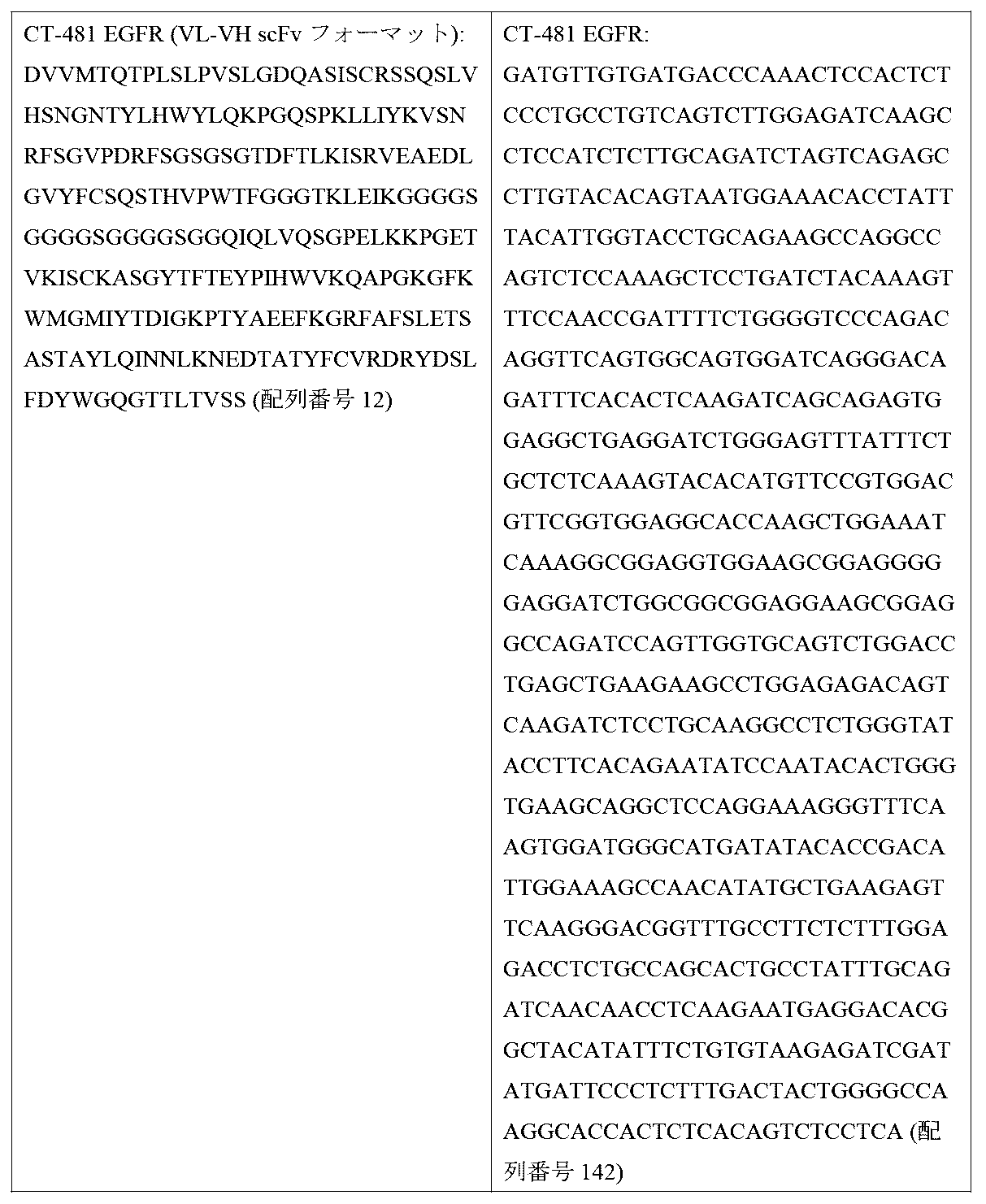


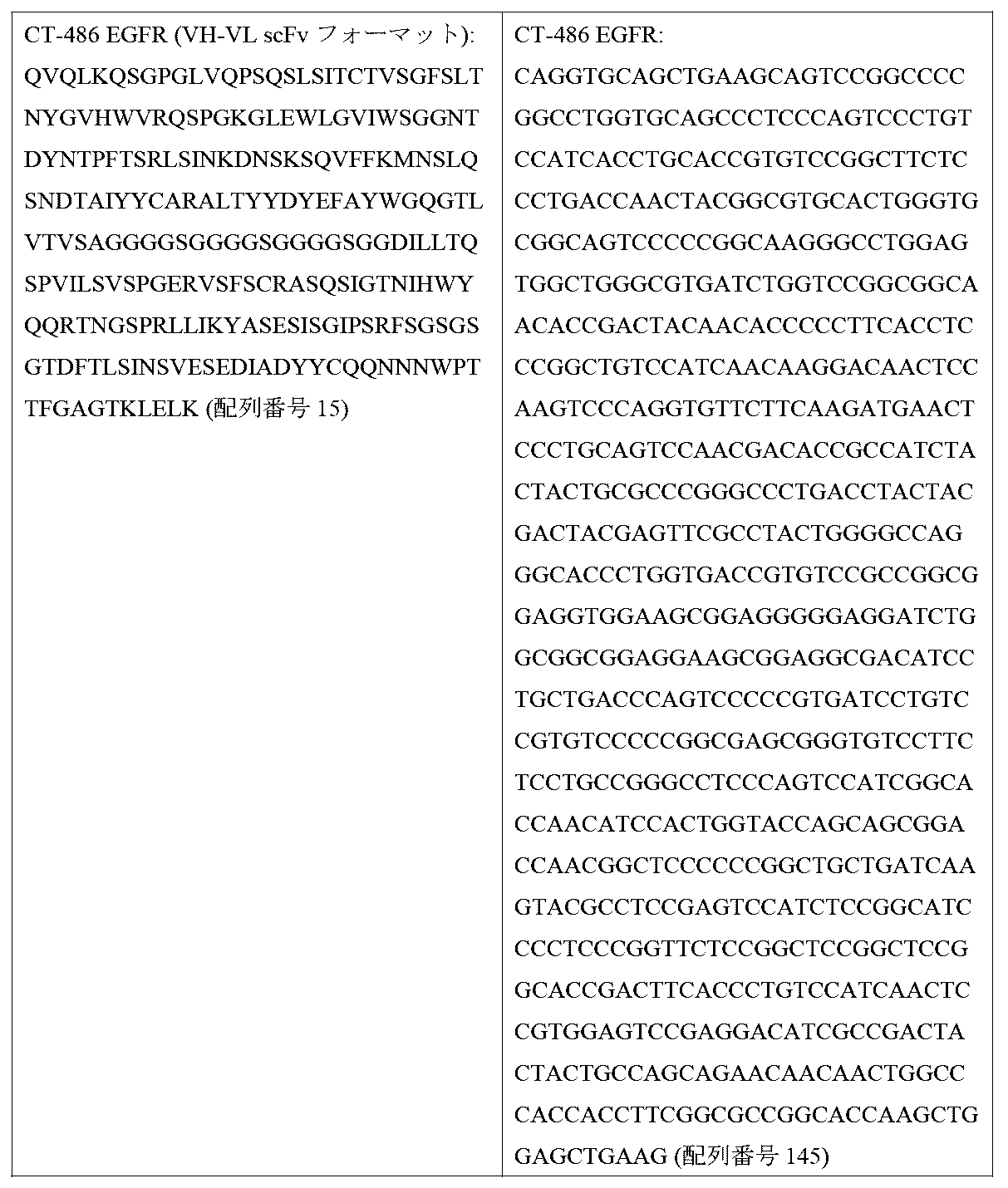
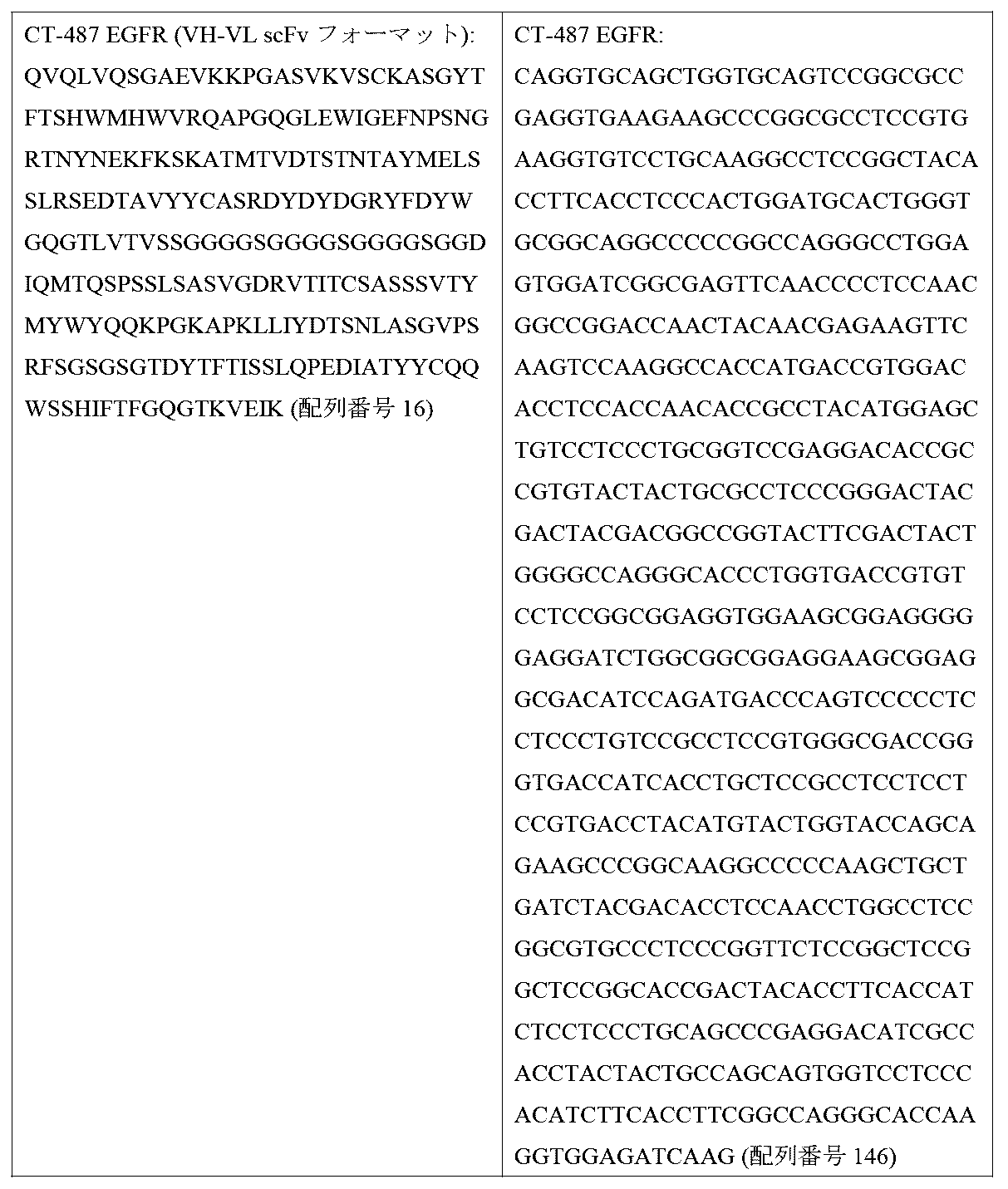
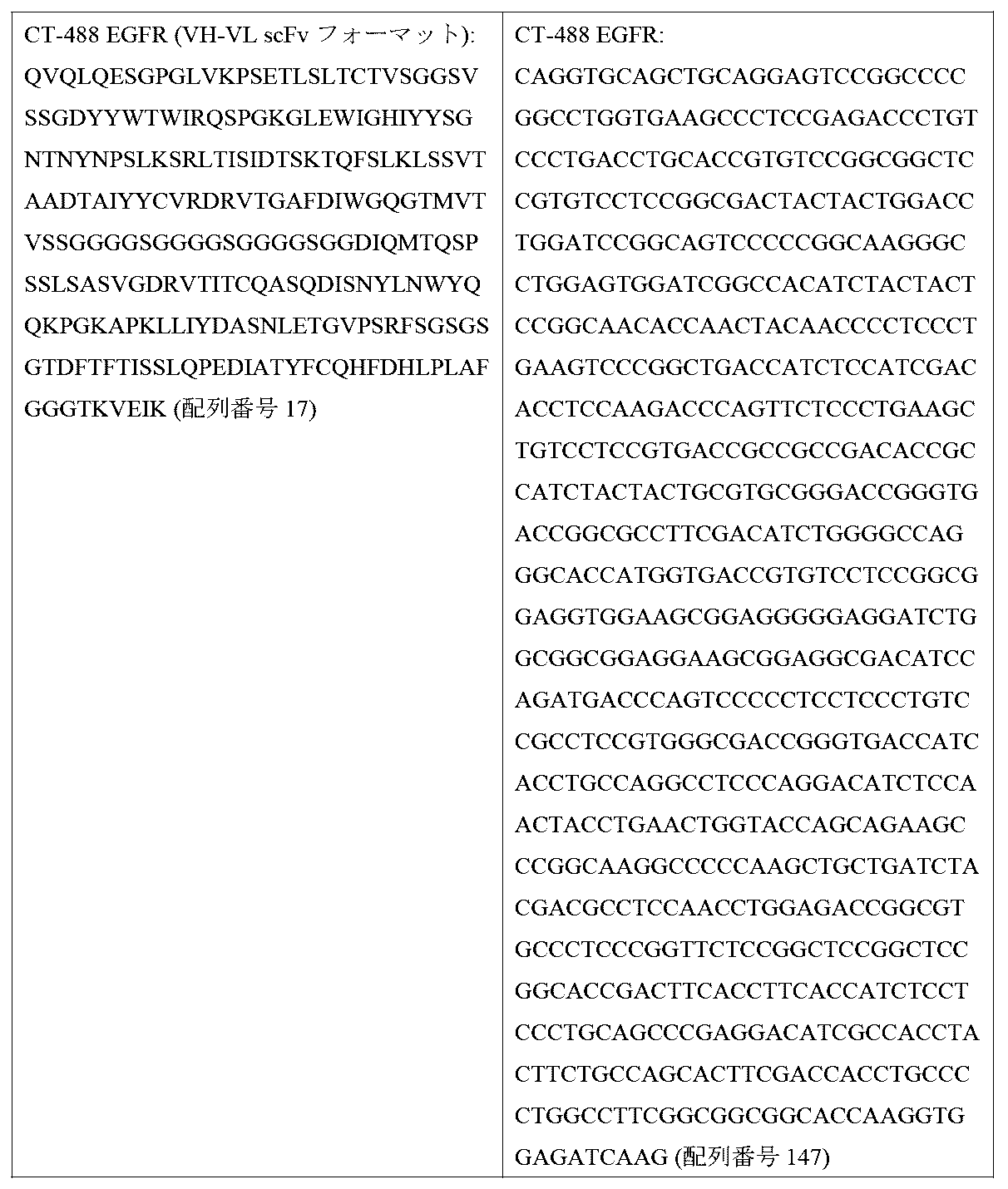

いくつかの実施形態において、活性化因子リガンドは、EGFR又はそのペプチド抗原であり、活性化因子リガンド結合ドメインは、EGFR結合ドメインを含む。いくつかの実施形態において、EGFRリガンド結合ドメインは、scFvドメインを含む。いくつかの実施形態において、EGFRリガンド結合ドメインは、配列番号9~18のいずれか1つの配列を含む。いくつかの実施形態において、EGFRリガンド結合ドメインは、配列番号9~18のいずれか1つと少なくとも90%、少なくとも95%、又は少なくとも99%同一の配列を含む。いくつかの実施形態において、EGFRリガンド結合ドメインは、表1の配列群から選択される配列によってコードされる。いくつかの実施形態において、EGFRリガンド結合ドメインは、表1の配列と少なくとも80%の同一性、少なくとも85%の同一性、少なくとも90%の同一性、少なくとも95%の同一性又は少なくとも99%の同一性を有する配列によってコードされる。EGFRに結合する本開示のscFvドメインは、EGFRの1つ以上のバリアントと交差反応することができることを理解されたい。例えば、scFvは、正常なEGFR、EGFRのバリアント、又は変異型EGFR(例えば、EGFRvIII)のうちの少なくとも1つに結合し得る。 In some embodiments, the activator ligand is EGFR or a peptide antigen thereof, and the activator ligand binding domain comprises an EGFR binding domain. In some embodiments, the EGFR ligand binding domain comprises an scFv domain. In some embodiments, the EGFR ligand binding domain comprises any one of SEQ ID NOs: 9-18. In some embodiments, the EGFR ligand binding domain comprises a sequence at least 90%, at least 95%, or at least 99% identical to any one of SEQ ID NOs: 9-18. In some embodiments, the EGFR ligand binding domain is encoded by a sequence selected from the group of sequences in Table 1. In some embodiments, the EGFR ligand binding domain is encoded by a sequence having at least 80% identity, at least 85% identity, at least 90% identity, at least 95% identity, or at least 99% identity to a sequence in Table 1. It should be understood that the scFv domains of the present disclosure that bind EGFR can cross-react with one or more variants of EGFR. For example, the scFv may bind to at least one of normal EGFR, a variant of EGFR, or a mutant EGFR (e.g., EGFRvIII).
いくつかの実施形態において、第1の受容体の細胞外リガンド結合ドメインは、配列番号9~18のうちのいずれか1つと少なくとも80%の同一性、少なくとも85%の同一性、少なくとも90%の同一性、少なくとも95%の同一性、少なくとも97%の同一性又は少なくとも99%の同一性を有するscFv抗原結合ドメインを含む。いくつかの実施形態において、第1の受容体の細胞外リガンド結合ドメインは、配列番号9~18のいずれか1つの配列を含むScFv抗原結合ドメインを含む。いくつかの実施形態において、第1の受容体の細胞外リガンド結合ドメインは、配列番号9~18からなる群から選択される配列から本質的になる。


いくつかの実施形態において、活性化因子リガンドは、EGFR又はそのペプチド抗原であり、活性化因子リガンド結合ドメインは、EGFRリガンド結合ドメインを含む。いくつかの実施形態において、EGFR結合ドメインは、表2に開示される群から選択されるVH及び/若しくはVLドメイン、又はそれと少なくとも90%の同一性、少なくとも95%の同一性、少なくとも97%の同一性若しくは少なくとも99%の同一性を有する配列を含む。いくつかの実施形態において、EGFRリガンド結合ドメインは、配列番号19~24からなる群から選択されるVHドメインを含む。いくつかの実施形態において、EGFRリガンド結合ドメインは、配列番号19~24からなる群から選択されるVH、又はそれと少なくとも90%、少なくとも95%、若しくは少なくとも99%の同一性を有する配列を含む。いくつかの実施形態において、EGFRリガンド結合ドメインは、配列番号25~30からなる群から選択されるVLドメインを含む。いくつかの実施形態において、EGFRリガンド結合ドメインは、配列番号25~30からなる群から選択されるVL、又はそれと少なくとも90%、少なくとも95%、若しくは少なくとも99%の同一性を有する配列を含む。

いくつかの実施形態において、活性化因子リガンドは、EGFR又はそのペプチド抗原であり、活性化因子リガンド結合ドメインは、EGFRリガンド結合ドメインである。いくつかの実施形態において、EGFR結合ドメインは、表3に開示されるCDRの群から選択される相補性決定領域(CDR)を含む。いくつかの実施形態において、EGFRリガンド結合ドメインは、表3に開示されるCDRと少なくとも95%の配列同一性を有するCDRを含む。いくつかの実施形態において、EGFRリガンド結合ドメインは、配列番号31~65から選択されるCDRを含む。いくつかの実施形態において、EGFRリガンド結合ドメインは、配列番号31~36からなる群から選択される重鎖CDR1(CDR H1)を含む。いくつかの実施形態において、EGFRリガンド結合ドメインは、配列番号37~42からなる群から選択される重鎖CDR2(CDR H2)を含む。いくつかの実施形態において、EGFRリガンド結合ドメインは、配列番号43~48からなる群から選択される重鎖CDR3(CDR H3)を含む。いくつかの実施形態において、EGFRリガンド結合ドメインは、配列番号49~54からなる群から選択される軽鎖CDR1(CDR L1)を含む。いくつかの実施形態において、EGFRリガンド結合ドメインは、配列番号55~59からなる群から選択される軽鎖CDR2(CDR L2)を含む。いくつかの実施形態において、EGFRリガンド結合ドメインは、配列番号60~65からなる群から選択される軽鎖CDR3(CDR L3)を含む。いくつかの実施形態において、EGFRリガンド結合ドメインは、配列番号31~36から選択されるCDR H1、配列番号37~42から選択されるCDR H2、配列番号43~48から選択されるCDR H3、配列番号49~54から選択されるCDR L1、配列番号55~59から選択されるCDR L2、及び配列番号60~65から選択されるCDR L3を含む。 In some embodiments, the activator ligand is EGFR or a peptide antigen thereof, and the activator ligand binding domain is an EGFR ligand binding domain. In some embodiments, the EGFR binding domain comprises a complementarity determining region (CDR) selected from the group of CDRs disclosed in Table 3. In some embodiments, the EGFR ligand binding domain comprises a CDR having at least 95% sequence identity with a CDR disclosed in Table 3. In some embodiments, the EGFR ligand binding domain comprises a CDR selected from SEQ ID NOs: 31-65. In some embodiments, the EGFR ligand binding domain comprises a heavy chain CDR1 (CDR H1) selected from the group consisting of SEQ ID NOs: 31-36. In some embodiments, the EGFR ligand binding domain comprises a heavy chain CDR2 (CDR H2) selected from the group consisting of SEQ ID NOs: 37-42. In some embodiments, the EGFR ligand binding domain comprises a heavy chain CDR3 (CDR H3) selected from the group consisting of SEQ ID NOs: 43-48. In some embodiments, the EGFR ligand binding domain comprises a light chain CDR1 (CDR L1) selected from the group consisting of SEQ ID NOs: 49-54. In some embodiments, the EGFR ligand binding domain comprises a light chain CDR2 (CDR L2) selected from the group consisting of SEQ ID NOs: 55-59. In some embodiments, the EGFR ligand binding domain comprises a light chain CDR3 (CDR L3) selected from the group consisting of SEQ ID NOs: 60-65. In some embodiments, the EGFR ligand binding domain comprises a CDR H1 selected from SEQ ID NOs: 31-36, a CDR H2 selected from SEQ ID NOs: 37-42, a CDR H3 selected from SEQ ID NOs: 43-48, a CDR L1 selected from SEQ ID NOs: 49-54, a CDR L2 selected from SEQ ID NOs: 55-59, and a CDR L3 selected from SEQ ID NOs: 60-65.
いくつかの実施形態において、本明細書に提供される抗原結合ドメインのCDR中の1つ以上(例えば、1、2、3、4、5、又は6個)のアミノ酸残基は、別のアミノ酸で置換される。置換は、アミノ酸の同じファミリー内の置換であるという意味で「保存的」であり得る。天然に存在するアミノ酸は、以下の4つのファミリーに分割され得、保存的置換はそれらのファミリー内で行われる。(1)塩基性側鎖を有するアミノ酸:リジン、アルギニン、ヒスチジン;(2)酸性側鎖を有するアミノ酸:アスパラギン酸、グルタミン酸;(3)非荷電極性側鎖を有するアミノ酸:アスパラギン、グルタミン、セリン、トレオニン、チロシン;及び(4)非極性側鎖を有するアミノ酸:グリシン、アラニン、バリン、ロイシン、イソロイシン、プロリン、フェニルアラニン、メチオニン、トリプトファン、システイン。抗体のCDRのアミノ酸配列を、アミノ酸の付加、欠失又は置換によって変化させることにより、標的抗原に対する結合親和性の増加などの様々な効果が得られ得る。 In some embodiments, one or more (e.g., 1, 2, 3, 4, 5, or 6) amino acid residues in the CDRs of the antigen-binding domains provided herein are replaced with another amino acid. The substitutions may be "conservative" in the sense that they are within the same family of amino acids. Naturally occurring amino acids may be divided into four families, and conservative substitutions are made within those families: (1) amino acids with basic side chains: lysine, arginine, histidine; (2) amino acids with acidic side chains: aspartic acid, glutamic acid; (3) amino acids with uncharged polar side chains: asparagine, glutamine, serine, threonine, tyrosine; and (4) amino acids with nonpolar side chains: glycine, alanine, valine, leucine, isoleucine, proline, phenylalanine, methionine, tryptophan, cysteine. The amino acid sequence of the CDRs of an antibody may be altered by adding, deleting, or substituting amino acids to achieve various effects, such as increasing the binding affinity for the target antigen.
キメラ抗原受容体(CAR)
本開示は、第1の活性化因子受容体、及びそれを含む免疫細胞を提供する。いくつかの実施形態において、第1の受容体は、キメラ抗原受容体である。
Chimeric Antigen Receptors (CARs)
The present disclosure provides a first activator receptor, and an immune cell comprising the same. In some embodiments, the first receptor is a chimeric antigen receptor.
いくつかの実施形態において、第1の受容体は、配列番号175、又はそれと少なくとも75%、少なくとも80%、少なくとも85%、少なくとも90%、少なくとも95%、若しくは少なくとも98%の同一性を共有する配列を含む。いくつかの実施形態において、第1の受容体は、配列番号176、又はそれと少なくとも75%、少なくとも80%、少なくとも85%、少なくとも90%、少なくとも95%、若しくは少なくとも98%の同一性を共有する配列を含む。いくつかの実施形態において、第1の受容体は、配列番号177、又はそれと少なくとも75%、少なくとも80%、少なくとも85%、少なくとも90%、少なくとも95%、若しくは少なくとも98%の同一性を共有する配列を含む。 In some embodiments, the first receptor comprises SEQ ID NO: 175, or a sequence that shares at least 75%, at least 80%, at least 85%, at least 90%, at least 95%, or at least 98% identity therewith. In some embodiments, the first receptor comprises SEQ ID NO: 176, or a sequence that shares at least 75%, at least 80%, at least 85%, at least 90%, at least 95%, or at least 98% identity therewith. In some embodiments, the first receptor comprises SEQ ID NO: 177, or a sequence that shares at least 75%, at least 80%, at least 85%, at least 90%, at least 95%, or at least 98% identity therewith.
本明細書で使用される場合、「キメラ抗原受容体(CAR)」という用語は、T細胞受容体に由来する人工受容体を指すことができ、特定の免疫エフェクター細胞に人工特異性を移植する操作された受容体を包含する。CARは、T細胞にモノクローナル抗体の特異性を付与するために利用されてもよく、それによって、例えば、養子細胞療法での使用のために、多数の特異的T細胞が生成されることが可能になる。特定の実施形態において、CARは、例えば、腫瘍関連抗原に対する細胞の特異性を指示する。例示的なCARは、細胞内活性化ドメイン、膜貫通ドメイン、及び腫瘍関連抗原結合領域を含む細胞外ドメインを含む。いくつかの実施形態において、CARは、ヒンジドメインを更に含む。特定の態様において、CARは、CD3膜貫通ドメイン及びエンドドメインに融合した、モノクローナル抗体に由来する一本鎖可変断片(scFv)の融合を含む。他のCAR設計の特異性は、受容体のリガンド(例えば、ペプチド)に由来し得る。ある特定の場合において、CARは、CD3、4-1BB、FcR、CD27、CD28、CD137、DAP10、及び/又はOX40などの追加の共刺激シグナル伝達のためのドメインを含む。ある場合には、分子は、共刺激分子、イメージングのためのレポーター遺伝子、プロドラッグの添加時にT細胞を条件付きで除去する遺伝子産物、ホーミング受容体、サイトカイン、及びサイトカイン受容体を含む、CARと同時発現され得る。 As used herein, the term "chimeric antigen receptor (CAR)" can refer to an artificial receptor derived from a T cell receptor, and encompasses engineered receptors that graft artificial specificity onto a particular immune effector cell. CARs may be utilized to confer the specificity of a monoclonal antibody to a T cell, thereby allowing large numbers of specific T cells to be generated, for example, for use in adoptive cell therapy. In certain embodiments, the CAR directs the specificity of the cell, for example, to a tumor-associated antigen. An exemplary CAR includes an intracellular activation domain, a transmembrane domain, and an extracellular domain that includes a tumor-associated antigen binding region. In some embodiments, the CAR further includes a hinge domain. In certain aspects, the CAR includes a fusion of a single-chain variable fragment (scFv) derived from a monoclonal antibody fused to a CD3 transmembrane domain and endodomain. The specificity of other CAR designs can be derived from the receptor's ligand (e.g., a peptide). In certain cases, the CAR contains domains for additional costimulatory signaling, such as CD3, 4-1BB, FcR, CD27, CD28, CD137, DAP10, and/or OX40. In some cases, molecules can be co-expressed with the CAR, including costimulatory molecules, reporter genes for imaging, gene products that conditionally eliminate T cells upon addition of a prodrug, homing receptors, cytokines, and cytokine receptors.
いくつかの実施形態において、第1の受容体の細胞外リガンド結合ドメインは、CARの細胞外ドメインに融合される。 In some embodiments, the extracellular ligand binding domain of the first receptor is fused to the extracellular domain of the CAR.
いくつかの実施形態において、本開示のCARは、細胞外ヒンジ領域を含む。ヒンジ領域の組み込みは、CAR-T細胞からのサイトカイン産生に影響を及ぼし、インビボでのCAR-T細胞の拡大を改善することができる。例示的なヒンジは、IgD及びCD8ドメイン、例えば、IgG1から単離又は誘導することができる。いくつかの実施形態において、ヒンジは、CD8α又はCD28から単離されるか、又は派生される。 In some embodiments, the CAR of the present disclosure includes an extracellular hinge region. Incorporation of the hinge region can affect cytokine production from CAR-T cells and improve expansion of CAR-T cells in vivo. Exemplary hinges can be isolated or derived from IgD and CD8 domains, e.g., IgG1. In some embodiments, the hinge is isolated or derived from CD8α or CD28.
いくつかの実施形態において、ヒンジは、CD8α又はCD28から単離されるか、又は派生される。いくつかの実施形態において、CD8αヒンジは、TTTPAPRPPTPAPTIASQPLSLRPEACRPAAGGAVHTRGLDFACD(配列番号66)の配列と少なくとも80%の同一性、少なくとも90%の同一性、少なくとも95%の同一性、少なくとも99%の同一性を有するか、又はそれと同一であるアミノ酸配列を含む。いくつかの実施形態において、CD8αヒンジは、配列番号66を含む。いくつかの実施形態において、CD8αヒンジは、配列番号66から本質的になる。いくつかの実施形態において、CD8αヒンジは、ACCACGACGCCAGCGCCGCGACCACCAACACCGGCGCCCACCATCGCGTCGCAGCCCCTGTCCCTGCGCCCAGAGGCGTGCCGGCCAGCGGCGGGGGGCGCAGTGCACACGAGGGGGCTGGACTTCGCCTGTGAT(配列番号67)の配列と少なくとも80%の同一性、少なくとも90%の同一性、少なくとも95%の同一性、少なくとも99%の同一性を有するか、又はそれと同一であるヌクレオチド配列によってコードされる。いくつかの実施形態において、CD8αヒンジは、配列番号67によってコードされる。 In some embodiments, the hinge is isolated or derived from CD8α or CD28. In some embodiments, the CD8α hinge comprises an amino acid sequence having at least 80% identity, at least 90% identity, at least 95% identity, at least 99% identity, or identical to the sequence of TTTPAPRPPTPAPTIA SQPLSLRPEACRPAAGGAVHTRGLDFACD (SEQ ID NO:66). In some embodiments, the CD8α hinge comprises SEQ ID NO:66. In some embodiments, the CD8α hinge consists essentially of SEQ ID NO:66. In some embodiments, the CD8α hinge is encoded by a nucleotide sequence that has at least 80% identity, at least 90% identity, at least 95% identity, at least 99% identity, or is identical to the sequence of ACCACGACGCCAGCGCCGCGCGACCACCAACACCGGCGCCACCATCGCGTCGCAGCCCCCTGTCCCTGCGCCCAGAGGCGTGCCGGCCAGCGGCGGGGGGCGCAGTGCACACGAGGGGGGCTGGACTTCGCCTGTGAT (SEQ ID NO:67). In some embodiments, the CD8α hinge is encoded by SEQ ID NO:67.
いくつかの実施形態において、CD28ヒンジは、CTIEVMYPPPYLDNEKSNGTIIHVKGKHLCPSPLFPGPSKP(配列番号68)の配列と少なくとも80%の同一性、少なくとも90%の同一性、少なくとも95%の同一性、少なくとも99%の同一性を有するか、又はそれと同一であるアミノ酸配列を含む。いくつかの実施形態において、CD28ヒンジは、配列番号68を含むか、又はそれから本質的になる。いくつかの実施形態において、CD28ヒンジは、TGTACCATTGAAGTTATGTATCCTCCTCCTTACCTAGACAATGAGAAGAGCAATGGAACCATTATCCATGTGAAAGGGAAACACCTTTGTCCAAGTCCCCTATTTCCCGGACCTTCTAAGCCC(配列番号69)の配列と少なくとも80%の同一性、少なくとも90%の同一性、少なくとも95%の同一性、少なくとも99%の同一性を有するか、又はそれと同一であるヌクレオチド配列によってコードされる。いくつかの実施形態において、CD28ヒンジは、配列番号69によってコードされる。 In some embodiments, the CD28 hinge comprises an amino acid sequence having at least 80% identity, at least 90% identity, at least 95% identity, at least 99% identity, or identical to the sequence of CTIEVMYPPPYLDNEKSNGTIIHVKGKHLCPSPLFGPSKP (SEQ ID NO:68). In some embodiments, the CD28 hinge comprises or consists essentially of SEQ ID NO:68. In some embodiments, the CD28 hinge is encoded by a nucleotide sequence that has at least 80% identity, at least 90% identity, at least 95% identity, at least 99% identity, or is identical to the sequence TGTACCATTGAAGTTATGTATCCTCCTCCTCCTTACCTAGACAATGAGAAGAGCAATGGAACCATTATCCATGTGAAAGGGAAACACCTTTGTCCAAGTCCCCTATTTCCCGGACCTTCTAAGCCC (SEQ ID NO:69). In some embodiments, the CD28 hinge is encoded by SEQ ID NO:69.
本開示のCARは、CARの細胞外ドメインに融合される膜貫通ドメインを含むように設計され得る。いくつかの実施形態において、CARにおけるドメインのうちの1つと自然に会合する膜貫通ドメインが使用される。例えば、CD28共刺激ドメインを含むCARはまた、CD28膜貫通ドメインを使用してもよい。いくつかの場合において、膜貫通ドメインは、同じ又は異なる表面膜タンパク質の膜貫通ドメインへのそのようなドメインの結合を避け、受容体複合体の他のメンバーとの相互作用を最小限に抑えるために、アミノ酸置換によって選択又は修飾され得る。 The CARs of the present disclosure may be designed to include a transmembrane domain fused to the extracellular domain of the CAR. In some embodiments, a transmembrane domain that naturally associates with one of the domains in the CAR is used. For example, a CAR that includes a CD28 costimulatory domain may also use a CD28 transmembrane domain. In some cases, the transmembrane domain may be selected or modified by amino acid substitution to avoid binding of such domains to transmembrane domains of the same or different surface membrane proteins and to minimize interactions with other members of the receptor complex.
膜貫通ドメインは、天然又は合成源のいずれかに由来し得る。供給源が天然である場合、ドメインは、任意の膜結合タンパク質又は膜貫通タンパク質に由来し得る。膜貫通領域は、T細胞受容体、CD28、CD3イプシロン、CD45、CD4、CD5、CD8、CD9、CD16、CD22、CD33、CD37、CD64、CD80、CD86、CD134、CD137、CD154のアルファ、ベータ、若しくはゼータ鎖、又はIgG4などの免疫グロブリンから単離されてもよいか、又はそれらに由来してもよい(すなわち、それらの少なくとも膜貫通領域を含む)。代替的に、膜貫通ドメインは合成であってもよく、その場合、ロイシン及びバリンなどの主に疎水性残基を含む。いくつかの実施形態において、フェニルアラニン、トリプトファン、及びバリンのトリプレットは、合成膜貫通ドメインの各末端に見出される。任意選択で、好ましくは2~10アミノ酸長の短いオリゴリンカー又はポリペプチドリンカーが、CARの膜貫通ドメインと細胞質シグナル伝達ドメインとの間に結合を形成してもよい。グリシン-セリンダブレットは、特に好適なリンカーを提供する。 The transmembrane domain may be derived from either natural or synthetic sources. If the source is natural, the domain may be derived from any membrane-bound or transmembrane protein. The transmembrane region may be isolated from or derived from (i.e., including at least the transmembrane region thereof) the alpha, beta, or zeta chain of the T-cell receptor, CD28, CD3 epsilon, CD45, CD4, CD5, CD8, CD9, CD16, CD22, CD33, CD37, CD64, CD80, CD86, CD134, CD137, CD154, or an immunoglobulin such as IgG4. Alternatively, the transmembrane domain may be synthetic, in which case it comprises primarily hydrophobic residues such as leucine and valine. In some embodiments, triplets of phenylalanine, tryptophan, and valine are found at each end of the synthetic transmembrane domain. Optionally, a short oligo- or polypeptide linker, preferably 2-10 amino acids in length, may form the link between the transmembrane domain and the cytoplasmic signaling domain of the CAR. A glycine-serine doublet provides a particularly suitable linker.
本開示のCARのいくつかの実施形態において、CARは、CD28膜貫通ドメインを含む。いくつかの実施形態において、CD28膜貫通ドメインは、FWVLVVVGGVLACYSLLVTVAFIIFWV(配列番号70)の配列と少なくとも80%の同一性、少なくとも90%の同一性、少なくとも95%の同一性、少なくとも99%の同一性を有するか、又はそれと同一であるアミノ酸配列を含む。いくつかの実施形態において、CD28膜貫通ドメインは、配列番号70を含むか、又はそれから本質的になる。いくつかの実施形態において、CD28膜貫通ドメインは、TTCTGGGTGCTGGTCGTTGTGGGCGGCGTGCTGGCCTGCTACAGCCTGCTGGTGACAGTGGCCTTCATCATCTTTTGGGTG(配列番号71)の配列と少なくとも80%の同一性、少なくとも90%の同一性、少なくとも95%の同一性、少なくとも99%の同一性を有するか、又はそれと同一であるヌクレオチド配列によってコードされる。いくつかの実施形態において、CD28膜貫通ドメインは、配列番号71によってコードされる。 In some embodiments of the CAR of the present disclosure, the CAR comprises a CD28 transmembrane domain. In some embodiments, the CD28 transmembrane domain comprises an amino acid sequence having at least 80% identity, at least 90% identity, at least 95% identity, at least 99% identity, or is identical to the sequence of FWVLVVVGGVLACYSLLVTVAFIIFWV (SEQ ID NO: 70). In some embodiments, the CD28 transmembrane domain comprises or consists essentially of SEQ ID NO: 70. In some embodiments, the CD28 transmembrane domain is encoded by a nucleotide sequence having at least 80% identity, at least 90% identity, at least 95% identity, at least 99% identity, or identical to the sequence of TTCTGGGTGCTGGTCGTTGTGGGCGGGCGTGCTGGCCTGCTACAGCCTGCTGGTGACAGTGGCCTTCATCATCTTTTGGGTG (SEQ ID NO: 71). In some embodiments, the CD28 transmembrane domain is encoded by SEQ ID NO: 71.
本開示のCARのいくつかの実施形態において、CARは、IL-2Rベータ膜貫通ドメインを含む。いくつかの実施形態において、IL-2Rベータ膜貫通ドメインは、IPWLGHLLVGLSGAFGFIILVYLLI(配列番号72)の配列と少なくとも80%の同一性、少なくとも90%の同一性、少なくとも95%の同一性、少なくとも99%の同一性を有するか、又はそれと同一であるアミノ酸配列を含む。いくつかの実施形態において、IL-2Rベータ膜貫通ドメインは、配列番号72を含むか、又はそれから本質的になる。いくつかの実施形態において、IL-2Rベータ膜貫通ドメインは、
本開示のCARの細胞質ドメイン、又はそうでなければ、細胞内シグナル伝達ドメインは、CARが配置されている免疫細胞の正常なエフェクター機能のうちの少なくとも1つの活性化を担う。「エフェクター機能」という用語は、細胞の特殊化された機能を指す。したがって、「細胞内シグナル伝達ドメイン」という用語は、エフェクター機能シグナルを形質導入し、細胞に特殊化された機能を実行させるタンパク質の部分を指す。通常、細胞内シグナル伝達ドメイン全体を利用することができるが、多くの場合、ドメイン全体を使用する必要はない。細胞内シグナル伝達ドメインの切断部分が使用される範囲で、そのような切断部分は、エフェクター機能シグナルを形質導入する限り、インタクトな鎖の代わりに使用されてもよい。ある場合には、複数の細胞内ドメインを組み合わせて、本開示のCAR-T細胞の所望の機能を達成することができる。したがって、細胞内シグナル伝達ドメインという用語は、エフェクター機能シグナルを形質導入するのに十分な1つ以上の細胞内シグナル伝達ドメインの任意の切断部分を含むことを意味する。 The cytoplasmic domain, or otherwise, intracellular signaling domain, of the CAR of the present disclosure is responsible for activating at least one of the normal effector functions of the immune cell in which the CAR is placed. The term "effector function" refers to a specialized function of a cell. Thus, the term "intracellular signaling domain" refers to a portion of a protein that transduces an effector function signal and causes the cell to perform a specialized function. Typically, the entire intracellular signaling domain can be utilized, but in many cases it is not necessary to use the entire domain. To the extent that a truncated portion of an intracellular signaling domain is used, such a truncated portion may be used in place of an intact chain, so long as it transduces an effector function signal. In some cases, multiple intracellular domains can be combined to achieve the desired function of the CAR-T cell of the present disclosure. Thus, the term intracellular signaling domain is meant to include any truncated portion of one or more intracellular signaling domains sufficient to transduce an effector function signal.
本開示のCARにおいて使用するための細胞内シグナル伝達ドメインの例としては、T細胞受容体(TCR)の細胞質配列、及び抗原受容体関与後のシグナル伝達を開始するために協調的に作用する共受容体、並びにこれらの配列の任意の誘導体又はバリアント、及び同じ機能的能力を有する任意の合成配列が挙げられる。 Examples of intracellular signaling domains for use in the CARs of the present disclosure include the cytoplasmic sequences of T cell receptors (TCRs) and co-receptors that act in concert to initiate signal transduction following antigen receptor engagement, as well as any derivatives or variants of these sequences, and any synthetic sequences having the same functional capabilities.
したがって、本開示のCARの細胞内ドメインは、少なくとも1つの細胞質活性化ドメインを含む。いくつかの実施形態において、細胞内活性化ドメインは、CAR T細胞のエフェクター機能を活性化するのに必要なT細胞受容体(TCR)シグナル伝達が存在することを確実にする。いくつかの実施形態において、少なくとも1つの細胞質活性化は、CD247分子(CD3ζ)活性化ドメイン、刺激性キラー免疫グロブリン様受容体(KIR)KIR2DS2活性化ドメイン、又は12kDa(DAP12)活性化ドメインのDNAX活性化タンパク質である。 Thus, the intracellular domain of the CAR of the present disclosure comprises at least one cytoplasmic activation domain. In some embodiments, the intracellular activation domain ensures that the necessary T cell receptor (TCR) signaling is present to activate the effector function of the CAR T cell. In some embodiments, the at least one cytoplasmic activation domain is a CD247 molecule (CD3ζ) activation domain, a stimulatory killer immunoglobulin-like receptor (KIR) KIR2DS2 activation domain, or a DNAX activation protein of 12 kDa (DAP12) activation domain.
いくつかの実施形態において、CD3ζ活性化ドメインは、RVKFSRSADAPAYKQGQNQLYNELNLGRREEYDVLDKRRGRDPEMGGKPRRKNPQEGLYNELQKDKMAEAYSEIGMKGERRRGKGHDGLYQGLSTATKDTYDALHMQALPPR(配列番号74)の配列と少なくとも80%の同一性、少なくとも90%の同一性、少なくとも95%の同一性、少なくとも99%の同一性を有するか、又はそれと同一であるアミノ酸配列を含む。いくつかの実施形態において、CD3ζ活性化ドメインは、配列番号74を含むか、又はそれから本質的になる。いくつかの実施形態において、CD3ζ活性化ドメインは、AGAGTGAAGTTCAGCAGGAGCGCAGACGCCCCCGCGTACAAGCAGGGCCAGAACCAGCTCTATAACGAGCTCAATCTAGGACGAAGAGAGGAGTACGATGTTTTGGACAAGCGTAGAGGCCGGGACCCTGAGATGGGGGGAAAGCCGAGAAGGAAGAACCCTCAGGAAGGCCTGTACAATGAACTGCAGAAAGATAAGATGGCGGAGGCCTACAGTGAGATTGGGATGAAAGGCGAGCGCCGGAGGGGCAAGGGGCACGATGGCCTTTACCAGGGACTCAGTACAGCCACCAAGGACACCTACGACGCCCTTCACATGCAGGCCCTGCCCCCTCGC(配列番号75)の配列と少なくとも80%の同一性、少なくとも90%の同一性、少なくとも95%の同一性、少なくとも99%の同一性を有するか、又はそれと同一であるヌクレオチド配列によってコードされる。いくつかの実施形態において、CD3ζ活性化ドメインは、配列番号75によってコードされる。 In some embodiments, the CD3ζ activation domain comprises an amino acid sequence having at least 80% identity, at least 90% identity, at least 95% identity, at least 99% identity, or identical to the sequence of RVKFSRSADAPAYKQGQNQLYNELNLGRREEYDVLDKRRGRDPEMGGKPRRKNPQEGLYNELQKDKMAEAYSEIGMKGERRRGKGHDGLYQGLSTATKDTYDALHMQALPPR (SEQ ID NO:74). In some embodiments, the CD3ζ activation domain comprises or consists essentially of SEQ ID NO:74. In some embodiments, the CD3ζ activation domain is AGAGTGAAGTTCAGCAGGAGCGCAGACGCCCCCGCGTACAAGCAGGGGCCAGAACCAGCTCTATAACGAGCTCAATCTAGGACGAAGAGAGGAGTACGATGTTTTGGACAAGCGTAGAGGCCGGGACCCTGAGATGGGGGGGAAAGCCGAGAAGGAAGAACCCTCAGGAAGGCCTGTACAATGAACTGCAGAAAGATAAGATGG The CD3ζ activation domain is encoded by a nucleotide sequence having at least 80% identity, at least 90% identity, at least 95% identity, at least 99% identity, or identical to the sequence of GGAGGCCTACAGTGAGATTGGGATGAAAGGCGAGCGCCGGAGGGGCAAGGGGCACGATGGCCTTTACCAGGGACTCAGTACAGCCACCAAGGACACCTACGACGCCCTTCACATGCAGGCCCTGCCCCCCTCGC (SEQ ID NO: 75). In some embodiments, the CD3ζ activation domain is encoded by SEQ ID NO: 75.
TCRのみを通じて生成されるシグナルは、多くの場合、T細胞の完全な活性化には不十分であり、二次又は共刺激シグナルもまた必要であることが知られている。したがって、T細胞活性化は、2つの異なるクラスの細胞質シグナル伝達配列である、TCRを介して抗原依存性の一次活性化を開始するもの(一次細胞質シグナル伝達配列)、及び二次又は共刺激シグナルを提供するために抗原非依存的に作用するもの(二次細胞質シグナル伝達配列)によって媒介されると言うことができる。 It is known that signals generated solely through the TCR are often insufficient for full activation of T cells, and that secondary or costimulatory signals are also required. Thus, T cell activation can be said to be mediated by two distinct classes of cytoplasmic signaling sequences: those that initiate antigen-dependent primary activation via the TCR (primary cytoplasmic signaling sequences), and those that act antigen-independently to provide secondary or costimulatory signals (secondary cytoplasmic signaling sequences).
一次細胞質シグナル伝達配列は、刺激的な方式、又は抑制的な方式のいずれかでTCR複合体の一次活性化を調節する。刺激的な様式で作用する一次細胞質シグナル配列は、免疫受容体チロシンベースの活性化モチーフ又はITAMとして知られているシグナル伝達モチーフを含有し得る。いくつかの実施形態において、ITAMは、任意の2つの他のアミノ酸(YxxL/I)(配列番号157)によってロイシン又はイソロイシンから分離されたチロシンを含有する。いくつかの実施形態において、細胞質ドメインは、1、2、3、4、又は5個のITAMを含有する。例示的なITAM含有細胞質ドメインは、CD3ζ活性化ドメインである。本開示のCARに使用され得る一次細胞質シグナル伝達配列を含有するITAMの更なる例としては、TCRζ、FcRγ、FcRβ、CD3γ、CD3δ、CD3ε、CD3ζ、CD5、CD22、CD79a、CD79b、及びCD66dに由来するものが挙げられる。 Primary cytoplasmic signaling sequences regulate the primary activation of the TCR complex in either a stimulatory or inhibitory manner. Primary cytoplasmic signaling sequences that act in a stimulatory manner may contain a signaling motif known as an immunoreceptor tyrosine-based activation motif or ITAM. In some embodiments, the ITAM contains a tyrosine separated from a leucine or isoleucine by any two other amino acids (YxxL/I) (SEQ ID NO: 157). In some embodiments, the cytoplasmic domain contains 1, 2, 3, 4, or 5 ITAMs. An exemplary ITAM-containing cytoplasmic domain is the CD3ζ activation domain. Further examples of ITAM-containing primary cytoplasmic signaling sequences that may be used in the CARs of the present disclosure include those derived from TCRζ, FcRγ, FcRβ, CD3γ, CD3δ, CD3ε, CD3ζ, CD5, CD22, CD79a, CD79b, and CD66d.
いくつかの実施形態において、単一のITAMを含むCD3ζ活性化ドメインは、RVKFSRSADAPAYQQGQNQLYNELNLGRREEYDVLHMQALPPR(配列番号76)の配列と少なくとも80%の同一性、少なくとも90%の同一性、少なくとも95%の同一性、少なくとも99%の同一性を有するか、又はそれと同一であるアミノ酸配列を含む。いくつかの実施形態において、CD3ζ活性化ドメインは、配列番号76を含む。いくつかの実施形態において、単一のITAMを含むCD3ζ活性化ドメインは、RVKFSRSADAPAYQQGQNQLYNELNLGRREEYDVLHMQALPPR(配列番号76)のアミノ酸配列から本質的になる。いくつかの実施形態において、単一のITAMを含むCD3ζ活性化ドメインは、
いくつかの実施形態において、CARの細胞質ドメインは、それ自体でCD3ζシグナル伝達ドメインを含むか、又は本開示のCARの文脈において有用な任意の他の所望の細胞質ドメインと組み合わせるように設計され得る。例えば、CARの細胞質ドメインは、CD3ζ鎖部分及び共刺激ドメインを含むことができる。共刺激ドメインとは、共刺激分子の細胞内ドメインを含むCARの一部分を指す。共刺激分子は、抗原に対するリンパ球の効率的な応答に必要とされる、抗原受容体又はそのリガンド以外の細胞表面分子である。そのような分子の例としては、共刺激ドメインが挙げられ、その共刺激ドメインは、IL-2Rβ、Fc受容体ガンマ(FcRγ)、Fc受容体ベータ(FcRβ)、CD3g分子ガンマ(CD3γ)、CD3δ、CD3ε、CD5分子(CD5)、CD22分子(CD22)、CD79a分子(CD79a)、CD79b分子(CD79b)、がん胎児抗原関連細胞接着分子3(CD66d)、CD27分子(CD27)、CD28分子(CD28)、TNF受容体スーパーファミリーメンバー9(4-1BB)、TNF受容体スーパーファミリーメンバー4(OX40)、TNF受容体スーパーファミリーメンバー8(CD30)、CD40分子(CD40)、プログラム細胞死1(PD-1)、誘導性T細胞共刺激(ICOS)、リンパ球機能関連抗原-1(LFA-1)、CD2分子(CD2)、CD7分子(CD7)、TNFスーパーファミリーメンバー14(LIGHT)、キラー細胞レクチン様受容体C2(NKG2C)、及びCD276分子(B7-H3)c-刺激ドメイン、又はそれらの機能的断片からなる群から選択される。いくつかの実施形態において、本開示のCARの細胞内ドメインは、少なくとも1つの共刺激ドメインを含む。いくつかの実施形態において、共刺激ドメインは、CD28から単離されるか、又は派生される。 In some embodiments, the cytoplasmic domain of the CAR can be designed to include a CD3ζ signaling domain by itself or in combination with any other desired cytoplasmic domain useful in the context of the CARs of the present disclosure. For example, the cytoplasmic domain of the CAR can include a CD3ζ chain portion and a costimulatory domain. A costimulatory domain refers to a portion of the CAR that includes the intracellular domain of a costimulatory molecule. A costimulatory molecule is a cell surface molecule, other than an antigen receptor or its ligand, that is required for an efficient response of lymphocytes to an antigen. Examples of such molecules include costimulatory domains, which may be IL-2Rβ, Fc receptor gamma (FcRγ), Fc receptor beta (FcRβ), CD3g molecule gamma (CD3γ), CD3δ, CD3ε, CD5 molecule (CD5), CD22 molecule (CD22), CD79a molecule (CD79a), CD79b molecule (CD79b), carcinoembryonic antigen-related cell adhesion molecule 3 (CD66d), CD27 molecule (CD27), CD28 molecule (CD28), TNF receptor superfamily member 9 (4-1BB), TNFα receptor superfamily member 1 (TNFα), TNFα receptor superfamily member 2 (TNFα), TNFα receptor superfamily member 3 (TNFα), TNFα receptor superfamily member 4 (TNFα), TNFα receptor superfamily member 5 (TNFα), TNFα receptor superfamily member 6 (TNFα), TNFα receptor superfamily member 7 (TNFα), TNFα receptor superfamily member 8 (TNFα), TNFα receptor superfamily member 9 (TNFα), TNFα receptor superfamily member 1 (TNFα), TNFα receptor superfamily member 1 (TNFα), TNFα receptor superfamily member 2 (TNFα), TNFα receptor superfamily member 1 (TNFα), TNFα receptor superfamily member 2 (TNFα), TNFα receptor superfamily member 3 (TNFα), TNFα receptor superfamily member 4 (TNFα), TNFα receptor superfamily member 5 ... The intracellular domain of the CAR of the present disclosure is selected from the group consisting of receptor superfamily member 4 (OX40), TNF receptor superfamily member 8 (CD30), CD40 molecule (CD40), programmed cell death 1 (PD-1), inducible T cell costimulatory (ICOS), lymphocyte function associated antigen-1 (LFA-1), CD2 molecule (CD2), CD7 molecule (CD7), TNF superfamily member 14 (LIGHT), killer cell lectin-like receptor C2 (NKG2C), and CD276 molecule (B7-H3) c-stimulatory domain, or a functional fragment thereof. In some embodiments, the intracellular domain of the CAR of the present disclosure comprises at least one costimulatory domain. In some embodiments, the costimulatory domain is isolated or derived from CD28.
いくつかの実施形態において、本開示のCARの細胞内ドメインは、少なくとも1つの共刺激ドメインを含む。いくつかの実施形態において、共刺激ドメインは、CD28から単離されるか、又は派生される。いくつかの実施形態において、CD28共刺激ドメインは、RSKRSRLLHSDYMNMTPRRPGPTRKHYQPYAPPRDFAAYRS(配列番号78)の配列と少なくとも80%の同一性、少なくとも90%の同一性、少なくとも95%の同一性、少なくとも99%の同一性を有するか、又はそれと同一であるアミノ酸配列を含む。いくつかの実施形態において、CD28共刺激ドメインは、配列番号78を含むか、又はそれから本質的になる。いくつかの実施形態において、CD28共刺激ドメインは、AGGAGCAAGCGGAGCAGACTGCTGCACAGCGACTACATGAACATGACCCCCCGGAGGCCTGGCCCCACCCGGAAGCACTACCAGCCCTACGCCCCTCCCAGGGATTTCGCCGCCTACCGGAGC(配列番号79)の配列と少なくとも80%の同一性、少なくとも90%の同一性、少なくとも95%の同一性、少なくとも99%の同一性を有するか、又はそれと同一であるヌクレオチド配列によってコードされる。いくつかの実施形態において、CD28共刺激ドメインは、配列番号79によってコードされる。本開示のCARの細胞質シグナル伝達部分内の細胞質ドメインは、ランダム又は指定された順序で互いに連結され得る。任意選択で、例えば、2~10アミノ酸長の短いオリゴリンカー又はポリペプチドリンカーが、連結を形成してもよい。グリシン-セリンダブレットは、好適なリンカーの一例を提供する。 In some embodiments, the intracellular domain of a CAR of the present disclosure comprises at least one costimulatory domain. In some embodiments, the costimulatory domain is isolated or derived from CD28. In some embodiments, the CD28 costimulatory domain comprises an amino acid sequence having at least 80% identity, at least 90% identity, at least 95% identity, at least 99% identity, or identical to the sequence of RSKRSRLLHSDYMNMTPRRPGPTRKHYQPYAPPRDFAAYRS (SEQ ID NO:78). In some embodiments, the CD28 costimulatory domain comprises or consists essentially of SEQ ID NO:78. In some embodiments, the CD28 costimulatory domain is encoded by a nucleotide sequence having at least 80% identity, at least 90% identity, at least 95% identity, at least 99% identity, or identical to the sequence of AGGAGCAAGCGGAGCAGACTGCTGCACAGCGACTACATGAACATGACCCCCCCGGAGGCCTGGCCCCCACCCGGAAGCACTACCAGCCCTACGCCCCTCCCAGGGATTTCGCCGCCTACGGAGC (SEQ ID NO: 79). In some embodiments, the CD28 costimulatory domain is encoded by SEQ ID NO: 79. The cytoplasmic domains within the cytoplasmic signaling portion of the CAR of the present disclosure may be linked to each other in a random or specified order. Optionally, a short oligo- or polypeptide linker, for example, 2-10 amino acids in length, may form the linkage. A glycine-serine doublet provides an example of a suitable linker.
いくつかの実施形態において、共刺激ドメインは、4-1BBから単離されるか、又は派生される。いくつかの実施形態において、4-1BB共刺激ドメインは、KRGRKKLLYIFKQPFMRPVQTTQEEDGCSCRFPEEEEGGCEL(配列番号159)の配列と少なくとも80%の同一性、少なくとも90%の同一性、少なくとも95%の同一性、少なくとも99%の同一性を有するか、又はそれと同一であるアミノ酸配列を含む。いくつかの実施形態において、4-1BB共刺激ドメインは、KRGRKKLLYIFKQPFMRPVQTTQEEDGCSCRFPEEEEGGCEL(配列番号159)を含むか、又はそれから本質的になる。いくつかの実施形態において、4-1BB共刺激ドメインは、aaacggggcagaaagaaactcctgtatatattcaaacaaccatttatgaggccagtacaaactactcaagaggaagatggctgtagctgccgatttccagaagaagaagaaggaggatgtgaactg(配列番号160)の配列と少なくとも80%の同一性、少なくとも90%の同一性、少なくとも95%の同一性、少なくとも99%の同一性を有するか、又はそれと同一であるヌクレオチド配列によってコードされる。 In some embodiments, the costimulatory domain is isolated or derived from 4-1BB. In some embodiments, the 4-1BB costimulatory domain comprises an amino acid sequence having at least 80% identity, at least 90% identity, at least 95% identity, at least 99% identity, or identical to the sequence of KRGRKKLLYIFKQPFMRPVQTTQEEDGCSCRFPEEEEGGCEL (SEQ ID NO: 159). In some embodiments, the 4-1BB costimulatory domain comprises or consists essentially of KRGRKKLLYIFKQPFMRPVQTTQEEDGCSCRFPEEEEGGCEL (SEQ ID NO: 159). In some embodiments, the 4-1BB costimulatory domain is encoded by a nucleotide sequence that has at least 80% identity, at least 90% identity, at least 95% identity, at least 99% identity, or is identical to the sequence of aaacggggcagaaagaaactcctgtatattattcaaacacaccatttatgaggccagtacaaactactcaagaggaagatggctgtagctgccgatttccagaagaagaagaagaaggagggatgtgaactg (SEQ ID NO: 160).
いくつかの実施形態において、CARの細胞内ドメインは、CD28共刺激ドメイン、4-1BB共刺激ドメイン、及びCD3ζ活性化ドメインを含む。いくつかの実施形態において、CARの細胞内ドメインは、RSKRSRLLHSDYMNMTPRRPGPTRKHYQPYAPPRDFAAYRSKRGRKKLLYIFKQPFMRPVQTTQEEDGCSCRFPEEEEGGCELRVKFSRSADAPAYKQGQNQLYNELNLGRREEYDVLDKRRGRDPEMGGKPRRKNPQEGLYNELQKDKMAEAYSEIGMKGERRRGKGHDGLYQGLSTATKDTYDALHMQALPPR(配列番号158)の配列、又はそれと少なくとも80%の同一性、少なくとも90%の同一性、少なくとも95%の同一性、少なくとも99%の同一性を有する配列を含む。 In some embodiments, the intracellular domain of the CAR comprises a CD28 costimulatory domain, a 4-1BB costimulatory domain, and a CD3ζ activation domain. In some embodiments, the intracellular domain of the CAR comprises a sequence of RSKRSRLLHSDYMNMTPRRPGPTRKHYQPYAPPRDFAAYRSKRGRKKLLYIFKQPFMRPVQTTQEEDGCSCRFPEEEEGGCELRVKFSRSADAPAYKQGQNQLYNELNLGRREEYDVLDKRRGRDPEMGGKPRRKNPQEGLYNELQKDKMAEAYSEIGMKGERRRGKGHDGLYQGLSTATKDTYDALHMQALPPR (SEQ ID NO: 158), or a sequence having at least 80% identity, at least 90% identity, at least 95% identity, or at least 99% identity thereto.
本開示のCARの細胞質シグナル伝達部分内の細胞質ドメインは、ランダム又は指定された順序で互いに連結され得る。任意選択で、例えば、2~10アミノ酸長の短いオリゴリンカー又はポリペプチドリンカーが、連結を形成してもよい。グリシン-セリンダブレットは、好適なリンカーの一例を提供する。例示的なリンカーは、GGGGSGGGGSGGGGSGG(配列番号136)の配列を含む。 The cytoplasmic domains within the cytoplasmic signaling portion of the CAR of the present disclosure may be linked to each other in a random or specified order. Optionally, a short oligo- or polypeptide linker, e.g., 2-10 amino acids in length, may form the linkage. A glycine-serine doublet provides one example of a suitable linker. An exemplary linker comprises the sequence GGGGSGGGGGSGGGGSGG (SEQ ID NO: 136).
本開示のCARの細胞質シグナル伝達部分内の細胞質ドメインは、ランダム又は指定された順序で互いに連結され得る。任意選択で、例えば、2~10アミノ酸長の短いオリゴリンカー又はポリペプチドリンカーが、連結を形成してもよい。グリシン-セリンダブレットは、好適なリンカーの一例を提供する。 The cytoplasmic domains within the cytoplasmic signaling portion of the CAR of the present disclosure may be linked to each other in a random or specified order. Optionally, a short oligo- or polypeptide linker, e.g., 2-10 amino acids in length, may form the linkage. A glycine-serine doublet provides an example of a suitable linker.
T細胞受容体(TCR)
本開示は、第1の活性化因子受容体、及びそれを含む免疫細胞を提供する。いくつかの実施形態において、第1の受容体は、T細胞受容体(TCR)である。
T cell receptor (TCR)
The present disclosure provides a first activator receptor, and an immune cell comprising the same. In some embodiments, the first receptor is a T cell receptor (TCR).
本開示で使用するための細胞内ドメインを含む例示的なTCRは、2020年9月6日に出願されたPCT/US2020/045250に記載されており、その内容は参照により本明細書に組み込まれる。 Exemplary TCRs including intracellular domains for use in the present disclosure are described in PCT/US2020/045250, filed September 6, 2020, the contents of which are incorporated herein by reference.
本明細書で使用される場合、「TCR複合体」又は「TCR/CD3複合体」と呼ばれることもある「TCR」は、サブユニットと称されることもある、TCRアルファ鎖、TCRベータ鎖、及びインバリアントCD3鎖(ゼータ、ガンマ、デルタ、及びイプシロン)のうちの1つ以上を含むタンパク質複合体を指す。TCRアルファ鎖及びベータ鎖は、ペプチド-MHC複合体に結合するヘテロ二量体として機能するようにジスルフィド結合され得る。TCRアルファ/ベータヘテロ二量体がペプチド-MHCに関与すると、関連するインバリアントCD3サブユニット内のTCR複合体における立体構造変化が誘導され、これが、それらのリン酸化及び下流タンパク質との会合をもたらし、それによって一次刺激シグナルを形質導入する。例示的なTCR複合体では、TCRアルファ及びTCRベータポリペプチドは、ヘテロ二量体を形成し、CD3イプシロン及びCD3デルタは、ヘテロ二量体を形成し、ヘテロ二量体のためのCD3イプシロン及びCD3ガンマ、並びに2つのCD3ゼータは、ホモ二量体を形成する。 As used herein, "TCR," sometimes referred to as "TCR complex" or "TCR/CD3 complex," refers to a protein complex that includes one or more of the TCR alpha, TCR beta, and invariant CD3 chains (zeta, gamma, delta, and epsilon), sometimes referred to as subunits. The TCR alpha and beta chains may be disulfide-linked to function as a heterodimer that binds to peptide-MHC complexes. Engagement of the TCR alpha/beta heterodimer with peptide-MHC induces a conformational change in the TCR complex within the associated invariant CD3 subunit that results in their phosphorylation and association with downstream proteins, thereby transducing the primary stimulatory signal. In an exemplary TCR complex, TCR alpha and TCR beta polypeptides form a heterodimer, CD3 epsilon and CD3 delta form a heterodimer, CD3 epsilon and CD3 gamma for the heterodimer, and two CD3 zetas form homodimers.
任意の好適なリガンド結合ドメインは、本明細書に記載のTCRの細胞外ドメイン、ヒンジドメイン又は膜貫通に融合され得る。例えば、リガンド結合ドメインは、抗体若しくはTCRの抗原結合ドメインであってもよく、又は抗体断片、Vβのみのドメイン、直鎖抗体、一本鎖可変断片(scFv)、若しくは単一ドメイン抗体(sdAb)を含んでもよい。 Any suitable ligand binding domain may be fused to the extracellular domain, hinge domain, or transmembrane domain of a TCR described herein. For example, the ligand binding domain may be an antibody or an antigen binding domain of a TCR, or may include an antibody fragment, a Vβ-only domain, a linear antibody, a single chain variable fragment (scFv), or a single domain antibody (sdAb).
いくつかの実施形態において、リガンド結合ドメインは、1つ以上のTCRサブユニットの1つ以上の細胞外ドメイン又は膜貫通ドメインに融合される。TCRサブユニットは、TCRアルファ、TCRベータ、CD3デルタ、CD3イプシロン、CD3ガンマ又はCD3ゼータであってもよい。例えば、リガンド結合ドメインは、TCRアルファ、若しくはTCRベータに融合され得るか、又はリガンド結合の部分は、2つのサブユニットに融合され得、例えば、リガンド結合ドメインの部分は、TCRアルファ及びTCRベータの両方に融合され得る。 In some embodiments, the ligand binding domain is fused to one or more extracellular or transmembrane domains of one or more TCR subunits. The TCR subunits may be TCR alpha, TCR beta, CD3 delta, CD3 epsilon, CD3 gamma, or CD3 zeta. For example, the ligand binding domain may be fused to TCR alpha, or TCR beta, or the ligand binding portion may be fused to two subunits, e.g., the ligand binding domain portion may be fused to both TCR alpha and TCR beta.
TCRサブユニットには、TCRアルファ、TCRベータ、CD3ゼータ、CD3デルタ、CD3ガンマ、及びCD3イプシロンが含まれる。TCRアルファ、TCRベータ鎖、CD3ガンマ、CD3デルタ、CD3イプシロン、若しくはCD3ゼータ、又はそれらの断片若しくは誘導体のうちのいずれか1つ以上は、本開示の刺激シグナルを提供することができる1つ以上のドメインに融合され得、それによって、TCR機能及び活性が増強される。 TCR subunits include TCR alpha, TCR beta, CD3 zeta, CD3 delta, CD3 gamma, and CD3 epsilon. Any one or more of the TCR alpha, TCR beta chains, CD3 gamma, CD3 delta, CD3 epsilon, or CD3 zeta, or fragments or derivatives thereof, may be fused to one or more domains capable of providing a stimulatory signal of the present disclosure, thereby enhancing TCR function and activity.
任意の供給源から単離又は派生されるTCR膜貫通ドメインは、本開示の範囲内として想定される。膜貫通ドメインは、天然又は組換え源のいずれかに由来し得る。供給源が天然である場合、ドメインは、任意の膜結合タンパク質又は膜貫通タンパク質に由来し得る。 TCR transmembrane domains isolated or derived from any source are contemplated within the scope of this disclosure. The transmembrane domains may be derived from either natural or recombinant sources. If the source is natural, the domains may be derived from any membrane-bound or transmembrane protein.
いくつかの実施形態において、膜貫通ドメインは、TCR複合体が標的に結合しているときはいつでも、細胞内ドメインにシグナル伝達することができる。本開示における特定の使用の膜貫通ドメインは、例えば、TCR、CD3デルタ、CD3イプシロン又はCD3ガンマ、CD28、CD3イプシロン、CD45、CD4、CD5、CD8、CD9、CD16、CD22、CD33、CD37、CD64、CD80、CD86、CD134、CD137、CD154のアルファ、ベータ、又はゼータ鎖の膜貫通領域を少なくとも含み得る。 In some embodiments, the transmembrane domain can transmit a signal to the intracellular domain whenever the TCR complex is bound to a target. A transmembrane domain of particular use in the present disclosure can include, for example, at least the transmembrane region of the alpha, beta, or zeta chain of the TCR, CD3 delta, CD3 epsilon, or CD3 gamma, CD28, CD3 epsilon, CD45, CD4, CD5, CD8, CD9, CD16, CD22, CD33, CD37, CD64, CD80, CD86, CD134, CD137, CD154.
いくつかの実施形態において、膜貫通ドメインは、ヒンジ、例えば、ヒトタンパク質由来のヒンジを介して、TCRのポリペプチドの細胞外領域、例えば、TCRアルファ又はベータ鎖の抗原結合ドメインに結合することができる。例えば、ヒンジは、ヒト免疫グロブリン(Ig)ヒンジ、例えば、IgG4ヒンジ、又はCD8aヒンジであってもよい。いくつかの実施形態において、ヒンジは、CD8α又はCD28から単離されるか、又は派生される。 In some embodiments, the transmembrane domain can be attached to the extracellular region of a polypeptide of the TCR, e.g., the antigen binding domain of a TCR alpha or beta chain, via a hinge, e.g., a hinge derived from a human protein. For example, the hinge can be a human immunoglobulin (Ig) hinge, e.g., an IgG4 hinge, or a CD8a hinge. In some embodiments, the hinge is isolated or derived from CD8α or CD28.
いくつかの実施形態において、細胞外リガンド結合ドメインは、TCRの1つ以上の膜貫通ドメインに結合される。いくつかの実施形態において、膜貫通ドメインは、TCRアルファ膜貫通ドメイン、TCRベータ膜貫通ドメイン、又はその両方を含む。いくつかの実施形態において、膜貫通は、CD3ゼータ膜貫通ドメインを含む。 In some embodiments, the extracellular ligand binding domain is linked to one or more transmembrane domains of the TCR. In some embodiments, the transmembrane domain comprises a TCR alpha transmembrane domain, a TCR beta transmembrane domain, or both. In some embodiments, the transmembrane comprises a CD3 zeta transmembrane domain.
膜貫通ドメインは、膜貫通領域に隣接する1つ以上の追加のアミノ酸、例えば、膜貫通が由来したタンパク質の細胞外領域と会合する1つ以上のアミノ酸(例えば、細胞外領域の1、2、3、4、5、6、7、8、9、10、又は最大15個のアミノ酸)、及び/又は膜貫通タンパク質が由来するタンパク質の細胞内領域と会合する1つ以上の追加のアミノ酸(例えば、細胞内領域の1、2、3、4、5、6、7、8、9、10、又は最大15個のアミノ酸)を含み得る。 A transmembrane domain may include one or more additional amino acids adjacent to the transmembrane region, e.g., one or more amino acids associated with the extracellular region of the protein from which the transmembrane is derived (e.g., 1, 2, 3, 4, 5, 6, 7, 8, 9, 10, or up to 15 amino acids of the extracellular region), and/or one or more additional amino acids associated with the intracellular region of the protein from which the transmembrane protein is derived (e.g., 1, 2, 3, 4, 5, 6, 7, 8, 9, 10, or up to 15 amino acids of the intracellular region).
いくつかの実施形態において、膜貫通ドメインは、同じ又は異なる表面膜タンパク質の膜貫通ドメインへのそのようなドメインの結合を避け、例えば、受容体複合体の他のメンバーとの相互作用を最小限に抑えるために、アミノ酸置換によって選択又は修飾され得る。 In some embodiments, the transmembrane domain may be selected or modified by amino acid substitutions to avoid binding of such domains to transmembrane domains of the same or different surface membrane proteins, e.g., to minimize interactions with other members of the receptor complex.
存在する場合、膜貫通ドメインは、天然TCR膜貫通ドメイン、異種膜タンパク質由来の天然膜貫通ドメイン、又は人工膜貫通ドメインであってもよい。膜貫通ドメインは、膜アンカードメインであってもよい。限定されないが、天然又は人工膜貫通ドメインは、多くの場合、膜貫通セグメントに隣接する正電荷を有する、約20個のアミノ酸の疎水性a-ヘリックスを含み得る。膜貫通ドメインは、1つの膜貫通セグメント又は1つを超える膜貫通セグメントを有し得る。膜貫通ドメイン/セグメントの予測は、公開されている予測ツールを使用して作製され得る(例えば、TMHMM,Krogh et al.Journal of Molecular Biology 2001;305(3):567-580、又はTMpred,Hofmann & Stoffel Biol.Chem.Hoppe-Seyler 1993;347:166)。膜アンカー系の非限定的な例としては、血小板由来増殖因子受容体(PDGFR)膜貫通ドメイン、グリコシルホスファチジルイノシトール(GPI)アンカー(シグナル配列に翻訳後付加される)などが挙げられる。 If present, the transmembrane domain may be a native TCR transmembrane domain, a native transmembrane domain from a heterologous membrane protein, or an artificial transmembrane domain. The transmembrane domain may be a membrane anchor domain. Without limitation, a native or artificial transmembrane domain may contain a hydrophobic a-helix of about 20 amino acids, often with a positive charge adjacent to the transmembrane segment. A transmembrane domain may have one transmembrane segment or more than one transmembrane segment. Predictions of transmembrane domains/segments may be made using published prediction tools (e.g., TMHMM, Krogh et al. Journal of Molecular Biology 2001; 305(3): 567-580, or TMpred, Hofmann & Stoffel Biol. Chem. Hoppe-Seyler 1993; 347: 166). Non-limiting examples of membrane anchor systems include the platelet-derived growth factor receptor (PDGFR) transmembrane domain, glycosylphosphatidylinositol (GPI) anchor (post-translationally added to a signal sequence), etc.
いくつかの実施形態において、膜貫通ドメインは、TCRアルファ膜貫通ドメインを含む。いくつかの実施形態において、TCRアルファ膜貫通ドメインは、VIGFRILLLKVAGFNLLMTLRLW(配列番号80)の配列と少なくとも85%の同一性、少なくとも90%の同一性、少なくとも95%の同一性、少なくとも96%の同一性、少なくとも97%の同一性、少なくとも98%の同一性、少なくとも99%の同一性を有するか、又はそれと同一であるアミノ酸配列を含む。いくつかの実施形態において、TCRアルファ膜貫通ドメインは、配列番号80を含むか、又はそれから本質的になる。いくつかの実施形態において、TCRアルファ膜貫通ドメインは、GTGATTGGGTTCCGAATCCTCCTCCTGAAAGTGGCCGGGTTTAATCTGCTCATGACGCTGCGGCTGTGG(配列番号81)の配列によってコードされる。 In some embodiments, the transmembrane domain comprises a TCR alpha transmembrane domain. In some embodiments, the TCR alpha transmembrane domain comprises an amino acid sequence having at least 85% identity, at least 90% identity, at least 95% identity, at least 96% identity, at least 97% identity, at least 98% identity, at least 99% identity, or is identical to the sequence VIGFRILLKVAGFNLLMTLRLW (SEQ ID NO: 80). In some embodiments, the TCR alpha transmembrane domain comprises or consists essentially of SEQ ID NO: 80. In some embodiments, the TCR alpha transmembrane domain is encoded by the sequence GTGATTGGGTTCCGAATCCTCCTCCTGAAAGTGGCCGGGTTTAATCTGCTCATGACGCTGCGGCTGTGG (SEQ ID NO: 81).
いくつかの実施形態において、膜貫通ドメインは、TCRベータ膜貫通ドメインを含む。いくつかの実施形態において、TCRベータ膜貫通ドメインは、TILYEILLGKATLYAVLVSALVL(配列番号82)の配列と少なくとも85%の同一性、少なくとも90%の同一性、少なくとも95%の同一性、少なくとも96%の同一性、少なくとも97%の同一性、少なくとも98%の同一性、少なくとも99%の同一性を有するか、又はそれと同一であるアミノ酸配列を含む。いくつかの実施形態において、TCRベータ膜貫通ドメインは、配列番号82を含むか、又はそれから本質的になる。いくつかの実施形態において、TCRベータ膜貫通ドメインは、ACCATCCTCTATGAGATCTTGCTAGGGAAGGCCACCTTGTATGCCGTGCTGGTCAGTGCCCTCGTGCTG(配列番号83)の配列によってコードされる。 In some embodiments, the transmembrane domain comprises a TCR beta transmembrane domain. In some embodiments, the TCR beta transmembrane domain comprises an amino acid sequence having at least 85% identity, at least 90% identity, at least 95% identity, at least 96% identity, at least 97% identity, at least 98% identity, at least 99% identity, or is identical to the sequence of TILYEILLGKATLYAVLVSALVL (SEQ ID NO: 82). In some embodiments, the TCR beta transmembrane domain comprises or consists essentially of SEQ ID NO: 82. In some embodiments, the TCR beta transmembrane domain is encoded by the sequence of ACCATCCTCTATGAGATCTTGCTAGGGAAGGCCACCTTGTATGCCGTGCTGGTCAGTGCCCTCGTGCTG (SEQ ID NO: 83).
本開示のTCRは、1つ以上の細胞内ドメインを含むことができる。いくつかの実施形態において、細胞内ドメインは、膜貫通ドメインに刺激シグナルを提供することができる1つ以上のドメインを含む。いくつかの実施形態において、細胞内ドメインは、刺激シグナルを提供することができる第1の細胞内ドメイン、及び刺激シグナルを提供することができる第2の細胞内ドメインを含む。他の実施形態において、細胞内ドメインは、刺激シグナルを提供することができる第1、第2及び第3の細胞内ドメインを含む。刺激シグナルを提供することができる細胞内ドメインは、CD28分子(CD28)ドメイン、LCKがん原遺伝子、Srcファミリーチロシンキナーゼ(Lck)ドメイン、TNF受容体スーパーファミリーメンバー9(4-1BB)ドメイン、TNF受容体スーパーファミリーメンバー18(GITR)ドメイン、CD4分子(CD4)ドメイン、CD8a分子(CD8a)ドメイン、FYNがん原遺伝子、Srcファミリーチロシンキナーゼ(Fyn)ドメイン、T細胞受容体関連タンパク質キナーゼ70(ZAP70)ドメインのゼータ鎖、T細胞(LAT)ドメインの活性化のためのリンカー、リンパ球細胞質タンパク質2(SLP76)ドメイン、(TCR)アルファ、TCRベータ、CD3デルタ、CD3ガンマ、及びCD3イプシロン細胞内ドメインからなる群から選択される。 The TCR of the present disclosure can include one or more intracellular domains. In some embodiments, the intracellular domain includes one or more domains capable of providing a stimulatory signal to the transmembrane domain. In some embodiments, the intracellular domain includes a first intracellular domain capable of providing a stimulatory signal, and a second intracellular domain capable of providing a stimulatory signal. In other embodiments, the intracellular domain includes a first, second, and third intracellular domain capable of providing a stimulatory signal. The intracellular domain capable of providing a stimulatory signal is selected from the group consisting of a CD28 molecule (CD28) domain, an LCK proto-oncogene, an Src family tyrosine kinase (Lck) domain, a TNF receptor superfamily member 9 (4-1BB) domain, a TNF receptor superfamily member 18 (GITR) domain, a CD4 molecule (CD4) domain, a CD8a molecule (CD8a) domain, a FYN proto-oncogene, an Src family tyrosine kinase (Fyn) domain, a zeta chain of T cell receptor-associated protein kinase 70 (ZAP70) domain, a linker for activation of T cells (LAT) domain, a lymphocyte cytoplasmic protein 2 (SLP76) domain, (TCR) alpha, TCR beta, CD3 delta, CD3 gamma, and a CD3 epsilon intracellular domain.
いくつかの実施形態において、細胞内ドメインは、少なくとも1つの細胞内シグナル伝達ドメインを含む。細胞内シグナル伝達ドメインは、機能細胞、例えば、TCR含有細胞、例えば、TCR発現T細胞の免疫エフェクター機能を促進するシグナルを生成する。いくつかの実施形態において、本開示の第1の受容体の細胞内ドメインは、少なくとも1つの細胞内シグナル伝達ドメインを含む。例えば、CD3ガンマ、デルタ、又はイプシロンの細胞内ドメインは、シグナル伝達ドメインを含む。 In some embodiments, the intracellular domain comprises at least one intracellular signaling domain. The intracellular signaling domain generates a signal that promotes an immune effector function of a functional cell, e.g., a TCR-containing cell, e.g., a TCR-expressing T cell. In some embodiments, the intracellular domain of a first receptor of the present disclosure comprises at least one intracellular signaling domain. For example, the intracellular domain of CD3 gamma, delta, or epsilon comprises a signaling domain.
いくつかの実施形態において、細胞外ドメイン、膜貫通ドメイン及び細胞内ドメインは、同じタンパク質、例えば、T細胞受容体(TCR)アルファ、TCRベータ、CD3デルタ、CD3ガンマ、CD3イプシロン又はCD3ゼータから単離されるか、又はそれらから派生される。 In some embodiments, the extracellular domain, transmembrane domain and intracellular domain are isolated from or derived from the same protein, e.g., T cell receptor (TCR) alpha, TCR beta, CD3 delta, CD3 gamma, CD3 epsilon or CD3 zeta.
本開示の活性化因子受容体において使用するための細胞内ドメインの例としては、TCRアルファ、TCRベータ、CD3ゼータ、及び4-1BBの細胞質配列、並びに抗原受容体関与後のシグナル伝達を開始するために協調して作用する細胞内シグナル伝達共受容体、並びにこれらの配列の任意の誘導体又はバリアント、及び同じ機能的能力を有する任意の組換え配列が挙げられる。 Examples of intracellular domains for use in the activator receptors of the present disclosure include the cytoplasmic sequences of TCR alpha, TCR beta, CD3 zeta, and 4-1BB, as well as intracellular signaling co-receptors that act in concert to initiate signal transduction following antigen receptor engagement, as well as any derivatives or variants of these sequences, and any recombinant sequences having the same functional capabilities.
いくつかの実施形態において、細胞内シグナル伝達ドメインは、一次細胞内シグナル伝達ドメインを含む。例示的な一次細胞内シグナル伝達ドメインには、一次刺激、又は抗原依存性刺激を担うタンパク質に由来するものが含まれる。 In some embodiments, the intracellular signaling domain comprises a primary intracellular signaling domain. Exemplary primary intracellular signaling domains include those derived from proteins responsible for primary, or antigen-dependent, stimulation.
いくつかの実施形態において、細胞内ドメインは、CD3デルタ細胞内ドメイン、CD3イプシロン細胞内ドメイン、CD3ガンマ細胞内ドメイン、CD3ゼータ細胞内ドメイン、TCRアルファ細胞内ドメイン、又はTCRベータ細胞内ドメインを含む。 In some embodiments, the intracellular domain comprises a CD3 delta intracellular domain, a CD3 epsilon intracellular domain, a CD3 gamma intracellular domain, a CD3 zeta intracellular domain, a TCR alpha intracellular domain, or a TCR beta intracellular domain.
いくつかの実施形態において、細胞内ドメインは、TCRアルファ細胞内ドメインを含む。いくつかの実施形態において、TCRアルファ細胞内ドメインは、Ser-Serを含む。いくつかの実施形態において、TCRアルファ細胞内ドメインは、TCCAGCの配列によってコードされる。 In some embodiments, the intracellular domain comprises a TCR alpha intracellular domain. In some embodiments, the TCR alpha intracellular domain comprises Ser-Ser. In some embodiments, the TCR alpha intracellular domain is encoded by the sequence TCCAGC.
いくつかの実施形態において、細胞内ドメインは、TCRベータ細胞内ドメインを含む。いくつかの実施形態において、TCRベータ細胞内ドメインは、MAMVKRKDSR(配列番号84)の配列と少なくとも80%の同一性、少なくとも90%の同一性を有するか、又はそれと同一であるアミノ酸配列を含む。いくつかの実施形態において、TCRベータ細胞内ドメインは、配列番号84を含むか、又はそれから本質的になる。いくつかの実施形態において、TCRベータ細胞内ドメインは、ATGGCCATGGTCAAGAGAAAGGATTCCAGA(配列番号85)の配列によってコードされる。 In some embodiments, the intracellular domain comprises a TCR beta intracellular domain. In some embodiments, the TCR beta intracellular domain comprises an amino acid sequence having at least 80% identity, at least 90% identity, or identical to the sequence of MAMVKRKDSR (SEQ ID NO: 84). In some embodiments, the TCR beta intracellular domain comprises or consists essentially of SEQ ID NO: 84. In some embodiments, the TCR beta intracellular domain is encoded by the sequence ATGGCCATGGTCAAGAGAAAGGATTCCAGA (SEQ ID NO: 85).
いくつかの実施形態において、細胞内シグナル伝達ドメインは、少なくとも1つの刺激性細胞内ドメインを含む。いくつかの実施形態において、細胞内シグナル伝達ドメインは、CD3デルタ、CD3ガンマ及びCD3イプシロン細胞内ドメインなどの一次細胞内シグナル伝達ドメイン、並びに1つの追加の刺激性細胞内ドメイン、例えば、共刺激ドメインを含む。いくつかの実施形態において、細胞内シグナル伝達ドメインは、CD3デルタ、CD3ガンマ及びCD3イプシロン細胞内ドメインなどの一次細胞内シグナル伝達ドメイン、並びに2つの追加の刺激性細胞内ドメインを含む。 In some embodiments, the intracellular signaling domain comprises at least one stimulatory intracellular domain. In some embodiments, the intracellular signaling domain comprises a primary intracellular signaling domain, such as CD3 delta, CD3 gamma, and CD3 epsilon intracellular domains, and one additional stimulatory intracellular domain, e.g., a costimulatory domain. In some embodiments, the intracellular signaling domain comprises a primary intracellular signaling domain, such as CD3 delta, CD3 gamma, and CD3 epsilon intracellular domains, and two additional stimulatory intracellular domains.
例示的な共刺激性細胞内シグナル伝達ドメインには、共刺激性シグナル、又は抗原非依存性刺激を担うタンパク質に由来するものが含まれる。共刺激分子には、MHCクラスI分子、BTLA、Tollリガンド受容体、並びにDAP10、DAP12、CD30、LIGHT、OX40、CD2、CD27、CDS、ICAM-1、LFA-1(CD11a/CD18)4-1BB(CD137、TNF受容体スーパーファミリーメンバー9)、及びCD28分子(CD28)が含まれるが、これらに限定されない。共刺激タンパク質は、以下のタンパク質ファミリーに表され得る。TNF受容体タンパク質、免疫グロブリン様タンパク質、サイトカイン受容体、インテグリン、シグナル伝達リンパ球活性化分子(SLAMタンパク質)、及びNK細胞活性化受容体。このような分子の例としては、CD27、CD28、4-1BB(CD137)、OX40、GITR、CD30、CD40、ICOS、BAFFR、HVEM、リンパ球機能関連抗原-1(LFA-1)、CD2、CD7、LIGHT、NKG2C、SLAMF7、NKp80、CD160、B7-H3、CD83、CD4と特異的に結合するリガンドなどが挙げられる。共刺激ドメインは、それが由来する分子の細胞内部分全体、若しくは天然の細胞内シグナル伝達ドメイン全体、又はそれらの機能的バリアントを含むことができる。 Exemplary costimulatory intracellular signaling domains include those derived from proteins responsible for costimulatory signals, or antigen-independent stimulation. Costimulatory molecules include, but are not limited to, MHC class I molecules, BTLA, Toll ligand receptors, as well as DAP10, DAP12, CD30, LIGHT, OX40, CD2, CD27, CDS, ICAM-1, LFA-1 (CD11a/CD18) 4-1BB (CD137, TNF receptor superfamily member 9), and CD28 molecules (CD28). Costimulatory proteins may be represented in the following protein families: TNF receptor proteins, immunoglobulin-like proteins, cytokine receptors, integrins, signaling lymphocyte activation molecules (SLAM proteins), and NK cell activating receptors. Examples of such molecules include CD27, CD28, 4-1BB (CD137), OX40, GITR, CD30, CD40, ICOS, BAFFR, HVEM, lymphocyte function-associated antigen-1 (LFA-1), CD2, CD7, LIGHT, NKG2C, SLAMF7, NKp80, CD160, B7-H3, CD83, and ligands that specifically bind to CD4. A costimulatory domain can include the entire intracellular portion of the molecule from which it is derived, or the entire native intracellular signaling domain, or a functional variant thereof.
いくつかの実施形態において、刺激ドメインは、共刺激ドメインを含む。いくつかの実施形態において、共刺激ドメインは、CD28又は4-1BB共刺激ドメインを含む。CD28及び4-1BBは、完全なT細胞活性化に必要な十分に特徴付けられた共刺激分子であり、T細胞エフェクター機能を増強することが知られている。例えば、CD3ゼータシグナル伝達ドメインのみを含有する第1世代のCARにわたるサイトカインの放出、細胞溶解機能、及び持続性を強化するために、CD28及び4-1BBがキメラ抗原受容体(CAR)において利用されている。同様に、TCRに共刺激ドメイン、例えば、CD28及び4-1BBドメインを含めることにより、T細胞エフェクター機能を増加させることができ、典型的には、腫瘍細胞の表面上で下方制御される共刺激リガンドの不在下での共刺激を特異的に可能にすることができる。いくつかの実施形態において、刺激ドメインは、CD28細胞内ドメイン又は4-1BB細胞内ドメインを含む。 In some embodiments, the stimulatory domain comprises a costimulatory domain. In some embodiments, the costimulatory domain comprises a CD28 or 4-1BB costimulatory domain. CD28 and 4-1BB are well-characterized costimulatory molecules required for full T cell activation and are known to enhance T cell effector function. For example, CD28 and 4-1BB have been utilized in chimeric antigen receptors (CARs) to enhance cytokine release, cytolytic function, and persistence over first generation CARs that contain only the CD3 zeta signaling domain. Similarly, inclusion of a costimulatory domain, e.g., CD28 and 4-1BB domains, in a TCR can increase T cell effector function and specifically enable costimulation in the absence of costimulatory ligands that are typically downregulated on the surface of tumor cells. In some embodiments, the stimulatory domain comprises a CD28 intracellular domain or a 4-1BB intracellular domain.
抑制性受容体
本開示は、がん細胞、例えば、遺伝子の対立遺伝子バリアントにおいて喪失している非標的抗原に特異的な細胞外リガンド結合ドメインを含む、第2の受容体を提供する。非標的対立遺伝子バリアントは、限定されないが、非標的対立遺伝子バリアントの発現に影響を及ぼすエピジェネティック変化、非標的対立遺伝子バリアントをコードする遺伝子に対する変異、非標的対立遺伝子バリアントの発現を調節する細胞シグナル伝達の破壊、染色体消失、ゲノム遺伝子座の部分的若しくは完全な欠失、核酸若しくはヘテロクロマチンの修飾による遺伝子サイレンシング、又は他の機構による発現の喪失などの任意の機構を通してがん細胞内で喪失され得る。本明細書に開示される組成物及び方法の変形形態において、処理された細胞又は対象は、非遺伝的変化のために非標的対立遺伝子バリアントの発現の喪失を示し得る。したがって、本開示は、ヘテロ接合性の喪失を含むが、これに限定されない任意の原因からの非標的抗原の発現を欠く細胞を死滅させる、かつ/又は対象を治療するための組成物及び方法を提供する。
Inhibitory Receptor The present disclosure provides a second receptor comprising an extracellular ligand-binding domain specific for a non-target antigen that is missing in a cancer cell, for example, an allelic variant of a gene. The non-target allelic variant may be lost in the cancer cell through any mechanism, including, but not limited to, epigenetic changes that affect the expression of the non-target allelic variant, mutations to the gene encoding the non-target allelic variant, disruption of cell signaling that regulates the expression of the non-target allelic variant, chromosomal loss, partial or complete deletion of a genomic locus, gene silencing due to modification of nucleic acid or heterochromatin, or loss of expression by other mechanisms. In a variation of the compositions and methods disclosed herein, the treated cells or subjects may show loss of expression of the non-target allelic variant due to non-genetic changes. Thus, the present disclosure provides compositions and methods for killing cells and/or treating subjects that lack expression of the non-target antigen from any cause, including, but not limited to, loss of heterozygosity.
非標的抗原は、主要組織適合性複合体クラスI(MHC-I)との複合体におけるタンパク質、又はその抗原ペプチドであってもよく、非標的抗原は多型を含む。非標的抗原は多型であるため、がん細胞内のヘテロ接合性の喪失によって生じ得る、非標的抗原をコードする遺伝子の単一コピーの喪失は、遺伝子の他の多型バリアントを保持するが、非標的抗原を喪失したがん細胞を生じる。例えば、HLA遺伝子座にHLA-A*02及びHLA-A*01対立遺伝子を有する対象は、HLA-A*02対立遺伝子のみが喪失されるがんを有し得る。このような対象において、HLA-A*01タンパク質は依然として存在するが、抑制因子受容体が、HLA-A*02(又は他の非標的抗原)に特異的であるように設計されているため、がん細胞に遭遇する免疫細胞の抑制性受容体によって認識されない。正常な非悪性細胞において、HLA-A*02(又は他の非標的抗原)が存在し、操作された免疫細胞の活性化を阻害する。ヘテロ接合性の喪失を有するがん細胞において、HLA-A*02対立遺伝子バリアント(又は他の非標的抗原)が喪失される。抑制性受容体は、がん細胞には存在しないHLA-A*02(又は他の非標的抗原)にのみ応答するため、抑制性受容体を発現するように操作された免疫細胞は、抑制性受容体から抑制シグナルを受け取らない。この機構によって、免疫細胞は、選択的に活性化され、EGFRを発現するが、ヘテロ接合性の喪失によりHLA-A*02(又は別の非標的抗原)を喪失したがん細胞を選択的に死滅させる。本明細書では、HLA-Aを例として使用する。同様の多型変異は、他のMHC遺伝子の集団においても、また他の非MHC遺伝子においても生じる。したがって、いくつかの実施形態において、非標的抗原は、COLEC12、APCDD1若しくはCXCL16、又はHLA-A*02の多型バリアントを含む。いくつかの実施形態において、非標的抗原は、HLAクラスI対立遺伝子又は副組織適合性抗原(MiHA)である。いくつかの実施形態において、HLAクラスI対立遺伝子は、HLA-A、HLA-B、HLA-C、又はHLA-Eを含む。いくつかの実施形態において、HLAクラスI対立遺伝子は、HLA-A*02である。いくつかの実施形態において、HLA-A*02非標的抗原は、対象の健常な細胞によって発現される。いくつかの実施形態において、非標的抗原は、非標的対立遺伝子バリアントである。いくつかの実施形態において、非標的抗原は、対象のがん細胞において発現されない。いくつかの実施形態において、非標的抗原は、対象における腫瘍中の細胞の一部において発現されない。いくつかの実施形態において、対象におけるがん細胞は、非標的抗原の発現を喪失している。細胞における非標的抗原の発現の喪失又は発現の欠如は、非標的遺伝子発現に影響を及ぼすエピジェネティック変化、非標的抗原をコードする遺伝子に対する変異、又は非標的遺伝子の発現を調節する細胞シグナル伝達の破壊などの任意の機構による可能性があるが、これらに限定されない。 The non-target antigen may be a protein in complex with major histocompatibility complex class I (MHC-I) or an antigenic peptide thereof, and the non-target antigen includes polymorphisms. Because the non-target antigen is polymorphic, loss of a single copy of the gene encoding the non-target antigen, which may occur by loss of heterozygosity in a cancer cell, results in a cancer cell that retains the other polymorphic variant of the gene but has lost the non-target antigen. For example, a subject with HLA-A*02 and HLA-A*01 alleles at the HLA locus may have a cancer in which only the HLA-A*02 allele is lost. In such a subject, the HLA-A*01 protein is still present, but is not recognized by the inhibitory receptors of immune cells that encounter the cancer cells because the inhibitory receptors have been engineered to be specific for HLA-A*02 (or other non-target antigens). In normal non-malignant cells, HLA-A*02 (or other non-target antigens) are present and inhibit activation of the engineered immune cells. In cancer cells with loss of heterozygosity, the HLA-A*02 allelic variant (or other non-target antigen) is lost. Because the inhibitory receptor only responds to HLA-A*02 (or other non-target antigen) that is not present in cancer cells, immune cells engineered to express the inhibitory receptor do not receive an inhibitory signal from the inhibitory receptor. By this mechanism, the immune cells are selectively activated and selectively kill cancer cells that express EGFR but have lost HLA-A*02 (or another non-target antigen) due to loss of heterozygosity. HLA-A is used herein as an example. Similar polymorphic variations occur in other populations of MHC genes, as well as in other non-MHC genes. Thus, in some embodiments, the non-target antigen comprises COLEC12, APCDD1 or CXCL16, or polymorphic variants of HLA-A*02. In some embodiments, the non-target antigen is an HLA class I allele or a minor histocompatibility antigen (MiHA). In some embodiments, the HLA class I allele comprises HLA-A, HLA-B, HLA-C, or HLA-E. In some embodiments, the HLA class I allele is HLA-A*02. In some embodiments, the HLA-A*02 non-target antigen is expressed by healthy cells of the subject. In some embodiments, the non-target antigen is a non-target allele variant. In some embodiments, the non-target antigen is not expressed in cancer cells of the subject. In some embodiments, the non-target antigen is not expressed in a portion of cells in a tumor in the subject. In some embodiments, the cancer cells in the subject have lost expression of the non-target antigen. Loss of expression or lack of expression of the non-target antigen in the cells may be due to any mechanism, including, but not limited to, epigenetic changes affecting non-target gene expression, mutations to genes encoding the non-target antigen, or disruption of cell signaling that regulates expression of the non-target gene.
いくつかの実施形態において、第2の受容体は、抑制性キメラ抗原受容体(すなわち、抑制性受容体)である。いくつかの実施形態において、第2の受容体は、抑制性受容体である。いくつかの実施形態において、第2の受容体は、ヒト化される。 In some embodiments, the second receptor is an inhibitory chimeric antigen receptor (i.e., an inhibitory receptor). In some embodiments, the second receptor is an inhibitory receptor. In some embodiments, the second receptor is humanized.
いくつかの実施形態において、第2の受容体は、配列番号173、又はそれと少なくとも75%、少なくとも80%、少なくとも85%、少なくとも90%、少なくとも95%、若しくは少なくとも98%の同一性を共有する配列を含む。いくつかの実施形態において、174又はそれと少なくとも75%、少なくとも80%、少なくとも85%、少なくとも90%、少なくとも95%、又は少なくとも98%の同一性を共有する配列。 In some embodiments, the second receptor comprises SEQ ID NO: 173, or a sequence sharing at least 75%, at least 80%, at least 85%, at least 90%, at least 95%, or at least 98% identity therewith. In some embodiments, 174, or a sequence sharing at least 75%, at least 80%, at least 85%, at least 90%, at least 95%, or at least 98% identity therewith.
本開示は、非標的抗原の単一アミノ酸バリアント対立遺伝子を区別することができる細胞外リガンド結合を含む、抑制性受容体である、第2の受容体を提供する。非標的抗原の対立遺伝子バリアントを区別するこの能力は、第2の受容体が、リガンド結合ドメインによって認識される対立遺伝子を発現する非標的細胞の存在下で、第2の受容体を含む免疫細胞の活性化を抑制することを可能にする。しかしながら、免疫細胞の活性化は、対立遺伝子を喪失した標的細胞、例えば、ヘテロ接合性の喪失により遺伝子の1つの対立遺伝子を喪失したがん細胞の存在下では抑制されない。 The present disclosure provides a second receptor that is an inhibitory receptor that includes an extracellular ligand binding domain that can distinguish between single amino acid variant alleles of a non-target antigen. This ability to distinguish between allelic variants of a non-target antigen allows the second receptor to suppress activation of an immune cell that includes the second receptor in the presence of a non-target cell that expresses an allele recognized by the ligand binding domain. However, immune cell activation is not suppressed in the presence of a target cell that has lost the allele, e.g., a cancer cell that has lost one allele of a gene due to loss of heterozygosity.
本開示は、非標的抗原の異なるレベルの発現を区別することができる細胞外リガンド結合を含む、抑制性受容体である、第2の受容体を提供する。これにより、第2の受容体が、第2の受容体に対するリガンドを発現する非標的細胞の存在下で第2の受容体を含む免疫細胞の活性化を抑制することを可能にするが、第2の受容体に対するリガンドの低いレベルを発現するか、又は発現しないがん細胞の存在下での免疫細胞の活性化を可能にする。 The present disclosure provides a second receptor that is an inhibitory receptor that includes extracellular ligand binding that can distinguish between different levels of expression of a non-target antigen. This allows the second receptor to inhibit activation of an immune cell that includes the second receptor in the presence of a non-target cell that expresses a ligand for the second receptor, but allows activation of the immune cell in the presence of cancer cells that express low levels or no ligand for the second receptor.
抑制因子リガンド
いくつかの実施形態において、非標的抗原は、標的細胞によって発現されず、非標的細胞によって発現される。いくつかの実施形態において、非標的抗原は、健常な細胞、すなわち、がん細胞ではない細胞によって発現される。いくつかの実施形態において、標的細胞は、ヘテロ接合性の喪失(LOH)を通じて非標的抗原の発現を喪失した複数のがん細胞である。いくつかの実施形態において、非標的細胞は、標的及び非標的抗原の両方を発現する、複数の健常な細胞(すなわち、非がん細胞、正常細胞、又は健常な細胞)である。
Inhibitor Ligand In some embodiments, the non-target antigen is not expressed by the target cells and is expressed by the non-target cells. In some embodiments, the non-target antigen is expressed by healthy cells, i.e., cells that are not cancer cells. In some embodiments, the target cells are a plurality of cancer cells that have lost expression of the non-target antigen through loss of heterozygosity (LOH). In some embodiments, the non-target cells are a plurality of healthy cells (i.e., non-cancer cells, normal cells, or healthy cells) that express both the target and non-target antigens.
標的細胞によって発現されない、非標的細胞によって発現される任意の細胞表面分子は、第2の受容体細胞外リガンド結合ドメインに好適な非標的抗原であり得る。例えば、細胞接着分子、細胞間シグナル伝達分子、細胞外ドメイン、走化性に関与する分子、糖タンパク質、Gタンパク質共役受容体、膜貫通、神経伝達物質のための受容体、又は電圧依存性イオンチャネルを、非標的抗原として使用することができる。 Any cell surface molecule expressed by a non-target cell that is not expressed by a target cell can be a suitable non-target antigen for the second receptor extracellular ligand-binding domain. For example, a cell adhesion molecule, an intercellular signaling molecule, an extracellular domain, a molecule involved in chemotaxis, a glycoprotein, a G protein-coupled receptor, a transmembrane, a receptor for a neurotransmitter, or a voltage-gated ion channel can be used as a non-target antigen.
いくつかの実施形態において、標的抗原は、主要組織適合性複合体クラスI(MHC-I)との複合体におけるがん細胞特異的抗原のペプチド抗原である。 In some embodiments, the target antigen is a peptide antigen of a cancer cell-specific antigen in complex with major histocompatibility complex class I (MHC-I).
いくつかの実施形態において、非標的抗原は、ヘテロ接合性の喪失に起因してがん細胞内で喪失される。ヘテロ接合性の喪失によりがん細胞内で喪失した例示的な非標的抗原には、COLEC12、APCDD1、CXCL16及びHLA-A*02が含まれる。いくつかの実施形態において、非標的抗原は、COLEC12、APCDD1及びCXCL166の多型バリアント、若しくはそのペプチド抗原 主要組織適合性複合体クラスI(MHC-I)との複合体、又はHLA-A*02からなる群から選択される。いくつかの実施形態において、非標的抗原は、主要組織適合性複合体クラスI(MHC-I)との複合体におけるCOLEC12、APCDD1、及びCXCL16の多型残基を含む抗原ペプチドである。 In some embodiments, the non-target antigen is lost in the cancer cells due to loss of heterozygosity. Exemplary non-target antigens lost in the cancer cells due to loss of heterozygosity include COLEC12, APCDD1, CXCL16, and HLA-A*02. In some embodiments, the non-target antigen is selected from the group consisting of polymorphic variants of COLEC12, APCDD1, and CXCL166, or peptide antigens thereof in complex with major histocompatibility complex class I (MHC-I), or HLA-A*02. In some embodiments, the non-target antigen is an antigenic peptide that includes polymorphic residues of COLEC12, APCDD1, and CXCL16 in complex with major histocompatibility complex class I (MHC-I).
HLA-A、HLA-B、又はHLA-Cのいずれかを含む非標的MHC-1(MHC)抗原は、本開示の範囲内であると想定される。いくつかの実施形態において、非標的抗原は、HLA-Aを含む。いくつかの実施形態において、非標的抗原は、ヒト白血球抗原A*02対立遺伝子産物(HLA-A*02)を含む。いくつかの実施形態において、非標的抗原は、ヒト白血球抗原A*69を含む。いくつかの実施形態において、非標的抗原は、HLA-Bを含む。いくつかの実施形態において、非標的抗原は、HLA-Cを含む。 Non-target MHC-1 (MHC) antigens including any of HLA-A, HLA-B, or HLA-C are contemplated within the scope of the present disclosure. In some embodiments, the non-target antigen includes HLA-A. In some embodiments, the non-target antigen includes human leukocyte antigen A*02 allele product (HLA-A*02). In some embodiments, the non-target antigen includes human leukocyte antigen A*69. In some embodiments, the non-target antigen includes HLA-B. In some embodiments, the non-target antigen includes HLA-C.
いくつかの実施形態において、非標的抗原は、HLA-A*02を含む。 In some embodiments, the non-target antigen comprises HLA-A*02.
いくつかの実施形態において、非標的抗原は、MHC-Iとの複合体においてC-X-Cモチーフケモカインリガンド16(CXCL16)又はその抗原ペプチドを含む。ヒトCXCL16前駆体は、NCBI記録番号NP_001094282.1に記載されており、その内容は、それらの全体が参照により本明細書に組み込まれる。いくつかの実施形態において、CXCL16は、
いくつかの実施形態において、非標的抗原は、CXCL16の多型を含む。例えば、非標的抗原は、CXCL16の多型残基を含むCXCL16に由来するペプチドを含む。CXCL16の多型残基は、配列番号86の142位及び200位を含む。いくつかの実施形態において、非標的抗原は、配列番号86のアミノ酸142又は200を含むCXCL16のペプチドを含む。いくつかの実施形態において、非標的抗原は、配列番号86のアミノ酸200におけるAを含む、CXCL16のペプチドを含む。いくつかの実施形態において、非標的抗原は、配列番号86のアミノ酸200におけるVを含む、CXCL16のペプチドを含む。いくつかの実施形態において、非標的抗原は、配列番号86のアミノ酸142におけるIを含む、CXCL16のペプチドを含む。いくつかの実施形態において、非標的抗原は、配列番号86のアミノ酸142におけるTを含む、CXCL16のペプチドを含む。 In some embodiments, the non-target antigen comprises a polymorphism of CXCL16. For example, the non-target antigen comprises a peptide derived from CXCL16 that comprises a polymorphic residue of CXCL16. The polymorphic residue of CXCL16 comprises positions 142 and 200 of SEQ ID NO:86. In some embodiments, the non-target antigen comprises a peptide of CXCL16 that comprises amino acid 142 or 200 of SEQ ID NO:86. In some embodiments, the non-target antigen comprises a peptide of CXCL16 that comprises an A at amino acid 200 of SEQ ID NO:86. In some embodiments, the non-target antigen comprises a peptide of CXCL16 that comprises a V at amino acid 200 of SEQ ID NO:86. In some embodiments, the non-target antigen comprises a peptide of CXCL16 that comprises an I at amino acid 142 of SEQ ID NO:86. In some embodiments, the non-target antigen comprises a peptide of CXCL16 that comprises a T at amino acid 142 of SEQ ID NO:86.
いくつかの実施形態において、非標的抗原は、CXCL16の多型を含む。いくつかの実施形態において、非標的抗原は、配列番号86のアミノ酸200におけるAを含むCXCL16のペプチドを含み、第2の受容体は、配列番号86の200位におけるVを有するCXCL16リガンドに対してよりも、配列番号86の200位におけるAを有するCXCL16リガンドに対して高い親和性を有するリガンド結合ドメインを含む。いくつかの実施形態において、非標的抗原は、配列番号86のアミノ酸200におけるVを含むCXCL16のペプチドを含み、第2の受容体は、配列番号86の200位におけるAを有するCXCL16リガンドに対してよりも、配列番号86の200位におけるVを有するCXCL16リガンドに対して高い親和性を有するリガンド結合ドメインを含む。いくつかの実施形態において、非標的抗原は、配列番号86のアミノ酸142におけるIを含むCXCL16のペプチドを含み、第2の受容体は、配列番号86の142位におけるTを有するCXCL16リガンドに対してよりも、配列番号86の142位におけるIを有するCXCL16リガンドに対して高い親和性を有するリガンド結合ドメインを含む。いくつかの実施形態において、非標的抗原は、配列番号86のアミノ酸142におけるTを含むCXCL16のペプチドを含み、第2の受容体は、配列番号86の142位におけるIを有するCXCL16リガンドに対してよりも、配列番号86の142位におけるTを有するCXCL16リガンドに対して高い親和性を有するリガンド結合ドメインを含む。 In some embodiments, the non-target antigen comprises a polymorphism of CXCL16. In some embodiments, the non-target antigen comprises a peptide of CXCL16 comprising an A at amino acid 200 of SEQ ID NO:86, and the second receptor comprises a ligand binding domain having a higher affinity for a CXCL16 ligand having an A at position 200 of SEQ ID NO:86 than for a CXCL16 ligand having a V at position 200 of SEQ ID NO:86. In some embodiments, the non-target antigen comprises a peptide of CXCL16 comprising a V at amino acid 200 of SEQ ID NO:86, and the second receptor comprises a ligand binding domain having a higher affinity for a CXCL16 ligand having a V at position 200 of SEQ ID NO:86 than for a CXCL16 ligand having an A at position 200 of SEQ ID NO:86. In some embodiments, the non-target antigen comprises a peptide of CXCL16 comprising an I at amino acid 142 of SEQ ID NO:86, and the second receptor comprises a ligand binding domain that has a higher affinity for a CXCL16 ligand having an I at position 142 of SEQ ID NO:86 than for a CXCL16 ligand having a T at position 142 of SEQ ID NO:86. In some embodiments, the non-target antigen comprises a peptide of CXCL16 comprising a T at amino acid 142 of SEQ ID NO:86, and the second receptor comprises a ligand binding domain that has a higher affinity for a CXCL16 ligand having a T at position 142 of SEQ ID NO:86 than for a CXCL16 ligand having an I at position 142 of SEQ ID NO:86.
いくつかの実施形態において、非標的抗原は、MHC-Iとの複合体においてコレクチンサブファミリーメンバー12(COLEC12)又はその抗原ペプチドを含む。ヒトCOLEC12は、NCBI記録番号NP_569057.2に記載されており、その内容は、それらの全体が参照により本明細書に組み込まれる。いくつかの実施形態において、COLEC12は、
いくつかの実施形態において、非標的抗原は、COLEC12の多型を含む。例えば、非標的抗原は、COLEC12の多型残基を含むCOLEC12に由来するペプチドを含む。COLEC12の多型残基は、配列番号87の522位を含む。いくつかの実施形態において、非標的抗原は、配列番号87のアミノ酸522を含む、COLEC12のペプチドを含む。いくつかの実施形態において、非標的抗原は、配列番号87のアミノ酸522におけるSを含む、COLEC12のペプチドを含む。いくつかの実施形態において、非標的抗原は、配列番号87のアミノ酸522におけるPを含む、COLEC12のペプチドを含む。 In some embodiments, the non-target antigen comprises a polymorphism of COLEC12. For example, the non-target antigen comprises a peptide derived from COLEC12 that comprises a polymorphic residue of COLEC12. The polymorphic residue of COLEC12 comprises position 522 of SEQ ID NO:87. In some embodiments, the non-target antigen comprises a peptide of COLEC12 that comprises amino acid 522 of SEQ ID NO:87. In some embodiments, the non-target antigen comprises a peptide of COLEC12 that comprises an S at amino acid 522 of SEQ ID NO:87. In some embodiments, the non-target antigen comprises a peptide of COLEC12 that comprises a P at amino acid 522 of SEQ ID NO:87.
いくつかの実施形態において、非標的抗原は、MHC-Iとの複合体においてAPC下方制御1(APCDD1)又はその抗原ペプチドを含む。例示的なヒトAPCDD1は、UniProtKB記録番号Q8J025に記載されており、その内容は、それらの全体が参照により本明細書に組み込まれる。いくつかの実施形態において、APCDD1は、
いくつかの実施形態において、非標的抗原は、APCDD1の多型を含む。APCDD1の例示的な多型には、配列番号88の150位におけるV、I又はLであり得る、rs3748415が含まれる。いくつかの実施形態において、非標的抗原は、配列番号88のアミノ酸150を含む、APCDD1のペプチドを含む。いくつかの実施形態において、非標的抗原は、配列番号88のアミノ酸150におけるVを含む、APCDD1のペプチドを含む。いくつかの実施形態において、非標的抗原は、配列番号88のアミノ酸150におけるIを含む、APCDD1のペプチドを含む。いくつかの実施形態において、非標的抗原は、配列番号88のアミノ酸150におけるLを含む、APCDD1のペプチドを含む。 In some embodiments, the non-target antigen comprises a polymorphism of APCDD1. Exemplary polymorphisms of APCDD1 include rs3748415, which may be a V, I, or L at position 150 of SEQ ID NO:88. In some embodiments, the non-target antigen comprises a peptide of APCDD1 comprising amino acid 150 of SEQ ID NO:88. In some embodiments, the non-target antigen comprises a peptide of APCDD1 comprising a V at amino acid 150 of SEQ ID NO:88. In some embodiments, the non-target antigen comprises a peptide of APCDD1 comprising an I at amino acid 150 of SEQ ID NO:88. In some embodiments, the non-target antigen comprises a peptide of APCDD1 comprising an L at amino acid 150 of SEQ ID NO:88.
更なる例示的なヒトAPCDD1は、UniProtKB記録番号V9GY82に記載されており、その内容は、それらの全体が参照により本明細書に組み込まれる。いくつかの実施形態において、APCDD1は、
APCDD1の例示的な多型には、rs1786683が含まれ、これは、配列番号133の165位におけるY又はSであり得る。いくつかの実施形態において、非標的抗原は、配列番号134のアミノ酸165を含む、APCDD1のペプチドを含む。いくつかの実施形態において、非標的抗原は、配列番号134のアミノ酸165におけるYを含む、APCDD1のペプチドを含む。いくつかの実施形態において、非標的抗原は、配列番号134のアミノ酸165におけるSを含む、APCDD1のペプチドを含む。 Exemplary polymorphisms of APCDD1 include rs1786683, which can be Y or S at position 165 of SEQ ID NO:133. In some embodiments, the non-target antigen comprises a peptide of APCDD1 that includes amino acid 165 of SEQ ID NO:134. In some embodiments, the non-target antigen comprises a peptide of APCDD1 that includes Y at amino acid 165 of SEQ ID NO:134. In some embodiments, the non-target antigen comprises a peptide of APCDD1 that includes S at amino acid 165 of SEQ ID NO:134.
更なる例示的なヒトAPCDD1は、UniProt記録番号J3QSE3に記載されており、その内容は、それらの全体が参照により本明細書に組み込まれる。いくつかの実施形態において、APCDD1は、
APCDD1の例示的な多型には、配列番号135の28位におけるQ又はRであり得る、rs9952598が含まれる。いくつかの実施形態において、非標的抗原は、配列番号135のアミノ酸28を含む、APCDD1のペプチドを含む。いくつかの実施形態において、非標的抗原は、配列番号135のアミノ酸28におけるQを含む、APCDD1のペプチドを含む。いくつかの実施形態において、非標的抗原は、配列番号135のアミノ酸28におけるRを含む、APCDD1のペプチドを含む。 Exemplary polymorphisms of APCDD1 include rs9952598, which can be Q or R at position 28 of SEQ ID NO:135. In some embodiments, the non-target antigen comprises a peptide of APCDD1 that includes amino acid 28 of SEQ ID NO:135. In some embodiments, the non-target antigen comprises a peptide of APCDD1 that includes Q at amino acid 28 of SEQ ID NO:135. In some embodiments, the non-target antigen comprises a peptide of APCDD1 that includes R at amino acid 28 of SEQ ID NO:135.
いくつかの実施形態において、APCDD1は、配列番号88又は134~135のうちのいずれか1つと少なくとも80%、少なくとも85%、少なくとも90%、少なくとも95%、少なくとも94%、少なくとも97%、少なくとも98%、又は少なくとも99%の同一性を共有する配列を含む。APCDD1の多型残基は、配列番号88又は134~135に太字としてマークされ、下線が引かれている。 In some embodiments, APCDD1 comprises a sequence that shares at least 80%, at least 85%, at least 90%, at least 95%, at least 94%, at least 97%, at least 98%, or at least 99% identity with any one of SEQ ID NOs: 88 or 134-135. Polymorphic residues of APCDD1 are marked as bold and underlined in SEQ ID NOs: 88 or 134-135.
いくつかの実施形態において、非標的抗原は、HLA-A*02を含む。HLA-A*02に結合し、それを認識する当該技術分野で知られているか、又は本明細書で開示される様々な単一可変ドメインは、実施形態での使用に好適である。 In some embodiments, the non-target antigen comprises HLA-A*02. Various single variable domains known in the art or disclosed herein that bind to and recognize HLA-A*02 are suitable for use in the embodiments.
いくつかの実施形態において、非標的抗原は、HLA-B*07を含む。HLA-B*07に結合し、それを認識する当該技術分野で知られているか、又は本明細書で開示される様々な単一可変ドメインは、実施形態での使用に好適である。 In some embodiments, the non-target antigen comprises HLA-B*07. Various single variable domains known in the art or disclosed herein that bind to and recognize HLA-B*07 are suitable for use in the embodiments.
いくつかの実施形態において、非標的抗原は、HLA-A*11を含む。HLA-A*11に結合し、それを認識する当該技術分野で知られているか、又は本明細書で開示される様々な単一可変ドメインは、実施形態での使用に好適である。 In some embodiments, the non-target antigen comprises HLA-A*11. Various single variable domains known in the art or disclosed herein that bind to and recognize HLA-A*11 are suitable for use in the embodiments.
いくつかの実施形態において、非標的抗原は、HLA-A*01を含む。HLA-A*01に結合し、それを認識する当該技術分野で知られているか、又は本明細書で開示される様々な単一可変ドメインは、実施形態での使用に好適である。 In some embodiments, the non-target antigen comprises HLA-A*01. Various single variable domains known in the art or disclosed herein that bind to and recognize HLA-A*01 are suitable for use in the embodiments.
いくつかの実施形態において、非標的抗原は、HLA-A*03を含む。HLA-A*03に結合し、それを認識する当該技術分野で知られているか、又は本明細書で開示される様々な単一可変ドメインは、実施形態での使用に好適である。 In some embodiments, the non-target antigen comprises HLA-A*03. Various single variable domains known in the art or disclosed herein that bind to and recognize HLA-A*03 are suitable for use in the embodiments.
いくつかの実施形態において、非標的抗原は、HLA-C*07を含む。HLA-C*07に結合し、それを認識する当該技術分野で知られているか、又は本明細書で開示される様々な単一可変ドメインは、実施形態での使用に好適である。 In some embodiments, the non-target antigen comprises HLA-C*07. Various single variable domains known in the art or disclosed herein that bind to and recognize HLA-C*07 are suitable for use in the embodiments.
このようなscFvには、例えば、限定されないが、非標的抗原(例えば、HLA-A*02、HLA-A*01、HLA-A*03、HLA-A*11、HLA-B*07、又はHLA-C*07)を、以下の表4に示されるペプチド非依存的な方式で結合する以下のマウス及びヒト化scFv抗体が含まれる(示されている場合、相補性決定領域は下線を引いている)。

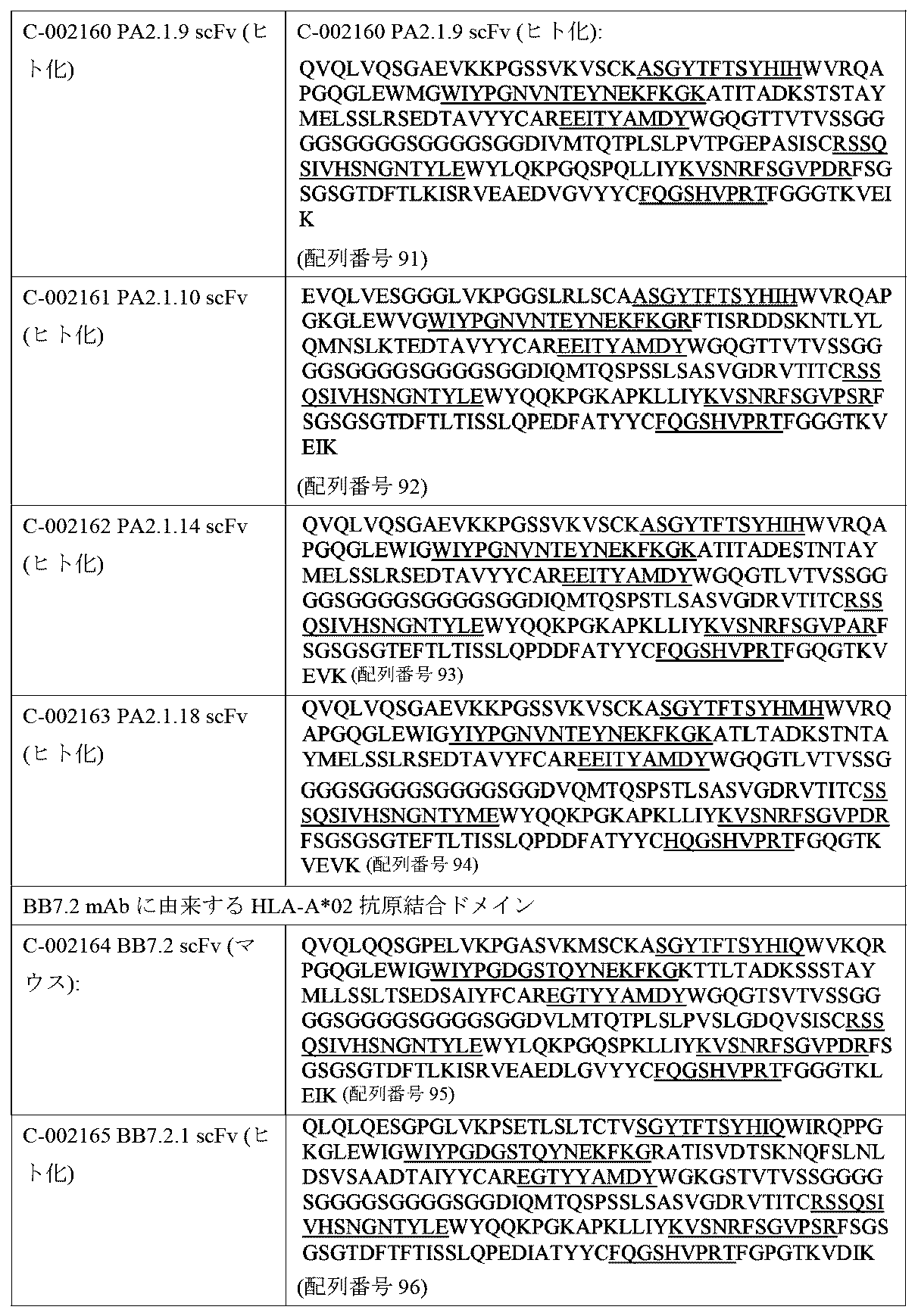


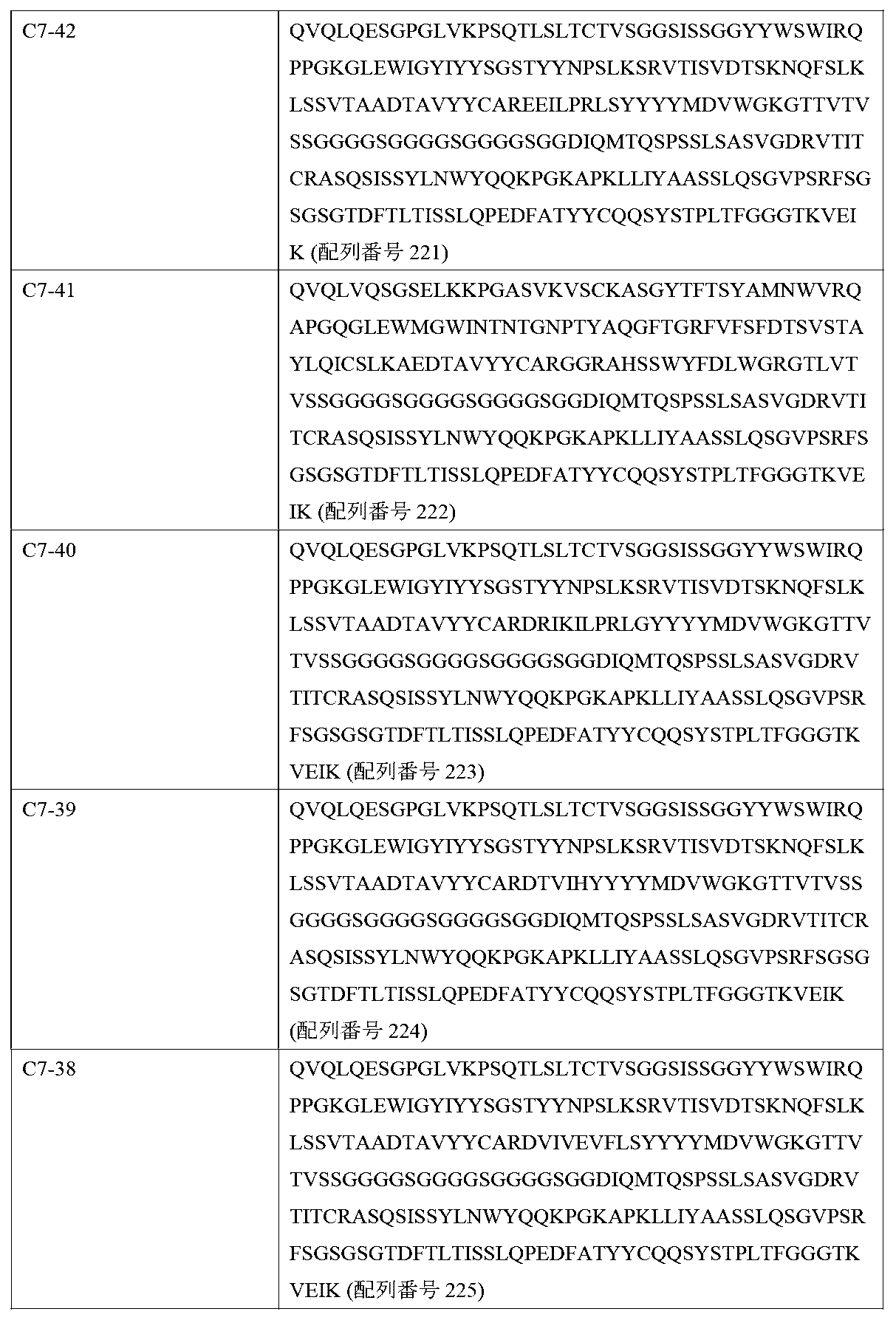

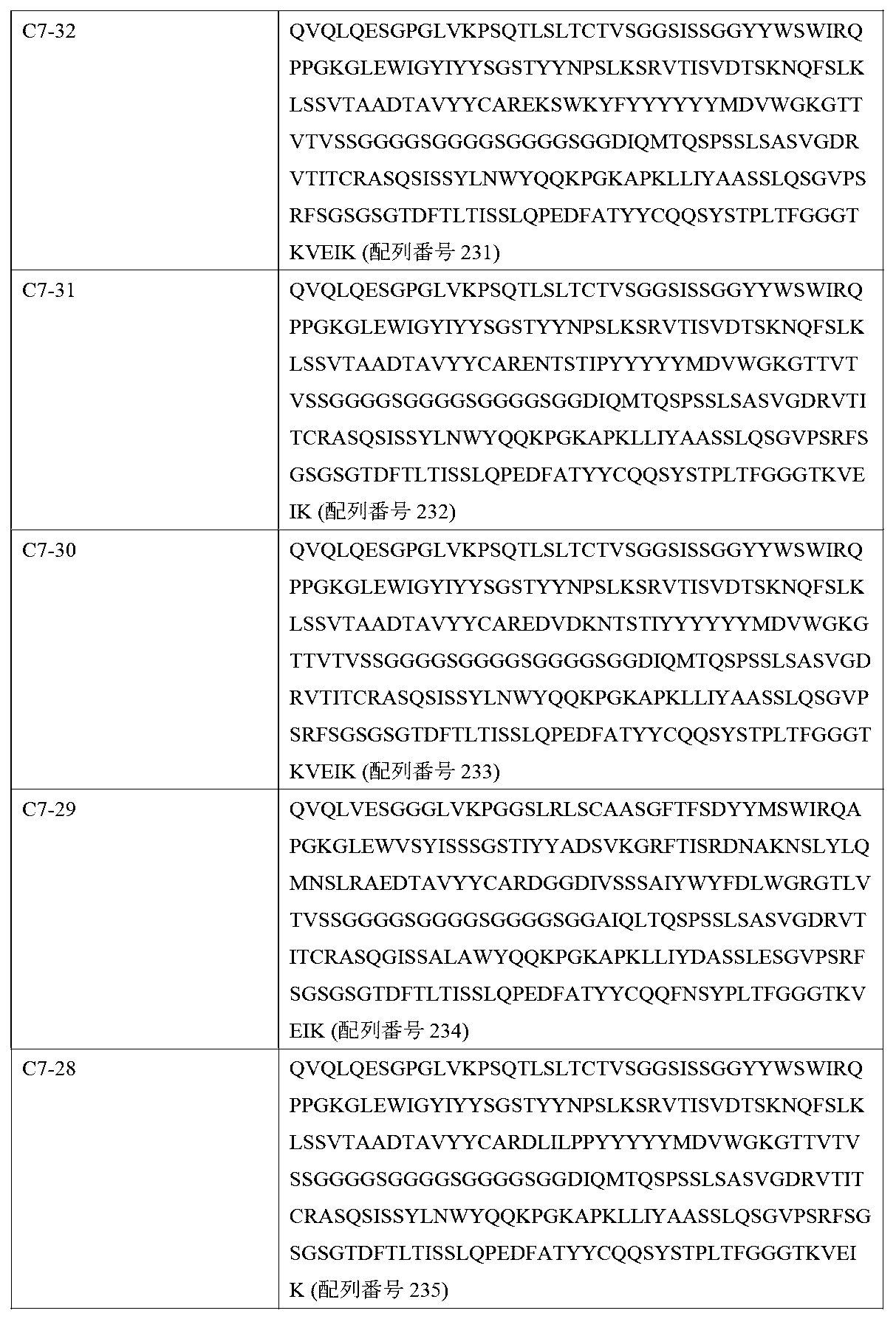
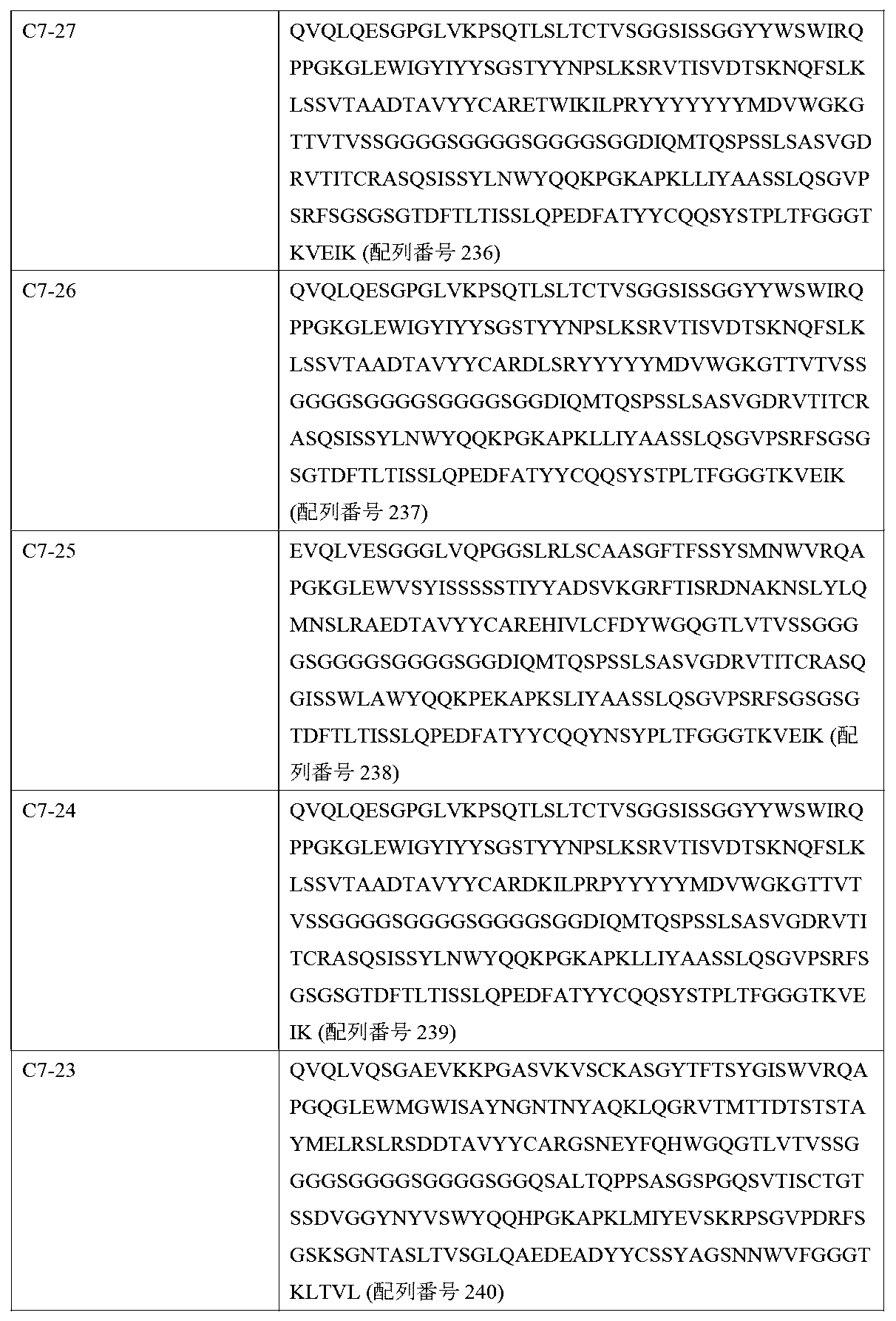
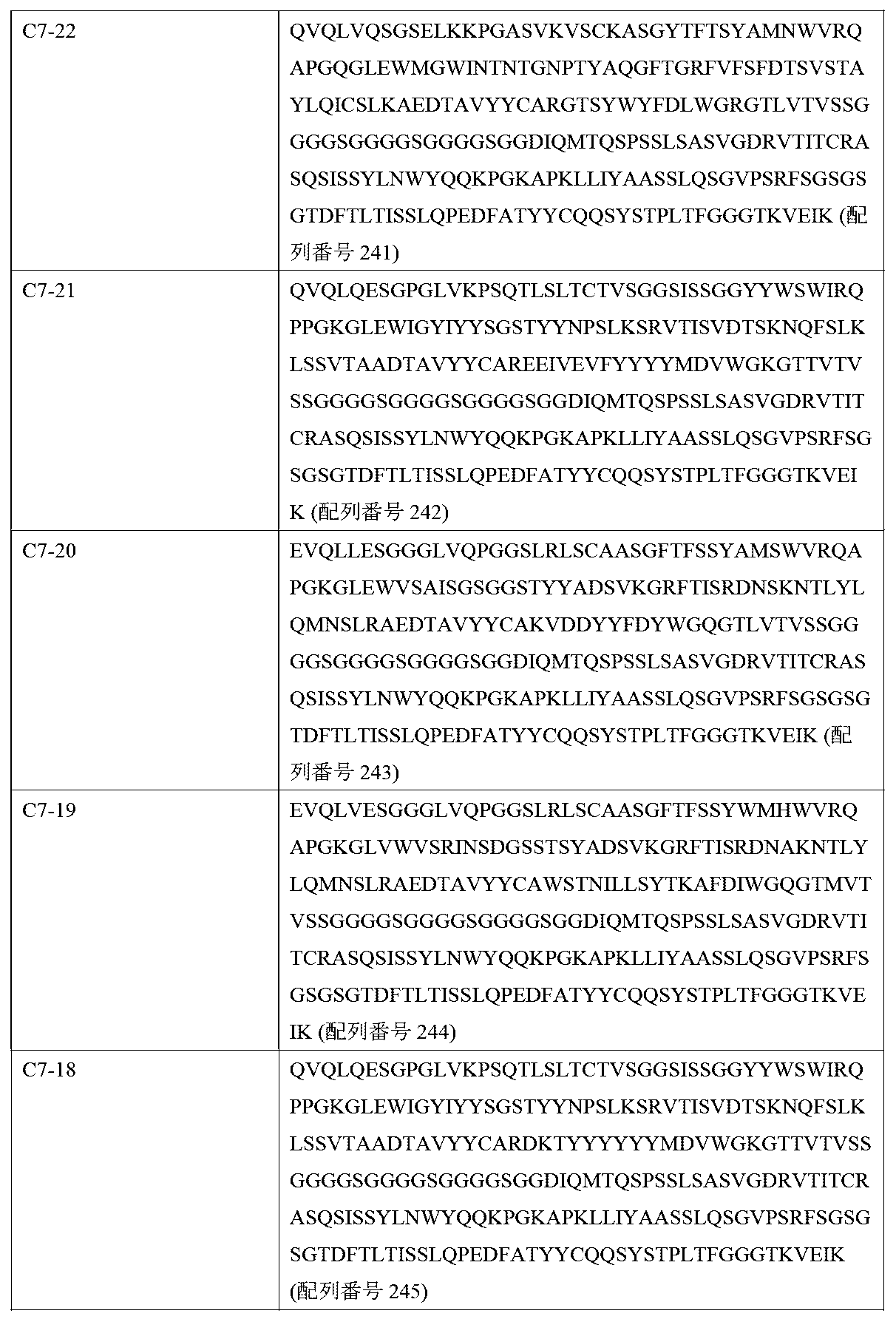


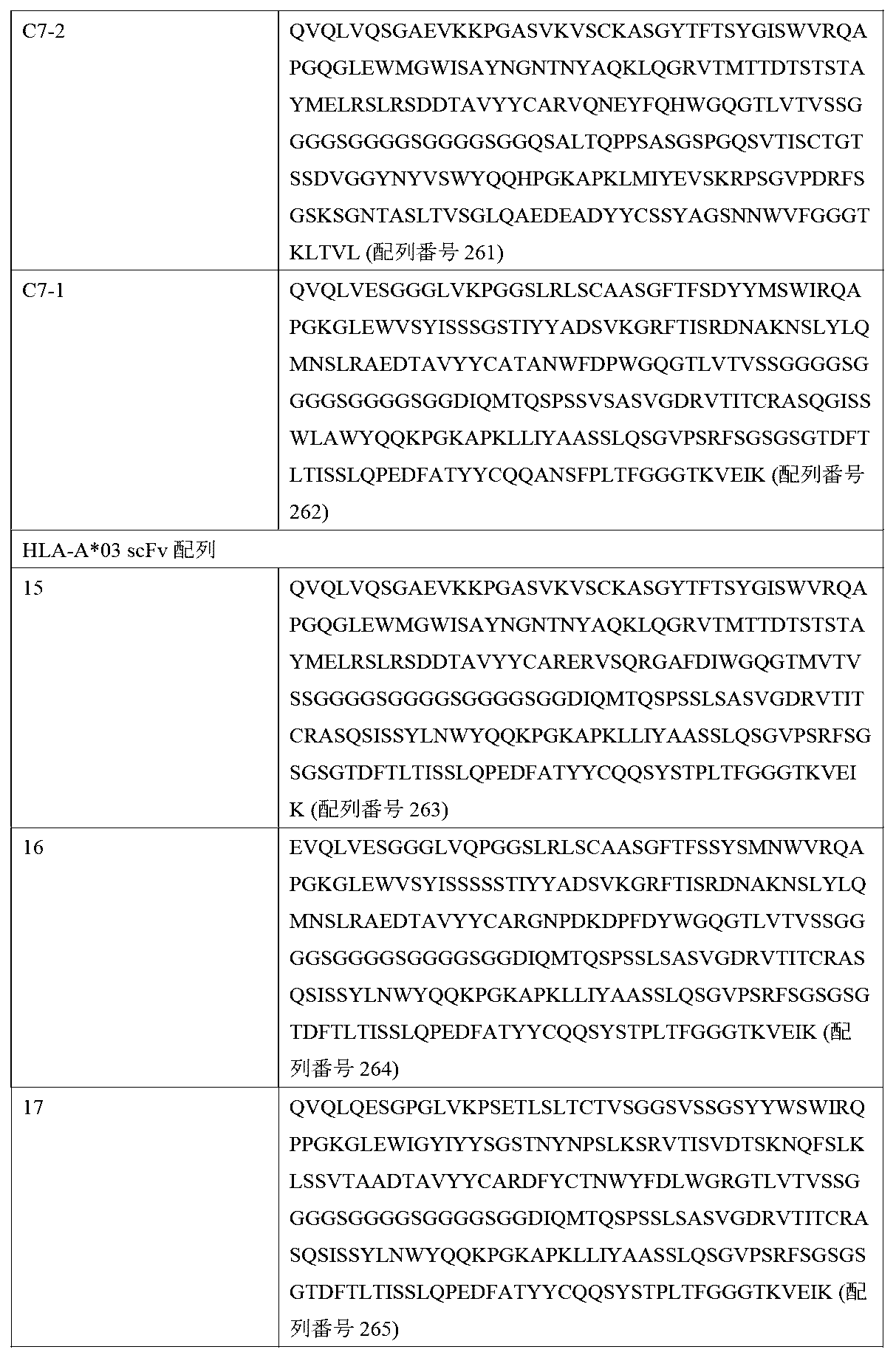
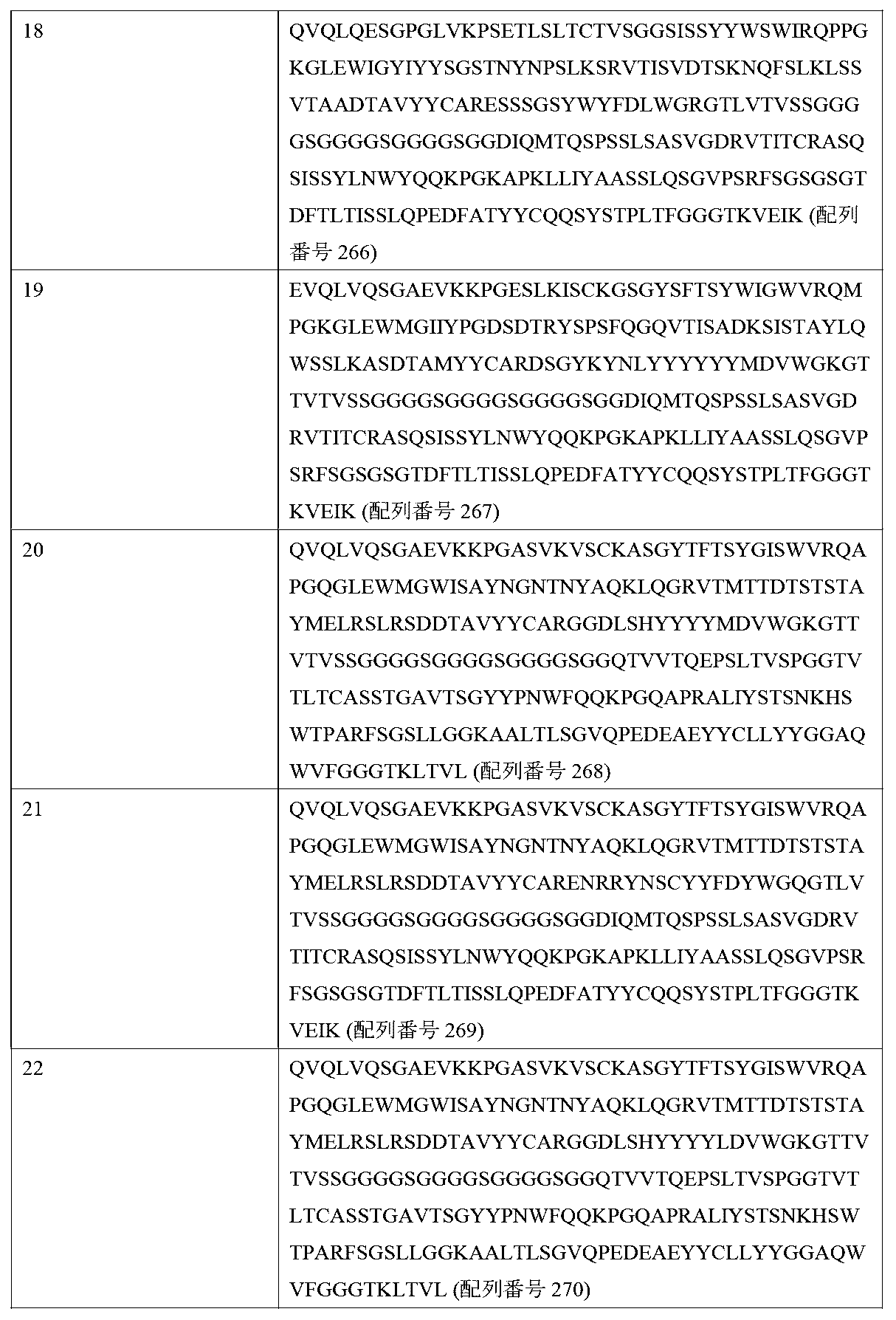

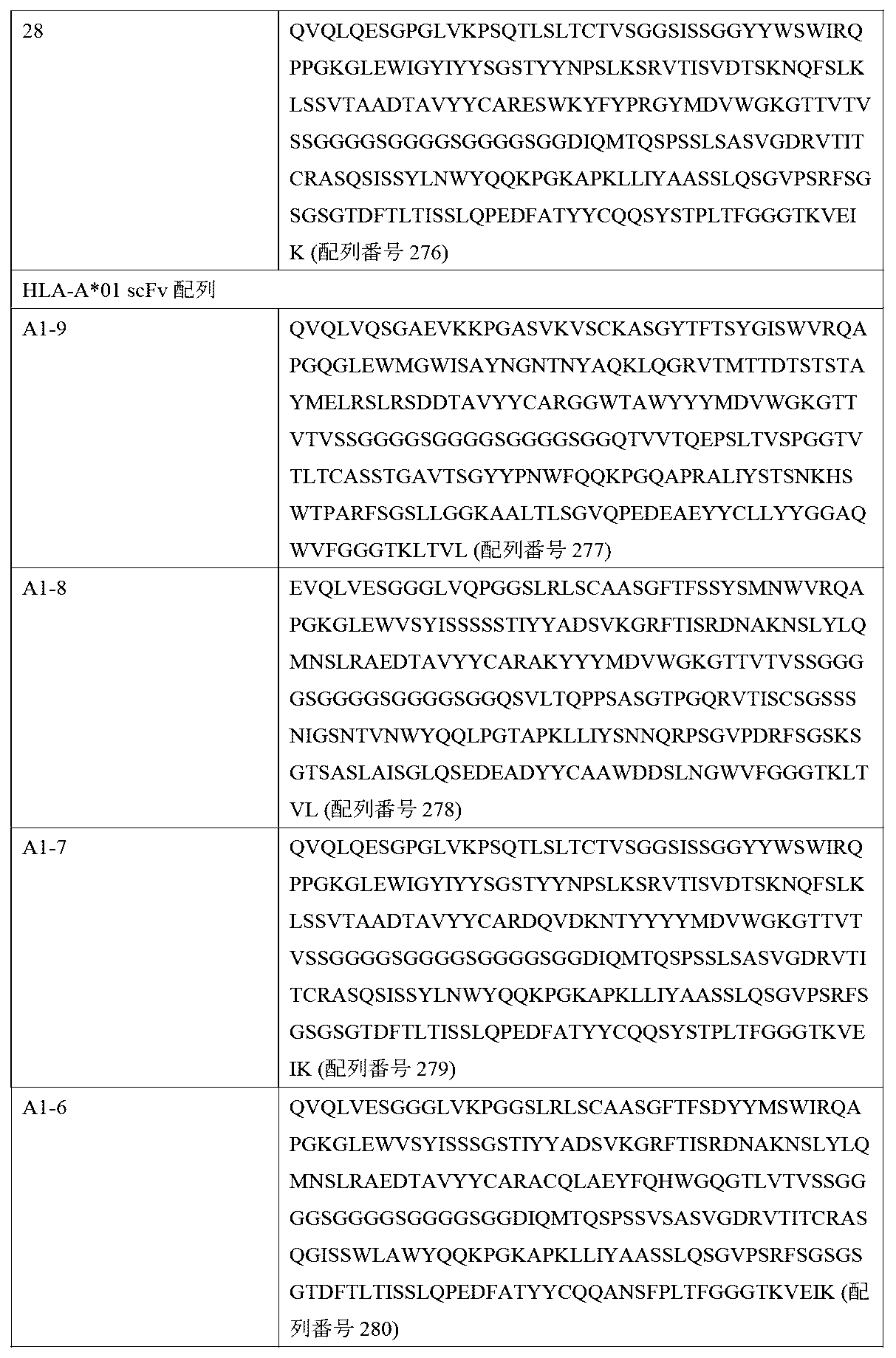

非標的リガンド結合ドメインについての例示的な重鎖及び軽鎖CDR(それぞれ、CDR-H1、CDR-H2及びCDR-H3、又はCDR-L1、CDR-L2及びCDR-L3)を以下の表5に示す。


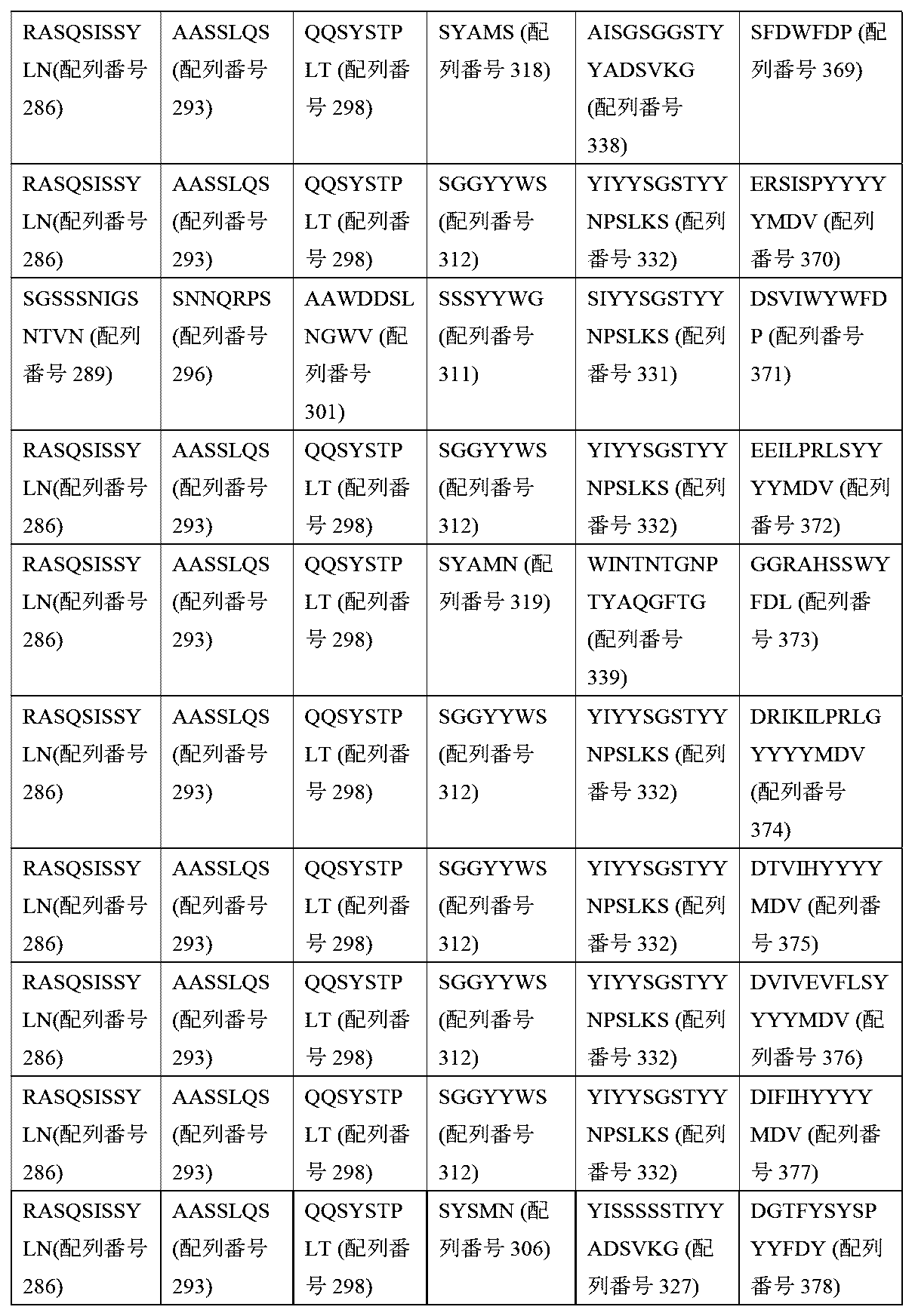
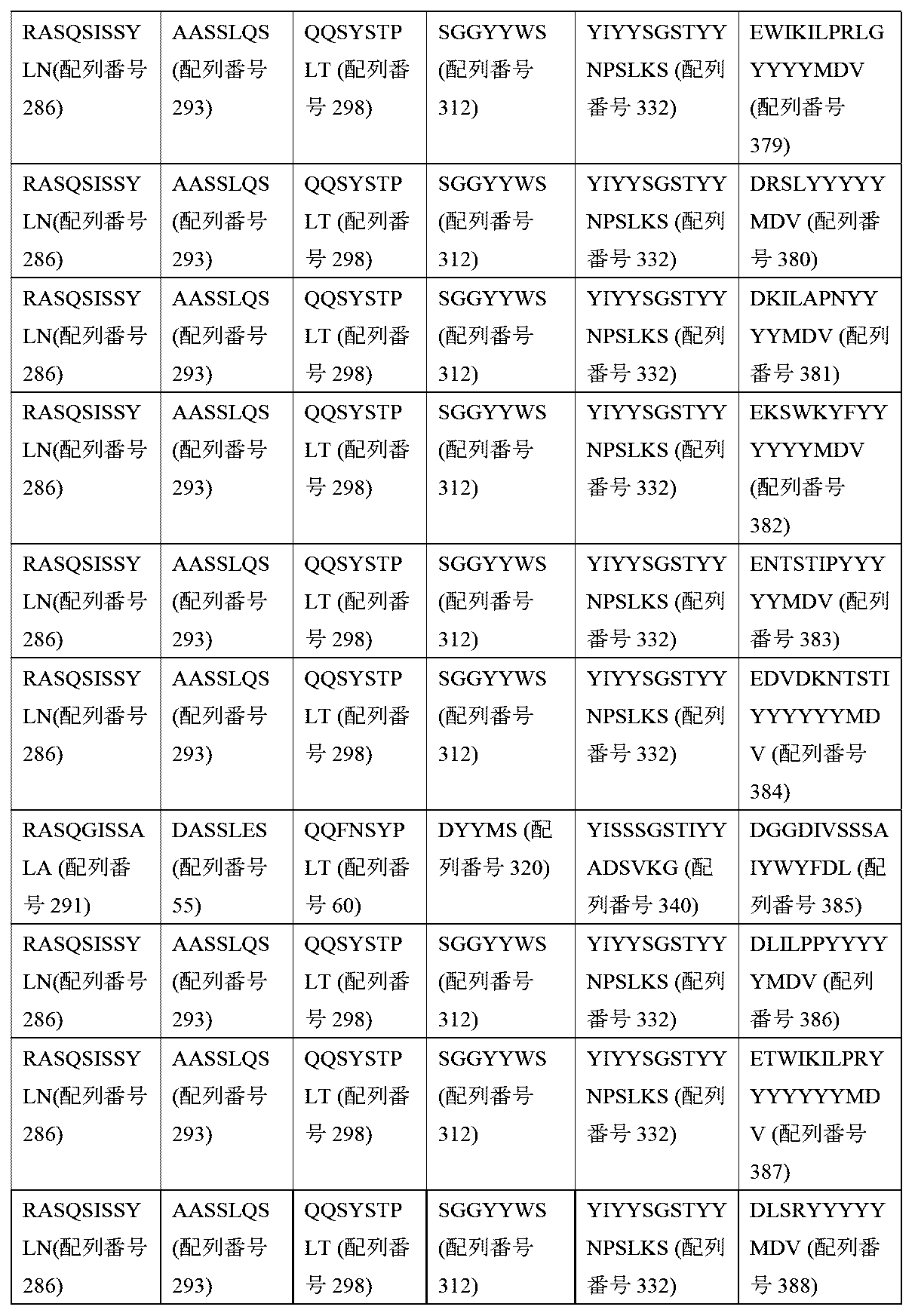

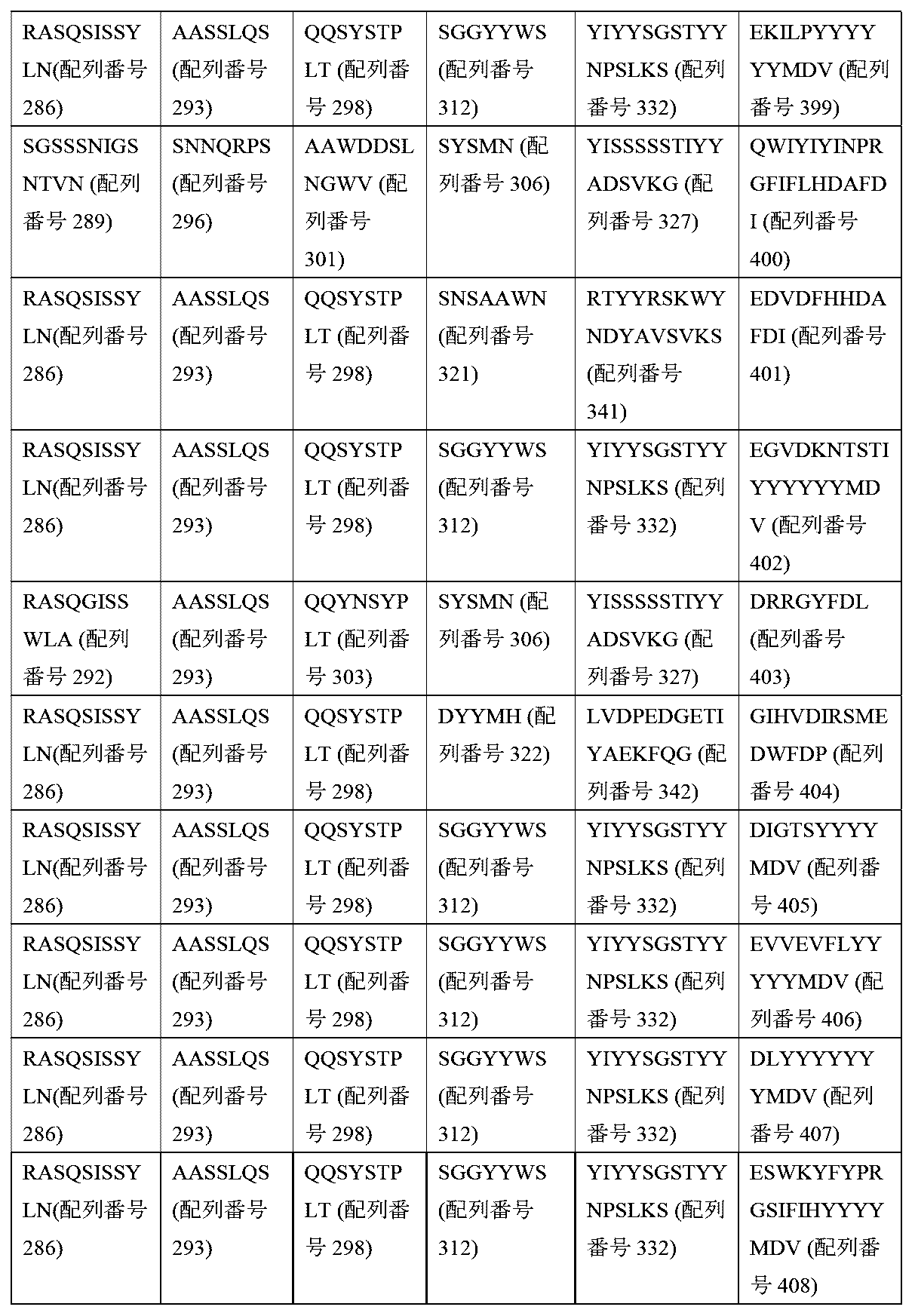

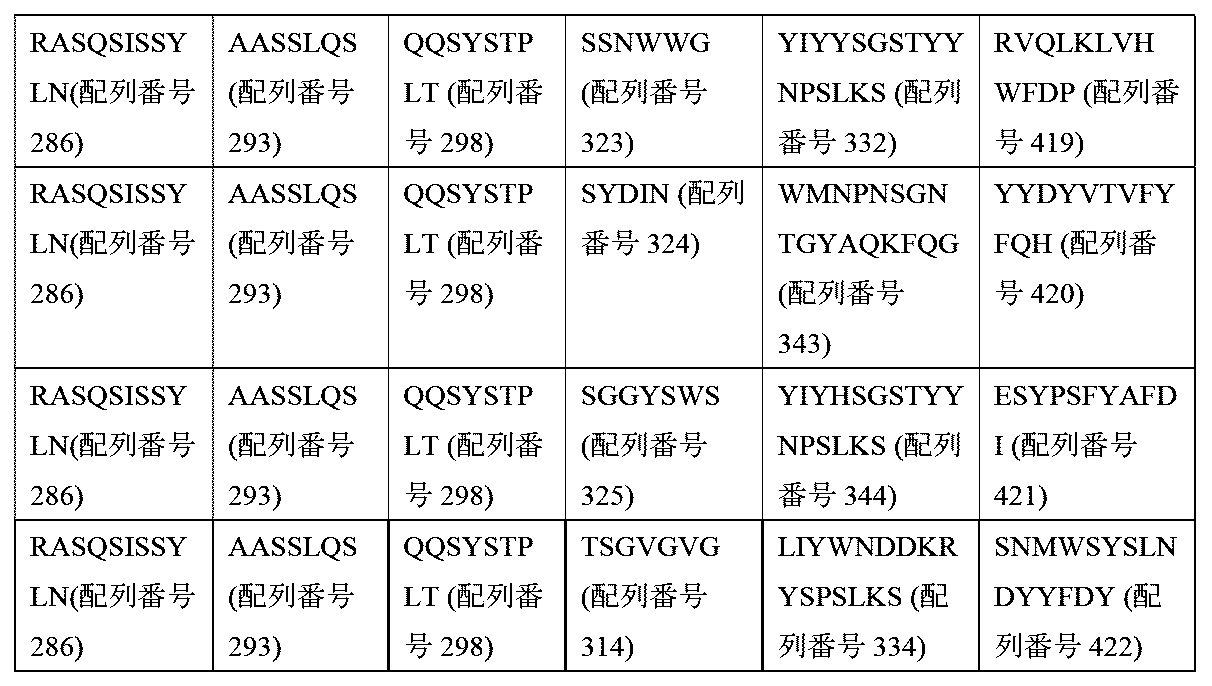
いくつかの実施形態において、HLA-A*02を含む非標的抗原、及び第2の受容体のリガンド結合ドメインは、HLA-A*02リガンド結合ドメインを含む。いくつかの実施形態において、リガンド結合ドメインは、HLA-A*02を含むpMHC複合体において、ペプチドとは独立してHLA-A*02に結合する。いくつかの実施形態において、HLA-A*02リガンド結合ドメインは、scFvドメインを含む。いくつかの実施形態において、HLA-A*02リガンド結合ドメインは、配列番号89~100のうちのいずれか1つの配列を含む。いくつかの実施形態において、HLA-A*02リガンド結合ドメインは、配列番号89~100のうちのいずれか1つの配列と少なくとも90%、少なくとも95%、又は少なくとも99%同一の配列を含む。 In some embodiments, the non-target antigen comprises HLA-A*02, and the ligand binding domain of the second receptor comprises an HLA-A*02 ligand binding domain. In some embodiments, the ligand binding domain binds to HLA-A*02 independently of the peptide in a pMHC complex comprising HLA-A*02. In some embodiments, the HLA-A*02 ligand binding domain comprises an scFv domain. In some embodiments, the HLA-A*02 ligand binding domain comprises any one of SEQ ID NOs:89-100. In some embodiments, the HLA-A*02 ligand binding domain comprises a sequence at least 90%, at least 95%, or at least 99% identical to any one of SEQ ID NOs:89-100.
いくつかの実施形態において、HLA-A*02 scFvは、配列番号101~112のうちのいずれか1つの相補性決定領域(CDR)を含む。いくつかの実施形態において、scFvは、配列番号101~112のうちのいずれか1つと少なくとも95%同一の配列を含む。いくつかの実施形態において、scFvは、配列番号101~112のうちのいずれか1つと同一の配列を含む。いくつかの実施形態において、抗原結合ドメインの重鎖は、配列番号101~112のうちのいずれか1つの重鎖CDRを含み、抗原結合ドメインの軽鎖は、配列番号101~112のうちのいずれか1つの軽鎖CDRを含む。いくつかの実施形態において、HLA-A*02抗原結合ドメインは、重鎖及び軽鎖を含み、重鎖は、配列番号104~106及び110~112から選択されるCDRを含み、軽鎖は、配列番号101~103及び107~109から選択されるCDRを含む。リガンド結合ドメインのいずれかの更なる実施形態において、各CDR配列は、1、2、3個以上の置換、挿入、又は欠失を有し得る。CDR配列は、置換、欠失、又は挿入を許容し得る。配列アラインメントツール、日常的な実験、及び既知のアッセイを使用して、当業者は、過度の実験なしに、CDR配列において、1、2、3個以上の置換、挿入、又は欠失を有するバリアント配列を生成及び試験することができる。 In some embodiments, the HLA-A*02 scFv comprises a complementarity determining region (CDR) of any one of SEQ ID NOs: 101-112. In some embodiments, the scFv comprises a sequence at least 95% identical to any one of SEQ ID NOs: 101-112. In some embodiments, the scFv comprises a sequence identical to any one of SEQ ID NOs: 101-112. In some embodiments, the heavy chain of the antigen binding domain comprises a heavy chain CDR of any one of SEQ ID NOs: 101-112, and the light chain of the antigen binding domain comprises a light chain CDR of any one of SEQ ID NOs: 101-112. In some embodiments, the HLA-A*02 antigen binding domain comprises a heavy chain and a light chain, the heavy chain comprises a CDR selected from SEQ ID NOs: 104-106 and 110-112, and the light chain comprises a CDR selected from SEQ ID NOs: 101-103 and 107-109. In further embodiments of any of the ligand binding domains, each CDR sequence may have one, two, three or more substitutions, insertions, or deletions. The CDR sequences may tolerate substitutions, deletions, or insertions. Using sequence alignment tools, routine experimentation, and known assays, one of skill in the art can generate and test variant sequences having one, two, three or more substitutions, insertions, or deletions in the CDR sequences without undue experimentation.
いくつかの実施形態において、HLA-A*02抗原結合ドメインは、重鎖及び軽鎖を含み、重鎖は、配列番号89~100のうちのいずれか1つの重鎖部分と少なくとも95%同一の配列を含み、軽鎖は、配列番号89~100のうちのいずれか1つの軽鎖部分と少なくとも95%同一の配列を含む。 In some embodiments, the HLA-A*02 antigen-binding domain comprises a heavy chain and a light chain, the heavy chain comprising a sequence at least 95% identical to a heavy chain portion of any one of SEQ ID NOs:89-100, and the light chain comprising a sequence at least 95% identical to a light chain portion of any one of SEQ ID NOs:89-100.
いくつかの実施形態において、重鎖は、配列番号89~100のうちのいずれか1つの重鎖部分と同一の配列を含み、軽鎖は、配列番号89~100のうちのいずれか1つの軽鎖部分と同一の配列を含む。 In some embodiments, the heavy chain comprises a sequence identical to the heavy chain portion of any one of SEQ ID NOs:89-100, and the light chain comprises a sequence identical to the light chain portion of any one of SEQ ID NOs:89-100.
いくつかの実施形態において、非標的抗原は、HLA-B*07を含み、第2の受容体のリガンド結合ドメインは、HLA-B*07リガンド結合ドメインを含む。いくつかの実施形態において、リガンド結合ドメインは、HLA-B*07を含むpMHC複合体において、ペプチドとは独立してHLA-B*07に結合する。いくつかの実施形態において、HLA-B*07リガンド結合ドメインは、scFvドメインを含む。いくつかの実施形態において、HLA-B*07リガンド結合ドメインは、表4に示されるB7結合ドメインのうちのいずれか1つの配列を含む。いくつかの実施形態において、HLA-B*07リガンド結合ドメインは、表4に示されるHLA-B*07結合ドメインのうちのいずれか1つの配列と少なくとも90%、少なくとも95%、又は少なくとも99%同一の配列を含む。いくつかの実施形態において、HLA-B*07 scFvは、表5に示されるHLA-B*07相補性決定領域(CDR)のうちのいずれか1つを含む。いくつかの実施形態において、scFvは、表4に示されるHLA-B*07 scFv配列のうちのいずれか1つと少なくとも95%同一の配列を含む。いくつかの実施形態において、scFvは、表4に示されるHLA-B*07 scFv配列のうちのいずれか1つと同一の配列を含む。 In some embodiments, the non-target antigen comprises HLA-B*07 and the ligand binding domain of the second receptor comprises an HLA-B*07 ligand binding domain. In some embodiments, the ligand binding domain binds to HLA-B*07 independently of the peptide in a pMHC complex comprising HLA-B*07. In some embodiments, the HLA-B*07 ligand binding domain comprises an scFv domain. In some embodiments, the HLA-B*07 ligand binding domain comprises the sequence of any one of the B7 binding domains shown in Table 4. In some embodiments, the HLA-B*07 ligand binding domain comprises a sequence at least 90%, at least 95%, or at least 99% identical to the sequence of any one of the HLA-B*07 binding domains shown in Table 4. In some embodiments, the HLA-B*07 scFv comprises any one of the HLA-B*07 complementarity determining regions (CDRs) shown in Table 5. In some embodiments, the scFv comprises a sequence at least 95% identical to any one of the HLA-B*07 scFv sequences shown in Table 4. In some embodiments, the scFv comprises a sequence identical to any one of the HLA-B*07 scFv sequences shown in Table 4.
いくつかの実施形態において、非標的抗原は、HLA-A*11を含み、第2の受容体のリガンド結合ドメインは、HLA-A*11リガンド結合ドメインを含む。いくつかの実施形態において、リガンド結合ドメインは、HLA-A*11を含むpMHC複合体において、ペプチドとは独立してHLA-A*11に結合する。いくつかの実施形態において、HLA-A*11リガンド結合ドメインは、scFvドメインを含む。いくつかの実施形態において、HLA-A*11リガンド結合ドメインは、表4に示されるHLA-A*11結合ドメインのうちのいずれか1つの配列を含む。いくつかの実施形態において、HLA-A*11リガンド結合ドメインは、表4に示されるHLA-A*11結合ドメインのうちのいずれか1つの配列と少なくとも90%、少なくとも95%、又は少なくとも99%同一の配列を含む。いくつかの実施形態において、HLA-A*11scFvは、表5に示されるHLA-A*11相補性決定領域(CDR)のうちのいずれか1つを含む。いくつかの実施形態において、scFvは、表4に示されるHLA-A*11 scFv配列のうちのいずれか1つと少なくとも95%同一の配列を含む。いくつかの実施形態において、scFvは、表4に示されるHLA-A*11 scFv配列のうちのいずれか1つと同一の配列を含む。 In some embodiments, the non-target antigen comprises HLA-A*11 and the ligand binding domain of the second receptor comprises an HLA-A*11 ligand binding domain. In some embodiments, the ligand binding domain binds to HLA-A*11 independently of the peptide in a pMHC complex comprising HLA-A*11. In some embodiments, the HLA-A*11 ligand binding domain comprises an scFv domain. In some embodiments, the HLA-A*11 ligand binding domain comprises the sequence of any one of the HLA-A*11 binding domains shown in Table 4. In some embodiments, the HLA-A*11 ligand binding domain comprises a sequence at least 90%, at least 95%, or at least 99% identical to the sequence of any one of the HLA-A*11 binding domains shown in Table 4. In some embodiments, the HLA-A*11 scFv comprises any one of the HLA-A*11 complementarity determining regions (CDRs) shown in Table 5. In some embodiments, the scFv comprises a sequence at least 95% identical to any one of the HLA-A*11 scFv sequences shown in Table 4. In some embodiments, the scFv comprises a sequence identical to any one of the HLA-A*11 scFv sequences shown in Table 4.
いくつかの実施形態において、非標的抗原は、HLA-A*01を含み、第2の受容体のリガンド結合ドメインは、HLA-A*01リガンド結合ドメインを含む。いくつかの実施形態において、リガンド結合ドメインは、HLA-A*01を含むpMHC複合体において、ペプチドとは独立してHLA-A*01に結合する。いくつかの実施形態において、HLA-A*01リガンド結合ドメインは、scFvドメインを含む。いくつかの実施形態において、HLA-A*01リガンド結合ドメインは、表4に示されるHLA-A*01結合ドメインのうちのいずれか1つの配列を含む。いくつかの実施形態において、HLA-A*01リガンド結合ドメインは、表4に示されるHLA-A*01結合ドメインのうちのいずれか1つの配列と少なくとも90%、少なくとも95%、又は少なくとも99%同一の配列を含む。いくつかの実施形態において、HLA-A*01 scFvは、表5に示されるHLA-A*01相補性決定領域(CDR)のうちのいずれか1つを含む。いくつかの実施形態において、scFvは、表4に示されるHLA-A*01 scFv配列のうちのいずれか1つと少なくとも95%同一の配列を含む。いくつかの実施形態において、scFvは、表4に示されるHLA-A*01 scFv配列のうちのいずれか1つと同一の配列を含む。 In some embodiments, the non-target antigen comprises HLA-A*01 and the ligand binding domain of the second receptor comprises an HLA-A*01 ligand binding domain. In some embodiments, the ligand binding domain binds to HLA-A*01 independently of the peptide in a pMHC complex comprising HLA-A*01. In some embodiments, the HLA-A*01 ligand binding domain comprises an scFv domain. In some embodiments, the HLA-A*01 ligand binding domain comprises the sequence of any one of the HLA-A*01 binding domains shown in Table 4. In some embodiments, the HLA-A*01 ligand binding domain comprises a sequence at least 90%, at least 95%, or at least 99% identical to the sequence of any one of the HLA-A*01 binding domains shown in Table 4. In some embodiments, the HLA-A*01 scFv comprises any one of the HLA-A*01 complementarity determining regions (CDRs) shown in Table 5. In some embodiments, the scFv comprises a sequence at least 95% identical to any one of the HLA-A*01 scFv sequences shown in Table 4. In some embodiments, the scFv comprises a sequence identical to any one of the HLA-A*01 scFv sequences shown in Table 4.
いくつかの実施形態において、非標的抗原は、HLA-A*03を含み、第2の受容体のリガンド結合ドメインは、HLA-A*03リガンド結合ドメインを含む。いくつかの実施形態において、リガンド結合ドメインは、HLA-A*03を含むpMHC複合体において、ペプチドとは独立してHLA-A*03に結合する。いくつかの実施形態において、HLA-A*03リガンド結合ドメインは、scFvドメインを含む。いくつかの実施形態において、HLA-A*03リガンド結合ドメインは、表4に示されるHLA-A*03結合ドメインのうちのいずれか1つの配列を含む。いくつかの実施形態において、HLA-A*03リガンド結合ドメインは、表4に示されるHLA-A*03結合ドメインのうちのいずれか1つの配列と少なくとも90%、少なくとも95%、又は少なくとも99%同一の配列を含む。いくつかの実施形態において、HLA-A*03 scFvは、表5に示されるHLA-A*03相補性決定領域(CDR)のうちのいずれか1つを含む。いくつかの実施形態において、scFvは、表4に示されるHLA-A*03 scFv配列のうちのいずれか1つと少なくとも95%同一の配列を含む。いくつかの実施形態において、scFvは、表4に示されるHLA-A*03 scFv配列のうちのいずれか1つと同一の配列を含む。 In some embodiments, the non-target antigen comprises HLA-A*03 and the ligand binding domain of the second receptor comprises an HLA-A*03 ligand binding domain. In some embodiments, the ligand binding domain binds to HLA-A*03 independently of the peptide in a pMHC complex comprising HLA-A*03. In some embodiments, the HLA-A*03 ligand binding domain comprises an scFv domain. In some embodiments, the HLA-A*03 ligand binding domain comprises the sequence of any one of the HLA-A*03 binding domains shown in Table 4. In some embodiments, the HLA-A*03 ligand binding domain comprises a sequence at least 90%, at least 95%, or at least 99% identical to the sequence of any one of the HLA-A*03 binding domains shown in Table 4. In some embodiments, the HLA-A*03 scFv comprises any one of the HLA-A*03 complementarity determining regions (CDRs) shown in Table 5. In some embodiments, the scFv comprises a sequence at least 95% identical to any one of the HLA-A*03 scFv sequences shown in Table 4. In some embodiments, the scFv comprises a sequence identical to any one of the HLA-A*03 scFv sequences shown in Table 4.
いくつかの実施形態において、非標的抗原は、HLA-C*07を含み、第2の受容体のリガンド結合ドメインは、HLA-C*07リガンド結合ドメインを含む。いくつかの実施形態において、リガンド結合ドメインは、HLA-C*07を含むpMHC複合体において、ペプチドとは独立してHLA-C*07に結合する。いくつかの実施形態において、HLA-C*07リガンド結合ドメインは、scFvドメインを含む。いくつかの実施形態において、HLA-C*07リガンド結合ドメインは、表4に示されるHLA-C*07結合ドメインのうちのいずれか1つの配列を含む。いくつかの実施形態において、HLA-C*07リガンド結合ドメインは、表4に示されるHLA-C*07結合ドメインのうちのいずれか1つの配列と少なくとも90%、少なくとも95%、又は少なくとも99%同一の配列を含む。いくつかの実施形態において、HLA-C*07 scFvは、表5に示されるHLA-C*07相補性決定領域(CDR)のうちのいずれか1つを含む。いくつかの実施形態において、scFvは、表4に示されるHLA-C*07 scFv配列のうちのいずれか1つと少なくとも95%同一の配列を含む。いくつかの実施形態において、scFvは、表4に示されるHLA-C*07 scFv配列のうちのいずれか1つと同一の配列を含む。 In some embodiments, the non-target antigen comprises HLA-C*07 and the ligand binding domain of the second receptor comprises an HLA-C*07 ligand binding domain. In some embodiments, the ligand binding domain binds to HLA-C*07 independently of the peptide in a pMHC complex comprising HLA-C*07. In some embodiments, the HLA-C*07 ligand binding domain comprises an scFv domain. In some embodiments, the HLA-C*07 ligand binding domain comprises the sequence of any one of the HLA-C*07 binding domains shown in Table 4. In some embodiments, the HLA-C*07 ligand binding domain comprises a sequence at least 90%, at least 95%, or at least 99% identical to the sequence of any one of the HLA-C*07 binding domains shown in Table 4. In some embodiments, the HLA-C*07 scFv comprises any one of the HLA-C*07 complementarity determining regions (CDRs) shown in Table 5. In some embodiments, the scFv comprises a sequence at least 95% identical to any one of the HLA-C*07 scFv sequences shown in Table 4. In some embodiments, the scFv comprises a sequence identical to any one of the HLA-C*07 scFv sequences shown in Table 4.
抑制性受容体
本開示は、抑制性キメラ抗原受容体(すなわち、抑制性受容体)である第2の受容体を提供する。抑制性受容体は、MHC-I複合体における非標的抗原又はそのペプチド誘導体に結合し、それを認識する細胞外リガンド結合ドメインを含んでもよい。
Inhibitory Receptors The present disclosure provides a second receptor that is an inhibitory chimeric antigen receptor (i.e., an inhibitory receptor). An inhibitory receptor may comprise an extracellular ligand-binding domain that binds to and recognizes a non-target antigen or a peptidic derivative thereof in the MHC-I complex.
例示的な抑制性受容体は、2020年9月6日に出願されたPCT/US2020/045228、2020年12月11日に出願されたPCT/US2020/064607、2021年4月29日に出願されたPCT/US2021/029907、及び2020年11月10日に出願されたPCT/US2020/059856に記載されており、これらの各々の内容は、参照により本明細書に組み込まれる。 Exemplary inhibitory receptors are described in PCT/US2020/045228, filed September 6, 2020, PCT/US2020/064607, filed December 11, 2020, PCT/US2021/029907, filed April 29, 2021, and PCT/US2020/059856, filed November 10, 2020, the contents of each of which are incorporated herein by reference.
非標的抗原は、非標的対立遺伝子バリアントであり得る。本明細書で使用される場合、「非標的対立遺伝子バリアント」とは、ヘテロ接合性の喪失、又は発現喪失の別の機構により、標的細胞(例えば、がん細胞)において発現が低下又は除去されているが、正常細胞又は健常細胞において発現されるか、若しくは検出可能に発現される、対立遺伝子(例えば、MHCクラスI遺伝子の対立遺伝子バリアント)を指す。 A non-target antigen can be a non-target allelic variant. As used herein, "non-target allelic variant" refers to an allele (e.g., an allelic variant of an MHC class I gene) whose expression is reduced or eliminated in a target cell (e.g., a cancer cell) due to loss of heterozygosity or another mechanism of loss of expression, but which is expressed or detectably expressed in a normal or healthy cell.
本明細書で使用される場合、「抑制性キメラ抗原受容体」又は「抑制性受容体」という用語は、免疫細胞の免疫活性を阻害又は抑制する抑制シグナルを形質導入することができる細胞内シグナル伝達ドメインに融合される抗原結合ドメインを指す。抑制性受容体は、免疫細胞抑制性の潜在能力を有し、免疫細胞活性化の潜在能力を有する受容体であるCARとは異なり、区別可能である。例えば、CARは、細胞内刺激ドメイン及び/又は共刺激ドメインを含むので、受容体を活性化している。抑制性受容体は、細胞内阻害ドメインを含有する抑制性受容体である。 As used herein, the term "inhibitory chimeric antigen receptor" or "inhibitory receptor" refers to an antigen binding domain fused to an intracellular signaling domain capable of transducing an inhibitory signal that inhibits or suppresses immune activity of an immune cell. Inhibitory receptors have immune cell inhibitory potential and are distinct and distinguishable from CARs, which are receptors that have immune cell activation potential. For example, CARs contain an intracellular stimulatory domain and/or a costimulatory domain, making them activating receptors. Inhibitory receptors are inhibitory receptors that contain an intracellular inhibitory domain.
本明細書で使用される場合、「抑制シグナル」とは、免疫応答の抑制(例えば、サイトカイン産生の減少又は免疫細胞活性化の減少)をもたらす免疫細胞におけるシグナル伝達又はタンパク質発現の変化を指す。免疫細胞の阻害又は抑制は、選択的及び/若しくは可逆的であり得るか、又は選択的及び/若しくは可逆的ではない。抑制性受容体は、非標的抗原に応答する(例えば、HLA-A*02)。例えば、非標的抗原(例えば、HLA-A*02)が、抑制性受容体に結合又は接触する場合、抑制性受容体は応答性であり、抑制性受容体の細胞外リガンド結合ドメインによる非標的抗原の結合時に抑制性受容体を発現する免疫細胞における抑制シグナルを活性化する。 As used herein, an "inhibitory signal" refers to a signal transduction or change in protein expression in an immune cell that results in suppression of an immune response (e.g., decreased cytokine production or decreased immune cell activation). The inhibition or suppression of an immune cell can be selective and/or reversible, or it is not selective and/or reversible. An inhibitory receptor responds to a non-target antigen (e.g., HLA-A*02). For example, when a non-target antigen (e.g., HLA-A*02) binds to or contacts the inhibitory receptor, the inhibitory receptor is responsive and activates an inhibitory signal in an immune cell expressing the inhibitory receptor upon binding of the non-target antigen by the extracellular ligand-binding domain of the inhibitory receptor.
本開示の抑制性受容体は、細胞外リガンド結合ドメインを含み得る。リガンド依存的な様式で受容体の活性を調節することができる任意の種類のリガンド結合ドメインは、本開示の範囲内として想定される。 Inhibitory receptors of the present disclosure may include an extracellular ligand-binding domain. Any type of ligand-binding domain capable of modulating the activity of the receptor in a ligand-dependent manner is contemplated within the scope of the present disclosure.
いくつかの実施形態において、リガンド結合ドメインは、抗原結合ドメインである。例示的な抗原結合ドメインには、とりわけ、scFv、SdAb、Vβのみのドメイン、並びにTCR α及びβ鎖可変ドメインに由来するTCR抗原結合ドメインが含まれる。 In some embodiments, the ligand binding domain is an antigen binding domain. Exemplary antigen binding domains include, among others, scFv, SdAb, Vβ-only domains, and TCR antigen binding domains derived from TCR α and β chain variable domains.
任意の種類の抗原結合ドメインは、本開示の範囲内として想定される。 Any type of antigen binding domain is contemplated within the scope of this disclosure.
いくつかの実施形態において、第2の受容体の細胞外リガンド結合ドメインは、主要組織適合性複合体クラスI(MHC-I)、又はHLA-A*02との複合体において、COLEC12、APCDD1、CXCL16、又はその抗原ペプチドの多型バリアントに結合し、それを認識する。いくつかの実施形態において、第2の受容体の細胞外リガンド結合ドメインは、scFvである。 In some embodiments, the extracellular ligand-binding domain of the second receptor binds to and recognizes COLEC12, APCDD1, CXCL16, or a polymorphic variant of an antigenic peptide thereof in complex with major histocompatibility complex class I (MHC-I) or HLA-A*02. In some embodiments, the extracellular ligand-binding domain of the second receptor is an scFv.
いくつかの実施形態において、第2の受容体の細胞外リガンド結合ドメインは、抑制性受容体の細胞外ドメインに融合される。 In some embodiments, the extracellular ligand-binding domain of the second receptor is fused to the extracellular domain of the inhibitory receptor.
いくつかの実施形態において、本開示の抑制性受容体は、細胞外ヒンジ領域を含む。例示的なヒンジは、IgD及びCD8ドメイン、例えば、IgG1から単離又は誘導することができる。いくつかの実施形態において、ヒンジは、CD8α又はCD28から単離されるか、又は派生される。 In some embodiments, the inhibitory receptors of the present disclosure include an extracellular hinge region. Exemplary hinges can be isolated or derived from IgD and CD8 domains, e.g., IgG1. In some embodiments, the hinge is isolated or derived from CD8α or CD28.
本開示の抑制性受容体は、抑制性受容体の細胞外ドメインに融合される膜貫通ドメインを含むように設計することができる。いくつかの場合において、膜貫通ドメインは、同じ又は異なる表面膜タンパク質の膜貫通ドメインへのそのようなドメインの結合を避け、受容体複合体の他のメンバーとの相互作用を最小限に抑えるために、アミノ酸置換によって選択又は修飾され得る。 Inhibitory receptors of the present disclosure can be designed to include a transmembrane domain fused to the extracellular domain of the inhibitory receptor. In some cases, the transmembrane domain can be selected or modified by amino acid substitution to avoid binding of such domains to transmembrane domains of the same or different surface membrane proteins and to minimize interactions with other members of the receptor complex.
膜貫通ドメインは、天然又は合成源のいずれかに由来し得る。供給源が天然である場合、ドメインは、任意の膜結合タンパク質又は膜貫通タンパク質に由来し得る。膜貫通領域は、T細胞受容体、CD28、CD3イプシロン、CD45、CD4、CD5、CD8、CD9、CD16、CD22、CD33、CD37、CD64、CD80、CD86、CD134、CD137、CD154のアルファ、ベータ、若しくはゼータ鎖、又はIgG4などの免疫グロブリンから単離されてもよいか、又はそれらに由来してもよい(すなわち、それらの少なくとも膜貫通領域を含む)。代替的に、膜貫通ドメインは合成であってもよく、その場合、ロイシン及びバリンなどの主に疎水性残基を含む。いくつかの実施形態において、フェニルアラニン、トリプトファン、及びバリンのトリプレットは、合成膜貫通ドメインの各末端に見出される。任意選択で、好ましくは2~10アミノ酸長の短いオリゴリンカー又はポリペプチドリンカーは、膜貫通ドメインと抑制性受容体の細胞内ドメインとの間の結合を形成してもよい。グリシン-セリンダブレットは、特に好適なリンカーを提供する。 The transmembrane domain may be derived from either natural or synthetic sources. If the source is natural, the domain may be derived from any membrane-bound or transmembrane protein. The transmembrane region may be isolated from or derived from (i.e., including at least the transmembrane region thereof) the alpha, beta, or zeta chain of the T-cell receptor, CD28, CD3 epsilon, CD45, CD4, CD5, CD8, CD9, CD16, CD22, CD33, CD37, CD64, CD80, CD86, CD134, CD137, CD154, or an immunoglobulin such as IgG4. Alternatively, the transmembrane domain may be synthetic, in which case it comprises primarily hydrophobic residues such as leucine and valine. In some embodiments, triplets of phenylalanine, tryptophan, and valine are found at each end of the synthetic transmembrane domain. Optionally, a short oligo- or polypeptide linker, preferably 2-10 amino acids in length, may form the link between the transmembrane domain and the intracellular domain of the inhibitory receptor. A glycine-serine doublet provides a particularly suitable linker.
本開示は、細胞内ドメインを含む抑制性受容体を提供する。本開示の抑制性受容体の細胞内ドメインは、他の場合に第1の受容体による活性化シグナルに応答して活性化されるであろう、抑制性受容体を含む免疫細胞の活性化を抑制することを担う。いくつかの実施形態において、抑制性細胞内ドメインは、免疫受容体チロシンベース阻害モチーフ(ITIM)を含む。いくつかの実施形態において、ITIMを含む抑制性細胞内ドメインは、CTLA-4及びPD-1などの免疫チェックポイント阻害剤から単離され得るか、又は派生され得る。CTLA-4及びPD-1は、T細胞の表面上に発現する免疫抑制性受容体であり、T細胞応答の減衰又は終結において重要な役割を果たす。 The present disclosure provides an inhibitory receptor comprising an intracellular domain. The intracellular domain of the inhibitory receptor of the present disclosure is responsible for suppressing activation of an immune cell comprising the inhibitory receptor that would otherwise be activated in response to an activating signal by a first receptor. In some embodiments, the inhibitory intracellular domain comprises an immunoreceptor tyrosine-based inhibitory motif (ITIM). In some embodiments, the inhibitory intracellular domain comprising an ITIM can be isolated or derived from an immune checkpoint inhibitor, such as CTLA-4 and PD-1. CTLA-4 and PD-1 are immune inhibitory receptors expressed on the surface of T cells and play important roles in attenuating or terminating T cell responses.
いくつかの実施形態において、抑制性細胞内ドメインは、ヒト腫瘍壊死因子関連アポトーシス誘導リガンド(TRAIL)受容体及びCD200受容体1から単離される。いくつかの実施形態において、TRAIL受容体は、TR10A、TR10B又はTR10Dを含む。 In some embodiments, the inhibitory intracellular domain is isolated from human tumor necrosis factor-related apoptosis-inducing ligand (TRAIL) receptor and CD200 receptor 1. In some embodiments, the TRAIL receptor comprises TR10A, TR10B, or TR10D.
いくつかの実施形態において、抑制性細胞内ドメインは、グリコスフィンゴ脂質マイクロドメイン1(PAG1)を有するリンタンパク質膜アンカーから単離される。いくつかの実施形態において、抑制性細胞内ドメインは、白血球免疫グロブリン様受容体B1(LILRB1)から単離される。 In some embodiments, the inhibitory intracellular domain is isolated from a phosphoprotein membrane anchor having glycosphingolipid microdomain 1 (PAG1). In some embodiments, the inhibitory intracellular domain is isolated from leukocyte immunoglobulin-like receptor B1 (LILRB1).
いくつかの実施形態において、阻害ドメインは、ヒトタンパク質、例えば、ヒトTRAIL受容体、CTLA-4、PD-1、PAG1、又はLILRB1タンパク質から単離されるか、又は派生される。 In some embodiments, the inhibitory domain is isolated or derived from a human protein, e.g., a human TRAIL receptor, CTLA-4, PD-1, PAG1, or LILRB1 protein.
いくつかの実施形態において、阻害ドメインは、細胞内ドメイン、膜貫通、又はそれらの組み合わせを含む。いくつかの実施形態において、阻害ドメインは、細胞内ドメイン、膜貫通ドメイン、ヒンジ領域、又はそれらの組み合わせを含む。 In some embodiments, the inhibitory domain comprises an intracellular domain, a transmembrane domain, or a combination thereof. In some embodiments, the inhibitory domain comprises an intracellular domain, a transmembrane domain, a hinge region, or a combination thereof.
いくつかの実施形態において、阻害ドメインは、キラー細胞免疫グロブリン様受容体、3つのIgドメイン及び長い細胞質尾部2(KIR3DL2)、キラー細胞免疫グロブリン様受容体、3つのIgドメイン及び長い細胞質尾部3(KIR3DL3)、白血球免疫グロブリン様受容体B1(LIR-1及びLILRB1とも呼ばれる、LIR1)、プログラム細胞死1(PD-1)、Fcガンマ受容体IIB(FcgRIIB)、キラー細胞レクチン様受容体K1(NKG2D)、CTLA-4、合成コンセンサスITIMを含有するドメイン、ZAP70 SH2ドメイン(例えば、N及びC末端SH2ドメインの1つ又は両方)、又はZAP70 KI_K369A(キナーゼ不活性ZAP70)から単離されるか、又は派生される。 In some embodiments, the inhibitory domain is isolated or derived from killer cell immunoglobulin-like receptor, three Ig domains and long cytoplasmic tail 2 (KIR3DL2), killer cell immunoglobulin-like receptor, three Ig domains and long cytoplasmic tail 3 (KIR3DL3), leukocyte immunoglobulin-like receptor B1 (LIR1, also called LIR-1 and LILRB1), programmed cell death 1 (PD-1), Fc gamma receptor IIB (FcgRIIB), killer cell lectin-like receptor K1 (NKG2D), CTLA-4, a domain containing a synthetic consensus ITIM, a ZAP70 SH2 domain (e.g., one or both of the N- and C-terminal SH2 domains), or ZAP70 KI_K369A (kinase-inactive ZAP70).
いくつかの実施形態において、阻害ドメインは、ヒトタンパク質から単離されるか、又は派生される。 In some embodiments, the inhibitory domain is isolated or derived from a human protein.
いくつかの実施形態において、第2の抑制性受容体は、阻害ドメインを含む。いくつかの実施形態において、第2の抑制性受容体は、抑制性細胞内ドメイン及び/又は抑制性膜貫通ドメインを含む。いくつかの実施形態において、抑制性細胞内ドメインは、抑制性受容体の細胞内ドメインに融合される。いくつかの実施形態において、抑制性細胞内ドメインは、抑制性受容体の膜貫通ドメインに融合される。 In some embodiments, the second inhibitory receptor comprises an inhibitory domain. In some embodiments, the second inhibitory receptor comprises an inhibitory intracellular domain and/or an inhibitory transmembrane domain. In some embodiments, the inhibitory intracellular domain is fused to the intracellular domain of the inhibitory receptor. In some embodiments, the inhibitory intracellular domain is fused to the transmembrane domain of the inhibitory receptor.
いくつかの実施形態において、第2の抑制性受容体は、同じタンパク質、例えば、ITIM含有タンパク質から単離されるか、又は派生される、単離されるか、又は派生される、細胞質ドメイン、膜貫通ドメイン、及び細胞外ドメイン又はそれらの一部分を含む。いくつかの実施形態において、第2の抑制性受容体は、細胞内ドメイン及び/又は膜貫通ドメインと同じタンパク質、例えば、ITIM含有タンパク質から単離されるか、又は派生される、単離されるか、又は派生されるヒンジ領域を含む。 In some embodiments, the second inhibitory receptor comprises a cytoplasmic domain, a transmembrane domain, and an extracellular domain, or portions thereof, isolated or derived from the same protein, e.g., an ITIM-containing protein. In some embodiments, the second inhibitory receptor comprises a hinge region, isolated or derived from the same protein, e.g., an ITIM-containing protein, as the intracellular domain and/or transmembrane domain.
いくつかの実施形態において、第2の受容体は、阻害ドメインを含むTCR(抑制性TCR)である。いくつかの実施形態において、抑制性TCRは、抑制性細胞内ドメイン及び/又は抑制性膜貫通ドメインを含む。いくつかの実施形態において、抑制性細胞内ドメインは、TCRアルファ、TCRベータ、CD3デルタ、CD3ガンマ若しくはCD3イプシロンの細胞内ドメイン、又はそれらの一部分のTCRに融合される。いくつかの実施形態において、抑制性細胞内ドメインは、TCRアルファ、TCRベータ、CD3デルタ、CD3ガンマ又はCD3イプシロンの膜貫通ドメインに融合される。 In some embodiments, the second receptor is a TCR that includes an inhibitory domain (inhibitory TCR). In some embodiments, the inhibitory TCR includes an inhibitory intracellular domain and/or an inhibitory transmembrane domain. In some embodiments, the inhibitory intracellular domain is fused to a TCR alpha, TCR beta, CD3 delta, CD3 gamma, or CD3 epsilon intracellular domain, or a portion thereof. In some embodiments, the inhibitory intracellular domain is fused to a TCR alpha, TCR beta, CD3 delta, CD3 gamma, or CD3 epsilon transmembrane domain.
いくつかの実施形態において、第2の受容体は、阻害ドメインを含むTCR(抑制性TCR)である。いくつかの実施形態において、阻害ドメインは、LILRB1から単離されるか、又は派生される。 In some embodiments, the second receptor is a TCR that includes an inhibitory domain (an inhibitory TCR). In some embodiments, the inhibitory domain is isolated or derived from LILRB1.
LILRB1抑制性受容体
本開示は、LILRB1阻害ドメイン、並びに任意選択で、LILRB1膜貫通ドメイン及び/若しくはヒンジドメイン、又はその機能的バリアントを含む、第2の抑制性受容体を提供する。LILRB1膜貫通ドメイン及び/又はLILRB1ヒンジドメインを抑制性受容体に含めることにより、別の膜貫通ドメイン又は別のヒンジドメインを有する参照抑制性受容体と比較して、抑制性受容体によって生成される抑制シグナルが増加し得る。LILRB1阻害ドメインを含む第2の抑制性受容体は、本明細書に記載されるようなCAR又はTCRであってもよい。本明細書に記載されるような任意の好適なリガンド結合ドメインは、LILRB1ベースの第2の抑制性受容体に融合され得る。
LILRB1 Inhibitory Receptor The present disclosure provides a second inhibitory receptor comprising a LILRB1 inhibitory domain and, optionally, a LILRB1 transmembrane domain and/or hinge domain, or a functional variant thereof. By including the LILRB1 transmembrane domain and/or the LILRB1 hinge domain in an inhibitory receptor, the inhibitory signal generated by the inhibitory receptor may be increased compared to a reference inhibitory receptor having a different transmembrane domain or a different hinge domain. The second inhibitory receptor comprising the LILRB1 inhibitory domain may be a CAR or TCR as described herein. Any suitable ligand binding domain as described herein may be fused to the LILRB1-based second inhibitory receptor.
白血球免疫グロブリン様受容体B1としても知られている、白血球免疫グロブリン様受容体サブファミリーBメンバー1(LILRB1)、並びにILT2、LIR1、MIR7、PIRB、CD85J、ILT-2 LIR-1、MIR-7、及びPIR-Bは、白血球免疫グロブリン様受容体(LIR)ファミリーのメンバーである。LILRB1タンパク質は、LIR受容体のサブファミリーBクラスに属する。これらの受容体は、2~4個の細胞外免疫グロブリンドメイン、膜貫通ドメイン、及び2~4個の細胞質免疫受容体チロシンベース阻害モチーフ(ITIM)を含有する。LILRB1受容体は、免疫細胞上で発現され、それは、抗原提示細胞上のMHCクラスI分子に結合し、免疫応答の刺激を阻害する負のシグナルを形質導入する。LILRB1は、炎症反応、及び細胞傷害性を調節し、自己反応性を制限する際に役割を果たすと考えられている。LILRB1の異なるアイソフォームをコードする複数の転写バリアントが存在し、これらの全ては、本開示の範囲内であると企図される。 Leukocyte immunoglobulin-like receptor subfamily B member 1 (LILRB1), also known as leukocyte immunoglobulin-like receptor B1, and ILT2, LIR1, MIR7, PIRB, CD85J, ILT-2 LIR-1, MIR-7, and PIR-B are members of the leukocyte immunoglobulin-like receptor (LIR) family. The LILRB1 protein belongs to the subfamily B class of LIR receptors. These receptors contain 2-4 extracellular immunoglobulin domains, a transmembrane domain, and 2-4 cytoplasmic immunoreceptor tyrosine-based inhibitory motifs (ITIMs). The LILRB1 receptor is expressed on immune cells, where it binds to MHC class I molecules on antigen-presenting cells and transduces negative signals that inhibit stimulation of the immune response. LILRB1 is thought to play a role in regulating inflammatory responses and cytotoxicity, and limiting autoreactivity. There are multiple transcript variants that encode different isoforms of LILRB1, all of which are contemplated as being within the scope of this disclosure.
本明細書に記載される抑制性受容体のいくつかの実施形態において、抑制性受容体は、LILRB1から単離されるか、又は派生される1つ以上のドメインを含む。LILRB1から単離されるか、又は派生される1つ以上のドメインを有する受容体のいくつかの実施形態において、LILRB1の1つ以上のドメインは、配列番号113の配列又は部分配列と少なくとも80%、少なくとも90%、少なくとも95%、少なくとも96%、少なくとも97%、少なくとも98%、少なくとも99%同一であるか、又はそれと同一であるアミノ酸配列を含む。いくつかの実施形態において、LILRB1の1つ以上のドメインは、配列番号113の配列又は部分配列と同一であるアミノ酸配列を含む。いくつかの実施形態において、LILRB1の1つ以上のドメインは、配列番号113の配列又は部分配列と少なくとも80%、少なくとも90%、少なくとも95%、少なくとも96%、少なくとも97%、少なくとも98%、少なくとも99%同一であるか、又はそれと同一であるアミノ酸配列からなる。いくつかの実施形態において、LILRB1の1つ以上のドメインは、配列番号113の配列又は部分配列と同一であるアミノ酸配列からなる。 In some embodiments of the inhibitory receptors described herein, the inhibitory receptor comprises one or more domains isolated or derived from LILRB1. In some embodiments of receptors having one or more domains isolated or derived from LILRB1, one or more domains of LILRB1 comprise an amino acid sequence that is at least 80%, at least 90%, at least 95%, at least 96%, at least 97%, at least 98%, at least 99% identical to or identical to the sequence or subsequence of SEQ ID NO:113. In some embodiments, one or more domains of LILRB1 comprise an amino acid sequence that is at least 80%, at least 90%, at least 95%, at least 96%, at least 97%, at least 98%, at least 99% identical to or identical to the sequence or subsequence of SEQ ID NO:113. In some embodiments, one or more domains of LILRB1 consist of an amino acid sequence that is at least 80%, at least 90%, at least 95%, at least 96%, at least 97%, at least 98%, at least 99% identical to or identical to the sequence or subsequence of SEQ ID NO:113. In some embodiments, one or more domains of LILRB1 consist of an amino acid sequence identical to the sequence or subsequence of SEQ ID NO:113.
LILRB1から単離されるか、又は派生される1つ以上のドメインを有する受容体のいくつかの実施形態において、LILRB1の1つ以上のドメインは、
LILRB1の1つ以上のドメインを有する受容体のいくつかの実施形態において、LILRB1の1つ以上のドメインは、配列番号114の配列又は部分配列と同一であるポリヌクレオチド配列によってコードされる。 In some embodiments of a receptor having one or more domains of LILRB1, one or more domains of LILRB1 are encoded by a polynucleotide sequence that is identical to the sequence or subsequence of SEQ ID NO:114.
様々な実施形態において、ポリペプチドを含む抑制性受容体が提供され、ポリペプチドは、LILRB1ヒンジドメイン又はその機能的断片若しくはバリアント、LILRB1膜貫通ドメイン又はその機能的バリアント、及びLILRB1細胞内ドメイン又は少なくとも1つ、若しくは少なくとも2つの免疫受容体チロシンベース阻害モチーフ(ITIM)を含む細胞内ドメインのうちの1つ以上を含み、各ITIMは、独立して、NLYAAV(配列番号115)、VTYAEV(配列番号116)、VTYAQL(配列番号117)、及びSIYATL(配列番号118)から選択される。 In various embodiments, an inhibitory receptor is provided that includes a polypeptide, the polypeptide including one or more of a LILRB1 hinge domain or a functional fragment or variant thereof, a LILRB1 transmembrane domain or a functional variant thereof, and a LILRB1 intracellular domain or an intracellular domain including at least one, or at least two, immunoreceptor tyrosine-based inhibitory motifs (ITIMs), each ITIM being independently selected from NLYAAV (SEQ ID NO: 115), VTYAEV (SEQ ID NO: 116), VTYAQL (SEQ ID NO: 117), and SIYATL (SEQ ID NO: 118).
本明細書で使用される場合、「免疫受容体チロシンベース阻害モチーフ」又は「ITIM」とは、免疫系の多くの抑制性受容体の細胞質尾部に見出される、S/I/V/LxYxxI/V/L(配列番号423)などのコンセンサス配列を有するアミノ酸の保存配列を指す。ITIM保有抑制性受容体が、それらのリガンドと相互作用した後、ITIMモチーフがリン酸化され、抑制性受容体が、他の酵素、例えば、ホスホチロシンホスファターゼSHP-1及びSHP-2、又はSHIPと呼ばれるイノシトール-ホスファターゼを動員することが可能になる。 As used herein, "immunoreceptor tyrosine-based inhibitory motif" or "ITIM" refers to a conserved sequence of amino acids with a consensus sequence, such as S/I/V/LxYxxI/V/L (SEQ ID NO: 423), found in the cytoplasmic tails of many inhibitory receptors of the immune system. After ITIM-bearing inhibitory receptors interact with their ligands, the ITIM motif becomes phosphorylated, enabling the inhibitory receptors to recruit other enzymes, such as the phosphotyrosine phosphatases SHP-1 and SHP-2, or inositol-phosphatases called SHIPs.
いくつかの実施形態において、ポリペプチドは、少なくとも1つの免疫受容体チロシンベース阻害モチーフ(ITIM)、少なくとも2つのITIM、少なくとも3つのITIM、少なくとも4つのITIM、少なくとも5つのITIM、又は少なくとも6つのITIMを含む、細胞内ドメインを含む。いくつかの実施形態において、細胞内ドメインは、1、2、3、4、5、又は6つのITIMを有する。 In some embodiments, the polypeptide comprises an intracellular domain that comprises at least one immunoreceptor tyrosine-based inhibitory motif (ITIM), at least two ITIMs, at least three ITIMs, at least four ITIMs, at least five ITIMs, or at least six ITIMs. In some embodiments, the intracellular domain has 1, 2, 3, 4, 5, or 6 ITIMs.
いくつかの実施形態において、ポリペプチドは、NLYAAV(配列番号115)、VTYAEV(配列番号116)、VTYAQL(配列番号117)、及びSIYATL(配列番号118)からなるITIMの群から選択される少なくとも1つのITIMを含む、細胞内ドメインを含む。 In some embodiments, the polypeptide comprises an intracellular domain that includes at least one ITIM selected from the group of ITIMs consisting of NLYAAV (SEQ ID NO: 115), VTYAEV (SEQ ID NO: 116), VTYAQL (SEQ ID NO: 117), and SIYATL (SEQ ID NO: 118).
更なる特定の実施形態において、ポリペプチドは、少なくとも2つの免疫受容体チロシンベース阻害モチーフ(ITIM)を含む、細胞内ドメインを含み、各ITIMは、独立して、NLYAAV(配列番号115)、VTYAEV(配列番号116)、VTYAQL(配列番号117)、及びSIYATL(配列番号118)から選択される。 In further particular embodiments, the polypeptide comprises an intracellular domain that includes at least two immunoreceptor tyrosine-based inhibitory motifs (ITIMs), each ITIM being independently selected from NLYAAV (SEQ ID NO: 115), VTYAEV (SEQ ID NO: 116), VTYAQL (SEQ ID NO: 117), and SIYATL (SEQ ID NO: 118).
いくつかの実施形態において、細胞内ドメインは、ITIM NLYAAV(配列番号115)及びVTYAEV(配列番号116)の両方を含む。いくつかの実施形態において、細胞内ドメインは、配列番号119と少なくとも95%同一の配列を含む。いくつかの実施形態において、細胞内ドメインは、配列番号119と同一の配列を含むか、又はそれから本質的になる。 In some embodiments, the intracellular domain comprises both ITIM NLYAAV (SEQ ID NO:115) and VTYAEV (SEQ ID NO:116). In some embodiments, the intracellular domain comprises a sequence at least 95% identical to SEQ ID NO:119. In some embodiments, the intracellular domain comprises or consists essentially of a sequence identical to SEQ ID NO:119.
いくつかの実施形態において、細胞内ドメインは、ITIM VTYAEV(配列番号116)及びVTYAQL(配列番号117)の両方を含む。いくつかの実施形態において、細胞内ドメインは、配列番号120と少なくとも95%同一の配列を含む。いくつかの実施形態において、細胞内ドメインは、配列番号120と同一の配列を含むか、又はそれから本質的になる。 In some embodiments, the intracellular domain comprises both ITIM VTYAEV (SEQ ID NO:116) and VTYAQL (SEQ ID NO:117). In some embodiments, the intracellular domain comprises a sequence at least 95% identical to SEQ ID NO:120. In some embodiments, the intracellular domain comprises or consists essentially of a sequence identical to SEQ ID NO:120.
いくつかの実施形態において、細胞内ドメインは、ITIM VTYAQL(配列番号117)及びSIYATL(配列番号118)の両方を含む。いくつかの実施形態において、細胞内ドメインは、配列番号121と少なくとも95%同一の配列を含む。いくつかの実施形態において、細胞内ドメインは、配列番号121と同一の配列を含むか、又はそれから本質的になる。 In some embodiments, the intracellular domain comprises both ITIM VTYAQL (SEQ ID NO:117) and SIYATL (SEQ ID NO:118). In some embodiments, the intracellular domain comprises a sequence at least 95% identical to SEQ ID NO:121. In some embodiments, the intracellular domain comprises or consists essentially of a sequence identical to SEQ ID NO:121.
いくつかの実施形態において、細胞内ドメインは、ITIM NLYAAV(配列番号115)、VTYAEV(配列番号116)、及びVTYAQL(配列番号117)を含む。いくつかの実施形態において、細胞内ドメインは、配列番号122と少なくとも95%同一の配列を含む。いくつかの実施形態において、細胞内ドメインは、配列番号122と同一の配列を含むか、又はそれから本質的になる。 In some embodiments, the intracellular domain comprises ITIM NLYAAV (SEQ ID NO:115), VTYAEV (SEQ ID NO:116), and VTYAQL (SEQ ID NO:117). In some embodiments, the intracellular domain comprises a sequence at least 95% identical to SEQ ID NO:122. In some embodiments, the intracellular domain comprises or consists essentially of a sequence identical to SEQ ID NO:122.
いくつかの実施形態において、細胞内ドメインは、ITIM VTYAEV(配列番号116)、VTYAQL(配列番号117)、及びSIYATL(配列番号118)を含む。いくつかの実施形態において、細胞内ドメインは、配列番号123と少なくとも95%同一の配列を含む。いくつかの実施形態において、細胞内ドメインは、配列番号123と同一の配列を含むか、又はそれから本質的になる。 In some embodiments, the intracellular domain comprises ITIM VTYAEV (SEQ ID NO:116), VTYAQL (SEQ ID NO:117), and SIYATL (SEQ ID NO:118). In some embodiments, the intracellular domain comprises a sequence at least 95% identical to SEQ ID NO:123. In some embodiments, the intracellular domain comprises or consists essentially of a sequence identical to SEQ ID NO:123.
いくつかの実施形態において、細胞内ドメインは、ITIM NLYAAV(配列番号115)、VTYAEV(配列番号116)、VTYAQL(配列番号117)、及びSIYATL(配列番号118)を含む。実施形態において、細胞内ドメインは、配列番号124と少なくとも95%同一の配列を含む。いくつかの実施形態において、細胞内ドメインは、配列番号124と同一の配列を含むか、又はそれから本質的になる。 In some embodiments, the intracellular domain comprises ITIM NLYAAV (SEQ ID NO:115), VTYAEV (SEQ ID NO:116), VTYAQL (SEQ ID NO:117), and SIYATL (SEQ ID NO:118). In embodiments, the intracellular domain comprises a sequence at least 95% identical to SEQ ID NO:124. In some embodiments, the intracellular domain comprises or consists essentially of a sequence identical to SEQ ID NO:124.
いくつかの実施形態において、細胞内ドメインは、LILRB1細胞内ドメイン(配列番号129)と少なくとも95%同一の配列を含む。いくつかの実施形態において、細胞内ドメインは、LILRB1細胞内ドメイン(配列番号129)と同一の配列を含むか、又はそれから本質的になる。 In some embodiments, the intracellular domain comprises a sequence at least 95% identical to the LILRB1 intracellular domain (SEQ ID NO: 129). In some embodiments, the intracellular domain comprises or consists essentially of a sequence identical to the LILRB1 intracellular domain (SEQ ID NO: 129).
本開示のLILRB1細胞内ドメイン又はその機能的バリアントは、少なくとも1、少なくとも2、少なくとも4、少なくとも4、少なくとも5、少なくとも6、少なくとも7、又は少なくとも8つのITIMを有することができる。いくつかの実施形態において、LILRB1細胞内ドメイン又はその機能的バリアントは、2、3、4、5、又は6つのITIMを有する。 The LILRB1 intracellular domain or functional variant thereof of the present disclosure can have at least 1, at least 2, at least 4, at least 4, at least 5, at least 6, at least 7, or at least 8 ITIMs. In some embodiments, the LILRB1 intracellular domain or functional variant thereof has 2, 3, 4, 5, or 6 ITIMs.
特定の実施形態において、細胞内ドメインは、2、3、4、5、又は6つの免疫受容体チロシンベース阻害モチーフ(ITIM)を含み、各ITIMは、独立して、NLYAAV(配列番号115)、VTYAEV(配列番号116)、VTYAQL(配列番号117)、及びSIYATL(配列番号118)から選択される。 In certain embodiments, the intracellular domain comprises two, three, four, five, or six immunoreceptor tyrosine-based inhibitory motifs (ITIMs), each ITIM being independently selected from NLYAAV (SEQ ID NO: 115), VTYAEV (SEQ ID NO: 116), VTYAQL (SEQ ID NO: 117), and SIYATL (SEQ ID NO: 118).
特定の実施形態において、細胞内ドメインは、少なくとも3つの免疫受容体チロシンベース阻害モチーフ(ITIM)を含み、各ITIMは、独立して、NLYAAV(配列番号115)、VTYAEV(配列番号116)、VTYAQL(配列番号117)、及びSIYATL(配列番号118)から選択される。 In certain embodiments, the intracellular domain comprises at least three immunoreceptor tyrosine-based inhibitory motifs (ITIMs), each ITIM independently selected from NLYAAV (SEQ ID NO: 115), VTYAEV (SEQ ID NO: 116), VTYAQL (SEQ ID NO: 117), and SIYATL (SEQ ID NO: 118).
特定の実施形態において、細胞内ドメインは、3つの免疫受容体チロシンベース阻害モチーフ(ITIM)を含み、各ITIMは、独立して、NLYAAV(配列番号115)、VTYAEV(配列番号116)、VTYAQL(配列番号117)、及びSIYATL(配列番号118)から選択される。 In certain embodiments, the intracellular domain comprises three immunoreceptor tyrosine-based inhibitory motifs (ITIMs), each ITIM independently selected from NLYAAV (SEQ ID NO: 115), VTYAEV (SEQ ID NO: 116), VTYAQL (SEQ ID NO: 117), and SIYATL (SEQ ID NO: 118).
特定の実施形態において、細胞内ドメインは、4つの免疫受容体チロシンベース阻害モチーフ(ITIM)を含み、各ITIMは、独立して、NLYAAV(配列番号115)、VTYAEV(配列番号116)、VTYAQL(配列番号117)、及びSIYATL(配列番号118)から選択される。 In certain embodiments, the intracellular domain comprises four immunoreceptor tyrosine-based inhibitory motifs (ITIMs), each ITIM independently selected from NLYAAV (SEQ ID NO: 115), VTYAEV (SEQ ID NO: 116), VTYAQL (SEQ ID NO: 117), and SIYATL (SEQ ID NO: 118).
特定の実施形態において、細胞内ドメインは、5つの免疫受容体チロシンベース阻害モチーフ(ITIM)を含み、各ITIMは、独立して、NLYAAV(配列番号115)、VTYAEV(配列番号116)、VTYAQL(配列番号117)、及びSIYATL(配列番号118)から選択される。 In certain embodiments, the intracellular domain comprises five immunoreceptor tyrosine-based inhibitory motifs (ITIMs), each ITIM independently selected from NLYAAV (SEQ ID NO: 115), VTYAEV (SEQ ID NO: 116), VTYAQL (SEQ ID NO: 117), and SIYATL (SEQ ID NO: 118).
特定の実施形態において、細胞内ドメインは、6つの免疫受容体チロシンベース阻害モチーフ(ITIM)を含み、各ITIMは、独立して、NLYAAV(配列番号115)、VTYAEV(配列番号116)、VTYAQL(配列番号117)、及びSIYATL(配列番号118)から選択される。 In certain embodiments, the intracellular domain comprises six immunoreceptor tyrosine-based inhibitory motifs (ITIMs), each ITIM independently selected from NLYAAV (SEQ ID NO: 115), VTYAEV (SEQ ID NO: 116), VTYAQL (SEQ ID NO: 117), and SIYATL (SEQ ID NO: 118).
特定の実施形態において、細胞内ドメインは、少なくとも7つの免疫受容体チロシンベース阻害モチーフ(ITIM)を含み、各ITIMは、独立して、NLYAAV(配列番号115)、VTYAEV(配列番号116)、VTYAQL(配列番号117)、及びSIYATL(配列番号118)から選択される。 In certain embodiments, the intracellular domain comprises at least seven immunoreceptor tyrosine-based inhibitory motifs (ITIMs), each ITIM independently selected from NLYAAV (SEQ ID NO: 115), VTYAEV (SEQ ID NO: 116), VTYAQL (SEQ ID NO: 117), and SIYATL (SEQ ID NO: 118).
LILRB1タンパク質は、D1、D2、D3及びD4と呼ばれる4つの免疫グロブリン(Ig)様ドメインを有する。いくつかの実施形態において、LILRB1ヒンジドメインは、LILRB1 D3D4ドメイン又はその機能的バリアントを含む。いくつかの実施形態において、LILRB1 D3D4ドメインは、配列番号125と少なくとも95%、少なくとも96%、少なくとも97%、少なくとも98%、少なくとも99%同一であるか、又はそれと同一である配列を含む。いくつかの実施形態において、LILRB1 D3D4ドメインは、配列番号125を含むか、又はそれから本質的になる。 The LILRB1 protein has four immunoglobulin (Ig)-like domains, designated D1, D2, D3, and D4. In some embodiments, the LILRB1 hinge domain comprises a LILRB1 D3D4 domain or a functional variant thereof. In some embodiments, the LILRB1 D3D4 domain comprises a sequence that is at least 95%, at least 96%, at least 97%, at least 98%, at least 99% identical to, or identical to, SEQ ID NO:125. In some embodiments, the LILRB1 D3D4 domain comprises or consists essentially of SEQ ID NO:125.
いくつかの実施形態において、ポリペプチドは、LILRB1ヒンジドメイン、又はその機能的断片若しくはバリアントを含む。実施形態において、LILRB1ヒンジドメイン、又はその機能的断片若しくはバリアントは、配列番号132、配列番号125、又は配列番号126と少なくとも95%、少なくとも96%、少なくとも97%、少なくとも98%、少なくとも99%同一であるか、又はそれらと同一である配列を含む。実施形態において、LILRB1ヒンジドメイン、又はその機能的断片若しくはバリアントは、配列番号132、配列番号125、又は配列番号126と少なくとも95%同一の配列を含む。 In some embodiments, the polypeptide comprises a LILRB1 hinge domain, or a functional fragment or variant thereof. In embodiments, the LILRB1 hinge domain, or a functional fragment or variant thereof, comprises a sequence that is at least 95%, at least 96%, at least 97%, at least 98%, at least 99% identical to, or identical to, SEQ ID NO:132, SEQ ID NO:125, or SEQ ID NO:126. In embodiments, the LILRB1 hinge domain, or a functional fragment or variant thereof, comprises a sequence that is at least 95% identical to, SEQ ID NO:132, SEQ ID NO:125, or SEQ ID NO:126.
いくつかの実施形態において、LILRB1ヒンジドメインは、配列番号132、配列番号125、又は配列番号126と同一の配列を含む。 In some embodiments, the LILRB1 hinge domain comprises a sequence identical to SEQ ID NO:132, SEQ ID NO:125, or SEQ ID NO:126.
いくつかの実施形態において、LILRB1ヒンジドメインは、配列番号132、配列番号125、又は配列番号126と同一の配列から本質的になる。 In some embodiments, the LILRB1 hinge domain consists essentially of a sequence identical to SEQ ID NO:132, SEQ ID NO:125, or SEQ ID NO:126.
いくつかの実施形態において、膜貫通ドメインは、LILRB1膜貫通ドメイン又はその機能的バリアントである。いくつかの実施形態において、LILRB1膜貫通ドメイン又はその機能的バリアントは、配列番号133と少なくとも95%同一、少なくとも96%同一、少なくとも97%同一、少なくとも98%同一又は少なくとも99%の配列を含む。いくつかの実施形態において、LILRB1膜貫通ドメイン又はその機能的バリアントは、配列番号133と少なくとも95%同一の配列を含む。いくつかの実施形態において、LILRB1膜貫通ドメインは、配列番号133と同一の配列を含む。実施形態において、LILRB1膜貫通ドメインは、配列番号133と同一の配列から本質的になる。 In some embodiments, the transmembrane domain is a LILRB1 transmembrane domain or a functional variant thereof. In some embodiments, the LILRB1 transmembrane domain or a functional variant thereof comprises a sequence at least 95% identical, at least 96% identical, at least 97% identical, at least 98% identical, or at least 99% identical to SEQ ID NO:133. In some embodiments, the LILRB1 transmembrane domain or a functional variant thereof comprises a sequence at least 95% identical to SEQ ID NO:133. In some embodiments, the LILRB1 transmembrane domain comprises a sequence identical to SEQ ID NO:133. In embodiments, the LILRB1 transmembrane domain consists essentially of a sequence identical to SEQ ID NO:133.
いくつかの実施形態において、膜貫通ドメインは、ヒンジ、例えば、ヒトタンパク質由来のヒンジを介して、第2の抑制性受容体、例えば、抗原結合ドメイン又はリガンド結合ドメインの細胞外領域に結合することができる。例えば、いくつかの実施形態において、ヒンジは、ヒト免疫グロブリン(Ig)ヒンジ、例えば、IgG4ヒンジ、CD8aヒンジ、又はLILRB1ヒンジであり得る。 In some embodiments, the transmembrane domain can be attached to the extracellular region of a second inhibitory receptor, e.g., an antigen-binding domain or a ligand-binding domain, via a hinge, e.g., a hinge derived from a human protein. For example, in some embodiments, the hinge can be a human immunoglobulin (Ig) hinge, e.g., an IgG4 hinge, a CD8a hinge, or a LILRB1 hinge.
いくつかの実施形態において、第2の抑制性受容体は、阻害ドメインを含む。いくつかの実施形態において、第2の抑制性受容体は、抑制性細胞内ドメイン及び/又は抑制性膜貫通ドメインを含む。いくつかの実施形態において、阻害ドメインは、LILR1Bから単離されるか、又は派生される。 In some embodiments, the second inhibitory receptor comprises an inhibitory domain. In some embodiments, the second inhibitory receptor comprises an inhibitory intracellular domain and/or an inhibitory transmembrane domain. In some embodiments, the inhibitory domain is isolated or derived from LILR1B.
LILRB1ドメインの組み合わせを含む抑制性受容体
いくつかの実施形態において、本開示のLILRB1ベースの抑制性受容体は、1つを超えるLILRB1ドメイン又はその機能的等価物を含む。例えば、いくつかの実施形態において、抑制性受容体は、LILRB1膜貫通ドメイン及び細胞内ドメイン、又はLILRB1ヒンジドメイン、膜貫通ドメイン及び細胞内ドメインを含む。
Inhibitory Receptors Comprising Combinations of LILRB1 Domains In some embodiments, the LILRB1-based inhibitory receptors of the present disclosure comprise more than one LILRB1 domain or functional equivalents thereof. For example, in some embodiments, the inhibitory receptor comprises a LILRB1 transmembrane domain and an intracellular domain, or a LILRB1 hinge domain, a transmembrane domain and an intracellular domain.
特定の実施形態において、抑制性受容体は、LILRB1ヒンジドメイン、又はその機能的断片若しくはバリアント、及びLILRB1膜貫通ドメイン、又はその機能的バリアントを含む。いくつかの実施形態において、ポリペプチドは、配列番号127と少なくとも95%同一、少なくとも96%同一、少なくとも97%同一、少なくとも98%同一、少なくとも99%同一であるか、又はそれと同一である配列を含む。いくつかの実施形態において、ポリペプチドは、配列番号127と少なくとも95%同一の配列を含む。いくつかの実施形態において、ポリペプチドは、配列番号127と同一の配列を含む。 In certain embodiments, the inhibitory receptor comprises a LILRB1 hinge domain, or a functional fragment or variant thereof, and a LILRB1 transmembrane domain, or a functional variant thereof. In some embodiments, the polypeptide comprises a sequence that is at least 95% identical, at least 96% identical, at least 97% identical, at least 98% identical, at least 99% identical, or identical to SEQ ID NO: 127. In some embodiments, the polypeptide comprises a sequence that is at least 95% identical to SEQ ID NO: 127. In some embodiments, the polypeptide comprises a sequence that is identical to SEQ ID NO: 127.
更なる実施形態において、抑制性受容体は、LILRB1膜貫通ドメイン又はその機能的バリアント、並びにLILRB1細胞内ドメイン及び/又は少なくとも1つの免疫受容体チロシンベース阻害モチーフ(ITIM)を含む細胞内ドメインを含み、ITIMは、NLYAAV(配列番号115)、VTYAEV(配列番号116)、VTYAQL(配列番号117)、及びSIYATL(配列番号118)から選択される。いくつかの実施形態において、ポリペプチドは、LILRB1膜貫通ドメイン又はその機能的バリアント、並びにLILRB1細胞内ドメイン及び/又は少なくとも2つのITIMを含む細胞内ドメインを含み、各ITIMは、独立して、NLYAAV(配列番号115)、VTYAEV(配列番号116)、VTYAQL(配列番号117)、及びSIYATL(配列番号118)から選択される。 In further embodiments, the inhibitory receptor comprises a LILRB1 transmembrane domain or a functional variant thereof, and a LILRB1 intracellular domain and/or an intracellular domain comprising at least one immunoreceptor tyrosine-based inhibitory motif (ITIM), wherein the ITIM is selected from NLYAAV (SEQ ID NO: 115), VTYAEV (SEQ ID NO: 116), VTYAQL (SEQ ID NO: 117), and SIYATL (SEQ ID NO: 118). In some embodiments, the polypeptide comprises a LILRB1 transmembrane domain or a functional variant thereof, and a LILRB1 intracellular domain and/or an intracellular domain comprising at least two ITIMs, wherein each ITIM is independently selected from NLYAAV (SEQ ID NO: 115), VTYAEV (SEQ ID NO: 116), VTYAQL (SEQ ID NO: 117), and SIYATL (SEQ ID NO: 118).
いくつかの実施形態において、抑制性受容体は、LILRB1膜貫通ドメイン及び細胞内ドメインを含む。いくつかの実施形態において、ポリペプチドは、配列番号128と少なくとも95%同一、少なくとも96%同一、少なくとも97%同一、少なくとも98%同一、少なくとも99%同一であるか、又はそれと同一である配列を含む。いくつかの実施形態において、ポリペプチドは、配列番号128と少なくとも95%同一の配列を含む。いくつかの実施形態において、ポリペプチドは、配列番号128と同一の配列を含む。 In some embodiments, the inhibitory receptor comprises a LILRB1 transmembrane domain and an intracellular domain. In some embodiments, the polypeptide comprises a sequence that is at least 95% identical, at least 96% identical, at least 97% identical, at least 98% identical, at least 99% identical, or identical to SEQ ID NO:128. In some embodiments, the polypeptide comprises a sequence that is at least 95% identical to SEQ ID NO:128. In some embodiments, the polypeptide comprises a sequence identical to SEQ ID NO:128.
好ましい実施形態において、抑制性受容体は、LILRB1ヒンジドメイン、又はその機能的断片若しくはバリアント、LILRB1膜貫通ドメイン、又はその機能的バリアント、並びにLILRB1細胞内ドメイン及び/又は少なくとも2つの免疫受容体チロシンベース阻害モチーフ(ITIM)を含む細胞内ドメインを含み、各ITIMは、LYAAV(配列番号115)、VTYAE(配列番号116)、VTYAQL(配列番号117)、及びSIYATL(配列番号118)から独立して選択される。 In a preferred embodiment, the inhibitory receptor comprises a LILRB1 hinge domain, or a functional fragment or variant thereof, a LILRB1 transmembrane domain, or a functional variant thereof, and a LILRB1 intracellular domain and/or an intracellular domain comprising at least two immunoreceptor tyrosine-based inhibitory motifs (ITIMs), each ITIM being independently selected from LYAAV (SEQ ID NO: 115), VTYAE (SEQ ID NO: 116), VTYAQL (SEQ ID NO: 117), and SIYATL (SEQ ID NO: 118).
いくつかの実施形態において、抑制性受容体は、配列番号130若しくは配列番号131と少なくとも95%同一、又は配列番号130若しくは配列番号131と少なくとも99%同一、又は配列番号130若しくは配列番号131と同一の配列を含む。 In some embodiments, the inhibitory receptor comprises a sequence that is at least 95% identical to SEQ ID NO:130 or SEQ ID NO:131, or at least 99% identical to SEQ ID NO:130 or SEQ ID NO:131, or identical to SEQ ID NO:130 or SEQ ID NO:131.
いくつかの実施形態において、ポリペプチドは、配列番号127と少なくとも99%同一、又は配列番号127と少なくとも99%同一、又は配列番号127と同一の配列を含む。 In some embodiments, the polypeptide comprises a sequence that is at least 99% identical to SEQ ID NO:127, or at least 99% identical to SEQ ID NO:127, or identical to SEQ ID NO:127.
いくつかの実施形態において、ポリペプチドは、配列番号128と少なくとも99%同一、又は配列番号128と少なくとも99%同一、又は配列番号128と同一の配列を含む。
ポリヌクレオチド及びベクター
本開示は、本開示の第1及び第2の受容体の配列をコードする配列を含む、ポリヌクレオチド又はポリヌクレオチド系を提供する。いくつかの実施形態において、ポリヌクレオチド又はポリヌクレオチド系は、本明細書に記載のshRNAを更に含む。本開示は、本明細書に記載のポリヌクレオチド又はポリヌクレオチド系を含む、ベクターを提供する。本開示は、本明細書に記載のポリヌクレオチド及びベクターを含む、免疫細胞を提供する。
Polynucleotides and Vectors The present disclosure provides a polynucleotide or polynucleotide system comprising a sequence encoding the first and second receptor sequences of the present disclosure. In some embodiments, the polynucleotide or polynucleotide system further comprises an shRNA as described herein. The present disclosure provides a vector comprising the polynucleotide or polynucleotide system as described herein. The present disclosure provides an immune cell comprising the polynucleotide and vector as described herein.
いくつかの実施形態において、ポリヌクレオチド又はポリヌクレオチド系は、配列番号180、又はそれと少なくとも80%、少なくとも85%、少なくとも90%、少なくとも95%、若しくは少なくとも98%の同一性を共有する配列を含む。いくつかの実施形態において、ポリヌクレオチド又はポリヌクレオチド系は、配列番号181、又はそれと少なくとも80%、少なくとも85%、少なくとも90%、少なくとも95%、若しくは少なくとも98%の同一性を共有する配列を含む。いくつかの実施形態において、ポリヌクレオチド又はポリヌクレオチド系は、配列番号182、又はそれと少なくとも80%、少なくとも85%、少なくとも90%、少なくとも95%、若しくは少なくとも98%の同一性を共有する配列を含む。いくつかの実施形態において、ポリヌクレオチド又はポリヌクレオチド系は、配列番号183、又はそれと少なくとも80%、少なくとも85%、少なくとも90%、少なくとも95%、若しくは少なくとも98%の同一性を共有する配列を含む。いくつかの実施形態において、ポリヌクレオチド又はポリヌクレオチド系は、配列番号184、又はそれと少なくとも80%、少なくとも85%、少なくとも90%、少なくとも95%、若しくは少なくとも98%の同一性を共有する配列を含む。 In some embodiments, the polynucleotide or polynucleotide system comprises SEQ ID NO: 180, or a sequence that shares at least 80%, at least 85%, at least 90%, at least 95%, or at least 98% identity therewith. In some embodiments, the polynucleotide or polynucleotide system comprises SEQ ID NO: 181, or a sequence that shares at least 80%, at least 85%, at least 90%, at least 95%, or at least 98% identity therewith. In some embodiments, the polynucleotide or polynucleotide system comprises SEQ ID NO: 182, or a sequence that shares at least 80%, at least 85%, at least 90%, at least 95%, or at least 98% identity therewith. In some embodiments, the polynucleotide or polynucleotide system comprises SEQ ID NO: 183, or a sequence that shares at least 80%, at least 85%, at least 90%, at least 95%, or at least 98% identity therewith. In some embodiments, the polynucleotide or polynucleotide system comprises SEQ ID NO:184, or a sequence sharing at least 80%, at least 85%, at least 90%, at least 95%, or at least 98% identity therewith.
いくつかの実施形態において、ポリヌクレオチド又はポリヌクレオチド系は、配列番号185、又はそれと少なくとも80%、少なくとも85%、少なくとも90%、少なくとも95%、若しくは少なくとも98%の同一性を共有する配列を含む。いくつかの実施形態において、ポリヌクレオチド又はポリヌクレオチド系は、配列番号187、又はそれと少なくとも80%、少なくとも85%、少なくとも90%、少なくとも95%、若しくは少なくとも98%の同一性を共有する配列を含む。いくつかの実施形態において、ポリヌクレオチド又はポリヌクレオチド系は、配列番号189、又はそれと少なくとも80%、少なくとも85%、少なくとも90%、少なくとも95%、若しくは少なくとも98%の同一性を共有する配列を含む。いくつかの実施形態において、ポリヌクレオチド又はポリヌクレオチド系は、配列番号191、又はそれと少なくとも80%、少なくとも85%、少なくとも90%、少なくとも95%、若しくは少なくとも98%の同一性を共有する配列を含む。いくつかの実施形態において、ポリヌクレオチド又はポリヌクレオチド系は、配列番号193、又はそれと少なくとも80%、少なくとも85%、少なくとも90%、少なくとも95%、若しくは少なくとも98%の同一性を共有する配列を含む。 In some embodiments, the polynucleotide or polynucleotide system comprises SEQ ID NO: 185, or a sequence that shares at least 80%, at least 85%, at least 90%, at least 95%, or at least 98% identity therewith. In some embodiments, the polynucleotide or polynucleotide system comprises SEQ ID NO: 187, or a sequence that shares at least 80%, at least 85%, at least 90%, at least 95%, or at least 98% identity therewith. In some embodiments, the polynucleotide or polynucleotide system comprises SEQ ID NO: 189, or a sequence that shares at least 80%, at least 85%, at least 90%, at least 95%, or at least 98% identity therewith. In some embodiments, the polynucleotide or polynucleotide system comprises SEQ ID NO: 191, or a sequence that shares at least 80%, at least 85%, at least 90%, at least 95%, or at least 98% identity therewith. In some embodiments, the polynucleotide or polynucleotide system comprises SEQ ID NO:193, or a sequence sharing at least 80%, at least 85%, at least 90%, at least 95%, or at least 98% identity therewith.
いくつかの実施形態において、第1及び/又は第2の受容体の配列は、プロモーターに作動可能に連結される。いくつかの実施形態において、第1の受容体をコードする配列は、第1のプロモーターに作動可能に連結され、第2の受容体をコードする配列は、第2のプロモーターに作動可能に連結される。 In some embodiments, the sequence of the first and/or second receptor is operably linked to a promoter. In some embodiments, the sequence encoding the first receptor is operably linked to a first promoter and the sequence encoding the second receptor is operably linked to a second promoter.
本開示は、本明細書に記載のポリヌクレオチドを含むベクターを提供する。 The present disclosure provides a vector comprising the polynucleotide described herein.
いくつかの実施形態において、第1の受容体は、第1のベクターによってコードされ、第2の受容体は、第2のベクターによってコードされる。いくつかの実施形態において、両方の受容体は、単一のベクターによってコードされる。 In some embodiments, the first receptor is encoded by a first vector and the second receptor is encoded by a second vector. In some embodiments, both receptors are encoded by a single vector.
いくつかの実施形態において、第1及び第2の受容体は、単一のベクターによってコードされる。単一のベクターを使用して複数のポリペプチドをコードする方法は、当業者に既知であり、とりわけ、異なるプロモーターの制御下で複数のポリペプチドをコードすること、又は、単一のプロモーターを使用して複数のポリペプチドの転写を制御する場合、内部リボソーム侵入部位(IRES)及び/若しくは自己切断ペプチドをコードする配列の使用を含むであろう。例示的な自己切断ペプチドには、T2A、P2A、E2A及びF2A自己切断ペプチドが含まれる。いくつかの実施形態において、T2A自己切断ペプチドは、EGRGSLLTCGDVEENPGP(配列番号430)の配列を含む。いくつかの実施形態において、P2A自己切断ペプチドは、ATNFSLLKQAGDVEENPGP(配列番号431)の配列を含む。いくつかの実施形態において、E2A自己切断ペプチドは、QCTNYALLKLAGDVESNPGP(配列番号432)の配列を含む。いくつかの実施形態において、F2A自己切断ペプチドは、VKQTLNFDLLKLAGDVESNPGP(配列番号433)の配列を含む。いくつかの実施形態において、T2A自己切断ペプチドは、EGRGSLLTCGDVEENPGP(配列番号430)の配列を含む。前述のうちのいずれも、またN末端GSGリンカーを含むこともできる。例えば、T2A自己切断ペプチドは、GGATCCGGAGAGGGCAGAGGCAGCCTGCTGACATGTGGCGACGTGGAAGAGAACCCTGGCCCC(配列番号434)の配列によってコードされ得る、GSGEGRGSLLTCGDVEENPGP(配列番号178)の配列も含むことができる。 In some embodiments, the first and second receptors are encoded by a single vector. Methods of encoding multiple polypeptides using a single vector are known to those of skill in the art and may include, among others, encoding multiple polypeptides under the control of different promoters or, when using a single promoter to control the transcription of multiple polypeptides, the use of sequences encoding internal ribosome entry sites (IRES) and/or self-cleaving peptides. Exemplary self-cleaving peptides include the T2A, P2A, E2A and F2A self-cleaving peptides. In some embodiments, the T2A self-cleaving peptide comprises the sequence EGRGSLLTCGDVEENPGP (SEQ ID NO: 430). In some embodiments, the P2A self-cleaving peptide comprises the sequence ATNFSLLKQAGDVEENPGP (SEQ ID NO: 431). In some embodiments, the E2A self-cleaving peptide comprises the sequence QCTNYALLKLAGDVESNPGP (SEQ ID NO: 432). In some embodiments, the F2A self-cleaving peptide comprises the sequence VKQTLNFDLLKLAGDVESNPGP (SEQ ID NO: 433). In some embodiments, the T2A self-cleaving peptide comprises the sequence EGRGSLLTCGDVEENPGP (SEQ ID NO: 430). Any of the foregoing may also include an N-terminal GSG linker. For example, the T2A self-cleaving peptide may also comprise the sequence GSGEGRGSLLTCGDVEENPGP (SEQ ID NO: 178), which may be encoded by the sequence GGATCCGGAGAGGGCAGAGGCAGCCTGCTGACATGTGGCGACGTGGAAGAGAACCCTGGCCCC (SEQ ID NO: 434).
いくつかの実施形態において、ベクターは、配列番号180、又はそれと少なくとも80%、少なくとも85%、少なくとも90%、少なくとも95%、若しくは少なくとも98%の同一性を共有する配列を含む。いくつかの実施形態において、ベクターは、配列番号181、又はそれと少なくとも80%、少なくとも85%、少なくとも90%、少なくとも95%、若しくは少なくとも98%の同一性を共有する配列を含む。いくつかの実施形態において、ベクターは、配列番号182、又はそれと少なくとも80%、少なくとも85%、少なくとも90%、少なくとも95%、若しくは少なくとも98%の同一性を共有する配列を含む。いくつかの実施形態において、ベクターは、配列番号183、又はそれと少なくとも80%、少なくとも85%、少なくとも90%、少なくとも95%、若しくは少なくとも98%の同一性を共有する配列を含む。いくつかの実施形態において、ベクターは、配列番号184、又はそれと少なくとも80%、少なくとも85%、少なくとも90%、少なくとも95%、若しくは少なくとも98%の同一性を共有する配列を含む。 In some embodiments, the vector comprises SEQ ID NO: 180, or a sequence that shares at least 80%, at least 85%, at least 90%, at least 95%, or at least 98% identity therewith. In some embodiments, the vector comprises SEQ ID NO: 181, or a sequence that shares at least 80%, at least 85%, at least 90%, at least 95%, or at least 98% identity therewith. In some embodiments, the vector comprises SEQ ID NO: 182, or a sequence that shares at least 80%, at least 85%, at least 90%, at least 95%, or at least 98% identity therewith. In some embodiments, the vector comprises SEQ ID NO: 183, or a sequence that shares at least 80%, at least 85%, at least 90%, at least 95%, or at least 98% identity therewith. In some embodiments, the vector comprises SEQ ID NO: 184, or a sequence that shares at least 80%, at least 85%, at least 90%, at least 95%, or at least 98% identity therewith.
いくつかの実施形態において、ベクターは、配列番号185、又はそれと少なくとも80%、少なくとも85%、少なくとも90%、少なくとも95%、若しくは少なくとも98%の同一性を共有する配列を含む。いくつかの実施形態において、ベクターは、配列番号187、又はそれと少なくとも80%、少なくとも85%、少なくとも90%、少なくとも95%、若しくは少なくとも98%の同一性を共有する配列を含む。いくつかの実施形態において、ベクターは、配列番号189、又はそれと少なくとも80%、少なくとも85%、少なくとも90%、少なくとも95%、若しくは少なくとも98%の同一性を共有する配列を含む。いくつかの実施形態において、ベクターは、配列番号191、又はそれと少なくとも80%、少なくとも85%、少なくとも90%、少なくとも95%、若しくは少なくとも98%の同一性を共有する配列を含む。いくつかの実施形態において、ベクターは、配列番号193、又はそれと少なくとも80%、少なくとも85%、少なくとも90%、少なくとも95%、若しくは少なくとも98%の同一性を共有する配列を含む。 In some embodiments, the vector comprises SEQ ID NO: 185, or a sequence that shares at least 80%, at least 85%, at least 90%, at least 95%, or at least 98% identity therewith. In some embodiments, the vector comprises SEQ ID NO: 187, or a sequence that shares at least 80%, at least 85%, at least 90%, at least 95%, or at least 98% identity therewith. In some embodiments, the vector comprises SEQ ID NO: 189, or a sequence that shares at least 80%, at least 85%, at least 90%, at least 95%, or at least 98% identity therewith. In some embodiments, the vector comprises SEQ ID NO: 191, or a sequence that shares at least 80%, at least 85%, at least 90%, at least 95%, or at least 98% identity therewith. In some embodiments, the vector comprises SEQ ID NO: 193, or a sequence that shares at least 80%, at least 85%, at least 90%, at least 95%, or at least 98% identity therewith.
いくつかの実施形態において、ベクターは、配列番号186を含むポリペプチド配列、又はそれと少なくとも80%、少なくとも85%、少なくとも90%、少なくとも95%、若しくは少なくとも98%の同一性を共有する配列をコードする。いくつかの実施形態において、ベクターは、配列番号188を含むポリペプチド配列、又はそれと少なくとも80%、少なくとも85%、少なくとも90%、少なくとも95%、若しくは少なくとも98%の同一性を共有する配列をコードする。いくつかの実施形態において、ベクターは、配列番号190を含むポリペプチド配列、又はそれと少なくとも80%、少なくとも85%、少なくとも90%、少なくとも95%、若しくは少なくとも98%の同一性を共有する配列をコードする。いくつかの実施形態において、ベクターは、配列番号192を含むポリペプチド配列、又はそれと少なくとも80%、少なくとも85%、少なくとも90%、少なくとも95%、若しくは少なくとも98%の同一性を共有する配列をコードする。いくつかの実施形態において、ベクターは、配列番号194を含むポリペプチド配列、又はそれと少なくとも80%、少なくとも85%、少なくとも90%、少なくとも95%、若しくは少なくとも98%の同一性を共有する配列をコードする。 In some embodiments, the vector encodes a polypeptide sequence comprising SEQ ID NO: 186, or a sequence that shares at least 80%, at least 85%, at least 90%, at least 95%, or at least 98% identity therewith. In some embodiments, the vector encodes a polypeptide sequence comprising SEQ ID NO: 188, or a sequence that shares at least 80%, at least 85%, at least 90%, at least 95%, or at least 98% identity therewith. In some embodiments, the vector encodes a polypeptide sequence comprising SEQ ID NO: 190, or a sequence that shares at least 80%, at least 85%, at least 90%, at least 95%, or at least 98% identity therewith. In some embodiments, the vector encodes a polypeptide sequence comprising SEQ ID NO: 192, or a sequence that shares at least 80%, at least 85%, at least 90%, at least 95%, or at least 98% identity therewith. In some embodiments, the vector encodes a polypeptide sequence comprising SEQ ID NO:194, or a sequence sharing at least 80%, at least 85%, at least 90%, at least 95%, or at least 98% identity therewith.
いくつかの実施形態において、ベクターは、発現ベクター、すなわち、好適な細胞における第1及び/又は第2の受容体の発現のためのものである。 In some embodiments, the vector is an expression vector, i.e., for expression of the first and/or second receptor in a suitable cell.
レンチウイルスなどのレトロウイルスに由来するベクターは、導入遺伝子の長期的で安定的な組み込み、及び娘細胞におけるその増殖を可能にするため、長期的な遺伝子移入を達成するのに好適なツールである。レンチウイルスベクターは、肝細胞などの非増殖細胞を形質導入することができるという点で、マウス白血病ウイルスなどのオンコレトロウイルスに由来するベクターよりも追加の利点を有する。これらはまた、低免疫原性という追加の利点も有する。 Vectors derived from retroviruses, such as lentiviruses, are suitable tools for achieving long-term gene transfer, as they allow long-term, stable integration of the transgene and its propagation in daughter cells. Lentiviral vectors have the added advantage over vectors derived from oncoretroviruses, such as murine leukemia viruses, in that they can transduce non-proliferating cells, such as hepatocytes. They also have the added advantage of low immunogenicity.
受容体をコードする天然又は合成核酸の発現は、典型的には、受容体又はその部分をコードする核酸をプロモーターに作動可能に連結し、構築物を発現ベクターに組み込むことによって達成される。ベクターは、真核生物の複製及び組み込みに好適であり得る。典型的なクローニングベクターは、転写及び翻訳ターミネーター、開始配列、並びに所望の核酸配列の発現の調節に有用なプロモーターを含有する。 Expression of natural or synthetic nucleic acids encoding receptors is typically accomplished by operably linking the nucleic acid encoding the receptor or a portion thereof to a promoter and incorporating the construct into an expression vector. The vector may be suitable for eukaryotic replication and integration. Typical cloning vectors contain transcription and translation terminators, initiation sequences, and promoters useful for regulating expression of the desired nucleic acid sequence.
受容体をコードするポリヌクレオチドは、いくつかの種類のベクターにクローニングすることができる。例えば、ポリヌクレオチドは、プラスミド、ファージミド、ファージ誘導体、動物ウイルス、及びコスミドを含むが、これらに限定されない、ベクターにクローニングすることができる。特に目的のベクターには、発現ベクター、複製ベクター、プローブ生成ベクター、及び配列決定ベクターが含まれる。 The polynucleotide encoding the receptor can be cloned into several types of vectors. For example, the polynucleotide can be cloned into vectors including, but not limited to, plasmids, phagemids, phage derivatives, animal viruses, and cosmids. Vectors of particular interest include expression vectors, replication vectors, probe generation vectors, and sequencing vectors.
更に、発現ベクターは、ウイルスベクターの形態で、免疫細胞などの細胞に提供され得る。ウイルスベクター技術は、当該技術分野で周知であり、例えば、Sambrook et al.(2001,Molecular Cloning:A Laboratory Manual,Cold Spring Harbor Laboratory,New York)、並びに他のウイルス学及び分子生物学のマニュアルに記載されている。ベクターとして有用なウイルスには、レトロウイルス、アデノウイルス、アデノ随伴ウイルス、ヘルペスウイルス、及びレンチウイルスが含まれるが、これらに限定されない。一般に、好適なベクターは、少なくとも1つの生物において機能的な複製起点、プロモーター配列、簡便な制限エンドヌクレアーゼ部位、及び1つ以上の選択可能なマーカー(例えば、WO01/96584;WO01/29058;及び米国特許第6,326,193号)を含有する。 Additionally, the expression vector can be provided to cells, such as immune cells, in the form of a viral vector. Viral vector technology is well known in the art and described, for example, in Sambrook et al. (2001, Molecular Cloning: A Laboratory Manual, Cold Spring Harbor Laboratory, New York), and other virology and molecular biology manuals. Viruses useful as vectors include, but are not limited to, retroviruses, adenoviruses, adeno-associated viruses, herpes viruses, and lentiviruses. In general, suitable vectors contain an origin of replication functional in at least one organism, a promoter sequence, convenient restriction endonuclease sites, and one or more selectable markers (e.g., WO 01/96584; WO 01/29058; and U.S. Patent No. 6,326,193).
哺乳動物細胞への遺伝子移入のために、多くのウイルスベースのシステムが開発されている。例えば、レトロウイルスは、遺伝子送達システムのための簡便なプラットフォームを提供する。選択された遺伝子は、当該技術分野で既知の技術を使用して、ベクター内に挿入され、レトロウイルス粒子内にパッケージングされ得る。次いで、組換えウイルスを単離し、対象の細胞にインビボ又はエクスビボのいずれかで送達することができる。多くのレトロウイルスシステムが、当該技術分野で既知である。いくつかの実施形態において、アデノウイルスベクターが使用される。多くのアデノウイルスベクターが、当該技術分野で既知知である。一実施形態において、レンチウイルスベクターが使用される。 Many virus-based systems have been developed for gene transfer into mammalian cells. For example, retroviruses provide a convenient platform for gene delivery systems. A selected gene can be inserted into a vector and packaged into a retroviral particle using techniques known in the art. The recombinant virus can then be isolated and delivered to cells of a subject either in vivo or ex vivo. Many retroviral systems are known in the art. In some embodiments, an adenoviral vector is used. Many adenoviral vectors are known in the art. In one embodiment, a lentiviral vector is used.
追加のプロモーターエレメント、例えば、エンハンサーは、転写開始の頻度を調節する。典型的には、これらは、開始部位の上流の領域30~110塩基対(bp)に位置するが、多くのプロモーターが、最近、開始部位の下流にも機能的エレメントを含有することが示されている。プロモーターエレメント間の間隔はしばしば柔軟性があり、その結果、エレメントが互いに対して反転又は移動するときに、プロモーター機能が保存される。チミジンキナーゼ(tk)プロモーターでは、活性が低下し始める前に、プロモーターエレメント間の間隔を50bp離して増加させることができる。プロモーターに応じて、個々のエレメントは、協調的又は独立してのいずれかで機能して、転写を活性化することができるように見える。 Additional promoter elements, e.g. enhancers, regulate the frequency of transcription initiation. Typically, these are located in the region 30-110 base pairs (bp) upstream of the start site, although many promoters have recently been shown to contain functional elements downstream of the start site as well. The spacing between promoter elements is often flexible, so that promoter function is preserved when elements are inverted or moved relative to one another. In the thymidine kinase (tk) promoter, the spacing between promoter elements can be increased to 50 bp apart before activity begins to decline. Depending on the promoter, individual elements appear to be able to function either cooperatively or independently to activate transcription.
好適なプロモーターの一例は、最初期サイトメガロウイルス(CMV)プロモーター配列である。このプロモーター配列は、それに作動可能に連結した任意のポリヌクレオチド配列の高レベルの発現を駆動することが可能な強力な構成的プロモーター配列である。好適なプロモーターの別の例は、伸長増殖因子-1α(EF-1α)である。しかしながら、限定されないが、シミアンウイルス40(SV40)初期プロモーター、マウス乳房腫瘍ウイルス(MMTV)、ヒト免疫不全ウイルス(HIV)長末端反復(LTR)プロモーター、MoMuLVプロモーター、トリ白血病ウイルスプロモーター、エプスタイン・バーウイルス最初期プロモーター、Rous肉腫ウイルスプロモーター、U6プロモーター、並びに限定されないが、アクチンプロモーター、ミオシンプロモーター、ヘモグロビンプロモーター、及びクレアチンキナーゼプロモーターなどのヒト遺伝子プロモーターを含む、他の構成的プロモーター配列も使用され得る。更に、本開示は、構成的プロモーターの使用に限定されるべきではない。誘導性プロモーターもまた、本開示の一部として企図される。誘導性プロモーターの使用は、そのような発現が所望される場合に、作動可能に連結されるポリヌクレオチド配列の発現をオンにすることができるか、又は発現が所望されない場合に発現をオフにすることができる分子スイッチを提供する。誘導性プロモーターの例としては、限定されないが、メタロチオニンプロモーター、グルココルチコイドプロモーター、プロゲステロンプロモーター、及びテトラサイクリンプロモーターが挙げられる。 One example of a suitable promoter is the immediate early cytomegalovirus (CMV) promoter sequence. This promoter sequence is a strong constitutive promoter sequence capable of driving high levels of expression of any polynucleotide sequence operably linked to it. Another example of a suitable promoter is elongation growth factor-1α (EF-1α). However, other constitutive promoter sequences may also be used, including, but not limited to, Simian Virus 40 (SV40) early promoter, mouse mammary tumor virus (MMTV), human immunodeficiency virus (HIV) long terminal repeat (LTR) promoter, MoMuLV promoter, avian leukosis virus promoter, Epstein-Barr virus immediate early promoter, Rous sarcoma virus promoter, U6 promoter, and human gene promoters such as, but not limited to, actin promoter, myosin promoter, hemoglobin promoter, and creatine kinase promoter. Furthermore, the present disclosure should not be limited to the use of constitutive promoters. Inducible promoters are also contemplated as part of the present disclosure. The use of an inducible promoter provides a molecular switch that can turn on expression of an operably linked polynucleotide sequence when such expression is desired, or turn off expression when expression is not desired. Examples of inducible promoters include, but are not limited to, metallothionine promoters, glucocorticoid promoters, progesterone promoters, and tetracycline promoters.
受容体の発現を評価するために、細胞内に導入される発現ベクターはまた、ウイルスベクターを介してトランスフェクト又は感染させようとする細胞集団からの発現細胞の同定及び選択を容易にするために、選択可能なマーカー遺伝子若しくはレポーター遺伝子のいずれか又は両方を含有することができる。他の態様において、選択可能なマーカーは、別個のDNA片上に担持されてもよく、同時トランスフェクション手順で使用されてもよい。選択可能なマーカー及びレポーター遺伝子の両方に、適切な調節配列を隣接させて、宿主細胞での発現を可能にすることができる。有用な選択マーカーには、例えば、ネオ(neo)などの抗生物質耐性遺伝子が含まれる。 The expression vector introduced into the cells to assess receptor expression can also contain either a selectable marker gene or a reporter gene, or both, to facilitate identification and selection of expressing cells from the cell population to be transfected or infected via the viral vector. In other embodiments, the selectable marker may be carried on a separate piece of DNA or used in a co-transfection procedure. Both the selectable marker and the reporter gene can be flanked by appropriate regulatory sequences to allow expression in the host cell. Useful selectable markers include, for example, antibiotic resistance genes such as neo.
レポーター遺伝子は、潜在的にトランスフェクト又は形質導入された細胞を同定し、調節配列の機能性を評価するために使用される。一般に、レポーター遺伝子は、レシピエント生物若しくは組織内に存在しないか、又はそれによって発現されない遺伝子であり、その発現が、いくつかの容易に検出可能な特性、例えば、酵素活性によって現れるポリペプチドをコードする遺伝子である。DNAがレシピエント細胞内に導入された後の好適な時間に、レポーター遺伝子の発現をアッセイする。好適なレポーター遺伝子には、ルシフェラーゼ、ベータ-ガラクトシダーゼ、クロラムフェニコールアセチルトランスフェラーゼ、分泌アルカリホスファターゼ、又は緑色蛍光タンパク質遺伝子をコードする遺伝子が含まれ得る(例えば、Ui-Tei et al.,2000 FEBS Letters 479:79-82)。好適な発現系は周知であり、既知の技術を使用して調製することができるか、又は商業的に入手することができる。一般に、レポーター遺伝子の最高レベルの発現を示す最小5’隣接領域を有する構築物は、プロモーターとして同定される。このようなプロモーター領域は、レポーター遺伝子に連結されてもよく、プロモーターにより駆動される転写を調節する能力について作用物質を評価するために使用されてもよい。 Reporter genes are used to identify potentially transfected or transduced cells and to evaluate the functionality of regulatory sequences. Generally, a reporter gene is a gene that is not present in or expressed by the recipient organism or tissue and encodes a polypeptide whose expression is manifested by some easily detectable property, e.g., enzymatic activity. At a suitable time after the DNA is introduced into the recipient cells, expression of the reporter gene is assayed. Suitable reporter genes may include genes encoding luciferase, beta-galactosidase, chloramphenicol acetyltransferase, secreted alkaline phosphatase, or green fluorescent protein genes (e.g., Ui-Tei et al., 2000 FEBS Letters 479:79-82). Suitable expression systems are well known and can be prepared using known techniques or obtained commercially. Generally, the construct with the minimal 5' flanking region that exhibits the highest level of expression of the reporter gene is identified as the promoter. Such promoter regions may be linked to a reporter gene and used to evaluate agents for their ability to modulate transcription driven by the promoter.
遺伝子を細胞内に導入及び発現する方法は、当該技術分野で既知である。発現ベクターの文脈において、ベクターは、当該技術分野における任意の方法によって、宿主細胞、例えば、哺乳動物、細菌、酵母、又は昆虫細胞内に容易に導入され得る。例えば、発現ベクターは、物理的、化学的、又は生物学的手段によって宿主細胞内に移入することができる。 Methods for introducing and expressing genes into cells are known in the art. In the context of an expression vector, the vector can be readily introduced into a host cell, e.g., a mammalian, bacterial, yeast, or insect cell, by any method in the art. For example, the expression vector can be transferred into the host cell by physical, chemical, or biological means.
ポリヌクレオチドを宿主細胞内に導入するための物理的方法には、リン酸カルシウム沈殿、リポフェクション、粒子衝突、マイクロインジェクション、エレクトロポレーションなどが含まれる。ベクター及び/又は外因性核酸を含む細胞を産生するための方法は、当該技術分野において周知である。例えば、Sambrook et al.(2001,Molecular Cloning:A Laboratory Manual,Cold Spring Harbor Laboratory,New York)を参照されたい。ポリヌクレオチドを宿主細胞内に導入するための1つの方法は、リン酸カルシウムトランスフェクションである。 Physical methods for introducing polynucleotides into host cells include calcium phosphate precipitation, lipofection, particle bombardment, microinjection, electroporation, and the like. Methods for producing cells containing vectors and/or exogenous nucleic acids are well known in the art. See, e.g., Sambrook et al. (2001, Molecular Cloning: A Laboratory Manual, Cold Spring Harbor Laboratory, New York). One method for introducing polynucleotides into host cells is calcium phosphate transfection.
目的のポリヌクレオチドを宿主細胞内に導入するための生物学的方法には、DNA及びRNAベクターの使用が含まれる。ウイルスベクター、及び特にレトロウイルスベクターは、哺乳動物、例えば、ヒト細胞内に遺伝子を挿入するために最も広範に使用される方法となっている。他のウイルスベクターは、レンチウイルス、ポックスウイルス、単純ヘルペスウイルスI、アデノウイルス及びアデノ随伴ウイルスなどに由来し得る。例えば、米国特許第5,350,674号及び同第5,585,362号を参照のこと。 Biological methods for introducing a polynucleotide of interest into a host cell include the use of DNA and RNA vectors. Viral vectors, and particularly retroviral vectors, have become the most widely used method for inserting genes into mammalian, e.g., human cells. Other viral vectors can be derived from lentiviruses, poxviruses, herpes simplex virus I, adenoviruses and adeno-associated viruses, etc. See, e.g., U.S. Pat. Nos. 5,350,674 and 5,585,362.
ポリヌクレオチドを宿主細胞内に導入するための化学的手段には、巨大分子複合体、ナノカプセル、ミクロスフェア、ビーズなどのコロイド分散系、並びに水中油エマルション、ミセル、混合ミセル、及びリポソームを含む、脂質ベースの系が含まれる。インビトロ及びインビボで送達ビヒクルとして使用するための例示的なコロイド系は、リポソーム(例えば、人工膜小胞)である。 Chemical means for introducing polynucleotides into host cells include colloidal dispersion systems such as macromolecule complexes, nanocapsules, microspheres, beads, and lipid-based systems including oil-in-water emulsions, micelles, mixed micelles, and liposomes. An exemplary colloidal system for use as a delivery vehicle in vitro and in vivo is a liposome (e.g., an artificial membrane vesicle).
宿主細胞内に外因性核酸を導入するために使用される方法に関わらず、又はそうでなければ本開示の抑制因子に細胞を曝露するために使用される方法に関わらず、宿主細胞内の組換えDNA配列の存在を確認するために、様々なアッセイを実施することができる。このようなアッセイには、例えば、サザン及びノーザンブロッティング、RT-PCR及びPCRなどの当業者に周知の「分子生物学的」アッセイ、例えば、本開示の範囲内に含まれる作用物質を同定するために免疫学的手段(ELISA及びウエスタンブロット)によって、又は本明細書に記載のアッセイによって、特定のペプチドの存在又は不在を検出することなどの「生化学的」アッセイが含まれる。 Regardless of the method used to introduce exogenous nucleic acids into a host cell or otherwise expose the cells to the inhibitors of the present disclosure, various assays can be performed to confirm the presence of recombinant DNA sequences within the host cell. Such assays include "molecular biology" assays well known to those of skill in the art, such as Southern and Northern blotting, RT-PCR and PCR, and "biochemical" assays, such as detecting the presence or absence of specific peptides by immunological means (ELISA and Western blots) or by the assays described herein to identify agents within the scope of the present disclosure.
免疫細胞
本開示は、本明細書に記載の受容体、ベクター及びポリヌクレオチドを含む、免疫細胞を提供する。
Immune Cells The present disclosure provides immune cells comprising the receptors, vectors and polynucleotides described herein.
いくつかの実施形態において、免疫細胞は、(a)(i)主要組織適合性複合体クラスI(MHC-I)との複合体におけるがん細胞特異的抗原、若しくはそのペプチド抗原、又は(ii)主要組織適合性複合体クラスI(MHC-I)との複合体におけるEGFR、若しくはそのペプチド抗原から選択される標的抗原に特異的な第1の細胞外リガンド結合ドメインを含む、第1の受容体と、(b)ヘテロ接合性又は別の機構の喪失によりがん細胞から発現が喪失している非標的抗原に特異的な第2の細胞外リガンド結合を含む、第2の受容体と、を含む。いくつかの実施形態において、非標的抗原は、主要組織適合性複合体クラスI(MHC-I)との複合体におけるCXCL16、COLEC12及びAPCDD1、HLA-A*01、HLA-A*02、HLA-A*03、HLA-A*11、HLA-B*07、HLA-C*07、又はその抗原ペプチドから選択される。いくつかの実施形態において、非標的抗原は、HLA-A*02、又はその対立遺伝子バリアントである。いくつかの実施形態において、第1の受容体は、CAR又はTCRである。いくつかの実施形態において、第2の受容体は、抑制性受容体である。 In some embodiments, the immune cells comprise: (a) a first receptor comprising a first extracellular ligand-binding domain specific for a target antigen selected from (i) a cancer cell-specific antigen in complex with major histocompatibility complex class I (MHC-I), or a peptide antigen thereof, or (ii) EGFR in complex with major histocompatibility complex class I (MHC-I), or a peptide antigen thereof; and (b) a second receptor comprising a second extracellular ligand-binding domain specific for a non-target antigen whose expression has been lost from the cancer cell due to loss of heterozygosity or another mechanism. In some embodiments, the non-target antigen is selected from CXCL16, COLEC12 and APCDD1, HLA-A*01, HLA-A*02, HLA-A*03, HLA-A*11, HLA-B*07, HLA-C*07, or an antigenic peptide thereof in complex with major histocompatibility complex class I (MHC-I). In some embodiments, the non-target antigen is HLA-A*02, or an allelic variant thereof. In some embodiments, the first receptor is a CAR or a TCR. In some embodiments, the second receptor is an inhibitory receptor.
いくつかの実施形態において、免疫細胞は、shRNAを含む。いくつかの実施形態において、shRNAは、B2Mの発現を低下させるか、又は除去する。いくつかの実施形態において、shRNAは、HLA-A*02の発現を低下させるか、又は除去する。 In some embodiments, the immune cells comprise an shRNA. In some embodiments, the shRNA reduces or eliminates expression of B2M. In some embodiments, the shRNA reduces or eliminates expression of HLA-A*02.
いくつかの実施形態において、免疫細胞は、MHCクラスI遺伝子又はB2M遺伝子に対する修飾を含む。いくつかの実施形態において、MHCクラスI遺伝子は、HLA-A*02、又はその対立遺伝子バリアントである。いくつかの実施形態において、修飾は、MHCクラスI遺伝子又はB2M遺伝子の発現を低下させるか、又は除去する。 In some embodiments, the immune cells include a modification to an MHC class I gene or a B2M gene. In some embodiments, the MHC class I gene is HLA-A*02, or an allelic variant thereof. In some embodiments, the modification reduces or eliminates expression of the MHC class I gene or the B2M gene.
いくつかの実施形態において、免疫細胞は、本明細書に記載のポリヌクレオチド又はポリヌクレオチド系を含む。いくつかの実施形態において、ポリヌクレオチド又はポリヌクレオチド系は、本明細書に記載の第1の受容体をコードする配列を含む。いくつかの実施形態において、ポリヌクレオチド又はポリヌクレオチド系は、本明細書に記載の第2の受容体をコードする配列を含む。いくつかの実施形態において、ポリヌクレオチド又はポリヌクレオチド系は、本明細書に記載のshRNAをコードする。いくつかの実施形態において、ポリヌクレオチド又はポリヌクレオチド系は、本明細書に記載の第1の受容体及び本明細書に記載の第2の受容体をコードする配列を含む。いくつかの実施形態において、ポリヌクレオチド又はポリヌクレオチド系は、本明細書に記載の第1の受容体、本明細書に記載の第2の受容体、及び本明細書に記載のshRNAをコードする配列を含む。 In some embodiments, the immune cell comprises a polynucleotide or polynucleotide system described herein. In some embodiments, the polynucleotide or polynucleotide system comprises a sequence encoding a first receptor described herein. In some embodiments, the polynucleotide or polynucleotide system comprises a sequence encoding a second receptor described herein. In some embodiments, the polynucleotide or polynucleotide system encodes an shRNA described herein. In some embodiments, the polynucleotide or polynucleotide system comprises a sequence encoding a first receptor described herein and a second receptor described herein. In some embodiments, the polynucleotide or polynucleotide system comprises a sequence encoding a first receptor described herein, a second receptor described herein, and an shRNA described herein.
本明細書で使用される場合、「免疫細胞」という用語は、先天性又は適応性(後天性)免疫系に関与する細胞を指す。例示的な先天性免疫細胞には、好中球、単球及びマクロファージなどの食細胞、ナチュラルキラー(NK)細胞、好中球好酸球及び好塩基球などの多形核白血球、並びに単球、マクロファージ及び肥満細胞などの単核細胞が含まれる。後天性免疫において役割を有する免疫細胞には、T細胞及びB細胞などのリンパ球が含まれる。 As used herein, the term "immune cell" refers to a cell that participates in the innate or adaptive (acquired) immune system. Exemplary innate immune cells include phagocytes such as neutrophils, monocytes, and macrophages, natural killer (NK) cells, polymorphonuclear leukocytes such as neutrophils eosinophils, and basophils, and mononuclear cells such as monocytes, macrophages, and mast cells. Immune cells that have a role in acquired immunity include lymphocytes such as T cells and B cells.
いくつかの実施形態において、第1の受容体は、配列番号177、又はそれと少なくとも75%、少なくとも80%、少なくとも85%、少なくとも90%、少なくとも95%、若しくは少なくとも98%の同一性を共有する配列を含み、第2の受容体は、配列番号174、又はそれと少なくとも75%、少なくとも80%、少なくとも85%、少なくとも90%、少なくとも95%、若しくは少なくとも98%の同一性を共有する配列を含む。いくつかの実施形態において、第1の受容体は、配列番号177、又はそれと少なくとも75%、少なくとも80%、少なくとも85%、少なくとも90%、少なくとも95%、若しくは少なくとも98%の同一性を共有する配列を含み、第2の受容体は、配列番号173、又はそれと少なくとも75%、少なくとも80%、少なくとも85%、少なくとも90%、少なくとも95%、若しくは少なくとも98%の同一性を共有する配列を含む。いくつかの実施形態において、第1の受容体は、配列番号175、又はそれと少なくとも75%、少なくとも80%、少なくとも85%、少なくとも90%、少なくとも95%、若しくは少なくとも98%の同一性を共有する配列を含み、第2の受容体は、配列番号174、又はそれと少なくとも75%、少なくとも80%、少なくとも85%、少なくとも90%、少なくとも95%、若しくは少なくとも98%の同一性を共有する配列を含む。いくつかの実施形態において、第1の受容体は、配列番号175、又はそれと少なくとも75%、少なくとも80%、少なくとも85%、少なくとも90%、少なくとも95%、若しくは少なくとも98%の同一性を共有する配列を含み、第2の受容体は、配列番号173、又はそれと少なくとも75%、少なくとも80%、少なくとも85%、少なくとも90%、少なくとも95%、若しくは少なくとも98%の同一性を共有する配列を含む。いくつかの実施形態において、第1の受容体は、配列番号176、又はそれと少なくとも75%、少なくとも80%、少なくとも85%、少なくとも90%、少なくとも95%、若しくは少なくとも98%の同一性を共有する配列を含み、第2の受容体は、配列番号173、又はそれと少なくとも75%、少なくとも80%、少なくとも85%、少なくとも90%、少なくとも95%、若しくは少なくとも98%の同一性を共有する配列を含む。いくつかの実施形態において、第1の受容体は、配列番号176、又はそれと少なくとも75%、少なくとも80%、少なくとも85%、少なくとも90%、少なくとも95%、若しくは少なくとも98%の同一性を共有する配列を含み、第2の受容体は、配列番号174、又はそれと少なくとも75%、少なくとも80%、少なくとも85%、少なくとも90%、少なくとも95%、若しくは少なくとも98%の同一性を共有する配列を含む。 In some embodiments, the first receptor comprises SEQ ID NO: 177 or a sequence that shares at least 75%, at least 80%, at least 85%, at least 90%, at least 95%, or at least 98% identity therewith, and the second receptor comprises SEQ ID NO: 174 or a sequence that shares at least 75%, at least 80%, at least 85%, at least 90%, at least 95%, or at least 98% identity therewith. In some embodiments, the first receptor comprises SEQ ID NO: 177 or a sequence that shares at least 75%, at least 80%, at least 85%, at least 90%, at least 95%, or at least 98% identity therewith, and the second receptor comprises SEQ ID NO: 173 or a sequence that shares at least 75%, at least 80%, at least 85%, at least 90%, at least 95%, or at least 98% identity therewith. In some embodiments, the first receptor comprises SEQ ID NO: 175, or a sequence that shares at least 75%, at least 80%, at least 85%, at least 90%, at least 95%, or at least 98% identity therewith, and the second receptor comprises SEQ ID NO: 174, or a sequence that shares at least 75%, at least 80%, at least 85%, at least 90%, at least 95%, or at least 98% identity therewith. In some embodiments, the first receptor comprises SEQ ID NO: 175, or a sequence that shares at least 75%, at least 80%, at least 85%, at least 90%, at least 95%, or at least 98% identity therewith, and the second receptor comprises SEQ ID NO: 173, or a sequence that shares at least 75%, at least 80%, at least 85%, at least 90%, at least 95%, or at least 98% identity therewith. In some embodiments, the first receptor comprises SEQ ID NO: 176 or a sequence that shares at least 75%, at least 80%, at least 85%, at least 90%, at least 95%, or at least 98% identity therewith, and the second receptor comprises SEQ ID NO: 173 or a sequence that shares at least 75%, at least 80%, at least 85%, at least 90%, at least 95%, or at least 98% identity therewith. In some embodiments, the first receptor comprises SEQ ID NO: 176 or a sequence that shares at least 75%, at least 80%, at least 85%, at least 90%, at least 95%, or at least 98% identity therewith, and the second receptor comprises SEQ ID NO: 174 or a sequence that shares at least 75%, at least 80%, at least 85%, at least 90%, at least 95%, or at least 98% identity therewith.
いくつかの実施形態において、免疫細胞は、T2A自己切断ペプチドを更に含み、T2A自己切断ペプチドが、配列番号178、又はそれと少なくとも75%、少なくとも80%、少なくとも85%、少なくとも90%、少なくとも95%、若しくは少なくとも98%の同一性を共有する配列を含む。 In some embodiments, the immune cells further comprise a T2A autocleaving peptide, the T2A autocleaving peptide comprising SEQ ID NO: 178, or a sequence sharing at least 75%, at least 80%, at least 85%, at least 90%, at least 95%, or at least 98% identity therewith.
いくつかの実施形態において、免疫細胞は、干渉RNAを更に含み、干渉RNAが、配列番号179、又はそれと少なくとも75%、少なくとも80%、少なくとも85%、少なくとも90%、少なくとも95%、若しくは少なくとも98%の同一性を共有する配列を含む。 In some embodiments, the immune cell further comprises an interfering RNA, the interfering RNA comprising SEQ ID NO: 179, or a sequence sharing at least 75%, at least 80%, at least 85%, at least 90%, at least 95%, or at least 98% identity therewith.
本明細書で使用される場合、「T細胞」とは、胸腺において発生する骨髄前駆体に由来するリンパ球の種類を指す。ヘルパーCD4+T細胞、細胞傷害性CD8+T細胞、記憶T細胞、調節CD4+T細胞、NK T細胞、γδT細胞、粘膜関連インバリアントT(MAIT)細胞、及び幹記憶T細胞を含む、胸腺への移行時に発生する、いくつかの異なる種類のT細胞が存在する。異なる種類のT細胞は、それらのマーカーの発現に基づいて、当業者によって区別することができる。T細胞の種類を区別する方法は、当業者には容易に明らかになるであろう。 As used herein, "T cells" refers to a type of lymphocyte derived from myeloid precursors that develop in the thymus. There are several different types of T cells that develop upon migration to the thymus, including helper CD4+ T cells, cytotoxic CD8+ T cells, memory T cells, regulatory CD4+ T cells, NK T cells, γδ T cells, mucosal-associated invariant T (MAIT) cells, and stem memory T cells. The different types of T cells can be distinguished by one of skill in the art based on their expression of markers. Methods for distinguishing between types of T cells will be readily apparent to one of skill in the art.
いくつかの実施形態において、免疫細胞は、T細胞、B細胞及びナチュラルキラー(NK)細胞からなる群から選択される。いくつかの実施形態において、免疫細胞は、T細胞である。いくつかの実施形態において、免疫細胞は、B細胞である。いくつかの実施形態において、免疫細胞は、ナチュラルキラー(NK)細胞である。いくつかの実施形態において、免疫細胞は、CD8-である。いくつかの実施形態において、免疫細胞は、CD8+である。いくつかの実施形態において、免疫細胞は、CD4+である。いくつかの実施形態において、免疫細胞は、CD4-である。いくつかの実施形態において、免疫細胞は、CD8-/CD4+である。いくつかの実施形態において、免疫細胞は、CD8+CD4-T細胞である。 In some embodiments, the immune cells are selected from the group consisting of T cells, B cells, and natural killer (NK) cells. In some embodiments, the immune cells are T cells. In some embodiments, the immune cells are B cells. In some embodiments, the immune cells are natural killer (NK) cells. In some embodiments, the immune cells are CD8-. In some embodiments, the immune cells are CD8+. In some embodiments, the immune cells are CD4+. In some embodiments, the immune cells are CD4-. In some embodiments, the immune cells are CD8-/CD4+. In some embodiments, the immune cells are CD8+CD4- T cells.
いくつかの実施形態において、免疫細胞は、ガンマデルタ(γδ)T細胞である。いくつかの実施形態において、免疫細胞は、インバリアントT細胞である。いくつかの実施形態において、免疫細胞は、インバリアントナチュラルキラーT細胞(iNKT細胞)である。 In some embodiments, the immune cell is a gamma delta (γδ) T cell. In some embodiments, the immune cell is an invariant T cell. In some embodiments, the immune cell is an invariant natural killer T cell (iNKT cell).
いくつかの実施形態において、第1の受容体及び第2の受容体は共に、標的細胞の存在下で免疫細胞を特異的に活性化する。 In some embodiments, the first receptor and the second receptor together specifically activate an immune cell in the presence of a target cell.
いくつかの実施形態において、免疫細胞は、非天然である。いくつかの実施形態において、免疫細胞は、単離される。 In some embodiments, the immune cells are non-naturally occurring. In some embodiments, the immune cells are isolated.
本開示のベクターを用いて、T細胞などの免疫細胞の集団を形質転換する方法は、当業者には容易に明らかになるであろう。例えば、CD3+T細胞は、製造業者の指示に従って、CD3+T細胞陰性単離キット(Miltenyi)を使用してPBMCから単離することができる。T細胞は、CD3/28Dynabeads(1:1の細胞対ビーズ比)及び300ユニット/mLのIL-2(Miltenyi)の存在下で、5%のヒトA/B血清及び1%のPen/strepを補充したX-Vivo 15培地中で1×10^6細胞/mLの密度で培養することができる。2日後、T細胞を、当該技術分野で既知の方法を使用して、レンチウイルスベクターなどのウイルスベクターで形質導入することができる。いくつかの実施形態において、ウイルスベクターは、5の感染多重度(MOI)で形質導入される。次いで、細胞は、濃縮の前に更に5日間、IL-2又はIL-7/15/21の組み合わせなどの他のサイトカイン中で培養することができる。B細胞などの免疫細胞の他の集団、又はT細胞の他の集団を単離及び培養する方法は、当業者には容易に明らかであろう。この方法は、潜在的なアプローチを概説しているが、これらの方法論は、急速に進化していることに留意すべきである。例えば、末梢血単核細胞の優れたウイルス形質導入は、5日間の増殖後に達成して、99%超のCD3+が高度に形質導入された細胞集団を生成することができる。 Methods for transforming populations of immune cells, such as T cells, with vectors of the present disclosure will be readily apparent to one of skill in the art. For example, CD3+ T cells can be isolated from PBMCs using a CD3+ T cell negative isolation kit (Miltenyi) following the manufacturer's instructions. T cells can be cultured at a density of 1x10^6 cells/mL in X-Vivo 15 medium supplemented with 5% human A/B serum and 1% Pen/strep in the presence of CD3/28 Dynabeads (1:1 cell to bead ratio) and 300 units/mL IL-2 (Miltenyi). After 2 days, T cells can be transduced with a viral vector, such as a lentiviral vector, using methods known in the art. In some embodiments, the viral vector is transduced at a multiplicity of infection (MOI) of 5. The cells can then be cultured in IL-2 or other cytokines, such as an IL-7/15/21 combination, for an additional 5 days before enrichment. Methods for isolating and culturing other populations of immune cells, such as B cells, or other populations of T cells, will be readily apparent to one of skill in the art. While this method outlines potential approaches, it should be noted that these methodologies are rapidly evolving. For example, successful viral transduction of peripheral blood mononuclear cells can be achieved after 5 days of expansion to generate a cell population that is >99% CD3+ highly transduced.
TCR、CAR、抑制性受容体、受容体又はそれらをコードするベクターを含むT細胞の集団を活性化及び培養する方法は、当業者には容易に明らかであろう。 Methods for activating and culturing populations of T cells containing a TCR, CAR, inhibitory receptor, receptor, or vector encoding the same will be readily apparent to one of skill in the art.
TCRを発現するためのT細胞の遺伝子修飾の前又は後に関わらず、T細胞は、例えば、米国特許第6,352,694号、同第6,534,055号、同第6,905,680号、同第6,692,964号、同第5,858,358号、同第6,887,466号、同第6,905,681号、同第7,144,575号、同第7,067,318号、同第7,172,869号、同第7,232,566号、同第7,175,843号、同第5,883,223号、同第6,905,874号、同第6,797,514号、同第6,867,041号、同第10040846号、及び米国特許出願公開第2006/0121005号に一般的に記載されている方法を使用して活性化及び増殖することができる。 Whether before or after genetic modification of the T cells to express a TCR, the T cells may be modified using any of the methods described in, e.g., U.S. Patent Nos. 6,352,694, 6,534,055, 6,905,680, 6,692,964, 5,858,358, 6,887,466, 6,905,681, 7,144,575, 7,067,318 ... They can be activated and expanded using methods generally described in U.S. Patent Application Publication Nos. 7,172,869, 7,232,566, 7,175,843, 5,883,223, 6,905,874, 6,797,514, 6,867,041, 10040846, and U.S. Patent Application Publication No. 2006/0121005.
いくつかの実施形態において、本開示のT細胞は、インビトロで増殖及び活性化される。一般に、本開示のT細胞は、CD3/TCR複合体関連シグナルを刺激する作用物質及びT細胞の表面上の共刺激分子を刺激するリガンドを、それに付着させた表面との接触によってインビトロで増殖される。特に、T細胞集団は、例えば、抗CD3抗体との接触によって本明細書に記載されるように刺激され得る。T細胞の表面上のアクセサリー分子の共刺激には、アクセサリー分子に結合するリガンドが使用される。例えば、T細胞の集団は、T細胞の増殖を刺激するのに適切な条件下で、抗CD3抗体及び抗CD28抗体と接触させることができる。CD4+T細胞又はCD8+T細胞のいずれかの増殖を刺激するために、抗CD3抗体及び抗CD28抗体を使用することができる。抗CD28抗体の例としては、9.3、B-T3、XR-CD28(Diaclone、Besancon、France)が挙げられ、当該技術分野で一般的に知られている他の方法として使用することができる(Berg et al.,Transplant Proc.30(8):3975-3977,1998、Haanen et al.,J.Exp.Med.190(9):13191328,1999、Garland et al.,J.Immunol Meth.227(1-2):53-63,1999)。 In some embodiments, the T cells of the present disclosure are expanded and activated in vitro. Generally, the T cells of the present disclosure are expanded in vitro by contact with a surface having attached thereto an agent that stimulates a CD3/TCR complex-associated signal and a ligand that stimulates a costimulatory molecule on the surface of the T cells. In particular, a population of T cells can be stimulated as described herein, for example, by contact with an anti-CD3 antibody. For costimulation of an accessory molecule on the surface of the T cells, a ligand that binds to the accessory molecule is used. For example, a population of T cells can be contacted with an anti-CD3 antibody and an anti-CD28 antibody under conditions suitable for stimulating proliferation of the T cells. Anti-CD3 and anti-CD28 antibodies can be used to stimulate proliferation of either CD4+ T cells or CD8+ T cells. Examples of anti-CD28 antibodies include 9.3, B-T3, and XR-CD28 (Diaclone, Besancon, France), and can be used as other methods commonly known in the art (Berg et al., Transplant Proc. 30(8):3975-3977, 1998; Haanen et al., J. Exp. Med. 190(9):13191328, 1999; Garland et al., J. Immunol Meth. 227(1-2):53-63, 1999).
いくつかの実施形態において、T細胞についての一次刺激シグナル及び共刺激シグナルは、異なるプロトコルによって提供され得る。例えば、各シグナルを提供する作用物質は、溶液中にあってもよいか、又は表面に結合していてもよい。表面に結合されたとき、作用物質は、同じ表面に結合されてもよく(すなわち、「シス」形成において)、又は別々の表面に結合されてもよい(すなわち、「トランス」形成において)。代替的に、一方の作用物質は表面に結合してもよく、他方の作用物質は溶液中にあってもよい。いくつかの実施形態において、共刺激シグナルを提供する作用物質は細胞表面に結合し、一次活性化シグナルを提供する作用物質は溶液中にあるか、又は表面に結合している。ある特定の実施形態において、両方の作用物質は、溶液中にあってもよい。別の実施形態において、作用物質は、可溶性形態であってもよく、次いで、Fc受容体を発現する細胞、又は作用物質に結合する抗体若しくは他の結合剤などの表面に架橋されてもよい。これに関して、例えば、本開示におけるT細胞の活性化及び増殖に使用するために企図される人工抗原提示細胞(aAPC)については、米国特許出願公開第2004/0101519号及び同第2006/0034810号を参照されたい。 In some embodiments, the primary and costimulatory signals for T cells may be provided by different protocols. For example, the agents providing each signal may be in solution or bound to a surface. When bound to a surface, the agents may be bound to the same surface (i.e., in a "cis" formation) or to separate surfaces (i.e., in a "trans" formation). Alternatively, one agent may be bound to a surface and the other agent may be in solution. In some embodiments, the agent providing the costimulatory signal is bound to a cell surface and the agent providing the primary activation signal is in solution or bound to a surface. In certain embodiments, both agents may be in solution. In another embodiment, the agents may be in soluble form and then crosslinked to a surface, such as a cell expressing an Fc receptor, or an antibody or other binding agent that binds to the agent. In this regard, see, for example, U.S. Patent Application Publication Nos. 2004/0101519 and 2006/0034810 for artificial antigen presenting cells (aAPCs) contemplated for use in the present disclosure in activating and expanding T cells.
いくつかの実施形態において、2つの作用物質は、同じビーズ上に固定化されるか、すなわち「シス」、又は別個のビーズに固定化される、すなわち「トランス」のいずれかで、ビーズ上に固定化される。例として、一次活性化シグナルを提供する作用物質は、抗CD3抗体又はその抗原結合断片であり、共刺激シグナルを提供する作用物質は、抗CD28抗体又はその抗原結合断片であり、両方の作用物質は、同等の分子量で同じビーズに共固定化される。一実施形態において、CD4+T細胞拡大及びT細胞増殖のためのビーズに結合した各抗体の1:1の比が使用される。いくつかの実施形態において、ビーズに結合したCD3:CD28抗体の比は、100:1~1:100及びその間にある全ての整数値の範囲である。本開示の一態様において、抗CD3抗体よりも多くの抗CD28抗体が粒子に結合し、すなわち、CD3:CD28の比が1未満である。本開示のある特定の実施形態において、ビーズに結合した抗CD28抗体対抗CD3抗体の比は、2:1を超える。 In some embodiments, the two agents are immobilized on the beads, either on the same bead, i.e., "cis", or on separate beads, i.e., "trans". By way of example, the agent providing the primary activation signal is an anti-CD3 antibody or an antigen-binding fragment thereof, and the agent providing the costimulatory signal is an anti-CD28 antibody or an antigen-binding fragment thereof, and both agents are co-immobilized on the same bead with comparable molecular weights. In one embodiment, a 1:1 ratio of each antibody bound to the beads for CD4+ T cell expansion and T cell proliferation is used. In some embodiments, the ratio of CD3:CD28 antibodies bound to the beads ranges from 100:1 to 1:100 and all integer values therebetween. In one aspect of the disclosure, more anti-CD28 antibodies are bound to the particles than anti-CD3 antibodies, i.e., the ratio of CD3:CD28 is less than 1. In certain embodiments of the disclosure, the ratio of anti-CD28 antibodies to anti-CD3 antibodies bound to the beads is greater than 2:1.
T細胞又は他の標的細胞を刺激するために、1:500~500:1及びそれらの間の任意の整数値の粒子対細胞の比が使用され得る。当業者であれば容易に理解することができるように、粒子対細胞の比は、標的細胞に対する粒径に依存し得る。例えば、小さなサイズのビーズは、少しの細胞にのみ結合することができ、一方、より大きなビーズは、多くの細胞に結合することができる。ある特定の実施形態において、細胞対粒子の比は、1:100~100:1及びそれらの間の任意の整数値の範囲であり、更なる実施形態において、その比は、1:9~9:1及びそれらの間の任意の整数値を含み、また、T細胞を刺激するために使用することもできる。いくつかの実施形態において、1:1の細胞対ビーズの比が使用される。当業者は、様々な他の比が、本開示での使用に好適であり得ることを理解するであろう。特に、比は、粒径、並びに細胞のサイズ及び種類に応じて変動することになる。 To stimulate T cells or other target cells, particle to cell ratios of 1:500 to 500:1 and any integer values therebetween may be used. As one of ordinary skill in the art can readily appreciate, the particle to cell ratio may depend on the particle size relative to the target cells. For example, small sized beads may only bind to a few cells, while larger beads may bind to many cells. In certain embodiments, the cell to particle ratio ranges from 1:100 to 100:1 and any integer values therebetween, and in further embodiments, the ratio includes 1:9 to 9:1 and any integer values therebetween, and may also be used to stimulate T cells. In some embodiments, a 1:1 cell to bead ratio is used. One of ordinary skill in the art will appreciate that various other ratios may be suitable for use in the present disclosure. In particular, the ratio will vary depending on the particle size, as well as the size and type of cells.
本開示の更なる実施形態において、T細胞などの細胞を、作用物質をコーティングしたビーズと合わせ、続いてビーズ及び細胞を分離し、次いで細胞を培養する。代替的な実施形態において、培養前に、作用物質をコーティングしたビーズ及び細胞を分離しないが、一緒に培養する。更なる実施形態において、ビーズ及び細胞を、最初に、磁力などの力を加えることによって濃縮し、その結果、細胞表面マーカーのライゲーションが増加し、それによって細胞刺激が誘導される。 In further embodiments of the present disclosure, cells such as T cells are combined with agent-coated beads, followed by separation of the beads and cells, and then culturing the cells. In alternative embodiments, the agent-coated beads and cells are not separated prior to culturing, but are cultured together. In further embodiments, the beads and cells are first concentrated by application of a force, such as a magnetic force, resulting in increased ligation of cell surface markers, thereby inducing cell stimulation.
例として、細胞表面タンパク質は、抗CD3及び抗CD28が結合してT細胞に接触する、常磁性ビーズを可能にすることによってライゲーションされ得る。一実施形態において、細胞(例えば、CD4+ T細胞)及びビーズ(例えば、1:1の比のDYNABEADS CD3/CD28 T常磁性ビーズ)を緩衝液中に合わせる。ここでも、当業者は、任意の細胞濃度が使用され得ることを容易に理解することができる。ある特定の実施形態において、粒子及び細胞が一緒に混合される体積を著しく減少させる(すなわち、細胞の濃度を増加させる)ことが望ましく、細胞及び粒子の最大限の接触を確保することができる。例えば、一実施形態において、約20億個の細胞/mlの濃度が使用される。別の実施形態において、1億個を超える細胞/mlが使用される。更なる実施形態において、1000万、1500万、2000万、2500万、3000万、3500万、4000万、4500万、又は5000万個の細胞/mlの細胞の濃度が使用される。更に別の実施形態において、7500万、8000万、8500万、9000万、9500万、又は1億個の細胞/mlからの細胞の濃度が使用される。更なる実施形態において、1億2500万個又は1億5000万個の細胞/mlの濃度が使用され得る。いくつかの実施形態において、1×106個の細胞/mLの密度で培養される細胞が使用される。 As an example, cell surface proteins can be ligated by allowing paramagnetic beads to bind anti-CD3 and anti-CD28 to contact the T cells. In one embodiment, cells (e.g., CD4+ T cells) and beads (e.g., DYNABEADS CD3/CD28 T paramagnetic beads in a 1:1 ratio) are combined in a buffer. Again, one of skill in the art can readily appreciate that any cell concentration can be used. In certain embodiments, it is desirable to significantly reduce the volume in which the particles and cells are mixed together (i.e., increase the concentration of cells) to ensure maximum contact of the cells and particles. For example, in one embodiment, a concentration of about 2 billion cells/ml is used. In another embodiment, more than 100 million cells/ml is used. In further embodiments, a concentration of cells of 10, 15, 20, 25, 30, 35, 40, 45, or 50 million cells/ml is used. In yet another embodiment, a concentration of cells from 75, 80, 85, 90, 95, or 100 million cells/ml is used. In further embodiments, a concentration of 125 or 150 million cells/ml may be used. In some embodiments, cells cultured at a density of 1 x 10⁶ cells/mL are used.
いくつかの実施形態において、混合物は、数時間(約3時間)~約14日間、又はその間の任意の時間単位の整数値で培養されてもよい。別の実施形態において、ビーズ及びT細胞は、2~3日間一緒に培養される。T細胞培養に適切な条件は、血清(例えば、ウシ胎仔又はヒト血清)、インターロイキン-2(IL-2)、インスリン、IFN-γ、IL-4、IL-7、GM-CSF、IL-10、IL-12、IL-15、TGFβ、及びTNF-α、又は当業者に既知の細胞の増殖のための任意の他の添加剤を含む、増殖及び生存に必要な因子を含有し得る適切な培地(例えば、最小必須培地又はRPMI培地1640又はX-vivo 15(Lonza))を含む。細胞の増殖のための他の添加剤には、界面活性剤、プラスマネート、並びに還元剤、例えば、N-アセチル-システイン及び2-メルカプトエタノールが含まれるが、これらに限定されない。培地には、RPMI1640、AIM-V、DMEM、MEM、α-MEM、F-12、X-Vivo 15、及びX-Vivo20、Optimizerが含まれてもよく、アミノ酸、ピルビン酸ナトリウム、及びビタミンが添加されており、血清を含まないか、あるいは適切な量の血清(若しくは血漿)若しくは規定のセットのホルモン、並びに/又はT細胞の増殖及び拡大に十分な量のサイトカインが補充されている。いくつかの実施形態において、培地は、5%のヒトA/B血清、1%のペニシリン/ストレプトマイシン(pen/strep)及び300ユニット/mlのIL-2(Miltenyi)を補充したX-VIVO-15培地を含む。 In some embodiments, the mixture may be cultured for a few hours (about 3 hours) to about 14 days, or any integer value of time units therebetween. In another embodiment, the beads and T cells are cultured together for 2-3 days. Suitable conditions for T cell culture include a suitable medium (e.g., Minimum Essential Medium or RPMI Medium 1640 or X-vivo 15 (Lonza)) that may contain factors necessary for growth and survival, including serum (e.g., fetal bovine or human serum), interleukin-2 (IL-2), insulin, IFN-γ, IL-4, IL-7, GM-CSF, IL-10, IL-12, IL-15, TGFβ, and TNF-α, or any other additives for the growth of cells known to those of skill in the art. Other additives for the growth of cells include, but are not limited to, detergents, plasmanate, and reducing agents, such as N-acetyl-cysteine and 2-mercaptoethanol. The media may include RPMI1640, AIM-V, DMEM, MEM, α-MEM, F-12, X-Vivo 15, and X-Vivo20, Optimizer, and are supplemented with amino acids, sodium pyruvate, and vitamins, and are serum-free or supplemented with an appropriate amount of serum (or plasma) or a defined set of hormones and/or cytokines in amounts sufficient for T cell growth and expansion. In some embodiments, the media comprises X-VIVO-15 medium supplemented with 5% human A/B serum, 1% penicillin/streptomycin (pen/strep), and 300 units/ml IL-2 (Miltenyi).
T細胞は、増殖を支持するために必要な条件下、例えば、適切な温度(例えば、37℃)及び雰囲気(例えば、空気+5%のCO2)で維持される。 The T cells are maintained under conditions necessary to support proliferation, e.g., an appropriate temperature (e.g., 37°C) and atmosphere (e.g., air + 5% CO2).
いくつかの実施形態において、本開示のTCR、CAR、及び抑制性受容体を含むT細胞は、自己由来である。拡大及び遺伝子修飾の前に、T細胞の供給源が対象から得られる。T細胞などの免疫細胞は、末梢血単核細胞、骨髄、リンパ節組織、臍帯血、胸腺組織、感染部位からの組織、腹水、胸水、脾臓組織、及び腫瘍を含む、多数の供給源から得ることができる。本開示のある特定の実施形態において、当該技術分野で利用可能な任意の数のT細胞株が使用され得る。本開示のある特定の実施形態において、T細胞は、Ficoll(商標)分離などの当業者に既知の任意の数の技術を使用して、対象から収集された血液の単位から得ることができる。 In some embodiments, the T cells comprising the TCR, CAR, and inhibitory receptors of the present disclosure are autologous. Prior to expansion and genetic modification, a source of T cells is obtained from the subject. Immune cells such as T cells can be obtained from a number of sources, including peripheral blood mononuclear cells, bone marrow, lymph node tissue, umbilical cord blood, thymus tissue, tissue from a site of infection, ascites, pleural effusion, spleen tissue, and tumors. In certain embodiments of the present disclosure, any number of T cell lines available in the art can be used. In certain embodiments of the present disclosure, the T cells can be obtained from a unit of blood collected from the subject using any number of techniques known to those of skill in the art, such as Ficoll™ separation.
いくつかの実施形態において、個体の循環血液からの細胞は、アフェレーシスによって得られる。アフェレーシス生成物は、典型的には、T細胞、単球、顆粒球、B細胞、他の有核白血球、赤血球、及び血小板を含む、リンパ球を含有する。いくつかの実施形態において、アフェレーシスによって収集された細胞を洗浄して、血漿画分を除去し、その後の処理ステップのために細胞を適切な緩衝液又は培地中に入れてもよい。いくつかの実施形態において、細胞は、リン酸緩衝生理食塩水(PBS)で洗浄される。代替的な実施形態において、洗浄液はカルシウムを欠き、マグネシウムを欠いてもよいか、又は全てではないが多くの二価カチオンを欠いてもよい。当業者であれば容易に理解するであろうが、洗浄ステップは、製造業者の指示に従って、半自動化「フロースルー」遠心分離機(例えば、Cobe 2991細胞プロセッサ、Baxter CytoMate、又はHaemonetics Cell Saver 5)を使用することなどによって、当業者に既知の方法によって達成され得る。洗浄後、細胞は、様々な生体適合性緩衝液、例えば、Ca2+非含有PBS、Mg2+非含有PBS、PlasmaLyte Aなど、又は緩衝液を伴うか、若しくは伴わない他の生理食塩水中で再懸濁され得る。代替的に、アフェレーシス試料の望ましくない成分を除去し、細胞を培養培地中に直接再懸濁させてもよい。 In some embodiments, cells from an individual's circulating blood are obtained by apheresis. The apheresis product typically contains lymphocytes, including T cells, monocytes, granulocytes, B cells, other nucleated white blood cells, red blood cells, and platelets. In some embodiments, cells collected by apheresis may be washed to remove the plasma fraction and place the cells in an appropriate buffer or medium for subsequent processing steps. In some embodiments, the cells are washed with phosphate buffered saline (PBS). In alternative embodiments, the wash solution lacks calcium, may lack magnesium, or may lack many, but not all, divalent cations. As one of ordinary skill in the art would readily appreciate, the washing steps may be accomplished by methods known to those of ordinary skill in the art, such as by using a semi-automated "flow-through" centrifuge (e.g., Cobe 2991 cell processor, Baxter CytoMate, or Haemonetics Cell Saver 5) following the manufacturer's instructions. After washing, the cells can be resuspended in a variety of biocompatible buffers, such as Ca2+-free PBS, Mg2+-free PBS, PlasmaLyte A, or other saline solutions with or without buffer. Alternatively, undesirable components of the apheresis sample can be removed and the cells resuspended directly in culture medium.
いくつかの実施形態において、T細胞などの免疫細胞は、赤血球を溶解し、単球を枯渇させることによって、例えば、PERCOLL(商標)勾配を介した遠心分離によって、又は向流遠心分離によって、末梢血リンパ球から単離される。T細胞、B細胞、又はCD4+T細胞などの免疫細胞の特定の亜集団は、陽性又は陰性選択技術によって更に単離され得る。例えば、一実施形態において、T細胞は、所望のT細胞の陽性選択に十分な期間、抗CD4コンジュゲートビーズとのインキュベーションによって単離される。 In some embodiments, immune cells such as T cells are isolated from peripheral blood lymphocytes by lysing red blood cells and depleting monocytes, e.g., by centrifugation through a PERCOLL™ gradient or by counterflow centrifugation. Specific subpopulations of immune cells, such as T cells, B cells, or CD4+ T cells, can be further isolated by positive or negative selection techniques. For example, in one embodiment, T cells are isolated by incubation with anti-CD4 conjugated beads for a period of time sufficient for positive selection of the desired T cells.
陰性選択によるT細胞集団などの免疫細胞集団の濃縮は、陰性選択された細胞に固有の表面マーカーを対象とする抗体の組み合わせによって達成され得る。1つの方法は、陰性磁気免疫接着又はフローサイトメトリーによる細胞の選別及び/又は選択であり、これは、陰性に選択された細胞上に存在する細胞表面マーカーを対象とするモノクローナル抗体のカクテルを使用する。例えば、陰性選択によってCD4+細胞を濃縮するために、モノクローナル抗体カクテルは、典型的には、CD14、CD20、CD11b、CD16、HLA-DR、及びCD8に対する抗体を含む。 Enrichment of immune cell populations, such as T cell populations, by negative selection can be achieved by a combination of antibodies directed to surface markers unique to the negatively selected cells. One method is cell sorting and/or selection by negative magnetic immunoadhesion or flow cytometry, which uses a cocktail of monoclonal antibodies directed to cell surface markers present on the negatively selected cells. For example, to enrich for CD4+ cells by negative selection, the monoclonal antibody cocktail typically includes antibodies against CD14, CD20, CD11b, CD16, HLA-DR, and CD8.
陽性又は陰性選択による免疫細胞の所望の集団の単離のために、細胞及び表面(例えば、ビーズなどの粒子)の濃度を変化させることができる。ある特定の実施形態において、ビーズ及び細胞が一緒に混合される体積を著しく減少させる(すなわち、細胞の濃度を増加させる)ことが望ましく、細胞及びビーズの最大限の接触を確保することができる。 For isolation of a desired population of immune cells by positive or negative selection, the concentration of cells and surfaces (e.g., particles such as beads) can be varied. In certain embodiments, it may be desirable to significantly reduce the volume in which the beads and cells are mixed together (i.e., increase the concentration of cells) to ensure maximum contact between the cells and beads.
いくつかの実施形態において、細胞は、2~10℃又は室温のいずれかで様々な速度で、様々な長さの時間、回転子上でインキュベートされてもよい。 In some embodiments, cells may be incubated on a rotator at various speeds for various lengths of time at either 2-10°C or room temperature.
刺激用T細胞、又はT細胞などの免疫細胞が単離されるPBMCも、洗浄ステップ後に凍結することができる。理論に拘束されることを望まないが、凍結及びその後の解凍ステップは、細胞集団における顆粒球、及びある程度は単球を除去することによって、より均一な生成物を提供する。血漿及び血小板を除去する洗浄ステップの後、細胞を凍結溶液中に懸濁させることができる。多くの凍結溶液及びパラメータが当該技術分野で既知であり、この文脈において有用であるが、1つの方法は、20%のDMSO及び8%のヒト血清アルブミンを含有するPBS、あるいは10%のデキストラン40及び5%のデキストロース、20%のヒト血清アルブミン及び7.5%のDMSO、若しくは31.25%のPlasmalyte-A、31.25%のデキストロース5%、0.45%のNaCl、10%のデキストラン40及び5%のデキストロース、20%のヒト血清アルブミン、及び7.5%のDMSOを含有する培養培地、又は例えば、Hespan及びPlasmaLyte Aを含有する他の好適な細胞凍結培地を使用することを含み、次いで、細胞は、毎分1°の速度で-80℃に凍結され、液体窒素貯蔵タンクの気相に保存される。制御凍結の他の方法、及び-20℃又は液体窒素中での制御されていない即座の凍結を使用してもよい。 PBMCs from which immune cells such as stimulatory T cells or T cells are isolated can also be frozen after a washing step. Without wishing to be bound by theory, the freezing and subsequent thawing steps provide a more homogenous product by removing granulocytes, and to some extent monocytes, in the cell population. After a washing step that removes plasma and platelets, the cells can be suspended in a freezing solution. While many freezing solutions and parameters are known in the art and useful in this context, one method involves using PBS containing 20% DMSO and 8% human serum albumin, or culture medium containing 10% dextran 40 and 5% dextrose, 20% human serum albumin and 7.5% DMSO, or 31.25% Plasmalyte-A, 31.25% dextrose 5%, 0.45% NaCl, 10% dextran 40 and 5% dextrose, 20% human serum albumin, and 7.5% DMSO, or other suitable cell freezing medium containing, for example, Hespan and PlasmaLyte A, and the cells are then frozen to -80°C at a rate of 1° per minute and stored in the vapor phase of a liquid nitrogen storage tank. Other methods of controlled freezing, as well as uncontrolled immediate freezing at -20°C or in liquid nitrogen may be used.
本開示は、本明細書に記載の活性化因子及び/又は抑制性受容体を発現する免疫細胞を提供し、免疫細胞は、主要組織適合性(MHC)クラスI複合体の発現及び/又は機能を低下させる。 The present disclosure provides immune cells expressing activators and/or inhibitory receptors described herein, where the immune cells have reduced expression and/or function of major histocompatibility (MHC) class I complexes.
いくつかの実施形態において、免疫細胞は、自己由来である。例えば、免疫細胞は、治療レジメンの一部として細胞を受容する同じ対象から単離されるか、又は派生される。抑制性受容体によるMHCクラスIの発現及び/又は機能を低下させるように自己免疫細胞を修飾することは、MHCクラスI抗原に特異的であることが有利であり得る。理論に拘束されることを望むものではないが、MHCクラスIの発現及び/又は機能が低下するように自己免疫細胞を修飾することは、シス又はトランスのいずれかにおいて、免疫細胞によって発現されるMHCクラスIによる抑制性受容体の結合を低減させる。 In some embodiments, the immune cells are autologous. For example, the immune cells are isolated or derived from the same subject who will receive the cells as part of a treatment regimen. Modifying the autoimmune cells to reduce MHC class I expression and/or function by inhibitory receptors can be advantageously specific for MHC class I antigens. Without wishing to be bound by theory, modifying the autoimmune cells to reduce MHC class I expression and/or function reduces binding of inhibitory receptors by MHC class I expressed by the immune cells, either in cis or trans.
いくつかの実施形態において、免疫細胞は、全て同種異系である。同種免疫細胞は、免疫細胞が投与される対象以外のドナーに由来し得る。同種異系細胞は、様々な遺伝子型の対象に使用するために調製及び貯蔵される可能性があるため、同種免疫細胞は、細胞療法において「既製の」又は「普遍的な」と一般的に称されている。 In some embodiments, the immune cells are all allogeneic. Allogeneic immune cells may be derived from a donor other than the subject to whom the immune cells are administered. Because allogeneic cells may be prepared and stored for use in subjects of various genotypes, allogeneic immune cells are commonly referred to as "off the shelf" or "universal" in cell therapy.
MHCクラスI複合体の発現及び/又は機能を低下させる任意の好適な方法は、本開示の範囲内であると想定され、とりわけ、MHCクラスI構成要素をコードする1つ以上のRNAをノックダウンする干渉RNAの発現、又はMHCクラスI構成要素をコードする遺伝子の修飾を含む。 Any suitable method of reducing expression and/or function of the MHC class I complex is contemplated within the scope of the present disclosure, including, among others, expression of an interfering RNA that knocks down one or more RNAs encoding MHC class I components, or modification of a gene encoding an MHC class I component.
主要組織適合性複合体(MHC)は、適応免疫系に必要なポリペプチドのセットをコードする脊椎動物ゲノム上の遺伝子座である。これらの中には、HLA-A、HLA-B、及びHLA-C、並びにそれらの対立遺伝子を含む、MHCクラスIポリペプチドがある。MHCクラスI対立遺伝子は、高度に多型であり、全ての有核細胞において発現される。HLA-A、HLA-B、及びHLA-CによってコードされるMHCクラスIポリペプチド及びそれらの対立遺伝子は、β2ミクログロブリン(B2M)とヘテロ二量体を形成し、細胞の表面上の抗原と複合体で存在する。本明細書で言及されるように、MHCクラスI遺伝子又はポリペプチドは、MHC又は当該ポリペプチドをコードする対応する遺伝子に見出される任意のポリペプチドを指してもよい。いくつかの実施形態において、本開示の免疫細胞は、MHCクラスIポリペプチド、例えば、HLA-A、HLA-B、及びHLA-C、並びにそれらの対立遺伝子を含む、抑制因子リガンドによって不活性化される。HLA-A対立遺伝子は、例えば、限定されないが、HLA-A*02、HLA-A*02:01、HLA-A*02:01:01、HLA-A*02:01:01:01、及び/又はHLA-A*02タンパク質と同一若しくは類似のタンパク質をコードする任意の遺伝子であり得る。したがって、本明細書に記載の自己分泌シグナル伝達/結合を防止するために、免疫細胞内のHLA-A、HLA-B、及びHLA-Cによってコードされるポリペプチド、並びにそれらの対立遺伝子の発現を除去又は低下させることが望ましい。 The major histocompatibility complex (MHC) is a genetic locus on the vertebrate genome that encodes a set of polypeptides required for the adaptive immune system. Among these are MHC class I polypeptides, including HLA-A, HLA-B, and HLA-C, and their alleles. MHC class I alleles are highly polymorphic and expressed in all nucleated cells. MHC class I polypeptides encoded by HLA-A, HLA-B, and HLA-C and their alleles form heterodimers with β2 microglobulin (B2M) and are present in complexes with antigens on the surface of cells. As referred to herein, MHC class I genes or polypeptides may refer to any polypeptide found in the MHC or the corresponding gene encoding the polypeptide. In some embodiments, the immune cells of the present disclosure are inactivated by inhibitory ligands, including MHC class I polypeptides, e.g., HLA-A, HLA-B, and HLA-C, and their alleles. HLA-A alleles can be, for example, but not limited to, HLA-A*02, HLA-A*02:01, HLA-A*02:01:01, HLA-A*02:01:01:01, and/or any gene encoding a protein identical or similar to an HLA-A*02 protein. Thus, to prevent the autocrine signaling/binding described herein, it is desirable to remove or reduce expression of polypeptides encoded by HLA-A, HLA-B, and HLA-C, and their alleles, in immune cells.
MHCクラスIポリペプチド発現が低下した免疫細胞
いくつかの実施形態において、本明細書に記載の免疫細胞は、内因性MHCクラスIポリペプチドの対立遺伝子をコードする内因性遺伝子の発現又は機能を不活性化するか、又は低下若しくは除去するように修飾される。いくつかの実施形態において、MHCクラスIポリペプチドをコードする遺伝子は、HLA-A、HLA-B、及び/又はHLA-Cである。HLA-A、HLA-B及びHLA-Cは、HLA-A、HLA-B及びHLA-C遺伝子座によってコードされる。HLA-A、HLA-B、及びHLA-Cの各々は、多くのバリアント対立遺伝子を含み、これらの全ては、本開示の範囲内であると想定される。いくつかの実施形態において、MHCクラスIポリペプチドをコードする遺伝子は、HLA-Aである。いくつかの実施形態において、MHCクラスIポリペプチドをコードする遺伝子は、HLA-A*02である。いくつかの実施形態において、MHCクラスIポリペプチドをコードする遺伝子は、HLA-A*02:01である。いくつかの実施形態において、MHCクラスIポリペプチドをコードする遺伝子は、HLA-A*02:01:01である。いくつかの実施形態において、MHCクラスIポリペプチドをコードする遺伝子は、HLA-A*02:01:01:01である。
Immune Cells with Reduced MHC Class I Polypeptide Expression In some embodiments, the immune cells described herein are modified to inactivate or reduce or eliminate expression or function of endogenous genes encoding alleles of endogenous MHC class I polypeptides. In some embodiments, the genes encoding MHC class I polypeptides are HLA-A, HLA-B, and/or HLA-C. HLA-A, HLA-B, and HLA-C are encoded by the HLA-A, HLA-B, and HLA-C loci. Each of HLA-A, HLA-B, and HLA-C includes many variant alleles, all of which are contemplated within the scope of the present disclosure. In some embodiments, the gene encoding the MHC class I polypeptide is HLA-A. In some embodiments, the gene encoding the MHC class I polypeptide is HLA-A*02. In some embodiments, the gene encoding the MHC class I polypeptide is HLA-A*02:01. In some embodiments, the gene encoding the MHC class I polypeptide is HLA-A*02:01:01. In some embodiments, the gene encoding the MHC class I polypeptide is HLA-A*02:01:01:01.
いくつかの実施形態において、本明細書に記載の遺伝子操作された免疫細胞は、B2M遺伝子産物の発現を低下又は除去するように修飾される。ベータ-2ミクログロブリン(B2M)遺伝子は、主要組織適合性複合体(MHC)クラスI、すなわち、MHC-I複合体と会合するタンパク質をコードする。MHC-I複合体は、細胞表面上の抗原の提示に必要とされる。MHC-I複合体は、B2Mが欠失されると破壊され、機能しない(Wang D et al.Stem Cells Transl Med.4:1234-1245(2015))。更に、B2M遺伝子は、当該技術分野で既知の遺伝子編集技術を使用して、高効率で破壊することができる(Ren et al.Clin.Cancer Res.23:2255-2266(2017))。B2Mを低下又は除去することは、免疫細胞の表面上の機能的MHC Iを低下又は除去することができる。 In some embodiments, the engineered immune cells described herein are modified to reduce or eliminate expression of the B2M gene product. The beta-2 microglobulin (B2M) gene encodes a protein that associates with the major histocompatibility complex (MHC) class I, i.e., the MHC-I complex. The MHC-I complex is required for the presentation of antigens on the cell surface. The MHC-I complex is disrupted and non-functional when B2M is deleted (Wang D et al. Stem Cells Transl Med. 4:1234-1245 (2015)). Furthermore, the B2M gene can be disrupted with high efficiency using gene editing techniques known in the art (Ren et al. Clin. Cancer Res. 23:2255-2266 (2017)). Reducing or eliminating B2M can reduce or eliminate functional MHC I on the surface of immune cells.
本開示は、免疫細胞における内因性標的遺伝子を編集するための遺伝子編集システムを提供する。本開示は、標的遺伝子の配列に特異的な干渉RNAを提供する。CRISPR/Casシステム、TALEN及び亜鉛フィンガーなどの遺伝子編集システムを使用して、二本鎖切断を生成することができ、これは、相同性指向修復又は非相同末端結合(NHEJ)などの遺伝子修復機構を通じて、変異を導入するために使用され得る。破壊した末端の切除後のNHEJ、又は不適切な末端結合は、欠失を導入するために使用され得る。いくつかの実施形態において、標的遺伝子は、MHC-I複合体のサブユニットをコードする遺伝子を含む。 The present disclosure provides a gene editing system for editing an endogenous target gene in an immune cell. The present disclosure provides an interfering RNA specific to the sequence of the target gene. Gene editing systems such as the CRISPR/Cas system, TALENs and zinc fingers can be used to generate double-stranded breaks, which can be used to introduce mutations through gene repair mechanisms such as homology-directed repair or non-homologous end joining (NHEJ). NHEJ after resection of the broken end, or improper end joining, can be used to introduce deletions. In some embodiments, the target gene includes a gene encoding a subunit of the MHC-I complex.
標的遺伝子配列には、プロモーター、エンハンサー、イントロン、エクソン、イントロン/エクソンジャンクション、転写産物(pre-mRNA、mRNA、及びスプライスバリアント)、並びに/又は3’及び5’非翻訳領域(UTR)が含まれるが、これらに限定されない。任意の遺伝子エレメント又は遺伝子エレメントの組み合わせは、本明細書に記載される免疫細胞における遺伝子編集の目的のために標的化され得る。標的遺伝子に対する修飾は、当該技術分野で既知の任意の方法を使用して、標的遺伝子又は遺伝子産物の発現又は機能の変化又は破壊をもたらす標的遺伝子を編集することによって達成することができる。 Target gene sequences include, but are not limited to, promoters, enhancers, introns, exons, intron/exon junctions, transcripts (pre-mRNA, mRNA, and splice variants), and/or 3' and 5' untranslated regions (UTRs). Any genetic element or combination of genetic elements may be targeted for the purposes of gene editing in immune cells as described herein. Modifications to a target gene may be achieved by editing the target gene resulting in alteration or disruption of expression or function of the target gene or gene product using any method known in the art.
いくつかの実施形態において、MHCクラスIポリペプチドをコードする遺伝子を修飾することは、遺伝子の全て又は一部分を欠失させることを含む。いくつかの実施形態において、MHCクラスIポリペプチドをコードする遺伝子を修飾することは、遺伝子に変異を導入することを含む。いくつかの実施形態において、変異は、欠失、挿入、置換、又はフレームシフト変異を含む。いくつかの実施形態において、遺伝子を修飾することは、核酸誘導型エンドヌクレアーゼを使用することを含む。 In some embodiments, modifying a gene encoding an MHC class I polypeptide comprises deleting all or a portion of the gene. In some embodiments, modifying a gene encoding an MHC class I polypeptide comprises introducing a mutation into the gene. In some embodiments, the mutation comprises a deletion, an insertion, a substitution, or a frameshift mutation. In some embodiments, modifying the gene comprises using a nucleic acid-guided endonuclease.
本明細書に記載される標的遺伝子についての遺伝子配列は、当該技術分野で既知である。配列は、NCBI GenBank又はNCBIヌクレオチドデータベースなどの公開データベースに見出すことができる。配列は、遺伝子識別子を使用して見出すことができ、例えば、HLA-A遺伝子は、NCBI遺伝子ID:3105を有し、HLA-B遺伝子は、NCBI遺伝子ID:3106を有し、HLA-C遺伝子は、NCBI遺伝子ID:3107を有し、B2M遺伝子は、NCBI遺伝子ID:567及びNCBI参照配列:NC_000015.10を有する。遺伝子配列は、キーワードを使用して公開データベースを検索することによっても見出すことができる。例えば、HLA-A対立遺伝子は、キーワード「HLA-A*02」、「HLA-A*02:01」、「HLA-A*02:01:01」、又は「HLA-A*02:01:01:01」を検索することによって、NCBIヌクレオチドデータベース中に見出すことができる。これらの配列は、当該技術分野で既知の様々な遺伝子編集技術における標的化に使用することができる。表7は、本明細書に記載の修飾のために標的化されたHLA-A対立遺伝子及びB2M遺伝子配列の非限定的な例示的配列を提供する。


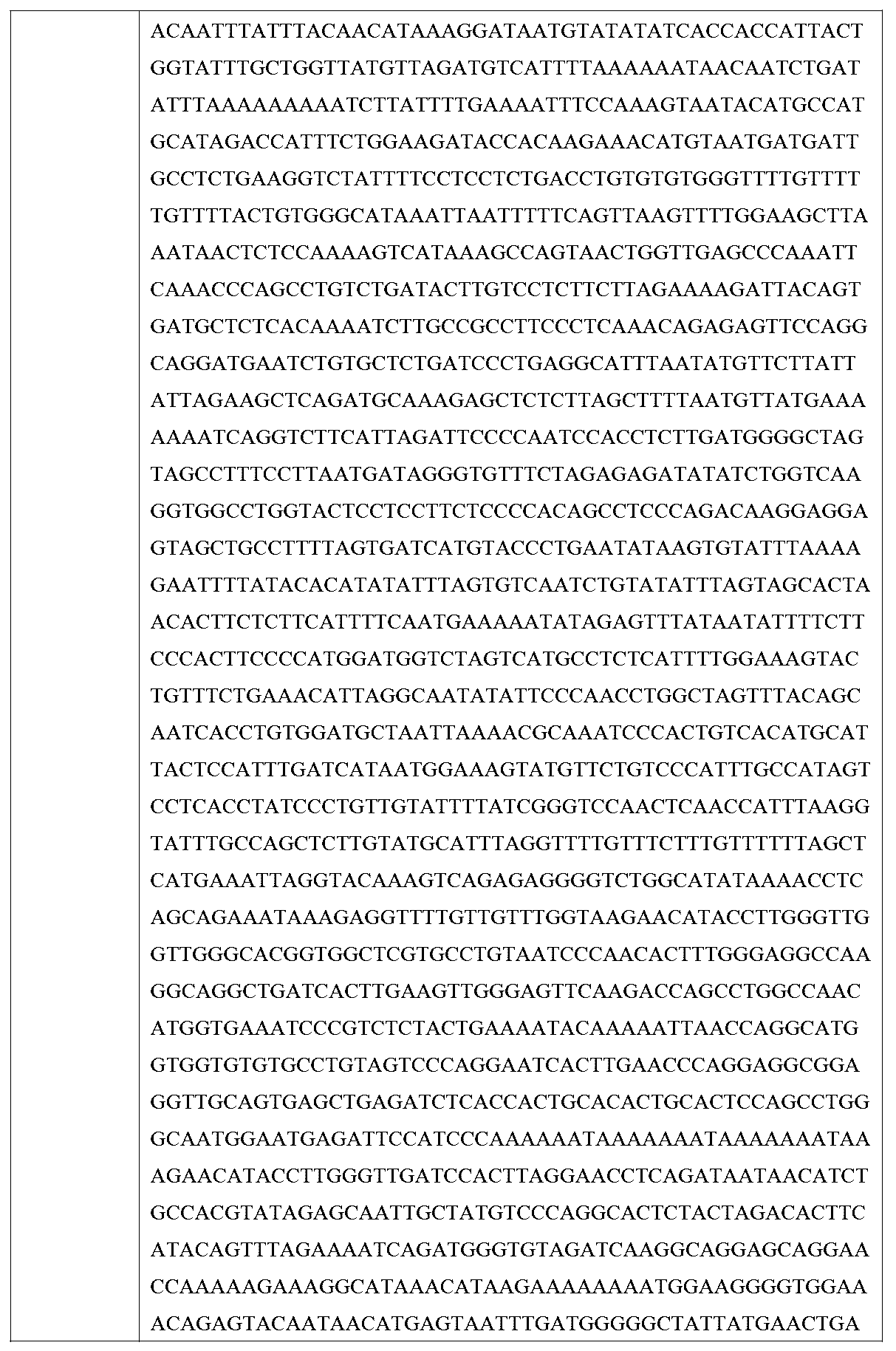


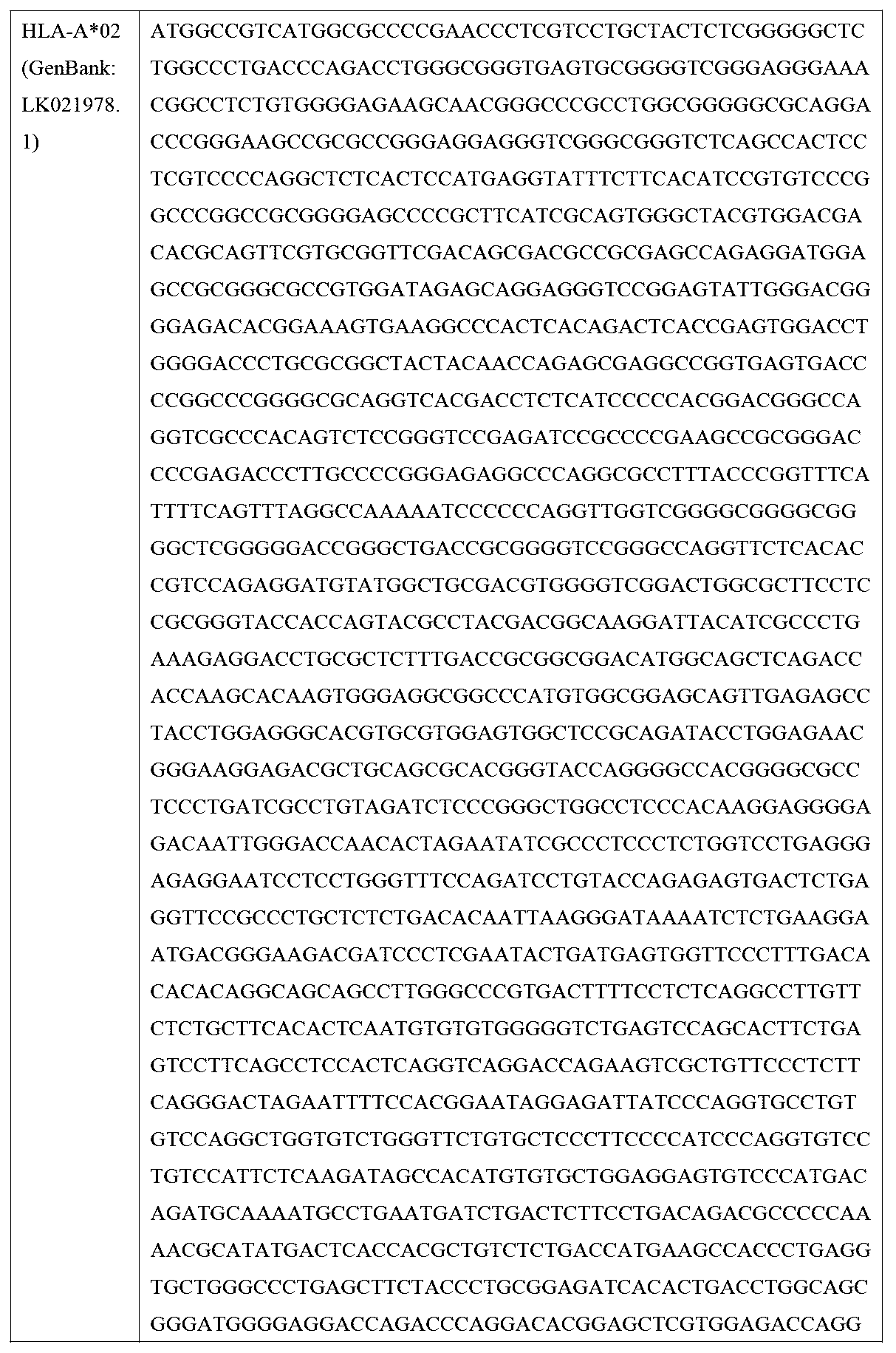
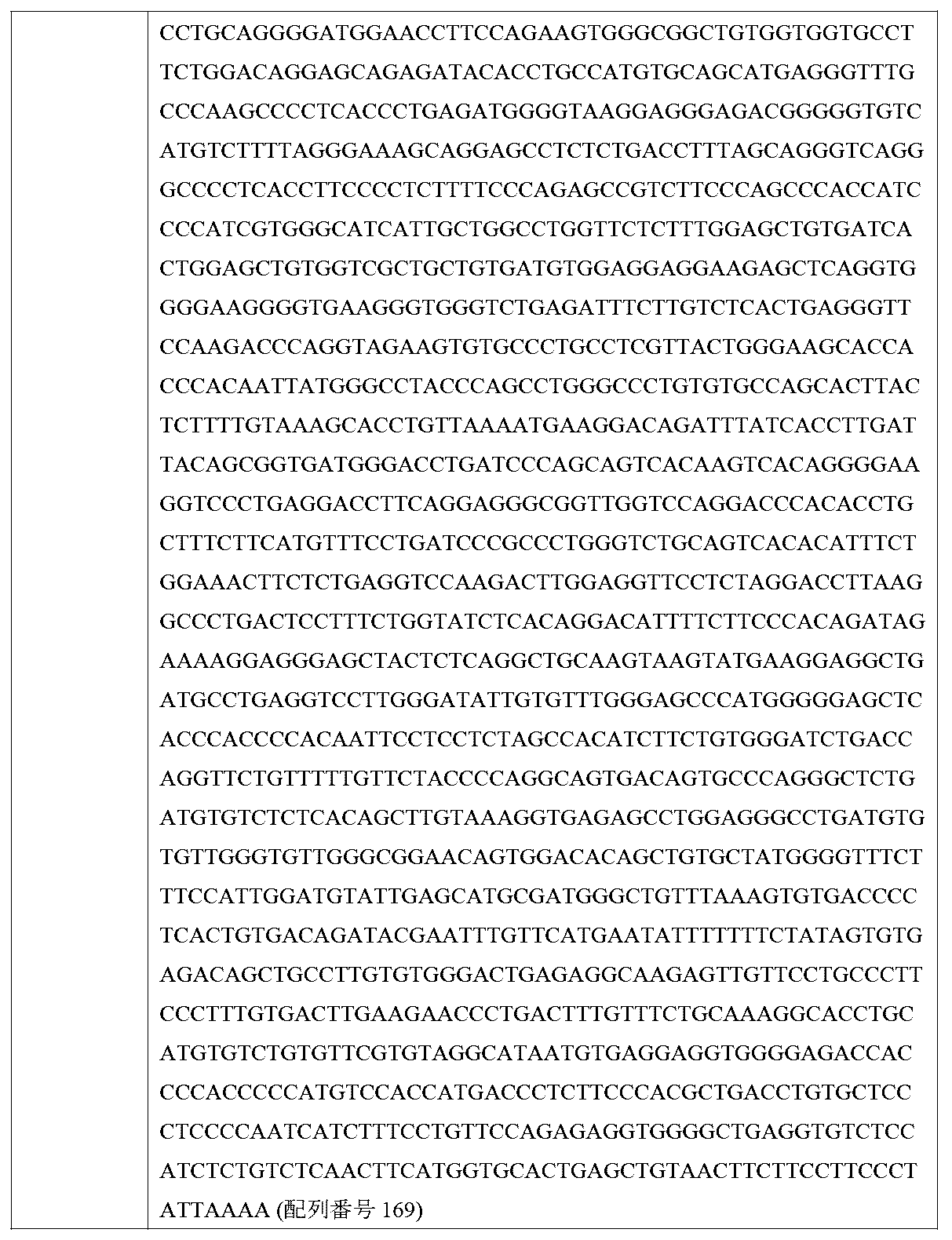
当業者は、TがUに置換されて、RNA配列をDNA配列に変換することができ、逆もまた同様であることを理解し、両方とも本開示の標的遺伝子配列として想定される。 Those skilled in the art will understand that T can be substituted for U to convert an RNA sequence to a DNA sequence, and vice versa, and both are contemplated as target gene sequences in the present disclosure.
いくつかの実施形態において、標的遺伝子は、核酸誘導型エンドヌクレアーゼを使用して、本明細書に記載の免疫細胞内で編集される。例示的な核酸誘導型エンドヌクレアーゼには、CRISPR/Cas9などのクラスIIエンドヌクレアーゼが含まれる。 In some embodiments, the target gene is edited in the immune cells described herein using a nucleic acid-guided endonuclease. Exemplary nucleic acid-guided endonucleases include class II endonucleases such as CRISPR/Cas9.
本明細書で使用される場合、「CRISPR」又は「CRISPR遺伝子編集」とは、クラスター化して規則的な配置の短い回文配列リピートのセット、又はそのようなリピートのセットを含むシステムを指す。「Cas」は、本明細書で使用される場合、CRISPR関連タンパク質を指す。「CRISPR/Cas」系とは、標的遺伝子をサイレンシングするか、ノックアウトするか、又は変異させるために使用することができる、CRISPR及びCasに由来する系を指す。この系は、プラスミド及びファージなどの外来遺伝子エレメントに耐性を付与し、後天性免疫の一形態を提供する原核生物免疫系の一種である。CRISPR/Cas系は、遺伝子編集に使用するために修飾されている。これは、真核生物細胞内に、1つ以上の特異的に設計されたガイド核酸(gNA)、典型的にはガイドRNA(gRNA)、及びgNAとリボヌクレオタンパク質複合体を形成する適切なCasエンドヌクレアーゼを導入することによって達成される。gNAは、gNA-エンドヌクレアーゼタンパク質複合体を標的ゲノム位置に誘導し、エンドヌクレアーゼは標的ゲノム位置に鎖切断を導入する。この二本鎖切断は、非相同末端結合(欠失につながる)又は相同修復(挿入を生成することができる)などの細胞機構によって修復することができ、それによって宿主細胞ゲノム内に遺伝子修飾を導入することができる。 As used herein, "CRISPR" or "CRISPR gene editing" refers to a set of clustered regularly spaced short palindromic repeats or a system that includes such a set of repeats. "Cas" as used herein refers to a CRISPR-associated protein. "CRISPR/Cas" system refers to a system derived from CRISPR and Cas that can be used to silence, knock out, or mutate target genes. This system is a type of prokaryotic immune system that confers resistance to foreign genetic elements such as plasmids and phages and provides a form of acquired immunity. The CRISPR/Cas system has been modified for use in gene editing. This is accomplished by introducing into a eukaryotic cell one or more specifically designed guide nucleic acids (gNAs), typically guide RNAs (gRNAs), and an appropriate Cas endonuclease that forms a ribonucleoprotein complex with the gNA. The gNA guides the gNA-endonuclease protein complex to the target genomic location, where the endonuclease introduces a strand break. This double-strand break can be repaired by cellular mechanisms such as non-homologous end joining (leading to deletions) or homologous repair (which can generate insertions), thereby introducing a genetic modification into the host cell genome.
CRISPR/Cas系は、クラス別及び種類別に分類される。クラス2系は、現在、3つの異なる種類(II型、V型、及びVI型)に分類される単一の干渉タンパク質を表す。遺伝子編集に好適な任意のクラス2のCRISPR/Cas系、例えば、II型、V型又はVI型系は、本開示の範囲内として想定される。例示的なクラス2のII型CRISPR系には、Cas9、Csn2、及びCas4が含まれる。例示的なクラス2のV型CRISPR系には、Cas12、Cas12a(Cpf1)、Cas12b(C2c1)、Cas12c(C2c3)、Cas12d(CasY)、Cas12e(CasX)、Cas12f、Cas12g、Cas12h、Cas12i及びCas12k(C2c5)が含まれる。例示的なクラス2のVI型系には、Cas13、Cas13a(C2c2)Cas13b、Cas13c及びCas13dが含まれる。 CRISPR/Cas systems are classified into classes and types. Class 2 systems represent a single interfering protein that is currently classified into three different types (Type II, Type V, and Type VI). Any Class 2 CRISPR/Cas system suitable for gene editing, e.g., Type II, Type V, or Type VI systems, is contemplated within the scope of the present disclosure. Exemplary Class 2 Type II CRISPR systems include Cas9, Csn2, and Cas4. Exemplary class 2 type V CRISPR systems include Cas12, Cas12a (Cpf1), Cas12b (C2c1), Cas12c (C2c3), Cas12d (CasY), Cas12e (CasX), Cas12f, Cas12g, Cas12h, Cas12i, and Cas12k (C2c5). Exemplary class 2 type VI systems include Cas13, Cas13a (C2c2), Cas13b, Cas13c, and Cas13d.
CRISPR遺伝子座と呼ばれることもある、CRISPR配列は、交互にリピート及びスペーサーを含む。天然に存在するCRISPRにおいて、スペーサーは、通常、プラスミド又はファージ配列などの細菌に対して外来の配列を含む。本明細書に記載されるように、スペーサー配列はまた、「標的化配列」と称されてもよい。遺伝子操作のためのCRISPR/Cas系において、スペーサーは、標的遺伝子配列(gNA)に由来する。 The CRISPR sequence, sometimes referred to as the CRISPR locus, comprises alternating repeats and a spacer. In naturally occurring CRISPRs, the spacer typically comprises a sequence foreign to the bacterium, such as a plasmid or phage sequence. As described herein, the spacer sequence may also be referred to as a "targeting sequence." In the CRISPR/Cas system for genetic engineering, the spacer is derived from the target gene sequence (gNA).
例示的なクラス2のII型CRISPR系は、タンパク質Cas9に依存し、これは、二重らせんの各鎖に対して1つである、2つの活性切断部位を有するヌクレアーゼである。Cas9及び修飾CRISPR遺伝子座RNAを組み合わせることは、遺伝子編集のための系において使用され得る。Pennisi(2013)Science 341:833-836。いくつかの実施形態において、免疫細胞を修飾するために使用されるCasタンパク質は、Cas9である。 An exemplary class 2 type II CRISPR system relies on the protein Cas9, which is a nuclease with two active cleavage sites, one for each strand of the double helix. Combining Cas9 and modified CRISPR locus RNA can be used in a system for gene editing. Pennisi (2013) Science 341:833-836. In some embodiments, the Cas protein used to modify immune cells is Cas9.
したがって、CRISPR/Cas系は、塩基対を付加若しくは欠失することによって、又は早期停止を導入し、それによって標的の発現を低下させることによって、本明細書に記載の免疫細胞における編集のために標的化された遺伝子などの標的遺伝子を編集するために使用され得る。CRISPR/Cas系は、代替的に、可逆的に標的遺伝子をオフにするRNA干渉のように使用され得る。哺乳動物細胞において、例えば、RNAは、Casタンパク質を標的遺伝子プロモーターに誘導し、RNAポリメラーゼを立体的に遮断することができる。 Thus, the CRISPR/Cas system can be used to edit target genes, such as those targeted for editing in immune cells described herein, by adding or deleting base pairs or by introducing a premature stop, thereby reducing expression of the target. The CRISPR/Cas system can alternatively be used like RNA interference to reversibly turn off target genes. In mammalian cells, for example, RNA can guide Cas proteins to the target gene promoter and sterically block the RNA polymerase.
Casタンパク質は、任意の細菌又は古細菌Casタンパク質に由来し得る。任意の好適なCRISPR/Cas系は、本開示の範囲内として想定される。他の態様において、Casタンパク質は、Cas1、Cas1B、Cas2、Cas3、Cas4、Cas5、Cas6、Cas7、Cas8、Cas9、Cas10、Cas12a(Cpf1)、Cas13、Csy1、Csy2、Csy3、Cse1、Cse2、Csc1、Csc2、Csa5、Csn2、Csm2、Csm3、Csm4、Csm5、Csm6、Cmr1、Cmr3、Cmr4、Cmr5、Cmr6、Csb1、Csb2、Csb3、Csx17、Csx14、Csx10、Csx16、CsaX、Csx3、Csx1、Csx15、Csf1、Csf2、Csf3、Csf4、CasX、CasY、それらのホモログ、又はそれらの修飾型のうちの1つ以上を含む。いくつかの実施形態において、Casタンパク質は、Cas9タンパク質、Cpf1タンパク質、C2c1タンパク質、C2c2タンパク質、C2c3タンパク質、Cas3、Cas3-HD、Cas5、Cas7、Cas8、Cas10、又はこれらの組み合わせ若しくは複合体である。いくつかの実施形態において、Casタンパク質は、Cas9タンパク質である。 The Cas protein may be derived from any bacterial or archaeal Cas protein. Any suitable CRISPR/Cas system is contemplated within the scope of the present disclosure. In other aspects, the Cas protein is selected from the group consisting of Cas1, Cas1B, Cas2, Cas3, Cas4, Cas5, Cas6, Cas7, Cas8, Cas9, Cas10, Cas12a (Cpf1), Cas13, Csy1, Csy2, Csy3, Cse1, Cse2, Csc1, Csc2, Csa5, Csn2, Csm2, Csm3, Csm4, The Cas protein may include one or more of Csm5, Csm6, Cmr1, Cmr3, Cmr4, Cmr5, Cmr6, Csb1, Csb2, Csb3, Csx17, Csx14, Csx10, Csx16, CsaX, Csx3, Csx1, Csx15, Csf1, Csf2, Csf3, Csf4, CasX, CasY, homologs thereof, or modified forms thereof. In some embodiments, the Cas protein is a Cas9 protein, a Cpf1 protein, a C2c1 protein, a C2c2 protein, a C2c3 protein, Cas3, Cas3-HD, Cas5, Cas7, Cas8, Cas10, or a combination or complex thereof. In some embodiments, the Cas protein is a Cas9 protein.
当該技術分野において既知である技術、例えば、米国公開第2014/0068797号及びCong(2013)Science 339:819-823に記載されている技術を使用して、標的遺伝子を阻害する人工CRISPR/Cas系が生成され得る。例えば、Tsai(2014)Nature Biotechnol.,32:6 569-576、米国特許第8,871,445号、同第8,865,406号、同第8,795,965号、同第8,771,945号、及び同第8,697,359に記載されているものの、標的遺伝子を阻害する、当該技術分野において既知の他の人工CRISPR/Cas系もまた、生成され得る。特定のCasタンパク質に好適なgNAを設計する方法は、当業者に知られているであろう。 Artificial CRISPR/Cas systems that inhibit target genes can be generated using techniques known in the art, such as those described in U.S. Publication No. 2014/0068797 and Cong (2013) Science 339:819-823. Other artificial CRISPR/Cas systems known in the art that inhibit target genes can also be generated, although they are described, for example, in Tsai (2014) Nature Biotechnol., 32:6 569-576, U.S. Patent Nos. 8,871,445, 8,865,406, 8,795,965, 8,771,945, and 8,697,359. Methods for designing gNAs suitable for a particular Cas protein will be known to those of skill in the art.
本開示は、関連するポリペプチド(例えば、核酸誘導型エンドヌクレアーゼ)の活性を、標的核酸ゲノム内の特定の標的遺伝子配列に導くことができる遺伝子標的化ガイド核酸(gNA)を提供する。ゲノム標的化核酸は、RNAであり得る。ゲノム標的化RNAは、本明細書において「ガイドRNA」又は「gRNA」と称される。ガイドRNAは、目的の標的核酸配列にハイブリダイズする標的化配列、及びCRISPRリピート配列を少なくとも含むことができる。いくつかのII型系において、gRNAはまた、tracrRNA配列と呼ばれる第2のRNAを含み、本明細書において「足場」配列とも称される。II型ガイドRNA(gRNA)において、CRISPRリピート配列及び足場配列は、互いにハイブリダイズして二本鎖を形成する。V型ガイドRNA(gRNA)において、crRNAは、二本鎖を形成する。両方の系において、二本鎖は、ガイドRNA及び部位特異的ポリペプチドが複合体を形成するように、部位特異的ポリペプチドに結合することができる。遺伝子標的化核酸は、部位特異的ポリペプチドとの関連性により、複合体に標的特異性を提供することができる。したがって、遺伝子標的化核酸は、部位特異的ポリペプチドの活性を導くことができる。 The present disclosure provides gene-targeting guide nucleic acids (gNAs) that can guide the activity of an associated polypeptide (e.g., a nucleic acid-guided endonuclease) to a specific target gene sequence within a target nucleic acid genome. The genome-targeting nucleic acid can be an RNA. The genome-targeting RNA is referred to herein as a "guide RNA" or "gRNA". The guide RNA can include at least a targeting sequence that hybridizes to a target nucleic acid sequence of interest and a CRISPR repeat sequence. In some type II systems, the gRNA also includes a second RNA called a tracrRNA sequence, also referred to herein as a "scaffold" sequence. In type II guide RNAs (gRNAs), the CRISPR repeat sequence and the scaffold sequence hybridize to each other to form a duplex. In type V guide RNAs (gRNAs), the crRNA forms a duplex. In both systems, the duplex can bind to a site-specific polypeptide such that the guide RNA and the site-specific polypeptide form a complex. The gene targeting nucleic acid can provide targeting specificity to the complex through its association with the site-directed polypeptide. Thus, the gene targeting nucleic acid can direct the activity of the site-directed polypeptide.
いくつかの実施形態において、本開示は、標的化配列及びガイドRNA足場配列を含むガイドRNAを提供し、標的化配列は、標的遺伝子の配列に相補的である。 In some embodiments, the present disclosure provides a guide RNA comprising a targeting sequence and a guide RNA scaffold sequence, the targeting sequence being complementary to a sequence of a target gene.
例示的なガイドRNAには、約15~20塩基の標的化配列が含まれる。当業者に理解されるように、各gRNAは、そのゲノム標的配列に相補的な標的化配列を含むように設計することができる。例えば、標的化配列の各々、例えば、表8に示されるDNA配列のRNA型から、そのPAM部位を表す3つの3’ヌクレオチドを引いたものを、単一のRNAキメラ又はcrRNAに入れることができる。 An exemplary guide RNA includes a targeting sequence of about 15-20 bases. As will be appreciated by one of skill in the art, each gRNA can be designed to include a targeting sequence complementary to its genomic target sequence. For example, each of the targeting sequences, e.g., the RNA version of the DNA sequence shown in Table 8, minus the three 3' nucleotides representing its PAM site, can be placed into a single RNA chimera or crRNA.
核酸を標的とする遺伝子は、二分子ガイドRNAであってもよい。核酸を標的とする遺伝子は、単一分子ガイドRNAであってもよい。遺伝子標的化核酸は、例えば、対合gRNAを含む、当該技術分野で既知のガイドRNAの任意の既知の構成、又は単一のステップで使用される複数のgRNAであり得る。コード配列及びスプライスジャンクションが存在するゲノム配列から明らかであるが、遺伝子発現に必要な他の特徴は特異的であり、不明確であり得る。 The gene targeting nucleic acid may be a bimolecular guide RNA. The gene targeting nucleic acid may be a single molecule guide RNA. The gene targeting nucleic acid may be any known configuration of guide RNA known in the art, including, for example, paired gRNAs, or multiple gRNAs used in a single step. While it is clear from the genomic sequence that the coding sequence and splice junctions are present, other features required for gene expression are specific and may be unclear.
二分子ガイドRNAは、RNAの2本鎖を含むことができる。第1の鎖は、5’から3’方向の配列、任意選択のスペーサー伸長配列、標的化配列、及び最小CRISPRリピート配列を含む。第2の鎖は、最小tracrRNA配列(最小CRISPRリピート配列に相補的)、3’tracrRNA配列、及び任意選択のtracrRNA伸長配列を含むことができる。 A bimolecular guide RNA can include two strands of RNA. The first strand includes a 5' to 3' sequence, an optional spacer extension sequence, a targeting sequence, and a minimal CRISPR repeat sequence. The second strand can include a minimal tracrRNA sequence (complementary to the minimal CRISPR repeat sequence), a 3' tracrRNA sequence, and an optional tracrRNA extension sequence.
II型系における単一分子ガイドRNA(sgRNA)は、5’から3’方向に、任意選択のスペーサー伸長配列、標的化配列、最小CRISPRリピート配列、単一分子ガイドリンカー、最小tracrRNA配列、3’tracrRNA配列、及び任意選択のtracrRNA伸長配列を含むことができる。任意選択のtracrRNA伸長は、ガイドRNAへの追加の機能性(例えば、安定性)に寄与するエレメントを含むことができる。単一分子ガイドリンカーは、最小CRISPRリピート及び最小tracrRNA配列を連結して、ヘアピン構造を形成することができる。任意選択のtracrRNA伸長は、1つ以上のヘアピンを含むことができる。 The single molecule guide RNA (sgRNA) in the type II system can include, from 5' to 3', an optional spacer extension sequence, a targeting sequence, a minimal CRISPR repeat sequence, a single molecule guide linker, a minimal tracrRNA sequence, a 3' tracrRNA sequence, and an optional tracrRNA extension sequence. The optional tracrRNA extension can include elements that contribute additional functionality (e.g., stability) to the guide RNA. The single molecule guide linker can link the minimal CRISPR repeat and the minimal tracrRNA sequence to form a hairpin structure. The optional tracrRNA extension can include one or more hairpins.
いくつかの実施形態において、ガイドRNA又は単一分子ガイドRNA(sgRNA)は、標的化配列及び足場配列を含むことができる。いくつかの実施形態において、足場配列は、Cas9 gRNA配列である。いくつかの実施形態において、足場配列は、GTTTTAGAGCTAGAAATAGCAAGTTAAAATAAGGCTAGTCCGTTATCAACTTGAAAAAGTGGCACCGAGTCGGTGCTTTTTTT(配列番号435)と少なくとも90%、少なくとも95%、少なくとも96%、少なくとも97%、少なくとも98%、又は少なくとも99%の同一性を共有する配列を含むDNA配列によってコードされる。いくつかの実施形態において、足場配列は、GTTTTAGAGCTAGAAATAGCAAGTTAAAATAAGGCTAGTCCGTTATCAACTTGAAAAAGTGGCACCGAGTCGGTGCTTTTTTT(配列番号435)を含むDNA配列によってコードされる。 In some embodiments, the guide RNA or single molecule guide RNA (sgRNA) can include a targeting sequence and a scaffold sequence. In some embodiments, the scaffold sequence is a Cas9 gRNA sequence. In some embodiments, the scaffold sequence is encoded by a DNA sequence that includes a sequence that shares at least 90%, at least 95%, at least 96%, at least 97%, at least 98%, or at least 99% identity with GTTTTAGAGCTAGAAAATAGCAAGTTAAAAATAAGGCTAGTCCGTTATCAACTTGAAAAAAGTGGCACCGAGTCGGTGCTTTTTTTT (SEQ ID NO: 435). In some embodiments, the scaffold sequence is encoded by a DNA sequence comprising GTTTTAGAGCTAGAAAATAGCAAGTTAAAAATAAGGCTAGTCCGTTATCAACTTGAAAAAAGTGGCACCGAGTCGGTGCTTTTTTTT (SEQ ID NO: 435).
いくつかの実施形態において、例えば、CRISPR/Cas系が、Cas9系であるそれらの実施形態において、sgRNAは、sgRNA配列の5’末端に20ヌクレオチドの標的化配列を含むことができる。sgRNAは、sgRNA配列の5’末端に20ヌクレオチド未満の標的化配列を含むことができる。sgRNAは、sgRNA配列の5’末端に20を超えるヌクレオチド標的化配列を含むことができる。sgRNAは、sgRNA配列の5’末端に17~30ヌクレオチドを有する可変長標的化配列を含むことができる。 In some embodiments, e.g., in those embodiments where the CRISPR/Cas system is a Cas9 system, the sgRNA can include a targeting sequence of 20 nucleotides at the 5' end of the sgRNA sequence. The sgRNA can include a targeting sequence of less than 20 nucleotides at the 5' end of the sgRNA sequence. The sgRNA can include a targeting sequence of more than 20 nucleotides at the 5' end of the sgRNA sequence. The sgRNA can include a variable length targeting sequence having 17-30 nucleotides at the 5' end of the sgRNA sequence.
好適な足場配列、及び足場標的配列の配置は、エンドヌクレアーゼの選択に依存し、当業者に知られているであろう。 Suitable scaffold sequences and the placement of scaffold target sequences will depend on the choice of endonuclease and will be known to those of skill in the art.
II型系における単一分子ガイドRNA(sgRNA)、例えば、Cas9は、5’から3’方向に、最小CRISPRリピート配列及び標的化配列を含むことができる。 Single molecule guide RNAs (sgRNAs) in type II systems, such as Cas9, can contain, in the 5' to 3' direction, a minimal CRISPR repeat sequence and a targeting sequence.
例示として、CRISPR/Cas9又はCRISPR/Cpf1系において使用されるガイドRNA、又は他のより小さなRNAは、以下に例示され、当該技術分野で説明されているように、化学的手段によって容易に合成され得る。化学的合成手順が継続的に拡大している一方で、ポリヌクレオチド長が、100ヌクレオチド程度を超えて著しく増加するにつれて、高速液体クロマトグラフィー(PAGEなどのゲルの使用を回避するHPLC)などの手順によるこのようなRNAの精製は、より困難になる傾向がある。より長いRNAを生成するために使用される1つのアプローチは、一緒にライゲーションされる2つ以上の分子を産生することである。Cas9又はCpf1エンドヌクレアーゼをコードするものなどの、はるかに長いRNAは、より容易に酵素的に生成される。様々な種類のRNA修飾は、RNAの化学的合成及び/又は酵素的生成の間又は後に導入することができ、例えば、当該技術分野で説明されているように、安定性を向上させ、先天性免疫応答の可能性若しくは程度を低減し、かつ/又は他の属性を向上させる修飾を導入することができる。 By way of example, guide RNAs or other smaller RNAs used in the CRISPR/Cas9 or CRISPR/Cpf1 systems can be easily synthesized by chemical means, as exemplified below and described in the art. While chemical synthesis procedures are continually expanding, as polynucleotide lengths increase significantly beyond 100 nucleotides or so, purification of such RNAs by procedures such as high performance liquid chromatography (HPLC, which avoids the use of gels such as PAGE) tends to become more difficult. One approach used to generate longer RNAs is to produce two or more molecules that are ligated together. Much longer RNAs, such as those encoding Cas9 or Cpf1 endonucleases, are more easily generated enzymatically. Various types of RNA modifications can be introduced during or after chemical synthesis and/or enzymatic generation of the RNA, for example modifications that improve stability, reduce the likelihood or extent of innate immune responses, and/or improve other attributes, as described in the art.
gRNAの標的化配列は、目的の標的核酸中の配列にハイブリダイズする。ゲノム標的化核酸の標的化配列は、ハイブリダイゼーション(すなわち、塩基対合)を介して、配列特異的な様式で標的核酸と相互作用することができる。標的化配列のヌクレオチド配列は、目的の標的核酸の配列に応じて変化し得る。 The targeting sequence of the gRNA hybridizes to a sequence in the target nucleic acid of interest. The targeting sequence of the genomic targeting nucleic acid can interact with the target nucleic acid in a sequence-specific manner through hybridization (i.e., base pairing). The nucleotide sequence of the targeting sequence can vary depending on the sequence of the target nucleic acid of interest.
本明細書に記載のCas9系において、標的化配列は、系で使用されるCas9酵素のPAMの逆相補体の5’に位置する標的核酸にハイブリダイズするように設計することができる。標的化配列は、標的配列と完全に一致し得るか、又はミスマッチを有し得る。各CRISPR/Cas系タンパク質は、標的DNAにおいて認識される、特定の方向及び位置における特定のPAM配列を有してもよい。例えば、S.pyogenes Cas9は、標的核酸において、配列5’-NRG-3’を含むPAMを認識し、Rは、A又はGのいずれかを含み、Nは、任意のヌクレオチドであり、Nは、標的化配列によって標的とされる標的核酸配列のすぐ3’である。適切なPAM配列の選択は、当業者には明白であろう。 In the Cas9 systems described herein, the targeting sequence can be designed to hybridize to a target nucleic acid located 5' of the reverse complement of the PAM of the Cas9 enzyme used in the system. The targeting sequence can be a perfect match to the target sequence or can have a mismatch. Each CRISPR/Cas system protein may have a specific PAM sequence in a specific orientation and position that is recognized in the target DNA. For example, S. pyogenes Cas9 recognizes a PAM in the target nucleic acid that includes the sequence 5'-NRG-3', where R includes either A or G, and N is any nucleotide, and N is immediately 3' of the target nucleic acid sequence targeted by the targeting sequence. The selection of an appropriate PAM sequence will be apparent to one of skill in the art.
標的配列は、gRNAの標的化配列に相補的であり、それとハイブリダイズする。標的核酸配列は、20ヌクレオチドを含むことができる。標的核酸は、20ヌクレオチド未満を含むことができる。標的核酸は、20ヌクレオチド超を含むことができる。標的核酸は、少なくとも5、10、15、16、17、18、19、20、21、22、23、24、25、30ヌクレオチド以上を含むことができる。いくつかの実施形態において、例えば、CRISPR/Cas系が、Cas9系であるそれらの実施形態において、標的核酸配列は、PAM配列の逆相補体の第1のヌクレオチドのすぐ5’の20ヌクレオチドを含むことができる。この標的核酸配列は、多くの場合、PAM鎖又は標的鎖と称され、相補的核酸配列は、多くの場合、非PAM鎖又は非標的鎖と称される。当業者は、標的化配列が、標的核酸の非PAM鎖にハイブリダイズすることを認識するであろう。例えば、US2019/0185849A1を参照されたい。 The target sequence is complementary to and hybridizes with the targeting sequence of the gRNA. The target nucleic acid sequence can include 20 nucleotides. The target nucleic acid can include less than 20 nucleotides. The target nucleic acid can include more than 20 nucleotides. The target nucleic acid can include at least 5, 10, 15, 16, 17, 18, 19, 20, 21, 22, 23, 24, 25, 30 or more nucleotides. In some embodiments, for example, in those embodiments where the CRISPR/Cas system is a Cas9 system, the target nucleic acid sequence can include 20 nucleotides immediately 5' of the first nucleotide of the reverse complement of the PAM sequence. This target nucleic acid sequence is often referred to as the PAM strand or target strand, and the complementary nucleic acid sequence is often referred to as the non-PAM strand or non-target strand. Those skilled in the art will recognize that the targeting sequence hybridizes to the non-PAM strand of the target nucleic acid. See, for example, US2019/0185849A1.
いくつかの例において、標的化配列と標的核酸との間の相補性パーセントは、少なくとも約30%、少なくとも約40%、少なくとも約50%、少なくとも約60%、少なくとも約65%、少なくとも約70%、少なくとも約75%、少なくとも約80%、少なくとも約85%、少なくとも約90%、少なくとも約95%、少なくとも約97%、少なくとも約98%、少なくとも約99%、又は100%である。いくつかの例において、標的化配列と標的核酸との間の相補性パーセントは、最大で約30%、最大で約40%、最大で約50%、最大で約60%、最大で約65%、最大で約70%、最大で約75%、最大で約80%、最大で約85%、最大で約90%、最大で約95%、最大で約97%、最大で約98%、最大で約99%、又は100%である。いくつかの例において、標的化配列と標的核酸との間の相補性パーセントは、標的核酸の相補鎖の標的配列の6つの連続した最も5’側のヌクレオチドにわたって100%である。標的化配列と標的核酸との間の相補性パーセントは、約20個の連続したヌクレオチドにわたって少なくとも60%であり得る。標的化配列及び標的核酸の長さは、1つのバルジ又は複数のバルジと考えられ得る、1~6ヌクレオチドによって異なり得る。 In some examples, the percent complementarity between the targeting sequence and the target nucleic acid is at least about 30%, at least about 40%, at least about 50%, at least about 60%, at least about 65%, at least about 70%, at least about 75%, at least about 80%, at least about 85%, at least about 90%, at least about 95%, at least about 97%, at least about 98%, at least about 99%, or 100%. In some examples, the percent complementarity between the targeting sequence and the target nucleic acid is up to about 30%, up to about 40%, up to about 50%, up to about 60%, up to about 65%, up to about 70%, up to about 75%, up to about 80%, up to about 85%, up to about 90%, up to about 95%, up to about 97%, up to about 98%, up to about 99%, or 100%. In some instances, the percent complementarity between the targeting sequence and the target nucleic acid is 100% over the six contiguous 5'-most nucleotides of the target sequence of the complementary strand of the target nucleic acid. The percent complementarity between the targeting sequence and the target nucleic acid can be at least 60% over about 20 contiguous nucleotides. The length of the targeting sequence and the target nucleic acid can vary by 1-6 nucleotides, which can be considered a bulge or multiple bulges.
標的化配列は、当業者に既知のコンピュータプログラムを使用して設計又は選択することができる。コンピュータプログラムは、予測される融解温度、二次構造形成、予測されるアニーリング温度、配列同一性、ゲノムコンテキスト、クロマチンアクセシビリティ、%GC、ゲノム発生頻度(例えば、同一であるか、又は類似しているが、ミスマッチ、挿入、又は欠失の結果として1つ以上のスポットで変化する配列の)、メチル化状態、SNPの存在などの変数を使用することができる。利用可能なコンピュータプログラムは、入力として、NCBI遺伝子ID、公式の遺伝子記号、Ensembl Gene ID、ゲノム座標、又はDNA配列を取得し、入力として指定された適切なゲノム領域を標的とするsgRNAを含む出力ファイルを作成することができる。コンピュータプログラムはまた、標的遺伝子についてのsgRNAのオンターゲット及びオフターゲット結合を示す統計及びスコアの要約を提供することができる(Doench et al.Nat Biotechnol.34:184-191(2016))。本開示は、標的化配列を含むガイドRNAを提供する。いくつかの実施形態において、ガイドRNAは、ガイドRNA足場配列を更に含む。いくつかの実施形態において、標的化配列は、HLA-A、HLA-B、HLA-C、B2M、又はそれらの対立遺伝子からなる群から選択される標的遺伝子の配列に相補的である。いくつかの実施形態において、標的遺伝子は、HLA-A遺伝子である。いくつかの実施形態において、標的遺伝子は、HLA-B遺伝子である。いくつかの実施形態において、標的遺伝子は、HLA-C遺伝子である。いくつかの実施形態において、標的遺伝子は、HLA-A、HLA-B、HLA-C、又はそれらの組み合わせである。いくつかの実施形態において、標的化配列は、表7に開示される配列と約90%、約95%、約96%、約97%、約98%、約99%の同一性を共有するか、又はそれと同一である配列を含む。 The targeting sequence can be designed or selected using computer programs known to those of skill in the art. The computer program can use variables such as predicted melting temperature, secondary structure formation, predicted annealing temperature, sequence identity, genomic context, chromatin accessibility, %GC, genomic frequency of occurrence (e.g., of sequences that are identical or similar but vary in one or more spots as a result of mismatches, insertions, or deletions), methylation status, presence of SNPs, etc. Available computer programs can take as input an NCBI gene ID, official gene symbol, Ensembl Gene ID, genomic coordinates, or DNA sequence, and create an output file that includes sgRNAs that target the appropriate genomic region specified as input. The computer program can also provide a summary of statistics and scores indicating on-target and off-target binding of the sgRNA for the target gene (Doench et al. Nat Biotechnol. 34:184-191 (2016)). The present disclosure provides guide RNAs that include targeting sequences. In some embodiments, the guide RNA further comprises a guide RNA scaffold sequence. In some embodiments, the targeting sequence is complementary to a sequence of a target gene selected from the group consisting of HLA-A, HLA-B, HLA-C, B2M, or an allele thereof. In some embodiments, the target gene is an HLA-A gene. In some embodiments, the target gene is an HLA-B gene. In some embodiments, the target gene is an HLA-C gene. In some embodiments, the target gene is HLA-A, HLA-B, HLA-C, or a combination thereof. In some embodiments, the targeting sequence comprises a sequence that shares about 90%, about 95%, about 96%, about 97%, about 98%, about 99% identity with or is identical to a sequence disclosed in Table 7.
いくつかの実施形態において、gNAは、内因性HLA-A遺伝子座の配列を特異的に標的とする。いくつかの実施形態において、HLA-A遺伝子座の配列を特異的に標的とするgNAは、表8に開示される配列から選択される配列と約90%、約95%、約96%、約97%、約98%、又は約99%の同一性を共有する配列を含む。いくつかの実施形態において、HLA-A遺伝子座の配列を特異的に標的とするgNAは、表8に開示される配列から選択される配列を含む。 In some embodiments, the gNA specifically targets a sequence at the endogenous HLA-A locus. In some embodiments, the gNA that specifically targets a sequence at the HLA-A locus comprises a sequence that shares about 90%, about 95%, about 96%, about 97%, about 98%, or about 99% identity with a sequence selected from the sequences disclosed in Table 8. In some embodiments, the gNA that specifically targets a sequence at the HLA-A locus comprises a sequence selected from the sequences disclosed in Table 8.
いくつかの実施形態において、gNAは、HLA-A*02対立遺伝子の配列を特異的に標的とする。例えば、gRNAは、全てのHLA-A*02対立遺伝子によって共有される配列を特異的に標的とし、それとハイブリダイズするが、HLA-A*02及びHLA-A*03対立遺伝子によって共有されない。いくつかの実施形態において、gNAは、HLA-A*02:01対立遺伝子の配列を特異的に標的とする。いくつかの実施形態において、gNAは、HLA-A*02:01:01対立遺伝子の配列を特異的に標的とする。いくつかの実施形態において、gNAは、HLA-A*02:01:01:01対立遺伝子の配列を特異的に標的とする。いくつかの実施形態において、gNAは、HLA-A*02:01:01:01対立遺伝子の配列を特異的に標的とする。 In some embodiments, the gNA specifically targets a sequence of the HLA-A*02 allele. For example, the gRNA specifically targets and hybridizes to a sequence shared by all HLA-A*02 alleles, but not shared by HLA-A*02 and HLA-A*03 alleles. In some embodiments, the gNA specifically targets a sequence of the HLA-A*02:01 allele. In some embodiments, the gNA specifically targets a sequence of the HLA-A*02:01:01 allele. In some embodiments, the gNA specifically targets a sequence of the HLA-A*02:01:01 allele. In some embodiments, the gNA specifically targets a sequence of the HLA-A*02:01:01:01 allele. In some embodiments, the gNA specifically targets a sequence of the HLA-A*02:01:01:01 allele.
いくつかの実施形態において、gNAは、HLA-A*02のコードDNA配列を特異的に標的とする。 In some embodiments, the gNA specifically targets the coding DNA sequence of HLA-A*02.
いくつかの実施形態において、gNAは、1000を超えるHLA-A*02対立遺伝子によって共有されるコードDNA配列を特異的に標的とする。いくつかの実施形態において、1000を超えるHLA-A*02対立遺伝子におけるコードDNA配列を特異的に標的とするgNAは、配列番号400~465から選択される配列と約90%、約95%、約96%、約97%、約98%、約99%の同一性を共有するか、又はそれと同一である配列を含む。


表8に開示される配列は、PAM配列を含む、対応するゲノム配列を含む。当業者は、gRNAの標的化配列が、gRNAについての対応するPAM部位を表す、表8の配列の3つの3’末端ヌクレオチドを含まないことを理解するであろう。 The sequences disclosed in Table 8 include the corresponding genomic sequences, including the PAM sequence. One of skill in the art will understand that the targeting sequence of the gRNA does not include the three 3' terminal nucleotides of the sequences in Table 8, which represent the corresponding PAM site for the gRNA.
本開示は、B2M遺伝子に特異的な標的化配列を含むgNAを提供する。いくつかの実施形態において、gNAは、B2M遺伝子のコード配列(CDS)配列を特異的に標的とする。いくつかの実施形態において、gNAは、B2M遺伝子プロモーター配列を標的とする配列を含む。 The present disclosure provides gNAs that include a targeting sequence specific to the B2M gene. In some embodiments, the gNA specifically targets the coding sequence (CDS) sequence of the B2M gene. In some embodiments, the gNA includes a sequence that targets the B2M gene promoter sequence.
いくつかの実施形態において、gNAは、標的化配列及びgNA足場配列を含む。いくつかの実施形態において、標的化配列は、表9に示される配列、又はそれと約90%、約95%、約96%、約97%、約98%、約99%の同一性を共有する配列を含む。 In some embodiments, the gNA comprises a targeting sequence and a gNA scaffold sequence. In some embodiments, the targeting sequence comprises a sequence shown in Table 9, or a sequence sharing about 90%, about 95%, about 96%, about 97%, about 98%, about 99% identity therewith.
いくつかの実施形態において、標的化配列は、B2M遺伝子の配列に相補的である。いくつかの実施形態において、B2M遺伝子は、表7に示されるB2M配列と約90%、約95%、約96%、約97%、約98%、約99%の同一性を共有する配列を含む。
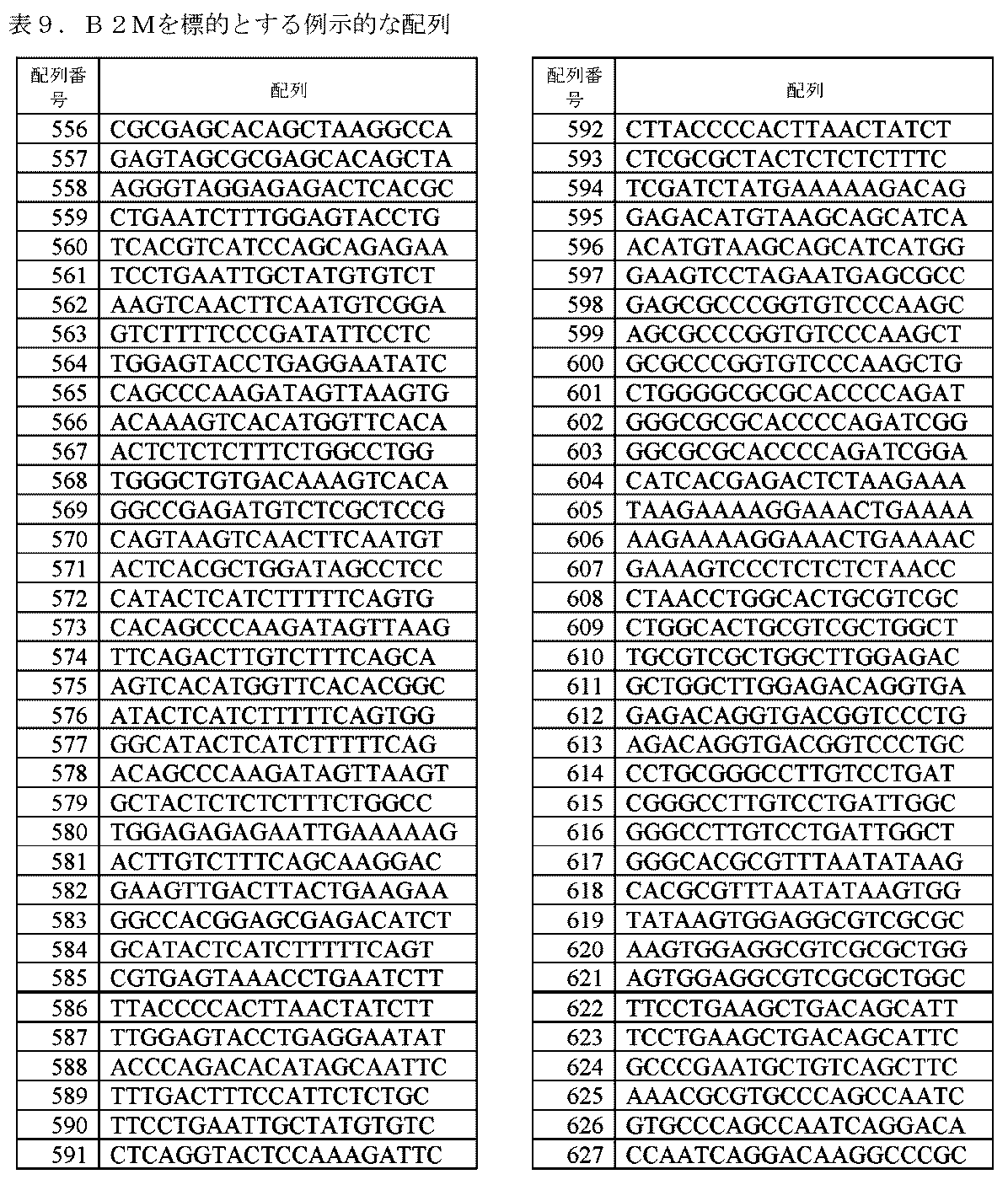
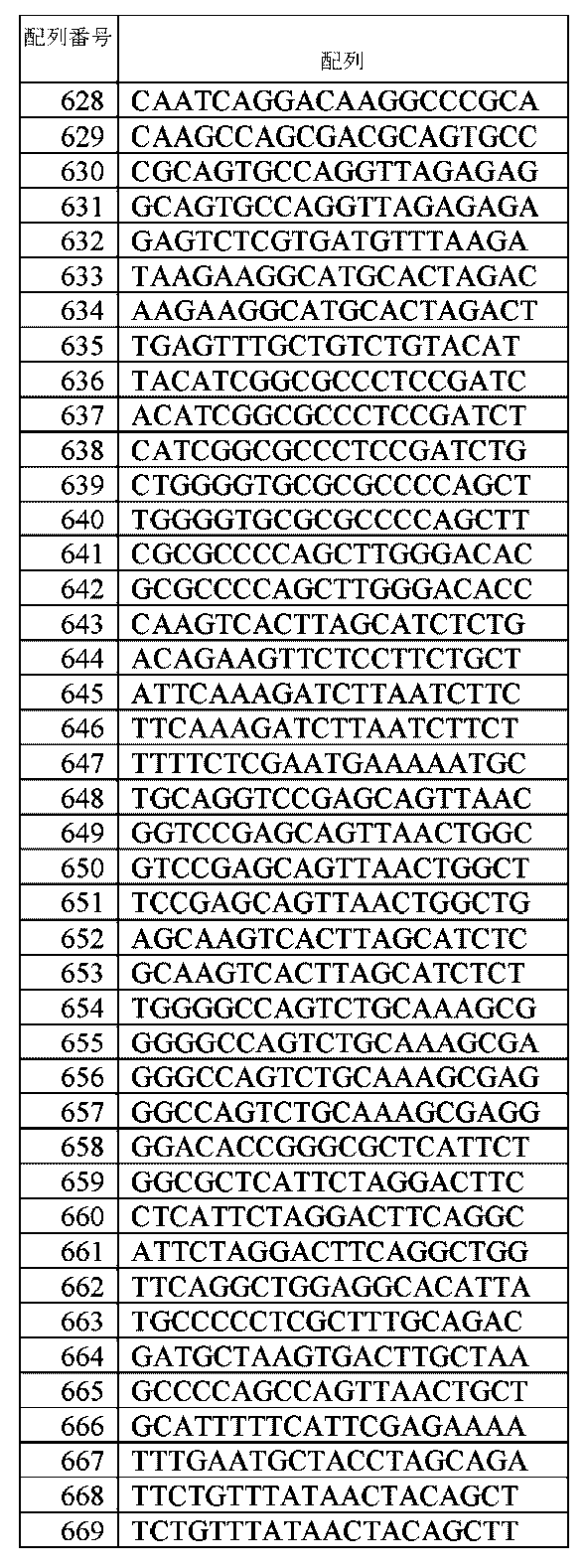
いくつかの実施形態において、本明細書に記載の免疫細胞は、TALEN遺伝子編集を使用して編集される。 In some embodiments, the immune cells described herein are edited using TALEN gene editing.
「TALEN」又は「TALEN遺伝子編集」とは、標的遺伝子を編集するために使用される人工ヌクレアーゼである、転写活性化因子様エフェクターヌクレアーゼを指す。 "TALEN" or "TALEN gene editing" refers to transcription activator-like effector nucleases, which are artificial nucleases used to edit target genes.
TALENは、TALエフェクターDNA結合ドメインをDNA切断ドメインに融合することによって人工的に産生される。Xanthomonas菌に由来する転写活性化因子様エフェクター(TALE)を操作して、TCRサブユニット、MHCクラスI複合体成分、又はCD52などの標的遺伝子の一部分を含む、任意の所望のDNA配列に結合させることができる。操作されたTALEをDNA切断ドメインと合わせることにより、標的遺伝子配列を含む、任意の所望のDNA配列に特異的な制限酵素を産生することができる。次いで、これらを細胞内に導入することができ、それらをゲノム編集に使用することができる。 TALENs are artificially produced by fusing a TAL effector DNA binding domain to a DNA cleavage domain. Transcription activator-like effectors (TALEs) from Xanthomonas bacteria can be engineered to bind to any desired DNA sequence, including portions of target genes such as TCR subunits, MHC class I complex components, or CD52. By combining engineered TALEs with DNA cleavage domains, restriction enzymes specific for any desired DNA sequence, including target gene sequences, can be produced. These can then be introduced into cells and used for genome editing.
TALENを産生するために、TALEタンパク質は、野生型又は変異Foldエンドヌクレアーゼである、ヌクレアーゼ(N)に融合される。FokIに対するいくつかの変異は、そのTALENでの使用のために作製されており、これらは、例えば、切断特異性又は活性を改善する。 To produce a TALEN, the TALE protein is fused to a nuclease (N), which is a wild-type or mutant Fold endonuclease. Several mutations to FokI have been made for use in the TALEN, which improve, for example, cleavage specificity or activity.
FokIドメインは二量体として機能し、適切な配向及び間隔を有する標的ゲノム内の部位に対して独自のDNA結合ドメインを有する2つの構築物を必要とする。TALE DNA結合ドメインと、FokI切断ドメインとの間のアミノ酸残基の数、及び2つの個々のTALEN結合部位の間の塩基の数の両方は、高レベルの活性を達成するための重要なパラメータであるように見える。 The FokI domain functions as a dimer, requiring two constructs with unique DNA binding domains to be properly oriented and spaced to a site in the target genome. Both the number of amino acid residues between the TALE DNA binding domain and the FokI cleavage domain, and the number of bases between the two individual TALEN binding sites appear to be important parameters for achieving high levels of activity.
標的遺伝子内の配列に特異的なTALENは、モジュール成分を使用する様々なスキームを含む、当該技術分野で既知の任意の方法を使用して構築することができる。 TALENs specific to sequences within a target gene can be constructed using any method known in the art, including a variety of schemes that use modular components.
いくつかの実施形態において、標的遺伝子は、ZFN遺伝子編集を使用して、本明細書に記載の免疫細胞において編集される。 In some embodiments, a target gene is edited in an immune cell described herein using ZFN gene editing.
「ZFN」又は「亜鉛フィンガーヌクレアーゼ」又は「ZFN遺伝子編集」とは、標的遺伝子を編集するために使用され得る人工ヌクレアーゼである、亜鉛フィンガーヌクレアーゼを指す。 "ZFN" or "zinc finger nuclease" or "ZFN gene editing" refers to zinc finger nucleases, which are artificial nucleases that can be used to edit target genes.
TALENと同様に、ZFNは、DNA結合ドメインに融合したFoldヌクレアーゼドメイン(又はその誘導体)を含む。ZFNの場合、DNA結合ドメインは、1つ以上の亜鉛フィンガーを含む。 Like TALENs, ZFNs contain a Fold nuclease domain (or a derivative thereof) fused to a DNA-binding domain. In the case of ZFNs, the DNA-binding domain contains one or more zinc fingers.
亜鉛フィンガーは、1つ以上の亜鉛イオンによって安定化された小さなタンパク質構造モチーフである。亜鉛フィンガーは、例えば、Cys2His2を含むことができ、約3bp配列を認識することができる。既知の特異性の様々な亜鉛フィンガーを組み合わせて、およそ6、9、12、15、又は18bp配列を認識するマルチフィンガーポリペプチドを産生することができる。ファージディスプレイ、酵母ワンハイブリッドシステム、細菌ワンハイブリッド及びツーハイブリッドシステム、並びに哺乳動物細胞を含む、特定の配列を認識する亜鉛フィンガー(及びそれらの組み合わせ)を生成するために、様々な選択及びモジュラーアセンブリ技術が利用可能である。 Zinc fingers are small protein structural motifs stabilized by one or more zinc ions. Zinc fingers can, for example, contain Cys2His2 and can recognize approximately 3 bp sequences. Various zinc fingers of known specificity can be combined to produce multi-finger polypeptides that recognize approximately 6, 9, 12, 15, or 18 bp sequences. A variety of selection and modular assembly techniques are available to generate zinc fingers (and combinations thereof) that recognize specific sequences, including phage display, yeast one-hybrid systems, bacterial one-hybrid and two-hybrid systems, and mammalian cells.
TALENと同様に、ZFNは、DNAを切断するために二量体化しなければならない。したがって、一対のZFNは、非回文DNA部位を標的とするために必要である。2つの個々のZFNは、それらのヌクレアーゼが適切に離間した状態で、DNAの反対側の鎖に結合しなければならない。 Like TALENs, ZFNs must dimerize to cleave DNA. Thus, a pair of ZFNs is required to target non-palindromic DNA sites. Two individual ZFNs must bind to opposite strands of DNA with their nucleases appropriately spaced apart.
また、TALENと同様に、ZFNは、DNA内に二本鎖切断を作り出すことができ、これは、不適切に修復された場合にフレームシフト変異を作り出すことができ、細胞における標的遺伝子又は遺伝子産物の発現及び量の減少をもたらす。ZFNは、標的遺伝子内で変異するために相同組換えとともに使用することもできる。 Also, like TALENs, ZFNs can create double-stranded breaks in DNA that, if improperly repaired, can create frameshift mutations, resulting in reduced expression and amount of the target gene or gene product in the cell. ZFNs can also be used in conjunction with homologous recombination to create mutations in target genes.
標的遺伝子内の配列に特異的なZFNは、当該技術分野で既知の任意の方法を使用して構築することができる。 ZFNs specific to a sequence within a target gene can be constructed using any method known in the art.
いくつかの実施形態において、1つ以上のMCH-I成分の発現及び機能は、RNA干渉を使用して低減される。「RNAi」又は「RNA干渉」とは、二本鎖RNA(dsRNA)によって媒介される、配列特異的転写後遺伝子サイレンシングのプロセスを指す。siRNA(低分子干渉RNA)、miRNA(マイクロRNA)、shRNA(ショートヘアピンRNA)、ddRNA(DNA指向性RNA)、piRNA(Piwi相互作用RNA)、又はrasiRNA(リピート関連siRNA)などの二本鎖RNA、及びそれらの修飾形態は全て、RNA干渉を媒介することができる。これらのdsRNA分子は、商業的に利用可能であり得るか、又は既知の配列情報に基づいて設計及び調製され得る。これらの分子のアンチセンス鎖は、RNA、DNA、PNA、又はそれらの組み合わせを含むことができる。DNA/RNAキメラポリヌクレオチドには、標的遺伝子の発現を阻害するDNA及びRNAからなる二本鎖ポリヌクレオチドが含まれるが、これらに限定されない。dsRNA分子は、本明細書に記載されるように、1つ以上の修飾ヌクレオチドも含むことができ、これらは、いずれか又は両方の鎖に組み込むことができる。 In some embodiments, the expression and function of one or more MCH-I components are reduced using RNA interference. "RNAi" or "RNA interference" refers to the process of sequence-specific post-transcriptional gene silencing mediated by double-stranded RNA (dsRNA). Double-stranded RNAs such as siRNA (small interfering RNA), miRNA (microRNA), shRNA (short hairpin RNA), ddRNA (DNA-directed RNA), piRNA (Piwi-interacting RNA), or rasiRNA (repeat-associated siRNA), and modified forms thereof, can all mediate RNA interference. These dsRNA molecules can be commercially available or can be designed and prepared based on known sequence information. The antisense strand of these molecules can include RNA, DNA, PNA, or combinations thereof. DNA/RNA chimeric polynucleotides include, but are not limited to, double-stranded polynucleotides consisting of DNA and RNA that inhibit the expression of a target gene. The dsRNA molecule can also include one or more modified nucleotides, as described herein, which can be incorporated into either or both strands.
RNAi遺伝子サイレンシング又はノックダウンにおいて、標的遺伝子の一部分に相補的である第1の(アンチセンス)鎖、及び第1のアンチセンス鎖に完全に又は部分的に相補的である第2の(センス)鎖を含むdsRNAを生物に導入する。生物に導入した後、標的遺伝子特異的dsRNAは、比較的小さな断片(siRNA)に処理され、その後、生物全体に分布し、標的遺伝子のメッセンジャーRNAを減少させ、標的遺伝子の完全又は部分的な欠失から生じる表現型に非常に似ているようになり得る表現型をもたらすことができる。 In RNAi gene silencing or knockdown, dsRNA is introduced into an organism, comprising a first (antisense) strand that is complementary to a portion of a target gene, and a second (sense) strand that is fully or partially complementary to the first antisense strand. After introduction into the organism, the target gene-specific dsRNA is processed into relatively small fragments (siRNAs) that can then be distributed throughout the organism, reducing the messenger RNA of the target gene and resulting in a phenotype that can closely resemble the phenotype resulting from complete or partial deletion of the target gene.
細胞内のある特定のdsRNAは、リボヌクレアーゼIII酵素である、Dicer酵素の作用を受けることができる。Dicerは、dsRNAを、dsRNAのより短い部分、すなわち、siRNAに処理することができる。RNAiはまた、RNA誘導サイレンシング複合体(RISC)として知られているエンドヌクレアーゼ複合体も含む。Dicerによる切断後、siRNAは、siRNA二本鎖のアンチセンス鎖に相補的な配列を有する一本鎖RNA標的のRISC複合体及び直接切断に入る。siRNAの他方の鎖は、パッセンジャー鎖である。標的RNAの切断は、siRNA二本鎖のアンチセンス鎖に相補的な領域の中央で行われる。したがって、siRNAは、配列特異的な様式でRNA干渉を媒介することによって、遺伝子発現を下方制御又はノックダウンすることができる。 Certain dsRNAs in cells can be acted upon by the Dicer enzyme, a ribonuclease III enzyme. Dicer can process dsRNAs into shorter pieces of dsRNA, namely siRNAs. RNAi also involves an endonuclease complex known as the RNA-induced silencing complex (RISC). After cleavage by Dicer, the siRNAs enter the RISC complex and directly cleave single-stranded RNA targets that have a sequence complementary to the antisense strand of the siRNA duplex. The other strand of the siRNA is the passenger strand. Cleavage of the target RNA takes place in the middle of the region complementary to the antisense strand of the siRNA duplex. Thus, siRNAs can downregulate or knock down gene expression by mediating RNA interference in a sequence-specific manner.
RNA干渉に関して本明細書で使用される場合、「標的遺伝子」又は「標的配列」とは、対応するRNAが、本明細書に記載されるように、dsRNA又はsiRNAを使用してRNAi経路を介して分解するために標的化される遺伝子又は遺伝子配列を指す。例示的な標的遺伝子配列を表7に示す。例えば、siRNAを使用して遺伝子を標的化するために、siRNAは、標的遺伝子又は配列の少なくとも一部分に相補的、又は実質的に相補的なアンチセンス領域、及びアンチセンス鎖に相補的なセンス鎖を含む。一旦細胞内に導入されると、siRNAは、RISC複合体に、標的配列を含むRNAを切断するように指示し、それによってRNAを分解する。本開示は、干渉RNAを提供する。本開示の二本鎖RNA分子は、当該技術分野で既知の任意の種類のRNA干渉分子の形態であってもよい。いくつかの実施形態において、二本鎖RNA分子は、低分子干渉RNA(siRNA)である。他の実施形態において、二本鎖RNA分子は、ショートヘアピンRNA(shRNA)分子である。他の実施形態において、二本鎖RNA分子は、細胞内で処理されてsiRNAを産生するDicer基質である。他の実施形態において、二本鎖RNA分子は、マイクロRNA前駆体分子の一部である。 As used herein with respect to RNA interference, a "target gene" or "target sequence" refers to a gene or gene sequence whose corresponding RNA is targeted for degradation via the RNAi pathway using dsRNA or siRNA as described herein. Exemplary target gene sequences are shown in Table 7. For example, to target a gene using siRNA, the siRNA includes an antisense region that is complementary or substantially complementary to at least a portion of the target gene or sequence, and a sense strand that is complementary to the antisense strand. Once introduced into a cell, the siRNA directs the RISC complex to cleave the RNA that includes the target sequence, thereby degrading the RNA. The present disclosure provides an interfering RNA. The double-stranded RNA molecule of the present disclosure may be in the form of any type of RNA interference molecule known in the art. In some embodiments, the double-stranded RNA molecule is a small interfering RNA (siRNA). In other embodiments, the double-stranded RNA molecule is a short hairpin RNA (shRNA) molecule. In other embodiments, the double-stranded RNA molecule is a Dicer substrate that is processed in the cell to produce siRNA. In other embodiments, the double-stranded RNA molecule is part of a microRNA precursor molecule.
いくつかの実施形態において、shRNAは、Dicer基質として好適な長さであり、RISC活性siRNA分子を産生するように処理され得る。例えば、Rossi et al.,US2005/0244858を参照されたい。 In some embodiments, the shRNA is of a length suitable as a Dicer substrate and can be processed to produce a RISC-active siRNA molecule. See, e.g., Rossi et al., US2005/0244858.
Dicer基質二本鎖RNA(例えば、shRNA)は、活性siRNAを産生するためにDicerによって処理されるのに十分な長さのものであり得、以下の特性のうちの1つ以上を更に含み得る:(i)Dicer基質shRNAは、例えば、アンチセンス鎖上に3’オーバーハングを有する非対称であってもよく、(ii)Dicer基質shRNAは、活性siRNAへのDicer結合及びdsRNAのプロセシングの配向、例えば、1つ以上のDNAヌクレオチドの組み込みを指示するために、センス鎖上に修飾された3’末端を有してもよく、(iii)Dicer基質dsRNAの第1及び第2の鎖は、21~30bpの長さであってもよい。 Dicer substrate double-stranded RNA (e.g., shRNA) may be of sufficient length to be processed by Dicer to produce active siRNA and may further include one or more of the following properties: (i) Dicer substrate shRNA may be asymmetric, e.g., with a 3' overhang on the antisense strand; (ii) Dicer substrate shRNA may have a modified 3' end on the sense strand to direct the orientation of Dicer binding and processing of the dsRNA into active siRNA, e.g., incorporation of one or more DNA nucleotides; and (iii) the first and second strands of the Dicer substrate dsRNA may be 21-30 bp in length.
いくつかの実施形態において、干渉RNAは、B2M mRNAの配列に相補的な配列を含む。いくつかの実施形態において、干渉RNAは、B2M mRNAのRNAi媒介性分解を誘導することができる。いくつかの実施形態において、B2M mRNA配列は、コード配列を含む。いくつかの実施形態において、B2M mRNA配列は、非翻訳領域を含む。 In some embodiments, the interfering RNA comprises a sequence complementary to a sequence of the B2M mRNA. In some embodiments, the interfering RNA is capable of inducing RNAi-mediated degradation of the B2M mRNA. In some embodiments, the B2M mRNA sequence comprises a coding sequence. In some embodiments, the B2M mRNA sequence comprises an untranslated region.
いくつかの実施形態において、干渉RNAは、HLA-A*02 mRNAの配列に相補的な配列を含む。いくつかの実施形態において、干渉RNAは、HLA-A*02 mRNAのRNAi媒介性分解を誘導することができる。いくつかの実施形態において、HLA-A*02 mRNA配列は、コード配列を含む。いくつかの実施形態において、HLA-A*02 mRNA配列は、非翻訳領域を含む。 In some embodiments, the interfering RNA comprises a sequence complementary to a sequence of HLA-A*02 mRNA. In some embodiments, the interfering RNA is capable of inducing RNAi-mediated degradation of HLA-A*02 mRNA. In some embodiments, the HLA-A*02 mRNA sequence comprises a coding sequence. In some embodiments, the HLA-A*02 mRNA sequence comprises an untranslated region.
いくつかの実施形態において、干渉RNAは、ショートヘアピンRNA(shRNA)である。いくつかの実施形態において、shRNAは、B2M mRNAに相補的な配列を5’から3’末端に有する第1の配列と、第1の配列に相補的な配列を5’から3’末端に有する第2の配列と、を含み、第1の配列及び第2の配列は、shRNAを形成する。 In some embodiments, the interfering RNA is a short hairpin RNA (shRNA). In some embodiments, the shRNA includes a first sequence having a sequence at its 5' to 3' end that is complementary to B2M mRNA, and a second sequence having a sequence at its 5' to 3' end that is complementary to the first sequence, the first sequence and the second sequence forming the shRNA.
いくつかの実施形態において、第1の配列は、18、19、20、21、又は22ヌクレオチドである。いくつかの実施形態において、第1の配列は、表10及び11に示される配列から選択される配列に相補的である。いくつかの実施形態において、第1の配列は、25%以上及び60%未満のGC含量を有する。いくつかの実施形態において、第1の配列は、表10及び11に示される配列から選択される配列に相補的である。いくつかの実施形態において、第1の配列は、同じ塩基の4つのヌクレオチド、又は7つのC若しくはGヌクレオチド塩基のランを含まない。いくつかの実施形態において、第1の配列は、21ヌクレオチドである。 In some embodiments, the first sequence is 18, 19, 20, 21, or 22 nucleotides. In some embodiments, the first sequence is complementary to a sequence selected from the sequences shown in Tables 10 and 11. In some embodiments, the first sequence has a GC content of 25% or more and less than 60%. In some embodiments, the first sequence is complementary to a sequence selected from the sequences shown in Tables 10 and 11. In some embodiments, the first sequence does not contain four nucleotides of the same base, or a run of seven C or G nucleotide bases. In some embodiments, the first sequence is 21 nucleotides.
第1の配列に相補的な例示的な標的B2M配列を表10に示す。 Exemplary target B2M sequences complementary to the first sequence are shown in Table 10.
ある場合には、第1の配列は、標的核酸配列と100%の同一性、すなわち、完全な同一性、相同性、相補性を有し得る。他の場合には、第1の配列と標的核酸配列との間に1つ以上のミスマッチが存在し得る。例えば、センス領域と標的核酸配列との間に1、2、3、4、5、6、又は7個のミスマッチがあり得る。 In some cases, the first sequence may have 100% identity, i.e., complete identity, homology, complementarity, with the target nucleic acid sequence. In other cases, there may be one or more mismatches between the first sequence and the target nucleic acid sequence. For example, there may be 1, 2, 3, 4, 5, 6, or 7 mismatches between the sense region and the target nucleic acid sequence.
表10に示す配列をDNA配列として提示する。表10に示す全ての配列において、チミン(T)は、標的mRNA配列の配列に到達するためにウラシル(U)によって置き換えられ得る。

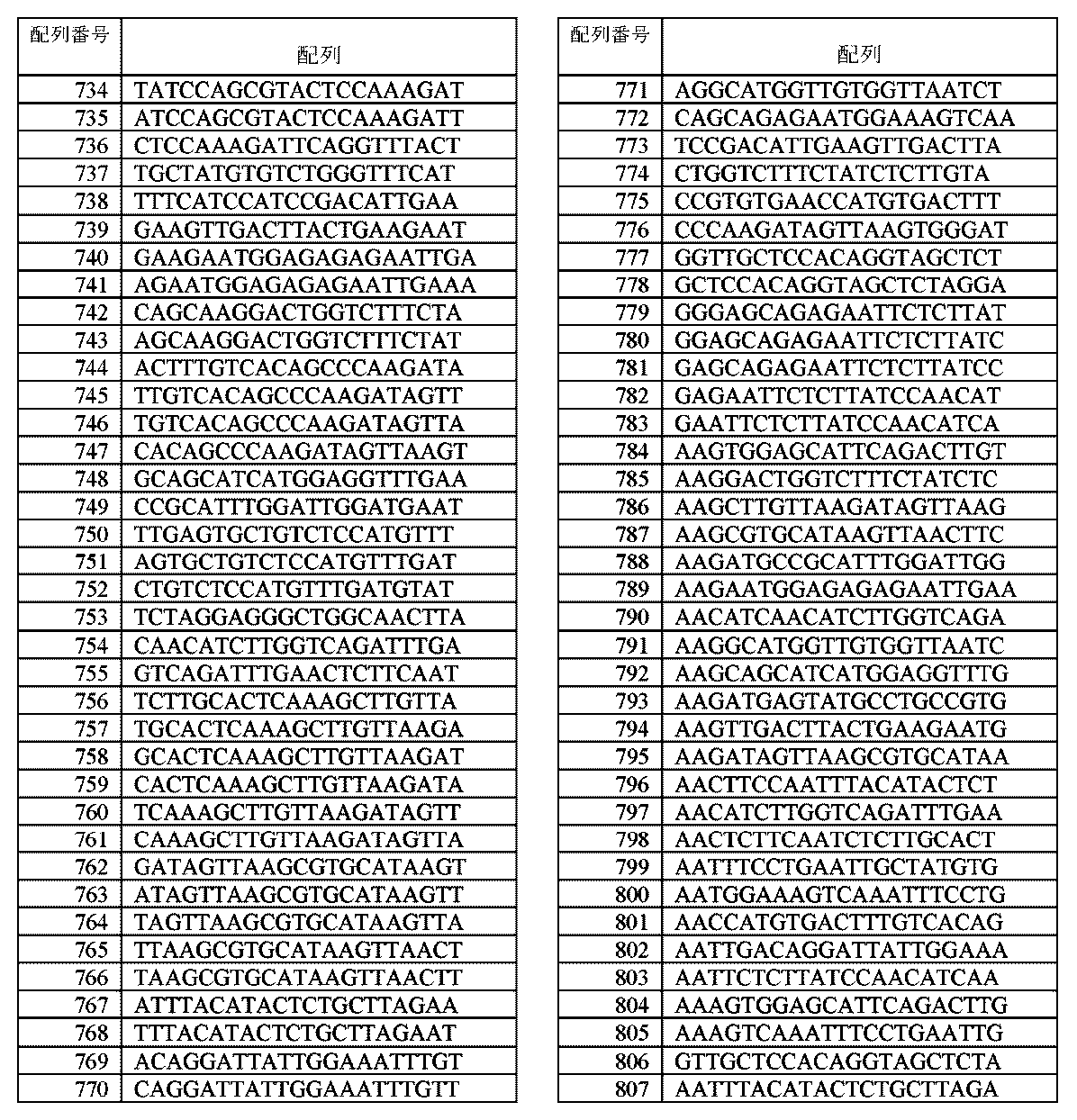
いくつかの実施形態において、干渉RNAは、HLA-A*02 mRNAの配列に相補的な配列を含む。いくつかの実施形態において、干渉RNAは、HLA-A*02 mRNAのRNAi媒介性分解を誘導することができる。いくつかの実施形態において、HLA-A*02 mRNA配列は、コード配列を含む。いくつかの実施形態において、HLA-A*02 mRNA配列は、非翻訳領域を含む。 In some embodiments, the interfering RNA comprises a sequence complementary to a sequence of HLA-A*02 mRNA. In some embodiments, the interfering RNA is capable of inducing RNAi-mediated degradation of HLA-A*02 mRNA. In some embodiments, the HLA-A*02 mRNA sequence comprises a coding sequence. In some embodiments, the HLA-A*02 mRNA sequence comprises an untranslated region.
B2M shRNAをコードする例示的な配列は、GCACTCAAAGCTTGTTAAGATCGAAATCTTAACAAGCTTTGAGTGC(配列番号179)の配列、又はそれと少なくとも90%、少なくとも95%、少なくとも97%、若しくは少なくとも99%の同一性を有する配列を含む。B2M shRNAをコードする更なる例示的な配列は、GTTAACTTCCAATTTACATACCGAAGTATGTAAATTGGAAGTTAAC(配列番号808)の配列、又はそれと少なくとも90%、少なくとも95%、少なくとも97%若しくは少なくとも99%の同一性を有する配列を含む。 Exemplary sequences encoding B2M shRNAs include the sequence GCACTCAAAGCTTGTTAAGATCGAAATCTTAACAAGCTTTGAGTGC (SEQ ID NO: 179), or a sequence having at least 90%, at least 95%, at least 97%, or at least 99% identity thereto. Further exemplary sequences encoding B2M shRNAs include the sequence GTTAACTTCCAATTTACATACCGAAGTATGTAAAATTGGAAGTTAAC (SEQ ID NO: 808), or a sequence having at least 90%, at least 95%, at least 97%, or at least 99% identity thereto.
いくつかの実施形態において、干渉RNAは、ショートヘアピンRNA(shRNA)である。いくつかの実施形態において、shRNAは、HLA-A*02 mRNAに相補的な配列を5’から3’末端に有する第1の配列と、第1の配列に相補的な配列を5’から3’末端に有する第2の配列と、を含み、第1の配列及び第2の配列は、shRNAを形成する In some embodiments, the interfering RNA is a short hairpin RNA (shRNA). In some embodiments, the shRNA includes a first sequence having a sequence at its 5' to 3' end that is complementary to HLA-A*02 mRNA, and a second sequence having a sequence at its 5' to 3' end that is complementary to the first sequence, and the first sequence and the second sequence form the shRNA.
第1の配列に相補的な例示的な標的HLA配列を表11に示す。
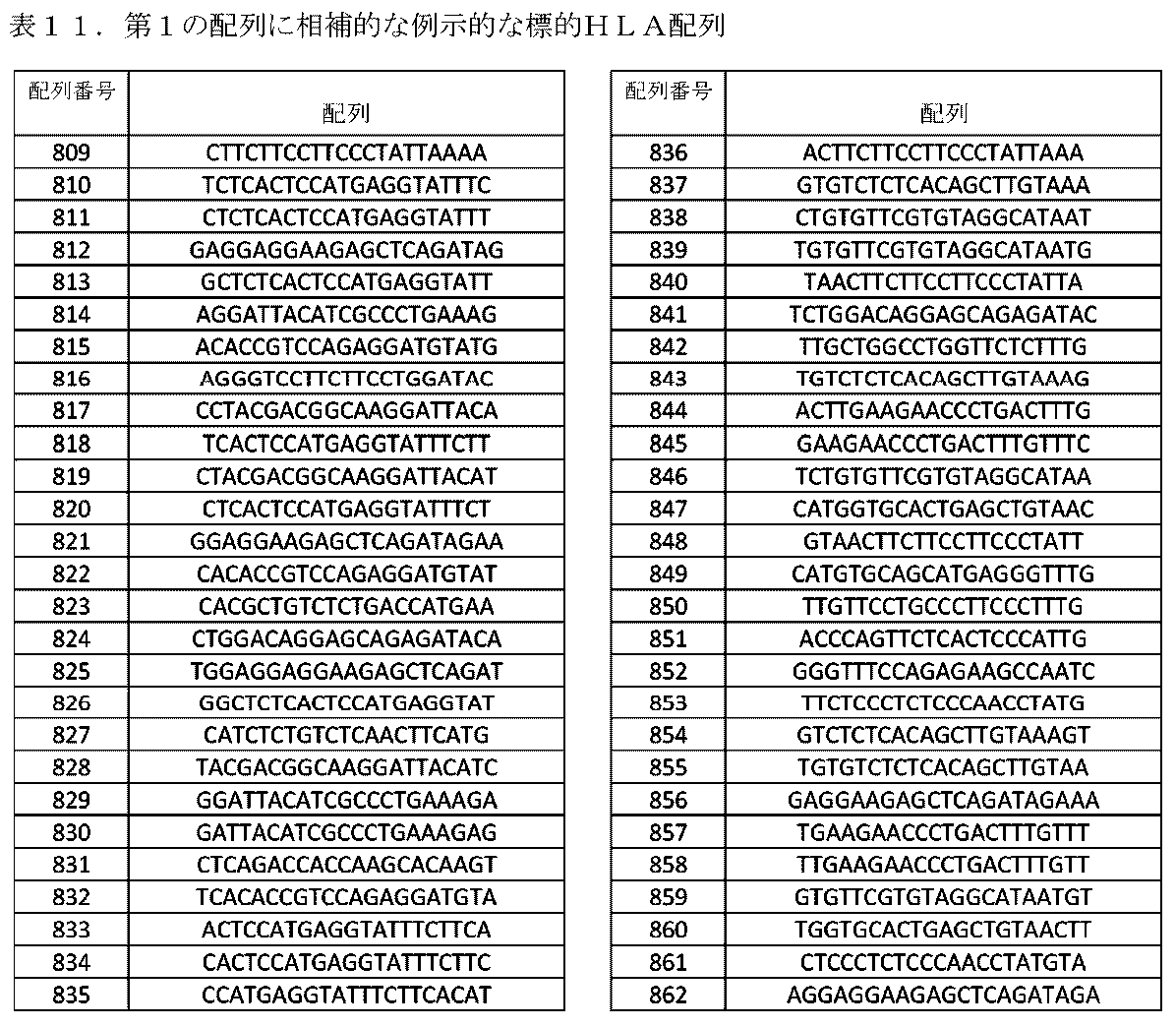

いくつかの実施形態において、第1の配列及び第2の配列は、ループと称されることもある、リンカーによって分離される。いくつかの実施形態において、第1の配列及び第2の配列の両方は、1つの一本鎖RNA又はDNAベクターによってコードされる。いくつかの実施形態において、ループは、第1の配列と第2の配列との間にある。これらの実施形態において、第1の配列及び第2の配列は、ハイブリダイズして二本鎖領域を形成する。第1の配列及び第2の配列は、リンカー配列によって連結され、「ヘアピン」又は「ステムループ」構造を形成する。shRNAは、一本鎖分子の対向する末端に相補的な第1の配列及び第2の配列を有することができ、その結果、分子は、相補的な配列部分と二本鎖領域を形成することができ、鎖は、リンカー(すなわちループ配列)によって二本鎖領域の一端で連結される。リンカー、又はループ配列は、ヌクレオチド又は非ヌクレオチドリンカーのいずれかであり得る。リンカーは、共有結合又は非共有結合相互作用を介して、第1の配列、及び任意選択で、第2の配列と相互作用することができる。 In some embodiments, the first and second sequences are separated by a linker, sometimes referred to as a loop. In some embodiments, both the first and second sequences are encoded by one single-stranded RNA or DNA vector. In some embodiments, the loop is between the first and second sequences. In these embodiments, the first and second sequences hybridize to form a double-stranded region. The first and second sequences are linked by a linker sequence to form a "hairpin" or "stem-loop" structure. The shRNA can have complementary first and second sequences at opposite ends of a single-stranded molecule, such that the molecule can form a double-stranded region with the complementary sequence portion, and the strands are linked at one end of the double-stranded region by a linker (i.e., loop sequence). The linker, or loop sequence, can be either a nucleotide or a non-nucleotide linker. The linker can interact with the first sequence, and optionally the second sequence, via covalent or non-covalent interactions.
任意の好適なヌクレオチドループ配列は、本開示の範囲内として想定される。本開示のshRNAは、shRNAの第1の配列を、shRNAの第2の配列に結合するヌクレオチド、非ヌクレオチド、又は混合ヌクレオチド/非ヌクレオチドリンカーを含んでもよい。ヌクレオチドループ配列は、長さが、2ヌクレオチド以上、例えば、長さが、約4、5、6、7、8、9、10、11、12、13、14、又は15ヌクレオチドであり得る。例示的なループ配列は、表12に開示されている。 Any suitable nucleotide loop sequence is contemplated within the scope of the present disclosure. The shRNAs of the present disclosure may include nucleotide, non-nucleotide, or mixed nucleotide/non-nucleotide linkers that connect the first sequence of the shRNA to the second sequence of the shRNA. The nucleotide loop sequence can be 2 or more nucleotides in length, e.g., about 4, 5, 6, 7, 8, 9, 10, 11, 12, 13, 14, or 15 nucleotides in length. Exemplary loop sequences are disclosed in Table 12.
いくつかの実施形態において、shRNAは、5’隣接配列及び3’隣接配列を更に含む。いくつかの実施形態において、5’隣接配列は、第1の配列の5’末端に連結され、3’隣接配列は、第2の配列の3’末端に連結される。 In some embodiments, the shRNA further comprises a 5' flanking sequence and a 3' flanking sequence. In some embodiments, the 5' flanking sequence is linked to the 5' end of the first sequence and the 3' flanking sequence is linked to the 3' end of the second sequence.
理論に拘束されることを望まないが、マイクロRNAで見出されるものと同様の5’及び3’配列を有するshRNAステムループ配列を隣接させることで、内因性マイクロRNAプロセシング機構によるプロセシングのためにshRNAを標的とすることができ、shRNAプロセシングの有効性を高めることができると考えられる。代替的に、又は加えて、隣接配列は、ポリメラーゼII又はポリメラーゼIIIプロモーターとのshRNA適合性を増加させ、shRNA発現のより効果的な調節をもたらし得る。 Without wishing to be bound by theory, it is believed that flanking shRNA stem-loop sequences with 5' and 3' sequences similar to those found in microRNAs can target the shRNA for processing by endogenous microRNA processing machinery and increase the efficacy of shRNA processing. Alternatively, or in addition, the flanking sequences may increase shRNA compatibility with polymerase II or polymerase III promoters, resulting in more effective regulation of shRNA expression.
いくつかの実施形態において、5’隣接配列は、表12に示される配列から選択される。例示的な隣接配列を表12に示す。
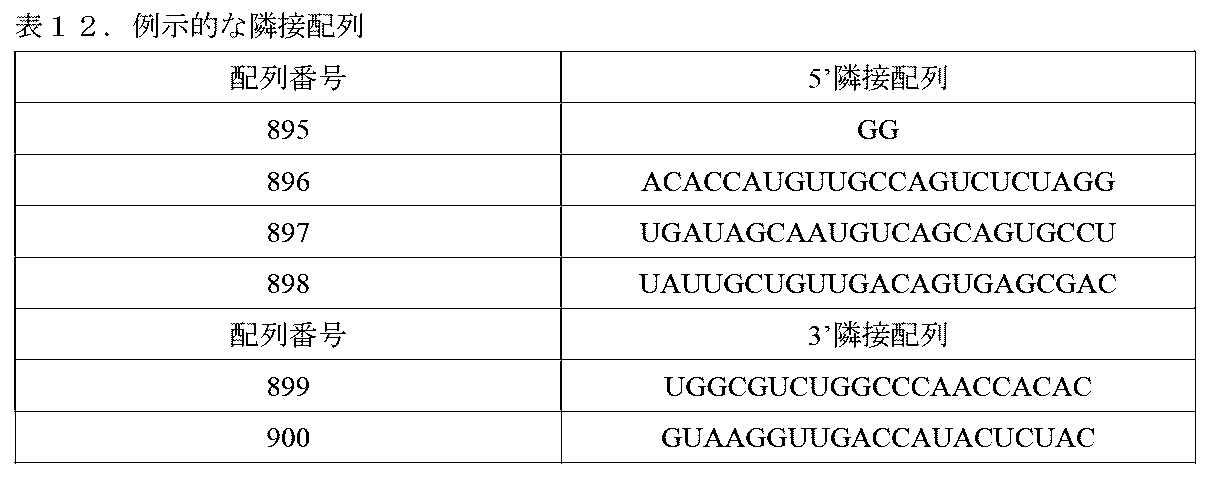
いくつかの実施形態において、第1及び第2の配列は、一本鎖ポリヌクレオチド上に存在し、第1の配列及び第2の配列は、4、5、6、7、8、9、10、11、12、13、14、又は15ヌクレオチドによって分離され、4、5、6、7、8、9、10、11、12、13、14、又は15ヌクレオチドは、shRNA内のループ領域を形成する。いくつかの実施形態において、ループ領域は、表13に示される配列から選択される配列を含む。

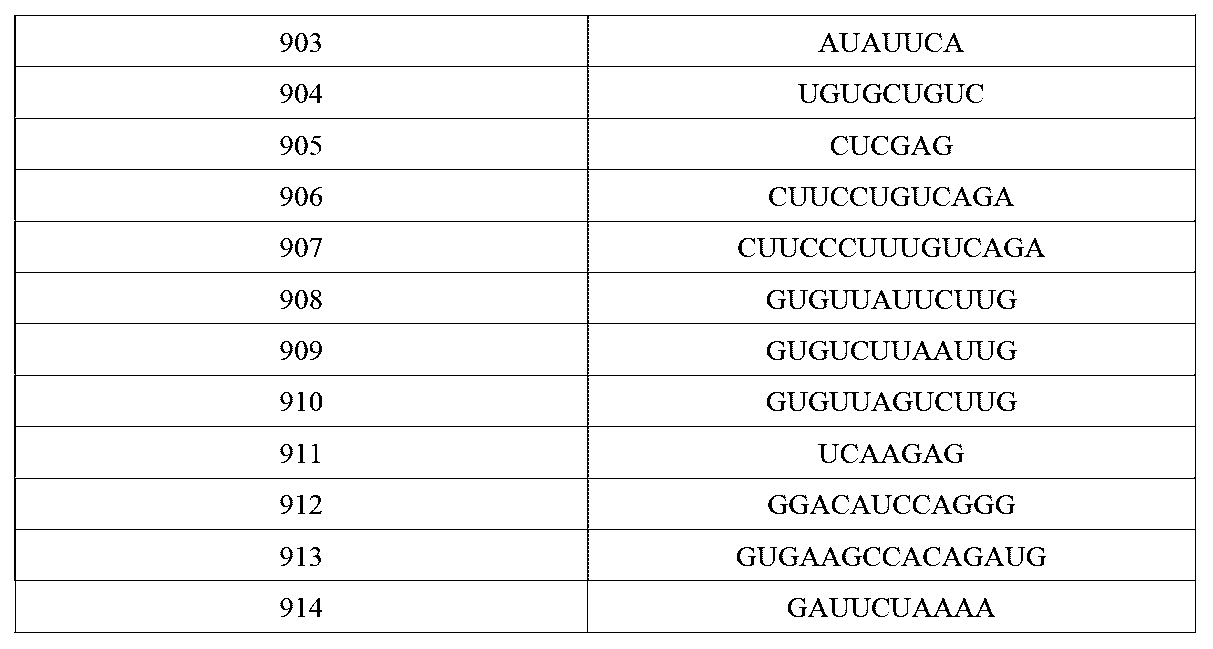
本開示のshRNAは、化学合成によって、インビトロ転写によって、又はDicer若しくは同様の活性を有する別の適切なヌクレアーゼによる、より長い二本鎖RNAの切断によって外因的に生成され得る。従来のDNA/RNAシンセサイザーを使用して保護されたリボヌクレオシドホスホロアミダイトから産生される化学合成されたsiRNAは、Millipore Sigma(Houston,Tex.)、Ambion Inc.(Austin,Tex.).Invitrogen(Carlsbad,Calif.)、又はDharmacon(Lafayette,Colo.)などの商業的供給源から得ることができる。siRNAは、例えば、溶媒若しくは樹脂による抽出、沈殿、電気泳動、クロマトグラフィー、又はそれらの組み合わせによって精製することができる。代替的に、siRNAは、試料処理による損失を回避するために、ほとんど精製せずに使用してもよい。 The shRNAs of the present disclosure can be produced exogenously by chemical synthesis, by in vitro transcription, or by cleavage of longer double-stranded RNA with Dicer or another suitable nuclease with similar activity. Chemically synthesized siRNAs produced from protected ribonucleoside phosphoramidites using conventional DNA/RNA synthesizers can be obtained from commercial sources such as Millipore Sigma (Houston, Tex.), Ambion Inc. (Austin, Tex.), Invitrogen (Carlsbad, Calif.), or Dharmacon (Lafayette, Colo.). The siRNAs can be purified, for example, by extraction with a solvent or resin, precipitation, electrophoresis, chromatography, or a combination thereof. Alternatively, the siRNAs may be used with little or no purification to avoid losses due to sample processing.
いくつかの実施形態において、本開示のshRNAは、二本鎖RNAをコードする核酸が、例えば、好適なプロモーターの制御下でクローニングされている発現ベクターを使用して産生され得る。 In some embodiments, the shRNA of the present disclosure can be produced using an expression vector in which a nucleic acid encoding the double-stranded RNA has been cloned, for example, under the control of a suitable promoter.
いくつかの実施形態において、免疫細胞は含む In some embodiments, the immune cells include
医薬組成物
本開示は、本開示の第1及び第2の受容体、並びに薬学的に許容される希釈剤、担体、又は賦形剤を含む免疫細胞を含む、医薬組成物を提供する。
Pharmaceutical Compositions The present disclosure provides pharmaceutical compositions comprising immune cells comprising the first and second receptors of the present disclosure and a pharma- ceutically acceptable diluent, carrier, or excipient.
このような組成物は、中性緩衝食塩水、ホスフェート緩衝食塩水などの緩衝液、グルコース、マンノース、スクロース又はデキストラン、マンニトールなどの炭水化物、タンパク質、ポリペプチド又はグリシンなどのアミノ酸、抗酸化剤、EDTA又はグルタチオンなどのキレート剤、及び防腐剤を含み得る。 Such compositions may include buffers such as neutral buffered saline, phosphate buffered saline, carbohydrates such as glucose, mannose, sucrose or dextran, mannitol, proteins, polypeptides or amino acids such as glycine, antioxidants, chelating agents such as EDTA or glutathione, and preservatives.
いくつかの実施形態において、免疫細胞は、第1の受容体及び第2の受容体の両方を発現する。いくつかの実施形態において、免疫細胞の少なくとも約50%、約55%、約60%、約65%、約70%、約75%、約80%、約85%、約90%、又は約95%は、第1の受容体及び第2の受容体の両方を発現する。いくつかの実施形態において、免疫細胞の少なくとも90%は、第1の受容体及び第2の受容体の両方を発現する。 In some embodiments, the immune cells express both the first receptor and the second receptor. In some embodiments, at least about 50%, about 55%, about 60%, about 65%, about 70%, about 75%, about 80%, about 85%, about 90%, or about 95% of the immune cells express both the first receptor and the second receptor. In some embodiments, at least 90% of the immune cells express both the first receptor and the second receptor.
がんの治療
対象において複数のがん細胞を死滅させるか、又はがんを治療する方法であって、治療有効量の本開示の第1及び第2の受容体を含む免疫細胞を含む組成物を対象に投与することを含む、方法が、本明細書に提供される。免疫細胞は、同じ細胞内で両方の受容体を発現する。
Treating Cancer Provided herein are methods of killing cancer cells or treating cancer in a subject, comprising administering to the subject a therapeutically effective amount of a composition comprising an immune cell comprising a first and second receptor of the present disclosure, wherein the immune cell expresses both receptors within the same cell.
がんは、異常な細胞が制御できずに分裂し、近くの組織に広がる疾患である。いくつかの実施形態において、がんは、液体腫瘍又は固形腫瘍を含む。がんは、事実上、上皮組織を含む、体内の臓器で生じ得る。複数のがん細胞が、第1の活性化因子リガンドを発現し、第2の抑制因子リガンドを発現しない、任意のがんは、本開示の範囲内であると想定される。例えば、本明細書に記載の方法を使用して治療することができるEGFR陽性がんには、肺がん、小細胞肺がん、非小細胞肺がん、膵管がん、結腸直腸がん、頭頸部がん、食道及び胃腺がん、卵巣がん、多形神経膠芽腫、子宮頸部扁平上皮がん、腎がん、乳頭腎がん、腎臓腎明細胞がん、膀胱がん、乳がん、胆管がん、肝臓がん、前立腺がん、肉腫、甲状腺がん、胸腺がん、胃がん、又は子宮がん、及び他の全てのEGFR標的発現腫瘍が含まれる。本明細書における組成物及び方法の開示を使用して、再発性、難治性及び/又は転移性であるEGFR陽性がんを治療することができる。 Cancer is a disease in which abnormal cells divide uncontrollably and spread to nearby tissues. In some embodiments, the cancer comprises a liquid or solid tumor. Cancer can arise in virtually any organ in the body, including epithelial tissue. Any cancer in which multiple cancer cells express a first activator ligand and do not express a second inhibitory ligand is contemplated to be within the scope of the present disclosure. For example, EGFR-positive cancers that can be treated using the methods described herein include lung cancer, small cell lung cancer, non-small cell lung cancer, pancreatic ductal carcinoma, colorectal cancer, head and neck cancer, esophageal and gastric adenocarcinoma, ovarian cancer, glioblastoma multiforme, cervical squamous cell carcinoma, renal cancer, papillary renal carcinoma, renal clear cell carcinoma, bladder cancer, breast cancer, bile duct cancer, liver cancer, prostate cancer, sarcoma, thyroid cancer, thymic cancer, gastric cancer, or uterine cancer, and all other EGFR target expressing tumors. The compositions and methods disclosed herein can be used to treat EGFR-positive cancers that are recurrent, refractory, and/or metastatic.
いくつかの実施形態において、複数のがん細胞は、標的抗原を発現する。いくつかの実施形態において、対象の複数のがん細胞は、EGFRを発現する。EGFR陽性がんには、肺がん、小細胞肺がん、非小細胞肺がん、膵管がん、結腸直腸がん、頭頸部がん、食道及び胃腺がん、卵巣がん、多形神経膠芽腫、子宮頸部扁平上皮がん、腎がん、乳頭腎がん、腎臓腎明細胞がん、膀胱がん、乳がん、胆管がん、肝臓がん、前立腺がん、肉腫、甲状腺がん、胸腺がん、胃がん、又は子宮がんが含まれるが、これらに限定されない。 In some embodiments, the plurality of cancer cells expresses a target antigen. In some embodiments, the plurality of cancer cells of the subject expresses EGFR. EGFR-positive cancers include, but are not limited to, lung cancer, small cell lung cancer, non-small cell lung cancer, pancreatic ductal carcinoma, colorectal cancer, head and neck cancer, esophageal and gastric adenocarcinoma, ovarian cancer, glioblastoma multiforme, cervical squamous cell carcinoma, renal cancer, papillary renal carcinoma, renal clear cell carcinoma, bladder cancer, breast cancer, cholangiocarcinoma, liver cancer, prostate cancer, sarcoma, thyroid cancer, thymic cancer, gastric cancer, or uterine cancer.
いくつかの実施形態において、複数のがん細胞は、COLEC12、APCDD1、又はCXCL16の多型対立遺伝子を発現しない。いくつかの実施形態において、複数のがん細胞は、非標的抗原を発現しない。いくつかの実施形態において、複数のがん細胞は、HLA-A*02を発現しない。いくつかの実施形態において、複数のがん細胞は、HLA-A*02の対立遺伝子バリアントを発現しない。いくつかの実施形態において、複数のがん細胞は、HLA-A*01を発現しない。いくつかの実施形態において、複数のがん細胞は、HLA-A*03を発現しない。いくつかの実施形態において、複数のがん細胞は、HLA-A*11を発現しない。いくつかの実施形態において、複数のがん細胞は、HLA-B*07を発現しない。いくつかの実施形態において、複数のがん細胞は、HLA-C*07を発現しない。例えば、がん細胞は、その遺伝子座におけるヘテロ接合性の喪失を通じて、COLEC12、APCDD1若しくはCXCL16、又はHLA-A*02の対立遺伝子を喪失している。 In some embodiments, the cancer cells do not express polymorphic alleles of COLEC12, APCDD1, or CXCL16. In some embodiments, the cancer cells do not express non-target antigens. In some embodiments, the cancer cells do not express HLA-A*02. In some embodiments, the cancer cells do not express allelic variants of HLA-A*02. In some embodiments, the cancer cells do not express HLA-A*01. In some embodiments, the cancer cells do not express HLA-A*03. In some embodiments, the cancer cells do not express HLA-A*11. In some embodiments, the cancer cells do not express HLA-B*07. In some embodiments, the cancer cells do not express HLA-C*07. For example, the cancer cells have lost an allele of COLEC12, APCDD1 or CXCL16, or HLA-A*02 through loss of heterozygosity at the locus.
本明細書に記載の免疫細胞又は医薬組成物の投与は、対象における腫瘍のサイズを減少させることができる。いくつかの実施形態において、腫瘍のサイズは、免疫細胞又は医薬組成物の投与前の腫瘍のサイズと比較して、約5%、約10%、約15%、約20%、約25%、約30%、約35%、約40%、約45%、約50%、約55%、約60%、約65%、約70%、約75%、約80%、約85%、約90%、約95%、又は約100%減少する。いくつかの実施形態において、腫瘍は、除去される。 Administration of the immune cells or pharmaceutical compositions described herein can reduce the size of a tumor in a subject. In some embodiments, the size of the tumor is reduced by about 5%, about 10%, about 15%, about 20%, about 25%, about 30%, about 35%, about 40%, about 45%, about 50%, about 55%, about 60%, about 65%, about 70%, about 75%, about 80%, about 85%, about 90%, about 95%, or about 100% compared to the size of the tumor before administration of the immune cells or pharmaceutical composition. In some embodiments, the tumor is eliminated.
本明細書に記載の免疫細胞又は医薬組成物の投与は、対象における腫瘍の増殖を阻止することができる。例えば、免疫細胞又は医薬組成物は、腫瘍細胞を死滅させることができるため、腫瘍は成長を停止するか、又はサイズが縮小される。ある場合には、免疫細胞又は医薬組成物は、対象における更なる腫瘍の形成を防止することができるか、又は腫瘍の総数を減少させることができる。 Administration of the immune cells or pharmaceutical compositions described herein can inhibit the growth of a tumor in a subject. For example, the immune cells or pharmaceutical compositions can kill tumor cells so that the tumor stops growing or is reduced in size. In some cases, the immune cells or pharmaceutical compositions can prevent the formation of additional tumors or reduce the total number of tumors in a subject.
本明細書に記載の免疫細胞又は医薬組成物の投与は、対象において、正常細胞ではなく、がん細胞の選択的死滅をもたらすことができる。いくつかの実施形態において、死滅した細胞の約60%は、がん細胞であるか、死滅した細胞の約65%は、がん細胞であるか、死滅した細胞の約70%は、がん細胞であるか、死滅した細胞の約75%は、がん細胞であるか、死滅した細胞の約80%は、がん細胞であるか、死滅した細胞の約85%は、がん細胞であるか、死滅した細胞の約90%は、がん細胞であるか、死滅した細胞の約95%は、がん細胞であるか、又は死滅した細胞の約100%は、がん細胞である。 Administration of the immune cells or pharmaceutical compositions described herein can result in selective killing of cancer cells, but not normal cells, in a subject. In some embodiments, about 60% of the dead cells are cancer cells, about 65% of the dead cells are cancer cells, about 70% of the dead cells are cancer cells, about 75% of the dead cells are cancer cells, about 80% of the dead cells are cancer cells, about 85% of the dead cells are cancer cells, about 90% of the dead cells are cancer cells, about 95% of the dead cells are cancer cells, or about 100% of the dead cells are cancer cells.
本明細書に記載の免疫細胞又は医薬組成物の投与は、対象のがん細胞の約40%、約50%、約60%、約70%、約80%、約90%又は全ての死滅をもたらし得る。 Administration of the immune cells or pharmaceutical compositions described herein may result in the killing of about 40%, about 50%, about 60%, about 70%, about 80%, about 90% or all of the subject's cancer cells.
本明細書に記載の免疫細胞又は医薬組成物の投与は、第1の活性化因子受容体を含むが、第2の抑制性受容体を含まない、他の等価の免疫細胞の投与よりも、対象に対して少ない副作用をもたらすことができる。例えば、本明細書に記載の免疫細胞又は医薬組成物を投与することは、第2の抑制性受容体を用いずに投与するEGFR CAR、又はEGFR TCRと比較して、用量制限毒性を低減させることができる Administration of the immune cells or pharmaceutical compositions described herein can result in fewer side effects in a subject than administration of other equivalent immune cells that include a first activator receptor but do not include a second inhibitory receptor. For example, administration of the immune cells or pharmaceutical compositions described herein can result in reduced dose-limiting toxicity compared to administration of an EGFR CAR or an EGFR TCR without a second inhibitory receptor.
本開示は、対象においてがんを治療する方法であって、(a)COLEC12の多型遺伝子座、APCDD1の多型遺伝子座、及びCXCL16の多型遺伝子座、又はHLA-A*02遺伝子座からなる群から選択される多型遺伝子座において、対象の正常細胞及び複数のがん細胞の遺伝子型を決定することと、(b)複数のがん細胞におけるEGFRの発現を決定することと、(c)正常細胞が多型遺伝子座に対してヘテロ接合性であり、複数のがん細胞が多型遺伝子座に対して半接合性であるか、又はHLA-A*02を喪失し、複数のがん細胞がEGFR陽性である場合に、複数の免疫細胞を対象に投与することと、を含み、複数の免疫細胞が、(i)主要組織適合性複合体クラスI(MHC-I)との複合体においてEGFR、又はそのペプチド抗原に特異的な細胞外リガンド結合ドメインを含む、第1の受容体、任意選択で、キメラ抗原受容体(CAR)又はT細胞受容体(TCR)、並びに(ii)主要組織適合性複合体クラスI(MHC-I)、又はHLA-A*02との複合体においてCOLEC12、APCDD1、及びCXCL16から選択される非標的抗原、又はその抗原ペプチドに特異的な細胞外リガンド結合を含む、第2の受容体、任意選択で、抑制性キメラ抗原受容体(すなわち、抑制性受容体)を含み、非標的抗原が、多型を含む、方法を提供する。 The present disclosure relates to a method of treating cancer in a subject, the method comprising: (a) determining the genotype of normal cells and a plurality of cancer cells of the subject at a polymorphic locus selected from the group consisting of a polymorphic locus of COLEC12, a polymorphic locus of APCDD1, and a polymorphic locus of CXCL16, or an HLA-A*02 locus; (b) determining expression of EGFR in the plurality of cancer cells; and (c) administering a plurality of immune cells to the subject when the normal cells are heterozygous for the polymorphic locus and the plurality of cancer cells are hemizygous for the polymorphic locus or have lost HLA-A*02, and the plurality of cancer cells are EGFR positive; The method provides a method in which the cells comprise (i) a first receptor, optionally a chimeric antigen receptor (CAR) or T cell receptor (TCR), comprising an extracellular ligand binding domain specific for EGFR, or a peptide antigen thereof, in complex with major histocompatibility complex class I (MHC-I), and (ii) a second receptor, optionally an inhibitory chimeric antigen receptor (i.e., an inhibitory receptor), comprising an extracellular ligand binding domain specific for a non-target antigen selected from COLEC12, APCDD1, and CXCL16, or an antigenic peptide thereof, in complex with major histocompatibility complex class I (MHC-I), or HLA-A*02, wherein the non-target antigen comprises a polymorphism.
SNPの存在又は不在のために、対象に由来するがん細胞及び正常細胞の遺伝子型を決定する方法は、当業者には容易に明らかになるであろう。SNP遺伝子型決定方法には、とりわけ、デュアルプローブTaqManアッセイなどのPCRベースの方法、アレイベースのハイブリダイゼーション方法、及び配列決定が含まれる。 Methods for genotyping cancer and normal cells from a subject for the presence or absence of SNPs will be readily apparent to one of skill in the art. SNP genotyping methods include, among others, PCR-based methods such as dual-probe TaqMan assays, array-based hybridization methods, and sequencing.
対象に由来するがん又は正常細胞における標的抗原の発現を測定する方法は、当業者には容易に明らかになるであろう。これらには、とりわけ、RNA配列決定及び逆転写ポリメラーゼ連鎖反応(RT-PCR)などのRNA発現を測定する方法、並びに免疫組織化学に基づく方法などのタンパク質発現を測定する方法が含まれる。複数のがん細胞におけるヘテロ接合性の喪失を測定する方法には、とりわけ、当該技術分野で既知の方法を使用してがん細胞から抽出されるゲノムDNAのハイスループット配列決定が含まれる。 Methods for measuring expression of a target antigen in cancer or normal cells from a subject will be readily apparent to one of skill in the art. These include, among others, methods for measuring RNA expression, such as RNA sequencing and reverse transcription polymerase chain reaction (RT-PCR), and methods for measuring protein expression, such as immunohistochemistry-based methods. Methods for measuring loss of heterozygosity in multiple cancer cells include, among others, high-throughput sequencing of genomic DNA extracted from the cancer cells using methods known in the art.
対象に由来するがん又は正常細胞における標的抗原の発現を測定する方法は、当業者には容易に明らかになるであろう。これらには、とりわけ、RNA配列決定及び逆転写ポリメラーゼ連鎖反応(RT-PCR)などのRNA発現を測定する方法、並びに免疫組織化学に基づく方法などのタンパク質発現を測定する方法が含まれる。 Methods for measuring expression of a target antigen in cancer or normal cells from a subject will be readily apparent to one of skill in the art. These include, among others, methods for measuring RNA expression, such as RNA sequencing and reverse transcription polymerase chain reaction (RT-PCR), and methods for measuring protein expression, such as immunohistochemistry-based methods.
いくつかの実施形態において、免疫細胞は、T細胞である。 In some embodiments, the immune cells are T cells.
いくつかの実施形態において、免疫細胞は、同種異系又は自己由来である。 In some embodiments, the immune cells are allogeneic or autologous.
いくつかの実施形態において、第2の受容体は、第1の受容体を発現するが、第2の受容体を発現しない免疫細胞と比較して、EGFR陽性がん細胞に対する免疫細胞の特異性を増加させる。いくつかの実施形態において、免疫細胞は、第1の受容体を発現するが、第2の受容体を発現しない免疫細胞と比較して、減少した副作用を有する。 In some embodiments, the second receptor increases the specificity of the immune cell for EGFR-positive cancer cells compared to immune cells that express the first receptor but do not express the second receptor. In some embodiments, the immune cell has reduced side effects compared to immune cells that express the first receptor but do not express the second receptor.
がんの治療は、腫瘍のサイズの縮小をもたらし得る。腫瘍のサイズの縮小は、「腫瘍退縮」と称されることもある。好ましくは、治療後、腫瘍サイズは、治療前のサイズと比較して5%以上減少し、より好ましくは、腫瘍サイズは、10%以上減少し、より好ましくは、20%以上減少し、より好ましくは、30%以上減少し、より好ましくは、40%以上減少し、更により好ましくは、50%以上減少し、最も好ましくは、75%以上減少する。腫瘍のサイズは、任意の再現可能な測定手段によって測定され得る。腫瘍のサイズは、腫瘍の直径として測定され得る。 Treatment of cancer may result in a reduction in tumor size. A reduction in tumor size may also be referred to as "tumor regression." Preferably, after treatment, the tumor size is reduced by 5% or more compared to the size before treatment, more preferably, the tumor size is reduced by 10% or more, more preferably, by 20% or more, more preferably, by 30% or more, more preferably, by 40% or more, even more preferably, by 50% or more, and most preferably, by 75% or more. Tumor size may be measured by any reproducible means of measurement. Tumor size may be measured as the diameter of the tumor.
がんの治療は、腫瘍体積の減少をもたらし得る。好ましくは、治療後、腫瘍体積は、治療前のサイズと比較して5%以上減少し、より好ましくは、腫瘍体積は、10%以上減少し、より好ましくは、20%以上減少し、より好ましくは、30%以上減少し、より好ましくは、40%以上減少し、更により好ましくは、50%以上減少し、最も好ましくは、75%以上減少する。腫瘍体積は、任意の再現可能な測定手段によって測定され得る。 Treating cancer can result in a reduction in tumor volume. Preferably, after treatment, the tumor volume is reduced by 5% or more compared to the size before treatment, more preferably, the tumor volume is reduced by 10% or more, more preferably, by 20% or more, more preferably, by 30% or more, more preferably, by 40% or more, even more preferably, by 50% or more, and most preferably, by 75% or more. Tumor volume can be measured by any reproducible means of measurement.
がんの治療は、腫瘍の数の減少をもたらす。好ましくは、治療後、腫瘍数は、治療前の数と比較して5%以上減少し、より好ましくは、腫瘍数は、10%以上減少し、より好ましくは、20%以上減少し、より好ましくは、30%以上減少し、より好ましくは、40%以上減少し、更により好ましくは、50%以上減少し、最も好ましくは、75%以上減少する。腫瘍の数は、任意の再現可能な測定手段によって測定され得る。腫瘍の数は、肉眼で見える腫瘍を数えることによって、又は指定された倍率で測定され得る。好ましくは、指定された倍率は、2倍、3倍、4倍、5倍、10倍、又は50倍である。 Treating cancer results in a reduction in the number of tumors. Preferably, after treatment, the number of tumors is reduced by 5% or more compared to the number before treatment, more preferably, the number of tumors is reduced by 10% or more, more preferably, by 20% or more, more preferably, by 30% or more, more preferably, by 40% or more, even more preferably, by 50% or more, and most preferably, by 75% or more. The number of tumors may be measured by any reproducible means of measurement. The number of tumors may be measured by counting tumors visible to the naked eye or at a specified magnification. Preferably, the specified magnification is 2x, 3x, 4x, 5x, 10x, or 50x.
がんの治療は、原発腫瘍部位から離れた他の組織又は臓器における転移性病変の数の減少をもたらし得る。好ましくは、治療後、転移性病変の数は、治療前の数と比較して5%以上減少し、より好ましくは、転移性病変の数は、10%以上減少し、より好ましくは、20%以上減少し、より好ましくは、30%以上減少し、より好ましくは、40%以上減少し、更により好ましくは、50%以上減少し、最も好ましくは、75%以上減少する。転移性病変の数は、任意の再現可能な測定手段によって測定され得る。転移性病変の数は、肉眼で見える転移性病変を数えることによって、又は指定された倍率で測定され得る。好ましくは、指定された倍率は、2倍、3倍、4倍、5倍、10倍、又は50倍である。 Treatment of cancer may result in a reduction in the number of metastatic lesions in other tissues or organs distant from the primary tumor site. Preferably, after treatment, the number of metastatic lesions is reduced by 5% or more compared to the number before treatment, more preferably, the number of metastatic lesions is reduced by 10% or more, more preferably, by 20% or more, more preferably, by 30% or more, more preferably, by 40% or more, even more preferably, by 50% or more, and most preferably, by 75% or more. The number of metastatic lesions may be measured by any reproducible means of measurement. The number of metastatic lesions may be measured by counting metastatic lesions visible to the naked eye or at a specified magnification. Preferably, the specified magnification is 2x, 3x, 4x, 5x, 10x, or 50x.
がんの治療は、担体のみを受容する集団と比較して、治療対象の集団の平均生存時間の増加をもたらし得る。好ましくは、平均生存時間は、30日超、より好ましくは60日超、より好ましくは90日超、及び最も好ましくは120日超増加する。集団の平均生存時間の増加は、任意の再現可能な手段によって測定され得る。集団の平均生存時間の増加は、例えば、集団について、活性化合物による治療の開始後の平均生存期間を計算することによって測定され得る。集団の平均生存時間の増加はまた、例えば、集団について、活性化合物による第1のラウンドの治療の完了後の平均生存期間を計算することによって測定され得る。 Treating cancer may result in an increase in the mean survival time of a treated population compared to a population receiving carrier only. Preferably, the mean survival time is increased by more than 30 days, more preferably more than 60 days, more preferably more than 90 days, and most preferably more than 120 days. The increase in the mean survival time of a population may be measured by any reproducible means. The increase in the mean survival time of a population may be measured, for example, by calculating for the population the mean survival time after initiation of treatment with the active compound. The increase in the mean survival time of a population may also be measured, for example, by calculating for the population the mean survival time after completion of a first round of treatment with the active compound.
がんの治療は、治療されていない対象の集団と比較して、治療対象の集団の平均生存時間の増加をもたらし得る。好ましくは、平均生存時間は、30日超、より好ましくは60日超、より好ましくは90日超、及び最も好ましくは120日超増加する。集団の平均生存時間の増加は、任意の再現可能な手段によって測定され得る。集団の平均生存時間の増加は、例えば、集団について、活性化合物による治療の開始後の平均生存期間を計算することによって測定され得る。集団の平均生存時間の増加はまた、例えば、集団について、活性化合物による第1のラウンドの治療の完了後の平均生存期間を計算することによって測定され得る。 Treating cancer may result in an increase in the mean survival time of a population of treated subjects compared to a population of untreated subjects. Preferably, the mean survival time is increased by more than 30 days, more preferably more than 60 days, more preferably more than 90 days, and most preferably more than 120 days. The increase in the mean survival time of a population may be measured by any reproducible means. The increase in the mean survival time of a population may be measured, for example, by calculating for the population the mean survival time after initiation of treatment with an active compound. The increase in the mean survival time of a population may also be measured, for example, by calculating for the population the mean survival time after completion of a first round of treatment with an active compound.
がんの治療は、本開示の化合物ではない薬物、又はその薬学的に許容される塩、プロドラッグ、代謝産物、アナログ若しくは誘導体による単剤療法を受ける集団と比較して、治療対象の集団の平均生存時間の増加をもたらし得る。好ましくは、平均生存時間は、30日超、より好ましくは60日超、より好ましくは90日超、及び最も好ましくは120日超増加する。集団の平均生存時間の増加は、任意の再現可能な手段によって測定され得る。集団の平均生存時間の増加は、例えば、集団について、活性化合物による治療の開始後の平均生存期間を計算することによって測定され得る。集団の平均生存時間の増加はまた、例えば、集団について、活性化合物による第1のラウンドの治療の完了後の平均生存期間を計算することによって測定され得る。 The treatment of cancer may result in an increase in the average survival time of the treated population compared to a population receiving monotherapy with a drug that is not a compound of the present disclosure, or a pharma- ceutically acceptable salt, prodrug, metabolite, analog, or derivative thereof. Preferably, the average survival time is increased by more than 30 days, more preferably more than 60 days, more preferably more than 90 days, and most preferably more than 120 days. The increase in the average survival time of the population may be measured by any reproducible means. The increase in the average survival time of the population may be measured, for example, by calculating for the population the average survival time after the initiation of treatment with the active compound. The increase in the average survival time of the population may also be measured, for example, by calculating for the population the average survival time after the completion of a first round of treatment with the active compound.
がんの治療は、担体のみを受容する集団と比較して、治療対象の集団の死亡率の低下をもたらし得る。がんの治療は、未治療の集団と比較して、治療対象の集団の死亡率の低下をもたらし得る。がんの治療は、本開示の化合物ではない薬物、又はその薬学的に許容される塩、プロドラッグ、代謝産物、アナログ若しくは誘導体による単剤療法を受ける集団と比較して、治療対象の集団の死亡率の低下をもたらし得る。好ましくは、死亡率は、2%超、より好ましくは5%超、より好ましくは10%超、及び最も好ましくは25%超低下する。治療対象の集団の死亡率の低下は、任意の再現可能な手段によって測定され得る。集団の死亡率の低下は、例えば、集団について、活性化合物による治療の開始後の単位時間当たりの疾患関連死の平均数を計算することによって測定され得る。集団の死亡率の低下は、例えば、集団について、活性化合物による第1のラウンドの治療の完了後の単位時間当たりの疾患関連死の平均数を計算することによっても測定され得る。 The treatment of cancer may result in a reduction in the mortality rate of the treated population compared to a population receiving only the carrier. The treatment of cancer may result in a reduction in the mortality rate of the treated population compared to an untreated population. The treatment of cancer may result in a reduction in the mortality rate of the treated population compared to a population receiving monotherapy with a drug that is not a compound of the present disclosure, or a pharma- ceutically acceptable salt, prodrug, metabolite, analog, or derivative thereof. Preferably, the mortality rate is reduced by more than 2%, more preferably by more than 5%, more preferably by more than 10%, and most preferably by more than 25%. The reduction in the mortality rate of the treated population may be measured by any reproducible means. The reduction in the mortality rate of the population may be measured, for example, by calculating the average number of disease-related deaths per unit time after the initiation of treatment with the active compound for the population. The reduction in the mortality rate of the population may also be measured, for example, by calculating the average number of disease-related deaths per unit time after the completion of a first round of treatment with the active compound for the population.
がんの治療は、腫瘍増殖速度の低下をもたらし得る。好ましくは、治療後、腫瘍増殖速度は、治療前の数値と比較して少なくとも5%減少し、より好ましくは、腫瘍増殖速度は、少なくとも10%減少し、より好ましくは、少なくとも20%減少し、より好ましくは、少なくとも30%減少し、より好ましくは、少なくとも40%減少し、より好ましくは、少なくとも50%減少し、更により好ましくは、少なくとも50%減少し、及び最も好ましくは、少なくとも75%減少する。腫瘍増殖速度は、任意の再現可能な測定手段によって測定され得る。腫瘍増殖速度は、単位時間当たりの腫瘍直径の変化に応じて測定され得る。 Treating cancer can result in a decrease in tumor growth rate. Preferably, after treatment, the tumor growth rate is reduced by at least 5% compared to the pre-treatment value, more preferably, the tumor growth rate is reduced by at least 10%, more preferably, by at least 20%, more preferably, by at least 30%, more preferably, by at least 40%, more preferably, by at least 50%, even more preferably, by at least 50%, and most preferably, by at least 75%. Tumor growth rate can be measured by any reproducible measurement means. Tumor growth rate can be measured according to the change in tumor diameter per unit time.
がんの治療は、腫瘍再増殖の低下をもたらし得る。好ましくは、治療後、腫瘍再増殖は、5%未満であり、より好ましくは、腫瘍再増殖は、10%未満であり、より好ましくは、20%未満であり、より好ましくは、30%未満であり、より好ましくは、40%未満であり、より好ましくは、50%未満であり、更により好ましくは、50%未満であり、及び最も好ましくは、75%未満である。腫瘍再増殖は、任意の再現可能な測定手段によって測定され得る。腫瘍再増殖は、例えば、治療後の以前の腫瘍縮小後の腫瘍の直径の増加を測定することによって測定される。腫瘍再増殖の減少は、治療が停止した後に腫瘍が再発しないことによって示される。 Treatment of cancer may result in a reduction in tumor regrowth. Preferably, after treatment, tumor regrowth is less than 5%, more preferably, tumor regrowth is less than 10%, more preferably, less than 20%, more preferably, less than 30%, more preferably, less than 40%, more preferably, less than 50%, even more preferably, less than 50%, and most preferably, less than 75%. Tumor regrowth may be measured by any reproducible means of measurement. Tumor regrowth is measured, for example, by measuring an increase in tumor diameter after a previous tumor shrinkage after treatment. A reduction in tumor regrowth is indicated by failure of the tumor to recur after treatment is stopped.
がんの治療又は予防は、細胞増殖速度の減少をもたらし得る。好ましくは、治療後、細胞増殖速度は、少なくとも5%、より好ましくは少なくとも10%、より好ましくは少なくとも20%、より好ましくは少なくとも30%、より好ましくは少なくとも40%、より好ましくは少なくとも50%、更により好ましくは少なくとも50%、及び最も好ましくは少なくとも75%減少する。細胞増殖の速度は、任意の再現可能な測定手段によって測定され得る。細胞増殖速度は、例えば、単位時間当たりの組織試料中の分裂細胞の数を測定することによって測定される。 Treating or preventing cancer may result in a decrease in the rate of cell proliferation. Preferably, after treatment, the rate of cell proliferation is decreased by at least 5%, more preferably at least 10%, more preferably at least 20%, more preferably at least 30%, more preferably at least 40%, more preferably at least 50%, even more preferably at least 50%, and most preferably at least 75%. The rate of cell proliferation may be measured by any reproducible means of measurement. The rate of cell proliferation is measured, for example, by measuring the number of dividing cells in a tissue sample per unit time.
がんの治療又は予防は、増殖細胞の割合の減少をもたらし得る。好ましくは、治療後、増殖細胞の割合は、少なくとも5%、より好ましくは少なくとも10%、より好ましくは少なくとも20%、より好ましくは少なくとも30%、より好ましくは少なくとも40%、より好ましくは少なくとも50%、更により好ましくは少なくとも50%、及び最も好ましくは少なくとも75%減少する。増殖細胞の割合は、任意の再現可能な測定手段によって測定され得る。好ましくは、増殖細胞の割合は、例えば、組織試料中の非分裂細胞の数に対する分裂細胞の数を定量化することによって測定される。増殖細胞の割合は、分裂指数と同等であり得る。 Treating or preventing cancer may result in a decrease in the percentage of proliferating cells. Preferably, after treatment, the percentage of proliferating cells is decreased by at least 5%, more preferably at least 10%, more preferably at least 20%, more preferably at least 30%, more preferably at least 40%, more preferably at least 50%, even more preferably at least 50%, and most preferably at least 75%. The percentage of proliferating cells may be measured by any reproducible measurement means. Preferably, the percentage of proliferating cells is measured, for example, by quantifying the number of dividing cells relative to the number of non-dividing cells in a tissue sample. The percentage of proliferating cells may be equivalent to the mitotic index.
がんの治療又は予防は、細胞増殖の領域又はゾーンのサイズの減少をもたらし得る。好ましくは、治療後、細胞増殖の領域又はゾーンのサイズは、治療前のサイズと比較して少なくとも5%減少し、より好ましくは少なくとも10%減少し、より好ましくは少なくとも20%減少し、より好ましくは少なくとも30%減少し、より好ましくは少なくとも40%減少し、より好ましくは少なくとも50%減少し、更により好ましくは少なくとも50%減少し、最も好ましくは少なくとも75%減少する。細胞増殖の領域又はゾーンのサイズは、任意の再現可能な測定手段によって測定され得る。細胞増殖の領域又はゾーンのサイズは、細胞増殖の領域又はゾーンの直径又は幅として測定され得る。 Treating or preventing cancer may result in a reduction in the size of the area or zone of cellular proliferation. Preferably, after treatment, the size of the area or zone of cellular proliferation is reduced by at least 5% compared to the size before treatment, more preferably by at least 10%, more preferably by at least 20%, more preferably by at least 30%, more preferably by at least 40%, more preferably by at least 50%, even more preferably by at least 50%, and most preferably by at least 75%. The size of the area or zone of cellular proliferation may be measured by any reproducible measurement means. The size of the area or zone of cellular proliferation may be measured as the diameter or width of the area or zone of cellular proliferation.
がんの治療又は予防は、異常な外観又は形態を有する細胞の数又は割合の減少をもたらし得る。好ましくは、治療後、異常な形態を有する細胞の数は、治療前のサイズと比較して少なくとも5%減少し、より好ましくは少なくとも10%減少し、より好ましくは少なくとも20%減少し、より好ましくは少なくとも30%減少し、より好ましくは少なくとも40%減少し、より好ましくは少なくとも50%減少し、更により好ましくは少なくとも50%減少し、最も好ましくは少なくとも75%減少する。異常な細胞の外観又は形態は、任意の再現可能な測定手段によって測定され得る。異常な細胞の形態は、例えば、倒立組織培養顕微鏡を使用して、顕微鏡法によって測定され得る。異常な細胞の形態は、核多型の形態をとり得る。 Treatment or prevention of cancer may result in a reduction in the number or proportion of cells with abnormal appearance or morphology. Preferably, after treatment, the number of cells with abnormal morphology is reduced by at least 5% compared to the size before treatment, more preferably by at least 10%, more preferably by at least 20%, more preferably by at least 30%, more preferably by at least 40%, more preferably by at least 50%, even more preferably by at least 50%, and most preferably by at least 75%. Abnormal cell appearance or morphology may be measured by any reproducible means of measurement. Abnormal cell morphology may be measured by microscopy, for example, using an inverted tissue culture microscope. Abnormal cell morphology may take the form of nuclear polymorphism.
投与量及び投与
本開示の免疫細胞及びは、局所治療又は全身治療が所望されるかどうかに応じて、いくつかの方式で投与され得る。
Dosage and Administration The immune cells and antibodies of the present disclosure can be administered in a number of ways, depending on whether local or systemic treatment is desired.
一般に、投与は非経口であってもよい。 Generally, administration may be parenteral.
養子細胞療法のための細胞の投与方法は既知であり、提供される方法及び組成物に関連して使用することができる。例えば、養子T細胞療法の方法は、例えば、Gruenbergらの米国特許出願公開第2003/0170238号、及びRosenbergの米国特許第4,690,915号に記載されている。 Methods for administering cells for adoptive cell therapy are known and can be used in connection with the provided methods and compositions. For example, methods for adoptive T cell therapy are described, for example, in U.S. Patent Application Publication No. 2003/0170238 to Gruenberg et al., and U.S. Patent No. 4,690,915 to Rosenberg.
本開示の組成物は、非経口投与に好適である。本明細書で使用される場合、医薬組成物の「非経口投与」は、対象の組織の物理的破壊を特徴とする任意の投与経路、及び組織内の破壊を通じた医薬組成物の投与を含み、したがって、一般に、血流内、筋肉内、又は内臓内への直接投与をもたらす。したがって、非経口投与には、組成物の注射による医薬組成物の投与、外科的切開による組成物の適用、組織透過性非外科的創傷による組成物の適用などが含まれるが、これらに限定されない。特に、非経口投与には、皮下、腹腔内、筋肉内、胸骨内、静脈内、動脈内、髄腔内、脳室内、尿道内、頭蓋内、腫瘍内、滑液内注射又は注入、及び腎臓透析的注入技術が含まれることが企図されるが、これらに限定されない。いくつかの実施形態において、本開示の組成物の非経口投与は、静脈内又は動脈内投与を含む。 The compositions of the present disclosure are suitable for parenteral administration. As used herein, "parenteral administration" of a pharmaceutical composition includes any route of administration characterized by physical disruption of the tissue of interest and administration of the pharmaceutical composition through disruption in the tissue, thus generally resulting in direct administration into the bloodstream, into muscle, or into an internal organ. Thus, parenteral administration includes, but is not limited to, administration of the pharmaceutical composition by injection of the composition, application of the composition through a surgical incision, application of the composition through a tissue-penetrating non-surgical wound, and the like. In particular, parenteral administration is contemplated to include, but is not limited to, subcutaneous, intraperitoneal, intramuscular, intrasternal, intravenous, intraarterial, intrathecal, intraventricular, intraurethral, intracranial, intratumoral, intrasynovial injection or infusion, and kidney dialytic infusion techniques. In some embodiments, parenteral administration of the compositions of the present disclosure includes intravenous or intraarterial administration.
本開示は、本開示の複数の免疫細胞、及び薬学的に許容される担体、希釈剤、又は賦形剤を含む、医薬組成物を提供する。 The present disclosure provides a pharmaceutical composition comprising a plurality of immune cells of the present disclosure and a pharma- ceutically acceptable carrier, diluent, or excipient.
非経口投与に好適な医薬組成物の製剤は、典型的には、通常、滅菌水又は滅菌等張食塩水などの薬学的に許容される担体と組み合わせた免疫細胞からなる。このような製剤は、ボーラス投与又は連続投与に好適な形態で調製、包装、又は販売されてもよい。注射用製剤は、単位剤形、例えば、アンプル又は防腐剤を含有する複数回用量容器中で調製、包装、又は販売されてもよい。非経口投与用の製剤には、懸濁液、溶液、油性又は水性ビヒクル中のエマルション、ペーストなどが含まれるが、これらに限定されない。このような製剤は、限定されないが、懸濁化剤、安定化剤、又は分散剤を含む、1つ以上の追加の成分を更に含んでもよい。非経口製剤には、塩、炭水化物、及び緩衝剤などの賦形剤を含有し得る水溶液も含まれる。例示的な非経口投与形態には、滅菌水溶液、例えば、プロピレングリコール水溶液又はデキストロース溶液中の溶液又は懸濁液が含まれる。このような剤形は、所望の場合、好適には、緩衝され得る。非経口投与のための製剤は、即時及び/又は放出調節であるように製剤化され得る。放出調節製剤には、遅延放出、持続放出、パルス放出、制御放出、標的化放出及びプログラム放出が含まれる。 A formulation of a pharmaceutical composition suitable for parenteral administration typically consists of immune cells combined with a pharma- ceutically acceptable carrier, usually sterile water or sterile isotonic saline. Such formulations may be prepared, packaged, or sold in a form suitable for bolus or continuous administration. Injectable formulations may be prepared, packaged, or sold in unit dosage form, e.g., in ampoules or in multi-dose containers containing a preservative. Formulations for parenteral administration include, but are not limited to, suspensions, solutions, emulsions in oily or aqueous vehicles, pastes, and the like. Such formulations may further comprise one or more additional components, including, but not limited to, suspending agents, stabilizing agents, or dispersing agents. Parenteral formulations also include aqueous solutions that may contain excipients such as salts, carbohydrates, and buffers. Exemplary parenteral dosage forms include solutions or suspensions in sterile aqueous solutions, e.g., aqueous propylene glycol or dextrose solutions. Such dosage forms may be suitably buffered, if desired. Formulations for parenteral administration may be formulated to be immediate and/or modified release. Modified release formulations include delayed release, sustained release, pulsed release, controlled release, targeted release and programmed release.
いくつかの実施形態において、免疫細胞を含む製剤化された組成物は、注射による投与に好適である。いくつかの実施形態において、免疫細胞を含む製剤化された組成物は、注入による投与に好適である。 In some embodiments, the formulated composition comprising immune cells is suitable for administration by injection. In some embodiments, the formulated composition comprising immune cells is suitable for administration by injection.
本開示の医薬組成物は、単位剤形で好都合に提示することができ、製薬業界で周知の従来の技術に従って調製することができる。そのような技術には、免疫細胞を、薬学的担体又は賦形剤、例えば、液体担体と会合させるステップが含まれる。 The pharmaceutical compositions of the present disclosure may be conveniently presented in unit dosage form and may be prepared according to conventional techniques well known in the pharmaceutical industry. Such techniques include the step of bringing the immune cells into association with a pharmaceutical carrier or excipient, e.g., a liquid carrier.
水性懸濁液は、例えば、カルボキシメチルセルロースナトリウム、ソルビトール及び/又はデキストランを含む、懸濁液の粘度を増加させる物質を更に含有し得る。懸濁液はまた、安定剤を含有してもよい。 Aqueous suspensions may further contain substances which increase the viscosity of the suspension, including, for example, sodium carboxymethylcellulose, sorbitol and/or dextran. Suspensions may also contain stabilizers.
本開示の組成物は、追加的に、医薬組成物に従来見出される他の補助成分を含有してもよい。したがって、例えば、組成物は、例えば、かゆみ止め剤、収れん剤、局所麻酔剤若しくは抗炎症剤などの追加の、適合性の薬学的に活性な材料を含有してもよいか、又は染料、防腐剤、抗酸化剤、乳白剤、増粘剤、及び安定剤などの、本開示の組成物の様々な剤形を物理的に処方するのに有用な追加の材料を含有してもよい。しかしながら、このような材料は、添加されるとき、本開示の組成物の免疫細胞の生物学的活性を不当に妨げるべきではない。 The compositions of the present disclosure may additionally contain other adjunct ingredients conventionally found in pharmaceutical compositions. Thus, for example, the compositions may contain additional, compatible pharma- ceutically active materials, such as, for example, antipruritic agents, astringents, local anesthetics, or anti-inflammatory agents, or may contain additional materials useful for physically formulating various dosage forms of the compositions of the present disclosure, such as dyes, preservatives, antioxidants, opacifiers, thickeners, and stabilizers. However, such materials, when added, should not unduly interfere with the biological activity of the immune cells of the compositions of the present disclosure.
製剤又は組成物はまた、免疫細胞で治療されている特定の適応症、疾患、又は状態に有用な2つ以上の活性成分を含有してもよく、それぞれの活性は互いに悪影響を及ぼさない。このような活性成分は、好適には、意図する目的に効果的な量で組み合わせて存在する。したがって、いくつかの実施形態において、医薬組成物は、化学療法剤などの他の薬学的に活性な薬剤又は薬物を更に含む。 The formulation or composition may also contain two or more active ingredients useful for the particular indication, disease, or condition being treated with the immune cells, where the activity of each does not adversely affect the other. Such active ingredients are preferably present in combination in amounts effective for the intended purpose. Thus, in some embodiments, the pharmaceutical composition further comprises another pharma- ceutical active agent or drug, such as a chemotherapeutic agent.
いくつかの態様における医薬組成物は、組成物の送達が、治療される部位の感作の前に、かつ治療される部位の感作を引き起こすのに十分な時間で生じるように、時間放出、遅延放出、及び持続放出送達系を用いることができる。多くの種類の放出送達系が利用可能であり、既知である。このような系は、組成物の反復投与を回避することができ、それによって、対象及び医師への利便性を増大させる。 In some embodiments, the pharmaceutical compositions may employ time-release, delayed-release, and sustained-release delivery systems such that delivery of the composition occurs prior to sensitization of the site to be treated and in sufficient time to cause sensitization of the site to be treated. Many types of release delivery systems are available and known. Such systems may avoid repeated administration of the composition, thereby increasing convenience to the subject and the physician.
投与は、治療過程を通じて連続的に又は断続的に、1回の用量で行うことができる。単回又は複数回の投与を、治療する医師によって選択される用量レベル及びパターンを用いて実施することができる。 Administration can be in one dose, continuously or intermittently throughout the course of treatment. Single or multiple administrations can be carried out with dose levels and pattern selected by the treating physician.
いくつかの実施形態における医薬組成物は、がんを治療又は予防するのに有効な量、例えば、治療有効量又は予防有効量で免疫細胞を含有する。いくつかの実施形態において、治療的又は予防的有効性は、治療された対象の定期的評価によって監視される。数日、数週間又は数ヶ月にわたる反復投与については、状態に応じて、がんの徴候又は症状の所望の抑制が生じるまで治療を繰り返すことができる。しかしながら、他の投与レジメンが有用であり得、決定することができる。所望の用量は、組成物の単回ボーラス投与若しくは注入によって、又は組成物の複数回ボーラス投与若しくは注入によって送達することができる。 In some embodiments, the pharmaceutical composition contains immune cells in an amount effective to treat or prevent cancer, e.g., a therapeutically or prophylactically effective amount. In some embodiments, therapeutic or prophylactic effectiveness is monitored by periodic evaluation of the treated subject. For repeated administration over days, weeks, or months, depending on the condition, treatment can be repeated until a desired suppression of signs or symptoms of cancer occurs. However, other dosing regimens may be useful and can be determined. The desired dose can be delivered by a single bolus administration or injection of the composition, or by multiple boluses or injections of the composition.
細胞又は細胞集団は、1回以上の用量で投与することができる。いくつかの実施形態において、有効量の細胞は、単回用量として投与され得る。いくつかの実施形態において、有効量の細胞は、ある期間にわたって1回を超える用量として投与され得る。投与のタイミングは、管理医師の判断の範囲内であり、患者の臨床状態に依存する。 The cells or cell populations may be administered in one or more doses. In some embodiments, an effective amount of the cells may be administered as a single dose. In some embodiments, an effective amount of the cells may be administered as more than one dose over a period of time. The timing of administration is within the judgment of the managing physician and will depend on the clinical condition of the patient.
細胞又は細胞集団は、血液バンク若しくはドナー、又は患者自身などの任意の供給源から得られてもよい。 The cells or cell populations may be obtained from any source, such as a blood bank or donor, or from the patient himself.
有効量とは、治療的又は予防的利益をもたらす量を意味する。投与される用量は、レシピエントの年齢、健康及び体重、同時治療の種類(もしあれば)、治療の頻度及び所望の効果の性質に依存するであろう。いくつかの実施形態において、有効量の細胞又はそれらの細胞を含む組成物は、非経口的に投与される。いくつかの実施形態において、投与は、静脈内投与であり得る。いくつかの実施形態において、投与は、腫瘍内への注射によって直接行うことができる。 By effective amount is meant an amount that provides a therapeutic or prophylactic benefit. The dose administered will depend on the age, health, and weight of the recipient, type of concurrent treatment (if any), frequency of treatment, and the nature of the desired effect. In some embodiments, an effective amount of the cells or a composition comprising those cells is administered parenterally. In some embodiments, administration may be intravenous. In some embodiments, administration may be by injection directly into the tumor.
本開示の目的のために、例えば、所与の用量のこのような免疫細胞を哺乳動物に投与する際に、各々が異なる用量の免疫細胞を与えられる一組の哺乳動物の間で、標的細胞が溶解されるか、又は1つ以上のサイトカインが受容体を発現する免疫細胞によって分泌される程度を比較することを含むアッセイを使用して、哺乳動物に投与される開始用量を決定することができる。 For purposes of this disclosure, a starting dose to be administered to a mammal can be determined using, for example, an assay that involves comparing the extent to which target cells are lysed or one or more cytokines are secreted by immune cells expressing a receptor when a given dose of such immune cells is administered to the mammal among a set of mammals that each receive different doses of immune cells.
いくつかの実施形態において、細胞は、抗体又は操作された細胞又は受容体又は薬剤、例えば、細胞傷害性剤若しくは治療剤などの別の治療介入と同時に、又は任意の順序で連続的になどで、併用療法の一部として投与される。本開示の免疫細胞は、いくつかの実施形態において、1つ以上の追加の治療剤とともに、又は別の治療介入に関連して、同時に若しくは任意の順序で連続的にのいずれかで同時投与される。いくつかの文脈では、免疫細胞集団が1つ以上の追加の治療剤の効果を増強するように、又はその逆であるように、免疫細胞が、十分に時間的に近い別の治療法とともに同時投与される。いくつかの実施形態において、免疫細胞は、1つ以上の追加の治療剤の前に投与される。いくつかの実施形態において、免疫細胞は、1つ以上の追加の治療剤の後に投与される。 In some embodiments, the cells are administered as part of a combination therapy, such as simultaneously with another therapeutic intervention, such as an antibody or engineered cell or receptor or agent, e.g., a cytotoxic or therapeutic agent, or sequentially in any order. The immune cells of the present disclosure are in some embodiments co-administered with one or more additional therapeutic agents or in conjunction with another therapeutic intervention, either simultaneously or sequentially in any order. In some contexts, the immune cells are co-administered with another therapy sufficiently close in time such that the immune cell population enhances the effect of the one or more additional therapeutic agents, or vice versa. In some embodiments, the immune cells are administered prior to the one or more additional therapeutic agents. In some embodiments, the immune cells are administered after the one or more additional therapeutic agents.
実施形態において、リンパ枯渇化学療法は、養子免疫細胞の投与(例えば、注入)の前に、同時に、又はその後に、対象に投与される。一例において、リンパ枯渇化学療法は、免疫細胞の投与前に対象に投与される。例えば、リンパ枯渇化学療法は、養子細胞注入の1~4日前(例えば、1、2、3、又は4日)に終了する。実施形態において、複数回用量の養子細胞は、例えば、本明細書に記載されるように投与される。実施形態において、リンパ枯渇化学療法は、本明細書に記載の免疫細胞の投与(例えば、注入)の前に、同時に、又は後に、対象に投与される。リンパ枯渇の例としては、非骨髄性リンパ枯渇化学療法、骨髄性リンパ枯渇化学療法、全身照射などが挙げられるが、これらに限定され得ない。リンパ枯渇剤の例としては、抗胸腺細胞グロブリン、抗CD3抗体、抗CD4抗体、抗CD8抗体、抗CD52抗体、抗CD2抗体、TCRαβ遮断因子、抗CD20抗体、抗CD19抗体、ボルテゾミブ、リツキシマブ、抗CD154抗体、ラパマイシン、CD3免疫毒素、フルダラビン、シクロホスファミド、ブスルファン、メルファラン、マブセラ、タクロリムス、アレファセプト、アレムツズマブ、OKT3、OKT4、OKT8、OKT11、フィンゴリモド、抗CD40抗体、抗BR3抗体、Campath-1H、抗CD25抗体、カルシニューリン阻害剤、ミコフェノール酸、及びステロイドが挙げられるが、これらに限定されず、これらは単独で、又は組み合わせて使用され得る。更なる例として、リンパ枯渇レジメンは、アレムツズマブ、シクロホスファミド、ベンドゥアムスチン(benduamustin)、リツキシマブ、ペントスタチン、及び/又はフルダラビンの投与を含むことができる。リンパ枯渇レジメンは、循環免疫細胞の減少の所望の転帰まで、1つ以上のサイクルで投与することができる。いくつかの実施形態において、リンパ枯渇は、対象におけるCD52+細胞を特異的に標的とし、低減又は除去する薬剤を投与することを含み、免疫細胞は、CD52発現を低減又は除去するように改変される。 In embodiments, lymphodepleting chemotherapy is administered to the subject prior to, concurrently with, or after administration (e.g., infusion) of the adoptive immune cells. In one example, lymphodepleting chemotherapy is administered to the subject prior to administration of the immune cells. For example, lymphodepleting chemotherapy is terminated 1-4 days (e.g., 1, 2, 3, or 4 days) prior to the adoptive cell infusion. In embodiments, multiple doses of adoptive cells are administered, for example, as described herein. In embodiments, lymphodepleting chemotherapy is administered to the subject prior to, concurrently with, or after administration (e.g., infusion) of the immune cells described herein. Examples of lymphodepletion may include, but are not limited to, non-myelogenous lymphodepleting chemotherapy, myelogenous lymphodepleting chemotherapy, total body irradiation, and the like. Examples of lymphodepleting agents include, but are not limited to, anti-thymocyte globulin, anti-CD3 antibodies, anti-CD4 antibodies, anti-CD8 antibodies, anti-CD52 antibodies, anti-CD2 antibodies, TCR alpha beta blockers, anti-CD20 antibodies, anti-CD19 antibodies, bortezomib, rituximab, anti-CD154 antibodies, rapamycin, CD3 immunotoxins, fludarabine, cyclophosphamide, busulfan, melphalan, mabthera, tacrolimus, alefacept, alemtuzumab, OKT3, OKT4, OKT8, OKT11, fingolimod, anti-CD40 antibodies, anti-BR3 antibodies, Campath-1H, anti-CD25 antibodies, calcineurin inhibitors, mycophenolic acid, and steroids, which may be used alone or in combination. As a further example, the lymphodepletion regimen can include administration of alemtuzumab, cyclophosphamide, benduamustin, rituximab, pentostatin, and/or fludarabine. The lymphodepletion regimen can be administered in one or more cycles until the desired outcome of reduction in circulating immune cells. In some embodiments, lymphodepletion includes administering an agent that specifically targets and reduces or eliminates CD52+ cells in the subject, and the immune cells are modified to reduce or eliminate CD52 expression.
いくつかの実施形態において、免疫刺激療法は、養子免疫細胞の投与前、投与と同時に、又は投与後(例えば、注入)に対象に投与される。いくつかの実施形態において、免疫刺激療法は、恒常性サイトカインを含む。いくつかの実施形態において、免疫刺激療法は、免疫刺激分子を含む。いくつかの実施形態において、免疫刺激療法は、IL-2、IL-7、IL-12、IL-15、IL-21、IL-9、又はそれらの機能的断片を含む。いくつかの実施形態において、免疫刺激療法は、IL-2、IL-7、IL-12、IL-15、IL-21、IL-9、又はそれらの組み合わせを含む。いくつかの実施形態において、免疫刺激療法は、IL-2、又はその機能的断片を含む。 In some embodiments, an immune stimulatory therapy is administered to the subject prior to, concurrently with, or subsequent to (e.g., injection) administration of the adoptive immune cells. In some embodiments, the immune stimulatory therapy comprises a homeostatic cytokine. In some embodiments, the immune stimulatory therapy comprises an immune stimulatory molecule. In some embodiments, the immune stimulatory therapy comprises IL-2, IL-7, IL-12, IL-15, IL-21, IL-9, or a functional fragment thereof. In some embodiments, the immune stimulatory therapy comprises IL-2, IL-7, IL-12, IL-15, IL-21, IL-9, or a combination thereof. In some embodiments, the immune stimulatory therapy comprises IL-2, or a functional fragment thereof.
自己細胞を使用する養子細胞療法のための方法は、免疫細胞を患者の血液から単離することと、細胞を、本明細書に記載の二重受容体系をコードする1つ以上のベクターで形質導入することを含む、単離された細胞に対して一連の修飾を実施することと、細胞を患者に投与することと、を含む。がん若しくは血液悪性腫瘍に罹患しているか、又はがん若しくは血液悪性腫瘍のリスクがある対象からの免疫細胞を提供することは、患者の血液からの免疫細胞の単離を必要とし、当該技術分野で既知の方法、例えば、白血球除去によって達成することができる。白血球除去中、対象からの血液が抽出され、末梢血単核細胞(PBMC)が分離され、血液の残りが対象の循環に戻される。PBMCは、免疫細胞の試料として凍結、又は凍結保存のいずれかで貯蔵され、例えば、本明細書に記載の修飾などの更なる処理ステップのために提供される。 A method for adoptive cell therapy using autologous cells includes isolating immune cells from the patient's blood, performing a series of modifications on the isolated cells, including transducing the cells with one or more vectors encoding the dual receptor system described herein, and administering the cells to the patient. Providing immune cells from a subject suffering from or at risk for cancer or hematological malignancy requires isolation of immune cells from the patient's blood, which can be accomplished by methods known in the art, for example, leukapheresis. During leukapheresis, blood from the subject is extracted, peripheral blood mononuclear cells (PBMCs) are separated, and the remainder of the blood is returned to the subject's circulation. The PBMCs are stored, either frozen or cryopreserved, as a sample of immune cells and provided for further processing steps, for example, the modifications described herein.
いくつかの実施形態において、本明細書に記載の対象を治療する方法は、濃縮及び/又は枯渇、活性化、遺伝子修飾、拡大、製剤化、並びに凍結保存を含む、一連の修飾を含む、対象からの免疫細胞に対する修飾を含む。 In some embodiments, the methods of treating a subject described herein include modifications to immune cells from the subject, including a range of modifications including enrichment and/or depletion, activation, genetic modification, expansion, formulation, and cryopreservation.
本開示は、例えば、下流の手順、例えば、本明細書に記載の修飾のための対象PBMCの調製のための当該技術分野で既知の洗浄及び分画方法であり得る濃縮及び/又は枯渇ステップを提供する。例えば、限定されないが、方法は、総赤血球及び血小板汚染物質を除去するためのデバイス、単球の枯渇及びリンパ球の単離のためのサイズベースの細胞分画のためのシステム、並びに/又は例えば、CD4+、CD8+、CD25+、若しくはCD62L+T細胞などの、T細胞の特定のサブセットの濃縮若しくは枯渇を可能にするシステムを含み得る。濃縮ステップに続いて、更なる処理のために、対象のPMBCから免疫細胞の標的サブ集団を単離する。当業者は、本明細書で提供される濃縮ステップが、任意の新たに発見される方法、デバイス、試薬、又はそれらの組み合わせも包含し得ることを理解するであろう。 The present disclosure provides for an enrichment and/or depletion step, which may be, for example, a washing and fractionation method known in the art for preparation of subject PBMCs for downstream procedures, e.g., modifications described herein. For example, but not limited to, the method may include a device for removing total red blood cell and platelet contaminants, a system for size-based cell fractionation for depletion of monocytes and isolation of lymphocytes, and/or a system that allows enrichment or depletion of specific subsets of T cells, such as, for example, CD4+, CD8+, CD25+, or CD62L+ T cells. Following the enrichment step, a target subpopulation of immune cells is isolated from the subject's PBMCs for further processing. One of skill in the art will appreciate that the enrichment step provided herein may also encompass any newly discovered methods, devices, reagents, or combinations thereof.
本開示は、免疫細胞、例えば、それらのエクスビボ拡大に必要なT細胞の活性化を誘導するための当該技術分野で既知の任意の方法であり得る活性化ステップを提供する。免疫細胞活性化は、例えば、対象の免疫細胞を、樹状細胞の存在下で培養すること、対象の免疫細胞を、人工抗原提示細胞(AAPC)の存在下で培養すること、又は照射されたK562由来のAAPCの存在下で免疫細胞を培養することによって達成することができる。対象免疫細胞を活性化するための他の方法は、例えば、単離された活性化要素及び組成物、例えば、ビーズ、表面、又は活性化要素で官能化された粒子の存在下で免疫細胞を培養することであり得る。活性化要素には、例えば、抗体、例えば、抗CD3抗体及び/又は抗CD28抗体が含まれ得る。活性化要素はまた、例えば、サイトカイン、例えば、インターロイキン(IL)-2又はIL-21であってもよい。活性化要素はまた、例えば、CD40、CD40L、CD70、CD80、CD83、CD86、CD137L、ICOSL、GITRL、及びCD134Lなどの共刺激分子であってもよい。当業者は、本明細書に提供される活性化要素が、免疫細胞を活性化することができる任意の新たに発見される活性化要素、試薬、組成物、又はそれらの組み合わせも包含し得ることを理解するであろう。 The present disclosure provides an activation step that can be any method known in the art for inducing activation of immune cells, e.g., T cells, necessary for their ex vivo expansion. Immune cell activation can be achieved, for example, by culturing the subject's immune cells in the presence of dendritic cells, culturing the subject's immune cells in the presence of artificial antigen presenting cells (AAPCs), or culturing the immune cells in the presence of irradiated K562-derived AAPCs. Other methods for activating the subject's immune cells can be, for example, culturing the immune cells in the presence of isolated activation elements and compositions, e.g., beads, surfaces, or particles functionalized with activation elements. Activation elements can include, for example, antibodies, e.g., anti-CD3 antibodies and/or anti-CD28 antibodies. Activation elements can also be, for example, cytokines, e.g., interleukin (IL)-2 or IL-21. Activation elements can also be, for example, costimulatory molecules, such as CD40, CD40L, CD70, CD80, CD83, CD86, CD137L, ICOSL, GITRL, and CD134L. One of skill in the art will understand that the activating elements provided herein can include any newly discovered activating elements, reagents, compositions, or combinations thereof that can activate immune cells.
本開示は、対象の免疫細胞を修飾するための遺伝子修飾ステップを提供する。いくつかの実施形態において、遺伝子修飾は、B2M又はHLA-Aに相補的な本明細書に記載されるshRNAを含むベクターを用いて免疫細胞を形質導入することを含む。いくつかの実施形態において、遺伝子修飾は、CRISPR/Cas媒介ゲノム操作を使用してB2M又はHLA-Aにおける変異を誘導するように免疫細胞のゲノムを修飾することを含む。いくつかの実施形態において、方法は、免疫細胞を、活性化因子及び抑制性受容体をコードする1つ以上のベクターで形質導入することを含み、それによって活性化因子及び抑制性受容体を発現する免疫細胞を産生する。 The present disclosure provides a genetic modification step for modifying immune cells of a subject. In some embodiments, the genetic modification comprises transducing the immune cells with a vector comprising an shRNA described herein that is complementary to B2M or HLA-A. In some embodiments, the genetic modification comprises modifying the genome of the immune cells to induce a mutation in B2M or HLA-A using CRISPR/Cas-mediated genome manipulation. In some embodiments, the method comprises transducing the immune cells with one or more vectors encoding activators and inhibitory receptors, thereby producing immune cells that express the activators and inhibitory receptors.
本開示は、遺伝子修飾された対象免疫細胞のための拡大ステップを提供する。遺伝子修飾された対象免疫細胞は、投与のための免疫細胞の治療用量を生成するために、当該技術分野で既知の任意の免疫細胞拡大システムで拡大することができる。例えば、コントローラポンプを含むシステムに使用するためのバイオリアクターバッグ、並びに自動供給及び廃棄物除去を可能にするプローブを、免疫細胞拡大に使用することができる。基部にガス透過性膜を有する細胞培養フラスコが、免疫細胞の拡大のために使用され得る。臨床用途のための免疫細胞の拡大を可能にする当該技術分野で既知の任意のそのようなシステムは、本明細書に提供される拡大ステップに包含される。免疫細胞は、拡大のために特異的に製剤化された培地中の培養系において拡大される。拡大はまた、本明細書に記載の活性化要素の存在下で本開示の免疫細胞を培養することによって促進され得る。当業者は、本明細書で提供される拡大ステップが、免疫細胞を拡大するために使用することができる任意の新たに発見される培養系、培地、又は活性化要素も包含し得ることを理解するであろう。 The present disclosure provides an expansion step for genetically modified subject immune cells. The genetically modified subject immune cells can be expanded in any immune cell expansion system known in the art to generate a therapeutic dose of immune cells for administration. For example, a bioreactor bag for use in a system including a controller pump, and a probe that allows for automated feeding and waste removal can be used for immune cell expansion. A cell culture flask with a gas permeable membrane at the base can be used for immune cell expansion. Any such system known in the art that allows for the expansion of immune cells for clinical use is encompassed in the expansion step provided herein. The immune cells are expanded in a culture system in a medium specifically formulated for expansion. Expansion can also be facilitated by culturing the immune cells of the present disclosure in the presence of an activating element described herein. One skilled in the art will understand that the expansion step provided herein can also encompass any newly discovered culture system, medium, or activating element that can be used to expand immune cells.
本開示は、拡大した遺伝子修飾された対象免疫細胞のための製剤化及び凍結保存ステップを提供する。提供される製剤化ステップは、例えば、本明細書に記載の治療方法の免疫細胞の調製及び拡大に使用される過剰な成分を洗い流すことを含む。当該技術分野で既知の免疫細胞と適合する任意の薬学的に許容される製剤培地又は洗浄緩衝液を使用して、免疫細胞を洗浄し、希釈/濃縮し、投与用の用量を調製することができる。製剤培地は、例えば、静脈内注入のための晶質液などの免疫細胞の投与のために許容され得る。 The present disclosure provides formulation and cryopreservation steps for the expanded genetically modified subject immune cells. The formulation steps provided include, for example, washing away excess components used in the preparation and expansion of the immune cells of the therapeutic methods described herein. Any pharma- ceutically acceptable formulation medium or wash buffer compatible with the immune cells known in the art can be used to wash, dilute/concentrate, and prepare a dose for administration of the immune cells. The formulation medium can be acceptable for administration of the immune cells, such as, for example, a crystalloid solution for intravenous infusion.
任意選択で、凍結保存を使用して、免疫細胞を長期間貯蔵することができる。凍結保存は、例えば、細胞を、凍結保存成分を含有する凍結保存培地中に貯蔵することを含む、当該技術分野で既知の方法を使用して達成することができる。凍結保存成分は、例えば、ジメチルスルホキシド又はグリセロールを含むことができる。凍結保存培地中に貯蔵された免疫細胞は、貯蔵温度を-80℃~-196℃まで低下させることにより凍結保存することができる。 Optionally, cryopreservation can be used to store immune cells for long periods of time. Cryopreservation can be accomplished using methods known in the art, including, for example, storing the cells in a cryopreservation medium containing cryopreservation components. The cryopreservation components can include, for example, dimethyl sulfoxide or glycerol. Immune cells stored in cryopreservation medium can be cryopreserved by lowering the storage temperature to -80°C to -196°C.
いくつかの実施形態において、治療方法は、対象のHLA生殖細胞型を決定することを含む。いくつかの実施形態において、HLA生殖細胞型は、骨髄において決定される。 In some embodiments, the treatment method includes determining the subject's HLA germline type. In some embodiments, the HLA germline type is determined in bone marrow.
いくつかの実施形態において、治療方法は、EGFRの発現レベルを決定することを含む。いくつかの実施形態において、EGFRの発現レベルは、対象に由来する腫瘍組織試料中で決定される。いくつかの実施形態において、EGFRの発現レベルは、次世代配列決定を使用して決定される。いくつかの実施形態において、EGFRの発現レベルは、RNA配列決定を使用して決定される。いくつかの実施形態において、EGFRのレベルは、免疫組織化学を使用して決定される。 In some embodiments, the method of treatment includes determining the expression level of EGFR. In some embodiments, the expression level of EGFR is determined in a tumor tissue sample from the subject. In some embodiments, the expression level of EGFR is determined using next generation sequencing. In some embodiments, the expression level of EGFR is determined using RNA sequencing. In some embodiments, the level of EGFR is determined using immunohistochemistry.
いくつかの実施形態において、治療方法は、治療有効量のHLA-A*02抑制性受容体を含む免疫細胞を、それを必要とする対象に投与することを含み、対象は、HLA生殖細胞系HLA-A*02ヘテロ接合性であり、HLA-A*02を喪失したがん細胞を有することが決定される。いくつかの実施形態において、治療方法は、治療有効量のHLA-A*01抑制性受容体を含む免疫細胞を、それを必要とする対象に投与することを含み、対象は、HLA生殖細胞系HLA-A*01ヘテロ接合性であり、HLA-A*01を喪失したがん細胞を有することが決定される。いくつかの実施形態において、治療方法は、治療有効量のHLA-A*03を含む免疫細胞を、それを必要とする対象に投与することを含み、対象は、HLA生殖細胞系HLA-A*03ヘテロ接合性であり、HLA-A*03を喪失したがん細胞を有することが決定される。いくつかの実施形態において、治療方法は、治療有効量のHLA-A*07抑制性受容体を含む免疫細胞を、それを必要とする対象に投与することを含み、対象は、HLA生殖細胞系HLA-A*07ヘテロ接合性であり、HLA-A*07を喪失したがん細胞を有することが決定される。いくつかの実施形態において、治療方法は、治療有効量のHLA-C*07抑制性受容体を含む免疫細胞を、それを必要とする対象に投与することを含み、対象は、HLA生殖細胞系HLA-C*07ヘテロ接合性であり、HLA-C*07を喪失したがん細胞を有することが決定される。いくつかの実施形態において、治療方法は、治療有効量のHLA-B*07抑制性受容体を含む免疫細胞を、それを必要とする対象に投与することを含み、対象は、HLA生殖細胞系HLA-B*07ヘテロ接合性であり、HLA-B*07を喪失したがん細胞を有することが決定される。 In some embodiments, the method of treatment includes administering a therapeutically effective amount of immune cells comprising an HLA-A*02 inhibitory receptor to a subject in need thereof, the subject being determined to be HLA germline HLA-A*02 heterozygous and to have cancer cells that have lost HLA-A*02. In some embodiments, the method of treatment includes administering a therapeutically effective amount of immune cells comprising an HLA-A*01 inhibitory receptor to a subject in need thereof, the subject being determined to be HLA germline HLA-A*01 heterozygous and to have cancer cells that have lost HLA-A*01. In some embodiments, the method of treatment includes administering a therapeutically effective amount of immune cells comprising an HLA-A*03 to a subject in need thereof, the subject being determined to be HLA germline HLA-A*03 heterozygous and to have cancer cells that have lost HLA-A*03. In some embodiments, the method of treatment includes administering a therapeutically effective amount of immune cells comprising an HLA-A*07 inhibitory receptor to a subject in need thereof, the subject being determined to be HLA germline HLA-A*07 heterozygous and to have cancer cells that have lost HLA-A*07. In some embodiments, the method of treatment includes administering a therapeutically effective amount of immune cells comprising an HLA-C*07 inhibitory receptor to a subject in need thereof, the subject being determined to be HLA germline HLA-C*07 heterozygous and to have cancer cells that have lost HLA-C*07. In some embodiments, the method of treatment includes administering a therapeutically effective amount of immune cells comprising an HLA-B*07 inhibitory receptor to a subject in need thereof, the subject being determined to be HLA germline HLA-B*07 heterozygous and to have cancer cells that have lost HLA-B*07.
様々な実施形態において、本開示は、EGFRを発現し、HLA-A*02発現を喪失した悪性腫瘍を有するヘテロ接合型HLA-A*02患者の治療方法、及び/又はEGFRを発現し、HLA-A*02発現を喪失した再発性切除不能若しくは転移性固形腫瘍を有するヘテロ接合型HLA-A*02成人患者の治療方法を提供する。 In various embodiments, the present disclosure provides methods of treating heterozygous HLA-A*02 patients with malignant tumors that express EGFR and have lost HLA-A*02 expression, and/or methods of treating heterozygous HLA-A*02 adult patients with recurrent unresectable or metastatic solid tumors that express EGFR and have lost HLA-A*02 expression.
いくつかの実施形態において、治療有効量の本明細書に記載の免疫細胞が投与される。いくつかの実施形態において、本開示の免疫細胞は、静脈内注射によって投与される。いくつかの実施形態において、本開示の免疫細胞は、腹腔内注射によって投与される。いくつかの実施形態において、治療有効量は、約0.5×106個の細胞、約1×10⁶個の細胞、約2×10⁶個の細胞、約3×10⁶個の細胞、4×10⁶個の細胞、約5×10⁶個の細胞、約6×10⁶個の細胞、約7×10⁶個の細胞、約8×10⁶個の細胞、約9×10⁶個の細胞、約1×10⁷個、約2×10⁷個、約3×10⁷個、約4×10⁷個、約5×10⁷個、約6×10⁷個、約7×10⁷個、約8×10⁷個、約9×10⁷個、約1×10⁸個の細胞、約2×10⁸個の細胞、約3×10⁸個の細胞、約4×10⁸個の細胞、約5×10⁸個の細胞、約6×10⁸個の細胞、約7×10⁸個の細胞、約8×10⁸個の細胞、約9×10⁸個の細胞、約1×10⁹個の細胞、約2×10⁹個の細胞、約3×10⁹個の細胞、約3×10⁹個の細胞、約4×10⁹個の細胞、約5×10⁹個の細胞、約5×10⁹個の細胞、約6×10⁹個の細胞、約7×109個の細胞、約8×109個の細胞、約9×109個の細胞、約1×1010個の細胞、約2×1010個の細胞、約3×1010個の細胞、約4×1010個の細胞、約5×1010個の細胞、約6×1010個の細胞、約7×1010個の細胞、約8×1010個の細胞、又は約9×1010個の細胞を含む。 In some embodiments, a therapeutically effective amount of the immune cells described herein is administered. In some embodiments, the immune cells of the present disclosure are administered by intravenous injection. In some embodiments, the immune cells of the present disclosure are administered by intraperitoneal injection. In some embodiments, a therapeutically effective amount is about 0.5× 10 cells, about 1× 10 cells, about 2× 10 cells, about 3×10 cells, about 4× 10 cells, about 5× 10 cells, about 6× 10 cells, about 7× 10 cells, about 8× 10 cells, about 9× 10 cells, about 1× 10 cells, about 2× 10 cells, about 3× 10 cells, about 4× 10 cells, about 5× 10 cells, about 6× 10 cells, about 7× 10 cells, about 8× 10 cells, about 9× 10 cells, about 1× 10 cells, about 2× 10 cells, about 3× 10 cells, about 4× 10 cells, about 5× 10 cells, about 6× 10 cells, about 8 cells, about 7x10 cells, about 8x10 cells, about 9x10 cells, about 1x10 cells, about 2x10 cells, about 3x10 cells, about 3x10 cells, about 4x10 cells, about 5x10 cells, about 5x10 cells, about 6x10 cells, about 7x10 cells, about 8x10 cells, about 9x10 cells, about 1x10 cells, about 2x10 cells, about 3x10 cells, about 4x10 cells, about 5x10 cells, about 6x10 cells, about 7x10 cells, about 8x10 cells, about 9x10 cells, about 1x10 cells, about 2x10 cells, about 3x10 cells, about 4x10 cells, about 5x10 cells, about 6x10 cells, about 7x10 cells, about 8x10 cells, or about 9x10 cells.
いくつかの実施形態において、治療有効量は、約0.5×106個の細胞~約9×1010個の細胞、約1×106個の細胞~約5×1010個の細胞、約2×106個の細胞~約5×109個の細胞、約3×106個の細胞~約5×109個の細胞、約4×106個の細胞~約3×109個の細胞、約5×106個の細胞~約2×109個の細胞、約6×106個の細胞~約1×109個の細胞、0.5×106個の細胞~約6×109個の細胞、約1×106個の細胞~約5×10⁹個の細胞、約2×10⁶個の細胞~約5×10⁹個の細胞、約3×10⁶個の細胞~約4×10⁹個の細胞、約4×10⁶個の細胞~約3×10⁹個の細胞、約5×10⁶個の細胞~約2×10⁹個の細胞、約6×10⁶個の細胞~約1×10⁹個の細胞、0.5×10⁶個の細胞~約6×10⁸個の細胞、約1×10⁶個の細胞~約5×10⁸個の細胞、約2×10⁶個の細胞~約5×10⁸個の細胞、約3×10⁶個の細胞~約4×10⁸個の細胞、約4×10⁶個の細胞~約3×10⁸個の細胞、約5×10⁶個の細胞~約2×10⁸個の細胞、約6×10⁶個の細胞~約1×10⁸個の細胞、約7×10⁶個の細胞~約9×108個の細胞、約8×106個の細胞~約8×108個の細胞、約9×106個の細胞~約7×108個の細胞、約1×107個の細胞~約6×108個の細胞、約2×107個の細胞~約5×108個の細胞、約7×106個の細胞~約9×107個の細胞、約8×106個の細胞~約8×107個の細胞、約9×106個の細胞~約7×107個の細胞、約1×107個の細胞~約6×107個の細胞、又は約2×107個の細胞~約5×107個の細胞を含む。 In some embodiments, a therapeutically effective amount is from about 0.5x10 cells to about 9x10 cells, from about 1x10 cells to about 5x10 cells , from about 2x10 cells to about 5x10 cells , from about 3x10 cells to about 5x10 cells, from about 4x10 cells to about 3x10 cells, from about 5x10 cells to about 2x10 cells , from about 6x10 cells to about 1x10 cells , from 0.5x10 cells to about 6x10 cells, from about 1x10 cells to about 5x10 cells, from about 2x10 cells to about 5x10 cells, from about 3x10 cells to about 4x10 cells, from about 4x10 6 cells to about 3x10 cells, about 5x10 cells to about 2x10 cells, about 6x10 cells to about 1x10 cells, 0.5x10 cells to about 6x10 cells, about 1x10 cells to about 5x10 cells, about 2x10 cells to about 5x10 cells, about 3x10 cells to about 4x10 cells, about 4x10 cells to about 3x10 cells, about 5x10 cells to about 2x10 cells, about 6x10 cells to about 1x10 cells, about 7x10 cells to about 9x10 cells, about 8x10 cells to about 8x10 cells , about 9x10 6 cells to about 7x10 cells, about 1x10 cells to about 6x10 cells , about 2x10 cells to about 5x10 cells, about 7x10 cells to about 9x10 cells, about 8x10 cells to about 8x10 cells, about 9x10 cells to about 7x10 cells, about 1x10 cells to about 6x10 cells, or about 2x10 cells to about 5x10 cells .
いくつかの実施形態において、治療有効量は、約0.5×105個の細胞~約9×1010個の細胞を含む。いくつかの実施形態において、治療有効量は、約0.5×106個の細胞~約1×1010個の細胞を含む。いくつかの実施形態において、治療有効量は、約0.5×106個の細胞~約5×109個の細胞を含む。いくつかの実施形態において、治療有効量は、約0.5×106個の細胞~約1×109個の細胞を含む。いくつかの実施形態において、治療有効量は、約0.5×106個の細胞~約6×108個の細胞を含む。いくつかの実施形態において、治療有効量は、約0.5×10⁶個の細胞~約9×10¹⁰個の細胞を含む。いくつかの実施形態において、治療有効量は、約0.5×10⁷個の細胞~約1×10¹⁰個の細胞を含む。いくつかの実施形態において、治療有効量は、約0.5×10⁷個の細胞~約5×10⁹個の細胞を含む。いくつかの実施形態において、治療有効量は、約0.5×10⁷個の細胞~約1×10⁹個の細胞を含む。いくつかの実施形態において、治療有効量は、約0.5×10⁷個の細胞~約6×10⁸個の細胞を含む。いくつかの実施形態において、治療有効量は、約0.5×108個の細胞~約9×1010個の細胞を含む。いくつかの実施形態において、治療有効量は、約0.5×108個の細胞~約1×1010個の細胞を含む。いくつかの実施形態において、治療有効量は、約0.5×108個の細胞~約5×109個の細胞を含む。いくつかの実施形態において、治療有効量は、約0.5×108個の細胞~約1×109個の細胞を含む。治療用量で言及される場合、「約」という用語は、例えば、±0.5×106個の細胞、±0.5×107個の細胞、又は±0.5×108個の細胞であり得る。 In some embodiments, a therapeutically effective amount comprises from about 0.5×10 5 cells to about 9×10 10 cells. In some embodiments, a therapeutically effective amount comprises from about 0.5×10 6 cells to about 1×10 10 cells. In some embodiments, a therapeutically effective amount comprises from about 0.5×10 6 cells to about 5×10 9 cells. In some embodiments, a therapeutically effective amount comprises from about 0.5×10 6 cells to about 1×10 9 cells. In some embodiments, a therapeutically effective amount comprises from about 0.5×10 6 cells to about 6×10 8 cells. In some embodiments, a therapeutically effective amount comprises from about 0.5×10 6 cells to about 9×10 10 cells. In some embodiments, a therapeutically effective amount comprises from about 0.5×10 7 cells to about 1×10 10 cells. In some embodiments, a therapeutically effective amount comprises from about 0.5×10 7 cells to about 5×10 9 cells. In some embodiments, a therapeutically effective amount comprises from about 0.5× 10 cells to about 1×10 cells. In some embodiments, a therapeutically effective amount comprises from about 0.5× 10 cells to about 6× 10 cells. In some embodiments, a therapeutically effective amount comprises from about 0.5× 10 cells to about 9×10 cells . In some embodiments, a therapeutically effective amount comprises from about 0.5× 10 cells to about 1× 10 cells. In some embodiments, a therapeutically effective amount comprises from about 0.5× 10 cells to about 5×10 cells. In some embodiments, a therapeutically effective amount comprises from about 0.5× 10 cells to about 1× 10 cells. When referring to a therapeutic dose, the term "about" can be, for example, ± 0.5 × 10 cells, ±0.5× 10 cells, or ±0.5× 10 cells.
キット及び製品
本開示は、本明細書に記載の受容体をコードするポリヌクレオチド及びベクター、並びに本明細書に記載の受容体を含む免疫細胞を含む、キット及び製品を提供する。いくつかの実施形態において、キットは、バイアル、シリンジ、及び使用説明書などの物品を含む。
Kits and Articles of Manufacture The present disclosure provides kits and articles of manufacture that include polynucleotides and vectors encoding the receptors described herein, and immune cells that include the receptors described herein. In some embodiments, the kits include items such as vials, syringes, and instructions for use.
いくつかの実施形態において、キットは、本開示の1つ以上の受容体をコードする配列を含む、ポリヌクレオチド又はベクターを含む。 In some embodiments, the kit includes a polynucleotide or vector comprising a sequence encoding one or more receptors of the present disclosure.
いくつかの実施形態において、キットは、本明細書に記載の第1及び第2の受容体を含む、複数の免疫細胞を含む。いくつかの実施形態において、複数の免疫細胞は、複数のT細胞を含む。 In some embodiments, the kit comprises a plurality of immune cells comprising a first and second receptor described herein. In some embodiments, the plurality of immune cells comprises a plurality of T cells.
いくつかの実施形態において、キットは、使用説明書を更に含む。 In some embodiments, the kit further comprises instructions for use.
実施形態の列挙
実施形態1.免疫細胞であって、
a.)上皮増殖因子受容体(EGFR)に特異的な細胞外リガンド結合ドメインを含む、第1の受容体と、
b.)ヘテロ接合性の喪失により、EGFR+がんにおいて喪失した非標的抗原に特異的な細胞外リガンド結合ドメインを含む、第2の受容体と、を含み、
第1の受容体が、EGFRに応答する活性化因子受容体であり、第2の受容体が、非標的抗原に応答する抑制性受容体である、免疫細胞。
実施形態2.第2の受容体の細胞外リガンド結合ドメインが、MHCタンパク質の対立遺伝子バリアントに特異的に結合する、実施形態1に記載の免疫細胞。
実施形態3.第2の受容体の細胞外リガンド結合ドメインが、HLA-A、HLA-B、又はHLA-Cタンパク質の対立遺伝子バリアントに特異的に結合する、実施形態1に記載の免疫細胞。
実施形態4.第2の受容体の細胞外リガンド結合ドメインが、HLA-A*02に特異的に結合する、実施形態1に記載の免疫細胞。
実施形態5.第2の受容体の細胞外リガンド結合ドメインが、HLA-A*01、HLA-A*03、HLA-A*11、HLA-C*07、又はHLA-B*07に特異的に結合する、実施形態1に記載の免疫細胞。
実施形態6.第2の受容体の細胞外リガンド結合ドメインが、表5に開示されるような相補性決定領域(CDR)CDR-L1、CDR-L2、CDR-L3、CDR-H1、CDR-H2、CDR-H3、又は表5のCDRと比較して、最大で1、2、若しくは3個の置換、欠失、若しくは挿入を有するCDR配列を含む、実施形態3~5のいずれか1つに記載の免疫細胞。
実施形態7.第2の受容体の細胞外リガンド結合ドメインが、配列番号101~106若しくは配列番号106~112の相補性決定領域(CDR)CDR-L1、CDR-L2、CDR-L3、CDR-H1、CDR-H2、CDR-H3、又は表5のCDRと比較して、最大で1、2、若しくは3個の置換、欠失、若しくは挿入を有するCDR配列を含む、実施形態3~5のいずれか1つに記載の免疫細胞。
実施形態8.第2の受容体の細胞外リガンド結合ドメインが、表4に開示されるポリペプチド配列、又はそれと少なくとも85%、少なくとも90%、少なくとも95%、少なくとも97%若しくは少なくとも99%の同一性を有する配列から選択されるポリペプチド配列を含む、実施形態3~5のいずれか1つに記載の免疫細胞。
実施形態9.第2の受容体の細胞外リガンド結合ドメインが、配列番号89~100のうちのいずれか1つ、又はそれと少なくとも85%、少なくとも90%、少なくとも95%、少なくとも97%若しくは少なくとも99%の同一性を有する配列を含む、実施形態4に記載の免疫細胞。
実施形態10.第1の受容体が、キメラ抗原受容体(CAR)である、実施形態1~9のいずれか1つに記載の免疫細胞。
実施形態11.第1の受容体の細胞外リガンド結合ドメインが、表3に記載の配列群から選択される重鎖相補性決定領域(HC-CDR)のセットを含む重鎖可変(VH)部分、及び/若しくは表3に記載の配列群からの軽鎖相補性決定領域(LC-CDR)のセットを含む軽鎖可変(VL)部分、又は各CDRにおいて最大で1、2、3、4個の置換、挿入、若しくは欠失を有するCDR配列を含む、実施形態1~10のいずれか1つに記載の免疫細胞。
実施形態12.第1の受容体の細胞外リガンド結合ドメインが、表2に記載のVH配列から選択される配列を有する重鎖可変(VH)部分、及び/若しくは表2に記載の配列を含む軽鎖可変(VL)部分、又はそれと少なくとも70%、少なくとも85%、少なくとも90%、若しくは少なくとも95%の同一性を有する配列を含む、実施形態1~11のいずれか1つに記載の免疫細胞。
実施形態13.第1の受容体の細胞外リガンド結合ドメインが、表1に記載の配列群から選択される配列、又はそれと少なくとも85%、少なくとも90%、少なくとも95%、少なくとも97%、若しくは少なくとも99%の同一性を有する配列を含む、実施形態1~12のいずれか1つに記載の免疫細胞。
実施形態14.第1の受容体の細胞外リガンド結合ドメインが、配列番号9~18からなる群から選択されるscFv配列、又はそれと少なくとも85%、少なくとも90%、少なくとも95%、少なくとも97%、若しくは少なくとも99%の同一性を有する配列を含む、実施形態1~13のいずれか1つに記載の免疫細胞。
実施形態15.第2の受容体が、LILRB1細胞内ドメイン又はその機能的バリアントを含む、実施形態1~14のいずれか1つに記載の免疫細胞。
実施形態16.LILRB1細胞内ドメインが、配列番号129と少なくとも90%、少なくとも95%、少なくとも97%、少なくとも99%同一であるか、又はそれと同一である配列を含む、実施形態15に記載の免疫細胞。
実施形態17.第2の受容体が、LILRB1膜貫通ドメイン又はその機能的バリアントを含む、実施形態1~16のいずれか1つに記載の免疫細胞。
実施形態18.LILRB1膜貫通ドメイン又はその機能的バリアントが、配列番号133と少なくとも90%、少なくとも95%、少なくとも97%、少なくとも99%同一であるか、又はそれと同一である配列を含む、実施形態17に記載の免疫細胞。
実施形態19.第2の受容体が、LILRB1ヒンジドメイン又はその機能的バリアントを含む、実施形態1~18のいずれか1つに記載の免疫細胞。
実施形態20.LILRB1ヒンジドメインが、配列番号132、配列番号125、配列番号126と少なくとも90%、少なくとも95%、少なくとも97%、少なくとも99%同一であるか、又はそれらと同一である配列を含む、実施形態19に記載の免疫細胞。
実施形態21.第2の受容体が、LILRB1細胞内ドメイン、LILRB1膜貫通ドメイン、LILRB1ヒンジドメイン、それらのうちのいずれかの機能的バリアント、又はそれらの組み合わせを含む、実施形態1~20のいずれか1つに記載の免疫細胞。
実施形態22.LILRB1細胞内ドメイン及びLILRB1膜貫通ドメインが、配列番号128、又は配列番号128と少なくとも95%同一の配列を含む、実施形態21に記載の免疫細胞。
実施形態23.EGFR+がん細胞が、肺がん細胞、小細胞肺がん細胞、非小細胞肺がん細胞、膵管がん細胞、結腸直腸がん細胞、頭頸部がん細胞、食道及び胃腺がん細胞、卵巣がん細胞、多形神経膠芽腫細胞、子宮頸部扁平上皮がん細胞、腎がん細胞、乳頭腎がん細胞、腎臓腎明細胞がん細胞、膀胱がん細胞、乳がん細胞、胆管がん細胞、肝臓がん細胞、前立腺がん細胞、肉腫細胞、甲状腺がん細胞、胸腺がん細胞、胃がん細胞、又は子宮がん細胞である、実施形態1~22のいずれか1つに記載の免疫細胞。
実施形態24.EGFR+がん細胞が、肺がん細胞である、実施形態23に記載の免疫細胞。
実施形態25.EGFR+がん細胞が、HLA-A*02を発現しないEGFR+/HLA-A*02-がん細胞、又はHLA-A*02を発現しないHLA-A*02+個体に由来するがん細胞である、実施形態1~24のいずれか1つに記載の免疫細胞。
実施形態26.EGFR+/HLA-A*02-がん細胞が、HLA-A*02の喪失をもたらす、HLA-Aにおけるヘテロ接合性の喪失によってEGFR+/HLA-A*02+細胞から派生する、実施形態25に記載の免疫細胞。
実施形態27.第1の受容体及び第2の受容体が共に、ヘテロ接合性の喪失を有するEGFR/HLA-A*02-がん細胞の存在下で免疫細胞を特異的に活性化する、実施形態1~26のいずれか1つに記載の免疫細胞。
実施形態28.第1の受容体及び第2の受容体が共に、ヘテロ接合性の喪失によってHLA-A*02を喪失していないEGFR+細胞の存在下では免疫細胞を特異的に活性化しない、実施形態1~27のいずれか1つに記載の免疫細胞。
実施形態29.免疫細胞が、T細胞、マクロファージ、NK細胞、iNKT細胞、又はガンマデルタT細胞である、実施形態1~28のいずれか1つに記載の免疫細胞。
実施形態30.T細胞が、CD8+ CD4-T細胞である、実施形態29に記載の免疫細胞。
実施形態31.MHCクラスI遺伝子の発現及び/又は機能が、低下又は除去されている、実施形態1~30のいずれか1つに記載の免疫細胞。
実施形態32.MHCクラスI遺伝子が、ベータ-2-マイクログロブリン(B2M)である、実施形態30に記載の免疫細胞。
実施形態33.干渉RNAを含むポリヌクレオチドを更に含み、干渉RNAが、B2M mRNAの配列(配列番号172)に相補的な配列を含む、実施形態32に記載の免疫細胞。
実施形態34.干渉RNAが、B2M mRNAのRNAi媒介性分解を誘導することができる、実施形態33に記載の免疫細胞。
実施形態35.干渉RNAが、ショートヘアピンRNA(shRNA)である、実施形態33に記載の免疫細胞。
実施形態36.shRNAが、
a.)B2M mRNAの配列に相補的な配列を5’末端から3’末端に有する、第1の配列と、
b.)第1の配列に相補的な配列を5’末端から3’末端に有する、第2の配列と、を含み、
第1の配列及び第2の配列が、shRNAを形成する、実施形態35に記載の免疫細胞。
実施形態37.B2Mをコードする配列(配列番号170)に対する1つ以上の修飾を含み、1つ以上の修飾が、B2Mの発現を低下させ、かつ/又は機能を除去する、実施形態32に記載の免疫細胞。
実施形態38.1つ以上の修飾が、B2Mをコードする内因性遺伝子の1つ以上の不活性化変異を含む、実施形態37に記載の免疫細胞。
実施形態39.1つ以上の不活性化変異が、欠失、挿入、置換、又はフレームシフト変異を含む、実施形態38に記載の免疫細胞。
実施形態40.1つ以上の不活性化変異が、B2Mをコードする内因性遺伝子の配列(配列番号170)を特異的に標的とする少なくとも1つのガイド核酸(gNA)との複合体において、核酸誘導型エンドヌクレアーゼとともに導入される、実施形態38又は39に記載の免疫細胞。
実施形態41.MHCクラスI遺伝子が、HLA-A*02である、実施形態31に記載の免疫細胞。
実施形態42.HLA-A*02 mRNAの配列(配列番号171)に相補的な配列を含む、干渉RNAを含むポリヌクレオチドを更に含む、実施形態41に記載の免疫細胞。
実施形態43.干渉RNAが、HLA-A*02 mRNAのRNA干渉(RNAi)媒介性分解を誘導することができる、実施形態42に記載の免疫細胞。
実施形態44.干渉RNAが、
a.)HLA-A*02 mRNAの配列に相補的な配列を5’末端から3’末端に有する、第1の配列と、
b.)第1の配列に相補的な配列を5’末端から3’末端に有する、第2の配列と、を含む、ショートヘアピンRNA(shRNA)であり、
第1の配列及び第2の配列が、shRNAを形成する、実施形態43に記載の免疫細胞。
実施形態45.HLA-A*02をコードする内因性遺伝子の配列(配列番号169)に対する1つ以上の修飾を含み、1つ以上の修飾が、HLA-A*02の発現を低下させ、かつ/又は機能を除去する、実施形態41に記載の免疫細胞。
実施形態46.1つ以上の修飾が、HLA-A*02をコードする内因性遺伝子の1つ以上の不活性化変異を含む、実施形態45に記載の免疫細胞。
実施形態47.1つ以上の不活性化変異が、HLA-A*02をコードする内因性遺伝子の配列を特異的に標的とする少なくとも1つのガイド核酸(gNA)との複合体において、核酸誘導型エンドヌクレアーゼとともに導入される、実施形態45又は46に記載の免疫細胞。
実施形態48.
a.)第1の受容体が、配列番号177、又はそれと少なくとも75%、少なくとも80%、少なくとも85%、少なくとも90%、少なくとも95%、若しくは少なくとも98%の同一性を共有する配列を含み、
b.)第2の受容体が、配列番号174、又はそれと少なくとも75%、少なくとも80%、少なくとも85%、少なくとも90%、少なくとも95%、若しくは少なくとも98%の同一性を共有する配列を含む、実施形態1に記載の免疫細胞。
実施形態49.
a.)第1の受容体が、配列番号177、又はそれと少なくとも75%、少なくとも80%、少なくとも85%、少なくとも90%、少なくとも95%、若しくは少なくとも98%の同一性を共有する配列を含み、
b.)第2の受容体が、配列番号173、又はそれと少なくとも75%、少なくとも80%、少なくとも85%、少なくとも90%、少なくとも95%、若しくは少なくとも98%の同一性を共有する配列を含む、実施形態1に記載の免疫細胞。
実施形態50.
a.)第1の受容体が、配列番号175、又はそれと少なくとも75%、少なくとも80%、少なくとも85%、少なくとも90%、少なくとも95%、若しくは少なくとも98%の同一性を共有する配列を含み、
b.)第2の受容体が、配列番号174、又はそれと少なくとも75%、少なくとも80%、少なくとも85%、少なくとも90%、少なくとも95%、若しくは少なくとも98%の同一性を共有する配列を含む、実施形態1に記載の免疫細胞。
実施形態51.
a.)第1の受容体が、配列番号175、又はそれと少なくとも75%、少なくとも80%、少なくとも85%、少なくとも90%、少なくとも95%、若しくは少なくとも98%の同一性を共有する配列を含み、
b.)第2の受容体が、配列番号173、又はそれと少なくとも75%、少なくとも80%、少なくとも85%、少なくとも90%、少なくとも95%、若しくは少なくとも98%の同一性を共有する配列を含む、実施形態1に記載の免疫細胞。
実施形態52.
a.)第1の受容体が、配列番号176、又はそれと少なくとも75%、少なくとも80%、少なくとも85%、少なくとも90%、少なくとも95%、若しくは少なくとも98%の同一性を共有する配列を含み、
b.)第2の受容体が、配列番号173、又はそれと少なくとも75%、少なくとも80%、少なくとも85%、少なくとも90%、少なくとも95%、若しくは少なくとも98%の同一性を共有する配列を含む、実施形態1に記載の免疫細胞。
実施形態53.
a.)第1の受容体が、配列番号176、又はそれと少なくとも75%、少なくとも80%、少なくとも85%、少なくとも90%、少なくとも95%、若しくは少なくとも98%の同一性を共有する配列を含み、
b.)第2の受容体が、配列番号173、又はそれと少なくとも75%、少なくとも80%、少なくとも85%、少なくとも90%、少なくとも95%、若しくは少なくとも98%の同一性を共有する配列を含む、実施形態1に記載の免疫細胞。
実施形態54.T2A自己切断ペプチドを更に含み、T2A自己切断ペプチドが、配列番号178、又はそれと少なくとも75%、少なくとも80%、少なくとも85%、少なくとも90%、少なくとも95%、若しくは少なくとも98%の同一性を共有する配列を含む、実施形態48~53のいずれか1つに記載の免疫細胞。
実施形態55.干渉RNAを更に含み、干渉RNAが、配列番号179、又はそれと少なくとも75%、少なくとも80%、少なくとも85%、少なくとも90%、少なくとも95%、若しくは少なくとも98%の同一性を共有する配列を含む、実施形態48~54のいずれか1つに記載の免疫細胞。
実施形態56.免疫細胞が、自己由来である、実施形態1~55のいずれか1つに記載の免疫細胞。
実施形態57.免疫細胞が、同種異系である、実施形態1~55のいずれか1つに記載の免疫細胞。
実施形態58.治療有効量の実施形態1~57のいずれか1つに記載の免疫細胞を含む、医薬組成物。
実施形態59.免疫細胞が、第1の受容体及び第2の受容体の両方を発現する、実施形態58に記載の医薬組成物。
実施形態60.免疫細胞の少なくとも約50%、約55%、約60%、約65%、約70%、約75%、約80%、約85%、約90%、又は約95%が、第1の受容体及び第2の受容体の両方を発現する、実施形態59に記載の医薬組成物。
実施形態61.免疫細胞の少なくとも90%が、第1の受容体及び第2の受容体の両方を発現する、実施形態59に記載の医薬組成物。
実施形態62.薬学的に許容される担体、希釈剤又は賦形剤を更に含む、実施形態58~61のいずれか1つに記載の医薬組成物。
実施形態63.EGFR+がんの治療において医薬として使用するための、実施形態58~62のいずれか1つに記載の医薬組成物。
実施形態64.ポリヌクレオチド又はポリヌクレオチド系であって、
a.)内皮増殖因子受容体(EGFR)に特異的な細胞外リガンド結合ドメインを含む、第1の受容体と、
b.)ヘテロ接合性の喪失により、EGFR+がん細胞において喪失している非標的抗原に特異的な細胞外リガンド結合ドメインを含む、第2の受容体と、をコードするポリヌクレオチド配列を含む、1つ以上のポリヌクレオチドを含み、
第1の受容体が、EGFR+がん細胞上のEGFRに応答する活性化因子受容体であり、第2の受容体が、非標的抗原に応答する抑制性受容体である、ポリヌクレオチド又はポリヌクレオチド系。
実施形態65.ポリヌクレオチド又はポリヌクレオチド系であって、実施形態1~57のいずれか1つに記載の免疫細胞の生成に使用するための、第1の受容体及び第2の受容体をコードするポリヌクレオチド配列を含む、1つ以上のポリヌクレオチドを含む、ポリヌクレオチド又はポリヌクレオチド系。
実施形態66.実施形態64又は65に記載の1つ以上のポリヌクレオチドを含む、ベクター。
実施形態67.MHCクラスI遺伝子座におけるヘテロ接合性の喪失を有するEGFR+がん細胞を死滅させる方法であって、有効量の実施形態1~57のいずれか1つに記載の免疫細胞又は実施形態58~62のいずれか1つに記載の医薬組成物を対象に投与することを含む、方法。
実施形態68.EGFR+がん細胞が、肺がん細胞、小細胞肺がん細胞、非小細胞肺がん細胞、膵管がん細胞、結腸直腸がん細胞、頭頸部がん細胞、食道及び胃腺がん細胞、卵巣がん細胞、多形神経膠芽腫細胞、子宮頸部扁平上皮がん細胞、腎がん細胞、乳頭腎がん細胞、腎臓腎明細胞がん細胞、膀胱がん細胞、乳がん細胞、胆管がん細胞、肝臓がん細胞、前立腺がん細胞、肉腫細胞、甲状腺がん細胞、胸腺がん細胞、胃がん細胞、又は子宮がん細胞である、実施形態67に記載の方法。
実施形態69.EGFR+がん細胞が、肺がん細胞である、実施形態67に記載の方法。
実施形態70.EGFR+がん細胞が、HLA-A*02を発現しないEGFR+/HLA-A*02-がん細胞、又はHLA-A*02を発現しないHLA-A*02+個体に由来するがん細胞である、実施形態67に記載の方法。
実施形態71.EGFR+/HLA-A*02-がん細胞が、HLA-A*02の喪失をもたらす、HLA-Aにおけるヘテロ接合性の喪失によってEGFR+/HLA-A*02+細胞から派生する、実施形態70に記載の方法。
実施形態72.非標的抗原をコードする遺伝子座におけるヘテロ接合性の喪失を有するEGFR+腫瘍を有する対象においてEGFR+がんを治療する方法であって、有効量の実施形態1~57のいずれか1つに記載の免疫細胞又は実施形態58~62のいずれか1つに記載の医薬組成物を対象に投与することを含む、方法。
実施形態73.対象が、EGFRを発現し、HLA-A*02発現を喪失した悪性腫瘍を有するヘテロ接合型HLA-A*02患者である、実施形態72に記載の方法。
実施形態74.対象が、EGFRを発現し、HLA-A*02発現を喪失した再発性切除不能又は転移性固形腫瘍を有するヘテロ接合型HLA-A*02患者である、実施形態72に記載の方法。
実施形態75.対象においてがんを治療する方法であって、
a.)対象の非悪性細胞及びがん細胞における非標的抗原の遺伝子型又は発現レベルを決定することと、
b.)対象のがん細胞におけるEGFRの発現レベルを決定することと、
c.)非悪性細胞が、非標的抗原を発現し、がん細胞が、非標的抗原を発現せず、がん細胞が、EGFR陽性である場合、有効量の実施形態1~57のいずれか1つに記載の免疫細胞、又は実施形態58~62のいずれか1つに記載の医薬組成物を対象に投与することと、を含む、方法。
実施形態76.実施形態1~57のいずれか1つに記載の免疫細胞、又は実施形態58~62のいずれか1つに記載の医薬組成物の投与が、対象における腫瘍のサイズを減少させる、実施形態67~75のいずれか1つに記載の方法。
実施形態77.腫瘍が、約5%、約10%、約15%、約20%、約25%、約30%、約35%、約40%、約45%、約50%、約55%、約60%、約65%、約70%、約75%、約80%、約85%、約90%、約95%、又は約100%減少する、実施形態76に記載の方法。
実施形態78.腫瘍が、除去される、実施形態76に記載の方法。
実施形態79.免疫細胞又は医薬組成物の投与が、対象における腫瘍の増殖を阻止する、実施形態67~75のいずれか1つに記載の方法。
実施形態80.実施形態1~57のいずれか1つに記載の免疫細胞、又は実施形態58~62のいずれか1つに記載の医薬組成物の投与が、対象における腫瘍の数を減少させる、実施形態67~75のいずれか1つに記載の方法。
実施形態81.免疫細胞又は医薬組成物の投与が、対象におけるがん細胞の選択的死滅をもたらすが、正常細胞の死滅をもたらさない、実施形態67~80のいずれか1つに記載の方法。
実施形態82.死滅した細胞の少なくとも約60%が、がん細胞であるか、死滅した細胞の少なくとも約65%が、がん細胞であるか、死滅した細胞の少なくとも約70%が、がん細胞であるか、死滅した細胞の少なくとも約75%が、がん細胞であるか、死滅した細胞の少なくとも約80%が、がん細胞であるか、死滅した細胞の少なくとも約85%が、がん細胞であるか、死滅した細胞の少なくとも約90%が、がん細胞であるか、死滅した細胞の少なくとも約95%が、がん細胞であるか、又は死滅した細胞の約100%が、がん細胞である、実施形態81に記載の方法。
実施形態83.免疫細胞又は医薬組成物の投与が、対象のがん細胞の約40%、約50%、約60%、約70%、約80%、約90%又は全ての死滅をもたらす、実施形態81に記載の方法。
実施形態84.免疫細胞又は医薬組成物の投与が、第1の活性化因子受容体を含むが、第2の抑制性受容体を含まない他の等価の免疫細胞の投与よりも、対象に対して少ない副作用をもたらす、実施形態67~83のいずれか1つに記載の方法。
実施形態85.複数の免疫細胞を作製する方法であって、
a.)複数の免疫細胞を提供することと、
b.)複数の免疫細胞を、実施形態64若しくは65に記載のポリヌクレオチド系、又は実施形態66に記載のベクターで形質転換することと、を含む、方法。
実施形態86.実施形態1~57のいずれか1つに記載の免疫細胞、又は実施形態58~62のいずれか1つに記載の医薬組成物を含む、キット。
実施形態87.使用説明書を更に含む、実施形態86に記載のキット。
実施形態88.がん細胞におけるヘテロ接合性の喪失に応答する免疫細胞であって、
a.第1の受容体、任意選択で、キメラ抗原受容体(CAR)又はT細胞受容体(TCR)であって、
i.主要組織適合性複合体クラスI(MHC-I)との複合体におけるがん細胞特異的抗原、若しくはそのペプチド抗原、又は
ii.主要組織適合性複合体クラスI(MHC-I)との複合体における上皮増殖因子受容体(EGFR)、若しくはそのペプチド抗原から選択される標的抗原に特異的な細胞外リガンド結合ドメインを含む、第1の受容体、任意選択で、キメラ抗原受容体(CAR)又はT細胞受容体(TCR)と、
b.ヘテロ接合性の喪失によりがん細胞において喪失されている非標的抗原に特異的な細胞外リガンド結合ドメインを含む、第2の受容体、任意選択で、抑制性受容体と、を含む、免疫細胞。
実施形態89.非標的抗原が、多型を含む、実施形態88に記載の方法。
実施形態90.非標的抗原が、配列番号87と少なくとも95%の同一性を共有するCOLEC12抗原を含み、多型が、配列番号87の522位にS又はPを含む、実施形態89に記載の免疫細胞。
実施形態91.非標的抗原が、配列番号88、配列番号134又は配列番号135と少なくとも95%の同一性を共有するAPCDD1抗原を含み、多型が、
a.配列番号88の150位におけるV、I又はL、
b.配列番号134の165位におけるY又はS、及び
c.配列番号135の28位におけるQ又はRからなる群から選択される、実施形態89に記載の免疫細胞。
実施形態92.非標的抗原が、配列番号86と少なくとも95%の同一性を共有するCXCL16抗原を含み、多型が、
a.配列番号86の142位におけるI又はT、
b.配列番号86の200位におけるA又はVからなる群から選択される、実施形態89に記載の免疫細胞。
実施形態93.非標的抗原が、HLA-A*02を含む、実施形態88又は89に記載の免疫細胞。
実施形態94.標的抗原が、がん細胞によって発現される、実施形態88~93のいずれか1つに記載の免疫細胞。
実施形態95.非標的抗原が、がん細胞によって発現されない、実施形態88~94のいずれか1つに記載の免疫細胞。
実施形態96.非標的抗原が、非標的細胞によって発現される、実施形態88~95のいずれか1つに記載の免疫細胞。
実施形態97.非標的細胞が、標的抗原及び非標的抗原の両方を発現する、実施形態88~96のいずれか1つに記載の免疫細胞。
実施形態98.標的抗原が、がん細胞特異的抗原である、実施形態88~97のいずれか1つに記載の免疫細胞。
実施形態99.標的抗原が、主要組織適合性複合体クラスI(MHC-I)との複合体におけるがん細胞特異的抗原のペプチド抗原である、実施形態88~98のいずれか1つに記載の免疫細胞。
実施形態100.がん細胞が、肺がん細胞、神経膠芽腫細胞、乳がん細胞、頭頸部がん細胞又は結腸直腸がん細胞である、実施形態88~99のいずれか1つに記載の免疫細胞。
実施形態101.がん細胞が、EGFRを発現する、実施形態88~100のいずれか1つに記載の免疫細胞。
実施形態102.第1の受容体及び第2の受容体が共に、がん細胞の存在下で免疫細胞を特異的に活性化する、実施形態88~101のいずれか1つに記載の免疫細胞。
実施形態103.免疫細胞が、T細胞、マクロファージ、NK細胞、iNKT細胞、又はガンマデルタT細胞である、実施形態102に記載の免疫細胞。
実施形態104.T細胞が、CD8+CD4-T細胞である、実施形態103に記載の免疫細胞。
実施形態105.EGFRが、配列番号1~8のいずれか1つと少なくとも95%の同一性を共有する配列を含む、実施形態88~104のいずれか1つに記載の免疫細胞。
実施形態106.第1の受容体が、T細胞受容体(TCR)である、実施形態88~105のいずれか1つに記載の免疫細胞。
実施形態107.第1の受容体が、キメラ抗原受容体(CAR)である、実施形態88~106のいずれか1つに記載の免疫細胞。
実施形態108.第1の受容体の細胞外リガンド結合ドメインが、抗体断片、一本鎖Fv抗体断片(scFv)、β鎖可変ドメイン(Vβ)、又はTCR α鎖可変ドメイン及びTCR β鎖可変ドメインを含む、実施形態106又は107に記載の免疫細胞。
実施形態109.第1の受容体の細胞外リガンド結合ドメインが、scFvを含む、実施形態106又は107に記載の免疫細胞。
実施形態110.scFvが、配列番号9~18からなる群から選択される配列、又はそれと少なくとも85%、少なくとも90%、少なくとも95%、少なくとも97%若しくは少なくとも99%の同一性を有する配列を含む、実施形態109に記載の免疫細胞。
実施形態111.scFvが、配列番号9~18からなる群から選択される配列を含むか、又はそれから本質的になる、実施形態109に記載の免疫細胞。
実施形態112.第1の受容体の細胞外リガンド結合ドメインが、VH及びVLドメインを含む、実施形態106又は107に記載の免疫細胞。
実施形態113.VHドメインが、配列番号19~24からなる群から選択される配列、又は表2に開示されるVH配列、又はそれと少なくとも85%、少なくとも90%、少なくとも95%、少なくとも97%若しくは少なくとも99%の同一性を有する配列を含む、実施形態112に記載の免疫細胞。
実施形態114.VHドメインが、配列番号19~24からなる群から選択される配列、又は表2に開示されるVH配列を含むか、又はそれから本質的になる、実施形態112に記載の免疫細胞。
実施形態115.VLドメインが、配列番号25~30からなる群から選択される配列、又は表2に開示されるVH配列、又はそれと少なくとも85%、少なくとも90%、少なくとも95%、少なくとも97%若しくは少なくとも99%の同一性を有する配列を含む、実施形態112~114のいずれか1つに記載の免疫細胞。
実施形態116.VLドメインが、配列番号25~30からなる群から選択される配列、又は表2に開示されるVL配列を含むか、又はそれから本質的になる、実施形態112~114のいずれか1つに記載の細胞。
実施形態117.第1の受容体の細胞外リガンド結合ドメインが、配列番号31~65からなる群、又は表3に開示されるCDR配列から選択される相補性決定領域(CDR)を含む、実施形態105~107のいずれか1つに記載の免疫細胞。
実施形態118.第2の受容体の細胞外リガンド結合ドメインが、抗体断片、一本鎖Fv抗体断片(scFv)、β鎖可変ドメイン(Vβ)、又はTCR α鎖可変ドメイン及びTCR β鎖可変ドメインを含む、実施形態88~117のいずれか1つに記載の免疫細胞。
実施形態119.第2の受容体の細胞外リガンド結合ドメインが、scFvを含む、実施形態88又は93~118のいずれか1つに記載の免疫細胞。
実施形態120.scFvが、配列番号89~100のいずれか1つと少なくとも85%、少なくとも90%、少なくとも95%、少なくとも97%又は少なくとも99%の同一性を有する配列を含む、実施形態119に記載の免疫細胞。
実施形態121.scFvが、配列番号89~100のいずれか1つの配列を含むか、又はそれから本質的になる、実施形態119に記載の免疫細胞。
実施形態122.第2の受容体の細胞外リガンド結合ドメインが、配列番号101~112からなる群から選択されるCDRを含む、実施形態88又は93~118のいずれか1つに記載の免疫細胞。
実施形態123.第2の受容体が、LILRB1細胞内ドメイン又はその機能的バリアントを含む、実施形態88~122のいずれか1つに記載の免疫細胞。
実施形態124.LILRB1細胞内ドメインが、配列番号124と少なくとも95%同一の配列を含む、実施形態123に記載の免疫細胞。
実施形態125.第2の受容体が、LILRB1膜貫通ドメイン又はその機能的バリアントを含む、実施形態88~124のいずれか1つに記載の免疫細胞。
実施形態126.LILRB1膜貫通ドメイン又はその機能的バリアントが、配列番号133と少なくとも95%同一の配列を含む、実施形態125に記載の免疫細胞。
実施形態127.第2の受容体が、LILRB1ヒンジドメイン又はその機能的断片若しくはバリアントを含む、実施形態88~126のいずれか1つに記載の免疫細胞。
実施形態128.LILRB1ヒンジドメインが、配列番号132、配列番号125又は配列番号126と少なくとも95%同一の配列を含む、実施形態127に記載の免疫細胞。
実施形態129.第2の受容体が、LILRB1細胞内ドメイン及びLILRB1膜貫通ドメイン、又はそれらの機能的バリアントを含む、実施形態88~128のいずれか1つに記載の免疫細胞。
実施形態130.LILRB1細胞内ドメイン及びLILRB1膜貫通ドメインが、配列番号128、又は配列番号128と少なくとも95%同一の配列を含む、実施形態129に記載の免疫細胞。
実施形態131.免疫細胞が、T細胞、マクロファージ、NK細胞、iNKT細胞、又はガンマデルタT細胞である、実施形態88~130のいずれか1つに記載の免疫細胞。
実施形態132.T細胞が、CD8+CD4-T細胞である、実施形態131に記載の免疫細胞。
実施形態133.治療有効量の実施形態88~132のいずれか1つに記載の免疫細胞を含む、医薬組成物。
実施形態134.薬学的に許容される担体、希釈剤、又は賦形剤を更に含む、実施形態133に記載の医薬組成物。
実施形態135.がんの治療において医薬として使用するための、実施形態133又は134に記載の医薬組成物。
実施形態136.ポリヌクレオチド系であって、
a.第1の受容体、任意選択で、キメラ抗原受容体(CAR)又はT細胞受容体(TCR)であって、
i.主要組織適合性複合体クラスI(MHC-I)との複合体におけるがん細胞特異的抗原、若しくはそのペプチド抗原、又は
ii.主要組織適合性複合体クラスI(MHC-I)との複合体における上皮増殖因子受容体(EGFR)、若しくはそのペプチド抗原から選択される標的抗原に特異的な細胞外リガンド結合ドメインを含む、第1の受容体、任意選択で、キメラ抗原受容体(CAR)又はT細胞受容体(TCR)と、
b.ヘテロ接合性の喪失によりがん細胞において喪失されている非標的抗原に特異的な細胞外リガンド結合ドメインを含む、第2の受容体、任意選択で、抑制性受容体と、をコードするポリヌクレオチド配列を含む1つ以上のポリヌクレオチドを含む、ポリヌクレオチド系。
実施形態137.非標的抗原が、多型を含む、実施形態136に記載のポリヌクレオチド系。
実施形態138.非標的抗原が、配列番号87と少なくとも95%の同一性を共有するCOLEC12抗原であり、多型が、配列番号87の522位にS又はPを含む、実施形態137に記載のポリヌクレオチド系。
実施形態139.非標的抗原が、配列番号88、配列番号134又は配列番号135と少なくとも95%の同一性を共有するAPCDD1抗原であり、多型が、
a.配列番号88の150位におけるV、I又はL、
b.配列番号134の165位におけるY又はS、及び
c.配列番号135の28位におけるQ又はRからなる群から選択される、実施形態137に記載のポリヌクレオチド系。
実施形態140.非標的抗原が、配列番号86と少なくとも95%の同一性を共有するCXCL16抗原であり、多型が、
a.配列番号86の142位におけるI又はT、及び
b.配列番号86の200位におけるA又はVからなる群から選択される、実施形態137に記載のポリヌクレオチド系。
実施形態141.非標的抗原が、HLA-A*02である、実施形態136又は137に記載のポリヌクレオチド系。
実施形態142.実施形態136~141のいずれか1つに記載の1つ以上のポリヌクレオチドを含む、ベクター。
実施形態143.対象において複数のがん細胞を死滅させる、かつ/又はがんを治療する方法であって、有効量の実施形態88~132のいずれか1つに記載の免疫細胞、又は実施形態46~48のいずれか1つに記載の医薬組成物を対象に投与することを含む、方法。
実施形態144.複数のがん細胞が、標的抗原を発現する、実施形態143に記載の方法。
実施形態145.複数のがん細胞が、非標的抗原を発現しない、実施形態143又は144に記載の方法。
実施形態146.複数の免疫細胞を作製する方法であって、
a.複数の免疫細胞を提供することと、
b.実施形態136~141のいずれか1つに記載のポリヌクレオチド系、又は実施形態142に記載のベクターで複数の免疫細胞を形質転換することと、を含む、方法。
実施形態147.実施形態88~132のいずれか1つに記載の免疫細胞、又は実施形態133~135のいずれか1つに記載の医薬組成物を含む、キット。
実施形態148.使用説明書を更に含む、実施形態147に記載のキット。
List of embodiments: Embodiment 1. An immune cell, comprising:
a.) a first receptor comprising an extracellular ligand-binding domain specific for the epidermal growth factor receptor (EGFR);
b.) a second receptor that comprises an extracellular ligand-binding domain specific for a non-target antigen lost in EGFR+ cancers due to loss of heterozygosity;
An immune cell in which the first receptor is an activator receptor that responds to EGFR and the second receptor is an inhibitory receptor that responds to a non-target antigen.
Embodiment 2. The immune cell of embodiment 1, wherein the extracellular ligand-binding domain of the second receptor specifically binds to an allelic variant of an MHC protein.
Embodiment 3. The immune cell of embodiment 1, wherein the extracellular ligand-binding domain of the second receptor specifically binds to an allelic variant of an HLA-A, HLA-B, or HLA-C protein.
Embodiment 4. The immune cell of embodiment 1, wherein the extracellular ligand-binding domain of the second receptor specifically binds to HLA-A*02.
Embodiment 5. The immune cell of embodiment 1, wherein the extracellular ligand-binding domain of the second receptor specifically binds to HLA-A*01, HLA-A*03, HLA-A*11, HLA-C*07, or HLA-B*07.
Embodiment 6. The immune cell of any one of embodiments 3-5, wherein the extracellular ligand-binding domain of the second receptor comprises complementarity determining regions (CDRs) CDR-L1, CDR-L2, CDR-L3, CDR-H1, CDR-H2, CDR-H3 as disclosed in Table 5, or a CDR sequence having up to 1, 2, or 3 substitutions, deletions, or insertions compared to the CDRs of Table 5.
Embodiment 7. The immune cell of any one of embodiments 3-5, wherein the extracellular ligand-binding domain of the second receptor comprises a CDR sequence having up to 1, 2, or 3 substitutions, deletions, or insertions compared to the complementarity determining regions (CDRs) CDR-L1, CDR-L2, CDR-L3, CDR-H1, CDR-H2, CDR-H3 of SEQ ID NOs: 101-106 or SEQ ID NOs: 106-112, or the CDRs of Table 5.
Embodiment 8. The immune cell of any one of embodiments 3-5, wherein the extracellular ligand-binding domain of the second receptor comprises a polypeptide sequence selected from a polypeptide sequence disclosed in Table 4, or a sequence having at least 85%, at least 90%, at least 95%, at least 97%, or at least 99% identity thereto.
Embodiment 9. The immune cell of embodiment 4, wherein the extracellular ligand-binding domain of the second receptor comprises any one of SEQ ID NOs: 89-100, or a sequence having at least 85%, at least 90%, at least 95%, at least 97%, or at least 99% identity thereto.
Embodiment 10. The immune cell of any one of embodiments 1 to 9, wherein the first receptor is a chimeric antigen receptor (CAR).
Embodiment 11. The immune cell of any one of embodiments 1 to 10, wherein the extracellular ligand-binding domain of the first receptor comprises a heavy chain variable (VH) portion comprising a set of heavy chain complementarity determining regions (HC-CDRs) selected from the sequences set forth in Table 3, and/or a light chain variable (VL) portion comprising a set of light chain complementarity determining regions (LC-CDRs) from the sequences set forth in Table 3, or CDR sequences having up to 1, 2, 3, 4 substitutions, insertions, or deletions in each CDR.
Embodiment 12. The immune cell of any one of embodiments 1-11, wherein the extracellular ligand-binding domain of the first receptor comprises a heavy chain variable (VH) portion having a sequence selected from the VH sequences set forth in Table 2, and/or a light chain variable (VL) portion comprising a sequence set forth in Table 2, or a sequence having at least 70%, at least 85%, at least 90%, or at least 95% identity thereto.
Embodiment 13. The immune cell of any one of embodiments 1-12, wherein the extracellular ligand-binding domain of the first receptor comprises a sequence selected from the group of sequences set forth in Table 1, or a sequence having at least 85%, at least 90%, at least 95%, at least 97%, or at least 99% identity thereto.
Embodiment 14. The immune cell of any one of embodiments 1 to 13, wherein the extracellular ligand-binding domain of the first receptor comprises an scFv sequence selected from the group consisting of SEQ ID NOs: 9-18, or a sequence having at least 85%, at least 90%, at least 95%, at least 97%, or at least 99% identity thereto.
Embodiment 15. The immune cell of any one of embodiments 1 to 14, wherein the second receptor comprises the LILRB1 intracellular domain or a functional variant thereof.
Embodiment 16. The immune cell of embodiment 15, wherein the LILRB1 intracellular domain comprises a sequence that is at least 90%, at least 95%, at least 97%, at least 99% identical to, or identical to, SEQ ID NO: 129.
Embodiment 17. The immune cell of any one of embodiments 1 to 16, wherein the second receptor comprises the LILRB1 transmembrane domain or a functional variant thereof.
Embodiment 18. The immune cell of embodiment 17, wherein the LILRB1 transmembrane domain or a functional variant thereof comprises a sequence that is at least 90%, at least 95%, at least 97%, at least 99% identical to, or identical to, SEQ ID NO: 133.
Embodiment 19. The immune cell of any one of embodiments 1 to 18, wherein the second receptor comprises a LILRB1 hinge domain or a functional variant thereof.
Embodiment 20. The immune cell of embodiment 19, wherein the LILRB1 hinge domain comprises a sequence that is at least 90%, at least 95%, at least 97%, at least 99% identical to, or identical to, SEQ ID NO:132, SEQ ID NO:125, SEQ ID NO:126.
Embodiment 21. The immune cell of any one of embodiments 1-20, wherein the second receptor comprises a LILRB1 intracellular domain, a LILRB1 transmembrane domain, a LILRB1 hinge domain, a functional variant of any of them, or a combination thereof.
Embodiment 22. The immune cell of embodiment 21, wherein the LILRB1 intracellular domain and the LILRB1 transmembrane domain comprise SEQ ID NO: 128, or a sequence at least 95% identical to SEQ ID NO: 128.
Embodiment 23. The immune cell according to any one of embodiments 1 to 22, wherein the EGFR+ cancer cell is a lung cancer cell, a small cell lung cancer cell, a non-small cell lung cancer cell, a pancreatic ductal carcinoma cell, a colorectal cancer cell, a head and neck cancer cell, an esophageal and gastric adenocarcinoma cell, an ovarian cancer cell, a glioblastoma multiforme cell, a cervical squamous cell carcinoma cell, a renal cancer cell, a papillary renal carcinoma cell, a renal clear cell carcinoma cell, a bladder cancer cell, a breast cancer cell, a cholangiocarcinoma cell, a liver cancer cell, a prostate cancer cell, a sarcoma cell, a thyroid cancer cell, a thymic cancer cell, a gastric cancer cell, or a uterine cancer cell.
Embodiment 24. The immune cell of embodiment 23, wherein the EGFR+ cancer cell is a lung cancer cell.
Embodiment 25. The immune cell according to any one of embodiments 1 to 24, wherein the EGFR+ cancer cell is an EGFR+/HLA-A*02- cancer cell that does not express HLA-A*02, or a cancer cell derived from an HLA-A*02+ individual that does not express HLA-A*02.
Embodiment 26. The immune cell of embodiment 25, wherein the EGFR+/HLA-A*02- cancer cells are derived from EGFR+/HLA-A*02+ cells by loss of heterozygosity at HLA-A, resulting in loss of HLA-A*02.
Embodiment 27. The immune cell of any one of embodiments 1 to 26, wherein both the first receptor and the second receptor specifically activate the immune cell in the presence of EGFR/HLA-A*02- cancer cells with loss of heterozygosity.
Embodiment 28. The immune cell of any one of embodiments 1 to 27, wherein both the first receptor and the second receptor do not specifically activate the immune cell in the presence of EGFR+ cells that have not lost HLA-A*02 by loss of heterozygosity.
Embodiment 29. The immune cell of any one of embodiments 1 to 28, wherein the immune cell is a T cell, a macrophage, an NK cell, an iNKT cell, or a gamma delta T cell.
Embodiment 30. The immune cell of embodiment 29, wherein the T cell is a CD8+ CD4- T cell.
Embodiment 31. The immune cell of any one of embodiments 1 to 30, wherein MHC class I gene expression and/or function is reduced or ablated.
Embodiment 32. The immune cell of embodiment 30, wherein the MHC class I gene is beta-2-microglobulin (B2M).
Embodiment 33. The immune cell of embodiment 32, further comprising a polynucleotide comprising an interfering RNA, wherein the interfering RNA comprises a sequence complementary to a sequence of B2M mRNA (SEQ ID NO: 172).
Embodiment 34. The immune cell of embodiment 33, wherein the interfering RNA is capable of inducing RNAi-mediated degradation of B2M mRNA.
Embodiment 35. The immune cell of embodiment 33, wherein the interfering RNA is a short hairpin RNA (shRNA).
Embodiment 36. The shRNA comprises:
a.) a first sequence having a sequence complementary to a sequence of B2M mRNA from the 5' to 3'end;
b.) a second sequence having a sequence complementary to the first sequence from the 5' end to the 3'end;
36. The immune cell of embodiment 35, wherein the first sequence and the second sequence form an shRNA.
Embodiment 37. The immune cell of embodiment 32, comprising one or more modifications to a sequence encoding B2M (SEQ ID NO: 170), wherein the one or more modifications reduce expression and/or eliminate function of B2M.
Embodiment 38. The immune cell of embodiment 37, wherein the one or more modifications comprise one or more inactivating mutations in an endogenous gene encoding B2M.
Embodiment 39. The immune cell of embodiment 38, wherein the one or more inactivating mutations comprise a deletion, an insertion, a substitution, or a frameshift mutation.
Embodiment 40. The immune cell of embodiment 38 or 39, wherein one or more inactivating mutations are introduced in complex with at least one guide nucleic acid (gNA) that specifically targets the sequence of the endogenous gene encoding B2M (SEQ ID NO: 170) together with a nucleic acid-guided endonuclease.
Embodiment 41 The immune cell of embodiment 31, wherein the MHC class I gene is HLA-A*02.
Embodiment 42. The immune cell of embodiment 41, further comprising a polynucleotide comprising an interfering RNA, the polynucleotide comprising an interfering RNA comprising a sequence complementary to the sequence of HLA-A*02 mRNA (SEQ ID NO: 171).
Embodiment 43. The immune cell of embodiment 42, wherein the interfering RNA is capable of inducing RNA interference (RNAi)-mediated degradation of HLA-A*02 mRNA.
Embodiment 44. The interfering RNA comprises:
a.) a first sequence having a sequence complementary to a sequence of HLA-A*02 mRNA from the 5' end to the 3'end;
b.) a second sequence having a sequence complementary to the first sequence from the 5' end to the 3'end;
The immune cell of embodiment 43, wherein the first sequence and the second sequence form an shRNA.
Embodiment 45. The immune cell of embodiment 41, comprising one or more modifications to the sequence of an endogenous gene encoding HLA-A*02 (SEQ ID NO: 169), wherein the one or more modifications reduce expression and/or eliminate function of HLA-A*02.
Embodiment 46. The immune cell of embodiment 45, wherein the one or more modifications comprise one or more inactivating mutations in an endogenous gene encoding HLA-A*02.
Embodiment 47. The immune cell of embodiment 45 or 46, wherein one or more inactivating mutations are introduced together with a nucleic acid-guided endonuclease in complex with at least one guide nucleic acid (gNA) that specifically targets the sequence of the endogenous gene encoding HLA-A*02.
Embodiment 48.
a.) the first receptor comprises SEQ ID NO: 177, or a sequence sharing at least 75%, at least 80%, at least 85%, at least 90%, at least 95%, or at least 98% identity therewith;
b.) The immune cell of embodiment 1, wherein the second receptor comprises SEQ ID NO: 174, or a sequence sharing at least 75%, at least 80%, at least 85%, at least 90%, at least 95%, or at least 98% identity therewith.
Embodiment 49.
a.) the first receptor comprises SEQ ID NO: 177, or a sequence sharing at least 75%, at least 80%, at least 85%, at least 90%, at least 95%, or at least 98% identity therewith;
b.) The immune cell of embodiment 1, wherein the second receptor comprises SEQ ID NO: 173, or a sequence sharing at least 75%, at least 80%, at least 85%, at least 90%, at least 95%, or at least 98% identity therewith.
Embodiment 50.
a.) the first receptor comprises SEQ ID NO: 175, or a sequence sharing at least 75%, at least 80%, at least 85%, at least 90%, at least 95%, or at least 98% identity therewith;
b.) The immune cell of embodiment 1, wherein the second receptor comprises SEQ ID NO: 174, or a sequence sharing at least 75%, at least 80%, at least 85%, at least 90%, at least 95%, or at least 98% identity therewith.
Embodiment 51.
a.) the first receptor comprises SEQ ID NO: 175, or a sequence sharing at least 75%, at least 80%, at least 85%, at least 90%, at least 95%, or at least 98% identity therewith;
b.) The immune cell of embodiment 1, wherein the second receptor comprises SEQ ID NO: 173, or a sequence sharing at least 75%, at least 80%, at least 85%, at least 90%, at least 95%, or at least 98% identity therewith.
Embodiment 52.
a.) the first receptor comprises SEQ ID NO: 176, or a sequence sharing at least 75%, at least 80%, at least 85%, at least 90%, at least 95%, or at least 98% identity therewith;
b.) The immune cell of embodiment 1, wherein the second receptor comprises SEQ ID NO: 173, or a sequence sharing at least 75%, at least 80%, at least 85%, at least 90%, at least 95%, or at least 98% identity therewith.
Embodiment 53.
a.) the first receptor comprises SEQ ID NO: 176, or a sequence sharing at least 75%, at least 80%, at least 85%, at least 90%, at least 95%, or at least 98% identity therewith;
b.) The immune cell of embodiment 1, wherein the second receptor comprises SEQ ID NO: 173, or a sequence sharing at least 75%, at least 80%, at least 85%, at least 90%, at least 95%, or at least 98% identity therewith.
Embodiment 54. The immune cell of any one of embodiments 48-53, further comprising a T2A autocleaving peptide, wherein the T2A autocleaving peptide comprises SEQ ID NO: 178, or a sequence sharing at least 75%, at least 80%, at least 85%, at least 90%, at least 95%, or at least 98% identity therewith.
Embodiment 55. The immune cell of any one of embodiments 48-54, further comprising an interfering RNA, wherein the interfering RNA comprises SEQ ID NO: 179, or a sequence sharing at least 75%, at least 80%, at least 85%, at least 90%, at least 95%, or at least 98% identity therewith.
Embodiment 56. The immune cell of any one of embodiments 1 to 55, wherein the immune cell is autologous.
Embodiment 57. The immune cell of any one of embodiments 1 to 55, wherein the immune cell is allogeneic.
Embodiment 58. A pharmaceutical composition comprising a therapeutically effective amount of an immune cell according to any one of embodiments 1 to 57.
Embodiment 59. The pharmaceutical composition of embodiment 58, wherein the immune cell expresses both the first receptor and the second receptor.
Embodiment 60. The pharmaceutical composition of embodiment 59, wherein at least about 50%, about 55%, about 60%, about 65%, about 70%, about 75%, about 80%, about 85%, about 90%, or about 95% of the immune cells express both the first receptor and the second receptor.
Embodiment 61 The pharmaceutical composition of embodiment 59, wherein at least 90% of the immune cells express both the first receptor and the second receptor.
Embodiment 62. The pharmaceutical composition of any one of embodiments 58 to 61, further comprising a pharma- ceutically acceptable carrier, diluent or excipient.
Embodiment 63. The pharmaceutical composition of any one of embodiments 58 to 62 for use as a medicament in the treatment of EGFR+ cancer.
Embodiment 64. A polynucleotide or polynucleotide system comprising:
a.) a first receptor comprising an extracellular ligand-binding domain specific for the endothelial growth factor receptor (EGFR);
b.) a second receptor that comprises an extracellular ligand-binding domain specific for a non-target antigen that is lost in EGFR+ cancer cells due to loss of heterozygosity;
A polynucleotide or polynucleotide system, wherein the first receptor is an activator receptor that responds to EGFR on EGFR+ cancer cells, and the second receptor is an inhibitory receptor that responds to a non-target antigen.
Embodiment 65. A polynucleotide or polynucleotide system comprising one or more polynucleotides comprising a polynucleotide sequence encoding a first receptor and a second receptor for use in generating an immune cell according to any one of embodiments 1 to 57.
Embodiment 66 A vector comprising one or more polynucleotides according to embodiment 64 or 65.
Embodiment 67. A method of killing EGFR+ cancer cells having loss of heterozygosity at the MHC class I locus, comprising administering to a subject an effective amount of an immune cell according to any one of embodiments 1 to 57 or a pharmaceutical composition according to any one of embodiments 58 to 62.
Embodiment 68. The method of embodiment 67, wherein the EGFR+ cancer cells are lung cancer cells, small cell lung cancer cells, non-small cell lung cancer cells, pancreatic ductal carcinoma cells, colorectal cancer cells, head and neck cancer cells, esophageal and gastric adenocarcinoma cells, ovarian cancer cells, glioblastoma multiforme cells, cervical squamous cell carcinoma cells, renal cancer cells, papillary renal carcinoma cells, renal clear cell carcinoma cells, bladder cancer cells, breast cancer cells, cholangiocarcinoma cells, liver cancer cells, prostate cancer cells, sarcoma cells, thyroid cancer cells, thymic cancer cells, gastric cancer cells, or uterine cancer cells.
Embodiment 69. The method of embodiment 67, wherein the EGFR+ cancer cells are lung cancer cells.
Embodiment 70. The method of embodiment 67, wherein the EGFR+ cancer cells are EGFR+/HLA-A*02- cancer cells that do not express HLA-A*02, or cancer cells derived from an HLA-A*02+ individual that does not express HLA-A*02.
Embodiment 71. The method of embodiment 70, wherein the EGFR+/HLA-A*02- cancer cells are derived from EGFR+/HLA-A*02+ cells by loss of heterozygosity at HLA-A, resulting in loss of HLA-A*02.
Embodiment 72. A method of treating EGFR+ cancer in a subject having an EGFR+ tumor with loss of heterozygosity at a locus encoding a non-target antigen, comprising administering to the subject an effective amount of an immune cell according to any one of embodiments 1 to 57 or a pharmaceutical composition according to any one of embodiments 58 to 62.
Embodiment 73. The method of embodiment 72, wherein the subject is a heterozygous HLA-A*02 patient with a malignant tumor that expresses EGFR and has lost HLA-A*02 expression.
Embodiment 74. The method of embodiment 72, wherein the subject is a heterozygous HLA-A*02 patient with a recurrent unresectable or metastatic solid tumor that expresses EGFR and has lost HLA-A*02 expression.
Embodiment 75. A method of treating cancer in a subject, comprising:
a. ) determining the genotype or expression level of a non-target antigen in non-malignant and cancer cells of a subject;
b.) determining the expression level of EGFR in the subject's cancer cells;
c.) if the non-malignant cells express a non-target antigen, the cancer cells do not express the non-target antigen, and the cancer cells are EGFR positive, administering to the subject an effective amount of an immune cell according to any one of embodiments 1 to 57, or a pharmaceutical composition according to any one of embodiments 58 to 62.
Embodiment 76. The method of any one of embodiments 67-75, wherein administration of the immune cell of any one of embodiments 1-57, or the pharmaceutical composition of any one of embodiments 58-62, reduces the size of a tumor in the subject.
Embodiment 77. The method of embodiment 76, wherein the tumor is reduced by about 5%, about 10%, about 15%, about 20%, about 25%, about 30%, about 35%, about 40%, about 45%, about 50%, about 55%, about 60%, about 65%, about 70%, about 75%, about 80%, about 85%, about 90%, about 95%, or about 100%.
Embodiment 78. The method of embodiment 76, wherein the tumor is removed.
Embodiment 79. The method of any one of embodiments 67-75, wherein administration of the immune cells or pharmaceutical composition inhibits tumor growth in the subject.
Embodiment 80. The method of any one of embodiments 67-75, wherein administration of the immune cell of any one of embodiments 1-57, or the pharmaceutical composition of any one of embodiments 58-62, reduces the number of tumors in the subject.
Embodiment 81. The method of any one of embodiments 67-80, wherein administration of the immune cells or pharmaceutical composition results in selective killing of cancer cells, but not normal cells, in the subject.
Embodiment 82. The method of embodiment 81, wherein at least about 60% of the dead cells are cancer cells, at least about 65% of the dead cells are cancer cells, at least about 70% of the dead cells are cancer cells, at least about 75% of the dead cells are cancer cells, at least about 80% of the dead cells are cancer cells, at least about 85% of the dead cells are cancer cells, at least about 90% of the dead cells are cancer cells, at least about 95% of the dead cells are cancer cells, or about 100% of the dead cells are cancer cells.
Embodiment 83. The method of embodiment 81, wherein administration of the immune cells or pharmaceutical composition results in killing of about 40%, about 50%, about 60%, about 70%, about 80%, about 90% or all of the subject's cancer cells.
Embodiment 84. The method of any one of embodiments 67-83, wherein administration of the immune cells or pharmaceutical composition results in fewer side effects in the subject than administration of an otherwise equivalent immune cell that comprises the first activator receptor but does not comprise the second inhibitory receptor.
Embodiment 85. A method for producing a plurality of immune cells, comprising:
a.) providing a plurality of immune cells;
b.) transforming a plurality of immune cells with the polynucleotide system according to embodiment 64 or 65, or the vector according to embodiment 66.
Embodiment 86. A kit comprising an immune cell according to any one of embodiments 1 to 57, or a pharmaceutical composition according to any one of embodiments 58 to 62.
Embodiment 87 The kit of embodiment 86, further comprising instructions for use.
Embodiment 88. An immune cell responsive to loss of heterozygosity in cancer cells, comprising:
a. a first receptor, optionally a chimeric antigen receptor (CAR) or a T cell receptor (TCR),
a first receptor, optionally a chimeric antigen receptor (CAR) or a T cell receptor (TCR), comprising an extracellular ligand-binding domain specific for a target antigen selected from i. a cancer cell specific antigen in complex with major histocompatibility complex class I (MHC-I), or a peptide antigen thereof, or ii. an epidermal growth factor receptor (EGFR) in complex with major histocompatibility complex class I (MHC-I), or a peptide antigen thereof;
b. An immune cell comprising a second receptor, optionally an inhibitory receptor, that comprises an extracellular ligand-binding domain specific for a non-target antigen that is lost in the cancer cell due to loss of heterozygosity.
Embodiment 89. The method of embodiment 88, wherein the non-target antigen comprises a polymorphism.
Embodiment 90. The immune cell of embodiment 89, wherein the non-target antigen comprises a COLEC12 antigen that shares at least 95% identity with SEQ ID NO:87, and the polymorphism comprises S or P at position 522 of SEQ ID NO:87.
Embodiment 91. The non-target antigen comprises an APCDD1 antigen that shares at least 95% identity with SEQ ID NO:88, SEQ ID NO:134, or SEQ ID NO:135, and the polymorphism is
a. V, I, or L at position 150 of SEQ ID NO:88;
b) Y or S at position 165 of SEQ ID NO: 134, and c) Q or R at position 28 of SEQ ID NO: 135.
Embodiment 92. The non-target antigen comprises a CXCL16 antigen that shares at least 95% identity with SEQ ID NO: 86, and the polymorphism is
a. I or T at position 142 of SEQ ID NO:86;
b. The immune cell of embodiment 89, wherein the antibody is selected from the group consisting of A or V at position 200 of SEQ ID NO:86.
Embodiment 93. The immune cell of embodiment 88 or 89, wherein the non-target antigen comprises HLA-A*02.
Embodiment 94. The immune cell of any one of embodiments 88 to 93, wherein the target antigen is expressed by a cancer cell.
Embodiment 95. The immune cell of any one of embodiments 88-94, wherein the non-target antigen is not expressed by a cancer cell.
Embodiment 96 The immune cell of any one of embodiments 88-95, wherein the non-target antigen is expressed by a non-target cell.
Embodiment 97. The immune cell of any one of embodiments 88-96, wherein the non-target cell expresses both the target antigen and the non-target antigen.
Embodiment 98. The immune cell of any one of embodiments 88 to 97, wherein the target antigen is a cancer cell-specific antigen.
Embodiment 99. The immune cell of any one of embodiments 88 to 98, wherein the target antigen is a peptide antigen of a cancer cell-specific antigen in complex with major histocompatibility complex class I (MHC-I).
Embodiment 100. The immune cell of any one of embodiments 88 to 99, wherein the cancer cell is a lung cancer cell, a glioblastoma cell, a breast cancer cell, a head and neck cancer cell, or a colorectal cancer cell.
Embodiment 101. The immune cell of any one of embodiments 88-100, wherein the cancer cell expresses EGFR.
Embodiment 102. The immune cell of any one of embodiments 88-101, wherein the first receptor and the second receptor together specifically activate the immune cell in the presence of cancer cells.
Embodiment 103. The immune cell of embodiment 102, wherein the immune cell is a T cell, a macrophage, an NK cell, an iNKT cell, or a gamma delta T cell.
Embodiment 104. The immune cell of embodiment 103, wherein the T cell is a CD8+CD4- T cell.
Embodiment 105. The immune cell of any one of embodiments 88-104, wherein the EGFR comprises a sequence that shares at least 95% identity with any one of SEQ ID NOs: 1-8.
Embodiment 106. The immune cell of any one of embodiments 88-105, wherein the first receptor is a T cell receptor (TCR).
Embodiment 107. The immune cell of any one of embodiments 88-106, wherein the first receptor is a chimeric antigen receptor (CAR).
Embodiment 108. The immune cell of embodiment 106 or 107, wherein the extracellular ligand-binding domain of the first receptor comprises an antibody fragment, a single chain Fv antibody fragment (scFv), a beta chain variable domain (Vβ), or a TCR alpha chain variable domain and a TCR beta chain variable domain.
Embodiment 109. The immune cell of embodiment 106 or 107, wherein the extracellular ligand-binding domain of the first receptor comprises an scFv.
Embodiment 110. The immune cell of embodiment 109, wherein the scFv comprises a sequence selected from the group consisting of SEQ ID NOs: 9-18, or a sequence having at least 85%, at least 90%, at least 95%, at least 97%, or at least 99% identity thereto.
Embodiment 111. The immune cell of embodiment 109, wherein the scFv comprises or consists essentially of a sequence selected from the group consisting of SEQ ID NOs: 9-18.
Embodiment 112 The immune cell of embodiment 106 or 107, wherein the extracellular ligand-binding domain of the first receptor comprises a VH and a VL domain.
Embodiment 113. The immune cell of embodiment 112, wherein the VH domain comprises a sequence selected from the group consisting of SEQ ID NOs: 19-24, or a VH sequence disclosed in Table 2, or a sequence having at least 85%, at least 90%, at least 95%, at least 97%, or at least 99% identity thereto.
Embodiment 114. The immune cell of embodiment 112, wherein the VH domain comprises or consists essentially of a sequence selected from the group consisting of SEQ ID NOs: 19-24, or a VH sequence disclosed in Table 2.
Embodiment 115. The immune cell of any one of embodiments 112-114, wherein the VL domain comprises a sequence selected from the group consisting of SEQ ID NOs: 25-30, or a VH sequence disclosed in Table 2, or a sequence having at least 85%, at least 90%, at least 95%, at least 97%, or at least 99% identity thereto.
Embodiment 116. The cell of any one of embodiments 112-114, wherein the VL domain comprises or consists essentially of a sequence selected from the group consisting of SEQ ID NOs: 25-30, or a VL sequence disclosed in Table 2.
Embodiment 117. The immune cell of any one of embodiments 105-107, wherein the extracellular ligand-binding domain of the first receptor comprises a complementarity determining region (CDR) selected from the group consisting of SEQ ID NOs: 31-65, or the CDR sequences disclosed in Table 3.
Embodiment 118. The immune cell of any one of embodiments 88-117, wherein the extracellular ligand-binding domain of the second receptor comprises an antibody fragment, a single chain Fv antibody fragment (scFv), a β chain variable domain (Vβ), or a TCR α chain variable domain and a TCR β chain variable domain.
Embodiment 119. The immune cell of any one of embodiments 88 or 93-118, wherein the extracellular ligand-binding domain of the second receptor comprises an scFv.
Embodiment 120. The immune cell of embodiment 119, wherein the scFv comprises a sequence having at least 85%, at least 90%, at least 95%, at least 97%, or at least 99% identity to any one of SEQ ID NOs: 89-100.
Embodiment 121. The immune cell of embodiment 119, wherein the scFv comprises or consists essentially of the sequence of any one of SEQ ID NOs: 89-100.
Embodiment 122. The immune cell of any one of embodiments 88 or 93-118, wherein the extracellular ligand-binding domain of the second receptor comprises a CDR selected from the group consisting of SEQ ID NOs: 101-112.
Embodiment 123 The immune cell of any one of embodiments 88 to 122, wherein the second receptor comprises the LILRB1 intracellular domain or a functional variant thereof.
Embodiment 124. The immune cell of embodiment 123, wherein the LILRB1 intracellular domain comprises a sequence that is at least 95% identical to SEQ ID NO: 124.
Embodiment 125. The immune cell of any one of embodiments 88 to 124, wherein the second receptor comprises the LILRB1 transmembrane domain or a functional variant thereof.
Embodiment 126 The immune cell of embodiment 125, wherein the LILRB1 transmembrane domain or a functional variant thereof comprises a sequence at least 95% identical to SEQ ID NO: 133.
Embodiment 127. The immune cell of any one of embodiments 88-126, wherein the second receptor comprises the LILRB1 hinge domain, or a functional fragment or variant thereof.
Embodiment 128 The immune cell of embodiment 127, wherein the LILRB1 hinge domain comprises a sequence at least 95% identical to SEQ ID NO: 132, SEQ ID NO: 125, or SEQ ID NO: 126.
Embodiment 129. The immune cell of any one of embodiments 88 to 128, wherein the second receptor comprises the LILRB1 intracellular domain and the LILRB1 transmembrane domain, or a functional variant thereof.
Embodiment 130. The immune cell of embodiment 129, wherein the LILRB1 intracellular domain and the LILRB1 transmembrane domain comprise SEQ ID NO: 128, or a sequence at least 95% identical to SEQ ID NO: 128.
Embodiment 131. The immune cell of any one of embodiments 88 to 130, wherein the immune cell is a T cell, a macrophage, an NK cell, an iNKT cell, or a gamma delta T cell.
Embodiment 132. The immune cell of embodiment 131, wherein the T cell is a CD8+CD4- T cell.
Embodiment 133. A pharmaceutical composition comprising a therapeutically effective amount of the immune cells of any one of embodiments 88 to 132.
Embodiment 134 The pharmaceutical composition of embodiment 133, further comprising a pharma- ceutically acceptable carrier, diluent, or excipient.
Embodiment 135. The pharmaceutical composition of embodiment 133 or 134 for use as a medicament in the treatment of cancer.
Embodiment 136. A polynucleotide system comprising:
a. a first receptor, optionally a chimeric antigen receptor (CAR) or a T cell receptor (TCR),
a first receptor, optionally a chimeric antigen receptor (CAR) or a T cell receptor (TCR), comprising an extracellular ligand-binding domain specific for a target antigen selected from i. a cancer cell specific antigen in complex with major histocompatibility complex class I (MHC-I), or a peptide antigen thereof, or ii. an epidermal growth factor receptor (EGFR) in complex with major histocompatibility complex class I (MHC-I), or a peptide antigen thereof;
b. A polynucleotide system comprising one or more polynucleotides comprising a polynucleotide sequence encoding a second receptor, optionally an inhibitory receptor, comprising an extracellular ligand-binding domain specific for a non-target antigen that is lost in the cancer cell due to loss of heterozygosity.
Embodiment 137 The polynucleotide system of embodiment 136, wherein the non-target antigen comprises a polymorphism.
Embodiment 138. The polynucleotide system of embodiment 137, wherein the non-target antigen is a COLEC12 antigen that shares at least 95% identity with SEQ ID NO:87 and the polymorphism comprises an S or P at position 522 of SEQ ID NO:87.
Embodiment 139. The non-target antigen is an APCDD1 antigen that shares at least 95% identity with SEQ ID NO:88, SEQ ID NO:134, or SEQ ID NO:135, and the polymorphism is
a. V, I, or L at position 150 of SEQ ID NO:88;
b) Y or S at position 165 of SEQ ID NO: 134, and c) Q or R at position 28 of SEQ ID NO: 135.
Embodiment 140. The non-target antigen is a CXCL16 antigen that shares at least 95% identity with SEQ ID NO: 86, and the polymorphism is
The polynucleotide system according to embodiment 137, wherein said polynucleotide is selected from the group consisting of: a. I or T at position 142 of SEQ ID NO:86, and b. A or V at position 200 of SEQ ID NO:86.
Embodiment 141. The polynucleotide system according to embodiment 136 or 137, wherein the non-target antigen is HLA-A*02.
Embodiment 142. A vector comprising one or more polynucleotides according to any one of embodiments 136 to 141.
Embodiment 143. A method of killing a plurality of cancer cells and/or treating cancer in a subject, comprising administering to the subject an effective amount of an immune cell according to any one of embodiments 88 to 132, or a pharmaceutical composition according to any one of embodiments 46 to 48.
Embodiment 144 The method of embodiment 143, wherein a plurality of the cancer cells express the target antigen.
Embodiment 145 The method of embodiment 143 or 144, wherein the plurality of cancer cells does not express non-target antigens.
Embodiment 146. A method for producing a plurality of immune cells, comprising:
a. providing a plurality of immune cells;
b. Transforming a plurality of immune cells with the polynucleotide system according to any one of embodiments 136 to 141, or the vector according to embodiment 142.
Embodiment 147. A kit comprising an immune cell according to any one of embodiments 88 to 132, or a pharmaceutical composition according to any one of embodiments 133 to 135.
Embodiment 148 The kit of embodiment 147, further comprising instructions for use.
以下の実施例は、例示のみを目的としており、本開示の範囲を限定するものではない。実施例を通して、「遮断因子抗原」という用語は、非標的抗原の実施形態を説明するために使用される。 The following examples are for illustrative purposes only and are not intended to limit the scope of the present disclosure. Throughout the examples, the term "blocking factor antigen" is used to describe non-target antigen embodiments.
実施例1:ヘテロ接合性の喪失に起因してがん細胞内で喪失した遮断因子標的の同定
バイオインフォマティクスパイプラインを使用して、候補の遮断因子標的を同定した。ヒト遺伝子のセットを、結腸直腸がんにおけるヘテロ接合性の高い喪失(0.5超)を有する細胞外ドメインにおける一般的な非同義バリアントを有する遺伝子について探索した。非同義バリアントを有する遺伝子を、公開、集団頻度、分子結果、及びゲノムマッピング情報とともに小規模の挿入及び欠失も含む、一塩基多型のデータベースであるdbSNP内で検索した。一般的なバリエーションは、少なくとも1つの主要集団において0.01以上のマイナー対立遺伝子頻度(MAF)を有し、NCBIにおいてマイナー対立遺伝子を有する少なくとも2つの無関係な個体を有すると定義された。一般的なバリエーションについての基準として0.1以上のMAF。染色体は結腸直腸がんにおいて高いLOHを有するため、17番染色体及び18番染色体に焦点が当てられた。上記のように、細胞外ドメインにおける膜タンパク質、結腸発現、及び一般的な非同義バリアントについて遺伝子をフィルタリングした。検索プロセスの概要を図18に示す。
Example 1: Identification of blocker targets lost in cancer cells due to loss of heterozygosity A bioinformatics pipeline was used to identify candidate blocker targets. A set of human genes was searched for genes with common nonsynonymous variants in the extracellular domain with high loss of heterozygosity (>0.5) in colorectal cancer. Genes with nonsynonymous variants were searched in dbSNP, a database of single nucleotide polymorphisms that includes small insertions and deletions with public, population frequency, molecular results, and genome mapping information. A common variation was defined as having a minor allele frequency (MAF) of 0.01 or more in at least one primary population and at least two unrelated individuals with the minor allele in NCBI. A MAF of 0.1 or more was used as the criterion for a common variation. The focus was on chromosomes 17 and 18 because these chromosomes have high LOH in colorectal cancer. Genes were filtered for membrane proteins, colon expression, and common nonsynonymous variants in the extracellular domain as described above. An overview of the search process is shown in FIG.
この分析で使用される追加のデータベースには、以下が含まれる。Uniprot(The Universal Protein Resource)は、EMBL-EBI、SIB、及びPIRによってホストされるタンパク質配列及び注釈データについてのリソースを使用した。GTEx(The Genotype-Tissue Expression)は、組織特異的な遺伝子発現及び調節についての公的リソースとして使用した。これは、約1000人の個体にわたる54の非疾患組織部位からの試料を含有する。TCGA(The Cancer Genome Atlas)を、20,000を超える原発性がんについてのリソースとして使用し、33種類のがんにわたる正常な試料を一致させた。TCGA-COADREADデータセットは、結腸腺がん及び直腸腺がんデータセットである。CCLE(Cancer cell line Encyclopedia)は、57の結腸直腸がん(CRC)細胞株に関する情報を含む。 Additional databases used in this analysis include: Uniprot (The Universal Protein Resource) used a resource for protein sequence and annotation data hosted by EMBL-EBI, SIB, and PIR. GTEx (The Genotype-Tissue Expression) was used as a public resource for tissue-specific gene expression and regulation. It contains samples from 54 non-disease tissue sites across approximately 1000 individuals. TCGA (The Cancer Genome Atlas) was used as a resource for over 20,000 primary cancer and matched normal samples across 33 cancer types. The TCGA-COADREAD dataset is a colon and rectal adenocarcinoma dataset. CCLE (Cancer cell line Encyclopedia) contains information on 57 colorectal cancer (CRC) cell lines.
RNASeqDBは、同じパイプラインを使用してGTEx及びTCGAからの処理データのデータベースであり、これは、Memorial Sloan Kettering Cancer Centerからの比較研究を可能にする。GTExから372個のTCGA-COADREAD試料及び339個の正常な結腸試料を分析した。 RNASeqDB is a database of processed data from GTEx and TCGA using the same pipeline, allowing a comparative study from the Memorial Sloan Kettering Cancer Center. 372 TCGA-COADREAD samples and 339 normal colon samples from GTEx were analyzed.
COLEC12、CXCL16及びAPCDD1を、潜在的な遮断因子標的として同定した。表14は、結腸直腸がんにおけるこれらの遺伝子についての発現データをまとめたものである。UCSC Xenaブラウザ(TCGA用)及びCCLE試料からの発現データ。
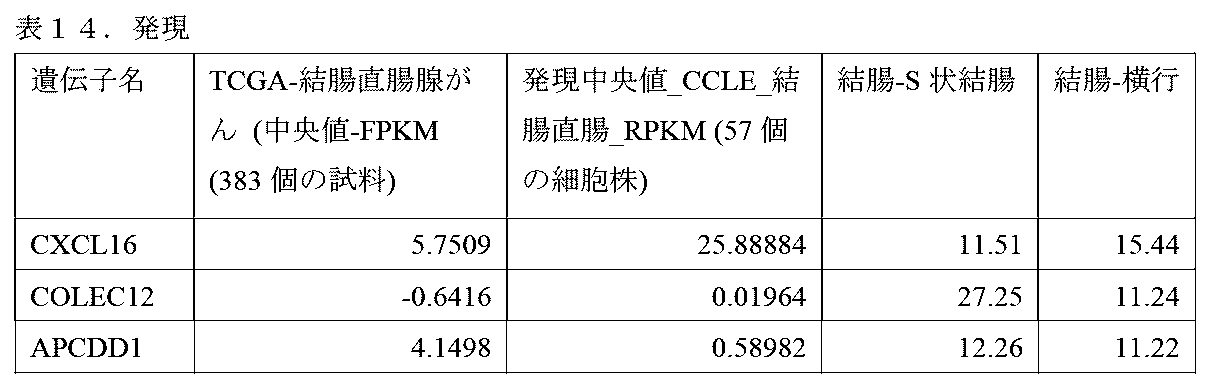
表15は、バリアント及びマイナー対立遺伝子頻度をまとめたものである。
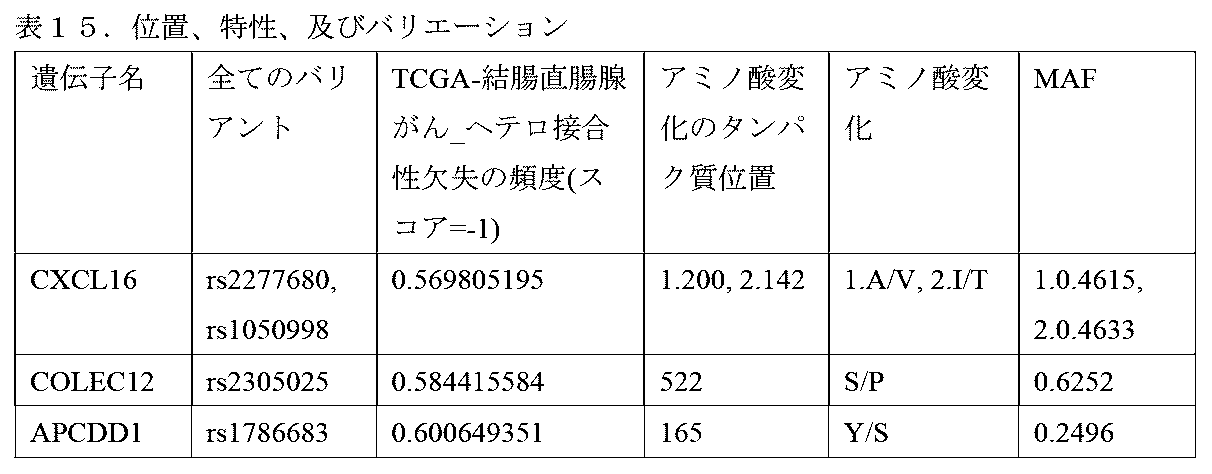

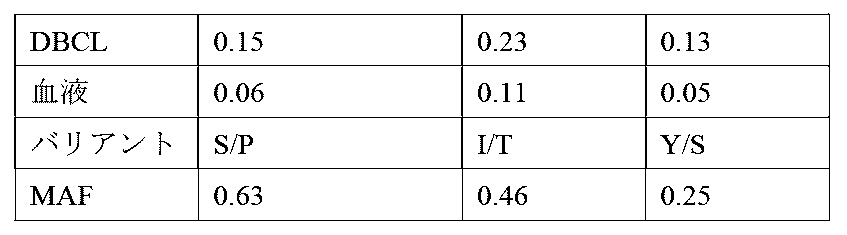
実施例2:遮断因子リガンド結合ドメインの同定
CDR配列が未知である場合、候補の遮断因子抗原に対する公的に入手可能な抗体が配列決定される。候補の遮断因子標的に対する抗体が利用可能でない場合、これらの抗体は、精製されたタンパク質(例えば、COLEC12、CXCL16及び実施例に記載の他の標的)を用いたマウス、ラット、又はウサギの免疫化によって生成される。免疫化動物からの血清を使用して、mAbが遮断因子標的に結合するかどうかをスクリーニングする。遮断因子標的に対する抗体もまた、huTARG系を使用して生成される。次いで、所望の特異性を有する抗体を単離し、配列決定して、CDR配列を決定する。
Example 2: Identification of Blocker Ligand Binding Domains If the CDR sequences are unknown, publicly available antibodies against the candidate blocker antigens are sequenced. If antibodies against the candidate blocker targets are not available, these antibodies are generated by immunization of mice, rats, or rabbits with purified proteins (e.g., COLEC12, CXCL16, and other targets described in the Examples). Serum from immunized animals is used to screen whether mAbs bind to the blocker targets. Antibodies against blocker targets are also generated using the huTARG system. Antibodies with the desired specificity are then isolated and sequenced to determine the CDR sequences.
抗体から遮断因子標的までのCDR配列を使用して、標準的な分子生物学的技術を使用してscFvを生成する。候補のscFvは、抑制性受容体ヒンジ又は膜貫通ドメインに融合され、標準的な分子生物学的技術を使用して抑制性受容体を生成する。候補のscFvはまた、活性化因子受容体ヒンジ又は膜貫通ドメイン(例えば、CAR)に融合され、標的抗原に結合するscFvについての陽性対照として使用するための全長活性化因子受容体を生成する。抑制性受容体の状況において作用する候補scFvの能力を、NFAT-ルシフェラーゼレポーターアッセイを使用してJurkat細胞においてアッセイする。 The CDR sequences from the antibody to the blocker target are used to generate scFvs using standard molecular biology techniques. Candidate scFvs are fused to an inhibitory receptor hinge or transmembrane domain to generate an inhibitory receptor using standard molecular biology techniques. Candidate scFvs are also fused to an activator receptor hinge or transmembrane domain (e.g., CAR) to generate a full-length activator receptor to use as a positive control for the scFv binding to the target antigen. The ability of the candidate scFvs to act in the context of the inhibitory receptor is assayed in Jurkat cells using a NFAT-luciferase reporter assay.
実施例3:Jurkat及び初代T細胞活性化実験のための方法
細胞培養
NFATルシフェラーゼレポーターをコードするJurkat細胞を、BPS Bioscienceから入手した。培養において、Jurkat細胞を、10%FBS、1%Pen/Strep、及び0.4mg/mLのG418/ジェネテシンを補充したRPMI培地中に維持した。この研究で使用した全ての他の細胞株は、ATCCから入手し、ATCCによって示唆されるように維持した。
Example 3: Methods for Jurkat and Primary T Cell Activation Experiments Cell Culture Jurkat cells encoding a NFAT luciferase reporter were obtained from BPS Bioscience. In culture, Jurkat cells were maintained in RPMI medium supplemented with 10% FBS, 1% Pen/Strep, and 0.4 mg/mL G418/Geneticin. All other cell lines used in this study were obtained from ATCC and maintained as suggested by ATCC.
Jurkat細胞トランスフェクション
Jurkat細胞を、以下の設定を使用して、製造業者のプロトコルに従って、100uLフォーマットのネオンエレクトロポレーションシステム(Lonza)により一過性にトランスフェクトした:3パルス、1500V、10msec。同時トランスフェクションを、1e6細胞当たり1~3ugの活性化因子CAR又はTCR構築物、及び1~3ugの遮断因子構築物又は空のベクターで実施し、20%の熱不活性化FBS及び0.1%のPen/Strepを補充したRPMI培地中で回収した。
Jurkat cell transfection Jurkat cells were transiently transfected with a Neon electroporation system (Lonza) in 100 uL format according to the manufacturer's protocol using the following settings: 3 pulses, 1500V, 10 msec. Co-transfections were performed with 1-3 ug of activator CAR or TCR constructs and 1-3 ug of blocker constructs or empty vector per 1e6 cells and harvested in RPMI medium supplemented with 20% heat-inactivated FBS and 0.1% Pen/Strep.
Jurkat-NFAT-ルシフェラーゼ活性化研究
Jurkat細胞を、10%熱不活性化FBS及び0.1%Pen/Strepを補充した15uLのRPMI中に再懸濁させ、ペプチド装填ビーズに添加し、6時間共培養した。Jurkat発光を評価するために、ONE-Step Luciferase Assay System(BPS Bioscience)を使用した。アッセイは、技術的な複製で行った。
Jurkat-NFAT-Luciferase Activation Study Jurkat cells were resuspended in 15 uL RPMI supplemented with 10% heat-inactivated FBS and 0.1% Pen/Strep, added to the peptide-loaded beads and co-cultured for 6 h. To assess Jurkat luminescence, the ONE-Step Luciferase Assay System (BPS Bioscience) was used. Assays were performed in technical replicates.
初代T細胞形質導入、拡大、及び濃縮
凍結したPBMCを37℃の水浴中で解凍し、1%のヒト血清を含むLymphoONE(Takara)中の1e6細胞/mLで培養し、300IU/mlのIL-2を補充した1:100のT細胞TransAct(Miltenyi)を使用して活性化した。24時間後、レンチウイルスを、5のMOIでPBMCに添加した。PBMCを更に2~3日間培養して、細胞がTransAct刺激下で増殖することを可能にした。拡大後、活性化因子及び遮断因子形質導入初代T細胞を、製造業者の指示に従って抗PEマイクロビーズ(Miltenyi)を使用して濃縮した。簡潔に述べると、初代T細胞を、MACS緩衝液(PBS中の0.5%のBSA+2mMのEDTA)中で室温で30分間、1:25希釈のEGFR-Fc(R&D Systems)とインキュベートした。細胞を、MACS緩衝液中で3回洗浄し、MACS緩衝液中で室温で30分間、二次抗体(1:1200)中でインキュベートした。次いで、細胞を、抗PEマイクロビーズ中でインキュベートし、LSカラム(Miltenyi)に通した。
Primary T cell transduction, expansion, and enrichment. Frozen PBMCs were thawed in a 37°C water bath, cultured at 1e6 cells/mL in LymphoONE (Takara) with 1% human serum, and activated using 1:100 T cell TransAct (Miltenyi) supplemented with 300 IU/ml IL-2. After 24 hours, lentivirus was added to the PBMCs at an MOI of 5. PBMCs were cultured for an additional 2-3 days to allow the cells to proliferate under TransAct stimulation. After expansion, activator- and blocking factor-transduced primary T cells were enriched using anti-PE microbeads (Miltenyi) according to the manufacturer's instructions. Briefly, primary T cells were incubated with EGFR-Fc (R&D Systems) at a 1:25 dilution in MACS buffer (0.5% BSA + 2 mM EDTA in PBS) for 30 minutes at room temperature. Cells were washed three times in MACS buffer and incubated in secondary antibody (1:1200) in MACS buffer for 30 minutes at room temperature. Cells were then incubated in anti-PE microbeads and passed over an LS column (Miltenyi).
初代T細胞のインビトロ細胞傷害性研究
pMHC標的を用いた細胞傷害性研究のために、、濃縮された初代T細胞を、GFP又はRFPを発現するHeLa又はHCT116標的細胞とインキュベートした。「腫瘍」細胞については、WT HeLa又はHLA-A*02ノックアウトHCT116を使用し、「正常」細胞については、HLA-A*02形質導入HeLa又はWT HCT116を使用した。共培養物を、IncuCyte生細胞イメージャーを使用して撮像し、標的細胞蛍光領域を使用して生標的細胞を定量化した。
In vitro cytotoxicity studies of primary T cells For cytotoxicity studies with pMHC targets, enriched primary T cells were incubated with HeLa or HCT116 target cells expressing GFP or RFP. For "tumor" cells, WT HeLa or HLA-A*02 knockout HCT116 were used, and for "normal" cells, HLA-A*02 transduced HeLa or WT HCT116 were used. Co-cultures were imaged using an IncuCyte live cell imager, and live target cells were quantified using target cell fluorescence area.
実施例4:HLA-A*02抑制性受容体は、EGFRにより媒介されるJurkat細胞の活性化を遮断する
HLA-A-A*02抗原結合ドメイン及びLIR-1 ICD(C1765又はC2162)を有する抑制性受容体が、EGFR抗原結合ドメイン(例えば、CT479、CT486、又はCT489)を有する活性化因子CARを発現するJurkat細胞の活性化を遮断する能力を、前述のようにNFAT-ルシフェラーゼレポーター系を使用してアッセイした。EGFR+及びHLA-A*02-であった、正常なHeLa腫瘍細胞を、標的細胞として使用した。EGFR+/HLA-A*02-HeLa細胞も、HLA-A*02+をコードするポリヌクレオチドで形質導入し、EGFR+/HLA-A*02+HeLa細胞を生成し、活性化因子及び遮断因子抗原の両方を発現する標的細胞として使用した。
Example 4: HLA-A*02 inhibitory receptor blocks EGFR-mediated activation of Jurkat cells The ability of inhibitory receptors with HLA-A-A*02 antigen binding domain and LIR-1 ICD (C1765 or C2162) to block activation of Jurkat cells expressing activator CARs with EGFR antigen binding domain (e.g., CT479, CT486, or CT489) was assayed using the NFAT-luciferase reporter system as previously described. Normal HeLa tumor cells that were EGFR+ and HLA-A*02- were used as target cells. EGFR+/HLA-A*02- HeLa cells were also transduced with a polynucleotide encoding HLA-A*02+ to generate EGFR+/HLA-A*02+ HeLa cells, which were used as target cells expressing both activating and blocking factor antigens.
図1Aに示されるように、EGFR CAR(CT479)を発現するJurkat細胞におけるHLA-A*02 LIR-1遮断因子(C1765)の発現は、遮断因子を発現しないJurkat細胞のCAR Emaxと比較して、CAR EMAXを5倍超シフトさせる。 As shown in Figure 1A, expression of HLA-A*02 LIR-1 blocker (C1765) in Jurkat cells expressing EGFR CAR (CT479) shifts the CAR EMAX by more than 5-fold compared to the CAR Emax of Jurkat cells not expressing the blocker.
更に、標的細胞上のより低いHLA-A2発現レベルで、より低い遮断が観察された。正常なHCT116細胞は、EGFR+及びHLA-A*02+である。EGFR及びHLA-A*02のレベルを、抗EGFR抗体及び抗HLA-A*02抗体(BB7.2)を使用して、HLA-A*02ポリヌクレオチドをコードするポリヌクレオチドで形質導入したHCT116細胞及びHeLa細胞においてアッセイした後、FAC選別した。図2A及び図2Bに示されるように、HCT116細胞は、形質導入されたHeLa細胞よりも低いレベルの遮断因子HLA-A*02抗原を有する。EGFR CAR及びHLA-A*02 LIR-1遮断因子を発現するJurkat細胞に、EGFR及びHLA-A*02抗原を発現するHCT116標的細胞を提示すると、HLA-A*02 LIR-1遮断因子の存在は、EGFR CARのEMAXを1.8倍にシフトさせた(図3B)。対照的に、より高いレベルのHLA-A*02抗原を発現した形質導入HeLa細胞は、5倍超のEGFR CAR EMAXシフトを媒介することができた(図1B、図17B、及び図3D)。対照として、EGFRノックアウトHCT116細胞による最小限の活性化があった(図3A)。 Furthermore, lower blocking was observed with lower HLA-A2 expression levels on the target cells. Normal HCT116 cells are EGFR+ and HLA-A*02+. EGFR and HLA-A*02 levels were assayed in HCT116 cells and HeLa cells transduced with a polynucleotide encoding HLA-A*02 polynucleotide using anti-EGFR and anti-HLA-A*02 antibodies (BB7.2) followed by FAC sorting. As shown in Figures 2A and 2B, HCT116 cells have lower levels of blocking factor HLA-A*02 antigen than transduced HeLa cells. When HCT116 target cells expressing EGFR and HLA-A*02 antigens were presented to Jurkat cells expressing EGFR CAR and HLA-A*02 LIR-1 blocker, the presence of HLA-A*02 LIR-1 blocker shifted the E MAX of the EGFR CAR by 1.8-fold (Figure 3B). In contrast, transduced HeLa cells that expressed higher levels of HLA-A*02 antigen were able to mediate a more than 5-fold EGFR CAR E MAX shift (Figures 1B, 17B, and 3D). As a control, there was minimal activation by EGFR knockout HCT116 cells (Figure 3A).
EGFR CAR及びHLA-A*02 LIR-1遮断因子を使用して50%の遮断を達成するために必要な遮断因子対活性化因子の比を、図4A及び図4Bに示されるビーズベースの系を使用してアッセイした。 The ratio of blocker to activator required to achieve 50% blockage using EGFR CAR and HLA-A*02 LIR-1 blockers was assayed using the bead-based system shown in Figures 4A and 4B.
活性化因子抗原のEC50を決定するために、活性化因子ビーズを、異なる濃度で活性化因子抗原でコーティングして、EC50を決定した。全タンパク質濃度が同じになるように各濃度に無関係なタンパク質を添加し、一定量のビーズを、EGFR CARを発現するJurkatエフェクター細胞に添加した(図4A)。 To determine the EC50 of an activator antigen, activator beads were coated with activator antigen at different concentrations and the EC50 was determined. An irrelevant protein was added to each concentration to ensure the same total protein concentration, and a fixed amount of beads was added to Jurkat effector cells expressing EGFR CAR (Figure 4A).
遮断因子抗原IC50を決定するために、ビーズを、EC50濃度で活性化因子抗原でコーティングし(図4Aで決定された)、異なる濃度で遮断因子抗原でコーティングした。全タンパク質濃度が同じままであるように、各濃度で無関係なタンパク質を添加し、一定量のビーズを、EGFR CAR、又はEGFR CAR及びHLA-A*02 LIR-1遮断因子のいずれかを発現するJurkatエフェクター細胞に添加した(図4B)。 To determine blocker antigen IC50, beads were coated with activator antigen at the EC50 concentration (determined in Figure 4A) and with blocker antigen at different concentrations. An irrelevant protein was added at each concentration so that the total protein concentration remained the same, and a fixed amount of beads was added to Jurkat effector cells expressing either EGFR CAR, or EGFR CAR and HLA-A*02 LIR-1 blocker (Figure 4B).
実施例5:特異的受容体対の特徴付け
EGFR scFv CAR活性化因子(図5及び図7~9に示されるように、CT-479、CT-482、CT-486、CT-487、CT-488、又はCT-489)、又はEGFR scFv CAR活性化因子及びHLA-A*02 PA2.1 scFv LIR1抑制因子(C1765又はC2162)のいずれかでトランスフェクトしたT細胞を、HeLa標的細胞と共培養した。正常なHeLa細胞株は、EGFRを発現するが、HLA-A*02を発現せず、HLA-A*02抑制性受容体標的を発現するように形質導入した。細胞を、1:1の比のエフェクター対標的(E:T)で共培養した。図5の右下では、エフェクター細胞受容体の発現が最初に示されるが、HeLa細胞の発現は括弧内にある。図5から理解され得るように、同じHLA-A*02 PA2.1 scFv LIR1抑制因子を、異なるEGFR活性化因子受容体とともに使用したときに、異なる程度の遮断が観察される。
Example 5: Characterization of specific receptor pairs T cells transfected with either EGFR scFv CAR activators (CT-479, CT-482, CT-486, CT-487, CT-488, or CT-489, as shown in Figure 5 and Figures 7-9), or EGFR scFv CAR activators and HLA-A*02 PA2.1 scFv LIR1 inhibitors (C1765 or C2162) were co-cultured with HeLa target cells. A normal HeLa cell line expresses EGFR but not HLA-A*02, and was transduced to express the HLA-A*02 inhibitory receptor target. Cells were co-cultured at a 1:1 ratio of effector to target (E:T). In the bottom right of Figure 5, effector cell receptor expression is shown first, while HeLa cell expression is in brackets. As can be seen from Figure 5, different degrees of blockade are observed when the same HLA-A*02 PA2.1 scFv LIR1 inhibitor is used with different EGFR activator receptors.
HLA-A*02 PA2.1 scFv LIR1抑制因子(C1765)が、EGFR(標的A)又はEGFR及びHLA-A*02(標的AB)のいずれかを発現するHCT.116細胞と共培養したT細胞のEGFR scFv CAR活性化を遮断する能力もまた、アッセイした(図10)。HeLa細胞と同様に、同じHLA-A*02 PA2.1 scFv LIR1抑制因子を、異なるEGFR活性化因子受容体とともに使用したときに、異なる程度の遮断が観察される。 The ability of HLA-A*02 PA2.1 scFv LIR1 inhibitor (C1765) to block EGFR scFv CAR activation of T cells co-cultured with HCT.116 cells expressing either EGFR (target A) or EGFR and HLA-A*02 (target AB) was also assayed (Figure 10). As with HeLa cells, different degrees of blockage are observed when the same HLA-A*02 PA2.1 scFv LIR1 inhibitor is used with different EGFR activator receptors.
Jurkat細胞を、HeLa標的細胞と共培養したときに、HLA-A*02 PA2.1 scFv LIR1抑制因子(C1765)が、Jurkat細胞のEGFR scFv CAR活性化を遮断する能力もまた、アッセイした。結果を図2に示す。初代T細胞における結果と同様に、同じHLA-A*02 PA2.1 scFv LIR1抑制因子を、異なるEGFR活性化因子受容体とともに使用したときに、異なる程度の遮断が観察される。 The ability of HLA-A*02 PA2.1 scFv LIR1 inhibitor (C1765) to block EGFR scFv CAR activation of Jurkat cells was also assayed when the cells were co-cultured with HeLa target cells. The results are shown in Figure 2. Similar to the results in primary T cells, different degrees of blockage are observed when the same HLA-A*02 PA2.1 scFv LIR1 inhibitor is used with different EGFR activator receptors.
免疫細胞の活性化は、活性化リガンドのみを発現する標的細胞又は活性化リガンド及び遮断リガンドの両方を発現する標的細胞の存在下で、活性化因子又は特異的な活性化因子/遮断因子対を発現する免疫細胞において測定した(図6A)。選択性比(SR)を、CAR活性化因子及び遮断因子の試験対について計算した。SRは、活性化リガンドのみを発現する標的細胞の存在下での活性化因子/遮断因子対を発現する免疫細胞の活性化と、活性化因子リガンド及び遮断リガンドの両方を発現する標的細胞の存在下での活性化因子/遮断因子対を発現する免疫細胞の活性化との比を計算することによって決定される。選択されたEGFR標的化CAR活性化因子を、ヒト化遮断因子(C2162)又はマウス遮断因子(C1765)のいずれかとの対として発現させた。ヒト化遮断因子と対になったEGFR標的化CAR活性化因子のうち、CT489についての選択性比は24.2に達し、CT486についての選択性比は17に達し、CT487についての選択性比は5.0に達し、CT487についての選択性比は5.0に達した。マウス遮断因子と対になったEGFR標的化CAR活性化因子のうち、CT489についての選択性比は21.6であり、CT486についての選択性比は15.7であり、CT487についての選択性比は18.4であり、CT487についての選択性比は21.2であった(図6A)。EGFR標的化活性化因子及び抑制性受容体対の各々についても、最大特異的死滅を決定した。全ての対合について、特異的死滅は約60%を超え、遮断因子の選択が、EGFR標的化活性化因子受容体によるT細胞活性化に有意に影響しなかったことを示した。しかしながら、特異的活性化因子及び特異的遮断因子対の対合は、選択性比に影響を及ぼし、促進された特異的活性化因子/抑制性受容体対によってオフターゲット死滅が予測可能ではないことを示した。 Immune cell activation was measured in immune cells expressing activators or specific activator/blocker pairs in the presence of target cells expressing only the activating ligand or target cells expressing both the activating and blocking ligands (Figure 6A). Selectivity ratios (SR) were calculated for test pairs of CAR activators and blockers. SR is determined by calculating the ratio of activation of immune cells expressing the activator/blocker pair in the presence of target cells expressing only the activating ligand to activation of immune cells expressing the activator/blocker pair in the presence of target cells expressing both the activator and blocking ligands. Selected EGFR-targeted CAR activators were expressed as pairs with either a humanized blocker (C2162) or a murine blocker (C1765). Among the EGFR-targeted CAR activators paired with humanized blockers, the selectivity ratio for CT489 reached 24.2, for CT486 reached 17, for CT487 reached 5.0, and for CT487 reached 5.0. Among the EGFR-targeted CAR activators paired with murine blockers, the selectivity ratio for CT489 was 21.6, for CT486 was 15.7, for CT487 was 18.4, and for CT487 was 21.2 (FIG. 6A). Maximum specific killing was also determined for each of the EGFR-targeted activator and inhibitory receptor pairs. For all pairings, specific killing was greater than about 60%, indicating that the choice of blocker did not significantly affect T cell activation by the EGFR-targeted activator receptor. However, the pairing of specific activators and specific blockers affected the selectivity ratio, indicating that off-target killing was not predictable by promoted specific activator/inhibitory receptor pairs.
活性化因子及び遮断因子感受性を、CAR活性化因子のみ、又はCAR活性化因子及びヒト化遮断因子若しくはマウス遮断因子のいずれかを発現する免疫細胞において決定した(図6B)。活性化因子感受性を決定するために、免疫細胞を、EGFR陰性標的細胞の存在下でインキュベートした。インキュベーション前に、標的細胞をEGFR mRNAで滴定し、EGFR発現レベルの増加をもたらした(図6B、左パネル)。遮断因子感受性を決定するために、EGFRを発現するHLA-A*02陰性標的細胞(細胞当たり約53,000個のEGFR分子)の存在下で免疫細胞をインキュベートした。インキュベーション前に、標的細胞をHLA-A*02 mRNAで滴定し、HLA-A*02発現レベルの増加をもたらした(図6B、右パネル)。異なるCAR活性化因子と組み合わせて、各CAR活性化因子及び遮断因子についてEC50値を計算した(表5.1)。この結果により、特異的活性化因子受容体が、抑制性受容体感受性に影響を及ぼすことが更に確認される。

実施例6:抑制性受容体は、T細胞における活性化因子受容体の表面レベルを可逆的に低下させる
2つのHLA-A*02陰性ドナー由来の初代T細胞を、EGFR scFv CAR活性化因子(CT-479、CT-482、CT-486、CT-487、又はCT-488)及びHLA-A*02 PA2.1 scFv LIR1抑制因子(C1765)で形質導入した。形質導入した細胞を、遮断因子及び活性化因子受容体上でのFACS選別によって、又は遮断因子及び活性化因子受容体上での二重カラム精製によって濃縮した。形質導入したT細胞を、HeLa標的細胞と共培養した。正常なHeLa細胞株は、HLA-A*02ではなく、EGFRを発現したが、HLA-A*02抑制性受容体標的を発現するように形質導入した。細胞を、1:1の比のエフェクター対標的(E:T)で共培養した。EGFR CAR活性化因子の表面発現を、活性化因子及び抑制性受容体に結合した標識ペプチドを使用して120時間後にアッセイし、蛍光活性化細胞選別を行った。活性化因子及び遮断因子リガンドの両方を発現するHeLa細胞との共培養後の活性化因子表面レベルの変化は、T細胞が標的細胞を死滅させる能力に対応していた(図5及び図11Aを比較)。
Example 6: Inhibitory receptors reversibly reduce surface levels of activator receptors in T cells Primary T cells from two HLA-A*02 negative donors were transduced with EGFR scFv CAR activators (CT-479, CT-482, CT-486, CT-487, or CT-488) and HLA-A*02 PA2.1 scFv LIR1 inhibitor (C1765). Transduced cells were enriched by FACS sorting on blocker and activator receptors or by dual column purification on blocker and activator receptors. Transduced T cells were co-cultured with HeLa target cells. A normal HeLa cell line expressed EGFR but not HLA-A*02, but was transduced to express the HLA-A*02 inhibitory receptor target. Cells were co-cultured at a 1:1 ratio of effector to target (E:T). Surface expression of EGFR CAR activators was assayed 120 hours later using labeled peptides that bound to activator and inhibitory receptors and fluorescence-activated cell sorting. Changes in activator surface levels following co-culture with HeLa cells expressing both activator and blocker ligands paralleled the ability of T cells to kill target cells (compare FIG. 5 and FIG. 11A).
CT-482 EGFR scFv CAR活性化因子及びHLA-A*02 PA2.1 scFv LIR1抑制因子(C1765)の組み合わせを発現するT細胞を、EGFR(標的A)、HLA-A*02(標的B)、同じ細胞上のEGFR及びHLA-A*02の組み合わせ(標的AB)を発現するHeLa細胞、異なる細胞上の標的A及び標的ABを発現するHeLa細胞の混合集団、又は異なる細胞上の標的B及び標的ABを発現するHeLa細胞の混合集団と共培養した(図12A~図12B)。T細胞を、1:1のエフェクター細胞対標的細胞の比でHeLa標的細胞と培養した。T細胞を、HeLa細胞の標的A+標的AB集団と共培養したとき、活性化因子のレベルが低下し、次いで回復した(図12A)。更に、エフェクターT細胞上の活性化因子表面発現喪失を引き起こすために、活性化因子及び遮断因子抗原が同じ細胞上に一緒に存在しなければならない。活性化因子とは対照的に、遮断因子発現は、ほとんど変化しなかった(図12B)。 T cells expressing a combination of CT-482 EGFR scFv CAR activator and HLA-A*02 PA2.1 scFv LIR1 inhibitor (C1765) were co-cultured with HeLa cells expressing EGFR (target A), HLA-A*02 (target B), a combination of EGFR and HLA-A*02 (target AB) on the same cells, a mixed population of HeLa cells expressing target A and target AB on different cells, or a mixed population of HeLa cells expressing target B and target AB on different cells (Figures 12A-B). T cells were cultured with HeLa target cells at a 1:1 effector to target cell ratio. When T cells were co-cultured with a target A + target AB population of HeLa cells, the levels of the activator decreased and then recovered (Figure 12A). Furthermore, to induce loss of activator surface expression on effector T cells, activator and blocking factor antigens must be present together on the same cell. In contrast to activators, blocking factor expression was largely unchanged (Figure 12B).
図13は、T細胞による細胞傷害性、遮断活性、及び活性化因子受容体の発現の喪失が可逆的であったかどうかを決定するための実験についての概略図を示す。EGFR scFv CAR活性化因子受容体(CT-487)及びHLA-A*02 PA2.1 scFv LIR1(C1765)抑制性受容体を発現するT細胞を、活性化因子及び抑制性受容体標的(AB)の両方を発現するHeLa標的細胞と共培養した。3日間の共培養後、抗EGFRカラムを使用してHeLa細胞を除去し、T細胞を、活性化因子及び抑制性受容体のために染色したか、又はEGFR活性化因子標的を発現するHeLa細胞と更に3日間のみ共培養した。更に3日間の共培養後、再び抗EGFRカラムを使用してHeLa細胞を除去し、T細胞を、活性化因子及び抑制性受容体のために染色したか、又はEGFR活性化因子標的のみ、若しくは活性化因子及び遮断因子標的の両方(AB)を発現するHeLa細胞と更に3日間共培養し、その後、染色した。標識化EGFR及びA2プローブを使用して、T細胞を活性化因子及び抑制性受容体(染色した)の存在についてアッセイし、蛍光活性化細胞選別を使用して受容体発現レベルを定量化した。実験の結果を図14A~図14Bに示す。図14A~図14Bに示すように、T細胞と、活性化因子及び抑制因子標的の両方を発現するHeLa細胞との共培養は、EGFR活性化因子染色を低減する(図14A~図14B、左パネル)。T細胞を、ラウンド2において活性化因子(標的Aのみ)を発現するHeLa細胞と共培養すると、EGFR活性化因子の発現が増加する。したがって、活性化因子表面喪失は可逆的であり、T細胞の細胞傷害性を追跡する。 Figure 13 shows a schematic for an experiment to determine whether the loss of cytotoxicity, blocking activity, and expression of activator receptors by T cells was reversible. T cells expressing EGFR scFv CAR activator receptor (CT-487) and HLA-A*02 PA2.1 scFv LIR1 (C1765) inhibitory receptor were co-cultured with HeLa target cells expressing both activator and inhibitory receptor targets (AB). After 3 days of co-culture, the HeLa cells were removed using an anti-EGFR column and T cells were either stained for activator and inhibitory receptors or co-cultured only with HeLa cells expressing the EGFR activator target for an additional 3 days. After another 3 days of co-culture, the HeLa cells were again removed using an anti-EGFR column and the T cells were stained for activator and inhibitory receptors or co-cultured for another 3 days with HeLa cells expressing only EGFR activator targets or both activator and blocker targets (AB) and then stained. T cells were assayed for the presence of activator and inhibitory receptors (stained) using labeled EGFR and A2 probes and receptor expression levels were quantified using fluorescence activated cell sorting. The results of the experiment are shown in Figures 14A-B. As shown in Figures 14A-B, co-culture of T cells with HeLa cells expressing both activator and inhibitory targets reduces EGFR activator staining (Figures 14A-B, left panels). Co-culture of T cells with HeLa cells expressing activators (target A only) in round 2 increases EGFR activator expression. Thus, surface loss of activators is reversible and tracks the cytotoxicity of T cells.
図15A~図15Bは、活性化因子受容体発現の喪失が、急速に可逆的であることを示す追加の実験の結果を示す。活性化因子CAR細胞表面発現は、活性化因子及び抑制性受容体の両方を発現するT細胞において、これらのT細胞を、活性化因子及び抑制因子リガンドの両方を発現するモデル「正常」細胞と共培養したときに低下する。しかしながら、T細胞を、活性化因子リガンドのみを発現するモデル「がん」細胞との共培養に切り替えたとき、T細胞は、活性化因子CARの細胞表面発現を迅速に(数時間以内に)復元することができた。活性化因子及び抑制因子リガンドの両方を発現するモデル「正常」細胞の不在は、同様の時間枠内で、腫瘍細胞の存在に関係なく、活性化因子CARの細胞表面発現を復元することもできた。 Figures 15A-B show the results of additional experiments demonstrating that loss of activator receptor expression is rapidly reversible. Activator CAR cell surface expression is reduced in T cells expressing both activator and inhibitory receptors when these T cells are co-cultured with model "normal" cells expressing both activator and inhibitory ligands. However, when the T cells were switched to co-culture with model "cancer" cells expressing only the activator ligand, the T cells were able to rapidly (within hours) restore cell surface expression of activator CAR. The absence of model "normal" cells expressing both activator and inhibitory ligands was also able to restore cell surface expression of activator CAR, regardless of the presence of tumor cells, within a similar time frame.
実施例7:HLA-A*02 LIR-1ベースの抑制性受容体は、EGFR CAR活性化因子による活性化を遮断することができる
EGFR CAR活性化因子及びpMHC HLA-A*02 scFv LIR-1ベースの抑制性受容体(LIR-1ヒンジ、膜貫通及びICDを含む)を発現するJurkatエフェクター細胞の活性化を、実施例3に記載のNFATルシフェラーゼアッセイを使用してアッセイした。
Example 7: HLA-A*02 LIR-1 based inhibitory receptor can block activation by EGFR CAR activators Activation of Jurkat effector cells expressing EGFR CAR activators and pMHC HLA-A*02 scFv LIR-1 based inhibitory receptor (including the LIR-1 hinge, transmembrane and ICD) was assayed using the NFAT luciferase assay described in Example 3.
Jurkat細胞を、活性化因子及び抑制性受容体DNAでトランスフェクトし、無細胞ビーズベースのアッセイにおいて活性化をアッセイした(図16)。ビーズに、活性化因子抗原、遮断因子抗原、又は活性化因子及び抑制因子抗原のいずれかを充填し、ビーズ対Jurkat細胞の比を変化させた。無細胞ビーズベースのアッセイにおいて、HLA-A*02 scFv LIR-1ベースの抑制性受容体は、細胞が、HLA-A*02遮断因子及びEGFR活性化因子をシスで担持するビーズと接触したときに、Jurkat細胞の活性化を遮断することができたが、HLA-A*02遮断因子及びEGFR活性化因子が、(異なるビーズ上で)トランスであったときには遮断することができなかった。ビーズ上のHLA-A*02遮断因子の存在は、EGFR CARのEMAXを9倍以上シフトすることができた(図16)。 Jurkat cells were transfected with activator and inhibitory receptor DNA and activation was assayed in a cell-free bead-based assay (Figure 16). Beads were loaded with either activator antigen, blocker antigen, or activator and inhibitor antigen, and the ratio of beads to Jurkat cells was varied. In a cell-free bead-based assay, the HLA-A*02 scFv LIR-1-based inhibitory receptor was able to block Jurkat cell activation when the cells were contacted with beads carrying HLA-A*02 blocker and EGFR activator in cis, but not when HLA-A*02 blocker and EGFR activator were in trans (on different beads). The presence of HLA-A*02 blocker on the beads was able to shift the EMAX of the EGFR CAR by more than 9-fold (Figure 16).
EGFR CAR活性化因子及びHLA-A*02 scFv LIR-1ベースの抑制性受容体を発現するJurkat細胞の活性化もまた、HeLa及びSiHa細胞を標的細胞として使用してアッセイした。正常なHeLa及びSiHa細胞株は、HLA-A*02(SiHa WT及びHeLa WT)ではなく、EGFRを発現するが、HLA-A*02抑制性受容体標的(SiHa A02及びHeLa A02)を発現するように形質導入した。図17A及び図17Bに見ることができるように、HLA-A*02 scFv LIR-1ベースの抑制性受容体は、SiHa標的細胞(図17A)を使用して、EGFR EMAXを4倍超、HeLa標的細胞(図17B)を使用して5倍超シフトすることができた。 Activation of Jurkat cells expressing EGFR CAR activators and HLA-A*02 scFv LIR-1 based inhibitory receptor was also assayed using HeLa and SiHa cells as target cells. Normal HeLa and SiHa cell lines express EGFR but not HLA-A*02 (SiHa WT and HeLa WT), but were transduced to express the HLA-A*02 inhibitory receptor target (SiHa A02 and HeLa A02). As can be seen in Figures 17A and 17B, the HLA-A*02 scFv LIR-1 based inhibitory receptor was able to shift the EGFR E MAX by more than 4-fold using SiHa target cells (Figure 17A) and more than 5-fold using HeLa target cells (Figure 17B).
実施例8:EGFR CAR活性化因子及び抑制性受容体発現T細胞のインビボでの有効性
活性化因子受容体(EGFR CAR)及び抑制性受容体(遮断因子)対を発現する免疫細胞に対する有効性及び腫瘍対正常細胞選択性を、インビボ環境で確立する(図19)。「正常」細胞及びアイソジェニックEGFR+/HLA-A*02(-)ノックアウトHeLa細胞を「腫瘍」細胞として表すヒトEGFR+/HLA-A*02+HeLa細胞を使用した、NSG(NOD.Cg-PrkdcscidIl2rgtm1Wjl/SzJ)におけるマウス異種移植モデル。インビボ治療ウィンドウは、正常細胞対腫瘍細胞に対する活性化因子/抑制性受容体対についての効果を比較することによって確立される。これらのデータは、オンターゲット、オフ腫瘍治療ウィンドウについてのインビボでの支持を提供する。活性化因子/抑制性受容体対のための最適用量が確立され、感受性及び選択性のために最適化される。
Example 8: In vivo efficacy of EGFR CAR activator and inhibitory receptor expressing T cells Efficacy and tumor vs. normal cell selectivity for immune cells expressing activator receptor (EGFR CAR) and inhibitory receptor (blocker) pairs is established in an in vivo setting (Figure 19). Mouse xenograft model in NSG (NOD.Cg-Prkdc scid Il2rg tm1Wjl /SzJ) using human EGFR+/HLA-A*02+ HeLa cells representing "normal" cells and isogenic EGFR+/HLA-A*02(-) knockout HeLa cells as "tumor" cells. In vivo therapeutic window is established by comparing the effect for activator/inhibitory receptor pairs on normal vs. tumor cells. These data provide in vivo support for an on-target, off-tumor therapeutic window. The optimal dose for each activator/inhibitory receptor pair is established and optimized for sensitivity and selectivity.
インビボモデルは、右脇腹に「正常」細胞、及び左脇腹に「腫瘍」細胞の皮下異種移植片を含む。活性化因子受容体、活性化因子/抑制性受容体対を発現する免疫細胞、又は非形質導入対照細胞を、様々な時点で動物に投与する。 The in vivo model involves subcutaneous xenografts of "normal" cells in the right flank and "tumor" cells in the left flank. Animals are administered immune cells expressing activator receptors, activator/inhibitory receptor pairs, or non-transduced control cells at various time points.
動物は、臨床観察及び体重への影響を通じて、全体的な健康状態を監視される。腫瘍異種移植は、キャリパー及びイメージングによってサイズを評価される。各時点で、ヒトT細胞は、フローサイトメトリーによって列挙され、CD3、CD4、CD8、活性化因子受容体発現、及び抑制性受容体発現を含む、表面マーカーについて評価される。IFNγ及びインターロイキン-2(IL-2)を含む、血清サイトカインレベルを決定する。生後分析では、注射部位及び腫瘍を含む、プロトコル指定の組織は、ACVP委員会認定の病理学者による腫瘍浸潤T細胞、並びに活性化因子受容体抗原(例えば、EGFR)及び遮断因子抗原発現(例えば、HLA-A*02)についての組織学によって評価される。 Animals are monitored for overall health through clinical observations and effects on body weight. Tumor xenografts are assessed for size by caliper and imaging. At each time point, human T cells are enumerated by flow cytometry and assessed for surface markers including CD3, CD4, CD8, activator receptor expression, and inhibitory receptor expression. Serum cytokine levels are determined, including IFNγ and interleukin-2 (IL-2). At postnatal analysis, protocol-specified tissues, including the injection site and tumor, are evaluated by histology for tumor-infiltrating T cells by an ACVP board-certified pathologist, as well as activator receptor antigen (e.g., EGFR) and blocking antigen expression (e.g., HLA-A*02).
実施例9:B7及びHLA-A*11は抑制性受容体リガンドである
HLA-A*011抑制性受容体を、scFv #4(表)を、LIR-1に由来するヒンジ、TM及びICDに融合させることによって作り出した。Golden Gateクローニングを使用して遺伝子セグメントを合わせ、レンチウイルス発現プラスミドに含まれるヒトEF1アルファプロモーターの下流に挿入した。
Example 9: B7 and HLA-A*11 are inhibitory receptor ligands The HLA-A*011 inhibitory receptor was created by fusing scFv #4 (Table) to the hinge, TM and ICD from LIR-1. The gene segments were combined using Golden Gate cloning and inserted downstream of the human EF1 alpha promoter contained in a lentiviral expression plasmid.
Jurkat NFAT-ルシフェラーゼエフェクター細胞を、CAR活性化因子、又はCAR活性化因子及びscFv#4 HLA-A*11抑制性(遮断因子)受容体で上記のように形質転換した。HLA-A*011抑制性受容体の配列を以下の表9.1に示し、活性化因子リガンド及びHLA-A*011:01の両方を発現するHeLa細胞と共培養した。NFAT-ルシフェラーゼアッセイを、T2標的細胞の代わりにHeLaを使用して実施した。 Jurkat NFAT-luciferase effector cells were transfected with CAR activators, or CAR activators and scFv#4 HLA-A*11 inhibitory (blocker) receptor as described above. The sequence of the HLA-A*011 inhibitory receptor is shown in Table 9.1 below, and co-cultured with HeLa cells expressing both the activator ligand and HLA-A*011:01. NFAT-luciferase assays were performed using HeLa instead of T2 target cells.
結果を図20A及び図20Bに示す。図20Aに示すように、scFv#4は、LIR-1のヒンジ、TM及びICDドメインに融合した場合、活性化因子リガンド及びHLA-A*011の両方を発現する標的細胞と共培養したJurkatエフェクター細胞の活性化を阻害することができる。
Jurkat NFATルシフェラーゼ(JNL)細胞活性化を、mRNAでトランスフェクトしたHeLa細胞を使用したmRNA滴定アッセイにおいて測定した。HeLa細胞を、HLA-B*07:02をコードする連続希釈mRNAでトランスフェクトした。JNL細胞を、EGFR活性化CAR及びHLA-B*07遮断因子(円)又は陰性対照ベクター(三角形)で一過性にトランスフェクトした。機能的応答を、6時間の共培養後に評価した。図21に示す結果は、HLA-B*07遮断因子が、遮断因子の不在下ではなく、滴定したHLA-B*07:02の存在下でCARを標的とするEGFRの活性化を遮断することを示す。 Jurkat NFAT luciferase (JNL) cell activation was measured in an mRNA titration assay using mRNA-transfected HeLa cells. HeLa cells were transfected with serially diluted mRNA encoding HLA-B*07:02. JNL cells were transiently transfected with EGFR-activating CAR and HLA-B*07 blocking agent (circles) or negative control vector (triangles). Functional responses were assessed after 6 hours of co-culture. The results shown in FIG. 21 indicate that HLA-B*07 blocking agent blocks activation of EGFR-targeted CAR in the presence of titrated HLA-B*07:02 but not in the absence of blocking agent.
実施例10:初代T細胞におけるEGFR活性化因子及びHLA-A*02抑制性受容体発現の特徴付け
EGFR活性化因子を染色するために、初代T細胞を、FACS緩衝液(PBS中の1%のBSA)中で、室温で30分間、1:25の希釈でEGFR-Fc(R&D Systems)とインキュベートした。細胞をFACS緩衝液中で2回洗浄し、FACS緩衝液中で室温で30分間、抗Fc(1:100)中でインキュベートした。HLA-A*02抑制性受容体を染色するために、T細胞を、FACS緩衝液中で、室温で30分間、HLA-A*02四量体プローブとインキュベートした。受容体の発現を、染色後にフローサイトメトリーによって分析した。
Example 10: Characterization of EGFR activators and HLA-A*02 inhibitory receptor expression in primary T cells To stain for EGFR activators, primary T cells were incubated with EGFR-Fc (R&D Systems) at a dilution of 1:25 in FACS buffer (1% BSA in PBS) for 30 minutes at room temperature. Cells were washed twice in FACS buffer and incubated in anti-Fc (1:100) for 30 minutes at room temperature in FACS buffer. To stain for HLA-A*02 inhibitory receptors, T cells were incubated with HLA-A*02 tetramer probe in FACS buffer for 30 minutes at room temperature. Receptor expression was analyzed by flow cytometry after staining.
初代T細胞を、EGFR標的化活性化因子受容体をコードするポリヌクレオチド、及びヒト又はマウスのHLA-A*02標的化抑制性受容体のいずれかで形質導入した。EGFR標的化活性化因子及びHLA-A*02標的化抑制性受容体のいくつかの特異的な対を試験した。形質導入は、活性化因子受容体及び抑制性受容体の両方をコードする単一のベクター、又は活性化因子受容体をコードする1つ及び抑制性受容体をコードする1つの2つのベクターのいずれかで実施した。活性化因子及び抑制因子受容体の両方を発現する細胞のパーセンテージを決定するために、濃縮した、及び濃縮していない細胞を分析した(図22)。 Primary T cells were transduced with polynucleotides encoding an EGFR-targeted activator receptor and either a human or mouse HLA-A*02-targeted inhibitory receptor. Several specific pairs of EGFR-targeted activators and HLA-A*02-targeted inhibitory receptors were tested. Transduction was performed with either a single vector encoding both the activator receptor and the inhibitory receptor, or with two vectors, one encoding the activator receptor and one encoding the inhibitory receptor. Enriched and non-enriched cells were analyzed to determine the percentage of cells expressing both the activator and inhibitory receptors (Figure 22).
活性化因子受容体をコードする1つ及び抑制性受容体をコードする1つの2つのベクターで形質導入した初代T細胞において、両方の受容体を発現する形質導入T細胞集団における細胞のパーセンテージは、濃縮前の約22.5%(図22A、左パネル)であった。濃縮後、両方の受容体を発現する形質導入T細胞集団における細胞のパーセンテージは、約91.6%に増加した。 In primary T cells transduced with two vectors, one encoding an activating receptor and one encoding an inhibitory receptor, the percentage of cells in the transduced T cell population expressing both receptors was approximately 22.5% before enrichment (Figure 22A, left panel). After enrichment, the percentage of cells in the transduced T cell population expressing both receptors increased to approximately 91.6%.
活性化因子受容体及び抑制性受容体の両方をコードする単一ベクターで形質導入した初代T細胞において、両方の受容体を発現する形質導入T細胞集団における細胞のパーセンテージは、濃縮前の約6.29%~13.2%の範囲であった。濃縮後、両方の受容体を発現する細胞のパーセンテージは、22.6%~82.8%の範囲であった。両方の受容体を発現する細胞のパーセンテージは、特異的活性化因子及び抑制性受容体対に依存していた。 In primary T cells transduced with a single vector encoding both activating and inhibitory receptors, the percentage of cells in the transduced T cell population expressing both receptors ranged from approximately 6.29% to 13.2% before enrichment. After enrichment, the percentage of cells expressing both receptors ranged from 22.6% to 82.8%. The percentage of cells expressing both receptors was dependent on the specific activating and inhibitory receptor pair.
実施例11:活性化因子及び抑制性受容体を発現する初代T細胞における免疫細胞活性化選択性の特徴付け
選択的細胞傷害性研究のために、濃縮された初代T細胞を、GFP又はRFPを発現するHeLa又はHCT116標的細胞とインキュベートした。「腫瘍」細胞については、WT HeLa又はHLA-A*02ノックアウトHCT116を使用し、「正常」細胞については、HLA-A*02形質導入HeLa又はWT HCT116を使用した。共培養物を、IncuCyte生細胞イメージャーを使用して撮像し、標的細胞蛍光領域を使用して生標的細胞を定量化した(図23A)。混合標的培養物における選択的細胞傷害性を測定するために、「腫瘍」WT HeLa細胞を発現するRFP、及びHLA-A*02で形質導入された「正常」HeLa細胞を発現するGFPを、1:1の比で混合した。濃縮した初代T細胞を、混合標的培養物に添加し、IncuCyte生細胞イメージャーを使用して撮像し、標的細胞蛍光領域を使用して生標的細胞を定量化した(図23B)。
Example 11: Characterization of immune cell activation selectivity in primary T cells expressing activating and inhibitory receptors For selective cytotoxicity studies, enriched primary T cells were incubated with HeLa or HCT116 target cells expressing GFP or RFP. For "tumor" cells, WT HeLa or HLA-A*02 knockout HCT116 were used, and for "normal" cells, HLA-A*02 transduced HeLa or WT HCT116 were used. Co-cultures were imaged using an IncuCyte live cell imager, and live target cells were quantified using target cell fluorescence area (Figure 23A). To measure selective cytotoxicity in mixed target cultures, "tumor" WT HeLa cells expressing RFP and "normal" HeLa cells transduced with HLA-A*02 expressing GFP were mixed at a 1:1 ratio. Enriched primary T cells were added to mixed-target cultures and imaged using an IncuCyte live cell imager, and live target cells were quantified using target cell fluorescence area (FIG. 23B).
図23Aは、EGFR活性化因子受容体及びHLA-A*02 scFv LIR1抑制因子受容体を発現する免疫細胞による、HeLa標的細胞又はHCT116標的細胞の特異的死滅のパーセンテージを示す一連のプロットである。標的細胞は、EGFR抗原(A)、HLA-A*02非標的抗原(B)、又はその両方(AB)を発現する。活性化因子/抑制因子受容体対を発現する免疫細胞を、標的細胞と1:1の比でインキュベートした。 Figure 23A is a series of plots showing the percentage of specific killing of HeLa or HCT116 target cells by immune cells expressing the EGFR activator receptor and the HLA-A*02 scFv LIR1 inhibitory receptor. Target cells express the EGFR antigen (A), the HLA-A*02 non-target antigen (B), or both (AB). Immune cells expressing the activator/inhibitor receptor pair were incubated with the target cells at a 1:1 ratio.
図23Bは、がん細胞及び正常細胞の混合培養における、EGFR活性化因子受容体及びHLA-A*02 scFv LIR1抑制因子受容体を発現する免疫細胞による、標的細胞の特異的及び選択的死滅を示すプロット及び一連の画像である。UTD=活性化因子又は抑制因子受容体のない免疫細胞;CAR=活性化因子受容体のみを発現する免疫細胞;Tmod=活性化因子及び抑制因子受容体の両方を発現する免疫細胞。 Figure 23B is a plot and series of images showing specific and selective killing of target cells by immune cells expressing EGFR activator receptor and HLA-A*02 scFv LIR1 inhibitory receptor in a mixed culture of cancer and normal cells. UTD = immune cells without activator or inhibitory receptors; CAR = immune cells expressing only activator receptors; Tmod = immune cells expressing both activator and inhibitory receptors.
実施例12:活性化因子及び抑制性受容体を発現するJurkat細胞における免疫細胞活性化選択性の特徴付け
図24は、EGFR活性化因子受容体(CAR)又はEGFR活性化因子受容体及びHLA-A*02抑制因子受容体(Tmod)を発現するJurkat細胞(エフェクター)における免疫細胞活性化を示すグラフである。Jurkat細胞を、EGFR発現を伴わないHLA-A*02を発現するか、又はEGFR発現を伴うHLA-A*02を発現する標的細胞株のパネルとインキュベートした。EGFR陰性細胞株を、CRISPR/Cas9を使用してEGFRをノックアウトすることによって生成した。Tmod Jurkatエフェクター細胞は、EGFR陰性細胞と共培養したときにオフターゲット活性化を示さなかった。
特定の実施形態では、例えば以下の項目が提供される。
(項目1)
免疫細胞であって、
a.上皮増殖因子受容体(EGFR)に特異的な細胞外リガンド結合ドメインを含む、第1の受容体と、
b.ヘテロ接合性の喪失により、EGFR+がんにおいて喪失した非標的抗原に特異的な細胞外リガンド結合ドメインを含む、第2の受容体と、を含み、
前記第1の受容体が、EGFRに応答する活性化因子受容体であり、前記第2の受容体が、前記非標的抗原に応答する抑制性受容体である、免疫細胞。
(項目2)
前記第2の受容体の前記細胞外リガンド結合ドメインが、MHCタンパク質の対立遺伝子バリアントに特異的に結合する、項目1に記載の免疫細胞。
(項目3)
前記第2の受容体の前記細胞外リガンド結合ドメインが、HLA-A、HLA-B、又はHLA-Cタンパク質の対立遺伝子バリアントに特異的に結合する、項目1に記載の免疫細胞。
(項目4)
前記第2の受容体の前記細胞外リガンド結合ドメインが、HLA-A*02に特異的に結合する、項目1に記載の免疫細胞。
(項目5)
前記第2の受容体の前記細胞外リガンド結合ドメインが、HLA-A*01、HLA-A*03、HLA-A*11、HLA-C*07、又はHLA-B*07に特異的に結合する、項目1に記載の免疫細胞。
(項目6)
前記第2の受容体の前記細胞外リガンド結合ドメインが、表5に開示されるような相補性決定領域(CDR)CDR-L1、CDR-L2、CDR-L3、CDR-H1、CDR-H2、CDR-H3、又は表5の前記CDRと比較して、最大で1、2、若しくは3個の置換、欠失、若しくは挿入を有するCDR配列を含む、項目3~5のいずれか一項に記載の免疫細胞。
(項目7)
前記第2の受容体の前記細胞外リガンド結合ドメインが、配列番号101~106若しくは配列番号106~112の相補性決定領域(CDR)CDR-L1、CDR-L2、CDR-L3、CDR-H1、CDR-H2、CDR-H3、又は表5の前記CDRと比較して、最大で1、2、若しくは3個の置換、欠失、若しくは挿入を有するCDR配列を含む、項目3~5のいずれか一項に記載の免疫細胞。
(項目8)
前記第2の受容体の前記細胞外リガンド結合ドメインが、表4に開示されるポリペプチド配列、又はそれと少なくとも85%、少なくとも90%、少なくとも95%、少なくとも97%若しくは少なくとも99%の同一性を有する配列から選択されるポリペプチド配列を含む、項目3~5のいずれか一項に記載の免疫細胞。
(項目9)
前記第2の受容体の前記細胞外リガンド結合ドメインが、配列番号89~100のうちのいずれか1つ、又はそれと少なくとも85%、少なくとも90%、少なくとも95%、少なくとも97%若しくは少なくとも99%の同一性を有する配列を含む、項目4に記載の免疫細胞。
(項目10)
前記第1の受容体が、キメラ抗原受容体(CAR)である、項目1~9のいずれか一項に記載の免疫細胞。
(項目11)
前記第1の受容体の前記細胞外リガンド結合ドメインが、表3に記載の配列群から選択される重鎖相補性決定領域(HC-CDR)のセットを含む重鎖可変(VH)部分、及び/若しくは表3に記載の配列群からの軽鎖相補性決定領域(LC-CDR)のセットを含む軽鎖可変(VL)部分、又は各CDRにおいて最大で1、2、3、4個の置換、挿入、若しくは欠失を有するCDR配列を含む、項目1~10のいずれか一項に記載の免疫細胞。
(項目12)
前記第1の受容体の前記細胞外リガンド結合ドメインが、表2に記載のVH配列から選択される配列を有する重鎖可変(VH)部分、及び/若しくは表2に記載の配列を含む軽鎖可変(VL)部分、又はそれと少なくとも70%、少なくとも85%、少なくとも90%、若しくは少なくとも95%の同一性を有する配列を含む、項目1~11のいずれか一項に記載の免疫細胞。
(項目13)
前記第1の受容体の前記細胞外リガンド結合ドメインが、表1に記載の配列群から選択される配列、又はそれと少なくとも85%、少なくとも90%、少なくとも95%、少なくとも97%、若しくは少なくとも99%の同一性を有する配列を含む、項目1~12のいずれか一項に記載の免疫細胞。
(項目14)
前記第1の受容体の前記細胞外リガンド結合ドメインが、配列番号9~18からなる群から選択されるscFv配列、又はそれと少なくとも85%、少なくとも90%、少なくとも95%、少なくとも97%、若しくは少なくとも99%の同一性を有する配列を含む、項目1~13のいずれか一項に記載の免疫細胞。
(項目15)
前記第2の受容体が、LILRB1細胞内ドメイン又はその機能的バリアントを含む、項目1~14のいずれか一項に記載の免疫細胞。
(項目16)
前記LILRB1細胞内ドメインが、配列番号129と少なくとも90%、少なくとも95%、少なくとも97%、少なくとも99%同一であるか、又はそれと同一である配列を含む、項目15に記載の免疫細胞。
(項目17)
前記第2の受容体が、LILRB1膜貫通ドメイン又はその機能的バリアントを含む、項目1~16のいずれか一項に記載の免疫細胞。
(項目18)
前記LILRB1膜貫通ドメイン又はその機能的バリアントが、配列番号133と少なくとも90%、少なくとも95%、少なくとも97%、少なくとも99%同一であるか、又はそれと同一である配列を含む、項目17に記載の免疫細胞。
(項目19)
前記第2の受容体が、LILRB1ヒンジドメイン又はその機能的バリアントを含む、項目1~18のいずれか一項に記載の免疫細胞。
(項目20)
前記LILRB1ヒンジドメインが、配列番号132、配列番号125、配列番号126と少なくとも90%、少なくとも95%、少なくとも97%、少なくとも99%同一であるか、又はそれらと同一である配列を含む、項目19に記載の免疫細胞。
(項目21)
前記第2の受容体が、LILRB1細胞内ドメイン、LILRB1膜貫通ドメイン、LILRB1ヒンジドメイン、それらのうちのいずれかの機能的バリアント、又はそれらの組み合わせを含む、項目1~20のいずれか一項に記載の免疫細胞。
(項目22)
前記LILRB1細胞内ドメイン及びLILRB1膜貫通ドメインが、配列番号128、又は配列番号128と少なくとも95%同一の配列を含む、項目21に記載の免疫細胞。
(項目23)
前記EGFR+がん細胞が、肺がん細胞、小細胞肺がん細胞、非小細胞肺がん細胞、膵管がん細胞、結腸直腸がん細胞、頭頸部がん細胞、食道及び胃腺がん細胞、卵巣がん細胞、多形神経膠芽腫細胞、子宮頸部扁平上皮がん細胞、腎がん細胞、乳頭腎がん細胞、腎臓腎明細胞がん細胞、膀胱がん細胞、乳がん細胞、胆管がん細胞、肝臓がん細胞、前立腺がん細胞、肉腫細胞、甲状腺がん細胞、胸腺がん細胞、胃がん細胞、又は子宮がん細胞である、項目1~22のいずれか一項に記載の免疫細胞。
(項目24)
前記EGFR+がん細胞が、肺がん細胞である、項目23に記載の免疫細胞。
(項目25)
前記EGFR+がん細胞が、HLA-A*02を発現しないEGFR+/HLA-A*02-がん細胞、又はHLA-A*02を発現しないHLA-A*02+個体に由来するがん細胞である、項目1~24のいずれか一項に記載の免疫細胞。
(項目26)
前記EGFR+/HLA-A*02-がん細胞が、HLA-A*02の喪失をもたらす、HLA-Aにおけるヘテロ接合性の喪失によってEGFR+/HLA-A*02+細胞から派生する、項目25に記載の免疫細胞。
(項目27)
前記第1の受容体及び前記第2の受容体が共に、ヘテロ接合性の喪失を有する前記EGFR/HLA-A*02-がん細胞の存在下で前記免疫細胞を特異的に活性化する、項目1~26のいずれか一項に記載の免疫細胞。
(項目28)
前記第1の受容体及び前記第2の受容体が共に、ヘテロ接合性の喪失によってHLA-A*02を喪失していないEGFR+細胞の存在下では前記免疫細胞を特異的に活性化しない、項目1~27のいずれか一項に記載の免疫細胞。
(項目29)
前記免疫細胞が、T細胞、マクロファージ、NK細胞、iNKT細胞、又はガンマデルタT細胞である、項目1~28のいずれか一項に記載の免疫細胞。
(項目30)
前記T細胞が、CD8+CD4-T細胞である、項目29に記載の免疫細胞。
(項目31)
MHCクラスI遺伝子の発現及び/又は機能が、低下又は除去されている、項目1~30のいずれか一項に記載の免疫細胞。
(項目32)
前記MHCクラスI遺伝子が、ベータ-2-マイクログロブリン(B2M)である、項目30に記載の免疫細胞。
(項目33)
干渉RNAを含むポリヌクレオチドを更に含み、前記干渉RNAが、B2M mRNAの配列(配列番号172)に相補的な配列を含む、項目32に記載の免疫細胞。
(項目34)
前記干渉RNAが、前記B2M mRNAのRNAi媒介性分解を誘導することができる、項目33に記載の免疫細胞。
(項目35)
前記干渉RNAが、ショートヘアピンRNA(shRNA)である、項目33に記載の免疫細胞。
(項目36)
前記shRNAが、
a.前記B2M mRNAの配列に相補的な配列を5’末端から3’末端に有する、第1の配列と、
b.前記第1の配列に相補的な配列を5’末端から3’末端に有する、第2の配列と、を含み、
前記第1の配列及び前記第2の配列が、前記shRNAを形成する、項目35に記載の免疫細胞。
(項目37)
B2Mをコードする配列(配列番号170)に対する1つ以上の修飾を含み、前記1つ以上の修飾が、B2Mの発現を低下させ、かつ/又は機能を除去する、項目32に記載の免疫細胞。
(項目38)
前記1つ以上の修飾が、B2Mをコードする内因性遺伝子の1つ以上の不活性化変異を含む、項目37に記載の免疫細胞。
(項目39)
前記1つ以上の不活性化変異が、欠失、挿入、置換、又はフレームシフト変異を含む、項目38に記載の免疫細胞。
(項目40)
前記1つ以上の不活性化変異が、B2Mをコードする前記内因性遺伝子の配列(配列番号170)を特異的に標的とする少なくとも1つのガイド核酸(gNA)との複合体において、核酸誘導型エンドヌクレアーゼとともに導入される、項目38又は39に記載の免疫細胞。
(項目41)
前記MHCクラスI遺伝子が、HLA-A*02である、項目31に記載の免疫細胞。
(項目42)
HLA-A*02 mRNAの配列(配列番号171)に相補的な配列を含む、干渉RNAを含むポリヌクレオチドを更に含む、項目41に記載の免疫細胞。
(項目43)
前記干渉RNAが、前記HLA-A*02 mRNAのRNA干渉(RNAi)媒介性分解を誘導することができる、項目42に記載の免疫細胞。
(項目44)
前記干渉RNAが、
a.前記HLA-A*02 mRNAの配列に相補的な配列を5’末端から3’末端に有する、第1の配列と、
b.前記第1の配列に相補的な配列を5’末端から3’末端に有する、第2の配列と、を含む、ショートヘアピンRNA(shRNA)であり、
前記第1の配列及び前記第2の配列が、前記shRNAを形成する、項目43に記載の免疫細胞。
(項目45)
HLA-A*02をコードする内因性遺伝子の配列(配列番号169)に対する1つ以上の修飾を含み、前記1つ以上の修飾が、HLA-A*02の発現を低下させ、かつ/又は機能を除去する、項目41に記載の免疫細胞。
(項目46)
前記1つ以上の修飾が、HLA-A*02をコードする前記内因性遺伝子の1つ以上の不活性化変異を含む、項目45に記載の免疫細胞。
(項目47)
前記1つ以上の不活性化変異が、HLA-A*02をコードする前記内因性遺伝子の配列を特異的に標的とする少なくとも1つのガイド核酸(gNA)との複合体において、核酸誘導型エンドヌクレアーゼとともに導入される、項目45又は46に記載の免疫細胞。
(項目48)
a.前記第1の受容体が、配列番号177、又はそれと少なくとも75%、少なくとも80%、少なくとも85%、少なくとも90%、少なくとも95%、若しくは少なくとも98%の同一性を共有する配列を含み、
b.前記第2の受容体が、配列番号174、又はそれと少なくとも75%、少なくとも80%、少なくとも85%、少なくとも90%、少なくとも95%、若しくは少なくとも98%の同一性を共有する配列を含む、項目1~47のいずれか一項に記載の免疫細胞。
(項目49)
a.前記第1の受容体が、配列番号177、又はそれと少なくとも75%、少なくとも80%、少なくとも85%、少なくとも90%、少なくとも95%、若しくは少なくとも98%の同一性を共有する配列を含み、
b.前記第2の受容体が、配列番号173、又はそれと少なくとも75%、少なくとも80%、少なくとも85%、少なくとも90%、少なくとも95%、若しくは少なくとも98%の同一性を共有する配列を含む、項目1~47のいずれか一項に記載の免疫細胞。
(項目50)
a.前記第1の受容体が、配列番号175、又はそれと少なくとも75%、少なくとも80%、少なくとも85%、少なくとも90%、少なくとも95%、若しくは少なくとも98%の同一性を共有する配列を含み、
b.前記第2の受容体が、配列番号174、又はそれと少なくとも75%、少なくとも80%、少なくとも85%、少なくとも90%、少なくとも95%、若しくは少なくとも98%の同一性を共有する配列を含む、項目1~47のいずれか一項に記載の免疫細胞。
(項目51)
a.前記第1の受容体が、配列番号175、又はそれと少なくとも75%、少なくとも80%、少なくとも85%、少なくとも90%、少なくとも95%、若しくは少なくとも98%の同一性を共有する配列を含み、
b.前記第2の受容体が、配列番号173、又はそれと少なくとも75%、少なくとも80%、少なくとも85%、少なくとも90%、少なくとも95%、若しくは少なくとも98%の同一性を共有する配列を含む、項目1~47のいずれか一項に記載の免疫細胞。
(項目52)
a.前記第1の受容体が、配列番号176、又はそれと少なくとも75%、少なくとも80%、少なくとも85%、少なくとも90%、少なくとも95%、若しくは少なくとも98%の同一性を共有する配列を含み、
b.前記第2の受容体が、配列番号173、又はそれと少なくとも75%、少なくとも80%、少なくとも85%、少なくとも90%、少なくとも95%、若しくは少なくとも98%の同一性を共有する配列を含む、項目1~47のいずれか一項に記載の免疫細胞。
(項目53)
a.前記第1の受容体が、配列番号176、又はそれと少なくとも75%、少なくとも80%、少なくとも85%、少なくとも90%、少なくとも95%、若しくは少なくとも98%の同一性を共有する配列を含み、
b.前記第2の受容体が、配列番号173、又はそれと少なくとも75%、少なくとも80%、少なくとも85%、少なくとも90%、少なくとも95%、若しくは少なくとも98%の同一性を共有する配列を含む、項目1~47のいずれか一項に記載の免疫細胞。
(項目54)
T2A自己切断ペプチドを更に含み、前記T2A自己切断ペプチドが、配列番号178、又はそれと少なくとも75%、少なくとも80%、少なくとも85%、少なくとも90%、少なくとも95%、若しくは少なくとも98%の同一性を共有する配列を含む、項目1~53のいずれか一項に記載の免疫細胞。
(項目55)
干渉RNAを更に含み、前記干渉RNAが、配列番号179、又はそれと少なくとも75%、少なくとも80%、少なくとも85%、少なくとも90%、少なくとも95%、若しくは少なくとも98%の同一性を共有する配列を含む、項目1~54のいずれか一項に記載の免疫細胞。
(項目56)
前記免疫細胞が、自己由来である、項目1~55のいずれか一項に記載の免疫細胞。
(項目57)
前記免疫細胞が、同種異系である、項目1~55のいずれか一項に記載の免疫細胞。
(項目58)
治療有効量の項目1~57のいずれか一項に記載の免疫細胞を含む、医薬組成物。
(項目59)
前記免疫細胞が、前記第1の受容体及び前記第2の受容体の両方を発現する、項目58に記載の医薬組成物。
(項目60)
前記免疫細胞の少なくとも約50%、約55%、約60%、約65%、約70%、約75%、約80%、約85%、約90%、又は約95%が、前記第1の受容体及び前記第2の受容体の両方を発現する、項目59に記載の医薬組成物。
(項目61)
前記免疫細胞の少なくとも90%が、前記第1の受容体及び前記第2の受容体の両方を発現する、項目59に記載の医薬組成物。
(項目62)
薬学的に許容される担体、希釈剤、又は賦形剤を更に含む、項目58~61のいずれか一項に記載の医薬組成物。
(項目63)
EGFR+がんの治療において医薬として使用するための、項目58~62のいずれか一項に記載の医薬組成物。
(項目64)
ポリヌクレオチド又はポリヌクレオチド系であって、
a.内皮増殖因子受容体(EGFR)に特異的な細胞外リガンド結合ドメインを含む、第1の受容体と、
b.ヘテロ接合性の喪失により、前記EGFR+がん細胞において喪失している非標的抗原に特異的な細胞外リガンド結合ドメインを含む、第2の受容体と、をコードするポリヌクレオチド配列を含む、1つ以上のポリヌクレオチドを含み、
前記第1の受容体が、前記EGFR+がん細胞上のEGFRに応答する活性化因子受容体であり、前記第2の受容体が、前記非標的抗原に応答する抑制性受容体である、ポリヌクレオチド又はポリヌクレオチド系。
(項目65)
ポリヌクレオチド又はポリヌクレオチド系であって、項目1~57のいずれか一項に記載の免疫細胞の生成に使用するための、前記第1の受容体及び前記第2の受容体をコードするポリヌクレオチド配列を含む、1つ以上のポリヌクレオチドを含む、ポリヌクレオチド又はポリヌクレオチド系。
(項目66)
項目64又は65に記載の1つ以上のポリヌクレオチドを含む、ベクター。
(項目67)
MHCクラスI遺伝子座におけるヘテロ接合性の喪失を有するEGFR+がん細胞を死滅させる方法であって、有効量の項目1~57のいずれか一項に記載の免疫細胞又は項目58~62のいずれか一項に記載の医薬組成物を対象に投与することを含む、方法。
(項目68)
前記EGFR+がん細胞が、肺がん細胞、小細胞肺がん細胞、非小細胞肺がん細胞、膵管がん細胞、結腸直腸がん細胞、頭頸部がん細胞、食道及び胃腺がん細胞、卵巣がん細胞、多形神経膠芽腫細胞、子宮頸部扁平上皮がん細胞、腎がん細胞、乳頭腎がん細胞、腎臓腎明細胞がん細胞、膀胱がん細胞、乳がん細胞、胆管がん細胞、肝臓がん細胞、前立腺がん細胞、肉腫細胞、甲状腺がん細胞、胸腺がん細胞、胃がん細胞、又は子宮がん細胞である、項目67に記載の方法。
(項目69)
前記EGFR+がん細胞が、肺がん細胞である、項目67に記載の方法。
(項目70)
前記EGFR+がん細胞が、HLA-A*02を発現しないEGFR+/HLA-A*02-がん細胞、又はHLA-A*02を発現しないHLA-A*02+個体に由来するがん細胞である、項目67に記載の方法。
(項目71)
前記EGFR+/HLA-A*02-がん細胞が、HLA-A*02の喪失をもたらす、HLA-Aにおけるヘテロ接合性の喪失によってEGFR+/HLA-A*02+細胞から派生する、項目70に記載の方法。
(項目72)
非標的抗原をコードする遺伝子座におけるヘテロ接合性の喪失を有するEGFR+腫瘍を有する対象においてEGFR+がんを治療する方法であって、有効量の項目1~57のいずれか一項に記載の免疫細胞又は項目58~62のいずれか一項に記載の医薬組成物を前記対象に投与することを含む、方法。
(項目73)
前記対象が、EGFRを発現し、HLA-A*02発現を喪失した悪性腫瘍を有するヘテロ接合型HLA-A*02患者である、項目72に記載の方法。
(項目74)
前記対象が、EGFRを発現し、HLA-A*02発現を喪失した再発性切除不能又は転移性固形腫瘍を有するヘテロ接合型HLA-A*02患者である、項目72に記載の方法。
(項目75)
対象においてがんを治療する方法であって、
a.前記対象の非悪性細胞及びがん細胞における非標的抗原の遺伝子型又は発現レベルを決定することと、
b.前記対象のがん細胞におけるEGFRの発現レベルを決定することと、
c.前記非悪性細胞が、前記非標的抗原を発現し、前記がん細胞が、前記非標的抗原を発現せず、前記がん細胞が、EGFR陽性である場合、有効量の項目1~57のいずれか一項に記載の免疫細胞、又は項目58~62のいずれか一項に記載の医薬組成物を前記対象に投与することと、を含む、方法。
(項目76)
項目1~57のいずれか一項に記載の免疫細胞、又は項目58~62のいずれか一項に記載の医薬組成物の投与が、前記対象における腫瘍のサイズを減少させる、項目67~75のいずれか一項に記載の方法。
(項目77)
前記腫瘍が、約5%、約10%、約15%、約20%、約25%、約30%、約35%、約40%、約45%、約50%、約55%、約60%、約65%、約70%、約75%、約80%、約85%、約90%、約95%、又は約100%減少する、項目76に記載の方法。
(項目78)
前記腫瘍が、除去される、項目76に記載の方法。
(項目79)
前記免疫細胞又は前記医薬組成物の投与が、前記対象における腫瘍の増殖を阻止する、項目67~75のいずれか一項に記載の方法。
(項目80)
項目1~57のいずれか一項に記載の免疫細胞、又は項目58~62のいずれか一項に記載の医薬組成物の投与が、前記対象における腫瘍の数を減少させる、項目67~75のいずれか一項に記載の方法。
(項目81)
前記免疫細胞又は前記医薬組成物の投与が、前記対象におけるがん細胞の選択的死滅をもたらすが、正常細胞の死滅をもたらさない、項目67~80のいずれか一項に記載の方法。
(項目82)
死滅した前記細胞の少なくとも約60%が、がん細胞であるか、死滅した前記細胞の少なくとも約65%が、がん細胞であるか、死滅した前記細胞の少なくとも約70%が、がん細胞であるか、死滅した前記細胞の少なくとも約75%が、がん細胞であるか、死滅した前記細胞の少なくとも約80%が、がん細胞であるか、死滅した前記細胞の少なくとも約85%が、がん細胞であるか、死滅した前記細胞の少なくとも約90%が、がん細胞であるか、死滅した前記細胞の少なくとも約95%が、がん細胞であるか、又は死滅した前記細胞の約100%が、がん細胞である、項目81に記載の方法。
(項目83)
前記免疫細胞又は医薬組成物の投与が、前記対象の前記がん細胞の約40%、約50%、約60%、約70%、約80%、約90%又は全ての前記死滅をもたらす、項目81に記載の方法。
(項目84)
前記免疫細胞又は前記医薬組成物の投与が、第1の活性化因子受容体を含むが、第2の抑制性受容体を含まない他の等価の免疫細胞の投与よりも、前記対象に対して少ない副作用をもたらす、項目67~83のいずれか一項に記載の方法。
(項目85)
複数の免疫細胞を作製する方法であって、
a.複数の免疫細胞を提供することと、
b.前記複数の免疫細胞を、項目64若しくは65に記載のポリヌクレオチド系、又は項目66に記載のベクターで形質転換することと、を含む、方法。
(項目86)
項目1~57のいずれか一項に記載の免疫細胞、又は項目58~62のいずれか一項に記載の医薬組成物を含む、キット。
(項目87)
使用説明書を更に含む、項目86に記載のキット。
Example 12: Characterization of immune cell activation selectivity in Jurkat cells expressing activator and inhibitory receptors Figure 24 is a graph showing immune cell activation in Jurkat cells (effector) expressing EGFR activator receptor (CAR) or EGFR activator receptor and HLA-A*02 inhibitory receptor (Tmod). Jurkat cells were incubated with a panel of target cell lines expressing HLA-A*02 without EGFR expression or expressing HLA-A*02 with EGFR expression. EGFR negative cell lines were generated by knocking out EGFR using CRISPR/Cas9. Tmod Jurkat effector cells did not show off-target activation when co-cultured with EGFR negative cells.
In certain embodiments, for example, the following items are provided:
(Item 1)
An immune cell,
a. a first receptor comprising an extracellular ligand-binding domain specific for the epidermal growth factor receptor (EGFR);
b. a second receptor that comprises an extracellular ligand-binding domain specific for a non-target antigen lost in EGFR+ cancers due to loss of heterozygosity;
An immune cell, wherein the first receptor is an activator receptor responsive to EGFR, and the second receptor is an inhibitory receptor responsive to the non-target antigen.
(Item 2)
2. The immune cell of claim 1, wherein the extracellular ligand-binding domain of the second receptor specifically binds to an allelic variant of an MHC protein.
(Item 3)
2. The immune cell of claim 1, wherein the extracellular ligand-binding domain of the second receptor specifically binds to an allelic variant of an HLA-A, HLA-B, or HLA-C protein.
(Item 4)
The immune cell of item 1, wherein the extracellular ligand-binding domain of the second receptor specifically binds to HLA-A*02.
(Item 5)
2. The immune cell of item 1, wherein the extracellular ligand-binding domain of the second receptor specifically binds to HLA-A*01, HLA-A*03, HLA-A*11, HLA-C*07, or HLA-B*07.
(Item 6)
6. The immune cell of any one of items 3 to 5, wherein the extracellular ligand-binding domain of the second receptor comprises complementarity determining regions (CDRs) CDR-L1, CDR-L2, CDR-L3, CDR-H1, CDR-H2, CDR-H3 as disclosed in Table 5, or a CDR sequence having up to 1, 2, or 3 substitutions, deletions, or insertions compared to the CDRs of Table 5.
(Item 7)
6. The immune cell of any one of items 3 to 5, wherein the extracellular ligand-binding domain of the second receptor comprises complementarity determining regions (CDRs) CDR-L1, CDR-L2, CDR-L3, CDR-H1, CDR-H2, CDR-H3 of SEQ ID NOs: 101-106 or 106-112, or CDR sequences having up to 1, 2, or 3 substitutions, deletions, or insertions compared to the CDRs of Table 5.
(Item 8)
6. The immune cell of any one of items 3 to 5, wherein the extracellular ligand-binding domain of the second receptor comprises a polypeptide sequence selected from a polypeptide sequence disclosed in Table 4, or a sequence having at least 85%, at least 90%, at least 95%, at least 97%, or at least 99% identity thereto.
(Item 9)
5. The immune cell of claim 4, wherein the extracellular ligand-binding domain of the second receptor comprises any one of SEQ ID NOs: 89-100, or a sequence having at least 85%, at least 90%, at least 95%, at least 97%, or at least 99% identity thereto.
(Item 10)
10. The immune cell of any one of items 1 to 9, wherein the first receptor is a chimeric antigen receptor (CAR).
(Item 11)
11. The immune cell of any one of items 1 to 10, wherein the extracellular ligand-binding domain of the first receptor comprises a heavy chain variable (VH) portion comprising a set of heavy chain complementarity determining regions (HC-CDRs) selected from the sequence set forth in Table 3, and/or a light chain variable (VL) portion comprising a set of light chain complementarity determining regions (LC-CDRs) from the sequence set forth in Table 3, or CDR sequences having up to 1, 2, 3, 4 substitutions, insertions, or deletions in each CDR.
(Item 12)
12. The immune cell of any one of items 1 to 11, wherein the extracellular ligand-binding domain of the first receptor comprises a heavy chain variable (VH) portion having a sequence selected from the VH sequences set forth in Table 2, and/or a light chain variable (VL) portion comprising a sequence set forth in Table 2, or a sequence having at least 70%, at least 85%, at least 90%, or at least 95% identity thereto.
(Item 13)
13. The immune cell of any one of items 1 to 12, wherein the extracellular ligand-binding domain of the first receptor comprises a sequence selected from the group of sequences set forth in Table 1, or a sequence having at least 85%, at least 90%, at least 95%, at least 97%, or at least 99% identity thereto.
(Item 14)
14. The immune cell of any one of items 1 to 13, wherein the extracellular ligand-binding domain of the first receptor comprises an scFv sequence selected from the group consisting of SEQ ID NOs: 9-18, or a sequence having at least 85%, at least 90%, at least 95%, at least 97%, or at least 99% identity thereto.
(Item 15)
15. The immune cell of any one of items 1 to 14, wherein the second receptor comprises a LILRB1 intracellular domain or a functional variant thereof.
(Item 16)
16. The immune cell of claim 15, wherein the LILRB1 intracellular domain comprises a sequence that is at least 90%, at least 95%, at least 97%, at least 99% identical to, or identical to, SEQ ID NO: 129.
(Item 17)
17. The immune cell of any one of items 1 to 16, wherein the second receptor comprises a LILRB1 transmembrane domain or a functional variant thereof.
(Item 18)
18. The immune cell of claim 17, wherein the LILRB1 transmembrane domain or a functional variant thereof comprises a sequence that is at least 90%, at least 95%, at least 97%, at least 99% identical to, or identical to, SEQ ID NO: 133.
(Item 19)
19. The immune cell of any one of items 1 to 18, wherein the second receptor comprises a LILRB1 hinge domain or a functional variant thereof.
(Item 20)
20. The immune cell of claim 19, wherein the LILRB1 hinge domain comprises a sequence that is at least 90%, at least 95%, at least 97%, at least 99% identical to, or identical to, SEQ ID NO: 132, SEQ ID NO: 125, SEQ ID NO: 126.
(Item 21)
21. The immune cell of any one of items 1 to 20, wherein the second receptor comprises a LILRB1 intracellular domain, a LILRB1 transmembrane domain, a LILRB1 hinge domain, any functional variant thereof, or a combination thereof.
(Item 22)
22. The immune cell of claim 21, wherein the LILRB1 intracellular domain and the LILRB1 transmembrane domain comprise SEQ ID NO: 128, or a sequence at least 95% identical to SEQ ID NO: 128.
(Item 23)
23. The immune cell according to any one of items 1 to 22, wherein the EGFR+ cancer cells are lung cancer cells, small cell lung cancer cells, non-small cell lung cancer cells, pancreatic ductal carcinoma cells, colorectal cancer cells, head and neck cancer cells, esophageal and gastric adenocarcinoma cells, ovarian cancer cells, glioblastoma multiforme cells, cervical squamous cell carcinoma cells, renal cancer cells, papillary renal carcinoma cells, renal clear cell carcinoma cells, bladder cancer cells, breast cancer cells, cholangiocarcinoma cells, liver cancer cells, prostate cancer cells, sarcoma cells, thyroid cancer cells, thymic cancer cells, gastric cancer cells, or uterine cancer cells.
(Item 24)
24. The immune cell of item 23, wherein the EGFR+ cancer cell is a lung cancer cell.
(Item 25)
The immune cell according to any one of items 1 to 24, wherein the EGFR+ cancer cell is an EGFR+/HLA-A*02- cancer cell that does not express HLA-A*02, or a cancer cell derived from an HLA-A*02+ individual that does not express HLA-A*02.
(Item 26)
26. The immune cell of item 25, wherein the EGFR+/HLA-A*02- cancer cells are derived from EGFR+/HLA-A*02+ cells by loss of heterozygosity at HLA-A, resulting in loss of HLA-A*02.
(Item 27)
27. The immune cell of any one of items 1 to 26, wherein the first receptor and the second receptor together specifically activate the immune cell in the presence of the EGFR/HLA-A*02- cancer cells having loss of heterozygosity.
(Item 28)
28. The immune cell of any one of items 1 to 27, wherein both the first receptor and the second receptor do not specifically activate the immune cell in the presence of EGFR+ cells that have not lost HLA-A*02 by loss of heterozygosity.
(Item 29)
29. The immune cell of any one of items 1 to 28, wherein the immune cell is a T cell, a macrophage, an NK cell, an iNKT cell, or a gamma delta T cell.
(Item 30)
30. The immune cell of item 29, wherein the T cell is a CD8+CD4- T cell.
(Item 31)
31. The immune cell of any one of items 1 to 30, wherein the expression and/or function of MHC class I genes is reduced or eliminated.
(Item 32)
31. The immune cell of item 30, wherein the MHC class I gene is beta-2-microglobulin (B2M).
(Item 33)
33. The immune cell of claim 32, further comprising a polynucleotide comprising an interfering RNA, wherein the interfering RNA comprises a sequence complementary to a sequence of B2M mRNA (SEQ ID NO: 172).
(Item 34)
34. The immune cell of claim 33, wherein the interfering RNA is capable of inducing RNAi-mediated degradation of the B2M mRNA.
(Item 35)
34. The immune cell of claim 33, wherein the interfering RNA is a short hairpin RNA (shRNA).
(Item 36)
The shRNA is
a. a first sequence having a sequence complementary to the sequence of the B2M mRNA from the 5' end to the 3'end;
b. a second sequence having a sequence complementary to the first sequence from the 5' end to the 3'end;
36. The immune cell of claim 35, wherein the first sequence and the second sequence form the shRNA.
(Item 37)
33. The immune cell of claim 32, comprising one or more modifications to a sequence encoding B2M (SEQ ID NO: 170), wherein the one or more modifications reduce expression and/or eliminate function of B2M.
(Item 38)
38. The immune cell of claim 37, wherein the one or more modifications comprise one or more inactivating mutations in an endogenous gene encoding B2M.
(Item 39)
39. The immune cell of claim 38, wherein the one or more inactivating mutations comprise a deletion, an insertion, a substitution, or a frameshift mutation.
(Item 40)
40. The immune cell of claim 38 or 39, wherein the one or more inactivating mutations are introduced in complex with at least one guide nucleic acid (gNA) that specifically targets the sequence of the endogenous gene encoding B2M (SEQ ID NO: 170) and with a nucleic acid-guided endonuclease.
(Item 41)
32. The immune cell according to item 31, wherein the MHC class I gene is HLA-A*02.
(Item 42)
42. The immune cell of item 41, further comprising a polynucleotide comprising an interfering RNA comprising a sequence complementary to the sequence of HLA-A*02 mRNA (SEQ ID NO: 171).
(Item 43)
43. The immune cell of claim 42, wherein the interfering RNA is capable of inducing RNA interference (RNAi)-mediated degradation of the HLA-A*02 mRNA.
(Item 44)
The interfering RNA is
a. a first sequence having a sequence complementary to the sequence of the HLA-A*02 mRNA from the 5' end to the 3'end;
b. a second sequence having a sequence complementary to the first sequence from the 5' end to the 3'end;
44. The immune cell of claim 43, wherein the first sequence and the second sequence form the shRNA.
(Item 45)
42. The immune cell of item 41, comprising one or more modifications to the sequence of an endogenous gene encoding HLA-A*02 (SEQ ID NO: 169), wherein the one or more modifications reduce expression and/or eliminate function of HLA-A*02.
(Item 46)
46. The immune cell of claim 45, wherein the one or more modifications comprise one or more inactivating mutations in the endogenous gene encoding HLA-A*02.
(Item 47)
47. The immune cell of claim 45 or 46, wherein the one or more inactivating mutations are introduced in complex with at least one guide nucleic acid (gNA) that specifically targets a sequence of the endogenous gene encoding HLA-A*02, together with a nucleic acid-guided endonuclease.
(Item 48)
a. the first receptor comprises SEQ ID NO: 177, or a sequence sharing at least 75%, at least 80%, at least 85%, at least 90%, at least 95%, or at least 98% identity therewith;
b. The immune cell of any one of items 1-47, wherein the second receptor comprises SEQ ID NO: 174, or a sequence sharing at least 75%, at least 80%, at least 85%, at least 90%, at least 95%, or at least 98% identity therewith.
(Item 49)
a. the first receptor comprises SEQ ID NO: 177, or a sequence sharing at least 75%, at least 80%, at least 85%, at least 90%, at least 95%, or at least 98% identity therewith;
b. The immune cell of any one of items 1-47, wherein the second receptor comprises SEQ ID NO: 173, or a sequence sharing at least 75%, at least 80%, at least 85%, at least 90%, at least 95%, or at least 98% identity therewith.
(Item 50)
a. the first receptor comprises SEQ ID NO: 175, or a sequence sharing at least 75%, at least 80%, at least 85%, at least 90%, at least 95%, or at least 98% identity therewith;
b. The immune cell of any one of items 1-47, wherein the second receptor comprises SEQ ID NO: 174, or a sequence sharing at least 75%, at least 80%, at least 85%, at least 90%, at least 95%, or at least 98% identity therewith.
(Item 51)
a. the first receptor comprises SEQ ID NO: 175, or a sequence sharing at least 75%, at least 80%, at least 85%, at least 90%, at least 95%, or at least 98% identity therewith;
b. The immune cell of any one of items 1-47, wherein the second receptor comprises SEQ ID NO: 173, or a sequence sharing at least 75%, at least 80%, at least 85%, at least 90%, at least 95%, or at least 98% identity therewith.
(Item 52)
a. the first receptor comprises SEQ ID NO: 176, or a sequence sharing at least 75%, at least 80%, at least 85%, at least 90%, at least 95%, or at least 98% identity therewith;
b. The immune cell of any one of items 1-47, wherein the second receptor comprises SEQ ID NO: 173, or a sequence sharing at least 75%, at least 80%, at least 85%, at least 90%, at least 95%, or at least 98% identity therewith.
(Item 53)
a. the first receptor comprises SEQ ID NO: 176, or a sequence sharing at least 75%, at least 80%, at least 85%, at least 90%, at least 95%, or at least 98% identity therewith;
b. The immune cell of any one of items 1-47, wherein the second receptor comprises SEQ ID NO: 173, or a sequence sharing at least 75%, at least 80%, at least 85%, at least 90%, at least 95%, or at least 98% identity therewith.
(Item 54)
54. The immune cell of any one of items 1 to 53, further comprising a T2A autocleaving peptide, wherein the T2A autocleaving peptide comprises SEQ ID NO: 178, or a sequence sharing at least 75%, at least 80%, at least 85%, at least 90%, at least 95%, or at least 98% identity therewith.
(Item 55)
55. The immune cell of any one of items 1 to 54, further comprising an interfering RNA, wherein the interfering RNA comprises SEQ ID NO: 179, or a sequence sharing at least 75%, at least 80%, at least 85%, at least 90%, at least 95%, or at least 98% identity therewith.
(Item 56)
56. The immune cell of any one of items 1 to 55, wherein the immune cell is autologous.
(Item 57)
56. The immune cell of any one of items 1 to 55, wherein the immune cell is allogeneic.
(Item 58)
58. A pharmaceutical composition comprising a therapeutically effective amount of the immune cells according to any one of items 1 to 57.
(Item 59)
59. The pharmaceutical composition of claim 58, wherein the immune cell expresses both the first receptor and the second receptor.
(Item 60)
60. The pharmaceutical composition of claim 59, wherein at least about 50%, about 55%, about 60%, about 65%, about 70%, about 75%, about 80%, about 85%, about 90%, or about 95% of the immune cells express both the first receptor and the second receptor.
(Item 61)
60. The pharmaceutical composition of claim 59, wherein at least 90% of the immune cells express both the first receptor and the second receptor.
(Item 62)
62. The pharmaceutical composition according to any one of items 58 to 61, further comprising a pharma- ceutically acceptable carrier, diluent, or excipient.
(Item 63)
63. The pharmaceutical composition according to any one of items 58 to 62, for use as a medicament in the treatment of EGFR+ cancer.
(Item 64)
A polynucleotide or polynucleotide system comprising:
a. a first receptor comprising an extracellular ligand-binding domain specific for the endothelial growth factor receptor (EGFR);
b. a second receptor comprising an extracellular ligand-binding domain specific for a non-target antigen that is lost in said EGFR+ cancer cells due to loss of heterozygosity;
The polynucleotide or polynucleotide system, wherein the first receptor is an activator receptor that responds to EGFR on the EGFR+ cancer cells, and the second receptor is an inhibitory receptor that responds to the non-target antigen.
(Item 65)
58. A polynucleotide or polynucleotide system comprising one or more polynucleotides comprising a polynucleotide sequence encoding said first receptor and said second receptor for use in generating an immune cell according to any one of items 1 to 57.
(Item 66)
66. A vector comprising one or more polynucleotides according to item 64 or 65.
(Item 67)
63. A method for killing EGFR+ cancer cells having loss of heterozygosity at the MHC class I locus, comprising administering to a subject an effective amount of the immune cell of any one of items 1 to 57 or the pharmaceutical composition of any one of items 58 to 62.
(Item 68)
68. The method of claim 67, wherein the EGFR+ cancer cells are lung cancer cells, small cell lung cancer cells, non-small cell lung cancer cells, pancreatic ductal carcinoma cells, colorectal cancer cells, head and neck cancer cells, esophageal and gastric adenocarcinoma cells, ovarian cancer cells, glioblastoma multiforme cells, cervical squamous cell carcinoma cells, renal cancer cells, papillary renal carcinoma cells, renal clear cell carcinoma cells, bladder cancer cells, breast cancer cells, cholangiocarcinoma cells, liver cancer cells, prostate cancer cells, sarcoma cells, thyroid cancer cells, thymic cancer cells, gastric cancer cells, or uterine cancer cells.
(Item 69)
68. The method of claim 67, wherein the EGFR+ cancer cells are lung cancer cells.
(Item 70)
68. The method of claim 67, wherein the EGFR+ cancer cells are EGFR+/HLA-A*02- cancer cells that do not express HLA-A*02, or cancer cells derived from an HLA-A*02+ individual that does not express HLA-A*02.
(Item 71)
71. The method of claim 70, wherein the EGFR+/HLA-A*02- cancer cells are derived from EGFR+/HLA-A*02+ cells by loss of heterozygosity at HLA-A, resulting in loss of HLA-A*02.
(Item 72)
63. A method of treating EGFR+ cancer in a subject having an EGFR+ tumor with loss of heterozygosity at a locus encoding a non-target antigen, comprising administering to said subject an effective amount of the immune cell of any one of items 1 to 57 or the pharmaceutical composition of any one of items 58 to 62.
(Item 73)
73. The method of claim 72, wherein the subject is a heterozygous HLA-A*02 patient with a malignant tumor that expresses EGFR and has lost HLA-A*02 expression.
(Item 74)
73. The method of claim 72, wherein the subject is a heterozygous HLA-A*02 patient with a recurrent unresectable or metastatic solid tumor that expresses EGFR and has lost HLA-A*02 expression.
(Item 75)
1. A method of treating cancer in a subject, comprising:
a. determining the genotype or expression level of a non-target antigen in non-malignant and cancer cells of the subject;
b. determining the expression level of EGFR in the subject's cancer cells;
c) if the non-malignant cells express the non-target antigen, the cancer cells do not express the non-target antigen, and the cancer cells are EGFR positive, administering to the subject an effective amount of the immune cell of any one of items 1-57 or the pharmaceutical composition of any one of items 58-62.
(Item 76)
76. The method of any one of items 67 to 75, wherein administration of the immune cell of any one of items 1 to 57 or the pharmaceutical composition of any one of items 58 to 62 reduces the size of a tumor in said subject.
(Item 77)
77. The method of claim 76, wherein the tumor is reduced by about 5%, about 10%, about 15%, about 20%, about 25%, about 30%, about 35%, about 40%, about 45%, about 50%, about 55%, about 60%, about 65%, about 70%, about 75%, about 80%, about 85%, about 90%, about 95%, or about 100%.
(Item 78)
77. The method of claim 76, wherein the tumor is removed.
(Item 79)
76. The method of any one of items 67 to 75, wherein administration of the immune cells or pharmaceutical composition inhibits tumor growth in the subject.
(Item 80)
76. The method of any one of items 67 to 75, wherein administration of the immune cell of any one of items 1 to 57 or the pharmaceutical composition of any one of items 58 to 62 reduces the number of tumors in the subject.
(Item 81)
81. The method of any one of items 67 to 80, wherein administration of the immune cells or pharmaceutical composition results in selective killing of cancer cells but not normal cells in the subject.
(Item 82)
82. The method of claim 81, wherein at least about 60% of the dead cells are cancer cells, at least about 65% of the dead cells are cancer cells, at least about 70% of the dead cells are cancer cells, at least about 75% of the dead cells are cancer cells, at least about 80% of the dead cells are cancer cells, at least about 85% of the dead cells are cancer cells, at least about 90% of the dead cells are cancer cells, at least about 95% of the dead cells are cancer cells, or about 100% of the dead cells are cancer cells.
(Item 83)
82. The method of claim 81, wherein administration of the immune cells or pharmaceutical composition results in the killing of about 40%, about 50%, about 60%, about 70%, about 80%, about 90% or all of the cancer cells in the subject.
(Item 84)
84. The method of any one of items 67 to 83, wherein administration of the immune cells or pharmaceutical composition results in fewer side effects in the subject than administration of an otherwise equivalent immune cell that comprises the first activator receptor but does not comprise the second inhibitory receptor.
(Item 85)
1. A method for producing a plurality of immune cells, comprising:
a. providing a plurality of immune cells;
b) transforming said plurality of immune cells with the polynucleotide system according to claim 64 or 65, or the vector according to claim 66.
(Item 86)
63. A kit comprising the immune cell of any one of items 1 to 57, or the pharmaceutical composition of any one of items 58 to 62.
(Item 87)
87. The kit of claim 86, further comprising instructions for use.
Claims (30)
(a)上皮増殖因子受容体(EGFR)抗原に特異的な細胞外リガンド結合ドメインを含む、活性化因子受容体であって、前記活性化因子受容体の前記細胞外リガンド結合ドメインが、
(i)配列番号151の相補性決定領域CDR-H1、配列番号152のCDR-H2、及び配列番号153のCDR-H3を含む重鎖可変領域(VH);並びに
(ii)配列番号154のCDR-L1、配列番号155のCDR-L2、及び配列番号156のCDR-L3を含む軽鎖可変領域(VL)
を含むscFvを含む、活性化因子受容体、
(b)HLA-A*02抗原に特異的な抑制性受容体、を含み、前記抑制性受容体が、
(i)配列番号104のCDR-H1、配列番号105のCDR-H2、及び配列番号106のCDR-H3を含むVH;並びに
(ii)配列番号101のCDR-L1、KVSNRFSGVPARのCDR-L2配列、及び配列番号103のCDR-L3を含むVL
を含むscFvを含み、
前記免疫細胞がT細胞である、免疫細胞。 An immune cell,
(a) an activator receptor comprising an extracellular ligand-binding domain specific for an epidermal growth factor receptor (EGFR) antigen, wherein the extracellular ligand-binding domain of the activator receptor is
(i) a heavy chain variable region (VH) comprising the complementarity determining regions CDR-H1 of SEQ ID NO: 151, CDR-H2 of SEQ ID NO: 152, and CDR-H3 of SEQ ID NO: 153; and (ii) a light chain variable region (VL) comprising CDR-L1 of SEQ ID NO: 154, CDR-L2 of SEQ ID NO: 155, and CDR-L3 of SEQ ID NO: 156.
an activator receptor comprising an scFv comprising
(b) an inhibitory receptor specific to the HLA-A*02 antigen, wherein the inhibitory receptor is
(i) a VH comprising CDR-H1 of SEQ ID NO: 104, CDR-H2 of SEQ ID NO: 105, and CDR-H3 of SEQ ID NO: 106; and
(ii) a VL comprising a CDR-L1 of SEQ ID NO: 101, a CDR-L2 sequence of KVSNRFSGVPAR, and a CDR-L3 of SEQ ID NO: 103;
Including SCFV including
The immune cell, wherein the immune cell is a T cell.
(1)CD8から単離された、又はCD8に由来するヒンジ配列;
(2)CD8から単離された、又はCD8に由来する膜貫通ドメイン;
(3)CD28から単離された、若しくはCD28に由来する細胞内ドメイン、4-1BBから単離された、若しくは4-1BBに由来する細胞内ドメイン、又はCD28から単離された、若しくはCD28に由来する細胞内ドメイン、及び4-1BBから単離された、若しくは4-1BBに由来する細胞内ドメインの両方;並びに
(4)CD3ζから単離された、若しくはCD3ζに由来する細胞内ドメイン
を含むキメラ抗原受容体(CAR)を含む、請求項1に記載の免疫細胞。 The activator receptor comprises, in order from N- to C-terminus:
(1) a hinge sequence isolated from or derived from CD8;
(2) a transmembrane domain isolated from or derived from CD8;
(3) an intracellular domain isolated from or derived from CD28, an intracellular domain isolated from or derived from 4-1BB, or both an intracellular domain isolated from or derived from CD28 and an intracellular domain isolated from or derived from 4-1BB; and (4) a chimeric antigen receptor (CAR) comprising an intracellular domain isolated from or derived from CD3ζ.
(a)上皮増殖因子受容体(EGFR)抗原に特異的な細胞外リガンド結合ドメインを含む、活性化因子受容体であって、前記活性化因子受容体の前記細胞外リガンド結合ドメインが、
(i)配列番号151の相補性決定領域CDR-H1、配列番号152のCDR-H2、及び配列番号153のCDR-H3を含む重鎖可変領域(VH);並びに
(ii)配列番号154のCDR-L1、配列番号155のCDR-L2、及び配列番号156のCDR-L3を含む軽鎖可変領域(VL)
を含むscFvを含む、活性化因子受容体と、
(b)HLA-A*02抗原に特異的な抑制性受容体と、をコードするポリヌクレオチド配列を含む1つ以上のポリヌクレオチドを含み、前記抑制性受容体が、
(i)配列番号104のCDR-H1、配列番号105のCDR-H2、及び配列番号106のCDR-H3を含むVH;並びに
(ii)配列番号101のCDR-L1、KVSNRFSGVPARのCDR-L2配列、及び配列番号103のCDR-L3を含むVL
を含むscFvを含む、ポリヌクレオチド系。 A polynucleotide system comprising:
(a) an activator receptor comprising an extracellular ligand-binding domain specific for an epidermal growth factor receptor (EGFR) antigen, wherein the extracellular ligand-binding domain of the activator receptor is
(i) a heavy chain variable region (VH) comprising the complementarity determining regions CDR-H1 of SEQ ID NO: 151, CDR-H2 of SEQ ID NO: 152, and CDR-H3 of SEQ ID NO: 153; and (ii) a light chain variable region (VL) comprising CDR-L1 of SEQ ID NO: 154, CDR-L2 of SEQ ID NO: 155, and CDR-L3 of SEQ ID NO: 156.
and an activator receptor comprising an scFv comprising:
(b) an inhibitory receptor specific for the HLA-A*02 antigen; and one or more polynucleotides comprising a polynucleotide sequence encoding the inhibitory receptor,
(i) a VH comprising CDR-H1 of SEQ ID NO: 104, CDR-H2 of SEQ ID NO: 105, and CDR-H3 of SEQ ID NO: 106; and
(ii) a VL comprising a CDR-L1 of SEQ ID NO: 101, a CDR-L2 sequence of KVSNRFSGVPAR, and a CDR-L3 of SEQ ID NO: 103;
A polynucleotide system comprising an scFv comprising :
Priority Applications (1)
| Application Number | Priority Date | Filing Date | Title |
|---|---|---|---|
| JP2024137662A JP2024159820A (en) | 2020-08-20 | 2024-08-19 | Compositions and methods for treating EGFR positive cancer |
Applications Claiming Priority (7)
| Application Number | Priority Date | Filing Date | Title |
|---|---|---|---|
| US202063068249P | 2020-08-20 | 2020-08-20 | |
| US63/068,249 | 2020-08-20 | ||
| US202063105639P | 2020-10-26 | 2020-10-26 | |
| US63/105,639 | 2020-10-26 | ||
| US202163230632P | 2021-08-06 | 2021-08-06 | |
| US63/230,632 | 2021-08-06 | ||
| PCT/US2021/046733 WO2022040444A1 (en) | 2020-08-20 | 2021-08-19 | Compositions and methods for treating egfr positive cancers |
Related Child Applications (1)
| Application Number | Title | Priority Date | Filing Date |
|---|---|---|---|
| JP2024137662A Division JP2024159820A (en) | 2020-08-20 | 2024-08-19 | Compositions and methods for treating EGFR positive cancer |
Publications (3)
| Publication Number | Publication Date |
|---|---|
| JP2023538116A JP2023538116A (en) | 2023-09-06 |
| JPWO2022040444A5 JPWO2022040444A5 (en) | 2024-08-27 |
| JP7621461B2 true JP7621461B2 (en) | 2025-01-24 |
Family
ID=77711489
Family Applications (2)
| Application Number | Title | Priority Date | Filing Date |
|---|---|---|---|
| JP2023512379A Active JP7621461B2 (en) | 2020-08-20 | 2021-08-19 | Compositions and methods for treating EGFR positive cancer |
| JP2024137662A Pending JP2024159820A (en) | 2020-08-20 | 2024-08-19 | Compositions and methods for treating EGFR positive cancer |
Family Applications After (1)
| Application Number | Title | Priority Date | Filing Date |
|---|---|---|---|
| JP2024137662A Pending JP2024159820A (en) | 2020-08-20 | 2024-08-19 | Compositions and methods for treating EGFR positive cancer |
Country Status (21)
| Country | Link |
|---|---|
| US (2) | US11602544B2 (en) |
| EP (2) | EP4058474B1 (en) |
| JP (2) | JP7621461B2 (en) |
| KR (1) | KR20230052289A (en) |
| AU (1) | AU2021328478A1 (en) |
| BR (1) | BR112023002668A2 (en) |
| CA (1) | CA3189510A1 (en) |
| DK (1) | DK4058474T3 (en) |
| ES (1) | ES2984902T3 (en) |
| FI (1) | FI4058474T3 (en) |
| HR (1) | HRP20240903T1 (en) |
| HU (1) | HUE067417T2 (en) |
| IL (1) | IL300629A (en) |
| LT (1) | LT4058474T (en) |
| MX (1) | MX2023002104A (en) |
| PL (1) | PL4058474T3 (en) |
| PT (1) | PT4058474T (en) |
| RS (1) | RS65802B1 (en) |
| SI (1) | SI4058474T1 (en) |
| TW (1) | TW202214846A (en) |
| WO (1) | WO2022040444A1 (en) |
Families Citing this family (4)
| Publication number | Priority date | Publication date | Assignee | Title |
|---|---|---|---|---|
| JP7621461B2 (en) | 2020-08-20 | 2025-01-24 | エー2 バイオセラピューティクス, インコーポレイテッド | Compositions and methods for treating EGFR positive cancer |
| WO2025030141A1 (en) * | 2023-08-02 | 2025-02-06 | A2 Biotherapeutics, Inc. | Compositions and methods for treating cancers with hla-a*03 loss of expression |
| WO2025085846A1 (en) * | 2023-10-20 | 2025-04-24 | A2 Biotherapeutics, Inc. | Engineered interleukins and uses thereof |
| WO2025085867A1 (en) * | 2023-10-20 | 2025-04-24 | A2 Biotherapeutics, Inc. | Compositions and methods for treating blood cancers |
Citations (5)
| Publication number | Priority date | Publication date | Assignee | Title |
|---|---|---|---|---|
| WO2005090407A1 (en) | 2004-03-19 | 2005-09-29 | Imclone Systems Incorporated | Human anti-epidermal growth factor receptor antibody |
| WO2019068007A1 (en) | 2017-09-28 | 2019-04-04 | Immpact-Bio Ltd. | A universal platform for preparing an inhibitory chimeric antigen receptor (icar) |
| WO2020065406A2 (en) | 2018-09-28 | 2020-04-02 | Immpact-Bio Ltd. | Methods for identifying activating antigen receptor (acar)/inhibitory chimeric antigen receptor (icar) pairs for use in cancer therapies |
| JP2022537824A (en) | 2019-06-26 | 2022-08-30 | アムニクス ファーマシューティカルズ, インコーポレイテッド | CD3 antigen-binding fragments and compositions containing the same |
| JP2022543702A (en) | 2019-08-09 | 2022-10-13 | エイ2・バイオセラピューティクス・インコーポレイテッド | Cell surface receptors that respond to loss of heterozygosity |
Family Cites Families (66)
| Publication number | Priority date | Publication date | Assignee | Title |
|---|---|---|---|---|
| US4690915A (en) | 1985-08-08 | 1987-09-01 | The United States Of America As Represented By The Department Of Health And Human Services | Adoptive immunotherapy as a treatment modality in humans |
| US5858358A (en) | 1992-04-07 | 1999-01-12 | The United States Of America As Represented By The Secretary Of The Navy | Methods for selectively stimulating proliferation of T cells |
| US6352694B1 (en) | 1994-06-03 | 2002-03-05 | Genetics Institute, Inc. | Methods for inducing a population of T cells to proliferate using agents which recognize TCR/CD3 and ligands which stimulate an accessory molecule on the surface of the T cells |
| US6905680B2 (en) | 1988-11-23 | 2005-06-14 | Genetics Institute, Inc. | Methods of treating HIV infected subjects |
| US6534055B1 (en) | 1988-11-23 | 2003-03-18 | Genetics Institute, Inc. | Methods for selectively stimulating proliferation of T cells |
| US5585362A (en) | 1989-08-22 | 1996-12-17 | The Regents Of The University Of Michigan | Adenovirus vectors for gene therapy |
| US5350674A (en) | 1992-09-04 | 1994-09-27 | Becton, Dickinson And Company | Intrinsic factor - horse peroxidase conjugates and a method for increasing the stability thereof |
| US7175843B2 (en) | 1994-06-03 | 2007-02-13 | Genetics Institute, Llc | Methods for selectively stimulating proliferation of T cells |
| US7067318B2 (en) | 1995-06-07 | 2006-06-27 | The Regents Of The University Of Michigan | Methods for transfecting T cells |
| US6692964B1 (en) | 1995-05-04 | 2004-02-17 | The United States Of America As Represented By The Secretary Of The Navy | Methods for transfecting T cells |
| WO2001029058A1 (en) | 1999-10-15 | 2001-04-26 | University Of Massachusetts | Rna interference pathway genes as tools for targeted genetic interference |
| US6326193B1 (en) | 1999-11-05 | 2001-12-04 | Cambria Biosciences, Llc | Insect control agent |
| ES2302726T3 (en) | 2000-02-24 | 2008-08-01 | Invitrogen Corporation | STIMULATION AND SIMULTANEOUS CONCENTRATION OF CELLS. |
| US7572631B2 (en) | 2000-02-24 | 2009-08-11 | Invitrogen Corporation | Activation and expansion of T cells |
| US6797514B2 (en) | 2000-02-24 | 2004-09-28 | Xcyte Therapies, Inc. | Simultaneous stimulation and concentration of cells |
| US6867041B2 (en) | 2000-02-24 | 2005-03-15 | Xcyte Therapies, Inc. | Simultaneous stimulation and concentration of cells |
| WO2001096584A2 (en) | 2000-06-12 | 2001-12-20 | Akkadix Corporation | Materials and methods for the control of nematodes |
| US7745140B2 (en) | 2002-01-03 | 2010-06-29 | The Trustees Of The University Of Pennsylvania | Activation and expansion of T-cells using an engineered multivalent signaling platform as a research tool |
| US20030170238A1 (en) | 2002-03-07 | 2003-09-11 | Gruenberg Micheal L. | Re-activated T-cells for adoptive immunotherapy |
| AU2005222965B8 (en) | 2004-03-15 | 2010-07-01 | City Of Hope | Methods and compositions for the specific inhibition of gene expression by double-stranded RNA |
| WO2005118788A2 (en) | 2004-05-27 | 2005-12-15 | The Trustees Of The University Of Pennsylvania | Novel artificial antigen presenting cells and uses therefor |
| BR112014020499A2 (en) | 2012-02-22 | 2019-09-24 | Univ Pennsylvania | isolated nucleic acid sequence, t-cell, vector, and persistent t-cell population |
| PT3241902T (en) | 2012-05-25 | 2018-05-28 | Univ California | METHODS AND COMPOSITIONS FOR MODIFICATION OF TARGETED TARGET DNA BY RNA AND FOR MODULATION DIRECTED BY TRANSCRIPTION RNA |
| US20150183877A1 (en) * | 2012-07-18 | 2015-07-02 | Eli Lilly And Company | Multi-Specific IgG-(Fab)2 Constructs Containing T-Cell Receptor Constant Domains |
| KR20150105634A (en) | 2012-12-12 | 2015-09-17 | 더 브로드 인스티튜트, 인코퍼레이티드 | Engineering and optimization of improved systems, methods and enzyme compositions for sequence manipulation |
| EP4234696A3 (en) | 2012-12-12 | 2023-09-06 | The Broad Institute Inc. | Crispr-cas component systems, methods and compositions for sequence manipulation |
| US8697359B1 (en) | 2012-12-12 | 2014-04-15 | The Broad Institute, Inc. | CRISPR-Cas systems and methods for altering expression of gene products |
| EP3623380B1 (en) | 2013-03-15 | 2025-10-22 | Novartis AG | Targeting cytotoxic cells with chimeric receptors for adoptive immunotherapy |
| KR102466666B1 (en) | 2013-03-15 | 2022-11-15 | 메모리얼 슬로안 케터링 캔서 센터 | Compositions and methods for immunotherapy |
| EP3925618A1 (en) | 2013-07-29 | 2021-12-22 | 2seventy bio, Inc. | Multipartite signaling proteins and uses thereof |
| WO2015075470A1 (en) | 2013-11-21 | 2015-05-28 | Ucl Business Plc | Cell |
| IL312867A (en) | 2014-02-04 | 2024-07-01 | Kite Pharma Inc | Methods for producing autologous t cells useful to treat b cell malignancies and other cancers and compositions thereof |
| CN106103475B (en) * | 2014-03-11 | 2021-01-12 | 塞勒克提斯公司 | Method for generating T cells compatible with allogeneic transplantation |
| CA2967222C (en) | 2014-11-12 | 2023-10-31 | Rinat Neuroscience Corp. | Inhibitory chimeric antigen receptors |
| EP3233095A2 (en) | 2014-12-17 | 2017-10-25 | Cellectis | INHIBITORY CHIMERIC ANTIGEN RECEPTOR (iCAR OR N-CAR) EXPRESSING NON-T CELL TRANSDUCTION DOMAIN |
| WO2016126608A1 (en) | 2015-02-02 | 2016-08-11 | Novartis Ag | Car-expressing cells against multiple tumor antigens and uses thereof |
| KR102624023B1 (en) | 2015-02-24 | 2024-01-11 | 더 리젠츠 오브 더 유니버시티 오브 캘리포니아 | Binding-triggered transcription switches and methods of using them |
| CA2978840A1 (en) | 2015-03-11 | 2016-09-15 | Cellectis | Methods for engineering allogeneic t cell to increase their persistence and/or engraftment into patients |
| EP3274715A4 (en) | 2015-03-27 | 2018-10-10 | University of Southern California | Hla-g as a novel target for car t-cell immunotherapy |
| GB201509413D0 (en) | 2015-06-01 | 2015-07-15 | Ucl Business Plc | Fusion protein |
| MA42895A (en) | 2015-07-15 | 2018-05-23 | Juno Therapeutics Inc | MODIFIED CELLS FOR ADOPTIVE CELL THERAPY |
| MA44314A (en) | 2015-11-05 | 2018-09-12 | Juno Therapeutics Inc | CHEMERICAL RECEPTORS CONTAINING TRAF-INDUCING DOMAINS, AND ASSOCIATED COMPOSITIONS AND METHODS |
| WO2017087723A1 (en) | 2015-11-19 | 2017-05-26 | The Regents Of The University Of California | Conditionally repressible immune cell receptors and methods of use thereof |
| WO2017091546A1 (en) | 2015-11-23 | 2017-06-01 | Trustees Of Boston University | Methods and compositions relating to chimeric antigen receptors |
| WO2017091905A1 (en) | 2015-12-02 | 2017-06-08 | Innovative Targeting Solutions Inc. | Single variable domain t-cell receptors |
| RU2018135819A (en) | 2016-03-11 | 2020-04-13 | Блубёрд Био, Инк. | IMMUNE EFFECTED CELLS WITH REDACTED GENOME |
| EP3478840A1 (en) | 2016-06-29 | 2019-05-08 | Crispr Therapeutics AG | Compositions and methods for gene editing |
| EP3263595A1 (en) | 2016-06-30 | 2018-01-03 | Medizinische Hochschule Hannover | Fusion protein for use in the treatment of hvg disease |
| AU2017333446A1 (en) | 2016-09-28 | 2019-04-18 | Gavish-Galilee Bio Applications Ltd. | A universal platform for CAR therapy targeting a novel antigenic signature of cancer |
| EP3577134A1 (en) | 2017-01-31 | 2019-12-11 | Novartis AG | Treatment of cancer using chimeric t cell receptor proteins having multiple specificities |
| WO2018148454A1 (en) | 2017-02-09 | 2018-08-16 | The Regents Of The University Of California | Chimeric t cell antigen receptors and methods of use thereof |
| GB201707779D0 (en) | 2017-05-15 | 2017-06-28 | Autolus Ltd | Cell |
| JP7132249B2 (en) | 2017-05-15 | 2022-09-06 | オートラス リミテッド | Cells containing chimeric antigen receptors (CAR) |
| GB201707783D0 (en) | 2017-05-15 | 2017-06-28 | Autolus Ltd | Cell |
| MX2020003046A (en) | 2017-09-19 | 2020-10-12 | Univ British Columbia | Anti-hla-a2 antibodies and methods of using the same. |
| WO2019090215A2 (en) | 2017-11-06 | 2019-05-09 | Monticello Daniel J | Dominant negative ligand chimeric antigen receptor systems |
| WO2019241549A1 (en) | 2018-06-15 | 2019-12-19 | A2 Biotherapeutics, Inc. | Foxp3-expressing car-t regulatory cells |
| EP3632461A1 (en) | 2018-10-05 | 2020-04-08 | St. Anna Kinderkrebsforschung | A group of chimeric antigen receptors (cars) |
| EP3860643A1 (en) | 2018-10-05 | 2021-08-11 | St. Anna Kinderkrebsforschung | A group of chimeric antigen receptors (cars) |
| WO2021030153A2 (en) | 2019-08-09 | 2021-02-18 | A2 Biotherapeutics, Inc. | Engineered t cell receptors and uses thereof |
| WO2021030182A1 (en) | 2019-08-09 | 2021-02-18 | A2 Biotherapeutics, Inc. | Bifunctional single variable domain t cell receptors and uses thereof |
| US20220289842A1 (en) | 2019-08-20 | 2022-09-15 | Senti Biosciences, Inc. | Chimeric inhibitory receptor |
| US20220389075A1 (en) | 2019-11-12 | 2022-12-08 | A2 Biotherapeutics, Inc. | Engineered t cell receptors and uses thereof |
| AU2020401315B2 (en) | 2019-12-11 | 2023-11-09 | A2 Biotherapeutics, Inc. | LILRB1-based chimeric antigen receptor |
| WO2021222576A1 (en) | 2020-05-01 | 2021-11-04 | A2 Biotherapeutics, Inc. | Pag1 fusion proteins and methods of making and using same |
| JP7621461B2 (en) | 2020-08-20 | 2025-01-24 | エー2 バイオセラピューティクス, インコーポレイテッド | Compositions and methods for treating EGFR positive cancer |
-
2021
- 2021-08-19 JP JP2023512379A patent/JP7621461B2/en active Active
- 2021-08-19 AU AU2021328478A patent/AU2021328478A1/en active Pending
- 2021-08-19 PT PT217692912T patent/PT4058474T/en unknown
- 2021-08-19 LT LTEPPCT/US2021/046733T patent/LT4058474T/en unknown
- 2021-08-19 TW TW110130697A patent/TW202214846A/en unknown
- 2021-08-19 SI SI202130163T patent/SI4058474T1/en unknown
- 2021-08-19 WO PCT/US2021/046733 patent/WO2022040444A1/en not_active Ceased
- 2021-08-19 EP EP21769291.2A patent/EP4058474B1/en active Active
- 2021-08-19 FI FIEP21769291.2T patent/FI4058474T3/en active
- 2021-08-19 CA CA3189510A patent/CA3189510A1/en active Pending
- 2021-08-19 BR BR112023002668A patent/BR112023002668A2/en active Search and Examination
- 2021-08-19 KR KR1020237009181A patent/KR20230052289A/en active Pending
- 2021-08-19 HU HUE21769291A patent/HUE067417T2/en unknown
- 2021-08-19 PL PL21769291.2T patent/PL4058474T3/en unknown
- 2021-08-19 ES ES21769291T patent/ES2984902T3/en active Active
- 2021-08-19 MX MX2023002104A patent/MX2023002104A/en unknown
- 2021-08-19 RS RS20240748A patent/RS65802B1/en unknown
- 2021-08-19 EP EP24168884.5A patent/EP4442815A3/en active Pending
- 2021-08-19 IL IL300629A patent/IL300629A/en unknown
- 2021-08-19 DK DK21769291.2T patent/DK4058474T3/en active
- 2021-08-19 HR HRP20240903TT patent/HRP20240903T1/en unknown
-
2022
- 2022-05-17 US US17/663,758 patent/US11602544B2/en active Active
-
2023
- 2023-02-07 US US18/165,623 patent/US20230277593A1/en active Pending
-
2024
- 2024-08-19 JP JP2024137662A patent/JP2024159820A/en active Pending
Patent Citations (5)
| Publication number | Priority date | Publication date | Assignee | Title |
|---|---|---|---|---|
| WO2005090407A1 (en) | 2004-03-19 | 2005-09-29 | Imclone Systems Incorporated | Human anti-epidermal growth factor receptor antibody |
| WO2019068007A1 (en) | 2017-09-28 | 2019-04-04 | Immpact-Bio Ltd. | A universal platform for preparing an inhibitory chimeric antigen receptor (icar) |
| WO2020065406A2 (en) | 2018-09-28 | 2020-04-02 | Immpact-Bio Ltd. | Methods for identifying activating antigen receptor (acar)/inhibitory chimeric antigen receptor (icar) pairs for use in cancer therapies |
| JP2022537824A (en) | 2019-06-26 | 2022-08-30 | アムニクス ファーマシューティカルズ, インコーポレイテッド | CD3 antigen-binding fragments and compositions containing the same |
| JP2022543702A (en) | 2019-08-09 | 2022-10-13 | エイ2・バイオセラピューティクス・インコーポレイテッド | Cell surface receptors that respond to loss of heterozygosity |
Also Published As
| Publication number | Publication date |
|---|---|
| MX2023002104A (en) | 2023-07-10 |
| EP4442815A3 (en) | 2025-01-01 |
| US20220273721A1 (en) | 2022-09-01 |
| RS65802B1 (en) | 2024-08-30 |
| PT4058474T (en) | 2024-07-09 |
| HRP20240903T1 (en) | 2024-10-11 |
| SI4058474T1 (en) | 2024-09-30 |
| BR112023002668A2 (en) | 2023-05-02 |
| US11602544B2 (en) | 2023-03-14 |
| WO2022040444A1 (en) | 2022-02-24 |
| TW202214846A (en) | 2022-04-16 |
| JP2023538116A (en) | 2023-09-06 |
| EP4058474B1 (en) | 2024-05-08 |
| KR20230052289A (en) | 2023-04-19 |
| ES2984902T3 (en) | 2024-10-31 |
| DK4058474T3 (en) | 2024-07-22 |
| HUE067417T2 (en) | 2024-10-28 |
| US20230277593A1 (en) | 2023-09-07 |
| FI4058474T3 (en) | 2024-07-01 |
| JP2024159820A (en) | 2024-11-08 |
| LT4058474T (en) | 2024-08-26 |
| AU2021328478A1 (en) | 2023-04-20 |
| EP4442815A2 (en) | 2024-10-09 |
| IL300629A (en) | 2023-04-01 |
| PL4058474T3 (en) | 2024-09-23 |
| CA3189510A1 (en) | 2022-02-24 |
| EP4058474A1 (en) | 2022-09-21 |
Similar Documents
| Publication | Publication Date | Title |
|---|---|---|
| JP7634653B2 (en) | Compositions and methods for treating mesothelin-positive cancer | |
| JP7657292B2 (en) | Compositions and methods for treating CEACAM-positive cancer | |
| JP7621461B2 (en) | Compositions and methods for treating EGFR positive cancer | |
| US20240075067A1 (en) | Compositions and methods for treating her2 positive cancers | |
| WO2022040470A1 (en) | Compositions and methods for treating ceacam positive cancers | |
| EP4251176A1 (en) | Adoptive cell therapy for treatment of cancer associated with loss of heterozygosity | |
| US20220370498A1 (en) | Immune cells expressing receptor specific to class i mhc molecule and interfering rna for hla gene | |
| CN116635043A (en) | Compositions and methods for treating EGFR positive cancer | |
| KR20240155391A (en) | Compositions and methods for treating mesothelin-positive cancer | |
| US20250177445A1 (en) | Engineered receptors specific to hla-e and methods of use | |
| HK40080722B (en) | Compositions and methods for treating egfr positive cancers | |
| HK40080722A (en) | Compositions and methods for treating egfr positive cancers | |
| CN116761817A (en) | Compositions and methods for treating mesothelin-positive cancers |
Legal Events
| Date | Code | Title | Description |
|---|---|---|---|
| A521 | Request for written amendment filed |
Free format text: JAPANESE INTERMEDIATE CODE: A523 Effective date: 20240819 |
|
| A621 | Written request for application examination |
Free format text: JAPANESE INTERMEDIATE CODE: A621 Effective date: 20240819 |
|
| A871 | Explanation of circumstances concerning accelerated examination |
Free format text: JAPANESE INTERMEDIATE CODE: A871 Effective date: 20240819 |
|
| A131 | Notification of reasons for refusal |
Free format text: JAPANESE INTERMEDIATE CODE: A131 Effective date: 20240910 |
|
| A521 | Request for written amendment filed |
Free format text: JAPANESE INTERMEDIATE CODE: A523 Effective date: 20241210 |
|
| TRDD | Decision of grant or rejection written | ||
| A01 | Written decision to grant a patent or to grant a registration (utility model) |
Free format text: JAPANESE INTERMEDIATE CODE: A01 Effective date: 20241217 |
|
| A61 | First payment of annual fees (during grant procedure) |
Free format text: JAPANESE INTERMEDIATE CODE: A61 Effective date: 20250114 |
|
| R150 | Certificate of patent or registration of utility model |
Ref document number: 7621461 Country of ref document: JP Free format text: JAPANESE INTERMEDIATE CODE: R150 |