JP4175508B2 - Easy-open laminated film and its use - Google Patents
Easy-open laminated film and its use Download PDFInfo
- Publication number
- JP4175508B2 JP4175508B2 JP2003194922A JP2003194922A JP4175508B2 JP 4175508 B2 JP4175508 B2 JP 4175508B2 JP 2003194922 A JP2003194922 A JP 2003194922A JP 2003194922 A JP2003194922 A JP 2003194922A JP 4175508 B2 JP4175508 B2 JP 4175508B2
- Authority
- JP
- Japan
- Prior art keywords
- ethylene
- weight
- polymer
- parts
- density
- Prior art date
- Legal status (The legal status is an assumption and is not a legal conclusion. Google has not performed a legal analysis and makes no representation as to the accuracy of the status listed.)
- Expired - Lifetime
Links
Landscapes
- Packages (AREA)
- Closures For Containers (AREA)
- Laminated Bodies (AREA)
- Compositions Of Macromolecular Compounds (AREA)
Description
【0001】
【発明の属する技術分野】
本発明は、種々の材料に対し、優れた密封性と易開封性を示す耐熱性、耐油性に優れた易開封性樹脂積層フィルム及びその用途に関する。とりわけプロピレン系重合体層との易剥離性、開封時のソフト感、耐ブロッキング性、衛生性、製膜加工性、ラミネート加工性等に優れ、且つ油脂及び脂肪性食品の包装に適応した易開封性積層フィルム、該熱融着性積層フィルムからなる蓋材及びそれを用いた包装体に関する。
【0002】
【従来の技術】
せんべい、ポテトチップス等のスナック菓子包装、あるいはゼリー、ミルク、ヨーグルト、プリン、豆腐、乳酸飲料等の食品包装や、ブリスター包装、その他、医薬品、医療器具、日用品、雑貨等の包装として、ボトル、カップ乃至トレー状のプラスチック容器をプラスチックラミネートフィルム乃至アルミ箔ラミネートフィルムからなる蓋材でシールした包装が広く採用されている。このような包装に要求されることは、流通経路に耐える機械的な強度、衛生性の保持ができるシール強度及び使用時における開封性の良さである。
【0003】
そのような包装に使われる資材の一つとして、一方を易開封性(易剥離性、イージーピール性)フィルムと呼ばれる範疇のフィルムを、最内層である熱融着層とした袋に、あるいは蓋材に用いた包装体が広く利用されている。しかし、これまで提案されている各種の熱融着層は、密封するためのヒートシール強度は高いが、開封時のイージーピール性は必ずしも十分ではなく、両者の間に適度なバランスをとることが求められている。ここでイージーピール性に求められている特性は、単に開封性の容易さのみならず、開封後に開封部に糸曳き現象等による樹脂断片の付着残留物がなく、開封部の外観の良さをも含めた総合評価であり、それによってその良否が判定されている。
【0004】
かかる易開封性(易剥離性)を有するフィルムとして、例えば、易剥離層をポリプロピレン系樹脂とポリエチレン樹脂との混合物層と高密度ポエチレン樹脂層とからなる易開封性包装体(特許文献1参照)、ポリプロピレンとポリエチレンとの混合樹脂からなる接着剤層(易剥離層)と支持層(ラミネート層)からなるポリプロピレン容器の蓋材シーラントフィルム(特許文献2参照)、エチレン−α−オレフィン共重合体、プロピレン−エチレン共重合体及び低密度ポリエチレンからなる易開封性ヒートシール用樹脂組成物(特許文献3参照)、ポリプロピレン系樹脂、密度が930kg/m3以下のエチレン・α−オレフィンランダム共重合樹脂及びポリエチレン樹脂組成物からなるシール層を有する多層シート(特許文献4参照)等、数多く提案されている。しかしながら、単にポリプロピレン系樹脂とポリエチレン樹脂との混合物層を熱融着層としたフィルムは、未だ密封性と易開封性のバランスの点で必ずしも満足できるものではない。
【0005】
とくに近年、包装容器素材として透明性、耐熱性、衛生性、強度、コストなどを勘案してプロピレン系重合体が多用されるようになってきており、また内容物の種類によっては、包装充填後に高温滅菌処理することが行なわれるようになってきている。そのためプロピレン系重合体に対して、密封性と易開封性のバランスが優れると共に、耐熱性に優れる、すなわち高温滅菌処理時の包装体内部の空気膨張に耐えるシール強度を保有し、しかも高温処理によるシール強度の変動が少ないという易開封性熱融着材料が強く求められているが、上記各提案のものはこれら要請に応えるものではなかった。
【0006】
【特許文献1】
特公平5−64593号公報
【特許文献2】
特公平5−6513号公報
【特許文献3】
特開平2−185547号公報
【特許文献4】
特開2000−355358号公報
【0007】
【発明が解決しようとする課題】
そこで本発明者らは、上記要求性能を全て満足し、とくにプロピレン系重合体に対して密封性、易開封性、開封時の外観に優れ、ヒートシール強度の温度依存性が少なく、また高温滅菌処理によってもシール強度の変動が少ない、油脂及び脂肪性食品の包装に適応した易開封性熱融着材料を開発すべく検討を行なった。その結果、プロピレン系重合体とエチレン系重合体に特定のエチレン・α−オレフィンランダム共重合体及び粘着付与樹脂を添加したポリオレフィン組成物を熱融着層とし、中間層及びラミネート層に特定のプロピレン系重合体及びその組成物若しくはエチレン系重合体を積層することにより、プロピレン系重合体層との易剥離性、開封時のソフト感、耐ブロッキング性、衛生性、製膜加工性、ラミネート加工性に優れた易剥離性熱融着材料が得られることが分かり、本発明に到達した。
【0008】
【課題を解決するための手段】
【発明の概要】
本発明は、プロピレン系重合体(A−1)20〜90重量部、密度が900kg/m3以上のエチレン系重合体(B−1)80〜10重量部、(A−1)+(B−1)の合計100重量部に対し、密度が860kg/m3以上900kg/m3未満のエチレン・α―オレフィンランダム共重合体(C−1)10〜50重量部及び粘着付与樹脂(D−1)0.5〜10重量部からなるポリオレフィン組成物(E)で構成される熱融着層、プロピレン系重合体(A−2)60〜95重量部、密度が900kg/m3以上のエチレン系重合体(B−2)40〜5重量部、(A−2)+(B−2)の合計100重量部に対し、密度が860kg/m3以上900kg/m3未満のエチレン・α―オレフィンランダム共重合体(C−2)5〜30重量部及び粘着付与樹脂(D−2)0.1〜5重量部からなるポリオレフィン組成物(F)で構成され、ポリオレフィン組成物(F)のプロピレン系重合体(A−2)の含有率がポリオレフィン組成物(E)中のプロピレン系重合体(A−1)の含有率よりも大きい中間層及びプロピレン系重合体(A−3)から構成されるラミネート層からなることを特徴とする易開封性積層フィルム、容器蓋材及び包装体に関する。
【0009】
本発明の他の態様は、プロピレン系重合体(A−1)20〜90重量部、密度が900kg/m3以上のエチレン系重合体(B−1)80〜10重量部、(A−1)+(B−1)の合計100重量部に対し、密度が860kg/m3以上900kg/m3未満のエチレン・α―オレフィンランダム共重合体(C−1)10〜50重量部及び粘着付与樹脂(D−1)0.5〜10重量部からなるポリオレフィン組成物(E)から構成される熱融着層、密度が905kg/m3以上のエチレン系重合体(B−3)から構成される中間層及び密度が900kg/m3以上であって、エチレン系重合体(B−3)より密度の小さいエチレン系重合体(B−4)から構成されるラミネート層からなることを特徴とする易開封性積層フィルム、容器蓋材及び包装体に関する。
【0010】
【発明の具体的説明】
プロピレン系重合体(A−1)
本発明の易開封性積層フィルムの熱融着層となるポリオレフィン組成物(E)の構成成分の一つであるプロピレン系重合体(A−1)は、一般にポリプロピレンの名称で製造・販売されている樹脂で、通常、密度が890〜930kg/m3程度のプロピレンの単独重合体若しくはプロピレンと他の少量のα−オレフィンとの共重合体である。共重合体においては、ランダム共重合体であってもブロック共重合体であってもよい。プロピレンの共重合体における他のα−オレフィンとしては、エチレン、1−ブテン、1−ペンテン、1−ヘキセン、1−オクテン、1−デセン、4−メチル−1−ペンテンなどの炭素原子数が2〜20程度のα−オレフィンを例示することができる。このような他のα−オレフィンは、1種単独で又は2種以上組合わせて共重合させてもよい。
【0011】
これらプロピレン系重合体(A−1)の中では、プロピレンとα−オレフィンのランダム共重合体、とりわけプロピレンと炭素原子数が2〜4のα−オレフィンのランダム共重合体、例えばエチレン及び/又は1−ブテンの含量が20モル%以下、好ましくは10モル%以下のランダム共重合体を使用することが好ましい。また熱融着材料として充分な耐熱性と熱融着性を両立させるためには、示差走査熱量計(DSC)に基づく融点が125℃以上、とくに130〜145℃のランダム共重合体であることが好ましい。また耐熱性、押出加工性などを考慮すると、メルトフローレート(MFR)(ASTM D1238、230℃、2160g荷重)が0.01〜100g/10分、好ましくは0.1〜70g/10分のものを使用するのが好ましい。このようなプロピレン系重合体は、立体特異性触媒の存在下で、プロピレンを重合するかあるいはプロピレンと1種以上の他のα−オレフィンを共重合することによって得ることができる。プロピレン系重合体(A)としてはまた、2種以上組合せて使用することができる。
【0012】
プロピレン系重合体(A−2)
本発明の易開封性積層フィルムの中間層となるポリオレフィン組成物(F)の構成成分の一つであるプロピレン系重合体(A−2)は、前記プロピレン系重合体(A−1)と同じ範疇のプロピレンを主体とした重合体である。ポリオレフィン組成物(F)を構成するプロピレン系重合体(A−2)としては、プロピレンの単独重合体と示差走査熱量計(DSC)に基づく融点が125℃以上、とくに130〜145℃のプロピレン・α―オレフィンランダム共重合体との二成分の組合せが、良好な共押出特性と易開封性積層フイルムに充分な剛性を付与する点において好ましい。プロピレン系重合体(A−2)としてとくに好適には、プロピレン単独重合体50〜90重量部、とくに60〜80重量部に対して、上記プロピレン・α−オレフィンランダム共重合体を50〜10重量部、とくに40〜20重量部(両者の合計で100重量部)の割合で混合使用することである。
【0013】
エチレン系重合体(B−1)、(B−2)
本発明の易開封性積層フィルムの熱融着層となるポリオレフィン組成物(E)の構成成分及び中間層となるポリオレフィン組成物(F)の構成成分の一つであるエチレン系重合体(B−1)及び(B−2)は、それぞれ密度が900kg/m3以上、好ましくは910〜970kg/m3、更に好ましくは940kg/m3〜970kg/m3の、エチレンの単独重合体若しくはエチレンと少量の炭素数が3〜10のα−オレフィン、例えばプロピレン、1−ブテン、1−ヘプテン、1−ヘキセン、1−オクテン、4−メチル−1−ペンテンなどとのランダム共重合体であって、いわゆる、高圧法低密度ポリエチレン(HP−LDPE)、直鎖状あるいは線状低密度ポリエチレン(LLDPE)、中密度ポリエチレン(MDPE)、高密度ポリエチレン(HDPE)と呼ばれているエチレン単独重合体若しくはエチレン・α−オレフィン共重合体、更にはエチレンと少量の極性モノマーとの共重合体、例えばエチレン・酢酸ビニル共重合体、エチレンと不飽和カルボン酸、例えばアクリル酸、メタクリル酸、マレイン酸モノエチル、無水マレイン酸などとの共重合体又はそのNa、Li、ZnもしくはMgなどのアイオノマー、エチレンと不飽和カルボン酸エステル、例えばアクリル酸メチル、アクリル酸エチル、アクリル酸イソブチル、アクリル酸n−ブチル、アクリル酸−2−エチルヘキシル、メタクリル酸メチル、メタクリル酸グリシジル、マレイン酸ジメチルなどとの共重合体、エチレンと上記のような不飽和カルボン酸と不飽和カルボン酸エステルの共重合体又はそのNa、Li、ZnもしくはMgなどのアイオノマー、エチレンと一酸化炭素と任意に不飽和カルボン酸エステルや酢酸ビニルとの共重合体等のエチレンを主体とした重合体である。これらエチレン系重合体(B−1)及び(B−2)は、それぞれ単一の重合体であっても、2種以上のエチレン系重合体の組成物(混合物)であってもよい。
【0014】
エチレン系重合体(B−1)及び(B−2)のメルトフローレート(MFR)(ASTM D1238、190℃、2160g荷重)は、プロピレン系重合体(A−1)若しくはプロピレン系重合体(A−2)、後述のエチレン・α−オレフィンランダム共重合体(C−1)、(C−2)及び粘着付与樹脂(D−1)、(D−2)と混合してポリオレフィン組成物(E)又はポリオレフィン組成物(F)にした際に、フィルム形成能がある限り特に限定はされないが、通常、0.01〜100g/10分、好ましくは0.1〜70g/10分の範囲にある。
【0015】
かかるエチレン系重合体(B−1)又は(B−2)としては、エチレンの単独重合体若しくはエチレンとα−オレフィンとの共重合体を使用することが好ましく、特に、密度が940〜970kg/m3のエチレン系重合体、即ち、高密度ポリエチレンの範疇に入るものが好適である。
【0016】
前記、エチレン系重合体(B−1)あるいは(B−2)として使用可能な線状低密度ポリエチレン(LLDPE)としては、ゲル透過クロマトグラフィー(GPC)によって測定した分子量分布(Mw/Mn)が通常1.5〜4.0、好ましくは1.8〜3.5の範囲にある。線状低密度ポリエチレン(LLDPE)はまた、示差走査熱量計(DSC)の昇温速度10℃/分で測定した吸熱曲線から求めた鋭い吸熱ピークが1個ないし複数個あり、該ピークの最高温度、すなわち融点が通常70〜130℃、好ましくは80〜120℃の範囲にある。
【0017】
上記のような線状低密度ポリエチレン(LLDPE)は、チーグラー型触媒を代表例とするマルチサイト触媒、メタロセン触媒を代表例とするシングルサイト触媒を用いた従来公知の製造法により調製することができる。たとえば線状低密度ポリエチレン(LLDPE)は、遷移金属のメタロセン化合物を含む触媒を用いて調製することができる。このメタロセン化合物を含む触媒は、(a)遷移金属のメタロセン化合物と、(b)有機アルミニウムオキシ化合物と、(c)担体とから形成されることが好ましく、さらに必要に応じて、これらの成分と(d)有機アルミニウム化合物および/または有機ホウ素化合物とから形成さていてもよい。なお、このようなメタロセン化合物を含むオレフィン重合用触媒、および触媒を用いた線状低密度ポリエチレン(LLDPE)の調製方法は、たとえば特開平8−269270号公報に記載されている。
【0018】
エチレン・α−オレフィンランダム共重合体(C−1)、(C−2)
本発明の易開封性積層フィルムの熱融着層となるポリオレフィン組成物(E)の構成成分及び中間層となるポリオレフィン組成物(F)の構成成分の一つでエチレン・α−オレフィンランダム共重合体(C−1)及び(C−2)は、それぞれ密度が900kg/m3未満、好ましくは860〜895kg/m3のエチレンと炭素数3〜10のα−オレフィン、例えばプロピレン、1−ブテン、1−ヘプテン、1−ヘキセン、1−オクテン、4−メチル−1−ペンテンなどのα−オレフィンとのランダム共重合体である。
【0019】
エチレン・α−オレフィンランダム共重合体(C−1)、(C−2)としてはまた、得られる易開封性積層フィルムの熱融着特性を考慮すると、密度が880〜895kg/m3の範囲にあり、好ましくはエチレン含有量が85〜93モル%、X線による結晶化度が7〜30%及び示差走査熱量計(DSC)による昇温速度10℃/分での吸熱曲線から求めた融点が60〜90℃の範囲にある低結晶性のエチレン・1−ブテンランダム共重合体と、密度が865〜875kg/m3の範囲にあり、好ましくはエチレン含有量が75〜85モル%、X線による結晶化度が5%未満の範囲にある非晶性若しくは僅かに結晶性を有するエチレン・プロピレンランダム共重合体との二成分を組み合わせることができ、例えば上記低結晶性エチレン・1−ブテンランダム共重合体10〜90重量部と上記エチレン・プロピレンランダム共重合体90〜10重量部からなる混合成分を使用することができる。
【0020】
エチレン・α−オレフィンランダム共重合体(C−1)又は(C−2)としてはまた、さらにポリオレフィン組成物の加工性、耐油性等を考慮すると、メルトフローレート(MFR)(ASTM D1238、190℃、2160g荷重)が、好ましくは0.01〜20g/10分、更に好ましくは0.1〜10g/10分の範囲のものが好適である。このような共重合体は、例えば遷移金属化合物触媒成分、例えばバナジウム化合物やジルコニウム化合物と、有機アルミニウム化合物触媒成分とからなる触媒を用いて、エチレンとα−オレフィンを共重合することによって得ることができる。
【0021】
粘着付与樹脂(D−1)、(D−2)
本発明の易開封性積層フィルムの熱融着層となるポリオレフィン組成物(E)の構成成分及び中間層となるポリオレフィン組成物(F)の構成成分の一つである粘着付与樹脂(D−1)及び(D−2)としては、脂肪族系炭化水素樹脂、脂環族系炭化水素樹脂、芳香族系炭化水素樹脂、ポリテルペン系樹脂、ロジン類、スチレン系樹脂、クマロン・インデン樹脂などを挙げることができる。脂肪族系炭化水素樹脂の例としては、1−ブテン、イソブテン、ブタジエン、1,3−ペンタジエン、イソプレンなど炭素数4〜5のモノ又はジオレフィンの少なくとも1種以上を含む留分を重合して得られる樹脂を挙げることができる。脂環族系炭化水素樹脂の例として、スペントC4〜C5留分中のジエン成分を環化二量化後重合させて得られる樹脂、シクロペンタジエンなどの環状モノマーを重合させた樹脂、芳香族系炭化水素樹脂を核内水添した樹脂などを挙げることができる。
【0022】
芳香族系炭化水素樹脂の例として、ビニルトルエン、インデン、α−メチルスチレンなどのC8〜C10のビニル芳香族炭化水素を少なくとも一種以上含有する留分を重合して得られる樹脂、あるいはこれら留分と上記脂肪族炭化水素留分を共重合して得られる樹脂などを挙げることができる。ポリテルペン系樹脂の例としては、α−ピネン重合体、β−ピネン重合体、ジペンテン重合体、テルペン・フェノール共重合体、α−ピネン・フェノール共重合体、これらの水素添加物などを挙げることができる。
【0023】
ロジン類としては、ガムロジン、ウッドロジン、トール油などのロジン及びその変性物などであり、変性物としては水素添加、不均化、二量化、エステル化などの変性を施したものを例示することができる。スチレン系炭化水素樹脂としては、純度の高いスチレン、ビニルトルエン、α−メチルスチレン、イソプロピルトルエンなどのスチレン系単量体の1種又は2種以上を重合して得られる分子量の低い樹脂状重合体を挙げることができる。
【0024】
本発明のポリオレフィン組成物を飲食品包装用の易開封性シール材料として使用する場合には、無臭性、食品衛生性、他成分との混和性などを考慮すると、芳香族系炭化水素樹脂を核内水添した樹脂あるいはポリテルペン系樹脂を使用することが好ましい。
【0025】
プロピレン系重合体(A−3)
本発明の易開封性積層フィルムにおいて、中間層としてポリオレフィン組成物(F)の層を使用する場合にラミネート層に用いるプロピレン系重合体(A−3)は、熱融着層の構成成分であるプロピレン系重合体(A−1)あるいは中間層の構成成分であるプロピレン系重合体(A−2)の範疇に属するプロピレンの単独重合体又はプロピレンとエチレン、1−ブテン、1−ペンテン、1−ヘキセン、1−オクテン、1−デセン、4−メチル−1−ペンテンなどの炭素原子数が2〜20程度のα−オレフィンとのプロピレンを主体とする共重合体である。ラミネート特性及び積層フイルムの透明性などを考慮すると、示差走査熱量計(DSC)に基づく融点が125〜150℃、とくに130〜145℃のプロピレン・α―オレフィンランダム共重合体を使用するのが好ましい。プロピレン系重合体(A−3)のメルトフローレート(MFR)(ASTM D1238、230℃、2160g荷重)はフィルム形成能がある限り、とくに限定はされないが、通常、0.5〜50g/10分、好ましくは3〜20g/10分の範囲ものを使用するのが好ましい。
【0026】
エチレン系重合体(B−3)及び(B−4)
本発明の易開封性積層フィルムにおいてはまた中間層として密度が905kg/m3以上のエチレン系重合体(B−3)を使用することができ、その場合はラミネート層としてエチレン系重合体(B−3)より密度が小さく、かつ密度が900kg/m3以上のエチレン系重合体(B−4)が使用される。エチレン系重合体(B−3)及び(B−4)は、前記エチレン系重合体(B−1)及び(B−2)と同じ範疇のエチレンを主体とした重合体であり、とりわけエチレンの単独重合体若しくはエチレンと少量の炭素数が3〜10のα−オレフィン、例えばプロピレン、1−ブテン、1−ヘプテン、1−ヘキセン、1−オクテン、4−メチル−1−ペンテンなどとのランダム共重合体である各種ポリエチレンを好適に使用することができる。この内、中間層を構成するエチレン系重合体(B−3)としては、積層フイルムの剛性及びヒートシール特性を考慮すると、密度が940kg/m3〜970kg/m3の範囲にあるエチレン系重合体又は該エチレン系重合体とそれと同量以下の他のエチレン系重合体(B)との混合物を使用するのが好ましい。上記密度が940kg/m3〜970kg/m3の範囲にあるエチレン系重合体の典型的なものが一般に高密度ポリエチレンと称されているものあり、また上記他のエチレン系重合体(B)の典型的なものが、高圧法低密度ポリエチレン、線状低密度ポリエチレンあるいは中密度ポリエチレンなどと称せられているものである。またラミネート層を構成するエチレン系重合体(B−4)としては、ラミネート特性及び積層フイルムの透明性などを考慮すると、線状低密度ポリエチレンとして知られている密度が900〜930kg/m3、好ましくは910kg/m3〜925kg/m3の範囲にあるエチレン・α−オレフィンランダム共重合体の使用が好ましい。エチレン系重合体(B−3)及び(B−4)のメルトフローレート(MFR)(ASTM D1238、190℃、2160g荷重)は、フィルム形成能がある限り特に限定はされないが、通常、0.01〜100g/10分、好ましくは0.1〜70g/10分の範囲にある。
【0027】
ポリオレフィン組成物(E)
本発明の易開封性積層フィルムの熱融着層となるポリオレフィン組成物(E)は、前記プロピレン系重合体(A−1)20〜90重量部、好ましくは50〜80重量部、密度が900kg/m3以上のエチレン系重合体(B−1)80〜10重量部、好ましくは50〜20重量部、(A−1)+(B−1)の合計100重量部に対し、密度が860kg/m3以上900kg/m3未満のエチレン・α―オレフィンランダム共重合体(C−1)10〜50重量部、好ましくは30〜50重量部、及び粘着付与樹脂(D−1)0.5〜10重量部、好ましくは1〜6重量部からなる。かかるポリオレフィン組成物(E)はまた、押出加工性、シール強度、耐熱性等を考慮すると、MFR(ASTM D1238、190℃、2160g荷重)が0.01〜100g/10分、とくに0.1〜70g/10分となるように調製されていることが望ましい。
【0028】
プロピレン系重合体(A−1)とエチレン系重合体(B−1)の合計量を100重量部とするときに、プロピレン系重合体(A−1)の配合量が20重量部未満では、得られる易開封性積層フィルムをプロピレン系重合体層と熱融着した際に、シール強度が弱くなり、また耐熱性も低下する虞がある。またその配合量が90重量部を越えると、広範囲なシール温度領域において適正なシール強度を示さなくなる虞がある。また上記エチレン・α−オレフィンランダム共重合体(C)の配合量が、(A−1)と(B−1)の合計量100重量部に対し10重量部未満では、得られる易開封性積層フィルムをプロピレン系重合体層と熱融着した際に、シール性、糸曳き性等が劣る傾向にあり、一方50重量部を越えると加工性が損なわれる場合があり、また耐油性が損なわれる虞がある。さらに粘着付与樹脂(D)の配合量が(A−1)と(B−1)の合計量100重量部に対し0.5重量部未満では、得られる熱融着性フィルムをプロピレン系重合体層と熱融着した際に、シール強度が強くなりすぎて易開封性に劣る虞があり、一方10重量部を越える程多量に配合すると得られる易開封性積層フィルムの加工性や耐油性が損なわれる虞がある。
【0029】
本発明のポリオレフィン組成物(E)には、本発明の目的を損なわない範囲で各種添加剤を配合することができる。かかる添加剤としてシリカ、タルクなどの無機充填剤、酸化防止剤、耐候安定剤、帯電防止剤、防曇剤、アンチブロッキング剤、スリップ剤、顔料等を挙げることができる。また有機化合物型のアンチブロッキング剤やスリップ剤等の配合もフィルム成形時、ラミネート加工時、包装作業時等における加工性や作業性の向上に有効である。このような有機化合物型のアンチブロッキング剤やスリップ剤として、例えばパルミチン酸アミド、ステアリン酸アミド、ベヘニン酸アミド、オレイン酸アミド、エルカ酸アミド、オレイルパルミドアミド、ステアリルパルミドアミド、メチレンビスステアリルアミド、メチレンビスオレイルアミド、エチレンビスオレイルアミド、エチレンビスエルカ酸アミドなどの各種アミド類、ポリエチレングリコール、ポリプロピレングリコールなどのポリアルキレングリコール、水添ひまし油などを例示することができる。
【0030】
本発明のポリオレフィン組成物(E)は、プロピレン系重合体(A−1)、エチレン系重合体(B−1)、エチレン・α−オレフィンランダム共重合体(C−1)及び粘着付与樹脂(D−1)の各成分、及び任意に配合される添加剤を、同時に又は逐次的に混合することによって調製することができる。この樹脂組成物の調製に際しては、単軸押出機、二軸押出機、バンバリーミキサー、各種ニーダーなどを用いて溶融混合するのが好ましく、その混合順序にとくに制限は無い。
【0031】
ポリオレフィン組成物(F)
本発明の易開封性積層フィルムの中間層として使用できるポリオレフィン組成物(F)は、前記プロピレン系重合体(A−2)60〜95重量部、好ましくは75〜95重量部、密度が900kg/m3以上のエチレン系重合体(B−2)40〜5重量部、好ましくは25〜5重量部、(A−2)+(B−2)の合計100重量部に対し、密度が860kg/m3以上900kg/m3未満のエチレン・α―オレフィンランダム共重合体(C−2)5〜30重量部、好ましくは5〜20重量部及び粘着付与樹脂(D−2)0.1〜5重量部、好ましくは0.3〜4重量部からなり、ポリオレフィン組成物(E)中のプロピレン系重合体(A−1)の含有率より、ポリオレフィン組成物(F)中のプロピレン系重合体(A−2)の含有率を高めるように配合される。このようなポリオレフィン組成物(F)を中間層に使用することにより、積層フイルムに充分な剛性を付与すると共に、耐熱性、ヒートシール特性、ラミネート特性に優れた積層フイルムを形成することができる。
【0032】
ポリオレフィン組成物(F)において、プロピレン系重合体(A−2)とエチレン系重合体(B−2)の合計を100重量部とするときに、プロピレン系重合体(A−2)の配合量が60重量部未満では、得られる易開封性積層フィルムのシール強度(剥離強度)が弱く、耐熱性が低下する虞がある。またその配合量が95重量部を越えると、ヒートシール強度が強く、開封性に劣る虞がある。また上記エチレン・α−オレフィンランダム共重合体(C−2)の配合量が、(A−2)と(B−2)の合計量100重量部に対し5重量部未満では、得られる易開封性積層フィルムを容器蓋材等に用いた際に、開封時に糸曳きがないソフトな開封性が得られず、またヒートシール強度が強すぎて易開封性が損なわれる虞があり、一方30重量部を越えると加工性や耐油性が損なわれる虞がある。さらに粘着付与樹脂(D−2)が(A−2)と(B−2)の合計量100重量部に対し0.1重量部未満では、開封時に糸曳きがないソフトな開封性が得られず、またヒートシール強度が強すぎて易開封性が損なわれる虞があり、一方5重量部を越える程多量に配合すると得られる易開封性積層フィルムの加工性や耐油性が損なわれる虞がある。
【0033】
本発明のポリオレフィン組成物(F)には、本発明の目的を損なわない範囲で前記したような各種添加剤を配合することができる。かかる添加剤としてシリカ、タルクなどの無機充填剤、酸化防止剤、耐候安定剤、帯電防止剤、防曇剤、アンチブロッキング剤、スリップ剤、顔料等を挙げることができる。
【0034】
このようなポリオレフィン組成物(F)は、熱融着層に使用するポリオレフィン組成物(E)に(A−2)として例示したプロピレン系重合体、好ましくはプロピレン単独重合体を添加することによって容易に調製することができる。ポリオレフィン組成物(F)はまた、プロピレン系重合体(A−2)、エチレン系重合体(B−2)及びエチレン・α−オレフィンランダム共重合体(C−2)、任意に粘着付与樹脂及び任意に配合される添加剤を、同時に又は逐次的に混合することによって調製することができる。この樹脂組成物の調製に際しては、単軸押出機、二軸押出機、バンバリーミキサー、各種ニーダーなどを用いて溶融混合するのが好ましく、その混合順序にとくに制限は無い。
【0035】
易開封性積層フィルム
本発明の易開封性積層フィルムは、前記ポリオレフィン組成物(E)から構成される熱融着層、ポリオレフィン組成物(F)から構成される中間層及びプロピレン系重合体(A−3)から得られるラミネート層からなる。かかる中間層は一層でも二層以上の多層であってもよい。勿論、ラミネート層にも前記したような添加剤を任意に配合することができる。
【0036】
本発明の易開封性積層フィルムはまた、前記ポリオレフィン組成物(E)から構成される熱融着層、エチレン系重合体(B−3)から構成される中間層及びエチレン系重合体(B−4)から構成されるラミネート層からなる。かかる中間層は一層でも二層以上の多層であってもよい。勿論、この場合の中間層及びラミネート層においても、上記したような添加剤を任意に配合することができる。
【0037】
本発明の易開封性積層フィルムは、多くの場合、厚生省告示370号に定められた条件で処理したn―ヘプタン溶出試験における蒸発残留物量が30ppm以下、好ましくは25ppm以下となり、油脂及び脂肪性食品用途で100℃を越えて使用可能な包装材料となる。
【0038】
易開封性積層フィルムの厚さは用途により種々決定されるが、三層構成の場合は、通常熱融着層の厚さが1〜80μm、好ましくは2〜50μm、中間層の厚さが8〜498μm、好ましくは16〜96μm、ラミネート層の厚さが1〜80μm、好ましくは2〜50μmの範囲にあり、積層フィルム全体の厚さが、10〜500μm、好ましくは20〜100μmの範囲にある。
【0039】
本発明の易開封性積層フィルムは、低温ヒートシ−ル性、耐ブロッキング性、包装材料に好適な耐衝撃性、スリップ性、剛性、透明性等を有する易開封性積層フィルムとしてそのままでも包装用フィルム、中でも食品包装用、特に油脂及び脂肪性食品包装用フィルムとして好適に使用し得るし、蓋材として使用できる。また用途によっては、易開封性積層フィルムのラミネート層に後述の基材層を貼り合せて種々の用途に用いることもできる。
【0040】
本発明の易開封性積層フィルムは、印刷性あるいは基材層等との接着性を改良するために、ラミネート層の表面を、例えば、コロナ処理、火炎処理、プラズマ処理、アンダーコート処理等で表面活性化処理を行っておいてもよい。
【0041】
本発明の易開封性積層フィルムは、公知の種々のフィルム成形方法によって製造することができる。その際、フィルム成形するには、熱融着層を構成するポリオレフィン組成物(E)を用いる際には、予めプロピレン系重合体(A−1)、エチレン系重合体(B−1)、エチレン・α―オレフィンランダム共重合体(C−1)及び粘着付与樹脂(D−1)とを所定量計量してをドライブレンドあるいは溶融混練してポリオレフィン組成物(E)を用意しておいてもよいし、プロピレン系重合体(A−1)、エチレン系重合体(B−1)、エチレン・α―オレフィンランダム共重合体(C−1)及び粘着付与樹脂(D−1)とを所定量計量して直接フィルム成形機に投入してもよい。また、中間層としてポリオレフィン組成物(F)を用いる際には、予めプロピレン系重合体(A−2)、エチレン系重合体(B−2)及びエチレン・α―オレフィンランダム共重合体(C−2)、任意に粘着付与樹脂(D−2)とを所定量計量してドライブレンドあるいは溶融混練してポリオレフィン組成物(F)を用意しておいてもよいし、プロピレン系重合体(A−2)、エチレン系重合体(B−2)及びエチレン・α―オレフィンランダム共重合体(C−2)、任意に粘着付与樹脂(D−2)とを所定量計量して直接フィルム成形機に投入してもよい。またポリオレフィン組成物(E)とプロピレン系重合体をポリオレフィン組成物(F)となるように所定量計量して直接フィルム成形機に投入してもよい。かかる積層フィルムは夫々別個にフィルムを成形後貼り合せてもよいが、三層以上の多層ダイを用いて共押出し成形による方法が最も好ましい。
【0042】
基材層
本発明に係わる基材層は、熱可塑性樹脂からなるシート状またはフィルム状のもの、紙、アルミニウム箔等からなる。熱可塑性樹脂としては、種々公知の熱可塑性樹脂、例えば、ポリオレフィン(ポリエチレン、ポリプロピレン、ポリ4−メチル・1−ペンテン、ポリブテン等)、ポリエステル(ポリエチレンテレフタレート、ポリトリメチレンテレフタレート、ポリブチレンテレフタレート、ポリエチレンナフタレート等)、ポリアミド(ナイロン−6、ナイロン−66、ポリメタキシレンアジパミド等)、ポリ塩化ビニル、ポリイミド、エチレン・酢酸ビニル共重合体もしくはその鹸化物、ポリビニルアルコール、ポリアクリロニトリル、ポリカーボネート、ポリスチレン、アイオノマー、あるいはこれらの混合物等を例示することができる。これらのうちでは、ポリプロピレン、ポリエチレンテレフタレート、ポリアミド等、延伸性、透明性が良好な熱可塑性樹脂が好ましい。又、かかる熱可塑性樹脂フィルムからなる基材は、無延伸フィルムであっても、延伸フィルムであっても良いし、1種或いは2種以上の共押し出し品、押出しラミ品、ドライラミ品等の積層体であっても良い。
【0043】
又、基材層の片面あるいは両面を、本発明の易開封性積層フィルムのラミネート層との接着性を改良するために、例えば、コロナ処理、火炎処理、プラズマ処理、アンダーコート処理、フレーム処理等の表面活性化処理を行っておいてもよい。基材層の厚さは、通常5〜1000μm、好ましくは9〜100μmの範囲にある。
【0044】
容器蓋材
上記した本発明の易開封性積層フィルムあるいは基材層と積層した易開封性積層フィルムは各種包装材料として使用することができる。好適な包装材料の例として、熱融着層を容器最内層として用いる容器蓋材がある。容器蓋材として用いる場合は、易開封性積層フィルムをそのまま蓋材として用いても良いし、印刷して用いても良い。更に印刷されたあるいはされていない紙、アルミ箔等と貼り合せて蓋材にしても良い。又、用途によっては予め容器形状に合わせてカットして蓋材にしても良い。容器蓋材とする場合には、基材層を設けた熱融着性積層フィルムを使用するのが好ましい。
【0045】
被着体
本発明の易開封性積層フィルムは、各種被着体に熱融着させることにより熱シール層を形成させることができる。このような被着体としてプロピレン系重合体、ポリスチレン、ポリエステル、ポリカーボネート、ポリ塩化ビニル等を例示することができる。これら被着体は、フィルム、シート、トレー、カップ、ボトル等、種々の形状のものであることができる。この中では特にプロピレン系重合体を被着体とすると、熱シール層の密封性、易開封性、耐熱性、耐油性などに優れており好ましい。かかるプロピレン系重合体は、プロピレン系重合体(A−1)、(A−2)と同一の範疇のものであるが、個々の物性は同一であっても異なっていてもよい。例えばプロピレン系重合体からなる被着体においては、被包装材料に合わせてプロピレン系重合体を公知の方法でフィルム、シート、トレー、カップ、ボトル等の種々の形状に成形したものを使用することができる。フィルム若しくはシートの場合は、上記易開封性積層フィルムと同様な方法で製造し得る。トレー若しくはカップの場合は、一旦上記方法でシートを製造した後、真空成形、圧空成形等の熱成形によりトレー、カップ等の容器とすることにより製造し得る。又、カップあるいはボトルの場合は射出成形、射出中空成形(インジェクションブロー)、中空成形等により容器として成形し得る。
【0046】
包装体
本発明の易開封性積層フィルムを包装材料として使用する場合、易開封性積層フィルムそのものを、例えば、折りたたんで三方シールしたり、2枚の易開封性積層フィルムを四方シールして包装体としてもよいし、易開封性積層フィルムを上記各種被着体と熱シール層を形成して包装体を形成してもよい。本発明の包装体の形状は、被包装材料の形状、形態あるいは用途に応じて種々の形状を取り得る。例えば、フレキシブルな軟包装体としては、易開封性積層フィルムとプロピレン系重合体層からなる熱シール層を備えたフィルムとからなる三方シール袋に被包装材料を充填した後、口部をヒートシールしてなる四方シール包装体、プロピレン系重合体層からなる熱シール層を備えたシート、トレー、カップ、ボトル等に、被包装材料を充填した後、易開封性積層フィルムの熱融着層を最内層としてなる蓋材(シール材)で上面をシールしてなる包装体等が挙げられる。
【0047】
【発明の効果】
本発明の易開封性積層フィルムは、プロピレン系重合体層と熱融着した場合、幅広い温度領域で安定したヒートシール強度(剥離強度)を有し、且つ剥離時(開封時)に容易に剥離でき、しかも剥離面に糸曳きがなく、ソフト感を有している。したがって、かかる特徴を活かして、包装用フィルムとして、特に、ポリプロピレン製のシート、トレー、カップ、ボトル等の蓋材として好適であり、せんべい、ポテトチップス等のスナック菓子包装、あるいはゼリー、ミルク、ヨーグルト、プリン、豆腐、乳酸飲料等の食品包装や、医薬品、医療用器具等の包装、ブリスター包装、その他日用品や雑貨等の包装の包装材料、特に油脂及び脂肪性食品の包装に適応しており、当該用途にも好適に用いることができる。
【0048】
【実施例】
次に実施例を挙げて本発明を更に具体的に説明するが、本発明はその趣旨を越えない限りこれらの実施例に制約されるものではない。
【0049】
実施例及び比較例で使用した原料は次の通りである。
(1)熱融着層用ポリオレフィン組成物(E)
プロピレン・エチレン・1−ブテンランダム共重合体(エチレン含有量3.6モル%(2.4重量%)、1−ブテン含有量1.9モル%(2.5重量%)、密度910kg/m3、メルトフローレート(MFR)(230℃)6g/10分)40重量部、高密度ポリエチレン(密度954kg/m3、MFR(190℃)1.1g/10分)27重量部、低結晶性エチレン・1−ブテンランダム共重合体(エチレン含有量89.1モル%、結晶化度10%、密度886kg/m3、MFR(190℃)4.0g/10分)20重量部、非晶性エチレン・プロピレン共重合体(エチレン含有量82.6モル%、密度870kg/m3、MFR(190℃)2.9g/10分)10重量部及び水素添加芳香族炭化水素樹脂(商品名:アルコンP115(荒川化学(株)製、環球法軟化点115℃)3重量部を溶融混練することにより調製した。
【0050】
(2)プロピレン・エチレン・1−ブテンランダム共重合体(R−PP):密度;910kg/m3、MFR;8.0g/10分、融点;143℃、エチレン含有量2.5モル%、1−ブテン含有量1.5モル%
(3)ポリプロピレン単独重合体(H−PP):密度;910kg/m3、MFR;7.0g/10分、融点;161℃
(4)高密度ポリエチレン(HDPE):密度;954kg/m3、MFR;1.1g/10分
(5)高圧法低密度ポリエチレン(HP−LDPE):密度;917kg/m3、MFR;7.2g/10分
(6)線状低密度ポリエチレン(L−LDPE):密度;915kg/m3、MFR;2.3g/10分
【0051】
[実施例1]
熱融着層として上記ポリオレフィン組成物(E)を用い、中間層としてHDPE;85重量%及びHP−LDPE;15重量%とをドライブレンドしたエチレン系重合体組成物を用い、ラミネート層としてL−LDPEを用い、夫々別々の押出機に供給し、Tダイ法によって熱融着層/中間層/ラミネ−ト層となる構成の三層共押出フィルムからなる積層フィルムを成形し、ラミネ−ト層にコロナ処理を施した。フィルムの総厚は50μmで、各層の厚みは熱融着層/中間層/ラミネ−ト層=7.5/35.0/7.5μmであった。
【0052】
[実施例2]
熱融着層として上記ポリオレフィン組成物(E)を用い、中間層として上記ポリオレフィン組成物(E);50重量%及びH−PP;50重量%とをドライブレンドしたプロピレン系重合体組成物を用い、ラミネート層としてR−PPを用い、夫々別々の押出機に供給し、Tダイ法によって熱融着層/中間層/ラミネ−ト層となる構成の三層共押出フィルムからなる積層フィルムを成形し、ラミネ−ト層にコロナ処理を施した。フィルムの総厚は50μmで、各層の厚みは熱融着層/中間層/ラミネ−ト層=5.5/39.0/5.5μmであった。
【0053】
実施例1及び実施例2で得られた積層フイルムを以下の方法により評価した。(1)易剥離性の評価
易剥離性を評価するために、厚さ12μmの二軸延伸ポリエチレンテレフタ−トフィルム(PET)に、上記各実施例1及び2で得られたフィルムのコロナ処理を施した面にウレタン系接着剤を用いてドライラミネ−ションにより積層して積層フィルムを準備し、熱シール層として厚さ300μmのポリプロピレンシ−トを準備した。
【0054】
ついで、各積層フィルムの熱融着層とポリプロピレンシ−トを重ね合わせ、表1に記載の所定の温度で、幅5mmのシ−ルバ−を用い、0.2MPaの圧力で1秒間シ−ルした後放冷した。これから15mm幅の試験片を切り取りクロスベット速度500mm/分でヒ−トシ−ル部を剥離し、その強度をヒ−トシ−ル強度(N/15mm)とした。またヒートシールした試験片を高温高圧殺菌装置(レトルト殺菌装置)を用いて、110℃で30分間処理した後、試験片を冷却し、該試験片のヒートシール強度を測定した。
【0055】
易剥離性の評価は、ヒートシール強度以外にもシール部分の剥離状態と糸曳き状態を観察して行なった。凝集剥離で糸曳きのないものを○とした。結果を表1に示す。
【0056】
(2)耐ブロッキング性
耐ブロッキング性を評価するために、厚さ12μmの二軸延伸ポリエチレンテレフタ−トフィルム(PET)に、上記各実施例1及び2で得られたフィルムのコロナ処理を施した面にウレタン系接着剤を用いてドライラミネ−ションにより積層して積層フィルムを準備した。その後、20mm×100mm幅の短冊状の試験片を切り取り、熱融着層(シーラント)面を重ね合せたものと熱融着層面とPET面とを重ね合わせたものを別々に5部ずつ作製し、試験片の中央付近において十字方向で直角に市販のプレパラ−トではさむ。試験片とプレパラ−トが重なった5.2cm2の面積部分に荷重4kgをのせて、所定の温度条件で2日間エ−ジングし、放冷する。その後熱融着層面を重ね合せたものと熱融着層面とPET面とを重ね合わせたものを、別々にクロスヘッド速度300mm/min、剪断剥離方法で強度を評価し、その最大強度をブロッキング力とした。ブロッキング力をn=5で評価し、平均値をブロッキング力(N/5.2cm2)とした。結果を表1に示す。
【0057】
(3)食品衛生性の評価
昭和34年12月28日付け厚生省告示第370号、食品・添加物等の規格基準第三器具及び容器包装Dの2の(1)及びDの2の(2)の3による試験方法により、使用温度100℃を超える・熱融着層の片面溶出試験で蒸発残留物n−ヘプタン溶出量を公的試験機関において評価した。100℃を超えて油脂脂肪性食品に使用できるものは、蒸発残留物n−ヘプタン溶出量が30ppm以下ものである。結果を表1に示す。
【0058】
【表1】
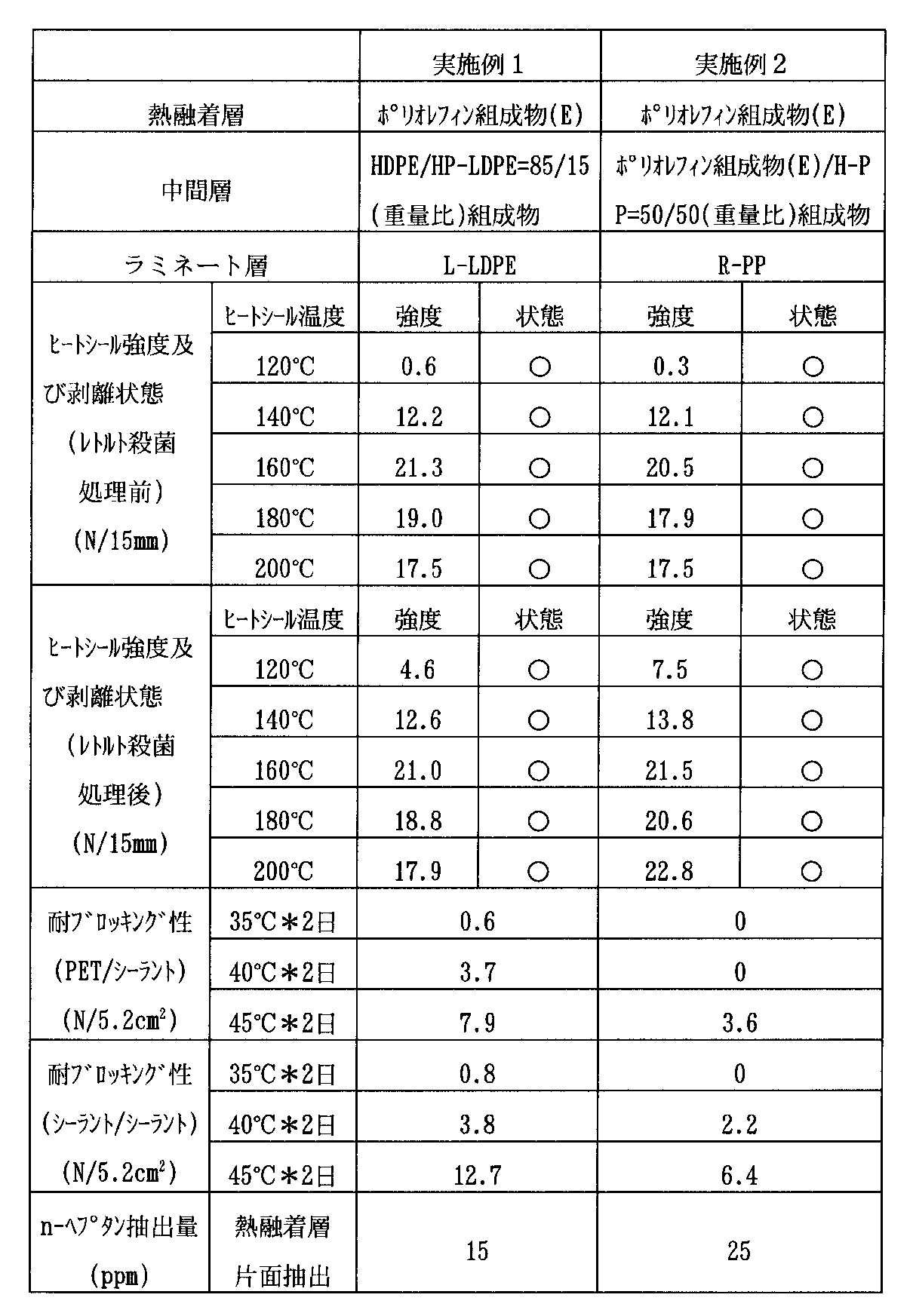
表1から明らかなように、本発明の易開封性積層フイルムは、良好なヒートシール性能を有すると共に耐ブロッキング性に優れ、また油脂及び脂肪性食品に対する衛生性においても優れている。[0001]
BACKGROUND OF THE INVENTION
The present invention relates to an easy-opening resin laminated film excellent in heat resistance and oil resistance that exhibits excellent sealing properties and easy-opening properties for various materials, and uses thereof. Easily peelable from propylene polymer layer, soft feeling at opening, anti-blocking property, hygiene, film forming property, laminating property, etc., and easy opening suitable for packaging of oils and fats and fatty foods The present invention relates to an adhesive laminate film, a lid made of the heat-fusible laminate film, and a package using the same.
[0002]
[Prior art]
Packaging for snacks such as rice crackers and potato chips, food packaging such as jelly, milk, yogurt, pudding, tofu, and lactic acid beverages, blister packaging, and other packaging for pharmaceuticals, medical devices, daily necessities, sundries, etc. Packaging in which a tray-like plastic container is sealed with a lid made of a plastic laminate film or an aluminum foil laminate film is widely used. What is required for such packaging is mechanical strength that can withstand distribution channels, sealing strength that can maintain hygiene, and good openability during use.
[0003]
As one of the materials used for such packaging, one side is a bag of a category called an easily openable (easily peelable, easy peel) film, a heat-sealed layer as the innermost layer, or a lid. The package used for the material is widely used. However, various heat-sealing layers proposed so far have high heat-sealing strength for sealing, but easy peelability at the time of opening is not always sufficient, and an appropriate balance between them can be obtained. It has been demanded. Here, the characteristics required for easy peelability are not only ease of opening, but also there is no residue of resin fragments due to stringing after opening, and the appearance of the opening is good. It is comprehensive evaluation including, and the quality is judged by it.
[0004]
As a film having such an easy-opening property (easy-peeling property), for example, an easy-opening packaging body in which an easy-peeling layer is composed of a mixture layer of polypropylene resin and polyethylene resin and a high-density polyethylene resin layer (see Patent Document 1) , A cap material sealant film for a polypropylene container comprising an adhesive layer (easy peeling layer) and a support layer (laminate layer) made of a mixed resin of polypropylene and polyethylene, see Patent Document 2, an ethylene-α-olefin copolymer, Easy-openable heat-sealing resin composition comprising propylene-ethylene copolymer and low-density polyethylene (see Patent Document 3), polypropylene resin, density is 930 kg / m3Many proposals have been made such as a multilayer sheet having a sealing layer made of the following ethylene / α-olefin random copolymer resin and polyethylene resin composition (see Patent Document 4). However, a film in which a mixture layer of a polypropylene resin and a polyethylene resin is merely a heat-sealing layer is not always satisfactory in terms of the balance between sealing performance and easy opening performance.
[0005]
In particular, in recent years, propylene-based polymers have been widely used as packaging container materials in consideration of transparency, heat resistance, hygiene, strength, cost, etc. Depending on the type of contents, High temperature sterilization has been performed. For this reason, the propylene-based polymer has an excellent balance between hermeticity and easy-openability, and also has excellent heat resistance, that is, possesses a sealing strength that can withstand air expansion inside the package during high-temperature sterilization treatment, and also by high-temperature treatment. There is a strong demand for easily-openable heat-sealing materials with little variation in seal strength, but the above-mentioned proposals do not meet these requirements.
[0006]
[Patent Document 1]
Japanese Patent Publication No. 5-64593
[Patent Document 2]
Japanese Patent Publication No. 5-6513
[Patent Document 3]
Japanese Patent Laid-Open No. 2-185547
[Patent Document 4]
JP 2000-355358 A
[0007]
[Problems to be solved by the invention]
Therefore, the present inventors satisfy all of the above required performance, and in particular, have excellent sealing properties, easy opening properties, appearance when opened, low temperature dependency of heat seal strength, and high temperature sterilization with respect to propylene polymers. We examined the development of an easily-openable heat-sealing material suitable for the packaging of fats and oils and fatty foods with little variation in seal strength depending on the treatment. As a result, a polyolefin composition obtained by adding a specific ethylene / α-olefin random copolymer and tackifying resin to a propylene-based polymer and an ethylene-based polymer was used as a heat-sealing layer, and specific propylene was used for the intermediate layer and the laminate layer. By laminating a polymer and its composition or ethylene polymer, easy peeling from the propylene polymer layer, soft feeling when opened, blocking resistance, hygiene, film forming processability, laminating processability It was found that an easily peelable heat-sealing material excellent in the above could be obtained, and the present invention was reached.
[0008]
[Means for Solving the Problems]
SUMMARY OF THE INVENTION
In the present invention, the propylene polymer (A-1) is 20 to 90 parts by weight, and the density is 900 kg / m.3The density is 860 kg / m with respect to a total of 100 parts by weight of the ethylene polymer (B-1) 80 to 10 parts by weight and (A-1) + (B-1).3900 kg / m3Less than 10 to 50 parts by weight of ethylene / α-olefin random copolymer (C-1) and 0.5 to 10 parts by weight of a tackifier resin (D-1) Fusion layer, 60 to 95 parts by weight of propylene polymer (A-2), density is 900 kg / m3The density is 860 kg / m with respect to 40 to 5 parts by weight of the above ethylene polymer (B-2) and 100 parts by weight in total of (A-2) + (B-2).3900 kg / m3Less than ethylene / α-olefin random copolymer (C-2) 5 to 30 parts by weight and tackifying resin (D-2) 0.1 to 5 parts by weight of polyolefin composition (F) An intermediate layer and a propylene polymer in which the content of the propylene polymer (A-2) in the composition (F) is larger than the content of the propylene polymer (A-1) in the polyolefin composition (E) ( The present invention relates to an easily openable laminated film, a container lid material, and a packaging body, characterized by comprising a laminate layer composed of A-3).
[0009]
Another aspect of the present invention is a propylene polymer (A-1) 20 to 90 parts by weight and a density of 900 kg / m.3The density is 860 kg / m with respect to a total of 100 parts by weight of the ethylene polymer (B-1) 80 to 10 parts by weight and (A-1) + (B-1).3900 kg / m3Less than 10 to 50 parts by weight of ethylene / α-olefin random copolymer (C-1) and 0.5 to 10 parts by weight of a tackifier resin (D-1) Fusion layer, density is 905kg / m3An intermediate layer composed of the ethylene polymer (B-3) and a density of 900 kg / m3It is the above, It consists of a laminate layer comprised from the ethylene-type polymer (B-4) whose density is smaller than an ethylene-type polymer (B-3), The easily openable laminated film characterized by the above-mentioned, It relates to a package.
[0010]
DETAILED DESCRIPTION OF THE INVENTION
Propylene polymer (A-1)
The propylene-based polymer (A-1), which is one of the constituent components of the polyolefin composition (E) that becomes the heat-sealing layer of the easy-open laminate film of the present invention, is generally produced and sold under the name of polypropylene. Usually, the density is 890 to 930 kg / m.3A propylene homopolymer or a copolymer of propylene and a small amount of other α-olefins. The copolymer may be a random copolymer or a block copolymer. The other α-olefin in the copolymer of propylene has 2 carbon atoms such as ethylene, 1-butene, 1-pentene, 1-hexene, 1-octene, 1-decene, 4-methyl-1-pentene and the like. About 20 α-olefins can be exemplified. Such other α-olefins may be copolymerized singly or in combination of two or more.
[0011]
Among these propylene polymers (A-1), a random copolymer of propylene and an α-olefin, especially a random copolymer of propylene and an α-olefin having 2 to 4 carbon atoms, such as ethylene and / or It is preferable to use a random copolymer having a 1-butene content of 20 mol% or less, preferably 10 mol% or less. In order to achieve both heat resistance and heat-fusibility sufficient as a heat-sealing material, the melting point based on a differential scanning calorimeter (DSC) is a random copolymer having a melting point of 125 ° C. or higher, particularly 130 to 145 ° C. Is preferred. In consideration of heat resistance and extrusion processability, the melt flow rate (MFR) (ASTM D1238, 230 ° C., 2160 g load) is 0.01 to 100 g / 10 min, preferably 0.1 to 70 g / 10 min. Is preferably used. Such a propylene-based polymer can be obtained by polymerizing propylene or copolymerizing propylene and one or more other α-olefins in the presence of a stereospecific catalyst. The propylene polymer (A) can be used in combination of two or more.
[0012]
Propylene polymer (A-2)
The propylene-based polymer (A-2), which is one of the constituent components of the polyolefin composition (F) serving as an intermediate layer of the easy-open laminate film of the present invention, is the same as the propylene-based polymer (A-1). It is a polymer mainly composed of category propylene. As the propylene-based polymer (A-2) constituting the polyolefin composition (F), a propylene homopolymer of propylene and a melting point based on a differential scanning calorimeter (DSC) of 125 ° C. or more, particularly 130 to 145 ° C. A combination of two components with an α-olefin random copolymer is preferable in terms of providing good coextrusion characteristics and sufficient rigidity to an easily openable laminated film. The propylene-based polymer (A-2) is particularly preferably 50 to 90 parts by weight of the propylene homopolymer, and particularly 50 to 10 parts by weight of the propylene / α-olefin random copolymer with respect to 60 to 80 parts by weight. Parts, particularly 40 to 20 parts by weight (100 parts by weight in total).
[0013]
Ethylene polymer (B-1), (B-2)
An ethylene polymer (B-) which is one of the constituents of the polyolefin composition (E) that serves as the heat-sealing layer of the easy-open laminate film of the present invention and the constituent of the polyolefin composition (F) that serves as the intermediate layer 1) and (B-2) each have a density of 900 kg / m3Or more, preferably 910-970 kg / m3More preferably, 940 kg / m3~ 970kg / m3Ethylene homopolymer or ethylene and a small amount of α-olefin having 3 to 10 carbon atoms, such as propylene, 1-butene, 1-heptene, 1-hexene, 1-octene, 4-methyl-1-pentene, etc. A so-called high pressure method low density polyethylene (HP-LDPE), linear or linear low density polyethylene (LLDPE), medium density polyethylene (MDPE), high density polyethylene (HDPE) Ethylene homopolymers or ethylene / α-olefin copolymers, and copolymers of ethylene and a small amount of polar monomers, such as ethylene / vinyl acetate copolymers, ethylene and unsaturated carboxylic acids, such as acrylic Copolymer with acid, methacrylic acid, monoethyl maleate, maleic anhydride or the like or its Na, Li , Ionomers such as Zn or Mg, ethylene and unsaturated carboxylic acid esters such as methyl acrylate, ethyl acrylate, isobutyl acrylate, n-butyl acrylate, 2-ethylhexyl acrylate, methyl methacrylate, glycidyl methacrylate, Copolymers such as dimethyl maleate, copolymers of ethylene and unsaturated carboxylic acids and unsaturated carboxylic esters as described above, or ionomers such as Na, Li, Zn or Mg, ethylene and carbon monoxide, and any And polymers mainly composed of ethylene such as copolymers with unsaturated carboxylic acid esters and vinyl acetate. Each of these ethylene polymers (B-1) and (B-2) may be a single polymer or a composition (mixture) of two or more ethylene polymers.
[0014]
The melt flow rate (MFR) (ASTM D1238, 190 ° C., 2160 g load) of the ethylene polymers (B-1) and (B-2) is a propylene polymer (A-1) or a propylene polymer (A -2), a polyolefin composition (E) mixed with the later-described ethylene / α-olefin random copolymer (C-1), (C-2) and tackifying resin (D-1), (D-2). ) Or polyolefin composition (F) is not particularly limited as long as it has film-forming ability, but is usually in the range of 0.01 to 100 g / 10 minutes, preferably 0.1 to 70 g / 10 minutes. .
[0015]
As the ethylene polymer (B-1) or (B-2), it is preferable to use an ethylene homopolymer or a copolymer of ethylene and an α-olefin, and in particular, the density is 940 to 970 kg / m3The ethylene-based polymers, that is, those that fall within the category of high-density polyethylene are preferable.
[0016]
The linear low density polyethylene (LLDPE) usable as the ethylene polymer (B-1) or (B-2) has a molecular weight distribution (Mw / Mn) measured by gel permeation chromatography (GPC). Usually, it is in the range of 1.5 to 4.0, preferably 1.8 to 3.5. Linear low density polyethylene (LLDPE) also has one or more sharp endothermic peaks determined from an endothermic curve measured at a heating rate of 10 ° C./min of a differential scanning calorimeter (DSC), and the maximum temperature of the peak That is, the melting point is usually in the range of 70 to 130 ° C, preferably 80 to 120 ° C.
[0017]
The linear low density polyethylene (LLDPE) as described above can be prepared by a conventionally known production method using a multi-site catalyst having a Ziegler type catalyst as a representative example and a single site catalyst having a metallocene catalyst as a representative example. . For example, linear low density polyethylene (LLDPE) can be prepared using a catalyst comprising a metallocene compound of a transition metal. The catalyst containing the metallocene compound is preferably formed from (a) a transition metal metallocene compound, (b) an organoaluminum oxy compound, and (c) a carrier, and if necessary, these components and (D) It may be formed from an organoaluminum compound and / or an organoboron compound. In addition, the preparation method of the linear low density polyethylene (LLDPE) using the catalyst for olefin polymerization containing such a metallocene compound and a catalyst is described in Unexamined-Japanese-Patent No. 8-269270, for example.
[0018]
Ethylene / α-olefin random copolymer (C-1), (C-2)
One of the constituent components of the polyolefin composition (E) that serves as the heat-sealing layer of the easy-open laminated film of the present invention and the constituent component of the polyolefin composition (F) that serves as the intermediate layer. The coalescence (C-1) and (C-2) each have a density of 900 kg / m3Less, preferably 860-895 kg / m3Random copolymers of ethylene and α-olefins having 3 to 10 carbon atoms such as propylene, 1-butene, 1-heptene, 1-hexene, 1-octene and 4-methyl-1-pentene It is.
[0019]
As the ethylene / α-olefin random copolymer (C-1) and (C-2), the density is 880 to 895 kg / m in consideration of the heat-sealing characteristics of the easy-open laminate film obtained.3Preferably from an endothermic curve at an ethylene content of 85 to 93 mol%, an X-ray crystallinity of 7 to 30%, and a heating rate of 10 ° C./min by a differential scanning calorimeter (DSC). A low crystalline ethylene / 1-butene random copolymer having a melting point of 60 to 90 ° C. and a density of 865 to 875 kg / m3With an ethylene / propylene random copolymer having an amorphous content or a slight crystallinity, preferably having an ethylene content of 75 to 85 mol% and an X-ray crystallinity of less than 5%. Two components can be combined. For example, a mixed component comprising 10 to 90 parts by weight of the low crystalline ethylene / 1-butene random copolymer and 90 to 10 parts by weight of the ethylene / propylene random copolymer can be used. it can.
[0020]
As the ethylene / α-olefin random copolymer (C-1) or (C-2), the melt flow rate (MFR) (ASTM D1238, 190) is also considered in consideration of the processability and oil resistance of the polyolefin composition. (° C., 2160 g load) is preferably in the range of 0.01 to 20 g / 10 min, more preferably 0.1 to 10 g / 10 min. Such a copolymer can be obtained, for example, by copolymerizing ethylene and an α-olefin using a catalyst composed of a transition metal compound catalyst component, such as a vanadium compound or a zirconium compound, and an organoaluminum compound catalyst component. it can.
[0021]
Tackifying resins (D-1), (D-2)
Tackifying resin (D-1) which is one of the constituent components of the polyolefin composition (E) which becomes the heat-sealing layer of the easy-open laminate film of the present invention and the constituent component of the polyolefin composition (F) which becomes the intermediate layer ) And (D-2) include aliphatic hydrocarbon resins, alicyclic hydrocarbon resins, aromatic hydrocarbon resins, polyterpene resins, rosins, styrene resins, coumarone-indene resins, and the like. be able to. Examples of the aliphatic hydrocarbon resin include polymerization of a fraction containing at least one mono- or diolefin having 4 to 5 carbon atoms such as 1-butene, isobutene, butadiene, 1,3-pentadiene, isoprene, and the like. The resulting resin can be mentioned. As an example of alicyclic hydrocarbon resin, Spent CFour~ CFiveExamples thereof include resins obtained by polymerizing a diene component in a fraction after cyclization and dimerization, resins obtained by polymerizing cyclic monomers such as cyclopentadiene, and resins obtained by hydrogenating aromatic hydrocarbon resins. .
[0022]
Examples of aromatic hydrocarbon resins include C, such as vinyltoluene, indene, and α-methylstyrene.8~ CTenAnd a resin obtained by polymerizing a fraction containing at least one vinyl aromatic hydrocarbon, or a resin obtained by copolymerizing these fractions and the above aliphatic hydrocarbon fraction. Examples of polyterpene resins include α-pinene polymers, β-pinene polymers, dipentene polymers, terpene / phenol copolymers, α-pinene / phenol copolymers, and hydrogenated products thereof. it can.
[0023]
Examples of rosins include rosins such as gum rosin, wood rosin and tall oil, and modified products thereof. Examples of modified products include those subjected to modification such as hydrogenation, disproportionation, dimerization, and esterification. it can. As the styrenic hydrocarbon resin, a low molecular weight resinous polymer obtained by polymerizing one or more of styrene monomers such as high-purity styrene, vinyltoluene, α-methylstyrene, and isopropyltoluene. Can be mentioned.
[0024]
When the polyolefin composition of the present invention is used as an easily openable sealing material for food and beverage packaging, the aromatic hydrocarbon resin is used as a core in consideration of odorlessness, food hygiene, miscibility with other components, etc. It is preferable to use an internally hydrogenated resin or a polyterpene resin.
[0025]
Propylene polymer (A-3)
In the easy-open laminate film of the present invention, the propylene-based polymer (A-3) used for the laminate layer when the layer of the polyolefin composition (F) is used as the intermediate layer is a component of the heat-sealing layer. A propylene homopolymer belonging to the category of the propylene polymer (A-1) or the propylene polymer (A-2) which is a component of the intermediate layer, or propylene and ethylene, 1-butene, 1-pentene, 1- It is a copolymer mainly composed of propylene with an α-olefin having about 2 to 20 carbon atoms such as hexene, 1-octene, 1-decene, 4-methyl-1-pentene. Considering the laminating properties and transparency of the laminated film, it is preferable to use a propylene / α-olefin random copolymer having a melting point of 125 to 150 ° C., particularly 130 to 145 ° C. based on a differential scanning calorimeter (DSC). . The melt flow rate (MFR) (ASTM D1238, 230 ° C., 2160 g load) of the propylene polymer (A-3) is not particularly limited as long as it has a film-forming ability, but usually 0.5 to 50 g / 10 min. It is preferable to use those in the range of 3 to 20 g / 10 min.
[0026]
Ethylene polymers (B-3) and (B-4)
In the easy-open laminated film of the present invention, the density is 905 kg / m as an intermediate layer.3The above ethylene polymer (B-3) can be used. In that case, the density of the laminate layer is smaller than that of the ethylene polymer (B-3) and the density is 900 kg / m.3The above ethylene polymer (B-4) is used. The ethylene polymers (B-3) and (B-4) are polymers mainly composed of ethylene in the same category as the ethylene polymers (B-1) and (B-2). A random copolymer of a homopolymer or ethylene with a small amount of an α-olefin having 3 to 10 carbon atoms such as propylene, 1-butene, 1-heptene, 1-hexene, 1-octene, 4-methyl-1-pentene, etc. Various polyethylenes that are polymers can be suitably used. Of these, the ethylene polymer (B-3) constituting the intermediate layer has a density of 940 kg / m in consideration of the rigidity of the laminated film and the heat seal characteristics.3~ 970kg / m3It is preferable to use an ethylene polymer in the range of or a mixture of the ethylene polymer and another ethylene polymer (B) of the same amount or less. The density is 940 kg / m3~ 970kg / m3The typical ethylene polymer in the range is generally referred to as high-density polyethylene, and the typical other ethylene polymer (B) is a high-pressure low-density polyethylene, It is called linear low density polyethylene or medium density polyethylene. Further, the ethylene polymer (B-4) constituting the laminate layer has a density known as linear low density polyethylene of 900 to 930 kg / m in view of laminate characteristics and transparency of the laminated film.3, Preferably 910 kg / m3~ 925kg / m3It is preferable to use an ethylene / α-olefin random copolymer within the above range. The melt flow rate (MFR) (ASTM D1238, 190 ° C., 2160 g load) of the ethylene polymers (B-3) and (B-4) is not particularly limited as long as it has a film-forming ability. It is in the range of 01-100 g / 10 minutes, preferably 0.1-70 g / 10 minutes.
[0027]
Polyolefin composition (E)
The polyolefin composition (E) to be the heat-sealing layer of the easy-open laminate film of the present invention is 20 to 90 parts by weight, preferably 50 to 80 parts by weight, and a density of 900 kg, of the propylene polymer (A-1). / M3The density is 860 kg / m with respect to a total of 100 parts by weight of the ethylene polymer (B-1) 80 to 10 parts by weight, preferably 50 to 20 parts by weight, and (A-1) + (B-1).3900 kg / m3Less than 10 to 50 parts by weight, preferably 30 to 50 parts by weight of the ethylene / α-olefin random copolymer (C-1), and 0.5 to 10 parts by weight of the tackifier resin (D-1), preferably 1 It consists of ˜6 parts by weight. The polyolefin composition (E) also has an MFR (ASTM D1238, 190 ° C., 2160 g load) of 0.01 to 100 g / 10 minutes, particularly 0.1 to 0.1%, considering extrusion processability, seal strength, heat resistance and the like. It is desirable to prepare so that it may become 70 g / 10min.
[0028]
When the total amount of the propylene polymer (A-1) and the ethylene polymer (B-1) is 100 parts by weight, the blending amount of the propylene polymer (A-1) is less than 20 parts by weight. When the obtained easy-open laminated film is heat-sealed with the propylene-based polymer layer, the sealing strength may be weakened and the heat resistance may be reduced. On the other hand, if the blending amount exceeds 90 parts by weight, there is a possibility that proper sealing strength is not exhibited in a wide range of sealing temperatures. In addition, when the blending amount of the ethylene / α-olefin random copolymer (C) is less than 10 parts by weight with respect to 100 parts by weight of the total amount of (A-1) and (B-1), the easy-open laminate obtained When the film is heat-sealed with a propylene-based polymer layer, sealing properties, stringiness, etc. tend to be inferior. On the other hand, if it exceeds 50 parts by weight, workability may be impaired, and oil resistance will be impaired. There is a fear. Further, when the blending amount of the tackifying resin (D) is less than 0.5 parts by weight with respect to 100 parts by weight of the total amount of (A-1) and (B-1), the resulting heat-fusible film is a propylene polymer. When heat-sealing with a layer, the sealing strength becomes too strong and the easy-opening property may be inferior. On the other hand, the workability and oil resistance of the easy-opening laminated film obtained when blended in a large amount exceeding 10 parts by weight There is a risk of damage.
[0029]
Various additives can be blended with the polyolefin composition (E) of the present invention as long as the object of the present invention is not impaired. Examples of such additives include inorganic fillers such as silica and talc, antioxidants, weathering stabilizers, antistatic agents, antifogging agents, antiblocking agents, slip agents, and pigments. In addition, the compounding of an organic compound type anti-blocking agent or slip agent is also effective in improving workability and workability during film forming, laminating, and packaging operations. Examples of such organic compound type antiblocking agents and slip agents include palmitic acid amide, stearic acid amide, behenic acid amide, oleic acid amide, erucic acid amide, oleyl palmidamide, stearyl palmamide, methylenebisstearylamide, methylene Examples thereof include various amides such as bisoleylamide, ethylenebisoleylamide, and ethylenebiserucamide, polyalkylene glycols such as polyethylene glycol and polypropylene glycol, and hydrogenated castor oil.
[0030]
The polyolefin composition (E) of the present invention comprises a propylene polymer (A-1), an ethylene polymer (B-1), an ethylene / α-olefin random copolymer (C-1), and a tackifier resin ( It can prepare by mixing each component of D-1), and the additive mix | blended arbitrarily, simultaneously or sequentially. In preparing this resin composition, it is preferable to melt and mix using a single screw extruder, a twin screw extruder, a Banbury mixer, various kneaders, etc., and the mixing order is not particularly limited.
[0031]
Polyolefin composition (F)
The polyolefin composition (F) that can be used as the intermediate layer of the easy-open laminated film of the present invention is 60 to 95 parts by weight of the propylene polymer (A-2), preferably 75 to 95 parts by weight, and the density is 900 kg / m3The density is 860 kg / m with respect to 40 to 5 parts by weight, preferably 25 to 5 parts by weight of the above ethylene polymer (B-2), and 100 parts by weight in total of (A-2) + (B-2).3900 kg / m3The ethylene / α-olefin random copolymer (C-2) is less than 5 to 30 parts by weight, preferably 5 to 20 parts by weight, and the tackifier resin (D-2) is 0.1 to 5 parts by weight, preferably 0. Comprising 3 to 4 parts by weight, the content of the propylene polymer (A-2) in the polyolefin composition (F) from the content of the propylene polymer (A-1) in the polyolefin composition (E) Formulated to enhance By using such a polyolefin composition (F) for the intermediate layer, it is possible to give the laminated film sufficient rigidity and to form a laminated film having excellent heat resistance, heat seal characteristics, and laminate characteristics.
[0032]
In the polyolefin composition (F), when the total of the propylene polymer (A-2) and the ethylene polymer (B-2) is 100 parts by weight, the blending amount of the propylene polymer (A-2) If it is less than 60 parts by weight, the easy-open laminate film obtained has a low sealing strength (peeling strength), and the heat resistance may be reduced. Moreover, when the compounding quantity exceeds 95 weight part, there exists a possibility that heat seal intensity | strength may be strong and openability may be inferior. Further, when the blending amount of the ethylene / α-olefin random copolymer (C-2) is less than 5 parts by weight with respect to 100 parts by weight of the total amount of (A-2) and (B-2), the easy-opening obtained When using an adhesive laminated film as a container lid, etc., there is a risk that soft openability without stringing at the time of opening cannot be obtained, and heat-sealing strength is too strong, which may impair easy-openability, while 30 weight If it exceeds the area, the workability and oil resistance may be impaired. Further, if the tackifying resin (D-2) is less than 0.1 parts by weight with respect to 100 parts by weight of the total amount of (A-2) and (B-2), a soft openability without stringing at the time of opening is obtained. In addition, the heat-sealing strength is too strong and the easy-opening property may be impaired. On the other hand, if the amount exceeds 5 parts by weight, the processability and oil resistance of the easy-opening laminated film obtained may be impaired. .
[0033]
Various additives as described above can be blended with the polyolefin composition (F) of the present invention as long as the object of the present invention is not impaired. Examples of such additives include inorganic fillers such as silica and talc, antioxidants, weathering stabilizers, antistatic agents, antifogging agents, antiblocking agents, slip agents, and pigments.
[0034]
Such a polyolefin composition (F) can be easily obtained by adding the propylene-based polymer exemplified as (A-2) to the polyolefin composition (E) used for the heat-sealing layer, preferably a propylene homopolymer. Can be prepared. The polyolefin composition (F) is also composed of a propylene polymer (A-2), an ethylene polymer (B-2) and an ethylene / α-olefin random copolymer (C-2), optionally a tackifying resin and Optional additives can be prepared by mixing simultaneously or sequentially. In preparing this resin composition, it is preferable to melt and mix using a single screw extruder, a twin screw extruder, a Banbury mixer, various kneaders, etc., and the mixing order is not particularly limited.
[0035]
Easy-open laminated film
The easy-open laminate film of the present invention is obtained from a heat-sealing layer composed of the polyolefin composition (E), an intermediate layer composed of the polyolefin composition (F), and a propylene-based polymer (A-3). Made of a laminated layer. Such an intermediate layer may be a single layer or a multilayer of two or more layers. Of course, the additive as described above can be arbitrarily blended in the laminate layer.
[0036]
The easy-open laminate film of the present invention also includes a heat-sealing layer composed of the polyolefin composition (E), an intermediate layer composed of an ethylene polymer (B-3), and an ethylene polymer (B- 4). Such an intermediate layer may be a single layer or a multilayer of two or more layers. Of course, the additives as described above can be arbitrarily blended in the intermediate layer and the laminate layer in this case.
[0037]
In many cases, the easy-open laminated film of the present invention has an evaporation residue amount of 30 ppm or less, preferably 25 ppm or less in an n-heptane elution test processed under the conditions specified in Ministry of Health and Welfare Notification No. 370. The packaging material can be used at temperatures exceeding 100 ° C.
[0038]
The thickness of the easy-open laminated film is variously determined depending on the application. In the case of a three-layer structure, the thickness of the heat-sealing layer is usually 1 to 80 μm, preferably 2 to 50 μm, and the thickness of the intermediate layer is 8 ˜498 μm, preferably 16 to 96 μm, the thickness of the laminate layer is 1 to 80 μm, preferably 2 to 50 μm, and the total thickness of the laminated film is 10 to 500 μm, preferably 20 to 100 μm .
[0039]
The easy-open laminate film of the present invention is a packaging film as it is as an easy-open laminate film having low temperature heat sealability, blocking resistance, impact resistance suitable for packaging materials, slip properties, rigidity, transparency, etc. In particular, it can be suitably used as a film for food packaging, particularly for fats and oils and fatty food packaging, and can be used as a lid. Moreover, depending on a use, the below-mentioned base material layer can be bonded to the laminate layer of an easily openable laminated film, and it can also be used for various uses.
[0040]
The easy-open laminate film of the present invention is a surface of a laminate layer, for example, corona treatment, flame treatment, plasma treatment, undercoat treatment, etc., in order to improve the printability or adhesion with a base material layer. An activation process may be performed.
[0041]
The easy-open laminated film of the present invention can be produced by various known film forming methods. At that time, when the polyolefin composition (E) constituting the heat-sealing layer is used to form a film, the propylene-based polymer (A-1), the ethylene-based polymer (B-1), ethylene is used in advance. Even if a polyolefin composition (E) is prepared by measuring a predetermined amount of the α-olefin random copolymer (C-1) and the tackifier resin (D-1) and dry blending or melt-kneading them. A predetermined amount of the propylene polymer (A-1), the ethylene polymer (B-1), the ethylene / α-olefin random copolymer (C-1) and the tackifier resin (D-1) may be added. It may be weighed and put directly into the film forming machine. When the polyolefin composition (F) is used as the intermediate layer, the propylene polymer (A-2), the ethylene polymer (B-2), and the ethylene / α-olefin random copolymer (C— 2) Optionally, a predetermined amount of the tackifying resin (D-2) may be weighed and dry blended or melt kneaded to prepare a polyolefin composition (F), or a propylene polymer (A- 2) A predetermined amount of ethylene polymer (B-2), ethylene / α-olefin random copolymer (C-2), and optionally a tackifying resin (D-2) are weighed directly into a film forming machine. You may throw it in. Alternatively, the polyolefin composition (E) and the propylene polymer may be weighed in a predetermined amount so as to be the polyolefin composition (F) and directly fed into the film forming machine. Such laminated films may be individually laminated after molding, but the method by coextrusion using a multilayer die having three or more layers is most preferable.
[0042]
Base material layer
The base material layer according to the present invention is made of a sheet or film made of a thermoplastic resin, paper, aluminum foil or the like. Examples of the thermoplastic resin include various known thermoplastic resins such as polyolefin (polyethylene, polypropylene, poly-4-methyl / 1-pentene, polybutene, etc.), polyester (polyethylene terephthalate, polytrimethylene terephthalate, polybutylene terephthalate, polyethylene naphthalate). Phthalates, etc.), polyamide (nylon-6, nylon-66, polymetaxylene adipamide, etc.), polyvinyl chloride, polyimide, ethylene / vinyl acetate copolymer or saponified product thereof, polyvinyl alcohol, polyacrylonitrile, polycarbonate, polystyrene , Ionomers, or a mixture thereof. Of these, thermoplastic resins having good stretchability and transparency, such as polypropylene, polyethylene terephthalate, and polyamide, are preferable. Further, the substrate made of such a thermoplastic resin film may be an unstretched film or a stretched film, and a laminate of one or more coextruded products, extruded laminate products, dry laminate products, etc. It may be the body.
[0043]
Moreover, in order to improve the adhesiveness of one side or both sides of the base material layer with the laminate layer of the easy-open laminate film of the present invention, for example, corona treatment, flame treatment, plasma treatment, undercoat treatment, frame treatment, etc. The surface activation treatment may be performed. The thickness of the base material layer is usually 5 to 1000 μm, preferably 9 to 100 μm.
[0044]
Container lid
The easy-open laminated film of the present invention or the easy-open laminated film laminated with the base material layer can be used as various packaging materials. An example of a suitable packaging material is a container lid that uses a heat-sealing layer as the container innermost layer. When used as a container lid material, the easy-open laminated film may be used as it is as a lid material, or may be printed and used. Further, it may be bonded to paper that is printed or not, aluminum foil, or the like to form a lid. Further, depending on the application, it may be cut in advance according to the shape of the container to form a lid. When the container lid is used, it is preferable to use a heat-fusible laminated film provided with a base material layer.
[0045]
Adherend
The easy-open laminated film of the present invention can form a heat seal layer by heat-sealing to various adherends. Examples of such an adherend include a propylene polymer, polystyrene, polyester, polycarbonate, polyvinyl chloride and the like. These adherends can be of various shapes such as films, sheets, trays, cups, bottles and the like. Among these, a propylene-based polymer is particularly preferably used as the adherend because it is excellent in the sealing property, easy-opening property, heat resistance, oil resistance and the like of the heat seal layer. Such propylene polymers are in the same category as the propylene polymers (A-1) and (A-2), but their physical properties may be the same or different. For example, in an adherend made of a propylene polymer, a propylene polymer formed into various shapes such as a film, a sheet, a tray, a cup, and a bottle by a known method according to the packaging material should be used. Can do. In the case of a film or a sheet, it can be produced by the same method as that for the easy-open laminated film. In the case of a tray or a cup, it can be produced by once producing a sheet by the above method and then forming a container such as a tray or a cup by thermoforming such as vacuum forming or pressure forming. In the case of a cup or bottle, it can be molded as a container by injection molding, injection hollow molding (injection blow), hollow molding or the like.
[0046]
Package
When the easy-open laminated film of the present invention is used as a packaging material, for example, the easy-open laminated film itself can be folded and sealed in three directions, or two easy-open laminated films can be sealed in four directions to form a package. Alternatively, the easy-open laminated film may be formed with the above-mentioned various adherends and a heat seal layer to form a package. The shape of the package of the present invention can take various shapes depending on the shape, form or application of the material to be packaged. For example, as a flexible flexible packaging body, a packaging material is filled in a three-sided sealing bag composed of an easy-open laminated film and a film having a heat sealing layer composed of a propylene-based polymer layer, and then the mouth is heat sealed. After filling the material to be packaged into a sheet, tray, cup, bottle, etc. having a heat sealing layer made of a propylene polymer layer, a four-side sealed package, and then a heat-sealing layer of an easy-open laminated film Examples thereof include a package body in which the upper surface is sealed with a lid material (seal material) serving as the innermost layer.
[0047]
【The invention's effect】
The easy-open laminate film of the present invention has a stable heat seal strength (peel strength) in a wide temperature range when it is heat-sealed with a propylene polymer layer, and easily peels when peeled (opened) Moreover, there is no stringing on the peeling surface and it has a soft feeling. Therefore, taking advantage of such characteristics, it is suitable as a packaging film, particularly as a lid material for polypropylene sheets, trays, cups, bottles, etc., packaging for snacks such as rice crackers, potato chips, or jelly, milk, yogurt, Applicable to packaging materials for pudding, tofu, lactic acid beverages, etc., packaging for pharmaceuticals, medical instruments, blister packaging, other daily necessities and miscellaneous goods, especially for fats and fatty foods It can be suitably used for applications.
[0048]
【Example】
EXAMPLES Next, the present invention will be described more specifically with reference to examples. However, the present invention is not limited to these examples as long as the gist of the present invention is not exceeded.
[0049]
The raw materials used in Examples and Comparative Examples are as follows.
(1) Polyolefin composition for heat-sealing layer (E)
Propylene / ethylene / 1-butene random copolymer (ethylene content 3.6 mol% (2.4 wt%), 1-butene content 1.9 mol% (2.5 wt%), density 910 kg / m3, Melt flow rate (MFR) (230 ° C.) 6 g / 10 min) 40 parts by weight, high density polyethylene (density 954 kg / m3, MFR (190 ° C.) 1.1 g / 10 min) 27 parts by weight, low crystalline ethylene / 1-butene random copolymer (ethylene content 89.1 mol%, crystallinity 10%, density 886 kg / m3MFR (190 ° C.) 4.0 g / 10 min) 20 parts by weight, amorphous ethylene / propylene copolymer (ethylene content 82.6 mol%, density 870 kg / m)3, 10 parts by weight of MFR (190 ° C.) 2.9 g / 10 minutes) and 3 parts by weight of hydrogenated aromatic hydrocarbon resin (trade name: Alcon P115 (manufactured by Arakawa Chemical Co., Ltd., ring and ball method softening point 115 ° C.)) It was prepared by kneading.
[0050]
(2) Propylene / ethylene / 1-butene random copolymer (R-PP): density; 910 kg / m3MFR; 8.0 g / 10 min, melting point: 143 ° C., ethylene content 2.5 mol%, 1-butene content 1.5 mol%
(3) Polypropylene homopolymer (H-PP): density; 910 kg / m3, MFR: 7.0 g / 10 min, melting point: 161 ° C.
(4) High density polyethylene (HDPE): Density; 954 kg / m3, MFR; 1.1 g / 10 min
(5) High pressure method low density polyethylene (HP-LDPE): density; 917 kg / m3, MFR; 7.2 g / 10 min
(6) Linear low density polyethylene (L-LDPE): density; 915 kg / m3, MFR; 2.3 g / 10 min
[0051]
[Example 1]
Using the above-mentioned polyolefin composition (E) as a heat-sealing layer, an ethylene polymer composition obtained by dry blending HDPE; 85 wt% and HP-LDPE; 15 wt% as an intermediate layer, and L- Using LDPE, each is supplied to a separate extruder, and a laminated film composed of a three-layer coextruded film is formed by a T-die method to form a heat fusion layer / intermediate layer / laminate layer, Was subjected to corona treatment. The total thickness of the film was 50 μm, and the thickness of each layer was heat fusion layer / intermediate layer / laminate layer = 7.5 / 35.0 / 7.5 μm.
[0052]
[Example 2]
The polyolefin composition (E) is used as the heat-sealing layer, and the propylene polymer composition obtained by dry blending the polyolefin composition (E); 50 wt% and H-PP; 50 wt% is used as the intermediate layer. , R-PP is used as the laminate layer, each is supplied to different extruders, and a laminated film composed of a three-layer coextruded film is formed by the T-die method to form a heat fusion layer / intermediate layer / laminate layer The laminating layer was then subjected to corona treatment. The total thickness of the film was 50 μm, and the thickness of each layer was heat fusion layer / intermediate layer / laminate layer = 5.5 / 39.0 / 5.5 μm.
[0053]
The laminated films obtained in Example 1 and Example 2 were evaluated by the following methods. (1) Evaluation of easy peelability
In order to evaluate easy peelability, a urethane adhesive is applied to the surface obtained by subjecting the biaxially stretched polyethylene terephthalate film (PET) having a thickness of 12 μm to corona treatment of the films obtained in the above Examples 1 and 2. Was laminated by dry lamination to prepare a laminated film, and a polypropylene sheet having a thickness of 300 μm was prepared as a heat seal layer.
[0054]
Next, the heat-sealing layer of each laminated film and the polypropylene sheet were overlapped, and sealed at a predetermined temperature shown in Table 1 at a pressure of 0.2 MPa for 1 second using a seal bar having a width of 5 mm. And then left to cool. From this, a 15 mm wide test piece was cut out and the heat seal portion was peeled off at a cross bed speed of 500 mm / min, and the strength was set as the heat seal strength (N / 15 mm). Moreover, after processing the heat-sealed test piece for 30 minutes at 110 degreeC using the high temperature / high pressure sterilizer (retort sterilizer), the test piece was cooled and the heat seal strength of this test piece was measured.
[0055]
The easy peelability was evaluated by observing the peeled state and the stringed state of the seal portion in addition to the heat seal strength. A piece having no flaking due to cohesive peeling was marked as ◯. The results are shown in Table 1.
[0056]
(2) Blocking resistance
In order to evaluate blocking resistance, a urethane adhesive was applied to the surface of the biaxially stretched polyethylene terephthalate film (PET) having a thickness of 12 μm subjected to the corona treatment of the films obtained in Examples 1 and 2 above. Was laminated by dry lamination to prepare a laminated film. After that, a strip-shaped test piece having a width of 20 mm × 100 mm was cut out, and 5 parts were separately prepared by superimposing the heat-sealable layer (sealant) surface and the heat-sealable layer surface and the PET surface. In the vicinity of the center of the test piece, sandwich with a commercially available preparation at a right angle in the cross direction. 5.2 cm where the specimen and the preparation overlap2A load of 4 kg is placed on the surface area of, and aged for 2 days under a predetermined temperature condition and allowed to cool. Then, the strength of the heat-sealable layer surface and the surface of the heat-sealable layer surface and the PET surface were superposed separately, and the strength was evaluated with a crosshead speed of 300 mm / min and the shear peeling method. It was. The blocking force was evaluated at n = 5, and the average value was determined as blocking force (N / 5.2 cm).2). The results are shown in Table 1.
[0057]
(3) Evaluation of food hygiene
According to the Ministry of Health, Labor and Welfare Notification No. 370 dated December 28, 1959, the third standard equipment of food and additives, etc., and container packaging D 2 (1) and D 2 (2) 3 The operating temperature exceeded 100 ° C. The elution amount of the evaporation residue n-heptane was evaluated in a public testing organization in a single-sided elution test of the heat-sealing layer. What can be used for fats and oils fatty foods exceeding 100 degreeC is a thing whose evaporating residue n-heptane elution amount is 30 ppm or less. The results are shown in Table 1.
[0058]
[Table 1]
As can be seen from Table 1, the easy-open laminate film of the present invention has good heat-sealing performance, excellent blocking resistance, and excellent hygiene for fats and oils and fatty foods.
Claims (13)
Priority Applications (1)
| Application Number | Priority Date | Filing Date | Title |
|---|---|---|---|
| JP2003194922A JP4175508B2 (en) | 2003-07-10 | 2003-07-10 | Easy-open laminated film and its use |
Applications Claiming Priority (1)
| Application Number | Priority Date | Filing Date | Title |
|---|---|---|---|
| JP2003194922A JP4175508B2 (en) | 2003-07-10 | 2003-07-10 | Easy-open laminated film and its use |
Publications (2)
| Publication Number | Publication Date |
|---|---|
| JP2005028679A JP2005028679A (en) | 2005-02-03 |
| JP4175508B2 true JP4175508B2 (en) | 2008-11-05 |
Family
ID=34205920
Family Applications (1)
| Application Number | Title | Priority Date | Filing Date |
|---|---|---|---|
| JP2003194922A Expired - Lifetime JP4175508B2 (en) | 2003-07-10 | 2003-07-10 | Easy-open laminated film and its use |
Country Status (1)
| Country | Link |
|---|---|
| JP (1) | JP4175508B2 (en) |
Families Citing this family (16)
| Publication number | Priority date | Publication date | Assignee | Title |
|---|---|---|---|---|
| BRPI0509443B1 (en) * | 2004-04-19 | 2016-06-07 | Dow Global Technologies Inc | single-sided stretch film |
| KR101224331B1 (en) * | 2004-12-16 | 2013-01-18 | 사우디 베이식 인더스트리즈 코포레이션 | Polypropylene composition having improved scratch resistance |
| JP2006256636A (en) * | 2005-03-15 | 2006-09-28 | Dainippon Printing Co Ltd | Lid material |
| US20070218263A1 (en) * | 2006-03-17 | 2007-09-20 | General Binding Corporation | Thermal laminating film and method of manufacture |
| JP2008114437A (en) * | 2006-11-02 | 2008-05-22 | Dainippon Printing Co Ltd | Multilayer laminated film for lid of packaging containers |
| JP5011988B2 (en) * | 2006-12-04 | 2012-08-29 | 住友化学株式会社 | Easy peelable film, developer container and process cartridge |
| JP5855126B2 (en) * | 2011-11-28 | 2016-02-09 | 三井化学東セロ株式会社 | Propylene copolymer composition, biaxially stretched film and use thereof |
| JP2013216378A (en) * | 2012-09-25 | 2013-10-24 | Mitsui Chemicals Tohcello Inc | Packaging container |
| JP5959737B2 (en) | 2013-05-15 | 2016-08-02 | 三井化学東セロ株式会社 | Easy peelable laminated film and package comprising the same |
| KR101749854B1 (en) * | 2013-07-09 | 2017-06-21 | 미쓰이 가가쿠 토세로 가부시키가이샤 | Easily openable laminated film and use therefor |
| KR102161562B1 (en) * | 2013-09-27 | 2020-10-05 | 디아이씨 가부시끼가이샤 | Antifogging multilayer film, laminate using same, and packaging material |
| US10099453B2 (en) | 2014-10-20 | 2018-10-16 | Dow Global Tchnologies LLC | Multilayer structure, a film made therefrom and a package formed therefrom |
| JP7383900B2 (en) * | 2019-04-05 | 2023-11-21 | 大日本印刷株式会社 | Quiet, easy-to-peel laminate and quiet, easy-to-open lid and container using the same |
| JP7558766B2 (en) * | 2020-11-19 | 2024-10-01 | アールエム東セロ株式会社 | Easy-to-open film |
| JP7558767B2 (en) * | 2020-11-19 | 2024-10-01 | アールエム東セロ株式会社 | Easy-to-open film |
| EP4321337A1 (en) * | 2022-08-10 | 2024-02-14 | SÜDPACK Medica AG | Cover film and base film for a blister package and blister package |
-
2003
- 2003-07-10 JP JP2003194922A patent/JP4175508B2/en not_active Expired - Lifetime
Also Published As
| Publication number | Publication date |
|---|---|
| JP2005028679A (en) | 2005-02-03 |
Similar Documents
| Publication | Publication Date | Title |
|---|---|---|
| JP5968543B2 (en) | Easy-open laminated film and use thereof | |
| JP5142470B2 (en) | Easy-open resin composition and use thereof | |
| CN100379812C (en) | Olefin-based polymer composition and easy-openable sealing material using the same | |
| JP4175508B2 (en) | Easy-open laminated film and its use | |
| JP5036145B2 (en) | Adhesive composition, laminated film using the same, and use thereof | |
| JP4400800B2 (en) | Resin composition and laminate thereof | |
| JP5855005B2 (en) | Easy peelable laminated film and its use | |
| JP4859442B2 (en) | Laminated film and packaging material comprising laminated film | |
| JP5959737B2 (en) | Easy peelable laminated film and package comprising the same | |
| JP4126975B2 (en) | Heat-sealable film and laminate using the same | |
| JP2022080919A (en) | Easy-to-open film | |
| JP4974565B2 (en) | Laminated film and packaging material comprising laminated film | |
| JP2004131635A (en) | Ethylene copolymer composition and easy-open seal material using the same | |
| KR20070031344A (en) | Pressure-sensitive adhesive composition and laminated film using same and use thereof | |
| JP7558767B2 (en) | Easy-to-open film | |
| JP6816850B1 (en) | Laminated film and lid material | |
| JP2024036850A (en) | Resin composition for sealant, laminate, lid material and packaging | |
| JP4520605B2 (en) | Easy-open packaging |
Legal Events
| Date | Code | Title | Description |
|---|---|---|---|
| A621 | Written request for application examination |
Free format text: JAPANESE INTERMEDIATE CODE: A621 Effective date: 20060609 |
|
| A977 | Report on retrieval |
Free format text: JAPANESE INTERMEDIATE CODE: A971007 Effective date: 20080807 |
|
| TRDD | Decision of grant or rejection written | ||
| A01 | Written decision to grant a patent or to grant a registration (utility model) |
Free format text: JAPANESE INTERMEDIATE CODE: A01 Effective date: 20080813 |
|
| A01 | Written decision to grant a patent or to grant a registration (utility model) |
Free format text: JAPANESE INTERMEDIATE CODE: A01 |
|
| A61 | First payment of annual fees (during grant procedure) |
Free format text: JAPANESE INTERMEDIATE CODE: A61 Effective date: 20080813 |
|
| FPAY | Renewal fee payment (event date is renewal date of database) |
Free format text: PAYMENT UNTIL: 20110829 Year of fee payment: 3 |
|
| R150 | Certificate of patent or registration of utility model |
Ref document number: 4175508 Country of ref document: JP Free format text: JAPANESE INTERMEDIATE CODE: R150 Free format text: JAPANESE INTERMEDIATE CODE: R150 |
|
| S533 | Written request for registration of change of name |
Free format text: JAPANESE INTERMEDIATE CODE: R313533 |
|
| FPAY | Renewal fee payment (event date is renewal date of database) |
Free format text: PAYMENT UNTIL: 20110829 Year of fee payment: 3 |
|
| R360 | Written notification for declining of transfer of rights |
Free format text: JAPANESE INTERMEDIATE CODE: R360 |
|
| FPAY | Renewal fee payment (event date is renewal date of database) |
Free format text: PAYMENT UNTIL: 20110829 Year of fee payment: 3 |
|
| R360 | Written notification for declining of transfer of rights |
Free format text: JAPANESE INTERMEDIATE CODE: R360 |
|
| R371 | Transfer withdrawn |
Free format text: JAPANESE INTERMEDIATE CODE: R371 |
|
| FPAY | Renewal fee payment (event date is renewal date of database) |
Free format text: PAYMENT UNTIL: 20110829 Year of fee payment: 3 |
|
| S531 | Written request for registration of change of domicile |
Free format text: JAPANESE INTERMEDIATE CODE: R313531 |
|
| S533 | Written request for registration of change of name |
Free format text: JAPANESE INTERMEDIATE CODE: R313533 |
|
| FPAY | Renewal fee payment (event date is renewal date of database) |
Free format text: PAYMENT UNTIL: 20110829 Year of fee payment: 3 |
|
| R350 | Written notification of registration of transfer |
Free format text: JAPANESE INTERMEDIATE CODE: R350 |
|
| FPAY | Renewal fee payment (event date is renewal date of database) |
Free format text: PAYMENT UNTIL: 20110829 Year of fee payment: 3 |
|
| FPAY | Renewal fee payment (event date is renewal date of database) |
Free format text: PAYMENT UNTIL: 20120829 Year of fee payment: 4 |
|
| R250 | Receipt of annual fees |
Free format text: JAPANESE INTERMEDIATE CODE: R250 |
|
| FPAY | Renewal fee payment (event date is renewal date of database) |
Free format text: PAYMENT UNTIL: 20120829 Year of fee payment: 4 |
|
| FPAY | Renewal fee payment (event date is renewal date of database) |
Free format text: PAYMENT UNTIL: 20130829 Year of fee payment: 5 |
|
| R250 | Receipt of annual fees |
Free format text: JAPANESE INTERMEDIATE CODE: R250 |
|
| R250 | Receipt of annual fees |
Free format text: JAPANESE INTERMEDIATE CODE: R250 |
|
| R250 | Receipt of annual fees |
Free format text: JAPANESE INTERMEDIATE CODE: R250 |
|
| R250 | Receipt of annual fees |
Free format text: JAPANESE INTERMEDIATE CODE: R250 |
|
| R250 | Receipt of annual fees |
Free format text: JAPANESE INTERMEDIATE CODE: R250 |
|
| R250 | Receipt of annual fees |
Free format text: JAPANESE INTERMEDIATE CODE: R250 |
|
| R250 | Receipt of annual fees |
Free format text: JAPANESE INTERMEDIATE CODE: R250 |
|
| S533 | Written request for registration of change of name |
Free format text: JAPANESE INTERMEDIATE CODE: R313533 |
|
| R350 | Written notification of registration of transfer |
Free format text: JAPANESE INTERMEDIATE CODE: R350 |
|
| R250 | Receipt of annual fees |
Free format text: JAPANESE INTERMEDIATE CODE: R250 |
|
| R250 | Receipt of annual fees |
Free format text: JAPANESE INTERMEDIATE CODE: R250 |
|
| R250 | Receipt of annual fees |
Free format text: JAPANESE INTERMEDIATE CODE: R250 |
|
| R250 | Receipt of annual fees |
Free format text: JAPANESE INTERMEDIATE CODE: R250 |
|
| S531 | Written request for registration of change of domicile |
Free format text: JAPANESE INTERMEDIATE CODE: R313531 |
|
| EXPY | Cancellation because of completion of term | ||
| R350 | Written notification of registration of transfer |
Free format text: JAPANESE INTERMEDIATE CODE: R350 |