JP2025504491A - Bridged ring substituted heteroaryl-pyran derivatives and uses thereof - Google Patents
Bridged ring substituted heteroaryl-pyran derivatives and uses thereof Download PDFInfo
- Publication number
- JP2025504491A JP2025504491A JP2024543322A JP2024543322A JP2025504491A JP 2025504491 A JP2025504491 A JP 2025504491A JP 2024543322 A JP2024543322 A JP 2024543322A JP 2024543322 A JP2024543322 A JP 2024543322A JP 2025504491 A JP2025504491 A JP 2025504491A
- Authority
- JP
- Japan
- Prior art keywords
- compound
- mixture
- added
- mmol
- crude product
- Prior art date
- Legal status (The legal status is an assumption and is not a legal conclusion. Google has not performed a legal analysis and makes no representation as to the accuracy of the status listed.)
- Pending
Links
Classifications
-
- A—HUMAN NECESSITIES
- A61—MEDICAL OR VETERINARY SCIENCE; HYGIENE
- A61K—PREPARATIONS FOR MEDICAL, DENTAL OR TOILETRY PURPOSES
- A61K31/00—Medicinal preparations containing organic active ingredients
- A61K31/33—Heterocyclic compounds
- A61K31/395—Heterocyclic compounds having nitrogen as a ring hetero atom, e.g. guanethidine or rifamycins
- A61K31/495—Heterocyclic compounds having nitrogen as a ring hetero atom, e.g. guanethidine or rifamycins having six-membered rings with two or more nitrogen atoms as the only ring heteroatoms, e.g. piperazine or tetrazines
- A61K31/505—Pyrimidines; Hydrogenated pyrimidines, e.g. trimethoprim
- A61K31/517—Pyrimidines; Hydrogenated pyrimidines, e.g. trimethoprim ortho- or peri-condensed with carbocyclic ring systems, e.g. quinazoline, perimidine
-
- C—CHEMISTRY; METALLURGY
- C07—ORGANIC CHEMISTRY
- C07D—HETEROCYCLIC COMPOUNDS
- C07D519/00—Heterocyclic compounds containing more than one system of two or more relevant hetero rings condensed among themselves or condensed with a common carbocyclic ring system not provided for in groups C07D453/00 or C07D455/00
-
- A—HUMAN NECESSITIES
- A61—MEDICAL OR VETERINARY SCIENCE; HYGIENE
- A61K—PREPARATIONS FOR MEDICAL, DENTAL OR TOILETRY PURPOSES
- A61K31/00—Medicinal preparations containing organic active ingredients
- A61K31/33—Heterocyclic compounds
- A61K31/395—Heterocyclic compounds having nitrogen as a ring hetero atom, e.g. guanethidine or rifamycins
- A61K31/55—Heterocyclic compounds having nitrogen as a ring hetero atom, e.g. guanethidine or rifamycins having seven-membered rings, e.g. azelastine, pentylenetetrazole
-
- A—HUMAN NECESSITIES
- A61—MEDICAL OR VETERINARY SCIENCE; HYGIENE
- A61P—SPECIFIC THERAPEUTIC ACTIVITY OF CHEMICAL COMPOUNDS OR MEDICINAL PREPARATIONS
- A61P35/00—Antineoplastic agents
-
- A—HUMAN NECESSITIES
- A61—MEDICAL OR VETERINARY SCIENCE; HYGIENE
- A61P—SPECIFIC THERAPEUTIC ACTIVITY OF CHEMICAL COMPOUNDS OR MEDICINAL PREPARATIONS
- A61P35/00—Antineoplastic agents
- A61P35/02—Antineoplastic agents specific for leukemia
-
- C—CHEMISTRY; METALLURGY
- C07—ORGANIC CHEMISTRY
- C07D—HETEROCYCLIC COMPOUNDS
- C07D403/00—Heterocyclic compounds containing two or more hetero rings, having nitrogen atoms as the only ring hetero atoms, not provided for by group C07D401/00
- C07D403/02—Heterocyclic compounds containing two or more hetero rings, having nitrogen atoms as the only ring hetero atoms, not provided for by group C07D401/00 containing two hetero rings
- C07D403/04—Heterocyclic compounds containing two or more hetero rings, having nitrogen atoms as the only ring hetero atoms, not provided for by group C07D401/00 containing two hetero rings directly linked by a ring-member-to-ring-member bond
-
- C—CHEMISTRY; METALLURGY
- C07—ORGANIC CHEMISTRY
- C07D—HETEROCYCLIC COMPOUNDS
- C07D403/00—Heterocyclic compounds containing two or more hetero rings, having nitrogen atoms as the only ring hetero atoms, not provided for by group C07D401/00
- C07D403/14—Heterocyclic compounds containing two or more hetero rings, having nitrogen atoms as the only ring hetero atoms, not provided for by group C07D401/00 containing three or more hetero rings
-
- C—CHEMISTRY; METALLURGY
- C07—ORGANIC CHEMISTRY
- C07D—HETEROCYCLIC COMPOUNDS
- C07D491/00—Heterocyclic compounds containing in the condensed ring system both one or more rings having oxygen atoms as the only ring hetero atoms and one or more rings having nitrogen atoms as the only ring hetero atoms, not provided for by groups C07D451/00 - C07D459/00, C07D463/00, C07D477/00 or C07D489/00
- C07D491/02—Heterocyclic compounds containing in the condensed ring system both one or more rings having oxygen atoms as the only ring hetero atoms and one or more rings having nitrogen atoms as the only ring hetero atoms, not provided for by groups C07D451/00 - C07D459/00, C07D463/00, C07D477/00 or C07D489/00 in which the condensed system contains two hetero rings
- C07D491/04—Ortho-condensed systems
- C07D491/044—Ortho-condensed systems with only one oxygen atom as ring hetero atom in the oxygen-containing ring
- C07D491/052—Ortho-condensed systems with only one oxygen atom as ring hetero atom in the oxygen-containing ring the oxygen-containing ring being six-membered
-
- C—CHEMISTRY; METALLURGY
- C07—ORGANIC CHEMISTRY
- C07D—HETEROCYCLIC COMPOUNDS
- C07D491/00—Heterocyclic compounds containing in the condensed ring system both one or more rings having oxygen atoms as the only ring hetero atoms and one or more rings having nitrogen atoms as the only ring hetero atoms, not provided for by groups C07D451/00 - C07D459/00, C07D463/00, C07D477/00 or C07D489/00
- C07D491/12—Heterocyclic compounds containing in the condensed ring system both one or more rings having oxygen atoms as the only ring hetero atoms and one or more rings having nitrogen atoms as the only ring hetero atoms, not provided for by groups C07D451/00 - C07D459/00, C07D463/00, C07D477/00 or C07D489/00 in which the condensed system contains three hetero rings
- C07D491/14—Ortho-condensed systems
- C07D491/147—Ortho-condensed systems the condensed system containing one ring with oxygen as ring hetero atom and two rings with nitrogen as ring hetero atom
-
- A—HUMAN NECESSITIES
- A61—MEDICAL OR VETERINARY SCIENCE; HYGIENE
- A61K—PREPARATIONS FOR MEDICAL, DENTAL OR TOILETRY PURPOSES
- A61K31/00—Medicinal preparations containing organic active ingredients
- A61K31/33—Heterocyclic compounds
- A61K31/395—Heterocyclic compounds having nitrogen as a ring hetero atom, e.g. guanethidine or rifamycins
- A61K31/495—Heterocyclic compounds having nitrogen as a ring hetero atom, e.g. guanethidine or rifamycins having six-membered rings with two or more nitrogen atoms as the only ring heteroatoms, e.g. piperazine or tetrazines
- A61K31/505—Pyrimidines; Hydrogenated pyrimidines, e.g. trimethoprim
- A61K31/519—Pyrimidines; Hydrogenated pyrimidines, e.g. trimethoprim ortho- or peri-condensed with heterocyclic rings
Landscapes
- Chemical & Material Sciences (AREA)
- Organic Chemistry (AREA)
- Health & Medical Sciences (AREA)
- Medicinal Chemistry (AREA)
- Pharmacology & Pharmacy (AREA)
- Life Sciences & Earth Sciences (AREA)
- Animal Behavior & Ethology (AREA)
- General Health & Medical Sciences (AREA)
- Public Health (AREA)
- Veterinary Medicine (AREA)
- Nuclear Medicine, Radiotherapy & Molecular Imaging (AREA)
- General Chemical & Material Sciences (AREA)
- Chemical Kinetics & Catalysis (AREA)
- Epidemiology (AREA)
- Hematology (AREA)
- Oncology (AREA)
- Pharmaceuticals Containing Other Organic And Inorganic Compounds (AREA)
- Heterocyclic Carbon Compounds Containing A Hetero Ring Having Oxygen Or Sulfur (AREA)
- Nitrogen Condensed Heterocyclic Rings (AREA)
Abstract

本発明は、架橋環置換ヘテロアリール-ピラン誘導体及びその使用を開示し、特に、式(VI)で表される化合物又はその薬学的に許容される塩を開示する。
[化1]

The present invention discloses bridged ring substituted heteroaryl-pyran derivatives and uses thereof, and in particular, discloses a compound represented by formula (VI) or a pharma- ceutically acceptable salt thereof.
[Chemical formula 1]
Description
本願は、
2022年1月21日に出願された中国特許出願公開第202210074707.1号、
2022年1月24日に出願された中国特許出願公開第202210082274.4号、
2022年3月15日に出願された中国特許出願公開第202210254285.6号、
2022年3月31日に出願された中国特許出願公開第202210346571.5号、
2022年6月7日に出願された中国特許出願公開第202210642158.3号、
2022年7月11日に出願された中国特許出願公開第202210813772.1号、
2022年8月11日に出願された中国特許出願公開第202210964127.X号、
2023年1月9日に出願された中国特許出願公開第202310029317.7号の優先権を主張する。
The present application,
China Patent Application Publication No. 202210074707.1, filed on January 21, 2022;
China Patent Application Publication No. 202210082274.4, filed on January 24, 2022;
China Patent Application Publication No. 202210254285.6, filed on March 15, 2022;
China Patent Application Publication No. 202210346571.5, filed on March 31, 2022;
China Patent Application Publication No. 202210642158.3, filed on June 7, 2022;
China Patent Application Publication No. 202210813772.1, filed on July 11, 2022;
Chinese Patent Application Publication No. 202210964127.X, filed on August 11, 2022;
This application claims priority from Chinese Patent Application Publication No. 202310029317.7, filed on January 9, 2023.
<技術分野>
本開示は、架橋環置換ヘテロアリール縮合ピラン誘導体類及びその用途に関し、具体的には、式(VI)で表される化合物又はその薬学的に許容される塩に関する。
<Technical field>
The present disclosure relates to bridged ring-substituted heteroaryl fused pyran derivatives and uses thereof, and specifically, to a compound represented by formula (VI) or a pharma- ceutically acceptable salt thereof.
RASがん遺伝子の変異は、ヒトのがんにおいて最も一般的な活性化変異であり、ヒトの腫瘍のうち30%に生じる。RAS遺伝子ファミリーは3つのサブタイプ(KRAS、HRAS及びNRAS)を含み、RAS駆動がんの85%は、KRASサブタイプにおける変異によって引き起こされる。KRAS変異は、肺腺がん、膵管がん及び大腸がんなどの固形腫瘍で一般に見られる。KRAS変異腫瘍では、発がん性変異のうちの80%はコドン12で生じており、最も一般的な変異としては、p.G12D(41%)、p.G12V(28%)及びp.G12C(14%)が挙げられる。 Mutations in the RAS oncogene are the most common activating mutations in human cancers, occurring in 30% of human tumors. The RAS gene family includes three subtypes (KRAS, HRAS, and NRAS), and 85% of RAS-driven cancers are caused by mutations in the KRAS subtype. KRAS mutations are commonly found in solid tumors such as lung adenocarcinoma, pancreatic ductal carcinoma, and colorectal cancer. In KRAS-mutated tumors, 80% of oncogenic mutations occur at codon 12, with the most common mutations including p. G12D (41%), p. G12V (28%), and p. G12C (14%).
KRASは、マウス肉腫ウイルスがん遺伝子であり、RASタンパク質の重要なメンバーである。KRASは、正常時には細胞増殖の経路を制御及び調節することができる分子スイッチのようなものである。変異後、KRAS遺伝子は、上流の成長因子受容体シグナルとは独立した下流経路に対して成長及び増殖のシグナルを独立して伝達して、制御されない細胞増殖及び腫瘍進行を引き起こし得る。一方、KRAS遺伝子の変異の有無もまた、腫瘍予後の重要な指標である。 KRAS is a murine sarcoma virus oncogene and an important member of the RAS protein. KRAS is like a molecular switch that can control and regulate the pathway of cell proliferation under normal conditions. After mutation, the KRAS gene can independently transmit growth and proliferation signals to downstream pathways independent of upstream growth factor receptor signals, leading to uncontrolled cell proliferation and tumor progression. Meanwhile, the presence or absence of mutations in the KRAS gene is also an important indicator of tumor prognosis.
現在、KRAS変異を直接標的とする小分子は、KRASG12Cの分野に主に集中しており、AmgenのAMG510及びMirati TherapeuticのMRTX849は、臨床研究においてKRASG12C変異を有する腫瘍患者に良好な治療効果を示している。ただし、これまでのところ、KRASG12Dを標的とする小分子は臨床研究段階に入っておらず、KRASG12D変異を有する腫瘍患者は、精密医療の恩恵を未だ受けられていない。 At present, small molecules that directly target KRAS mutations are mainly focused on the field of KRAS G12C , and Amgen's AMG510 and Mirati Therapeutic's MRTX849 have shown good therapeutic effects on tumor patients with KRAS G12C mutations in clinical studies. However, to date, small molecules targeting KRAS G12D have not entered the clinical research stage, and tumor patients with KRAS G12D mutations have not yet benefited from precision medicine.
本願は、KRASG12Dを標的とする一連の小分子阻害薬及びその調製方法を開示する。 The present application discloses a series of small molecule inhibitors targeting KRAS G12D and methods for their preparation.
本開示は、式(VI)

式中、 In the formula,

T1は、CRa及びNから選択され、 T1 is selected from CR a and N;
T2は、CH及びNから選択され、 T2 is selected from CH and N;
L1は、O及びSから選択され、 L1 is selected from O and S;
R1は、フェニル、ナフチル、


R2は、Hであり、 R2 is H;
R3は、H、F、CN、CH3及びOCH3から選択され、CH3及びOCH3は、1個、2個又は3個のハロゲンで任意選択で置換され、 R3 is selected from H, F, CN, CH3 and OCH3 , CH3 and OCH3 being optionally substituted with 1, 2 or 3 halogens;
代替的には、R2及びR3は、それらが結合している原子とともに、フェニル基又は5~6員ヘテロアリール基を形成し、上記フェニル基又は5~6員ヘテロアリール基は、1個、2個又は3個のハロゲンで任意選択で置換され、 Alternatively, R 2 and R 3 together with the atom to which they are attached form a phenyl group or a 5-6 membered heteroaryl group, said phenyl group or 5-6 membered heteroaryl group optionally substituted with 1, 2 or 3 halogens;
R4は、存在しないか、又はH、CH3及び-CH=CH2から選択され、上記CH3及び-CH=CH2は、1個、2個又は3個のハロゲンで任意選択で置換され、 R 4 is absent or selected from H, CH 3 and -CH=CH 2 , wherein said CH 3 and -CH=CH 2 are optionally substituted with 1, 2 or 3 halogens;
代替的には、R3及びR4は、それらが結合している原子とともに、


代替的には、R3及びR4は、それらが結合している原子とともに、1個、2個又は3個のハロゲンで任意選択で置換されるシクロプロピル基を形成し、 Alternatively, R3 and R4 together with the atom to which they are attached form a cyclopropyl group optionally substituted with 1, 2 or 3 halogens;
Raは、H及びCNから選択され、 R a is selected from H and CN;
各Rbは、H、F、Cl、Br、I、OH、NH2、CN、C1-3アルキル、C1-3アルコキシ、C2-4アルキニル、C2-4アルキニル-シクロプロピル、C2-3アルケニル、-C(=O)C1-3アルキル及びC3-5シクロアルキルから独立して選択され、上記C1-3アルキル、C1-3アルコキシ、C2-4アルキニル、C2-4アルキニル-シクロプロピル、C2-3アルケニル、-C(=O)C1-3アルキル及びC3-5シクロアルキルは、1個、2個、3個、4個又は5個のハロゲンで任意選択で置換され、 each R b is independently selected from H, F, Cl, Br, I, OH, NH 2 , CN, C 1-3 alkyl, C 1-3 alkoxy, C 2-4 alkynyl, C 2-4 alkynyl-cyclopropyl, C 2-3 alkenyl, -C(=O)C 1-3 alkyl and C 3-5 cycloalkyl, wherein said C 1-3 alkyl, C 1-3 alkoxy, C 2-4 alkynyl, C 2-4 alkynyl-cyclopropyl, C 2-3 alkenyl, -C(=O)C 1-3 alkyl and C 3-5 cycloalkyl are optionally substituted by 1, 2, 3, 4 or 5 halogens;
各Rcは、F、Cl、Br、I、CN、CH3及びOCH3から独立して選択され、 each Rc is independently selected from F, Cl, Br, I, CN, CH3 , and OCH3 ;
mは、0及び1から選択される、化合物又はその薬学的に許容される塩を提供する。 m is selected from 0 and 1, or a pharma- ceutically acceptable salt thereof.
本開示は、式(P-1)

式中、 In the formula,

L1は、O及びSから選択され、 L1 is selected from O and S;
R1は、フェニル、ナフチル、5~10員ヘテロアリール、




代替的には、R1は、5~10員ヘテロアリールであり、上記5~10員ヘテロアリールは、1個、2個、3個、4個又は5個のRbで任意選択で置換され、R5は、


各Rbは、H、F、Cl、Br、I、OH、NH2、CN、C1-3アルキル、C1-3アルコキシ、C2-4アルキニル、C2-4アルキニル-シクロプロピル、C2-3アルケニル、-C(=O)C1-3アルキル及びC3-5シクロアルキルから独立して選択され、上記C1-3アルキル、C1-3アルコキシ、C2-4アルキニル、C2-4アルキニル-シクロプロピル、C2-3アルケニル、-C(=O)C1-3アルキル及びC3-5シクロアルキルは、1個、2個、3個、4個又は5個のRで任意選択で置換され、 each R b is independently selected from H, F, Cl, Br, I, OH, NH 2 , CN, C 1-3 alkyl, C 1-3 alkoxy, C 2-4 alkynyl, C 2-4 alkynyl-cyclopropyl, C 2-3 alkenyl, -C(=O)C 1-3 alkyl and C 3-5 cycloalkyl, wherein said C 1-3 alkyl, C 1-3 alkoxy, C 2-4 alkynyl, C 2-4 alkynyl-cyclopropyl, C 2-3 alkenyl, -C(=O)C 1-3 alkyl and C 3-5 cycloalkyl are optionally substituted by 1, 2, 3, 4 or 5 R;
各Rdは、F、Cl、Br、I、CN、CH3及びOCH3から独立して選択され、 each Rd is independently selected from F, Cl, Br, I, CN, CH3 , and OCH3 ;
各Rは、ハロゲン及びDから独立して選択される、化合物又はその薬学的に許容される塩を提供する。 Each R is independently selected from halogen and D, providing a compound or a pharma- ceutically acceptable salt thereof.
本開示は、式(P-2)

式中、 In the formula,

L1は、O及びSから選択され、 L1 is selected from O and S;
各Rbは、F、Cl、Br、I、OH、NH2、CN、C1-3アルキル、C1-3アルコキシ、C2-4アルキニル、C2-4アルキニル-シクロプロピル、C2-3アルケニル、-C(=O)C1-3アルキル及びC3-5シクロアルキルから独立して選択され、上記C1-3アルキル、C1-3アルコキシ、C2-4アルキニル、C2-4アルキニル-シクロプロピル、C2-3アルケニル、-C(=O)C1-3アルキル及びC3-5シクロアルキルは、1個、2個、3個、4個又は5個のRで任意選択で置換され、 each R b is independently selected from F, Cl, Br, I, OH, NH 2 , CN, C 1-3 alkyl, C 1-3 alkoxy, C 2-4 alkynyl, C 2-4 alkynyl-cyclopropyl, C 2-3 alkenyl, -C(=O)C 1-3 alkyl and C 3-5 cycloalkyl, wherein said C 1-3 alkyl, C 1-3 alkoxy, C 2-4 alkynyl, C 2-4 alkynyl-cyclopropyl, C 2-3 alkenyl, -C(=O)C 1-3 alkyl and C 3-5 cycloalkyl are optionally substituted by 1, 2, 3, 4 or 5 R;
各Rは、ハロゲン及びDから独立して選択され、 Each R is independently selected from halogen and D,
vは、1、2、3、4及び5から選択され、 v is selected from 1, 2, 3, 4 and 5,
ただし、少なくとも1個のRbは、1個、2個、3個、4個又は5個のDで置換される、化合物又はその薬学的に許容される塩を提供する。 Provided herein is a compound, or a pharma- ceutically acceptable salt thereof, with the proviso that at least one Rb is substituted with 1, 2, 3, 4 or 5 D.
本開示のいくつかの実施形態では、各Rbは、H、F、Cl、Br、I、OH、NH2、CN、CH3、CH2CH3、OCH3、OCH2CH3、-CH=CH2、


本開示のいくつかの実施形態では、各Rbは、H、F、Cl、Br、I、OH、NH2、CN、CH3、CH2F、CF2H、CF3、CH2CH3、CF2CF3、-CH=CH2、

本開示のいくつかの実施形態では、各Rbは、H、F、Cl、Br、I、OH、NH2、CN、CH3、CH2CH3、OCH3、OCH2CH3、-CH=CH2、


本開示のいくつかの実施形態では、各Rbは、H、F、Cl、Br、I、OH、NH2、CN、CH3、CD3、CH2F、CF2H、CF3、CH2CH3、CF2CF3、-CH=CH2、

本開示のいくつかの実施形態では、R1は、
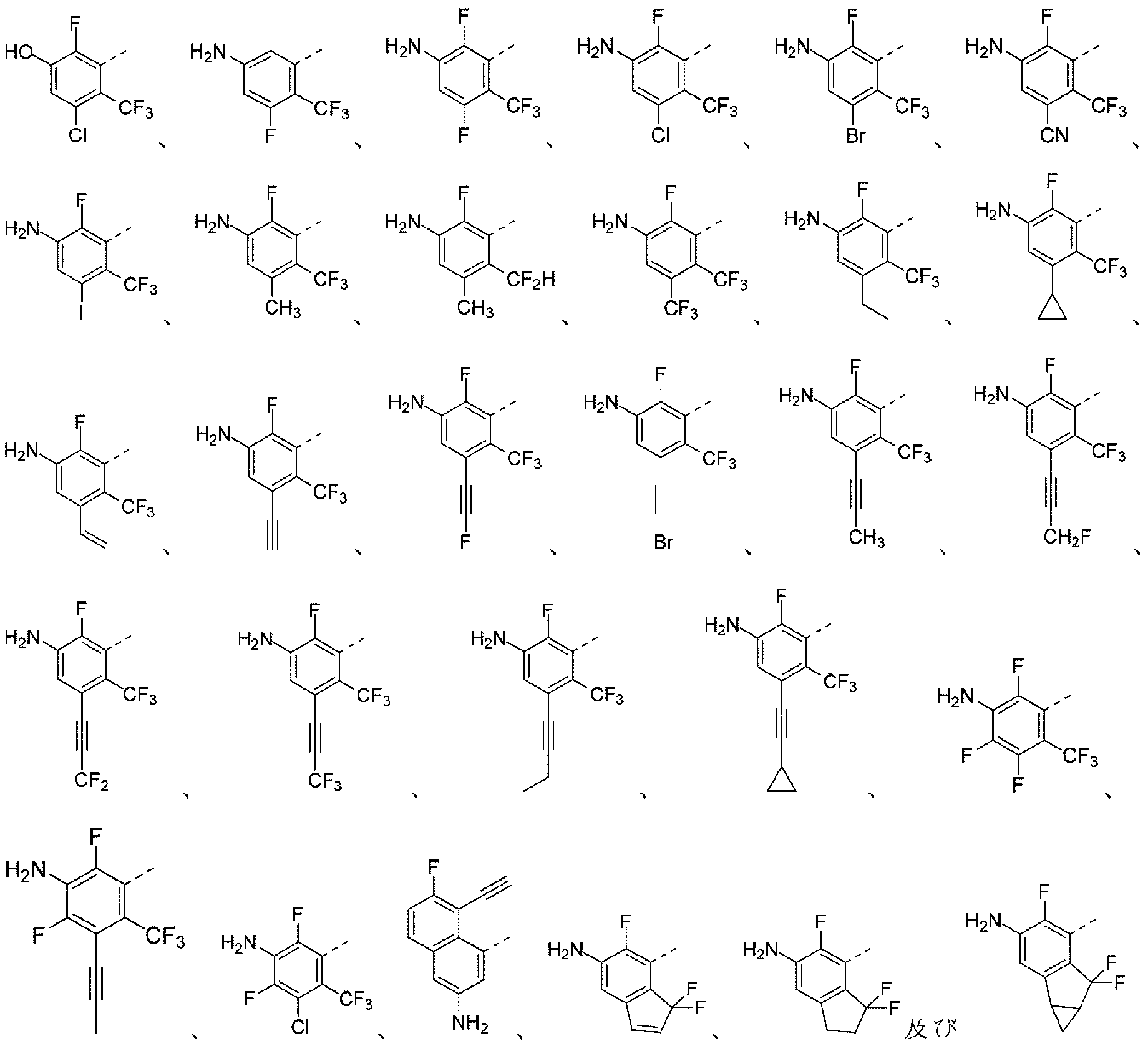
本開示のいくつかの実施形態では、R1は、
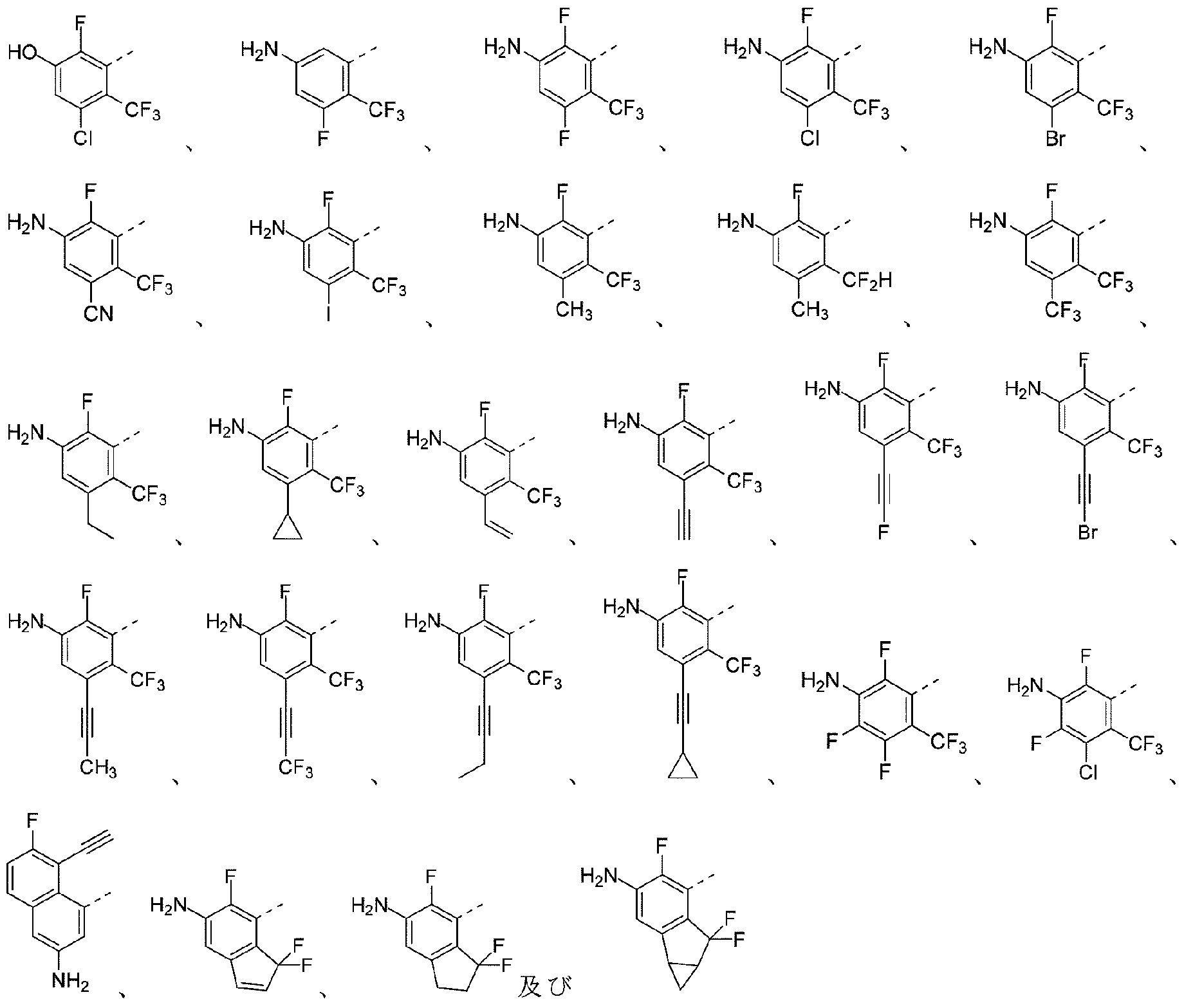
本開示のいくつかの実施形態では、R1は、
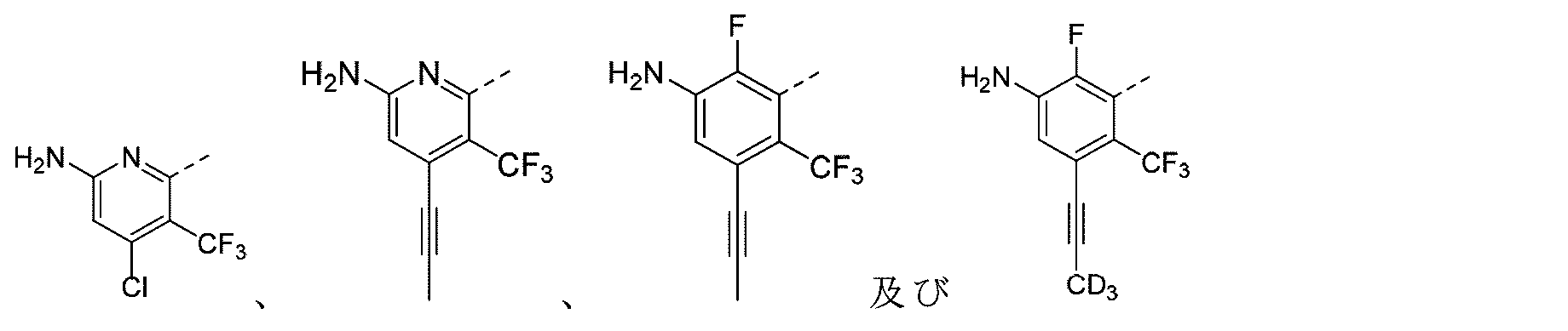
本開示のいくつかの実施形態では、構造部分


本開示のいくつかの実施形態では、R3は、H、F、CN、CH3及びOCH3から選択され、その他の変数は本明細書で定義されるとおりである。 In some embodiments of the present disclosure, R3 is selected from H, F, CN, CH3 , and OCH3 , and other variables are as defined herein.
本開示のいくつかの実施形態では、R2及びR3は、それらが結合している原子とともに、フェニル、フラニル及びピリジニルを形成し、上記フェニル、フラニル及びピリジニルは、1個のFで任意選択で置換され、その他の変数は本明細書で定義されるとおりである。 In some embodiments of the present disclosure, R2 and R3 together with the atom to which they are attached form phenyl, furanyl, and pyridinyl, which are optionally substituted with one F, and other variables are as defined herein.
本開示のいくつかの実施形態では、R4は、存在しないか、又はH、CH2F及び-CH=CH2から選択され、その他の変数は本明細書で定義されるとおりである。 In some embodiments of the present disclosure, R 4 is absent or selected from H, CH 2 F, and -CH=CH 2 , and the other variables are as defined herein.
本開示のいくつかの実施形態では、R3及びR4は、それらが結合している原子とともに、

本開示のいくつかの実施形態では、R3及びR4は、それらが結合している原子とともに、

本開示のいくつかの実施形態では、R5は、

本開示のいくつかの実施形態では、構造部分


本開示のいくつかの実施形態では、構造部分

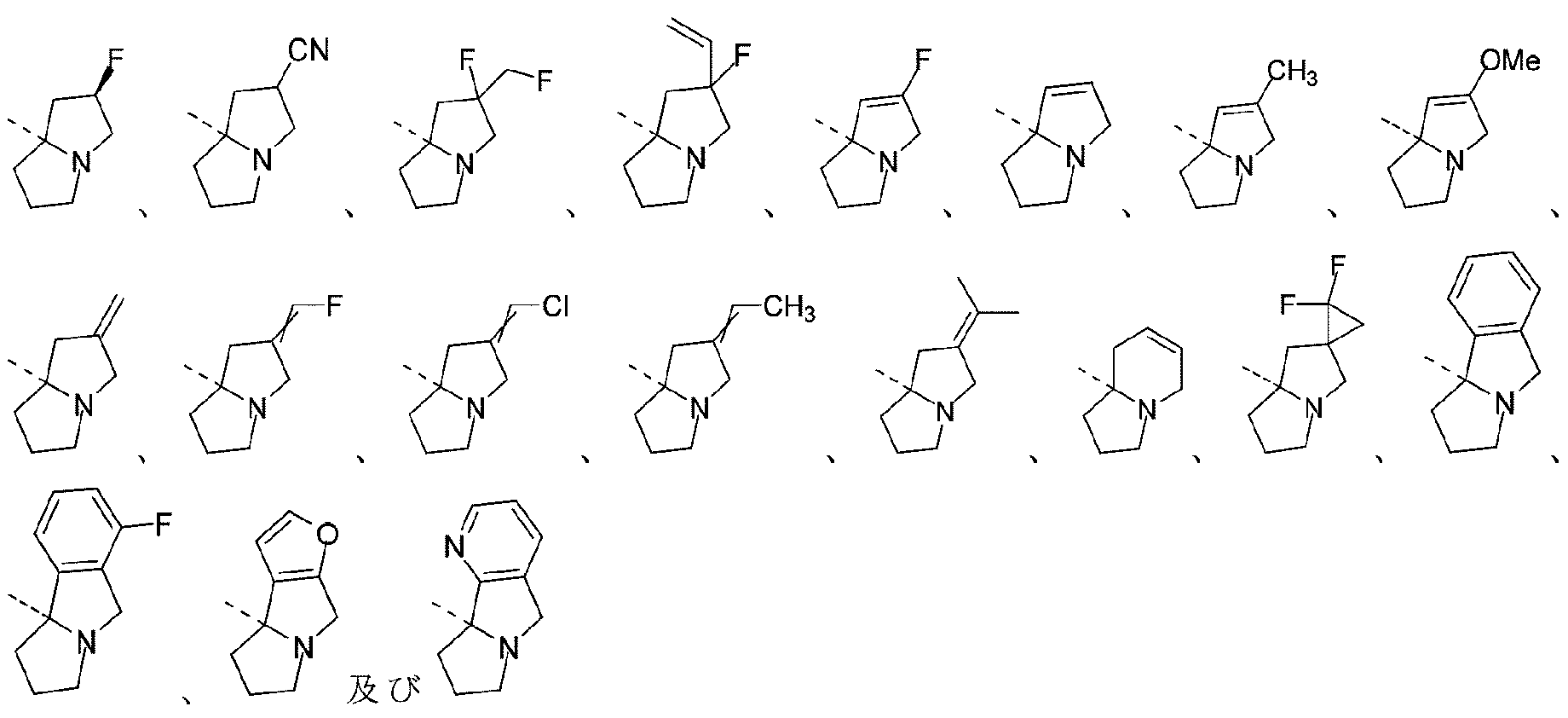
本開示のいくつかの実施形態では、構造部分


本開示のいくつかの実施形態では、構造部分


本開示のいくつかの実施形態では、構造部分

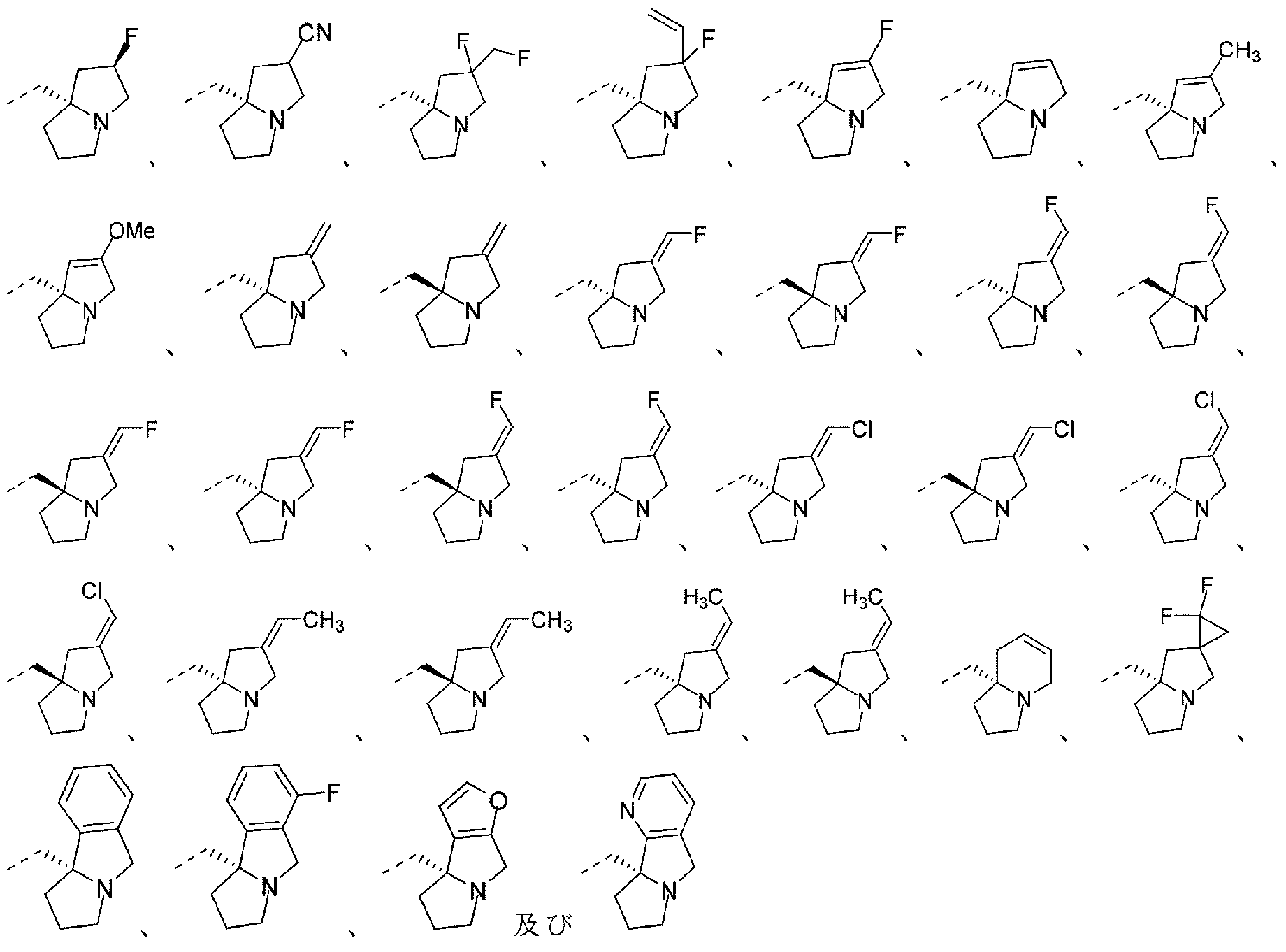
本開示のいくつかの実施形態では、構造部分


本開示のいくつかの実施形態では、構造部分


本開示のいくつかの実施形態では、化合物又はその薬学的に許容される塩が提供され、該化合物は、

式中、 In the formula,

T1、T2、R1、R2、R3、R4、L1及びmは、本明細書に定義されるとおりである。 T1 , T2 , R1 , R2 , R3 , R4 , L1 and m are as defined herein.
本開示のいくつかの実施形態では、化合物又はその薬学的に許容される塩が提供され、該化合物は、

式中、 In the formula,

T1、T2、R1、R2、R3、R4、L1及びmは、本明細書に定義されるとおりであり、 T1 , T2 , R1 , R2 , R3 , R4 , L1 and m are as defined herein;
ただし、構造部分




本開示のいくつかの実施形態では、化合物又はその薬学的に許容される塩が提供され、該化合物は、

式中、 In the formula,

構造部分


R2は、Hであり、 R2 is H;
R3は、H、F、CN、CH3及びOCH3から選択され、上記CH3及びOCH3は、1個、2個又は3個のハロゲンで任意選択で置換され、 R3 is selected from H, F, CN, CH3 and OCH3 , wherein CH3 and OCH3 are optionally substituted with 1, 2 or 3 halogens;
代替的には、R2及びR3は、それらが結合している原子とともに、フェニル基又は5~6員ヘテロアリール基を形成し、上記フェニル基又は5~6員ヘテロアリール基は、1個、2個又は3個のハロゲンで任意選択で置換され、 Alternatively, R 2 and R 3 together with the atom to which they are attached form a phenyl group or a 5-6 membered heteroaryl group, said phenyl group or 5-6 membered heteroaryl group optionally substituted with 1, 2 or 3 halogens;
R4は、-CH=CH2であり、上記-CH=CH2は、1個、2個又は3個のハロゲンで任意選択で置換され、 R 4 is -CH=CH 2 , said -CH=CH 2 being optionally substituted with 1, 2 or 3 halogens;
代替的には、R3及びR4は、それらが結合している原子とともに、


代替的には、R3及びR4は、それらが結合している原子とともに、1個、2個又は3個のハロゲンで任意選択で置換されるシクロプロピル基を形成し、 Alternatively, R3 and R4 together with the atom to which they are attached form a cyclopropyl group optionally substituted with 1, 2 or 3 halogens;
T1、T2、R1、各Rc、L1及びmは、本明細書に定義されるとおりである。 T 1 , T 2 , R 1 , each R c , L 1 and m are as defined herein.
本開示のいくつかの実施形態では、構造部分


本開示のいくつかの実施形態では、T1はNであり、その他の変数は本明細書で定義されるとおりである。 In some embodiments of the present disclosure, T 1 is N, and the other variables are as defined herein.
本開示のいくつかの実施形態では、構造部分


本開示のいくつかの実施形態では、構造部分


本開示のいくつかの実施形態では、化合物又はその薬学的に許容される塩が提供され、該化合物は、

式中、 In the formula,

各Rb及びL1は、本明細書で定義されるとおりであり、 Each R b and L 1 is as defined herein;
nは、0、1、2、3、4及び5から選択される。 n is selected from 0, 1, 2, 3, 4 and 5.
本開示のいくつかの実施形態では、構造部分


本開示のいくつかの実施形態では、構造部分


本開示のいくつかの実施形態では、化合物又はその薬学的に許容される塩が提供され、該化合物は、

式中、 In the formula,
各Rb及びL1は、本明細書で定義されるとおりであり、 Each R b and L 1 is as defined herein;
nは、0、1、2、3、4及び5から選択される。 n is selected from 0, 1, 2, 3, 4 and 5.
本開示のいくつかの実施形態では、化合物又はその薬学的に許容される塩が提供され、該化合物は、

式中、 In the formula,
各Rb及びL1は、本明細書で定義されるとおりであり、 Each R b and L 1 is as defined herein;
nは、0、1、2、3、4及び5から選択される。 n is selected from 0, 1, 2, 3, 4 and 5.
本開示のいくつかの実施形態では、化合物又はその薬学的に許容される塩が提供され、該化合物は、

式中、 In the formula,

T1、T2、R2、R3、R4及びL1は、本明細書に定義されるとおりであり、 T 1 , T 2 , R 2 , R 3 , R 4 and L 1 are as defined herein;
Rb1、Rb2、Rb3、Rb4、Rb5、Rb6及びRb7は、H、F、Cl、Br、I、OH、NH2、CN、C1-3アルキル、C1-3アルコキシ、C2-4アルキニル、C2-4アルキニル-シクロプロピル、C2-3アルケニル、-C(=O)C1-3アルキル及びC3-5シクロアルキルから独立して選択され、上記C1-3アルキル、C1-3アルコキシ、C2-4アルキニル、C2-4アルキニル-シクロプロピル、C2-3アルケニル、-C(=O)C1-3アルキル及びC3-5シクロアルキルは、1個、2個、3個、4個又は5個のハロゲンで任意選択で置換される。 R b1 , R b2 , R b3 , R b4 , R b5 , R b6 and R b7 are independently selected from H, F, Cl, Br, I, OH, NH 2 , CN, C 1-3 alkyl, C 1-3 alkoxy, C 2-4 alkynyl, C 2-4 alkynyl-cyclopropyl, C 2-3 alkenyl, -C(=O)C 1-3 alkyl and C 3-5 cycloalkyl, wherein said C 1-3 alkyl, C 1-3 alkoxy, C 2-4 alkynyl, C 2-4 alkynyl-cyclopropyl, C 2-3 alkenyl, -C(=O)C 1-3 alkyl and C 3-5 cycloalkyl are optionally substituted by 1, 2, 3, 4 or 5 halogens.
本開示のいくつかの実施形態では、Rb1、Rb2,Rb3、Rb4、Rb5、Rb6、Rb7及びRb8は、H、F、Cl、Br、I、OH、NH2、CN、CH3、CH2CH3、OCH3、OCH2CH3、-CH=CH2、


本開示のいくつかの実施形態では、Rb1、Rb2,Rb3、Rb4、Rb5、Rb6、Rb7及びRb8は、H、F、Cl、Br、I、OH、NH2、CN、CH3、CF3、CH2CH3、CF2CF3、-CH=CH2、

本開示は、式(IV)で表される化合物又はその薬学的に許容される塩も提供し、

式中、 In the formula,

T1は、CRa及びNから選択され、 T1 is selected from CR a and N;
T2は、CH及びNから選択され、 T2 is selected from CH and N;
L1は、O及びSから選択され、 L1 is selected from O and S;
R1は、フェニル、ナフチル、


R2は、Hであり、 R2 is H;
R3は、H、F、CN及びOCH3から選択され、上記OCH3は、1個、2個又は3個のハロゲンで任意選択で置換され、 R3 is selected from H, F, CN and OCH3 , said OCH3 being optionally substituted with 1, 2 or 3 halogens;
代替的には、R2及びR3は、それらが結合している原子とともに、フェニル基又は5~6員ヘテロアリール基を形成し、上記フェニル基及び5~6員ヘテロアリール基は、1個、2個又は3個のハロゲンで任意選択で置換され、 Alternatively, R 2 and R 3 together with the atom to which they are attached form a phenyl group or a 5-6 membered heteroaryl group, the phenyl group and the 5-6 membered heteroaryl group being optionally substituted with one, two or three halogens;
R4は、存在しないか、又はH、CH3及び-CH=CH2から選択され、上記CH3及び-CH=CH2は、1個、2個又は3個のハロゲンで任意選択で置換され、 R 4 is absent or selected from H, CH 3 and -CH=CH 2 , wherein said CH 3 and -CH=CH 2 are optionally substituted with 1, 2 or 3 halogens;
代替的には、R3及びR4は、それらが結合している原子とともに、


代替的には、R3及びR4は、それらが結合している原子とともに、1個、2個又は3個のハロゲンで任意選択で置換されるシクロプロピル基を形成し、 Alternatively, R3 and R4 together with the atom to which they are attached form a cyclopropyl group optionally substituted with 1, 2 or 3 halogens;
Raは、H及びCNから選択され、 R a is selected from H and CN;
各Rbは、H、F、Cl、Br、I、OH、NH2、CN、C1-3アルキル、C1-3アルコキシ、C2-4アルキニル、C2-4アルキニル-シクロプロピル、C2-3アルケニル、-C(=O)C1-3アルキル及びC3-5シクロアルキルから独立して選択され、上記C1-3アルキル、C1-3アルコキシ、C2-4アルキニル、C2-4アルキニル-シクロプロピル、C2-3アルケニル、-C(=O)C1-3アルキル及びC3-5シクロアルキルは、1個、2個、3個、4個又は5個のハロゲンで任意選択で置換される。 Each R b is independently selected from H, F, Cl, Br, I, OH, NH 2 , CN, C 1-3 alkyl, C 1-3 alkoxy, C 2-4 alkynyl, C 2-4 alkynyl-cyclopropyl, C 2-3 alkenyl, -C(=O)C 1-3 alkyl and C 3-5 cycloalkyl, wherein said C 1-3 alkyl, C 1-3 alkoxy, C 2-4 alkynyl, C 2-4 alkynyl-cyclopropyl, C 2-3 alkenyl, -C(=O)C 1-3 alkyl and C 3-5 cycloalkyl are optionally substituted by 1, 2, 3, 4 or 5 halogens.
本開示のいくつかの実施形態では、各Rbは、H、F、Cl、Br、I、OH、NH2、CN、CH3、CH2CH3、OCH3、OCH2CH3、-CH=CH2、


本開示のいくつかの実施形態では、各Rbは、H、F、Cl、Br、I、OH、NH2、CN、CH3、CH2F、CF2H、CF3、CH2CH3、CF2CF3、-CH=CH2、

本開示のいくつかの実施形態では、R1は、
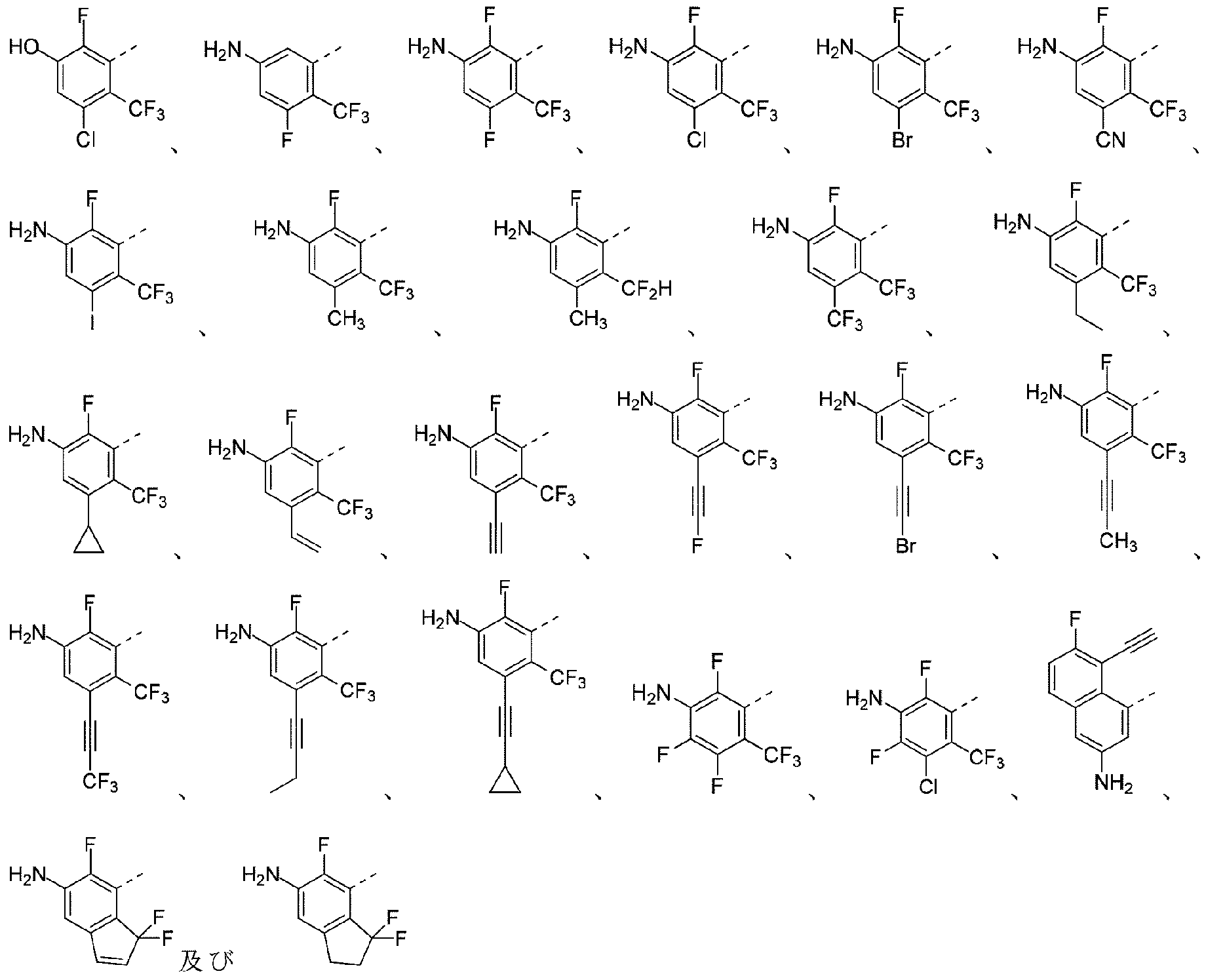
本開示のいくつかの実施形態では、R3は、H、F、CN及びOCH3から選択され、その他の変数は本明細書で定義されるとおりである。 In some embodiments of the present disclosure, R3 is selected from H, F, CN, and OCH3 , and other variables are as defined herein.
本開示のいくつかの実施形態では、R2及びR3は、それらが結合している原子とともに、フェニル、フラニル又はピリジニルを形成し、上記フェニル、フラニル及びピリジニルは、1個のFで任意選択で置換され、その他の変数は本明細書で定義されるとおりである。 In some embodiments of the present disclosure, R2 and R3 together with the atom to which they are attached form a phenyl, furanyl, or pyridinyl, which are optionally substituted with one F, and the other variables are as defined herein.
本開示のいくつかの実施形態では、R4は、存在しないか、又はH、CH2F及び-CH=CH2から選択され、その他の変数は本明細書で定義されるとおりである。 In some embodiments of the present disclosure, R 4 is absent or selected from H, CH 2 F, and -CH=CH 2 , and the other variables are as defined herein.
本開示のいくつかの実施形態では、R3及びR4は、それらが結合している原子とともに、

本開示のいくつかの実施形態では、R3及びR4は、それらが結合している原子とともに、

本開示のいくつかの実施形態では、構造部分


本開示のいくつかの実施形態では、化合物又はその薬学的に許容される塩が提供され、該化合物は、

式中、 In the formula,

T1、T2、R2、R3、R4及びL1は、本明細書に定義されるとおりであり、 T 1 , T 2 , R 2 , R 3 , R 4 and L 1 are as defined herein;
Rb1、Rb2、Rb3、Rb4、Rb5、Rb6及びRb7は、それぞれ独立して、H、F、Cl、Br、I、OH、NH2、CN、C1-3アルキル、C1-3アルコキシ、C2-4アルキニル、C2-4アルキニル-シクロプロピル、C2-3アルケニル、-C(=O)C1-3アルキル及びC3-5シクロアルキルから選択され、上記C1-3アルキル、C1-3アルコキシ、C2-4アルキニル、C2-4アルキニル-シクロプロピル、C2-3アルケニル、-C(=O)C1-3アルキル及びC3-5シクロアルキルは、1個、2個、3個、4個又は5個のハロゲンで任意選択で置換される。 R b1 , R b2 , R b3 , R b4 , R b5 , R b6 and R b7 are each independently selected from H, F, Cl, Br, I, OH, NH 2 , CN, C 1-3 alkyl, C 1-3 alkoxy, C 2-4 alkynyl, C 2-4 alkynyl-cyclopropyl, C 2-3 alkenyl, -C(=O)C 1-3 alkyl and C 3-5 cycloalkyl, wherein said C 1-3 alkyl, C 1-3 alkoxy, C 2-4 alkynyl, C 2-4 alkynyl-cyclopropyl, C 2-3 alkenyl, -C(=O)C 1-3 alkyl and C 3-5 cycloalkyl are optionally substituted by 1, 2, 3, 4 or 5 halogens.
本開示のいくつかの実施形態では、Rb1、Rb2,Rb3、Rb4、Rb5、Rb6、Rb7及びRb8は、それぞれ独立して、H、F、Cl、Br、I、OH、NH2、CN、CH3、CH2CH3、OCH3、OCH2CH3、-CH=CH2、


本開示のいくつかの実施形態では、Rb1、Rb2、Rb3、Rb4、Rb5、Rb6、Rb7及びRb8は、それぞれ独立して、H、F、Cl、Br、I、OH、NH2、CN、CH3、CF3、CH2CH3、CF2CF3、-CH=CH2、

本開示は、式(IV)で表される化合物又はその薬学的に許容される塩も提供し、
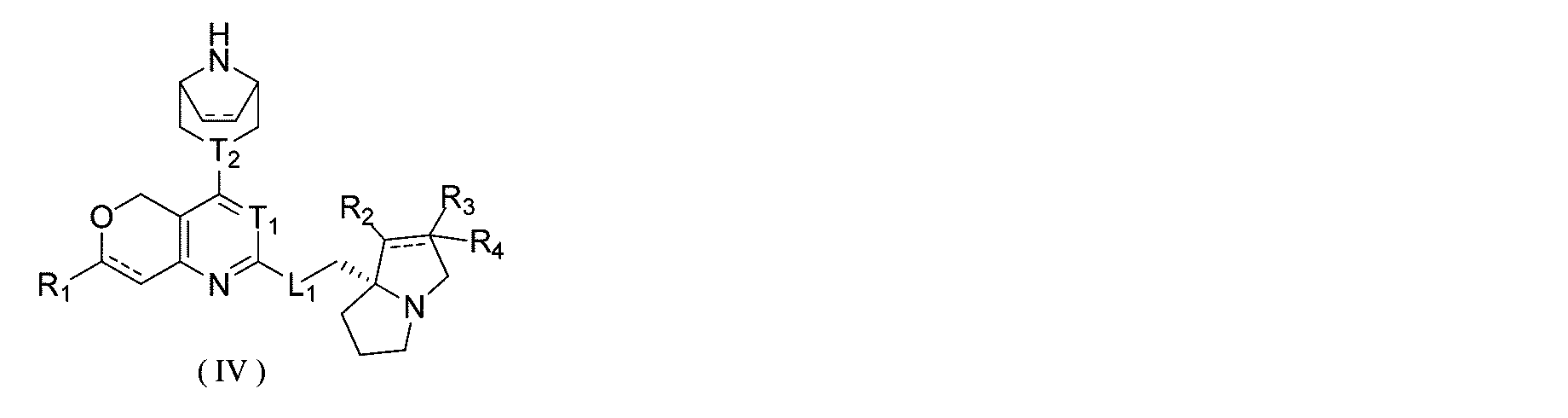
式中、 In the formula,

T1は、CRa及びNから選択され、 T1 is selected from CR a and N;
T2は、CH及びNから選択され、 T2 is selected from CH and N;
L1は、O及びSから選択され、 L1 is selected from O and S;
R1は、フェニル及びナフチルから選択され、上記フェニル及びナフチルは、それぞれ独立して、1個、2個、3個、4個又は5個のRbで任意選択で置換され、 R 1 is selected from phenyl and naphthyl, each of which is independently optionally substituted with 1, 2, 3, 4 or 5 R b ;
R2は、Hであり、 R2 is H;
R3は、H、F及びCNから選択され、 R3 is selected from H, F and CN;
代替的には、R2及びR3は、それらが結合している原子とともにフェニル基を形成し、 Alternatively, R2 and R3 together with the atoms to which they are attached form a phenyl group;
R4は、存在しないか、又はH及び-CH=CH2から選択され、 R 4 is absent or selected from H and -CH=CH 2 ;
Raは、H及びCNから選択され、 R a is selected from H and CN;
各Rbは、H、F、Cl、Br、I、OH、NH2、CN、C1-3アルキル、C1-3アルコキシ、C2-3アルキニル、C2-3アルケニル、-C(=O)C1-3アルキル及びC3-5シクロアルキルから独立して選択され、上記C1-3アルキル、C1-3アルコキシ、C2-3アルキニル、C2-3アルケニル、-C(=O)C1-3アルキル及びC3-5シクロアルキルは、1個、2個、3個、4個又は5個のハロゲンで任意選択で置換される。 Each R b is independently selected from H, F, Cl, Br, I, OH, NH 2 , CN, C 1-3 alkyl, C 1-3 alkoxy, C 2-3 alkynyl, C 2-3 alkenyl, -C(=O)C 1-3 alkyl and C 3-5 cycloalkyl, wherein said C 1-3 alkyl, C 1-3 alkoxy, C 2-3 alkynyl, C 2-3 alkenyl, -C(=O)C 1-3 alkyl and C 3-5 cycloalkyl are optionally substituted with 1, 2, 3, 4 or 5 halogens.
本開示のいくつかの実施形態では、各Rbは、H、F、Cl、Br、I、OH、NH2、CN、CH3、CH2CH3、OCH3、OCH2CH3、-CH=CH2、


本開示のいくつかの実施形態では、各Rbは、H、F、Cl、Br、I、OH、NH2、CN、CH3、CH2F、CF2H、CF3、CH2CH3、CF2CF3、-CH=CH2、

本開示のいくつかの実施形態では、R1は、

本開示のいくつかの実施形態では、構造部分


本開示のいくつかの実施形態では、化合物又はその薬学的に許容される塩が提供され、該化合物は、

式中、 In the formula,

T1、T2、R2、R3、R4及びL1は、本明細書に定義されるとおりであり、 T 1 , T 2 , R 2 , R 3 , R 4 and L 1 are as defined herein;
Rb1、Rb2,Rb3、Rb4、Rb5、Rb6及びRb7は、それぞれ独立して、H、F、Cl、Br、I、OH、NH2、CN、C1-3アルキル、C1-3アルコキシ、C2-3アルキニル、C2-3アルケニル、-C(=O)C1-3アルキル及びC3-5シクロアルキルから選択され、上記C1-3アルキル、C1-3アルコキシ、C2-3アルキニル、C2-3アルケニル、-C(=O)C1-3アルキル及びC3-5シクロアルキルは、1個、2個、3個、4個又は5個のハロゲンで任意選択で置換される。 R b1 , R b2 , R b3 , R b4 , R b5 , R b6 and R b7 are each independently selected from H, F, Cl, Br, I, OH, NH 2 , CN, C 1-3 alkyl, C 1-3 alkoxy, C 2-3 alkynyl, C 2-3 alkenyl, -C(=O)C 1-3 alkyl and C 3-5 cycloalkyl, wherein said C 1-3 alkyl, C 1-3 alkoxy, C 2-3 alkynyl, C 2-3 alkenyl, -C(=O)C 1-3 alkyl and C 3-5 cycloalkyl are optionally substituted by 1, 2, 3, 4 or 5 halogens.
本開示のいくつかの実施形態では、Rb1、Rb2,Rb3、Rb4、Rb5、Rb6、Rb7及びRb8は、それぞれ独立して、H、F、Cl、Br、I、OH、NH2、CN、CH3、CH2CH3、OCH3、OCH2CH3、-CH=CH2、


本開示のいくつかの実施形態では、Rb1、Rb2、Rb3、Rb4、Rb5、Rb6、Rb7及びRb8は、それぞれ独立して、H、F、Cl、Br、I、OH、NH2、CN、CH3、CF3、CH2CH3、CF2CF3、-CH=CH2、

本開示は、式(III)で表される化合物又はその薬学的に許容される塩も提供し、

式中、 In the formula,

T1は、CRa及びNから選択され、 T1 is selected from CR a and N;
T2は、CH及びNから選択され、 T2 is selected from CH and N;
L1は、O及びSから選択され、 L1 is selected from O and S;
R1は、フェニル及びナフチルから選択され、上記フェニル及びナフチルは、それぞれ独立して、1個、2個、3個、4個又は5個のRbで任意選択で置換され、 R 1 is selected from phenyl and naphthyl, each of which is independently optionally substituted with 1, 2, 3, 4 or 5 R b ;
R2は、Hであり、 R2 is H;
R3は、H及びFから選択され、 R3 is selected from H and F;
代替的には、R2及びR3は、それらが結合している原子とともにフェニル基を形成し、 Alternatively, R2 and R3 together with the atoms to which they are attached form a phenyl group;
Raは、H及びCNから選択され、 R a is selected from H and CN;
各Rbは、H、F、Cl、Br、I、OH、NH2、CN、C1-3アルキル、C1-3アルコキシ、C2-3アルキニル、C2-3アルケニル、-C(=O)C1-3アルキル及びC3-5シクロアルキルから独立して選択され、上記C1-3アルキル、C1-3アルコキシ、C2-3アルキニル、C2-3アルケニル、-C(=O)C1-3アルキル及びC3-5シクロアルキルは、1個、2個、3個、4個又は5個のハロゲンで任意選択で置換される。 Each R b is independently selected from H, F, Cl, Br, I, OH, NH 2 , CN, C 1-3 alkyl, C 1-3 alkoxy, C 2-3 alkynyl, C 2-3 alkenyl, -C(=O)C 1-3 alkyl and C 3-5 cycloalkyl, wherein said C 1-3 alkyl, C 1-3 alkoxy, C 2-3 alkynyl, C 2-3 alkenyl, -C(=O)C 1-3 alkyl and C 3-5 cycloalkyl are optionally substituted with 1, 2, 3, 4 or 5 halogens.
本開示のいくつかの実施形態では、各Rbは、H、F、Cl、Br、I、OH、NH2、CN、CH3、CH2CH3、OCH3、OCH2CH3、-CH=CH2、


本開示のいくつかの実施形態では、各Rbは、H、F、Cl、Br、I、OH、NH2、CN、CH3、CH2F、CF2H、CF3、CH2CH3、CF2CF3、-CH=CH2、

本開示のいくつかの実施形態では、R1は、

本開示のいくつかの実施形態では、化合物又はその薬学的に許容される塩が提供され、該化合物は、

式中、 In the formula,

T1、T2、R2、R3及びL1は、本明細書に定義されるとおりであり、 T 1 , T 2 , R 2 , R 3 and L 1 are as defined herein;
Rb1、Rb2,Rb3、Rb4、Rb5、Rb6及びRb7は、それぞれ独立して、H、F、Cl、Br、I、OH、NH2、CN、C1-3アルキル、C1-3アルコキシ、C2-3アルキニル、C2-3アルケニル、-C(=O)C1-3アルキル及びC3-5シクロアルキルから選択され、上記C1-3アルキル、C1-3アルコキシ、C2-3アルキニル、C2-3アルケニル、-C(=O)C1-3アルキル及びC3-5シクロアルキルは、1個、2個、3個、4個又は5個のハロゲンで任意選択で置換される。 R b1 , R b2 , R b3 , R b4 , R b5 , R b6 and R b7 are each independently selected from H, F, Cl, Br, I, OH, NH 2 , CN, C 1-3 alkyl, C 1-3 alkoxy, C 2-3 alkynyl, C 2-3 alkenyl, -C(=O)C 1-3 alkyl and C 3-5 cycloalkyl, wherein said C 1-3 alkyl, C 1-3 alkoxy, C 2-3 alkynyl, C 2-3 alkenyl, -C(=O)C 1-3 alkyl and C 3-5 cycloalkyl are optionally substituted by 1, 2, 3, 4 or 5 halogens.
本開示のいくつかの実施形態では、Rb1、Rb2,Rb3、Rb4、Rb5、Rb6、Rb7及びRb8は、それぞれ独立して、H、F、Cl、Br、I、OH、NH2、CN、CH3、CH2CH3、OCH3、OCH2CH3、-CH=CH2、


本開示のいくつかの実施形態では、Rb1、Rb2、Rb3、Rb4、Rb5、Rb6、Rb7及びRb8は、それぞれ独立して、H、F、Cl、Br、I、OH、NH2、CN、CH3、CF3、CH2CH3、CF2CF3、-CH=CH2、

本開示は、式(I)で表される化合物又はその薬学的に許容される塩も提供し、

式中、 In the formula,

T1は、CRa及びNから選択され、 T1 is selected from CR a and N;
L1は、O及びSから選択され、 L1 is selected from O and S;
R1は、フェニル及びナフチルから選択され、上記フェニル及びナフチルは、それぞれ独立して、1個、2個、3個、4個又は5個のRbで任意選択で置換され、 R 1 is selected from phenyl and naphthyl, each of which is independently optionally substituted with 1, 2, 3, 4 or 5 R b ;
Raは、H及びCNから選択され、 R a is selected from H and CN;
各Rbは、H、F、Cl、Br、I、OH、NH2、CN、C1-3アルキル、C1-3アルコキシ、C2-3アルキニル、C2-3アルケニル、-C(=O)C1-3アルキル及びC3-5シクロアルキルから独立して選択され、上記C1-3アルキル、C1-3アルコキシ、C2-3アルキニル、C2-3アルケニル、-C(=O)C1-3アルキル及びC3-5シクロアルキルは、1個、2個、3個、4個又は5個のハロゲンで任意選択で置換される。 Each R b is independently selected from H, F, Cl, Br, I, OH, NH 2 , CN, C 1-3 alkyl, C 1-3 alkoxy, C 2-3 alkynyl, C 2-3 alkenyl, -C(=O)C 1-3 alkyl and C 3-5 cycloalkyl, wherein said C 1-3 alkyl, C 1-3 alkoxy, C 2-3 alkynyl, C 2-3 alkenyl, -C(=O)C 1-3 alkyl and C 3-5 cycloalkyl are optionally substituted with 1, 2, 3, 4 or 5 halogens.
本開示のいくつかの実施形態では、各Rbは、H、F、Cl、Br、I、OH、NH2、CN、CH3、CH2CH3、OCH3、OCH2CH3、-CH=CH2、


本開示のいくつかの実施形態では、各Rbは、H、F、Cl、Br、I、OH、NH2、CN、CH3、CF3、CH2CH3、CF2CF3、-CH=CH2、

本開示のいくつかの実施形態では、化合物又はその薬学的に許容される塩が提供され、該化合物は、

式中、 In the formula,

T1及びL1は、本明細書で定義されるとおりであり、 T1 and L1 are as defined herein;
Rb1、Rb2,Rb3、Rb4、Rb5、Rb6及びRb7は、それぞれ独立して、H、F、Cl、Br、I、OH、NH2、CN、C1-3アルキル、C1-3アルコキシ、C2-3アルキニル、C2-3アルケニル、-C(=O)C1-3アルキル及びC3-5シクロアルキルから選択され、上記C1-3アルキル、C1-3アルコキシ、C2-3アルキニル、C2-3アルケニル、-C(=O)C1-3アルキル及びC3-5シクロアルキルは、1個、2個、3個、4個又は5個のハロゲンで任意選択で置換される。 R b1 , R b2 , R b3 , R b4 , R b5 , R b6 and R b7 are each independently selected from H, F, Cl, Br, I, OH, NH 2 , CN, C 1-3 alkyl, C 1-3 alkoxy, C 2-3 alkynyl, C 2-3 alkenyl, -C(=O)C 1-3 alkyl and C 3-5 cycloalkyl, wherein said C 1-3 alkyl, C 1-3 alkoxy, C 2-3 alkynyl, C 2-3 alkenyl, -C(=O)C 1-3 alkyl and C 3-5 cycloalkyl are optionally substituted by 1, 2, 3, 4 or 5 halogens.
本開示のいくつかの実施形態では、Rb1、Rb2,Rb3、Rb4、Rb5、Rb6、Rb7及びRb8は、それぞれ独立して、H、F、Cl、Br、I、OH、NH2、CN、CH3、CH2CH3、OCH3、OCH2CH3、-CH=CH2、


本開示のいくつかの実施形態では、Rb1、Rb2、Rb3、Rb4、Rb5、Rb6、Rb7及びRb8は、それぞれ独立して、H、F、Cl、Br、I、OH、NH2、CN、CH3、CF3、CH2CH3、CF2CF3、-CH=CH2、

本開示の実施例8では、化合物8の塩酸塩は、工程6及び7によって化合物8-3から調製され、化合物8-3は、工程5によって化合物8-2及び化合物1-12Bから調製され、化合物8-2及び化合物1-12Bは、それぞれ化合物8-1A及び化合物1-11Bから調製された。 In Example 8 of the present disclosure, the hydrochloride salt of compound 8 was prepared from compound 8-3 by steps 6 and 7, compound 8-3 was prepared from compound 8-2 and compound 1-12B by step 5, and compound 8-2 and compound 1-12B were prepared from compound 8-1A and compound 1-11B, respectively.
本開示の実施例8では、化合物8の塩酸塩は、化合物8-1Aから調製され、化合物8-1Aは、SFC(クロマトグラフィーカラム:Chiralpak IH-3、100×4.6mmID、3μm;移動相:A(超臨界CO2)及びB(エタノール、0.1%イソプロピルアミンを含有);グラジエント:B%=10~50%、4分;流量:3.4mL/分;波長:220nm;圧力:2000psi)で分析され、1.489分の保持時間を示した。 In Example 8 of the present disclosure, the hydrochloride salt of compound 8 was prepared from compound 8-1A, which was analyzed by SFC (chromatographic column: Chiralpak IH-3, 100×4.6 mm ID, 3 μm; mobile phase: A (supercritical CO 2 ) and B (ethanol, containing 0.1% isopropylamine); gradient: B%=10-50%, 4 min; flow rate: 3.4 mL/min; wavelength: 220 nm; pressure: 2000 psi) and showed a retention time of 1.489 min.
本開示の実施例8では、化合物8の塩酸塩は、化合物1-11Bから調製され、化合物1-11Bは、SFC(クロマトグラフィーカラム:(S,S)Whelk-O1 100×4.6mmID、5.0μm;移動相:A:超臨界CO2、B:[75%イソプロパノール/25%アセトニトリル/0.05%ジエチルアミン];B%:50%-50%、流量:2.5mL/分)で分析され、3.317分の保持時間を示し、そのエナンチオマーの保持時間は2.536分であった。 In Example 8 of the present disclosure, the hydrochloride salt of compound 8 was prepared from compound 1-11B, which was analyzed by SFC (chromatographic column: (S,S) Whelk-O1 100×4.6 mm ID, 5.0 μm; mobile phase: A: supercritical CO 2 , B: [75% isopropanol/25% acetonitrile/0.05% diethylamine]; B%: 50%-50%, flow rate: 2.5 mL/min) and showed a retention time of 3.317 min, while the retention time of its enantiomer was 2.536 min.
本開示の実施例8では、化合物8は、化合物1-11Bから調製され、化合物1-11Bは、SFC(クロマトグラフィーカラム:(S,S)Whelk-O1 100×4.6mmID、5.0μm;移動相:A:超臨界CO2、B:[75%イソプロパノール/25%アセトニトリル/0.05%ジエチルアミン];B%:50%-50%、流量:2.5mL/分)で分析され、3.317分の保持時間を示し、そのエナンチオマーの保持時間は2.536分であった。 In Example 8 of the present disclosure, compound 8 was prepared from compound 1-11B, which was analyzed by SFC (chromatographic column: (S,S) Whelk-O1 100×4.6 mm ID, 5.0 μm; mobile phase: A: supercritical CO 2 , B: [75% isopropanol/25% acetonitrile/0.05% diethylamine]; B%: 50%-50%, flow rate: 2.5 mL/min) and showed a retention time of 3.317 min, while the retention time of its enantiomer was 2.536 min.
本開示の実施例8では、化合物1-11Bは、SFC(クロマトグラフィーカラム:(S,S)Whelk-O1 100×4.6mmID、5.0μm;移動相:A:超臨界CO2、B:[75%イソプロパノール/25%アセトニトリル/0.05%ジエチルアミン];B%:50%-50%、流量:2.5mL/分)で分析され、3.317分の保持時間を示し、そのエナンチオマーの保持時間は2.536分であった。化合物8の塩酸塩は、実施例8に記載の工程によって1-11Bから合成された。 In Example 8 of the present disclosure, compound 1-11B was analyzed by SFC (chromatographic column: (S,S) Whelk-O1 100×4.6 mm ID, 5.0 μm; mobile phase: A: supercritical CO 2 , B: [75% isopropanol/25% acetonitrile/0.05% diethylamine]; B%: 50%-50%, flow rate: 2.5 mL/min) and showed a retention time of 3.317 min, while the retention time of its enantiomer was 2.536 min. The hydrochloride salt of compound 8 was synthesized from 1-11B by the steps described in Example 8.
本開示のいくつかの他の解決策は、上記変数を任意に組み合わせることによって得られる。 Some other solutions of this disclosure are obtained by combining any of the above variables.
本開示は、以下の式:

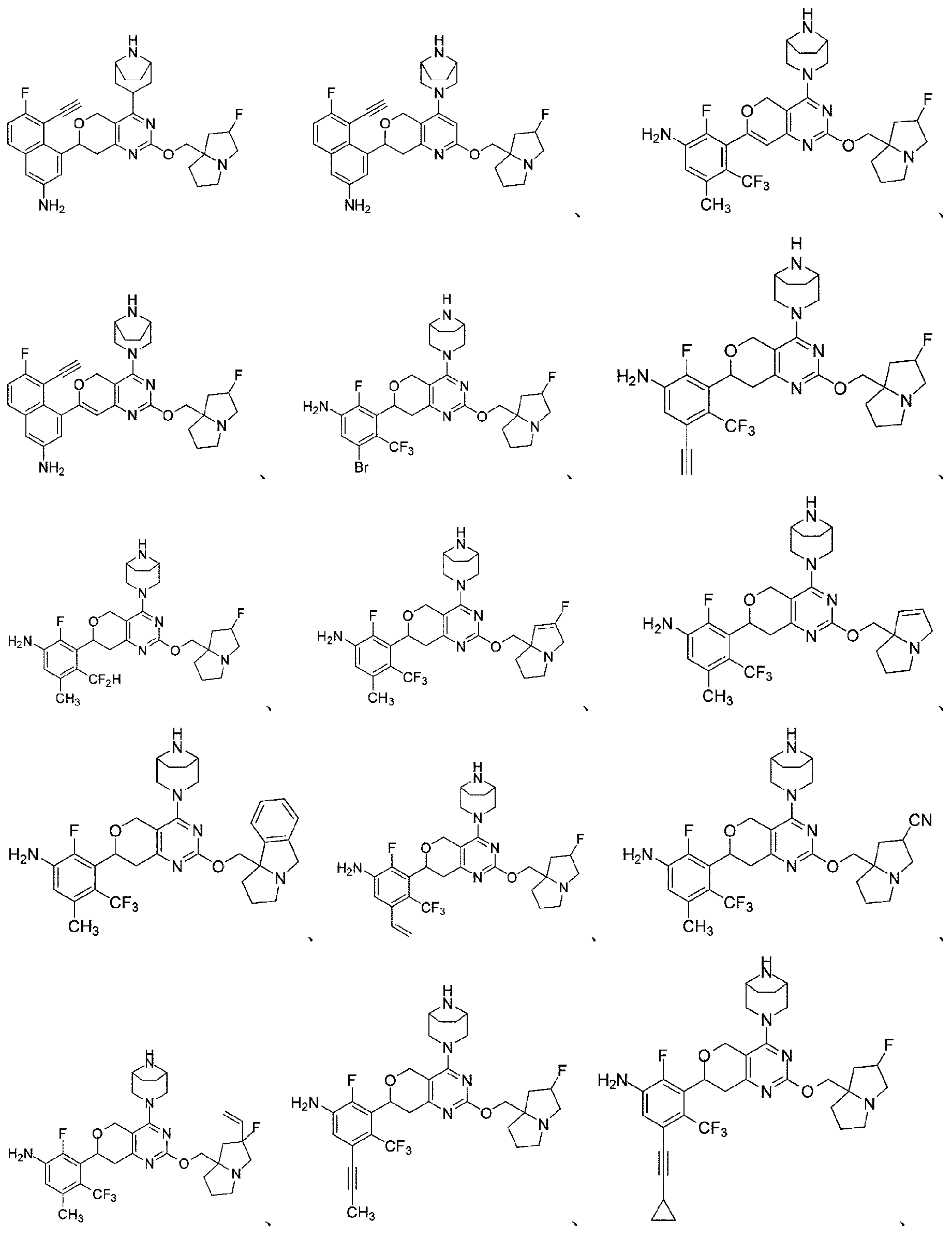
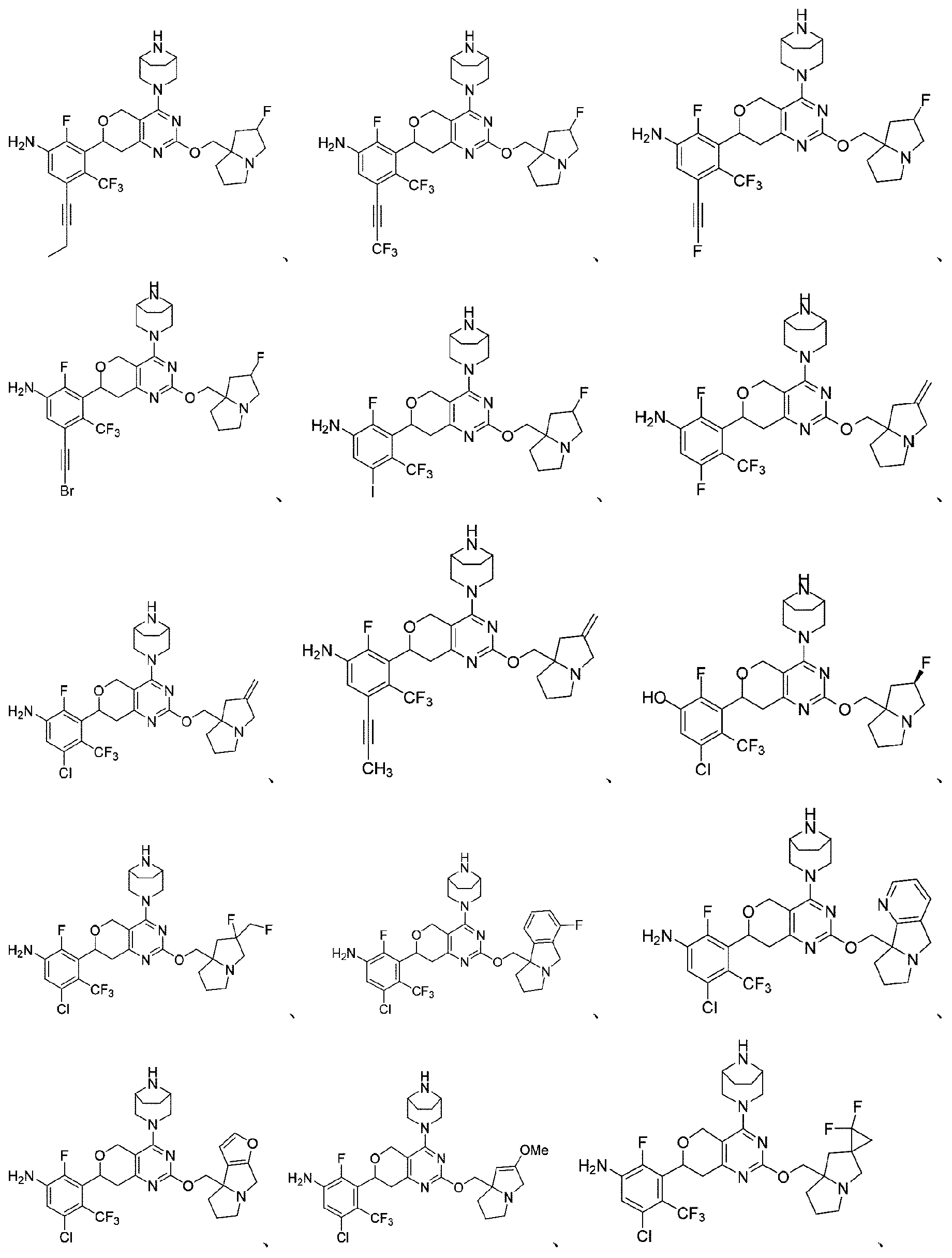

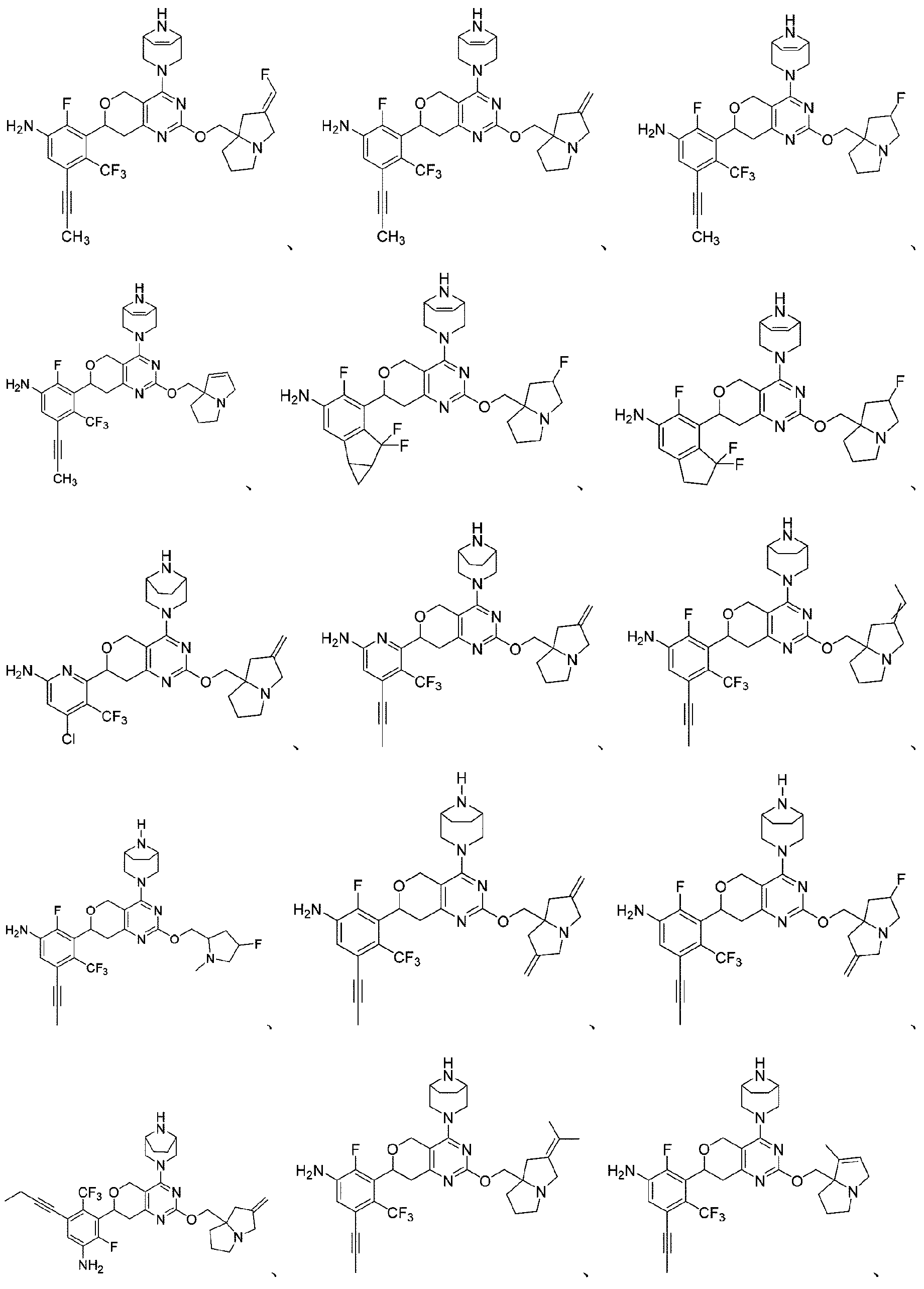

本開示は、以下の式:


本開示は、以下の式:


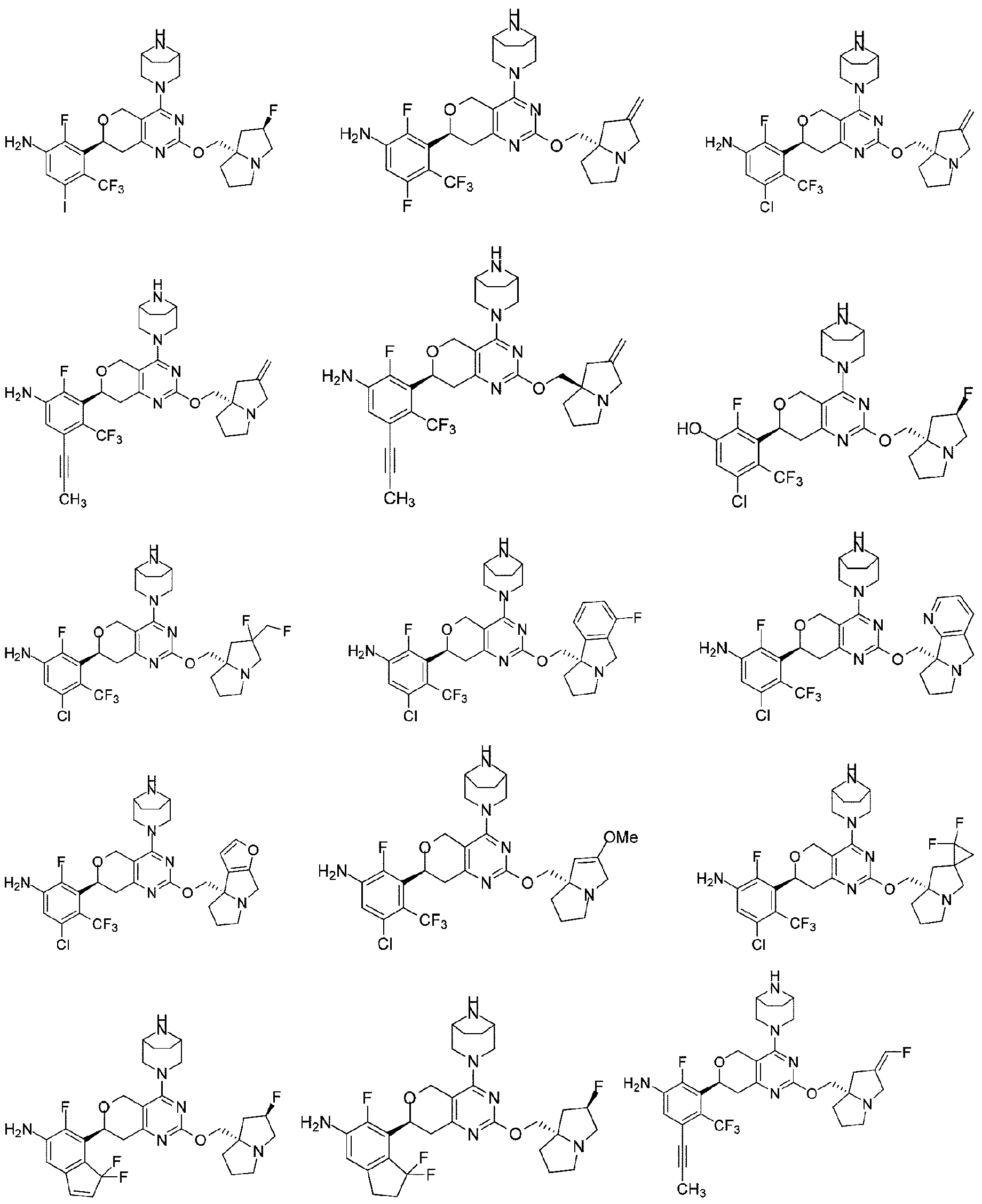


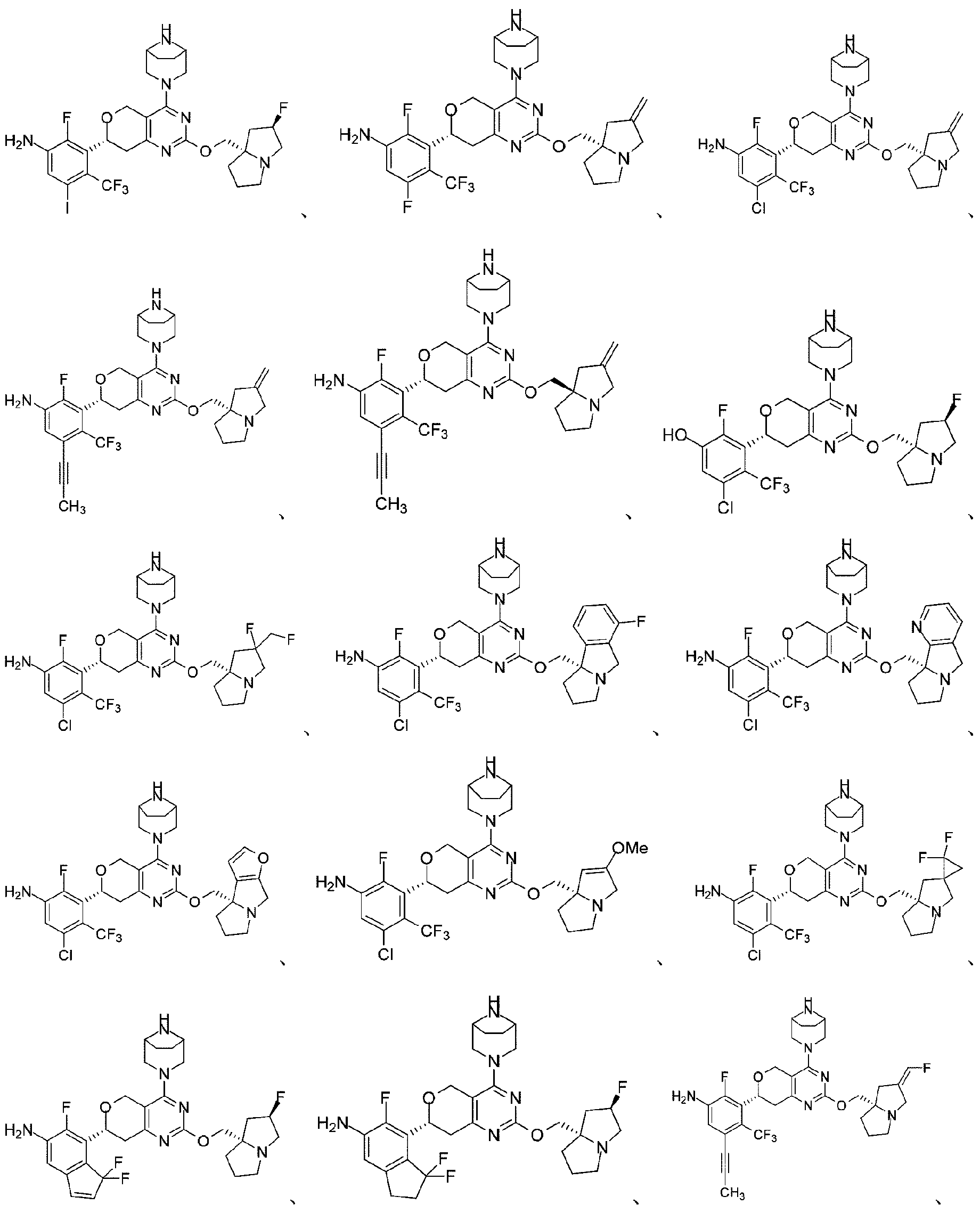


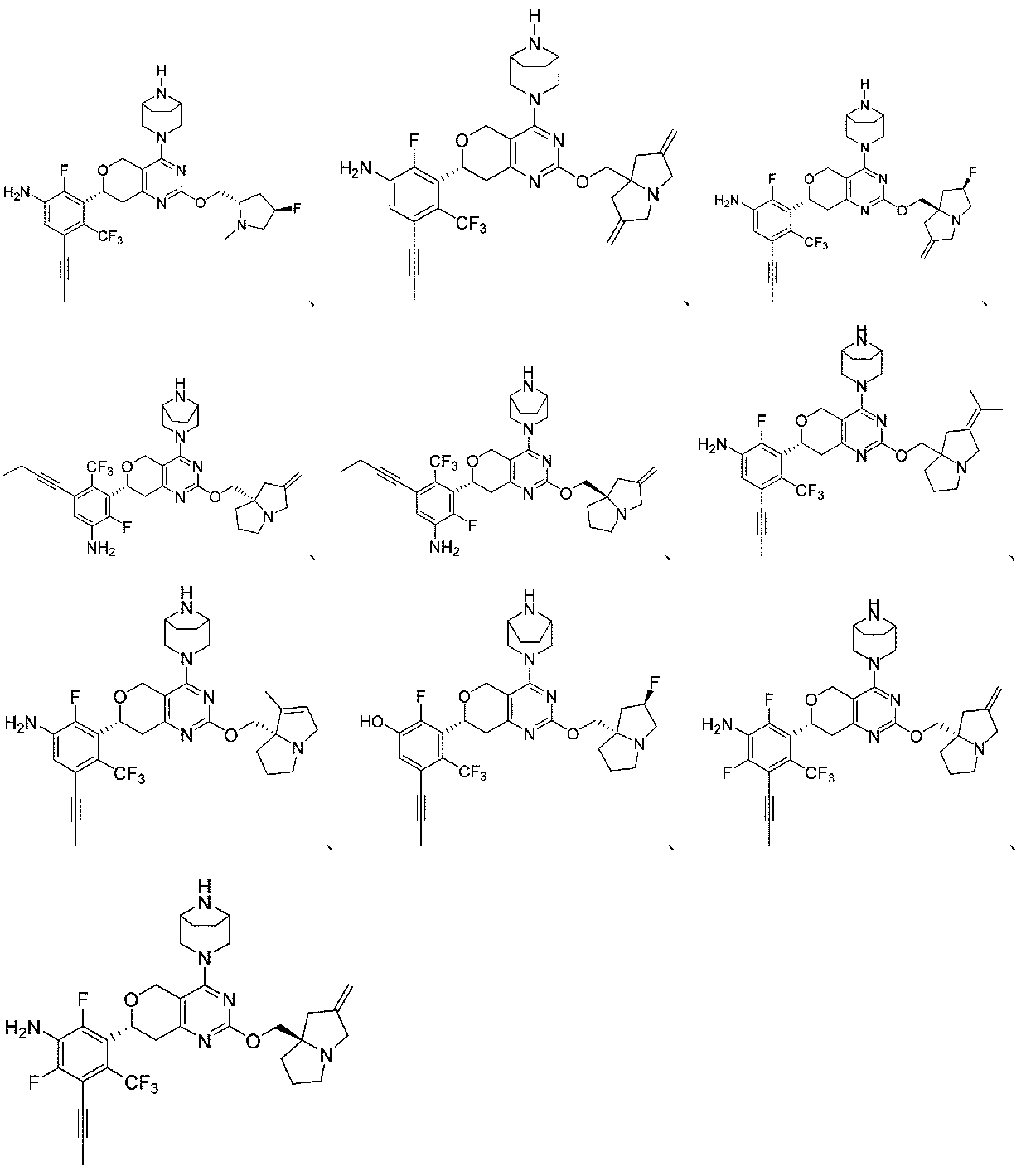
本開示はまた、KRASG12D変異に関連する疾患を治療するための医薬品の製造における上記化合物又はその薬学的に許容される塩の使用も提供する。 The disclosure also provides the use of the above compound or a pharma- ceutically acceptable salt thereof in the manufacture of a medicament for treating a disease associated with a KRAS G12D mutation.
本開示はまた、腫瘍に関連する疾患を治療するための医薬品の製造における上記化合物又はその薬学的に許容される塩の使用も提供する。 The present disclosure also provides the use of the above compound or a pharma- ceutically acceptable salt thereof in the manufacture of a medicament for treating a tumor-related disease.
本開示はまた、以下の合成方法を提供する。 The present disclosure also provides the following synthesis method:
合成方法1:

合成方法2:

本開示はまた、以下のアッセイ方法を提供する。 The present disclosure also provides the following assay methods:
アッセイ方法1:KRASG12Dを阻害する活性のアッセイ Assay Method 1: Assay for KRAS G12D Inhibitory Activity
1.目的 1. Purpose
KRASのGTPへの結合を効果的に阻害できる化合物を、TR-FRET法によってスクリーニングした。 Compounds that can effectively inhibit the binding of KRAS to GTP were screened using the TR-FRET method.
2.消耗品及び器具

3.試薬調製 3. Reagent preparation
a.ストック試薬: a. Stock reagents:
1)KRASヌクレオチド交換バッファ 1) KRAS nucleotide exchange buffer
1000mM HEPESを20mL、500mM EDTAを500mL、5M塩化ナトリウムを10mL、100%Tween20を0.1mL、水を949.9mL秤量し、配合して溶液1Lにした。溶液を濾過で滅菌し、4℃で保存した。 20 mL of 1000 mM HEPES, 500 mL of 500 mM EDTA, 10 mL of 5 M sodium chloride, 0.1 mL of 100% Tween 20, and 949.9 mL of water were weighed out and mixed to make 1 L of solution. The solution was sterilized by filtration and stored at 4°C.
2)KRASアッセイバッファ 2) KRAS assay buffer
1000mM HEPESを20mL、1000mM塩化マグネシウムを10mL、5M塩化ナトリウムを30mL、100%Tween20を0.05mL、水を939.95mL秤量し、配合して溶液1Lにした。溶液を濾過で滅菌し、4℃で保存した。 20 mL of 1000 mM HEPES, 10 mL of 1000 mM magnesium chloride, 30 mL of 5 M sodium chloride, 0.05 mL of 100% Tween 20, and 939.95 mL of water were weighed and mixed to make 1 L of solution. The solution was sterilized by filtration and stored at 4°C.
3)KRAS/Bodipy GDP/Tb-SA混合物 3) KRAS/Bodipy GDP/Tb-SA mixture
95μM KRASG12Dタンパク質9.5μL及びKRASヌクレオチド交換バッファ440.5μLを秤量し、混合した。混合物を室温で1時間インキュベートしてから、17.9μM Tb-SA8.4μL、5mM Bodipy GDP1.8μL及びKRASアッセイバッファ9539.8μLとともに配合して溶液1Lにした。混合後、溶液を室温で6時間静置し、-80℃で保存した。 9.5 μL of 95 μM KRAS G12D protein and 440.5 μL of KRAS Nucleotide Exchange Buffer were weighed and mixed. The mixture was incubated at room temperature for 1 hour and then combined with 8.4 μL of 17.9 μM Tb-SA, 1.8 μL of 5 mM Bodipy GDP, and 9539.8 μL of KRAS Assay Buffer to make 1 L of solution. After mixing, the solution was allowed to stand at room temperature for 6 hours and then stored at -80°C.
b.アッセイ試薬: b. Assay Reagents:
1)KRASキナーゼ溶液 1) KRAS kinase solution
KRAS/Bodipy GDP/Tb-SA混合物73.3μL及びKRASアッセイバッファ2126.7μLを秤量し、配合して溶液2200μLにした。 73.3 μL of KRAS/Bodipy GDP/Tb-SA mixture and 2126.7 μL of KRAS assay buffer were weighed and combined to make 2200 μL of solution.
2)SOS/GTP混合物 2) SOS/GTP mixture
166μM SOSタンパク質1.59μL、100mM GTP198μL及びKRASアッセイバッファ2000.41μLを秤量し、配合して溶液2200μLにした。 1.59 μL of 166 μM SOS protein, 198 μL of 100 mM GTP, and 0.41 μL of 2000 KRAS assay buffer were weighed and mixed to make 2200 μL of solution.
4.アッセイプロセス 4. Assay process
1)対照化合物の原液の濃度は1mMであり、アッセイ対象の化合物の原液の濃度は10mMであった。対照化合物及びアッセイ対象の化合物9μLを384-LDVプレートに移した。 1) The concentration of the stock solution of the control compound was 1 mM, and the concentration of the stock solution of the compound to be assayed was 10 mM. 9 μL of the control compound and the compound to be assayed were transferred to a 384-LDV plate.
2)LDVプレートの化合物を、Bravoを用いて3倍に段階希釈して10個の濃度にした。 2) The compounds on the LDV plate were serially diluted 3-fold using Bravo to give 10 concentrations.
3)LDVプレート上の化合物9nLを、ECHOを使用してアッセイプレートに移した。 3) 9 nL of compound on the LDV plate was transferred to the assay plate using ECHO.
4)3nM Kras/0.5nM TB-SA/30nM Bodipy GDP混合物3μLとRasバッファ3μLとを、Dragonfly自動サンプラを使用してアッセイプレートの各ウェルに順次加え、アッセイプレートを1000rpm/分で1分間遠心分離した。 4) 3 μL of the 3 nM Kras/0.5 nM TB-SA/30 nM Bodipy GDP mixture and 3 μL of Ras buffer were added sequentially to each well of the assay plate using the Dragonfly autosampler, and the assay plate was centrifuged at 1000 rpm/min for 1 minute.
5)アッセイプレートを室温で1時間インキュベートした。 5) The assay plate was incubated at room temperature for 1 hour.
6)120nM SOS/9mM GTP混合物3μLを、Dragonfly自動サンプラを使用してアッセイプレートの各ウェルに加え、アッセイプレートを1000rpm/分で1分間遠心分離した。 6) 3 μL of the 120 nM SOS/9 mM GTP mixture was added to each well of the assay plate using the Dragonfly autosampler, and the assay plate was centrifuged at 1000 rpm/min for 1 minute.
7)アッセイプレートを室温で1時間インキュベートした。 7) The assay plate was incubated at room temperature for 1 hour.
8)プレートをEnvisionを用いて読み取り、データを記録した。 8) The plate was read using Envision and the data recorded.
9)データをExcel及びXlfitを使用して分析し、アッセイ対象の化合物のIC50を算出した。 9) Data was analyzed using Excel and Xlfit to calculate IC50s for the compounds assayed.
アッセイ方法2:AGS細胞におけるp-ERK阻害のアッセイ Assay method 2: Assay for p-ERK inhibition in AGS cells
1.目的 1. Purpose
AGS細胞においてp-ERKを効果的に阻害できる化合物を、HTRF法によってスクリーニングした。 Compounds that can effectively inhibit p-ERK in AGS cells were screened using the HTRF method.
2.アッセイプロセス 2. Assay process
1)AGS細胞を透明な96ウェル細胞培養プレートに播種した。各ウェルは細胞懸濁液80μL及び10000個の細胞を含んでいた。細胞プレートを37℃で一晩、二酸化炭素インキュベータでインキュベートした。 1) AGS cells were seeded into a clear 96-well cell culture plate. Each well contained 80 μL of cell suspension and 10,000 cells. The cell plate was incubated overnight at 37°C in a carbon dioxide incubator.
2)インキュベーション完了後、細胞上清を廃棄した。0.02%血清を含有する培地80μLを各ウェルに加えた。細胞プレートを37℃で一晩、二酸化炭素インキュベータでインキュベートした。 2) After incubation was completed, the cell supernatant was discarded. 80 μL of medium containing 0.02% serum was added to each well. The cell plate was incubated overnight at 37°C in a carbon dioxide incubator.
3)化合物2μLを秤量し、細胞培地78μLに加えた。混合物を十分に混合した後、化合物溶液20μLを秤量し、細胞プレートの対応するウェルに加えた。細胞プレートを二酸化炭素インキュベータに戻し入れ、更に3時間インキュベートした。 3) 2 μL of compound was weighed and added to 78 μL of cell culture medium. After the mixture was mixed thoroughly, 20 μL of compound solution was weighed and added to the corresponding wells of the cell plate. The cell plate was placed back into the carbon dioxide incubator and incubated for an additional 3 hours.
4)インキュベーション完了後、細胞上清を廃棄した。1倍細胞ライセート50μLを各ウェルに加えた。混合物を振盪しながら室温で30分間インキュベートした。 4) After incubation was complete, the cell supernatant was discarded. 50 μL of 1x cell lysate was added to each well. The mixture was incubated at room temperature with shaking for 30 minutes.
5)ホスホ-ERK1/2 Euクリプタート抗体及びホスホ-ERK1/2 d2抗体を検出バッファで20倍に希釈した。 5) Phospho-ERK1/2 Eu cryptate antibody and phospho-ERK1/2 d2 antibody were diluted 20-fold with detection buffer.
6)細胞ライセート上清16μLを秤量し、新しい384白色マイクロウェルプレートの各ウェルに加え、その後、ホスホ-ERK1/2 Euクリプタート抗体の希釈溶液2μL及びホスホ-ERK1/2 d2抗体の希釈溶液2μLを加えた。混合物を室温で少なくとも4時間インキュベートした。 6) 16 μL of cell lysate supernatant was weighed and added to each well of a new 384 white microwell plate, followed by 2 μL of a diluted solution of phospho-ERK1/2 Eu cryptate antibody and 2 μL of a diluted solution of phospho-ERK1/2 d2 antibody. The mixture was incubated at room temperature for at least 4 hours.
7)インキュベーション完了後、HTRFをマルチラベルアナライザで読み取った(励起:320nm、発光:615nm、665nm)。 7) After incubation was complete, HTRF was read using a multi-label analyzer (excitation: 320 nm, emission: 615 nm, 665 nm).
8)アッセイ対象の化合物のIC50を算出した。 8) The IC50 of the compounds assayed was calculated.
アッセイ方法3:GP2D細胞におけるp-ERK阻害のアッセイ Assay method 3: Assay for p-ERK inhibition in GP2D cells
1.目的 1. Purpose
GP2D細胞においてp-ERKを効果的に阻害できる化合物を、HTRF法によってスクリーニングした。 Compounds that can effectively inhibit p-ERK in GP2D cells were screened using the HTRF method.
2.アッセイプロセス 2. Assay process
1)GP2D細胞を透明な96ウェル細胞培養プレートに播種した。各ウェルは細胞懸濁液80μL及び8000個の細胞を含んでいた。細胞プレートを37℃で一晩、二酸化炭素インキュベータでインキュベートした。 1) GP2D cells were seeded into a clear 96-well cell culture plate. Each well contained 80 μL of cell suspension and 8,000 cells. The cell plate was incubated overnight at 37°C in a carbon dioxide incubator.
2)化合物2μLを秤量し、細胞培地78μLに加えた。混合物を十分に混合した後、化合物溶液20μLを秤量し、細胞プレートの対応するウェルに加えた。細胞プレートを二酸化炭素インキュベータに戻し入れ、更に1時間インキュベートした。 2) 2 μL of compound was weighed and added to 78 μL of cell culture medium. After the mixture was mixed thoroughly, 20 μL of compound solution was weighed and added to the corresponding wells of the cell plate. The cell plate was placed back into the carbon dioxide incubator and incubated for an additional hour.
3)インキュベーション完了後、細胞上清を廃棄した。1倍細胞ライセート50μLを各ウェルに加えた。混合物を振盪しながら室温で30分間インキュベートした。 3) After incubation was complete, the cell supernatant was discarded. 50 μL of 1x cell lysate was added to each well. The mixture was incubated at room temperature with shaking for 30 minutes.
4)ホスホ-ERK1/2 Euクリプタート抗体及びホスホ-ERK1/2 d2抗体を検出バッファで20倍に希釈した。 4) Phospho-ERK1/2 Eu cryptate antibody and phospho-ERK1/2 d2 antibody were diluted 20-fold with detection buffer.
5)細胞ライセート上清16μLを秤量し、新しい384白色マイクロウェルプレートの各ウェルに加え、その後、ホスホ-ERK1/2 Euクリプタート抗体の希釈溶液2μL及びホスホ-ERK1/2 d2抗体の希釈溶液2μLを加えた。混合物を室温で少なくとも4時間インキュベートした。 5) 16 μL of cell lysate supernatant was weighed and added to each well of a new 384 white microwell plate, followed by 2 μL of a diluted solution of phospho-ERK1/2 Eu cryptate antibody and 2 μL of a diluted solution of phospho-ERK1/2 d2 antibody. The mixture was incubated at room temperature for at least 4 hours.
6)インキュベーション完了後、HTRFをマルチラベルアナライザで読み取った(励起:320nm、発光:615nm、665nm)。 6) After incubation was complete, HTRF was read using a multi-label analyzer (excitation: 320 nm, emission: 615 nm, 665 nm).
7)アッセイ対象の化合物のIC50を算出した。 7) The IC50 of the compounds assayed was calculated.
アッセイ方法4:PANC0403細胞におけるp-ERK阻害のアッセイ Assay method 4: Assay for p-ERK inhibition in PANC0403 cells
1.アッセイの材料: 1. Assay materials:
Nanjing Kebaiから購入したPANC0403細胞;Biological Industriesから購入したRPMI-1640培地;Bioseraから購入したウシ胎児血清;及びCisbioから購入したAdvancedホスホ-ERK1/2(THR202/TYR204)キット。 PANC0403 cells purchased from Nanjing Kebai; RPMI-1640 medium purchased from Biological Industries; fetal bovine serum purchased from Biosera; and Advanced Phospho-ERK1/2 (THR202/TYR204) kit purchased from Cisbio.

2.アッセイの方法: 2. Assay method:
1)PANC0403細胞を透明な96ウェル細胞培養プレートに播種した。各ウェルは細胞懸濁液80μL及び10000個のPANC0403細胞を含んでいた。細胞プレートを37℃で一晩、二酸化炭素インキュベータでインキュベートした。 1) PANC0403 cells were seeded into a clear 96-well cell culture plate. Each well contained 80 μL of cell suspension and 10,000 PANC0403 cells. The cell plate was incubated overnight at 37°C in a carbon dioxide incubator.
2)アッセイ対象の化合物を、100%DMSOを用いて第1の濃度として2mMに希釈してから、ピペットを用いて5倍に段階希釈して8つの濃度(すなわち、2mM~25.6nM)にした。化合物2μLを秤量し、細胞飢餓培地78μLに加えた。混合物を十分に混合した後、化合物溶液20μLを秤量し、細胞プレートの対応するウェルに加えた。細胞プレートを二酸化炭素インキュベータに戻し入れ、更に3時間インキュベートした。このとき、化合物の濃度は10μM~0.128nMであり、DMSOの濃度は0.5%であった。 2) The compounds to be assayed were diluted with 100% DMSO to a first concentration of 2 mM, then serially diluted 5-fold using a pipette to eight concentrations (i.e., 2 mM to 25.6 nM). 2 μL of compound was weighed and added to 78 μL of cell starvation medium. After the mixture was mixed thoroughly, 20 μL of compound solution was weighed and added to the corresponding wells of the cell plate. The cell plate was placed back into the carbon dioxide incubator and incubated for an additional 3 hours, at which point the compound concentrations were 10 μM to 0.128 nM and the DMSO concentration was 0.5%.
3)インキュベーション完了後、細胞上清を廃棄した。細胞ライセート50μLを各ウェルに加えた。混合物を振盪しながら室温で30分間インキュベートした。 3) After incubation was complete, the cell supernatant was discarded. 50 μL of cell lysate was added to each well. The mixture was incubated at room temperature with shaking for 30 minutes.
4)ホスホ-ERK1/2 Euクリプタート抗体及びホスホ-ERK1/2 d2抗体を検出バッファで20倍に希釈した。 4) Phospho-ERK1/2 Eu cryptate antibody and phospho-ERK1/2 d2 antibody were diluted 20-fold with detection buffer.
5)細胞ライセート上清16μLを秤量し、新しい384白色マイクロウェルプレートの各ウェルに加え、その後、ホスホ-ERK1/2 Euクリプタート抗体の希釈溶液2μL及びホスホ-ERK1/2 d2抗体の希釈溶液2μLを加えた。混合物を室温で一晩インキュベートした。 5) 16 μL of cell lysate supernatant was weighed and added to each well of a new 384 white microwell plate, followed by 2 μL of a diluted solution of phospho-ERK1/2 Eu cryptate antibody and 2 μL of a diluted solution of phospho-ERK1/2 d2 antibody. The mixture was incubated overnight at room temperature.
6)インキュベーション完了後、HTRFをマルチラベルアナライザで読み取った(励起:320nm、発光:615nm、665nm)。 6) After incubation was complete, HTRF was read using a multi-label analyzer (excitation: 320 nm, emission: 615 nm, 665 nm).
3.データ分析: 3. Data analysis:
式:(サンプル-最小値)/(最大値-最小値)*100%を使用して、生データを阻害率に変換した。4つのパラメータを用いたカーブフィッティング(GraphPad Prismの“log(inhibitor)vs.response--Variable slope”モード)によってIC50値を得ることができる。 Raw data were converted to percentage inhibition using the formula: (sample-min)/(max-min)*100%. IC50 values can be obtained by curve fitting with four parameters (GraphPad Prism "log(inhibitor) vs. response--Variable slope" mode).
最大ウェル:陽性対照ウェルの読み取り値は、1倍ライセートの読み取り値であった。 Maximum well: The reading of the positive control well was the reading of the 1x lysate.
最小ウェル:陰性対照ウェルの読み取り値は、0.5%DMSO細胞ウェルにおける細胞ライセートの読み取り値であった。 Minimum well: The reading of the negative control well was the reading of the cell lysate in the 0.5% DMSO cell well.
アッセイ方法5:腫瘍細胞株AsPC-1及びGP2Dにおける化合物の抗細胞増殖効果 Assay method 5: Anti-cell proliferation effect of compounds in tumor cell lines AsPC-1 and GP2D
試験目的 Test purpose
このアッセイでは、細胞増殖の阻害における化合物の効果を、腫瘍細胞株AsPC-1及びGP2Dにおけるインビトロでの細胞活性に対する化合物の効果を検出することで試験した。 In this assay, the effect of compounds in inhibiting cell proliferation was tested by detecting the effect of compounds on in vitro cellular activity in the tumor cell lines AsPC-1 and GP2D.
アッセイの材料
Assay materials

Ultra Low Cluster96ウェルプレート(Corning-7007) Ultra Low Cluster 96-well plate (Corning-7007)
Greiner CELLSTAR96ウェルプレート(#655090) Greiner CELLSTAR 96-well plate (#655090)
Promega CellTiter-Glo 3D発光細胞生存率アッセイキット(Promega-G9683) Promega CellTiter-Glo 3D Luminescent Cell Viability Assay Kit (Promega-G9683)
2104-10 EnVisionプレートリーダ、PerkinElmer 2104-10 EnVision plate reader, PerkinElmer
RPMI 1640、DMEM、PBS(リン酸緩衝生理食塩水)、FBS(ウシ胎児血清)、抗生物質-抗真菌薬、L-グルタミン、DMSO(ジメチルスルホキシド) RPMI 1640, DMEM, PBS (phosphate buffered saline), FBS (fetal bovine serum), antibiotic-antimycotic, L-glutamine, DMSO (dimethyl sulfoxide)
アッセイの方法及び工程 Assay methods and processes
細胞培養 Cell culture
腫瘍細胞株を、培養方法に示されている培養条件に従い、37℃、5%CO2インキュベータで培養した。細胞を定期的に継代し、対数増殖期の細胞をプレーティングに使用した。 The tumor cell lines were cultured in a 5% CO2 incubator at 37°C according to the culture conditions indicated in the culture method. The cells were passaged periodically, and cells in the logarithmic growth phase were used for plating.
細胞プレーティング Cell plating
細胞をトリパンブルーで染色し、生存細胞を計数した。 Cells were stained with trypan blue and viable cells were counted.
細胞濃度を適切な濃度に調整した(AsPC-1:7000個の細胞/ウェル;GP2D:8000個の細胞/ウェル)。 The cell concentration was adjusted to the appropriate concentration (AsPC-1: 7000 cells/well; GP2D: 8000 cells/well).
ULA培養プレートの各ウェルに細胞懸濁液135μLを加えた。ブランク対照ウェルに同体積の細胞非含有培地を加えた。 135 μL of cell suspension was added to each well of the ULA culture plate. An equal volume of cell-free medium was added to blank control wells.
プレーティング後、ULA培養プレートを室温で10分間、1000rpmで直ちに遠心分離にかけた。注:遠心分離完了後、不必要な衝撃を避けるために後続の操作を慎重に処理しなければならない。 After plating, the ULA culture plate was immediately centrifuged at 1000 rpm for 10 minutes at room temperature. Note: After centrifugation is complete, subsequent operations must be handled carefully to avoid unnecessary shocks.
培養プレートを37℃、5%CO2、相対湿度100%のインキュベータで一晩インキュベートした。 The culture plates were incubated overnight in an incubator at 37° C., 5% CO 2 , and 100% relative humidity.
10倍化合物標準溶液の配合及び化合物による細胞処理(1日目) Mixing 10x compound standard solutions and treating cells with compounds (Day 1)
10倍化合物標準溶液(DMSO中の10倍標準溶液)を配合してから、ULA培養プレートに10倍化合物標準溶液15μLを加え、ビヒクル対照及びブランク対照にそれぞれDMSO細胞培地混合物15μLを加えた。 After mixing the 10x compound standard solutions (10x standard solutions in DMSO), 15 μL of the 10x compound standard solution was added to the ULA culture plate, and 15 μL of the DMSO cell culture medium mixture was added to the vehicle control and blank control, respectively.
96ウェル細胞プレートをインキュベータに戻し入れ、120時間インキュベートした。 The 96-well cell plate was placed back into the incubator and incubated for 120 hours.
アッセイの終了まで細胞のスフィア形成を毎日観察した。 The cells were observed daily for sphere formation until the end of the assay.
CellTiter-Glo発光細胞生存率検出(5日目) CellTiter-Glo luminescent cell viability detection (day 5)
以下の工程を、Promega CellTiter-Glo 3D発光細胞生存率アッセイキット(Promega#G9683)の説明書に従い実施した。 The following steps were performed according to the instructions for the Promega CellTiter-Glo 3D Luminescent Cell Viability Assay Kit (Promega #G9683).
CellTiter-Glo 3D試薬150μL(各ウェルの細胞培地体積に等しい)を各ウェルに加えた。細胞プレートをアルミニウム箔で包んで光から保護した。 150 μL of CellTiter-Glo 3D Reagent (equal to the cell culture medium volume in each well) was added to each well. The cell plate was wrapped in aluminum foil to protect it from light.
培養プレートをオービタルシェーカで5分間振盪した。 The culture plate was shaken for 5 minutes on an orbital shaker.
次の工程に進む前に細胞のスフェロイドが十分に剥離されていることを確認するために、ウェル中の混合物をピペットを用いて慎重に上下に10回ピペッティングすることで十分に混合した。 To ensure that the cell spheroids were adequately detached before proceeding to the next step, the mixture in the well was thoroughly mixed by carefully pipetting up and down 10 times with a pipette.
次いで、ULAプレート中の溶液を黒色ボトム培養プレート(#655090)に移し、室温で25分間放置して、発光シグナルを安定化させた。 The solution in the ULA plate was then transferred to a black bottom culture plate (#655090) and left at room temperature for 25 minutes to stabilize the luminescence signal.
発光シグナルを2104EnVisionプレートリーダで検出した。 Luminescent signals were detected using a 2104 EnVision plate reader.
データ分析 Data analysis
式:阻害率(IR)(%)=(1-(化合物のRLU-ブランク対照のRLU)/(ビヒクル対照のRLU-ブランク対照のRLU))*100%を使用して、アッセイ化合物のIRを算出した。異なる濃度の化合物の阻害率をExcelで算出し、次いで、GraphPad Prismソフトウェアを使用して阻害曲線を作成し、最小阻害率、最大阻害率及びIC50を含む関連パラメータを算出した。 The IR of the assay compounds was calculated using the formula: Inhibition percentage (IR) (%) = (1 - (RLU of compound - RLU of blank control)/ (RLU of vehicle control - RLU of blank control)) * 100%. The inhibition percentages of compounds at different concentrations were calculated in Excel, and then the inhibition curves were generated using GraphPad Prism software to calculate the relevant parameters including minimum inhibition percentage, maximum inhibition percentage and IC50 .
アッセイ方法6:CD-1マウスにおける経口及び静脈内注射アッセイ化合物の薬物動態試験 Assay method 6: Pharmacokinetic testing of oral and intravenous injection assay compounds in CD-1 mice
アッセイ目的 Assay purpose
CD-1マウスにおける経口及び静脈内注射化合物のインビボ薬物動態をアッセイすること。 To assay the in vivo pharmacokinetics of orally and intravenously injected compounds in CD-1 mice.
アッセイプロセス Assay process
アッセイ化合物を5%DMSO+95%(10%HP-β-CD)水溶液と混合した。混合物をボルテックスし、超音波処理して、0.5mg/mLの透明な溶液(静脈内)又は3mg/mLの透明な溶液(経口)を調製した。使用のために、透明な溶液を微孔膜で濾過した。7~10週齢の雄のSDマウスを選択し、候補化合物溶液を約2mg/kgの用量で静脈内投与し、候補化合物溶液を約30mg/kgの用量で経口投与した。全血を一定期間採取し、調製して、血漿を得た。薬物濃度をLC-MS/MS法で分析し、薬物動態パラメータをPhoenix WinNonlinソフトウェア(Pharsight、USA)で算出した。 The assay compounds were mixed with 5% DMSO + 95% (10% HP-β-CD) aqueous solution. The mixture was vortexed and sonicated to prepare a clear solution of 0.5 mg/mL (intravenous) or 3 mg/mL (oral). The clear solution was filtered through a microporous membrane for use. Male SD mice aged 7-10 weeks were selected and administered the candidate compound solution intravenously at a dose of about 2 mg/kg and orally at a dose of about 30 mg/kg. Whole blood was collected at a certain period and prepared to obtain plasma. Drug concentrations were analyzed by LC-MS/MS method, and pharmacokinetic parameters were calculated with Phoenix WinNonlin software (Pharsight, USA).
アッセイ方法7:血漿タンパク質結合(PPB)のアッセイ Assay method 7: Plasma protein binding (PPB) assay
アッセイの目的 Purpose of the assay
CD-1マウス、スプラーグドーリーラット、ビーグル犬、カニクイザル及びヒトの血漿中の化合物のタンパク質結合率を平衡透析法によって決定した。 The protein binding rates of the compounds in plasma from CD-1 mice, Sprague-Dawley rats, beagle dogs, cynomolgus monkeys and humans were determined by equilibrium dialysis.
アッセイの方法 Assay method
上述の5種の血漿を2μMの化合物濃度の血漿サンプルに配合した。血漿サンプルを96ウェル高速平衡透析装置に入れ、37±1℃で4時間、リン酸緩衝生理食塩水を用いて透析を行った。このアッセイでは、ワルファリンを対照化合物として使用した。血漿及び透析バッファ中の分析物の濃度をLC-MS/MS法によって決定した。 The five types of plasma mentioned above were combined into plasma samples with a compound concentration of 2 μM. The plasma samples were placed in a 96-well rapid equilibrium dialysis apparatus and dialyzed with phosphate-buffered saline at 37 ± 1°C for 4 hours. Warfarin was used as a control compound in this assay. The concentrations of the analytes in the plasma and dialysis buffer were determined by LC-MS/MS method.
アッセイ方法8:AsPC-1細胞におけるp-ERK阻害のアッセイ Assay method 8: Assay for p-ERK inhibition in AsPC-1 cells
1.目的 1. Purpose
AsPC-1細胞におけるp-ERKレベルに対する化合物の阻害活性をHTRF法で評価した。 The inhibitory activity of the compounds against p-ERK levels in AsPC-1 cells was evaluated using the HTRF method.
2.アッセイの材料: 2. Assay materials:
ATCCから購入したASPC-1細胞;Gibcoから購入したRPMI-1640培地;Hycloneから購入したウシ胎児血清;及びBioauxiliumから購入したAdvancedホスホ-ERK1/2(THR202/TYR204)キット。 ASPC-1 cells purchased from ATCC; RPMI-1640 medium purchased from Gibco; fetal bovine serum purchased from Hyclone; and Advanced Phospho-ERK1/2 (THR202/TYR204) kit purchased from Bioauxilium.

3.アッセイの方法: 3. Assay method:
1)ASPC-1細胞を、白色ボトムを有する384ウェル細胞培養プレートにウェルあたり細胞懸濁液8μLで播種した。各ウェルは7500個の細胞を含んでいた。細胞プレートを37℃で一晩、二酸化炭素インキュベータでインキュベートした。 1) ASPC-1 cells were seeded into 384-well cell culture plates with white bottoms at 8 μL of cell suspension per well. Each well contained 7500 cells. The cell plates were incubated overnight at 37°C in a carbon dioxide incubator.
2)アッセイ対象の化合物を、100%DMSOを用いて第1の濃度として3mMに希釈してから、ピペットを使用して3000μM、1000μM、300μM、100μM、30μM、10μM、3μM、1μM、0.3μM及び0.1μMに希釈した。化合物2μLを秤量し、細胞飢餓培地198μLに加えた。混合物を十分に混合した後、化合物溶液15μLを秤量し、細胞飢餓培地35μLに加えた。混合物を十分に混合した。その後、最終工程の化合物溶液をウェルあたり4μLで対応する細胞プレートウェルに加えた。細胞プレートを二酸化炭素インキュベータに戻し入れ、更に3時間インキュベートした。このとき、化合物の濃度は、3000nM、1000nM、300nM、100nM、30nM、10nM、3nM、1nM、0.3nM及び0.1nMであった。 2) The compounds to be assayed were diluted to 3 mM as the first concentration with 100% DMSO and then diluted to 3000 μM, 1000 μM, 300 μM, 100 μM, 30 μM, 10 μM, 3 μM, 1 μM, 0.3 μM and 0.1 μM using a pipette. 2 μL of compound was weighed and added to 198 μL of cell starvation medium. After the mixture was mixed thoroughly, 15 μL of compound solution was weighed and added to 35 μL of cell starvation medium. The mixture was mixed thoroughly. The compound solution from the final step was then added to the corresponding cell plate wells at 4 μL per well. The cell plate was placed back into the carbon dioxide incubator and incubated for an additional 3 hours. At this time, the compound concentrations were 3000nM, 1000nM, 300nM, 100nM, 30nM, 10nM, 3nM, 1nM, 0.3nM and 0.1nM.
3)インキュベーション完了後、5倍細胞ライセート3μLを各ウェルに加えた。混合物を振盪しながら室温で30分間インキュベートした。 3) After incubation was complete, 3 μL of 5x cell lysate was added to each well. The mixture was incubated at room temperature with shaking for 30 minutes.
4)ホスホ-ERK1/2 Euクリプタート抗体及びホスホ-ERK1/2 d2抗体を検出バッファで20倍に希釈し、1:1の比率で十分に混合した。混合物をウェルあたり5μLで細胞培養プレートに加え、室温で2時間インキュベートした。 4) Phospho-ERK1/2 Eu cryptate antibody and phospho-ERK1/2 d2 antibody were diluted 20-fold in detection buffer and mixed thoroughly in a 1:1 ratio. The mixture was added to the cell culture plate at 5 μL per well and incubated at room temperature for 2 hours.
5)インキュベーション完了後、HTRFをマルチラベルアナライザで読み取った(励起:320nm、発光:615nm、665nm)。 5) After incubation was complete, HTRF was read using a multi-label analyzer (excitation: 320 nm, emission: 615 nm, 665 nm).
4.データ分析: 4. Data analysis:
式:(サンプル-最小値)/(最大値-最小値)*100%を使用して、生データを阻害率に変換した。4つのパラメータを用いたカーブフィッティング(GraphPad Prismの“log(inhibitor)vs.response--Variable slope”モード)によってIC50値を得ることができる。 Raw data were converted to percentage inhibition using the formula: (sample-min)/(max-min)*100%. IC50 values can be obtained by curve fitting with four parameters (GraphPad Prism "log(inhibitor) vs. response--Variable slope" mode).
最大ウェル:陽性対照ウェルの読み取り値は、1倍ライセートの読み取り値であった。 Maximum well: The reading of the positive control well was the reading of the 1x lysate.
最小ウェル:陰性対照ウェルの読み取り値は、0.5%DMSO細胞ウェルにおける細胞ライセートの読み取り値であった。 Minimum well: The reading of the negative control well was the reading of the cell lysate in the 0.5% DMSO cell well.
関連する定義 Related definitions
特段明記しない限り、本明細書で使用される以下の用語及び語句は、以下の意味を有することが意図されている。特定の用語又は語句は、特定の定義がない場合に不明確又は不明瞭であると見なされるべきではなく、従来の意味で理解されるべきである。商品名が本明細書に出てくる場合、その対応する商品又はその有効成分を指すことが意図されている。 Unless otherwise specified, the following terms and phrases as used herein are intended to have the following meanings. Certain terms or phrases should not be considered unclear or unclear in the absence of a specific definition, but should be understood in their conventional sense. When trade names appear herein, it is intended to refer to the corresponding product or its active ingredients.
「薬学的に許容される」という用語は、信頼できる医学的判断の範囲内でヒト及び動物の組織に接触して使用するのに好適であり、過度の毒性、刺激、アレルギー反応又は他の問題若しくは合併症がなく、合理的な利益/リスク比にふさわしい化合物、材料、組成物及び/又は剤形に関して本明細書にて使用される。 The term "pharmacologically acceptable" is used herein to refer to compounds, materials, compositions and/or dosage forms that are, within the scope of sound medical judgment, suitable for use in contact with human and animal tissues and are free of undue toxicity, irritation, allergic response or other problem or complication and are commensurate with a reasonable benefit/risk ratio.
「薬学的に許容される塩」という用語は、本明細書に開示される特定の置換基を有する化合物を比較的非毒性の酸又は塩基と反応させることによって調製される、本明細書に開示される化合物の塩を意味する。本明細書に開示される化合物が比較的酸性の官能基を含む場合、純粋な溶液又は好適な不活性溶媒中の十分な量の塩基と化合物を接触させることによって塩基付加塩が得られる。薬学的に許容される塩基付加塩には、ナトリウム、カリウム、カルシウム、アンモニウム、有機アミン若しくはマグネシウムの塩、又は同様の塩が含まれる。本明細書に開示される化合物が比較的塩基性の官能基を含む場合、純粋な溶液又は好適な不活性溶媒中の十分な量の酸と化合物を接触させることによって酸付加塩が得られる。本明細書に開示されるある特定の化合物は、塩基性官能基及び酸性官能基の両方を含み、任意の塩基又は酸付加塩に変換され得る。 The term "pharmaceutically acceptable salt" refers to a salt of a compound disclosed herein prepared by reacting a compound having certain substituents disclosed herein with a relatively non-toxic acid or base. When a compound disclosed herein contains a relatively acidic functional group, a base addition salt can be obtained by contacting the compound with a sufficient amount of base in pure solution or in a suitable inert solvent. Pharmaceutically acceptable base addition salts include sodium, potassium, calcium, ammonium, organic amine or magnesium salts, or similar salts. When a compound disclosed herein contains a relatively basic functional group, an acid addition salt can be obtained by contacting the compound with a sufficient amount of acid in pure solution or in a suitable inert solvent. Certain compounds disclosed herein contain both basic and acidic functional groups and can be converted to any base or acid addition salt.
本明細書に開示される薬学的に許容される塩は、従来の化学的方法によって酸性部分又は塩基性部分を含む親化合物から調製され得る。一般には、かかる塩は、水若しくは有機溶媒又はそれらの混合物中で化合物の遊離酸又は塩基形態と化学量論量の適切な塩基又は酸とを反応させることで調製され得る。 The pharma- ceutically acceptable salts disclosed herein can be prepared from a parent compound that contains an acidic or basic moiety by conventional chemical methods. Generally, such salts can be prepared by reacting the free acid or base form of the compound with a stoichiometric amount of the appropriate base or acid in water or an organic solvent, or a mixture thereof.
本明細書に開示される化合物は、特定の幾何又は立体異性体形態で存在し得る。本開示は、シス及びトランス異性体、(-)及び(+)エナンチオマー、(R)及び(S)エナンチオマー、ジアステレオ異性体、(D)異性体、(L)異性体、並びにラセミ混合物及び他の混合物、例えばエナンチオマー又はジアステレオ異性体に富む混合物を含むかかるすべての化合物を企図しており、それらすべてが本明細書に開示される範囲内に包含される。アルキルなどの置換基は、更なる不斉炭素原子を有し得る。これらの異性体及びそれらの混合物すべてが、本明細書に開示される範囲内に包含される。 The compounds disclosed herein may exist in particular geometric or stereoisomeric forms. The disclosure contemplates all such compounds, including cis and trans isomers, (-) and (+) enantiomers, (R) and (S) enantiomers, diastereoisomers, (D) isomers, (L) isomers, and racemic and other mixtures, such as mixtures enriched in an enantiomer or diastereoisomer, and all of these are included within the scope disclosed herein. Substituents such as alkyl may have additional asymmetric carbon atoms. All of these isomers and mixtures thereof are included within the scope disclosed herein.
本明細書に開示される化合物は、化合物を構成する原子のうちの1つ以上に不自然な割合の原子同位体を含み得る。例えば、化合物は、トリチウム(3H)、ヨウ素-125(125I)又はC-14(14C)などの放射性同位体で標識され得る。別の例については、水素が重水素で置き換えられて重水素化薬物を形成することができる。重水素と炭素との結合は、通常の水素と炭素との結合よりも強固である。重水素化されていない薬物と比較すると、重水素化薬物は、毒性の副作用が減少し、薬物安定性が増加し、有効性が向上し、薬物の生物学的半減期が延長するという利点を有する。本明細書に開示される化合物の同位体組成におけるあらゆる変化が、放射性にかかわらず、本開示の範囲内に含まれる。 The compounds disclosed herein may contain unnatural proportions of atomic isotopes at one or more of the atoms that constitute the compounds. For example, the compounds may be labeled with radioactive isotopes, such as tritium ( 3 H), iodine-125 ( 125 I) or C-14 ( 14 C). For another example, hydrogen may be replaced with deuterium to form a deuterated drug. The bond between deuterium and carbon is stronger than the bond between normal hydrogen and carbon. Compared to non-deuterated drugs, deuterated drugs have the advantages of reduced toxic side effects, increased drug stability, improved efficacy, and extended biological half-life of the drug. Any variation in the isotopic composition of the compounds disclosed herein, regardless of radioactivity, is included within the scope of the present disclosure.
「任意の」又は「任意選択で」という用語は、後続の事象又は状態が生じる可能性があるが必須ではないことを意味し、この用語は、事象又は状態が生じる事例、及び事象又は状態が生じない事例を含む。 The term "optional" or "optionally" means that a subsequent event or condition may, but need not, occur, and the term includes instances in which the event or condition occurs and instances in which the event or condition does not occur.
「置換された」という用語は、特定の原子の価数が正常であり、置換された化合物が安定である限り、特定の原子上の1個以上の原子が、重水素及び水素の変種を含む置換基によって置換されていることを意味する。置換基がオキソ(すなわち、=O)である場合、2個の水素原子が置換されていることを意味する。芳香環上の位置は、オキソによって置換することはできない。「任意選択で置換された」という用語は、原子が置換基によって置換されていてもされていなくてもよいことを意味し、特段明記しない限り、置換基の種類及び数は、化学的に達成可能である限り任意のものであり得る。 The term "substituted" means that one or more atoms on a particular atom are replaced by a substituent, including deuterium and hydrogen variants, so long as the valence of the particular atom is normal and the substituted compound is stable. If the substituent is oxo (i.e., =O), it means that two hydrogen atoms are replaced. Positions on aromatic rings cannot be replaced by oxo. The term "optionally substituted" means that an atom may or may not be substituted by a substituent, and unless otherwise stated, the type and number of substituents can be any as long as it is chemically achievable.
任意の変数(Rなど)が2回以上化合物の構成又は構造に現れる場合、各出現時の変数の定義は独立している。そのため、例えば、基が0~2個のRによって置換されている場合、基は最大2個のRで任意選択で置換され得るが、各出現時のRの定義は独立している。また、置換基及び/又はその変種の組合せは、その組合せが安定した化合物を生じるときのみ可能となる。 When any variable (e.g., R) occurs more than once in a constituent or structure of a compound, the definition of that variable at each occurrence is independent. So, for example, if a group is substituted with 0-2 R, the group may be optionally substituted with up to 2 R, but the definition of R at each occurrence is independent. Also, combinations of substituents and/or variables thereof are permissible only if such combinations result in stable compounds.
-(CRR)0-など、連結基の数が0である場合、連結基は単結合であることを意味している。 When the number of linking groups is 0, such as --(CRR) 0 --, this means that the linking group is a single bond.
変数のうちの1つが単結合である場合、単結合によって連結された2つの基が直接接続していることを意味している。例えば、A-L-Z中のLが単結合を表す場合、A-L-Zの構造は実際にはA-Zである。 When one of the variables is a single bond, it means that the two groups linked by the single bond are directly connected. For example, if L in A-L-Z represents a single bond, then the structure A-L-Z is actually A-Z.
列挙されている連結基がその連結方向を示していない場合、その結合方向は任意である。例えば、


特段明記しない限り、基が1つ以上の接続可能部位を有する場合、基の任意の1つ以上の部位は、化学結合を介して他の基に接続され得る。化学結合の接続位置が可変である場合、接続可能部位にH原子が存在し、H原子を有する接続可能部位が化学結合と接続している場合、この部位のH原子の数は、接続された化学結合の数が増加するにつれそれに応じて減少し、基は対応する価数の基となる。該部位と他の基との化学結合は、実線の直線結合(







特段明記しない限り、実線の楔形結合(





特段明記しない限り、炭素炭素二重結合、炭素窒素二重結合及び窒素窒素二重結合などの二重結合構造が化合物中に存在し、二重結合上の各原子が2つの異なる置換基に接続されている場合(窒素原子を含む二重結合中、窒素原子上の孤立電子対は、それらに接続されている置換基として見なされる)、化合物中の二重結合上の原子及びその置換基が

特段明記しない限り、「ハロ」又は「ハロゲン」という用語は、それ自体又は別の置換基の一部として、フッ素、塩素、臭素又はヨウ素原子を意味する。 Unless otherwise stated, the terms "halo" or "halogen," by themselves or as part of another substituent, mean a fluorine, chlorine, bromine, or iodine atom.
特段明記しない限り、「C1-3アルキル」という用語は、1~3個の炭素原子からなる直鎖又は分岐飽和炭化水素基を表すために使用される。C1-3アルキルは、C1-2アルキル、C2-3アルキルなどを含む。一価(メチルなど)、二価(メチレンなど)又は多価(メテニルなど)であってもよい。C1-3アルキルの例としては、メチル(Me)、エチル(Et)、プロピル(n-プロピル及びイソプロピルを含む)などが挙げられるが、これらに限定されない。 Unless otherwise stated, the term "C 1-3 alkyl" is used to represent a straight or branched saturated hydrocarbon group of 1 to 3 carbon atoms. C 1-3 alkyl includes C 1-2 alkyl, C 2-3 alkyl, and the like. It may be monovalent (such as methyl), divalent (such as methylene) or polyvalent (such as methenyl). Examples of C 1-3 alkyl include, but are not limited to, methyl (Me), ethyl (Et), propyl (including n-propyl and isopropyl), and the like.
特段明記しない限り、「C1-3アルコキシ」は、1~3個の炭素原子を含有し、酸素原子によって分子の残りに結合されているアルキル基を意味する。C1-3アルコキシ基は、C1-2、C2-3、C3及びC2アルコキシ基などを含む。C1-3アルコキシ基の例としては、メトキシ、エトキシ、プロポキシ(n-プロポキシ及びイソプロポキシを含む)などが挙げられるが、これらに限定されない。 Unless otherwise stated, "C 1-3 alkoxy" means an alkyl group containing from 1 to 3 carbon atoms and attached to the remainder of the molecule by an oxygen atom. C 1-3 alkoxy groups include C 1-2 , C 2-3 , C 3 and C 2 alkoxy groups, and the like. Examples of C 1-3 alkoxy groups include, but are not limited to, methoxy, ethoxy, propoxy (including n-propoxy and isopropoxy), and the like.
特段明記しない限り、「C2-3アルケニル」は、少なくとも1つの炭素炭素二重結合を含有し、2~3個の炭素原子からなる直鎖又は分岐炭化水素基を表すために使用され、上記炭素炭素二重結合は、該基の任意の位置に配置され得る。C2-3アルケニルは、C3及びC2アルケニルを含む。C2-3アルケニルは、一価、二価又は多価であってもよい。C2-3アルケニルの例としては、ビニル、プロペニルなどが挙げられるが、これらに限定されない。 Unless otherwise stated, " C2-3 alkenyl" is used to represent a straight or branched hydrocarbon group of 2 to 3 carbon atoms containing at least one carbon-carbon double bond, said carbon-carbon double bond may be located at any position of the group. C2-3 alkenyl includes C3 and C2 alkenyl. C2-3 alkenyl may be monovalent, divalent or polyvalent. Examples of C2-3 alkenyl include, but are not limited to, vinyl, propenyl, and the like.
特段明記しない限り、「C2-3アルキニル」は、少なくとも1つの炭素炭素三重結合を含有し、2~3個の炭素原子からなる直鎖又は分岐炭化水素基を表すために使用され、上記炭素炭素三重結合は、該基の任意の位置に配置され得る。C2-3アルキニルは、一価、二価又は多価であってもよい。C2-3アルキニルは、C3及びC2アルキニルを含む。C2-3アルキニルの例としては、エチニル、プロピニルなどが挙げられるが、これらに限定されない。 Unless otherwise stated, "C 2-3 alkynyl" is used to represent a straight or branched hydrocarbon group of 2 to 3 carbon atoms containing at least one carbon-carbon triple bond, said carbon-carbon triple bond may be located at any position of the group. C 2-3 alkynyl may be monovalent, divalent or polyvalent. C 2-3 alkynyl includes C 3 and C 2 alkynyl. Examples of C 2-3 alkynyl include, but are not limited to, ethynyl, propynyl, and the like.
特段明記しない限り、「C2-4アルキニル」は、少なくとも1つの炭素炭素三重結合を含有し、2~4個の炭素原子からなる直鎖又は分岐炭化水素基を表すために使用され、上記炭素炭素三重結合は、該基の任意の位置に配置され得る。C2-4アルキニル基は、C2-3、C4、C3及びC2アルキニル基などを含む。C2-4アルキニルは、一価、二価又は多価であってもよい。C2-4アルキニル基の例としては、エチニル、プロピニル、ブチニルなどが挙げられるが、これらに限定されない。 Unless otherwise stated, "C 2-4 alkynyl" is used to represent a straight or branched hydrocarbon group of 2 to 4 carbon atoms containing at least one carbon-carbon triple bond, which may be located at any position of the group. C 2-4 alkynyl groups include C 2-3 , C 4 , C 3 and C 2 alkynyl groups, and the like. C 2-4 alkynyl may be monovalent, divalent or polyvalent. Examples of C 2-4 alkynyl groups include, but are not limited to, ethynyl, propynyl, butynyl, and the like.
特段明記しない限り、「C3-5シクロアルキル」は、単環系であり、3~5個の炭素原子からなる飽和環状炭化水素基を指す。C3-5シクロアルキルは、C3-4及びC4-5シクロアルキルなどを含み、一価、二価又は多価であってもよい。C3-5シクロアルキルの例としては、シクロプロピル、シクロブチル、シクロペンチルなどが挙げられるが、これらに限定されない。 Unless otherwise stated, "C 3-5 cycloalkyl" refers to a saturated cyclic hydrocarbon group that is monocyclic and consists of 3 to 5 carbon atoms. C 3-5 cycloalkyl includes C 3-4 and C 4-5 cycloalkyl, and may be monovalent, divalent or polyvalent. Examples of C 3-5 cycloalkyl include, but are not limited to, cyclopropyl, cyclobutyl, cyclopentyl, and the like.
特段明記しない限り、「5~6員ヘテロ芳香環」及び「5~6員ヘテロアリール」という用語は、本明細書にて互換的に使用され得る。「5~6員ヘテロアリール」という用語は、共役π電子系を有し、5~6個の環原子からなる単環基であって、1個、2個、3個又は4個の環原子が、O、S及びNから独立して選択されるヘテロ原子であり、残りが炭素原子である単環基を意味する。窒素原子は任意選択で四級化され、窒素及び硫黄ヘテロ原子は任意選択で酸化される(すなわち、NO及びS(O)p(pは1又は2である))。5~6員ヘテロアリール基は、ヘテロ原子又は炭素原子を介して分子の残りに結合され得る。該基は、一価、二価又は多価であってもよい。5~6員ヘテロアリール基は、5員及び6員ヘテロアリール基を含む。5~6員ヘテロアリールの例としては、ピロリル(N-ピロリル、2-ピロリル及び3-ピロリルなどを含む)、ピラゾリル(2-ピラゾリル及び3-ピラゾリルなどを含む)、イミダゾリル(N-イミダゾリル、2-イミダゾリル、4-イミダゾリル及び5-イミダゾリルなどを含む)、オキサゾリル(2-オキサゾリル、4-オキサゾリル及び5-オキサゾリルなどを含む)、トリアゾリル(1H-1,2,3-トリアゾリル、2H-1,2,3-トリアゾリル、1H-1,2,4-トリアゾリル及び4H-1,2,4-トリアゾリルなど)、テトラゾリル、イソオキサゾリル(3-イソオキサゾリル、4-イソオキサゾリル及び5-イソオキサゾリルなど)、チアゾリル(2-チアゾリル、4-チアゾリル及び5-チアゾリルなどを含む)、フリル(2-フリル及び3-フリルなどを含む)、チエニル(2-チエニル、3-チエニルなどを含む)、ピリジル(2-ピリジル、3-ピリジル及び4-ピリジルなどを含む)、ピラジニル又はピリミジニル(2-ピリミジニル、4-ピリミジニルなどを含む)が挙げられるが、これらに限定されない。 Unless otherwise stated, the terms "5- to 6-membered heteroaromatic ring" and "5- to 6-membered heteroaryl" may be used interchangeably herein. The term "5- to 6-membered heteroaryl" refers to a monocyclic group having a conjugated pi-electron system and consisting of 5 to 6 ring atoms, in which 1, 2, 3, or 4 ring atoms are heteroatoms independently selected from O, S, and N, and the remainder are carbon atoms. The nitrogen atom is optionally quaternized, and the nitrogen and sulfur heteroatoms are optionally oxidized (i.e., NO and S(O) p (p is 1 or 2)). The 5- to 6-membered heteroaryl group may be attached to the remainder of the molecule via a heteroatom or a carbon atom. The group may be monovalent, divalent, or polyvalent. The 5- to 6-membered heteroaryl group includes 5- and 6-membered heteroaryl groups. Examples of 5- to 6-membered heteroaryls include pyrrolyl (including N-pyrrolyl, 2-pyrrolyl, and 3-pyrrolyl), pyrazolyl (including 2-pyrazolyl and 3-pyrazolyl), imidazolyl (including N-imidazolyl, 2-imidazolyl, 4-imidazolyl, and 5-imidazolyl), oxazolyl (including 2-oxazolyl, 4-oxazolyl, and 5-oxazolyl), triazolyl (including 1H-1,2,3-triazolyl, 2H-1,2,3-triazolyl, 1H-1,2,4-triazolyl, and 4H-1,2,4-triazolyl). triazolyl, tetrazolyl, isoxazolyl (including 3-isoxazolyl, 4-isoxazolyl and 5-isoxazolyl), thiazolyl (including 2-thiazolyl, 4-thiazolyl and 5-thiazolyl), furyl (including 2-furyl and 3-furyl and the like), thienyl (including 2-thienyl, 3-thienyl and the like), pyridyl (including 2-pyridyl, 3-pyridyl and 4-pyridyl and the like), pyrazinyl or pyrimidinyl (including 2-pyrimidinyl, 4-pyrimidinyl and the like).
特段明記しない限り、「5~10員ヘテロ芳香環」及び「5~10員ヘテロアリール」という用語は、互換的に使用され得る。「5~10員ヘテロアリール」という用語は、共役π電子系を有し、5~10個の環原子からなる環状基であって、1個、2個、3個又は4個の環原子が、O、S及びNから独立して選択されるヘテロ原子であり、残りが炭素原子である環状基を意味する。該基は、単環式、縮合二環式又は縮合三環式環系であってもよく、各環は芳香族であり、窒素原子は任意選択で四級化され、窒素及び硫黄ヘテロ原子は任意選択で酸化される(すなわち、NO及びS(O)p(pは1又は2である))。5~10員ヘテロアリールは、ヘテロ原子又は炭素原子を介して分子の残りに結合され得る。該基は、一価、二価又は多価であってもよい。5~10員ヘテロアリール基は、5~8員、5~7員、5~6員、5員及び6員ヘテロアリール基を含む。5~10員ヘテロアリールの例としては、ピロリル(N-ピロリル、2-ピロリル、3ピロリルなどを含む)、ピラゾリル(2-ピラゾリル及び3-ピラゾリルなどを含む)、イミダゾリル(N-イミダゾリル、2-イミダゾリル、4-イミダゾリル及び5-イミダゾリルなどを含む)、オキサゾリル(2-オキサゾリル、4-オキサゾリル及び5-オキサゾリルなどを含む)、トリアゾリル(1H-1,2,3-トリアゾリル、2H-1,2,3-トリアゾリル、1H-1,2,4-トリアゾリル及び4H-1,2,4-トリアゾリルなど)、テトラゾリル、イソオキサゾリル(3-イソオキサゾリル、4-イソオキサゾリル及び5-イソオキサゾリルなど)、チアゾリル(2-チアゾリル、4-チアゾリル及び5-チアゾリルなどを含む)、フリル(2-フリル及び3-フリルなどを含む)、チエニル(2-チエニル及び3-チエニルなどを含む)、ピリジル(2-ピリジル、3-ピリジル及び4-ピリジルなどを含む)、ピラジニル又はピリミジニル(2-ピリミジニル及び4-ピリミジニルなどを含む)、ベンゾチアゾリル(5-ベンゾチアゾリルなどを含む)、プリニル、ベンゾイミダゾリル(2-ベンゾイミダゾリルなどを含む)、ベンゾオキサゾリル、インドリル(5-インドリルなどを含む)、イソキノリル(1-イソキノリル、5-イソキノリルなどを含む)、キノオキサリニル(2-キノオキサリニル、5-キノオキサリニルなどを含む)又はキノリル(3-キノリル、6-キノリルなどを含む)が挙げられるが、これらに限定されない。 Unless otherwise specified, the terms "5-10 membered heteroaromatic ring" and "5-10 membered heteroaryl" may be used interchangeably. The term "5-10 membered heteroaryl" refers to a cyclic group having a conjugated pi-electron system and consisting of 5 to 10 ring atoms, in which 1, 2, 3, or 4 ring atoms are heteroatoms independently selected from O, S, and N, and the remainder are carbon atoms. The group may be a monocyclic, fused bicyclic, or fused tricyclic ring system, in which each ring is aromatic, the nitrogen atom is optionally quaternized, and the nitrogen and sulfur heteroatoms are optionally oxidized (i.e., NO and S(O) p (p is 1 or 2)). The 5-10 membered heteroaryl may be attached to the remainder of the molecule via a heteroatom or a carbon atom. The group may be monovalent, divalent, or polyvalent. 5-10 membered heteroaryl groups include 5-8 membered, 5-7 membered, 5-6 membered, 5 membered and 6 membered heteroaryl groups. Examples of 5-10 membered heteroaryls include pyrrolyl (including N-pyrrolyl, 2-pyrrolyl, 3-pyrrolyl, etc.), pyrazolyl (including 2-pyrazolyl and 3-pyrazolyl, etc.), imidazolyl (including N-imidazolyl, 2-imidazolyl, 4-imidazolyl and 5-imidazolyl, etc.), oxazolyl (including 2-oxazolyl, 4-oxazolyl and 5-oxazolyl, etc.), triazolyl (1H-1,2,3-triazolyl, 2H-1,2,3-triazolyl, 1H-1,2,4-triazolyl and 4H-1,2,4-triazolyl, etc.), tetrazolyl, isoxazolyl (3-isoxazolyl, 4-isoxazolyl and 5-isoxazolyl, etc.), thiazolyl (2-thiazolyl, 4-thiazolyl and 5-thiazolyl, etc.). and the like), furyl (including 2-furyl and 3-furyl, and the like), thienyl (including 2-thienyl and 3-thienyl, and the like), pyridyl (including 2-pyridyl, 3-pyridyl, and 4-pyridyl, and the like), pyrazinyl or pyrimidinyl (including 2-pyrimidinyl and 4-pyrimidinyl, and the like), benzothiazolyl (including 5-benzothiazolyl, and the like), purinyl, benzimidazolyl (including 2-benzimidazolyl, and the like), benzoxazolyl, indolyl (including 5-indolyl, and the like), isoquinolyl (including 1-isoquinolyl, 5-isoquinolyl, and the like), quinoxalinyl (including 2-quinoxalinyl, 5-quinoxalinyl, and the like) or quinolyl (including 3-quinolyl, 6-quinolyl, and the like).
特段明記しない限り、Cn-n+m又はCn-Cn+mは、n~n+m個の炭素の任意の特定の場合を含む。例えば、C1-12は、C1、C2、C3、C4、C5、C6、C7、C8、C9、C10、C11及びC12を含み、更にはn~n+m個の任意の範囲を含み、例えば、C1-12は、C1-3、C1-6、C1-9、C3-6、C3-9、C3-12、C6-9、C6-12及びC9-12などを含む。同様に、n員~n+m員は、環上の原子の数がn~n+m個であり、例えば、3~12員環は、3員環、4員環、5員環、6員環、7員環、8員環、9員環、10員環、11員環及び12員環を含み、更にはn~n+m個の任意の範囲を含み、例えば、3~12員環は、3~6員環、3~9員環、5~6員環、5~7員環、6~7員環、6~8員環及び6~10員環などを含む。 Unless otherwise specified, C n-n+m or C n -C n+m includes any specific instance of n to n+m carbons, for example C 1-12 includes C 1 , C 2 , C 3 , C 4 , C 5 , C 6 , C 7 , C 8 , C 9 , C 10 , C 11 and C 12 , as well as any range from n to n+m, such as C 1-12 including C 1-3 , C 1-6 , C 1-9 , C 3-6 , C 3-9 , C 3-12 , C 6-9 , C 6-12 and C 9-12 . Similarly, n-membered to n+m-membered means that the number of atoms on the ring is n to n+m, and for example, a 3- to 12-membered ring includes a 3-membered ring, a 4-membered ring, a 5-membered ring, a 6-membered ring, a 7-membered ring, an 8-membered ring, a 9-membered ring, a 10-membered ring, an 11-membered ring, and a 12-membered ring, and further includes any range of n to n+m, and for example, a 3- to 12-membered ring includes a 3- to 6-membered ring, a 3- to 9-membered ring, a 5- to 6-membered ring, a 5- to 7-membered ring, a 6- to 7-membered ring, a 6- to 8-membered ring, and a 6- to 10-membered ring, etc.
本明細書に開示される化合物は、以下の列挙された実施形態、他の化学合成方法と組み合わせた以下の列挙された実施形態によって形成される実施形態、及び当業者に周知である同等の代替物を含む、当業者に周知である様々な合成方法によって調製することができる。代替的な実施形態としては、本明細書に開示される実施形態が挙げられるが、これに限定されない。 The compounds disclosed herein can be prepared by a variety of synthetic methods known to those of skill in the art, including the embodiments enumerated below, embodiments formed by the embodiments enumerated below in combination with other chemical synthetic methods, and equivalent alternatives known to those of skill in the art. Alternative embodiments include, but are not limited to, the embodiments disclosed herein.
本明細書に開示される化合物の構造は、当業者に周知である従来の方法によって確認することができる。本開示が化合物の絶対配置に関する場合、絶対配置は、単結晶X線回折(SXRD)などの当技術分野における従来の技術によって確認することができる。単結晶X線回折(SXRD)では、φ/ω走査の走査モードでCuKα線の光源を備えたBruker D8ベンチャー回折計を使用して、培養した単結晶の回折強度データを収集し、当該データの収集後、直接法(Shelx97)によって結晶構造を更に分析して、絶対配置を確認する。 The structures of the compounds disclosed herein can be confirmed by conventional methods known to those of skill in the art. Where the disclosure relates to the absolute configuration of a compound, the absolute configuration can be confirmed by conventional techniques in the art, such as single crystal X-ray diffraction (SXRD), in which diffraction intensity data is collected from the grown single crystals using a Bruker D8 Venture diffractometer equipped with a CuKα source in φ/ω scanning mode, and the crystal structure is further analyzed by a direct method (Shelx97) to confirm the absolute configuration.
本開示で使用される溶媒は市販されている。本開示は以下の略語を採用する。PhNTf2は、N-フェニルビス(トリフルオロメタンスルホニル)イミドを表し;Pd2(dba)3は、トリス[ジベンジリデンアセトン]ジパラジウムを表し;DavePhosは、2-ジシクロヘキシルホスフィノ-2’-(N,N-ジメチルアミノ)-ビフェニルを表し;LIHMDSは、リチウムビス(トリメチルシリル)アミドを表し;NaOHは、水酸化ナトリウムを表し;NaHCO3は、炭酸水素ナトリウムを表し;Boc2Oは、ジ-tert-ブチルジカルボネートを表し;Et3Nは、トリエチルアミンを表し;Tf2Oは、トリフルオロ酢酸無水物を表し;キサントホスは、4,5-ビス(ジフェニルホスフィノ)-9,9-ジメチルキサンテンを表し;DMFは、N,N-ジメチルホルムアミドを表し;DMAPは、4-ジメチルアミノピリジンを表し;TBDPSClは、tert-ブチルジフェニルクロロシランを表し;DCMは、ジクロロメタンを表し;EAは、酢酸エチルを表し;グラブスII触媒は、1,3-ビス(2,4,6-トリメチルフェニル)-2-(イミダゾリジニリデン)(ジクロロフェニルメチレン)(トリシクロヘキシルホスフィン)ルテニウムを表し;TFAは、トリフルオロ酢酸を表し;THFは、テトラヒドロフランを表し;NBSは、N-ブロモスクシンイミドを表し;PMBは、p-メトキシベンジルを表し;Tfは、トリフルオロメタンスルホニルを表し;Bocは、tert-ブチルオキシカルボニルを表し;TIPSは、トリイソプロピルシリルを表し;MOMはメトキシメチルを表す。 The solvents used in this disclosure are commercially available. This disclosure employs the following abbreviations: PhNTf 2 represents N-phenylbis(trifluoromethanesulfonyl)imide; Pd 2 (dba) 3 represents tris[dibenzylideneacetone]dipalladium; DavePhos represents 2-dicyclohexylphosphino-2'-(N,N-dimethylamino)-biphenyl; LIHMDS represents lithium bis(trimethylsilyl)amide; NaOH represents sodium hydroxide; NaHCO 3 represents sodium bicarbonate; Boc 2 O represents di-tert-butyl dicarbonate; Et 3 N represents triethylamine; Tf 2 O represents trifluoroacetic anhydride; Xantphos represents 4,5-bis(diphenylphosphino)-9,9-dimethylxanthene; DMF represents N,N-dimethylformamide; DMAP represents 4-dimethylaminopyridine; TBDPSCl represents tert-butyldiphenylchlorosilane; DCM represents dichloromethane; EA represents ethyl acetate; Grubbs II catalyst is 1,3-bis(2,4,6-trimethylphenyl)-2-(isopropyl ether)-1,3-bis(2,4,6-trimethylphenyl)-2-(isopropyl ether); midazolidinylidene)(dichlorophenylmethylene)(tricyclohexylphosphine)ruthenium; TFA represents trifluoroacetic acid; THF represents tetrahydrofuran; NBS represents N-bromosuccinimide; PMB represents p-methoxybenzyl; Tf represents trifluoromethanesulfonyl; Boc represents tert-butyloxycarbonyl; TIPS represents triisopropylsilyl; and MOM represents methoxymethyl.
化合物は、当技術分野における一般的な命名規則に従って、又はChemDraw(登録商標)ソフトウェアによって命名され、市販の化合物は、それらの販売業者のディレクトリ名で命名される。 Compounds are named according to common naming conventions in the art or by ChemDraw® software; commercially available compounds are named by their vendor directory name.
技術的効果 Technical effects
本開示の化合物は、KRASG12D変異体酵素に対する良好な阻害効果を有し、p-ERKを効果的に阻害でき、KRASG12D変異体細胞に対する良好な細胞増殖阻害活性を有し、インビボで腫瘍成長を効果的に阻害でき、良好な薬物耐性を有する。本開示の化合物は良好な薬物動態特性を有する。 The compounds of the present disclosure have good inhibitory effect on KRAS G12D mutant enzyme, can effectively inhibit p-ERK, have good cell proliferation inhibitory activity on KRAS G12D mutant cells, can effectively inhibit tumor growth in vivo, and have good drug resistance. The compounds of the present disclosure have good pharmacokinetic properties.
本開示は、以下にて実施例により詳細に説明される。ただし、これらの実施例が本開示に対して不利な限定を有することを意図したものではない。本開示は、本明細書にて詳細に説明されており、実施形態もまた本明細書に開示されている。本明細書に開示される趣旨及び範囲から逸脱することなく、様々な変更及び修正を本明細書に開示される実施形態に行うことができることは当業者に明らかであろう。 The present disclosure will be described in detail below with reference to examples. However, these examples are not intended to have any adverse limitations on the present disclosure. The present disclosure has been described in detail herein, and embodiments are also disclosed herein. It will be apparent to those skilled in the art that various changes and modifications can be made to the embodiments disclosed herein without departing from the spirit and scope of the present disclosure.
計算実施例1

本開示はまた、Glide SP[1]及びMaestro(Schrodinger version 2017-2)のデフォルトオプションを使用することで実施される、化合物又はその薬学的に許容される分子のドッキングプロセスを提供する。PDBデータベース中のKRAS_G12Cの結晶構造PDB:6UT0を選択した。Cys12をAsp12へと模倣的に変異させ、これをエネルギー最適化後のドッキングテンプレートとして使用した。タンパク質を調製するために、Maestro[2]のタンパク質調製ウィザードモジュールを使用して水素原子を加え、OPLS3力場を使用した。リガンドを調製するために、分子の三次元構造をLigPrepを使用して作成し、エネルギーを最小化した[3]。confgenモジュールを使用して小分子立体配座をサンプリングした。質量中心として6UT0のリガンドを使用し、辺長が25Å*25Å*25Åである立方体ドッキンググリッドを作成した。分子ドッキングプロセス中に参照化合物を配置した。タンパク質受容体とリガンドとの相互作用タイプを分析してから、図1~図6に示されるように、算出されたドッキングスコア及び結合モードに基づいて合理的なドッキング立体配座を選択し、保存した。 The present disclosure also provides a docking process of a compound or its pharma- ceutically acceptable molecule, which is performed by using the default options of Glide SP [1] and Maestro (Schrodinger version 2017-2). The crystal structure PDB:6UT0 of KRAS_G12C in the PDB database was selected. Cys12 was mimetic mutated to Asp12, which was used as a docking template after energy optimization. To prepare the protein, hydrogen atoms were added using the Protein Preparation Wizard module of Maestro [2], and the OPLS3 force field was used. To prepare the ligand, the three-dimensional structure of the molecule was created using LigPrep and energy minimized [3]. The small molecule conformation was sampled using the confgen module. A cubic docking grid with edge lengths of 25 Å*25 Å*25 Å was created using the ligand of 6UT0 as the center of mass. The reference compounds were placed during the molecular docking process. The interaction types between the protein receptor and the ligand were analyzed, and then the reasonable docking conformations were selected and saved based on the calculated docking scores and binding modes, as shown in Figures 1 to 6.
[1]Glide,Schrodinger,LLC,New York,NY,2017 [1] Glide, Schrodinger, LLC, New York, NY, 2017
[2]Maestro,Schrodinger,LLC,New York,NY,2017 [2] Maestro, Schrodinger, LLC, New York, NY, 2017
[3]LigPrep,Schrodinger,LLC,New York,NY,2017 [3] LigPrep, Schrodinger, LLC, New York, NY, 2017
結論:本開示の化合物はKRASG12Dに良好に結合する。 Conclusion: The compounds of the present disclosure bind well to KRAS G12D .
実施例1
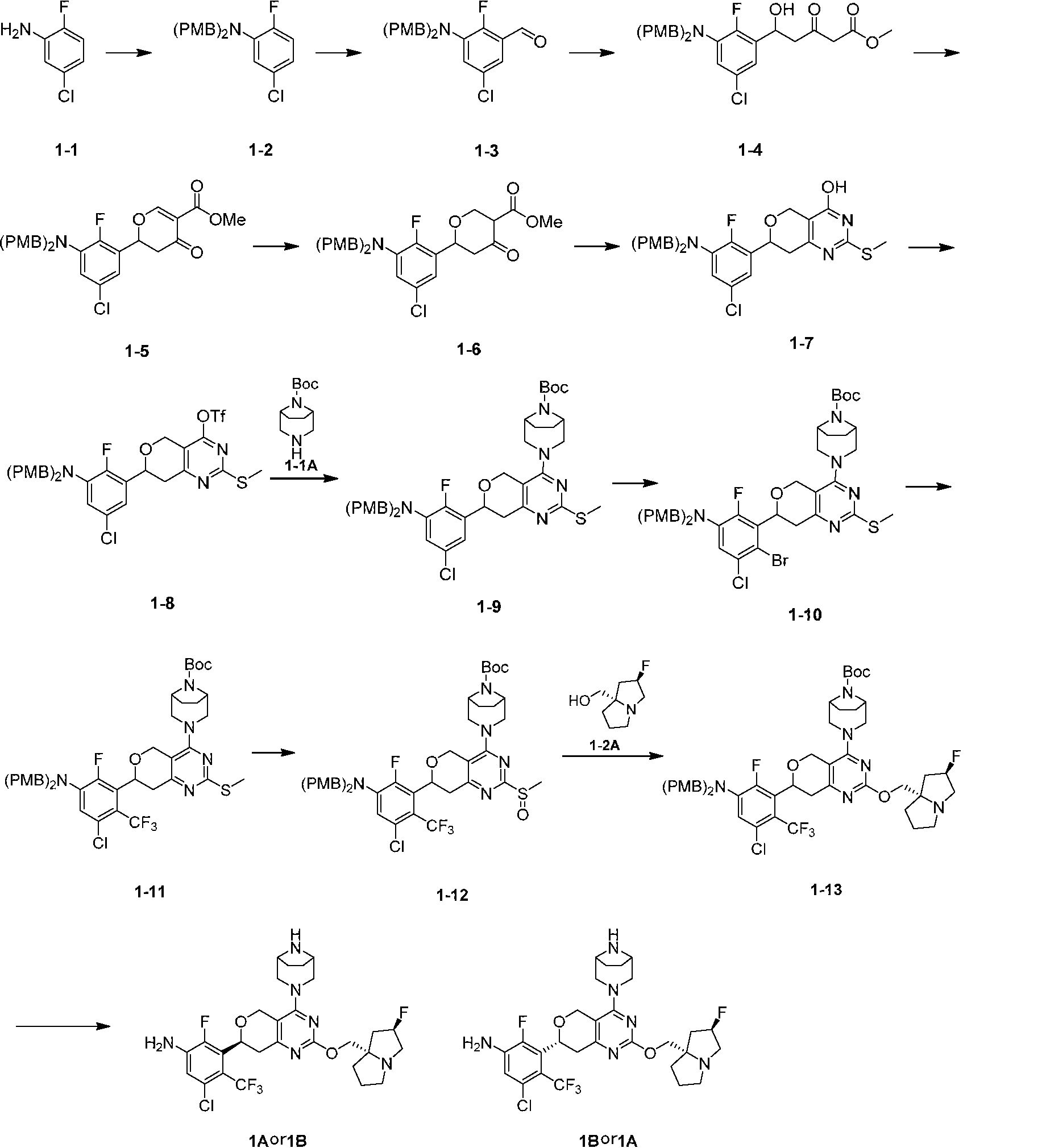
予め乾燥させた反応フラスコに、化合物1-1(20g、137.40mmoL)、N,N-ジメチルホルムアミド(200mL)、ヨウ化カリウム(22.81g、137.40mmoL)及び無水炭酸カリウム(47.47g、343.50mmoL)を加えた。P-メトキシベンジルクロリド(44.11g、281.67mmol、38.36mL)を撹拌させながら加え、次いで混合物を65℃に加熱し、4時間撹拌した。反応溶液を室温に冷却してから、Celite(登録商標)パッドに通して濾過した。濾過ケーキをメチルtert-ブチルエーテル200mLですすいでから、抽出のために水200mLを濾液に加えた。水相を酢酸エチル(100mL*2)で抽出した。有機相を合わせ、飽和ブライン(200mL*3)で洗浄し、無水硫酸ナトリウムで乾燥させ、濾過した。濾液を濃縮して粗生成物を得た。石油エーテル50mLを用いて48時間、粗生成物をスラリー化した。混合物を濾過した。濾過ケーキを回収し、乾燥させて、生成物である化合物1-2を得た。これを次の工程で直接使用した。1H NMR(400MHz,DMSO-d6)δ=7.18-7.17(m,5H),6.85-6.82(m,6H),4.24(s,4H),3.74-3.71(m,6H).MS m/z=386.1[M+H]+. Compound 1-1 (20 g, 137.40 mmoL), N,N-dimethylformamide (200 mL), potassium iodide (22.81 g, 137.40 mmoL) and anhydrous potassium carbonate (47.47 g, 343.50 mmoL) were added to a pre-dried reaction flask. P-Methoxybenzyl chloride (44.11 g, 281.67 mmol, 38.36 mL) was added with stirring, and then the mixture was heated to 65° C. and stirred for 4 hours. The reaction solution was cooled to room temperature and then filtered through a Celite® pad. The filter cake was rinsed with 200 mL of methyl tert-butyl ether, and then 200 mL of water was added to the filtrate for extraction. The aqueous phase was extracted with ethyl acetate (100 mL*2). The organic phases were combined, washed with saturated brine (200 mL*3), dried over anhydrous sodium sulfate, and filtered. The filtrate was concentrated to give the crude product. The crude product was slurried with 50 mL of petroleum ether for 48 hours. The mixture was filtered. The filter cake was collected and dried to give the product, compound 1-2, which was used directly in the next step. 1 H NMR (400 MHz, DMSO-d 6 ) δ = 7.18-7.17 (m, 5H), 6.85-6.82 (m, 6H), 4.24 (s, 4H), 3.74-3.71 (m, 6H). MS m/z = 386.1 [M+H] + .
工程2:中間体1-3の合成 Step 2: Synthesis of intermediate 1-3
2,2,6,6-テトラメチルピペリジン(43.93g、311.00mmol、52.80mL)をテトラヒドロフラン(300mL)中に溶解してから、混合物を-5℃に冷却した。n-ブチルリチウム(2.5M、124.40mL)を加えた。混合物を0.5時間撹拌してから、-60℃に冷却した。化合物1-2(30g、77.75mmol)のテトラヒドロフラン(30mL)溶液を加えた。混合物を0.5時間撹拌してから、N,N-ジメチルホルムアミド(113.66g、1.55mol、119.64mL)を加えた。混合物を更に0.5時間撹拌した。反応溶液に飽和塩化アンモニウム200mLを加えた。混合物を酢酸エチル(200mL)で抽出した。各層を分離した。有機相を飽和ブライン(100mL)で洗浄し、無水硫酸ナトリウムで乾燥させ、濾過した。濾液を濃縮した。残渣をカラム(石油エーテル:酢酸エチル=10:1)で精製して、化合物1-3を得た。 2,2,6,6-Tetramethylpiperidine (43.93 g, 311.00 mmol, 52.80 mL) was dissolved in tetrahydrofuran (300 mL) and the mixture was cooled to -5°C. n-Butyllithium (2.5 M, 124.40 mL) was added. The mixture was stirred for 0.5 h and then cooled to -60°C. A solution of compound 1-2 (30 g, 77.75 mmol) in tetrahydrofuran (30 mL) was added. The mixture was stirred for 0.5 h and then N,N-dimethylformamide (113.66 g, 1.55 mol, 119.64 mL) was added. The mixture was stirred for an additional 0.5 h. 200 mL of saturated ammonium chloride was added to the reaction solution. The mixture was extracted with ethyl acetate (200 mL). The layers were separated. The organic phase was washed with saturated brine (100 mL), dried over anhydrous sodium sulfate, and filtered. The filtrate was concentrated. The residue was purified using a column (petroleum ether: ethyl acetate = 10:1) to obtain compound 1-3.
工程3:中間体1-4の合成 Step 3: Synthesis of intermediate 1-4
水素化ナトリウム(6.38g、159.47mmol、含量60%)をテトラヒドロフラン(300mL)中に溶解した。雰囲気を窒素で2回置換してから、混合物を0℃に冷却した。メチルアセトアセテート(18.52g、159.47mmol、17.15mL)を加えた。混合物を10分間撹拌し、次いでn-ブチルリチウム(2.5M、63.79mL)を加えた。混合物を更に10分間撹拌し、-15℃に冷却した。化合物1-3(30g、72.49mmol)のテトラヒドロフラン(50mL)溶液を加えた。混合物を更に30分間撹拌した。反応溶液に飽和塩化アンモニウム100mLを加えた。混合物を酢酸エチル(100mL*2)で抽出した。有機相を合わせ、無水硫酸ナトリウムで乾燥させて濾過した。濾液を濃縮した。残渣をカラム(石油エーテル:酢酸エチル=10:1)で精製して、化合物1-4を得た。MS m/z=530.2[M+H]+. Sodium hydride (6.38 g, 159.47 mmol, content 60%) was dissolved in tetrahydrofuran (300 mL). The atmosphere was replaced with nitrogen twice, and the mixture was cooled to 0°C. Methyl acetoacetate (18.52 g, 159.47 mmol, 17.15 mL) was added. The mixture was stirred for 10 minutes, and then n-butyl lithium (2.5 M, 63.79 mL) was added. The mixture was stirred for another 10 minutes and cooled to -15°C. A solution of compound 1-3 (30 g, 72.49 mmol) in tetrahydrofuran (50 mL) was added. The mixture was stirred for another 30 minutes. 100 mL of saturated ammonium chloride was added to the reaction solution. The mixture was extracted with ethyl acetate (100 mL * 2). The organic phases were combined, dried over anhydrous sodium sulfate, and filtered. The filtrate was concentrated. The residue was purified by column (petroleum ether: ethyl acetate = 10: 1) to give compound 1-4. MS m/z=530.2 [M+H] + .
工程4:中間体1-5の合成 Step 4: Synthesis of intermediate 1-5
化合物1-4(20g、37.74mmol)を無水ジクロロメタン(50mL)中に溶解し、N,N-ジメチルホルムアミドジメチルアセタール(5.40g、45.28mmol、6.02mL)を窒素下で加え、混合物を25℃で16時間反応させた。三フッ化ホウ素ジエチルエーテラート(6.43g、45.28mmol、5.59mL)を加え、混合物を20℃で1時間反応させた。反応溶液を飽和炭酸水素ナトリウム溶液50mLに加えた。混合物をジクロロメタン(20mL*2)で抽出した。各層を分離した。有機相を合わせ、飽和ブライン30mLで洗浄し、無水硫酸ナトリウムで乾燥させ、濾過した。濾液を濃縮した。粗生成物をカラムクロマトグラフィー(石油エーテル:酢酸エチル=10:1-1:1)で精製して、化合物1-5を得た。1H NMR(400MHz,CDCl3)δ=8.45(s,1H),7.14(m,4H),7.00-6.69(m,6H),5.80(m,1H),4.27-4.10(m,5H),3.79(m,1H),3.94-3.66(m,8H),2.98-2.73(m,1H).MS m/z=540.2[M+H]+. Compound 1-4 (20 g, 37.74 mmol) was dissolved in anhydrous dichloromethane (50 mL), N,N-dimethylformamide dimethyl acetal (5.40 g, 45.28 mmol, 6.02 mL) was added under nitrogen, and the mixture was reacted at 25° C. for 16 hours. Boron trifluoride diethyl etherate (6.43 g, 45.28 mmol, 5.59 mL) was added, and the mixture was reacted at 20° C. for 1 hour. The reaction solution was added to 50 mL of saturated sodium bicarbonate solution. The mixture was extracted with dichloromethane (20 mL*2). The layers were separated. The organic phases were combined, washed with 30 mL of saturated brine, dried over anhydrous sodium sulfate, and filtered. The filtrate was concentrated. The crude product was purified by column chromatography (petroleum ether:ethyl acetate=10:1-1:1) to give compound 1-5. 1H NMR (400MHz, CDCl3 ) δ = 8.45 (s, 1H), 7.14 (m, 4H), 7.00-6.69 (m, 6H), 5.80 (m, 1H), 4.27-4.10 (m, 5H), 3.79 (m, 1H), 3.94-3.66 (m, 8H), 2.98-2.73 (m, 1H). MS m/z=540.2 [M+H] + .
工程5:中間体1-6の合成 Step 5: Synthesis of intermediate 1-6
化合物1-5(12g、22.22mmol)を無水テトラヒドロフラン(30mL)に加え、トリ-sec-ブチルリチウムボロヒドリド(11.83g、62.22mmol、13.60mL)を窒素下で加え、混合物を-60℃で1時間反応させた。反応溶液を水40mLに加えた。混合物を酢酸エチル(20mL*2)で抽出した。有機相を合わせ、次いで飽和ブライン20mLで洗浄し、無水硫酸ナトリウムで乾燥させ、濃縮した。粗生成物をカラムクロマトグラフィー(石油エーテル:酢酸エチル=100:0-3:1)で精製して、化合物1-6を得た。MS m/z=542.2[M+H]+. Compound 1-5 (12 g, 22.22 mmol) was added to anhydrous tetrahydrofuran (30 mL), tri-sec-butyllithium borohydride (11.83 g, 62.22 mmol, 13.60 mL) was added under nitrogen, and the mixture was reacted at -60°C for 1 hour. The reaction solution was added to 40 mL of water. The mixture was extracted with ethyl acetate (20 mL*2). The organic phases were combined, then washed with 20 mL of saturated brine, dried over anhydrous sodium sulfate, and concentrated. The crude product was purified by column chromatography (petroleum ether:ethyl acetate=100:0-3:1) to give compound 1-6. MS m/z=542.2 [M+H] + .
工程6:中間体1-7の合成 Step 6: Synthesis of intermediates 1-7
化合物1-6(5.5g、10.15mmol)をエタノール(15mL)及び水(3mL)に加え、炭酸水素ナトリウム(2.15g、20.30mmol)及びメチルイソチオ尿素硫酸塩(2.74g、30.44mmol)を加えた。混合物を45~50℃で16時間反応させた。反応溶液を水(20mL)及び酢酸エチル(20mL*2)で抽出した。合わせた有機相を飽和ブライン(20mL*2)で洗浄し、無水硫酸ナトリウムで乾燥させ、濃縮して、化合物1-7を得た。粗生成物を次の工程のために直接使用した。MS m/z=582.2[M+H]+. Compound 1-6 (5.5 g, 10.15 mmol) was added to ethanol (15 mL) and water (3 mL), and sodium bicarbonate (2.15 g, 20.30 mmol) and methylisothiourea sulfate (2.74 g, 30.44 mmol) were added. The mixture was reacted at 45-50° C. for 16 hours. The reaction solution was extracted with water (20 mL) and ethyl acetate (20 mL*2). The combined organic phase was washed with saturated brine (20 mL*2), dried over anhydrous sodium sulfate, and concentrated to give compound 1-7. The crude product was used directly for the next step. MS m/z=582.2 [M+H] + .
工程7:中間体1-8の合成 Step 7: Synthesis of intermediates 1-8
化合物1-7(6g、8.04mmol)を無水ジクロロメタン(20mL)に加えた。N,N-ジイソプロピルエチルアミン(3.12g、24.12mmol、4.20mL)を0℃で加えた。混合物を0~10℃に冷却した。トリフルオロメタンスルホン酸無水物(4.08g、14.47mmol、2.39mL)をゆっくりと滴加した。混合物を0℃で0.5時間反応させた。反応溶液を飽和塩化アンモニウム20mLに加えた。混合物を無水ジクロロメタン(10mL*2)で抽出した。有機相を合わせ、飽和ブライン20mLで洗浄し、無水硫酸ナトリウムで乾燥させ、濾過した。濾液を濃縮した。粗生成物をカラムクロマトグラフィー(石油エーテル:酢酸エチル=1:0-0:1)で精製して、化合物1-8を得た。MS m/z=714.1[M+H]+. Compound 1-7 (6 g, 8.04 mmol) was added to anhydrous dichloromethane (20 mL). N,N-diisopropylethylamine (3.12 g, 24.12 mmol, 4.20 mL) was added at 0°C. The mixture was cooled to 0-10°C. Trifluoromethanesulfonic anhydride (4.08 g, 14.47 mmol, 2.39 mL) was slowly added dropwise. The mixture was reacted at 0°C for 0.5 hours. The reaction solution was added to 20 mL of saturated ammonium chloride. The mixture was extracted with anhydrous dichloromethane (10 mL*2). The organic phases were combined, washed with 20 mL of saturated brine, dried over anhydrous sodium sulfate, and filtered. The filtrate was concentrated. The crude product was purified by column chromatography (petroleum ether:ethyl acetate=1:0-0:1) to give compound 1-8. MS m/z=714.1 [M+H] + .
工程8:中間体1-9塩酸塩の合成 Step 8: Synthesis of intermediate 1-9 hydrochloride
化合物1-8(0.8g、1.12mmoL)、化合物1-1A(475.62mg、2.24mmoL)及びDIPEA(434.33mg、3.36mmoL、585.35μL)をN,N-ジメチルホルムアミド(5mL)に加えた。混合物を50℃で1時間反応させた。反応溶液を飽和塩化アンモニウム(20mL)に加えた。混合物を酢酸エチル(20mL*2)で抽出した。有機相を合わせ、飽和ブライン20mLで洗浄し、無水硫酸ナトリウムで乾燥させ、濃縮した。粗生成物をカラム(石油エーテル:酢酸エチル=3:1)で精製し、次いで分取HPLC(クロマトグラフィーカラム:Phenomenex Luna C18 250*50mm*10μm;移動相:[水(0.05%塩酸)-アセトニトリル];(アセトニトリル)%:65%-95%、10分)で分離して、化合物1-9塩酸塩を得た。MS m/z=776.3[M+H]+. Compound 1-8 (0.8 g, 1.12 mmoL), compound 1-1A (475.62 mg, 2.24 mmoL) and DIPEA (434.33 mg, 3.36 mmoL, 585.35 μL) were added to N,N-dimethylformamide (5 mL). The mixture was reacted at 50° C. for 1 hour. The reaction solution was added to saturated ammonium chloride (20 mL). The mixture was extracted with ethyl acetate (20 mL*2). The organic phases were combined, washed with 20 mL of saturated brine, dried over anhydrous sodium sulfate and concentrated. The crude product was purified by column (petroleum ether:ethyl acetate=3:1), then separated by preparative HPLC (chromatography column: Phenomenex Luna C18 250*50mm*10μm; mobile phase: [water (0.05% hydrochloric acid)-acetonitrile]; (acetonitrile)%: 65%-95%, 10min) to give compound 1-9 hydrochloride. MS m/z=776.3[M+H] + .
工程9:中間体1-10の合成 Step 9: Synthesis of intermediates 1-10
化合物1-9塩酸塩(1.2g)をN,N-ジメチルホルムアミド(5mL)中に溶解した。混合物を0℃に冷却し、N-ブロモスクシンイミド(330.13mg、1.85mmol)を加え、混合物を20℃で1時間撹拌した。水30mLを反応溶液に加えた。混合物を酢酸エチル(30mL*2)で抽出した。有機相を合わせ、飽和ブライン(20mL*2)で洗浄し、無水硫酸ナトリウムで乾燥させ、濾過した。濾液を濃縮した。残渣をカラム(石油エーテル:酢酸エチル=3:1-1:1)で精製して、化合物1-10を得た。MS m/z=856.1[M+H]+. Compound 1-9 hydrochloride (1.2 g) was dissolved in N,N-dimethylformamide (5 mL). The mixture was cooled to 0° C., N-bromosuccinimide (330.13 mg, 1.85 mmol) was added, and the mixture was stirred at 20° C. for 1 h. 30 mL of water was added to the reaction solution. The mixture was extracted with ethyl acetate (30 mL*2). The organic phases were combined, washed with saturated brine (20 mL*2), dried over anhydrous sodium sulfate, and filtered. The filtrate was concentrated. The residue was purified by column (petroleum ether:ethyl acetate=3:1-1:1) to give compound 1-10. MS m/z=856.1 [M+H] + .
工程10:中間体1-11の合成 Step 10: Synthesis of intermediate 1-11
化合物1-10(0.3g、350.77μmol)、酸化銅(I)(133.61mg、701.55μmol)及びフルオロスルホニルジフルオロ酢酸メチル(336.94mg、1.75mmol、223.14μL)をN,N-ジメチルホルムアミド(10mL)中に溶解し、混合物を100℃で1時間、窒素下で撹拌した。反応溶液を合わせ、水30mLに注いだ。混合物をメチルtert-ブチルエーテル(20mL*2)で抽出した。有機相を合わせ、飽和ブライン(20mL*2)で洗浄し、無水硫酸ナトリウムで乾燥させ、濾過した。濾液を濃縮した。粗生成物をカラム(石油エーテル:酢酸エチル=10:1-1:1)で精製して、化合物1-11を得た。MS m/z=844.2[M+H]+. Compound 1-10 (0.3 g, 350.77 μmol), copper(I) oxide (133.61 mg, 701.55 μmol) and methyl fluorosulfonyldifluoroacetate (336.94 mg, 1.75 mmol, 223.14 μL) were dissolved in N,N-dimethylformamide (10 mL) and the mixture was stirred at 100° C. for 1 h under nitrogen. The reaction solutions were combined and poured into 30 mL of water. The mixture was extracted with methyl tert-butyl ether (20 mL*2). The organic phases were combined, washed with saturated brine (20 mL*2), dried over anhydrous sodium sulfate and filtered. The filtrate was concentrated. The crude product was purified by column (petroleum ether:ethyl acetate=10:1-1:1) to give compound 1-11. MS m/z=844.2 [M+H] + .
工程11:中間体1-12の合成 Step 11: Synthesis of intermediate 1-12
反応フラスコに化合物1-11(0.35g、414.52μmol)を加えた。無水ジクロロメタン(5mL)を加え、混合物を撹拌した。次いで、メタクロロ過安息香酸(126.24mg、621.78μmol、含量85%)を加え、混合物を25℃で1時間反応させた。5%チオ硫酸ナトリウム溶液5mLを反応溶液に加えた。混合物をジクロロメタン(10mL*2)で抽出した。有機相を合わせ、飽和ブライン(5mL*2)で洗浄し、無水硫酸ナトリウムで乾燥させ、濾過した。濾液を濃縮した。粗生成物をカラム(石油エーテル:酢酸エチル=10:1-1:1)で精製して、化合物1-12を得た。MS m/z=860.2[M+H]+. Compound 1-11 (0.35 g, 414.52 μmol) was added to the reaction flask. Anhydrous dichloromethane (5 mL) was added and the mixture was stirred. Then metachloroperbenzoic acid (126.24 mg, 621.78 μmol, content 85%) was added and the mixture was reacted at 25° C. for 1 hour. 5 mL of 5% sodium thiosulfate solution was added to the reaction solution. The mixture was extracted with dichloromethane (10 mL*2). The organic phases were combined, washed with saturated brine (5 mL*2), dried over anhydrous sodium sulfate, and filtered. The filtrate was concentrated. The crude product was purified by column (petroleum ether:ethyl acetate=10:1-1:1) to give compound 1-12. MS m/z=860.2 [M+H] + .
工程12:中間体1-13の合成 Step 12: Synthesis of intermediate 1-13
化合物1-2A(256.28mg、1.61mmol)を無水テトラヒドロフラン(5mL)に加え、ナトリウムtert-ブトキシド(123.76mg、1.29mmol)を加えた。混合物を-15℃で15分間反応させた。化合物1-12(0.277g、321.96μmol)を加え、混合物を-15℃で1時間反応させた。飽和塩化アンモニウム5mLを反応溶液に加え、混合物を酢酸エチル(10mL*3)で抽出した。有機相を合わせ、飽和ブライン(20mL*2)で洗浄し、無水硫酸ナトリウムで乾燥させ、濾過した。濾液を濃縮した。粗生成物をカラム(ジクロロメタン:メタノール=20:1-10:1)で精製して、化合物1-13を得た。MS m/z=955.3[M+H]+. Compound 1-2A (256.28 mg, 1.61 mmol) was added to anhydrous tetrahydrofuran (5 mL), and sodium tert-butoxide (123.76 mg, 1.29 mmol) was added. The mixture was reacted at -15°C for 15 minutes. Compound 1-12 (0.277 g, 321.96 μmol) was added, and the mixture was reacted at -15°C for 1 hour. 5 mL of saturated ammonium chloride was added to the reaction solution, and the mixture was extracted with ethyl acetate (10 mL*3). The organic phases were combined, washed with saturated brine (20 mL*2), dried over anhydrous sodium sulfate, and filtered. The filtrate was concentrated. The crude product was purified by column (dichloromethane:methanol=20:1-10:1) to give compound 1-13. MS m/z=955.3 [M+H] + .
工程13:化合物1A及び1Bの合成 Step 13: Synthesis of compounds 1A and 1B
化合物1-13(0.450g、470.98μmol)をトリフルオロ酢酸(2.85g、24.96mmol、1.85mL)及びジクロロメタン(9mL)に加えた。混合物を-10~0℃で1時間反応させた。反応溶液を水10mLに注いだ。下層のジクロロメタン相を分離した。水相を飽和炭酸水素ナトリウム溶液でpH8~10に調整した。次いで、混合物を酢酸エチル(5mL*2)で抽出した。有機相を合わせ、飽和ブライン(5mL*2)で洗浄し、無水硫酸ナトリウムで乾燥させ、濾過した。濾液を濃縮した。粗生成物をHPLC(クロマトグラフィーカラム:Phenomenex C18 75*30mm*3μm;移動相:[水(0.05%塩酸)-アセトニトリル];(アセトニトリル)%:1%-35%、8分)で精製し、次いでSFC(クロマトグラフィーカラム:DAICEL CHIRALCEL OD(250mm*30mm、10μm);移動相:[超臨界CO2-メタノール(0.1%アンモニア)];メタノール(0.1%アンモニア)%:36%-36%、7分)で分離して、化合物1A及び化合物1Bを得た。キラルSFC分析(クロマトグラフィーカラム:DAICEL CHIRALCEL OD-3(150mm*4.6mm、3μm);移動相:[超臨界CO2-メタノール(0.1%ジエチルアミン)];(メタノール)%:40%-40%)、化合物1A(Rt=3.151分、ee値99%);化合物1B(Rt=4.085分、ee値93%)。 Compound 1-13 (0.450 g, 470.98 μmol) was added to trifluoroacetic acid (2.85 g, 24.96 mmol, 1.85 mL) and dichloromethane (9 mL). The mixture was reacted at -10 to 0°C for 1 hour. The reaction solution was poured into 10 mL of water. The lower dichloromethane phase was separated. The aqueous phase was adjusted to pH 8-10 with saturated sodium bicarbonate solution. The mixture was then extracted with ethyl acetate (5 mL*2). The organic phases were combined, washed with saturated brine (5 mL*2), dried over anhydrous sodium sulfate, and filtered. The filtrate was concentrated. The crude product was purified by HPLC (chromatographic column: Phenomenex C18 75*30 mm*3 μm; mobile phase: [water (0.05% hydrochloric acid)-acetonitrile]; (acetonitrile)%: 1%-35%, 8 min), and then separated by SFC (chromatographic column: DAICEL CHIRALCEL OD (250 mm*30 mm, 10 μm); mobile phase: [supercritical CO 2 -methanol (0.1% ammonia)]; methanol (0.1% ammonia)%: 36%-36%, 7 min) to obtain Compound 1A and Compound 1B. Chiral SFC analysis (chromatographic column: DAICEL CHIRALCEL OD-3 (150 mm*4.6 mm, 3 μm); mobile phase: [supercritical CO 2 -methanol (0.1% diethylamine)]; (methanol)%: 40%-40%), compound 1A (Rt=3.151 min, ee value 99%); compound 1B (Rt=4.085 min, ee value 93%).
化合物1A:1H NMR(400MHz,CD3OD)δ=6.93(d,J=8.0Hz,1H),5.68-5.46(m,1H),5.32-5.19(m,1H),4.78-4.69(m,1H),4.63-4.46(m,2H),4.41-4.28(m,1H),4.24-4.08(m,2H),4.04-3.74(m,5H),3.73-3.65(m,1H),3.55-3.41(m,2H),3.02-2.89(m,1H),2.80-2.48(m,2H),2.48-2.24(m,4H),2.24-2.04(m,3H),2.03-1.91(m,1H),2.04-1.90(m,1H).MS m/z=615.4[M+H]+. Compound 1A: 1H NMR (400MHz, CD3 OD) δ = 6.93 (d, J = 8.0Hz, 1H), 5.68-5.46 (m, 1H), 5.32-5.19 (m, 1H), 4.78-4.69 ( m, 1H), 4.63-4.46 (m, 2H), 4.41-4.28 (m, 1H), 4.24-4.08 (m, 2H), 4.04-3.74 (m, 5H), 3.73-3.65 (m, 1H), 3.55-3.41 (m, 2H), 3.02-2.89 (m, 1H), 2.80-2.48 (m, 2H) ), 2.48-2.24 (m, 4H), 2.24-2.04 (m, 3H), 2.03-1.91 (m, 1H), 2.04-1.90 (m, 1H). MS m/z=615.4 [M+H] + .
化合物1B:1H NMR(400MHz,CD3OD)δ=6.98-6.85(m,1H),5.54-5.39(m,1H),5.35-5.19(m,2H),4.76-4.66(m,1H),4.63-4.53(m,1H),4.39-4.14(m,4H),4.06-3.89(m,3H),3.78-3.62(m,2H),3.62-3.50(m,2H),3.27-3.09(m,3H),2.99-2.86(m,1H),2.48-2.25(m,2H),2.13-1.83(m,6H).MS m/z=615.4[M+H]+. Compound 1B: 1H NMR (400MHz, CD3 OD) δ = 6.98-6.85 (m, 1H), 5.54-5.39 (m, 1H), 5.35-5.19 (m, 2H), 4.76-4.66 (m, 1H), 4.63-4.53 (m, 1H), 4.39-4.14 (m, 4H), 4.06- 3.89 (m, 3H), 3.78-3.62 (m, 2H), 3.62-3.50 (m, 2H), 3.27-3.09 (m, 3H), 2.99-2.86 (m, 1H), 2.48-2.25 (m, 2H), 2.13-1.83 (m, 6H). MS m/z=615.4 [M+H] + .
実施例2
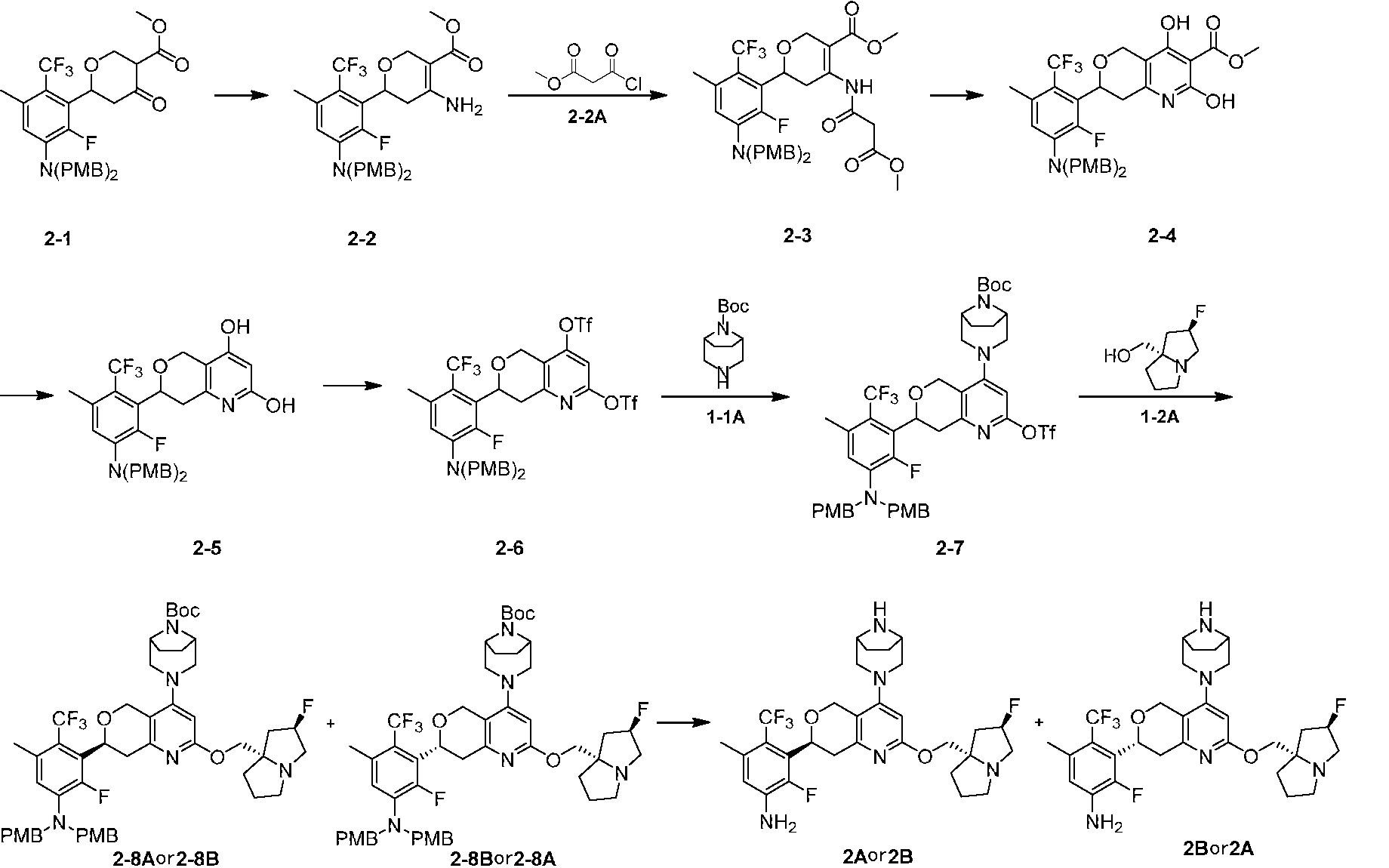
工程1:中間体2-2の合成 Step 1: Synthesis of intermediate 2-2
化合物2-1(11.0g、18.66mmol)を無水メタノール(150mL)に加え、次いで酢酸アンモニウム(7.19g、93.29mmol)を加えた。得られた反応溶液を60℃に加熱し、48時間撹拌した。反応溶液を濃縮し、残渣を酢酸エチル300mL中に溶解した。次いで、水50mLを加え、透明になるまで混合物を撹拌した。水層を分離し、有機相を水(30mL*2)及び飽和ブライン(30mL)で洗浄した。有機相を濃縮して粗生成物を得た。これを、カラムクロマトグラフィー(石油エーテル:酢酸エチル=30:1)で精製して、化合物2-2を得た。1H NMR(400MHz,CDCl3)δ:7.16(d,J=8.4Hz,4H),6.84(d,J=8.4Hz,4H),6.62(d,J=8.4Hz,1H),4.99(br,J=10.5Hz,1H),4.63(d,J=13.6Hz,1H),4.42-4.21(m,5H),3.80(s,6H),3.71(s,3H),3.07(br,J=11.2,16.2Hz,1H),2.34-2.32(m,3H),2.26-2.19m,1H);MS m/z=589.1[M+H]+. Compound 2-1 (11.0 g, 18.66 mmol) was added to anhydrous methanol (150 mL), followed by the addition of ammonium acetate (7.19 g, 93.29 mmol). The resulting reaction solution was heated to 60° C. and stirred for 48 hours. The reaction solution was concentrated, and the residue was dissolved in 300 mL of ethyl acetate. Then, 50 mL of water was added, and the mixture was stirred until it became clear. The aqueous layer was separated, and the organic phase was washed with water (30 mL*2) and saturated brine (30 mL). The organic phase was concentrated to obtain a crude product. This was purified by column chromatography (petroleum ether:ethyl acetate=30:1) to obtain compound 2-2. 1H NMR (400MHz, CDCl3 ) δ: 7.16 (d, J=8.4Hz, 4H), 6.84 (d, J=8.4Hz, 4H), 6.62 (d, J=8.4Hz, 1H), 4.99 (br, J=10.5Hz, 1H), 4.63 (d, J=13.6Hz, 1H) ), 4.42-4.21 (m, 5H), 3.80 (s, 6H), 3.71 (s, 3H), 3.07 (br, J = 11.2, 16.2Hz, 1H), 2.34-2.32 (m, 3H), 2.26-2.19m, 1H); MS m/z=589.1 [M+H] + .
工程2:中間体2-3の合成 Step 2: Synthesis of intermediate 2-3
化合物2-2(7.56g、12.84mmol)及びN,N-ジイソプロピルエチルアミン(3.32g、25.69mmol、4.47mL)をテトラヒドロフラン(150mL)中に溶解した。混合物を窒素下で0℃に冷却し、次いで化合物2-2A(2.10g、15.41mmol、1.64mL)を滴加した。滴加後、混合物を15℃で15時間撹拌した。反応溶液を濃縮して粗生成物を得た。これをカラムクロマトグラフィー(石油エーテル:酢酸エチル=10:1)で精製して、化合物2-3を得た。MS m/z=689.1[M+H]+. Compound 2-2 (7.56 g, 12.84 mmol) and N,N-diisopropylethylamine (3.32 g, 25.69 mmol, 4.47 mL) were dissolved in tetrahydrofuran (150 mL). The mixture was cooled to 0° C. under nitrogen, and then compound 2-2A (2.10 g, 15.41 mmol, 1.64 mL) was added dropwise. After the addition, the mixture was stirred at 15° C. for 15 hours. The reaction solution was concentrated to obtain a crude product, which was purified by column chromatography (petroleum ether:ethyl acetate=10:1) to obtain compound 2-3. MS m/z=689.1 [M+H] + .
工程3:中間体2-4の合成 Step 3: Synthesis of intermediate 2-4
化合物2-3(2.94g、4.27mmol)をテトラヒドロフラン(30mL)中に溶解し、次いでナトリウムメトキシド(461.27mg、8.54mmol)及び無水メタノール(0.5mL)を加えた。得られた反応溶液を50℃で4時間、窒素下で撹拌した。反応溶液を室温に冷却した。反応溶液を0.5M塩酸でpH4~5に調整した。次いで、溶媒を回転蒸発により除去した。残渣を酢酸エチル150mL中に溶解し、次いで水30mL及び飽和ブライン30mLで洗浄した。有機相を濃縮して粗生成物を得た。これをカラムクロマトグラフィー(石油エーテル:酢酸エチル=10:1)で精製して、化合物2-4を得た。MS m/z=657.2[M+H]+. Compound 2-3 (2.94 g, 4.27 mmol) was dissolved in tetrahydrofuran (30 mL), and then sodium methoxide (461.27 mg, 8.54 mmol) and anhydrous methanol (0.5 mL) were added. The resulting reaction solution was stirred under nitrogen at 50° C. for 4 hours. The reaction solution was cooled to room temperature. The reaction solution was adjusted to pH 4-5 with 0.5 M hydrochloric acid. The solvent was then removed by rotary evaporation. The residue was dissolved in 150 mL of ethyl acetate, and then washed with 30 mL of water and 30 mL of saturated brine. The organic phase was concentrated to give the crude product, which was purified by column chromatography (petroleum ether:ethyl acetate=10:1) to give compound 2-4. MS m/z=657.2 [M+H] + .
工程4:中間体2-5の合成 Step 4: Synthesis of intermediate 2-5
化合物2-4(200mg、304.59μmol)をジメチルスルホキシド(10mL)中に溶解し、次いで塩化リチウム(51.65mg、1.22mmol、24.95μL)を加えた。得られた反応溶液を120℃に加熱し、4時間撹拌した。混合物を酢酸エチル150mLで希釈し、次いで水(20mL*3)及び飽和ブライン(20mL)で洗浄した。有機相を濃縮して粗生成物を得た。これをカラムクロマトグラフィー(メタノール:ジクロロメタン=1:10)で精製して、化合物2-5を得た。MS m/z=599.2[M+H]+. Compound 2-4 (200 mg, 304.59 μmol) was dissolved in dimethyl sulfoxide (10 mL), and then lithium chloride (51.65 mg, 1.22 mmol, 24.95 μL) was added. The resulting reaction solution was heated to 120° C. and stirred for 4 hours. The mixture was diluted with 150 mL of ethyl acetate, and then washed with water (20 mL*3) and saturated brine (20 mL). The organic phase was concentrated to obtain the crude product, which was purified by column chromatography (methanol:dichloromethane=1:10) to obtain compound 2-5. MS m/z=599.2 [M+H] + .
工程5:中間体2-6の合成 Step 5: Synthesis of intermediate 2-6
化合物2-5(400mg、668.24μmol)及びPhNTf2(477.46mg、1.34mmol)をN,N-ジメチルホルムアミド(1.5mL)に加えた。N,N-ジイソプロピルエチルアミン(345.46mg、2.67mmol、465.58μL)を加えた。反応溶液を15℃で3時間撹拌した。反応溶液を濃縮して粗生成物を得た。これをカラムクロマトグラフィー(石油エーテル:酢酸エチル=10:1)で精製して、化合物2-6を得た。MS m/z=862.8[M+H]+. Compound 2-5 (400 mg, 668.24 μmol) and PhNTf 2 (477.46 mg, 1.34 mmol) were added to N,N-dimethylformamide (1.5 mL). N,N-diisopropylethylamine (345.46 mg, 2.67 mmol, 465.58 μL) was added. The reaction solution was stirred at 15° C. for 3 hours. The reaction solution was concentrated to obtain a crude product, which was purified by column chromatography (petroleum ether:ethyl acetate=10:1) to obtain compound 2-6. MS m/z=862.8 [M+H] + .
工程6:中間体2-7の合成 Step 6: Synthesis of intermediate 2-7
化合物2-6(580mg、672.30μmol)及び化合物1-1A(142.72mg、672.30μmol)をN,N-ジメチルホルムアミド(4mL)に加えた。N,N-ジイソプロピルエチルアミン(173.78mg、1.34mmol、234.21μL)を加えた。得られた反応溶液を60℃に加熱し、3時間撹拌した。反応溶液を濃縮して粗生成物を得た。粗生成物をカラム(石油エーテル:酢酸エチル=10:1)で精製して、化合物2-7を得た。MS m/z=925.4[M+H]+. Compound 2-6 (580 mg, 672.30 μmol) and compound 1-1A (142.72 mg, 672.30 μmol) were added to N,N-dimethylformamide (4 mL). N,N-diisopropylethylamine (173.78 mg, 1.34 mmol, 234.21 μL) was added. The resulting reaction solution was heated to 60° C. and stirred for 3 hours. The reaction solution was concentrated to obtain a crude product. The crude product was purified by column (petroleum ether:ethyl acetate=10:1) to obtain compound 2-7. MS m/z=925.4 [M+H] + .
工程7:中間体2-8A及び2-8Bの合成 Step 7: Synthesis of intermediates 2-8A and 2-8B
化合物2-7(106mg、114.60μmol)及び化合物1-2A(54.74mg、343.81μmol)をジオキサン(2mL)に加えた。Pd2(dba)3(20.99mg、22.92μmol)、DavePhos(18.04mg、45.84μmol)及びLIHMDS(1M、343.81μL)を加えた。雰囲気を窒素で置換し、混合物を95℃に15時間加熱した。反応溶液を濃縮した。残渣に水(1mL)及び酢酸エチル(30mL)を加えた。0.5M塩酸で混合物をpH7~8に調整した。有機相を分離した。水相を酢酸エチル10mLで2回抽出した。有機相を合わせ、濃縮して粗生成物を得た。粗生成物を分取プレート(酢酸エチル:メタノール=20:1)で分離した。上記分取プレートから分離したサンプルを高速液体クロマトグラフィー(クロマトグラフィーカラム:Welch Xtimate C18 100*40mm*3μm;移動相:[水(0.075%トリフルオロ酢酸)-アセトニトリル];(アセトニトリル)%:43%-73%、8分)で更に精製し、濃縮して、化合物2-8A(MS m/z=934.9[M+H]+)及び化合物2-8B(MS m/z=934.9[M+H]+)を得た。 Compound 2-7 (106 mg, 114.60 μmol) and compound 1-2A (54.74 mg, 343.81 μmol) were added to dioxane (2 mL). Pd 2 (dba) 3 (20.99 mg, 22.92 μmol), DavePhos (18.04 mg, 45.84 μmol) and LIHMDS (1M, 343.81 μL) were added. The atmosphere was replaced with nitrogen and the mixture was heated to 95° C. for 15 hours. The reaction solution was concentrated. To the residue was added water (1 mL) and ethyl acetate (30 mL). The mixture was adjusted to pH 7-8 with 0.5 M hydrochloric acid. The organic phase was separated. The aqueous phase was extracted twice with 10 mL of ethyl acetate. The organic phases were combined and concentrated to give the crude product. The crude product was separated on a preparative plate (ethyl acetate:methanol=20:1). The sample separated from the preparative plate was further purified and concentrated by high performance liquid chromatography (chromatographic column: Welch Xtimate C18 100*40 mm*3 μm; mobile phase: [water (0.075% trifluoroacetic acid)-acetonitrile]; (acetonitrile)%: 43%-73%, 8 min) to obtain compound 2-8A (MS m/z=934.9[M+H] + ) and compound 2-8B (MS m/z=934.9[M+H] + ).
工程8:化合物2A塩酸塩及び化合物2B塩酸塩の合成 Step 8: Synthesis of compound 2A hydrochloride and compound 2B hydrochloride
トリフルオロ酢酸(0.3mL)を化合物2-8A(43mg、46.04μmol)に加え、混合物を20℃で2時間、窒素下で撹拌した。反応溶液を濃縮して粗生成物を得た。粗生成物をアセトニトリル中に溶解し、高速液体クロマトグラフィー(クロマトグラフィーカラム:Xtimate C18 150*40mm*5μm;移動相:[水(0.05%塩酸)-アセトニトリル];(アセトニトリル)%:5%-35%、10分)で分離して、化合物2A塩酸塩を得た。MS m/z=594.3[M+H]+. Trifluoroacetic acid (0.3 mL) was added to compound 2-8A (43 mg, 46.04 μmol) and the mixture was stirred under nitrogen at 20° C. for 2 hours. The reaction solution was concentrated to obtain a crude product. The crude product was dissolved in acetonitrile and separated by high performance liquid chromatography (chromatography column: Xtimate C18 150*40 mm*5 μm; mobile phase: [water (0.05% hydrochloric acid)-acetonitrile]; (acetonitrile)%: 5%-35%, 10 min) to obtain compound 2A hydrochloride. MS m/z=594.3 [M+H] + .
トリフルオロ酢酸(0.3mL)を化合物2-8B(52mg、55.67μmol)に加え、得られた反応溶液を20℃で2時間、窒素下で撹拌した。反応溶液を濃縮して粗生成物を得た。粗生成物を高速液体クロマトグラフィー(クロマトグラフィーカラム:Xtimate C18 150*40mm*5μm;移動相:[水(0.05%塩酸)-アセトニトリル];(アセトニトリル)%:5%-35%、10分)で精製して、化合物2B塩酸塩を得た。LCMS m/z=594.4[M+H]+. Trifluoroacetic acid (0.3 mL) was added to compound 2-8B (52 mg, 55.67 μmol), and the resulting reaction solution was stirred under nitrogen at 20° C. for 2 hours. The reaction solution was concentrated to obtain a crude product. The crude product was purified by high performance liquid chromatography (chromatography column: Xtimate C18 150*40 mm*5 μm; mobile phase: [water (0.05% hydrochloric acid)-acetonitrile]; (acetonitrile)%: 5%-35%, 10 min) to obtain compound 2B hydrochloride salt. LCMS m/z=594.4 [M+H] + .
実施例3
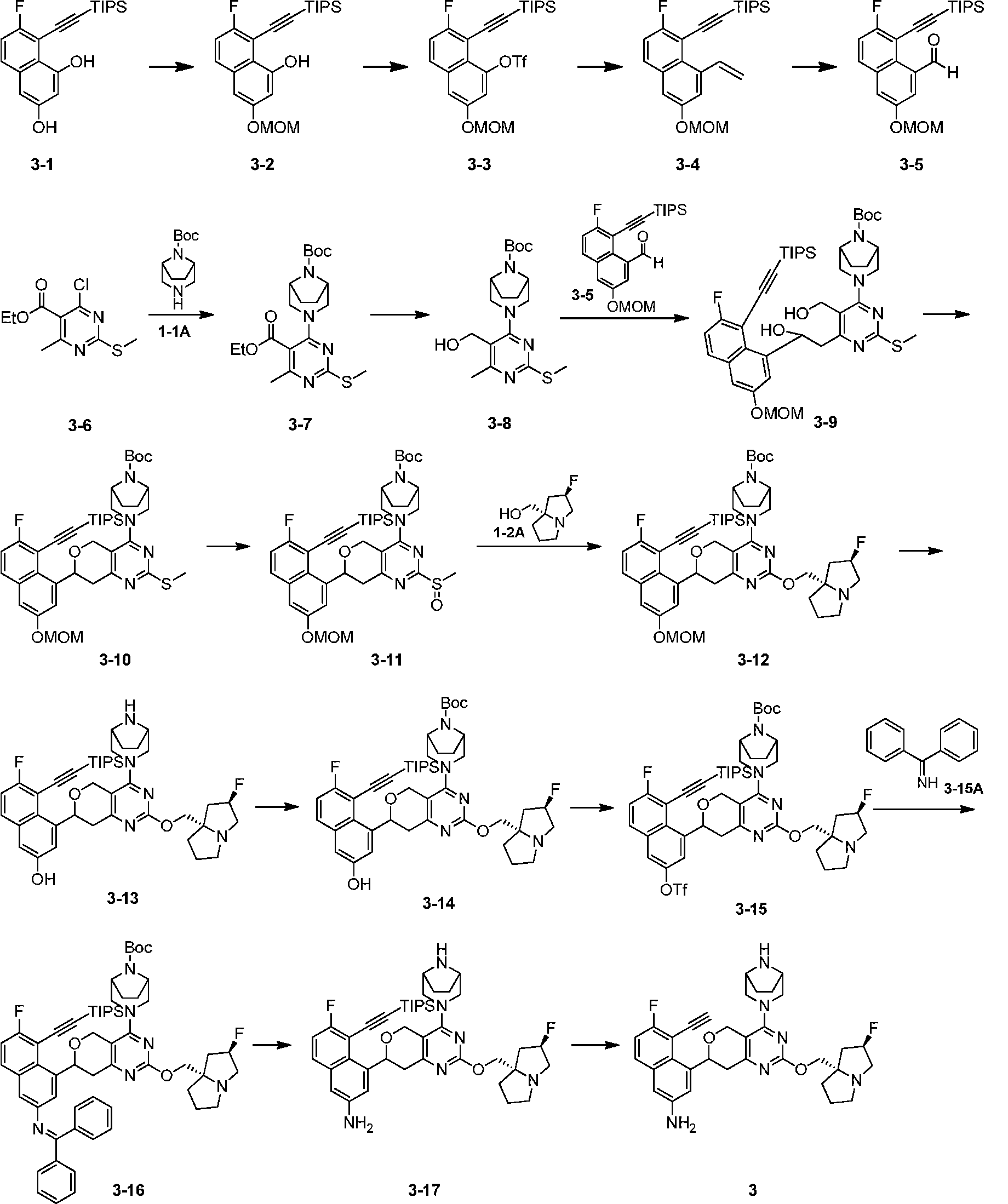
工程1:中間体3-2の合成 Step 1: Synthesis of intermediate 3-2
化合物3-1(50g、139.46mmol)を無水ジクロロメタン(500mL)に加えた。N,N-ジイソプロピルエチレンジアミン(54.07g、418.39mmol、72.87mL)を加えた。混合物を0℃に冷却し、クロロメチルメチルエーテル(15.59g、193.64mmol、14.71mL)をゆっくりと滴加した。得られた混合物を1時間、18℃までゆっくりと加温した。反応溶液を氷水500mLに加えた。混合物をDCM(100mL*2)で抽出した。有機相を合わせてから、飽和炭酸ナトリウム500mL、飽和塩化アンモニウム500mL及び半飽和ブライン500mLでそれぞれ洗浄し、無水硫酸ナトリウムで乾燥させ、濾過した。濾液を濃縮した。粗生成物をカラムクロマトグラフィー(石油エーテル:酢酸エチル=3:1)で精製して、化合物3-2を得た。MS m/z=403.2[M+H]+. Compound 3-1 (50 g, 139.46 mmol) was added to anhydrous dichloromethane (500 mL). N,N-diisopropylethylenediamine (54.07 g, 418.39 mmol, 72.87 mL) was added. The mixture was cooled to 0°C, and chloromethyl methyl ether (15.59 g, 193.64 mmol, 14.71 mL) was slowly added dropwise. The resulting mixture was slowly warmed to 18°C for 1 hour. The reaction solution was added to 500 mL of ice water. The mixture was extracted with DCM (100 mL*2). The organic phases were combined, then washed with 500 mL of saturated sodium carbonate, 500 mL of saturated ammonium chloride, and 500 mL of half-saturated brine, respectively, dried over anhydrous sodium sulfate, and filtered. The filtrate was concentrated. The crude product was purified by column chromatography (petroleum ether:ethyl acetate=3:1) to give compound 3-2. MS m/z=403.2 [M+H] + .
工程2:中間体3-3の合成 Step 2: Synthesis of intermediate 3-3
化合物3-2(36g、89.42mmol)及びN,N-ジイソプロピルエチレンジアミン(34.67g、268.27mmol、46.73mL)を無水ジクロロメタン(360mL)に加えた。混合物を-40℃に冷却し、トリフルオロメタンスルホン酸無水物(37.85g、134.14mmol、22.13mL)を滴加した。混合物を1時間反応させた。反応溶液を氷水300mLに加えた。混合物を分離し、抽出した。有機相を飽和炭酸水素ナトリウム溶液200mL、飽和塩化アンモニウム200mL及びブライン200mLで順次洗浄し、無水硫酸ナトリウムで乾燥させ、濾過した。濾液を濃縮した。粗生成物をカラムクロマトグラフィー(石油エーテル:酢酸エチル=10:1)で精製して、化合物3-3を得た。1H NMR(400MHz,CDCl3)δ=7.71(dd,J=5.2,9.2Hz,1H),7.43(d,J=2.4Hz,1H),7.36(d,J=2.0Hz,1H),7.33(t,J=8.8Hz,1H),5.28(s,2H),3.53(s,3H),1.28-1.18(m,21H). Compound 3-2 (36 g, 89.42 mmol) and N,N-diisopropylethylenediamine (34.67 g, 268.27 mmol, 46.73 mL) were added to anhydrous dichloromethane (360 mL). The mixture was cooled to -40°C, and trifluoromethanesulfonic anhydride (37.85 g, 134.14 mmol, 22.13 mL) was added dropwise. The mixture was reacted for 1 hour. The reaction solution was added to 300 mL of ice water. The mixture was separated and extracted. The organic phase was washed successively with 200 mL of saturated sodium bicarbonate solution, 200 mL of saturated ammonium chloride, and 200 mL of brine, dried over anhydrous sodium sulfate, and filtered. The filtrate was concentrated. The crude product was purified by column chromatography (petroleum ether:ethyl acetate=10:1) to obtain compound 3-3. 1H NMR (400MHz, CDCl3 ) δ=7.71 (dd, J=5.2, 9.2Hz, 1H), 7.43 (d, J=2.4Hz, 1H), 7.36 (d, J=2.0Hz, 1H), 7.33 (t, J=8.8Hz, 1H), 5.28 (s, 2H), 3.53 (s, 3H), 1.28-1.18 (m, 21H).
工程3:中間体3-4の合成 Step 3: Synthesis of intermediate 3-4
化合物3-3(34g、63.59mmol)をN,N-ジメチルホルムアミド(340mL)中に溶解した。ビニルトリブチルスズ(42.03g、132.55mmol、38.56mL)及び塩化リチウム(10.78g、254.38mmol、5.21mL)を加えた。雰囲気を窒素で3回置換した。トリフェニルホスフィンパラジウムジクロリド(4.46g、6.36mmol)を窒素下で加えた。混合物を30℃で20時間反応させた。20%KF水溶液300mL及びメチルtert-ブチルエーテル300mLを反応溶液に加えた。混合物を20分撹拌してから、Celite(登録商標)パッドに通して濾過した。濾過ケーキを、メチルtert-ブチルエーテル(50mL*4)ですすいだ。水相を除去し、有機相を飽和ブライン500mLで洗浄し、無水硫酸ナトリウムで乾燥させ、濾過した。濾液を減圧下で濃縮した。粗生成物をカラム(石油エーテル:酢酸エチル=5:1)で精製して、化合物3-4を得た。MS m/z=413.3[M+H]+. Compound 3-3 (34 g, 63.59 mmol) was dissolved in N,N-dimethylformamide (340 mL). Vinyltributyltin (42.03 g, 132.55 mmol, 38.56 mL) and lithium chloride (10.78 g, 254.38 mmol, 5.21 mL) were added. The atmosphere was replaced with nitrogen three times. Triphenylphosphinepalladium dichloride (4.46 g, 6.36 mmol) was added under nitrogen. The mixture was reacted at 30° C. for 20 hours. 300 mL of 20% aqueous KF solution and 300 mL of methyl tert-butyl ether were added to the reaction solution. The mixture was stirred for 20 minutes and then filtered through a Celite® pad. The filter cake was rinsed with methyl tert-butyl ether (50 mL*4). The aqueous phase was removed and the organic phase was washed with 500 mL of saturated brine, dried over anhydrous sodium sulfate, and filtered. The filtrate was concentrated under reduced pressure. The crude product was purified by column (petroleum ether:ethyl acetate=5:1) to give compound 3-4. MS m/z=413.3 [M+H] + .
工程4:中間体3-5の合成 Step 4: Synthesis of intermediate 3-5
化合物3-4(20g、48.47mmol)を無水テトラヒドロフラン(200mL)及び水(50mL)に加えた。混合物を0℃に冷却した。過ヨウ素酸ナトリウム(31.10g、145.42mmol、8.06mL)及び四酸化オスミウム(1.5g、5.90mmol、306.12μL)を加えた。得られた混合物を18℃までゆっくりと加温した。反応混合物を1時間反応させた。反応混合物を10%チオ硫酸ナトリウム溶液300mLに加えた。混合物を酢酸エチル(100mL*2)で抽出し、飽和ブライン500mLで洗浄し、無水硫酸ナトリウムで乾燥させ、濾過した。濾液を濃縮した。粗生成物をカラム(石油エーテル:酢酸エチル=5:1)で精製して、化合物3-5を得た。MS m/z=415.3[M+H]+. Compound 3-4 (20 g, 48.47 mmol) was added to anhydrous tetrahydrofuran (200 mL) and water (50 mL). The mixture was cooled to 0° C. Sodium periodate (31.10 g, 145.42 mmol, 8.06 mL) and osmium tetroxide (1.5 g, 5.90 mmol, 306.12 μL) were added. The resulting mixture was slowly warmed to 18° C. The reaction mixture was allowed to react for 1 hour. The reaction mixture was added to 300 mL of 10% sodium thiosulfate solution. The mixture was extracted with ethyl acetate (100 mL*2), washed with 500 mL of saturated brine, dried over anhydrous sodium sulfate, and filtered. The filtrate was concentrated. The crude product was purified by column (petroleum ether:ethyl acetate=5:1) to give compound 3-5. MS m/z=415.3 [M+H] + .
工程5:中間体3-7の合成 Step 5: Synthesis of intermediate 3-7
化合物3-6(1g、4.05mmol)及び1-1A(1.03g、4.86mmol)のジクロロメタン溶液にN,N-ジイソプロピルエチルアミン(1.05g、8.11mmol)を加えた。得られた混合物を25℃の室温で1時間撹拌した。水(20mL)及びジクロロメタン(50mL)を反応溶液に加えた。混合物を5分間撹拌した。水相を除去し、有機相を減圧下で濃縮した。残渣をカラムクロマトグラフィー(石油エーテル:酢酸エチル=5:1)で精製して、化合物3-7を得た。MS m/z=423.1[M+H]+. To a dichloromethane solution of compound 3-6 (1 g, 4.05 mmol) and 1-1A (1.03 g, 4.86 mmol) was added N,N-diisopropylethylamine (1.05 g, 8.11 mmol). The resulting mixture was stirred at room temperature of 25° C. for 1 hour. Water (20 mL) and dichloromethane (50 mL) were added to the reaction solution. The mixture was stirred for 5 minutes. The aqueous phase was removed and the organic phase was concentrated under reduced pressure. The residue was purified by column chromatography (petroleum ether:ethyl acetate=5:1) to give compound 3-7. MS m/z=423.1 [M+H] + .
工程6:中間体3-8の合成 Step 6: Synthesis of intermediate 3-8
化合物3-7(0.6g、1.42mmol)のテトラヒドロフラン(5mL)溶液に、0℃(氷水浴中)で窒素下、テトラヒドリドアルミン酸リチウム(0.1g、2.84mmol)を何回かに分けて加えた。得られた混合物を25℃まで自然に加温し、2時間撹拌した。水(0.1g)、15%水酸化ナトリウム水溶液(0.1g)及び水(0.3g)を反応溶液に順次滴加した。混合物を30分間撹拌してから、濾過した。濾過ケーキをテトラヒドロフラン(10mL)で洗浄した。濾液を減圧下で濃縮して、化合物3-8を得た。MS m/z=381.1[M+H]+. Lithium tetrahydridoaluminate (0.1 g, 2.84 mmol) was added in portions to a solution of compound 3-7 (0.6 g, 1.42 mmol) in tetrahydrofuran (5 mL) at 0° C. (in an ice-water bath) under nitrogen. The resulting mixture was allowed to warm to 25° C. and stirred for 2 hours. Water (0.1 g), 15% aqueous sodium hydroxide solution (0.1 g), and water (0.3 g) were added dropwise to the reaction solution in sequence. The mixture was stirred for 30 minutes and then filtered. The filter cake was washed with tetrahydrofuran (10 mL). The filtrate was concentrated under reduced pressure to give compound 3-8. MS m/z=381.1 [M+H] + .
工程7:中間体3-9の合成 Step 7: Synthesis of intermediate 3-9
化合物3-8(0.5g、1.33mmol)のテトラヒドロフラン(10mL)溶液に、-65℃(ドライアイス-酢酸エチル浴中)で窒素下、リチウムジイソプロピルアミド(1.51mL、3.02mmol、2M)を滴加した。30分間撹拌した後、化合物3-5(0.5g、1.51mmol)のテトラヒドロフラン(5mL)溶液を滴加した。得られた混合物を25℃まで自然に加温した。0.1M希塩酸水溶液(15mL)及び酢酸エチル(20mL)を反応溶液に加えた。混合物を10分間撹拌した。水相を除去し、有機相を減圧下で濃縮し、残渣をカラムクロマトグラフィー(石油エーテル:酢酸エチル=5:1)で精製して、化合物3-9を得た。MS m/z=795.4[M+H]+. Lithium diisopropylamide (1.51 mL, 3.02 mmol, 2M) was added dropwise to a solution of compound 3-8 (0.5 g, 1.33 mmol) in tetrahydrofuran (10 mL) at −65° C. (dry ice-ethyl acetate bath) under nitrogen. After stirring for 30 minutes, a solution of compound 3-5 (0.5 g, 1.51 mmol) in tetrahydrofuran (5 mL) was added dropwise. The resulting mixture was allowed to warm to 25° C. naturally. 0.1 M diluted aqueous hydrochloric acid (15 mL) and ethyl acetate (20 mL) were added to the reaction solution. The mixture was stirred for 10 minutes. The aqueous phase was removed, the organic phase was concentrated under reduced pressure, and the residue was purified by column chromatography (petroleum ether:ethyl acetate=5:1) to give compound 3-9. MS m/z=795.4 [M+H] + .
工程8:中間体3-10の合成 Step 8: Synthesis of intermediate 3-10
化合物3-9(0.51g、641.44μmol)のテトラヒドロフラン(10mL)溶液に、-65℃(ドライアイス-酢酸エチル浴中)で窒素下、n-ブチルリチウム(2.5M、564.47μL)を加えた。30分間撹拌した後、塩化パラトルエンスルホニル(183.43mg、962.16μmol)のテトラヒドロフラン(3mL)溶液を滴加した。得られた混合物を25℃まで自然に加温し、2時間撹拌した。飽和塩化アンモニウム水溶液50mLを加えることで反応物をクエンチした。混合物を酢酸エチル50mLで抽出した。水相を除去した。有機相を減圧下で濃縮した。残渣をカラムクロマトグラフィー(石油エーテル:酢酸エチル=5:1)で精製して、化合物3-10を得た。MS m/z=777.4[M+H]+. To a solution of compound 3-9 (0.51 g, 641.44 μmol) in tetrahydrofuran (10 mL) was added n-butyllithium (2.5 M, 564.47 μL) under nitrogen at −65° C. (dry ice-ethyl acetate bath). After stirring for 30 minutes, a solution of p-toluenesulfonyl chloride (183.43 mg, 962.16 μmol) in tetrahydrofuran (3 mL) was added dropwise. The resulting mixture was allowed to warm to 25° C. and stirred for 2 hours. The reaction was quenched by adding 50 mL of saturated aqueous ammonium chloride. The mixture was extracted with 50 mL of ethyl acetate. The aqueous phase was removed. The organic phase was concentrated under reduced pressure. The residue was purified by column chromatography (petroleum ether:ethyl acetate=5:1) to give compound 3-10. MS m/z=777.4 [M+H] + .
工程9:中間体3-11の合成 Step 9: Synthesis of intermediate 3-11
化合物3-10(45mg、57.91μmol)のジクロロメタン(2mL)溶液にメタクロロ過安息香酸(14.11mg、69.49μmol、含量85%)を加えた。得られた混合物を25℃の室温で2時間撹拌した。飽和炭酸水素ナトリウム水溶液2mL、飽和亜硫酸ナトリウム水溶液2mL及びジクロロメタン5mLを反応溶液に加え、混合物を5分間撹拌した。水相を除去し、有機相を減圧下で濃縮した。残渣を分取TLC(石油エーテル:酢酸エチル=5:1)で精製して、化合物3-11を得た。MS m/z=793.4[M+H]+. Metachloroperbenzoic acid (14.11 mg, 69.49 μmol, content 85%) was added to a solution of compound 3-10 (45 mg, 57.91 μmol) in dichloromethane (2 mL). The resulting mixture was stirred at room temperature of 25° C. for 2 hours. 2 mL of saturated aqueous sodium bicarbonate solution, 2 mL of saturated aqueous sodium sulfite solution, and 5 mL of dichloromethane were added to the reaction solution, and the mixture was stirred for 5 minutes. The aqueous phase was removed, and the organic phase was concentrated under reduced pressure. The residue was purified by preparative TLC (petroleum ether:ethyl acetate=5:1) to obtain compound 3-11. MS m/z=793.4 [M+H] + .
工程10:中間体3-12の合成 Step 10: Synthesis of intermediate 3-12
化合物1-2A(32.12g、201.76μmol)のテトラヒドロフラン(2mL)溶液に、0℃(氷水浴中)で窒素下、ナトリウムtert-ブトキシド(19.39mg、201.76μmol)を加えた。30分撹拌した後、化合物3-11(40mg、50.44μmol)を加えた。得られた混合物を25℃まで自然に加温し、2時間撹拌した。0.5M希塩酸を加えることで反応溶液をpH約6に調整した。酢酸エチル5mL及び飽和ブライン2mLを加えた。混合物を5分間撹拌した。水相を除去し、有機相を減圧下で濃縮して、化合物3-12を得た。MS m/z=888.5[M+H]+. To a solution of compound 1-2A (32.12 g, 201.76 μmol) in tetrahydrofuran (2 mL) was added sodium tert-butoxide (19.39 mg, 201.76 μmol) under nitrogen at 0° C. (ice-water bath). After stirring for 30 min, compound 3-11 (40 mg, 50.44 μmol) was added. The resulting mixture was allowed to warm to 25° C. and stirred for 2 h. The reaction solution was adjusted to pH 6 by adding 0.5 M dilute hydrochloric acid. 5 mL of ethyl acetate and 2 mL of saturated brine were added. The mixture was stirred for 5 min. The aqueous phase was removed and the organic phase was concentrated under reduced pressure to give compound 3-12. MS m/z=888.5 [M+H] + .
工程11:中間体3-13塩酸塩の合成 Step 11: Synthesis of intermediate 3-13 hydrochloride
化合物3-12(45mg、50.67μmol)のジクロロメタン(1mL)溶液に塩酸-酢酸エチル(4M、126.67μL)を加えた。得られた混合物を室温で2時間撹拌し、反応溶液を減圧下で直接濃縮して、化合物3-13塩酸塩を得た。MS m/z=744.4[M+H]+. To a solution of compound 3-12 (45 mg, 50.67 μmol) in dichloromethane (1 mL) was added hydrochloric acid-ethyl acetate (4 M, 126.67 μL). The resulting mixture was stirred at room temperature for 2 hours, and the reaction solution was directly concentrated under reduced pressure to give compound 3-13 hydrochloride. MS m/z=744.4 [M+H] + .
工程12:中間体3-14の合成 Step 12: Synthesis of intermediate 3-14
化合物3-13塩酸塩(0.5g、612.06μmol)のMeOH(10mL)溶液にNaHCO3(2M、1.53mL)及びBoc2O(267.16mg、1.22mmol、281.22μL)を加えた。混合物を室温で2時間撹拌した。反応溶液を減圧下で濃縮して、メタノールを除去した。残渣に酢酸エチル10mL及び飽和ブライン5mLを加え、混合物を5分間撹拌した。水相を除去し、有機相を減圧下で濃縮して、化合物3-14を得た。MS m/z=844.4[M+H]+. To a solution of compound 3-13 hydrochloride (0.5 g, 612.06 μmol) in MeOH (10 mL) was added NaHCO 3 (2M, 1.53 mL) and Boc 2 O (267.16 mg, 1.22 mmol, 281.22 μL). The mixture was stirred at room temperature for 2 hours. The reaction solution was concentrated under reduced pressure to remove methanol. To the residue was added 10 mL of ethyl acetate and 5 mL of saturated brine, and the mixture was stirred for 5 minutes. The aqueous phase was removed and the organic phase was concentrated under reduced pressure to give compound 3-14. MS m/z=844.4 [M+H] + .
工程13:中間体3-15の合成 Step 13: Synthesis of intermediate 3-15
化合物3-14(1.2g、1.42mmol)のDCM(5mL)溶液にEt3N(287.70mg、2.84mmol、395.74μL)及びTf2O(601.64mg、2.13mmol、351.83μL)を加えた。混合物を室温で2時間撹拌した。水10mL及びジクロロメタン10mLを反応溶液に加え、混合物を10分間撹拌した。水相を除去した。有機相を減圧下で濃縮した。残渣をカラムクロマトグラフィー(石油エーテル:酢酸エチル=1:1)で精製して、化合物3-15を得た。MS m/z=976.2[M+H]+. To a solution of compound 3-14 (1.2 g, 1.42 mmol) in DCM (5 mL) were added Et 3 N (287.70 mg, 2.84 mmol, 395.74 μL) and Tf 2 O (601.64 mg, 2.13 mmol, 351.83 μL). The mixture was stirred at room temperature for 2 hours. 10 mL of water and 10 mL of dichloromethane were added to the reaction solution and the mixture was stirred for 10 minutes. The aqueous phase was removed. The organic phase was concentrated under reduced pressure. The residue was purified by column chromatography (petroleum ether:ethyl acetate=1:1) to give compound 3-15. MS m/z=976.2 [M+H] + .
工程14:中間体3-16の合成 Step 14: Synthesis of intermediate 3-16
化合物3-15(200mg、204.88μmol)、化合物3-15A(74.26mg、409.76μmol、68.76μL)、炭酸セシウム(200.26mg、614.64μmol)及びキサントホス(23.71mg、40.98μmol)を無水トルエン(5mL)に加えた。雰囲気を窒素で3回置換した。トリス(ジベンジリデンアセトン)ジパラジウム(18.76mg、20.49μmol)を加えた。混合物を100℃で3時間、窒素下で反応させた。反応溶液を室温に冷却し、Celite(登録商標)パッドを用いて濾過し、酢酸エチル30mLですすいだ。母液を減圧下で濃縮して、化合物3-16を得た。 Compound 3-15 (200 mg, 204.88 μmol), compound 3-15A (74.26 mg, 409.76 μmol, 68.76 μL), cesium carbonate (200.26 mg, 614.64 μmol) and Xantphos (23.71 mg, 40.98 μmol) were added to anhydrous toluene (5 mL). The atmosphere was replaced with nitrogen three times. Tris(dibenzylideneacetone)dipalladium (18.76 mg, 20.49 μmol) was added. The mixture was reacted under nitrogen at 100°C for 3 hours. The reaction solution was cooled to room temperature and filtered through a Celite® pad and rinsed with 30 mL of ethyl acetate. The mother liquor was concentrated under reduced pressure to give compound 3-16.
工程15:中間体3-17塩酸塩の合成 Step 15: Synthesis of intermediate 3-17 hydrochloride
化合物3-16(180mg、178.69μmol)を4M塩酸/メタノール溶液(5mL)に加えた。混合物を室温で1時間反応させた。反応溶液を直接濃縮して、粗化合物3-17塩酸塩を得た。MS m/z=743.3[M+H]+. Compound 3-16 (180 mg, 178.69 μmol) was added to a 4 M hydrochloric acid/methanol solution (5 mL). The mixture was reacted at room temperature for 1 hour. The reaction solution was directly concentrated to give crude compound 3-17 hydrochloride. MS m/z=743.3 [M+H] + .
工程16:化合物3塩酸塩の合成 Step 16: Synthesis of compound 3 hydrochloride
化合物3-17塩酸塩(180.00mg)、フッ化セシウム(73.60mg、484.51μmol)及び無水炭酸カリウム(267.86mg、1.94mmol)をN,N-ジメチルホルムアミド(10mL)に加えた。混合物を60℃で16時間反応させた。水10mLを反応溶液に加えた。混合物を酢酸エチル10mL*2で抽出した。有機相を合わせ、飽和ブライン(10mL*3)で洗浄し、無水硫酸ナトリウムで乾燥させ、濾過した。濾液を濃縮した。生成物を高速液体クロマトグラフィー(クロマトグラフィーカラム:Phenomenex luna C18 80*40mm*3μm;移動相:[水(0.05%塩酸)-アセトニトリル];(アセトニトリル)%:1%-20%、7分)で精製して、化合物3塩酸塩を得た。1H NMR(400MHz,DMSO-d6)δ=7.75-7.63(m,1H),7.42-7.24(m,2H),6.91-6.81(m,1H),6.57-6.41(m,1H),5.58-5.45(m,2H),5.36-5.14(m,1H),5.06-4.90(m,1H),4.84-4.58(m,2H),3.97-3.78(m,3H),3.66-3.38(m,2H),3.10-2.89(m,4H),2.85-2.64(m,1H),2.15-1.89(m,6H),1.87-1.56(m,9H).MS m/z=587.3[M+H]+. Compound 3-17 hydrochloride (180.00 mg), cesium fluoride (73.60 mg, 484.51 μmol) and anhydrous potassium carbonate (267.86 mg, 1.94 mmol) were added to N,N-dimethylformamide (10 mL). The mixture was reacted at 60° C. for 16 hours. 10 mL of water was added to the reaction solution. The mixture was extracted with 10 mL*2 of ethyl acetate. The organic phases were combined, washed with saturated brine (10 mL*3), dried over anhydrous sodium sulfate, and filtered. The filtrate was concentrated. The product was purified by high performance liquid chromatography (chromatography column: Phenomenex luna C18 80*40 mm*3 μm; mobile phase: [water (0.05% hydrochloric acid)-acetonitrile]; (acetonitrile)%: 1%-20%, 7 min) to obtain compound 3 hydrochloride. 1H NMR (400MHz, DMSO- d6 ) δ = 7.75-7.63 (m, 1H), 7.42-7.24 (m, 2H), 6.91-6.81 (m, 1H), 6.57-6.41 (m, 1H), 5.58-5.45 (m, 2H), 5.36-5.14 (m, 1H), 5.06-4.90 (m, 1H) ), 4.84-4.58 (m, 2H), 3.97-3.78 (m, 3H), 3.66-3.38 (m, 2H), 3.10-2.89 (m, 4H), 2.85-2.64 (m, 1H), 2.15-1.89 (m, 6H), 1.87-1.56 (m, 9H). MS m/z=587.3 [M+H] + .
実施例4

工程1:中間体1-13Bの合成 Step 1: Synthesis of intermediate 1-13B
化合物1-12(4.16g、26.15mmol)を窒素下で無水テトラヒドロフラン(150mL)中に溶解した。混合物を20℃に冷却した。ナトリウムtert-ブトキシド(2.85g、29.64mmol)を加えた。混合物を0.5時間撹拌した。化合物1-2A(15g、17.43mmol)のTHF(15mL)溶液を反応溶液に滴加した。混合物をこの温度で0.5時間撹拌した。反応溶液を飽和塩化アンモニウム水溶液(200mL)に注いだ。混合物を酢酸エチル(100mL×3)で抽出した。有機相を合わせ、濃縮して粗生成物を得た。粗生成物を高速液体クロマトグラフィー(クロマトグラフィーカラム:Phenomenex luna C18(250*70mm、15μm);移動相:[水(0.05%塩酸)-アセトニトリル];アセトニトリル%:40%-70%、20分)で精製し、再度分離(クロマトグラフィーカラム:Phenomenex luna C18 250mm*100mm*10μm;移動相:[水(0.025%トリフルオロ酢酸)-アセトニトリル];アセトニトリル%:40%-70%、20分)して、生成物を得た。これを超臨界流体クロマトグラフィー(SFC)(クロマトグラフィーカラム:DAICEL CHIRALPAK IE(250mm*30mm、10μm);移動相:A:超臨界CO2、B:[アセトニトリル/イソプロパノール=1:1(0.1%アンモニア水)];B%:65%-65%、45分)で精製して、化合物1-13A及び1-13Bを得た。SFC分析:(クロマトグラフィーカラム:DAICEL CHIRALPAK IE(50mm*4.6mm、3μm);移動相:A:超臨界CO2、B:[アセトニトリル/イソプロパノール=1:1(0.1%ジイソプロピルアミン)];B%:50%-50%)、化合物1-13A(保持時間=2.143);化合物1-13B(保持時間=4.935)。MS m/z=955.5[M+H]+. Compound 1-12 (4.16 g, 26.15 mmol) was dissolved in anhydrous tetrahydrofuran (150 mL) under nitrogen. The mixture was cooled to 20° C. Sodium tert-butoxide (2.85 g, 29.64 mmol) was added. The mixture was stirred for 0.5 h. A solution of compound 1-2A (15 g, 17.43 mmol) in THF (15 mL) was added dropwise to the reaction solution. The mixture was stirred at this temperature for 0.5 h. The reaction solution was poured into saturated aqueous ammonium chloride solution (200 mL). The mixture was extracted with ethyl acetate (100 mL×3). The organic phases were combined and concentrated to give the crude product. The crude product was purified by high performance liquid chromatography (chromatography column: Phenomenex luna C18 (250*70mm, 15μm); mobile phase: [water (0.05% hydrochloric acid)-acetonitrile]; acetonitrile%: 40%-70%, 20min), and separated again (chromatography column: Phenomenex luna C18 250mm*100mm*10μm; mobile phase: [water (0.025% trifluoroacetic acid)-acetonitrile]; acetonitrile%: 40%-70%, 20min) to obtain the product. This was purified by supercritical fluid chromatography (SFC) (chromatography column: DAICEL CHIRALPAK IE (250 mm*30 mm, 10 μm); mobile phase: A: supercritical CO 2 , B: [acetonitrile/isopropanol=1:1 (0.1% aqueous ammonia)]; B%: 65%-65%, 45 min) to obtain compounds 1-13A and 1-13B. SFC analysis: (chromatography column: DAICEL CHIRALPAK IE (50 mm*4.6 mm, 3 μm); mobile phase: A: supercritical CO 2 , B: [acetonitrile/isopropanol=1:1 (0.1% diisopropylamine)]; B%: 50%-50%), compound 1-13A (retention time=2.143); compound 1-13B (retention time=4.935). MS m/z=955.5 [M+H] + .
工程2:中間体4-1の合成 Step 2: Synthesis of intermediate 4-1
化合物1-13B(120mg、125.60μmol)、無水リン酸カリウム(53.32mg、251.19μmol)及びカリウムビニルトリフルオロボラート(25.24mg、188.39μmol)を1,4-ジオキサン(1mL)及び水(0.2mL)中に溶解した。雰囲気を窒素で3回置換した。クロロ[(n-ブチルジ(1-アダマンチル)ホスフィン)-2-(2-アミノビフェニル)]パラジウム(II)(8.40mg、12.56μmol)を加えた。混合物を80℃で3時間反応させた。反応溶液を水溶液(5mL)に注いだ。混合物を酢酸エチル(10mL×2)で抽出し、分離し、無水硫酸ナトリウムで乾燥させ、濾過した。濾液を濃縮して、化合物4-1を得た。MS m/z=947.4[M+H]+. Compound 1-13B (120 mg, 125.60 μmol), anhydrous potassium phosphate (53.32 mg, 251.19 μmol) and potassium vinyltrifluoroborate (25.24 mg, 188.39 μmol) were dissolved in 1,4-dioxane (1 mL) and water (0.2 mL). The atmosphere was replaced with nitrogen three times. Chloro[(n-butyldi(1-adamantyl)phosphine)-2-(2-aminobiphenyl)]palladium(II) (8.40 mg, 12.56 μmol) was added. The mixture was reacted at 80° C. for 3 hours. The reaction solution was poured into an aqueous solution (5 mL). The mixture was extracted with ethyl acetate (10 mL×2), separated, dried over anhydrous sodium sulfate and filtered. The filtrate was concentrated to give compound 4-1. MS m/z=947.4 [M+H] + .
工程3:化合物4塩酸塩の合成 Step 3: Synthesis of compound 4 hydrochloride
化合物4-1(100mg、105.59μmol)を無水ジクロロメタン(2mL)中に溶解した。トリフルオロ酢酸(770.00mg、6.75mmol)を加えた。混合物を20℃で3時間反応させた。反応溶液を濃縮して粗生成物を得た。生成物を高速液体クロマトグラフィー(クロマトグラフィーカラム:Phenomenex Luna 80*30mm*3μm;移動相:[水(0.05%塩酸)-アセトニトリル];アセトニトリル%:1%-30%、8分)で精製して、化合物4塩酸塩を得た。MS m/z=607.4[M+H]+. Compound 4-1 (100 mg, 105.59 μmol) was dissolved in anhydrous dichloromethane (2 mL). Trifluoroacetic acid (770.00 mg, 6.75 mmol) was added. The mixture was reacted at 20° C. for 3 hours. The reaction solution was concentrated to obtain a crude product. The product was purified by high performance liquid chromatography (chromatography column: Phenomenex Luna 80*30 mm*3 μm; mobile phase: [water (0.05% hydrochloric acid)-acetonitrile]; acetonitrile %: 1%-30%, 8 min) to obtain compound 4 hydrochloride. MS m/z=607.4 [M+H] + .
実施例5

工程1:中間体5-1の合成 Step 1: Synthesis of intermediate 5-1
化合物1-13B(100mg、104.66μmol)、リン酸カリウム(55.54mg、261.66μmol)及びシクロプロピルボロン酸(89.90mg、1.05mmol)を1,4-ジオキサン(2.5mL)及び水(0.5mL)に加えた。雰囲気を窒素で3回置換した。クロロ(2-ジシクロヘキシルホスフィン-2’,6’-ジメトキシ-1,1’-ビフェニル)[2-(2’-アミノ-1,1’-ビフェニル)]パラジウム(II)(7.54mg、10.47μmol)を加えた。混合物を100℃で3時間、窒素下で反応させた。反応溶液を室温に冷却し、減圧下で濃縮して、粗化合物5-1を得た。MS m/z=961.5[M+H]+. Compound 1-13B (100 mg, 104.66 μmol), potassium phosphate (55.54 mg, 261.66 μmol) and cyclopropylboronic acid (89.90 mg, 1.05 mmol) were added to 1,4-dioxane (2.5 mL) and water (0.5 mL). The atmosphere was replaced with nitrogen three times. Chloro(2-dicyclohexylphosphine-2',6'-dimethoxy-1,1'-biphenyl)[2-(2'-amino-1,1'-biphenyl)]palladium(II) (7.54 mg, 10.47 μmol) was added. The mixture was reacted at 100° C. for 3 hours under nitrogen. The reaction solution was cooled to room temperature and concentrated under reduced pressure to give crude compound 5-1. MS m/z=961.5 [M+H] + .
工程2:化合物5塩酸塩の合成 Step 2: Synthesis of compound 5 hydrochloride
化合物5-1(150mg、156.08μmol)にトリフルオロ酢酸(1.60g、14.05mmol)を加えた。混合物を0℃で16時間、無水ジクロロメタン(5mL)中で反応させた。反応溶液を水10mLに注いだ。有機相を分離した。水相を酢酸エチル(5mL*2)で抽出した。有機相を合わせ、無水硫酸ナトリウムで乾燥させ、濾過した。濾液を濃縮した。残渣を高速液体クロマトグラフィー(クロマトグラフィーカラム:Phenomenex Luna 80*30mm*3μm;移動相:[水(0.05%塩酸)-アセトニトリル];アセトニトリル%:1%-30%、8分)で精製して、化合物5塩酸塩を得た。MS m/z=621.3[M+H]+. Compound 5-1 (150 mg, 156.08 μmol) was added with trifluoroacetic acid (1.60 g, 14.05 mmol). The mixture was reacted in anhydrous dichloromethane (5 mL) at 0° C. for 16 hours. The reaction solution was poured into 10 mL of water. The organic phase was separated. The aqueous phase was extracted with ethyl acetate (5 mL*2). The organic phases were combined, dried over anhydrous sodium sulfate, and filtered. The filtrate was concentrated. The residue was purified by high performance liquid chromatography (chromatography column: Phenomenex Luna 80*30 mm*3 μm; mobile phase: [water (0.05% hydrochloric acid)-acetonitrile]; acetonitrile%: 1%-30%, 8 min) to obtain compound 5 hydrochloride. MS m/z=621.3 [M+H] + .
実施例6

工程1:中間体6-1の合成 Step 1: Synthesis of intermediate 6-1
化合物1-13B(120mg、125.60μmol)、ビス(アセトニトリル)パラジウム(II)クロリド(3.26mg、12.56μmol)、炭酸セシウム(122.76mg、376.79μmol)及び2-ジシクロヘキシルホスフィノ-2’,4’,6’-トリイソプロピルジフェニル(11.97mg、25.12μmol)をアセトニトリル(1.5mL)中に溶解した。雰囲気を窒素で3回置換した。混合物を室温で0.5時間撹拌した。トリメチルシリルアセチレン(49.34mg、502.38μmol)を反応溶液に加えた。混合物を80℃で10時間反応させた。反応溶液を直接濃縮して、化合物6-1を得た。MS m/z=1017.5[M+H]+. Compound 1-13B (120 mg, 125.60 μmol), bis(acetonitrile)palladium(II) chloride (3.26 mg, 12.56 μmol), cesium carbonate (122.76 mg, 376.79 μmol) and 2-dicyclohexylphosphino-2',4',6'-triisopropyldiphenyl (11.97 mg, 25.12 μmol) were dissolved in acetonitrile (1.5 mL). The atmosphere was replaced with nitrogen three times. The mixture was stirred at room temperature for 0.5 hours. Trimethylsilylacetylene (49.34 mg, 502.38 μmol) was added to the reaction solution. The mixture was reacted at 80° C. for 10 hours. The reaction solution was directly concentrated to give compound 6-1. MS m/z=1017.5 [M+H] + .
工程2:化合物6の合成 Step 2: Synthesis of compound 6
化合物6-1(100mg、98.31μmol)を無水ジクロロメタン(4mL)中に溶解した。トリフルオロ酢酸(1.54g、13.51mmol)を加えた。混合物を20℃で3時間反応させた。混合物を飽和炭酸水素ナトリウム水溶液(5mL)に注いだ。各層を分離した。水相をジクロロメタン(5mL×3)で抽出し、飽和ブラインで洗浄し、無水硫酸ナトリウムで乾燥させ、濾過した。濾液を濃縮して粗生成物を得た。粗生成物を分取HPLC(クロマトグラフィーカラム:Waters Xbridge BEH C18 100*30mm*10μm;移動相:[水(10mM NH4HCO3)-アセトニトリル];アセトニトリル%:30%-50%、8分)で精製して、化合物6を得た。MS m/z=605.4[M+H]+. Compound 6-1 (100 mg, 98.31 μmol) was dissolved in anhydrous dichloromethane (4 mL). Trifluoroacetic acid (1.54 g, 13.51 mmol) was added. The mixture was reacted at 20° C. for 3 hours. The mixture was poured into saturated aqueous sodium bicarbonate solution (5 mL). The layers were separated. The aqueous phase was extracted with dichloromethane (5 mL×3), washed with saturated brine, dried over anhydrous sodium sulfate, and filtered. The filtrate was concentrated to give the crude product. The crude product was purified by preparative HPLC (chromatography column: Waters Xbridge BEH C18 100*30 mm*10 μm; mobile phase: [water (10 mM NH 4 HCO 3 )-acetonitrile]; acetonitrile %: 30%-50%, 8 min) to give compound 6. MS m/z=605.4 [M+H] + .
実施例7

工程1:中間体7-1の合成 Step 1: Synthesis of intermediate 7-1
化合物1-13B(200mg、209.33μmol)を無水トルエン(2.5mL)中に溶解した。混合物を窒素で10分間バブリングした。ジクロロビス[ジ-tert-ブチル-(4-ジメチルアミノフェニル)ホスフィン]パラジウム(II)(44.47mg、62.80μmol)及び1-プロピニルトリ-n-ブチルスズ(275.56mg、837.30μmol)を窒素下で加えた。混合物を110℃で3時間反応させた。反応溶液を水5mLに注いだ。混合物を酢酸エチル(3mL×2)で抽出した。有機相を合わせ、飽和ブライン(3mL×2)で洗浄し、無水硫酸ナトリウムで乾燥させ、濾過した。濾液を濃縮して、化合物7-1を得た。MS m/z=959.3[M+H]+. Compound 1-13B (200 mg, 209.33 μmol) was dissolved in anhydrous toluene (2.5 mL). The mixture was bubbled with nitrogen for 10 minutes. Dichlorobis[di-tert-butyl-(4-dimethylaminophenyl)phosphine]palladium(II) (44.47 mg, 62.80 μmol) and 1-propynyltri-n-butyltin (275.56 mg, 837.30 μmol) were added under nitrogen. The mixture was reacted at 110° C. for 3 hours. The reaction solution was poured into 5 mL of water. The mixture was extracted with ethyl acetate (3 mL×2). The organic phases were combined, washed with saturated brine (3 mL×2), dried over anhydrous sodium sulfate, and filtered. The filtrate was concentrated to give compound 7-1. MS m/z=959.3 [M+H] + .
工程2:化合物7塩酸塩の合成 Step 2: Synthesis of compound 7 hydrochloride
化合物7-1(450mg、469.21μmol)をジクロロメタン(2.5mL)中に溶解した。トリフルオロ酢酸(802.50mg、7.04mmol)を加えた。混合物を25℃で4時間反応させた。反応溶液を直接濃縮し、HPLC(クロマトグラフィーカラム:Phenomenex luna C18 250*50mm*10μm;移動相:[水(0.05%塩酸)-アセトニトリル];アセトニトリル%:5%-35%、10分)で精製して、化合物7塩酸塩を得た。MS m/z=619.2[M+H]+.1H NMR(400MHz,CD3OD)δ 7.00-6.92(m,1H),5.74-5.50(m,1H),5.31-5.17(m,1H),5.03-4.92(m,2H),4.79-4.72(m,2H),4.31-4.16(m,2H),4.09-3.92(m,4H),3.90-3.83(m,1H),3.64-3.54(m,1H),3.54-3.36(m,3H),3.11-3.01(m,1H),2.84-2.61(m,2H),2.57-2.47(m,1H),2.44-2.33(m,1H),2.36(br d,J=8.5Hz,6H),2.06-2.02(m,3H). Compound 7-1 (450 mg, 469.21 μmol) was dissolved in dichloromethane (2.5 mL). Trifluoroacetic acid (802.50 mg, 7.04 mmol) was added. The mixture was reacted at 25° C. for 4 hours. The reaction solution was directly concentrated and purified by HPLC (chromatography column: Phenomenex luna C18 250*50 mm*10 μm; mobile phase: [water (0.05% hydrochloric acid)-acetonitrile]; acetonitrile %: 5%-35%, 10 min) to obtain compound 7 hydrochloride. MS m/z=619.2 [M+H] + . 1 H NMR (400 MHz, CD 3 OD) δ 7.00-6.92 (m, 1H), 5.74-5.50 (m, 1H), 5.31-5.17 (m, 1H), 5.03-4.92 (m, 2H), 4.79-4.72 (m, 2H), 4.31-4.16 (m, 2H), 4.09-3.92 (m, 4H), 3.9 0-3.83 (m, 1H), 3.64-3.54 (m, 1H), 3.54-3.36 (m, 3H), 3.11-3.01 (m, 1 H), 2.84-2.61 (m, 2H), 2.57-2.47 (m, 1H), 2.44-2.33 (m, 1H), 2.36 (br d, J=8.5Hz, 6H), 2.06-2.02(m, 3H).
実施例8
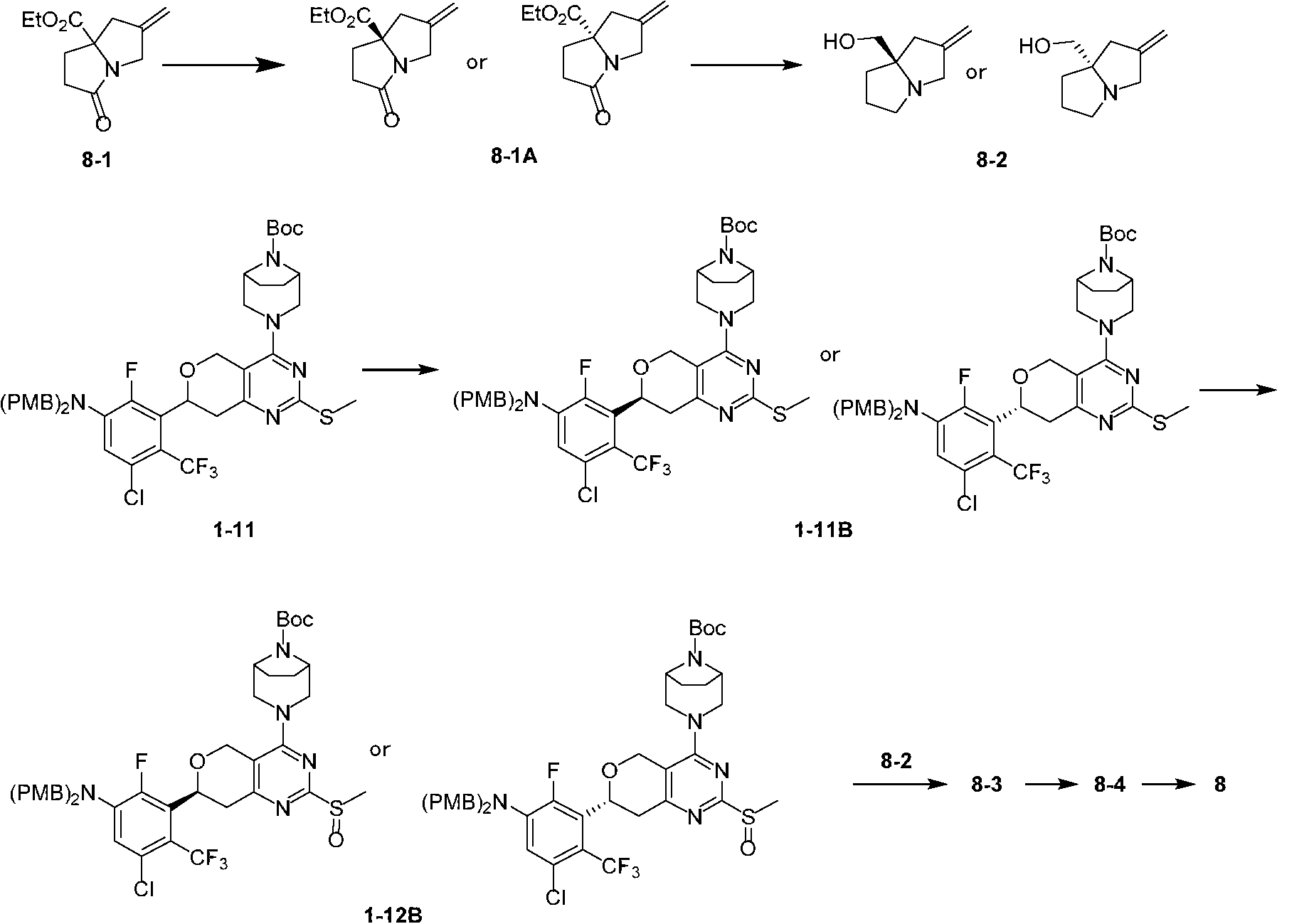
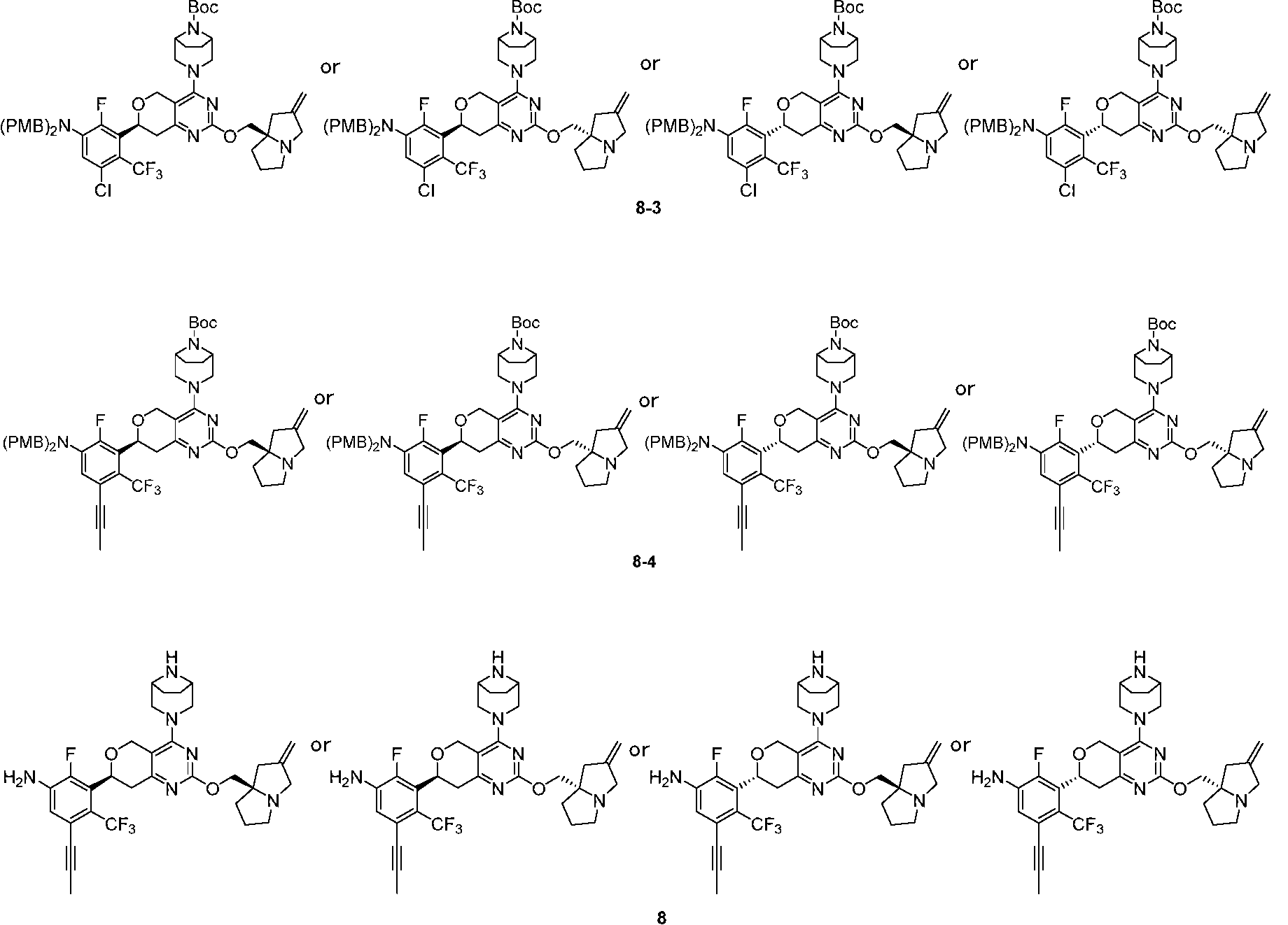
工程1:中間体8-1Aの合成 Step 1: Synthesis of intermediate 8-1A
化合物8-1を分取超臨界流体クロマトグラフィー(SFC)(クロマトグラフィーカラム:ChiralPak IH、250*50mm、10μm;移動相:A:超臨界CO2、B:[0.1%アンモニア-エタノール];B%:20%-20%、ランタイム:3.7分、ピーク時間:1.266分及び1.521分)で精製した。ピーク時間1.521分を有するサンプルを回収して、化合物8-1Aを得た。SFC分析方法(クロマトグラフィーカラム:Chiralpak IH-3、100×4.6mm ID、3μm;移動相:A(超臨界CO2)及びB(エタノール、0.1%イソプロピルアミンを含有);グラジエント:B%=10~50%、4分;流量:3.4mL/分;波長:220nm;圧力:2000psi)、化合物8-1A(Rt=1.489分、ee値98.82%)。1H NMR(400MHz,CDCl3)δ=4.99-4.86(m,2H),4.26-3.95(m,3H),3.59(m,1H),3.00-2.88(m,1H),2.87-2.12(m,4H),1.91(s,1H),1.20-1.08(m,3H). Compound 8-1 was purified by preparative supercritical fluid chromatography (SFC) (chromatographic column: ChiralPak IH, 250*50 mm, 10 μm; mobile phase: A: supercritical CO 2 , B: [0.1% ammonia-ethanol]; B%: 20%-20%, runtime: 3.7 min, peak times: 1.266 min and 1.521 min). The sample with peak time 1.521 min was collected to give compound 8-1A. SFC analytical method (chromatographic column: Chiralpak IH-3, 100×4.6 mm ID, 3 μm; mobile phase: A (supercritical CO 2 ) and B (ethanol, containing 0.1% isopropylamine); gradient: B%=10-50%, 4 min; flow rate: 3.4 mL/min; wavelength: 220 nm; pressure: 2000 psi), compound 8-1A (Rt=1.489 min, ee value 98.82%). 1H NMR (400MHz, CDCl3 ) δ = 4.99-4.86 (m, 2H), 4.26-3.95 (m, 3H), 3.59 (m, 1H), 3.00-2.88 (m, 1H), 2.87-2.12 (m, 4H), 1.91 (s, 1H), 1.20-1.08 (m, 3H).
工程2:中間体8-2の合成 Step 2: Synthesis of intermediate 8-2
テトラヒドリドアルミン酸リチウム(1.55g、40.15mmol)を無水テトラヒドロフラン(30mL)中に溶解した。混合物を0℃に冷却し、化合物8-1A(2.8g、13.38mmol)の無水テトラヒドロフラン(20mL)溶液を窒素下で加えた。混合物を70℃で1時間反応させた。0℃で反応溶液に水1.5mL、15%NaOH溶液1.5mL、更に水4.5mLを加えた。混合物を20分間撹拌した。反応溶液を濾過した。濾過ケーキをテトラヒドロフラン10mLで洗浄し、濾液を濃縮して、化合物8-2を得た。1H NMR(400MHz,CDCl3)δ=4.99-4.86(m,2H),4.26-3.95(m,3H),3.59(m,1H),3.00-2.88(m,1H),2.74-2.27(m,4H),1.91(s,1H),1.20-1.08(m,3H). Lithium tetrahydridoaluminate (1.55 g, 40.15 mmol) was dissolved in anhydrous tetrahydrofuran (30 mL). The mixture was cooled to 0° C., and a solution of compound 8-1A (2.8 g, 13.38 mmol) in anhydrous tetrahydrofuran (20 mL) was added under nitrogen. The mixture was reacted at 70° C. for 1 hour. To the reaction solution at 0° C. were added 1.5 mL of water, 1.5 mL of 15% NaOH solution, and 4.5 mL of water. The mixture was stirred for 20 minutes. The reaction solution was filtered. The filter cake was washed with 10 mL of tetrahydrofuran, and the filtrate was concentrated to give compound 8-2. 1H NMR (400MHz, CDCl3 ) δ = 4.99-4.86 (m, 2H), 4.26-3.95 (m, 3H), 3.59 (m, 1H), 3.00-2.88 (m, 1H), 2.74-2.27 (m, 4H), 1.91 (s, 1H), 1.20-1.08 (m, 3H).
工程3:中間体1-11Bの合成 Step 3: Synthesis of intermediate 1-11B
化合物1-11を超臨界流体クロマトグラフィー(クロマトグラフィーカラム:(S,S)Whelk-01 100×4.6mm ID、5.0μm;移動相:A:超臨界CO2、B:[0.1%エタノールアミン-イソプロパノール];B%:50%、流量:2.5mL/分、保持時間2.705分及び3.357分)で精製した。保持時間3.357分を有するサンプルを回収して、化合物1-11Bを得た。分取SFC(キラルカラム:REGIS(s,s)WHELK-O1(250mm*50mm、10μm);移動相:A:超臨界CO2、B:[75%イソプロパノール-25%アセトニトリル];B%:50%-50%)。キラルSFC分析(クロマトグラフィーカラム:(S,S)Whelk-O1 100×4.6mm ID、5.0μm;移動相:A:超臨界CO2、B:[75%イソプロパノール/25%アセトニトリル/0.05%ジエチルアミン];B%:50%-50%、流量:2.5mL/分)、化合物1-11A(保持時間=2.536分、ee値99%);化合物1-11B(保持時間=3.317分、ee値99%)。MS m/z=844.5[M+H]+. Compound 1-11 was purified by supercritical fluid chromatography (chromatographic column: (S,S) Whelk-01 100×4.6 mm ID, 5.0 μm; mobile phase: A: supercritical CO 2 , B: [0.1% ethanolamine-isopropanol]; B%: 50%, flow rate: 2.5 mL/min, retention times 2.705 min and 3.357 min). The sample with retention time 3.357 min was collected to give compound 1-11B. Preparative SFC (chiral column: REGIS (s,s) WHELK-O1 (250 mm*50 mm, 10 μm); mobile phase: A: supercritical CO 2 , B: [75% isopropanol-25% acetonitrile]; B%: 50%-50%). Chiral SFC analysis (chromatographic column: (S,S) Whelk-O1 100×4.6 mm ID, 5.0 μm; mobile phase: A: supercritical CO 2 , B: [75% isopropanol/25% acetonitrile/0.05% diethylamine]; B%: 50%-50%, flow rate: 2.5 mL/min), compound 1-11A (retention time=2.536 min, ee value 99%); compound 1-11B (retention time=3.317 min, ee value 99%). MS m/z=844.5 [M+H] + .
工程4:中間体1-12Bの合成 Step 4: Synthesis of intermediate 1-12B
化合物1-11B(1g、1.18mmol)をジクロロメタン20mLに加えた。メタクロロ過安息香酸(240.44mg、1.18mmol、純度85%)を加えた。混合物を室温で1時間反応させた。5%チオ硫酸ナトリウム溶液5mLを反応混合物に加えた。混合物をジクロロメタン(10mL×2)で抽出した。有機相を合わせた。有機相を飽和ブライン(5mL×2)で洗浄し、無水硫酸ナトリウムで乾燥させ、濾過した。濾液を濃縮し、カラムクロマトグラフィー(石油エーテル:酢酸エチル=10:1-1:1)で精製して、化合物1-12Bを得た。MS m/z=860.4[M+H]+. Compound 1-11B (1 g, 1.18 mmol) was added to 20 mL of dichloromethane. Metachloroperbenzoic acid (240.44 mg, 1.18 mmol, 85% purity) was added. The mixture was reacted at room temperature for 1 hour. 5 mL of 5% sodium thiosulfate solution was added to the reaction mixture. The mixture was extracted with dichloromethane (10 mL x 2). The organic phases were combined. The organic phase was washed with saturated brine (5 mL x 2), dried over anhydrous sodium sulfate, and filtered. The filtrate was concentrated and purified by column chromatography (petroleum ether:ethyl acetate=10:1-1:1) to give compound 1-12B. MS m/z=860.4 [M+H] + .
工程5:中間体8-3の合成 Step 5: Synthesis of intermediate 8-3
化合物8-2(103.29mg、674.14μmol)を無水テトラヒドロフラン(3mL)中に溶解した。ナトリウムtert-ブトキシド(64.78mg、674.14μmol)を加えた。混合物を-15℃に15分間冷却した。化合物1-12B(0.29g、337.07μmol)を加えた。混合物を-15℃~25℃で更に1時間反応させた。飽和塩化アンモニウム5mLを反応溶液に加えた。混合物を酢酸エチル(5mL×2)で抽出し、飽和生理食塩水(5mL×2)で洗浄し、無水硫酸ナトリウムで乾燥させ、濃縮した。粗生成物をカラムクロマトグラフィー(石油エーテル:酢酸エチル=0:1)で精製して、化合物8-3を得た。MS m/z=949.2[M+H]+. Compound 8-2 (103.29 mg, 674.14 μmol) was dissolved in anhydrous tetrahydrofuran (3 mL). Sodium tert-butoxide (64.78 mg, 674.14 μmol) was added. The mixture was cooled to −15° C. for 15 minutes. Compound 1-12B (0.29 g, 337.07 μmol) was added. The mixture was reacted at −15° C. to 25° C. for another hour. 5 mL of saturated ammonium chloride was added to the reaction solution. The mixture was extracted with ethyl acetate (5 mL×2), washed with saturated saline (5 mL×2), dried over anhydrous sodium sulfate, and concentrated. The crude product was purified by column chromatography (petroleum ether:ethyl acetate=0:1) to give compound 8-3. MS m/z=949.2 [M+H] + .
工程6:中間体8-4の合成 Step 6: Synthesis of intermediate 8-4
化合物8-3(0.24g、252.77μmol)を無水トルエン(2.5mL)中に溶解した。反応物を窒素で10分間バブリングした。ジクロロビス[ジ-tert-ブチル-(4-ジメチルアミノフェニル)ホスフィン]パラジウム(53.69mg、75.83μmol、53.69μL)及びトリブチル(1-プロピニル)スズ(332.76mg、1.01mmol)を窒素下で加えた。混合物を110℃で2時間反応させた。反応溶液を水5mLに注いだ。混合物を酢酸エチル(3mL×2)で抽出した。有機相を合わせ、飽和ブライン(3mL×2)で洗浄し、無水硫酸ナトリウムで乾燥させ、濃縮して、粗化合物8-4を得た。MS m/z=953.4[M+H]+. Compound 8-3 (0.24 g, 252.77 μmol) was dissolved in anhydrous toluene (2.5 mL). The reaction was bubbled with nitrogen for 10 minutes. Dichlorobis[di-tert-butyl-(4-dimethylaminophenyl)phosphine]palladium (53.69 mg, 75.83 μmol, 53.69 μL) and tributyl(1-propynyl)tin (332.76 mg, 1.01 mmol) were added under nitrogen. The mixture was reacted at 110° C. for 2 hours. The reaction solution was poured into 5 mL of water. The mixture was extracted with ethyl acetate (3 mL×2). The organic phases were combined, washed with saturated brine (3 mL×2), dried over anhydrous sodium sulfate, and concentrated to give crude compound 8-4. MS m/z=953.4 [M+H] + .
工程7:化合物8塩酸塩の合成 Step 7: Synthesis of compound 8 hydrochloride
化合物8-4(100mg、104.92μmol)をトリフルオロ酢酸(3mL)中に溶解した。混合物を25℃で0.5時間反応させた。反応完了後、反応溶液を直接濃縮し、HPLC(クロマトグラフィーカラム:Xtimate C18 150*40mm*5μm;移動相:[水(0.05%HCl)-アセトニトリル];アセトニトリル%:5%-35%、10分)で精製して、化合物8塩酸塩を得た。MS m/z=613.3[M+H]+.1H NMR(400MHz,CD3OD)δ ppm6.99-6.93(m,1H),5.36(br d,J=6.75Hz,2H),5.24(br dd,J=10.94,4.31Hz,1H),5.01-4.92(m,2H),4.78-4.73(m,2H),4.36(br d,J=14.13Hz,1H),4.29-4.18(m,2H),4.08-4.0(m,1H),3.95(br d,J=14.38Hz,2H),3.85-3.77(m,1H),3.56(br d,J=14.63Hz,1H),3.45-3.37(m,1H),3.30-3.23(m,1H),3.15-3.01(m,2H),2.85(br d,J=15.63Hz,1H),2.45(br dd,J=12.01,6.50Hz,1H),2.31-2.03(m,11H). Compound 8-4 (100 mg, 104.92 μmol) was dissolved in trifluoroacetic acid (3 mL). The mixture was reacted at 25° C. for 0.5 h. After completion of the reaction, the reaction solution was directly concentrated and purified by HPLC (chromatography column: Xtimate C18 150*40 mm*5 μm; mobile phase: [water (0.05% HCl)-acetonitrile]; acetonitrile%: 5%-35%, 10 min) to obtain compound 8 hydrochloride. MS m/z=613.3 [M+H] + . 1H NMR (400MHz, CD3OD ) δ ppm6.99-6.93 (m, 1H), 5.36 (br d, J=6.75Hz, 2H), 5.24 (br dd, J = 10.94, 4.31Hz, 1H), 5.01-4.92 (m, 2H), 4.78-4.73 (m, 2H), 4.36 (br d, J = 14.13Hz, 1H), 4.29-4.18 (m, 2H), 4.08-4.0 (m, 1H), 3.95 (br d, J = 14.38Hz, 2H), 3.85-3.77 (m, 1H), 3.56 (br d, J = 14.63Hz, 1H), 3.45-3.37 (m, 1H), 3.30-3.23 (m, 1H), 3.15-3.01 (m, 2H), 2.85 (br d, J = 15.63Hz, 1H), 2.45 (br dd, J=12.01, 6.50Hz, 1H), 2.31-2.03(m, 11H).
実施例9

工程1:中間体9-2の合成 Step 1: Synthesis of intermediate 9-2
化合物9-1(1.2g、6.62mmol)を秤量し、THF(50mL)に加えた。混合物を-20℃に冷却した。LiAlH4(1M、6.62mL)を加えた。混合物を-20℃で0.5時間反応させた。反応物を水でクエンチした。反応溶液を直接濃縮した。残渣をカラムクロマトグラフィー(ジクロロメタン:メタノール=10:1)で精製して、化合物9-2を得た。MS m/z=154.1[M+H]+. Compound 9-1 (1.2 g, 6.62 mmol) was weighed and added to THF (50 mL). The mixture was cooled to −20° C. LiAlH 4 (1 M, 6.62 mL) was added. The mixture was reacted at −20° C. for 0.5 h. The reaction was quenched with water. The reaction solution was directly concentrated. The residue was purified by column chromatography (dichloromethane:methanol=10:1) to give compound 9-2. MS m/z=154.1 [M+H] + .
工程2:中間体9-3の合成 Step 2: Synthesis of intermediate 9-3
化合物9-2(73.43g、479.26μmol)を無水テトラヒドロフラン(2mL)中に溶解した。ナトリウムtert-ブトキシド(46.06mg、479.26μmol)を加えた。混合物を-15℃に15分間冷却した。化合物1-12B(200mg、228.22μmol)を加えた。混合物を-15℃~25℃で更に1時間反応させた。飽和塩化アンモニウム5mLを反応溶液に加えた。混合物を酢酸エチル(5mL×2)で抽出し、飽和ブライン(5mL×2)で洗浄し、無水硫酸ナトリウムで乾燥させ、濃縮した。残渣をカラムクロマトグラフィー(石油エーテル:酢酸エチル=0:1)で精製して、化合物9-3を得た。MS m/z=949.4[M+H]+. Compound 9-2 (73.43 g, 479.26 μmol) was dissolved in anhydrous tetrahydrofuran (2 mL). Sodium tert-butoxide (46.06 mg, 479.26 μmol) was added. The mixture was cooled to −15° C. for 15 min. Compound 1-12B (200 mg, 228.22 μmol) was added. The mixture was reacted at −15° C. to 25° C. for another 1 h. 5 mL of saturated ammonium chloride was added to the reaction solution. The mixture was extracted with ethyl acetate (5 mL×2), washed with saturated brine (5 mL×2), dried over anhydrous sodium sulfate, and concentrated. The residue was purified by column chromatography (petroleum ether:ethyl acetate=0:1) to give compound 9-3. MS m/z=949.4 [M+H] + .
工程3:化合物9塩酸塩の合成 Step 3: Synthesis of compound 9 hydrochloride
化合物9-3(0.12g、126.39μmol)を無水ジクロロメタン(1mL)中に溶解した。混合物を0℃に冷却した。トリフルオロ酢酸(302.62mg、2.65mmol、196.51μL)を加え、混合物を25℃で2時間反応させた。反応溶液を直接濃縮し、HPLC(クロマトグラフィーカラム:Phenomenex Luna 80*30mm*3μm;移動相:[水(0.05%塩酸)-アセトニトリル];アセトニトリル%:5%-40%、ランタイム8分)で精製して、化合物9塩酸塩を得た。MS m/z=609.1[M+H]+,1H NMR(400MHz,CD3OD)δ=6.90(s,1H),6.13-5.78(m,2H),5.31-5.21(m,1H),4.98-4.89(m,3H),4.28-4.14(m,2H),4.07-3.68(m,6H),3.54-3.33(m,4H),3.11-2.99(m,1H),2.61-2.49(m,2H),2.37-1.94(m,8H). Compound 9-3 (0.12 g, 126.39 μmol) was dissolved in anhydrous dichloromethane (1 mL). The mixture was cooled to 0° C. Trifluoroacetic acid (302.62 mg, 2.65 mmol, 196.51 μL) was added, and the mixture was reacted at 25° C. for 2 h. The reaction solution was directly concentrated and purified by HPLC (chromatography column: Phenomenex Luna 80*30 mm*3 μm; mobile phase: [water (0.05% hydrochloric acid)-acetonitrile]; acetonitrile %: 5%-40%, runtime 8 min) to give compound 9 hydrochloride. MS m/z=609.1 [M+H] + , 1 H NMR (400 MHz, CD 3 OD) δ = 6.90 (s, 1H), 6.13-5.78 (m, 2H), 5.31-5.21 (m, 1H), 4.98-4.89 (m, 3H), 4.28-4.14 (m, 2H), 4.07-3.68 (m, 6H), 3.54-3.33 (m, 4H), 3.11-2.99 (m, 1H), 2.61-2.49 (m, 2H), 2.37-1.94 (m, 8H).
実施例10

工程1:中間体10-2の合成 Step 1: Synthesis of intermediate 10-2
化合物10-1(1.0g、5.22mmol)をDMF(15mL)中に溶解した。K2CO3(3.61g、26.09mmol)を加えた。30分撹拌した後、臭化アリル(757.46mg、6.26mmol)を加えた。混合物を室温で5時間反応させた。反応溶液を酢酸エチル80mLで希釈してから、Celite(登録商標)パッドに通して濾過した。濾液を減圧下で濃縮して溶媒を除去して粗生成物を得た。粗生成物をカラムクロマトグラフィー(石油エーテル:酢酸エチル=10:1)で精製して、化合物10-2を得た。1H NMR(400MHz,CDCl3):δ=6.07-5.92(m,1H),5.88-5.73(m,1H),5.27-5.18(m,1H),5.16-5.08(m,2H),5.04-4.96(m,1H),3.72-3.61(m,3H),3.30-3.18(m,1H),3.10-2.93(m,2H),2.75-2.63(m,1H),2.34-2.17(m,1H),1.91-1.72(m,3H). Compound 10-1 (1.0 g, 5.22 mmol) was dissolved in DMF (15 mL). K 2 CO 3 (3.61 g, 26.09 mmol) was added. After stirring for 30 min, allyl bromide (757.46 mg, 6.26 mmol) was added. The mixture was reacted at room temperature for 5 h. The reaction solution was diluted with 80 mL of ethyl acetate and then filtered through a Celite® pad. The filtrate was concentrated under reduced pressure to remove the solvent to obtain the crude product. The crude product was purified by column chromatography (petroleum ether:ethyl acetate=10:1) to obtain compound 10-2. 1H NMR (400MHz, CDCl3 ): δ = 6.07-5.92 (m, 1H), 5.88-5.73 (m, 1H), 5.27-5.18 (m, 1H), 5.16-5.08 (m, 2H), 5.04-4.96 (m, 1H), 3.72-3 .61 (m, 3H), 3.30-3.18 (m, 1H), 3.10-2.93 (m, 2H), 2.75-2.63 (m, 1H), 2.34-2.17 (m, 1H), 1.91-1.72 (m, 3H).
工程2:中間体10-3の合成 Step 2: Synthesis of intermediate 10-3
化合物10-2(325mg、1.66mmol)をトルエン(36mL)中に溶解した。第2世代グラブス触媒(70.65mg、83.22μmol)を加えた。混合物を120℃に加熱し、20時間窒素下で撹拌した。反応溶液を濃縮して粗生成物を得た。これをカラムクロマトグラフィー(ジクロロメタン:メタノール=20:1)で精製して、化合物10-3を得た。1H NMR(400MHz,CDCl3):δ=5.94-5.77(m,2H),4.12-4.00(m,1H),3.83-3.72(m,3H),3.49-3.41(m,1H),3.39-3.30(m,1H),2.74-2.59(m,1H),2.43-2.27(m,1H),1.93-1.82(m,3H). Compound 10-2 (325 mg, 1.66 mmol) was dissolved in toluene (36 mL). Grubbs 2nd generation catalyst (70.65 mg, 83.22 μmol) was added. The mixture was heated to 120° C. and stirred under nitrogen for 20 hours. The reaction solution was concentrated to give the crude product, which was purified by column chromatography (dichloromethane:methanol=20:1) to give compound 10-3. 1H NMR (400MHz, CDCl3 ): δ = 5.94-5.77 (m, 2H), 4.12-4.00 (m, 1H), 3.83-3.72 (m, 3H), 3.49-3.41 (m, 1H ), 3.39-3.30 (m, 1H), 2.74-2.59 (m, 1H), 2.43-2.27 (m, 1H), 1.93-1.82 (m, 3H).
工程3:中間体10-4の合成 Step 3: Synthesis of intermediate 10-4
化合物10-3(130mg、777.49μmol)をTHF(3mL)中に溶解した。混合物を窒素下で0℃に冷却してから、テトラヒドリドアルミン酸リチウム(1M、777.49μL)を滴加した。反応物を0℃で0.5時間撹拌した。反応溶液を水200μLでクエンチした。酢酸エチル20mLを加えた。混合物を2分間撹拌した。混合物を無水硫酸ナトリウム2gで乾燥させ、Celite(登録商標)に通して濾過した。濾液を減圧下で濃縮して溶媒を除去して、化合物10-4を得た。1H NMR(400MHz,CDCl3):δ=5.74-5.63(m,1H),5.59-5.47(m,1H),3.92-3.70(m,1H),3.44-3.23(m,3H),3.14-2.99(m,1H),2.62-2.47(m,1H),1.76-1.51(m,5H). Compound 10-3 (130 mg, 777.49 μmol) was dissolved in THF (3 mL). The mixture was cooled to 0° C. under nitrogen before lithium tetrahydridoaluminate (1 M, 777.49 μL) was added dropwise. The reaction was stirred at 0° C. for 0.5 h. The reaction solution was quenched with 200 μL of water. 20 mL of ethyl acetate was added. The mixture was stirred for 2 min. The mixture was dried over 2 g of anhydrous sodium sulfate and filtered through Celite®. The filtrate was concentrated under reduced pressure to remove the solvent to give compound 10-4. 1H NMR (400MHz, CDCl3 ): δ = 5.74-5.63 (m, 1H), 5.59-5.47 (m, 1H), 3.92-3.70 (m, 1H), 3.44-3.23 (m, 3H), 3.14-2.99 (m, 1H), 2.62-2.47 (m, 1H), 1.76-1.51 (m, 5H).
工程4:中間体10-5の合成 Step 4: Synthesis of intermediate 10-5
化合物10-4(43.68mg、313.82μmol)を無水テトラヒドロフラン(2mL)中に溶解した。ナトリウムtert-ブトキシド(26.14mg、271.98μmol)を加えた。混合物を-15℃に15分間冷却した。化合物1-12B(180mg、209.22μmol)を加えた。混合物を-15℃~25℃で1時間反応させた。反応溶液に飽和塩化アンモニウム5mLを加えた。混合物を酢酸エチル(5mL×2)で抽出し、飽和ブライン(5mL×2)で洗浄し、無水硫酸ナトリウムで乾燥させ、濃縮した。粗生成物をカラムクロマトグラフィー(石油エーテル:酢酸エチル=1:0-0:1)で精製して、化合物10-5を得た。MS m/z=935.2[M+H]+. Compound 10-4 (43.68 mg, 313.82 μmol) was dissolved in anhydrous tetrahydrofuran (2 mL). Sodium tert-butoxide (26.14 mg, 271.98 μmol) was added. The mixture was cooled to −15° C. for 15 minutes. Compound 1-12B (180 mg, 209.22 μmol) was added. The mixture was reacted at −15° C. to 25° C. for 1 hour. 5 mL of saturated ammonium chloride was added to the reaction solution. The mixture was extracted with ethyl acetate (5 mL×2), washed with saturated brine (5 mL×2), dried over anhydrous sodium sulfate, and concentrated. The crude product was purified by column chromatography (petroleum ether:ethyl acetate=1:0-0:1) to give compound 10-5. MS m/z=935.2 [M+H] + .
工程5:中間体10-6の合成 Step 5: Synthesis of intermediate 10-6
化合物10-5(130.00mg、138.97μmol)を無水トルエン(1.5mL)中に溶解した。混合物を窒素で10分間バブリングした。ジクロロビス[ジ-tert-ブチル-(4-ジメチルアミノフェニル)ホスフィン]パラジウム(29.52mg、41.69μmol、29.52μL)及びトリブチル(1-プロピニル)スズ(182.95mg、555.89μmol)を窒素下で加えた。混合物を110℃で2時間反応させた。反応溶液を水5mLに注いだ。混合物を酢酸エチル(3mL×2)で抽出した。有機相を合わせ、飽和ブライン(3mL×2)で洗浄し、無水硫酸ナトリウムで乾燥させ、濃縮した。粗生成物をカラムクロマトグラフィー(石油エーテル:酢酸エチル=0:1)で精製し、次いで高速液体クロマトグラフィー(クロマトグラフィーカラム:Phenomenex Luna 80*30mm*3μm;移動相A:水(0.05%塩酸);移動相B:アセトニトリル;ラングラジエント:アセトニトリル%:35%-70%;ランタイム:8分)で更に精製して、化合物10-6を得た。MS m/z=939.3[M+H]+. Compound 10-5 (130.00 mg, 138.97 μmol) was dissolved in anhydrous toluene (1.5 mL). The mixture was bubbled with nitrogen for 10 minutes. Dichlorobis[di-tert-butyl-(4-dimethylaminophenyl)phosphine]palladium (29.52 mg, 41.69 μmol, 29.52 μL) and tributyl(1-propynyl)tin (182.95 mg, 555.89 μmol) were added under nitrogen. The mixture was reacted at 110° C. for 2 hours. The reaction solution was poured into 5 mL of water. The mixture was extracted with ethyl acetate (3 mL×2). The organic phases were combined, washed with saturated brine (3 mL×2), dried over anhydrous sodium sulfate, and concentrated. The crude product was purified by column chromatography (petroleum ether:ethyl acetate=0:1), then further purified by high performance liquid chromatography (chromatography column: Phenomenex Luna 80*30 mm*3 μm; mobile phase A: water (0.05% hydrochloric acid); mobile phase B: acetonitrile; run gradient: acetonitrile%: 35%-70%; run time: 8 min) to give compound 10-6. MS m/z=939.3 [M+H] + .
工程6:化合物10塩酸塩の合成 Step 6: Synthesis of compound 10 hydrochloride
化合物10-6(30mg、31.95μmol)を無水ジクロロメタン(0.5mL)中に溶解した。トリフルオロ酢酸(1.16g、10.16mmol、752.18μL)を0℃で加え、混合物を0~25℃で3時間反応させた。反応溶液を直接濃縮した。残渣をHPLC(クロマトグラフィーカラム:Phenomenex Luna 80*30mm*3μm;移動相A:水(0.05%塩酸);移動相B:アセトニトリル;ラングラジエント:アセトニトリル%:5%-35%、ランタイム8分)で精製し、凍結乾燥させて、化合物10塩酸塩を得た。MS m/z=599.1[M+H]+. Compound 10-6 (30 mg, 31.95 μmol) was dissolved in anhydrous dichloromethane (0.5 mL). Trifluoroacetic acid (1.16 g, 10.16 mmol, 752.18 μL) was added at 0° C., and the mixture was reacted at 0-25° C. for 3 h. The reaction solution was directly concentrated. The residue was purified by HPLC (chromatography column: Phenomenex Luna 80*30 mm*3 μm; mobile phase A: water (0.05% hydrochloric acid); mobile phase B: acetonitrile; run gradient: acetonitrile%: 5%-35%, runtime 8 min) and lyophilized to give compound 10 hydrochloride. MS m/z=599.1 [M+H] + .
実施例11


工程1:中間体11-2の合成 Step 1: Synthesis of intermediate 11-2
化合物11-1(20g、56.53mmol)を塩酸/酢酸エチル(4M、120mL)中に溶解した。混合物を25℃で2時間反応させた。反応溶液を直接濃縮して、粗11-2塩酸塩を得た。粗生成物を次の工程で直接使用した。 Compound 11-1 (20 g, 56.53 mmol) was dissolved in hydrochloric acid/ethyl acetate (4 M, 120 mL). The mixture was reacted at 25 °C for 2 h. The reaction solution was directly concentrated to give crude 11-2 hydrochloride salt. The crude product was used directly in the next step.
工程2:中間体11-3の合成 Step 2: Synthesis of intermediate 11-3
粗11-2塩酸塩(20g)をDMF(65mL)中に溶解した。炭酸カリウム(14.2g、102mmol)を加えた。混合物を25℃で12時間反応させた。反応溶液を酢酸エチル500mLで希釈し、水(300mL×2)及び飽和ブライン300mLで順次洗浄し、無水硫酸ナトリウムで乾燥させ、濾過した。濾液を濃縮して粗生成物を得た。粗生成物をカラムクロマトグラフィー(石油エーテル:酢酸エチル=2:1)で精製して、化合物11-3を得た。 Crude 11-2 hydrochloride (20 g) was dissolved in DMF (65 mL). Potassium carbonate (14.2 g, 102 mmol) was added. The mixture was reacted at 25°C for 12 hours. The reaction solution was diluted with 500 mL of ethyl acetate, washed successively with water (300 mL x 2) and saturated brine (300 mL), dried over anhydrous sodium sulfate, and filtered. The filtrate was concentrated to obtain the crude product. The crude product was purified by column chromatography (petroleum ether:ethyl acetate = 2:1) to obtain compound 11-3.
工程3:中間体11-4の合成 Step 3: Synthesis of intermediate 11-4
化合物11-3(7g、32.23mmol)を2-メチルテトラヒドロフラン(75mL)中に溶解した。雰囲気を窒素で3回置換した。赤色アルミニウムのトルエン溶液(37.2g、129mmol、35.8mL、純度70%)を10℃で窒素下、ゆっくりと加えた。混合物を25℃で12時間反応させた。反応溶液を26.0%酒石酸ナトリウム水溶液に滴加することでクエンチした。混合物を2-メチルテトラヒドロフラン(200mL)で抽出した。水相を2-メチルテトラヒドロフラン(50mL×3)で抽出した。合わせた有機相を飽和ブラインで洗浄し、無水硫酸ナトリウムで乾燥させ、濾過した。濾液を濃縮して、化合物11-4を得た。 Compound 11-3 (7 g, 32.23 mmol) was dissolved in 2-methyltetrahydrofuran (75 mL). The atmosphere was replaced with nitrogen three times. A solution of red aluminum in toluene (37.2 g, 129 mmol, 35.8 mL, 70% purity) was added slowly under nitrogen at 10°C. The mixture was reacted at 25°C for 12 hours. The reaction solution was quenched by adding dropwise to 26.0% aqueous sodium tartrate solution. The mixture was extracted with 2-methyltetrahydrofuran (200 mL). The aqueous phase was extracted with 2-methyltetrahydrofuran (50 mL x 3). The combined organic phase was washed with saturated brine, dried over anhydrous sodium sulfate, and filtered. The filtrate was concentrated to give compound 11-4.
工程4:中間体11-5ギ酸塩の合成 Step 4: Synthesis of intermediate 11-5 formate
化合物11-4(2.3g、13.4mmol)をDCM(30mL)中に溶解した。イミダゾール(3.66g、53.7mmol)、DMAP(164mg、1.34mmol)及びTBDPSCl(7.38g、26.9mmol、6.90mL)を加えた。混合物を45℃で12時間反応させた。水(50mL)を反応溶液に加えた。有機相を分離し、水相をジクロロメタン(50mL)で抽出した。有機相を合わせ、飽和ブライン50mLで洗浄し、無水硫酸ナトリウムで乾燥させ、濾過した。濾液を濃縮した。メチルtert-ブチルエーテル(10mL)、n-ヘプタン(21mL)及びHCl(2M、21mL)を加えた。水相を分離し、メチルtert-ブチルエーテル:n-ヘプタン=1:2の混合溶媒(20mL*3)で洗浄し、炭酸ナトリウム水溶液を用いてpH7に調整した。混合物を酢酸エチル270mL及び酢酸エチル40mLで順次抽出した。有機相を合わせ、飽和ブライン20mLで洗浄し、無水硫酸ナトリウムで乾燥させ、濾過した。濾液を濃縮して粗生成物を得た。粗生成物をカラムクロマトグラフィー(石油エーテル:酢酸エチル=10:1)で精製して、Rf=0.6(最初のポイント)の粗中間体11-5を得た。これを高速液体クロマトグラフィー(クロマトグラフィーカラム:Phenomenex Luna C18 250*80mm*10μm;移動相:[水(0.225%ギ酸)-アセトニトリル];アセトニトリル%:32%-62%、12分)で更に精製して、化合物11-5ギ酸塩を得た。MS m/z=410.3[M+H]+.1H NMR(400MHz,CDCl3)δ ppm7.62-7.53(m,4H),7.37-7.27(m,6H),6.47-6.17(m,1H),3.66(br d,J=14.92Hz,1H),3.38-3.30(m,2H),3.25(br d,J=14.79Hz,1H),3.03-2.94(m,1H),2.56-2.43(m,2H),2.12(br d,J=15.41Hz,1H),1.92(ddd,J=12.20,7.92,3.97Hz,1H),0.99(s,9H)1.82-1.51(m,3H).19F NMR(377MHz,CDCl3)δ ppm-131.66. Compound 11-4 (2.3 g, 13.4 mmol) was dissolved in DCM (30 mL). Imidazole (3.66 g, 53.7 mmol), DMAP (164 mg, 1.34 mmol) and TBDPSCl (7.38 g, 26.9 mmol, 6.90 mL) were added. The mixture was reacted at 45° C. for 12 hours. Water (50 mL) was added to the reaction solution. The organic phase was separated and the aqueous phase was extracted with dichloromethane (50 mL). The organic phases were combined, washed with 50 mL of saturated brine, dried over anhydrous sodium sulfate and filtered. The filtrate was concentrated. Methyl tert-butyl ether (10 mL), n-heptane (21 mL) and HCl (2M, 21 mL) were added. The aqueous phase was separated and washed with a mixed solvent (20 mL*3) of methyl tert-butyl ether:n-heptane=1:2, and adjusted to pH 7 with aqueous sodium carbonate. The mixture was extracted with 270 mL of ethyl acetate and 40 mL of ethyl acetate successively. The organic phases were combined, washed with 20 mL of saturated brine, dried over anhydrous sodium sulfate, and filtered. The filtrate was concentrated to give the crude product. The crude product was purified by column chromatography (petroleum ether:ethyl acetate=10:1) to give crude intermediate 11-5 with R f =0.6 (first point), which was further purified by high performance liquid chromatography (chromatography column: Phenomenex Luna C18 250*80 mm*10 μm; mobile phase: [water (0.225% formic acid)-acetonitrile]; acetonitrile %: 32%-62%, 12 min) to give compound 11-5 formate salt. MS m/z=410.3 [M+H] + . 1 H NMR (400 MHz, CDCl 3 ) δ ppm 7.62-7.53 (m, 4H), 7.37-7.27 (m, 6H), 6.47-6.17 (m, 1H), 3.66 (br d, J = 14.92Hz, 1H), 3.38-3.30 (m, 2H), 3.25 (br d, J = 14.79Hz, 1H), 3.03-2.94 (m, 1H), 2.56-2.43 (m, 2H), 2.12 (br d, J = 15.41Hz, 1H), 1.92 (ddd, J = 12.20, 7.92, 3.97Hz, 1H), 0.99 (s, 9H) 1.82-1.51 (m, 3H). 19 F NMR (377 MHz, CDCl 3 ) δ ppm-131.66.
工程5:中間体11-5Aの合成 Step 5: Synthesis of intermediate 11-5A
化合物11-5(3.3g、7.57mmol)を分取キラルSFC(クロマトグラフィーカラム:DAICEL CHIRALPAK IC(250mm*30mm、10μm);移動相:A:超臨界CO2、B:[メタノール中0.1%NH3・H2O];B%:25%-25%、4.5分、ピーク時間:2.117分及び2.980分)で分離した。ピーク時間2.117分を有するサンプルを回収して、化合物11-5Aを得た。化合物11-5AのSFC分析方法(クロマトグラフィーカラム:Chiralpak IC-3 50×4.6mm ID、3μm;移動相:A(超臨界CO2)及びB(MeOH、0.05%ジエチルアミンを含有);グラジエント:B%=5~10%、流量:3mL/分)、Rt=2.014分、ee値98.5%。MS m/z=410.3[M+H]+. Compound 11-5 (3.3 g, 7.57 mmol) was separated by preparative chiral SFC (chromatographic column: DAICEL CHIRALPAK IC (250 mm*30 mm, 10 μm); mobile phase: A: supercritical CO 2 , B: [0.1% NH 3 ·H 2 O in methanol]; B%: 25%-25%, 4.5 min, peak times: 2.117 min and 2.980 min). The sample with peak time 2.117 min was collected to give compound 11-5A. SFC analysis of compound 11-5A (chromatographic column: Chiralpak IC-3 50×4.6 mm ID, 3 μm; mobile phase: A (supercritical CO 2 ) and B (MeOH, containing 0.05% diethylamine); gradient: B%=5-10%, flow rate: 3 mL/min), Rt=2.014 min, ee value 98.5%. MS m/z=410.3 [M+H] + .
工程6:中間体11-6塩酸塩の合成 Step 6: Synthesis of intermediate 11-6 hydrochloride
化合物11-5A(1.2g、2.93mmol)を1,4-ジオキサン24mL中に溶解した。濃塩酸(12M、7.20mL)を加えた。混合物を95℃で12時間反応させた。反応溶液を冷却し、水10mLで希釈した。混合物を酢酸エチル10mLで洗浄した。水相を凍結乾燥させて、化合物11-6塩酸塩を得た。1H NMR(400MHz,D2O)δ ppm6.90-6.53(m,1H),4.22(br d,J=15.04Hz,1H),3.97(br d,J=15.04Hz,1H),3.79-3.69(m,1H),3.67-3.55(m,2H),3.24-3.14(m,1H),2.76-2.67(m,1H),2.64-2.54(m,1H),2.19-1.94(m,4H).19F NMR(376MHz,CDCl3)δ ppm-126.73. Compound 11-5A (1.2 g, 2.93 mmol) was dissolved in 24 mL of 1,4-dioxane. Concentrated hydrochloric acid (12 M, 7.20 mL) was added. The mixture was reacted at 95° C. for 12 hours. The reaction solution was cooled and diluted with 10 mL of water. The mixture was washed with 10 mL of ethyl acetate. The aqueous phase was lyophilized to give compound 11-6 hydrochloride. 1H NMR (400MHz, D2O) δ ppm 6.90-6.53 (m, 1H), 4.22 (br d, J = 15.04Hz, 1H), 3.97 (br d. 19 F NMR (376 MHz, CDCl 3 ) δ ppm-126.73.
工程7:中間体11-7の合成 Step 7: Synthesis of intermediate 11-7
化合物1-12B(300mg、349μmol)を無水トルエン(10.0mL)中に溶解した。ナトリウムtert-ブトキシド(134mg、1.39mmol、4当量)、4Aモレキュラーシーブ(500mg)及び化合物11-6塩酸塩(109mg、523μmol)を加えた。混合物を110℃で12時間反応させた。飽和塩化アンモニウム水溶液30mLを加えることで反応溶液をクエンチした。混合物を酢酸エチル(30mL)で抽出した。有機相を飽和ブライン(20mL)で洗浄し、無水硫酸ナトリウムで乾燥させ、濾過した。濾液を濃縮して粗生成物を得た。粗生成物をカラムクロマトグラフィー(石油エーテル:酢酸エチル=1:1)で精製して、化合物11-7を得た。1H NMR(400MHz,CDCl3)δ ppm7.14(d,J=8.56Hz,4H),6.87(d,J=8.68Hz,5H),6.64-6.36(m,1H),5.28-5.18(m,1H),4.79-4.68(m,2H),4.44-4.24(m,6H),4.10-3.97(m,2H),3.94-3.74(m,8H),3.51-2.94(m,7H),2.77-2.55(m,2H),2.32(br d,J=15.16Hz,1H),2.22-2.11(m,1H),1.95-1.58(m,7H),1.51(s,9H).19F NMR(376MHz,CDCl3)δ ppm-119.86,-50.65. Compound 1-12B (300 mg, 349 μmol) was dissolved in anhydrous toluene (10.0 mL). Sodium tert-butoxide (134 mg, 1.39 mmol, 4 eq.), 4A molecular sieves (500 mg) and compound 11-6 hydrochloride (109 mg, 523 μmol) were added. The mixture was reacted at 110° C. for 12 hours. The reaction solution was quenched by adding 30 mL of saturated aqueous ammonium chloride solution. The mixture was extracted with ethyl acetate (30 mL). The organic phase was washed with saturated brine (20 mL), dried over anhydrous sodium sulfate and filtered. The filtrate was concentrated to obtain the crude product. The crude product was purified by column chromatography (petroleum ether:ethyl acetate=1:1) to obtain compound 11-7. 1H NMR (400MHz, CDCl3 )δ ppm7.14 (d, J=8.56Hz, 4H), 6.87 (d, J=8.68Hz, 5H), 6.64-6.36 (m, 1H), 5.28-5.18 (m, 1H), 4.79-4.68 (m, 2H) ), 4.44-4.24 (m, 6H), 4.10-3.97 (m, 2H), 3.94-3.74 (m, 8H), 3.51-2.94 (m, 7H), 2.77-2.55 (m, 2H), 2.32 (br d, J=15.16Hz, 1H), 2.22-2.11 (m, 1H), 1.95-1.58 (m, 7H), 1.51 (s, 9H). 19 F NMR (376 MHz, CDCl 3 ) δ ppm -119.86, -50.65.
工程8:中間体11-8の合成 Step 8: Synthesis of intermediate 11-8
化合物11-7(222mg、229μmol)を無水トルエン(10.0mL)中に溶解した。1-プロピニルトリ-n-ブチルスズ(755mg、2.29mmol)及びジクロロビス[ジ-tert-ブチル-(4-ジメチルアミノフェニル)ホスフィン]パラジウム(II)(162mg、229μmol、162μL)を加えた。雰囲気を窒素で3回置換した。混合物を110℃で12時間、窒素下で反応させた。反応溶液を冷却し、濃縮して粗生成物を得た。これをカラムクロマトグラフィー(石油エーテル:酢酸エチル=1:1)で精製して、化合物11-8を得た。MS m/z=971.3[M+H]+. Compound 11-7 (222 mg, 229 μmol) was dissolved in anhydrous toluene (10.0 mL). 1-Propynyltri-n-butyltin (755 mg, 2.29 mmol) and dichlorobis[di-tert-butyl-(4-dimethylaminophenyl)phosphine]palladium(II) (162 mg, 229 μmol, 162 μL) were added. The atmosphere was replaced with nitrogen three times. The mixture was reacted under nitrogen at 110° C. for 12 hours. The reaction solution was cooled and concentrated to obtain the crude product, which was purified by column chromatography (petroleum ether:ethyl acetate=1:1) to obtain compound 11-8. MS m/z=971.3 [M+H] + .
工程9:化合物11ギ酸塩の合成 Step 9: Synthesis of compound 11 formate
化合物11-8(149mg、129μmol、純度84%)をジクロロメタン(10mL)中に溶解した。トリフルオロ酢酸(770mg、6.75mmol、0.5mL)を加えた。混合物を25℃で12時間反応させた。反応溶液を水10mL及び酢酸エチル20mLで希釈した。各層を分離した。有機相を1N希塩酸(5mL×2)で洗浄した。すべての水相を合わせ、飽和NaHCO3水溶液を用いてpH8に調整した。溶液を濃縮した。得られた固体にアセトニトリル20mLを加え、混合物を撹拌し、濾過した。濾液を濃縮して粗生成物を得た。粗生成物を高速液体クロマトグラフィー(クロマトグラフィーカラム:Phenomenex luna C18 150*25mm*10μm;移動相:[水(0.225%ギ酸)-アセトニトリル];アセトニトリル%:9%-39%、10分)で精製し、凍結乾燥させて、化合物11ギ酸塩を得た。MS m/z=631.3[M+H]+.1H NMR(400MHz,CD3OD)δ ppm6.93(d,J=8.44Hz,1H),6.90-6.65(m,1H),5.19(br dd,J=11.13,3.79Hz,1H),4.77-4.69(m,2H),4.41-4.31(m,2H),4.26(br d,J=13.57Hz,1H),4.19-4.04(m,3H),3.86-3.73(m,2H),3.68-3.61(m,1H),3.52-3.44(m,1H),3.37(s,3H),3.32-3.24(m,2H),3.06-2.81(m,3H),2.62(br d,J=16.14Hz,1H),2.31-2.05(m,6H),2.02-1.91(m,2H). Compound 11-8 (149 mg, 129 μmol, purity 84%) was dissolved in dichloromethane (10 mL). Trifluoroacetic acid (770 mg, 6.75 mmol, 0.5 mL) was added. The mixture was reacted at 25° C. for 12 hours. The reaction solution was diluted with 10 mL of water and 20 mL of ethyl acetate. The layers were separated. The organic phase was washed with 1N dilute hydrochloric acid (5 mL×2). All the aqueous phases were combined and adjusted to pH 8 with saturated aqueous NaHCO 3 solution. The solution was concentrated. 20 mL of acetonitrile was added to the obtained solid, and the mixture was stirred and filtered. The filtrate was concentrated to obtain the crude product. The crude product was purified by high performance liquid chromatography (chromatography column: Phenomenex luna C18 150*25mm*10μm; mobile phase: [water (0.225% formic acid)-acetonitrile]; acetonitrile%: 9%-39%, 10min) and lyophilized to give compound 11 formate. MS m/z=631.3[M+H] + . 1H NMR (400MHz, CD3OD ) δ ppm 6.93(d,J=8.44Hz,1H), 6.90-6.65(m,1H), 5.19(br dd,J=11.13,3.79Hz,1H), 4.77-4.69(m,2H), 4.41-4.31(m,2H), 4.26(br d, J = 13.57Hz, 1H), 4.19-4.04 (m, 3H), 3.86-3.73 (m, 2H), 3.68-3.61 (m, 1H), 3 .52-3.44 (m, 1H), 3.37 (s, 3H), 3.32-3.24 (m, 2H), 3.06-2.81 (m, 3H), 2.62 (br d, J=16.14Hz, 1H), 2.31-2.05 (m, 6H), 2.02-1.91 (m, 2H).
実施例12

工程1:中間体12-2の合成 Step 1: Synthesis of intermediate 12-2
化合物12-1(20.0g、73.7mmol)及びビス-(4-メトキシベンジル)-アミン(37.9g、147mmol)をN-メチルピロリドン(600mL)に加えた。混合物を140℃の油浴中で12時間加熱した。反応溶液を水250mLで希釈し、酢酸エチル(200mL×3)及び飽和ブライン200mLで洗浄した。有機相を乾燥させ、濾過した。濾液を減圧下で濃縮して粗生成物を得た。粗生成物をカラム(石油エーテル:酢酸エチル=20:1)で精製して、化合物12-2を得た。 Compound 12-1 (20.0 g, 73.7 mmol) and bis-(4-methoxybenzyl)-amine (37.9 g, 147 mmol) were added to N-methylpyrrolidone (600 mL). The mixture was heated in an oil bath at 140° C. for 12 hours. The reaction solution was diluted with 250 mL of water and washed with ethyl acetate (200 mL x 3) and 200 mL of saturated brine. The organic phase was dried and filtered. The filtrate was concentrated under reduced pressure to obtain the crude product. The crude product was purified by column (petroleum ether: ethyl acetate = 20:1) to obtain compound 12-2.
工程2:中間体12-3の合成 Step 2: Synthesis of intermediate 12-3
化合物12-2(22.0g、49.1mmol)を無水テトラヒドロフラン(220mL)中に溶解した。混合物を窒素下で-78℃に冷却してから、n-ブチルリチウム(2.5M、21.6mL)を滴加した。滴加完了後、反応物を1時間撹拌し、次いでN,N-ジメチルホルムアミド(71.8g、982mmol、75.6mL)を滴加した。混合物を撹拌し、1時間反応させた。水100mLを加えることで反応物をクエンチした。混合物を酢酸エチル(100mL×3)で抽出した。有機相を合わせ、減圧下で濃縮して粗生成物を得た。粗生成物をカラム(石油エーテル:酢酸エチル=20:1)で精製して、化合物12-3を得た。MS m/z=397.1[M+H]+. Compound 12-2 (22.0 g, 49.1 mmol) was dissolved in anhydrous tetrahydrofuran (220 mL). The mixture was cooled to −78° C. under nitrogen, and then n-butyllithium (2.5 M, 21.6 mL) was added dropwise. After the addition was complete, the reaction was stirred for 1 hour, and then N,N-dimethylformamide (71.8 g, 982 mmol, 75.6 mL) was added dropwise. The mixture was stirred and reacted for 1 hour. The reaction was quenched by adding 100 mL of water. The mixture was extracted with ethyl acetate (100 mL×3). The organic phases were combined and concentrated under reduced pressure to give the crude product. The crude product was purified by column (petroleum ether:ethyl acetate=20:1) to give compound 12-3. MS m/z=397.1 [M+H] + .
工程3:中間体12-4の合成 Step 3: Synthesis of intermediate 12-4
化合物12-3(15.0g、37.8mmol)をN,N-ジメチルホルムアミド(170mL)中に溶解した。N-ブロモスクシンイミド(7.06g、39.6mmol)を加えた。混合物を25℃の室温で1時間、窒素下で反応させた。水300mLを加えることで反応物をクエンチした。混合物を酢酸エチル(200mL×3)で抽出した。有機相を合わせ、減圧下で濃縮して粗生成物を得た。粗生成物をカラム(石油エーテル:酢酸エチル=10:1)で精製して、化合物12-4を得た。1H NMR(400MHz,CDCl3)δ ppm10.10(s,1H),7.16(d,J=8.63Hz,4H),6.89-6.85(m,4H),6.76(s,1H),4.73(s,4H),3.81(s,6H). Compound 12-3 (15.0 g, 37.8 mmol) was dissolved in N,N-dimethylformamide (170 mL). N-bromosuccinimide (7.06 g, 39.6 mmol) was added. The mixture was reacted at room temperature of 25° C. for 1 hour under nitrogen. The reaction was quenched by adding 300 mL of water. The mixture was extracted with ethyl acetate (200 mL×3). The organic phases were combined and concentrated under reduced pressure to give the crude product. The crude product was purified by column (petroleum ether:ethyl acetate=10:1) to give compound 12-4. 1 H NMR (400 MHz, CDCl 3 ) δ ppm 10.10 (s, 1 H), 7.16 (d, J=8.63 Hz, 4 H), 6.89-6.85 (m, 4 H), 6.76 (s, 1 H), 4.73 (s, 4 H), 3.81 (s, 6 H).
工程4:中間体12-5の合成 Step 4: Synthesis of intermediate 12-5
化合物12-4(14.2g、29.8mmol)及びフルオロスルホニルジフルオロ酢酸メチル(28.6g、149mmol、18.9mL)をN,N-ジメチルホルムアミド(160mL)に加えた。ヨウ化銅(5.68g、29.8mmol)を加えた。雰囲気を窒素で置換し、混合物を100℃で2.5時間撹拌した。水100mLを加えることで反応物をクエンチした。次いで混合物を酢酸エチル(300mL×3)で抽出した。有機相を合わせ、減圧下で濃縮して粗生成物を得た。粗生成物をカラムクロマトグラフィー(石油エーテル:酢酸エチル=20:1)で精製して、化合物12-5を得た。MS m/z=465.0[M+H]+. Compound 12-4 (14.2 g, 29.8 mmol) and methyl fluorosulfonyldifluoroacetate (28.6 g, 149 mmol, 18.9 mL) were added to N,N-dimethylformamide (160 mL). Copper iodide (5.68 g, 29.8 mmol) was added. The atmosphere was replaced with nitrogen and the mixture was stirred at 100° C. for 2.5 hours. The reaction was quenched by adding 100 mL of water. The mixture was then extracted with ethyl acetate (300 mL×3). The organic phases were combined and concentrated under reduced pressure to give the crude product. The crude product was purified by column chromatography (petroleum ether:ethyl acetate=20:1) to give compound 12-5. MS m/z=465.0 [M+H] + .
工程5:中間体12-6の合成 Step 5: Synthesis of intermediate 12-6
化合物テトラメチルピペリジン(1.45g、10.2mmol)を無水テトラヒドロフラン(100mL)中に溶解した。混合物を窒素下で-40℃に冷却してから、n-ブチルリチウム(2.5M、32.8mL)を滴加した。滴加後、混合物を0.5時間撹拌した。化合物3-8(7.80g、20.5mmol)を無水テトラヒドロフラン(50mL)中に溶解した。混合物を-60℃で反応フラスコに滴加した。滴加後、混合物を0.3時間撹拌した。反応物に化合物12-5(10.4g、22.5mmol)を-60℃で加えた。添加後、混合物を0.5時間撹拌した。水300mLを加えることで反応物をクエンチした。次いで、混合物を酢酸エチル(400mL×3)で抽出した。有機相を合わせ、減圧下で濃縮して粗生成物を得た。粗生成物をカラムクロマトグラフィー(石油エーテル:酢酸エチル=5:1)で精製して、化合物12-6を得た。MS m/z=845.2[M+H]+. Compound tetramethylpiperidine (1.45 g, 10.2 mmol) was dissolved in anhydrous tetrahydrofuran (100 mL). The mixture was cooled to −40° C. under nitrogen, and then n-butyllithium (2.5 M, 32.8 mL) was added dropwise. After the addition, the mixture was stirred for 0.5 hours. Compound 3-8 (7.80 g, 20.5 mmol) was dissolved in anhydrous tetrahydrofuran (50 mL). The mixture was added dropwise to a reaction flask at −60° C. After the addition, the mixture was stirred for 0.3 hours. Compound 12-5 (10.4 g, 22.5 mmol) was added to the reaction at −60° C. After the addition, the mixture was stirred for 0.5 hours. The reaction was quenched by adding 300 mL of water. The mixture was then extracted with ethyl acetate (400 mL×3). The organic phases were combined and concentrated under reduced pressure to obtain the crude product. The crude product was purified by column chromatography (petroleum ether:ethyl acetate=5:1) to give compound 12-6. MS m/z=845.2 [M+H] + .
工程6:中間体12-7の合成 Step 6: Synthesis of intermediate 12-7
化合物12-6(6.1g、7.22mmol)を無水トルエン(60mL)中に溶解した。シアノメチレントリ-n-ブチルホスフィン(5.22g、21.6mmol)を窒素下で加えた。添加後、反応物を100℃で12時間撹拌した。反応溶液を減圧下で濃縮して粗生成物を得た。粗生成物をカラムクロマトグラフィー(石油エーテル:酢酸エチル=5:1)で精製して、化合物12-7を得た。MS m/z=827.2[M+H]+.1H NMR(400MHz,CDCl3)δ ppm7.09(br d,J=8.50Hz,4H),6.84(br d,J=8.50Hz,4H),6.53(s,1H),5.20(br dd,J=10.01,3.00Hz,1H),4.81-4.54(m,7H),4.37-4.25(m,2H),3.80(s,7H),3.67-3.55(m,1H),3.50-3.37(m,2H),3.14-2.92(m,2H),2.49(s,3H),1.94(br s,3H),1.50(s,9H). Compound 12-6 (6.1 g, 7.22 mmol) was dissolved in anhydrous toluene (60 mL). Cyanomethylenetri-n-butylphosphine (5.22 g, 21.6 mmol) was added under nitrogen. After addition, the reaction was stirred at 100° C. for 12 hours. The reaction solution was concentrated under reduced pressure to give the crude product. The crude product was purified by column chromatography (petroleum ether:ethyl acetate=5:1) to give compound 12-7. MS m/z=827.2 [M+H] + . 1H NMR (400MHz, CDCl3) δ ppm 7.09 (br d, J=8.50Hz, 4H), 6.84 (br d, J=8.50Hz, 4H), 6.53 (s, 1H), 5.20 (br dd, J=10.01, 3.00Hz, 1H), 4.81-4.54 (m, 7H), 4.37-4.25 (m, 2H), 3.80 (s, 7H), 3.67-3.55 (m, 1H), 3.50-3.37 (m, 2H), 3.14-2.92 (m, 2H), 2.49 (s, 3H), 1.94 (br s, 3H), 1.50 (s, 9H).
工程7:中間体12-8の合成 Step 7: Synthesis of intermediate 12-8
化合物12-7(600mg、725μmol)を無水ジクロロメタン(6mL)中に溶解した。メタクロロ過安息香酸(176mg、870μmol、純度85%)を窒素下で加えた。添加後、混合物を25℃で1時間撹拌した。水(10mL)を加えることで反応物をクエンチした。混合物を酢酸エチル(10mL×3)で抽出した。有機相を合わせ、減圧下で濃縮して粗生成物を得た。粗生成物をカラムクロマトグラフィー(石油エーテル:酢酸エチル=2:1)で精製して、化合物12-8を得た。 Compound 12-7 (600 mg, 725 μmol) was dissolved in anhydrous dichloromethane (6 mL). Metachloroperbenzoic acid (176 mg, 870 μmol, 85% purity) was added under nitrogen. After addition, the mixture was stirred at 25°C for 1 h. The reaction was quenched by adding water (10 mL). The mixture was extracted with ethyl acetate (10 mL x 3). The organic phases were combined and concentrated under reduced pressure to obtain the crude product. The crude product was purified by column chromatography (petroleum ether:ethyl acetate = 2:1) to obtain compound 12-8.
工程8:中間体12-9A及び12-9Bの合成 Step 8: Synthesis of intermediates 12-9A and 12-9B
化合物12-8(600mg、698μmol)を無水トルエン(5mL)中に溶解した。ナトリウムtert-ブトキシド(201mg、2.09mmol)及び化合物8-2(128mg、837μmol)を窒素下で加えた。添加後、混合物を80℃で12時間撹拌した。水(10mL)を加えることで反応物をクエンチした。次いで、混合物を酢酸エチル(10mL×3)で抽出した。有機相を合わせ、減圧下で濃縮して粗生成物を得た。粗生成物をカラムクロマトグラフィー(石油エーテル:酢酸エチル=2:1)で精製して、化合物12-9を得た。化合物12-9を分取SFCキラル分離(キラルカラム:DAICEL CHIRALCEL OD(250mm*30mm、10μm);移動相:[超臨界CO2-メタノール(0.1%アンモニア)];メタノール(0.1%アンモニア)%:40%-40%)に供して、化合物12-9A及び12-9Bを得た。SFC分析:(キラルカラム:DAICEL CHIRALCEL OD-3(50mm*4.6mm、3μm);移動相:[超臨界CO2-メタノール(0.05%ジエチルアミン)];メタノール%:5%-40%)、化合物12-9A(Rt=2.091分、ee値99%;MS m/z=932.4[M+H]+);化合物12-9B(Rt=2.331分、MS m/z=932.3[M+H]+)。 Compound 12-8 (600 mg, 698 μmol) was dissolved in anhydrous toluene (5 mL). Sodium tert-butoxide (201 mg, 2.09 mmol) and compound 8-2 (128 mg, 837 μmol) were added under nitrogen. After the addition, the mixture was stirred at 80° C. for 12 h. The reaction was quenched by adding water (10 mL). The mixture was then extracted with ethyl acetate (10 mL×3). The organic phases were combined and concentrated under reduced pressure to give the crude product. The crude product was purified by column chromatography (petroleum ether:ethyl acetate=2:1) to give compound 12-9. Compound 12-9 was subjected to preparative SFC chiral separation (chiral column: DAICEL CHIRALCEL OD (250 mm*30 mm, 10 μm); mobile phase: [supercritical CO 2 -methanol (0.1% ammonia)]; methanol (0.1% ammonia) %: 40%-40%) to give compounds 12-9A and 12-9B. SFC analysis: (Chiral column: DAICEL CHIRALCEL OD-3 (50 mm*4.6 mm, 3 μm); Mobile phase: [Supercritical CO 2 -methanol (0.05% diethylamine)]; Methanol %: 5%-40%), Compound 12-9A (Rt=2.091 min, ee value 99%; MS m/z=932.4 [M+H] + ); Compound 12-9B (Rt=2.331 min, MS m/z=932.3 [M+H] + ).
工程9:化合物12Aトリフルオロ酢酸塩及び化合物12Bトリフルオロ酢酸塩の合成 Step 9: Synthesis of Compound 12A trifluoroacetate and Compound 12B trifluoroacetate
化合物12-9A(40.0mg、42.9μmol)をトリフルオロ酢酸(1.54g、13.4mmol、1mL)中に溶解した。混合物を50℃で9時間反応させた。反応溶液を減圧下で濃縮し、粗生成物を高速液体クロマトグラフィー(カラム:Phenomenex luna C18 150*25mm*10μm;移動相:[水(0.075%トリフルオロ酢酸)-アセトニトリル];アセトニトリル%:8%-38%、8分)で精製して、化合物12Aトリフルオロ酢酸塩を得た。MS m/z=592.2[M+H]+.1H NMR(400MHz,CD3OD)δ ppm6.73(s,1H),5.34(br d,J=8.00Hz,2H),5.27(dd,J=10.13,3.25Hz,1H),4.98(br s,1H),4.74(d,J=13.76Hz,1H),4.69-4.59(m,2H),4.46(br d,J=14.26Hz,1H),4.37(br d,J=14.26Hz,1H),4.19(br d,J=13.13Hz,2H),3.99-3.92(m,2H),3.84-3.76(m,1H),3.73(br d,J=13.38Hz,1H),3.57(dd,J=18.26,10.01Hz,1H),3.42(br d,J=14.01Hz,1H),3.26(dt,J=11.48,7.08Hz,1H),3.07(br d,J=16.01Hz,1H),2.93(dd,J=18.32,3.19Hz,1H),2.82(br d,J=16.13Hz,1H),2.39(dd,J=11.88,6.50Hz,1H),2.31-2.10(m,6H),2.04-1.95(m,1H). Compound 12-9A (40.0 mg, 42.9 μmol) was dissolved in trifluoroacetic acid (1.54 g, 13.4 mmol, 1 mL). The mixture was reacted at 50° C. for 9 hours. The reaction solution was concentrated under reduced pressure, and the crude product was purified by high performance liquid chromatography (column: Phenomenex luna C18 150*25 mm*10 μm; mobile phase: [water (0.075% trifluoroacetic acid)-acetonitrile]; acetonitrile %: 8%-38%, 8 min) to obtain compound 12A trifluoroacetate. MS m/z=592.2 [M+H] + . 1H NMR (400MHz, CD3OD ) δ ppm 6.73 (s, 1H), 5.34 (br d, J = 8.00Hz, 2H), 5.27 (dd, J = 10.13, 3.25Hz, 1H), 4.98 (br s, 1H), 4.74 (d, J = 13.76Hz, 1H), 4.69-4.59 (m, 2H), 4.46 (br d, J = 14.26Hz, 1H), 4.37 (br d, J = 14.26Hz, 1H), 4.19 (br d, J = 13.13Hz, 2H), 3.99-3.92 (m, 2H), 3.84-3.76 (m, 1H), 3.73 (br d. d, J = 16.01Hz, 1H), 2.93 (dd, J = 18.32, 3.19Hz, 1H), 2.82 (br d, J=16.13Hz, 1H), 2.39 (dd, J=11.88, 6.50Hz, 1H), 2.31-2.10 (m, 6H), 2.04-1.95 (m, 1H).
化合物12-9B(40.0mg、42.9μmol)をトリフルオロ酢酸(1.54g、13.4mmol、1mL)中に溶解した。混合物を50℃で9時間反応させた。反応溶液を減圧下で濃縮し、粗生成物を高速液体クロマトグラフィー(カラム:Phenomenex luna C18 150*25mm*10μm;移動相:[水(0.075%トリフルオロ酢酸)-アセトニトリル];アセトニトリル%:8%-38%、8分)で精製して、化合物12Bトリフルオロ酢酸塩を得た。MS m/z=592.3[M+H]+.1H NMR(400MHz,CD3OD)δ ppm6.71(s,1H),5.32(br d,J=8.50Hz,2H),5.25(dd,J=10.19,3.19Hz,1H),4.96(s,1H),4.73(d,J=13.76Hz,1H),4.63(s,2H),4.46(br d,J=14.13Hz,1H),4.36(br d,J=14.38Hz,1H),4.17(br d,J=13.01Hz,2H),4.00-3.89(m,2H),3.83-3.69(m,2H),3.55(dd,J=18.20,10.07Hz,1H),3.41(br d,J=14.13Hz,1H),3.24(dt,J=11.54,7.11Hz,1H),3.05(br d,J=16.01Hz,1H),2.91(dd,J=18.20,3.31Hz,1H),2.80(br d,J=16.26Hz,1H),2.43-2.33(m,1H),2.28-2.08(m,6H),2.03-1.93(m,1H). Compound 12-9B (40.0 mg, 42.9 μmol) was dissolved in trifluoroacetic acid (1.54 g, 13.4 mmol, 1 mL). The mixture was reacted at 50° C. for 9 hours. The reaction solution was concentrated under reduced pressure, and the crude product was purified by high performance liquid chromatography (column: Phenomenex luna C18 150*25 mm*10 μm; mobile phase: [water (0.075% trifluoroacetic acid)-acetonitrile]; acetonitrile %: 8%-38%, 8 min) to obtain compound 12B trifluoroacetate. MS m/z=592.3 [M+H] + . 1H NMR (400MHz, CD3OD ) δ ppm 6.71 (s, 1H), 5.32 (br d, J = 8.50Hz, 2H), 5.25 (dd, J = 10.19, 3.19Hz, 1H), 4.96 (s, 1H), 4.73 (d, J = 13.76Hz, 1H), 4.63 (s, 2H), 4.46 (br d, J=14.13Hz, 1H), 4.36(br d,J=14.38Hz, 1H), 4.17(br d, J = 13.01Hz, 2H), 4.00-3.89 (m, 2H), 3.83-3.69 (m, 2H), 3.55 (dd, J = 18.20, 10.07Hz, 1H), 3.41 (br d. d, J=16.26Hz, 1H), 2.43-2.33 (m, 1H), 2.28-2.08 (m, 6H), 2.03-1.93 (m, 1H).
実施例13

工程1:中間体13-1A及び13-1Bの合成 Step 1: Synthesis of intermediates 13-1A and 13-1B
化合物12-9A(250mg、268μmol)を無水トルエン(1mL)中に溶解した。1-プロピニルトリ-n-ブチルスズ(264mg、804μmol)及びジクロロビス[ジ-tert-ブチル-(4-ジメチルアミノフェニル)ホスフィン]パラジウム(II)(37.9mg、53.6μmol)を加えた。雰囲気を窒素で3回置換した。混合物を100℃で12時間、窒素下で反応させた。反応溶液を冷却し、濃縮して粗生成物を得た。粗生成物を薄層分取プレート(ジクロロメタン:メタノール=15:1)で分離して、化合物13-1Aを得た。 Compound 12-9A (250 mg, 268 μmol) was dissolved in anhydrous toluene (1 mL). 1-Propynyltri-n-butyltin (264 mg, 804 μmol) and dichlorobis[di-tert-butyl-(4-dimethylaminophenyl)phosphine]palladium(II) (37.9 mg, 53.6 μmol) were added. The atmosphere was replaced with nitrogen three times. The mixture was reacted under nitrogen at 100°C for 12 hours. The reaction solution was cooled and concentrated to obtain the crude product. The crude product was separated on a thin-layer separation plate (dichloromethane:methanol=15:1) to obtain compound 13-1A.
工程1を参照し、出発物質として12-9Bを使用して化合物13-1Bを得た。 Referring to step 1, compound 13-1B was obtained using 12-9B as the starting material.
工程2:化合物13Aトリフルオロ酢酸塩及び化合物13Bトリフルオロ酢酸塩の合成 Step 2: Synthesis of compound 13A trifluoroacetate and compound 13B trifluoroacetate
化合物13-1A(120mg、128μmol)をトリフルオロ酢酸(1.54g、13.4mmol、1mL)中に溶解した。混合物を50℃で9時間反応させた。反応溶液を減圧下で濃縮した。粗生成物を高速液体クロマトグラフィー(カラム:Phenomenex luna C18 150*25mm*10μm;移動相:[水(0.075%トリフルオロ酢酸)-アセトニトリル];アセトニトリル%:10%-40%、9分)で精製して、化合物13Aトリフルオロ酢酸塩を得た。MS m/z=596.3[M+H]+.1H NMR(400MHz,CD3OD)δ ppm6.80(s,1H),5.43-5.26(m,3H),5.00(br d,J=13.88Hz,2H),4.81(d,J=13.63Hz,1H),4.60(d,J=2.50Hz,2H),4.45-4.30(m,2H),4.24-4.13(m,2H),3.99-3.84(m,2H),3.83-3.64(m,2H),3.40-3.34(m,2H),3.28-3.21(m,1H),3.06(br d,J=16.26Hz,1H),2.95(dd,J=18.07,3.56Hz,1H),2.81(br d,J=16.01Hz,1H),2.38(br dd,J=11.63,6.38Hz,1H),2.29-2.12(m,8H),1.99(br t,J=9.44Hz,1H). Compound 13-1A (120 mg, 128 μmol) was dissolved in trifluoroacetic acid (1.54 g, 13.4 mmol, 1 mL). The mixture was reacted at 50° C. for 9 hours. The reaction solution was concentrated under reduced pressure. The crude product was purified by high performance liquid chromatography (column: Phenomenex luna C18 150*25 mm*10 μm; mobile phase: [water (0.075% trifluoroacetic acid)-acetonitrile]; acetonitrile %: 10%-40%, 9 min) to obtain compound 13A trifluoroacetate. MS m/z=596.3 [M+H] + . 1H NMR (400MHz, CD3OD ) δ ppm 6.80 (s, 1H), 5.43-5.26 (m, 3H), 5.00 (br d, J=13.88Hz, 2H), 4.81 (d, J=13.63Hz, 1H), 4.60 (d, J=2.50Hz, 2H), 4.45-4.30 (m, 2H), 4.24-4. 13 (m, 2H), 3.99-3.84 (m, 2H), 3.83-3.64 (m, 2H), 3.40-3.34 (m, 2H), 3.28-3.21 (m, 1H), 3.06 (br d, J = 16.26Hz, 1H), 2.95 (dd, J = 18.07, 3.56Hz, 1H), 2.81 (br d, J = 16.01Hz, 1H), 2.38 (br dd, J=11.63, 6.38Hz, 1H), 2.29-2.12 (m, 8H), 1.99 (br t, J=9.44Hz, 1H).
化合物13-1B(120mg、128μmol)をトリフルオロ酢酸(1.54g、13.4mmol、1mL)中に溶解した。混合物を50℃で9時間反応させた。反応溶液を減圧下で濃縮した。粗生成物を高速液体クロマトグラフィー(カラム:Phenomenex luna C18 150*25mm*10μm;移動相:[水(0.075%トリフルオロ酢酸)-アセトニトリル];アセトニトリル%:8%-38%、8分)で精製して、化合物13Bトリフルオロ酢酸塩を得た。MS m/z=596.2[M+H]+.1H NMR(400MHz,CD3OD)δ ppm6.80(s,1H),5.31(br d,J=8.88Hz,3H),4.99(br d,J=13.76Hz,2H),4.80(d,J=13.88Hz,1H),4.58(d,J=2.38Hz,2H),4.43-4.31(m,2H),4.16(br d,J=16.01Hz,2H),3.95-3.84(m,2H),3.79-3.67(m,2H),3.37(br d,J=13.63Hz,2H),3.28-3.22(m,1H),3.07-2.91(m,2H),2.80(br d,J=15.88Hz,1H),2.40-2.33(m,1H),2.23-2.10(m,8H),2.02-1.93(m,1H). Compound 13-1B (120 mg, 128 μmol) was dissolved in trifluoroacetic acid (1.54 g, 13.4 mmol, 1 mL). The mixture was reacted at 50° C. for 9 hours. The reaction solution was concentrated under reduced pressure. The crude product was purified by high performance liquid chromatography (column: Phenomenex luna C18 150*25 mm*10 μm; mobile phase: [water (0.075% trifluoroacetic acid)-acetonitrile]; acetonitrile %: 8%-38%, 8 min) to obtain compound 13B trifluoroacetate. MS m/z=596.2 [M+H] + . 1H NMR (400MHz, CD3OD ) δ ppm 6.80 (s, 1H), 5.31 (br d, J=8.88Hz, 3H), 4.99 (br d, J = 13.76Hz, 2H), 4.80 (d, J = 13.88Hz, 1H), 4.58 (d, J = 2.38Hz, 2H), 4.43-4.31 (m, 2H), 4.16 (br d, J = 16.01Hz, 2H), 3.95-3.84 (m, 2H), 3.79-3.67 (m, 2H), 3.37 (br d, J = 13.63Hz, 2H), 3.28-3.22 (m, 1H), 3.07-2.91 (m, 2H), 2.80 (br d, J=15.88Hz, 1H), 2.40-2.33 (m, 1H), 2.23-2.10 (m, 8H), 2.02-1.93 (m, 1H).
実施例14

工程1:中間体14-2の合成 Step 1: Synthesis of intermediate 14-2
化合物14-1をDMF(2.00mL)中に溶解した。反応溶液にカリウムtert-ブトキシド(299mg、2.67mmol)を加えた。反応溶液を80℃に12時間加熱した。水(10mL)を反応溶液に加えた。混合物をジクロロメタン:メタノール=5:1(10mL*3)で抽出した。有機相を合わせ、飽和ブライン(20mL)で洗浄し、無水硫酸ナトリウムで乾燥させ、減圧下で濃縮した。粗生成物をカラム(ジクロロメタン:メタノール=5:1)で精製して、化合物14-2を得た。1H NMR(400MHz,CDCl3)δ ppm5.03(s,1H)3.89(ddd,J=15.04,5.07,2.14Hz,1H)3.38-3.44(m,1H)3.26-3.36(m,2H)3.13-3.22(m,1H)2.59-2.66(m,1H)1.61-1.90(m,5H);19F NMR(376MHz,CDCl3)δ ppm-128.29(br s,1F). Compound 14-1 was dissolved in DMF (2.00 mL). To the reaction solution was added potassium tert-butoxide (299 mg, 2.67 mmol). The reaction solution was heated to 80° C. for 12 hours. Water (10 mL) was added to the reaction solution. The mixture was extracted with dichloromethane:methanol=5:1 (10 mL*3). The organic phases were combined, washed with saturated brine (20 mL), dried over anhydrous sodium sulfate, and concentrated under reduced pressure. The crude product was purified by column (dichloromethane:methanol=5:1) to give compound 14-2. 1H NMR (400MHz, CDCl3 )δ ppm5.03 (s, 1H) 3.89 (ddd, J=15.04, 5.07, 2.14Hz, 1H) 3.38-3.44 (m, 1H) 3.26-3.36 (m, 2H) 3.13-3.22 (m, 1H) 2.59-2.66 (m, 1H) 1.61-1.90 (m, 5H); 19 F NMR (376 MHz, CDCl 3 ) δ ppm-128.29 (br s, 1F).
工程2:中間体14-3の合成 Step 2: Synthesis of intermediate 14-3
化合物1-12B(120mg、139μmol)、化合物14-2(43.9mg、279μmol)及びナトリウムtert-ブトキシド(40.2mg、418μmol)をトルエン(2.00mL)に加えた。反応溶液を100℃に5時間加熱した。反応溶液を減圧下で濃縮した。粗生成物をカラム(石油エーテル:酢酸エチル=1:1)で精製して、化合物14-3を得た。MS m/z=953.1[M+H]+. Compound 1-12B (120 mg, 139 μmol), compound 14-2 (43.9 mg, 279 μmol) and sodium tert-butoxide (40.2 mg, 418 μmol) were added to toluene (2.00 mL). The reaction solution was heated to 100° C. for 5 hours. The reaction solution was concentrated under reduced pressure. The crude product was purified by column (petroleum ether:ethyl acetate=1:1) to obtain compound 14-3. MS m/z=953.1 [M+H] + .
工程3:中間体14-4の合成 Step 3: Synthesis of intermediate 14-4
化合物14-3(75.0mg、78.7μmol)及び1-プロピニルトリ-n-ブチルスズ(104mg、315μmol)をトルエン(2.00mL)に加えた。雰囲気を窒素で3回置換した。ジクロロビス[ジ-tert-ブチル-(4-ジメチルアミノフェニル)ホスフィン]パラジウム(II)(16.7mg、23.6μmol)を反応溶液に加えた。雰囲気を窒素で更に3回置換した。混合物を110℃に3時間加熱した。反応溶液をCelite(登録商標)パッドを使用して濾過し、濾液を減圧下で濃縮して粗生成物を得た。粗生成物をカラム(石油エーテル:酢酸エチル=1:1)で精製して、化合物14-4を得た。MS m/z=957.4[M+H]+. Compound 14-3 (75.0 mg, 78.7 μmol) and 1-propynyltri-n-butyltin (104 mg, 315 μmol) were added to toluene (2.00 mL). The atmosphere was replaced with nitrogen three times. Dichlorobis[di-tert-butyl-(4-dimethylaminophenyl)phosphine]palladium(II) (16.7 mg, 23.6 μmol) was added to the reaction solution. The atmosphere was replaced with nitrogen three more times. The mixture was heated to 110° C. for 3 hours. The reaction solution was filtered using a Celite® pad and the filtrate was concentrated under reduced pressure to give the crude product. The crude product was purified by column (petroleum ether:ethyl acetate=1:1) to give compound 14-4. MS m/z=957.4 [M+H] + .
工程4:化合物14の合成 Step 4: Synthesis of compound 14
化合物14-4(73.0mg、76.3μmol)をジクロロメタン(1.00mL)中に溶解した。TFA(0.10mL)を反応溶液に加えた。混合物を25℃で3時間反応させた。反応溶液を飽和炭酸水素ナトリウム溶液でpH7に調整した。混合物を減圧下で濃縮して粗生成物を得た。粗生成物を高速液体クロマトグラフィー(カラム:Waters Xbridge 150*25mm*5μm;移動相:[水(0.05%アンモニア水)-アセトニトリル];アセトニトリル%:53%-83%、9分)で精製して、化合物14を得た。MS m/z=617.4[M+H]+.1H NMR(400MHz,CDCl3)δ ppm6.91-6.82(m,1H),5.49-5.38(m,1H),5.21-5.10(m,1H),4.75-4.69(m,2H),4.18-3.92(m,6H),3.65(br d,J=1.96Hz,2H),3.44(br s,1H),3.37-3.25(m,3H),3.10-3.04(m,1H),3.00-2.91(m,1H),2.67-2.58(m,1H),2.19-2.08(m,1H),2.04(s,2H),2.03-1.97(m,1H),1.90-1.83(m,3H),1.78-1.72(m,3H),1.26(br s,1H),0.88-0.80(m,2H). Compound 14-4 (73.0 mg, 76.3 μmol) was dissolved in dichloromethane (1.00 mL). TFA (0.10 mL) was added to the reaction solution. The mixture was reacted at 25° C. for 3 hours. The reaction solution was adjusted to pH 7 with saturated sodium bicarbonate solution. The mixture was concentrated under reduced pressure to obtain the crude product. The crude product was purified by high performance liquid chromatography (column: Waters Xbridge 150*25 mm*5 μm; mobile phase: [water (0.05% aqueous ammonia)-acetonitrile]; acetonitrile %: 53%-83%, 9 min) to obtain compound 14. MS m/z=617.4 [M+H] + . 1H NMR (400MHz, CDCl3 ) δ ppm6.91-6.82 (m, 1H), 5.49-5.38 (m, 1H), 5.21-5.10 (m, 1H), 4.75-4.69 (m, 2H), 4.18-3.92 (m, 6H), 3.65 (br d, J=1.96Hz, 2H), 3.44 (br s, 1H), 3.37-3.25 (m, 3H), 3.10-3.04 (m, 1H), 3.00-2.91 (m, 1H), 2.67-2.58 (m, 1H), 2.19-2 .08 (m, 1H), 2.04 (s, 2H), 2.03-1.97 (m, 1H), 1.90-1.83 (m, 3H), 1.78-1.72 (m, 3H), 1.26 (br s, 1H), 0.88-0.80 (m, 2H).
実施例15

工程1:中間体15-1の合成 Step 1: Synthesis of intermediate 15-1
化合物10-1(3.00g、15.6mmol)をDMF(21mL)中に溶解した。炭酸カリウム(8.65g、62.6mmol)及び化合物3-ブロモ-2-メチルプロペン(2.54g、18.7mmol)を加えた。混合物を室温で12時間反応させた。水100mLを反応溶液に注ぎ、混合物を酢酸エチル(10mL)で3回抽出した。有機相を飽和ブライン(100mL)で洗浄し、無水硫酸ナトリウムで乾燥させ、濾過した。濾液を減圧下で濃縮して粗生成物を得た。粗生成物をカラムクロマトグラフィー(石油エーテル:酢酸エチル=20:1)で精製して、化合物15-1を得た。 Compound 10-1 (3.00 g, 15.6 mmol) was dissolved in DMF (21 mL). Potassium carbonate (8.65 g, 62.6 mmol) and compound 3-bromo-2-methylpropene (2.54 g, 18.7 mmol) were added. The mixture was reacted at room temperature for 12 hours. 100 mL of water was poured into the reaction solution, and the mixture was extracted three times with ethyl acetate (10 mL). The organic phase was washed with saturated brine (100 mL), dried over anhydrous sodium sulfate, and filtered. The filtrate was concentrated under reduced pressure to obtain the crude product. The crude product was purified by column chromatography (petroleum ether: ethyl acetate = 20: 1) to obtain compound 15-1.
工程2:中間体15-2の合成 Step 2: Synthesis of intermediate 15-2
化合物15-1(2.5g、11.9mmol)を無水THF(20.0mL)中に溶解した。水素化リチウムアルミニウム(680mg、17.9mmol)を0℃で加えた。次いで、混合物を室温で1時間反応させた。反応溶液に水1mL、15%NaOH水溶液1mL及び水3mLを加えた。混合物を無水硫酸ナトリウムで乾燥させ、濾過した。濾液を減圧下で濃縮して、化合物15-2を得た。MS m/z=182.1[M+H]+. Compound 15-1 (2.5 g, 11.9 mmol) was dissolved in anhydrous THF (20.0 mL). Lithium aluminum hydride (680 mg, 17.9 mmol) was added at 0° C. Then the mixture was reacted at room temperature for 1 hour. 1 mL of water, 1 mL of 15% aqueous NaOH solution, and 3 mL of water were added to the reaction solution. The mixture was dried over anhydrous sodium sulfate and filtered. The filtrate was concentrated under reduced pressure to give compound 15-2. MS m/z=182.1 [M+H] + .
工程3:中間体15-3の合成 Step 3: Synthesis of intermediate 15-3
化合物15-2(1.7g、9.38mmol)を無水DCM(20.0mL)中に溶解した。イミダゾール(2.55g、37.5mmol)及び4-ジメチルアミノピリジン(114mg、937μmol)を加え、次いでtert-ブチルジフェニルシリルクロリド(5.16g、18.7mmol)を0℃で加えた。混合物を室温で12時間反応させた。水50mLを反応溶液に加え、混合物をDCM(100mL)で3回抽出した。有機相を飽和ブライン(100mL)で洗浄し、無水硫酸ナトリウムで乾燥させ、濾過した。濾液を減圧下で濃縮して粗生成物を得た。粗生成物をカラムクロマトグラフィー(石油エーテル:酢酸エチル=15:1)で精製して、化合物15-3を得た。MS m/z=420.4[M+H]+. Compound 15-2 (1.7 g, 9.38 mmol) was dissolved in anhydrous DCM (20.0 mL). Imidazole (2.55 g, 37.5 mmol) and 4-dimethylaminopyridine (114 mg, 937 μmol) were added, followed by tert-butyldiphenylsilyl chloride (5.16 g, 18.7 mmol) at 0° C. The mixture was reacted at room temperature for 12 hours. 50 mL of water was added to the reaction solution, and the mixture was extracted three times with DCM (100 mL). The organic phase was washed with saturated brine (100 mL), dried over anhydrous sodium sulfate, and filtered. The filtrate was concentrated under reduced pressure to obtain the crude product. The crude product was purified by column chromatography (petroleum ether:ethyl acetate=15:1) to obtain compound 15-3. MS m/z=420.4 [M+H] + .
工程4:中間体15-4の合成 Step 4: Synthesis of intermediate 15-4
化合物15-3(2g、4.77mmol)を無水トルエン(200mL)中に溶解した。グラブス触媒(597mg、953μmol)を加えた。混合物を110℃で12時間反応させた。反応溶液を減圧下で濃縮して粗生成物を得た。粗生成物を薄プレートクロマトグラフィー(ジクロロメタン:メタノール=20:1)で精製して、化合物15-4を得た。MS m/z=392.2[M+H]+. Compound 15-3 (2 g, 4.77 mmol) was dissolved in anhydrous toluene (200 mL). Grubbs' catalyst (597 mg, 953 μmol) was added. The mixture was reacted at 110° C. for 12 hours. The reaction solution was concentrated under reduced pressure to obtain the crude product. The crude product was purified by thin plate chromatography (dichloromethane:methanol=20:1) to obtain compound 15-4. MS m/z=392.2 [M+H] + .
工程5:中間体15-5塩酸塩の合成 Step 5: Synthesis of intermediate 15-5 hydrochloride
化合物15-4(200mg、510μmol)を無水ジオキサン(1.0mL)中に溶解した。HCl(12M、212μL)を加えた。混合物を95℃で12時間反応させた。水10mLを反応溶液に加えた。抽出後、水相を凍結乾燥させて、次の工程で直接使用することができる粗生成物を得た。化合物15-5塩酸塩を得た。MS m/z=154.1[M+H]+. Compound 15-4 (200 mg, 510 μmol) was dissolved in anhydrous dioxane (1.0 mL). HCl (12 M, 212 μL) was added. The mixture was reacted at 95° C. for 12 hours. 10 mL of water was added to the reaction solution. After extraction, the aqueous phase was lyophilized to give a crude product that can be used directly in the next step. Compound 15-5 hydrochloride was obtained. MS m/z=154.1 [M+H] + .
工程6:中間体15-6の合成 Step 6: Synthesis of intermediate 15-6
化合物1-12B(300mg、348μmol)を無水トルエン(2mL)中に溶解した。ナトリウムtert-ブトキシド(100mg、1.05mmol)及び化合物15-5塩酸塩(64.1mg)を加えた。混合物を室温で12時間反応させた。飽和塩化アンモニウム水溶液30mLを反応溶液に注ぎ、混合物を酢酸エチル(30mL)で抽出した。有機相を飽和ブライン(20mL)で洗浄し、無水硫酸ナトリウムで乾燥させ、濾過した。濾液を減圧下で濃縮して粗生成物を得た。粗生成物をカラムクロマトグラフィー(ジクロロメタン:メタノール=10:1)で精製して、化合物15-6を得た。MS m/z=949.5[M+H]+. Compound 1-12B (300 mg, 348 μmol) was dissolved in anhydrous toluene (2 mL). Sodium tert-butoxide (100 mg, 1.05 mmol) and compound 15-5 hydrochloride (64.1 mg) were added. The mixture was reacted at room temperature for 12 hours. 30 mL of saturated aqueous ammonium chloride solution was poured into the reaction solution, and the mixture was extracted with ethyl acetate (30 mL). The organic phase was washed with saturated brine (20 mL), dried over anhydrous sodium sulfate, and filtered. The filtrate was concentrated under reduced pressure to obtain the crude product. The crude product was purified by column chromatography (dichloromethane:methanol=10:1) to obtain compound 15-6. MS m/z=949.5 [M+H] + .
工程7:中間体15-7の合成 Step 7: Synthesis of intermediate 15-7
化合物15-6(80mg、84.2μmol)を無水トルエン(2mL)中に溶解した。1-プロピニルトリ-n-ブチルスズ(83.1mg、252μmol)及びジクロロビス[ジ-tert-ブチル-(4-ジメチルアミノフェニル)ホスフィン]パラジウム(II)(11.mg、16.8μmol)を加えた。雰囲気を窒素で3回置換した。混合物を110℃で2時間、窒素下で反応させた。反応溶液を冷却し、減圧下で濃縮して粗生成物を得た。粗生成物を薄プレートクロマトグラフィー(ジクロロメタン:メタノール=10:1)で精製して、化合物15-7を得た。MS m/z=953.6[M+H]+. Compound 15-6 (80 mg, 84.2 μmol) was dissolved in anhydrous toluene (2 mL). 1-Propynyltri-n-butyltin (83.1 mg, 252 μmol) and dichlorobis[di-tert-butyl-(4-dimethylaminophenyl)phosphine]palladium(II) (11. mg, 16.8 μmol) were added. The atmosphere was replaced with nitrogen three times. The mixture was reacted under nitrogen at 110° C. for 2 hours. The reaction solution was cooled and concentrated under reduced pressure to obtain the crude product. The crude product was purified by thin plate chromatography (dichloromethane:methanol=10:1) to obtain compound 15-7. MS m/z=953.6 [M+H] + .
工程8:化合物15トリフルオロ酢酸塩の合成 Step 8: Synthesis of compound 15 trifluoroacetate
化合物15-7(40mg、41.9μmol)をジクロロメタン(1.0mL)中に溶解した。トリフルオロ酢酸(4.79mg、41.9μmol)を加えた。混合物を25℃で1時間反応させた。反応溶液を減圧下で濃縮して粗生成物を得た。粗生成物を高速液体クロマトグラフィー(カラム:Phenomenex luna C18 150*25mm*10μm;移動相:[水(0.075%トリフルオロ酢酸)-アセトニトリル];アセトニトリル%:15%-45%、9分)で精製し、凍結乾燥させて、化合物15トリフルオロ酢酸塩を得た。MS m/z=613.5[M+H]+.1H NMR(CD3OD,400MHz)δ 6.92(d,J=8.5Hz,1H),5.48(br s,1H),5.20-5.10(m,1H),4.95-4.90(m,3H),4.80-4.70(m,1H),4.64(d,J=12.3Hz,1H),4.55-4.51(m,2H),4.33(br d,J=14.5Hz,1H),4.15(br dd,J=2.1,16.1Hz,2H),3.92(br d,J=15.4Hz,1H),3.82(br d,J=13.1Hz,1H),3.81-3.70(m,1H),3.71-3.61(m,1H),2.92(br dd,J=4.1,18.4Hz,1H),2.30-2.11(m,8H),2.01-1.91(m,4H),1.85(s,3H). Compound 15-7 (40 mg, 41.9 μmol) was dissolved in dichloromethane (1.0 mL). Trifluoroacetic acid (4.79 mg, 41.9 μmol) was added. The mixture was reacted at 25° C. for 1 h. The reaction solution was concentrated under reduced pressure to obtain a crude product. The crude product was purified by high performance liquid chromatography (column: Phenomenex luna C18 150*25 mm*10 μm; mobile phase: [water (0.075% trifluoroacetic acid)-acetonitrile]; acetonitrile %: 15%-45%, 9 min) and lyophilized to obtain compound 15 trifluoroacetate. MS m/z=613.5 [M+H] + . 1H NMR ( CD3OD , 400MHz) δ 6.92 (d, J=8.5Hz, 1H), 5.48 (br s, 1H), 5.20-5.10 (m, 1H), 4.95-4.90 (m, 3H), 4.80-4.70 (m, 1H), 4.64 (d, J = 12.3Hz, 1H), 4.55-4.51 (m, 2H), 4.33 (br d, J=14.5Hz, 1H), 4.15 (br dd, J=2.1, 16.1Hz, 2H), 3.92 (br d, J=15.4Hz, 1H), 3.82 (br d, J = 13.1Hz, 1H), 3.81-3.70 (m, 1H), 3.71-3.61 (m, 1H), 2.92 (br dd, J=4.1, 18.4Hz, 1H), 2.30-2.11 (m, 8H), 2.01-1.91 (m, 4H), 1.85 (s, 3H).
実施例16

工程1:中間体16-2の合成 Step 1: Synthesis of intermediate 16-2
化合物16-1(500mg、2.56mmol)を無水トルエン(1mL)中に溶解した。グラブス触媒(217mg、256μmol)及び化合物プロピレン/ジクロロメタン溶液(0.5M、5.12mL)を加えた。混合物を50℃で2時間反応させた。反応溶液を減圧下で濃縮して粗生成物を得た。粗生成物をカラムクロマトグラフィー(石油エーテル:酢酸エチル=10:1)で精製して、化合物16-2を得た。MS m/z=210.0[M+H]+. Compound 16-1 (500 mg, 2.56 mmol) was dissolved in anhydrous toluene (1 mL). Grubbs' catalyst (217 mg, 256 μmol) and compound propylene/dichloromethane solution (0.5 M, 5.12 mL) were added. The mixture was reacted at 50° C. for 2 hours. The reaction solution was concentrated under reduced pressure to obtain a crude product. The crude product was purified by column chromatography (petroleum ether:ethyl acetate=10:1) to obtain compound 16-2. MS m/z=210.0 [M+H] + .
工程2:中間体16-3の合成 Step 2: Synthesis of intermediate 16-3
化合物16-2(210mg、1.00mmol)を無水THF(1.0mL)中に溶解した。水素化リチウムアルミニウム(76.1mg、2.01mmol)を0℃で加えた。混合物を70℃で12時間反応させた。反応溶液に水0.7mL、15%NaOH水溶液0.7mL、さらに水2mLを加えた。混合物を無水硫酸ナトリウムで乾燥させ、濾過した。濾液を減圧下で濃縮して粗生成物を得た。これを次の工程で直接使用した。化合物16-3を得た。 Compound 16-2 (210 mg, 1.00 mmol) was dissolved in anhydrous THF (1.0 mL). Lithium aluminum hydride (76.1 mg, 2.01 mmol) was added at 0°C. The mixture was reacted at 70°C for 12 hours. 0.7 mL of water, 0.7 mL of 15% aqueous NaOH, and 2 mL of water were added to the reaction solution. The mixture was dried over anhydrous sodium sulfate and filtered. The filtrate was concentrated under reduced pressure to obtain the crude product, which was used directly in the next step. Compound 16-3 was obtained.
工程3:中間体16-4の合成 Step 3: Synthesis of intermediate 16-4
化合物1-12B(300mg、348μmol)を無水THF(1mL)中に溶解した。ナトリウムtert-ブトキシド(100mg、1.05mmol)及び化合物16-3(58.3mg、348μmol)を加えた。混合物を室温で12時間反応させた。飽和塩化アンモニウム水溶液30mLを加えることで反応溶液をクエンチした。混合物を酢酸エチル(30mL)で抽出した。有機相を飽和ブライン(20mL)で洗浄し、無水硫酸ナトリウムで乾燥させ、濾過した。濾液を濃縮して粗生成物を得た。粗生成物をカラムクロマトグラフィー(ジクロロメタン:メタノール=10:1)で精製して、化合物16-4を得た。MS m/z=963.5[M+H]+. Compound 1-12B (300 mg, 348 μmol) was dissolved in anhydrous THF (1 mL). Sodium tert-butoxide (100 mg, 1.05 mmol) and compound 16-3 (58.3 mg, 348 μmol) were added. The mixture was reacted at room temperature for 12 hours. The reaction solution was quenched by adding 30 mL of saturated aqueous ammonium chloride solution. The mixture was extracted with ethyl acetate (30 mL). The organic phase was washed with saturated brine (20 mL), dried over anhydrous sodium sulfate, and filtered. The filtrate was concentrated to obtain the crude product. The crude product was purified by column chromatography (dichloromethane:methanol=10:1) to obtain compound 16-4. MS m/z=963.5 [M+H] + .
工程4:中間体16-5の合成 Step 4: Synthesis of intermediate 16-5
化合物16-4(90.0mg、93.4μmol)を無水トルエン(1mL)中に溶解した。1-プロピニルトリ-n-ブチルスズ(122mg、373μmol)及びジクロロビス[ジ-tert-ブチル-(4-ジメチルアミノフェニル)ホスフィン]パラジウム(II)(19.8mg、28.0μmol)を加えた。雰囲気を窒素で3回置換した。混合物を110℃で12時間、窒素下で反応させた。反応溶液を冷却し、減圧下で濃縮して粗生成物を得た。粗生成物を薄プレートクロマトグラフィー(ジクロロメタン:メタノール=12:1)で精製して、化合物16-5を得た。MS m/z=967.5[M+H]+. Compound 16-4 (90.0 mg, 93.4 μmol) was dissolved in anhydrous toluene (1 mL). 1-Propynyltri-n-butyltin (122 mg, 373 μmol) and dichlorobis[di-tert-butyl-(4-dimethylaminophenyl)phosphine]palladium(II) (19.8 mg, 28.0 μmol) were added. The atmosphere was replaced with nitrogen three times. The mixture was reacted under nitrogen at 110° C. for 12 hours. The reaction solution was cooled and concentrated under reduced pressure to obtain the crude product. The crude product was purified by thin plate chromatography (dichloromethane:methanol=12:1) to obtain compound 16-5. MS m/z=967.5 [M+H] + .
工程5:化合物16トリフルオロ酢酸塩の合成 Step 5: Synthesis of compound 16 trifluoroacetate
化合物16-5(70.00mg、72.3μmol)をジクロロメタン(1.0mL)中に溶解した。トリフルオロ酢酸(539mg、4.73mmol)を加えた。混合物を25℃で12時間反応させた。反応溶液を減圧下で濃縮して粗生成物を得た。粗生成物を高速液体クロマトグラフィー(カラム:Phenomenex luna C18 150*25mm*10μm;移動相:[水(0.075%トリフルオロ酢酸)-アセトニトリル];アセトニトリル%:18%-48%、9分)で精製し、凍結乾燥させて、化合物16トリフルオロ酢酸塩を得た。MS m/z=627.3[M+H]+. Compound 16-5 (70.00 mg, 72.3 μmol) was dissolved in dichloromethane (1.0 mL). Trifluoroacetic acid (539 mg, 4.73 mmol) was added. The mixture was reacted at 25° C. for 12 hours. The reaction solution was concentrated under reduced pressure to obtain a crude product. The crude product was purified by high performance liquid chromatography (column: Phenomenex luna C18 150*25 mm*10 μm; mobile phase: [water (0.075% trifluoroacetic acid)-acetonitrile]; acetonitrile %: 18%-48%, 9 min) and lyophilized to obtain compound 16 trifluoroacetate. MS m/z=627.3 [M+H] + .
実施例17

工程1:中間体17-2の合成 Step 1: Synthesis of intermediate 17-2
化合物1-12B(870mg、1.01mmol)を無水トルエン(10.0mL)中に溶解した。ナトリウムtert-ブトキシド(777mg、8.09mmol)及び化合物17-1(404mg、3.03mmol)を加えた。混合物を100℃で12時間反応させた。反応溶液に飽和塩化アンモニウム水溶液30.0mLを加えた。混合物を酢酸エチル(50.0mL)で抽出した。有機相を飽和ブライン(30.0mL)で洗浄し、無水硫酸ナトリウムで乾燥させ、濾過した。濾液を減圧下で濃縮して粗生成物を得た。粗生成物をカラムクロマトグラフィー(石油エーテル:酢酸エチル=2:1)で精製して、化合物17-2を得た。MS m/z=929.4[M+H]+. Compound 1-12B (870 mg, 1.01 mmol) was dissolved in anhydrous toluene (10.0 mL). Sodium tert-butoxide (777 mg, 8.09 mmol) and compound 17-1 (404 mg, 3.03 mmol) were added. The mixture was reacted at 100° C. for 12 hours. 30.0 mL of saturated aqueous ammonium chloride solution was added to the reaction solution. The mixture was extracted with ethyl acetate (50.0 mL). The organic phase was washed with saturated brine (30.0 mL), dried over anhydrous sodium sulfate, and filtered. The filtrate was concentrated under reduced pressure to obtain the crude product. The crude product was purified by column chromatography (petroleum ether:ethyl acetate=2:1) to obtain compound 17-2. MS m/z=929.4 [M+H] + .
工程2:中間体17-3ギ酸塩の合成 Step 2: Synthesis of intermediate 17-3 formate
化合物17-2(445mg、479μmol)を無水トルエン(4.00mL)中に溶解した。1-プロピニルトリ-n-ブチルスズ(630mg、1.92mmol)及びジクロロビス[ジ-tert-ブチル-(4-ジメチルアミノフェニル)ホスフィン]パラジウム(II)(102mg、144μmol)を加えた。雰囲気を窒素で3回置換した。混合物を110℃で3時間、窒素下で反応させた。反応溶液を冷却し、減圧下で濃縮して粗生成物を得た。粗生成物を高速液体クロマトグラフィー(カラム:Phenomenex luna C18 150*25mm*10μm;移動相:[水(0.225%ギ酸)-アセトニトリル];アセトニトリル%:40%-70%、10分)で精製し、凍結乾燥させて、化合物17-3ギ酸塩を得た。MS m/z=933.5[M+H]+. Compound 17-2 (445 mg, 479 μmol) was dissolved in anhydrous toluene (4.00 mL). 1-Propynyltri-n-butyltin (630 mg, 1.92 mmol) and dichlorobis[di-tert-butyl-(4-dimethylaminophenyl)phosphine]palladium(II) (102 mg, 144 μmol) were added. The atmosphere was replaced with nitrogen three times. The mixture was reacted under nitrogen at 110° C. for 3 hours. The reaction solution was cooled and concentrated under reduced pressure to obtain the crude product. The crude product was purified by high performance liquid chromatography (column: Phenomenex luna C18 150*25 mm*10 μm; mobile phase: [water (0.225% formic acid)-acetonitrile]; acetonitrile%: 40%-70%, 10 min) and lyophilized to obtain compound 17-3 formate salt. MS m/z=933.5 [M+H] + .
工程3:化合物17の合成 Step 3: Synthesis of compound 17
化合物17-3ギ酸塩(210mg)をジクロロメタン(2.00mL)中に溶解した。トリフルオロ酢酸(3.00mL)を加えた。混合物を25℃で4時間反応させた。アンモニア水6.00mLを加えることで反応溶液をクエンチした。混合物を濃縮して粗生成物を得た。粗生成物を高速液体クロマトグラフィー(カラム:Waters Xbridge 150*25mm*5μm;移動相:[水(0.05%アンモニア水)-アセトニトリル];アセトニトリル%:28%-58%)で精製し、凍結乾燥させて、化合物17を得た。MS m/z=593.3[M+H]+. Compound 17-3 formate (210 mg) was dissolved in dichloromethane (2.00 mL). Trifluoroacetic acid (3.00 mL) was added. The mixture was reacted at 25° C. for 4 hours. The reaction solution was quenched by adding 6.00 mL of aqueous ammonia. The mixture was concentrated to obtain the crude product. The crude product was purified by high performance liquid chromatography (column: Waters Xbridge 150*25 mm*5 μm; mobile phase: [water (0.05% aqueous ammonia)-acetonitrile]; acetonitrile %: 28%-58%) and lyophilized to obtain compound 17. MS m/z=593.3 [M+H] + .
実施例18

工程1:中間体18-2の合成 Step 1: Synthesis of intermediate 18-2
化合物18-1(192.05mg、1.16mmol)をTHF(10mL)中に溶解した。ナトリウムtert-ブトキシド(111.70mg、1.16mmol)を加えた。混合物を0℃で1時間撹拌した。化合物1-12B(0.5g、581.16μmol)を加えた。混合物を0℃で1時間反応させた。水(10mL)を反応溶液に加えた。混合物を酢酸エチル(20mL*3)で抽出した。有機相を合わせ、飽和ブライン(20mL)で洗浄し、無水硫酸ナトリウムで乾燥させた。濾液を減圧下で濃縮した。残渣をカラムクロマトグラフィー(ジクロロメタン:メタノール=20:1)で精製して、化合物18-2を得た。MS m/z=961.7[M+H]+. Compound 18-1 (192.05 mg, 1.16 mmol) was dissolved in THF (10 mL). Sodium tert-butoxide (111.70 mg, 1.16 mmol) was added. The mixture was stirred at 0° C. for 1 hour. Compound 1-12B (0.5 g, 581.16 μmol) was added. The mixture was reacted at 0° C. for 1 hour. Water (10 mL) was added to the reaction solution. The mixture was extracted with ethyl acetate (20 mL*3). The organic phases were combined, washed with saturated brine (20 mL), and dried over anhydrous sodium sulfate. The filtrate was concentrated under reduced pressure. The residue was purified by column chromatography (dichloromethane:methanol=20:1) to give compound 18-2. MS m/z=961.7 [M+H] + .
工程2:中間体18-3の合成 Step 2: Synthesis of intermediate 18-3
化合物18-2(0.526g、547.07μmol)をトルエン(20mL)中に溶解した。化合物1-プロピニルトリ-n-ブチルスズ(900.24mg、2.74mmol)及びジクロロビス[ジ-tert-ブチル-(4-ジメチルアミノフェニル)ホスフィン]パラジウム(II)(116.21mg、164.12μmol)を加えた。雰囲気を窒素で5回置換した。混合物を120℃で5時間反応させた。水(10mL)を反応系に加えた。混合物をCelite(登録商標)パッドで濾過した。濾過ケーキを酢酸エチル(20mL)で洗浄した。濾液を酢酸エチル(20mL*3)で抽出した。有機相を合わせ、飽和ブライン(20mL)で洗浄し、無水硫酸ナトリウムで乾燥させた。濾液を減圧下で濃縮した。残渣をカラム(ジクロロメタン:メタノール=10:1)で精製して、化合物18-3を得た。MS m/z=965.7[M+H]+. Compound 18-2 (0.526 g, 547.07 μmol) was dissolved in toluene (20 mL). Compound 1-propynyltri-n-butyltin (900.24 mg, 2.74 mmol) and dichlorobis[di-tert-butyl-(4-dimethylaminophenyl)phosphine]palladium(II) (116.21 mg, 164.12 μmol) were added. The atmosphere was replaced with nitrogen five times. The mixture was reacted at 120° C. for 5 hours. Water (10 mL) was added to the reaction system. The mixture was filtered through a Celite® pad. The filter cake was washed with ethyl acetate (20 mL). The filtrate was extracted with ethyl acetate (20 mL*3). The organic phases were combined, washed with saturated brine (20 mL), and dried over anhydrous sodium sulfate. The filtrate was concentrated under reduced pressure. The residue was purified by column (dichloromethane:methanol=10:1) to give compound 18-3. MS m/z=965.7 [M+H] + .
工程3:化合物18塩酸塩の合成 Step 3: Synthesis of compound 18 hydrochloride
化合物18-3(0.5g、518.09μmol)をDCM(10mL)中に溶解した。トリフルオロ酢酸(4.13g、36.25mmol)を加えた。混合物を25℃で1時間反応させた。反応溶液を減圧下で濃縮した。粗生成物をHPLC(カラム:Xtimate C18 150*40mm*5μm;移動相:[水(0.05%塩酸)-アセトニトリル];(アセトニトリル)%:5%-35%、10分)で精製して、化合物18塩酸塩を得た。MS m/z=625.3[M+H]+. Compound 18-3 (0.5 g, 518.09 μmol) was dissolved in DCM (10 mL). Trifluoroacetic acid (4.13 g, 36.25 mmol) was added. The mixture was reacted at 25° C. for 1 h. The reaction solution was concentrated under reduced pressure. The crude product was purified by HPLC (column: Xtimate C18 150*40 mm*5 μm; mobile phase: [water (0.05% hydrochloric acid)-acetonitrile]; (acetonitrile)%: 5%-35%, 10 min) to give compound 18 hydrochloride. MS m/z=625.3 [M+H] + .
実施例19

工程1:中間体19-2の合成 Step 1: Synthesis of intermediate 19-2
化合物19-1(199.00mg、1.16mmol)をTHF(10mL)中に溶解した。ナトリウムtert-ブトキシド(111.70mg、1.16mmol)を加えた。反応系を0℃で1時間撹拌した。化合物1-12B(0.5g、581.16μmol)を加えた。混合物を0℃で1時間反応させた。水(10mL)を反応溶液に加えた。混合物を酢酸エチル(20mL*3)で抽出した。有機相を合わせ、飽和ブライン(20mL)で洗浄し、無水硫酸ナトリウムで乾燥させた。濾液を減圧下で濃縮した。残渣をカラムクロマトグラフィー(ジクロロメタン:メタノール=20:1)で精製して、化合物19-2を得た。MS m/z=967.6[M+H]+. Compound 19-1 (199.00 mg, 1.16 mmol) was dissolved in THF (10 mL). Sodium tert-butoxide (111.70 mg, 1.16 mmol) was added. The reaction was stirred at 0° C. for 1 hour. Compound 1-12B (0.5 g, 581.16 μmol) was added. The mixture was reacted at 0° C. for 1 hour. Water (10 mL) was added to the reaction solution. The mixture was extracted with ethyl acetate (20 mL*3). The organic phases were combined, washed with saturated brine (20 mL), and dried over anhydrous sodium sulfate. The filtrate was concentrated under reduced pressure. The residue was purified by column chromatography (dichloromethane:methanol=20:1) to give compound 19-2. MS m/z=967.6 [M+H] + .
工程2:中間体19-3の合成 Step 2: Synthesis of intermediate 19-3
化合物19-2(0.442g、456.87μmol)をトルエン(10mL)中に溶解した。化合物1-プロピニルトリ-n-ブチルスズ(601.44mg、1.83mmol)及びジクロロビス[ジ-tert-ブチル-(4-ジメチルアミノフェニル)ホスフィン]パラジウム(II)(97.05mg、137.06μmol)を加えた。雰囲気を窒素で5回置換した。混合物を120℃で5時間反応させた。水(10mL)を反応系に加え、混合物をCelite(登録商標)パッドに通して濾過した。濾過ケーキを酢酸エチル(20mL)で洗浄し、濾液を酢酸エチル(20mL*3)で抽出した。有機相を合わせ、飽和ブライン(20mL)で洗浄し、無水硫酸ナトリウムで乾燥させた。濾液を減圧下で濃縮した。残渣をカラムクロマトグラフィー(ジクロロメタン:メタノール=10:1)で精製して、化合物19-3を得た。MS m/z=971.8[M+H]+. Compound 19-2 (0.442 g, 456.87 μmol) was dissolved in toluene (10 mL). Compound 1-propynyltri-n-butyltin (601.44 mg, 1.83 mmol) and dichlorobis[di-tert-butyl-(4-dimethylaminophenyl)phosphine]palladium(II) (97.05 mg, 137.06 μmol) were added. The atmosphere was replaced with nitrogen five times. The mixture was reacted at 120° C. for 5 hours. Water (10 mL) was added to the reaction system, and the mixture was filtered through a Celite® pad. The filter cake was washed with ethyl acetate (20 mL), and the filtrate was extracted with ethyl acetate (20 mL*3). The organic phases were combined, washed with saturated brine (20 mL), and dried over anhydrous sodium sulfate. The filtrate was concentrated under reduced pressure. The residue was purified by column chromatography (dichloromethane:methanol=10:1) to obtain compound 19-3. MS m/z=971.8 [M+H] + .
工程3:化合物19塩酸塩の合成 Step 3: Synthesis of compound 19 hydrochloride
化合物19-3(0.442g、455.17μmol)をDCM(5mL)中に溶解した。トリフルオロ酢酸(15.58g、136.67mmol)を加えた。混合物を25℃で1時間反応させた。反応溶液を減圧下で直接濃縮し、粗生成物をHPLC(カラム:Xtimate C18 150*40mm*5μm;移動相:[水(0.05%塩酸)-アセトニトリル];(アセトニトリル)%:5%-35%、10分)で精製して、化合物19塩酸塩を得た。MS m/z=631.3[M+H]+. Compound 19-3 (0.442 g, 455.17 μmol) was dissolved in DCM (5 mL). Trifluoroacetic acid (15.58 g, 136.67 mmol) was added. The mixture was reacted at 25° C. for 1 h. The reaction solution was directly concentrated under reduced pressure, and the crude product was purified by HPLC (column: Xtimate C18 150*40 mm*5 μm; mobile phase: [water (0.05% hydrochloric acid)-acetonitrile]; (acetonitrile)%: 5%-35%, 10 min) to give compound 19 hydrochloride. MS m/z=631.3 [M+H] + .
実施例20

工程1:化合物20-2の合成 Step 1: Synthesis of compound 20-2
化合物20-1(480g、2.53mol)を秤量した。DMF(2500mL)、4-メトキシベンジルクロリド(5.18mol、702.79mL)、炭酸カリウム(872.82g、6.32mol)及びヨウ化カリウム(419.35g、2.53mol)を加えた。混合物を65℃で2時間反応させた。水(1000mL)を加えた。混合物を酢酸エチル(1000mL*3)で抽出した。有機相を減圧下で濃縮して、化合物20-2を得た。MS m/z=430.0[M+H]+. Compound 20-1 (480 g, 2.53 mol) was weighed out. DMF (2500 mL), 4-methoxybenzyl chloride (5.18 mol, 702.79 mL), potassium carbonate (872.82 g, 6.32 mol) and potassium iodide (419.35 g, 2.53 mol) were added. The mixture was reacted at 65° C. for 2 hours. Water (1000 mL) was added. The mixture was extracted with ethyl acetate (1000 mL*3). The organic phase was concentrated under reduced pressure to give compound 20-2. MS m/z=430.0 [M+H] + .
工程2:化合物20-3の合成 Step 2: Synthesis of compound 20-3
化合物2,2,6,6-テトラメチルピペリジン(220.59g、1.56mol、265.13mL)を秤量した。THF(3000mL)を加え、n-ブチルリチウム(2.5M、499.73mL)を-5℃で加えた。混合物を0.5時間撹拌した。混合物を-60℃に冷却した。混合物に20-2(280g、624.67mmol)を加えた。混合物を0.5時間撹拌した。最後に、DMF(228.28g、3.12mol、240.30mL)を加えた。混合物を更に0.5時間反応させた。反応溶液を水(1000mL)に注いだ。1N塩酸を加えることで混合物をpH7に調整した。混合物を酢酸エチル(1000mL*3)で抽出した。濾液を減圧下で濃縮し、カラムクロマトグラフィー(石油エーテル:酢酸エチル=10:1)で精製して、化合物20-3を得た。 Compound 2,2,6,6-tetramethylpiperidine (220.59 g, 1.56 mol, 265.13 mL) was weighed out. THF (3000 mL) was added and n-butyllithium (2.5 M, 499.73 mL) was added at -5°C. The mixture was stirred for 0.5 h. The mixture was cooled to -60°C. 20-2 (280 g, 624.67 mmol) was added to the mixture. The mixture was stirred for 0.5 h. Finally, DMF (228.28 g, 3.12 mol, 240.30 mL) was added. The mixture was reacted for another 0.5 h. The reaction solution was poured into water (1000 mL). The mixture was adjusted to pH 7 by adding 1N hydrochloric acid. The mixture was extracted with ethyl acetate (1000 mL*3). The filtrate was concentrated under reduced pressure and purified by column chromatography (petroleum ether: ethyl acetate = 10:1) to obtain compound 20-3.
工程3:化合物20-4の合成 Step 3: Synthesis of compound 20-4
20-3(370g、807.30mmol)を秤量した。トルエン(1500mL)、ジクロロビス[ジ-tert-ブチル-(4-ジメチルアミノフェニル)ホスフィン]パラジウム(2.86g、4.04mmol、2.86mL)及びトリブチル(1-プロピニル)スズ(265.69g、807.30mmol)を加えた。混合物を120℃で2時間、窒素下で反応させた。混合物を減圧下で濃縮し、カラムクロマトグラフィー(石油エーテル:酢酸エチル=5:1)で精製して、化合物20-4を得た。MS m/z=418.1[M+H]+. 20-3 (370 g, 807.30 mmol) was weighed out. Toluene (1500 mL), dichlorobis[di-tert-butyl-(4-dimethylaminophenyl)phosphine]palladium (2.86 g, 4.04 mmol, 2.86 mL) and tributyl(1-propynyl)tin (265.69 g, 807.30 mmol) were added. The mixture was reacted at 120° C. for 2 hours under nitrogen. The mixture was concentrated under reduced pressure and purified by column chromatography (petroleum ether:ethyl acetate=5:1) to give compound 20-4. MS m/z=418.1 [M+H] + .
工程4:化合物20-5の合成 Step 4: Synthesis of compound 20-5
20-4(450g、970.13mmol)を秤量した。DMF(100mL)及びN-ブロモスクシンイミド(189.93g、1.07mol)を加えた。混合物を25℃で2時間反応させた。更なるN-ブロモスクシンイミド(17.27g、97.01mmol)を加えた。混合物を更に3時間反応させた。反応溶液を減圧下で濃縮し、カラムクロマトグラフィー(石油エーテル:酢酸エチル=5:1)で精製して、化合物20-5を得た。MS m/z=496.0[M+H]+. 20-4 (450 g, 970.13 mmol) was weighed out. DMF (100 mL) and N-bromosuccinimide (189.93 g, 1.07 mol) were added. The mixture was allowed to react at 25° C. for 2 hours. Additional N-bromosuccinimide (17.27 g, 97.01 mmol) was added. The mixture was allowed to react for an additional 3 hours. The reaction solution was concentrated under reduced pressure and purified by column chromatography (petroleum ether:ethyl acetate=5:1) to give compound 20-5. MS m/z=496.0 [M+H] + .
工程5:化合物20-6の合成 Step 5: Synthesis of compound 20-6
20-5(55g、110.81mmol)を秤量した。DMF(300mL)、フルオロスルホニルジフルオロ酢酸メチル(42.57g、221.61mmol、28.19mL)及びヨウ化銅(I)(42.21g、221.61mmol)を加えた。混合物を110℃で2時間、窒素下で反応させた。水500mLを加えることで反応物をクエンチした。混合物を酢酸エチル(600mL*3)で抽出した。有機相を合わせた。合わせた有機相を水(800mL*2)及び飽和ブライン(800mL)で順次洗浄し、無水硫酸ナトリウムで乾燥させ、濾過した。濾液を濃縮した。残渣をカラムクロマトグラフィー(石油エーテル:酢酸エチル=10:1)で精製して、化合物20-6を得た。MS m/z=485.9[M+H]+. 20-5 (55 g, 110.81 mmol) was weighed. DMF (300 mL), methyl fluorosulfonyldifluoroacetate (42.57 g, 221.61 mmol, 28.19 mL) and copper(I) iodide (42.21 g, 221.61 mmol) were added. The mixture was reacted at 110° C. for 2 hours under nitrogen. The reaction was quenched by adding 500 mL of water. The mixture was extracted with ethyl acetate (600 mL*3). The organic phases were combined. The combined organic phases were washed successively with water (800 mL*2) and saturated brine (800 mL), dried over anhydrous sodium sulfate and filtered. The filtrate was concentrated. The residue was purified by column chromatography (petroleum ether:ethyl acetate=10:1) to give compound 20-6. MS m/z=485.9 [M+H] + .
工程6:化合物20-7の合成 Step 6: Synthesis of compound 20-7
水素化ナトリウム(6.34g、158.61mmol、純度60%)のテトラヒドロフラン(350mL)溶液にメチルアセトアセテート(18.42g、158.61mmol、17.10mL)を0℃で滴加した。混合物を15分間反応させた。20-6(35g、72.10mmol)のテトラヒドロフラン(350mL)溶液を加えた。混合物を0.5時間反応させた。飽和塩化アンモニウム溶液200mLを加えることで反応物をクエンチした。混合物を酢酸エチル(300mL*2)で抽出した。有機相を合わせ、飽和ブライン(400mL)で洗浄し、無水硫酸ナトリウムで乾燥させ、濾過した。濾液を減圧下で濃縮した。残渣をカラムクロマトグラフィー(石油エーテル:酢酸エチル=10:1~1:1)で精製して、化合物20-7を得た。MS m/z=624.2[M+Na]+. Methyl acetoacetate (18.42 g, 158.61 mmol, 17.10 mL) was added dropwise to a solution of sodium hydride (6.34 g, 158.61 mmol, 60% purity) in tetrahydrofuran (350 mL) at 0° C. The mixture was allowed to react for 15 minutes. A solution of 20-6 (35 g, 72.10 mmol) in tetrahydrofuran (350 mL) was added. The mixture was allowed to react for 0.5 hours. The reaction was quenched by adding 200 mL of saturated ammonium chloride solution. The mixture was extracted with ethyl acetate (300 mL*2). The organic phases were combined, washed with saturated brine (400 mL), dried over anhydrous sodium sulfate, and filtered. The filtrate was concentrated under reduced pressure. The residue was purified by column chromatography (petroleum ether:ethyl acetate=10:1 to 1:1) to give compound 20-7. MS m/z=624.2 [M+Na] + .
工程7:化合物20-8の合成 Step 7: Synthesis of compound 20-8
20-7(38g、63.17mmol)を秤量した。ジクロロメタン(300mL)及びN,N-ジメチルホルムアミドジメチルアセタール(9.03g、75.80mmol)を加えた。混合物を25℃で16時間反応させた。反応溶液を0℃に冷却した。三フッ化ホウ素ジエチルエーテラート(10.76g、75.80mmol、9.32mL)を加えた。混合物を0℃で更に1時間反応させた。反応系に飽和炭酸水素ナトリウム溶液200mLを加えた。有機相を分離した。水相をジクロロメタン200mLで抽出した。抽出した有機相を合わせた。合わせた有機相を飽和ブライン250mLで洗浄し、無水硫酸ナトリウムで乾燥させ、濾過した。濾液を減圧下で濃縮した。残渣をカラムクロマトグラフィー(石油エーテル:酢酸エチル=10:1~1:1)で精製して、化合物20-8を得た。MS m/z=612.1[M+H]+. 20-7 (38 g, 63.17 mmol) was weighed. Dichloromethane (300 mL) and N,N-dimethylformamide dimethyl acetal (9.03 g, 75.80 mmol) were added. The mixture was reacted at 25° C. for 16 hours. The reaction solution was cooled to 0° C. Boron trifluoride diethyl etherate (10.76 g, 75.80 mmol, 9.32 mL) was added. The mixture was reacted at 0° C. for another hour. 200 mL of saturated sodium bicarbonate solution was added to the reaction system. The organic phase was separated. The aqueous phase was extracted with 200 mL of dichloromethane. The extracted organic phases were combined. The combined organic phase was washed with 250 mL of saturated brine, dried over anhydrous sodium sulfate, and filtered. The filtrate was concentrated under reduced pressure. The residue was purified by column chromatography (petroleum ether:ethyl acetate=10:1 to 1:1) to give compound 20-8. MS m/z=612.1 [M+H] + .
工程8:化合物20-9の合成 Step 8: Synthesis of compound 20-9
20-8(30g、49.05mmol)を秤量した。テトラヒドロフラン(300mL)を加えた。混合物にトリ-sec-ブチルリチウムボロヒドリド(1M、53.96mL)を-60℃で加えた。混合物を-60℃で1時間反応させた。水200mLを加えることで反応物をクエンチした。混合物を酢酸エチル(300mL*2)で抽出した。有機相を合わせ、飽和ブライン300mLで洗浄し、無水硫酸ナトリウムで乾燥させ、濾過した。濾液を減圧下で濃縮した。残渣をカラムクロマトグラフィー(石油エーテル:酢酸エチル=10:1~5:1)で精製して、化合物20-9を得た。MS m/z=614.1[M+H]+. 20-8 (30 g, 49.05 mmol) was weighed. Tetrahydrofuran (300 mL) was added. Tri-sec-butyllithium borohydride (1 M, 53.96 mL) was added to the mixture at -60°C. The mixture was reacted at -60°C for 1 hour. The reaction was quenched by adding 200 mL of water. The mixture was extracted with ethyl acetate (300 mL*2). The organic phases were combined, washed with 300 mL of saturated brine, dried over anhydrous sodium sulfate, and filtered. The filtrate was concentrated under reduced pressure. The residue was purified by column chromatography (petroleum ether:ethyl acetate=10:1-5:1) to give compound 20-9. MS m/z=614.1 [M+H] + .
工程9:化合物20-10の合成 Step 9: Synthesis of compound 20-10
20-9(20g、32.59mmol)を秤量した。エタノール(200mL)、2-メチル-2-チオイソ尿素硫酸塩(27.22g、97.78mmol)及び炭酸ナトリウム(6.91g、65.19mmol)を加えた。混合物を50℃で13時間反応させた。反応溶液を濃縮乾固した。水40mLを加えた。混合物を酢酸エチル(50mL*2)で抽出した。有機相を合わせた。合わせた有機相を飽和ブライン60mLで洗浄し、無水硫酸ナトリウムで乾燥させ、濾過した。濾液を減圧下で濃縮して、化合物20-10を得た。MS m/z=654.3[M+H]+. 20-9 (20 g, 32.59 mmol) was weighed. Ethanol (200 mL), 2-methyl-2-thioisourea sulfate (27.22 g, 97.78 mmol) and sodium carbonate (6.91 g, 65.19 mmol) were added. The mixture was reacted at 50° C. for 13 hours. The reaction solution was concentrated to dryness. 40 mL of water was added. The mixture was extracted with ethyl acetate (50 mL*2). The organic phases were combined. The combined organic phases were washed with 60 mL of saturated brine, dried over anhydrous sodium sulfate and filtered. The filtrate was concentrated under reduced pressure to give compound 20-10. MS m/z=654.3 [M+H] + .
工程10:化合物20-11Bの合成 Step 10: Synthesis of compound 20-11B
20-10(21g、32.13mmol)を秤量した。DMF(2.00mL)、N,N-ジイソプロピルエチルアミン(12.46g、96.38mmol、16.79mL)及びN-フェニルビス(トリフルオロメタンスルホニル)イミド(13.77g、38.55mmol)を加えた。混合物を25℃で1時間反応させた。系に水300mLを加えた。混合物を酢酸エチル(300mL*3)で抽出した。有機相を水(400mL*2)及び飽和ブライン(400mL)で順次洗浄し、無水硫酸ナトリウムで乾燥させ、濾過した。濾液を減圧下で濃縮し、カラムクロマトグラフィー(石油エーテル:酢酸エチル=10:1)で精製して、化合物20-11を得た。これをSFC(クロマトグラフィーカラム:DAICEL CHIRALPAK IG(250mm*50mm、10μm);移動相:[超臨界CO2-エタノール(0.1%アンモニア水)];エタノール%:25%-25%)で分離して、化合物20-11A及び化合物20-11Bを得た。キラルSFC分析(クロマトグラフィーカラム:ChiralPak IG-3(100mm*4.6mm、3μm);移動相:[超臨界CO2-メタノール(0.05%ジエチルアミン)];(エタノール(0.05%ジエチルアミン))%:5%-40%)、化合物20-11A(Rt=2.574分、ee値99%);化合物20-11B(Rt=3.055分、ee値99%)。 20-10 (21 g, 32.13 mmol) was weighed. DMF (2.00 mL), N,N-diisopropylethylamine (12.46 g, 96.38 mmol, 16.79 mL) and N-phenylbis(trifluoromethanesulfonyl)imide (13.77 g, 38.55 mmol) were added. The mixture was reacted at 25°C for 1 hour. 300 mL of water was added to the system. The mixture was extracted with ethyl acetate (300 mL*3). The organic phase was washed with water (400 mL*2) and saturated brine (400 mL) successively, dried over anhydrous sodium sulfate and filtered. The filtrate was concentrated under reduced pressure and purified by column chromatography (petroleum ether:ethyl acetate=10:1) to obtain compound 20-11. This was separated by SFC (chromatography column: DAICEL CHIRALPAK IG (250 mm*50 mm, 10 μm); mobile phase: [supercritical CO 2 -ethanol (0.1% ammonia water)]; ethanol %: 25%-25%) to obtain compound 20-11A and compound 20-11B. Chiral SFC analysis (chromatography column: ChiralPak IG-3 (100 mm*4.6 mm, 3 μm); mobile phase: [supercritical CO 2 -methanol (0.05% diethylamine)]; (ethanol (0.05% diethylamine)) %: 5%-40%), compound 20-11A (Rt=2.574 min, ee value 99%); compound 20-11B (Rt=3.055 min, ee value 99%).
工程11:化合物20-12の合成 Step 11: Synthesis of compound 20-12
化合物20-11B(2g、2.55mmol)及び20-12A(871.78mg、3.82mmol)を秤量し、DMF(10mL)中に溶解した。N,N-ジイソプロピルエチルアミン(986.88mg、7.64mmol)を加えた。混合物を100℃で1時間反応させた。反応溶液を減圧下で濃縮し、カラムクロマトグラフィー(石油エーテル:酢酸エチル=5:1)で精製して、化合物20-12を得た。MS m/z=864.0[M+H]+. Compound 20-11B (2 g, 2.55 mmol) and 20-12A (871.78 mg, 3.82 mmol) were weighed and dissolved in DMF (10 mL). N,N-diisopropylethylamine (986.88 mg, 7.64 mmol) was added. The mixture was reacted at 100° C. for 1 h. The reaction solution was concentrated under reduced pressure and purified by column chromatography (petroleum ether:ethyl acetate=5:1) to obtain compound 20-12. MS m/z=864.0 [M+H] + .
工程12:化合物20-13の合成 Step 12: Synthesis of compound 20-13
化合物20-12(1.8g、2.08mmol)を秤量し、THF(20mL)中に溶解し、メタクロロ過安息香酸(422.96mg、2.08mmol、純度85%)を加えた。混合物を25℃で0.5時間撹拌した。反応溶液を減圧下で濃縮して、化合物20-13を得た。MS m/z=880.0[M+H]+. Compound 20-12 (1.8 g, 2.08 mmol) was weighed and dissolved in THF (20 mL), and metachloroperbenzoic acid (422.96 mg, 2.08 mmol, 85% purity) was added. The mixture was stirred at 25° C. for 0.5 h. The reaction solution was concentrated under reduced pressure to give compound 20-13. MS m/z=880.0 [M+H] + .
工程13:化合物20-14の合成 Step 13: Synthesis of compound 20-14
化合物8-2(626.81mg、4.09mmol)を秤量し、THF(5mL)中に溶解した。ナトリウムtert-ブトキシド(393.15mg、4.09mmol)を0℃で加えた。1時間後、20-13(1.8g、2.05mmol)を加えた。混合物を更に1時間反応させた。水10mLを加えることで反応物をクエンチした。1N希塩酸で混合物をpH約6に調整した。混合物を酢酸エチル(100mL*2)で抽出した。有機相を合わせ、無水硫酸ナトリウムで乾燥させ、濾過した。濾液を減圧下で濃縮し、カラムクロマトグラフィー(ジクロロメタン:メタノール=10:1)で精製して、化合物20-14を得た。MS m/z=969.1[M+H]+. Compound 8-2 (626.81 mg, 4.09 mmol) was weighed and dissolved in THF (5 mL). Sodium tert-butoxide (393.15 mg, 4.09 mmol) was added at 0° C. After 1 h, 20-13 (1.8 g, 2.05 mmol) was added. The mixture was reacted for another 1 h. The reaction was quenched by adding 10 mL of water. The mixture was adjusted to pH 6 with 1N dilute hydrochloric acid. The mixture was extracted with ethyl acetate (100 mL*2). The organic phases were combined, dried over anhydrous sodium sulfate, and filtered. The filtrate was concentrated under reduced pressure and purified by column chromatography (dichloromethane:methanol=10:1) to give compound 20-14. MS m/z=969.1 [M+H] + .
工程14:化合物20塩酸塩の合成 Step 14: Synthesis of compound 20 hydrochloride
化合物20-14(1.4g、1.44mmol)を秤量し、トリフルオロ酢酸(10mL)中に溶解した。混合物を25℃で1時間反応させた。反応溶液を減圧下で濃縮し、粗生成物を高速液体クロマトグラフィー(カラム:Xtimate C18 150*40mm*5μm;移動相:[水(0.05%塩酸)-アセトニトリル];(アセトニトリル)%:5%-35%、10分)で精製して、化合物20塩酸塩を得た。MS m/z=610.6[M+H]+. Compound 20-14 (1.4 g, 1.44 mmol) was weighed and dissolved in trifluoroacetic acid (10 mL). The mixture was reacted at 25° C. for 1 hour. The reaction solution was concentrated under reduced pressure, and the crude product was purified by high performance liquid chromatography (column: Xtimate C18 150*40 mm*5 μm; mobile phase: [water (0.05% hydrochloric acid)-acetonitrile]; (acetonitrile)%: 5%-35%, 10 min) to obtain compound 20 hydrochloride. MS m/z=610.6 [M+H] + .
実施例21

工程1:中間体21-1の合成 Step 1: Synthesis of intermediate 21-1
化合物20-3(19g、41.46mmol)及びペンチン酸(4.88g、49.75mmol)をジメチルスルホキシド(200mL)に加えた。ジクロロビストリフェニルホスフィンパラジウム(290.98mg、414.56μmol)、1,4-ビス(ジフェニルホスフィノ)ブタン(353.59mg、829.12μmol)及び1,8-ジアザビシクロ[5.4.0]ウンデカン-7-エン(18.93g、124.37mmol、18.75mL)を加えた。雰囲気を窒素で置換した。得られた混合物を110~115℃に加熱し、18時間撹拌させながら反応させた。反応溶液を酢酸エチル500mLで希釈し、水(50mL×3)及び飽和ブライン(100mL)で洗浄した。有機相を減圧下で濃縮して粗生成物を得た。これをカラムクロマトグラフィー(石油エーテル:酢酸エチル=5:1)で精製して、化合物21-1を得た。1H NMR(400MHz,CDCl3)δ:10.34(s,1H),7.42(dd,J=2.0,5.6Hz,1H),7.16(d,J=8.4Hz,4H),7.11-7.06(m,1H),6.87-6.82(m,4H),4.24(s,4H),3.82-3.78(m,6H),2.37(q,J=7.6Hz,2H),1.21(t,J=7.6Hz,3H). Compound 20-3 (19 g, 41.46 mmol) and pentynic acid (4.88 g, 49.75 mmol) were added to dimethyl sulfoxide (200 mL). Dichlorobistriphenylphosphinepalladium (290.98 mg, 414.56 μmol), 1,4-bis(diphenylphosphino)butane (353.59 mg, 829.12 μmol) and 1,8-diazabicyclo[5.4.0]undecane-7-ene (18.93 g, 124.37 mmol, 18.75 mL) were added. The atmosphere was replaced with nitrogen. The resulting mixture was heated to 110-115° C. and reacted with stirring for 18 hours. The reaction solution was diluted with 500 mL of ethyl acetate and washed with water (50 mL×3) and saturated brine (100 mL). The organic phase was concentrated under reduced pressure to obtain the crude product. This was purified by column chromatography (petroleum ether:ethyl acetate=5:1) to obtain compound 21-1. 1 H NMR (400 MHz, CDCl 3 ) δ: 10.34 (s, 1H), 7.42 (dd, J=2.0, 5.6 Hz, 1H), 7.16 (d, J=8.4 Hz, 4H), 7.11-7.06 (m, 1H), 6.87-6.82 (m, 4H), 4.24 (s, 4H), 3.82-3.78 (m, 6H), 2.37 (q, J=7.6 Hz, 2H), 1.21 (t, J=7.6 Hz, 3H).
工程2:中間体21-2の合成 Step 2: Synthesis of intermediate 21-2
化合物21-1(4.0g、9.27mmol)をDMF(30mL)中に溶解した。N-ブロモスクシンイミド(2.14g、12.05mmol)を加えた。得られた反応溶液を50℃で3時間、窒素下で撹拌した。反応溶液を酢酸エチル150mLで希釈し、次いで水(20mL×3)及び飽和ブライン(20mL)で洗浄した。有機相を減圧下で濃縮して粗生成物を得た。粗生成物をカラムクロマトグラフィー(石油エーテル:酢酸エチル=5:1)で精製して、化合物21-2を得た。MS m/z=510.1[M+H]+. Compound 21-1 (4.0 g, 9.27 mmol) was dissolved in DMF (30 mL). N-bromosuccinimide (2.14 g, 12.05 mmol) was added. The resulting reaction solution was stirred under nitrogen at 50° C. for 3 hours. The reaction solution was diluted with 150 mL of ethyl acetate and then washed with water (20 mL×3) and saturated brine (20 mL). The organic phase was concentrated under reduced pressure to obtain the crude product. The crude product was purified by column chromatography (petroleum ether:ethyl acetate=5:1) to obtain compound 21-2. MS m/z=510.1 [M+H] + .
工程3:中間体21-3の合成 Step 3: Synthesis of intermediate 21-3
化合物21-2(4.6g、9.01mmol)及び化合物フルオロスルホニルジフルオロ酢酸メチル(6.93g、36.05mmol、4.59mL)をN,N-ジメチルホルムアミド(30mL)に加えた。ヨウ化銅(3.43g、18.03mmol)を加えた。得られた反応溶液を105℃、窒素下で加熱し、3時間撹拌した。反応溶液を減圧下で濃縮して粗生成物を得た。粗生成物をカラム(石油エーテル:酢酸エチル=5:1)で精製して、化合物21-3を得た。MS m/z=500.0[M+H]+. Compound 21-2 (4.6 g, 9.01 mmol) and compound fluorosulfonyl difluoroacetate methyl (6.93 g, 36.05 mmol, 4.59 mL) were added to N,N-dimethylformamide (30 mL). Copper iodide (3.43 g, 18.03 mmol) was added. The resulting reaction solution was heated at 105° C. under nitrogen and stirred for 3 hours. The reaction solution was concentrated under reduced pressure to obtain the crude product. The crude product was purified by column (petroleum ether:ethyl acetate=5:1) to obtain compound 21-3. MS m/z=500.0 [M+H] + .
工程4:中間体21-4の合成 Step 4: Synthesis of intermediate 21-4
水素化ナトリウム(856.78mg、21.42mmol、純度60%)を無水テトラヒドロフラン(30mL)中に懸濁した。得られた混合物を0℃に冷却した。次いで、メチルアセトアセテート(2.09g、17.99mmol、1.94mL)を滴加した。滴加後、混合物を30分間撹拌してから、n-ブチルリチウム(2.5M、7.88mL)を滴加した。滴加後、混合物を更に30分間撹拌した。氷浴を取り外した。混合物を-78℃に冷却した。最後に、混合物に化合物21-3(4.28g、8.57mmol)のテトラヒドロフラン(15mL)溶液を滴加した。滴加後、混合物を0.5時間撹拌した。反応物を1M塩酸でクエンチした。混合物をpH5に調整し、有機相を分離した。水相を酢酸エチル30mLで3回抽出した。有機相を合わせ、減圧下で濃縮して粗生成物を得た。粗生成物をカラムクロマトグラフィー(石油エーテル:酢酸エチル=2:1)で精製して、化合物21-4を得た。MS m/z=638.2[M+Na]+. Sodium hydride (856.78 mg, 21.42 mmol, 60% purity) was suspended in anhydrous tetrahydrofuran (30 mL). The resulting mixture was cooled to 0° C. Then, methyl acetoacetate (2.09 g, 17.99 mmol, 1.94 mL) was added dropwise. After the addition, the mixture was stirred for 30 minutes, and then n-butyllithium (2.5 M, 7.88 mL) was added dropwise. After the addition, the mixture was stirred for another 30 minutes. The ice bath was removed. The mixture was cooled to −78° C. Finally, a solution of compound 21-3 (4.28 g, 8.57 mmol) in tetrahydrofuran (15 mL) was added dropwise to the mixture. After the addition, the mixture was stirred for 0.5 hours. The reaction was quenched with 1 M hydrochloric acid. The mixture was adjusted to pH 5 and the organic phase was separated. The aqueous phase was extracted three times with 30 mL of ethyl acetate. The organic phases were combined and concentrated under reduced pressure to obtain the crude product. The crude product was purified by column chromatography (petroleum ether:ethyl acetate=2:1) to give compound 21-4. MS m/z=638.2 [M+Na] + .
工程5:中間体21-5の合成 Step 5: Synthesis of intermediate 21-5
化合物21-4(5.0g、6.01mmol)をジクロロメタン(40mL)中に溶解し、次いでN,N-ジメチルホルムアミドジメチルアセタール(2.15g、18.03mmol、2.40mL)を加えた。得られた反応溶液を18時間、窒素下で撹拌した。反応溶液を0℃に冷却し、三フッ化ホウ素ジエチルエーテラート(853.03mg、6.01mmol)を滴加した。滴加完了後、反応溶液を1時間撹拌した。反応物を飽和炭酸水素ナトリウム20mLでクエンチした。次いで、混合物をジクロロメタン30mLで3回抽出した。有機相を合わせ、減圧下で濃縮して粗生成物を得た。粗生成物をカラム(石油エーテル:酢酸エチル=2:1)で精製して、化合物21-5を得た。MS m/z=626.0[M+H]+. Compound 21-4 (5.0 g, 6.01 mmol) was dissolved in dichloromethane (40 mL) and then N,N-dimethylformamide dimethyl acetal (2.15 g, 18.03 mmol, 2.40 mL) was added. The resulting reaction solution was stirred under nitrogen for 18 hours. The reaction solution was cooled to 0° C. and boron trifluoride diethyl etherate (853.03 mg, 6.01 mmol) was added dropwise. After the addition was complete, the reaction solution was stirred for 1 hour. The reaction was quenched with 20 mL of saturated sodium bicarbonate. The mixture was then extracted three times with 30 mL of dichloromethane. The organic phases were combined and concentrated under reduced pressure to give the crude product. The crude product was purified by column (petroleum ether:ethyl acetate=2:1) to give compound 21-5. MS m/z=626.0 [M+H] + .
工程6:中間体21-6の合成 Step 6: Synthesis of intermediate 21-6
化合物21-5(2.6g、4.16mmol)を無水テトラヒドロフラン(20mL)中に溶解した。混合物を窒素下で-78℃に冷却し、次いでトリ-sec-ブチルリチウムボロヒドリド(1M、4.57mL)を滴加した。滴加完了後、反応溶液を-78℃で0.5時間撹拌した。水15mLを加えることで反応物をクエンチした。混合物を1M塩酸でpH5~6に調整し、有機相を分離した。水層を30mL×3で抽出した。有機相を合わせ、減圧下で濃縮して粗生成物を得た。粗生成物をカラム(石油エーテル:酢酸エチル=5:1)で精製して、化合物21-6を得た。MS m/z=650.0[M+Na]+. Compound 21-5 (2.6 g, 4.16 mmol) was dissolved in anhydrous tetrahydrofuran (20 mL). The mixture was cooled to −78° C. under nitrogen, and then tri-sec-butyllithium borohydride (1 M, 4.57 mL) was added dropwise. After the addition was complete, the reaction solution was stirred at −78° C. for 0.5 h. The reaction was quenched by adding 15 mL of water. The mixture was adjusted to pH 5-6 with 1 M hydrochloric acid, and the organic phase was separated. The aqueous layer was extracted with 30 mL×3. The organic phases were combined and concentrated under reduced pressure to give the crude product. The crude product was purified by column (petroleum ether:ethyl acetate=5:1) to give compound 21-6. MS m/z=650.0 [M+Na] + .
工程7:中間体21-7の合成 Step 7: Synthesis of intermediate 21-7
化合物21-6(0.6g、955.99μmol)及び2-メチルチオ尿素硫酸塩(539.83mg、2.87mmol)をエタノール(15mL)に加え、次いで炭酸ナトリウム(202.65mg、1.91mmol)を加えた。得られた反応溶液を65℃、窒素下で加熱し、18時間撹拌した。反応溶液を減圧下で濃縮した。残渣に水10mL及び酢酸エチル80mLを加えた。混合物を撹拌させながら2M塩酸でpH6に調整した。水層を分離し、有機相を飽和ブライン10mLで洗浄し、無水硫酸ナトリウムで乾燥させ、減圧下で濃縮して、化合物21-7を得た。MS m/z=668.3[M+H]+. Compound 21-6 (0.6 g, 955.99 μmol) and 2-methylthiourea sulfate (539.83 mg, 2.87 mmol) were added to ethanol (15 mL), followed by sodium carbonate (202.65 mg, 1.91 mmol). The resulting reaction solution was heated to 65° C. under nitrogen and stirred for 18 hours. The reaction solution was concentrated under reduced pressure. To the residue was added 10 mL of water and 80 mL of ethyl acetate. The mixture was adjusted to pH 6 with 2M hydrochloric acid while stirring. The aqueous layer was separated and the organic phase was washed with 10 mL of saturated brine, dried over anhydrous sodium sulfate, and concentrated under reduced pressure to give compound 21-7. MS m/z=668.3 [M+H] + .
工程8:中間体21-8の合成 Step 8: Synthesis of intermediate 21-8
化合物21-7(640mg、958.50μmol)及び化合物N-フェニルビス(トリフルオロメタンスルホニル)イミド(513.63mg、1.44mmol)をN,N-ジメチルホルムアミド(5mL)に加え、次いでN,N-ジイソプロピルエチルアミン(247.76mg、1.92mmol)を加えた。雰囲気を窒素で置換した。反応溶液を35℃に加熱し、1.5時間撹拌した。反応溶液を酢酸エチル50mLで希釈し、次いで水(10mL×3)で洗浄した。有機相を減圧下で濃縮して粗生成物を得た。これをカラムクロマトグラフィー(石油エーテル:酢酸エチル=5:1)で精製して、化合物21-8を得た。MS m/z=800.4[M+H]+. Compound 21-7 (640 mg, 958.50 μmol) and compound N-phenylbis(trifluoromethanesulfonyl)imide (513.63 mg, 1.44 mmol) were added to N,N-dimethylformamide (5 mL), followed by the addition of N,N-diisopropylethylamine (247.76 mg, 1.92 mmol). The atmosphere was replaced with nitrogen. The reaction solution was heated to 35° C. and stirred for 1.5 hours. The reaction solution was diluted with 50 mL of ethyl acetate and then washed with water (10 mL×3). The organic phase was concentrated under reduced pressure to obtain a crude product. This was purified by column chromatography (petroleum ether:ethyl acetate=5:1) to obtain compound 21-8. MS m/z=800.4 [M+H] + .
工程9:中間体21-9の合成 Step 9: Synthesis of intermediate 21-9
化合物21-8(340mg、425.12μmol)及び化合物1-1A(180.50mg、850.24μmol)をN,N-ジメチルホルムアミド(3mL)に加え、次いでN,N-ジイソプロピルエチルアミン(164.83mg、1.28mmol)を加えた。得られた反応溶液を105℃、窒素下で加熱し、1時間撹拌した。反応溶液を減圧下で濃縮して粗生成物を得た。粗生成物をカラムクロマトグラフィー(石油エーテル:酢酸エチル=2:1)で精製して、化合物21-9を得た。MS m/z=862.4[M+H]+. Compound 21-8 (340 mg, 425.12 μmol) and compound 1-1A (180.50 mg, 850.24 μmol) were added to N,N-dimethylformamide (3 mL), followed by the addition of N,N-diisopropylethylamine (164.83 mg, 1.28 mmol). The resulting reaction solution was heated at 105° C. under nitrogen and stirred for 1 hour. The reaction solution was concentrated under reduced pressure to obtain the crude product. The crude product was purified by column chromatography (petroleum ether:ethyl acetate=2:1) to obtain compound 21-9. MS m/z=862.4 [M+H] + .
工程10:中間体21-10の合成 Step 10: Synthesis of intermediate 21-10
化合物21-9(223mg、258.71μmol)をジクロロメタン(3mL)中に溶解し、次いでメタクロロ過安息香酸(52.52mg、258.71μmol、純度85%)を加えた。得られた反応溶液を25℃で1時間、窒素下で撹拌した。反応溶液を減圧下で濃縮して粗生成物を得た。これをカラムクロマトグラフィー(石油エーテル:酢酸エチル=1:1)で精製して、化合物21-10を得た。MS m/z=894.4[M+H]+. Compound 21-9 (223 mg, 258.71 μmol) was dissolved in dichloromethane (3 mL), and then metachloroperbenzoic acid (52.52 mg, 258.71 μmol, 85% purity) was added. The resulting reaction solution was stirred at 25° C. for 1 hour under nitrogen. The reaction solution was concentrated under reduced pressure to obtain a crude product, which was purified by column chromatography (petroleum ether:ethyl acetate=1:1) to obtain compound 21-10. MS m/z=894.4 [M+H] + .
工程11:中間体21-11の合成 Step 11: Synthesis of intermediate 21-11
化合物8-2(76.44mg、498.89μmol)及びナトリウムtert-ブトキシド(47.95mg、498.89μmol)をテトラヒドロフラン(2mL)に加えた。混合物を25℃で0.5時間撹拌した。化合物21-10(223mg、249.45μmol)のテトラヒドロフラン(2mL)溶液を反応溶液に滴加した。混合物を25℃で0.5時間撹拌した。反応溶液を酢酸エチル30mLで希釈し、次いで飽和ブライン5mLで洗浄した。有機相を無水硫酸ナトリウムで乾燥させ、減圧下で濃縮して、化合物21-11を得た。MS m/z=967.8[M+H]+. Compound 8-2 (76.44 mg, 498.89 μmol) and sodium tert-butoxide (47.95 mg, 498.89 μmol) were added to tetrahydrofuran (2 mL). The mixture was stirred at 25° C. for 0.5 h. A solution of compound 21-10 (223 mg, 249.45 μmol) in tetrahydrofuran (2 mL) was added dropwise to the reaction solution. The mixture was stirred at 25° C. for 0.5 h. The reaction solution was diluted with 30 mL of ethyl acetate and then washed with 5 mL of saturated brine. The organic phase was dried over anhydrous sodium sulfate and concentrated under reduced pressure to give compound 21-11. MS m/z=967.8 [M+H] + .
工程12:化合物21の合成 Step 12: Synthesis of compound 21
化合物21-11(238mg、246.10μmol)をトリフルオロ酢酸(2mL)に加えた。反応物を25℃で1時間撹拌した。反応溶液を減圧下で濃縮して粗生成物を得た。これをHPLC(カラム:Xtimate C18 150*40mm*5μm;移動相:[水(0.05%塩酸)-アセトニトリル];(アセトニトリル)%:5%-35%、10分)で精製して、化合物21塩酸塩を得た。MS m/z=627.4[M+H]+. Compound 21-11 (238 mg, 246.10 μmol) was added to trifluoroacetic acid (2 mL). The reaction was stirred at 25° C. for 1 h. The reaction solution was concentrated under reduced pressure to give the crude product, which was purified by HPLC (column: Xtimate C18 150*40 mm*5 μm; mobile phase: [water (0.05% hydrochloric acid)-acetonitrile]; (acetonitrile)%: 5%-35%, 10 min) to give compound 21 hydrochloride salt. MS m/z=627.4 [M+H] + .
工程13:化合物21A及び21Bの合成 Step 13: Synthesis of compounds 21A and 21B
化合物21塩酸塩をSFC(クロマトグラフィーカラム:DAICEL CHIRALPAK IC(250mm*30mm、10μm);移動相:[超臨界CO2-メタノール(0.1%アンモニア水)];メタノール%:60%-60%)で分離して、化合物21A及び化合物21Bを得た。キラルSFC分析(クロマトグラフィーカラム:Chiral Pak IC(100mm*4.6mm、3μm);移動相:[超臨界CO2-エタノール(0.05%ジエチルアミン)];(メタノール(0.05%ジエチルアミン))%:60%-60%)。化合物21A(Rt=1.696分、ee値99%、MS m/z=627.4[M+H]+);1H NMR(400MHz,CDCl3)δ:6.89(d,J=8.4Hz,1H),5.21(d,J=12.0Hz,2H),5.11(d,J=7.6Hz,1H),4.80-4.50(m,4H),4.44-4.27(m,2H),4.23-3.82(m,5H),3.77-3.48(m,3H),3.35-3.20(m,1H),3.11-2.86(m,3H),2.63-2.51(m,1H),2.38(q,J=7.2Hz,3H),2.30-2.06(m,5H),2.04-1.75(m,2H),1.20(t,J=7.6Hz,3H).化合物21B(Rt=5.728分、ee値99%、MS m/z=627.3[M+H]+),1H NMR(400MHz,CDCl3)δ:6.86(d,J=8.4Hz,1H),5.19-5.08(m,1H),4.95(br s,2H),4.80-4.64(m,3H),4.15-4.03(m,4H),4.01-3.93(m,1H),3.82-3.67(m,3H),3.59-3.43(m,2H),3.36-3.14(m,4H),3.00-2.90(m,1H),2.80(d,J=15.0Hz,1H),2.72-2.62(m,1H),2.45-2.32(m,3H),2.22-2.11(m,1H),2.09-1.84(m,5H),1.82-1.67(m,2H),1.21(t,J=7.2Hz,3H). Compound 21 hydrochloride was separated by SFC (chromatographic column: DAICEL CHIRALPAK IC (250 mm*30 mm, 10 μm); mobile phase: [supercritical CO 2 -methanol (0.1% aqueous ammonia)]; methanol %: 60%-60%) to obtain Compound 21A and Compound 21B. Chiral SFC analysis (chromatographic column: Chiral Pak IC (100 mm*4.6 mm, 3 μm); mobile phase: [supercritical CO 2 -ethanol (0.05% diethylamine)]; (methanol (0.05% diethylamine)) %: 60%-60%). Compound 21A (Rt=1.696 min, ee value 99%, MS m/z=627.4 [M+H] + ); 1 H NMR (400 MHz, CDCl 3 ) δ: 6.89 (d, J = 8.4Hz, 1H), 5.21 (d, J = 12.0Hz, 2H), 5.11 (d, J = 7.6Hz, 1H) , 4.80-4.50 (m, 4H), 4.44-4.27 (m, 2H), 4.23-3.82 (m, 5H), 3.77-3.48 (m, 3H), 3.35-3.20 (m, 1H), 3.11-2.86 (m, 3H), 2.63-2.51 (m, 1H), 2.38 (q, J= 7.2Hz, 3H), 2.30-2.06 (m, 5H), 2.04-1.75 (m, 2H), 1.20 (t, J=7.6Hz, 3H). Compound 21B (Rt = 5.728 min, ee value 99%, MS m/z = 627.3 [M+H] + ), 1 H NMR (400 MHz, CDCl 3 ) δ: 6.86 (d, J = 8.4Hz, 1H), 5.19-5.08 (m, 1H), 4.95 (br s, 2H), 4.80-4.64 (m, 3H), 4.15-4.03 (m, 4H), 4.01-3.93 (m, 1H), 3.82- 3.67 (m, 3H), 3.59-3.43 (m, 2H), 3.36-3.14 (m, 4H), 3.00-2.90 (m, 1H), 2.80 (d, J=15.0Hz, 1H), 2.72-2.62 (m, 1H), 2.45-2.32 (m, 3H), 2.22-2. 11 (m, 1H), 2.09-1.84 (m, 5H), 1.82-1.67 (m, 2H), 1.21 (t, J=7.2Hz, 3H).
実施例22

工程1:中間体22-1ギ酸塩の合成 Step 1: Synthesis of intermediate 22-1 formate
化合物16-1(1.28g、6.56mmol)をトルエン(10.0mL)中に溶解した。イソブチレン/テトラヒドロフラン溶液(2.40M、2.73mL)及びホベイダ-グラブス触媒(411mg、656μmol)を加えた。混合物を120℃で12時間反応させた。反応溶液をCelite(登録商標)パッドを使用して濾過し、濾液を減圧下で濃縮して粗生成物を得た。粗生成物を高速液体クロマトグラフィー(カラム:Phenomenex luna C18 150*25mm*10μm;移動相:[水(0.225%ギ酸)-アセトニトリル];アセトニトリル:25%-55%)で精製して、化合物22-1を得た。MS m/z=224.1[M+1]+. Compound 16-1 (1.28 g, 6.56 mmol) was dissolved in toluene (10.0 mL). Isobutylene/tetrahydrofuran solution (2.40 M, 2.73 mL) and Hoveyda-Grubbs catalyst (411 mg, 656 μmol) were added. The mixture was reacted at 120° C. for 12 hours. The reaction solution was filtered using a Celite® pad, and the filtrate was concentrated under reduced pressure to obtain the crude product. The crude product was purified by high performance liquid chromatography (column: Phenomenex luna C18 150*25 mm*10 μm; mobile phase: [water (0.225% formic acid)-acetonitrile]; acetonitrile: 25%-55%) to obtain compound 22-1. MS m/z=224.1 [M+1] + .
工程2:中間体22-2の合成 Step 2: Synthesis of intermediate 22-2
化合物22-1(200mg)をTHF(2.00mL)中に溶解した。混合物を0℃に冷却し、赤色アルミニウム/トルエン溶液(1.03g、3.58mmol、純度70.0%)を0℃でゆっくりと滴加した。滴加完了後、反応溶液を25℃で12時間反応させた。メタノール(3.00mL)を反応溶液に加え、混合物を減圧下で濃縮して粗生成物を得た。粗生成物をカラムクロマトグラフィー(ジクロロメタン:メタノール=10:1)で精製して、化合物22-2を得た。MS m/z=182.1[M+1]+. Compound 22-1 (200 mg) was dissolved in THF (2.00 mL). The mixture was cooled to 0° C., and red aluminum/toluene solution (1.03 g, 3.58 mmol, purity 70.0%) was slowly added dropwise at 0° C. After the addition was completed, the reaction solution was reacted at 25° C. for 12 hours. Methanol (3.00 mL) was added to the reaction solution, and the mixture was concentrated under reduced pressure to obtain a crude product. The crude product was purified by column chromatography (dichloromethane:methanol=10:1) to obtain compound 22-2. MS m/z=182.1 [M+1] + .
工程3:中間体22-3ギ酸塩の合成 Step 3: Synthesis of intermediate 22-3 formate
化合物1-12B(100mg、116μmol)をトルエン(1.00mL)中に溶解し、化合物22-2(105mg、581μmol)、4Aモレキュラーシーブ(100mg)及びナトリウムtert-ブトキシド(33.5mg、349μmol)を溶液に加えた。反応溶液を110℃で12時間反応させた。反応溶液を冷却し、Celite(登録商標)パッドを使用して濾過した。濾液を減圧下で濃縮して粗生成物を得た。粗生成物を高速液体クロマトグラフィー(カラム:Phenomenex luna C18 150*25mm*10μm;移動相:[水(0.225%ギ酸)-アセトニトリル];アセトニトリル:50%-80%)で精製して、化合物22-3ギ酸塩を得た。MS m/z=977.3[M+1]+. Compound 1-12B (100 mg, 116 μmol) was dissolved in toluene (1.00 mL), and compound 22-2 (105 mg, 581 μmol), 4A molecular sieves (100 mg) and sodium tert-butoxide (33.5 mg, 349 μmol) were added to the solution. The reaction solution was reacted at 110° C. for 12 hours. The reaction solution was cooled and filtered using a Celite® pad. The filtrate was concentrated under reduced pressure to obtain the crude product. The crude product was purified by high performance liquid chromatography (column: Phenomenex luna C18 150*25 mm*10 μm; mobile phase: [water (0.225% formic acid)-acetonitrile]; acetonitrile: 50%-80%) to obtain compound 22-3 formate salt. MS m/z=977.3 [M+1] + .
工程4:中間体22-4の合成 Step 4: Synthesis of intermediate 22-4
化合物22-3ギ酸塩(45.0mg、46.0μmol)をトルエン(1.00mL)中に溶解し、1-プロピニルトリ-n-ブチルスズ(60.6mg、184μmol)及びジクロロビス[ジ-tert-ブチル-(4-ジメチルアミノフェニル)ホスフィン]パラジウム(II)(9.78mg、13.8μmol)を反応溶液に加えた。反応溶液を110℃で3時間反応させた。反応溶液を冷却し、Celite(登録商標)パッドを用いて濾過した。濾液を減圧下で濃縮して粗生成物を得た。粗生成物を高速液体クロマトグラフィー(カラム:Phenomenex luna C18 150*25mm*10μm;移動相:[水(0.075%トリフルオロ酢酸)-アセトニトリル];アセトニトリル:52%-82%、8分)で精製して、化合物22-4トリフルオロ酢酸塩を得た。MS m/z=981.4[M+1]+. Compound 22-3 formate (45.0 mg, 46.0 μmol) was dissolved in toluene (1.00 mL), and 1-propynyltri-n-butyltin (60.6 mg, 184 μmol) and dichlorobis[di-tert-butyl-(4-dimethylaminophenyl)phosphine]palladium(II) (9.78 mg, 13.8 μmol) were added to the reaction solution. The reaction solution was reacted at 110° C. for 3 hours. The reaction solution was cooled and filtered using a Celite® pad. The filtrate was concentrated under reduced pressure to obtain a crude product. The crude product was purified by high performance liquid chromatography (column: Phenomenex luna C18 150*25 mm*10 μm; mobile phase: [water (0.075% trifluoroacetic acid)-acetonitrile]; acetonitrile: 52%-82%, 8 min) to obtain compound 22-4 trifluoroacetate. MS m/z=981.4 [M+1] + .
工程5:化合物22ギ酸塩の合成 Step 5: Synthesis of compound 22 formate
化合物22-4トリフルオロ酢酸塩(35.0mg、35.7μmol)をジクロロメタン(1.00mL)中に溶解し、トリフルオロ酢酸(0.20mL)を反応溶液に加えた。反応溶液を25℃で1時間反応させ、次いで減圧下で触接濃縮して粗生成物を得た。粗生成物をHPLC(カラム:Phenomenex luna C18 150*25mm*10μm;移動相:[水(0.075%トリフルオロ酢酸)-アセトニトリル];アセトニトリル:9分かけて20%-50%);(カラム:Waters Xbridge 150*25mm*5μm;移動相:[水(0.1%アンモニア)-アセトニトリル];アセトニトリル:10分かけて55%-85%);(カラム:Phenomenex luna C18 150*25mm*10μm;移動相:[水(0.225%ギ酸)-アセトニトリル];アセトニトリル:9分かけて15%-45%)で順次精製して、化合物22ギ酸塩を得た。MS m/z=641.3[M+1]+. Compound 22-4 trifluoroacetate (35.0 mg, 35.7 μmol) was dissolved in dichloromethane (1.00 mL), and trifluoroacetic acid (0.20 mL) was added to the reaction solution. The reaction solution was reacted at 25° C. for 1 hour, and then catalytically concentrated under reduced pressure to obtain a crude product. The crude product was purified sequentially by HPLC (column: Phenomenex luna C18 150*25mm*10μm; mobile phase: [water (0.075% trifluoroacetic acid)-acetonitrile]; acetonitrile: 20%-50% over 9 min); (column: Waters Xbridge 150*25mm*5μm; mobile phase: [water (0.1% ammonia)-acetonitrile]; acetonitrile: 55%-85% over 10 min); (column: Phenomenex luna C18 150*25mm*10μm; mobile phase: [water (0.225% formic acid)-acetonitrile]; acetonitrile: 15%-45% over 9 min) to give compound 22 formate. MS m/z=641.3[M+1] + .
実施例23
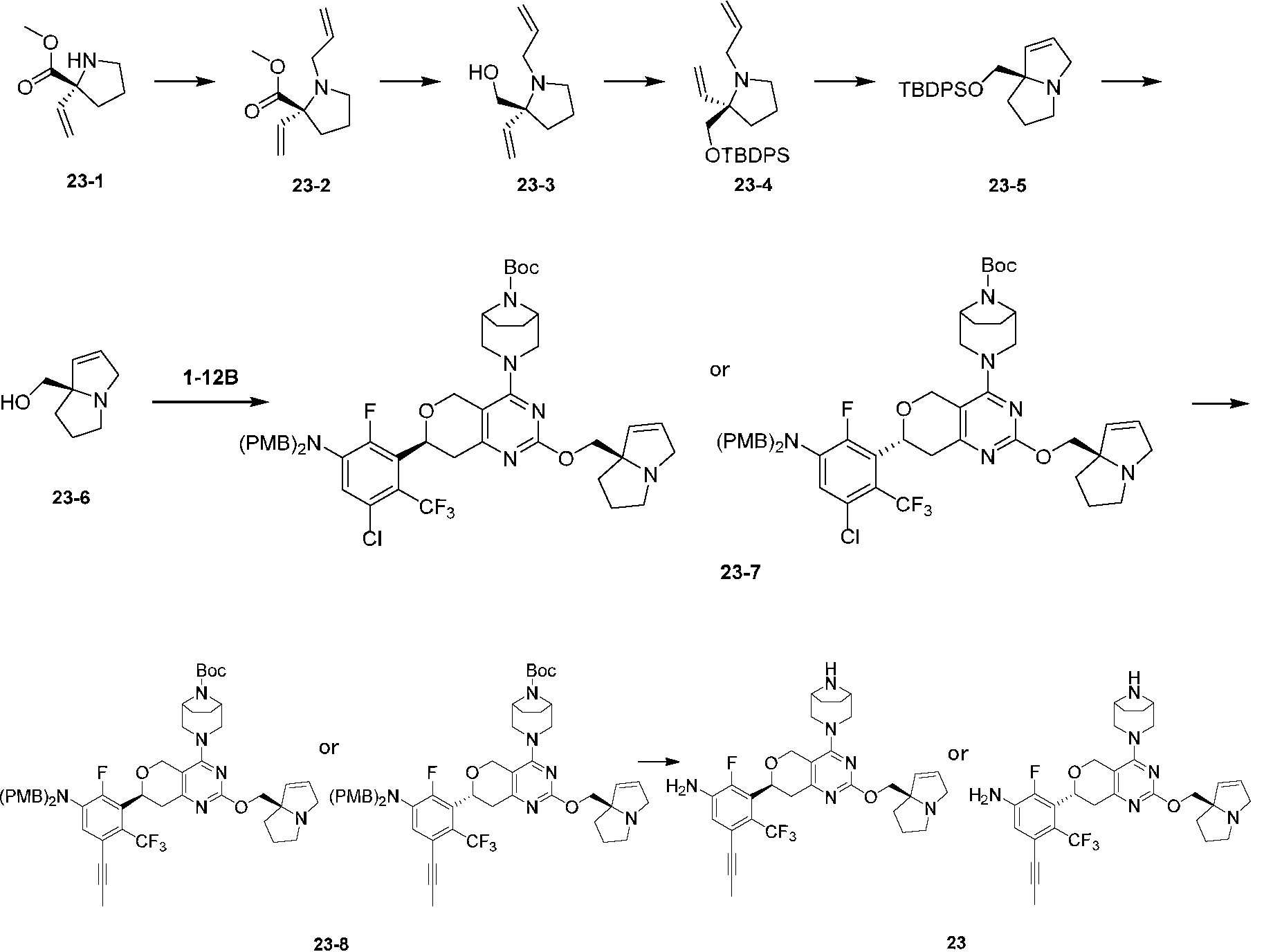
工程1:中間体23-2の合成 Step 1: Synthesis of intermediate 23-2
化合物23-1(5.5g)をDMF(50mL)中に溶解し、炭酸カリウム(15.8g、114mmol)及び化合物臭化アリル(4.17g、34.4mmol)を加えた。混合物を室温で12時間反応させた。水100mLを反応溶液に注いだ。混合物を酢酸エチル(200mL)で3回抽出した。有機相を飽和ブライン(100mL)で洗浄し、無水硫酸ナトリウムで乾燥させ、濾過した。濾液を減圧下で濃縮して粗生成物を得た。粗生成物をカラムクロマトグラフィー(石油エーテル:酢酸エチル=20:1)で精製して、化合物23-2を得た。 Compound 23-1 (5.5 g) was dissolved in DMF (50 mL), and potassium carbonate (15.8 g, 114 mmol) and compound allyl bromide (4.17 g, 34.4 mmol) were added. The mixture was reacted at room temperature for 12 hours. 100 mL of water was poured into the reaction solution. The mixture was extracted three times with ethyl acetate (200 mL). The organic phase was washed with saturated brine (100 mL), dried over anhydrous sodium sulfate, and filtered. The filtrate was concentrated under reduced pressure to obtain the crude product. The crude product was purified by column chromatography (petroleum ether: ethyl acetate = 20:1) to obtain compound 23-2.
工程2:中間体23-3の合成 Step 2: Synthesis of intermediate 23-3
化合物23-2(5.5g、28.1mmol)を無水THF(37.0mL)中に溶解し、水素化リチウムアルミニウム(2.5M、13.5mL)を0℃で加えた。混合物を室温で1時間反応させた。反応溶液に水1.2mL、15%NaOH水溶液1.2mL、最後に水3.6mLを加えた。有機相を無水硫酸ナトリウムで乾燥させ、濾過し、減圧下で濃縮して、次の工程で直接使用する粗生成物を得た。化合物23-3を得た。 Compound 23-2 (5.5 g, 28.1 mmol) was dissolved in anhydrous THF (37.0 mL) and lithium aluminum hydride (2.5 M, 13.5 mL) was added at 0°C. The mixture was reacted at room temperature for 1 hour. To the reaction solution were added 1.2 mL of water, 1.2 mL of 15% aqueous NaOH, and finally 3.6 mL of water. The organic phase was dried over anhydrous sodium sulfate, filtered, and concentrated under reduced pressure to obtain the crude product, which was used directly in the next step. Compound 23-3 was obtained.
工程3:中間体23-4の合成 Step 3: Synthesis of intermediate 23-4
化合物23-3(2.5g)を無水DCM(20.0mL)中に溶解した。イミダゾール(4.07g、59.7mmol)及び4-ジメチルアミノピリジン(182mg、1.49mmol)を加え、次いでtert-ブチルジフェニルシリルクロリド(8.22g、29.9mmol)を0℃で加えた。混合物を室温で12時間反応させた。反応液に水100mLを加えることで反応物をクエンチし、混合物をDCM(100mL)で3回抽出した。有機相を飽和ブライン(100mL)で洗浄し、無水硫酸ナトリウムで乾燥させ、濾過した。濾液を減圧下で濃縮して粗生成物を得た。粗生成物をカラムクロマトグラフィー(石油エーテル:酢酸エチル=10:1)で精製して、化合物23-4を得た。MS m/z=406.2[M+H]+. Compound 23-3 (2.5 g) was dissolved in anhydrous DCM (20.0 mL). Imidazole (4.07 g, 59.7 mmol) and 4-dimethylaminopyridine (182 mg, 1.49 mmol) were added, followed by tert-butyldiphenylsilyl chloride (8.22 g, 29.9 mmol) at 0° C. The mixture was reacted at room temperature for 12 hours. The reaction was quenched by adding 100 mL of water to the reaction solution, and the mixture was extracted three times with DCM (100 mL). The organic phase was washed with saturated brine (100 mL), dried over anhydrous sodium sulfate, and filtered. The filtrate was concentrated under reduced pressure to obtain the crude product. The crude product was purified by column chromatography (petroleum ether:ethyl acetate=10:1) to obtain compound 23-4. MS m/z=406.2 [M+H] + .
工程4:中間体23-5の合成 Step 4: Synthesis of intermediate 23-5
化合物23-4(1.5g、3.70mmol)を無水トルエン(30mL)中に溶解し、グラブス触媒(313.93mg、369.78μmol)を加えた。混合物を120℃で12時間反応させた。反応溶液を減圧下で濃縮して粗生成物を得た。粗生成物を薄プレートクロマトグラフィー(ジクロロメタン:メタノール=10:1)で精製して、化合物23-5を得た。MS m/z=378.2[M+H]+. Compound 23-4 (1.5 g, 3.70 mmol) was dissolved in anhydrous toluene (30 mL) and Grubbs' catalyst (313.93 mg, 369.78 μmol) was added. The mixture was reacted at 120° C. for 12 hours. The reaction solution was concentrated under reduced pressure to obtain a crude product. The crude product was purified by thin plate chromatography (dichloromethane:methanol=10:1) to obtain compound 23-5. MS m/z=378.2 [M+H] + .
工程5:中間体23-6塩酸塩の合成 Step 5: Synthesis of intermediate 23-6 hydrochloride
化合物23-5(200mg、529μmol)を無水ジオキサン(6.0mL)中に溶解し、塩酸(12M、44.1μL)を加えた。混合物を95℃で12時間反応させた。反応溶液に水10mLを加えた。混合物を抽出した。水相を凍結乾燥させて、次の工程で直接使用することができる粗生成物を得た。化合物23-6塩酸塩を得た。 Compound 23-5 (200 mg, 529 μmol) was dissolved in anhydrous dioxane (6.0 mL) and hydrochloric acid (12 M, 44.1 μL) was added. The mixture was reacted at 95°C for 12 hours. 10 mL of water was added to the reaction solution. The mixture was extracted. The aqueous phase was lyophilized to obtain a crude product that can be used directly in the next step. Compound 23-6 hydrochloride was obtained.
工程6:中間体23-7の合成 Step 6: Synthesis of intermediate 23-7
化合物23-6塩酸塩(207mg)を無水トルエン(3mL)中に溶解し、ナトリウムtert-ブトキシド(250mg、2.60mmol)及び化合物1-12B(320mg、371μmol)を加えた。混合物を室温で12時間反応させた。飽和塩化アンモニウム水溶液30mLを反応溶液に注いだ。混合物を酢酸エチル(30mL)で抽出した。有機相を飽和ブライン(20mL)で洗浄し、無水硫酸ナトリウムで乾燥させ、濾過した。濾液を減圧下で濃縮して粗生成物を得た。粗生成物をカラムクロマトグラフィー(ジクロロメタン:メタノール=10:1)で精製して、化合物23-7を得た。MS m/z=935.3[M+H]+. Compound 23-6 hydrochloride (207 mg) was dissolved in anhydrous toluene (3 mL), and sodium tert-butoxide (250 mg, 2.60 mmol) and compound 1-12B (320 mg, 371 μmol) were added. The mixture was reacted at room temperature for 12 hours. 30 mL of saturated aqueous ammonium chloride solution was poured into the reaction solution. The mixture was extracted with ethyl acetate (30 mL). The organic phase was washed with saturated brine (20 mL), dried over anhydrous sodium sulfate, and filtered. The filtrate was concentrated under reduced pressure to obtain the crude product. The crude product was purified by column chromatography (dichloromethane:methanol=10:1) to obtain compound 23-7. MS m/z=935.3 [M+H] + .
工程7:中間体23-8の合成 Step 7: Synthesis of intermediate 23-8
化合物23-7(130mg、138μmol)を無水トルエン(1mL)中に溶解し、1-プロピニルトリ-n-ブチルスズ(182mg、555μmol)及びジクロロビス[ジ-tert-ブチル-(4-ジメチルアミノフェニル)ホスフィン]パラジウム(II)(9.84mg、13.9μmol)を加えた。雰囲気を窒素で3回置換した。混合物を130℃で4時間、窒素下で反応させた。反応溶液を冷却し、減圧下で濃縮して粗生成物を得た。粗生成物を薄プレートクロマトグラフィー(ジクロロメタン:メタノール=10:1)で精製して、化合物23-8を得た。MS m/z=939.4[M+H]+. Compound 23-7 (130 mg, 138 μmol) was dissolved in anhydrous toluene (1 mL), and 1-propynyltri-n-butyltin (182 mg, 555 μmol) and dichlorobis[di-tert-butyl-(4-dimethylaminophenyl)phosphine]palladium(II) (9.84 mg, 13.9 μmol) were added. The atmosphere was replaced with nitrogen three times. The mixture was reacted under nitrogen at 130° C. for 4 hours. The reaction solution was cooled and concentrated under reduced pressure to obtain a crude product. The crude product was purified by thin plate chromatography (dichloromethane:methanol=10:1) to obtain compound 23-8. MS m/z=939.4 [M+H] + .
工程8:化合物23トリフルオロ酢酸塩の合成 Step 8: Synthesis of compound 23 trifluoroacetate
化合物23-8(100mg、106μmol)をジクロロメタン(1.0mL)中に溶解した。トリフルオロ酢酸(182mg、1.60mmol)を加えた。混合物を25℃で0.5時間反応させた。反応溶液を減圧下で濃縮して粗生成物を得た。粗生成物を高速液体クロマトグラフィー(カラム:Phenomenex luna C18 150*25mm*10μm;移動相:[水(0.075%トリフルオロ酢酸)-アセトニトリル];アセトニトリル:9分かけて10%-40%)で精製し、凍結乾燥させて、化合物23トリフルオロ酢酸塩を得た。MS m/z=599.3[M+H]+.1H NMR(400MHz,CD3OD)6.92(d,J=8.4Hz,1H),6.00(d,J=6.4Hz,1H),5.87(td,J=2.4,6.4Hz,1H),5.18(dd,J=4.4,11.2Hz,1H),4.88-4.85(m,1H),4.76-4.70(m,2H),4.61-4.52(m,2H),4.36-4.28(m,1H),4.20-4.11(m,2H),4.04(br d,J=16.0Hz,1H),3.85-3.74(m,2H),3.66(br d,J=13.6Hz,1H),3.35(br d,J=6.4Hz,2H),3.29-3.24(m,1H),2.92(br dd,J=3.6,18.0Hz,1H),2.31-2.09(m,7H),2.04-1.95(m,4H). Compound 23-8 (100 mg, 106 μmol) was dissolved in dichloromethane (1.0 mL). Trifluoroacetic acid (182 mg, 1.60 mmol) was added. The mixture was reacted at 25° C. for 0.5 h. The reaction solution was concentrated under reduced pressure to obtain a crude product. The crude product was purified by high performance liquid chromatography (column: Phenomenex luna C18 150*25 mm*10 μm; mobile phase: [water (0.075% trifluoroacetic acid)-acetonitrile]; acetonitrile: 10%-40% over 9 min) and lyophilized to obtain compound 23 trifluoroacetate. MS m/z=599.3 [M+H] + . 1H NMR (400MHz, CD3 OD) 6.92 (d, J = 8.4Hz, 1H), 6.00 (d, J = 6.4Hz, 1H), 5.87 (td, J = 2.4, 6.4Hz, 1H), 5.18 (dd, J = 4.4, 11.2Hz, 1H ), 4.88-4.85 (m, 1H), 4.76-4.70 (m, 2H), 4.61-4.52 (m, 2H), 4.36-4.28 (m, 1H), 4.20-4.11 (m, 2H), 4.04 (br d, J = 16.0Hz, 1H), 3.85-3.74 (m, 2H), 3.66 (br d, J = 13.6Hz, 1H), 3.35 (br d, J = 6.4Hz, 2H), 3.29-3.24 (m, 1H), 2.92 (br dd, J=3.6, 18.0Hz, 1H), 2.31-2.09 (m, 7H), 2.04-1.95 (m, 4H).
実施例24
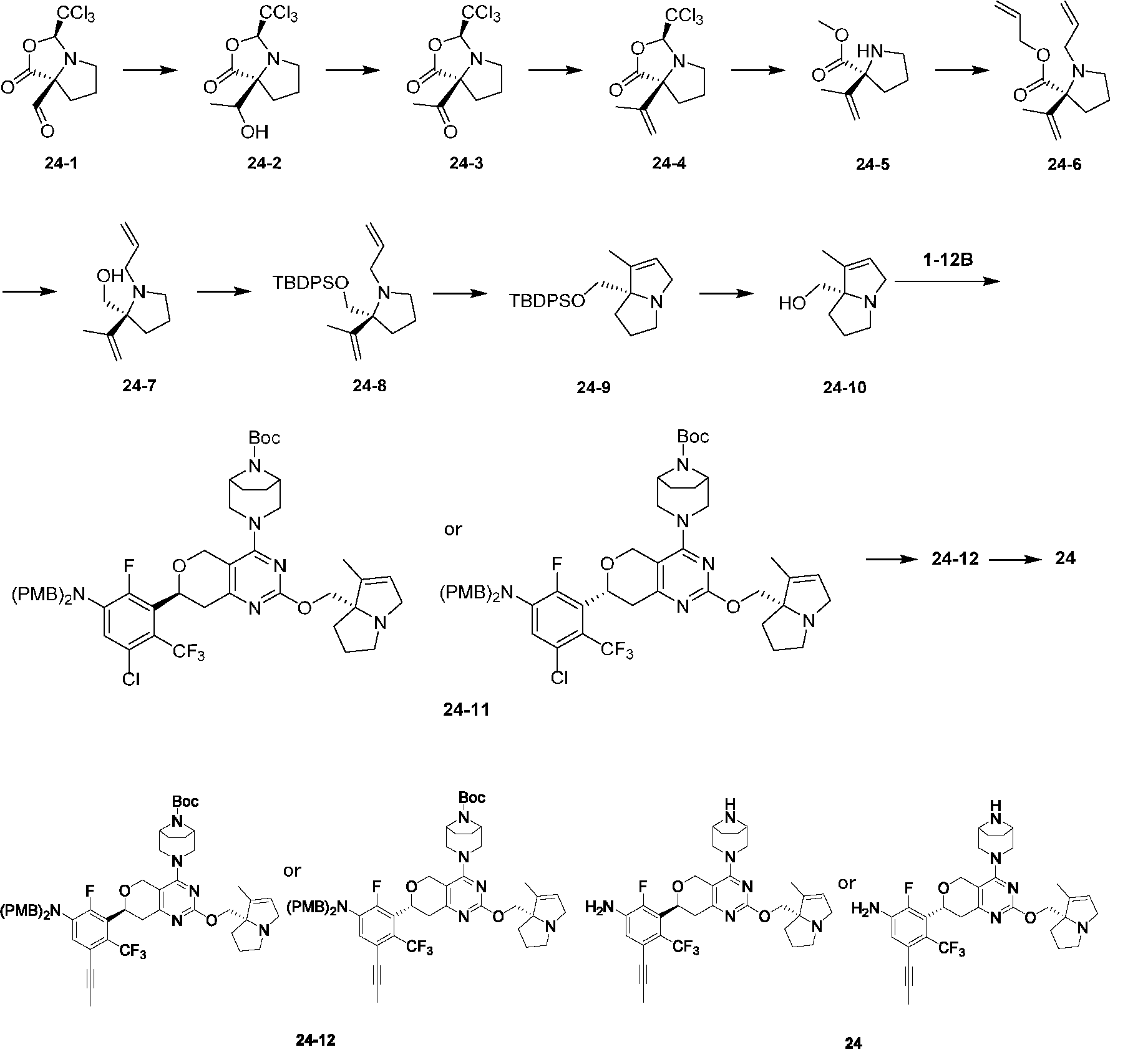
工程1:中間体24-2の合成 Step 1: Synthesis of intermediate 24-2
化合物24-1(54g、198mmol)を無水THF(450mL)中に溶解した。混合物を-78℃に冷却し、メチルマグネシウムブロミド(3M、79.2mL)を滴加した。混合物を-78℃で0.5時間反応させ、次いで室温で12時間反応させた。塩酸(1M)200mLを加えることで反応溶液をクエンチした。混合物を酢酸エチル(200mL)で3回抽出した。有機相を飽和ブライン(100mL)で洗浄し、無水硫酸ナトリウムで乾燥させ、濾過した。濾液を減圧下で濃縮して粗生成物を得た。粗生成物をカラムクロマトグラフィー(石油エーテル:酢酸エチル=5:1)で精製して、化合物24-2を得た。MS m/z=288.0[M+1]+. Compound 24-1 (54 g, 198 mmol) was dissolved in anhydrous THF (450 mL). The mixture was cooled to −78° C., and methylmagnesium bromide (3 M, 79.2 mL) was added dropwise. The mixture was reacted at −78° C. for 0.5 h, then at room temperature for 12 h. The reaction solution was quenched by adding 200 mL of hydrochloric acid (1 M). The mixture was extracted three times with ethyl acetate (200 mL). The organic phase was washed with saturated brine (100 mL), dried over anhydrous sodium sulfate, and filtered. The filtrate was concentrated under reduced pressure to obtain the crude product. The crude product was purified by column chromatography (petroleum ether:ethyl acetate=5:1) to obtain compound 24-2. MS m/z=288.0 [M+1] + .
工程2:中間体24-3の合成 Step 2: Synthesis of intermediate 24-3
化合物24-2(38g、131mmol)を無水DCM(380mL)中に溶解した。デス-マーチン酸化剤(111g、263mmol、81.6mL)を加えた。混合物を室温で4時間反応させた。水200mLを反応溶液に注いだ。混合物を酢酸エチル(200mL)で3回抽出した。有機相を飽和ブライン(100mL)で洗浄し、無水硫酸ナトリウムで乾燥させ、濾過した。濾液を減圧下で濃縮して粗生成物を得た。粗生成物をカラムクロマトグラフィー(石油エーテル:酢酸エチル=5:1)で精製して、化合物24-3を得た。MS m/z=285.9[M+1]+. Compound 24-2 (38 g, 131 mmol) was dissolved in anhydrous DCM (380 mL). Dess-Martin oxidant (111 g, 263 mmol, 81.6 mL) was added. The mixture was reacted at room temperature for 4 hours. 200 mL of water was poured into the reaction solution. The mixture was extracted three times with ethyl acetate (200 mL). The organic phase was washed with saturated brine (100 mL), dried over anhydrous sodium sulfate, and filtered. The filtrate was concentrated under reduced pressure to obtain the crude product. The crude product was purified by column chromatography (petroleum ether:ethyl acetate=5:1) to obtain compound 24-3. MS m/z=285.9 [M+1] + .
工程3:中間体24-4の合成 Step 3: Synthesis of intermediate 24-4
メチルトリフェニルホスフィンブロミド(8.42g、23.5mmol)を無水テトラヒドロフラン(45mL)中に溶解した。混合物を-78℃に冷却した。n-ブチルリチウム(2.5M、9.42mL)を滴加した。混合物を0℃で2時間反応させた。次いで、混合物を-78℃に冷却した。THF(20mL)中に溶解された24-3(4.5g、15.7mmol)を滴加した。混合物を室温で10時間反応させた。HCl(1M)水溶液100mLを反応溶液に注ぎ、混合物をEA(100mL)で3回抽出した。有機相を飽和ブライン(100mL)で洗浄し、無水硫酸ナトリウムで乾燥させ、濾過した。濾液を減圧下で濃縮して粗生成物を得た。粗生成物をカラムクロマトグラフィー(石油エーテル:酢酸エチル=10:1)で精製して、化合物24-4を得た。 Methyltriphenylphosphine bromide (8.42 g, 23.5 mmol) was dissolved in anhydrous tetrahydrofuran (45 mL). The mixture was cooled to -78 ° C. n-Butyl lithium (2.5 M, 9.42 mL) was added dropwise. The mixture was reacted at 0 ° C for 2 h. Then the mixture was cooled to -78 ° C. 24-3 (4.5 g, 15.7 mmol) dissolved in THF (20 mL) was added dropwise. The mixture was reacted at room temperature for 10 h. 100 mL of aqueous HCl (1 M) was poured into the reaction solution, and the mixture was extracted three times with EA (100 mL). The organic phase was washed with saturated brine (100 mL), dried over anhydrous sodium sulfate, and filtered. The filtrate was concentrated under reduced pressure to obtain the crude product. The crude product was purified by column chromatography (petroleum ether: ethyl acetate = 10: 1) to obtain compound 24-4.
工程4:中間体24-5塩酸塩の合成 Step 4: Synthesis of intermediate 24-5 hydrochloride
化合物24-4(5.5g、19.3mmol)を塩酸のメタノール溶液(4M、61.1mL)中に溶解した。混合物を室温で12時間反応させた。反応溶液を減圧下で濃縮して、化合物24-5塩酸塩を得た。MS m/z=170.1[M+1]+. Compound 24-4 (5.5 g, 19.3 mmol) was dissolved in a solution of hydrochloric acid in methanol (4 M, 61.1 mL). The mixture was reacted at room temperature for 12 hours. The reaction solution was concentrated under reduced pressure to give compound 24-5 hydrochloride salt. MS m/z=170.1 [M+1] + .
工程5:中間体24-6の合成 Step 5: Synthesis of intermediate 24-6
化合物24-5塩酸塩(4.5g)をDMF(40mL)中に溶解し、炭酸カリウム(14.7g、106mmol)及び臭化アリル(3.86g、31.9mmol)を加えた。混合物を室温で1.5時間反応させた。水100mLを反応溶液に注ぎ、混合物を酢酸エチル(200mL)で3回抽出した。有機相を飽和ブライン(100mL)で洗浄し、無水硫酸ナトリウムで乾燥させ、濾過した。濾液を減圧下で濃縮して粗生成物を得た。粗生成物をカラムクロマトグラフィー(石油エーテル:酢酸エチル=10:1)で精製して、化合物24-6を得た。 Compound 24-5 hydrochloride (4.5 g) was dissolved in DMF (40 mL), and potassium carbonate (14.7 g, 106 mmol) and allyl bromide (3.86 g, 31.9 mmol) were added. The mixture was reacted at room temperature for 1.5 hours. 100 mL of water was poured into the reaction solution, and the mixture was extracted three times with ethyl acetate (200 mL). The organic phase was washed with saturated brine (100 mL), dried over anhydrous sodium sulfate, and filtered. The filtrate was concentrated under reduced pressure to obtain the crude product. The crude product was purified by column chromatography (petroleum ether:ethyl acetate=10:1) to obtain compound 24-6.
工程6:中間体24-7の合成 Step 6: Synthesis of intermediate 24-7
化合物24-6(2.5g、11.9mmol)を無水テトラヒドロフラン(20.0mL)中に溶解し、水素化リチウムアルミニウム(2.5M、6.32mL)を0℃で加えた。混合物を室温で1時間反応させた。反応溶液に水0.6mL、15%水酸化ナトリウム水溶液0.6mL、最後に水1.8mLを加えた。混合物を無水硫酸ナトリウムで乾燥させ、濾過し、減圧下で濃縮して、粗化合物24-7を得た。MS m/z=182.1[M+H]+. Compound 24-6 (2.5 g, 11.9 mmol) was dissolved in anhydrous tetrahydrofuran (20.0 mL) and lithium aluminum hydride (2.5 M, 6.32 mL) was added at 0° C. The mixture was reacted at room temperature for 1 hour. To the reaction solution, 0.6 mL of water, 0.6 mL of 15% aqueous sodium hydroxide solution, and finally 1.8 mL of water were added. The mixture was dried over anhydrous sodium sulfate, filtered, and concentrated under reduced pressure to give crude compound 24-7. MS m/z=182.1 [M+H] + .
工程7:中間体24-8の合成 Step 7: Synthesis of intermediate 24-8
化合物24-7(2.3g)を無水ジクロロメタン(23.0mL)中に溶解した。イミダゾール(3.46g、50.7mmol)、4-ジメチルアミノピリジン(155mg、1.27mmol)を加え、次いでtert-ブチルジフェニルシリルクロリド(6.97g、25.3mmol)を0℃で加えた。混合物を室温で12時間反応させた。水50mLを反応溶液に注いだ。混合物を酢酸エチル(100mL)で3回抽出した。有機相を飽和ブライン(10mL)で洗浄し、無水硫酸ナトリウムで乾燥させ、濾過した。濾液を減圧下で濃縮して粗生成物を得た。粗生成物をカラムクロマトグラフィー(石油エーテル:酢酸エチル=10:1)で精製して、化合物24-8を得た。MS m/z=420.3[M+H]+. Compound 24-7 (2.3 g) was dissolved in anhydrous dichloromethane (23.0 mL). Imidazole (3.46 g, 50.7 mmol), 4-dimethylaminopyridine (155 mg, 1.27 mmol) were added, followed by tert-butyldiphenylsilyl chloride (6.97 g, 25.3 mmol) at 0° C. The mixture was reacted at room temperature for 12 hours. 50 mL of water was poured into the reaction solution. The mixture was extracted three times with ethyl acetate (100 mL). The organic phase was washed with saturated brine (10 mL), dried over anhydrous sodium sulfate, and filtered. The filtrate was concentrated under reduced pressure to obtain the crude product. The crude product was purified by column chromatography (petroleum ether:ethyl acetate=10:1) to obtain compound 24-8. MS m/z=420.3 [M+H] + .
工程8:中間体24-9の合成 Step 8: Synthesis of intermediate 24-9
化合物24-8(2.5g、5.96mmol)を無水トルエン(50mL)中に溶解し、グラブス触媒(1.01g、1.19mmol)を加えた。混合物を120℃で12時間反応させた。反応溶液を減圧下で濃縮して粗生成物を得た。粗生成物をカラムクロマトグラフィー(ジクロロメタン:メタノール=20:1)で精製して、化合物24-9を得た。MS m/z=392.2[M+H]+. Compound 24-8 (2.5 g, 5.96 mmol) was dissolved in anhydrous toluene (50 mL) and Grubbs' catalyst (1.01 g, 1.19 mmol) was added. The mixture was reacted at 120° C. for 12 hours. The reaction solution was concentrated under reduced pressure to obtain a crude product. The crude product was purified by column chromatography (dichloromethane:methanol=20:1) to obtain compound 24-9. MS m/z=392.2 [M+H] + .
工程9:中間体24-10の合成 Step 9: Synthesis of intermediate 24-10
化合物24-9(1.00g、2.55mmol)を無水ジオキサン(6.0mL)中に溶解し、塩酸(12M、212μL)を加えた。混合物を95℃で12時間反応させた。水10mLを反応溶液に加えた。混合物を酢酸エチル(20mL*3)で抽出した。水相を凍結乾燥させて、粗化合物24-10を得た。 Compound 24-9 (1.00 g, 2.55 mmol) was dissolved in anhydrous dioxane (6.0 mL) and hydrochloric acid (12 M, 212 μL) was added. The mixture was reacted at 95°C for 12 hours. 10 mL of water was added to the reaction solution. The mixture was extracted with ethyl acetate (20 mL*3). The aqueous phase was lyophilized to obtain crude compound 24-10.
工程10:中間体24-11の合成 Step 10: Synthesis of intermediate 24-11
化合物24-10(92.6mg)を無水トルエン(3mL)中に溶解した。ナトリウムtert-ブトキシド(101mg、1.06mmol)及び化合物1-12B(130mg、151μmol)を加えた。混合物を95℃で12時間反応させた。反応溶液を減圧下で濃縮して粗生成物を得た。粗生成物をカラムクロマトグラフィー(ジクロロメタン:メタノール=10:1)で精製して、化合物24-11を得た。 Compound 24-10 (92.6 mg) was dissolved in anhydrous toluene (3 mL). Sodium tert-butoxide (101 mg, 1.06 mmol) and compound 1-12B (130 mg, 151 μmol) were added. The mixture was reacted at 95°C for 12 hours. The reaction solution was concentrated under reduced pressure to obtain a crude product. The crude product was purified by column chromatography (dichloromethane:methanol = 10:1) to obtain compound 24-11.
工程11:中間体24-12の合成 Step 11: Synthesis of intermediate 24-12
化合物24-11(89mg、93.7μmol)を無水トルエン(1mL)中に溶解し、1-プロピニルトリ-n-ブチルスズ(123mg、374μmol)及びジクロロビス[ジ-tert-ブチル-(4-ジメチルアミノフェニル)ホスフィン]パラジウム(II)(6.64mg、9.37μmol)を加えた。雰囲気を窒素で3回置換した。混合物を130℃で0.5時間、窒素下で反応させた。反応溶液を冷却し、減圧下で濃縮して粗生成物を得た。粗生成物を薄プレートクロマトグラフィー(ジクロロメタン:メタノール=10:1)で精製して、化合物24-12を得た。 Compound 24-11 (89 mg, 93.7 μmol) was dissolved in anhydrous toluene (1 mL), and 1-propynyltri-n-butyltin (123 mg, 374 μmol) and dichlorobis[di-tert-butyl-(4-dimethylaminophenyl)phosphine]palladium(II) (6.64 mg, 9.37 μmol) were added. The atmosphere was replaced with nitrogen three times. The mixture was reacted under nitrogen at 130°C for 0.5 h. The reaction solution was cooled and concentrated under reduced pressure to obtain the crude product. The crude product was purified by thin plate chromatography (dichloromethane:methanol=10:1) to obtain compound 24-12.
工程12:化合物24トリフルオロ酢酸塩の合成 Step 12: Synthesis of compound 24 trifluoroacetate
化合物24-12(90mg、94.4μmol)をジクロロメタン(1.0mL)中に溶解した。トリフルオロ酢酸(161mg、1.42mmol)を加えた。混合物を25℃で1.5時間反応させた。反応溶液を減圧下で濃縮して粗生成物を得た。粗生成物を高速液体クロマトグラフィー(カラム:Phenomenex luna C18 150*25mm*10μm;移動相:[水(0.075%トリフルオロ酢酸)-アセトニトリル];アセトニトリル:7分かけて20%-50%)で精製し、凍結乾燥させて、化合物24トリフルオロ酢酸塩を得た。MS m/z=613.2[M+H]+.1H NMR(400MHz,METHANOL-d4)6.92(d,J=8.2Hz,1H),5.61(d,J=1.4Hz,1H),5.18(br dd,J=4.4,11.6Hz,1H),4.91-4.89(m,2H),4.86-4.82(m,1H),4.80-4.70(m,2H),4.51-4.41(m,2H),4.29(br d,J=14.0Hz,1H),4.19-4.10(m,2H),3.91(br d,J=15.2Hz,1H),3.85-3.74(m,2H),3.63(br d,J=14.4Hz,1H),3.27(br d,J=5.2Hz,2H),2.95(br d,J=1.2Hz,1H),2.28-2.08(m,7H),2.02(s,3H),1.83(d,J=1.6Hz,3H). Compound 24-12 (90 mg, 94.4 μmol) was dissolved in dichloromethane (1.0 mL). Trifluoroacetic acid (161 mg, 1.42 mmol) was added. The mixture was reacted at 25° C. for 1.5 hours. The reaction solution was concentrated under reduced pressure to obtain a crude product. The crude product was purified by high performance liquid chromatography (column: Phenomenex luna C18 150*25 mm*10 μm; mobile phase: [water (0.075% trifluoroacetic acid)-acetonitrile]; acetonitrile: 20%-50% over 7 min) and lyophilized to obtain compound 24 trifluoroacetate. MS m/z=613.2 [M+H] + . 1H NMR (400MHz, METHANOL-d4) 6.92 (d, J = 8.2Hz, 1H), 5.61 (d, J = 1.4Hz, 1H), 5.18 (br dd. d, J = 14.0Hz, 1H), 4.19-4.10 (m, 2H), 3.91 (br d, J = 15.2Hz, 1H), 3.85-3.74 (m, 2H), 3.63 (br d.
実施例25

工程1:中間体25-2の合成 Step 1: Synthesis of intermediate 25-2
化合物25-1(9.80g、43.5mmol)を無水DMF(98mL)中に溶解し、次いでp-メトキシベンジルクロリド(8.17g、52.2mmol)、ヨウ化カリウム(7.22g、43.5mmol)及び炭酸カリウム(15.0g、109mmol)を加えた。混合物を50℃で12時間反応させた。水50.0mLを反応溶液に注ぎ、混合物を酢酸エチル(150mL)で抽出した。有機相を飽和ブライン(100mL)で洗浄し、無水硫酸ナトリウムで乾燥させ、濾過した。濾液を減圧下で濃縮して粗生成物を得た。粗生成物をカラムクロマトグラフィー(石油エーテル:酢酸エチル=10:1)で精製して、化合物25-2を得た。MS m/z=345.6[M+H]+. Compound 25-1 (9.80 g, 43.5 mmol) was dissolved in anhydrous DMF (98 mL), and then p-methoxybenzyl chloride (8.17 g, 52.2 mmol), potassium iodide (7.22 g, 43.5 mmol) and potassium carbonate (15.0 g, 109 mmol) were added. The mixture was reacted at 50° C. for 12 hours. 50.0 mL of water was poured into the reaction solution, and the mixture was extracted with ethyl acetate (150 mL). The organic phase was washed with saturated brine (100 mL), dried over anhydrous sodium sulfate and filtered. The filtrate was concentrated under reduced pressure to obtain the crude product. The crude product was purified by column chromatography (petroleum ether:ethyl acetate=10:1) to obtain compound 25-2. MS m/z=345.6 [M+H] + .
工程2:中間体25-3の合成 Step 2: Synthesis of intermediate 25-3
2,2,6,6-テトラメチルピペリジン(21.3g、150mmol)をテトラヒドロフラン(130mL)中に溶解し、雰囲気を窒素で3回置換した。混合物を-5℃に冷却し、n-ブチルリチウム(2.50M、60.2mL)を滴加し、0.5時間撹拌した。次いで、混合物を-60℃に冷却し、化合物25-2(13.0g、37.6mmol)を加えた。混合物を0.5時間撹拌した。次いで、DMF(55.0g、752mmol)を-60℃で加え、混合物を0.5時間撹拌した。0℃で飽和塩化アンモニウム溶液200mLを加えることで反応物をクエンチした。混合物を酢酸エチル(300mL)で抽出した。有機相を飽和ブライン(300mL)で洗浄し、無水硫酸ナトリウムで乾燥させ、濾過した。濾液を減圧下で濃縮して粗生成物を得た。粗生成物をカラムクロマトグラフィー(石油エーテル:酢酸エチル=50:1)で精製して、化合物25-3を得た。MS m/z=373.28[M+H]+. 2,2,6,6-Tetramethylpiperidine (21.3 g, 150 mmol) was dissolved in tetrahydrofuran (130 mL) and the atmosphere was flushed with nitrogen three times. The mixture was cooled to −5° C. and n-butyllithium (2.50 M, 60.2 mL) was added dropwise and stirred for 0.5 h. The mixture was then cooled to −60° C. and compound 25-2 (13.0 g, 37.6 mmol) was added. The mixture was stirred for 0.5 h. DMF (55.0 g, 752 mmol) was then added at −60° C. and the mixture was stirred for 0.5 h. The reaction was quenched by the addition of 200 mL of saturated ammonium chloride solution at 0° C. The mixture was extracted with ethyl acetate (300 mL). The organic phase was washed with saturated brine (300 mL), dried over anhydrous sodium sulfate and filtered. The filtrate was concentrated under reduced pressure to give the crude product. The crude product was purified by column chromatography (petroleum ether:ethyl acetate=50:1) to give compound 25-3. MS m/z=373.28 [M+H] + .
工程3:中間体25-4の合成 Step 3: Synthesis of intermediate 25-4
化合物25-3(4.9g、13.12mmol)、ヨウ化銅(5.00g、26.23mmol)及びメチル2,2-ジフルオロ-2-フルオロスルホニルアセテート(9.57g、49.84mmol)をDMF(50mL)に溶解した。雰囲気を窒素で3回置換した。混合物を110℃で2.5時間反応させた。反応溶液を冷却し、Celite(登録商標)パッドに通して濾過した。水(100mL)を有機相に加えた。混合物を酢酸エチル(100mL)で1回抽出した。有機相を飽和ブライン(100mL)で6回洗浄し、無水硫酸ナトリウムで乾燥させ、濾過した。濾液を減圧下で濃縮して粗生成物を得た。粗生成物をカラムクロマトグラフィー(石油エーテル:酢酸エチル=20:1)で精製して、化合物25-4を得た。1H NMR(CDCl3,400MHz)10.29(q,J=4.25Hz,1H),7.35(d,J=8.63Hz,2H),7.21(d,J=7.25Hz,1H),7.00-6.90(m,2H),5.14(s,2H),3.84(s,3H). Compound 25-3 (4.9 g, 13.12 mmol), copper iodide (5.00 g, 26.23 mmol) and methyl 2,2-difluoro-2-fluorosulfonyl acetate (9.57 g, 49.84 mmol) were dissolved in DMF (50 mL). The atmosphere was replaced with nitrogen three times. The mixture was reacted at 110° C. for 2.5 hours. The reaction solution was cooled and filtered through a Celite® pad. Water (100 mL) was added to the organic phase. The mixture was extracted once with ethyl acetate (100 mL). The organic phase was washed six times with saturated brine (100 mL), dried over anhydrous sodium sulfate and filtered. The filtrate was concentrated under reduced pressure to give the crude product. The crude product was purified by column chromatography (petroleum ether:ethyl acetate=20:1) to give compound 25-4. 1H NMR ( CDCl3 , 400MHz) 10.29 (q, J = 4.25Hz, 1H), 7.35 (d, J = 8.63Hz, 2H), 7.21 (d, J = 7.25Hz, 1H), 7.00-6.90 (m, 2H), 5.14 (s, 2H), 3.84 (s, 3H).
工程4:中間体25-5の合成 Step 4: Synthesis of intermediate 25-5
2,2,6,6-テトラメチルピペリジン(3.68g、26.02mmol、4.42mL)をTHF(30mL)中に溶解した。雰囲気を窒素で3回置換した。混合物を-40℃に冷却し、n-ブチルリチウム(2.5M、10.06mL)をゆっくりと滴加した。混合物を-40℃で0.5時間反応させた。反応系を-60℃に冷却した。上記反応溶液に3-8(3.3g、8.67mmol)のTHF(10mL)溶液をゆっくりと滴加した。混合物を-40℃に加温し、15分間反応させた。次いで、上記反応溶液に化合物25-4(3.77g、10.41mmol)を何回かに分けて加え、混合物を室温で2時間反応させた。飽和塩化アンモニウム水溶液(50mL)を加えることで反応溶液をクエンチし、混合物を酢酸エチル(50mL)で2回抽出した。有機相を飽和ブライン(100mL)で2回洗浄し、無水硫酸ナトリウムで乾燥させ、濾過した。濾液を減圧下で濃縮して粗生成物を得た。石油エーテルと酢酸エチルの混合溶液(石油エーテル:酢酸エチル=5:1)(20mL)を粗生成物に加え、混合物を12時間撹拌した。固体を濾過で回収して、化合物25-5を得た。 2,2,6,6-Tetramethylpiperidine (3.68 g, 26.02 mmol, 4.42 mL) was dissolved in THF (30 mL). The atmosphere was replaced with nitrogen three times. The mixture was cooled to -40°C, and n-butyllithium (2.5 M, 10.06 mL) was slowly added dropwise. The mixture was reacted at -40°C for 0.5 h. The reaction system was cooled to -60°C. A solution of 3-8 (3.3 g, 8.67 mmol) in THF (10 mL) was slowly added dropwise to the reaction solution. The mixture was warmed to -40°C and reacted for 15 min. Compound 25-4 (3.77 g, 10.41 mmol) was then added in portions to the reaction solution, and the mixture was reacted at room temperature for 2 h. The reaction solution was quenched by adding saturated aqueous ammonium chloride (50 mL), and the mixture was extracted twice with ethyl acetate (50 mL). The organic phase was washed twice with saturated brine (100 mL), dried over anhydrous sodium sulfate, and filtered. The filtrate was concentrated under reduced pressure to obtain the crude product. A mixture of petroleum ether and ethyl acetate (petroleum ether:ethyl acetate=5:1) (20 mL) was added to the crude product, and the mixture was stirred for 12 hours. The solid was collected by filtration to obtain compound 25-5.
工程5:中間体25-6の合成 Step 5: Synthesis of intermediate 25-6
化合物25-5(2.7g、3.63mmol)及びシアノメチレントリブチルホスホラン(1.75g、7.27mmol)をトルエン(27mL)中に溶解した。雰囲気を窒素で置換した。混合物を110℃で12時間反応させた。塩化アンモニウム水溶液50mLを反応溶液に注ぎ、混合物を酢酸エチル(50mL)で2回抽出した。有機相を飽和ブライン(100mL)で2回洗浄し、無水硫酸ナトリウムで乾燥させ、濾過した。濾液を減圧下で濃縮して粗生成物を得た。粗生成物をカラムクロマトグラフィー(石油エーテル:酢酸エチル=10:1)で精製して、化合物25-6を得た。MS m/z=725.3[M+H]+. Compound 25-5 (2.7 g, 3.63 mmol) and cyanomethylenetributylphosphorane (1.75 g, 7.27 mmol) were dissolved in toluene (27 mL). The atmosphere was replaced with nitrogen. The mixture was reacted at 110° C. for 12 hours. 50 mL of aqueous ammonium chloride solution was poured into the reaction solution, and the mixture was extracted twice with ethyl acetate (50 mL). The organic phase was washed twice with saturated brine (100 mL), dried over anhydrous sodium sulfate, and filtered. The filtrate was concentrated under reduced pressure to obtain a crude product. The crude product was purified by column chromatography (petroleum ether:ethyl acetate=10:1) to obtain compound 25-6. MS m/z=725.3 [M+H] + .
工程6:中間体25-7の合成 Step 6: Synthesis of intermediate 25-7
化合物25-6(1.5g、2.07mmol)を無水DCM(15.0mL)中に溶解し、メタクロロ過安息香酸(461.92mg、2.28mmol、純度85%)を0℃で何回かに分けて加えた。混合物を室温で一晩反応させた。反応溶液を直接ブレンドし、カラムクロマトグラフィー(石油エーテル:酢酸エチル=1:1)で精製して、化合物25-7を得た。MS m/z=741.3[M+H]+. Compound 25-6 (1.5 g, 2.07 mmol) was dissolved in anhydrous DCM (15.0 mL) and metachloroperbenzoic acid (461.92 mg, 2.28 mmol, 85% purity) was added in portions at 0° C. The mixture was reacted at room temperature overnight. The reaction solution was directly blended and purified by column chromatography (petroleum ether:ethyl acetate=1:1) to give compound 25-7. MS m/z=741.3 [M+H] + .
工程7:中間体25-8の合成 Step 7: Synthesis of intermediate 25-8
化合物25-7(1.9g、2.56mmol)を無水トルエン(19mL)中に溶解し、化合物1-2A(816.20mg、5.13mmol)、ナトリウムtert-ブトキシド(985.42mg、10.25mmol)及び4Aモレキュラーシーブ(1g)を加えた。雰囲気を窒素で置換した。混合物を100℃で12時間反応させた。反応溶液を減圧下で濃縮して粗生成物を得た。粗生成物をカラムクロマトグラフィー(石油エーテル:酢酸エチル=1:1)で精製して、化合物25-8を得た。MS m/z=836.5[M+H]+. Compound 25-7 (1.9 g, 2.56 mmol) was dissolved in anhydrous toluene (19 mL), and compound 1-2A (816.20 mg, 5.13 mmol), sodium tert-butoxide (985.42 mg, 10.25 mmol) and 4A molecular sieves (1 g) were added. The atmosphere was replaced with nitrogen. The mixture was reacted at 100° C. for 12 hours. The reaction solution was concentrated under reduced pressure to obtain a crude product. The crude product was purified by column chromatography (petroleum ether:ethyl acetate=1:1) to obtain compound 25-8. MS m/z=836.5 [M+H] + .
工程8:中間体25-9の合成 Step 8: Synthesis of intermediate 25-9
化合物25-8(1.50g、1.79mmol)を無水トルエン(15mL)中に溶解し、1-プロピニルトリ-n-ブチルスズ(2.36g、7.17mmol)及びジクロロビス[ジ-tert-ブチル-(4-ジメチルアミノフェニル)ホスフィン]パラジウム(II)(381.01mg、538.09μmol)を加えた。雰囲気を窒素で3回置換した。混合物を110℃で12時間、窒素下で反応させた。反応溶液を冷却し、減圧下で濃縮して粗生成物を得た。粗生成物をカラムクロマトグラフィー(石油エーテル:酢酸エチル=1:1)で精製して、化合物25-9を得た。MS m/z=840.3[M+H]+. Compound 25-8 (1.50 g, 1.79 mmol) was dissolved in anhydrous toluene (15 mL), and 1-propynyltri-n-butyltin (2.36 g, 7.17 mmol) and dichlorobis[di-tert-butyl-(4-dimethylaminophenyl)phosphine]palladium(II) (381.01 mg, 538.09 μmol) were added. The atmosphere was replaced with nitrogen three times. The mixture was reacted under nitrogen at 110° C. for 12 hours. The reaction solution was cooled and concentrated under reduced pressure to obtain the crude product. The crude product was purified by column chromatography (petroleum ether:ethyl acetate=1:1) to obtain compound 25-9. MS m/z=840.3 [M+H] + .
工程9:化合物25の合成 Step 9: Synthesis of compound 25
化合物25-9(1.27g、1.51mmol)をジクロロメタン(13mL)中に溶解した。トリフルオロ酢酸(3.99g、35.00mmol)を加えた。混合物を20℃で3時間反応させた。反応溶液を飽和炭酸水素ナトリウム水溶液でpH7に調整した。混合物を減圧下で濃縮して粗生成物を得た。粗生成物を高速液体クロマトグラフィー(カラム:Kromasil Eternity XT 250*80mm*10μm;移動相:[水(0.1%アンモニア水)-アセトニトリル];アセトニトリル:20分かけて10%-40%)で精製し、凍結乾燥させて、化合物25を得た。MS m/z=620.4[M+H]+. Compound 25-9 (1.27 g, 1.51 mmol) was dissolved in dichloromethane (13 mL). Trifluoroacetic acid (3.99 g, 35.00 mmol) was added. The mixture was reacted at 20° C. for 3 hours. The reaction solution was adjusted to pH 7 with saturated aqueous sodium bicarbonate. The mixture was concentrated under reduced pressure to obtain the crude product. The crude product was purified by high performance liquid chromatography (column: Kromasil Eternity XT 250*80 mm*10 μm; mobile phase: [water (0.1% aqueous ammonia)-acetonitrile]; acetonitrile: 10%-40% over 20 min) and lyophilized to obtain compound 25. MS m/z=620.4 [M+H] + .
工程10:化合物25A及び25Bの合成 Step 10: Synthesis of compounds 25A and 25B
化合物25をSFC(カラム:DAICEL CHIRALPAK IC(250mm*30mm、10μm);移動相:[超臨界CO2-エタノール(0.1%アンモニア)];エタノール(0.1%アンモニア水)%:50%-50%)で分離して、化合物25A及び化合物25Bを得た。 Compound 25 was separated by SFC (column: DAICEL CHIRALPAK IC (250 mm*30 mm, 10 μm); mobile phase: [supercritical CO 2 -ethanol (0.1% ammonia)]; ethanol (0.1% aqueous ammonia) %: 50%-50%) to give Compound 25A and Compound 25B.
化合物25A:キラルSFC分析(クロマトグラフィーカラム:Chiral Pak IC-3(100mm*4.6mm、3μm);移動相:[超臨界CO2-エタノール(0.05%ジエチルアミン)];(エタノール(0.05%ジエチルアミン))%:40%-40%)、Rt=0.695分、ee値99%、MS m/z=620.2[M+H]+;1H NMR(CDCl3,400MHz)δ7.07(d,J=8.13Hz,1H),5.30-5.04(m,2H),4.78-4.59(m,2H),4.13-3.89(m,3H),3.56(br s,2H),3.45-2.77(m,12H),2.29-2.05(m,3H),2.01-1.57(m,8H). Compound 25A: Chiral SFC analysis (chromatographic column: Chiral Pak IC-3 (100 mm*4.6 mm, 3 μm); mobile phase: [supercritical CO 2 -ethanol (0.05% diethylamine)]; (ethanol (0.05% diethylamine))%: 40%-40%), Rt=0.695 min, ee value 99%, MS m/z=620.2 [M+H] + ; 1 H NMR (CDCl 3 , 400 MHz) δ 7.07 (d, J=8.13 Hz, 1H), 5.30-5.04 (m, 2H), 4.78-4.59 (m, 2H), 4.13-3.89 (m, 3H), 3.56 (br s, 2H), 3.45-2.77 (m, 12H), 2.29-2.05 (m, 3H), 2.01-1.57 (m, 8H).
化合物25B:キラルSFC分析(クロマトグラフィーカラム:Chiral Pak IC-3(100mm*4.6mm、3μm);移動相:[超臨界CO2-エタノール(0.05%ジエチルアミン)];(エタノール(0.05%ジエチルアミン))%:40%-40%)、Rt=1.229分、ee値99%、MS m/z=620.2[M+H]+.1H NMR(DMSO-d6,400MHz)9.44-8.91(m,2H),7.12(br d,J=8.25Hz,1H),5.68-5.45(m,1H),5.12(br dd,J=10.88,3.75Hz,1H),4.95-4.63(m,2H),4.45(s,2H),4.31-4.01(m,3H),3.95-3.51(m,6H),3.39-3.09(m,3H),2.99-2.81(m,1H),2.54(br d,J=4.38Hz,1H),2.44(br s,1H),2.35-2.24(m,1H),2.23-2.06(m,4H),1.99-1.87(m,2H),1.87-1.72(m,1H). Compound 25B: Chiral SFC analysis (chromatographic column: Chiral Pak IC-3 (100 mm*4.6 mm, 3 μm); mobile phase: [supercritical CO 2 -ethanol (0.05% diethylamine)]; (ethanol (0.05% diethylamine))%: 40%-40%), Rt=1.229 min, ee value 99%, MS m/z=620.2 [M+H] + . 1H NMR (DMSO-d6, 400MHz) 9.44-8.91 (m, 2H), 7.12 (br d, J = 8.25Hz, 1H), 5.68-5.45 (m, 1H), 5.12 (br dd, J = 10.88, 3.75Hz, 1H), 4.95-4.63 (m, 2H), 4.45 (s, 2H), 4.31-4.01 (m , 3H), 3.95-3.51 (m, 6H), 3.39-3.09 (m, 3H), 2.99-2.81 (m, 1H), 2.54 (br d, J=4.38Hz, 1H), 2.44(br s, 1H), 2.35-2.24 (m, 1H), 2.23-2.06 (m, 4H), 1.99-1.87 (m, 2H), 1.87-1.72 (m, 1H).
実施例26


工程1:中間体26-2の合成 Step 1: Synthesis of intermediate 26-2
化合物26-1(5.00g、30.6mmol)を無水ジクロロメタン(50.0mL)中に溶解し、NBS(6.53g、36.7mmol)を加えた。混合物を室温で1時間反応させた。水50.0mLを反応溶液に加えた。混合物をジクロロメタン(150mL)で抽出した。有機相を飽和ブライン(150mL)で洗浄し、無水硫酸ナトリウムで乾燥させ、濾過した。濾液を減圧下で濃縮して粗生成物を得た。粗生成物をカラムクロマトグラフィー(石油エーテル:酢酸エチル=20:1)で精製して、化合物26-2を得た。1H NMR(400MHz,CDCl3)δ ppm7.14(dd,J=9.88,2.25Hz,1H)3.60-4.02(m,2H). Compound 26-1 (5.00 g, 30.6 mmol) was dissolved in anhydrous dichloromethane (50.0 mL) and NBS (6.53 g, 36.7 mmol) was added. The mixture was reacted at room temperature for 1 hour. 50.0 mL of water was added to the reaction solution. The mixture was extracted with dichloromethane (150 mL). The organic phase was washed with saturated brine (150 mL), dried over anhydrous sodium sulfate, and filtered. The filtrate was concentrated under reduced pressure to obtain the crude product. The crude product was purified by column chromatography (petroleum ether:ethyl acetate=20:1) to obtain compound 26-2. 1 H NMR (400 MHz, CDCl 3 ) δ ppm 7.14 (dd, J=9.88, 2.25 Hz, 1H) 3.60-4.02 (m, 2H).
工程2:中間体26-3の合成 Step 2: Synthesis of intermediate 26-3
化合物26-2(5.60g、23.1mmol)及びp-メトキシベンジルクロリド(8.68g、55.4mmol)を無水DMF(56.0mL)中に溶解し、ヨウ化カリウム(3.83g、23.1mmol)及び炭酸カリウム(7.98g、57.7mmol)を加えた。混合物を80℃で2時間反応させた。水100mLを反応溶液に注ぎ、酢酸エチル(150mL)で抽出した。有機相を飽和ブライン(100mL)で洗浄し、無水硫酸ナトリウムで乾燥させ、濾過した。濾液を減圧下で濃縮して粗生成物を得た。粗生成物をカラムクロマトグラフィー(石油エーテル:酢酸エチル=20:1)で精製して、化合物26-3を得た。1H NMR(400MHz,CDCl3)δ ppm7.20(d,J=8.50Hz,4H)7.09(dd,J=10.38,2.13Hz,1H)6.83(d,J=8.63Hz,4H)4.16(s,4H)3.80(s,6H). Compound 26-2 (5.60 g, 23.1 mmol) and p-methoxybenzyl chloride (8.68 g, 55.4 mmol) were dissolved in anhydrous DMF (56.0 mL), and potassium iodide (3.83 g, 23.1 mmol) and potassium carbonate (7.98 g, 57.7 mmol) were added. The mixture was reacted at 80° C. for 2 hours. 100 mL of water was poured into the reaction solution and extracted with ethyl acetate (150 mL). The organic phase was washed with saturated brine (100 mL), dried over anhydrous sodium sulfate, and filtered. The filtrate was concentrated under reduced pressure to obtain the crude product. The crude product was purified by column chromatography (petroleum ether:ethyl acetate=20:1) to obtain compound 26-3. 1H NMR (400MHz, CDCl3 ) δ ppm7.20 (d, J=8.50Hz, 4H) 7.09 (dd, J=10.38, 2.13Hz, 1H) 6.83 (d, J=8.63Hz, 4H) 4.16 (s, 4H) 3.80 (s, 6H).
工程3:中間体26-4の合成 Step 3: Synthesis of intermediate 26-4
2,2,6,6-テトラメチルピペリジン(10.3g、73.2mmol、12.4mL)をテトラヒドロフラン(90.0mL)中に溶解した。雰囲気を窒素で3回置換した。混合物を-5℃に冷却し、n-ブチルリチウム(2.50M、29.3mL)を滴加した。混合物を0.5時間撹拌した。混合物を-60℃に冷却し、化合物26-4(9.20g、18.3mmol)を加えた。混合物を1時間撹拌した。次いで、DMF(26.8g、366mmol)を-60℃で加えた。混合物を更に0.5時間撹拌した。飽和塩化アンモニウム溶液100mLを0℃で加えた。混合物を酢酸エチル(300mL)で抽出した。有機相を飽和ブライン(300mL)で洗浄し、無水硫酸ナトリウムで乾燥させ、濾過した。濾液を減圧下で濃縮して粗生成物を得た。粗生成物をカラムクロマトグラフィー(石油エーテル:酢酸エチル=30:1)で精製して、化合物26-4を得た。MS m/z=510.8[M+H]+. 2,2,6,6-Tetramethylpiperidine (10.3 g, 73.2 mmol, 12.4 mL) was dissolved in tetrahydrofuran (90.0 mL). The atmosphere was replaced with nitrogen three times. The mixture was cooled to −5° C. and n-butyllithium (2.50 M, 29.3 mL) was added dropwise. The mixture was stirred for 0.5 h. The mixture was cooled to −60° C. and compound 26-4 (9.20 g, 18.3 mmol) was added. The mixture was stirred for 1 h. DMF (26.8 g, 366 mmol) was then added at −60° C. The mixture was stirred for another 0.5 h. 100 mL of saturated ammonium chloride solution was added at 0° C. The mixture was extracted with ethyl acetate (300 mL). The organic phase was washed with saturated brine (300 mL), dried over anhydrous sodium sulfate, and filtered. The filtrate was concentrated under reduced pressure to give the crude product. The crude product was purified by column chromatography (petroleum ether:ethyl acetate=30:1) to give compound 26-4. MS m/z=510.8 [M+H] + .
工程4:中間体26-5の合成 Step 4: Synthesis of intermediate 26-5
2,2,6,6-テトラメチルピペリジン(3.56g、25.2mmol、4.28mL)をテトラヒドロフラン(50.0mL)中に溶解した。雰囲気を窒素で3回置換した。混合物を-40℃に冷却し、n-ブチルリチウム(2.5M、9.76mL)を滴加した。混合物を0.5時間撹拌した。次いで、混合物を-60℃に冷却し、化合物3-8(3.20g、8.41mmol)を加えた。混合物を15分間撹拌した。次いで、化合物26-4(5.37g、10.1mmol)を-60℃で加えた。混合物を室温で更に0.5時間撹拌した。飽和塩化アンモニウム溶液100mLを25℃で加えた。混合物を酢酸エチル(300mL)で抽出した。有機相を飽和ブライン(300mL)で洗浄し、無水硫酸ナトリウムで乾燥させ、濾過した。濾液を減圧下で濃縮して粗生成物を得た。粗生成物を高速液体クロマトグラフィー(カラム:Phenomenex luna C18(250*70mm、10μm);移動相:[水(0.075%トリフルオロ酢酸)-アセトニトリル];アセトニトリル:20分かけて80%-100%)で精製し、凍結乾燥させて、化合物26-5を得た。 2,2,6,6-Tetramethylpiperidine (3.56 g, 25.2 mmol, 4.28 mL) was dissolved in tetrahydrofuran (50.0 mL). The atmosphere was replaced with nitrogen three times. The mixture was cooled to -40 ° C and n-butyllithium (2.5 M, 9.76 mL) was added dropwise. The mixture was stirred for 0.5 h. The mixture was then cooled to -60 ° C and compound 3-8 (3.20 g, 8.41 mmol) was added. The mixture was stirred for 15 min. Compound 26-4 (5.37 g, 10.1 mmol) was then added at -60 ° C. The mixture was stirred for another 0.5 h at room temperature. 100 mL of saturated ammonium chloride solution was added at 25 ° C. The mixture was extracted with ethyl acetate (300 mL). The organic phase was washed with saturated brine (300 mL), dried over anhydrous sodium sulfate and filtered. The filtrate was concentrated under reduced pressure to give the crude product. The crude product was purified by high-performance liquid chromatography (column: Phenomenex luna C18 (250*70 mm, 10 μm); mobile phase: [water (0.075% trifluoroacetic acid)-acetonitrile]; acetonitrile: 80%-100% over 20 minutes) and lyophilized to obtain compound 26-5.
工程5:中間体26-6の合成 Step 5: Synthesis of intermediate 26-6
化合物26-5(2.20g、2.47mmol)及びシアノメチレントリブチルホスホラン(1.19g、4.94mmol)を無水トルエン(20.0mL)中に溶解した。混合物を110℃で12時間、窒素下で反応させた。反応溶液を減圧下で濃縮して粗生成物を得た。粗生成物をカラムクロマトグラフィー(石油エーテル:酢酸エチル=5:1)で精製して、化合物26-6を得た。 Compound 26-5 (2.20 g, 2.47 mmol) and cyanomethylenetributylphosphorane (1.19 g, 4.94 mmol) were dissolved in anhydrous toluene (20.0 mL). The mixture was reacted under nitrogen at 110° C. for 12 hours. The reaction solution was concentrated under reduced pressure to obtain the crude product. The crude product was purified by column chromatography (petroleum ether:ethyl acetate=5:1) to obtain compound 26-6.
工程6:中間体26-7A及び26-7Bの合成 Step 6: Synthesis of intermediates 26-7A and 26-7B
化合物26-6(1.10g、1.26mmol)及びフルオロスルホニルジフルオロ酢酸メチル(919.60mg、4.79mmol)を無水DMF(10.0mL)中に溶解し、ヨウ化銅(480mg、2.52mmol)を加えた。混合物を110℃で2.5時間反応させた。水50.0mLを25℃で加え、混合物を酢酸エチル(150mL)で抽出した。有機相を飽和ブライン(150mL)で洗浄し、無水硫酸ナトリウムで乾燥させ、濾過した。濾液を減圧下で濃縮して粗生成物を得た。粗生成物をカラムクロマトグラフィー(石油エーテル:酢酸エチル=5:1)で精製して、化合物26-7を得た。次いで、これを分取SFC(キラルカラム:DAICEL CHIRALCEL OD(250mm*30mm、10μm);移動相:超臨界CO2-エタノール(0.1%アンモニア水);エタノール%:40%-40%)で分離して、化合物26-7A及び化合物26-7Bを得た。キラルSFC分析(クロマトグラフィーカラム:(S,S)Whelk-O1 50*4.6mm、3.5μm;移動相:[超臨界CO2-エタノール(0.05%ジエチルアミン)];(エタノール(0.05%ジエチルアミン))%:50%-50%)、化合物26-7A(Rt=1.791分、ee値99%、MS m/z=862.3[M+H]+)。1H NMR(400MHz,CD3OD)δ ppm7.15(d,J=8.50Hz,4H),6.85(d,J=8.63Hz,4H),5.21-5.09(m,1H),4.70(s,2H),4.21(s,6H),3.81(s,6H),3.57-2.97(m,5H),2.54(s,3H),1.96(br s,3H),1.66(br d,J=5.88Hz,1H),1.50(s,10H).化合物26-7B(Rt=2.166分、ee値99%、MS m/z=862.3[M+H]+)。 Compound 26-6 (1.10 g, 1.26 mmol) and methyl fluorosulfonyldifluoroacetate (919.60 mg, 4.79 mmol) were dissolved in anhydrous DMF (10.0 mL), and copper iodide (480 mg, 2.52 mmol) was added. The mixture was reacted at 110° C. for 2.5 hours. 50.0 mL of water was added at 25° C., and the mixture was extracted with ethyl acetate (150 mL). The organic phase was washed with saturated brine (150 mL), dried over anhydrous sodium sulfate, and filtered. The filtrate was concentrated under reduced pressure to obtain the crude product. The crude product was purified by column chromatography (petroleum ether:ethyl acetate=5:1) to obtain compound 26-7. This was then separated by preparative SFC (chiral column: DAICEL CHIRALCEL OD (250 mm*30 mm, 10 μm); mobile phase: supercritical CO 2 -ethanol (0.1% aqueous ammonia); ethanol %: 40%-40%) to give compound 26-7A and compound 26-7B. Chiral SFC analysis (chromatographic column: (S,S)Whelk-O1 50*4.6 mm, 3.5 μm; mobile phase: [supercritical CO 2 -ethanol (0.05% diethylamine)]; (ethanol (0.05% diethylamine)) %: 50%-50%), compound 26-7A (Rt=1.791 min, ee value 99%, MS m/z=862.3 [M+H] + ). 1H NMR (400MHz, CD3OD ) δ ppm7.15 (d, J=8.50Hz, 4H), 6.85 (d, J=8.63Hz, 4H), 5.21-5.09 (m, 1H), 4.70 (s, 2H), 4.21 (s, 6H), 3.81 (s, 6H), 3.57-2.97 (m, 5H), 2.54 (s, 3H), 1.96 (br s, 3H), 1.66 (br d, J=5.88Hz, 1H), 1.50 (s, 10H). Compound 26-7B (Rt=2.166 min, ee value 99%, MS m/z=862.3 [M+H] + ).
工程7:中間体26-8A及び26-8Bの合成 Step 7: Synthesis of intermediates 26-8A and 26-8B
化合物26-7A(170mg、197μmol)を無水ジクロロメタン(2.00mL)中に溶解した。メタクロロ過安息香酸(44.0mg、217μmol、純度85%)を加えた。混合物を室温で2時間反応させた。混合物をジクロロメタン(60.0mL)で抽出した。有機相を飽和ブライン(60.0mL)で洗浄し、無水硫酸ナトリウムで乾燥させ、濾過した。濾液を減圧下で濃縮して粗生成物を得た。粗生成物をカラムクロマトグラフィー(石油エーテル:酢酸エチル=2:1)で精製して、化合物26-8Aを得た。MS m/z=878.2[M+H]+. Compound 26-7A (170 mg, 197 μmol) was dissolved in anhydrous dichloromethane (2.00 mL). Metachloroperbenzoic acid (44.0 mg, 217 μmol, 85% purity) was added. The mixture was reacted at room temperature for 2 hours. The mixture was extracted with dichloromethane (60.0 mL). The organic phase was washed with saturated brine (60.0 mL), dried over anhydrous sodium sulfate, and filtered. The filtrate was concentrated under reduced pressure to obtain the crude product. The crude product was purified by column chromatography (petroleum ether:ethyl acetate=2:1) to obtain compound 26-8A. MS m/z=878.2 [M+H] + .
工程7を参照し、出発物質として26-7Bを使用して化合物26-8Bを得た。MS m/z=878.2[M+H]+ Refer to step 7 and use 26-7B as starting material to give compound 26-8B. MS m/z=878.2 [M+H] +
工程8:中間体26-9A及び26-9Bギ酸塩の合成 Step 8: Synthesis of intermediates 26-9A and 26-9B formate salts
化合物26-8A(150mg、171μmol)を無水トルエン(2.00mL)中に溶解した。ナトリウムtert-ブトキシド(131mg、1.37mmol)、化合物8-2(52.3mg、342μmol)及びモレキュラーシーブ(70.0mg)を加えた。混合物を100℃で12時間反応させた。飽和塩化アンモニウム水溶液60.0mLを反応溶液に注いだ。混合物を酢酸エチル(50.0mL)で抽出した。有機相を飽和ブライン(60.0mL)で洗浄し、無水硫酸ナトリウムで乾燥させ、濾過した。濾液を減圧下で濃縮して粗生成物を得た。粗生成物を高速液体クロマトグラフィー(カラム:Phenomenex luna C18 150*25mm*10μm;移動相:[水(0.225%ギ酸)-アセトニトリル];アセトニトリル:40%-70%)で精製し、凍結乾燥させて、化合物26-9Aギ酸塩を得た。MS m/z=967.3[M+H]+. Compound 26-8A (150 mg, 171 μmol) was dissolved in anhydrous toluene (2.00 mL). Sodium tert-butoxide (131 mg, 1.37 mmol), compound 8-2 (52.3 mg, 342 μmol) and molecular sieves (70.0 mg) were added. The mixture was reacted at 100° C. for 12 hours. 60.0 mL of saturated aqueous ammonium chloride solution was poured into the reaction solution. The mixture was extracted with ethyl acetate (50.0 mL). The organic phase was washed with saturated brine (60.0 mL), dried over anhydrous sodium sulfate and filtered. The filtrate was concentrated under reduced pressure to give the crude product. The crude product was purified by high performance liquid chromatography (column: Phenomenex luna C18 150*25 mm*10 μm; mobile phase: [water (0.225% formic acid)-acetonitrile]; acetonitrile: 40%-70%) and lyophilized to give compound 26-9A formate salt. MS m/z=967.3 [M+H] + .
工程8を参照し、出発物質として26-8Bを使用して化合物26-9Bを得た。MS m/z=967.3[M+H]+. Refer to step 8 and use 26-8B as starting material to give compound 26-9B. MS m/z=967.3 [M+H] + .
工程9:中間体26-10A及び26-10Bの合成 Step 9: Synthesis of intermediates 26-10A and 26-10B
化合物26-9Aギ酸塩(20.0mg)を無水トルエン(1.00mL)中に溶解し、1-プロピニルトリ-n-ブチルスズ(27.2mg、82.7μmol)及びジクロロビス[ジ-tert-ブチル-(4-ジメチルアミノフェニル)ホスフィン]パラジウム(II)(4.39mg、6.20μmol)を加えた。雰囲気を窒素で3回置換した。混合物を110℃で12時間、窒素下で反応させた。混合物を減圧下で濃縮して、トルエンを除去した。酢酸エチル2.00mLを加えた。残渣を分取薄層クロマトグラフィーで精製して、化合物26-10Aを得た。MS m/z=971.3[M+H]+. Compound 26-9A formate (20.0 mg) was dissolved in anhydrous toluene (1.00 mL) and 1-propynyltri-n-butyltin (27.2 mg, 82.7 μmol) and dichlorobis[di-tert-butyl-(4-dimethylaminophenyl)phosphine]palladium(II) (4.39 mg, 6.20 μmol) were added. The atmosphere was replaced with nitrogen three times. The mixture was reacted under nitrogen at 110° C. for 12 hours. The mixture was concentrated under reduced pressure to remove toluene. 2.00 mL of ethyl acetate was added. The residue was purified by preparative thin layer chromatography to give compound 26-10A. MS m/z=971.3 [M+H] + .
工程9を参照し、出発物質として26-9Bギ酸塩を使用して化合物26-10Bを得た。MS m/z=971.3[M+H]+. Refer to step 9 and use 26-9B formate salt as starting material to give compound 26-10B. MS m/z=971.3 [M+H] + .
工程10:化合物26A及び26Bトリフルオロ酢酸塩の合成 Step 10: Synthesis of compounds 26A and 26B trifluoroacetate salts
化合物26-10A(40.0mg、41.2μmol)をジクロロメタン(1.00mL)中に溶解した。トリフルオロ酢酸(307mg、2.69mmol)を加えた。混合物を25℃で12時間反応させた。飽和炭酸ナトリウム溶液3.00mLを反応溶液に加えた。混合物を減圧下で濃縮して粗生成物を得た。粗生成物を高速液体クロマトグラフィー(カラム:Phenomenex luna C18 150*25mm*10μm;移動相:[水(0.075%トリフルオロ酢酸)-アセトニトリル];アセトニトリル:15%-45%)で精製し、凍結乾燥させて、26Aトリフルオロ酢酸塩を得た。MS m/z=631.3[M+H]+.1H NMR(400MHz,CD3OD)δ ppm5.31(br d,J=7.88Hz,3H),4.84-4.83(m,2H),4.77-4.71(m,1H),4.58(br s,2H),4.43-4.31(m,2H),4.23-4.13(m,2H),3.98-3.64(m,4H),3.36(br s,1H),3.25(br d,J=2.88Hz,1H),3.09-2.91(m,2H),2.79(br d,J=16.01Hz,1H),2.44-2.34(m,1H),2.32-2.20(m,4H),2.18-2.05(m,5H),2.02-1.90(m,1H). Compound 26-10A (40.0 mg, 41.2 μmol) was dissolved in dichloromethane (1.00 mL). Trifluoroacetic acid (307 mg, 2.69 mmol) was added. The mixture was reacted at 25° C. for 12 hours. 3.00 mL of saturated sodium carbonate solution was added to the reaction solution. The mixture was concentrated under reduced pressure to obtain the crude product. The crude product was purified by high performance liquid chromatography (column: Phenomenex luna C18 150*25 mm*10 μm; mobile phase: [water (0.075% trifluoroacetic acid)-acetonitrile]; acetonitrile: 15%-45%) and lyophilized to obtain 26A trifluoroacetate. MS m/z=631.3 [M+H] + . 1 H NMR (400 MHz, CD 3 OD) δ ppm 5.31 (br d, J = 7.88 Hz, 3H), 4.84-4.83 (m, 2H), 4.77-4.71 (m, 1H), 4.58 (br s, 2H), 4.43-4.31 (m, 2H), 4.23-4.13 (m, 2H), 3.98-3.64 (m, 4H), 3.36 (br s, 1H), 3.25 (br d, J=2.88Hz, 1H), 3.09-2.91 (m, 2H), 2.79 (br d, J=16.01Hz, 1H), 2.44-2.34 (m, 1H), 2.32-2.20 (m, 4H), 2.18-2.05 (m, 5H), 2.02-1.90 (m, 1H).
化合物26-10B(46.0mg、47.4μmol)をジクロロメタン(1.00mL)中に溶解した。トリフルオロ酢酸(307mg、2.69mmol)を加えた。混合物を25℃で12時間反応させた。反応溶液を減圧下で濃縮して粗生成物を得た。粗生成物を高速液体クロマトグラフィー(カラム:Phenomenex luna C18 150*25mm*10μm;移動相:[水(0.075%トリフルオロ酢酸)-アセトニトリル];アセトニトリル:15%-45%)で精製し、凍結乾燥させて、26Bトリフルオロ酢酸塩を得た。MS m/z=631.3[M+H]+.1H NMR(400MHz,CD3OD)δ ppm5.34-5.16(m,3H),4.88(br s,2H),4.77-4.71(m,1H),4.56(s,2H),4.34(br d,J=14.26Hz,2H),4.20-4.10(m,2H),3.92(br d,J=14.63Hz,1H),3.86-3.63(m,3H),3.27-3.21(m,1H),3.08-2.89(m,3H),2.79(br d,J=15.76Hz,1H),2.36(br dd,J=11.88,6.38Hz,1H),2.30-2.10(m,7H),2.09(s,3H).
生物学的試験データ
Compound 26-10B (46.0 mg, 47.4 μmol) was dissolved in dichloromethane (1.00 mL). Trifluoroacetic acid (307 mg, 2.69 mmol) was added. The mixture was reacted at 25° C. for 12 hours. The reaction solution was concentrated under reduced pressure to obtain a crude product. The crude product was purified by high performance liquid chromatography (column: Phenomenex luna C18 150*25 mm*10 μm; mobile phase: [water (0.075% trifluoroacetic acid)-acetonitrile]; acetonitrile: 15%-45%) and lyophilized to obtain 26B trifluoroacetate. MS m/z=631.3 [M+H] + . 1H NMR (400MHz, CD 3 OD) δ ppm 5.34-5.16 (m, 3H), 4.88 (br s, 2H), 4.77-4.71 (m, 1H), 4.56 (s, 2H), 4.34 (br d. d, J=15.76Hz, 1H), 2.36(br dd, J=11.88, 6.38Hz, 1H), 2.30-2.10 (m, 7H), 2.09 (s, 3H).
Biological Test Data
アッセイ実施例1:GP2D細胞におけるp-ERK阻害のアッセイ Assay Example 1: Assay for p-ERK inhibition in GP2D cells
1.目的 1. Purpose
KRASG12D変異GP2D細胞においてp-ERKを効果的に阻害することができる化合物をHTRF法によってスクリーニングした。 Compounds that can effectively inhibit p-ERK in KRAS G12D mutant GP2D cells were screened by HTRF method.
2.アッセイプロセス 2. Assay process
1)GP2D細胞を透明な96ウェル細胞培養プレートに播種した。各ウェルは細胞懸濁液80μL及び8000個の細胞を含んでいた。細胞プレートを37℃で一晩、二酸化炭素インキュベータでインキュベートした。 1) GP2D cells were seeded into a clear 96-well cell culture plate. Each well contained 80 μL of cell suspension and 8,000 cells. The cell plate was incubated overnight at 37°C in a carbon dioxide incubator.
2)化合物2μLを秤量し、細胞培地78μLに加えた。混合物を十分に混合した後、化合物溶液20μLを秤量し、細胞プレートの対応するウェルに加えた。細胞プレートを二酸化炭素インキュベータに戻し入れ、更に1時間インキュベートした。 2) 2 μL of compound was weighed and added to 78 μL of cell culture medium. After the mixture was mixed thoroughly, 20 μL of compound solution was weighed and added to the corresponding wells of the cell plate. The cell plate was placed back into the carbon dioxide incubator and incubated for an additional hour.
3)インキュベーション完了後、細胞上清を廃棄した。1倍細胞ライセート50μLを各ウェルに加えた。混合物を振盪しながら室温で30分間インキュベートした。 3) After incubation was complete, the cell supernatant was discarded. 50 μL of 1x cell lysate was added to each well. The mixture was incubated at room temperature with shaking for 30 minutes.
4)ホスホ-ERK1/2 Euクリプタート抗体及びホスホ-ERK1/2 d2抗体を検出バッファで20倍に希釈した。 4) Phospho-ERK1/2 Eu cryptate antibody and phospho-ERK1/2 d2 antibody were diluted 20-fold with detection buffer.
5)細胞ライセート上清16μLを秤量し、新しい384白色マイクロウェルプレートの各ウェルに加えた。次いで、ホスホ-ERK1/2 Euクリプタート抗体の希釈溶液2μL及びホスホ-ERK1/2 d2抗体の希釈溶液2μLを加えた。混合物を室温で少なくとも4時間インキュベートした。 5) 16 μL of cell lysate supernatant was weighed and added to each well of a new 384 white microwell plate. Then 2 μL of a diluted solution of phospho-ERK1/2 Eu cryptate antibody and 2 μL of a diluted solution of phospho-ERK1/2 d2 antibody were added. The mixture was incubated at room temperature for at least 4 hours.
6)インキュベーション完了後、HTRFをマルチラベルアナライザで読み取った(励起:320nm、発光:615nm、665nm)。 6) After incubation was complete, HTRF was read using a multi-label analyzer (excitation: 320 nm, emission: 615 nm, 665 nm).
7)アッセイ対象の化合物のIC50を算出した。 7) The IC50 of the compounds assayed was calculated.
3.アッセイ結果 3. Assay results
結果を表5に示す。 The results are shown in Table 5.

アッセイの結論:本開示の化合物は、KRASG12D変異GP2D細胞におけるp-ERKに著しい阻害効果を有する。 Assay conclusion: Compounds of the present disclosure have a significant inhibitory effect on p-ERK in KRAS G12D mutant GP2D cells.
アッセイ実施例2:AGS細胞におけるp-ERK阻害のアッセイ Assay Example 2: Assay for p-ERK inhibition in AGS cells
1.目的 1. Purpose
KRASG12D変異AGS細胞においてp-ERKを効果的に阻害することができる化合物をHTRF法によってスクリーニングした。 Compounds that can effectively inhibit p-ERK in KRAS G12D mutant AGS cells were screened by HTRF method.
2.アッセイプロセス 2. Assay process
1)AGS細胞を透明な96ウェル細胞培養プレートに播種した。各ウェルは細胞懸濁液80μL及び10000個の細胞を含んでいた。細胞プレートを37℃で一晩、二酸化炭素インキュベータでインキュベートした。 1) AGS cells were seeded into a clear 96-well cell culture plate. Each well contained 80 μL of cell suspension and 10,000 cells. The cell plate was incubated overnight at 37°C in a carbon dioxide incubator.
2)インキュベーション完了後、細胞上清を廃棄した。0.02%血清を含有する培地80μLを各ウェルに加えた。細胞プレートを37℃で一晩、二酸化炭素インキュベータでインキュベートした。 2) After incubation was completed, the cell supernatant was discarded. 80 μL of medium containing 0.02% serum was added to each well. The cell plate was incubated overnight at 37°C in a carbon dioxide incubator.
3)化合物2μLを秤量し、細胞培地78μLに加えた。混合物を十分に混合した後、化合物溶液20μLを秤量し、細胞プレートの対応するウェルに加えた。細胞プレートを二酸化炭素インキュベータに戻し入れ、更に3時間インキュベートした。 3) 2 μL of compound was weighed and added to 78 μL of cell culture medium. After the mixture was mixed thoroughly, 20 μL of compound solution was weighed and added to the corresponding wells of the cell plate. The cell plate was placed back into the carbon dioxide incubator and incubated for an additional 3 hours.
4)インキュベーション完了後、細胞上清を廃棄した。1倍細胞ライセート50μLを各ウェルに加えた。混合物を振盪しながら室温で30分間インキュベートした。 4) After incubation was complete, the cell supernatant was discarded. 50 μL of 1x cell lysate was added to each well. The mixture was incubated at room temperature with shaking for 30 minutes.
5)ホスホ-ERK1/2 Euクリプタート抗体及びホスホ-ERK1/2 d2抗体を検出バッファで20倍に希釈した。 5) Phospho-ERK1/2 Eu cryptate antibody and phospho-ERK1/2 d2 antibody were diluted 20-fold with detection buffer.
6)細胞ライセート上清16μLを秤量し、新しい384白色マイクロウェルプレートの各ウェルに加えた。次いで、ホスホ-ERK1/2 Euクリプタート抗体の希釈溶液2μL及びホスホ-ERK1/2 d2抗体の希釈溶液2μLを加えた。混合物を室温で少なくとも4時間インキュベートした。 6) 16 μL of cell lysate supernatant was weighed and added to each well of a new 384 white microwell plate. Then 2 μL of a diluted solution of phospho-ERK1/2 Eu cryptate antibody and 2 μL of a diluted solution of phospho-ERK1/2 d2 antibody were added. The mixture was incubated at room temperature for at least 4 hours.
7)インキュベーション完了後、HTRFをマルチラベルアナライザで読み取った(励起:320nm、発光:615nm、665nm)。 7) After incubation was complete, HTRF was read using a multi-label analyzer (excitation: 320 nm, emission: 615 nm, 665 nm).
8)アッセイ対象の化合物のIC50を算出した。 8) The IC50 of the compounds assayed was calculated.
3 アッセイ結果 3 Assay results
結果を表6に示す。 The results are shown in Table 6.

アッセイの結論:本開示の化合物は、KRASG12D変異AGS細胞におけるp-ERKに著しい阻害効果を有する。 Assay conclusion: Compounds of the present disclosure have a significant inhibitory effect on p-ERK in KRAS G12D mutant AGS cells.
アッセイ実施例3:AsPC-1細胞におけるp-ERK阻害のアッセイ Assay Example 3: Assay for p-ERK inhibition in AsPC-1 cells
1.目的 1. Purpose
KRASG12D変異AsPC-1細胞においてp-ERKを効果的に阻害することができる化合物をHTRF法によってスクリーニングした。 Compounds that can effectively inhibit p-ERK in KRAS G12D mutant AsPC-1 cells were screened by HTRF method.
2.アッセイ材料: 2. Assay materials:
Procellから購入したASPC-1細胞;VivaCellから購入したRPMI-1640培地;Bioseraから購入したウシ胎児血清;及びCisbioから購入したAdvancedホスホ-ERK1/2(THR202/TYR204)キット。 ASPC-1 cells purchased from Procell; RPMI-1640 medium purchased from VivaCell; fetal bovine serum purchased from Biosera; and Advanced Phospho-ERK1/2 (THR202/TYR204) kit purchased from Cisbio.

3.アッセイの方法: 3. Assay method:
6)ASPC-1細胞を透明な96ウェル細胞培養プレートに播種した。各ウェルは細胞懸濁液80μL及び8000個の細胞を含んでいた。細胞プレートを37℃で一晩、二酸化炭素インキュベータでインキュベートした。 6) ASPC-1 cells were seeded into a clear 96-well cell culture plate. Each well contained 80 μL of cell suspension and 8,000 cells. The cell plate was incubated overnight at 37°C in a carbon dioxide incubator.
7)インキュベーション完了後、細胞上清を廃棄した。RPMI-1640ブランク培地80μLを各ウェルに加えて一晩飢餓させた。 7) After incubation was complete, the cell supernatant was discarded. 80 μL of RPMI-1640 blank medium was added to each well and cells were starved overnight.
8)アッセイ対象の化合物を、100%DMSOを用いて第1の濃度として2mMに希釈し、次いでピペットを用いて5倍に段階希釈して8つの濃度(すなわち、2mM~25.6nM)とした。化合物2μLを秤量し、細胞飢餓培地78μLに加えた。混合物を十分に混合した後、化合物溶液20μLを秤量し、細胞プレートの対応するウェルに加えた。細胞プレートを二酸化炭素インキュベータに戻し入れ、更に1時間インキュベートした。このとき、化合物の濃度は10μM~0.128nMであり、DMSOの濃度は0.5%であった。 8) The compounds to be assayed were diluted with 100% DMSO to a first concentration of 2 mM, then serially diluted 5-fold using a pipette to give eight concentrations (i.e., 2 mM to 25.6 nM). 2 μL of compound was weighed out and added to 78 μL of cell starvation medium. After the mixture was mixed thoroughly, 20 μL of compound solution was weighed out and added to the corresponding wells of the cell plate. The cell plate was placed back into the carbon dioxide incubator and incubated for an additional hour. At this time, the compound concentrations were 10 μM to 0.128 nM, and the DMSO concentration was 0.5%.
9)インキュベーション完了後、細胞上清を廃棄した。細胞ライセート50μLを各ウェルに加えた。混合物を振盪しながら室温で30分間インキュベートした。 9) After incubation was complete, the cell supernatant was discarded. 50 μL of cell lysate was added to each well. The mixture was incubated at room temperature with shaking for 30 minutes.
10)ホスホ-ERK1/2 Euクリプタート抗体及びホスホ-ERK1/2 d2抗体を検出バッファで20倍に希釈した。 10) Phospho-ERK1/2 Eu cryptate antibody and phospho-ERK1/2 d2 antibody were diluted 20-fold with detection buffer.
11)細胞ライセート上清16μLを秤量し、新しい384白色マイクロウェルプレートの各ウェルに加えた。次いで、ホスホ-ERK1/2 Euクリプタート抗体の希釈溶液2μL及びホスホ-ERK1/2 d2抗体の希釈溶液2μLを加えた。混合物を室温で4時間インキュベートした。 11) 16 μL of cell lysate supernatant was weighed and added to each well of a new 384 white microwell plate. Then 2 μL of a diluted solution of phospho-ERK1/2 Eu cryptate antibody and 2 μL of a diluted solution of phospho-ERK1/2 d2 antibody were added. The mixture was incubated at room temperature for 4 hours.
12)インキュベーション完了後、HTRFをマルチラベルアナライザで読み取った(励起:320nm、発光:615nm、665nm)。 12) After incubation was complete, the HTRF was read using a multi-label analyzer (excitation: 320 nm, emission: 615 nm, 665 nm).
4.データ分析: 4. Data analysis:
式:(サンプル-最小値)/(最大値-最小値)*100%を使用して、生データを阻害率に変換した。4つのパラメータを用いたカーブフィッティング(GraphPad Prismの“log(inhibitor)vs.response--Variable slope”モード)によってIC50値を得ることができる。表1は、p-ERKに対する本開示の化合物の阻害効果を示す。 Raw data was converted to percent inhibition using the formula: (sample-min)/(max-min)*100%. IC50 values can be obtained by curve fitting with four parameters (GraphPad Prism "log(inhibitor) vs. response--Variable slope" mode). Table 1 shows the inhibitory effect of the compounds of the present disclosure on p-ERK.
最大ウェル:陽性対照ウェルの読み取り値は、1倍ライセートの読み取り値であった。 Maximum well: The reading of the positive control well was the reading of the 1x lysate.
最小ウェル:陰性対照ウェルの読み取り値は、0.5%DMSO細胞ウェルにおける細胞ライセートの読み取り値であった。 Minimum well: The reading of the negative control well was the reading of the cell lysate in the 0.5% DMSO cell well.
5 アッセイ結果 5 Assay results
結果を表8に示す。 The results are shown in Table 8.
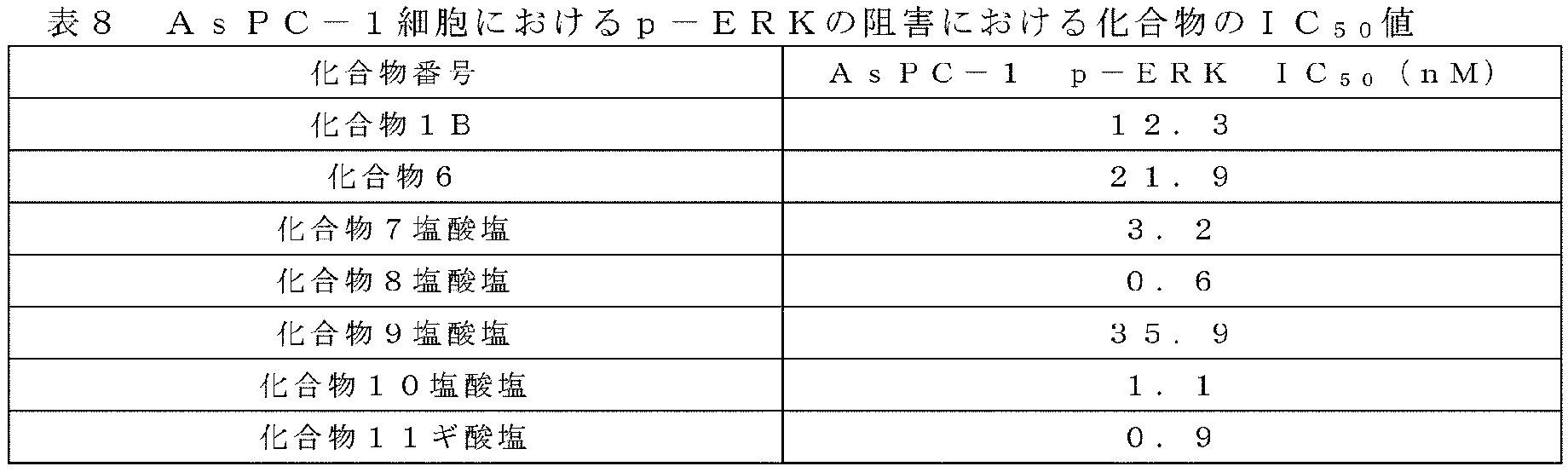
アッセイの結論:本開示の化合物は、KRASG12D変異AsPC-1細胞における著しい阻害効果を有する。 Assay conclusion: Compounds of the present disclosure have significant inhibitory effects in KRAS G12D mutant AsPC-1 cells.
アッセイ実施例4:AsPC-1細胞におけるp-ERK阻害のアッセイ Assay Example 4: Assay for p-ERK inhibition in AsPC-1 cells
1.目的 1. Purpose
KRASG12D変異AsPC-1細胞においてp-ERKを効果的に阻害することができる化合物をインセルウェスタン法によってスクリーニングした。 Compounds that can effectively inhibit p-ERK in KRAS G12D mutant AsPC-1 cells were screened by in-cell Western analysis.
2.アッセイ材料: 2. Assay materials:
ATCCから購入したASPC-1細胞;ATCCから購入したRPMI-1640培地;Ausgenexから購入したウシ胎児血清;CSTから購入したホスホ-p44/42 MAPK(Erk1/2)(Thr202/Tyr204)(D13.14.4E)XP(R)ウサギmAb;CSTから購入したGAPDH(D4C6R)マウスmAb;LI-CORから購入したIRDye 680RDヤギ抗マウスIgG(H+L)、及びLI-CORから購入したIRDye 800CWヤギ抗ウサギIgG(H+L)。 ASPC-1 cells purchased from ATCC; RPMI-1640 medium purchased from ATCC; fetal bovine serum purchased from Ausgenex; phospho-p44/42 MAPK (Erk1/2) (Thr202/Tyr204) (D13.14.4E) XP(R) rabbit mAb purchased from CST; GAPDH (D4C6R) mouse mAb purchased from CST; IRDye 680RD goat anti-mouse IgG (H+L) purchased from LI-COR, and IRDye 800CW goat anti-rabbit IgG (H+L) purchased from LI-COR.
3.アッセイの方法: 3. Assay method:
13)ASPC-1細胞を黒色ボトムの透明な384ウェル細胞培養プレートに播種した。各ウェルは細胞懸濁液40μL及び6000個の細胞を含んでいた。細胞プレートを37℃で一晩、二酸化炭素インキュベータでインキュベートした。 13) ASPC-1 cells were seeded into black bottom clear 384-well cell culture plates. Each well contained 40 μL of cell suspension and 6000 cells. The cell plates were incubated overnight at 37°C in a carbon dioxide incubator.
14)アッセイ対象の化合物を、100%DMSOを用いて第1の濃度として10mMに希釈し、次いでピペットを用いて3倍に段階希釈して9つの濃度(すなわち、10mM~1.52μM)にした。化合物40nLをECHO装置で細胞プレートに移し、低速で遠心分離にかけた。細胞プレートを二酸化炭素インキュベータに戻し入れ、更に1時間インキュベートした。このとき、化合物の濃度は10μM~1.52nMであり、DMSOの濃度は0.1%であった。 14) Compounds to be assayed were diluted in 100% DMSO to a first concentration of 10 mM, then serially diluted 3-fold using a pipette to nine concentrations (i.e., 10 mM - 1.52 μM). 40 nL of compound was transferred to the cell plate in the ECHO instrument and centrifuged at low speed. The cell plate was placed back into the carbon dioxide incubator and incubated for an additional hour, with compound concentrations ranging from 10 μM - 1.52 nM and DMSO at 0.1%.
15)インキュベーション完了後、8%パラホルムアルデヒド固定液40μLを各ウェルに加え、室温で20分間静置した。 15) After incubation was completed, 40 μL of 8% paraformaldehyde fixative was added to each well and allowed to stand at room temperature for 20 minutes.
16)ウェルをPBSバッファで2回洗浄した。予冷したメタノール溶液40μLを各ウェルに加えた。ウェルをPBSバッファで2回洗浄した。ブロッキング溶液20μLを各ウェルに加え、室温で60分間静置した。 16) The wells were washed twice with PBS buffer. 40 μL of pre-chilled methanol solution was added to each well. The wells were washed twice with PBS buffer. 20 μL of blocking solution was added to each well and left to stand at room temperature for 60 minutes.
17)ブロッキング溶液を除去し、一次抗体混合物(ホスホ-p44/42 MAPK(Erk1/2)(Thr202/Tyr204)(D13.14.4E)XP(R)ウサギmAbの1000倍希釈物、GAPDH(D4C6R)マウスmAbの2000倍希釈物)20μLを各ウェルに加え、4℃で一晩インキュベートした。 17) Remove the blocking solution and add 20 μL of the primary antibody mixture (1:1000 dilution of phospho-p44/42 MAPK (Erk1/2) (Thr202/Tyr204) (D13.14.4E) XP(R) rabbit mAb and 1:2000 dilution of GAPDH (D4C6R) mouse mAb) to each well and incubate overnight at 4°C.
18)一次抗体混合物を除去し、細胞をPBSバッファで3回洗浄した。二次抗体混合物(IRDye 800CWヤギ抗ウサギIgG(H+L)の2000倍希釈物、IRDye 680RDヤギ抗マウスIgG(H+L)の2000倍希釈物)20μLを各ウェルに加え、室温、暗所で60分インキュベートした。 18) The primary antibody mixture was removed and the cells were washed three times with PBS buffer. 20 μL of the secondary antibody mixture (IRDye 800CW goat anti-rabbit IgG (H+L) diluted 1:2000, IRDye 680RD goat anti-mouse IgG (H+L) diluted 1:2000) was added to each well and incubated at room temperature in the dark for 60 minutes.
19)一次抗体混合物を除去し、細胞をPBSバッファで3回洗浄した。プレートを上下逆にして1000rpmで1分間遠心分離にかけ、次いでOdyssey CLx装置を使用して走査した。 19) The primary antibody mixture was removed and the cells were washed three times with PBS buffer. The plate was centrifuged upside down at 1000 rpm for 1 minute and then scanned using an Odyssey CLx instrument.
4.データ分析: 4. Data analysis:
式:(800チャネルの総蛍光値/700チャネルの総蛍光値)を使用して相対的発現レベルを算出し、式:(最大値-サンプル)/(最大値-最小値)*100%を使用して生データを阻害率へと変換した。4つのパラメータのカーブフィッティング(エクセルのプラグインXLfitのlog(inhibitor)vs.response--Variable slopeモード)によってIC50値を得た。 Relative expression levels were calculated using the formula: (total fluorescence value of 800 channel/total fluorescence value of 700 channel) and raw data were converted to percentage inhibition using the formula: (max-sample)/(max-min)*100%. IC50 values were obtained by four parameter curve fitting (log(inhibitor) vs. response--Variable slope mode in Excel plug-in XLfit).
最大ウェル:陽性対照ウェルの読み取り値は、陽性薬物の最高濃度であった。 Maximum well: The reading in the positive control well was the highest concentration of positive drug.
最小ウェル:陰性対照ウェルの読み取り値は、0.1%DMSO細胞ウェルにおける読み取り値であった。 Minimum well: The readings in the negative control wells were the readings in the 0.1% DMSO cell wells.
5 アッセイ結果 5 Assay results
結果を表9に示す。 The results are shown in Table 9.

アッセイの結論:本開示の化合物は、KRASG12D変異AsPC-1細胞におけるp-ERKに著しい阻害効果を有する。 Assay conclusion: Compounds of the present disclosure have a significant inhibitory effect on p-ERK in KRAS G12D mutant AsPC-1 cells.
アッセイ実施例5:腫瘍細胞株AsPC-1における化合物の抗細胞増殖効果 Assay Example 5: Anti-cell proliferation effect of compounds in tumor cell line AsPC-1
試験目的 Test purpose
このアッセイでは、細胞増殖の阻害に対する化合物の効果を、KRASG12D変異腫瘍細胞株AsPC-1におけるインビトロでの細胞活性に対する化合物の効果を検出することで試験した。 In this assay, the effect of compounds on inhibiting cell proliferation was tested by detecting the effect of compounds on in vitro cellular activity in the KRAS G12D mutant tumor cell line AsPC-1.
アッセイ材料 Assay materials
細胞株:AsPC-1;腫瘍タイプ:膵臓がん;成長特性:付着成長;培養方法:RPMI 1640+10%FBS Cell line: AsPC-1; Tumor type: pancreatic cancer; Growth characteristics: adherent growth; Culture method: RPMI 1640 + 10% FBS
Ultra Low Cluster96ウェルプレート(Corning-7007) Ultra Low Cluster 96-well plate (Corning-7007)
Greiner CELLSTAR96ウェルプレート(#655090) Greiner CELLSTAR 96-well plate (#655090)
Promega CellTiter-Glo 3D発光細胞生存率アッセイキット(Promega-G9683) Promega CellTiter-Glo 3D Luminescent Cell Viability Assay Kit (Promega-G9683)
2104-10 EnVisionプレートリーダ(PerkinElmer) 2104-10 EnVision plate reader (PerkinElmer)
RPMI 1640、DMEM、PBS(リン酸緩衝生理食塩水)、FBS(ウシ胎児血清)、抗生物質-抗真菌薬、L-グルタミン、DMSO(ジメチルスルホキシド) RPMI 1640, DMEM, PBS (phosphate buffered saline), FBS (fetal bovine serum), antibiotic-antimycotic, L-glutamine, DMSO (dimethyl sulfoxide)
アッセイの方法及び工程 Assay methods and processes
細胞培養 Cell culture
培養方法に示されている培養条件に従い、37℃、5%CO2インキュベータで腫瘍細胞株を培養した。細胞を定期的に継代し、対数増殖期の細胞をプレーティングに使用した。 Tumor cell lines were cultured in a 5% CO2 incubator at 37°C according to the culture conditions indicated in the culture method. Cells were passaged periodically, and cells in the logarithmic growth phase were used for plating.
細胞プレーティング Cell plating
細胞をトリパンブルーで染色し、生存細胞を計数した。 Cells were stained with trypan blue and viable cells were counted.
細胞濃度を適切な濃度に調整した。 The cell concentration was adjusted to an appropriate concentration.
細胞株:AsPC-1;密度(ウェルあたり):7000個の細胞。 Cell line: AsPC-1; density (per well): 7000 cells.
ULA培養プレートの各ウェルに細胞懸濁液135μLを加えた。ブランク対照ウェルに、同体積の細胞非含有培地を加えた。 135 μL of cell suspension was added to each well of the ULA culture plate. An equal volume of cell-free medium was added to blank control wells.
プレーティング後、ULA培養プレートを室温で10分間、1000rpmで直ちに遠心分離にかけた。注:遠心分離完了後、不必要な衝撃を避けるために後続の操作を慎重に行わなければならない。 After plating, the ULA culture plate was immediately centrifuged at 1000 rpm for 10 minutes at room temperature. Note: After centrifugation is complete, subsequent operations must be performed carefully to avoid unnecessary shocks.
培養プレートを37℃、5%CO2のインキュベータにおいて相対湿度100%で一晩インキュベートした。 The culture plates were incubated overnight in a 37° C., 5% CO 2 incubator with 100% relative humidity.
10倍化合物標準溶液の配合及び化合物による細胞処理(1日目) Mixing 10x compound standard solutions and treating cells with compounds (Day 1)
10倍化合物標準溶液(DMSO中の10倍標準溶液)を配合した。ULA培養プレートに10倍化合物標準溶液15μLを加え、ビヒクル対照及びブランク対照にそれぞれDMSO細胞培地混合物15μLを加えた。 A 10x compound standard solution (10x standard solution in DMSO) was formulated. 15 μL of the 10x compound standard solution was added to the ULA culture plate, and 15 μL of the DMSO cell culture medium mixture was added to the vehicle control and blank control, respectively.
96ウェル細胞プレートをインキュベータに戻し入れ、120時間インキュベートした。 The 96-well cell plate was placed back into the incubator and incubated for 120 hours.
細胞のスフィア形成をアッセイの終了まで毎日観察した。 Cell sphere formation was observed daily until the end of the assay.
CellTiter-Glo発光細胞生存率検出(5日目) CellTiter-Glo luminescent cell viability detection (day 5)
以下の工程を、Promega CellTiter-Glo 3D発光細胞生存率アッセイキット(Promega#G9683)の説明書に従って実施した。 The following steps were performed according to the instructions for the Promega CellTiter-Glo 3D Luminescent Cell Viability Assay Kit (Promega #G9683).
CellTiter-Glo 3D試薬150μL(各ウェルの細胞培地の体積に等しい)を各ウェルに加えた。細胞プレートをアルミニウム箔で包んで、光から保護した。 150 μL of CellTiter-Glo 3D Reagent (equal to the volume of cell culture medium in each well) was added to each well. The cell plate was wrapped in aluminum foil to protect it from light.
培養プレートをオービタルシェーカで5分間振盪した。 The culture plate was shaken for 5 minutes on an orbital shaker.
次の工程に進む前に細胞のスフェロイドが十分に剥離されていることを確認するために、ウェル中の混合物をピペットを用いて慎重に上下に10回ピペッティングすることで十分に混合した。 To ensure that the cell spheroids were adequately detached before proceeding to the next step, the mixture in the well was thoroughly mixed by carefully pipetting up and down 10 times with a pipette.
次いで、ULAプレート中の溶液を黒色ボトム培養プレート(#655090)に移し、室温で25分間放置して、発光シグナルを安定化させた。 The solution in the ULA plate was then transferred to a black bottom culture plate (#655090) and left at room temperature for 25 minutes to stabilize the luminescence signal.
発光シグナルを2104EnVisionプレートリーダで検出した。 Luminescent signals were detected using a 2104 EnVision plate reader.
データ分析 Data analysis
式:阻害率(IR)(%)=(1-(化合物のRLU-ブランク対照のRLU)/(ビヒクル対照のRLU-ブランク対照のRLU))*100%を使用して、アッセイ化合物のIRを算出した。異なる濃度の化合物の阻害率をExcelで算出し、次いで、GraphPad Prismソフトウェアを使用して阻害曲線を作成し、最小阻害率、最大阻害率及びIC50を含む関連パラメータを算出した。 The IR of the assay compounds was calculated using the formula: Inhibition percentage (IR) (%) = (1 - (RLU of compound - RLU of blank control)/ (RLU of vehicle control - RLU of blank control)) * 100%. The inhibition percentages of compounds at different concentrations were calculated in Excel, and then the inhibition curves were generated using GraphPad Prism software to calculate the relevant parameters including minimum inhibition percentage, maximum inhibition percentage and IC50 .
アッセイ結果 Assay results
結果を表10に示す。 The results are shown in Table 10.

アッセイの結論:本開示の化合物は、KRASG12D変異AsPC-1細胞に対する卓越した抗増殖効果を示す。 Assay conclusion: Compounds of the present disclosure exhibit superior anti-proliferative effects on KRAS G12D mutant AsPC-1 cells.
アッセイ実施例6:腫瘍細胞株AsPC-1における化合物の抗増殖効果 Assay Example 6: Antiproliferative effect of compounds in tumor cell line AsPC-1
1.目的 1. Purpose
KRASG12D変異腫瘍細胞株AsPC-1における化合物の抗細胞増殖効果を3D-CTG法によって検証した。 The anti-cell proliferation effect of the compounds in the KRAS G12D mutant tumor cell line AsPC-1 was examined by 3D-CTG method.
2.アッセイ材料: 2. Assay materials:
ATCCから購入したASPC-1細胞;ATCCから購入したRPMI-1640培地;Augenexから購入したウシ胎児血清;Promegaから購入したCellTiter-Glo(R)3Dアッセイキット(3D-CTG);及びPEから購入したCellCarrier-96スフェロイドULA/CS。 ASPC-1 cells purchased from ATCC; RPMI-1640 medium purchased from ATCC; fetal bovine serum purchased from Augenex; CellTiter-Glo® 3D Assay Kit (3D-CTG) purchased from Promega; and CellCarrier-96 spheroid ULA/CS purchased from PE.
3.アッセイの方法: 3. Assay method:
20)ASPC-1細胞を透明な96ウェル細胞培養プレートに播種した。各ウェルは細胞懸濁液195μL及び2000個の細胞を含んでいた。 20) ASPC-1 cells were seeded into a clear 96-well cell culture plate. Each well contained 195 μL of cell suspension and 2000 cells.
21)アッセイ対象の化合物を、100%DMSOを用いて第1の濃度として10mMに希釈し、次いでピペットを用いて5倍に段階希釈して8つの濃度(すなわち、10mM~0.13μM)にした。段階希釈化合物2μLを秤量し、二次希釈用の細胞培地48μLに加えた。混合物を十分に混合した後、二次希釈化合物5μLを秤量し、細胞プレートの対応する195μLウェルに加えた。細胞プレートを二酸化炭素インキュベータに戻し入れ、7日間インキュベートした。このとき、化合物の濃度は10μM~0.128nMであり、DMSOの濃度は0.1%であった。 21) The compounds to be assayed were diluted to 10 mM as the first concentration with 100% DMSO, then serially diluted 5-fold using a pipette to eight concentrations (i.e., 10 mM to 0.13 μM). 2 μL of serially diluted compound was weighed and added to 48 μL of cell medium for the second dilution. After the mixture was mixed thoroughly, 5 μL of the second dilution compound was weighed and added to the corresponding 195 μL well of the cell plate. The cell plate was placed back into the carbon dioxide incubator and incubated for 7 days. At this time, the compound concentrations were 10 μM to 0.128 nM, and the DMSO concentration was 0.1%.
22)インキュベーション完了後、細胞上清100μLを廃棄した。3D-CTG60μLを各ウェルに加えた。混合物を室温で20分間、200rpmで振盪しながらインキュベートし、細胞プレートを室温で1時間、インキュベータでインキュベートした。 22) After incubation was complete, 100 μL of cell supernatant was discarded. 60 μL of 3D-CTG was added to each well. The mixture was incubated at room temperature for 20 minutes with shaking at 200 rpm, and the cell plate was incubated in an incubator at room temperature for 1 hour.
23)プレート中の上清100μLを96ウェル黒色ボトム透明プレートに移し、発光をBMGで読み取った。 23) 100 μL of the supernatant from the plate was transferred to a 96-well black bottom clear plate and the luminescence was read using a BMG.
4.データ分析: 4. Data analysis:
式:阻害%=(平均_H-サンプル)/(平均_H-平均_L)を使用して、生データを阻害率に変換した。4つのパラメータを用いたカーブフィッティング(GraphPad Prismの“log(inhibitor)vs.response--Variable slope”モード)によってIC50値を得ることができる。 Raw data were converted to percent inhibition using the formula: % inhibition = (mean_H-sample)/(mean_H-mean_L). IC50 values can be obtained by curve fitting with four parameters (GraphPad Prism "log(inhibitor) vs. response -- Variable slope" mode).
Hウェル:DMSOウェルの読み取り値 H well: DMSO well reading
Lウェル:培地の読み取り値 L well: medium reading
5 アッセイ結果 5 Assay results
結果を表11に示す。 The results are shown in Table 11.

アッセイの結論:本開示の化合物は、KRASG12D変異AsPC-1細胞に対する卓越した抗増殖効果を示す。 Assay conclusion: Compounds of the present disclosure exhibit superior anti-proliferative effects on KRAS G12D mutant AsPC-1 cells.
アッセイ実施例7:CD-1マウスにおける経口及び静脈内注射アッセイ化合物の薬物動態試験 Assay Example 7: Pharmacokinetics of oral and intravenous injection assay compounds in CD-1 mice
アッセイ目的 Assay purpose
CD-1マウスにおける経口及び静脈内注射化合物のインビボ薬物動態をアッセイすること。 To assay the in vivo pharmacokinetics of orally and intravenously injected compounds in CD-1 mice.
アッセイプロセス Assay process
アッセイ化合物を5%DMSO+95%(10%HP-β-CD)水溶液と混合した。混合物をボルテックスし、超音波処理して、0.5mg/mLの透明な溶液(静脈内)又は3mg/mLの透明な溶液(経口)を調製した。使用のために、透明な溶液を微孔膜で濾過した。7~10週齢の雄のCD-1マウスを選択し、候補化合物溶液を静脈内投与し、候補化合物溶液を経口投与した。全血を一定期間採取し、調製して、血漿を得た。薬物濃度をLC-MS/MS法で分析し、薬物動態パラメータをPhoenix WinNonlinソフトウェア(Pharsight、USA)で算出した。 The assay compounds were mixed with 5% DMSO + 95% (10% HP-β-CD) aqueous solution. The mixture was vortexed and sonicated to prepare a clear solution of 0.5 mg/mL (intravenous) or 3 mg/mL (oral). The clear solution was filtered through a microporous membrane for use. Male CD-1 mice aged 7-10 weeks were selected and administered the candidate compound solution intravenously and orally. Whole blood was collected at regular intervals and prepared to obtain plasma. Drug concentrations were analyzed by LC-MS/MS method, and pharmacokinetic parameters were calculated with Phoenix WinNonlin software (Pharsight, USA).
アッセイ結果 Assay results


アッセイ結果 Assay results
本開示の化合物は、マウスにおいて長い半減期、高い曝露、良好な経口バイオアベイラビリティ及び良好な薬物動態特性を有する。
アッセイ実施例8:インビボでの薬力学に対するアッセイ
The compounds of the present disclosure have long half-lives, high exposure, good oral bioavailability and good pharmacokinetic properties in mice.
Assay Example 8: In vivo Pharmacodynamics Assay
アッセイ方法 Assay method
ヒト結腸がんGP2D細胞の皮下異種移植腫瘍のBalb/cヌードマウスモデルを樹立した。GP2D細胞(マトリゲルを加え、体積比を1:1とした)0.2mL(2×106)を各マウスの右背部に皮下接種した。平均腫瘍体積が140mm3に達したとき、マウスを各群6匹の群に分け、投与した。アッセイ日に、動物に対応する群に従って対応する薬物を投与した。第1群G1を陰性対照群として設定し、これに強制経口投与で5%DMSO+95%(10%HP-β-CD)のみを与えた。第2群G2~第4群G4には化合物8塩酸塩を与えた。投与量及び投与プロトコールを表14に示した。 A Balb/c nude mouse model of subcutaneous xenograft tumor of human colon cancer GP2D cells was established. 0.2 mL (2×10 6 ) of GP2D cells (added with Matrigel to make the volume ratio 1:1) was subcutaneously inoculated into the right dorsal region of each mouse. When the average tumor volume reached 140 mm 3 , the mice were divided into groups of 6 mice each and administered. On the day of assay, the animals were administered the corresponding drugs according to their corresponding groups. The first group G1 was set as the negative control group, which was given only 5% DMSO+95% (10% HP-β-CD) by oral gavage. The second group G2 to the fourth group G4 were given compound 8 hydrochloride. The dosage and administration protocol are shown in Table 14.
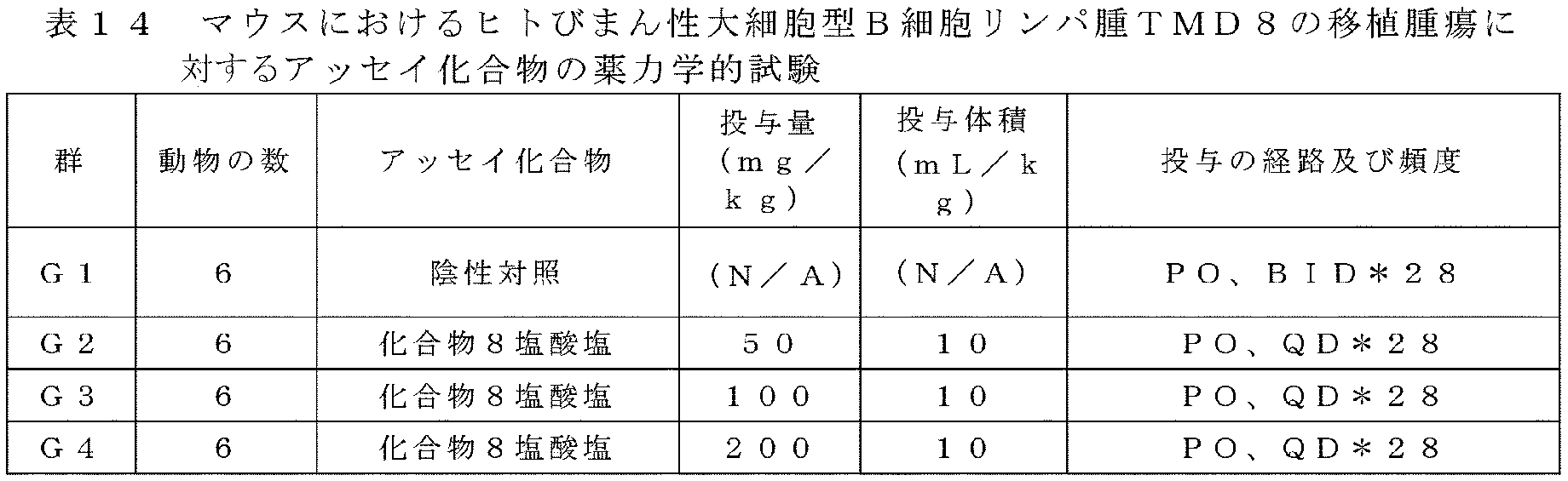
注:POは経口投与を意味し、QDは1日1回を意味し、BIDは1日1回を意味する。 Note: PO means oral administration, QD means once daily, and BID means once daily.
アッセイ中、動物の体重及び腫瘍サイズを週に2回測定した。一方、動物の臨床症状を観察し、毎日記録した。各投与は、動物の直近体重を参照した。 During the assay, the body weight and tumor size of the animals were measured twice a week. Meanwhile, the clinical symptoms of the animals were observed and recorded daily. Each administration was based on the most recent body weight of the animals.
腫瘍の長さ(a)及び幅(b)をデジタルノギスを用いて測定した。腫瘍体積(TV)の算出式は、TV=a×b2/2であった。 The length (a) and width (b) of the tumor were measured using digital calipers. The tumor volume (TV) was calculated as TV=a×b 2 /2.
アッセイ結果: Assay results:
化合物8塩酸塩は、マウスにおいてヒト結腸がんGP2Dの異種移植腫瘍に対して著しい阻害効果を有する。投与の28日後、第2群G2(50mg/kg、PO、QD)は、28日目に47.0%の腫瘍体積阻害率TGI(%)を有し、第3群G3(100mg/kg、PO、QD)及び第4群G4(200mg/kg、PO、QD)はそれぞれ、28日目に75.9%及び94.7%の腫瘍体積阻害率TGI(%)を有する。詳細な結果を表15に示す。 Compound 8 hydrochloride has a significant inhibitory effect on xenograft tumors of human colon cancer GP2D in mice. After 28 days of administration, the second group G2 (50 mg/kg, PO, QD) had a tumor volume inhibition rate TGI(%) of 47.0% on the 28th day, and the third group G3 (100 mg/kg, PO, QD) and the fourth group G4 (200 mg/kg, PO, QD) had tumor volume inhibition rates TGI(%) of 75.9% and 94.7% on the 28th day, respectively. The detailed results are shown in Table 15.
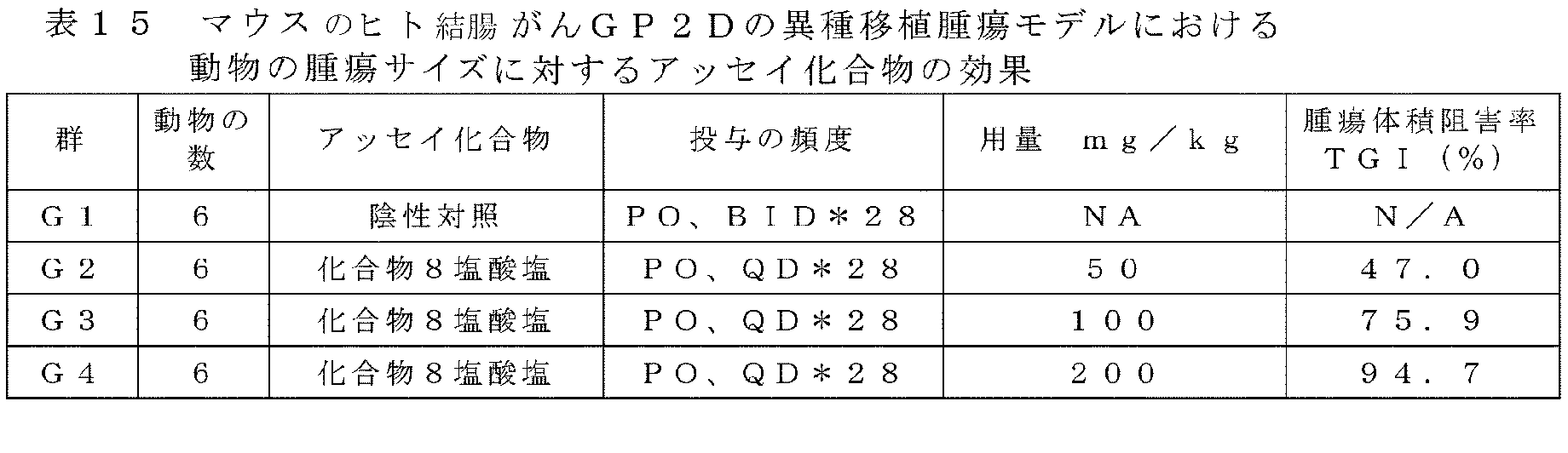
注:N/Aは、検出なしを意味する。 Note: N/A means not detected.
アッセイの結論:インビボ有効性に関して、本発明の化合物は、GP2D細胞株において良好な腫瘍阻害効果を呈し、明らかな用量依存性を有する。 Assay conclusion: Regarding in vivo efficacy, the compounds of the present invention exhibit good tumor inhibitory effects in GP2D cell lines with obvious dose-dependency.
1)ASPC-1細胞を透明な96ウェル細胞培養プレートに播種した。各ウェルは細胞懸濁液80μL及び8000個の細胞を含んでいた。細胞プレートを37℃で一晩、二酸化炭素インキュベータでインキュベートした。 1 ) ASPC-1 cells were seeded into a clear 96-well cell culture plate. Each well contained 80 μL of cell suspension and 8000 cells. The cell plate was incubated at 37° C. overnight in a carbon dioxide incubator.
2)インキュベーション完了後、細胞上清を廃棄した。RPMI-1640ブランク培地80μLを各ウェルに加えて一晩飢餓させた。 2 ) After incubation was completed, the cell supernatant was discarded and 80 μL of RPMI-1640 blank medium was added to each well for overnight starvation.
3)アッセイ対象の化合物を、100%DMSOを用いて第1の濃度として2mMに希釈し、次いでピペットを用いて5倍に段階希釈して8つの濃度(すなわち、2mM~25.6nM)とした。化合物2μLを秤量し、細胞飢餓培地78μLに加えた。混合物を十分に混合した後、化合物溶液20μLを秤量し、細胞プレートの対応するウェルに加えた。細胞プレートを二酸化炭素インキュベータに戻し入れ、更に1時間インキュベートした。このとき、化合物の濃度は10μM~0.128nMであり、DMSOの濃度は0.5%であった。 3 ) Compounds to be assayed were diluted with 100% DMSO to a first concentration of 2 mM, then serially diluted 5-fold using a pipette to give eight concentrations (i.e., 2 mM to 25.6 nM). 2 μL of compound was weighed out and added to 78 μL of cell starvation medium. After the mixture was mixed thoroughly, 20 μL of compound solution was weighed out and added to the corresponding wells of the cell plate. The cell plate was placed back into the carbon dioxide incubator and incubated for an additional hour, with compound concentrations ranging from 10 μM to 0.128 nM and DMSO at 0.5%.
4)インキュベーション完了後、細胞上清を廃棄した。細胞ライセート50μLを各ウェルに加えた。混合物を振盪しながら室温で30分間インキュベートした。 4 ) After incubation was complete, the cell supernatant was discarded. 50 μL of cell lysate was added to each well. The mixture was incubated at room temperature with shaking for 30 minutes.
5)ホスホ-ERK1/2 Euクリプタート抗体及びホスホ-ERK1/2 d2抗体を検出バッファで20倍に希釈した。 5 ) Phospho-ERK1/2 Eu cryptate antibody and phospho-ERK1/2 d2 antibody were diluted 20-fold with detection buffer.
6)細胞ライセート上清16μLを秤量し、新しい384白色マイクロウェルプレートの各ウェルに加えた。次いで、ホスホ-ERK1/2 Euクリプタート抗体の希釈溶液2μL及びホスホ-ERK1/2 d2抗体の希釈溶液2μLを加えた。混合物を室温で4時間インキュベートした。 6 ) 16 μL of cell lysate supernatant was weighed and added to each well of a new 384 white microwell plate. Then 2 μL of a diluted solution of phospho-ERK1/2 Eu cryptate antibody and 2 μL of a diluted solution of phospho-ERK1/2 d2 antibody were added. The mixture was incubated at room temperature for 4 hours.
7)インキュベーション完了後、HTRFをマルチラベルアナライザで読み取った(励起:320nm、発光:615nm、665nm)。 7 ) After the incubation was completed, the HTRF was read on a multilabel analyzer (excitation: 320 nm, emission: 615 nm, 665 nm).
式:(サンプル-最小値)/(最大値-最小値)*100%を使用して、生データを阻害率に変換した。4つのパラメータを用いたカーブフィッティング(GraphPad Prismの“log(inhibitor)vs.response--Variable slope”モード)によってIC50値を得ることができる。表8は、p-ERKに対する本開示の化合物の阻害効果を示す。 Raw data was converted to percent inhibition using the formula: (sample-min)/(max-min)*100%. IC50 values can be obtained by curve fitting with four parameters (GraphPad Prism "log(inhibitor) vs. response--Variable slope" mode). Table 8 shows the inhibitory effect of the compounds of the present disclosure on p-ERK.
1)ASPC-1細胞を黒色ボトムの透明な384ウェル細胞培養プレートに播種した。各ウェルは細胞懸濁液40μL及び6000個の細胞を含んでいた。細胞プレートを37℃で一晩、二酸化炭素インキュベータでインキュベートした。 1 ) ASPC-1 cells were seeded into black bottom clear 384-well cell culture plates. Each well contained 40 μL of cell suspension and 6000 cells. The cell plates were incubated at 37° C. overnight in a carbon dioxide incubator.
2)アッセイ対象の化合物を、100%DMSOを用いて第1の濃度として10mMに希釈し、次いでピペットを用いて3倍に段階希釈して9つの濃度(すなわち、10mM~1.52μM)にした。化合物40nLをECHO装置で細胞プレートに移し、低速で遠心分離にかけた。細胞プレートを二酸化炭素インキュベータに戻し入れ、更に1時間インキュベートした。このとき、化合物の濃度は10μM~1.52nMであり、DMSOの濃度は0.1%であった。 2 ) Compounds to be assayed were diluted in 100% DMSO to a first concentration of 10 mM, then serially diluted 3-fold using a pipette to nine concentrations (i.e., 10 mM to 1.52 μM). 40 nL of compound was transferred to the cell plate in the ECHO instrument and centrifuged at low speed. The cell plate was placed back into the carbon dioxide incubator and incubated for an additional hour, with compound concentrations ranging from 10 μM to 1.52 nM and DMSO at 0.1%.
3)インキュベーション完了後、8%パラホルムアルデヒド固定液40μLを各ウェルに加え、室温で20分間静置した。 3 ) After the incubation was completed, 40 μL of 8% paraformaldehyde fixative was added to each well and allowed to stand at room temperature for 20 minutes.
4)ウェルをPBSバッファで2回洗浄した。予冷したメタノール溶液40μLを各ウェルに加えた。ウェルをPBSバッファで2回洗浄した。ブロッキング溶液20μLを各ウェルに加え、室温で60分間静置した。 4 ) The wells were washed twice with PBS buffer. 40 μL of pre-chilled methanol solution was added to each well. The wells were washed twice with PBS buffer. 20 μL of blocking solution was added to each well and allowed to stand at room temperature for 60 minutes.
5)ブロッキング溶液を除去し、一次抗体混合物(ホスホ-p44/42 MAPK(Erk1/2)(Thr202/Tyr204)(D13.14.4E)XP(R)ウサギmAbの1000倍希釈物、GAPDH(D4C6R)マウスmAbの2000倍希釈物)20μLを各ウェルに加え、4℃で一晩インキュベートした。 5 ) Blocking solution was removed and 20 μL of primary antibody mix (1:1000 dilution of phospho-p44/42 MAPK (Erk1/2) (Thr202/Tyr204) (D13.14.4E) XP® rabbit mAb, 1:2000 dilution of GAPDH (D4C6R) mouse mAb) was added to each well and incubated overnight at 4°C.
6)一次抗体混合物を除去し、細胞をPBSバッファで3回洗浄した。二次抗体混合物(IRDye 800CWヤギ抗ウサギIgG(H+L)の2000倍希釈物、IRDye 680RDヤギ抗マウスIgG(H+L)の2000倍希釈物)20μLを各ウェルに加え、室温、暗所で60分インキュベートした。 6 ) The primary antibody mixture was removed and the cells were washed three times with PBS buffer. 20 μL of the secondary antibody mixture (IRDye 800CW goat anti-rabbit IgG (H+L) at 1:2000 dilution, IRDye 680RD goat anti-mouse IgG (H+L) at 1:2000 dilution) was added to each well and incubated at room temperature in the dark for 60 minutes.
7)二次抗体混合物を除去し、細胞をPBSバッファで3回洗浄した。プレートを上下逆にして1000rpmで1分間遠心分離にかけ、次いでOdyssey CLx装置を使用して走査した。 7 ) The secondary antibody mixture was removed and the cells were washed three times with PBS buffer. The plates were centrifuged upside down at 1000 rpm for 1 minute and then scanned using an Odyssey CLx instrument.
1)ASPC-1細胞を透明な96ウェル細胞培養プレートに播種した。各ウェルは細胞懸濁液195μL及び2000個の細胞を含んでいた。 1 ) ASPC-1 cells were seeded into a clear 96-well cell culture plate, with each well containing 195 μL of cell suspension and 2000 cells.
2)アッセイ対象の化合物を、100%DMSOを用いて第1の濃度として10mMに希釈し、次いでピペットを用いて5倍に段階希釈して8つの濃度(すなわち、10mM~0.13μM)にした。段階希釈化合物2μLを秤量し、二次希釈用の細胞培地48μLに加えた。混合物を十分に混合した後、二次希釈化合物5μLを秤量し、細胞プレートの対応する195μLウェルに加えた。細胞プレートを二酸化炭素インキュベータに戻し入れ、7日間インキュベートした。このとき、化合物の濃度は10μM~0.128nMであり、DMSOの濃度は0.1%であった。 2 ) Compounds to be assayed were diluted to 10 mM as the first concentration with 100% DMSO and then serially diluted 5-fold using a pipette to eight concentrations (i.e., 10 mM to 0.13 μM). 2 μL of serially diluted compound was weighed and added to 48 μL of cell culture medium for the second dilution. After the mixture was mixed thoroughly, 5 μL of second diluted compound was weighed and added to the corresponding 195 μL well of the cell plate. The cell plate was placed back into the carbon dioxide incubator and incubated for 7 days, with compound concentrations ranging from 10 μM to 0.128 nM and DMSO at 0.1%.
3)インキュベーション完了後、細胞上清100μLを廃棄した。3D-CTG60μLを各ウェルに加えた。混合物を室温で20分間、200rpmで振盪しながらインキュベートし、細胞プレートを室温で1時間、インキュベータでインキュベートした。 3 ) After the incubation was completed, 100 μL of cell supernatant was discarded. 60 μL of 3D-CTG was added to each well. The mixture was incubated at room temperature for 20 minutes with shaking at 200 rpm, and the cell plate was incubated in an incubator at room temperature for 1 hour.
4)プレート中の上清100μLを96ウェル黒色ボトム透明プレートに移し、発光をBMGで読み取った。 4 ) 100 μL of the supernatant in the plate was transferred to a 96-well black bottom clear plate and the luminescence was read on a BMG.
注:POは経口投与を意味し、QDは1日1回を意味し、BIDは1日2回を意味する。 Note: PO means oral administration, QD means once daily, and BID means twice daily.
Claims (20)

式中、

T1が、CRa及びNから選択され、
T2が、CH及びNから選択され、
L1が、O及びSから選択され、
R1が、フェニル、ナフチル、


R2が、Hであり、
R3が、H、F、CN、CH3及びOCH3から選択され、上記CH3及びOCH3が、1個、2個又は3個のハロゲンで任意選択で置換され、
代替的には、R2及びR3が、それらが結合している原子とともに、フェニル基又は5~6員ヘテロアリール基を形成し、上記フェニル基又は5~6員ヘテロアリール基が、1個、2個又は3個のハロゲンで任意選択で置換され、
R4が、存在しないか、又はH、CH3及び-CH=CH2から選択され、上記CH3及び-CH=CH2が、1個、2個又は3個のハロゲンで任意選択で置換され、
代替的には、R3及びR4が、それらが結合している原子とともに、


代替的には、R3及びR4が、それらが結合している原子とともに、1個、2個又は3個のハロゲンで任意選択で置換されるシクロプロピル基を形成し、
Raが、H及びCNから選択され、
各Rbが、H、F、Cl、Br、I、OH、NH2、CN、C1-3アルキル、C1-3アルコキシ、C2-4アルキニル、C2-4アルキニル-シクロプロピル、C2-3アルケニル、-C(=O)C1-3アルキル及びC3-5シクロアルキルから独立して選択され、上記C1-3アルキル、C1-3アルコキシ、C2-4アルキニル、C2-4アルキニル-シクロプロピル、C2-3アルケニル、-C(=O)C1-3アルキル及びC3-5シクロアルキルが、1個、2個、3個、4個又は5個のハロゲンで任意選択で置換され、
各Rcが、F、Cl、Br、I、CN、CH3及びOCH3から独立して選択され、
mが、0及び1から選択される、化合物又はその薬学的に許容される塩。 Formula (VI)
In the formula,
T1 is selected from CR a and N;
T2 is selected from CH and N;
L1 is selected from O and S;
R 1 is phenyl, naphthyl,
R2 is H;
R3 is selected from H, F, CN, CH3 and OCH3 , wherein said CH3 and OCH3 are optionally substituted with 1, 2 or 3 halogens;
Alternatively, R 2 and R 3 together with the atoms to which they are attached form a phenyl group or a 5- to 6-membered heteroaryl group, said phenyl group or 5- to 6-membered heteroaryl group optionally substituted with 1, 2 or 3 halogens;
R 4 is absent or selected from H, CH 3 and -CH=CH 2 , wherein said CH 3 and -CH=CH 2 are optionally substituted with 1, 2 or 3 halogens;
Alternatively, R3 and R4 together with the atoms to which they are attached represent:
Alternatively, R 3 and R 4 together with the atom to which they are attached form a cyclopropyl group optionally substituted with 1, 2 or 3 halogens;
R a is selected from H and CN;
each R b is independently selected from H, F, Cl, Br, I, OH, NH 2 , CN, C 1-3 alkyl, C 1-3 alkoxy, C 2-4 alkynyl, C 2-4 alkynyl-cyclopropyl, C 2-3 alkenyl, -C(=O)C 1-3 alkyl and C 3-5 cycloalkyl, wherein said C 1-3 alkyl, C 1-3 alkoxy, C 2-4 alkynyl, C 2-4 alkynyl-cyclopropyl, C 2-3 alkenyl, -C(=O)C 1-3 alkyl and C 3-5 cycloalkyl are optionally substituted by 1, 2, 3, 4 or 5 halogens;
each Rc is independently selected from F, Cl, Br, I, CN, CH3 , and OCH3 ;
A compound or a pharma- ceutically acceptable salt thereof, wherein m is selected from 0 and 1.

式中、

L1が、O及びSから選択され、
R1が、フェニル、ナフチル、5~10員ヘテロアリール、


代替的には、R1が、5~10員ヘテロアリールであり、上記5~10員ヘテロアリールが、1個、2個、3個、4個又は5個のRbで任意選択で置換され、R5が、


各Rbが、H、F、Cl、Br、I、OH、NH2、CN、C1-3アルキル、C1-3アルコキシ、C2-4アルキニル、C2-4アルキニル-シクロプロピル、C2-3アルケニル、-C(=O)C1-3アルキル及びC3-5シクロアルキルから独立して選択され、上記C1-3アルキル、C1-3アルコキシ、C2-4アルキニル、C2-4アルキニル-シクロプロピル、C2-3アルケニル、-C(=O)C1-3アルキル及びC3-5シクロアルキルが、1個、2個、3個、4個又は5個のRで任意選択で置換され、
各Rdが、F、Cl、Br、I、CN、CH3及びOCH3から独立して選択され、
各Rが、ハロゲン及びDから独立して選択される、化合物又はその薬学的に許容される塩。 Formula (P-1)
In the formula,
L1 is selected from O and S;
R 1 is phenyl, naphthyl, 5- to 10-membered heteroaryl;
Alternatively, R 1 is a 5-10 membered heteroaryl, said 5-10 membered heteroaryl being optionally substituted with 1, 2, 3, 4 or 5 R b , and R 5 is
each R b is independently selected from H, F, Cl, Br, I, OH, NH 2 , CN, C 1-3 alkyl, C 1-3 alkoxy, C 2-4 alkynyl, C 2-4 alkynyl-cyclopropyl, C 2-3 alkenyl, -C(=O)C 1-3 alkyl and C 3-5 cycloalkyl, wherein said C 1-3 alkyl, C 1-3 alkoxy, C 2-4 alkynyl, C 2-4 alkynyl-cyclopropyl, C 2-3 alkenyl, -C(=O)C 1-3 alkyl and C 3-5 cycloalkyl are optionally substituted by 1, 2, 3, 4 or 5 R;
each Rd is independently selected from F, Cl, Br, I, CN, CH3 , and OCH3 ;
or a pharma- ceutically acceptable salt thereof, wherein each R is independently selected from halogen and D.

式中、

L1が、O及びSから選択され、
各Rbが、F、Cl、Br、I、OH、NH2、CN、C1-3アルキル、C1-3アルコキシ、C2-4アルキニル、C2-4アルキニル-シクロプロピル、C2-3アルケニル、-C(=O)C1-3アルキル及びC3-5シクロアルキルから独立して選択され、上記C1-3アルキル、C1-3アルコキシ、C2-4アルキニル、C2-4アルキニル-シクロプロピル、C2-3アルケニル、-C(=O)C1-3アルキル及びC3-5シクロアルキルが、1個、2個、3個、4個又は5個のRで任意選択で置換され、
各Rが、ハロゲン及びDから独立して選択され、
vが、1、2、3、4及び5から選択され、
ただし、少なくとも1個のRbが、1個、2個、3個、4個又は5個のDで置換される、化合物又はその薬学的に許容される塩。 Formula (P-2)
In the formula,
L1 is selected from O and S;
each R b is independently selected from F, Cl, Br, I, OH, NH 2 , CN, C 1-3 alkyl, C 1-3 alkoxy, C 2-4 alkynyl, C 2-4 alkynyl-cyclopropyl, C 2-3 alkenyl, -C(=O)C 1-3 alkyl and C 3-5 cycloalkyl, wherein said C 1-3 alkyl, C 1-3 alkoxy, C 2-4 alkynyl, C 2-4 alkynyl-cyclopropyl, C 2-3 alkenyl, -C(=O)C 1-3 alkyl and C 3-5 cycloalkyl are optionally substituted by 1, 2, 3, 4 or 5 R;
each R is independently selected from halogen and D;
v is selected from 1, 2, 3, 4 and 5;
or a pharma- ceutically acceptable salt thereof, with the proviso that at least one Rb is substituted with 1, 2, 3, 4 or 5 D.




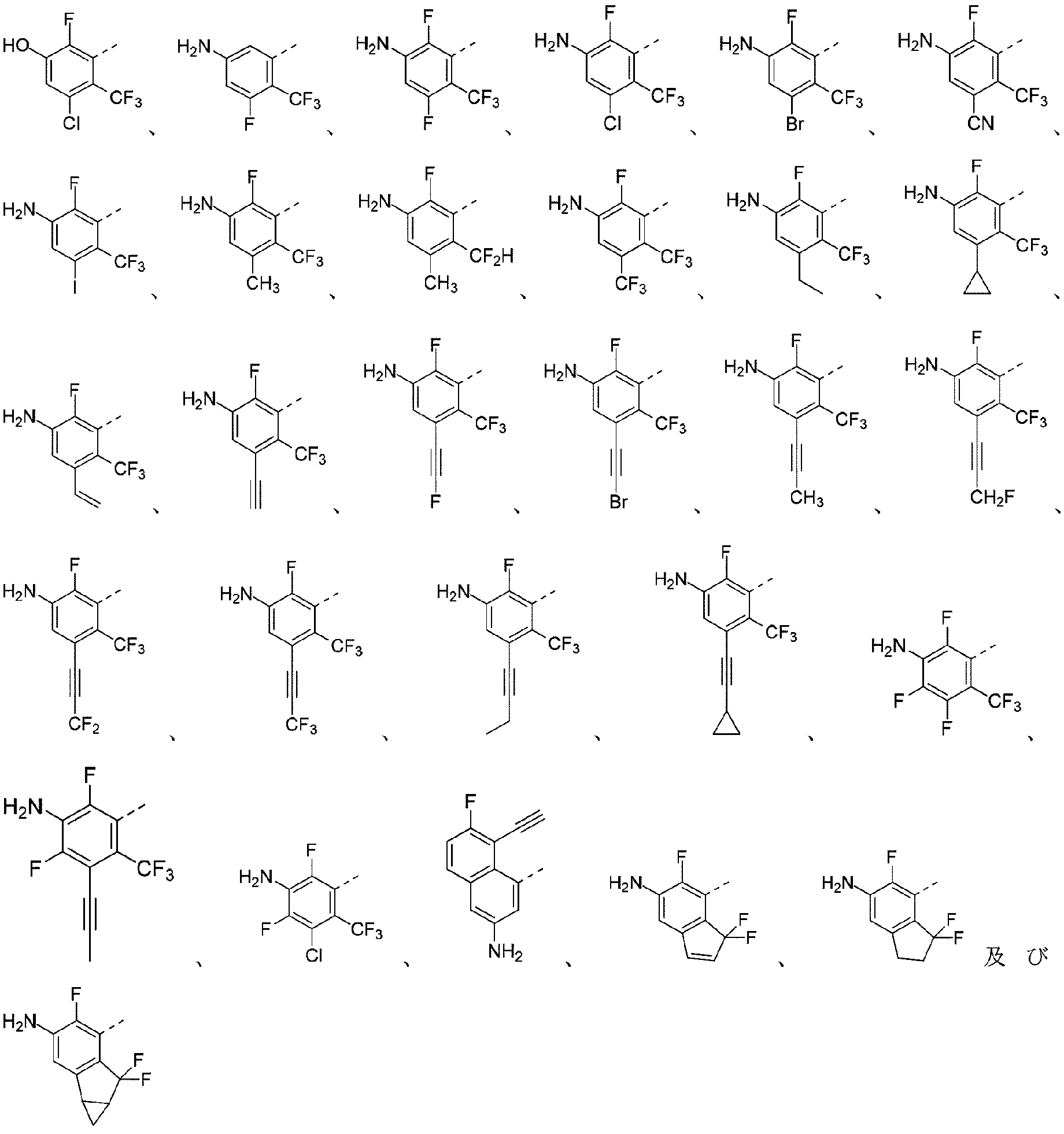


Rb及びL1のそれぞれが、請求項1に定義されたとおりであり、
nが、0、1、2、3、4及び5から選択される、請求項1に記載の化合物又はその薬学的に許容される塩。
Each of R b and L 1 is as defined in claim 1 ;
2. The compound of claim 1, wherein n is selected from 0, 1, 2, 3, 4 and 5, or a pharma- ceutically acceptable salt thereof.


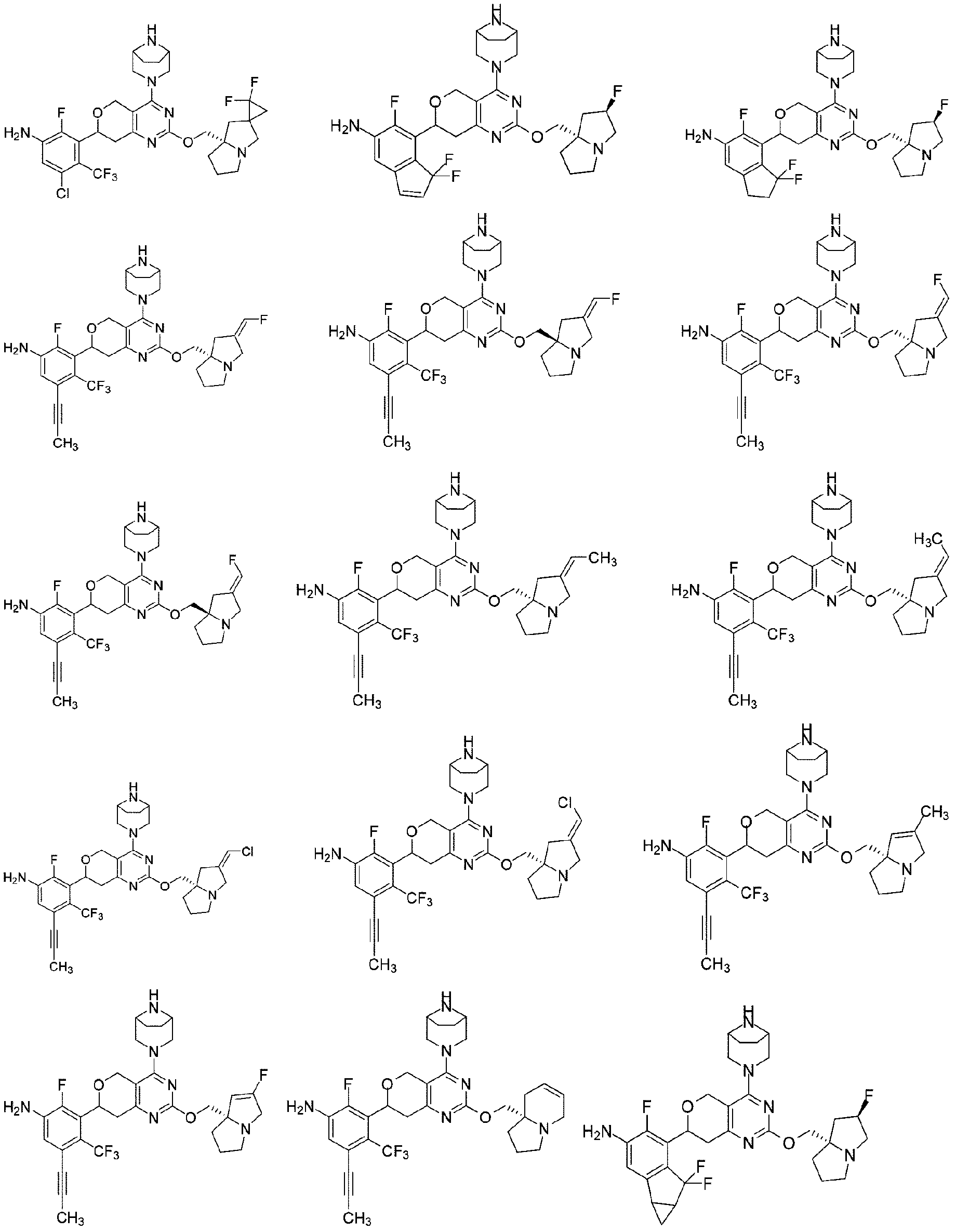


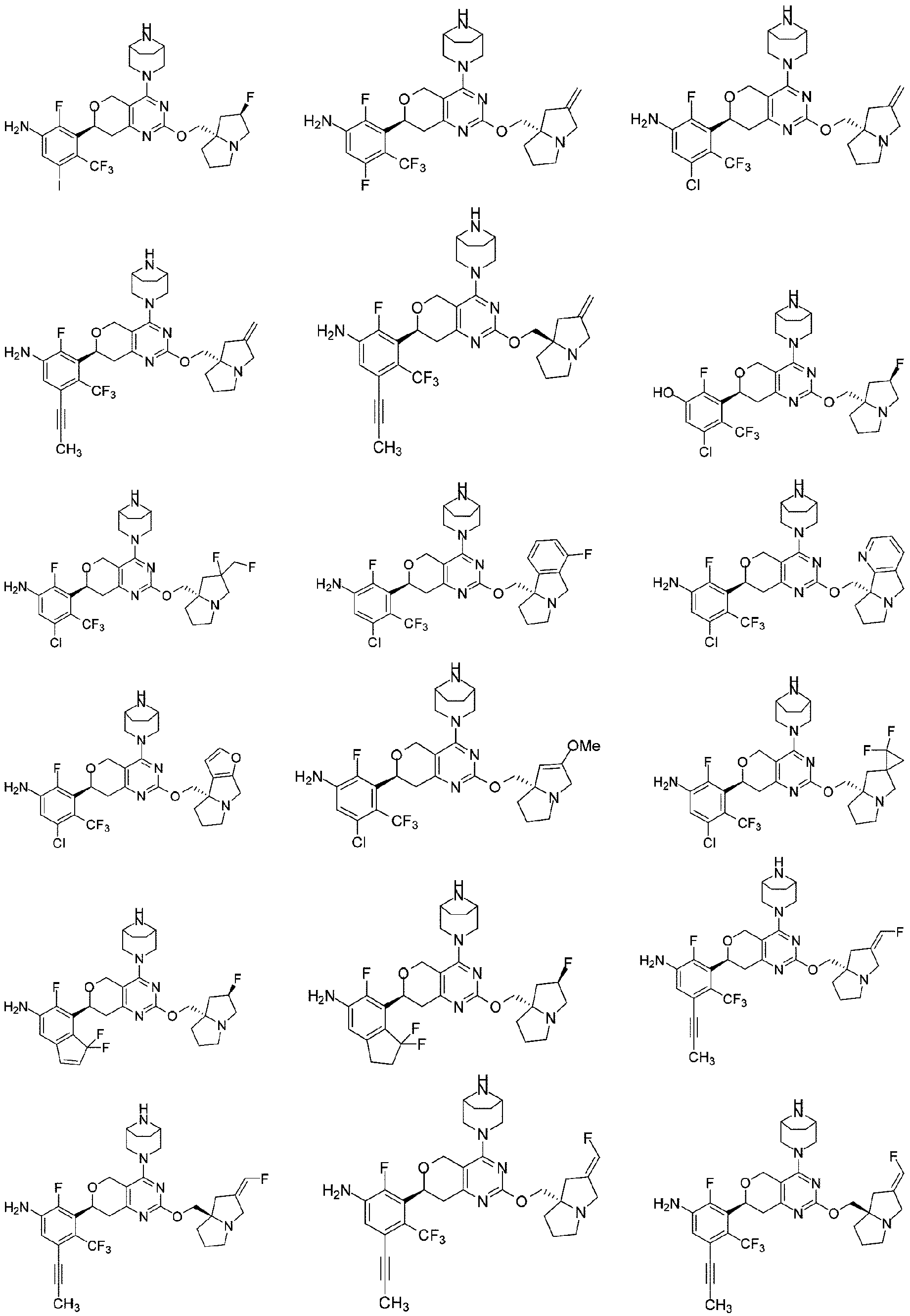


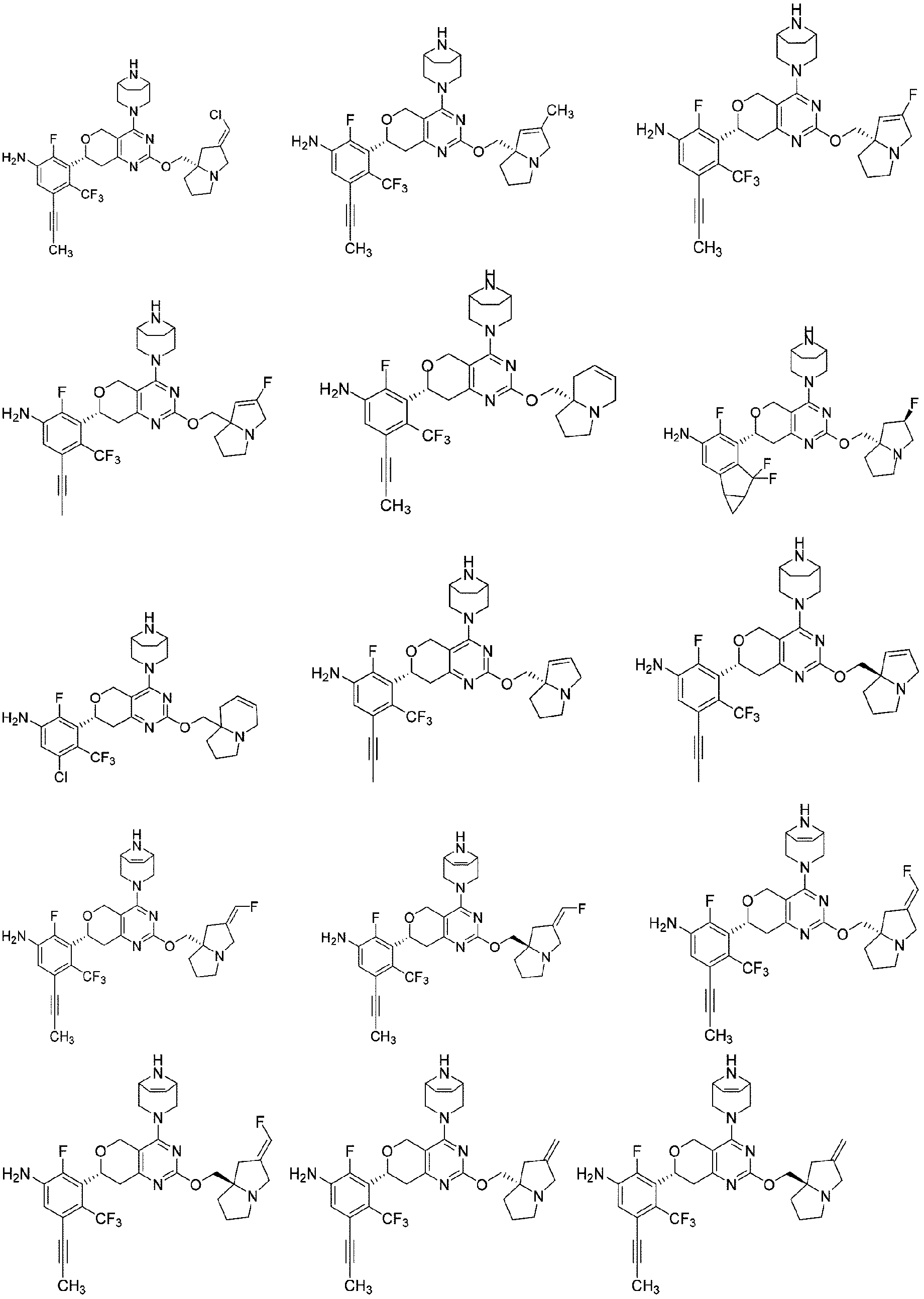


Applications Claiming Priority (17)
| Application Number | Priority Date | Filing Date | Title |
|---|---|---|---|
| CN202210074707 | 2022-01-21 | ||
| CN202210074707.1 | 2022-01-21 | ||
| CN202210082274.4 | 2022-01-24 | ||
| CN202210082274 | 2022-01-24 | ||
| CN202210254285 | 2022-03-15 | ||
| CN202210254285.6 | 2022-03-15 | ||
| CN202210346571 | 2022-03-31 | ||
| CN202210346571.5 | 2022-03-31 | ||
| CN202210642158.3 | 2022-06-07 | ||
| CN202210642158 | 2022-06-07 | ||
| CN202210813772.1 | 2022-07-11 | ||
| CN202210813772 | 2022-07-11 | ||
| CN202210964127.X | 2022-08-11 | ||
| CN202210964127 | 2022-08-11 | ||
| CN202310029317.7 | 2023-01-09 | ||
| CN202310029317 | 2023-01-09 | ||
| PCT/CN2023/072798 WO2023138601A1 (en) | 2022-01-21 | 2023-01-18 | Bridged ring-substituted heteroaryl-pyran derivative, and use thereof |
Publications (1)
| Publication Number | Publication Date |
|---|---|
| JP2025504491A true JP2025504491A (en) | 2025-02-12 |
Family
ID=87347855
Family Applications (1)
| Application Number | Title | Priority Date | Filing Date |
|---|---|---|---|
| JP2024543322A Pending JP2025504491A (en) | 2022-01-21 | 2023-01-18 | Bridged ring substituted heteroaryl-pyran derivatives and uses thereof |
Country Status (11)
| Country | Link |
|---|---|
| US (1) | US20250109146A1 (en) |
| EP (1) | EP4467548A4 (en) |
| JP (1) | JP2025504491A (en) |
| KR (1) | KR20240136417A (en) |
| CN (1) | CN118541375A (en) |
| AU (1) | AU2023209022A1 (en) |
| CA (1) | CA3249537A1 (en) |
| IL (1) | IL314400A (en) |
| MX (1) | MX2024008987A (en) |
| TW (1) | TWI844242B (en) |
| WO (1) | WO2023138601A1 (en) |
Families Citing this family (17)
| Publication number | Priority date | Publication date | Assignee | Title |
|---|---|---|---|---|
| CN118344386A (en) * | 2023-01-13 | 2024-07-16 | 苏州泽璟生物制药股份有限公司 | Substituted bridge ring inhibitors and preparation method and application thereof |
| AU2024239026A1 (en) * | 2023-03-23 | 2025-10-16 | D3 Bio (Wuxi) Co., Ltd. | Heterocyclic-substituted pyrimidopyran compound and use thereof |
| WO2025195335A1 (en) * | 2024-03-18 | 2025-09-25 | D3 Bio (Wuxi) Co., Ltd. | Heterocyclic substituted pyrimidopyran compounds and their applications |
| KR20250164828A (en) | 2023-03-30 | 2025-11-25 | 레볼루션 메디슨즈, 인크. | Composition for inducing RAS GTP hydrolysis and use thereof |
| TW202508595A (en) | 2023-05-04 | 2025-03-01 | 美商銳新醫藥公司 | Combination therapy for a ras related disease or disorder |
| US20250049810A1 (en) | 2023-08-07 | 2025-02-13 | Revolution Medicines, Inc. | Methods of treating a ras protein-related disease or disorder |
| US20250109147A1 (en) | 2023-09-08 | 2025-04-03 | Gilead Sciences, Inc. | Kras g12d modulating compounds |
| WO2025080946A2 (en) | 2023-10-12 | 2025-04-17 | Revolution Medicines, Inc. | Ras inhibitors |
| WO2025171296A1 (en) | 2024-02-09 | 2025-08-14 | Revolution Medicines, Inc. | Ras inhibitors |
| WO2025240847A1 (en) | 2024-05-17 | 2025-11-20 | Revolution Medicines, Inc. | Ras inhibitors |
| WO2025255438A1 (en) | 2024-06-07 | 2025-12-11 | Revolution Medicines, Inc. | Methods of treating a ras protein-related disease or disorder |
| WO2025265060A1 (en) | 2024-06-21 | 2025-12-26 | Revolution Medicines, Inc. | Therapeutic compositions and methods for managing treatment-related effects |
| WO2026006747A1 (en) | 2024-06-28 | 2026-01-02 | Revolution Medicines, Inc. | Ras inhibitors |
| WO2026015801A1 (en) | 2024-07-12 | 2026-01-15 | Revolution Medicines, Inc. | Methods of treating a ras related disease or disorder |
| WO2026015790A1 (en) | 2024-07-12 | 2026-01-15 | Revolution Medicines, Inc. | Methods of treating a ras related disease or disorder |
| WO2026015796A1 (en) | 2024-07-12 | 2026-01-15 | Revolution Medicines, Inc. | Methods of treating a ras related disease or disorder |
| WO2026015825A1 (en) | 2024-07-12 | 2026-01-15 | Revolution Medicines, Inc. | Use of ras inhibitor for treating pancreatic cancer |
Family Cites Families (6)
| Publication number | Priority date | Publication date | Assignee | Title |
|---|---|---|---|---|
| CN112552294B (en) * | 2019-09-10 | 2023-12-19 | 上海翰森生物医药科技有限公司 | Piperazine-containing heterocyclic derivative inhibitors, preparation methods and applications thereof |
| CN112390788A (en) * | 2019-08-13 | 2021-02-23 | 苏州闻天医药科技有限公司 | Compound for inhibiting KRASG12C mutant protein and preparation method and application thereof |
| WO2021106231A1 (en) * | 2019-11-29 | 2021-06-03 | Taiho Pharmaceutical Co., Ltd. | A compound having inhibitory activity against kras g12d mutation |
| WO2021180181A1 (en) * | 2020-03-12 | 2021-09-16 | 南京明德新药研发有限公司 | Pyrimidoheterocyclic compounds and application thereof |
| MX2023009037A (en) * | 2021-02-01 | 2023-08-10 | Medshine Discovery Inc | Pyrimidopyran compound. |
| WO2022221739A1 (en) * | 2021-04-16 | 2022-10-20 | Merck Sharp & Dohme Corp. | Small molecule inhibitors of kras g12d mutant |
-
2023
- 2023-01-18 EP EP23742916.2A patent/EP4467548A4/en active Pending
- 2023-01-18 AU AU2023209022A patent/AU2023209022A1/en active Pending
- 2023-01-18 TW TW112102376A patent/TWI844242B/en active
- 2023-01-18 KR KR1020247027683A patent/KR20240136417A/en active Pending
- 2023-01-18 JP JP2024543322A patent/JP2025504491A/en active Pending
- 2023-01-18 MX MX2024008987A patent/MX2024008987A/en unknown
- 2023-01-18 US US18/730,144 patent/US20250109146A1/en active Pending
- 2023-01-18 CN CN202380017574.7A patent/CN118541375A/en active Pending
- 2023-01-18 WO PCT/CN2023/072798 patent/WO2023138601A1/en not_active Ceased
- 2023-01-18 CA CA3249537A patent/CA3249537A1/en active Pending
- 2023-01-18 IL IL314400A patent/IL314400A/en unknown
Also Published As
| Publication number | Publication date |
|---|---|
| IL314400A (en) | 2024-09-01 |
| WO2023138601A1 (en) | 2023-07-27 |
| CA3249537A1 (en) | 2025-06-17 |
| CN118541375A (en) | 2024-08-23 |
| KR20240136417A (en) | 2024-09-13 |
| AU2023209022A1 (en) | 2024-08-08 |
| TWI844242B (en) | 2024-06-01 |
| EP4467548A1 (en) | 2024-11-27 |
| MX2024008987A (en) | 2024-09-10 |
| TW202346306A (en) | 2023-12-01 |
| EP4467548A4 (en) | 2025-12-24 |
| US20250109146A1 (en) | 2025-04-03 |
Similar Documents
| Publication | Publication Date | Title |
|---|---|---|
| JP2025504491A (en) | Bridged ring substituted heteroaryl-pyran derivatives and uses thereof | |
| KR102822517B1 (en) | Pyrimidoheterocyclic compounds and their applications | |
| JP7629580B1 (en) | Benzopyrimidine compounds and uses thereof | |
| TWI793999B (en) | Pyrimidinopyrane compounds | |
| KR20240024903A (en) | Fused tetracyclic compounds, methods for their preparation and their applications in medicine | |
| KR20230136636A (en) | Pyrimidine aromatic ring compound | |
| EP3950685A1 (en) | Pyrazolopyridine compound as ret inhibitor and application thereof | |
| JP2025524846A (en) | Fused ring compounds, their preparation methods and pharmaceutical uses | |
| CN117486901A (en) | Fused piperidine compounds, their preparation methods and their applications in medicine | |
| CN120247930A (en) | Heterocyclic substituted pyrimidopyran compounds and their applications | |
| KR20250120431A (en) | Crystal form of KRAS G12D inhibitor and method for preparing same | |
| WO2022247757A1 (en) | Fluorine-substituted pyrimidopyridine compound and use thereof | |
| CA3207466A1 (en) | Fused ring derivatives containing 1,4-oxazepane | |
| WO2023208127A1 (en) | Heteroaryl-substituted bicyclic compound and use thereof | |
| JP2024538128A (en) | Novel regulators of EHMT1 and EHMT2 and their therapeutic uses | |
| JP2021501778A (en) | Pyridopyrimidine compounds as mTORC1 / 2 double inhibitors | |
| CA3196035A1 (en) | Fused tricyclic derivative and pharmaceutical application thereof | |
| HK40090907A (en) | Fused tricyclic derivative and pharmaceutical application thereof | |
| EA048629B1 (en) | CONDENSED TRICYCLIC DERIVATIVE AND ITS PHARMACEUTICAL APPLICATIONS |
Legal Events
| Date | Code | Title | Description |
|---|---|---|---|
| A521 | Request for written amendment filed |
Free format text: JAPANESE INTERMEDIATE CODE: A523 Effective date: 20240925 |
|
| A621 | Written request for application examination |
Free format text: JAPANESE INTERMEDIATE CODE: A621 Effective date: 20260113 |