JP2025032089A - Chimeric antigen receptors targeting the tumor microenvironment - Google Patents
Chimeric antigen receptors targeting the tumor microenvironment Download PDFInfo
- Publication number
- JP2025032089A JP2025032089A JP2024193719A JP2024193719A JP2025032089A JP 2025032089 A JP2025032089 A JP 2025032089A JP 2024193719 A JP2024193719 A JP 2024193719A JP 2024193719 A JP2024193719 A JP 2024193719A JP 2025032089 A JP2025032089 A JP 2025032089A
- Authority
- JP
- Japan
- Prior art keywords
- car
- cell
- seq
- amino acid
- acid sequence
- Prior art date
- Legal status (The legal status is an assumption and is not a legal conclusion. Google has not performed a legal analysis and makes no representation as to the accuracy of the status listed.)
- Pending
Links
Classifications
-
- C—CHEMISTRY; METALLURGY
- C07—ORGANIC CHEMISTRY
- C07K—PEPTIDES
- C07K14/00—Peptides having more than 20 amino acids; Gastrins; Somatostatins; Melanotropins; Derivatives thereof
- C07K14/435—Peptides having more than 20 amino acids; Gastrins; Somatostatins; Melanotropins; Derivatives thereof from animals; from humans
- C07K14/705—Receptors; Cell surface antigens; Cell surface determinants
- C07K14/70503—Immunoglobulin superfamily
- C07K14/7051—T-cell receptor (TcR)-CD3 complex
-
- C—CHEMISTRY; METALLURGY
- C07—ORGANIC CHEMISTRY
- C07K—PEPTIDES
- C07K14/00—Peptides having more than 20 amino acids; Gastrins; Somatostatins; Melanotropins; Derivatives thereof
- C07K14/435—Peptides having more than 20 amino acids; Gastrins; Somatostatins; Melanotropins; Derivatives thereof from animals; from humans
- C07K14/705—Receptors; Cell surface antigens; Cell surface determinants
- C07K14/70503—Immunoglobulin superfamily
- C07K14/70521—CD28, CD152
-
- A—HUMAN NECESSITIES
- A61—MEDICAL OR VETERINARY SCIENCE; HYGIENE
- A61K—PREPARATIONS FOR MEDICAL, DENTAL OR TOILETRY PURPOSES
- A61K39/00—Medicinal preparations containing antigens or antibodies
- A61K39/39—Medicinal preparations containing antigens or antibodies characterised by the immunostimulating additives, e.g. chemical adjuvants
-
- A—HUMAN NECESSITIES
- A61—MEDICAL OR VETERINARY SCIENCE; HYGIENE
- A61K—PREPARATIONS FOR MEDICAL, DENTAL OR TOILETRY PURPOSES
- A61K40/00—Cellular immunotherapy
- A61K40/10—Cellular immunotherapy characterised by the cell type used
- A61K40/11—T-cells, e.g. tumour infiltrating lymphocytes [TIL] or regulatory T [Treg] cells; Lymphokine-activated killer [LAK] cells
-
- A—HUMAN NECESSITIES
- A61—MEDICAL OR VETERINARY SCIENCE; HYGIENE
- A61K—PREPARATIONS FOR MEDICAL, DENTAL OR TOILETRY PURPOSES
- A61K40/00—Cellular immunotherapy
- A61K40/30—Cellular immunotherapy characterised by the recombinant expression of specific molecules in the cells of the immune system
- A61K40/31—Chimeric antigen receptors [CAR]
-
- A—HUMAN NECESSITIES
- A61—MEDICAL OR VETERINARY SCIENCE; HYGIENE
- A61K—PREPARATIONS FOR MEDICAL, DENTAL OR TOILETRY PURPOSES
- A61K40/00—Cellular immunotherapy
- A61K40/40—Cellular immunotherapy characterised by antigens that are targeted or presented by cells of the immune system
- A61K40/41—Vertebrate antigens
- A61K40/42—Cancer antigens
-
- A—HUMAN NECESSITIES
- A61—MEDICAL OR VETERINARY SCIENCE; HYGIENE
- A61K—PREPARATIONS FOR MEDICAL, DENTAL OR TOILETRY PURPOSES
- A61K40/00—Cellular immunotherapy
- A61K40/40—Cellular immunotherapy characterised by antigens that are targeted or presented by cells of the immune system
- A61K40/41—Vertebrate antigens
- A61K40/42—Cancer antigens
- A61K40/4202—Receptors, cell surface antigens or cell surface determinants
- A61K40/4203—Receptors for growth factors
- A61K40/4204—Epidermal growth factor receptors [EGFR]
-
- A—HUMAN NECESSITIES
- A61—MEDICAL OR VETERINARY SCIENCE; HYGIENE
- A61K—PREPARATIONS FOR MEDICAL, DENTAL OR TOILETRY PURPOSES
- A61K40/00—Cellular immunotherapy
- A61K40/40—Cellular immunotherapy characterised by antigens that are targeted or presented by cells of the immune system
- A61K40/41—Vertebrate antigens
- A61K40/42—Cancer antigens
- A61K40/4202—Receptors, cell surface antigens or cell surface determinants
- A61K40/421—Immunoglobulin superfamily
- A61K40/4211—CD19 or B4
-
- A—HUMAN NECESSITIES
- A61—MEDICAL OR VETERINARY SCIENCE; HYGIENE
- A61K—PREPARATIONS FOR MEDICAL, DENTAL OR TOILETRY PURPOSES
- A61K40/00—Cellular immunotherapy
- A61K40/40—Cellular immunotherapy characterised by antigens that are targeted or presented by cells of the immune system
- A61K40/41—Vertebrate antigens
- A61K40/42—Cancer antigens
- A61K40/4202—Receptors, cell surface antigens or cell surface determinants
- A61K40/4214—Receptors for cytokines
- A61K40/4217—Receptors for interleukins [IL]
-
- A—HUMAN NECESSITIES
- A61—MEDICAL OR VETERINARY SCIENCE; HYGIENE
- A61P—SPECIFIC THERAPEUTIC ACTIVITY OF CHEMICAL COMPOUNDS OR MEDICINAL PREPARATIONS
- A61P35/00—Antineoplastic agents
-
- C—CHEMISTRY; METALLURGY
- C07—ORGANIC CHEMISTRY
- C07K—PEPTIDES
- C07K14/00—Peptides having more than 20 amino acids; Gastrins; Somatostatins; Melanotropins; Derivatives thereof
- C07K14/435—Peptides having more than 20 amino acids; Gastrins; Somatostatins; Melanotropins; Derivatives thereof from animals; from humans
- C07K14/705—Receptors; Cell surface antigens; Cell surface determinants
- C07K14/70503—Immunoglobulin superfamily
- C07K14/70517—CD8
-
- C—CHEMISTRY; METALLURGY
- C07—ORGANIC CHEMISTRY
- C07K—PEPTIDES
- C07K14/00—Peptides having more than 20 amino acids; Gastrins; Somatostatins; Melanotropins; Derivatives thereof
- C07K14/435—Peptides having more than 20 amino acids; Gastrins; Somatostatins; Melanotropins; Derivatives thereof from animals; from humans
- C07K14/705—Receptors; Cell surface antigens; Cell surface determinants
- C07K14/70578—NGF-receptor/TNF-receptor superfamily, e.g. CD27, CD30, CD40, CD95
-
- C—CHEMISTRY; METALLURGY
- C07—ORGANIC CHEMISTRY
- C07K—PEPTIDES
- C07K16/00—Immunoglobulins [IGs], e.g. monoclonal or polyclonal antibodies
- C07K16/18—Immunoglobulins [IGs], e.g. monoclonal or polyclonal antibodies against material from animals or humans
- C07K16/22—Immunoglobulins [IGs], e.g. monoclonal or polyclonal antibodies against material from animals or humans against growth factors ; against growth regulators
-
- C—CHEMISTRY; METALLURGY
- C07—ORGANIC CHEMISTRY
- C07K—PEPTIDES
- C07K16/00—Immunoglobulins [IGs], e.g. monoclonal or polyclonal antibodies
- C07K16/18—Immunoglobulins [IGs], e.g. monoclonal or polyclonal antibodies against material from animals or humans
- C07K16/28—Immunoglobulins [IGs], e.g. monoclonal or polyclonal antibodies against material from animals or humans against receptors, cell surface antigens or cell surface determinants
- C07K16/2803—Immunoglobulins [IGs], e.g. monoclonal or polyclonal antibodies against material from animals or humans against receptors, cell surface antigens or cell surface determinants against the immunoglobulin superfamily
-
- C—CHEMISTRY; METALLURGY
- C07—ORGANIC CHEMISTRY
- C07K—PEPTIDES
- C07K16/00—Immunoglobulins [IGs], e.g. monoclonal or polyclonal antibodies
- C07K16/18—Immunoglobulins [IGs], e.g. monoclonal or polyclonal antibodies against material from animals or humans
- C07K16/28—Immunoglobulins [IGs], e.g. monoclonal or polyclonal antibodies against material from animals or humans against receptors, cell surface antigens or cell surface determinants
- C07K16/2803—Immunoglobulins [IGs], e.g. monoclonal or polyclonal antibodies against material from animals or humans against receptors, cell surface antigens or cell surface determinants against the immunoglobulin superfamily
- C07K16/2809—Immunoglobulins [IGs], e.g. monoclonal or polyclonal antibodies against material from animals or humans against receptors, cell surface antigens or cell surface determinants against the immunoglobulin superfamily against the T-cell receptor (TcR)-CD3 complex
-
- C—CHEMISTRY; METALLURGY
- C07—ORGANIC CHEMISTRY
- C07K—PEPTIDES
- C07K16/00—Immunoglobulins [IGs], e.g. monoclonal or polyclonal antibodies
- C07K16/18—Immunoglobulins [IGs], e.g. monoclonal or polyclonal antibodies against material from animals or humans
- C07K16/28—Immunoglobulins [IGs], e.g. monoclonal or polyclonal antibodies against material from animals or humans against receptors, cell surface antigens or cell surface determinants
- C07K16/2803—Immunoglobulins [IGs], e.g. monoclonal or polyclonal antibodies against material from animals or humans against receptors, cell surface antigens or cell surface determinants against the immunoglobulin superfamily
- C07K16/2818—Immunoglobulins [IGs], e.g. monoclonal or polyclonal antibodies against material from animals or humans against receptors, cell surface antigens or cell surface determinants against the immunoglobulin superfamily against CD28 or CD152
-
- C—CHEMISTRY; METALLURGY
- C07—ORGANIC CHEMISTRY
- C07K—PEPTIDES
- C07K16/00—Immunoglobulins [IGs], e.g. monoclonal or polyclonal antibodies
- C07K16/18—Immunoglobulins [IGs], e.g. monoclonal or polyclonal antibodies against material from animals or humans
- C07K16/28—Immunoglobulins [IGs], e.g. monoclonal or polyclonal antibodies against material from animals or humans against receptors, cell surface antigens or cell surface determinants
- C07K16/2863—Immunoglobulins [IGs], e.g. monoclonal or polyclonal antibodies against material from animals or humans against receptors, cell surface antigens or cell surface determinants against receptors for growth factors, growth regulators
-
- C—CHEMISTRY; METALLURGY
- C07—ORGANIC CHEMISTRY
- C07K—PEPTIDES
- C07K16/00—Immunoglobulins [IGs], e.g. monoclonal or polyclonal antibodies
- C07K16/18—Immunoglobulins [IGs], e.g. monoclonal or polyclonal antibodies against material from animals or humans
- C07K16/28—Immunoglobulins [IGs], e.g. monoclonal or polyclonal antibodies against material from animals or humans against receptors, cell surface antigens or cell surface determinants
- C07K16/2866—Immunoglobulins [IGs], e.g. monoclonal or polyclonal antibodies against material from animals or humans against receptors, cell surface antigens or cell surface determinants against receptors for cytokines, lymphokines, interferons
-
- C—CHEMISTRY; METALLURGY
- C12—BIOCHEMISTRY; BEER; SPIRITS; WINE; VINEGAR; MICROBIOLOGY; ENZYMOLOGY; MUTATION OR GENETIC ENGINEERING
- C12N—MICROORGANISMS OR ENZYMES; COMPOSITIONS THEREOF; PROPAGATING, PRESERVING, OR MAINTAINING MICROORGANISMS; MUTATION OR GENETIC ENGINEERING; CULTURE MEDIA
- C12N15/00—Mutation or genetic engineering; DNA or RNA concerning genetic engineering, vectors, e.g. plasmids, or their isolation, preparation or purification; Use of hosts therefor
- C12N15/09—Recombinant DNA-technology
- C12N15/63—Introduction of foreign genetic material using vectors; Vectors; Use of hosts therefor; Regulation of expression
- C12N15/79—Vectors or expression systems specially adapted for eukaryotic hosts
- C12N15/85—Vectors or expression systems specially adapted for eukaryotic hosts for animal cells
- C12N15/86—Viral vectors
-
- A—HUMAN NECESSITIES
- A61—MEDICAL OR VETERINARY SCIENCE; HYGIENE
- A61K—PREPARATIONS FOR MEDICAL, DENTAL OR TOILETRY PURPOSES
- A61K39/00—Medicinal preparations containing antigens or antibodies
- A61K2039/64—Medicinal preparations containing antigens or antibodies characterised by the architecture of the carrier-antigen complex, e.g. repetition of carrier-antigen units
-
- A—HUMAN NECESSITIES
- A61—MEDICAL OR VETERINARY SCIENCE; HYGIENE
- A61K—PREPARATIONS FOR MEDICAL, DENTAL OR TOILETRY PURPOSES
- A61K39/00—Medicinal preparations containing antigens or antibodies
- A61K2039/80—Vaccine for a specifically defined cancer
-
- A—HUMAN NECESSITIES
- A61—MEDICAL OR VETERINARY SCIENCE; HYGIENE
- A61K—PREPARATIONS FOR MEDICAL, DENTAL OR TOILETRY PURPOSES
- A61K2239/00—Indexing codes associated with cellular immunotherapy of group A61K40/00
- A61K2239/31—Indexing codes associated with cellular immunotherapy of group A61K40/00 characterized by the route of administration
-
- A—HUMAN NECESSITIES
- A61—MEDICAL OR VETERINARY SCIENCE; HYGIENE
- A61K—PREPARATIONS FOR MEDICAL, DENTAL OR TOILETRY PURPOSES
- A61K2239/00—Indexing codes associated with cellular immunotherapy of group A61K40/00
- A61K2239/38—Indexing codes associated with cellular immunotherapy of group A61K40/00 characterised by the dose, timing or administration schedule
-
- A—HUMAN NECESSITIES
- A61—MEDICAL OR VETERINARY SCIENCE; HYGIENE
- A61K—PREPARATIONS FOR MEDICAL, DENTAL OR TOILETRY PURPOSES
- A61K2239/00—Indexing codes associated with cellular immunotherapy of group A61K40/00
- A61K2239/46—Indexing codes associated with cellular immunotherapy of group A61K40/00 characterised by the cancer treated
- A61K2239/47—Brain; Nervous system
-
- C—CHEMISTRY; METALLURGY
- C07—ORGANIC CHEMISTRY
- C07K—PEPTIDES
- C07K2317/00—Immunoglobulins specific features
- C07K2317/60—Immunoglobulins specific features characterized by non-natural combinations of immunoglobulin fragments
- C07K2317/62—Immunoglobulins specific features characterized by non-natural combinations of immunoglobulin fragments comprising only variable region components
- C07K2317/622—Single chain antibody (scFv)
-
- C—CHEMISTRY; METALLURGY
- C07—ORGANIC CHEMISTRY
- C07K—PEPTIDES
- C07K2319/00—Fusion polypeptide
- C07K2319/01—Fusion polypeptide containing a localisation/targetting motif
- C07K2319/03—Fusion polypeptide containing a localisation/targetting motif containing a transmembrane segment
-
- C—CHEMISTRY; METALLURGY
- C07—ORGANIC CHEMISTRY
- C07K—PEPTIDES
- C07K2319/00—Fusion polypeptide
- C07K2319/33—Fusion polypeptide fusions for targeting to specific cell types, e.g. tissue specific targeting, targeting of a bacterial subspecies
Landscapes
- Health & Medical Sciences (AREA)
- Life Sciences & Earth Sciences (AREA)
- Chemical & Material Sciences (AREA)
- Immunology (AREA)
- General Health & Medical Sciences (AREA)
- Organic Chemistry (AREA)
- Genetics & Genomics (AREA)
- Veterinary Medicine (AREA)
- Public Health (AREA)
- Animal Behavior & Ethology (AREA)
- Medicinal Chemistry (AREA)
- Epidemiology (AREA)
- Biochemistry (AREA)
- Biophysics (AREA)
- Molecular Biology (AREA)
- Proteomics, Peptides & Aminoacids (AREA)
- Zoology (AREA)
- Cell Biology (AREA)
- Gastroenterology & Hepatology (AREA)
- Toxicology (AREA)
- Engineering & Computer Science (AREA)
- Pharmacology & Pharmacy (AREA)
- Chemical Kinetics & Catalysis (AREA)
- General Chemical & Material Sciences (AREA)
- Biomedical Technology (AREA)
- Biotechnology (AREA)
- Bioinformatics & Cheminformatics (AREA)
- Wood Science & Technology (AREA)
- General Engineering & Computer Science (AREA)
- Nuclear Medicine, Radiotherapy & Molecular Imaging (AREA)
- Microbiology (AREA)
- Virology (AREA)
- Physics & Mathematics (AREA)
- Plant Pathology (AREA)
- Mycology (AREA)
- Peptides Or Proteins (AREA)
- Micro-Organisms Or Cultivation Processes Thereof (AREA)
- Medicines Containing Antibodies Or Antigens For Use As Internal Diagnostic Agents (AREA)
- Medicines Containing Material From Animals Or Micro-Organisms (AREA)
- Hematology (AREA)
Abstract
Description
[関連出願の相互参照]
この出願は、内容の全体が出典明示によりここに援用される、2018年2月12日出願の米国仮出願第62/629593号;2018年4月16日出願の米国仮出願第62/658307号;2018年4月16日出願の国際特許出願第PCT/US2018/027783号;及び2018年10月17日出願の米国仮出願第62/746895号の優先権を主張する。
CROSS-REFERENCE TO RELATED APPLICATIONS
This application claims priority to U.S. Provisional Application No. 62/629,593, filed February 12, 2018; U.S. Provisional Application No. 62/658,307, filed April 16, 2018; International Patent Application No. PCT/US2018/027783, filed April 16, 2018; and U.S. Provisional Application No. 62/746,895, filed October 17, 2018, the contents of which are incorporated herein by reference in their entireties.
[技術分野]
ここに記載される技術は免疫療法に関する。
[Technical field]
The technology described herein relates to immunotherapy.
[配列表]
本出願は、ASCIIフォーマットで電子的に提出され、その全体が出典明示によりここに援用される配列表を含む。2019年2月12日に作成したASCIIコピーは、51295-013WO2_Sequence_Listing_2.12.19_ST25との名称が付され、190819バイトのサイズである。
[Sequence Listing]
This application contains a Sequence Listing that has been submitted electronically in ASCII format and is incorporated herein by reference in its entirety. The ASCII copy created on February 12, 2019 is entitled 51295-013WO2_Sequence_Listing_2.12.19_ST25 and is 190,819 bytes in size.
キメラ抗原受容体(CAR)は、選択された標的抗原、ほとんどの場合、腫瘍抗原又は腫瘍関連抗原を発現する標的細胞に細胞傷害性T細胞応答を誘導する経路を提供する。CARは、抗原結合ドメインが、由来の標的抗原に特異的に結合する抗体の抗原結合ドメインに置き換えられたT細胞受容体の適応体である。例えばT細胞(「CAR T細胞」又は「CAR-T」)上に発現されたCARによる標的細胞の表面上の標的抗原のエンゲージは、標的細胞の死滅を促進する。 Chimeric antigen receptors (CARs) provide a pathway to induce cytotoxic T cell responses against target cells expressing a selected target antigen, most often a tumor antigen or tumor-associated antigen. CARs are adaptations of T cell receptors in which the antigen-binding domain has been replaced with the antigen-binding domain of an antibody that specifically binds to the target antigen from which it is derived. Engagement of a target antigen on the surface of a target cell by a CAR expressed, for example, on a T cell ("CAR T cell" or "CAR-T") promotes killing of the target cell.
本発明は、腫瘍微小環境を標的とするキメラ抗原受容体(CAR)を提供する。 The present invention provides a chimeric antigen receptor (CAR) that targets the tumor microenvironment.
一態様では、本発明は、一般に、(a)第一抗原に結合する第一抗原結合ドメインと第二抗原に結合する第二抗原結合ドメインを含む細胞外ドメインを含むキメラ抗原受容体(CAR)ポリペプチドと;(b)二重特異性T細胞エンゲージャー(BiTE)であって、標的抗原とT細胞抗原に結合するBiTEを発現するように操作された免疫細胞を特徴とする。 In one aspect, the invention generally features: (a) a chimeric antigen receptor (CAR) polypeptide comprising an extracellular domain that comprises a first antigen-binding domain that binds a first antigen and a second antigen-binding domain that binds a second antigen; and (b) a bispecific T cell engager (BiTE), wherein the immune cell is engineered to express the BiTE that binds a target antigen and a T cell antigen.
幾つかの実施態様では、CARポリペプチドは膜貫通ドメインと細胞内シグナル伝達ドメインを含む。幾つかの実施態様では、CARポリペプチドは一又は複数の共刺激ドメインを更に含む。幾つかの実施態様では、CARは膜貫通ドメイン、細胞内シグナル伝達ドメイン、及び一又は複数の共刺激ドメインを含む。 In some embodiments, the CAR polypeptide comprises a transmembrane domain and an intracellular signaling domain. In some embodiments, the CAR polypeptide further comprises one or more costimulatory domains. In some embodiments, the CAR comprises a transmembrane domain, an intracellular signaling domain, and one or more costimulatory domains.
幾つかの実施態様では、第一及び第二抗原は神経膠芽腫抗原である。更なる実施態様では、第一及び第二抗原は、上皮増殖因子受容体(EGFR)、上皮増殖因子受容体変異体III(EGFRvIII)、CD19、CD79b、CD37、前立腺特異的膜抗原(PSMA)、前立腺幹細胞抗原(PSCA)、インターロイキン13受容体アルファ2(IL-13Rα2)、エフリンA型受容体1(EphA1)、ヒト上皮増殖因子受容体2(HER2)、メソテリン、ムチン1,細胞表面関連(MUC1)、又はムチン16,細胞表面関連(MUC16)から独立して選択される。 In some embodiments, the first and second antigens are glioblastoma antigens. In further embodiments, the first and second antigens are independently selected from epidermal growth factor receptor (EGFR), epidermal growth factor receptor variant III (EGFRvIII), CD19, CD79b, CD37, prostate specific membrane antigen (PSMA), prostate stem cell antigen (PSCA), interleukin 13 receptor alpha 2 (IL-13Rα2), ephrin type A receptor 1 (EphA1), human epidermal growth factor receptor 2 (HER2), mesothelin, mucin 1, cell surface associated (MUC1), or mucin 16, cell surface associated (MUC16).
幾つかの実施態様では、第一抗原結合ドメイン及び/又は第二抗原結合ドメインは、抗体の抗原結合断片、例えば単一ドメイン抗体又は単鎖可変断片(scFv)を含む。他の実施態様では、第一抗原結合ドメイン及び/又は第二抗原結合ドメインは、第一及び/又は第二抗原のリガンドを含む。 In some embodiments, the first antigen-binding domain and/or the second antigen-binding domain comprises an antigen-binding fragment of an antibody, such as a single domain antibody or a single chain variable fragment (scFv). In other embodiments, the first antigen-binding domain and/or the second antigen-binding domain comprises a ligand for the first and/or second antigen.
更なる実施態様では、細胞外ドメインは、第一抗原結合ドメインと第二抗原結合ドメインとの間にリンカーを含まない。他の実施態様では、第一抗原結合ドメインは、リンカーによって第二抗原結合ドメインに連結され、例えば、リンカーは、配列番号:102、107、108、109、又は110のアミノ酸配列を含み、又は配列番号:102、107、108、109、又は110のリンカーと少なくとも90%の配列同一性(例えば、90%、91%、92%、93%、94%、95%、96%、97%、98%、又は99%の配列同一性)を有するアミノ酸を含む。 In further embodiments, the extracellular domain does not include a linker between the first antigen-binding domain and the second antigen-binding domain. In other embodiments, the first antigen-binding domain is linked to the second antigen-binding domain by a linker, e.g., the linker comprises an amino acid sequence of SEQ ID NO: 102, 107, 108, 109, or 110, or comprises amino acids having at least 90% sequence identity (e.g., 90%, 91%, 92%, 93%, 94%, 95%, 96%, 97%, 98%, or 99% sequence identity) to the linker of SEQ ID NO: 102, 107, 108, 109, or 110.
幾つかの実施態様では、膜貫通ドメインはヒンジ/膜貫通ドメインを含む。幾つかの実施態様では、ヒンジ/膜貫通ドメインは、免疫グロブリン様タンパク質(例えばIgA、IgD、IgE、IgG、又はIgM)、CD28、CD8、又は4-1BBのヒンジ/膜貫通ドメインを含む。特定の実施態様では、膜貫通ドメインは、配列番号:4、10、16、22、28、37、46、58、66、72、78、又は104のアミノ酸配列、あるいは配列番号:4、10、16、22、28、37、46、58、66、72、78、又は104のアミノ酸配列と少なくとも90%の配列同一性(例えば、90%、91%、92%、93%、94%、95%、96%、97%、98%、又は99%の配列同一性)を有するアミノ酸配列を含んでいてもよい、CD8のヒンジ/膜貫通ドメインを含む。 In some embodiments, the transmembrane domain comprises a hinge/transmembrane domain. In some embodiments, the hinge/transmembrane domain comprises a hinge/transmembrane domain of an immunoglobulin-like protein (e.g., IgA, IgD, IgE, IgG, or IgM), CD28, CD8, or 4-1BB. In certain embodiments, the transmembrane domain comprises the hinge/transmembrane domain of CD8, which may comprise an amino acid sequence of SEQ ID NO: 4, 10, 16, 22, 28, 37, 46, 58, 66, 72, 78, or 104, or an amino acid sequence having at least 90% sequence identity (e.g., 90%, 91%, 92%, 93%, 94%, 95%, 96%, 97%, 98%, or 99% sequence identity) to the amino acid sequence of SEQ ID NO: 4, 10, 16, 22, 28, 37, 46, 58, 66, 72, 78, or 104.
幾つかの実施態様では、細胞内シグナル伝達ドメインは、TCRζ、FcRγ、FcRβ、CD3γ、CD3θ、CD3ε、CD3η、CD3ζ、CD22、CD79a、CD79b、又はCD66dの細胞内シグナル伝達ドメインを含む。幾つかの実施態様では、細胞内シグナル伝達ドメインは、配列番号:6、12、18、24、30、39、48、60、68、74、80、又は106のアミノ酸配列、あるいは配列番号:6、12、18、24、30、39、48、60、68、74、80、又は106のアミノ酸配列と少なくとも90%の配列同一性(例えば90%、91%、92%、93%、94%、95%、96%、97%、98%、又は99%の配列同一性)を有するアミノ酸配列を含んでいてもよい、CD3ζの細胞内シグナル伝達ドメインを含む。 In some embodiments, the intracellular signaling domain comprises an intracellular signaling domain of TCRζ, FcRγ, FcRβ, CD3γ, CD3θ, CD3ε, CD3η, CD3ζ, CD22, CD79a, CD79b, or CD66d. In some embodiments, the intracellular signaling domain comprises an intracellular signaling domain of CD3ζ, which may comprise an amino acid sequence of SEQ ID NO: 6, 12, 18, 24, 30, 39, 48, 60, 68, 74, 80, or 106, or an amino acid sequence having at least 90% sequence identity (e.g., 90%, 91%, 92%, 93%, 94%, 95%, 96%, 97%, 98%, or 99% sequence identity) to the amino acid sequence of SEQ ID NO: 6, 12, 18, 24, 30, 39, 48, 60, 68, 74, 80, or 106.
更なる実施態様では、共刺激ドメインは、4-1BB、CD27、CD28、又はOX-40の共刺激ドメインを含む。幾つかの実施態様では、共刺激ドメインは、配列番号:5、11、17、23、29、38、47、59、67、73、79、又は105のアミノ酸配列、あるいは配列番号:5、11、17、23、29、38、47、59、67、73、79、又は105のアミノ酸配列と少なくとも90%の配列同一性(例えば、90%、91%、92%、93%、94%、95%、96%、97%、98%、又は99%の配列同一性)を有するアミノ酸配列を含んでいてもよい、4-1BBの共刺激ドメインを含む。 In further embodiments, the costimulatory domain comprises a costimulatory domain of 4-1BB, CD27, CD28, or OX-40. In some embodiments, the costimulatory domain comprises a costimulatory domain of 4-1BB, which may comprise an amino acid sequence of SEQ ID NO:5, 11, 17, 23, 29, 38, 47, 59, 67, 73, 79, or 105, or an amino acid sequence having at least 90% sequence identity (e.g., 90%, 91%, 92%, 93%, 94%, 95%, 96%, 97%, 98%, or 99% sequence identity) to the amino acid sequence of SEQ ID NO:5, 11, 17, 23, 29, 38, 47, 59, 67, 73, 79, or 105.
幾つかの実施態様では、第一抗原結合ドメインはIL-13Rα2結合ドメインを含む。幾つかの実施態様では、第二抗原結合ドメインはEGFRvIII結合ドメインを含む。 In some embodiments, the first antigen binding domain comprises an IL-13Rα2 binding domain. In some embodiments, the second antigen binding domain comprises an EGFRvIII binding domain.
幾つかの実施態様では、IL-13Rα2結合ドメインは、抗IL-13Rα2scFv又はIL-13Rα2のリガンドを含む。幾つかの実施態様では、IL-13Rα2のリガンドは、IL-13又はIL-13ゼータカイン、又はその抗原結合断片を含む。更なる実施態様では、IL-13Rα2結合ドメインは、配列番号:101のアミノ酸配列を含むか、又は配列番号:101のアミノ酸配列と少なくとも90%の配列同一性(例えば、90%、91%、92%、93%、94%、95%、96%、97%、98%、又は99%の配列同一性)を有するアミノ酸配列を含む。 In some embodiments, the IL-13Rα2 binding domain comprises an anti-IL-13Rα2 scFv or a ligand of IL-13Rα2. In some embodiments, the ligand of IL-13Rα2 comprises IL-13 or IL-13 zetakine, or an antigen-binding fragment thereof. In further embodiments, the IL-13Rα2 binding domain comprises the amino acid sequence of SEQ ID NO:101 or an amino acid sequence having at least 90% sequence identity (e.g., 90%, 91%, 92%, 93%, 94%, 95%, 96%, 97%, 98%, or 99% sequence identity) to the amino acid sequence of SEQ ID NO:101.
更なる実施態様では、EGFRvIII結合ドメインは、抗体の抗原結合断片を含み、例えば、EGFRvIII結合ドメインは、抗EGFRvIII scFvを含む。幾つかの実施態様では、抗EGFRvIII scFvは、配列番号:111又は113のアミノ酸配列を含む重鎖可変ドメイン(VH)、又は配列番号:111又は113のアミノ酸配列と少なくとも90%の配列同一性(例えば90%、91%、92%、93%、94%、95%、96%、97%、98%、又は99%の配列同一性)を有するアミノ酸配列を含むVH、及び/又は配列番号:112又は114のアミノ酸配列を含む軽鎖可変ドメイン(VL)、又は配列番号:112又は114のアミノ酸配列と少なくとも90%の配列同一性(例えば、90%、91%、92%、93%、94%、95%、96%、97%、98%、又は99%の配列同一性)を有するアミノ酸配列を含むVLを含む。特定の実施態様では、EGFRvIII結合ドメインは、配列番号:103のアミノ酸配列、又は配列番号:103のアミノ酸配列と少なくとも90%の配列同一性(例えば90%、91%、92%、93%、94%、95%、96%、97%、98%、又は99%の配列同一性)を有するアミノ酸配列を含む。 In a further embodiment, the EGFRvIII binding domain comprises an antigen-binding fragment of an antibody, for example, the EGFRvIII binding domain comprises an anti-EGFRvIII scFv. In some embodiments, the anti-EGFRvIII scFv comprises a heavy chain variable domain (VH) comprising the amino acid sequence of SEQ ID NO: 111 or 113, or a VH comprising an amino acid sequence having at least 90% sequence identity (e.g., 90%, 91%, 92%, 93%, 94%, 95%, 96%, 97%, 98%, or 99% sequence identity) to the amino acid sequence of SEQ ID NO: 111 or 113, and/or a light chain variable domain (VL) comprising the amino acid sequence of SEQ ID NO: 112 or 114, or a VL comprising an amino acid sequence having at least 90% sequence identity (e.g., 90%, 91%, 92%, 93%, 94%, 95%, 96%, 97%, 98%, or 99% sequence identity) to the amino acid sequence of SEQ ID NO: 112 or 114. In certain embodiments, the EGFRvIII binding domain comprises the amino acid sequence of SEQ ID NO: 103 or an amino acid sequence having at least 90% sequence identity (e.g., 90%, 91%, 92%, 93%, 94%, 95%, 96%, 97%, 98%, or 99% sequence identity) to the amino acid sequence of SEQ ID NO: 103.
幾つかの実施態様では、CARポリペプチドは、配列番号:100のアミノ酸配列を含むか、又は配列番号:103のアミノ酸配列と少なくとも90%の配列同一性(例えば90%、91%、92%、93%、94%、95%、96%、97%、98%、又は99%の配列同一性)を有するアミノ酸配列を含む。 In some embodiments, the CAR polypeptide comprises the amino acid sequence of SEQ ID NO:100 or an amino acid sequence having at least 90% sequence identity (e.g., 90%, 91%, 92%, 93%, 94%, 95%, 96%, 97%, 98%, or 99% sequence identity) to the amino acid sequence of SEQ ID NO:103.
別の態様では、本発明は、(i)配列番号:100のアミノ酸配列と少なくとも90%の配列同一性(例えば、90%、91%、92%、93%、94%、95%、96%、97%、98%、又は99%の配列同一性)を有するアミノ酸配列を含むCARポリペプチドと;(ii)BiTEであって、標的抗原とT細胞抗原に結合するBiTEを発現するように操作された免疫細胞を特徴とする。 In another aspect, the invention features: (i) a CAR polypeptide comprising an amino acid sequence having at least 90% sequence identity (e.g., 90%, 91%, 92%, 93%, 94%, 95%, 96%, 97%, 98%, or 99% sequence identity) to the amino acid sequence of SEQ ID NO:100; and (ii) a BiTE, wherein the immune cell is engineered to express the BiTE that binds to a target antigen and a T cell antigen.
別の態様では、本発明は、(i)配列番号:100のアミノ酸配列を含むCARポリペプチドと;(ii)BiTEであって、標的抗原とT細胞抗原に結合するBiTEを発現するように操作された免疫細胞を特徴とする。 In another aspect, the invention features an immune cell engineered to express: (i) a CAR polypeptide comprising the amino acid sequence of SEQ ID NO:100; and (ii) a BiTE, the BiTE binding to a target antigen and a T cell antigen.
先の態様の何れかの幾つかの実施態様では、標的抗原は、EGFR、EGFRvIII、CD19、CD79b、CD37、PSMA、PSCA、IL-13Rα2、EphA1、HER2、メソテリン、MUC1、又はMUC16の一つから選択される神経膠芽腫関連抗原である。幾つかの実施態様では、T細胞抗原はCD3である。特定の実施態様では、標的抗原はEGFRであり、T細胞抗原はCD3である。 In some embodiments of any of the preceding aspects, the target antigen is a glioblastoma-associated antigen selected from one of EGFR, EGFRvIII, CD19, CD79b, CD37, PSMA, PSCA, IL-13Rα2, EphA1, HER2, mesothelin, MUC1, or MUC16. In some embodiments, the T cell antigen is CD3. In certain embodiments, the target antigen is EGFR and the T cell antigen is CD3.
先の態様の何れかの幾つかの実施態様では、BiTEは、配列番号:98又は99のアミノ酸配列を含むか、又は配列番号:98又は99のアミノ酸配列と少なくとも90%の配列同一性(例えば、90%、91%、92%、93%、94%、95%、96%、97%、98%、又は99%の配列同一性)を有するアミノ酸配列を含む。 In some embodiments of any of the preceding aspects, the BiTE comprises an amino acid sequence of SEQ ID NO:98 or 99, or an amino acid sequence having at least 90% sequence identity (e.g., 90%, 91%, 92%, 93%, 94%, 95%, 96%, 97%, 98%, or 99% sequence identity) to the amino acid sequence of SEQ ID NO:98 or 99.
先の態様の何れかの幾つかの実施態様では、免疫細胞は、T又はナチュラルキラー(NK)細胞である。幾つかの実施態様では、免疫細胞はヒト細胞である。 In some embodiments of any of the preceding aspects, the immune cells are T or natural killer (NK) cells. In some embodiments, the immune cells are human cells.
別の態様では、本発明は、一般に、先の態様の何れか一のCARポリペプチドとBiTEをコードするポリヌクレオチドを特徴とする。 In another aspect, the invention generally features a polynucleotide encoding a CAR polypeptide and a BiTE of any one of the previous aspects.
幾つかの実施態様では、ポリヌクレオチドは、CARポリペプチドコード配列とBiTEコード配列を含み、CARポリペプチドコード配列とBiTEコード配列は、リボソームスキッピング部分によって分離されている。幾つかの実施態様では、CARポリペプチド及び/又はBiTEは、構成的プロモーター、例えば伸長因子1アルファ(EF1α)プロモーター下で発現される。他の実施態様では、CARポリペプチド及び/又はBiTEは、誘導性プロモーター下で発現され、例えば、誘導性プロモーターはT細胞受容体(TCR)又はCARシグナル伝達、例えば活性化T細胞核内因子(NFAT)応答エレメントにより誘導可能である。所定の実施態様では、CARポリペプチドとBiTEは、それぞれ構成的プロモーター下で発現される。他の実施態様では、CARポリペプチドは構成的プロモーター下で発現され、BiTEは誘導性プロモーター下で発現される。更なる実施態様では、ポリヌクレオチドは自殺遺伝子を更に含む。なおも更なる実施態様では、ポリヌクレオチドは、一又は複数のシグナル配列をコードする配列を含む。 In some embodiments, the polynucleotide comprises a CAR polypeptide coding sequence and a BiTE coding sequence, the CAR polypeptide coding sequence and the BiTE coding sequence being separated by a ribosomal skipping moiety. In some embodiments, the CAR polypeptide and/or the BiTE are expressed under a constitutive promoter, e.g., an elongation factor 1 alpha (EF1α) promoter. In other embodiments, the CAR polypeptide and/or the BiTE are expressed under an inducible promoter, e.g., an inducible promoter inducible by T cell receptor (TCR) or CAR signaling, e.g., a nuclear factor of activated T cells (NFAT) response element. In certain embodiments, the CAR polypeptide and the BiTE are each expressed under a constitutive promoter. In other embodiments, the CAR polypeptide is expressed under a constitutive promoter and the BiTE is expressed under an inducible promoter. In further embodiments, the polynucleotide further comprises a suicide gene. In still further embodiments, the polynucleotide comprises a sequence encoding one or more signal sequences.
別の態様では、本発明は、一般に、先の態様のポリヌクレオチドを含むベクターを特徴とする。幾つかの実施態様では、ベクターはレンチウイルスベクターである。 In another aspect, the invention generally features a vector that includes a polynucleotide of the previous aspect. In some embodiments, the vector is a lentiviral vector.
別の態様では、本発明は、一般に、先の態様の何れか一の免疫細胞、ポリヌクレオチド、又はベクターを含む薬学的組成物を特徴とする。 In another aspect, the invention generally features a pharmaceutical composition that includes an immune cell, polynucleotide, or vector of any one of the previous aspects.
別の態様では、本発明は、一般に、治療を必要とする対象のがんを治療する方法であって、先の態様の何れか一の免疫細胞、ポリヌクレオチド、ベクター、又は薬学的組成物を対象に投与することを含む方法を特徴とする。幾つかの実施態様では、がんは神経膠芽腫、肺がん、膵臓がん、リンパ腫、又は骨髄腫であり、場合によっては、がんはEGFR、EGFRvIII、CD19、CD79b、CD37、PSMA、PSCA、IL-13Rα2、EphA1、HER2、メソテリン、MUC1、及びMUC16からなる群の一又は複数を発現するものを含む。幾つかの実施態様では、神経膠芽腫は、IL-13Rα2、EGFRvIII、EGFR、HER2、メソテリン、及びEphA1からなる群の一又は複数を発現する細胞を含む。更なる実施態様では、神経膠芽腫は、EGFRvIII発現が低下した細胞を含む。 In another aspect, the invention generally features a method of treating cancer in a subject in need of treatment, comprising administering to the subject an immune cell, polynucleotide, vector, or pharmaceutical composition of any one of the preceding aspects. In some embodiments, the cancer is glioblastoma, lung cancer, pancreatic cancer, lymphoma, or myeloma, and in some cases, the cancer includes those that express one or more of the group consisting of EGFR, EGFRvIII, CD19, CD79b, CD37, PSMA, PSCA, IL-13Rα2, EphA1, HER2, mesothelin, MUC1, and MUC16. In some embodiments, the glioblastoma includes cells that express one or more of the group consisting of IL-13Rα2, EGFRvIII, EGFR, HER2, mesothelin, and EphA1. In further embodiments, the glioblastoma includes cells with reduced EGFRvIII expression.
別の態様では、本発明は、(i)EGFR結合ドメインを含むCARポリペプチドであって、配列番号:117のアミノ酸配列、又は配列番号:117のアミノ酸配列と少なくとも90%の配列同一性(例えば90%、91%、92%、93%、94%、95%、96%、97%、98%、又は99%の配列同一性)を有するアミノ酸配列を含むCARポリペプチドと;(ii)配列番号:25のアミノ酸配列、又は配列番号:25のアミノ酸配列と少なくとも90%の配列同一性(例えば、90%、91%、92%、93%、94%、95%、96%、97%、98%、又は99%の配列同一性)を有するアミノ酸配列を含む抗GARPカメリドを発現するように操作された免疫細胞を特徴とする。 In another aspect, the invention features an immune cell engineered to express (i) a CAR polypeptide comprising an EGFR binding domain, the CAR polypeptide comprising an amino acid sequence of SEQ ID NO:117 or an amino acid sequence having at least 90% sequence identity (e.g., 90%, 91%, 92%, 93%, 94%, 95%, 96%, 97%, 98%, or 99% sequence identity) to the amino acid sequence of SEQ ID NO:117; and (ii) an anti-GARP camelid comprising an amino acid sequence of SEQ ID NO:25 or an amino acid sequence having at least 90% sequence identity (e.g., 90%, 91%, 92%, 93%, 94%, 95%, 96%, 97%, 98%, or 99% sequence identity) to the amino acid sequence of SEQ ID NO:25.
別の態様では、本発明は、(i)EGFRvIII結合ドメインを含むCARポリペプチドであって、配列番号:115又は116のアミノ酸配列、又は配列番号:115又は116のアミノ酸配列と少なくとも90%の配列同一性(例えば90%、91%、92%、93%、94%、95%、96%、97%、98%、又は99%の配列同一性)を有するアミノ酸配列を含むCARポリペプチドと;(ii)BiTEであって、配列番号:98又は99のアミノ酸配列、又は配列番号:98又は99のアミノ酸配列と少なくとも90%の配列同一性(例えば、90%、91%、92%、93%、94%、95%、96%、97%、98%、又は99%の配列同一性)を有するアミノ酸配列を含む、EGFRとCD3に結合するBiTEを発現するように操作された免疫細胞を特徴とする。 In another aspect, the invention features an immune cell engineered to express (i) a CAR polypeptide comprising an EGFRvIII binding domain, the CAR polypeptide comprising an amino acid sequence of SEQ ID NO: 115 or 116, or an amino acid sequence having at least 90% sequence identity (e.g., 90%, 91%, 92%, 93%, 94%, 95%, 96%, 97%, 98%, or 99% sequence identity) to the amino acid sequence of SEQ ID NO: 115 or 116; and (ii) a BiTE comprising an amino acid sequence of SEQ ID NO: 98 or 99, or an amino acid sequence having at least 90% sequence identity (e.g., 90%, 91%, 92%, 93%, 94%, 95%, 96%, 97%, 98%, or 99% sequence identity) to the amino acid sequence of SEQ ID NO: 98 or 99, that binds EGFR and CD3.
別の態様では、本発明は、先の態様のCARポリペプチドと抗GARPカメリドをコードするポリヌクレオチドを特徴とする。
別の態様では、本発明は、先の態様のCARポリペプチドとBiTEを特徴とする。
先のポリヌクレオチドの幾つかの実施態様では、ポリヌクレオチドは自殺遺伝子を更に含む。幾つかの実施態様では、ポリヌクレオチドは、一又は複数のシグナル配列をコードする配列を更に含む。
In another aspect, the invention features a polynucleotide encoding a CAR polypeptide and an anti-GARP camellia of the previous aspect.
In another aspect, the invention features a CAR polypeptide and a BiTE of the previous aspect.
In some embodiments of the above polynucleotides, the polynucleotide further comprises a suicide gene. In some embodiments, the polynucleotide further comprises a sequence encoding one or more signal sequences.
別の態様では、本発明は、一般に、先の態様の何れか一のポリヌクレオチドを含むベクターを特徴とする。幾つかの実施態様では、ベクターはレンチウイルスベクターである。 別の態様では、本発明は、一般に、先の態様の何れか一の免疫細胞、ポリヌクレオチド、又はベクターを含む薬学的組成物を特徴とする。 In another aspect, the invention generally features a vector that includes a polynucleotide of any one of the previous aspects. In some embodiments, the vector is a lentiviral vector. In another aspect, the invention generally features a pharmaceutical composition that includes an immune cell, a polynucleotide, or a vector of any one of the previous aspects.
別の態様では、本発明は、対象におけるEGFRvIII発現が低下した神経膠芽腫を治療する方法であって、(i)細胞外EGFRvIII結合ドメインを含むCARポリペプチドと;(ii)BiTEを発現するように操作された免疫細胞を対象に投与することを含み、免疫細胞が、先の態様の何れか一の免疫細胞から場合によっては選択される方法を特徴とする。幾つかの実施態様では、CARは膜貫通ドメイン、細胞内シグナル伝達ドメイン、及び一又は複数の共刺激ドメインを含む。 In another aspect, the invention features a method of treating glioblastoma with reduced EGFRvIII expression in a subject, the method comprising administering to the subject: (i) a CAR polypeptide comprising an extracellular EGFRvIII binding domain; and (ii) an immune cell engineered to express a BiTE, where the immune cell is optionally selected from the immune cell of any one of the preceding aspects. In some embodiments, the CAR comprises a transmembrane domain, an intracellular signaling domain, and one or more costimulatory domains.
別の態様では、本発明は、対象の腫瘍微小環境における免疫抑制を防止又は低減する方法であって、(i)細胞外標的結合ドメインを含むCARと;(ii)BiTEを含む免疫細胞を対象に投与することを含み、免疫細胞が、先の態様の何れか一の免疫細胞から場合によっては選択される方法を特徴とする。幾つかの実施態様では、CARは膜貫通ドメイン、細胞内シグナル伝達ドメイン、及び一又は複数の共刺激ドメインを含む。 In another aspect, the invention features a method of preventing or reducing immune suppression in a tumor microenvironment of a subject, the method comprising administering to the subject an immune cell comprising: (i) a CAR comprising an extracellular target binding domain; and (ii) a BiTE, where the immune cell is optionally selected from the immune cell of any one of the preceding aspects. In some embodiments, the CAR comprises a transmembrane domain, an intracellular signaling domain, and one or more costimulatory domains.
別の態様では、本発明は、対象の腫瘍微小環境におけるT細胞消耗を防止又は低減する方法であって、(i)細胞外標的結合ドメインを含むCARと;(ii)BiTEを含む免疫細胞を対象に投与することを含み、免疫細胞が、先の態様の何れか一の免疫細胞から場合によっては選択される方法を特徴とする。幾つかの実施態様では、CARは膜貫通ドメイン、細胞内シグナル伝達ドメイン、及び一又は複数の共刺激ドメインを含む。 In another aspect, the invention features a method of preventing or reducing T cell exhaustion in a tumor microenvironment of a subject, the method comprising administering to the subject an immune cell comprising: (i) a CAR comprising an extracellular target binding domain; and (ii) a BiTE, where the immune cell is optionally selected from the immune cell of any one of the preceding aspects. In some embodiments, the CAR comprises a transmembrane domain, an intracellular signaling domain, and one or more costimulatory domains.
別の態様では、本発明は、対象のがんを治療する方法であって、(i)細胞外標的結合ドメインを含むCARと;(ii)BiTEを含む免疫細胞を対象に投与することを含み、免疫細胞が、先の態様の何れか一の免疫細胞から場合によっては選択される方法を特徴とする。幾つかの実施態様では、CARは膜貫通ドメイン、細胞内シグナル伝達ドメイン、及び一又は複数の共刺激ドメインを含む。幾つかの実施態様では、がんは神経膠芽腫、前立腺がん、肺がん、膵臓がん、リンパ腫、又は骨髄腫である。幾つかの実施態様では、がんは、EGFR、EGFRvIII、CD19、PSMA、PSCA、IL-13Rα2、EphA1、Her2、メソテリン、MUC1、及びMUC16からなる群の一又は複数を発現する細胞を含む。幾つかの実施態様では、がんは異種抗原を発現する。そのようながんの例は、(例えば、EGFR、EGFRvIII、IL-13Rα2、HER2、及び/又はEphA1を発現する)神経膠芽腫である。 In another aspect, the invention features a method of treating cancer in a subject, comprising administering to the subject an immune cell comprising: (i) a CAR comprising an extracellular target binding domain; and (ii) a BiTE, where the immune cell is optionally selected from the immune cell of any one of the preceding aspects. In some embodiments, the CAR comprises a transmembrane domain, an intracellular signaling domain, and one or more costimulatory domains. In some embodiments, the cancer is glioblastoma, prostate cancer, lung cancer, pancreatic cancer, lymphoma, or myeloma. In some embodiments, the cancer comprises cells expressing one or more of the group consisting of EGFR, EGFRvIII, CD19, PSMA, PSCA, IL-13Rα2, EphA1, Her2, mesothelin, MUC1, and MUC16. In some embodiments, the cancer expresses a heterologous antigen. An example of such a cancer is glioblastoma (e.g., expressing EGFR, EGFRvIII, IL-13Rα2, HER2, and/or EphA1).
別の態様では、本発明は、一般に、異種核酸分子を含むCAR T細胞であって、異種核酸分子が、(a)細胞外抗原結合ドメイン、膜貫通ドメイン、及び細胞内シグナル伝達ドメインを含むCARをコードする第一ポリヌクレオチドと;(b)治療剤をコードする第二ポリヌクレオチドを含むCAR T細胞を特徴とする。 In another aspect, the invention generally features a CAR T cell comprising a heterologous nucleic acid molecule, the heterologous nucleic acid molecule comprising: (a) a first polynucleotide encoding a CAR comprising an extracellular antigen-binding domain, a transmembrane domain, and an intracellular signaling domain; and (b) a second polynucleotide encoding a therapeutic agent.
幾つかの実施態様では、治療剤は、抗体試薬、例えば、単鎖抗体又は単一ドメイン抗体(例えば、カメリド抗体)を含む。更なる実施態様では、抗体試薬は、二重特異性抗体試薬、例えば、BiTEを含む。更に他の実施態様では、治療剤はサイトカインを含む。 In some embodiments, the therapeutic agent comprises an antibody reagent, e.g., a single chain antibody or a single domain antibody (e.g., a camelid antibody). In further embodiments, the antibody reagent comprises a bispecific antibody reagent, e.g., a BiTE. In yet other embodiments, the therapeutic agent comprises a cytokine.
幾つかの実施態様では、CAR及び治療剤は別個のCAR及び治療剤分子として生成される。幾つかの実施態様では、CAR T細胞は、CARをコードする第一ポリヌクレオチドと治療剤をコードする第二ポリヌクレオチドの間にリボソームスキッピング部分を含む。幾つかの実施態様では、リボソームスキッピング部分は2Aペプチド、例えばP2A又はT2Aを含む。 In some embodiments, the CAR and therapeutic agent are generated as separate CAR and therapeutic agent molecules. In some embodiments, the CAR T cell comprises a ribosome skipping moiety between a first polynucleotide encoding the CAR and a second polynucleotide encoding the therapeutic agent. In some embodiments, the ribosome skipping moiety comprises a 2A peptide, e.g., P2A or T2A.
更なる実施態様では、CARと治療剤は、それぞれ構成的に発現される。幾つかの実施態様では、CARと治療剤の発現はEF1αプロモーターによって駆動される。他の実施態様では、治療剤は、T細胞受容体又はCARシグナル伝達により場合によっては誘導可能な誘導性プロモーターの制御下で発現され、例えば誘導性プロモーターはNFATプロモーターを含む。また更なる実施態様では、CARは構成的プロモーターの制御下で発現され、治療剤はT細胞受容体又はCARシグナル伝達により場合によっては誘導可能な誘導性プロモーターの制御下で発現される。 In further embodiments, the CAR and therapeutic agent are each constitutively expressed. In some embodiments, expression of the CAR and therapeutic agent is driven by the EF1α promoter. In other embodiments, the therapeutic agent is expressed under the control of an inducible promoter that is optionally inducible by T cell receptor or CAR signaling, e.g., the inducible promoter comprises the NFAT promoter. In yet further embodiments, the CAR is expressed under the control of a constitutive promoter and the therapeutic agent is expressed under the control of an inducible promoter that is optionally inducible by T cell receptor or CAR signaling.
幾つかの実施態様では、CARは一又は複数の共刺激ドメインを更に含む。幾つかの実施態様では、CARの抗原結合ドメインは、抗体、単鎖抗体、単一ドメイン抗体、又はリガンドを含む。 In some embodiments, the CAR further comprises one or more costimulatory domains. In some embodiments, the antigen binding domain of the CAR comprises an antibody, a single chain antibody, a single domain antibody, or a ligand.
幾つかの実施態様では、膜貫通ドメインは、ヒンジ/膜貫通ドメイン、例えば、免疫グロブリン様タンパク質(例えば、IgA、IgD、IgE、IgG、又はIgM)、CD28、CD8、又は4-1BBのヒンジ/膜貫通ドメインを含む。幾つかの実施態様では、CARの膜貫通ドメインは、CD8ヒンジ/膜貫通ドメインを含み、これは場合によっては、配列番号:4、10、16、22、28、37、46、58、66、72、78、及び104、又はそれらのバリアントの何れか一の配列、あるいは配列番号:4、10、16、22、28、37、46、58、66、72、78、及び104の何れか一と少なくとも90%の配列同一性(例えば90%、91%、92%、93%、94%、95%、96%、97%、98%、又は99%の配列同一性)を有する配列を含む。 In some embodiments, the transmembrane domain comprises a hinge/transmembrane domain, e.g., the hinge/transmembrane domain of an immunoglobulin-like protein (e.g., IgA, IgD, IgE, IgG, or IgM), CD28, CD8, or 4-1BB. In some embodiments, the transmembrane domain of the CAR comprises a CD8 hinge/transmembrane domain, which optionally comprises a sequence of any one of SEQ ID NOs: 4, 10, 16, 22, 28, 37, 46, 58, 66, 72, 78, and 104, or a variant thereof, or a sequence having at least 90% sequence identity (e.g., 90%, 91%, 92%, 93%, 94%, 95%, 96%, 97%, 98%, or 99% sequence identity) to any one of SEQ ID NOs: 4, 10, 16, 22, 28, 37, 46, 58, 66, 72, 78, and 104.
更なる実施態様では、細胞内シグナル伝達ドメインは、TCRζ、FcRγ、FcRβ、CD3γ、CD3θ、CD3ε、CD3η、CD3ζ、CD22、CD79a、CD79b、又はCD66dの細胞内シグナル伝達ドメインを含む。幾つかの実施態様では、細胞内シグナル伝達ドメインは、配列番号:6、12、18、24、30、39、48、60、68、74、80、106、又はそれらのバリアントの何れか一の配列、あるいは配列番号:6、12、18、24、30、39、48、60、68、74、80、及び106の何れか一と少なくとも90%の配列同一性(例えば90%、91%、92%、93%、94%、95%、96%、97%、98%、又は99%の配列同一性)を有する配列を含んでいてもよい、CD3ζ細胞内シグナル伝達ドメインを含む。 In further embodiments, the intracellular signaling domain comprises an intracellular signaling domain of TCRζ, FcRγ, FcRβ, CD3γ, CD3θ, CD3ε, CD3η, CD3ζ, CD22, CD79a, CD79b, or CD66d. In some embodiments, the intracellular signaling domain comprises a CD3ζ intracellular signaling domain, which may comprise any one of SEQ ID NOs: 6, 12, 18, 24, 30, 39, 48, 60, 68, 74, 80, 106, or variants thereof, or a sequence having at least 90% sequence identity (e.g., 90%, 91%, 92%, 93%, 94%, 95%, 96%, 97%, 98%, or 99% sequence identity) to any one of SEQ ID NOs: 6, 12, 18, 24, 30, 39, 48, 60, 68, 74, 80, and 106.
また更なる実施態様では、共刺激ドメインは、4-1BB、CD27、CD28、又はOX-40の共刺激ドメインを含む。特定の実施態様では、共刺激ドメインは、配列番号:5、11、17、23、29、38、47、59、67、73、79、及び105、又はそれらのバリアントの何れか一の配列、あるいは配列番号:5、11、17、23、29、38、47、59、67、73、79、及び105の何れか一と少なくとも90%の配列同一性(例えば、90%、91%、92%、93%、94%、95%、96%、97%、98%又は99%の配列同一性)を有する配列を含んでいてもよい、4-1BB共刺激ドメインを含む。 In yet further embodiments, the costimulatory domain comprises a 4-1BB, CD27, CD28, or OX-40 costimulatory domain. In certain embodiments, the costimulatory domain comprises a 4-1BB costimulatory domain, which may comprise any one of SEQ ID NOs: 5, 11, 17, 23, 29, 38, 47, 59, 67, 73, 79, and 105, or variants thereof, or a sequence having at least 90% sequence identity (e.g., 90%, 91%, 92%, 93%, 94%, 95%, 96%, 97%, 98% or 99% sequence identity) to any one of SEQ ID NOs: 5, 11, 17, 23, 29, 38, 47, 59, 67, 73, 79, and 105.
幾つかの実施態様では、CAR抗原結合ドメインは、腫瘍関連抗原又はTreg関連抗原に結合する。幾つかの実施態様では、カメリド抗体は腫瘍関連抗原又はTreg関連抗原に結合する。幾つかの実施態様では、BiTEは、(i)腫瘍関連抗原又はTreg関連抗原と(ii)T細胞抗原に結合する。 In some embodiments, the CAR antigen-binding domain binds to a tumor-associated antigen or a Treg-associated antigen. In some embodiments, the camelid antibody binds to a tumor-associated antigen or a Treg-associated antigen. In some embodiments, the BiTE binds to (i) a tumor-associated antigen or a Treg-associated antigen and (ii) a T cell antigen.
所定の実施態様では、腫瘍関連抗原は、固形腫瘍関連抗原、例えば、EGFRvIII、EGFR、CD19、PSMA、PSCA、IL-13Rα2、EphA1、Her2、メソテリン、MUC1、又はMUC16である。場合によっては、CAR抗原結合ドメイン又は治療剤は、配列番号:21、27、33、36、42、45、51、55、57、63、65、103、及びそれらのバリアントからなる群から選択される配列、あるいは配列番号:21、27、33、36、42、45、51、55、57、63、65、又は103のアミノ酸配列と少なくとも90%の配列同一性(例えば、90%、91%、92%、93%、94%、95%、96%、97%、98%、又は99%の配列同一性)を有する配列を含む。 In certain embodiments, the tumor associated antigen is a solid tumor associated antigen, e.g., EGFRvIII, EGFR, CD19, PSMA, PSCA, IL-13Rα2, EphA1, Her2, mesothelin, MUC1, or MUC16. In some cases, the CAR antigen binding domain or therapeutic agent comprises a sequence selected from the group consisting of SEQ ID NOs: 21, 27, 33, 36, 42, 45, 51, 55, 57, 63, 65, 103, and variants thereof, or a sequence having at least 90% sequence identity (e.g., 90%, 91%, 92%, 93%, 94%, 95%, 96%, 97%, 98%, or 99% sequence identity) to the amino acid sequence of SEQ ID NOs: 21, 27, 33, 36, 42, 45, 51, 55, 57, 63, 65, or 103.
更なる実施態様では、Treg関連抗原は、反復優位糖タンパク質A(GARP)、潜在関連ペプチド(LAP)、CD25、及び細胞傷害性Tリンパ球関連抗原4(CTLA-4)からなる群から選択される。場合によっては、CAR抗原結合ドメイン又は治療剤は、配列番号:3、9、15、25、71、77、及びそれらのバリアントからなる群から選択される配列、あるいは配列番号:3、9、15、25、71、又は77のアミノ酸配列と少なくとも90%の配列同一性(例えば、90%、91%、92%、93%、94%、95%、96%、97%、98%、又は99%の配列同一性)を有する配列を含む。 In further embodiments, the Treg-associated antigen is selected from the group consisting of repeat-dominant glycoprotein A (GARP), latency-associated peptide (LAP), CD25, and cytotoxic T-lymphocyte-associated antigen 4 (CTLA-4). In some cases, the CAR antigen-binding domain or therapeutic agent comprises a sequence selected from the group consisting of SEQ ID NOs: 3, 9, 15, 25, 71, 77, and variants thereof, or a sequence having at least 90% sequence identity (e.g., 90%, 91%, 92%, 93%, 94%, 95%, 96%, 97%, 98%, or 99% sequence identity) to the amino acid sequence of SEQ ID NOs: 3, 9, 15, 25, 71, or 77.
別の態様では、本発明は、細胞外抗原結合ドメイン、膜貫通ドメイン、及び細胞内シグナル伝達ドメインを含み;抗原結合ドメインがTreg関連抗原に結合する、CARポリペプチドを特徴とする。幾つかの実施態様では、Treg関連抗原は、GARP、LAP、CD25、及びCTLA-4からなる群から選択される。
幾つかの実施態様では、CARは一又は複数の共刺激ドメインを更に含む。
所定の実施態様では、Treg関連抗原はGARP又はLAPである。
In another aspect, the invention features a CAR polypeptide that includes an extracellular antigen-binding domain, a transmembrane domain, and an intracellular signaling domain; wherein the antigen-binding domain binds to a Treg-associated antigen. In some embodiments, the Treg-associated antigen is selected from the group consisting of GARP, LAP, CD25, and CTLA-4.
In some embodiments, the CAR further comprises one or more costimulatory domains.
In certain embodiments, the Treg-associated antigen is GARP or LAP.
幾つかの実施態様では、CARの抗原結合ドメインは、(a)3つの相補性決定領域CDR-H1、CDR-H2、及びCDR-H3を含む重鎖可変ドメイン(VH)であって、CDR-H1が、配列番号:81のアミノ酸配列、又は配列番号:81の1、2、又は3以下のアミノ酸置換を持つアミノ酸配列を含み;CDR-H2が、配列番号:82のアミノ酸配列、又は配列番号:82の1、2、又は3以下のアミノ酸置換を持つアミノ酸配列を含み;かつCDR-H3が、配列番号:83のアミノ酸配列、又は配列番号:83の1、2、又は3以下のアミノ酸置換を持つアミノ酸配列を含むもの、及び/又は(b)3つの相補性決定領域CDR-L1、CDR-L2、及びCDR-L3を含む軽鎖可変ドメイン(VL)であって、CDR-L1が、配列番号:84のアミノ酸配列、又は配列番号:84の1、2、又は3以下のアミノ酸置換を持つアミノ酸配列を含み;CDR-L2が、配列番号:85のアミノ酸配列、又は配列番号:85の1、2、又は3以下のアミノ酸置換を持つアミノ酸配列を含み;かつCDR-L3が、配列番号:86のアミノ酸配列、又は配列番号:86の1、2、又は3以下のアミノ酸置換を持つアミノ酸配列を含むものを含む。幾つかの実施態様では、VHは、配列番号:87のアミノ酸配列、又は配列番号:87のアミノ酸配列と少なくとも90%の配列同一性(90%、91%、92%、93%、94%、95%、96%、97%、98%、又は99%の配列同一性)を有するアミノ酸配列を含み、及び/又はVLは、配列番号:88のアミノ酸配列、又は配列番号:88のアミノ酸配列と少なくとも90%の配列同一性(例えば、90%、91%、92%、93%、94%、95%、96%、97%、98%、又は99%の配列同一性)を有するアミノ酸配列を含む。 In some embodiments, the antigen-binding domain of the CAR comprises (a) a heavy chain variable domain (VH) comprising three complementarity determining regions CDR-H1, CDR-H2, and CDR-H3, wherein CDR-H1 comprises the amino acid sequence of SEQ ID NO: 81, or an amino acid sequence with not more than one, two, or three amino acid substitutions of SEQ ID NO: 81; CDR-H2 comprises the amino acid sequence of SEQ ID NO: 82, or an amino acid sequence with not more than one, two, or three amino acid substitutions of SEQ ID NO: 82; and CDR-H3 comprises the amino acid sequence of SEQ ID NO: 83, or an amino acid sequence with not more than one, two, or three amino acid substitutions of SEQ ID NO: 83. and/or (b) a light chain variable domain (VL) comprising three complementarity determining regions, CDR-L1, CDR-L2, and CDR-L3, wherein CDR-L1 comprises the amino acid sequence of SEQ ID NO:84, or the amino acid sequence of SEQ ID NO:84 with not more than one, two or three amino acid substitutions; CDR-L2 comprises the amino acid sequence of SEQ ID NO:85, or the amino acid sequence of SEQ ID NO:85 with not more than one, two or three amino acid substitutions; and CDR-L3 comprises the amino acid sequence of SEQ ID NO:86, or the amino acid sequence of SEQ ID NO:86 with not more than one, two or three amino acid substitutions. In some embodiments, the VH comprises an amino acid sequence of SEQ ID NO:87 or an amino acid sequence having at least 90% sequence identity (e.g., 90%, 91%, 92%, 93%, 94%, 95%, 96%, 97%, 98%, or 99% sequence identity) to the amino acid sequence of SEQ ID NO:87, and/or the VL comprises an amino acid sequence of SEQ ID NO:88 or an amino acid sequence having at least 90% sequence identity (e.g., 90%, 91%, 92%, 93%, 94%, 95%, 96%, 97%, 98%, or 99% sequence identity) to the amino acid sequence of SEQ ID NO:88.
他の実施態様では、CARの抗原結合ドメインは、(a)3つの相補性決定領域CDR-H1、CDR-H2、及びCDR-H3を含む重鎖可変ドメイン(VH)であって、CDR-H1が、配列番号:89のアミノ酸配列、又は配列番号:89の1、2、又は3以下のアミノ酸置換を持つアミノ酸配列を含み;CDR-H2が、配列番号:90のアミノ酸配列、又は配列番号:90の1、2、又は3以下のアミノ酸置換を持つアミノ酸配列を含み;かつCDR-H3が、配列番号:91のアミノ酸配列、又は配列番号:91の1、2、又は3以下のアミノ酸置換を持つアミノ酸配列を含むもの、及び/又は(b)3つの相補性決定領域CDR-L1、CDR-L2、及びCDR-L3を含む軽鎖可変ドメイン(VL)であって、CDR-L1が、配列番号:92のアミノ酸配列、又は配列番号:92の1、2、又は3以下のアミノ酸置換を持つアミノ酸配列を含み;CDR-L2が、配列番号:93のアミノ酸配列、又は配列番号:93の1、2、又は3以下のアミノ酸置換を持つアミノ酸配列を含み;かつCDR-L3が、配列番号:94のアミノ酸配列、又は配列番号:94の1、2、又は3以下のアミノ酸置換を持つアミノ酸配列を含むものを含む。幾つかの実施態様では、VHは、配列番号:95のアミノ酸配列、又は配列番号:95のアミノ酸配列と少なくとも90%の配列同一性(90%、91%、92%、93%、94%、95%、96%、97%、98%、又は99%の配列同一性)を有するアミノ酸配列を含み、及び/又はVLは、配列番号:96のアミノ酸配列、又は配列番号:96のアミノ酸配列と少なくとも90%の配列同一性(例えば、90%、91%、92%、93%、94%、95%、96%、97%、98%、又は99%の配列同一性)を有するアミノ酸配列を含む。 In another embodiment, the antigen-binding domain of the CAR comprises (a) a heavy chain variable domain (VH) comprising three complementarity determining regions CDR-H1, CDR-H2, and CDR-H3, wherein CDR-H1 comprises the amino acid sequence of SEQ ID NO:89, or an amino acid sequence with not more than one, two, or three amino acid substitutions of SEQ ID NO:89; CDR-H2 comprises the amino acid sequence of SEQ ID NO:90, or an amino acid sequence with not more than one, two, or three amino acid substitutions of SEQ ID NO:90; and CDR-H3 comprises the amino acid sequence of SEQ ID NO:91, or an amino acid sequence with not more than one, two, or three amino acid substitutions of SEQ ID NO:91. and/or (b) a light chain variable domain (VL) comprising three complementarity determining regions, CDR-L1, CDR-L2, and CDR-L3, wherein CDR-L1 comprises the amino acid sequence of SEQ ID NO:92, or the amino acid sequence of SEQ ID NO:92 with not more than one, two or three amino acid substitutions; CDR-L2 comprises the amino acid sequence of SEQ ID NO:93, or the amino acid sequence of SEQ ID NO:93 with not more than one, two or three amino acid substitutions; and CDR-L3 comprises the amino acid sequence of SEQ ID NO:94, or the amino acid sequence of SEQ ID NO:94 with not more than one, two or three amino acid substitutions. In some embodiments, the VH comprises an amino acid sequence of SEQ ID NO:95 or an amino acid sequence having at least 90% sequence identity (e.g., 90%, 91%, 92%, 93%, 94%, 95%, 96%, 97%, 98%, or 99% sequence identity) to the amino acid sequence of SEQ ID NO:95, and/or the VL comprises an amino acid sequence of SEQ ID NO:96 or an amino acid sequence having at least 90% sequence identity (e.g., 90%, 91%, 92%, 93%, 94%, 95%, 96%, 97%, 98%, or 99% sequence identity) to the amino acid sequence of SEQ ID NO:96.
幾つかの実施態様では、VHはVLのN末端である。他の実施態様では、VLはVHのN末端である。 In some embodiments, VH is N-terminal to VL. In other embodiments, VL is N-terminal to VH.
更なる実施態様では、CARの抗原結合ドメインは、配列番号:3、9、15、25、71、77、及びそれらのバリアントからなる群から選択される配列、あるいは配列番号:3、9、15、25、71、及び77の何れか一のアミノ酸配列と少なくとも90%の配列同一性(例えば、90%、91%、92%、93%、94%、95%、96%、97%、98%、又は99%の配列同一性)を有する配列を含んでいてもよい、scFv又は単一ドメイン抗体を含む。 In a further embodiment, the antigen-binding domain of the CAR comprises an scFv or single domain antibody, which may comprise a sequence selected from the group consisting of SEQ ID NOs: 3, 9, 15, 25, 71, 77, and variants thereof, or a sequence having at least 90% sequence identity (e.g., 90%, 91%, 92%, 93%, 94%, 95%, 96%, 97%, 98%, or 99% sequence identity) to the amino acid sequence of any one of SEQ ID NOs: 3, 9, 15, 25, 71, and 77.
幾つかの実施態様では、膜貫通ドメインは、ヒンジ/膜貫通ドメイン、例えば、免疫グロブリン様タンパク質(例えば、IgA、IgD、IgE、IgG、又はIgM)、CD28、CD8、又は4-1BBのヒンジ/膜貫通ドメインを含む。幾つかの実施態様では、CARの膜貫通ドメインは、配列番号:4、10、16、22、28、37、46、58、66、72、78、104、又はそれらのバリアントの何れか一の配列、あるいは配列番号:4、10、16、22、28、37、46、58、66、72、78、及び104の何れか一のアミノ酸配列と少なくとも90%の配列同一性(例えば、90%、91%、92%、93%、94%、95%、96%、97%、98%、又は99%の配列同一性)を有する配列を含んでいてもよい、CD8ヒンジ/膜貫通ドメインを含む。 In some embodiments, the transmembrane domain comprises a hinge/transmembrane domain, e.g., the hinge/transmembrane domain of an immunoglobulin-like protein (e.g., IgA, IgD, IgE, IgG, or IgM), CD28, CD8, or 4-1BB. In some embodiments, the transmembrane domain of the CAR comprises a CD8 hinge/transmembrane domain, which may comprise a sequence of any one of SEQ ID NOs: 4, 10, 16, 22, 28, 37, 46, 58, 66, 72, 78, 104, or a variant thereof, or a sequence having at least 90% sequence identity (e.g., 90%, 91%, 92%, 93%, 94%, 95%, 96%, 97%, 98%, or 99% sequence identity) to the amino acid sequence of any one of SEQ ID NOs: 4, 10, 16, 22, 28, 37, 46, 58, 66, 72, 78, and 104.
また更なる実施態様では、細胞内シグナル伝達ドメインは、TCRζ、FcRγ、FcRβ、CD3γ、CD3θ、CD3ε、CD3η、CD3ζ、CD22、CD79a、CD79b、又はCD66dの細胞内シグナル伝達ドメインを含む。所定の実施態様では、細胞内シグナル伝達ドメインは、配列番号:6、12、18、24、30、39、48、60、68、74、80、及び106、又はそれらのバリアントの何れか一の配列、あるいは配列番号:6、12、18、24、30、39、48、60、68、74、80、及び106の何れか一のアミノ酸配列と少なくとも90%の配列同一性(例えば、90%、91%、92%、93%、94%、95%、96%、97%、98%、又は99%の配列同一性)を有する配列を含んでいてもよい、CD3ζ細胞内シグナル伝達ドメインを含む。 In still further embodiments, the intracellular signaling domain comprises an intracellular signaling domain of TCRζ, FcRγ, FcRβ, CD3γ, CD3θ, CD3ε, CD3η, CD3ζ, CD22, CD79a, CD79b, or CD66d. In certain embodiments, the intracellular signaling domain comprises a CD3ζ intracellular signaling domain, which may comprise any one of SEQ ID NOs: 6, 12, 18, 24, 30, 39, 48, 60, 68, 74, 80, and 106, or variants thereof, or a sequence having at least 90% sequence identity (e.g., 90%, 91%, 92%, 93%, 94%, 95%, 96%, 97%, 98%, or 99% sequence identity) to the amino acid sequence of any one of SEQ ID NOs: 6, 12, 18, 24, 30, 39, 48, 60, 68, 74, 80, and 106.
幾つかの実施態様では、共刺激ドメインは、4-1BB、CD27、CD28、又はOX-40の共刺激ドメインを含む。所定の実施態様では、共刺激ドメインは、配列番号:5、11、17、23、29、38、47、59、67、73、79、及び105、又はそれらのバリアントの何れか一の配列、あるいは配列番号:5、11、17、23、29、38、47、59、67、73、79、及び105の何れか一のアミノ酸配列と少なくとも90%の配列同一性(例えば、90%、91%、92%、93%、94%、95%、96%、97%、98%、又は99%の配列同一性)を有する配列を含んでいてもよい、4-1BB共刺激ドメインを含む。 In some embodiments, the costimulatory domain comprises a 4-1BB, CD27, CD28, or OX-40 costimulatory domain. In certain embodiments, the costimulatory domain comprises a 4-1BB costimulatory domain, which may comprise any one of SEQ ID NOs: 5, 11, 17, 23, 29, 38, 47, 59, 67, 73, 79, and 105, or variants thereof, or a sequence having at least 90% sequence identity (e.g., 90%, 91%, 92%, 93%, 94%, 95%, 96%, 97%, 98%, or 99% sequence identity) to the amino acid sequence of any one of SEQ ID NOs: 5, 11, 17, 23, 29, 38, 47, 59, 67, 73, 79, and 105.
別の態様では、本発明は、配列番号:26、配列番号:35、配列番号:44、配列番号:53、配列番号:61、配列番号:19、配列番号:1、配列番号:7、配列番号:13、配列番号:69、配列番号:75、及び配列番号:100の何れか一のアミノ酸配列を含むか、あるいは配列番号:26、配列番号:35、配列番号:44、配列番号:53、配列番号:61、配列番号:19、配列番号:1、配列番号:7、配列番号:13、配列番号:69、配列番号:75、及び配列番号:100の何れか一のアミノ酸配列と少なくとも90%の配列同一性(例えば、90%、91%、92%、93%、94%、95%、96%、97%、98%、又は99%の配列同一性)を有するアミノ酸配列を含む、CARポリペプチドを特徴とする。 In another aspect, the invention features a CAR polypeptide comprising an amino acid sequence of any one of SEQ ID NO:26, SEQ ID NO:35, SEQ ID NO:44, SEQ ID NO:53, SEQ ID NO:61, SEQ ID NO:19, SEQ ID NO:1, SEQ ID NO:7, SEQ ID NO:13, SEQ ID NO:69, SEQ ID NO:75, and SEQ ID NO:100, or an amino acid sequence having at least 90% sequence identity (e.g., 90%, 91%, 92%, 93%, 94%, 95%, 96%, 97%, 98%, or 99% sequence identity) to an amino acid sequence of any one of SEQ ID NO:26, SEQ ID NO:35, SEQ ID NO:44, SEQ ID NO:53, SEQ ID NO:61, SEQ ID NO:19, SEQ ID NO:1, SEQ ID NO:7, SEQ ID NO:13, SEQ ID NO:69, SEQ ID NO:75, and SEQ ID NO:100.
別の態様では、本発明は、一般に、先の態様の何れか一の、(i)CARポリペプチド、又は(ii)CARポリペプチドと治療剤を含むポリタンパク質をコードする核酸分子を特徴とする。幾つかの実施態様では、核酸分子は自殺遺伝子を更に含む。幾つかの実施態様では、核酸分子はシグナル配列をコードする配列を更に含む。 In another aspect, the invention generally features a nucleic acid molecule encoding (i) a CAR polypeptide, or (ii) a polyprotein including a CAR polypeptide and a therapeutic agent, of any one of the preceding aspects. In some embodiments, the nucleic acid molecule further includes a suicide gene. In some embodiments, the nucleic acid molecule further includes a sequence encoding a signal sequence.
別の態様では、本発明は、一般に、先の態様の何れか一の核酸分子を含むベクターを特徴とする。幾つかの実施態様では、ベクターはレンチウイルスベクターである。
更に別の態様では、本発明は、一般に、先の態様の何れか一の、CARポリペプチドを含むポリペプチド、又はCARポリペプチドと治療剤を含むポリタンパク質を特徴とする。
In another aspect, the invention generally features a vector that includes the nucleic acid molecule of any one of the preceding aspects. In some embodiments, the vector is a lentiviral vector.
In yet another aspect, the invention generally features a polypeptide including a CAR polypeptide, or a polyprotein including a CAR polypeptide and a therapeutic agent, of any one of the previous aspects.
更に別の態様では、本発明は、一般に、先の態様の何れか一のCARポリペプチド、核酸分子、ベクター、及び/又はポリペプチドを含む免疫細胞を特徴とする。幾つかの実施態様では、免疫細胞はT又はNK細胞である。幾つかの実施態様では、免疫細胞はヒト細胞である。 In yet another aspect, the invention generally features an immune cell that includes a CAR polypeptide, nucleic acid molecule, vector, and/or polypeptide of any one of the preceding aspects. In some embodiments, the immune cell is a T or NK cell. In some embodiments, the immune cell is a human cell.
別の態様では、本発明は、一般に、先の態様の何れか一の一又は複数のCAR T細胞、核酸分子、CARポリペプチド、ポリタンパク質、又は免疫細胞を含む薬学的組成物を特徴とする。
更に別の態様では、本発明は、一般に、がんを有する患者を治療する方法であって、先の態様の何れか一の薬学的組成物を患者に投与することを含む方法を特徴とする。
In another aspect, the invention generally features a pharmaceutical composition that includes one or more CAR T cells, nucleic acid molecules, CAR polypeptides, polyproteins, or immune cells of any one of the previous aspects.
In yet another aspect, the invention generally features a method of treating a patient having cancer, the method including administering to the patient a pharmaceutical composition of any one of the previous aspects.
幾つかの実施態様では、全身毒性は、腫瘍微小環境を標的とすることによって低減される。幾つかの実施態様では、がんは一又は複数の固形腫瘍の存在によって特徴付けられる。更なる実施態様では、がんは、腫瘍浸潤性Tregによって特徴付けられる。所定の実施態様では、がんは神経膠芽腫である。 In some embodiments, systemic toxicity is reduced by targeting the tumor microenvironment. In some embodiments, the cancer is characterized by the presence of one or more solid tumors. In further embodiments, the cancer is characterized by tumor-infiltrating Tregs. In certain embodiments, the cancer is glioblastoma.
別の態様では、本発明は、がんを有する患者を治療する方法であって、腫瘍毒性抗体又はサイトカインを分泌するように遺伝子改変されたCAR T細胞産物を患者に投与することを含み、がん毒性を腫瘍微小環境に局所的に向けることによって、全身毒性が低減される方法を特徴とする。 In another aspect, the invention features a method of treating a patient with cancer, comprising administering to the patient a CAR T cell product genetically modified to secrete tumor toxic antibodies or cytokines, thereby locally targeting cancer toxicity to the tumor microenvironment, thereby reducing systemic toxicity.
幾つかの実施態様では、CAR T細胞は、CTLA4、CD25、GARP、LAP、IL-15、CSF1R、又はEGFR、EGFRvIII、CD19、CD79b、CD37、PSMA、PSCA、IL-13Rα2、EphA1、Her2、メソテリン、MUC1、又はMUC16に対する抗体、又は二重特異性抗体を腫瘍微小環境に送達するように遺伝子改変される。所定の実施態様では、二重特異性抗体は、EGFRとCD3に対するBiTEである。 In some embodiments, the CAR T cells are genetically modified to deliver antibodies or bispecific antibodies against CTLA4, CD25, GARP, LAP, IL-15, CSF1R, or EGFR, EGFRvIII, CD19, CD79b, CD37, PSMA, PSCA, IL-13Rα2, EphA1, Her2, mesothelin, MUC1, or MUC16 to the tumor microenvironment. In certain embodiments, the bispecific antibody is a BiTE against EGFR and CD3.
別の態様では、本発明は、疾患又は病状を治療するために患者の組織又は器官に治療剤を送達する方法であって、治療用抗体、毒素、又は薬剤を分泌するように遺伝子改変されたCAR T細胞を前記患者に投与することを含み、治療用抗体、毒素、又は薬剤は、それ自体では、組織又は器官に侵入又は浸透することができない、方法を特徴とする。 In another aspect, the invention features a method of delivering a therapeutic agent to a tissue or organ of a patient to treat a disease or condition, comprising administering to the patient a CAR T cell genetically modified to secrete a therapeutic antibody, toxin, or drug, where the therapeutic antibody, toxin, or drug is not itself capable of entering or penetrating the tissue or organ.
幾つかの実施態様では、組織又は器官が神経系、例えば中枢神経系、例えば脳にある。幾つかの実施態様では、疾患又は病状は、がん、例えば神経膠芽腫、前立腺がん、肺がん、膵臓がん、リンパ腫、又は骨髄腫である。幾つかの実施態様では、治療用抗体は抗EGFR又は抗EGFRvIIIである。 In some embodiments, the tissue or organ is in the nervous system, e.g., the central nervous system, e.g., the brain. In some embodiments, the disease or condition is cancer, e.g., glioblastoma, prostate cancer, lung cancer, pancreatic cancer, lymphoma, or myeloma. In some embodiments, the therapeutic antibody is anti-EGFR or anti-EGFRvIII.
別の態様では、本発明は、対象におけるEGFRvIII発現が低下した神経膠芽腫を治療する方法であって、(i)細胞外EGFRvIII結合ドメインを含むCARポリペプチドと;(ii)BiTEを発現するように操作されたCAR T細胞を対象に投与することを含み、CAR T細胞が、場合によっては先の態様の何れか一のCAR T細胞から選択される、方法を特徴とする。幾つかの実施態様では、CARは膜貫通ドメイン、細胞内シグナル伝達ドメイン、及び一又は複数の共刺激ドメインを含む。 In another aspect, the invention features a method of treating glioblastoma with reduced EGFRvIII expression in a subject, the method comprising administering to the subject: (i) a CAR polypeptide comprising an extracellular EGFRvIII binding domain; and (ii) a CAR T cell engineered to express a BiTE, where the CAR T cell is optionally selected from the CAR T cell of any one of the preceding aspects. In some embodiments, the CAR comprises a transmembrane domain, an intracellular signaling domain, and one or more costimulatory domains.
別の態様では、本発明は、対象の腫瘍微小環境における免疫抑制を防止又は低減する方法であって、(i)細胞外標的結合ドメインを含むCARポリペプチドと;(ii)BiTEを発現するように操作されたCAR T細胞を対象に投与することを含み、CAR T細胞が、場合によっては、先の態様の何れか一のCAR T細胞から選択される、方法を特徴とする。幾つかの実施態様では、CARは、膜貫通ドメイン、細胞内シグナル伝達ドメイン、及び一又は複数の共刺激ドメインを含む。 In another aspect, the invention features a method of preventing or reducing immune suppression in a tumor microenvironment of a subject, the method comprising administering to the subject (i) a CAR polypeptide comprising an extracellular target binding domain; and (ii) a CAR T cell engineered to express a BiTE, where the CAR T cell is optionally selected from the CAR T cell of any one of the preceding aspects. In some embodiments, the CAR comprises a transmembrane domain, an intracellular signaling domain, and one or more costimulatory domains.
更なる態様では、本発明は、対象の腫瘍微小環境におけるT細胞消耗を防止又は低減する方法であって、(i)細胞外標的を含むCARポリペプチド結合ドメインと;(ii)BiTEを発現するように操作されたCAR T細胞を対象に投与することを含み、CAR T細胞が、場合によっては先の態様の何れか一のCAR T細胞から選択される、方法を特徴とする。幾つかの実施態様では、CARは膜貫通ドメイン、細胞内シグナル伝達ドメイン、及び一又は複数の共刺激ドメインを含む。 In a further aspect, the invention features a method of preventing or reducing T cell exhaustion in a tumor microenvironment of a subject, the method comprising administering to the subject a CAR T cell engineered to express: (i) a CAR polypeptide binding domain comprising an extracellular target; and (ii) a BiTE, the CAR T cell optionally selected from the CAR T cell of any one of the preceding aspects. In some embodiments, the CAR comprises a transmembrane domain, an intracellular signaling domain, and one or more costimulatory domains.
更に別の態様では、本発明は、対象のがんを治療する方法であって、(i)細胞外標的結合ドメインを含むCARポリペプチドと;(ii)BiTEを発現するように操作されたCAR T細胞を対象に投与することを含み、CAR T細胞が、場合によっては先の態様の何れか一のCAR T細胞から選択される、方法を特徴とする。幾つかの実施態様では、CARは膜貫通ドメイン、細胞内シグナル伝達ドメイン、及び一又は複数の共刺激ドメインを含む。幾つかの実施態様では、がんは、神経膠芽腫、前立腺がん、肺がん、膵臓がん、リンパ腫、又は骨髄腫である。幾つかの実施態様では、がんは、EGFR、EGFRvIII、CD19、PSMA、PSCA、IL-13Rα2、EphA1、Her2、メソテリン、MUC1、及びMUC16の一又は複数を発現する細胞を含む。幾つかの実施態様では、がんは異種抗原を発現する。そのようながんの例は、神経膠芽腫(例えば、EGFR、EGFRvIII、IL-13Rα2、HER2、及び/又はEphA1を発現する)である。 In yet another aspect, the invention features a method of treating cancer in a subject, comprising administering to the subject: (i) a CAR polypeptide comprising an extracellular target binding domain; and (ii) a CAR T cell engineered to express a BiTE, where the CAR T cell is optionally selected from the CAR T cell of any one of the preceding aspects. In some embodiments, the CAR comprises a transmembrane domain, an intracellular signaling domain, and one or more costimulatory domains. In some embodiments, the cancer is glioblastoma, prostate cancer, lung cancer, pancreatic cancer, lymphoma, or myeloma. In some embodiments, the cancer comprises cells expressing one or more of EGFR, EGFRvIII, CD19, PSMA, PSCA, IL-13Rα2, EphA1, Her2, mesothelin, MUC1, and MUC16. In some embodiments, the cancer expresses a heterologous antigen. An example of such a cancer is glioblastoma (e.g., expressing EGFR, EGFRvIII, IL-13Rα2, HER2, and/or EphA1).
[定義]
便宜上、本明細書、実施例、及び添付の特許請求の範囲において使用される幾つかの用語及び語句の意味を以下に示す。特に明記されていない限り、又は文脈から暗示されている場合を除き、次の用語及び語句には、以下に示す意味が含まれる。定義は特定の実施態様を説明するのを助けるために提供しており、技術的範囲は特許請求の範囲によってのみ限定されるため、請求項記載の技術を限定することは意図していない。特に定義されていない限り、ここで使用される全ての技術的及び科学的用語は、この技術が属する分野の当業者によって一般に理解されるものと同じ意味を有している。当該分野における用語の使用法とここに提供したその定義との間に明らかな矛盾がある場合、明細書において提供される定義が優先するものとする。
[Definition]
For convenience, the meanings of some terms and phrases used in the specification, examples, and appended claims are provided below. Unless otherwise specified or implied from the context, the following terms and phrases have the meanings set forth below. The definitions are provided to help describe certain embodiments and are not intended to limit the claimed technology, since the scope is limited only by the claims. Unless otherwise defined, all technical and scientific terms used herein have the same meaning as commonly understood by those skilled in the art to which this technology belongs. In the event of an apparent discrepancy between the usage of a term in the art and its definition provided herein, the definition provided in the specification shall prevail.
免疫学及び分子生物学における一般的な用語の定義は、それぞれの内容が全て、出典明示により全体としてここに援用される、The Merck Manual of Diagnosis and Therapy, 19版, Merck Sharp & Dohme Corp., 2011 (ISBN 978-0-911910-19-3);Robert S. Porter等(編), The Encyclopedia of Molecular Cell Biology and Molecular Medicine, Blackwell Science Ltd., 1999-2012 (ISBN 9783527600908);及びRobert A. Meyers (編), Molecular Biology and Biotechnology: a Comprehensive Desk Reference, VCH Publishers, Inc., 1995 (ISBN 1-56081-569-8);Immunology by Werner Luttmann, Elsevier, 2006;Janeway’s Immunobiology, Kenneth Murphy, Allan Mowat, Casey Weaver (編), Taylor & Francis Limited, 2014 (ISBN 0815345305, 9780815345305);Lewin’s Genes XI, Jones & Bartlett Publishers, 2014 (ISBN-1449659055);Michael Richard Green及びJoseph Sambrook, Molecular Cloning: A Laboratory Manual, 4版, Cold Spring Harbor Laboratory Press, Cold Spring Harbor, N.Y., USA (2012) (ISBN 1936113414);Davis等, Basic Methods in Molecular Biology, Elsevier Science Publishing, Inc., New York, USA (2012) (ISBN 044460149X);Laboratory Methods in Enzymology: DNA, Jon Lorsch (編) Elsevier, 2013 (ISBN 0124199542);Current Protocols in Molecular Biology (CPMB), Frederick M. Ausubel (編), John Wiley and Sons, 2014 (ISBN 047150338X, 9780471503385), Current Protocols in Protein Science (CPPS), John E. Coligan (編), John Wiley and Sons, Inc., 2005;及びCurrent Protocols in Immunology (CPI) (John E. Coligan, ADA M Kruisbeek, David H Margulies, Ethan M Shevach, Warren Strobe, (編) John Wiley and Sons, Inc., 2003 (ISBN 0471142735, 9780471142737)に見出すことができる。 Definitions of common terms in immunology and molecular biology can be found in The Merck Manual of Diagnosis and Therapy, 19th Edition, Merck Sharp & Dohme Corp., 2011 (ISBN 978-0-911910-19-3); Robert S. Porter et al. (eds.), The Encyclopedia of Molecular Cell Biology and Molecular Medicine, Blackwell Science Ltd., 1999-2012 (ISBN 9783527600908); and Robert A. Meyers (ed.), Molecular Biology and Biotechnology: a Comprehensive Desk Reference, VCH Publishers, Inc., 1995 (ISBN 1-56081-569-8); Immunology by Werner Luttmann, Elsevier, 2006; Janeway's Immunobiology, Kenneth Murphy, Allan Mowat, Casey Weaver (eds.), Taylor & Francis Limited, 2014 (ISBN 0815345305, 9780815345305); Lewin’s Genes XI, Jones & Bartlett Publishers, 2014 (ISBN-1449659055); Michael Richard Green and Joseph Sambrook, Molecular Cloning: A Laboratory Manual, 4th edition, Cold Spring Harbor Laboratory Press, Cold Spring Harbor, N.Y., USA (2012) (ISBN 1936113414); Davis et al., Basic Methods in Molecular Biology, Elsevier Science Publishing, Inc., New York, USA (2012) (ISBN 044460149X); Laboratory Methods in Enzymology: DNA, Jon Lorsch (ed.) Elsevier, 2013 (ISBN 0124199542); Current Protocols in Molecular Biology (CPMB), Frederick M. Ausubel (ed.), John Wiley and Sons, 2014 (ISBN 047150338X, 9780471503385), Current Protocols in Protein Science (CPPS), John E. Coligan (ed.), John Wiley and Sons, Inc., 2005; and Current Protocols in Immunology (CPI) (John E. Coligan, ADA M Kruisbeek, David H Margulies, Ethan M Shevach, Warren Strobe, (eds.) John Wiley and Sons, Inc., 2003 (ISBN 0471142735, 9780471142737).
「減少する」、「低減した」、「低減」又は「阻害する」という用語は、ここでは全て、統計的に有意な量の減少を意味するために使用される。幾つかの実施態様では、「低減する」、「低減」、又は「減少する」、「阻害する」は、典型的には、参照レベル(例えば、所与の治療又は薬剤がない場合)と比較して少なくとも10%の減少を意味し、例えば、少なくとも約10%、少なくとも約20%、少なくとも約25%、少なくとも約30%、少なくとも約35%、少なくとも約40%、少なくとも約45%、少なくとも約50%、少なくとも約55%、少なくとも約60%、少なくとも約65%、少なくとも約70%、少なくとも約75%、少なくとも約80%、少なくとも約85%、少なくとも約90%、少なくとも約95%、少なくとも約98%、少なくとも約99%、又はそれ以上の減少を含みうる。ここで使用される場合、「低減」又は「阻害」は、参照レベルと比較した、完全な阻害又は低減を包含しない。「完全な阻害」は、参照レベルと比較して100%の阻害である。適用可能な場合、減少は、好ましくは、所与の疾患のない個体の正常範囲内として受け入れられるレベルまで下がりうる。 The terms "reduce", "reduced", "reduction" or "inhibit" are all used herein to mean a statistically significant amount of reduction. In some embodiments, "reduce", "reduction", or "reduce" or "inhibit" typically means a reduction of at least 10% compared to a reference level (e.g., in the absence of a given treatment or agent), and may include, for example, a reduction of at least about 10%, at least about 20%, at least about 25%, at least about 30%, at least about 35%, at least about 40%, at least about 45%, at least about 50%, at least about 55%, at least about 60%, at least about 65%, at least about 70%, at least about 75%, at least about 80%, at least about 85%, at least about 90%, at least about 95%, at least about 98%, at least about 99%, or more. As used herein, "reduce" or "inhibit" does not include complete inhibition or reduction compared to a reference level. "Complete inhibition" is 100% inhibition compared to a reference level. Where applicable, the decrease may preferably be down to a level that is accepted as within the normal range for a given disease-free individual.
「増加した」、「増加する」、「増強する」、又は「活性化する」という用語は、ここでは全て、統計的に有意な量の増加を意味するために使用される。幾つかの実施態様では、「増加した」、「増加する」、「増強する」、又は「活性化する」という用語は、参照レベルと比較して少なくとも10%の増加、例えば、少なくとも約20%、又は少なくとも約30%、又は少なくとも約40%、又は少なくとも約50%、又は少なくとも約60%、又は少なくとも約70%、又は少なくとも約80%、又は少なくとも約90%、又はそれ以上で100%の増加を含む増加、あるいは参照レベルと比較して10~100%の間の任意の増加、あるいは少なくとも約2倍、又は少なくとも約3倍、又は少なくとも約4倍、又は少なくとも約5倍又は少なくとも約10倍の増加、あるいは参照レベルと比較して2倍と10倍以上の間の任意の増加を意味しうる。マーカー又は症状の文脈では、「増加」はそのようなレベルの統計的に有意な増加である。 The terms "increased," "increase," "enhance," or "activate" are all used herein to mean an increase by a statistically significant amount. In some embodiments, the terms "increased," "increase," "enhance," or "activate" can mean an increase of at least 10% compared to a reference level, e.g., at least about 20%, or at least about 30%, or at least about 40%, or at least about 50%, or at least about 60%, or at least about 70%, or at least about 80%, or at least about 90%, or more, including a 100% increase, or any increase between 10-100% compared to a reference level, or at least about 2-fold, or at least about 3-fold, or at least about 4-fold, or at least about 5-fold, or at least about 10-fold, or any increase between 2-fold and 10-fold or more compared to a reference level. In the context of a marker or condition, an "increase" is a statistically significant increase in such level.
ここで使用される場合、「対象」はヒト又は動物を意味する。通常、動物は、霊長類、げっ歯類、家畜、又は狩猟動物などの脊椎動物である。霊長類には、例えば、チンパンジー、カニクイザル、クモザル、及びマカク、例えば、アカゲザルが含まれる。げっ歯類には、例えば、マウス、ラット、ウッドチャック、フェレット、ウサギ及びハムスターが含まれる。家畜及び狩猟動物には、例えば、ウシ、ウマ、ブタ、シカ、バイソン、バッファロー、ネコ種、例えば、飼い猫、イヌ種、例えば、イヌ、キツネ、オオカミ、鳥種、例えば、ニワトリ、エミュー、ダチョウ、及び魚、例えば、マス、ナマズ及びサケが含まれる。幾つかの実施態様では、対象は哺乳動物、例えば霊長類、例えばヒトである。「個体」、「患者」、及び「対象」という用語は、ここでは互換的に使用される。 As used herein, "subject" means a human or an animal. Typically, an animal is a vertebrate such as a primate, rodent, domestic animal, or game animal. Primates include, for example, chimpanzees, cynomolgus monkeys, spider monkeys, and macaques, e.g., rhesus monkeys. Rodents include, for example, mice, rats, woodchucks, ferrets, rabbits, and hamsters. Domestic and game animals include, for example, cows, horses, pigs, deer, bison, buffalo, feline species, e.g., domestic cats, canine species, e.g., dogs, foxes, wolves, bird species, e.g., chickens, emus, ostriches, and fish, e.g., trout, catfish, and salmon. In some embodiments, the subject is a mammal, e.g., a primate, e.g., a human. The terms "individual," "patient," and "subject" are used interchangeably herein.
好ましくは、対象は哺乳動物である。哺乳動物は、ヒト、非ヒト霊長類、マウス、ラット、イヌ、ネコ、ウマ、又はウシでありうるが、これらの例には限定されない。ヒト以外の哺乳動物は、有利には、がんなどの疾患の動物モデルを表す対象として使用されうる。対象は雄でも雌でもよい。 Preferably, the subject is a mammal. The mammal may be, but is not limited to, a human, a non-human primate, a mouse, a rat, a dog, a cat, a horse, or a cow. Non-human mammals may be advantageously used as subjects that represent animal models of diseases such as cancer. The subject may be male or female.
対象は、治療を必要とする状態(例えば、なかでも神経膠芽腫、神経膠腫、白血病、又は他のタイプのがん)又はそのような状態に関連した一又は複数の合併症と以前に診断されたか、又はそれに罹患しもしくはそれを有していると判定され、場合によっては、その病気又はその病気に関連する一又は複数の合併症に対して治療を既に受けているものでありうる。あるいは、対象はまたそのような病気又は関連する合併症を有していると過去には診断されたことがないものでありうる。例えば、対象は、その病気又はその病気に関連する一又は複数の合併症に対する一又は複数の危険因子を示すものあるいは危険因子を示さない対象でありうる。 The subject may have previously been diagnosed with or determined to be suffering from or having a condition requiring treatment (e.g., glioblastoma, glioma, leukemia, or other type of cancer, among others) or one or more complications associated with such a condition, and in some cases may have already been treated for the disease or one or more complications associated with the disease. Alternatively, the subject may also not have previously been diagnosed with such a disease or associated complication. For example, the subject may be one who exhibits one or more risk factors or no risk factors for the disease or one or more complications associated with the disease.
特定の病気の治療を「必要とする対象」は、その病気を有し、その病気を有していると診断され、又はその病気を発症するリスクがある対象でありうる。 A "subject in need" of treatment for a particular disease can be a subject who has the disease, has been diagnosed as having the disease, or is at risk for developing the disease.
「疾患」とは、動物が恒常性を維持することができず、疾患が改善されない場合、動物の健康が悪化し続ける、動物、例えばヒトの健康状態である。対照的に、動物の「障害」は、動物が恒常性を維持することができるが、動物の健康状態が、障害がない場合よりも好ましくない健康状態である。治療せずに放置しても、障害によって必ずしも動物の健康状態が更に低下するわけではない。 A "disease" is a health condition of an animal, e.g., a human, in which the animal is unable to maintain homeostasis and in which the animal's health continues to deteriorate if the disease is not ameliorated. In contrast, a "disorder" in an animal is a health condition in which the animal is able to maintain homeostasis, but in which the animal's health is less favorable than it would be in the absence of the disorder. If left untreated, a disorder does not necessarily result in a further deterioration of the animal's health.
ここで使用される場合、「腫瘍抗原」及び「がん抗原」という用語は、がん細胞によって差次的に発現され、それによってがん細胞を標的とするために利用できる抗原を意味するために互換的に使用される。がん抗原は、明らかに腫瘍特異的な免疫応答を潜在的に刺激することができる抗原である。これらの抗原の幾つかは、必ずしも発現されているわけではないが、正常細胞によってコードされている。これらの抗原は、正常細胞では通常サイレントである(すなわち発現されない)もの、分化の所定の段階でのみ発現されるもの、及び胚性及び胎児性抗原などの一過性に発現されるものとして特徴付けることができる。他のがん抗原は、がん遺伝子(例えば、活性化rasがん遺伝子)、サプレッサー遺伝子(例えば、変異体p53)、及び内部欠失又は染色体転座から生じる融合タンパク質など、変異細胞遺伝子によってコードされている。更に他のがん抗原は、RNA及びDNA腫瘍ウイルスで運ばれるものなど、ウイルス遺伝子によってコードされうる。多くの腫瘍抗原が、複数の固形腫瘍の点から定義されている:免疫によって定義されたMAGE1、2、3;MART-1/Melan-A、gp100、がん胎児性抗原(CEA)、ヒト上皮増殖因子受容体(HER2)、ムチン(すなわち、MUC-1)、前立腺特異的抗原(PSA)、及び前立腺酸性ホスファターゼ(PAP)。加えて、B型肝炎(HBV)、エプスタインバー(EBV)、及びヒトパピローマ(HPV)によってコードされる幾つかなどのウイルスタンパク質は、それぞれ肝細胞癌、リンパ腫、及び子宮頸がんの発症において重要であることが示されている。腫瘍抗原の例は以下に提供され、例えば、EGFR、EGFRvIII、CD19、PSMA、B細胞成熟抗原(BCMA)、インターロイキン13受容体サブユニットα-2(IL13Ra2)などを含む。 As used herein, the terms "tumor antigen" and "cancer antigen" are used interchangeably to mean antigens that are differentially expressed by cancer cells and therefore available for targeting cancer cells. Cancer antigens are antigens that can potentially stimulate apparently tumor-specific immune responses. Some of these antigens are encoded by normal cells, although not necessarily expressed. These antigens can be characterized as those that are normally silent (i.e., not expressed) in normal cells, those that are expressed only at certain stages of differentiation, and those that are transiently expressed, such as embryonic and fetal antigens. Other cancer antigens are encoded by mutated cellular genes, such as oncogenes (e.g., activated ras oncogene), suppressor genes (e.g., mutant p53), and fusion proteins resulting from internal deletions or chromosomal translocations. Still other cancer antigens can be encoded by viral genes, such as those carried by RNA and DNA tumor viruses. Many tumor antigens have been defined in terms of multiple solid tumors: immune-defined MAGE1, 2, 3; MART-1/Melan-A, gp100, carcinoembryonic antigen (CEA), human epidermal growth factor receptor (HER2), mucins (i.e., MUC-1), prostate-specific antigen (PSA), and prostatic acid phosphatase (PAP). In addition, viral proteins such as some encoded by hepatitis B (HBV), Epstein-Barr (EBV), and human papilloma (HPV) have been shown to be important in the development of hepatocellular carcinoma, lymphoma, and cervical cancer, respectively. Examples of tumor antigens are provided below and include, for example, EGFR, EGFRvIII, CD19, PSMA, B-cell maturation antigen (BCMA), interleukin-13 receptor subunit alpha-2 (IL13Ra2), and others.
ここで使用される場合、「Treg抗原」又は「Treg関連抗原」は、制御性T(Treg)細胞によって発現される抗原を意味するために互換的に使用される。これらの抗原は、場合によっては、本発明の細胞及び方法によって標的とされうる。Treg抗原の例は以下に提供され、例えば、GARP、LAP、CD25、及びCTLA-4を含む。 As used herein, "Treg antigen" or "Treg-associated antigen" are used interchangeably to mean antigens expressed by regulatory T (Treg) cells. These antigens may, in some cases, be targeted by the cells and methods of the invention. Examples of Treg antigens are provided below and include, for example, GARP, LAP, CD25, and CTLA-4.
ここで使用される場合、「キメラ」という用語は、少なくとも二種以上の異なるポリヌクレオチド分子の部分の融合産物を意味する。一実施態様では、「キメラ」という用語は、既知のエレメント又は他のポリヌクレオチド分子の操作を通して産生される遺伝子発現エレメントを意味する。 As used herein, the term "chimera" refers to a fusion product of portions of at least two or more different polynucleotide molecules. In one embodiment, the term "chimera" refers to a gene expression element produced through the manipulation of known elements or other polynucleotide molecules.
「二重特異性T細胞エンゲージャー」、「BiTE抗体コンストラクト」、又は「BiTE」は、それぞれがタンデムに連結された単鎖可変断片(scFv)を含むポリペプチドを意味する。場合によっては、scFvは、リンカー(例えば、グリシンリッチリンカー)によって連結される。BiTEの一つのscFvがT細胞受容体(TCR)(例えば、CD3εサブユニット)に結合し、もう一つが標的抗原(例えば、腫瘍関連抗原)に結合する。 "Bispecific T cell engager", "BiTE antibody construct", or "BiTE" refers to a polypeptide comprising single chain variable fragments (scFvs) linked in tandem. In some cases, the scFvs are linked by a linker (e.g., a glycine-rich linker). One scFv of the BiTE binds to a T cell receptor (TCR) (e.g., CD3ε subunit) and the other binds to a target antigen (e.g., a tumor-associated antigen).
幾つかの実施態様では、「活性化」は、検出可能な細胞増殖を誘導するように十分に刺激されているT細胞の状態を意味しうる。幾つかの実施態様では、活性化は誘導されたサイトカイン産生を意味しうる。他の実施態様では、活性化は、検出可能なエフェクター機能を意味しうる。ここで使用される「活性化されたT細胞」は、少なくとも、増殖性T細胞である。 In some embodiments, "activated" can refer to the state of a T cell that has been sufficiently stimulated to induce detectable cell proliferation. In some embodiments, activation can refer to induced cytokine production. In other embodiments, activation can refer to detectable effector function. As used herein, an "activated T cell" is at least a proliferating T cell.
ここで使用される場合、「特異的結合」及び「特異的に結合する」という用語は、第一のエンティティが第二の標的エンティティに、それが非標的である第三のエンティティに結合するよりも大きい特異性及び親和性で結合する、二つの分子、化合物、細胞及び/又は粒子間の物理的相互作用を意味する。幾つかの実施態様では、特異的結合は、同じ条件下で第三の非標的エンティティに対する親和性よりも少なくとも10倍、少なくとも50倍、少なくとも100倍、少なくとも500倍、少なくとも1000倍以上大きい、第二の標的エンティティに対する第一のエンティティの親和性を意味しうる。所与の標的に特異的な試薬は、利用されているアッセイの条件下でその標的に対して特異的な結合を示すものである。非限定的な例には、同族結合パートナー(例えば、T細胞上に存在する刺激及び/又は共刺激分子)タンパク質を認識して結合する抗体又はリガンドが含まれる。 As used herein, the terms "specific binding" and "specifically bind" refer to a physical interaction between two molecules, compounds, cells, and/or particles in which a first entity binds to a second target entity with greater specificity and affinity than it binds to a third, non-target entity. In some embodiments, specific binding can refer to an affinity of a first entity for a second target entity that is at least 10 times, at least 50 times, at least 100 times, at least 500 times, at least 1000 times, or more, greater than its affinity for a third, non-target entity under the same conditions. A reagent specific for a given target is one that exhibits specific binding to that target under the conditions of the assay being utilized. Non-limiting examples include antibodies or ligands that recognize and bind to cognate binding partner (e.g., stimulatory and/or costimulatory molecule) proteins present on T cells.
ここで使用される「刺激リガンド」は、抗原提示細胞(APC)(例えば、マクロファージ、樹状細胞、B細胞、人工APCなど)上に存在する場合、T細胞上の同族結合パートナー(ここでは「刺激分子」又は「共刺激分子」と呼ばれる)と特異的に結合することができ、それにより、限定されないが増殖、活性化、免疫応答の開始などを含むT細胞による一次応答を媒介するリガンドを意味する。刺激リガンドは当該技術分野でよく知られており、とりわけ、ペプチドを含むMHCクラスI分子、抗CD3抗体、スーパーアゴニスト抗CD28抗体、及びスーパーアゴニスト抗CD2抗体を包含する。 As used herein, a "stimulatory ligand" refers to a ligand that, when present on an antigen-presenting cell (APC) (e.g., macrophage, dendritic cell, B cell, artificial APC, etc.), can specifically bind to a cognate binding partner (referred to herein as a "stimulatory molecule" or "costimulatory molecule") on a T cell, thereby mediating a primary response by the T cell, including, but not limited to, proliferation, activation, initiation of an immune response, etc. Stimulatory ligands are well known in the art and include, among others, MHC class I molecules, including peptides, anti-CD3 antibodies, superagonist anti-CD28 antibodies, and superagonist anti-CD2 antibodies.
ここで使用される「刺激分子」という用語は、抗原提示細胞上に存在する同族刺激リガンドと特異的に結合するT細胞上の分子を意味する。 As used herein, the term "stimulatory molecule" refers to a molecule on a T cell that specifically binds to a cognate stimulatory ligand present on an antigen-presenting cell.
ここで使用される「共刺激リガンド」という用語は、T細胞上の同族共刺激分子に特異的に結合し、それにより、例えばペプチドを含むMHC分子とのTCR/CD3複合体の結合によって提供される一次シグナルに加えて、限定されないが増殖、活性化、分化などを含むT細胞応答を媒介するシグナルを提供するAPC上の分子を含む。共刺激リガンドには、限定されないが、4-1BBL、OX40L、CD7、B7-1(CD80)、B7-2(CD86)、PD-L1、PD-L2、誘導性COStimulatoryリガンド(ICOS-L)、細胞間接着分子(ICAM)、CD30L、CD40、CD70、CD83、HLA-G、MICA、MICB、HVEM、リンホトキシンベータ受容体、3/TR6、ILT3、ILT4、HVEM、Toll様受容体に結合するアゴニスト又は抗体及びB7-H3と特異的に結合するリガンドが含まれうる。共刺激リガンドにはまた、限定されないが、CD27、CD28、4-1BB、OX40、CD30、CD40、PD-1、ICOS、リンパ球機能関連抗原1(LFA-1)、CD2、CD7、LIGHT、NKG2C、B7-H3などのT細胞上に存在する共刺激分子と特異的に結合する抗体、及びCD83と特異的に結合するリガンドが含まれうる。 The term "costimulatory ligand" as used herein includes a molecule on an APC that specifically binds to a cognate co-stimulatory molecule on a T cell, thereby providing a signal that mediates a T cell response, including, but not limited to, proliferation, activation, differentiation, etc., in addition to the primary signal provided by engagement of the TCR/CD3 complex with an MHC molecule, e.g., including a peptide. Costimulatory ligands can include, but are not limited to, 4-1BBL, OX40L, CD7, B7-1 (CD80), B7-2 (CD86), PD-L1, PD-L2, inducible COStimulatory ligand (ICOS-L), intercellular adhesion molecule (ICAM), CD30L, CD40, CD70, CD83, HLA-G, MICA, MICB, HVEM, lymphotoxin beta receptor, 3/TR6, ILT3, ILT4, HVEM, agonists or antibodies that bind to Toll-like receptors, and ligands that specifically bind B7-H3. Costimulatory ligands may also include, but are not limited to, antibodies that specifically bind to costimulatory molecules present on T cells, such as CD27, CD28, 4-1BB, OX40, CD30, CD40, PD-1, ICOS, lymphocyte function-associated antigen 1 (LFA-1), CD2, CD7, LIGHT, NKG2C, and B7-H3, and ligands that specifically bind to CD83.
「共刺激分子」とは、共刺激リガンドと特異的に結合し、それにより、限定されないが増殖などのT細胞による共刺激応答を媒介する、T細胞上の同族結合パートナーを意味する。共刺激分子には、限定されないが、MHCクラスI分子、BTLA、Toll様受容体、CD27、CD28、4-1BB、OX40、CD30、CD40、PD-1、ICOS、リンパ球機能関連抗原1(LFA-1)、CD2、CD7、LIGHT、NKG2C、B7-H3、及びCD83が含まれる。 "Costimulatory molecule" means a cognate binding partner on a T cell that specifically binds to a costimulatory ligand, thereby mediating a costimulatory response by the T cell, such as, but not limited to, proliferation. Costimulatory molecules include, but are not limited to, MHC class I molecules, BTLA, Toll-like receptors, CD27, CD28, 4-1BB, OX40, CD30, CD40, PD-1, ICOS, lymphocyte function-associated antigen 1 (LFA-1), CD2, CD7, LIGHT, NKG2C, B7-H3, and CD83.
一実施態様では、ここで使用される「操作された」という用語及びその文法的等価語は、核酸、例えば、生物のゲノム内の核酸の一又は複数のヒトデザインの変化を意味しうる。別の実施態様では、操作されたとは、遺伝子の変化、付加、及び/又は欠失を意味しうる。「操作された細胞」は、遺伝子を付加、欠失及び/又は変化させた細胞を意味しうる。ここで使用される「細胞」又は「操作された細胞」という用語及びそれらの文法的等価語は、ヒト又は非ヒト動物由来の細胞を意味しうる。 In one embodiment, the term "engineered" and its grammatical equivalents as used herein can refer to one or more human-designed changes to a nucleic acid, e.g., a nucleic acid in the genome of an organism. In another embodiment, engineered can refer to a genetic change, addition, and/or deletion. An "engineered cell" can refer to a cell in which a gene has been added, deleted, and/or changed. As used herein, the terms "cell" or "engineered cell" and their grammatical equivalents can refer to a cell derived from a human or non-human animal.
ここで使用される場合、「作用可能に連結された」という用語は、プロモーターなどの第一ポリヌクレオチド分子が、目的の遺伝子などの第二の転写可能なポリヌクレオチド分子に連結され、そこで、ポリヌクレオチド分子が、第一ポリヌクレオチド分子が第二ポリヌクレオチド分子の機能に影響を与えるように配されていることを指す。二つのポリヌクレオチド分子は、単一の近接ポリヌクレオチド分子の一部であってもなくてもよく、隣接してもしていなくてもよい。例えば、プロモーターは、そのプロモーターが細胞内の目的の遺伝子の転写を調節し又は媒介するならば、目的の遺伝子に作用可能に連結されている。 As used herein, the term "operably linked" refers to a first polynucleotide molecule, such as a promoter, linked to a second transcribable polynucleotide molecule, such as a gene of interest, where the polynucleotide molecules are arranged such that the first polynucleotide molecule affects the function of the second polynucleotide molecule. The two polynucleotide molecules may or may not be part of a single contiguous polynucleotide molecule and may or may not be adjacent. For example, a promoter is operably linked to a gene of interest if the promoter regulates or mediates transcription of the gene of interest in a cell.
ここに記載される様々な実施態様では、記載された特定のポリペプチドの何れかのバリアント(天然に生じるか又は別のバリアント)、対立遺伝子、ホモログ、保存的に修飾されたバリアント、及び/又は保存的置換バリアントが包含されることが更に考えられる。アミノ酸配列に関し、当業者は、コードされた配列中の単一のアミノ酸又は僅かな割合のアミノ酸を変化させる、核酸、ペプチド、ポリペプチド、又はタンパク質配列における個々の置換、欠失、又は付加は、その変化が化学的に類似したアミノ酸によるアミノ酸の置換をもたらし、ポリペプチドの所望の活性を保持する、「保存的修飾バリアント」であることを認識する。そのような保存的修飾バリアントは、開示と一致する多形バリアント、種間ホモログ、及び対立遺伝子に加えられ、それらを排除しない。 It is further contemplated that the various embodiments described herein encompass any variant (naturally occurring or otherwise), allele, homolog, conservatively modified variant, and/or conservatively substituted variant of the specific polypeptides described. With respect to amino acid sequences, those skilled in the art will recognize that individual substitutions, deletions, or additions in a nucleic acid, peptide, polypeptide, or protein sequence that alter a single amino acid or a small percentage of amino acids in an encoded sequence are "conservatively modified variants" in which the change results in the replacement of an amino acid with a chemically similar amino acid and retains the desired activity of the polypeptide. Such conservatively modified variants are in addition to and do not exclude polymorphic variants, interspecies homologs, and alleles consistent with the disclosure.
所与のアミノ酸は、類似の生理化学的特性を持つ残基で置き換えることができ、例えば、ある脂肪族残基を別の脂肪族残基で(例えばIle、Val、Leu、Alaを互いに)置換し、又はある極性残基を別の極性残基で(例えばLysとArg、GluとAsp、又はGlnとAsnの間で)置換することができる。他のそのような保存的置換、例えば類似の疎水性特性を有する領域全体の置換はよく知られている。保存的アミノ酸置換を含むポリペプチドは、ここに記載されるアッセイの何れか一で試験して、所望の活性、例えば、リガンド媒介性受容体活性及び天然又は参照ポリペプチドの特異性が保持されることを確認できる。 A given amino acid can be replaced with a residue having similar physiochemical properties, for example, one aliphatic residue for another (e.g., Ile, Val, Leu, Ala for each other), or one polar residue for another (e.g., Lys for Arg, Glu for Asp, or Gln for Asn). Other such conservative substitutions, such as the substitution of entire regions with similar hydrophobic properties, are well known. Polypeptides containing conservative amino acid substitutions can be tested in any one of the assays described herein to confirm that the desired activity, e.g., ligand-mediated receptor activity and specificity of the native or reference polypeptide, is retained.
アミノ酸は、側鎖の性質の類似性に従ってグループ化できる(A. L. Lehninger, in Biochemistry, 2版, pp. 73-75, Worth Publishers, New York (1975)):(1)非極性:Ala(A)、Val(V)、Leu(L)、Ile(I)、Pro(P)、Phe(F)、Trp(W)、Met(M);(2)無電荷極性:Gly(G)、Ser(S)、Thr(T)、Cys(C)、Tyr(Y)、Asn(N)、Gln(Q);(3)酸性:Asp(D)、Glu(E);(4)塩基性:Lys(K)、Arg(R)、His(H)。あるいは、天然に生じる残基は、共通の側鎖の性質に基づいてグループに分類できる:(1)疎水性:ノルロイシン、Met、Ala、Val、Leu、Ile;(2)中性親水性:Cys、Ser、Thr、Asn、Gln;(3)酸性:Asp、Glu;(4)塩基性:His、Lys、Arg;(5)鎖の配向に影響を与える残基:Gly、Pro;(6)芳香族:Trp、Tyr、Phe。非保存的置換は、これらのクラスの一つのメンバーを別のクラスと交換することを伴う。特定の保存的置換には、例えば、AlaをGly又はSerへ;ArgをLysへ;AsnをGlnへ又はHisへ;AspをGluへ;CysをSerへ;GlnをAsnへ;GluをAspへ;GlyをAlaへ又はProへ;HisをAsnへ又はGlnへ;IleをLeuへ又はValへ;LeuをIleへ又はValへ;LysをArgへ、Glnへ、又はGluへ;MetをLeuへ、Tyrへ又はIleへ;PheをMetへ、Leuへ又はTyrへ;SerをThrへ;TyrをSerへ;TrpをTyrへ;TyrをTrpへ;及び/又はPheをValへ、Ileへ又はLeuへの置換が含まれる。 Amino acids can be grouped according to similarities in the properties of their side chains (A. L. Lehninger, in Biochemistry, 2nd ed., pp. 73-75, Worth Publishers, New York (1975)): (1) nonpolar: Ala (A), Val (V), Leu (L), Ile (I), Pro (P), Phe (F), Trp (W), Met (M); (2) uncharged polar: Gly (G), Ser (S), Thr (T), Cys (C), Tyr (Y), Asn (N), Gln (Q); (3) acidic: Asp (D), Glu (E); (4) basic: Lys (K), Arg (R), His (H). Alternatively, naturally occurring residues can be divided into groups based on common side chain properties: (1) hydrophobic: norleucine, Met, Ala, Val, Leu, Ile; (2) neutral hydrophilic: Cys, Ser, Thr, Asn, Gln; (3) acidic: Asp, Glu; (4) basic: His, Lys, Arg; (5) residues that influence chain orientation: Gly, Pro; (6) aromatic: Trp, Tyr, Phe. Non-conservative substitutions involve exchanging a member of one of these classes for another class. Particular conservative substitutions include, for example, Ala to Gly or Ser; Arg to Lys; Asn to Gln or His; Asp to Glu; Cys to Ser; Gln to Asn; Glu to Asp; Gly to Ala or Pro; His to Asn or Gln; Ile to Leu or Val; Leu to Ile or Val; Lys to Arg, Gln, or Glu; Met to Leu, Tyr, or Ile; Phe to Met, Leu, or Tyr; Ser to Thr; Tyr to Ser; Trp to Tyr; Tyr to Trp; and/or Phe to Val, Ile, or Leu.
幾つかの実施態様では、ここに記載されるポリペプチド(又はそのようなポリペプチドをコードする核酸)は、ここに記載されるアミノ酸配列の一つの機能的断片でありうる。ここで使用される場合、「機能的断片」とは、当該技術分野において知られ又はここに後述されるアッセイに従って野生型参照ポリペプチドの活性の少なくとも50%を保持するペプチドの断片又はセグメントである。機能的断片は、ここに開示される配列の保存的置換を含みうる。 In some embodiments, the polypeptides described herein (or nucleic acids encoding such polypeptides) can be functional fragments of one of the amino acid sequences described herein. As used herein, a "functional fragment" is a fragment or segment of a peptide that retains at least 50% of the activity of a wild-type reference polypeptide according to assays known in the art or described herein below. Functional fragments can include conservative substitutions of the sequences disclosed herein.
幾つかの実施態様では、ここに記載されるポリペプチドは、ここに記載されるポリペプチド又は分子のバリアントでありうる。幾つかの実施態様では、バリアントは保存的修飾バリアントである。保存的置換バリアントは、例えば、天然ヌクレオチド配列の変異によって得ることができる。ここで言及される「バリアント」は、天然又は参照ポリペプチドと実質的に相同であるが、一又は複数の欠失、挿入、又は置換のために天然又は参照ポリペプチドのものとは異なるアミノ酸配列を有するポリペプチドである。バリアントポリペプチドをコードするDNA配列は、天然又は参照DNA配列と比較した場合、ヌクレオチドの一又は複数の付加、欠失、又は置換を含むが、非バリアントポリペプチドの活性を保持するバリアントタンパク質又はその断片をコードする配列を包含する。多種多様なPCRに基づく部位特異的変異誘発アプローチが当該技術分野において知られており、当業者によって適用されうる。 In some embodiments, the polypeptides described herein may be variants of the polypeptides or molecules described herein. In some embodiments, the variants are conservatively modified variants. Conservative substitution variants can be obtained, for example, by mutation of the native nucleotide sequence. A "variant" as referred to herein is a polypeptide that is substantially homologous to a native or reference polypeptide but has an amino acid sequence that differs from that of the native or reference polypeptide due to one or more deletions, insertions, or substitutions. A DNA sequence encoding a variant polypeptide includes sequences that encode a variant protein or fragment thereof that contains one or more additions, deletions, or substitutions of nucleotides when compared to the native or reference DNA sequence, but that retains the activity of the non-variant polypeptide. A wide variety of PCR-based site-directed mutagenesis approaches are known in the art and can be applied by one of skill in the art.
バリアントアミノ酸又はDNA配列は、天然又は参照配列と少なくとも80%、少なくとも85%、少なくとも90%、少なくとも91%、少なくとも92%、少なくとも93%、少なくとも94%、少なくとも95%、少なくとも96%、少なくとも97%、少なくとも98%、少なくとも99%、又はそれ以上、同一でありうる。天然配列と変異配列の間の相同性の度合い(同一性パーセント)は、例えば、ワールドワイドウェブでこの目的に一般的に用いられている自由に利用できるコンピュータープログラムを(例えば、BLASTp又はBLASTnをデフォルト設定で)使用して二つの配列を比較することによって決定できる。 A variant amino acid or DNA sequence may be at least 80%, at least 85%, at least 90%, at least 91%, at least 92%, at least 93%, at least 94%, at least 95%, at least 96%, at least 97%, at least 98%, at least 99%, or more identical to a native or reference sequence. The degree of homology (percent identity) between a native sequence and a variant sequence can be determined, for example, by comparing the two sequences using freely available computer programs commonly used for this purpose on the World Wide Web (e.g., BLASTp or BLASTn with default settings).
天然アミノ酸配列の変更は、当業者に知られている多くの技術の何れかによって達成することができる。変異は、例えば、天然配列の断片へのライゲーションを可能にする制限部位が隣接する変異配列を含むオリゴヌクレオチドを合成することにより、特定の遺伝子座に導入することができる。ライゲーション後、得られた再構築された配列は、所望のアミノ酸の挿入、置換、又は欠失を有するアナログをコードする。あるいは、オリゴヌクレオチド指定部位特異的変異誘発手順を用いて、必要とされる置換、欠失、又は挿入に従って変更された特定のコドンを有する変更されたヌクレオチド配列を提供することができる。そのような変更を行うための技法は十分に確立されており、例えば、出典明示によりその全体がここに援用される、Walder等 (Gene 42:133, 1986);Bauer等 (Gene 37:73, 1985);Craik (BioTechniques, January 1985, 12-19);Smith等 (Genetic Engineering: Principles and Methods, Plenum Press, 1981);及び米国特許第4518584号及び第4737462号に開示されたものが含まれる。ポリペプチドの適切な立体構造の維持に関与していないシステイン残基をまた、一般にセリンで置換して、分子の酸化安定性を改善し、異常な架橋を防ぐことができる。逆に、システイン結合をポリペプチドに加えて、その安定性を改善し又はオリゴマー化を促進することができる。 Alterations of the native amino acid sequence can be accomplished by any of a number of techniques known to those of skill in the art. Mutations can be introduced at specific loci, for example, by synthesizing oligonucleotides containing the mutated sequence flanked by restriction sites that allow ligation to a fragment of the native sequence. After ligation, the resulting reconstructed sequence encodes an analog with the desired amino acid insertion, substitution, or deletion. Alternatively, oligonucleotide-directed site-specific mutagenesis procedures can be used to provide altered nucleotide sequences with specific codons altered according to the required substitution, deletion, or insertion. Techniques for making such modifications are well established and include, for example, those disclosed in Walder et al. (Gene 42:133, 1986); Bauer et al. (Gene 37:73, 1985); Craik (BioTechniques, January 1985, 12-19); Smith et al. (Genetic Engineering: Principles and Methods, Plenum Press, 1981); and U.S. Pat. Nos. 4,518,584 and 4,737,462, which are incorporated herein by reference in their entireties. Cysteine residues not involved in maintaining the proper conformation of the polypeptide can also be substituted, generally with serine, to improve the oxidative stability of the molecule and prevent aberrant cross-linking. Conversely, cysteine bond(s) can be added to a polypeptide to improve its stability or promote oligomerization.
ここで使用される場合、「DNA」という用語は、デオキシリボ核酸として定義される。「ポリヌクレオチド」という用語は、ヌクレオシドのポリマーを示すために、ここでは「核酸」と互換的に使用される。典型的には、ポリヌクレオチドは、ホスホジエステル結合によって結合された、DNA又はRNAに天然に見出されるヌクレオシド(例えば、アデノシン、チミジン、グアノシン、シチジン、ウリジン、デオキシアデノシン、デオキシチミジン、デオキシグアノシン、及びデオキシシチジン)で構成される。しかしながら、この用語は、天然に生じる核酸に見出されるか否かにかかわらず、化学的又は生物学的に修飾された塩基、修飾された骨格などを含むヌクレオシド又はヌクレオシドアナログを含む分子を包含し、そのような分子が所定の用途に好ましい場合がある。この出願がポリヌクレオチドに言及する場合、DNA、RNAの両方と、何れの場合にも一本鎖及び二本鎖形態(及び各一本鎖分子の相補体)が提供されることが理解される。ここで使用される「ポリヌクレオチド配列」は、ポリヌクレオチド物質自体及び/又は特定の核酸を生化学的に特徴付ける配列情報(すなわち、塩基の略語として使用される一連の文字)を指しうる。ここに提示されるポリヌクレオチド配列は、他に示されない限り、5’から3’の方向で提示される。 As used herein, the term "DNA" is defined as deoxyribonucleic acid. The term "polynucleotide" is used interchangeably herein with "nucleic acid" to refer to a polymer of nucleosides. Typically, polynucleotides are composed of nucleosides naturally found in DNA or RNA (e.g., adenosine, thymidine, guanosine, cytidine, uridine, deoxyadenosine, deoxythymidine, deoxyguanosine, and deoxycytidine) linked by phosphodiester bonds. However, the term encompasses molecules containing nucleosides or nucleoside analogs, including chemically or biologically modified bases, modified backbones, and the like, whether or not found in naturally occurring nucleic acids, and such molecules may be preferred for certain applications. When this application refers to polynucleotides, it is understood that both DNA, RNA, and in each case single-stranded and double-stranded forms (and the complement of each single-stranded molecule) are provided. As used herein, "polynucleotide sequence" can refer to the polynucleotide material itself and/or the sequence information (i.e., the series of letters used as abbreviations for bases) that biochemically characterize a particular nucleic acid. Polynucleotide sequences presented herein are presented in the 5' to 3' orientation unless otherwise indicated.
ここで使用される「ポリペプチド」という用語は、アミノ酸のポリマーを意味する。「タンパク質」及び「ポリペプチド」という用語は、ここでは互換的に使用される。ペプチドは、比較的短いポリペプチドであり、典型的には約2~60アミノ酸長である。ここで使用されるポリペプチドは、典型的には、タンパク質に最も一般的に見出される20のL-アミノ酸などのアミノ酸を含む。しかしながら、当該技術分野において知られている他のアミノ酸及び/又はアミノ酸アナログを使用することができる。ポリペプチド内のアミノ酸の一又は複数が、例えば、炭水化物基、リン酸基、脂肪酸基、コンジュゲーションのためのリンカー、官能基などの化学物質を加えることによって修飾されうる。非ポリペプチド部分が共有的又は非共有的に結合したポリペプチドは、依然として「ポリペプチド」と考えられる。例示的な修飾には、グリコシル化及びパルミトイル化が含まれる。ポリペプチドは、天然源から精製され、組換えDNA技術を使用して産生され、又は一般的な固相ペプチド合成などの化学的手段によって合成等されうる。ここで使用される「ポリペプチド配列」又は「アミノ酸配列」という用語は、ポリペプチド物質自体及び/又はポリペプチドを生化学的に特徴付ける配列情報(すなわち、アミノ酸名の略語として使用される一連の文字又は3文字コード)を指す場合がある。ここに提示されるポリペプチド配列は、他に示されない限り、N末端からC末端の方向で提示される。 The term "polypeptide" as used herein means a polymer of amino acids. The terms "protein" and "polypeptide" are used interchangeably herein. A peptide is a relatively short polypeptide, typically about 2-60 amino acids in length. A polypeptide as used herein typically contains amino acids, such as the 20 L-amino acids most commonly found in proteins. However, other amino acids and/or amino acid analogs known in the art can be used. One or more of the amino acids in a polypeptide can be modified, for example, by adding chemicals such as carbohydrate groups, phosphate groups, fatty acid groups, linkers for conjugation, functional groups, etc. A polypeptide to which a non-polypeptide moiety is covalently or non-covalently attached is still considered a "polypeptide". Exemplary modifications include glycosylation and palmitoylation. A polypeptide can be purified from a natural source, produced using recombinant DNA technology, or synthesized by chemical means such as conventional solid-phase peptide synthesis, etc. As used herein, the term "polypeptide sequence" or "amino acid sequence" can refer to the polypeptide material itself and/or to sequence information that biochemically characterizes the polypeptide (i.e., a series of letters or three-letter codes used as abbreviations for the names of amino acids). Polypeptide sequences presented herein are presented in N-terminal to C-terminal orientation unless otherwise indicated.
幾つかの実施態様では、ここに記載されるポリペプチド(例えば、CARポリペプチド)をコードする核酸は、ベクターによって含められる。ここに記載される態様の幾つかでは、ここに記載される所与のポリペプチドをコードする核酸配列又はその任意のモジュールが、ベクターに作用可能に連結される。ここで使用される「ベクター」という用語は、宿主細胞への送達又は異なる宿主細胞間の移動のためにデザインされた核酸コンストラクトを意味する。ここで使用される場合、ベクターは、ウイルス性又は非ウイルス性でありうる。「ベクター」という用語は、適切な調節エレメントと会合されると複製することができ、遺伝子配列を細胞に移すことができる任意の遺伝要素を包含する。ベクターには、限定されないが、クローニングベクター、発現ベクター、プラスミド、ファージ、トランスポゾン、コスミド、人工染色体、ウイルス、ビリオンなどが含まれうる。 In some embodiments, the nucleic acid encoding a polypeptide described herein (e.g., a CAR polypeptide) is contained by a vector. In some aspects described herein, a nucleic acid sequence encoding a given polypeptide described herein, or any module thereof, is operably linked to a vector. As used herein, the term "vector" refers to a nucleic acid construct designed for delivery to a host cell or for transfer between different host cells. As used herein, a vector can be viral or non-viral. The term "vector" encompasses any genetic element that can replicate when associated with appropriate regulatory elements and transfer a genetic sequence to a cell. Vectors can include, but are not limited to, cloning vectors, expression vectors, plasmids, phages, transposons, cosmids, artificial chromosomes, viruses, virions, and the like.
ここで使用される場合、「発現ベクター」という用語は、ベクター上の転写調節配列に連結された配列からのRNA又はポリペプチドの発現を指示するベクターを意味する。発現される配列は、必ずしもではないが、細胞にとって異種性であることが多い。発現ベクターは追加のエレメントを含み得、例えば、発現ベクターは二種の複製系を有し得、それにより、二種の生物において、例えばヒト細胞において発現のため、また原核生物宿主においてクローニング及び増幅のために、維持されることが可能になる。「発現」という用語は、適用可能であれば、限定されないが、例えば、転写、転写物プロセシング、翻訳及びタンパク質フォールディング、修飾及びプロセシングを含む、RNA及びタンパク質の産生と、適切にはタンパク質の分泌に関与する細胞内プロセスを意味する。「発現産物」には、遺伝子から転写されたRNA、及び遺伝子から転写されたmRNAの翻訳によって得られたポリペプチドが含まれる。「遺伝子」という用語は、適切な調節配列に作用可能に連結された場合にインビトロ又はインビボでRNAに転写(DNA)される核酸配列を意味する。遺伝子は、コード領域の前後の領域、例えば5’非翻訳(5’UTR)又は「リーダー」配列及び3’UTR又は「トレーラー」配列、並びに個々のコード化セグメント(エクソン)間の介在配列(イントロン)を含んでも含まなくてもよい。 As used herein, the term "expression vector" refers to a vector that directs the expression of an RNA or polypeptide from a sequence linked to a transcriptional regulatory sequence on the vector. The sequence to be expressed is often, but not necessarily, heterologous to the cell. An expression vector may contain additional elements, for example, an expression vector may have two replication systems, thereby allowing it to be maintained in two organisms, for example, for expression in human cells and for cloning and amplification in a prokaryotic host. The term "expression" refers to the intracellular processes involved in the production of RNA and proteins, and, appropriately, the secretion of proteins, including, but not limited to, transcription, transcript processing, translation, and protein folding, modification, and processing, as applicable. "Expression product" includes RNA transcribed from a gene and polypeptides obtained by translation of mRNA transcribed from a gene. The term "gene" refers to a nucleic acid sequence that is transcribed (DNA) into RNA in vitro or in vivo when operably linked to appropriate regulatory sequences. A gene may or may not include regions preceding and following the coding region, such as 5' untranslated (5'UTR) or "leader" sequences and 3'UTR or "trailer" sequences, as well as intervening sequences (introns) between individual coding segments (exons).
ここで使用される場合、「ウイルスベクター」という用語は、ウイルス起源の少なくとも一のエレメントを含み、ウイルスベクター粒子にパッケージされる能力を有する核酸ベクターコンストラクトを意味する。ウイルスベクターは、非必須のウイルス遺伝子の代わりに、ここに記載のポリペプチドをコードする核酸を含みうる。ベクター及び/又は粒子は、インビトロ又はインビボの何れかで核酸を細胞に移入する目的のために利用されうる。ウイルスベクターの多くの形態が当該分野において知られている。 As used herein, the term "viral vector" refers to a nucleic acid vector construct that contains at least one element of viral origin and is capable of being packaged into a viral vector particle. The viral vector may contain a nucleic acid encoding a polypeptide as described herein in place of a non-essential viral gene. The vector and/or particle may be utilized for the purpose of transferring the nucleic acid into cells either in vitro or in vivo. Many forms of viral vectors are known in the art.
「組換えベクター」とは、インビボで発現することができる異種核酸配列又は「導入遺伝子」を含むベクターを意味する。ここに記載のベクターは、幾つかの実施態様では、他の適切な組成物及び治療法と組み合わせることができることを理解されたい。幾つかの実施態様では、ベクターはエピソームである。適切なエピソームベクターの使用は、対象において目的のヌクレオチドを高コピー数の染色体外DNAに維持する手段を提供し、それによって染色体への組み込みの潜在的な影響を排除する。 "Recombinant vector" means a vector that contains a heterologous nucleic acid sequence or "transgene" capable of being expressed in vivo. It is understood that the vectors described herein can, in some embodiments, be combined with other suitable compositions and therapies. In some embodiments, the vector is episomal. Use of an appropriate episomal vector provides a means to maintain a nucleotide of interest in a high copy number of extrachromosomal DNA in a subject, thereby eliminating the potential effects of chromosomal integration.
ここで使用される場合、「シグナルペプチド」又は「シグナル配列」は、新生タンパク質を小胞体に方向付けるのに役立つ、新規合成タンパク質のN末端のペプチドを意味する。幾つかの実施態様では、シグナルペプチドはCD8又はIgκシグナルペプチドである。 As used herein, "signal peptide" or "signal sequence" refers to a peptide at the N-terminus of a newly synthesized protein that serves to direct the nascent protein to the endoplasmic reticulum. In some embodiments, the signal peptide is a CD8 or Igκ signal peptide.
ここで使用される場合、「治療する(treat)」、「治療」、「治療する(treating)」、又は「回復」という用語は、目的が、疾患又は障害、例えば神経膠芽腫、神経膠腫、急性リンパ芽球性白血病又は他のがん、疾患、又は障害に関連する病気の進行又は重症度を逆転させ、緩和し、回復させ、阻害し、減速させ、又は停止させることである治療的処置を意味する。「治療する(treating)」という用語は、病気、疾患又は障害の少なくとも一つの副作用又は症状を低減させ又は緩和させることを含む。一又は複数の症状又は臨床マーカーが減少した場合、治療は一般に「効果的」である。あるいは、疾患の進行が減少し又は停止した場合、治療は「効果的」である。すなわち、「治療」には、症状又はマーカーの改善だけでなく、治療を行わない場合に予想されうる症状と比較して、症状の進行又は悪化の停止又は少なくとも緩徐化も含まれる。有益な又は望ましい臨床結果には、限定されないが、一又は複数の症状の緩和、疾患の範囲の縮小、疾患の状態の安定化(すなわち悪化しないこと)、疾患進行の遅延又は緩徐化、疾患状態の回復又は緩和、病状、寛解(部分又は完全)、及び/又は死亡率の低下が、検出可能であろうと検出不可能であろうと、含まれる。疾患の「治療」という用語はまた疾患の症状又は副作用からの緩和をもたらすこと(対症的治療を含む)を含む。 As used herein, the terms "treat", "treatment", "treating", or "amelioration" refer to therapeutic treatment whose purpose is to reverse, alleviate, ameliorate, inhibit, slow, or halt the progression or severity of a disease or disorder, such as glioblastoma, glioma, acute lymphoblastic leukemia, or other cancer, disease, or disorder associated disease. The term "treating" includes reducing or alleviating at least one side effect or symptom of a disease, disorder, or disorder. Treatment is generally "effective" if one or more symptoms or clinical markers are reduced. Alternatively, treatment is "effective" if the progression of the disease is reduced or halted. That is, "treatment" includes not only improvement of symptoms or markers, but also halting or at least slowing the progression or worsening of symptoms compared to symptoms that would be expected in the absence of treatment. Beneficial or desirable clinical results include, but are not limited to, alleviation of one or more symptoms, reduction in the extent of disease, stabilization of the disease state (i.e., not worsening), delay or slowing of disease progression, amelioration or alleviation of the disease state, reduction in disease condition, remission (partial or complete), and/or mortality, whether detectable or undetectable. The term "treatment" of a disease also includes providing relief from the symptoms or side effects of the disease (including palliative treatment).
ここで使用される場合、「薬学的組成物」という用語は、薬学的に許容される担体、例えば、製薬業界で一般的に使用される担体と組み合わせた活性剤を意味する。「薬学的に許容される」という語句は、ここでは、健全な医学的判断の範囲内で、過度な毒性、刺激、アレルギー反応、又は他の問題や合併症を伴わないで、妥当な効果/リスク比に見合って、人間や動物の組織と接触して使用されるのに適した化合物、物質、組成物、及び/又は剤形を指すために用いられる。態様の何れかの幾つかの実施態様では、薬学的に許容される担体は、水以外の担体でありうる。態様の何れかの幾つかの実施態様では、薬学的に許容される担体は、クリーム、エマルジョン、ゲル、リポソーム、ナノ粒子、及び/又は軟膏でありうる。態様の何れかの幾つかの実施態様では、薬学的に許容される担体は、人工又は操作された担体、例えば、活性成分がその中では天然に生じることが見出されない担体でありうる。 As used herein, the term "pharmaceutical composition" refers to an active agent in combination with a pharma- ceutically acceptable carrier, e.g., a carrier commonly used in the pharmaceutical industry. The phrase "pharmaceutical acceptable" is used herein to refer to compounds, substances, compositions, and/or dosage forms that are, within the scope of sound medical judgment, suitable for use in contact with human or animal tissues without undue toxicity, irritation, allergic response, or other problem or complication, commensurate with a reasonable benefit/risk ratio. In some embodiments of any of the aspects, the pharma- ceutically acceptable carrier can be a carrier other than water. In some embodiments of any of the aspects, the pharma- ceutically acceptable carrier can be a cream, emulsion, gel, liposome, nanoparticle, and/or ointment. In some embodiments of any of the aspects, the pharma- ceutically acceptable carrier can be an artificial or engineered carrier, e.g., a carrier in which the active ingredient is not found naturally occurring.
ここで使用される場合、「投与する」という用語は、所望の部位への薬剤の少なくとも部分的な送達をもたらす方法又は経路による、ここに開示される治療又は薬学的組成物の対象への配置を意味する。ここに開示される薬剤を含む薬学的組成物は、対象において有効な治療をもたらす任意の適切な経路によって投与されうる。 As used herein, the term "administer" refers to the placement of a therapeutic or pharmaceutical composition disclosed herein in a subject by a method or route that results in at least partial delivery of the agent to a desired site. Pharmaceutical compositions containing the agents disclosed herein may be administered by any suitable route that results in an effective treatment in the subject.
「統計的に有意」又は「有意に」という用語は、統計的有意性を指し、一般に2標準偏差(2SD)以上の差を意味する。 The terms "statistically significant" or "significantly" refer to statistical significance, generally meaning a difference of 2 standard deviations (2 SD) or greater.
実施例以外において、又は他に示されない限り、ここで使用される成分又は反応条件の量を表す全ての数字は、全ての場合において「約」という用語によって修飾されていると理解されるべきである。パーセントに関連して使用される「約」という用語は、±1%を意味しうる。 Other than in the examples, or unless otherwise indicated, all numbers expressing quantities of ingredients or reaction conditions used herein should be understood to be modified in all instances by the term "about." The term "about" when used in connection with percentages can mean ±1%.
ここで使用される場合、「含む」という用語は、提示された定まった要素に加えて、他の要素もまた存在できることを意味する。「含む」の使用は、限定ではなく包含を示す。 As used herein, the term "comprises" means that in addition to the specified elements presented, other elements may also be present. The use of "comprises" indicates inclusion rather than limitation.
「からなる」という用語は、実施態様のその説明において記載されていない任意の構成要素が除外される、ここに記載の組成物、方法、及びそれらのそれぞれの構成要素を指す。 The term "consisting of" refers to the compositions, methods, and their respective components described herein, excluding any components not recited in that description of the embodiment.
ここで使用される場合、「から本質的になる」という用語は、所与の実施態様に必要とされる構成要素を指す。この用語は、技術のその実施態様の基本的かつ新規又は機能的特性に実質的に影響を与えない追加の要素の存在を許容する。 As used herein, the term "consisting essentially of" refers to components required for a given embodiment. The term permits the presence of additional elements that do not materially affect the basic and novel or functional characteristics of that embodiment of the technology.
「a」、「an」、及び「the」という単数形の用語は、文脈が明らかに他の意味を示さない限り、複数の指示対象を含む。同様に、「又は」という語は、文脈が明確に別のことを示していない限り、「及び」を含むことが意図される。ここに記載されているものと類似し又は同等の方法及び材料をこの開示の実施又は試験に使用することができるが、適切な方法及び材料は以下に説明する。「例えば(e.g.)」という略語は、ラテン語の例えば(exempli gratia)に由来し、非限定的な例を示すためにここでは使用される。従って、「例えば(e.g.)」という略語は、「例えば(for example)」という用語と同義である。 The singular terms "a," "an," and "the" include plural referents unless the context clearly indicates otherwise. Similarly, the word "or" is intended to include "and" unless the context clearly indicates otherwise. Although methods and materials similar or equivalent to those described herein can be used in the practice or testing of this disclosure, suitable methods and materials are described below. The abbreviation "e.g." is derived from the Latin exempli gratia, and is used herein to indicate a non-limiting example. Thus, the abbreviation "e.g." is synonymous with the term "for example."
態様の何れかの幾つかの実施態様では、ここに記載の開示は、人間のクローン化方法、人や動物に対して何ら実質的な医学的利点をもたらさないでそれらに苦痛を引き起こす可能性が高い、人間の生殖細胞系列の遺伝的アイデンティティを変更する方法、産業又は商業目的でのヒト胚の使用、又は動物の遺伝的アイデンティティを変更する方法、及びそのような方法から生じる動物には関係しない。 In some embodiments of any of the aspects, the disclosure herein does not relate to methods of human cloning, methods of altering the genetic identity of the germ line of a human being that are likely to cause suffering to humans or animals without providing any substantial medical benefit to them, the use of human embryos for industrial or commercial purposes, or methods of altering the genetic identity of animals, and animals resulting from such methods.
他の用語は、以下に述べるように、技術の様々な態様及び実施態様の説明中で定義される。 Other terms are defined in the description of various aspects and embodiments of the technology, as set forth below.
本発明は幾つかの利点を提供する。例えば、本発明のCAR T細胞は、がん治療のための治療剤を送達するために使用できる。一例では、本発明のCAR T細胞は、他の毒性抗体(例えば、抗CTLA4又は抗CD25(例えば、ダクリズマブ))又は他の分子(例えば、サイトカイン)を腫瘍微小環境に送達するために使用でき、有利には、それらは、周囲の腫瘍浸潤リンパ球の活性化を可能にし、チェックポイント遮断をもたらし、制御性T細胞(Treg)を枯渇させうる。本発明のCAR T細胞は更にTreg細胞の標的化を容易にするためにTreg抗原に対して向けられうる。更に、本発明の所定のCAR T細胞を使用して、これらの分子が到達できない身体の領域(例えば、脳を含む中枢神経系)に遺伝的にコードされた分子(例えば、抗体又はサイトカイン)を送達することができる。一例では、EGFRvIIIを標的とするCAR T細胞を使用して脳腫瘍を標的とすることができ、抗体(例えば、セツキシマブなどのEGFRに対する抗体;以下をまた参照のこと)を腫瘍に送達することができる。従って、本発明は、腫瘍微小環境における遺伝的にコードされたTregのターゲティングを提供する。加えて、本発明は、所定の組織に到達できない抗体の遺伝的にコードされた送達を提供し、抗腫瘍標的の特異性を広げることによりT細胞療法の有効性を増強することができる。従って、本発明は、がんの遺伝子改変T細胞療法を提供する。 The present invention provides several advantages. For example, the CAR T cells of the present invention can be used to deliver therapeutic agents for cancer treatment. In one example, the CAR T cells of the present invention can be used to deliver other toxic antibodies (e.g., anti-CTLA4 or anti-CD25 (e.g., daclizumab)) or other molecules (e.g., cytokines) to the tumor microenvironment, which advantageously can enable activation of surrounding tumor-infiltrating lymphocytes, resulting in checkpoint blockade and depleting regulatory T cells (Tregs). The CAR T cells of the present invention can also be directed against Treg antigens to facilitate targeting of Treg cells. Additionally, certain CAR T cells of the present invention can be used to deliver genetically encoded molecules (e.g., antibodies or cytokines) to areas of the body that these molecules cannot reach (e.g., the central nervous system, including the brain). In one example, CAR T cells targeting EGFRvIII can be used to target brain tumors and deliver antibodies (e.g., antibodies against EGFR, such as cetuximab; see also below) to the tumor. Thus, the present invention provides genetically encoded targeting of Tregs in the tumor microenvironment. In addition, the present invention provides genetically encoded delivery of antibodies that cannot reach certain tissues, which can enhance the efficacy of T cell therapy by broadening the specificity of anti-tumor targets. Thus, the present invention provides genetically modified T cell therapy of cancer.
本発明の他の特徴及び利点は、次の詳細な説明、図面、及び特許請求の範囲から明らかになるであろう。 Other features and advantages of the invention will become apparent from the following detailed description, drawings, and claims.
本発明は、キメラ抗原受容体T細胞(「CAR T細胞」)ベースの治療への改善されたアプローチを提供する。一般に、改善は、抗腫瘍療法におけるターゲティングの様々な態様、例えば腫瘍微小環境のターゲティングに関する。 The present invention provides an improved approach to chimeric antigen receptor T cell ("CAR T cell")-based therapy. In general, the improvements relate to various aspects of targeting in antitumor therapy, such as targeting of the tumor microenvironment.
例えば、ここに記載されているのは、免疫細胞、例えば、二重特異性T細胞エンゲージャー(BiTE)のような、CARを発現し、並びに治療剤を分泌するように操作されたT細胞である。BiTEを分泌するように操作されたCAR T細胞は、ここではCART.BiTEと呼ばれる。CART.BiTE戦略では、全身組織での望ましくない活性のリスクを低減しながら、例えば中枢神経系(CNS)における腫瘍に対する治療剤の局所領域送達を可能にする。そのようなCART.BiTEコンストラクトは、とりわけ、ここに記載されているように、神経膠芽腫、前立腺がん、肺がん、膵臓がん、リンパ腫、又は骨髄腫などのがんの治療に有用である。 For example, described herein are immune cells, e.g., T cells, engineered to express a CAR and secrete a therapeutic agent, such as a bispecific T cell engager (BiTE). A CAR T cell engineered to secrete a BiTE is referred to herein as a CART.BiTE. The CART.BiTE strategy allows for locoregional delivery of a therapeutic agent to a tumor, e.g., in the central nervous system (CNS), while reducing the risk of undesired activity in systemic tissues. Such CART.BiTE constructs are useful, inter alia, for the treatment of cancers, such as glioblastoma, prostate cancer, lung cancer, pancreatic cancer, lymphoma, or myeloma, as described herein.
加えて、以下に更に説明するように、我々は、(例えば、腫瘍微小環境における)腫瘍に対する対象の免疫応答の抑制において役割を果たす制御性T細胞(ここでは「Treg」とも呼ばれる)が、CAR T細胞で標的化されうることを実証した。従って、本発明は、CARがTreg抗原又はマーカー(例えば、GARP、LAP、CTLA4、又はCD25;以下もまた参照のこと)に対して向けられているCAR T細胞を提供する。他の例では、本発明は、一又は複数のTreg抗原又はマーカー(例えば、GARP、LAP、CTLA4、又はCD25;以下もまた参照のこと)に対する抗体(例えば、単鎖抗体、単一ドメイン抗体(例えば、カメリド抗体)、又は二重特異性抗体(例えば、二重特異性T細胞エンゲージャー))を分泌するCAR T細胞を提供する。Tregを標的とすることに加えて、本発明は、他の治療剤(例えば、抗体及び関連分子)を腫瘍に送達するためのCAR T細胞及び関連方法を提供する。一例では、EGFRvIIIに特異的なCARを有するCAR T細胞を使用して、脳腫瘍(例えば、神経膠芽腫)を標的化する。このようなCAR T細胞は、これらの腫瘍に抗体試薬(例えば、単鎖抗体、単一ドメイン抗体(例えば、カメリド抗体)、又は二重特異性抗体(例えば、二重特異性T細胞エンゲージャー))などの治療剤を送達するためにも使用されうる。これらの方法は、抗体が通常は通過しない血液脳関門にもかかわらず、それらが実際に脳への抗体投与を容易にするので、特に有利である。これらのアプローチ、並びに関連する方法及び組成物が、次の通りに、更に説明される。 In addition, as further described below, we have demonstrated that regulatory T cells (also referred to herein as "Tregs"), which play a role in suppressing a subject's immune response to a tumor (e.g., in the tumor microenvironment), can be targeted with CAR T cells. Thus, the invention provides CAR T cells in which the CAR is directed against a Treg antigen or marker (e.g., GARP, LAP, CTLA4, or CD25; see also below). In other examples, the invention provides CAR T cells that secrete antibodies (e.g., single chain antibodies, single domain antibodies (e.g., camelid antibodies), or bispecific antibodies (e.g., bispecific T cell engagers)) against one or more Treg antigens or markers (e.g., GARP, LAP, CTLA4, or CD25; see also below). In addition to targeting Tregs, the invention provides CAR T cells and related methods for delivering other therapeutic agents (e.g., antibodies and related molecules) to tumors. In one example, CAR T cells with a CAR specific for EGFRvIII are used to target brain tumors (e.g., glioblastomas). Such CAR T cells can also be used to deliver therapeutic agents such as antibody reagents (e.g., single chain antibodies, single domain antibodies (e.g., camelid antibodies), or bispecific antibodies (e.g., bispecific T cell engagers)) to these tumors. These methods are particularly advantageous because they actually facilitate antibody administration to the brain, despite the blood-brain barrier, which antibodies normally do not cross. These approaches, as well as related methods and compositions, are further described as follows.
[キメラ抗原受容体(CAR)]
ここに記載の技術は、免疫療法で使用するための改善されたキメラ抗原受容体(CAR)を提供する。次では、CARと様々な改善を検討する。
Chimeric Antigen Receptor (CAR)
The technology described herein provides improved chimeric antigen receptors (CARs) for use in immunotherapy. The following discusses CARs and various improvements thereon.
ここで使用される「キメラ抗原受容体」又は「CAR」又は「CARs」という用語は、リガンド又は抗原特異性をT細胞(例えば、ナイーブT細胞、セントラルメモリーT細胞、エフェクターメモリーT細胞又はその組み合わせ)に移植する操作されたT細胞受容体を意味する。CARは、人工T細胞受容体、キメラT細胞受容体、又はキメラ免疫受容体としてもまた知られている。 As used herein, the term "chimeric antigen receptor" or "CAR" or "CARs" refers to an engineered T cell receptor that transfers ligand or antigen specificity to a T cell (e.g., a naive T cell, a central memory T cell, an effector memory T cell, or a combination thereof). CARs are also known as artificial T cell receptors, chimeric T cell receptors, or chimeric immune receptors.
CARは、T細胞受容体分子の膜貫通ドメインと細胞内ドメインを含むコンストラクトに、T細胞応答の標的となる細胞の表面に発現される標的、例えばポリペプチドに特異的に結合するキメラ細胞外標的結合ドメインを配する。一実施態様では、キメラ細胞外標的結合ドメインは、T細胞応答の標的となる細胞上に発現される抗原に特異的に結合する抗体の抗原結合ドメインを含む。CARの細胞内シグナル伝達ドメインの特性は、当該技術分野において知られ、ここに開示されるように変化しうるが、キメラ標的/抗原結合ドメインは、キメラ標的/抗原結合ドメインが標的細胞の表面上の標的/抗原に結合する場合、受容体をシグナル伝達活性化に対して感受性にする。 CARs place a chimeric extracellular target binding domain that specifically binds to a target, e.g., a polypeptide, expressed on the surface of a cell targeted by a T cell response, in a construct that includes the transmembrane and intracellular domains of a T cell receptor molecule. In one embodiment, the chimeric extracellular target binding domain includes an antigen binding domain of an antibody that specifically binds to an antigen expressed on a cell targeted by a T cell response. While the properties of the intracellular signaling domain of the CAR can vary as known in the art and disclosed herein, the chimeric target/antigen binding domain renders the receptor susceptible to signaling activation when the chimeric target/antigen binding domain binds to a target/antigen on the surface of a target cell.
細胞内シグナル伝達ドメインに関し、いわゆる「第一世代」CARには、抗原結合時にCD3ゼータ(CD3ζ)シグナルのみを提供するものが含まれる。いわゆる「第二世代」CARには、共刺激(例えば、CD28又はCD137)と活性化(CD3ζ)ドメインの両方を提供するものが含まれ、いわゆる「第三世代」CARには、複数の共刺激(例えば、CD28及びCD137)ドメインと活性化ドメイン(例えば、CD3ζ)を提供するものが含まれる。様々な実施態様では、CARは、標的/抗原に対して高い親和性又は結合活性を有するように選択され-例えば、抗体由来の標的又は抗原結合ドメインは、天然に生じるT細胞受容体よりも一般に標的抗原に対して高い親和性及び/又は結合活性を有する。この特性は、抗体に対して選択できる高い特異性と相まって、CAR T細胞による高度の特異的なT細胞ターゲティングを提供する。 With respect to the intracellular signaling domain, so-called "first generation" CARs include those that provide only a CD3 zeta (CD3ζ) signal upon antigen binding. So-called "second generation" CARs include those that provide both a costimulatory (e.g., CD28 or CD137) and activation (CD3ζ) domain, and so-called "third generation" CARs include those that provide multiple costimulatory (e.g., CD28 and CD137) and activation (e.g., CD3ζ) domains. In various embodiments, the CAR is selected to have high affinity or avidity for the target/antigen - for example, target or antigen binding domains derived from antibodies generally have higher affinity and/or avidity for target antigens than naturally occurring T cell receptors. This property, combined with the high specificity that can be selected for antibodies, provides highly specific T cell targeting by CAR T cells.
ここで使用される場合、「CAR T細胞」又は「CAR-T」は、CARを発現するT細胞を意味する。T細胞で発現されると、CARは、T細胞の特異性と反応性を、MHC非拘束の形で選択された標的に向けてリダイレクトし、モノクローナル抗体の抗原結合特性を利用する能力を有する。MHC非拘束の抗原認識は、CARを発現するT細胞に、抗原プロセシングとは独立して抗原を認識する能力を与え、腫瘍エスケープの主要機序を迂回する。 As used herein, "CAR T cell" or "CAR-T" refers to a T cell expressing a CAR. When expressed in a T cell, the CAR has the ability to redirect the specificity and reactivity of the T cell toward a selected target in an MHC-unrestricted manner, utilizing the antigen-binding properties of monoclonal antibodies. MHC-unrestricted antigen recognition endows CAR-expressing T cells with the ability to recognize antigens independent of antigen processing, bypassing a major mechanism of tumor escape.
ここで使用される場合、「細胞外標的結合ドメイン」という用語は、標的への結合を促進するのに十分な、細胞の外側に見出されるポリペプチドを意味する。細胞外標的結合ドメインは、その結合パートナー、すなわち標的に特異的に結合する。非限定的な例として、細胞外標的結合ドメインは、抗体又は抗体試薬の抗原結合ドメイン、又は同族結合パートナータンパク質を認識して結合するリガンドを含みうる。この文脈において、リガンドは、タンパク質及び/又は受容体の一部に特異的に結合する分子である。ここに記載される方法及び組成物において有用なリガンドの同族結合パートナーは、一般に、細胞の表面に見出されうる。リガンド:同族パートナー結合は、リガンドを持つ受容体の変化をもたらし、又は生理学的応答、例えば、シグナル伝達経路の活性化を活性化しうる。一実施態様では、リガンドはゲノムに対して非天然でありうる。場合によっては、リガンドは、少なくとも二種にわたって保存された機能を有する。 As used herein, the term "extracellular target binding domain" refers to a polypeptide found outside of a cell sufficient to facilitate binding to a target. An extracellular target binding domain specifically binds to its binding partner, i.e., the target. As non-limiting examples, an extracellular target binding domain may include an antigen binding domain of an antibody or antibody reagent, or a ligand that recognizes and binds to a cognate binding partner protein. In this context, a ligand is a molecule that specifically binds to a portion of a protein and/or receptor. Cognate binding partners of ligands useful in the methods and compositions described herein may generally be found on the surface of a cell. Ligand:cognate partner binding may result in a change in the receptor bearing the ligand or may activate a physiological response, e.g., activation of a signal transduction pathway. In one embodiment, the ligand may be non-native to the genome. In some cases, the ligand has a function that is conserved across at least two species.
[抗体試薬]
様々な実施態様では、ここに記載のCARは、細胞外標的結合ドメインとして抗体試薬又はその抗原結合ドメインを含む。
[Antibody Reagents]
In various embodiments, the CAR described herein comprises an antibody reagent or an antigen-binding domain thereof as the extracellular target binding domain.
ここで使用される場合、「抗体試薬」という用語は、少なくとも一の免疫グロブリン可変ドメイン又は免疫グロブリン可変ドメイン配列を含み、所与の抗原に特異的に結合するポリペプチドを意味する。抗体試薬は、抗体又は抗体の抗原結合ドメインを含むポリペプチドを含みうる。態様の何れかの幾つかの実施態様では、抗体試薬は、モノクローナル抗体又はモノクローナル抗体の抗原結合ドメインを含むポリペプチドを含みうる。例えば、抗体は、重(H)鎖可変領域(ここではVHと略される)と、軽(L)鎖可変領域(ここではVLと略される)を含みうる。別の例では、抗体は、二つの重(H)鎖可変領域と二つの軽(L)鎖可変領域を含む。「抗体試薬」という用語は、抗体の抗原結合断片(例えば、単鎖抗体、Fab及びsFab断片、F(ab’)2、Fd断片、Fv断片、scFv、CDR、及びドメイン抗体(dAb)断片(例えば、de Wildt等, Eur. J. Immunol. 26(3):629-639, 1996を参照のこと;これは出典明示によりその全体がここに援用される))並びに完全抗体を包含する。抗体は、IgA、IgG、IgE、IgD、又はIgM(並びにそれらのサブタイプと組み合わせ)の構造的特徴を有しうる。抗体は、マウス、ウサギ、ブタ、ラット、及び霊長類(ヒト及び非ヒト霊長類)及び霊長類化抗体を含む、任意の供給源由来でありうる。抗体にはまたミディボディ、ヒト化抗体、キメラ抗体なども含まれる。完全ヒト抗体結合ドメインは、例えば、当業者に知られた方法を使用して、ファージディスプレイライブラリーから選択することができる。更に、抗体試薬には、カメリド抗体などの単一ドメイン抗体が含まれる。 As used herein, the term "antibody reagent" refers to a polypeptide that contains at least one immunoglobulin variable domain or immunoglobulin variable domain sequence and specifically binds to a given antigen. An antibody reagent may include an antibody or a polypeptide that contains an antigen-binding domain of an antibody. In some embodiments of any of the aspects, an antibody reagent may include a monoclonal antibody or a polypeptide that contains an antigen-binding domain of a monoclonal antibody. For example, an antibody may include a heavy (H) chain variable region (abbreviated herein as VH ) and a light (L) chain variable region (abbreviated herein as VL ). In another example, an antibody includes two heavy (H) chain variable regions and two light (L) chain variable regions. The term "antibody reagent" encompasses antigen-binding fragments of antibodies (e.g., single chain antibodies, Fab and sFab fragments, F(ab')2, Fd fragments, Fv fragments, scFv, CDR, and domain antibody (dAb) fragments (see, e.g., de Wildt et al., Eur. J. Immunol. 26(3):629-639, 1996, which is incorporated herein by reference in its entirety)) as well as complete antibodies. Antibodies may have structural characteristics of IgA, IgG, IgE, IgD, or IgM (as well as combinations of subtypes thereof). Antibodies may be from any source, including mouse, rabbit, pig, rat, and primate (human and non-human primates) and primatized antibodies. Antibodies also include midibodies, humanized antibodies, chimeric antibodies, and the like. Completely human antibody binding domains may be selected, for example, from phage display libraries using methods known to those of skill in the art. Additionally, antibody reagents include single domain antibodies, such as camelid antibodies.
VH及びVL領域は、「フレームワーク領域」(「FR」)と呼ばれるより保存された領域が散在する、「相補性決定領域」(「CDR」)と呼ばれる超可変性領域に更に分割されうる。フレームワーク領域とCDRの範囲は正確に定義されている(Kabat, E. A.等 (1991) Sequences of Proteins of Immunological Interest, 5版, U.S. Department of Health and Human Services, NIH Publication No. 91-3242,及びChothia等, J. Mol. Biol. 196:901-917, 1987を参照のこと;これらのそれぞれは、出典明示によりその全体がここに援用される)。各VH及びVLは、典型的には、3つのCDRと4つのFRで構成され、アミノ末端からカルボキシ末端に向けて次の順で配置される:FR1、CDR1、FR2、CDR2、FR3、CDR3、FR4。 The VH and VL regions can be further divided into regions of hypervariability called "complementarity determining regions"("CDRs"), interspersed with more conserved regions called "framework regions"("FRs"). The extent of the framework regions and CDRs has been precisely defined (see Kabat, EA et al. (1991) Sequences of Proteins of Immunological Interest, 5th ed., US Department of Health and Human Services, NIH Publication No. 91-3242, and Chothia et al., J. Mol. Biol. 196:901-917, 1987; each of which is incorporated herein by reference in its entirety). Each VH and VL is typically composed of three CDRs and four FRs, arranged from the amino terminus to the carboxy terminus in the following order: FR1, CDR1, FR2, CDR2, FR3, CDR3, FR4.
一実施態様では、抗体又は抗体試薬はヒト抗体又は抗体試薬ではない(すなわち、抗体又は抗体試薬はマウスである)が、ヒト化されている。「ヒト化抗体又は抗体試薬」とは、タンパク質配列レベルで修飾されて、ヒトにおいて天然に産生される抗体又は抗体試薬バリアントとのその類似性を高める非ヒト抗体又は抗体試薬を意味する。抗体をヒト化する一つのアプローチは、マウス又は他の非ヒトCDRをヒト抗体フレームワークに移植することを採用している。 In one embodiment, the antibody or antibody reagent is not human (i.e., the antibody or antibody reagent is murine), but is humanized. By "humanized antibody or antibody reagent" is meant a non-human antibody or antibody reagent that has been modified at the protein sequence level to increase its similarity to the antibody or antibody reagent variant that is naturally produced in humans. One approach to humanizing an antibody employs grafting murine or other non-human CDRs onto a human antibody framework.
一実施態様では、CARの細胞外標的結合ドメインは、可動性リンカーペプチドを介して、抗体、一般的にはモノクローナル抗体のVH及びVLドメインを融合することにより作製される単鎖Fv(scFv)断片を含むか、又は本質的にそれからなる。様々な実施態様では、scFvは、膜貫通ドメイン及びT細胞受容体細胞内シグナル伝達ドメイン、例えば、ここに記載されるような操作された細胞内シグナル伝達ドメインに融合される。別の実施態様では、CARの細胞外標的結合ドメインはカメリド抗体を含む。 In one embodiment, the extracellular target binding domain of the CAR comprises or consists essentially of a single chain Fv (scFv) fragment generated by fusing the VH and VL domains of an antibody, typically a monoclonal antibody, via a flexible linker peptide. In various embodiments, the scFv is fused to a transmembrane domain and a T cell receptor intracellular signaling domain, e.g., an engineered intracellular signaling domain as described herein. In another embodiment, the extracellular target binding domain of the CAR comprises a camelid antibody.
抗体結合ドメイン及びそれらを選択しクローニングする方法は、当業者によく知られている。幾つかの実施態様では、抗体試薬は、抗GARP抗体試薬であり、配列番号:3又は25の配列を含むか、あるいは配列番号:3又は25の配列と少なくとも75%、少なくとも80%、少なくとも85%、少なくとも90%、少なくとも95%、少なくとも96%、少なくとも97%、少なくとも98%、少なくとも99%、又はそれ以上の配列同一性を持つ配列を含む。更なる実施態様では、抗体試薬は、抗GARP抗体試薬であり、配列番号:81、82、83、84、85、及び/又は86の相補性決定領域(CDR)を含むか、あるいは配列番号:81、82、83、84、85、及び/又は86の少なくとも1、2、又は3のアミノ酸置換を持つCDR配列を含む。更なる実施態様では、抗GARP抗体試薬は、配列番号:87及び88の可変重鎖(VH)及び/又は可変軽鎖(VL)を含むか、あるいは配列番号:87及び88の配列と少なくとも75%、少なくとも80%、少なくとも85%、少なくとも90%、少なくとも95%、少なくとも96%、少なくとも97%、少なくとも98%、少なくとも99%、又はそれ以上の配列同一性を持つVH及び/又はVL配列を含む。VHはVLのN末端に配置されうるか、又はVLはVHのN末端に配置されうる。更なる実施態様では、抗GARP抗体試薬は、配列番号:71又は77の配列を含むか、あるいは配列番号:71又は77の配列と少なくとも75%、少なくとも80%、少なくとも85%、少なくとも90%、少なくとも95%、少なくとも96%、少なくとも97%、少なくとも98%、少なくとも99%、又はそれ以上の配列同一性を持つ配列を含む。 Antibody binding domains and methods for selecting and cloning them are well known to those of skill in the art. In some embodiments, the antibody reagent is an anti-GARP antibody reagent and comprises a sequence of SEQ ID NO: 3 or 25 or a sequence having at least 75%, at least 80%, at least 85%, at least 90%, at least 95%, at least 96%, at least 97%, at least 98%, at least 99%, or more sequence identity to the sequence of SEQ ID NO: 3 or 25. In further embodiments, the antibody reagent is an anti-GARP antibody reagent and comprises a complementarity determining region (CDR) of SEQ ID NO: 81, 82, 83, 84, 85, and/or 86 or a CDR sequence with at least one, two, or three amino acid substitutions of SEQ ID NO: 81, 82, 83, 84, 85, and/or 86. In further embodiments, the anti-GARP antibody reagent comprises a variable heavy chain (VH) and/or a variable light chain (VL) of SEQ ID NO: 87 and 88, or comprises a VH and/or VL sequence having at least 75%, at least 80%, at least 85%, at least 90%, at least 95%, at least 96%, at least 97%, at least 98%, at least 99%, or more sequence identity to the sequences of SEQ ID NO: 87 and 88. The VH can be located N-terminal to the VL, or the VL can be located N-terminal to the VH. In further embodiments, the anti-GARP antibody reagent comprises a sequence of SEQ ID NO: 71 or 77, or comprises a sequence having at least 75%, at least 80%, at least 85%, at least 90%, at least 95%, at least 96%, at least 97%, at least 98%, at least 99%, or more sequence identity to the sequences of SEQ ID NO: 71 or 77.
他の実施態様では、抗体試薬は、抗LAP抗体試薬であり、配列番号:89、90、91、92、93、及び/又は94の相補性決定領域(CDR)を含むか、あるいは配列番号:89、90、91、92、93、及び/又は94の少なくとも1、2、又は3のアミノ酸置換を持つCDR配列を含む。更なる実施態様では、抗LAP抗体試薬は、配列番号:95及び96のVH及び/又はVLを含むか、あるいは配列番号:87及び88の配列と少なくとも75%、少なくとも80%、少なくとも85%、少なくとも90%、少なくとも95%、少なくとも96%、少なくとも97%、少なくとも98%、少なくとも99%、又はそれ以上の配列同一性を持つVH及び/又はVL配列を含む。VHはVLのN末端に配置されうるか、又はVLはVHのN末端に配置されうる。更なる実施態様では、抗体試薬は抗LAP抗体試薬であり、配列番号:9又は15の配列を含むか、あるいは配列番号:9又は15の配列と少なくとも75%、少なくとも80%、少なくとも85%、少なくとも90%、少なくとも95%、少なくとも96%、少なくとも97%、少なくとも98%、少なくとも99%、又はそれ以上の配列同一性を持つ配列を含む。他の実施態様では、抗体試薬は、抗EGFR又は抗EGFRvIII抗体試薬であり、配列番号:21、27、33、36、42、45、55、57、65、又は103の配列を含むか、あるいは配列番号:21、27、33、36、42、45、55、57、65、又は103の配列と少なくとも75%、少なくとも80%、少なくとも85%、少なくとも90%、少なくとも95%、少なくとも96%、少なくとも97%、少なくとも98%、少なくとも99%、又はそれ以上の配列同一性を持つ配列を含む。 In another embodiment, the antibody reagent is an anti-LAP antibody reagent and comprises the complementarity determining regions (CDRs) of SEQ ID NOs: 89, 90, 91, 92, 93, and/or 94, or comprises CDR sequences with at least one, two, or three amino acid substitutions of SEQ ID NOs: 89, 90, 91, 92, 93, and/or 94. In a further embodiment, the anti-LAP antibody reagent comprises the VH and/or VL of SEQ ID NOs: 95 and 96, or comprises VH and/or VL sequences having at least 75%, at least 80%, at least 85%, at least 90%, at least 95%, at least 96%, at least 97%, at least 98%, at least 99%, or more sequence identity to the sequences of SEQ ID NOs: 87 and 88. The VH can be located N-terminal to the VL, or the VL can be located N-terminal to the VH. In further embodiments, the antibody reagent is an anti-LAP antibody reagent and comprises a sequence of SEQ ID NO: 9 or 15 or a sequence having at least 75%, at least 80%, at least 85%, at least 90%, at least 95%, at least 96%, at least 97%, at least 98%, at least 99%, or more sequence identity to the sequence of SEQ ID NO: 9 or 15. In other embodiments, the antibody reagent is an anti-EGFR or anti-EGFRvIII antibody reagent and comprises a sequence of SEQ ID NO: 21, 27, 33, 36, 42, 45, 55, 57, 65, or 103 or a sequence having at least 75%, at least 80%, at least 85%, at least 90%, at least 95%, at least 96%, at least 97%, at least 98%, at least 99%, or more sequence identity to the sequence of SEQ ID NO: 21, 27, 33, 36, 42, 45, 55, 57, 65, or 103.
特定の実施態様では、抗体試薬は、抗EGFRvIII scFvである。例えば、抗EGFRvIII scFvは、配列番号:111又は113のアミノ酸配列を含み;又は配列番号:111又は113のアミノ酸配列と少なくとも75%、少なくとも80%、少なくとも85%、少なくとも90%、少なくとも95%、少なくとも96%、少なくとも97%、少なくとも98%、少なくとも99%、又はそれ以上の配列同一性を有するアミノ酸配列を含む、配列番号:111又は113のアミノ酸配列に対応するVHを含む。更なる実施態様では、抗EGFRvIIIscFVは、配列番号:112又は114のアミノ酸配列を含み;又は配列番号:112又は114のアミノ酸配列と少なくとも75%、少なくとも80%、少なくとも85%、少なくとも90%、少なくとも95%、少なくとも96%、少なくとも97%、少なくとも98%、少なくとも99%、又はそれ以上の配列同一性を有するアミノ酸配列を含む、配列番号:112又は114のアミノ酸配列に対応するVLを含む。幾つかの実施態様では、抗EGFRvIII scFvは、配列番号:27、36、45、57、65、又は103の配列に対応し;配列番号:27、36、45、57、65、又は103の配列を含み、あるいは配列番号:27、36、45、57、65、又は103の配列と少なくとも75%、少なくとも80%、少なくとも85%、少なくとも90%、少なくとも95%、少なくとも96%、少なくとも97%、少なくとも98%、少なくとも99%、又はそれ以上の配列同一性を有する配列を含む。抗EGFRvIII scFvを含む細胞外標的結合ドメインを含むCARポリペプチドを含む免疫細胞は、以下に記載されるように抗EGFR BiTEを分泌しうる。 In certain embodiments, the antibody reagent is an anti-EGFRvIII scFv. For example, the anti-EGFRvIII scFv comprises the amino acid sequence of SEQ ID NO: 111 or 113; or comprises a VH corresponding to the amino acid sequence of SEQ ID NO: 111 or 113, comprising an amino acid sequence having at least 75%, at least 80%, at least 85%, at least 90%, at least 95%, at least 96%, at least 97%, at least 98%, at least 99%, or more sequence identity to the amino acid sequence of SEQ ID NO: 111 or 113. In a further embodiment, the anti-EGFRvIII scFV comprises the amino acid sequence of SEQ ID NO: 112 or 114; or comprises a VL corresponding to the amino acid sequence of SEQ ID NO: 112 or 114, comprising an amino acid sequence having at least 75%, at least 80%, at least 85%, at least 90%, at least 95%, at least 96%, at least 97%, at least 98%, at least 99%, or more sequence identity to the amino acid sequence of SEQ ID NO: 112 or 114. In some embodiments, the anti-EGFRvIII scFv corresponds to; comprises; or has at least 75%, at least 80%, at least 85%, at least 90%, at least 95%, at least 96%, at least 97%, at least 98%, at least 99%, or more sequence identity to the sequence of SEQ ID NO:27, 36, 45, 57, 65, or 103. Immune cells comprising a CAR polypeptide comprising an extracellular target binding domain comprising an anti-EGFRvIII scFv may secrete anti-EGFR BiTEs as described below.
他の実施態様では、抗体試薬は、抗CD19抗体試薬であり、配列番号:51又は63の配列を含むか、あるいは配列番号:51又は63の配列と少なくとも75%、少なくとも80%、少なくとも85%、少なくとも90%、少なくとも95%、少なくとも96%、少なくとも97%、少なくとも98%、少なくとも99%、又はそれ以上の配列同一性を持つ配列を含む。 In other embodiments, the antibody reagent is an anti-CD19 antibody reagent and comprises a sequence of SEQ ID NO:51 or 63 or a sequence having at least 75%, at least 80%, at least 85%, at least 90%, at least 95%, at least 96%, at least 97%, at least 98%, at least 99%, or more sequence identity to the sequence of SEQ ID NO:51 or 63.
更に他の実施態様では、抗体試薬は、抗CD3抗体試薬であり、配列番号:34、43、52、56、又は64の配列を含むか、あるいは配列番号:34、43、52、56、又は64の配列と少なくとも75%、少なくとも80%、少なくとも85%、少なくとも90%、少なくとも95%、少なくとも96%、少なくとも97%、少なくとも98%、少なくとも99%、又はそれ以上の配列同一性を持つ配列を含む。様々な例では、抗体試薬は、C225、3C10、セツキシマブ、及び2173から選択されうる。ここに記載されている任意の抗体試薬は、CARの抗原結合ドメインとして、又は治療剤として有用でありうる。 In yet other embodiments, the antibody reagent is an anti-CD3 antibody reagent and comprises a sequence of SEQ ID NO: 34, 43, 52, 56, or 64, or a sequence having at least 75%, at least 80%, at least 85%, at least 90%, at least 95%, at least 96%, at least 97%, at least 98%, at least 99%, or more sequence identity to a sequence of SEQ ID NO: 34, 43, 52, 56, or 64. In various examples, the antibody reagent may be selected from C225, 3C10, cetuximab, and 2173. Any of the antibody reagents described herein may be useful as an antigen binding domain for a CAR or as a therapeutic agent.
一実施態様では、ここに記載の技術において有用なCARは、少なくとも二つの抗原特異的標的領域、細胞外ドメイン、膜貫通ドメイン、及び細胞内シグナル伝達ドメインを含む。そのような実施態様では、二つ以上の抗原特異的標的化領域は、少なくとも二つの異なる抗原を標的とし、タンデムに配置され、リンカー配列によって分離されうる。別の実施態様では、CARは二重特異性CARである。二重特異性CARは二つの異なる抗原に特異的である。 In one embodiment, a CAR useful in the technology described herein comprises at least two antigen-specific targeting regions, an extracellular domain, a transmembrane domain, and an intracellular signaling domain. In such an embodiment, the two or more antigen-specific targeting regions target at least two different antigens and may be arranged in tandem and separated by a linker sequence. In another embodiment, the CAR is a bispecific CAR. A bispecific CAR is specific for two different antigens.
例えば、二重特異性CARは、IL-13Rα2とEGFRvIIIを標的とするタンデムCARでありうる。幾つかの実施態様では、IL-13Rα2結合配列は、抗IL-13Rα2抗体試薬、例えばscFv又は単一ドメイン抗体(例えばカメリド)を含む。幾つかの実施態様では、IL-13Rα2結合配列は、IL-13Rα2リガンド又はその抗原結合断片、例えば、IL-13又はIL-13ゼータカインを含みうる。幾つかの実施態様では、IL-13ゼータカインは、配列番号:101の配列に対応し、又は配列番号:101の配列を含み、又は配列番号:101の配列と少なくとも75%、少なくとも80%、少なくとも85%、少なくとも90%、少なくとも95%、少なくとも96%、少なくとも97%、少なくとも98%、少なくとも99%、又はそれ以上の配列同一性を有する配列を含む。幾つかの実施態様では、EGFRvIII結合部位は、抗EGFRvIII scFvを含みうる。幾つかの実施態様では、抗EGFRvIII scFvは、配列番号:111又は113のアミノ酸配列を含むか、あるいは配列番号:111又は113のアミノ酸配列と少なくとも75%、少なくとも80%、少なくとも85%、少なくとも90%、少なくとも95%、少なくとも96%、少なくとも97%、少なくとも98%、少なくとも99%、又はそれ以上の配列同一性を有するアミノ酸配列を含む、配列番号:111又は113の配列に対応するVHを含む。幾つかの実施態様では、抗EGFRvIII scFvは、配列番号:112又は114のアミノ酸配列を含むか、あるいは配列番号:112又は114のアミノ酸配列と少なくとも75%、少なくとも80%、少なくとも85%、少なくとも90%、少なくとも95%、少なくとも96%、少なくとも97%、少なくとも98%、少なくとも99%、又はそれ以上の配列同一性を有するアミノ酸配列を含む、配列番号:112又は114の配列に対応するVLを含む。VHはVLのN末端に配置され得、又はVLはVHのN末端に配置されうる。幾つかの実施態様では、抗EGFRvIII scFvは、配列番号:27、36、45、57、65、又は103の配列に対応するか、又は配列番号:27、36、45、57、65又は103の配列を含み、あるいは配列番号:27、36、45、57、65又は103の配列と少なくとも75%、少なくとも80%、少なくとも85%、少なくとも90%、少なくとも95%、少なくとも96%、少なくとも97%、少なくとも98%、少なくとも99%、又はそれ以上の配列同一性を有する配列を含む。IL-13Rα2結合配列は、EGFRvIII結合配列のN末端に配置され得、又はEGFRvIII結合配列はIL-13Rα2のN末端に配置されうる。IL-13Rα2結合配列とEGFRvIII結合配列は、場合によっては、例えば配列番号:102のリンカー、並びにここに記載されているか又は当該技術分野で知られている任意の他のリンカーを介して連結されうる。 For example, the bispecific CAR can be a tandem CAR targeting IL-13Rα2 and EGFRvIII. In some embodiments, the IL-13Rα2 binding sequence comprises an anti-IL-13Rα2 antibody reagent, such as an scFv or a single domain antibody (e.g., Camelid). In some embodiments, the IL-13Rα2 binding sequence can comprise an IL-13Rα2 ligand or antigen-binding fragment thereof, such as IL-13 or IL-13 zetakine. In some embodiments, the IL-13 zetakine corresponds to or comprises the sequence of SEQ ID NO:101, or comprises a sequence having at least 75%, at least 80%, at least 85%, at least 90%, at least 95%, at least 96%, at least 97%, at least 98%, at least 99%, or more sequence identity to the sequence of SEQ ID NO:101. In some embodiments, the EGFRvIII binding site may comprise an anti-EGFRvIII scFv. In some embodiments, the anti-EGFRvIII scFv comprises a VH corresponding to the sequence of SEQ ID NO: 111 or 113, comprising the amino acid sequence of SEQ ID NO: 111 or 113, or an amino acid sequence having at least 75%, at least 80%, at least 85%, at least 90%, at least 95%, at least 96%, at least 97%, at least 98%, at least 99%, or more sequence identity to the amino acid sequence of SEQ ID NO: 111 or 113. In some embodiments, the anti-EGFRvIII scFv comprises a VL corresponding to the sequence of SEQ ID NO: 112 or 114, comprising the amino acid sequence of SEQ ID NO: 112 or 114, or an amino acid sequence having at least 75%, at least 80%, at least 85%, at least 90%, at least 95%, at least 96%, at least 97%, at least 98%, at least 99%, or more sequence identity to the amino acid sequence of SEQ ID NO: 112 or 114. The VH can be positioned N-terminal to the VL, or the VL can be positioned N-terminal to the VH. In some embodiments, the anti-EGFRvIII scFv corresponds to or comprises the sequence of SEQ ID NO: 27, 36, 45, 57, 65, or 103, or comprises a sequence having at least 75%, at least 80%, at least 85%, at least 90%, at least 95%, at least 96%, at least 97%, at least 98%, at least 99%, or more sequence identity to the sequence of SEQ ID NO: 27, 36, 45, 57, 65, or 103. The IL-13Rα2 binding sequence can be located N-terminal to the EGFRvIII binding sequence, or the EGFRvIII binding sequence can be located N-terminal to IL-13Rα2. The IL-13Rα2 binding sequence and the EGFRvIII binding sequence may optionally be linked via a linker, such as that of SEQ ID NO: 102, as well as any other linker described herein or known in the art.
[標的/抗原]
任意の細胞表面部分がCARによって標的化されうる。しばしば、標的は、T細胞応答に対して標的とすることを望む細胞上で差次的に又は優先的に発現されうる細胞表面ポリペプチドである。Tregを標的とするためには、抗体試薬は、例えば反復優位糖タンパク質A(GARP)、潜在関連ペプチド(LAP)、CD25、CTLA-4、ICOS、TNFR2、GITR、OX40、4-1BB、及びLAG-3を標的とすることができる。腫瘍又はがん細胞を標的とするために、抗体ドメインは、ここに記載されるように、例えば、EGFR又はEGFRvIIIを標的化されうる。腫瘍に特異的な腫瘍抗原又は腫瘍関連抗原を標的とするには、非腫瘍細胞又は組織への付随的損傷を回避又は少なくとも制限しながら、腫瘍細胞を標的にする手段を提供しうる。追加の腫瘍抗原、腫瘍関連抗原、又は他の目的の抗原の非限定的な例には、CD19、CD37、BCMA(腫瘍壊死因子受容体スーパーファミリーメンバー17(TNFRSF17));NCBI遺伝子ID:608;NCBI参照配列:NP_001183.2及びmRNA(例えば、NCBI参照配列:NM_001192.2))、CEA、未熟ラミニン受容体、TAG-72、HPV E6及びE7、BING-4、カルシウム活性化クロライドチャネル2、サイクリンB1、9D7、Ep-CAM、EphA3、her2/neu、テロメラーゼ、メソテリン、SAP-1、サバイビン、BAGEファミリー、CAGEファミリー、GAGEファミリー、MAGEファミリー、SAGEファミリー、XAGEファミリー、NY-ESO-1/LAGE-1、PRAME、SSX-2、Melan-A/MART-1、gp100/pmel17、チロシナーゼ、TRP-1/-2、MC1R、BRCA1/2、CDK4、MART-2、p53、Ras、MUC1、TGF-βRII、IL-15、IL13Ra2、及びCSF1Rが含まれる。
[Target/Antigen]
Any cell surface moiety may be targeted by the CAR. Often the target is a cell surface polypeptide that may be differentially or preferentially expressed on the cells one wishes to target for a T cell response. To target Tregs, the antibody reagent may target, for example, repeat-dominant glycoprotein A (GARP), latency associated peptide (LAP), CD25, CTLA-4, ICOS, TNFR2, GITR, OX40, 4-1BB, and LAG-3. To target tumor or cancer cells, the antibody domain may be targeted, for example, to EGFR or EGFRvIII, as described herein. Targeting tumor-specific tumor antigens or tumor-associated antigens may provide a means of targeting tumor cells while avoiding or at least limiting collateral damage to non-tumor cells or tissues. Non-limiting examples of additional tumor antigens, tumor-associated antigens, or other antigens of interest include CD19, CD37, BCMA (Tumor necrosis factor receptor superfamily member 17 (TNFRSF17)); NCBI Gene ID: 608; NCBI Reference Sequence: NP_001183.2 and mRNA (e.g., NCBI Reference Sequence: NM_001192.2)), CEA, immature laminin receptor, TAG-72, HPV These include E6 and E7, BING-4, calcium activated chloride channel 2, cyclin B1, 9D7, Ep-CAM, EphA3, her2/neu, telomerase, mesothelin, SAP-1, survivin, BAGE family, CAGE family, GAGE family, MAGE family, SAGE family, XAGE family, NY-ESO-1/LAG-1, PRAME, SSX-2, Melan-A/MART-1, gp100/pmel17, tyrosinase, TRP-1/-2, MC1R, BRCA1/2, CDK4, MART-2, p53, Ras, MUC1, TGF-βRII, IL-15, IL13Ra2, and CSF1R.
幾つかの実施態様では、CARの標的/抗原はEGFR、EGFRvIII、CD19、CD79b、CD37、前立腺特異的膜抗原(PSMA)、前立腺幹細胞抗原(PSCA)、IL-13Rα2、EphA1、Her2、メソテリン、MUC1、又はMUC16である。他の実施態様では、CARの標的/抗原は、LAP又はGARPである。更なる実施態様では、CARは、EGFR、EGFRvIII、CD19、CD79b、CD37、PSMA、PSCA、IL-13Rα2、EphA1、Her2、メソテリン、MUC1、及びMUC16の二つに結合する二重特異性CARである。 In some embodiments, the target/antigen of the CAR is EGFR, EGFRvIII, CD19, CD79b, CD37, prostate specific membrane antigen (PSMA), prostate stem cell antigen (PSCA), IL-13Rα2, EphA1, Her2, mesothelin, MUC1, or MUC16. In other embodiments, the target/antigen of the CAR is LAP or GARP. In further embodiments, the CAR is a bispecific CAR that binds to two of EGFR, EGFRvIII, CD19, CD79b, CD37, PSMA, PSCA, IL-13Rα2, EphA1, Her2, mesothelin, MUC1, and MUC16.
[ヒンジ及び膜貫通ドメイン]
ここに記載される各CARは、細胞外標的結合ドメインを細胞内シグナル伝達ドメインに結合する膜貫通ドメイン、例えば、ヒンジ/膜貫通ドメインを含む。
[Hinge and transmembrane domains]
Each CAR described herein comprises a transmembrane domain, e.g., a hinge/transmembrane domain, that links the extracellular target binding domain to the intracellular signaling domain.
CARの結合ドメインの後には場合によっては一又は複数の「ヒンジドメイン」が続き、これが、抗原結合ドメインをエフェクター細胞表面から離れて位置させて、適切な細胞/細胞接触、抗原結合及び活性化を可能にする役割を果たす。CARは、場合によっては結合ドメインと膜貫通ドメイン(TM)との間に一又は複数のヒンジドメインを含む。ヒンジドメインは、天然、合成、半合成、又は組換え源の何れかに由来しうる。ヒンジドメインは、天然に生じる免疫グロブリンヒンジ領域又は改変した免疫グロブリンヒンジ領域のアミノ酸配列を含みうる。ここに記載のCARでの使用に適した例示的なヒンジドメインは、CD8(例えば、CD8α)、CD4、CD28、4-1BB、及びCD7などの1型膜タンパク質の細胞外領域に由来するヒンジ領域を含み、これらはこれら分子からの野生型ヒンジ領域でありうるか又は改変されうる。幾つかの実施態様では、ヒンジ領域は、免疫グロブリン様タンパク質(例えば、IgA、IgD、IgE、IgG、又はIgM)、CD28、又はCD8のヒンジ領域に由来する。一実施態様では、ヒンジドメインは、CD8αヒンジ領域を含む。 The binding domain of the CAR is optionally followed by one or more "hinge domains," which serve to position the antigen binding domain away from the effector cell surface to allow for proper cell/cell contact, antigen binding, and activation. The CAR optionally includes one or more hinge domains between the binding domain and the transmembrane domain (TM). The hinge domain may be derived from either natural, synthetic, semi-synthetic, or recombinant sources. The hinge domain may include the amino acid sequence of a naturally occurring immunoglobulin hinge region or a modified immunoglobulin hinge region. Exemplary hinge domains suitable for use in the CARs described herein include hinge regions derived from the extracellular regions of type 1 membrane proteins such as CD8 (e.g., CD8α), CD4, CD28, 4-1BB, and CD7, which may be wild-type hinge regions from these molecules or may be modified. In some embodiments, the hinge region is derived from an immunoglobulin-like protein (e.g., IgA, IgD, IgE, IgG, or IgM), CD28, or CD8 hinge region. In one embodiment, the hinge domain comprises a CD8α hinge region.
ここで使用される場合、「膜貫通ドメイン」(TMドメイン)とは、細胞外結合部分を、場合によってはヒンジドメインを介して、細胞内部分(例えば、共刺激ドメイン及び細胞内シグナル伝達ドメイン)に融合させ、CARを免疫エフェクター細胞の原形質膜に固定させるCARの部分を指す。膜貫通ドメインは、細胞の原形質膜を通過するCARの一般的に疎水性の領域である。TMドメインは、膜貫通タンパク質(例えば、I型膜貫通タンパク質又は他の膜貫通タンパク質)、人工疎水性配列、又はそれらの組み合わせの膜貫通領域又はその断片でありうる。特定の例がここに提供され、実施例において使用されるが、他の膜貫通ドメインは当業者には明らかであり、技術の代替の実施態様に関連して使用されうる。選択された膜貫通領域又はその断片は、CARの意図された機能を妨害しないことが好ましい。タンパク質又はポリペプチドの膜貫通ドメインに関連して使用される場合、「その断片」は、タンパク質を細胞表面に固定し又は付着させるのに十分な膜貫通ドメインの一部を意味する。 As used herein, a "transmembrane domain" (TM domain) refers to a portion of a CAR that fuses the extracellular binding portion, optionally via a hinge domain, to the intracellular portion (e.g., the costimulatory domain and the intracellular signaling domain), anchoring the CAR to the plasma membrane of an immune effector cell. The transmembrane domain is a generally hydrophobic region of the CAR that passes through the plasma membrane of a cell. The TM domain can be a transmembrane region or fragment thereof of a transmembrane protein (e.g., a type I transmembrane protein or other transmembrane protein), an artificial hydrophobic sequence, or a combination thereof. Although specific examples are provided herein and used in the examples, other transmembrane domains will be apparent to those of skill in the art and may be used in connection with alternative embodiments of the technology. It is preferred that the selected transmembrane region or fragment thereof does not interfere with the intended function of the CAR. When used in connection with a transmembrane domain of a protein or polypeptide, "fragment thereof" means a portion of the transmembrane domain sufficient to anchor or attach the protein to the cell surface.
幾つかの例では、ここに記載のCARの膜貫通ドメイン又はその断片は、T細胞受容体のアルファ、ベータ又はゼータ鎖、CD28、CD3イプシロン、CD45、CD4、CD5、CD8、CD9、CD16、CD22、CD33、CD37、CD64、CD80、CD86、CD134、CD137、CD154、KIRDS2、OX40、CD2、CD27、LFA-1(CD11a、CD18)、ICOS(CD278)、4-1BB(CD137)、4-1BBL、GITR、CD40、BAFFR、HVEM(LIGHTR)、SLAMF7、NKp80(KLRF1)、CD160、CD19、IL2Rベータ、IL2Rガンマ、IL7Ra、ITGA1、VLA1、CD49a、ITGA4、IA4、CD49D、ITGA6、VLA-6、CD49f、ITGAD、CD11d、ITGAE、CD103、ITGAL、CD11a、LFA-1、ITGAM、CD11b、ITGAX、CD11c、ITGB1、CD29、ITGB2、CD18、LFA-1、ITGB7、TNFR2、DNAM1(CD226)、SLAMF4(CD244、2B4)、CD84、CD96(Tactile)、CEACAM1、CRT AM、Ly9(CD229)、CD160(BY55)、PSGL1、CD100(SEMA4D)、SLAMF6(NTB-A、Lyl08)、SLAM(SLAMF1、CD150、IPO-3)、BLAME(SLAMF8)、SELPLG(CD162)、LTBR、PAG/Cbp、NKp44、NKp30、NKp46、NKG2D、及び/又はNKG2Cの膜貫通ドメインから選択される膜貫通ドメインを含む。 In some examples, the transmembrane domain or fragment thereof of the CAR described herein is selected from the group consisting of the alpha, beta, or zeta chain of the T cell receptor, CD28, CD3 epsilon, CD45, CD4, CD5, CD8, CD9, CD16, CD22, CD33, CD37, CD64, CD80, CD86, CD134, CD137, CD154, KIRDS2, OX40, CD2, CD27, LFA-1 (CD11a, CD18), ICOS (CD278), 4-1BB (CD137), 4-1BBL, GITR, CD40, BAFFR, HVEM (LIGHTR), SLAMF7, NKp80 (K LRF1), CD160, CD19, IL2R beta, IL2R gamma, IL7Ra, ITGA1, VLA1, CD49a, ITGA4, IA4, CD49D, ITGA6, VLA-6, CD49f, ITGAD, CD11d, ITGAE, CD103, ITGAL, CD11a, LFA-1, ITGAM, CD11b, ITGAX, CD11c, ITGB1, CD29, ITGB2, CD18, LFA-1, ITGB7, TNFR2, DNAM1 (CD226), SLAMF4 (CD244, 2B4), CD84, CD96 (Tactile), CEACAM1, CRT It contains a transmembrane domain selected from the transmembrane domains of AM, Ly9 (CD229), CD160 (BY55), PSGL1, CD100 (SEMA4D), SLAMF6 (NTB-A, Lyl08), SLAM (SLAMF1, CD150, IPO-3), BLAME (SLAMF8), SELPLG (CD162), LTBR, PAG/Cbp, NKp44, NKp30, NKp46, NKG2D, and/or NKG2C.
ここで使用される場合、「ヒンジ/膜貫通ドメイン」とは、ヒンジドメインと膜貫通ドメインの両方を含むドメインを意味する。例えば、ヒンジ/膜貫通ドメインは、CD8、CD28、CD7、又は4-1BBのヒンジ/膜貫通ドメインに由来しうる。一実施態様では、CAR又はその断片のヒンジ/膜貫通ドメインは、CD8のヒンジ/膜貫通ドメイン(例えば、配列番号:4、10、16、22、28、37、46、58、66、72、78、104、又はそれらのバリアントの何れか一)に由来するか、又はそれを含む。 As used herein, "hinge/transmembrane domain" refers to a domain that includes both a hinge domain and a transmembrane domain. For example, the hinge/transmembrane domain may be derived from the hinge/transmembrane domain of CD8, CD28, CD7, or 4-1BB. In one embodiment, the hinge/transmembrane domain of the CAR or a fragment thereof is derived from or includes the hinge/transmembrane domain of CD8 (e.g., SEQ ID NOs: 4, 10, 16, 22, 28, 37, 46, 58, 66, 72, 78, 104, or any one of their variants).
CD8は、細胞傷害性Tリンパ球の細胞表面に優先的に見出される抗原である。CD8は免疫系内の細胞間相互作用を媒介し、T細胞の共受容体として作用する。CD8は、アルファ(CD8α又はCD8a)及びベータ(CD8β又はCD8b)鎖からなる。CD8a配列は、多くの種、例えば、ヒトCD8a(NCBI遺伝子番号:925)ポリペプチド(例えば、NCBI参照配列NP_001139345.1)及びmRNA(例えば、NCBI参照配列NM_000002.12)に対して知られている。CD8は、天然に生じるバリアント、分子、及びその対立遺伝子を含む、ヒトCD8を意味しうる。態様の何れかの幾つかの実施態様において、例えば、獣医学的用途では、CD8は、例えば、イヌ、ネコ、ウシ、ウマ、ブタなどのCD8を意味しうる。ヒトCD8のホモログ及び/又はオルソログは、例えばNCBIオルソログ検索機能を使用して、又は参照CD8配列に類似する配列について所与の種の利用可能な配列データを検索することにより、当業者によってそのような種について容易に同定される。 CD8 is an antigen found preferentially on the cell surface of cytotoxic T lymphocytes. CD8 mediates cell-cell interactions within the immune system and acts as a co-receptor for T cells. CD8 consists of an alpha (CD8α or CD8a) and a beta (CD8β or CD8b) chain. CD8a sequences are known for many species, e.g., human CD8a (NCBI Gene Number: 925) polypeptide (e.g., NCBI Reference Sequence NP_001139345.1) and mRNA (e.g., NCBI Reference Sequence NM_000002.12). CD8 can refer to human CD8, including naturally occurring variants, molecules, and alleles thereof. In some embodiments of any of the aspects, e.g., in veterinary applications, CD8 can refer to CD8, e.g., canine, feline, bovine, equine, porcine, etc. Homologs and/or orthologs of human CD8 are readily identified for such species by one of skill in the art using, for example, the NCBI ortholog search facility or by searching available sequence data for a given species for sequences similar to the reference CD8 sequence.
幾つかの実施態様では、CD8ヒンジと膜貫通配列は、配列番号:4、10、16、22、28、37、46、58、66、72、78、又は104のアミノ酸配列に対応し;あるいは配列番号:4、10、16、22、28、37、46、58、66、72、78、又は104の配列を含み;あるいは配列番号:4、10、16、22、28、37、46、58、66、72、78、又は104の配列と少なくとも75%、少なくとも80%、少なくとも85%、少なくとも90%、少なくとも91%、少なくとも92%、少なくとも93%、少なくとも94%、少なくとも95%、少なくとも96%、少なくとも97%、少なくとも98%、少なくとも99%、又は少なくとも100%の配列同一性を持つ配列を含む。 In some embodiments, the CD8 hinge and transmembrane sequences correspond to the amino acid sequence of SEQ ID NO: 4, 10, 16, 22, 28, 37, 46, 58, 66, 72, 78, or 104; or include the sequence of SEQ ID NO: 4, 10, 16, 22, 28, 37, 46, 58, 66, 72, 78, or 104; or include a sequence having at least 75%, at least 80%, at least 85%, at least 90%, at least 91%, at least 92%, at least 93%, at least 94%, at least 95%, at least 96%, at least 97%, at least 98%, at least 99%, or at least 100% sequence identity to the sequence of SEQ ID NO: 4, 10, 16, 22, 28, 37, 46, 58, 66, 72, 78, or 104.
[共刺激ドメイン]
ここに記載の各CARは、場合によっては、一又は複数の共刺激分子の細胞内ドメイン又は共刺激ドメインを含む。ここで使用される場合、「共刺激ドメイン」という用語は、共刺激分子の細胞内シグナル伝達ドメインを意味する。共刺激分子は、抗原に結合するとTリンパ球の効率的な活性化と機能に必要とされる第二のシグナルを提供する抗原受容体又はFc受容体以外の細胞表面分子である。共刺激ドメインは、例えば、4-1BB、CD27、CD28、又はOX40の共刺激ドメインでありうる。一例では、4-1BB細胞内ドメイン(ICD)を使用することができる(例えば、以下及び配列番号:5、11、17、23、29、38、47、59、67、73、79、105、又はそれらのバリアントを参照)。そのような共刺激分子の追加の例示的な例には、CARD11、CD2、CD7、CD27、CD28、CD30、CD40、CD54(ICAM)、CD83、CD134(OX40)、CD137(4-1BB)、CD150(SLAMF1)、CD152(CTLA4)、CD223(LAG3)、CD270(HVEM)、CD273(PD-L2)、CD274(PD-L1)、CD278(ICOS)、DAP10、LAT、NKD2C SLP76、TRIM、及びZAP70が含まれる。一実施態様では、細胞内ドメインは、4-1BBの細胞内ドメインである。4-1BB(CD137;TNFRS9)は、活性化によって誘導される共刺激分子であり、免疫応答の重要な調節因子である。
[Costimulatory domain]
Each CAR described herein optionally comprises an intracellular domain or costimulatory domain of one or more costimulatory molecules. As used herein, the term "costimulatory domain" refers to the intracellular signaling domain of a costimulatory molecule. A costimulatory molecule is a cell surface molecule other than an antigen receptor or an Fc receptor that, upon binding to an antigen, provides a second signal required for efficient activation and function of T lymphocytes. The costimulatory domain can be, for example, a costimulatory domain of 4-1BB, CD27, CD28, or OX40. In one example, the 4-1BB intracellular domain (ICD) can be used (see, for example, below and SEQ ID NOs: 5, 11, 17, 23, 29, 38, 47, 59, 67, 73, 79, 105, or variants thereof). Additional illustrative examples of such costimulatory molecules include CARD11, CD2, CD7, CD27, CD28, CD30, CD40, CD54 (ICAM), CD83, CD134 (OX40), CD137 (4-1BB), CD150 (SLAMF1), CD152 (CTLA4), CD223 (LAG3), CD270 (HVEM), CD273 (PD-L2), CD274 (PD-L1), CD278 (ICOS), DAP10, LAT, NKD2C SLP76, TRIM, and ZAP70. In one embodiment, the intracellular domain is the intracellular domain of 4-1BB. 4-1BB (CD137; TNFRS9) is an activation-induced costimulatory molecule and a key regulator of the immune response.
4-1BBは、腫瘍壊死因子(TNF)受容体スーパーファミリーのメンバーである、CD137としても知られる膜受容体タンパク質である。4-1BBは活性化Tリンパ球に発現される。4-1BB配列は、多くの種に対して知られており、例えば、TNFRSF9(NCBI遺伝子番号:3604)及びmRNA(NCBI参照配列:NM_001561.5)としても知られている例えばヒト4-1BBである。4-1BBは、天然に生じるバリアント、分子、及びそれらの対立遺伝子を含む、ヒト4-1BBを指しうる。態様の何れかの幾つかの実施態様において、例えば、獣医学的用途では、4-1BBは、例えば、イヌ、ネコ、ウシ、ウマ、ブタ等の4-1BBを指しうる。ヒト4-1BBのホモログ及び/又はオルソログは、例えばNCBIオルソログ検索機能を使用して、又は参照4-1BB配列に類似する配列について所与の種の利用可能な配列データを検索することにより、当業者によってそのような種について容易に同定される。 4-1BB is a membrane receptor protein, also known as CD137, that is a member of the tumor necrosis factor (TNF) receptor superfamily. 4-1BB is expressed on activated T lymphocytes. 4-1BB sequences are known for many species, e.g., human 4-1BB, also known as TNFRSF9 (NCBI Gene Number: 3604) and mRNA (NCBI Reference Sequence: NM_001561.5). 4-1BB may refer to human 4-1BB, including naturally occurring variants, molecules, and alleles thereof. In some embodiments of any of the aspects, e.g., in veterinary applications, 4-1BB may refer to, e.g., canine, feline, bovine, equine, porcine, etc. 4-1BB. Homologs and/or orthologs of human 4-1BB are readily identified for a given species by one of skill in the art using, for example, the NCBI ortholog search facility or by searching available sequence data for such species for sequences similar to the reference 4-1BB sequence.
幾つかの実施態様では、細胞内ドメインは4-1BBの細胞内ドメインである。一実施態様では、4-1BB細胞内ドメインは、配列番号:5、11、17、23、29、38、47、59、67、73、79、又は105から選択されるアミノ酸配列に対応し;あるいは配列番号:5、11、17、23、29、38、47、59、67、73、79、又は105から選択された配列を含み;あるいは配列番号:5、11、17、23、29、38、47、59、67、73、79、又は105から選択される配列と少なくとも75%、少なくとも80%、少なくとも85%、少なくとも90%、少なくとも95%、少なくとも96%、少なくとも97%、少なくとも98%、少なくとも99%、又は少なくとも100%の配列同一性を含む。 In some embodiments, the intracellular domain is the intracellular domain of 4-1BB. In one embodiment, the 4-1BB intracellular domain corresponds to an amino acid sequence selected from SEQ ID NO:5, 11, 17, 23, 29, 38, 47, 59, 67, 73, 79, or 105; or comprises a sequence selected from SEQ ID NO:5, 11, 17, 23, 29, 38, 47, 59, 67, 73, 79, or 105; or comprises at least 75%, at least 80%, at least 85%, at least 90%, at least 95%, at least 96%, at least 97%, at least 98%, at least 99%, or at least 100% sequence identity to a sequence selected from SEQ ID NO:5, 11, 17, 23, 29, 38, 47, 59, 67, 73, 79, or 105.
[細胞内シグナル伝達ドメイン]
ここに記載されるCARは、細胞内シグナル伝達ドメインを含む。「細胞内シグナル伝達ドメイン」は、標的抗原への効果的なCAR結合のメッセージを免疫エフェクター細胞の内部に伝達して、エフェクター細胞機能、例えば活性化、サイトカイン産生、増殖及び細胞傷害性活性、例えばCARに結合した標的細胞への細胞傷害性因子の放出、又は細胞外CARドメインへの抗原結合後に誘発される他の細胞応答を誘発することに関与するCARポリペプチドの部分を意味する。様々な例では、細胞内シグナル伝達ドメインはCD3ζに由来する(例えば、以下を参照)。当該技術において特に有用である免疫受容活性化チロシンモチーフ(ITAM)を含む細胞内シグナル伝達ドメインの更なる非限定的な例には、TCRζ、FcRγ、FcRβ、CD3γ、CD3q、CD3δ、CD3η、CD3ε、CD3ζ、CD22、CD79a、CD79b、及びCD66dに由来するものが含まれる。
[Intracellular signaling domain]
The CAR described herein comprises an intracellular signaling domain. By "intracellular signaling domain" is meant the portion of the CAR polypeptide that is involved in transmitting the message of effective CAR binding to the target antigen inside the immune effector cell to induce effector cell functions, such as activation, cytokine production, proliferation and cytotoxic activity, such as release of cytotoxic factors to the target cell bound to the CAR, or other cellular responses elicited after antigen binding to the extracellular CAR domain. In various examples, the intracellular signaling domain is derived from CD3zeta (see, e.g., below). Further non-limiting examples of intracellular signaling domains that contain immunoreceptor tyrosine-based activation motifs (ITAMs) that are particularly useful in the art include those derived from TCRzeta, FcRgamma, FcRbeta, CD3gamma, CD3q, CD3delta, CD3eta, CD3epsilon, CD3zeta, CD22, CD79a, CD79b, and CD66d.
CD3は、適切な共刺激(例えば、共刺激分子の結合)と同時にエンゲージされると、Tリンパ球活性化を促進するT細胞共受容体である。CD3複合体は4つの異なる鎖からなり;哺乳動物CD3は、CD3γ鎖、CD3δ鎖、及び2つのCD3ε鎖からなる。これらの鎖は、T細胞受容体(TCR)として知られている分子及びCD3ζと会合して、Tリンパ球において活性化シグナルを生成する。完全TCR複合体は、TCR、CD3ζ、及び完全CD3複合体を含む。 CD3 is a T cell coreceptor that promotes T lymphocyte activation when engaged simultaneously with appropriate costimulation (e.g., binding of costimulatory molecules). The CD3 complex consists of four different chains; mammalian CD3 consists of the CD3γ chain, the CD3δ chain, and two CD3ε chains. These chains associate with a molecule known as the T cell receptor (TCR) and CD3ζ to generate an activation signal in the T lymphocyte. The complete TCR complex includes the TCR, CD3ζ, and the complete CD3 complex.
何れかの態様の幾つかの実施態様では、ここに記載のCARポリペプチドは、例えばITAM変異CD3ζ、CD3η、又はCD3θなどのCD3ζのバリアントを含む、CD3ゼータ(CD3ζ)由来の免疫受容活性化チロシンモチーフ又はITAMを含む細胞内シグナル伝達ドメインを含む。何れかの態様の幾つかの実施態様では、ITAMは、CD3ζのITAM(ITAM3)の3つのモチーフを含む。何れかの態様の幾つかの実施態様では、CD3ζのITAMの3つのモチーフは変異しておらず、従って、天然又は野生型の配列を含む。幾つかの実施態様では、CD3ζ配列は、ここに提供された配列に記載されているCD3ζの配列、例えば、配列番号:6、12、18、24、30、39、48、60、68、74、80、106、又はそれらのバリアントの一つのCD3ζ配列を含む。 In some embodiments of any aspect, the CAR polypeptide described herein comprises an intracellular signaling domain comprising an immunoreceptor tyrosine-based activation motif or ITAM from CD3 zeta (CD3ζ), including variants of CD3ζ, such as ITAM-mutated CD3ζ, CD3η, or CD3θ. In some embodiments of any aspect, the ITAM comprises the three motifs of the ITAM of CD3ζ (ITAM3). In some embodiments of any aspect, the three motifs of the ITAM of CD3ζ are not mutated and thus comprise a natural or wild-type sequence. In some embodiments, the CD3ζ sequence comprises a CD3ζ sequence set forth in the sequences provided herein, e.g., SEQ ID NOs: 6, 12, 18, 24, 30, 39, 48, 60, 68, 74, 80, 106, or one of their variants.
例えば、ここに記載されるCARポリペプチドは、CD3ζの細胞内シグナル伝達ドメインを含む。一実施態様では、CD3ζ細胞内シグナル伝達ドメインは、配列番号:6、12、18、24、30、39、48、60、68、74、80、又は106から選択されるアミノ酸配列に対応し;あるいは配列番号:6、12、18、24、30、39、48、60、68、74、80、又は106から選択された配列を含み;あるいは配列番号:6、12、18、24、30、39、48、60、68、74、80、又は106から選択される配列と少なくとも75%、少なくとも80%、少なくとも85%、少なくとも90%、少なくとも91%、少なくとも92%、少なくとも93%、少なくとも94%、少なくとも95%、少なくとも96%、少なくとも97%、少なくとも98%、少なくとも99%、又は少なくとも100%の配列同一性を持つ配列を含む。 For example, the CAR polypeptide described herein comprises the intracellular signaling domain of CD3ζ. In one embodiment, the CD3ζ intracellular signaling domain corresponds to an amino acid sequence selected from SEQ ID NO: 6, 12, 18, 24, 30, 39, 48, 60, 68, 74, 80, or 106; or comprises a sequence selected from SEQ ID NO: 6, 12, 18, 24, 30, 39, 48, 60, 68, 74, 80, or 106; or comprises a sequence having at least 75%, at least 80%, at least 85%, at least 90%, at least 91%, at least 92%, at least 93%, at least 94%, at least 95%, at least 96%, at least 97%, at least 98%, at least 99%, or at least 100% sequence identity to a sequence selected from SEQ ID NO: 6, 12, 18, 24, 30, 39, 48, 60, 68, 74, 80, or 106.
ここに記載される個々のCAR及び他のコンストラクト成分は、当業者によって決定されうるように、互いに一緒に使用され得、ここに記載される様々なコンストラクトに入れ替えられうる。これらの成分のそれぞれは、ここに記載された対応する配列の何れか、又はそれらのバリアントを含みうるか、又はそれらからなりうる。 The individual CAR and other construct components described herein can be used together with each other and substituted in the various constructs described herein, as can be determined by one of skill in the art. Each of these components can include or consist of any of the corresponding sequences described herein, or variants thereof.
CAR及びCAR T細胞のより詳細な説明は、Maus等, Blood 123:2624-2635, 2014;Reardon等, Neuro-Oncology 16:1441-1458, 2014;Hoyos等, Haematologica 97:1622, 2012;Byrd等, J. Clin. Oncol. 32:3039-3047, 2014;Maher等, Cancer Res 69:4559-4562, 2009;及びTamada等, Clin. Cancer Res. 18:6436-6445, 2012に見出すことができ;これらの各々は、その全体が出典明示によりここに援用される。 A more detailed description of CAR and CAR T cells can be found in Maus et al., Blood 123:2624-2635, 2014; Reardon et al., Neuro-Oncology 16:1441-1458, 2014; Hoyos et al., Haematologica 97:1622, 2012; Byrd et al., J. Clin. Oncol. 32:3039-3047, 2014; Maher et al., Cancer Res 69:4559-4562, 2009; and Tamada et al., Clin. Cancer Res. 18:6436-6445, 2012; each of which is incorporated herein by reference in its entirety.
幾つかの実施態様では、ここに記載されるCARポリペプチドは、シグナルペプチドを含む。シグナルペプチドは、細胞外ドメインを有するか、又は分泌される任意のタンパク質に由来しうる。ここに記載されるCARポリペプチドは、当該技術分野で知られている任意のシグナルペプチドを含みうる。幾つかの実施態様では、CARポリペプチドは、CD8シグナルペプチド、例えば、配列番号:2、8、14、20、70、又は76のアミノ酸配列に対応し、あるいは配列番号:2、8、14、20、70、又は76のアミノ酸配列を含み、あるいは配列番号:2、8、14、20、70、又は76の配列と少なくとも75%、少なくとも80%、少なくとも85%、少なくとも90%、少なくとも91%、少なくとも92%、少なくとも93%、少なくとも94%、少なくとも95%、少なくとも96%、少なくとも97%、少なくとも98%、少なくとも99%、又は少なくとも100%の配列同一性を有するアミノ酸配列を含む、CD8シグナルペプチドを含む。 In some embodiments, the CAR polypeptides described herein include a signal peptide. The signal peptide may be from any protein that has an extracellular domain or is secreted. The CAR polypeptides described herein may include any signal peptide known in the art. In some embodiments, the CAR polypeptides include a CD8 signal peptide, e.g., a CD8 signal peptide that corresponds to or includes the amino acid sequence of SEQ ID NO: 2, 8, 14, 20, 70, or 76, or includes an amino acid sequence having at least 75%, at least 80%, at least 85%, at least 90%, at least 91%, at least 92%, at least 93%, at least 94%, at least 95%, at least 96%, at least 97%, at least 98%, at least 99%, or at least 100% sequence identity to the sequence of SEQ ID NO: 2, 8, 14, 20, 70, or 76.
更なる実施態様では、ここに記載のCARポリペプチドは、ここに記載のシグナルペプチドの一つ、例えば配列番号:2、8、14、20、70、又は76のCD8シグナルペプチド又は配列番号:32、41、50、54、又は62のIgκシグナルペプチドを場合によっては除外しうる。 In further embodiments, the CAR polypeptides described herein may optionally exclude one of the signal peptides described herein, e.g., the CD8 signal peptide of SEQ ID NO: 2, 8, 14, 20, 70, or 76, or the Igκ signal peptide of SEQ ID NO: 32, 41, 50, 54, or 62.
一実施態様では、CARは、リンカードメインを更に含む。ここで使用される場合、「リンカードメイン」とは、ここに記載のCARのドメイン/領域の何れかを互いに連結する、約2から100アミノ酸長のオリゴ又はポリペプチド領域を意味する。幾つかの実施態様では、リンカーは、隣接するタンパク質ドメインが互いに対して自由に移動できるように、グリシン及びセリンなどの可動性残基を含むか、又はそれらから構成されうる。本発明に有用なリンカー配列は、2から100アミノ酸長、5から50アミノ酸長、10から15アミノ酸長、15から20アミノ酸長、又は18から20アミノ酸長であり得、当該分野で知られている任意の適切なリンカーを含む。例えば、本発明に有用なリンカー配列は、限定されないが、グリシン/セリンリンカー、例えば、GGGSGGGSGGGS(配列番号:107)及びGly4Ser(G4S)リンカー、例えば(G4S)3(GGGGSGGGGSGGGGS(配列番号:108))及び(G4S)4(GGGGSGGGGSGGGGSGGGGS(配列番号:102));その内容がその全体において出典明示によりここに援用されるWhitlow等, Protein Eng. 6(8):989-95, 1993によって記載されているGSTSGSGKPGSGEGSTKG(配列番号:109)のリンカー配列;その内容がその全体において出典明示によりここに援用されるAndris-Widhopf等, Cold Spring Harb. Protoc. 2011(9), 2011によって記載されているGGSSRSSSSGGGGSGGGG(配列番号:110)のリンカー配列;並びにその内容がその全体において出典明示によりここに援用されるSblattero等, Nat. Biotechnol. 18(1):75-80, 2000によって記載されている、例えば、Cre-Lox組換え部位を含むコード化配列又はエピトープタグのような、機能性が追加されたリンカー配列を含む。二つの隣接ドメインが互いに立体的に干渉しないようにすることが望ましい場合は、より長いリンカーが使用されうる。 In one embodiment, the CAR further comprises a linker domain. As used herein, "linker domain" refers to an oligo- or polypeptide region of about 2 to 100 amino acids in length that links together any of the domains/regions of the CAR described herein. In some embodiments, the linker may comprise or consist of flexible residues such as glycine and serine, allowing adjacent protein domains to move freely relative to one another. Linker sequences useful in the present invention may be 2 to 100 amino acids in length, 5 to 50 amino acids in length, 10 to 15 amino acids in length, 15 to 20 amino acids in length, or 18 to 20 amino acids in length, and include any suitable linker known in the art. For example, linker sequences useful in the present invention include, but are not limited to, glycine/serine linkers such as GGGSGGGSGGGS (SEQ ID NO:107) and GlySer(GS) linkers such as (GS)(GGGGSGGGGSGGGGGS (SEQ ID NO:108)) and (GS)(GGGGSGGGGSGGGGGSGGGGGS (SEQ ID NO:102)); the linker sequence GSTSGSGSGKPGSGEGSTKG (SEQ ID NO:109) described by Whitlow et al., Protein Eng. 6(8):989-95, 1993, the contents of which are incorporated herein by reference in their entirety; linker sequences of GGSSRSSSSGGGGSGGG (SEQ ID NO:110) described by Sblattero et al., Nat. Biotechnol. 18(1):75-80, 2000, the contents of which are incorporated herein by reference in their entirety; as well as linker sequences that add functionality, such as coding sequences containing Cre-Lox recombination sites or epitope tags, as described by Sblattero et al., Nat. Biotechnol. 18(1):75-80, 2000, the contents of which are incorporated herein by reference in their entirety. Longer linkers can be used when it is desirable to prevent two adjacent domains from sterically interfering with each other.
更に、リンカーは、切断可能又は切断不可能でありうる。切断可能なリンカーの例には、2Aリンカー(例えば、P2A及びT2A)、2A様リンカー又はそれらの機能的等価物及びそれらの組み合わせが含まれる。例えば、P2Aリンカー配列は、配列番号:31、40、又は49のアミノ酸配列に対応しうる。様々な例では、ここに記載されている配列を持つリンカー又はそのバリアントが使用される。特定の位置のコンストラクトにおける特定のリンカーの表示は、そのリンカーのみがそこで使用できることを意味しないことを理解されたい。むしろ、当業者により決定されうるように、異なるリンカー配列(例えば、P2A及びT2A)は、(例えば、本発明のコンストラクトの文脈において)互いに交換されうる。一実施態様では、リンカー領域は、Thosea asignaウイルスに由来するT2Aである。この技術において使用されうるリンカーの非限定的な例には、T2A、P2A、E2A、BmCPV2A、及びBmIFV2Aが含まれる。これらのようなリンカーは、以下に記載されるもののようなポリタンパク質の文脈で使用することができる。例えば、それらは、ポリタンパク質のCAR成分をポリタンパク質の治療剤(例えば、抗体、例えばscFv、単一ドメイン抗体(例えば、カメリド抗体)、又は二重特異性抗体(例えば、BiTE))成分から分離するために使用されうる(下記参照)。 Further, the linker may be cleavable or non-cleavable. Examples of cleavable linkers include 2A linkers (e.g., P2A and T2A), 2A-like linkers or functional equivalents thereof and combinations thereof. For example, the P2A linker sequence may correspond to the amino acid sequence of SEQ ID NO: 31, 40, or 49. In various examples, linkers having the sequences described herein or variants thereof are used. It should be understood that the display of a particular linker in a construct at a particular position does not mean that only that linker can be used therein. Rather, different linker sequences (e.g., P2A and T2A) can be interchanged (e.g., in the context of the constructs of the invention) as can be determined by one of skill in the art. In one embodiment, the linker region is T2A derived from Thosea asigna virus. Non-limiting examples of linkers that can be used in this technology include T2A, P2A, E2A, BmCPV2A, and BmIFV2A. Linkers such as these can be used in the context of polyproteins such as those described below. For example, they can be used to separate the CAR component of a polyprotein from the therapeutic (e.g., an antibody, such as an scFv, a single domain antibody (e.g., a camelid antibody), or a bispecific antibody (e.g., a BiTE)) component of the polyprotein (see below).
幾つかの実施態様では、ここに記載されるCARは、場合によっては、例えば、非侵襲的画像化(例えば、陽電子放射断層撮影PETスキャン)を可能にするために、レポーター分子を更に含む。レポーター分子を含む二重特異性CARでは、第一細胞外結合ドメインと第二細胞外結合ドメインは、異なる又は同じレポーター分子を含みうる。二重特異性CAR T細胞では、第一CARと第二CARは異なる又は同じレポーター分子を発現しうる。別の実施態様では、ここに記載されるCARは、単独で又は基質もしくは化学物質(例えば、9-[4-[18F]フルオロ-3]-(ヒドロキシメチル)ブチル]グアニン([18F]FHBG))と組み合わせて画像化されうるレポーター分子(例えば、ハイグロマイシンホスホトランスフェラーゼ(hph))を更に含む。別の実施態様では、ここに記載されるCARは、非侵襲的技術(例えば、64Cu2+で機能化された金ナノ粒子(GNP))を使用して容易に画像化できるナノ粒子を更に含む。非侵襲的イメージングのためのCAR T細胞の標識は、例えば、出典明示によりその全体がここに援用されるBhatnagar等, Integr. Biol. (Camb). 5(1):231-238, 2013、及びKeu等, Sci. Transl. Med. 18; 9(373), 2017に概説されている。 In some embodiments, the CARs described herein optionally further comprise a reporter molecule, for example, to allow for non-invasive imaging (e.g., positron emission tomography PET scans). In bispecific CARs that comprise a reporter molecule, the first extracellular binding domain and the second extracellular binding domain can comprise different or the same reporter molecule. In bispecific CAR T cells, the first CAR and the second CAR can express different or the same reporter molecule. In another embodiment, the CARs described herein further comprise a reporter molecule (e.g., hygromycin phosphotransferase (hph)) that can be imaged alone or in combination with a substrate or chemical (e.g., 9-[4-[ 18 F]fluoro-3]-(hydroxymethyl)butyl]guanine ([ 18 F]FHBG)). In another embodiment, the CAR described herein further comprises a nanoparticle that can be easily imaged using non-invasive techniques (e.g., gold nanoparticles (GNPs) functionalized with 64Cu2 + ). Labeling of CAR T cells for non-invasive imaging is reviewed, for example, in Bhatnagar et al., Integr. Biol. (Camb). 5(1):231-238, 2013, and Keu et al., Sci. Transl. Med. 18; 9(373), 2017, which are incorporated herein by reference in their entireties.
GFP及びmCherryは、T細胞(例えば、CAR T細胞)上で発現されたCARを画像化するために有用な蛍光タグとしてここで実証される。当該技術分野で知られている本質的に如何なる蛍光タンパク質も、この目的のための蛍光タグとして使用することができることが期待される。臨床応用では、CARに蛍光タグや蛍光タンパク質を含める必要はない。従って、ここに提供される特定のコンストラクトのそれぞれの例では、コンストラクト中に存在する任意のマーカーを除去することができる。本発明は、マーカーを伴うか又は伴わないコンストラクトを含む。従って、特定のコンストラクトがここで参照される場合、マーカー又はタグ(例えば、HHHHHH(配列番号:97)のヒスチジンタグなどのヒスチジンタグを含む)の有無にかかわらず、本発明に含まれると考えることができる。 GFP and mCherry are demonstrated herein as useful fluorescent tags for imaging CARs expressed on T cells (e.g., CAR T cells). It is expected that essentially any fluorescent protein known in the art can be used as a fluorescent tag for this purpose. For clinical applications, it is not necessary for the CAR to include a fluorescent tag or fluorescent protein. Thus, in each of the specific examples of constructs provided herein, any markers present in the construct can be removed. The present invention includes constructs with or without markers. Thus, when a specific construct is referred to herein, it can be considered to be included in the present invention with or without a marker or tag (e.g., including a histidine tag such as the histidine tag of HHHHHH (SEQ ID NO: 97)).
幾つかの実施態様では、CARポリペプチド配列は、場合によってはここに記載のCD8シグナルペプチドを除外する、配列番号:1、7、13、69、75、100、115、116、又は117から選択される配列、又は配列番号:21-24、27-30、36-39、45-48、57-60、65-68、71-74、77-80、又は101-106の組合せに対応し、これらを含み、又はこれらの配列と少なくとも75%、少なくとも80%、少なくとも85%、少なくとも90%、少なくとも91%、少なくとも92%、少なくとも93%、少なくとも94%、少なくとも95%、少なくとも96%、少なくとも97%、少なくとも98%、少なくとも99%以上の配列同一性を持つ配列を含む。当業者によって決定されうるように、これらのCARの様々な機能的に類似し又は均等の成分は、互いに、並びに当該技術分野において知られ又はここに列挙された他の類似の又は機能的に均等の成分と、交換又は置換されうる。 In some embodiments, the CAR polypeptide sequence includes a sequence selected from SEQ ID NO:1, 7, 13, 69, 75, 100, 115, 116, or 117, or a combination of SEQ ID NO:21-24, 27-30, 36-39, 45-48, 57-60, 65-68, 71-74, 77-80, or 101-106, optionally excluding the CD8 signal peptide described herein, or a sequence having at least 75%, at least 80%, at least 85%, at least 90%, at least 91%, at least 92%, at least 93%, at least 94%, at least 95%, at least 96%, at least 97%, at least 98%, at least 99% or more sequence identity thereto. As can be determined by one of skill in the art, the various functionally similar or equivalent components of these CARs can be interchanged or substituted for each other, as well as for other similar or functionally equivalent components known in the art or listed herein.
[CAR T細胞によって送達される治療剤]
上記のように、本発明のCAR T細胞は、場合によっては、治療剤、例えば、抗体試薬又は他の治療分子、例えばサイトカインを腫瘍(すなわち、腫瘍微小環境)に送達するために使用されうる。様々な実施態様では、治療剤は、CARと同じ核酸分子によってコードされ、従って、CARと治療剤、例えば、抗体試薬又はサイトカインの両方を発現するように、細胞(例えば、T細胞)の形質導入を促進する。そのような例では、治療剤(例えば、抗体試薬又はサイトカイン)は、例えば、切断可能なリンカー配列(例えば、2Aリンカー、例えば、P2A又はT2A;上記参照)によってCAR(及び場合によっては他のタンパク質、例えばマーカー)から分離されるように発現されうる。治療剤(例えば、抗体試薬又はサイトカイン)は、CARと同じプロモーターの制御下で(例えば、EF1αプロモーターにより)発現させることができ、構成的に発現させることができる。他の例では、治療剤(例えば、抗体試薬又はサイトカイン)は、誘導性プロモーター、例えば、T細胞活性化時に発現されるプロモーター(例えば、NFATプロモーター)の制御下で発現される。そのような誘導性プロモーターは、例えば、T細胞活性化時にのみ、よって、例えば、CAR T細胞が、そこでの抗体産生の限定が有利でありうる腫瘍微小環境内にある場合にのみ、抗体が発現されることを確実にするために使用されうる。当該技術分野において理解されているように、CARコード配列は、本発明内の様々なベクターデザインにおいて治療剤(例えば、抗体試薬又はサイトカイン)コード配列に対して5’又は3’でありうる。幾つかの実施態様では、治療薬はIgκシグナルペプチド、例えば、配列番号:32、41、50、54、又は62のアミノ酸配列に対応するか、又は配列番号:32、41、50、54、又は62のアミノ酸配列を含むか、又は配列番号:32、41、50、54、62、又は62の配列と少なくとも75%、少なくとも80%、少なくとも85%、少なくとも90%、少なくとも91%、少なくとも92%、少なくとも93%、少なくとも94%、少なくとも95%、少なくとも96%、少なくとも97%、少なくとも98%、少なくとも99%、又は少なくとも100%の配列同一性を有するアミノ酸配列を含むIgκシグナルペプチドを含む。
Therapeutic Agents Delivered by CAR T Cells
As noted above, the CAR T cells of the present invention may optionally be used to deliver a therapeutic agent, e.g., an antibody reagent or other therapeutic molecule, e.g., a cytokine, to a tumor (i.e., the tumor microenvironment). In various embodiments, the therapeutic agent is encoded by the same nucleic acid molecule as the CAR, thus facilitating the transduction of the cell (e.g., a T cell) to express both the CAR and the therapeutic agent, e.g., an antibody reagent or cytokine. In such examples, the therapeutic agent (e.g., an antibody reagent or cytokine) may be expressed such that it is separated from the CAR (and optionally other proteins, e.g., a marker) by, e.g., a cleavable linker sequence (e.g., a 2A linker, e.g., P2A or T2A; see above). The therapeutic agent (e.g., an antibody reagent or cytokine) may be expressed under the control of the same promoter as the CAR (e.g., by the EF1α promoter) and may be expressed constitutively. In other examples, the therapeutic agent (e.g., an antibody reagent or cytokine) is expressed under the control of an inducible promoter, e.g., a promoter that is expressed upon T cell activation (e.g., the NFAT promoter). Such inducible promoters may be used, for example, to ensure that antibodies are expressed only upon T cell activation and thus only when, for example, the CAR T cells are within the tumor microenvironment where limiting antibody production therein may be advantageous. As will be understood in the art, the CAR coding sequence may be 5' or 3' to the therapeutic agent (e.g., antibody reagent or cytokine) coding sequence in the various vector designs within the invention. In some embodiments, the Therapeutic Agent comprises an Igκ signal peptide, e.g., an Igκ signal peptide comprising an amino acid sequence corresponding to, or comprising, the amino acid sequence of SEQ ID NO:32, 41, 50, 54, or 62, or having at least 75%, at least 80%, at least 85%, at least 90%, at least 91%, at least 92%, at least 93%, at least 94%, at least 95%, at least 96%, at least 97%, at least 98%, at least 99%, or at least 100% sequence identity to the sequence of SEQ ID NO:32, 41, 50, 54, 62, or 62.
様々な例では、治療剤は抗体試薬である。(例えば、CARと同じ核酸分子から)CAR T細胞内で発現される抗体試薬は、ここに記載される、単鎖抗体(例えば、scFv)又は単一ドメイン抗体(例えば、カメリド)でありうる。単鎖抗体の場合、軽鎖(L)と重鎖(H)はL-H又はH-Lの順(N末端からC末端)であり得、場合によってはリンカー(例えば、グリシン系リンカー)によって互いに分離されうる。更なる例では、抗体試薬は、例えば、以下に記載される二重特異性T細胞エンゲージャー(BiTE)を含む二重特異性抗体である。 In various examples, the therapeutic agent is an antibody reagent. The antibody reagent expressed in the CAR T cells (e.g., from the same nucleic acid molecule as the CAR) can be a single chain antibody (e.g., scFv) or a single domain antibody (e.g., camelid), as described herein. In the case of single chain antibodies, the light (L) and heavy (H) chains can be in L-H or H-L order (N-terminus to C-terminus), and can optionally be separated from each other by a linker (e.g., a glycine-based linker). In further examples, the antibody reagent is a bispecific antibody, including, for example, a bispecific T cell engager (BiTE), as described below.
抗体試薬は、例えば、EGFR、EGFRvIII、CD19、IL-15、IL13Ra2、CSF1Rなどの腫瘍抗原を標的としうる。例えば、抗体試薬は、抗EGFR又は抗EGFRvIII抗体試薬であり、配列番号:21、27、33、36、42、45、55、57、又は65の配列を含むか、あるいは配列番号:21、27、33、36、42、45、55、57、又は65の配列と少なくとも75%、少なくとも80%、少なくとも85%、少なくとも90%、少なくとも95%、少なくとも96%、少なくとも97%、少なくとも98%、少なくとも99%、又はそれ以上の配列同一性を持つ配列を含む。別の例では、抗体試薬は、抗CD19抗体試薬であり、配列番号:51又は63の配列を含むか、あるいは配列番号:51又は63の配列と少なくとも75%、少なくとも80%、少なくとも85%、少なくとも90%、少なくとも95%、少なくとも96%、少なくとも97%、少なくとも98%、少なくとも99%、又はそれ以上の配列同一性を持つ配列を含む。別の例では、抗体試薬は、抗CD3抗体試薬であり、配列番号:34、43、52、56、又は64の配列を含むか、あるいは配列番号:34、43、52、56、又は64の配列と少なくとも75%、少なくとも80%、少なくとも85%、少なくとも90%、少なくとも95%、少なくとも96%、少なくとも97%、少なくとも98%、少なくとも99%、又はそれ以上の配列同一性を持つ配列を含む。様々な他の例では、抗体試薬は、C225、3C10、セツキシマブ、又は2173、又はその抗原結合断片を含みうる。 The antibody reagent may target a tumor antigen, such as, for example, EGFR, EGFRvIII, CD19, IL-15, IL13Ra2, CSF1R, etc. For example, the antibody reagent may be an anti-EGFR or anti-EGFRvIII antibody reagent and may include a sequence of SEQ ID NO:21, 27, 33, 36, 42, 45, 55, 57, or 65, or a sequence having at least 75%, at least 80%, at least 85%, at least 90%, at least 95%, at least 96%, at least 97%, at least 98%, at least 99%, or more sequence identity to a sequence of SEQ ID NO:21, 27, 33, 36, 42, 45, 55, 57, or 65. In another example, the antibody reagent is an anti-CD19 antibody reagent and comprises a sequence of SEQ ID NO: 51 or 63 or a sequence having at least 75%, at least 80%, at least 85%, at least 90%, at least 95%, at least 96%, at least 97%, at least 98%, at least 99%, or more sequence identity to the sequence of SEQ ID NO: 51 or 63. In another example, the antibody reagent is an anti-CD3 antibody reagent and comprises a sequence of SEQ ID NO: 34, 43, 52, 56, or 64 or a sequence having at least 75%, at least 80%, at least 85%, at least 90%, at least 95%, at least 96%, at least 97%, at least 98%, at least 99%, or more sequence identity to the sequence of SEQ ID NO: 34, 43, 52, 56, or 64. In various other examples, the antibody reagent may comprise C225, 3C10, cetuximab, or 2173, or an antigen-binding fragment thereof.
他の例では、抗体試薬は、例えば、CTLA-4、CD25、GARP、LAPなどのTreg抗原を標的としうる。例えば、抗体試薬は、抗GARP抗体試薬であり、配列番号:3又は25の配列を含むか、あるいは配列番号:3又は25の配列と少なくとも75%、少なくとも80%、少なくとも85%、少なくとも90%、少なくとも95%、少なくとも96%、少なくとも97%、少なくとも98%、少なくとも99%、又はそれ以上の配列同一性を持つ配列を含む。更なる実施態様では、抗体試薬は、抗GARP抗体試薬であり、配列番号:81、82、83、84、85、及び/又は86の相補性決定領域(CDR)を含むか、あるいは配列番号:81、82、83、84、85、及び/又は86の少なくとも1、2、又は3のアミノ酸置換を持つCDR配列を含む。更なる実施態様では、抗GARP抗体試薬は、配列番号:87及び88のVH及び/又はVLを含むか、あるいは配列番号:87及び88の配列と少なくとも75%、少なくとも80%、少なくとも85%、少なくとも90%、少なくとも95%、少なくとも96%、少なくとも97%、少なくとも98%、少なくとも99%、又はそれ以上の配列同一性を持つVH及び/又はVL配列を含む。VHはVLのN末端に位置され得、又はVLはVHのN末端に位置されうる。更なる実施態様では、抗GARP抗体試薬は、配列番号:71又は77の配列を含むか、あるいは配列番号:71又は77の配列と少なくとも75%、少なくとも80%、少なくとも85%、少なくとも90%、少なくとも95%、少なくとも96%、少なくとも97%、少なくとも98%、少なくとも99%、又はそれ以上の配列同一性を持つ配列を含む。別の例では、抗体試薬は、抗LAP抗体試薬であり、配列番号:89、90、91、92、93、及び/又は94の相補性決定領域(CDR)を含むか、あるいは配列番号:89、90、91、92、93、及び/又は94の少なくとも1、2、又は3のアミノ酸置換を持つCDR配列を含む。幾つかの実施態様では、抗LAP抗体試薬は、配列番号:95及び96のVH及び/又はVLを含むか、あるいは配列番号:87及び88の配列と少なくとも75%、少なくとも80%、少なくとも85%、少なくとも90%、少なくとも95%、少なくとも96%、少なくとも97%、少なくとも98%、少なくとも99%、又はそれ以上の配列同一性を持つVH及び/又はVL配列を含む。VHはVLのN末端に位置され得、又はVLはVHのN末端に位置されうる。更なる実施態様では、抗体試薬は、抗LAP抗体試薬であり、配列番号:9又は15の配列を含むか、あるいは配列番号:9又は15の配列と少なくとも75%、少なくとも80%、少なくとも85%、少なくとも90%、少なくとも95%、少なくとも96%、少なくとも97%、少なくとも98%、少なくとも99%、又はそれ以上の配列同一性を持つ配列を含む。更なる例において、抗体試薬は、ダクリズマブ又はその抗原結合断片を含みうる。 In other examples, the antibody reagent may target a Treg antigen, such as, for example, CTLA-4, CD25, GARP, LAP, etc. For example, the antibody reagent is an anti-GARP antibody reagent and comprises a sequence of SEQ ID NO: 3 or 25, or a sequence having at least 75%, at least 80%, at least 85%, at least 90%, at least 95%, at least 96%, at least 97%, at least 98%, at least 99%, or more sequence identity to the sequence of SEQ ID NO: 3 or 25. In further embodiments, the antibody reagent is an anti-GARP antibody reagent and comprises a complementarity determining region (CDR) of SEQ ID NO: 81, 82, 83, 84, 85, and/or 86, or a CDR sequence with at least one, two, or three amino acid substitutions of SEQ ID NO: 81, 82, 83, 84, 85, and/or 86. In further embodiments, the anti-GARP antibody reagent comprises a VH and/or VL of SEQ ID NO:87 and 88, or comprises a VH and/or VL sequence having at least 75%, at least 80%, at least 85%, at least 90%, at least 95%, at least 96%, at least 97%, at least 98%, at least 99%, or more sequence identity to the sequences of SEQ ID NO:87 and 88. The VH can be located N-terminal to the VL, or the VL can be located N-terminal to the VH. In further embodiments, the anti-GARP antibody reagent comprises a sequence of SEQ ID NO:71 or 77, or comprises a sequence having at least 75%, at least 80%, at least 85%, at least 90%, at least 95%, at least 96%, at least 97%, at least 98%, at least 99%, or more sequence identity to the sequences of SEQ ID NO:71 or 77. In another example, the antibody reagent is an anti-LAP antibody reagent and comprises the complementarity determining regions (CDRs) of SEQ ID NOs: 89, 90, 91, 92, 93, and/or 94, or comprises CDR sequences with at least one, two, or three amino acid substitutions of SEQ ID NOs: 89, 90, 91, 92, 93, and/or 94. In some embodiments, the anti-LAP antibody reagent comprises the VH and/or VL of SEQ ID NOs: 95 and 96, or comprises VH and/or VL sequences with at least 75%, at least 80%, at least 85%, at least 90%, at least 95%, at least 96%, at least 97%, at least 98%, at least 99% or more sequence identity to the sequences of SEQ ID NOs: 87 and 88. The VH can be located N-terminal to the VL, or the VL can be located N-terminal to the VH. In a further embodiment, the antibody reagent is an anti-LAP antibody reagent and comprises a sequence of SEQ ID NO:9 or 15 or a sequence having at least 75%, at least 80%, at least 85%, at least 90%, at least 95%, at least 96%, at least 97%, at least 98%, at least 99%, or more sequence identity to the sequence of SEQ ID NO:9 or 15. In a further example, the antibody reagent may comprise daclizumab or an antigen-binding fragment thereof.
抗体試薬は、ここに記載され、又は当該技術分野において知られている任意の他の抗原を標的とすることもまたできる。ここに記載されるように、抗体試薬を任意選択的に送達することに加えて、本発明のCAR T細胞は、限定されないが、サイトカイン及び毒素を含む他の治療剤を送達するために使用されうる。 The antibody reagents can also target any other antigen described herein or known in the art. In addition to optionally delivering antibody reagents as described herein, the CAR T cells of the present invention can be used to deliver other therapeutic agents, including, but not limited to, cytokines and toxins.
[二重特異性T細胞エンゲージャー(BiTE)]
幾つかの実施態様では、ここに記載されるCAR T細胞によって送達される治療剤は、二重特異性T細胞エンゲージャー(BiTE)である。そのような分子は、T細胞抗原(例えば、CD3に結合することにより)並びに標的抗原、例えば、腫瘍抗原に結合することにより、T細胞を標的としうる。例示的な腫瘍抗原には、EGFR、EGFRvIII、CD19、CD79b、CD37、PSMA、PSCA、IL-13Rα2、EphA1、Her2、メソテリン、MUC1、又はMUC16が含まれる(上記もまた参照)。BiTEは、例えば腫瘍微小環境におけるT細胞応答を増強するために使用できる。BiTEの二成分は、場合によってはここに記載されるリンカー(例えば、グリシン系リンカー)によって互いに分離され得、何れかの方向で、例えば、抗標的抗原成分に抗CD3成分のN末端が、又はその逆で、また連結されうる。BiTEの抗CD3成分又は抗標的抗原成分は、ここに記載される抗体試薬の何れかを含みうる。
Bispecific T cell engagers (BiTEs)
In some embodiments, the therapeutic agent delivered by the CAR T cells described herein is a bispecific T cell engager (BiTE). Such a molecule may target T cells by binding to a T cell antigen (e.g., by binding to CD3) as well as a target antigen, e.g., a tumor antigen. Exemplary tumor antigens include EGFR, EGFRvIII, CD19, CD79b, CD37, PSMA, PSCA, IL-13Rα2, EphA1, Her2, mesothelin, MUC1, or MUC16 (see also above). BiTEs can be used, for example, to enhance T cell responses in the tumor microenvironment. The two components of a BiTE can be separated from each other, optionally by a linker (e.g., a glycine-based linker) as described herein, and can be linked in either orientation, e.g., the N-terminus of the anti-CD3 component to the anti-target antigen component, or vice versa. The anti-CD3 component or the anti-target antigen component of a BiTE can include any of the antibody reagents described herein.
CAR T細胞が分泌するBiTEは、例えば、CAR T細胞自体を刺激するか、腫瘍に対して非特異的バイスタンダーT細胞をリダイレクトすることによりパラクリン様式で作用し、従ってCAR T細胞免疫療法の抗腫瘍効果を増強する。CAR T細胞が媒介するBiTE分泌は、BiTE分泌を腫瘍微小環境に方向付けることにより、全身組織における望ましくないBiTE活性のリスクを低減させうる。例示的なBiTEコンストラクトを以下に提供する;しかし、ここに記載のもの以外のBiTEもまた本発明に対して有用でありうる。 BiTEs secreted by CAR T cells may act in a paracrine manner, for example, by stimulating the CAR T cells themselves or by redirecting non-specific bystander T cells against the tumor, thus enhancing the antitumor effects of CAR T cell immunotherapy. CAR T cell-mediated BiTE secretion may reduce the risk of undesired BiTE activity in systemic tissues by directing BiTE secretion to the tumor microenvironment. Exemplary BiTE constructs are provided below; however, BiTEs other than those described herein may also be useful for the present invention.
ここに記載の本発明に有用な例示的なBiTEには、例えば、抗EGFRscFvと抗CD3scFvを含む抗EGFR BiTE(ここではBiTE-EGFRとも呼ばれる)が含まれる。抗EGFRscFvは、VH-VL配向、又はVL-VH配向で配置されうる。特定の実施態様では、抗EGFRscFvは、配列番号:33、42、又は55のアミノ酸配列に対応するか、あるいは配列番号:33、42、又は55のアミノ酸配列を含むか、あるいは配列番号:33、42、又は55のアミノ酸配列と少なくとも75%、少なくとも80%、少なくとも85%、少なくとも90%、少なくとも95%、少なくとも96%、少なくとも97%、少なくとも98%、少なくとも99%、又はそれ以上の配列同一性を有するアミノ酸配列を含む。 Exemplary BiTEs useful in the invention described herein include, for example, an anti-EGFR BiTE (also referred to herein as BiTE-EGFR) comprising an anti-EGFR scFv and an anti-CD3 scFv. The anti-EGFR scFv can be arranged in a VH-VL or VL-VH orientation. In certain embodiments, the anti-EGFR scFv corresponds to or comprises the amino acid sequence of SEQ ID NO: 33, 42, or 55, or comprises an amino acid sequence having at least 75%, at least 80%, at least 85%, at least 90%, at least 95%, at least 96%, at least 97%, at least 98%, at least 99%, or more sequence identity to the amino acid sequence of SEQ ID NO: 33, 42, or 55.
別の例示的なBiTEは、抗CD19scFvと抗CD3scFvを含む抗CD19 BiTE(ここではBiTE-CD19とも呼ばれる)である。抗CD19scFvは、VH-VL配向、又はVL-VH配向で配置されうる。所定の実施態様では、抗CD19scFvは、配列番号:51又は63のアミノ酸配列に対応するか、あるいは配列番号:51又は63のアミノ酸配列を含むか、あるいは配列番号:51又は63のアミノ酸配列と少なくとも75%、少なくとも80%、少なくとも85%、少なくとも90%、少なくとも95%、少なくとも96%、少なくとも97%、少なくとも98%、少なくとも99%、又はそれ以上の配列同一性を有するアミノ酸配列を含む。 Another exemplary BiTE is an anti-CD19 BiTE (also referred to herein as BiTE-CD19) that includes an anti-CD19 scFv and an anti-CD3 scFv. The anti-CD19 scFv can be arranged in a VH-VL or VL-VH orientation. In certain embodiments, the anti-CD19 scFv corresponds to or includes the amino acid sequence of SEQ ID NO:51 or 63, or includes an amino acid sequence having at least 75%, at least 80%, at least 85%, at least 90%, at least 95%, at least 96%, at least 97%, at least 98%, at least 99%, or more sequence identity to the amino acid sequence of SEQ ID NO:51 or 63.
幾つかの実施態様では、ここに記載されているBiTEの何れかの抗CD3scFvは、VH-VL方向に又はVL-VH方向に配置され得、場合によっては配列番号:34、43、52、56、又は64のアミノ酸配列に対応し得、あるいは配列番号:34、43、52、56、又は64のアミノ酸配列を含み、あるいは配列番号:34、43、52、56、又は64のアミノ酸配列と少なくとも75%、少なくとも80%、少なくとも85%、少なくとも90%、少なくとも95%、少なくとも96%、少なくとも97%、少なくとも98%、少なくとも99%、又はそれ以上の配列同一性を有するアミノ酸配列を含む。 In some embodiments, the anti-CD3 scFv of any of the BiTEs described herein may be arranged in a VH-VL or VL-VH orientation and may optionally correspond to or include the amino acid sequence of SEQ ID NO:34, 43, 52, 56, or 64, or include an amino acid sequence having at least 75%, at least 80%, at least 85%, at least 90%, at least 95%, at least 96%, at least 97%, at least 98%, at least 99%, or more sequence identity to the amino acid sequence of SEQ ID NO:34, 43, 52, 56, or 64.
ここに記載の抗EGFR BiTEは、配列番号:98のアミノ酸配列に対応するか、あるいは配列番号:98のアミノ酸配列を含むか、あるいは配列番号:98のアミノ酸配列と少なくとも75%、少なくとも80%、少なくとも85%、少なくとも90%、少なくとも95%、少なくとも96%、少なくとも97%、少なくとも98%、少なくとも99%、又はそれ以上の配列同一性を有するアミノ酸配列を含む。ここに記載の抗CD19 BiTEは、配列番号:99のアミノ酸配列に対応するか、あるいは配列番号:99のアミノ酸配列を含むか、あるいは配列番号:99のアミノ酸配列と少なくとも75%、少なくとも80%、少なくとも85%、少なくとも90%、少なくとも95%、少なくとも96%、少なくとも97%、少なくとも98%、少なくとも99%、又はそれ以上の配列同一性を有するアミノ酸配列を含む。 The anti-EGFR BiTEs described herein correspond to, or include, the amino acid sequence of SEQ ID NO:98, or have at least 75%, at least 80%, at least 85%, at least 90%, at least 95%, at least 96%, at least 97%, at least 98%, at least 99%, or more sequence identity to the amino acid sequence of SEQ ID NO:98. The anti-CD19 BiTEs described herein correspond to, or include, the amino acid sequence of SEQ ID NO:99, or have at least 75%, at least 80%, at least 85%, at least 90%, at least 95%, at least 96%, at least 97%, at least 98%, at least 99%, or more sequence identity to the amino acid sequence of SEQ ID NO:99.
場合によっては、BiTEは、ここに記載されるシグナルペプチド、例えばIgκシグナルペプチド、例えば、配列番号:32、41、50、54、又は62のアミノ酸配列に対応するか、又は配列番号:32、41、50、54、又は62のアミノ酸配列を含むか、又は配列番号:32、41、50、54、又は62のアミノ酸配列と少なくとも75%、少なくとも80%、少なくとも85%、少なくとも90%、少なくとも91%、少なくとも92%、少なくとも93%、少なくとも94%、少なくとも95%、少なくとも96%、少なくとも97%、少なくとも98%、少なくとも99%、又は少なくとも100%の配列同一性を有するアミノ酸配列を含むIgκシグナルペプチドを含みうる。 In some cases, the BiTE can include a signal peptide described herein, e.g., an Igκ signal peptide, e.g., an Igκ signal peptide that corresponds to or includes the amino acid sequence of SEQ ID NO:32, 41, 50, 54, or 62, or includes an amino acid sequence having at least 75%, at least 80%, at least 85%, at least 90%, at least 91%, at least 92%, at least 93%, at least 94%, at least 95%, at least 96%, at least 97%, at least 98%, at least 99%, or at least 100% sequence identity to the amino acid sequence of SEQ ID NO:32, 41, 50, 54, or 62.
幾つかの実施態様では、CAR T細胞は、CARと治療剤薬を含むポリタンパク質及び/又はポリタンパク質をコードする核酸を含む。所定の実施態様では、CARと治療剤を含むポリタンパク質配列は、配列番号:19、26、35、44、53、及び61から選択される配列に対応し、又はその配列を含み、又はその配列の少なくとも80%、少なくとも85%、少なくとも90%、少なくとも91%、少なくとも92%、少なくとも93%、少なくとも94%、少なくとも95%、少なくとも96%、少なくとも97%、少なくとも98%、少なくとも99%又はそれ以上の配列同一性を持つ配列を含む。 In some embodiments, the CAR T cell comprises a polyprotein comprising the CAR and a therapeutic agent and/or a nucleic acid encoding the polyprotein. In certain embodiments, the polyprotein sequence comprising the CAR and a therapeutic agent corresponds to or comprises a sequence selected from SEQ ID NOs: 19, 26, 35, 44, 53, and 61, or comprises a sequence having at least 80%, at least 85%, at least 90%, at least 91%, at least 92%, at least 93%, at least 94%, at least 95%, at least 96%, at least 97%, at least 98%, at least 99% or more sequence identity thereto.
ここに記載された、CARと関連するコンストラクト(又はそのバリアント)の他の成分、例えばIgκシグナル配列(例えば、配列番号:32、41、50、54、62、又はそれらのバリアント)、CD8シグナル配列(例えば、配列番号:2、8、14、20、70、76、又はそれらのバリアント)、及び関連する配列は、当業者に明らかなように、本発明のコンストラクトを作製する際に使用するために選択されうる。 Other components of the CAR-associated constructs (or variants thereof) described herein, such as Igκ signal sequences (e.g., SEQ ID NOs: 32, 41, 50, 54, 62, or variants thereof), CD8 signal sequences (e.g., SEQ ID NOs: 2, 8, 14, 20, 70, 76, or variants thereof), and related sequences, may be selected for use in making the constructs of the invention, as will be apparent to one of skill in the art.
[CARをコードする核酸]
ここに記載される(i)(例えば、配列番号:1、7、13、69、75、又は100の)CARポリペプチド又は(ii)(例えば、配列番号:19、26、35、44、53、又は61の)CARポリペプチドと治療剤を含むポリタンパク質をコードする核酸コンストラクト及びベクターがまた提供される。様々な例では、本発明は、本発明のCAR T細胞において発現される複数のタンパク質の別個のコード配列をそれぞれ含むコンストラクトを提供する。これらの別個のコード配列は、ここに記載されるように、切断可能なリンカー配列によって互いに分離されうる。例えば、ウイルス2Aタンパク質(例えば、T2A及びP2A)をコードする配列は、別個の遺伝子間に配置され得、転写されると、生成されたポリタンパク質の切断を指示しうる。上記のように、本発明のコンストラクト及びベクターは、配列の多くの異なる組み合わせの何れかを含みうる。例えば、本発明のコンストラクト又はベクターは、ここに記載の一つのCARをコードする配列を、場合によってはここに記載される治療剤(例えば、抗体試薬(例えば、単鎖抗体、単一ドメイン抗体(例えば、カメリド)、又は二重特異性抗体(例えば、BiTE))又はサイトカイン)と組合せて、含みうる。
[Nucleic acid encoding CAR]
Also provided are nucleic acid constructs and vectors encoding a polyprotein comprising (i) a CAR polypeptide (e.g., of SEQ ID NO: 1, 7, 13, 69, 75, or 100) or (ii) a CAR polypeptide (e.g., of SEQ ID NO: 19, 26, 35, 44, 53, or 61) as described herein and a therapeutic agent. In various examples, the invention provides constructs each comprising separate coding sequences for multiple proteins expressed in the CAR T cells of the invention. These separate coding sequences may be separated from each other by cleavable linker sequences, as described herein. For example, sequences encoding viral 2A proteins (e.g., T2A and P2A) may be placed between separate genes and, upon transcription, may direct cleavage of the generated polyprotein. As noted above, the constructs and vectors of the invention may comprise any of many different combinations of sequences. For example, a construct or vector of the invention can include a sequence encoding one of the CARs described herein, optionally in combination with a therapeutic agent described herein (e.g., an antibody reagent (e.g., a single chain antibody, a single domain antibody (e.g., a camelid), or a bispecific antibody (e.g., a BiTE)) or a cytokine).
ここに記載のCAR T細胞におけるタンパク質の効率的な発現は、タンパク質をコードする核酸のmRNA、DNA、又は遺伝子産物を検出する標準的なアッセイを使用して評価することができる。例えば、RT-PCR、FACS、ノーザンブロッティング、ウエスタンブロッティング、ELISA、又は免疫組織化学を使用することができる。ここに記載されるタンパク質は、構成的に発現されるか、又は誘導的に発現されうる。幾つかの例では、タンパク質は組換え核酸配列によってコードされる。例えば、本発明は、CARをコードする第一ポリヌクレオチド配列(ここで、CARは、例えば、腫瘍抗原又はTreg関連抗原に結合する抗原結合配列を含む細胞外ドメインを含む)と、場合によっては、治療剤(例えば、抗体試薬(例えば、単鎖抗体、単一ドメイン抗体(例えば、カメリド)、又は二重特異性抗体(例えば、BiTE))又はサイトカイン)をコードする第二ポリヌクレオチド配列を含むベクターを提供する。 Efficient expression of a protein in a CAR T cell described herein can be assessed using standard assays that detect the mRNA, DNA, or gene product of a nucleic acid encoding the protein. For example, RT-PCR, FACS, Northern blotting, Western blotting, ELISA, or immunohistochemistry can be used. The proteins described herein can be constitutively expressed or inducibly expressed. In some examples, the protein is encoded by a recombinant nucleic acid sequence. For example, the invention provides a vector that includes a first polynucleotide sequence encoding a CAR (wherein the CAR includes an extracellular domain that includes an antigen-binding sequence that binds, for example, to a tumor antigen or a Treg-associated antigen) and, optionally, a second polynucleotide sequence encoding a therapeutic agent (e.g., an antibody reagent (e.g., a single chain antibody, a single domain antibody (e.g., a camelid), or a bispecific antibody (e.g., a BiTE)) or a cytokine).
幾つかの実施態様では、第一ポリヌクレオチド配列と第二ポリヌクレオチド配列はそれぞれプロモーターに作用可能に連結される。幾つかの実施態様では、第一ポリヌクレオチド配列は第一プロモーターに作用可能に連結され、第二ポリヌクレオチド配列は第二プロモーターに作用可能に連結される。プロモーターは、構成的に発現されるプロモーター(例えば、EF1αプロモーター)又は誘導的に発現されるプロモーター(例えば、NFATプロモーター)でありうる。 In some embodiments, the first polynucleotide sequence and the second polynucleotide sequence are each operably linked to a promoter. In some embodiments, the first polynucleotide sequence is operably linked to a first promoter and the second polynucleotide sequence is operably linked to a second promoter. The promoters can be constitutively expressed promoters (e.g., the EF1α promoter) or inducibly expressed promoters (e.g., the NFAT promoter).
幾つかの実施態様では、CARと治療剤の発現は、同じプロモーター、例えば構成的に発現されるプロモーター(例えばEF1αプロモーター)によって駆動される。他の実施態様では、CARと治療剤の発現は、異なるプロモーターによって駆動される。例えば、CARの発現は、構成的に発現されるプロモーター(例えば、EF1αプロモーター)により駆動されうる一方、治療剤の発現は、誘導的に発現されるプロモーター(例えば、NFATプロモーター)により駆動されうる。CARをコードするポリヌクレオチド配列は、治療剤をコードするポリヌクレオチド配列の上流に位置され得、又は治療剤をコードするポリヌクレオチド配列は、CARをコードするポリヌクレオチド配列の上流に位置されうる。 In some embodiments, expression of the CAR and the therapeutic agent are driven by the same promoter, e.g., a constitutively expressed promoter (e.g., the EF1α promoter). In other embodiments, expression of the CAR and the therapeutic agent are driven by different promoters. For example, expression of the CAR can be driven by a constitutively expressed promoter (e.g., the EF1α promoter), while expression of the therapeutic agent can be driven by an inducibly expressed promoter (e.g., the NFAT promoter). The polynucleotide sequence encoding the CAR can be located upstream of the polynucleotide sequence encoding the therapeutic agent, or the polynucleotide sequence encoding the therapeutic agent can be located upstream of the polynucleotide sequence encoding the CAR.
更に、本発明のポリヌクレオチドは、自殺遺伝子の発現を含みうる。これは、投与された細胞の外部の薬物媒介制御を促進するためになされうる。例えば、自殺遺伝子を使用することにより、例えば、有害事象の場合に、改変された細胞を患者から枯渇させることができる。一例では、FK506結合ドメインが、カスパーゼ9プロアポトーシス分子に融合される。このように操作されたT細胞は、免疫抑制薬タクロリムスに対して感受性になる。自殺遺伝子の他の例は、チミジンキナーゼ(TK)、CD20、チミジル酸キナーゼ、切断型前立腺特異的膜抗原(PSMA)、切断型低親和性神経成長因子受容体(LNGFR)、切断型CD19、及び改変Fasであり、これらは特定の分子(例えば、TK+細胞に対するガンシクロビル)又は抗体又は抗体-薬物コンジュゲートの投与による条件付きアブレーションでトリガーされうる。 Furthermore, the polynucleotides of the invention may include the expression of suicide genes. This may be done to facilitate external drug-mediated control of the administered cells. For example, suicide genes may be used to deplete modified cells from a patient, for example in the case of an adverse event. In one example, an FK506 binding domain is fused to the caspase 9 pro-apoptotic molecule. T cells engineered in this way are rendered sensitive to the immunosuppressant drug tacrolimus. Other examples of suicide genes are thymidine kinase (TK), CD20, thymidylate kinase, truncated prostate specific membrane antigen (PSMA), truncated low affinity nerve growth factor receptor (LNGFR), truncated CD19, and modified Fas, which may be triggered with conditional ablation by administration of specific molecules (e.g., ganciclovir for TK+ cells) or antibodies or antibody-drug conjugates.
本発明のCAR T細胞における発現のためのタンパク質をコードする配列を含むコンストラクトは、ベクター内に含まれうる。様々な例では、ベクターはレトロウイルスベクターである。レンチウイルスなどのレトロウイルスは、目的の遺伝子又はキメラ遺伝子をコードする核酸配列を送達するための簡便なプラットフォームを提供する。選択された核酸配列は、当該技術分野において知られている技術を使用して、ベクターに挿入され、レトロウイルス粒子にパッケージされうる。ついで、組換えウイルスは単離され、例えば、インビトロ又はエクスビボで細胞に送達されうる。レトロウイルス系は当該技術分野においてよく知られており、その全体が出典明示によりここに援用される、例えば、米国特許第5219740号;Kurth及びBannert (2010) “Retroviruses: Molecular Biology, Genomics and Pathogenesis" Calster Academic Press (ISBN:978-1-90455-55-4);並びにHu及びPathak Pharmacological Reviews 2000 52:493-512に記載されている。効率的なDNA送達のためのレンチウイルス系システムは、OriGene(Rockville,MD)から購入できる。様々な実施態様では、タンパク質は、当該技術分野において知られているベクター及び方法を使用して、タンパク質をコードする核酸を含む発現ベクターのトランスフェクション又はエレクトロポレーションによってT細胞において発現される。幾つかの実施態様では、ベクターはウイルスベクター又は非ウイルスベクターである。幾つかの実施態様では、ウイルスベクターはレトロウイルスベクター(例えば、レンチウイルスベクター)、アデノウイルスベクター、又はアデノ随伴ウイルスベクターである。 A construct comprising a sequence encoding a protein for expression in the CAR T cells of the invention can be contained within a vector. In various examples, the vector is a retroviral vector. Retroviruses, such as lentiviruses, provide a convenient platform for delivery of nucleic acid sequences encoding a gene or chimeric gene of interest. A selected nucleic acid sequence can be inserted into a vector and packaged into a retroviral particle using techniques known in the art. The recombinant virus can then be isolated and delivered to cells, for example, in vitro or ex vivo. Retroviral systems are well known in the art and are described, for example, in U.S. Pat. No. 5,219,740; Kurth and Bannert (2010) "Retroviruses: Molecular Biology, Genomics and Pathogenesis" Calster Academic Press (ISBN:978-1-90455-55-4); and Hu and Pathak Pharmacological Reviews 2000 52:493-512, which are incorporated herein by reference in their entirety. A lentiviral-based system for efficient DNA delivery is available from OriGene (Rockville, MD). In various embodiments, the protein is expressed in the T cells by transfection or electroporation of an expression vector containing a nucleic acid encoding the protein, using vectors and methods known in the art. In some embodiments, the vector is a viral vector or a non-viral vector. In some embodiments, the viral vector is a retroviral vector (e.g., a lentiviral vector), an adenoviral vector, or an adeno-associated viral vector.
本発明はまた、CARをコードする第一ポリヌクレオチド配列(ここで、CARは、例えば、腫瘍抗原又はTreg関連抗原に特異的に結合する配列を含む細胞外ドメインを含む)と、場合によっては、治療剤をコードする第二ポリヌクレオチド配列を含むベクターを含む。所定の実施態様では、治療剤が抗体試薬(例えば、単鎖抗体、単一ドメイン抗体(例えば、カメリド)、又は二重特異性抗体(例えば、BiTE))である場合、抗体試薬は、腫瘍抗原又はTreg関連抗原に特異的に結合する。 The invention also includes vectors comprising a first polynucleotide sequence encoding a CAR (wherein the CAR comprises an extracellular domain comprising a sequence that specifically binds, e.g., to a tumor antigen or a Treg-associated antigen) and, optionally, a second polynucleotide sequence encoding a therapeutic agent. In certain embodiments, when the therapeutic agent is an antibody reagent (e.g., a single chain antibody, a single domain antibody (e.g., a camelid), or a bispecific antibody (e.g., a BiTE)), the antibody reagent specifically binds to a tumor antigen or a Treg-associated antigen.
[細胞と治療法]
ここに記載される技術の一態様は、(場合によっては、別の治療剤(例えば、抗体試薬(例えば、scFv、カメリド抗体、又はBiTE)又はサイトカイン)と共に)ここに記載されるCARポリペプチドの何れかを含む哺乳動物細胞;又は(場合によっては、別の治療剤(例えば、抗体試薬(例えば、scFv、カメリド抗体、又はサイトカイン)と共に)ここに記載のCARポリペプチドの何れかをコードする核酸に関する。一実施態様では、哺乳動物細胞は、抗体、抗体試薬、その抗原結合部分、ここに記載のCARの何れか、又はサイトカイン、あるいはそのような抗体、抗体試薬、その抗原結合部分、ここに記載のCARの何れか、又はサイトカインをコードする核酸を含む。哺乳動物細胞又は組織は、ヒト、霊長類、ハムスター、ウサギ、げっ歯類、ウシ、ブタ、ヒツジ、ウマ、ヤギ、イヌ又はネコ由来でありうるが、任意の他の哺乳動物細胞が使用されうる。何れかの態様の好ましい実施態様では、哺乳動物細胞はヒトである。
[Cells and Therapeutics]
One aspect of the technology described herein relates to a mammalian cell comprising any of the CAR polypeptides described herein (optionally together with another therapeutic agent (e.g., an antibody reagent (e.g., an scFv, camelid antibody, or BiTE) or a cytokine); or a nucleic acid encoding any of the CAR polypeptides described herein (optionally together with another therapeutic agent (e.g., an antibody reagent (e.g., an scFv, camelid antibody, or a cytokine). In one embodiment, the mammalian cell comprises an antibody, an antibody reagent, an antigen-binding portion thereof, any of the CARs described herein, or a cytokine, or a nucleic acid encoding such an antibody, antibody reagent, an antigen-binding portion thereof, any of the CARs described herein, or a cytokine. The mammalian cell or tissue may be from a human, primate, hamster, rabbit, rodent, bovine, porcine, ovine, equine, caprine, canine, or feline, although any other mammalian cell may be used. In a preferred embodiment of either aspect, the mammalian cell is human.
何れかの態様の幾つかの実施態様では、哺乳動物細胞は免疫細胞である。ここで使用される場合、「免疫細胞」は、免疫応答においてある役割を果たす細胞を意味する。免疫細胞は造血起源であり、リンパ球、例えばB細胞及びT細胞;ナチュラルキラー細胞;骨髄系細胞、例えば単球、マクロファージ、好酸球、マスト細胞、好塩基球、及び顆粒球を含む。幾つかの実施態様では、免疫細胞は、T細胞;NK細胞;NKT細胞;リンパ球、例えばB細胞及びT細胞;及び骨髄系細胞、例えば単球、マクロファージ、好酸球、マスト細胞、好塩基球、及び顆粒球である。一実施態様では、免疫細胞はT細胞である。 In some embodiments of either aspect, the mammalian cell is an immune cell. As used herein, "immune cell" refers to a cell that plays a role in an immune response. Immune cells are of hematopoietic origin and include lymphocytes, e.g., B cells and T cells; natural killer cells; myeloid cells, e.g., monocytes, macrophages, eosinophils, mast cells, basophils, and granulocytes. In some embodiments, the immune cell is a T cell; an NK cell; an NKT cell; lymphocytes, e.g., B cells and T cells; and myeloid cells, e.g., monocytes, macrophages, eosinophils, mast cells, basophils, and granulocytes. In one embodiment, the immune cell is a T cell.
他の実施態様では、免疫細胞は、がん、形質細胞障害、又は自己免疫疾患を有するか、又は有すると診断された個体から得られる。 In other embodiments, the immune cells are obtained from an individual who has or has been diagnosed with cancer, a plasma cell disorder, or an autoimmune disease.
表面抗原分類(CD)分子は、白血球上に存在する細胞表面マーカーである。白血球が分化し、成熟すると、そのCDプロファイルが変化する。白血球ががん細胞(すなわち、リンパ腫)になる場合、そのCDプロファイルは疾患の診断に重要である。所定のタイプのがんの治療と予後は、がん細胞のCDプロファイルの決定に依存している。「X」がCDマーカーである「CDX+」は、CDマーカーががん細胞中に存在していることを示し、「CDX-」は、マーカーが存在していないことを示す。当業者は、標準的な技術を使用して、例えば、免疫蛍光を使用して、CD分子に結合した市販の抗体を検出することにより、がん細胞上に存在するCD分子を評価することができる。 Cluster of differentiation (CD) molecules are cell surface markers present on white blood cells. As white blood cells differentiate and mature, their CD profile changes. When white blood cells become cancer cells (i.e., lymphoma), their CD profile is important in diagnosing the disease. Treatment and prognosis of certain types of cancer depend on determining the CD profile of the cancer cells. "CDX+", where "X" is a CD marker, indicates that the CD marker is present in the cancer cell, and "CDX-" indicates that the marker is not present. One of skill in the art can assess the CD molecules present on cancer cells using standard techniques, for example, by using immunofluorescence to detect commercially available antibodies bound to the CD molecules.
幾つかの実施態様では、ここに記載されているCART.BiTEなどのCARを含む免疫細胞(例えば、T細胞)は、がん、例えばリンパ腫、骨髄腫、又は固形腫瘍、例えば神経膠芽腫、前立腺がん、肺がん、又は膵臓がんを治療するために使用できる。幾つかの実施態様では、ここに記載されるCART.BiTE、例えばCART-EGFRvIII.BiTE-EGFRは、EGFRvIII発現が低下した神経膠芽腫を治療するために使用することができる。 In some embodiments, immune cells (e.g., T cells) containing a CAR, such as a CART.BiTE described herein, can be used to treat cancer, such as lymphoma, myeloma, or solid tumors, such as glioblastoma, prostate cancer, lung cancer, or pancreatic cancer. In some embodiments, a CART.BiTE described herein, such as CART-EGFRvIII.BiTE-EGFR, can be used to treat glioblastoma with reduced EGFRvIII expression.
更なる実施態様では、ここに記載のCART.BiTEなどのCARを含む免疫細胞(例えば、T細胞)を使用して、腫瘍微小環境における、例えば、Tregによる免疫抑制を防止し又は低減することができる。更に、そのようなCART.BiTEは、腫瘍微小環境におけるT細胞消耗を防止し又は軽減するのに有用である。 In further embodiments, immune cells (e.g., T cells) containing a CAR, such as a CART.BiTE described herein, can be used to prevent or reduce immune suppression, e.g., by Tregs, in the tumor microenvironment. Furthermore, such CART.BiTEs are useful for preventing or reducing T cell exhaustion in the tumor microenvironment.
ここに記載のCART.BiTEなどのCARを含む免疫細胞(例えば、T細胞)はまた異種抗原発現を有するがんを治療するために使用することができる。例えば、CART.BiTEコンストラクトのCAR成分は、がんによって発現される一つの抗原に結合する細胞外標的結合ドメインを含み得、CART.BiTEコンストラクトのBiTE成分は、T細胞抗原(例えば、CD3)に加えてがんによって発現される第二抗原に結合しうる。 Immune cells (e.g., T cells) containing a CAR, such as the CART.BiTEs described herein, can also be used to treat cancers with heterologous antigen expression. For example, the CAR component of the CART.BiTE construct can include an extracellular target binding domain that binds to one antigen expressed by the cancer, and the BiTE component of the CART.BiTE construct can bind to a second antigen expressed by the cancer in addition to the T cell antigen (e.g., CD3).
ここで使用される「がん」は、その独特の形質、正常な細胞制御の喪失が未制御の成長、分化の欠如、局所組織浸潤、及び転移をもたらす細胞の過剰増殖を意味しうる。例示的ながんには、神経膠芽腫、前立腺がん、神経膠腫、白血病、リンパ腫、多発性骨髄腫、又は固形腫瘍、例えば肺がん及び膵臓がんが含まれるが、これらに限定されない。白血病の非限定的な例には、急性骨髄性白血病(AML)、慢性骨髄性白血病(CML)、急性リンパ性白血病(ALL)、及び慢性リンパ性白血病(CLL)が含まれる。一実施態様では、がんはALL又はCLLである。リンパ腫の非限定的な例には、びまん性大細胞型B細胞リンパ腫(DLBCL)、濾胞性リンパ腫、小リンパ球性リンパ腫(SLL)、マントル細胞リンパ腫(MCL)、辺縁帯リンパ腫、バーキットリンパ腫、有毛細胞白血病(HCL)、及びT細胞リンパ腫(例えば、皮膚T細胞リンパ腫(CTCL)及び未分化大細胞リンパ腫(ALCL)を含む末梢性T細胞リンパ腫(PTCL))が含まれる。一実施態様では、がんはDLBCL又は濾胞性リンパ腫である。固形腫瘍の非限定的な例には、副腎皮質腫瘍、胞状軟部肉腫、癌腫、軟骨肉腫、結腸直腸癌、類腱腫、線維形成性小円形細胞腫瘍、内分泌腫瘍、内胚葉洞腫瘍、類上皮血管内皮腫、ユーイング肉腫、生殖細胞腫瘍(固形腫瘍)、骨及び軟部組織の巨細胞腫瘍、肝芽腫、肝細胞癌、メラノーマ、腎腫、神経芽細胞腫、非横紋筋肉腫軟部肉腫(NRSTS)、骨肉腫、傍脊柱肉腫、腎細胞癌、網膜芽細胞腫、横紋筋肉腫、滑膜肉腫、及びウィルムス腫瘍が含まれる。固形腫瘍は、骨、筋肉、又は臓器に見出され得、肉腫又は癌腫でありうる。ここに記載の技術の何れかの態様を使用して、本出願に列挙されていないがんを含む全てのタイプのがんを治療することができると考えられる。ここで使用される場合、「腫瘍」という用語は、例えば、悪性タイプ又は良性タイプの細胞又は組織の異常増殖を意味する。 As used herein, "cancer" may refer to the hyperproliferation of cells whose unique traits, loss of normal cellular controls, result in unregulated growth, lack of differentiation, local tissue invasion, and metastasis. Exemplary cancers include, but are not limited to, glioblastoma, prostate cancer, glioma, leukemia, lymphoma, multiple myeloma, or solid tumors, such as lung cancer and pancreatic cancer. Non-limiting examples of leukemias include acute myeloid leukemia (AML), chronic myeloid leukemia (CML), acute lymphocytic leukemia (ALL), and chronic lymphocytic leukemia (CLL). In one embodiment, the cancer is ALL or CLL. Non-limiting examples of lymphomas include diffuse large B-cell lymphoma (DLBCL), follicular lymphoma, small lymphocytic lymphoma (SLL), mantle cell lymphoma (MCL), marginal zone lymphoma, Burkitt's lymphoma, hairy cell leukemia (HCL), and T-cell lymphomas (e.g., peripheral T-cell lymphoma (PTCL), including cutaneous T-cell lymphoma (CTCL) and anaplastic large cell lymphoma (ALCL)). In one embodiment, the cancer is DLBCL or follicular lymphoma. Non-limiting examples of solid tumors include adrenal cortical tumors, alveolar soft part sarcoma, carcinoma, chondrosarcoma, colorectal carcinoma, desmoid tumor, desmoplastic small round cell tumor, endocrine tumor, endodermal sinus tumor, epithelioid hemangioendothelioma, Ewing's sarcoma, germ cell tumors (solid tumors), giant cell tumor of bone and soft tissue, hepatoblastoma, hepatocellular carcinoma, melanoma, nephroma, neuroblastoma, non-rhabdomyosarcoma soft tissue sarcoma (NRSTS), osteosarcoma, paraspinal sarcoma, renal cell carcinoma, retinoblastoma, rhabdomyosarcoma, synovial sarcoma, and Wilms' tumor. Solid tumors may be found in bone, muscle, or organs and may be sarcomas or carcinomas. It is believed that any aspect of the technology described herein may be used to treat all types of cancer, including cancers not listed in this application. As used herein, the term "tumor" refers to, for example, an abnormal growth of cells or tissues of malignant or benign type.
ここで使用される場合、「自己免疫疾患又は障害」は、免疫系が異質細胞と正常細胞とを区別できないことによって特徴付けられる。これにより、プログラム細胞死のために正常細胞を標的とする免疫システムが生まれる。自己免疫疾患又は障害の非限定的な例には、炎症性関節炎、1型糖尿病、多発性硬化症、乾癬、炎症性腸疾患、SLE、及び血管炎、アレルギー性炎症、例えばアレルギー性喘息、アトピー性皮膚炎、及び接触過敏症が含まれる。限定されると解釈されるべきではないが、自己免疫関連疾患又は障害の他の例には、関節リウマチ、多発性硬化症(MS)、全身性エリテマトーデス、グレーブス病(甲状腺機能亢進症)、橋本甲状腺炎(甲状腺機能低下症)、セリアック病、クローン病及び潰瘍性大腸炎、ギラン・バレー症候群、原発性胆管硬化症/肝硬変、硬化性胆管炎、自己免疫性肝炎、レイノー現象、強皮症、シェーグレン症候群、グッドパスチャー症候群、ウェゲナー肉芽腫症、リウマチ性多発性筋痛、側頭動脈炎/巨細胞性動脈炎、慢性疲労症候群(CFS)、乾癬、自己免疫性アディソン病、強直性脊椎炎、急性播種性脳脊髄炎、抗リン脂質抗体症候群、再生不良性貧血、特発性血小板減少性紫斑病、重症筋無力症、オプソクローヌス・ミオクローヌス症候群、視神経炎、オード(Ord)甲状腺炎、天疱瘡、悪性貧血、イヌにおける多発性関節炎、ライター症候群、高安動脈炎、温式自己免疫性溶血性貧血、ウェゲナー肉芽腫症及び線維筋痛症(FM)が含まれる。 As used herein, an "autoimmune disease or disorder" is characterized by the inability of the immune system to distinguish between foreign and normal cells. This results in the immune system targeting normal cells for programmed cell death. Non-limiting examples of autoimmune diseases or disorders include inflammatory arthritis, type 1 diabetes, multiple sclerosis, psoriasis, inflammatory bowel disease, SLE, and vasculitis, allergic inflammation such as allergic asthma, atopic dermatitis, and contact hypersensitivity. Other examples of autoimmune related diseases or disorders, which should not be construed as limiting, include rheumatoid arthritis, multiple sclerosis (MS), systemic lupus erythematosus, Graves' disease (hyperthyroidism), Hashimoto's thyroiditis (hypothyroidism), celiac disease, Crohn's disease and ulcerative colitis, Guillain-Barre syndrome, primary biliary sclerosis/cirrhosis, sclerosing cholangitis, autoimmune hepatitis, Raynaud's phenomenon, scleroderma, Sjogren's syndrome, Goodpasture's syndrome, Wegener's granulomatosis, rheumatoid arthritis, multiple sclerosis, rheumatoid arthritis, and rheumatoid arthritis. These include myalgia, temporal arteritis/giant cell arteritis, chronic fatigue syndrome (CFS), psoriasis, autoimmune Addison's disease, ankylosing spondylitis, acute disseminated encephalomyelitis, antiphospholipid syndrome, aplastic anemia, idiopathic thrombocytopenic purpura, myasthenia gravis, opsoclonus-myoclonus syndrome, optic neuritis, Ord's thyroiditis, pemphigus, pernicious anemia, polyarthritis in dogs, Reiter's syndrome, Takayasu's arteritis, warm autoimmune hemolytic anemia, Wegener's granulomatosis, and fibromyalgia (FM).
一実施態様では、哺乳動物細胞は、免疫系の異常に低い活性をもたらす免疫系障害、又は外来物質(例えば、ウイルス又は細菌細胞)と戦う能力を妨げる免疫不全障害を有する患者から得られる。 In one embodiment, the mammalian cells are obtained from a patient with an immune system disorder that results in abnormally low activity of the immune system, or an immunodeficiency disorder that interferes with the ability to fight foreign substances (e.g., viruses or bacterial cells).
形質細胞は、感染との闘いに必要とされる抗体を産生し放出するように機能するBリンパ球から生成される白血球である。ここで使用される場合、「形質細胞障害又は疾患」は、形質細胞の異常な増殖によって特徴付けられる。異常な形質細胞は、正常な形質細胞を「締め出す」ことができ、ウイルス又は細菌細胞などの異物と戦う能力が低下する。形質細胞障害の非限定的な例には、アミロイドーシス、ヴァルデンストレームマクログロブリン血症、骨硬化性骨髄腫(POEMS症候群)、意義不明の単クローン性ガンマグロブリン血症(MGUS)、及び形質細胞骨髄腫が含まれる。 Plasma cells are white blood cells generated from B lymphocytes that function to produce and release antibodies needed to fight infection. As used herein, a "plasma cell disorder or disease" is characterized by an abnormal proliferation of plasma cells. The abnormal plasma cells can "crowd out" normal plasma cells, reducing their ability to fight foreign substances such as viral or bacterial cells. Non-limiting examples of plasma cell disorders include amyloidosis, Waldenström's macroglobulinemia, osteosclerosing myeloma (POEMS syndrome), monoclonal gammopathy of undetermined significance (MGUS), and plasma cell myeloma.
哺乳動物細胞、例えば、T細胞は、ここに記載のCARポリペプチド(ここに記載の抗体試薬又はサイトカインに切断可能に連結されるCARポリペプチドを含む)の何れか;あるいはここに記載のCARポリペプチドの何れかを(及び場合によっては遺伝的にコードされた抗体試薬又はサイトカインをまた)コードする核酸を含むように操作されうる。T細胞は、当該分野において知られている標準的な技術を使用して、対象から得ることができる。例えば、T細胞は、ドナー又は患者から採取した末梢血から単離されうる。T細胞は哺乳動物から単離されうる。好ましくは、T細胞はヒトから単離される。 Mammalian cells, e.g., T cells, can be engineered to contain any of the CAR polypeptides described herein (including CAR polypeptides cleavably linked to an antibody reagent or cytokine described herein); or a nucleic acid encoding any of the CAR polypeptides described herein (and optionally also a genetically encoded antibody reagent or cytokine). T cells can be obtained from a subject using standard techniques known in the art. For example, T cells can be isolated from peripheral blood taken from a donor or patient. T cells can be isolated from a mammal. Preferably, T cells are isolated from a human.
何れかの態様の幾つかの実施態様では、(場合によってはここに記載の抗体試薬又はサイトカインと共に)ここに記載のCARポリペプチドはレンチウイルスベクターから発現される。レンチウイルスベクターは、感染標準技術を使用して細胞内でCARポリペプチドを(及び場合によっては抗体試薬又はサイトカインをまた)発現させるために使用される。 In some embodiments of any aspect, the CAR polypeptide described herein (optionally together with an antibody reagent or cytokine described herein) is expressed from a lentiviral vector. The lentiviral vector is used to express the CAR polypeptide (and optionally also the antibody reagent or cytokine) in a cell using standard infection techniques.
レンチウイルスなどのレトロウイルスは、目的の遺伝子又はキメラ遺伝子をコードする核酸配列を送達するための簡便なプラットフォームを提供する。選択された核酸配列は、当該技術分野において知られている技術を使用してベクターに挿入され、レトロウイルス粒子にパッケージ化されうる。次に、組換えウイルスを単離して、例えば、インビトロ又はエクスビボで細胞に送達することができる。レトロウイルス系は当該技術分野においてよく知られており、例えば、それぞれ出典明示によりその全体がここに援用される、米国特許第5219740号;Kurth及びBannert (2010) “Retroviruses: Molecular Biology, Genomics and Pathogenesis” Calster Academic Press (ISBN:978-1-90455-55-4);及びHu等, Pharmacological Reviews 52:493-512, 2000に記載されいている。効率的なDNA送達のためのレンチウイルス系は、OriGene(Rockville, MD)から購入できる。幾つかの実施態様では、ここに記載されているCARの何れかのCARポリペプチド(及び場合によっては抗体試薬又はサイトカイン)は、CARをコードする核酸を含む発現ベクターのトランスフェクション又はエレクトロポレーションによって哺乳動物細胞で発現される。トランスフェクション又はエレクトロポレーション法は、当該技術分野において知られている。 Retroviruses, such as lentiviruses, provide a convenient platform for delivery of nucleic acid sequences encoding genes or chimeric genes of interest. A selected nucleic acid sequence can be inserted into a vector and packaged into a retroviral particle using techniques known in the art. The recombinant virus can then be isolated and delivered to cells, for example, in vitro or ex vivo. Retroviral systems are well known in the art and are described, for example, in U.S. Pat. No. 5,219,740; Kurth and Bannert (2010) "Retroviruses: Molecular Biology, Genomics and Pathogenesis" Calster Academic Press (ISBN:978-1-90455-55-4); and Hu et al., Pharmacological Reviews 52:493-512, 2000, each of which is incorporated herein by reference in its entirety. Lentiviral systems for efficient DNA delivery are available commercially from OriGene (Rockville, MD). In some embodiments, a CAR polypeptide (and optionally an antibody reagent or cytokine) of any of the CARs described herein is expressed in a mammalian cell by transfection or electroporation of an expression vector containing a nucleic acid encoding the CAR. Transfection and electroporation methods are known in the art.
ここに記載のポリペプチドの何れかのCARポリペプチド(及び場合によっては抗体試薬又はサイトカイン)の効率的な発現は、CAR(及び場合によっては抗体試薬又はサイトカイン)をコードする核酸のmRNA、DNA、又は遺伝子産物を検出する標準アッセイ、例えばRT-PCR、FACS、ノーザンブロッティング、ウエスタンブロッティング、ELISA、又は免疫組織化学的検査を使用してアッセイされうる。 Efficient expression of any of the CAR polypeptides described herein (and optionally the antibody reagent or cytokine) can be assayed using standard assays that detect the mRNA, DNA, or gene product of the nucleic acid encoding the CAR (and optionally the antibody reagent or cytokine), e.g., RT-PCR, FACS, Northern blotting, Western blotting, ELISA, or immunohistochemistry.
幾つかの実施態様では、ここに記載されているCARポリペプチド(及び場合によっては抗体試薬又はサイトカイン)は、構成的に表現される。他の実施態様では、CARポリペプチドは構成的に発現され、任意選択的な抗体試薬又はサイトカインは誘導的に発現される。幾つかの実施態様では、ここに記載されているCARポリペプチド(及び場合によっては抗体試薬又はサイトカイン)は、組換え核酸配列によってコードされる。 In some embodiments, the CAR polypeptides (and optionally the antibody reagents or cytokines) described herein are constitutively expressed. In other embodiments, the CAR polypeptides are constitutively expressed and the optional antibody reagents or cytokines are inducibly expressed. In some embodiments, the CAR polypeptides (and optionally the antibody reagents or cytokines) described herein are encoded by a recombinant nucleic acid sequence.
ここに記載の技術の一態様は、それを必要とする対象におけるがん、形質細胞障害、又は自己免疫疾患を治療する方法に関し、その方法は、T細胞表面上にここに記載のCARポリペプチドの何れか(及び場合によっては抗体試薬又はサイトカイン)を含むようにT細胞を操作することと;操作されたT細胞を対象に投与することを含む。がんの場合、その方法は、診断されたがんを治療するため、がんの再発を予防するため、又はアジュバント又はネオアジュバントの設定での使用のためのものでありうる。 One aspect of the technology described herein relates to a method of treating cancer, a plasma cell disorder, or an autoimmune disease in a subject in need thereof, the method comprising engineering a T cell to contain any of the CAR polypeptides described herein (and optionally an antibody reagent or cytokine) on the T cell surface; and administering the engineered T cell to the subject. In the case of cancer, the method can be for treating a diagnosed cancer, for preventing recurrence of cancer, or for use in an adjuvant or neoadjuvant setting.
ここに記載の技術の一態様は、それを必要とする対象におけるがん、形質細胞障害、又は自己免疫疾患を治療する方法に関し、その方法は、ここに記載のCARポリペプチド(及び場合によっては抗体試薬又はサイトカイン)の何れかを含む哺乳動物細胞の何れかの細胞を投与することを含む。 One aspect of the technology described herein relates to a method of treating cancer, a plasma cell disorder, or an autoimmune disease in a subject in need thereof, the method comprising administering any mammalian cell comprising any of the CAR polypeptides (and optionally an antibody reagent or a cytokine) described herein.
態様の何れかの幾つかの実施態様では、操作されたCAR-T細胞は、対象への投与の前に刺激され及び/又は活性化される。 In some embodiments of any of the aspects, the engineered CAR-T cells are stimulated and/or activated prior to administration to a subject.
[投与]
幾つかの実施態様では、ここに記載の方法は、がん、形質細胞疾患又は障害、又は自己免疫疾患又は障害を有しているか又は有していると診断された対象を、ここに記載のCARポリペプチド(及び任意選択的な抗体試薬又はサイトカイン)の何れか、あるいはここに記載のCARポリペプチド(及び任意選択的な抗体試薬又はサイトカイン)の何れかをコードする核酸を含む哺乳動物細胞で治療することに関する。ここに記載のCAR T細胞は、ここに記載のCARポリペプチド(及び任意選択的な抗体試薬又はサイトカイン)の何れか、又はここに記載のCARポリペプチド(及び任意選択的な抗体試薬又はサイトカイン)の何れかをコードする核酸を含む哺乳動物細胞を含む。ここで使用される場合、「病状」とは、がん、形質細胞疾患又は障害、又は自己免疫疾患又は障害を意味する。病状を有する対象は、病状を診断する本方法を使用して医師によって特定されうる。これらの病状を特徴付け、診断を助ける、病状の症状及び/又は合併症は、当該技術分野においてよく知られており、限定されないが、疲労、持続性感染、及び持続性出血が含まれる。例えば、病状の診断に役立ちうる試験には、限定されないが、血液検査及び骨髄検査があり、所与の病状に対して当該分野で知られている。病状の家族歴、又は病状の危険因子への曝露は、対象がその病状を持っている可能性が高いかどうかを判断したり、病状の診断を下したりするのにも役立ちうる。
[Administration]
In some embodiments, the methods described herein relate to treating a subject having or diagnosed as having cancer, a plasma cell dyscrasia or disorder, or an autoimmune disease or disorder with any of the CAR polypeptides (and optional antibody reagents or cytokines) described herein, or a mammalian cell comprising a nucleic acid encoding any of the CAR polypeptides (and optional antibody reagents or cytokines) described herein. The CAR T cells described herein include mammalian cells comprising any of the CAR polypeptides (and optional antibody reagents or cytokines) described herein, or a nucleic acid encoding any of the CAR polypeptides (and optional antibody reagents or cytokines) described herein. As used herein, "disease condition" refers to cancer, a plasma cell dyscrasia or disorder, or an autoimmune disease or disorder. Subjects having a disease condition may be identified by a physician using the present methods of diagnosing a disease condition. Symptoms and/or complications of the disease condition that characterize and aid in the diagnosis of these conditions are well known in the art and include, but are not limited to, fatigue, persistent infection, and persistent bleeding. For example, tests that may help diagnose a condition include, but are not limited to, blood tests and bone marrow tests, as are known in the art for a given condition. A family history of a condition, or exposure to risk factors for a condition, may also help determine whether a subject is likely to have the condition or to make a diagnosis of the condition.
ここに記載の組成物は、病状を有するか、又は病状を有すると診断された対象に投与されうる。幾つかの実施態様では、ここに記載される方法は、病状の症状を緩和するために、ここに記載される活性化CAR T細胞の有効量を対象に投与することを含む。ここで使用される場合、「病状の症状を緩和する」とは、任意の病状又は病状に関連する症状を寛解させることである。同等の未処置対照と比較して、そのような減少は、任意の標準技法で測定して、少なくとも5%、10%、20%、40%、50%、60%、80%、90%、95%、99%以上である。ここに記載の組成物を対象に投与するための様々な手段は、当業者に知られている。一実施態様では、ここに記載の組成物は、全身的又は局所的に投与される。好ましい実施態様では、ここに記載の組成物は静脈内投与される。別の実施態様では、ここに記載の組成物は、腫瘍の部位に投与される。 The compositions described herein may be administered to a subject having or diagnosed with a medical condition. In some embodiments, the methods described herein include administering to a subject an effective amount of activated CAR T cells described herein to alleviate symptoms of a medical condition. As used herein, "alleviating symptoms of a medical condition" refers to ameliorating any medical condition or symptoms associated with a medical condition. Such reduction is at least 5%, 10%, 20%, 40%, 50%, 60%, 80%, 90%, 95%, 99% or more as measured by any standard technique, as compared to an equivalent untreated control. Various means for administering the compositions described herein to a subject are known to those of skill in the art. In one embodiment, the compositions described herein are administered systemically or locally. In a preferred embodiment, the compositions described herein are administered intravenously. In another embodiment, the compositions described herein are administered to the site of a tumor.
ここで使用される「有効量」という用語は、疾患又は障害の少なくとも一又は複数の症状を緩和するのに必要な活性化CAR T細胞の量を意味し、所望の効果をもたらすのに十分な量の細胞調製物又は組成物に関する。従って、「治療的有効量」という用語は、典型的な対象に投与されると、特定の病状に抗する効果をもたらすのに十分な活性化CAR T細胞の量を意味する。ここで使用される有効量は、様々な状況では、疾患の症状の進行を遅らせ、疾患の症状の経過を変え(例えば、限定されないが、症状の進行を遅らせ)、又は病状の症状を逆転させるのに十分な量もまた含みうる。従って、正確な「有効量」を指定することは一般に現実的ではない。しかしながら、如何なる場合においても、適切な「有効量」は、日常的な実験のみを使用して当業者によって決定されうる。 The term "effective amount" as used herein refers to the amount of activated CAR T cells necessary to alleviate at least one or more symptoms of a disease or disorder, and relates to a cell preparation or composition in an amount sufficient to produce the desired effect. Thus, the term "therapeutically effective amount" refers to an amount of activated CAR T cells sufficient to produce an effect against a particular pathology when administered to a typical subject. As used herein, an effective amount may also include, in various circumstances, an amount sufficient to slow the progression of a disease symptom, alter the course of a disease symptom (e.g., but not limited to, slow the progression of a symptom), or reverse a disease symptom. Thus, it is generally not practical to specify an exact "effective amount." However, in any given case, an appropriate "effective amount" can be determined by one of ordinary skill in the art using only routine experimentation.
有効量、毒性、及び治療効果は、細胞培養又は実験動物における標準的な製薬手順によって評価されうる。投薬量は、用いられる剤形及び利用される投与経路に応じて変動しうる。毒性と治療効果の間の用量比は治療指数であり、比LD50/ED50として表すことができる。大きな治療指数を示す組成物及び方法が好ましい。治療上有効な用量は、最初に細胞培養アッセイから推定できる。また、用量は、細胞培養又は適切な動物モデルにおいて決定されたIC50(すなわち、症状の最大半量阻害を達成する活性化CAR T細胞の濃度)を含む循環血漿中濃度範囲を達成するために、動物モデルで定式化されうる。血漿中レベルは、例えば、高速液体クロマトグラフィーによって測定することができる。任意の特定の投薬量の効果は、適切なバイオアッセイ、例えば、とりわけ骨髄検査のためのアッセイによって、モニターされうる。投薬量は医師によって決定され、観察された治療効果に合わせて必要に応じて調整されうる。 Effective doses, toxicity, and therapeutic effects can be assessed by standard pharmaceutical procedures in cell cultures or experimental animals. Dosages can vary depending on the dosage form employed and the route of administration utilized. The dose ratio between toxic and therapeutic effects is the therapeutic index, which can be expressed as the ratio LD50/ED50. Compositions and methods that exhibit large therapeutic indices are preferred. Therapeutically effective doses can be estimated initially from cell culture assays. A dose can also be formulated in animal models to achieve a circulating plasma concentration range that includes the IC50 (i.e., the concentration of activated CAR T cells that achieves half-maximal inhibition of symptoms) determined in cell culture or a suitable animal model. Plasma levels can be measured, for example, by high performance liquid chromatography. The effect of any particular dosage can be monitored by suitable bioassays, such as, inter alia, assays for bone marrow biopsy. Dosage can be determined by a physician and adjusted as necessary to accommodate observed therapeutic effects.
本技術の一態様では、ここに記載の技術は、ここに記載の活性化CAR T細胞と、場合によっては薬学的に許容される担体とを含む薬学的組成物に関する。最小限の薬学的組成物の活性成分は、ここに記載される活性化CAR T細胞を含む。幾つかの実施態様では、薬学的組成物の有効成分は、ここに記載される活性化CAR T細胞から本質的になる。幾つかの実施態様では、薬学的組成物の有効成分は、ここに記載される活性化CAR T細胞からなる。細胞ベースの治療製剤のための薬学的に許容される担体には、生理食塩水及び水性緩衝液、リンゲル液、並びに血清成分、例えば血清アルブミン、HDL及びLDLが含まれる。「賦形剤」、「担体」、「薬学的に許容される担体」等のような用語は、ここでは互換的に使用される。 In one aspect of the technology described herein, the technology described herein relates to a pharmaceutical composition comprising the activated CAR T cells described herein and, optionally, a pharma- ceutically acceptable carrier. The active ingredient of the minimal pharmaceutical composition comprises the activated CAR T cells described herein. In some embodiments, the active ingredient of the pharmaceutical composition consists essentially of the activated CAR T cells described herein. In some embodiments, the active ingredient of the pharmaceutical composition consists of the activated CAR T cells described herein. Pharmaceutically acceptable carriers for cell-based therapeutic formulations include saline and aqueous buffers, Ringer's solution, and serum components, such as serum albumin, HDL, and LDL. Terms such as "excipient," "carrier," "pharma-ceutically acceptable carrier," and the like, are used interchangeably herein.
幾つかの実施態様では、ここに記載される活性化CAR T細胞を含む薬学的組成物は、非経口剤形でありうる。非経口剤形の投与は、典型的には、汚染物質に対する患者の自然防御を回避するので、CAR T細胞自体以外の成分は、好ましくは、無菌であるか、又は患者への投与前に無菌化できる。非経口剤形の例には、注射用の溶液、注射用の薬学的に許容されるビヒクルに溶解又は懸濁される乾燥生成物、注射用の懸濁液、及び乳濁液が含まれるが、これらに限定されない。これらの何れも、投与前に活性化CAR T細胞調製物に加えることができる。 In some embodiments, pharmaceutical compositions comprising the activated CAR T cells described herein may be in a parenteral dosage form. Because administration of a parenteral dosage form typically circumvents a patient's natural defenses against contaminants, components other than the CAR T cells themselves are preferably sterile or can be sterilized prior to administration to a patient. Examples of parenteral dosage forms include, but are not limited to, solutions for injection, dry products dissolved or suspended in a pharma- ceutically acceptable vehicle for injection, suspensions for injection, and emulsions, any of which may be added to the activated CAR T cell preparation prior to administration.
開示されている活性化CAR T細胞の非経口剤形を提供するために使用されうる適切なビヒクルは当業者によく知られている。例には、非限定的に、生理食塩水;グルコース溶液;限定されないが、塩化ナトリウム注射液、リンガー注射液、ブドウ糖注射液、ブドウ糖及び塩化ナトリウム注射液、乳酸リンゲル注射液を含む水性ビヒクル;限定されないが、エチルアルコール、ポリエチレングリコール、及びプロピレングリコールなどの水混和性ビヒクル;並びに限定されないが、コーン油、綿実油、落花生油、ゴマ油、オレイン酸エチル、ミリスチン酸イソプロピル、及び安息香酸ベンジルなどの非水性ビヒクルが含まれる。 Suitable vehicles that may be used to provide parenteral dosage forms of the disclosed activated CAR T cells are well known to those of skill in the art. Examples include, but are not limited to, saline; glucose solutions; aqueous vehicles including, but not limited to, Sodium Chloride Injection, Ringer's Injection, Dextrose Injection, Dextrose and Sodium Chloride Injection, Lactated Ringer's Injection; water-miscible vehicles such as, but not limited to, ethyl alcohol, polyethylene glycol, and propylene glycol; and non-aqueous vehicles such as, but not limited to, corn oil, cottonseed oil, peanut oil, sesame oil, ethyl oleate, isopropyl myristate, and benzyl benzoate.
[投薬量]
ここで使用される「単位剤形」という用語は、適切な一回の投与のための投薬量を意味する。例として、単位剤形は、例えばシリンジ又は静脈内点滴バッグなどの送達デバイスに配されたある量の治療薬でありうる。一実施態様では、単位剤形は単回投与で投与される。別の実施態様では、一を超える単位剤形が同時に投与されうる。
[Dosage]
The term "unit dosage form" as used herein means a dosage amount suitable for single administration. By way of example, a unit dosage form can be an amount of a therapeutic agent disposed in a delivery device, such as a syringe or an intravenous drip bag. In one embodiment, a unit dosage form is administered in a single dose. In another embodiment, more than one unit dosage form can be administered simultaneously.
幾つかの実施態様では、ここに記載される活性化CAR T細胞は単剤療法として投与され、すなわち、病状に対する他の治療は対象に同時的には施されない。 In some embodiments, the activated CAR T cells described herein are administered as a monotherapy, i.e., the subject is not concurrently receiving another treatment for the condition.
ここに記載のT細胞を含む薬学的組成物は、一般に、104~109細胞/kg体重、場合によっては105~106細胞/kg体重の投薬量で投与でき、それらの範囲内の全ての整数値を含む。必要に応じて、T細胞組成物はこれらの投薬量で複数回投与することもできる。細胞は、免疫療法において一般的に知られている注入技術を使用することによって投与することができる(例えば、Rosenberg等, New Eng. J. Med. 319:1676, 1988を参照)。 Pharmaceutical compositions comprising the T cells described herein can generally be administered at dosages of 104-109 cells /kg body weight, and optionally 105-106 cells/kg body weight, including all integer values within those ranges. If desired, the T cell compositions can also be administered multiple times at these dosages. The cells can be administered by using injection techniques commonly known in immunotherapy (see, e.g., Rosenberg et al., New Eng. J. Med. 319:1676, 1988).
所定の態様では、活性化CAR T細胞を対象に投与し、その後血液を再採取(又はアフェレーシスを実施)し、ここに記載のようにそこからT細胞を活性化し、患者にこれらの活性化及び増殖T細胞を再注入することが望ましい場合がある。この方法は、数週間ごとに複数回実行されうる。所定の態様では、T細胞は、10cc~400ccの採血から活性化されうる。所定の態様では、T細胞は、20cc、30cc、40cc、50cc、60cc、70cc、80cc、90cc、又は100ccの採血から活性化される。 In certain aspects, it may be desirable to administer activated CAR T cells to a subject, then re-draw blood (or perform apheresis), activate T cells therefrom as described herein, and re-infuse the patient with these activated and expanded T cells. This method may be performed multiple times every few weeks. In certain aspects, the T cells may be activated from a blood draw of 10cc-400cc. In certain aspects, the T cells are activated from a blood draw of 20cc, 30cc, 40cc, 50cc, 60cc, 70cc, 80cc, 90cc, or 100cc.
投与方法は、例えば、静脈内(i.v.)注射又は注入を含みうる。ここに記載の組成物は、経動脈的に、腫瘍内に、結節内に、又は髄内に患者に投与されうる。幾つかの実施態様では、T細胞の組成物は、腫瘍、リンパ節、又は感染部位に直接注入されうる。一実施態様では、ここに記載の組成物は、体腔又は体液(例えば、腹水、胸膜液、腹腔液、又は脳脊髄液)中に投与される。 Methods of administration may include, for example, intravenous (i.v.) injection or infusion. The compositions described herein may be administered to a patient intraarterially, intratumorally, intranodally, or intramedullarily. In some embodiments, the T cell compositions may be injected directly into a tumor, lymph node, or site of infection. In one embodiment, the compositions described herein are administered into a body cavity or fluid (e.g., ascites, pleural fluid, peritoneal fluid, or cerebrospinal fluid).
特定の例示的な態様では、対象は白血球除去輸血を受けてもよく、白血球がエクスビボで収集され、濃縮され、又は除去されて、目的の細胞、例えばT細胞を選択及び/又は単離する。これらのT細胞分離株は、人工APC、例えば、抗CD28及び抗CD3 CDRを発現するaAPCとの接触によって増殖され、本技術の一又は複数のCARコンストラクトが導入されうるように処理され、それによってCAR T細胞が作製される。それを必要とする対象は、その後、高用量化学療法による標準治療を受け、その後、末梢血幹細胞移植を受けることができる。移植後又は移植と同時に、対象は増殖CAR T細胞の注入を受けることができる。一実施態様では、増殖細胞は、手術の前又は後に投与される。 In certain exemplary aspects, the subject may undergo leukapheresis, where leukocytes are collected, enriched, or removed ex vivo to select and/or isolate cells of interest, e.g., T cells. These T cell isolates are expanded by contact with artificial APCs, e.g., aAPCs expressing anti-CD28 and anti-CD3 CDRs, and processed to allow for the introduction of one or more CAR constructs of the present technology, thereby generating CAR T cells. The subject in need thereof may then undergo standard of care with high-dose chemotherapy, followed by a peripheral blood stem cell transplant. After or concurrently with transplant, the subject may receive an infusion of the expanded CAR T cells. In one embodiment, the expanded cells are administered before or after surgery.
幾つかの実施態様では、リンパ球枯渇は、ここに記載される一又は複数のCAR T細胞を投与する前に対象で実施される。そのような実施態様では、リンパ球枯渇は、メルファラン、サイトキサン、シクロホスファミド、及びフルダラビンの一又は複数を投与することを含みうる。 In some embodiments, lymphodepletion is performed on the subject prior to administration of one or more CAR T cells described herein. In such embodiments, lymphodepletion may include administering one or more of melphalan, cytoxan, cyclophosphamide, and fludarabine.
患者に投与される上記の治療薬の投薬量は、治療される病状の正確な性質及び治療のレシピエントによって変化するであろう。ヒトへの投与のための投薬量のスケーリングは、当該技術分野で認められている実務に従って実施されうる。 The dosages of the above therapeutic agents administered to a patient will vary depending on the exact nature of the condition being treated and the recipient of the treatment. Scaling of dosages for administration to humans can be performed in accordance with art-recognized practices.
幾つかの実施態様では、単一の治療レジメンが必要とされる。他の場合には、一又は複数回のその後の用量又は治療レジメンの投与が実施されうる。例えば、隔週で3か月間治療した後、治療を月に1回、6か月間又は1年以上繰り返すことができる。幾つかの実施態様では、初回治療後に追加の治療は施されない。 In some embodiments, a single treatment regimen is required. In other cases, one or more subsequent doses or treatment regimen administrations may be administered. For example, after treatment every other week for three months, treatment may be repeated once a month for six months or a year or more. In some embodiments, no additional treatments are administered after the initial treatment.
ここに記載される組成物の投薬量は、医師によって決定され、必要に応じて、観察された治療の効果に適合するように調整されうる。治療の期間と頻度に関して、熟練した臨床医は、治療がいつ治療効果をもたらすかを判断し、更に細胞を投与するか、治療を中止するか、治療を再開するか、又は治療レジメンに対してその他の変更を行うかを決定するために、対象を監視するのが一般的である。投薬量は、サイトカイン放出症候群などの有害な副作用を引き起こすほど多くすべきではない。一般に、投薬量は、患者の年齢、病状、及び性別によって異なり、当業者が決定することができる。投薬量はまた何らかの合併症が発生した場合には、個々の医師によって調整されうる。 Dosages of the compositions described herein may be determined by a physician and adjusted, if necessary, to accommodate observed therapeutic effects. With regard to duration and frequency of treatment, a skilled clinician will typically monitor the subject to determine when treatment is providing a therapeutic effect and to determine whether to administer further cells, discontinue treatment, resume treatment, or make other changes to the treatment regimen. Dosages should not be so high as to cause adverse side effects, such as cytokine release syndrome. In general, dosages will vary with the age, medical condition, and sex of the patient and can be determined by one of skill in the art. Dosages may also be adjusted by an individual physician in the event of any complications.
[併用療法]
ここに記載の活性化CAR T細胞は、場合によっては、当業者により適切であると決定されうるように、互いに、また他の既知の薬剤及び療法と組み合わせて、使用されうる。一例では、異なるTregマーカー(例えば、GARP、LAPなど)を標的とする二種以上のCAR T細胞を組み合わせて投与することができる。別の例では、異なるがん抗原を標的とする二種以上のCAR T細胞が組み合わせて投与される。更なる例では、Tregマーカー(例えば、GARP、LAPなど)を標的とする一又は複数のCAR T細胞と、一又は複数の腫瘍抗原を標的とする一又は複数のCAR T細胞とが組み合わせて投与される。
[Combination therapy]
The activated CAR T cells described herein can optionally be used in combination with each other and with other known drugs and therapies, as can be determined to be appropriate by one of skill in the art. In one example, two or more CAR T cells targeting different Treg markers (e.g., GARP, LAP, etc.) can be administered in combination. In another example, two or more CAR T cells targeting different cancer antigens are administered in combination. In a further example, one or more CAR T cells targeting a Treg marker (e.g., GARP, LAP, etc.) are administered in combination with one or more CAR T cells targeting one or more tumor antigens.
ここで使用される「組み合わせて」投与されるとは、対象の疾患の苦痛の過程中に二種(又はそれ以上)の異なる治療剤が対象に送達されることを意味する。例えば、二種以上の治療剤は対象が障害を持つと診断された後に送達され、障害が治癒され又は排除される前、又は治療が他の理由で中止される前に送達される。幾つかの実施態様では、一回の治療の送達は二回目の送達が開始された時点でまだなされており、投与に関して重複がある。これは、ここではしばしば「同時」又は「同時的送達」と呼ばれる。他の実施態様では、一種の治療剤の送達が、他の種の治療剤の送達が始まる前に終了する。何れかの場合の幾つかの実施態様では、治療は、併用投与のため、より効果的である。例えば、第二の治療剤は、第一の治療剤がない場合に投与された場合に見られるよりも、より効果的で、例えば、第二の治療剤を少なくしても同等の効果が見られ、又は第二の治療剤が症状を大きく低減し、あるいは第一の治療剤と類似の状況が見られる。幾つかの実施態様では、送達は、症状又は障害に関連する他のパラメーターの減少が、他の治療剤がない場合に一種の治療剤で観察されるであろうものよりも大きいようなものである。二種の治療剤の効果は、部分的に相加的、完全に相加的、又は相加的よりも大きい場合がある。送達は、送達された第一の治療剤の効果が、第二の治療剤が送達されたときに依然として検出可能であるようなものでありうる。ここに記載の活性化CAR T細胞と少なくとも一種の追加の治療剤は、同時に、同じ又は別々の組成物で、又は逐次的に投与されうる。逐次投与の場合、ここに記載のCAR発現細胞を最初に投与することができ、追加の薬剤を二回目に投与することができ、又は投与の順序を逆にすることができる。CAR T療法及び/又は他の治療剤、手順又はモダリティは、活動性障害の期間中、又は寛解期間もしくは活動性の低い疾患の期間中に施されうる。CAR T療法は、別の治療の前に、治療と同時に、治療後に、又は障害の寛解中に施されうる。 As used herein, administered "in combination" means that two (or more) different therapeutic agents are delivered to a subject during the course of the subject's disease affliction. For example, two or more therapeutic agents are delivered after the subject is diagnosed with a disorder and before the disorder is cured or eliminated, or before treatment is discontinued for other reasons. In some embodiments, the delivery of one treatment is still occurring when the delivery of a second treatment begins, and there is an overlap in administration. This is sometimes referred to herein as "simultaneous" or "concurrent delivery." In other embodiments, the delivery of one type of therapeutic agent ends before the delivery of the other begins. In some embodiments in either case, the treatment is more effective due to the combined administration. For example, the second therapeutic agent is more effective than would be the case if administered in the absence of the first therapeutic agent, e.g., less of the second therapeutic agent is required for a comparable effect, or the second therapeutic agent significantly reduces symptoms, or a similar situation is observed as with the first therapeutic agent. In some embodiments, the delivery is such that the reduction in symptoms or other parameters associated with the disorder is greater than would be observed with one therapeutic agent in the absence of the other therapeutic agent. The effects of the two therapeutic agents may be partially additive, fully additive, or greater than additive. The delivery may be such that the effect of the first therapeutic agent delivered is still detectable when the second therapeutic agent is delivered. The activated CAR T cells described herein and at least one additional therapeutic agent may be administered simultaneously, in the same or separate compositions, or sequentially. For sequential administration, the CAR-expressing cells described herein may be administered first and the additional agent may be administered a second time, or the order of administration may be reversed. The CAR T therapy and/or other therapeutic agent, procedure, or modality may be administered during a period of active disorder or during a period of remission or less active disease. The CAR T therapy may be administered prior to another treatment, concurrently with a treatment, after a treatment, or during remission of the disorder.
組み合わせて投与される場合、活性化CAR T細胞と追加の薬剤(例えば、第二又は第三の薬剤)、又は全てが、例えば単剤療法として、個々に使用される各薬剤の量又は投薬量より多いか、少ないか又は同じである量又は用量で投与されうる。所定の実施態様では、活性化CAR T細胞、追加の薬剤(例えば、第二又は第三の薬剤)、又は全ての投与される量又は投薬量は、個々に使用される各薬剤の量又は投薬量より少ない(例えば、少なくとも20%、少なくとも30%、少なくとも40%、又は少なくとも50%である)。他の実施態様では、所望の効果(例えば、がんの治療)をもたらす、活性化CAR T細胞、追加の薬剤(例えば、第二又は第三の薬剤)、又は全ての量又は投薬量は、同じ治療効果を達成するために個々に必要とされる各薬剤の量又は投薬量よりも少ない(例えば、少なくとも20%、少なくとも30%、少なくとも40%、又は少なくとも50%少ない)。更なる実施態様では、ここに記載の活性化CAR T細胞は、外科手術、化学療法、放射線、mTOR経路阻害剤、免疫抑制剤、例えばシクロスポリン、アザチオプリン、メトトレキセート、ミコフェノレート、及びFK506、抗体、又は他の免疫除去剤、例えばCAMPATH、抗CD3抗体又は他の抗体療法、サイトキシン、フルダラビン、ラパマイシン、ミコフェノール酸、ステロイド、FR901228、サイトカイン、又はペプチドワクチン、例えばIzumoto等, J. Neurosurg. 108:963- 971, 2008に記載されたものと組み合わせた治療レジメンにおいて使用されうる。 When administered in combination, the activated CAR T cells and additional agent (e.g., second or third agent), or all, may be administered in amounts or dosages that are greater than, less than, or the same as the amount or dosage of each agent used individually, e.g., as monotherapy. In certain embodiments, the amount or dosage of the activated CAR T cells, additional agent (e.g., second or third agent), or all administered is less than the amount or dosage of each agent used individually (e.g., at least 20%, at least 30%, at least 40%, or at least 50%). In other embodiments, the amount or dosage of the activated CAR T cells, additional agent (e.g., second or third agent), or all that results in a desired effect (e.g., treatment of cancer) is less than the amount or dosage of each agent individually required to achieve the same therapeutic effect (e.g., at least 20%, at least 30%, at least 40%, or at least 50% less). In further embodiments, the activated CAR T cells described herein may be used in combination treatment regimens with surgery, chemotherapy, radiation, mTOR pathway inhibitors, immunosuppressants such as cyclosporine, azathioprine, methotrexate, mycophenolate, and FK506, antibodies, or other immunoablative agents such as CAMPATH, anti-CD3 antibodies or other antibody therapies, cytotoxins, fludarabine, rapamycin, mycophenolic acid, steroids, FR901228, cytokines, or peptide vaccines, such as those described in Izumoto et al., J. Neurosurg. 108:963- 971, 2008.
一実施態様では、ここに記載の活性化CAR T細胞は、チェックポイント阻害剤と組み合わせて使用されうる。例示的なチェックポイント阻害剤には、抗PD-1阻害剤(ニボルマブ、MK-3475、ペムブロリズマブ、ピジリズマブ、AMP-224、AMP-514)、抗CTLA4阻害剤(イピリムマブ及びトレメリムマブ)、抗PDL1阻害剤(アテゾリズマブ、アベロマブ、MSB0010718C、MEDI4736、及びMPDL3280A)、及び抗TIM3阻害剤が含まれる。 In one embodiment, the activated CAR T cells described herein may be used in combination with checkpoint inhibitors. Exemplary checkpoint inhibitors include anti-PD-1 inhibitors (nivolumab, MK-3475, pembrolizumab, pidilizumab, AMP-224, AMP-514), anti-CTLA4 inhibitors (ipilimumab and tremelimumab), anti-PDL1 inhibitors (atezolizumab, avelomab, MSB0010718C, MEDI4736, and MPDL3280A), and anti-TIM3 inhibitors.
一実施態様では、ここに記載の活性化CAR T細胞は、化学療法剤と組み合わせて使用されうる。例示的な化学療法剤には、アントラサイクリン(例えば、ドキソルビシン(例えば、リポソームドキソルビシン))、ビンカアルカロイド(例えば、ビンブラスチン、ビンクリスチン、ビンデシン、ビノレルビン)、アルキル化剤(例えば、シクロホスファミド、デカルバジン、メルファラン、イホスファミド、テモゾミド、テモゾロミド)、免疫細胞抗体(例えば、アレムツザマブ、ゲムツズマブ、リツキシマブ、トシツモマブ)、代謝拮抗剤(例えば、葉酸拮抗薬、ピリミジン類似体、プリン類似体及びアデノシンデアミナーゼ阻害剤(例えば、フルダラビン)を含む)、mTOR阻害剤、TNFRグルココルチコイド誘導TNFR関連タンパク質(GITR)アゴニスト、プロテアソーム阻害剤(例えば、アクラシノマイシンA、グリオトキシン又はボルテゾミブ)、免疫調節剤、例えばサリドマイド又はサリドマイド誘導体(例えば、レナリドマイド)が含まれる。併用療法における使用が考えられる一般的な化学療法剤には、アナストロゾール(アリミデックス(登録商標))、ビカルタミド(カソデックス(登録商標))、硫酸ブレオマイシン(ブレノキサン(Blenoxane)(登録商標))、ブスルファン(ミレラン(登録商標))、ブスルファン注射剤(ブスルフェクス(登録商標))、カペシタビン(ゼローダ(登録商標))、N4-ペントキシカルボニル-5-デオキシ-5-フルオロシチジン、カルボプラチン(パラプラチン(登録商標))、カルムスチン(BiCNU(登録商標))、クロラムブシル(ロイケラン(登録商標))、シスプラチン(プラチノール(Platinol)(登録商標))、クラドリビン(ロイスタチン(登録商標))、シクロホスファミド(シトキサン(登録商標)又はネオサール(Neosar)(登録商標))、シタラビン、シトシンアラビノシド(サイトサール-U)、シタラビンリポソーム注射剤(DepoCyt(登録商標))、ダカルバジン(DTIC-Dome(登録商標))、ダクチノマイシン(アクチノマイシンD、コスメガン)、塩酸ダウノルビシン(セルビジン(登録商標))、クエン酸ダウノルビシンリポソーム注射剤(DaunoXome(登録商標))、デキサメタゾン、ドセタキセル(タキソテール(登録商標))、塩酸ドキソルビシン(アドリアマイシン(登録商標)、ルベックス(登録商標))、エトポシド(ベペシド(登録商標))、リン酸フルダラビン(フルダラ(登録商標))、5-フルオロウラシル(アドルシル(登録商標)、エフデックス(登録商標))、フルタミド(ユーレキシン(Eulexin)(登録商標))、テザシチビン、ゲムシタビン(ジフルオロデオキシシチジン)、ヒドロキシ尿素(ハイドレア(登録商標))、イダルビシン(イダマイシン)、イフォスファミド(IFEX(登録商標))、イリノテカン(カンプトサール(Camptosar)(登録商標))、L-アスパラギナーゼ(ELSPAR(登録商標))、ロイコボリンカルシウム、メルファラン(アルケラン(登録商標))、6-メルカプトプリン(プリネトール(Purinethol)(登録商標))、メトトレキサート(フォーレックス(Folex)(登録商標))、ミトキサントロン(ノバントロン(登録商標))、マイロターグ、パクリタキセル(タキソール(登録商標))、フェニックス(イットリウム90/MX-DTPA)、ペントスタチン、カルムスチンインプラント(ギリアデル(登録商標))を含むポリフェプロサン20、クエン酸タモキシフェン(ノルバデックス(登録商標))、テニポシド(ブモン(Vumon)(登録商標))、6-チオグアニン、チオテパ、チラパザミン(チラゾン(Tirazone)(登録商標))、注射用トポテカン塩酸塩(ハイカムチン(登録商標))、ビンブラスチン(ベルバン(Velban)(登録商標))、ビンクリスチン(オンコビン(登録商標))、及びビノレルビン(ナベルビン(登録商標))が含まれる。例示的なアルキル化剤には、限定されないが、ナイトロジェンマスタード、エチレンイミン誘導体、アルキルスルホネート、ニトロソウレア及びトリアゼン);ウラシルマスタード(アミノウラシルマスタード(登録商標)、クロレタミナシル(登録商標)、デメチルドパン(登録商標)、デスメチルドパン(登録商標)、ヘマンタミン(登録商標)、ノルドパン(登録商標)、ウラシルナイトロジェンマスタード(登録商標)、ウラシルロスト(Uracillost)(登録商標)、ウラシルモスターザ(Uracilmostaza)(登録商標)、ウラムスチン(Uramustin)(登録商標)、ウラムスチン(Uramustine)(登録商標))、クロルメチン(マスタージェン(Mustargen)(登録商標))、シクロホスファミド(シトキサン(登録商標)、ネオサール(登録商標)、クラフェン(Clafen)(登録商標)、エンドキサン(登録商標)、プロシトックス(Procytox)(登録商標)、RevimmuneTM)、イホスファミド(ミトキサーナ(Mitoxana)(登録商標)、メルファラン(アルケラン(登録商標))、クロラムブシル(リューケラン(登録商標))、ピポブロマン(AmedelR)、ピポブロマン(アメデル(Amedel)(登録商標)、ベルサイト(Vercyte)(登録商標))、トリエチレンメラミン(へメル(Hemel)(登録商標)、ヘキサレン(登録商標)、ヘキサスタット(Hexastat)(登録商標))、トリエチレンチオホスホラミン、テモゾロミド(テモダール(登録商標))、チオテパ(チオプレックス(Thioplex)(登録商標))、ブスルファン(ブシルベックス(Busilvex)(登録商標)、ミレラン(登録商標))、カルムスチン(BiCNU(登録商標))、ロムスチン(CeeNU(登録商標))、ストレプトゾシン(ザノサー(登録商標))、及びダカルバジン(DTIC-Dome(登録商標))が含まれる。追加の例示的なアルキル化剤には、限定されないが、オキサリプラチン(エロキサチン(Eloxatin)(登録商標);テモゾロミド(テモダール(Temodar)(登録商標)及びテモダール(Temodal)(登録商標));ダクチノマイシン(アクチノマイシン-D、コスメゲン(登録商標)としても知られている);メルファラン(L-PAM、L-サルコリシン、及びフェニルアラニンマスタード、アルケラン(登録商標)としても知られている);アルトレタミン(ヘキサメチルメラミン(HMM)、ヘキサレン(登録商標)としても知られている);カルムスチン(BiCNU(登録商標));ベンダムスチン(トレアンダ(登録商標));ブスルファン(ブスルフェックス(登録商標)及びミレラン(登録商標));カルボプラチン(パラプラチン(登録商標));ロムスチン(CCNU、CeeNU(登録商標)としても知られている);シスプラチン(CDDP、プラチノール(登録商標)及びプラチノール(登録商標)-AQとしても知られている);クロラムブシル(リューケラン(登録商標));シクロホスファミド(シトキサン(登録商標)及びネオサール(登録商標));ダカルバジン(DTIC、DIC及びイミダゾールカルボキサミド、DTIC-Dome(登録商標)としても知られている);アルトレタミン(ヘキサメチルメラミン(HMM)、ヘキサレン(登録商標)としても知られている);イフォスファミド(Ifex(登録商標));プレドヌムスチン;プロカルバジン(マチュレーン(登録商標));メクロレタミン(ナイトロジェンマスタード、ムスチン及び塩酸メクロレタミン、マスタージェン(登録商標)としても知られている);ストレプトゾシン(ザノサー(登録商標));チオテパ(チオホスホアミド、TESPA及びTSPA、チオプレックス(登録商標)としても知られている);シクロホスファミド(エンドキサン(登録商標)、シトキサン(登録商標)、ネオサール(登録商標)、プロシトックス(登録商標)、Revimmune(登録商標));及びベンダムスチンHC1(トレアンダ(登録商標))が含まれる。例示的なmTOR阻害剤には、例えば、テムシロリムス;リダフォロリムス(正式には、AP23573及びMK8669としても知られ、PCT公開番号WO03/064383に記載されている、デフェロリムス(deferolimus)、(lR,2R,45)-4-[(2R)-2[(1R,95,125,15R,16E,18R,19R,21R,235,24E,26E,28Z,305,325,35R)-l,18-ジヒドロキシ-19,30-ジメトキシ-15,17,21,23,29,35-ヘキサメチル-2,3,10,14,20-ペンタオキソ-ll,36-ジオキサ-4-アザトリシクロ[30.3.1.04’9]ヘキサトリアコンタ-16,24,26,28-テトラエン-12-イル]プロピル]-2-メトキシシクロヘキシルジメチルホスフィネート);エベロリムス(アフィニトール(登録商標)又はRADOOl);ラパマイシン(AY22989、シロリムス(登録商標));シマピモド(simapimod(CAS164301-51-3);エムシロリムス、(5-{2,4-ビス[(35,)-3-メチルモルホリン-4-イル]ピリド[2,3-(i]ピリミジン-7-イル}-2-メトキシフェニル)メタノール(AZD8055);2-アミノ-8-[iraw5,-4-(2-ヒドロキシエトキシ)シクロヘキシル]-6-(6-メトキシ-3-ピリジニル)-4-メチル-ピリド[2,3-JJピリミジン-7(8H)-オン(PF04691502、CAS1013101-36-4);及びN2-[1,4-ジオキソ-4-[[4-(4-オキソ-8-フェニル-4H-1-ベンゾピラン-2-イル)モルホリニウム-4-イル]メトキシ]ブチル]-L-アルギニルグリシル-L-a-アスパルチルL-セリン-,内塩(SF1126、CAS936487-67-1)、及びXL765が含まれる。例示的な免疫調節剤には、例えば、アフツズマブ(Roche(登録商標)から入手可能)、ペグフィルグラスチム(ニューラスタ(Neulasta)(登録商標));レナリドミド(CC-5013、レブラミド(登録商標));サリドマイド(サロミド(Thalomid)(登録商標))、アクチミド(CC4047);及びIRX-2(インターロイキン1、インターロイキン2、及びインターフェロンγを含むヒトサイトカイン混合物、CAS951209-71-5、 IRX Therapeuticsから入手可能)が含まれる。例示的なアントラサイクリンには、例えば、ドキソルビシン(アドリアマイシン(登録商標)及びルベックス(登録商標));ブレオマイシン(レノキサン(登録商標));ダウノルビシン(塩酸ダウノルビシン、ダウノマイシン、及び塩酸ルビドマイシン、セルビジン(登録商標));ダウノルビシンリポソーム(クエン酸ダウノルビシンリポソーム、DaunoXome(登録商標));ミトキサントロン(DHAD、ノバントロン(Novantrone)(登録商標));エピルビシン(エレンスTM);イダルビシン(イダマイシン(登録商標)、イダマイシンPFSR);マイトマイシンC(ムタマイシン(登録商標));ゲルダナマイシン;ハービマイシン;ラビドマイシン;及びデスアセチルラビドマイシンが含まれる。例示的なビンカアルカロイドには、例えば、酒石酸ビノレルビン(ナベルビン(登録商標))、ビンクリスチン(オンコビン(登録商標))、及びビンデシン(エルディシン(登録商標));ビンブラスチン(硫酸ビンブラスチン、ビンカロイコブラスチン及びVLB、アルカバンAQR及びベルバン(登録商標)としても知られている);及びビノレルビン(ナベルビン(登録商標))が含まれる。例示的なプロテオソーム阻害剤には、ボルテゾミブ(ベルケイド(登録商標));カルフィルゾミブ(PX-171-007、(5)-4-メチル-N-((5)-l-(((5)-4-メチル-1-((R)-2-メチルオキシラン-2-イル)-1-オキソペンタン-2-イル)アミノ)-1-オキソ-3-フェニルプロパン-2-イル)-2-((5,)-2-(2-モルホリノアセトアミド)-4-フェニルブタナミド)-ペンタンアミド);マリゾミブ(NPT0052);クエン酸イキサゾミブ(MLN-9708);デランゾミブ(CEP-1
8770);及びO-メチル-N-[(2-メチル-5-チアゾリル)カルボニル]-L-セリル-O-メチル-N-[(IIS’)-2-[(2R)-2-メチル-2-オキシラニル]-2-オキソ-1-(フェニルメチル)エチル]-L-セリンアミド(ONX-0912)が含まれる。
In one embodiment, the activated CAR T cells described herein may be used in combination with a chemotherapeutic agent. Exemplary chemotherapeutic agents include anthracyclines (e.g., doxorubicin (e.g., liposomal doxorubicin)), vinca alkaloids (e.g., vinblastine, vincristine, vindesine, vinorelbine), alkylating agents (e.g., cyclophosphamide, decarbazine, melphalan, ifosfamide, temozomide, temozolomide), immune cell antibodies (e.g., alemtuzamab, gemtuzumab, rituximab, tositumomab), surrogates (e.g., sirolimus ... These include antagonists (including, for example, folate antagonists, pyrimidine analogs, purine analogs, and adenosine deaminase inhibitors (e.g., fludarabine)), mTOR inhibitors, TNFR glucocorticoid-induced TNFR-related protein (GITR) agonists, proteasome inhibitors (e.g., aclacinomycin A, gliotoxin, or bortezomib), immunomodulators such as thalidomide or thalidomide derivatives (e.g., lenalidomide). Common chemotherapy agents that may be considered for use in combination therapy include anastrozole (Arimidex®), bicalutamide (Casodex®), bleomycin sulfate (Blenoxane®), busulfan (Myleran®), busulfan injection (Busulfex®), capecitabine (Xeloda®), N4-pentoxycarbonyl-5-deoxy-5-fluorocytidine, carboplatin (Paraplatin®), carmustine (BiCNU®), chlorambucil (Leukeran®), cisplatin (Platinol®), cladribine (Leustatin®), ), cyclophosphamide (Cytoxan® or Neosar®), cytarabine, cytosine arabinoside (Cytosar-U), cytarabine liposome injection (DepoCyt®), dacarbazine (DTIC-Dome®), dactinomycin (Actinomycin D, Cosmegan), daunorubicin hydrochloride (Cerbidine®), daunorubicin citrate liposome injection (DaunoXome®), dexamethasone, docetaxel (Taxotere®), doxorubicin hydrochloride (Adriamycin®, Rubex®), etoposide (Bepesid®), fludarabine phosphate (Fludara®) ), 5-fluorouracil (Adrsil®, Efudex®), flutamide (Eulexin®), tezacitibine, gemcitabine (difluorodeoxycytidine), hydroxyurea (Hydrea®), idarubicin (idamycin), ifosfamide (IFEX®), irinotecan (Camptosar®), L-asparaginase (ELSPAR®), leucovorin calcium, melphalan (Alkeran®), 6-mercaptopurine (Purinethol®), methotrexate (Folex®), mitoxantrone (Triflurane®), rifampicin (Renvoy ... These include Santron (Novantron®), Mylotarg, paclitaxel (Taxol®), Phoenix (Yttrium 90/MX-DTPA), pentostatin, polipheprosan 20 with carmustine implant (Gliadel®), tamoxifen citrate (Nolvadex®), teniposide (Vumon®), 6-thioguanine, thiotepa, tirapazamine (Tirazone®), injectable topotecan hydrochloride (Hycamtin®), vinblastine (Velban®), vincristine (Oncovin®), and vinorelbine (Navelbine®). Exemplary alkylating agents include, but are not limited to, nitrogen mustards, ethylenimine derivatives, alkylsulfonates, nitrosoureas, and triazenes); uracil mustards (Aminouracil Mustard®, Chloretaminacil®, Demethyldopan®, Desmethyldopan®, Hemanthamine®, Nordpan®, Uracil Nitrogen Mustard®, Uracillost®, Uracilmostaza®, Uramustin®, Uramustine®), chlormethine (Mustargen®), cyclophosphamide (Cytoxan®, Neosar®, Clafen®, Endoxan®, Procytox®, Revimmune ™ , ), ifosfamide (Mitoxana®), melphalan (Alkeran®), chlorambucil (Leukeran®), pipobroman (Amedel®), pipobroman (Amedel®, Vercyte®), triethylenemelamine (Hemel®, Hexalen®, Hexastat®), triethylenethiophosphoramine, temozolomide (Temodar®), thiotepa (Thioplex®), busulfan (Busilvex®, Myleran®), carmustine (BiCNU®), (registered trademark), lomustine (CeeNU®), streptozocin (Zanosar®), and dacarbazine (DTIC-Dome®). Additional exemplary alkylating agents include, but are not limited to, oxaliplatin (Eloxatin®); temozolomide (Temodar® and Temodal®); dactinomycin (Actinomycin-D, also known as Cosmegen®); melphalan (L-PAM, L-sarcolysin, and phenylalanine mustard, also known as Alkeran®); altretamine (hexamethylmelamine (HMM), also known as Hexalen®); also known as); carmustine (BiCNU®); bendamustine (Treanda®); busulfan (Busulfex® and Myleran®); carboplatin (Paraplatin®); lomustine (CCNU, also known as CeeNU®); cisplatin (CDDP, also known as Platinol® and Platinol®-AQ); chlorambucil (Leukeran®); cyclophosphamide (Cytoxan® and Neosar®); dacarbazine (also known as DTIC, DIC and imidazole carboxamide, DTIC-Dome®); altretamine (hexamethylmercaptoethanol); These include cyclophosphamide (HMM, also known as Hexalen®); ifosfamide (Ifex®); prednumustine; procarbazine (Matulane®); mechlorethamine (nitrogen mustard, mustine and mechlorethamine hydrochloride, also known as Mustagen®); streptozocin (Zanosar®); thiotepa (thiophosphatamide, TESPA and TSPA, also known as Thioplex®); cyclophosphamide (Endoxan®, Cytoxan®, Neosar®, Procytox®, Revimmune®); and bendamustine HC1 (Treanda®). Exemplary mTOR inhibitors include, for example, temsirolimus; ridaforolimus (formerly also known as AP23573 and MK8669, and described in PCT Publication No. WO 03/064383); deferolimus; (1R,2R,45)-4-[(2R)-2[(1R,95,125,15R,16E,18R,19R,21R,235,24E,26E,28Z,305,325,35R)-1,18-dihydroxy-19,30-dimethoxy-15,17,21,23,29,35-hexamethyl-2,3,10,14,20- pentaoxo-ll,36-dioxa-4-azatricyclo[30.3.1.04'9]hexatriaconta-16,24,26,28-tetraen-12-yl]propyl]-2-methoxycyclohexyl dimethylphosphinate; everolimus (Afinitor® or RADOOl); rapamycin (AY22989, Sirolimus®); simapimod (simapimod (CAS 164301-51-3); emsirolimus, (5-{2,4-bis[(35,)-3-methylmorpholin-4-yl]pyrido[2,3-(i]pyrimidine-7 -yl}-2-methoxyphenyl)methanol (AZD8055); 2-amino-8-[iraw5,-4-(2-hydroxyethoxy)cyclohexyl]-6-(6-methoxy-3-pyridinyl)-4-methyl-pyrido[2,3-JJ pyrimidin-7(8H)-one (PF04691502, CAS 1013101-36-4); and N2-[1,4-dioxo-4-[[4-(4-oxo-8-phenyl-4H-1-benzopyran-2-yl)morpholinium-4-yl]methoxy]butyl]-L-arginylglycyl-L-a-aspartyl-L-serine-, Salts (SF1126, CAS 936487-67-1), and XL765. Exemplary immunomodulatory agents include, for example, afutuzumab (available from Roche®), pegfilgrastim (Neulasta®); lenalidomide (CC-5013, Revlimid®); thalidomide (Thalomid®), actimid (CC4047); and IRX-2 (human cytokine mixture containing interleukin 1, interleukin 2, and interferon gamma, CAS 951209-71-5, available from IRX Therapeutics). Exemplary anthracyclines include, for example, doxorubicin (Adriamycin® and Rubex®); bleomycin (Lenoxan®); daunorubicin (daunorubicin hydrochloride, daunomycin, and rubidomycin hydrochloride, Cervizin®); daunorubicin liposome (daunorubicin citrate liposome, DaunoXome®); mitoxantrone (DHAD, Novantrone®); epirubicin (Elence ™ ); idarubicin (Idamycin®, Idamycin PFSR); mitomycin C (Mutamycin®); geldanamycin; herbimycin; rabidomycin; and desacetylrabidomycin. Exemplary vinca alkaloids include, for example, vinorelbine tartrate (Navelbine®), vincristine (Oncovin®), and vindesine (Eldisine®); vinblastine (also known as vinblastine sulfate, vincaleukoblastine and VLB, Alkaban AQR and Velban®); and vinorelbine (Navelbine®). Exemplary proteosome inhibitors include bortezomib (VELCADE®); carfilzomib (PX-171-007, (5)-4-methyl-N-((5)-1-(((5)-4-methyl-1-((R)-2-methyloxiran-2-yl)-1-oxopentan-2-yl)amino)-1-oxo-3-phenylpropan-2-yl)-2-((5,)-2-(2-morpholinoacetamido)-4-phenylbutanamido)-pentanamide); marizomib (NPT0052); ixazomib citrate (MLN-9708); delanzomib (CEP-1
8770); and O-methyl-N-[(2-methyl-5-thiazolyl)carbonyl]-L-seryl-O-methyl-N-[(IIS')-2-[(2R)-2-methyl-2-oxiranyl]-2-oxo-1-(phenylmethyl)ethyl]-L-serinamide (ONX-0912).
当業者であれば、使用する化学療法剤を容易に特定することができる(例えば、Physicians' Cancer Chemotherapy Drug Manual 2014, Edward Chu, Vincent T. DeVita Jr., Jones & Bartlett Learning; Principles of Cancer Therapy, Chapter 85 in Harrison's Principles of Internal Medicine, 18版; Therapeutic Targeting of Cancer Cells: Era of Molecularly Targeted Agents and Cancer Pharmacology, Chapters 28-29 in Abeloff’s Clinical Oncology, 2013 Elsevier;及びFischer D. S. (編): The Cancer Chemotherapy Handbook, 4版 St. Louis, Mosby-Year Book, 2003を参照のこと)。 Those skilled in the art can readily identify chemotherapeutic agents to use (see, e.g., Physicians' Cancer Chemotherapy Drug Manual 2014, Edward Chu, Vincent T. DeVita Jr., Jones & Bartlett Learning; Principles of Cancer Therapy, Chapter 85 in Harrison's Principles of Internal Medicine, 18th ed.; Therapeutic Targeting of Cancer Cells: Era of Molecularly Targeted Agents and Cancer Pharmacology, Chapters 28-29 in Abeloff's Clinical Oncology, 2013 Elsevier; and Fischer D. S. (ed.): The Cancer Chemotherapy Handbook, 4th ed. St. Louis, Mosby-Year Book, 2003).
一実施態様では、ここに記載の活性化CAR T細胞は、GITRを標的とし、及び/又はGITR機能を調節する分子のレベル及び/又は活性を低下させる分子、Treg細胞集団を減少させる分子、mTOR阻害剤、GITRアゴニスト、キナーゼ阻害剤、非受容体チロシンキナーゼ阻害剤、CDK4阻害剤、及び/又はBTK阻害剤と組み合わせて対象に投与される。 In one embodiment, the activated CAR T cells described herein are administered to a subject in combination with a molecule that targets GITR and/or reduces the level and/or activity of a molecule that modulates GITR function, a molecule that reduces the Treg cell population, an mTOR inhibitor, a GITR agonist, a kinase inhibitor, a non-receptor tyrosine kinase inhibitor, a CDK4 inhibitor, and/or a BTK inhibitor.
[有効性]
例えば、ここに記載される病状の治療における、又はここに記載される応答(例えば、がん細胞の減少)を誘導する、活性化CAR T細胞の有効性は、熟練した臨床医により決定されうる。しかし、治療は、ここに記載の方法による治療後に、ここに記載の病状の徴候又は症状の一又は複数が有益な形で変更され、他の臨床的に受け入れられる症状が改善され、寛解さえされ、又は所望の応答が、例えば少なくとも10%まで誘導されるならば、その用語がここで使用されているような「有効な治療」と考えられる。有効性は、例えば、ここに記載の方法によって治療される病状のマーカー、指標、症状、及び/又は発生率あるいは任意の他の適切な測定可能なパラメーターを測定することによって評価することができる。ここに記載の方法による治療は、病状のマーカー又は症状のレベルを、例えば、少なくとも10%、少なくとも15%、少なくとも20%、少なくとも25%、少なくとも30%、少なくとも40%、少なくとも50%、少なくとも60%、少なくとも70%、少なくとも80%又は少なくとも90%以上低下させることができる。
[Effectiveness]
For example, the efficacy of activated CAR T cells in treating a condition described herein or in inducing a response described herein (e.g., reduction in cancer cells) can be determined by a skilled clinician. However, a treatment is considered to be an "effective treatment" as that term is used herein if, following treatment with the methods described herein, one or more of the signs or symptoms of a condition described herein are beneficially altered, other clinically acceptable symptoms are improved or even ameliorated, or a desired response is induced, for example, by at least 10%. Efficacy can be assessed, for example, by measuring a marker, indicator, symptom, and/or incidence or any other suitable measurable parameter of a condition treated with the methods described herein. Treatment with the methods described herein can reduce the level of a marker or symptom of a condition, for example, by at least 10%, at least 15%, at least 20%, at least 25%, at least 30%, at least 40%, at least 50%, at least 60%, at least 70%, at least 80%, or at least 90% or more.
有効性は、入院によって評価される個体の悪化がないこと、又は医療介入の必要性(すなわち、疾患の進行の停止)によって測定することもできる。これらの指標を測定する方法は、当業者に知られており、及び/又はここに記載されている。 Efficacy can also be measured by lack of deterioration of an individual as assessed by hospitalization or need for medical intervention (i.e., cessation of disease progression). Methods for measuring these indicators are known to those of skill in the art and/or described herein.
治療は、個体又は動物(幾つかの非限定的な例はヒト又は動物を含む)における疾患の任意の治療を含み、(1)疾患の阻害、例えば症状(例えば、痛み又は炎症)の悪化の防止;又は(2)症状の重症度の緩和、例えば症状の後退を生じさせることを含む。疾患の治療のための有効量とは、それを必要とする対象に投与された場合、その疾患に対して、その用語についてここで定義されるような、有効な治療をもたらすのに十分な量を意味する。薬剤の有効性は、病状又は望ましい応答の物理的指標を評価することによって決定されうる。そのようなパラメーターの何れか一、又はパラメーターの任意の組み合わせを測定することにより、投与及び/又は治療の有効性をモニターすることは、十分に当業者の能力の範囲内である。所与のアプローチの有効性は、ここに記載されている病状の動物モデルにおいて評価することができる。実験動物モデルを使用する場合、マーカーの統計的に有意な変化が観察されると、治療の有効性が証明される。 Treatment includes any treatment of a disease in an individual or animal (some non-limiting examples include humans or animals) and includes (1) inhibiting the disease, e.g., preventing the worsening of symptoms (e.g., pain or inflammation); or (2) reducing the severity of symptoms, e.g., causing regression of symptoms. An effective amount for the treatment of a disease means an amount sufficient to provide effective treatment, as that term is defined herein, for that disease when administered to a subject in need thereof. The efficacy of an agent may be determined by assessing physical indicators of the disease state or desired response. It is well within the capabilities of one of ordinary skill in the art to monitor the efficacy of administration and/or treatment by measuring any one or any combination of such parameters. The efficacy of a given approach can be evaluated in animal models of the disease states described herein. When using experimental animal models, the efficacy of the treatment is demonstrated when a statistically significant change in the marker is observed.
この出願を通して引用される、参照文献、発行済み特許、公開特許出願、及び同時係属中の特許出願を含む、全ての特許及びその他の刊行物は、例えば、ここに記載される技術に関連して使用されるかもしれないそのような刊行物に記載された方法論を説明し開示する目的で、出典明示によりここに明示的に援用される。これらの刊行物は、本出願の出願日より前のそれらの開示についてのみ提供される。この点に関し如何なるものも、発明者等が先の技術の理由で又は任意の他の理由のためにそのような開示に先行する権利がないことの自認と解釈されるべきではない。日付に関する全ての記述又はこれらの文書の内容に関する提示は、出願人が入手できる情報に基づいており、これらの文書の日付又は内容の正確さに関して何ら自認を構成するものではない。 All patents and other publications, including literature references, issued patents, published patent applications, and co-pending patent applications, cited throughout this application are expressly incorporated herein by reference for the purpose of describing and disclosing, for example, the methodologies described in such publications that may be used in connection with the technology described herein. These publications are provided solely for their disclosure prior to the filing date of this application. Nothing in this regard should be construed as an admission that the inventors are not entitled to antedate such disclosure by reason of prior art or for any other reason. All statements as to the date or representation as to the contents of these documents are based on the information available to the applicants and do not constitute any admission as to the accuracy of the dates or contents of these documents.
本開示の実施態様の説明は、網羅的であること又は本開示を開示された正確な形態に限定することを意図したものではない。本開示の特定の実施態様及び実施例を例示目的でここで説明するが、関連分野の当業者が認識するように、本開示の範囲内で様々な均等の変形が可能である。例えば、方法の工程又は機能が所与の順序で提示されているが、代替の実施態様では、異なる順序で機能を実行してもよく、又は機能は実質的に同時に実施されてもよい。ここで提供される開示の教示は、必要に応じて他の手順又は方法に適用することができる。ここで説明される様々な実施態様は、更なる実施態様を提供するために組み合わせることができる。本開示の態様は、必要に応じて、上記の参考文献及び出願の組成物、機能、及び概念を用いて本開示のまた更なる実施態様を提供するように変更することができる。更に、生物学的機能の均等性の考慮により、種類又は量において生物学的又は化学的作用に影響を与えることなく、タンパク質構造に幾らかの変更を加えることができる。詳細な説明に照らして、これらの変更及び他の変更を本開示に加えることができる。そのような変更は全て、添付の特許請求の範囲内に含まれることが意図される。 The description of the embodiments of the present disclosure is not intended to be exhaustive or to limit the disclosure to the precise form disclosed. Although specific embodiments and examples of the present disclosure are described herein for illustrative purposes, those skilled in the relevant art will recognize that various equivalent modifications are possible within the scope of the present disclosure. For example, while method steps or functions are presented in a given order, in alternative embodiments, the functions may be performed in a different order, or may be performed substantially simultaneously. The teachings of the disclosure provided herein can be applied to other procedures or methods as appropriate. The various embodiments described herein can be combined to provide further embodiments. Aspects of the present disclosure can be modified, as appropriate, to provide still further embodiments of the present disclosure using the compositions, functions, and concepts of the above references and applications. Furthermore, some changes can be made to the protein structure without affecting the biological or chemical action in kind or amount, due to considerations of biological functional equivalence. These and other changes can be made to the present disclosure in light of the detailed description. All such changes are intended to be within the scope of the appended claims.
前述の実施態様の何れかの特定の要素は、他の実施態様の要素と組み合わせるか、又は置き換えることができる。更に、本開示の所定の実施態様に関連する利点をこれら実施態様の文脈において説明したが、他の実施態様もまたそのような利点を示し得、全ての実施態様が本開示の範囲内に入るために必ずしもそのような利点を示す必要はない。 Specific elements of any of the foregoing embodiments may be combined with or substituted for elements of other embodiments. Furthermore, although advantages associated with certain embodiments of the present disclosure have been described in the context of those embodiments, other embodiments may also exhibit such advantages, and not all embodiments necessarily exhibit such advantages, to fall within the scope of the present disclosure.
ここに記載される技術は、決して更なる限定であると解釈されるべきではない、次の実施例によって更に例証される。 The technology described herein is further illustrated by the following examples, which should not be construed as further limiting in any way.
次は、本発明の方法と組成物の実施例である。上に与えられた一般的な説明に鑑みると、様々な他の実施態様が実施されてもよいことが理解される。 The following are examples of methods and compositions of the present invention. It will be understood that various other embodiments may be practiced in light of the general description provided above.
実施例1:腫瘍微小環境を改変し、CAR T細胞の有効性を増強する毒性薬物のCAR T細胞媒介性分泌
CAR修飾T細胞は、毒性抗体を腫瘍微小環境に送達等するために使用できる。この実施例では、T細胞は、腫瘍微小環境の抑制性免疫細胞環境を改変することを目的として、抗体又はサイトカインを分泌するように遺伝子改変される。
Example 1: CAR T cell-mediated secretion of toxic drugs to modify the tumor microenvironment and enhance efficacy of CAR T cells CAR-modified T cells can be used to deliver toxic antibodies, etc. to the tumor microenvironment. In this example, T cells are genetically modified to secrete antibodies or cytokines with the goal of modifying the suppressive immune cell milieu of the tumor microenvironment.
具体的には、異種性に発現される抗原に向けられたCAR T細胞は、腫瘍微小環境において周囲の腫瘍浸潤リンパ球の活性化を可能にすることにより、その有効性を高めることができる。特定の非限定的な例には、次のものが含まれる:
(1)遺伝的にコードされた抗CTLA4 CAR-T細胞媒介性分泌。抗CTLA4チェックポイント阻害は、全身性に送達されると毒性を引き起こしうる。しかし、抗CTLA4の局所的分泌はチェックポイント阻害をもたらし、腫瘍微小環境において制御性T細胞を枯渇させることが期待される。
(2)局所腫瘍微小環境においてTregを枯渇させる、遺伝的にコードされた抗CD25(例えば、ダクリズマブ)。CAR T細胞は、不適な環境と血液脳関門にもかかわらず、腫瘍に移動することが示されている。新しいT細胞移民もまた腫瘍に浸潤するが、これらはチェックポイントとTregの活性化によって阻害されると仮定されている。抗CD25の局所性分泌は、Tregを枯渇させると予想される。しかし、薬理学的に投与されるダクリズマブは、全身性に投与されると毒性である。
(3)遺伝的にコードされた抗EGFR(例えば、セツキシマブ)。安全であるが異種性に発現する抗原(例えば、EGFRvIII)に向けられたCAR T細胞は、抗原が異種性に発現される場合、腫瘍を完全には排除しない。しかしながら、他の抗原は、腫瘍微小環境において高レベルで発現されうる(例えば、EGFR)。EGFRは脳内では脳腫瘍でのみ発現されるが、多くの他の上皮組織においても発現され、このことが、それをCAR T細胞の安全でない標的としている。しかしながら、EGFRvIIIに向けられたCAR T細胞は、CAR T細胞が移動する腫瘍微小環境における組織のみが高レベルの抗EGFRに曝露されるように、抗EGFRを分泌するようにデザインされうる。抗EGFRの場合、頭頸部がんや結腸がんなどの他のがんにおいて全身性に使用されることに鑑みると、抗体はそれほど毒性がないと予想される。しかし、CNSには浸透しないため、脳腫瘍には効果がない。CNSに向けられたCAR T細胞の形態の遺伝的にコードされた抗EGFRは、CNS及び脳腫瘍、例えば神経膠芽腫への抗EGFRの局所送達のための媒体としてT細胞を使用する能力を有している。
Specifically, CAR T cells directed against heterologously expressed antigens can enhance their efficacy by enabling activation of surrounding tumor-infiltrating lymphocytes in the tumor microenvironment. Specific non-limiting examples include:
(1) Genetically encoded anti-CTLA4 CAR-T cell-mediated secretion. Anti-CTLA4 checkpoint blockade can cause toxicity when delivered systemically. However, local secretion of anti-CTLA4 is expected to result in checkpoint blockade and deplete regulatory T cells in the tumor microenvironment.
(2) Genetically encoded anti-CD25 (e.g., daclizumab) that depletes Tregs in the local tumor microenvironment. CAR T cells have been shown to migrate into tumors despite the hostile environment and the blood-brain barrier. New T cell immigrants also infiltrate tumors, but it is hypothesized that these are inhibited by checkpoint and Treg activation. Local secretion of anti-CD25 is expected to deplete Tregs. However, pharmacologically administered daclizumab is toxic when administered systemically.
(3) Genetically encoded anti-EGFR (e.g., cetuximab). CAR T cells directed against a safe but heterologously expressed antigen (e.g., EGFRvIII) do not completely eliminate tumors when the antigen is heterologously expressed. However, other antigens may be expressed at high levels in the tumor microenvironment (e.g., EGFR). EGFR is only expressed in brain tumors in the brain, but is also expressed in many other epithelial tissues, making it an unsafe target for CAR T cells. However, CAR T cells directed against EGFRvIII can be designed to secrete anti-EGFR so that only tissues in the tumor microenvironment where the CAR T cells migrate are exposed to high levels of anti-EGFR. In the case of anti-EGFR, the antibody is expected to be less toxic given its systemic use in other cancers such as head and neck and colon cancers. However, it does not penetrate the CNS, making it ineffective against brain tumors. Genetically encoded anti-EGFR in the form of CNS-directed CAR T cells has the potential to use T cells as a vehicle for localized delivery of anti-EGFR to the CNS and brain tumors, e.g., glioblastoma.
従って、提供されるのは、二つの異なる形式の腫瘍微小環境における遺伝的にコードされたTregの枯渇である。加えて、所定の組織に入ることができない抗体の遺伝的にコードされた送達であり、抗腫瘍標的の特異性を広げることによりT細胞療法の有効性を増強できる。従って、がんに対する遺伝子改変T細胞療法が記載される。 Thus, provided is two distinct forms of genetically encoded depletion of Tregs in the tumor microenvironment. In addition, genetically encoded delivery of antibodies unable to enter a given tissue can enhance the efficacy of T cell therapy by broadening the specificity of anti-tumor targets. Thus, genetically modified T cell therapy for cancer is described.
実施例2:操作されたCAR T細胞は神経膠芽腫における腫瘍の異種性及び免疫抑制を克服する
[材料及び方法]
匿名化された健康なドナーから得られた白血球アフェレーシス産物のT細胞を、Dynabeads Human T-Activator CD3/CD28をビーズ対細胞比3:1で用いて刺激し、完全RPMI1640培地で培養した。刺激とレンチウイルス形質導入の10日後、細胞を凍結させ、機能アッセイで使用するために保存した。CAR T細胞が標的細胞を死滅させる能力を、20時間のルシフェラーゼベースアッセイにおいて試験した。Treg抑制を、IncuCyte生細胞分析によって可視化した。
Example 2: Engineered CAR T cells overcome tumor heterogeneity and immune suppression in glioblastoma [Materials and Methods]
Leukapheresis T cells obtained from anonymized healthy donors were stimulated with Dynabeads Human T-Activator CD3/CD28 at a bead to cell ratio of 3:1 and cultured in complete RPMI 1640 medium. Ten days after stimulation and lentiviral transduction, cells were frozen and stored for use in functional assays. The ability of CAR T cells to kill target cells was tested in a 20-hour luciferase-based assay. Treg suppression was visualized by IncuCyte live cell analysis.
インビボ実験では、腫瘍細胞を対数増殖期に収集し、洗浄し、50マイクロリットルのハミルトンシリンジに入れた。定位フレームを使用して、ブレグマの右2mm、頭蓋骨表面の4mm下の冠状縫合に針を位置させた。処置では、マウスにCAR T細胞(マウス1匹当たり1×10⁶個のCAR形質導入T細胞)を尾静脈から一回注入した。 For in vivo experiments, tumor cells were harvested in logarithmic growth phase, washed, and placed into a 50 microliter Hamilton syringe. Using a stereotaxic frame, the needle was positioned at the coronal suture 2 mm to the right of bregma and 4 mm below the skull surface. For treatment, mice were injected once with CAR T cells ( 1x10⁶ CAR-transduced T cells per mouse) via the tail vein.
[結果]
EGFRvIII CAR T細胞はインビトロで抗腫瘍活性を媒介する。
EGFRvIII CARをデザインして合成し、これをインビトロでの初期試験で使用した。このCARのインビトロでの特徴付けは、EGFRvIII CARがヒト神経膠腫U87vIII細胞株に対して有意かつ特異的な細胞傷害性を媒介することを証明している(図1;EGFRvIII CAR形質導入T細胞は、U87vIIIヒト神経膠腫細胞株に対して細胞傷害性を強力かつ特異的に媒介する)。この効果は、ヒトGBM異種移植片の皮下モデルにおいて観察され、そこでは、樹立された巨大腫瘍でさえもCART-EGFRvIIIに応答した(図2A及び2B;CART-EGFRvIIIは、ヒト神経膠腫の皮下モデルにおいてEGFRvIII発現腫瘍(U87vIII)を治療する)。マウスを生着後4日目にCART-EGFRvIIIで治療し(上段)、21日目までに治療に成功した(下段)。非形質導入細胞であるUTDが陰性対照となる)。
[result]
EGFRvIII CAR T cells mediate anti-tumor activity in vitro.
An EGFRvIII CAR was designed and synthesized and used in initial in vitro testing. In vitro characterization of this CAR demonstrated that the EGFRvIII CAR mediates significant and specific cytotoxicity against the human glioma U87vIII cell line (Figure 1; EGFRvIII CAR-transduced T cells potently and specifically mediate cytotoxicity against the U87vIII human glioma cell line). This effect was observed in a subcutaneous model of human GBM xenografts, where even established bulky tumors responded to CART-EGFRvIII (Figures 2A and 2B; CART-EGFRvIII treats EGFRvIII-expressing tumors (U87vIII) in a subcutaneous model of human glioma). Mice were treated with CART-EGFRvIII on day 4 post-engraftment (top row) and were successfully treated by day 21 (bottom row; non-transduced cells, UTD, served as negative control).
EGFRvIII CAR T細胞は脳内のEGFRvIII発現腫瘍に対して抗腫瘍活性を媒介する。
頭蓋内ヒト神経膠腫のマウスモデルにおいて、EGFRvIII CAR T細胞が腫瘍の増殖を遅らせ、生存期間を延長した(図3A及び3B;CART-EGFRvIIIは、ヒト神経膠腫の頭蓋内モデルにおいてEGFRvIII発現腫瘍(U87vIII)の増殖を遅くする。マウスは、生着後2日目にCART-EGFRvIIIで治療した)。腫瘍の増殖は抑制されたが、その効果は、皮下腫瘍に対して観察された効果ほど顕著ではなかった。脳腫瘍患者に対するCAR T細胞の移動に対する一つの重要な障壁は、よく特徴付けられた抑制性Tregの浸潤であった。
EGFRvIII CAR T cells mediate anti-tumor activity against EGFRvIII-expressing tumors in the brain.
In a mouse model of intracranial human glioma, EGFRvIII CAR T cells slowed tumor growth and extended survival (FIGS. 3A and 3B; CART-EGFRvIII slows growth of EGFRvIII-expressing tumors (U87vIII) in an intracranial model of human glioma. Mice were treated with CART-EGFRvIII on day 2 after engraftment). Although tumor growth was inhibited, the effect was not as pronounced as that observed for subcutaneous tumors. One important barrier to the transfer of CAR T cells to brain tumor patients has been the infiltration of well-characterized suppressive Tregs.
CAR T細胞活性は制御性T細胞によって抑制される。
CAR T細胞と標的神経膠腫細胞株を用いた共培養実験において、制御性T細胞の存在がCAR T細胞のインビトロ抗腫瘍活性を抑制することが認められた。図5A~5Dは、インビトロでのヒト神経膠腫細胞との18時間の共培養後のCAR T細胞の抗腫瘍活性のTreg抑制を定性的に(図5A~5C)及び定量的(図5D)に証明している。図6A~6Cは、CD4+CD25+CD127-のleukopakから選別され、IL-2の存在下で7日間CD3/CD28ビーズで増殖させたTregを示す。1日目に、GFPを発現するようにそれらに形質導入した。7日目にビーズを取り除いた後、増殖したTregを、凍結前に4日間休ませた。解凍後、Tregを、LAP及びGARP発現のために、一晩の休止(非活性化)又は抗CD3及び抗CD28による一晩の活性化後に染色した。同じドナー由来の非形質導入T細胞(CD4+及びCD8+)を、発現の対照として使用した。
CAR T cell activity is suppressed by regulatory T cells.
In co-culture experiments with CAR T cells and target glioma cell lines, the presence of regulatory T cells was found to suppress the in vitro anti-tumor activity of CAR T cells. Figures 5A-5D demonstrate qualitative (Figures 5A-5C) and quantitative (Figure 5D) Treg suppression of the anti-tumor activity of CAR T cells after 18 hours of co-culture with human glioma cells in vitro. Figures 6A-6C show Tregs sorted from CD4 + CD25 + CD127 - leukopaks and expanded with CD3/CD28 beads in the presence of IL-2 for 7 days. On day 1, they were transduced to express GFP. After removal of the beads on day 7, the expanded Tregs were rested for 4 days before freezing. After thawing, Tregs were stained for LAP and GARP expression after overnight resting (non-activated) or overnight activation with anti-CD3 and anti-CD28. Non-transduced T cells (CD4+ and CD8+) from the same donor were used as expression controls.
抗LAP CAR T細胞はインビトロで制御性T細胞を死滅させる。
図9A及び9Bに示されるように、CAR T細胞を、同じドナーから増殖された単離Tregと共培養し、GFPを発現するように形質導入した。Tregを抗CD3及び抗CD28で一晩活性化させ、死滅アッセイ前に一晩休ませた。ウェル当たり62500個のTregを蒔いた。CARを、上のグラフ中に表示されたTregに対する比率で添加した。細胞を300U/mLのIL-2の存在下で3日間培養した。フローを3日目に実行したところ、各ウェルから30000のイベントがあった。細胞傷害性パーセントを、Tregと共に行った非形質導入T細胞培養と比較して、失われたGFP+細胞のパーセントとして計算した。
これらのデータに基づいて、Treg上に見出された表面マーカーを標的とする新規のCARコンストラクトを開発した。これらのCAR T細胞の全体的なデザインを図8A~8Dに示す。
Anti-LAP CAR T cells kill regulatory T cells in vitro.
As shown in Figures 9A and 9B, CAR T cells were co-cultured with isolated Tregs expanded from the same donor and transduced to express GFP. Tregs were activated overnight with anti-CD3 and anti-CD28 and rested overnight before killing assay. 62500 Tregs were plated per well. CAR was added at the ratio to Tregs indicated in the graph above. Cells were cultured for 3 days in the presence of 300U/mL IL-2. Flow was run on day 3, resulting in 30000 events from each well. Percent cytotoxicity was calculated as the percent of GFP+ cells lost compared to non-transduced T cell cultures with Tregs.
Based on these data, novel CAR constructs were developed that target surface markers found on Tregs. The overall design of these CAR T cells is shown in Figures 8A-8D.
結論
最終的な目標は、ヒトGBMの前臨床マウスモデルにおいてCAR T細胞療法をデザインし、試験し、改善することである。CAR T細胞が、樹立された巨大腫瘍に対してさえもインビボで特異的かつ強力な効果を確かに媒介できることが、ここで証明された。加えて、制御性T細胞がこれらの免疫応答の抑制に重要な役割を果たす場合があることが示されている。Tregを標的とする新しい技法が、抗腫瘍効果を増強するために局所免疫環境を調節する方法を提供する可能性がある。
Conclusion The ultimate goal is to design, test, and improve CAR T cell therapy in preclinical mouse models of human GBM. It has been demonstrated here that CAR T cells can indeed mediate specific and potent effects in vivo, even against established large tumors. In addition, it has been shown that regulatory T cells may play an important role in suppressing these immune responses. New techniques targeting Tregs may provide a way to modulate the local immune environment to enhance antitumor effects.
実施例3 EGFRvIIIを標的としたCAR T細胞
部分的にはEGFRvIIIは健康な組織には一般に存在せず、腫瘍組織で特異的に発現されるため、EGFRvIII抗原結合部分を含むCAR T細胞(例えば、CART-EGFRvIII細胞)は、細胞溶解性細胞を腫瘍微小環境に対して特異的に標的化するための有望な細胞療法となる。この実施例において、CART-EGFRvIII細胞を二種の動物モデルにおいてインビトロ及びインビボで試験した。
Example 3 EGFRvIII-Targeted CAR T Cells In part because EGFRvIII is generally absent from healthy tissues and specifically expressed in tumor tissues, CAR T cells containing an EGFRvIII antigen-binding moiety (e.g., CART-EGFRvIII cells) represent a promising cell therapy for specifically targeting cytolytic cells to the tumor microenvironment. In this example, CART-EGFRvIII cells were tested in two animal models in vitro and in vivo.
匿名化された健康なドナーから得られた白血球アフェレーシス産物のT細胞を、Dynabeads(Human T-Activator CD3/CD28)をビーズ対細胞比3:1で用いて刺激し、完全RPMI1640培地で培養した。刺激とレンチウイルス形質導入の10日後、細胞を凍結させ、機能アッセイで使用するために保存した。 Leukapheresis T cells from anonymized healthy donors were stimulated with Dynabeads (Human T-Activator CD3/CD28) at a bead-to-cell ratio of 3:1 and cultured in complete RPMI 1640 medium. Ten days after stimulation and lentiviral transduction, cells were frozen and stored for use in functional assays.
図1に示される20時間のルシフェラーゼベースアッセイにおいて、非形質導入対照細胞と比較して、腫瘍細胞を優先的に死滅させるCAR-EGFRvIII細胞の能力を特徴付けるために、インビトロで初期試験を実施した。神経膠腫細胞株U87vIIIを標的細胞として使用した。インビトロでの特徴付けにより、EGFRvIII CAR T細胞がU87vIII細胞に対して有意かつ特異的な細胞傷害性を媒介することが証明されている(図1)。 Initial studies were performed in vitro to characterize the ability of CAR-EGFRvIII cells to preferentially kill tumor cells compared to non-transduced control cells in a 20-hour luciferase-based assay shown in Figure 1. The glioma cell line U87vIII was used as the target cells. In vitro characterization demonstrates that EGFRvIII CAR T cells mediate significant and specific cytotoxicity against U87vIII cells (Figure 1).
インビボ実験では、U87vIII腫瘍細胞を対数増殖期に収集し、洗浄し、ヒト神経膠芽腫の異種移植モデル(図2A及び2B)において皮下に、又はヒト神経膠腫のモデル(図3A及び3B)において頭蓋内に、マウスに投与した。頭蓋内投与の場合、50マイクロリットルのハミルトンシリンジの針を、定位フレームを使用してブレグマの右2mm、頭蓋骨表面の4mm下の冠状縫合に位置させた。処置では、マウスにCAR T細胞(マウス1匹当たり1×10⁶個のCAR形質導入T細胞)を尾静脈から一回注入した。 For in vivo experiments, U87vIII tumor cells were harvested in logarithmic growth phase, washed, and administered to mice subcutaneously in a xenograft model of human glioblastoma (FIGS. 2A and 2B) or intracranially in a model of human glioma (FIGS. 3A and 3B). For intracranial administration, the needle of a 50 microliter Hamilton syringe was positioned at the coronal suture 2 mm to the right of bregma and 4 mm below the skull surface using a stereotaxic frame. For treatment, mice were injected once with CAR T cells (1×10 6 CAR-transduced T cells per mouse) via the tail vein.
インビトロで観察された強力な抗腫瘍効果は、ヒト神経膠芽腫のインビボ皮下異種移植モデルに反映された(図2A及び2B)。このモデルでは、樹立されたかさ高い腫瘍(上の行)がCART-EGFRvIIIに反応しした(図2B)一方で、非形質導入細胞は腫瘍の増殖を妨げなかった(図2A)。頭蓋内ヒト神経膠腫のマウスモデルでは、EGFRvIII CAR T細胞が腫瘍の増殖を遅らせ、非形質導入細胞(図3A)と比較して長い生存期間となった(図3B)。腫瘍増殖は抑制されたが、その効果は皮下腫瘍に対して観察された効果ほど顕著ではなかった。 The strong antitumor effects observed in vitro were mirrored in an in vivo subcutaneous xenograft model of human glioblastoma (Figures 2A and 2B). In this model, established bulky tumors (top row) responded to CART-EGFRvIII (Figure 2B), whereas non-transduced cells did not prevent tumor growth (Figure 2A). In a mouse model of intracranial human glioma, EGFRvIII CAR T cells slowed tumor growth and resulted in longer survival (Figure 3B) compared to non-transduced cells (Figure 3A). Although tumor growth was inhibited, the effect was less pronounced than that observed for subcutaneous tumors.
制御性T細胞(Treg)の存在は、CART-EGFRvIII細胞での処置後にヒト患者の腫瘍組織において観察された(図4A及び4B)。脳浸潤性TregがCART-EGFRvIII細胞の抑制に機能的な役割を果たしているかどうかを判定するために、インビトロTreg抑制アッセイを実施し、そこでCART-EGFRvIII細胞と神経膠腫細胞をTregの存在下で18時間インキュベートした。結果は、図5A~5Cに示されるように、IncyCyte生細胞分析によって得た。非特異的CAR細胞は神経膠腫細胞の増殖を可能にしたが(図5A及び5D、上の線)、CART-EGFRvIII細胞は神経膠腫細胞を死滅させた(図5B及び5D、下の線)。しかしながら、共培養におけるTregの添加は、標的神経膠腫細胞を死滅させるCART-EGFRvIII細胞の能力を有意に低減させた(図5C及び5D、中央の線)。 The presence of regulatory T cells (Tregs) was observed in tumor tissues of human patients after treatment with CART-EGFRvIII cells (Figures 4A and 4B). To determine whether brain-infiltrating Tregs play a functional role in suppressing CART-EGFRvIII cells, an in vitro Treg suppression assay was performed, in which CART-EGFRvIII cells and glioma cells were incubated in the presence of Tregs for 18 hours. Results were obtained by IncyCyte live cell analysis, as shown in Figures 5A-5C. Nonspecific CAR cells allowed glioma cells to grow (Figures 5A and 5D, top lines), whereas CART-EGFRvIII cells killed glioma cells (Figures 5B and 5D, bottom lines). However, the addition of Tregs in coculture significantly reduced the ability of CART-EGFRvIII cells to kill target glioma cells (Figures 5C and 5D, middle lines).
実施例4 Treg関連抗原を標的とするCAR T細胞のデザインと特徴付け
図6A~6C、7A、及び7Bは、LAP及びGARPがヒト末梢血細胞上のTreg関連マーカーとして同定された実験の結果を示す。特に、エクスビボで活性化されなかったヒトTregのうち、およそ27%がLAPを発現し、およそ4%がLAPとGARPに対して二重陽性であった(図6B)。抗CD3、抗CD8、及びIL-2を使用してエクスビボで活性化すると、およそ30%がLAPを発現し、LAP/GARP二重陽性Tregの数が12.3%に増加した(図6C)。
Example 4 Design and Characterization of CAR T Cells Targeting Treg-Associated Antigens Figures 6A-6C, 7A, and 7B show the results of experiments in which LAP and GARP were identified as Treg-associated markers on human peripheral blood cells. Notably, among human Tregs that were not activated ex vivo, approximately 27% expressed LAP and approximately 4% were double positive for LAP and GARP (Figure 6B). Upon ex vivo activation using anti-CD3, anti-CD8, and IL-2, approximately 30% expressed LAP and the number of LAP/GARP double positive Tregs increased to 12.3% (Figure 6C).
次に、LAPとGARPを標的とするCARをコードするCARコンストラクトをデザインした。これらのコンストラクトの概略図を図8A~8Dに示す。Treg標的コンストラクトは、二種のLAP標的CAR(各抗LAPscFvの重(H)及び軽(L)鎖配置に逆転があるCAR-LAP-L-H(図8A)とCAR-LAP-H-L(図8B))、GARP標的CARコンストラクト(CAR-GARP;図8C)、及び更に抗GARPカメリド抗体をコードするEGFR標的CARコンストラクト(CAR-EGFR-GARP;図8D)を含む。各コンストラクトの形質導入効率は、mCherry陽性細胞の割合を測定することによりフローサイトメトリーを使用して評価し、以下に提供している。
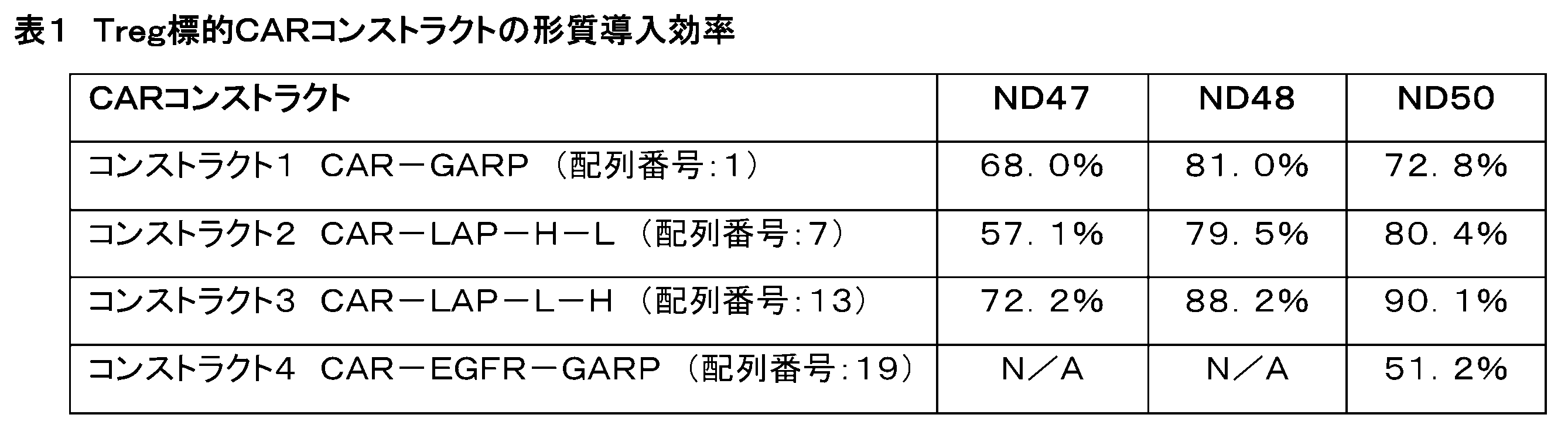
抗LAP CART細胞を試験するために、CAR T細胞を、同じドナーから増やした単離Tregと共培養し、TregマーカーとしてGFPを発現するように形質導入した。抗CD3及び抗CD28を用いてTregを一晩活性化させ(図9B)、又は死滅アッセイ前に一晩静置した(図9A)。ウェル当たり62500Tregを蒔いた。CARをTregに、示された比率で添加した。培養物を300U/mLのIL-2の存在下で3日間インキュベートした。ウェル当たり30000のイベントを収集することによってフローサイトメトリーを3日目に実施した。細胞傷害性パーセントを、Tregを用いた非形質導入T細胞培養物と比較したGFP陽性細胞の減少パーセントとして算定した。CART-LAP-H-Lは、CART-LAP-L-Hと比較して、非活性Tregを死滅させるのにより効果的であった。ついで、LAP標的CAR T細胞をGARP標的CART細胞と、1:1のCAR T細胞対Treg比で二種のドナーにわたって4日間、類似のTreg死滅アッセイにおいて、比較した(図10A及び10B)。図11Aと11Bは、非形質導入対照と比較した、LAP標的CAR T細胞による非活性化及び活性化Treg死滅を、CAR T細胞対Treg細胞比の関数として3日間の共培養の終わりに残っている標的Tregの数によって特徴付けている。図11C及び11Dは、同じドナーからの類似のデータを示し、細胞傷害性はルシフェラーゼ発現により測定している。 To test anti-LAP CAR T cells, CAR T cells were co-cultured with isolated Tregs expanded from the same donor and transduced to express GFP as a Treg marker. Tregs were activated overnight with anti-CD3 and anti-CD28 (Figure 9B) or rested overnight before killing assay (Figure 9A). 62,500 Tregs were plated per well. CAR was added to Tregs at the indicated ratios. Cultures were incubated for 3 days in the presence of 300 U/mL IL-2. Flow cytometry was performed on day 3 by collecting 30,000 events per well. Percent cytotoxicity was calculated as the percent reduction in GFP-positive cells compared to non-transduced T cell cultures with Tregs. CART-LAP-H-L was more effective at killing non-activated Tregs compared to CART-LAP-L-H. LAP-targeted CAR T cells were then compared to GARP-targeted CAR T cells in a similar Treg killing assay at a 1:1 CAR T cell to Treg ratio across two donors for 4 days (FIGS. 10A and 10B). FIGS. 11A and 11B characterize resting and activated Treg killing by LAP-targeted CAR T cells compared to untransduced controls by the number of target Tregs remaining at the end of 3 days of co-culture as a function of CAR T cell to Treg cell ratio. FIGS. 11C and 11D show similar data from the same donors, with cytotoxicity measured by luciferase expression.
LAP標的及びGARP標的CAR T細胞の機能に対する抗原発現の影響を更に特徴付けるために、不死化細胞株をLAP及びGARP抗原の発現についてスクリーニングし、各CAR T細胞による細胞傷害性効果を評価した。最初に、IL-2を発現する皮膚ヒトCD4T細胞リンパ球由来細胞株であるHUT78細胞をGARP及びLAPについて染色し(それぞれ図12A及び12B)、HUT78細胞によるLAP発現を確認した。次に、HART78細胞に対するCART-LAP-H-L及びCART-LAP-L-H細胞媒介性細胞傷害性を細胞傷害性アッセイによって測定した(図13A及び13B)。次に、IL-2依存性ヒトセザリー症候群由来細胞であるSeAxをGARP及びLAPについて染色し(それぞれ図14A及び14B)、両方の抗原の発現を確認した。SeAx細胞を、CART-GARP細胞、CART-LAP-H-L細胞、CART-LAP-L-H細胞、及び非形質導入細胞と共培養し、24時間(図15A)及び48時間(図15B)でCAR T細胞媒介死滅を定量した。各CAR Tは、24時間で優れたSeAx標的細胞死滅を示し、48時間でより顕著な効果を示した。CART-GARP及びCART-LAP-H-Lは、48時間までにCART-LAP-L-H細胞よりも高い効率で標的SeAx細胞を死滅させた。 To further characterize the effect of antigen expression on the function of LAP-targeted and GARP-targeted CAR T cells, immortalized cell lines were screened for expression of LAP and GARP antigens and the cytotoxic effect of each CAR T cell was evaluated. First, HUT78 cells, a skin human CD4 T cell lymphocyte-derived cell line expressing IL-2, were stained for GARP and LAP (FIGS. 12A and 12B, respectively) to confirm LAP expression by HUT78 cells. Next, CART-LAP-H-L and CART-LAP-L-H cell-mediated cytotoxicity against HART78 cells was measured by cytotoxicity assay (FIGS. 13A and 13B). Next, SeAx, an IL-2-dependent human Sézary syndrome-derived cell line, was stained for GARP and LAP (FIGS. 14A and 14B, respectively) to confirm the expression of both antigens. SeAx cells were co-cultured with CART-GARP cells, CART-LAP-H-L cells, CART-LAP-L-H cells, and non-transduced cells, and CAR T cell-mediated killing was quantified at 24 hours (FIG. 15A) and 48 hours (FIG. 15B). Each CAR T showed excellent SeAx target cell killing at 24 hours, and a more pronounced effect at 48 hours. CART-GARP and CART-LAP-H-L killed target SeAx cells more efficiently than CART-LAP-L-H cells by 48 hours.
次に、CART-EGFR-GARP細胞による抗GARPカメリド抗体の分泌をウエスタンブロットによって特徴付けた(図16A~16C)。還元及び非還元条件で処理したCART-EGFR-GARP細胞を含む培養物から上清を収集し、非還元サンプルを含むレーンにおいて10から15kDのバンドの存在が観察され(図16C)、カメリド抗体の存在を確認した。 Next, the secretion of anti-GARP camelid antibodies by CART-EGFR-GARP cells was characterized by Western blot (Figures 16A-16C). Supernatants were collected from cultures containing CART-EGFR-GARP cells treated under reducing and non-reducing conditions, and the presence of a 10-15 kD band was observed in the lane containing the non-reduced sample (Figure 16C), confirming the presence of camelid antibodies.
実施例5 BiTE分泌CAR T細胞のデザインと特徴付け
(例えば、Tregによる免疫調節を克服するために)腫瘍微小環境内のCAR T細胞活性の有効性を高めるためのここで提供される別の機序は、BiTEなどの免疫調節抗体を分泌するCAR T細胞によるものである。理論に縛られることを望まないが、本発明者等は、CARをまたコードするコンストラクトからの免疫調節抗体(例えば、BiTE)の発現が抗腫瘍効果を更に増幅しうることを発見した。
Example 5 Design and Characterization of BiTE-Secreting CAR T Cells Another mechanism provided herein for enhancing the effectiveness of CAR T cell activity within the tumor microenvironment (e.g., to overcome immune regulation by Tregs) is by CAR T cells secreting immune-modulating antibodies, such as BiTEs. Without wishing to be bound by theory, the inventors have discovered that expression of immune-modulating antibodies (e.g., BiTEs) from a construct that also encodes a CAR can further amplify anti-tumor effects.
図17に概略的に示される一つの例示的な核酸コンストラクトであるCAR-EGFR-BiTE-(EGFR-CD3)は、BiTEをコードするポリヌクレオチドに作用可能に5’で連結されたCARコード化ポリヌクレオチドを含む。CARは、CAR-T細胞をEGFRvIII陽性腫瘍の微小環境に方向付ける、EGFRvIIIに結合する腫瘍抗原結合ドメインを特徴とする。図18に示すように、BiTEは一方のドメインでEGFRに結合し、もう一方のドメインでCD3に結合し、これが、(a)宿主CAR T細胞の腫瘍細胞への結合活性を更に亢進させ又は(b)隣接する(例えば、内因性の)T細胞を腫瘍に対して備えさせうる。CARが細胞表面を標的としている一方、BiTEには切断可能なリンカーP2A及びT2Aが隣接しており、BiTEの別個の分泌が可能になる。(例えば、CD19を標的とするBiTEをコードする)他の例示的なBiTEコード化CARコンストラクトを図26A及び26Bに示す。 One exemplary nucleic acid construct, CAR-EGFR-BiTE-(EGFR-CD3), shown diagrammatically in FIG. 17, comprises a CAR-encoding polynucleotide operably linked 5' to a polynucleotide encoding the BiTE. The CAR features a tumor antigen-binding domain that binds EGFRvIII, directing the CAR-T cells to the microenvironment of EGFRvIII-positive tumors. As shown in FIG. 18, the BiTE binds EGFR at one domain and CD3 at the other, which may (a) further enhance the avidity of host CAR T cells to tumor cells or (b) arm adjacent (e.g., endogenous) T cells against the tumor. While the CAR targets the cell surface, the BiTE is flanked by cleavable linkers P2A and T2A, allowing for separate secretion of the BiTE. Other exemplary BiTE-encoded CAR constructs (e.g., encoding a BiTE that targets CD19) are shown in Figures 26A and 26B.
CART-EGFR-BiTE-(EGFR-CD3)細胞によるBiTE分泌は、CAR-EGFR-BiTE-(EGFR-CD3)が形質導入されたSupT1細胞を含む培養物から上清を単離し、OD450に基づいて上清中のBiTEの濃度を計算し、ウエスタンブロット分析を実施することにより確認した。上清中のBiTEの濃度は0.604ng/mLであった。ウエスタンブロット実験の結果を図19に示す。レーン2の約50~60kDにバンドが観察され、これは、上清中にBiTE分子が存在することを示している。 BiTE secretion by CART-EGFR-BiTE-(EGFR-CD3) cells was confirmed by isolating the supernatant from a culture containing SupT1 cells transduced with CAR-EGFR-BiTE-(EGFR-CD3), calculating the concentration of BiTE in the supernatant based on OD450, and performing Western blot analysis. The concentration of BiTE in the supernatant was 0.604 ng/mL. The results of the Western blot experiment are shown in Figure 19. A band was observed at approximately 50-60 kD in lane 2, indicating the presence of BiTE molecules in the supernatant.
次に、BiTE分子の結合をフローサイトメトリーによって評価した。HEK293T細胞にCAR-EGFR-BiTE-(EGFR-CD3)を形質導入し、分泌されたBiTEを含む上清を収集し、K562細胞(図20A)及びジャーカット細胞(図20B)と共にインキュベートした。図20Aに示すように、BiTEは、EGFRを発現するK562細胞に結合し、CD19を発現するK562細胞には結合せず、BiTEのEGFR結合ドメインの機能が確認された。図20Bに示すように、CD3を発現するジャーカット細胞は、CAR-EGFR-BiTE-(EGFR-CD3)を発現するHEK293T細胞からの上清とのインキュベーション後に、非形質導入HEK293Tからの上清とのインキュベーション後のBiTEに対する染色と比較して、BiTEに対してより強い染色を示しており、BiTEもまた機能的にCD3に結合することを示している。 Next, the binding of the BiTE molecules was evaluated by flow cytometry. HEK293T cells were transduced with CAR-EGFR-BiTE-(EGFR-CD3), and the supernatant containing the secreted BiTE was collected and incubated with K562 cells (Figure 20A) and Jurkat cells (Figure 20B). As shown in Figure 20A, BiTE bound to K562 cells expressing EGFR but not to K562 cells expressing CD19, confirming the functionality of the EGFR-binding domain of BiTE. As shown in FIG. 20B, Jurkat cells expressing CD3 showed stronger staining for BiTE after incubation with supernatant from HEK293T cells expressing CAR-EGFR-BiTE-(EGFR-CD3) compared to staining for BiTE after incubation with supernatant from non-transduced HEK293T, indicating that BiTE also functionally binds CD3.
CAR-EGFR-BiTE-(EGFR-CD3)の形質導入宿主としてSupT1細胞を使用して、同様の実験を行なった。図21Aは、BiTEが、EGFRを発現するK562細胞に結合し、CD19を発現するK562細胞に結合しなかったことを示しており、形質導入されたSupT1細胞によって発現されるBiTEのEGFR結合ドメインの機能が確認される。宿主SupT1細胞の表面に発現されたCD3にBiTEが結合したことを確認するために、形質導入されたSupT1細胞をBiTEについて染色した。図21Bに示される結果から、形質導入されたSupT1細胞がBiTEに対して陽性に染色されることが確認された。ND4細胞をまた、CAR-EGFR-BiTE-(EGFR-CD3)による形質導入時に機能的BiTEを分泌する能力について評価した。図22Aは、形質導入されたND4細胞によって分泌されたBiTEが、EGFRを発現するK562細胞に結合し、CD19を発現するK562細胞に結合しなかったことを示している。図22Bに示すように、BiTEは、それらが分泌された形質導入ND4細胞で発現されたCD3に結合した。 A similar experiment was performed using SupT1 cells as a transduction host for CAR-EGFR-BiTE-(EGFR-CD3). Figure 21A shows that BiTE bound to K562 cells expressing EGFR but not CD19, confirming the functionality of the EGFR binding domain of BiTE expressed by transduced SupT1 cells. To confirm that BiTE bound to CD3 expressed on the surface of host SupT1 cells, transduced SupT1 cells were stained for BiTE. The results shown in Figure 21B confirmed that transduced SupT1 cells stained positive for BiTE. ND4 cells were also assessed for their ability to secrete functional BiTE upon transduction with CAR-EGFR-BiTE-(EGFR-CD3). Figure 22A shows that BiTEs secreted by transduced ND4 cells bound to K562 cells expressing EGFR, but not to K562 cells expressing CD19. As shown in Figure 22B, BiTEs bound to CD3 expressed on the transduced ND4 cells from which they were secreted.
次に、形質導入されたCAR T細胞から分泌されたBiTEの能力をインビトロで特徴付けた。CAR-EGFR-BiTE-(EGFR-CD3)が形質導入されたHEK293T細胞から分泌されたBiTEを含む上清を、様々な比率の非形質導入ND4細胞とU87vIII標的細胞の共培養物と共にインキュベートした。図23に示すように、ND4細胞は、BiTEと共にインキュベートされた場合、用量依存的に、ND4発現CD3とU87vIII発現EGFRの両方に、ND4細胞による死滅を誘導するのに十分な程度にBiTEが結合していたことを示している。 Next, we characterized the ability of BiTE secreted from transduced CAR T cells in vitro. Supernatants containing BiTE secreted from HEK293T cells transduced with CAR-EGFR-BiTE-(EGFR-CD3) were incubated with various ratios of co-cultures of non-transduced ND4 cells and U87vIII target cells. As shown in Figure 23, ND4 cells incubated with BiTE showed that BiTE bound to both ND4-expressing CD3 and U87vIII-expressing EGFR in a dose-dependent manner to a sufficient extent to induce killing by ND4 cells.
T細胞活性化時にBiTEの誘導性発現を可能にするために、NFATプロモーターを含むコンストラクトをデザインし合成した。図24に示すように、NFATプロモーターはGFPをコードするポリヌクレオチドの前にあり、コンストラクトは、構成的プロモーターであるEF1αによって駆動される下流のCARコード化ポリヌクレオチドを更に含む。GFPの誘導性発現を確認するために、GFP発現を、PMA/イオノマイシンによるTCR刺激に応じてFACSによって評価した。図25A及び25Bに示すように、刺激がGFPの発現をトリガーした。この誘導性発現は、PEPvIIIとのインキュベーションにより阻害された。CARをコードする誘導性BiTEコンストラクトは、図27A及び27Bに示すように、NFATプロモーターなどの誘導性プロモーターの下流にBiTEを位置させることによってデザインされる。 To allow for inducible expression of the BiTE upon T cell activation, a construct was designed and synthesized that contains the NFAT promoter. As shown in FIG. 24, the NFAT promoter precedes the polynucleotide encoding GFP, and the construct further contains a downstream CAR-encoding polynucleotide driven by the constitutive promoter EF1α. To confirm inducible expression of GFP, GFP expression was assessed by FACS in response to TCR stimulation with PMA/ionomycin. As shown in FIGS. 25A and 25B, the stimulation triggered expression of GFP. This inducible expression was inhibited by incubation with PEPvIII. An inducible BiTE construct encoding CAR is designed by placing the BiTE downstream of an inducible promoter, such as the NFAT promoter, as shown in FIGS. 27A and 27B.
実施例6 神経膠芽腫のためのCAR T細胞
共焦点顕微鏡を使用して、EGFRを標的としたBiTEが上清中に放出され、CD3(エフェクターアーム)を介して形質導入(mcherry+)及びバイスタンダー非形質導入(mcherry-)T細胞の両方に結合することを実証した。この実験では、CART-EGFR形質導入細胞(mcherry+)がビオチン化標的抗原に効果的に結合した(緑色、図28、上段);対照的に、非特異的BiTEを分泌するCART-EGFRvIIIは結合しなかった(図28、中段)。CAR.BiTEの培養物ではBiTEがクラスターで結合した(赤/緑の共局在)が、培養物中のバイスタンダー非形質導入T細胞(mcherry-)もまたビオチン化抗原に結合した(図28、下段)。
Example 6 CAR T Cells for Glioblastoma Using confocal microscopy, we demonstrated that EGFR-targeted BiTEs were released into the supernatant and bound to both transduced (mcherry+) and bystander untransduced (mcherry-) T cells via CD3 (effector arm). In this experiment, CART-EGFR transduced cells (mcherry+) bound biotinylated target antigen efficiently (green, FIG. 28, top); in contrast, CART-EGFRvIII, which secretes a non-specific BiTE, did not (FIG. 28, middle). Cultures of CAR.BiTEs bound BiTEs in clusters (red/green colocalization), but bystander untransduced T cells (mcherry-) in the cultures also bound biotinylated antigen (FIG. 28, bottom).
次に、抗原刺激に応答するサイトカイン産生を分析した。EGFRを発現するがEGFRvIIIを発現しないヒト悪性神経膠腫細胞株であるU87を用いたインビトロ刺激後に、異なるCARコンストラクトによるIFN-γ及びTNF-α産生のパターンを比較した。これは、BiTEリダイレクトT細胞によって媒介されるEGFR特異的サイトカイン産生を証明した(図29)。この知見は、CAR.BiTEがインビトロでU87に対する強力かつ特異的な抗腫瘍効果を媒介することができたACEA機器で実施された細胞傷害性アッセイと一致していた(図29)。ACEAトランズウェル実験では、これは主にバイスタンダー非形質導入T細胞のリダイレクトによるものであることが実証された(図29C及び29D)。EGFRを発現するがEGFRvIIIを発現しない頭蓋内神経膠腫(U251)のインビボモデルを使用すると(図30A)、CART-EGFRvIII.BiTE-EGFRの脳室内投与は、免疫不全マウスの脳に生着させた腫瘍に対してまた有効であることが判明した(図30B)。 Next, cytokine production in response to antigenic stimulation was analyzed. The patterns of IFN-γ and TNF-α production by the different CAR constructs were compared after in vitro stimulation with U87, a human malignant glioma cell line that expresses EGFR but not EGFRvIII. This demonstrated EGFR-specific cytokine production mediated by BiTE-redirected T cells (Figure 29). This finding was consistent with cytotoxicity assays performed on the ACEA instrument, where CAR. BiTE was able to mediate a potent and specific antitumor effect against U87 in vitro (Figure 29). ACEA Transwell experiments demonstrated that this was mainly due to the redirection of bystander untransduced T cells (Figures 29C and 29D). Using an in vivo model of intracranial glioma (U251) that expresses EGFR but not EGFRvIII (Figure 30A), CART-EGFRvIII. Intraventricular administration of BiTE-EGFR was also found to be effective against tumors engrafted in the brains of immunodeficient mice (Figure 30B).
この実験では、生物学的抗腫瘍効果を有する操作されたBiTEを分泌するCAR T細胞が首尾よく産生された。我々の知る限りでは、これが実証されたのはこれが初めてである。 In this experiment, CAR T cells secreting engineered BiTEs with biological antitumor effects were successfully generated. To our knowledge, this is the first time this has been demonstrated.
実施例7 材料と方法
[研究デザイン]
この研究の全体的な目的は、CARとBiTEの両方のT細胞リダイレクト技術を組み合わせようとする新しい治療法の概念実証を提供することであった。CARデザインと統合されたCART.BiTEコンストラクトの両方を、幾つかの腫瘍モデル、技法、及びアプローチを使用して試験した。これらは、三種の同所性脳腫瘍並びに毒性評価を助ける生着したヒト皮膚を含む五種の異なる異種モデルを用いた。腫瘍成長はキャリパーと生物発光イメージングによって測定し、細胞傷害性の三通りの異なるインビトロアッセイを使用した。
各実験は、様々な正常なヒトドナー由来のT細胞を用いて複数回実施した。
Example 7 Materials and Methods [Study Design]
The overall goal of this study was to provide a proof of concept for a new therapeutic approach that seeks to combine both CAR and BiTE T cell redirection technologies. Both the CAR design and the integrated CART.BiTE construct were tested using several tumor models, techniques, and approaches. These included five different xenogeneic models, including three orthotopic brain tumors and engrafted human skin to aid in toxicity evaluation. Tumor growth was measured by caliper and bioluminescence imaging, and three different in vitro assays of cytotoxicity were used.
Each experiment was performed multiple times using T cells from different normal human donors.
[マウスと細胞株]
NSGマウスはジャクソン研究所から購入し、MGHがん研究センターで無菌条件下で飼育した。全ての実験は、施設内動物管理及び使用委員会によって承認されたプロトコルに従って実施した。ヒト神経膠腫細胞株U87及びU251、並びに野生型の親K562は、アメリカン・タイプ・カルチャー・コレクション(ATCC)から取得し、供給者が概説する条件下に維持した。幾つかの場合、細胞は、レンチウイルス形質導入によってEGFR、EGFRvIII、又はCD19を発現するように操作した。示されている場合、細胞株を形質導入して、コメツキムシ緑(CBG)ルシフェラーゼ又は高感度GFP(eGFP)を発現させ、BD FACSAriaでソートして、形質導入細胞のクローン集団を得た。患者由来のニューロスフェア培養物BT74は、Santosh Kesari博士からの親切な贈り物であり、以前に記載されているように(Pandita等, Genes Chromosomes Cancer. 39:29-36, 2004)無血清EF20培地で維持した。
[Mice and cell lines]
NSG mice were purchased from Jackson Laboratory and housed under pathogen-free conditions at the MGH Cancer Research Center. All experiments were performed according to protocols approved by the Institutional Animal Care and Use Committee. Human glioma cell lines U87 and U251, as well as the wild-type parent K562, were obtained from the American Type Culture Collection (ATCC) and maintained under conditions outlined by the supplier. In some cases, cells were engineered to express EGFR, EGFRvIII, or CD19 by lentiviral transduction. Where indicated, cell lines were transduced to express click beetle green (CBG) luciferase or enhanced GFP (eGFP) and sorted on a BD FACSAria to obtain clonal populations of transduced cells. Patient-derived neurosphere cultures, BT74, were a kind gift from Dr. Santosh Kesari and were maintained in serum-free EF20 medium as previously described (Pandita et al., Genes Chromosomes Cancer. 39:29-36, 2004).
[CARの構築]
二種の抗EGFRvIII CART.BiTEコンストラクトと三種の追加のCARコンストラクト(抗EGFR、抗EGFRvIII、及び抗CD19)を合成し、ヒトEF-1αプロモーターの制御下で第三世代レンチウイルスプラスミド骨格中にクローン化した。全てのCAR及びCART.BiTEコンストラクトは、細胞内4-1BB共刺激及びCD3zシグナル伝達ドメインとタンデムでCD8膜貫通ドメインを含んでいた。BiTEは、両方の配列にはIgκシグナルペプチドとポリヒスチジンタグ(Hisタグ)エレメントが隣接している野生型EGFRとCD19に対してデザインした。リボソームスキップ部位を適切な位置に組み込んだ。全てのコンストラクトは、形質導入効率の評価を助けるために、蛍光レポーターであるmCherryをコードする導入遺伝子をまた含んでいた。
[Construction of CAR]
Two anti-EGFRvIII CART.BiTE constructs and three additional CAR constructs (anti-EGFR, anti-EGFRvIII, and anti-CD19) were synthesized and cloned into a third generation lentiviral plasmid backbone under the control of the human EF-1α promoter. All CAR and CART.BiTE constructs contained the CD8 transmembrane domain in tandem with intracellular 4-1BB costimulatory and CD3z signaling domains. BiTEs were designed against wild-type EGFR and CD19, both sequences flanked by Igκ signal peptide and polyhistidine tag (His tag) elements. Ribosomal skip sites were incorporated at appropriate positions. All constructs also contained a transgene encoding the fluorescent reporter mCherry to aid in the assessment of transduction efficiency.
[CAR T細胞産生]
ヒトT細胞を、IND免除プロトコルの下でMGH血液バンクから購入した匿名のヒト正常ドナー白血球除去産物(Stem Cell Technologies)から精製した。細胞に、様々な第二世代のCAR T細胞コンストラクトに対応するレンチウイルスを形質導入した。簡潔に言えば、CD3/CD28 Dynabeads(Life Technologies)を使用して0日目にバルクのヒトT細胞を活性化し、10%のFBSと20IU/mLの組換えヒトIL-2を補填したGlutaMAX及びHEPESを含むRPMI1640培地で培養した。細胞のレンチウイルス形質導入を1日目に実施し、特に明記しない限り、細胞は10日目まで増殖することを許容し、その後、機能アッセイ前に液体窒素中での貯蔵に移した。全ての機能アッセイにおいて、CAR T細胞とCART.BiTE細胞を、非形質導入であるが同じドナーと増殖からの培養及び活性化T細胞を使用して、形質導入効率について正規化した。所定の実験では、CAR T細胞をBD FACSAriaでソートし、10日目に形質導入されたmCherry陽性T細胞の純粋な集団を得た。
CAR T cell production
Human T cells were purified from anonymous human normal donor leukapheresis products (Stem Cell Technologies) purchased from MGH Blood Bank under an IND waiver protocol. Cells were transduced with lentiviruses corresponding to various second generation CAR T cell constructs. Briefly, bulk human T cells were activated on day 0 using CD3/CD28 Dynabeads (Life Technologies) and cultured in RPMI 1640 medium containing GlutaMAX and HEPES supplemented with 10% FBS and 20 IU/mL recombinant human IL-2. Lentiviral transduction of cells was performed on day 1 and, unless otherwise stated, cells were allowed to grow until day 10, after which they were transferred to storage in liquid nitrogen prior to functional assays. In all functional assays, CAR T cells and CART. BiTE cells were normalized for transduction efficiency using non-transduced but cultured and activated T cells from the same donor and expansion. In a given experiment, CAR T cells were sorted on a BD FACSAria to obtain a pure population of transduced mCherry positive T cells on day 10.
[T細胞活性化と機能アッセイ]
ジャーカット(NFAT-ルシフェラーゼ)レポーター細胞(Signosis)に、24時間の間、1:1のE:T比で腫瘍標的と共培養する前に、異なるCARコンストラクトを形質導入した。バイスタンダージャーカット活性化を、24時間、1:1:1のJ:E:T比の非形質導入ジャーカットレポーター細胞(J)並びに付随する一次ヒトT細胞及び腫瘍標的の共培養物で同様に評価した。次にルシフェラーゼ活性を、Synergy Neo2ルミネセンスマイクロプレートリーダー(Biotek)を使用して評価した。腫瘍標的と共培養されたレスポンダー細胞からの無細胞上清をまた、製造元の指示に従ってLuminexアレイ(Luminex Corp,FLEXMAP 3D)を使用してサイトカイン発現について分析した。活性化マーカーCD25及びCD69を評価した実験では、CAR T細胞及びCART.BiTE細胞を、E:Tが1:1の照射U87と共にインキュベートした。細胞を72時間共培養し、ついでフローサイトメトリー分析に供した。ソートした形質導入細胞の増殖アッセイでは、エフェクターを10日間増やし、ついでmCherry陽性イベントでソートした。次に、照射されたU87、U87vIII、又はU87-CD19を使用して細胞を刺激した。次に、UTD、ソートされたCART-EGFRvIII細胞、及びソートされたCART.BiTE細胞を、CAR単独(CART-EGFRvIII.BiTE-CD19及びU87vIII)、BiTE単独(CART-EGFRvIII.BiTE-CD19及びU87-CD19)、又はCARとBiTE(CART-EGFRvIII.BiTE-EGFR及びU87vIII)で刺激した。エフェクター及び標的細胞を、1:1のE:Tで蒔いた。細胞を7日毎に計数し、7日間隔で刺激を加えて再び蒔いた。
T cell activation and functional assays
Jurkat (NFAT-luciferase) reporter cells (Signosis) were transduced with different CAR constructs before co-culture with tumor targets at a 1:1 E:T ratio for 24 hours. Bystander Jurkat activation was similarly assessed in untransduced Jurkat reporter cells (J) at a 1:1:1 J:E:T ratio for 24 hours, as well as in concomitant co-cultures of primary human T cells and tumor targets. Luciferase activity was then assessed using a Synergy Neo2 luminescence microplate reader (Biotek). Cell-free supernatants from responder cells co-cultured with tumor targets were also analyzed for cytokine expression using Luminex arrays (Luminex Corp, FLEXMAP 3D) according to the manufacturer's instructions. In experiments evaluating the activation markers CD25 and CD69, CAR T cells and CART. BiTE cells were incubated with irradiated U87 at 1:1 E:T. Cells were co-cultured for 72 hours and then subjected to flow cytometry analysis. For proliferation assays of sorted transduced cells, effectors were expanded for 10 days and then sorted for mCherry positive events. Cells were then stimulated using irradiated U87, U87vIII, or U87-CD19. UTD, sorted CART-EGFRvIII cells, and sorted CART. BiTE cells were stimulated with CAR alone (CART-EGFRvIII.BiTE-CD19 and U87vIII), BiTE alone (CART-EGFRvIII.BiTE-CD19 and U87-CD19), or CAR and BiTE (CART-EGFRvIII.BiTE-EGFR and U87vIII). Effector and target cells were plated 1:1 E:T. Cells were counted every 7 days and re-plated with stimulation at 7-day intervals.
[細胞傷害性アッセイ]
単一時点の細胞傷害性アッセイでは、CAR T細胞を、ルシフェラーゼ発現腫瘍標的と共に、示されたE:T比で18時間インキュベートした。その後、残存するルシフェラーゼ活性をSynergy Neo2ルミネセンスマイクロプレートリーダー(Biotek)で測定した。特異的溶解パーセントは次式で計算した:%=((標的細胞単独のRLU-全RLU)/(標的細胞単独のRLU))×100。接着細胞株に対するリアルタイム細胞傷害性アッセイでは、細胞指数を、xCELLigence RTCA SP機器(ACEA Biosciences,Inc.)を使用した細胞インピーダンスの測定値として記録した。特異的溶解パーセントは、次式を使用して計算した:%=((UTDの細胞指数-CAR T細胞の細胞指数)/UTDの細胞指数)×100。ACEA機器を使用するトランズウェル細胞傷害性アッセイでは、CARコンストラクトを形質導入したジャーカットレポーター細胞を、0.4μmのトランズウェルインサート(ACEA Biosciences)の上部ウェルで培養した。非形質導入T細胞を、示されたE:T比で腫瘍標的と共に下部ウェルで共培養した。時折、ACEA機器の故障によるあるウェルからの誤った読み取りが検閲されたが、データの解釈には影響しなかった。ニューロスフェアに対する試験では、細胞傷害性を、IncuCyte Live Cell Analysisによって記録された緑色の総平均面積で測定した。ニューロスフェアの形成を促進するエフェクターを添加する3日前にニューロスフェアを蒔いた。エフェクター細胞を3:1のE:Tで添加し、経時的にモニターし、ウェル当たり4画像を10分毎に得た。
Cytotoxicity Assay
For single time point cytotoxicity assays, CAR T cells were incubated with luciferase-expressing tumor targets at the indicated E:T ratios for 18 hours. Residual luciferase activity was then measured with a Synergy Neo2 luminescence microplate reader (Biotek). Percent specific lysis was calculated as follows: %=((RLU of target cells alone-total RLU)/(RLU of target cells alone))×100. For real-time cytotoxicity assays against adherent cell lines, cell index was recorded as a measurement of cell impedance using a xCELLigence RTCA SP instrument (ACEA Biosciences, Inc.). Percent specific lysis was calculated using the following formula: %=((Cell Index of UTD-Cell Index of CAR T Cells)/Cell Index of UTD)×100. For the Transwell cytotoxicity assay using the ACEA instrument, Jurkat reporter cells transduced with CAR constructs were cultured in the top wells of 0.4 μm Transwell inserts (ACEA Biosciences). Non-transduced T cells were co-cultured in the bottom wells with tumor targets at the indicated E:T ratios. Occasionally, erroneous readings from some wells due to ACEA instrument failure were censored but did not affect the interpretation of the data. For tests against neurospheres, cytotoxicity was measured by the total average area of green color recorded by IncuCyte Live Cell Analysis. Neurospheres were plated 3 days before the addition of effectors that promote neurosphere formation. Effector cells were added at 3:1 E:T and monitored over time, with 4 images per well obtained every 10 minutes.
[BiTEの精製と定量]
HEK293T細胞にそれぞれのCARコンストラクトを形質導入し、コンフルエンスになるまで培養した。細胞からの上清を収集し、HisPur Ni-NTA樹脂(Thermo Fisher Scientific)と共に4℃において24~48時間、穏やかに撹拌しながらインキュベートした。ついで、上清・樹脂混合物をNi-NTA洗浄バッファー(50mMのTris(pH8.0)、500mMのNaCl、5%のグリセロール、25mMのイミダゾール)で洗浄した。ついで、Hisタグタンパク質をNi-NTA溶出バッファー(50mMのTris(pH8.0)、500mMのNaCl、5%のグリセロール、250mMのイミダゾール)で溶出させた。溶出後、製造元の指示に従ってSlide-A-Lyzerカセットフロートブイ(Thermo Fisher Scientific)を使用して、タンパク質をPBSにバッファー交換した。示されている場合、Amicon Ultra-15遠心フィルターユニット(EMD Millipore)を使用して、タンパク質の更なる濃縮を実施した。無細胞、BiTE含有溶液のタンパク質濃度を、HisタグELISA検出キット(GenScript)を使用して決定した。簡潔に述べると、BiTE産生細胞を2×10⁵細胞/mLで播種した。細胞を2週間増殖させ、上清を収集し、断続的に分析した。示されている場合、サンプルを、UTDのみを含むウェルから得られた平均値に正規化した。
[Purification and quantification of BiTE]
HEK293T cells were transduced with each CAR construct and cultured to confluence. Supernatants from the cells were collected and incubated with HisPur Ni-NTA resin (Thermo Fisher Scientific) for 24-48 hours at 4°C with gentle agitation. The supernatant-resin mixture was then washed with Ni-NTA wash buffer (50 mM Tris pH 8.0, 500 mM NaCl, 5% glycerol, 25 mM imidazole). His-tagged proteins were then eluted with Ni-NTA elution buffer (50 mM Tris pH 8.0, 500 mM NaCl, 5% glycerol, 250 mM imidazole). After elution, proteins were buffer exchanged into PBS using a Slide-A-Lyzer cassette float buoy (Thermo Fisher Scientific) according to the manufacturer's instructions. Where indicated, further concentration of proteins was performed using Amicon Ultra-15 centrifugal filter units (EMD Millipore). Protein concentrations of cell-free, BiTE-containing solutions were determined using a His-tag ELISA detection kit (GenScript). Briefly, BiTE-producing cells were seeded at 2× 10⁵ cells/mL. Cells were grown for 2 weeks and supernatants were collected and analyzed intermittently. Where indicated, samples were normalized to the average value obtained from wells containing only UTD.
[ウエスタンブロッティング]
タンパク質サンプルをSDS-PAGEによって分離し、製造元のプロトコルに従ってNovex iBlot2ニトロセルローストランスファースタック(Invitrogen)及びiBlot2ゲルトランスファーデバイス(Invitrogen)を使用してニトロセルロース膜に移した。簡潔に言えば、膜をTBST(Santa Cruz Biotechnology)中の5%の脱脂粉乳(Bio-Rad)からなるブロッキングバッファーで1時間インキュベートした。膜をTBSTで1回洗浄し、抗Hisタグ抗体(1:2500、クローン3D5、Invitrogen)で4℃において一晩プローブした。膜をTBSTで5分間3回洗浄し、西洋ワサビペルオキシダーゼコンジュゲートヒツジ抗マウスIgG抗体(1:5000、GE Healthcare)と共に1時間インキュベートした。次に、膜をTBSTでそれぞれ5分間3回洗浄し、Amersham ECL Primeウエスタンブロッティング検出試薬(GE Healthcare)で現像した。
[Western blotting]
Protein samples were separated by SDS-PAGE and transferred to nitrocellulose membranes using a Novex iBlot2 Nitrocellulose Transfer Stack (Invitrogen) and iBlot2 Gel Transfer Device (Invitrogen) according to the manufacturer's protocol. Briefly, membranes were incubated for 1 h in blocking buffer consisting of 5% nonfat dry milk (Bio-Rad) in TBST (Santa Cruz Biotechnology). Membranes were washed once with TBST and probed overnight at 4°C with anti-His tag antibody (1:2500, clone 3D5, Invitrogen). Membranes were washed three times for 5 min with TBST and incubated for 1 h with horseradish peroxidase-conjugated sheep anti-mouse IgG antibody (1:5000, GE Healthcare). The membrane was then washed three times for 5 min each with TBST and developed with Amersham ECL Prime Western blotting detection reagent (GE Healthcare).
[フローサイトメトリーと免疫組織化学]
それぞれの抗原を標的とする次の抗体クローンを、示されている場合、フローサイトメトリー分析に使用した:EGFR(AY13、BioLegend)、EGFRvIII(L8A4、Absolute Antibody)、Hisタグ(4E3D10H2/E3、Thermo Fischer)、CD25(2A3、BD Biosciences)、CD69(FN50、BioLegend)、CCR7(3D12、BD Bioscience)、CD45RO(UCHL1、BD Biosciences)、PD-1(EH12287、Biolegend)、TIM-3(F38-2E2、Biolegend)、LAG-3(3DS223H、Biolegend)。所定の実験では、精製したBiTE、又は可溶性BiTEを含む上清を、抗Hisタグ抗体での二次染色前に標的細胞と共にインキュベートした。一般に、細胞は室温において暗所で15分間染色し、分析前に2%のFBSを含むPBSで2回洗浄した。ライブとデッドの分離を確立するためにDAPIを添加した。免疫組織化学用の抗体クローンには次のものを含めた:EDTAベースの抗原回収後に、それぞれ1:200及び1:50に希釈した、EGFRvIII(D6T2Q、Cell Signaling)及びEGFR(D38B1、Cell Signaling)。ホルマリン固定パラフィン包埋検体は、実験から単離するか、市販の組織マイクロアレイ(GL805c、US Biomax、BNC17011a、US Biomax)の形で購入した。
[Flow cytometry and immunohistochemistry]
The following antibody clones targeting the respective antigens were used for flow cytometry analysis where indicated: EGFR (AY13, BioLegend), EGFRvIII (L8A4, Absolute Antibody), His-tag (4E3D10H2/E3, Thermo Fischer), CD25 (2A3, BD Biosciences), CD69 (FN50, BioLegend), CCR7 (3D12, BD Bioscience), CD45RO (UCHL1, BD Biosciences), PD-1 (EH12287, Biolegend), TIM-3 (F38-2E2, Biolegend), LAG-3 (3DS223H, Biolegend). In a given experiment, purified BiTEs or supernatants containing soluble BiTEs were incubated with target cells before secondary staining with anti-His tag antibodies. Typically, cells were stained for 15 min in the dark at room temperature and washed twice with PBS containing 2% FBS before analysis. DAPI was added to establish live/dead separation. Antibody clones for immunohistochemistry included: EGFRvIII (D6T2Q, Cell Signaling) and EGFR (D38B1, Cell Signaling) diluted 1:200 and 1:50, respectively, after EDTA-based antigen retrieval. Formalin-fixed paraffin-embedded specimens were either isolated from experiments or purchased in the form of commercial tissue microarrays (GL805c, US Biomax; BNC17011a, US Biomax).
[顕微鏡イメージング]
T細胞の共焦点顕微鏡観察を、MGHがんセンター分子病理学共焦点コアのZeiss LSM710倒立共焦点顕微鏡で実施し、Fiji Is Just ImageJソフトウェアで分析した。簡潔に言えば、活性化させ10日間増殖させた形質導入T細胞を、濃度1μg/mLでビオチン化ヒトEGFR(Acro Biosystems)で40分間染色し、ついで顕微鏡分析の前に氷上で1μg/mLのストレプトアビジン(eBioscience)と共に15分間インキュベートした。それ以外の場合は、細胞培養を、EVOS細胞イメージングシステム(Thermo Fisher Scientific)を使用してまた視覚化させた。増殖を評価する実験においては、CAR T細胞とCART.BiTE細胞を、1:1のE:TでeGFPを発現する照射U87と1週間共培養した。
[Microscopic Imaging]
Confocal microscopy of T cells was performed on a Zeiss LSM710 inverted confocal microscope at the Molecular Pathology Confocal Core of the MGH Cancer Center and analyzed with Fiji Is Just ImageJ software. Briefly, transduced T cells activated and expanded for 10 days were stained with biotinylated human EGFR (Acro Biosystems) at a concentration of 1 μg/mL for 40 minutes, then incubated with 1 μg/mL streptavidin (eBioscience) for 15 minutes on ice before microscopic analysis. Otherwise, cell cultures were also visualized using an EVOS cell imaging system (Thermo Fisher Scientific). In experiments assessing proliferation, CAR T cells and CART. BiTE cells were co-cultured with irradiated U87 expressing eGFP in a 1:1 E:T ratio for one week.
[動物モデル]
腫瘍細胞を対数増殖期に回収し、PBSで2回洗浄した後、25ゲージ針が取付けられた50μLのシリンジに入れた。定位フレームの補助下で、腫瘍細胞をブレグマの右側2mm、冠状縫合の頭蓋骨表面から4mmの深さに生着させた。腫瘍細胞の数は、細胞培養に応じて変化させた。側腹部腫瘍又はヒト皮膚毒性のマウスモデルでは、エフェクター細胞を100μLの容量で尾静脈注入により全身注入した。脳室内に送達される場合、細胞はブレグマの左2mm、前0.3mmに深さ3mmで注入した。エフェクター細胞集団は、全ての実験に対して注入当たり1×10⁶細胞を含むように正規化した。ついで、腹腔内基質注射後、Ami HT光学イメージングシステム(Spectral Instruments)を使用して生物発光により、腫瘍の進行を長軸方向に評価した。毒性研究では、匿名化された過剰のヒト皮膚を、インフォームドコンセントと施設内審査委員会による承認の下で、腹壁形成術中に健康なドナーから得た。およそ1cm×1cmの皮膚サンプルをNSGマウスの背に縫合し、少なくとも6週間治癒させた。生着した皮膚を、切除と組織学的分析の前に、最大2週間毎日モニターした。
[Animal model]
Tumor cells were harvested in logarithmic growth phase, washed twice with PBS, and then placed in a 50 μL syringe fitted with a 25-gauge needle. With the aid of a stereotaxic frame, tumor cells were engrafted 2 mm to the right of bregma and 4 mm deep from the skull surface at the coronal suture. The number of tumor cells was varied depending on the cell culture. In mouse models of flank tumors or human skin toxicity, effector cells were injected systemically via tail vein injection in a volume of 100 μL. When delivered intracerebroventricularly, cells were injected 2 mm left of bregma and 0.3 mm anterior at a depth of 3 mm. Effector cell populations were normalized to contain 1× 10⁶ cells per injection for all experiments. Tumor progression was then assessed longitudinally by bioluminescence after intraperitoneal substrate injection using an Ami HT optical imaging system (Spectral Instruments). For toxicity studies, de-identified excess human skin was obtained from healthy donors during abdominoplasty surgery with informed consent and approval by the Institutional Review Board. Skin samples measuring approximately 1 cm x 1 cm were sutured to the backs of NSG mice and allowed to heal for at least 6 weeks. Engrafted skin was monitored daily for up to 2 weeks before excision and histological analysis.
[統計的方法]
全ての分析は、GraphPad Prism7.0cソフトウェアで実施した。データは、図の説明文に示しているように、検定によって決定された統計的有意差と共に平均±標準偏差(SD)又は平均の標準誤差(SEM)として提示した。
[Statistical methods]
All analyses were performed with GraphPad Prism 7.0c software. Data are presented as mean ± standard deviation (SD) or standard error of the mean (SEM) with statistical significance determined by tests as indicated in the figure legends.
実施例8 神経膠芽腫(GBM)のEGFRvIIIに対するCAR T細胞とCART.BiTEのデザイン
神経膠芽腫(GBM)は最も一般的な悪性脳腫瘍であり、また最も致命的である。GBMの現在の治療法には、外科的切除、放射線療法、及びテモゾロミド化学療法が含まれるが、これらは徐々のベネフィットのみを提供し、全身毒性と正常脳への損傷によって制限される(Imperato等, Annals of Neurology 28:818-822, 1990)。2017年に、CD19を標的とするCAR T細胞が、B細胞性悪性疾患について米国食品医薬品局(FDA)によって承認され、それ以来、血液がんの治療に革命を起こした(Mullard等, Nat. Rev. Drug. Discov. 16:699, 2017)。GBMの最近の臨床試験では、幾つかの異なるCARが記載されており(O’Rourke等, Sci. Transl. Med. 9, 2017;Ahmed等, JAMA Oncol. 3:1094-1101, 2017;Brown等, N. Engl. J. Med. 375:2561-2569, 2016)、末梢注入されたCAR形質導入T細胞は脳腫瘍に限局し、少なくとも一例では、頭蓋内投与されたCAR T細胞が後期の多巣性の大きい疾患の退縮を媒介した(上掲のBrown等)。しかし、GBMに対する臨床反応は、大部分はこれらの腫瘍内での異種性抗原発現と、単一の標的に向けられたCAR T細胞による治療後の抗原エスケープの出現のため、一貫しておらず又は持続性がない。
Example 8 Design of CAR T Cells and CART.BiTE against EGFRvIII in Glioblastoma (GBM) Glioblastoma (GBM) is the most common malignant brain tumor and also the most lethal. Current treatments for GBM include surgical resection, radiation therapy, and temozolomide chemotherapy, which provide only gradual benefits and are limited by systemic toxicity and damage to normal brain (Imperato et al., Annals of Neurology 28:818-822, 1990). In 2017, CAR T cells targeting CD19 were approved by the US Food and Drug Administration (FDA) for B-cell malignancies and have since revolutionized the treatment of hematological cancers (Mullard et al., Nat. Rev. Drug. Discov. 16:699, 2017). Recent clinical trials for GBM have described several different CARs (O'Rourke et al., Sci. Transl. Med. 9, 2017; Ahmed et al., JAMA Oncol. 3:1094-1101, 2017; Brown et al., N. Engl. J. Med. 375:2561-2569, 2016), with peripherally infused CAR-transduced T cells localizing to brain tumors and, in at least one case, intracranially administered CAR T cells mediated regression of late-stage, multifocal bulky disease (Brown et al., supra). However, clinical responses to GBM have been inconsistent or short-lived, in large part due to heterogeneous antigen expression within these tumors and the emergence of antigen escape following treatment with single-targeted CAR T cells.
GBMのおよそ30%がEGFRvIIIを発現し(Wikstrand等, Cancer Res. 57:4130-4140, 1997)、80%以上がEGFRを発現する(Verhaak等, Cancer Cell 17:98-110, 2010)。GBMにおいてEGFRvIII変異が失われると、野生型EGFRの増幅が維持される(O’Rourke等, Sci. Transl. Med. 9, 2017;Felsberg等, Clin. Cancer Res. 23:6846-6855, 2017)。EGFRの発現は皮膚、肺、及び腸などの正常組織にも見出されるが、健康なヒト中枢神経系(CNS)組織の80のコアサンプルの分析においては、The Human Protein Atlas(Uhlen等 Mol. Cell Proteomics 4:1920-1932, 2005)からの公開されている臓器特異的データと一致して、EGFRは検出されなかった(図31、表2)。この好ましい発現パターンを、この戦略を使用してEGFRvIII抗原喪失のGBMモデルの有効性を安全に増強できるという仮説を立てて、野生型EGFRに対してBiTEを分泌するEGFRvIII特異的CAR T細胞(CART-EGFRvIII.BiTE-EGFR)を作製することにより、利用した。 Approximately 30% of GBMs express EGFRvIII (Wikstrand et al., Cancer Res. 57:4130-4140, 1997), and more than 80% express EGFR (Verhaak et al., Cancer Cell 17:98-110, 2010). When EGFRvIII mutations are lost in GBM, amplification of wild-type EGFR is maintained (O'Rourke et al., Sci. Transl. Med. 9, 2017; Felsberg et al., Clin. Cancer Res. 23:6846-6855, 2017). Although EGFR expression is also found in normal tissues such as skin, lung, and intestine, EGFR was not detected in an analysis of 80 core samples of healthy human central nervous system (CNS) tissue (Figure 31, Table 2), consistent with published organ-specific data from The Human Protein Atlas (Uhlen et al. Mol. Cell Proteomics 4:1920-1932, 2005). This favorable expression pattern was exploited by generating EGFRvIII-specific CAR T cells secreting a BiTE against wild-type EGFR (CART-EGFRvIII.BiTE-EGFR), with the hypothesis that this strategy could be used to safely enhance efficacy in the GBM model of EGFRvIII antigen loss.
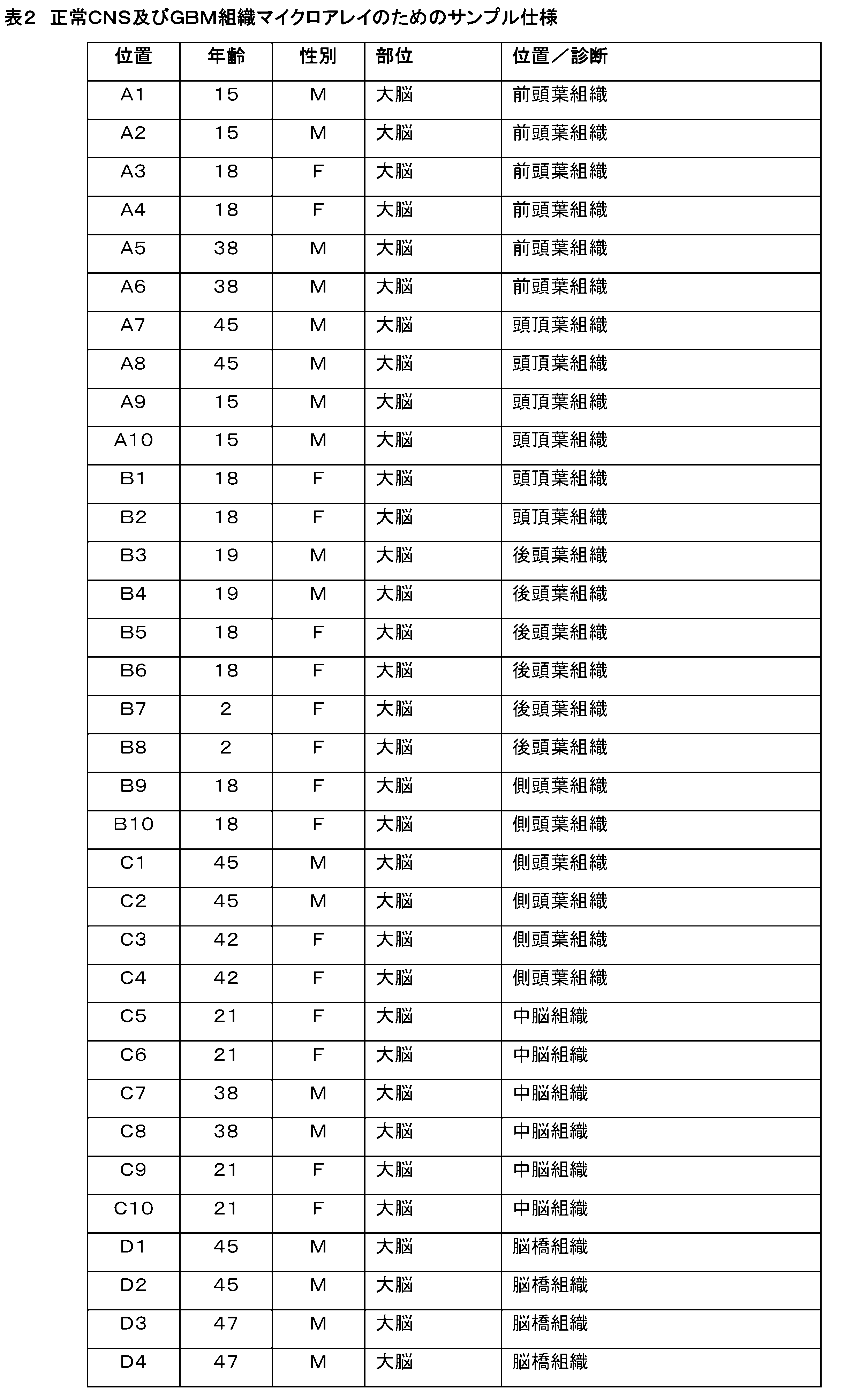

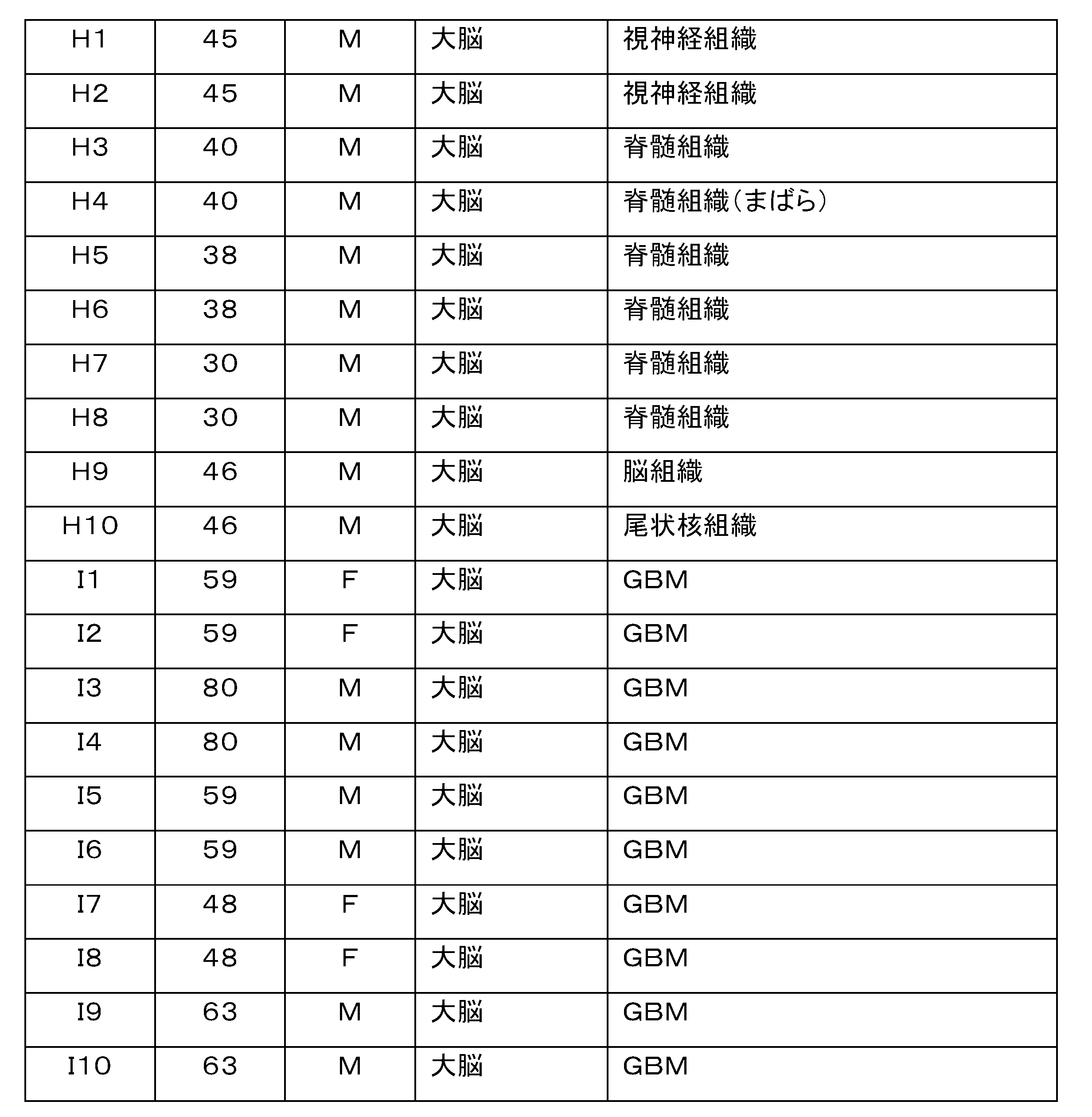
異種移植片モデルにおいてGBM異種性と再発時の抗原エスケープの出現を再現するために、異種性EGFRvIII発現を伴う腫瘍をNSG(NOD.Cg-PrkdcscidIl2rgtm1Wjl/SzJ)マウスの側腹部に生着させた(図32A)。マウスを、非形質導入T細胞(UTD)又はCART-EGFRvIIIで生着後2日目に尾静脈から静脈内(IV)処置した。EGFRvIII陽性細胞にコメツキムシ緑ルシフェラーゼ(CBG-luc)を形質導入し、生物発光イメージングによる腫瘍進行のリアルタイム評価を可能にした。EGFRvIII陽性細胞をひとたび排除すると、側腹部生着により腫瘍増殖の同時のノギス測定が可能になった。この実験では、EGFRvIII発現細胞のみにルシフェラーゼが形質導入されたため、イメージングシグナルはこの細胞集団でのみ検出される。静脈内(IV)非形質導入(UTD)T細胞で処置されたマウスはEGFRvIII陽性腫瘍の増殖を示したが、CART-EGFRvIII細胞で処置されたマウスは、一部のマウスでは生物発光シグナルの抑止に反映される、様々な度合いの腫瘍増殖を示した(図32B)。それにもかかわらず、これらのマウスでは、触知できる測定可能な腫瘍が進行した(図32C)。採取した腫瘍の免疫組織化学(IHC)分析は、臨床試験の結果(上掲のO’Rourke等)と一致していた;すなわち、CART-EGFRvIIIでの処置後のEGFRvIIIの喪失とEGFR発現の維持を同時に伴う再発性の生存腫瘍(図32D)。このようにして、複数抗原の標的化の理論的利点と、CART-EGFRvIIIで治療された患者のGBMにおいて観察された細胞浸潤物の主要成分である(上掲のO’Rourke等)バイスタンダーT細胞を動員し活性化する能力をまた有している(Choi等, Proc. Natl. Acad. Sci. U S A. 110:270-275, 2013)CART.BiTEの概念が開発された(図32E)。従来のCART-EGFRvIIIはEGFRvIII陽性腫瘍のみを標的としているが、CART.BiTE細胞はEGFRvIII陰性腫瘍を標的とするという追加の能力を有している。加えて、分泌されたBiTEは、残存腫瘍細胞に対してバイスタンダーT細胞をまたリダイレクトしうる。 To recapitulate GBM heterogeneity and the emergence of antigen escape at relapse in a xenograft model, tumors with heterologous EGFRvIII expression were engrafted in the flanks of NSG (NOD.Cg-Prkdc scid Il2rg tm1Wjl /SzJ) mice ( FIG. 32A ). Mice were treated intravenously (IV) via the tail vein 2 days after engraftment with untransduced T cells (UTD) or CART-EGFRvIII. EGFRvIII-positive cells were transduced with click beetle green luciferase (CBG-luc) to allow real-time assessment of tumor progression by bioluminescence imaging. Once EGFRvIII-positive cells were eliminated, flank engraftment allowed simultaneous caliper measurement of tumor growth. In this experiment, only EGFRvIII-expressing cells were transduced with luciferase, so imaging signals are only detected in this cell population. Mice treated with intravenous (IV) untransduced (UTD) T cells showed growth of EGFRvIII-positive tumors, whereas mice treated with CART-EGFRvIII cells showed varying degrees of tumor growth, reflected by the abrogation of bioluminescence signals in some mice (FIG. 32B). Nonetheless, these mice developed palpable and measurable tumors (FIG. 32C). Immunohistochemistry (IHC) analysis of harvested tumors was consistent with the results of clinical trials (O'Rourke et al., supra); i.e., recurrent viable tumors with concomitant loss of EGFRvIII and maintenance of EGFR expression after treatment with CART-EGFRvIII (FIG. 32D). In this way, the concept of CART.BiTE was developed ( FIG. 32E ), which has the theoretical advantage of targeting multiple antigens and also has the ability to recruit and activate bystander T cells (Choi et al., Proc. Natl. Acad. Sci. US A. 110:270-275, 2013), which are a major component of the cellular infiltrate observed in the GBM of patients treated with CART-EGFRvIII (O'Rourke et al., supra). While conventional CART-EGFRvIII targets only EGFRvIII-positive tumors, CART.BiTE cells have the additional ability to target EGFRvIII-negative tumors. In addition, the secreted BiTE can also redirect bystander T cells against residual tumor cells.
実施例9 異種性腫瘍のためのCART.BiTEの産生
どちらも、4-1BBとCD3ζの細胞内シグナル伝達ドメインを含む第二世代CART-EGFRvIII骨格に基づく、二種のCART.BiTEコンストラクトを産生した(図33A)。BiTEは、野生型EGFR又はCD19に対してデザインしたが、後者は、モデル抗原全体での我々の知見を一般化するための陰性対照と概念実証の両方となる。BiTEの配列の前にはIgκシグナルペプチドがあり、その後にポリヒスチジンタグ(Hisタグ)エレメントが続き、分泌産物の検出と精製に役立つ。BiTEを分泌しなかった対照CARは、同じ4-1BB及びCD3ζ骨格並びにEGFRvIII、EGFR、及びCD19を標的とする単鎖可変断片(scFv)から構成した。mCherry蛍光レポーター遺伝子を、形質導入効率の評価を容易にするために全てのベクターに含めた。初代ヒトT細胞へのCART.BiTEベクターの効率的な遺伝子導入は、レンチウイルスベクターで達成した(図33B)。
Example 9: Generation of CART.BiTEs for Heterogeneous Tumors Two CART.BiTE constructs were generated, both based on the second generation CART-EGFRvIII scaffold containing the intracellular signaling domains of 4-1BB and CD3ζ (Figure 33A). BiTEs were designed against wild-type EGFR or CD19, the latter serving as both a negative control and proof of concept to generalize our findings across model antigens. The sequence of the BiTEs is preceded by an Igκ signal peptide followed by a polyhistidine tag (His tag) element to aid in detection and purification of the secreted product. A control CAR that did not secrete BiTEs was constructed from the same 4-1BB and CD3ζ scaffold and single chain variable fragments (scFv) targeting EGFRvIII, EGFR, and CD19. The mCherry fluorescent reporter gene was included in all vectors to facilitate evaluation of transduction efficiency. Efficient gene transfer of the CART.BiTE vector into primary human T cells was achieved with a lentiviral vector ( FIG. 33B ).
BiTE cDNAは、過去に記載された一般的な型に従って作製し(Choi等, Expert Opin. Biol. Ther. 11:843-853, 2011)、可動性グリシン-セリンリンカーによって架橋され、タンデムに翻訳された2つのscFvを含めた(図33C及び33D)。従来通り、BiTEの一アームは、CD3に結合することでT細胞にエンゲージし活性化するようにデザインされる一方、反対側の標的結合アームは腫瘍抗原に向けられている。各CART.BiTEベクターが形質導入されたヒト胎児由来腎臓(HEK)細胞の上清は、およそ55kDaの予想分子量でのウエスタンブロットによって証明されるように、BiTE-EGFRとBiTE-CD19の両方の成功裏の翻訳と分泌を実証した(図33E)。レーンに10μgのタンパク質をロードし、SDS-PAGE及び抗Hisタグ抗体でのブロッティングに供した。分泌されたBiTE産物はまた形質導入された初代ヒトT細胞からも成功裏に単離した;これらの培養物からの上清は、適切な同族抗原を発現するK562標的細胞に結合した。CART-EGFRvIII.BiTE-CD19及びCART-EGFRvIII.BiTE-EGFR細胞から単離されたBiTEは、それぞれEGFR及びCD19を発現するK562に結合しなかったため、これは抗原特異的であることが確認された(図33F)。予想通り、分泌されたBiTEは、その抗CD3 scFvドメインを介してT細胞に結合する能力をまた示した(図33G)。CART.BiTE細胞からの上清が濃縮されると検出が増強され、これはブリナツモマブなどの同じ抗CD3 scFvクローンを用いるBiTEと一致する知見である(Fajardo等, Cancer Res. 77:2052-2063)。 BiTE cDNA was constructed following the general format previously described (Choi et al., Expert Opin. Biol. Ther. 11:843-853, 2011) and contained two scFvs translated in tandem, bridged by a flexible glycine-serine linker (Figures 33C and 33D). Traditionally, one arm of the BiTE is designed to engage and activate T cells by binding to CD3, while the opposite target-binding arm is directed against a tumor antigen. Supernatants from human embryonic kidney (HEK) cells transduced with each CART.BiTE vector demonstrated successful translation and secretion of both BiTE-EGFR and BiTE-CD19 as evidenced by Western blot at the expected molecular weight of approximately 55 kDa (Figure 33E). Lanes were loaded with 10 μg of protein and subjected to SDS-PAGE and blotting with anti-His tag antibody. Secreted BiTE products were also successfully isolated from transduced primary human T cells; supernatants from these cultures bound to K562 target cells expressing the appropriate cognate antigen. This was confirmed to be antigen specific, as BiTEs isolated from CART-EGFRvIII.BiTE-CD19 and CART-EGFRvIII.BiTE-EGFR cells did not bind to K562 expressing EGFR and CD19, respectively ( FIG. 33F ). As expected, secreted BiTEs also demonstrated the ability to bind to T cells via their anti-CD3 scFv domain ( FIG. 33G ). Detection was enhanced when supernatants from CART.BiTE cells were concentrated, a finding consistent with BiTEs using the same anti-CD3 scFv clones, such as blinatumomab ( Fajardo et al., Cancer Res. 77:2052-2063 ).
次に、ヒトCART.BiTE細胞によって産生されたBiTEの量は、競合ELISAベースのイムノアッセイを使用して概算した。UTD細胞は検出可能な分泌型Hisタグタンパク質を産生しなかったが、可溶性BiTEはCART.BiTE細胞の上清において容易に測定され(5×10⁵)、全BiTE濃度はおよそ10pg/dの速度で経時的に増加した(図33H)。臨床試験のための推定標的用量にスケーリングすると(例えば、およそ5×108の形質導入細胞)(上掲のO’Rourke等)、これは推定速度10ng/dでBiTE分泌を生じたことになる。重要なことに、BiTE-EGFRはカニクイザルにおいて毒性の試験がなされており、70kgの患者に対しておよそ800μg/dの用量当量で安全であった(Lutterbuese等, Proc. Natl. Acad. Sci. U S A 107:12065-12610, 2010);これは、ヒトにおいてCART-EGFRvIII.BiTE-EGFR細胞の全身注入から生じる予想BiTE分泌よりも5桁大きいと計算される。 The amount of BiTE produced by human CART.BiTE cells was then estimated using a competitive ELISA-based immunoassay. Although UTD cells did not produce detectable secreted His-tagged protein, soluble BiTE was readily measured in the supernatant of CART.BiTE cells (5×10 5 ), and total BiTE concentration increased over time at a rate of approximately 10 pg/d ( FIG. 33H ). When scaled to the estimated target dose for clinical trials (e.g., approximately 5×10 8 transduced cells) (O'Rourke et al., supra), this would result in BiTE secretion at an estimated rate of 10 ng/d. Importantly, BiTE-EGFR has been toxicity tested in cynomolgus monkeys and was safe at a dose equivalent to approximately 800 μg/d in a 70 kg patient (Lutterbuese et al., Proc. Natl. Acad. Sci. USA 107:12065-12610, 2010); this is calculated to be five orders of magnitude greater than the expected BiTE secretion resulting from systemic infusion of CART-EGFRvIII.BiTE-EGFR cells in humans.
CAR T細胞とBiTEを用いた免疫療法は、血液悪性腫瘍の患者に強力な抗腫瘍応答をもたらすが、GBMのような固形腫瘍では限られた成功しか収めていない。本研究では、CARをBiTEと戦略的に組み合わせて、単一の遺伝子改変T細胞産物とするアプローチを開発した。このプラットフォームを使用して、抗原エスケープ、免疫抑制、T細胞消耗を含む、固形腫瘍の効果的な免疫療法に対する重要な障壁に対処できることが実証された。 Immunotherapy using CAR T cells and BiTEs has produced robust antitumor responses in patients with hematological malignancies but has met with limited success in solid tumors such as GBM. In this study, we developed an approach to strategically combine CAR with BiTEs into a single genetically modified T cell product. Using this platform, we demonstrate that key barriers to effective immunotherapy of solid tumors can be addressed, including antigen escape, immunosuppression, and T cell exhaustion.
実施例10 EGFRvIII抗原喪失の設定におけるCART.BiTE機能
CARが形質導入されたT細胞を、BiTEの翻訳と分泌の両方を行うように操作できることを実証したので、抗腫瘍免疫応答の媒介におけるCART.BiTE細胞の機能的能力を次に決定した。最初に、候補コンストラクトを形質導入したジャーカットレポーターT細胞を産生し、インビトロでよく特徴付けられたEGFRvIII陰性、EGFR陽性神経膠腫細胞株に対する選択的活性化について評価した(図34A)。特に明記しない限り、全てのアッセイは三通り実施した(平均値±SEMが示される;独立t検定、***=p<0.001)。BiTEのみの抗CD3 scFvを介して又はEGFRvIII特異的CARを通してオフターゲットの活性化を制御するために、我々は、CART-EGFRvIII.BiTE-CD19が形質導入された細胞を使用した。実際、T細胞の活性化は、BiTE-CD19を分泌するUTD細胞又はCAR T細胞の何れかを含むウェルでは検出されなかった。対照的に、CART-EGFRvIII.BiTE-EGFRが形質導入されたT細胞は、GBMに対して有意で選択的な活性化を示した(図34B)。初代ヒトT細胞を使用する類似の実験において、CART-EGFRvIII.BiTE-EGFR細胞は、BiTE依存性で、EGFR特異的な形で神経膠腫細胞と培養すると、Th1炎症性サイトカインIFN-γ及びTNF-αを産生することがまた見出された(図34C)。
Example 10 CART.BiTE Function in the Setting of EGFRvIII Antigen Loss Having demonstrated that CAR-transduced T cells can be engineered to both translate and secrete BiTE, the functional capacity of CART.BiTE cells in mediating anti-tumor immune responses was next determined. First, Jurkat reporter T cells transduced with candidate constructs were generated and assessed for selective activation against well-characterized EGFRvIII-negative, EGFR-positive glioma cell lines in vitro (FIG. 34A). All assays were performed in triplicate unless otherwise stated (mean±SEM shown; unpaired t-test, *** =p<0.001). To control for off-target activation via the anti-CD3 scFv of the BiTE alone or through the EGFRvIII-specific CAR, we used CART-EGFRvIII.BiTE-CD19 transduced cells. Indeed, T cell activation was not detected in wells containing either UTD or CAR T cells secreting BiTE-CD19. In contrast, CART-EGFRvIII.BiTE-EGFR transduced T cells showed significant and selective activation towards GBM (Figure 34B). In a similar experiment using primary human T cells, CART-EGFRvIII.BiTE-EGFR cells were also found to produce the Th1 inflammatory cytokines IFN-γ and TNF-α when cultured with glioma cells in a BiTE-dependent, EGFR-specific manner (Figure 34C).
次に、抗原特異的な細胞傷害性応答を誘発するCART.BiTEの能力を試験した。標準の生物発光細胞傷害性アッセイを使用して、我々は、CART-EGFRvIII.BiTE-EGFR細胞がEGFR陽性神経膠腫に対して高度に細胞傷害性でかつ特異的であることを証明した(図35)。これらの結果は、リアルタイム評価をキャプチャするマイクロエレクトロニクスと経時的な細胞生存率の動態を統合するインピーダンスベースのプラットフォームを使用して再現した。これらのアッセイにおいては、標的EGFR陽性神経膠腫細胞株をエフェクターT細胞と共にインキュベートし、細胞指数(生存率)で表されるインピーダンスを縦軸方向に記録した。不可知論的CART対照(例えば、CART-CD19、CART-EGFRvIII、及びCART-EGFRvIII.BiTE-CD19)又はUTDと共培養されたウェルは全て類似の生存率動態を示したが、CART-EGFRvIII.BiTE-EGFR細胞は、複数の神経膠腫細胞株に対して様々なエフェクター対標的(E:T)比で標的細胞生存率の急速な減少を媒介することが分かった(図36A)。幾つかの時点で細胞傷害性パーセントとして示した場合、CART.BiTE細胞は、陽性対照CART-EGFRと比較した場合でさえも、GBM細胞に対して有意により効果的であった(図36B)。より高度のEGFR発現を伴う標的は、CART-EGFRvIII.BiTE-EGFR又はCART-EGFRの何れかが形質導入されたT細胞によってより効率的に溶解されたため、この効果は腫瘍細胞上のEGFR発現の程度と相関していた(図36C)。 Next, we tested the ability of CART.BiTE to induce antigen-specific cytotoxic responses. Using a standard bioluminescent cytotoxicity assay, we demonstrated that CART-EGFRvIII.BiTE-EGFR cells were highly cytotoxic and specific against EGFR-positive gliomas (Figure 35). These results were replicated using an impedance-based platform that integrates microelectronics to capture real-time assessment of cell viability kinetics over time. In these assays, target EGFR-positive glioma cell lines were incubated with effector T cells and impedance, expressed as a cell index (viability), was recorded longitudinally. Wells co-cultured with agnostic CART controls (e.g., CART-CD19, CART-EGFRvIII, and CART-EGFRvIII.BiTE-CD19) or UTD all showed similar viability kinetics, whereas CART-EGFRvIII. BiTE-EGFR cells were found to mediate rapid reduction in target cell viability at various effector to target (E:T) ratios against multiple glioma cell lines (Figure 36A). When expressed as percent cytotoxicity at several time points, CART.BiTE cells were significantly more effective against GBM cells, even when compared to the positive control CART-EGFR (Figure 36B). This effect correlated with the degree of EGFR expression on the tumor cells, as targets with higher EGFR expression were more efficiently lysed by T cells transduced with either CART-EGFRvIII.BiTE-EGFR or CART-EGFR (Figure 36C).
患者由来異種移植片(PDX)は、GBMにおけるトランスレーショナルリサーチの最近の焦点であり、脳腫瘍の遺伝的複雑性と特徴的な生物学的特徴を入念に再現していると考えられている。重要なことに、GBM PDXは、生理学的に関連するEGFRコピー数と増幅レベルを維持することが特に示されている。11を超える樹立されたGBM PDXニューロスフェアの研究において(Pandita等, Genes Chromosomes Cancer 39:29-36, 2004)、一腫瘍のみが増幅されたEGFRとEGFRvIIIの両方を含んでいた。その天然の二重抗原発現を考慮すると、このモデル(つまり、BT74、以前はGBM6)がCART.BiTE評価の理想的なプラットフォームになると推論した。BT74が確実にEGFRとEGFRvIIIの両方の異種性発現を実証したことを確認した(図37A)。この異種性を強調して、CART-EGFRvIII.BiTE-CD19が形質導入されたジャーカットレポーターT細胞を、培養中のEGFRvIII発現細胞のCAR媒介性認識と一致して-CAR-EGFRvIII.BiTE-EGFRが形質導入されたものよりも有意に低い程度ではあるが-BT74の存在下で活性化させた(図37B)。 Patient-derived xenografts (PDX) have been a recent focus of translational research in GBM and are believed to closely recapitulate the genetic complexity and characteristic biological features of brain tumors. Importantly, GBM PDX have been specifically shown to maintain physiologically relevant EGFR copy number and amplification levels. In a study of over 11 established GBM PDX neurospheres (Pandita et al., Genes Chromosomes Cancer 39:29-36, 2004), only one tumor contained both amplified EGFR and EGFRvIII. Given its native dual antigen expression, we reasoned that this model (i.e., BT74, formerly GBM6) would be an ideal platform for CART.BiTE evaluation. We confirmed that BT74 robustly demonstrated heterogeneous expression of both EGFR and EGFRvIII (Figure 37A). Highlighting this heterogeneity, we performed a CART-EGFRvIII. Jurkat reporter T cells transduced with BiTE-CD19 were activated in the presence of BT74 - although to a significantly lesser extent than those transduced with CAR-EGFRvIII.BiTE-EGFR - consistent with CAR-mediated recognition of EGFRvIII-expressing cells in culture (Figure 37B).
PDXニューロスフェアは非付着性であり、よってインピーダンスに基づく生存率の測定が適用できないため、抗腫瘍細胞傷害性は生細胞の画像ベースの分析によって評価した。この系を使用して、経時的なBT74に対するCART-EGFRvIII.BiTE-EGFR細胞の有意な抗腫瘍活性を実証した(図37C)。このプラットフォームにより、ニューロスフェア自体の形態学的評価も可能になり、BiTE-CD19又はUTD対照を分泌するものと比較して、BiTE-EGFRを分泌するCAR T細胞を含むウェルにおける選択的抗腫瘍効果を再び実証した(図37D)。これらの観察を踏まえて、免疫不全マウスにおける同所性PDXに対するCART.BiTEの活性を評価するためにパイロット実験をデザインした。報告されている文献と一致して(Brown等, N. Engl. J. Med. 375:2561-2569, 2016;Priceman等, Clin. Cancer Res. 24:95-105, 2018;Choi等, J. Clin. Neurosci. 21:189-190, 2014)、CAR T細胞の局所的な脳室内送達が、脳内の腫瘍を治療する場合に実現可能で安全で、全身送達よりも優れていることが見出された(図38A及び38B)。インビボでBT74に対して試験した場合、CART-EGFRvIII.BiTE-EGFRの脳室内投与により、7日樹立脳内PDXの持続的な退縮が引き起こされた(図39A~39C)。CART-EGFRvIII.BiTE-CD19細胞で処置されたマウスもまた最終的に治療効果を示したが、これは実験の過程で後に生じ、振り返ってみると、BT74がインビボで経時的に継代された場合にEGFRvIIIをアップレギュレートする能力を有しているかもしれないという報告と一致していた(Pandita等, Genes Chromosomes Cancer 39:29-36, 2004)。 As PDX neurospheres are non-adherent and therefore impedance-based viability measurements are not applicable, anti-tumor cytotoxicity was assessed by live cell image-based analysis. Using this system, we demonstrated significant anti-tumor activity of CART-EGFRvIII.BiTE-EGFR cells against BT74 over time (Figure 37C). This platform also allowed for morphological evaluation of the neurospheres themselves, again demonstrating selective anti-tumor efficacy in wells containing CAR T cells secreting BiTE-EGFR compared to those secreting BiTE-CD19 or UTD control (Figure 37D). Given these observations, a pilot experiment was designed to evaluate the activity of CART.BiTE against orthotopic PDX in immunodeficient mice. Consistent with published literature (Brown et al., N. Engl. J. Med. 375:2561-2569, 2016; Priceman et al., Clin. Cancer Res. 24:95-105, 2018; Choi et al., J. Clin. Neurosci. 21:189-190, 2014), localized intraventricular delivery of CAR T cells was found to be feasible, safe, and superior to systemic delivery in treating tumors in the brain (Figures 38A and 38B). When tested against BT74 in vivo, intraventricular administration of CART-EGFRvIII.BiTE-EGFR caused sustained regression of 7-day established intracerebral PDX (Figures 39A-39C). Mice treated with BiTE-CD19 cells also eventually demonstrated a therapeutic response, but this occurred later in the course of the experiment and was consistent with reports that BT74 may have the ability to upregulate EGFRvIII when passaged serially in vivo (Pandita et al., Genes Chromosomes Cancer 39:29-36, 2004).
実施例11 CART.BiTEはマウスのEGFRvIII陰性腫瘍に対して有効で安全である
BT74でのEGFRvIIIの発現がマウスで変動することが判明したことから、CART-EGFRvIII.BiTE-EGFRのインビボでの有効性が、その同種抗原EGFRvIIIのCAR認識に依存性であったかどうか、又はCARエンゲージメントの非存在下で分泌されたBiTEがインビボで測定可能な抗腫瘍応答を検出するのに十分であったかを次に決定した。これを試験するために、ヒト神経膠腫細胞(U251)をNSGマウスに同所性に生着させ、処置を進めた(図40A)。U251は、そのEGFRvIII発現の欠如とEGFRの比較的低い表面発現(図36C)、並びにインビトロでのCART.BiTE細胞による細胞死に対するより大きな耐性を考慮すると、有効性を試験する最も厳しい神経膠腫モデルの一つと考えられる(図36A及び36B)。更に、他の細胞株と比較して、U251は、マウスに生着されたときのヒトGBMの顕著な病理生物学的特徴を最も密接に反映するその能力について特に引用されている(Radaelli等 Histol. Histopathol. 24:879-891, 2009)。この異種移植モデルを使用して、我々は、CART-EGFRvIII.BiTE-EGFR細胞を注入した後、5日樹立神経膠腫の持続性のある退縮を証明した(図40B及び40C)。逆に、CART-EGFRvIII及びBiTE-CD19を発現する細胞で処置されたマウスは、UTD対照を受けたマウスに匹敵する進行性の腫瘍量を示した。
Example 11 CART.BiTE is Effective and Safe Against EGFRvIII-Negative Tumors in Mice Given that expression of EGFRvIII in BT74 was found to be variable in mice, we next determined whether the in vivo efficacy of CART-EGFRvIII.BiTE-EGFR was dependent on CAR recognition of its cognate antigen EGFRvIII, or whether secreted BiTE in the absence of CAR engagement was sufficient to detect a measurable anti-tumor response in vivo. To test this, human glioma cells (U251) were orthotopically engrafted in NSG mice and treatment proceeded (Figure 40A). U251 is a tumor-associated tumor with a high tumor density, due to its lack of EGFRvIII expression and relatively low surface expression of EGFR (Figure 36C), as well as its ability to inhibit CART.BiTE in vitro. Given the greater resistance to cell death by BiTE cells, it is considered one of the most stringent glioma models in which to test efficacy (Figures 36A and 36B). Moreover, compared to other cell lines, U251 has been specifically cited for its ability to most closely reflect the hallmark pathobiological features of human GBM when engrafted in mice (Radaelli et al. Histol. Histopathol. 24:879-891, 2009). Using this xenograft model, we demonstrated durable regression of established gliomas 5 days after injection of CART-EGFRvIII.BiTE-EGFR cells (Figures 40B and 40C). Conversely, mice treated with cells expressing CART-EGFRvIII and BiTE-CD19 showed progressive tumor burden comparable to mice receiving the UTD control.
分泌されたBiTE-EGFRは、EGFRvIIIが存在しない場合でも、GBMに対する抗腫瘍効果を媒介するのに必要かつ十分であったため、一つの潜在的な懸念は、CART.BiTEが、野生型EGFRを発現する正常なヒト組織において有意な標的上、腫瘍外の毒性をまた生じるかもしれないことである。しかし、形質導入されたT細胞からのBiTE分泌が非常に低レベルであることを考えると(図33H)、分泌されたBiTEによるEGFRの局所的標的化は、EGFR特異的CAR T細胞による直接の免疫療法的標的化などの代替アプローチと比較して改善された安全性プロファイルをもたらす可能性があると仮定した。これを試験するために、内因性レベルでEGFRを発現するヒト組織に対する免疫応答のインビボ評価を可能にする、以前に公開された皮膚移植片毒性モデル(Johnson等, Sci. Transl. Med. 7:275ra222, 2015)を使用した。皮膚移植は、視覚化と分析のための採取の容易性のため、また皮膚反応がEGFRを標的とする幾つかのFDA承認治療法の主要な副作用であることから(Agero等, J. Am. Acad. Dermatol. 55:657-670, 2006)、選択した。 Because secreted BiTE-EGFR was necessary and sufficient to mediate antitumor effects against GBM even in the absence of EGFRvIII, one potential concern is that CART.BiTE might also produce significant on-target, off-tumor toxicity in normal human tissues expressing wild-type EGFR. However, given the very low levels of BiTE secretion from transduced T cells (Figure 33H), we hypothesized that local targeting of EGFR with secreted BiTE may result in an improved safety profile compared to alternative approaches such as direct immunotherapeutic targeting with EGFR-specific CAR T cells. To test this, we used a previously published skin graft toxicity model (Johnson et al., Sci. Transl. Med. 7:275ra222, 2015) that allows for in vivo assessment of immune responses against human tissues expressing EGFR at endogenous levels. Skin grafts were chosen because of the ease of visualization and accessibility for analysis and because cutaneous reactions are a major side effect of several FDA-approved therapies targeting EGFR (Agero et al., J. Am. Acad. Dermatol. 55:657-670, 2006).
ヒト皮膚をNSGマウスの背に移植し、CAR T細胞療法による処置の前に完全に治癒させた(図40D)。セツキシマブの可変鎖に基づくCART-EGFR細胞は、皮膚毒性を誘導するための陽性対照となり、皮膚移植実験(上掲のJohnson等)及び臨床試験(上掲のO’Rourke等)において安全であることが以前に示されたが、CD19 BiTEを分泌するように改変されたEGFRvIIIに対するCAR T細胞を陰性対照として使用した。全てのT細胞は、体循環へのCAR T細胞及び分泌BiTEの薬物動態分布に起因するかもしれない毒性の感度を高めるために、頭蓋内ではなく静脈内に送達した。注入後最大2週間で皮膚サンプルを採取し、組織学的検査に供した。CART-EGFRで処置されたマウスは、その皮膚移植の真皮と表皮中に強いリンパ球浸潤を示した。IHCによる分析により、皮膚移植片対宿主病と一致して、強いCD3+T細胞浸潤と、ケラチノサイトアポトーシスとTUNEL+細胞の隣接領域が明らかになった(図40E)。逆に、これらの兆候は、CART-EGFRvIII.BiTE-EGFR細胞で処置されたマウスでは見られず、10の連続する高倍率視野で定量化した場合、対照と有意差はなかった(図40F及び40G)。これらの結果は、低レベルのBiTEを分泌するようにデザインされたCARに対して治療ウィンドウがあり、CART.BiTE細胞が全身投与された場合でも、健康な組織の抗原を標的とすることが安全である可能性を示唆している。 Human skin was grafted onto the backs of NSG mice and allowed to heal completely before treatment with CAR T cell therapy ( FIG. 40D ). CART-EGFR cells based on the variable chain of cetuximab served as a positive control for inducing skin toxicity and have previously been shown to be safe in skin graft experiments (Johnson et al., supra) and clinical trials (O'Rourke et al., supra), while CAR T cells against EGFRvIII engineered to secrete CD19 BiTEs were used as a negative control. All T cells were delivered intravenously rather than intracranially to increase sensitivity to toxicity that may result from pharmacokinetic distribution of CAR T cells and secreted BiTEs into the systemic circulation. Skin samples were harvested up to 2 weeks after injection and subjected to histological examination. Mice treated with CART-EGFR showed robust lymphocytic infiltration in the dermis and epidermis of their skin grafts. Analysis by IHC revealed strong CD3 + T cell infiltration and adjacent areas of keratinocyte apoptosis and TUNEL + cells, consistent with cutaneous graft-versus-host disease ( FIG. 40E ). Conversely, these signs were not seen in mice treated with CART-EGFRvIII.BiTE-EGFR cells and were not significantly different from controls when quantified in 10 consecutive high-power fields ( FIG. 40F and 40G ). These results suggest that there is a therapeutic window for CARs designed to secrete low levels of BiTEs, and that it may be safe to target antigens in healthy tissues, even when CART.BiTE cells are administered systemically.
実施例12 CAR T細胞によって分泌されるBiTEはバイスタンダーエフェクター活性を動員する
患者において、GBM腫瘍にはベースラインで内因性T細胞が不定に浸潤し、これらの細胞の存在が、好ましい臨床転帰を予測することが示されている(Lohr等, Clin. Cancer Res. 17:4296-4308, 2011)。同様に、CART-EGFRvIII細胞を投与された患者の臨床試験では、腫瘍母地内の強力なバイスタンダーT細胞浸潤が実証された(上掲のO’Rourke等)。しかし、腫瘍浸潤リンパ球(TIL)はしばしば腫瘍アゴニスト特異性を有し、がんとは全く無関係の広範なエピトープを認識する場合があることもまた示されている(Simoni等 Nature 557:575-579, 2018)。従って、これらの未修飾の内因性T細胞は、腫瘍特異的細胞傷害性キラーにリダイレクトされる可能性のある未開発のリソースである可能性がある(図32E)。
Example 12 BiTEs secreted by CAR T cells mobilize bystander effector activity It has been shown that GBM tumors are variably infiltrated with endogenous T cells at baseline in patients, and the presence of these cells predicts favorable clinical outcomes (Lohr et al., Clin. Cancer Res. 17:4296-4308, 2011). Similarly, clinical trials of patients receiving CART-EGFRvIII cells have demonstrated robust bystander T cell infiltration within the tumor matrix (O'Rourke et al., supra). However, it has also been shown that tumor-infiltrating lymphocytes (TILs) often have tumor agonist specificity and may recognize a wide range of epitopes completely unrelated to cancer (Simoni et al. Nature 557:575-579, 2018). Thus, these unmodified endogenous T cells may represent an untapped resource that could be redirected into tumor-specific cytotoxic killers (Figure 32E).
機構的には、分泌されたBiTEが、導入遺伝子を発現するように改変された細胞のみを動員していたのか、対照的に、研究と臨床使用の両方に対して全てのCAR T細胞調製物中に偶発的に存在しているバイスタンダーT細胞コンパートメントを主としてリダイレクトしていたのか、不明のままであった(図33B)。分泌されたBiTEとバイスタンダーT細胞間の相互作用を具体的に特徴付けるために、共焦点顕微鏡を最初に使用して、培養物中のCAR T細胞と非形質導入T細胞の両方におけるEGFR特異的BiTEの分布を視覚化した。以前のように、形質導入細胞は、mCherry蛍光タンパク質の発現によって同定した(図33A)。加えて、ビオチン化されたEGFRを、この場合CARの形態の膜貫通タンパク質として、又はCD3のその結合部位の反対側のBiTEの未結合アームとして発現される、抗EGFR scFvの高感度検出に使用した。特に明記しない限り、全てのアッセイは三通り実施した(平均値±SEMが示される;独立t検定、***=p<0.001)。予想通り、陽性対照CART-EGFR細胞は遊離EGFR抗原に成功裏に結合したことが見出された(図41A及び41B;上段)。逆に、CART-EGFRvIII.BiTE-CD19が形質導入された陰性対照T細胞は、そのCAR又は分泌されたBiTE成分を通じてEGFRに対する特異性の兆候を示さなかった(図41A及び41B;中段)。しかし、CART-EGFRvIII.BiTE-EGFRが形質導入された培養物では、形質導入されたmCherry陽性細胞だけでなく、バイスタンダーの、mCherry陰性の、非形質導入細胞の表面にもクラスターで結合したEGFR特異的BiTEの証拠が見出された(図41A及び41B;下段)。 Mechanistically, it remained unclear whether the secreted BiTEs were recruiting only cells engineered to express the transgene, or, in contrast, primarily redirecting the bystander T cell compartment, which is incidentally present in all CAR T cell preparations for both research and clinical use (Figure 33B). To specifically characterize the interaction between the secreted BiTEs and bystander T cells, confocal microscopy was first used to visualize the distribution of EGFR-specific BiTEs in both CAR T cells and non-transduced T cells in culture. As before, transduced cells were identified by expression of mCherry fluorescent protein (Figure 33A). In addition, biotinylated EGFR was used for sensitive detection of anti-EGFR scFv, expressed in this case as a transmembrane protein in the form of CAR or as the free arm of the BiTE opposite its binding site on CD3. Unless otherwise stated, all assays were performed in triplicate (mean ± SEM shown; unpaired t-test, *** = p<0.001). As expected, the positive control CART-EGFR cells were found to successfully bind to free EGFR antigen (Figures 41A and 41B; top row). Conversely, the negative control T cells transduced with CART-EGFRvIII.BiTE-CD19 showed no signs of specificity for EGFR through its CAR or secreted BiTE components (Figures 41A and 41B; middle row). However, CART-EGFRvIII. In cultures transduced with BiTE-EGFR, we found evidence of EGFR-specific BiTE bound in clusters not only on the surface of transduced mCherry-positive cells but also on bystander, mCherry-negative, non-transduced cells (Figures 41A and 41B; bottom).
次に、分泌されたBiTEが腫瘍細胞に対するパラクリン免疫応答を増強する能力を、特にバイスタンダーコンパートメントから評価した。GBMと初代ヒトT細胞の共培養物にフローサイトメトリー分析を使用して、CD25及びCD69の早期誘導によって示されるように、CART-EGFRvIII.BiTE-EGFRのみがmCherry陰性細胞の活性化を媒介したことが見出された(図41C)。予想通り、活性化はCART-EGFR細胞を含む共培養でも観察されたが、これはmCherry陽性集団に限定され、これらの培養におけるバイスタンダー細胞は変化しなかった。バイスタンダーT細胞が非形質導入ジャーカットレポーターT細胞に置き換えられた追加の実験では、再びBiTE-EGFRを分泌するヒトCAR T細胞の存在下でのみ、抗原特異的活性化が実証された(図41D)。重要なことに、アッセイ前は、標準的なCAR T細胞増殖中に典型的なように、これらのレポーター細胞は、BiTE分子が活発に産生されている条件下では培養されていない;従って、バイスタンダー活性化は、アッセイ中に分泌されたBiTEに特に起因する可能性がある。 Next, we assessed the ability of secreted BiTEs to enhance paracrine immune responses against tumor cells, specifically from the bystander compartment. Using flow cytometry analysis on co-cultures of GBM and primary human T cells, we found that only CART-EGFRvIII.BiTE-EGFR mediated activation of mCherry-negative cells, as indicated by early induction of CD25 and CD69 (Figure 41C). As expected, activation was also observed in co-cultures containing CART-EGFR cells, but this was restricted to the mCherry-positive population, and bystander cells in these cultures were unchanged. Additional experiments in which bystander T cells were replaced with untransduced Jurkat reporter T cells again demonstrated antigen-specific activation only in the presence of human CAR T cells secreting BiTE-EGFR (Figure 41D). Importantly, prior to the assay, these reporter cells were not cultured under conditions in which BiTE molecules are actively produced, as is typical during standard CAR T cell expansion; therefore, bystander activation can be specifically attributed to secreted BiTEs during the assay.
また評価されたのは、CART.BiTEがバイスタンダーT細胞の機能的活性を誘発しうる度合いであり、これは、増殖、サイトカイン分泌、抗腫瘍細胞傷害性などのパラメーターによって測定した。mCherry陽性のCART-EGFR細胞が培養中にその標的抗原に遭遇すると無差別に増殖したのに対し、CART-EGFRvIII.BiTE-EGFRが形質導入された培養物中における有意な割合の増殖が、バイスタンダーT細胞コンパートメント内で観察されたことが分かった(図41E及び41F)。最後に、可溶性BiTEがチャンバー間を自由に通過できるようにしながら、遺伝子改変細胞とUTDエフェクターの間に物理的障害を提供する、0.4μmのトランズウェルシステムを使用した(図41G)。この戦略により、非特異的CAR T細胞と培養中の腫瘍との間の直接的な細胞間相互作用又は予期しない活動に関連する変数が排除された。このシステムを使用して、CART.BiTE細胞によって産生されたBiTEがトランズウェル膜を横切って成功裏に移動し、GBMの存在下でTh1サイトカイン産生と未改変T細胞からの抗原特異的細胞傷害性を媒介することが分かった(図41H及び41I)。この効果は、結果がCD19を発現する標的細胞の設定においてCART-EGFRvIII.BiTE-CD19で再現されたという点でも一般化できた。特に、抗腫瘍細胞傷害性は、UTDエフェクター細胞が高純度のフローサイトメトリー細胞選別制御性T細胞(Treg)に置き換えられた場合にも観察された(図42)。この知見は、BiTEがTregさえグランザイム-パーフォリン経路を介して抗腫瘍性細胞傷害性キラーに変換する能力を有していることを示す以前の研究と一致している(Choi等, Cancer Immunol. Res. 1:163, 2013)。TregはGBM患者における非常に抑制的な細胞集団であり、実際にはCART-EGFRvIIIで処置された患者のTILにおいて過剰提示されていた(上掲のO’Rourke等)。従って、これらの知見は、CART.BiTEが抗腫瘍免疫を増強し、T細胞拒絶からの腫瘍エスケープを緩和しうる追加の機序を強調している。 Also assessed was the extent to which CART.BiTE could induce functional activity of bystander T cells, as measured by parameters such as proliferation, cytokine secretion, and antitumor cytotoxicity. It was found that mCherry-positive CART-EGFR cells proliferated indiscriminately upon encountering their target antigen in culture, whereas a significant proportion of proliferation in cultures transduced with CART-EGFRvIII.BiTE-EGFR was observed within the bystander T cell compartment (Figures 41E and 41F). Finally, a 0.4 μm transwell system was used, which provides a physical barrier between the genetically modified cells and the UTD effectors while allowing soluble BiTEs to pass freely between the chambers (Figure 41G). This strategy eliminated variables associated with direct cell-cell interactions or unexpected activity between non-specific CAR T cells and the tumor in culture. Using this system, it was possible to determine the functional activity of CART. We found that BiTEs produced by BiTE cells successfully migrated across the Transwell membrane and mediated Th1 cytokine production and antigen-specific cytotoxicity from unmodified T cells in the presence of GBM (Figures 41H and 41I). This effect was also generalizable in that the results were reproduced with CART-EGFRvIII.BiTE-CD19 in the setting of CD19-expressing target cells. Notably, antitumor cytotoxicity was also observed when UTD effector cells were replaced with highly purified flow cytometry cell-sorted regulatory T cells ( Treg ) (Figure 42). This finding is consistent with previous studies showing that BiTEs have the ability to convert even Tregs into antitumor cytotoxic killers via the granzyme-perforin pathway (Choi et al., Cancer Immunol. Res. 1:163, 2013). Tregs are a highly suppressive cell population in GBM patients and were in fact over-represented in TILs from patients treated with CART-EGFRvIII (O'Rourke et al., supra). Thus, these findings highlight an additional mechanism by which CART.BiTEs may enhance antitumor immunity and mitigate tumor escape from T cell rejection.
実施例13 CARとBiTEによる同時リダイレクトにより、好ましいT細胞分化と表現型が生じる
細胞の僅か10%においてEGFRvIIIを発現している異種性の脳腫瘍モデルにおいて、CART-EGFRvIII.BiTE-EGFR細胞を注入すると、全てのマウスにおいて完全かつ永続的な応答が得られた(図43A~43C)。この設定では、CART.BiTE細胞は、そのCARと分泌された結合BiTEの両方によって活性化される可能性がある。CARとBiTEによる同時活性化の効果を理解するために、蛍光標識細胞分取(FACS)を使用して、97.5%を超える純度で幾つかのCAR T細胞培養物の形質導入されたmCherry陽性亜集団を単離した(図43D)。この工程は、後続の分析におけるCAR陰性バイスタンダー細胞の寄与を大部分において除外するために実施した。このアプローチを使用して、CARを発現するように形質導入されたT細胞は、BiTE媒介性の細胞傷害性を通じて標的腫瘍細胞を効率的に溶解する能力を維持していることが実証された(図43E)。これは、それぞれEGFR及びCD19を発現する対応する標的腫瘍株に対して試験した場合、BiTE-EGFR及びBiTE-CD19の両方に当てはまった。加えて、CARとBiTEの両方を介してリダイレクトされたCAR T細胞(例えば、EGFRvIIIとEGFRの両方を発現するU87vIIIに対するCART-EGFRvIII.BiTE-EGFR)は、CAR単独と比較して同等の細胞傷害性活性を示した(図43F)。これらのデータは、CARとBiTEが必ずしもプラットフォーム間で競合、逆効果、又は免疫優勢を生じることなく一緒にシグナル伝達できるかもしれないことの初期の証拠をもたらした。
Example 13 Simultaneous redirection by CAR and BiTE results in favorable T cell differentiation and phenotype In a xenogeneic brain tumor model in which only 10% of cells express EGFRvIII, injection of CART-EGFRvIII.BiTE-EGFR cells resulted in complete and durable responses in all mice (Figures 43A-43C). In this setting, CART.BiTE cells could be activated by both their CAR and secreted bound BiTE. To understand the effect of simultaneous activation by CAR and BiTE, we used fluorescence-activated cell sorting (FACS) to isolate the transduced mCherry-positive subpopulation of several CAR T cell cultures with a purity of more than 97.5% (Figure 43D). This step was performed to largely exclude the contribution of CAR-negative bystander cells in the subsequent analysis. Using this approach, it was demonstrated that T cells transduced to express CAR maintained the ability to efficiently lyse target tumor cells through BiTE-mediated cytotoxicity (Figure 43E). This was true for both BiTE-EGFR and BiTE-CD19 when tested against corresponding target tumor lines expressing EGFR and CD19, respectively. In addition, CAR T cells redirected via both CAR and BiTE (e.g., CART-EGFRvIII.BiTE-EGFR against U87vIII, which expresses both EGFRvIII and EGFR) showed comparable cytotoxic activity compared to CAR alone (Figure 43F). These data provided initial evidence that CAR and BiTE may be able to signal together without necessarily resulting in competition, counterproductive, or immunodominance between the platforms.
CAR形質導入細胞の文脈におけるBiTE活性を更に特徴付けるために、刺激の各態様をまた、T細胞増殖を開始し維持するその能力について比較した。特に、BiTEはCD3刺激によるT細胞の活性化に限定されているが、CAR T細胞は、細胞内CD3ζとこの場合の4-1BBなどの強力な共刺激ドメインの両方を発現するように操作されている。従って、デザイン上、CARは、ヘッドトゥーヘッドで測定したときに所定の機能パラメーターを測定するアッセイにおいて、BiTEよりも優れているかもしれないと推測した。実際、照射された標的細胞による連続的な抗原刺激後、BiTE刺激を受けた選別された形質導入細胞の増殖はおよそ12日後にプラトーになったが、CARによる反復抗原刺激は1か月以上対数増殖を維持した(図43G)。興味深いことに、CARとBiTEを介して同時に活性化すると、BiTE単独で観察された増殖欠陥はほぼ完全に排除された。 To further characterize BiTE activity in the context of CAR-transduced cells, each mode of stimulation was also compared for its ability to initiate and sustain T cell proliferation. Notably, BiTE is limited to T cell activation via CD3 stimulation, whereas CAR T cells are engineered to express both intracellular CD3ζ and a potent co-stimulatory domain, in this case 4-1BB. Thus, we speculated that by design, CAR might outperform BiTE in assays that measure a given functional parameter when measured head-to-head. Indeed, after continuous antigen stimulation with irradiated target cells, proliferation of BiTE-stimulated sorted transduced cells plateaued after approximately 12 days, whereas repeated antigen stimulation with CAR maintained logarithmic proliferation for more than a month (Figure 43G). Interestingly, simultaneous activation via CAR and BiTE almost completely eliminated the proliferation defect observed with BiTE alone.
T細胞は様々な分化状態にあり、それぞれが独自の機能的能力を備えている。臨床研究では、BiTEは高分化型エフェクターメモリー細胞(TEM)の増殖を選択的に促進することが示されている(Bargou等, Science 321:974-977, 2008);しかし、CARTの優れた結果は、低分化の幹細胞メモリー(TSCM)又は中央メモリー(TCM)サブタイプを使用して達成されている(Sadelain等, Nature 545:423-431, 2017)。これらの低分化表現型は、亢進された増殖と持続、自己複製の能力、及びより短い寿命のTEMを産生する能力に関連している。従って、各モダリティによる連続的な抗原刺激中に増殖で観察された差異(図43G)もまた別個のT細胞分化パターンをもたらすかもしれないと仮定した。実際、我々のデータ並びに以前の研究と一致して、BiTE単独で長期の刺激を受けているCAR T細胞はTEM細胞を優先的に濃縮し、CAR単独又はBiTEを含むCARの何れかによって活性化されたものは、低分化のTCMコンパートメントを濃縮するように見えた(図43H)。最後に、一般的な低応答性、限られた増殖能力、及び重度の障害のあるエフェクター機能を特徴とする状態であるT細胞の消耗を示す表面マーカーを特徴付けた。BiTE単独による刺激は、消耗したT細胞に関連する幾つかの免疫チェックポイント阻害剤(例えば、PD-1、TIM-3及びLAG-3)の発現を上方制御することが見出された;しかし、CARとBiTEを組み合わせると、T細胞枯渇への極性化が逆転した(図43I)。これらの知見は、CAR T細胞における消耗の軽減に対する特に4-1BBを介しての共刺激の好ましい効果を実証する以前の研究(Long等, Nat. Med. 21:581-590, 2015)を実証しており、これらの利点は他の抗原に対するBiTEとの併用療法に拡張されるかもしれないことをまた示唆している。我々の知見は、競合する技術であると典型的には考えられるCARとBiTEが、如何にして互いに補完するように使用できるかについての新しい洞察を明らかにする。 T cells exist in various differentiation states, each with its own functional capabilities. Clinical studies have shown that BiTE selectively promotes the expansion of highly differentiated effector memory cells (T EM ) (Bargou et al., Science 321:974-977, 2008); however, superior CART outcomes have been achieved using less differentiated stem cell memory (T SCM ) or central memory (T CM ) subtypes (Sadelain et al., Nature 545:423-431, 2017). These less differentiated phenotypes are associated with enhanced proliferation and persistence, the capacity for self-renewal, and the ability to generate shorter-lived T EM . Therefore, we hypothesized that the differences observed in proliferation during successive antigen stimulation with each modality ( FIG. 43G ) may also result in distinct T cell differentiation patterns. Indeed, consistent with our data as well as previous studies, CAR T cells undergoing chronic stimulation with BiTE alone preferentially enriched for T EM cells, whereas those activated with either CAR alone or CAR with BiTE appeared to enrich for the less differentiated T CM compartment (Figure 43H). Finally, we characterized surface markers indicative of T cell exhaustion, a state characterized by generalized hyporesponsiveness, limited proliferative capacity, and severely impaired effector function. Stimulation with BiTE alone was found to upregulate the expression of several immune checkpoint inhibitors (e.g., PD-1, TIM-3, and LAG-3) associated with exhausted T cells; however, combining CAR with BiTE reversed the polarization towards T cell exhaustion (Figure 43I). These findings corroborate previous work demonstrating the favorable effects of costimulation, particularly via 4-1BB, on attenuating exhaustion in CAR T cells (Long et al., Nat. Med. 21:581-590, 2015) and also suggest that these benefits may be extended to combination therapy with BiTEs against other antigens. Our findings reveal new insights into how CAR and BiTE, typically considered to be competing technologies, can be used to complement each other.
実施例14 タンデムキメラ抗原受容体(CAR)と分泌型BiTEの組み合わせで複数の抗原を標的とするように遺伝子改変させた免疫細胞
異種性標的抗原発現と標的抗原を欠く腫瘍の増殖は、CARを発現するように操作された免疫細胞(例えば、T細胞)を使用する免疫療法に対するがんの応答性を制限する可能性がある。例えば、神経膠芽腫(GBM)は、EGFRvIII、IL13Rα2、EGFR、HER2、及びエフリンを含む、効果的な抗腫瘍免疫の標的とされうる表面抗原を発現することが知られている極めて予後不良のがんである。しかし、これまでに、EGFRvIII又はIL-13Rα2などの単一抗原に対するCAR T細胞へのGBMの応答は、部分的には抗原エスケープのために、限られている。
Example 14 Immune Cells Engineered to Target Multiple Antigens with a Combination of Tandem Chimeric Antigen Receptors (CARs) and Secreted BiTEs Heterogeneous target antigen expression and growth of tumors lacking target antigens can limit cancer responsiveness to immunotherapy using immune cells (e.g., T cells) engineered to express CARs. For example, glioblastoma (GBM) is a highly prognostic cancer known to express surface antigens that can be targeted for effective antitumor immunity, including EGFRvIII, IL13Rα2, EGFR, HER2, and ephrin. However, to date, GBM responses to CAR T cells against a single antigen, such as EGFRvIII or IL-13Rα2, have been limited, in part due to antigen escape.
この問題に対処するために、二以上の抗原結合ドメイン(例えば、二以上の単鎖断片可変(scFv)領域、二以上のリガンド、又は一又は複数のscFvと一又は複数のリガンドの組み合わせ)から構成される第二世代CARをデザインした。そのようなCARは、二以上の異なる抗原、例えば、EGFRvIIIとIL-13Rα2にエンゲージすることによって活性化される能力を有する。このアプローチを通じて達成可能な応答の幅を更に広げ、抗原エスケープを介して腫瘍進行から保護するために、免疫細胞を追加の抗原、例えば、EGFR又はHER2を標的とする二重特異性抗体(例えば、BiTE)をまた分泌するように免疫細胞を操作することにより、免疫細胞の追加の特異性又は標的を提供することができる。 To address this issue, second generation CARs have been designed that are composed of two or more antigen-binding domains (e.g., two or more single-chain fragment variable (scFv) regions, two or more ligands, or a combination of one or more scFvs and one or more ligands). Such CARs have the ability to be activated by engaging two or more different antigens, e.g., EGFRvIII and IL-13Rα2. To further broaden the breadth of responses achievable through this approach and protect against tumor progression via antigen escape, additional specificity or targeting of immune cells can be provided by engineering immune cells to also secrete additional antigens, e.g., bispecific antibodies (e.g., BiTEs) that target EGFR or HER2.
IL-13Rα2とEGFRvIIIに対して向けられたタンデムCARコンストラクトを、何れかの単一抗原に対して向けられた2つの対照CARと共にデザインした(図44A~44C)。タンデムCAR(コンストラクト12)は、EF1αプロモーター、IL-13リガンド(IL-13ゼータカイン)、抗EGFRvIII scFv、CD8膜貫通ドメイン、4-1BB共刺激ドメイン、CD3ζドメイン、T2Aペプチド配列、及びレポーター遺伝子(mCherry)を含む。コンストラクトは、例えば、T2Aペプチド又は配列内リボソーム進入部位(IRES)を使用して、BiTE(例えば、EGFR又はHER2を標的とするBiTE)を更にコードするポリシストロニックベクターでありうる。そのようなポリシストロニックベクターは、例えば、実施例8に記載された方法に従って及び/又は実施例5及び10に記載されたコンストラクトと同様にしてデザインできる。他の例では、コンストラクト12のようなタンデムCARコンストラクトを形質導入したCAR-T細胞には、BiTEの発現のために別々のベクターを形質導入することができる。 Tandem CAR constructs directed against IL-13Rα2 and EGFRvIII were designed along with two control CARs directed against either single antigen (FIGS. 44A-44C). The tandem CAR (construct 12) contains an EF1α promoter, an IL-13 ligand (IL-13 zetakine), an anti-EGFRvIII scFv, a CD8 transmembrane domain, a 4-1BB costimulatory domain, a CD3ζ domain, a T2A peptide sequence, and a reporter gene (mCherry). The construct can be a polycistronic vector further encoding a BiTE (e.g., a BiTE targeting EGFR or HER2), for example, using a T2A peptide or an internal ribosome entry site (IRES). Such polycistronic vectors can be designed, for example, according to the methods described in Example 8 and/or similar to the constructs described in Examples 5 and 10. In another example, CAR-T cells transduced with a tandem CAR construct, such as construct 12, can be transduced with a separate vector for expression of the BiTE.
異種性神経膠芽腫のインビトロモデルを、U87ヒト神経膠芽腫細胞とEGFRvIIIを発現するように形質導入されたU87細胞(U87vIII)を使用して開発した。フローサイトメトリーで評価して、IL13Rα2の発現を、U87及びU87vIII神経膠芽腫の両方で確認した(図45A)。次に、非形質導入T細胞(UTD)、抗IL-13Rα2CAR T細胞、抗EGFRvIII CAR T細胞、又はタンデム抗IL-13Rα2/抗EGFRvIII CAR T細胞の細胞傷害性アッセイを実施した。図45Bに示されるように、各CAR T細胞集団は、標的細胞集団(1:1の比率のU87及びU87vIII神経膠芽腫細胞)の細胞傷害性を誘導し、10:1と3:1のエフェクター:標的(E:T)比で単一抗原を標的とするCAR T細胞と比較して、特異的溶解において、タンデム型抗IL-13Rα2/抗EGFRvIII CAR T細胞が最も高い効果を示した。 A heterogeneous in vitro model of glioblastoma was developed using U87 human glioblastoma cells and U87 cells transduced to express EGFRvIII (U87vIII). Expression of IL13Rα2 was confirmed in both U87 and U87vIII glioblastoma cells as assessed by flow cytometry (Figure 45A). Cytotoxicity assays of untransduced T cells (UTD), anti-IL-13Rα2 CAR T cells, anti-EGFRvIII CAR T cells, or tandem anti-IL-13Rα2/anti-EGFRvIII CAR T cells were then performed. As shown in FIG. 45B, each CAR T cell population induced cytotoxicity of the target cell population (U87 and U87vIII glioblastoma cells at a 1:1 ratio), with the tandem anti-IL-13Rα2/anti-EGFRvIII CAR T cells showing the highest efficacy in specific lysis compared to CAR T cells targeting a single antigen at effector:target (E:T) ratios of 10:1 and 3:1.
要約すると、我々は、追加の抗原、例えばEGFR又はHER2を標的とする二重特異性抗体(例えば、BiTE)を分泌するように操作できる、二種以上の別個の抗原、例えばEGFRvIIIとIL-13Rα2を標的とするタンデムCARを開発した。この技法は、他の表面腫瘍抗原、例えば、EGFR、EGFRvIII、CD19、CD79b、CD37、PSMA、PSCA、IL-13Rα2、EphA1、Her2、メソテリン、MUC1、MUC16などを標的とする他のタンデムCAR又はBiTEに拡張できる。例えば、タンデムCARは、EGFRとEGFRvIII、PSMAとPSCA;CD19とCD79b;CD79bとCD37;CD19とCD37;EphA1とHer2;EphA1とメソテリン;Her2とメソテリン、MUC1とMUC16;並びに前述の腫瘍抗原の他の組み合わせを標的とするようにデザインできる。 In summary, we have developed a tandem CAR targeting two or more distinct antigens, e.g., EGFRvIII and IL-13Rα2, that can be engineered to secrete a bispecific antibody (e.g., BiTE) targeting an additional antigen, e.g., EGFR or HER2. This technique can be extended to other tandem CARs or BiTEs targeting other surface tumor antigens, e.g., EGFR, EGFRvIII, CD19, CD79b, CD37, PSMA, PSCA, IL-13Rα2, EphA1, Her2, mesothelin, MUC1, MUC16, etc. For example, tandem CARs can be designed to target EGFR and EGFRvIII, PSMA and PSCA; CD19 and CD79b; CD79b and CD37; CD19 and CD37; EphA1 and Her2; EphA1 and mesothelin; Her2 and mesothelin, MUC1 and MUC16; as well as other combinations of the aforementioned tumor antigens.
実施例15 配列情報
CD8シグナル配列(配列番号:1のアミノ酸1-21;配列番号:2);抗GARPカメリド(配列番号:1のアミノ酸22-128;配列番号:3);CD8ヒンジ/TMドメイン(配列番号:1のアミノ酸129-197;配列番号:4);4-1BB ICD(配列番号:1のアミノ酸198-239;配列番号:5);及びCD3ζ(配列番号:1のアミノ酸240-351;配列番号:6)を含む、抗GARP CAR-コンストラクト1:CD8シグナル配列-抗GARP-CD8ヒンジ+TM-4-1BB-CD3ζ(配列番号:1)
MALPVTALLLPLALLLHAARPDIQMTQSPSSLSASLGDRVTITCQASQSISSYLAWYQQKPGQAPNILIYGASRLKTGVPSRFSGSGSGTSFTLTISGLEAEDAGTYYCQQYASVPVTFGQGTKVELKTTTPAPRPPTPAPTIASQPLSLRPEACRPAAGGAVHTRGLDFACDIYIWAPLAGTCGVLLLSLVITLYCKRGRKKLLYIFKQPFMRPVQTTQEEDGCSCRFPEEEEGGCELRVKFSRSADAPAYQQGQNQLYNELNLGRREEYDVLDKRRGRDPEMGGKPRRKNPQEGLYNELQKDKMAEAYSEIGMKGERRRGKGHDGLYQGLSTATKDTYDALHMQALPPR(配列番号:1)
Example 15 Sequence Information Anti-GARP CAR-Construct 1: CD8 signal sequence-anti-GARP-CD8 hinge+TM-4-1BB-CD3ζ (SEQ ID NO:1) comprising CD8 signal sequence (amino acids 1-21 of SEQ ID NO:1; SEQ ID NO:2); anti-GARP camelid (amino acids 22-128 of SEQ ID NO:1; SEQ ID NO:3); CD8 hinge/TM domain (amino acids 129-197 of SEQ ID NO:1; SEQ ID NO:4); 4-1BB ICD (amino acids 198-239 of SEQ ID NO:1; SEQ ID NO:5); and CD3ζ (amino acids 240-351 of SEQ ID NO:1; SEQ ID NO:6).
MALPVTALLPLALLLHAARPDIQMTQSPSSLSASLGDRVTITCQASQSISSYLAWYQQKPGQAPNILIYGASRLKTGVPSRFSGSGSG TSFTLTISGLEAEDAGTYYCQQYASVPVTFGQGTKVELKTTTPAPRPPTPAPTIASQPLSLRPEACRPAAGGGAVHTRGLDFACDIYIWAP LAGTCGVLLLSLVITLYCKRGRKKLLYIFKQPFMRPVQTTQEEDGCSCRFPEEEEGGCELRVKFSRSADAPAYQQGQNQLYNELNLGRREEYDVLDKRRGRDPEMGGKPRRKNPQEGLYNELQKDKMAEAYSEIGMKGERRRGKGHDGLYQGLSTATKDTYDALHMQALPPR (SEQ ID NO: 1)
CD8シグナル配列(配列番号:1のアミノ酸1-21)
MALPVTALLLPLALLLHAARP(配列番号:2)
CD8 signal sequence (amino acids 1-21 of SEQ ID NO:1)
MALPVTALLPLALLLHAARP (SEQ ID NO:2)
抗GARPカメリド(配列番号:1のアミノ酸22-128)
DIQMTQSPSSLSASLGDRVTITCQASQSISSYLAWYQQKPGQAPNILIYGASRLKTGVPSRFSGSGSGTSFTLTISGLEAEDAGTYYCQQYASVPVTFGQGTKVELK(配列番号:3)
Anti-GARP camelid (amino acids 22-128 of SEQ ID NO:1)
DIQMTQSPSSLSASLGDRVTITCQASQSISSYLAWYQQKPGQAPNILIYGASRLKTGVPSRFSGSGSGTSFTLTISGLEAEDAGTYYCQQYASVPVTFGQGTKVELK (SEQ ID NO: 3)
CD8ヒンジ/TMドメイン(配列番号:1のアミノ酸129-197)
TTTPAPRPPTPAPTIASQPLSLRPEACRPAAGGAVHTRGLDFACDIYIWAPLAGTCGVLLLSLVITLYC(配列番号:4)
CD8 hinge/TM domain (amino acids 129-197 of SEQ ID NO:1)
TTTPAPRPPTPAPTIA SQPLSLRPEACRPAAGGAVHTRGLDFACDIYIWAPLAGTCGVLLLSLVITLYC (SEQ ID NO: 4)
4-1BB ICD(配列番号:1のアミノ酸198-239)
KRGRKKLLYIFKQPFMRPVQTTQEEDGCSCRFPEEEEGGCEL(配列番号:5)
4-1BB ICD (amino acids 198-239 of SEQ ID NO:1)
KRGRKKLLYIFKQPFMRPVQTTQEEDGCSCRFPEEEEGGCEL (SEQ ID NO:5)
CD3ζ(配列番号:1のアミノ酸240-351)
RVKFSRSADAPAYQQGQNQLYNELNLGRREEYDVLDKRRGRDPEMGGKPRRKNPQEGLYNELQKDKMAEAYSEIGMKGERRRGKGHDGLYQGLSTATKDTYDALHMQALPPR(配列番号:6)
CD3ζ (amino acids 240-351 of SEQ ID NO:1)
RVKFSRSADAPAYQQGQNQLYNELNLGRREEYDVLDKRRGRDPEMGGKPRRKNPQEGLYNELQKDKMAEAYSEIGMKGERRRGKGHDGLYQGLSTATKDTYDALHMQALPPR (SEQ ID NO:6)
CD8シグナル配列(配列番号:7のアミノ酸1-21;配列番号:8)、抗LAPscFv(H-L)(配列番号:7のアミノ酸22-307;配列番号:9)、CD8ヒンジ/TMドメイン(配列番号:7のアミノ酸308-376;配列番号:10)、4-1BB ICD(配列番号:7のアミノ酸377-418;配列番号:11)、及びCD3ζ(配列番号:7のアミノ酸419-530;配列番号:12)を含む、抗LAP CAR(H-L)-コンストラクト2:CD8シグナル配列-抗LAP-CD8ヒンジ+TM-4-1BB-CD3ζ(配列番号:7)
MALPVTALLLPLALLLHAARPMKLWLNWIFLVTLLNDIQCEVKLVESGGGLVQPGGSLSLSCAASGFTFTDYYMSWVRQPPGKALEWLGFIRNKPNGYTTEYSASVKGRFTISRDNSQSILYLQMNVLRAEDSATYYCARYTGGGYFDYWGQGTTLTVSSGGGGSGGGGSGGGGSGGGGSMMSSAQFLGLLLLCFQGTRCDIQMTQTTSSLSASLGDRLTISCRASQDISNYLNWYQQKPDGTVKLLIYYTSRLHSGVPSRFSGSGSGTDYSLTISNLEQADIATYFCQQGDTLPWTFGGGTKLEIKTTTPAPRPPTPAPTIASQPLSLRPEACRPAAGGAVHTRGLDFACDIYIWAPLAGTCGVLLLSLVITLYCKRGRKKLLYIFKQPFMRPVQTTQEEDGCSCRFPEEEEGGCELRVKFSRSADAPAYQQGQNQLYNELNLGRREEYDVLDKRRGRDPEMGGKPRRKNPQEGLYNELQKDKMAEAYSEIGMKGERRRGKGHDGLYQGLSTATKDTYDALHMQALPPR(配列番号:7)
Anti-LAP CAR(H-L)-Construct 2: CD8 signal sequence-anti-LAP-CD8 hinge+TM-4-1BB-CD3ζ (SEQ ID NO:7), comprising CD8 signal sequence (amino acids 1-21 of SEQ ID NO:7; SEQ ID NO:8), anti-LAP scFv(H-L) (amino acids 22-307 of SEQ ID NO:7; SEQ ID NO:9), CD8 hinge/TM domain (amino acids 308-376 of SEQ ID NO:7; SEQ ID NO:10), 4-1BB ICD (amino acids 377-418 of SEQ ID NO:7; SEQ ID NO:11), and CD3ζ (amino acids 419-530 of SEQ ID NO:7; SEQ ID NO:12).
MALPVTALLPLALLLHAARPMKLWLNWIFLVTLNDIQCEVKLVESGGGLVQPGGSLSLSCAASGF TFTDYYMSWVRQPPGKALEWLGFIRNKPNGYTTEYSASVKGRFTISRDNSQSILYLQMNVLRAEDSA TYYCARYTGGGYFDYWGQGTTLTVSSGGGGGSGGGGSGGGGSGGGGSMMSSAQFLGLLLLCFQGTRCD IQMTQTTSSLSSASLGDRLTISCRASQDISNYLNWYQQKPDGTVKLLIYYTSRLHSGVPSRFSGSGSGT DYSLTISNLEQADIATYFCQQGDTLPWTFGGGTKLEIKTTTPAPRPPTPAPTIASQPLSLRPEACRP AAGGAVHTRGLDFACDIYIWAPLAGTCGVLLLSLVITLYCKRGRKKLLYIFKQPFMRPVQTTQEEDG CSCRFPEEEEGGCELRVKFSRSADAPAYQQGQNQLYNELNLGRREEYDVLDKRRGRDPEMGGKPRRKNPQEGLYNELQKDKMAEAYSEIGMKGERRRGKGHDGLYQGLSTATKDTYDALHMQALPPR (SEQ ID NO: 7)
CD8シグナル配列(配列番号:7のアミノ酸1-21)
MALPVTALLLPLALLLHAARP(配列番号:8)
CD8 signal sequence (amino acids 1-21 of SEQ ID NO:7)
MALPVTALLPLALLLHAARP (SEQ ID NO:8)
抗LAPscFv(H-L)(配列番号:7のアミノ酸22-307)
MKLWLNWIFLVTLLNDIQCEVKLVESGGGLVQPGGSLSLSCAASGFTFTDYYMSWVRQPPGKALEWLGFIRNKPNGYTTEYSASVKGRFTISRDNSQSILYLQMNVLRAEDSATYYCARYTGGGYFDYWGQGTTLTVSSGGGGSGGGGSGGGGSGGGGSMMSSAQFLGLLLLCFQGTRCDIQMTQTTSSLSASLGDRLTISCRASQDISNYLNWYQQKPDGTVKLLIYYTSRLHSGVPSRFSGSGSGTDYSLTISNLEQADIATYFCQQGDTLPWTFGGGTKLEIK(配列番号:9)
Anti-LAP scFv (H-L) (amino acids 22-307 of SEQ ID NO:7)
MKLWLNWIFLVTLLNDIQCEVKLVESGGGLVQPGGSLSLSCAASGFTFTDYYMSWVRQPPGKALEWLGFIRNK PNGYTTEYSASVKGRFTISRDNSQSILYLQMNVLRAEDSATYYCARYTGGGYFDYWGQGTTLTVSSGGGGSGGG GSGGGGSGGGGSMMSSSAQFLGLLLLCFQGTRCDIQMTQTTSSLSASLGDRLTISCRASQDISNYLNWYQQKPDGTVKLLIYYTSRLHSGVPSRFSGSGSGTDYSLTISNLEQADIATYFCQQGDTLPWTFGGGTKLEIK (SEQ ID NO: 9)
CD8ヒンジ/TMドメイン(配列番号:7のアミノ酸308-376)
TTTPAPRPPTPAPTIASQPLSLRPEACRPAAGGAVHTRGLDFACDIYIWAPLAGTCGVLLLSLVITLYC(配列番号:10)
CD8 hinge/TM domain (amino acids 308-376 of SEQ ID NO:7)
TTTPAPRPPTPAPTIA SQPLSLRPEACRPAAGGAVHTRGLDFACDIYIWAPLAGTCGVLLLSLVITLYC (SEQ ID NO: 10)
4-1BB ICD(配列番号:7のアミノ酸377-418)
KRGRKKLLYIFKQPFMRPVQTTQEEDGCSCRFPEEEEGGCEL(配列番号:11)
4-1BB ICD (amino acids 377-418 of SEQ ID NO:7)
KRGRKKLLYIFKQPFMRPVQTTQEEDGCSCRFPEEEEGGCEL (SEQ ID NO: 11)
CD3ζ(配列番号:7のアミノ酸419-530)
RVKFSRSADAPAYQQGQNQLYNELNLGRREEYDVLDKRRGRDPEMGGKPRRKNPQEGLYNELQKDKMAEAYSEIGMKGERRRGKGHDGLYQGLSTATKDTYDALHMQALPPR(配列番号:12)
CD3ζ (amino acids 419-530 of SEQ ID NO:7)
RVKFSRSADAPAYQQGQNQLYNELNLGRREEYDVLDKRRGRDPEMGGKPRRKNPQEGLYNELQKDKMAEAYSEIGMKGERRRGKGHDGLYQGLSTATKDTYDALHMQALPPR (SEQ ID NO: 12)
CD8シグナル(配列番号:13のアミノ酸1-21;配列番号:14)、抗LAPscFv(L-H)(配列番号:13のアミノ酸22-307;配列番号:15)、CD8ヒンジ/TM(配列番号:13のアミノ酸308-376;配列番号:16)、4-1B ICD(配列番号:13のアミノ酸377-418;配列番号:17)、及びCD3ζ(配列番号:13のアミノ酸419-530;配列番号:18)を含む、抗LAP CAR(L-H)-コンストラクト3:CD8シグナル配列-抗LAP-CD8ヒンジ+TM-4-1BB-CD3ζ(配列番号:13)
MALPVTALLLPLALLLHAARPMMSSAQFLGLLLLCFQGTRCDIQMTQTTSSLSASLGDRLTISCRASQDISNYLNWYQQKPDGTVKLLIYYTSRLHSGVPSRFSGSGSGTDYSLTISNLEQADIATYFCQQGDTLPWTFGGGTKLEIKGGGGSGGGGSGGGGSGGGGSMKLWLNWIFLVTLLNDIQCEVKLVESGGGLVQPGGSLSLSCAASGFTFTDYYMSWVRQPPGKALEWLGFIRNKPNGYTTEYSASVKGRFTISRDNSQSILYLQMNVLRAEDSATYYCARYTGGGYFDYWGQGTTLTVSSTTTPAPRPPTPAPTIASQPLSLRPEACRPAAGGAVHTRGLDFACDIYIWAPLAGTCGVLLLSLVITLYCKRGRKKLLYIFKQPFMRPVQTTQEEDGCSCRFPEEEEGGCELRVKFSRSADAPAYQQGQNQLYNELNLGRREEYDVLDKRRGRDPEMGGKPRRKNPQEGLYNELQKDKMAEAYSEIGMKGERRRGKGHDGLYQGLSTATKDTYDALHMQALPPR(配列番号:13)
Anti-LAP CAR(L-H)-Construct 3: CD8 signal sequence-anti-LAP-CD8 hinge+TM-4-1BB-CD3ζ (SEQ ID NO:13), comprising CD8 signal (amino acids 1-21 of SEQ ID NO:13; SEQ ID NO:14), anti-LAP scFv(L-H) (amino acids 22-307 of SEQ ID NO:13; SEQ ID NO:15), CD8 hinge/TM (amino acids 308-376 of SEQ ID NO:13; SEQ ID NO:16), 4-1B ICD (amino acids 377-418 of SEQ ID NO:13; SEQ ID NO:17), and CD3ζ (amino acids 419-530 of SEQ ID NO:13; SEQ ID NO:18).
MALPVTALLPLALLHAARPMMMSSAQFLGLLLCFQGTRCDIQMTQTTSSLSSASLGDRLTISCRAS QDISNYLNWYQQKPDGTVKLLIYYTSRLHSGVPSRFSGSGSGTDYSLTISNLEQADIATYFCQQGDT LPWTFGGGTKLEIKGGGGSGGGGGSGGGGSGGGGSMKLWLNWIFLVTLNDIQCEVKLVESGGGLVQP GGSLSLSCAASGFTFTDYYMSWVRQPPGKALEWLGFIRNKPNGYTTEYSASVKGRFTISRDNSQSILY LQMNVLRAEDSATYYCARYTGGGYFDYWGQGTTLTVSSTTTPAPRPPTPAPTIASQPLSLRPEACRP AAGGAVHTRGLDFACDIYIWAPLAGTCGVLLLSLVITLYCKRGRKKLLYIFKQPFMRPVQTTQEEDGC SCRFPEEEGGCELRVKFSRSADAPAYQQGQNQLYNELNLGRREEYDVLDKRRGRDPEMGGKPRRKNPQEGLYNELQKDKMAEAYSEIGMKGERRRGKGHDGLYQGLSTATKDTYDALHMQALPPR (SEQ ID NO: 13)
CD8シグナル配列(配列番号:13のアミノ酸1-21)
MALPVTALLLPLALLLHAARP(配列番号:14)
CD8 signal sequence (amino acids 1-21 of SEQ ID NO:13)
MALPVTALLLPLALLLHAARP (SEQ ID NO: 14)
抗LAPscFv(L-H)(配列番号:13のアミノ酸22-307)
MMSSAQFLGLLLLCFQGTRCDIQMTQTTSSLSASLGDRLTISCRASQDISNYLNWYQQKPDGTVKLLIYYTSRLHSGVPSRFSGSGSGTDYSLTISNLEQADIATYFCQQGDTLPWTFGGGTKLEIKGGGGSGGGGSGGGGSGGGGSMKLWLNWIFLVTLLNDIQCEVKLVESGGGLVQPGGSLSLSCAASGFTFTDYYMSWVRQPPGKALEWLGFIRNKPNGYTTEYSASVKGRFTISRDNSQSILYLQMNVLRAEDSATYYCARYTGGGYFDYWGQGTTLTVSS(配列番号:15)
Anti-LAP scFv (L-H) (amino acids 22-307 of SEQ ID NO:13)
MMSSAQFLGLLLCFQGTRCDIQMTQTTSSLSSASLGDRLTISCRASQDISNYLNWYQQKPDGTVKLLIYYTSR LHSGVPSRFSGSGSGTDYSLTISNLEQADIATYFCQQGDTLPWTFGGGGTKLEIKGGGGSGGGGSGGGGGS MKLWLNWIFLVTLLNDIQCEVKLVESGGGLVQPGGSLSLSCAASGFFTDYYMSWVRQPPGKALEWLGFIRNKPNGYTTEYSASVKGRFTISRDNSQSILYLQMNVLRAEDSATYYCARYTGGGYFDYWGQGTTLTVSS (SEQ ID NO: 15)
CD8ヒンジ/TM(配列番号:13のアミノ酸308-376)
TTTPAPRPPTPAPTIASQPLSLRPEACRPAAGGAVHTRGLDFACDIYIWAPLAGTCGVLLLSLVITLYC(配列番号:16)
CD8 hinge/TM (amino acids 308-376 of SEQ ID NO:13)
TTTPAPRPPTPAPTIA SQPLSLRPEACRPAAGGAVHTRGLDFACDIYIWAPLAGTCGVLLLSLVITLYC (SEQ ID NO: 16)
4-1BB ICD(配列番号:13のアミノ酸377-418)
KRGRKKLLYIFKQPFMRPVQTTQEEDGCSCRFPEEEEGGCEL(配列番号:17)
4-1BB ICD (amino acids 377-418 of SEQ ID NO:13)
KRGRKKLLYIFKQPFMRPVQTTQEEDGCSCRFPEEEEGGCEL (SEQ ID NO: 17)
CD3ζ(配列番号:13のアミノ酸419-530)
RVKFSRSADAPAYQQGQNQLYNELNLGRREEYDVLDKRRGRDPEMGGKPRRKNPQEGLYNELQKDKMAEAYSEIGMKGERRRGKGHDGLYQGLSTATKDTYDALHMQALPPR(配列番号:18)
CD3ζ (amino acids 419-530 of SEQ ID NO:13)
RVKFSRSADAPAYQQGQNQLYNELNLGRREEYDVLDKRRGRDPEMGGKPRRKNPQEGLYNELQKDKMAEAYSEIGMKGERRRGKGHDGLYQGLSTATKDTYDALHMQALPPR (SEQ ID NO: 18)
CD8シグナル配列(配列番号:19のアミノ酸1-21;配列番号:20)、抗EGFRscFv(配列番号:19のアミノ酸22-267;配列番号:21)、CD8ヒンジ/TM(配列番号:19のアミノ酸268-336;配列番号:22)、4-1BB(配列番号:19のアミノ酸337-378;配列番号:23)、CD3ζ(配列番号:19のアミノ酸379-490;配列番号:24)、2A開裂配列(配列番号:19のアミノ酸494-515;配列番号:31)、Igκリーダー(配列番号:19のアミノ酸519-539;配列番号:32)、及び抗GARPカメリド(配列番号:19のアミノ酸540-646;配列番号:25)を含む、抗EGFR CAR分泌抗GARPカメリド-コンストラクト4:CD8シグナル配列-抗EGFR-CD8ヒンジ+TM-4-1BB-CD3ζ-抗GARPカメリド(配列番号:19)
MALPVTALLLPLALLLHAARPQVQLKQSGPGLVQPSQSLSITCTVSGFSLTNYGVHWVRQSPGKGLEWLGVIWSGGNTDYNTPFTSRLSINKDNSKSQVFFKMNSLQSNDTAIYYCARALTYYDYEFAYWGQGTLVTVSAGGGGSGGGGSGGGGSGGGGSDILLTQSPVILSVSPGERVSFSCRASQSIGTNIHWYQQRTNGSPRLLIKYASESISGIPSRFSGSGSGTDFTLSINSVESEDIADYYCQQNNNWPTTFGAGTKLELKTTTPAPRPPTPAPTIASQPLSLRPEACRPAAGGAVHTRGLDFACDIYIWAPLAGTCGVLLLSLVITLYCKRGRKKLLYIFKQPFMRPVQTTQEEDGCSCRFPEEEEGGCELRVKFSRSADAPAYQQGQNQLYNELNLGRREEYDVLDKRRGRDPEMGGKPRRKNPQEGLYNELQKDKMAEAYSEIGMKGERRRGKGHDGLYQGLSTATKDTYDALHMQALPPRPGSGSGATNFSLLKQAGDVEENPGPRTAMETDTLLLWVLLLWVPGSTGDDIQMTQSPSSLSASLGDRVTITCQASQSISSYLAWYQQKPGQAPNILIYGASRLKTGVPSRFSGSGSGTSFTLTISGLEAEDAGTYYCQQYASVPVTFGQGTKVELKHHHHHHSG(配列番号:19)
anti-EGFR comprising a CD8 signal sequence (amino acids 1-21 of SEQ ID NO:19; SEQ ID NO:20), an anti-EGFR scFv (amino acids 22-267 of SEQ ID NO:19; SEQ ID NO:21), a CD8 hinge/TM (amino acids 268-336 of SEQ ID NO:19; SEQ ID NO:22), a 4-1BB (amino acids 337-378 of SEQ ID NO:19; SEQ ID NO:23), a CD3ζ (amino acids 379-490 of SEQ ID NO:19; SEQ ID NO:24), a 2A cleavage sequence (amino acids 494-515 of SEQ ID NO:19; SEQ ID NO:31), an Igκ leader (amino acids 519-539 of SEQ ID NO:19; SEQ ID NO:32), and an anti-GARP camelide (amino acids 540-646 of SEQ ID NO:19; SEQ ID NO:25). CAR-secreting anti-GARP camelide - Construct 4: CD8 signal sequence-anti-EGFR-CD8 hinge + TM-4-1BB-CD3ζ-anti-GARP camelide (SEQ ID NO: 19)
MALPVTALLPLALLHAARPQVQLKQSGPGLVQPSQSLSITCTVSGFSLTNYGVHWVRQSPGKGLEWLGVIWSGGNTDYNT PFTSRLSINKDNSKSQVFFKMNSLQSNDTAIYYCARALTYYDYEFAYWGQGTLVTVSAGGGGSGGGGGSGGGGS DILLT QSPVILSVSPGERVSFSCRASQSIGTNIHWYQQRTNGSPRLLIKYASESISGIPSRFSGSGSGTDFTLSINSVESEDIADYYC QQNNNWPTTFGAGTKLELKTTTPAPRPTPAPTIASQPLSLRPEACRPAAGGGAVHTRGLDFACDIYIWAPLAGTCGVLLLSLV ITLYCKRGRKKLLYIFKQPFMRPVQTTQEEDGCSCRFPEEEEGGCELRVKFSRSADAPAYQQGQNQLYNELNLGRREEYDVLD KRRGRDPEMGGKPRRKNPQEGLYNELQKDKMAEAYSEIGMKGERRRGKGHDGLYQGLSTATKDTYDALHMQALPPRPGSGSGA TNFSLLKQAGDVEENPGPRTAMETDTLLLWVLLLWVPGSTGDDIQMTQSPSSLSASLGDRVTITCQASQSISSYLAWYQQKPGQAPNILIYGASRLKTGVPSRFSGSGSGTSFTLTISGLEAEDAGTYYCQQYASVPVTFGQGTKVELKHHHHHHSG (SEQ ID NO: 19)
CD8シグナル配列(配列番号:19のアミノ酸1-21)
MALPVTALLLPLALLLHAARP(配列番号:20)
CD8 signal sequence (amino acids 1-21 of SEQ ID NO:19)
MALPVTALLPLALLLHAARP (SEQ ID NO:20)
抗EGFRscFv(配列番号:19のアミノ酸22-267)
QVQLKQSGPGLVQPSQSLSITCTVSGFSLTNYGVHWVRQSPGKGLEWLGVIWSGGNTDYNTPFTSRLSINKDNSKSQVFFKMNSLQSNDTAIYYCARALTYYDYEFAYWGQGTLVTVSAGGGGSGGGGSGGGGSGGGGSDILLTQSPVILSVSPGERVSFSCRASQSIGTNIHWYQQRTNGSPRLLIKYASESISGIPSRFSGSGSGTDFTLSINSVESEDIADYYCQQNNNWPTTFGAGTKLELK(配列番号:21)
Anti-EGFRscFv (amino acids 22-267 of SEQ ID NO:19)
QVQLKQSGPGLVQPSQSLSITCTVSGFSLTNYGVHWVRQSPGKGLEWLGVIWSGGNTDYNTPFTSRLSINKDNSKSQVFFKMNSLQSNDTAIYYCARALTYYDYEFAYWGQGTLVTVSAGGGGSGGGGGSGGGGGSGGGGGSDILLTQSPVILSVSPGERVSFSCRASQSIGTNIHWYQQRTNGSPRLLIKYASESISGIPSRFSGSGSGGTDFTLSINSVESEDIADYYCQQNNNWPTTFGAGTKLELK (SEQ ID NO: 21)
CD8ヒンジ/TM(配列番号:19のアミノ酸268-336)
TTTPAPRPPTPAPTIASQPLSLRPEACRPAAGGAVHTRGLDFACDIYIWAPLAGTCGVLLLSLVITLYC(配列番号:22)
CD8 hinge/TM (amino acids 268-336 of SEQ ID NO:19)
TTTPAPRPPTPAPTIA SQPLSLRPEACRPAAGGAVHTRGLDFACDIYIWAPLAGTCGVLLLSLVITLYC (SEQ ID NO: 22)
4-1BB(配列番号:19のアミノ酸337-378)
KRGRKKLLYIFKQPFMRPVQTTQEEDGCSCRFPEEEEGGCEL(配列番号:23)
4-1BB (amino acids 337-378 of SEQ ID NO:19)
KRGRKKLLYIFKQPFMRPVQTTQEEDGCSCRFPEEEEGGCEL (SEQ ID NO: 23)
CD3ζ(配列番号:19のアミノ酸379-490)
RVKFSRSADAPAYQQGQNQLYNELNLGRREEYDVLDKRRGRDPEMGGKPRRKNPQEGLYNELQKDKMAEAYSEIGMKGERRRGKGHDGLYQGLSTATKDTYDALHMQALPPR(配列番号:24)
CD3ζ (amino acids 379-490 of SEQ ID NO:19)
RVKFSRSADAPAYQQGQNQLYNELNLGRREEYDVLDKRRGRDPEMGGKPRRKNPQEGLYNELQKDKMAEAYSEIGMKGERRRGKGHDGLYQGLSTATKDTYDALHMQALPPR (SEQ ID NO: 24)
2A開裂配列(配列番号:19のアミノ酸494-515;配列番号:31)
GSGATNFSLLKQAGDVEENPGP(配列番号:31)
2A cleavage sequence (amino acids 494-515 of SEQ ID NO:19; SEQ ID NO:31)
GSGATNFSLLKQAGDVEENPGP (SEQ ID NO: 31)
Igκシグナル配列(配列番号:19のアミノ酸519-539;配列番号:32)
METDTLLLWVLLLWVPGSTGD(配列番号:32)
Igκ signal sequence (amino acids 519-539 of SEQ ID NO:19; SEQ ID NO:32)
METDTLLLWVLLLWVPGSTGD (SEQ ID NO: 32)
抗GARPカメリド(配列番号:19のアミノ酸540-646;配列番号:25)
DIQMTQSPSSLSASLGDRVTITCQASQSISSYLAWYQQKPGQAPNILIYGASRLKTGVPSRFSGSGSGTSFTLTISGLEAEDAGTYYCQQYASVPVTFGQGTKVELK(配列番号:25)
Anti-GARP camelid (amino acids 540-646 of SEQ ID NO:19; SEQ ID NO:25)
DIQMTQSPSSLSASLGDRVTITCQASQSISSYLAWYQQKPGQAPNILIYGASRLKTGVPSRFSGSGSGTSFTLTISGLEAEDAGTYYCQQYASVPVTFGQGTKVELK (SEQ ID NO: 25)
3C10scFv(配列番号:26のアミノ酸1-243;配列番号:27)、CD8ヒンジ/TM(配列番号:26のアミノ酸244-312;配列番号:28)、4-1BB ICD(配列番号:26のアミノ酸313-354;配列番号:29)、CD3ζ(配列番号:26のアミノ酸355-466;配列番号:30)、P2A(配列番号:26のアミノ酸467-488;配列番号:31)、Igκシグナル配列(配列番号:26のアミノ酸491-511;配列番号:32)、セツキシマブscFv(配列番号:26のアミノ酸512-752;配列番号:33)、CD3scFv(配列番号:26のアミノ酸758-1000;配列番号:34)を含む、コンストラクト5-3C10(抗EGFRvIII)scFv-CD8ヒンジ/TM-4-1BB ICD-CD3ζ-P2A-Igκシグナル配列-セツキシマブ(抗EGFR)scFv-CD3scFv-His-タグ(配列番号:26)
EIQLQQSGAELVKPGASVKLSCTGSGFNIEDYYIHWVKQRTEQGLEWIGRIDPENDETKYGPIFQGRATITADTSSNTVYLQLSSLTSEDTAVYYCAFRGGVYWGPGTTLTVSSGGGGSGGGGSGGGGSHMDVVMTQSPLTLSVAIGQSASISCKSSQSLLDSDGKTYLNWLLQRPGQSPKRLISLVSKLDSGVPDRFTGSGSGTDFTLRISRVEAEDLGIYYCWQGTHFPGTFGGGTKLEIKTTTPAPRPPTPAPTIASQPLSLRPEACRPAAGGAVHTRGLDFACDIYIWAPLAGTCGVLLLSLVITLYCKRGRKKLLYIFKQPFMRPVQTTQEEDGCSCRFPEEEEGGCELRVKFSRSADAPAYQQGQNQLYNELNLGRREEYDVLDKRRGRDPEMGGKPRRKNPQEGLYNELQKDKMAEAYSEIGMKGERRRGKGHDGLYQGLSTATKDTYDALHMQALPPRGSGATNFSLLKQAGDVEENPGPPRMETDTLLLWVLLLWVPGSTGDDILLTQSPVILSVSPGERVSFSCRASQSIGTNIHWYQQRTNGSPRLLIKYASESISGIPSRFSGSGSGTDFTLSINSVESEDIADYYCQQNNNWPTTFGAGTKLELKGGGGSGGGGSGGGGSQVQLKQSGPGLVQPSQSLSITCTVSGFSLTNYGVHWVRQSPGKGLEWLGVIWSGGNTDYNTPFTSRLSINKDNSKSQVFFKMNSLQSNDTAIYYCARALTYYDYEFAYWGQGTLVTVSAGGGGSDIKLQQSGAELARPGASVKMSCKTSGYTFTRYTMHWVKQRPGQGLEWIGYINPSRGYTNYNQKFKDKATLTTDKSSSTAYMQLSSLTSEDSAVYYCARYYDDHYCLDYWGQGTTLTVSSVEGGSGGSGGSGGSGGVDDIQLTQSPAIMSASPGEKVTMTCRASSSVSYMNWYQQKSGTSPKRWIYDTSKVASGVPYRFSGSGSGTSYSLTISSMEAEDAATYYCQQWSSNPLTFGAGTKLELKHHHHHH(配列番号:26)
3C10scFv (amino acids 1-243 of SEQ ID NO:26; SEQ ID NO:27), CD8hinge/TM (amino acids 244-312 of SEQ ID NO:26; SEQ ID NO:28), 4-1BB Construct 5-3C10 (anti-EGFRvIII) scFv-CD8 hinge/TM-4-1BB ICD-CD3 ζ-P2A-IgK signal sequence-cetuximab (anti-EGFR) scFv-CD3 scFv-His-tag (SEQ ID NO:26) comprising ICD (amino acids 313-354 of SEQ ID NO:26; SEQ ID NO:29), CD3ζ (amino acids 355-466 of SEQ ID NO:26; SEQ ID NO:30), P2A (amino acids 467-488 of SEQ ID NO:26; SEQ ID NO:31), IgK signal sequence (amino acids 491-511 of SEQ ID NO:26; SEQ ID NO:32), cetuximab scFv (amino acids 512-752 of SEQ ID NO:26; SEQ ID NO:33), CD3 scFv (amino acids 758-1000 of SEQ ID NO:26; SEQ ID NO:34).
EIQLQQSGAELVKPGASVKLSCTGSGFNIEDYYIHWVKQRTEQGLEWIGRIDPENDETKYGPI FQGRATITADTSSNTVYLQLSSLTSEDTAVYYCAFRGGVYWGPGTTLTVSSGGGGGSGGGGSG GGSHMDVVMTQSPLTLSVAIGQSASISCKSSQSLLDSDGKTYLNWLLQRPGQSPKRLISLVSK LDSGVPDRFTGSGSGTDFTLRISRVEAEDLGIYYCWQGTHFPGTFGGGTKLEIKTTTPAPRPPT PAPTIASQPLSLRPEACRPAAGGGAVHTRGLDFACDIYIWAPLAGTCGVLLLSLVITLYCKRGR KKLLYIFKQPFMRPVQTTQEEDGCSCRFPEEEEEGGCELRVKFSRSADAPAYQQGQNQLYNELNL GRREEYDVLDKRRGRDPEMGGKPRRKNPQEGLYNELQKDKMAEAYSEIGMKGERRRGKGHDGL YQGLSTATKDTYDALHMQALPPRGSGATNFSLLKQAGDVEENPGPPPRMETDTLLLWVLLLWVPG STGDDILLTQSPVILSVSPGERVSFSCRASQSIGTNIHWYQQRTNGSPRLLIKYASESISGIP SRFSGSGSGTDFTLSINSVESEDIADYYCQQNNNWPTTFGAGTKLELKGGGGGSGGGGSGGGGSQ VQLKQSGPGLVQPSQSLSITCTVSGFSLTNYGVHWVRQSPGKGLEWLGVIWSGGNTDYNTPFT SRLSINKDNSKSQVFFKMNSLQSNDTAIYYCARALTYYDYEFAYWGQGTLVTVSAGGGGGSDIKL QQSGAELARPGASVKMSCKTSGYTFTRYTMHWVKQRPGQGLEWIGYINPSRGYTNYNQKFKDKATLTTDKSSSTAYMQLSSLTSEDSAVYYCARYYDDHYCLDYWGQGTTLTVSSVEGGSGGSGGSGGSGGSGVDDIQLTQSPAIMSASPGEKVTMTCRASSSVSYMNWYQQKSGTSPKRWIYDTSKVASGVPYRFSGSGSGTSSYSLTISSMEAEDAATYYCQQWSSNPLTFGAGTKLELKHHHHH (SEQ ID NO: 26)
3C10(抗EGFRvIII)scFv(配列番号:26のアミノ酸1-243)
EIQLQQSGAELVKPGASVKLSCTGSGFNIEDYYIHWVKQRTEQGLEWIGRIDPENDETKYGPIFQGRATITADTSSNTVYLQLSSLTSEDTAVYYCAFRGGVYWGPGTTLTVSSGGGGSGGGGSGGGGSHMDVVMTQSPLTLSVAIGQSASISCKSSQSLLDSDGKTYLNWLLQRPGQSPKRLISLVSKLDSGVPDRFTGSGSGTDFTLRISRVEAEDLGIYYCWQGTHFPGTFGGGTKLEIK(配列番号:27)
3C10 (anti-EGFRvIII) scFv (amino acids 1-243 of SEQ ID NO:26)
EIQLQQSGAELVKPGASVKLSCTGSGFNIEDYYIHWVKQRTEQGLEWIGRIDPENDETKYGPIFQGRATITADTSSNTVYLQLSSLTSEDTAVYYCAFRGGVYWGPGTTLTVSSGGGGSGGGGSGGGGGSHMDVVMTQSPLTLSVAIGQSASISCKSSQSLLDSDGKTYLNWLLQRPGQSPKRLISLVSKLDSGVPDRFTGSGSGTDFTLRISRVEAEDLGIYYCWQGTHFPGTFGGGTKLEIK (SEQ ID NO: 27)
CD8ヒンジ/TM(配列番号:26のアミノ酸244-312)
TTTPAPRPPTPAPTIASQPLSLRPEACRPAAGGAVHTRGLDFACDIYIWAPLAGTCGVLLLSLVITLYC(配列番号:28)
CD8 hinge/TM (amino acids 244-312 of SEQ ID NO:26)
TTTPAPRPPTPAPTIA SQPLSLRPEACRPAAGGAVHTRGLDFACDIYIWAPLAGTCGVLLLSLVITLYC (SEQ ID NO: 28)
4-1BB ICD(配列番号:26のアミノ酸313-354)
KRGRKKLLYIFKQPFMRPVQTTQEEDGCSCRFPEEEEGGCEL(配列番号:29)
4-1BB ICD (amino acids 313-354 of SEQ ID NO:26)
KRGRKKLLYIFKQPFMRPVQTTQEEDGCSCRFPEEEEGGCEL (SEQ ID NO: 29)
CD3ζ(配列番号:26のアミノ酸355-466)
RVKFSRSADAPAYQQGQNQLYNELNLGRREEYDVLDKRRGRDPEMGGKPRRKNPQEGLYNELQKDKMAEAYSEIGMKGERRRGKGHDGLYQGLSTATKDTYDALHMQALPPR(配列番号:30)
CD3ζ (amino acids 355-466 of SEQ ID NO:26)
RVKFSRSADAPAYQQGQNQLYNELNLGRREEYDVLDKRRGRDPEMGGKPRRKNPQEGLYNELQKDKMAEAYSEIGMKGERRRGKGHDGLYQGLSTATKDTYDALHMQALPPR (SEQ ID NO: 30)
P2A(配列番号:26のアミノ酸467-488)
GSGATNFSLLKQAGDVEENPGP(配列番号:31)
P2A (amino acids 467-488 of SEQ ID NO:26)
GSGATNFSLLKQAGDVEENPGP (SEQ ID NO: 31)
Igκシグナル配列(配列番号:26のアミノ酸491-511)
METDTLLLWVLLLWVPGSTGD(配列番号:32)
Igκ signal sequence (amino acids 491-511 of SEQ ID NO:26)
METDTLLLWVLLLWVPGSTGD (SEQ ID NO: 32)
セツキシマブ(抗EGFR)scFv(配列番号:26のアミノ酸512-752)
DILLTQSPVILSVSPGERVSFSCRASQSIGTNIHWYQQRTNGSPRLLIKYASESISGIPSRFSGSGSGTDFTLSINSVESEDIADYYCQQNNNWPTTFGAGTKLELKGGGGSGGGGSGGGGSQVQLKQSGPGLVQPSQSLSITCTVSGFSLTNYGVHWVRQSPGKGLEWLGVIWSGGNTDYNTPFTSRLSINKDNSKSQVFFKMNSLQSNDTAIYYCARALTYYDYEFAYWGQGTLVTVSA(配列番号:33)
Cetuximab (anti-EGFR) scFv (amino acids 512-752 of SEQ ID NO:26)
DILLTQSPVILSVSPGERVSFSCRASQSIGTNIHWYQQRTNGSPRLLIKYASESISGIPSRFSGSGSGTDFTLSINSVESEDIADYYCQQNNNWPTTFGAGTKLELKGGGGSGGGGSGGGGGSQVQLKQSGPGLVQPSQSLSITCTVSGFSLTNYGVHWVRQSPGKGLEWLGVIWSGGNTDYNTPFTSRLSINKDNSKSQVFFKMNSLQSNDTAIYYCARALTYYDYEFAYWGQGTLVTVSA (SEQ ID NO: 33)
抗CD3scFv(配列番号:26のアミノ酸758-1000)
DIKLQQSGAELARPGASVKMSCKTSGYTFTRYTMHWVKQRPGQGLEWIGYINPSRGYTNYNQKFKDKATLTTDKSSSTAYMQLSSLTSEDSAVYYCARYYDDHYCLDYWGQGTTLTVSSVEGGSGGSGGSGGSGGVDDIQLTQSPAIMSASPGEKVTMTCRASSSVSYMNWYQQKSGTSPKRWIYDTSKVASGVPYRFSGSGSGTSYSLTISSMEAEDAATYYCQQWSSNPLTFGAGTKLELK(配列番号:34)
Anti-CD3 scFv (amino acids 758-1000 of SEQ ID NO:26)
DIKLQQSGAELARPGASVKMSCKTSGYTFTRYTMHWVKQRPGQGLEWIGYINPSRGYTNYNQKFKDKATLTTDKSSSTAYMQLSSLTSEDSAVYYCARYYDDHYCLDYWGQGTTLTVSSVEGGSGGSGGSGGSGGSGVDDIQLTQSPAIMSASPGEKVTMTCRASSSVSYMNWYQQKSGTSPKRWIYDTSKVASGVPYRFSGSGSGTSSYSLTISSMEAEDAATYYCQQWSSNPLTFGAGTKLELK (SEQ ID NO: 34)
2173scFv(配列番号:35のアミノ酸1-246;配列番号:36)、CD8ヒンジ/TM(配列番号:35のアミノ酸247-315;配列番号:37)、4-1BB ICD(配列番号:36のアミノ酸316-357;配列番号:38)、CD3ζ(配列番号:35のアミノ酸358-469;配列番号:39)、P2A(配列番号:35のアミノ酸470-491;配列番号:40)、Igκシグナル配列(配列番号:35のアミノ酸494-514;配列番号:41)、セツキシマブscFv(配列番号:35のアミノ酸515-755;配列番号:42)、及びCD3scFv(配列番号:35のアミノ酸761-1003;配列番号:43)を含む、コンストラクト6-2173(抗EGFRvIII)scFv-CD8ヒンジ/TM-4-1BB ICD-CD3ζ-P2A-Igκシグナル配列-セツキシマブ(抗EGFR)scFv-CD3scFv-His-タグ(配列番号:35)
EIQLVQSGAEVKKPGESLRISCKGSGFNIEDYYIHWVRQMPGKGLEWMGRIDPENDETKYGPIFQGHVTISADTSINTVYLQWSSLKASDTAMYYCAFRGGVYWGQGTTVTVSSGGGGSGGGGSGGGGSGGGGSDVVMTQSPDSLAVSLGERATINCKSSQSLLDSDGKTYLNWLQQKPGQPPKRLISLVSKLDSGVPDRFSGSGSGTDFTLTISSLQAEDVAVYYCWQGTHFPGTFGGGTKVEIKTTTPAPRPPTPAPTIASQPLSLRPEACRPAAGGAVHTRGLDFACDIYIWAPLAGTCGVLLLSLVITLYCKRGRKKLLYIFKQPFMRPVQTTQEEDGCSCRFPEEEEGGCELRVKFSRSADAPAYQQGQNQLYNELNLGRREEYDVLDKRRGRDPEMGGKPRRKNPQEGLYNELQKDKMAEAYSEIGMKGERRRGKGHDGLYQGLSTATKDTYDALHMQALPPRGSGATNFSLLKQAGDVEENPGPPRMETDTLLLWVLLLWVPGSTGDDILLTQSPVILSVSPGERVSFSCRASQSIGTNIHWYQQRTNGSPRLLIKYASESISGIPSRFSGSGSGTDFTLSINSVESEDIADYYCQQNNNWPTTFGAGTKLELKGGGGSGGGGSGGGGSQVQLKQSGPGLVQPSQSLSITCTVSGFSLTNYGVHWVRQSPGKGLEWLGVIWSGGNTDYNTPFTSRLSINKDNSKSQVFFKMNSLQSNDTAIYYCARALTYYDYEFAYWGQGTLVTVSAGGGGSDIKLQQSGAELARPGASVKMSCKTSGYTFTRYTMHWVKQRPGQGLEWIGYINPSRGYTNYNQKFKDKATLTTDKSSSTAYMQLSSLTSEDSAVYYCARYYDDHYCLDYWGQGTTLTVSSVEGGSGGSGGSGGSGGVDDIQLTQSPAIMSASPGEKVTMTCRASSSVSYMNWYQQKSGTSPKRWIYDTSKVASGVPYRFSGSGSGTSYSLTISSMEAEDAATYYCQQWSSNPLTFGAGTKLELKHHHHHH(配列番号:35)
2173scFv (amino acids 1-246 of SEQ ID NO:35; SEQ ID NO:36), CD8 hinge/TM (amino acids 247-315 of SEQ ID NO:35; SEQ ID NO:37), 4-1BB Construct 6-2173 (anti-EGFRvIII) scFv-CD8 hinge/TM-4-1BB ICD-CD3 ζ-P2A-IgK signal sequence-cetuximab (anti-EGFR) scFv-CD3 scFv-His-tag (SEQ ID NO:35), comprising ICD (amino acids 316-357 of SEQ ID NO:36; SEQ ID NO:38), CD3ζ (amino acids 358-469 of SEQ ID NO:35; SEQ ID NO:39), P2A (amino acids 470-491 of SEQ ID NO:35; SEQ ID NO:40), IgK signal sequence (amino acids 494-514 of SEQ ID NO:35; SEQ ID NO:41), cetuximab scFv (amino acids 515-755 of SEQ ID NO:35; SEQ ID NO:42), and CD3 scFv (amino acids 761-1003 of SEQ ID NO:35; SEQ ID NO:43).
EIQLVQSGAEVKKPGESLRISCKGSGFNIEDYYIHWVRQMPGKGLEWMGRIDPENDETKYGPI FQGHVTISADTSINTVYLQWSSLKASDTAMYYCAFRGGVYWGQGTTVTVSSGGGGGSGGGGSGGG GSGGGGSDVVMTQSPDSLAVSLGERATINCKSSQSLLDSDGKTYLNWLQQKPGQPPKRLISLV SKLDSGVPDRFSGSGSGTDFTLTIISSLQAEDVAVYYCWQGTHFPGTFGGGTKVEIKTTTPAPRP PTPAPTIASQPLSLRPEACRPAAGGGAVHTRGLDFACDIYIWAPLAGTCGVLLLSLVITLYCKR GRKKLLYIFKQPFMRPVQTTQEEDGCSCRFPEEEEGGCELRVKFSRSADAPAYQQGQNQLYNEL NLGRREEYDVLDKRRGRDPEMGGKPRRKNPQEGLYNELQKDKMAEAYSEIGMKGERRRGKGHDG LYQGLSTATKDTYDALHMQALPPRGSGATNFSLLKQAGDVEENPGPPPRMETDTLLLWVLLLWVP GSTGDDILLTQSPVILSVSPGERVSFSCRASQSIGTNIHWYQQRTNGSPRLLIKYASESISGI PSRFSGSGSGTDFTLSINSVESEDIADYYCQQNNNWPTTFGAGTKLELKGGGGGSGGGGSGGGGS QVQLKQSGPGLVQPSQSLSITCTVSGFSLTNYGVHWVRQSPGKGLEWLGVIWSGGNTDYNTPF TSRLSINKDNSKSQVFFKMNSLQSNDTAIYYCARALTYYDYEFAYWGQGTLVTVSAGGGGGSDIK LQQSGAELARPGASVKMSCKTSGYTFTRYTMHWVKQRPGQGLEWIGYINPSRGYTNYNQKFKDKATLTTDKSSSTAYMQLSSLTSEDSAVYYCARYYDDHYCLDYWGQGTTLTVSSVEGGSGGSGGSGGSGGSGVDDIQLTQSPAIMSASPGEKVTMTCRASSSVSYMNWYQQKSGTSPKRWIYDTSKVASGVPYRFSGSGSGGTSYSLTISSMEAEDAATYYCQQWSSNPLTFGAGTKLELKHHHHH (SEQ ID NO: 35)
2173(抗EGFRvIII)scFv(配列番号:35のアミノ酸1-246)
EIQLVQSGAEVKKPGESLRISCKGSGFNIEDYYIHWVRQMPGKGLEWMGRIDPENDETKYGPIFQGHVTISADTSINTVYLQWSSLKASDTAMYYCAFRGGVYWGQGTTVTVSSGGGGSGGGGSGGGGSGGGGSDVVMTQSPDSLAVSLGERATINCKSSQSLLDSDGKTYLNWLQQKPGQPPKRLISLVSKLDSGVPDRFSGSGSGTDFTLTISSLQAEDVAVYYCWQGTHFPGTFGGGTKVEIK(配列番号:36)
2173 (anti-EGFRvIII) scFv (amino acids 1-246 of SEQ ID NO:35)
EIQLVQSGAEVKKPGESLRISCKGSGFNIEDYYIHWVRQMPGKGLEWMGRIDPENDETKYGPIFQGHVTISADTSINTVYLQWSSLKASDTAMYYCAFRGGVYWGQGTTVTVSSGGGGSGGGGSGGGGSGGGGGSDVVMTQSPDSLAVSLGERATINCKSSQSLLDSDGKTYLNWLQQKPGQPPKRLISLVSKLDSGVPDRFSGSGSGTDFTLTISSLQAEDVAVYYCWQGTHFPGTFGGGTKVEIK (SEQ ID NO: 36)
CD8ヒンジ/TM(配列番号:35のアミノ酸247-315)
TTTPAPRPPTPAPTIASQPLSLRPEACRPAAGGAVHTRGLDFACDIYIWAPLAGTCGVLLLSLVITLYC(配列番号:37)
CD8 hinge/TM (amino acids 247-315 of SEQ ID NO:35)
TTTPAPRPPTPAPTIA SQPLSLRPEACRPAAGGAVHTRGLDFACDIYIWAPLAGTCGVLLLSLVITLYC (SEQ ID NO: 37)
4-1BB ICD(配列番号:35のアミノ酸316-357)
KRGRKKLLYIFKQPFMRPVQTTQEEDGCSCRFPEEEEGGCEL(配列番号:38)
4-1BB ICD (amino acids 316-357 of SEQ ID NO:35)
KRGRKKLLYIFKQPFMRPVQTTQEEDGCSCRFPEEEEGGCEL (SEQ ID NO: 38)
CD3ζ(配列番号:35のアミノ酸358-469)
RVKFSRSADAPAYQQGQNQLYNELNLGRREEYDVLDKRRGRDPEMGGKPRRKNPQEGLYNELQKDKMAEAYSEIGMKGERRRGKGHDGLYQGLSTATKDTYDALHMQALPPR(配列番号:39)
CD3ζ (amino acids 358-469 of SEQ ID NO:35)
RVKFSRSADAPAYQQGQNQLYNELNLGRREEYDVLDKRRGRDPEMGGKPRRKNPQEGLYNELQKDKMAEAYSEIGMKGERRRGKGHDGLYQGLSTATKDTYDALHMQALPPR (SEQ ID NO: 39)
P2A(配列番号:35のアミノ酸470-491)
GSGATNFSLLKQAGDVEENPGP(配列番号:40)
P2A (amino acids 470-491 of SEQ ID NO:35)
GSGATNFSLLKQAGDVEENPGP (SEQ ID NO: 40)
Igκシグナル配列(配列番号:35のアミノ酸494-514)
METDTLLLWVLLLWVPGSTGD(配列番号:41)
Igκ signal sequence (amino acids 494-514 of SEQ ID NO:35)
METDTLLLWVLLLWVPGSTGD (SEQ ID NO: 41)
セツキシマブ(抗EGFR)scFv(配列番号:35のアミノ酸515-755)
DILLTQSPVILSVSPGERVSFSCRASQSIGTNIHWYQQRTNGSPRLLIKYASESISGIPSRFSGSGSGTDFTLSINSVESEDIADYYCQQNNNWPTTFGAGTKLELKGGGGSGGGGSGGGGSQVQLKQSGPGLVQPSQSLSITCTVSGFSLTNYGVHWVRQSPGKGLEWLGVIWSGGNTDYNTPFTSRLSINKDNSKSQVFFKMNSLQSNDTAIYYCARALTYYDYEFAYWGQGTLVTVSA(配列番号:42)
Cetuximab (anti-EGFR) scFv (amino acids 515-755 of SEQ ID NO:35)
DILLTQSPVILSVSPGERVSFSCRASQSIGTNIHWYQQRTNGSPRLLIKYASESISGIPSRFSGSGSGTDFTLSINSVESEDIADYYCQQNNNWPTTFGAGTKLELKGGGGSGGGGSGGGGGSQVQLKQSGPGLVQPSQSLSITCTVSGFSLTNYGVHWVRQSPGKGLEWLGVIWSGGNTDYNTPFTSRLSINKDNSKSQVFFKMNSLQSNDTAIYYCARALTYYDYEFAYWGQGTLVTVSA (SEQ ID NO: 42)
抗CD3scFv(配列番号:35のアミノ酸761-1003)
DIKLQQSGAELARPGASVKMSCKTSGYTFTRYTMHWVKQRPGQGLEWIGYINPSRGYTNYNQKFKDKATLTTDKSSSTAYMQLSSLTSEDSAVYYCARYYDDHYCLDYWGQGTTLTVSSVEGGSGGSGGSGGSGGVDDIQLTQSPAIMSASPGEKVTMTCRASSSVSYMNWYQQKSGTSPKRWIYDTSKVASGVPYRFSGSGSGTSYSLTISSMEAEDAATYYCQQWSSNPLTFGAGTKLELK(配列番号:43)
Anti-CD3 scFv (amino acids 761-1003 of SEQ ID NO:35)
DIKLQQSGAELARPGASVKMSCKTSGYTFTRYTMHWVKQRPGQGLEWIGYINPSRGYTNYNQKFKDKATLTTDKSSSTAYMQLSSLTSEDSAVYYCARYYDDHYCLDYWGQGTTLTVSSVEGGSGGSGGSGGSGGSGVDDIQLTQSPAIMSASPGEKVTMTCRASSSVSYMNWYQQKSGTSPKRWIYDTSKVASGVPYRFSGSGSGTSSYSLTISSMEAEDAATYYCQQWSSNPLTFGAGTKLELK (SEQ ID NO: 43)
2173scFv(配列番号:44のアミノ酸1-246;配列番号:45)、CD8ヒンジ/TM(配列番号:44のアミノ酸247-315;配列番号:46)、4-1BB ICD(配列番号:44のアミノ酸316-357;配列番号:47)、CD3ζ(配列番号:44のアミノ酸358-469;配列番号:48)、P2A(配列番号:44のアミノ酸470-491;配列番号:49)、Igκシグナル配列(配列番号:44のアミノ酸494-514;配列番号:50)、CD19scFv(配列番号:44のアミノ酸515-764;配列番号:51)、CD3scFv(配列番号:44のアミノ酸770-1012;配列番号:52)を含む、コンストラクト7-2173(抗EGFRvIII)scFv-CD8ヒンジ/TM-4-1BB ICD-CD3ζ-P2A-Igκシグナル配列-CD19scFv-CD3scFv-His-タグ(配列番号:44)
EIQLVQSGAEVKKPGESLRISCKGSGFNIEDYYIHWVRQMPGKGLEWMGRIDPENDETKYGPIFQGHVTISADTSINTVYLQWSSLKASDTAMYYCAFRGGVYWGQGTTVTVSSGGGGSGGGGSGGGGSGGGGSDVVMTQSPDSLAVSLGERATINCKSSQSLLDSDGKTYLNWLQQKPGQPPKRLISLVSKLDSGVPDRFSGSGSGTDFTLTISSLQAEDVAVYYCWQGTHFPGTFGGGTKVEIKTTTPAPRPPTPAPTIASQPLSLRPEACRPAAGGAVHTRGLDFACDIYIWAPLAGTCGVLLLSLVITLYCKRGRKKLLYIFKQPFMRPVQTTQEEDGCSCRFPEEEEGGCELRVKFSRSADAPAYQQGQNQLYNELNLGRREEYDVLDKRRGRDPEMGGKPRRKNPQEGLYNELQKDKMAEAYSEIGMKGERRRGKGHDGLYQGLSTATKDTYDALHMQALPPRGSGATNFSLLKQAGDVEENPGPPRMETDTLLLWVLLLWVPGSTGDDIQLTQSPASLAVSLGQRATISCKASQSVDYDGDSYLNWYQQIPGQPPKLLIYDASNLVSGIPPRFSGSGSGTDFTLNIHPVEKVDAATYHCQQSTEDPWTFGGGTKLEIKGGGGSGGGGSGGGGSQVQLQQSGAELVRPGSSVKISCKASGYAFSSYWMNWVKQRPGQGLEWIGQIWPGDGDTNYNGKFKGKATLTADESSSTAYMQLSSLASEDSAVYFCARRETTTVGRYYYAMDYWGQGTTVTVSSGGGGSDIKLQQSGAELARPGASVKMSCKTSGYTFTRYTMHWVKQRPGQGLEWIGYINPSRGYTNYNQKFKDKATLTTDKSSSTAYMQLSSLTSEDSAVYYCARYYDDHYCLDYWGQGTTLTVSSVEGGSGGSGGSGGSGGVDDIQLTQSPAIMSASPGEKVTMTCRASSSVSYMNWYQQKSGTSPKRWIYDTSKVASGVPYRFSGSGSGTSYSLTISSMEAEDAATYYCQQWSSNPLTFGAGTKLELKHHHHHH(配列番号:44)
2173scFv (amino acids 1-246 of SEQ ID NO:44; SEQ ID NO:45), CD8 hinge/TM (amino acids 247-315 of SEQ ID NO:44; SEQ ID NO:46), 4-1BB Construct 7-2173 (anti-EGFRvIII) scFv-CD8 hinge/TM-4-1BB ICD-CD3 ζ-P2A-Igκ signal sequence-CD19scFv-CD3scFv-His-tag (SEQ ID NO:44) comprising ICD (amino acids 316-357 of SEQ ID NO:44; SEQ ID NO:47), CD3ζ (amino acids 358-469 of SEQ ID NO:44; SEQ ID NO:48), P2A (amino acids 470-491 of SEQ ID NO:44; SEQ ID NO:49), Igκ signal sequence (amino acids 494-514 of SEQ ID NO:44; SEQ ID NO:50), CD19scFv (amino acids 515-764 of SEQ ID NO:44; SEQ ID NO:51), CD3scFv (amino acids 770-1012 of SEQ ID NO:44; SEQ ID NO:52)
EIQLVQSGAEVKKPGESLRISCKGSGFNIEDYYIHWVRQMPGKGLEWMGRIDPENDETKYGPIF QGHVTISADTSINTVYLQWSSLKASDTAMYYCAFRGGVYWGQGTTVTVSSGGGGGSGGGGSGGGGG SGGGGSDVVMTQSPDSLAVSLGERATINCKSSQSLLDSDGKTYLNWLQQKPGQPPKRLISLVSK LDSGVPDRFSGSGSGTDFTLTIISSLQAEDVAVYYCWQGTHFPGTFGGGTKVEIKTTTPAPRPPT PAPTIASQPLSLRPEACRPAAGGGAVHTRGLDFACDIYIWAPLAGTCGVLLLSLVITLYCKRGRK KLLYIFKQPFMRPVQTTQEEDGCSCRFPEEEEGGGCELRVKFSRSADAPAYQQGQNQLYNELNLG RREEYDVLDKRRGRDPEMGGKPRRKNPQEGLYNELQKDKMAEAYSEIGMKGERRRGKGHDGLYQ GLSTATKDTYDALHMQALPPRGSGATNFSLLKQAGDVEENPGPPRMETDTLLLWVLLLWVPGSTG DDIQLTQSPASLAVSLGQRATISCKASQSVDYDGDSYLNWYQQIPGQPPKLLIYDASNLVSGIP PRFSGSGSGTDFTLNIHPVEKVDAATYHCQQSTEDPWTFGGGGTKLEIKGGGGSGGGGGSGGGGSQ VQLQQSGAELVRPGSSSVKISCKASGYAFSSYWMNWVKQRPGQGLEWIGQIWPGDGDTNYNGKFK GKATLTADESSSTAYMQLSSLASEDSAVYFCARRETTTVGRYYYAMDYWGQGTTVTVSSGGGGSD IKLQQSGAELARPGASVKMSCKTSGYTFTRYTMHWVKQRPGQGLEWIGYINPSRGYTNYNQKFKDKATLTTDKSSSTAYMQLSSLTSEDSAVYYCARYYDDHYCLDYWGQGTTLTVSSVEGGSGGSGGSGGSGGSGVDDIQLTQSPAIMSASPGEKVTMTCRASSSVSYMNWYQQKSGTSPKRWIYDTSKVASGVPYRFSGSGSGGTSYSLTISSMEAEDAATYYCQQWSSNPLTFGAGTKLELKHHHHH (SEQ ID NO: 44)
2173(抗EGFRvIII)scFv(配列番号:44のアミノ酸1-246)
EIQLVQSGAEVKKPGESLRISCKGSGFNIEDYYIHWVRQMPGKGLEWMGRIDPENDETKYGPIFQGHVTISADTSINTVYLQWSSLKASDTAMYYCAFRGGVYWGQGTTVTVSSGGGGSGGGGSGGGGSGGGGSDVVMTQSPDSLAVSLGERATINCKSSQSLLDSDGKTYLNWLQQKPGQPPKRLISLVSKLDSGVPDRFSGSGSGTDFTLTISSLQAEDVAVYYCWQGTHFPGTFGGGTKVEIK(配列番号:45)
2173 (anti-EGFRvIII) scFv (amino acids 1-246 of SEQ ID NO:44)
EIQLVQSGAEVKKPGESLRISCKGSGFNIEDYYIHWVRQMPGKGLEWMGRIDPENDETKYGPIFQGHVTISADTSINTVYLQWSSLKASDTAMYYCAFRGGVYWGQGTTVTVSSGGGGSGGGGSGGGGSGGGGGSDVVMTQSPDSLAVSLGERATINCKSSQSLLDSDGKTYLNWLQQKPGQPPKRLISLVSKLDSGVPDRFSGSGSGTDFTLTISSLQAEDVAVYYCWQGTHFPGTFGGGTKVEIK (SEQ ID NO: 45)
CD8ヒンジ/TM(配列番号:44のアミノ酸247-315)
TTTPAPRPPTPAPTIASQPLSLRPEACRPAAGGAVHTRGLDFACDIYIWAPLAGTCGVLLLSLVITLYC(配列番号:46)
CD8 hinge/TM (amino acids 247-315 of SEQ ID NO:44)
TTTPAPRPPTPAPTIA SQPLSLRPEACRPAAGGAVHTRGLDFACDIYIWAPLAGTCGVLLLSLVITLYC (SEQ ID NO: 46)
4-1BB ICD(配列番号:44のアミノ酸316-357)
KRGRKKLLYIFKQPFMRPVQTTQEEDGCSCRFPEEEEGGCEL(配列番号:47)
4-1BB ICD (amino acids 316-357 of SEQ ID NO:44)
KRGRKKLLYIFKQPFMRPVQTTQEEDGCSCRFPEEEEGGCEL (SEQ ID NO: 47)
CD3ζ(配列番号:44のアミノ酸358-469)
RVKFSRSADAPAYQQGQNQLYNELNLGRREEYDVLDKRRGRDPEMGGKPRRKNPQEGLYNELQKDKMAEAYSEIGMKGERRRGKGHDGLYQGLSTATKDTYDALHMQALPPR(配列番号:48)
CD3ζ (amino acids 358-469 of SEQ ID NO:44)
RVKFSRSADAPAYQQGQNQLYNELNLGRREEYDVLDKRRGRDPEMGGKPRRKNPQEGLYNELQKDKMAEAYSEIGMKGERRRGKGHDGLYQGLSTATKDTYDALHMQALPPR (SEQ ID NO: 48)
P2A(配列番号:44のアミノ酸470-491)
GSGATNFSLLKQAGDVEENPGP(配列番号:49)
P2A (amino acids 470-491 of SEQ ID NO:44)
GSGATNFSLLKQAGDVEENPGP (SEQ ID NO: 49)
Igκシグナル配列(配列番号:44のアミノ酸494-514)
METDTLLLWVLLLWVPGSTGD(配列番号:50)
Igκ signal sequence (amino acids 494-514 of SEQ ID NO:44)
METDTLLLWVLLLWVPGSTGD (SEQ ID NO:50)
抗CD19scFv(配列番号:44のアミノ酸515-764)
DIQLTQSPASLAVSLGQRATISCKASQSVDYDGDSYLNWYQQIPGQPPKLLIYDASNLVSGIPPRFSGSGSGTDFTLNIHPVEKVDAATYHCQQSTEDPWTFGGGTKLEIKGGGGSGGGGSGGGGSQVQLQQSGAELVRPGSSVKISCKASGYAFSSYWMNWVKQRPGQGLEWIGQIWPGDGDTNYNGKFKGKATLTADESSSTAYMQLSSLASEDSAVYFCARRETTTVGRYYYAMDYWGQGTTVTVSS(配列番号:51)
Anti-CD19 scFv (amino acids 515-764 of SEQ ID NO:44)
DIQLTQSPASLAVSLGQRATISCKASQSVDYDGDSYLNWYQQIPGQPPKLLIYDASNLVSGIPPRFSGSGSGTDFTLNIHPVEKVDAATYHCQQSTEDPWTFGGGTKLEIKGGGGSGGGGSGGGGGSQVQLQQSGAELVRPGSSVKISCKASGYAFSSYWMNWVKQRPGQGLEWIGQIWPGDGDTNYNGKFKGKATLTADESSSSTAYMQLSSLASEDSAVYFCARRETTTVGRYYYAMDYWGQGTTVSS (SEQ ID NO: 51)
抗CD3scFv(配列番号:44のアミノ酸770-1012)
DIKLQQSGAELARPGASVKMSCKTSGYTFTRYTMHWVKQRPGQGLEWIGYINPSRGYTNYNQKFKDKATLTTDKSSSTAYMQLSSLTSEDSAVYYCARYYDDHYCLDYWGQGTTLTVSSVEGGSGGSGGSGGSGGVDDIQLTQSPAIMSASPGEKVTMTCRASSSVSYMNWYQQKSGTSPKRWIYDTSKVASGVPYRFSGSGSGTSYSLTISSMEAEDAATYYCQQWSSNPLTFGAGTKLELK(配列番号:52)
Anti-CD3 scFv (amino acids 770-1012 of SEQ ID NO:44)
DIKLQQSGAELARPGASVKMSCKTSGYTFTRYTMHWVKQRPGQGLEWIGYINPSRGYTNYNQKFKDKATLTTDKSSSTAYMQLSSLTSEDSAVYYCARYYDDHYCLDYWGQGTTLTVSSVEGGSGGSGGSGGSGGSGVDDIQLTQSPAIMSASPGEKVTMTCRASSSVSYMNWYQQKSGTSPKRWIYDTSKVASGVPYRFSGSGSGTSSYSLTISSMEAEDAATYYCQQWSSNPLTFGAGTKLELK (SEQ ID NO:52)
Igκシグナル配列(配列番号:53のアミノ酸1-21;配列番号:54)、セツキシマブscFv(配列番号:53のアミノ酸22-262;配列番号:55)、CD3scFv(配列番号:53のアミノ酸268-510;配列番号:56)、2173scFv(配列番号:53のアミノ酸517-762;配列番号:57)、CD8ヒンジ/TM(配列番号:53のアミノ酸763-831;配列番号:58)、4-1BB ICD(配列番号:53のアミノ酸832-873;配列番号:59)、CD3ζ(配列番号:53のアミノ酸874-985;配列番号:60)を含む、コンストラクト8-(NFAT応答エレメント)-Igκシグナル配列-セツキシマブ(抗EGFR)scFv-CD3scFv-Hisタグ-(EF1aプロモーター)-2173(抗EGFRvIII)scFv-CD8ヒンジ/TM-4-1BB ICD-CD3ζ(配列番号:53)
(NFAT応答エレメント)
METDTLLLWVLLLWVPGSTGDDILLTQSPVILSVSPGERVSFSCRASQSIGTNIHWYQQRTNGSPRLLIKYASESISGIPSRFSGSGSGTDFTLSINSVESEDIADYYCQQNNNWPTTFGAGTKLELKGGGGSGGGGSGGGGSQVQLKQSGPGLVQPSQSLSITCTVSGFSLTNYGVHWVRQSPGKGLEWLGVIWSGGNTDYNTPFTSRLSINKDNSKSQVFFKMNSLQSNDTAIYYCARALTYYDYEFAYWGQGTLVTVSAGGGGSDIKLQQSGAELARPGASVKMSCKTSGYTFTRYTMHWVKQRPGQGLEWIGYINPSRGYTNYNQKFKDKATLTTDKSSSTAYMQLSSLTSEDSAVYYCARYYDDHYCLDYWGQGTTLTVSSVEGGSGGSGGSGGSGGVDDIQLTQSPAIMSASPGEKVTMTCRASSSVSYMNWYQQKSGTSPKRWIYDTSKVASGVPYRFSGSGSGTSYSLTISSMEAEDAATYYCQQWSSNPLTFGAGTKLELKHHHHHH
(EF1aプロモーター)
EIQLVQSGAEVKKPGESLRISCKGSGFNIEDYYIHWVRQMPGKGLEWMGRIDPENDETKYGPIFQGHVTISADTSINTVYLQWSSLKASDTAMYYCAFRGGVYWGQGTTVTVSSGGGGSGGGGSGGGGSGGGGSDVVMTQSPDSLAVSLGERATINCKSSQSLLDSDGKTYLNWLQQKPGQPPKRLISLVSKLDSGVPDRFSGSGSGTDFTLTISSLQAEDVAVYYCWQGTHFPGTFGGGTKVEIKTTTPAPRPPTPAPTIASQPLSLRPEACRPAAGGAVHTRGLDFACDIYIWAPLAGTCGVLLLSLVITLYCKRGRKKLLYIFKQPFMRPVQTTQEEDGCSCRFPEEEEGGCELRVKFSRSADAPAYQQGQNQLYNELNLGRREEYDVLDKRRGRDPEMGGKPRRKNPQEGLYNELQKDKMAEAYSEIGMKGERRRGKGHDGLYQGLSTATKDTYDALHMQALPPR(配列番号:53)
(注:上記の二つのポリペプチドは便宜上単一の配列識別子で示しているが、CAR及びBiTE成分は、二つの別個のプロモーターのため、別個に作製できることを理解すべきである;上記を参照のこと)
Igκ signal sequence (amino acids 1-21 of SEQ ID NO:53; SEQ ID NO:54), cetuximab scFv (amino acids 22-262 of SEQ ID NO:53; SEQ ID NO:55), CD3 scFv (amino acids 268-510 of SEQ ID NO:53; SEQ ID NO:56), 2173 scFv (amino acids 517-762 of SEQ ID NO:53; SEQ ID NO:57), CD8 hinge/TM (amino acids 763-831 of SEQ ID NO:53; SEQ ID NO:58), 4-1BB Construct 8-(NFAT response element)-Igκ signal sequence-cetuximab (anti-EGFR) scFv-CD3scFv-His tag-(EF1a promoter)-2173 (anti-EGFRvIII) scFv-CD8 hinge/TM-4-1BB ICD-CD3ζ (SEQ ID NO:53), comprising ICD (amino acids 832-873 of SEQ ID NO:53; SEQ ID NO:59), CD3ζ (amino acids 874-985 of SEQ ID NO:53; SEQ ID NO:60)
NFAT Response Element
METDTLLLWVLLLWVPGSTGDDILLTQSPVILSVSPGERVSFSCRASQSIGTNIHWYQQRTNGS PRLLIKYASESISGIPSRFSGSGSGTDFTLSINSVESEDIADYYCQQNNNWPTTFGAGTKLELKG GGGSGGGGSGGGGSQVQLKQSGPGLVQPSQSLSITCTVSGFSLTNYGVHWVRQSPGKGLEWLGV IWSGGNTDYNTPFTSRLSINKDNSKSQVFFKMNSLQSNDTAIYYCARALTYYDYEFAYWGQGTLV TVSAGGGGGSDIKLQQSGAELARPGASVKMSCKTSGYTFTRYTMHWVKQRPGQGLEWIGYINPSR GYTNYNQKFKDKATLTTDKSSSTAYMQLSSLTSEDSAVYYCARYYDDHYCLDYWGQGTTLTVSSSV EGGSGGSGGSGGSGGVDDIQLTQSPAIMSASPGEKVTMTCRASSSVSYMNWYQQKSGTSPKRWI YDTSKVASGVPYRFSGSGSGTSYSLTISSMEAEDAATYYCQQWSSNPLTFGAGTKLELKHHHHHH
(EF1a promoter)
EIQLVQSGAEVKKPGESLRISCKGSGFNIEDYYIHWVRQMPGKGLEWMGRIDPENDETK YGPIFQGHVTISADTSINTVYLQWSSLKASDTAMYYCAFRGGVYWGQGTTVTVSSSGGGGS GGGGSGGGGGSGGGGSDVVMTQSPDSLAVSLGERATINCKSSQSLLDSDGKTYLNWLQQKP GQPPKRLISLVSKLDSGVPDRFSGSGSGTDFTLTIISSLQAEDVAVYYCWQGTHFPGTFGG GTKVEIKTTTPAPRPPTPAPTIASQPLSLRPEACRPAAGGAVHTRGLDFACDIYIWAPLAGTCGVLLLSLVITLYCKRGRKKLLYIFKQPFMRPVQTTQEEDGCSCRFPEEEEGGCELRVKFSRSADAPAYQQGQNQLYNELNLGRREEYDVLDKRRGRDPEMGGKPRRKNPQEGLYNELQKDKMAEAYSEIGMKGERRRGKGHDGLYQGLSTATKDTYDALHMQALPPR (SEQ ID NO:53)
(Note: although the above two polypeptides are shown with a single sequence identifier for convenience, it should be understood that the CAR and BiTE components can be made separately due to two separate promoters; see above.)
Igκシグナル配列(配列番号:53のアミノ酸1-21)
METDTLLLWVLLLWVPGSTGD(配列番号:54)
Igκ signal sequence (amino acids 1-21 of SEQ ID NO:53)
METDTLLLWVLLLWVPGSTGD (SEQ ID NO:54)
セツキシマブ(抗EGFR)scFv(配列番号:53のアミノ酸22-262)
DILLTQSPVILSVSPGERVSFSCRASQSIGTNIHWYQQRTNGSPRLLIKYASESISGIPSRFSGSGSGTDFTLSINSVESEDIADYYCQQNNNWPTTFGAGTKLELKGGGGSGGGGSGGGGSQVQLKQSGPGLVQPSQSLSITCTVSGFSLTNYGVHWVRQSPGKGLEWLGVIWSGGNTDYNTPFTSRLSINKDNSKSQVFFKMNSLQSNDTAIYYCARALTYYDYEFAYWGQGTLVTVSA(配列番号:55)
Cetuximab (anti-EGFR) scFv (amino acids 22-262 of SEQ ID NO:53)
DILLTQSPVILSVSPGERVSFSCRASQSIGTNIHWYQQRTNGSPRLLIKYASESISGIPSRFSGSGSGTDFTLSINSVESEDIADYYCQQNNNWPTTFGAGTKLELKGGGGSGGGGSGGGGGSQVQLKQSGPGLVQPSQSLSITCTVSGFSLTNYGVHWVRQSPGKGLEWLGVIWSGGNTDYNTPFTSRLSINKDNSKSQVFFKMNSLQSNDTAIYYCARALTYYDYEFAYWGQGTLVTVSA (SEQ ID NO:55)
抗CD3scFv(配列番号:53のアミノ酸268-510)
DIKLQQSGAELARPGASVKMSCKTSGYTFTRYTMHWVKQRPGQGLEWIGYINPSRGYTNYNQKFKDKATLTTDKSSSTAYMQLSSLTSEDSAVYYCARYYDDHYCLDYWGQGTTLTVSSVEGGSGGSGGSGGSGGVDDIQLTQSPAIMSASPGEKVTMTCRASSSVSYMNWYQQKSGTSPKRWIYDTSKVASGVPYRFSGSGSGTSYSLTISSMEAEDAATYYCQQWSSNPLTFGAGTKLELK(配列番号:56)
Anti-CD3 scFv (amino acids 268-510 of SEQ ID NO:53)
DIKLQQSGAELARPGASVKMSCKTSGYTFTRYTMHWVKQRPGQGLEWIGYINPSRGYTNYNQKFKDKATLTTDKSSSTAYMQLSSLTSEDSAVYYCARYYDDHYCLDYWGQGTTLTVSSVEGGSGGSGGSGGSGGSGVDDIQLTQSPAIMSASPGEKVTMTCRASSSVSYMNWYQQKSGTSPKRWIYDTSKVASGVPYRFSGSGSGTSSYSLTISSMEAEDAATYYCQQWSSNPLTFGAGTKLELK (SEQ ID NO:56)
2173(抗EGFRvIII)scFv(配列番号:53のアミノ酸517-762)
EIQLVQSGAEVKKPGESLRISCKGSGFNIEDYYIHWVRQMPGKGLEWMGRIDPENDETKYGPIFQGHVTISADTSINTVYLQWSSLKASDTAMYYCAFRGGVYWGQGTTVTVSSGGGGSGGGGSGGGGSGGGGSDVVMTQSPDSLAVSLGERATINCKSSQSLLDSDGKTYLNWLQQKPGQPPKRLISLVSKLDSGVPDRFSGSGSGTDFTLTISSLQAEDVAVYYCWQGTHFPGTFGGGTKVEIK(配列番号:57)
2173 (anti-EGFRvIII) scFv (amino acids 517-762 of SEQ ID NO:53)
EIQLVQSGAEVKKPGESLRISCKGSGFNIEDYYIHWVRQMPGKGLEWMGRIDPENDETKYGPIFQGHVTISADTSINTVYLQWSSLKASDTAMYYCAFRGGVYWGQGTTVTVSSGGGGSGGGGSGGGGSGGGGGSDVVMTQSPDSLAVSLGERATINCKSSQSLLDSDGKTYLNWLQQKPGQPPKRLISLVSKLDSGVPDRFSGSGSGTDFTLTISSLQAEDVAVYYCWQGTHFPGTFGGGTKVEIK (SEQ ID NO: 57)
CD8ヒンジ/TM(配列番号:53のアミノ酸763-831)
TTTPAPRPPTPAPTIASQPLSLRPEACRPAAGGAVHTRGLDFACDIYIWAPLAGTCGVLLLSLVITLYC(配列番号:58)
CD8 hinge/TM (amino acids 763-831 of SEQ ID NO:53)
TTTPAPRPPTPAPTIA SQPLSLRPEACRPAAGGAVHTRGLDFACDIYIWAPLAGTCGVLLLSLVITLYC (SEQ ID NO: 58)
4-1BB ICD(配列番号:53のアミノ酸832-873)
KRGRKKLLYIFKQPFMRPVQTTQEEDGCSCRFPEEEEGGCEL(配列番号:59)
4-1BB ICD (amino acids 832-873 of SEQ ID NO:53)
KRGRKKLLYIFKQPFMRPVQTTQEEDGCSCRFPEEEEGGCEL (SEQ ID NO: 59)
CD3ζ(配列番号:53のアミノ酸874-985)
RVKFSRSADAPAYQQGQNQLYNELNLGRREEYDVLDKRRGRDPEMGGKPRRKNPQEGLYNELQKDKMAEAYSEIGMKGERRRGKGHDGLYQGLSTATKDTYDALHMQALPPR(配列番号:60)
CD3ζ (amino acids 874-985 of SEQ ID NO:53)
RVKFSRSADAPAYQQGQNQLYNELNLGRREEYDVLDKRRGRDPEMGGKPRRKNPQEGLYNELQKDKMAEAYSEIGMKGERRRGKGHDGLYQGLSTATKDTYDALHMQALPPR (SEQ ID NO:60)
(NFAT応答エレメント)、Igκシグナル配列(配列番号:61のアミノ酸1-21;配列番号:62)、CD19scFv(配列番号:61のアミノ酸22-271;配列番号:63)、CD3scFv(配列番号:61のアミノ酸277-519;配列番号:64)、2173scFv(配列番号:61のアミノ酸526-771;配列番号:65)、CD8ヒンジ/TM(配列番号:61のアミノ酸772-840;配列番号:66)、4-1BB ICD(配列番号:61のアミノ酸841-882;配列番号:67)、CD3ζ(配列番号:61のアミノ酸883-994;配列番号:68)を含む、コンストラクト9-(NFAT応答エレメント)-IgKシグナル配列-CD19scFv-CD3scFv-Hisタグ-(EF1aプロモーター)-2173(抗EGFRvIII)scFv-CD8ヒンジ/TM-4-1BB ICD-CD3ζ(配列番号:61)
(NFAT応答エレメント)
METDTLLLWVLLLWVPGSTGDDIQLTQSPASLAVSLGQRATISCKASQSVDYDGDSYLNWYQQIPGQPPKLLIYDASNLVSGIPPRFSGSGSGTDFTLNIHPVEKVDAATYHCQQSTEDPWTFGGGTKLEIKGGGGSGGGGSGGGGSQVQLQQSGAELVRPGSSVKISCKASGYAFSSYWMNWVKQRPGQGLEWIGQIWPGDGDTNYNGKFKGKATLTADESSSTAYMQLSSLASEDSAVYFCARRETTTVGRYYYAMDYWGQGTTVTVSSGGGGSDIKLQQSGAELARPGASVKMSCKTSGYTFTRYTMHWVKQRPGQGLEWIGYINPSRGYTNYNQKFKDKATLTTDKSSSTAYMQLSSLTSEDSAVYYCARYYDDHYCLDYWGQGTTLTVSSVEGGSGGSGGSGGSGGVDDIQLTQSPAIMSASPGEKVTMTCRASSSVSYMNWYQQKSGTSPKRWIYDTSKVASGVPYRFSGSGSGTSYSLTISSMEAEDAATYYCQQWSSNPLTFGAGTKLELKHHHHHH
(EF1aプロモーター)
EIQLVQSGAEVKKPGESLRISCKGSGFNIEDYYIHWVRQMPGKGLEWMGRIDPENDETKYGPIFQGHVTISADTSINTVYLQWSSLKASDTAMYYCAFRGGVYWGQGTTVTVSSGGGGSGGGGSGGGGSGGGGSDVVMTQSPDSLAVSLGERATINCKSSQSLLDSDGKTYLNWLQQKPGQPPKRLISLVSKLDSGVPDRFSGSGSGTDFTLTISSLQAEDVAVYYCWQGTHFPGTFGGGTKVEIKTTTPAPRPPTPAPTIASQPLSLRPEACRPAAGGAVHTRGLDFACDIYIWAPLAGTCGVLLLSLVITLYCKRGRKKLLYIFKQPFMRPVQTTQEEDGCSCRFPEEEEGGCELRVKFSRSADAPAYQQGQNQLYNELNLGRREEYDVLDKRRGRDPEMGGKPRRKNPQEGLYNELQKDKMAEAYSEIGMKGERRRGKGHDGLYQGLSTATKDTYDALHMQALPPR(配列番号:61)
(注:上記の二つのポリペプチドは便宜上単一の配列識別子で示しているが、CAR及びBiTE成分は、二つの別個のプロモーターのため、別個に作製できることを理解すべきである;上記を参照のこと)
(NFAT response element), Igκ signal sequence (amino acids 1-21 of SEQ ID NO:61; SEQ ID NO:62), CD19 scFv (amino acids 22-271 of SEQ ID NO:61; SEQ ID NO:63), CD3 scFv (amino acids 277-519 of SEQ ID NO:61; SEQ ID NO:64), 2173 scFv (amino acids 526-771 of SEQ ID NO:61; SEQ ID NO:65), CD8 hinge/TM (amino acids 772-840 of SEQ ID NO:61; SEQ ID NO:66), 4-1BB Construct 9-(NFAT response element)-IgK signal sequence-CD19scFv-CD3scFv-His tag-(EF1a promoter)-2173 (anti-EGFRvIII)scFv-CD8 hinge/TM-4-1BB ICD-CD3zeta (SEQ ID NO:61), comprising ICD (amino acids 841-882 of SEQ ID NO:61; SEQ ID NO:67), CD3zeta (amino acids 883-994 of SEQ ID NO:61; SEQ ID NO:68)
NFAT Response Element
METDTLLLWVLLLWVPGSTGDDDIQLTQSPASLAVSLGQRATISCKASQSVDYDGDSYLNWYQQIP GQPPKLLIYDASNLVSGIPPRFSGSGSGTDFTLNIHPVEKVDAATYHCQQSTEDPWTFGGGTKLEI KGGGGSGGGGGSGGGGSQVQLQQSGAELVRPGSSSVKISCKASGYAFSSYWMNWVKQRPGQGLEWIG QIWPGDGDTNYNGKFKGKATLTADESSSTAYMQLSSLASEDSAVYFCARRETTTVGRYYYAMDYWG QGTTVTVSSGGGGGSDIKLQQSGAELARRPGASVKMSCKTSGYTFTRYTMHWVKQRPGQGLEWIGYI NPSRGYTNYNQKFKDKATLTTDKSSSTAYMQLSSLTSEDSAVYYCARYYDDHYCLDYWGQGTTLTV SSVEGGSGGSGGSGGSGGVDDIQLTQSPAIMSASPGEKVTMTCRASSSVSYMNWYQQKSGTSPKRW IYDTSKVASGVPYRFSGSGSGTSYSLTISSMEAEDAATYYCQQWSSNPLTFGAGTKLELKHHHHHH
(EF1a promoter)
EIQLVQSGAEVKKPGESLRISCKGSGFNIEDYYIHWVRQMPGKGLEWMGRIDPENDETK YGPIFQGHVTISADTSINTVYLQWSSLKASDTAMYYCAFRGGVYWGQGTTVTVSSSGGGGS GGGGSGGGGGSGGGGSDVVMTQSPDSLAVSLGERATINCKSSQSLLDSDGKTYLNWLQQKP GQPPKRLISLVSKLDSGVPDRFSGSGSGTDFTLTISSLQAEDVAVYYCWQGTHFPGTFGG GTKVEIKTTTPAPRPPTPAPTIASQPLSLRPEACRPAAGGAVHTRGLDFACDIYIWAPLAGTCGVLLLSLVITLYCKRGRKKLLYIFKQPFMRPVQTTQEEDGCSCRFPEEEEGGCELRVKFSRSADAPAYQQGQNQLYNELNLGRREEYDVLDKRRGRDPEMGGKPRRKNPQEGLYNELQKDKMAEAYSEIGMKGERRRGKGHDGLYQGLSTATKDTYDALHMQALPPR (SEQ ID NO: 61)
(Note: although the above two polypeptides are shown with a single sequence identifier for convenience, it should be understood that the CAR and BiTE components can be made separately due to two separate promoters; see above.)
Igκシグナル配列(配列番号:61のアミノ酸1-21)
METDTLLLWVLLLWVPGSTGD(配列番号:62)
Igκ signal sequence (amino acids 1-21 of SEQ ID NO:61)
METDTLLLWVLLLWVPGSTGD (SEQ ID NO:62)
抗CD19scFv(配列番号:61のアミノ酸22-271)
DIQLTQSPASLAVSLGQRATISCKASQSVDYDGDSYLNWYQQIPGQPPKLLIYDASNLVSGIPPRFSGSGSGTDFTLNIHPVEKVDAATYHCQQSTEDPWTFGGGTKLEIKGGGGSGGGGSGGGGSQVQLQQSGAELVRPGSSVKISCKASGYAFSSYWMNWVKQRPGQGLEWIGQIWPGDGDTNYNGKFKGKATLTADESSSTAYMQLSSLASEDSAVYFCARRETTTVGRYYYAMDYWGQGTTVTVSS(配列番号:63)
Anti-CD19 scFv (amino acids 22-271 of SEQ ID NO:61)
DIQLTQSPASLAVSLGQRATISCKASQSVDYDGDSYLNWYQQIPGQPPKLLIYDASNLVSGIPPRFSGSGSGTDFTLNIHPVEKVDAATYHCQQSTEDPWTFGGGTKLEIKGGGGSGGGGSGGGGGSQVQLQQSGAELVRPGSSVKISCKASGYAFSSYWMNWVKQRPGQGLEWIGQIWPGDGDTNYNGKFKGKATLTADESSSSTAYMQLSSLASEDSAVYFCARRETTTVGRYYYAMDYWGQGTTVTVSS (SEQ ID NO: 63)
抗CD3scFv(配列番号:61のアミノ酸277-519)
DIKLQQSGAELARPGASVKMSCKTSGYTFTRYTMHWVKQRPGQGLEWIGYINPSRGYTNYNQKFKDKATLTTDKSSSTAYMQLSSLTSEDSAVYYCARYYDDHYCLDYWGQGTTLTVSSVEGGSGGSGGSGGSGGVDDIQLTQSPAIMSASPGEKVTMTCRASSSVSYMNWYQQKSGTSPKRWIYDTSKVASGVPYRFSGSGSGTSYSLTISSMEAEDAATYYCQQWSSNPLTFGAGTKLELK(配列番号:64)
Anti-CD3 scFv (amino acids 277-519 of SEQ ID NO:61)
DIKLQQSGAELARPGASVKMSCKTSGYTFTRYTMHWVKQRPGQGLEWIGYINPSRGYTNYNQKFKDKATLTTDKSSSTAYMQLSSLTSEDSAVYYCARYYDDHYCLDYWGQGTTLTVSSVEGGSGGSGGSGGSGGSGVDDIQLTQSPAIMSASPGEKVTMTCRASSSVSYMNWYQQKSGTSPKRWIYDTSKVASGVPYRFSGSGSGTSSYSLTISSMEAEDAATYYCQQWSSNPLTFGAGTKLELK (SEQ ID NO: 64)
2173(抗EGFRvIII)scFv(配列番号:61のアミノ酸526-771)
EIQLVQSGAEVKKPGESLRISCKGSGFNIEDYYIHWVRQMPGKGLEWMGRIDPENDETKYGPIFQGHVTISADTSINTVYLQWSSLKASDTAMYYCAFRGGVYWGQGTTVTVSSGGGGSGGGGSGGGGSGGGGSDVVMTQSPDSLAVSLGERATINCKSSQSLLDSDGKTYLNWLQQKPGQPPKRLISLVSKLDSGVPDRFSGSGSGTDFTLTISSLQAEDVAVYYCWQGTHFPGTFGGGTKVEIK(配列番号:65)
2173 (anti-EGFRvIII) scFv (amino acids 526-771 of SEQ ID NO:61)
EIQLVQSGAEVKKPGESLRISCKGSGFNIEDYYIHWVRQMPGKGLEWMGRIDPENDETKYGPIFQGHVTISADTSINTVYLQWSSLKASDTAMYYCAFRGGVYWGQGTTVTVSSGGGGSGGGGSGGGGSGGGGGSDVVMTQSPDSLAVSLGERATINCKSSQSLLDSDGKTYLNWLQQKPGQPPKRLISLVSKLDSGVPDRFSGSGSGTDFTLTISSLQAEDVAVYYCWQGTHFPGTFGGGTKVEIK (SEQ ID NO: 65)
CD8ヒンジ/TM(配列番号:61のアミノ酸772-840)
TTTPAPRPPTPAPTIASQPLSLRPEACRPAAGGAVHTRGLDFACDIYIWAPLAGTCGVLLLSLVITLYC(配列番号:66)
CD8 hinge/TM (amino acids 772-840 of SEQ ID NO:61)
TTTPAPRPPTPAPTIA SQPLSLRPEACRPAAGGAVHTRGLDFACDIYIWAPLAGTCGVLLLSLVITLYC (SEQ ID NO: 66)
4-1BB ICD(配列番号:61のアミノ酸841-882)
KRGRKKLLYIFKQPFMRPVQTTQEEDGCSCRFPEEEEGGCEL(配列番号:67)
4-1BB ICD (amino acids 841-882 of SEQ ID NO:61)
KRGRKKLLYIFKQPFMRPVQTTQEEDGCSCRFPEEEEGGCEL (SEQ ID NO: 67)
CD3ζ(配列番号:61のアミノ酸883-994)
RVKFSRSADAPAYQQGQNQLYNELNLGRREEYDVLDKRRGRDPEMGGKPRRKNPQEGLYNELQKDKMAEAYSEIGMKGERRRGKGHDGLYQGLSTATKDTYDALHMQALPPR(配列番号:68)
CD3ζ (amino acids 883-994 of SEQ ID NO:61)
RVKFSRSADAPAYQQGQNQLYNELNLGRREEYDVLDKRRGRDPEMGGKPRRKNPQEGLYNELQKDKMAEAYSEIGMKGERRRGKGHDGLYQGLSTATKDTYDALHMQALPPR (SEQ ID NO: 68)
CD8シグナル配列(配列番号:69のアミノ酸1-21;配列番号:70)、抗GARPscFv(H-L)(配列番号:69のアミノ酸22-274;配列番号:71)、CD8ヒンジ/TM(配列番号:69のアミノ酸275-343;配列番号:72)、4-1BB ICD(配列番号:69のアミノ酸344-385;配列番号:73)、CD3ζ(配列番号:69のアミノ酸386-497;配列番号:74)を含む、コンストラクト10-CD8シグナル配列-抗GARPscFv(H-L)-CD8ヒンジ/TM-4-1BB ICD-CD3ζ(配列番号:69)
MALPVTALLLPLALLLHAARPEVQLVQPGAELRNSGASVKVSCKASGYRFTSYYIDWVRQAPGQGLEWMGRIDPEDGGTKYAQKFQGRVTFTADTSTSTAYVELSSLRSEDTAVYYCARNEWETVVVGDLMYEYEYWGQGTQVTVSSGGGGSGGGGSGGGGSGGGGSDIQMTQSPSSLSASLGDRVTITCQASQSISSYLAWYQQKPGQAPNILIYGASRLKTGVPSRFSGSGSGTSFTLTISGLEAEDAGTYYCQQYASVPVTFGQGTKVELKTTTPAPRPPTPAPTIASQPLSLRPEACRPAAGGAVHTRGLDFACDIYIWAPLAGTCGVLLLSLVITLYCKRGRKKLLYIFKQPFMRPVQTTQEEDGCSCRFPEEEEGGCELRVKFSRSADAPAYQQGQNQLYNELNLGRREEYDVLDKRRGRDPEMGGKPRRKNPQEGLYNELQKDKMAEAYSEIGMKGERRRGKGHDGLYQGLSTATKDTYDALHMQALPPR(配列番号:69)
Construct 10-CD8 signal sequence-anti-GARP scFv(H-L)-CD8 hinge/TM-4-1BB ICD-CD3ζ (SEQ ID NO:69), comprising CD8 signal sequence (amino acids 1-21 of SEQ ID NO:69; SEQ ID NO:70), anti-GARP scFv(H-L) (amino acids 22-274 of SEQ ID NO:69; SEQ ID NO:71), CD8 hinge/TM (amino acids 275-343 of SEQ ID NO:69; SEQ ID NO:72), 4-1BB ICD (amino acids 344-385 of SEQ ID NO:69; SEQ ID NO:73), CD3ζ (amino acids 386-497 of SEQ ID NO:69; SEQ ID NO:74).
MALPVTALLPLALLLHAARPEVQLVQPGAELRNSGASVKVSCKASGYRFTSYYIDWVRQAPG QGLEWMGRIDPEDGGTKYAQKFQGRVTFTADTSTSTAYVELSSLRSEDTAVYYCARNEWETVV VGDLMYEYEYWGQGTQVTVSSGGGGGSGGGGSGGGGSDIQMTQSPSSLSASLGDRVTIT CQASQSISSYLAWYQQKPGQAPNILIYGASRLKTGVPSRFSGSGSGTSFTLTISGLEAEDAGTY YCQQYASVPVTFGQGTKVELKTTTPAPRPPTPAPTIASQPLSLRPEACRPAAGGAVHTRGLDFACDIYIWAPLAGTCGVLLLSLVITLYCKRGRKKLLYIFKQPFMRPVQTTQEEDGCSCRFPEEEEGGCELRVKFSRSADAPAYQQGQNQLYNELNLGRREEYDVLDKRRGRDPEMGGKPRRKNPQEGLYNELQKDKMAEAYSEIGMKGERRRGKGHDGLYQGLSTATKDTYDALHMQALPPR (SEQ ID NO:69)
CD8シグナル配列(配列番号:69のアミノ酸1-21)
MALPVTALLLPLALLLHAARP(配列番号:70)
CD8 signal sequence (amino acids 1-21 of SEQ ID NO:69)
MALPVTALLPLALLLHAARP (SEQ ID NO:70)
抗GARPscFv(H-L)(配列番号:69のアミノ酸22-274)
EVQLVQPGAELRNSGASVKVSCKASGYRFTSYYIDWVRQAPGQGLEWMGRIDPEDGGTKYAQKFQGRVTFTADTSTSTAYVELSSLRSEDTAVYYCARNEWETVVVGDLMYEYEYWGQGTQVTVSSGGGGSGGGGSGGGGSGGGGSDIQMTQSPSSLSASLGDRVTITCQASQSISSYLAWYQQKPGQAPNILIYGASRLKTGVPSRFSGSGSGTSFTLTISGLEAEDAGTYYCQQYASVPVTFGQGTKVELK(配列番号:71)
Anti-GARP scFv (H-L) (amino acids 22-274 of SEQ ID NO:69)
EVQLVQPGAELRNSGASVKVSCKASGYRFTSYYIDWVRQAPGQGLEWMGRIDPEDGGTKYAQKFQGRVTFTADTSSTAYVELSSLRSEDTAVYYCARNEWETVVVGDLMYEYEYWGQGTQVTVSGGGGSGGGGGSGGGGGSGGGGGSDIQMTQSPSSLSASLGDRVTITCQASQSISSYLAWYQQKPGQAPNILIYGASRLKTGVPSRFSGSGSGTSFTLTISGLEAEDAGTYYCQQYASVPVTFGQGTKVELK (SEQ ID NO: 71)
CD8ヒンジ/TM(配列番号:69のアミノ酸275-343)
TTTPAPRPPTPAPTIASQPLSLRPEACRPAAGGAVHTRGLDFACDIYIWAPLAGTCGVLLLSLVITLYC(配列番号:72)
CD8 hinge/TM (amino acids 275-343 of SEQ ID NO:69)
TTTPAPRPPTPAPTIA SQPLSLRPEACRPAAGGAVHTRGLDFACDIYIWAPLAGTCGVLLLSLVITLYC (SEQ ID NO: 72)
4-1BB ICD(配列番号:69のアミノ酸344-385)
KRGRKKLLYIFKQPFMRPVQTTQEEDGCSCRFPEEEEGGCEL(配列番号:73)
4-1BB ICD (amino acids 344-385 of SEQ ID NO:69)
KRGRKKLLYIFKQPFMRPVQTTQEEDGCSCRFPEEEEGGCEL (SEQ ID NO: 73)
CD3ζ(配列番号:69のアミノ酸386-497)
RVKFSRSADAPAYQQGQNQLYNELNLGRREEYDVLDKRRGRDPEMGGKPRRKNPQEGLYNELQKDKMAEAYSEIGMKGERRRGKGHDGLYQGLSTATKDTYDALHMQALPPR(配列番号:74)
CD3ζ (amino acids 386-497 of SEQ ID NO:69)
RVKFSRSADAPAYQQGQNQLYNELNLGRREEYDVLDKRRGRDPEMGGKPRRKNPQEGLYNELQKDKMAEAYSEIGMKGERRRGKGHDGLYQGLSTATKDTYDALHMQALPPR (SEQ ID NO: 74)
CD8シグナル配列(配列番号:75のアミノ酸1-21;配列番号:76)、抗GARPscFv(L-H)(配列番号:75のアミノ酸22-274;配列番号:77)、CD8ヒンジ/TM(配列番号:75のアミノ酸275-343;配列番号:78)、4-1BB ICD(配列番号:75のアミノ酸344-385;配列番号:79)、CD3ζ(配列番号:75のアミノ酸386-497;配列番号:80)を含む、コンストラクト11-CD8シグナル配列-抗GARPscFv(L-H)-CD8ヒンジ/TM-4-1BB ICD-CD3ζ(配列番号:75)
MALPVTALLLPLALLLHAARPDIQMTQSPSSLSASLGDRVTITCQASQSISSYLAWYQQKPGQAPNILIYGASRLKTGVPSRFSGSGSGTSFTLTISGLEAEDAGTYYCQQYASVPVTFGQGTKVELKGGGGSGGGGSGGGGSGGGGSEVQLVQPGAELRNSGASVKVSCKASGYRFTSYYIDWVRQAPGQGLEWMGRIDPEDGGTKYAQKFQGRVTFTADTSTSTAYVELSSLRSEDTAVYYCARNEWETVVVGDLMYEYEYWGQGTQVTVSSTTTPAPRPPTPAPTIASQPLSLRPEACRPAAGGAVHTRGLDFACDIYIWAPLAGTCGVLLLSLVITLYCKRGRKKLLYIFKQPFMRPVQTTQEEDGCSCRFPEEEEGGCELRVKFSRSADAPAYQQGQNQLYNELNLGRREEYDVLDKRRGRDPEMGGKPRRKNPQEGLYNELQKDKMAEAYSEIGMKGERRRGKGHDGLYQGLSTATKDTYDALHMQALPPR(配列番号:75)
Construct 11-CD8 signal sequence-anti-GARP scFv(L-H)-CD8 hinge/TM-4-1BB ICD-CD3ζ (SEQ ID NO:75), comprising CD8 signal sequence (amino acids 1-21 of SEQ ID NO:75; SEQ ID NO:76), anti-GARP scFv(L-H) (amino acids 22-274 of SEQ ID NO:75; SEQ ID NO:77), CD8 hinge/TM (amino acids 275-343 of SEQ ID NO:75; SEQ ID NO:78), 4-1BB ICD (amino acids 344-385 of SEQ ID NO:75; SEQ ID NO:79), CD3ζ (amino acids 386-497 of SEQ ID NO:75; SEQ ID NO:80).
MALPVTALLPLALLLHAARPDIQMTQSPSSLSASLGDRVTITCQASQSISSYLAWYQQKPGQ APNILIYGASRLKTGVPSRFSGSGSGTSFTLTISGLEAEDAGTYYCQQYASVPVTFGQGTKVE LKGGGGSGGGGGSGGGGSGGGGSEVQLVQPGAELRNSGASVKVSCKASGYRFTSYYIDWVRQAP GQGLEWMGRIDPEDGGTKYAQKFQGRVTFTADTSTSTAYVELSSLRSEDTAVYYCARNEWETVV VGDLMYEYEYWGQGTQVTVSSTTTPAPRPPTPAPTIASQPLSLRPEACRPAAGGAVHTRGLDFACDIYIWAPLAGTCGVLLLSLVITLYCKRGRKKLLYIFKQPFMRPVQTTQEEDGCSCRFPEEEEGGCELRVKFSRSADAPAYQQGQNQLYNELNLGRREEYDVLDKRRGRDPEMGGKPRRKNPQEGLYNELQKDKMAEAYSEIGMKGERRRGKGHDGLYQGLSTATKDTYDALHMQALPPR (SEQ ID NO: 75)
CD8シグナル配列(配列番号:75のアミノ酸1-21)
MALPVTALLLPLALLLHAARP(配列番号:76)
CD8 signal sequence (amino acids 1-21 of SEQ ID NO:75)
MALPVTALLPLALLLHAARP (SEQ ID NO:76)
抗GARPscFv(L-H)(配列番号:75のアミノ酸22-274)
DIQMTQSPSSLSASLGDRVTITCQASQSISSYLAWYQQKPGQAPNILIYGASRLKTGVPSRFSGSGSGTSFTLTISGLEAEDAGTYYCQQYASVPVTFGQGTKVELKGGGGSGGGGSGGGGSGGGGSEVQLVQPGAELRNSGASVKVSCKASGYRFTSYYIDWVRQAPGQGLEWMGRIDPEDGGTKYAQKFQGRVTFTADTSTSTAYVELSSLRSEDTAVYYCARNEWETVVVGDLMYEYEYWGQGTQVTVSS(配列番号:77)
Anti-GARP scFv (L-H) (amino acids 22-274 of SEQ ID NO:75)
DIQMTQSPSSLSASLGDRVTITCQASQSISSYLAWYQQKPGQAPNILIYGASRLKTGVPSRFSGSGSGTSFTLTISGLEAEDAGTYYCQQYASVPVTFGQGTKVElkGGGGSGGGGGSGGGGGSGGGGSEVQLVQPGAELRNSGASVKVSCKASGYRFTSYYIDWVRQAPGQGLEWMGRIDPEDGGTKYAQKFQGRVTFTADTSSTAYVELSSLRSEDTAVYYCARNEWETVVVGDLMYEYEYWGQGTQVTVSS (SEQ ID NO: 77)
CD8ヒンジ/TM(配列番号:75のアミノ酸275-343)
TTTPAPRPPTPAPTIASQPLSLRPEACRPAAGGAVHTRGLDFACDIYIWAPLAGTCGVLLLSLVITLYC(配列番号:78)
CD8 hinge/TM (amino acids 275-343 of SEQ ID NO:75)
TTTPAPRPPTPAPTIA SQPLSLRPEACRPAAGGAVHTRGLDFACDIYIWAPLAGTCGVLLLSLVITLYC (SEQ ID NO: 78)
4-1BB ICD(配列番号:75のアミノ酸344-385)
KRGRKKLLYIFKQPFMRPVQTTQEEDGCSCRFPEEEEGGCEL(配列番号:79)
4-1BB ICD (amino acids 344-385 of SEQ ID NO:75)
KRGRKKLLYIFKQPFMRPVQTTQEEDGCSCRFPEEEEGGCEL (SEQ ID NO: 79)
CD3ζ(配列番号:75のアミノ酸386-497)
RVKFSRSADAPAYQQGQNQLYNELNLGRREEYDVLDKRRGRDPEMGGKPRRKNPQEGLYNELQKDKMAEAYSEIGMKGERRRGKGHDGLYQGLSTATKDTYDALHMQALPPR(配列番号:80)
CD3ζ (amino acids 386-497 of SEQ ID NO:75)
RVKFSRSADAPAYQQGQNQLYNELNLGRREEYDVLDKRRGRDPEMGGKPRRKNPQEGLYNELQKDKMAEAYSEIGMKGERRRGKGHDGLYQGLSTATKDTYDALHMQALPPR (SEQ ID NO: 80)
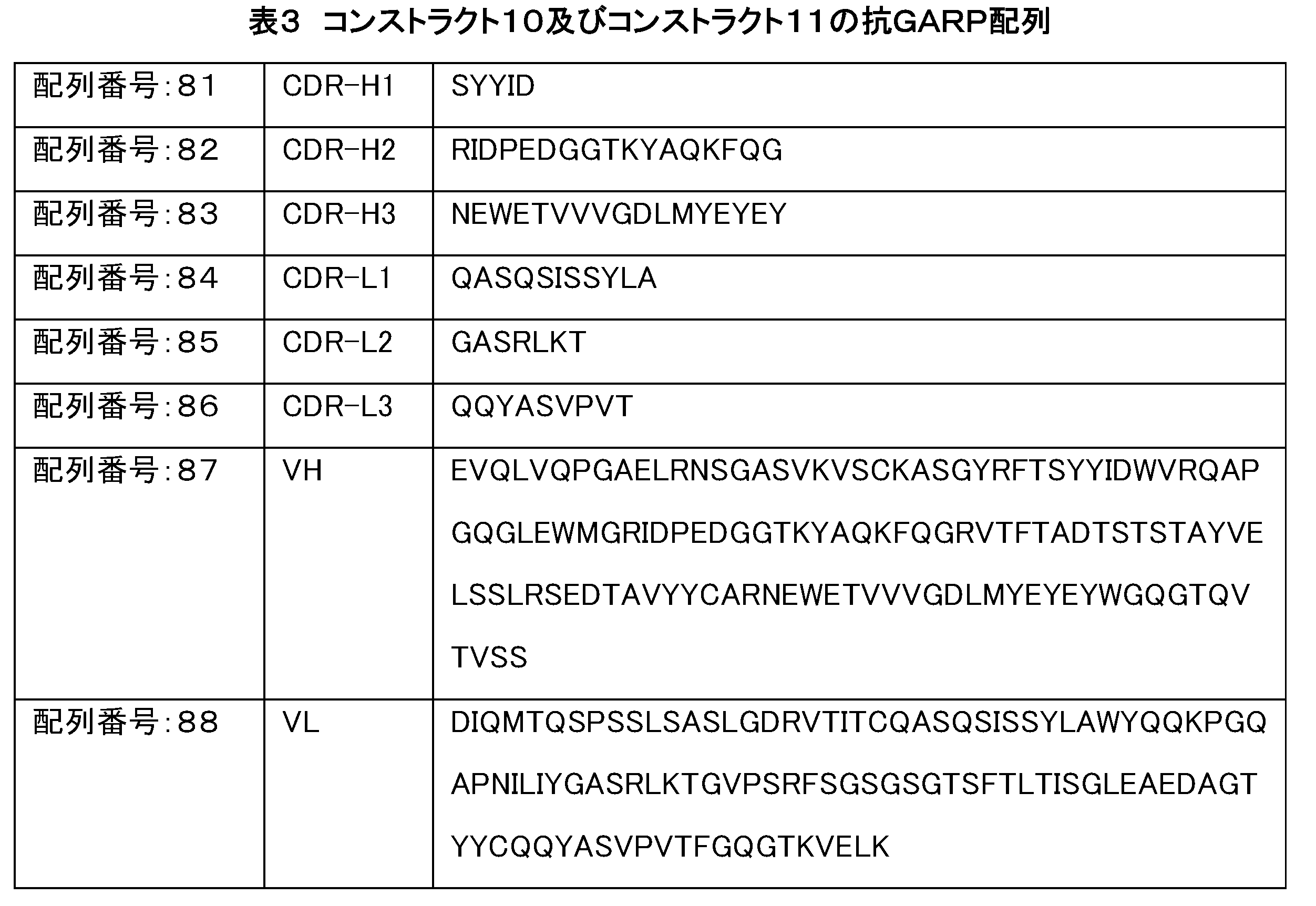

IL-13ゼータカイン(配列番号:101(配列番号:100のアミノ酸1-112));リンカー(配列番号:102(配列番号:100のアミノ酸113-132));EGFRvIII scFv(配列番号:103(配列番号:100のアミノ酸133-378));CD8ヒンジ/TM(配列番号:104(配列番号:100のアミノ酸379-447));4-1BB ICD(配列番号:105(配列番号:100のアミノ酸448-489));及びCD3ζ(配列番号:106(配列番号:100のアミノ酸490-601))を含む、コンストラクト12(タンデムCAR)-IL-13ゼータカイン-リンカー-EGFRvIII scFv-CD8ヒンジ/TM-4-1BB ICD-CD3ζ(配列番号:100)
GPVPPSTALRYLIEELVNITQNQKAPLCNGSMVWSINLTAGMYCAALESLINVSGCSAIEKTQRMLSGFCPHKVSAGQFSSLHVRDTKIEVAQFVKDLLLHLKKLFREGRFNGGGGSGGGGSGGGGSGGGGSEIQLVQSGAEVKKPGESLRISCKGSGFNIEDYYIHWVRQMPGKGLEWMGRIDPENDETKYGPIFQGHVTISADTSINTVYLQWSSLKASDTAMYYCAFRGGVYWGQGTTVTVSSGGGGSGGGGSGGGGSGGGGSDVVMTQSPDSLAVSLGERATINCKSSQSLLDSDGKTYLNWLQQKPGQPPKRLISLVSKLDSGVPDRFSGSGSGTDFTLTISSLQAEDVAVYYCWQGTHFPGTFGGGTKVEIKTTTPAPRPPTPAPTIASQPLSLRPEACRPAAGGAVHTRGLDFACDIYIWAPLAGTCGVLLLSLVITLYCKRGRKKLLYIFKQPFMRPVQTTQEEDGCSCRFPEEEEGGCELRVKFSRSADAPAYQQGQNQLYNELNLGRREEYDVLDKRRGRDPEMGGKPRRKNPQEGLYNELQKDKMAEAYSEIGMKGERRRGKGHDGLYQGLSTATKDTYDALHMQALPPR(配列番号:100)
Construct 12 (Tandem CAR)-IL-13zetakine-linker-EGFRvIII scFv-CD8hinge/TM-4-1BB, comprising: IL-13zetakine (SEQ ID NO:101 (amino acids 1-112 of SEQ ID NO:100)); linker (SEQ ID NO:102 (amino acids 113-132 of SEQ ID NO:100)); EGFRvIII scFv (SEQ ID NO:103 (amino acids 133-378 of SEQ ID NO:100)); CD8hinge/TM (SEQ ID NO:104 (amino acids 379-447 of SEQ ID NO:100)); 4-1BB ICD (SEQ ID NO:105 (amino acids 448-489 of SEQ ID NO:100)); and CD3ζ (SEQ ID NO:106 (amino acids 490-601 of SEQ ID NO:100)). ICD-CD3ζ (SEQ ID NO: 100)
GPVPPSTALRYLIEELVNITQNQKAPLCNGSMVWSINLTAGMYCAALESLINVSGCSAIEKTQRMLSGFCPHKVSA GQFSSLHVRDTKIEVAQFVKDLLLHLKKLFREGRFNGGGGSGGGGSGGGGSGGGSEIQLVQSGAEVKKPGESLRI SCKGSGFNIEDYYIHWVRQMPGKGLEWMGRIDPENDETKYGPIFQGHVTISADTSINTVYLQWSSLKASDTAMYYC AFRGGVYWGQGTTVTVSSGGGGGSGGGGGSGGGGSGGGGSDVVMTQSPDSLAVSLGERATINCKSSQSLLDSDGKTYLN WLQQKPGQPPKRLISLVSKLDSGVPDRFSGSGSGTDFTLISSLQAEDVAVYYCWQGTHFPGTFGGGTKVEIKTTT PAPRPPTPAPTIASQPLSLRPEACRPAAGGGAVHTRGLDFACDIYIWAPLAGTCGVLLLSLVITLYCKRGRKKLLYIF KQPFMRPVQTTQEEDGCSCRFPEEEEGGCELRVKFSRSADAPAYQQGQNQLYNELNLGRREEYDVLDKRRGRDPEMGGKPRRKNPQEGLYNELQKDKMAEAYSEIGMKGERRRGKGHDGLYQGLSTATKDTYDALHMQALPPR (SEQ ID NO: 100)
IL-13ゼータカイン(配列番号:100のアミノ酸1-112)
GPVPPSTALRYLIEELVNITQNQKAPLCNGSMVWSINLTAGMYCAALESLINVSGCSAIEKTQRMLSGFCPHKVSAGQFSSLHVRDTKIEVAQFVKDLLLHLKKLFREGRFN(配列番号:101)
IL-13 zetakine (amino acids 1-112 of SEQ ID NO:100)
GPVPPSTALRYLIEELVNITQNQKAPLCNGSMVWSINLTAGMYCAALESLINVSGCSAIEKTQRMLSGFCPHKVSAGQFSSLHVRDTKIEVAQFVKDLLLHLKKLFREGRFN (SEQ ID NO: 101)
リンカー(配列番号:100のアミノ酸113-132)
GGGGSGGGGSGGGGSGGGGS(配列番号:102)
Linker (amino acids 113-132 of SEQ ID NO:100)
GGGGSGGGGSGGGGSGGGGSGGGGGS (SEQ ID NO: 102)
抗EGFRvIII scFv(配列番号:100のアミノ酸133-378)
EIQLVQSGAEVKKPGESLRISCKGSGFNIEDYYIHWVRQMPGKGLEWMGRIDPENDETKYGPIFQGHVTISADTSINTVYLQWSSLKASDTAMYYCAFRGGVYWGQGTTVTVSSGGGGSGGGGSGGGGSGGGGSDVVMTQSPDSLAVSLGERATINCKSSQSLLDSDGKTYLNWLQQKPGQPPKRLISLVSKLDSGVPDRFSGSGSGTDFTLTISSLQAEDVAVYYCWQGTHFPGTFGGGTKVEIK(配列番号:103)
Anti-EGFRvIII scFv (amino acids 133-378 of SEQ ID NO:100)
EIQLVQSGAEVKKPGESLRISCKGSGFNIEDYYIHWVRQMPGKGLEWMGRIDPENDETKYGPIFQGHVTISADTSINTVYLQWSSLKASDTAMYYCAFRGGVYWGQGTTVTVSSGGGGSGGGGSGGGGSGGGGGSDVVMTQSPDSLAVSLGERATINCKSSQSLLDSDGKTYLNWLQQKPGQPPKRLISLVSKLDSGVPDRFSGSGSGTDFTLTISSLQAEDVAVYYCWQGTHFPGTFGGGTKVEIK (SEQ ID NO: 103)
CD8ヒンジ/TM(配列番号:100のアミノ酸379-447)
TTTPAPRPPTPAPTIASQPLSLRPEACRPAAGGAVHTRGLDFACDIYIWAPLAGTCGVLLLSLVITLYC(配列番号:104)
CD8 hinge/TM (amino acids 379-447 of SEQ ID NO:100)
TTTPAPRPPTPAPTIA SQPLSLRPEACRPAAGGAVHTRGLDFACDIYIWAPLAGTCGVLLLSLVITLYC (SEQ ID NO: 104)
4-1BBICD(配列番号:100のアミノ酸448-489)
KRGRKKLLYIFKQPFMRPVQTTQEEDGCSCRFPEEEEGGCEL(配列番号:105)
4-1BBICD (amino acids 448-489 of SEQ ID NO:100)
KRGRKKLLYIFKQPFMRPVQTTQEEDGCSCRFPEEEEGGCEL (SEQ ID NO: 105)
CD3ζ(配列番号:100のアミノ酸490-601)
RVKFSRSADAPAYQQGQNQLYNELNLGRREEYDVLDKRRGRDPEMGGKPRRKNPQEGLYNELQKDKMAEAYSEIGMKGERRRGKGHDGLYQGLSTATKDTYDALHMQALPPR(配列番号:106)
CD3ζ (amino acids 490-601 of SEQ ID NO:100)
RVKFSRSADAPAYQQGQNQLYNELNLGRREEYDVLDKRRGRDPEMGGKPRRKNPQEGLYNELQKDKMAEAYSEIGMKGERRRGKGHDGLYQGLSTATKDTYDALHMQALPPR (SEQ ID NO: 106)
ここに記載の更なる配列は次の通りである:

ここに記載した技術の幾つかの実施態様は、番号を付した次のパラグラフの何れかに従って定義されうる:
1. (a)第一抗原に結合する第一抗原結合ドメインと第二抗原に結合する第二抗原結合ドメインを含む細胞外ドメインを含むキメラ抗原受容体(CAR)ポリペプチドと;
(b)二重特異性T細胞エンゲージャー(BiTE)であって、標的抗原とT細胞抗原に結合するBiTE
を発現するように操作された免疫細胞。
2. CARポリペプチドが、膜貫通ドメインと細胞内シグナル伝達ドメインを含む、パラグラフ1の免疫細胞。
3. CARポリペプチドが一又は複数の共刺激ドメインを更に含む、パラグラフ1又は2の免疫細胞。
4. 第一及び第二抗原が神経膠芽腫抗原である、パラグラフ1~3の何れか一の免疫細胞。
5. 第一及び第二抗原が、上皮増殖因子受容体(EGFR)、上皮増殖因子受容体変異体III(EGFRvIII)、CD19、CD79b、CD37、前立腺特異的膜抗原(PSMA)、前立腺幹細胞抗原(PSCA)、インターロイキン13受容体アルファ2(IL-13Rα2)、エフリンA型受容体1(EphA1)、ヒト上皮増殖因子受容体2(HER2)、メソテリン、ムチン1,細胞表面関連(MUC1)、又はムチン16,細胞表面関連(MUC16)から独立して選択される、パラグラフ1~4の何れか一の免疫細胞。
6. 第一抗原結合ドメイン及び/又は第二抗原結合ドメインが、抗体の抗原結合断片を含む、パラグラフ1~5の何れか一の免疫細胞。
7. 抗体の抗原結合断片が、単一ドメイン抗体又は単鎖可変断片(scFv)を含む、パラグラフ6の免疫細胞。
8. 第一抗原結合ドメイン及び/又は第二抗原結合ドメインが、第一及び/又は第二抗原のリガンドを含む、パラグラフ1~7の何れか一の免疫細胞。
9. 細胞外ドメインが、第一抗原結合ドメインと第二抗原結合ドメインとの間にリンカーを含まない、パラグラフ1~8の何れか一の免疫細胞。
10. 第一抗原結合ドメインが、リンカーによって第二抗原結合ドメインに連結されている、パラグラフ1~8の何れか一の免疫細胞。
11. リンカーが、配列番号:102、107、108、109、又は110のリンカーと少なくとも90%の配列同一性を有するアミノ酸を含む、パラグラフ10の免疫細胞。
12. 膜貫通ドメインがヒンジ/膜貫通ドメインを含む、パラグラフ2~11の何れか一の免疫細胞。
13. ヒンジ/膜貫通ドメインが、免疫グロブリン様タンパク質、CD28、CD8、又は4-1BBのヒンジ/膜貫通ドメインを含む、パラグラフ12の免疫細胞。
14. 膜貫通ドメインが、配列番号:4、10、16、22、28、37、46、58、66、72、78、又は104のアミノ酸配列、あるいは配列番号:4、10、16、22、28、37、46、58、66、72、78、又は104のアミノ酸配列と少なくとも90%の配列同一性を有するアミノ酸配列を含んでいてもよい、CD8のヒンジ/膜貫通ドメインを含む、パラグラフ12又は13の免疫細胞。
15. 細胞内シグナル伝達ドメインが、TCRζ、FcRγ、FcRβ、CD3γ、CD3θ、CD3ε、CD3η、CD3ζ、CD22、CD79a、CD79b、又はCD66dの細胞内シグナル伝達ドメインを含む、パラグラフ2~14の何れか一の免疫細胞。
16. 細胞内シグナル伝達ドメインが、配列番号:6、12、18、24、30、39、48、60、68、74、80、又は106のアミノ酸配列、あるいは配列番号:6、12、18、24、30、39、48、60、68、74、80、又は106のアミノ酸配列と少なくとも90%の配列同一性を有するアミノ酸配列を含んでいてもよい、CD3ζの細胞内シグナル伝達ドメインを含む、パラグラフ15の免疫細胞。
17. 共刺激ドメインが、4-1BB、CD27、CD28、又はOX-40の共刺激ドメインを含む、パラグラフ3~16の何れか一の免疫細胞。
18. 共刺激ドメインが、配列番号:5、11、17、23、29、38、47、59、67、73、79、又は105のアミノ酸配列、あるいは配列番号:5、11、17、23、29、38、47、59、67、73、79、又は105のアミノ酸配列と少なくとも90%の配列同一性を有するアミノ酸配列を含んでいてもよい、4-1BBの共刺激ドメインを含む、パラグラフ17の免疫細胞。
19. 第一抗原結合ドメインがIL-13Rα2結合ドメインを含む、パラグラフ1~18の何れか一の免疫細胞。
20. 第二抗原結合ドメインがEGFRvIII結合ドメインを含む、パラグラフ1~19の何れか一の免疫細胞。
21. IL-13Rα2結合ドメインが、抗IL-13Rα2scFv又はIL-13Rα2のリガンドを含む、パラグラフ19又は20の免疫細胞。
22. IL-13Rα2のリガンドが、IL-13又はIL-13ゼータカイン、又はその抗原結合断片を含む、パラグラフ21の免疫細胞。
23. IL-13Rα2結合ドメインが、配列番号:101のアミノ酸配列と少なくとも90%の配列同一性を有するアミノ酸配列を含む、パラグラフ19~22の何れか一の免疫細胞。
24. IL-13Rα2結合ドメインが配列番号:101のアミノ酸配列を含む、パラグラフ23の免疫細胞。
25. EGFRvIII結合ドメインが抗体の抗原結合断片を含む、パラグラフ20~24の何れか一の免疫細胞。
26. EGFRvIII結合ドメインが抗EGFRvIII scFvを含む、パラグラフ20~25の何れか一の免疫細胞。
27. 抗EGFRvIII scFvが、配列番号:111又は113のアミノ酸配列と少なくとも90%の配列同一性を有するアミノ酸配列を含む重鎖可変ドメイン(VH)及び/又は配列番号:112又は114のアミノ酸配列と少なくとも90%の配列同一性を有するアミノ酸配列を含む軽鎖可変ドメイン(VL)を含む、パラグラフ26の免疫細胞。
28. VHが、配列番号:111又は113のアミノ酸配列を含み、及び/又はVLが、配列番号:112又は114のアミノ酸配列を含む、パラグラフ27の免疫細胞。
29. EGFRvIII結合ドメインが、配列番号:103のアミノ酸配列と少なくとも90%の配列同一性を有するアミノ酸配列を含む、パラグラフ20~28の何れか一の免疫細胞。
30. EGFRvIII結合ドメインが配列番号:103のアミノ酸配列を含む、パラグラフ29の免疫細胞。
31. CARポリペプチドが、配列番号:100のアミノ酸配列と少なくとも90%の配列同一性を有するアミノ酸配列を含む、パラグラフ1~30の何れか一の免疫細胞。
32. CARポリペプチドが配列番号:100のアミノ酸配列を含む、パラグラフ31の免疫細胞。
33. (i)配列番号:100のアミノ酸配列と少なくとも90%の配列同一性を有するアミノ酸配列を含むCARポリペプチドと;
(ii)BiTEであって、標的抗原とT細胞抗原に結合するBiTE
を発現するように操作された免疫細胞。
34. (i)配列番号:100のアミノ酸配列を含むCARポリペプチドと;
(ii)BiTEであって、標的抗原とT細胞抗原に結合するBiTE
を発現するように操作された免疫細胞。
35. 標的抗原が、EGFR、EGFRvIII、CD19、CD79b、CD37、PSMA、PSCA、IL-13Rα2、EphA1、HER2、メソテリン、MUC1、又はMUC16の一つから選択される神経膠芽腫関連抗原である、パラグラフ1~34の何れか一の免疫細胞。
36. T細胞抗原がCD3である、パラグラフ1~35の何れか一の免疫細胞。
37. 標的抗原がEGFRであり、T細胞抗原がCD3である、パラグラフ1~36の何れか一の免疫細胞。
38. BiTEが、配列番号:98又は99のアミノ酸配列と少なくとも90%の配列同一性を有するアミノ酸配列を含む、パラグラフ1~37の何れか一の免疫細胞。
39. BiTEが配列番号:98又は99のアミノ酸配列を含む、パラグラフ38の免疫細胞。
40. 免疫細胞がT又はナチュラルキラー(NK)細胞である、パラグラフ1~39の何れか一の免疫細胞。
41. 免疫細胞がヒト細胞である、パラグラフ1~40の何れか一の免疫細胞。
42. パラグラフ1~41の何れか一のCARポリペプチドとBiTEをコードするポリヌクレオチド。
43. ポリヌクレオチドが、CARポリペプチドコード配列とBiTEコード配列を含み、CARポリペプチドコード配列とBiTEコード配列が、リボソームスキッピング部分によって分離されている、パラグラフ42のポリヌクレオチド。
44. CARポリペプチド及び/又はBiTEが構成的プロモーター下で発現される、パラグラフ42又は43のポリヌクレオチド。
45. 構成的プロモーターが伸長因子1アルファ(EF1α)プロモーターを含む、パラグラフ44のポリヌクレオチド。
46. CARポリペプチド及び/又はBiTEが誘導性プロモーター下で発現される、パラグラフ42又は43のポリヌクレオチド。
47. 誘導性プロモーターが、T細胞受容体(TCR)又はCARシグナル伝達によって誘導可能である、パラグラフ46のポリヌクレオチド。
48. 誘導性プロモーターが活性化T細胞核内因子(NFAT)応答エレメントを含む、パラグラフ47のポリヌクレオチド。
49. CARポリペプチドとBiTEが、それぞれ構成的プロモーター下で発現される、パラグラフ42又は43のポリヌクレオチド。
50. CARポリペプチドが構成的プロモーター下で発現され、BiTEが誘導性プロモーター下で発現される、パラグラフ42又は43のポリヌクレオチド。
51. 自殺遺伝子を更に含む、パラグラフ42から50の何れか一のポリヌクレオチド。
52. 一又は複数のシグナル配列をコードする配列を更に含む、パラグラフ42~51の何れか一のポリヌクレオチド。
53. パラグラフ42~52の何れか一のポリヌクレオチドを含むベクター。
54. ベクターがレンチウイルスベクターである、パラグラフ53のベクター。
55. パラグラフ1~41の何れか一の免疫細胞、パラグラフ42~52の何れか一のポリヌクレオチド、又はパラグラフ53又は54のベクターを含む薬学的組成物。
56. 治療を必要とする対象のがんを治療する方法であって、パラグラフ1~41の何れか一の免疫細胞、パラグラフ42~52の何れか一のポリヌクレオチド、パラグラフ53又は54のベクター、又はパラグラフ55の薬学的組成物を対象に投与することを含む、方法。
57. がんが、神経膠芽腫、肺がん、膵臓がん、リンパ腫、又は骨髄腫であり、場合によっては、がんが、EGFR、EGFRvIII、CD19、CD79b、CD37、PSMA、PSCA、IL-13Rα2、EphA1、HER2、メソテリン、MUC1、及びMUC16からなる群の一又は複数を発現することを含む、パラグラフ56の方法。
58. 神経膠芽腫が、IL-13Rα2、EGFRvIII、EGFR、HER2、メソテリン、及びEphA1からなる群の一又は複数を発現する細胞を含む、パラグラフ57の方法。
59. 神経膠芽腫が、EGFRvIII発現が低下した細胞を含む、パラグラフ57又は58の方法。
60. (i)EGFR結合ドメインを含むCARポリペプチドであって、配列番号:117のアミノ酸配列と少なくとも90%の配列同一性を有するアミノ酸配列を含むCARポリペプチドと;
(ii)配列番号:25のアミノ酸配列と少なくとも90%の配列同一性を有するアミノ酸配列を含む抗GARPカメリド
を発現するように操作された免疫細胞。
61. (i)EGFRvIII結合ドメインを含むCARポリペプチドであって、配列番号:115又は116のアミノ酸配列と少なくとも90%の配列同一性を有するアミノ酸配列を含むCARポリペプチドと;
(ii)BiTEであって、配列番号:98又は99のアミノ酸配列と少なくとも90%の配列同一性を有するアミノ酸配列を含む、EGFRとCD3に結合するBiTE
を発現するように操作された免疫細胞。
62. パラグラフ60のCARポリペプチドと抗GARPカメリドをコードするポリヌクレオチド。
63. パラグラフ61のCARポリペプチドとBiTEをコードするポリヌクレオチド。
64. 自殺遺伝子を更に含む、パラグラフ62又は63のポリヌクレオチド。
65. 一又は複数のシグナル配列をコードする配列を更に含む、パラグラフ62~64の何れか一のポリヌクレオチド。
66. パラグラフ62~65の何れか一のポリヌクレオチドを含むベクター。
67. ベクターがレンチウイルスベクターである、パラグラフ66のベクター。
68. パラグラフ60又は61の免疫細胞、パラグラフ62~65の何れか一のポリヌクレオチド、又はパラグラフ66又は67のベクターを含む薬学的組成物。
69. 対象におけるEGFRvIII発現が低下した神経膠芽腫を治療する方法であって、(i)細胞外EGFRvIII結合ドメインを含むCARポリペプチドと;(ii)BiTEを発現するように操作された免疫細胞を対象に投与することを含み、免疫細胞が、パラグラフ1~41及び61の何れか一の免疫細胞から場合によっては選択される、方法。
70. 対象の腫瘍微小環境における免疫抑制を防止又は低減する方法であって、(i)細胞外標的結合ドメインを含むCARと;(ii)BiTEを含む免疫細胞を対象に投与することを含み、免疫細胞が、パラグラフ1~41、60、及び61の何れか一の免疫細胞から場合によっては選択される、方法。
71. 対象の腫瘍微小環境におけるT細胞消耗を防止又は低減する方法であって、(i)細胞外標的結合ドメインを含むCARと;(ii)BiTEを含む免疫細胞を対象に投与することを含み、免疫細胞が、パラグラフ1~41、60、及び61の何れか一の免疫細胞から場合によっては選択される、方法。
72. 対象における異種抗原発現を有するがんを治療する方法であって、(i)細胞外標的結合ドメインを含むCARと;(ii)BiTEを含む免疫細胞を対象に投与することを含み、免疫細胞が、パラグラフ1~41、60、及び61の何れか一の免疫細胞から場合によっては選択される、方法。
73. がんが、神経膠芽腫、前立腺がん、肺がん、膵臓がん、リンパ腫、又は骨髄腫である、パラグラフ72の方法。
74. がんが、EGFR、EGFRvIII、CD19、PSMA、PSCA、IL-13Rα2、EphA1、Her2、メソテリン、MUC1、及びMUC16からなる群の一又は複数を発現する細胞を含む、パラグラフ72又は73の方法。
75. 異種核酸分子を含むCAR T細胞であって、異種核酸分子が、
(a)細胞外抗原結合ドメイン、膜貫通ドメイン、及び細胞内シグナル伝達ドメインを含むCARをコードする第一ポリヌクレオチドと;
(b)治療剤をコードする第二ポリヌクレオチド
を含む、CAR T細胞。
76. 治療剤が抗体試薬を含む、パラグラフ75のCAR T細胞。
77. 抗体試薬が単鎖抗体又は単一ドメイン抗体を含む、パラグラフ76のCAR T細胞。
78. 抗体試薬が二重特異性抗体試薬を含む、パラグラフ76のCAR T細胞。
79. 二重特異性抗体試薬がBiTEを含む、パラグラフ78のCAR T細胞。
80. 単一ドメイン抗体がカメリド抗体を含む、パラグラフ77のCAR T細胞。
81. 治療剤がサイトカインを含む、パラグラフ75のCAR T細胞。
82. CAR及び治療剤が別個のCAR及び治療剤分子として生成される、パラグラフ75~81の何れか一のCAR T細胞。
83. CAR T細胞が、CARをコードする第一ポリヌクレオチドと治療剤をコードする第二ポリヌクレオチドとの間にリボソームスキッピング部分を含む、パラグラフ82のCAR T細胞。
84. リボソームスキッピング部分が2Aペプチドを含む、パラグラフ83のCAR T細胞。
85. 2AペプチドがP2A又はT2Aを含む、パラグラフ84のCAR T細胞。
86. CARと治療剤がそれぞれ構成的に発現される、パラグラフ75~85の何れか一のCAR T細胞。
87. CARと治療剤の発現がEF1αプロモーターによって駆動される、パラグラフ75~86の何れか一のCAR T細胞。
88. 治療剤が、T細胞受容体又はCARシグナル伝達によって場合によっては誘導可能な誘導性プロモーターの制御下で発現される、パラグラフ75~85の何れか一のCAR T細胞。
89. 誘導性プロモーターがNFATプロモーターを含む、パラグラフ88のCAR T細胞。
90. CARが構成的プロモーターの制御下で発現され、治療剤が、T細胞受容体又はCARシグナル伝達によって場合によっては誘導可能な誘導性プロモーターの制御下で発現される、パラグラフ75~89の何れか一のCAR T細胞。
91. CARが一又は複数の共刺激ドメインを更に含む、パラグラフ75~90の何れか一のCAR T細胞。
92. CARの抗原結合ドメインが、抗体、単鎖抗体、単一ドメイン抗体、又はリガンドを含む、パラグラフ75~91の何れか一のCAR T細胞。
93. 膜貫通ドメインがヒンジ/膜貫通ドメインを含む、パラグラフ75~92の何れか一のCAR T細胞。
94. ヒンジ/膜貫通ドメインが、免疫グロブリン様タンパク質、CD28、CD8、又は4-1BBのヒンジ/膜貫通ドメインを含む、パラグラフ93のCAR T細胞。
95. CARの膜貫通ドメインが、配列番号:4、10、16、22、28、37、46、58、66、72、78、及び104、又はそれらのバリアントの何れか一の配列を含んでいてもよい、CD8ヒンジ/膜貫通ドメインを含む、パラグラフ75~94の何れか一のCAR T細胞。
96. 細胞内シグナル伝達ドメインが、TCRζ、FcRγ、FcRβ、CD3γ、CD3θ、CD3ε、CD3η、CD3ζ、CD22、CD79a、CD79b、又はCD66dの細胞内シグナル伝達ドメインを含む、パラグラフ75~95の何れか一のCAR T細胞。
97. 細胞内シグナル伝達ドメインが、配列番号:6、12、18、24、30、39、48、60、68、74、80、及び106、又はそれらのバリアントの何れか一の配列を含んでいてもよい、CD3ζ細胞内シグナル伝達ドメインを含む、パラグラフ75~96の何れか一のCAR T細胞。
98. 共刺激ドメインが、4-1BB、CD27、CD28、又はOX-40の共刺激ドメインを含む、パラグラフ91~97の何れか一のCAR T細胞。
99. 共刺激ドメインが、配列番号:5、11、17、23、29、38、47、59、67、73、79、及び105、又はそれらのバリアントの何れか一の配列を含んでいてもよい、4-1BB共刺激ドメインを含む、パラグラフ91~98の何れか一のCAR T細胞。
100. CAR抗原結合ドメインが腫瘍関連抗原又はTreg関連抗原に結合する、パラグラフ75~99の何れか一のCAR T細胞。
101. カメリド抗体が、腫瘍関連抗原又はTreg関連抗原に結合する、パラグラフ80のCAR T細胞。
102. BiTEが、(i)腫瘍関連抗原又はTreg関連抗原と、(ii)T細胞抗原に結合する、パラグラフ79のCAR T細胞。
103. 腫瘍関連抗原が固形腫瘍関連抗原である、パラグラフ100~102の何れか一のCAR T細胞。
104. 腫瘍関連抗原が、EGFRvIII、EGFR、CD19、PSMA、PSCA、IL-13Rα2、EphA1、Her2、メソテリン、MUC1、又はMUC16を含み、場合によってはCAR抗原結合ドメイン又は治療剤が、配列番号:21、27、33、36、42、45、51、55、57、63、65、103、及びそれらのバリアントからなる群から選択される配列を含む、パラグラフ103のCAR T細胞。
105. Treg関連抗原が、反復優位糖タンパク質A(GARP)、潜在関連ペプチド(LAP)、CD25、及び細胞傷害性Tリンパ球関連抗原4(CTLA-4)からなる群から選択され、場合によってはCAR抗原結合ドメイン又は治療剤が、配列番号:3、9、15、25、71、77、及びそれらのバリアントからなる群から選択される配列を含む、パラグラフ100~102の何れか一のCAR T細胞。
106. 細胞外抗原結合ドメイン、膜貫通ドメイン、及び細胞内シグナル伝達ドメインを含み;抗原結合ドメインがTreg関連抗原に結合する、CARポリペプチド。
107. Treg関連抗原が、GARP、LAP、CD25、及びCTLA-4からなる群から選択される、パラグラフ106のCARポリペプチド。
108. CARが一又は複数の共刺激ドメインを更に含む、パラグラフ106又は107のCARポリペプチド。
109. Treg関連抗原がGARP又はLAPである、パラグラフ106~108の何れか一のCARポリペプチド。
110. CARの抗原結合ドメインが、
(a)3つの相補性決定領域CDR-H1、CDR-H2、及びCDR-H3を含む重鎖可変ドメイン(VH)であって、CDR-H1が、配列番号:81のアミノ酸配列、又は配列番号:81の1、2、又は3以下のアミノ酸置換を持つアミノ酸配列を含み;CDR-H2が、配列番号:82のアミノ酸配列、又は配列番号:82の1、2、又は3以下のアミノ酸置換を持つアミノ酸配列を含み;かつCDR-H3が、配列番号:83のアミノ酸配列、又は配列番号:83の1、2、又は3以下のアミノ酸置換を持つアミノ酸配列を含むもの、及び/又は
(b)3つの相補性決定領域CDR-L1、CDR-L2、及びCDR-L3を含む軽鎖可変ドメイン(VL)であって、CDR-L1が、配列番号:84のアミノ酸配列、又は配列番号:84の1、2、又は3以下のアミノ酸置換を持つアミノ酸配列を含み;CDR-L2が、配列番号:85のアミノ酸配列、又は配列番号:85の1、2、又は3以下のアミノ酸置換を持つアミノ酸配列を含み;かつCDR-L3が、配列番号:86のアミノ酸配列、又は配列番号:86の1、2、又は3以下のアミノ酸置換を持つアミノ酸配列を含むもの
を含む、パラグラフ106~109の何れか一のCARポリペプチド。
111. VHが、配列番号:87のアミノ酸配列、又は配列番号:87のアミノ酸配列と少なくとも90%の配列同一性を有するアミノ酸配列を含み、及び/又はVLが、配列番号:88のアミノ酸配列、又は配列番号:88のアミノ酸配列と少なくとも90%の配列同一性を有するアミノ酸配列を含む、パラグラフ110のCARポリペプチド。
112. CARの抗原結合ドメインが、
(a)3つの相補性決定領域CDR-H1、CDR-H2、及びCDR-H3を含む重鎖可変ドメイン(VH)であって、CDR-H1が、配列番号:89のアミノ酸配列、又は配列番号:89の1、2、又は3以下のアミノ酸置換を持つアミノ酸配列を含み;CDR-H2が、配列番号:90のアミノ酸配列、又は配列番号:90の1、2、又は3以下のアミノ酸置換を持つアミノ酸配列を含み;かつCDR-H3が、配列番号:91のアミノ酸配列、又は配列番号:91の1、2、又は3以下のアミノ酸置換を持つアミノ酸配列を含むもの、及び/又は
(b)3つの相補性決定領域CDR-L1、CDR-L2、及びCDR-L3を含む軽鎖可変ドメイン(VL)であって、CDR-L1が、配列番号:92のアミノ酸配列、又は配列番号:92の1、2、又は3以下のアミノ酸置換を持つアミノ酸配列を含み;CDR-L2が、配列番号:93のアミノ酸配列、又は配列番号:93の1、2、又は3以下のアミノ酸置換を持つアミノ酸配列を含み;かつCDR-L3が、配列番号:94のアミノ酸配列、又は配列番号:94の1、2、又は3以下のアミノ酸置換を持つアミノ酸配列を含むもの
を含む、パラグラフ106~109の何れか一のCARポリペプチド。
113. VHが、配列番号:95のアミノ酸配列、又は配列番号:95のアミノ酸配列と少なくとも90%の配列同一性を有するアミノ酸配列を含み、及び/又はVLが、配列番号:96のアミノ酸配列、又は配列番号:96のアミノ酸配列と少なくとも90%の配列同一性を有するアミノ酸配列を含む、パラグラフ112のCARポリペプチド。
114. VHがVLのN末端にある、パラグラフ110~113の何れか一のCARポリペプチド。
115. VLがVHのN末端にある、パラグラフ110~113の何れか一のCARポリペプチド。
116. CARの抗原結合ドメインが、配列番号:3、9、15、25、71、77、及びそれらのバリアントからなる群から選択される配列を含んでいてもよい、scFv又は単一ドメイン抗体を含む、パラグラフ106~115の何れか一のCARポリペプチド。
117. 膜貫通ドメインがヒンジ/膜貫通ドメインを含む、パラグラフ106~116の何れか一のCARポリペプチド。
118. ヒンジ/膜貫通ドメインが、免疫グロブリン様タンパク質、CD28、CD8、又は4-1BBのヒンジ/膜貫通ドメインを含む、パラグラフ117のCARポリペプチド。
119. CARの膜貫通ドメインが、配列番号:4、10、16、22、28、37、46、58、66、72、78、及び104、又はそれらのバリアントの何れか一の配列を含んでいてもよい、CD8ヒンジ/膜貫通ドメインを含む、パラグラフ106~118の何れか一のCARポリペプチド。
120. 細胞内シグナル伝達ドメインが、TCRζ、FcRγ、FcRβ、CD3γ、CD3θ、CD3ε、CD3η、CD3ζ、CD22、CD79a、CD79b、又はCD66dの細胞内シグナル伝達ドメインを含む、パラグラフ106~119の何れか一のCARポリペプチド。
121. 細胞内シグナル伝達ドメインが、配列番号:6、12、18、24、30、39、48、60、68、74、80、及び106、又はそれらのバリアントの何れか一の配列を含んでいてもよい、CD3ζ細胞内シグナル伝達ドメインを含む、パラグラフ106~120の何れか一のCARポリペプチド。
122. 共刺激ドメインが、4-1BB、CD27、CD28、又はOX-40の共刺激ドメインを含む、パラグラフ108~121の何れか一のCARポリペプチド。
123. 共刺激ドメインが、配列番号:5、11、17、23、29、38、47、59、67、73、79、及び105、又はそれらのバリアントの何れか一の配列を含んでいてもよい、4-1BB共刺激ドメインを含む、パラグラフ108~122の何れか一のCARポリペプチド。
124. 配列番号:26、配列番号:35、配列番号:44、配列番号:53、配列番号:61、配列番号:19、配列番号:1、配列番号:7、配列番号:13、配列番号:69、配列番号:75、及び配列番号:100の何れか一のアミノ酸配列と少なくとも90%の配列同一性を有するアミノ酸配列を含むCARポリペプチド。
125. 配列番号:26、配列番号:35、配列番号:44、配列番号:53、配列番号:61、配列番号:19、配列番号:1、配列番号:7、配列番号:13、配列番号:69、配列番号:75、及び配列番号:100の何れか一のアミノ酸配列を含む、パラグラフ124のCARポリペプチド。
126. パラグラフ75~125の何れか一の、(i)CARポリペプチド、又は(ii)CARポリペプチドと治療剤を含むポリタンパク質をコードする核酸分子。
127. 自殺遺伝子を更に含む、パラグラフ126の核酸分子。
128. シグナル配列をコードする配列を更に含む、パラグラフ126又は127の核酸分子。
129. パラグラフ126~128の何れか一の核酸分子を含むベクター。
130. ベクターがレンチウイルスベクターである、パラグラフ129のベクター。
131. パラグラフ75~125の何れか一の、CARポリペプチドを含むポリペプチド、又はCARポリペプチドと治療剤を含むポリタンパク質。
132. パラグラフ106~125の何れか一のCARポリペプチド、パラグラフ126~128の何れか一の核酸分子、パラグラフ129又は130のベクター、及び/又はパラグラフ131のポリペプチドを含む免疫細胞。
133. 免疫細胞がT又はNK細胞である、パラグラフ132の免疫細胞。
134. 免疫細胞がヒト細胞である、パラグラフ132又は133の免疫細胞。
135. パラグラフ75~134の何れか一の一又は複数のCAR T細胞、核酸分子、CARポリペプチド、ポリタンパク質、又は免疫細胞を含む薬学的組成物。
136. がんを有する患者を治療する方法であって、パラグラフ135の薬学的組成物を患者に投与することを含む、方法。
137. 腫瘍微小環境を標的とすることにより、全身毒性が低減される、パラグラフ136の方法。
138. がんが、一又は複数の固形腫瘍の存在によって特徴付けられる、パラグラフ136又は137の方法。
139. がんが腫瘍浸潤性Tregにより特徴付けられる、パラグラフ136~138の何れか一の方法。
140. がんが神経膠芽腫である、パラグラフ136~139の何れか一の方法。
141. がんを有する患者を治療する方法であって、腫瘍毒性抗体又はサイトカインを分泌するように遺伝子改変されたCAR T細胞産物を患者に投与することを含み、がん毒性を腫瘍微小環境に局所的に向けることにより、全身毒性が低減される、方法。
142. CAR T細胞が遺伝子改変されて、CTLA4、CD25、GARP、LAP、IL-15、CSF1R、又はEGFR、EGFRvIII、CD19、CD79b、CD37、PSMA、PSCA、IL-13Rα2、EphA1、Her2、メソテリン、MUC1、又はMUC16に対する抗体、あるいは二重特異性抗体が腫瘍微小環境に送達される、パラグラフ141の方法。
143. 二重特異性抗体が、EGFR及びCD3に対するBiTEである、パラグラフ142の方法。
144. 疾患又は病状を治療するために患者の組織又は器官に治療剤を送達する方法であって、治療用抗体、毒素、又は薬剤を分泌するように遺伝子改変されたCAR T細胞を前記患者に投与することを含み、治療用抗体、毒素、又は薬剤は、それ自体では、組織又は器官に侵入又は浸透することができない、方法。
145. 組織又は器官が神経系にある、パラグラフ144の方法。
146. 神経系が中枢神経系である、パラグラフ145の方法。
147. 中枢神経系が脳である、パラグラフ146の方法。
148. 疾患又は病状ががんである、パラグラフ144~147の何れか一の方法。
149. がんが、神経膠芽腫、前立腺がん、肺がん、膵臓がん、リンパ腫、又は骨髄腫である、パラグラフ148の方法。
150. 治療用抗体が抗EGFR又は抗EGFRvIIIである、パラグラフ144~149の何れか一の方法。
151. 対象のEGFRvIII発現が低下した神経膠芽腫を治療する方法であって、(i)細胞外EGFRvIII結合ドメインを含むCARポリペプチドと;(ii)BiTEを発現するように操作されたCAR T細胞を対象に投与することを含み、CAR T細胞が、場合によっては、パラグラフ75~105の何れか一のCAR T細胞から選択される、方法。
152. 対象の腫瘍微小環境における免疫抑制を防止又は低減する方法であって、(i)細胞外標的結合ドメインを含むCARポリペプチドと;(ii)BiTEを発現するように操作されたCAR T細胞を対象に投与することを含み、CAR T細胞が、場合によっては、パラグラフ75~105の何れか一のCAR T細胞から選択される、方法。
153. 対象の腫瘍微小環境におけるT細胞消耗を防止又は低減する方法であって、(i)細胞外標的結合ドメインを含むCARポリペプチドと;(ii)BiTEを発現するように操作されたCAR T細胞を対象に投与することを含み、ここで、CAR T細胞が、場合によっては、パラグラフ75~105の何れか一のCAR T細胞から選択される、方法。
154. 対象の異種抗原発現を有するがんを治療する方法であって、(i)細胞外標的結合ドメインを含むCARポリペプチドと;(ii)BiTEを発現するように操作されたCAR T細胞を対象に投与することを含み、CAR T細胞が、場合によっては、パラグラフ75~105の何れか一のCAR T細胞から選択される、方法。
155. がんが、神経膠芽腫、前立腺がん、肺がん、膵臓がん、リンパ腫、又は骨髄腫である、パラグラフ154の方法。
156. がんが、EGFR、EGFRvIII、CD19、PSMA、PSCA、IL-13Rα2、EphA1、Her2、メソテリン、MUC1、及びMUC16の一又は複数を発現する細胞を含む、パラグラフ154又は155の方法。
Some embodiments of the technology described herein may be defined according to any of the following numbered paragraphs:
1. (a) a chimeric antigen receptor (CAR) polypeptide comprising an extracellular domain comprising a first antigen-binding domain that binds to a first antigen and a second antigen-binding domain that binds to a second antigen;
(b) a bispecific T cell engager (BiTE), which binds to a target antigen and a T cell antigen;
Immune cells engineered to express
2. The immune cell of paragraph 1, wherein the CAR polypeptide comprises a transmembrane domain and an intracellular signaling domain.
3. The immune cell of paragraph 1 or 2, wherein the CAR polypeptide further comprises one or more costimulatory domains.
4. The immune cell of any one of paragraphs 1 to 3, wherein the first and second antigens are glioblastoma antigens.
5. The immune cell of any one of paragraphs 1-4, wherein the first and second antigens are independently selected from epidermal growth factor receptor (EGFR), epidermal growth factor receptor variant III (EGFRvIII), CD19, CD79b, CD37, prostate specific membrane antigen (PSMA), prostate stem cell antigen (PSCA), interleukin 13 receptor alpha 2 (IL-13Rα2), ephrin type A receptor 1 (EphA1), human epidermal growth factor receptor 2 (HER2), mesothelin, mucin 1, cell surface associated (MUC1), or mucin 16, cell surface associated (MUC16).
6. The immune cell of any of paragraphs 1 to 5, wherein the first antigen-binding domain and/or the second antigen-binding domain comprises an antigen-binding fragment of an antibody.
7. The immune cell of paragraph 6, wherein the antigen-binding fragment of the antibody comprises a single domain antibody or a single chain variable fragment (scFv).
8. The immune cell of any of paragraphs 1 to 7, wherein the first antigen-binding domain and/or the second antigen-binding domain comprises a ligand for the first and/or second antigen.
9. The immune cell of any of paragraphs 1 to 8, wherein the extracellular domain does not include a linker between the first antigen-binding domain and the second antigen-binding domain.
10. The immune cell of any one of paragraphs 1 to 8, wherein the first antigen-binding domain is linked to the second antigen-binding domain by a linker.
11. The immune cell of paragraph 10, wherein the linker comprises amino acids having at least 90% sequence identity to the linker of SEQ ID NO: 102, 107, 108, 109, or 110.
12. The immune cell of any of paragraphs 2 to 11, wherein the transmembrane domain comprises a hinge/transmembrane domain.
13. The immune cell of paragraph 12, wherein the hinge/transmembrane domain comprises the hinge/transmembrane domain of an immunoglobulin-like protein, CD28, CD8, or 4-1BB.
14. The immune cell of paragraph 12 or 13, comprising a hinge/transmembrane domain of CD8, wherein the transmembrane domain optionally comprises the amino acid sequence of SEQ ID NO: 4, 10, 16, 22, 28, 37, 46, 58, 66, 72, 78, or 104, or an amino acid sequence having at least 90% sequence identity to the amino acid sequence of SEQ ID NO: 4, 10, 16, 22, 28, 37, 46, 58, 66, 72, 78, or 104.
15. The immune cell of any of paragraphs 2-14, wherein the intracellular signaling domain comprises an intracellular signaling domain of TCRζ, FcRγ, FcRβ, CD3γ, CD3θ, CD3ε, CD3η, CD3ζ, CD22, CD79a, CD79b, or CD66d.
16. The immune cell of paragraph 15, comprising an intracellular signaling domain of CD3ζ, wherein the intracellular signaling domain optionally comprises the amino acid sequence of SEQ ID NO: 6, 12, 18, 24, 30, 39, 48, 60, 68, 74, 80, or 106, or an amino acid sequence having at least 90% sequence identity to the amino acid sequence of SEQ ID NO: 6, 12, 18, 24, 30, 39, 48, 60, 68, 74, 80, or 106.
17. The immune cell of any of paragraphs 3 to 16, wherein the costimulatory domain comprises a costimulatory domain of 4-1BB, CD27, CD28, or OX-40.
18. The immune cell of paragraph 17, comprising a costimulatory domain of 4-1BB, wherein the costimulatory domain optionally comprises the amino acid sequence of SEQ ID NO:5, 11, 17, 23, 29, 38, 47, 59, 67, 73, 79, or 105, or an amino acid sequence having at least 90% sequence identity to the amino acid sequence of SEQ ID NO:5, 11, 17, 23, 29, 38, 47, 59, 67, 73, 79, or 105.
19. The immune cell of any of paragraphs 1 to 18, wherein the first antigen-binding domain comprises an IL-13Rα2 binding domain.
20. The immune cell of any of paragraphs 1 to 19, wherein the second antigen-binding domain comprises an EGFRvIII binding domain.
21. The immune cell of paragraph 19 or 20, wherein the IL-13Rα2 binding domain comprises an anti-IL-13Rα2 scFv or a ligand of IL-13Rα2.
22. The immune cell of paragraph 21, wherein the ligand for IL-13Rα2 comprises IL-13 or IL-13 zetakine, or an antigen-binding fragment thereof.
23. The immune cell of any of paragraphs 19-22, wherein the IL-13Rα2 binding domain comprises an amino acid sequence having at least 90% sequence identity to the amino acid sequence of SEQ ID NO:101.
24. The immune cell of paragraph 23, wherein the IL-13Rα2 binding domain comprises the amino acid sequence of SEQ ID NO:101.
25. The immune cell of any of paragraphs 20-24, wherein the EGFRvIII binding domain comprises an antigen-binding fragment of an antibody.
26. The immune cell of any of paragraphs 20 to 25, wherein the EGFRvIII binding domain comprises an anti-EGFRvIII scFv.
27. The immune cell of paragraph 26, wherein the anti-EGFRvIII scFv comprises a heavy chain variable domain (VH) comprising an amino acid sequence having at least 90% sequence identity with the amino acid sequence of SEQ ID NO: 111 or 113 and/or a light chain variable domain (VL) comprising an amino acid sequence having at least 90% sequence identity with the amino acid sequence of SEQ ID NO: 112 or 114.
28. The immune cell of paragraph 27, wherein the VH comprises the amino acid sequence of SEQ ID NO: 111 or 113, and/or the VL comprises the amino acid sequence of SEQ ID NO: 112 or 114.
29. The immune cell of any of paragraphs 20-28, wherein the EGFRvIII binding domain comprises an amino acid sequence having at least 90% sequence identity to the amino acid sequence of SEQ ID NO:103.
30. The immune cell of paragraph 29, wherein the EGFRvIII binding domain comprises the amino acid sequence of SEQ ID NO:103.
31. The immune cell of any of paragraphs 1 to 30, wherein the CAR polypeptide comprises an amino acid sequence having at least 90% sequence identity to the amino acid sequence of SEQ ID NO: 100.
32. The immune cell of paragraph 31, wherein the CAR polypeptide comprises the amino acid sequence of SEQ ID NO:100.
33. (i) a CAR polypeptide comprising an amino acid sequence having at least 90% sequence identity to the amino acid sequence of SEQ ID NO: 100;
(ii) a BiTE that binds to a target antigen and a T cell antigen;
Immune cells engineered to express
34. (i) a CAR polypeptide comprising the amino acid sequence of SEQ ID NO: 100;
(ii) a BiTE that binds to a target antigen and a T cell antigen;
Immune cells engineered to express
35. The immune cell of any of paragraphs 1-34, wherein the target antigen is a glioblastoma-associated antigen selected from one of EGFR, EGFRvIII, CD19, CD79b, CD37, PSMA, PSCA, IL-13Rα2, EphA1, HER2, mesothelin, MUC1, or MUC16.
36. The immune cell of any one of paragraphs 1 to 35, wherein the T cell antigen is CD3.
37. The immune cell of any of paragraphs 1 to 36, wherein the target antigen is EGFR and the T cell antigen is CD3.
38. The immune cell of any of paragraphs 1-37, wherein the BiTE comprises an amino acid sequence having at least 90% sequence identity to the amino acid sequence of SEQ ID NO: 98 or 99.
39. The immune cell of paragraph 38, wherein the BiTE comprises the amino acid sequence of SEQ ID NO: 98 or 99.
40. The immune cell of any of paragraphs 1 to 39, wherein the immune cell is a T or natural killer (NK) cell.
41. The immune cell of any of paragraphs 1 to 40, wherein the immune cell is a human cell.
42. A polynucleotide encoding the CAR polypeptide and BiTE of any one of paragraphs 1 to 41.
43. The polynucleotide of paragraph 42, wherein the polynucleotide comprises a CAR polypeptide coding sequence and a BiTE coding sequence, wherein the CAR polypeptide coding sequence and the BiTE coding sequence are separated by a ribosomal skipping moiety.
44. The polynucleotide of paragraph 42 or 43, wherein the CAR polypeptide and/or the BiTE is expressed under a constitutive promoter.
45. The polynucleotide of paragraph 44, wherein the constitutive promoter comprises the elongation factor 1 alpha (EF1α) promoter.
46. The polynucleotide of paragraph 42 or 43, wherein the CAR polypeptide and/or the BiTE is expressed under an inducible promoter.
47. The polynucleotide of paragraph 46, wherein the inducible promoter is inducible by T cell receptor (TCR) or CAR signaling.
48. The polynucleotide of paragraph 47, wherein the inducible promoter comprises a nuclear factor of activated T cells (NFAT) response element.
49. The polynucleotide of paragraph 42 or 43, wherein the CAR polypeptide and the BiTE are each expressed under a constitutive promoter.
50. The polynucleotide of paragraph 42 or 43, wherein the CAR polypeptide is expressed under a constitutive promoter and the BiTE is expressed under an inducible promoter.
51. The polynucleotide of any one of paragraphs 42 to 50, further comprising a suicide gene.
52. The polynucleotide of any of paragraphs 42-51, further comprising a sequence encoding one or more signal sequences.
53. A vector comprising the polynucleotide of any one of paragraphs 42 to 52.
54. The vector of paragraph 53, wherein the vector is a lentiviral vector.
55. A pharmaceutical composition comprising an immune cell according to any one of paragraphs 1 to 41, a polynucleotide according to any one of paragraphs 42 to 52, or a vector according to paragraph 53 or 54.
56. A method of treating cancer in a subject in need thereof, comprising administering to the subject an immune cell of any one of paragraphs 1 to 41, a polynucleotide of any one of paragraphs 42 to 52, a vector of paragraph 53 or 54, or a pharmaceutical composition of paragraph 55.
57. The method of paragraph 56, wherein the cancer is glioblastoma, lung cancer, pancreatic cancer, lymphoma, or myeloma, and optionally the cancer expresses one or more of the group consisting of EGFR, EGFRvIII, CD19, CD79b, CD37, PSMA, PSCA, IL-13Rα2, EphA1, HER2, mesothelin, MUC1, and MUC16.
58. The method of paragraph 57, wherein the glioblastoma comprises cells that express one or more of the group consisting of IL-13Rα2, EGFRvIII, EGFR, HER2, mesothelin, and EphA1.
59. The method of paragraph 57 or 58, wherein the glioblastoma comprises cells with reduced EGFRvIII expression.
60. (i) a CAR polypeptide comprising an EGFR binding domain, the CAR polypeptide comprising an amino acid sequence having at least 90% sequence identity to the amino acid sequence of SEQ ID NO: 117;
(ii) an immune cell engineered to express an anti-GARP camellia comprising an amino acid sequence having at least 90% sequence identity to the amino acid sequence of SEQ ID NO:25.
61. (i) a CAR polypeptide comprising an EGFRvIII binding domain, the CAR polypeptide comprising an amino acid sequence having at least 90% sequence identity to the amino acid sequence of SEQ ID NO: 115 or 116;
(ii) A BiTE that binds to EGFR and CD3, comprising an amino acid sequence having at least 90% sequence identity with the amino acid sequence of SEQ ID NO: 98 or 99.
Immune cells engineered to express
62. A polynucleotide encoding the CAR polypeptide and anti-GARP camelid of paragraph 60.
63. A polynucleotide encoding the CAR polypeptide and BiTE of paragraph 61.
64. The polynucleotide of paragraph 62 or 63, further comprising a suicide gene.
65. The polynucleotide of any of paragraphs 62-64, further comprising a sequence encoding one or more signal sequences.
66. A vector comprising the polynucleotide of any one of paragraphs 62 to 65.
67. The vector of paragraph 66, wherein the vector is a lentiviral vector.
68. A pharmaceutical composition comprising an immune cell of paragraph 60 or 61, a polynucleotide of any one of paragraphs 62 to 65, or a vector of paragraph 66 or 67.
69. A method of treating glioblastoma with reduced EGFRvIII expression in a subject, comprising administering to the subject: (i) a CAR polypeptide comprising an extracellular EGFRvIII binding domain; and (ii) an immune cell engineered to express a BiTE, wherein the immune cell is optionally selected from the immune cell of any one of paragraphs 1-41 and 61.
70. A method of preventing or reducing immunosuppression in a tumor microenvironment of a subject, comprising administering to the subject an immune cell comprising: (i) a CAR comprising an extracellular target binding domain; and (ii) a BiTE, wherein the immune cell is optionally selected from the immune cell of any one of paragraphs 1-41, 60, and 61.
71. A method of preventing or reducing T cell exhaustion in a tumor microenvironment of a subject, comprising administering to the subject an immune cell comprising: (i) a CAR comprising an extracellular target binding domain; and (ii) a BiTE, wherein the immune cell is optionally selected from the immune cell of any one of paragraphs 1-41, 60, and 61.
72. A method of treating a cancer having heterologous antigen expression in a subject, comprising administering to the subject an immune cell comprising: (i) a CAR comprising an extracellular target binding domain; and (ii) a BiTE, wherein the immune cell is optionally selected from the immune cell of any one of paragraphs 1-41, 60, and 61.
73. The method of paragraph 72, wherein the cancer is glioblastoma, prostate cancer, lung cancer, pancreatic cancer, lymphoma, or myeloma.
74. The method of paragraph 72 or 73, wherein the cancer comprises cells that express one or more of the group consisting of EGFR, EGFRvIII, CD19, PSMA, PSCA, IL-13Rα2, EphA1, Her2, mesothelin, MUC1, and MUC16.
75. A CAR T cell comprising a heterologous nucleic acid molecule, wherein the heterologous nucleic acid molecule is
(a) a first polynucleotide encoding a CAR comprising an extracellular antigen-binding domain, a transmembrane domain, and an intracellular signaling domain;
(b) a CAR T cell comprising a second polynucleotide encoding a therapeutic agent.
76. The CAR T cell of paragraph 75, wherein the therapeutic agent comprises an antibody reagent.
77. The CAR T cell of paragraph 76, wherein the antibody reagent comprises a single chain antibody or a single domain antibody.
78. The CAR T cell of paragraph 76, wherein the antibody reagent comprises a bispecific antibody reagent.
79. The CAR T cell of paragraph 78, wherein the bispecific antibody reagent comprises a BiTE.
80. The CAR T cell of paragraph 77, wherein the single domain antibody comprises a camelid antibody.
81. The CAR T cell of paragraph 75, wherein the therapeutic agent comprises a cytokine.
82. The CAR T cell of any of paragraphs 75-81, wherein the CAR and therapeutic agent are produced as separate CAR and therapeutic agent molecules.
83. The CAR T cell of paragraph 82, wherein the CAR T cell comprises a ribosome skipping moiety between the first polynucleotide encoding the CAR and the second polynucleotide encoding the therapeutic agent.
84. The CAR T cell of paragraph 83, wherein the ribosome skipping moiety comprises a 2A peptide.
85. The CAR T cell of paragraph 84, wherein the 2A peptide comprises P2A or T2A.
86. The CAR T cell of any one of paragraphs 75 to 85, wherein the CAR and the therapeutic agent are each constitutively expressed.
87. The CAR T cell of any of paragraphs 75-86, wherein expression of the CAR and therapeutic agent is driven by an EF1α promoter.
88. The CAR T cell of any of paragraphs 75-85, wherein the therapeutic agent is expressed under the control of an inducible promoter, optionally inducible by T cell receptor or CAR signaling.
89. The CAR T cell of paragraph 88, wherein the inducible promoter comprises a NFAT promoter.
90. The CAR T cell of any of paragraphs 75-89, wherein the CAR is expressed under the control of a constitutive promoter and the therapeutic agent is expressed under the control of an inducible promoter, optionally inducible by T cell receptor or CAR signaling.
91. The CAR T cell of any of paragraphs 75-90, wherein the CAR further comprises one or more costimulatory domains.
92. The CAR T cell of any of paragraphs 75-91, wherein the antigen binding domain of the CAR comprises an antibody, a single chain antibody, a single domain antibody, or a ligand.
93. The CAR T cell of any of paragraphs 75-92, wherein the transmembrane domain comprises a hinge/transmembrane domain.
94. The CAR T cell of paragraph 93, wherein the hinge/transmembrane domain comprises the hinge/transmembrane domain of an immunoglobulin-like protein, CD28, CD8, or 4-1BB.
95. The CAR T cell of any one of paragraphs 75-94, comprising a CD8 hinge/transmembrane domain, wherein the transmembrane domain of the CAR may comprise the sequence of any one of SEQ ID NOs: 4, 10, 16, 22, 28, 37, 46, 58, 66, 72, 78, and 104, or a variant thereof.
96. The CAR T cell of any of paragraphs 75-95, wherein the intracellular signaling domain comprises an intracellular signaling domain of TCRζ, FcRγ, FcRβ, CD3γ, CD3θ, CD3ε, CD3η, CD3ζ, CD22, CD79a, CD79b, or CD66d.
97. The CAR T cell of any one of paragraphs 75-96, comprising a CD3ζ intracellular signaling domain, wherein the intracellular signaling domain optionally comprises the sequence of any one of SEQ ID NOs: 6, 12, 18, 24, 30, 39, 48, 60, 68, 74, 80, and 106, or a variant thereof.
98. The CAR T cell of any of paragraphs 91-97, wherein the costimulatory domain comprises a costimulatory domain of 4-1BB, CD27, CD28, or OX-40.
99. The CAR T cell of any one of paragraphs 91-98, comprising a 4-1BB costimulatory domain, wherein the costimulatory domain optionally comprises the sequence of any one of SEQ ID NOs: 5, 11, 17, 23, 29, 38, 47, 59, 67, 73, 79, and 105, or a variant thereof.
100. The CAR T cell of any of paragraphs 75-99, wherein the CAR antigen-binding domain binds to a tumor-associated antigen or a Treg-associated antigen.
101. The CAR T cell of paragraph 80, wherein the camelid antibody binds to a tumor-associated antigen or a Treg-associated antigen.
102. The CAR T cell of paragraph 79, wherein the BiTE binds (i) a tumor-associated antigen or a Treg-associated antigen, and (ii) a T cell antigen.
103. The CAR T cell of any of paragraphs 100-102, wherein the tumor-associated antigen is a solid tumor-associated antigen.
104. The CAR T cell of paragraph 103, wherein the tumor associated antigen comprises EGFRvIII, EGFR, CD19, PSMA, PSCA, IL-13Rα2, EphA1, Her2, mesothelin, MUC1, or MUC16, and optionally the CAR antigen binding domain or therapeutic agent comprises a sequence selected from the group consisting of SEQ ID NOs: 21, 27, 33, 36, 42, 45, 51, 55, 57, 63, 65, 103, and variants thereof.
105. The CAR T cell of any of paragraphs 100-102, wherein the Treg associated antigen is selected from the group consisting of repeat-dominant glycoprotein A (GARP), latency-associated peptide (LAP), CD25, and cytotoxic T-lymphocyte-associated antigen 4 (CTLA-4), and optionally the CAR antigen binding domain or therapeutic agent comprises a sequence selected from the group consisting of SEQ ID NOs: 3, 9, 15, 25, 71, 77, and variants thereof.
106. A CAR polypeptide comprising an extracellular antigen-binding domain, a transmembrane domain, and an intracellular signaling domain; wherein the antigen-binding domain binds to a Treg-associated antigen.
107. The CAR polypeptide of paragraph 106, wherein the Treg-associated antigen is selected from the group consisting of GARP, LAP, CD25, and CTLA-4.
108. The CAR polypeptide of paragraph 106 or 107, wherein the CAR further comprises one or more costimulatory domains.
109. The CAR polypeptide of any of paragraphs 106-108, wherein the Treg-associated antigen is GARP or LAP.
110. The antigen-binding domain of the CAR is
(a) a heavy chain variable domain (VH) comprising three complementarity determining regions CDR-H1, CDR-H2, and CDR-H3, wherein CDR-H1 comprises the amino acid sequence of SEQ ID NO:81, or an amino acid sequence of SEQ ID NO:81 with not more than one, two or three amino acid substitutions; CDR-H2 comprises the amino acid sequence of SEQ ID NO:82, or an amino acid sequence of SEQ ID NO:82 with not more than one, two or three amino acid substitutions; and CDR-H3 comprises the amino acid sequence of SEQ ID NO:83, or an amino acid sequence of SEQ ID NO:83 with not more than one, two or three amino acid substitutions; and/or (b) the CAR polypeptide of any one of paragraphs 106 to 109, comprising a light chain variable domain (VL) comprising three complementarity determining regions, CDR-L1, CDR-L2, and CDR-L3, wherein CDR-L1 comprises the amino acid sequence of SEQ ID NO:84, or an amino acid sequence with not more than one, two or three amino acid substitutions of SEQ ID NO:84; CDR-L2 comprises the amino acid sequence of SEQ ID NO:85, or an amino acid sequence with not more than one, two or three amino acid substitutions of SEQ ID NO:85; and CDR-L3 comprises the amino acid sequence of SEQ ID NO:86, or an amino acid sequence with not more than one, two or three amino acid substitutions of SEQ ID NO:86.
111. The CAR polypeptide of paragraph 110, wherein the VH comprises an amino acid sequence of SEQ ID NO:87, or an amino acid sequence having at least 90% sequence identity to the amino acid sequence of SEQ ID NO:87, and/or the VL comprises an amino acid sequence of SEQ ID NO:88, or an amino acid sequence having at least 90% sequence identity to the amino acid sequence of SEQ ID NO:88.
112. The antigen-binding domain of the CAR is
(a) a heavy chain variable domain (VH) comprising three complementarity determining regions CDR-H1, CDR-H2, and CDR-H3, wherein CDR-H1 comprises the amino acid sequence of SEQ ID NO:89, or an amino acid sequence of SEQ ID NO:89 with not more than one, two or three amino acid substitutions; CDR-H2 comprises the amino acid sequence of SEQ ID NO:90, or an amino acid sequence of SEQ ID NO:90 with not more than one, two or three amino acid substitutions; and CDR-H3 comprises the amino acid sequence of SEQ ID NO:91, or an amino acid sequence of SEQ ID NO:91 with not more than one, two or three amino acid substitutions; and/or (b) the CAR polypeptide of any one of paragraphs 106 to 109, comprising a light chain variable domain (VL) comprising three complementarity determining regions, CDR-L1, CDR-L2, and CDR-L3, wherein CDR-L1 comprises the amino acid sequence of SEQ ID NO: 92, or an amino acid sequence with not more than one, two or three amino acid substitutions of SEQ ID NO: 92; CDR-L2 comprises the amino acid sequence of SEQ ID NO: 93, or an amino acid sequence with not more than one, two or three amino acid substitutions of SEQ ID NO: 93; and CDR-L3 comprises the amino acid sequence of SEQ ID NO: 94, or an amino acid sequence with not more than one, two or three amino acid substitutions of SEQ ID NO: 94.
113. The CAR polypeptide of paragraph 112, wherein the VH comprises an amino acid sequence of SEQ ID NO:95, or an amino acid sequence having at least 90% sequence identity to the amino acid sequence of SEQ ID NO:95, and/or the VL comprises an amino acid sequence of SEQ ID NO:96, or an amino acid sequence having at least 90% sequence identity to the amino acid sequence of SEQ ID NO:96.
114. The CAR polypeptide of any one of paragraphs 110-113, wherein the VH is N-terminal to the VL.
115. The CAR polypeptide of any one of paragraphs 110-113, wherein the VL is N-terminal to the VH.
116. The CAR polypeptide of any of paragraphs 106-115, comprising an scFv or single domain antibody, wherein the antigen binding domain of the CAR optionally comprises a sequence selected from the group consisting of SEQ ID NOs: 3, 9, 15, 25, 71, 77, and variants thereof.
117. The CAR polypeptide of any of paragraphs 106-116, wherein the transmembrane domain comprises a hinge/transmembrane domain.
118. The CAR polypeptide of paragraph 117, wherein the hinge/transmembrane domain comprises the hinge/transmembrane domain of an immunoglobulin-like protein, CD28, CD8, or 4-1BB.
119. The CAR polypeptide of any one of paragraphs 106 to 118, comprising a CD8 hinge/transmembrane domain, wherein the transmembrane domain of the CAR may comprise the sequence of any one of SEQ ID NOs: 4, 10, 16, 22, 28, 37, 46, 58, 66, 72, 78, and 104, or a variant thereof.
120. The CAR polypeptide of any of paragraphs 106-119, wherein the intracellular signaling domain comprises an intracellular signaling domain of TCRζ, FcRγ, FcRβ, CD3γ, CD3θ, CD3ε, CD3η, CD3ζ, CD22, CD79a, CD79b, or CD66d.
121. The CAR polypeptide of any of paragraphs 106-120, comprising a CD3ζ intracellular signaling domain, wherein the intracellular signaling domain optionally comprises the sequence of any one of SEQ ID NOs: 6, 12, 18, 24, 30, 39, 48, 60, 68, 74, 80, and 106, or a variant thereof.
122. The CAR polypeptide of any of paragraphs 108-121, wherein the costimulatory domain comprises a costimulatory domain of 4-1BB, CD27, CD28, or OX-40.
123. The CAR polypeptide of any one of paragraphs 108 to 122, comprising a 4-1BB costimulatory domain, wherein the costimulatory domain optionally comprises the sequence of any one of SEQ ID NOs: 5, 11, 17, 23, 29, 38, 47, 59, 67, 73, 79, and 105, or a variant thereof.
124. A CAR polypeptide comprising an amino acid sequence having at least 90% sequence identity to any one of the amino acid sequences of SEQ ID NO:26, SEQ ID NO:35, SEQ ID NO:44, SEQ ID NO:53, SEQ ID NO:61, SEQ ID NO:19, SEQ ID NO:1, SEQ ID NO:7, SEQ ID NO:13, SEQ ID NO:69, SEQ ID NO:75, and SEQ ID NO:100.
125. The CAR polypeptide of paragraph 124, comprising the amino acid sequence of any one of SEQ ID NO:26, SEQ ID NO:35, SEQ ID NO:44, SEQ ID NO:53, SEQ ID NO:61, SEQ ID NO:19, SEQ ID NO:1, SEQ ID NO:7, SEQ ID NO:13, SEQ ID NO:69, SEQ ID NO:75, and SEQ ID NO:100.
126. The nucleic acid molecule of any one of paragraphs 75 to 125, encoding (i) a CAR polypeptide, or (ii) a polyprotein comprising the CAR polypeptide and a therapeutic agent.
127. The nucleic acid molecule of paragraph 126, further comprising a suicide gene.
128. The nucleic acid molecule of paragraph 126 or 127, further comprising a sequence encoding a signal sequence.
129. A vector comprising the nucleic acid molecule of any one of paragraphs 126-128.
130. The vector of paragraph 129, wherein the vector is a lentiviral vector.
131. A polypeptide comprising a CAR polypeptide, or a polyprotein comprising a CAR polypeptide and a therapeutic agent, according to any one of paragraphs 75 to 125.
132. An immune cell comprising the CAR polypeptide of any one of paragraphs 106-125, the nucleic acid molecule of any one of paragraphs 126-128, the vector of paragraph 129 or 130, and/or the polypeptide of paragraph 131.
133. The immune cell of paragraph 132, wherein the immune cell is a T or NK cell.
134. The immune cell of paragraph 132 or 133, wherein the immune cell is a human cell.
135. A pharmaceutical composition comprising one or more CAR T cells, nucleic acid molecules, CAR polypeptides, polyproteins, or immune cells of any one of paragraphs 75 to 134.
136. A method of treating a patient having cancer, comprising administering to the patient the pharmaceutical composition of paragraph 135.
137. The method of paragraph 136, wherein systemic toxicity is reduced by targeting the tumor microenvironment.
138. The method of paragraph 136 or 137, wherein the cancer is characterized by the presence of one or more solid tumors.
139. The method of any of paragraphs 136-138, wherein the cancer is characterized by tumor-infiltrating Tregs.
140. The method of any one of paragraphs 136-139, wherein the cancer is glioblastoma.
141. A method of treating a patient with cancer comprising administering to the patient a CAR T cell product genetically engineered to secrete tumor toxic antibodies or cytokines, thereby directing cancer toxicity locally to the tumor microenvironment, thereby reducing systemic toxicity.
142. The method of paragraph 141, wherein the CAR T cells are genetically modified to deliver to the tumor microenvironment an antibody against CTLA4, CD25, GARP, LAP, IL-15, CSF1R, or EGFR, EGFRvIII, CD19, CD79b, CD37, PSMA, PSCA, IL-13Rα2, EphA1, Her2, mesothelin, MUC1, or MUC16, or a bispecific antibody.
143. The method of paragraph 142, wherein the bispecific antibody is a BiTE against EGFR and CD3.
144. A method of delivering a therapeutic agent to a tissue or organ of a patient to treat a disease or condition, comprising administering to said patient a CAR T cell genetically modified to secrete a therapeutic antibody, toxin, or drug, which therapeutic antibody, toxin, or drug is not itself capable of entering or penetrating the tissue or organ.
145. The method of paragraph 144, wherein the tissue or organ is in the nervous system.
146. The method of paragraph 145, wherein the nervous system is the central nervous system.
147. The method of paragraph 146, wherein the central nervous system is the brain.
148. The method of any one of paragraphs 144-147, wherein the disease or condition is cancer.
149. The method of paragraph 148, wherein the cancer is glioblastoma, prostate cancer, lung cancer, pancreatic cancer, lymphoma, or myeloma.
150. The method of any one of paragraphs 144-149, wherein the therapeutic antibody is anti-EGFR or anti-EGFRvIII.
151. A method of treating glioblastoma with reduced EGFRvIII expression in a subject, comprising administering to the subject: (i) a CAR polypeptide comprising an extracellular EGFRvIII binding domain; and (ii) a CAR T cell engineered to express a BiTE, wherein the CAR T cell is optionally selected from the CAR T cell of any one of paragraphs 75-105.
152. A method of preventing or reducing immune suppression in a tumor microenvironment of a subject, comprising administering to the subject: (i) a CAR polypeptide comprising an extracellular target binding domain; and (ii) a CAR T cell engineered to express a BiTE, wherein the CAR T cell is optionally selected from the CAR T cell of any one of paragraphs 75-105.
153. A method of preventing or reducing T cell exhaustion in a tumor microenvironment of a subject, comprising administering to the subject: (i) a CAR polypeptide comprising an extracellular target binding domain; and (ii) a CAR T cell engineered to express a BiTE, wherein the CAR T cell is optionally selected from the CAR T cell of any one of paragraphs 75-105.
154. A method of treating a cancer having heterologous antigen expression in a subject, comprising administering to the subject: (i) a CAR polypeptide comprising an extracellular target binding domain; and (ii) a CAR T cell engineered to express a BiTE, wherein the CAR T cell is optionally selected from the CAR T cell of any one of paragraphs 75-105.
155. The method of paragraph 154, wherein the cancer is glioblastoma, prostate cancer, lung cancer, pancreatic cancer, lymphoma, or myeloma.
156. The method of paragraph 154 or 155, wherein the cancer comprises cells that express one or more of EGFR, EGFRvIII, CD19, PSMA, PSCA, IL-13Rα2, EphA1, Her2, mesothelin, MUC1, and MUC16.
ここに記載した技術の更に他の実施態様は、追加の番号を付した次のパラグラフの何れかに従って定義されうる:
1. 異種核酸分子を含むキメラ抗原受容体(CAR)T細胞であって、異種核酸分子が、
(a)抗原結合ドメイン、膜貫通ドメイン、及び細胞内シグナル伝達ドメインを含むCARをコードする第一ポリヌクレオチドと;
(b)治療剤をコードする第二ポリヌクレオチド
を含む、CAR T細胞。
2. 治療剤が抗体試薬を含む、パラグラフ1のCAR T細胞。
3. 抗体試薬が、単鎖抗体又は単一ドメイン抗体を含む、パラグラフ2のCAR T細胞。
4. 抗体試薬が、二重特異性抗体試薬を含む、パラグラフ2又は3のCAR T細胞。
5. 二重特異性抗体試薬が、二重特異性T細胞エンゲージャー(BiTE)を含む、パラグラフ4のCAR T細胞。
6. 単一ドメイン抗体がカメリド抗体を含む、パラグラフ3のCAR T細胞。
7. 治療剤がサイトカインを含む、パラグラフ1のCAR T細胞。
8. CARと治療剤が、切断されて別個のCAR及び治療剤分子を生成するポリタンパク質の形態で生成される、パラグラフ1~7の何れか一のCAR T細胞。
9. ポリタンパク質が、CARと治療剤との間に切断可能な部分を含む、パラグラフ8のCAR T細胞。
10. 切断可能な部分が2Aペプチドを含む、パラグラフ9のCAR T細胞。
11. 2AペプチドがP2A又はT2Aを含む、パラグラフ10のCAR T細胞。
12. CARと治療剤が、それぞれ構成的に発現される、パラグラフ1~11の何れか一のCAR T細胞。
13. CARと治療剤の発現が、伸長因子1アルファ(EF1α)プロモーターによって駆動される、パラグラフ1~12の何れか一のCAR T細胞。
14. 治療剤が、場合によってはT細胞受容体又はCARシグナル伝達により誘導可能な誘導性プロモーターの制御下で発現される、パラグラフ1~11の何れか一のCAR T細胞。
15. 誘導性プロモーターがNFATプロモーターを含む、パラグラフ14のCAR T細胞。
16. CARが構成的プロモーターの制御下で発現され、治療剤が、場合によってはT細胞受容体又はCARシグナル伝達により誘導可能な誘導性プロモーターの制御下で発現される、パラグラフ1~11の何れか一のCAR T細胞。
17. CARが一又は複数の共刺激ドメインを更に含む、パラグラフ1~16の何れか一のCAR T細胞。
18. CARの抗原結合ドメインが、抗体、単鎖抗体、単一ドメイン抗体、又はリガンドを含む、パラグラフ1~17の何れか一のCAR T細胞。
19. CARの膜貫通ドメインが、配列番号:4、10、16、22、28、37、46、58、66、72、78、及び104、又はそれらのバリアントの何れか一の配列を含んでいてもよい、CD8ヒンジ/膜貫通ドメインを含む、パラグラフ1~18の何れか一のCAR T細胞。
20. 細胞内シグナル伝達ドメインが、配列番号:6、12、18、24、30、39、48、60、68、74、及び80、又はそれらのバリアントの何れか一の配列を含んでいてもよい、CD3ζ細胞内シグナル伝達ドメインを含む、パラグラフ1~19の何れか一のCAR T細胞。
21. 配列番号:5、11、17、23、29、38、47、59、67、73、及び79、又はそれらのバリアントの何れか一の配列を含んでいてもよい、4-1BB共刺激ドメインを含む、パラグラフ1~20の何れか一のCAR T細胞。
22. CAR抗原結合ドメイン又は治療剤が、治療剤が抗体試薬を含む場合、腫瘍関連抗原に結合する、パラグラフ1~21の何れか一のCAR T細胞。
23. CAR抗原結合ドメイン又は治療剤が結合する腫瘍関連抗原が、固形腫瘍関連抗原である、パラグラフ22のCAR T細胞。
24. CAR抗原結合ドメイン又は治療剤が結合する腫瘍関連抗原が、上皮増殖因子受容体変異体III(EGFRvIII)、上皮増殖因子受容体(EGFR)、CD19、前立腺特異的膜抗原(PSMA)、又はIL-13受容体アルファ2(IL-13Rα2)、を含み、場合によってはCAR抗原結合ドメイン又は治療剤が、配列番号:21、27、33、36、42、45、51、55、57、63、65、及びそれらのバリアントからなる群から選択される配列を含む、パラグラフ22又は23のCAR T細胞。
25. CAR抗原結合ドメイン又は治療剤は、治療剤が抗体試薬を含む場合、Treg関連抗原に結合する、パラグラフ1~21の何れか一のCAR T細胞。
26. CAR抗原結合ドメイン又は治療剤が結合するTreg関連抗原が、反復優位糖タンパク質A(GARP)、潜在関連ペプチド(LAP)、CD25、及び細胞傷害性Tリンパ球関連抗原4(CTLA-4)からなる群から選択され、場合によってはCAR抗原結合ドメイン又は治療剤が、配列番号:3、9、15、25、71、77、及びそれらのバリアントからなる群から選択される配列を含む、パラグラフ25のCAR T細胞。
27. CARをコードするポリヌクレオチドを含むCAR T細胞であって、CARが抗原結合ドメイン、膜貫通ドメイン、及び細胞内シグナル伝達ドメインを含み;かつ抗原結合ドメインがTreg関連抗原に結合する、CAR T細胞。
28. Treg関連抗原が、GARP、LAP、CD25、及びCTLA-4からなる群から選択される、パラグラフ27のCAR T細胞。
29. CARが一又は複数の共刺激ドメインを更に含む、パラグラフ27又は28のCAR T細胞。
30. Treg関連抗原がGARPである、パラグラフ27~29の何れか一のCAR T細胞。
31. CARの抗原結合ドメインが、
(a)3つの相補性決定領域CDR-H1、CDR-H2、及びCDR-H3を含む重鎖可変ドメイン(VH)であって、CDR-H1が、配列番号:81のアミノ酸配列、又は配列番号:81の1、2、又は3以下のアミノ酸置換を持つアミノ酸配列を含み;CDR-H2が、配列番号:82のアミノ酸配列、又は配列番号:82の1、2、又は3以下のアミノ酸置換を持つアミノ酸配列を含み;かつCDR-H3が、配列番号:83のアミノ酸配列、又は配列番号:83の1、2、又は3以下のアミノ酸置換を持つアミノ酸配列を含むものと、
(b)3つの相補性決定領域CDR-L1、CDR-L2、及びCDR-L3を含む軽鎖可変ドメイン(VL)であって、CDR-L1が、配列番号:84のアミノ酸配列、又は配列番号:84の1、2、又は3以下のアミノ酸置換を持つアミノ酸配列を含み;CDR-L2が、配列番号:85のアミノ酸配列、又は配列番号:85の1、2、又は3以下のアミノ酸置換を持つアミノ酸配列を含み;かつCDR-L3が、配列番号:86のアミノ酸配列、又は配列番号:86の1、2、又は3以下のアミノ酸置換を持つアミノ酸配列を含むもの
を含む、パラグラフ27~30の何れか一のCAR T細胞。
32. VHが、配列番号:87のアミノ酸配列、又は配列番号:87のアミノ酸配列と少なくとも90%の配列同一性を有するアミノ酸配列を含み、かつVLが、配列番号:88のアミノ酸配列、又は配列番号:88のアミノ酸配列と少なくとも90%の配列同一性を有するアミノ酸配列を含む、パラグラフ31のCAR T細胞。
33. VHがVLのN末端である、パラグラフ31又は32のCAR T細胞。
34. VLがVHのN末端である、パラグラフ31又は32のCAR T細胞。
35. CARの抗原結合ドメインが、配列番号:3、9、15、25、71、77、及びそれらのバリアントからなる群から選択される配列を含んでいてもよい、scFv又は単一ドメイン抗体を含む、パラグラフ27~34の何れか一のCAR T細胞。
36. 配列番号:26、配列番号:35、配列番号:44、配列番号:53、配列番号:61、配列番号:19、配列番号:1、配列番号:7、配列番号:13、配列番号:69、及び配列番号:75の何れか一のアミノ酸配列と少なくとも90%の配列同一性を有するアミノ酸配列をコードする異種核酸分子を含むCAR T細胞。
37. 配列番号:26、配列番号:35、配列番号:44、配列番号:53、配列番号:61、配列番号:19、配列番号:1、配列番号:7、配列番号:13、配列番号:69、及び配列番号:75の何れか一のアミノ酸配列をコードする異種核酸分子を含む、パラグラフ36のCAR T細胞。
38. パラグラフ1~37の何れか一の、(i)CARポリペプチド、又は(ii)CARポリペプチドと治療剤を含むポリタンパク質をコードする核酸分子。
39. パラグラフ1~37の何れか一の、CARポリペプチドを含むポリペプチド、又はCARポリペプチドと治療剤を含むポリタンパク質。
40. パラグラフ1~39の何れか一の、一又は複数のCAR T細胞、核酸分子、CARポリペプチド、又はポリタンパク質を含む薬学的組成物。
41. がんを有する患者を治療する方法であって、パラグラフ1~37の何れか一の一又は複数のCAR T細胞を含む薬学的組成物又はパラグラフ40の薬学的組成物を患者に投与することを含む、方法。
42. 腫瘍微小環境を標的とすることにより、全身毒性が低減される、パラグラフ41の方法。
43. がんが一又は複数の固形腫瘍の存在により特徴付けられる、パラグラフ41又は42の方法。
44. がんが腫瘍浸潤性Tregにより特徴付けられる、パラグラフ41~43の何れか一の方法。
45. がんが神経膠芽腫である、パラグラフ41~44の何れか一の方法。
46. がんを有する患者を治療する方法であって、腫瘍毒性抗体又はサイトカインを分泌するように遺伝子改変されたCAR T細胞産物を患者に投与することを含み、がん毒性を腫瘍微小環境に向けることによって、全身毒性が低減される、方法。
47. CAR T細胞が遺伝子改変されて、CTLA4、CD25、GARP、LAP、IL15、CSF1R、又はEGFRに対する抗体、又は二重特異性抗体を腫瘍微小環境に送達する、パラグラフ46の方法。
48. 二重特異性抗体がEGFRとCD3に対するものである、パラグラフ47の方法。
49. 患者の組織又は器官に治療剤を送達して疾患又は病状を治療する方法であって、治療用抗体、毒素、又は薬剤を分泌するように遺伝子改変されたCAR T細胞を前記患者に投与することを含み、治療用抗体、毒素、又は薬剤が、それ自体では、組織又は器官に侵入又は浸透することができない、方法。
50. 組織又は器官が神経系にある、パラグラフ49の方法。
51. 神経系が中枢神経系である、パラグラフ50の方法。
52. 中枢神経系が脳である、パラグラフ51の方法。
53. 疾患又は病状が神経膠芽腫である、パラグラフ49~52の何れか一の方法。
54. 治療用抗体が、抗EGFR又は抗EGFRvIIIである、パラグラフ49~53の方法。
55. CARをコードするポリヌクレオチドを含むCAR T細胞であって、CARが細胞外GARP結合ドメイン、膜貫通ドメイン、及び細胞内シグナル伝達ドメインを含み、GARP結合ドメインが、
(a)3つの相補性決定領域CDR-H1、CDR-H2、及びCDR-H3を含む重鎖可変ドメイン(VH)であって、CDR-H1が、配列番号:81のアミノ酸配列、又は配列番号:81の1、2、又は3以下のアミノ酸置換を持つアミノ酸配列を含み;CDR-H2が、配列番号:82のアミノ酸配列、又は配列番号:82の1、2、又は3以下のアミノ酸置換を持つアミノ酸配列を含み;かつCDR-H3が、配列番号:83のアミノ酸配列、又は配列番号:83の1、2、又は3以下のアミノ酸置換を持つアミノ酸配列を含むものと、
(b)3つの相補性決定領域CDR-L1、CDR-L2、及びCDR-L3を含む軽鎖可変ドメイン(VL)であって、CDR-L1が、配列番号:84のアミノ酸配列、又は配列番号:84の1、2、又は3以下のアミノ酸置換を持つアミノ酸配列を含み;CDR-L2が、配列番号:85のアミノ酸配列、又は配列番号:85の1、2、又は3以下のアミノ酸置換を持つアミノ酸配列を含み;かつCDR-L3が、配列番号:86のアミノ酸配列、又は配列番号:86の1、2、又は3以下のアミノ酸置換を持つアミノ酸配列を含むもの
を含むCAR T細胞。
56. VHが、配列番号:87のアミノ酸配列、又は配列番号:87のアミノ酸配列と少なくとも90%の配列同一性を有するアミノ酸配列を含み、かつVLが、配列番号:88のアミノ酸配列、又は配列番号:88のアミノ酸配列と少なくとも90%の配列同一性を有するアミノ酸配列を含む、パラグラフ55のCAR T細胞。
57. VHがVLのN末端である、パラグラフ55又は56のCAR T細胞。
58. VLがVHのN末端である、パラグラフ55又は56のCAR T細胞。
59. GARP結合ドメインが、配列番号:71又は77のアミノ酸配列、又は配列番号:71又は77のアミノ酸配列と少なくとも90%の配列同一性を有するアミノ酸配列を含む、パラグラフ55~58の何れか一のCAR T細胞。
60. CARが一又は複数の共刺激ドメインを更に含む、パラグラフ55~59の何れか一のCAR T細胞。
61. CARの膜貫通ドメインがヒンジ/膜貫通ドメインを含む、パラグラフ55~60の何れか一のCAR T細胞。
62. ヒンジ/膜貫通ドメインが、CD4、CD28、CD7、又はCD8ヒンジ/膜貫通ドメインを含む、パラグラフ61の何れか一のCAR T細胞。
63. ヒンジ/膜貫通ドメインが、配列番号:72又は78のCD8ヒンジ/膜貫通ドメインを含む、パラグラフ62のCAR T細胞。
64. 細胞内シグナル伝達ドメインが、TCRζ、FcRγ、FcRβ、CD3γ、CD3θ、CD3δ、CD3ε、CD3ζ、CD22、CD79a、CD79b、又はCD66dの細胞内シグナル伝達ドメインを含む、パラグラフ55~63の何れか一のCAR T細胞。
65. 細胞内シグナル伝達ドメインが、配列番号:74又は80のCD3ζ細胞内シグナル伝達ドメインを含む、パラグラフ64のCAR T細胞。
66. 共刺激ドメインが、CARD11、CD2、CD7、CD27、CD28、CD30、CD40、ICAM、CD83、OX40、4-1BB、CD150、CTLA4、LAG3、CD270、PD-L2、PD-L1、ICOS、DAP10、LAT、NKD2C SLP76、TRIM、又はZAP70の共刺激ドメインを含む、パラグラフ55~65の何れか一のCAR T細胞。
67. 共刺激ドメインが配列番号:73又は79の4-1BB共刺激ドメインを含む、パラグラフ66のCAR T細胞。
68. ポリヌクレオチドが、配列番号:69又は75のアミノ酸配列と少なくとも90%の配列同一性を有するアミノ酸配列を含むCARをコードするか、又はポリヌクレオチドが、配列番号:71~74又は77~80のアミノ酸配列の組み合わせと少なくとも90%の配列同一性を有するアミノ酸配列を含むCARをコードする、パラグラフ55~67の何れか一のCAR T細胞。
69. ポリヌクレオチドが、配列番号:69又は75のアミノ酸配列を含むCARをコードするか、又はポリヌクレオチドが、配列番号:71~74又は77~80のアミノ酸配列の組み合わせを含むCARをコードする、パラグラフ68のCAR T細胞。
70. パラグラフ55~69の何れか一のCAR T細胞を含む薬学的組成物。
71. がんを有する患者を治療する方法であって、パラグラフ55~69の何れか一のCAR T細胞、又はパラグラフ70の薬学的組成物を患者に投与することを含む、方法。
72. 腫瘍微小環境を標的とすることにより、全身毒性が低減される、パラグラフ71の方法。
73. がんが一又は複数の固形腫瘍の存在によって特徴付けられる、パラグラフ71又は72の方法。
74. がんが、腫瘍浸潤性Tregによって特徴付けられる、パラグラフ71~73の何れか一の方法。
75. がんが神経膠芽腫である、パラグラフ71~74の何れか一の方法。
76. 異種核酸分子が自殺遺伝子を更に含む、パラグラフ1~26の何れか一のCAR T細胞。
77. ポリヌクレオチドが自殺遺伝子を更に含む、パラグラフ27~35の何れか一のCAR T細胞。
78. 異種核酸分子が自殺遺伝子を更に含む、パラグラフ36又は37のCAR T細胞。
79. 自殺遺伝子を更に含む、パラグラフ38の核酸分子。
80. ポリヌクレオチドが自殺遺伝子を更に含む、パラグラフ55~69の何れか一のCAR T細胞。
81. CARをコードするポリヌクレオチドを含むCAR T細胞であって、CARが細胞外LAP結合ドメイン、膜貫通ドメイン、及び細胞内シグナル伝達ドメインを含み、LAP結合ドメインが、
(a)3つの相補性決定領域CDR-H1、CDR-H2、及びCDR-H3を含む重鎖可変ドメイン(VH)であって、CDR-H1が、配列番号:89のアミノ酸配列、又は配列番号:89の1、2、又は3以下のアミノ酸置換を持つアミノ酸配列を含み;CDR-H2が、配列番号:90のアミノ酸配列、又は配列番号:90の1、2、又は3以下のアミノ酸置換を持つアミノ酸配列を含み;かつCDR-H3が、配列番号:91のアミノ酸配列、又は配列番号:91の1、2、又は3以下のアミノ酸置換を持つアミノ酸配列を含むものと、
(b)3つの相補性決定領域CDR-L1、CDR-L2、及びCDR-L3を含む軽鎖可変ドメイン(VL)であって、CDR-L1が、配列番号:92のアミノ酸配列、又は配列番号:92の1、2、又は3以下のアミノ酸置換を持つアミノ酸配列を含み;CDR-L2が、配列番号:93のアミノ酸配列、又は配列番号:93の1、2、又は3以下のアミノ酸置換を持つアミノ酸配列を含み;かつCDR-L3が、配列番号:94のアミノ酸配列、又は配列番号:94の1、2、又は3以下のアミノ酸置換を持つアミノ酸配列を含むもの
を含む、CAR T細胞。
82. VHが、配列番号:95を含まず、及び/又はVLが、配列番号:96を含まない、パラグラフ81のCAR T細胞。
83. LAP結合ドメインが配列番号:9又は15を含まない、パラグラフ81又は82のCAR T細胞。
84. ポリヌクレオチドが、配列番号:7又は13のCARをコードしない、パラグラフ81~83の何れか一のCAR T細胞。
85. CARが、配列番号:9~12又は15~18の組み合わせのアミノ酸配列を含まない、パラグラフ81~84の何れか一のCAR T細胞。
86. CARが一又は複数の共刺激ドメインを更に含む、パラグラフ81~85の何れか一のCAR T細胞。
87. CARの膜貫通ドメインがヒンジ/膜貫通ドメインを含む、パラグラフ81~86の何れか一のCAR T細胞。
88. ヒンジ/膜貫通ドメインが、CD4、CD28、CD7、又はCD8ヒンジ/膜貫通ドメインを含む、パラグラフ87のCAR T細胞。
89. 細胞内シグナル伝達ドメインが、TCRζ、FcRγ、FcRβ、CD3γ、CD3θ、CD3δ、CD3ε、CD3ζ、CD22、CD79a、CD79b、又はCD66dの細胞内シグナル伝達ドメインを含む、パラグラフ81~88の何れか一のCAR T細胞。
90. 共刺激ドメインが、CARD11、CD2、CD7、CD27、CD28、CD30、CD40、ICAM、CD83、OX40、4-1BB、CD150、CTLA4、LAG3、CD270、PD-L2、PD-L1、ICOS、DAP10、LAT、NKD2C SLP76、TRIM、又はZAP70の共刺激ドメインを含む、パラグラフ81~89の何れか一のCAR T細胞。
91. ポリヌクレオチドが自殺遺伝子を更に含む、パラグラフ81~90の何れか一のCAR T細胞。
92. パラグラフ81~91の何れか一のCAR T細胞を含む医薬品。
93. がんを有する患者を治療する方法であって、パラグラフ81~91の何れか一のCAR T細胞、又はパラグラフ92の薬学的組成物を患者に投与することを含む、方法。
94. 腫瘍微小環境を標的とすることにより、全身毒性が低減される、パラグラフ93の方法。
95. がんが、一又は複数の固形腫瘍の存在によって特徴付けられる、パラグラフ93又は94の方法。
96. がんが、腫瘍浸潤性Tregによって特徴付けられる、パラグラフ93~95の何れか一の方法。
97. がんが神経膠芽腫である、パラグラフ93~96の何れか一の方法。
Still other embodiments of the technology described herein may be defined according to any of the following additional numbered paragraphs:
1. A chimeric antigen receptor (CAR) T cell comprising a heterologous nucleic acid molecule, the heterologous nucleic acid molecule being:
(a) a first polynucleotide encoding a CAR comprising an antigen-binding domain, a transmembrane domain, and an intracellular signaling domain;
(b) a CAR T cell comprising a second polynucleotide encoding a therapeutic agent.
2. The CAR T cell of paragraph 1, wherein the therapeutic agent comprises an antibody reagent.
3. The CAR T cell of paragraph 2, wherein the antibody reagent comprises a single chain antibody or a single domain antibody.
4. The CAR T cell of paragraph 2 or 3, wherein the antibody reagent comprises a bispecific antibody reagent.
5. The CAR T cell of paragraph 4, wherein the bispecific antibody reagent comprises a bispecific T cell engager (BiTE).
6. The CAR T cell of paragraph 3, wherein the single domain antibody comprises a camelid antibody.
7. The CAR T cell of paragraph 1, wherein the therapeutic agent comprises a cytokine.
8. The CAR T cell of any of paragraphs 1-7, wherein the CAR and therapeutic agent are produced in the form of a polyprotein that is cleaved to generate separate CAR and therapeutic agent molecules.
9. The CAR T cell of paragraph 8, wherein the polyprotein comprises a cleavable moiety between the CAR and the therapeutic agent.
10. The CAR T cell of paragraph 9, wherein the cleavable moiety comprises a 2A peptide.
11. The CAR T cell of paragraph 10, wherein the 2A peptide comprises P2A or T2A.
12. The CAR T cell of any one of paragraphs 1 to 11, wherein the CAR and the therapeutic agent are each constitutively expressed.
13. The CAR T cell of any of paragraphs 1-12, wherein expression of the CAR and therapeutic agent is driven by the elongation factor 1 alpha (EF1α) promoter.
14. The CAR T cell of any of paragraphs 1-11, wherein the therapeutic agent is optionally expressed under the control of an inducible promoter inducible by T cell receptor or CAR signaling.
15. The CAR T cell of paragraph 14, wherein the inducible promoter comprises a NFAT promoter.
16. The CAR T cell of any of paragraphs 1-11, wherein the CAR is expressed under the control of a constitutive promoter and the therapeutic agent is optionally expressed under the control of an inducible promoter inducible by T cell receptor or CAR signaling.
17. The CAR T cell of any of paragraphs 1-16, wherein the CAR further comprises one or more costimulatory domains.
18. The CAR T cell of any of paragraphs 1-17, wherein the antigen binding domain of the CAR comprises an antibody, a single chain antibody, a single domain antibody, or a ligand.
19. The CAR T cell of any one of paragraphs 1 to 18, wherein the transmembrane domain of the CAR comprises a CD8 hinge/transmembrane domain, optionally comprising the sequence of any one of SEQ ID NOs: 4, 10, 16, 22, 28, 37, 46, 58, 66, 72, 78, and 104, or a variant thereof.
20. The CAR T cell of any of paragraphs 1-19, comprising a CD3ζ intracellular signaling domain, wherein the intracellular signaling domain optionally comprises the sequence of any one of SEQ ID NOs: 6, 12, 18, 24, 30, 39, 48, 60, 68, 74, and 80, or a variant thereof.
21. The CAR T cell of any one of paragraphs 1 to 20, comprising a 4-1BB costimulatory domain, optionally comprising the sequence of any one of SEQ ID NOs: 5, 11, 17, 23, 29, 38, 47, 59, 67, 73, and 79, or a variant thereof.
22. The CAR T cell of any of paragraphs 1-21, wherein the CAR antigen binding domain or the therapeutic agent binds to a tumor-associated antigen if the therapeutic agent comprises an antibody reagent.
23. The CAR T cell of paragraph 22, wherein the tumor associated antigen to which the CAR antigen binding domain or therapeutic agent binds is a solid tumor associated antigen.
24. The CAR T cell of paragraph 22 or 23, wherein the tumor associated antigen to which the CAR antigen binding domain or therapeutic agent binds comprises epidermal growth factor receptor variant III (EGFRvIII), epidermal growth factor receptor (EGFR), CD19, prostate specific membrane antigen (PSMA), or IL-13 receptor alpha 2 (IL-13Rα2), and optionally the CAR antigen binding domain or therapeutic agent comprises a sequence selected from the group consisting of SEQ ID NOs: 21, 27, 33, 36, 42, 45, 51, 55, 57, 63, 65, and variants thereof.
25. The CAR T cell of any of paragraphs 1-21, wherein the CAR antigen-binding domain or therapeutic agent binds to a Treg-associated antigen when the therapeutic agent comprises an antibody reagent.
26. The CAR T cell of paragraph 25, wherein the Treg-associated antigen to which the CAR antigen-binding domain or therapeutic agent binds is selected from the group consisting of repeat-dominant glycoprotein A (GARP), latency-associated peptide (LAP), CD25, and cytotoxic T-lymphocyte-associated antigen 4 (CTLA-4), and optionally wherein the CAR antigen-binding domain or therapeutic agent comprises a sequence selected from the group consisting of SEQ ID NOs: 3, 9, 15, 25, 71, 77, and variants thereof.
27. A CAR T cell comprising a polynucleotide encoding a CAR, wherein the CAR comprises an antigen-binding domain, a transmembrane domain, and an intracellular signaling domain; and the antigen-binding domain binds to a Treg-associated antigen.
28. The CAR T cell of paragraph 27, wherein the Treg-associated antigen is selected from the group consisting of GARP, LAP, CD25, and CTLA-4.
29. The CAR T cell of paragraph 27 or 28, wherein the CAR further comprises one or more costimulatory domains.
30. The CAR T cell of any of paragraphs 27-29, wherein the Treg-associated antigen is GARP.
31. The antigen-binding domain of the CAR is
(a) a heavy chain variable domain (VH) comprising three complementarity determining regions CDR-H1, CDR-H2, and CDR-H3, wherein CDR-H1 comprises the amino acid sequence of SEQ ID NO:81, or an amino acid sequence of SEQ ID NO:81 with not more than one, two or three amino acid substitutions; CDR-H2 comprises the amino acid sequence of SEQ ID NO:82, or an amino acid sequence of SEQ ID NO:82 with not more than one, two or three amino acid substitutions; and CDR-H3 comprises the amino acid sequence of SEQ ID NO:83, or an amino acid sequence of SEQ ID NO:83 with not more than one, two or three amino acid substitutions;
(b) the CAR T cell of any one of paragraphs 27 to 30, comprising a light chain variable domain (VL) comprising three complementarity determining regions, CDR-L1, CDR-L2, and CDR-L3, wherein CDR-L1 comprises the amino acid sequence of SEQ ID NO:84, or an amino acid sequence with not more than one, two, or three amino acid substitutions of SEQ ID NO:84; CDR-L2 comprises the amino acid sequence of SEQ ID NO:85, or an amino acid sequence with not more than one, two, or three amino acid substitutions of SEQ ID NO:85; and CDR-L3 comprises the amino acid sequence of SEQ ID NO:86, or an amino acid sequence with not more than one, two, or three amino acid substitutions of SEQ ID NO:86.
32. The CAR T cell of paragraph 31, wherein the VH comprises an amino acid sequence of SEQ ID NO:87, or an amino acid sequence having at least 90% sequence identity to the amino acid sequence of SEQ ID NO:87, and the VL comprises an amino acid sequence of SEQ ID NO:88, or an amino acid sequence having at least 90% sequence identity to the amino acid sequence of SEQ ID NO:88.
33. The CAR T cell of paragraph 31 or 32, wherein the VH is N-terminal to the VL.
34. The CAR T cell of paragraph 31 or 32, wherein the VL is N-terminal to the VH.
35. The CAR T cell of any of paragraphs 27-34, comprising an scFv or single domain antibody, wherein the antigen binding domain of the CAR optionally comprises a sequence selected from the group consisting of SEQ ID NOs: 3, 9, 15, 25, 71, 77, and variants thereof.
36. A CAR T cell comprising a heterologous nucleic acid molecule encoding an amino acid sequence having at least 90% sequence identity to any one of the amino acid sequences of SEQ ID NO:26, SEQ ID NO:35, SEQ ID NO:44, SEQ ID NO:53, SEQ ID NO:61, SEQ ID NO:19, SEQ ID NO:1, SEQ ID NO:7, SEQ ID NO:13, SEQ ID NO:69, and SEQ ID NO:75.
37. The CAR T cell of paragraph 36, comprising a heterologous nucleic acid molecule encoding the amino acid sequence of any one of SEQ ID NO:26, SEQ ID NO:35, SEQ ID NO:44, SEQ ID NO:53, SEQ ID NO:61, SEQ ID NO:19, SEQ ID NO:1, SEQ ID NO:7, SEQ ID NO:13, SEQ ID NO:69, and SEQ ID NO:75.
38. The nucleic acid molecule encoding (i) a CAR polypeptide, or (ii) a polyprotein comprising the CAR polypeptide and a therapeutic agent, of any one of paragraphs 1 to 37.
39. A polypeptide comprising a CAR polypeptide, or a polyprotein comprising a CAR polypeptide and a therapeutic agent, of any one of paragraphs 1 to 37.
40. A pharmaceutical composition comprising one or more CAR T cells, nucleic acid molecules, CAR polypeptides, or polyproteins of any one of paragraphs 1 to 39.
41. A method of treating a patient having cancer, comprising administering to the patient a pharmaceutical composition comprising one or more CAR T cells of any one of paragraphs 1 to 37 or the pharmaceutical composition of paragraph 40.
42. The method of paragraph 41, wherein systemic toxicity is reduced by targeting the tumor microenvironment.
43. The method of paragraph 41 or 42, wherein the cancer is characterized by the presence of one or more solid tumors.
44. The method of any of paragraphs 41-43, wherein the cancer is characterized by tumor-infiltrating Tregs.
45. The method of any one of paragraphs 41-44, wherein the cancer is glioblastoma.
46. A method of treating a patient with cancer comprising administering to the patient a CAR T cell product genetically engineered to secrete tumor toxic antibodies or cytokines, thereby reducing systemic toxicity by directing cancer toxicity to the tumor microenvironment.
47. The method of paragraph 46, wherein the CAR T cells are genetically modified to deliver an antibody against CTLA4, CD25, GARP, LAP, IL15, CSF1R, or EGFR, or a bispecific antibody to the tumor microenvironment.
48. The method of paragraph 47, wherein the bispecific antibody is directed against EGFR and CD3.
49. A method of delivering a therapeutic agent to a tissue or organ of a patient to treat a disease or condition, comprising administering to said patient a CAR T cell genetically modified to secrete a therapeutic antibody, toxin, or drug, which therapeutic antibody, toxin, or drug is not itself capable of entering or penetrating the tissue or organ.
50. The method of paragraph 49, wherein the tissue or organ is in the nervous system.
51. The method of paragraph 50, wherein the nervous system is the central nervous system.
52. The method of paragraph 51, wherein the central nervous system is the brain.
53. The method of any one of paragraphs 49-52, wherein the disease or condition is glioblastoma.
54. The method of paragraphs 49-53, wherein the therapeutic antibody is anti-EGFR or anti-EGFRvIII.
55. A CAR T cell comprising a polynucleotide encoding a CAR, wherein the CAR comprises an extracellular GARP-binding domain, a transmembrane domain, and an intracellular signaling domain, wherein the GARP-binding domain is
(a) a heavy chain variable domain (VH) comprising three complementarity determining regions CDR-H1, CDR-H2, and CDR-H3, wherein CDR-H1 comprises the amino acid sequence of SEQ ID NO:81, or an amino acid sequence of SEQ ID NO:81 with not more than one, two or three amino acid substitutions; CDR-H2 comprises the amino acid sequence of SEQ ID NO:82, or an amino acid sequence of SEQ ID NO:82 with not more than one, two or three amino acid substitutions; and CDR-H3 comprises the amino acid sequence of SEQ ID NO:83, or an amino acid sequence of SEQ ID NO:83 with not more than one, two or three amino acid substitutions;
(b) a CAR T cell comprising a light chain variable domain (VL) comprising three complementarity determining regions, CDR-L1, CDR-L2, and CDR-L3, wherein CDR-L1 comprises the amino acid sequence of SEQ ID NO: 84, or an amino acid sequence with no more than one, two, or three amino acid substitutions of SEQ ID NO: 84; CDR-L2 comprises the amino acid sequence of SEQ ID NO: 85, or an amino acid sequence with no more than one, two, or three amino acid substitutions of SEQ ID NO: 85; and CDR-L3 comprises the amino acid sequence of SEQ ID NO: 86, or an amino acid sequence with no more than one, two, or three amino acid substitutions of SEQ ID NO: 86.
56. The CAR T cell of paragraph 55, wherein the VH comprises an amino acid sequence of SEQ ID NO:87, or an amino acid sequence having at least 90% sequence identity to the amino acid sequence of SEQ ID NO:87, and the VL comprises an amino acid sequence of SEQ ID NO:88, or an amino acid sequence having at least 90% sequence identity to the amino acid sequence of SEQ ID NO:88.
57. The CAR T cell of paragraph 55 or 56, wherein the VH is N-terminal to the VL.
58. The CAR T cell of paragraph 55 or 56, wherein the VL is N-terminal to the VH.
59. The CAR T cell of any of paragraphs 55-58, wherein the GARP binding domain comprises an amino acid sequence of SEQ ID NO: 71 or 77, or an amino acid sequence having at least 90% sequence identity to the amino acid sequence of SEQ ID NO: 71 or 77.
60. The CAR T cell of any of paragraphs 55-59, wherein the CAR further comprises one or more costimulatory domains.
61. The CAR T cell of any one of paragraphs 55-60, wherein the transmembrane domain of the CAR comprises a hinge/transmembrane domain.
62. The CAR T cell of any of paragraphs 61, wherein the hinge/transmembrane domain comprises a CD4, CD28, CD7, or CD8 hinge/transmembrane domain.
63. The CAR T cell of paragraph 62, wherein the hinge/transmembrane domain comprises a CD8 hinge/transmembrane domain of SEQ ID NO: 72 or 78.
64. The CAR T cell of any of paragraphs 55-63, wherein the intracellular signaling domain comprises an intracellular signaling domain of TCRζ, FcRγ, FcRβ, CD3γ, CD3θ, CD3δ, CD3ε, CD3ζ, CD22, CD79a, CD79b, or CD66d.
65. The CAR T cell of paragraph 64, wherein the intracellular signaling domain comprises a CD3ζ intracellular signaling domain of SEQ ID NO: 74 or 80.
66. The CAR T cell of any one of paragraphs 55-65, wherein the costimulatory domain comprises a costimulatory domain of CARD11, CD2, CD7, CD27, CD28, CD30, CD40, ICAM, CD83, OX40, 4-1BB, CD150, CTLA4, LAG3, CD270, PD-L2, PD-L1, ICOS, DAP10, LAT, NKD2C SLP76, TRIM, or ZAP70.
67. The CAR T cell of paragraph 66, wherein the costimulatory domain comprises a 4-1BB costimulatory domain of SEQ ID NO: 73 or 79.
68. The CAR T cell of any of paragraphs 55-67, wherein the polynucleotide encodes a CAR comprising an amino acid sequence having at least 90% sequence identity to the amino acid sequence of SEQ ID NO: 69 or 75, or wherein the polynucleotide encodes a CAR comprising an amino acid sequence having at least 90% sequence identity to a combination of amino acid sequences of SEQ ID NOs: 71-74 or 77-80.
69. The CAR T cell of paragraph 68, wherein the polynucleotide encodes a CAR comprising the amino acid sequence of SEQ ID NO: 69 or 75, or wherein the polynucleotide encodes a CAR comprising a combination of the amino acid sequences of SEQ ID NOs: 71-74 or 77-80.
70. A pharmaceutical composition comprising the CAR T cells of any one of paragraphs 55 to 69.
71. A method of treating a patient having cancer, comprising administering to the patient a CAR T cell of any one of paragraphs 55 to 69, or a pharmaceutical composition of paragraph 70.
72. The method of paragraph 71, wherein systemic toxicity is reduced by targeting the tumor microenvironment.
73. The method of paragraph 71 or 72, wherein the cancer is characterized by the presence of one or more solid tumors.
74. The method of any one of paragraphs 71-73, wherein the cancer is characterized by tumor-infiltrating Tregs.
75. The method of any one of paragraphs 71-74, wherein the cancer is glioblastoma.
76. The CAR T cell of any of paragraphs 1-26, wherein the heterologous nucleic acid molecule further comprises a suicide gene.
77. The CAR T cell of any of paragraphs 27-35, wherein the polynucleotide further comprises a suicide gene.
78. The CAR T cell of paragraph 36 or 37, wherein the heterologous nucleic acid molecule further comprises a suicide gene.
79. The nucleic acid molecule of paragraph 38, further comprising a suicide gene.
80. The CAR T cell of any of paragraphs 55-69, wherein the polynucleotide further comprises a suicide gene.
81. A CAR T cell comprising a polynucleotide encoding a CAR, wherein the CAR comprises an extracellular LAP-binding domain, a transmembrane domain, and an intracellular signaling domain, wherein the LAP-binding domain is
(a) a heavy chain variable domain (VH) comprising three complementarity determining regions CDR-H1, CDR-H2, and CDR-H3, wherein CDR-H1 comprises the amino acid sequence of SEQ ID NO:89, or an amino acid sequence of SEQ ID NO:89 with not more than one, two or three amino acid substitutions; CDR-H2 comprises the amino acid sequence of SEQ ID NO:90, or an amino acid sequence of SEQ ID NO:90 with not more than one, two or three amino acid substitutions; and CDR-H3 comprises the amino acid sequence of SEQ ID NO:91, or an amino acid sequence of SEQ ID NO:91 with not more than one, two or three amino acid substitutions;
(b) a CAR T cell comprising a light chain variable domain (VL) comprising three complementarity determining regions, CDR-L1, CDR-L2, and CDR-L3, wherein CDR-L1 comprises the amino acid sequence of SEQ ID NO: 92, or an amino acid sequence with no more than one, two, or three amino acid substitutions of SEQ ID NO: 92; CDR-L2 comprises the amino acid sequence of SEQ ID NO: 93, or an amino acid sequence with no more than one, two, or three amino acid substitutions of SEQ ID NO: 93; and CDR-L3 comprises the amino acid sequence of SEQ ID NO: 94, or an amino acid sequence with no more than one, two, or three amino acid substitutions of SEQ ID NO: 94.
82. The CAR T cell of paragraph 81, wherein the VH does not comprise SEQ ID NO: 95 and/or the VL does not comprise SEQ ID NO: 96.
83. The CAR T cell of paragraph 81 or 82, wherein the LAP binding domain does not comprise SEQ ID NO: 9 or 15.
84. The CAR T cell of any of paragraphs 81-83, wherein the polynucleotide does not encode a CAR of SEQ ID NO: 7 or 13.
85. The CAR T cell of any one of paragraphs 81-84, wherein the CAR does not comprise an amino acid sequence of a combination of SEQ ID NOs: 9-12 or 15-18.
86. The CAR T cell of any of paragraphs 81-85, wherein the CAR further comprises one or more costimulatory domains.
87. The CAR T cell of any of paragraphs 81-86, wherein the transmembrane domain of the CAR comprises a hinge/transmembrane domain.
88. The CAR T cell of paragraph 87, wherein the hinge/transmembrane domain comprises a CD4, CD28, CD7, or CD8 hinge/transmembrane domain.
89. The CAR T cell of any of paragraphs 81-88, wherein the intracellular signaling domain comprises an intracellular signaling domain of TCRζ, FcRγ, FcRβ, CD3γ, CD3θ, CD3δ, CD3ε, CD3ζ, CD22, CD79a, CD79b, or CD66d.
90. The CAR T cell of any of paragraphs 81-89, wherein the costimulatory domain comprises a costimulatory domain of CARD11, CD2, CD7, CD27, CD28, CD30, CD40, ICAM, CD83, OX40, 4-1BB, CD150, CTLA4, LAG3, CD270, PD-L2, PD-L1, ICOS, DAP10, LAT, NKD2C SLP76, TRIM, or ZAP70.
91. The CAR T cell of any of paragraphs 81-90, wherein the polynucleotide further comprises a suicide gene.
92. A pharmaceutical product comprising the CAR T cell of any one of paragraphs 81 to 91.
93. A method of treating a patient having cancer, comprising administering to the patient a CAR T cell of any one of paragraphs 81-91, or a pharmaceutical composition of paragraph 92.
94. The method of paragraph 93, wherein systemic toxicity is reduced by targeting the tumor microenvironment.
95. The method of paragraph 93 or 94, wherein the cancer is characterized by the presence of one or more solid tumors.
96. The method of any one of paragraphs 93-95, wherein the cancer is characterized by tumor-infiltrating Tregs.
97. The method of any one of paragraphs 93-96, wherein the cancer is glioblastoma.
次の特許請求の範囲は、代表的なものに過ぎず、開示された発明の範囲を限定するものではない。少なくとも一態様において、特許請求の範囲の通りに請求する。 The following claims are representative only and are not intended to limit the scope of the disclosed invention. In at least one embodiment, the invention is claimed as set forth in the following claims.
Claims (156)
(b)二重特異性T細胞エンゲージャー(BiTE)であって、標的抗原とT細胞抗原に結合するBiTE、
を発現するように操作された免疫細胞。 (a) a chimeric antigen receptor (CAR) polypeptide comprising an extracellular domain comprising a first antigen-binding domain that binds a first antigen and a second antigen-binding domain that binds a second antigen;
(b) a bispecific T cell engager (BiTE), which binds to a target antigen and a T cell antigen;
Immune cells engineered to express
(ii)BiTEであって、標的抗原とT細胞抗原に結合するBiTE
を発現するように操作された免疫細胞。 (i) a CAR polypeptide comprising an amino acid sequence having at least 90% sequence identity to the amino acid sequence of SEQ ID NO: 100;
(ii) a BiTE that binds to a target antigen and a T cell antigen;
Immune cells engineered to express
(ii)BiTEであって、標的抗原とT細胞抗原に結合するBiTE
を発現するように操作された免疫細胞。 (i) a CAR polypeptide comprising the amino acid sequence of SEQ ID NO: 100;
(ii) a BiTE that binds to a target antigen and a T cell antigen;
Immune cells engineered to express
(ii)配列番号:25のアミノ酸配列と少なくとも90%の配列同一性を有するアミノ酸配列を含む抗GARPカメリド
を発現するように操作された免疫細胞。 (i) a CAR polypeptide comprising an EGFR binding domain, the CAR polypeptide comprising an amino acid sequence having at least 90% sequence identity to the amino acid sequence of SEQ ID NO: 117;
(ii) an immune cell engineered to express an anti-GARP camellia comprising an amino acid sequence having at least 90% sequence identity to the amino acid sequence of SEQ ID NO:25.
(ii)BiTEであって、配列番号:98又は99のアミノ酸配列と少なくとも90%の配列同一性を有するアミノ酸配列を含む、EGFRとCD3に結合するBiTE
を発現するように操作された免疫細胞。 (i) a CAR polypeptide comprising an EGFRvIII binding domain, said CAR polypeptide comprising an amino acid sequence having at least 90% sequence identity to the amino acid sequence of SEQ ID NO: 115 or 116;
(ii) A BiTE that binds to EGFR and CD3, comprising an amino acid sequence having at least 90% sequence identity with the amino acid sequence of SEQ ID NO: 98 or 99.
Immune cells engineered to express
(a)細胞外抗原結合ドメイン、膜貫通ドメイン、及び細胞内シグナル伝達ドメインを含むCARをコードする第一ポリヌクレオチドと;
(b)治療剤をコードする第二ポリヌクレオチド
を含む、CAR T細胞。 A CAR T cell comprising a heterologous nucleic acid molecule, the heterologous nucleic acid molecule comprising:
(a) a first polynucleotide encoding a CAR comprising an extracellular antigen-binding domain, a transmembrane domain, and an intracellular signaling domain;
(b) a CAR T cell comprising a second polynucleotide encoding a therapeutic agent.
(a)3つの相補性決定領域CDR-H1、CDR-H2、及びCDR-H3を含む重鎖可変ドメイン(VH)であって、CDR-H1が、配列番号:81のアミノ酸配列、又は配列番号:81の1、2、又は3以下のアミノ酸置換を持つアミノ酸配列を含み;CDR-H2が、配列番号:82のアミノ酸配列、又は配列番号:82の1、2、又は3以下のアミノ酸置換を持つアミノ酸配列を含み;かつCDR-H3が、配列番号:83のアミノ酸配列、又は配列番号:83の1、2、又は3以下のアミノ酸置換を持つアミノ酸配列を含むもの、及び/又は
(b)3つの相補性決定領域CDR-L1、CDR-L2、及びCDR-L3を含む軽鎖可変ドメイン(VL)であって、CDR-L1が、配列番号:84のアミノ酸配列、又は配列番号:84の1、2、又は3以下のアミノ酸置換を持つアミノ酸配列を含み;CDR-L2が、配列番号:85のアミノ酸配列、又は配列番号:85の1、2、又は3以下のアミノ酸置換を持つアミノ酸配列を含み;かつCDR-L3が、配列番号:86のアミノ酸配列、又は配列番号:86の1、2、又は3以下のアミノ酸置換を持つアミノ酸配列を含むもの
を含む、請求項106に記載のCARポリペプチド。 The antigen-binding domain of the CAR is
(a) a heavy chain variable domain (VH) comprising three complementarity determining regions CDR-H1, CDR-H2, and CDR-H3, wherein CDR-H1 comprises the amino acid sequence of SEQ ID NO:81, or an amino acid sequence of SEQ ID NO:81 with not more than one, two or three amino acid substitutions; CDR-H2 comprises the amino acid sequence of SEQ ID NO:82, or an amino acid sequence of SEQ ID NO:82 with not more than one, two or three amino acid substitutions; and CDR-H3 comprises the amino acid sequence of SEQ ID NO:83, or an amino acid sequence of SEQ ID NO:83 with not more than one, two or three amino acid substitutions; and/or (b) a light chain variable domain (VL) comprising three complementarity determining regions, CDR-L1, CDR-L2, and CDR-L3, wherein CDR-L1 comprises the amino acid sequence of SEQ ID NO: 84, or an amino acid sequence with not more than one, two, or three amino acid substitutions of SEQ ID NO: 84; CDR-L2 comprises the amino acid sequence of SEQ ID NO: 85, or an amino acid sequence with not more than one, two, or three amino acid substitutions of SEQ ID NO: 85; and CDR-L3 comprises the amino acid sequence of SEQ ID NO: 86, or an amino acid sequence with not more than one, two, or three amino acid substitutions of SEQ ID NO: 86.
(a)3つの相補性決定領域CDR-H1、CDR-H2、及びCDR-H3を含む重鎖可変ドメイン(VH)であって、CDR-H1が、配列番号:89のアミノ酸配列、又は配列番号:89の1、2、又は3以下のアミノ酸置換を持つアミノ酸配列を含み;CDR-H2が、配列番号:90のアミノ酸配列、又は配列番号:90の1、2、又は3以下のアミノ酸置換を持つアミノ酸配列を含み;かつCDR-H3が、配列番号:91のアミノ酸配列、又は配列番号:91の1、2、又は3以下のアミノ酸置換を持つアミノ酸配列を含むもの、及び/又は
(b)3つの相補性決定領域CDR-L1、CDR-L2、及びCDR-L3を含む軽鎖可変ドメイン(VL)であって、CDR-L1が、配列番号:92のアミノ酸配列、又は配列番号:92の1、2、又は3以下のアミノ酸置換を持つアミノ酸配列を含み;CDR-L2が、配列番号:93のアミノ酸配列、又は配列番号:93の1、2、又は3以下のアミノ酸置換を持つアミノ酸配列を含み;かつCDR-L3が、配列番号:94のアミノ酸配列、又は配列番号:94の1、2、又は3以下のアミノ酸置換を持つアミノ酸配列を含むもの
を含む、請求項106に記載のCARポリペプチド。 The antigen-binding domain of the CAR is
(a) a heavy chain variable domain (VH) comprising three complementarity determining regions CDR-H1, CDR-H2, and CDR-H3, wherein CDR-H1 comprises the amino acid sequence of SEQ ID NO:89, or an amino acid sequence of SEQ ID NO:89 with not more than one, two or three amino acid substitutions; CDR-H2 comprises the amino acid sequence of SEQ ID NO:90, or an amino acid sequence of SEQ ID NO:90 with not more than one, two or three amino acid substitutions; and CDR-H3 comprises the amino acid sequence of SEQ ID NO:91, or an amino acid sequence of SEQ ID NO:91 with not more than one, two or three amino acid substitutions; and/or (b) a light chain variable domain (VL) comprising three complementarity determining regions, CDR-L1, CDR-L2, and CDR-L3, wherein CDR-L1 comprises the amino acid sequence of SEQ ID NO: 92, or an amino acid sequence with not more than one, two, or three amino acid substitutions of SEQ ID NO: 92; CDR-L2 comprises the amino acid sequence of SEQ ID NO: 93, or an amino acid sequence with not more than one, two, or three amino acid substitutions of SEQ ID NO: 93; and CDR-L3 comprises the amino acid sequence of SEQ ID NO: 94, or an amino acid sequence with not more than one, two, or three amino acid substitutions of SEQ ID NO: 94.
Applications Claiming Priority (10)
| Application Number | Priority Date | Filing Date | Title |
|---|---|---|---|
| US201862629593P | 2018-02-12 | 2018-02-12 | |
| US62/629,593 | 2018-02-12 | ||
| US201862658307P | 2018-04-16 | 2018-04-16 | |
| US62/658,307 | 2018-04-16 | ||
| USPCT/US2018/027783 | 2018-04-16 | ||
| PCT/US2018/027783 WO2018191748A1 (en) | 2017-04-14 | 2018-04-16 | Chimeric antigen receptor t cells targeting the tumor microenvironment |
| US201862746895P | 2018-10-17 | 2018-10-17 | |
| US62/746,895 | 2018-10-17 | ||
| JP2020542979A JP2021512635A (en) | 2018-02-12 | 2019-02-12 | Chimeric antigen receptor targeting the tumor microenvironment |
| PCT/US2019/017727 WO2019157533A1 (en) | 2018-02-12 | 2019-02-12 | Chimeric antigen receptors targeting the tumor microenvironment |
Related Parent Applications (1)
| Application Number | Title | Priority Date | Filing Date |
|---|---|---|---|
| JP2020542979A Division JP2021512635A (en) | 2018-02-12 | 2019-02-12 | Chimeric antigen receptor targeting the tumor microenvironment |
Publications (1)
| Publication Number | Publication Date |
|---|---|
| JP2025032089A true JP2025032089A (en) | 2025-03-11 |
Family
ID=67548600
Family Applications (2)
| Application Number | Title | Priority Date | Filing Date |
|---|---|---|---|
| JP2020542979A Pending JP2021512635A (en) | 2018-02-12 | 2019-02-12 | Chimeric antigen receptor targeting the tumor microenvironment |
| JP2024193719A Pending JP2025032089A (en) | 2018-02-12 | 2024-11-05 | Chimeric antigen receptors targeting the tumor microenvironment |
Family Applications Before (1)
| Application Number | Title | Priority Date | Filing Date |
|---|---|---|---|
| JP2020542979A Pending JP2021512635A (en) | 2018-02-12 | 2019-02-12 | Chimeric antigen receptor targeting the tumor microenvironment |
Country Status (7)
| Country | Link |
|---|---|
| US (1) | US20210038646A1 (en) |
| EP (1) | EP3752170A4 (en) |
| JP (2) | JP2021512635A (en) |
| CN (1) | CN111971053A (en) |
| AU (1) | AU2019218989A1 (en) |
| CA (1) | CA3090546A1 (en) |
| WO (1) | WO2019157533A1 (en) |
Families Citing this family (23)
| Publication number | Priority date | Publication date | Assignee | Title |
|---|---|---|---|---|
| WO2018132427A1 (en) | 2017-01-10 | 2018-07-19 | The General Hospital Corporation | Targeted t cells with cytotoxicity toward immunosuppressive cells |
| CA3059444A1 (en) | 2017-04-14 | 2018-10-18 | The General Hospital Corporation | Chimeric antigen receptor t cells targeting the tumor microenvironment |
| SG11202009975TA (en) | 2018-04-12 | 2020-11-27 | Umoja Biopharma Inc | Viral vectors and packaging cell lines |
| WO2020052645A1 (en) * | 2018-09-14 | 2020-03-19 | 上海原能细胞医学技术有限公司 | Cell containing immunomodulator on surface and use thereof |
| BR112021022682A2 (en) | 2019-05-14 | 2022-02-22 | Provention Bio Inc | Methods and compositions for preventing type 1 diabetes |
| US20210128617A1 (en) * | 2019-08-27 | 2021-05-06 | The Trustees Of The University Of Pennsylvania | SYNTHETIC CARS TO TREAT IL13R-alpha-2 POSITIVE HUMAN AND CANINE TUMORS |
| CN112480263A (en) * | 2019-09-12 | 2021-03-12 | 普米斯生物技术(苏州)有限公司 | Design and application of dual-specificity T cell activator activated T cell |
| AU2020366206A1 (en) * | 2019-10-16 | 2022-06-02 | Umoja Biopharma, Inc. | Retroviral vector for universal receptor therapy |
| AR120430A1 (en) | 2019-11-08 | 2022-02-16 | Humanigen Inc | CAR-T CELLS DIRECTED TO EPHA3 FOR THE TREATMENT OF TUMORS |
| WO2021102131A1 (en) * | 2019-11-21 | 2021-05-27 | Brown University | Bispecific antibodies against chi3l1 and ctla4 with enhanced cytotoxic effects on tumor cells |
| US20230201258A1 (en) * | 2020-04-23 | 2023-06-29 | Innovative Cellular Therapeutics Holdings, Ltd. | Polyspecific Binding Molecules and their use in Cell Therapy |
| US20230203168A1 (en) * | 2020-06-02 | 2023-06-29 | H. Lee Moffitt Cancer Center And Research Institute, Inc. | Dual EGFR-MUC1 Chimeric Antigen Receptor T Cells |
| CA3182445A1 (en) | 2020-06-11 | 2021-12-16 | Francisco Leon | Methods and compositions for preventing type 1 diabetes |
| IL302476A (en) * | 2020-11-04 | 2023-06-01 | Fate Therapeutics Inc | Induced pluripotent stem cells and immune effector cells for heterogeneous tumor control |
| EP4247850A1 (en) * | 2020-11-20 | 2023-09-27 | Simcere Innovation, Inc. | Armed dual car-t compositions and methods for cancer immunotherapy |
| US20250319184A1 (en) | 2020-12-23 | 2025-10-16 | Gadeta B.V. | Chimeric, transmembrane proteins with bidirectional signalling activity |
| CN115491358B (en) * | 2021-06-17 | 2024-09-06 | 复星凯特生物科技有限公司 | Preparation and application of targeting B7-H3 and FOLR1 double-targeting CAR T |
| WO2023274386A1 (en) * | 2021-07-01 | 2023-01-05 | 宁波茂行生物医药科技有限公司 | Universal car-t cell targeting egfr and preparation method therefor |
| CN113969266B (en) * | 2021-10-26 | 2023-10-13 | 山东大学齐鲁医院 | Recombinant oncolytic adenovirus and application thereof |
| US20250000978A1 (en) * | 2021-11-04 | 2025-01-02 | The General Hospital Corporation | Anti-mesothelin car t cells secreting teams and methods of use thereof |
| WO2024148216A2 (en) * | 2023-01-05 | 2024-07-11 | Neximmune, Inc. | Combination therapy with t cell engager |
| WO2025080994A1 (en) * | 2023-10-13 | 2025-04-17 | The General Hospital Corporation | Chimeric antigen receptor (car)-t cell engaging antibody molecule (team) formulations and pharmaceutical compositions |
| WO2025092689A1 (en) * | 2023-10-30 | 2025-05-08 | 苏州沙砾生物科技有限公司 | Cell expressing multispecific antigen binding protein and use thereof |
Family Cites Families (21)
| Publication number | Priority date | Publication date | Assignee | Title |
|---|---|---|---|---|
| US10155038B2 (en) * | 2007-02-02 | 2018-12-18 | Yale University | Cells prepared by transient transfection and methods of use thereof |
| PL3006459T3 (en) * | 2008-08-26 | 2022-01-17 | City Of Hope | Method and compositions for enhanced anti-tumor effector functioning of t cells |
| US20130280220A1 (en) * | 2012-04-20 | 2013-10-24 | Nabil Ahmed | Chimeric antigen receptor for bispecific activation and targeting of t lymphocytes |
| KR102685501B1 (en) * | 2013-02-20 | 2024-07-17 | 노파르티스 아게 | Treatment of cancer using humanized anti-egfrviii chimeric antigen receptor |
| WO2014138306A1 (en) * | 2013-03-05 | 2014-09-12 | Baylor College Of Medicine | Engager cells for immunotherapy |
| WO2014153002A1 (en) * | 2013-03-14 | 2014-09-25 | The California Institute For Biomedical Research | Bispecific antibodies and uses thereof |
| EP3786187A1 (en) * | 2013-08-01 | 2021-03-03 | Université catholique de Louvain | Antibody binding a complex of human glycoprotein a repetitions predominant (garp) and latent tgf-beta-1 |
| EP3107552B1 (en) * | 2014-02-21 | 2018-03-28 | Cellectis | Method for in situ inhibition of regulatory t cells |
| RU2749922C2 (en) * | 2014-09-19 | 2021-06-21 | Сити Оф Хоуп | T- CELLS WITH COSTIMULATING CHIMERIC ANTIGEN RECEPTOR TARGETING IL13Rα2 |
| EP3233095A2 (en) * | 2014-12-17 | 2017-10-25 | Cellectis | INHIBITORY CHIMERIC ANTIGEN RECEPTOR (iCAR OR N-CAR) EXPRESSING NON-T CELL TRANSDUCTION DOMAIN |
| HRP20240357T1 (en) * | 2014-12-24 | 2024-06-07 | Autolus Limited | Cell |
| US10647778B2 (en) * | 2015-02-09 | 2020-05-12 | University Of Florida Research Foundation, Incorporated | Bi-specific chimeric antigen receptor and uses thereof |
| WO2017040324A1 (en) * | 2015-08-28 | 2017-03-09 | The Trustees Of The University Of Pennsylvania | Methods and compositions for cells expressing a chimeric intracellular signaling molecule |
| EP3436070A4 (en) * | 2016-03-29 | 2019-11-27 | University of Southern California | CHIMERIC ANTIGENIC RECEPTORS TARGETING CANCER |
| SG10201603721TA (en) * | 2016-05-10 | 2017-12-28 | Agency Science Tech & Res | Anti-CTLA-4 Antibodies |
| WO2018057915A1 (en) * | 2016-09-23 | 2018-03-29 | The Regents Of The University Of Michigan | Engineered lymphocytes |
| AU2017347686A1 (en) * | 2016-10-19 | 2019-05-02 | Cellectis | Cell death inducing chimeric antigen receptors |
| WO2018112266A1 (en) * | 2016-12-14 | 2018-06-21 | The Board Of Trustees Of The Leland Stanford Junior University | Il-13 superkine: immune cell targeting constructs and methods of use thereof |
| EP3577134A1 (en) * | 2017-01-31 | 2019-12-11 | Novartis AG | Treatment of cancer using chimeric t cell receptor proteins having multiple specificities |
| CA3059444A1 (en) * | 2017-04-14 | 2018-10-18 | The General Hospital Corporation | Chimeric antigen receptor t cells targeting the tumor microenvironment |
| JP2023539871A (en) * | 2020-08-26 | 2023-09-20 | ザ リージェンツ オブ ザ ユニバーシティ オブ カリフォルニア | Methods and compositions for treating glioblastoma |
-
2019
- 2019-02-12 EP EP19751389.8A patent/EP3752170A4/en active Pending
- 2019-02-12 WO PCT/US2019/017727 patent/WO2019157533A1/en not_active Ceased
- 2019-02-12 JP JP2020542979A patent/JP2021512635A/en active Pending
- 2019-02-12 CA CA3090546A patent/CA3090546A1/en active Pending
- 2019-02-12 US US16/969,098 patent/US20210038646A1/en active Pending
- 2019-02-12 CN CN201980024375.2A patent/CN111971053A/en active Pending
- 2019-02-12 AU AU2019218989A patent/AU2019218989A1/en active Pending
-
2024
- 2024-11-05 JP JP2024193719A patent/JP2025032089A/en active Pending
Also Published As
| Publication number | Publication date |
|---|---|
| EP3752170A1 (en) | 2020-12-23 |
| JP2021512635A (en) | 2021-05-20 |
| WO2019157533A1 (en) | 2019-08-15 |
| CA3090546A1 (en) | 2019-08-15 |
| AU2019218989A1 (en) | 2020-08-27 |
| CN111971053A (en) | 2020-11-20 |
| US20210038646A1 (en) | 2021-02-11 |
| EP3752170A4 (en) | 2022-03-30 |
Similar Documents
| Publication | Publication Date | Title |
|---|---|---|
| AU2023278069B2 (en) | Chimeric antigen receptor T cells targeting the tumor microenvironment | |
| JP2025032089A (en) | Chimeric antigen receptors targeting the tumor microenvironment | |
| US20230250150A1 (en) | Chimeric antigen receptors based on alternative signal 1 domains | |
| JP7566628B2 (en) | Immune cells expressing chimeric antigen receptors | |
| AU2018279085B2 (en) | T cells expressing a chimeric antigen receptor | |
| US20230167190A1 (en) | Chimeric antigen receptors targeting cd37 | |
| JP7611705B2 (en) | Chimeric antigen receptor targeting CD37 and CD19 | |
| US20250000978A1 (en) | Anti-mesothelin car t cells secreting teams and methods of use thereof | |
| US20250186496A1 (en) | Methods and compositions for controlling t cell activation | |
| US11613574B2 (en) | Methods and compositions relating to ex vivo culture and modulation of T cells |
Legal Events
| Date | Code | Title | Description |
|---|---|---|---|
| A521 | Request for written amendment filed |
Free format text: JAPANESE INTERMEDIATE CODE: A523 Effective date: 20241205 |
|
| A621 | Written request for application examination |
Free format text: JAPANESE INTERMEDIATE CODE: A621 Effective date: 20241205 |