JP2023522103A - Biologically active dry powder compositions and methods of making and using the same - Google Patents
Biologically active dry powder compositions and methods of making and using the same Download PDFInfo
- Publication number
- JP2023522103A JP2023522103A JP2022563375A JP2022563375A JP2023522103A JP 2023522103 A JP2023522103 A JP 2023522103A JP 2022563375 A JP2022563375 A JP 2022563375A JP 2022563375 A JP2022563375 A JP 2022563375A JP 2023522103 A JP2023522103 A JP 2023522103A
- Authority
- JP
- Japan
- Prior art keywords
- dry powder
- powder
- dry
- sucrose
- particle size
- Prior art date
- Legal status (The legal status is an assumption and is not a legal conclusion. Google has not performed a legal analysis and makes no representation as to the accuracy of the status listed.)
- Pending
Links
Images


Classifications
-
- A—HUMAN NECESSITIES
- A61—MEDICAL OR VETERINARY SCIENCE; HYGIENE
- A61K—PREPARATIONS FOR MEDICAL, DENTAL OR TOILETRY PURPOSES
- A61K9/00—Medicinal preparations characterised by special physical form
- A61K9/0012—Galenical forms characterised by the site of application
- A61K9/007—Pulmonary tract; Aromatherapy
- A61K9/0073—Sprays or powders for inhalation; Aerolised or nebulised preparations generated by other means than thermal energy
- A61K9/0075—Sprays or powders for inhalation; Aerolised or nebulised preparations generated by other means than thermal energy for inhalation via a dry powder inhaler [DPI], e.g. comprising micronized drug mixed with lactose carrier particles
-
- A—HUMAN NECESSITIES
- A61—MEDICAL OR VETERINARY SCIENCE; HYGIENE
- A61K—PREPARATIONS FOR MEDICAL, DENTAL OR TOILETRY PURPOSES
- A61K31/00—Medicinal preparations containing organic active ingredients
- A61K31/70—Carbohydrates; Sugars; Derivatives thereof
- A61K31/7088—Compounds having three or more nucleosides or nucleotides
- A61K31/713—Double-stranded nucleic acids or oligonucleotides
-
- A—HUMAN NECESSITIES
- A61—MEDICAL OR VETERINARY SCIENCE; HYGIENE
- A61K—PREPARATIONS FOR MEDICAL, DENTAL OR TOILETRY PURPOSES
- A61K45/00—Medicinal preparations containing active ingredients not provided for in groups A61K31/00 - A61K41/00
- A61K45/06—Mixtures of active ingredients without chemical characterisation, e.g. antiphlogistics and cardiaca
-
- A—HUMAN NECESSITIES
- A61—MEDICAL OR VETERINARY SCIENCE; HYGIENE
- A61K—PREPARATIONS FOR MEDICAL, DENTAL OR TOILETRY PURPOSES
- A61K47/00—Medicinal preparations characterised by the non-active ingredients used, e.g. carriers or inert additives; Targeting or modifying agents chemically bound to the active ingredient
- A61K47/06—Organic compounds, e.g. natural or synthetic hydrocarbons, polyolefins, mineral oil, petrolatum or ozokerite
- A61K47/16—Organic compounds, e.g. natural or synthetic hydrocarbons, polyolefins, mineral oil, petrolatum or ozokerite containing nitrogen, e.g. nitro-, nitroso-, azo-compounds, nitriles, cyanates
- A61K47/18—Amines; Amides; Ureas; Quaternary ammonium compounds; Amino acids; Oligopeptides having up to five amino acids
- A61K47/183—Amino acids, e.g. glycine, EDTA or aspartame
-
- A—HUMAN NECESSITIES
- A61—MEDICAL OR VETERINARY SCIENCE; HYGIENE
- A61K—PREPARATIONS FOR MEDICAL, DENTAL OR TOILETRY PURPOSES
- A61K47/00—Medicinal preparations characterised by the non-active ingredients used, e.g. carriers or inert additives; Targeting or modifying agents chemically bound to the active ingredient
- A61K47/06—Organic compounds, e.g. natural or synthetic hydrocarbons, polyolefins, mineral oil, petrolatum or ozokerite
- A61K47/26—Carbohydrates, e.g. sugar alcohols, amino sugars, nucleic acids, mono-, di- or oligo-saccharides; Derivatives thereof, e.g. polysorbates, sorbitan fatty acid esters or glycyrrhizin
-
- A—HUMAN NECESSITIES
- A61—MEDICAL OR VETERINARY SCIENCE; HYGIENE
- A61K—PREPARATIONS FOR MEDICAL, DENTAL OR TOILETRY PURPOSES
- A61K47/00—Medicinal preparations characterised by the non-active ingredients used, e.g. carriers or inert additives; Targeting or modifying agents chemically bound to the active ingredient
- A61K47/46—Ingredients of undetermined constitution or reaction products thereof, e.g. skin, bone, milk, cotton fibre, eggshell, oxgall or plant extracts
-
- A—HUMAN NECESSITIES
- A61—MEDICAL OR VETERINARY SCIENCE; HYGIENE
- A61K—PREPARATIONS FOR MEDICAL, DENTAL OR TOILETRY PURPOSES
- A61K47/00—Medicinal preparations characterised by the non-active ingredients used, e.g. carriers or inert additives; Targeting or modifying agents chemically bound to the active ingredient
- A61K47/50—Medicinal preparations characterised by the non-active ingredients used, e.g. carriers or inert additives; Targeting or modifying agents chemically bound to the active ingredient the non-active ingredient being chemically bound to the active ingredient, e.g. polymer-drug conjugates
- A61K47/51—Medicinal preparations characterised by the non-active ingredients used, e.g. carriers or inert additives; Targeting or modifying agents chemically bound to the active ingredient the non-active ingredient being chemically bound to the active ingredient, e.g. polymer-drug conjugates the non-active ingredient being a modifying agent
- A61K47/56—Medicinal preparations characterised by the non-active ingredients used, e.g. carriers or inert additives; Targeting or modifying agents chemically bound to the active ingredient the non-active ingredient being chemically bound to the active ingredient, e.g. polymer-drug conjugates the non-active ingredient being a modifying agent the modifying agent being an organic macromolecular compound, e.g. an oligomeric, polymeric or dendrimeric molecule
- A61K47/61—Medicinal preparations characterised by the non-active ingredients used, e.g. carriers or inert additives; Targeting or modifying agents chemically bound to the active ingredient the non-active ingredient being chemically bound to the active ingredient, e.g. polymer-drug conjugates the non-active ingredient being a modifying agent the modifying agent being an organic macromolecular compound, e.g. an oligomeric, polymeric or dendrimeric molecule the organic macromolecular compound being a polysaccharide or a derivative thereof
-
- A—HUMAN NECESSITIES
- A61—MEDICAL OR VETERINARY SCIENCE; HYGIENE
- A61K—PREPARATIONS FOR MEDICAL, DENTAL OR TOILETRY PURPOSES
- A61K9/00—Medicinal preparations characterised by special physical form
- A61K9/14—Particulate form, e.g. powders, Processes for size reducing of pure drugs or the resulting products, Pure drug nanoparticles
- A61K9/16—Agglomerates; Granulates; Microbeadlets ; Microspheres; Pellets; Solid products obtained by spray drying, spray freeze drying, spray congealing,(multiple) emulsion solvent evaporation or extraction
- A61K9/1605—Excipients; Inactive ingredients
- A61K9/1617—Organic compounds, e.g. phospholipids, fats
-
- A—HUMAN NECESSITIES
- A61—MEDICAL OR VETERINARY SCIENCE; HYGIENE
- A61K—PREPARATIONS FOR MEDICAL, DENTAL OR TOILETRY PURPOSES
- A61K9/00—Medicinal preparations characterised by special physical form
- A61K9/14—Particulate form, e.g. powders, Processes for size reducing of pure drugs or the resulting products, Pure drug nanoparticles
- A61K9/16—Agglomerates; Granulates; Microbeadlets ; Microspheres; Pellets; Solid products obtained by spray drying, spray freeze drying, spray congealing,(multiple) emulsion solvent evaporation or extraction
- A61K9/1605—Excipients; Inactive ingredients
- A61K9/1617—Organic compounds, e.g. phospholipids, fats
- A61K9/1623—Sugars or sugar alcohols, e.g. lactose; Derivatives thereof; Homeopathic globules
-
- A—HUMAN NECESSITIES
- A61—MEDICAL OR VETERINARY SCIENCE; HYGIENE
- A61K—PREPARATIONS FOR MEDICAL, DENTAL OR TOILETRY PURPOSES
- A61K9/00—Medicinal preparations characterised by special physical form
- A61K9/14—Particulate form, e.g. powders, Processes for size reducing of pure drugs or the resulting products, Pure drug nanoparticles
- A61K9/16—Agglomerates; Granulates; Microbeadlets ; Microspheres; Pellets; Solid products obtained by spray drying, spray freeze drying, spray congealing,(multiple) emulsion solvent evaporation or extraction
- A61K9/1682—Processes
- A61K9/1694—Processes resulting in granules or microspheres of the matrix type containing more than 5% of excipient
-
- A—HUMAN NECESSITIES
- A61—MEDICAL OR VETERINARY SCIENCE; HYGIENE
- A61K—PREPARATIONS FOR MEDICAL, DENTAL OR TOILETRY PURPOSES
- A61K9/00—Medicinal preparations characterised by special physical form
- A61K9/14—Particulate form, e.g. powders, Processes for size reducing of pure drugs or the resulting products, Pure drug nanoparticles
- A61K9/19—Particulate form, e.g. powders, Processes for size reducing of pure drugs or the resulting products, Pure drug nanoparticles lyophilised, i.e. freeze-dried, solutions or dispersions
-
- A—HUMAN NECESSITIES
- A61—MEDICAL OR VETERINARY SCIENCE; HYGIENE
- A61K—PREPARATIONS FOR MEDICAL, DENTAL OR TOILETRY PURPOSES
- A61K9/00—Medicinal preparations characterised by special physical form
- A61K9/48—Preparations in capsules, e.g. of gelatin, of chocolate
- A61K9/50—Microcapsules having a gas, liquid or semi-solid filling; Solid microparticles or pellets surrounded by a distinct coating layer, e.g. coated microspheres, coated drug crystals
- A61K9/51—Nanocapsules; Nanoparticles
- A61K9/5107—Excipients; Inactive ingredients
- A61K9/5123—Organic compounds, e.g. fats, sugars
-
- A—HUMAN NECESSITIES
- A61—MEDICAL OR VETERINARY SCIENCE; HYGIENE
- A61P—SPECIFIC THERAPEUTIC ACTIVITY OF CHEMICAL COMPOUNDS OR MEDICINAL PREPARATIONS
- A61P11/00—Drugs for disorders of the respiratory system
-
- A—HUMAN NECESSITIES
- A61—MEDICAL OR VETERINARY SCIENCE; HYGIENE
- A61P—SPECIFIC THERAPEUTIC ACTIVITY OF CHEMICAL COMPOUNDS OR MEDICINAL PREPARATIONS
- A61P31/00—Antiinfectives, i.e. antibiotics, antiseptics, chemotherapeutics
- A61P31/04—Antibacterial agents
-
- A—HUMAN NECESSITIES
- A61—MEDICAL OR VETERINARY SCIENCE; HYGIENE
- A61K—PREPARATIONS FOR MEDICAL, DENTAL OR TOILETRY PURPOSES
- A61K39/00—Medicinal preparations containing antigens or antibodies
- A61K2039/51—Medicinal preparations containing antigens or antibodies comprising whole cells, viruses or DNA/RNA
- A61K2039/53—DNA (RNA) vaccination
-
- A—HUMAN NECESSITIES
- A61—MEDICAL OR VETERINARY SCIENCE; HYGIENE
- A61K—PREPARATIONS FOR MEDICAL, DENTAL OR TOILETRY PURPOSES
- A61K39/00—Medicinal preparations containing antigens or antibodies
- A61K2039/555—Medicinal preparations containing antigens or antibodies characterised by a specific combination antigen/adjuvant
- A61K2039/55505—Inorganic adjuvants
-
- A—HUMAN NECESSITIES
- A61—MEDICAL OR VETERINARY SCIENCE; HYGIENE
- A61K—PREPARATIONS FOR MEDICAL, DENTAL OR TOILETRY PURPOSES
- A61K39/00—Medicinal preparations containing antigens or antibodies
Landscapes
- Health & Medical Sciences (AREA)
- Life Sciences & Earth Sciences (AREA)
- Engineering & Computer Science (AREA)
- Chemical & Material Sciences (AREA)
- Bioinformatics & Cheminformatics (AREA)
- Pharmacology & Pharmacy (AREA)
- Veterinary Medicine (AREA)
- Medicinal Chemistry (AREA)
- Public Health (AREA)
- Animal Behavior & Ethology (AREA)
- General Health & Medical Sciences (AREA)
- Epidemiology (AREA)
- Molecular Biology (AREA)
- Pulmonology (AREA)
- Chemical Kinetics & Catalysis (AREA)
- General Chemical & Material Sciences (AREA)
- Otolaryngology (AREA)
- Biophysics (AREA)
- Organic Chemistry (AREA)
- Nuclear Medicine, Radiotherapy & Molecular Imaging (AREA)
- Biochemistry (AREA)
- Botany (AREA)
- Biomedical Technology (AREA)
- Nanotechnology (AREA)
- Oil, Petroleum & Natural Gas (AREA)
- Optics & Photonics (AREA)
- Physics & Mathematics (AREA)
- Communicable Diseases (AREA)
- Oncology (AREA)
- Proteomics, Peptides & Aminoacids (AREA)
- Medicinal Preparation (AREA)
- Pharmaceuticals Containing Other Organic And Inorganic Compounds (AREA)
- Medicines That Contain Protein Lipid Enzymes And Other Medicines (AREA)
- Immunology (AREA)
- Microbiology (AREA)
- Mycology (AREA)
- Medicines Containing Antibodies Or Antigens For Use As Internal Diagnostic Agents (AREA)
- Medicines Containing Material From Animals Or Micro-Organisms (AREA)
Abstract
生物学的に活性なポリヌクレオチド分子を含む乾燥粉末組成物、およびかかる乾燥粉末の製造のための方法を提供する。いくつかの局面において、本態様の乾燥粉末は、ナノ粒子と複合体形成された、発現可能なまたは調節性の(例えば、siRNA)ポリヌクレオチド分子を含む。また、生存能力のあるウイルスおよび細菌を含む乾燥粉末も提供する。 Dry powder compositions comprising biologically active polynucleotide molecules and methods for making such dry powders are provided. In some aspects, dry powders of this embodiment comprise expressible or modulatable (eg, siRNA) polynucleotide molecules complexed with nanoparticles. Also provided are dry powders containing viable viruses and bacteria.
Description
本願は、2020年4月20日に出願された米国仮特許出願第63/012,792号に基づく優先権の恩典を主張し、その全内容は参照により本明細書に組み入れられる。 This application claims the benefit of priority from US Provisional Patent Application No. 63/012,792, filed April 20, 2020, the entire contents of which are incorporated herein by reference.
1. 発明の分野
本開示は概して、薬学的製剤、生物製剤およびその製造の分野に関する。より具体的には、ウイルス、細菌およびポリヌクレオチド分子を含む乾燥粉末組成物、ならびに例えば薄膜凍結による粉末組成物の調製方法に関する。
1. Field of the Invention The present disclosure relates generally to the fields of pharmaceutical formulations, biologics and their manufacture. More specifically, it relates to dry powder compositions comprising viruses, bacteria and polynucleotide molecules, and methods of preparing powder compositions, for example, by thin film freezing.
2. 関連技術の説明
最近の医薬品開発は、新たな処置用部分、例えば、生物学的に活性なポリヌクレオチドを含む組成物に対して利用されている。例えば、mRNAが、治療用タンパク質および抗原の送達について試験されている。同様に、CRISPR技術が遺伝子置換のために探索されており、低分子干渉RNA(siRNA)が、望ましくない遺伝子活性のノックダウンのために開発されている。さらに、全細胞(例えば、細菌細胞)組成物およびウイルス組成物は、新たな治療用部分およびワクチン接種用部分の潜在的可能性を提供する。しかしながら、このような場合ではすべて、組成物が安定化されていることおよび生物学的活性を維持していることを可能にする新たな製剤および製剤化方法が必要とされる。同様に、治療薬を必要とする患者へのその効率的な送達様式をもたらす新たな製剤および方法論が必要とされる。
2. Description of the Related Art Recent pharmaceutical developments have been exploited for compositions containing new therapeutic moieties, such as biologically active polynucleotides. For example, mRNA has been tested for delivery of therapeutic proteins and antigens. Similarly, CRISPR technology is being explored for gene replacement, and small interfering RNAs (siRNAs) are being developed for knockdown of unwanted gene activity. In addition, whole cell (eg, bacterial cell) and viral compositions offer the potential for new therapeutic and vaccination moieties. However, all such cases require new formulations and formulation methods that allow the compositions to be stabilized and retain biological activity. There is also a need for new formulations and methodologies that provide efficient modes of delivery of therapeutic agents to patients in need thereof.
いくつかの態様において、本開示により、生物学的に活性なポリヌクレオチド分子および少なくとも第1の賦形剤を含む乾燥粉末組成物であって、前記乾燥粉末が超急速凍結プロセス(URF)によって作製されており、該ポリヌクレオチド分子が、実質的な生物学的活性を保持している、および/または該URFプロセスによって安定化されている、乾燥粉末組成物を提供する。いくつかの局面において、ポリヌクレオチド分子は、URFプロセス前の溶解状態の等量の該ポリヌクレオチド分子と比べて少なくとも約0.1%、0.2%、0.3%、0.4%、0.5%、1%、2%、3%、4%、5%、10%、15%、20%、25%、30%、40%または50%の生物学的活性を保持している。いくつかの局面において、溶液中の同じポリヌクレオチド分子と比べて粉末中のポリヌクレオチド分子は少なくとも50%多く未分解であるように、ポリヌクレオチド分子が安定化されている。いくつかの局面において、URFプロセスは薄膜凍結(TFF)を含む。いくつかの局面において、ポリヌクレオチド分子は二本鎖分子である。いくつかの局面において、ポリヌクレオチド分子は一本鎖分子または二本鎖分子と一本鎖分子の混合物である。いくつかの局面において、ポリヌクレオチド分子はsiRNA、shRNA、dsRNA、ssRNA、mRNA、プラスミドDNAおよび/またはDNAオリゴヌクレオチドを含む。 In some embodiments, the present disclosure provides a dry powder composition comprising a biologically active polynucleotide molecule and at least a first excipient, said dry powder made by an ultra-rapid freezing process (URF) and wherein said polynucleotide molecules retain substantial biological activity and/or are stabilized by said URF process. In some aspects, the polynucleotide molecules are at least about 0.1%, 0.2%, 0.3%, 0.4%, 0.5%, 1%, 2% compared to an equivalent amount of said polynucleotide molecules in solution prior to the URF process. , 3%, 4%, 5%, 10%, 15%, 20%, 25%, 30%, 40% or 50% of biological activity. In some aspects, the polynucleotide molecules are stabilized such that at least 50% more of the polynucleotide molecules in the powder are intact than the same polynucleotide molecules in solution. In some aspects, the URF process includes thin film freezing (TFF). In some aspects, the polynucleotide molecule is a double-stranded molecule. In some aspects, the polynucleotide molecule is a single-stranded molecule or a mixture of double- and single-stranded molecules. In some aspects, polynucleotide molecules comprise siRNA, shRNA, dsRNA, ssRNA, mRNA, plasmid DNA and/or DNA oligonucleotides.
いくつかの局面において、該粉末は乾式Rodos法による測定で約100μm、50μm、30μm、20μm、15μmまたは12μm未満の幾何学的粒子径分布Dv50を有する。さらなる局面において、該粉末は乾式Rodos法による測定で約1~50μmまたは3~50μmの幾何学的粒子径分布Dv50を有する。いくつかの局面において、該粉末は約1.0~g/cm3;2.0 1.4~1.9g/cm3;1.4~1.9g/cm3;または1.5~1.7g/cm3の密度を有する。いくつかの局面において、該粉末は約2.0~8.5m2/g;2.0~7.5m2/g;3.0~7.5m2/g;2.0~5.0m2/g;2.5~4.5m2/g;または3.0~4.0m2/gの表面積を有する。いくつかの局面において、第1の賦形剤は糖または糖アルコールを含む。さらなる局面において、糖は二糖類である。いくつかの局面において、第1の賦形剤はラクトース、トレハロース、スクロース、マンニトールまたはソルビトールを含む。いくつかの局面において、第1の賦形剤は重量で該粉末の少なくとも約50%を構成する。さらなる局面において、第1の賦形剤は重量で該粉末の約50%、55%、60%、65%、70%、75%、80%、85%、90%、95%、99%、99.1%、99.2%、99.3%、99.4%から約99.5%までを構成する。いくつかの局面において、第1の賦形剤は糖または糖アルコールを含む。
In some aspects, the powder has a geometric particle size distribution Dv50 of less than about 100 μm, 50 μm, 30 μm, 20 μm, 15 μm, or 12 μm as measured by the dry Rodos method. In a further aspect, the powder has a geometric particle size distribution Dv50 of about 1-50 μm or 3-50 μm as measured by the dry Rodos method. In some aspects, the powder has a density of about 1.0-g/cm 3 ; 2.0-1.4-1.9 g/cm 3 ; 1.4-1.9 g/cm 3 ; or 1.5-1.7 g/cm 3 . 2.0-7.5 m 2 /g; 3.0-7.5
いくつかの局面において、乾燥粉末組成物はpH緩衝剤をさらに含む。いくつかの局面において、pH緩衝剤はリン酸緩衝生理食塩水(PBS)、酢酸ナトリウムまたはMg2+保存(SM)バッファーを含む。いくつかの局面において、該乾燥粉末薬学的組成物は20%、15%または10%未満の水分含有量を有する。いくつかの局面において、該乾燥粉末薬学的組成物は約0.5%~10%、1%~10%、1.5%~8%または2%~5%の水分含有量を有する。いくつかの局面において、乾燥粉末組成物は少なくとも第2、第3および/または第4の賦形剤をさらに含む。さらなる局面において、第2、第3および/または第4の賦形剤はアミノ酸またはタンパク質を含む。なおさらなる局面において、第2、第3および/または第4の賦形剤はロイシンまたはグリシンを含む。いくつかの局面において、第2、第3および/または第4の賦形剤は高分子を含む。さらなる局面において、高分子はPEG、HPMC、PLGA、PVA、デキストラン、アルギン酸ナトリウムまたはPVPを含む。いくつかの局面において、該第2、第3および/または第4のものは糖または糖アルコールを含む。さらなる局面において、該粉末は2種、3種またはそれより多くの異なる糖または糖アルコールの混合物を含む。いくつかの局面において、乾燥粉末組成物はタンパク質または界面活性剤をさらに含む。いくつかの局面において、乾燥粉末組成物はカゼイン、ラクトフェリン、プルロニックF68、チロキサポールまたは重炭酸アンモニウムをさらに含む。いくつかの局面において、該賦形剤は該粉末の約20%、25%、30%、35%、40%、45%、50%、55%、60%、65%、70%、75%、80%、85%、90%、95%、96%、97%、98%、99%、99.1%、99.2%、99.3%、99.4%、99.5%、99.6%、99.7%、99.8%から約99.9%まで、例えば該粉末の約20%w/w~約99.9%w/wを構成する。 In some aspects, the dry powder composition further comprises a pH buffering agent. In some aspects, the pH buffering agent comprises phosphate buffered saline (PBS), sodium acetate, or Mg 2+ storage (SM) buffer. In some aspects the dry powder pharmaceutical composition has a moisture content of less than 20%, 15% or 10%. In some aspects, the dry powder pharmaceutical composition has a moisture content of about 0.5%-10%, 1%-10%, 1.5%-8%, or 2%-5%. In some aspects, the dry powder composition further comprises at least a second, third and/or fourth excipient. In a further aspect, the second, third and/or fourth excipients comprise amino acids or proteins. In still further aspects, the second, third and/or fourth excipients comprise leucine or glycine. In some aspects, the second, third and/or fourth excipients comprise macromolecules. In a further aspect, the macromolecule comprises PEG, HPMC, PLGA, PVA, dextran, sodium alginate or PVP. In some aspects, said second, third and/or fourth comprises a sugar or sugar alcohol. In a further aspect, the powder comprises a mixture of two, three or more different sugars or sugar alcohols. In some aspects the dry powder composition further comprises a protein or surfactant. In some aspects, the dry powder composition further comprises casein, lactoferrin, pluronic F68, tyloxapol, or ammonium bicarbonate. In some aspects, the excipient is about 20%, 25%, 30%, 35%, 40%, 45%, 50%, 55%, 60%, 65%, 70%, 75% of the powder. 80%, 85%, 90%, 95%, 96%, 97%, 98%, 99%, 99.1%, 99.2%, 99.3%, 99.4%, 99.5%, 99.6%, 99.7%, 99.8% constitute up to 99.9%, for example from about 20% w/w to about 99.9% w/w of the powder.
いくつかの局面において、生物学的に活性なポリヌクレオチド分子はウイルスまたはウイルス様粒子(VLP)を含む。さらなる局面において、ウイルスはノンエンベロープウイルスである。なおさらなる局面において、ウイルスはアデノ随伴ウイルス、アデノウイルス、アデノ随伴ウイルスベクターまたはアデノウイルスベクターを含む。いくつかの局面において、ウイルスはバクテリオファージを含む。さらなる局面において、バクテリオファージは黄色ブドウ球菌(S.aureus)および/または緑膿菌(P.aeruginosa)に感染する。いくつかの局面において、バクテリオファージ粒子はファージPEV2またはT7ファージを含む。いくつかの局面において、該粉末は乾式Rodos法による測定で15μm未満の幾何学的粒子径分布Dv50を有する。いくつかの局面において、該粉末は乾式Rodos法による測定で約20μm、15μmまたは12μm未満の幾何学的粒子径分布Dv50を有する。いくつかの局面において、該粉末は乾式Rodos法による測定で約3~15μm、4~12μmまたは5~10μmの幾何学的粒子径分布Dv50を有する。いくつかの局面において、少なくとも約20%、25%、30%、35%、40%、45%~約50%、例えば約20%の粒子が1~5μmのサイズを有する。いくつかの局面において、第1の賦形剤は糖または糖アルコールを含む。さらなる局面において、第1の賦形剤はラクトース、トレハロース、スクロース、マンニトールまたはソルビトールを含む。いくつかの局面において、乾燥粉末はアミノ酸をさらに含む。さらなる局面において、アミノ酸はロイシンまたはグリシンを含む。いくつかの局面において、乾燥粉末組成物はスクロースとロイシンを含む。さらなる局面において、スクロースとロイシンは約50:50、55:45、60:40、65:35、70:30、75:25、80:20、85:15、90:10~約95:5、例えば約50:50~約95:5、約60:40、約70:30~約90:10;または約75:25~約80:20(スクロース:ロイシン)の比で存在する。 In some aspects, biologically active polynucleotide molecules comprise viruses or virus-like particles (VLPs). In a further aspect, the virus is a non-enveloped virus. In still further aspects, the virus comprises an adeno-associated virus, adenovirus, adeno-associated virus vector or adenoviral vector. In some aspects the virus comprises a bacteriophage. In a further aspect, the bacteriophage infects S.aureus and/or P.aeruginosa. In some aspects, the bacteriophage particle comprises phage PEV2 or T7 phage. In some aspects, the powder has a geometric particle size distribution Dv50 of less than 15 μm as measured by the dry Rodos method. In some aspects, the powder has a geometric particle size distribution Dv50 of less than about 20 μm, 15 μm, or 12 μm as measured by the dry Rodos method. In some aspects, the powder has a geometric particle size distribution Dv50 of about 3-15 μm, 4-12 μm, or 5-10 μm as measured by the dry Rodos method. In some aspects, at least about 20%, 25%, 30%, 35%, 40%, 45% to about 50%, such as about 20% of the particles have a size of 1-5 μm. In some aspects, the first excipient comprises a sugar or sugar alcohol. In a further aspect, the first excipient comprises lactose, trehalose, sucrose, mannitol or sorbitol. In some aspects the dry powder further comprises an amino acid. In a further aspect the amino acid comprises leucine or glycine. In some aspects the dry powder composition comprises sucrose and leucine. In a further aspect, sucrose and leucine are about 50:50, 55:45, 60:40, 65:35, 70:30, 75:25, 80:20, 85:15, 90:10 to about 95:5, For example, present in a ratio of about 50:50 to about 95:5, about 60:40, about 70:30 to about 90:10; or about 75:25 to about 80:20 (sucrose:leucine).
いくつかの局面において、生物学的に活性なポリヌクレオチド分子は、脂質ナノ粒子(LNP)内に封入されたポリヌクレオチド分子を含む。いくつかの局面において、生物学的に活性なポリヌクレオチド分子はmRNAを含む。さらなる局面において、mRNAは抗原をコードしている。いくつかの局面において、乾燥粉末組成物はアジュバントをさらに含む。いくつかの局面において、アジュバントはアルミニウム塩、例えばミョウバンを含む。いくつかの局面において、LNPはイオン化脂質、リン脂質、コレステロール、レシチンおよび/またはポリ(エチレン)グリコール(PEG)-脂質を含む。いくつかの局面において、LNPはカチオン性脂質;DOPE;DPPC;DSPC;DMPE-PEG;DMG-PEG;DSPE-PEG;Dlin-MC3-DMA;リン脂質;PEG-脂質および/またはコレステロールを含む。いくつかの局面において、LNPは約25nm~1000nm、50nm~1000nm;50nm~600nmまたは80nm~200nmの平均粒子径を有する。いくつかの局面において、第1の賦形剤は糖または糖アルコールを含む。さらなる局面において、第1の賦形剤はラクトース、トレハロース、スクロース、マンニトールまたはソルビトールを含む。いくつかの局面において、乾燥粉末組成物は約10%、20%、30%、40%、50%、60%、70%、80%、90%、95%、96%、97%、98%から約99%までのラクトース、トレハロース、スクロース、マンニトールまたはソルビトール、例えば約10%~約99%または約50%~約99.5%のラクトース、トレハロース、スクロース、マンニトールまたはソルビトールを含む。いくつかの局面において、乾燥粉末組成物は約80%~約99%または約90%~約99%のスクロースを含む。 In some aspects, biologically active polynucleotide molecules include polynucleotide molecules encapsulated within lipid nanoparticles (LNPs). In some aspects, the biologically active polynucleotide molecule comprises mRNA. In a further aspect, the mRNA encodes an antigen. In some aspects the dry powder composition further comprises an adjuvant. In some aspects, adjuvants include aluminum salts, such as alum. In some aspects, LNPs comprise ionized lipids, phospholipids, cholesterol, lecithin and/or poly(ethylene)glycol (PEG)-lipids. In some aspects, the LNP comprises a cationic lipid; DOPE; DPPC; DSPC; DMPE-PEG; DMG-PEG; DSPE-PEG; Dlin-MC3-DMA; In some aspects, the LNP has an average particle size of about 25 nm to 1000 nm, 50 nm to 1000 nm; 50 nm to 600 nm or 80 nm to 200 nm. In some aspects, the first excipient comprises a sugar or sugar alcohol. In a further aspect, the first excipient comprises lactose, trehalose, sucrose, mannitol or sorbitol. In some aspects, the dry powder composition is about 10%, 20%, 30%, 40%, 50%, 60%, 70%, 80%, 90%, 95%, 96%, 97%, 98% from about 99% lactose, trehalose, sucrose, mannitol or sorbitol, such as from about 10% to about 99% or from about 50% to about 99.5% lactose, trehalose, sucrose, mannitol or sorbitol. In some aspects, the dry powder composition comprises about 80% to about 99% or about 90% to about 99% sucrose.
いくつかの局面において、生物学的に活性なポリヌクレオチド分子はsiRNAを含む。いくつかの局面において、LNPはイオン化脂質、リン脂質、コレステロール、レシチンおよび/またはポリ(エチレン)グリコール(PEG)-脂質を含む。いくつかの局面において、LNPはレシチン、コレステロールおよび/またはポリエチレングリコール(2000)-ヒドラゾン-ステアリン酸を含む。いくつかの局面において、LNPはカチオン性脂質を含む。いくつかの局面において、LNPは約50nm、約75nm、約100nm、約125nm、約150nm、約175nm、約200nm、約225nm、約250nm、約275nm、約300nm、約325nm、約350nm、約375nm、約400nm、約425nm、約450nm、約475nmまたは約500nm、例えば約50nm~約500nm、約75nm~約250nm、約80nm~約200nm、約90nm~約175nmまたは約100nm~約150nmの平均粒子径を有する。いくつかの局面において、該粉末は乾式Rodos法による測定で15μm未満の幾何学的粒子径分布Dv50を有する。いくつかの局面において、該粉末は乾式Rodos法による測定で約20μm、15μmまたは12μm未満の幾何学的粒子径分布Dv50を有する。さらなる局面において、該粉末は乾式Rodos法による測定で約3~15μm、4~12μmまたは5~10μmの幾何学的粒子径分布Dv50を有する。いくつかの局面において、該粉末は約2μm~7μm、3μm~7μm、3μm~5μmまたは3.5μm~4.5μmの空気動力学的質量中央径を有する。いくつかの局面において、該粉末は、約25%~60%、30%~50%または35%~40%の細粒分(FPF)値を有する。いくつかの局面において、該粉末は、次世代インパクター(NGI)のステージ4~7において少なくとも10%、15%または20%の沈着を有する。さらなる局面において、該粉末は、次世代インパクター(NGI)のステージ4~7において約10%~25%;15%~25%;10%~20%または15%~22%の沈着を有する。いくつかの局面において、siRNAはヌクレオチド30個未満の長さである。いくつかの局面において、siRNAはヒト遺伝子または病原体遺伝子を標的とする。いくつかの局面において、siRNAはTNF-αを標的とする。 In some aspects, the biologically active polynucleotide molecule comprises siRNA. In some aspects, LNPs comprise ionized lipids, phospholipids, cholesterol, lecithin and/or poly(ethylene)glycol (PEG)-lipids. In some aspects, the LNP comprises lecithin, cholesterol and/or polyethylene glycol (2000)-hydrazone-stearate. In some aspects the LNP comprises a cationic lipid. In some aspects, the LNP is about 50 nm, about 75 nm, about 100 nm, about 125 nm, about 150 nm, about 175 nm, about 200 nm, about 225 nm, about 250 nm, about 275 nm, about 300 nm, about 325 nm, about 350 nm, about 375 nm, about 400 nm, about 425 nm, about 450 nm, about 475 nm or about 500 nm, such as about 50 nm to about 500 nm, about 75 nm to about 250 nm, about 80 nm to about 200 nm, about 90 nm to about 175 nm or about 100 nm to about 150 nm. have. In some aspects, the powder has a geometric particle size distribution Dv50 of less than 15 μm as measured by the dry Rodos method. In some aspects, the powder has a geometric particle size distribution Dv50 of less than about 20 μm, 15 μm, or 12 μm as measured by the dry Rodos method. In a further aspect, the powder has a geometric particle size distribution Dv50 of about 3-15 μm, 4-12 μm or 5-10 μm as measured by the dry Rodos method. In some aspects, the powder has a mass median aerodynamic diameter of about 2-7 μm, 3-7 μm, 3-5 μm, or 3.5-4.5 μm. In some aspects, the powder has a fine particle fraction (FPF) value of about 25%-60%, 30%-50%, or 35%-40%. In some aspects, the powder has a deposition of at least 10%, 15%, or 20% in Next Generation Impactor (NGI) stages 4-7. In a further aspect, the powder has a deposition of about 10%-25%; 15%-25%; 10%-20% or 15%-22% in Stages 4-7 of the Next Generation Impactor (NGI). In some aspects, the siRNA is less than 30 nucleotides in length. In some aspects, the siRNA targets human genes or pathogen genes. In some aspects, the siRNA targets TNF-α.
いくつかの局面において、生物学的に活性なポリヌクレオチド分子は、キトサンと複合体形成されたポリヌクレオチド分子を含む。さらなる局面において、キトサンはPEG化されている。いくつかの局面において、生物学的に活性なポリヌクレオチド分子は、キトサンと複合体形成されたDNAを含む。いくつかの局面において、溶液中の同じポリヌクレオチド分子と比べて該粉末中の該分子は少なくとも50%多く未分解であるように、該DNA分子が安定化されている。いくつかの局面において、該DNAはプラスミドDNAを含む。いくつかの局面において、乾燥粉末組成物は、キトサンと複合体形成された、CRISPR/Cas9エレメントをコードしているDNAを含む。いくつかの局面において、乾燥粉末組成物は、キトサンと複合体形成された、ガイドRNAをコードしているDNAを含む。いくつかの局面において、キトサン複合体は約100nm~2000nmの平均サイズを有する。いくつかの局面において、キトサン複合体は約100nm~1000nm;150nm~800nmまたは200nm~800nmの平均サイズを有する。いくつかの局面において、第1の賦形剤は糖または糖アルコールを含む。いくつかの局面において、第1の賦形剤はラクトース、トレハロース、スクロース、マンニトールまたはソルビトールを含む。いくつかの局面において、乾燥粉末組成物は約5%、10%、20%、30%、40%、50%、60%、70%、80%から約90%までの糖または糖アルコール、例えば約5%~90%の糖または糖アルコールを含む。いくつかの局面において、乾燥粉末組成物は約10%~約90%、約10%~約70%または約10%~約50%のトレハロース、スクロース、および/またはマンニトールを含む。いくつかの局面において、該粉末は乾式Rodos法による測定で約100μm、50μm、30μm、20μm、15μmまたは12μm未満の幾何学的粒子径分布Dv50を有する。いくつかの局面において、該粉末は乾式Rodos法による測定で約1~50μmまたは3~50μmの幾何学的粒子径分布Dv50を有する。いくつかの局面において、該粉末は約1.0~g/cm3~約2.0g/cm3、約1.4~約1.9g/cm3、約1.4~1.9g/cm3または約1.5~約1.7g/cm3の密度を有する。いくつかの局面において、該粉末は約2.0~8.5m2/g;2.0~7.5m2/g;3.0~7.5m2/g;2.0~5.0m2/g;2.5~4.5m2/g;または3.0~4.0m2/gの表面積を有する。
In some aspects, the biologically active polynucleotide molecule comprises a polynucleotide molecule complexed with chitosan. In a further aspect the chitosan is PEGylated. In some aspects, the biologically active polynucleotide molecule comprises DNA complexed with chitosan. In some aspects, the DNA molecule is stabilized such that it is at least 50% more intact in the powder than the same polynucleotide molecule in solution. In some aspects, the DNA comprises plasmid DNA. In some aspects, the dry powder composition comprises DNA encoding a CRISPR/Cas9 element complexed with chitosan. In some aspects, the dry powder composition comprises DNA encoding a guide RNA complexed with chitosan. In some aspects, the chitosan complexes have an average size between about 100 nm and 2000 nm. In some aspects, the chitosan complex has an average size of about 100 nm to 1000 nm; 150 nm to 800 nm or 200 nm to 800 nm. In some aspects, the first excipient comprises a sugar or sugar alcohol. In some aspects, the first excipient comprises lactose, trehalose, sucrose, mannitol or sorbitol. In some aspects, the dry powder composition contains from about 5%, 10%, 20%, 30%, 40%, 50%, 60%, 70%, 80% to about 90% sugar or sugar alcohol, such as Contains about 5% to 90% sugars or sugar alcohols. In some aspects, the dry powder composition comprises about 10% to about 90%, about 10% to about 70%, or about 10% to about 50% trehalose, sucrose, and/or mannitol. In some aspects, the powder has a geometric particle size distribution Dv50 of less than about 100 μm, 50 μm, 30 μm, 20 μm, 15 μm, or 12 μm as measured by the dry Rodos method. In some aspects, the powder has a geometric particle size distribution Dv50 of about 1-50 μm or 3-50 μm as measured by the dry Rodos method. In some aspects , the powder is about 1.0 to about 2.0 g/cm 3 , about 1.4 to about 1.9 g/cm 3 , about 1.4 to 1.9 g/cm 3 , or about 1.5 to about 1.7 g/
いくつかの局面において、生物学的に活性なポリヌクレオチド分子はゲノム材料を含む。いくつかの局面において、ゲノム材料は細菌、真核生物または古細菌のゲノム材料を含む。いくつかの局面において、該粉末はインタクトな細胞を含む。いくつかの局面において、該粉末は生細胞を含む。いくつかの局面において、該粉末はインタクトな細菌、真核生物または古細菌細胞を含む。いくつかの局面において、該粉末はインタクトな細菌細胞を含む。いくつかの局面において、該粉末は細菌生細胞を含む。いくつかの局面において、細菌細胞はグラム陰性菌を含む。いくつかの局面において、細菌細胞はグラム陽性菌を含む。いくつかの局面において、第1の賦形剤は糖または糖アルコールを含む。いくつかの局面において、第1の賦形剤はラクトース、トレハロース、スクロース、マンニトールまたはソルビトールを含む。いくつかの局面において、第1の賦形剤はスクロースを含む。いくつかの局面において、該粉末は吸入による投与のために製剤化される。いくつかの局面において、該粉末は吸入器を用いた使用のために製剤化される。 In some aspects, biologically active polynucleotide molecules comprise genomic material. In some aspects, the genomic material comprises bacterial, eukaryotic, or archaeal genomic material. In some aspects, the powder comprises intact cells. In some aspects, the powder comprises living cells. In some aspects, the powder comprises intact bacterial, eukaryotic, or archaeal cells. In some aspects, the powder comprises intact bacterial cells. In some aspects, the powder comprises live bacterial cells. In some aspects, the bacterial cell comprises Gram-negative bacteria. In some aspects, the bacterial cell comprises a Gram-positive bacterium. In some aspects, the first excipient comprises a sugar or sugar alcohol. In some aspects, the first excipient comprises lactose, trehalose, sucrose, mannitol or sorbitol. In some aspects, the first excipient comprises sucrose. In some aspects the powder is formulated for administration by inhalation. In some aspects the powder is formulated for use with an inhaler.
他の態様において、本開示により、本開示の乾燥粉末組成物を含む吸入器を提供する。いくつかの局面において、該吸入器は固定用量配合剤吸入器、単回用量乾燥粉末吸入器、反復用量乾燥粉末吸入器、反復単位用量乾燥粉末吸入器、定量吸入器または加圧噴霧式定量吸入器である。いくつかの局面において、該吸入器はカプセルベースの吸入器である。いくつかの局面において、該吸入器は低抵抗吸入器である。いくつかの局面において、該吸入器は高抵抗吸入器である。いくつかの局面において、該吸入器は約10 L/分~約150 L/分の流速で使用される。いくつかの局面において、流速は約20 L/分~約100 L/分である。 In another aspect, the present disclosure provides an inhaler comprising the dry powder composition of the present disclosure. In some aspects, the inhaler is a fixed dose combination inhaler, a single dose dry powder inhaler, a multiple dose dry powder inhaler, a multiple unit dose dry powder inhaler, a metered dose inhaler or a pressurized metered dose inhaler. It is a vessel. In some aspects the inhaler is a capsule-based inhaler. In some aspects the inhaler is a low resistance inhaler. In some aspects the inhaler is a high resistance inhaler. In some aspects, the inhaler is used at a flow rate of about 10 L/min to about 150 L/min. In some aspects, the flow rate is from about 20 L/min to about 100 L/min.
また他の態様において、本開示により:(a)封入された生物学的に活性なポリヌクレオチド分子および第1の賦形剤を溶媒中で混合し、前駆体溶液を形成させる段階;(b)該前駆体溶液を表面上に、該溶媒の凍結を引き起こすのに適した温度で沈着させる段階;ならびに(c)該溶媒を除去して粉末薬学的組成物を得る段階を含む、乾燥粉末薬学的組成物の作製方法を提供する。いくつかの局面において、該方法は:(d)粒子径を縮小および/または粒子径を均一化するために該粉末薬学的組成物を脱凝集させる段階をさらに含む。 In still other embodiments, according to the present disclosure: (a) mixing the encapsulated biologically active polynucleotide molecule and the first excipient in a solvent to form a precursor solution; (b) depositing the precursor solution onto a surface at a temperature suitable to cause freezing of the solvent; and (c) removing the solvent to obtain a powder pharmaceutical composition. A method of making a composition is provided. In some aspects, the method further comprises: (d) deagglomerating the powder pharmaceutical composition to reduce and/or homogenize the particle size.
いくつかの局面において、前駆体溶液は水を含む。いくつかの局面において、粉末薬学的組成物は20%、15%または10%未満の水分含有量を有する。いくつかの局面において、粉末薬学的組成物は約0.5%~10%、1%~10%、1.5%~8%または2%~5%の水分含有量を有する。いくつかの局面において、工程(b)の温度は約-40℃~-180℃である。いくつかの局面において、工程(b)の温度は約-50℃~-150℃、-50℃~-125℃、-55℃~-100℃または-65℃~-75℃である。いくつかの局面において、前駆体溶液はpH緩衝剤を含む。いくつかの局面において、前駆体溶液は約6.0~8.0、6.5~8.0または7.0~7.8のpHを有する。いくつかの局面において、前駆体溶液は約0.1%~30%、0.1%~20%、0.5%~10%または0.5%~5%の第1の賦形剤を含む。いくつかの局面において、第1の賦形剤は糖または糖アルコールを含む。いくつかの局面において、前駆体溶液は約0.1%~5%;0.1%~3%または0.5%~5%のトレハロース、スクロースおよび/またはマンニトールを含む。いくつかの局面において、前駆体溶液は約0.1%~50%の固形分を有する。いくつかの局面において、前駆体溶液は約0.1%~20%の固形分を有する。いくつかの局面において、前駆体溶液は少なくとも約0.25%の固形分を有する。いくつかの局面において、前駆体溶液は0.25%~10%;0.5%~10%;1%~5%または2%~5%の固形分を有する。 In some aspects, the precursor solution includes water. In some aspects the powder pharmaceutical composition has a moisture content of less than 20%, 15% or 10%. In some aspects, the powder pharmaceutical composition has a moisture content of about 0.5%-10%, 1%-10%, 1.5%-8%, or 2%-5%. In some aspects, the temperature of step (b) is about -40°C to -180°C. In some aspects, the temperature of step (b) is about -50°C to -150°C, -50°C to -125°C, -55°C to -100°C, or -65°C to -75°C. In some aspects, the precursor solution includes a pH buffer. In some aspects, the precursor solution has a pH of about 6.0-8.0, 6.5-8.0, or 7.0-7.8. In some aspects, the precursor solution comprises about 0.1%-30%, 0.1%-20%, 0.5%-10%, or 0.5%-5% of the first excipient. In some aspects, the first excipient comprises a sugar or sugar alcohol. In some aspects, the precursor solution comprises about 0.1%-5%; 0.1%-3% or 0.5%-5% trehalose, sucrose and/or mannitol. In some aspects, the precursor solution has a solids content of about 0.1% to 50%. In some aspects, the precursor solution has a solids content of about 0.1% to 20%. In some aspects, the precursor solution has a solids content of at least about 0.25%. In some aspects, the precursor solution has a solids content of 0.25%-10%; 0.5%-10%; 1%-5% or 2%-5%.
いくつかの局面において、生物学的に活性なポリヌクレオチド分子はウイルスまたはバクテリオファージを含む。いくつかの局面において、ウイルスはノンエンベロープウイルスである。いくつかの局面において、生物学的に活性なポリヌクレオチド分子はバクテリオファージを含む。いくつかの局面において、前駆体溶液は約1×106~1×1012;1×106~1×1011;1×107~1×1010;または5×108~1×109プラーク形成単位/ml(PFU/mL)またはフォーカス形成単位/ml(ffu/ml)を含む。いくつかの局面において、粉末薬学的組成物は、前駆体溶液中での力価と比べて力価が(プラーク形成単位/ml(PFU/mL)またはフォーカス形成単位/ml(ffu/ml)で)3.5log未満減少したウイルスまたはバクテリオファージ粒子を有する。いくつかの局面において、粉末薬学的組成物は、前駆体溶液中での力価と比べて力価が(PFU/mLまたはFFU/mlで)3.0、2.5、2.0、1.5、1.0または0.5log未満減少したウイルスまたはバクテリオファージ粒子を有する。いくつかの局面において、工程(b)の温度は約-40℃~-150℃、-50℃~-125℃、-55℃~-100℃または-65℃~-75℃である。いくつかの局面において、工程(b)の温度は約-40℃~-100℃、-40℃~-90℃、-40℃~-80℃または-50℃~-75℃である。いくつかの局面において、前駆体溶液はロイシンを含む。いくつかの局面において、前駆体溶液はロイシンとスクロースを含む。いくつかの局面において、前駆体溶液はスクロースとロイシンを約50:50~95:5;60:40;70:30~90:10;または75:25~80:20(スクロース:ロイシン)の比で含む。いくつかの局面において、粉末薬学的組成物は乾式Rodos法による測定で15μm未満の幾何学的粒子径分布Dv50を有する。いくつかの局面において、粉末薬学的組成物は乾式Rodos法による測定で約20μm、15μmまたは12μm未満の幾何学的粒子径分布Dv50を有する。いくつかの局面において、少なくとも20%の粒子は1~5μmのサイズを有する。いくつかの局面において、少なくとも25%、30%、35%、40%、45%または50%の粒子は1~5μmのサイズを有する。いくつかの局面において、前駆体溶液はpH緩衝剤を含む。いくつかの局面において、pH緩衝剤はPBSまたはSMバッファーである。いくつかの局面において、pH緩衝剤はSMバッファーであり、前駆体溶液はトレハロースとロイシンを含む。 In some aspects, the biologically active polynucleotide molecule comprises a virus or bacteriophage. In some aspects the virus is a non-enveloped virus. In some aspects, the biologically active polynucleotide molecule comprises a bacteriophage. In some aspects, the precursor solution is about 1×10 6 to 1×10 12 ; 1×10 6 to 1×10 11 ; 1×10 7 to 1×10 10 ; or 5×10 8 to 1×10 Contains 9 plaque-forming units/ml (PFU/mL) or focus-forming units/ml (ffu/ml). In some aspects, the powdered pharmaceutical composition has a potency (plaque forming units/ml (PFU/ml) or focus forming units/ml (ffu/ml)) compared to the potency in the precursor solution. ) has less than a 3.5 log reduction in virus or bacteriophage particles. In some aspects, the powder pharmaceutical composition has a potency (in PFU/mL or FFU/ml) of less than 3.0, 2.5, 2.0, 1.5, 1.0, or 0.5 logs compared to the potency in the precursor solution Have reduced viral or bacteriophage particles. In some aspects, the temperature of step (b) is about -40°C to -150°C, -50°C to -125°C, -55°C to -100°C, or -65°C to -75°C. In some aspects, the temperature of step (b) is about -40°C to -100°C, -40°C to -90°C, -40°C to -80°C, or -50°C to -75°C. In some aspects, the precursor solution includes leucine. In some aspects, the precursor solution includes leucine and sucrose. In some aspects, the precursor solution comprises sucrose and leucine in a ratio of about 50:50 to 95:5; 60:40; 70:30 to 90:10; or 75:25 to 80:20 (sucrose:leucine). Including in In some aspects, the powder pharmaceutical composition has a geometric particle size distribution Dv50 of less than 15 μm as measured by the dry Rodos method. In some aspects, the powder pharmaceutical composition has a geometric particle size distribution Dv50 of less than about 20 μm, 15 μm, or 12 μm as measured by the dry Rodos method. In some aspects, at least 20% of the particles have a size of 1-5 μm. In some aspects, at least 25%, 30%, 35%, 40%, 45%, or 50% of the particles have a size of 1-5 μm. In some aspects, the precursor solution includes a pH buffer. In some aspects, the pH buffer is PBS or SM buffer. In some aspects, the pH buffer is SM buffer and the precursor solution includes trehalose and leucine.
いくつかの局面において、生物学的に活性なポリヌクレオチド分子は、脂質ナノ粒子(LNP)内に封入されたポリヌクレオチド分子を含む。いくつかの局面において、生物学的に活性なポリヌクレオチド分子はmRNAを含む。いくつかの局面において、LNPはイオン化脂質、リン脂質、コレステロール、レシチンおよび/またはポリ(エチレン)グリコール(PEG)-脂質を含む。いくつかの局面において、LNPは約25nm~1000nm、50nm~1000nm;50nm~600nmまたは80nm~200nmの平均粒子径を有する。いくつかの局面において、前駆体溶液は約10%~30%または15%~25%のラクトース、トレハロース、スクロース、マンニトールまたはソルビトールを含む。いくつかの局面において、生物学的に活性なポリヌクレオチド分子はsiRNAを含む。いくつかの局面において、siRNAはヌクレオチド30個未満の長さである。いくつかの局面において、生物学的に活性なポリヌクレオチド分子は、キトサンと複合体形成されたポリヌクレオチド分子を含む。いくつかの局面において、キトサンはPEG化されている。いくつかの局面において、LNPは、キトサンと複合体形成されたDNA分子を含む。 In some aspects, biologically active polynucleotide molecules include polynucleotide molecules encapsulated within lipid nanoparticles (LNPs). In some aspects, the biologically active polynucleotide molecule comprises mRNA. In some aspects, LNPs comprise ionized lipids, phospholipids, cholesterol, lecithin and/or poly(ethylene)glycol (PEG)-lipids. In some aspects, the LNP has an average particle size of about 25 nm to 1000 nm, 50 nm to 1000 nm; 50 nm to 600 nm or 80 nm to 200 nm. In some aspects, the precursor solution comprises about 10%-30% or 15%-25% lactose, trehalose, sucrose, mannitol or sorbitol. In some aspects, the biologically active polynucleotide molecule comprises siRNA. In some aspects, the siRNA is less than 30 nucleotides in length. In some aspects, the biologically active polynucleotide molecule comprises a polynucleotide molecule complexed with chitosan. In some aspects the chitosan is PEGylated. In some aspects, the LNP comprises a DNA molecule complexed with chitosan.
いくつかの局面において、生物学的に活性なポリヌクレオチド分子はゲノム材料を含む。いくつかの局面において、生物学的に活性なポリヌクレオチド分子はインタクトな細胞内に含まれている。いくつかの局面において、インタクトな細胞は生細胞を含む。いくつかの局面において、インタクトな細胞はインタクトな細菌細胞、真核生物細胞または古細菌細胞を含む。いくつかの局面において、インタクトな細胞はインタクトな細菌細胞を含む。いくつかの局面において、インタクトな細胞は細菌生細胞を含む。いくつかの局面において、第1の賦形剤は糖または糖アルコールを含む。いくつかの局面において、第1の賦形剤はラクトース、トレハロース、スクロース、マンニトールまたはソルビトールを含む。いくつかの局面において、第1の賦形剤はスクロースを含む。いくつかの局面において、材料を沈着させる表面は回転式である。いくつかの局面において、溶媒は減圧下で除去される。いくつかの局面において、溶媒は凍結乾燥によって除去される。いくつかの局面において、凍結乾燥は約-20℃~約-100℃の凍結乾燥温度で行なわれる。いくつかの局面において、凍結乾燥温度は約-40℃である。いくつかの局面において、減圧は400mTor;350mTorr;300mTorrまたは250mTorr未満である。いくつかの局面において、減圧は約100mTorrである。いくつかの局面において、該方法はGMPの方法である。 In some aspects, biologically active polynucleotide molecules comprise genomic material. In some aspects, the biologically active polynucleotide molecule is contained within an intact cell. In some aspects, intact cells include viable cells. In some aspects, intact cells include intact bacterial, eukaryotic, or archaeal cells. In some aspects, intact cells include intact bacterial cells. In some aspects, intact cells comprise live bacterial cells. In some aspects, the first excipient comprises a sugar or sugar alcohol. In some aspects, the first excipient comprises lactose, trehalose, sucrose, mannitol or sorbitol. In some aspects, the first excipient comprises sucrose. In some aspects, the surface on which the material is deposited is rotary. In some aspects, the solvent is removed under reduced pressure. In some aspects the solvent is removed by lyophilization. In some aspects, lyophilization is performed at a lyophilization temperature of about -20°C to about -100°C. In some aspects, the lyophilization temperature is about -40°C. In some aspects, the reduced pressure is less than 400 mTorr; 350 mTorr; 300 mTorr or 250 mTorr. In some aspects the reduced pressure is about 100 mTorr. In some aspects, the method is a GMP method.
他の態様において、本開示により、本開示の方法に従って調製される薬学的組成物を提供する。 In another aspect, the disclosure provides pharmaceutical compositions prepared according to the methods of the disclosure.
さらに他の態様において、本開示により、本開示の組成物または本開示の方法によって作製される組成物の有効量を対象に投与する段階を含む、肺疾患、肺損傷または肺感染症の処置方法を提供する。いくつかの局面において、肺疾患は間質性肺疾患、慢性閉塞性肺疾患(COPD)、喘息、嚢胞性線維症(CF)、肺線維症または原発性線毛運動不全症(PCD)である。いくつかの局面において、肺感染症は細菌性肺感染症である。いくつかの局面において、バクテリオファージを含む(the comprises)。いくつかの局面において、該組成物はLNPを含む。いくつかの局面において、該組成物はsiRNAを含む。 In yet other aspects, the present disclosure provides a method of treating pulmonary disease, lung injury, or pulmonary infection comprising administering to a subject an effective amount of a composition of this disclosure or a composition made by a method of this disclosure. I will provide a. In some aspects, the pulmonary disease is interstitial lung disease, chronic obstructive pulmonary disease (COPD), asthma, cystic fibrosis (CF), pulmonary fibrosis or primary ciliary dysmotility (PCD) . In some aspects the lung infection is a bacterial lung infection. In some aspects the comprises a bacteriophage. In some aspects, the composition comprises LNP. In some aspects, the composition comprises siRNA.
また他の態様において、本開示により、対象の免疫応答の賦活化方法を提供し、該方法は、本開示の組成物または本開示の方法によって作製される組成物の有効量を対象に投与する段階を含み、該生物学的に活性なポリヌクレオチド分子が抗原をコードしている。いくつかの局面において、該組成物はLNPとmRNAを含む。 In yet other aspects, the present disclosure provides a method of stimulating an immune response in a subject, the method comprising administering to the subject an effective amount of a composition of the disclosure or a composition made by a method of the disclosure and wherein said biologically active polynucleotide molecule encodes an antigen. In some aspects, the composition comprises LNP and mRNA.
他の態様において、本開示により、本開示の組成物または本開示の方法によって作製される組成物の有効量を対象に投与する段階を含む、対象の疾患を処置する方法を提供する。いくつかの局面において、疾患は遺伝性疾患である。いくつかの局面において、疾患は肺疾患である。いくつかの局面において、疾患は感染症である。 In other aspects, the disclosure provides a method of treating a disease in a subject comprising administering to the subject an effective amount of a composition of the disclosure or a composition made by a method of the disclosure. In some aspects the disease is a genetic disease. In some aspects, the disease is lung disease. In some aspects the disease is an infectious disease.
さらに他の態様において、本開示により:(i)本開示の組成物または本開示の方法によって作製される組成物を薬学的に許容されるビヒクル中で再構成する段階;および(ii)再構成された該組成物の有効量を対象に投与する段階を含む、対象の疾患を処置する方法を提供する。 In still other embodiments, according to the present disclosure: (i) reconstituting a composition of this disclosure or a composition made by a method of this disclosure in a pharmaceutically acceptable vehicle; and (ii) reconstituting A method of treating a disease in a subject is provided, comprising administering to the subject an effective amount of the composition.
本発明の他の目的、特徴および利点は以下の詳細な説明から明らかとなろう。しかしながら、詳細な説明および具体的な実施例に本発明の特定の態様を示しているが、当業者にはこの詳細な説明から本発明の趣旨および範囲の範囲内で種々の変更および修正が明らかとなるため、実例として示しているにすぎないことは理解されよう。 Other objects, features and advantages of the present invention will become apparent from the detailed description below. However, while the detailed description and specific examples illustrate specific aspects of the invention, various changes and modifications within the spirit and scope of the invention will become apparent to those skilled in the art from the detailed description. Therefore, it should be understood that this is only an example.
以下の図面は、本明細書の一部を構成し、本開示の特定の局面の実例をさらに示すために含めている。本開示は、この図面の1つまたは複数を本明細書に提示した具体的な態様の詳細な説明と併せて参照することによってよりよく理解され得よう。 The following drawings form part of the specification and are included to further illustrate certain aspects of the disclosure. The present disclosure may be better understood by reference to one or more of these drawings in conjunction with the detailed description of specific embodiments presented herein.
例示的態様の説明
I. 本発明の態様
本明細書において、URFプロセスによって作製され得る、生物学的に活性なポリヌクレオチドの乾燥粉末製剤を提供する。URFの使用により、該組成物は、該ポリヌクレオチドが過度な分解から保護され、諸成分が製剤化後も実質的な生物学的活性を保持しているように安定化され得ることが示された。いくつかの場合において、製剤には少なくとも第1の賦形剤、例えば糖が含められ、なおさらなる安定化がもたらされる。したがって、諸態様の乾燥粉末は多種多様なポリヌクレオチド含有組成物を構成し得る。さらに、諸態様の粉末は、治療用薬剤を例えば肺に直接投与するために使用され得ることが実証された。したがって、本発明の諸局面において、使用されているこれまでの組成物および方法と比べて有意な利点を示す新たな薬学的製剤、製剤化方法および投与モダリティを提供する。
DESCRIPTION OF ILLUSTRATIVE EMBODIMENTS
I. Aspects of the Invention Provided herein are dry powder formulations of biologically active polynucleotides that can be made by the URF process. It has been shown that the use of URF can stabilize the composition such that the polynucleotide is protected from excessive degradation and the components retain substantial biological activity after formulation. rice field. In some cases, the formulation includes at least a first excipient, such as a sugar, to provide even further stabilization. Accordingly, the dry powders of the embodiments can constitute a wide variety of polynucleotide-containing compositions. Further, it has been demonstrated that the powders of aspects can be used to administer therapeutic agents directly, for example to the lung. Accordingly, in aspects of the present invention, new pharmaceutical formulations, formulation methods and administration modalities are provided that exhibit significant advantages over the previously used compositions and methods.
いくつかの場合において、本態様の粉末はウイルス、例えばバクテリオファージを含む。本明細書に詳述されているようにして粉末へと処理されたウイルスは実質的なウイルス力価を保持できることが示された。したがって、本明細書において提供される方法および組成物は、ウイルスを、例えば保存および/または輸送のために安定化させるために使用され得る。同様に、ウイルス含有粉末は、それを必要とする患者に直接投与(投与前に再構成)してもよい。例えば、ウイルスは弱毒化ウイルスまたはウイルス様粒子、および免疫応答を賦活化するためのワクチンとして使用される組成物であり得る。さらなる局面において、ウイルスはバクテリオファージであり得、細菌感染、例えば肺感染症を処置するために使用され得る。なおさらなる局面において、ウイルスは疾患の処置における使用のための遺伝子治療用ベクターであり得る。 In some cases, powders of this embodiment contain viruses, such as bacteriophages. It has been shown that virus processed into powder as detailed herein can retain substantial virus titer. Thus, the methods and compositions provided herein can be used to stabilize viruses, eg, for storage and/or transport. Similarly, virus-containing powders may be administered (reconstituted prior to administration) directly to a patient in need thereof. For example, the virus can be an attenuated virus or virus-like particle and a composition used as a vaccine to stimulate an immune response. In a further aspect, the virus can be a bacteriophage and can be used to treat bacterial infections, such as pulmonary infections. In still further aspects, the virus can be a gene therapy vector for use in treating disease.
いくつかの場合において、諸態様の粉末は一本鎖または二本鎖のRNAまたはDNAを含み得る。かかるポリヌクレオチドは、ナノ粒子、例えば脂質ナノ粒子内に封入され得るか、あるいはナノ粒子、例えば脂質ナノ粒子との複合体の状態であり得る。例えば、いくつかの場合において、ポリヌクレオチド、例えばmRNAまたはsiRNAは、LNPとの複合体の状態で提供される。例えば、mRNA-LNP複合体は、治療活性なタンパク質(例えば、遺伝子置換療法用)または抗原(例えば、ワクチン接種用)をコードし得る。好ましい局面において、諸態様の乾燥粉末状態で提供されるLNPは複数の脂質型、例えばカチオン性脂質、リン脂質および/またはPEG化脂質で形成されている。さらなる局面において、RNA-LNP粉末は少なくとも第1の賦形剤、例えば糖またはアミノ酸をさらに含む。いくつかの局面において、乾燥粉末は対象に、疾患を処置するため、または免疫応答を賦活化するために直接投与され得る(例えば、肺内分散により)。 In some cases, the powders of embodiments may contain single- or double-stranded RNA or DNA. Such polynucleotides can be encapsulated within nanoparticles, such as lipid nanoparticles, or can be in complexes with nanoparticles, such as lipid nanoparticles. For example, in some cases a polynucleotide, eg, mRNA or siRNA, is provided in a complex with LNP. For example, mRNA-LNP complexes can encode therapeutically active proteins (eg, for gene replacement therapy) or antigens (eg, for vaccination). In preferred aspects, the LNPs provided in the dry powder form of embodiments are made up of multiple lipid types, such as cationic lipids, phospholipids and/or PEGylated lipids. In a further aspect, the RNA-LNP powder further comprises at least a first excipient, such as a sugar or amino acid. In some aspects, the dry powder can be administered directly to a subject (eg, by intrapulmonary dispersion) to treat a disease or to stimulate an immune response.
なおさらなる局面において、siRNAを含むLNPを有する粉末が提供される。かかる組成物により、例えば肺への該粉末の分散などによる送達にも理想的な、安定化された製剤がもたらされることが実証された。したがって、siRNAを用いて広範な疾患を処置することができよう。例えば、過剰に活性な、または異常な免疫応答の場合、siRNAにより、炎症性免疫応答を刺激する遺伝子、例えばTNF-アルファを標的とすることができよう。さらなる局面では、siRNAは、疾患の処置のためにがん遺伝子または病原体の遺伝子を標的とすることができよう。 In a still further aspect, powders having LNPs comprising siRNA are provided. It has been demonstrated that such compositions provide a stabilized formulation that is also ideal for delivery, such as by dispersion of the powder to the lung. Therefore, siRNA could be used to treat a wide range of diseases. For example, in the case of an overactive or aberrant immune response, siRNAs could target genes that stimulate inflammatory immune responses, such as TNF-alpha. In a further aspect, the siRNA could target oncogenes or pathogen genes for treatment of disease.
さらなる局面において、キトサンナノ粒子との複合体の状態の粉末で提供されるポリヌクレオチド、例えばDNA。いくつかの局面において、キトサンナノ粒子はPEG化によってさらに修飾される。かかるDNA分子は例えばプラスミドまたはDNA発現ベクターであり得る。いくつかの場合において、DNAはCRISPRシステムをコードし、対象において標的遺伝子置換をもたらし得る。したがって、システムは、例えば遺伝性疾患、例えば嚢胞性線維症の処置に理想的である。いくつかの局面において、疾患を処置するために、DNA複合体含有粉末は対象に直接投与され得る(例えば、肺内分散により)。 In a further aspect, a polynucleotide, such as DNA, provided in a powder in complex with chitosan nanoparticles. In some aspects, chitosan nanoparticles are further modified by PEGylation. Such DNA molecules can be, for example, plasmids or DNA expression vectors. In some cases, the DNA encodes the CRISPR system and can effect targeted gene replacement in a subject. The system is therefore ideal for treating, for example, genetic diseases such as cystic fibrosis. In some aspects, the DNA complex-containing powder can be administered directly to a subject (eg, by intrapulmonary dispersion) to treat disease.
なおさらなる局面において、諸態様の乾燥粉末組成物はインタクトな細胞を含む。例えば、該粉末は真核生物細胞または細菌細胞を含み得る。特に、生細胞がURF粉末に製剤化され得ること、およびかかる粉末は高レベルの細胞生存性を保持していることが本明細書において実証された。したがって、乾燥粉末は、インタクトな細胞または生細胞、例えば細菌細胞の、安定化、保存および/または輸送のために使用され得る。かかる組成物は広範な潜在的用途を有する。例えば、弱毒化または不活化された細菌は、免疫応答を賦活化するために製剤化して使用することができよう。あるいはまた、有益な細菌系を、プロバイオティクス組成物を得るために製剤化することができよう。さらに、細胞含有乾燥粉末は、細胞を患者に経口製剤および/またはエアロゾル製剤として直接送達するための手段としての役割を果たし得る。いくつかの局面において、細菌含有乾燥粉末は農業、例えば安定化された生物防除剤における適用を有し得る。したがって、いくつかの場合において、細菌含有粉末はエアロゾル化され、例えば作物の畑に適用され得る。 In still further aspects, the dry powder compositions of embodiments comprise intact cells. For example, the powder may contain eukaryotic or bacterial cells. In particular, it has been demonstrated herein that live cells can be formulated into URF powders and such powders retain a high level of cell viability. Dry powders can thus be used for the stabilization, storage and/or transport of intact or viable cells, such as bacterial cells. Such compositions have a wide range of potential uses. For example, attenuated or inactivated bacteria could be formulated and used to stimulate an immune response. Alternatively, beneficial bacterial systems could be formulated to obtain probiotic compositions. Additionally, cell-containing dry powders can serve as a means to deliver cells directly to patients in oral and/or aerosol formulations. In some aspects, the bacteria-containing dry powder may have application in agriculture, such as stabilized biocontrol agents. Thus, in some cases, bacteria-containing powders can be aerosolized and applied, for example, to fields of crops.
II. 超急速凍結(URF)製剤
特定の局面において、本開示により、URFプロセス、例えば薄膜凍結プロセスを用いて調製され得る薬学的組成物を提供する。かかる方法は、米国特許出願公開第2010/0221343号およびWatts,et al.,2013に記載されており、これらはともに参照により本明細書に組み入れられる。いくつかの場合において、該方法では、最大10,000 K/秒の、例えば少なくとも1,000、2,000、5,000または8,000 K/秒の超急速凍結速度が使用される。いくつかの態様において、このような方法は、薬学的組成物の成分を溶媒中に溶解させて前駆体溶液を形成することを伴う。溶媒は水または有機溶媒のいずれかであり得る。しかしながら、好ましい局面では、前駆体溶液は、少なくとも第1の賦形剤および生物学的に活性なポリヌクレオチド分子を含む水溶液である。いくつかの態様において、前駆体溶液は10%w/v未満の治療用薬剤および賦形剤を含み得る。前駆体溶液は0.5%、1%、2%、3%、4%、5%、6%、7%、8%、9%もしくは10%w/v未満またはその間の導出可能な任意の範囲を含み得る。
II. Ultra Rapid Freezing (URF) Formulations In certain aspects, the present disclosure provides pharmaceutical compositions that can be prepared using a URF process, such as a thin film freezing process. Such methods are described in US Patent Application Publication No. 2010/0221343 and Watts, et al., 2013, both of which are incorporated herein by reference. In some cases, the method uses ultra-rapid freezing rates of up to 10,000 K/sec, such as at least 1,000, 2,000, 5,000 or 8,000 K/sec. In some embodiments, such methods involve dissolving the components of the pharmaceutical composition in a solvent to form a precursor solution. The solvent can be either water or an organic solvent. However, in preferred aspects, the precursor solution is an aqueous solution comprising at least the first excipient and the biologically active polynucleotide molecule. In some embodiments, the precursor solution may contain less than 10% w/v therapeutic agent and excipients. The precursor solution may be less than 0.5%, 1%, 2%, 3%, 4%, 5%, 6%, 7%, 8%, 9% or 10% w/v or any derivable range therebetween. can contain.
この前駆体溶液は、該前駆体溶液の凍結を引き起こす温度である表面上に沈着され得る。いくつかの態様において、この温度は大気圧で該溶液の氷点より下であり得る。他の態様では、該表面に減圧が適用され、大気圧での氷点より下の温度で該溶液の凍結が引き起こされ得る。また、該表面は、回転式または移動式コンベア型システム上での移動式であり、したがって前駆体溶液が該表面上に一様に分布することが可能であってもよい。あるいはまた、前駆体溶液は表面に、一様な表面が得られるような様式で適用され得る。 The precursor solution can be deposited onto a surface that is at a temperature that causes freezing of the precursor solution. In some embodiments, the temperature can be below the freezing point of the solution at atmospheric pressure. In other embodiments, a vacuum may be applied to the surface to cause freezing of the solution at temperatures below freezing at atmospheric pressure. The surface may also be mobile on a rotating or moving conveyor type system, thus allowing the precursor solution to be evenly distributed over the surface. Alternatively, the precursor solution can be applied to the surface in such a manner that a uniform surface is obtained.
前駆体溶液が表面に適用された後、溶媒が除去されて薬学的組成物が得られ得る。任意の適切な溶媒除去方法、例えば減圧下でのエバポレーションまたは昇温または凍結乾燥が適用され得る。いくつかの態様において、凍結乾燥は減圧および/または降下温度を含み得る。かかる降下温度は25℃~約-200℃、20℃~約-175℃、約20℃~約-150℃、0℃~約-125℃、-20℃~約-100℃、-75℃~約-175℃または-100℃~約-160℃であり得る。該温度は約-20℃、-30℃、-35℃、-40℃、-45℃、-50℃、-55℃、-60℃、-70℃、-80℃、-90℃、-100℃、-110℃、-120℃、-130℃、-140℃、-150℃、-160℃、-170℃、-180℃、-190℃~約-200℃またはその間の導出可能な任意の範囲である。さらに、溶媒は、500mTorr、450mTorr、400mTorr、375mTorr、350mTorr、325mTorr、300mTorr、275mTorr、250mTorr、225mTorr、200mTorr、175mTorr、150mTorr、125mTorr、100mTorr、75mTorr、50mTorrまたは25mTorr未満の減圧で除去され得る。 After the precursor solution has been applied to the surface, the solvent can be removed to obtain the pharmaceutical composition. Any suitable solvent removal method may be applied, such as evaporation under reduced pressure or elevated temperature or freeze-drying. In some embodiments, lyophilization can involve reduced pressure and/or reduced temperature. Such drop temperatures are 25°C to about -200°C, 20°C to about -175°C, about 20°C to about -150°C, 0°C to about -125°C, -20°C to about -100°C, -75°C to It can be about -175°C or -100°C to about -160°C. The temperatures are about -20°C, -30°C, -35°C, -40°C, -45°C, -50°C, -55°C, -60°C, -70°C, -80°C, -90°C, -100°C. °C, -110 °C, -120 °C, -130 °C, -140 °C, -150 °C, -160 °C, -170 °C, -180 °C, -190 °C to about -200 °C, or any derivable value in between Range. Additionally, the solvent may be 500 mTorr, 450 mTorr, 400 mTorr, 375 mTorr, 350 mTorr, 325 mTorr, 300 mTorr, 275 mTorr, 250 mTorr, 225 mTorr, 200 mTorr, 175 mTorr, 150 mTorr, 125 mTorr, 100 mTorr, 75 mTorr, 50 mTorr or It can be removed at reduced pressures of less than 25 mTorr.
このような方法を用いて調製される組成物は、該組成物がデバイスを経由して処理される場合、容易に剪断を受けてより小さい粒子になるというような脆い性質を示し得る。このような組成物は、高い表面積を有するとともに、改善された組成物流動性を示す。かかる流動性は、例えばCarr指数または他の同様の測定値によって測定され得る。特に、Carrの指数は、粉末のかさ密度を該粉末のタップ密度と比較することによって測定され得る。かかる化合物は好都合なCarr指数を示し得、該組成物が、粉末組成物をさらに処理するための二次デバイスを経由して処理される場合、より小さい粒子が得られるようにより良好に剪断を受ける粒子をもたらし得る。 Compositions prepared using such methods can exhibit fragile properties such as being easily sheared into smaller particles when the composition is processed through a device. Such compositions have high surface area and exhibit improved composition flowability. Such fluidity can be measured, for example, by the Carr index or other similar measure. In particular, Carr's index can be measured by comparing the bulk density of a powder to the tapped density of the powder. Such compounds may exhibit favorable Carr indices and undergo shear better to yield smaller particles when the composition is processed via a secondary device for further processing of the powder composition. can result in particles.
III. 諸態様の組成物の諸成分
A. 生物学的に活性なポリヌクレオチドを含む組成物
諸態様の方法および組成物は生物学的に活性なポリヌクレオチドに関する。いくつかの場合において、このようなものは一本鎖または二本鎖のRNAまたはDNAを含み得る。かかるポリヌクレオチドはナノ粒子内に封入され得るか、あるいはナノ粒子との複合体の状態であり得る。例えば、いくつかの場合において、ポリヌクレオチド、例えばmRNAまたはsiRNAはLNPとの複合体の状態で提供される。さらなる局面において、キトサンナノ粒子との複合体の状態で提供されるポリヌクレオチド、例えばDNA。なおさらなる局面において、生物学的に活性なポリヌクレオチドは、ウイルス、例えばバクテリオファージまたはウイルス様粒子内に提供される。またさらなる局面において、生物学的に活性なポリヌクレオチドは、インタクトな細胞、例えば細菌の生細胞内に提供される。
III. COMPONENTS OF COMPOSITIONS OF EMBODIMENTS
A. Compositions Comprising Biologically Active Polynucleotides The methods and compositions of the embodiments relate to biologically active polynucleotides. In some cases, such may comprise single- or double-stranded RNA or DNA. Such polynucleotides may be encapsulated within the nanoparticles or may be in a complex with the nanoparticles. For example, in some cases a polynucleotide, eg, mRNA or siRNA, is provided in a complex with LNP. In a further aspect, a polynucleotide, such as DNA, provided in a complex with chitosan nanoparticles. In still further aspects, biologically active polynucleotides are provided within a virus, such as a bacteriophage or virus-like particle. In yet a further aspect, the biologically active polynucleotide is provided within an intact cell, such as a living bacterial cell.
いくつかの局面において、諸態様の核酸分子は治療用ポリペプチドをコードしている。例えば、治療用タンパク質は、特定の疾患状態において非機能性であるか、あるいは破壊されているタンパク質、例えば酵素(例えば、嚢胞性線維症におけるCFTR)であり得る。 In some aspects, the nucleic acid molecule of embodiments encodes a therapeutic polypeptide. For example, a therapeutic protein can be a protein that is non-functional or disrupted in a particular disease state, such as an enzyme (eg, CFTR in cystic fibrosis).
さらなる局面において、諸態様のポリヌクレオチドは、抗原、例えば病原体由来の抗原またはがん細胞関連抗原をコードしている。例えば、がん関連抗原はCD19、CD20、ROR1、CD22、がん胎児性抗原、アルファフェトプロティン、CA-125、5T4、MUC-1、上皮腫瘍抗原、前立腺特異抗原、メラノーマ関連抗原、変異型p53、変異型ras、HER2/Neu、葉酸結合タンパク質、GD2、CD123、CD33、CD138、CD23、CD30、CD56、c-Met、メソテリン、GD3、HERV-K、IL-11Rアルファ、カッパ鎖、ラムダ鎖、CSPG4、ERBB2、EGFRvIIIまたはVEGFR2であり得る。いくつかの特定の局面において、抗原はGP240、5T4、HER1、CD-33、CD-38、VEGFR-1、VEGFR-2、CEA、FGFR3、IGFBP2、IGF-1R、BAFF-R、TACI、APRIL、Fn14、ERBB2またはERBB3である。 In a further aspect, the polynucleotide of embodiments encodes an antigen, such as a pathogen-derived antigen or a cancer cell-associated antigen. For example, cancer-associated antigens include CD19, CD20, ROR1, CD22, carcinoembryonic antigen, alpha-fetoprotein, CA-125, 5T4, MUC-1, epithelial tumor antigen, prostate-specific antigen, melanoma-associated antigen, mutant p53 , mutated ras, HER2/Neu, folate binding protein, GD2, CD123, CD33, CD138, CD23, CD30, CD56, c-Met, mesothelin, GD3, HERV-K, IL-11R alpha, kappa chain, lambda chain, Can be CSPG4, ERBB2, EGFRvIII or VEGFR2. In some particular aspects, the antigen is GP240, 5T4, HER1, CD-33, CD-38, VEGFR-1, VEGFR-2, CEA, FGFR3, IGFBP2, IGF-1R, BAFF-R, TACI, APRIL, Fn14, ERBB2 or ERBB3.
本開示において有用な抗原としては、限定するわけではないが、アレナウイルス科のもの(例えば、リンパ球性脈絡髄膜炎ウイルス)、アルテリウイルス科のもの(例えば、ウマ動脈炎ウイルス)、アストロウイルス科のもの(ヒトアストロウイルス1)、ビルナウイルス科のもの(例えば、伝染性膵臓壊死症ウイルス、伝染性ファブリキウス嚢病ウイルス)、ブニヤウイルス科のもの(例えば、カリフォルニア脳炎ウイルス群)、カリシウイルス科のもの(例えば、カリシウイルス)、コロナウイルス科のもの(例えば、ヒトコロナウイルス299EおよびOC43)、デルタウイルス(例えば、肝炎デルタウイルス)、フィロウイルス科のもの(例えば、マールブルグウイルス、エボラウイルス)、フラビウイルス科のもの(例えば、黄熱ウイルス群、C型肝炎ウイルス)、ヘパドナウイルス科のもの(例えば、B型肝炎ウイルス)、ヘルペスウイルス科のもの(例えば、エプスタインバールウイルス、シンプレックスウイルス属、バリセロウイルス属、サイトメガロウイルス属、ロゼオロウイルス属、リンフォクリプトウイルス属、ラディノウイルス属)、オルトミクソウイルス科のもの(例えば、インフルエンザウイルスA型、B型およびC型)、パルボウイルス科のもの(例えば、パピローマウイルス属)、パラミクソウイルス科のもの(例えば、パラミクソウイルス属、例えばヒトパラインフルエンザウイルス1型、モルビリウイルス属、例えば麻疹ウイルス、ルブラウイルス属、例えばムンプスウイルス、ニューモウイルス(Pneumovirus)、例えばヒト呼吸器合胞体ウイルス)、ピコルナウイルス科のもの(例えば、ライノウイルス属、例えばヒトライノウイルス1A、ヘパトウイルス属 例えばヒトA型肝炎ウイルス、ヒトポリオウイルス、カルジオウイルス属、例えば脳心筋炎ウイルス、アフトウイルス属、例えば口蹄疫ウイルスO、コクサッキーウイルス)、ポキシイリダエ(Poxyiridae)(例えば、オルソポックスウイルス属、例えば天然痘ウイルスもしくはサル痘ウイルス)、レオウイルス科のもの(例えば、ロタウイルス属、例えばA~F群ロタウイルス)、レトロウイルス科のもの(霊長類レンチウイルス群、例えばヒト免疫不全ウイルス1型および2型)、ラブドウイルス科のもの(例えば、狂犬病ウイルス)、トガウイルス科のもの(例えば、ルビウイルス属、例えば風疹ウイルス)、ヒトT細胞白血病ウイルス、マウス白血病ウイルス、水疱性口内炎ウイルス、疣ウイルス、ブルータングウイルス、センダイウイルス、ネコ白血病ウイルス、シミアンウイルス40、マウス乳腺腫瘍ウイルス、デングウイルス、HIV-1およびHIV-2、西ナイル、H1N1、SARS、1918年のインフルエンザ、ダニ媒介性脳炎群ウイルス(Absettarov、Hanzalova、Hypr)、ロシア春夏脳炎ウイルス、コンゴ・クリミア出血熱ウイルス、フニンウイルス、Kumlingeウイルス、マールブルグウイルス、マチュポウイルス、キャサヌル森林病ウイルス、ラッサウイルス、オムスク出血熱ウイルス、FIV、SIV、単純ヘルペス1型および2型、帯状疱疹、ヒトパルボウイルス(B19)、呼吸器合胞体ウイルス、ポックスウイルス(すべての型および血清型)、コルティウイルス属、レオウイルス-すべての型ならびに/またはルビウイルス属(風疹)などのウイルスに由来するものが挙げられ得る。 Antigens useful in the present disclosure include, but are not limited to, Arenaviridae (e.g., Lymphocytic Choriomeningitis virus), Arteriviridae (e.g., Equine Arteritis virus), Astrovirus. family (human astrovirus 1), Birnaviridae (e.g., infectious pancreatic necrosis virus, infectious bursal disease virus), Bunyaviridae (e.g., California encephalitis virus group), Caliciviridae (e.g. caliciviruses), of the coronavirus family (e.g. human coronaviruses 299E and OC43), deltaviruses (e.g. hepatitis deltavirus), filoviridae (e.g. Marburg virus, Ebola virus), Flaviviridae (e.g. yellow fever virus group, hepatitis C virus), Hepadnaviridae (e.g. hepatitis B virus), Herpesviridae (e.g. Epstein-Barr virus, Simplex virus, Varicellovirus, Cytomegalovirus, Roseolovirus, Lymphocryptovirus, Ladinovirus), members of the Orthomyxoviridae family (e.g. influenza viruses A, B and C), parvoviruses of the family (e.g. Papillomavirus), of the Paramyxoviridae (e.g. Paramyxoviridae, e.g. Human Parainfluenza virus type 1, Morbillivirus, e.g. Measles virus, Rubulavirus, e.g. Mumps virus, Pneumovirus, e.g. Human Respiratory Syncytial Virus), Picornaviridae (e.g. Rhinovirus, e.g. Human Rhinovirus 1A, Hepatovirus, e.g. Human Hepatitis A Virus, Human Poliovirus, Cardiovirus) genera, e.g. encephalomyocarditis virus, aphthoviruses, e.g. foot-and-mouth disease virus O, coxsackievirus), Poxyiridae (e.g. orthopoxvirus genera, e.g. smallpox virus or monkeypox virus), reoviridae (e.g. Rotaviruses (e.g. groups A-F rotaviruses), Retroviridae (primate lentiviruses, e.g. human immunodeficiency virus types 1 and 2), Rhabdoviridae (e.g. rabies virus), Toga Viruses (e.g. Rubivirus, e.g. Rubella virus), Human T-cell leukemia virus, Murine leukemia virus, Vesicular stomatitis virus, Wart virus, Bluetongue virus, Sendai virus, Feline leukemia virus, Simian virus 40, Mouse mammary tumor virus, dengue virus, HIV-1 and HIV-2, West Nile, H1N1, SARS, 1918 influenza, tick-borne encephalitis group viruses (Absettarov, Hanzalova, Hypr), Russian spring-summer encephalitis virus, Congo-Crimean hemorrhage fever virus, Junin virus, Kumlinge virus, Marburg virus, Machupo virus, Kyasanul forest disease virus, Lassa virus, Omsk hemorrhagic fever virus, FIV, SIV, herpes simplex types 1 and 2, herpes zoster, human parvovirus (B19) , respiratory syncytial virus, poxvirus (all types and serotypes), cortivirus, reovirus-all types and/or rubivirus (rubella).
本開示において有用な抗原としては、細菌、例えば限定するわけではないが、ストレプトコッカス・アガラクティエ(Streptococcus agalactiae)、レジオネラ・ニューモフィリア(Legionella pneumophilia)、ストレプトコッカス・ピオゲネス(Streptococcus pyogenes)、大腸菌(Escherichia coli)、ナイセリア・ゴノロサエ(Neisseria gonorrhosae)、髄膜炎菌(Neisseria meningitidis)、肺炎球菌、ヘモフィリス・インフルエンザ(Hemophilis influenzae)B型、梅毒トレポネーマ(Treponema pallidum)、ライム病の病原スピロヘータ、緑膿菌(Pseudomonas aeruginosa)、らい菌(Mycobacterium leprae)、ブルセラ・アボルタス(Brucella abortus)、ヒト型結核菌(Mycobacterium tuberculosis)、熱帯熱マラリア原虫(Plasmodium falciparum)、三日熱マラリア原虫(Plasmodium vivax)、トキソプラズマ原虫(Toxoplasma gondii)、ランゲルトリパノソーマ(Trypanosoma rangeli)、クルーズトリパノソーマ(Trypanosoma cruzi)、ローデシアトリパノソーマ(Trypanosoma rhodesiensei)、ブルーストリパノソーマ(Trypanosoma brucei)、マンソン住血吸虫(Schistosoma mansoni)、日本住血吸虫(Schistosoma japanicum)、牛バベシア(Babesia bovis)、エルメリア・テネラ(Elmeria tenella)、回旋糸状虫(Onchocerca volvulus)、熱帯リーシュマニア(Leishmania tropica)、旋毛虫(Trichinella spiralis)、タイレリア・パルバ(Theileria parva)、胞状条虫(Taenia hydatigena)、ヒツジ条虫(Taenia ovis)、無鉤条虫(Taenia saginata)、単包条虫(Echinococcus granulosus)、メソセストイド・コルティ(Mesocestoides corti)、マイコプラズマ・アルスリティディス(Mycoplasma arthritidis)、M.ハイオライニス(hyorhinis)、M.オラーレ(orale)、M.アルギニニ(arginini)、アコレプラズマ・レイドロウイ(Acholeplasma laidlawii)、M.サリバリウム(salivarium)、M.ニューモニエ(pneumoniae)、カンジダ・アルビカンス(Candida albicans)、クリプトコッカス・ネオフォルマンス(Cryptococcus neoformans)、ヒストプラズマ・カプスラツム(Histoplasma capsulatum)、コクシジオイデス・イミチス(Coccidioides immitis)、ブラストミセス・デルマティティジス(Blastomyces dermatitidis)、アスペルギルス・フミガーツス(Aspergillus fumigatus)、ペニシリウム・マルネッフェイ(Penicillium marneffei)、炭疽菌(Bacillus anthracis)、バルトネラ属、百日咳菌(Bordetella pertussis)、ブルセラ菌-すべての血清型、クラミジア・トラコマチス(Chlamydia trachomatis)、クラミジア・ニューモニエ(Chlamydia pneumoniae)、ボツリヌス菌(Clostridium botulinum)-クロストリジウム血清型由来の任意のもの、インフルエンザ菌(Haemophilus influenzae)、ピロリ菌(Helicobacter pylori)、クレブシエラ属-すべての血清型、レジオネラ菌-すべての血清型、リステリア菌、マイコバクテリウム属-すべての血清型、マイコプラズマ属-ヒトおよび動物の血清型、リケッチア属-すべての血清型、赤痢菌-すべての血清型、黄色ブドウ球菌(Staphylococcus aureus)、連鎖球菌-S.ニューモニエ(S.pneumoniae)、S.ピオゲネス(S.pyogenes)、コレラ菌(Vibrio cholera)、エルシニア・エンテロコリチカ(Yersinia enterocolitica)ならびに/またはペスト菌(Yersinia pestis)に由来するものが挙げられ得る。 Antigens useful in the present disclosure include bacteria such as, but not limited to, Streptococcus agalactiae, Legionella pneumophilia, Streptococcus pyogenes, Escherichia coli, Neisseria gonorrhosae, Neisseria meningitidis, Pneumococcus, Hemophilis influenzae type B, Treponema pallidum, Lyme disease pathogen spirochete, Pseudomonas aeruginosa , Mycobacterium leprae, Brucella abortus, Mycobacterium tuberculosis, Plasmodium falciparum, Plasmodium vivax, Toxoplasma gondii , Trypanosoma rangeli, Trypanosoma cruzi, Trypanosoma rhodesiensei, Trypanosoma brucei, Schistosoma mansoni, Schistosoma japanicum, Babesia bovis ), Elmeria tenella, Onchocerca volvulus, Leishmania tropica, Trichinella spiralis, Theileria parva, Taenia hydatigena, sheep Taenia ovis, Taenia saginata, Echinococcus granulosus, Mesocestoides corti, Mycoplasma arthritidis, M. hyorhinis, M. orale, M. arginini, Acholeplasma laidlawii, M. salivarium, M. pneumoniae, Candida albicans, Cryptococcus neoformans (Cryptococcus neoformans), Histoplasma capsulatum, Coccidioides immitis, Blastomyces dermatitidis, Aspergillus fumigatus, Penicillium marneffei, Anthrax Bacillus anthracis, Bartonella, Bordetella pertussis, Brucella - all serotypes, Chlamydia trachomatis, Chlamydia pneumoniae, Clostridium botulinum - Clostridium serotypes Any origin, Haemophilus influenzae, Helicobacter pylori, Klebsiella - all serotypes, Legionella - all serotypes, Listeria, Mycobacterium - all serotypes, Mycoplasma Genus - human and animal serotypes, Rickettsia - all serotypes, Shigella - all serotypes, Staphylococcus aureus, Streptococcus - S. pneumoniae, S. pyogenes (S. pyogenes), Vibrio cholera, Yersinia enterocolitica and/or Yersinia pestis.
本開示において有用な抗原としては、寄生虫、例えば限定するわけではないが、アンシロストーマ属のヒトの鉤虫、リーシュマニア属-すべての系統、ミクロスポリジウム属、ネカトール属のヒトの鉤虫、オンコセルカ糸状虫、プラスモジウム属-すべてのヒト系統およびサル種、トキソプラズマ-すべての系統、トリパノソーマ属-すべての血清型ならびに/またはバンクロフト糸状虫(Wuchereria bancrofti)の糸状虫に由来するものが挙げられ得る。 Antigens useful in the present disclosure include parasites such as, but not limited to, Ancilostoma human hookworm, Leishmania-all strains, Microsporidium, Necatol human hookworm, Onchocerca Those derived from heartworms, Plasmodium - all human strains and monkey species, Toxoplasma - all strains, Trypanosoma - all serotypes and/or Wuchereria bancrofti may be included.
(1)DNA分子
特定の局面において、諸態様による送達のための核酸はDNA分子である。例えば、DNA分子は発現ベクターであり得る。用語「発現ベクター」は、転写されることが可能なRNAをコードしている核酸を含む任意の型の遺伝子構築物を示す。いくつかの場合において、RNA分子は次いでタンパク質、ポリペプチドまたはペプチドに翻訳される。他の場合において、このような配列は、例えばアンチセンス分子またはリボザイムの産生時には翻訳されない。発現ベクターにはさまざまな「制御配列」が含められ得、該制御配列は、特定の宿主細胞内での機能的に連結されたコード配列の転写および場合によっては翻訳に必要な核酸配列を示す。転写および翻訳を支配する制御配列に加えて、ベクターおよび発現ベクターには他の機能を果たす核酸配列が含められ得る。いくつかの局面において、DNA発現ベクターには治療用ポリペプチドまたは抗原ポリペプチドがコードされ得る。さらなる局面において、DNA発現ベクターにはCRISPRシステムのエレメントがコードされる。
(1) DNA Molecules In certain aspects, nucleic acids for delivery according to embodiments are DNA molecules. For example, a DNA molecule can be an expression vector. The term "expression vector" refers to any type of genetic construct containing a nucleic acid encoding RNA capable of being transcribed. In some cases, RNA molecules are then translated into a protein, polypeptide or peptide. In other cases, such sequences are not translated, eg, during the production of antisense molecules or ribozymes. Expression vectors can contain a variety of "control sequences," which represent nucleic acid sequences necessary for the transcription and, optionally, translation of an operably linked coding sequence in a particular host cell. In addition to control sequences that govern transcription and translation, vectors and expression vectors can contain nucleic acid sequences that serve other functions. In some aspects, a DNA expression vector can encode a therapeutic or antigenic polypeptide. In a further aspect, the DNA expression vector encodes elements of the CRISPR system.
CRISPRシステム
クラスター化された等間隔にスペーサーが入った短い回文型のリピート配列(Clustered regularly interspaced short palindromic repeats)(CRISPR)およびCRISPR関連(Cas)タンパク質は、態様に応じて標的遺伝子の破壊および/または置換のために使用され得る。一般に、「CRISPRシステム」は集合的に、CRISPR関連(「Cas」)遺伝子の発現に関与しているか、または該遺伝子の活性を導く転写物および他のエレメント、例えば、Cas遺伝子をコードしている配列、tracr(トランス活性化型CRISPR)配列(例えば、tracrRNAもしくは活性な部分tracrRNA)、tracrメイト配列(内在性CRISPRシステムの状況では「ダイレクトリピート」およびtracrRNAにプロセッシングされた部分ダイレクトリピートを包含する)、ガイド配列(内在性CRISPRシステムの状況では「スペーサー」とも称する)ならびに/またはCRISPR座位に由来する他の配列および転写物を示す。
The CRISPR System Clustered regularly interspaced short palindromic repeats (CRISPR) and CRISPR-associated (Cas) proteins selectively target gene disruption and/or can be used for replacement. In general, the "CRISPR system" collectively encodes transcripts and other elements that are involved in the expression of, or direct the activity of, CRISPR-associated ("Cas") genes, e.g., Cas genes. sequences, tracr (trans-activating CRISPR) sequences (e.g., tracrRNA or active partial tracrRNA), tracr mate sequences (including "direct repeats" in the context of endogenous CRISPR systems and partial direct repeats processed into tracrRNA) , guide sequences (also termed “spacers” in the context of endogenous CRISPR systems) and/or other sequences and transcripts derived from CRISPR loci.
CRISPR/CasヌクレアーゼまたはCRISPR/Casヌクレアーゼシステムは、DNAに配列特異的に結合する非コードRNA分子(ガイド)RNAと、ヌクレアーゼ機能性(例えば、2つのヌクレアーゼドメイン)を有するCasタンパク質(例えば、Cas9)を含み得る。CRISPRシステムの1つまたは複数のエレメントは、例えば、内在性CRISPRシステムを含む特定の生物体、例えばストレプトコッカス・ピオゲネスに由来するI型、II型またはIII型のCRISPRシステムに由来し得る。 A CRISPR/Cas nuclease or CRISPR/Cas nuclease system consists of a non-coding RNA molecule (guide) RNA that binds sequence-specifically to DNA and a Cas protein (e.g. Cas9) with nuclease functionality (e.g. two nuclease domains) can include One or more elements of the CRISPR system may be derived from, for example, a type I, type II or type III CRISPR system from a particular organism that contains an endogenous CRISPR system, such as Streptococcus pyogenes.
いくつかの局面において、CasヌクレアーゼとgRNA(例えば、標的配列に特異的なcrRNAと固定されたtracrRNAとの融合体)は細胞内に導入される。一般に、gRNAの5'末端の標的部位は、Casヌクレアーゼを標的部位、例えば遺伝子に、相補的な塩基対合を用いて標的指向させる。標的部位は、プロトスペーサー隣接モチーフ(PAM)配列、例えば典型的にはNGGまたはNAGのすぐ5'側のその場所に基づいて選択され得る。この点において、gRNAは、ガイドRNAの最初の20、19、18、17、16、15、14、14、12、11または10個のヌクレオチドを標的DNA配列に対応するように修飾することによって、所望の配列を標的とする。一般に、CRISPRシステムは、標的配列の部位でのCRISPR複合体の形成を促進させるエレメントを特徴とする。典型的には、「標的配列」は一般的に、ガイド配列がそれに対し相補性を有するように設計される配列を示し、このとき、標的配列とガイド配列との間のハイブリダイゼーションによってCRISPR複合体の形成が促進される。完全な相補性は必ずしも必要とされないが、ハイブリダイゼーションを引き起こし、CRISPR複合体の形成を促進させるのに充分な相補性があるものとする。 In some aspects, the Cas nuclease and gRNA (eg, a fusion of a target sequence-specific crRNA and an immobilized tracrRNA) are introduced into the cell. Generally, the target site at the 5' end of the gRNA targets the Cas nuclease to the target site, eg, the gene, using complementary base pairing. A target site may be selected based on the protospacer adjacent motif (PAM) sequence, eg, its location, typically immediately 5' of NGG or NAG. In this regard, the gRNA is a Target the desired sequence. In general, CRISPR systems feature elements that facilitate the formation of CRISPR complexes at the site of target sequences. Typically, "target sequence" generally refers to the sequence to which the guide sequence is designed to be complementary, when hybridization between the target sequence and the guide sequence results in formation of a CRISPR complex. formation is promoted. Perfect complementarity is not necessarily required, but sufficient complementarity is provided to cause hybridization and promote formation of the CRISPR complex.
CRISPRシステムは標的部位に二本鎖切断(DSB)を誘導し得、その後、本明細書において論考するような破壊を起こす。他の態様では、「ニッカーゼ」とみなされるCas9バリアントを使用し、標的部位の一本鎖にニックを入れる。例えば特異性を改善するためにニッカーゼペアが使用され得、各ニッカーゼは、ニックが同時に導入されたら5'オーバーハングが導入されるような配列を標的とする異なるgRNAのペアによって導かれる。他の態様では、触媒的に不活性なCas9を異種エフェクタードメイン、例えば転写抑制因子または転写活性化因子と融合させ、遺伝子発現に影響を及ぼす。 CRISPR systems can induce double-strand breaks (DSBs) at target sites, followed by disruption as discussed herein. In other embodiments, Cas9 variants, referred to as "nickases," are used to nick a single strand at the target site. For example, nickase pairs can be used to improve specificity, each nickase guided by a different pair of gRNAs targeting sequences such that a 5' overhang is introduced if nicked at the same time. In other embodiments, catalytically inactive Cas9 is fused to heterologous effector domains, such as transcription repressors or transcription activators, to affect gene expression.
標的配列は、任意のポリヌクレオチド、例えばDNAまたはRNAポリヌクレオチドを含み得る。標的配列は、細胞の核内または細胞質内、例えば細胞の細胞小器官内に位置し得る。一般的に、標的配列を含む標的座位内での組換えに使用され得る配列または鋳型は、「編集用(editing)鋳型」または「編集用ポリヌクレオチド」または「編集用配列」と称される。いくつかの局面において、外来性鋳型ポリヌクレオチドは編集用鋳型と称され得る。いくつかの局面において、組換えは相同組換えである。 A target sequence may comprise any polynucleotide, such as a DNA or RNA polynucleotide. The target sequence may be located within the nucleus or cytoplasm of the cell, eg within an organelle of the cell. Generally, a sequence or template that can be used for recombination within a target locus containing a target sequence is referred to as an "editing template" or "editing polynucleotide" or "editing sequence." In some aspects, an exogenous template polynucleotide can be referred to as an editing template. In some aspects the recombination is homologous recombination.
典型的には、内在性CRISPRシステムの状況では、CRISPR複合体(標的配列とハイブリダイズされ、1つまたは複数のCasタンパク質と複合体形成されたガイド配列を含む)の形成により、標的配列内または標的配列付近(例えば、1、2、3、4、5、6、7、8、9、10、20、50塩基対以内もしくはそれより多くの塩基対以内)の一方または両方の鎖の切断がもたらされる。また、野生型tracr配列の全部または一部(例えば、野生型tracr配列の約20、26、32、45、48、54、63、67、85個もしくはそれより多くのヌクレオチドあるいは約20個超、26、32、45、48、54、63、67、85個もしくはそれより多くのヌクレオチド)を含み得るか、あるいは野生型tracr配列の全部または一部(例えば、野生型tracr配列の約20、26、32、45、48、54、63、67、85個もしくはそれより多くのヌクレオチドあるいは約20個超、26、32、45、48、54、63、67、85個もしくはそれより多くのヌクレオチド)からなり得るtracr配列も、例えば、ガイド配列に機能的に連結されたtracr配列の少なくとも一部分に沿ったtracrメイト配列の全部または一部とのハイブリダイゼーションによってCRISPR複合体の一部を形成し得る。tracr配列は、ハイブリダイズしてCRISPR複合体の形成に関与するのに充分なtracrメイト配列との相補性、例えば、最適にアラインメントしたときtracrメイト配列の長さに沿って少なくとも50%、60%、70%、80%、90%、95%または99%の配列相補性を有する。 Typically, in the context of the endogenous CRISPR system, formation of a CRISPR complex (comprising a guide sequence hybridized to the target sequence and complexed with one or more Cas proteins) results in Cleavage of one or both strands near the target sequence (e.g., within 1, 2, 3, 4, 5, 6, 7, 8, 9, 10, 20, 50 or more base pairs) brought. Also, all or part of a wild-type tracr sequence (e.g., about 20, 26, 32, 45, 48, 54, 63, 67, 85 or more nucleotides of the wild-type tracr sequence, or more than about 20, 26, 32, 45, 48, 54, 63, 67, 85 or more nucleotides), or all or part of the wild-type tracr sequence (e.g., about 20, 26 of the wild-type tracr sequence). , 32, 45, 48, 54, 63, 67, 85 or more nucleotides or more than about 20, 26, 32, 45, 48, 54, 63, 67, 85 or more nucleotides) The tracr sequence, which may consist of, for example, may also form part of a CRISPR complex by hybridization with all or part of the tracr mate sequence along at least a portion of the tracr sequence operably linked to the guide sequence. The tracr sequence has sufficient complementarity with the tracr mate sequence to hybridize and participate in formation of the CRISPR complex, e.g., at least 50%, 60% along the length of the tracr mate sequence when optimally aligned. , 70%, 80%, 90%, 95% or 99% sequence complementarity.
CRISPRシステムの1つまたは複数のエレメントの発現を駆動する1つまたは複数のベクターが細胞内に、CRISPRシステムの該エレメントの発現によって1つまたは複数の標的部位でCRISPR複合体の形成が導かれるように導入され得る。また、諸成分は細胞にタンパク質および/またはRNAとして送達され得る。例えば、Cas酵素、tracrメイト配列に連結させたガイド配列、およびtracr配列を各々、別々のベクターの別々の調節エレメントに機能的に連結させることができよう。あるいはまた、同じか、または異なる調節エレメントから発現されるエレメントのうちの2つまたはそれより多くを単一のベクター内で合わせてもよく、1つまたは複数の追加のベクターによって、第1のベクター内に含まれていないCRISPRシステムの任意の成分がもたらされ得る。ベクターは、1つまたは複数の挿入部位、例えば制限エンドヌクレアーゼ認識配列(「クローニング部位」とも称する)を含み得る。いくつかの態様において、1つまたは複数の挿入部位は、1つまたは複数のベクターの1つまたは複数の配列エレメントの上流および/または下流に位置する。複数種の異なるガイド配列が使用される場合、単一の発現構築物を用いてCRISPR活性を細胞内の対応する複数種の異なる標的配列に標的指向させ得る。 One or more vectors driving expression of one or more elements of the CRISPR system are inserted into the cell such that expression of said elements of the CRISPR system directs formation of CRISPR complexes at one or more target sites. can be introduced into Also, the components can be delivered to the cell as protein and/or RNA. For example, the Cas enzyme, the guide sequence linked to the tracr mate sequence, and the tracr sequence could each be operatively linked to separate regulatory elements in separate vectors. Alternatively, two or more of the elements expressed from the same or different regulatory elements may be combined in a single vector, with one or more additional vectors Any component of the CRISPR system not contained within can be provided. A vector may contain one or more insertion sites, such as restriction endonuclease recognition sequences (also called "cloning sites"). In some embodiments, one or more insertion sites are located upstream and/or downstream of one or more sequence elements in one or more vectors. When multiple different guide sequences are used, a single expression construct can be used to target CRISPR activity to corresponding multiple different target sequences in the cell.
ベクターは、CRISPR酵素、例えばCasタンパク質をコードしている酵素コード配列に機能的に連結された調節エレメントを含み得る。Casタンパク質の非限定的な例としては、Cas1、Cas1B、Cas2、Cas3、Cas4、Cas5、Cas6、Cas7、Cas8、Cas9(Csn1およびCsx12としても公知)、Cas10、Csy1、Csy2、Csy3、Cse1、Cse2、Csc1、Csc2、Csa5、Csn2、Csm2、Csm3、Csm4、Csm5、Csm6、Cmr1、Cmr3、Cmr4、Cmr5、Cmr6、Csb1、Csb2、Csb3、Csx17、Csx14、Csx10、Csx16、CsaX、Csx3、Csx1、Csx15、Csfl、Csf2、Csf3、Csf4、そのホモログまたはその修飾型が挙げられる。このような酵素は公知であり;例えば、S.ピオゲネスのCas9タンパク質のアミノ酸配列はSwissProtデータベースのアクセッション番号Q99ZW2で知得され得る。 A vector can include a regulatory element operably linked to an enzyme coding sequence that encodes a CRISPR enzyme, such as a Cas protein. Non-limiting examples of Cas proteins include Cas1, Cas1B, Cas2, Cas3, Cas4, Cas5, Cas6, Cas7, Cas8, Cas9 (also known as Csn1 and Csx12), Cas10, Csy1, Csy2, Csy3, Cse1, Cse2 , Csc1, Csc2, Csa5, Csn2, Csm2, Csm3, Csm4, Csm5, Csm6, Cmr1, Cmr3, Cmr4, Cmr5, Cmr6, Csb1, Csb2, Csb3, Csx17, Csx14, Csx10, Csx16, CsaX, Csx3, Csx1, Csx15 , Csfl, Csf2, Csf3, Csf4, homologues thereof or modified forms thereof. Such enzymes are known; for example, the amino acid sequence of the Cas9 protein of S. pyogenes can be found in the SwissProt database under accession number Q99ZW2.
CRISPR酵素はCas9(例えば、S.ピオゲネスまたはS.ニューモニエ由来)であり得る。CRISPR酵素は、例えば標的配列内および/または標的配列の相補配列内の標的配列の場所の一方または両方の鎖の切断を導き得る。ベクターは、対応する野生型酵素と比べて、標的配列を含む標的ポリヌクレオチドの一方または両方の鎖の切断能力が欠如するように変異しているCRISPR酵素をコードし得る。例えば、S.ピオゲネス由来のCas9のRuvC I触媒ドメイン内のアスパラギン酸のアラニン置換(D10A)により、Cas9は、両鎖を切断するヌクレアーゼからニッカーゼ(一本鎖を切断する)に変換される。いくつかの態様において、Cas9ニッカーゼは、1つまたは複数のガイド配列、例えばDNA標的のそれぞれセンス鎖およびアンチセンス鎖を標的とする2つのガイド配列と組み合わせて使用され得る。この組合せによって両鎖にニックが入り、NHEJまたはHDRの誘導に使用されることが可能になる。 The CRISPR enzyme can be Cas9 (eg, from S. pyogenes or S. pneumoniae). A CRISPR enzyme can lead to cleavage of one or both strands at a target sequence location, eg, within the target sequence and/or within the complementary sequence of the target sequence. A vector may encode a CRISPR enzyme that is mutated to lack the ability to cleave one or both strands of a target polynucleotide containing a target sequence relative to the corresponding wild-type enzyme. For example, an alanine substitution (D10A) of an aspartic acid in the RuvC I catalytic domain of Cas9 from S. pyogenes converts Cas9 from a double-strand cleaving nuclease to a nickase (single-strand cleaving). In some embodiments, the Cas9 nickase can be used in combination with one or more guide sequences, such as two guide sequences that target the sense and antisense strands of a DNA target, respectively. This combination nicks both strands and allows them to be used to induce NHEJ or HDR.
いくつかの態様において、CRISPR酵素をコードしている酵素コード配列は、特定の細胞、例えば真核生物細胞内での発現のためにコドン最適化される。真核生物細胞は、特定の生物体、例えば哺乳動物、例えば限定するわけではないが、ヒト、マウス、ラット、ウサギ、イヌまたは非ヒト霊長類のもの、あるいは特定の生物体、例えば哺乳動物、例えば限定するわけではないが、ヒト、マウス、ラット、ウサギ、イヌまたは非ヒト霊長類に由来するものであり得る。一般に、コドン最適化は、関心対象の宿主細胞内での発現の向上のために核酸配列を修飾するプロセスであって、天然状態の配列の少なくとも1つのコドンを、天然状態のアミノ酸配列を維持したまま、該宿主細胞の遺伝子内でより高頻度に、または最も高頻度に使用されているコドンで置き換えることにより核酸配列を修飾するプロセスを示す。さまざまな種は、特定のアミノ酸の特定のコドンに対して特定のバイアスを示す。コドンバイアス(生物体間でのコドン使用頻度の違い)は、多くの場合、メッセンジャーRNA(mRNA)の翻訳効率と相関し、さらにこれは、とりわけ、翻訳されるコドンの特性および特定のトランスファーRNA(tRNA)分子の利用可能性に依存していると考えられる。細胞内で選択されるtRNAの優位性は一般的に、ペプチド合成において最も高頻度に使用されるコドンの反映である。したがって、遺伝子は、所与の生物体内での最適な遺伝子発現のためにコドン最適化に基づいて個別調整され得る。 In some embodiments, an enzyme-coding sequence encoding a CRISPR enzyme is codon-optimized for expression in a particular cell, eg, a eukaryotic cell. Eukaryotic cells are those of a particular organism, such as a mammal, including, but not limited to, a human, mouse, rat, rabbit, dog or non-human primate, or of a particular organism, such as a mammal, For example, but not limited to, it may be derived from humans, mice, rats, rabbits, dogs or non-human primates. Generally, codon optimization is the process of modifying a nucleic acid sequence for improved expression in a host cell of interest by maintaining at least one codon of the native state sequence and maintaining the native amino acid sequence. The process of modifying a nucleic acid sequence by replacing it with a codon that is more frequently or most frequently used in the host cell's genes is shown. Different species exhibit particular biases for particular codons of particular amino acids. Codon bias (differences in codon usage between organisms) is often correlated with the translational efficiency of messenger RNA (mRNA), which in turn correlates with, among other things, the characteristics of the codons translated and the specific transfer RNA ( tRNA) molecule availability. The predominance of tRNAs selected in cells is generally a reflection of the most frequently used codons in peptide synthesis. Thus, genes can be tailored based on codon optimization for optimal gene expression within a given organism.
一般に、ガイド配列は、標的配列とハイブリダイズするのに充分な標的ポリヌクレオチド配列との相補性を有し、CRISPR複合体の標的配列との配列特異的結合を導く任意のポリヌクレオチド配列である。いくつかの態様において、ガイド配列とその対応する標的配列との間の相補性の度合いは、適切なアラインメントアルゴリズムを用いて最適にアラインメントした場合、約50%、60%、75%、80%、85%、90%、95%、97.5%、99%またはそれ以上あるいは約50%超、60%、75%、80%、85%、90%、95%、97.5%、99%またはそれ以上である。 In general, a guide sequence is any polynucleotide sequence that has sufficient complementarity with a target polynucleotide sequence to hybridize with the target sequence and direct sequence-specific binding of the CRISPR complex to the target sequence. In some embodiments, the degree of complementarity between the guide sequence and its corresponding target sequence is about 50%, 60%, 75%, 80%, when optimally aligned using a suitable alignment algorithm. 85%, 90%, 95%, 97.5%, 99% or more or more than about 50%, 60%, 75%, 80%, 85%, 90%, 95%, 97.5%, 99% or more be.
最適なアラインメントは、配列をアラインメントするための任意の適切なアルゴリズムの使用により求められ得、その非限定的な例としては、Smith-Watermanアルゴリズム、Needleman-Wunschアルゴリズム、Burrows-Wheeler Transformに基づいたアルゴリズム(例えば、Burrows Wheeler Aligner)、Clustal W、Clustal X、BLAT、Novoalign(Novocraft Technologies,ELAND(Illumina,San Diego,Calif.)、SOAP(soap.genomics.org.cnにおいて入手可能)およびMaq(maq.sourceforge.netにおいて入手可能)が挙げられる。 Optimal alignment may be determined by using any suitable algorithm for aligning sequences, non-limiting examples of which are Smith-Waterman algorithm, Needleman-Wunsch algorithm, algorithms based on the Burrows-Wheeler Transform. (e.g. Burrows Wheeler Aligner), Clustal W, Clustal X, BLAT, Novoalign (Novocraft Technologies, ELAND (Illumina, San Diego, Calif.), SOAP (available at soap.genomics.org.cn) and Maq (maq. available at sourceforge.net).
CRISPR酵素は、1つまたは複数の異種タンパク質ドメインを含む融合タンパク質の一部であってもよい。CRISPR酵素融合タンパク質は、任意の追加のタンパク質配列、および任意で、任意の2つのドメイン間のリンカー配列を含み得る。CRISPR酵素と融合させ得るタンパク質ドメインの例としては、限定するわけではないが、エピトープタグ、レポーター遺伝子配列、ならびに以下の活性:メチラーゼ活性、デメチラーゼ活性、転写活性化活性、転写抑制活性、転写終結因子活性、ヒストン修飾活性、RNA切断活性および核酸結合活性のうちの1つまたは複数を有するタンパク質ドメインが挙げられる。エピトープタグの非限定的な例としては、ヒスチジン(His)タグ、V5タグ、FLAGタグ、インフルエンザヘマグルチニン(HA)タグ、Mycタグ、VSV-Gタグおよびチオレドキシン(Trx)タグが挙げられる。レポーター遺伝子の例としては、限定するわけではないが、グルタチオン-5-トランスフェラーゼ(GST)、ホースラディッシュペルオキシダーゼ(HRP)、クロラムフェニコールアセチルトランスフェラーゼ(CAT)ベータガラクトシダーゼ、ベータ-グルクロニダーゼ、ルシフェラーゼ、緑色蛍光タンパク質(GFP)、HcRed、DsRed、シアン色蛍光タンパク質(CFP)、黄色蛍光タンパク質(YFP)および自家蛍光タンパク質、例えば青色蛍光タンパク質(BFP)が挙げられる。CRISPR酵素は、DNA分子に結合するか、または他の細胞性分子に結合するタンパク質またはタンパク質断片、例えば限定するわけではないが、マルトース結合タンパク質(MBP)、S-タグ、Lex A DNA結合ドメイン(DBD)融合体、GAL4A DNA結合ドメイン融合体および単純ヘルペスウイルス(HSV)BP16タンパク質融合体をコードしている遺伝子配列と融合され得る。CRISPR酵素を含む融合タンパク質の一部を形成し得る追加のドメインは、参照により本明細書に組み入れられるUS 20110059502に記載されている。 A CRISPR enzyme may be part of a fusion protein containing one or more heterologous protein domains. A CRISPR enzyme fusion protein can include any additional protein sequences and, optionally, a linker sequence between any two domains. Examples of protein domains that can be fused to CRISPR enzymes include, but are not limited to, epitope tags, reporter gene sequences, and the following activities: methylase activity, demethylase activity, transcription activation activity, transcription repression activity, transcription terminators. Included are protein domains that have one or more of the following activities: histone modifying activity, RNA cleaving activity and nucleic acid binding activity. Non-limiting examples of epitope tags include histidine (His) tag, V5 tag, FLAG tag, influenza hemagglutinin (HA) tag, Myc tag, VSV-G tag and thioredoxin (Trx) tag. Examples of reporter genes include, but are not limited to, glutathione-5-transferase (GST), horseradish peroxidase (HRP), chloramphenicol acetyltransferase (CAT) beta-galactosidase, beta-glucuronidase, luciferase, green fluorescence. proteins (GFP), HcRed, DsRed, cyan fluorescent protein (CFP), yellow fluorescent protein (YFP) and autofluorescent proteins such as blue fluorescent protein (BFP). CRISPR enzymes are proteins or protein fragments that bind DNA molecules or bind other cellular molecules, including, but not limited to, maltose binding protein (MBP), S-tags, Lex A DNA binding domains ( DBD) fusions, GAL4A DNA binding domain fusions and herpes simplex virus (HSV) BP16 protein fusions. Additional domains that can form part of a fusion protein containing the CRISPR enzyme are described in US 20110059502, incorporated herein by reference.
(2)阻害性核酸分子
低分子阻害性核酸(siNA、例えばsiRNA)は当技術分野において周知である。例えば、siRNAおよび二本鎖RNAは米国特許第6,506,559号および同第6,573,099号ならびに米国特許出願公開第2003/0051263号、同第2003/0055020号、同第2004/0265839号、同第2002/0168707号、同第2003/0159161号および同第2004/0064842号に報告されており、これらはすべて、参照によりその全体が本明細書に組み入れられる。
(2) Inhibitory Nucleic Acid Molecules Small inhibitory nucleic acids (siNA, eg, siRNA) are well known in the art. For example, siRNA and double-stranded RNA are disclosed in U.S. Pat. , 2003/0159161 and 2004/0064842, all of which are hereby incorporated by reference in their entireties.
siNA内において、核酸の成分は全体にわたって同じ型または均一である必要はない(例えば、siNAは、ヌクレオチドと核酸アナログまたはヌクレオチドアナログとを含み得る)。典型的には、siNAは二本鎖構造を形成しており;該二本鎖構造は、部分的または完全に相補的な2つの別々の核酸から生じるものであってもよい。本発明の特定の態様において、siNAは、単一の核酸(ポリヌクレオチド)または核酸アナログのみを含み、自身と相補的になること(例えば、ヘアピンループを形成すること)によって二本鎖構造を形成し得る。siNAの二本鎖構造は、間のすべての範囲を含む16、20、25、30、35、40、45、50、60、65、70、75、80、85、90、100、150、200、250、300、350、400、450、500個またはそれより多くの隣接核酸塩基を含み得る。siNAは、相補的な核酸(これは同じ核酸の別の部分であっても別個の相補的な核酸であってもよい)とハイブリダイズして二本鎖構造を形成する17~35個の隣接核酸塩基、より好ましくは18~30個の隣接核酸塩基、より好ましくは19~25個の核酸塩基、より好ましくは20~23個の隣接核酸塩基もしくは20~22個の隣接核酸塩基または21個の隣接核酸塩基を含み得る。 Within a siNA, the nucleic acid components need not be of the same type or uniform throughout (eg, a siNA can include nucleotides and nucleic acid analogs or nucleotide analogs). Typically, siNAs form a double-stranded structure; the double-stranded structure may arise from two separate nucleic acids that are partially or fully complementary. In certain embodiments of the invention, an siNA comprises only a single nucleic acid (polynucleotide) or nucleic acid analogue and forms a double-stranded structure by becoming complementary to itself (e.g., forming a hairpin loop). can. The double-stranded structure of siNA includes all ranges between , 250, 300, 350, 400, 450, 500 or more contiguous nucleobases. siNAs are 17- to 35-flanking DNA molecules that hybridize with a complementary nucleic acid (which can be another portion of the same nucleic acid or a separate complementary nucleic acid) to form a double-stranded structure. nucleobases, more preferably 18-30 contiguous nucleobases, more preferably 19-25 nucleobases, more preferably 20-23 contiguous nucleobases or 20-22 contiguous nucleobases or 21 It may contain flanking nucleobases.
本発明の方法を実施するのに有用な本発明の態様の剤としては、限定するわけではないがsiRNAが挙げられる。典型的には、本明細書において代わりに低分子干渉RNA(siRNA)と称する場合もある二本鎖RNA(dsRNA)の導入により、RNA干渉またはRNAiと称される現象である強力で特異的な遺伝子サイレンシングが誘導される。この現象は線虫C.エレガンス(C.elegans)において広く記録されている(Fire et al.,1998)が、トリパノソーマ(trypanosome)からヒトにわたる範囲の他の生物体でも広く知られている。論考される生物体に応じて、RNA干渉は「コサプレッション」、「転写後遺伝子サイレンシング」、「センスサプレッション」および「クエリング」とも称されている。RNAiは、特定の遺伝子の活性をするための手段を提供するため、魅力的なバイオテクノロジーツールである。 Agents of embodiments of the invention useful in practicing the methods of the invention include, but are not limited to, siRNAs. Typically, the introduction of double-stranded RNA (dsRNA), which may alternatively be referred to herein as small interfering RNA (siRNA), results in a potent and specific Gene silencing is induced. This phenomenon has been widely documented in the nematode C. elegans (Fire et al., 1998), but is also widely known in other organisms ranging from trypanosomes to humans. Depending on the organism under consideration, RNA interference has also been termed "cosuppression," "post-transcriptional gene silencing," "sense suppression," and "quering." RNAi is an attractive biotechnological tool because it provides a means to control the activity of specific genes.
RNAiの設計において、siRNAの性質、サイレンシング効果の持続性および送達系の選択など、考慮する必要がある要素がいくつか存在する。RNAi効果をもたらすため、生物体に導入されるsiRNAは典型的にはエキソン内配列を含む。さらに、RNAiプロセスは相同性依存的であり、そのため、配列は、遺伝子特異性は最大限となる一方、相同的だが遺伝子特異的でない配列間の交差干渉の可能性は最小限となるように注意深く選択されなければならない。好ましくは、siRNAは、siRNAの配列と阻害される遺伝子間において80%超、85%、90%、95%、98%またはさらには100%の同一性を示す。標的遺伝子との同一性が約80%未満である配列は実質的にあまり効果的でない。したがって、siRNAと阻害される遺伝子との間の相同性が大きいほど、無関連遺伝子の発現は影響を受けにくい。 There are several factors that need to be considered in the design of RNAi, such as the nature of the siRNA, the persistence of the silencing effect and the choice of delivery system. siRNAs introduced into an organism typically contain intra-exon sequences in order to provide an RNAi effect. Furthermore, the RNAi process is homology dependent, so the sequences were carefully selected to maximize gene specificity while minimizing the possibility of cross-interference between homologous but not gene-specific sequences. must be selected. Preferably, the siRNA exhibits greater than 80%, 85%, 90%, 95%, 98% or even 100% identity between the sequence of the siRNA and the gene to be inhibited. Sequences with less than about 80% identity to the target gene are substantially less effective. Therefore, the greater the homology between the siRNA and the gene to be inhibited, the less susceptible the expression of unrelated genes will be affected.
また、siRNAのサイズは重要な考慮事項の1つである。いくつかの態様において、本発明は、少なくとも約19~25個のヌクレオチドを含み、遺伝子発現を調節することができるsiRNA分子に関する。本発明との関連において、siRNAは好ましくは500、200、100、50または25ヌクレオチド未満の長さである。より好ましくは、siRNAは約19ヌクレオチド~約25ヌクレオチドの長さである。 Also, the size of the siRNA is one of the important considerations. In some embodiments, the invention relates to siRNA molecules that comprise at least about 19-25 nucleotides and are capable of modulating gene expression. In the context of the present invention, siRNAs are preferably less than 500, 200, 100, 50 or 25 nucleotides in length. More preferably, the siRNA is from about 19 nucleotides to about 25 nucleotides in length.
標的遺伝子は一般的に、ポリペプチドをコードしている領域を含むポリヌクレオチド、あるいは複製、転写もしくは翻訳またはポリペプチドの発現に重要な他のプロセスを調節するポリヌクレオチド領域、あるいはポリペプチドをコードしている領域とこれに機能的に連結された、発現を調節する領域との両方を含むポリヌクレオチドを意味する。標的遺伝子は染色体内(ゲノム内)であっても染色体外であってもよい。これは細胞に内在性であってもよく、外来遺伝子(導入遺伝子)であってもよい。外来遺伝子は宿主ゲノム内に組み込まれ得るか、または染色体外の遺伝子構築物上、例えばプラスミドもしくはコスミド上に存在し得る。また、標的遺伝子は、生物体または細胞に感染することができる病原体、例えばウイルス、細菌、真菌または原生動物に由来するものであってもよい。標的遺伝子は、インターフェロン応答を誘起しないウイルス遺伝子およびプロウイルス遺伝子、例えばレトロウイルス遺伝子であってもよい。標的遺伝子はタンパク質コード遺伝子または非タンパク質コード遺伝子、例えばリボソームRNA、スプライセオソームRNA、tRNAなどをコードする遺伝子であり得る。 A target gene generally encodes a polynucleotide that contains a region that encodes a polypeptide, or that regulates replication, transcription or translation or other processes important to the expression of a polypeptide, or that encodes a polypeptide. A polynucleotide that includes both a region that regulates expression and a region that regulates expression that is operably linked thereto. The target gene may be intrachromosomal (intragenomic) or extrachromosomal. It may be endogenous to the cell or it may be a foreign gene (transgene). Foreign genes can be integrated into the host genome, or can be present on extrachromosomal genetic constructs, such as plasmids or cosmids. A target gene may also be derived from a pathogen capable of infecting an organism or cell, such as a virus, bacterium, fungus or protozoan. Target genes can also be viral and proviral genes that do not elicit an interferon response, such as retroviral genes. Target genes can be protein-coding genes or non-protein-coding genes, such as genes encoding ribosomal RNA, spliceosomal RNA, tRNA, and the like.
細胞内で発現されている任意の遺伝子を標的とし得る。好ましくは、標的遺伝子は、疾患に重要な細胞活動の進展に関与しているか、または該進展と関連しているもの、あるいは研究目的として非常に重要なものである。したがって、一例として、以下のもの:発生遺伝子(例えば、接着分子、サイクリンキナーゼインヒビター、Wntファミリーメンバー、Paxファミリーメンバー、ウィングドヘリックスファミリーメンバー、Hoxファミリーメンバー、サイトカイン/リンホカインおよびその受容体、増殖因子または分化因子およびその受容体、神経伝達物質およびその受容体)、腫瘍サプレッサー遺伝子(例えば、APC、CYLD、HIN-1、KRAS2b、p16、p19、p21、p27、p27mt、p53、p57、p73、PTEN、Rb、ウテログロビン、Skp2、BRCA-1、BRCA-2、CHK2、CDKN2A、DCC、DPC4、MADR2/JV18、MEN1、MEN2、MTS1、NF1、NF2、VHL、WRN、WT1、CFTR、C-CAM、CTS-1、zac1、ras、MMAC1、FCC、MCC、FUS1、Gene 26(CACNA2D2)、PL6、Beta*(BLU)、Luca-1(HYAL1)、Luca-2(HYAL2)、123F2(RASSF1)、101F6、Gene 21(NPRL2)またはSEM A3ポリペプチドをコードしている遺伝子)、プロアポトティック遺伝子(例えば、CD95、カスパーゼ-3、Bax、Bag-1、CRADD、TSSC3、bax、hid、Bak、MKP-7、PARP、bad、bcl-2、MST1、bbc3、Sax、BIKおよびBID)、サイトカイン(例えば、GM-CSF、G-CSF、IL-1α、IL-1β、IL-2、IL-3、IL-4、IL-5、IL-6、IL-7、IL-8、IL-9、IL-10、IL-11、IL-12、IL-13、IL-14、IL-15、IL-16、IL-17、IL-18、IL-19、IL-20、IL-21、IL-22、IL-23、IL-24、IL-25、IL-26、IL-27、IL-28、IL-29、IL-30、IL-31、IL-32 IFN-α、IFN-β、IFN-γ、MIP-1α、MIP-1β、TGF-β、TNF-α、TNF-β、PDGFおよびmda7)、がん遺伝子(例えば、ABLI、BLC1、BCL6、CBFA1、CBL、CSFIR、ERBA、ERBB、EBRB2、ETS1、ETS1、ETV6、FGR、FOX、FYN、HCR、HRAS、JUN、KRAS、LCK、LYN、MDM2、MLL、MYB、MYC、MYCL1、MYCN、NRAS、PIM1、PML、RET、SRC、TAL1、TCL3およびYES)ならびに酵素(例えば、ACPデサチュラーゼおよびヒクロキシラーゼ(hycroxylase)、ADP-グルコースピロホリラーゼ(pyrophorylase)、ATPase、アルコールデヒクロゲナーゼ(dehycrogenase)、アミラーゼ、アミログルコシダーゼ、カタラーゼ、セルラーゼ、シクロオキシゲナーゼ、デカルボキシラーゼ、デキストリナーゼ、エステラーゼ、DNAポリメラーゼおよびRNAポリメラーゼ、ガラクトシダーゼ、グルカナーゼ、グルコースオキシダーゼ、GTPase、ヘリカーゼ、ヘミセルラーゼ、インテグラーゼ、インバターゼ、イソメルサーゼ(isomersase)、キナーゼ、ラクターゼ、リパーゼ、リポキシゲナーゼ、リゾチーム、ヌクレアーゼ、ペクチンエステラーゼ、ペルオキシダーゼ、ホスファターゼ、ホスホリパーゼ、ホスホリラーゼ、ポリガラクツロナーゼ、プロテイナーゼおよびペプチダーゼ、プラナーゼ(pullanase)、レコンビナーゼ、逆転写酵素、トポイソメラーゼ、キシラナーゼ)が、標的遺伝子発現を調節するため、または減衰させるために本発明の方法において使用され得る、考えられ得る標的遺伝子の類型である。 Any gene that is expressed in the cell can be targeted. Preferably, the target gene is involved in, or associated with, a development of cellular activity important to disease, or of great interest for research purposes. Thus, by way of example, the following: developmental genes (e.g. adhesion molecules, cyclin kinase inhibitors, Wnt family members, Pax family members, winged helix family members, Hox family members, cytokines/lymphokines and their receptors, growth factors or differentiation factors and their receptors, neurotransmitters and their receptors), tumor suppressor genes (e.g. APC, CYLD, HIN-1, KRAS2b, p16, p19, p21, p27, p27mt, p53, p57, p73, PTEN, Rb, uteroglobin, Skp2, BRCA-1, BRCA-2, CHK2, CDKN2A, DCC, DPC4, MADR2/JV18, MEN1, MEN2, MTS1, NF1, NF2, VHL, WRN, WT1, CFTR, C-CAM, CTS- 1, zac1, ras, MMAC1, FCC, MCC, FUS1, Gene 26 (CACNA2D2), PL6, Beta * (BLU), Luca-1 (HYAL1), Luca-2 (HYAL2), 123F2 (RASSF1), 101F6, Gene 21 (NPRL2) or genes encoding SEM A3 polypeptides), pro-apoptotic genes (e.g., CD95, caspase-3, Bax, Bag-1, CRADD, TSSC3, bax, hid, Bak, MKP-7, PARP, bad, bcl-2, MST1, bbc3, Sax, BIK and BID), cytokines (e.g. GM-CSF, G-CSF, IL-1α, IL-1β, IL-2, IL-3, IL-4 , IL-5, IL-6, IL-7, IL-8, IL-9, IL-10, IL-11, IL-12, IL-13, IL-14, IL-15, IL-16, IL -17, IL-18, IL-19, IL-20, IL-21, IL-22, IL-23, IL-24, IL-25, IL-26, IL-27, IL-28, IL-29 , IL-30, IL-31, IL-32 IFN-α, IFN-β, IFN-γ, MIP-1α, MIP-1β, TGF-β, TNF-α, TNF-β, PDGF and mda7), Cancer genes (e.g., ABLI, BLC1, BCL6, CBFA1, CBL, CSFIR, ERBA, ERBB, EBRB2, ETS1, ETS1, ETV6, FGR, FOX, FYN, HCR, HRAS, JUN, KRAS, LCK, LYN, MDM2, MLL , MYB, MYC, MYCL1, MYCN, NRAS, PIM1, PML, RET, SRC, TAL1, TCL3 and YES) and enzymes (e.g. ACP desaturase and hycroxylase, ADP-glucose pyrophorylase, ATPase, alcohol dehycrogenase, amylase, amyloglucosidase, catalase, cellulase, cyclooxygenase, decarboxylase, dextrinase, esterase, DNA and RNA polymerase, galactosidase, glucanase, glucose oxidase, GTPase, helicase, hemicellulase, integrase enzymes, invertases, isomersases, kinases, lactases, lipases, lipoxygenases, lysozymes, nucleases, pectinesterases, peroxidases, phosphatases, phospholipases, phosphorylases, polygalacturonases, proteinases and peptidases, pullanases, recombinases, reverse transcription Enzymes, topoisomerases, xylanases) are types of possible target genes that can be used in the methods of the invention to modulate or attenuate target gene expression.
siRNAは市販の供給元もしくは天然供給源から入手してもよく、または当業者に周知のいくつかの手法のいずれかを用いて合成してもよい。例えば、あらかじめ設計されたsiRNAの市販の供給元の一例はAmbion(登録商標),Austin,Tex.である。別の例はQiagen(登録商標)(Valencia,Calif.)である。本発明の組成物および方法に適用することができる阻害性核酸は、任意の情報源により関心対象のタンパク質の検証済み下方調節因子であることがわかっている任意の核酸配列であり得る。 siRNAs may be obtained from commercial or natural sources, or synthesized using any of several techniques well known to those of skill in the art. For example, one commercial source of pre-designed siRNA is Ambion®, Austin, Tex. Another example is Qiagen® (Valencia, Calif.). An inhibitory nucleic acid applicable to the compositions and methods of the invention can be any nucleic acid sequence known by any source to be a validated down-regulator of a protein of interest.
一局面において、TNF-αをコードしている核酸の少なくとも10個だが30個以下の連続ヌクレオチドに実質的に相補的であり、かつTNF-αタンパク質の発現を低減させる少なくとも1つの鎖を有する、少なくとも19ヌクレオチドの単離されたsiRNA分子。 In one aspect, having at least one strand that is substantially complementary to at least 10 but no more than 30 contiguous nucleotides of a nucleic acid encoding TNF-α and that reduces expression of the TNF-α protein. An isolated siRNA molecule of at least 19 nucleotides.
また、siRNAは1個または複数のヌクレオチドの改変を含んでいてもよい。かかる改変としては、例えば、19~25ヌクレオチドのRNAの1つもしくは複数の末端または内部(のRNAの1個または複数のヌクレオチド)への非ヌクレオチド物質の付加が挙げられ得る。特定の局面において、RNA分子は3'-ヒドロキシル基を含む。また、本発明のRNA分子内のヌクレオチドは、非標準ヌクレオチド、例えば天然に存在しないヌクレオチドまたはデオキシリボヌクレオチドを含んでいてもよい。二本鎖オリゴヌクレオチドは、修飾主鎖、例えばホスホロチオエート、ホスホロジチオエートまたは当技術分野において公知の他の修飾主鎖を含むものであってもよく、非天然のヌクレオシド間結合を含むものであってもよい。siRNAの追加の修飾(例えば、2'-O-メチルリボヌクレオチド、2'-デオキシ-2'-フルオロリボヌクレオチド、「ユニバーサル塩基」ヌクレオチド、5-C-メチルヌクレオチド、1つまたは複数のホスホロチオエートヌクレオチド間結合および逆位デオキシ脱塩基(deoxyabasic)残基の組み込み)は米国特許出願公開第2004/0019001号および米国特許第6,673,611号(これらの各々は参照によりその全体が組み入れられる)において知得され得る。集合的に、上記のかかる改変された核酸またはRNAはすべて、修飾siRNAと称する。 The siRNA may also contain one or more nucleotide modifications. Such modifications can include, for example, the addition of non-nucleotide material to one or more ends or internal (one or more nucleotides of the RNA) of the 19-25 nucleotide RNA. In certain aspects, the RNA molecule contains a 3'-hydroxyl group. Nucleotides within the RNA molecules of the invention may also include non-canonical nucleotides, such as non-naturally occurring nucleotides or deoxyribonucleotides. Double-stranded oligonucleotides may contain modified backbones such as phosphorothioates, phosphorodithioates, or other modified backbones known in the art, and may contain non-natural internucleoside linkages. may Additional modifications of the siRNA (e.g., 2'-O-methylribonucleotides, 2'-deoxy-2'-fluororibonucleotides, "universal base" nucleotides, 5-C-methyl nucleotides, one or more phosphorothioate internucleotide Coupling and incorporation of inverted deoxyabasic residues) can be found in US Patent Application Publication No. 2004/0019001 and US Pat. No. 6,673,611, each of which is incorporated by reference in its entirety. Collectively, all such modified nucleic acids or RNAs described above are referred to as modified siRNAs.
(3)メッセンジャーRNA(mRNA)分子
さらなる局面において、諸態様のポリヌクレオチドはmRNA分子である。例えば、mRNAには治療用ポリペプチドまたは抗原がコードされ得る。いくつかの局面において、mRNA分子は5'キャップ;5'UTR;3'UTR;および/またはポリ-Aテールを含む。mRNA分子は、標的細胞内で関心対象のポリペプチドを発現させる、より直接的な方法を提供し得る。しかしながら、かかる分子は典型的には非常に不安定であり、急速に分解される。しかしながら、いくつかの局面では、mRNAを実質的に安定化させるために諸態様によるLNPおよび/またはURF処理が使用され得る。好ましい局面において、LNP内に封入されているか、あるいはLNPとの複合体の状態のmRNAが提供される。
(3) Messenger RNA (mRNA) Molecules In a further aspect, the polynucleotides of embodiments are mRNA molecules. For example, mRNA can encode a therapeutic polypeptide or antigen. In some aspects, the mRNA molecule includes a 5'cap; a 5'UTR; a 3'UTR; and/or a poly-A tail. mRNA molecules may provide a more direct method of expressing a polypeptide of interest in target cells. However, such molecules are typically very unstable and rapidly degraded. However, in some aspects LNP and/or URF treatment according to embodiments may be used to substantially stabilize mRNA. In a preferred aspect, mRNA is provided that is encapsulated within or in complex with LNP.
(4)インタクトな細胞
いくつかの局面において、諸態様の組成物はインタクトな細胞および/または生細胞を含む。例えば、該細胞は真核生物細胞、古細菌細胞および/または細菌細胞であり得る。例えば、該細胞はヒト細胞(例えば、ヒトiPS細胞)、真菌細胞(例えば、酵母細胞)または植物細胞を含み得る。いくつかの局面において、該細胞は細菌細胞を含む。細菌はグラム陽性菌またはグラム陰性菌であり得る。例えば、該細胞は、農作物に対して保護的である細菌あるいは虫害の防除を補助するタンパク質を発現する細菌を含み得る。さらなる局面において、細菌は、ヒト対象に有益である細菌、例えば健常腸内細菌であり得る。いくつかの局面において、細胞は改変操作された細胞、例えば改変操作された細菌である。
(4) Intact Cells In some aspects, compositions of embodiments comprise intact and/or viable cells. For example, the cells can be eukaryotic, archaeal and/or bacterial cells. For example, the cells may comprise human cells (eg human iPS cells), fungal cells (eg yeast cells) or plant cells. In some aspects, the cells comprise bacterial cells. Bacteria can be Gram-positive or Gram-negative. For example, the cells may contain bacteria that are protective to crops or that express proteins that help control pests. In a further aspect, the bacteria can be bacteria that are beneficial to human subjects, such as healthy enteric bacteria. In some aspects, the cells are engineered cells, such as engineered bacteria.
なおさらなる局面において、諸態様の細菌組成物はプロバイオティクス組成物であり得る。例えば、かかるプロバイオティクス組成物は、バクテロイデス門、ファーミキューテス門、プロテオバクテリア門、ウェルコミクロビウム門およびアクチノバクテリア門由来の1種または複数種の細菌を含み得る。いくつかの局面において、アクチノバクテリア綱、バクテロイデス綱、バシラス綱、クロストリジウム綱、エリュシペロトリクス綱、アルファプロテオバクテリア綱、ベータプロテオバクテリア綱、ガンマプロテオバクテリア綱、モリクテス綱およびウェルコミクロビウム綱のうちの1種または複数種を含む。 In still further aspects, the bacterial composition of embodiments can be a probiotic composition. For example, such probiotic compositions may comprise one or more bacteria from the phylum Bacteroidetes, Firmicutes, Proteobacteria, Vercomicrobium and Actinobacteria. In some aspects, among the classes Actinobacteria, Bacteroidetes, Bacillus, Clostridia, Erysipelothrix, Alphaproteobacteria, Betaproteobacteria, Gammaproteobacteria, Mollicutes and Vercomicrobium including one or more of
なおさらなる局面において、細菌細胞は弱毒化または不活化された細菌細胞(例えば、ワクチンにおける使用のための)であり得る。例えば、弱毒化または不活化された細菌はストレプトコッカス・アガラクティエ、レジオネラ・ニューモフィリア、ストレプトコッカス・ピオゲネス、大腸菌、ナイセリア・ゴノロサエ、髄膜炎菌、肺炎球菌、ヘモフィリス・インフルエンザB型、梅毒トレポネーマ、ライム病の病原スピロヘータ、緑膿菌、らい菌、ブルセラ・アボルタス、ヒト型結核菌、熱帯熱マラリア原虫、三日熱マラリア原虫、トキソプラズマ原虫、ランゲルトリパノソーマ、クルーズトリパノソーマ、ローデシアトリパノソーマ、ブルーストリパノソーマ、マンソン住血吸虫、日本住血吸虫、牛バベシア、エルメリア・テネラ、回旋糸状虫、熱帯リーシュマニア、旋毛虫、タイレリア・パルバ、胞状条虫、ヒツジ条虫、無鉤条虫、単包条虫、メソセストイド・コルティ、マイコプラズマ・アルスリティディス、M.ハイオライニス、M.オラーレ、M.アルギニニ、アコレプラズマ・レイドロウイ、M.サリバリウム、M.ニューモニエ、カンジダ・アルビカンス、クリプトコッカス・ネオフォルマンス、ヒストプラズマ・カプスラツム、コクシジオイデス・イミチス、ブラストミセス・デルマティティジス、アスペルギルス・フミガーツス、ペニシリウム・マルネッフェイ、炭疽菌、バルトネラ属、百日咳菌、ブルセラ菌-すべての血清型、クラミジア・トラコマチス、クラミジア・ニューモニエ、ボツリヌス菌-クロストリジウム血清型由来の任意のもの、インフルエンザ菌、ピロリ菌、クレブシエラ属-すべての血清型、レジオネラ菌-すべての血清型、リステリア菌、マイコバクテリウム属-すべての血清型、マイコプラズマ属-ヒトおよび動物の血清型、リケッチア属-すべての血清型、赤痢菌-すべての血清型、黄色ブドウ球菌、連鎖球菌-S.ニューモニエ、S.ピオゲネス、コレラ菌、エルシニア・エンテロコリチカならびに/またはペスト菌であり得る。 In still further aspects, the bacterial cell can be an attenuated or inactivated bacterial cell (eg, for use in vaccines). For example, attenuated or inactivated bacteria include Streptococcus agalactiae, Legionella pneumophilia, Streptococcus pyogenes, Escherichia coli, Neisseria gonorrhoeae, Meningococcus, Streptococcus pneumoniae, Haemophilis influenza type B, Treponema pallidum, Lyme disease. Spirochete, Pseudomonas aeruginosa, Mycobacterium leprae, Brucella avoltus, Mycobacterium tuberculosis, Plasmodium falciparum, Plasmodium vivax, Toxoplasma gondii, Trypanosoma brucei, Trypanosoma cruzi, Trypanosoma brucei, Trypanosoma brucei, Schistosoma mansoni, Japan Schistosoma, Babesia bovine, Ermeria tenella, Trichinella, Leishmania tropicalis, Trichinella, Theileria parva, Taenia alba, Taenia ovine, Taenia anagina, Taenia uniculatus, Methocestoid corti, Mycoplasma alrus Ritidis, M. hyorhinis, M. orale, M. arginini, Acholeplasma leidrowi, M. salivarium, M. pneumoniae, Candida albicans, Cryptococcus neoformans, Histoplasma capsulatum, Coccidioides immitis, Blastomyces Dermatitis, Aspergillus fumigatus, Penicillium marneffei, Anthrax, Bartonella, Pertussis, Brucella - all serotypes, Chlamydia trachomatis, Chlamydia pneumoniae, Clostridium botulinum - any from Clostridium serotypes, Influenza H. pylori, Klebsiella - all serotypes, Legionella - all serotypes, Listeria, Mycobacterium - all serotypes, Mycoplasma - human and animal serotypes, Rickettsia - all serotypes type, Shigella - all serotypes, Staphylococcus aureus, Streptococcus - S. pneumoniae, S. pyogenes, Vibrio cholerae, Yersinia enterocolitica and/or Yersinia pestis.
(5)ウイルス
なおさらなる局面において、諸態様の組成物はウイルス、ウイルスベクターおよび/またはVLPを含む。例えば、ウイルスは、哺乳動物細胞または細菌細胞に感染するウイルス(バクテリオファージ)であり得る。好ましい局面において、ウイルスは、ヒト対象にとって病原性である細菌に感染するバクテリオファージを含む。さらにより好ましい局面において、バクテリオファージは、肺感染症を引き起こす細菌に感染する。
(5) Viruses In still further aspects, compositions of embodiments comprise viruses, viral vectors and/or VLPs. For example, the virus can be a virus that infects mammalian cells or bacterial cells (bacteriophage). In preferred aspects, the virus comprises a bacteriophage that infects bacteria that are pathogenic to human subjects. In an even more preferred aspect, the bacteriophage infects bacteria that cause pulmonary infections.
なおさらなる局面において、ウイルスは弱毒化または不活化されたウイルス(例えば、ワクチンにおける使用のための)であり得る。例えば、弱毒化または不活化されたウイルスは、アレナウイルス科のもの(例えば、リンパ球性脈絡髄膜炎ウイルス)、アルテリウイルス科のもの(例えば、ウマ動脈炎ウイルス)、アストロウイルス科のもの(ヒトアストロウイルス1)、ビルナウイルス科のもの(例えば、伝染性膵臓壊死症ウイルス、伝染性ファブリキウス嚢病ウイルス)、ブニヤウイルス科のもの(例えば、カリフォルニア脳炎ウイルス群)、カリシウイルス科のもの(例えば、カリシウイルス)、コロナウイルス科のもの(例えば、ヒトコロナウイルス299EおよびOC43)、デルタウイルス(例えば、肝炎デルタウイルス)、フィロウイルス科のもの(例えば、マールブルグウイルス、エボラウイルス)、フラビウイルス科のもの(例えば、黄熱ウイルス群、C型肝炎ウイルス)、ヘパドナウイルス科のもの(例えば、B型肝炎ウイルス)、ヘルペスウイルス科のもの(例えば、エプスタインバールウイルス、シンプレックスウイルス属、バリセロウイルス属、サイトメガロウイルス属、ロゼオロウイルス属、リンフォクリプトウイルス属、ラディノウイルス属)、オルトミクソウイルス科のもの(例えば、インフルエンザウイルスA型、B型およびC型)、パルボウイルス科のもの(例えば、パピローマウイルス属)、パラミクソウイルス科のもの(例えば、パラミクソウイルス属、例えばヒトパラインフルエンザウイルス1型、モルビリウイルス属、例えば麻疹ウイルス、ルブラウイルス属、例えばムンプスウイルス、ニューモウイルス、例えばヒト呼吸器合胞体ウイルス)、ピコルナウイルス科のもの(例えば、ライノウイルス属、例えばヒトライノウイルス1A、ヘパトウイルス属 例えばヒトA型肝炎ウイルス、ヒトポリオウイルス、カルジオウイルス属、例えば脳心筋炎ウイルス、アフトウイルス属、例えば口蹄疫ウイルスO、コクサッキーウイルス)、ポキシイリダエ(例えば、オルソポックスウイルス属、例えば天然痘ウイルスもしくはサル痘ウイルス)、レオウイルス科のもの(例えば、ロタウイルス属、例えばA~F群ロタウイルス)、レトロウイルス科のもの(霊長類レンチウイルス群、例えばヒト免疫不全ウイルス1型および2型)、ラブドウイルス科のもの(例えば、狂犬病ウイルス)、トガウイルス科のもの(例えば、ルビウイルス属、例えば風疹ウイルス)、ヒトT細胞白血病ウイルス、マウス白血病ウイルス、水疱性口内炎ウイルス、疣ウイルス、ブルータングウイルス、センダイウイルス、ネコ白血病ウイルス、シミアンウイルス40、マウス乳腺腫瘍ウイルス、デングウイルス、HIV-1およびHIV-2、西ナイル、H1N1、SARS、1918年のインフルエンザ、ダニ媒介性脳炎群ウイルス(Absettarov、Hanzalova、Hypr)、ロシア春夏脳炎ウイルス、コンゴ・クリミア出血熱ウイルス、フニンウイルス、クムリンゲ(Kumlinge)ウイルス、マールブルグウイルス、マチュポウイルス、キャサヌル森林病ウイルス、ラッサウイルス、オムスク出血熱ウイルス、FIV、SIV、単純ヘルペス1型および2型、帯状疱疹、ヒトパルボウイルス(B19)、呼吸器合胞体ウイルス、ポックスウイルス(すべての型および血清型)、コルティウイルス属、レオウイルス-すべての型ならびに/またはルビウイルス属(風疹)であり得る。 In still further aspects, the virus can be an attenuated or inactivated virus (eg, for use in vaccines). For example, the attenuated or inactivated virus is of the Arenaviridae (e.g., Lymphocytic Choriomeningitis virus), Arteriviridae (e.g., Equine Arteritis virus), Astroviridae (e.g., Equine Arteritis virus), Human Astrovirus 1), Birnaviridae (e.g. infectious pancreatic necrosis virus, infectious bursal disease virus), Bunyaviridae (e.g. California encephalitis virus group), Caliciviridae (e.g. , caliciviruses), coronaviruses (e.g. human coronaviruses 299E and OC43), deltaviruses (e.g. hepatitis deltavirus), filoviridae (e.g. Marburg virus, Ebola virus), flaviviridae (e.g., yellow fever virus, hepatitis C virus), hepadnaviridae (e.g., hepatitis B virus), herpesviridae (e.g., Epstein-Barr virus, simplex virus, baricellovirus) , Cytomegalovirus, Roseolovirus, Lymphocryptovirus, Ladinovirus), Orthomyxoviridae (e.g. influenza viruses A, B and C), Parvoviridae ( Papillomavirus), Paramyxoviridae (e.g. Paramyxoviridae, e.g. Human Parainfluenza virus type 1, Morbillivirus, e.g. Measles virus, Rubulavirus, e.g. Mumps virus, Pneumovirus, e.g. human respiratory syncytial virus), Picornaviridae (e.g. rhinovirus, e.g. human rhinovirus 1A, hepatovirus, e.g. human hepatitis A virus, human poliovirus, cardiovirus, e.g. encephalomyocarditis virus) , Aphthovirus, eg foot-and-mouth disease virus O, coxsackievirus), Poxyiridae (eg, orthopoxvirus, eg smallpox virus or monkeypox virus), Reoviridae (eg, rotavirus, eg group AF rotavirus) viruses), Retroviridae (primate lentiviruses, e.g. human immunodeficiency virus types 1 and 2), Rhabdoviridae (e.g. rabies virus), Togaviridae (e.g. Rubivirus) , e.g. rubella virus), human T-cell leukemia virus, murine leukemia virus, vesicular stomatitis virus, wart virus, bluetongue virus, sendai virus, feline leukemia virus, simian virus 40, mouse mammary tumor virus, dengue virus, HIV-1 and HIV-2, West Nile, H1N1, SARS, 1918 influenza, tick-borne encephalitis group viruses (Absettarov, Hanzalova, Hypr), Russian spring-summer encephalitis virus, Congo-Crimean hemorrhagic fever virus, Junin virus, Kumlinge Viruses, Marburg virus, Machupo virus, Kyasanul forest disease virus, Lassa virus, Omsk hemorrhagic fever virus, FIV, SIV, herpes simplex types 1 and 2, herpes zoster, human parvovirus (B19), respiratory syncytial virus, Poxvirus (all types and serotypes), Cortivirus, Reovirus-all types and/or Rubivirus (Rubella).
またさらなる局面において、ウイルスはウイルスベクター、例えば改変操作されたウイルスベクターであり得る。かかるウイルスベクターとしては、限定するわけではないが、アデノウイルスベクター、レトロウイルスベクターおよびアデノ随伴ウイルスベクターが挙げられる。 In still further aspects, the virus can be a viral vector, such as a modified viral vector. Such viral vectors include, but are not limited to, adenoviral vectors, retroviral vectors and adeno-associated viral vectors.
B. ナノ粒子およびナノ粒子複合体
本明細書において使用する場合、用語「ナノ粒子」は1~1,000nmの範囲の寸法を有する任意の物質を示す。いくつかの態様において、ナノ粒子は50~500nmの範囲の寸法を有する。本発明の態様において使用されるナノ粒子としては、脂質ベースのナノ粒子、超常磁性ナノ粒子、ナノシェル、半導体ナノ結晶、量子ドット、高分子ベースのナノ粒子、シリコンベースのナノ粒子、シリカベースのナノ粒子、金属ベースのナノ粒子、フラーレンおよびナノチューブなどのナノスケールの物質が挙げられる(Ferrari,2005)。ポリペプチドまたは核酸のナノ粒子とのコンジュゲーションにより、標的送達、制御放出、細胞内取込みおよび細胞内輸送の向上ならびに治療用ペプチドのインビトロおよびインビボでの分子イメージングへの応用の潜在的可能性を有する構造がもたらされる(West,2004;Stayton et al.,2000;Ballou et al.,2004;Frangioni,2003;Dubertret et al.,2002;Michalet et al.,2005;Dwarakanath et al.,2004)。
B. Nanoparticles and Nanoparticle Composites As used herein, the term "nanoparticle" refers to any substance having dimensions in the range of 1-1,000 nm. In some embodiments, nanoparticles have dimensions in the range of 50-500 nm. Nanoparticles for use in embodiments of the present invention include lipid-based nanoparticles, superparamagnetic nanoparticles, nanoshells, semiconductor nanocrystals, quantum dots, polymer-based nanoparticles, silicon-based nanoparticles, silica-based nanoparticles, Nanoscale materials such as particles, metal-based nanoparticles, fullerenes and nanotubes (Ferrari, 2005). Conjugation of polypeptides or nucleic acids with nanoparticles has potential applications in targeted delivery, controlled release, enhanced cellular uptake and trafficking, and in vitro and in vivo molecular imaging of therapeutic peptides. Structure is provided (West, 2004; Stayton et al., 2000; Ballou et al., 2004; Frangioni, 2003; Dubertret et al., 2002; Michalet et al., 2005; Dwarakanath et al., 2004).
(1)キトサンナノ粒子
いくつかの局面において、諸態様に従う使用のためのナノ粒子は一成分としてキトサンを含む。一般的に、キトサンは、(1→4)結合型の2-アセトアミド-2-デオキシ-β-D-グルコース(GlcNAc、A単位)と2-アミノ-2-デオキシ-β-D-グルコース(GlcN;D単位)で構成される一群のカチオン性の二元ヘテロ多糖類である(Varum et al.,1991)。キトサンは、脱アセチル化アミノ基(-NH3
+)に起因する正電荷を有する。キトサン、キトサン誘導体またはキトサンの塩(例えば、硝酸塩、リン酸塩、硫酸塩、塩酸塩、グルタミン酸塩、乳酸塩もしくは酢酸塩)が使用され得、用語「キトサン」の意味に包含される。本明細書において使用する場合、用語「キトサン誘導体」は、エステル、エーテル、またはアシル基および/もしくはアルキル基とキトサンのNH2基ではなく-OH基との結合によって形成される他の誘導体を包含することを意図する。例はキトサンのO-アルキルエーテルおよびキトサンのO-アシルエステルである。修飾キトサン、特にポリエチレングリコールとコンジュゲートされたものもまた、「キトサン誘導体」とみなす。多くのキトサンならびにその塩および誘導体は市販されている(例えば、SigmaAldrich,Milwaukee,WI)。好ましい局面において、諸態様のキトサンナノ粒子はPEG化される。
(1) Chitosan Nanoparticles In some aspects, nanoparticles for use in accordance with embodiments comprise chitosan as a component. Generally, chitosan is composed of (1→4) linked forms of 2-acetamido-2-deoxy-β-D-glucose (GlcNAc, A units) and 2-amino-2-deoxy-β-D-glucose (GlcN ; D unit) is a group of cationic binary heteropolysaccharides (Varum et al., 1991). Chitosan has a positive charge due to deacetylated amino groups ( -NH3 + ). Chitosan, chitosan derivatives or salts of chitosan such as nitrates, phosphates, sulfates, hydrochlorides, glutamates, lactates or acetates may be used and are included within the meaning of the term "chitosan". As used herein, the term “chitosan derivative” encompasses esters, ethers, or other derivatives formed by bonding acyl and/or alkyl groups with —OH groups rather than NH2 groups of chitosan. intended to Examples are O-alkyl ethers of chitosan and O-acyl esters of chitosan. Modified chitosans, especially those conjugated with polyethylene glycol, are also considered "chitosan derivatives". Many chitosans and their salts and derivatives are commercially available (eg SigmaAldrich, Milwaukee, Wis.). In a preferred aspect, the chitosan nanoparticles of embodiments are pegylated.
また、キチンを濃アルカリ(50%w/v)中で数時間、煮沸処理するなどの、キトサンならびにその誘導体および塩の調製方法も公知である。これにより、70%~75%のN-アセチル基が除去されてキトサンが得られる。すべてのN-アセチル基が除去されているキトサンの非限定的な一例を以下に示す。
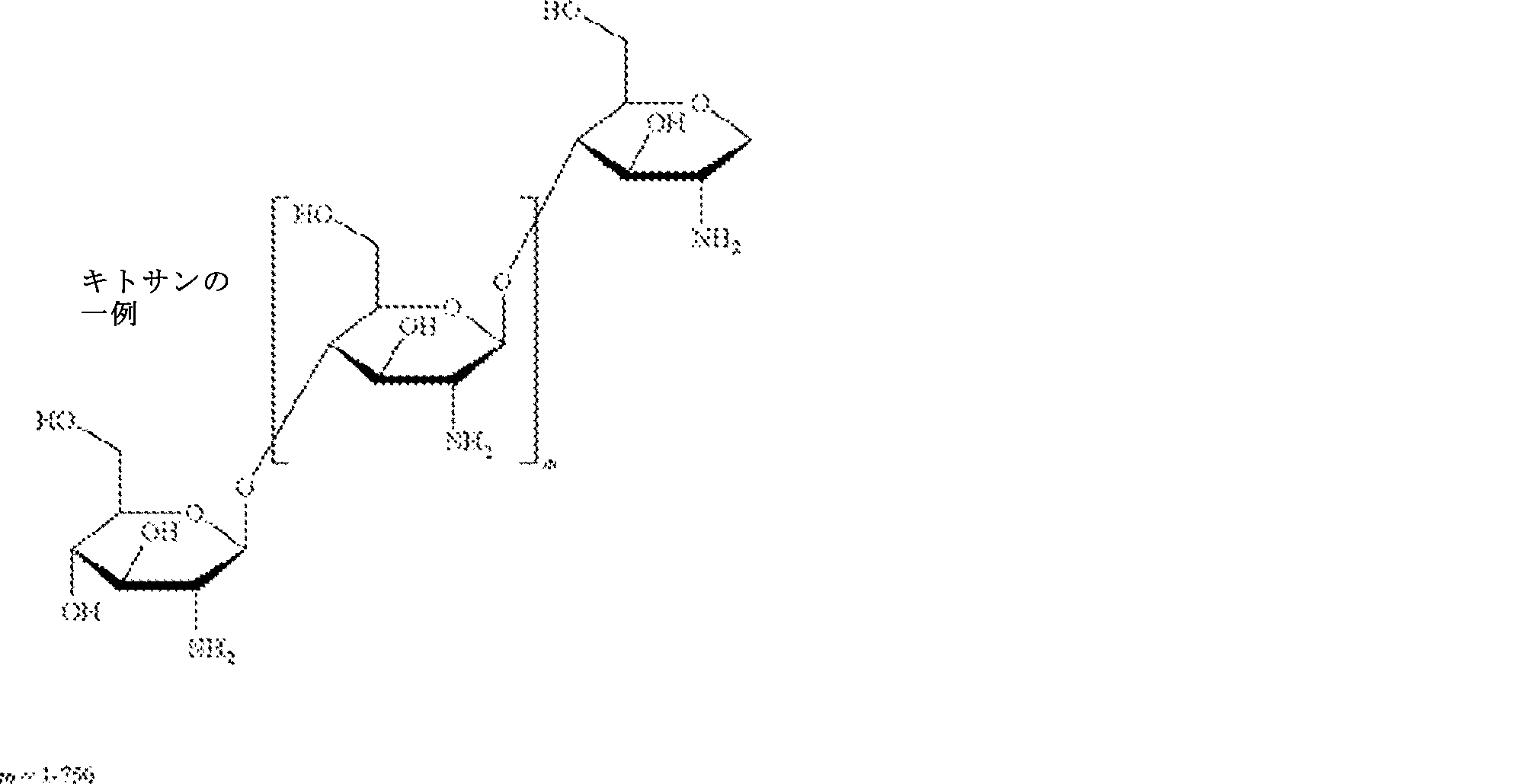
キトサンは、当業者に公知の任意の供給源から得られ得る。例えば、キトサンは市販の供給元から得られ得る。キトサンを、自然界で2番目に豊富な生体高分子であるキチンから得てもよい。キトサンは、キチンのN-脱アセチル化によって調製される。多種多様な分子量(例えば、10~1000 kDa)のキトサンが市販されており、通常、70%~90%の範囲の脱アセチル化度を有する。 Chitosan can be obtained from any source known to those skilled in the art. For example, chitosan can be obtained from commercial sources. Chitosan may be obtained from chitin, the second most abundant biopolymer in nature. Chitosan is prepared by N-deacetylation of chitin. Chitosans are commercially available in a wide variety of molecular weights (eg, 10-1000 kDa) and usually have degrees of deacetylation ranging from 70% to 90%.
使用されるキトサン(またはキトサンの誘導体もしくは塩)は好ましくは、4,000ダルトンまたはそれより大きい、好ましくは25,000~2,000,000ダルトンの範囲、最も好ましくは約50,000~300,000ダルトンの分子量を有する。いろいろな分子量のキトサンはキトサナーゼを用いた高分子量キトサンの酵素分解によって、または亜硝酸の添加によって調製され得る。どちらの手順も当業者に周知であり、種々の刊行物に記載されている(Li et al.,1995;Allan and Peyron,1995;Domard and Cartier,1989)。キトサンは水溶性であり、40%超、好ましくは50%~98%、より好ましくは70%~90%の度合いまでの脱アセチル化によってキチンから作製され得る。 The chitosan (or chitosan derivative or salt) used preferably has a molecular weight of 4,000 daltons or more, preferably in the range of 25,000 to 2,000,000 daltons, most preferably about 50,000 to 300,000 daltons. Chitosans of various molecular weights can be prepared by enzymatic degradation of high molecular weight chitosans with chitosanase or by the addition of nitrous acid. Both procedures are well known to those skilled in the art and have been described in various publications (Li et al., 1995; Allan and Peyron, 1995; Domard and Cartier, 1989). Chitosan is water soluble and can be made from chitin by deacetylation to a degree of greater than 40%, preferably 50% to 98%, more preferably 70% to 90%.
キトサンを作製するいくつかの方法、例えば参照により本明細書に組み入れられる米国特許第4,806,474号および米国特許出願公開第2005/0042735号に教示されている方法は微生物バイオマスからの回収を伴う。米国特許第4,282,351号に教示されている別の方法には、どのようにしてキトサン-ベータ-グルカン複合体を作出するかのみが教示されている。 Some methods of making chitosan involve recovery from microbial biomass, such as those taught in US Pat. No. 4,806,474 and US Patent Application Publication No. 2005/0042735, which are incorporated herein by reference. Another method taught in US Pat. No. 4,282,351 only teaches how to make chitosan-beta-glucan complexes.
本明細書において使用されるキトサン、キトサン誘導体または塩は水溶性である。キトサングルタミン酸系は水溶性である。「水溶性」とは、キトサン、キトサン誘導体または塩が、室温および大気圧で少なくとも10mg/mlの量で水に溶解することを意味する。本明細書において使用されるキトサン、キトサン誘導体または塩は正電荷を有する。 Chitosan, chitosan derivatives or salts used herein are water soluble. The chitosan glutamic acid system is water soluble. By "water soluble" is meant that the chitosan, chitosan derivative or salt dissolves in water at room temperature and atmospheric pressure in an amount of at least 10 mg/ml. Chitosan, chitosan derivatives or salts used herein have a positive charge.
キトサンおよびキトサン誘導体に関する追加の情報は、米国特許出願公開第2007/0167400号、同第2007/0116767号、同第2007/0311468号、同第2006/0277632号、同第2006/0189573号、同第2006/0094666号、同第2005/0245482号、同第2005/0226938号、同第2004/0247632号および同第2003/0129730号において知得され得、これらの各々は参照により本明細書に具体的に組み入れられる。 Additional information regarding chitosan and chitosan derivatives can be found in U.S. Patent Application Publication Nos. 2007/0167400, 2007/0116767, 2007/0311468, 2006/0277632, 2006/0189573, 2006/0094666, 2005/0245482, 2005/0226938, 2004/0247632 and 2003/0129730, each of which is specifically incorporated herein by reference. be incorporated into
好ましい局面において、諸態様のキトサンナノ粒子は、核酸、例えばDNAとの複合体の状態で提供される。 In a preferred aspect, the chitosan nanoparticles of embodiments are provided in a complex with a nucleic acid, such as DNA.
(2)脂質ナノ粒子(LNP)
脂質ベースのナノ粒子としては、リポソーム、脂質調製物および脂質ベースの小胞(例えば、DOTAP:コレステロール小胞)が挙げられる。脂質ベースのナノ粒子は正荷電、負荷電または中性であり得る。特定の態様において、脂質ベースのナノ粒子は荷電が中性である(例えば、DOPCリポソーム)。
(2) Lipid nanoparticles (LNP)
Lipid-based nanoparticles include liposomes, lipid preparations and lipid-based vesicles (eg DOTAP: cholesterol vesicles). Lipid-based nanoparticles can be positively charged, negatively charged or neutral. In certain embodiments, the lipid-based nanoparticles are charge-neutral (eg, DOPC liposomes).
「リポソーム」は、封入型の脂質二重層または凝集体の作製によって形成されるさまざまな単層および多層の脂質ビヒクルを包含する一般用語である。リポソームは、一般的にリン脂質を含む二重層膜を有する小胞構造と、一般的に水性組成物を含む内部媒体とを有することを特徴とし得る。本明細書において提供されるリポソームとしては、単層リポソーム、多層リポソームおよび多胞リポソームが挙げられる。本明細書において提供されるリポソームは正荷電、負荷電または荷電が中性であり得る。特定の態様において、リポソームは電荷中性である。 "Liposome" is a general term that encompasses a variety of unilamellar and multilamellar lipid vehicles formed by the creation of encapsulated lipid bilayers or aggregates. Liposomes can be characterized by having a vesicular structure with a bilayer membrane that generally comprises a phospholipid and an internal medium that generally comprises an aqueous composition. Liposomes provided herein include unilamellar, multilamellar and multivesicular liposomes. The liposomes provided herein can be positively charged, negatively charged or neutral in charge. In certain embodiments, the liposomes are charge neutral.
多層リポソームは、水性媒体によって隔離された複数の脂質層を有する。これは、リン脂質を構成する脂質を過剰の水溶液中に懸濁させると自発的に形成される。脂質成分は、閉構造の形成の前に自己組織化し、水と溶解溶質を脂質二重層間に封じ込める(Ghosh and Bachhawat,1991)。また、親油性分子または親油性領域を有する分子も脂質二重層内に溶解し得るか、あるいは脂質二重層と会合し得る。 Multilamellar liposomes have multiple lipid layers separated by aqueous medium. It forms spontaneously when the lipids that make up the phospholipid are suspended in an excess of aqueous solution. Lipid components self-assemble prior to formation of closed structures, entrapping water and dissolved solutes between lipid bilayers (Ghosh and Bachhawat, 1991). Lipophilic molecules or molecules with lipophilic regions may also dissolve within or associate with lipid bilayers.
特定の局面において、ポリペプチドまたは核酸は、例えば、リポソームの水性内部に封入される、リポソームの脂質二重層内に散在する、リポソームとポリペプチド/核酸の両方と会合している連結分子を介してリポソームに結合される、リポソーム内に封じ込められる、リポソームと複合体形成される、などであり得る。 In certain aspects, the polypeptide or nucleic acid is interspersed within the lipid bilayer of the liposome, e.g., encapsulated within the aqueous interior of the liposome, via a linking molecule associated with both the liposome and the polypeptide/nucleic acid. It can be liposome-bound, entrapped within a liposome, complexed with a liposome, and the like.
本発明の態様で有用であり得る追加のリポソームとしては、例えば、すべて参照によりその全体がいかなる意味においても本明細書に組み入れられるWO02/100435A1、米国特許第5,962,016号、米国特許出願公開第2004/0208921号、WO03/015757A1、WO04029213A2、米国特許第5,030,453号および米国特許第6,680,068号に記載のようなカチオン性リポソームが挙げられる。また、リポソームを作製するプロセスはWO04/002453A1に記載されている。中性脂質がカチオン性リポソーム内に組み込まれ得る(例えば、Farhood et al.,1995)。特定の態様において使用され得る種々の中性リポソームは米国特許第5,855,911号に開示されており、これは参照により本明細書に組み入れられる。このような方法は、それぞれの水性物質封じ込め能力およびそれぞれの水性空間対脂質比が異なる。 Additional liposomes that may be useful in embodiments of the present invention include, for example, WO02/100435A1, US Pat. 0208921, WO03/015757A1, WO04029213A2, US Pat. No. 5,030,453 and US Pat. No. 6,680,068. A process for making liposomes is also described in WO04/002453A1. Neutral lipids can be incorporated into cationic liposomes (eg Farhood et al., 1995). Various neutral liposomes that can be used in certain embodiments are disclosed in US Pat. No. 5,855,911, which is incorporated herein by reference. Such methods differ in their respective aqueous entrapment capacities and their respective aqueous space-to-lipid ratios.
リポソームのサイズは合成方法に応じてさまざまである。本発明の態様におけるリポソームはさまざまなサイズであり得る。特定の態様において、リポソームは小型、例えば外径が約100nm未満、約90nm、約80nm、約70nm、約60nmまたは約50nm未満である。例えば、一般に、核酸の組み込み前、本発明の態様に従う使用のためのDOTAP:コレステロールリポソームは約50~500nmのサイズを含む。また、かかるリポソーム製剤は粒子電荷(ゼータ電位)および/または光学密度(OD)によっても規定され得る。例えば、DOTAP:コレステロールリポソーム製剤は典型的には、核酸の組み込み前、0.45未満のOD400を含む。同様に、溶液状態のかかる粒子の総電荷は約50~80mVのゼータ電位によって規定され得る。 Liposome sizes vary depending on the method of synthesis. Liposomes in embodiments of the invention can be of various sizes. In certain embodiments, the liposomes are small, eg, less than about 100 nm, about 90 nm, about 80 nm, about 70 nm, about 60 nm, or less than about 50 nm in outer diameter. For example, generally prior to nucleic acid incorporation, DOTAP:cholesterol liposomes for use in accordance with embodiments of the present invention comprise a size of about 50-500 nm. Such liposomal formulations may also be defined by particle charge (zeta potential) and/or optical density (OD). For example, DOTAP:cholesterol liposome formulations typically contain an OD 400 of less than 0.45 prior to nucleic acid incorporation. Similarly, the total charge of such particles in solution can be defined by a zeta potential of about 50-80 mV.
かかるリポソームの調製には、本明細書に記載の、または当業者にはわかるであろう任意のプロトコルが使用され得る。リポソームの調製の追加の非限定的な例は、米国特許第4,728,578号、同第4,728,575号、同第4,737,323号、同第4,533,254号、同第4,162,282号、同第4,310,505号および同第4,921,706号;国際特許出願PCT/US85/01161および同PCT/US89/05040;英国特許出願公開第2193095A号;Mayer et al.,1986;Hope et al.,1985;Mayhew et al.1987;Mayhew et al.,1984;Cheng et al.,1987;およびLiposome Technology,1984に記載されており、各々、参照により本明細書に組み入れられる)。 Any protocol described herein or known to those skilled in the art can be used for the preparation of such liposomes. Additional non-limiting examples of preparation of liposomes are disclosed in U.S. Pat. Patent Applications PCT/US85/01161 and PCT/US89/05040; GB2193095A; Mayer et al., 1986; Hope et al., 1985; Mayer et al., 1987; Mayhew et al., 1984; Cheng et al., 1987; and Liposome Technology, 1984, each incorporated herein by reference).
特定の態様において、脂質ベースのナノ粒子は中性リポソーム(例えば、DOPCリポソーム)である。「中性リポソーム」または「無電荷リポソーム」は、本明細書において使用する場合、本質的に中性の正味電荷(実質的に無電荷)をもたらす1種または複数種の脂質成分を有するリポソームと定義する。「本質的に中性」または「本質的に無電荷」とは、所与の集団(例えば、リポソーム集団)内において、別の成分の反対の電荷によって無効になっていない電荷を含む脂質成分が、あったとしてもわずかである(すなわち、無効になっていない電荷を含む成分が10%より少ない、より好ましくは5%より少ない、最も好ましくは1%より少ない)ことを意味する。特定の態様において、中性リポソームは、大部分が生理学的条件下で(すなわち、約pH7で)それ自体、中性である脂質および/またはリン脂質を含み得る。 In certain embodiments, the lipid-based nanoparticles are neutral liposomes (eg, DOPC liposomes). "Neutral liposomes" or "uncharged liposomes," as used herein, refer to liposomes having one or more lipid components that impart an essentially neutral net charge (substantially no charge). Define. "Essentially neutral" or "essentially uncharged" means that, within a given population (e.g., a liposome population), a lipid component that contains a charge that is not overridden by the opposite charge of another component. . In certain embodiments, neutral liposomes may comprise lipids and/or phospholipids that are themselves neutral to a large extent under physiological conditions (ie, at about pH 7).
本発明の態様のリポソームおよび/または脂質ベースのナノ粒子はリン脂質を含み得る。特定の態様では、1種類のリン脂質がリポソームの生成に使用され得る(例えば、中性リン脂質、例えばDOPCが中性リポソームの作製に使用され得る)。他の態様では、1種類より多くのリン脂質がリポソームを生成させるために使用され得る。 Liposomes and/or lipid-based nanoparticles of embodiments of the present invention may comprise phospholipids. In certain embodiments, one type of phospholipid can be used to produce liposomes (eg, a neutral phospholipid such as DOPC can be used to make neutral liposomes). In other embodiments, more than one phospholipid can be used to generate liposomes.
リン脂質としては、例えば、ホスファチジルコリン、ホスファチジルグリセロールおよびホスファチジルエタノールアミンが挙げられる;ホスファチジルエタノールアミンおよびホスファチジルコリンは生理学的条件下で(すなわち、約pH7で)無電荷であるため、このような化合物は中性リポソームの作製に特に有用であり得る。特定の態様では、リン脂質DOPCを用いて無電荷リポソームが作製される。特定の態様では、リン脂質でない脂質(例えば、コレステロール)が使用され得る。 Phospholipids include, for example, phosphatidylcholine, phosphatidylglycerol and phosphatidylethanolamine; such compounds are neutral because phosphatidylethanolamine and phosphatidylcholine are uncharged under physiological conditions (i.e., at about pH 7). It may be particularly useful for making liposomes. In certain embodiments, the phospholipid DOPC is used to create uncharged liposomes. In certain aspects, non-phospholipid lipids (eg, cholesterol) may be used.
リン脂質としてはグリセロリン脂質および特定のスフィンゴ脂質が挙げられる。リン脂質としては、限定するわけではないが、ジオレオイルホスファチジリ(phosphatidyly)コリン(「DOPC」)、卵のホスファチジルコリン(「EPC」)、ジラウリロイル(dilauryloyl)ホスファチジルコリン(「DLPC」)、ジミリストイルホスファチジルコリン(「DMPC」)、ジパルミトイルホスファチジルコリン(「DPPC」)、ジステアロイルホスファチジルコリン(「DSPC」)、1-ミリストイル-2-パルミトイルホスファチジルコリン(「MPPC」)、1-パルミトイル-2-ミリストイルホスファチジルコリン(「PMPC」)、1-パルミトイル-2-ステアロイルホスファチジルコリン(「PSPC」)、1-ステアロイル-2-パルミトイルホスファチジルコリン(「SPPC」)、ジラウリロイルホスファチジルグリセロール(「DLPG」)、ジミリストイルホスファチジルグリセロール(「DMPG」)、ジパルミトイルホスファチジルグリセロール(「DPPG」)、ジステアロイルホスファチジルグリセロール(「DSPG」)、ジステアロイルスフィンゴミエリン(「DSSP」)、ジステアロイルホファチジル(phophatidyl)エタノールアミン(「DSPE」)、ジオレオイルホスファチジルグリセロール(「DOPG」)、ジミリストイルホスファチジン酸(「DMPA」)、ジパルミトイルホスファチジン酸(「DPPA」)、ジミリストイルホスファチジルエタノールアミン(「DMPE」)、ジパルミトイルホスファチジルエタノールアミン(「DPPE」)、ジミリストイルホスファチジルセリン(「DMPS」)、ジパルミトイルホスファチジルセリン(「DPPS」)、脳内ホスファチジルセリン(「BPS」)、脳内スフィンゴミエリン(「BSP」)、ジパルミトイルスフィンゴミエリン(「DPSP」)、ジミリスチル(dimyristyl)ホスファチジルコリン(「DMPC」)、1,2-ジステアロイル-sn-グリセロ-3-ホスホコリン(「DAPC」)、1,2-ジアラキドイル-sn-グリセロ-3-ホスホコリン(「DBPC」)、1,2-ジエイコセノイル-sn-グリセロ-3-ホスホコリン(「DEPC」)、ジオレオイルホスファチジルエタノールアミン(「DOPE」)、パルミトイルオエオイル(oeoyl)ホスファチジルコリン(「POPC」)、パルミトイルオエオイルホスファチジルエタノールアミン(「POPE」)、リゾホスファチジルコリン、リゾホスファチジルエタノールアミンおよびジリノレオイルホスファチジルコリンが挙げられる。 Phospholipids include glycerophospholipids and certain sphingolipids. Phospholipids include, but are not limited to, dioleoyl phosphatidylcholine ("DOPC"), egg phosphatidylcholine ("EPC"), dilauryloyl phosphatidylcholine ("DLPC"), dimyristoyl Phosphatidylcholine (“DMPC”), dipalmitoylphosphatidylcholine (“DPPC”), distearoylphosphatidylcholine (“DSPC”), 1-myristoyl-2-palmitoylphosphatidylcholine (“MPPC”), 1-palmitoyl-2-myristoylphosphatidylcholine (“PMPC”) ), 1-palmitoyl-2-stearoylphosphatidylcholine (“PSPC”), 1-stearoyl-2-palmitoylphosphatidylcholine (“SPPC”), dilauryloylphosphatidylglycerol (“DLPG”), dimyristoylphosphatidylglycerol (“DMPG”) ), dipalmitoylphosphatidylglycerol (“DPPG”), distearoylphosphatidylglycerol (“DSPG”), distearoylsphingomyelin (“DSSP”), distearoylphosphatidyl ethanolamine (“DSPE”), diole Oil phosphatidylglycerol ("DOPG"), dimyristoyl phosphatidic acid ("DMPA"), dipalmitoyl phosphatidic acid ("DPPA"), dimyristoyl phosphatidylethanolamine ("DMPE"), dipalmitoyl phosphatidylethanolamine ("DPPE") , dimyristoyl phosphatidylserine (“DMPS”), dipalmitoyl phosphatidylserine (“DPPS”), brain phosphatidylserine (“BPS”), brain sphingomyelin (“BSP”), dipalmitoyl sphingomyelin (“DPSP”) , dimyristyl phosphatidylcholine (“DMPC”), 1,2-distearoyl-sn-glycero-3-phosphocholine (“DAPC”), 1,2-diarachidoyl-sn-glycero-3-phosphocholine (“DBPC”) , 1,2-dieicosenoyl-sn-glycero-3-phosphocholine ("DEPC"), dioleoyl phosphatidylethanolamine ("DOPE"), palmitoyl oeoyl phosphatidylcholine ("POPC"), palmitoyl oeoyl phosphatidylethanol amines ("POPE"), lysophosphatidylcholine, lysophosphatidylethanolamine and dilinoleoylphosphatidylcholine.
リン脂質は天然供給源由来であってもまたは合成供給源由来であってもよい。しかしながら、天然供給源由来のリン脂質、例えば卵または大豆のホスファチジルコリン、脳内ホスファチジン酸、脳内または植物のホスファチジルイノシトール、心臓カルジオリピンおよび植物または細菌のホスファチジルエタノールアミンは、特定の態様では、得られるリポソームの不安定性および漏出性がもたらされ得るため、主要ホスファチド(すなわち、全ホスファチド組成物の50%またはそれ以上を構成する)として使用されない。 Phospholipids may be from natural or synthetic sources. However, phospholipids derived from natural sources such as egg or soy phosphatidylcholine, brain phosphatidic acid, brain or plant phosphatidylinositol, cardiac cardiolipin and plant or bacterial phosphatidylethanolamine are, in certain embodiments, the resulting liposomes. are not used as the primary phosphatides (ie, constitute 50% or more of the total phosphatides composition) because they can lead to instability and leakiness of .
C. 賦形剤
いくつかの局面において、本開示は、薬学的組成物中に製剤化される1種または複数種の賦形剤を含む。いくつかの態様において、本明細書において使用される賦形剤は水溶性の賦形剤である。このような水溶性の賦形剤としては糖類、例えば二糖類が挙げられる。いくつかの場合において、賦形剤はスクロース、トレハロースまたはラクトース、三糖類、例えばフルクトース、スクロース、グルコース、グラカトース(glacatose)もしくはラフィノース、多糖類、例えばデンプンもしくはセルロースまたは糖アルコール、例えばキシリトール、ソルビトールもしくはマンニトールを含む。いくつかの態様において、このような賦形剤は室温で固形である。糖アルコールのいくつかの非限定的な例としては、エリトリトール、トレイトール、アラビトール、キシリトール、リビトール、マンニトール、ソルビトール、ガラクチトール、フシトール、イジトール、イノシトール、ボレミトール、イソマルト、マルチトール、ラクチトール、マルトトリトール(maltotritol)、マルトテトライトールまたはポリグリシトールが挙げられる。いくつかの局面において、本発明の薬学的組成物には疎水性またはワックス状の賦形剤、例えばワックスおよび油類がさらに除外され得る。疎水性の賦形剤のいくつかの非限定的な例としては、水素添加油および部分水素添加油、ヤシ油、ダイズ油、ヒマシ油、カルナウバワックス、蜜蝋、ヤシ蝋、白蝋、カスターワックスまたはラノリンが挙げられる。さらに、本開示は、1種もしくは複数種のアミノ酸またはそのアミドもしくはエステル誘導体をさらに含み得る。いくつかの態様において、使用されるアミノ酸は、20種の標準的なアミノ酸のうちの1つ、例えばグリシン、アラニン、バリン、イソロイシン、ロイシン、メチオニン、フェニルアラニン、チロシン、トリプトファン、セリン、トレオニン、アスパラギン、グルタミン、システイン、セレノシステイン、プロリン、アルギニン、ヒスチジン、リシン、アスパラギン酸またはグルタミン酸であり得る。このようなアミノ酸はD体配向もしくはL体配向であり得、またはアミノ酸はα-、β-、γ-もしくはδ-アミノ酸であり得る。他の態様では、一般的な非標準的なアミノ酸のうちの1つ、例えばカルニチン、GABA、カルボキシグルタミン酸、レボチロキシン、ヒドロキシプロリン、セレオン(seleon)メチオニン、ベータアラニン、オルニチン、シトルリン、デヒドロアラニン、δ-アミノレブリン酸または2-アミノイソ酪酸が使用され得る。
C. Excipients In some aspects, the disclosure includes one or more excipients formulated into the pharmaceutical composition. In some embodiments, excipients used herein are water-soluble excipients. Such water-soluble excipients include sugars, such as disaccharides. In some cases, the excipient is sucrose, trehalose or lactose, trisaccharides such as fructose, sucrose, glucose, glacatose or raffinose, polysaccharides such as starch or cellulose or sugar alcohols such as xylitol, sorbitol or mannitol. including. In some embodiments, such excipients are solid at room temperature. Some non-limiting examples of sugar alcohols include erythritol, threitol, arabitol, xylitol, ribitol, mannitol, sorbitol, galactitol, fucitol, iditol, inositol, boremititol, isomalt, maltitol, lactitol, maltotritol. (maltotritol), maltotetritol or polyglycitol. In some aspects, the pharmaceutical compositions of the invention may further exclude hydrophobic or waxy excipients, such as waxes and oils. Some non-limiting examples of hydrophobic excipients include hydrogenated and partially hydrogenated oils, coconut oil, soybean oil, castor oil, carnauba wax, beeswax, coconut wax, white wax, castor wax. Or lanolin. Additionally, the disclosure may further include one or more amino acids or amide or ester derivatives thereof. In some embodiments, the amino acid used is one of the twenty standard amino acids such as glycine, alanine, valine, isoleucine, leucine, methionine, phenylalanine, tyrosine, tryptophan, serine, threonine, asparagine, It can be glutamine, cysteine, selenocysteine, proline, arginine, histidine, lysine, aspartic acid or glutamic acid. Such amino acids may be in the D- or L-configuration, or the amino acids may be α-, β-, γ- or δ-amino acids. In other embodiments, one of the common non-standard amino acids such as carnitine, GABA, carboxyglutamic acid, levothyroxine, hydroxyproline, seleon methionine, beta-alanine, ornithine, citrulline, dehydroalanine, delta -aminolevulinic acid or 2-aminoisobutyric acid can be used.
いくつかの局面において、粉末組成物を作製するための前駆体溶液中の賦形剤の量は約0.5%~約20%w/w、約1%~約10%w/w、約2%~約8%w/wまたは約2%~約5%w/wである。前駆体溶液中の賦形剤の量は約0.5%、0.75%、1%、1.25%、1.5%、1.75%、2%、2.5%、3%、3.5%、4%、4.5%、5%、6%、7%、8%、9%から約10%w/wまで、またはその間の導出可能な任意の範囲を含む。一態様において、諸態様の乾燥粉末中の賦形剤の量は薬学的組成物の総重量の約10%~99.5%w/w、例えば約50%~99%、75%~99%または80%~98%である。 In some aspects, the amount of excipient in the precursor solution to make the powder composition is about 0.5% to about 20% w/w, about 1% to about 10% w/w, about 2%. to about 8% w/w or from about 2% to about 5% w/w. The amount of excipients in the precursor solution is about 0.5%, 0.75%, 1%, 1.25%, 1.5%, 1.75%, 2%, 2.5%, 3%, 3.5%, 4%, 4.5%, 5% , 6%, 7%, 8%, 9% to about 10% w/w, or any derivable range therebetween. In one aspect, the amount of excipient in the dry powder of the embodiments is about 10% to 99.5% w/w of the total weight of the pharmaceutical composition, such as about 50% to 99%, 75% to 99% or 80%. % to 98%.
III. 定義
語「1つの(a)」または「1つの(an)」の使用は、特許請求の範囲および/または本明細書において用語「含む(comprising)」とともに使用する場合「1」を意味し得るが、これは、「1または複数(one or more)」、「少なくとも1(at least one)」および「1または1より多く(one or more than one)」という意味と一致する場合もあり得る。本明細書において使用する場合、「別の」は少なくとも2つ目またはそれより多くを意味し得る。
III. DEFINITIONS The use of the term "a" or "an" means "one" when used in the claims and/or herein with the term "comprising" but this can also mean "one or more,""at least one," and "one or more than one." obtain. As used herein, "another" may mean at least a second or more.
本明細書において使用する場合、用語「薬物」、「医薬品」、「治療用薬剤」および「治療活性薬剤」は、ヒトまたは動物において治療効果または薬理学的効果をもたらし、かつ疾患、障害または他の病態を処置するために使用される化合物を表すために互換的に使用される。いくつかの態様において、このような化合物は生き物への投与について規制当局に承認申請(undergo)され、承認を受けている。 As used herein, the terms “drug,” “pharmaceutical,” “therapeutic agent,” and “therapeutically active agent” provide a therapeutic or pharmacological effect in humans or animals and treat diseases, disorders or other are used interchangeably to denote a compound used to treat the condition of In some embodiments, such compounds are undergoing and approved by regulatory agencies for administration to living organisms.
特許請求の範囲における用語「または」の使用は、択一のみを示す、または択一選択肢が相互に排他的であると明白に示していない限り、「および/または」を意味するために使用している。本明細書において使用する場合、「別の」は少なくとも2つ目またはそれより多くを意味し得る。 The use of the term "or" in a claim shall not be used to mean "and/or" unless it indicates only the alternative or the alternatives are mutually exclusive. ing. As used herein, "another" may mean at least a second or more.
本明細書および1つまたは複数の請求項において使用する場合、語「含む(comprising)」(ならびに「含む(comprising)」の任意の形態、例えば「含む(comprise)」および「含む(comprises)」、「有する(having)」(ならびに「有する(having)」の任意の形態、例えば「有する(have)」および「有する(has)」)、「含む(including)」(ならびに「含む(including)」の任意の形態、例えば「含む(includes)」および「含む(include)」または「含む(containing)」(ならびに「含む(containing)」の任意の形態、例えば「含む(contains)」および「含む(contain)」は包括的またはオープンエンドであり、記載されていない追加の要素または方法工程を排除しない。 As used herein and in one or more claims, the word "comprising" (as well as any form of "comprising" such as "comprise" and "comprises") , "having" (and any form of "having", e.g., "have" and "has"), "including" (and "including" e.g. "includes" and "include" or "containing" (as well as any form of "containing" e.g. "contains" and "contains") "contain)" is inclusive or open-ended and does not exclude additional elements or method steps not described.
本明細書において使用する場合、用語「有意な」(ならびに有意な任意の形態、例えば「有意に」)は、2つの値間の統計学的な差を示唆することを意味するのではなく、パラメータの差の重要性または範囲を示唆することを意味しているにすぎない。 As used herein, the term "significant" (as well as any form of significance such as "significantly") is not meant to imply a statistical difference between two values, It is only meant to suggest the importance or extent of parameter differences.
本願の全体を通して、用語「約」は、値が、該値を求めるために使用されるデバイス、方法の誤差の固有変動性または試験対象間もしくは実験的研究間に存在する変動性を含むことを示すために使用している。別の定義が適用可能でない限り、用語「約」は、表示された値の±10%を示す。 Throughout this application, the term "about" is meant to include the inherent variability of errors in the devices, methods used to determine the value, or the variability that exists between test subjects or between experimental studies. used to indicate Unless another definition is applicable, the term "about" refers to ±10% of the stated value.
本明細書において使用する場合、指定された成分に関する用語「実質的に無含有状態の」または「実質的にフリー」は本明細書において、該指定された成分はいずれも目的をもって組成物に製剤化されない、および/または混入物としてしか、あるいは微量でしか存在しないことを意味するために使用している。すべての含有物、副生成物および他の物質は総量で、該組成物中に2%未満の量で存在する。用語「実質的により無含有状態の」または「実質的によりフリー」は、該組成物に含まれている該特定の成分が1%未満であることを表すために使用している。用語「本質的に無含有状態の」または「本質的にフリー」とは、含まれている該特定の成分が0.5%未満である。 As used herein, the term "substantially free" or "substantially free" with respect to a specified ingredient is used herein to mean that any of the specified ingredients are purposefully formulated into a composition. is used to mean that it is not modified and/or is present only as a contaminant or in trace amounts. All ingredients, by-products and other materials are present in the composition in an amount less than 2% in total. The terms "substantially free" or "substantially free" are used to indicate that the composition contains less than 1% of the particular ingredient. The terms "essentially free" or "essentially free" contain less than 0.5% of the particular ingredient.
本明細書において使用する場合、用語「ナノ粒子」は、その慣用的な通常の定義を有し、粒子内の個々の分子としてではなく全体として単位で挙動する個々の粒子群を示す。ナノ粒子は、約1~約10,000nmのサイズを有し得、1nm~100nmのサイズを有する超微細ナノ粒子、100nm~2,500nmのサイズを有する微粒子および2,500nm~10,000nmのサイズを有する粗粒子を有する。いくつかの態様において、本明細書に記載のナノ凝集体は、複数のナノ粒子群の組成物を構成し得、約10nm~約100μmのサイズを有し得る。 As used herein, the term "nanoparticle" has its customary conventional definition and denotes a group of individual particles that behave as a unit as a whole rather than as individual molecules within a particle. Nanoparticles can have a size of about 1 to about 10,000 nm, with ultrafine nanoparticles having a size of 1 nm to 100 nm, fine particles having a size of 100 nm to 2,500 nm and coarse particles having a size of 2,500 nm to 10,000 nm. have In some embodiments, the nanoaggregates described herein can constitute a composition of multiple nanoparticles and can have a size of about 10 nm to about 100 μm.
本発明の広い範囲を示す数値範囲およびパラメータが近似値であるとはいえ、具体的な実施例に示した数値は可能な限り厳密に報告している。しかしながら、数値はいずれも、それぞれの試験測定値およびパラメータにみられる標準偏差から必然的に生じる一定の誤差を内在的に含んでいる。 Notwithstanding that the numerical ranges and parameters setting forth the broad scope of the invention are approximations, the numerical values set forth in the specific examples are reported as precisely as possible. Any numerical value, however, inherently contains certain errors necessarily resulting from the standard deviation found in their respective testing measurements and parameters.
IV. 実施例
本開示のよりよい理解を容易にするために、以下に具体的な態様の実施例を示す。当業者には、以下の実施例に開示した手法は、本発明者が開示の実施において充分に機能することを見出した手法を表し、したがって、その実施のための好ましい態様を構成するとみなされ得ることが認識されよう。しかしながら、当業者には、本開示に鑑みて、開示された具体的な態様において開示の趣旨および範囲から逸脱することなく多くの変更を行なうことができ、それでもなお同様または類似の結果が得られ得ることが認識されるはずである。以下の実施例は、何ら本開示の範囲全体が限定または規定されるように読まれるべきでない。
IV. Examples In order to facilitate a better understanding of the present disclosure, examples of specific embodiments are provided below. To those of ordinary skill in the art, the techniques disclosed in the examples which follow represent techniques found by the inventors to function well in the practice of the disclosure, and thus can be considered to constitute preferred modes for its practice. Let it be recognized. However, one of ordinary skill in the art, in light of the present disclosure, can make many changes in the specific embodiments disclosed without departing from the spirit and scope of the disclosure and still achieve similar or similar results. It should be recognized that you get In no way should the following examples be read to limit or define the entire scope of this disclosure.
実施例1-薄膜凍結技術を用いた吸入可能バクテリオファージ固形製剤
A. 材料および方法
1. 材料
D-(+)-トレハロース二水和物、塩化ナトリウム、硫酸マグネシウム、スクロースおよび溶原性ブロス(LB)培地、LBアガーはThermo Fisher Scientific(Waltham,MA,US)から購入し;ロイシンおよびマンニトールはSpectrum(New Brunswick,NJ,US)から購入し;T7バクテリオファージおよびその宿主細菌BL21株はMillipore Sigma(Burlington,MA,US)から購入し;リン酸緩衝生理食塩水(PBS)、Trizma(登録商標)塩基、Tris-HClはSigma-Aldrich(St.Louis,MO,US)から購入した。
Example 1 - Inhalable Bacteriophage Solid Formulation Using Film Freezing Technology
A. Materials and Methods
1. Materials
D-(+)-trehalose dihydrate, sodium chloride, magnesium sulfate, sucrose and lysogenic broth (LB) medium, LB agar were purchased from Thermo Fisher Scientific (Waltham, MA, US); leucine and mannitol were purchased from Spectrum (New Brunswick, NJ, US); T7 bacteriophage and its host bacterial strain BL21 were purchased from Millipore Sigma (Burlington, MA, US); ) base, Tris-HCl, was purchased from Sigma-Aldrich (St. Louis, MO, US).
2. 方法
T7増幅およびファージ再構成。T7ファージを製造業者のプロトコルに従って増幅した。簡単には、ファージをBL21液状培養物(0.2~0.3のOD600)に感染多重度(MOI)0.001~0.01で添加し、1~3時間、37℃、250 RPMで溶解が観察されるまで増幅した。細菌ライセートを回収し、5M NaCl/LBを用いて清澄化し、10,000rpmでSorvall XFR Centrifuge(Thermo Fisher Scientific,Waltham,MA,US)にて4℃で30分間スピンダウンした。ファージを含む上清みを回収し、ファージ試料を50%PEG 8000溶液とともに4℃で一晩インキュベートすることによってファージをさらに沈殿させた。沈殿したら、ファージを、14,000rpmでスピンダウンすることによってペレット化し、PBSまたはSMバッファーのいずれかに再懸濁させ、1.5mL容マイクロ遠心チューブ内に回収した。ファージをさらに精製するため、再懸濁させたファージで、50%PEG 8000溶液を用いて氷上で少なくとも30分間、沈殿させることにより第2のPEG沈殿工程を行なった。次いで、このライセート-PEG混合物を14,000rpmで30分間、遠心分離し、得られたファージペレットを50~100μLのPBSまたはSMバッファーのいずれかに再懸濁させた。増幅されたファージを標準的な二重層プラークアッセイによって定量し、4℃で保存した。
2. Method
T7 amplification and phage reconstitution. T7 phage was amplified according to the manufacturer's protocol. Briefly, phage were added to BL21 liquid cultures (OD600 of 0.2-0.3) at a multiplicity of infection (MOI) of 0.001-0.01 and amplified for 1-3 hours at 37°C, 250 RPM until lysis was observed. . Bacterial lysates were harvested, cleared with 5M NaCl/LB, and spun down at 10,000 rpm in a Sorvall XFR Centrifuge (Thermo Fisher Scientific, Waltham, MA, US) for 30 minutes at 4°C. The phage-containing supernatant was collected and the phage was further precipitated by incubating the phage sample with a 50
ファージの生存性試験。溶液および粉末試料中の生存能力のあるファージの量を、力価測定すること(すなわち、活性計測(activity counting)アッセイ)によって調べた。TFFD処理ファージ粉末を滅菌水中で再構成して10mg/mlの終濃度にした。凍結工程での生存性試験では、凍結された薄膜を回収し、室温で解凍した後、力価測定した。ファージの溶解性生物活性(lytic bioactivity)を、標準的な二重層プラークアッセイを行なうことによってアッセイした。簡単には、試験用ファージ溶液を10倍段階希釈列で、LB培地を用いて調製した。10マイクロリットルの各希釈液を200μLのBL21菌液(OD600=1.0)および1mLの溶かしたLBトップアガーに添加した。短時間ボルテックスした後、混合物を、5mLの固化された寒天下部を有する事前に加温した6ウェルプレート上にプレーティングした。プレートを37℃でおよそ3~4時間、プラークが計数および定量のために視認可能になるまでインキュベートした。最初の製剤溶液の力価を各試料の力価で割り算することにより、力価低下量を計算した。 Phage viability test. The amount of viable phage in solution and powder samples was determined by titration (ie, activity counting assay). TFFD-treated phage powder was reconstituted in sterile water to a final concentration of 10 mg/ml. For the freezing step viability test, the frozen films were harvested and thawed at room temperature prior to titration. Phage lytic bioactivity was assayed by performing a standard double layer plaque assay. Briefly, test phage solutions were prepared in 10-fold serial dilutions using LB medium. Ten microliters of each dilution was added to 200 μL of BL21 bacterial broth (OD600=1.0) and 1 mL of melted LB top agar. After vortexing briefly, the mixture was plated onto pre-warmed 6-well plates with 5 mL solidified agar bottoms. Plates were incubated at 37° C. for approximately 3-4 hours until plaques were visible for counting and quantification. The titer reduction was calculated by dividing the titer of the original formulation solution by the titer of each sample.
製剤の調製。3種類の二糖類(ラクトース、スクロースおよびトレハロース)、1種類の糖アルコール(マンニトール)ならびに1種類のアミノ酸(ロイシン)を含む、固形ファージ製剤の研究に一般的に使用されるいくつかの賦形剤を選択した。これらの賦形剤を、単独または別のものとの組合せのいずれかで製剤中に組み込み、二元賦形剤マトリックスを形成した。組合せは90:10~50:50の比での糖とマンニトールまたは糖とロイシンであった。製剤溶液は、2.5mg/mL~100mg/mLの溶液濃度に相当する0.25%~10%の範囲の固形分で調製した。固形分は、TFFD前の溶液製剤中のすべての成分の容量に対する重量の濃度を示す。初期力価のファージストック液は1011 PFU/mL~1012 PFU/mLの増殖状態であり、特に記載のない限り、これを100~1000倍希釈で製剤に添加して5×108~109 PFUl/mLの最終力価にした。溶液はPBS(pH7.4)、SMバッファー(pH7.4~7.5)または水で調製した。SMバッファー(ゼラチンなし)は、Cold Spring Harbor Protocolに示された配合に従って調製した。 Preparation of formulations. Several excipients commonly used in solid phage formulation studies, including three disaccharides (lactose, sucrose and trehalose), one sugar alcohol (mannitol) and one amino acid (leucine) selected. These excipients were incorporated into the formulation either alone or in combination with one another to form a binary excipient matrix. Combinations were sugar and mannitol or sugar and leucine in ratios of 90:10 to 50:50. Formulation solutions were prepared with solids contents ranging from 0.25% to 10%, corresponding to solution concentrations of 2.5 mg/mL to 100 mg/mL. Solids content represents the weight to volume concentration of all ingredients in the solution formulation prior to TFFD. Initial titers of phage stocks were grown at 10 11 PFU/mL to 10 12 PFU/mL and were added to formulations at 100- to 1000-fold dilutions to obtain 5 x 10 8 -10 phages unless otherwise stated. A final titer of 9 PFUl/mL was reached. Solutions were prepared in PBS (pH 7.4), SM buffer (pH 7.4-7.5) or water. SM buffer (without gelatin) was prepared according to the formulation given in the Cold Spring Harbor Protocol.
TFFDによるファージ粉末の製造。水性ファージ溶液を標準的な5mLまたは10mL容シリンジに通した。液滴を、液体窒素への浸漬によって事前に冷却した完全(absolute)平底ステンレス鋼容器の上部10 cmの高さから落下させた。ステンレス鋼による熱伝導率の結果、容器の底の表面の得られた平衡表面温度は溶液の氷点より下になり、-100℃より冷たいほどの低温まで下げることができた。この実験では、作業温度を、液体窒素中での容器の高さを調整することによって制御した。温度は、特に記載のない限り-65~-75℃以内に制御した。実験前および実験中、容器の底の表面温度は、ワイヤで底面上に取り付けた熱電対で確認した。ステンレス鋼容器の底の表面に触れたら、液滴は薄膜に変形し、即座に凍結された。凍結された薄膜を表面からステンレス鋼ブレードによって手作業で剥がした。次いで、凍結された薄膜が入った容器に液体窒素を充填した。膜と液体窒素を20mL容凍結乾燥用バイアル内に注入し、次いで、これを2枚重ねのキムワイプで被覆し、真空乾燥中、粒子がバイアルから出て行かないようにした。最後に、バイアルを直接、-80℃のフリーザーに移して過剰の液体窒素を蒸発させ、凍結乾燥機内に入れるまで保持した。
Production of phage powder by TFFD. Aqueous phage solutions were passed through
Virtis Advantage Lyophilizer(The Virtis Company,Inc.,Gardiner,NY)を使用し、凍結されたスラリーを乾燥させた。一次乾燥を-40℃で2000分間、100mTorrにて、二次乾燥を25℃で1250分間、100mTorrにて行なった。この2つの乾燥工程間に、-40℃から+25℃までの棚板温度の12時間の線形ランプ制御を100mTorrで使用した。サイクルを行なった後、容器にしっかりキャップし、次いで、凍結乾燥機から取り出した直後に真空チャンバ内に保存した。 A Virtis Advantage Lyophilizer (The Virtis Company, Inc., Gardiner, NY) was used to dry the frozen slurry. Primary drying was at −40° C. for 2000 minutes at 100 mTorr and secondary drying was at 25° C. for 1250 minutes at 100 mTorr. A 12 hour linear ramp control of the shelf temperature from -40°C to +25°C at 100 mTorr was used between the two drying steps. After cycling, the containers were tightly capped and then stored in a vacuum chamber immediately after removal from the lyophilizer.
幾何学的粒子径の測定。TFFD処理ファージ粉末のGPSDを、RODOS分散機を備えたSympatec HELOSレーザー回折装置(Sympatec GmbH,Germany)を用いて解析した。3バールでの粉末分散後、10ms毎に測定値を得た。5%~25%の光学密度である測定値を、次いで平均し、粒子径分布を求めた。体積基準の粒子径を、それぞれ10、50および90パーセンタイル(例えば、Dv10/50/90)ならびに1~5μmのサイズ範囲に含まれる粒子のパーセンテージで報告した。スパンは以下の式:スパン=(Dv90-Dv10)/Dv50を用いて計算した。 Measurement of geometric particle size. The GPSD of TFFD-treated phage powder was analyzed using a Sympatec HELOS laser diffractometer (Sympatec GmbH, Germany) equipped with a RODOS disperser. Measurements were taken every 10 ms after powder dispersion at 3 bar. The measurements, which ranged from 5% to 25% optical density, were then averaged to determine the particle size distribution. Volume-based particle sizes were reported as the 10th, 50th and 90th percentiles (eg, Dv10/50/90), respectively, and the percentage of particles falling within the 1-5 μm size range. Span was calculated using the following formula: Span = (Dv90-Dv10)/Dv50.
走査型電子顕微鏡(SEM)による画像。TFFD処理ファージ粉末の形態構造を、Zeiss Supra 40VP SEM(Carl Zeiss Microscopy GmbH,Jena,Germany)で解析した。試料をアルミニウムSEMスタブ上に、カーボン導電性テープを用いてマウントし、Cressingtonスパッターコーター208 HR(Cressington Scientific Instruments Ltd.,Watford,UK)を用いて15nmの白金/パラジウム(Pt/Pd)でコーティングした。 Images by scanning electron microscopy (SEM). The morphology of TFFD-treated phage powders was analyzed with a Zeiss Supra 40VP SEM (Carl Zeiss Microscopy GmbH, Jena, Germany). Samples were mounted on aluminum SEM stubs using carbon conductive tape and coated with 15 nm platinum/palladium (Pt/Pd) using a Cressington sputter coater 208 HR (Cressington Scientific Instruments Ltd., Watford, UK). .
X線回折(XRD)パターン。TFFD処理ファージ粉末の結晶化度を、X線回折計(MiniFlex 600,Rigaku Co.,Japan)を用いて周囲条件下で検出した。粉末をガラススライド上に広げ、15mAおよび40 kVのCu Kα線に曝露した。散乱強度を検出器により5から50°までの範囲の2θで、それぞれ0.025°のステップサイズおよび2°/分の速度で収集した。
X-ray diffraction (XRD) pattern. The crystallinity of the TFFD-treated phage powder was detected under ambient conditions using an X-ray diffractometer (
熱重量分析(TGA)。熱重量分析を、Mettler Thermogravimetric Analyzer(Mettler Toledo,Columbus,OH,US)を用いて実施した。1~3mgのサイズの試料を70μl容アルミナパン内にロードし、パンに、通気孔を有する蓋で緩くキャップした。試料を35℃から400℃まで10℃/分の速度で加熱した。この系に窒素を50 L/分の流速でパージした。初期質量と比べた質量変化パーセンテージを計算し、温度に対してプロットした。120℃における重量減少パーセントを使用し、粉末中の水分含有量を求めた。 Thermogravimetric analysis (TGA). Thermogravimetric analysis was performed using a Mettler Thermogravimetric Analyzer (Mettler Toledo, Columbus, OH, US). A 1-3 mg size sample was loaded into a 70 μl alumina pan and the pan was loosely capped with a vented lid. The sample was heated from 35°C to 400°C at a rate of 10°C/min. The system was purged with nitrogen at a flow rate of 50 L/min. The percentage change in mass compared to the initial mass was calculated and plotted against temperature. The percent weight loss at 120°C was used to determine the moisture content in the powder.
透過型電子顕微鏡(TEM)による画像。選択された試料粉末を、滅菌水を用いて再構成し、1010 PFU/mLの濃度にした。5μL容量の試験溶液をカーボンコート銅グリッド(CFT300-CU,Electron Microscopy Science,Hatfield,PA,USA)の表面上に静かに滴下し、液体残渣を濾紙によって毛管作用により吸い取った。次いでグリッドを、ファージの可視化を改善するために5μlの2%酢酸ウラニルネガティブ染色液(pH=4.3)で染色した。ファージを、AMT Advantage HR 1k×1kデジタルカメラ(Advanced Microscopy Techniques,MA,US)を備えたFEI Tecnai TEM(FEI Tecnai,OR,US)を用いて80 kVでイメージングした。 Image by transmission electron microscope (TEM). Selected sample powders were reconstituted with sterile water to a concentration of 10 10 PFU/mL. A 5 μL volume of the test solution was gently dropped onto the surface of a carbon-coated copper grid (CFT300-CU, Electron Microscopy Science, Hatfield, PA, USA) and the liquid residue was blotted by capillary action with filter paper. Grids were then stained with 5 μl of 2% uranyl acetate negative stain (pH=4.3) to improve visualization of phage. Phages were imaged at 80 kV using a FEI Tecnai TEM (FEI Tecnai, OR, US) equipped with an AMT Advantage HR 1k x 1k digital camera (Advanced Microscopy Techniques, MA, US).
賦形剤スクリーニング
この試験では、ラクトース、トレハロースおよびスクロースの3種類の糖をマンニトールまたはロイシンとともに/なしで、異なる比で製剤化した。この試験の製剤は-70±5℃で処理し、固形分を1%(w/v)にした。
Excipient Screening In this study, three sugars, lactose, trehalose and sucrose, were formulated in different ratios with/without mannitol or leucine. The formulations for this study were processed at -70±5° C. and brought to 1% (w/v) solids.
図1の力価低下量の結果は、概して、スクロース含有製剤はラクトースおよびトレハロースより良好にファージの溶解活性を保持したことを示す。また、糖単独ではファージを充分に保護することができず、ファージの安定性に対して有害な効果を有する。ほとんどのマンニトール含有製剤で完全な力価低下が起こった。マンニトールがファージにとって決定因子であることは明白であった。マンニトールのファージに対するマイナスの影響は凍結乾燥M13ファージ研究で以前に報告され、この場合、力価低下量はマンニトール-トレハロース二元系におけるマンニトール比の増大に伴って増加することが観察された。すべての製剤のうち、スクロース:ロイシンが80:20のものは、力価低下量が1.47(log,PFU)であり、ファージの生存性を保持するのに最良の製剤であることがわかった。 The titer reduction results in Figure 1 indicate that, in general, sucrose-containing formulations retained phage lytic activity better than lactose and trehalose. Also, sugars alone may not adequately protect phage and have detrimental effects on phage stability. Complete titer reduction occurred with most mannitol-containing formulations. It was clear that mannitol was determinant for phage. The negative effect of mannitol on phage was previously reported in a lyophilized M13 phage study, where the amount of titer reduction was observed to increase with increasing mannitol ratio in the mannitol-trehalose binary. Of all the formulations, 80:20 sucrose:leucine was found to be the best formulation to preserve phage viability with a titer reduction of 1.47 (log, PFU).
GPSDのパターンに対する賦形剤の効果は有意であった(図2)。賦形剤マトリックス中のロイシン比の増大に伴い、粒子径および1~5μm粒子のパーセンタイルはそれぞれ、低減および増大することがはっきり実証された。興味深いことに、この傾向はラクトース群およびトレハロース群で、スクロース群より明白であった。驚くべきことに、マンニトールを添加するとラクトース-マンニトール試料の粒子径が大きくなった。スクロース:ロイシンが80:20のDv50は6.94±0.38μmであった。 The effect of vehicle on the pattern of GPSD was significant (Figure 2). It was clearly demonstrated that the particle size and percentile of 1-5 μm particles decreased and increased, respectively, with increasing leucine ratio in the excipient matrix. Interestingly, this trend was more pronounced in the lactose and trehalose groups than in the sucrose group. Surprisingly, the addition of mannitol increased the particle size of the lactose-mannitol sample. The Dv50 at 80:20 sucrose:leucine was 6.94±0.38 μm.
固形分スクリーニング。製剤中における固形分レベルが種々である複数の賦形剤マトリックスを製剤化した。この試験の製剤は-70±5℃で処理した。力価低下量に対する固形分の影響はパターンを有しないが、製剤中の固形分が多いと力価低下量は上昇するという傾向が若干観察された(図3)。ほとんどの賦形剤マトリックスで、固形分が0.25%である場合、凍結乾燥後に粉末が崩壊したことは言及するに値する。したがって、固形分は製剤中において0.5%超でなければならない。 Solids screening. Multiple excipient matrices were formulated with varying solids levels in the formulation. The formulations in this study were processed at -70±5°C. There was no pattern in the effect of solids content on the amount of titer reduction, but a slight trend was observed in which the amount of titer reduction increased with higher solids content in the formulation (Figure 3). It is worth mentioning that for most excipient matrices, at 0.25% solids, the powder disintegrated after lyophilization. Therefore, the solids content should be above 0.5% in the formulation.
図4は、製剤中の固形分の増大に伴う粒子径分布の変化を示す。一般に、粒子径と固形分は負の相関を有する、すなわち、固形分が少ないほどより小さい粒子径となる。しかしながら、試験した製剤群、例えばラクトース群では、固形分が10%ではなく0.5%の場合に粒子径が最大となるという例外がみられた。 Figure 4 shows the change in particle size distribution with increasing solids content in the formulation. In general, particle size and solids content have a negative correlation, ie, less solids results in smaller particle size. However, there was an exception in the formulation groups tested, such as the lactose group, where the particle size was maximized at 0.5% solids instead of 10%.
プロセス温度スクリーニング。製剤中における固形分レベルが種々である複数の賦形剤マトリックスを製剤化した。この試験の製剤は-70±5℃で処理し、固形分を1%(w/v)にした。スクロース:ロイシンが70:30および80:3の賦形剤マトリックスがファージ活性の保持に最も有効であることがわかったため、これらをファージ粉末の力価および粒子径に対する凍結温度の効果を探索するためのモデル製剤として使用した。方法のセクションに記載のように、ステンレス鋼容器の表面の温度は、容器と接触する液体窒素の液面を調整することによって変化させた。温度は-40±5℃、-70±5℃、-100±5℃および-120±5℃に制御した。 Process temperature screening. Multiple excipient matrices were formulated with varying solids levels in the formulation. The formulations for this study were processed at -70±5° C. and brought to 1% (w/v) solids. Since 70:30 and 80:3 sucrose:leucine excipient matrices were found to be most effective in retaining phage activity, we used these to explore the effect of freezing temperature on phage powder titer and particle size. was used as a model formulation for As described in the Methods section, the temperature of the surface of the stainless steel vessel was varied by adjusting the level of liquid nitrogen in contact with the vessel. The temperature was controlled at -40±5°C, -70±5°C, -100±5°C and -120±5°C.
図5に示す力価低下量の変化によって示されるように、冷たさはファージの生存性にマイナスの影響を有し、温度が低いほど力価低下量が大きくなることを意味する。だが、最高力価と最低力価の差が0.5未満(log,PFU)であったため、温度の効果は限定的である。また、この傾向および影響度は製剤が異なると異なり得る。 Coldness has a negative effect on phage viability, as shown by the change in titer reduction shown in Figure 5, meaning that the lower the temperature, the greater the titer reduction. However, the effect of temperature is limited as the difference between the highest and lowest titers was less than 0.5 (log, PFU). Also, this trend and impact may be different for different formulations.
粉末の粒子径分布に対する処理温度の効果は不規則であった(図6参照)。これは、形成される温度が異なるとディスク(薄膜)の寸法(サイズおよび厚さ)も異なったという事実が原因かもしれない。温度を下げると、ディスクはより厚く、より円形になる。温度を-125℃より低くした場合、滴下した液体は液滴形状を形成し、ステンレス表面周囲に飛び散ることが観察された。また、プロセス温度を-40℃より高くした場合、ディスクは表面上に強固に付着した。このような観察結果は、ステンレス鋼の表面温度が特定の温度より低い場合、気体の層が形成されるライデンフロスト効果によってもたらされたという仮説をたてる。気体の層の影響の度合いは、容器の表面と製剤液滴の温度差に大きく依存する。その結果は、ディスクの寸法が他の要素、例えば製剤の組成と交絡する場合、製剤マトリックスが異なると表面張力も異なるため、より複雑になった。 The effect of treatment temperature on the particle size distribution of the powder was random (see Figure 6). This may be due to the fact that the disk (thin film) dimensions (size and thickness) were different at different formation temperatures. As the temperature is lowered, the disc becomes thicker and more circular. When the temperature was lower than -125°C, it was observed that the dropped liquid formed a droplet shape and spattered around the stainless steel surface. Also, when the process temperature was increased above -40°C, the disc adhered strongly to the surface. We hypothesize that such observations are caused by the Leidenfrost effect, in which a gas layer forms when the surface temperature of stainless steel is below a certain temperature. The degree of influence of the gas layer is highly dependent on the temperature difference between the surface of the container and the formulation droplet. The results were more complicated when the disc dimensions were confounded with other factors, such as formulation composition, because different formulation matrices had different surface tensions.
製剤の初期力価。製剤中のファージの初期力価の影響を、PBS中に保存した5×10¹¹ PFU/mL(5E11とも表示する)の初期力価のファージストック液を希釈することによって検討した。固形分は0.5%(w/v)であり、賦形剤はスクロース:ロイシンが80:20の製剤であった。TFFDを-70±5℃で実施した。 Initial titer of formulation. The effect of initial titer of phage in the formulation was investigated by diluting an initial titer of phage stock of 5×10 11 PFU/mL (also denoted as 5E11) stored in PBS. The solids content was 0.5% (w/v) and the excipient was an 80:20 sucrose:leucine formulation. TFFD was performed at -70±5°C.
図7に示されるように、5×10¹⁰ PFU/mL、5×108 PFU/mLおよび5×107 PFU/mL(5E10、5E8および5E7とも表示する)での力価低下量は同様のレベルで、およそ1.50~1.55(log,PFU)であったが、その他の初期力価レベルは、それぞれ2.02(5×109 PFU/mLの製剤で)および2.07(5×106 PFU/mLの製剤で)低下した。 As shown in Figure 7, titer reductions at 5 x 10¹⁰ PFU/mL, 5 x 10⁸ PFU/mL and 5 x 10⁷ PFU/mL (also labeled 5E10, 5E8 and 5E7) were similar. levels were approximately 1.50 to 1.55 (log, PFU), while other initial titer levels were 2.02 (at 5 x 10 9 PFU/mL formulation) and 2.07 (at 5 x 10 6 PFU/mL formulation), respectively. formulation) decreased.
粒子径は製剤中のファージの量によって有意に影響された。ファージ粉末のDv50は、初期力価を5E10 PFU/mLから5E07 PFU/mLに下げた場合、増大した。5E10 PFU/mLと5E09 PFU/mL間での粒子径の劇的な変化は、おそらく、ストック液由来の残留塩分子の存在のためであった。ストック液は、プロセス中の製剤の結晶化挙動に充分に影響力を有し得る5E10 PFU/mLの製剤では10倍のみに希釈した。Dv50は2.61±0.07μmに減少し、1~5μm粒子のパーセンタイルは67.2±2.42%に改善されたことが見出されたことは有望である(図8)。 Particle size was significantly affected by the amount of phage in the formulation. The Dv50 of phage powder increased when the initial titer was lowered from 5E10 PFU/mL to 5E07 PFU/mL. The dramatic change in particle size between 5E10 PFU/mL and 5E09 PFU/mL was probably due to the presence of residual salt molecules from the stock solution. The stock solution was diluted only 10-fold with a formulation of 5E10 PFU/mL which could sufficiently influence the crystallization behavior of the formulation during processing. Encouragingly, it was found that the Dv50 decreased to 2.61±0.07 μm and the percentile for 1-5 μm particles improved to 67.2±2.42% (FIG. 8).
異なる二元賦形剤マトリックスに対するバッファー系の影響。バッファー系中の塩分子は、粒子径および場合によってはファージの生存性に影響を及ぼす可能性があるという先の知見に基づいて、この影響を検討するための試験を実施した。どちらもファージを保存するために常套的に使用されることから、PBSおよびSMバッファー(ゼラチンなし)を選択した。製剤の固形分を0.5%(w/v)にし、TFFを-70±5℃で実施した。 Effect of buffer system on different binary excipient matrices. Based on previous findings that salt molecules in buffer systems can affect particle size and possibly phage viability, studies were performed to investigate this effect. PBS and SM buffer (without gelatin) were chosen as both are routinely used to store phage. The solids content of the formulation was 0.5% (w/v) and the TFF was performed at -70±5°C.
図9に、バッファー系の存在がファージ力価に対して有意な保持効果を有することがはっきり実証されている。さらに、影響のレベルは、試験した2つのバッファー系間で異なっていた。一般的に、SMバッファー試料の方がPBSバッファー試料よりファージの生存性の低下が少なかった。賦形剤マトリックスのうち、トレハロース:ロイシンが90:10のものは、最大の力価低下量(バッファーなし試料、4.97±0.14logの力価低下量)および最小の力価低下量(SMバッファー試料、0.19±0.21logの力価低下量)の両方を有する。 Figure 9 clearly demonstrates that the presence of a buffer system has a significant retention effect on phage titer. Furthermore, the level of effect differed between the two buffer systems tested. In general, SM buffer samples resulted in less loss of phage viability than PBS buffer samples. Of the excipient matrices, 90:10 trehalose:leucine produced the largest titer reduction (4.97 ± 0.14 log titer reduction in samples without buffer) and the lowest titer reduction (SM buffer sample , 0.19±0.21 log titer reduction).
PBS含有粉末のDv50は一般的に、各賦形剤マトリックス群においてバッファーなしおよびSMバッファーの対応物のものより小さかった。対照的に、SMバッファー試料の測定結果は有意に高かった(図10)。これはおそらく、SM粉末が、周囲雰囲気に特定の時間量、曝露されると非常に粘着性になったという事実のためである。同様の現象が、いくつかのバッファーなし試料でも観察されたが、PBS試料では全く起こらなかった。この粘着性は、粉末の高い吸湿性により生じたのかもしれない。試験時の現地湿度は75%であった(weather.comによるデータ)。 The Dv50 of the PBS-containing powders was generally lower than that of the no-buffer and SM-buffered counterparts in each excipient matrix group. In contrast, the measured results for SM buffer samples were significantly higher (Fig. 10). This is probably due to the fact that the SM powder became very sticky after being exposed to the ambient atmosphere for a certain amount of time. A similar phenomenon was observed with some no-buffer samples, but none with the PBS samples. This stickiness may have been caused by the powder's high hygroscopicity. The local humidity at the time of testing was 75% (data from weather.com).
図9および図10の結果に基づいて、2つの製剤群、トレハロース:ロイシンが90:10のものおよびスクロース:ロイシンが75:25のものを、さらなる試験で検討するために選択した。ファージの生存性は良好に保持されたが、スクロース:ロイシンが90:10のものおよびラクトース:ロイシンが90:10/75:25のものは、この2つの群でのSMバッファー試料の粒子径が、粘着性の結果、高すぎるか、または測定不能のいずれかであったため選択しなかった。 Based on the results in Figures 9 and 10, two formulation groups, 90:10 trehalose:leucine and 75:25 sucrose:leucine, were selected for further study. Although phage viability was well preserved, 90:10 sucrose:leucine and 90:10/75:25 lactose:leucine were associated with smaller particle sizes in SM buffer samples in these two groups. , was not selected because the tackiness results were either too high or not measurable.
異なるプロセス工程での力価低下。TFFDは、ファージの生存性を損なう可能性がある2つの工程:凍結および乾燥を伴う。各工程での活性低下の程度を知るため、それぞれ凍結後および乾燥後の力価を調べた。図11に示されるように、バッファー系を組み込むことにより、賦形剤の組成に関係なく凍結工程および乾燥工程の両方で力価低下が低減された。ファージは、凍結工程でのPBSバッファー系中で最も多く残存した。ほとんどの力価低下はPBSバッファー試料およびバッファーなし試料の乾燥工程で起こった。対照的に、その他の賦形剤がトレハロース:ロイシンが90:10である場合、SMバッファー試料の乾燥工程では力価低下がみられなかった。 Titer reduction at different process steps. TFFD involves two steps that can compromise phage viability: freezing and drying. In order to know the degree of activity reduction in each step, the titer after freezing and after drying was examined. As shown in Figure 11, the incorporation of a buffer system reduced titer loss during both the freezing and drying steps regardless of excipient composition. Phages survived most in the PBS buffer system during the freezing step. Most of the titer loss occurred during the drying step for PBS buffered and no buffered samples. In contrast, when the other excipient was 90:10 trehalose:leucine, no titer loss was observed during the drying step of the SM buffer samples.
バッファー系は、その凍結プロセス中でのpH安定化能のため、固形製品に常套的に含められる。しかしながら、これは、この場合、ファージが一般的にpHに対して非感受性であり、pHシフトが急速凍結プロセスでは限定的であり得るため、保護機構ではないかもしれない。したがって、保護は、ファージカプシドタンパク質と塩分子との間の分子レベルでの相互作用の結果なのかもしれない。乾燥工程でのバッファー系の保護効果は間接的であり得る。塩分子の存在によって凍結薄膜内の結晶形状が変化し、これによって最終的に異なる乾燥挙動に至った。 Buffer systems are routinely included in solid products due to their ability to stabilize pH during the freezing process. However, this may not be a protective mechanism in this case, as phage are generally insensitive to pH and pH shifts may be limited in the quick-freezing process. Therefore, protection may be the result of interactions at the molecular level between phage capsid proteins and salt molecules. The protective effect of buffer systems on the drying process can be indirect. The presence of salt molecules changed the crystal shape in the frozen film, which ultimately led to different drying behavior.
幾何学的粒子径分布。幾何学的粒子径は、レーザー回折法を用いて測定した(表1のデータ)。粒子は一般的に、スクロース:ロイシンが75:25の群の方がトレハロース:ロイシンが90:10の群より小さかった。これは、スクロース:ロイシンが75:25の製剤系の方が、ロイシンが15%多いことに起因し得る。バッファー系の添加によって一般的にファージ粉末の粒子径は小さくなった。どちらのPBS含有試料も3μmより小さいDv50を有し、50%超の粒子が1~5μmのサイズ範囲に分類された。しかしながら、この粉末のスパンは、高いDv90のため8より大きかった。対照的に、SM試料でのスパンはすべての試料のうちで最も小さかった。粒子径はトレハロース:ロイシンが90:10のSMバッファー製剤で大きかった。これは、90%のトレハロースによる粉末中への水分吸収の結果かもしれない。 Geometric particle size distribution. Geometric particle size was measured using a laser diffraction method (data in Table 1). Particles were generally smaller in the 75:25 sucrose:leucine group than in the 90:10 trehalose:leucine group. This could be attributed to 15% more leucine in the 75:25 sucrose:leucine formulation system. Addition of the buffer system generally reduced the particle size of the phage powder. Both PBS-containing samples had a Dv50 of less than 3 μm, with over 50% of the particles falling into the 1-5 μm size range. However, the span of this powder was greater than 8 due to its high Dv90. In contrast, the span in the SM sample was the smallest of all samples. The particle size was larger in the 90:10 trehalose:leucine SM buffer formulation. This may be the result of water absorption into the powder by the 90% trehalose.
(表1)薄膜凍結乾燥ファージ粉末の幾何学的粒子径分布

結晶化度。TFFDファージ粉末の物理的状態を、XRDを用いて評価した(図12)。NaClの特性ピークは、すべてのバッファー含有製剤において、27.8°、32°および45.5°の2θに観察された。NaCl特性ピークに加えて、SMバッファー試料もまた、いくつかの比較的小さいピークを、10.9°、15.7°および21.8°~23.7°、26°、27.5°、39.3°~43°の2θに有する。これらは、バッファー中のその他の成分であるTrisおよびMgSO4による寄与の可能性がある。ロイシンの特性ピークである7°、19.2°および24.6°の2θにおけるピークは、ロイシンが15%多い結果、スクロース:ロイシンが75:25の試料の方が、トレハロース:ロイシンが90:10の試料と比べてよりはっきりしていた。スクロースおよびトレハロースの特性ピークは観察されず、これらがTFFDプロセス後、非晶質になったことを示した。2つのバッファーなし粉末は、ブロードな「ハロー」ピークによって示されるように、非晶質であることが示された。 Crystallinity. The physical state of the TFFD phage powder was evaluated using XRD (Figure 12). Characteristic peaks for NaCl were observed at 27.8°, 32° and 45.5° 2θ in all buffer-containing formulations. In addition to the characteristic NaCl peaks, the SM buffer sample also has several smaller peaks at 10.9°, 15.7° and 21.8°-23.7°, 26°, 27.5°, 39.3°-43° 2θ. These may be contributed by other components in the buffer, Tris and MgSO4 . The characteristic peaks for leucine at 7°, 19.2° and 24.6° 2-theta were 15% more leucine, resulting in 75:25 sucrose:leucine compared to 90:10 trehalose:leucine. It was clearer than that. No characteristic peaks for sucrose and trehalose were observed, indicating that they became amorphous after the TFFD process. The two unbuffered powders were shown to be amorphous as indicated by the broad "halo" peaks.
粉末の形態構造。TFFDファージ粉末の表面の形態構造を、SEMを用いて解析した(図13)。粉末は一般的に高度に多孔質であり、ナノ構造の凝集体の網状組織がすべての試料で観察された。PBS含有試料のサイズ分布は、GPSD測定値における高いスパンによって示されるように、均一性が低かった。SM試料粉末は、その他の群と最も異なっているようであった。その粒子は分枝様構造を示し、細く見える。低倍率の図では、粒子は長い突起を有するようであり、互いに連結していた。SM粉末の表面は網状組織様構造ではなく、より滑らかであり、表面上に小さい「隆起」を有していた。粉末の多孔度は潜在的に該粉末の流動性を改善することができ、該粉末は、肺への分散および衝突時に容易にナノ凝集体に分解される傾向になる。 Morphological structure of the powder. The surface morphology of the TFFD phage powder was analyzed using SEM (Fig. 13). The powders were generally highly porous and a network of nanostructured aggregates was observed in all samples. The size distribution of the PBS-containing samples was less uniform, as indicated by the higher spans in the GPSD measurements. The SM sample powder appeared to be the most different from the other groups. The particles show a branch-like structure and appear thin. At low magnification, the particles appeared to have long protrusions and were connected to each other. The surface of SM powder was smoother and had small 'bumps' on the surface rather than a network-like structure. The porosity of the powder can potentially improve the flowability of the powder, making it prone to break up into nano-agglomerates readily upon dispersion and impaction into the lungs.
ファージの形態構造。T7ファージの形態構造は既に充分に特性評価されている。基本的に、このファージは、ロングテールファイバーが結合している比較的短いテールを有する20面体(20個の面)のタンパク質カプシドで構成されている(図14の絵に示されるとおり。 Phage morphology. The morphology of T7 phage has already been well characterized. Basically, the phage consists of an icosahedral (20-sided) protein capsid with a relatively short tail bound by long-tail fibers (as shown in the picture in Figure 14).
水分含有量および熱分析。TGAを使用してTFFDファージ粉末の熱安定性プロフィールを図示し(図15)、粉末の水分含有量を求めた(図16)。水分含有量は、120℃における重量減少量を確認することにより求めた。現在使用されている方法(10℃/分の速度で35℃から400℃までのランプ制御)の信頼度を、同じ試料を、等温加熱法(10℃/分の速度で35℃から120℃までのランプ制御の後、120℃で10分間保持)で試験することによって確認した。どちらの方法の結果でも有意差は示されなかった(データ非表示)。水分含有量は一般的に、おそらく結晶性塩の存在の結果、バッファー含有試料の方が少なかった。PBS試料に含まれる水分は最小限であり、スクロース:ロイシンが75:25である一例のSM試料で湿分が高かった。 Moisture content and thermal analysis. TGA was used to illustrate the thermal stability profile of the TFFD phage powder (Figure 15) and to determine the water content of the powder (Figure 16). The moisture content was determined by confirming the weight loss at 120°C. The reliability of the currently used method (ramp control from 35°C to 400°C at a rate of 10°C/min) was compared with the same sample using an isothermal heating method (from 35°C to 120°C at a rate of 10°C/min). (120°C for 10 minutes after ramp control). Results from either method showed no significant difference (data not shown). Moisture content was generally lower in buffer-containing samples, possibly as a result of the presence of crystalline salts. The PBS samples contained minimal moisture and one SM sample with 75:25 sucrose:leucine had high moisture content.
結論。生物活性な吸入可能ファージ粉末を作製するためのTFFD技術の使用の実現可能性が実証された。最適な製剤化により、TFFDによって微粉化粒子を最小限の力価低下で成功裡に得ることができることが証明された。バッファー系の組み込みによってファージ安定性の保持ならびに粒子径のより望ましい範囲への低減が補助されることが実証された。 Conclusion. The feasibility of using TFFD technology to make bioactive inhalable phage powders has been demonstrated. It has been demonstrated that with optimal formulation, TFFD can successfully yield micronized particles with minimal titer loss. Incorporation of a buffer system was demonstrated to aid in maintaining phage stability as well as reducing particle size to a more desirable range.
TFFDは、SD、SFDおよびASFDにおけるノズルの振動によるファージに対する応力が排除されることを考えると、現在開発されている粒子エンジニアリング法の望ましい代替法であり、SDプロセスにおける熱応力が回避された。したがって、薄膜凍結技術を用いたバクテリオファージの吸入可能乾燥粉末の開発は価値のあるストラテジーである。 TFFD is a desirable alternative to currently developed particle engineering methods given that stresses on phage due to nozzle vibration in SD, SFD and ASFD are eliminated, and thermal stresses in the SD process were avoided. Therefore, developing inhalable dry powders of bacteriophages using thin film freezing technology is a worthwhile strategy.
実施例2-mRNAのエアロゾル化経肺送達のための実験設計による脂質ナノ粒子の開発
A. 材料および方法
1. 材料
DLin-MC3-DMAはBiofine International Inc.,Vancouver,BCから購入した。1,2-ジパルミトイル-sn-グリセロ-3-ホスホコリン(DPPC)、1,2-ジミリストイル-rac-グリセロ-3-メトキシポリエチレングリコール-2000(DMG-PEG-2000)、1,2-ジステアロイル-sn-グリセロ-3-ホスホコリン(DSPC)、1,2-ジステアロイル-sn-グリセロ-3-ホスホエタノールアミン-N-[アミノ(ポリエチレングリコール)2000(DSPE-PEG 2000)および(デルタ 9 シス)/1,2-ジオレオイル-sn-グリセロ-3-ホスホエタノールアミン(DOPE)はAvanti Polar Lipids,AL,USAから購入した。N-(メチルポリオキシエチレンオキシカルボニル)-1,2-ジミリストイル-sn-グリセロ-3-ホスホエイタノールアミン(ehtanolamine)(DMPE-PEG 2000)は日油株式会社,東京,日本から購入した。コレステロールはSigma Aldrich,MOから購入した。エタノール(分子生物学用グレード)はDecon Laboratories,Inc.,PAから購入した。CleanCap(登録商標)蛍光強化型緑色蛍光タンパク質(EGFP)mRNAおよびCleanCap(登録商標)ホタルルシフェラーゼ(FLuc)mRNAはTriLink,San Diego,CA,USAから購入した。Slide-A-Lyzer(商標)ガンマ線照射済み透析カセット(10kDa)、Quanit-iT(商標)RiboGreen(登録商標)RNA試薬およびキット(Invitrogen)ならびにOpti-MEM(商標)低血清培地(Gibco)はThermoFisher Scientific Inc.,Waltham,MA,USAから購入した。ダルベッコ改変イーグル培地(DMEM)、ウシ胎児血清(FBS)およびペニシリン/ストレプトマイシン(100×)はCorning,Manassas,VA,USAから購入した。Balb/cマウスはCharles River Laboratories,Inc,Wilmington,MA,USAから購入した。
Example 2 - Development of Lipid Nanoparticles by Experimental Design for Aerosolized Pulmonary Delivery of mRNA
A. Materials and Methods
1. Materials
DLin-MC3-DMA was purchased from Biofine International Inc., Vancouver, BC. 1,2-dipalmitoyl-sn-glycero-3-phosphocholine (DPPC), 1,2-dimyristoyl-rac-glycero-3-methoxypolyethylene glycol-2000 (DMG-PEG-2000), 1,2-distearoyl -sn-glycero-3-phosphocholine (DSPC), 1,2-distearoyl-sn-glycero-3-phosphoethanolamine-N-[amino(polyethylene glycol) 2000 (DSPE-PEG 2000) and (
2. 方法
LNP製剤の調製。EGFP mRNAまたはFLuc mRNAを含む脂質ナノ粒子を、水相(100mMの酢酸ナトリウム クエン酸バッファー,pH3.0中に希釈したmRNA)と、エタノールおよび各製剤(表2)に従う脂質を含む有機相とを、マイクロ流体ミキサー(Precision Nanosystems,Canada;Leung et al.,2015)を用いて合わせることにより調製した。調製後、LNP製剤を1×PBS(pH7.4)中に2時間、10K MWCO Slide-A-Lyzer透析カセット(Thermo Fisher Scientific,MA)にて透析した。
2. Method
Preparation of LNP formulations. Lipid nanoparticles containing EGFP mRNA or FLuc mRNA were mixed in an aqueous phase (mRNA diluted in 100 mM sodium acetate citrate buffer, pH 3.0) and an organic phase containing ethanol and lipids according to each formulation (Table 2). , were prepared by combining using a microfluidic mixer (Precision Nanosystems, Canada; Leung et al., 2015). After preparation, LNP formulations were dialyzed in 1×PBS (pH 7.4) for 2 hours with a 10K MWCO Slide-A-Lyzer dialysis cassette (Thermo Fisher Scientific, MA).
サイズおよびゼータ電位の測定。LNP製剤のサイズおよびゼータ電位を、Zetasizer Nano-ZS(Malvern Instruments MA)を使用することによって特性評価した。各製剤は、サイズ測定では0.1×PBSバッファー中に10倍希釈し、ゼータ電位の測定では0.1×PBS中に40倍希釈した。動的光散乱を希釈試料に対して25℃で173°を用いて行ない、報告したz-平均直径は3つの測定値の平均である。 Measurement of size and zeta potential. The size and zeta potential of LNP formulations were characterized by using a Zetasizer Nano-ZS (Malvern Instruments MA). Each formulation was diluted 10-fold in 0.1×PBS buffer for size measurements and 40-fold in 0.1×PBS for zeta potential measurements. Dynamic light scattering was performed on diluted samples at 25° C. using 173° and the reported z-average diameter is the average of three measurements.
mRNA封入効率。mRNA封入効率を、ローレンジQuanti-iT RiboGreen RNA試薬アッセイ(Thermo Fisher Scientific,MA)によって評価した。各LNP試料をTEバッファー中に0.2ng/μLのmRNA濃度まで希釈した。各LNP希釈標準溶液のアリコートを、96ウェルプレート内で、TEバッファー中1:1(未封入mRNAの測定)または4%のTriton-X100を含むTEバッファー中1:1(全mRNA-LNP内に封入されたmRNAと未封入の遊離mRNAの両方の測定)にさらに希釈した。試料は二連で調製し、100μLの2000倍希釈Quanti-iT(商標)RiboGreen RNA試薬を各試料に添加し、蛍光強度をプレートリーダーにより、それぞれ480nmおよび520nmの励起波長および発光波長で測定した(Infinite M200,Tecan,Switzerland)。 mRNA encapsulation efficiency. mRNA encapsulation efficiency was assessed by the Low Range Quanti-iT RiboGreen RNA reagent assay (Thermo Fisher Scientific, MA). Each LNP sample was diluted in TE buffer to an mRNA concentration of 0.2 ng/μL. Aliquots of each LNP working solution were added in 96-well plates 1:1 in TE buffer (measurement of unencapsulated mRNA) or 1:1 in TE buffer containing 4% Triton-X100 (total mRNA-LNP measurement of both encapsulated and unencapsulated free mRNA). Samples were prepared in duplicate, 100 μL of 2000-fold diluted Quanti-iT™ RiboGreen RNA reagent was added to each sample, and fluorescence intensity was measured by a plate reader at excitation and emission wavelengths of 480 nm and 520 nm, respectively ( Infinite M200, Tecan, Switzerland).
TNSアッセイ。2.5~11の範囲のpH(pH 2.5、pH3、pH3.5、pH4、pH4.6、pH5、pH5.5、pH5.8、pH6、pH6.5、pH7、pH7.5、pH8、pH8.5、pH9、pH9.5、pH10、pH10.5、pH11)を有する一連のバッファーを、10mM HEPES、10mM MES、10mM酢酸アンモニウム、130mM NaClからなるバッファー溶液のpHを1N HClで調整することによって調製した。また、90μLの各バッファー溶液を96ウェルプレートに添加した。2μLのTNSストック液(DMSO中300μM)を、この96ウェルプレート内の異なるpHのバッファー溶液に添加した。次いで、3μLのLNP溶液(mRNAを用いて調製)を上記の混合物に添加した。蛍光強度を325nmの励起波長および435nmの発光波長で測定した。蛍光強度をpH値に対してプロットし、3パラメータロジスティック方程式(GraphPad Prism v.6,GraphPad Software)を用いてフィットさせた。最大蛍光の半分に達するpH値をLNP製剤のpKaとみなした。
TNS assay. pH range from 2.5 to 11 (pH 2.5, pH3, pH3.5, pH4, pH4.6, pH5, pH5.5, pH5.8, pH6, pH6.5, pH7, pH7.5, pH8, pH8.5 ,
LNP製剤のエアロゾル化。振動型メッシュ式ネブライザは剪断感受性製剤、例えばリポソームおよびニオソームをエアロゾル化するために使用することができ、したがってエアジェット式および超音波式ネブライザの良好な代替品となることが示されている(Wagner et al.,2006;Elhissi et al.,2013)。LNP製剤を、振動型メッシュ式ネブライザであるAerogen Solo(Aerogen Ltd,Galway Ireland)に添加し、続いてエアロゾルを、事前に冷却したチューブ内での凝縮によって捕集した。 Aerosolization of LNP formulations. Vibrating mesh nebulizers can be used to aerosolize shear-sensitive formulations such as liposomes and niosomes, and have therefore been shown to be a good alternative to air-jet and ultrasonic nebulizers (Wagner et al. et al., 2006; Elhissi et al., 2013). The LNP formulation was added to the Aerogen Solo (Aerogen Ltd, Galway Ireland), a vibrating mesh nebulizer, and the aerosol was subsequently collected by condensation in a pre-chilled tube.
細胞培養。HEK-293細胞を、10%FBSおよび1%のペニシリン ストレプトマイシンを含むダルベッコ改変イーグル培地を用いて培養した。NuLi-1細胞(ATCC CRL-4013)を、60μg/mLのヒト胎盤のIV型コラーゲン(Sigma Aldrich,MO)の溶液でプレコートされたフラスコ内で培養し、LonzaのSingleQuot添加因子(BEGM Bullet Kit,照会CC-3170)および50μg/mL G-418が補給された気管支上皮細胞増殖用培地(BEGM)中で増殖させた。細胞株はすべて、単層培養物として37℃および5%CO2で維持した。 cell culture. HEK-293 cells were cultured using Dulbecco's modified Eagle's medium containing 10% FBS and 1% penicillin streptomycin. NuLi-1 cells (ATCC CRL-4013) were cultured in precoated flasks with a solution of 60 μg/mL human placental collagen IV (Sigma Aldrich, MO) and added with Lonza's SingleQuot supplement (BEGM Bullet Kit, Reference CC-3170) and bronchial epithelial cell growth medium (BEGM) supplemented with 50 μg/mL G-418. All cell lines were maintained at 37°C and 5% CO2 as monolayer cultures.
インビトロ細胞内取込み。細胞を96ウェルプレート内に12,500個の細胞/ウェルの細胞密度で播種し、37℃および5%CO2で24時間増殖させた。次いで、10ngのEGFP mRNA/μLの濃度の10μLのLNPを、0.2mLの細胞培養培地中の細胞に24時間添加した。その後、細胞培養培地を除去し、細胞を1×PBSで洗浄した。細胞を剥離するため、100μLの0.25%トリプシン-EDTA溶液を各ウェルに添加し、37℃で8~10分間インキュベートした。次に、100μLの1%FBS含有ダルベッコリン酸緩衝生理食塩水を添加し、細胞を125×gで5~10分間スピンし、上清みを廃棄した。細胞を0.25μLのヨウ化プロピジウム(PI)(1mg/mL)を有する50μLの1×PBSの溶液中に再懸濁させた。GFP発現細胞パーセント(すなわち、トランスフェクション効率)および蛍光強度をフローサイトメトリーによって解析した。
In vitro cellular uptake. Cells were seeded in 96-well plates at a cell density of 12,500 cells/well and grown for 24 hours at 37°C and 5% CO2 . 10 μL of LNP at a concentration of 10 ng EGFP mRNA/μL was then added to the cells in 0.2 mL of cell culture medium for 24 hours. Cell culture medium was then removed and cells were washed with 1×PBS. To detach cells, 100 μL of 0.25% trypsin-EDTA solution was added to each well and incubated at 37° C. for 8-10 minutes. Next, 100 μL of Dulbecco's Phosphate Buffered Saline with 1% FBS was added, the cells were spun at 125×g for 5-10 minutes, and the supernatant was discarded. Cells were resuspended in a solution of 50
インビボトランスフェクション。動物プロトコルはすべて、テキサス大学オースティン校の動物実験委員会によって承認された。Balb/cマウス(雌、6~8週齢)を2%イソフルランの連続フロー下で麻酔し、PBS中1.5μgのFLuc mRNA/μLを含むおよそ50μLのLNPを気管内投与した。6時間後、マウスにD-ルシフェリン溶液(30mg/ml)を150mgルシフェリン/kg体重に達するまで腹腔内(i.p.)注射した。15分間後、マウスを致死させ、肺を注意深く収集し、In Vivo Imaging System(IVIS)により、生体発光設定および60秒の露光時間を用いてイメージングした。発光の定量(放射輝度[p/秒/cm2/sr]で)を、Living Image 4.3ソフトウェア(PerkinElmer)を用いて行なった。 In vivo transfection. All animal protocols were approved by the Animal Care and Use Committee of the University of Texas at Austin. Balb/c mice (female, 6-8 weeks old) were anesthetized under continuous flow of 2% isoflurane and intratracheally administered with approximately 50 μL LNP containing 1.5 μg FLuc mRNA/μL in PBS. Six hours later, mice were injected intraperitoneally (ip) with D-luciferin solution (30 mg/ml) until reaching 150 mg luciferin/kg body weight. Fifteen minutes later, mice were sacrificed and lungs were carefully collected and imaged with the In Vivo Imaging System (IVIS) using bioluminescence settings and an exposure time of 60 seconds. Quantification of luminescence (in radiance [p/sec/cm 2 /sr]) was performed using Living Image 4.3 software (PerkinElmer).
統計解析。統計解析はJMP 13を用いて行なった。データの値は平均±標準偏差(SD)として表示する。必要な場合は、一元配置分散分析(一元配置ANOVA)またはスチューデントのt検定を行なった。*p値≦0.05、**p値≦0.01、***p値≦0.001および****p値≦0.0001を統計学的に有意とみなした。 Statistical analysis. Statistical analysis was performed using JMP 13. Data values are presented as mean ± standard deviation (SD). One-way analysis of variance (one-way ANOVA) or Student's t-test was performed when required. * p-value ≤ 0.05, ** p-value ≤ 0.01, *** p-value ≤ 0.001 and *** p-value ≤ 0.0001 were considered statistically significant.
B. 結果および考察
1. 結果
LNP製剤の有効性に対するN/P比の効果。細胞内取込みに対するN/P比の効果を検討するため、EGFP mRNAを封入している6つのLNP製剤を、N/P比を6~200で変化させることによって調製した。LNP製剤は、DLin-MC3-DMA、ホスファチジルコリン(1,2-ジステアロイル-sn-グリセロ-3-ホスホコリン、DSPC)、コレステロールおよびPEG-脂質(ポリエチレングリコール-ジミリストール(myristol)グリセロール、PEG-DMG)がそれぞれ50:10:38.5:1.5の単一のモル比で構成した(Jayaraman et al.,2012に既報のとおり)。異なるN/P比(N/P=6、15、30、50、100および200)は、mRNA(10ng/μl)に添加する脂質組成物の相対量を変えることによって得た。LNPを調製し、各製剤の細胞内取込みをHEK-293細胞において、フローサイトメトリーにより評価した。図17に示されるように、N/P比=15を有するLNP製剤で、最も高いGFP発現パーセントと最も高い平均蛍光強度の両方が示された。細胞内取込みは、N/P比が15から200に増大するにつれて減少した。以下の実験でN/P比=15を維持し、この特定の製剤を後続の実験では「参照製剤」として使用する。
B. Results and Discussion
1. Results
Effect of N/P ratio on efficacy of LNP formulations. To investigate the effect of N/P ratio on cellular uptake, six LNP formulations encapsulating EGFP mRNA were prepared by varying the N/P ratio from 6-200. The LNP formulation contains DLin-MC3-DMA, phosphatidylcholine (1,2-distearoyl-sn-glycero-3-phosphocholine, DSPC), cholesterol and PEG-lipids (polyethylene glycol-myristol glycerol, PEG-DMG). They consisted of a single molar ratio of 50:10:38.5:1.5, respectively (as previously reported in Jayaraman et al., 2012). Different N/P ratios (N/P=6, 15, 30, 50, 100 and 200) were obtained by varying the relative amount of lipid composition added to the mRNA (10 ng/μl). LNPs were prepared and cellular uptake of each formulation was assessed in HEK-293 cells by flow cytometry. As shown in Figure 17, the LNP formulation with N/P ratio = 15 exhibited both the highest percent GFP expression and the highest mean fluorescence intensity. Cellular uptake decreased as the N/P ratio increased from 15 to 200. A N/P ratio of 15 is maintained in the following experiments and this particular formulation is used as the "reference formulation" in subsequent experiments.
DOE:制約を伴う混合実験設計。LNPは一般的に4種類の脂質成分:イオン化脂質、リン脂質、PEG-脂質およびコレステロールからなる。脂質の型および量の違いはLNP製剤のトランスフェクション有効性に影響を及ぼし得る(Kauffman et al.,2015)。各LNP製剤の有効性に対する製剤組成の効果を検討するためのいくつかの試験では、一度に1因子のみ変更する(one-factor-at-a-time)設計が使用されている(Belliveau et al.,2012;Akinc et al.,2009)。しかしながら、このアプローチでは組成物パラメータ間の二次相互作用の可能性が考慮されておらず、これにより、LNP製剤の最適化にはあまり望ましくないものとなっている。あるいはまた、一部実施要因計画が、mRNA送達のためのLNP製剤の効力を最大限にするために使用されている(Kauffman et al.,2015)。この方法では二次効果が検討されるが、すべての変数を設計に含めることができるわけではないという事実が大きな制限となっている。LNP製剤の効力に対する変数の効果を体系的に検討するため、本試験では制約を伴う混合設計を使用した(表2)。JMPソフトウェアを使用し、試験用の18種類のLNP製剤の設計を作製した(表3)。 DOE: Mixed Experimental Design with Constraints. LNPs generally consist of four lipid components: ionized lipids, phospholipids, PEG-lipids and cholesterol. Differences in lipid type and amount can affect the transfection efficacy of LNP preparations (Kauffman et al., 2015). Several studies to examine the effect of formulation composition on the efficacy of each LNP formulation used a one-factor-at-a-time design (Belliveau et al. (2012; Akinc et al., 2009). However, this approach does not consider the possibility of secondary interactions between composition parameters, which makes it less desirable for optimization of LNP formulations. Alternatively, fractional factorial designs have been used to maximize the efficacy of LNP formulations for mRNA delivery (Kauffman et al., 2015). Although this method considers second-order effects, the major limitation is the fact that not all variables can be included in the design. To systematically examine the effects of variables on the efficacy of LNP formulations, the study used a mixed design with constraints (Table 2). JMP software was used to generate designs for 18 LNP formulations for testing (Table 3).
(表2)実験設計スペースの限界値

(表3)LNP製剤の組成

mRNA-LNPの特性評価。制約を伴う混合設計に基づいて、N/P比=15を有する18種類の製剤を、NanoAssemblr(登録商標)ベンチトップシステムを用いて調製した。LNPのサイズおよびゼータ電位をDLSによって評価した。図18Aに示されるように、霧化前のLNP製剤の粒子径は35.7±1.1nm(F14)から120.9±3.4nm(F8)までさまざまであり、一方、ゼータ電位は-12.2±5.5mV(F3)~18.8±1.2mV(F13)の範囲であった(図18B)。さらに、LNP製剤のサイズおよびゼータ電位は、すべての製剤のサイズおよび表面電荷が少なくとも2週間安定なままであることが示された4℃で14日間の保存後、有意な変化は示されなかった(図18Aおよび18B)。製剤の封入効率をRiboGreenアッセイによって評価した。49%の封入効率を示したF12以外、ほとんどの製剤が80%超の高い封入効率を有した(図18C)。LNPのpKaは、エンドソームからの脱出に極めて重要であり得、遺伝子治療のインビボ有効性の相関因子として関与していることが以前に報告されている(Jayaraman et al.,2012)。したがって、EGFP mRNAが負荷されたLNPのpKa製剤を、TNSアッセイを用いて測定し、pKaは5.74(F15)~6.11(F14)の範囲であった(図18D)。 Characterization of mRNA-LNPs. Based on a constrained mixture design, 18 formulations with N/P ratio=15 were prepared using the NanoAssemblr® benchtop system. The size and zeta potential of LNPs were evaluated by DLS. As shown in Figure 18A, the particle size of the LNP formulation before atomization varied from 35.7 ± 1.1 nm (F14) to 120.9 ± 3.4 nm (F8), while the zeta potential was -12.2 ± 5.5 mV (F3 ) to 18.8±1.2 mV (F13) (FIG. 18B). Furthermore, the size and zeta potential of the LNP formulations showed no significant changes after 14 days of storage at 4°C, which indicated that the size and surface charge of all formulations remained stable for at least 2 weeks. (Figures 18A and 18B). The encapsulation efficiency of the formulations was assessed by RiboGreen assay. Most formulations had high encapsulation efficiencies above 80%, except for F12, which showed an encapsulation efficiency of 49% (Figure 18C). The pKa of LNPs may be crucial for endosomal escape and has been previously reported to be implicated as a correlate of in vivo efficacy of gene therapy (Jayaraman et al., 2012). Therefore, pKa preparations of LNPs loaded with EGFP mRNA were measured using the TNS assay and pKa ranged from 5.74 (F15) to 6.11 (F14) (Fig. 18D).
LNP製剤を臨床使用のために変換するためには、これは、有意な不安定性を伴うことなく経肺送達のためにエアロゾル化できなければならない。その目的のため、LNP製剤に対する霧化の効果を検討し、霧化後も高いインビトロ細胞内取込みを保持している製剤を特定した。LNP製剤をAerogen Soloネブライザによってエアロゾル化し、霧化された各製剤の効力をヒト胎児腎HEK-293細胞株およびヒト気管支上皮細胞NuLi-1細胞株において評価した。霧化後、LNP製剤のサイズは100.9nm(F12)~1480.7nm(F7)の範囲であり、霧化前のLNP製剤と比べて有意な増大が示されたが、ゼータ電位は、すべての製剤で有意な変化は示されなかった(図19A~19C)。霧化するとF8が最も小さいサイズ変化を有し、霧化後、F7が最も大きいサイズ変化を示したことは注記に値する。霧化後、LNP製剤の封入効率は有意に低下し、これは、霧化プロセス時にmRNAがLNPから漏出する可能性があることを示した。霧化されたLNP製剤の封入効率は15.5%(F12)~79.9%(F17)の範囲であった。 In order for a LNP formulation to be converted for clinical use, it must be aerosolizable for pulmonary delivery without significant instability. To that end, we investigated the effect of nebulization on LNP formulations and identified formulations that retained high in vitro cellular uptake after nebulization. The LNP formulations were aerosolized by the Aerogen Solo nebulizer and the efficacy of each nebulized formulation was evaluated in human embryonic kidney HEK-293 and human bronchial epithelial NuLi-1 cell lines. After nebulization, the size of the LNP formulations ranged from 100.9 nm (F12) to 1480.7 nm (F7), showing a significant increase compared to the LNP formulations before nebulization, but the zeta potential was No significant changes were shown in the (FIGS. 19A-19C). It is worth noting that F8 had the smallest size change upon atomization and F7 showed the largest size change after atomization. After nebulization, the encapsulation efficiency of the LNP formulation decreased significantly, indicating that mRNA might leak out of the LNP during the nebulization process. The encapsulation efficiency of nebulized LNP formulations ranged from 15.5% (F12) to 79.9% (F17).
HEK-293細胞およびNuLi-1細胞内へのLNP製剤の細胞内取込み。霧化前および霧化後のLNP mRNA製剤の細胞内取込みを、フローサイトメトリーを用いて、HEK-293細胞およびNuLi-1細胞株におけるGFP発現パーセントおよび蛍光強度を測定することによって評価した。0日目(すなわち、製剤の調製と同日のインキュベーション)、各mRNA封入製剤の細胞内取込みをHEK-293細胞において測定し、参照製剤(DLin-MC3-DMA:DSPC:コレステロール:PEG-DMG=50:10:38.5:1.5、N/P=15)より高度のトランスフェクションを示す製剤を特定した。F5、F12およびF13以外、ほとんどの製剤が50%超のGFP発現を示すことがわかった。注目すべきことに、ほとんどの製剤は比較的高いGFP発現パーセントを有していたが、蛍光強度に置き換えた細胞内取込みは製剤間で異なっていた。18種類の製剤のうちの8種類(F2、F3、F4、F6、F8、F11、F15およびF17)は、0日目にHEK-293細胞において6708 a.u.の平均蛍光強度を示した参照製剤と比べて有意に高い蛍光強度を示した。これらの8種類の製剤のGFP発現パーセントは95%を超えるという高いものであり、参照製剤と比べた場合、有意差は示されなかった。次に、LNPの安定性(すなわち、未成熟mRNAの漏出がない)を、0、5、12および16日間の冷蔵保存後の細胞内取込みを定量することによって試験した。図20Aに示されるように、8種類の製剤(F2、F3、F6、F8、F10、F11、F15およびF17)は、4℃で16日間の保存後、GFP発現パーセントの観点から安定なままであった。対照的に、すべての製剤の蛍光強度は、4℃で5日間の保存後、有意に低下した(図20B)。具体的には、F2、F3、F6、F8、F11、F15およびF17で、16日間の保存後、参照製剤より有意に高い18,000 a.u.超の蛍光強度が示された。 Intracellular uptake of LNP formulations into HEK-293 and NuLi-1 cells. Cellular uptake of LNP mRNA formulations before and after nebulization was assessed by measuring percent GFP expression and fluorescence intensity in HEK-293 and NuLi-1 cell lines using flow cytometry. On day 0 (i.e., incubation on the same day as formulation preparation), cellular uptake of each mRNA-encapsulated formulation was measured in HEK-293 cells and the reference formulation (DLin-MC3-DMA:DSPC:cholesterol:PEG-DMG=50 :10:38.5:1.5, N/P=15) identified formulations showing a higher degree of transfection. Most formulations were found to exhibit greater than 50% GFP expression, except F5, F12 and F13. Of note, although most formulations had relatively high percent GFP expression, cellular uptake in terms of fluorescence intensity varied between formulations. Eight of the 18 formulations (F2, F3, F4, F6, F8, F11, F15 and F17) showed a mean fluorescence intensity of 6708 a.u. showed significantly higher fluorescence intensity. The percent GFP expression of these 8 formulations was as high as over 95% and showed no significant difference when compared to the reference formulation. LNP stability (ie, no leakage of immature mRNA) was then tested by quantifying cellular uptake after 0, 5, 12 and 16 days of refrigerated storage. As shown in Figure 20A, eight formulations (F2, F3, F6, F8, F10, F11, F15 and F17) remained stable in terms of percent GFP expression after storage at 4°C for 16 days. there were. In contrast, the fluorescence intensity of all formulations decreased significantly after 5 days of storage at 4°C (Figure 20B). Specifically, F2, F3, F6, F8, F11, F15 and F17 exhibited fluorescence intensities greater than 18,000 a.u. significantly higher than the reference formulation after 16 days of storage.
霧化されると、すべてのLNP製剤が、HEK-293細胞およびNuLi-1細胞の両方において、霧化前のLNP製剤と比べて有意な蛍光強度の低下を示した。この知見は、エアロゾル化プロセスによってmRNAのインビトロトランスフェクションがマイナスの影響を受けたことを示す。F2、F3、F8、F11およびF17は、GFP発現パーセントの観点から霧化後、霧化前のLNPと比べて有意な変化を示さないことがわかった(図21Aおよび21C)。すべてのLNP製剤で蛍光強度の有意な低下が観察されたにもかかわらず、前述の5つの製剤は、霧化しても比較的高い蛍光強度(3000 a.u.超)が維持された(図21Bおよび21D)。NuLi-1細胞において、F2、F8、F11およびF17は、霧化するとGFP発現パーセントおよび蛍光強度の低下を示したが、これらの4つの製剤は依然として、他の製剤と比べて比較的高いGFP発現(50%超)および蛍光強度(1000 a.u.超)を示した。要約すると、16日間の保存および霧化後に比較的高い細胞内取込みを有する4つの製剤(F2、F8、F11およびF17)を特定した。 When nebulized, all LNP formulations showed a significant decrease in fluorescence intensity compared to the LNP formulations before nebulization in both HEK-293 and NuLi-1 cells. This finding indicates that the in vitro transfection of mRNA was negatively affected by the aerosolization process. F2, F3, F8, F11 and F17 were found to show no significant change in terms of percent GFP expression post-atomization compared to pre-atomization LNPs (FIGS. 21A and 21C). Although a significant decrease in fluorescence intensity was observed for all LNP formulations, the aforementioned five formulations maintained relatively high fluorescence intensity (greater than 3000 a.u.) upon nebulization (Figures 21B and 21D). ). In NuLi-1 cells, F2, F8, F11 and F17 showed a decrease in percent GFP expression and fluorescence intensity upon nebulization, but these four formulations still showed relatively high GFP expression compared to the other formulations. (>50%) and fluorescence intensity (>1000 a.u.). In summary, we identified four formulations (F2, F8, F11 and F17) with relatively high intracellular uptake after 16 days of storage and nebulization.
マウスへのLNP製剤の気管内送達。インビトロ細胞内取込みに基づいて、4つのリード製剤(F2、F8、F11およびF18)をインビボでのさらなる試験用に選択した。具体的には、ホタルルシフェラーゼ(Luc)mRNAをこれらのLNP製剤内に負荷し、Aerogen Soloネブライザによって霧化した。捕集された霧化分散体を、マウスの肺への気管内注入投与を用いて霧化前対照と比較し、インビボトランスフェクションおよび生体内分布を検討した。投与から6時間後、ルシフェラーゼ活性は、この4つのリード製剤で、霧化プロセスに関係なく他の器官と比べて肺内で主に検出された(図22)。興味深いことに、霧化前のLNP製剤または霧化されたLNP製剤のいずれかを投与されたマウス間で発光強度に統計学的有意差はみとめられず、これにより、候補製剤は霧化後もその機能を保持していることが示された。 Intratracheal delivery of LNP formulations to mice. Based on in vitro cellular uptake, four lead formulations (F2, F8, F11 and F18) were selected for further testing in vivo. Specifically, firefly luciferase (Luc) mRNA was loaded into these LNP formulations and nebulized by an Aerogen Solo nebulizer. The collected nebulized dispersion was compared to pre-nebulized controls using intratracheal instillation administration to the lungs of mice to study in vivo transfection and biodistribution. Six hours after dosing, luciferase activity was detected predominantly in the lung compared to other organs for the four lead formulations regardless of the nebulization process (Figure 22). Interestingly, there was no statistically significant difference in luminescence intensity between mice receiving either pre-nebulized LNP formulations or nebulized LNP formulations, indicating that candidate formulations are It was shown to retain its function.
2. 考察
本研究は、mRNAのエアロゾル型送達に適したLNP製剤を見出すためのDOEアプローチを強調する。DOEを使用し、種々の脂質組成の18種類の製剤を調製し、物理化学的特性および細胞内取込みの観点から特性評価した。霧化前および霧化後で比較的高い細胞内取込みを有する4つのリード製剤を特定し、マウスに気管内送達し、このとき、これらの製剤は、霧化前および霧化後においてインビボで肺へのmRNA送達能を示した。製剤の詳しい統計解析により、ナノ粒子の安定性および細胞内送達に影響する特定のパラメータの同定が補助された。
2. Discussion This study highlights the DOE approach to finding LNP formulations suitable for aerosolized delivery of mRNA. Using DOE, 18 formulations with varying lipid compositions were prepared and characterized in terms of physicochemical properties and cellular uptake. Four lead formulations with relatively high pre- and post-nebulization intracellular uptake were identified and delivered intratracheally to mice, where they were delivered to the lungs in vivo before and after nebulization. showed the ability to deliver mRNA to Detailed statistical analysis of the formulations aided in identifying specific parameters affecting nanoparticle stability and intracellular delivery.
LNP製剤の組成は自身の霧化前および霧化後の物理化学的特性(サイズ、ゼータ電位および封入効率)に影響した。霧化前の分散体は、使用されるPEG-脂質のモル比に依存性である粒子径を有することがわかった。このような霧化前の製剤において、使用されるPEG-脂質の型は粒子径に有意な様式で影響しないようであった。対照的に、霧化された分散体は、製剤に使用されるPEG-脂質の型によって有意に影響された。このような観察結果を以下に論考する。 The composition of LNP formulations affected their pre- and post-atomization physico-chemical properties (size, zeta potential and encapsulation efficiency). Pre-atomization dispersions were found to have a particle size that was dependent on the PEG-lipid molar ratio used. In such pre-atomized formulations, the type of PEG-lipid used did not appear to affect particle size in a significant manner. In contrast, atomized dispersions were significantly affected by the type of PEG-lipid used in the formulation. Such observations are discussed below.
LNPのサイズと各LNP成分との間の相関性を探索するため、霧化前および霧化後のLNPのサイズを各成分に対してプロットし、オルトゴナル傾向を解析した。その他の製剤パラメータに関係なく、霧化前のLNP製剤のPEG-脂質のモル組成の増大に伴うサイズ縮小の統計学的に有意な(p<0.05)傾向が観察された(図23A)。サイズは、製剤の他の成分とは、モル量の観点で有意に相関しなかった。PEG化されたリポソームは慣用的なリポソームと比べて有意なサイズの縮小を示し、DSPE-PEGの総量の増加によってリポソームサイズの縮小がもたらされたという同様の知見が報告されている(Kontogiannopoulos et al.,2014;Sriwongsitanont and Ueno,2004)。この知見に対する考えられ得る説明は、PEG-脂質の濃度の増大に伴って頭部基周囲の広範な水和により脂質二重層の表面の側方反発力が増大するという事実のためである可能性がある(Akinc et al.,2009)。高い側方反発力を低減させるためには、粒子径が縮小しなければならず、続いて、これによりグラフティング(grafting)表面の曲率が大きくなる(Sriwongsitanont et al.,2004)。対照的に、本明細書において示されるように、霧化後の製剤では、PEG-脂質のモル量の増大に伴って粒子径の統計学的に有意な増大が観察された(図23C)。これは、おそらく、PEG-脂質のモル比ではなく製剤に使用されるPEG-脂質の型のためである。PEG-脂質の型によって再配列した図23Cのデータ(図23D)から、DSPE-PEGを有する製剤は、その他の2つの型のPEG-脂質を有する製剤と比べて大きなサイズを示し、これにより、PEG-脂質の型は霧化後のLNPのサイズに有意に影響することが示された(図23D)。このような結果により、DSPE-PEGを用いて作製された製剤は、エアロゾル化プロセス後に自身のサイズを維持する能力が不充分であることが示された。 To explore the correlation between LNP size and each LNP component, pre- and post-atomization LNP sizes were plotted against each component and analyzed for orthogonal trends. A statistically significant (p<0.05) trend of size reduction with increasing PEG-lipid molar composition of the pre-atomized LNP formulations was observed regardless of other formulation parameters (FIG. 23A). Size did not correlate significantly with the other components of the formulation in terms of molar amounts. Similar findings were reported that PEGylated liposomes exhibited a significant size reduction compared to conventional liposomes, and that increasing the total amount of DSPE-PEG resulted in a reduction in liposome size (Kontogiannopoulos et al. al., 2014; Sriwongsitanont and Ueno, 2004). A possible explanation for this finding may be due to the fact that extensive hydration around the head group increases the lateral repulsive force on the surface of the lipid bilayer with increasing concentration of PEG-lipid. (Akinc et al., 2009). To reduce the high lateral repulsion, the particle size must be reduced, which in turn increases the curvature of the grafting surface (Sriwongsitanont et al., 2004). In contrast, as shown herein, a statistically significant increase in particle size was observed with increasing molar amount of PEG-lipid in the post-atomized formulation (Figure 23C). This is probably due to the type of PEG-lipid used in the formulation rather than the PEG-lipid molar ratio. From the data in Figure 23C rearranged by PEG-lipid type (Figure 23D), the formulation with DSPE-PEG showed a larger size compared to the formulations with the other two types of PEG-lipid, which The type of PEG-lipid was shown to significantly affect the size of LNPs after nebulization (Fig. 23D). These results indicated that formulations made with DSPE-PEG had a poor ability to maintain their size after the aerosolization process.
また、霧化前および霧化後の両方の製剤のゼータ電位もまた、主として、選択されるPEG-脂質の型によって駆動された。その他の製剤パラメータに関係なく、霧化前のLNP製剤または霧化されたLNP製剤のいずれかのPEG-脂質のモル比の増大に伴うLNPゼータ電位の増大の統計学的に有意な傾向が観察された(図24Aおよび24C)。しかしながら、この有意な傾向は主として、使用されるPEG-脂質の型と関係しており、このとき、DSPE-PEGを有する製剤は、エアロゾル化プロセスに関係なく高いゼータ電位を示したことは注記に値する(図24Bおよび24D)。 The zeta potentials of both pre- and post-nebulization formulations were also driven primarily by the type of PEG-lipid chosen. A statistically significant trend of increasing LNP zeta potential with increasing PEG-lipid molar ratio in either pre-nebulized or nebulized LNP formulations was observed, regardless of other formulation parameters. (Figures 24A and 24C). It is noted, however, that this significant trend was primarily related to the type of PEG-lipid used, with formulations with DSPE-PEG exhibiting higher zeta potentials regardless of the aerosolization process. worthy (Figures 24B and 24D).
封入効率に関して、ほとんどすべての製剤で高い封入効率が得られた。コレステロールのモル比の漸増により、霧化前のLNPの封入効率の統計学的に有意な増大がもたらされることがわかった(図25A)。これにより、構造的コレステロールはエアロゾル化前のLNP製剤の封入効率に重要な役割を果たすが、使用されるリン脂質の型は霧化前に有意な効果を示さないことが示された(図25B)。Li et al.により、コレステロールのモル比が高い脂質様ナノ粒子は高いmRNA封入効率を有したことが報告されている(Li et al.,2015)。しかしながら、霧化後は、コレステロールのモル量ではなくリン脂質の型が、封入効率に有意に影響する唯一の要因となった(図25Cおよび25D)。DOPEを有するLNP製剤は、DSPCまたはDPPCのいずれかを有するLNP製剤と比べて有意に高い封入効率を示した(図25D)。この知見により、DOPEを含めることにより、LNPがエアロゾル化プロセス中にmRNAの漏出を抑制する能力を有意に向上させることができることが示された。 With respect to encapsulation efficiency, almost all formulations yielded high encapsulation efficiencies. It was found that increasing the molar ratio of cholesterol led to a statistically significant increase in encapsulation efficiency of LNPs prior to atomization (Fig. 25A). This indicated that structural cholesterol plays an important role in the encapsulation efficiency of LNP formulations prior to aerosolization, whereas the type of phospholipid used had no significant effect prior to nebulization (Fig. 25B). ). Li et al. reported that lipid-like nanoparticles with high cholesterol molar ratio had high mRNA encapsulation efficiency (Li et al., 2015). However, after nebulization, the type of phospholipid, not the molar amount of cholesterol, was the only factor that significantly affected the encapsulation efficiency (Figures 25C and 25D). LNP formulations with DOPE showed significantly higher encapsulation efficiencies compared to LNP formulations with either DSPC or DPPC (Figure 25D). This finding indicated that the inclusion of DOPE could significantly improve the ability of LNPs to suppress mRNA leakage during the aerosolization process.
PEG-脂質のモル比は霧化前および霧化後のLNPの細胞内取込みにマイナスに影響した。mRNA負荷LNPの製剤は、例えばトランスフェクション効率およびナノ粒子安定性といったいくつかの性能の測定値のバランスがとれていなければならない。この試験で開発した製剤には、PEG-脂質を使用し、ナノ粒子の分散に対する物理的安定性を付与した。しかしながら、PEG化はトランスフェクション効率に有意に影響を及ぼし得ることが示されている(Otsuka et al.,2003;Mishra et al.,2004;Osman et al.,2018)。ここで、PEG-脂質のモル比は、霧化前および霧化後の両方のLNPの細胞内取込みに有意に、かつマイナスに影響した。 The PEG-lipid molar ratio negatively affected the intracellular uptake of LNP before and after nebulization. The formulation of mRNA-loaded LNPs must balance several performance measures such as transfection efficiency and nanoparticle stability. The formulation developed in this study used PEG-lipids to impart physical stability to the dispersion of the nanoparticles. However, it has been shown that PEGylation can significantly affect transfection efficiency (Otsuka et al., 2003; Mishra et al., 2004; Osman et al., 2018). Here, the PEG-lipid molar ratio significantly and negatively affected the intracellular uptake of LNPs both before and after nebulization.
具体的には、PEG-脂質のモル比の増大は、HEK-293細胞(図26Aおよび26C)ならびにNuLi-1細胞(データ非表示)において、霧化前のLNPの細胞内取込みにマイナスに影響した。その他の製剤パラメータに関係なく、PEG-脂質のモル分率の増大に伴うGFP発現パーセントおよび蛍光強度の低下の統計学的に有意な傾向が観察された;この知見は以前の報告(Otsuka et al.,2003;Mishra et al.,2004)と整合した。また、リン脂質の型はGFP発現パーセントに有意に影響した。DSPCを有するLNP製剤は、DOPEまたはDPPCのいずれかを有するLNP製剤と比べて有意に低いGFP発現パーセントを示すことが観察され(図26B)、以前の報告(Kauffman et al.,2015)と整合する観察結果であった。霧化されると、PEG-脂質のモル比の増大により、HEK-293(図26Dおよび26F)ならびにNuLi-1細胞(データ非表示)において同じ傾向の観察がもたらされたが、GFP発現パーセントに対するリン脂質の型の有意な効果はみとめられなかった(図26E)。 Specifically, increasing the PEG-lipid molar ratio negatively affected intracellular uptake of LNPs before nebulization in HEK-293 cells (FIGS. 26A and 26C) and NuLi-1 cells (data not shown). bottom. A statistically significant trend in percent GFP expression and decrease in fluorescence intensity with increasing PEG-lipid mole fraction was observed, irrespective of other formulation parameters; this finding was previously reported (Otsuka et al. (2003; Mishra et al., 2004). Phospholipid type also significantly affected percent GFP expression. LNP formulations with DSPC were observed to exhibit significantly lower percent GFP expression compared to LNP formulations with either DOPE or DPPC (Fig. 26B), consistent with previous reports (Kauffman et al., 2015). It was an observation result that When nebulized, increasing PEG-lipid molar ratios led to the same trend of observations in HEK-293 (FIGS. 26D and 26F) and NuLi-1 cells (data not shown), but the percent GFP expression There was no significant effect of phospholipid type on the (Fig. 26E).
霧化前および霧化後における物理化学的特性と細胞内取込みとの間の相関性。物理化学的特性とLNP製剤の効力との間の相関性を探索するため、サイズ、ゼータ電位、封入効率およびpKaをHEK-293細胞における細胞内取込みおよび蛍光強度に対してプロットした。粒子径が大きいとGFP発現パーセントおよび蛍光強度が高いという有意な傾向が観察されたため(図27A)、大きな粒子径を有するLNP製剤ほど、霧化前において高いGFP発現パーセントおよび蛍光強度を示す(図27Aおよび27C)ことがわかった。さらに、霧化前の製剤は、ゼータ電位が高いほど、低い蛍光強度を示した(図27D)。霧化後、pKaは、pKaが小さいほど高いGFP発現パーセントがもたらされるという、GFP発現パーセントに影響を及ぼす重要なパラメータのようであった(図27F)が、他のパラメータは、細胞内取込みに対して有意な効果を示さなかった。 Correlations between physicochemical properties and cellular uptake before and after nebulization. To explore the correlation between physicochemical properties and potency of LNP formulations, size, zeta potential, encapsulation efficiency and pKa were plotted against intracellular uptake and fluorescence intensity in HEK-293 cells. A significant trend of higher percent GFP expression and fluorescence intensity was observed with larger particle size (Fig. 27A), indicating that LNP formulations with larger particle size show higher percent GFP expression and fluorescence intensity before nebulization (Fig. 27A). 27A and 27C). Furthermore, pre-atomized formulations showed lower fluorescence intensity at higher zeta potentials (Fig. 27D). After nebulization, pKa appeared to be the key parameter influencing percent GFP expression, with lower pKa leading to higher percent GFP expression (Fig. 27F), although other parameters affected intracellular uptake. showed no significant effect on
結論。エアロゾル遺伝子送達のためのLNPの製剤のインビトロ性能は脂質組成によって有意に影響される。製剤送達のためのDOEアプローチを使用し、霧化前および霧化後において比較的高い細胞内取込みを有する4つのリード製剤を特定し、続いてインビボで試験した。これらの製剤は、マウスに気管内送達すると、霧化前および霧化後の両方においてインビボで肺へのmRNAの送達能を示した。製剤の詳しい統計解析により、ナノ粒子の安定性および細胞内送達に影響する特定のパラメータの同定が補助された。DSPE-PEGは、霧化後、DMG-PEGおよびDMPE-PEGを有する製剤と比べて有意に高い凝集体レベルがみられたため、LNPナノ粒子の安定性のマイナス要因であった。また、PEG-脂質のモル比およびDSPCリン脂質はLNPの細胞内取込みに有意に、かつマイナスに影響することがわかった。このアプローチにより、mRNAの有効なエアロゾル型送達を容易にするために最適な特性を有するLNP製剤を、より迅速かつ容易に特定することができる。本研究は、肺疾患の処置に向けたmRNAの送達に焦点を当てたが、DOEストラテジーは、異なる適応症のための核酸医薬の送達向上を促進させるLNPの組成および特性を見出すために広く適用することができよう。 Conclusion. The in vitro performance of LNP formulations for aerosol gene delivery is significantly affected by lipid composition. Using the DOE approach for formulation delivery, four lead formulations with relatively high cellular uptake before and after nebulization were identified and subsequently tested in vivo. These formulations demonstrated the ability to deliver mRNA to the lung in vivo both before and after nebulization when delivered intratracheally to mice. Detailed statistical analysis of the formulations aided in identifying specific parameters affecting nanoparticle stability and intracellular delivery. DSPE-PEG was a negative factor in the stability of LNP nanoparticles as significantly higher aggregate levels were seen after nebulization compared to formulations with DMG-PEG and DMPE-PEG. It was also found that the PEG-lipid molar ratio and DSPC phospholipid significantly and negatively affected the intracellular uptake of LNP. This approach allows us to more quickly and easily identify LNP formulations with optimal properties to facilitate effective aerosolized delivery of mRNA. Although this study focused on mRNA delivery for the treatment of pulmonary disease, the DOE strategy is broadly applicable to discover LNP compositions and properties that facilitate enhanced delivery of nucleic acid medicines for different indications. be able to
C. さらなる比較例
1. 材料
1,2-ジオレオイル-3-トリメチルアンモニウム-プロパン(DOTAP)、1,2-ジオレオイル-3-ジメチルアンモニウム-プロパン(DODAP)、1,2-ジパルミトイル-sn-グリセロ-3-ホスホコリン(DPPC)、1,2-ジステアロイル-sn-グリセロ-3-ホスホコリン(DSPC)、1,2-ジステアロイル-sn-グリセロ-3-ホスホエタノールアミン-N-[アミノ(ポリエチレングリコール)2000(DSPE-PEG 2000)および(デルタ9シス)/1,2-ジオレオイル-sn-グリセロ-3-ホスホエタノールアミン(DOPE)はAvanti Polar Lipids,AL,USAから購入した。N-(メチルポリオキシエチレンオキシカルボニル)-1,2-ジミリストイル-sn-グリセロ-3-ホスホエイタノールアミン(DMPE-PEG 2000)は日油株式会社,東京,日本から購入した。コレステロールはSigma Aldrich,MOから購入した。エタノール(分子生物学用グレード)はDecon Laboratories,Inc.,PAから購入した。EGFP受容体を伴うEdit-R Cas9 Nuclease mRNA(照会CAS11860)はHorizon Discovery Dharmacon Inc.,Chicago,IL,USAから購入した。Slide-A-Lyzer(商標)ガンマ線照射済み透析カセット(10kDa)、Quanit-iT(商標)RiboGreen(登録商標)RNA試薬およびキット(Invitrogen)ならびにOpti-MEM(商標)低血清培地(Gibco)はThermoFisher Scientific Inc.,Waltham,MA,USAから購入した。ダルベッコ改変イーグル培地(DMEM)、ウシ胎児血清(FBS)およびペニシリン/ストレプトマイシン(100×)はCorning,Manassas,VA,USAから購入した。
C. Further comparative examples
1. Materials
1,2-dioleoyl-3-trimethylammonium-propane (DOTAP), 1,2-dioleoyl-3-dimethylammonium-propane (DODAP), 1,2-dipalmitoyl-sn-glycero-3-phosphocholine (DPPC), 1,2-distearoyl-sn-glycero-3-phosphocholine (DSPC), 1,2-distearoyl-sn-glycero-3-phosphoethanolamine-N-[amino(polyethylene glycol) 2000 (DSPE-PEG 2000) and (Delta9cis)/1,2-dioleoyl-sn-glycero-3-phosphoethanolamine (DOPE) were purchased from Avanti Polar Lipids, AL, USA. N-(methylpolyoxyethyleneoxycarbonyl)-1,2-dimyristoyl-sn-glycero-3-phosphoethanolamine (DMPE-PEG 2000) was purchased from NOF Corporation, Tokyo, Japan. Cholesterol was purchased from Sigma Aldrich, MO. Ethanol (molecular biology grade) was purchased from Decon Laboratories, Inc., PA. Edit-R Cas9 Nuclease mRNA with EGFP receptor (reference CAS11860) was purchased from Horizon Discovery Dharmacon Inc., Chicago, IL, USA. Slide-A-Lyzer™ gamma-irradiated dialysis cassette (10 kDa), Quanit-iT™ RiboGreen® RNA reagents and kits (Invitrogen) and Opti-MEM™ low serum medium (Gibco) were purchased from ThermoFisher It was purchased from Scientific Inc., Waltham, MA, USA. Dulbecco's modified Eagle's medium (DMEM), fetal bovine serum (FBS) and penicillin/streptomycin (100X) were purchased from Corning, Manassas, VA, USA.
2. 方法
LNP製剤の調製。Edit-R Cas9 Nuclease mRNAを含む脂質ナノ粒子を、水相(50mMの酢酸ナトリウムクエン酸バッファー,pH4.0中に希釈したmRNA)と、エタノールおよび各製剤(表1)に従う脂質を含む有機相とを、マイクロ流体ミキサー(Precision Nanosystems,Canada;Leung et al.,2015)を用いて合わせることにより調製した。流量比は3:1(水相:有機相)にし、窒素対リン(N/P)比は6にした。調製後、LNP製剤を1×PBS(pH7.4)中に2時間、10K MWCO Slide-A-Lyzer透析カセット(Thermo Fisher Scientific,MA)にて透析した。
2. Method
Preparation of LNP formulations. Edit-R Cas9 Nuclease mRNA-containing lipid nanoparticles were combined with an aqueous phase (mRNA diluted in 50 mM sodium acetate citrate buffer, pH 4.0) and an organic phase containing ethanol and lipids according to each formulation (Table 1). were prepared by combining using a microfluidic mixer (Precision Nanosystems, Canada; Leung et al., 2015). The flow ratio was 3:1 (aqueous phase:organic phase) and the nitrogen to phosphorus (N/P) ratio was 6. After preparation, LNP formulations were dialyzed in 1×PBS (pH 7.4) for 2 hours with a 10K MWCO Slide-A-Lyzer dialysis cassette (Thermo Fisher Scientific, MA).
サイズおよびゼータ電位の測定。LNP製剤のサイズおよびゼータ電位を、Zetasizer Nano-ZS(Malvern Instruments MA)を使用することによって特性評価した。各製剤は、サイズ測定では0.1×PBSバッファー中に10倍希釈し、ゼータ電位の測定では0.1×PBS中に40倍希釈した。希釈試料に対して動的光散乱を25℃で173°を用いて行ない、報告したz-平均直径は3つの測定値の平均である。 Measurement of size and zeta potential. The size and zeta potential of LNP formulations were characterized by using a Zetasizer Nano-ZS (Malvern Instruments MA). Each formulation was diluted 10-fold in 0.1×PBS buffer for size measurements and 40-fold in 0.1×PBS for zeta potential measurements. Dynamic light scattering was performed on diluted samples using 173° at 25°C and the reported z-average diameter is the average of three measurements.
mRNA封入効率。mRNA封入効率を、ローレンジQuanti-iT RiboGreen RNA試薬アッセイ(Thermo Fisher Scientific,MA)によって評価した。各LNP試料をTEバッファー中に0.2ng/μLのmRNA濃度まで希釈した。各LNP希釈標準溶液のアリコートを、96ウェルプレート内で、TEバッファー中1:1(未封入mRNAの測定)または4%のTriton-X100を含むTEバッファー中1:1(全mRNA-LNP内に封入されたmRNAと未封入の遊離mRNAの両方の測定)にさらに希釈した。試料は二連で調製し、100μlの2000倍希釈Quanti-iT(商標)RiboGreen RNA試薬を各試料に添加し、蛍光強度をプレートリーダーにより、それぞれ480nmおよび520nmの励起波長および発光波長で測定した(Infinite M200,Tecan,Switzerland)。 mRNA encapsulation efficiency. mRNA encapsulation efficiency was assessed by the Low Range Quanti-iT RiboGreen RNA reagent assay (Thermo Fisher Scientific, MA). Each LNP sample was diluted in TE buffer to an mRNA concentration of 0.2 ng/μL. Aliquots of each LNP working solution were added in 96-well plates 1:1 in TE buffer (measurement of unencapsulated mRNA) or 1:1 in TE buffer containing 4% Triton-X100 (total mRNA-LNP measurement of both encapsulated and unencapsulated free mRNA). Samples were prepared in duplicate, 100 μl of 2000-fold diluted Quanti-iT™ RiboGreen RNA reagent was added to each sample, and fluorescence intensity was measured by a plate reader at excitation and emission wavelengths of 480 nm and 520 nm, respectively ( Infinite M200, Tecan, Switzerland).
細胞培養。HEK-293細胞を、10%FBSおよび1%のペニシリンストレプトマイシンを含むダルベッコ改変イーグル培地を用いて培養した。NuLi-1細胞(ATCC CRL-4013)を、60μg/mLのヒト胎盤のIV型コラーゲン(Sigma Aldrich,MO)の溶液でプレコートされたフラスコ内で培養し、LonzaのSingleQuot添加因子(BEGM Bullet Kit,照会CC-3170)および50μg/mL G-418が補給された気管支上皮細胞増殖用培地(BEGM)中で増殖させた。細胞株はすべて、単層培養物として37℃および5%CO2で維持した。 cell culture. HEK-293 cells were cultured using Dulbecco's modified Eagle's medium containing 10% FBS and 1% penicillin-streptomycin. NuLi-1 cells (ATCC CRL-4013) were cultured in precoated flasks with a solution of 60 μg/mL human placental collagen IV (Sigma Aldrich, MO) and added with Lonza's SingleQuot supplement (BEGM Bullet Kit, Reference CC-3170) and bronchial epithelial cell growth medium (BEGM) supplemented with 50 μg/mL G-418. All cell lines were maintained at 37°C and 5% CO2 as monolayer cultures.
インビトロ細胞内取込み。細胞を96ウェルプレート内に12,500個の細胞/ウェルの細胞密度で播種し、37℃および5%CO2で24時間増殖させた。次いで、10ngのEGFP mRNA/μLの濃度の10μLのLNPを、0.2mLの細胞培養培地中の細胞に24時間添加した。その後、細胞培養培地を除去し、細胞を1×PBSで洗浄した。細胞を剥離するため、100μLの0.25%トリプシン-EDTA溶液を各ウェルに添加し、37℃で8~10分間インキュベートした。次に、100μLの1%FBS含有ダルベッコリン酸緩衝生理食塩水を添加し、細胞を125×gで5~10分間スピンし、上清みを廃棄した。細胞を0.25μLのヨウ化プロピジウム(PI)(1mg/mL)を有する50μLの1×PBSの溶液中に再懸濁させた。GFP発現細胞パーセント(すなわち、トランスフェクション効率)および蛍光強度をフローサイトメトリーによって解析した。
In vitro cellular uptake. Cells were seeded in 96-well plates at a cell density of 12,500 cells/well and grown for 24 hours at 37°C and 5% CO2. 10 μL of LNP at a concentration of 10 ng EGFP mRNA/μL was then added to the cells in 0.2 mL of cell culture medium for 24 hours. Cell culture medium was then removed and cells were washed with 1×PBS. To detach cells, 100 μL of 0.25% trypsin-EDTA solution was added to each well and incubated at 37° C. for 8-10 minutes. Next, 100 μL of Dulbecco's Phosphate Buffered Saline with 1% FBS was added, the cells were spun at 125×g for 5-10 minutes, and the supernatant was discarded. Cells were resuspended in a solution of 50
3. 結果
制約を伴う混合設計に基づいて、N/P比=6を有する20種の製剤を、NanoAssemblr(登録商標)ベンチトップシステムを用いて調製した(表4)。
3. Results Based on a constrained mixed design, 20 formulations with N/P ratio = 6 were prepared using the NanoAssemblr® benchtop system (Table 4).
(表4)LNP製剤の組成
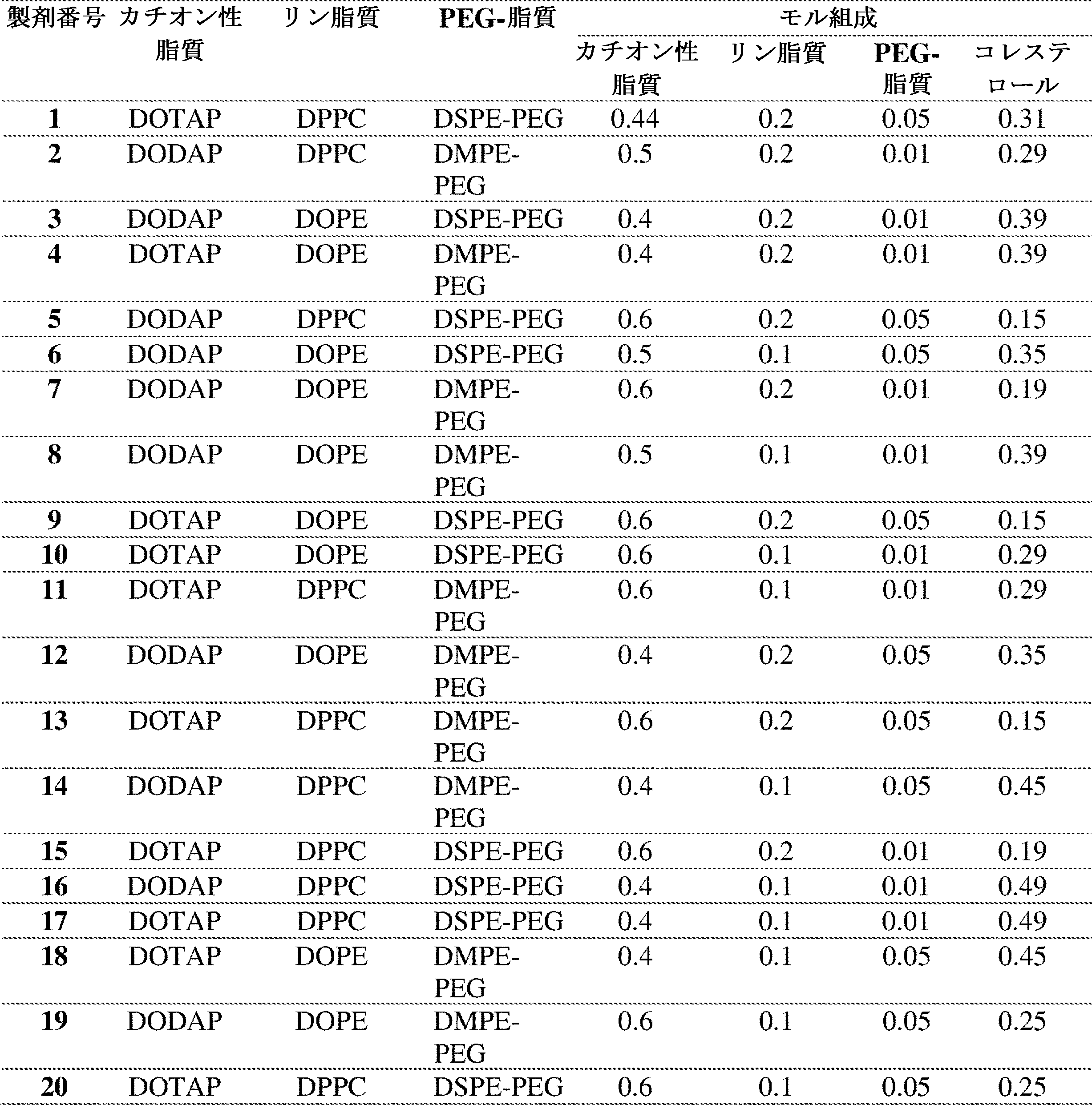
mRNA-LNPの特性評価。LNPのサイズおよびゼータ電位を動的光散乱(DLS)(Zetasizer Nano,Malvern Instruments,MA)によって評価した。サイズおよびゼータ電位の測定は0.1×PBS中、25℃および173°の散乱角で行なった。図28Aに示されるように、1日目のLNP製剤の粒子径は83.3±14.7nm(F8)から416.30±41.1nm(F17)までさまざまであったが、ゼータ電位は-43.95±4.75mV(F3)~11.7±1.4mV(F20)の範囲であった(図28B)。しかしながら、LNP製剤のサイズおよびゼータ電位は、4℃で7日間の保存後に変化が示され、いくつかの製剤で、粒子径は増大し、ゼータ電位は変化した(図28Aおよび28B)。製剤の封入効率をRiboGreenアッセイにより、製造業者のプロトコル(Thermo Fisher Scientific,MA)に従って評価した。半数の製剤は80%超の高い封入効率を有しており(F3、F4、F9、F10、F11、F13、F15、F17、F18およびF20)、F16では70.28%の封入効率が示された。しかしながら、その他の製剤では50%またはそれより低い封入効率が示された(図28C)。
Characterization of mRNA-LNPs. The size and zeta potential of LNPs were evaluated by dynamic light scattering (DLS) (Zetasizer Nano, Malvern Instruments, Mass.). Size and zeta potential measurements were performed in 0.1×PBS at 25° C. and 173° scattering angle. As shown in Figure 28A, the particle size of the
HEK-293細胞およびNuLi-1細胞内へのLNP製剤の細胞内取込み。24時間後のLNP mRNA製剤の細胞内取込みを、フローサイトメトリーを用いて、HEK-293細胞およびNuLi-1細胞株におけるGFP発現パーセントおよび蛍光強度を測定することによって評価した。すべての製剤で、示されるGFP発現は2%未満であることがわかった(図29Aおよび29B)。注目すべきことに、ほとんどの製剤は比較的低いGFP発現パーセントを有していたが、蛍光強度に置き換えた細胞内取込みは製剤間で異なっていた。F3は、HEK-293細胞においてF2、F14およびF17と比べて有意に高い蛍光強度を示した(図29C、p<0.05)が、NuLi-1細胞において試験した場合、蛍光強度に有意差は示されなかった(図29D)。 Intracellular uptake of LNP formulations into HEK-293 and NuLi-1 cells. Cellular uptake of LNP mRNA formulations after 24 hours was assessed by measuring percent GFP expression and fluorescence intensity in HEK-293 and NuLi-1 cell lines using flow cytometry. All formulations were found to exhibit less than 2% GFP expression (Figures 29A and 29B). Of note, although most formulations had relatively low percent GFP expression, cellular uptake in terms of fluorescence intensity varied between formulations. F3 showed significantly higher fluorescence intensity compared to F2, F14 and F17 in HEK-293 cells (Fig. 29C, p<0.05), but showed no significant difference in fluorescence intensity when tested in NuLi-1 cells. not (Fig. 29D).
実施例3-PEG化キトサン/CRISPR-Cas9および薄膜凍結による経肺送達のための脂質ナノ粒子-mRNA粉末の開発
A. 材料および方法
1. 材料
ポリ(エチレングリコール)モノメチルエーテルMW 5000 kDa、マンニトール、スクロース、トレハロースおよびロイシンはSigma-Aldrich(St.Louis,MO,USA)から購入した。低分子量キトサンMW 15 kDaはPolysciences Inc.,USA.から入手した。ヌクレアーゼフリー水、ダルベッコ改変イーグル培地(DMEM)、Opti-MEMおよびジエチルエーテルはThermo Fisher Scientific Inc.(Waltham,MA,USA)から入手した。pSpCas9(BB)-2A-GFP(PX458)はFeng Zhang氏から提供された(Addgeneプラスミド番号48138;http://n2t.net/addgene:48138;RRID:Addgene_48138;Ran et al.,2013)。
Example 3 - Development of Lipid Nanoparticle-mRNA Powder for Pulmonary Delivery by PEGylated Chitosan/CRISPR-Cas9 and Film Freezing
A. Materials and Methods
1. Materials Poly(ethylene glycol) monomethyl
2. 方法
TFFによる吸入用乾燥粉末の調製。異なる濃度(10~0.1%w/v)のマンニトール、スクロースまたはトレハロースおよび0.3%のロイシンを、既報の方法(Zhang et al.,2018)によって調製したPEG化キトサン/DNAナノ複合体内で混合した。フルオレセインナトリウム塩(0.02%)を、インビトロでの空気動力学的性能評価のために製剤に添加した。およそ15μLの液体を、液体窒素によって冷却した回転式極低温冷却(-70℃)ステンレス鋼ドラムの上部10 cmの高さから滴下した。凍結された試料を、液体窒素を充填したステンレス鋼容器内に捕集し、-80℃のフリーザー内に移して余分な液体窒素を除去した。VirTis Advantage Lyophilizer(VirTis Company Inc.,Gardiner,NY)を用いて水分を除去した。試料を一次乾燥のために-40℃で40時間維持し、650分間かけて温度を25℃までゆっくり上げ、次いで、25℃でさらに6時間維持し、二次乾燥のために乾燥させた。乾燥プロセス中、圧力を300mTorrに維持した。また、4つの脂質ナノ粒子乾燥粉末製剤を、マンニトール、スクロースおよびトレハロースを20%(w/v)の濃度で用いて製剤化した。
2. Method
Preparation of dry powder for inhalation by TFF. Different concentrations (10-0.1% w/v) of mannitol, sucrose or trehalose and 0.3% leucine were mixed in PEGylated chitosan/DNA nanocomplexes prepared by a previously reported method (Zhang et al., 2018). Fluorescein sodium salt (0.02%) was added to the formulation for in vitro aerodynamic performance evaluation. Approximately 15 μL of liquid was dropped from the top 10 cm height of a rotating cryogenic (−70° C.) stainless steel drum cooled by liquid nitrogen. Frozen samples were collected in stainless steel containers filled with liquid nitrogen and transferred into a −80° C. freezer to remove excess liquid nitrogen. Water was removed using the VirTis Advantage Lyophilizer (VirTis Company Inc., Gardiner, NY). The samples were kept at −40° C. for 40 hours for primary drying, the temperature was slowly raised to 25° C. over 650 minutes, then held at 25° C. for an additional 6 hours and dried for secondary drying. Pressure was maintained at 300 mTorr during the drying process. Four lipid nanoparticle dry powder formulations were also formulated with mannitol, sucrose and trehalose at a concentration of 20% (w/v).
サイズおよびゼータ電位の測定。乾燥粉末製剤を滅菌ヌクレアーゼフリー水中で再構成した。再構成製剤の流体力学的直径およびゼータ電位を三連で、Zetasizer Nano ZS(Malvern Instruments,UK)により25℃で測定した。簡単には、測定前に、20μLのナノ複合体を80μLのpH5.5の酢酸ナトリウムバッファーに添加し、充分に混合した。 Measurement of size and zeta potential. The dry powder formulation was reconstituted in sterile nuclease-free water. The hydrodynamic diameter and zeta potential of reconstituted formulations were measured in triplicate by Zetasizer Nano ZS (Malvern Instruments, UK) at 25°C. Briefly, 20 μL of nanocomplexes were added to 80 μL of pH 5.5 sodium acetate buffer and mixed well before measurement.
幾何学的粒子径分布の測定。精製乾燥粉末製剤の幾何学的粒子径分布をHELOSレーザー回折装置(Sympatec GmbH,Germany)により、RODOS分散機を3バールで用いて評価した。粉末分散後、10ms毎に測定値を得た。5~25%の範囲の光学密度での測定値を平均し、幾何学的粒子径分布を求めた。 Measurement of geometric particle size distribution. The geometric particle size distribution of the purified dry powder formulation was evaluated with a HELOS laser diffractometer (Sympatec GmbH, Germany) using a RODOS disperser at 3 bar. Measurements were taken every 10 ms after powder dispersion. Measurements at optical densities ranging from 5 to 25% were averaged to obtain the geometric particle size distribution.
走査型電子顕微鏡法(SEM)。6つの精製乾燥粉末製剤の表面の形態構造をSEM(Zeiss Supra 40 VP SEM、Carl Zeiss Microscopy GmbH,Jena,Germany)によって評価した。乾燥粉末試料をアルミニウムSEMスタブ上にマウントし、カーボンテープでカバーし、12nmの白金/パラジウム(Pt/Pd)をCressingtonスパッターコーター208HR(Cressington Scientific Instruments Ltd.,Watford,U.K.)によってスパッターコーティングした後、画像収集した。
Scanning electron microscopy (SEM). The surface morphology of the six purified dry powder formulations was evaluated by SEM (
粉末X線回折。CSP7の結晶化度を、X線回折計(MiniFlex 600,Rigaku Co.,Japan)により、周囲条件下で確認した。粉末をガラススライド上に置き、散乱強度を5~40°の2θ(0.025°のステップサイズ、2°/分、15mAおよび40 kVのCu Kα線)で収集した。結晶化度を解析し、Jade 9ソフトウェア(KS Analytical Systems,Aubrey,TX)によって計算した。
Powder X-ray diffraction. The crystallinity of CSP7 was confirmed under ambient conditions by an X-ray diffractometer (
次世代インパクター(NGI)による空気動力学的粒子径分布。インビトロ空気動力学的性能を次世代インパクター(NGI、MSP Corporation,MN,USA)によって検出した。乾燥粉末を、Capsugel Inc.(Morristown,NJ,US)から提供されたサイズ3のヒプロメロース(HPMC)カプセル内に負荷した。乾燥粉末製剤をMonodose RS01高抵抗DPI(Plastiape,Osnago,Italy)またはSpiriva HandiHalerによりエアロゾル化した。エアロゾルは、4秒間で4 Lの吸入容量が得られる60 L/分の気流速度で作製した。圧力はHigh Capacity Pump(型番HCP5,Copley Scientific,Nottingham,UK)によって発生させ、Critical Flow Controller(型番TPK 2000,Copley Scientific,Nottingham,UK)によって制御した。各作業の前に、NGIプレートを1%のグリセロール含有エタノールでコーティングし、風乾させた。各乾燥粉末試料は三連で作業した。エアロゾル化後、カプセル、デバイス、導入ポート(IP)およびステージ1~MOCに沈着した乾燥粉末をリン酸緩衝生理食塩水(PBS)pH7.4中に溶解させ、Tecan Infinite1 200 PROマルチモードマイクロプレートリーダー(Tecan Systems,Inc.,San Jose,CA,USA)によって測定した。幾何標準偏差(GSD)、空気動力学的質量中央径(MMAD)および細粒分%(FPF%)を計算し、解析した。FPF%は、放出量または定量で5.0μm未満または3.0μmの乾燥粉末の質量分率と定義した。
Aerodynamic particle size distribution by Next Generation Impactor (NGI). In vitro aerodynamic performance was detected by a next generation impactor (NGI, MSP Corporation, Minn., USA). The dry powder was loaded into
真密度。真密度はMultipycnometer(Quantachrome Instruments,Boynton Beach,FL)により、読み値の0.03%以内まで正確なヘリウムを置換ガスとして用いて測定した。 true density. True density was measured by a Multipycnometer (Quantachrome Instruments, Boynton Beach, Fla.) accurate to within 0.03% of reading using helium as the displacement gas.
ブルナウアー・エメット・テラー(BET)比表面積(SSA)分析。乾燥粉末のSSAをMonosorb迅速表面積分析装置 型番MS-21(Quantachrome Instruments,Boynton Beach,FL)により、BET一点法によって解析した。試料を、窒素ガスを用いて20 psiで37℃にて一晩ガス抜きし、表面不純物を除去した。窒素/ヘリウム(30:70 v/v)混合物を吸着ガスとして使用した。 Brunauer-Emmett-Teller (BET) specific surface area (SSA) analysis. Dry powder SSA was analyzed by the BET single point method on a Monosorb Rapid Surface Area Analyzer Model MS-21 (Quantachrome Instruments, Boynton Beach, Fla.). The samples were outgassed with nitrogen gas at 20 psi at 37° C. overnight to remove surface impurities. A nitrogen/helium (30:70 v/v) mixture was used as the adsorbent gas.
トランスフェクション効率。DNAプラスミド(pSpCas9(BB)-2A-GFP)およびLNP-mRNAのトランスフェクション効率をHEK293細胞において評価した。簡単には、5×10³のHEK293細胞を96ウェルプレートの各ウェル内の100μLのDMEM培地中に播種し、完全な付着が可能となるように24時間インキュベートした。インキュベーション後、培地を除去し、Opti-MEM低血清培地を細胞に添加した。10μLの再構成製剤を、異なるpH6.5を有する培地中で培養された細胞に添加した。24時間のインキュベーション後、トランスフェクション効率をフローサイトメトリーによって評価した。 transfection efficiency. The transfection efficiency of DNA plasmid (pSpCas9(BB)-2A-GFP) and LNP-mRNA was evaluated in HEK293 cells. Briefly, 5×10 3 HEK293 cells were seeded in 100 μL of DMEM medium in each well of a 96-well plate and incubated for 24 hours to allow complete attachment. After incubation, the medium was removed and Opti-MEM low serum medium was added to the cells. 10 μL of reconstituted formulation was added to cells cultured in media with different pH 6.5. After 24 hours of incubation, transfection efficiency was assessed by flow cytometry.
LNP製剤の調製。蛍光強化型緑色蛍光タンパク質(EGFP)mRNAを含む脂質ナノ粒子を、水相(100mMの酢酸ナトリウムクエン酸バッファー,pH3.0中に希釈したmRNA)と、エタノールおよび各製剤(表5)に従う脂質を含む有機相とを、マイクロ流体ミキサー(Precision Nanosystems,Canada;Leung et al.,2015)を用いて合わせることにより調製した。調製後、LNP製剤を1×PBS(pH7.4)中に2時間、10K MWCO Slide-A-Lyzer透析カセット(Thermo Fisher Scientific,MA)にて透析した。 Preparation of LNP formulations. Lipid nanoparticles containing fluorescence-enhanced green fluorescent protein (EGFP) mRNA were mixed in an aqueous phase (mRNA diluted in 100 mM sodium acetate citrate buffer, pH 3.0) with ethanol and lipids according to each formulation (Table 5). was prepared by combining the containing organic phase using a microfluidic mixer (Precision Nanosystems, Canada; Leung et al., 2015). After preparation, LNP formulations were dialyzed in 1×PBS (pH 7.4) for 2 hours with a 10K MWCO Slide-A-Lyzer dialysis cassette (Thermo Fisher Scientific, MA).
(表5)LNP製剤の組成

統計解析。統計解析はJMP 13を用いて行なった。実験はすべて、三連で行なった。データの値は平均±標準偏差(SD)として表示する。必要な場合は、スチューデントのt検定または一元配置分散分析(ANOVA)を行なった。*p値<0.05を統計学的に有意とみなした。 Statistical analysis. Statistical analysis was performed using JMP 13. All experiments were performed in triplicate. Data values are presented as mean ± standard deviation (SD). Student's t-test or one-way analysis of variance (ANOVA) was performed when necessary. * A p-value <0.05 was considered statistically significant.
3. 結果
実験設計および乾燥粉末製剤の外観。3種類の凍結保護剤(マンニトール、スクロースおよびトレハロース)および1種類の分散向上剤(ロイシン)を使用し、乾燥粉末ナノ複合体をTFFによって調製した。各凍結保護剤の最適な濃度をスクリーニングするため、7つの異なる濃度(10%、5%、3%、1%、0.5%、0.25%および0.1%;w/v)の各凍結保護剤ならびにPEG化キトサン/DNAナノ複合体(50ng/μlのDNA)を含む製剤を、0.3%のロイシンあり、またはなしで調製した(表6)。この実験設計に基づいて、42種類の製剤をTFFによって調製し、各DPI製剤の外観を図30に示した。製剤はすべて概して、薄膜乾燥粉末のフレークの外観を有した(図30)。凍結保護剤の量が少ない製剤では、フレークは視認可能により小さく、および/またはより脆かった。また、ロイシンを含む製剤は、ロイシンなしの製剤と比べて外観が視認可能に異なっており、薄膜は膜構造を維持していた。具体的には、Man DPI製剤では、ロイシンにより、低マンニトール濃度であっても、該製剤が元の円板様構造を維持することが可能であった(F11~F14対F4~F7参照)。
3. Results Experimental design and appearance of dry powder formulations. Dry powder nanocomposites were prepared by TFF using three cryoprotectants (mannitol, sucrose and trehalose) and one dispersion enhancer (leucine). To screen the optimal concentration of each cryoprotectant, seven different concentrations (10%, 5%, 3%, 1%, 0.5%, 0.25% and 0.1%; w/v) of each cryoprotectant and PEG were added. Formulations containing modified chitosan/DNA nanocomplexes (50 ng/μl DNA) were prepared with or without 0.3% leucine (Table 6). Based on this experimental design, 42 formulations were prepared by TFF and the appearance of each DPI formulation is shown in FIG. All formulations generally had the appearance of thin film dry powder flakes (Figure 30). The flakes were visibly smaller and/or more brittle in formulations with lower amounts of cryoprotectant. Also, the formulations containing leucine were visibly different in appearance than the formulations without leucine, and the thin films maintained their membrane structure. Specifically, in the Man DPI formulation, leucine allowed the formulation to retain its original disc-like structure even at low mannitol concentrations (see F11-F14 vs. F4-F7).
(表6)PEG化キトサン乾燥粉末製剤の実験設計(DP:乾燥粉末、Man:マンニトール、Suc:スクロース、Treh:トレハロース、Leu:ロイシン)

再構成後のナノ複合体のサイズおよびゼータ電位。サイズおよびゼータ電位をゼータサイザーによって測定して処理および再構成後のサイズ変化を評価し、製造時のナノ複合体の物理的安定性を評価した。図31A~31Cに示されるように、再構成製剤はどれも、TFF処理なしのナノ複合体(184.1±6.6nm)と比べて統計学的に有意な粒子径増大を有した。再構成Man-DP製剤のサイズは235.0±39.2nm(F1)~621.2±58.3nm(F7)の範囲であり、一方、再構成Man-Leu DP製剤のサイズは223.4±30.2nm(F8)~345.7±20.1nm(F14)の範囲であった。Suc DP製剤では、粒子径は200.4±9.2nm(F15)~536.0±198.8nm(F21)の範囲であり、一方、Suc-Leu DPの粒子径は206.8±11.1nm(F22)~326.4±21.6nm(F28)の範囲であった。Treh DP製剤では、最も小さい粒子径がF29で観察され、最大粒子径が示された製剤はF35である。ロイシンの添加あり(Treh-Leu DP)では、粒子径は202.9±4.5nm(F36)~376.3±47.6nm(F42)の範囲であった。要するに、凍結保護剤濃度の減少に伴ってナノ複合体のサイズが増大する傾向が観察された。対照的に、DP製剤のゼータ電位の点では明白な傾向は観察されなかった。 Size and zeta potential of nanocomposites after reconstitution. Size and zeta potential were measured by a zetasizer to assess size changes after processing and reconstitution, and to assess the physical stability of nanocomposites during fabrication. As shown in Figures 31A-31C, all reconstituted formulations had a statistically significant particle size increase compared to the nanocomposite without TFF treatment (184.1 ± 6.6 nm). The size of reconstituted Man-DP formulations ranged from 235.0±39.2 nm (F1) to 621.2±58.3 nm (F7), while the size of reconstituted Man-Leu DP formulations ranged from 223.4±30.2 nm (F8) to 345.7 nm. The range was ±20.1 nm (F14). For the Suc DP formulation, the particle size ranged from 200.4±9.2 nm (F15) to 536.0±198.8 nm (F21), while the particle size of Suc-Leu DP ranged from 206.8±11.1 nm (F22) to 326.4±21.6 nm. (F28) range. For the Treh DP formulations, the smallest particle size was observed with F29 and the formulation with the largest particle size was F35. With the addition of leucine (Treh-Leu DP), the particle size ranged from 202.9±4.5 nm (F36) to 376.3±47.6 nm (F42). In summary, a trend was observed to increase the size of the nanocomposites with decreasing cryoprotectant concentration. In contrast, no clear trend was observed in terms of zeta potential of the DP formulations.
再構成後のナノ複合体のトランスフェクション効率。ナノ複合体のトランスフェクション効率に対する凍結保護剤の型および濃度の効果を試験した。図32に、未処理のナノ複合体に対して正規化した、再構成製剤のトランスフェクション効率のデータを示した。凍結保護剤は、高濃度および低濃度のいずれも、TFF/凍結乾燥工程または再構成工程でナノ複合体の効力を保護することができないことがわかった。最も高いトランスフェクション効率は、Man DP、Suc DP、Treh DP、Man-Leu DP、Suc-Leu DPおよびTreh-Leu DPについて、それぞれ1%のマンニトール、3%のスクロース、0.5%のトレハロース、3%のマンニトール+0.3%のロイシン、1%のスクロース+ロイシンおよび3%のトレハロース+0.3%のロイシンを含む製剤で観察された。対照的に、いずれの賦形剤も有しないナノ複合体では、TFFおよび凍結乾燥プロセス後、トランスフェクション効率性はほとんど示されなかった。 Transfection efficiency of nanocomplexes after reconstitution. The effect of cryoprotectant type and concentration on transfection efficiency of nanocomplexes was tested. Figure 32 shows transfection efficiency data for reconstituted formulations normalized to untreated nanocomplexes. It was found that neither high nor low concentrations of cryoprotectants were able to protect the potency of the nanocomposites during the TFF/lyophilization or reconstitution steps. The highest transfection efficiencies were obtained with 1% mannitol, 3% sucrose, 0.5% trehalose, 3% for Man DP, Suc DP, Treh DP, Man-Leu DP, Suc-Leu DP and Treh-Leu DP, respectively. mannitol + 0.3% leucine, 1% sucrose + leucine and 3% trehalose + 0.3% leucine. In contrast, nanocomplexes without any excipients showed little transfection efficiency after the TFF and freeze-drying processes.
このようなスクリーニングアッセイに基づくと、凍結保護剤の濃度が高いと、再構成後のナノ複合体の凝集が少なくなる(すなわち、粒子径の変化が少なくなる)ことがわかったが、最も高いトランスフェクション効率は、0.5~3%の範囲の凍結保護剤濃度を含む製剤でみられた。したがって、3%の凍結保護剤を含む6つの製剤(F3、F10、F17、F24、F31およびF38)を、さらなる検討のためのリード製剤として選択した(図33)。 Based on such screening assays, higher concentrations of cryoprotectant were found to result in less aggregation of nanocomplexes after reconstitution (i.e., less change in particle size), whereas the highest transfection Efficiency of injection was seen with formulations containing cryoprotectant concentrations ranging from 0.5 to 3%. Therefore, six formulations containing 3% cryoprotectant (F3, F10, F17, F24, F31 and F38) were selected as lead formulations for further study (Figure 33).
リード乾燥粉末製剤の特性評価。SEM画像(図34)により、6つの乾燥粉末製剤はすべて、異なる程度の凝集を示し、中でも、F3およびF10は、滑らかな固体の外観を示すその他の4つの製剤と比べて、高い多孔度を示すことが明らかになった。このような観察結果を粉末の粒子径と組み合わせた。6つのリード乾燥粉末製剤の幾何学的粒子径分布をHELOSレーザー回折によりRODOS粉末分散を用いて特性評価した。表7に示されるように、F3およびF10の幾何学的粒子径の中央値(D50)はその他の製剤より有意に小さかったようであった。D50が大きい製剤F17、F24、F31、F38の外観および低い多孔度を考えると、これらはおそらく、呼吸できる粉末ではない。これを、上記の空気動力学的粒子サイズ分類によって確認した。X線回折図により、未処理のそのままのマンニトールは2θが10.54°および14.69°の特性回折ピークを有するβ形態を示すが、TFF乾燥粉末製剤(F3およびF10)は、9.69°の2θに特性回折ピークが観察され、10°~16°に回折ピークが観察されないことからδ形態を示すことが明らかになった(図35A)。図6bおよび6cに示されるように、F17、F24、F31およびF38は、未処理のスクロース(図35B)およびトレハロース(図35C)と比べて明白な結晶のピークが観察されないため非晶質のようであった。 Characterization of lead dry powder formulations. SEM images (Fig. 34) show that all six dry powder formulations show different degrees of aggregation, with F3 and F10 in particular exhibiting higher porosity compared to the other four formulations, which exhibit a smooth solid appearance. It was revealed to show These observations were combined with the particle size of the powder. The geometric particle size distribution of six lead dry powder formulations was characterized by HELOS laser diffraction using RODOS powder dispersion. As shown in Table 7, the median geometric particle size (D50) of F3 and F10 appeared to be significantly smaller than the other formulations. Given the appearance and low porosity of the high D50 formulations F17, F24, F31, F38, these are probably not respirable powders. This was confirmed by the aerodynamic particle size classification described above. By X-ray diffractogram, untreated as-is mannitol exhibits a β-form with characteristic diffraction peaks at 10.54° and 14.69° 2-theta, whereas the TFF dry powder formulations (F3 and F10) exhibit characteristic diffraction at 9.69° 2-theta. A peak was observed and no diffraction peak was observed between 10° and 16°, revealing the δ morphology (FIG. 35A). As shown in Figures 6b and 6c, F17, F24, F31 and F38 appeared amorphous as no distinct crystalline peaks were observed compared to untreated sucrose (Figure 35B) and trehalose (Figure 35C). Met.
(表7)精製乾燥粉末製剤の平均幾何学的粒子径分布
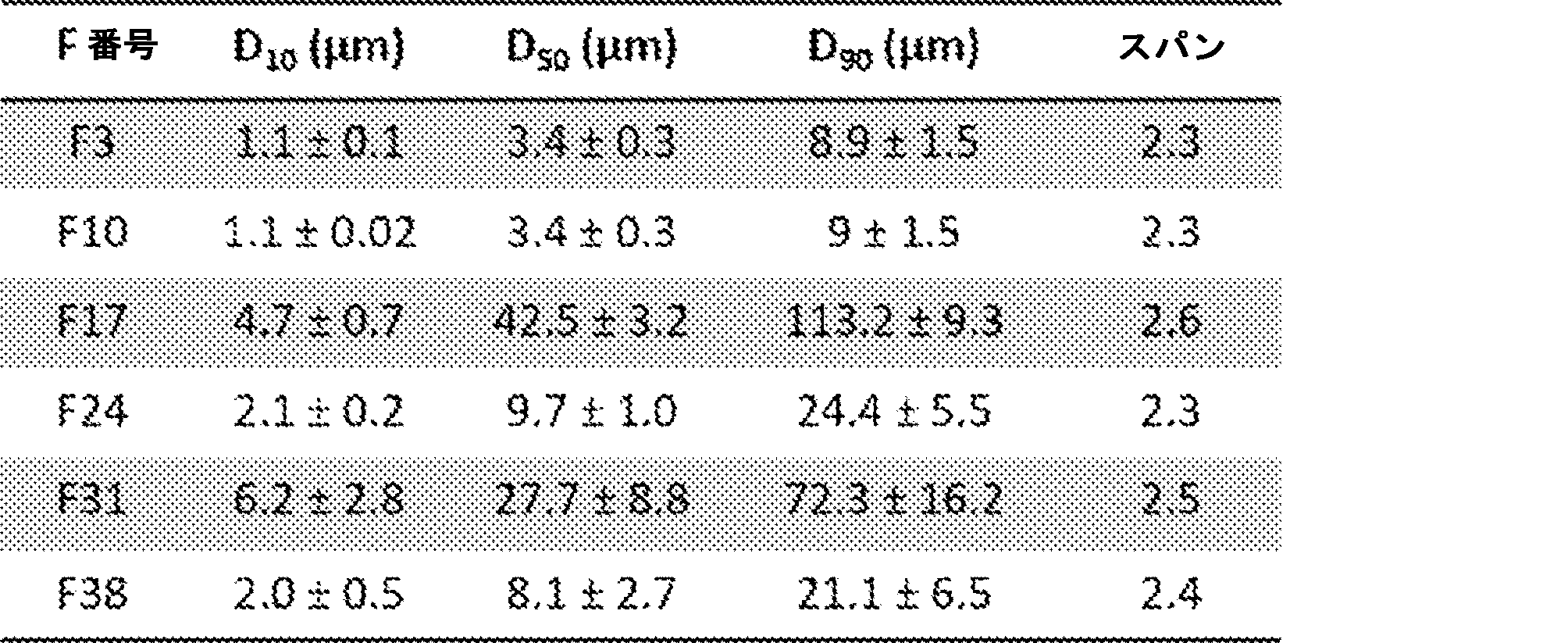
RS01 Monodose DPIにおける精製乾燥粉末製剤の空気動力学的性能。NGIを使用し、低抵抗RS01 Monodose DPI(流速60L/分)によってエアロゾル化される精製乾燥粉末製剤の空気動力学的性能を評価した。図36に示されるように、F3およびF10は、ステージ2(4.46ミクロンの空気動力学的カットオフ)以降も他の製剤と比べて沈着が多く、これによりF3およびF10の空気動力学的粒子径分布がよりよいことが示された。この沈着プロフィールに基づいて、MMAD、FPF%およびEF%を計算し、表8に要約した。F3およびF10では、それぞれ4.8μmおよび4.6μmのMMADが示され、これにより、5μmより大きいMMADを有する他の製剤と比べて肺内への乾燥粉末粒子の沈着がより良好である可能性が示された。さらに、EF%がF3(74.2%)およびF7(71.5%)では他の製剤よりも小さいにもかかわらず、F3およびF10では、それぞれ44.5%~44.2%という他の製剤より比較的高いFPF%(<5μm)が示された。このような結果に基づいて、F3およびF10を吸入に適した製剤であると認定し、さらに試験した。 Aerodynamic performance of purified dry powder formulations at RS01 Monodose DPI. NGI was used to evaluate the aerodynamic performance of a purified dry powder formulation aerosolized by low resistance RS01 Monodose DPI (flow rate 60 L/min). As shown in Figure 36, F3 and F10 deposited more than the other formulations even after Stage 2 (4.46 micron aerodynamic cutoff), leading to aerodynamic particle size reduction for F3 and F10. A better distribution was shown. Based on this deposition profile, MMAD, FPF% and EF% were calculated and summarized in Table 8. F3 and F10 showed MMADs of 4.8 μm and 4.6 μm, respectively, indicating potentially better deposition of dry powder particles in the lung compared to other formulations with MMADs greater than 5 μm. was done. In addition, F3 and F10 had relatively higher FPF% of 44.5% to 44.2%, respectively, despite lower EF% for F3 (74.2%) and F7 (71.5%) than the other formulations ( <5 μm) were shown. Based on these results, F3 and F10 were identified as formulations suitable for inhalation and tested further.
(表8)60 L/分のRS01における精製TFF乾燥粉末製剤の空気動力学的性能
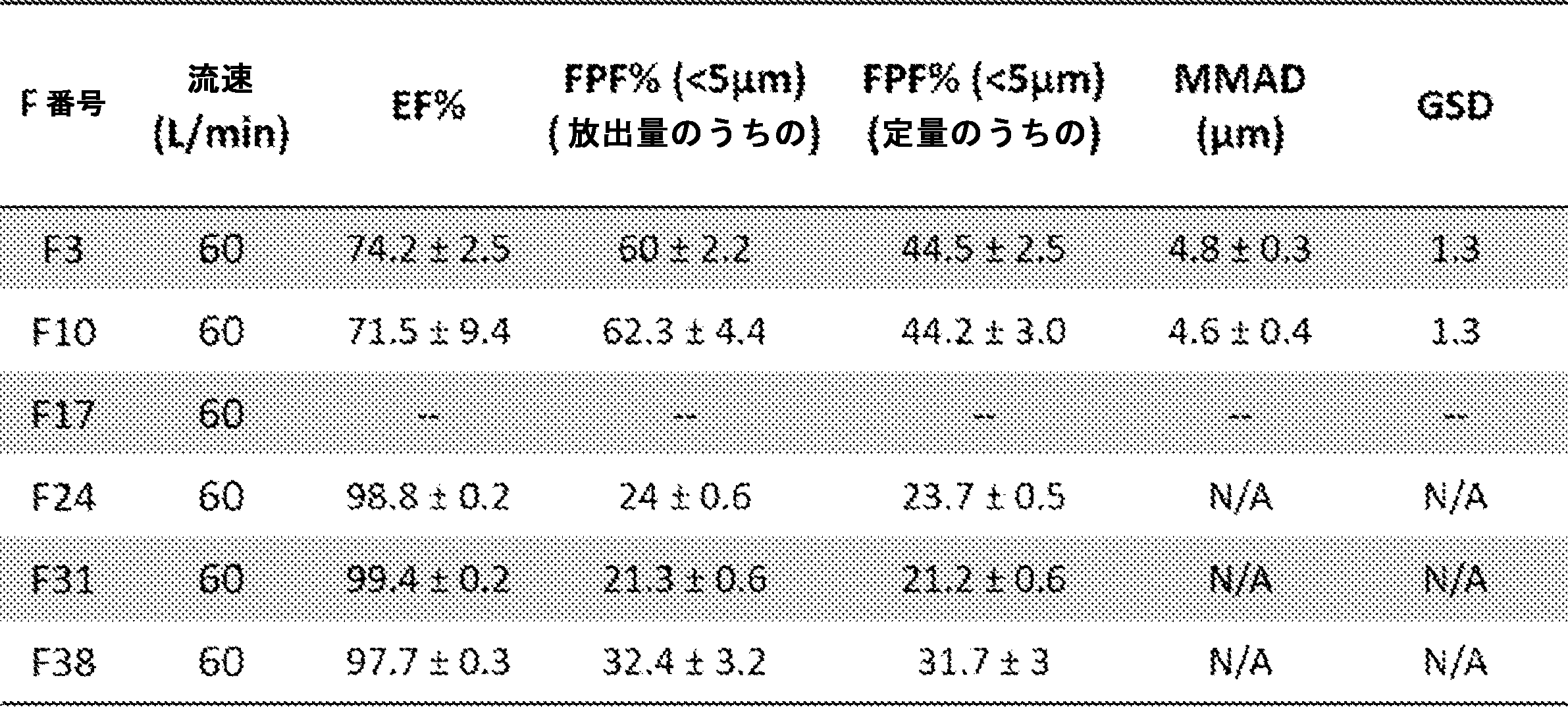
F3およびF10の空気動力学的性能に対する吸入器の型および流速の効果。F3およびF10の空気動力学的性能をさらに評価するため、2つの型の高抵抗吸入器を使用して乾燥粉末製剤を2つの異なる流速でエアロゾル化した(表9)。ロイシンを含むF10は、吸入器の型または流速に関係なくF3と比べて小さいMMADおよび高いFPF%を示すようであった。また、HandiHalerまたはRS01 DPIのいずれでも、どちらの製剤も、60L/分の流速では45 L/分の流速と比べて有意に高いEF%およびFPF%ならびに小さいMMADを有し、これにより、これらのデバイスにおいてF3およびF10の流速依存性空気動力学的性能が示された。さらに、同じ流速では、HandiHaler DPIは、F3またはF10のいずれでも、RS01 Monodose DPIと比べてEF%は高くなっているがMMADは大きく、これにより、両方の製剤の空気動力学的性能は吸入器の型にも依存性であることが示された。 Effect of inhaler type and flow rate on F3 and F10 aerodynamic performance. To further evaluate the aerodynamic performance of F3 and F10, two types of high resistance inhalers were used to aerosolize the dry powder formulation at two different flow rates (Table 9). F10 with leucine appeared to show lower MMAD and higher FPF% compared to F3 regardless of inhaler type or flow rate. Also, both formulations, either HandiHaler or RS01 DPI, had significantly higher EF% and FPF% and lower MMADs at a flow rate of 60 L/min compared to a flow rate of 45 L/min, indicating that these Flow-dependent aerodynamic performance of F3 and F10 was demonstrated in the device. Furthermore, at the same flow rate, the HandiHaler DPI, either at F3 or F10, has a higher EF% but a higher MMAD compared to the RS01 Monodose DPI, which suggests that both formulations have better aerodynamic performance than the inhaler. It was also shown to be dependent on the type of
(表9)異なる吸入器および異なる流速でのF3およびF10の空気動力学的性能(サイズが測定範囲外であったものをN/Aと表示した)
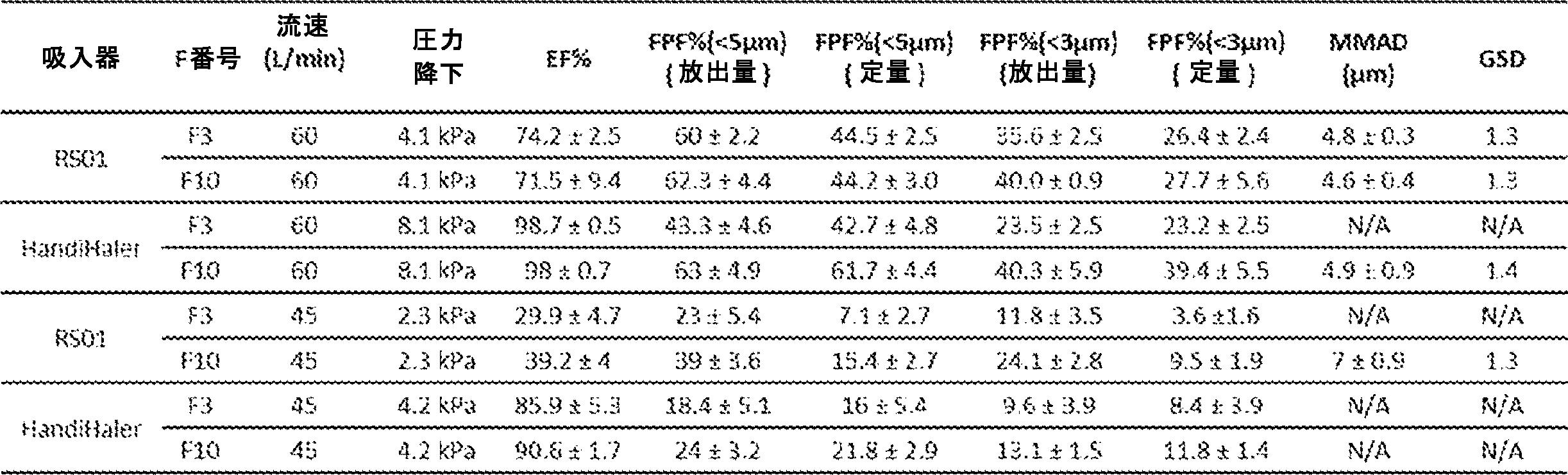
F3およびF10の含水量、真密度および比表面積をTGA、マルチピクノメーターおよびモノソーブ(迅速表面積分析装置BET)によって評価した。表10に示されるように、ロイシンを含むF10は、F3と比べて少ない含水量および低い真密度を有していた。対照的に、F10の比表面積はF3より有意に大きかった。 Water content, true density and specific surface area of F3 and F10 were evaluated by TGA, multipycnometer and monosorb (rapid surface area analyzer BET). As shown in Table 10, F10 with leucine had lower water content and lower true density compared to F3. In contrast, the specific surface area of F10 was significantly larger than F3.
(表10)F3およびF10の真密度および比表面積

TFF脂質ナノ粒子-mRNA(LNP)乾燥粉末製剤のサイズ。イオン化脂質、リン脂質、コレステロール、ポリ(エチレン)グリコール(PEG)-脂質)およびEGFPコードmRNAからなる4つのLNP製剤をTFFにより、異なる賦形剤を20%(w/w)の濃度で用いて、乾燥粉末に製剤化した:マンニトール、スクロースおよびトレハロースを使用した。TFFおよび凍結乾燥後、乾燥粉末製剤を蒸留水中で再構成し、LNPの粒子径をDLSによって測定した。図37に示されるように、再構成後のTFF製剤はすべて、未処理のLNPと比べて有意な粒子径増大を示したが、各製剤に対して、異なる凍結保護剤で異なる凍結保護効果が示された。LNP-1およびLNP-4では、スクロースが、再構成後のサイズ変化が最も小さいため、マンニトールおよびトレハロースよりサイズに対する良好な保護効果を示し、一方、LNP-2およびLNP-3では、マンニトールがスクロースおよびトレハロースよりサイズに対する良好な保護効果を示した。 Size of the TFF lipid nanoparticle-mRNA (LNP) dry powder formulation. Four LNP formulations consisting of ionized lipids, phospholipids, cholesterol, poly(ethylene)glycol (PEG)-lipid) and EGFP-encoding mRNA were analyzed by TFF using different excipients at a concentration of 20% (w/w). , formulated into dry powders: mannitol, sucrose and trehalose were used. After TFF and lyophilization, the dry powder formulation was reconstituted in distilled water and the particle size of LNP was measured by DLS. As shown in Figure 37, all of the reconstituted TFF formulations showed significant particle size enhancement compared to untreated LNPs, although different cryoprotectants had different cryoprotective effects for each formulation. shown. For LNP-1 and LNP-4, sucrose exhibited a better protective effect on size than mannitol and trehalose due to the smallest size change after reconstitution, whereas for LNP-2 and LNP-3, mannitol was associated with sucrose. and showed a better protective effect on size than trehalose.
TFF脂質ナノ粒子(mRNA負荷済み)乾燥粉末製剤の細胞内取込み。再構成後の乾燥粉末LNP製剤のトランスフェクション効率をHEK293細胞において評価した。図38に示されるように、20%のスクロースを有する製剤では、未処理のLNP製剤と比べてトランスフェクション効率に有意差は示されなかったが、他の凍結保護剤では未処理のLNP製剤と比べてトランスフェクション効率の有意な低下が示された。 Cellular uptake of TFF lipid nanoparticles (mRNA-loaded) dry powder formulation. The transfection efficiency of reconstituted dry powder LNP formulations was evaluated in HEK293 cells. As shown in Figure 38, formulations with 20% sucrose showed no significant difference in transfection efficiency compared to untreated LNP formulations, whereas other cryoprotectants showed no significant difference in transfection efficiency compared to untreated LNP formulations. A significant decrease in transfection efficiency was shown compared to
実施例4-経肺送達の潜在的可能性のための薄膜凍結乾燥siRNA封入固形脂質ナノ粒子
A. 材料および方法
1. 材料
ポリエチレングリコール2000-ヒドラゾン-C18(PHC)を既報の方法に従って合成し、NMRによって特性評価した(Zhu et al.,2013)。精製レシチンはAlfa Aesar(Tewksbury,MA)から入手した。Sigma-Aldrich(St.Louis,MO,USA)のマンニトール(USP)、リポ多糖(LPS)、コレステロール、ブタ胃由来Type IIIムチン、Amicon Ultra遠心式フィルターユニットUltra-15(MWCO 100 kDa)。リポフェクタミンRNAiMAXトランスフェクション試薬、ダルベッコ改変イーグル培地(DMEM)、ウシ胎児血清(FBS)、ストレプトマイシン/ペニシリン、FluoSpheres(商標)アミン修飾ポリスチレンマイクロスフェアおよびHEPESバッファーはInvitrogen(Carlsbad,CA)のものであった。TopFluor(登録商標)コレステロールおよび1,2-ジオレオイル-3-トリメチルアンモニウム-プロパン(DOTAP)はAvanti Polar Lipids(Alabaster、Alabama,USA)のものであった。配列(


A. Materials and Methods
1. Materials Polyethylene glycol 2000-hydrazone-C18 (PHC) was synthesized according to a previously reported method and characterized by NMR (Zhu et al., 2013). Purified lecithin was obtained from Alfa Aesar (Tewksbury, Mass.). Mannitol (USP), lipopolysaccharide (LPS), cholesterol, porcine stomach type III mucin, Amicon Ultra centrifugal filter unit Ultra-15 (
2. 方法
ナノ粒子懸濁液の調製。SLNを、以前に確立された溶媒蒸発法に従い、軽微な修正を伴って調製した(Aldayel et al.,2018)。簡単には、レシチン(3.2mg)、コレステロール(1.6mg)、PHC(2mg)および8μLのTopFluorコレステロール溶液(0.25%w/v in THF)を0.5mLのTHF中に溶解させ、0.2μmのPTFEシリンジフィルターに通して濾過した。混合物を撹拌下で5mLの水に滴下した。得られたナノ粒子懸濁液を一晩撹拌してTHFを蒸発させ、次いで3.2μmのPTFEシリンジフィルターを用いて濾過し、次いで乾燥手順まで4℃で保存した。
2. Methods Preparation of nanoparticle suspensions. SLN was prepared according to a previously established solvent evaporation method with minor modifications (Aldayel et al., 2018). Briefly, lecithin (3.2 mg), cholesterol (1.6 mg), PHC (2 mg) and 8 µL of TopFluor cholesterol solution (0.25% w/v in THF) were dissolved in 0.5 mL of THF and added to a 0.2 µm PTFE syringe. Filtered through a filter. The mixture was added dropwise to 5 mL of water under stirring. The resulting nanoparticle suspension was stirred overnight to evaporate the THF, then filtered using a 3.2 μm PTFE syringe filter and then stored at 4° C. until drying procedures.
siRNAが組み込まれたSLNを調製するため、100μlの20μM siRNA含有水を400μLの水で希釈し、次いで680μLの2.56%(v/v)DOTAP含有クロロホルムに添加し、30分間、激しく撹拌した後、1.3mLのメタノールを添加し、1時間撹拌した。siRNA/DOTAP複合体を、クロロホルムを用いて混合物から相分離によって抽出した。レシチン(3.2mg)、コレステロール(1.6mg)およびPHC(2mg)を0.5mLのクロロホルム中に溶解させ、siRNA/DOTAP複合体と混合した。混合物を窒素ガス下で乾燥させ、次いで500μLのTHF中に再溶解させた後、5mLの水に滴下した。SLNを蛍光標識するため、TopFluorコレステロール溶液(クロロホルム中0.25%w/v)をレシチン混合物に添加した後、siRNA/DOTAP複合体と混合した。得られたSLNのサイズ、多分散指数(PDI)およびゼータ電位を、動的光散乱(DLS)によりMalvern Zeta Sizer Nano ZS(Westborough,MA)を用いて測定した。 To prepare siRNA-incorporated SLNs, 100 μl of 20 μM siRNA-containing water was diluted with 400 μL of water, then added to 680 μL of chloroform containing 2.56% (v/v) DOTAP, and vigorously stirred for 30 minutes. 1.3 mL of methanol was added and stirred for 1 hour. The siRNA/DOTAP complex was extracted by phase separation from the mixture using chloroform. Lecithin (3.2 mg), cholesterol (1.6 mg) and PHC (2 mg) were dissolved in 0.5 mL chloroform and mixed with the siRNA/DOTAP complex. The mixture was dried under nitrogen gas and then redissolved in 500 μL THF and added dropwise to 5 mL water. To fluorescently label SLNs, TopFluor cholesterol solution (0.25% w/v in chloroform) was added to the lecithin mixture and then mixed with the siRNA/DOTAP complex. The size, polydispersity index (PDI) and zeta potential of the resulting SLNs were measured by dynamic light scattering (DLS) using a Malvern Zeta Sizer Nano ZS (Westborough, Mass.).
薄膜凍結乾燥による乾燥粉末の調製。薄膜凍結乾燥SLN粉末を調製するため、マンニトールをナノ粒子懸濁液中に溶解させ(SLN siRNAなしのSLNでは40.8mg/mLおよびsiRNA封入SLNでは48mg/mL)、次いで懸濁液を、回転式の事前に冷却した中空ステンレス鋼円筒型ドラムに既報のとおりに滴下することによって凍結させた(Zhang et al.,2012;Engstrom et al.,2008;Thakkar et al.,2017)。凍結乾燥サイクルは-40℃の棚板温度で20時間、20時間で25℃までのランプ制御、次いで25℃でさらに20時間保持であり、圧力はVirTis AdVantage Bench Top Lyophilizer(Gardiner,NY,USA)を用いて100mPaより下にした。SLNに対するマンニトールの比を凍結・解凍実験によって求めた。簡単には、1mLのSLN含有懸濁液を異なる量のマンニトールと混合し、-80℃で2時間凍結させ、次いで室温で解凍した後、粒子径およびPDIを測定した。 Preparation of dry powder by thin film freeze-drying. To prepare thin film lyophilized SLN powders, mannitol was dissolved in the nanoparticle suspension (40.8 mg/mL for SLNs without SLN siRNA and 48 mg/mL for SLNs with siRNA encapsulation), then the suspension was tumbled. was frozen by dropping into pre-chilled hollow stainless steel cylindrical drums as previously reported (Zhang et al., 2012; Engstrom et al., 2008; Thakkar et al., 2017). The freeze-drying cycle was -40°C shelf temperature for 20 hours, ramp control to 25°C for 20 hours, then hold at 25°C for an additional 20 hours, pressure VirTis AdVantage Bench Top Lyophilizer (Gardiner, NY, USA). was used to bring it below 100 mPa. The ratio of mannitol to SLN was determined by freeze-thaw experiments. Briefly, 1 mL of SLN-containing suspension was mixed with different amounts of mannitol, frozen at −80° C. for 2 hours, and then thawed at room temperature before measuring particle size and PDI.
噴霧乾燥による乾燥粉末の調製。噴霧乾燥ナノ粒子粉末を、マンニトールをナノ粒子懸濁液中に4.08mg/mLで溶解させることによって調製し、次いでこれを、直径0.5mmの二液ノズルを有するBuechi B-290ミニスプレードライヤー(Flawil,Switzerland)を用いて乾燥させた。エアロゾル化ガスフローを29 L/分にし(窒素)、アスピレーターを100 psiに設定し、供給口温度を90℃にし、排出口温度を65℃にし、懸濁液の供給速度を3mL/分にした。粉末を解析まで暗所で真空デシケータ内に保存した。粉末をさらなる解析まで暗所で真空デシケータ内に保存した。 Preparation of dry powder by spray drying. A spray-dried nanoparticle powder was prepared by dissolving mannitol in the nanoparticle suspension at 4.08 mg/mL, which was then applied to a Buechi B-290 mini spray dryer with a 0.5 mm diameter two-fluid nozzle (Flawil , Switzerland). The aerosolization gas flow was 29 L/min (nitrogen), the aspirator was set at 100 psi, the inlet temperature was 90°C, the outlet temperature was 65°C, and the suspension feed rate was 3 mL/min. . The powder was stored in the dark in a vacuum desiccator until analysis. The powder was stored in the dark in a vacuum desiccator until further analysis.
粉末の特性評価。噴霧乾燥粉末およびTFFD粉末の形態構造は、Zeiss Supra 40V走査型電子顕微鏡(SEM)(Zeiss SMT AG,Oberkochen,Germany)を用いて、テキサス大学オースティン校(Austin,TX)のMicroscopy and Imaging Facilityで検査した。試料を導電性テープにタッピングし、次いで15nm Au/Ptを、Cressington 208スパッターコーター(Cressington Scientific Instruments,Watford,UK)を用いてコーティングした後、SEMにロードした。乾燥粉末の表面積を、Quantachrome Nova 2000ブルナウアー・エメット・テラー(BET)表面積分析装置(Quantachrome Corporation,Boynton Beach,FL)を用いて測定した。
Powder characterization. The morphology of the spray-dried and TFFD powders was examined using a Zeiss Supra 40V scanning electron microscope (SEM) (Zeiss SMT AG, Oberkochen, Germany) at the Microscopy and Imaging Facility at the University of Texas at Austin, TX. bottom. Samples were tapped onto conductive tape and then coated with 15 nm Au/Pt using a Cressington 208 sputter coater (Cressington Scientific Instruments, Watford, UK) prior to loading into the SEM. The surface area of the dry powder was measured using a
インビトロエアロゾル化特性。粉末のインビトロエアロゾル性能を、Copley Scientific(Colwick,Nottingham,UK)の次世代インパクター(NGI)およびCITDASソフトウェアを用いて評価した。およそ10mgの乾燥粉末をサイズ3のヒドロキシプロピルメチルセルロース(HPMC)カプセル(Capsugel,Morristown,NJ)内に充填し、Plastiape(Milano,Italy)のRS01高抵抗吸入器内に入れた。細粒分(FPF)は空気動力学的直径<5ミクロンと定義した。NPの蛍光強度を、BioTek Synergy HTマイクロプレートリーダー(ex=485、em=528)(Winooski,VT)を用いて測定し、以下の式:沈着%=100×(各NGIステージでの再懸濁させた粉末の蛍光強度/再懸濁媒体の容量)/(再懸濁させた標準粉末の蛍光強度/再懸濁媒体の容量)を用いることによって、SLNの定量を行なった。純水中での蛍光シグナルが比較的弱いため、エタノールの水溶液(50%、v/v)を再懸濁媒体として選択した。
In vitro aerosolization properties. The in vitro aerosol performance of the powders was evaluated using Copley Scientific's (Colwick, Nottingham, UK) Next Generation Impactor (NGI) and CITDAS software. Approximately 10 mg of dry powder was filled into
刺激された粘液中におけるナノ粒子の拡散。SLNおよびポリスチレンビーズの拡散を疑似粘液において比較し、以前に開発されたアッセイ(Leal et al.,2018)を用いて測定した。ムチンを20mM HEPESバッファー中に溶解させて2%(w/v)溶液を作製し、穏やかに30分間アジテーションし、次いで100μLの疑似粘液を、3.0μm孔径を有するポリエステル膜Corning(登録商標)Transwellインサート(Corning,NY)の上部区画に移したのに対して、底部区画には600μLの20mM HEPESバッファーを入れ、Transwellを室温で放置した。孔径は、実験の時間経過中、粒子は膜を通り抜けて移動できるがムチンゲルは保持されることが確実になるように選択した(Norris and Sinko,1997)。次に、10μlの再構成SLNまたはポリスチレンビーズ(対照として)を上部区画に穏やかに添加した。底部のHEPESバッファーは、5時間の間1時間毎に収集して新鮮HEPESバッファーと交換した。ムチンゲルなしのウェルを対照として使用した。収集された溶出液中の粒子の量を、蛍光強度から、6点直線検量線に基づいて求めた。 Diffusion of nanoparticles in stimulated mucus. Diffusion of SLN and polystyrene beads was compared in pseudomucus and measured using a previously developed assay (Leal et al., 2018). Mucin was dissolved in 20 mM HEPES buffer to make a 2% (w/v) solution, gently agitated for 30 minutes, then 100 μL of mucus-like mucus was added to polyester membrane Corning® Transwell inserts with 3.0 μm pore size. (Corning, NY) in the top compartment, while the bottom compartment received 600 μL of 20 mM HEPES buffer and the Transwell was left at room temperature. The pore size was chosen to ensure that the mucin gel was retained while the particles could move through the membrane during the time course of the experiment (Norris and Sinko, 1997). Then 10 μl of reconstituted SLN or polystyrene beads (as control) were gently added to the upper compartment. The bottom HEPES buffer was collected hourly for 5 hours and replaced with fresh HEPES buffer. Wells without mucin gel were used as controls. The amount of particles in the collected eluate was determined from fluorescence intensity based on a 6-point linear calibration curve.
ELISA。TNF-α SLN粉末(100mg)を5mLの無血清培地中に再懸濁させ、次いで3.2μm PTFEフィルターを用いて濾過した。J774A.1マクロファージ細胞(American Type Culture Collection,Manassas,VA)を96ウェルプレート内に播種した(7000個の細胞/ウェル)。一晩のインキュベーション後、培地を150μL/ウェルの懸濁液と交換した。4時間後、20%FBSを有する150μLの培地を添加し、細胞をさらに44時間インキュベートした。次いで培地を、300ng/mLのLPSを含む300μL/ウェルの培地と交換し、4時間インキュベートした後、TNF-α濃度をBioLegend ELISAキットによって測定した。 ELISA. TNF-α SLN powder (100 mg) was resuspended in 5 mL serum-free medium and then filtered using a 3.2 μm PTFE filter. J774A.1 macrophage cells (American Type Culture Collection, Manassas, VA) were seeded in 96-well plates (7000 cells/well). After overnight incubation, medium was replaced with 150 μL/well suspension. After 4 hours, 150 μL of medium with 20% FBS was added and the cells were incubated for another 44 hours. Medium was then replaced with 300 μL/well medium containing 300 ng/mL LPS and incubated for 4 hours before TNF-α concentration was measured by BioLegend ELISA kit.
統計解析。拡散およびELISAのデータはPrism(GraphPad Software,San Diego,CA)を用いて処理した。 Statistical analysis. Diffusion and ELISA data were processed using Prism (GraphPad Software, San Diego, Calif.).
B. 結果および考察
TFFDは、高速凍結の後、凍結乾燥するプロセスである。TFFDによって調製される乾燥粉末は多孔質であり、大きな表面積を有する。この方法は、低分子(Zhang et al.,2012;Overhoff et al.,2008;Overhoff et al.,2007)、タンパク質(Engstrom et al.,2008)、および不溶性アルミニウム塩のアジュバントを伴うワクチン(Thakkar et al.,2017;Li et al.,2015)に成功裡に適用されている。また、該粉末は、その綿毛様構造および脆さにより経肺薬物送達のための優れたエアロゾル特性がもたらされている。低分子の経肺送達(Patlolla et al.,2010;Nemati et al.,2019;Patil-Gadhe et al.,2016)および核酸ベースの剤の経肺送達(Hyde et al.,2014;Deshpande et al.,2002)が実現可能であることは、脂質ベースの粒子を担体として用いて証明されている。噴霧乾燥(Nemati et al.,2019)および凍結乾燥(Lball et al.,2017)はどちらも、SLNの乾燥粉末製剤を調製するために使用されている。しかしながら、噴霧乾燥によって調製されたエタンブトール負荷SLN乾燥粉末の空気動力学的特性は、その大きな粒子径のため、肺深部への送達には好都合でないことが報告された(Nemati et al.,2019)。1μm~5μmのサイズを有する粒子のみが肺深部に沈着できるため、100~200nmの範囲の直径を有するSLNは小さすぎて、吸入後に吐出される(Rahimpour and Hamishehkar,2012)。したがって、SLNには、担体としての役目を果たす1種または複数種の賦形剤および乾燥粉末形成のための1種または複数種の凍結保護剤が必要とされる。この試験では、経肺送達のためのSLNに対するTFFDの適用の実現可能性を試験した。SLNを、溶媒蒸発法により既報のとおりに調製した(Aldayel et al.,2018)。これは、レシチン、コレステロールおよびPHCを用いて、カチオン性脂質と複合体形成されたsiRNAあり、またはなしで調製した。得られたSLNはおよそ100~150nmの直径であり(DLSによって測定)、比較的一様に分布しており、球形であった。次いで、siRNAなしのSLNをTFFDまたは噴霧乾燥に供し、生成した粉末を比較した。次いで、TNF-α siRNAが封入されたSLNをTFFDに供した。TNF-α siRNA-SLNの乾燥粉末を特性評価し、そのエアロゾル特性を測定するとともに、TFFDおよび再構成に供された後のTNF-α siRNA-SLNの機能ならびにTNF-α siRNA-SLNが模擬肺粘液を透過する能力も測定した。
B. Results and Discussion
TFFD is a process of fast freezing followed by freeze drying. Dry powders prepared by TFFD are porous and have a large surface area. This method includes small molecules (Zhang et al., 2012; Overhoff et al., 2008; Overhoff et al., 2007), proteins (Engstrom et al., 2008), and vaccines with insoluble aluminum salt adjuvants (Thakkar et al., 2017; Li et al., 2015). Also, the powder has excellent aerosol properties for pulmonary drug delivery due to its fluff-like structure and friability. Pulmonary delivery of small molecules (Patlolla et al., 2010; Nemati et al., 2019; Patil-Gadhe et al., 2016) and nucleic acid-based agents (Hyde et al., 2014; Deshpande et al., 2014). ., 2002) has been demonstrated using lipid-based particles as carriers. Both spray drying (Nemati et al., 2019) and freeze drying (Lball et al., 2017) have been used to prepare dry powder formulations of SLN. However, it was reported that the aerodynamic properties of ethambutol-loaded SLN dry powder prepared by spray drying were not favorable for deep lung delivery due to its large particle size (Nemati et al., 2019). . SLNs with diameters in the range of 100-200 nm are too small to be exhaled after inhalation, as only particles with a size of 1-5 μm can be deposited in the deep lung (Rahimpour and Hamishehkar, 2012). SLNs therefore require one or more excipients to serve as carriers and one or more cryoprotectants for dry powder formation. This study tested the feasibility of applying TFFD to SLNs for pulmonary delivery. SLN was prepared by solvent evaporation method as previously reported (Aldayel et al., 2018). This was prepared with lecithin, cholesterol and PHC, with or without siRNA complexed with cationic lipids. The resulting SLNs were approximately 100-150 nm in diameter (measured by DLS), relatively uniformly distributed, and spherical in shape. SLNs without siRNA were then subjected to TFFD or spray drying and the resulting powders were compared. SLNs encapsulating TNF-α siRNA were then subjected to TFFD. A dry powder of TNF-α siRNA-SLN was characterized, its aerosol properties were measured, and the function of TNF-α siRNA-SLN after being subjected to TFFD and reconstitution and the effect of TNF-α siRNA-SLN on mimicking lung Ability to penetrate mucus was also measured.
SLNを凍結させるための賦形剤のスクリーニング。SLNをTFFDに供する前に、潜在的凍結保護剤を、凍結中でのSLNの保護能についてスクリーニングした。良好なエアロゾル性能特性(D'Addio et al.,2013)および凍結保護能(Wang et al.,2018)のため、マンニトールを粉末増量剤かつ凍結保護剤として選択した。必要とされるマンニトールに対するSLN比を調べるため、凍結・解凍実験を行なった。表11の結果により、最良の凍結保護は、粒子対マンニトールの重量比が1対30で得られることが示され、次いでこれをさらなる試験に使用した。 Excipient screening for freezing SLNs. Prior to subjecting SLNs to TFFD, potential cryoprotectants were screened for their ability to protect SLNs in freezing. Mannitol was selected as a powder bulking agent and cryoprotectant because of its good aerosol performance properties (D'Addio et al., 2013) and cryoprotective ability (Wang et al., 2018). Freeze-thaw experiments were performed to determine the required SLN to mannitol ratio. The results in Table 11 show that the best cryoprotection is obtained at a particle to mannitol weight ratio of 1 to 30, which was then used for further testing.
(表11)種々の量のマンニトールの存在下でのSLNの凍結・解凍。データは平均±SDである(n=3)。

SLNの薄膜凍結乾燥粉末の調製および特性評価。SLNの乾燥粉末を、マンニトール溶液中に懸濁させたSLNを事前に冷却した金属表面に滴下することによって調製し、棚式凍結乾燥機内で凍結乾燥させた。また、対照として、同じ組成を有するSLNの噴霧乾燥粉末も調製した。SLNのTFFD粉末および噴霧乾燥(SD)粉末をまず、再構成後の粒子径、PDIおよびゼータ電位を測定することによって特性評価した。表12に示されるように、SD粉末およびTFFD粉末から再構成したSLNのサイズは乾燥前のSLNと比べて増大した。SLNのPDIは、TFFDおよび再構成に供された後も変化しなかったが、SDおよび再構成に供された後では増大した。粒子径増大の原因となる機構は不明であるが、凍結応力(Chung et al.,2012)ならびに乾燥工程中の応力および粒子と賦形剤との間の相互作用が粒子径増大に寄与したのかもしれない(Niu and Panyam,2017)。次いで粉末を、その形態構造および比表面積を検査することによって特性評価した。図39に示されるように、TFFD粉末では多孔質組織が示されたが、SD粉末ではビーズ様微細構造が示された。TFFD粉末の比表面積はSD粉末よりおよそ20倍大きく(表12)、これは以前の文献(Engstrom et al.,2008)と整合した。 Preparation and characterization of SLN thin film freeze-dried powders. A dry powder of SLN was prepared by dropping SLN suspended in a mannitol solution onto a pre-chilled metal surface and freeze-dried in a shelf freeze-dryer. A spray-dried powder of SLN with the same composition was also prepared as a control. TFFD and spray-dried (SD) powders of SLN were first characterized by measuring particle size, PDI and zeta potential after reconstitution. As shown in Table 12, the size of SLNs reconstituted from SD and TFFD powders increased compared to SLNs before drying. PDI of SLN did not change after being subjected to TFFD and reconstitution, but increased after being subjected to SD and reconstitution. Although the mechanism responsible for the particle size increase is unknown, freezing stress (Chung et al., 2012) as well as stress during the drying process and interactions between particles and excipients contributed to the particle size increase. (Niu and Panyam, 2017). The powder was then characterized by examining its morphology and specific surface area. As shown in Figure 39, the TFFD powder exhibited a porous texture, while the SD powder exhibited a bead-like microstructure. The specific surface area of TFFD powder was approximately 20 times larger than that of SD powder (Table 12), which was consistent with previous literature (Engstrom et al., 2008).
(表12)噴霧乾燥またはTFFDおよび再構成に供される前と後におけるSLNの物性。データは平均±SDである(n=3)。
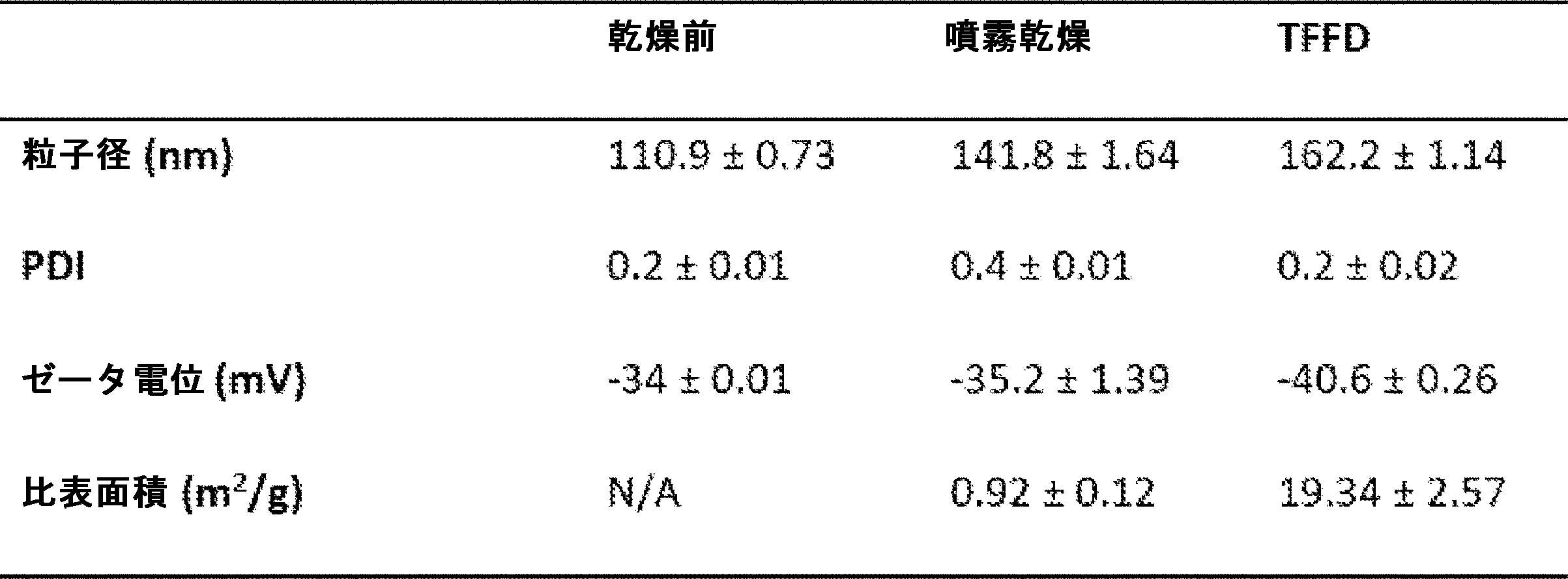
インビトロエアロゾル化性能。NGIを用いてSD粉末およびTFFD粉末のエアロゾル性能を調べ、比較した(図40)。おそらくTFFD粉末の多孔質形態構造および大きな表面積のため、TFFD粉末ではSD粉末製剤より高いFPF(表13)および良好な肺深部領域内への沈着が示された(図40、ステージ4~7参照)。したがって、試験した組成では、TFFDによって調製されたSLN乾燥粉末はSLNの経肺送達に対して、噴霧乾燥によって調製されたものより良好であると結論づけた。 In vitro aerosolization performance. The aerosol performance of SD and TFFD powders was investigated and compared using NGI (Figure 40). TFFD powder showed higher FPF (Table 13) and better deposition within the deep lung region than SD powder formulations (see Figure 40, Stages 4-7), possibly due to the porous morphology and large surface area of TFFD powder. ). Therefore, it was concluded that for the compositions tested, SLN dry powders prepared by TFFD were better for pulmonary delivery of SLN than those prepared by spray drying.
(表13)噴霧乾燥またはTFFDによって調製されたSLNの乾燥粉末の細粒分(FPF)%、空気動力学的質量中央径(MMAD)および幾何学的標準偏差(GSD)の値(データは平均±SDである,n≧3)
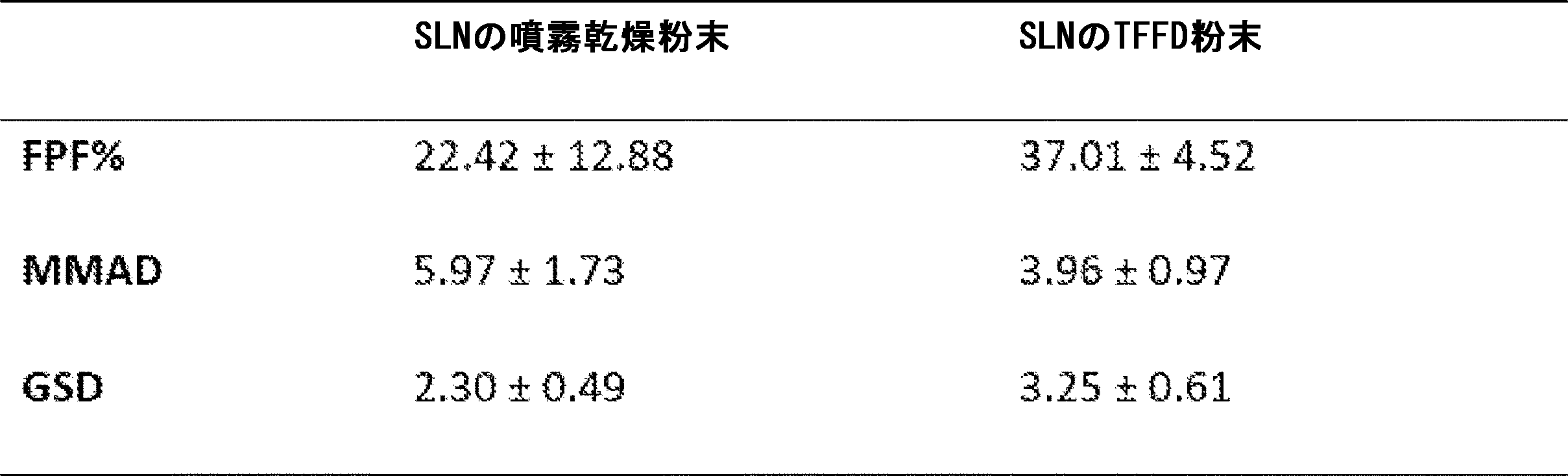
siRNA封入SLNの薄膜凍結乾燥粉末の調製および特性評価。siRNA封入SLNを調製するため、siRNAを生体適合性カチオン性脂質であるDOTAPとN対P比が12対1で混合し、次いで他の成分と混合した後、既報のとおりに溶媒蒸発を行なった。得られたsiRNA-SLNはsiRNAなしのSLNと比べてわずかに大きい粒子径を有していた(表14)。懸濁状態のsiRNA-SLNをマンニトールと1:30,w/wの比で混合し、TFFDに供した。図41Aに示した粉末は綿毛様であり、多孔質組織を有した。siRNA-SLNのサイズは、TFFDおよび再構成に供された後、わずかに増大した。図41Bに、TFFDによって調製されたsiRNA-SLN粉末のエアロゾル性能の特徴を示した。この場合も、siRNA-SLN粉末は、肺深部に相当するステージにおいて高いFPF%(表15)および多くの沈着を有していた(図41B)。肺の肺胞への送達のための主な要因は空気動力学的粒子径である。薄膜凍結乾燥siRNA-SLN粉末では、既報の方法(Nemati et al.,2019;Ohashi et al.,2009)より小さいMMAD、高いFPF%および肺胞に相当するNGIステージまで多くの沈着が示され、TFFDは、エアロゾル送達のためのsiRNA-SLNの乾燥粉末の作製に理想的であることが示唆された。 Preparation and characterization of thin film lyophilized powders of siRNA-encapsulated SLNs. To prepare siRNA-encapsulated SLNs, siRNA was mixed with DOTAP, a biocompatible cationic lipid, in an N:P ratio of 12:1, then mixed with the other components, followed by solvent evaporation as previously reported. . The resulting siRNA-SLN had a slightly larger particle size compared to SLN without siRNA (Table 14). siRNA-SLN in suspension was mixed with mannitol at a ratio of 1:30, w/w and subjected to TFFD. The powder shown in Figure 41A was fluffy and had a porous texture. The size of siRNA-SLN increased slightly after being subjected to TFFD and reconstitution. Figure 41B shows the aerosol performance characterization of siRNA-SLN powders prepared by TFFD. Again, the siRNA-SLN powder had a high FPF% (Table 15) and many deposits at the stage corresponding to the deep lung (Fig. 41B). A major factor for delivery to the alveoli of the lung is the aerodynamic particle size. Thin film freeze-dried siRNA-SLN powder showed a lower MMAD, higher FPF% and more deposition up to the NGI stage corresponding to alveoli by previous methods (Nemati et al., 2019; Ohashi et al., 2009). TFFD was suggested to be ideal for making dry powders of siRNA-SLNs for aerosol delivery.
(表14)TFFDおよび再構成に供される前と後のTNF-a siRNA-SLNの物性の比較。データは平均±SDである(n=3)。
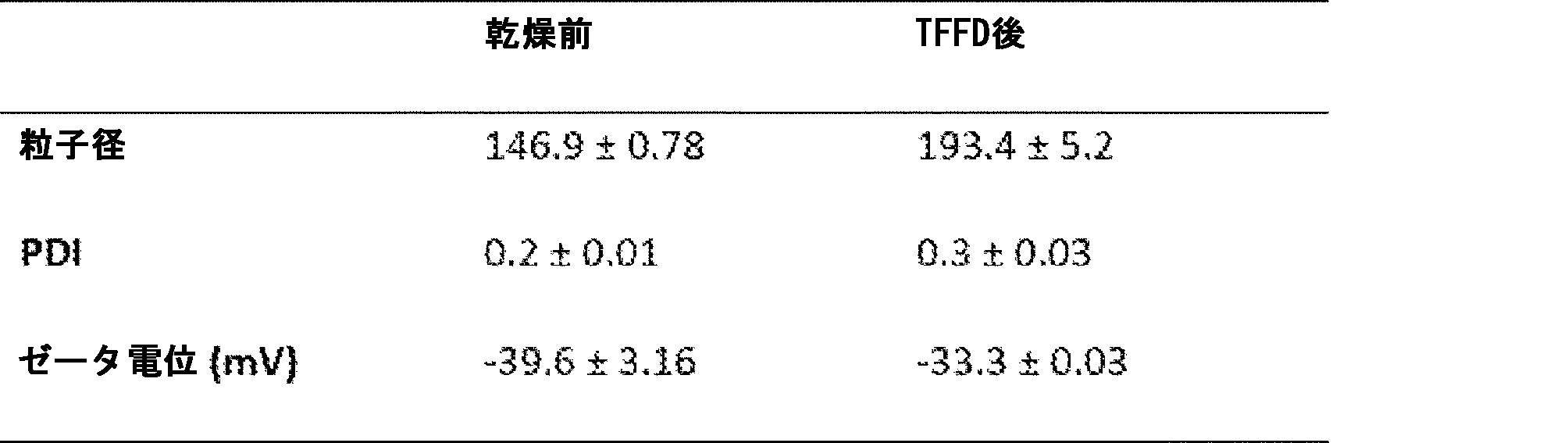
(表15)TFFDによって調製されたsiRNA-SLNの乾燥粉末の細粒分(FPF)%、空気動力学的質量中央径(MMAD)および幾何学的標準偏差(GSD)の値(データは±平均SDである,n≧3)

TFFDおよび再構成に供された後のsiRNA-SLNのsiRNAの機能の検証。siRNA-SLNがTFFDおよび再構成に供された後のsiRNAの機能を検証するため、TNF-α siRNA-SLNを使用し、LPSで活性化されたJ774A.1マウスマクロファージによるTNF-αの発現をsiRNA-SLNが抑制する能力を測定した。図42に示されるように、TFFDおよび再構成に供された後のTNF-α siRNA-SLNは、細胞からのTNF-α放出の下方調節においてTFFD前と同程度に有効であり、TFFDは、siRNAの機能性を損なうことなくsiRNA-SLNを液体の懸濁液から乾燥粉末に変形させるために成功裡に適用され得ることが実証された。 Validation of siRNA function of siRNA-SLN after being subjected to TFFD and reconstitution. To validate the function of siRNA after siRNA-SLN was subjected to TFFD and reconstitution, we used TNF-α siRNA-SLN to detect TNF-α expression by LPS-activated J774A.1 mouse macrophages. The ability of siRNA-SLN to suppress was measured. As shown in Figure 42, TFFD and TNF-α siRNA-SLN after being subjected to reconstitution were as effective as before TFFD in downregulating TNF-α release from cells, and TFFD It was demonstrated that siRNA-SLN can be successfully applied to transform siRNA-SLNs from liquid suspensions to dry powders without compromising siRNA functionality.
疑似粘液中へのsiRNA-SLNの拡散。肺に送達されたsiRNA-SLNが生細胞に到達するためには粘液層を透過する必要がある。siRNA-SLNが肺への送達後、粘液層を透過できるかどうかを評価するため、疑似粘液あり、またはなしTranswellパーミアブルサポートからなる系を用いて粘液透過アッセイを行なった(Norris and Sinko,1997;Desai et al.,1991)。懸濁状態のSLNを粘液上に、粘液を乱すことなくウェルの中央に穏やかに添加し、Transwellの反対側の粒子濃度を異なる時間点で定量した。市販の蛍光標識ポリスチレンビーズ(サイズ、279±4nm;PDI、0.10±0.02;ゼータ電位、+36.0±0.4mV)を対照として使用した。図43に、疑似粘液層あり、またはなしでの膜中に拡散された粒子のパーセンテージを示す。疑似粘液なしでは、SLNおよびポリスチレンビーズはどちらも膜中に急速に拡散され、1時間以内に横ばいに達した。siRNA-SLNの粘液層全体への拡散は明らかに遅かった(図43)が、SLNの約25%が5時間以内に疑似粘液層中に拡散され、siRNA-SLNは、エアロゾル化された後も肺内で薄膜凍結乾燥粉末として肺内の粘液を透過できることが明白に示された。 Diffusion of siRNA-SLN into pseudomucus. siRNA-SLN delivered to the lung must permeate the mucus layer to reach living cells. To assess whether siRNA-SLN can penetrate the mucus layer after delivery to the lung, a mucus penetration assay was performed using a system consisting of Transwell permeable supports with or without simulated mucus (Norris and Sinko, 1997). Desai et al., 1991). Suspended SLN was gently added onto the mucus in the center of the well without disturbing the mucus, and the particle concentration on the opposite side of the Transwell was quantified at different time points. Commercially available fluorescently labeled polystyrene beads (size, 279±4 nm; PDI, 0.10±0.02; zeta potential, +36.0±0.4 mV) were used as controls. Figure 43 shows the percentage of particles diffused into the membrane with and without the simulated mucus layer. Without the simulated mucus, both SLN and polystyrene beads diffused rapidly through the membrane and plateaued within 1 hour. Diffusion of siRNA-SLN throughout the mucus layer was clearly slow (Fig. 43), but about 25% of SLN diffused into the pseudomucus layer within 5 h, and siRNA-SLN remained stable after aerosolization. It was clearly shown to be able to permeate the mucus in the lungs as a thin freeze-dried powder in the lungs.
本試験では、治療用薬剤、例えばTNF-α siRNAの肺への経肺送達が潜在的に可能な良好なエアロゾル特性を有するSLNの乾燥粉末製剤の作製が実現可能であることが実証された。最初に、SLNの乾燥粉末を噴霧乾燥およびTFFDによって調製し、その物性およびエアロゾル特性を比較した。TFFDによって調製された粉末は綿毛様で脆く、噴霧乾燥粉末より良好なエアロゾル特性が示された。TNF-α siRNA封入SLNのTFFD粉末は、培養状態のマクロファージによるTNF-α放出を下方調節する能力において機能性のままであることがさらに示された。おそらくナノ粒子の表面PEG化(Huckaby and Lai,2018)のため、疑似粘液を透過する能力が実証されたことにより、siRNA-SLNのTFFD粉末は、カギとなる炎症促進性サイトカイン、例えばTNF-αに特異的なsiRNAを用いて肺疾患、例えば喘息および他の慢性炎症性疾患を処置するための肺へのsiRNAの経肺送達のために使用することが潜在的に可能であり得ることが期待される。もちろん、siRNAはTNF-a siRNAでなくてもよく、実際、他の核酸ベースの剤、例えばmRNA、shRNA、プラスミドDNA、ミニサークルDNA、DNAオリゴもまた、本試験で使用したSLNと同様のSLNまたは脂質ナノ粒子に製剤化され得ることが期待される。また、ナノ粒子は脂質ベースである必要はなく;高分子ベースのナノ粒子または無機ナノ粒子で作製されたナノ粒子もまた、エアロゾル化のためのTFFDを用いて液体の懸濁液から乾燥粉末に転換され得る。さらに、ナノ粒子は、核酸ベースの剤を保護するため、および標的細胞によるその取込みを改善するための担体として一般的に使用される。核酸ベースの剤が安定であるように特別に改変操作されれば、および/またはナノ粒子の補助を伴わずに標的細胞に取り込まれることができれば、これを、TFFDを用いて良好なエアロゾル特性を有する乾燥粉末に直接転換することができる。さらに、ナノ粒子内に封入される治療用薬剤および/または診断用薬剤は核酸ベースでなくてもよいことは明白である。低分子、タンパク質、ならびに細菌およびウイルスでさえ、ナノ粒子に担持させ得る。最後に、任意の潜在的治療用薬剤および診断用薬剤もまた、ナノ粒子と混合された後、TFFDに供され得る。 This study demonstrated the feasibility of making dry powder formulations of SLNs with good aerosol properties that potentially enable transpulmonary delivery of therapeutic agents, such as TNF-α siRNA, to the lungs. First, dry powders of SLN were prepared by spray drying and TFFD, and their physical and aerosol properties were compared. Powders prepared by TFFD were fluffy and friable, exhibiting better aerosol properties than spray-dried powders. It was further shown that TFFD powder of TNF-α siRNA-encapsulated SLN remained functional in its ability to downregulate TNF-α release by macrophages in culture. Demonstrating the ability to penetrate mucus mimicking, possibly due to surface PEGylation of the nanoparticles (Huckaby and Lai, 2018), the TFFD powder of siRNA-SLNs can be used to stimulate key pro-inflammatory cytokines such as TNF-α. It is hoped that it may potentially be possible to use siRNAs specific for siRNAs to be used for transpulmonary delivery of siRNAs to the lungs to treat pulmonary diseases such as asthma and other chronic inflammatory diseases. be done. Of course, the siRNA need not be TNF-a siRNA, and indeed other nucleic acid-based agents such as mRNA, shRNA, plasmid DNA, minicircle DNA, DNA oligos may also form SLNs similar to those used in this study. Or it is expected that it can be formulated into lipid nanoparticles. Also, nanoparticles need not be lipid-based; nanoparticles made of polymer-based or inorganic nanoparticles can also be converted from liquid suspensions to dry powders using TFFD for aerosolization. can be converted. Additionally, nanoparticles are commonly used as carriers to protect nucleic acid-based agents and to improve their uptake by target cells. If the nucleic acid-based agent is specifically engineered to be stable and/or can be taken up by target cells without nanoparticle assistance, it can be shown to have good aerosol properties using TFFD. can be directly converted into a dry powder with Furthermore, it is clear that the therapeutic and/or diagnostic agents encapsulated within the nanoparticles need not be nucleic acid-based. Small molecules, proteins, and even bacteria and viruses can be loaded onto nanoparticles. Finally, any potential therapeutic and diagnostic agents can also be subjected to TFFD after being mixed with the nanoparticles.
コロイド状懸濁液の凍結乾燥は以前に詳細に報告されており、増量剤によって引き起こされるコロイド状ナノ粒子のサイズ増大は安定なコロイド系において普遍的であることが示された(Lintingre et al.,2016)。これは、siRNAが封入された、または封入されていないSLNの流体力学的直径が、TFFDに供された後に増大する説明となり得る。賦形剤に対するSLNの比は、SLNの粒子径および多分散指数(PDI)への影響に大きな役割を果たす。コロイド状懸濁液の凍結乾燥は多工程プロセスであり、かかるプロセスを説明するのはかなり難しい。凍結工程において、凍結によって引き起こされる粒子の凝集は主に、粒子を高い凍結応力を伴う狭い面積に押しやる氷の結晶化に起因する。乾燥工程では、該1種または複数種の賦形剤が水の代用としての機能を果たし、粒子表面との水素結合を確立することによって粒子を安定化させる(Abdelwahed et al.,2006)。TFFD技術は2つの局面において特殊である:第1に、冷却速度が1~10 K/分程度である棚式凍結と比べて冷却速度が500~1000 K/s17の範囲である。このより高速な冷却によって氷結晶が小さくなる。第2に、TFFDプロセスでは1ミリメートルより薄い厚さを有する薄膜がもたらされ、薄膜内のフリースペースは、水が昇華過程で移動するチャネルを提供する。滴下および凍結のプロセス時の液滴と空気との間の気体-液体間界面張力によってナノ粒子の凝集が引き起こされるのかどうかは不明であるが、気体-液体間界面張力は噴霧凍結時より低い。最後に、TFFDおよび再構成に供された後のSLNの流体力学的サイズのわずかな増大は、粒子径が200nmより小さいままであり、SLN内のsiRNAの機能性は損なわれなかったため、経肺送達に対して生物学的に有意にはなり得ない。必要であれば、粒子径の変化を最小限にするための、賦形剤ならびに凍結および凍結乾燥手順の修正にかかわる将来的な取り組みが適用され得る。 Lyophilization of colloidal suspensions has been previously reported in detail, and the size increase of colloidal nanoparticles caused by bulking agents was shown to be universal in stable colloidal systems (Lintingre et al. 2016). This may explain the increase in hydrodynamic diameter of SLNs with or without siRNA encapsulation after being subjected to TFFD. The ratio of SLN to excipient plays a major role in influencing SLN particle size and polydispersity index (PDI). Freeze-drying of colloidal suspensions is a multi-step process that is rather difficult to describe. In the freezing process, freezing-induced particle agglomeration is primarily due to ice crystallization that forces particles into small areas with high freezing stress. In the drying process, the excipient(s) act as a substitute for water and stabilize the particles by establishing hydrogen bonds with the particle surface (Abdelwahed et al., 2006). TFFD technology is special in two respects: First, the cooling rate is in the range of 500-1000 K/s17 compared to shelf freezing where the cooling rate is in the order of 1-10 K/min. This faster cooling results in smaller ice crystals. Second, the TFFD process results in thin films with thicknesses less than 1 millimeter, and the free space within the thin films provides channels for water to travel during the sublimation process. It is unclear whether the gas-liquid interfacial tension between the droplets and air during the dropping and freezing process causes aggregation of the nanoparticles, but the gas-liquid interfacial tension is lower than during spray freezing. Finally, a slight increase in the hydrodynamic size of SLNs after being subjected to TFFD and reconstitution indicated that the particle size remained smaller than 200 nm and the functionality of siRNA within SLNs was not compromised, suggesting transpulmonary cannot be biologically significant for delivery. If necessary, future efforts involving modification of excipients and freezing and lyophilization procedures to minimize changes in particle size can be applied.
したがって、本試験は、肺疾患を処置するための経肺送達が潜在的に可能な良好なエアロゾル特性を有する、siRNAが封入された、またはsiRNAなしの、固形脂質ナノ粒子の乾燥粉末を調製するために、薄膜凍結乾燥を適用することができることを示す。 Thus, the present study prepares dry powders of solid lipid nanoparticles with or without siRNA encapsulating siRNA with good aerosol properties that potentially allow pulmonary delivery to treat pulmonary diseases. We show that thin-film freeze-drying can be applied for this purpose.
C. 経肺送達の潜在的可能性のためのTNF-α siRNA固形脂質ナノ粒子のエアロゾル性能
1. 方法
カチオン性脂質と複合体形成されたTNF-a siRNAを、レシチン、コレステロールおよびポリエチレングリコール(2000)-ヒドラゾン-ステアリン酸(C18)誘導体を用いて調製された固形脂質ナノ粒子内にナノ沈殿によって封入することにより、siRNA固形脂質ナノ粒子を操作した。ナノ粒子をTopFluorコレステロールで蛍光標識した。siRNA固形脂質ナノ粒子の乾燥粉末製剤を調製するため、マンニトールをナノ粒子懸濁液に添加し、次いで懸濁液を凍結乾燥させた。乾燥粉末のエアロゾル性能を、次世代インパクター(NGI)を用いて検査した。
C. Aerosol Performance of TNF-α siRNA Solid Lipid Nanoparticles for Potential Pulmonary Delivery
1. Methods Cationic lipid-complexed TNF-a siRNA was nanoprecipitated into solid lipid nanoparticles prepared using lecithin, cholesterol and polyethylene glycol (2000)-hydrazone-stearic acid (C18) derivatives. siRNA solid lipid nanoparticles were engineered by encapsulating with . Nanoparticles were fluorescently labeled with TopFluor cholesterol. To prepare a dry powder formulation of siRNA solid lipid nanoparticles, mannitol was added to the nanoparticle suspension and the suspension was then lyophilized. The aerosol performance of dry powders was examined using the Next Generation Impactor (NGI).
エアロゾル性能を評価するための次世代インパクター(NGI)実験では、ナノ粒子を、全コレステロールの1.25%w/wのTopFluorコレステロール(Bodipy labelled)で蛍光標識した。噴霧乾燥試験では、カチオン性脂質およびsiRNAを製剤に添加しなかった。TEM画像を撮影し、マクロファージ取込み試験を行なった。Buchi B290噴霧乾燥機を使用し、マンニトールを賦形剤として用いて乾燥粉末製剤を調製した。凍結乾燥では、凍結保護剤および理想的な賦形剤濃度の予備スクリーニングを行なった。SLNのエアロゾル性能をNGIによって測定した。 In next generation impactor (NGI) experiments to evaluate aerosol performance, nanoparticles were fluorescently labeled with TopFluor cholesterol (Bodipy labeled) at 1.25% w/w of total cholesterol. In the spray-drying studies, no cationic lipids and siRNA were added to the formulations. A TEM image was taken and a macrophage uptake test was performed. A dry powder formulation was prepared using a Buchi B290 spray dryer using mannitol as an excipient. Lyophilization included a preliminary screening of cryoprotectants and ideal excipient concentrations. Aerosol performance of SLN was measured by NGI.
2. 結果および結論
TNF-a siRNA固形脂質ナノ粒子は球形であった。その粒子径および多分散指数は118±7nmおよび0.16±0.01であった。細胞培養物において、TNF-a siRNA固形脂質ナノ粒子は、リポ多糖で処理されたJ774A.1マウスマクロファージによるTNF-αの発現を有意に下方調節した(図44)。NGIデータにより、ナノ粒子の乾燥粉末は、細粒分(FPF)が78.5%の良好なエアロゾル性能を有することが実証された(図45)。TNF-a siRNA固形脂質ナノ粒子は球形であった。その粒子径および多分散指数は118±7nmおよび0.16±0.01であった(図46)。
2. Results and conclusions
TNF-a siRNA solid lipid nanoparticles were spherical. Its particle size and polydispersity index were 118±7 nm and 0.16±0.01. In cell culture, TNF-a siRNA solid lipid nanoparticles significantly down-regulated TNF-α expression by J774A.1 mouse macrophages treated with lipopolysaccharide (FIG. 44). NGI data demonstrated that the dry powder of nanoparticles had good aerosol performance with a fine particle fraction (FPF) of 78.5% (Figure 45). TNF-a siRNA solid lipid nanoparticles were spherical. Its particle size and polydispersity index were 118±7 nm and 0.16±0.01 (FIG. 46).
SLNの乾燥粉末製剤。図47に示すSLNの乾燥粉末製剤の物理的外観。ともにブルナウアー・エメット・テラー(BET)によって測定した噴霧乾燥SLN粉末の比表面積は0.92±0.11m2/gであったが、凍結乾燥粉末は19.34±2.5m2/gであった。 Dry powder formulation of SLN. Physical appearance of the dry powder formulation of SLN shown in FIG. The specific surface area of the spray-dried SLN powder, both measured by Brunauer-Emmett-Teller (BET), was 0.92±0.11 m 2 /g, while the freeze-dried powder was 19.34±2.5 m 2 /g.
SEM画像により、凍結乾燥粉末の方が噴霧乾燥粉末より多孔質であることが示された(図48)。NGI実験により、凍結乾燥粉末製剤の方が噴霧乾燥製剤と比べてエアロゾル性能が良好であることが示された(図49)。粒子径およびPDIは、どちらの乾燥方法後もわずかに増大した(表16)。 SEM images showed that the freeze-dried powder was more porous than the spray-dried powder (Figure 48). NGI experiments showed that the freeze-dried powder formulation had better aerosol performance compared to the spray-dried formulation (Figure 49). Particle size and PDI increased slightly after both drying methods (Table 16).
(表16)各乾燥方法の前後での粒子径およびPDI

図50に示した乾燥前後でのサイズ分布の比較。乾燥工程前にナノ粒子を懸濁させるための異なるバッファーおよび/または凍結保護剤を用いた賦形剤のスクリーニングもまた行なったが、有効な条件は得られなかった。 Comparison of size distribution before and after drying shown in FIG. Screening of excipients using different buffers and/or cryoprotectants to suspend the nanoparticles prior to the drying step was also performed, but no effective conditions were obtained.
したがって、本試験は、TNF-a siRNA固形脂質ナノ粒子製剤により、マウスモデルにおいて培養状態のマクロファージによるTNF-α産生を成功裡に阻害でき、慢性炎症が緩和されたことを示す。ナノ粒子の乾燥粉末は経肺送達のための良好なエアロゾル性能を示した。 Thus, this study demonstrates that TNF-a siRNA solid lipid nanoparticle formulations can successfully inhibit TNF-α production by macrophages in culture and alleviate chronic inflammation in a mouse model. The dry powder of nanoparticles showed good aerosol performance for pulmonary delivery.
実施例5-細菌の薄膜凍結および薄膜凍結乾燥
A. 結果
1. 細菌の薄膜凍結
単一コロニーの大腸菌DH5α(Invitrogen,Carlsbad,CA)を3mLのルリア-ベルターニブロス(LB)培地(Invitrogen)中に播種して培養を開始し、次いで100mLのLB培地に移し、振盪下、33℃で一晩インキュベートした。細菌を2000 rcfで15分間の遠心分離によって収集し、冷リン酸緩衝生理食塩水(PBS、pH7.4、10mM)で1回洗浄した。遠心分離後、細菌を、10%(w/v)スクロースを有する溶液再懸濁させて元の容量にした。薄膜凍結のため、250μLの細菌懸濁液(0.7~5×108コロニー形成単位(CFU)/ml)を、シリンジに取り付けられた21ゲージの針を用いて、ドライアイスで事前に冷却した20mL容ガラスバイアルの底に滴下した。次いで、凍結された細菌薄膜を有するガラスバイアルにキャップし、室温で放置して解凍するか、またはさらなる試験まで-80℃で保存した。棚式凍結を対照として使用した。簡単には、250μLの細菌懸濁液を20mL容ガラスバイアル内に分注し、次いで-20℃で2時間凍結させた。凍結・解凍の前または後の懸濁液中の生菌数を、LB培地での段階希釈後、LB寒天培地プレートを用いる標準的なプレートアッセイを使用した測定した。表17に、細菌を薄膜凍結または棚式凍結に供した後の回収された生菌のパーセントおよびlog CFU減少を示す。全体的に、棚式凍結に供された後より薄膜凍結に供された後の方が多くの細菌が生存したままであった。
Example 5 - Film Freezing and Film Freeze-Drying of Bacteria
A. Results
1. Thin Film Freezing of Bacteria A single colony of E. coli DH5α (Invitrogen, Carlsbad, Calif.) was inoculated into 3 mL of Luria-Bertani Broth (LB) medium (Invitrogen) to initiate culture and then transferred to 100 mL of LB medium. , incubated overnight at 33°C with shaking. Bacteria were harvested by centrifugation at 2000 rcf for 15 minutes and washed once with cold phosphate-buffered saline (PBS, pH 7.4, 10 mM). After centrifugation, bacteria were resuspended in a solution with 10% (w/v) sucrose to the original volume. For thin film freezing, 250 μL of bacterial suspension (0.7-5×10 8 colony-forming units (CFU)/ml) was added to 20 mL pre-chilled on dry ice using a 21-gauge needle attached to a syringe. Drops were added to the bottom of a glass vial. Glass vials with frozen bacterial films were then capped and left at room temperature to thaw or stored at -80°C until further testing. Shelf freezing was used as a control. Briefly, 250 μL of bacterial suspension was aliquoted into 20 mL glass vials and then frozen at −20° C. for 2 hours. Viable counts in suspensions before or after freeze-thaw were determined using a standard plate assay using LB agar plates after serial dilutions in LB medium. Table 17 shows the percentage of viable bacteria recovered and the log CFU reduction after subjecting the bacteria to thin film freezing or shelf freezing. Overall, more bacteria remained viable after being subjected to thin film freezing than after being subjected to shelf freezing.
(表17)棚式凍結または薄膜凍結に供された後の細菌生存性の比較
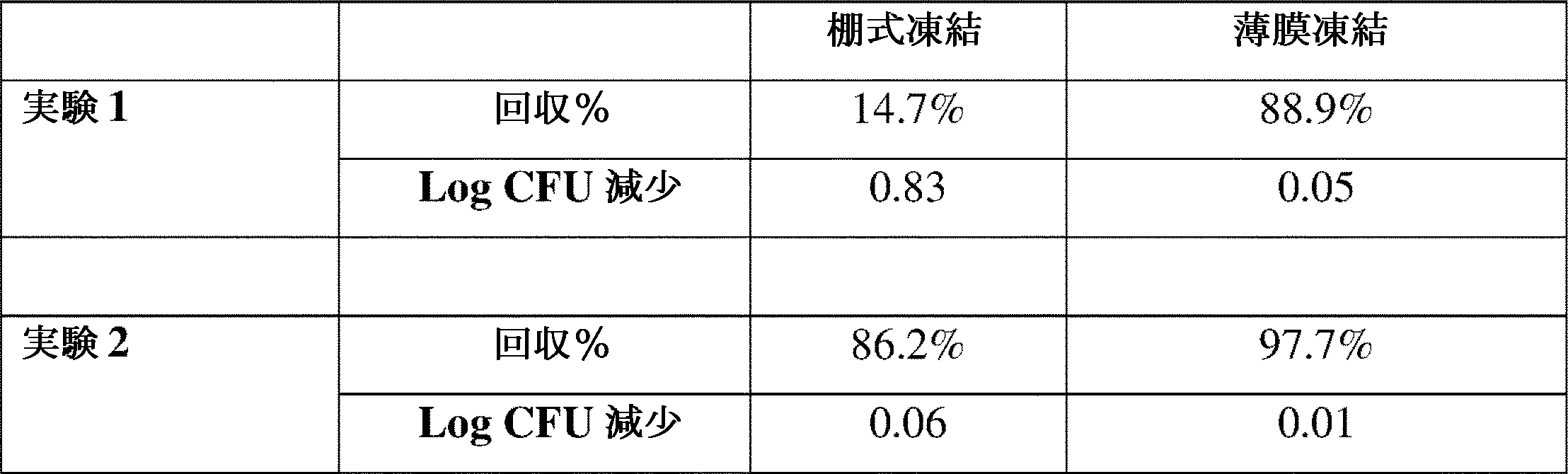
2. 細菌の薄膜凍結乾燥
細菌乾燥粉末を調製するため、10%スクロース(w/v)中に懸濁させた細菌を標準的な凍結乾燥サイクルに供した(すなわち、試料をVirtis Advantage凍結乾燥機(Warminster,PA)で乾燥させ;圧力を<10mbarにし;棚板温度を24時間、-40℃にし、24時間で25℃までランプ制御し、次いで25℃で24時間保持した、すなわち表18の方法A)。次いで乾燥粉末を、LB培地を用いて再構成し、懸濁液中の生菌数を、滅菌PBS(pH7.4、10mM)での段階希釈後にプレートアッセイによって測定した。驚くべきことに、生菌はわずか0.09%であり、対数減少値は3より大きかった(表19)。したがって、薄膜凍結乾燥および再構成に供された後の細菌の生存性に対する凍結乾燥サイクルならびに該1種または複数種の賦形剤の組成の効果を試験した(表18および19)。最終的に、組成および凍結乾燥方法は30%近くの細菌を保持することがわかった(すなわち、対数減少値は0.54)(表19)。図51は、薄膜凍結乾燥を用いて調製される細菌乾燥粉末は棚式凍結乾燥によって調製されるものと異なることを示す。
2. Thin Film Lyophilization of Bacteria To prepare a dry bacterial powder, bacteria suspended in 10% sucrose (w/v) were subjected to a standard freeze-drying cycle (i.e., samples were placed in the Virtis Advantage Freeze Dryer). (Warminster, PA); pressure was <10 mbar; shelf temperature was -40°C for 24 hours, ramped to 25°C in 24 hours, then held at 25°C for 24 hours, i.e., in Table 18. Method A). The dry powder was then reconstituted with LB medium and viable counts in suspension were determined by plate assay after serial dilution in sterile PBS (pH 7.4, 10 mM). Surprisingly, only 0.09% viable bacteria, a greater than 3 log reduction (Table 19). Therefore, the effect of freeze-drying cycle and composition of the excipient(s) on bacterial viability after being subjected to thin-film freeze-drying and reconstitution was tested (Tables 18 and 19). Ultimately, the composition and freeze-drying method were found to retain close to 30% bacteria (ie a log reduction of 0.54) (Table 19). Figure 51 shows that dry bacterial powders prepared using thin film freeze-drying differ from those prepared by shelf freeze-drying.
(表18)薄膜凍結された細菌薄膜から水分を除去するために使用した凍結乾燥条件
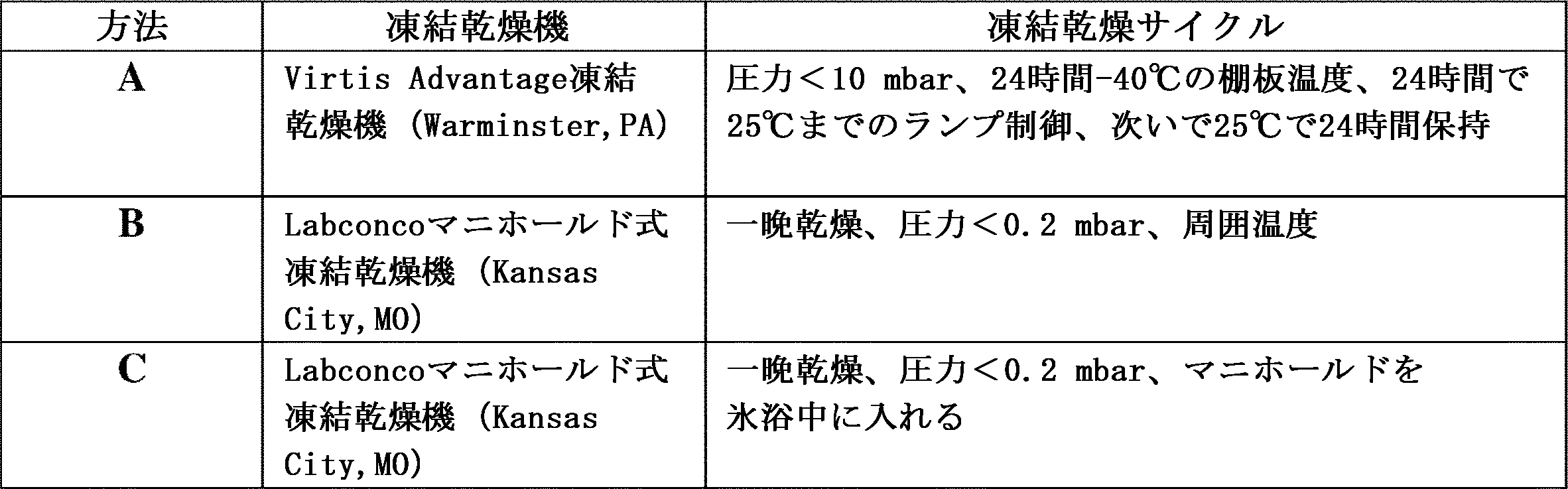
(表19)異なる賦形剤および凍結乾燥方法を用いた大腸菌(E.coli)の薄膜凍結乾燥(TFF、薄膜凍結;フラッシュ凍結、250μLの細菌懸濁液が入った20mL容ガラスバイアルを液体窒素中で1分未満凍結)
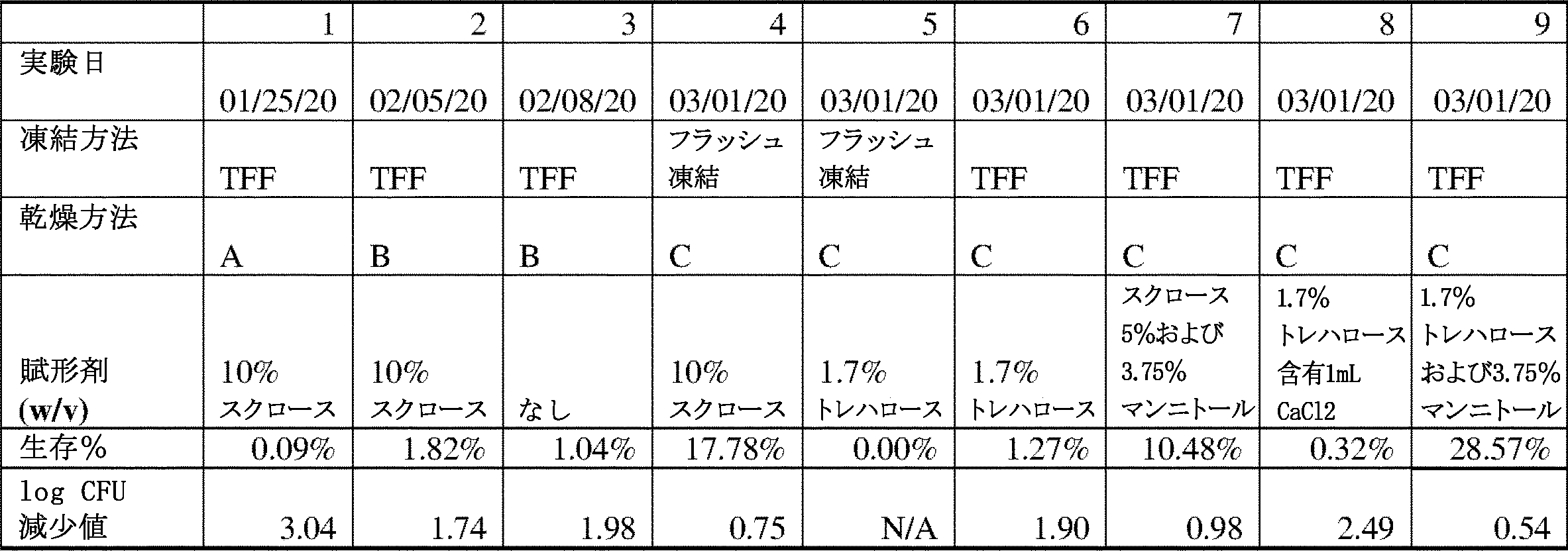
3. 凍結・解凍
表20は、凍結・解凍実験の結果を示す。細胞を4000 RPMで30分間、遠心分離し、次いで10%w/vスクロース溶液中に再懸濁させた。非凍結群の実験では、100μLの懸濁液に段階希釈を直接、行なった。棚式凍結実験では、500μLの懸濁液を-20℃の冷蔵庫内に30分間入れ、次いで室温まで昇温させた。TFF実験では、250μLの懸濁液を、ドライアイス-エタノール浴中で事前に冷却した20mL容ガラスバイアルに滴下し、次いでそのまま室温まで昇温させた。
3. Freeze-Thaw Table 20 shows the results of the freeze-thaw experiments. Cells were centrifuged at 4000 RPM for 30 minutes and then resuspended in a 10% w/v sucrose solution. For non-frozen group experiments, serial dilutions were made directly into 100 μL of suspension. In shelf-freezing experiments, 500 μL of suspension was placed in a −20° C. refrigerator for 30 minutes and then allowed to warm to room temperature. For TFF experiments, 250 μL of suspension was dropped into a 20 mL glass vial pre-chilled in a dry ice-ethanol bath and then allowed to warm to room temperature.
(表20)凍結・解凍実験の結果

薄膜凍結乾燥された細菌乾燥粉末の調製以外に、本明細書に開示の方法は、他の生物体、例えば真菌、酵母、古細菌、ウイルス、花粉などの乾燥粉末製剤を調製するためにも適用され得ることも想定される。生物体は、生きているもの、弱毒化されたもの、または不活化されたものであり得る。 Besides the preparation of thin film lyophilized bacterial dry powders, the methods disclosed herein are also applicable to prepare dry powder formulations of other organisms such as fungi, yeasts, archaea, viruses, pollen, etc. It is also envisioned that Organisms can be live, attenuated, or inactivated.
B. TFF細菌調製物のさらなる最適化
別個の試験において、細菌に対してステンレス鋼ドラム上での薄膜凍結の使用を行ない、凍結された薄膜から水分を、Virtis Advantage Pro凍結乾燥機(Warminster,PA)を用いて昇華させた。簡単には、アンピシリン耐性のpUC19ベクター(Invitrogen,Carlsbad,CA)を有する単一コロニーの大腸菌DH5αを5mLのミラールリア-ベルターニブロス(LB)培地(Invitrogen)中に播種して一晩の培養を開始し、次いで100mLのLB培地に移し、振盪下37℃で、OD600が0.4に達するまでインキュベートした。細菌を4300 rcfで5分間の遠心分離により周囲温度で収集した。遠心分離後、細菌を凍結保護剤カクテルに元の培養容量の10%で再懸濁させた。薄膜凍結のため、1000μLの細菌懸濁液(0.1~2×10⁹コロニー形成単位(CFU)/ml)を、シリンジに取り付けられた21ゲージの針を用いて、-40℃まで事前に冷却した回転式のステンレスドラムに滴下した。凍結された膜を5mL容アンバーガラスバイアルに回収し、表21に示すサイクルを用いる凍結乾燥まで-80℃で保存した。TFFDプロセスに供する前または後の懸濁液中の生菌数を、LB培地を用い、LB寒天培地プレートに塗り広げる標準的な段階希釈法を用いて測定した。
B. Further Optimization of TFF Bacterial Preparations In a separate study, bacteria were subjected to the use of thin film freezing on stainless steel drums and moisture was removed from the frozen thin films using a Virtis Advantage Pro Freeze Dryer (Warminster, PA). ) was used for sublimation. Briefly, a single colony of E. coli DH5α harboring an ampicillin-resistant pUC19 vector (Invitrogen, Carlsbad, Calif.) was inoculated into 5 mL of Millarria-Bertani Broth (LB) medium (Invitrogen) and overnight cultures were initiated. Then transferred to 100 mL LB medium and incubated at 37° C. with shaking until OD600 reached 0.4. Bacteria were harvested at ambient temperature by centrifugation at 4300 rcf for 5 minutes. After centrifugation, bacteria were resuspended in cryoprotectant cocktail at 10% of the original culture volume. For thin film freezing, 1000 μL of bacterial suspension (0.1-2×10 9 colony forming units (CFU)/ml) was prechilled to −40° C. using a 21 gauge needle attached to a syringe. Dropped onto a rotating stainless steel drum. Frozen membranes were collected in 5 mL amber glass vials and stored at −80° C. until lyophilization using the cycles shown in Table 21. Viable cell counts in suspensions before or after being subjected to the TFFD process were determined using a standard serial dilution method using LB medium and spreading on LB agar plates.
(表21)Virtis Advantage Pro 85凍結乾燥機を用いた細菌の凍結乾燥サイクル

表22に、いろいろな配合の凍結保護剤カクテル、細菌を薄膜凍結乾燥に供した後のCFU数およびlog CFU減少値を示す。少数の製剤では、棚式凍結に供した後より細菌を薄膜凍結に供した後の方が、生存性の低下を1log以内に最小限にできる。 Table 22 shows the different formulations of cryoprotectant cocktails, CFU counts and log CFU reduction after subjecting the bacteria to thin film freeze-drying. For a few formulations, the loss of viability can be minimized to within 1 log after subjecting the bacteria to thin film freezing than after shelf freezing.
(表22)凍結保護剤カクテルおよびTFFD後の細菌生存性
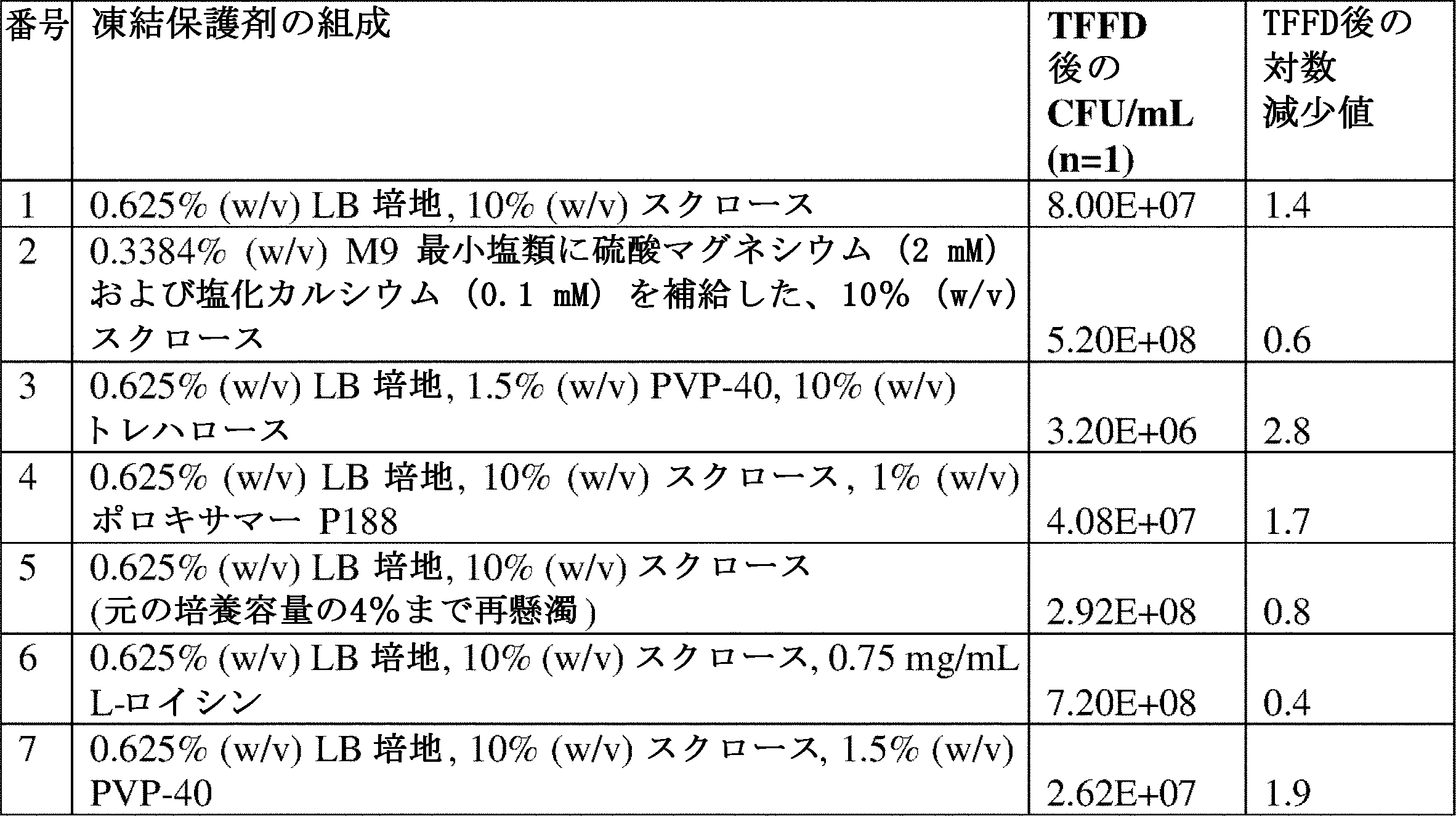
実施例6-プラスミドDNAの薄膜凍結および薄膜凍結乾燥
A. 材料および方法
i. 材料
β-ガラクトシダーゼ遺伝子コードプラスミドDNA pCMV-βはAmerican Type Culture Collection(ATCC,Manassas,VA)のものであった。これは、哺乳動物の細胞内で大腸菌ベータ-ガラクトシダーゼ(β-Gal)を異なるウイルスプロモーターの制御下で発現することができるpUC19プラスミドをベースに構築されていた(MacGregor et al.,1989)。大腸菌DH5αコンピテント細胞およびLBブロスはInvitrogen(Carlsbad,CA)のものであった。1,4-ジオキサンおよびtert-ブタノール、Tris-EDTA(TE)バッファーならびにアンピシリンはFisher Scientific(Fair Lawn,NJ)のものであった。アガロースはAmresco(Atlanta,GA)のものであった。ポリソルベート20、ラクトース一水和物および無水メタノールはSigma-Aldrich(St.Louis,MO)のものであった。Quant-iT(商標)PicoGreen(商標)dsDNAアッセイキットはThermo Scientific(Waltham,MA)のものであった。サイズ3号ヒドロキシプロピルメチルセルロースカプセルはQuali-V-Iカプセル(Qualicaps US、Whitsett,NC)のものであった。
Example 6 - Thin Film Freezing and Thin Film Lyophilization of Plasmid DNA
A. Materials and Methods
i. Materials β-galactosidase gene-encoding plasmid DNA pCMV-β was from the American Type Culture Collection (ATCC, Manassas, VA). It was constructed based on the pUC19 plasmid, which is capable of expressing E. coli beta-galactosidase (β-Gal) in mammalian cells under the control of different viral promoters (MacGregor et al., 1989). E. coli DH5α competent cells and LB broth were from Invitrogen (Carlsbad, Calif.). 1,4-dioxane and tert-butanol, Tris-EDTA (TE) buffer and ampicillin were from Fisher Scientific (Fair Lawn, NJ). Agarose was from Amresco (Atlanta, GA).
ii. プラスミドの調製
pCMV-βプラスミドで大腸菌DH5αを選択的増殖条件下で形質転換し、次いで増幅させ、QIAGEN Midiprep Kit(Valencia,CA)を用いて精製した。大規模プラスミド調製をQIAGEN Plasmid Maxiキットによって行なった。プラスミドを、アガロースゲルおよびThermo Scientific(Waltham,MA)のNanodrop 2000分光光度計を用いて評価した。
ii. Plasmid preparation
The pCMV-β plasmid was transformed into E. coli DH5α under selective growth conditions, then amplified and purified using the QIAGEN Midiprep Kit (Valencia, Calif.). Large-scale plasmid preparations were performed with the QIAGEN Plasmid Maxi kit. Plasmids were evaluated using agarose gels and a
iii. 薄膜凍結を用いたプラスミドDNA乾燥粉末の調製
吸入用乾燥粉末の最良の製剤についてスクリーニングするため、pCMV-βならびに賦形剤(すなわち、マンニトールおよびロイシン)を水、Tris-EDTA(TE)バッファー、1,4-ジオキサン/水(10/90、v/v)またはTert-ブタノール/水(40/60、v/v)のいずれかに、表23に示したとおりの種々の固形分およびプラスミド負荷で溶解させた。製剤を2~8℃の冷蔵庫内に一時的に保存した後、薄膜凍結プロセスに適用した。
iii. Preparation of Plasmid DNA Dry Powder Using Thin Film Freezing To screen for the best formulation of dry powder for inhalation, pCMV-β and excipients (i.e. mannitol and leucine) were mixed in water, Tris-EDTA (TE) buffer. , in either 1,4-dioxane/water (10/90, v/v) or tert-butanol/water (40/60, v/v) at various solids and plasmid concentrations as shown in Table 23. Dissolved under load. The formulation was temporarily stored in a refrigerator at 2-8°C before being applied to the thin film freezing process.
(表23)プラスミド組成物およびTFFパラメータの一覧
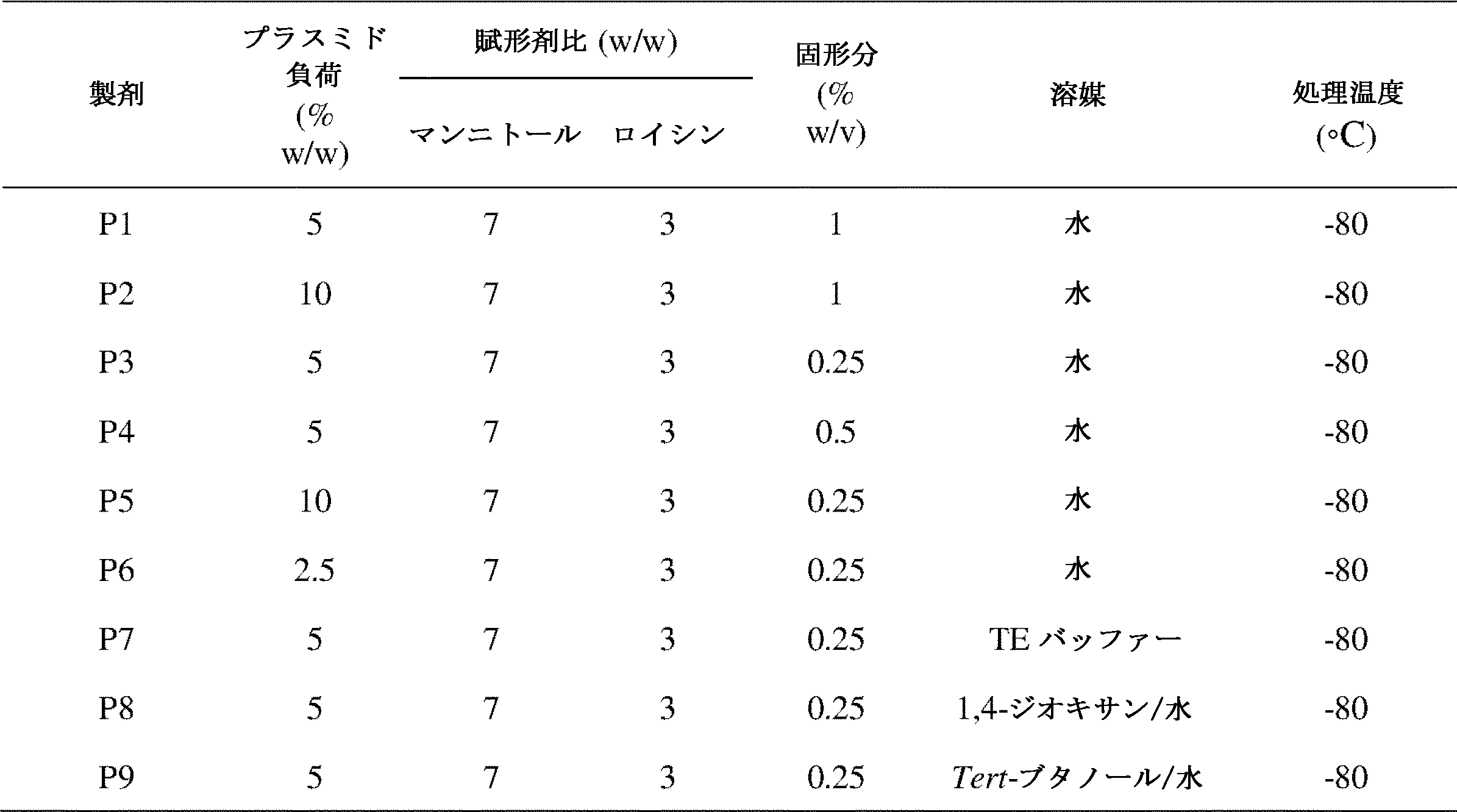
TFFプロセスおよび凍結乾燥を既報のとおりに行なった(Li et al.,2015;Sahakijpijarn et al.,2020a;Moon et al.,2019;Sahakijpijarn et al.,2020b)。簡単には、0.25mLの試料を21ゲージシリンジから回転式極低温冷却ステンレス鋼表面(-80±10℃)上に滴下した。凍結薄膜を形成させるため、ドラムの極低温冷却スチール表面が回転する速度を、液滴の重なりが回避される5~7rpmに制御した。凍結された薄膜を、スチールブレードを用いて剥がし、ガラスバイアル内の液体窒素中に回収した。ガラスバイアルに、半分開口状態でラバーストッパーを用いてキャップし、一時的な保存のため-80℃のフリーザー(Thermo Fisher Scientific)内に移し、次いで、ストッパーリキャップ機能を有するVirTis Advantageベンチトップ型トレイ式凍結乾燥機(The VirTis Company,Inc.Gardiner,NY)に移した。凍結乾燥を60時間にわたって100mTorr以下の圧力で行ない、その間、棚板温度を-40℃から25℃まで徐々にランプ制御した。凍結乾燥サイクルを表24に示す。 The TFF process and freeze-drying were performed as previously reported (Li et al., 2015; Sahakijpijarn et al., 2020a; Moon et al., 2019; Sahakijpijarn et al., 2020b). Briefly, 0.25 mL of sample was dropped from a 21 gauge syringe onto a rotating cryogenically cooled stainless steel surface (-80±10° C.). To form a frozen film, the speed at which the cryogenically cooled steel surface of the drum was rotated was controlled at 5-7 rpm, which avoids droplet overlap. Frozen films were scraped off using a steel blade and collected in liquid nitrogen in glass vials. Glass vials are capped half-open with rubber stoppers, transferred into a -80°C freezer (Thermo Fisher Scientific) for temporary storage, and then placed in a VirTis Advantage benchtop tray with stopper recapping. Transferred to a freeze dryer (The VirTis Company, Inc. Gardiner, NY). Freeze-drying was carried out at pressures below 100 mTorr for 60 hours, during which the shelf temperature was gradually ramped from -40°C to 25°C. Lyophilization cycles are shown in Table 24.
(表24)薄膜凍結されたプラスミドを凍結乾燥させるために使用した凍結乾燥サイクル

iv. インビトロエアロゾル性能の評価
薄膜凍結乾燥されたプラスミド粉末試料のエアロゾル性能特性を既報のとおりに測定した(Li et al.,2015;Sahakijpijarn et al.,2020a;Moon et al.,2019;Sahakijpijarn et al.,2020b)。簡単には、High-Capacity Pump(型番HCP5,Copley Scientific,Nottingham,UK)およびCritical Flow Controller(型番TPK 2000,Copley Scientific,Nottingham,UK)に接続された次世代薬剤インパクター(NGI)(MSP Corp,Shoreview,MN)をエアロゾル性能の評価のために採用した。放出される粒子がNGI回収プレート中に飛び散るのを回避するため、プレートを1.5%w/vのポリソルベート20含有メタノールでプレコートし、風乾させた後に解析した。プラスミドDNA粉末(2~3mg)をサイズ3号カプセル内に負荷し、カプセルを、米国薬局方(USP)導入ポート(Copley Scientific,Nottingham,UK)を取り付けた高抵抗Plastiape(登録商標)RS00吸入器(Plastiape S.p.A,Osnago,Italy)内に装填した。各動作あたり粉末をNGIに60 L/分の流速で4秒間分散させると、デバイスにおいて4 kPaの圧力降下がもたらされた。次いで、カプセル、吸入器、アダプター、導入ポート、ステージ1~7およびマイクロオリフィス捕集部(MOC)から、沈着した粉末を、水で希釈することによって回収し、沈着したプラスミドDNAの量を、PicoGreen(商標)dsDNAアッセイキットを製造業者の指示書に従って用いて定量した。
iv. Evaluation of in vitro aerosol performance al., 2020b). Briefly, a Next Generation Drug Impactor (NGI) (MSP Corp , Shoreview, Minn.) was adopted for the evaluation of aerosol performance. To avoid splattering of released particles into NGI collection plates, plates were precoated with 1.5% w/
Copley Inhaler Testing Data Analysis Software(CITDAS)バージョン3.10(Copley Scientific,Nottingham,UK)を使用し、空気動力学的質量中央径(MMAD)、幾何学的標準偏差(GSD)および細粒分(FPF)を計算した。回収量のFPFは、回収されたプラスミドの総量のうちのパーセンテージとしての5μm未満の空気動力学的直径を有するプラスミドの全回収量として計算した。送達量のFPFは、アダプター、導入ポート、ステージ1~7およびMOCに沈着していたプラスミドの総量のうちのパーセンテージとしての5μm未満の空気動力学的直径を有するプラスミドの全回収量として計算した。 Copley Inhaler Testing Data Analysis Software (CITDAS) version 3.10 (Copley Scientific, Nottingham, UK) was used to calculate mass median aerodynamic diameter (MMAD), geometric standard deviation (GSD) and fine particle fraction (FPF). Calculated. Recovery FPF was calculated as the total recovery of plasmids with an aerodynamic diameter less than 5 μm as a percentage of the total amount of plasmid recovered. The delivered FPF was calculated as the total recovery of plasmids with an aerodynamic diameter less than 5 μm as a percentage of the total amount of plasmid that had been deposited on the adapter, introduction port, stages 1-7 and MOC.
v. 走査型電子顕微鏡法(SEM)
粉末の形態構造を、Zeiss Supra 40C走査型電子顕微鏡(SEM)(Carl Zeiss,Heidenheim an der Brenz,Germany)を用いて、テキサス大学オースティン校のInstitute for Cell and Molecular Biology Microscopy and Imaging Facilityで検査した。少量の原料粉末(例えば、薄膜凍結乾燥粉末のフレーク)を試料スタブ上に両面カーボンテープを用いて沈着させた。スパッターを用いて試料を15mmの60/40のPd/Ptでコートした後、画像を収集した。
v. Scanning electron microscopy (SEM)
The morphology of the powder was examined using a Zeiss Supra 40C scanning electron microscope (SEM) (Carl Zeiss, Heidenheim an der Brenz, Germany) at the Institute for Cell and Molecular Biology Microscopy and Imaging Facility, University of Texas at Austin. A small amount of raw material powder (eg, flakes of thin freeze-dried powder) was deposited onto the sample stub using double-sided carbon tape. Images were collected after coating the sample with 15 mm of 60/40 Pd/Pt using a sputter.
vi. アガロースゲル電気泳動
プラスミドpCMV-βを製剤P7(表23)に製剤化し、薄膜凍結乾燥させた。次いで乾燥粉末を再構成し、次いで、EcoR IまたはHind IIIおよびEcoR Iを用いて2時間消化し、電気泳動のためにアガロースゲル(0.8%)に適用した。対照には、薄膜凍結乾燥なしでpCVM-β単独または製剤P7中のpCMV-βを含め、どちらも消化し、電気泳動に適用した。
vi. Agarose gel electrophoresis Plasmid pCMV-β was formulated in formulation P7 (Table 23) and thin film lyophilized. The dry powder was then reconstituted and then digested with EcoR I or Hind III and EcoR I for 2 hours and applied to an agarose gel (0.8%) for electrophoresis. Controls included pCVM-β alone or pCMV-β in formulation P7 without thin film lyophilization, both digested and applied to electrophoresis.
B. 結果
7:3のw/w比のマンニトールおよびロイシンを、プラスミドDNAを薄膜凍結乾燥させるための賦形剤として選択した。データにより、マンニトールおよびロイシン7:3w/w、1%w/vの固形分で調製されたプラセボ粉末は優れたエアロゾル性能特性を有していることが示され、MMAD値は0.99±0.25μm、GSDは2.39±0.09、回収量のFPFは84.7±9.0%、送達量のFPFは91.1±5.5%および放出量(ED)は92.7±3.9%であった。
B. Results
A 7:3 w/w ratio of mannitol and leucine was chosen as excipients for thin film freeze-drying of plasmid DNA. The data show that the placebo powder prepared at 7:3 w/w mannitol and leucine, 1% w/v solids has excellent aerosol performance characteristics, with an MMAD value of 0.99 ± 0.25 μm, The GSD was 2.39±0.09, the recovered FPF was 84.7±9.0%, the delivered FPF was 91.1±5.5% and the emitted dose (ED) was 92.7±3.9%.
i. インビトロエアロゾル性能
薄膜凍結乾燥されたプラスミドDNA乾燥粉末のエアロゾル性能特性を図52および表25に示す。より少ない固形分で調製された乾燥粉末の方が良好なエアロゾル性能を示したことは明白である。例えば、1.0、0.5および0.25%w/vの固形分で調製されたプラスミド製剤(P1、P4およびP3)のFPF<5μm(回収量の)は、それぞれ32.92±2.52%、34.55±2.34%および55.13±2.36%であり、これらの粉末のMMAD値は、それぞれ、1.58±0.07μm、1.77±0.22μmおよび1.44±0.16μmであった(表25)。エアロゾル性能に対するプラスミド負荷(全賦形剤に対するプラスミド)の効果に関して、プラスミド負荷が少ない方が良好なエアロゾル性能が示された。例えば、10.0、5.0および2.5%w/wのプラスミドで調製されたプラスミド製剤(それぞれP5、P3およびP6)のFPF<5μm(回収量の)は、それぞれ36.13±2.53%、55.13±2.36%および64.70±3.53%であり、これらの粉末のMMAD値は、それぞれ1.69±0.30μm、1.44±0.16μmおよび1.27±0.40μmであった(表25)。しかしながら、肺深部内への送達量のうちの実際量(送達量のFPFに薬物負荷を乗算)を考慮し、製剤P3(5%のプラスミドDNA負荷、0.25%固形分)を最良の製剤とみなした。
i. In Vitro Aerosol Performance The aerosol performance characteristics of thin film lyophilized plasmid DNA dry powder are shown in FIG. It is clear that the dry powders prepared with lower solids content showed better aerosol performance. For example, the FPF <5 μm (of recovery) for plasmid preparations (P1, P4 and P3) prepared at 1.0, 0.5 and 0.25% w/v solids content were 32.92±2.52%, 34.55±2.34% and 55.13%, respectively. ±2.36%, and the MMAD values for these powders were 1.58±0.07 μm, 1.77±0.22 μm and 1.44±0.16 μm, respectively (Table 25). Regarding the effect of plasmid load (plasmid to total excipients) on aerosol performance, lower plasmid load showed better aerosol performance. For example, the FPF <5 μm (of recovery) for plasmid preparations prepared with 10.0, 5.0 and 2.5% w/w plasmid (P5, P3 and P6, respectively) were 36.13±2.53%, 55.13±2.36% and 64.70%, respectively. ±3.53%, and the MMAD values for these powders were 1.69±0.30 μm, 1.44±0.16 μm and 1.27±0.40 μm, respectively (Table 25). However, given the actual amount delivered into the deep lung (FPF of delivered dose multiplied by drug load), formulation P3 (5% plasmid DNA load, 0.25% solids) was considered the best formulation. rice field.
また、エアロゾル性能に対する共溶媒およびTEバッファーの効果も検討した。溶媒にTEバッファー、1,4-ジオキサンまたはTert-ブタノールを含めることはFPF<5μm(回収量の)の改善の補助にならなかった(図52、表25)。しかしながら、P7中のTEバッファーはプラスミドDNAをDNaseから保護することが意図されていたことは注目される。TEバッファー中のEDTAは、二価カチオン、例えばMg2+のキレート剤であり、これは酵素によって必要とされる(Nurakami et al.,2013)。溶媒にTEバッファーを含めることで、得られる乾燥粉末のエアロゾル性能がわずかに低下するようであった(図52および表25のP3対P7)。将来的には、TFFD中またはTFFD後のプラスミドの安定性に改善が必要とされれば、TEバッファーまたはETDAを単独で粉末に含めるのがよいかもしれない。 We also investigated the effects of co-solvents and TE buffers on aerosol performance. Inclusion of TE buffer, 1,4-dioxane or Tert-butanol in the solvent did not help improve FPF <5 μm (of recovery) (FIG. 52, Table 25). However, it is noted that the TE buffer in P7 was intended to protect plasmid DNA from DNases. EDTA in TE buffer is a chelator for divalent cations such as Mg 2+ , which is required by enzymes (Nurakami et al., 2013). The inclusion of TE buffer in the solvent appeared to slightly reduce the aerosol performance of the resulting dry powder (P3 vs. P7 in Figure 52 and Table 25). In the future, if improved plasmid stability during or after TFFD is required, TE buffer or ETDA alone may be included in the powder.
(表25)薄膜凍結乾燥pCMV-βプラスミド粉末のエアロゾル性能特性。データは平均±S.D.である(n=3)(MMAD,空気動力学的質量中央径;GSD,幾何学的標準偏差;FPF,細粒分)。
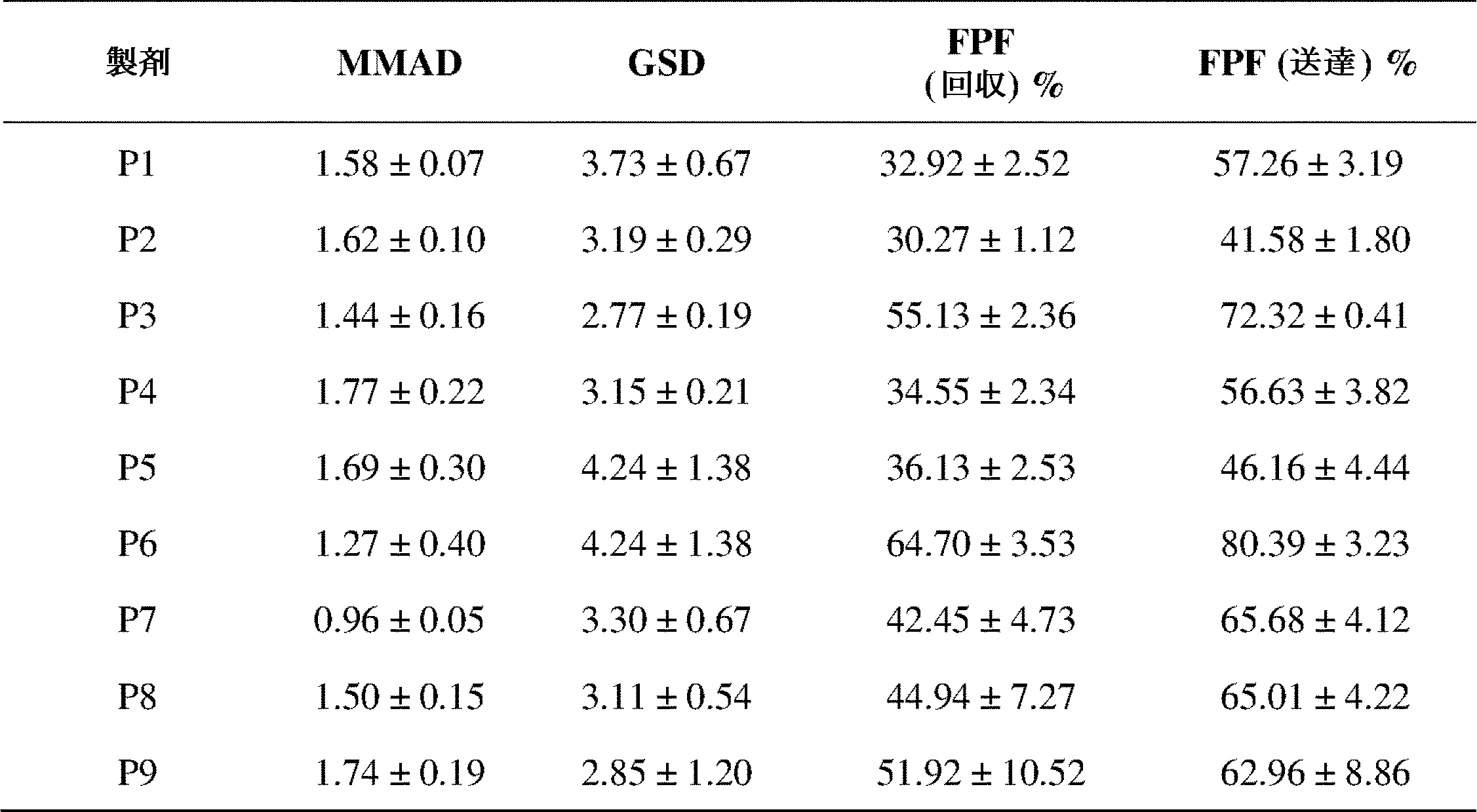
ii. 薄膜凍結乾燥されたプラスミドDNA粉末の形態構造
TFFDによって調製されたプラスミド粉末(製剤P3)の形態構造を、SEMを用いて検査した(図53)。乾燥粉末製剤P3にはナノ構造凝集体が含まれており(図53Aおよび53B)、高度に多孔質のマトリックス構造を有し(図53C)、これは、図52および表25に示されるような良好なエアロゾル性能特性の説明となる。
ii. Morphology of thin-film freeze-dried plasmid DNA powder
The morphology of plasmid powder (formulation P3) prepared by TFFD was examined using SEM (Figure 53). Dry powder formulation P3 contained nanostructured aggregates (Figures 53A and 53B) and had a highly porous matrix structure (Figure 53C), as shown in Figure 52 and Table 25. It accounts for the good aerosol performance characteristics.
iii. TFFDに供された後のプラスミドDNAの完全性
製剤7は5%のプラスミドDNA負荷を有し、TEを含み、全体的に良好なエアロゾル性能特性を有する。この製剤を、TFFDおよび再構成に供された後のプラスミドDNAの完全性を試験するために選択した。プラスミドpCMV-βを製剤7に製剤化し、薄膜凍結乾燥させた。次いでこれを再構成し、EcoR IまたはHind IIIおよびEcoR Iを用いて2時間消化し、電気泳動のためにアガロースゲルに適用した。対照には、薄膜凍結乾燥なしでpCVM-β単独または製剤7中のpCMV-βを含め、消化し、電気泳動に適用した。図54に示されるように、pCMV-βをTFFDに供することは、プラスミドの完全性に何ら有意な変化を引き起こさなかった。
iii. Plasmid DNA integrity after being subjected to
総合すると、薄膜凍結乾燥は、純粋なプラスミドDNAを、その化学的完全性を保持したまま、エアロゾル化可能な乾燥粉末に変換するために適用することができると結論づけられる。 Taken together, we conclude that thin film lyophilization can be applied to convert pure plasmid DNA into an aerosolizable dry powder while preserving its chemical integrity.
実施例6-mRNA-LNPの薄膜凍結および薄膜凍結乾燥
A. TFF-mRNA/LNP乾燥粉末の調製
製剤1:シンチレーションバイアルに、3.5mLのポロキサマー188(1.0mg/mL)を添加した後、10.0mLの緊急使用許可を受けたmRNA COVID-19ワクチン(希釈済み、2.567mg LNP/mL)を添加した。混合物を穏やかに振盪し、極低温冷却(-180℃)ステンレス鋼ドラム上に滴下した。凍結された試料を、液体窒素が充填されたステンレス鋼容器内に捕集した。試料をガラス製凍結乾燥用バイアル内に移し、凍結乾燥機に入れるまで-80℃のフリーザー内で保存した。溶媒を凍結乾燥機で、100mTorr以下で-40℃にて20時間の保持、100mTorrにて20時間で25℃までのランプ制御および100mTorrにて25℃で5時間の保持の処理によって除去した。乾燥窒素ガスを再充填し、バイアルの蓋を閉栓システムによって閉めた後、凍結乾燥機の扉を開いた。保存のため、バイアルをアルミニウムキャップで密封した。
Example 6 - Thin film freezing and thin film lyophilization of mRNA-LNP
A. Preparation of TFF-mRNA/LNP dry powder 2.567 mg LNP/mL) was added. The mixture was gently shaken and dropped onto a cryogenically cooled (-180°C) stainless steel drum. Frozen samples were collected in stainless steel containers filled with liquid nitrogen. Samples were transferred into glass lyophilization vials and stored in a −80° C. freezer until placed in the lyophilizer. The solvent was removed by a lyophilizer treatment below 100 mTorr at −40° C. for 20 hours, ramping to 25° C. at 100 mTorr for 20 hours and holding at 25° C. at 100 mTorr for 5 hours. After refilling with dry nitrogen gas and closing the vial lids with the capping system, the lyophilizer door was opened. The vial was sealed with an aluminum cap for storage.
製剤2:シンチレーションバイアルに、10.5mLのスクロース(20.0mg/mL)および4.2mLのポロキサマー188(1.0mg/mL)を添加した後、3.0mLのmRNA COVID-19ワクチン(希釈済み、2.567mg LNP/mL)を添加した。混合物を穏やかに振盪し、極低温冷却(-180℃)ステンレス鋼ドラム上に滴下した。凍結された試料を、液体窒素が充填されたステンレス鋼容器内に捕集した。試料をガラス製凍結乾燥用バイアル内に移し、凍結乾燥機に入れるまで-80℃のフリーザー内で保存した。溶媒を凍結乾燥機で、100mTorr以下で-40℃にて20時間の保持、100mTorrにて20時間で25℃までのランプ制御および100mTorrにて25℃で5時間の保持の処理によって除去した。乾燥窒素ガスを再充填し、バイアルの蓋を閉栓システムによって閉めた後、凍結乾燥機の扉を開いた。保存のため、バイアルをアルミニウムキャップで密封した。 Formulation 2: In a scintillation vial, add 10.5 mL sucrose (20.0 mg/mL) and 4.2 mL poloxamer 188 (1.0 mg/mL), followed by 3.0 mL mRNA COVID-19 vaccine (diluted, 2.567 mg LNP/ mL) was added. The mixture was gently shaken and dropped onto a cryogenically cooled (-180°C) stainless steel drum. Frozen samples were collected in stainless steel containers filled with liquid nitrogen. Samples were transferred into glass lyophilization vials and stored in a −80° C. freezer until placed in the lyophilizer. The solvent was removed by a lyophilizer treatment below 100 mTorr at −40° C. for 20 hours, ramping to 25° C. at 100 mTorr for 20 hours and holding at 25° C. at 100 mTorr for 5 hours. After refilling with dry nitrogen gas and closing the vial lids with the capping system, the lyophilizer door was opened. The vial was sealed with an aluminum cap for storage.
製剤3:シンチレーションバイアルに、8.0mLのトレハロース(20.0mg/mL)および4.6mLのポロキサマー188(1.0mg/mL)を添加した後、2.0mLのmRNA COVID-19ワクチン(希釈済み、および透析して賦形剤を除去済み、2.127mg LNP/mL)を添加した。混合物を穏やかに振盪し、極低温冷却(-180℃)ステンレス鋼ドラム上に滴下した。凍結された試料を、液体窒素が充填されたステンレス鋼容器内に捕集した。試料をガラス製凍結乾燥用バイアル内に移し、凍結乾燥機に入れるまで-80℃のフリーザー内で保存した。溶媒を凍結乾燥機で、100mTorr以下で-40℃にて20時間の保持、100mTorrにて20時間で25℃までのランプ制御および100mTorrにて25℃で5時間の保持の処理によって除去した。乾燥窒素ガスを再充填し、バイアルの蓋を閉栓システムによって閉めた後、凍結乾燥機の扉を開いた。保存のため、バイアルをアルミニウムキャップで密封した。 Formulation 3: In a scintillation vial, add 8.0 mL of trehalose (20.0 mg/mL) and 4.6 mL of poloxamer 188 (1.0 mg/mL), followed by 2.0 mL of mRNA COVID-19 vaccine (diluted and dialyzed). excipients removed, 2.127 mg LNP/mL) was added. The mixture was gently shaken and dropped onto a cryogenically cooled (-180°C) stainless steel drum. Frozen samples were collected in stainless steel containers filled with liquid nitrogen. Samples were transferred into glass lyophilization vials and stored in a −80° C. freezer until placed in the lyophilizer. The solvent was removed by a lyophilizer treatment below 100 mTorr at −40° C. for 20 hours, ramping to 25° C. at 100 mTorr for 20 hours and holding at 25° C. at 100 mTorr for 5 hours. After refilling with dry nitrogen gas and closing the vial lids with the capping system, the lyophilizer door was opened. The vial was sealed with an aluminum cap for storage.
製剤4:シンチレーションバイアルに、8.0mLのスクロース(20.0mg/mL)および4.6mLのポロキサマー188(1.0mg/mL)を添加した後、2.0mLのmRNA COVID-19ワクチン(希釈済み、および透析して賦形剤を除去済み、2.127mg LNP/mL)を添加した。混合物を穏やかに振盪し、極低温冷却(-180℃)ステンレス鋼ドラム上に滴下した。凍結された試料を、液体窒素が充填されたステンレス鋼容器内に捕集した。試料をガラス製凍結乾燥用バイアル内に移し、凍結乾燥機に入れるまで-80℃のフリーザー内で保存した。溶媒を凍結乾燥機で、100mTorr以下で-40℃にて20時間の保持、100mTorrにて20時間で25℃までのランプ制御および100mTorrにて25℃で5時間の保持の処理によって除去した。乾燥窒素ガスを再充填し、バイアルの蓋を閉栓システムによって閉めた後、凍結乾燥機の扉を開いた。保存のため、バイアルをアルミニウムキャップで密封した。 Formulation 4: In a scintillation vial, add 8.0 mL of sucrose (20.0 mg/mL) and 4.6 mL of poloxamer 188 (1.0 mg/mL), followed by 2.0 mL of mRNA COVID-19 vaccine (diluted and dialyzed). excipients removed, 2.127 mg LNP/mL) was added. The mixture was gently shaken and dropped onto a cryogenically cooled (-180°C) stainless steel drum. Frozen samples were collected in stainless steel containers filled with liquid nitrogen. Samples were transferred into glass lyophilization vials and stored in a −80° C. freezer until placed in the lyophilizer. The solvent was removed by a lyophilizer treatment below 100 mTorr at −40° C. for 20 hours, ramping to 25° C. at 100 mTorr for 20 hours and holding at 25° C. at 100 mTorr for 5 hours. After refilling with dry nitrogen gas and closing the vial lids with the capping system, the lyophilizer door was opened. The vial was sealed with an aluminum cap for storage.
製剤5:200μL容の遠心チューブに、40μLのスクロース(20.0mg/mL)および13μLのポロキサマー188(1.0mg/mL)を添加した後、10μLのmRNA COVID-19ワクチン(希釈済み、および透析して賦形剤を除去済み、2.16mg LNP/mL)を添加した。混合物を穏やかに振盪し、極低温冷却(-180℃)ステンレス鋼ドラム上に滴下した。凍結された試料を、液体窒素が充填されたステンレス鋼容器内に捕集した。試料をガラス製凍結乾燥用バイアル内に移し、凍結乾燥機に入れるまで-80℃のフリーザー内で保存した。溶媒を凍結乾燥機で、100mTorr以下で-40℃にて20時間の保持、100mTorrにて20時間で25℃までのランプ制御および100mTorrにて25℃で5時間の保持の処理によって除去した。乾燥窒素ガスを再充填し、バイアルの蓋を閉栓システムによって閉めた後、凍結乾燥機の扉を開いた。保存のため、バイアルをアルミニウムキャップで密封した。 Formulation 5: 40 μL of sucrose (20.0 mg/mL) and 13 μL of poloxamer 188 (1.0 mg/mL) were added to a 200 μL centrifuge tube, followed by 10 μL of mRNA COVID-19 vaccine (diluted and dialyzed). excipients removed, 2.16 mg LNP/mL) was added. The mixture was gently shaken and dropped onto a cryogenically cooled (-180°C) stainless steel drum. Frozen samples were collected in stainless steel containers filled with liquid nitrogen. Samples were transferred into glass lyophilization vials and stored in a −80° C. freezer until placed in the lyophilizer. The solvent was removed by a lyophilizer treatment below 100 mTorr at −40° C. for 20 hours, ramping to 25° C. at 100 mTorr for 20 hours and holding at 25° C. at 100 mTorr for 5 hours. After refilling with dry nitrogen gas and closing the vial lids with the capping system, the lyophilizer door was opened. The vial was sealed with an aluminum cap for storage.
棚式凍結乾燥:上記のようにして希釈したばかりのmRNA-LNP製剤1、2および元のmRNA COVIDワクチンでは、慣用的な棚式凍結乾燥を用いた乾燥粉末も調製した。mRNA-LNPの懸濁液(0.6mL)を2mL容の凍結乾燥バイアル内に入れ、このバイアルをAdvantage EL棚式凍結乾燥機内に入れた。棚板温度を室温から-50℃まで1℃/分の速度で下げ、50℃で1時間維持した後、乾燥させた。乾燥サイクルは、薄膜凍結試料から水分を昇華させるために使用したものと同じにした。
Shelved lyophilization: For freshly diluted mRNA-
B. 透析
承認済みのmRNA COVIDワクチンを少なくとも1,000倍容量のピロ炭酸ジエチル(DEPC)処理水に対して4℃で24時間透析した。次いでLNPの濃度を、透析後の容量変化に基づいて調整した。
B. Dialysis The approved mRNA COVID vaccine was dialyzed against at least 1,000 volumes of diethylpyrocarbonate (DEPC)-treated water at 4°C for 24 hours. The concentration of LNP was then adjusted based on volume change after dialysis.
例えば、1.200mLの承認済みのmRNA COVIDワクチンを透析チューブ(Spectrum,Stamford,CT)内に入れ、次いで、この透析チューブを、外部ビーカー内の1,500mLのDEPC処理水中に、100rpmの穏やかな撹拌速度下、4℃で24時間入れた。透析液(DEPC処理水)は8時間毎に交換した。最後に、1.398mLの試料を透析チューブから回収した。TFF用の製剤調製のためのLNPの濃度を、容量変化に基づいて計算した。 For example, place 1.200 mL of the approved mRNA COVID vaccine in dialysis tubing (Spectrum, Stamford, Conn.), then place the dialysis tubing in 1,500 mL of DEPC-treated water in an external beaker at a gentle agitation speed of 100 rpm. It was placed at 4°C for 24 hours. The dialysate (DEPC-treated water) was replaced every 8 hours. Finally, a 1.398 mL sample was collected from the dialysis tubing. Concentrations of LNP for formulation preparation for TFF were calculated based on volume change.
C. TFF-mRNA/LNP乾燥粉末の特性評価
i. 粒子径分布(PSD)
少量のTFF粉末を使い捨てUVキュベット内に入れ、濾過水(Evoqua,Warrendale,PA)を用いて再構成した。粒子径分布を、Zetasizer Nano ZS(Malvern Panalytical Ltd,Malvern,UK)を用いて、分散剤屈折率は1.33および物質屈折率は1.45で測定した。以下の表1に、薄膜凍結乾燥(TFFD)に供される前、TFFDおよび再構成に供された後、ならびに乾燥粉末を冷蔵庫内(約4℃)または温度(約25℃)で3週間保存した後のmRNA-LNPの粒子径(Z-平均)を示す。
C. Characterization of TFF-mRNA/LNP dry powder
i. Particle size distribution (PSD)
A small amount of TFF powder was placed in a disposable UV cuvette and reconstituted with filtered water (Evoqua, Warrendale, PA). Particle size distributions were measured using a Zetasizer Nano ZS (Malvern Panalytical Ltd, Malvern, UK) with a dispersant refractive index of 1.33 and a material refractive index of 1.45. Table 1 below lists the dry powders before being subjected to thin film freeze-drying (TFFD), after being subjected to TFFD and reconstitution, and for 3 weeks in the refrigerator (approximately 4°C) or at temperature (approximately 25°C). shows the particle size (Z-average) of mRNA-LNP after
(表26)乾燥粉末の粒子径分布。データは平均±SDである(n=3)。
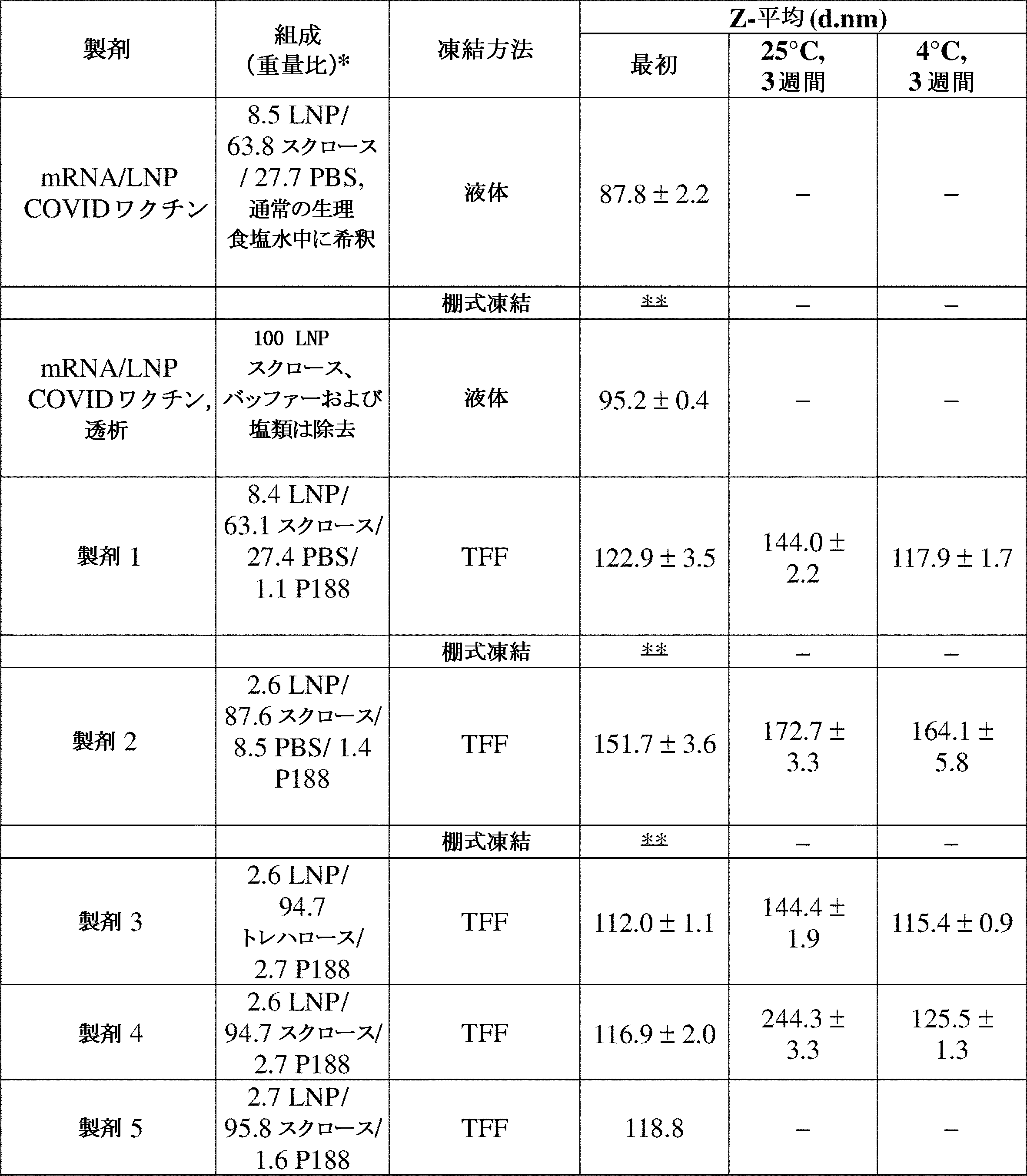
**粉末は再構成媒体中に完全には分散せず、大きな粒子が分散媒の表面上に浮いていた。
Table 26. Particle size distribution of dry powder. Data are mean±SD (n=3).
** Powder was not completely dispersed in the reconstitution medium, large particles were floating on the surface of the dispersion medium.
ii. mRNA封入効率の定量
mRNA/LNP COVIDワクチン製剤中のmRNA負荷を、Quanti-iT RiboGreenアッセイキット(Invitrogen,Carlsbad,CA)を用いて既報のとおりに定量した(Blakney et al.,2019;Yang et al.,2020)。粉末試料を、TFFプロセス前の液体製剤と同じ濃度まで再構成した。すべての試料を、全mRNAを検出するための15分間のインキュベーションのために、0.5%(v/v)Triton X-100(Sigma Aldrich,St.Louis,MO)を含む1×TEバッファー(RNaseフリー)中で2倍、20倍、200倍および2000倍に希釈した。遊離mRNAの検出では、すべての試料を1×TEバッファー(RNaseフリー)中で2倍、20倍、200倍および2000倍に希釈した。Triton X-100処理試料および未処理試料はすべて、RiboGreen試薬とともに黒色96ウェルプレート(Costar,Corning,NY)内でインキュベートした。蛍光強度をBioTek Synergy HTマルチモードマイクロプレートリーダーによって記録した(Winooski,VT、Ex=485nm、Em=528nm、ゲイン=35)。蛍光強度値を、全mRNAおよびLNP外のmRNAについてそれぞれ作成した標準曲線に基づいてmRNA濃度に変換した。封入効率を、以下の式:

mRNA load in mRNA/LNP COVID vaccine formulations was quantified using the Quanti-iT RiboGreen assay kit (Invitrogen, Carlsbad, CA) as previously reported (Blakney et al., 2019; Yang et al., 2020). Powder samples were reconstituted to the same concentration as the liquid formulation prior to the TFF process. All samples were processed in 1x TE buffer (RNase-free) containing 0.5% (v/v) Triton X-100 (Sigma Aldrich, St. Louis, Mo.) for a 15 min incubation to detect total mRNA. ) were diluted 2-fold, 20-fold, 200-fold and 2000-fold in For detection of free mRNA, all samples were diluted 2-fold, 20-fold, 200-fold and 2000-fold in 1×TE buffer (RNase-free). All Triton X-100 treated and untreated samples were incubated with RiboGreen reagent in black 96-well plates (Costar, Corning, NY). Fluorescence intensity was recorded by a BioTek Synergy HT multimode microplate reader (Winooski, VT, Ex=485 nm, Em=528 nm, gain=35). Fluorescence intensity values were converted to mRNA concentrations based on standard curves generated for total mRNA and non-LNP mRNA, respectively. The encapsulation efficiency is calculated using the following formula:
(表2)封入効率

iii. 透過型電子顕微鏡(TEM)解析
LNP製剤の形態構造を、FEI Tecnai透過型電子顕微鏡検査を用いて試験した。薄膜凍結乾燥mRNA/LNP粉末を水中で再構成し、精製水で希釈して0.1~0.3mg/mLのLNP濃度を得た。5μLのLNP分散液を200メッシュのカーボンフィルム銅グリッド(Electron Microscopy Sciences,Hatfield,PA)上に添加した。1分後、濾紙を用いてグリッドの端から液体を穏やかに除去した。5μLの1%リンタングステン酸をこのグリッド上に滴下し、試料をネガティブ染色した。1分後、濾紙を用いてグリッドの端から染料を除去した。試料を風乾させた後、画像を収集した。図55参照。
iii. Transmission electron microscopy (TEM) analysis
The morphology of the LNP formulations was examined using FEI Tecnai transmission electron microscopy. Thin film lyophilized mRNA/LNP powders were reconstituted in water and diluted with purified water to obtain LNP concentrations of 0.1-0.3 mg/mL. 5 μL of LNP dispersion was added onto a 200 mesh carbon film copper grid (Electron Microscopy Sciences, Hatfield, Pa.). After 1 minute, the liquid was gently removed from the edge of the grid using filter paper. 5 μL of 1% phosphotungstic acid was dropped onto the grid to negatively stain the sample. After 1 minute, filter paper was used to remove the dye from the edge of the grid. Images were collected after the samples were air-dried. See Figure 55.
本明細書において開示し、請求項に記載した組成物および方法はすべて、過度の実験を行なうことなく本開示に鑑みて作製および実行することができる。本開示の組成物および方法を好ましい態様に関して報告したが、当業者には、本開示の思想、趣旨および範囲から逸脱することなく、本明細書に記載の方法に対して、および本明細書に記載の方法の工程または工程の順序においてバリエーションが適用され得ることが明らかであろう。より詳しくは、化学的にも生理学的にも関連している特定の剤は本明細書に記載の剤の代わりに使用され得るが、同じまたは同様の結果が得られるであろうことが明らかであろう。当業者に明らかな同様のかかる代用例および変形例はすべて、添付の特許請求の範囲によって規定される本開示の趣旨、範囲および思想に含まれているとみなす。 All of the compositions and methods disclosed and claimed herein can be made and executed in light of the present disclosure without undue experimentation. Although the compositions and methods of the present disclosure have been reported with respect to preferred embodiments, one of ordinary skill in the art will appreciate the methods described herein and modifications herein without departing from the spirit, spirit and scope of the present disclosure. It will be apparent that variations in the steps or order of steps of the methods described may be applied. More specifically, it will be apparent that certain agents that are both chemically and physiologically related can be used in place of those described herein and the same or similar results will be obtained. be. All such similar substitutes and modifications apparent to those skilled in the art are deemed to be within the spirit, scope and spirit of the disclosure as defined by the appended claims.
参考文献
以下の参考文献は、本明細書に示したものに対して補足的な例示的手順の詳細または他の詳細をもたらす程度まで、参照により本明細書に具体的に組み入れられる。
Claims (189)
を含む、請求項1~80のいずれか一項記載の乾燥粉末。 DNA encoding the CRISPR/Cas9 element complexed with chitosan
81. The dry powder of any one of claims 1-80, comprising
を含む、請求項1~81のいずれか一項記載の乾燥粉末。 DNA encoding guide RNA complexed with chitosan
The dry powder of any one of claims 1-81, comprising
(b)該溶媒の凍結を引き起こすのに適した温度で、該前駆体溶液を表面上に沈着させる段階;および
(c)粉末薬学的組成物を得るために、該溶媒を除去する段階
を含む、粉末薬学的組成物の作製方法。 (a) mixing the encapsulated biologically active polynucleotide molecules and the first excipient in a solvent to form a precursor solution;
(b) depositing the precursor solution onto a surface at a temperature suitable to cause freezing of the solvent; and (c) removing the solvent to obtain a powdered pharmaceutical composition. , a method of making a powder pharmaceutical composition.
をさらに含む、請求項114記載の方法。 115. The method of claim 114, further comprising (d) deagglomerating the powder pharmaceutical composition to reduce particle size and/or homogenize the particle size.
を含む、肺疾患、肺損傷または肺感染症の処置方法。 A pulmonary disease comprising administering to a subject an effective amount of the composition of any one of claims 1-113 or the composition made by the method of any one of claims 114-174. Methods of treating injuries or pulmonary infections.
を含む、対象の免疫応答の賦活化方法であって、
前記生物学的に活性なポリヌクレオチド分子が抗原をコードしている、方法。 an immune response in a subject, comprising administering to the subject an effective amount of the composition of any one of claims 1-113 or the composition made by the method of any one of claims 114-174 A method for activating the
A method, wherein said biologically active polynucleotide molecule encodes an antigen.
を含む、対象の疾患を処置する方法。 administering to the subject an effective amount of the composition of any one of claims 1-113 or the composition made by the method of any one of claims 114-174. how to treat.
(ii)再構成された該組成物の有効量を対象に投与する段階
を含む、対象の疾患を処置する方法。 (i) reconstituting the composition of any one of claims 1-113 or the composition made by the method of any one of claims 114-174 in a pharmaceutically acceptable vehicle; and (ii) administering to the subject an effective amount of said reconstituted composition.
Applications Claiming Priority (3)
| Application Number | Priority Date | Filing Date | Title |
|---|---|---|---|
| US202063012792P | 2020-04-20 | 2020-04-20 | |
| US63/012,792 | 2020-04-20 | ||
| PCT/US2021/028140 WO2021216541A1 (en) | 2020-04-20 | 2021-04-20 | Biologically active dry powder compositions and method of their manufacture and use |
Publications (2)
| Publication Number | Publication Date |
|---|---|
| JP2023522103A true JP2023522103A (en) | 2023-05-26 |
| JPWO2021216541A5 JPWO2021216541A5 (en) | 2024-04-30 |
Family
ID=75888214
Family Applications (1)
| Application Number | Title | Priority Date | Filing Date |
|---|---|---|---|
| JP2022563375A Pending JP2023522103A (en) | 2020-04-20 | 2021-04-20 | Biologically active dry powder compositions and methods of making and using the same |
Country Status (9)
| Country | Link |
|---|---|
| US (1) | US20220023204A1 (en) |
| EP (1) | EP4138791A1 (en) |
| JP (1) | JP2023522103A (en) |
| KR (1) | KR20230005244A (en) |
| CN (1) | CN115996707A (en) |
| AU (1) | AU2021260578A1 (en) |
| CA (1) | CA3175301A1 (en) |
| IL (1) | IL297450A (en) |
| WO (1) | WO2021216541A1 (en) |
Families Citing this family (22)
| Publication number | Priority date | Publication date | Assignee | Title |
|---|---|---|---|---|
| US20240165045A1 (en) * | 2021-03-08 | 2024-05-23 | Board Of Regents, The University Of Texas System | Dry powder formulations of nucleic acid lipid nanoparticles |
| JP7792441B2 (en) * | 2021-06-24 | 2025-12-25 | セルナ セラピューティクス | Lipid nanoparticles and method for producing same |
| WO2023019192A1 (en) * | 2021-08-11 | 2023-02-16 | Board Of Regents, The University Of Texas System | Dry liposome formulations and related methods thereof |
| WO2023107974A1 (en) * | 2021-12-09 | 2023-06-15 | Can Technologies, Inc. | Bacteriophage compositions and methods of making |
| CN114652820B (en) * | 2022-03-22 | 2024-02-06 | 中国药科大学 | Cationic liposome nanoparticle and preparation method and application thereof |
| CN114557971B (en) * | 2022-04-25 | 2023-05-23 | 康希诺生物股份公司 | Freeze-drying protective agent for nucleic acid-lipid nano particles, and preparation method and application thereof |
| WO2023212696A1 (en) * | 2022-04-29 | 2023-11-02 | Modernatx, Inc. | Lyophilized human cytomegalovirus vaccines |
| WO2024015876A1 (en) * | 2022-07-13 | 2024-01-18 | Epicentrx, Inc. | Adenoviral vectors encapsulated in cationic liposomes, and preparation and use thereof |
| WO2024026412A1 (en) * | 2022-07-28 | 2024-02-01 | Tff Pharmaceuticals, Inc. | Thin film freezing methods and compositions formulated from dispersed active agents |
| WO2024094027A1 (en) * | 2022-11-03 | 2024-05-10 | 深圳鸿生生物科技有限公司 | Blocking sequence, kit thereof, and method for using same |
| DE102022134188B3 (en) | 2022-12-20 | 2024-03-28 | Universität Augsburg - Körperschaft des öffentlichen Rechts | Method for in-situ recording of changes in a lipid system during storage at a storage temperature below -60 °C |
| EP4654951A1 (en) * | 2023-01-23 | 2025-12-03 | The Regents of the University of Colorado, a body corporate | Compositions and methods of use for stabilizing and delivery of atomic layer deposition coating of agent-containing lipid-emulsion formulations |
| EP4658239A1 (en) | 2023-02-03 | 2025-12-10 | GlaxoSmithKline Biologicals S.A. | Rna formulation |
| CN120957707A (en) * | 2023-04-17 | 2025-11-14 | 赛诺菲巴斯德有限公司 | Resolvable dry powder formulations and their usage methods |
| CN121002178A (en) * | 2023-04-26 | 2025-11-21 | 伊莱利利公司 | Devices and methods for concentrating biomolecules |
| WO2024223728A1 (en) | 2023-04-27 | 2024-10-31 | Glaxosmithkline Biologicals Sa | Influenza virus vaccines |
| WO2024223724A1 (en) | 2023-04-27 | 2024-10-31 | Glaxosmithkline Biologicals Sa | Influenza virus vaccines |
| GB202311382D0 (en) * | 2023-07-25 | 2023-09-06 | Glaxosmithkline Biologicals Sa | Lyophilised compostion |
| US20250144237A1 (en) * | 2023-11-07 | 2025-05-08 | Cila Therapeutics Inc. | Agents, compositions and methods for enhanced delivery of nucleic acids to the cells within the respiratory system |
| GB202402626D0 (en) | 2024-02-23 | 2024-04-10 | Ttp Plc | Spray freeze drying formation of dry powder compositions |
| CN119280432B (en) * | 2024-10-14 | 2025-06-24 | 汕头大学医学院 | Application of engineering attenuated coxsackie B3 virus vector in preparation of medicine for treating traumatic craniocerebral injury |
| CN120157141A (en) * | 2025-04-02 | 2025-06-17 | 江苏联瑞新材料股份有限公司 | A system and method for controlling particle size distribution of ultrafine high-purity spherical silicon micropowder |
Citations (2)
| Publication number | Priority date | Publication date | Assignee | Title |
|---|---|---|---|---|
| JP2018521083A (en) * | 2015-07-22 | 2018-08-02 | 日東電工株式会社 | Compositions and methods for nanoparticle lyophilized forms |
| JP2019525901A (en) * | 2016-06-14 | 2019-09-12 | モデルナティエックス インコーポレイテッドModernaTX,Inc. | Stabilized preparation of lipid nanoparticles |
Family Cites Families (45)
| Publication number | Priority date | Publication date | Assignee | Title |
|---|---|---|---|---|
| US4162282A (en) | 1976-04-22 | 1979-07-24 | Coulter Electronics, Inc. | Method for producing uniform particles |
| IT1104351B (en) | 1978-06-14 | 1985-10-21 | Muzzarelli Riccardo | THE GLUCAN COMPLEX CHITOSANO THE METHOD OF ITS PRODUCTION FROM MUSHROOMS AND YEASTS AND ITS USES |
| US4310505A (en) | 1979-11-08 | 1982-01-12 | California Institute Of Technology | Lipid vesicles bearing carbohydrate surfaces as lymphatic directed vehicles for therapeutic and diagnostic substances |
| US4533254A (en) | 1981-04-17 | 1985-08-06 | Biotechnology Development Corporation | Apparatus for forming emulsions |
| US5030453A (en) | 1983-03-24 | 1991-07-09 | The Liposome Company, Inc. | Stable plurilamellar vesicles |
| US4728575A (en) | 1984-04-27 | 1988-03-01 | Vestar, Inc. | Contrast agents for NMR imaging |
| US4921706A (en) | 1984-11-20 | 1990-05-01 | Massachusetts Institute Of Technology | Unilamellar lipid vesicles and method for their formation |
| US4806474A (en) | 1985-06-10 | 1989-02-21 | Miles Inc. | Preparation of mycelial chitosan and glucan fractions from microbial biomass |
| US4737323A (en) | 1986-02-13 | 1988-04-12 | Liposome Technology, Inc. | Liposome extrusion method |
| IL79559A0 (en) | 1986-07-29 | 1986-10-31 | Univ Ramot | Contrast agents for nmr medical imaging |
| US4728578A (en) | 1986-08-13 | 1988-03-01 | The Lubrizol Corporation | Compositions containing basic metal salts and/or non-Newtonian colloidal disperse systems and vinyl aromatic containing polymers |
| US5855911A (en) | 1995-08-29 | 1999-01-05 | Board Of Regents, The University Of Texas System | Liposomal phosphodiester, phosphorothioate, and P-ethoxy oligonucleotides |
| US5891467A (en) | 1997-01-31 | 1999-04-06 | Depotech Corporation | Method for utilizing neutral lipids to modify in vivo release from multivesicular liposomes |
| US6506559B1 (en) | 1997-12-23 | 2003-01-14 | Carnegie Institute Of Washington | Genetic inhibition by double-stranded RNA |
| AUPP249298A0 (en) | 1998-03-20 | 1998-04-23 | Ag-Gene Australia Limited | Synthetic genes and genetic constructs comprising same I |
| CA2323726C (en) | 1998-03-20 | 2005-02-08 | Benitec Australia Ltd. | Control of gene expression |
| CA2326823A1 (en) | 1998-04-20 | 1999-10-28 | Ribozyme Pharmaceuticals, Inc. | Nucleic acid molecules with novel chemical compositions capable of modulating gene expression |
| WO2001029058A1 (en) | 1999-10-15 | 2001-04-26 | University Of Massachusetts | Rna interference pathway genes as tools for targeted genetic interference |
| US20030206958A1 (en) | 2000-12-22 | 2003-11-06 | Cattaneo Maurizio V. | Chitosan biopolymer for the topical delivery of active agents |
| CA2313836C (en) | 2000-03-15 | 2009-06-09 | Cargill, Incorporated | Chitosan and method of preparing chitosan |
| US6680068B2 (en) | 2000-07-06 | 2004-01-20 | The General Hospital Corporation | Drug delivery formulations and targeting |
| US6756363B1 (en) | 2000-11-17 | 2004-06-29 | Wound Healing Of Oklahoma, Inc. | Solutions and films of glycated chitosan |
| US20040019001A1 (en) | 2002-02-20 | 2004-01-29 | Mcswiggen James A. | RNA interference mediated inhibition of protein typrosine phosphatase-1B (PTP-1B) gene expression using short interfering RNA |
| WO2002100435A1 (en) | 2001-06-11 | 2002-12-19 | Centre Hospitalier Universitaire De Montreal | Compositions and methods for enhancing nucleic acid transfer into cells |
| AU2002324723B2 (en) | 2001-08-16 | 2007-10-25 | The Trustees Of The University Of Pennsylvania | Synthesis and use of reagents for improved DNA lipofection and/or slow release pro-drug and drug therapies |
| ES2357889T3 (en) | 2001-11-15 | 2011-05-03 | Piramal Healthcare (Canada) Limited | COMPOSITION AND METHOD TO RETICULATE OR MODIFY HOMOGENALLY CHITOSANE IN NEUTRAL CONDITIONS. |
| PT1455802E (en) | 2001-12-14 | 2008-11-03 | Dnp Canada Inc | Uses of chitosan oligosaccharides |
| EP2338478B1 (en) | 2002-06-28 | 2014-07-23 | Protiva Biotherapeutics Inc. | Method for producing liposomes |
| AU2003279010A1 (en) | 2002-09-28 | 2004-04-19 | Massachusetts Institute Of Technology | Compositions and methods for delivery of short interfering rna and short hairpin rna |
| WO2004064731A2 (en) | 2003-01-14 | 2004-08-05 | University Of Washington | Lipid-drug formulations and methods for targeted delivery of lipid-drug complexes to lymlplhoid tissues |
| EP1594547A2 (en) | 2003-02-14 | 2005-11-16 | University Of South Florida Research Foundation, Inc. | Chitosan-microparticles for ifn gene delivery |
| US20050042735A1 (en) | 2003-04-11 | 2005-02-24 | Ming-De Deng | Metabolic engineering for enhanced production of chitin and chitosan in microorganisms |
| US7125861B2 (en) | 2003-07-31 | 2006-10-24 | Rolland F Hebert | Water-soluble chitosan-indole-3-propionic acid conjugates |
| US7740883B2 (en) | 2004-03-28 | 2010-06-22 | University Of Debrecen | Nanoparticles from chitosan |
| WO2006124779A2 (en) | 2005-05-13 | 2006-11-23 | Athenix Corporation | Methods for production of chitin and chitosan |
| US20070031468A1 (en) | 2005-08-04 | 2007-02-08 | Endomedix, Inc. | Modified chitosan for vascular embolization |
| MX2008013618A (en) | 2006-05-09 | 2008-10-30 | Colgate Palmolive Co | Oral care regimen. |
| CA2723314C (en) * | 2008-02-13 | 2017-01-10 | The Board Of Regents, The University Of Texas System | Templated open flocs of anisotropic particles for enhanced pulmonary delivery |
| AU2009319659A1 (en) * | 2008-11-28 | 2011-07-14 | Jonathan J. Dennis | Bacteriophage compositions for treatment of bacterial infections |
| US8889394B2 (en) | 2009-09-07 | 2014-11-18 | Empire Technology Development Llc | Multiple domain proteins |
| JP2015510495A (en) * | 2011-12-21 | 2015-04-09 | モデルナ セラピューティクス インコーポレイテッドModerna Therapeutics,Inc. | Methods for extending the viability or longevity of an organ or organ graft |
| US20130247924A1 (en) | 2012-03-23 | 2013-09-26 | Mark Scatterday | Electronic cigarette having a flexible and soft configuration |
| WO2016184576A2 (en) * | 2015-05-20 | 2016-11-24 | Curevac Ag | Dry powder composition comprising long-chain rna |
| WO2018213476A1 (en) * | 2017-05-16 | 2018-11-22 | Translate Bio, Inc. | Treatment of cystic fibrosis by delivery of codon-optimized mrna encoding cftr |
| KR20210057127A (en) * | 2018-09-10 | 2021-05-20 | 보드 오브 리전츠, 더 유니버시티 오브 텍사스 시스템 | Dry powder formulation of caveolin-1 peptide and method of use thereof |
-
2021
- 2021-04-20 JP JP2022563375A patent/JP2023522103A/en active Pending
- 2021-04-20 WO PCT/US2021/028140 patent/WO2021216541A1/en not_active Ceased
- 2021-04-20 CN CN202180047291.8A patent/CN115996707A/en active Pending
- 2021-04-20 CA CA3175301A patent/CA3175301A1/en active Pending
- 2021-04-20 EP EP21724891.3A patent/EP4138791A1/en active Pending
- 2021-04-20 US US17/235,771 patent/US20220023204A1/en active Pending
- 2021-04-20 KR KR1020227040575A patent/KR20230005244A/en active Pending
- 2021-04-20 IL IL297450A patent/IL297450A/en unknown
- 2021-04-20 AU AU2021260578A patent/AU2021260578A1/en not_active Abandoned
Patent Citations (2)
| Publication number | Priority date | Publication date | Assignee | Title |
|---|---|---|---|---|
| JP2018521083A (en) * | 2015-07-22 | 2018-08-02 | 日東電工株式会社 | Compositions and methods for nanoparticle lyophilized forms |
| JP2019525901A (en) * | 2016-06-14 | 2019-09-12 | モデルナティエックス インコーポレイテッドModernaTX,Inc. | Stabilized preparation of lipid nanoparticles |
Non-Patent Citations (2)
| Title |
|---|
| CMBEBIH 2019. IFMBE PROCEEDINGS, vol. 73, JPN6025014853, 2019, pages 533 - 537, ISSN: 0005570864 * |
| YAKUGAKU ZASSHI, vol. 137, no. 11, JPN6025014852, 2017, pages 1339 - 1348, ISSN: 0005570865 * |
Also Published As
| Publication number | Publication date |
|---|---|
| IL297450A (en) | 2022-12-01 |
| WO2021216541A1 (en) | 2021-10-28 |
| CN115996707A (en) | 2023-04-21 |
| EP4138791A1 (en) | 2023-03-01 |
| CA3175301A1 (en) | 2021-10-28 |
| AU2021260578A1 (en) | 2022-11-03 |
| US20220023204A1 (en) | 2022-01-27 |
| KR20230005244A (en) | 2023-01-09 |
Similar Documents
| Publication | Publication Date | Title |
|---|---|---|
| JP2023522103A (en) | Biologically active dry powder compositions and methods of making and using the same | |
| Chow et al. | Inhaled RNA therapy: from promise to reality | |
| JP7256824B2 (en) | Cryoprotectant for particulate formulations | |
| Givens et al. | Nanoparticle-based delivery of CRISPR/Cas9 genome-editing therapeutics | |
| US20240293317A1 (en) | Lipid nanoparticle (lnp) delivery systems and uses thereof | |
| JP5923177B2 (en) | Novel gene transfer composition | |
| US20240327870A1 (en) | Nucleic acid vector compositions | |
| JPWO2007132873A1 (en) | Lyophilized product for introduction of nucleic acid, oligonucleic acid, or derivative thereof | |
| CN106659695A (en) | Nanoparticle | |
| US20240384277A1 (en) | Engineered polynucleotides for cell-type or microenvironment-specific expression | |
| CN114206906A (en) | PEGylated synthetic KL4 peptides, compositions and methods thereof | |
| Mozafari et al. | Importance of divalent cations in nanolipoplex gene delivery | |
| WO2023002222A1 (en) | Compositions comprising doped silicon particles, and related methods | |
| Ferreira et al. | Cryoprotectant optimization for enhanced stability and transfection efficiency of pDNA-loaded ionizable lipid nanoparticles | |
| CN116004728A (en) | A kind of polymer-wrapped lipid nanoparticle and its preparation method and pharmaceutical preparation | |
| EP3634386A1 (en) | Cationic liquid crystalline nanoparticles | |
| Trenkenschuh | Freeze-drying of nanoparticles: impact of particle properties on formulation and process development | |
| US20250228773A1 (en) | Protection of biological species from degradation | |
| AU2023237087A1 (en) | Methods and compositions for transport, storage, and delivery of nucleic acids and other molecules | |
| I Khatri et al. | Patents review in siRNA delivery for pulmonary disorders | |
| CN121487724A (en) | Nanometer-embedded micrometer (NIM) -encapsulated therapeutic nucleic acid dry powder and pharmaceutical products comprising the same | |
| Conte et al. | Pulmonary delivery of nucleic acids | |
| WO2025021740A1 (en) | Nano-in-micro encapsulated therapeutic nucleic acid dry powder and pharmaceutical product containing said dry powder | |
| Nunes | Development of cationic polymeric nanoparticles for plasmid DNA vaccine delivery | |
| WO2025166259A1 (en) | Mineral binding mrna lipid nanoparticles |
Legal Events
| Date | Code | Title | Description |
|---|---|---|---|
| A521 | Request for written amendment filed |
Free format text: JAPANESE INTERMEDIATE CODE: A821 Effective date: 20221019 |
|
| RD04 | Notification of resignation of power of attorney |
Free format text: JAPANESE INTERMEDIATE CODE: A7424 Effective date: 20230815 |
|
| A521 | Request for written amendment filed |
Free format text: JAPANESE INTERMEDIATE CODE: A523 Effective date: 20240418 |
|
| A621 | Written request for application examination |
Free format text: JAPANESE INTERMEDIATE CODE: A621 Effective date: 20240418 |
|
| A977 | Report on retrieval |
Free format text: JAPANESE INTERMEDIATE CODE: A971007 Effective date: 20250411 |
|
| A131 | Notification of reasons for refusal |
Free format text: JAPANESE INTERMEDIATE CODE: A131 Effective date: 20250414 |
|
| A601 | Written request for extension of time |
Free format text: JAPANESE INTERMEDIATE CODE: A601 Effective date: 20250710 |
|
| A521 | Request for written amendment filed |
Free format text: JAPANESE INTERMEDIATE CODE: A523 Effective date: 20251014 |
|
| A521 | Request for written amendment filed |
Free format text: JAPANESE INTERMEDIATE CODE: A821 Effective date: 20251014 |
|
| A02 | Decision of refusal |
Free format text: JAPANESE INTERMEDIATE CODE: A02 Effective date: 20260202 |