JP2023071657A - IL-1β binding antibody for use in treating cancer - Google Patents
IL-1β binding antibody for use in treating cancer Download PDFInfo
- Publication number
- JP2023071657A JP2023071657A JP2023014125A JP2023014125A JP2023071657A JP 2023071657 A JP2023071657 A JP 2023071657A JP 2023014125 A JP2023014125 A JP 2023014125A JP 2023014125 A JP2023014125 A JP 2023014125A JP 2023071657 A JP2023071657 A JP 2023071657A
- Authority
- JP
- Japan
- Prior art keywords
- cancer
- gevokizumab
- canakinumab
- functional fragment
- use according
- Prior art date
- Legal status (The legal status is an assumption and is not a legal conclusion. Google has not performed a legal analysis and makes no representation as to the accuracy of the status listed.)
- Withdrawn
Links
Images


Classifications
-
- C—CHEMISTRY; METALLURGY
- C07—ORGANIC CHEMISTRY
- C07K—PEPTIDES
- C07K16/00—Immunoglobulins [IGs], e.g. monoclonal or polyclonal antibodies
- C07K16/18—Immunoglobulins [IGs], e.g. monoclonal or polyclonal antibodies against material from animals or humans
- C07K16/24—Immunoglobulins [IGs], e.g. monoclonal or polyclonal antibodies against material from animals or humans against cytokines, lymphokines or interferons
- C07K16/244—Interleukins [IL]
- C07K16/245—IL-1
-
- A—HUMAN NECESSITIES
- A61—MEDICAL OR VETERINARY SCIENCE; HYGIENE
- A61K—PREPARATIONS FOR MEDICAL, DENTAL OR TOILETRY PURPOSES
- A61K39/00—Medicinal preparations containing antigens or antibodies
- A61K39/0005—Vertebrate antigens
- A61K39/0011—Cancer antigens
- A61K39/001136—Cytokines
- A61K39/00114—Interleukins [IL]
-
- A—HUMAN NECESSITIES
- A61—MEDICAL OR VETERINARY SCIENCE; HYGIENE
- A61K—PREPARATIONS FOR MEDICAL, DENTAL OR TOILETRY PURPOSES
- A61K9/00—Medicinal preparations characterised by special physical form
- A61K9/0012—Galenical forms characterised by the site of application
- A61K9/0019—Injectable compositions; Intramuscular, intravenous, arterial, subcutaneous administration; Compositions to be administered through the skin in an invasive manner
-
- A—HUMAN NECESSITIES
- A61—MEDICAL OR VETERINARY SCIENCE; HYGIENE
- A61P—SPECIFIC THERAPEUTIC ACTIVITY OF CHEMICAL COMPOUNDS OR MEDICINAL PREPARATIONS
- A61P35/00—Antineoplastic agents
-
- G01N33/5752—
-
- A—HUMAN NECESSITIES
- A61—MEDICAL OR VETERINARY SCIENCE; HYGIENE
- A61K—PREPARATIONS FOR MEDICAL, DENTAL OR TOILETRY PURPOSES
- A61K39/00—Medicinal preparations containing antigens or antibodies
- A61K2039/505—Medicinal preparations containing antigens or antibodies comprising antibodies
-
- A—HUMAN NECESSITIES
- A61—MEDICAL OR VETERINARY SCIENCE; HYGIENE
- A61K—PREPARATIONS FOR MEDICAL, DENTAL OR TOILETRY PURPOSES
- A61K39/00—Medicinal preparations containing antigens or antibodies
- A61K2039/54—Medicinal preparations containing antigens or antibodies characterised by the route of administration
-
- A—HUMAN NECESSITIES
- A61—MEDICAL OR VETERINARY SCIENCE; HYGIENE
- A61K—PREPARATIONS FOR MEDICAL, DENTAL OR TOILETRY PURPOSES
- A61K39/00—Medicinal preparations containing antigens or antibodies
- A61K2039/545—Medicinal preparations containing antigens or antibodies characterised by the dose, timing or administration schedule
-
- A—HUMAN NECESSITIES
- A61—MEDICAL OR VETERINARY SCIENCE; HYGIENE
- A61K—PREPARATIONS FOR MEDICAL, DENTAL OR TOILETRY PURPOSES
- A61K39/00—Medicinal preparations containing antigens or antibodies
- A61K2039/80—Vaccine for a specifically defined cancer
- A61K2039/82—Colon
-
- A—HUMAN NECESSITIES
- A61—MEDICAL OR VETERINARY SCIENCE; HYGIENE
- A61K—PREPARATIONS FOR MEDICAL, DENTAL OR TOILETRY PURPOSES
- A61K39/00—Medicinal preparations containing antigens or antibodies
- A61K2039/80—Vaccine for a specifically defined cancer
- A61K2039/828—Stomach
-
- A—HUMAN NECESSITIES
- A61—MEDICAL OR VETERINARY SCIENCE; HYGIENE
- A61K—PREPARATIONS FOR MEDICAL, DENTAL OR TOILETRY PURPOSES
- A61K39/00—Medicinal preparations containing antigens or antibodies
- A61K2039/80—Vaccine for a specifically defined cancer
- A61K2039/836—Intestine
-
- A—HUMAN NECESSITIES
- A61—MEDICAL OR VETERINARY SCIENCE; HYGIENE
- A61K—PREPARATIONS FOR MEDICAL, DENTAL OR TOILETRY PURPOSES
- A61K39/00—Medicinal preparations containing antigens or antibodies
- A61K2039/80—Vaccine for a specifically defined cancer
- A61K2039/86—Lung
-
- A—HUMAN NECESSITIES
- A61—MEDICAL OR VETERINARY SCIENCE; HYGIENE
- A61K—PREPARATIONS FOR MEDICAL, DENTAL OR TOILETRY PURPOSES
- A61K39/00—Medicinal preparations containing antigens or antibodies
- A61K2039/80—Vaccine for a specifically defined cancer
- A61K2039/868—Vaccine for a specifically defined cancer kidney
-
- A—HUMAN NECESSITIES
- A61—MEDICAL OR VETERINARY SCIENCE; HYGIENE
- A61K—PREPARATIONS FOR MEDICAL, DENTAL OR TOILETRY PURPOSES
- A61K2300/00—Mixtures or combinations of active ingredients, wherein at least one active ingredient is fully defined in groups A61K31/00 - A61K41/00
-
- A—HUMAN NECESSITIES
- A61—MEDICAL OR VETERINARY SCIENCE; HYGIENE
- A61K—PREPARATIONS FOR MEDICAL, DENTAL OR TOILETRY PURPOSES
- A61K31/00—Medicinal preparations containing organic active ingredients
- A61K31/28—Compounds containing heavy metals
- A61K31/282—Platinum compounds
-
- C—CHEMISTRY; METALLURGY
- C07—ORGANIC CHEMISTRY
- C07K—PEPTIDES
- C07K16/00—Immunoglobulins [IGs], e.g. monoclonal or polyclonal antibodies
- C07K16/18—Immunoglobulins [IGs], e.g. monoclonal or polyclonal antibodies against material from animals or humans
- C07K16/28—Immunoglobulins [IGs], e.g. monoclonal or polyclonal antibodies against material from animals or humans against receptors, cell surface antigens or cell surface determinants
- C07K16/2896—Immunoglobulins [IGs], e.g. monoclonal or polyclonal antibodies against material from animals or humans against receptors, cell surface antigens or cell surface determinants against molecules with a "CD"-designation, not provided for elsewhere
Landscapes
- Health & Medical Sciences (AREA)
- Chemical & Material Sciences (AREA)
- Life Sciences & Earth Sciences (AREA)
- General Health & Medical Sciences (AREA)
- Medicinal Chemistry (AREA)
- Organic Chemistry (AREA)
- Veterinary Medicine (AREA)
- Pharmacology & Pharmacy (AREA)
- Public Health (AREA)
- Animal Behavior & Ethology (AREA)
- Immunology (AREA)
- Epidemiology (AREA)
- Molecular Biology (AREA)
- Biochemistry (AREA)
- Proteomics, Peptides & Aminoacids (AREA)
- Genetics & Genomics (AREA)
- Biophysics (AREA)
- Microbiology (AREA)
- Oncology (AREA)
- Nuclear Medicine, Radiotherapy & Molecular Imaging (AREA)
- Chemical Kinetics & Catalysis (AREA)
- General Chemical & Material Sciences (AREA)
- Mycology (AREA)
- Dermatology (AREA)
- Medicines Containing Antibodies Or Antigens For Use As Internal Diagnostic Agents (AREA)
- Medicines That Contain Protein Lipid Enzymes And Other Medicines (AREA)
- Pharmaceuticals Containing Other Organic And Inorganic Compounds (AREA)
- Engineering & Computer Science (AREA)
- Peptides Or Proteins (AREA)
- Biomedical Technology (AREA)
- Hematology (AREA)
- Urology & Nephrology (AREA)
- Hospice & Palliative Care (AREA)
- Biotechnology (AREA)
- Cell Biology (AREA)
- Food Science & Technology (AREA)
- Physics & Mathematics (AREA)
- Analytical Chemistry (AREA)
- General Physics & Mathematics (AREA)
- Pathology (AREA)
Abstract
Description
特許法第30条第2項適用申請有り <1> (1)発行日 :平成30年1月10日(オンライン公開) (2)刊行物 :第1回英国学際的乳がんシンポジウム―2018年1月15日~16日―の要約集、Breast Cancer Res Treat(2018)167:309-405 https://ukibcs.org/2018-uk-ibcs/ https://doi.org/10.1007/s10549-017-4585-x (3)公開者 :クラウディア・テゥロッタ、ダイアン・レフリー、アミイ・スパイサー-ハドリントン、アニータ・リウ、リサ・ハンブリー、ビクトリア・クックソン、グロリア・アロッカ、ペネロペ・オトウェル (4)公開された発明の内容:抗IL1B治療および標準治療薬:乳がんの骨転移を止めるための両刃の剣 <2> (1)開催日 :平成30年1月15日~16日 (ポスター発表:平成30年1月15日~16日) (2)集会名、開催場所:第1回英国学際的乳がんシンポジウム―2018年1月15日~16日 マンチェスター・セントラルコンベンション施設(英国 エム2 3ジーエックス、マンチェスター、ウィンドミルストリート) (3)公開者 :クラウディア・テゥロッタ、ダイアン・レフリー、アミイ・スパイサー-ハドリントン、アニータ・リウ、リサ・ハンブリー、ビクトリア・クックソン、グロリア・アロッカ、ペネロペ・オトウェル(代表発表者:クラウディア・テゥロッタ) (4)公開された発明の内容:抗IL1B治療および標準治療薬:乳がんの骨転移を止めるための両刃の剣<1> (1) Publication date: January 10, 2018 (published online) (2) Publication: 1st UK Interdisciplinary Breast Cancer Symposium - January 2018 15th-16th-Abstract, Breast Cancer Res Treat (2018) 167:309-405 https://ukibcs. org/2018-uk-ibcs/https://doi. org/10.1007/s10549-017-4585-x (3) Publishers: Claudia Tulotta, Diane Referee, Amii Spicer-Hudlington, Anita Liu, Lisa Hanbury, Victoria Cookson, Gloria Allocca, Penelope・Otwell (4) Details of disclosed invention: Anti-IL1B treatment and standard therapy: A double-edged sword to stop bone metastasis of breast cancer <2> (1) Date: January 15-16, 2018 (Poster presentation: January 15-16, 2018) (2) Meeting name and venue: 1st UK Interdisciplinary Breast Cancer Symposium - January 15-16, 2018 Manchester Central Convention Facility (EM, UK) 2 3 GX, Manchester, Windmill Street) (3) Publishers: Claudia Tulotta, Diane Referee, Amii Spicer-Hudlington, Anita Liu, Lisa Hanbury, Victoria Cookson, Gloria Allocca, Penelope Otwell ( (Representative presenter: Claudia Turotta) (4) Details of disclosed invention: Anti-IL1B therapy and standard therapy: A double-edged sword to stop bone metastasis of breast cancer
本発明は、少なくとも部分的な炎症ベースを有するがん、例えば、肺がんなど、本明細
書で記載されるがんの処置および/または防止のための、IL-1β結合性抗体またはこ
の機能的な断片の使用に関する。
The present invention provides IL-1β binding antibodies or functional antibodies thereof for the treatment and/or prevention of cancers described herein, such as cancers having at least a partial inflammatory basis, such as lung cancer. Regarding the use of fragments.
開示の背景
肺がんは、男性および女性のいずれの間でも、世界中で最も一般的ながんのうちの1つ
である。肺がんは、2つの種類:小細胞肺がん(SCLC)および非小細胞肺がん(NS
CLC)へと分類される。種類は、組織学的観察および細胞学的観察に基づき識別され、
NSCLCが、肺がん症例のうちの約85%を占める。非小細胞肺がんは、扁平上皮癌、
腺癌、気管支肺胞癌、および大細胞(未分化)癌を含むがこれらに限定されない亜型へと
さらに分類される。様々な処置選択肢にもかかわらず、5年生存率は、10%~17%の
間に過ぎない。したがって、肺がんのための新たな処置選択肢を開発することが、依然と
して必要とされ続けている。
BACKGROUND OF THE DISCLOSURE Lung cancer is one of the most common cancers worldwide, both among men and women. Lung cancer is divided into two types: small cell lung cancer (SCLC) and non-small cell lung cancer (NS
CLC). Types are identified based on histological and cytological observations,
NSCLC accounts for about 85% of lung cancer cases. Non-small cell lung cancer includes squamous cell carcinoma,
It is further divided into subtypes including, but not limited to, adenocarcinoma, bronchoalveolar carcinoma, and large cell (undifferentiated) carcinoma. Despite various treatment options, 5-year survival rates are only between 10% and 17%. Therefore, there continues to be a need to develop new treatment options for lung cancer.
同様に、現行の標準治療は、少なくとも部分的な炎症ベースを有する他のがんについて
は、有意な転帰の改善をもたらしているが、患者の大部分は、化学療法中に進行した患者
の生存を限定的とする、不治の疾患を有する。
Similarly, although the current standard of care has resulted in significantly improved outcomes for other cancers that have at least a partial inflammatory basis, the majority of patients survived those who progressed during chemotherapy. have an incurable disease that limits
開示の概要
本開示は、少なくとも部分的な炎症ベースを有するがん、とりわけ、肺がんの処置およ
び/または防止のための、IL-1β結合性抗体またはこの機能的な断片の使用に関する
。典型的に、少なくとも部分的な炎症ベースを有する、他のがんは、結腸直腸がん(CR
C)、黒色腫、胃がん(食道がんを含む)、腎細胞癌(RCC)、乳がん、前立腺がん、
頭頸部がん、膀胱がん、肝細胞癌(HCC)、卵巣がん、子宮頸がん、子宮内膜がん、膵
臓がん、神経内分泌がん、血液がん(特に、多発性骨髄腫、急性骨髄芽球性白血病(AM
L))、および胆道がんを含む。
SUMMARY OF THE DISCLOSURE The present disclosure relates to the use of IL-1β binding antibodies or functional fragments thereof for the treatment and/or prevention of at least partially inflammatory-based cancers, particularly lung cancer. Other cancers, which typically have an at least partial inflammatory basis, include colorectal cancer (CR
C), melanoma, gastric cancer (including esophageal cancer), renal cell carcinoma (RCC), breast cancer, prostate cancer,
Head and neck cancer, bladder cancer, hepatocellular carcinoma (HCC), ovarian cancer, cervical cancer, endometrial cancer, pancreatic cancer, neuroendocrine cancer, blood cancer (especially multiple myeloma , acute myeloblastic leukemia (AM
L)), and biliary tract cancer.
本発明の目的は、少なくとも部分的な炎症ベースを有するがん、例えば、肺がんなど、
本明細書で記載されるがんの処置を改善する療法を提供することである。したがって、本
発明は、少なくとも部分的な炎症ベースを有するがん、例えば、肺がんなど、本明細書で
記載されるがんの処置および/または防止のための、IL-1β結合性抗体またはこの機
能的な断片、適切には、カナキヌマブ、適切には、ゲボキズマブの、新規の使用に関する
。別の態様では、本発明は、少なくとも部分的な炎症ベースを有するがん、例えば、肺が
んなど、本明細書で記載されるがんの処置および/または防止のための、IL-1β結合
性抗体またはこの機能的な断片の投与のための、特定の臨床的投与レジメンに関する。別
の態様では、少なくとも部分的な炎症ベースを有するがんであって、肺がんを含むがんを
伴う対象は、1または複数の治療剤(例えば、化学療法剤)を投与され、かつ/またはI
L-1β結合性抗体またはこの機能的な断片の投与に加えて、デバルキング手順を施され
ている/施される。
An object of the present invention is to provide cancers that have at least a partial inflammatory basis, such as lung cancer,
It is an object of the present invention to provide therapies that improve the treatment of cancer as described herein. Accordingly, the present invention provides an IL-1β binding antibody or its function for the treatment and/or prevention of cancers described herein, such as lung cancer, which have at least a partial inflammatory basis, for example lung cancer. fragment, suitably canakinumab, suitably gevokizumab. In another aspect, the present invention provides IL-1β binding antibodies for the treatment and/or prevention of cancers described herein, such as cancers having at least a partial inflammatory basis, such as lung cancer. or specific clinical dosing regimens for administration of this functional fragment. In another aspect, a subject with a cancer having at least a partial inflammatory basis, including lung cancer, is administered one or more therapeutic agents (e.g., chemotherapeutic agents) and/or I
In addition to administration of the L-1β binding antibody or functional fragment thereof, is/will be subjected to a debulking procedure.
また、それを必要とするヒト対象における、少なくとも部分的な炎症ベースを有するが
ん、例えば、肺がんなど、本明細書で記載されるがんを処置または防止する方法であって
、対象へと、治療有効量のIL-1β結合性抗体またはこの機能的な断片を投与するステ
ップを含む方法も提供される。
Also, a method of treating or preventing a cancer described herein, such as a cancer having at least a partial inflammatory basis, e.g., lung cancer, in a human subject in need thereof, comprising: Also provided are methods comprising administering a therapeutically effective amount of an IL-1β binding antibody or functional fragment thereof.
本発明の別の態様は、少なくとも部分的な炎症ベースを有するがん、例えば、肺がんな
ど、本明細書で記載されるがんの処置のための医薬の調製のための、IL-1β結合性抗
体またはこの機能的な断片の使用である。
Another aspect of the present invention is an IL-1β binding compound for the preparation of a medicament for the treatment of cancers described herein, such as cancers having at least a partial inflammatory basis, such as lung cancer. The use of antibodies or functional fragments thereof.
本開示はまた、患者における少なくとも部分的な炎症ベースを有するがん、例えば、肺
がんなど、本明細書で記載されるがんの処置および/または防止における使用のための、
治療有効量のIL-1β結合性抗体またはこの機能的な断片、適切には、カナキヌマブま
たはゲボキズマブを含む医薬組成物も提供する。ある特定の態様では、IL-1β結合性
抗体またはこの機能的な断片は、処置1回当たり30mg以上の用量で投与される。一態
様では、IL-1β結合性抗体またはこの機能的な断片は、カナキヌマブであり、処置1
回当たり約30mg~約450mg、もしくは処置1回当たり少なくとも150mg、も
しくは処置1回当たり少なくとも200mgの用量で、または処置1回当たり200mg
~約450mgの用量で投与される。別の態様では、IL-1β結合性抗体またはこの機
能的な断片は、ゲボキズマブであり、処置1回当たり約30mg~約180mg、または
処置1回当たり約60mg~約120mgの用量で投与される。このような投与は、例え
ば、2週間ごと、3週間ごと、または4週間ごと(毎月)であることが可能であり、皮下
投与することもでき、静脈内投与することもでき、かつ/またはあらかじめ充填されたシ
リンジ内に含有された液体形態とすることもでき、再構成のための凍結乾燥形態とするこ
ともできる。
The present disclosure also provides for use in the treatment and/or prevention of cancers described herein, such as lung cancer, which have at least a partial inflammatory basis in a patient.
Also provided is a pharmaceutical composition comprising a therapeutically effective amount of an IL-1β binding antibody or functional fragment thereof, suitably canakinumab or gevokizumab. In certain aspects, the IL-1β binding antibody or functional fragment thereof is administered at a dose of 30 mg or greater per treatment. In one aspect, the IL-1β binding antibody or functional fragment thereof is canakinumab and
at a dose of about 30 mg to about 450 mg per treatment, or at least 150 mg per treatment, or at least 200 mg per treatment, or 200 mg per treatment
Administered at a dose of to about 450 mg. In another aspect, the IL-1β binding antibody or functional fragment thereof is gevokizumab, administered at a dose of about 30 mg to about 180 mg per treatment, or about 60 mg to about 120 mg per treatment. Such administration can be, for example, every two weeks, every three weeks, or every four weeks (monthly), can be subcutaneous, can be intravenous, and/or can be administered in advance. It can be in liquid form, contained in a pre-filled syringe, or in lyophilized form for reconstitution.
本発明はまた、がん、例えば、少なくとも部分的な炎症ベースを有するがんの、診断、
患者の選択、および/または予後診断における、バイオマーカーとしての使用のための、
高感度C反応性タンパク質(hsCRP)にも関する。本発明はまた、患者の、少なくと
も部分的な炎症ベースを有するがんであって、肺がんを含むがんの処置および/または防
止における、バイオマーカーとしての使用のための、高感度C反応性タンパク質(hsC
RP)にも関する。さらなる態様では、本発明は、IL-1β阻害剤である、IL-1β
結合性抗体またはこの機能的な断片(例えば、カナキヌマブまたはゲボキズマブ)で処置
される患者の、少なくとも部分的な炎症ベースを有するがんであって、肺がんを含むがん
の処置および/または防止における、バイオマーカーとしての使用のための、高感度C反
応性タンパク質(hsCRP)に関する。一態様では、患者は、IL-1β阻害剤、例え
ば、IL-1β結合性抗体またはこの機能的な断片(例えば、カナキヌマブまたはゲボキ
ズマブ)の初回投与の前に、約2mg/L以上、4mg/L以上、または10mg/L以
上のhsCRPを有する。別の態様では、IL-1β阻害剤、例えば、IL-1β結合性
抗体またはこの機能的な断片(例えば、カナキヌマブまたはゲボキズマブ)の初回投与の
、少なくとも約3カ月間後に評価された、患者のhsCRPレベルは、約3.5mg/L
未満、約2.3mg/L未満、好ましくは、約2mg/L未満、または、好ましくは、約
1.8mg/L未満へと低減している。一部の実施形態では、患者は、IL-1β抗体ま
たはこの機能的な断片(例えば、カナキヌマブまたはゲボキズマブ)の初回投与の前に、
6mg/L、10mg/L、15mg/Lを超えるhsCRPレベルを有し、例えば、I
L-1β抗体またはこの機能的な断片の投与後に評価された、患者のhsCRPレベル、
例えば、IL-1β抗体またはこの機能的な断片の投与の約3カ月後に評価された、患者
のhsCRPレベル、2.5mg/L以下へと低減している。一部の実施形態では、IL
-1β阻害剤、例えば、IL-1β結合性抗体またはこの機能的な断片(例えば、カナキ
ヌマブまたはゲボキズマブ)の初回投与の、少なくとも約3カ月間後に評価された、患者
のhsCRPレベルは、ベースラインと比較して、少なくとも20%低減している。一部
の実施形態では、IL-1β阻害剤、例えば、IL-1β結合性抗体またはこの機能的な
断片(例えば、カナキヌマブまたはゲボキズマブ)の初回投与の、少なくとも約3カ月間
後に評価された、患者のインターロイキン6(IL-6)レベルは、ベースラインと比較
して、少なくとも20%低減している。
The present invention also relates to the diagnosis of cancers, e.g.
for use as a biomarker in patient selection and/or prognosis;
It also relates to high-sensitivity C-reactive protein (hsCRP). The present invention also provides a highly sensitive C-reactive protein ( hsC
RP). In a further aspect, the present invention provides an IL-1β inhibitor, IL-1β
in the treatment and/or prevention of at least partially inflammatory-based cancers, including lung cancer, in patients treated with a binding antibody or functional fragment thereof (e.g., canakinumab or gevokizumab) It relates to high-sensitivity C-reactive protein (hsCRP) for use as a marker. In one aspect, the patient has about 2 mg/L or more, 4 mg/L ≥ or hsCRP ≥ 10 mg/L. In another aspect, the patient's hsCRP assessed at least about 3 months after first administration of an IL-1β inhibitor, such as an IL-1β binding antibody or functional fragment thereof (eg, canakinumab or gevokizumab) Levels are about 3.5 mg/L
less than about 2.3 mg/L, preferably less than about 2 mg/L, or preferably less than about 1.8 mg/L. In some embodiments, prior to the first dose of an IL-1β antibody or functional fragment thereof (eg, canakinumab or gevokizumab), the patient
have hsCRP levels greater than 6 mg/L, 10 mg/L, 15 mg/L, e.g.
the patient's hsCRP level, assessed after administration of the L-1β antibody or functional fragment thereof;
For example, the patient's hsCRP levels, assessed about 3 months after administration of an IL-1β antibody or functional fragment thereof, have decreased to 2.5 mg/L or less. In some embodiments IL
-1β inhibitor, e.g., an IL-1β binding antibody or functional fragment thereof (e.g., canakinumab or gevokizumab), assessed at least about 3 months after the first dose, the patient's hsCRP levels are between baseline and At least a 20% reduction in comparison. In some embodiments, a patient evaluated at least about 3 months after first administration of an IL-1β inhibitor, e.g., an IL-1β binding antibody or functional fragment thereof (e.g., canakinumab or gevokizumab) interleukin-6 (IL-6) levels are reduced by at least 20% compared to baseline.
一態様では、本発明は、少なくとも部分的な炎症ベースを伴うがん、例えば、肺がんな
ど、本明細書で記載されるがんを有し、6mg/L以上、例えば、10mg/L、15m
g/Lまたは20mg/LのhsCRPレベルを有するヒト対象を処置する方法であって
、対象へと、ある用量のIL-1β結合性抗体またはこの機能的な断片(例えば、カナキ
ヌマブまたはゲボキズマブ)を投与するステップを含む方法を特徴とする。一実施形態で
は、IL-1β抗体またはこの機能的な断片は、本明細書で記載される用量で投与される
。一実施形態では、方法は、IL-1β結合性抗体またはこの機能的な断片(例えば、カ
ナキヌマブまたはゲボキズマブ)の投与後の対象におけるhsCRPレベルを決定して、
対象における処置の有効性を決定する、例えば、IL-1β抗体またはこの機能的な断片
の投与後に評価された、患者のhsCRPレベル、例えば、IL-1β抗体またはこの機
能的な断片の投与の約3カ月後に評価された、患者のhsCRPレベルが、2.5mg/
L以下へと低減したのかどうかを決定するステップをさらに含む。
In one aspect, the invention provides a cancer with at least a partial inflammatory basis, e.g., a cancer described herein, such as lung cancer, with 6 mg/L or more, e.g.
A method of treating a human subject having an hsCRP level of g/L or 20 mg/L, comprising administering to the subject a dose of an IL-1β binding antibody or functional fragment thereof (e.g., canakinumab or gevokizumab) A method is featured that includes the step of: In one embodiment, an IL-1β antibody or functional fragment thereof is administered at doses described herein. In one embodiment, the method determines hsCRP levels in the subject after administration of an IL-1β binding antibody or functional fragment thereof (eg, canakinumab or gevokizumab),
hsCRP levels of the patient, e.g. Assessed after 3 months, the patient's hsCRP level was 2.5 mg/day
It further includes determining whether it has decreased to L or less.
一態様では、本発明は、それを必要とする男性患者の、少なくとも部分的な炎症ベース
を有するがん、例えば、肺がんなど、本明細書で記載されるがんの処置および/または防
止における使用のための、IL-1β結合性抗体またはこの機能的な断片(例えば、カナ
キヌマブまたはゲボキズマブ)を提供する。
In one aspect, the present invention provides for use in the treatment and/or prevention of cancers described herein, such as cancers having at least a partial inflammatory basis, e.g., lung cancer, in male patients in need thereof. provides an IL-1β binding antibody or functional fragment thereof (eg, canakinumab or gevokizumab) for
一態様では、本発明は、それを必要とする患者のがん、例えば、少なくとも部分的な炎
症ベースを有するがん、例えば、本明細書で記載されるがんであるが、肺がんを除外する
がんの処置および/または防止における使用のための、IL-1β結合性抗体またはこの
機能的な断片(例えば、カナキヌマブまたはゲボキズマブ)を提供する。本出願で開示さ
れる、各実施形態およびあらゆる実施形態は、個別に、または組合せで、この態様へと適
用される。
In one aspect, the invention provides a cancer in a patient in need thereof, such as a cancer having at least a partial inflammatory basis, such as those described herein, but excluding lung cancer. An IL-1β binding antibody or functional fragment thereof (eg, canakinumab or gevokizumab) is provided for use in the treatment and/or prevention of cancer. Each and every embodiment disclosed in this application, individually or in combination, applies to this aspect.
一態様では、本発明は、それを必要とする患者の少なくとも部分的な炎症ベースを有す
るがん、例えば、本明細書で記載されるがんであるが、乳がんを除外するがんの処置およ
び/または防止における使用のための、IL-1β結合性抗体またはこの機能的な断片(
例えば、カナキヌマブまたはゲボキズマブ)を提供する。本出願で開示される、各実施形
態およびあらゆる実施形態は、個別に、または組合せで、この態様へと適用される。
In one aspect, the present invention provides the treatment and/or treatment of cancers having at least a partial inflammatory basis in patients in need thereof, such as the cancers described herein, but to the exclusion of breast cancer. or an IL-1β binding antibody or functional fragment thereof for use in prevention (
e.g. canakinumab or gevokizumab). Each and every embodiment disclosed in this application, individually or in combination, applies to this aspect.
一態様では、本発明は、それを必要とする患者の少なくとも部分的な炎症ベースを有す
るがん、例えば、本明細書で記載されるがんであるが、肺がんおよび結腸直腸がんを除外
するがんの処置および/または防止における使用のための、IL-1β結合性抗体または
この機能的な断片(例えば、カナキヌマブまたはゲボキズマブ)を提供する。本出願で開
示される、各実施形態およびあらゆる実施形態は、個別に、または組合せで、この態様へ
と適用される。
In one aspect, the invention provides a cancer having at least a partial inflammatory basis in a patient in need thereof, such as the cancers described herein, but excluding lung cancer and colorectal cancer. An IL-1β binding antibody or functional fragment thereof (eg, canakinumab or gevokizumab) is provided for use in the treatment and/or prevention of cancer. Each and every embodiment disclosed in this application, individually or in combination, applies to this aspect.
一態様では、本発明は、それを必要とする患者の肺がん、とりわけ、NSCLC、結腸
直腸がん(CRC)、黒色腫、胃がん(食道がんを含む)、腎細胞癌(RCC)、乳がん
、前立腺がん、頭頸部がん、膀胱がん、肝細胞癌(HCC)、卵巣がん、子宮頸がん、子
宮内膜がん、膵臓がん、神経内分泌がん、多発性骨髄腫、急性骨髄芽球性白血病(AML
)、および胆道がんからなるリストから選択されるがんの処置および/または防止におけ
る使用のための、IL-1β結合性抗体またはこの機能的な断片(例えば、カナキヌマブ
またはゲボキズマブ)を提供する。
In one aspect, the present invention provides lung cancer in patients in need thereof, particularly NSCLC, colorectal cancer (CRC), melanoma, gastric cancer (including esophageal cancer), renal cell carcinoma (RCC), breast cancer, Prostate cancer, head and neck cancer, bladder cancer, hepatocellular carcinoma (HCC), ovarian cancer, cervical cancer, endometrial cancer, pancreatic cancer, neuroendocrine cancer, multiple myeloma, acute Myeloblastic leukemia (AML
), and biliary tract cancer.
開示の詳細な記述
多くの悪性腫瘍が、慢性炎症の領域内で生じ(1)、炎症の消失の不十分さが、腫瘍の
浸潤、進行、および転移において、主要な役割を果たすことが仮定されている(2~4)
。炎症は、特に、肺がんに対する病態生理学的関与性を有し、アスベスト、シリカ、喫煙
、および他の吸入される外部毒素により誘発された慢性気管支炎は、遷延性の炎症促進性
応答を結果としてもたらす(5,6)。肺内の炎症の活性化は、Nod様受容体タンパク
質3(NLRP3)インフラマソームの活性化により、部分的に媒介され、結果として、
慢性線維症およびがんの両方をもたらしうる過程である、インターロイキン1βの局所的
産生(IL-1β)をもたらす(7、8)。マウスモデルでは、インフラマソームの活性
化およびIL-1βの産生は、腫瘍の浸潤性、増殖、および転移性拡散を加速化させうる
(2)。例えば、IL-1β-/-マウスでは、黒色腫細胞株の局在化または静脈内接種
の後で、局所性腫瘍も、肺転移も、発生せず、データは、IL-1βが、既存の悪性腫瘍
の浸潤性に不可欠であることを示唆する(9)。したがって、IL-1βの阻害が、少な
くとも部分的な炎症ベースを有するがんの処置において、補助的な役割を果たしうること
が仮定されている(10~13)。
DETAILED DESCRIPTION OF THE DISCLOSURE Many malignancies arise within areas of chronic inflammation (1) and inadequate resolution of inflammation has been hypothesized to play a major role in tumor invasion, progression, and metastasis. (2-4)
. Inflammation, in particular, has a pathophysiological implication for lung cancer, and chronic bronchitis induced by asbestos, silica, smoking, and other inhaled external toxins results in a protracted proinflammatory response. (5,6). Activation of inflammation in the lung is mediated in part by activation of the Nod-like receptor protein 3 (NLRP3) inflammasome, resulting in
It leads to local production of interleukin-1β (IL-1β), a process that can lead to both chronic fibrosis and cancer (7,8). In mouse models, inflammasome activation and IL-1β production can accelerate tumor invasiveness, growth, and metastatic spread (2). For example, in IL-1β−/− mice, neither localized tumors nor lung metastases developed following localization or intravenous inoculation of melanoma cell lines, data suggesting that IL-1β It has been suggested that it is essential for the invasiveness of malignant tumors (9). It has therefore been hypothesized that inhibition of IL-1β may play an adjunctive role in the treatment of cancers that have an at least partial inflammatory basis (10-13).
本発明は、無作為化、二重盲検、プラセボ対照、事象駆動型試験であるCANTOS試
験から生成されたデータの解析から、少なくとも部分的にはなされる。CANTOSは、
季節ごとの皮下カナキヌマブの投与が、hsCRPの上昇を伴う、心筋梗塞後安定の患者
における、再発性心血管事象を防止しうるのかどうかを査定するようにデザインされた。
心筋梗塞および炎症性アテローム性動脈硬化を伴う、10,061例の登録患者は、既に
診断されたがんがなく、≧2mg/Lの高感度C反応性タンパク質(hsCRP)を有し
た。3つの漸増カナキヌマブ用量(3カ月ごとに皮下に施された、50mg、150mg
、および300mg)を、プラセボと比較した。参加者は、3.7年間の中央値追跡期間
にわたり、がん診断の発生について追跡された。
The present invention is made, at least in part, from analysis of data generated from the CANTOS trial, a randomized, double-blind, placebo-controlled, event-driven trial. CANTOS is
It was designed to assess whether seasonal subcutaneous canakinumab administration could prevent recurrent cardiovascular events in stable post-MI patients with elevated hsCRP.
The 10,061 enrolled patients with myocardial infarction and inflammatory atherosclerosis had no previously diagnosed cancer and had a high-sensitivity C-reactive protein (hsCRP) >2 mg/L. Three escalating doses of canakinumab (50 mg, 150 mg, administered subcutaneously every 3 months)
, and 300 mg) were compared to placebo. Participants were followed for incidence of cancer diagnosis over a median follow-up period of 3.7 years.
患者集団:心筋梗塞の既往歴を有し、積極的副次的防止戦略の使用にもかかわらず、≧
2mg/Lの血中hsCRPのレベルを有した場合、患者を、CANTOSへの登録に適
格とした。カナキヌマブは、全身免疫調節剤であるので、試験は、慢性もしくは再発性の
感染症、既往の悪性腫瘍以外の基底細胞皮膚癌を伴うか、免疫不全状態が疑われるか、も
しくは公知であるか、結核もしくはHIV関連疾患の既往歴を伴うか、もしくはこれらの
危険性が高いか、または進行中の全身抗炎症処置の使用を伴う参加者を、登録から除外す
るようにデザインした。
Patient population: With a history of myocardial infarction, ≥
Patients were eligible for enrollment in CANTOS if they had a blood level of hsCRP of 2 mg/L. Since canakinumab is a systemic immunomodulatory agent, the study involved chronic or recurrent infections, basal cell skin cancer other than previous malignancies, suspected or known immunocompromised conditions; Enrollment was designed to exclude participants with a history of, or at high risk for, tuberculosis or HIV-related disease, or with ongoing use of systemic anti-inflammatory treatments.
無作為化(図1):フェーズIIb研究からの経験(19)に基づき、当初、カナキヌ
マブのために、3カ月ごとに、150mgでSCの「アンカー用量」を選択した。加えて
、IL-1βの自己誘導に関する理論的な懸念に取り組むように、2週間にわたり、2回
施され、次いで、3カ月ごとに施される、300mgの高用量もまた、当初、選択した。
2011年4月11日に、第1の患者をスクリーニングしたときに、CANTOSは、そ
れ自体、標準治療+プラセボを、標準治療+150mgのカナキヌマブまたは300mg
のカナキヌマブと比較する3アーム試験であって、参加者を、各研究アームへと、1:1
:1の比で割り付けた3アーム試験として開始された。しかし、より広範な用量反応デー
タを要請する保健局のフィードバックの後、低用量カナキヌマブアーム(3カ月ごとに5
0mgのSC)を、試験へと導入した。したがって、プロトコールは、改訂され、201
1年7月に、正式の4アーム構造が承認されたが、その採用の時期は、地域および施設に
よって変動した。
Randomization (Figure 1): Based on experience from the Phase IIb study (19), we initially chose an "anchor dose" of SC at 150 mg every 3 months for canakinumab. In addition, a high dose of 300 mg given twice over 2 weeks and then every 3 months was also initially chosen to address theoretical concerns about self-induction of IL-1β.
On April 11, 2011, when the first patient was screened, CANTOS administered itself standard care + placebo, standard care + 150 mg canakinumab or 300 mg canakinumab.
canakinumab in which participants were assigned 1:1 to each study arm
It was initiated as a 3-arm trial with a :1 ratio. However, following health department feedback requesting more extensive dose-response data, the low-dose canakinumab arm (5
0 mg SC) was introduced into the study. Therefore, the protocol was revised to 201
A formal four-arm structure was approved in July 2011, but the timing of its adoption varied by region and institution.
この構造的変化に対処するため、50mg用量へと無作為に割り付けられる比率が上昇
するのに応じて、最終的にプラセボへと割り付けられる個体の比率を増大させた。したが
って、処置割り付け比を、動員された、最初の741例の参加者について、プラセボ:1
50mgのカナキヌマブ:300mgのカナキヌマブの1:1:1から、残りの9,32
0例の参加者について、プラセボ:50mgのカナキヌマブ:150mgのカナキヌマブ
:300mgのカナキヌマブそれぞれの、2:1.4:1.3:1.3へと変更した。試
験への登録は、2014年3月に完了し、全ての参加者は、2017年5月まで追跡され
た。
To address this structural change, the proportion of individuals ultimately randomized to placebo was increased as the proportion randomized to the 50 mg dose increased. Therefore, the treatment allocation ratio was changed to placebo:1 for the first 741 participants recruited.
50 mg canakinumab:300 mg canakinumab 1:1:1 to the remaining 9,32
0 participants were changed to 2:1.4:1.3:1.3 of placebo: 50 mg canakinumab: 150 mg canakinumab: 300 mg canakinumab, respectively. Enrollment in the study was completed in March 2014 and all participants were followed up to May 2017.
プロトコールに従い、全てのCANTOSの参加者は、ベースライン、ならびに無作為
化の3、6、9、12、24、36、および48カ月間後において実施された、全血球計
算、脂質パネル、hsCRP、ならびに腎機能および肝機能の尺度を有した。
Per protocol, all CANTOS participants had a complete blood count, lipid panel, hsCRP, and measures of renal and liver function.
評価項目:解析のための、目的の臨床評価項目は、試験の追跡時に診断および報告され
る、任意のがんの発生であった。任意のこのような事象について、診療記録を得、研究薬
の割り付けを知らされていないがん専門医のパネルが、がん診断を再検討した。可能な場
合、部位特異的転移についての任意のエビデンスと同様、原発巣(primary so
urce)も記録した。がんはまた、試験評価項目委員会により、致死性がんまたは非致
死性がんとしても分類された。
Endpoints: The clinical endpoint of interest for analysis was the incidence of any cancer diagnosed and reported at study follow-up. For any such event, the cancer diagnosis was reviewed by a panel of oncologists who obtained medical records and were blinded to study drug assignment. As with any evidence for site-specific metastasis, the primary so
urce) were also recorded. Cancers were also classified as fatal or non-fatal cancers by the Trial Endpoint Committee.
統計学的解析:Cox比例ハザードモデルを使用して、カナキヌマブ群およびプラセボ
群におけるがんの全発生のほか、致死性がんおよび非致死性がんの発生、および部位特異
的ベースのがんの発生を解析した。プラセボにおける発生率と、漸増させるカナキヌマブ
用量にわたる、各個別のカナキヌマブ用量(用量に比例する、スコア0、1、3、および
6)、および実薬のカナキヌマブによる組合せ処置群についての発生率との間で行った比
較は、概念実証を目的とするものであり、試験を通じて、Data and Safet
y Monitoring Boardによる会合のために行われた全ての解析と呼応し
た。
Statistical analysis: Cox proportional hazards model was used to determine the overall incidence of cancer in the canakinumab and placebo groups, as well as the incidence of fatal and non-fatal cancers, and the incidence of cancer on a site-specific basis. Occurrence was analyzed. Between incidences in placebo and incidences for each individual canakinumab dose (dose proportional, scores 0, 1, 3, and 6) and active canakinumab combination treatment groups across escalating canakinumab doses The comparisons made in are for proof-of-concept purposes, and through testing, Data and Safet
All analyzes performed for the meeting by the y Monitoring Board were consistent.
結果
CANTOSは、主要評価項目を満たすことが示され、標準治療と組み合わせて使用さ
れると、カナキヌマブ(また、ACZ885とも称する)が、既往の心発作および炎症性
アテローム性動脈硬化を伴う患者における、主要な心血管有害事象(MACE)の危険性
を低減することを裏付けた。MACEとは、心血管死、非致死性心筋梗塞、および非致死
性脳卒中の混成物である。ACZ885は、炎症を選択的にターゲティングすることによ
り、既往の心発作を伴う人々における心血管性の危険性を低減することが示された。
Results CANTOS was shown to meet the primary endpoint, and when used in combination with standard of care, canakinumab (also referred to as ACZ885) has It has been shown to reduce the risk of major adverse cardiovascular events (MACE). MACE is a composite of cardiovascular death, non-fatal myocardial infarction, and non-fatal stroke. ACZ885 has been shown to reduce cardiovascular risk in people with previous heart attacks by selectively targeting inflammation.
患者:10,061人のCANTOSの参加者の、ベースラインにおける臨床特徴を、
試験の追跡時に、がんを発症した参加者または発症しなかった参加者についての表1に提
示する。
Patients: Clinical characteristics at baseline of 10,061 CANTOS participants,
Presented in Table 1 for participants who developed or did not develop cancer at study follow-up.
がんを伴うと診断されなかった参加者と比較して、肺がんを発症した参加者は、老齢(
P<0.001)であり、現在の喫煙者である可能性が高い(P<0.001)。ベース
ラインにおける中央値hsCRPレベルが、追跡時において肺がんを伴うと診断された参
加者では、がんの診断がないままであった参加者と比較して高度であった(6.0対4.
2mg/L、P<0.001)ことは、強力な炎症性構成要素により、ある特定のがんを
指し示す、既往の業績と符合する。同様のデータは、インターロイキン6についても観察
された(3.2対2.6ng/L、P<0.0001)。
Compared with participants who were not diagnosed with cancer, participants who developed lung cancer were more likely to be older (
P<0.001) and likely current smokers (P<0.001). Median hsCRP levels at baseline were higher in participants diagnosed with lung cancer at follow-up compared to participants who remained cancer-free (6.0 vs. 4.0).
2 mg/L, P<0.001) is consistent with previous work pointing to certain cancers with a strong inflammatory component. Similar data were also observed for interleukin-6 (3.2 vs. 2.6 ng/L, P<0.0001).
試験の追跡時に、プラセボと比較して、カナキヌマブは、hsCRPの、27~40パ
ーセント(全てのP値<0.0001)の、用量依存的低減、およびIL-6の、25~
43パーセント(全てのP値<0.0001)の用量依存的低減と関連した。カナキヌマ
ブは、LDLコレステロールまたはHDLコレステロールに対して、影響を及ぼさなかっ
た。
At study follow-up, canakinumab dose-dependently reduced hsCRP by 27-40 percent (all P-values <0.0001) and IL-6 by 25-40 percent compared to placebo.
It was associated with a dose-dependent reduction of 43 percent (all P values <0.0001). Canakinumab had no effect on LDL or HDL cholesterol.
全がん事象および致死性がん事象に対する効果:プラセボ群、50mgのカナキヌマブ
群、150mgのカナキヌマブ群、および300mgのカナキヌマブ群における、任意の
がんの発生率は、それぞれ、100人年当たり、1.84、1.82、1.68、および
1.72であった(プラセボ群と比較した、カナキヌマブ投与群を通じたP=0.34)
。これに対し、致死性がんについては、統計学的に有意な用量依存的効果が観察され、プ
ラセボ群、50mg群、150mg群、および300mg群における発生率が、それぞれ
、100人年当たり、0.64、0.55、0.50、および0.31であった(プラセ
ボ群と比較した、カナキヌマブ投与群を通じたP=0.001)(表2)。
Effect on all cancer events and fatal cancer events: The incidence of any cancer in the placebo, 50 mg canakinumab, 150 mg canakinumab, and 300 mg canakinumab groups was 1 per 100 person-years, respectively. .84, 1.82, 1.68, and 1.72 (P=0.34 across canakinumab-treated groups compared to placebo group)
. In contrast, for fatal cancers, a statistically significant dose-dependent effect was observed, with incidence rates in the placebo, 50 mg, 150 mg, and 300 mg groups, respectively, falling to 0 per 100 person-years. .64, 0.55, 0.50, and 0.31 (P=0.001 across canakinumab-treated groups compared to placebo group) (Table 2).
肺がんに対する効果:中央値を3.7年間とする追跡期間にわたり、カナキヌマブへの
ランダムな割り付けは、全がん死亡率の、統計学的に有意な用量依存的低減と関連した。
この評価項目(N=196)について、プラセボと対比したハザード比(95%信頼区間
、P値)は、カナキヌマブの50mg群、150mg群、および300mg群のそれぞれ
について、0.86(0.59~1.24、P=0.42)、0.78(0.54~1.
13、P=0.19)、および0.49(0.31~0.75、P=0.0009)であ
った。これらのデータは、プラセボ群、50mg群、150mg群、および300mg群
における、それぞれ、100人年当たり、0.64、0.55、0.50、および0.3
1の発生率(プラセボ群と比較した、実薬投与群を通じたP傾向=0.0007)(表2
および図2)に対応する。
Effect on Lung Cancer: Over a median follow-up of 3.7 years, random assignment to canakinumab was associated with a statistically significant, dose-dependent reduction in all-cancer mortality.
For this endpoint (N=196), the hazard ratio (95% confidence interval, P-value) versus placebo was 0.86 (0.59 1.24, P=0.42), 0.78 (0.54-1.
13, P=0.19), and 0.49 (0.31-0.75, P=0.0009). These data are 0.64, 0.55, 0.50 and 0.3 per 100 person-years in the placebo, 50 mg, 150 mg and 300 mg groups, respectively.
Incidence of 1 (P-trend across active groups compared to placebo = 0.0007) (Table 2
and FIG. 2).
この効果は、大部分、肺がんの軽減に起因し、プラセボへと割り当てられた参加者では
、全てのがんのうちの26%、および全てのがんによる死のうちの47%が、肺がんであ
ったのに対し、カナキヌマブへと割り当てられた参加者では、全てのがんのうちの16%
、およびがんによる死のうちの34%が、肺がんであった。肺がんの発生率(N=129
)について、プラセボと対比したハザード比(95%信頼区間、P値)は、カナキヌマブ
の50mg群、150mg群、および300mg群のそれぞれについて、0.74(0.
47~1.17、P=0.20)、0.61(0.39~0.97、P=0.034、お
よび0.33(0.18~0.59、P=0.0001)であった。これらのデータは、
プラセボ群、50mg群、150mg群、および300mg群における、それぞれ、10
0人年当たり、0.49、0.35、0.30、および0.16の発生率(プラセボ群と
比較した、実薬投与群を通じたP傾向<0.0001)(表2および図3)に対応する。
This effect was largely due to a reduction in lung cancer, with 26% of all cancers and 47% of all cancer deaths in participants assigned to placebo in participants assigned to canakinumab, compared with 16% of all cancers
, and 34% of cancer deaths were from lung cancer. Incidence of lung cancer (N=129
), the hazard ratio (95% confidence interval, P-value) versus placebo was 0.74 (0.74) for each of the canakinumab 50, 150, and 300 mg groups.
47-1.17, P=0.20), 0.61 (0.39-0.97, P=0.034, and 0.33 (0.18-0.59, P=0.0001) These data were
10 in each of the placebo, 50 mg, 150 mg and 300 mg groups
Incidence rates of 0.49, 0.35, 0.30, and 0.16 per 0 person-years (P-trend <0.0001 across active treatment groups compared to placebo group) (Table 2 and Figure 3) ).
喫煙による層別化は、現在の喫煙者における、カナキヌマブの、肺がんに対する相対的
有益性が、過去の喫煙者における場合と比較して、わずかに大きいこと(現在の喫煙者に
ついてのHR:0.50、P=0.005;過去の喫煙者についてのHR:0.61、P
=0.006)を指し示した。この効果は、カナキヌマブの最高用量について、より顕著
であった(現在の喫煙者についてのHR:0.25、P=0.002;過去の喫煙者につ
いてのHR:0.44、P=0.025、表S2)。
Stratification by smoking revealed that the relative benefit of canakinumab against lung cancer in current smokers was slightly greater than that in past smokers (HR for current smokers: 0.00). 50, P=0.005; HR for former smokers: 0.61, P
= 0.006). This effect was more pronounced for the highest dose of canakinumab (HR for current smokers: 0.25, P = 0.002; HR for former smokers: 0.44, P = 0.002). 025, Table S2).
肺がんの死亡率(N=77)について、プラセボと対比したハザード比(95%信頼区
間、P値)は、カナキヌマブの50mg群、150mg群、および300mg群のそれぞ
れについて、0.67(0.37~1.20、P=0.18)、0.64(0.36~1
.14、P=0.13)、および0.23(0.10~0.54、P=0.0002)で
あった。これらのデータは、プラセボ群、50mg群、150mg群、および300mg
群における、それぞれ、100人年当たり、0.30、0.20、0.19、および0.
07の発生率(プラセボ群と比較した、実薬投与群を通じたP傾向=0.0002)(表
2および図4)に対応する。
For lung cancer mortality (N=77), the hazard ratio (95% confidence interval, P-value) versus placebo was 0.67 (0.37 ~1.20, P = 0.18), 0.64 (0.36-1
. 14, P=0.13), and 0.23 (0.10-0.54, P=0.0002). These data are for placebo, 50 mg, 150 mg, and 300 mg
0.30, 0.20, 0.19, and 0.19 per 100 person-years, respectively, in the group.
07 incidence (P trend = 0.0002 across active treatment groups compared to placebo group) (Table 2 and Figure 4).
肺がんの種類が、性状不明であるか、または組織構造が、腺癌もしくは低分化大細胞が
んを指し示す患者では、カナキヌマブの有益性が明らかであった(プラセボ、カナキヌマ
ブの50mg投与群、150mg投与群、および300mg投与群における発生率は、そ
れぞれ、0.41、0.33、0.27、および0.12であった[プラセボ群と比較し
た、投与群を通じたP傾向=0.0004])。組織構造が、小細胞肺がんまたは扁平上
皮癌を指し示す症例では、カナキヌマブの効果に決定的に取り組むには、検出力が限定的
であった(表S3)。
Benefits of canakinumab were evident in patients whose lung cancer type was uncharacterized or whose histology indicated adenocarcinoma or poorly differentiated large cell carcinoma (placebo, canakinumab 50 mg, 150 mg group and 300 mg dose groups were 0.41, 0.33, 0.27, and 0.12, respectively [P-trend across dose groups compared to placebo = 0.0004]. ). Cases whose histology indicated small cell lung cancer or squamous cell carcinoma had limited power to definitively address the effects of canakinumab (Table S3).
カナキヌマブの組合せ投与についての解析では、全肺がんについての危険性の低減は、
3カ月後において、hsCRPを、中央値以上に低減した患者について増大した。具体的
には、プラセボと比較して、3カ月後において、1.8mg/Lの中央値を超える、hs
CRPの低減を達成した患者の肺がんについて観察されるハザード比は、0.29(95
%CI:0.17~0.51、P<0.0001)であり、中央値未満の、hsCRPの
低減を達成した患者について観察される効果より良好であった(HR:0.83、95%
CI:0.56~1.22、P=0.34)。同様の効果は、3カ月間後において達成さ
れた、中央値IL-6レベルについても観察された。
Analyzes of combination administration of canakinumab showed that risk reduction for all lung cancers was
After 3 months, hsCRP increased for those patients who had decreased above median. Specifically, hs over a median of 1.8 mg/L after 3 months compared to placebo
The observed hazard ratio for lung cancer in patients who achieved CRP reduction was 0.29 (95
%CI: 0.17-0.51, P < 0.0001), better than the effect observed for patients achieving less than median reduction in hsCRP (HR: 0.83, 95 %
CI: 0.56-1.22, P=0.34). A similar effect was observed for median IL-6 levels achieved after 3 months.
既往の非基底細胞悪性腫瘍を伴う個体を除外するように、CANTOSプロトコールを
デザインしたところ、10,061例中76例(0.8%)が、詳細な記録の精査により
、既往のがんを有したこと見出された。これらの個体の事後的な除外は、上記の結果に対
して、影響を及ぼさなかった。
When the CANTOS protocol was designed to exclude individuals with pre-existing non-basal cell malignancies, 76 of 10,061 (0.8%) had pre-existing cancer by detailed record review. found to have. Post hoc exclusion of these individuals had no effect on the above results.
有害事象:骨髄機能に関して、血小板減少症および好中球減少症は、まれであるが、カ
ナキヌマブへと割り付けられた参加者の中では一般的であった(表3)。別の場所(20
)で報告した通り、総感染症率の増大は見られなかったが、蜂巣炎およびクロストリディ
ウム・ディフィシル(Clostridium difficile)腸炎の比率が増大
し、3つのカナキヌマブ群をプールし、プラセボと比較したところ、感染症または敗血症
へと帰せられる致死性事象が増大した(100人年当たりの発生率:0.31対0.18
、P=0.023)。感染症に罹患した参加者は、老齢の傾向があり、糖尿病を有する可
能性が高かった。この有害作用にもかかわらず、非心血管性の死亡率(HR:0.97、
95%CI:0.79~1.19、P=0.80)、および全ての原因による死亡率(H
R:0.94、95%CI:0.83~1.06、P=0.31)のいずれも、有意では
ないが、低減した。重篤な結核感染は、まれであり、カナキヌマブ処置群およびプラセボ
処置群において、同様の比率で生じた(0.06%)。注射部位反応は、カナキヌマブ群
およびプラセボ群において、同様の頻度で生じた。カナキヌマブが、関節炎、痛風、およ
び変形性関節症の有害報告の有意な低減を結果としてもたらしたことは、IL-1β阻害
の公知の効果と符合する(表4)。
Adverse Events: Regarding bone marrow function, thrombocytopenia and neutropenia were rare but common among participants randomized to canakinumab (Table 3). another location (20
), but there was an increased rate of cellulitis and Clostridium difficile enteritis, pooling the three canakinumab groups and comparing them to placebo. However, there was an increase in fatal events attributable to infection or sepsis (incidence per 100 person-years: 0.31 vs. 0.18
, P=0.023). Participants with infections tended to be older and more likely to have diabetes. Despite this adverse effect, non-cardiovascular mortality (HR: 0.97,
95% CI: 0.79-1.19, P=0.80), and all-cause mortality (H
R: 0.94, 95% CI: 0.83-1.06, P=0.31) were both reduced, but not significantly. Serious tuberculosis infections were rare and occurred in similar proportions (0.06%) in canakinumab- and placebo-treated groups. Injection site reactions occurred with similar frequency in the canakinumab and placebo groups. Canakinumab resulted in a significant reduction in adverse reports of arthritis, gout, and osteoarthritis, consistent with the known effects of IL-1β inhibition (Table 4).
これらの無作為化、二重盲検、プラセボ対照試験のデータでは、カナキヌマブによる、
3.7年間の中央値期間にわたる、IL-1βの阻害は、hsCRPの上昇を伴うアテロ
ーム性動脈硬化患者であって、既往のがんの診断を有さなかった患者における、致死性肺
がんおよび非致死性肺がんの比率を、顕著に低減した。効果は、用量依存的であり、相対
ハザードの低減は、カナキヌマブの最高用量(3カ月ごとに300mgのSC)へと無作
為に割り付けられた参加者において、全肺がんおよび致死性肺がんのそれぞれについて、
67%(P=0.0001)および77%(P=0.0002)であった。カナキヌマブ
の、肺がんの発生に対する有益な効果は、治療を開始して、数週間以内に、ここでもまた
、特にカナキヌマブの最高用量で観察された。炎症性バイオマーカーであるhsCRPお
よびインターロイキン6のレベルが高い患者は、肺がんの発生の危険性が最も高く、現在
の喫煙者と同様、最も大きな利益を得ると考えられた。これに対し、カナキヌマブの、肺
がん以外の部位特異的がんに対する効果は、有意ではなかった。しかし、300mgのS
Cによるカナキヌマブへと無作為に割り付けられた参加者について、全がん死亡率は、半
減した(P=0.0009)。
Data from these randomized, double-blind, placebo-controlled trials show that canakinumab
3. Inhibition of IL-1β over a median period of 7 years was associated with fatal lung cancer and non-fatal lung cancer in atherosclerotic patients with elevated hsCRP who had no prior cancer diagnosis. The rate of lethal lung cancer was significantly reduced. The effect was dose-dependent, with relative hazard reductions in participants randomized to the highest dose of canakinumab (300 mg SC every 3 months) for all lung cancer and fatal lung cancer, respectively:
67% (P=0.0001) and 77% (P=0.0002). A beneficial effect of canakinumab on lung cancer development was observed within weeks of treatment initiation, again especially at the highest dose of canakinumab. Patients with high levels of the inflammatory biomarkers hsCRP and interleukin-6 were at the highest risk of developing lung cancer and, like current smokers, appeared to benefit the most. In contrast, the effect of canakinumab on site-specific cancers other than lung cancer was not significant. However, 300 mg of S
All-cancer mortality was halved for participants randomized to canakinumab by C (P=0.0009).
CANTOSは、hsCRPが高値であり、現在または過去の喫煙率も高い、心筋梗塞
後患者において行われた炎症軽減試験であった(17)。これらの特徴は、CANTOS
集団に、平均より高い肺がんの危険性をもたらし、本明細書で報告される、インターロイ
キン1β阻害の、がんに対する効果に取り組む、さらなる機会をもたらした。しかし、デ
ザインにより、アテローム性動脈硬化性疾患を含まない個体またはhsCRPのレベルが
低い個体のデータは存在しない。
CANTOS was an inflammation reduction trial conducted in post-MI patients with high hsCRP and high current or former smoking rates (17). These features are
Conferring a higher-than-average risk of lung cancer to the population, provided an additional opportunity to address the cancer effects of interleukin-1β inhibition reported herein. However, by design, no data exist for individuals without atherosclerotic disease or with low levels of hsCRP.
カナキヌマブが、新たな肺がんの発がんおよび発症に対して、直接的な効果を及ぼした
可能性もあるが、おそらく、その可能性は低い。追跡時に肺がんを発症した患者は、研究
参加時に、平均で65歳であり、現在または過去の喫煙者が、90%を超えた。さらに、
平均追跡時間が、新たながんの軽減を裏付けるのに十分である可能性は低い。
It is possible, but probably unlikely, that canakinumab had a direct effect on the oncogenesis and development of new lung cancers. Patients who developed lung cancer at follow-up were, on average, 65 years old at study entry, and more than 90% were current or former smokers. moreover,
Mean follow-up time is unlikely to be sufficient to support new cancer remission.
そうではなく、カナキヌマブ(インターロイキン1βの強力な阻害剤)は、有病であっ
たが、試験参加時に診断されなかった肺がんの進行、浸潤性、および転移性拡散の速度を
、実質的に低減した可能性がはるかに高い。この点で、臨床データは、IL-1βなどの
サイトカインが、血管新生および腫瘍の増殖を促進する場合があり、IL-1βが、既在
の悪性細胞の腫瘍浸潤性に要請されることを指し示す、既往の実験業績と符合する(2~
4、9)。マウスモデルでは、腫瘍微小環境内の高IL-1β濃度は、毒性の大きな表現
型と関連し(13)、この微小環境に由来する分泌IL-1β(または悪性細胞から直接
分泌されたIL-1β)は、腫瘍浸潤性を促進する場合があり、場合によって、腫瘍媒介
性の抑制を誘導する(2、9、21)。
Instead, canakinumab, a potent inhibitor of interleukin-1 beta, substantially reduced the rate of progression, invasive, and metastatic spread of prevalent but undiagnosed lung cancer at study entry. much more likely. In this regard, clinical data indicate that cytokines such as IL-1β may promote angiogenesis and tumor growth, and that IL-1β is required for tumor invasiveness of pre-existing malignant cells. , consistent with previous experimental results (2-
4, 9). In mouse models, high IL-1β concentrations within the tumor microenvironment are associated with a phenotype of greater toxicity (13), suggesting that secreted IL-1β derived from this microenvironment (or IL-1β directly secreted from malignant cells) ) may promote tumor invasiveness and possibly induce tumor-mediated suppression (2, 9, 21).
乳がんの骨転移は、不治であり、患者における予後不良と関連する。骨転移は、腫瘍細
胞が、骨髄へと播種され、骨転移性ニッチ内に生息場を占める場合に生じる。このニッチ
は、3つの相互作用ニッチ:骨芽細胞ニッチ、血管ニッチ、および造血幹細胞ニッチ(Ma
ssague and Obenauf. 2016; Weilbaecher et al., 2011により総説されている)から構成
されていると考えられる。他の臓器内の転移からのエビデンスは、血管内皮細胞の増殖お
よび新血管の発芽もまた、骨駆動性の転移形成において、腫瘍細胞の増殖を促進しうるこ
とを予測する(Carbonell et al., 2009; Kienast et al., 2010)。骨集積性の乳がん細
胞株であるMDA-IVが、親MDA-MB-231細胞と比較して高濃度のIL-1β
を産生することは、既に示されている(Nutter et al., 2014)。同様に、前立腺がんに
ついてのPC3モデルでは、IL-1β遺伝子の過剰発現が、心臓へと注入された腫瘍細
胞からの骨転移を増大させる一方で、この分子の遺伝子ノックダウンは、骨転移を低減し
た(Liu et al., 2013)。
Bone metastasis of breast cancer is incurable and is associated with a poor prognosis in patients. Bone metastasis occurs when tumor cells disseminate into the bone marrow and occupy a habitat within the bone metastatic niche. This niche is divided into three interacting niches: the osteoblast niche, the vascular niche, and the hematopoietic stem cell niche (Ma
ssague and Obenauf. 2016; Weilbaecher et al., 2011). Evidence from metastasis within other organs predicts that vascular endothelial cell proliferation and new vessel sprouting may also promote tumor cell proliferation in bone-driven metastasis formation (Carbonell et al., 2009; Kienast et al., 2010). MDA-IV, a bone-aggregating breast cancer cell line, exhibits elevated levels of IL-1β compared to parental MDA-MB-231 cells
has already been shown to produce (Nutter et al., 2014). Similarly, in the PC3 model for prostate cancer, overexpression of the IL-1β gene enhances bone metastasis from tumor cells injected into the heart, while gene knockdown of this molecule inhibits bone metastasis. decreased (Liu et al., 2013).
BalkwillおよびMantovaniが、「遺伝子損傷が、がんに「点火するマ
ッチ」であるとすれば、ある種の炎症は、「炎を燃え立たせる燃料」をもたらしうる」(
22)と書いた通り、フィルヒョウの時代以来、炎症は、がんと連関する。この仮説は、
なぜ、アスピリンならびに他の非ステロイド系抗炎症性薬剤の慢性使用が、結腸直腸がん
および肺腺癌による致死率の低減と関連するのかを、部分的に説明する(23、24)。
しかし、有効性を示すのに、10年またはこれを超える使用を要請する、これらの薬剤と
は対照的に、カナキヌマブの、肺がん発生率および肺がん死亡率に対する有益な効果は、
時間枠がはるかに短い試験において観察された。カナキヌマブの、見かけの有益な効果は
、治療を開始してから、数週間以内に観察された。インフラマソームに媒介されるIL-
1βの産生が、局所的な肺の炎症ならびにがんを誘導することが公知である、複数の、吸
入された環境毒素により誘発されるという事実(7、8)を踏まえると、肺がんについて
のデータにおける、カナキヌマブの特異性、および現在の喫煙者におけるその効果の増進
は、特に興味深い。
Balkwill and Mantovani argued that ``if genetic damage is the ``match that ignites'' cancer, then certain types of inflammation can provide ``fuel to ignite the flame''.
22), inflammation has been associated with cancer since the time of Virchow. This hypothesis is
It explains in part why chronic use of aspirin and other non-steroidal anti-inflammatory drugs is associated with reduced mortality from colorectal cancer and lung adenocarcinoma (23,24).
However, in contrast to these agents, which require 10 years or more of use to show efficacy, canakinumab's beneficial effects on lung cancer incidence and mortality were
Observed in studies with much shorter time frames. Apparent beneficial effects of canakinumab were observed within weeks of starting treatment. Inflammasome-mediated IL-
Given the fact that 1β production is induced by multiple inhaled environmental toxins that are known to induce local lung inflammation as well as cancer (7, 8), data on lung cancer The specificity of canakinumab in and its enhanced efficacy in current smokers is of particular interest.
試験は、がん処置研究としてはデザインしなかった。そうではなく、デザインにより、
試験は、がんの既往歴を伴わない、アテローム性動脈硬化患者を登録した。他のがん型に
は、このようなIL-1ターゲティングサイトカイン法の先行例が存在する。例えば、I
L-1受容体アンタゴニストであるアナキンラは、47例の患者による症例シリーズにお
いて、くすぶり型骨髄腫または無痛性骨髄腫の進行をわずかに低減することが報告されて
いる(25)。多様な転移性がんを伴う、52例の患者による、第2の症例シリーズでは
、IL-1αをターゲティングするヒトモノクローナル抗体が、忍容され、除脂肪体重、
食欲、および疼痛の小さな改善を示した(26)。
The trial was not designed as a cancer treatment study. Instead, by design,
The trial enrolled atherosclerotic patients with no history of cancer. There are precedents for such IL-1 targeting cytokine strategies in other cancer types. For example, I
Anakinra, an L-1 receptor antagonist, has been reported to modestly reduce progression of smoldering or indolent myeloma in a case series of 47 patients (25). In a second case series of 52 patients with various metastatic cancers, a human monoclonal antibody targeting IL-1α was tolerated and reduced lean body mass,
It showed a small improvement in appetite and pain (26).
結論として述べると、これらの無作為化プラセボ対照試験データは、IL-1βをター
ゲティングするモノクローナル抗体であるカナキヌマブによる自然免疫機能の阻害が、肺
がんの発生率および肺がんの死亡率を実質的に低減するというエビデンスを提示する。
In conclusion, these randomized, placebo-controlled trial data demonstrate that inhibition of innate immune function by canakinumab, a monoclonal antibody that targets IL-1β, substantially reduces lung cancer incidence and lung cancer mortality. present the evidence.
したがって、一態様では、本発明は、少なくとも部分的な炎症ベースを有するがん、例
えば、本明細書で記載されるがんであって、肺がんを含むがこれらに限定されないがんの
処置および/または防止のための、IL-1β結合性抗体またはこの機能的な断片(本出
願では、場合によって、「IL-1β結合性抗体またはこの機能的な断片」という用語は
、「本発明の薬物」と称され、これらは、同一の用語として理解されるものとする)、適
切には、カナキヌマブまたはこの機能的な断片(本発明の薬物中に含まれる)、ゲボキズ
マブまたはこの機能的な断片(本発明の薬物中に含まれる)の使用を提供する。
Accordingly, in one aspect, the present invention provides for the treatment and/or treatment of cancers having at least a partial inflammatory basis, such as those described herein, including but not limited to lung cancer. IL-1β binding antibody or functional fragment thereof (in this application, the term “IL-1β binding antibody or functional fragment thereof” is sometimes referred to as “agent of the invention”) for the prevention of and these shall be understood as the same term), suitably canakinumab or functional fragments thereof (included in the medicaments of the invention), gevokizumab or functional fragments thereof (contained in the medicaments of the invention). (contained in other drugs).
一実施形態では、がんは、肺がんであり、肺がんは、Nod様受容体タンパク質3(N
LRP3)のインフラマソームの活性化を部分的に介して、活性化するか、または媒介さ
れた、共時的な炎症を有し、結果として、インターロイキン1βの局所的産生をもたらす
。
In one embodiment, the cancer is lung cancer and the lung cancer is Nod-like receptor protein 3 (N
LRP3) has a synchronous inflammation that activates or is mediated in part through inflammasome activation, resulting in local production of interleukin-1β.
腫瘍と、腫瘍微小環境との相互作用を描出する、先端的研究は、慢性炎症が、腫瘍の発
生を促進する可能性があり、腫瘍が、炎症を刺激して、腫瘍の進行および転移を容易とす
ることを明らかにしている。細胞性および非細胞性の分泌因子を伴う炎症性微小環境は、
血管新生を誘導し、腫瘍を動員し、免疫抑制性細胞を促進し、免疫エフェクター細胞によ
り媒介される抗腫瘍免疫応答を阻害することにより、腫瘍進行のための保護区をもたらす
。腫瘍の発生および進行を支援する、主要な炎症性経路のうちの1つは、腫瘍微小環境内
の、腫瘍と、好中球およびマクロファージを含む腫瘍関連免疫抑制性細胞とにより産生さ
れる炎症促進性サイトカインであるIL-1βである。
Delineating the interaction of tumors with the tumor microenvironment, leading-edge research suggests that chronic inflammation may promote tumor development, and tumors stimulate inflammation to facilitate tumor progression and metastasis. It is clarified that The inflammatory microenvironment with cellular and non-cellular secreted factors
It provides a reserve for tumor progression by inducing angiogenesis, recruiting tumors, promoting immunosuppressive cells, and inhibiting anti-tumor immune responses mediated by immune effector cells. One of the major inflammatory pathways that support tumor development and progression is proinflammatory pathways produced by tumors and tumor-associated immunosuppressive cells, including neutrophils and macrophages, within the tumor microenvironment. and IL-1β, a sex cytokine.
したがって、本開示は、IL-1β結合性抗体またはこの機能的な断片を使用して、が
んを処置する方法であって、このようなIL-1β結合性抗体またはこの機能的な断片が
、炎症を軽減し、かつ/または腫瘍の微小環境を改善しうる、例えば、腫瘍微小環境内の
IL-1β媒介性の炎症およびIL-1β媒介性の免疫抑制を阻害しうる方法を提示する
。腫瘍微小環境をモジュレートするときに、IL-1β結合性抗体を使用する例を、本明
細書の実施例7に示す。一部の実施形態では、IL-1β結合性抗体またはこの機能的な
断片は、単剤療法として、単独で使用される。一部の実施形態では、IL-1β結合性抗
体またはこの機能的な断片は、チェックポイント阻害剤または1もしくは複数の化学療法
剤と組み合わせるなど、別の治療と組み合わせて使用される。本明細書で論じられる通り
、炎症は、腫瘍の発生を促進する場合があり、単独の、または別の治療と組み合わせた、
IL-1β結合性抗体またはこの機能的な断片を使用して、炎症の軽減および/または腫
瘍微小環境の改善から利益を得うる、任意のがんを処置することができる。炎症の構成要
素は、異なる程度でではあるが、がんの発生において遍在する。
Accordingly, the present disclosure is a method of treating cancer using an IL-1β binding antibody or functional fragment thereof, wherein such IL-1β binding antibody or functional fragment thereof comprises: Methods are presented that can reduce inflammation and/or improve the tumor microenvironment, eg, inhibit IL-1β-mediated inflammation and IL-1β-mediated immunosuppression within the tumor microenvironment. An example of the use of IL-1β binding antibodies in modulating the tumor microenvironment is provided in Example 7 herein. In some embodiments, an IL-1β binding antibody or functional fragment thereof is used alone as monotherapy. In some embodiments, an IL-1β binding antibody or functional fragment thereof is used in combination with another treatment, such as in combination with a checkpoint inhibitor or one or more chemotherapeutic agents. As discussed herein, inflammation can promote tumor development, either alone or in combination with another treatment,
IL-1β binding antibodies or functional fragments thereof can be used to treat any cancer that could benefit from reduced inflammation and/or improved tumor microenvironment. Components of inflammation are ubiquitous in cancer development, albeit to varying degrees.
本明細書で使用される「がん」とは、組織病理学型または浸潤性の段階に関わらず、全
ての種類のがん性増殖もしくは発がん性過程、転移性組織、または悪性形質転換細胞、悪
性形質転換組織、もしくは悪性形質転換臓器を含むことを意図する。がん性障害の例は、
充実性腫瘍、血液がん、軟部組織腫瘍、および転移性病変を含むがこれらに限定されない
。充実性腫瘍の例は、悪性腫瘍、例えば、肝臓、肺、乳、リンパ、消化管(例えば、結腸
)、尿生殖路(例えば、腎、尿路上皮細胞)、前立腺、および咽頭に影響を及ぼす肉腫お
よび癌腫など、多様な臓器系の肉腫および癌腫(腺癌および扁平上皮癌を含む)を含む。
腺癌は、大半の結腸がん、直腸がん、腎細胞癌、肝臓がん、肺非小細胞がん、小腸がん、
および食道がんなどの悪性腫瘍を含む。扁平上皮癌は、例えば、肺、食道、皮膚、頭頸部
領域、口腔、肛門、および子宮頸部における悪性腫瘍を含む。一実施形態では、がんは、
黒色腫、例えば、進行期黒色腫である。前述のがんの転移性病変もまた、本発明の方法お
よび組成物を使用して、処置または防止することができる。
As used herein, "cancer" refers to all types of cancerous growth or carcinogenic processes, metastatic tissue, or malignant transformed cells, regardless of histopathological type or invasive stage, It is intended to include malignantly transformed tissue or malignantly transformed organ. Examples of cancerous disorders are:
Including, but not limited to, solid tumors, hematological cancers, soft tissue tumors, and metastatic lesions. Examples of solid tumors are malignant tumors affecting the liver, lung, breast, lymph, gastrointestinal tract (eg colon), urogenital tract (eg kidney, urothelial cells), prostate, and pharynx. Sarcomas and carcinomas, including sarcomas and carcinomas of various organ systems, including adenocarcinoma and squamous cell carcinoma.
Adenocarcinoma occurs in most colon, rectal, renal cell, liver, non-small cell lung, small intestine,
and malignant tumors such as esophageal cancer. Squamous cell carcinomas include, for example, malignant tumors in the lung, esophagus, skin, head and neck region, oral cavity, anus, and cervix. In one embodiment, the cancer is
Melanoma, eg, advanced stage melanoma. Metastatic lesions of the aforementioned cancers can also be treated or prevented using the methods and compositions of the invention.
本明細書で開示される抗体分子を使用して、それらの増殖を阻害しうる、例示的ながん
は、典型的に、免疫療法に応答性のがんを含む。処置に好ましいがんの、非限定的な例は
、黒色腫(例えば、転移性悪性黒色腫)、腎臓がん(例えば、明細胞癌)、前立腺がん(
例えば、ホルモン不応性前立腺腺癌)、乳がん、結腸がん、および肺がん(例えば、非小
細胞肺がん)を含む。加えて、不応性悪性腫瘍または再発性悪性腫瘍も、本明細書で記載
される抗体分子を使用して処置することができる。
Exemplary cancers whose growth may be inhibited using the antibody molecules disclosed herein include cancers typically responsive to immunotherapy. Non-limiting examples of preferred cancers for treatment include melanoma (e.g. metastatic malignant melanoma), renal cancer (e.g. clear cell carcinoma), prostate cancer (e.g.
hormone-refractory prostate adenocarcinoma), breast cancer, colon cancer, and lung cancer (eg, non-small cell lung cancer). In addition, refractory or recurrent malignancies can also be treated using the antibody molecules described herein.
処置されうる他のがんの例は、骨がん、膵臓がん、皮膚がん、頭頸部がん、皮膚悪性黒
色腫または眼内悪性黒色腫、子宮がん、卵巣がん、直腸がん、肛門がん、胃食道、胃がん
、脂肪肉腫、精巣がん、子宮がん、卵管癌、子宮内膜癌、子宮頸癌、膣癌、外陰癌、メル
ケル細胞がん、ホジキンリンパ腫、非ホジキンリンパ腫、食道がん、小腸がん、内分泌系
がん、甲状腺がん、副甲状腺がん、副腎がん、軟部組織肉腫、尿道がん、陰茎がん、急性
骨髄性白血病、慢性骨髄性白血病、急性リンパ芽球性白血病、慢性リンパ球性白血病を含
む、慢性白血病または急性白血病、小児の充実性腫瘍、リンパ球性リンパ腫、膀胱がん、
多発性骨髄腫、骨髄異形成症候群、腎臓または尿管がん、腎盂癌、中枢神経系(CNS)
新生物、原発性CNSリンパ腫、腫瘍血管新生、脊髄軸腫瘍、脳幹神経膠腫、下垂体腺腫
、カポジ肉腫、類表皮がん、扁平上皮がん、T細胞リンパ腫、アスベストにより誘導され
るがん(例えば、中皮腫)を含む環境誘導性がん、ならびに前記がんの組合せを含みうる
。ある特定の実施形態では、がんは、皮膚がん、例えば、メルケル細胞癌または黒色腫で
ある。一実施形態では、がんは、メルケル細胞癌である。他の実施形態では、がんは、黒
色腫である。他の実施形態では、がんは、乳がん、例えば、トリプルネガティブ乳がん(
TNBC)、またはHER2-陰性乳がんである。他の実施形態では、がんは、腎臓がん
、例えば、腎細胞癌(例えば、明細胞性腎細胞癌(CCRCC)または非明細胞性腎細胞
癌(nccRCC))である。他の実施形態では、がんは、甲状腺がん、例えば、未分化
甲状腺癌(ATC)である。他の実施形態では、がんは、神経内分泌腫瘍(NET)、例
えば、肺非定型カルチノイド腫瘍、または膵臓、消化(GI)管、もしくは肺におけるN
ETである。ある特定の実施形態では、がんは、肺がん、例えば、非小細胞肺がん(NS
CLC)(例えば、扁平上皮NSCLCまたは非扁平上皮NSCLC)である。ある特定
の実施形態では、がんは、白血病(例えば、急性骨髄性白血病(AML)、例えば、再発
性AMLもしくは不応性AMLまたはデノボAML)である。ある特定の実施形態では、
がんは、骨髄異形成症候群(MDS)(例えば、高危険性MDS)である。
Examples of other cancers that can be treated are bone cancer, pancreatic cancer, skin cancer, head and neck cancer, cutaneous or intraocular melanoma, uterine cancer, ovarian cancer, rectal cancer. , anal cancer, gastroesophageal cancer, gastric cancer, liposarcoma, testicular cancer, uterine cancer, fallopian tube cancer, endometrial cancer, cervical cancer, vaginal cancer, vulvar cancer, Merkel cell carcinoma, Hodgkin lymphoma, non-Hodgkin Lymphoma, esophageal cancer, small intestine cancer, endocrine cancer, thyroid cancer, parathyroid cancer, adrenal cancer, soft tissue sarcoma, urethral cancer, penile cancer, acute myelogenous leukemia, chronic myelogenous leukemia, Chronic or acute leukemia, including acute lymphoblastic leukemia, chronic lymphocytic leukemia, pediatric solid tumors, lymphocytic lymphoma, bladder cancer,
multiple myeloma, myelodysplastic syndrome, renal or ureteral cancer, renal pelvic cancer, central nervous system (CNS)
Neoplasm, primary CNS lymphoma, tumor angiogenesis, spinal axis tumor, brain stem glioma, pituitary adenoma, Kaposi's sarcoma, epidermoid carcinoma, squamous cell carcinoma, T-cell lymphoma, asbestos-induced cancer ( For example, it may include environmentally induced cancers, including mesothelioma), as well as combinations of said cancers. In certain embodiments, the cancer is skin cancer, eg, Merkel cell carcinoma or melanoma. In one embodiment, the cancer is Merkel cell carcinoma. In other embodiments, the cancer is melanoma. In other embodiments, the cancer is breast cancer, e.g., triple negative breast cancer (
TNBC), or HER2-negative breast cancer. In other embodiments, the cancer is kidney cancer, eg, renal cell carcinoma (eg, clear cell renal cell carcinoma (CCRCC) or non-clear cell renal cell carcinoma (nccRCC)). In other embodiments, the cancer is thyroid cancer, eg, anaplastic thyroid cancer (ATC). In other embodiments, the cancer is a neuroendocrine tumor (NET), such as a lung atypical carcinoid tumor, or N in the pancreas, gastrointestinal (GI) tract, or lung.
It is ET. In certain embodiments, the cancer is lung cancer, e.g., non-small cell lung cancer (NS
CLC) (eg, squamous NSCLC or non-squamous NSCLC). In certain embodiments, the cancer is leukemia (eg, acute myeloid leukemia (AML), eg, relapsed or refractory AML or de novo AML). In certain embodiments,
The cancer is myelodysplastic syndrome (MDS) (eg, high-risk MDS).
一部の実施形態では、がんは、肺がん、扁平上皮肺がん、黒色腫、腎臓がん、肝臓がん
、骨髄腫、前立腺がん、乳がん、ER+乳がん、IM-TN乳がん、結腸直腸がん、マイ
クロサテライトの不安定性が大きな結腸直腸がん、EBV+胃がん、膵臓がん、甲状腺が
ん、血液がん、非ホジキンリンパ腫、もしくは白血病、またはがんの転移性病変から選択
される。一部の実施形態では、がんは、非小細胞肺がん(NSCLC)、NSCLC腺癌
、NSCLC扁平上皮癌、または肝細胞癌から選択される。
In some embodiments, the cancer is lung cancer, squamous cell lung cancer, melanoma, renal cancer, liver cancer, myeloma, prostate cancer, breast cancer, ER+ breast cancer, IM-TN breast cancer, colorectal cancer, Selected from colorectal cancer with high microsatellite instability, EBV+ gastric cancer, pancreatic cancer, thyroid cancer, hematologic cancer, non-Hodgkin's lymphoma, or leukemia, or metastatic lesions of cancer. In some embodiments, the cancer is selected from non-small cell lung cancer (NSCLC), NSCLC adenocarcinoma, NSCLC squamous cell carcinoma, or hepatocellular carcinoma.
当技術分野では、「少なくとも部分的な炎症ベースを有するがん(cancers t
hat have at least a partial inflammatory
basis)」または「少なくとも部分的な炎症ベースを有するがん(cancer
having at least a partial inflammatory b
asis)」の意味が周知であり、本明細書でも使用され、IL-1β媒介性の炎症性応
答が、転移を含むが必ずしもこれに限定されない、腫瘍の発生および/または伝播に寄与
する、任意のがんを指す。このようながんは一般に、Nod様受容体タンパク質3(NL
RP3)のインフラマソームの活性化を部分的に介して、活性化するか、または媒介され
た、共時的な炎症を有し、結果として、インターロイキン1βの局所的産生をもたらす。
このようながんを伴う患者では、IL-1βの発現なおまたは過剰発現は、一般に、腫瘍
の部位において、とりわけ、正常組織内と比較して、腫瘍の周囲の組織内で、一般に、検
出することができる。IL-1βの発現は、腫瘍内のほか、血清中/血漿中の、免疫染色
、ELISAベースのアッセイ、ISH、RNAシーケンシング、またはRT-PCRな
ど、当技術分野で公知の規定の方法により検出することができる。IL-1βの発現また
は高発現は、例えば、通例、同じ部位における正常組織である陰性対照に照らして結論づ
けることもでき、血清中/血漿中の、正常を超えるレベルのIL-1βにより結論づける
こともできる。同時に、または代替的に、このようながんを伴う患者は、一般に、典型的
に、正常を超えるレベルのCRPまたはhsCRP、IL-6またはTNFαにより顕示
される慢性炎症を有する。がん、特に、少なくとも部分的な炎症ベースを有するがんは、
肺がん、特に、NSCLC、結腸直腸がん、黒色腫、胃がん(胃腸がん、食道がん、特に
、食道下部のがんを含む)、腎細胞癌(RCC)、乳がん、前立腺がん、頭頸部がん(H
PV、EBV、煙草、および/またはアルコールに誘導される頭頸部がんを含む)、膀胱
がん、肝細胞癌(HCC)などの肝臓がん、膵臓がん、卵巣がん、子宮頸がん、子宮内膜
がん、神経内分泌がん、および胆道がん(胆管がんおよび胆嚢がんを含むがこれらに限定
されない)、ならびに急性骨髄芽球性白血病(AML)、骨髄線維症、および多発性骨髄
腫(MM)などの血液がんを含むがこれらに限定されない。がんはまた、腫瘍内および/
または腫瘍微小環境内のIL-1βの発現に寄与する、例えば、本明細書で記載される化
学療法剤による処置を例えば含む、このようながんに対する既往の処置の後まで、IL-
1βを発現しない場合があるがんも含む。一部の実施形態では、方法および使用は、この
ような薬剤による処置の後で再燃したか、または再発しつつある患者を処置することを含
む。他の実施形態では、薬剤は、IL-1βの発現と関連し、IL-1β抗体またはこの
機能的な断片は、このような薬剤と組み合わせて施される。
In the art, "cancers that have at least a partial inflammatory basis"
that have at least a partial inflammatory
basis” or “cancer that has at least a partial inflammatory basis”
having at least a partial infrastructure b
asis" is well known and is also used herein that IL-1β-mediated inflammatory responses contribute to the development and/or propagation of tumors, including but not necessarily limited to metastasis. refers to the cancer of Such cancers are commonly associated with Nod-like receptor protein 3 (NL
RP3) has a synchronous inflammation that activates or is mediated in part through inflammasome activation, resulting in local production of interleukin-1β.
In patients with such cancers, IL-1β expression or overexpression is generally detected at the site of the tumor, particularly in the tissue surrounding the tumor as compared to normal tissue. be able to. Expression of IL-1β is detected in tumors as well as in serum/plasma by routine methods known in the art, such as immunostaining, ELISA-based assays, ISH, RNA-sequencing, or RT-PCR. can do. Expression or high expression of IL-1β can be concluded, for example, in the light of a negative control, which is usually normal tissue at the same site, or by above-normal levels of IL-1β in serum/plasma. can. Concomitantly, or alternatively, patients with such cancers generally have chronic inflammation, typically manifested by above-normal levels of CRP or hsCRP, IL-6, or TNFα. Cancers, especially cancers that have an at least partial inflammatory basis,
lung cancer, especially NSCLC, colorectal cancer, melanoma, gastric cancer (including gastrointestinal cancer, esophageal cancer, especially cancer of the lower esophagus), renal cell carcinoma (RCC), breast cancer, prostate cancer, head and neck Cancer (H
including PV, EBV, tobacco and/or alcohol-induced head and neck cancer), bladder cancer, liver cancer such as hepatocellular carcinoma (HCC), pancreatic cancer, ovarian cancer, cervical cancer , endometrial cancer, neuroendocrine cancer, and biliary tract cancer (including but not limited to cholangiocarcinoma and gallbladder cancer), as well as acute myeloblastic leukemia (AML), myelofibrosis, and multiple including but not limited to hematological cancers such as myeloma (MM). Cancer may also include intratumoral and/or
or until after prior treatment for such cancers, including, for example, treatment with chemotherapeutic agents described herein that contribute to the expression of IL-1β within the tumor microenvironment.
Also includes cancers that may not express 1β. In some embodiments, the methods and uses include treating patients who have relapsed or are relapsing after treatment with such agents. In other embodiments, the agent is associated with IL-1β expression and the IL-1β antibody or functional fragment thereof is administered in combination with such agent.
IL-1βの阻害は、hsCRPレベルまたはIL-6レベルの低減を含むがこれらに
限定されない、炎症状態の軽減を結果としてもたらした。本発明は、とりわけ、初めて、
この効果が、肺がんなどのがんにおける処置の有効性と相関することを示した。したがっ
て、がん患者における本発明の効果は、hsCRPレベルまたはIL-6レベルの低減を
含むがこれらに限定されない、炎症状態の軽減により測定することができる。
Inhibition of IL-1β resulted in a reduction in inflammatory conditions, including but not limited to a reduction in hsCRP or IL-6 levels. The present invention inter alia for the first time
This effect was shown to correlate with efficacy of treatment in cancers such as lung cancer. Thus, the efficacy of the present invention in cancer patients can be measured by a reduction in inflammatory conditions, including but not limited to a reduction in hsCRP levels or IL-6 levels.
「少なくとも部分的な炎症ベースを有するがん(cancers that have
at least a partial inflammatory basis)」
または「少なくとも部分的な炎症ベースを有するがん(cancer having a
t least a partial inflammatory basis)」とい
う用語はまた、IL-1β結合性抗体またはこの機能的な断片による処置から利益を得る
がんも含む。炎症は一般に、既に初期において、腫瘍の増殖に寄与するので、IL-1β
の発現もしくは過剰発現、またはCRPもしくはhsCRP、IL-6もしくはTNFα
のレベルの上昇などの炎症状態が、いまだ、明らかでも測定可能でもない場合であっても
なお、IL-1β結合性抗体またはこの機能的な断片の投与(カナキヌマブまたはゲボキ
ズマブ)は潜在的に、腫瘍の増殖を、初期において、効果的に停止させることも可能であ
り、腫瘍の進行を、初期において、効果的に遅延させることも可能であろう。しかし、初
期がんを有する患者もやはり、IL-1β結合性抗体または機能的な断片による処置から
利益を得ることができ、これは、臨床試験において明示されうる。臨床的有益性は、好ま
しくは、臨床試験状況における、プラセボ群に対する、または標準治療薬により達成され
る効果に対する、無病生存(DFS)、無進行生存(PFS)、全奏効率(ORR)、疾
患コントロール率(DCR)、奏効の持続期間(DOR)、および全生存(OS)を含む
がこれらに限定されないものにより測定することができる。
"Cancers that have at least a partial inflammatory basis
at least a partial informatory basis)
or "cancer having a
The term "least a partial inflammation basis" also includes cancers that benefit from treatment with an IL-1β binding antibody or functional fragment thereof. Since inflammation generally contributes to tumor growth already in its early stages, IL-1β
or CRP or hsCRP, IL-6 or TNFα
Administration of an IL-1β binding antibody or functional fragment thereof (canakinumab or gevokizumab) can potentially cause tumor growth could be effectively halted in the early stages, and tumor progression could be effectively slowed in the early stages. However, patients with early-stage cancer may also benefit from treatment with IL-1β binding antibodies or functional fragments, and this may be demonstrated in clinical trials. Clinical benefit is preferably measured in disease-free survival (DFS), progression-free survival (PFS), overall response rate (ORR), disease It can be measured by, but not limited to, control rate (DCR), duration of response (DOR), and overall survival (OS).
当業者に公知の、利用可能な技法は、特に、IL-1βを、正常を超えるレベルまで発
現させる場合における、組織内のほか、血清中/血漿中のIL-1βの検出および定量化
を可能とする。例えば、R&D Systems製の高感度IL-1b ELISAキッ
トを使用すると、以下の表で示される通り、健常ドナー血清試料の大部分では、IL-1
βを検出することができない。
Available techniques known to those skilled in the art allow detection and quantification of IL-1β in tissues as well as in serum/plasma, especially when IL-1β is expressed to levels above normal. and For example, using the highly sensitive IL-1b ELISA kit from R&D Systems, as shown in the table below, IL-1
β cannot be detected.

したがって、健常者では、IL-1βレベルは、かろうじて検出可能であるか、または
高感度R&D IL-1β ELISAキットによるこの検査に従う検出限界をわずかに
上回る。少なくとも部分的な炎症ベースを有するがんを伴う患者は、一般に、正常を超え
るレベルのIL-1βを有し、同じキットで検出しうることが予測される。健常者におけ
るIL-1β発現レベルを、正常レベル(参照レベル)と理解すると、「正常を超えるレ
ベルのIL-1β」という用語は、参照レベルを超えるIL-1βレベルを意味する。通
常、参照レベルの少なくとも約2倍、少なくとも約5倍、少なくとも約10倍、少なくと
も約15倍、少なくとも約20倍を、正常を超えるレベルと考える。IL-1β経路の遮
断は、通常、補償機構を誘発し、IL-1βのさらなる産生をもたらす。したがって、「
正常を超えるレベルのIL-1β」という用語はまた、IL-1β結合性抗体またはこの
断片の投与の後におけるレベル、または、より好ましくは、投与の前におけるIL-1β
レベルも意味し、これらを含む。一部の化学療法剤など、IL-1β阻害剤以外の薬剤に
よるがんの処置は、腫瘍微小環境内のIL-1βの産生を結果としてもたらしうる。した
がって、「正常を超えるレベルのIL-1β」という用語はまた、このような薬剤の投与
の前または後におけるIL-1βレベルも指す。
Thus, in healthy individuals IL-1β levels are barely detectable or just above the limit of detection according to this test with the highly sensitive R&D IL-1β ELISA kit. Patients with cancers that have an at least partial inflammatory basis generally have above-normal levels of IL-1β and are expected to be detectable with the same kit. Understanding IL-1β expression levels in healthy individuals as normal levels (reference levels), the term “above normal levels of IL-1β” means IL-1β levels above the reference level. Levels above normal are generally considered to be at least about 2-fold, at least about 5-fold, at least about 10-fold, at least about 15-fold, at least about 20-fold the reference level. Blocking the IL-1β pathway normally triggers compensatory mechanisms, resulting in further production of IL-1β. therefore,"
The term "above-normal levels of IL-1β" also includes levels following administration of an IL-1β binding antibody or fragment thereof, or, more preferably, IL-1β
Also means and includes these. Treatment of cancer with agents other than IL-1β inhibitors, such as some chemotherapeutic agents, can result in the production of IL-1β within the tumor microenvironment. Thus, the term "above normal levels of IL-1β" also refers to IL-1β levels before or after administration of such agents.
免疫染色などの染色を使用して、組織調製物中の、IL-1βの発現を検出する場合、
「正常を超えるレベルのIL-1β」という用語は、特異的IL-1βタンパク質、また
はIL-1βRNA検出分子が発生させる染色シグナルが、IL-1βを発現しない周囲
組織の染色シグナルより、識別可能に強いことを意味する。
When staining, such as immunostaining, is used to detect IL-1β expression in tissue preparations,
The term "above-normal levels of IL-1β" means that the staining signal generated by a specific IL-1β protein, or IL-1β RNA detection molecule, is distinguishable from that of surrounding tissue that does not express IL-1β. means strong.
本明細書で使用される「~を処置する(treat)」、「処置(treatment
)」、および「~を処置すること(treating)」という用語は、障害、例えば、
増殖性障害の進行、重症度、および/もしくは持続期間の低減もしくは改善、または1も
しくは複数の治療の投与から生じる障害の、1もしくは複数の症状、適切には、1もしく
は複数の弁別可能な症状の改善を指す。具体的な実施形態では、「~を処置する」、「処
置」、および「~を処置すること」という用語は、必ずしも、患者により弁別可能でない
、腫瘍の増殖など、増殖性障害の、少なくとも1つの測定可能な物理的パラメータの改善
を指す。他の実施形態では、「~を処置する」、「処置」、および「~を処置すること」
という用語は、増殖性障害の進行の阻害であって、物理的に、例えば、弁別可能な症状の
安定化による阻害、生理学的に、例えば、物理的パラメータの安定化による阻害、または
両方による阻害を指す。他の実施形態では、「~を処置する」、「処置」、および「~を
処置すること」という用語は、腫瘍サイズまたはがん性細胞カウントの低減または安定化
を指す。本明細書でがんについて論じる限りにおいて、肺がんを例に取ると、処置という
用語は、以下:肺がんの1または複数の症状を緩和すること、肺がんの進行を遅延させる
こと、肺がん患者における腫瘍サイズを退縮させること、肺がんによる腫瘍増殖を阻害す
ること、全生存を延長すること、無進行生存を延長すること、肺がんによる腫瘍転移を防
止するか、もしくは遅延させること、既存の肺がんによる腫瘍転移を軽減すること(根絶
することなど)、既存の肺がんによる腫瘍転移の発生もしくは負荷を軽減すること、また
は肺がんの再発を防止することのうちの少なくとも1つを指す。
As used herein, "treat,""treatment
),” and “treating a” disorder, such as
Reducing or ameliorating the progression, severity and/or duration of a proliferative disorder or one or more symptoms, suitably one or more distinguishable symptoms, of a disorder resulting from administration of one or more treatments refers to the improvement of In specific embodiments, the terms "treat,""treatment," and "treating" necessarily refer to at least one proliferative disorder, such as tumor growth, that is not distinguishable by the patient. Refers to the improvement of one measurable physical parameter. In other embodiments, "treating,""treatment," and "treating"
The term is inhibition of progression of a proliferative disorder, either physically, e.g., by stabilizing distinguishable symptoms, physiologically, e.g., by stabilizing physical parameters, or both point to In other embodiments, the terms "treat,""treatment," and "treating" refer to reduction or stabilization of tumor size or cancerous cell count. As far as cancer is discussed herein, taking lung cancer as an example, the terms treatment include: alleviating one or more symptoms of lung cancer; slowing progression of lung cancer; tumor size in lung cancer patients; inhibit tumor growth from lung cancer, prolong overall survival, prolong progression-free survival, prevent or delay lung cancer metastasis, pre-existing lung cancer metastasis Refers to at least one of alleviating (such as eradicating), reducing the incidence or burden of tumor metastasis by an existing lung cancer, or preventing the recurrence of lung cancer.
一実施形態では、本発明は、肺がんの処置および/または防止における使用のための、
IL-1β結合性抗体またはこの機能的な断片(例えば、カナキヌマブまたはゲボキズマ
ブ)を提供するが、この場合、肺がんの発生率は、このような処置を施されない患者と比
較して、少なくとも30%、少なくとも40%、または少なくとも50%低減する。
In one embodiment, the present invention provides, for use in treating and/or preventing lung cancer,
providing an IL-1β binding antibody or functional fragment thereof (eg, canakinumab or gevokizumab), wherein the incidence of lung cancer is at least 30% compared to patients not receiving such treatment; Reduce by at least 40%, or by at least 50%.
肺がんは、小細胞肺がんおよび非小細胞肺がん(non-small cell lu
ng cancer)(NSCLC)/非小細胞肺癌(non-small cell
lung carcinoma)(NSCLC)を含む。NSCLCとは、小細胞肺癌(
SCLC)以外の、任意の種類上皮肺がんであり、扁平上皮(約30%)、または非扁平
上皮(約70%;腺癌組織構造および大細胞組織構造を含む)組織型として細分化するこ
とができる。「NSCLC」という用語は、肺腺癌(本明細書では、「腺癌」と称する)
、低分化大細胞癌、扁平上皮(類表皮)肺癌、腺扁平上皮癌、および肉腫様癌、ならびに
気管支肺胞癌を含むがこれらに限定されない。肺がんはまた、肺への転移および小細胞肺
がんも含む。本発明の一実施形態では、肺がんは、小細胞肺がんである。別の実施形態で
は、肺がんは、NSCLCである。一実施形態では、肺がんは、肺腺癌である。別の実施
形態では、肺がんは、肺内の低分化大細胞癌である。別の実施形態では、肺がんは、非扁
平上皮肺がんである。本発明の別の実施形態では、肺がんは、扁平上皮(類表皮)肺癌で
ある。さらに別の実施形態では、肺がんは、腺扁平上皮癌または肉腫様癌または肺への転
移からなる群から選択される。
Lung cancer includes small cell lung cancer and non-small cell lung cancer (non-small cell lung cancer).
ng cancer) (NSCLC)/non-small cell
lung carcinoma) (NSCLC). NSCLC stands for small cell lung cancer (
Any type of epithelial lung cancer, except SCLC), which can be subdivided as squamous (approximately 30%), or nonsquamous (approximately 70%; includes adenocarcinoma and large cell histology) histologies can. The term "NSCLC" refers to lung adenocarcinoma (referred to herein as "adenocarcinoma").
, poorly differentiated large cell carcinoma, squamous (epidermoid) lung cancer, adenosquamous carcinoma, and sarcomatoid carcinoma, and bronchoalveolar carcinoma. Lung cancer also includes metastasis to the lung and small cell lung cancer. In one embodiment of the invention, the lung cancer is small cell lung cancer. In another embodiment, the lung cancer is NSCLC. In one embodiment, the lung cancer is lung adenocarcinoma. In another embodiment, the lung cancer is poorly differentiated large cell carcinoma in the lung. In another embodiment, the lung cancer is non-squamous lung cancer. In another embodiment of the invention, the lung cancer is squamous (epidermoid) lung cancer. In yet another embodiment, the lung cancer is selected from the group consisting of adenosquamous or sarcomatoid carcinoma or metastasis to the lung.
NSCLCは、確立されたガイドライン、例えば、Goldstraw P. et al. The IASLC lu
ng cancer staging project: proposals for revision of the TNM stage groupings in
the forthcoming (eighth) edition of the TNM classification for lung cancer. Jour
nal of Thoracic Oncology 2016;11(1):39-51により要約された、AJCC Cancer Staging M
anual. 8th ed. New York: Springer; 2017に従い、病期分類されている。病期Iは、リ
ンパ節へと拡散していない限局腫瘍を特徴とする。病期IIは、肺の一部の周囲内に含有
されたリンパ節へと拡散した限局腫瘍を特徴とする。一般に、病期IまたはIIは、手術
による除去に適したサイズおよび位置を提示するので、初期と考えられる。
NSCLC follows established guidelines, e.g. Goldstraw P. et al.
ng cancer staging project: proposals for revision of the TNM stage groupings in
the forthcoming (eighth) edition of the TNM classification for lung cancer.
AJCC Cancer Staging M, summarized by nal of Thoracic Oncology 2016;11(1):39-51
8th ed. New York: Springer; 2017. Stage I is characterized by localized tumor that has not spread to lymph nodes. Stage II is characterized by localized tumor that has spread to lymph nodes contained within and around part of the lung. In general, stages I or II are considered early as they present a suitable size and location for surgical removal.
病期IIIは、肺内に含有されない所属リンパ節、例えば、縦隔リンパ節へと拡散した
限局腫瘍を特徴とする。病期IIIは、2つの亜病期:リンパ節転移が、原発腫瘍と、肺
の同じ側にある病期IIIA、およびがんが、肺の反対側、鎖骨上方のリンパ節、肺周囲
の体液へと拡散するか、またはがんが、胸部の最重要構造へと増殖する病期IIIBへと
、さらに分けられる。病期IVは、がんの、肺の異なる区画(肺葉)、または体内の遠隔
部位、例えば、脳、骨、肝臓、および/もしくは副腎への拡散を特徴とする。
Stage III is characterized by localized tumor that has spread to regional lymph nodes not contained within the lung, eg, mediastinal lymph nodes. Stage III has two substages: Stage IIIA, where lymph node metastasis is on the same side of the lung as the primary tumor, and cancer, where the cancer is on the other side of the lung, in the supraclavicular lymph node, peripulmonary fluid. It is further divided into stage IIIB, in which the cancer spreads to or grows into the most important structures of the breast. Stage IV is characterized by the spread of cancer to different compartments of the lung (lobes) or to distant sites in the body, such as the brain, bones, liver, and/or adrenal glands.
好ましい実施形態では、患者は、早期の肺がん、とりわけ、NSCLCを有する。好ま
しい実施形態では、患者は、イメージングベースの肺がんスクリーニングの後で、肺がん
を伴うと診断されている。別の実施形態では、肺がんは、進行性肺がん、転移性肺がん、
再発性肺がん、および/または不応性肺がんである。一実施形態では、患者は、病期IA
のNSCLCを有する。一実施形態では、患者は、病期IBのNSCLCを有する。一実
施形態では、患者は、病期IIAのNSCLCを有する。一実施形態では、患者は、病期
IIBのNSCLCを有する。一実施形態では、患者は、病期IIIAのNSCLCを有
する。一実施形態では、患者は、病期IIIBのNSCLCを有する。さらなる実施形態
では、患者は、病期IVのNSCLCを有する。
In a preferred embodiment, the patient has early stage lung cancer, especially NSCLC. In preferred embodiments, the patient has been diagnosed with lung cancer after imaging-based lung cancer screening. In another embodiment, the lung cancer is advanced lung cancer, metastatic lung cancer,
Recurrent lung cancer and/or refractory lung cancer. In one embodiment, the patient is Stage IA
of NSCLC. In one embodiment, the patient has stage IB NSCLC. In one embodiment, the patient has stage IIA NSCLC. In one embodiment, the patient has stage IIB NSCLC. In one embodiment, the patient has stage IIIA NSCLC. In one embodiment, the patient has stage IIIB NSCLC. In a further embodiment, the patient has stage IV NSCLC.
一実施形態では、患者は、現在の喫煙者と、過去の喫煙者とを含む喫煙者である。CA
NTOS試験のデータは、喫煙者における肺がんの発生率は、非喫煙者における発生率よ
り高いという、一般的な考えと符合する。現在の喫煙者および過去の喫煙者のいずれも、
処置群内のハザード比を、プラセボと比較して低減したが、喫煙による層別化は、現在の
喫煙者における、カナキヌマブの、肺がんに対する相対的有益性が、過去の喫煙者におけ
る場合と比較して大きいこと(現在の喫煙者についてのHR:0.50、P=0.005
;過去の喫煙者についてのHR:0.61、P=0.006)を指し示した。CANTO
S試験では、具体的に、現在の喫煙者は、スクリーニング時において、最近30日以内に
喫煙した者として規定される。過去の喫煙者の規定は、過去に喫煙したが、スクリーニン
グ時において、最近30日以内に喫煙しなかった者である。
In one embodiment, the patient is a smoker, including current smokers and former smokers. CA
The NTOS trial data are consistent with the general belief that the incidence of lung cancer in smokers is higher than in nonsmokers. Both current and former smokers
Although the within-treatment hazard ratio was reduced compared to placebo, stratification by smoking showed that the relative benefit of canakinumab against lung cancer in current smokers was significantly higher than that in former smokers. (HR for current smokers: 0.50, P = 0.005
HR for former smokers: 0.61, P=0.006). CANTO
Specifically, in the S-test, current smokers are defined as those who have smoked within the last 30 days at screening. Former smokers are defined as those who have smoked in the past but have not smoked within the last 30 days at the time of screening.
したがって、一実施形態では、対象は、喫煙者である。さらなる一実施形態では、対象
は、過去の喫煙者である。一実施形態では、本発明は、肺がんの処置および/または防止
における使用のための、IL-1β結合性抗体またはこの機能的な断片(例えば、カナキ
ヌマブまたはゲボキズマブ)を提供するが、この場合、肺がんの発生率は、喫煙者につい
て、このような処置を施されない喫煙者と比較して、少なくとも30%、少なくとも40
%、または少なくとも50%低減する。
Thus, in one embodiment, the subject is a smoker. In a further embodiment, the subject is a former smoker. In one embodiment, the invention provides an IL-1β binding antibody or functional fragment thereof (eg, canakinumab or gevokizumab) for use in treating and/or preventing lung cancer, wherein lung cancer incidence is at least 30% and at least 40% in smokers compared to non-treated smokers
%, or at least 50%.
一実施形態では、対象は、肺がんを伴う男性患者である。一実施形態では、前記男性患
者は、現在または過去の喫煙者である。
In one embodiment, the subject is a male patient with lung cancer. In one embodiment, said male patient is a current or former smoker.
一実施形態では、本発明は、正常を超えるレベルのC反応性タンパク質(hsCRP)
を有する患者のがん、例えば、少なくとも部分的な炎症ベースを有するがんであって、肺
がんを含むがこれらに限定されないがんの処置および/または防止における、IL-1β
結合性抗体またはこの機能的な断片、適切には、カナキヌマブまたはこの機能的な断片、
ゲボキズマブまたはこの機能的な断片の使用を提供する。さらなる一実施形態では、この
患者は、喫煙者である。さらなる一実施形態では、患者は、現在の喫煙者である。典型的
に、少なくとも部分的な炎症ベースを有し、おそらく、正常を超えるhsCRPレベルを
呈示する患者がいるがんは、肺がん、とりわけ、NSCLC、結腸直腸がん(CRC)、
黒色腫、胃がん(食道がんを含む)、腎細胞癌(RCC)、乳がん、前立腺がん、頭頸部
がん、膀胱がん、肝細胞癌(HCC)などの肝臓がん、卵巣がん、子宮頸がん、子宮内膜
がん、膵臓がん、神経内分泌がん、多発性骨髄腫、急性骨髄芽球性白血病(AML)、お
よび胆道がんを含むがこれらに限定されない。
In one embodiment, the present invention provides supranormal levels of C-reactive protein (hsCRP)
e.g. cancers with at least a partial inflammatory basis, including but not limited to lung cancer, in the treatment and/or prevention of cancers in patients with
a binding antibody or functional fragment thereof, suitably canakinumab or a functional fragment thereof,
Uses of gevokizumab or functional fragments thereof are provided. In a further embodiment, the patient is a smoker. In a further embodiment, the patient is a current smoker. Cancers that typically have an at least partial inflammatory basis and possibly have patients exhibiting hsCRP levels above normal include lung cancer, especially NSCLC, colorectal cancer (CRC),
Melanoma, gastric cancer (including esophageal cancer), renal cell carcinoma (RCC), breast cancer, prostate cancer, head and neck cancer, bladder cancer, liver cancer such as hepatocellular carcinoma (HCC), ovarian cancer, Including, but not limited to, cervical cancer, endometrial cancer, pancreatic cancer, neuroendocrine cancer, multiple myeloma, acute myeloblastic leukemia (AML), and biliary tract cancer.
正常を超えるレベルのC反応性タンパク質(hsCRP)は特に、肺がん、とりわけ、
NSCLC、結腸直腸がん、黒色腫、胃がん(食道がんを含む)、腎細胞癌(RCC)、
乳がん、肝細胞癌(HCC)、前立腺がん、膀胱がん、AML、多発性骨髄腫、および膵
臓がんを含むがこれらに限定されないがんにおいて報告されている。
Above normal levels of C-reactive protein (hsCRP) are particularly associated with lung cancer, especially
NSCLC, colorectal cancer, melanoma, gastric cancer (including esophageal cancer), renal cell carcinoma (RCC),
It has been reported in cancers including but not limited to breast cancer, hepatocellular carcinoma (HCC), prostate cancer, bladder cancer, AML, multiple myeloma, and pancreatic cancer.
本明細書で使用される「C反応性タンパク質」および「CRP」とは、典型的に、炎症
に対する急性期応答の指標として使用される、血清中または血漿中のC反応性タンパク質
を指す。しかしながら、CRPレベルは、がんなどの慢性疾病において上昇しうる。血清
中または血漿中のCRPレベルは、任意の濃度、例えば、mg/dl、mg/L、1L当
たりのナノモルで示すことができる。CRPのレベルは、周知の様々な方法、例えば、放
射状免疫拡散、エレクトロイムノアッセイ、免疫比濁法(例えば、粒子(例えば、ラテッ
クス)増強型免疫比濁アッセイ)、ELISA、比濁方法、蛍光偏光イムノアッセイ、お
よびレーザーネフェロメトリーにより測定することができる。CRPのための検査は、標
準的CRP検査または高感度CRP(hsCRP)検査(すなわち、例えば、イムノアッ
セイまたはレーザーネフェロメトリーを使用して、試料中の低CRPレベルを測定するこ
とが可能な高感度検査)を採用しうる。CRPレベルを検出するためのキットは、多様な
企業、例えば、Calbiotech,Inc、Cayman Chemical、Ro
che Diagnostics Corporation、Abazyme、DADE
Behring、Abnova Corporation、Aniara Corpo
ration、Bio-Quant Inc.、Siemens Healthcare
Diagnostics、Abbott Laboratoriesなどから購入する
ことができる。
As used herein, "C-reactive protein" and "CRP" refer to serum or plasma C-reactive protein, typically used as an indicator of the acute phase response to inflammation. However, CRP levels can be elevated in chronic diseases such as cancer. CRP levels in serum or plasma can be expressed in any concentration, eg, mg/dl, mg/L, nanomoles per liter. Levels of CRP can be measured by a variety of well-known methods, e.g., radial immunodiffusion, electroimmunoassay, immunoturbidimetry (e.g., particle (e.g., latex) enhanced immunoturbidimetric assay), ELISA, turbidimetric methods, fluorescence polarization immunoassays. , and can be measured by laser nephelometry. A test for CRP may be a standard CRP test or a high-sensitivity CRP (hsCRP) test (i.e., a high-sensitivity test capable of measuring low CRP levels in a sample using, for example, an immunoassay or laser nephelometry). inspection) can be adopted. Kits for detecting CRP levels are available from various companies such as Calbiotech, Inc, Cayman Chemical, Ro
che Diagnostics Corporation, Abazyme, DADE
Behring, Abnova Corporation, Aniara Corp.
ration, Bio-Quant Inc. , Siemens Healthcare
It can be purchased from Diagnostics, Abbott Laboratories, and the like.
本明細書で使用される「hsCRP」という用語は、高感度CRP検査により測定され
る、血液(血清または血漿)中のCRPレベルを指す。例えば、Tina-quant
C反応性タンパク質(ラテックス)高感度アッセイ(Roche Diagnostic
s Corporation)を、対象のhsCRPレベルを定量化するために使用する
ことができる。このようなラテックス増強型免疫比濁アッセイは、Cobas(登録商標
)プラットフォーム(Roche Diagnostics Corporation)
、またはRoche/Hitachi(例えば、Modular P)アナライザー上で
解析することができる。CANTOS試験では、hsCRPレベルは、典型的に、かつ、
好ましくは、hsCRPレベルの測定における方法として使用されうる、Roche/H
itachi Modular Pアナライザー上の、Tina-quant C反応性
タンパク質(ラテックス)高感度アッセイ(Roche Diagnostics Co
rporation)により測定された。代替的に、hsCRPレベルは、別の方法、例
えば、別の承認されたコンパニオン診断キットであって、その値を、Tina-quan
t法により測定された値に照らして較正しうるキットにより測定することもできる。
The term "hsCRP" as used herein refers to CRP levels in blood (serum or plasma) as measured by a sensitive CRP test. For example, Tina-quant
C-reactive protein (latex) sensitive assay (Roche Diagnostic
s Corporation) can be used to quantify hsCRP levels in a subject. Such latex-enhanced immunoturbidimetric assays are available on the Cobas® platform (Roche Diagnostics Corporation).
, or on a Roche/Hitachi (eg Modular P) analyzer. In the CANTOS test, hsCRP levels are typically and
Preferably, Roche/H
Tina-quant C-reactive protein (latex) sensitive assay (Roche Diagnostics Co.) on itachi Modular P analyzer
rporation). Alternatively, hsCRP levels can be measured by another method, such as another approved companion diagnostic kit, by Tina-quan
It can also be measured with a kit that can be calibrated against values measured by the t-method.
各地域の検査室は、異常な(高)CRPまたはhsCRPのためのカットオフ値であっ
て、正常な最大のCRPを計算するための、この検査室の規則に基づくカットオフ値、す
なわち、この検査室の参照基準に基づくカットオフ値を採用する。医師は、一般に、地域
の検査室に、CRP検査を依頼し、地域の検査室は、CRP値またはhsCRP値を決定
し、特定の検査室が、正常CRPを計算するのに採用する規則を使用して、すなわち、そ
の参照基準に基づき正常または異常な(低値または高値の)CRPを報告する。したがっ
て、患者が、正常を超えるレベルのC反応性タンパク質(hsCRP)を有するのかどう
かは、検定が行われる地域の検査室により決定される。
Each local laboratory has a cut-off value for abnormal (high) CRP or hsCRP and a cut-off value based on this laboratory rule for calculating normal maximum CRP, i.e., this Adopt cut-off values based on laboratory reference standards. Physicians generally request a CRP test from a local laboratory, which determines the CRP or hsCRP value and uses the rules that the particular laboratory employs to calculate normal CRP. ie, report normal or abnormal (low or high) CRP based on that reference standard. Therefore, whether a patient has above-normal levels of C-reactive protein (hsCRP) is determined by the local laboratory where the test is performed.
本発明は、初めて、被験投与範囲を伴う臨床状況において、カナキヌマブが、全肺がん
および致死性肺がんのハザードの低減において効果的であることを示した。効果は、カナ
キヌマブの最高用量(300mgで、2週間にわたり2回であり、次いで、3カ月ごとに
)へと割り付けられたコホートにおいて、最も顕著である。
The present invention has shown for the first time that canakinumab is effective in reducing the hazard of all lung cancer and fatal lung cancer in a clinical setting with the dose range tested. The effect is most pronounced in cohorts assigned to the highest dose of canakinumab (300 mg twice over 2 weeks, then every 3 months).
さらに、本発明は、初めて、臨床状況において、IL-1β抗体であるカナキヌマブが
、hsCRPレベルを低減するのに効果的であり、hsCRPの低減が、肺がんを処置お
よび/または防止するときの効果と連関することを示した。よって、カナキヌマブまたは
ゲボキズマブなどのIL-1β抗体またはこの断片が、患者における、少なくとも部分的
な炎症ベースを有する他のがんを、処置および/または防止するとき、とりわけ、前記患
者が、正常を超えるレベルのhsCRPを有する場合に効果的であることは、妥当である
。カナキヌマブと同様に、ゲボキズマブは、IL-1βに、特異的に結合する。IL-1
βの、その受容体への結合を直接阻害するカナキヌマブと異なり、ゲボキズマブは、アロ
ステリック阻害剤である。ゲボキズマブは、IL-1βが、その受容体に結合することは
阻害しないが、受容体が、IL-1βにより活性化することは防止する。カナキヌマブと
同様に、ゲボキズマブを、少数の炎症ベースの適応において調べたところ、例えば、これ
らの患者におけるhsCRPレベルの低減により指し示される通り、炎症を、効果的に低
減することが示された。さらに、利用可能なIC50値から、ゲボキズマブは、カナキヌ
マブより強力なIL-1β阻害剤であると考えられる。
Furthermore, the present invention is the first to demonstrate that the IL-1β antibody, canakinumab, is effective in reducing hsCRP levels in a clinical setting, and that reduction of hsCRP is effective in treating and/or preventing lung cancer. showed that they are related. Thus, when an IL-1β antibody or fragment thereof, such as canakinumab or gevokizumab, treats and/or prevents other cancers having at least a partial inflammatory basis in a patient, in particular said patient It is reasonable to be effective when having a level of hsCRP. Like canakinumab, gevokizumab specifically binds to IL-1β. IL-1
Unlike canakinumab, which directly blocks the binding of β to its receptor, gevokizumab is an allosteric inhibitor. Gevokizumab does not inhibit binding of IL-1β to its receptor, but prevents activation of the receptor by IL-1β. Like canakinumab, gevokizumab has been tested in a small number of inflammation-based indications and shown to effectively reduce inflammation, for example, as indicated by reduced hsCRP levels in these patients. Furthermore, from the available IC50 values, gevokizumab appears to be a more potent IL-1β inhibitor than canakinumab.
さらに、本発明は、その中では、HsCRPレベルを、ある特定の閾値へと低減するこ
とが可能であり、それ未満では、少なくとも部分的な炎症ベースを有するがんを伴う、よ
り多くの患者が、レスポンダーとなりうるか、またはそれ未満では、同じ患者が、副作用
は、無視できるか、または忍容可能である、本発明の薬物の、大きな治療効果から、より
多くの利益を得うる、有効な用量範囲を提供する。
Further, the present invention is in which it is possible to reduce HsCRP levels to a certain threshold, below which more patients with cancers having at least a partial inflammatory basis , the effective dose below which the same patient can be a responder, or below which the same patient can benefit more from the large therapeutic effect of the drug of the present invention, with negligible or tolerable side effects. provide a range.
一実施形態では、本発明は、前記IL-1β結合性抗体またはこの機能的な断片の初回
投与の前に、好ましくは、2mg/L以上、3mg/L以上、4mg/L以上、5mg/
L以上、6mg/L以上、7mg/L以上、8mg/L以上、9mg/L以上、10mg
/L以上、12mg/L以上、15mg/L以上、20mg/L以上、または25mg/
L以上のレベルの高感度C反応性タンパク質(hsCRP)を有する患者における、がん
、例えば、少なくとも部分的な炎症ベースを有するがんであって、肺がんを含むがこれら
に限定されないがんの処置および/または防止のための、IL-1β結合性抗体またはこ
の機能的な断片、適切には、カナキヌマブまたはゲボキズマブの使用を提供する。好まし
くは、前記患者は、4mg/L以上のhsCRPレベルを有する。好ましくは、前記患者
は、6mg/L以上のhsCRPレベルを有する。好ましくは、前記患者は、10mg/
L以上のhsCRPレベルを有する。好ましくは、前記患者は、20mg/L以上のhs
CRPレベルを有する。さらなる一実施形態では、この患者は、喫煙者である。さらなる
一実施形態では、この患者は、現在の喫煙者である。
In one embodiment, the present invention provides that prior to the first administration of said IL-1β binding antibody or functional fragment thereof, preferably 2 mg/L or more, 3 mg/L or more, 4 mg/L or more, 5 mg/L or more
L or more, 6 mg/L or more, 7 mg/L or more, 8 mg/L or more, 9 mg/L or more, 10 mg
/L or higher, 12 mg/L or higher, 15 mg/L or higher, 20 mg/L or higher, or 25 mg/L or higher
Treatment of cancers, e.g., cancers with at least a partial inflammatory basis, including but not limited to lung cancer, in patients with levels of high-sensitivity C-reactive protein (hsCRP) equal to or greater than L and The use of an IL-1β binding antibody or functional fragment thereof, suitably canakinumab or gevokizumab, for prevention is provided. Preferably, said patient has an hsCRP level of 4 mg/L or greater. Preferably, said patient has an hsCRP level of 6 mg/L or greater. Preferably, said patient is on 10 mg/
Has an hsCRP level of L or higher. Preferably, said patient has an hs of 20 mg/L or more
Have CRP levels. In a further embodiment, the patient is a smoker. In a further embodiment, the patient is a current smoker.
一実施形態では、本発明は、本発明の薬物の初回投与の前に、好ましくは、2mg/L
以上、6mg/L以上、10mg/L以上、または20mg/L以上のレベルの高感度C
反応性タンパク質(hsCRP)を有する患者における、がん、例えば、少なくとも部分
的な炎症ベースを有するがんの処置のための、IL-1β結合性抗体またはこの機能的な
断片、適切には、カナキヌマブまたはゲボキズマブの使用を提供する。好ましい実施形態
では、少なくとも部分的な炎症ベースを有するがんは、肺がん、とりわけ、NSCLC、
結腸直腸がん、黒色腫、胃がん(食道がんを含む)、腎細胞癌(RCC)、乳がん、肝細
胞癌(HCC)、前立腺がん、膀胱がん、AML、多発性骨髄腫、および膵臓がんからな
るリストから選択される。
In one embodiment, the present invention recommends that prior to the first administration of the drug of the present invention, preferably 2 mg/L
High Sensitivity C at levels of ≥6 mg/L, ≥10 mg/L, or ≥20 mg/L
IL-1β binding antibody or functional fragment thereof, suitably canakinumab, for the treatment of cancers, such as cancers with an at least partial inflammatory basis, in patients with reactive protein (hsCRP) or offer the use of gevokizumab. In a preferred embodiment, the at least partially inflammatory-based cancer is lung cancer, especially NSCLC,
Colorectal cancer, melanoma, gastric cancer (including esophageal cancer), renal cell carcinoma (RCC), breast cancer, hepatocellular carcinoma (HCC), prostate cancer, bladder cancer, AML, multiple myeloma, and pancreas Selected from a list consisting of cancer.
一実施形態では、本発明は、本発明の薬物の初回投与の前に、好ましくは、2mg/L
以上、6mg/L以上、10mg/L以上、または20mg/L以上のレベルの高感度C
反応性タンパク質(hsCRP)を有する患者における、CRCの処置のための、IL-
1β結合性抗体またはこの機能的な断片、適切には、カナキヌマブまたはゲボキズマブの
使用を提供する。
In one embodiment, the present invention recommends that prior to the first administration of the drug of the present invention, preferably 2 mg/L
High Sensitivity C at levels of ≥6 mg/L, ≥10 mg/L, or ≥20 mg/L
IL-1 for the treatment of CRC in patients with reactive protein (hsCRP)
Provided is the use of a 1β binding antibody or functional fragment thereof, suitably canakinumab or gevokizumab.
一実施形態では、本発明は、本発明の薬物の初回投与の前に、好ましくは、2mg/L
以上、6mg/L以上、10mg/L以上、または20mg/L以上のレベルの高感度C
反応性タンパク質(hsCRP)を有する患者における、RCCの処置のための、IL-
1β結合性抗体またはこの機能的な断片、適切には、カナキヌマブまたはゲボキズマブの
使用を提供する。
In one embodiment, the present invention recommends that prior to the first administration of the drug of the present invention, preferably 2 mg/L
High Sensitivity C at levels of ≥6 mg/L, ≥10 mg/L, or ≥20 mg/L
IL-1 for the treatment of RCC in patients with reactive protein (hsCRP)
Provided is the use of a 1β binding antibody or functional fragment thereof, suitably canakinumab or gevokizumab.
一実施形態では、本発明は、本発明の薬物の初回投与の前に、好ましくは、2mg/L
以上、6mg/L以上、10mg/L以上、または20mg/L以上のレベルの高感度C
反応性タンパク質(hsCRP)を有する患者における、膵臓がんの処置のための、IL
-1β結合性抗体またはこの機能的な断片、適切には、カナキヌマブまたはゲボキズマブ
の使用を提供する。
In one embodiment, the present invention recommends that prior to the first administration of the drug of the present invention, preferably 2 mg/L
High Sensitivity C at levels of ≥6 mg/L, ≥10 mg/L, or ≥20 mg/L
IL for treatment of pancreatic cancer in patients with reactive protein (hsCRP)
There is provided use of -1β binding antibodies or functional fragments thereof, suitably canakinumab or gevokizumab.
一実施形態では、本発明は、本発明の薬物の初回投与の前に、好ましくは、2mg/L
以上、6mg/L以上、10mg/L以上、または20mg/L以上のレベルの高感度C
反応性タンパク質(hsCRP)を有する患者における、黒色腫の処置のための、IL-
1β結合性抗体またはこの機能的な断片、適切には、カナキヌマブまたはゲボキズマブの
使用を提供する。
In one embodiment, the present invention recommends that prior to the first administration of the drug of the present invention, preferably 2 mg/L
High Sensitivity C at levels of ≥6 mg/L, ≥10 mg/L, or ≥20 mg/L
IL-1 for the treatment of melanoma in patients with reactive protein (hsCRP)
Provided is the use of a 1β binding antibody or functional fragment thereof, suitably canakinumab or gevokizumab.
一実施形態では、本発明は、本発明の薬物の初回投与の前に、好ましくは、2mg/L
以上、6mg/L以上、10mg/L以上、または20mg/L以上のレベルの高感度C
反応性タンパク質(hsCRP)を有する患者における、HCCの処置のための、IL-
1β結合性抗体またはこの機能的な断片、適切には、カナキヌマブまたはゲボキズマブの
使用を提供する。
In one embodiment, the present invention recommends that prior to the first administration of the drug of the present invention, preferably 2 mg/L
High sensitivity C at levels of ≥6 mg/L, ≥10 mg/L, or ≥20 mg/L
IL-1 for the treatment of HCC in patients with reactive protein (hsCRP)
Provided is the use of a 1β binding antibody or a functional fragment thereof, suitably canakinumab or gevokizumab.
一実施形態では、本発明は、本発明の薬物の初回投与の前に、好ましくは、2mg/L
以上、6mg/L以上、10mg/L以上、または20mg/L以上のレベルの高感度C
反応性タンパク質(hsCRP)を有する患者における、胃がん(食道がんを含む)の処
置のための、IL-1β結合性抗体またはこの機能的な断片、適切には、カナキヌマブま
たはゲボキズマブの使用を提供する。
In one embodiment, the present invention recommends that prior to the first administration of the drug of the present invention, preferably 2 mg/L
High Sensitivity C at levels of ≥6 mg/L, ≥10 mg/L, or ≥20 mg/L
Provided is the use of an IL-1β binding antibody or functional fragment thereof, suitably canakinumab or gevokizumab, for the treatment of gastric cancer (including esophageal cancer) in patients with reactive protein (hsCRP) .
一実施形態では、本発明は、アテローム性動脈硬化を有する患者における、肺がんの処
置および/または防止のための、IL-1β結合性抗体またはこの機能的な断片、適切に
は、カナキヌマブの使用を提供する。
In one embodiment, the present invention provides the use of an IL-1β binding antibody or functional fragment thereof, suitably canakinumab, for the treatment and/or prevention of lung cancer in patients with atherosclerosis. offer.
一実施形態では、本発明は、適格のCV事象を患ったことがある患者における、肺がん
の処置および/または防止のための、カナキヌマブの使用を提供する。
In one embodiment, the invention provides the use of canakinumab for the treatment and/or prevention of lung cancer in patients who have had an eligible CV event.
本明細書で使用される「適格のCV事象」という用語は、IL-1β結合性抗体または
この機能的な断片による治療の開始に前駆する、心筋梗塞(MI)、脳卒中、不安定狭心
症、再血管形成、ステント血栓症、急性冠動脈症候群、または他の任意のCV事象(心血
管死を除外する)を含む群から選択される。
As used herein, the term "eligible CV event" refers to myocardial infarction (MI), stroke, unstable angina that precedes initiation of treatment with an IL-1β binding antibody or functional fragment thereof. , revascularization, stent thrombosis, acute coronary syndrome, or any other CV event (excluding cardiovascular death).
一実施形態では、本発明は、過去に心筋梗塞を患ったことがある患者における、肺がん
の処置および/または防止のための、カナキヌマブの使用を提供する。さらなる実施形態
では、前記患者は、心筋梗塞後安定の患者である。
In one embodiment, the invention provides the use of canakinumab for the treatment and/or prevention of lung cancer in patients who have previously suffered a myocardial infarction. In a further embodiment, the patient is a stable post-myocardial infarction patient.
本明細書で使用された、IL-1β阻害剤は、カナキヌマブまたはこの機能的な断片、
ゲボキズマブまたはこの機能的な断片、アナキンラ、ジアセレイン、リロナセプト、IL
-1アフィボディー(SOBI 006、Z-FC(Swedish Orphan B
iovitrum/Affibody))、およびルチキズマブ(ABT-981)(A
bbott)、CDP-484(Celltech)、LY-2189102(Lill
y)を含むがこれらに限定されない。
As used herein, an IL-1β inhibitor is canakinumab or a functional fragment thereof,
gevokizumab or functional fragments thereof, anakinra, diacerein, rilonacept, IL
-1 Affibody (SOBI 006, Z-FC (Swedish Orphan B
iovitrum/Affibody)), and rutikizumab (ABT-981) (A
bbott), CDP-484 (Celltech), LY-2189102 (Lill
y), including but not limited to;
本発明の任意の使用または方法についての、一実施形態では、前記IL-1β結合性抗
体は、カナキヌマブである。カナキヌマブ(ACZ885)は、IL-1βに駆動される
炎症性疾患の処置のために開発された、インターロイキン1βに対する、高アフィニティ
ーの、完全ヒトIgG1/kモノクローナル抗体である。カナキヌマブは、ヒトIL-1
βに結合し、これにより、このサイトカインと、その受容体との相互作用を遮断するよう
にデザインされている。カナキヌマブについては、参照によりその全体において本明細書
に組み込まれる、国際公開第02/16436号パンフレットにおいて開示されている。
In one embodiment of any use or method of this invention, said IL-1β binding antibody is canakinumab. Canakinumab (ACZ885) is a high-affinity, fully human IgG1/k monoclonal antibody against interleukin-1β developed for the treatment of IL-1β-driven inflammatory diseases. Canakinumab is a human IL-1
It is designed to bind to β, thereby blocking the interaction of this cytokine with its receptor. Canakinumab is disclosed in WO 02/16436, which is incorporated herein by reference in its entirety.
本発明の任意の使用または方法についての、他の実施形態では、前記IL-1β結合性
抗体は、ゲボキズマブである。ゲボキズマブ(XOMA-052)は、IL-1βに駆動
される炎症性疾患の処置のために開発された、インターロイキン1βに対する、高アフィ
ニティーの、完全ヒトIgG2アイソタイプモノクローナル抗体である。ゲボキズマブは
、そのシグナル伝達受容体に結合するIL-1βをモジュレートする。ゲボキズマブにつ
いては、参照によりその全体において本明細書に組み込まれる、国際公開第2007/0
02261号パンフレットにおいて開示されている。
In another embodiment of any use or method of this invention, said IL-1β binding antibody is gevokizumab. Gevokizumab (XOMA-052) is a high-affinity, fully human IgG2 isotype monoclonal antibody against interleukin-1β developed for the treatment of IL-1β-driven inflammatory diseases. Gevokizumab modulates IL-1β binding to its signaling receptor. For gevokizumab, International Publication No. WO 2007/0, which is incorporated herein by reference in its entirety.
02261 pamphlet.
一実施形態では、前記IL-1β結合性抗体は、ヒト化インターロイキン1ベータ(I
L-1β)モノクローナル抗体である、LY-2189102である。
In one embodiment, said IL-1β binding antibody is humanized interleukin-1 beta (I
L-1β) LY-2189102, a monoclonal antibody.
一実施形態では、前記IL-1β結合性抗体またはこの機能的な断片は、IL-1βを
遮断する抗体断片である、CDP-484(Celltech)である。
In one embodiment, said IL-1β binding antibody or functional fragment thereof is CDP-484 (Celltech), an antibody fragment that blocks IL-1β.
一実施形態では、前記IL-1β結合性抗体またはこの機能的な断片は、IL-1アフ
ィボディー(SOBI 006、Z-FC(Swedish Orphan Biovi
trum/Affibody))である。
In one embodiment, said IL-1β binding antibody or functional fragment thereof is an IL-1 affibody (SOBI 006, Z-FC (Swedish Orphan Biovi
trum/Affibody)).
本発明は、初めて、臨床状況において、IL-1β抗体であるカナキヌマブが、hsC
RPレベルを低減するのに効果的であり、hsCRPの低減が、肺がんを処置および/ま
たは防止するときの効果と連関することを示した。IL-1β抗体またはこの機能的な断
片などのIL-1β阻害剤を、少なくとも部分的な炎症ベースを有するがんを伴う患者に
おける、hsCRPレベルを、効果的に低減しうる用量範囲で投与する場合、前記がんの
処置効果が、おそらく、達成されうる。特定のIL-1β阻害剤、好ましくは、IL-1
β抗体またはこの機能的な断片の用量範囲であって、hsCRPレベルを、効果的に低減
しうる用量範囲は、公知であるか、または臨床状況において調べることができる。
The present invention demonstrates, for the first time, that the IL-1β antibody, canakinumab, is effective in hsC in the clinical setting.
It has been shown to be effective in reducing RP levels and that reduction in hsCRP is associated with efficacy in treating and/or preventing lung cancer. When an IL-1β inhibitor, such as an IL-1β antibody or functional fragment thereof, is administered in a dosage range that can effectively reduce hsCRP levels in patients with cancers that have at least a partial inflammatory basis. , a therapeutic effect of said cancer could possibly be achieved. Certain IL-1β inhibitors, preferably IL-1
Dosage ranges of beta antibodies or functional fragments thereof that are capable of effectively reducing hsCRP levels are known or can be investigated in the clinical setting.
したがって、一実施形態では、本発明は、IL-1β結合性抗体またはこの機能的な断
片を、少なくとも部分的な炎症ベースを有するがんであって、肺がんを含むがこれらに限
定されないがんを伴う患者へと、処置1回当たり約30mg~約750mgの範囲、好ま
しくは、処置1回当たり約60mg~約400mg、代替的に、100mg~600mg
、100mg~450mg、100mg~300mg、代替的に、150mg~600m
g、150mg~450mg、150mg~300mg、好ましくは、処置1回当たり1
50mg~300mg;代替的に、処置1回当たり約90mg~約300mg、または約
90mg~約200mg、代替的に、処置1回当たり少なくとも150mg、少なくとも
180mg、少なくとも300mg、少なくとも250mg、少なくとも300mgの範
囲で投与することを含む。一実施形態では、少なくとも部分的な炎症ベースを有するがん
であって、肺がんを含むがんを伴う患者は、各処置を、2週間ごとに、3週間ごとに、4
週間ごとに(毎月)、6週間ごとに、隔月で(2カ月ごとに)、または季節ごとに(3カ
月ごとに)施される。本出願で使用され、特に、この文脈で使用される、「処置1回当た
り」という用語は、来院により、または自己投与により、または医療ケア従事者の介助を
介する投与により施される薬物の総量として理解されたい。処置1回当たりに施される薬
物の総量は、患者へと、1日以内、好ましくは、半日以内、好ましくは、4時間以内、好
ましくは、2時間以内に投与することが通常であり、好ましい。典型的に、少なくとも部
分的な炎症ベースを有するがんは、肺がん、とりわけ、NSCLC、結腸直腸がん、黒色
腫、胃がん(食道がんを含む)、腎細胞癌(RCC)、乳がん、肝細胞癌(HCC)、前
立腺がん、膀胱がん、AML、多発性骨髄腫、および膵臓がんを含むがこれらに限定され
ない。
Accordingly, in one embodiment, the present invention provides an IL-1β binding antibody, or functional fragment thereof, with cancers having at least a partial inflammatory basis, including but not limited to lung cancer. to the patient in the range of about 30 mg to about 750 mg per treatment, preferably about 60 mg to about 400 mg per treatment, alternatively 100 mg to 600 mg
, 100 mg to 450 mg, 100 mg to 300 mg, alternatively 150 mg to 600 mg
g, 150 mg to 450 mg, 150 mg to 300 mg, preferably 1 per treatment
50 mg to 300 mg; alternatively about 90 mg to about 300 mg, or about 90 mg to about 200 mg per treatment, alternatively in the range of at least 150 mg, at least 180 mg, at least 300 mg, at least 250 mg, at least 300 mg per treatment including administering. In one embodiment, a patient with a cancer that has an at least partial inflammatory basis, including lung cancer, is administered each treatment every 2 weeks, every 3 weeks, for 4
Applied weekly (monthly), every 6 weeks, bimonthly (every 2 months), or seasonally (every 3 months). As used in this application, and particularly in this context, the term "per treatment" refers to the total amount of drug administered either by office visit or by self-administration or by administration through the assistance of a healthcare worker. should be understood as The total amount of drug administered per treatment is usually and preferably administered to the patient within 1 day, preferably within half a day, preferably within 4 hours, preferably within 2 hours. . Typically cancers with at least a partial inflammatory basis are lung cancer, especially NSCLC, colorectal cancer, melanoma, gastric cancer (including esophageal cancer), renal cell carcinoma (RCC), breast cancer, hepatocellular carcinoma Including but not limited to cancer (HCC), prostate cancer, bladder cancer, AML, multiple myeloma, and pancreatic cancer.
好ましい一実施形態では、少なくとも部分的な炎症ベースを有するがんであって、肺が
んを含むがこれらに限定されないがんを伴う患者は、処置1回当たり約90mg~約45
0mgの用量の、IL-1β結合性抗体またはこの機能的な断片を施される。一実施形態
では、少なくとも部分的な炎症ベースを有するがんを伴う患者は、本発明の薬物を、毎月
施される。一実施形態では、少なくとも部分的な炎症ベースを有するがんを伴う患者は、
本発明の薬物を、3週間ごとに施される。一実施形態では、肺がんを伴う患者は、本発明
の薬物を、毎月施される。一実施形態では、肺がんを伴う患者は、本発明の薬物を、3週
間ごとに施される。一実施形態では、本発明の薬物の範囲は、少なくとも150mg、ま
たは少なくとも200mgである。一実施形態では、本発明の薬物の範囲は、180mg
~450mgである。
In one preferred embodiment, a patient with a cancer that has an at least partial inflammatory basis, including but not limited to lung cancer, is administered about 90 mg to about 45 mg per treatment.
A dose of 0 mg of an IL-1β binding antibody or functional fragment thereof is administered. In one embodiment, a patient with cancer that has an at least partial inflammatory basis is administered a drug of the invention monthly. In one embodiment, the patient with cancer having an at least partial inflammatory basis comprises
The drug of the invention is administered every 3 weeks. In one embodiment, a patient with lung cancer receives a drug of the invention monthly. In one embodiment, a patient with lung cancer receives a drug of the invention every three weeks. In one embodiment, the drug range of the invention is at least 150 mg, or at least 200 mg. In one embodiment, the drug range of the invention is 180 mg
~450 mg.
一実施形態では、前記少なくとも部分的な炎症ベースを有するがんは、乳がんである。
一実施形態では、前記がんは、結腸直腸がんである。一実施形態では、前記がんは、胃が
んである。一実施形態では、前記がんは、RCCである。一実施形態では、前記がんは、
黒色腫である。一実施形態では、前記がんは、膵臓がんである。
In one embodiment, the at least partially inflammatory-based cancer is breast cancer.
In one embodiment, the cancer is colorectal cancer. In one embodiment, the cancer is gastric cancer. In one embodiment, the cancer is RCC. In one embodiment, the cancer is
It is melanoma. In one embodiment, the cancer is pancreatic cancer.
実際は、場合によって、医師、患者、または薬物/施設の利用の限界に起因して、時間
間隔が、厳密に保持されるわけではない。したがって、時間間隔は、通常、±5日間、±
4日間、±3日間、±2日間または、好ましくは、±1日間の間で変動しうる。
In practice, in some cases, due to physician, patient, or drug/facility availability limitations, time intervals are not strictly adhered to. Therefore, the time intervals are typically ±5 days, ±
It can vary between 4 days, ±3 days, ±2 days or, preferably ±1 day.
一実施形態では、本発明は、IL-1β結合性抗体またはこの機能的な断片を、少なく
とも部分的な炎症ベースを有するがんであって、肺がんを含むがこれらに限定されないが
んを伴う患者へと、100mg~約750mgの総用量、代替的に、100mg~600
mg、100mg~450mg、100mg~300mg、代替的に、150mg~60
0mg、150mg~450mg、150mg~300mgの総用量、代替的に、少なく
とも150mg、少なくとも180mg、少なくとも250mg、少なくとも300mg
の総用量で、2週間、3週間、4週間、6週間、8週間、または12週間、好ましくは、
4週間の期間にわたり投与することを含む。一実施形態では、本発明の薬物の総用量は、
180mg~450mgである。
In one embodiment, the present invention provides an IL-1β binding antibody or functional fragment thereof to patients with cancers having at least a partial inflammatory basis, including but not limited to lung cancer. and a total dose of 100 mg to about 750 mg, alternatively 100 mg to 600 mg
mg, 100 mg to 450 mg, 100 mg to 300 mg, alternatively 150 mg to 60 mg
A total dose of 0 mg, 150 mg to 450 mg, 150 mg to 300 mg, alternatively at least 150 mg, at least 180 mg, at least 250 mg, at least 300 mg
for 2 weeks, 3 weeks, 4 weeks, 6 weeks, 8 weeks, or 12 weeks at a total dose of
Including administration over a period of 4 weeks. In one embodiment, the total dose of the drug of the invention is
180 mg to 450 mg.
一実施形態では、本発明の薬物の総用量は、上記で規定された期間にわたり、複数回、
好ましくは、2、3、または4回投与される。一実施形態では、本発明の薬物は、上記で
規定された期間にわたり、1回投与される。
In one embodiment, the total dose of the drug of the invention is multiple times over the period defined above
Preferably 2, 3 or 4 doses are administered. In one embodiment, the drug of the invention is administered once over the period defined above.
場合によって、がん、例えば、少なくとも部分的な炎症ベースを有するがんであって、
肺がんを含むがこれらに限定されないがんを伴うと診断された患者の炎症を速やかに低減
することが所望である。ヒト単核血液、ヒト血管内皮、およびin vitroの血管平
滑筋細胞、ならびにIL-1が、それ自身の遺伝子発現および循環IL-1βレベルを誘
導することが示されている、in vivoのウサギでは、IL-1βの自己誘導が示さ
れている(Dinarello et al. 1987, Warner et al. 1987aおよび Warner et al. 1987b)
。
Optionally, the cancer, e.g., a cancer that has an at least partial inflammatory basis,
It is desirable to rapidly reduce inflammation in patients diagnosed with cancer, including but not limited to lung cancer. Human mononuclear blood, human vascular endothelium, and vascular smooth muscle cells in vitro, and IL-1 have been shown to induce its own gene expression and circulating IL-1β levels in rabbits in vivo. , IL-1β autoinduction has been shown (Dinarello et al. 1987, Warner et al. 1987a and Warner et al. 1987b).
.
第1の用量の投与に続く、第1の用量の投与の2週間後における、第2の用量の投与に
よる、2週間にわたるこの誘導期間は、IL-1β経路の自己誘導が、処置の開始時に、
十分に阻害されることを確保するためのものである。この初期の高用量投与により達成さ
れる、IL-1β関連遺伝子発現の完全な抑制であって、CANTOSにおいて使用され
た、季節ごとの投与期間の全体にわたり持続することが実証された、連続カナキヌマブ処
置の効果とカップリングされた抑制は、IL-1βリバウンドの潜在的可能性を最小化す
るためのものである。加えて、急性炎症の状況下におけるデータは、誘導を通じて達成さ
れうる、カナキヌマブの初期高用量は、安全であり、IL-1βの潜在的な自己誘導に関
する懸念を解消し、IL-1βに関する遺伝子発現の、より大幅な早期抑制を達成する機
会をもたらすことを示唆する。
This induction period of 2 weeks following administration of the first dose, followed by administration of the second dose two weeks after administration of the first dose, indicated that self-induction of the IL-1β pathway was ,
This is to ensure that it is sufficiently inhibited. Complete suppression of IL-1β-associated gene expression achieved by this initial high dose, continuous canakinumab treatment demonstrated to persist throughout the seasonal dosing period used in CANTOS Suppression coupled with the effect of is to minimize the potential for IL-1β rebound. In addition, the data in the setting of acute inflammation indicate that the initial high dose of canakinumab, which can be achieved through induction, is safe, overcoming concerns about potential self-induction of IL-1β, and increasing gene expression for IL-1β. suggest that it provides an opportunity to achieve greater early suppression of
したがって、一実施形態では、本発明は、上記で記載された投与スケジュールを保ちな
がら、とりわけ、本発明の薬物の2回目の投与は、初回の投与から、最大で2週間、好ま
しくは、2週間隔てられることを想定する。次いで、3回目およびさらなる投与は、2週
間ごと、3週間ごと、4週間ごと(毎月)、6週間ごと、隔月(2カ月ごと)、または季
節ごと(3カ月ごと)のスケジュールに従う。
Thus, in one embodiment, the present invention provides, inter alia, a second administration of the medicament of the invention up to 2 weeks, preferably 2 weeks after the first administration, while maintaining the dosing schedule described above. Assuming they are separated. Third and further doses are then according to a bi-weekly, tri-weekly, quarterly-weekly (monthly), six-weekly, bi-monthly (every two months), or seasonal (every three months) schedule.
一実施形態では、IL-1β結合性抗体は、カナキヌマブであり、この場合、カナキヌ
マブは、少なくとも部分的な炎症ベースを有するがんであって、肺がんを含むがんを伴う
患者へと、処置1回当たり約100mg~約750mg、代替的に、100mg~600
mg、100mg~450mg、100mg~300mg、代替的に、処置1回当たり1
50mg~600mg、150mg~450mg、150mg~300mg、代替的に、
約200mg~400mg、200mg~300mg、代替的に、処置1回当たり少なく
とも150mg、少なくとも200mg、少なくとも250mg、少なくとも300mg
の範囲で投与される。一実施形態では、少なくとも部分的な炎症ベースを有するがんであ
って、肺がんを含むがんを伴う患者は、各処置を、2週間ごとに、3週間ごとに、4週間
ごとに(毎月)、6週間ごとに、隔月で(2カ月ごとに)、または季節ごとに(3カ月ご
とに)施される。典型的に、少なくとも部分的な炎症ベースを有するがんは、肺がん、と
りわけ、NSCLC、結腸直腸がん、黒色腫、胃がん(食道がんを含む)、腎細胞癌(R
CC)、乳がん、肝細胞癌(HCC)、前立腺がん、膀胱がん、AML、多発性骨髄腫、
および膵臓がんを含むがこれらに限定されない。一実施形態では、肺がんを伴う患者は、
カナキヌマブを、毎月または3週間ごとに施される。一実施形態では、カナキヌマブの、
好ましい用量範囲は、処置1回当たり200mg~450mg、さらに好ましくは、30
0mg~450mg、さらに好ましくは、350mg~450mgである。一実施形態で
は、肺がんを伴う患者のための、カナキヌマブの、好ましい用量範囲は、3週間ごとに、
または毎月、200mg~450mgである。一実施形態では、肺がんを伴う患者のため
の、カナキヌマブの、好ましい用量は、3週間ごとに、200mgである。一実施形態で
は、肺がんを伴う患者のための、カナキヌマブの、好ましい用量は、毎月、200mgで
ある。一実施形態では、少なくとも部分的な炎症ベースを有するがんを伴う患者は、カナ
キヌマブを、毎月または3週間ごとに施される。一実施形態では、少なくとも部分的な炎
症ベースを有するがんを伴う患者は、200mg~450mgの用量範囲のカナキヌマブ
を、毎月または3週間ごとに施される。一実施形態では、少なくとも部分的な炎症ベース
を有するがんを伴う患者は、200mgの用量のカナキヌマブを、毎月または3週間ごと
に施される。安全性の懸念が生じる場合、好ましくは、投与間隔を延長すること、好まし
くは、投与間隔を2倍にすることにより、用量を漸減することができる。例えば、毎月ま
たは3週間ごとに200mgのレジメンは、それぞれ、2カ月ごとまたは6週間ごとへと
変化させることができる。代替的な実施形態では、少なくとも部分的な炎症ベースを有す
るがんを伴う患者は、いかなる安全性の問題とも無関係に、または処置フェーズを通じて
、漸減フェーズまたは維持フェーズで、2カ月ごとまたは6週間ごとに、200mgの用
量のカナキヌマブを施される。
In one embodiment, the IL-1β binding antibody is canakinumab, wherein canakinumab is administered to patients with cancers that have at least a partial inflammatory basis, including lung cancer, in one treatment. from about 100 mg to about 750 mg per dose, alternatively from 100 mg to 600 mg
mg, 100 mg to 450 mg, 100 mg to 300 mg, alternatively 1 per treatment
50 mg to 600 mg, 150 mg to 450 mg, 150 mg to 300 mg, alternatively
about 200 mg to 400 mg, 200 mg to 300 mg, alternatively at least 150 mg, at least 200 mg, at least 250 mg, at least 300 mg per treatment
administered in the range of In one embodiment, a patient with a cancer having an at least partial inflammatory basis, including lung cancer, is administered each treatment every 2 weeks, every 3 weeks, every 4 weeks (monthly), Applied every 6 weeks, bimonthly (every 2 months), or seasonally (every 3 months). Typically, cancers with at least a partial inflammatory basis are lung cancer, especially NSCLC, colorectal cancer, melanoma, gastric cancer (including esophageal cancer), renal cell carcinoma (R
CC), breast cancer, hepatocellular carcinoma (HCC), prostate cancer, bladder cancer, AML, multiple myeloma,
and pancreatic cancer. In one embodiment, the patient with lung cancer is
Canakinumab is given monthly or every 3 weeks. In one embodiment, of canakinumab,
A preferred dose range is 200 mg to 450 mg per treatment, more preferably 30 mg per treatment.
0 mg to 450 mg, more preferably 350 mg to 450 mg. In one embodiment, the preferred dose range of canakinumab for patients with lung cancer is every 3 weeks:
Or 200 mg to 450 mg monthly. In one embodiment, the preferred dose of canakinumab for patients with lung cancer is 200 mg every 3 weeks. In one embodiment, the preferred dose of canakinumab for patients with lung cancer is 200 mg monthly. In one embodiment, a patient with cancer that has an at least partial inflammatory basis receives canakinumab every month or every three weeks. In one embodiment, a patient with a cancer that has an at least partial inflammatory basis receives canakinumab in a dose range of 200 mg to 450 mg every month or every three weeks. In one embodiment, a patient with a cancer that has an at least partial inflammatory basis receives canakinumab at a dose of 200 mg every month or every three weeks. If safety concerns arise, the dose may be tapered, preferably by prolonging the dosing interval, preferably doubling the dosing interval. For example, a regimen of 200 mg every month or every three weeks can be changed to every two months or every six weeks, respectively. In an alternative embodiment, patients with cancer that has at least a partial inflammatory basis are treated every 2 months or every 6 weeks in a tapering or maintenance phase regardless of any safety issues or throughout the treatment phase. receive a dose of 200 mg canakinumab.
適切な上記の用量および投与は、本発明に従う、カナキヌマブの機能的な断片の使用に
適用される。
Appropriate above doses and administrations apply to the use of functional fragments of canakinumab according to the invention.
一実施形態では、本発明は、カナキヌマブを、少なくとも部分的な炎症ベースを有する
がんであって、肺がんを含むがんを伴う患者へと、100mg~約750mgの総用量、
代替的に、100mg~600mg、100mg~450mg、100mg~300mg
、代替的に、150mg~600mg、150mg~450mg、150mg~300m
g、好ましくは、150mg~300mg、好ましくは、300mg~450mg;代替
的に、少なくとも150mg、少なくとも200mg、少なくとも250mg、少なくと
も300mg、好ましくは、少なくとも300mgで、2週間、3週間、4週間、6週間
、8週間、または12週間、好ましくは、4週間の期間にわたり投与することを含む。一
実施形態では、カナキヌマブは、上記で規定された期間にわたり、複数回、好ましくは、
2、3、または4回投与される。一実施形態では、カナキヌマブは、上記で規定された期
間にわたり、1回投与される。一実施形態では、カナキヌマブの好ましい総用量は、20
0mg~450mg、さらに好ましくは、300mg~450mg、さらに好ましくは、
350mg~450mgである。
In one embodiment, the present invention provides canakinumab to patients with cancers having at least a partial inflammatory basis, including lung cancer, at a total dose of 100 mg to about 750 mg,
Alternatively, 100mg-600mg, 100mg-450mg, 100mg-300mg
, alternatively 150 mg to 600 mg, 150 mg to 450 mg, 150 mg to 300 mg
g, preferably 150 mg to 300 mg, preferably 300 mg to 450 mg; alternatively at least 150 mg, at least 200 mg, at least 250 mg, at least 300 mg, preferably at least 300 mg for 2 weeks, 3 weeks, 4 weeks, 6 weeks , 8 weeks, or 12 weeks, preferably over a period of 4 weeks. In one embodiment, canakinumab is administered multiple times over the period of time defined above, preferably
2, 3, or 4 doses are administered. In one embodiment, canakinumab is administered once over the period defined above. In one embodiment, the preferred total dose of canakinumab is 20
0 mg to 450 mg, more preferably 300 mg to 450 mg, more preferably
350 mg to 450 mg.
一実施形態では、本発明は、上記で記載された投与スケジュールを保ちながら、とりわ
け、カナキヌマブの2回目の投与は、初回の投与から、最大で2週間、好ましくは、2週
間隔てられることを想定する。
In one embodiment, the present invention contemplates, inter alia, that the second dose of canakinumab is separated from the first dose by up to two weeks, preferably two weeks, while maintaining the dosing schedule described above. do.
一実施形態では、本発明は、150mgの用量のカナキヌマブを、2週間ごとに、3週
間ごとに、または毎月、投与することを含む。
In one embodiment, the invention comprises administering a dose of 150 mg canakinumab every two weeks, every three weeks, or monthly.
一実施形態では、本発明は、300mgの用量のカナキヌマブを、2週間ごとに、3週
間ごとに、毎月、6週間ごとに、隔月で(2カ月ごと)、または季節ごとに(3カ月ごと
に)投与することを含む。
In one embodiment, the invention provides a 300 mg dose of canakinumab every 2 weeks, every 3 weeks, monthly, every 6 weeks, bimonthly (every 2 months), or seasonally (every 3 months). ).
一実施形態では、本発明は、300mgの用量のカナキヌマブを、1カ月間当たり1回
(毎月)投与することを含む。さらなる一実施形態では、本発明は、上記で記載された投
与スケジュールを保ちながら、とりわけ、300mgのカナキヌマブの2回目の投与は、
初回の投与から、最大で2週間、好ましくは、2週間隔てられることを想定する。
In one embodiment, the invention comprises administering a 300 mg dose of canakinumab once per month (monthly). In a further embodiment, the invention provides, while maintaining the dosing schedule described above, inter alia, a second dose of 300 mg canakinumab is
It is envisaged that the first dose will be separated by a maximum of 2 weeks, preferably 2 weeks.
本発明の一実施形態では、カナキヌマブは、それを必要とする患者へと、2週間の期間
にわたり、2回、次いで、3カ月ごとに300mgで投与される。
In one embodiment of the invention, canakinumab is administered to a patient in need thereof at 300 mg twice over a period of 2 weeks and then every 3 months.
一実施形態では、前記少なくとも部分的な炎症ベースを有するがんは、乳がんである。
一実施形態では、前記がんは、結腸直腸がんである。一実施形態では、前記がんは、胃が
んである。一実施形態では、前記がんは、腎癌である。一実施形態では、前記がんは、黒
色腫である。
In one embodiment, the at least partially inflammatory-based cancer is breast cancer.
In one embodiment, the cancer is colorectal cancer. In one embodiment, the cancer is gastric cancer. In one embodiment, the cancer is kidney cancer. In one embodiment, the cancer is melanoma.
一実施形態では、本発明は、ゲボキズマブを、少なくとも部分的な炎症ベースを有する
がんであって、肺がんを含むがんを伴う患者へと、処置1回当たり約30mg~約450
mg、代替的に、処置1回当たり90mg~450mg、90mg~360mg、90m
g~270mg、90mg~180mg;代替的に、処置1回当たり120mg~450
mg、120mg~360mg、120mg~270mg、120mg~180mg、代
替的に、処置1回当たり150mg~450mg、150mg~360mg、150mg
~270mg、150mg~180mg、代替的に、処置1回当たり180mg~450
mg、180mg~360mg、180mg~270mg;代替的に、処置1回当たり約
60mg~約360mg、約60mg~約180mg;代替的に、処置1回当たり少なく
とも150mg、少なくとも180mg、少なくとも240mg、少なくとも270mg
の範囲で投与することを含む。一実施形態では、少なくとも部分的な炎症ベースを有する
がんであって、肺がんを含むがんを伴う患者は、処置を、2週間ごとに、3週間ごとに、
毎月(4週間ごとに)、6週間ごとに、隔月で(2カ月ごとに)、または季節ごとに(3
カ月ごとに)施される。一実施形態では、少なくとも部分的な炎症ベースを有するがんで
あって、肺がんを含むがんを伴う患者は、1カ月間当たり、少なくとも1回、好ましくは
、1回の処置を施される。典型的に、少なくとも部分的な炎症ベースを有するがんは、肺
がん、とりわけ、NSCLC、結腸直腸がん、黒色腫、胃がん(食道がんを含む)、腎細
胞癌(RCC)、乳がん、肝細胞癌(HCC)、前立腺がん、膀胱がん、AML、多発性
骨髄腫、および膵臓がんを含むがこれらに限定されない。一実施形態では、ゲボキズマブ
の好ましい範囲は、150mg~270mgである。一実施形態では、ゲボキズマブの好
ましい範囲は、60mg~180mg、さらに好ましくは、60mg~90mgである。
一実施形態では、ゲボキズマブの好ましい範囲は、90mg~270mg、さらに好まし
くは、90mg~180mgである。一実施形態では、好ましいスケジュールは、3週間
ごと、または毎月である。一実施形態では、患者は、ゲボキズマブを、3週間ごとに、6
0mg~90mg施される。一実施形態では、患者は、ゲボキズマブを、毎月、60mg
~90mg施される。一実施形態では、少なくとも部分的な炎症ベースを有するがんを伴
う患者は、ゲボキズマブを、3週間ごとに、約90mg~約360mg、90mg~約2
70mg、120mg~270mg、90mg~180mg、120mg~180mg、
120mg、または90mg施される。一実施形態では、少なくとも部分的な炎症ベース
を有するがんを伴う患者は、ゲボキズマブを、毎月、約90mg~約360mg、90m
g~約270mg、120mg~270mg、90mg~180mg、120mg~18
0mg、120mg、または90mg施される。
In one embodiment, the present invention provides gevokizumab at doses of about 30 mg to about 450 mg per treatment to patients with cancers that have at least a partial inflammatory basis, including lung cancer.
mg, alternatively 90 mg to 450 mg, 90 mg to 360 mg, 90 mg per treatment
g-270 mg, 90 mg-180 mg; alternatively 120 mg-450 per treatment
mg, 120 mg to 360 mg, 120 mg to 270 mg, 120 mg to 180 mg, alternatively 150 mg to 450 mg, 150 mg to 360 mg, 150 mg per treatment
~270mg, 150mg-180mg, alternatively 180mg-450 per treatment
mg, 180 mg to 360 mg, 180 mg to 270 mg; alternatively about 60 mg to about 360 mg, about 60 mg to about 180 mg per treatment; alternatively at least 150 mg, at least 180 mg, at least 240 mg, at least 270 mg per treatment
including administering in the range of In one embodiment, a patient with a cancer that has an at least partial inflammatory basis, including lung cancer, is treated every 2 weeks, every 3 weeks,
monthly (every 4 weeks), every 6 weeks, bimonthly (every 2 months), or seasonally (every 3
monthly). In one embodiment, a patient with a cancer that has an at least partial inflammatory basis, including lung cancer, is treated at least once, preferably once per month. Typically cancers with at least a partial inflammatory basis are lung cancer, especially NSCLC, colorectal cancer, melanoma, gastric cancer (including esophageal cancer), renal cell carcinoma (RCC), breast cancer, hepatocellular carcinoma Including but not limited to cancer (HCC), prostate cancer, bladder cancer, AML, multiple myeloma, and pancreatic cancer. In one embodiment, the preferred range for gevokizumab is 150 mg to 270 mg. In one embodiment, the preferred range of gevokizumab is 60 mg to 180 mg, more preferably 60 mg to 90 mg.
In one embodiment, the preferred range of gevokizumab is 90 mg to 270 mg, more preferably 90 mg to 180 mg. In one embodiment, the preferred schedule is every three weeks or monthly. In one embodiment, the patient is administered gevokizumab every 3 weeks for 6
0 mg to 90 mg is applied. In one embodiment, the patient is on gevokizumab 60 mg monthly
~90 mg is applied. In one embodiment, a patient with a cancer that has at least a partial inflammatory basis administers gevokizumab from about 90 mg to about 360 mg, 90 mg to about 2 mg every 3 weeks.
70mg, 120mg-270mg, 90mg-180mg, 120mg-180mg,
120 mg, or 90 mg is applied. In one embodiment, a patient with a cancer that has at least a partial inflammatory basis receives gevokizumab from about 90 mg to about 360 mg monthly at 90 mg/month.
g to about 270 mg, 120 mg to 270 mg, 90 mg to 180 mg, 120 mg to 18
0 mg, 120 mg, or 90 mg is administered.
一実施形態では、少なくとも部分的な炎症ベースを有するがんを伴う患者は、ゲボキズ
マブを、3週間ごとに、約120mg施される。一実施形態では、患者は、ゲボキズマブ
を、毎月、約120mg施される。一実施形態では、少なくとも部分的な炎症ベースを有
するがんを伴う患者は、ゲボキズマブを、3週間ごとに、約90mg施される。一実施形
態では、患者は、ゲボキズマブを、毎月、約90mg施される。一実施形態では、少なく
とも部分的な炎症ベースを有するがんを伴う患者は、ゲボキズマブを、3週間ごとに、約
180mg施される。一実施形態では、患者は、ゲボキズマブを、毎月、約180mg施
される。一実施形態では、少なくとも部分的な炎症ベースを有するがんを伴う患者は、ゲ
ボキズマブを、3週間ごとに、約200mg施される。一実施形態では、患者は、ゲボキ
ズマブを、毎月、約200mg施される。
In one embodiment, a patient with cancer that has an at least partial inflammatory basis receives about 120 mg of gevokizumab every three weeks. In one embodiment, the patient receives about 120 mg of gevokizumab monthly. In one embodiment, a patient with cancer that has an at least partial inflammatory basis receives about 90 mg of gevokizumab every three weeks. In one embodiment, the patient receives about 90 mg of gevokizumab monthly. In one embodiment, a patient with cancer that has an at least partial inflammatory basis receives about 180 mg of gevokizumab every 3 weeks. In one embodiment, the patient receives about 180 mg of gevokizumab monthly. In one embodiment, a patient with cancer that has an at least partial inflammatory basis receives about 200 mg of gevokizumab every three weeks. In one embodiment, the patient receives about 200 mg of gevokizumab monthly.
安全性の懸念が生じる場合、好ましくは、投与間隔を延長すること、好ましくは、投与
間隔を2倍にすることにより、用量を漸減することができる。例えば、毎月または3週間
ごとに120mgのレジメンは、それぞれ、2カ月ごとまたは6週間ごとへと変化させる
ことができる。代替的な実施形態では、少なくとも部分的な炎症ベースを有するがんを伴
う患者は、いかなる安全性の問題とも無関係に、または処置フェーズを通じて、漸減フェ
ーズまたは維持フェーズで、2カ月ごとまたは6週間ごとに、120mgの用量のゲボキ
ズマブを施される。
If safety concerns arise, the dose may be tapered, preferably by prolonging the dosing interval, preferably doubling the dosing interval. For example, a regimen of 120 mg every month or every three weeks can be changed to every two months or every six weeks, respectively. In an alternative embodiment, patients with cancer that has at least a partial inflammatory basis are treated every 2 months or every 6 weeks in a tapering or maintenance phase regardless of any safety issues or throughout the treatment phase. will receive a dose of 120 mg gevokizumab.
一実施形態では、ゲボキズマブまたはこの機能的な断片は、静脈内投与される。一実施
形態では、ゲボキズマブは、皮下投与される。
In one embodiment, gevokizumab or a functional fragment thereof is administered intravenously. In one embodiment, gevokizumab is administered subcutaneously.
一実施形態では、ゲボキズマブは、20~120mg、好ましくは、30~60mg、
30~90mg、60~90mg投与され、好ましくは、3週間ごとに、好ましくは、静
脈内投与される。一実施形態では、ゲボキズマブは、20~120mg、好ましくは、3
0~60mg、30~90mg、60~90mg投与され、好ましくは、4週間ごとに、
好ましくは、静脈内投与される。一実施形態では、ゲボキズマブは、30~180mg、
好ましくは、30~60mg、30~90mg、または60~90mg、90~120m
g投与され、好ましくは、3週間ごとに、好ましくは、皮下投与される。一実施形態では
、ゲボキズマブは、30~180mg、好ましくは、30~60mg、30~90mg、
または60~90mg、90~120mg、120mg~180mg投与され、好ましく
は、4週間ごとに、好ましくは、皮下投与される。本明細書で開示される投与レジメンは
、本出願において開示される、ゲボキズマブに関する各実施形態およびあらゆる実施形態
であって、アジュバント状況、またはファーストライン、セカンドライン、もしくはサー
ドライン処置において使用される、単剤療法、または1もしくは複数の化学療法剤との組
合せ、肺がん、RCC、CRC、胃がん、黒色腫、乳がん、膵臓がんなど、異なるがん適
応を含むがこれらに限定されない実施形態において適用可能である。
In one embodiment, gevokizumab is 20-120 mg, preferably 30-60 mg,
30-90 mg, 60-90 mg, preferably every 3 weeks, preferably intravenously. In one embodiment, gevokizumab is 20-120 mg, preferably 3
0-60 mg, 30-90 mg, 60-90 mg, preferably every 4 weeks,
Preferably, it is administered intravenously. In one embodiment, gevokizumab is 30-180 mg,
preferably 30-60 mg, 30-90 mg, or 60-90 mg, 90-120 mg
g, preferably every 3 weeks, preferably subcutaneously. In one embodiment, gevokizumab is 30-180 mg, preferably 30-60 mg, 30-90 mg,
or 60-90 mg, 90-120 mg, 120 mg-180 mg, preferably every 4 weeks, preferably subcutaneously. The dosing regimens disclosed herein are used in each and every embodiment relating to gevokizumab disclosed in this application in an adjuvant setting or in first-line, second-line, or third-line treatment, Applicable in embodiments including but not limited to different cancer indications, such as monotherapy or combination with one or more chemotherapeutic agents, lung cancer, RCC, CRC, gastric cancer, melanoma, breast cancer, pancreatic cancer is.
適切な上記の用量および投与は、本発明に従う、ゲボキズマブの機能的な断片の使用に
適用される。
Appropriate doses and administrations as described above apply to the use of functional fragments of gevokizumab according to the invention.
一実施形態では、本発明は、ゲボキズマブを、肺がんを伴う患者へと、90mg~45
0mg、90mg~360mg、90mg~270mg、90mg~180mgの総用量
、代替的に、120mg~450mg、120mg~360mg、120mg~270m
g、120mg~180mg、代替的に、150mg~450mg、150mg~360
mg、150mg~270mg、150mg~180mg、代替的に、180mg~45
0mg、180mg~360mg、180mg~270mg、代替的に、少なくとも90
mg、少なくとも120mg、少なくとも150mg、少なくとも180mgで、2週間
、3週間、4週間、6週間、8週間、または12週間、好ましくは、4週間の期間にわた
り投与することを含む。一実施形態では、ゲボキズマブは、上記で規定された期間にわた
り、複数回、好ましくは、2、3、または4回投与される。一実施形態では、ゲボキズマ
ブは、上記で規定された期間にわたり、1回投与される。一実施形態では、ゲボキズマブ
の好ましい総用量は、180mg~360mgである。一実施形態では、肺がんを伴う患
者は、1カ月間当たり、ゲボキズマブによる、少なくとも1回、好ましくは、1回の処置
を施される。
In one embodiment, the present invention provides gevokizumab to patients with lung cancer from 90 mg to 45 mg.
total doses of 0 mg, 90 mg to 360 mg, 90 mg to 270 mg, 90 mg to 180 mg, alternatively 120 mg to 450 mg, 120 mg to 360 mg, 120 mg to 270 mg
g, 120mg-180mg, alternatively 150mg-450mg, 150mg-360
mg, 150 mg to 270 mg, 150 mg to 180 mg, alternatively 180 mg to 45 mg
0 mg, 180 mg to 360 mg, 180 mg to 270 mg, alternatively at least 90
mg, at least 120 mg, at least 150 mg, at least 180 mg over a period of 2 weeks, 3 weeks, 4 weeks, 6 weeks, 8 weeks or 12 weeks, preferably 4 weeks. In one embodiment, gevokizumab is administered multiple times, preferably 2, 3 or 4 times over the period defined above. In one embodiment, gevokizumab is administered once over the period defined above. In one embodiment, a preferred total dose of gevokizumab is 180 mg to 360 mg. In one embodiment, a patient with lung cancer receives at least one, preferably one treatment with gevokizumab per month.
一実施形態では、本発明は、上記で記載された投与スケジュールを保ちながら、とりわ
け、ゲボキズマブの2回目の投与は、初回の投与から、最大で2週間、好ましくは、2週
間隔てられることを想定する。
In one embodiment, the present invention contemplates, inter alia, that the second dose of Gevokizumab is separated from the first dose by a maximum of 2 weeks, preferably 2 weeks, while maintaining the dosing schedule described above. do.
一実施形態では、本発明は、60mgの用量のゲボキズマブを、2週間ごとに、3週間
ごとに、または毎月、投与することを含む。
In one embodiment, the invention comprises administering a dose of 60 mg gevokizumab every two weeks, every three weeks, or monthly.
一実施形態では、本発明は、90mgの用量のゲボキズマブを、2週間ごとに、3週間
ごとに、または毎月、投与することを含む。
In one embodiment, the invention comprises administering a dose of 90 mg gevokizumab every two weeks, every three weeks, or monthly.
一実施形態では、本発明は、180mgの用量のゲボキズマブを、2週間ごとに、3週
間(±3日間)ごとに、毎月、6週間ごとに、隔月で(2カ月ごとに)、または季節ごと
に(3カ月ごとに)投与することを含む。
In one embodiment, the invention provides a dose of 180 mg gevokizumab every 2 weeks, every 3 weeks (± 3 days), monthly, every 6 weeks, bimonthly (every 2 months), or seasonally. (every 3 months).
一実施形態では、本発明は、180mgの用量のゲボキズマブを、1カ月間当たり1回
(毎月)投与することを含む。さらなる一実施形態では、上記で記載された投与スケジュ
ールを保ちながら、180mgのゲボキズマブの2回目の投与は、初回の投与から、最大
で2週間、好ましくは、2週間隔てられることを想定する。
In one embodiment, the invention comprises administering a dose of 180 mg of gevokizumab once per month (monthly). In a further embodiment, it is envisioned that a second dose of 180 mg gevokizumab is separated from the first dose by up to 2 weeks, preferably 2 weeks, while maintaining the dosing schedule described above.
一実施形態では、前記少なくとも部分的な炎症ベースを有するがんは、乳がんである。
一実施形態では、前記がんは、結腸直腸がんである。一実施形態では、前記がんは、胃が
んである。一実施形態では、前記がんは、腎癌である。一実施形態では、前記がんは、黒
色腫である。
In one embodiment, the at least partially inflammatory-based cancer is breast cancer.
In one embodiment, the cancer is colorectal cancer. In one embodiment, the cancer is gastric cancer. In one embodiment, the cancer is kidney cancer. In one embodiment, the cancer is melanoma.
一実施形態では、本発明は、少なくとも部分的な炎症ベースを有するがんであって、肺
がんを含むがんの処置および/または防止における使用のための、IL-1β結合性抗体
またはこの機能的な断片、適切には、カナキヌマブを提供するが、この場合、少なくとも
部分的な炎症ベースを有するがんであって、肺がんを含むがんの危険性は、初回投与から
3カ月後において、処置を施されない患者と比較して、少なくとも30%、少なくとも4
0%、少なくとも50%低減する。好ましい一実施形態では、初回投与の用量は、300
mgである。さらに好ましい一実施形態では、初回投与の用量は、300mgであり、こ
れに続き、2週間以内における、300mgの2回目の投与が行われる。好ましくは、結
果は、3週間ごとに投与される、200mgのカナキヌマブの用量で達成される。好まし
くは、結果は、毎月投与される、200mgのカナキヌマブの用量で達成される。
In one embodiment, the present invention provides IL-1β binding antibodies or functional antibodies thereof for use in the treatment and/or prevention of cancers having an at least partial inflammatory basis, including lung cancer. Fragments, suitably canakinumab, are provided where the risk of cancer with at least a partial inflammatory basis, including lung cancer, is not treated 3 months after the first dose. at least 30%, at least 4 compared with patients
0%, at least 50% reduction. In one preferred embodiment, the initial dose is 300
mg. In a further preferred embodiment, the dose for the first administration is 300 mg, followed by a second administration of 300 mg within two weeks. Preferably, results are achieved at a dose of 200 mg canakinumab administered every three weeks. Preferably, results are achieved with a dose of 200 mg canakinumab, administered monthly.
一実施形態では、本発明は、少なくとも部分的な炎症ベースを有するがんであって、肺
がんを含むがんの処置および/または防止における使用のための、IL-1β結合性抗体
またはこの機能的な断片、適切には、カナキヌマブを提供するが、この場合、肺がんによ
る死亡の危険性は、処置を施されない患者と比較して、少なくとも30%、少なくとも4
0%、または少なくとも50%低減する。好ましくは、結果は、3週間ごとに投与される
、200mgのカナキヌマブの用量で、または毎月投与される、300mgのカナキヌマ
ブの用量で、好ましくは、少なくとも1年間にわたるもので、好ましくは、最大で3年間
にわたるもので達成される。
In one embodiment, the present invention provides IL-1β binding antibodies or functional antibodies thereof for use in the treatment and/or prevention of cancers having an at least partial inflammatory basis, including lung cancer. A fragment, suitably canakinumab, is provided in which the risk of death from lung cancer is at least 30%, at least 4, compared to untreated patients.
0%, or at least 50% reduction. Preferably, the results are at a dose of 200 mg canakinumab administered every 3 weeks or at a dose of 300 mg canakinumab administered monthly, preferably over a period of at least 1 year, preferably up to 3 Achieved over the course of a year.
一実施形態では、本発明は、肺がんの処置および/または防止における使用のための、
IL-1β結合性抗体またはこの機能的な断片、適切には、カナキヌマブを提供するが、
この場合、腺癌または低分化大細胞癌の発生率は、このような処置を施されない患者と比
較して、少なくとも30%、少なくとも40%、または少なくとも50%低減する。好ま
しくは、結果は、300mgの用量のカナキヌマブの毎月の投与、または、好ましくは、
3週間ごとにまたは毎月投与される、200mgのカナキヌマブの用量で、好ましくは、
少なくとも1年間にわたるもので、好ましくは、最大で3年間にわたるもので達成される
。
In one embodiment, the present invention provides, for use in treating and/or preventing lung cancer,
providing an IL-1β binding antibody or functional fragment thereof, suitably canakinumab, wherein
In this case, the incidence of adenocarcinoma or poorly differentiated large cell carcinoma is reduced by at least 30%, at least 40%, or at least 50% compared to patients not receiving such treatment. Preferably, the result is a monthly administration of canakinumab at a dose of 300 mg, or, preferably,
at a dose of 200 mg canakinumab administered every 3 weeks or monthly, preferably
It is achieved over a period of at least one year and preferably over a period of at most three years.
一実施形態では、本発明は、がんの処置および/または防止における使用のための、I
L-1β結合性抗体またはこの機能的な断片、適切には、カナキヌマブを提供するが、こ
の場合、がんによる死亡の全危険性は、このような処置を施されない患者と比較して、少
なくとも30%、少なくとも40%、または少なくとも50%低減する。好ましくは、結
果は、好ましくは、少なくとも1年間にわたり、好ましくは、最大で3年間にわたり、毎
月投与される300mgもしくは200mgのカナキヌマブの用量で、または好ましくは
3週間ごとに好ましくは皮下投与される200mgのカナキヌマブの用量で達成される。
In one embodiment, the present invention provides I
An L-1β binding antibody or functional fragment thereof, suitably canakinumab, is provided wherein the overall risk of cancer death is at least Reduce by 30%, at least 40%, or at least 50%. Preferably, the results are positive, preferably at a dose of 300 mg or 200 mg canakinumab administered monthly, or preferably 200 mg administered subcutaneously, preferably every 3 weeks, preferably for at least 1 year, preferably for up to 3 years. of canakinumab.
一実施形態では、本発明は、少なくとも部分的な炎症ベースを有するがんの処置におけ
る使用のための、IL-1β結合性抗体またはこの機能的な断片、適切には、カナキヌマ
ブまたはこの機能的な断片、適切には、ゲボキズマブまたはこの機能的な断片を提供する
が、この場合、前記がんによる死亡の危険性は、処置を施されない患者と比較して、少な
くとも30%、少なくとも40%、または少なくとも50%低減する。好ましくは、結果
は、3週間ごとにまたは毎月投与される、200mgのカナキヌマブの用量で、好ましく
は、少なくとも1年間にわたるもので、好ましくは、最大で3年間にわたるもので達成さ
れる。好ましくは、結果は、3週間ごとに、または毎月投与される、120mgのゲボキ
ズマブの用量で、好ましくは、少なくとも1年間にわたるもので、好ましくは、最大で3
年間にわたるもので達成される。好ましくは、結果は、3週間ごとに、または毎月投与さ
れる、90mgのゲボキズマブの用量で、好ましくは、少なくとも1年間にわたるもので
、好ましくは、最大で3年間にわたるもので達成される。
In one embodiment, the present invention provides an IL-1β binding antibody or functional fragment thereof, suitably canakinumab or a functional fragment thereof, for use in the treatment of cancers having an at least partial inflammatory basis. providing a fragment, suitably gevokizumab or a functional fragment thereof, wherein the risk of dying from said cancer is at least 30%, at least 40%, or Reduce by at least 50%. Preferably, results are achieved at a dose of 200 mg canakinumab administered every 3 weeks or monthly, preferably for at least 1 year, preferably for up to 3 years. Preferably, the results are at a dose of 120 mg gevokizumab administered every 3 weeks or monthly, preferably over a period of at least 1 year, preferably up to 3
Achieved over the course of a year. Preferably, results are achieved at a dose of 90 mg gevokizumab administered every 3 weeks or monthly, preferably for at least 1 year, preferably for up to 3 years.
一実施形態では、本発明は、肺がんの処置および/または防止における使用のためのカ
ナキヌマブを提供するが、この場合、カナキヌマブの最高用量(300mgで、2週間に
わたり2回であり、次いで、3カ月ごとに)へと無作為に割り付けられた参加者では、効
果は、用量依存的であり、相対ハザードの低減は、全肺がんおよび致死性肺がんのそれぞ
れについて、67%および77%であった。
In one embodiment, the invention provides canakinumab for use in the treatment and/or prevention of lung cancer, wherein the highest dose of canakinumab (300 mg twice over 2 weeks, then ), the effect was dose-dependent, with a relative hazard reduction of 67% and 77% for total and fatal lung cancer, respectively.
一実施形態では、本発明は、肺がんの処置および/または防止における使用のためのカ
ナキヌマブを提供するが、この場合、初回投与から、数週間以内に、カナキヌマブの、肺
がんの発生に対する、有益な効果が観察される。好ましい一実施形態では、初回投与の用
量は、300mgである。さらに好ましい一実施形態では、初回投与の用量は、300m
gであり、これに続き、2週間以内における、300mgの2回目の投与が行われる。さ
らに好ましい一実施形態では、200mgの用量のカナキヌマブは、3週間ごとに、また
は毎月、投与される。
In one embodiment, the present invention provides canakinumab for use in the treatment and/or prevention of lung cancer wherein, within weeks of initial administration, canakinumab's beneficial effects on lung cancer development is observed. In one preferred embodiment, the initial dose is 300 mg. In a further preferred embodiment the dose for the first administration is 300m
g followed by a second dose of 300 mg within 2 weeks. In a further preferred embodiment, a 200 mg dose of canakinumab is administered every three weeks or monthly.
一態様では、本発明は、患者の、がん、例えば、少なくとも部分的な炎症ベースを有す
るがんであって、肺がん、とりわけ、NSCLCを含むがこれらに限定されないがんの処
置における使用のための、IL-1β結合性抗体またはこの機能的な断片を提供するが、
この場合、処置の有効性は、前記患者におけるhsCRPの、既往の処置と比較した低減
と相関する。一実施形態では、本発明は、患者の、がん、例えば、少なくとも部分的な炎
症ベースを有するがんであって、肺がん、とりわけ、NSCLCを含むがこれらに限定さ
れないがんの処置における使用のための、IL-1β結合性抗体またはこの機能的な断片
を提供するが、この場合、前記患者のCRPレベル、より正確には、hsCRPレベルは
、好ましくは、本発明の投与レジメンに従う適正用量における、前記IL-1β結合性抗
体またはこの機能的な断片の初回投与から、約6カ月後、または、好ましくは、約3カ月
後において、15mg/L未満、10mg/L未満、好ましくは、6mg/L未満、好ま
しくは、4mg/L未満、好ましくは、3mg/L未満、好ましくは、2.3mg/L未
満、好ましくは、2mg/L未満、1.8mg/L未満へと低減した。典型的に、少なく
とも部分的な炎症ベースを有するがんは、肺がん、とりわけ、NSCLC、結腸直腸がん
、黒色腫、胃がん(食道がんを含む)、腎細胞癌(RCC)、乳がん、肝細胞癌(HCC
)、前立腺がん、膀胱がん、AML、多発性骨髄腫、および膵臓がんを含むがこれらに限
定されない。
In one aspect, the present invention provides for use in the treatment of cancers, e.g., cancers having at least a partial inflammatory basis, including but not limited to lung cancer, particularly NSCLC, in patients. , provides an IL-1β binding antibody or functional fragment thereof,
In this case, efficacy of treatment correlates with a reduction in hsCRP in said patient compared to previous treatment. In one embodiment, the present invention is for use in the treatment of a patient's cancer, e.g., a cancer having at least a partial inflammatory basis, including but not limited to lung cancer, especially NSCLC. , wherein the CRP level, more precisely hsCRP level, of said patient is preferably less than 15 mg/L, less than 10 mg/L, preferably 6 mg/L about 6 months, or preferably about 3 months after the first administration of said IL-1β binding antibody or functional fragment thereof less than 4 mg/L, preferably less than 3 mg/L, preferably less than 2.3 mg/L, preferably less than 2 mg/L, preferably less than 1.8 mg/L. Typically cancers with at least a partial inflammatory basis are lung cancer, especially NSCLC, colorectal cancer, melanoma, gastric cancer (including esophageal cancer), renal cell carcinoma (RCC), breast cancer, hepatocellular carcinoma Cancer (HCC
), prostate cancer, bladder cancer, AML, multiple myeloma, and pancreatic cancer.
一実施形態では、前記IL-1β結合性抗体は、カナキヌマブまたはこの機能的な断片
である。好ましい一実施形態では、カナキヌマブの初回投与の適正用量は、300mgで
ある。好ましい一実施形態では、カナキヌマブは、300mgの用量で、毎月投与される
。好ましい一実施形態では、カナキヌマブは、300mgの用量で、毎月投与され、初回
投与から2週間後に追加投与を伴う。好ましい一実施形態では、カナキヌマブは、200
mgの用量で投与される。好ましい一実施形態では、カナキヌマブは、200mgの用量
で、3週間ごとに、または毎月投与される。好ましい一実施形態では、カナキヌマブは、
200mgの用量で、3週間ごとに、または毎月、皮下投与される。
In one embodiment, said IL-1β binding antibody is canakinumab or a functional fragment thereof. In one preferred embodiment, the appropriate initial dose of canakinumab is 300 mg. In one preferred embodiment, canakinumab is administered monthly at a dose of 300 mg. In one preferred embodiment, canakinumab is administered at a dose of 300 mg monthly with a booster dose two weeks after the initial dose. In one preferred embodiment, canakinumab is administered at 200
Administered in mg doses. In one preferred embodiment, canakinumab is administered at a dose of 200 mg every three weeks or monthly. In one preferred embodiment, canakinumab is
A dose of 200 mg is administered subcutaneously every 3 weeks or monthly.
一実施形態では、前記IL-1β結合性抗体は、ゲボキズマブまたはこの機能的な断片
である。好ましい一実施形態では、ゲボキズマブの初回投与の適正用量は、180mgで
ある。好ましい一実施形態では、ゲボキズマブは、60mg~90mgの用量で投与され
る。好ましい一実施形態では、ゲボキズマブは、60mg~90mgの用量で、3週間ご
とに、または毎月投与される。好ましい一実施形態では、ゲボキズマブは、120mgの
用量で、3週間または4週間ごとに(毎月)投与される。好ましい一実施形態では、ゲボ
キズマブは、静脈内投与される。好ましい一実施形態では、ゲボキズマブは、90mgの
用量で、3週間または4週間ごとに(毎月)、静脈内投与される。一実施形態では、少な
くとも部分的な炎症ベースを有するがんを伴う患者は、ゲボキズマブを、3週間ごとに、
約120mg施される。一実施形態では、少なくとも部分的な炎症ベースを有するがんを
伴う患者は、ゲボキズマブを、3週間ごとに、約180mg施される。一実施形態では、
患者は、ゲボキズマブを、毎月、約180mg施される。一実施形態では、少なくとも部
分的な炎症ベースを有するがんを伴う患者は、ゲボキズマブを、3週間ごとに、約200
mg施される。一実施形態では、患者は、ゲボキズマブを、毎月、約200mg施される
。ゲボキズマブは、皮下投与されるか、または、好ましくは、静脈内投与される。
In one embodiment, said IL-1β binding antibody is gevokizumab or a functional fragment thereof. In one preferred embodiment, the optimal dose for initial administration of gevokizumab is 180 mg. In one preferred embodiment, gevokizumab is administered at a dose of 60 mg to 90 mg. In one preferred embodiment, gevokizumab is administered at a dose of 60 mg to 90 mg every three weeks or monthly. In one preferred embodiment, gevokizumab is administered at a dose of 120 mg every 3 or 4 weeks (monthly). In one preferred embodiment, gevokizumab is administered intravenously. In one preferred embodiment, gevokizumab is administered intravenously at a dose of 90 mg every 3 or 4 weeks (monthly). In one embodiment, a patient with a cancer that has an at least partial inflammatory basis is administered gevokizumab every 3 weeks for
About 120 mg is applied. In one embodiment, a patient with cancer that has an at least partial inflammatory basis receives about 180 mg of gevokizumab every 3 weeks. In one embodiment,
Patients receive approximately 180 mg of gevokizumab monthly. In one embodiment, a patient with a cancer that has an at least partial inflammatory basis receives gevokizumab every 3 weeks at about 200
mg is administered. In one embodiment, the patient receives about 200 mg of gevokizumab monthly. Gevokizumab is administered subcutaneously or, preferably, intravenously.
さらに好ましくは、前記患者のhsCRPレベルは、本発明の投与レジメンに従う、本
発明の薬物の初回投与の後において、10mg/L未満、好ましくは、6mg/L未満、
好ましくは、4mg/L未満、好ましくは、3mg/L未満、好ましくは、2.3mg/
L未満、好ましくは、2mg/L未満、1.8mg/L未満へと低減した。好ましい一実
施形態では、カナキヌマブの初回投与の適正用量は、少なくとも150mg、好ましくは
、少なくとも200mgである。好ましい一実施形態では、ゲボキズマブの初回投与の適
正用量は、90mgである。好ましい一実施形態では、ゲボキズマブの初回投与の適正用
量は、120mgである。好ましい一実施形態では、ゲボキズマブの初回投与の適正用量
は、180mgである。好ましい一実施形態では、ゲボキズマブの初回投与の適正用量は
、200mgである。
More preferably, said patient's hsCRP level is less than 10 mg/L, preferably less than 6 mg/L after the first administration of a drug of the invention according to the dosing regimen of the invention,
preferably less than 4 mg/L, preferably less than 3 mg/L, preferably 2.3 mg/L
less than L, preferably less than 2 mg/L, less than 1.8 mg/L. In one preferred embodiment, a suitable initial dose of canakinumab is at least 150 mg, preferably at least 200 mg. In one preferred embodiment, the optimal dose for initial administration of gevokizumab is 90 mg. In one preferred embodiment, the optimal dose for initial administration of gevokizumab is 120 mg. In one preferred embodiment, the optimal dose for initial administration of gevokizumab is 180 mg. In one preferred embodiment, the appropriate initial dose of gevokizumab is 200 mg.
一実施形態では、前記少なくとも部分的な炎症ベースを有するがんは、乳がんである。
一実施形態では、前記がんは、結腸直腸がんである。一実施形態では、前記がんは、胃が
んである。一実施形態では、前記がんは、腎癌である。一実施形態では、前記がんは、黒
色腫である。
In one embodiment, the at least partially inflammatory-based cancer is breast cancer.
In one embodiment, the cancer is colorectal cancer. In one embodiment, the cancer is gastric cancer. In one embodiment, the cancer is kidney cancer. In one embodiment, the cancer is melanoma.
一態様では、本発明は、患者の、少なくとも部分的な炎症ベースを有するがんであって
、肺がん、とりわけ、NSCLCを含むがんの処置における使用のための、IL-1β結
合性抗体またはこの機能的な断片(例えば、カナキヌマブまたはゲボキズマブ)を提供す
るが、この場合、前記患者のhsCRPレベルは、好ましくは、本発明の投与レジメンに
従う適正用量における、前記IL-1β結合性抗体またはこの機能的な断片の初回投与か
ら、約6カ月後、または、好ましくは、約3カ月後において、IL-1β結合性抗体また
はこの機能的な断片(カナキヌマブまたはゲボキズマブ)の初回投与の直前におけるhs
CRPレベルと比較して、少なくとも15%、少なくとも20%、少なくとも30%、ま
たは少なくとも40%低減した。さらに好ましくは、前記患者のhsCRPレベルは、本
発明の投与レジメンに従う、本発明の薬物の初回投与の後において、少なくとも15%、
少なくとも20%、少なくとも30%低減した。
In one aspect, the present invention provides an IL-1β binding antibody or a functional antibody thereof for use in the treatment of a cancer having at least a partial inflammatory basis, including lung cancer, particularly NSCLC, in a patient. functional fragments (eg, canakinumab or gevokizumab), wherein said patient's hsCRP levels are preferably adjusted to said IL-1β binding antibody or functional hs immediately prior to the first dose of an IL-1β binding antibody or functional fragment thereof (canakinumab or gevokizumab) at about 6 months, or preferably about 3 months after the first dose of the fragment
At least 15%, at least 20%, at least 30%, or at least 40% reduction compared to CRP levels. More preferably, said patient's hsCRP level is at least 15% after the first administration of a drug of the invention according to the administration regimen of the invention,
At least 20%, at least 30% reduction.
一態様では、本発明は、患者の、がん、例えば、少なくとも部分的な炎症ベースを有す
るがんであって、肺がん、とりわけ、NSCLCを含むがんの処置における使用のための
、IL-1β結合性抗体またはこの機能的な断片(例えば、カナキヌマブまたはゲボキズ
マブ)を提供するが、この場合、前記患者のIL-6レベルは、好ましくは、本発明の投
与レジメンに従う適正用量における、前記IL-1β結合性抗体またはこの機能的な断片
(例えば、カナキヌマブまたはゲボキズマブ)の初回投与から、約6カ月後、または、好
ましくは、約3カ月後において、初回投与の直前のIL-6レベルと比較して、少なくと
も15%、少なくとも20%、少なくとも30%、または少なくとも40%低減した。本
明細書で使用される「約」という用語は、3カ月間から±10日間または変動6カ月間か
ら±15日間の変動を含む。典型的に、少なくとも部分的な炎症ベースを有するがんは、
肺がん、とりわけ、NSCLC、結腸直腸がん、黒色腫、胃がん(食道がんを含む)、腎
細胞癌(RCC)、乳がん、肝細胞癌(HCC)、前立腺がん、膀胱がん、AML、多発
性骨髄腫、および膵臓がんを含むがこれらに限定されない。一実施形態では、前記IL-
1β結合性抗体は、カナキヌマブまたはこの機能的な断片である。好ましい一実施形態で
は、カナキヌマブの初回投与の適正用量は、300mgである。好ましい一実施形態では
、カナキヌマブは、300mgの用量で、毎月投与される。好ましい一実施形態では、カ
ナキヌマブは、300mgの用量で、毎月投与され、初回投与から2週間後に追加投与を
伴う。好ましい一実施形態では、カナキヌマブは、200mgの用量で投与される。好ま
しい一実施形態では、カナキヌマブは、200mgの用量で、3週間ごとに、または毎月
投与される。好ましい一実施形態では、カナキヌマブは、200mgの用量で、3週間ご
とに、または毎月、皮下投与される。別の実施形態では、前記IL-1β結合性抗体は、
ゲボキズマブまたはこの機能的な断片である。好ましい一実施形態では、ゲボキズマブの
初回投与の適正用量は、180mgである。好ましい一実施形態では、ゲボキズマブは、
60mg~90mgの用量で投与される。好ましい一実施形態では、ゲボキズマブは、6
0mg~90mgの用量で、3週間ごとに、または毎月投与される。好ましい一実施形態
では、ゲボキズマブは、120mgの用量で、3週間または4週間ごとに(毎月)投与さ
れる。好ましい一実施形態では、ゲボキズマブは、静脈内投与される。好ましい一実施形
態では、ゲボキズマブは、120mgの用量で、3週間または4週間ごとに(毎月)、静
脈内投与される。好ましい一実施形態では、ゲボキズマブは、90mgの用量で、3週間
または4週間ごとに(毎月)、静脈内投与される。
In one aspect, the present invention provides an IL-1β binding protein for use in the treatment of a patient's cancer, e.g., a cancer having an at least partial inflammatory basis, including lung cancer, particularly NSCLC. A functional antibody or functional fragment thereof (eg, canakinumab or gevokizumab) is provided, wherein said patient's IL-6 levels preferably exceed said IL-1β binding at about 6 months, or preferably about 3 months after the first dose of a sexual antibody or functional fragment thereof (e.g., canakinumab or gevokizumab), compared to IL-6 levels immediately prior to the first dose: Reduced by at least 15%, at least 20%, at least 30%, or at least 40%. The term "about" as used herein includes variation from 3 months to ±10 days or variation from 6 months to ±15 days. Typically, cancers with at least a partial inflammatory basis are
Lung cancer, especially NSCLC, colorectal cancer, melanoma, gastric cancer (including esophageal cancer), renal cell carcinoma (RCC), breast cancer, hepatocellular carcinoma (HCC), prostate cancer, bladder cancer, AML, multiple including, but not limited to, myeloma, and pancreatic cancer. In one embodiment, the IL-
The 1β binding antibody is canakinumab or a functional fragment thereof. In one preferred embodiment, the appropriate initial dose of canakinumab is 300 mg. In one preferred embodiment, canakinumab is administered monthly at a dose of 300 mg. In one preferred embodiment, canakinumab is administered at a dose of 300 mg monthly with a booster dose two weeks after the initial dose. In one preferred embodiment, canakinumab is administered at a dose of 200 mg. In one preferred embodiment, canakinumab is administered at a dose of 200 mg every three weeks or monthly. In one preferred embodiment, canakinumab is administered subcutaneously at a dose of 200 mg every three weeks or monthly. In another embodiment, said IL-1β binding antibody comprises
Gevokizumab or a functional fragment thereof. In one preferred embodiment, the optimal dose for initial administration of gevokizumab is 180 mg. In one preferred embodiment, gevokizumab is
It is administered in doses of 60 mg to 90 mg. In one preferred embodiment, gevokizumab is
Dosages of 0 mg to 90 mg are administered every 3 weeks or monthly. In one preferred embodiment, gevokizumab is administered at a dose of 120 mg every 3 or 4 weeks (monthly). In one preferred embodiment, gevokizumab is administered intravenously. In one preferred embodiment, gevokizumab is administered intravenously at a dose of 120 mg every 3 or 4 weeks (monthly). In one preferred embodiment, gevokizumab is administered intravenously at a dose of 90 mg every 3 or 4 weeks (monthly).
hsCRPのレベルの低減およびIL-6のレベルの低減は、処置の有効性を指し示す
ように、または予後診断マーカーとして、個別に使用することもでき、組合せで使用する
こともできる。
Reduced levels of hsCRP and reduced levels of IL-6 can be used individually or in combination to indicate efficacy of treatment or as prognostic markers.
一実施形態では、前記少なくとも部分的な炎症ベースを有するがんは、乳がんである。
一実施形態では、前記がんは、結腸直腸がんである。一実施形態では、前記がんは、胃が
んである。一実施形態では、前記がんは、腎癌である。一実施形態では、前記がんは、黒
色腫である。
In one embodiment, the at least partially inflammatory-based cancer is breast cancer.
In one embodiment, the cancer is colorectal cancer. In one embodiment, the cancer is gastric cancer. In one embodiment, the cancer is kidney cancer. In one embodiment, the cancer is melanoma.
一態様では、本発明は、高感度C反応性タンパク質(hsCRP)が、≧2mg/Lで
ある患者における、少なくとも部分的な炎症ベースを有するがんであって、肺がん、とり
わけ、NSCLCを含むがんの処置および/または防止における使用のための、IL-1
β結合性抗体またはこの機能的な断片を提供するが、この場合、抗体は、カナキヌマブで
あり、患者は、少なくとも5年間にわたり、がんによる死の可能性が低減する。さらなる
一実施形態では、患者は、少なくとも5年間にわたり、がんによる死の可能性が、少なく
とも51%低減する。
In one aspect, the present invention provides at least partially inflammatory-based cancers, including lung cancer, particularly NSCLC, in patients with high-sensitivity C-reactive protein (hsCRP) > 2 mg/L. IL-1 for use in the treatment and/or prevention of
A beta-binding antibody or functional fragment thereof is provided, where the antibody is canakinumab, and the patient has a reduced likelihood of dying from cancer for at least 5 years. In a further embodiment, the patient has at least a 51% reduction in the likelihood of dying from cancer over at least 5 years.
一態様では、本発明は、患者における肺がんの防止における、IL-1β結合性抗体ま
たはこの機能的な断片の使用を提供する。本明細書で使用される「~を防止する(pre
vent)」、「~を防止すること(preventing)」、または「防止(pre
vention)」という用語は、それがなければ、肺がんを発症する危険性が高い対象
における、肺がんの発生の防止または遅延を意味する。好ましい一実施形態では、カナキ
ヌマブは、200mgの用量で投与される。好ましい一実施形態では、カナキヌマブは、
100mg~200mg、好ましくは、200mgの用量で、3週間ごとに、毎月、6週
間ごとに、隔月、または季節ごとに、好ましくは、皮下投与される。別の実施形態では、
前記IL-1β結合性抗体は、ゲボキズマブまたはこの機能的な断片である。好ましい一
実施形態では、ゲボキズマブは、30mg~90mgの用量で投与される。好ましい一実
施形態では、ゲボキズマブは、30mg~90mgの用量で、3週間ごとに、毎月、6週
間ごとに、隔月、または季節ごとに投与される。好ましい一実施形態では、ゲボキズマブ
は、60mg~120mgの用量で、3週間ごとに、毎月、6週間ごとに、隔月、または
季節ごとに、好ましくは、静脈内投与される。好ましい一実施形態では、ゲボキズマブは
、90mgの用量で、3週間ごとに、毎月、6週間ごとに、隔月、または季節ごとに、好
ましくは、静脈内投与される。好ましい一実施形態では、ゲボキズマブは、120mgの
用量で、3週間ごとに、毎月、6週間ごとに、隔月、または季節ごとに、好ましくは、皮
下投与される。
In one aspect, the invention provides use of an IL-1β binding antibody or functional fragment thereof in the prevention of lung cancer in a patient. As used herein, "prevent"
vent”, “preventing”, or “preventing”
The term "vention" means preventing or delaying the development of lung cancer in a subject who is otherwise at high risk of developing lung cancer. In one preferred embodiment, canakinumab is administered at a dose of 200 mg. In one preferred embodiment, canakinumab is
A dose of 100 mg to 200 mg, preferably 200 mg, is administered every three weeks, every month, every six weeks, bimonthly or seasonally, preferably subcutaneously. In another embodiment,
Said IL-1β binding antibody is gevokizumab or a functional fragment thereof. In one preferred embodiment, gevokizumab is administered at a dose of 30 mg to 90 mg. In one preferred embodiment, gevokizumab is administered at a dose of 30 mg to 90 mg every three weeks, monthly, every six weeks, bimonthly, or seasonally. In one preferred embodiment, gevokizumab is administered at a dose of 60 mg to 120 mg every three weeks, monthly, every six weeks, bimonthly or seasonally, preferably intravenously. In one preferred embodiment, gevokizumab is administered at a dose of 90 mg every three weeks, every month, every six weeks, bimonthly or seasonally, preferably intravenously. In one preferred embodiment, gevokizumab is administered at a dose of 120 mg every three weeks, every month, every six weeks, bimonthly or seasonally, preferably subcutaneously.
危険性因子は、年齢、遺伝子の突然変異、喫煙、例えば、職業に起因する、長期にわた
る、吸入可能有害物質への曝露を含むがこれらに限定されない。
Risk factors include, but are not limited to, age, genetic mutations, smoking, and long-term exposure to inhalable hazards, for example, from occupation.
一実施形態では、前記患者は、60歳を超える、62歳を超える、または65歳を超え
る、または70歳を超える。一実施形態では、前記患者は、男性である。別の実施形態で
は、前記患者は、女性である。一実施形態では、前記患者は、喫煙者、とりわけ、現在の
喫煙者である。喫煙者は、CANTOS試験の規定より広く、1日当たり5本を超える煙
草を吸う者(現在の喫煙者)、または喫煙歴を有する者(過去の喫煙者)と理解すること
ができる。通常、喫煙歴は、のべ、5年間を超える、または10年間を超える。通常、喫
煙期間中には、1日当たり、10本を超える煙草、または20本を超える煙草が吸われて
いた。
In one embodiment, said patient is over 60, over 62, or over 65, or over 70. In one embodiment, the patient is male. In another embodiment, said patient is female. In one embodiment, said patient is a smoker, especially a current smoker. Smokers are broader than defined in the CANTOS test and can be understood as those who smoke more than 5 cigarettes per day (current smokers) or who have a history of smoking (former smokers). Smoking history usually exceeds 5 years or 10 years in total. Typically, more than 10 cigarettes or more than 20 cigarettes were smoked per day during the smoking period.
一実施形態では、前記患者は、慢性気管支炎を有する。一実施形態では、前記患者は、
長期(5年間を超える、なおまたは10年間を超える)にわたり、例えば、職業に起因し
て、アスベスト、シリカ、喫煙、および他の吸入される外部毒素など、吸入される外部毒
素へと曝露されたか、または曝露されていたか、または曝露され続けている。患者が、上
記で言及された1つの状態、または2つの状態のうちのいずれか、3つの状態のうちのい
ずれか、4つの状態のうちのいずれか、5つの状態のうちのいずれかまたは6つの状態の
うちのいずれかの組合せを有する場合、このような患者は、肺がんを発症する可能性が高
い。本発明は、このような患者の肺がんの防止における、IL-1β結合性抗体またはこ
の機能的な断片、適切には、カナキヌマブもしくはこの機能的な断片、またはゲボキズマ
ブもしくはこの機能的な断片の使用を想定する。好ましい一実施形態では、喫煙者である
、このような男性患者は、65歳を超える、または70歳を超える。一実施形態では、現
在または過去の喫煙者である、このような男性患者は、65歳を超える、または70歳を
超える。一実施形態では、喫煙者である、このような女性患者は、65歳を超える、また
は70歳を超える。さらなる一実施形態では、前記患者は、1日当たり、10本を超える
、20本を超える煙草、もしくは30本を超える煙草、もしくは40本を超える煙草を喫
煙するか、または、過去において、これらを喫煙していた。
In one embodiment, the patient has chronic bronchitis. In one embodiment, the patient is
Exposure to inhaled external toxins such as asbestos, silica, smoking, and other inhaled external toxins over a long period of time (more than 5 years, or even more than 10 years), e.g., due to occupation , or have been or continue to be exposed. If the patient has one of the above mentioned conditions, or any of the two conditions, any of the three conditions, any of the four conditions, any of the five conditions, or six Having any combination of these conditions, such patients are more likely to develop lung cancer. The present invention provides the use of IL-1β binding antibodies or functional fragments thereof, suitably canakinumab or functional fragments thereof, or gevokizumab or functional fragments thereof, in the prevention of lung cancer in such patients. Suppose. In one preferred embodiment, such male patient who is a smoker is over the age of 65 or over the age of 70. In one embodiment, such male patient who is a current or former smoker is over the age of 65 or over the age of 70. In one embodiment, such female patient who is a smoker is over the age of 65 or over the age of 70. In a further embodiment, the patient smokes or has smoked more than 10, more than 20, or more than 30, or more than 40 cigarettes per day Was.
一実施形態では、本発明は、IL-1β結合性抗体またはこの機能的な断片の投与の前
に評価された高感度C反応性タンパク質(hsCRP)が、2mg/L以上または3mg
/L以上または4mg/L以上または5mg/L以上、6mg/L以上、8mg/L以上
、9mg/L以上または10mg/L以上である対象における肺がんの防止における使用
のためのIL-1β結合性抗体またはこの機能的な断片、適切には、カナキヌマブもしく
はこの機能的な断片、またはゲボキズマブもしくはこの機能的な断片を提供する。好まし
い一実施形態では、前記対象は、IL-1β結合性抗体またはこの機能的な断片の投与の
前に評価される、6mg/L以上のhsCRPレベルを有する。好ましい一実施形態では
、前記対象は、IL-1β結合性抗体またはこの機能的な断片の投与の前に評価された、
10mg/L以上のhsCRPレベルを有した。一実施形態では、前記IL-1β結合性
抗体は、カナキヌマブもしくはこの機能的な断片、またはゲボキズマブもしくはこの機能
的な断片である。さらなる一実施形態では、前記対象は、喫煙者である。さらなる一実施
形態では、前記対象は、65歳を超える。さらなる一実施形態では、前記対象は、アスベ
スト、シリカ、または喫煙などの毒素を、10年間を超えて吸入している。
In one embodiment, the invention provides that the assessed high-sensitivity C-reactive protein (hsCRP) prior to administration of an IL-1β binding antibody or functional fragment thereof is greater than or equal to 2 mg/L or
IL-1β binding for use in the prevention of lung cancer in a subject with ≥4 mg/L/L or ≥4 mg/L or ≥5 mg/L, ≥6 mg/L, ≥8 mg/L, ≥9 mg/L or ≥10 mg/L Antibodies or functional fragments thereof, suitably canakinumab or functional fragments thereof, or gevokizumab or functional fragments thereof, are provided. In one preferred embodiment, said subject has an hsCRP level of 6 mg/L or greater, assessed prior to administration of an IL-1β binding antibody or functional fragment thereof. In a preferred embodiment, said subject was assessed prior to administration of an IL-1β binding antibody or functional fragment thereof,
had hsCRP levels greater than or equal to 10 mg/L. In one embodiment, said IL-1β binding antibody is canakinumab or a functional fragment thereof, or gevokizumab or a functional fragment thereof. In a further embodiment, said subject is a smoker. In a further embodiment, said subject is over 65 years old. In a further embodiment, the subject has inhaled toxins such as asbestos, silica, or smoking for more than 10 years.
一実施形態では、カナキヌマブは、3カ月ごとに、50mg~300mg、50~15
0mg、75mg~150mg、100mg~150mg、50mg、150mg、20
0mg、400mg、または300mgの用量で投与される。防止の態様では、カナキヌ
マブは、それを必要とする患者へと、50mg、150mg、または300mg、好まし
くは、150mgの用量で、毎月、隔月、または3カ月ごとに投与される。一実施形態で
は、カナキヌマブは、それを必要とする患者へと、肺がんの防止のために、150mg、
200mg、400mg、または300mgの用量で、3カ月ごとに投与される。
In one embodiment, canakinumab is administered at 50 mg to 300 mg, 50 to 15 mg every 3 months.
0mg, 75mg-150mg, 100mg-150mg, 50mg, 150mg, 20
It is administered at doses of 0 mg, 400 mg, or 300 mg. In a preventative aspect, canakinumab is administered to a patient in need thereof at a dose of 50 mg, 150 mg, or 300 mg, preferably 150 mg, monthly, bimonthly, or every three months. In one embodiment, canakinumab is administered to patients in need thereof for the prevention of lung cancer at 150 mg,
Doses of 200 mg, 400 mg, or 300 mg are administered every 3 months.
一実施形態では、前記ゲボキズマブは、3カ月ごとに、30mg~180mg、30m
g~120mg、30mg~90mg、60mg~120mg、60mg~90mg、3
0mg、60mg、90mg、または180mgの用量で投与される。
In one embodiment, said gevokizumab is 30 mg to 180 mg, 30 mg every 3 months
g~120mg, 30mg~90mg, 60mg~120mg, 60mg~90mg, 3
It is administered at doses of 0 mg, 60 mg, 90 mg, or 180 mg.
一実施形態では、本発明は、対象におけるがん、例えば、少なくとも部分的な炎症ベー
スを有するがんであって、肺がんを含むがこれらに限定されないがんの再発または再燃の
防止における使用のための、IL-1β結合性抗体またはこの機能的な断片、適切には、
カナキヌマブもしくはこの機能的な断片、またはゲボキズマブもしくはこの機能的な断片
を提供するが、この場合、前記対象は、がんまたは肺がんを、手術により除去されている
(切除後「アジュバント化学療法」)。典型的に、少なくとも部分的な炎症ベースを有す
るがんは、肺がん、とりわけ、NSCLC、結腸直腸がん、黒色腫、胃がん(食道がんを
含む)、腎細胞癌(RCC)、乳がん、肝細胞癌(HCC)、前立腺がん、膀胱がん、お
よび膵臓がんを含むがこれらに限定されない。好ましい実施形態では、前記患者は、手術
後における標準的な化学療法による(本発明の薬物による処置以外の)処置であって、典
型的に、標準的なアジュバント化学療法としての処置を完了し、かつ/または標準的な放
射線療法による処置を完了している。手術後における標準的な化学療法という用語は、標
準的な低分子化学療法剤、および/または抗体、特に、チェックポイント阻害剤を含む。
さらに好ましい一実施形態では、カナキヌマブまたはゲボキズマブは、がんの再発または
再燃、典型的に、少なくとも部分的な炎症ベースを有するがんであって、肺がんを含むが
んの再発または再燃の防止における単剤療法として投与される。一実施形態では、カナキ
ヌマブまたはゲボキズマブは、手術後において、前記患者へと、放射線療法と組み合わせ
て、または化学療法、特に、標準的化学療法と組み合わせて投与される。一実施形態では
、カナキヌマブは、特に、単剤療法として投与される場合に、毎月、200mgの用量で
、好ましくは、皮下投与される。一実施形態では、カナキヌマブは、特に、化学療法、特
に、標準治療化学療法と組み合わせて、特に、PD-1阻害剤またはPD-L1阻害剤な
どのチェックポイント阻害剤と組み合わせて投与される場合に、3週間ごとに、または毎
月、200mgの用量で、好ましくは、皮下投与される。一実施形態では、ゲボキズマブ
は、特に、がん、典型的に、少なくとも部分的な炎症ベースを有するがんであって、肺が
んまたは結腸直腸がん、RCCまたは胃がんを含むがんの再発または再燃の防止において
、単剤療法として、または毎月の投与レジメンにより、他の薬物と組み合わせて投与され
る場合に、毎月、60mg~180mgの用量で、毎月、90mg~120mg、または
60mg~90mg、好ましくは、120mgの用量で、好ましくは、静脈内投与される
。一実施形態では、ゲボキズマブは、特に、化学療法、特に、標準治療化学療法と組み合
わせて、特に、PD-1阻害剤またはPD-L1阻害剤などのチェックポイント阻害剤と
組み合わせて投与される場合に、3週間ごとに、60mg~180mg、90mg~12
0mg、または60mg~90mg、好ましくは、120mgの用量で、好ましくは、静
脈内投与される。
In one embodiment, the present invention provides for use in preventing the recurrence or relapse of a cancer, e.g., a cancer that has at least a partial inflammatory basis, including but not limited to lung cancer, in a subject. , an IL-1β binding antibody or functional fragment thereof, suitably
Canakinumab, or a functional fragment thereof, or gevokizumab, or a functional fragment thereof, is provided, wherein the subject has had the cancer or lung cancer surgically removed (post-resection “adjuvant chemotherapy”). Typically cancers with at least a partial inflammatory basis are lung cancer, especially NSCLC, colorectal cancer, melanoma, gastric cancer (including esophageal cancer), renal cell carcinoma (RCC), breast cancer, hepatocellular carcinoma Including, but not limited to, cancer (HCC), prostate cancer, bladder cancer, and pancreatic cancer. In a preferred embodiment, said patient has completed post-surgical treatment with standard chemotherapy (other than treatment with the Agents of the Invention), typically as standard adjuvant chemotherapy, and and/or have completed standard radiotherapy treatment. The term standard chemotherapy after surgery includes standard small molecule chemotherapeutic agents and/or antibodies, especially checkpoint inhibitors.
In a further preferred embodiment, canakinumab or gevokizumab is a single agent in the prevention of cancer recurrence or relapse, typically cancers with at least a partial inflammatory basis, including lung cancer. Administered as therapy. In one embodiment, canakinumab or gevokizumab is administered to said patient after surgery in combination with radiotherapy or in combination with chemotherapy, particularly standard chemotherapy. In one embodiment, canakinumab is administered at a monthly dose of 200 mg, preferably subcutaneously, particularly when administered as monotherapy. In one embodiment, canakinumab is particularly when administered in combination with chemotherapy, particularly in combination with standard of care chemotherapy, particularly in combination with a PD-1 inhibitor or a checkpoint inhibitor such as a PD-L1 inhibitor. , at a dose of 200 mg every 3 weeks or monthly, preferably subcutaneously. In one embodiment, gevokizumab is used to prevent recurrence or relapse, particularly of cancers, typically cancers that have an at least partial inflammatory basis, including lung or colorectal cancer, RCC or gastric cancer. 90 mg to 120 mg monthly, or 60 mg to 90 mg, preferably 120 mg, at a dose of 60 mg to 180 mg monthly when administered in combination with other drugs, either as monotherapy or by a monthly dosing regimen. is preferably administered intravenously. In one embodiment, gevokizumab is particularly when administered in combination with chemotherapy, particularly in combination with standard of care chemotherapy, particularly in combination with a PD-1 inhibitor or a checkpoint inhibitor such as a PD-L1 inhibitor. , 60 mg to 180 mg, 90 mg to 12 mg every 3 weeks
It is preferably administered intravenously in doses of 0 mg, or 60 mg to 90 mg, preferably 120 mg.
腫瘍を、手術により除去した後、炎症は、手術のために、大幅に低減する可能性がある
。IL-1βレベルまたはhsCRPレベルは、もはや正常レベルを超えない。しかし、
本発明の薬物が、炎症を、コントロール下に保ち、これにより、腫瘍の増殖および転移を
促進する、IL-1β媒介性の免疫抑制性腫瘍微小環境の再形成を防止することにより、
がんの再発または再燃を防止しうるか、または遅延させうると予測することは、妥当であ
る。一実施形態では、前記少なくとも部分的な炎症ベースを有するがんは、乳がんである
。一実施形態では、前記がんは、結腸直腸がんである。一実施形態では、前記がんは、胃
がんである。一実施形態では、前記がんは、腎癌である。一実施形態では、前記がんは、
黒色腫である。
After a tumor is surgically removed, inflammation may be greatly reduced due to surgery. IL-1β levels or hsCRP levels no longer exceed normal levels. but,
By keeping inflammation under control and thereby preventing IL-1β-mediated remodeling of the immunosuppressive tumor microenvironment that promotes tumor growth and metastasis, the agents of the invention
It is reasonable to predict that cancer recurrence or relapse may be prevented or delayed. In one embodiment, the at least partially inflammatory-based cancer is breast cancer. In one embodiment, the cancer is colorectal cancer. In one embodiment, the cancer is gastric cancer. In one embodiment, the cancer is kidney cancer. In one embodiment, the cancer is
It is melanoma.
一実施形態では、IL-1β結合性抗体またはこの機能的な断片、適切には、カナキヌ
マブまたはゲボキズマブは、少なくとも部分的な炎症ベースを有するがんを伴う前記患者
へと、手術の前に(ネオアジュバント化学療法)、または手術の後で(アジュバント化学
療法)投与される。一実施形態では、IL-1β結合性抗体またはこの機能的な断片は、
前記患者へと、放射線療法の前に、これと共時的に、またはこの後で投与される。
In one embodiment, an IL-1β binding antibody or functional fragment thereof, suitably canakinumab or gevokizumab, is administered to said patient with cancer having at least a partial inflammatory basis prior to surgery (neo adjuvant chemotherapy) or after surgery (adjuvant chemotherapy). In one embodiment, the IL-1β binding antibody or functional fragment thereof comprises
It is administered to the patient before, concurrently with, or after radiation therapy.
一実施形態では、本発明は、NSCLCを伴う患者におけるアジュバント療法としての
使用のためのカナキヌマブまたはゲボキズマブを提供するが、この場合、好ましくは、前
記患者は、病期IIA、IIB、IIIA、およびIIIB(T>5cm N2)の、完
全切除(R0、すなわち、病理学的再検査時における断端陰性)がんを有する。一実施形
態では、カナキヌマブは、3週間または4週間ごとに、200mg投与される。一実施形
態では、カナキヌマブまたはゲボキズマブは、少なくとも6カ月間、または最長で1年間
、または少なくとも12カ月間、好ましくは、1年間にわたり、好ましくは、皮下投与さ
れる。一実施形態では、カナキヌマブまたはゲボキズマブは、患者が、それらのNSCL
Cのための、標準治療のアジュバント処置であって、シスプラチンベースの化学療法およ
び縦隔放射線療法(適切な場合)を含むアジュバント処置を完了した後で投与される。一
実施形態では、カナキヌマブまたはゲボキズマブは、アジュバント療法において、単剤療
法として使用される。一実施形態では、カナキヌマブまたはゲボキズマブは、アジュバン
ト療法において、1または複数の化学療法剤と組み合わせて使用される。一実施形態では
、前記NSCLCは、扁平上皮NSCLCである。一実施形態では、前記NSCLCは、
非扁平上皮NSCLCである。一実施形態では、カナキヌマブで処置された患者群内の無
病生存(DFS、すなわち、無作為化日から、最初に記録された疾患の再発日までの時間
)は、患者がカナキヌマブを施されなかったプラセボ群より、少なくとも2カ月間、少な
くとも3カ月間、少なくとも4カ月間長い。一実施形態では、カナキヌマブで処置された
患者群は、患者がカナキヌマブを施されなかったプラセボ群と比較した相対ハザードが、
90%以下、好ましくは、80%以下に低減している。
In one embodiment, the present invention provides canakinumab or gevokizumab for use as adjuvant therapy in patients with NSCLC, preferably wherein said patients have stage IIA, IIB, IIIA, and IIIB disease. (T>5 cm N2) with completely resected (R0, negative margins at pathologic review) cancer. In one embodiment, canakinumab is administered at 200 mg every 3 or 4 weeks. In one embodiment, canakinumab or gevokizumab is administered, preferably subcutaneously, for at least 6 months, or up to 1 year, or for at least 12 months, preferably for 1 year. In one embodiment, canakinumab or gevokizumab is administered in patients with their NSCL
Standard of care adjuvant treatment for C, administered after completion of adjuvant treatment including cisplatin-based chemotherapy and mediastinal radiotherapy (if appropriate). In one embodiment, canakinumab or gevokizumab is used as monotherapy in adjuvant therapy. In one embodiment, canakinumab or gevokizumab is used in adjuvant therapy in combination with one or more chemotherapeutic agents. In one embodiment, said NSCLC is squamous NSCLC. In one embodiment, said NSCLC is
Non-squamous NSCLC. In one embodiment, disease-free survival (DFS, i.e., time from date of randomization to date of first documented recurrence of disease) within the canakinumab-treated patient cohort is measured if the patient did not receive canakinumab. At least 2 months, at least 3 months, at least 4 months longer than the placebo group. In one embodiment, a group of patients treated with canakinumab has a relative hazard compared to a placebo group in which patients did not receive canakinumab:
It is reduced to 90% or less, preferably 80% or less.
一態様では、本発明は、それを必要とする患者のがん、特に、少なくとも部分的な炎症
ベースを有するがんの処置における使用のための、IL-1β結合性抗体またはこの機能
的な断片、適切には、カナキヌマブもしくはこの機能的な断片、またはゲボキズマブもし
くはこの機能的な断片を提供するが、この場合、前記IL-1β結合性抗体またはこの機
能的な断片は、1または複数の治療剤、例えば、化学療法剤と組み合わせて投与される。
典型的に、少なくとも部分的な炎症ベースを有するがんは、肺がん、とりわけ、NSCL
C、結腸直腸がん、黒色腫、胃がん(食道がんを含む)、腎細胞癌(RCC)、乳がん、
肝細胞癌(HCC)、前立腺がん、膀胱がん、AML、多発性骨髄腫、頭頸部がん、およ
び膵臓がんを含むがこれらに限定されない。
In one aspect, the present invention provides an IL-1β binding antibody or functional fragment thereof for use in the treatment of cancers in patients in need thereof, particularly cancers having an at least partial inflammatory basis. , suitably canakinumab or a functional fragment thereof, or gevokizumab or a functional fragment thereof, wherein said IL-1β binding antibody or functional fragment thereof is combined with one or more therapeutic agents eg, administered in combination with a chemotherapeutic agent.
Typically, cancers with an at least partial inflammatory basis are lung cancers, especially NSCL
C, colorectal cancer, melanoma, gastric cancer (including esophageal cancer), renal cell carcinoma (RCC), breast cancer,
Including, but not limited to, hepatocellular carcinoma (HCC), prostate cancer, bladder cancer, AML, multiple myeloma, head and neck cancer, and pancreatic cancer.
理論に束縛されることを望まずに述べると、典型的ながんの発症は、2つの段階を要請
すると考えられている。第1に、遺伝子の変化は、もはや調節下に置かれない細胞の成長
と増殖とを結果としてもたらす。第2に、異常な腫瘍細胞は、免疫系の監視を回避する。
炎症は、第2段階において、重要な役割を果たす。したがって、CANTOS試験からの
臨床データにより、初めて裏付けられた通り、初期または早期における炎症のコントロー
ルは、がんの発症を停止させうる。したがって、IL-1β経路を遮断して、炎症を低減
することは、一般的な利益、特に、通常、主に、悪性細胞の成長および増殖を直接阻害す
ることである、標準治療に加えた処置の有効性の改善を有することが予測される。一実施
形態では、1または複数の治療剤、例えば、化学療法剤は、前記がん、特に、少なくとも
部分的な炎症ベースを有するがんの標準治療剤である。
Without wishing to be bound by theory, typical cancer development is believed to require two stages. First, genetic changes result in cell growth and proliferation that are no longer under control. Second, abnormal tumor cells evade immune system surveillance.
Inflammation plays an important role in the second stage. Thus, control of inflammation at an early or early stage can halt cancer development, as supported for the first time by clinical data from the CANTOS trial. Therefore, blocking the IL-1β pathway to reduce inflammation is of general interest, particularly a treatment in addition to standard therapy, which is usually primarily primarily to directly inhibit the growth and proliferation of malignant cells. expected to have improved efficacy of In one embodiment, the one or more therapeutic agents, eg, chemotherapeutic agents, are standard treatment agents for said cancer, particularly cancers that have an at least partial inflammatory basis.
チェックポイント阻害剤は、IL-1β阻害剤と異なる機構を介して、免疫系を抑制解
除する。したがって、IL-1β阻害剤、特に、IL-1β結合性抗体またはこの機能的
な断片の、標準的なチェックポイント阻害剤療法への追加は、特に、腫瘍微小環境におけ
る免疫応答を、さらに活性化させるであろう。
Checkpoint inhibitors desuppress the immune system through a different mechanism than IL-1β inhibitors. Therefore, the addition of IL-1β inhibitors, particularly IL-1β binding antibodies or functional fragments thereof, to standard checkpoint inhibitor therapy may further activate the immune response, particularly in the tumor microenvironment. will let
一実施形態では、1または複数の治療剤は、ニボルマブである。 In one embodiment, the one or more therapeutic agents is nivolumab.
一実施形態では、1または複数の治療剤は、ペンブロリズマブである。 In one embodiment, the one or more therapeutic agents is pembrolizumab.
一実施形態では、1または複数の治療剤、例えば、化学療法剤は、ニボルマブおよびイ
ピリムマブである。
In one embodiment, the one or more therapeutic agents, eg, chemotherapeutic agents, are nivolumab and ipilimumab.
一実施形態では、1または複数の化学療法剤は、カボザンチニブまたは薬学的に許容さ
れるこの塩である。
In one embodiment, the one or more chemotherapeutic agents is cabozantinib or a pharmaceutically acceptable salt thereof.
一実施形態では、1または複数の治療剤、例えば、化学療法剤は、アテゾリズマブ+ベ
バシズマブである。
In one embodiment, the one or more therapeutic agents, eg, chemotherapeutic agents, is atezolizumab plus bevacizumab.
一実施形態では、1または複数の化学療法剤は、ベバシズマブである。 In one embodiment, the one or more chemotherapeutic agents is bevacizumab.
一実施形態では、1または複数の化学療法剤は、FOLFIRI、FOLFOX、また
はXELOXである。
In one embodiment, the one or more chemotherapeutic agents is FOLFIRI, FOLFOX, or XELOX.
一実施形態では、1または複数の化学療法剤は、FOLFIRI+ベバシズマブ、また
はFOLFOX+ベバシズマブである。
In one embodiment, the one or more chemotherapeutic agents is FOLFIRI + bevacizumab, or FOLFOX + bevacizumab.
一実施形態では、1または複数の化学療法剤は、白金ベースのダブレット化学療法(P
T-DC)である。
In one embodiment, the one or more chemotherapeutic agents is platinum-based doublet chemotherapy (P
T-DC).
化学療法剤は、細胞傷害薬および/または細胞増殖抑制薬(それぞれ、悪性細胞を死滅
させるか、またはそれらの増殖を阻害する薬物)のほか、チェックポイント阻害剤である
。化学療法剤は、例えば、低分子薬剤、生物学的薬剤(例えば、抗体、細胞療法および遺
伝子治療、がんワクチン)、ホルモン、または他の天然もしくは合成のペプチドもしくは
ポリペプチドでありうる。一般に公知の化学療法剤は、白金剤(例えば、シスプラチン、
カルボプラチン、オキサリプラチン、ネダプラチン、トリプラチン、リポプラチン、サト
ラプラチン、ピコプラチン)、代謝拮抗剤(例えば、メトトレキサート、5-フルオロウ
ラシル、ゲムシタビン、ペメトレキセド、エダトレキサート)、有糸分裂阻害剤(例えば
、パクリタキセル、アルブミン結合性パクリタキセル、ドセタキセル(Taxotere
、Docecad))、アルキル化剤(例えば、シクロホスファミド、メクロレタミン塩
酸塩、イホスファミド、メルファラン、チオテパ)、ビンカアルカロイド(例えば、ビン
ブラスチン、ビンクリスチン、ビンデシン、ビノレルビン)、トポイソメラーゼ阻害剤(
例えば、エトポシド、テニポシド、トポテカン、イリノテカン、カンプトテシン、ドキソ
ルビシン)、抗腫瘍性抗生剤(例えば、マイトマイシンC)、および/またはホルモン調
節剤(例えば、アナストロゾール、タモキシフェン)を含むがこれらに限定されない。化
学療法のために使用される抗がん剤の例は、シクロホスファミド(Cytoxan(登録
商標))、メトトレキサート、5-フルオロウラシル(5-FU)、ドキソルビシン(A
driamycin(登録商標))、プレドニゾン、タモキシフェン(Nolvadex
(登録商標))、パクリタキセル(Taxol(登録商標))、アルブミン結合性パクリ
タキセル(nab-パクリタキセル、Abraxane(登録商標))、ロイコボリン、
チオテパ(Thioplex(登録商標))、アナストロゾール(Arimidex(登
録商標))、ドセタキセル(Taxotere(登録商標))、ビノレルビン(ナベルビ
ン(登録商標))、ゲムシタビン(Gemzar(登録商標))、イホスファミド(If
ex(登録商標))、ペメトレキセド(Alimta(登録商標))、トポテカン、メル
ファラン(L-Pam(登録商標))、シスプラチン(Cisplatin(登録商標)
、Platinol(登録商標))、カルボプラチン(Paraplatin(登録商標
))、オキサリプラチン(Eloxatin(登録商標))、ネダプラチン(Aqupl
a(登録商標))、トリプラチン、リポプラチン(Nanoplatin(登録商標))
、サトラプラチン、ピコプラチン、カルムスチン(BCNU;BiCNU(登録商標))
、メトトレキサート(Folex(登録商標)、Mexate(登録商標))、エダトレ
キサート、マイトマイシンC(Mutamycin(登録商標))、ミトキサントロン(
Novantrone(登録商標))、ビンクリスチン(Oncovin(登録商標))
、ビンブラスチン(Velban(登録商標))、ビノレルビン(Navelbine(
登録商標))、ビンデシン(Eldisine(登録商標))、フェンレチニド、トポテ
カン、イリノテカン(Camptosar(登録商標))、9-アミノ-カンプトテシン
[9-AC]、ビアントラゾール、ロソキサントロン、エトポシド、およびテニポシドを
含む。
Chemotherapeutic agents are cytotoxic and/or cytostatic agents (drugs that kill malignant cells or inhibit their proliferation, respectively), as well as checkpoint inhibitors. Chemotherapeutic agents can be, for example, small molecule drugs, biological agents (eg, antibodies, cell and gene therapies, cancer vaccines), hormones, or other natural or synthetic peptides or polypeptides. Commonly known chemotherapeutic agents include platinum agents (e.g., cisplatin,
carboplatin, oxaliplatin, nedaplatin, tripplatin, lipoplatin, satraplatin, picoplatin), antimetabolites (e.g. methotrexate, 5-fluorouracil, gemcitabine, pemetrexed, edatrexate), antimitotics (e.g. paclitaxel, albumin-binding paclitaxel, Docetaxel (Taxotere)
, Docecad)), alkylating agents (e.g. cyclophosphamide, mechlorethamine hydrochloride, ifosfamide, melphalan, thiotepa), vinca alkaloids (e.g. vinblastine, vincristine, vindesine, vinorelbine), topoisomerase inhibitors (e.g.
Examples include, but are not limited to, etoposide, teniposide, topotecan, irinotecan, camptothecin, doxorubicin), antineoplastic antibiotics (eg, mitomycin C), and/or hormone-modulating agents (eg, anastrozole, tamoxifen). Examples of anticancer agents used for chemotherapy are cyclophosphamide (Cytoxan®), methotrexate, 5-fluorouracil (5-FU), doxorubicin (A
driamycin®), prednisone, tamoxifen (Nolvadex
®), paclitaxel (Taxol®), albumin-binding paclitaxel (nab-paclitaxel, Abraxane®), leucovorin,
Thiotepa (Thioplex®), Anastrozole (Arimidex®), Docetaxel (Taxotere®), Vinorelbine (Navelbine®), Gemcitabine (Gemzar®), Ifosfamide (Ifosfamide)
ex®), pemetrexed (Alimta®), topotecan, melphalan (L-Pam®), cisplatin (Cisplatin®)
, Platinol®), carboplatin (Paraplatin®), oxaliplatin (Eloxatin®), nedaplatin (Aqupl
a®), triplatin, lipoplatin (Nanoplatin®)
, satraplatin, picoplatin, carmustine (BCNU; BiCNU®)
, methotrexate (Folex®, Mexate®), edatrexate, mitomycin C (Mutamycin®), mitoxantrone (
Novantrone®), vincristine (Oncovin®)
, vinblastine (Velban®), vinorelbine (Navelbine (
), vindesine (Eldisine®), fenretinide, topotecan, irinotecan (Camptosar®), 9-amino-camptothecin [9-AC], bianthrazole, losoxantrone, etoposide, and teniposide .
一実施形態では、IL-1β結合性抗体またはこの機能的な断片(例えば、カナキヌマ
ブまたはゲボキズマブ)のための、好ましい組合せパートナーは、有糸分裂阻害剤、好ま
しくは、ドセタキセルである。一実施形態では、カナキヌマブのための、好ましい組合せ
パートナーは、有糸分裂阻害剤、好ましくは、ドセタキセルである。一実施形態では、ゲ
ボキズマブのための、好ましい組合せパートナーは、有糸分裂阻害剤、好ましくは、ドセ
タキセルである。一実施形態では、前記組合せは、肺がん、とりわけ、NSCLCの処置
のために使用される。
In one embodiment, a preferred combination partner for an IL-1β binding antibody or functional fragment thereof (eg canakinumab or gevokizumab) is an antimitotic agent, preferably docetaxel. In one embodiment, a preferred combination partner for canakinumab is an antimitotic agent, preferably docetaxel. In one embodiment, a preferred combination partner for gevokizumab is an antimitotic agent, preferably docetaxel. In one embodiment, said combination is used for the treatment of lung cancer, especially NSCLC.
一実施形態では、IL-1β結合性抗体またはこの機能的な断片(例えば、カナキヌマ
ブまたはゲボキズマブ)のための、好ましい組合せパートナーは、白金剤、好ましくは、
シスプラチンである。一実施形態では、カナキヌマブのための、好ましい組合せパートナ
ーは、白金剤、好ましくは、シスプラチンである。一実施形態では、ゲボキズマブのため
の、好ましい組合せパートナーは、白金剤、好ましくは、シスプラチンである。一実施形
態では、1または複数の化学療法剤は、白金ベースのダブレット化学療法(PT-DC)
である。
In one embodiment, a preferred combination partner for an IL-1β binding antibody or functional fragment thereof (eg, canakinumab or gevokizumab) is a platinum agent, preferably
is cisplatin. In one embodiment, a preferred combination partner for canakinumab is a platinum agent, preferably cisplatin. In one embodiment, a preferred combination partner for gevokizumab is a platinum agent, preferably cisplatin. In one embodiment, the one or more chemotherapeutic agents is platinum-based doublet chemotherapy (PT-DC)
is.
化学療法は、単一の抗がん剤(薬)の投与、または抗がん剤(薬)の組合せ、例えば、
カルボプラチンおよびタキソール;ゲムシタビンおよびシスプラチン;ゲムシタビンおよ
びビノレルビン;ゲムシタビンおよびパクリタキセル;シスプラチンおよびビノレルビン
;シスプラチンおよびゲムシタビン;シスプラチンおよびパクリタキセル(Taxol)
;シスプラチンおよびドセタキセル(Taxotere);シスプラチンおよびエトポシ
ド;シスプラチンおよびペメトレキセド;カルボプラチンおよびビノレルビン;カルボプ
ラチンおよびゲムシタビン;カルボプラチンおよびパクリタキセル(Taxol);カル
ボプラチンおよびドセタキセル(Taxotere);カルボプラチンおよびエトポシド
;カルボプラチンおよびペメトレキセドの、一般に投与される組合せのうちの1つの投与
を含みうる。一実施形態では、1または複数の化学療法剤は、白金ベースのダブレット化
学療法(PT-DC)である。
Chemotherapy may involve the administration of a single anticancer agent (drug) or a combination of anticancer agents (drugs), such as
carboplatin and taxol; gemcitabine and cisplatin; gemcitabine and vinorelbine; gemcitabine and paclitaxel; cisplatin and vinorelbine;
cisplatin and docetaxel (Taxotere); cisplatin and etoposide; cisplatin and pemetrexed; carboplatin and vinorelbine; carboplatin and gemcitabine; carboplatin and paclitaxel (Taxol); commonly administered administration of one of the combinations described above. In one embodiment, the one or more chemotherapeutic agents is platinum-based doublet chemotherapy (PT-DC).
別のクラスの化学療法剤は、増殖促進性受容体、とりわけ、VEGF-R、EGFR、
PFGF-R、およびALK、またはこれらの下流のメンバーであって、それらの突然変
異または過剰産生が、部位における腫瘍形成を結果としてもたらすか、またはこれに寄与
するシグナル伝達経路のメンバーを特異的にターゲティングする阻害剤、とりわけ、チロ
シンキナーゼ阻害剤(ターゲティング療法)である。米国食品医薬品局(FDA)により
承認されたターゲティング療法薬であって、肺がんのターゲティング処置のための、例示
的なターゲティング療法薬は、ベバシズマブ(Avastin(登録商標))、クリゾチ
ニブ(Xalkori(登録商標))、エルロチニブ(Tarceva(登録商標))、
ゲフィチニブ(Iressa(登録商標))、アファチニブマレイン酸塩(Gilotr
if(登録商標))、セリチニブ(LDK378/Zykadia(商標))、エベロリ
ムス(Afinitor(登録商標))、ラムシルマブ(Cyramza(登録商標))
、オシメルチニブ(Tagrisso(商標))、ネシツムマブ(Portrazza(
商標))、アレクチニブ(Alecensa(登録商標))、アテゾリズマブ(Tece
ntriq(商標))、ブリガチニブ(Alunbrig(商標))、トラメチニブ(M
ekinist(登録商標))、ダブラフェニブ(Tafinlar(登録商標))、ス
ニチニブ(Sutent(登録商標))、およびセツキシマブ(Erbitux(登録商
標))を含むがこれらに限定されない。
Another class of chemotherapeutic agents is the growth-promoting receptors, especially VEGF-R, EGFR,
PFGF-R, and ALK, or downstream members thereof, whose mutation or overproduction specifically results in or contributes to tumorigenesis at the site. Targeted inhibitors, especially tyrosine kinase inhibitors (targeted therapy). Exemplary targeting therapies approved by the U.S. Food and Drug Administration (FDA) for the targeted treatment of lung cancer include bevacizumab (Avastin®), crizotinib (Xalkori® ), erlotinib (Tarceva®),
gefitinib (Iressa®), afatinib maleate (Gilotr
if®), ceritinib (LDK378/Zykadia™), everolimus (Afinitor®), ramucirumab (Cyramza®)
, osimertinib (Tagrisso™), necitumumab (Portrazza (
trademark)), alectinib (Alecensa®), atezolizumab (Tece
ntriq™), brigatinib (Arunbrig™), trametinib (M
ekinist®), dabrafenib (Tafinlar®), sunitinib (Sutent®), and cetuximab (Erbitux®).
一実施形態では、IL-1β結合性抗体またはこの断片、適切には、カナキヌマブまた
はゲボキズマブと組み合わされる、1または複数の化学療法剤は、NSCLCおよびSC
LCを含む肺がんのための標準治療剤である薬剤である。標準治療は、例えば、Amer
ican Society of Clinical Oncology(ASCO)g
uideline on the systemic treatment of pa
tients with stage IV non-small-cell lung
cancer(NSCLC)、またはAmerican Society of Cl
inical Oncology(ASCO)guideline on Adjuva
nt Chemotherapy and Adjuvant Radiation T
herapy for Stages I-IIIA Resectable Non-
Small Cell Lung Cancerから見出すことができる。
In one embodiment, the one or more chemotherapeutic agents in combination with an IL-1β binding antibody or fragment thereof, suitably canakinumab or gevokizumab, is for NSCLC and SC.
It is a drug that is the standard of care for lung cancers, including LC. Standard treatments include, for example, Amer
iCan Society of Clinical Oncology (ASCO)g
uideline on the systematic treatment of pa
Tients with stage IV non-small-cell lung
cancer (NSCLC), or American Society of Cl
Inical Oncology (ASCO) guideline on Adjuva
nt Chemotherapy and Adjuvant Radiation T
therapy for Stages I-IIIA Resectable Non-
It can be found from Small Cell Lung Cancer.
一実施形態では、IL-1β結合性抗体またはこの断片、適切には、カナキヌマブまた
はゲボキズマブと組み合わされる、1または複数の化学療法剤は、白金含有剤または白金
ベースのダブレット化学療法(PT-DC)である。一実施形態では、前記組合せは、肺
がん、とりわけ、NSCLCの処置のために使用される。一実施形態では、1または複数
の化学療法剤は、チロシンキナーゼ阻害剤である。好ましい一実施形態では、前記チロシ
ンキナーゼ阻害剤は、VEGF経路阻害剤またはEGF経路阻害剤である。一実施形態で
は、1または複数の化学療法剤は、チェックポイント阻害剤、好ましくは、ペンブロリズ
マブである。一実施形態では、前記組合せは、肺がん、とりわけ、NSCLCの処置のた
めに使用される。
In one embodiment, the one or more chemotherapeutic agents in combination with an IL-1β binding antibody or fragment thereof, suitably canakinumab or gevokizumab, is platinum-containing agent or platinum-based doublet chemotherapy (PT-DC) is. In one embodiment, said combination is used for the treatment of lung cancer, especially NSCLC. In one embodiment, one or more chemotherapeutic agents is a tyrosine kinase inhibitor. In one preferred embodiment, said tyrosine kinase inhibitor is a VEGF pathway inhibitor or an EGF pathway inhibitor. In one embodiment, the one or more chemotherapeutic agents is a checkpoint inhibitor, preferably pembrolizumab. In one embodiment, said combination is used for the treatment of lung cancer, especially NSCLC.
一実施形態では、IL-1β結合性抗体またはこの断片、適切には、カナキヌマブまた
はゲボキズマブと組み合わされる、1または複数の治療剤は、チェックポイント阻害剤で
ある。さらなる一実施形態では、前記チェックポイント阻害剤は、ニボルマブである。一
実施形態では、前記チェックポイント阻害剤は、ペンブロリズマブである。さらなる一実
施形態では、前記チェックポイント阻害剤は、アテゾリズマブである。さらなる一実施形
態では、前記チェックポイント阻害剤は、PDR-001(スパルタリズマブ)である。
一実施形態では、前記チェックポイント阻害剤は、デュルバルマブである。一実施形態で
は、前記チェックポイント阻害剤は、アベルマブである。免疫チェックポイントをターゲ
ティングする免疫療法であって、チェックポイント阻害剤としてもまた公知の免疫療法は
、今日、がん治療におけるキー薬剤として出現しつつある。免疫チェックポイント阻害剤
は、受容体の阻害剤の場合もあり、リガンドの阻害剤の場合もある。阻害標的の例は、共
阻害分子(例えば、PD-1阻害剤(例えば、抗PD-1抗体分子)、PD-L1阻害剤
(例えば、抗PD-L1抗体分子)、PD-L2阻害剤(例えば、抗PD-L2抗体分子
)、LAG-3阻害剤(例えば、抗LAG-3抗体分子)、TIM-3阻害剤(例えば、
抗TIM-3抗体分子))、共刺激分子の活性化剤(例えば、GITRアゴニスト(例え
ば、抗GITR抗体分子))、サイトカイン(例えば、IL-15受容体アルファ(IL
-15Ra)の可溶性形態と複合体化させたIL-15)、細胞傷害性Tリンパ球関連タ
ンパク質4の阻害剤(例えば、抗CTLA-4抗体分子)、またはこれらの任意の組合せ
を含むがこれらに限定されない。
In one embodiment, one or more therapeutic agents in combination with the IL-1β binding antibody or fragment thereof, suitably canakinumab or gevokizumab, is a checkpoint inhibitor. In a further embodiment, said checkpoint inhibitor is nivolumab. In one embodiment, said checkpoint inhibitor is pembrolizumab. In a further embodiment, said checkpoint inhibitor is atezolizumab. In a further embodiment, said checkpoint inhibitor is PDR-001 (spartalizumab).
In one embodiment, said checkpoint inhibitor is durvalumab. In one embodiment, said checkpoint inhibitor is avelumab. Immunotherapy that targets immune checkpoints, also known as checkpoint inhibitors, is today emerging as a key agent in cancer therapy. Immune checkpoint inhibitors may be receptor inhibitors or ligand inhibitors. Examples of inhibitory targets include co-inhibitory molecules (e.g. PD-1 inhibitors (e.g. anti-PD-1 antibody molecules), PD-L1 inhibitors (e.g. anti-PD-L1 antibody molecules), PD-L2 inhibitors (e.g. anti-PD-L2 antibody molecule), LAG-3 inhibitor (e.g. anti-LAG-3 antibody molecule), TIM-3 inhibitor (e.g.
anti-TIM-3 antibody molecules)), activators of co-stimulatory molecules (e.g. GITR agonists (e.g. anti-GITR antibody molecules)), cytokines (e.g. IL-15 receptor alpha (IL
IL-15 complexed with a soluble form of -15Ra)), inhibitors of cytotoxic T lymphocyte-associated protein 4 (e.g., anti-CTLA-4 antibody molecules), or any combination thereof. is not limited to
PD-1阻害剤
本発明の一態様では、IL-1β阻害剤またはこの機能的な断片は、PD-1阻害剤と
併せて投与される。ある一実施形態では、PD-1阻害剤は、PDR001(スパルタリ
ズマブ)(Novartis)、ニボルマブ(Bristol-MyersSquibb
)、ペンブロリズマブ(Merck & Co)、ピジリズマブ(CureTech)、
MEDI0680(Medimmune)、REGN2810(Regeneron)、
TSR-042(Tesaro)、PF-06801591(Pfizer)、BGB-
A317(Beigene)、BGB-108(Beigene)、INCSHR121
0(Incyte)、またはAMP-224(Amplimmune)から選択される。
PD-1 Inhibitors In one aspect of the invention, an IL-1β inhibitor or functional fragment thereof is administered in conjunction with a PD-1 inhibitor. In one embodiment, the PD-1 inhibitor is PDR001 (spartalizumab) (Novartis), nivolumab (Bristol-Myers Squibb
), pembrolizumab (Merck & Co), pidilizumab (CureTech),
MEDI0680 (Medimmune), REGN2810 (Regeneron),
TSR-042 (Tesaro), PF-06801591 (Pfizer), BGB-
A317 (Beigene), BGB-108 (Beigene), INCSHR121
It is selected from 0 (Incyte) or AMP-224 (Amplimmune).
一実施形態では、PD-1阻害剤は、抗PD-1抗体である。一実施形態では、PD-
1阻害剤は、参照によりその全体において組み込まれる、2015年7月30日において
公開され、「Antibody Molecules to PD-1 and Use
s Thereof」と題する、米国特許出願公開第2015/0210769号明細書
において記載されている抗PD-1抗体分子である。
In one embodiment, the PD-1 inhibitor is an anti-PD-1 antibody. In one embodiment, PD-
1 inhibitor, published July 30, 2015, "Antibody Molecules to PD-1 and Use
s Thereof” is an anti-PD-1 antibody molecule described in US Patent Application Publication No. 2015/0210769.
一実施形態では、抗PD-1抗体分子は、配列番号506のアミノ酸配列を含むVHと
、配列番号520のアミノ酸配列を含むVLとを含む。一実施形態では、抗PD-1抗体
分子は、配列番号506のアミノ酸配列を含むVHと、配列番号516のアミノ酸配列を
含むVLとを含む。
In one embodiment, the anti-PD-1 antibody molecule comprises a VH comprising the amino acid sequence of SEQ ID NO:506 and a VL comprising the amino acid sequence of SEQ ID NO:520. In one embodiment, the anti-PD-1 antibody molecule comprises a VH comprising the amino acid sequence of SEQ ID NO:506 and a VL comprising the amino acid sequence of SEQ ID NO:516.

一実施形態では、抗PD-1抗体は、スパルタリズマブである。 In one embodiment, the anti-PD-1 antibody is spartalizumab.
一実施形態では、抗PD-1抗体は、ニボルマブである。 In one embodiment, the anti-PD-1 antibody is nivolumab.
一実施形態では、抗PD-1抗体分子は、ペンブロリズマブである。 In one embodiment, the anti-PD-1 antibody molecule is pembrolizumab.
一実施形態では、抗PD-1抗体分子は、ピジリズマブである。 In one embodiment, the anti-PD-1 antibody molecule is pidilizumab.
一実施形態では、抗PD-1抗体分子は、AMP-514としてもまた公知の、MED
I0680(Medimmune)である。MEDI0680および他の抗PD-1抗体
は、参照によりそれらの全体において組み込まれる、米国特許第9,205,148号明
細書および国際公開第2012/145493号パンフレットにおいて開示されている。
他の例示的な抗PD-1分子は、REGN2810(Regeneron)、PF-06
801591(Pfizer)、BGB-A317/BGB-108(Beigene)
、INCSHR1210(Incyte)、およびTSR-042(Tesaro)を含
む。
In one embodiment, the anti-PD-1 antibody molecule is MED, also known as AMP-514.
10680 (Medium). MEDI0680 and other anti-PD-1 antibodies are disclosed in US Pat. No. 9,205,148 and WO2012/145493, which are incorporated by reference in their entireties.
Other exemplary anti-PD-1 molecules are REGN2810 (Regeneron), PF-06
801591 (Pfizer), BGB-A317/BGB-108 (Beigene)
, INCSHR1210 (Incyte), and TSR-042 (Tesaro).
さらなる公知の抗PD-1抗体については、例えば、参照によりそれらの全体において
組み込まれる、国際公開第2015/112800号パンフレット、国際公開第2016
/092419号パンフレット、国際公開第2015/085847号パンフレット、国
際公開第2014/179664号パンフレット、国際公開第2014/194302号
パンフレット、国際公開第2014/209804号パンフレット、国際公開第2015
/200119号パンフレット、米国特許第8,735,553号明細書、米国特許第7
,488,802号明細書、米国特許第8,927,697号明細書、米国特許第8,9
93,731号明細書、および米国特許第9,102,727号明細書において記載され
ている抗PD-1抗体を含む。
For further known anti-PD-1 antibodies, see, for example, WO2015/112800, WO2016, which are incorporated by reference in their entirety.
/092419 pamphlet, International Publication No. 2015/085847 pamphlet, International Publication No. 2014/179664 pamphlet, International Publication No. 2014/194302 pamphlet, International Publication No. 2014/209804 pamphlet, International Publication No. 2015
/200119, U.S. Patent No. 8,735,553, U.S. Patent No. 7
, 488,802, U.S. Pat. No. 8,927,697, U.S. Pat. No. 8,9
93,731, and anti-PD-1 antibodies described in US Pat. No. 9,102,727.
一実施形態では、抗PD-1抗体は、結合について、本明細書で記載される抗PD-1
抗体のうちの1つと競合し、かつ/またはこれと同じ、PD-1上のエピトープに結合す
る抗体である。
In one embodiment, the anti-PD-1 antibody is an anti-PD-1 antibody described herein for binding
An antibody that competes with and/or binds to the same epitope on PD-1 as one of the antibodies.
一実施形態では、PD-1阻害剤は、例えば、参照によりその全体において組み込まれ
る、米国特許第8,907,053号明細書において記載されている、PD-1シグナル
伝達経路を阻害するペプチドである。一実施形態では、PD-1阻害剤は、定常領域(例
えば、免疫グロブリン配列のFc領域)へと融合させたイムノアデシン(例えば、PD-
L1またはPD-L2の細胞外部分またはPD-1結合性部分を含むイムノアデシン)で
ある。一実施形態では、PD-1阻害剤は、AMP-224(例えば、参照によりそれら
の全体において組み込まれる、国際公開第2010/027827号パンフレットおよび
国際公開第2011/066342号パンフレットにおいて開示されている、B7-DC
Ig(Amplimmune))である。
In one embodiment, the PD-1 inhibitor is a peptide that inhibits the PD-1 signaling pathway, for example, as described in US Pat. No. 8,907,053, which is incorporated by reference in its entirety. be. In one embodiment, the PD-1 inhibitor is an immunoadesine (eg, PD-1 fused to a constant region (eg, the Fc region of an immunoglobulin sequence)).
immunoadesins containing the extracellular portion of L1 or PD-L2 or the PD-1 binding portion). In one embodiment, the PD-1 inhibitor is AMP-224 (e.g., disclosed in WO2010/027827 and WO2011/066342, which are incorporated by reference in their entireties, B7-DC
Ig (Amplimmune)).
PD-L1阻害剤
本発明の一態様では、IL-1β阻害剤またはこの機能的な断片は、PD-L1阻害剤
と併せて投与される。一部の実施形態では、PD-L1阻害剤は、FAZ053(Nov
artis)、アテゾリズマブ(Genentech/Roche)、アベルマブ(Me
rckSeronoandPfizer)、デュルバルマブ(MedImmune/As
traZeneca)、またはBMS-936559(Bristol-MyersSq
uibb)から選択される。
PD-L1 Inhibitors In one aspect of the invention, an IL-1β inhibitor or functional fragment thereof is administered in conjunction with a PD-L1 inhibitor. In some embodiments, the PD-L1 inhibitor is FAZ053 (Nov
artis), atezolizumab (Genentech/Roche), avelumab (Me
rckSerono and Pfizer), durvalumab (MedImmune/As
traZeneca), or BMS-936559 (Bristol-Myers Sq.
uibb).
一実施形態では、PD-L1阻害剤は、抗PD-L1抗体分子である。一実施形態では
、PD-L1阻害剤は、参照によりその全体において組み込まれる、2016年4月21
日において公開され、「Antibody Molecules to PD-L1 a
nd Uses Thereof」と題する、米国特許出願公開第2016/01081
23号明細書において開示されている抗PD-L1抗体分子である。
In one embodiment, the PD-L1 inhibitor is an anti-PD-L1 antibody molecule. In one embodiment, the PD-L1 inhibitor is incorporated by reference in its entirety, April 21, 2016.
Published in Japan, "Antibody Molecules to PD-L1 a
U.S. Patent Application Publication No. 2016/01081, entitled "Uses Thereof".
It is an anti-PD-L1 antibody molecule disclosed in US23.
一実施形態では、抗PD-L1抗体分子は、配列番号606のアミノ酸配列を含むVH
と、配列番号616のアミノ酸配列を含むVLとを含む。一実施形態では、抗PD-L1
抗体分子は、配列番号620のアミノ酸配列を含むVHと、配列番号624のアミノ酸配
列を含むVLとを含む。
In one embodiment, the anti-PD-L1 antibody molecule is a VH comprising the amino acid sequence of SEQ ID NO:606
and a VL comprising the amino acid sequence of SEQ ID NO:616. In one embodiment, anti-PD-L1
The antibody molecule comprises a VH comprising the amino acid sequence of SEQ ID NO:620 and a VL comprising the amino acid sequence of SEQ ID NO:624.
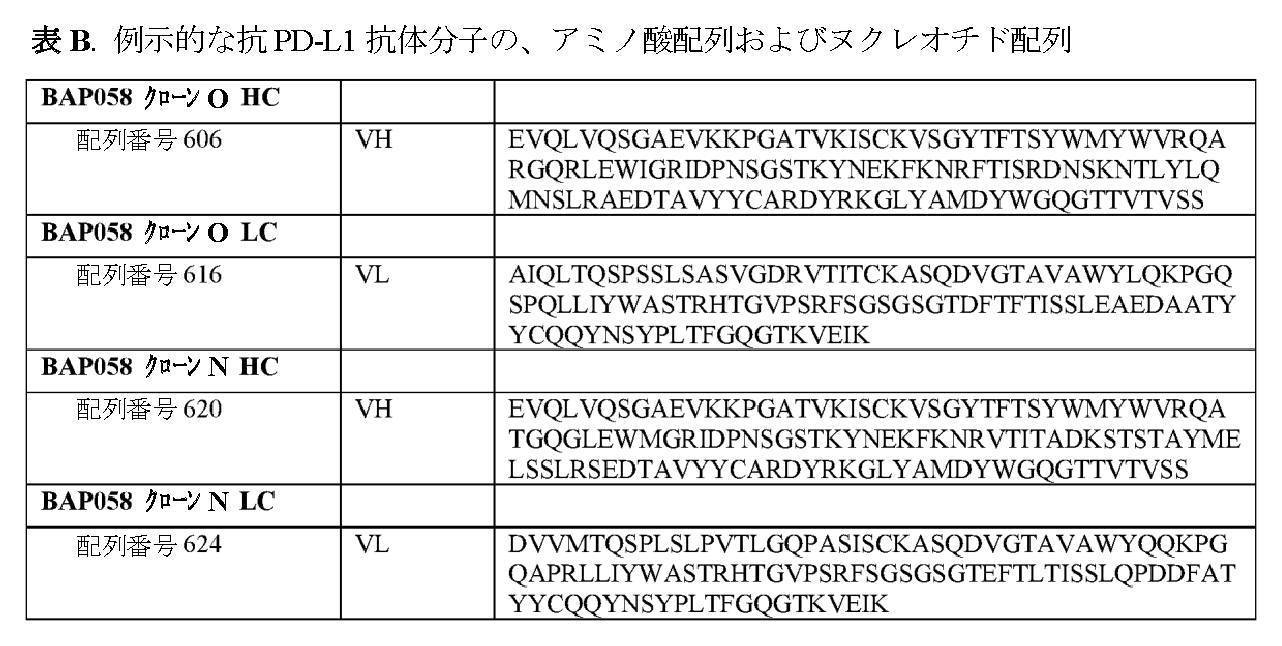
一実施形態では、抗PD-L1抗体分子は、MPDL3280A、RG7446、RO
5541267、YW243.55.S70、またはTECENTRIQ(商標)として
もまた公知のアテゾリズマブ(Genentech/Roche)である。アテゾリズマ
ブおよび他の抗PD-L1抗体は、参照によりその全体において組み込まれる、米国特許
第8,217,149号明細書において開示されている。
In one embodiment, the anti-PD-L1 antibody molecule is MPDL3280A, RG7446, RO
5541267, YW243.55. Atezolizumab (Genentech/Roche), also known as S70, or TECENTRIQ™. Atezolizumab and other anti-PD-L1 antibodies are disclosed in US Pat. No. 8,217,149, which is incorporated by reference in its entirety.
一実施形態では、抗PD-L1抗体分子は、MSB0010718Cとしてもまた公知
のアベルマブ(Merck Serono and Pfizer)である。アベルマブ
および他の抗PD-L1抗体は、参照によりその全体において組み込まれる、国際公開第
2013/079174号パンフレットにおいて開示されている。
In one embodiment, the anti-PD-L1 antibody molecule is avelumab (Merck Serono and Pfizer), also known as MSB0010718C. Avelumab and other anti-PD-L1 antibodies are disclosed in WO2013/079174, which is incorporated by reference in its entirety.
一実施形態では、抗PD-L1抗体分子は、MEDI4736としてもまた公知のデュ
ルバルマブ(MedImmune/AstraZeneca)である。デュルバルマブお
よび他の抗PD-L1抗体は、参照によりその全体において組み込まれる、米国特許第8
,779,108号明細書において開示されている。
In one embodiment, the anti-PD-L1 antibody molecule is durvalumab (MedImmune/AstraZeneca), also known as MEDI4736. Durvalumab and other anti-PD-L1 antibodies, US Pat. No. 8, which is incorporated by reference in its entirety.
, 779,108.
一実施形態では、抗PD-L1抗体分子は、MDX-1105、または12A4として
もまた公知のBMS-936559(Bristol-Myers Squibb)であ
る。BMS-936559および他の抗PD-L1抗体は、参照によりそれらの全体にお
いて組み込まれる、米国特許第7,943,743号明細書および国際公開第2015/
081158号パンフレットにおいて開示されている。
In one embodiment, the anti-PD-L1 antibody molecule is MDX-1105, or BMS-936559 (Bristol-Myers Squibb), also known as 12A4. BMS-936559 and other anti-PD-L1 antibodies are disclosed in US Pat. No. 7,943,743 and WO 2015/2015, incorporated by reference in their entirety.
081158 pamphlet.
さらなる公知の抗PD-L1抗体については、例えば、参照によりそれらの全体におい
て組み込まれる、国際公開第2015/181342号パンフレット、国際公開第201
4/100079号パンフレット、国際公開第2016/000619号パンフレット、
国際公開第2014/022758号パンフレット、国際公開第2014/055897
号パンフレット、国際公開第2015/061668号パンフレット、国際公開第201
3/079174号パンフレット、国際公開第2012/145493号パンフレット、
国際公開第2015/112805号パンフレット、国際公開第2015/109124
号パンフレット、国際公開第2015/195163号パンフレット、米国特許第8,1
68,179号明細書、米国特許第8,552,154号明細書、米国特許第8,460
,927号明細書、および米国特許第9,175,082号明細書において記載されてい
る抗PD-L1抗体を含む。
For further known anti-PD-L1 antibodies, see, for example, WO2015/181342, WO201, which are incorporated by reference in their entirety.
4/100079 pamphlet, WO 2016/000619 pamphlet,
International Publication No. 2014/022758 pamphlet, International Publication No. 2014/055897
pamphlet, WO 2015/061668 pamphlet, WO 201
3/079174 pamphlet, International Publication No. 2012/145493 pamphlet,
International Publication No. 2015/112805 Pamphlet, International Publication No. 2015/109124
WO 2015/195163, US Pat. No. 8,1
68,179, U.S. Pat. No. 8,552,154, U.S. Pat. No. 8,460
, 927, and anti-PD-L1 antibodies described in US Pat. No. 9,175,082.
一実施形態では、抗PD-L1抗体は、結合について、本明細書で記載される抗PD-
L1抗体のうちの1つと競合し、かつ/またはこれと同じ、PD-L1上のエピトープに
結合する抗体である。
In one embodiment, the anti-PD-L1 antibody is an anti-PD-L1 antibody described herein for binding.
An antibody that competes with and/or binds to the same epitope on PD-L1 as one of the L1 antibodies.
LAG-3阻害剤
本発明の一態様では、IL-1β阻害剤またはこの機能的な断片は、LAG-3阻害剤
と併せて投与される。一部の実施形態では、LAG-3阻害剤は、LAG525(Nov
artis)、BMS-986016(Bristol-Myers Squibb)、
TSR-033(Tesaro)、IMP731またはGSK2831781、およびI
MP761(Prima BioMed)から選択される。
LAG-3 Inhibitors In one aspect of the invention, an IL-1β inhibitor or functional fragment thereof is administered in conjunction with a LAG-3 inhibitor. In some embodiments, the LAG-3 inhibitor is LAG525 (Nov
artis), BMS-986016 (Bristol-Myers Squibb),
TSR-033 (Tesaro), IMP731 or GSK2831781, and I
Selected from MP761 (Prima BioMed).
一実施形態では、LAG-3阻害剤は、抗LAG-3抗体分子である。一実施形態では
、LAG-3阻害剤は、参照によりその全体において組み込まれる、2015年9月17
日において公開され、「Antibody Molecules to LAG-3 a
nd Uses Thereof」と題する、米国特許出願公開第2015/02594
20号明細書において開示されている、抗LAG-3抗体分子である。
In one embodiment, the LAG-3 inhibitor is an anti-LAG-3 antibody molecule. In one embodiment, the LAG-3 inhibitor is incorporated by reference in its entirety, September 17, 2015.
Published in the day, "Antibody Molecules to LAG-3 a
U.S. Patent Application Publication No. 2015/02594, entitled "Uses Thereof".
20, an anti-LAG-3 antibody molecule.
一実施形態では、抗LAG-3抗体分子は、配列番号706のアミノ酸配列を含むVH
と、配列番号718のアミノ酸配列を含むVLとを含む。一実施形態では、抗LAG-3
抗体分子は、配列番号724のアミノ酸配列を含むVHと、配列番号730のアミノ酸配
列を含むVLとを含む。
In one embodiment, the anti-LAG-3 antibody molecule is a VH comprising the amino acid sequence of SEQ ID NO:706
and a VL comprising the amino acid sequence of SEQ ID NO:718. In one embodiment, anti-LAG-3
The antibody molecule comprises a VH comprising the amino acid sequence of SEQ ID NO:724 and a VL comprising the amino acid sequence of SEQ ID NO:730.

一実施形態では、抗LAG-3抗体分子は、BMS986016としてもまた公知のB
MS-986016(Bristol-Myers Squibb)である。BMS-9
86016および他の抗LAG-3抗体は、参照によりそれらの全体において組み込まれ
る、国際公開第2015/116539号パンフレットおよび米国特許第9,505,8
39号明細書において開示されている。一実施形態では、抗LAG-3抗体分子は、例え
ば、表Dにおいて開示されている、BMS-986016の1または複数のCDR配列(
または、集合的に、CDR配列の全て)、重鎖可変領域配列もしくは軽鎖可変領域配列、
または重鎖配列もしくは軽鎖配列を含む。
In one embodiment, the anti-LAG-3 antibody molecule is BMS986016, also known as BMS986016.
MS-986016 (Bristol-Myers Squibb). BMS-9
WO2015/116539 and US Pat. No. 9,505,8, 86016 and other anti-LAG-3 antibodies are incorporated by reference in their entirety.
No. 39 is disclosed. In one embodiment, the anti-LAG-3 antibody molecule comprises one or more CDR sequences of BMS-986016, eg, disclosed in Table D (
or, collectively, all of the CDR sequences), heavy chain variable region sequences or light chain variable region sequences,
or contain heavy or light chain sequences.
一実施形態では、抗LAG-3抗体分子は、IMP731またはGSK2831781
(GSK and Prima BioMed)である。IMP731および他の抗LA
G-3抗体は、参照によりそれらの全体において組み込まれる、国際公開第2008/1
32601号パンフレットおよび米国特許第9,244,059号明細書において開示さ
れている。一実施形態では、抗LAG-3抗体分子は、例えば、表Dにおいて開示されて
いる、IMP731の1または複数のCDR配列(または、集合的に、CDR配列の全て
)、重鎖可変領域配列もしくは軽鎖可変領域配列、または重鎖配列もしくは軽鎖配列を含
む。
In one embodiment, the anti-LAG-3 antibody molecule is IMP731 or GSK2831781
(GSK and Prima BioMed). IMP731 and other anti-LA
The G-3 antibody is incorporated by reference in their entirety, WO2008/1
32601 and US Pat. No. 9,244,059. In one embodiment, the anti-LAG-3 antibody molecule comprises one or more CDR sequences of IMP731 (or, collectively, all of the CDR sequences), heavy chain variable region sequences, or Includes light chain variable region sequences, or heavy or light chain sequences.
さらなる公知の抗LAG-3抗体については、例えば、参照によりそれらの全体におい
て組み込まれる、国際公開第2008/132601号パンフレット、国際公開第201
0/019570号パンフレット、国際公開第2014/140180号パンフレット、
国際公開第2015/116539号パンフレット、国際公開第2015/200119
号パンフレット、国際公開第2016/028672号パンフレット、米国特許第9,2
44,059号明細書、米国特許第9,505,839号明細書において記載されている
抗LAG-3抗体を含む。
For further known anti-LAG-3 antibodies, see, for example, WO2008/132601, WO201, which are incorporated by reference in their entirety.
0/019570 pamphlet, WO 2014/140180 pamphlet,
International Publication No. 2015/116539 Pamphlet, International Publication No. 2015/200119
WO 2016/028672, U.S. Patent No. 9,2
44,059, including anti-LAG-3 antibodies described in US Pat. No. 9,505,839.
一実施形態では、抗LAG-3抗体は、結合について、本明細書で記載される抗LAG
-3抗体のうちの1つと競合し、かつ/またはこれと同じ、LAG-3上のエピトープに
結合する抗体である。
In one embodiment, the anti-LAG-3 antibody is an anti-LAG-3 antibody described herein for binding
An antibody that competes with and/or binds to the same epitope on LAG-3 as one of the -3 antibodies.
一実施形態では、抗LAG-3阻害剤は、例えば、参照によりその全体において組み込
まれる、国際公開第2009/044273号パンフレットにおいて開示されている、可
溶性LAG-3タンパク質、例えば、IMP321(Prima BioMed)である
。
In one embodiment, the anti-LAG-3 inhibitor is a soluble LAG-3 protein, e.g., IMP321 (Prima BioMed), e.g., disclosed in WO2009/044273, which is incorporated by reference in its entirety. is.

TIM-3阻害剤
本発明の一態様では、IL-1β阻害剤またはこの機能的な断片は、TIM-3阻害剤
と併せて投与される。一部の実施形態では、TIM-3阻害剤は、MGB453(Nov
artis)またはTSR-022(Tesaro)である。
TIM-3 Inhibitors In one aspect of the invention, an IL-1β inhibitor or functional fragment thereof is administered in conjunction with a TIM-3 inhibitor. In some embodiments, the TIM-3 inhibitor is MGB453 (Nov
artis) or TSR-022 (Tesaro).
一実施形態では、TIM-3阻害剤は、抗TIM-3抗体分子である。一実施形態では
、TIM-3阻害剤は、参照によりその全体において組み込まれる、2015年8月6日
において公開され、「Antibody Molecules to TIM-3 an
d Uses Thereof」と題する、米国特許出願公開第2015/021827
4号明細書において開示されている、抗TIM-3抗体分子である。
In one embodiment, the TIM-3 inhibitor is an anti-TIM-3 antibody molecule. In one embodiment, TIM-3 inhibitors are disclosed in "Antibody Molecules to TIM-3 an
US Patent Application Publication No. 2015/021827 entitled "Uses Thereof".
4, an anti-TIM-3 antibody molecule.
一実施形態では、抗TIM-3抗体分子は、配列番号806のアミノ酸配列を含むVH
と、配列番号816のアミノ酸配列を含むVLとを含む。一実施形態では、抗TIM-3
抗体分子は、配列番号822のアミノ酸配列を含むVHと、配列番号826のアミノ酸配
列を含むVLとを含む。
In one embodiment, the anti-TIM-3 antibody molecule is a VH comprising the amino acid sequence of SEQ ID NO:806
and a VL comprising the amino acid sequence of SEQ ID NO:816. In one embodiment, anti-TIM-3
The antibody molecule comprises a VH comprising the amino acid sequence of SEQ ID NO:822 and a VL comprising the amino acid sequence of SEQ ID NO:826.
本明細書で記載される抗体分子は、参照によりその全体において組み込まれる、米国特
許出願公開第2015/0218274号明細書において記載されている、ベクター、宿
主細胞、および方法により作り出すことができる。
The antibody molecules described herein can be produced by the vectors, host cells, and methods described in US Patent Application Publication No. 2015/0218274, which is incorporated by reference in its entirety.

一実施形態では、抗TIM-3抗体分子は、TSR-022(AnaptysBio/
Tesaro)である。一実施形態では、抗TIM-3抗体分子は、TSR-022の1
または複数のCDR配列(または、集合的に、CDR配列の全て)、重鎖可変領域配列も
しくは軽鎖可変領域配列、または重鎖配列もしくは軽鎖配列を含む。一実施形態では、抗
TIM-3抗体分子は、例えば、表Fにおいて開示されている、APE5137またはA
PE5121の1または複数のCDR配列(または、集合的に、CDR配列の全て)、重
鎖可変領域配列もしくは軽鎖可変領域配列、または重鎖配列もしくは軽鎖配列を含む。A
PE5137、APE5121、および他の抗TIM-3抗体は、参照によりその全体に
おいて組み込まれる、国際公開第2016/161270号パンフレットにおいて開示さ
れている。
In one embodiment, the anti-TIM-3 antibody molecule is TSR-022 (AnaptysBio/
Tesaro). In one embodiment, the anti-TIM-3 antibody molecule is TSR-022 1
or multiple CDR sequences (or, collectively, all of the CDR sequences), heavy or light chain variable region sequences, or heavy or light chain sequences. In one embodiment, the anti-TIM-3 antibody molecule is APE5137 or A
It includes one or more CDR sequences (or, collectively, all of the CDR sequences), heavy or light chain variable region sequences, or heavy or light chain sequences of PE5121. A.
PE5137, APE5121, and other anti-TIM-3 antibodies are disclosed in WO2016/161270, which is incorporated by reference in its entirety.
一実施形態では、抗TIM-3抗体分子は、抗体クローンである、F38-2E2であ
る。一実施形態では、抗TIM-3抗体分子は、F38-2E2の1または複数のCDR
配列(または、集合的に、CDR配列の全て)、重鎖可変領域配列もしくは軽鎖可変領域
配列、または重鎖配列もしくは軽鎖配列を含む。
In one embodiment, the anti-TIM-3 antibody molecule is the antibody clone, F38-2E2. In one embodiment, the anti-TIM-3 antibody molecule comprises one or more CDRs of F38-2E2
A sequence (or, collectively, all of the CDR sequences), a heavy chain variable region sequence or a light chain variable region sequence, or a heavy chain sequence or a light chain sequence.
さらなる公知の抗TIM-3抗体については、例えば、参照によりそれらの全体におい
て組み込まれる、国際公開第2016/111947号パンフレット、国際公開第201
6/071448号パンフレット、国際公開第2016/144803号パンフレット、
米国特許第8,552,156号明細書、米国特許第8,841,418号明細書、およ
び米国特許第9,163,087号明細書において記載されている抗TIM-3抗体を含
む。
For further known anti-TIM-3 antibodies, see, for example, WO2016/111947, WO201, which are incorporated by reference in their entirety.
6/071448 pamphlet, WO 2016/144803 pamphlet,
Including anti-TIM-3 antibodies described in US Pat. No. 8,552,156, US Pat. No. 8,841,418, and US Pat. No. 9,163,087.
一実施形態では、抗TIM-3抗体は、結合について、本明細書で記載される抗TIM
-3抗体のうちの1つと競合し、かつ/またはこれと同じ、TIM-3上のエピトープに
結合する抗体である。
In one embodiment, the anti-TIM-3 antibody is an anti-TIM-3 antibody described herein for binding
-3 antibodies that compete with and/or bind to the same epitope on TIM-3.

GITRアゴニスト
本発明の一態様では、IL-1β阻害剤またはこの機能的な断片は、GITRアゴニス
トと併せて投与される。一部の実施形態では、GITRアゴニストは、GWN323(N
VS)、BMS-986156、MK-4166もしくはMK-1248(Merck)
、TRX518(Leap Therapeutics)、INCAGN1876(In
cyte/Agenus)、AMG228(Amgen)、またはINBRX-110(
Inhibrx)である。
GITR Agonists In one aspect of the invention, an IL-1β inhibitor or functional fragment thereof is administered in conjunction with a GITR agonist. In some embodiments, the GITR agonist is GWN323 (N
VS), BMS-986156, MK-4166 or MK-1248 (Merck)
, TRX518 (Leap Therapeutics), INCAGN1876 (In
Cyte/Agenus), AMG228 (Amgen), or INBRX-110 (
Inhibrx).
一実施形態では、GITRアゴニストは、抗GITR抗体分子である。一実施形態では
、GITRアゴニストは、参照によりその全体において組み込まれる、2016年4月1
4日において公開され、「Compositions and Methods of
Use for Augmented Immune Response and Ca
ncer Therapy」と題する、国際公開第2016/057846号パンフレッ
トにおいて記載されている、抗GITR抗体分子である。
In one embodiment, the GITR agonist is an anti-GITR antibody molecule. In one embodiment, the GITR agonist is incorporated by reference in its entirety, April 1, 2016.
Published on the 4th, "Compositions and Methods of
Use for Augmented Immune Response and Ca
It is an anti-GITR antibody molecule described in WO 2016/057846 entitled "Ncer Therapy".
一実施形態では、抗GITR抗体分子は、配列番号901のアミノ酸配列を含むVHと
、配列番号902のアミノ酸配列を含むVLとを含む。
In one embodiment, the anti-GITR antibody molecule comprises a VH comprising the amino acid sequence of SEQ ID NO:901 and a VL comprising the amino acid sequence of SEQ ID NO:902.

一実施形態では、抗GITR抗体分子は、BMS 986156またはBMS9861
56としてもまた公知のBMS-986156(Bristol-Myers Squi
bb)である。BMS-986156および他の抗GITR抗体については、例えば、参
照によりそれらの全体において組み込まれる、米国特許第9,228,016号明細書お
よび国際公開第2016/196792号パンフレットにおいて開示されている。一実施
形態では、抗GITR抗体分子は、例えば、表Hにおいて開示されている、BMS-98
6156の1または複数のCDR配列(または、集合的に、CDR配列の全て)、重鎖可
変領域配列もしくは軽鎖可変領域配列、または重鎖配列もしくは軽鎖配列を含む。
In one embodiment, the anti-GITR antibody molecule is BMS 986156 or BMS9861
BMS-986156 (Bristol-Myers Squi
bb). BMS-986156 and other anti-GITR antibodies are disclosed, for example, in US Pat. No. 9,228,016 and WO2016/196792, which are incorporated by reference in their entireties. In one embodiment, the anti-GITR antibody molecule is BMS-98, eg, disclosed in Table H.
6156 (or, collectively, all of the CDR sequences), heavy or light chain variable region sequences, or heavy or light chain sequences.
一実施形態では、抗GITR抗体分子は、MK-4166またはMK-1248(Me
rck)である。MK-4166、MK-1248、および他の抗GITR抗体について
は、例えば、参照によりそれらの全体において組み込まれる、米国特許第8,709,4
24号明細書、国際公開第2011/028683号パンフレット、国際公開第2015
/026684号パンフレット、およびMahne et al. Cancer Res. 2017; 77(5):1108-11
18において開示されている。
In one embodiment, the anti-GITR antibody molecule is MK-4166 or MK-1248 (Me
rck). For MK-4166, MK-1248, and other anti-GITR antibodies, see, eg, US Pat. No. 8,709,4, which is incorporated by reference in its entirety.
No. 24, International Publication No. 2011/028683, International Publication No. 2015
/026684, and Mahne et al. Cancer Res. 2017; 77(5):1108-11.
18.
一実施形態では、抗GITR抗体分子は、TRX518(Leap Therapeu
tics)である。TRX518および他の抗GITR抗体については、例えば、参照に
よりそれらの全体において組み込まれる、米国特許第7,812,135号明細書、米国
特許第8,388,967号明細書、米国特許第9,028,823号明細書、国際公開
第2006/105021号パンフレット、およびPonte J et al. (2010) Clinical Imm
unology; 135:S96において開示されている。
In one embodiment, the anti-GITR antibody molecule is TRX518 (Leap Therapeu
tics). For TRX518 and other anti-GITR antibodies, see, for example, US Pat. No. 7,812,135, US Pat. No. 8,388,967, US Pat. 028,823, WO 2006/105021, and Ponte J et al. (2010) Clinical Imm
unology; 135:S96.
一実施形態では、抗GITR抗体分子は、INCAGN1876(Incyte/Ag
enus)である。INCAGN1876および他の抗GITR抗体については、例えば
、参照によりそれらの全体において組み込まれる、米国特許出願公開第2015/036
8349号明細書および国際公開第2015/184099号パンフレットにおいて開示
されている。
In one embodiment, the anti-GITR antibody molecule is INCAGN1876 (Incyte/Ag
enus). For INCAGN1876 and other anti-GITR antibodies, e.g., US Patent Application Publication No. 2015/036, which is incorporated by reference in its entirety
8349 and WO2015/184099.
一実施形態では、抗GITR抗体分子は、AMG 228(Amgen)である。AM
G 228および他の抗GITR抗体については、例えば、参照によりそれらの全体にお
いて組み込まれる、米国特許第9,464,139号明細書および国際公開第2015/
031667号パンフレットにおいて開示されている。
In one embodiment, the anti-GITR antibody molecule is AMG 228 (Amgen). AM
For G228 and other anti-GITR antibodies, see, for example, US Pat. No. 9,464,139 and WO2015/
031667 pamphlet.
一実施形態では、抗GITR抗体分子は、INBRX-110(Inhibrx)であ
る。INBRX-110および他の抗GITR抗体については、例えば、参照によりそれ
らの全体において組み込まれる、米国特許出願公開第2017/0022284号明細書
および国際公開第2017/015623号パンフレットにおいて開示されている。
In one embodiment, the anti-GITR antibody molecule is INBRX-110 (Inhibrx). INBRX-110 and other anti-GITR antibodies are disclosed, for example, in US Patent Application Publication No. 2017/0022284 and WO2017/015623, which are incorporated by reference in their entireties.
一実施形態では、GITRアゴニスト(例えば、融合タンパク質)は、MEDI187
3としてもまた公知のMEDI 1873(MedImmune)である。MEDI 1
873および他のGITRアゴニストについては、例えば、参照によりそれらの全体にお
いて組み込まれる、米国特許出願公開第2017/0073386号明細書、国際公開第
2017/025610号パンフレット、およびRoss et al. Cancer Res 2016; 76(14 S
uppl): Abstract nr 561において開示されている。一実施形態では、GITRアゴニスト
は、グルココルチコイド誘導性TNF受容体リガンド(GITRL)MEDI 1873
の、IgG Fcドメイン、機能的多量体化ドメイン、および受容体結合性ドメインのう
ちの1または複数を含む。
In one embodiment, the GITR agonist (eg, fusion protein) is MEDI187
3, MEDI 1873 (MedImmune).
873 and other GITR agonists, for example, US Patent Application Publication No. 2017/0073386, WO 2017/025610, and Ross et al. Cancer Res 2016, which are incorporated by reference in their entirety; 76(14S
uppl): disclosed in Abstract nr 561. In one embodiment, the GITR agonist is glucocorticoid-inducible TNF receptor ligand (GITRL) MEDI 1873
of an IgG Fc domain, a functional multimerization domain, and a receptor binding domain.
さらなる公知のGITRアゴニスト(例えば、抗GITR抗体)については、例えば、
参照によりそれらの全体において組み込まれる、国際公開第2016/054638号パ
ンフレットにおいて記載されているGITRアゴニスト(例えば、抗GITR抗体)を含
む。
For further known GITR agonists (e.g. anti-GITR antibodies), e.g.
GITR agonists (eg, anti-GITR antibodies) described in WO2016/054638, which are incorporated by reference in their entirety.
一実施形態では、抗GITR抗体は、結合について、本明細書で記載される抗GITR
抗体のうちの1つと競合し、かつ/またはこれと同じ、GITR上のエピトープに結合す
る抗体である。
In one embodiment, the anti-GITR antibody is an anti-GITR antibody described herein for binding
An antibody that competes with and/or binds to the same epitope on GITR as one of the antibodies.
一実施形態では、GITRアゴニストは、GITRシグナル伝達経路を活性化させるペ
プチドである。一実施形態では、GITRアゴニストは、定常領域(例えば、免疫グロブ
リン配列のFc領域)へと融合させたイムノアデシン結合性断片(例えば、GITRLの
細胞外部分または GITR結合性部分を含むイムノアデシン結合性断片)である。
In one embodiment, a GITR agonist is a peptide that activates the GITR signaling pathway. In one embodiment, the GITR agonist is an immunoadesine-binding fragment (e.g., an extracellular portion of GITRL or an immunoadesine-binding fragment comprising a GITR-binding portion) fused to a constant region (e.g., the Fc region of an immunoglobulin sequence). is.

IL15/IL-15Ra複合体
本発明の一態様では、IL-1β阻害剤またはこの機能的な断片は、IL-15/IL
-15Ra複合体と併せて投与される。一部の実施形態では、IL-15/IL-15R
a複合体は、NIZ985(Novartis)、ATL-803(Altor)、また
はCYP0150(Cytune)から選択される。
IL15/IL-15Ra Complex In one aspect of the invention, the IL-1β inhibitor or functional fragment thereof comprises IL-15/IL
It is administered in conjunction with a -15Ra complex. In some embodiments, IL-15/IL-15R
The a complex is selected from NIZ985 (Novartis), ATL-803 (Altor), or CYP0150 (Cytune).
一実施形態では、IL-15/IL-15Ra複合体は、ヒトIL-15Raの可溶性
形態と複合体化させたヒトIL-15を含む。複合体は、IL-15Raの可溶性形態に
共有結合的または非共有結合的に結合させたIL-15を含みうる。特定の実施形態では
、ヒトIL-15を、IL-15Raの可溶性形態へと、非共有結合的に結合させる。特
定の実施形態では、参照によりその全体において組み込まれる、国際公開第2014/0
66527号パンフレットにおいて記載されている通り、組成物のヒトIL-15は、表
I中の配列番号1001のアミノ酸配列を含み、ヒトIL-15Raの可溶性形態は、表
I中の配列番号1002のアミノ酸配列を含む。本明細書で記載される分子は、参照によ
りその全体において組み込まれる、国際公開第2007/084342号パンフレットに
おいて記載されている、ベクター、宿主細胞、および方法により作り出すことができる。
In one embodiment, the IL-15/IL-15Ra complex comprises human IL-15 complexed with a soluble form of human IL-15Ra. A conjugate can comprise IL-15 covalently or non-covalently bound to a soluble form of IL-15Ra. In certain embodiments, human IL-15 is non-covalently bound to the soluble form of IL-15Ra. In certain embodiments, WO 2014/0, which is incorporated by reference in its entirety
66527, the human IL-15 of the composition comprises the amino acid sequence of SEQ ID NO: 1001 in Table I, and the soluble form of human IL-15Ra comprises the amino acid sequence of SEQ ID NO: 1002 in Table I. Contains arrays. The molecules described herein can be produced by the vectors, host cells, and methods described in WO2007/084342, which is incorporated by reference in its entirety.

一実施形態では、IL-15/IL-15Ra複合体は、ALT-803、IL-15
/IL-15Ra Fc融合タンパク質(IL-15N72D:IL-15RaSu/F
c可溶性複合体)である。ALT-803については、参照によりその全体において組み
込まれる、国際公開第2008/143794号パンフレットにおいて開示されている。
一実施形態では、IL-15/IL-15Ra Fc融合タンパク質は、表Jに開示され
ている配列を含む。
In one embodiment, the IL-15/IL-15Ra complex is ALT-803, IL-15
/IL-15Ra Fc fusion protein (IL-15N72D: IL-15RaSu/F
c soluble complex). ALT-803 is disclosed in WO2008/143794, which is incorporated by reference in its entirety.
In one embodiment, the IL-15/IL-15Ra Fc fusion protein comprises the sequences disclosed in Table J.
一実施形態では、IL-15/IL-15Ra複合体は、IL-15Raのsushi
ドメイン(CYP0150、Cytune)へと融合させたIL-15を含む。IL-1
5Raのsushiドメインは、IL-15Raのシグナルペプチドの後の第1のシステ
イン残基で始まり、前記シグナルペプチドの後の第4のシステイン残基で終わるドメイン
を指す。IL-15Raのsushiドメインへと融合させたIL-15の複合体につい
ては、参照によりそれらの全体において組み込まれる、国際公開第2007/04606
号パンフレットおよび国際公開第2012/175222号パンフレットにおいて開示さ
れている。一実施形態では、IL-15/IL-15Ra sushiドメイン融合体は
、表Jに開示されている配列を含む。
In one embodiment, the IL-15/IL-15Ra complex is IL-15Ra sushi
It contains IL-15 fused to a domain (CYP0150, Cytune). IL-1
The 5Ra sushi domain refers to the domain that begins at the first cysteine residue after the IL-15Ra signal peptide and ends at the fourth cysteine residue after said signal peptide. For conjugates of IL-15 fused to the sushi domain of IL-15Ra, see WO2007/04606, which is incorporated by reference in their entirety.
and WO 2012/175222. In one embodiment, the IL-15/IL-15Ra sushi domain fusion comprises the sequences disclosed in Table J.

CTLA-4阻害剤
本発明の一態様では、IL-1β阻害剤またはこの機能的な断片は、CTLA-4の阻
害剤と併せて投与される。一部の実施形態では、CTLA-4阻害剤は、抗CTLA-4
抗体またはこの断片である。例示的な抗CTLA-4抗体は、トレメリムマブ(旧称:チ
シリムマブ、CP-675,206);およびイピリムマブ(MDX-010、Yerv
oy(登録商標))を含む。一実施形態では、本発明は、肺がん、とりわけ、NSCLC
の処置における使用のための、IL-1β抗体またはこの機能的な断片(例えば、カナキ
ヌマブまたはゲボキズマブ)を提供するが、この場合、前記IL-1β抗体またはこの機
能的な断片は、1または複数の化学療法剤と組み合わせて投与され、前記1または複数の
化学療法剤は、好ましくは、ニボルマブ、ペンブロリズマブ、アテゾリズマブ、アベルマ
ブ、デュルバルマブ、PDR-001(スパルタリズマブ)、およびイピリムマブからな
る群から選択されるチェックポイント阻害剤である。一実施形態では、1または複数の化
学療法剤は、好ましくは、ニボルマブ、ペンブロリズマブ、アテゾリズマブ、アベルマブ
、デュルバルマブ、PDR-001(スパルタリズマブ)、さらに好ましくは、ペンブロ
リズマブからなる群から選択されるPD-1阻害剤またはPD-L-1阻害剤である。さ
らなる一実施形態では、IL-1β抗体は、カナキヌマブまたはこの機能的な断片である
。一実施形態では、カナキヌマブは、300mgの用量で、毎月投与される。一実施形態
では、カナキヌマブは、200mgの用量で、3週間ごとに、または毎月投与される。一
実施形態では、カナキヌマブは、皮下投与される。さらなる一実施形態では、IL-1β
抗体は、カナキヌマブまたはこの機能的な断片であり、好ましくは、ニボルマブ、ペンブ
ロリズマブ、アテゾリズマブ、アベルマブ、デュルバルマブ、およびPDR-001(ス
パルタリズマブ)から選択されるPD-1阻害剤またはPD-L1阻害剤、特に、アテゾ
リズマブ、特に、ペンブロリズマブと組み合わせて投与され、カナキヌマブは、PD-1
阻害剤またはPD-L1阻害剤と同時に投与される。さらなる一実施形態では、IL-1
β抗体は、ゲボキズマブまたはこの機能的な断片である。一実施形態では、ゲボキズマブ
は、3週間ごとに、90mg~約360mg、90mg~約270mg、120mg~2
70mg、90mg~180mg、120mg~180mg、120mg、または90m
g、または60mg~90mgの用量で投与される。一実施形態では、ゲボキズマブまた
はこの機能的な断片であり、3週間ごとに、120mgの用量で投与される。一実施形態
では、ゲボキズマブは、毎月、90mg~約360mg、90mg~約270mg、12
0mg~270mg、90mg~180mg、120mg~180mg、120mg、ま
たは90mg、または60mg~90mgの用量で投与される。一実施形態では、ゲボキ
ズマブまたはこの機能的な断片は、120mgの用量で、4週間ごとに(毎月)投与され
る。一実施形態では、ゲボキズマブは、皮下投与されるか、または、好ましくは、静脈内
投与される。
CTLA-4 Inhibitors In one aspect of the invention, an IL-1β inhibitor or functional fragment thereof is administered in conjunction with an inhibitor of CTLA-4. In some embodiments, the CTLA-4 inhibitor is anti-CTLA-4
an antibody or fragment thereof. Exemplary anti-CTLA-4 antibodies are tremelimumab (formerly known as ticilimumab, CP-675,206); and ipilimumab (MDX-010, Yerv
oy®). In one embodiment, the present invention is directed to lung cancer, especially NSCLC.
provided is an IL-1β antibody or functional fragment thereof (e.g., canakinumab or gevokizumab) for use in the treatment of, wherein said IL-1β antibody or functional fragment thereof comprises one or more administered in combination with a chemotherapeutic agent, said one or more chemotherapeutic agents preferably selected from the group consisting of nivolumab, pembrolizumab, atezolizumab, avelumab, durvalumab, PDR-001 (spartalizumab), and ipilimumab It is a checkpoint inhibitor. In one embodiment, the one or more chemotherapeutic agents is PD-, preferably selected from the group consisting of nivolumab, pembrolizumab, atezolizumab, avelumab, durvalumab, PDR-001 (spartalizumab), more preferably pembrolizumab 1 inhibitor or PD-L-1 inhibitor. In a further embodiment, the IL-1β antibody is canakinumab or a functional fragment thereof. In one embodiment, canakinumab is administered monthly at a dose of 300 mg. In one embodiment, canakinumab is administered at a dose of 200 mg every three weeks or monthly. In one embodiment, canakinumab is administered subcutaneously. In a further embodiment IL-1β
The antibody is canakinumab or a functional fragment thereof, preferably a PD-1 inhibitor or PD-L1 inhibitor selected from nivolumab, pembrolizumab, atezolizumab, avelumab, durvalumab, and PDR-001 (spartalizumab) , especially atezolizumab, especially administered in combination with pembrolizumab, canakinumab is PD-1
It is administered concurrently with an inhibitor or PD-L1 inhibitor. In a further embodiment IL-1
The beta antibody is gevokizumab or a functional fragment thereof. In one embodiment, gevokizumab is 90 mg to about 360 mg, 90 mg to about 270 mg, 120 mg to 2 doses every 3 weeks.
70 mg, 90 mg to 180 mg, 120 mg to 180 mg, 120 mg, or 90 mg
g, or a dose of 60 mg to 90 mg. In one embodiment, gevokizumab or a functional fragment thereof, administered at a dose of 120 mg every 3 weeks. In one embodiment, gevokizumab is administered monthly from 90 mg to about 360 mg, 90 mg to about 270 mg, 12
It is administered in doses of 0 mg to 270 mg, 90 mg to 180 mg, 120 mg to 180 mg, 120 mg, or 90 mg, or 60 mg to 90 mg. In one embodiment, gevokizumab or a functional fragment thereof is administered at a dose of 120 mg every 4 weeks (monthly). In one embodiment, gevokizumab is administered subcutaneously or, preferably, intravenously.
さらなる一実施形態では、IL-1β抗体またはこの機能的な断片は、ゲボキズマブま
たはこの機能的な断片であり、好ましくは、ニボルマブ、ペンブロリズマブ、アテゾリズ
マブ、アベルマブ、デュルバルマブ、およびPDR-001/スパルタリズマブから選択
されるPD-1阻害剤またはPD-L1阻害剤、特に、アテゾリズマブ、または特に、ペ
ンブロリズマブと組み合わせて投与され、ゲボキズマブは、好ましくは、PD-1阻害剤
またはPD-L1阻害剤と同時に投与される。
In a further embodiment, the IL-1β antibody or functional fragment thereof is gevokizumab or a functional fragment thereof, preferably from nivolumab, pembrolizumab, atezolizumab, avelumab, durvalumab, and PDR-001/spartalizumab administered in combination with a selected PD-1 or PD-L1 inhibitor, particularly atezolizumab, or particularly pembrolizumab, and gevokizumab is preferably administered concurrently with the PD-1 or PD-L1 inhibitor. be.
一実施形態では、前記患者は、腫瘍によるEGFRまたはALKのゲノム異常を伴うか
、または伴わない、FDAで承認された試験により決定される、高PD-L1発現[Tu
mor Proportion Score(TPS)≧50%)]を有する腫瘍を有す
る。一実施形態では、前記患者は、FDAで承認された試験により決定されるPD-L1
発現(TPS≧1%)を有する腫瘍を有する。
In one embodiment, the patient has high PD-L1 expression [Tu
mor Proportion Score (TPS) ≥ 50%)]. In one embodiment, the patient has PD-L1 as determined by an FDA-approved test.
Have a tumor with expression (TPS ≥ 1%).
「~と組み合わせた」という用語は2つまたはこれを超える薬物を、逐次的に、または
同時に投与することとして理解される。代替的に、「~と組み合わせた」という用語は、
2つまたはこれを超える薬物を、薬物の有効な治療濃度が、大部分の時間にわたり、患者
の体内で重複することが予測されるように投与することとして理解される。本発明の薬物
および1または複数の組合せパートナー(例えば、「治療剤」または「共薬剤」ともまた
称される、別の薬物)は、同時に、独立に投与することもでき、とりわけ、組合せパート
ナーが、協同的効果、例えば、相乗的効果を示すことを、これらの時間間隔が可能とする
場合は、時間間隔以内に、個別に投与することもできる。本明細書で活用される「共投与
」または「組合せ投与」などの用語は、選択された組合せパートナーの、それを必要とす
る単一の対象(例えば、患者)への投与を包摂することを意味し、薬剤が、必ずしも、同
じ投与経路により、または同時に投与されるわけではない処置レジメンを含むことを意図
する。薬物は、患者へと、個別の実体として、同時に、共時的に、または逐次的に、具体
的な時間制限なしに投与されるが、この場合、このような投与は、治療有効レベルの2つ
の化合物を、患者の体内にもたらし、処置レジメンは、本明細書で記載される状態または
障害の処置における、薬物組合せの有益な効果をもたらすであろう。後者はまた、カクテ
ル療法、例えば、3つまたはこれを超える有効成分の投与にも適用される。
The term "in combination with" is understood as administration of two or more drugs, either sequentially or simultaneously. Alternatively, the term "in combination with"
It is understood as administering two or more drugs such that the effective therapeutic concentrations of the drugs are expected to overlap in the patient's body for most of the time. A drug of the invention and one or more combination partners (e.g., another drug, also referred to as a "therapeutic agent" or "co-agent") can also be administered simultaneously and independently; , may also be administered separately within time intervals when these time intervals allow for a cooperative effect, eg, a synergistic effect. Terms such as "co-administration" or "combination administration" as utilized herein are intended to encompass administration of selected combination partners to a single subject (e.g., patient) in need thereof. It is meant to include treatment regimens where the agents are not necessarily administered by the same route of administration or at the same time. The drugs are administered to the patient as separate entities, simultaneously, synchronously, or sequentially, without specific time limits, where such administration is at therapeutically effective levels of 2 The two compounds are brought into the patient's body, and the treatment regimen will provide beneficial effects of the drug combination in treating the conditions or disorders described herein. The latter also applies to cocktail therapy, eg the administration of three or more active ingredients.
一実施形態では、本発明は、肺がんの処置における使用のための、IL-1β結合性抗
体またはこの機能的な断片、適切には、カナキヌマブもしくはこの機能的な断片、または
ゲボキズマブまたはこの機能的な断片を提供するが、この場合、肺がんは、進行性肺がん
、転移性肺がん、再発性肺がん、および/または不応性肺がんである。一実施形態では、
肺がんは、転移性NSCLCである。一実施形態では、前記NSCLCは、扁平上皮NS
CLCである。一実施形態では、前記NSCLCは、非扁平上皮NSCLCである。
In one embodiment, the present invention provides an IL-1β binding antibody or functional fragment thereof, suitably canakinumab or a functional fragment thereof, or gevokizumab or a functional fragment thereof, for use in the treatment of lung cancer. A fragment is provided, where the lung cancer is advanced lung cancer, metastatic lung cancer, recurrent lung cancer, and/or refractory lung cancer. In one embodiment,
Lung cancer is metastatic NSCLC. In one embodiment, said NSCLC is squamous NS
CLC. In one embodiment, said NSCLC is non-squamous NSCLC.
一実施形態では、本発明は、少なくとも部分的な炎症ベースを有するがんのファースト
ライン処置としての使用のための、IL-1β抗体またはこの機能的な断片、適切には、
カナキヌマブもしくはこの機能的な断片、またはゲボキズマブもしくはこの機能的な断片
を提供する。典型的に、少なくとも部分的な炎症ベースを有するがんは、肺がん、とりわ
け、NSCLC、結腸直腸がん、黒色腫、胃がん(食道がんを含む)、腎細胞癌(RCC
)、乳がん、肝細胞癌(HCC)、前立腺がん、膀胱がん、AML、多発性骨髄腫、頭頸
部がん、および膵臓がんを含むがこれらに限定されない。一実施形態では、本発明は、少
なくとも部分的な炎症ベースを有するがんであって、肺がん、とりわけ、NSCLCを含
むがんのファーストライン処置としての使用のための、とりわけ、IL-1βまたはIL
-1受容体を発現または過剰発現させる患者のための、IL-1β抗体またはこの機能的
な断片、適切には、カナキヌマブもしくはこの機能的な断片、またはゲボキズマブもしく
はこの機能的な断片を提供する。「ファーストライン処置」という用語は、前記患者が、
1または複数の他の化学療法剤に対する耐性を発現させる前に、IL-1β抗体またはこ
の機能的な断片を施されることを意味する。好ましくは、1または複数の他の化学療法剤
は、白金ベースの単剤療法もしくは組合せ療法、チロシン阻害剤療法、チェックポイント
阻害剤療法などのターゲティング療法、またはこれらの任意の組合せである。ファースト
ライン処置として、カナキヌマブまたはゲボキズマブなどのIL-1β抗体またはこの機
能的な断片は、患者へと、単剤療法として投与される場合もあり、好ましくは、1または
複数の低分子化学療法剤を伴うか、または伴わない、チェックポイント阻害剤、特に、P
D-1阻害剤またはPD-L1阻害剤、特に、アテゾリズマブ、より好ましくは、ペンブ
ロリズマブと組み合わせて投与される場合もある。
In one embodiment, the present invention provides an IL-1β antibody or functional fragment thereof for use as a first-line treatment of cancers having an at least partial inflammatory basis, suitably
Canakinumab or a functional fragment thereof or gevokizumab or a functional fragment thereof are provided. Typically cancers with at least a partial inflammatory basis are lung cancer, especially NSCLC, colorectal cancer, melanoma, gastric cancer (including esophageal cancer), renal cell carcinoma (RCC
), breast cancer, hepatocellular carcinoma (HCC), prostate cancer, bladder cancer, AML, multiple myeloma, head and neck cancer, and pancreatic cancer. In one embodiment, the present invention provides for use as a first-line treatment of cancers having at least a partial inflammatory basis, including lung cancer, especially NSCLC, in particular IL-1β or IL-1.
An IL-1β antibody or functional fragment thereof, suitably canakinumab or a functional fragment thereof, or gevokizumab or a functional fragment thereof, is provided for patients who express or overexpress the -1 receptor. The term "first line treatment" means that the patient is
It is meant to be administered an IL-1β antibody or functional fragment thereof prior to developing resistance to one or more other chemotherapeutic agents. Preferably, the one or more other chemotherapeutic agents is a platinum-based monotherapy or combination therapy, a targeted therapy such as a tyrosine inhibitor therapy, a checkpoint inhibitor therapy, or any combination thereof. As a first line treatment, an IL-1β antibody or functional fragment thereof, such as canakinumab or gevokizumab, may be administered to patients as monotherapy, preferably in combination with one or more small molecule chemotherapeutic agents. checkpoint inhibitors, in particular P
It may also be administered in combination with a D-1 inhibitor or a PD-L1 inhibitor, particularly atezolizumab, more preferably pembrolizumab.
好ましい一実施形態では、カナキヌマブまたはこの断片は、1つのチェックポイント阻
害剤と組み合わせた、肺がん、とりわけ、NSCLCのファーストライン処置として使用
される。ファーストライン処置として、IL-1β抗体またはこの機能的な断片は、患者
へと、単剤療法として投与される場合もあり、好ましくは、1または複数の化学療法剤、
とりわけ、肺がん、とりわけ、NSCLCのためのFDA承認療法などの標準治療と組み
合わせて投与される場合もある。好ましい一実施形態では、カナキヌマブまたはこの断片
は、1つのチェックポイント阻害剤、好ましくは、ニボルマブ、ペンブロリズマブおよび
PDR-001/スパルタリズマブ、アベルマブ、デュルバルマブ、ならびにアテゾリズ
マブ、好ましくは、アテゾリズマブから選択されるチェックポイント阻害剤と組み合わせ
た、肺がん、とりわけ、NSCLCのファーストライン処置として使用される。好ましい
一実施形態では、前記チェックポイント阻害剤は、ペンブロリズマブである。好ましい一
実施形態では、前記チェックポイント阻害剤は、スパルタリズマブである。さらに好まし
い一実施形態では、上記の組合せの上に、少なくとも1つの化学療法剤、好ましくは、シ
スプラチンなどの白金剤、またはドセタキセルなどの有糸分裂阻害剤を追加する。一実施
形態では、カナキヌマブは、200mgの用量で、3週間ごとに、または毎月、その後、
または、好ましくは、チェックポイント阻害剤と同時に、好ましくは、皮下投与される。
In one preferred embodiment, canakinumab or a fragment thereof is used as first-line treatment of lung cancer, especially NSCLC, in combination with one checkpoint inhibitor. As a first line treatment, an IL-1β antibody or functional fragment thereof may be administered to a patient as monotherapy, preferably with one or more chemotherapeutic agents,
It may also be administered in combination with standard treatments such as FDA-approved therapies, especially for lung cancer, especially NSCLC. In one preferred embodiment, canakinumab or a fragment thereof is a checkpoint inhibitor, preferably selected from nivolumab, pembrolizumab and PDR-001/spartalizumab, avelumab, durvalumab, and atezolizumab, preferably atezolizumab. Used as first-line treatment of lung cancer, especially NSCLC, in combination with point inhibitors. In one preferred embodiment, said checkpoint inhibitor is pembrolizumab. In one preferred embodiment, said checkpoint inhibitor is spartalizumab. In a further preferred embodiment, the above combination is supplemented with at least one chemotherapeutic agent, preferably a platinum agent such as cisplatin, or an antimitotic agent such as docetaxel. In one embodiment, canakinumab is administered at a dose of 200 mg every 3 weeks or monthly thereafter
Alternatively, preferably administered concurrently with the checkpoint inhibitor, preferably subcutaneously.
一実施形態では、本発明は、NCSLC、より好ましくは、局所進行性の病期IIIB
(根治的化学-放射線療法に不適格)、または病期IVの転移性非小細胞肺がん(NSC
LC)を伴う患者のファーストライン処置における使用のための、PD-1阻害剤、好ま
しくは、ペンブロリズマブと組み合わせた、カナキヌマブまたはゲボキズマブ、好ましく
は、カナキヌマブを提供する。一実施形態では、NSCLCは、扁平上皮NCSLCであ
る。一実施形態では、NSCLCは、非扁平上皮NCSLCである。一実施形態では、患
者は、EGFR突然変異を保有しない。一実施形態では、前記患者は、ALK転座を保有
しない。一実施形態では、前記患者は、公知のB-RAF突然変異を保有しない。一実施
形態では、前記患者は、ROS-1遺伝子異常を保有しない。一実施形態では、カナキヌ
マブまたはゲボキズマブ、好ましくは、カナキヌマブは、維持フェーズにおいて、すなわ
ち、1または複数の化学療法剤による誘導フェーズの後で投与される。一実施形態では、
誘導フェーズにおける、前記1または複数の化学療法剤は、白金ベースのダブレット化学
療法、好ましくは、カルボプラチン+ペメトレキセドまたは、好ましくは、シスプラチン
+ペメトレキセドである。一実施形態では、誘導フェーズにおける、前記1または複数の
化学療法剤は、ペメトレキセドであり、この場合、好ましくは、前記NSCLCは、非扁
平上皮NSCLCである。一実施形態では、誘導フェーズにおける、前記1または複数の
化学療法剤は、カルボプラチン+パクリタキセルである。一実施形態では、誘導フェーズ
における、前記1または複数の化学療法剤は、ペンブロリズマブである。一実施形態では
、PD-1阻害剤、好ましくは、ペンブロリズマブと組み合わせた、カナキヌマブまたは
ゲボキズマブ、好ましくは、カナキヌマブだけを、維持フェーズにおいて投与する。 一
実施形態では、好ましくは、非扁平上皮NSCLCのために、ペメトレキセドを、維持フ
ェーズに保持する。一実施形態では、カナキヌマブは、3週間ごとに、200mg投与さ
れる。安全性の懸念がある場合は、6週間ごとに、200mgへと漸減することができる
。一実施形態では、カナキヌマブまたはゲボキズマブを施される患者群は、カナキヌマブ
またはゲボキズマブを伴わない標準治療であって、患者が、カナキヌマブを施されない標
準治療を施されるプラセボ群より、少なくとも2カ月間、少なくとも3カ月間、または少
なくとも4カ月間長い無進行生存(PFS)を達成する。一実施形態では、カナキヌマブ
またはゲボキズマブを施される患者群は、相対ハザードが、カナキヌマブまたはゲボキズ
マブを伴わない標準治療を施されるプラセボ群と比較して、80%以下、好ましくは、7
0%以下、好ましくは、60%以下に低減する。
In one embodiment, the present invention relates to NCSLC, more preferably locally advanced stage IIIB.
(ineligible for definitive chemo-radiation), or stage IV metastatic non-small cell lung cancer (NSC)
Canakinumab or gevokizumab, preferably canakinumab, in combination with a PD-1 inhibitor, preferably pembrolizumab, for use in the first-line treatment of patients with LC). In one embodiment, the NSCLC is squamous NCSLC. In one embodiment, the NSCLC is non-squamous NCSLC. In one embodiment, the patient does not carry an EGFR mutation. In one embodiment, said patient does not carry an ALK translocation. In one embodiment, the patient does not carry a known B-RAF mutation. In one embodiment, said patient does not carry a ROS-1 gene abnormality. In one embodiment, canakinumab or gevokizumab, preferably canakinumab, is administered in a maintenance phase, ie after an induction phase with one or more chemotherapeutic agents. In one embodiment,
In the induction phase, said one or more chemotherapeutic agents is a platinum-based doublet chemotherapy, preferably carboplatin + pemetrexed or preferably cisplatin + pemetrexed. In one embodiment, said one or more chemotherapeutic agents in the induction phase is pemetrexed, wherein preferably said NSCLC is non-squamous NSCLC. In one embodiment, the one or more chemotherapeutic agents in the induction phase are carboplatin plus paclitaxel. In one embodiment, said one or more chemotherapeutic agents in the induction phase is pembrolizumab. In one embodiment, canakinumab or gevokizumab, preferably canakinumab alone, in combination with a PD-1 inhibitor, preferably pembrolizumab, is administered in the maintenance phase. In one embodiment, pemetrexed is kept in the maintenance phase, preferably for non-squamous NSCLC. In one embodiment, canakinumab is administered at 200 mg every three weeks. If there are safety concerns, the dose can be tapered to 200 mg every 6 weeks. In one embodiment, the patient group receiving canakinumab or gevokizumab is at least 2 months longer than the placebo group receiving standard therapy without canakinumab or gevokizumab, wherein the patients are on standard therapy without canakinumab Achieve long progression-free survival (PFS) for at least 3 months, or at least 4 months. In one embodiment, the patient group receiving canakinumab or gevokizumab has a relative hazard of 80% or less, preferably 7%, compared to the placebo group receiving standard therapy without canakinumab or gevokizumab.
0% or less, preferably 60% or less.
RECIST 1.1に従い、無進行生存(PFS)および全生存(OS)を、2つの
処置アーム(カナキヌマブ対プラセボ)の間で比較する。
Progression-free survival (PFS) and overall survival (OS) will be compared between the two treatment arms (canakinumab vs. placebo) according to RECIST 1.1.
好ましい一実施形態では、ゲボキズマブまたはこの断片は、1つのチェックポイント阻
害剤、好ましくは、ニボルマブ、ペンブロリズマブおよびPDR-001/スパルタリズ
マブ、アベルマブ、デュルバルマブ、ならびにアテゾリズマブ、好ましくは、アテゾリズ
マブから選択されるPD-1/PD-L1阻害剤と組み合わせた、肺がん、とりわけ、N
SCLCのファーストライン処置として使用される。好ましい一実施形態では、前記チェ
ックポイント阻害剤は、ペンブロリズマブである。好ましい一実施形態では、前記チェッ
クポイント阻害剤は、スパルタリズマブである。さらに好ましい一実施形態では、上記の
組合せの上に、少なくとも1つの化学療法剤、好ましくは、シスプラチンなどの白金剤、
またはドセタキセルなどの有糸分裂阻害剤を追加する。一実施形態では、ゲボキズマブは
、60mg~90mgの用量で、3週間もしくは4週間ごとに、または120mgの用量
で、3もしくは4週間ごとに、または90mgの用量で、3もしくは4週間ごとに、その
後、または、好ましくは、チェックポイント阻害剤と同時に、好ましくは、静脈内投与さ
れる。
In one preferred embodiment, gevokizumab or a fragment thereof is a PD selected from one checkpoint inhibitor, preferably nivolumab, pembrolizumab and PDR-001/spartalizumab, avelumab, durvalumab, and atezolizumab, preferably atezolizumab Lung cancer, especially N, in combination with -1/PD-L1 inhibitors
Used as first-line treatment for SCLC. In one preferred embodiment, said checkpoint inhibitor is pembrolizumab. In one preferred embodiment, said checkpoint inhibitor is spartalizumab. In a further preferred embodiment, in addition to the above combination, at least one chemotherapeutic agent, preferably a platinum agent such as cisplatin,
Or add an antimitotic agent such as docetaxel. In one embodiment, gevokizumab is administered at a dose of 60 mg to 90 mg every 3 or 4 weeks, or at a dose of 120 mg every 3 or 4 weeks, or at a dose of 90 mg every 3 or 4 weeks followed by or, preferably concurrently with the checkpoint inhibitor, preferably intravenously.
一実施形態では、本発明は、少なくとも部分的な炎症ベースを有するがんであって、肺
がん、とりわけ、NSCLCを含むがんのセカンドまたはサードライン処置としての使用
のための、IL-1β抗体またはこの機能的な断片、適切には、カナキヌマブもしくはこ
の機能的な断片、またはゲボキズマブもしくはこの機能的な断片を提供する。「セカンド
またはサードライン処置」という用語は、IL-1β抗体またはこの機能的な断片が、1
または複数の他の化学療法剤による処置時またはこの後において、がんの進行、とりわけ
、肺がん、とりわけ、NSCLCのためのFDA承認療法時またはこの後において、疾患
の進行を伴う患者へと投与されることを意味する。好ましくは、1または複数の他の化学
療法剤は、白金ベースの単剤療法もしくは組合せ療法、チロシン阻害剤療法、チェックポ
イント阻害剤療法などのターゲティング療法、またはこれらの任意の組合せである。セカ
ンドまたはサードライン処置として、IL-1β抗体またはこの機能的な断片は、患者へ
と、単剤療法として投与される場合もあり、好ましくは、同じ1または複数の化学療法剤
を伴う早期処置の継続を含む、1または複数の化学療法剤と組み合わせて投与される場合
もある。
In one embodiment, the present invention provides an IL-1β antibody or IL-1β antibody for use as a second or third line treatment of cancers having an at least partial inflammatory basis, including lung cancers, particularly NSCLC. A functional fragment is provided, suitably canakinumab or a functional fragment thereof, or gevokizumab or a functional fragment thereof. The term "second or third line treatment" refers to the IL-1β antibody or functional fragment thereof
or administered to patients with disease progression during or after cancer progression, especially lung cancer, especially NSCLC, during or after treatment with multiple other chemotherapeutic agents. means Preferably, the one or more other chemotherapeutic agents is a platinum-based monotherapy or combination therapy, a targeted therapy such as a tyrosine inhibitor therapy, a checkpoint inhibitor therapy, or any combination thereof. As a second or third line treatment, the IL-1β antibody or functional fragment thereof may be administered to the patient as monotherapy, preferably following early treatment with the same chemotherapeutic agent(s). It may also be administered in combination with one or more chemotherapeutic agents, including continuation.
セカンドまたはサードライン処置としての使用のために、カナキヌマブまたはゲボキズ
マブなどのIL-1β抗体またはこの機能的な断片は、患者へと、単剤療法として投与さ
れる場合もあり、好ましくは、1または複数の低分子化学療法剤を伴うか、または伴わな
い、チェックポイント阻害剤、特に、PD-1阻害剤またはPD-L1阻害剤、特に、ア
テゾリズマブと組み合わせて投与される場合もある。
For use as a second or third line treatment, an IL-1β antibody or functional fragment thereof, such as canakinumab or gevokizumab, may be administered to the patient as monotherapy, preferably one or more may be administered in combination with a checkpoint inhibitor, particularly a PD-1 inhibitor or a PD-L1 inhibitor, particularly atezolizumab, with or without a small molecule chemotherapeutic agent.
好ましい一実施形態では、カナキヌマブまたはこの断片は、1つのチェックポイント阻
害剤、好ましくは、ニボルマブ、ペンブロリズマブおよびPDR-001/スパルタリズ
マブ(Novartis)、イピリムマブ、ならびにアテゾリズマブ、好ましくは、アテ
ゾリズマブから選択されるチェックポイント阻害剤と組み合わせた、肺がん、とりわけ、
NSCLCのセカンドまたはサードライン処置として使用される。好ましい一実施形態で
は、前記チェックポイント阻害剤は、ペンブロリズマブである。好ましい一実施形態では
、前記チェックポイント阻害剤は、スパルタリズマブである。さらに好ましい一実施形態
では、上記の組合せの上に、少なくとも1つの化学療法剤、好ましくは、シスプラチンな
どの白金剤、またはドセタキセルなどの有糸分裂阻害剤を追加する。一実施形態では、カ
ナキヌマブは、200mgの用量で、3週間ごとに、その後、または、好ましくは、チェ
ックポイント阻害剤と同時に、好ましくは、皮下投与される。
In one preferred embodiment, canakinumab or a fragment thereof is selected from one checkpoint inhibitor, preferably nivolumab, pembrolizumab and PDR-001/spartalizumab (Novartis), ipilimumab, and atezolizumab, preferably atezolizumab Lung cancer, inter alia, in combination with checkpoint inhibitors
Used as a second or third line treatment for NSCLC. In one preferred embodiment, said checkpoint inhibitor is pembrolizumab. In one preferred embodiment, said checkpoint inhibitor is spartalizumab. In a further preferred embodiment, the above combination is supplemented with at least one chemotherapeutic agent, preferably a platinum agent such as cisplatin, or an antimitotic agent such as docetaxel. In one embodiment, canakinumab is administered, preferably subcutaneously, at a dose of 200 mg every 3 weeks thereafter or preferably concurrently with the checkpoint inhibitor.
好ましい一実施形態では、カナキヌマブまたはゲボキズマブは、1または複数の化学療
法剤、好ましくは、有糸分裂阻害剤であるドセタキセルと組み合わせた、肺がん、とりわ
け、NSCLCのセカンドまたはサードライン処置として使用される。一実施形態では、
NSCLCは、扁平上皮NCSLCである。一実施形態では、NSCLCは、非扁平上皮
NCSLCである。一実施形態では、患者は、局所進行性(病期IIIB)または転移性
(病期IV)NSCLCを有する。一実施形態では、患者は、EGFR突然変異を保有し
ない。一実施形態では、前記患者は、ALK転座を保有しない。一実施形態では、前記患
者は、公知のB-RAF突然変異を保有しない。一実施形態では、前記患者は、ROS-
1遺伝子異常を保有しない。一実施形態では、患者は、チェックポイント阻害剤、好まし
くは、PD-1阻害剤またはPD-L1阻害剤による処置に対する耐性を発現させている
。一実施形態では、患者は、白金ベースの化学療法による処置に対する耐性を発現させて
いる。一実施形態では、患者は、チェックポイント阻害剤、好ましくは、PD-1阻害剤
またはPD-L1阻害剤と組み合わせた、白金ベースの化学療法による処置に対する耐性
を発現させている。一実施形態では、カナキヌマブは、3週間ごとに、200mg投与さ
れる。安全性の懸念がある場合は、6週間ごとに、200mgへと漸減することができる
。一実施形態では、患者に、3週間ごと、または6週間ごとの、s.cによる、200m
gのカナキヌマブ+各21日間のサイクルの1日目における、i.v.による、75mg
/m2のドセタキセル(Q3W)を施す。一実施形態では、ドセタキセル+カナキヌマブ
で処置される患者群は、OSについてのハザード率が、少なくとも25%、好ましくは、
少なくとも35%、または少なくとも43%低減する、すなわち、0.57の予測ハザー
ド比を有する(これは、指数モデルによる仮定下における中央値OSの、ドセタキセル単
独群の8カ月間の生存と比較した、14カ月間への延長に対応する)。
In one preferred embodiment, canakinumab or gevokizumab is used as second or third line treatment of lung cancer, especially NSCLC, in combination with one or more chemotherapeutic agents, preferably the antimitotic agent docetaxel. In one embodiment,
NSCLC is squamous NCSLC. In one embodiment, the NSCLC is non-squamous NCSLC. In one embodiment, the patient has locally advanced (Stage IIIB) or metastatic (Stage IV) NSCLC. In one embodiment, the patient does not carry an EGFR mutation. In one embodiment, said patient does not carry an ALK translocation. In one embodiment, the patient does not carry a known B-RAF mutation. In one embodiment, the patient is ROS-
Does not carry 1 gene abnormality. In one embodiment, the patient has developed resistance to treatment with a checkpoint inhibitor, preferably a PD-1 inhibitor or a PD-L1 inhibitor. In one embodiment, the patient has developed resistance to treatment with platinum-based chemotherapy. In one embodiment, the patient has developed resistance to treatment with platinum-based chemotherapy in combination with a checkpoint inhibitor, preferably a PD-1 inhibitor or a PD-L1 inhibitor. In one embodiment, canakinumab is administered at 200 mg every three weeks. If there are safety concerns, the dose can be tapered to 200 mg every 6 weeks. In one embodiment, the patient is given s.c. every 3 weeks or every 6 weeks. 200m by c
g canakinumab plus i.g. on
/m2 of docetaxel (Q3W). In one embodiment, the patient group treated with docetaxel + canakinumab has a hazard rate for OS of at least 25%, preferably
reduced by at least 35%, or at least 43%, i.e., with a predicted hazard ratio of 0.57, which compared median OS to 8-month survival in the docetaxel alone group under exponential model assumptions, corresponding to an extension to 14 months).
好ましい一実施形態では、ゲボキズマブまたはこの機能的な断片は、1つのチェックポ
イント阻害剤、好ましくは、ニボルマブ、ペンブロリズマブおよびPDR-001/スパ
ルタリズマブ(Novartis)、およびアテゾリズマブ、好ましくは、アテゾリズマ
ブ、より好ましくは、ペンブロリズマブから選択されるPD-1/PD-L1阻害剤と組
み合わせた、肺がん、とりわけ、NSCLCまたは結腸直腸がんのセカンドまたはサード
ライン処置として使用される。さらに好ましい一実施形態では、上記の組合せの上に、少
なくとも1つの化学療法剤、好ましくは、シスプラチンなどの白金剤、またはドセタキセ
ルなどの有糸分裂阻害剤を追加する。一実施形態では、ゲボキズマブは、60mg~90
mgの用量で、3週間または4週間ごとに、または120mgの用量で、3または4週間
ごとに、その後、またはチェックポイント阻害剤と同時に、好ましくは、静脈内投与され
る。
In one preferred embodiment, gevokizumab or a functional fragment thereof is combined with one checkpoint inhibitor, preferably nivolumab, pembrolizumab and PDR-001/spartalizumab (Novartis), and atezolizumab, preferably atezolizumab, more preferably is used as a second or third line treatment of lung cancer, especially NSCLC or colorectal cancer, in combination with a PD-1/PD-L1 inhibitor selected from pembrolizumab. In a further preferred embodiment, the above combination is supplemented with at least one chemotherapeutic agent, preferably a platinum agent such as cisplatin, or an antimitotic agent such as docetaxel. In one embodiment, gevokizumab is between 60 mg and 90 mg
mg every 3 or 4 weeks, or 120 mg every 3 or 4 weeks thereafter or concurrently with the checkpoint inhibitor, preferably intravenously.
一実施形態では、本発明は、各病期のための標準治療に続くアジュバント療法としての
、対象における肺がんの処置における使用のための、IL-1β抗体またはこの機能的な
断片を提供するが、この場合、患者は、高危険性NSCLC(病期1B、病期2、または
病期3A)を有し、この場合、肺がんは、手術により除去されている(手術による切除)
。一実施形態では、前記アジュバント処置は、少なくとも6カ月間、好ましくは、少なく
とも1年間、好ましくは、1年間にわたり続く。一実施形態では、前記IL-1β抗体ま
たはこの機能的な断片は、ゲボキズマブである。一実施形態では、前記IL-1β抗体ま
たはこの機能的な断片は、カナキヌマブである。一実施形態では、カナキヌマブは、30
0mgの用量で、毎月、好ましくは、少なくとも1年間にわたり投与される。一実施形態
では、カナキヌマブは、200mgの用量で、3週間ごとに、または毎月、好ましくは、
皮下、好ましくは、少なくとも1年間にわたり投与される。
In one embodiment, the present invention provides an IL-1β antibody or functional fragment thereof for use in treating lung cancer in a subject as adjuvant therapy following standard therapy for each stage, In this case, the patient has high-risk NSCLC (
. In one embodiment, said adjuvant treatment lasts for at least 6 months, preferably for at least 1 year, preferably for 1 year. In one embodiment, said IL-1β antibody or functional fragment thereof is gevokizumab. In one embodiment, said IL-1β antibody or functional fragment thereof is canakinumab. In one embodiment, canakinumab is administered at 30
A dose of 0 mg is administered monthly, preferably for at least one year. In one embodiment, canakinumab is administered at a dose of 200 mg every 3 weeks or monthly, preferably
It is administered subcutaneously, preferably for at least one year.
一実施形態では、本発明は、手術による肺がんの除去に続くアジュバント療法としての
、対象における肺がんの処置における使用のための、カナキヌマブまたはこの機能的な断
片を提供する。好ましくは、前記患者は、標準的化学療法による処置、例えば、4サイク
ルにわたるシスプラチンベースの化学療法を完了している。一実施形態では、カナキヌマ
ブは、毎月、200mgの用量で、好ましくは、少なくとも1年間にわたり投与される。
一実施形態では、カナキヌマブは、200mgの用量で、3週間ごとに、または毎月、好
ましくは、皮下、好ましくは、少なくとも1年間にわたり投与される。一実施形態では、
本発明は、単独で、または、好ましくは、標準治療と組み合わせた、患者におけるNSC
LCのファーストライン処置としての使用のための、IL-1β抗体またはこの機能的な
断片を提供するが、この場合、前記患者は、病期3B(化学療法/放射線療法に適さない
)または病期4の疾患を有する。一実施形態では、前記IL-1β抗体またはこの機能的
な断片は、ゲボキズマブである。一実施形態では、前記IL-1β抗体またはこの機能的
な断片は、カナキヌマブである。一実施形態では、カナキヌマブは、毎月、少なくとも3
00mgの用量で、好ましくは、毎月、300mgの用量で投与される。一実施形態では
、カナキヌマブは、200mgの用量で、3週間ごとに、または毎月、好ましくは、皮下
投与される。一実施形態では、本発明は、患者のNSCLCの処置における使用のための
、IL-1β抗体またはこの機能的な断片を提供するが、この場合、前記患者は、1また
は複数のチェックポイント阻害剤、好ましくは、PD-1/PD-L1阻害剤、好ましく
は、アテゾリズマブ、より好ましくは、ペンブロリズマブによる処置時またはこの後にお
いて、疾患の進行を有する。一実施形態では、前記患者は、1または複数のチェックポイ
ント阻害剤、好ましくは、PD-1阻害剤、好ましくは、アテゾリズマブ以外の、1また
は複数の化学療法剤による処置時またはこの後において、疾患の進行を有する。一実施形
態では、前記PD-1阻害剤は、ニボルマブ、ペンブロリズマブ、アテゾリズマブ、アベ
ルマブ、デュルバルマブ、およびPDR-001(スパルタリズマブ)から選択される。
一実施形態では、前記IL-1β抗体またはこの機能的な断片は、ゲボキズマブである。
一実施形態では、前記IL-1β抗体またはこの機能的な断片は、カナキヌマブである。
一実施形態では、カナキヌマブは、毎月、少なくとも300mgの用量で、好ましくは、
毎月、300mgの用量で投与される。一実施形態では、カナキヌマブは、処置1回当た
り200mg~300mgの用量で投与され、この場合、カナキヌマブは、好ましくは、
3週間ごとに、または、好ましくは、毎月投与される。一実施形態では、カナキヌマブは
、200mgの用量で、3週間または4週間ごとに投与される。IL-1β抗体またはこ
の機能的な断片、特に、カナキヌマブまたはゲボキズマブは、単剤療法として、または、
好ましくは、同じ1または複数の化学療法剤を伴う早期処置の継続を含む、1または複数
の化学療法剤と組み合わせて投与される。
In one embodiment, the invention provides canakinumab or a functional fragment thereof for use in treating lung cancer in a subject as adjuvant therapy following surgical removal of the lung cancer. Preferably, the patient has completed standard chemotherapy treatment, eg, 4 cycles of cisplatin-based chemotherapy. In one embodiment, canakinumab is administered at a dose of 200 mg monthly, preferably for at least one year.
In one embodiment, canakinumab is administered at a dose of 200 mg every three weeks or monthly, preferably subcutaneously, preferably for at least one year. In one embodiment,
The present invention relates to NSCs in patients alone or preferably in combination with standard therapy.
An IL-1β antibody or functional fragment thereof is provided for use as a first-line treatment of LC, wherein said patient is stage 3B (not suitable for chemotherapy/radiotherapy) or stage I have 4 diseases. In one embodiment, said IL-1β antibody or functional fragment thereof is gevokizumab. In one embodiment, said IL-1β antibody or functional fragment thereof is canakinumab. In one embodiment, canakinumab is administered monthly for at least 3
00 mg, preferably in a monthly dose of 300 mg. In one embodiment, canakinumab is administered at a dose of 200 mg every three weeks or monthly, preferably subcutaneously. In one embodiment, the invention provides an IL-1β antibody or functional fragment thereof for use in treating NSCLC in a patient, wherein said patient is administered one or more checkpoint inhibitors preferably has disease progression upon or following treatment with a PD-1/PD-L1 inhibitor, preferably atezolizumab, more preferably pembrolizumab. In one embodiment, said patient has disease during or after treatment with one or more chemotherapeutic agents other than one or more checkpoint inhibitors, preferably PD-1 inhibitors, preferably atezolizumab. has a progression of In one embodiment, said PD-1 inhibitor is selected from nivolumab, pembrolizumab, atezolizumab, avelumab, durvalumab, and PDR-001 (spartalizumab).
In one embodiment, said IL-1β antibody or functional fragment thereof is gevokizumab.
In one embodiment, said IL-1β antibody or functional fragment thereof is canakinumab.
In one embodiment, canakinumab is at a dose of at least 300 mg monthly, preferably
It is administered at a dose of 300 mg monthly. In one embodiment, canakinumab is administered at a dose of 200 mg to 300 mg per treatment, wherein canakinumab is preferably
Administered every 3 weeks or, preferably, monthly. In one embodiment, canakinumab is administered at a dose of 200 mg every 3 or 4 weeks. IL-1β antibodies or functional fragments thereof, in particular canakinumab or gevokizumab, as monotherapy or
Preferably administered in combination with one or more chemotherapeutic agents, including continuation of early treatment with the same one or more chemotherapeutic agents.
一実施形態では、本発明は、単剤療法としての、または、好ましくは、標準治療と組み
合わせた、患者における結腸直腸がん(CRC)または胃腸がんの処置における使用のた
めの、IL-1β抗体またはこの機能的な断片を提供する。一実施形態では、前記IL-
1β抗体またはこの機能的な断片は、ゲボキズマブである。一実施形態では、ゲボキズマ
ブは、処置1回当たり60mg~90mgの用量で投与され、この場合、ゲボキズマブは
、好ましくは、3週間ごとに、または、好ましくは、毎月投与される。一実施形態では、
ゲボキズマブは、処置1回当たり120mgの用量で投与され、この場合、ゲボキズマブ
は、好ましくは、3週間ごとに、または、好ましくは、毎月投与される。一実施形態では
、前記IL-1β抗体またはこの機能的な断片は、カナキヌマブである。一実施形態では
、カナキヌマブは、毎月、少なくとも300mgの用量で、好ましくは、毎月、300m
gの用量で投与される。一実施形態では、カナキヌマブは、処置1回当たり200mg~
300mgの用量で投与され、この場合、カナキヌマブは、好ましくは、3週間ごとに、
または、好ましくは、毎月投与される。一実施形態では、カナキヌマブは、3週間ごとま
たは4週間ごとに、200mg、投与される。
In one embodiment, the present invention provides IL-1β for use in the treatment of colorectal cancer (CRC) or gastrointestinal cancer in patients as monotherapy or preferably in combination with standard therapy. Antibodies or functional fragments thereof are provided. In one embodiment, the IL-
The 1β antibody or functional fragment thereof is gevokizumab. In one embodiment, gevokizumab is administered at a dose of 60 mg to 90 mg per treatment, wherein gevokizumab is preferably administered every three weeks or preferably monthly. In one embodiment,
Gevokizumab is administered at a dose of 120 mg per treatment, where gevokizumab is preferably administered every three weeks or preferably monthly. In one embodiment, said IL-1β antibody or functional fragment thereof is canakinumab. In one embodiment, canakinumab is administered at a dose of at least 300 mg monthly, preferably 300 mg monthly.
administered at a dose of g. In one embodiment, canakinumab is from 200 mg per treatment
administered at a dose of 300 mg, where canakinumab is preferably administered every 3 weeks,
Alternatively, and preferably monthly. In one embodiment, canakinumab is administered at 200 mg every 3 or 4 weeks.
好ましい実施形態では、抗PD-1抗体分子は、PDR001/スパルタリズマブであ
る。
In a preferred embodiment, the anti-PD-1 antibody molecule is PDR001/spartalizumab.
好ましい実施形態では、抗PD-1抗体分子は、ペンブロリズマブである。 In preferred embodiments, the anti-PD-1 antibody molecule is pembrolizumab.
好ましい実施形態では、抗PD-1抗体分子は、アテゾリズマブである。 In preferred embodiments, the anti-PD-1 antibody molecule is atezolizumab.
好ましい実施形態では、抗PD-1抗体分子は、ニボルマブである。 In preferred embodiments, the anti-PD-1 antibody molecule is nivolumab.
ある特定の実施形態では、本発明は、腎細胞癌(RCC)の処置における使用のための
、IL-1β結合性抗体またはこの機能的な断片、適切には、ゲボキズマブまたはこの機
能的な断片、適切には、カナキヌマブまたはこの機能的な断片を提供する。本明細書で使
用される「腎細胞癌(RCC)」という用語は、腎皮質内の腎尿細管の上皮から生じる腎
臓がんを指し、原発性腎細胞癌、局所進行性腎細胞癌、切除不能腎細胞癌、転移性腎細胞
癌、不応性腎細胞癌、および/または抗がん薬耐性腎細胞癌を含む。
In a particular embodiment, the invention provides an IL-1β binding antibody or functional fragment thereof, suitably gevokizumab or a functional fragment thereof, for use in the treatment of renal cell carcinoma (RCC), Suitably canakinumab or a functional fragment thereof is provided. As used herein, the term "renal cell carcinoma (RCC)" refers to kidney cancer arising from the epithelium of renal tubules within the renal cortex, including primary renal cell carcinoma, locally advanced renal cell carcinoma, resection Includes incompetent renal cell carcinoma, metastatic renal cell carcinoma, refractory renal cell carcinoma, and/or chemo-resistant renal cell carcinoma.
ファーストライン全身性明細胞性RCCに好ましい選択肢は、危険性が不良の患者群の
ための、スニチニブ、パゾパニブ、インターフェロンを伴うベバシズマブ、およびテムシ
ロリムスである(NCCN Guideline 2018)。CheckMate 214研究からの結果
は、ニボルマブ+イピルムマブが、スニチニブと対比して、ORRおよびOSを改善し、
危険性が中程度および不良の進行性非処置RCCのファーストライン処置の組合せのため
の、近年のFDAによる承認をもたらすことを裏付けた(Motzer et al 2018)。したが
って、イピルムマブを伴うニボルマブは、危険性が中程度および不良の転移性RCCを伴
う患者に好ましいファーストライン処置レジメンとなることが予測される。主に明細胞性
RCCを伴う患者のための後続の治療に、臨床ガイドラインは、好ましい選択肢として、
エベロリムスおよびアキシチニブと共にカボザンチニブ、ニボルマブ、レバチニブを伴う
処置を推奨している(Bamias et al 2017、NCCN Guideline 2018)。
Preferred options for first-line systemic clear cell RCC are sunitinib, pazopanib, bevacizumab with interferon, and temsirolimus for poor-risk patient populations (NCCN Guideline 2018). Results from the CheckMate 214 study showed that nivolumab plus ipilumumab improved ORR and OS compared to sunitinib,
supported recent FDA approval for a combination of first-line treatment of intermediate-risk and poor-risk advanced untreated RCC (Motzer et al 2018). Therefore, nivolumab with ipilumumab is predicted to be the preferred first-line treatment regimen for patients with intermediate-risk and poor-risk metastatic RCC. For subsequent treatment for patients with predominantly clear cell RCC, clinical guidelines indicate that the preferred option is
We recommend treatment with cabozantinib, nivolumab, and levatinib along with everolimus and axitinib [Bamias et al 2017, NCCN Guideline 2018].
VEGF、MET、およびAXLなどのチロシンキナーゼの低分子阻害剤であるカボザ
ンチニブを、既往のチロシンキナーゼ阻害剤であらかじめ処置された、658例の患者を
、1日当たり60mgの経口カボザンチニブ、または1日当たり10mgの経口エベロリ
ムスへと無作為化(1:1)した、フェーズIIIのMETEOR試験におけるセカンド
ライン処置として探索した。行われた研究に基づき、カボザンチニブまたは免疫チェック
ポイント阻害剤であるニボルマブが、一般に、既往の抗血管新生治療の失敗の後における
、明細胞性転移性RCCを伴う患者に好ましい、後続ライン処置の選択肢として推奨され
る(Jain et al 2017)。腫瘍微小環境内の、VEGFおよびIL-1βシグナル伝達の
二重遮断は、血管新生を減殺し、免疫応答をモジュレートすることにより、相乗作用性の
抗腫瘍効果への潜在的可能性を有するので、血管新生に関与するチロシンキナーゼの阻害
剤であるカボザンチニブを、本研究の、転移性RCCを伴う患者において、ゲボキズマブ
との組合せのための支柱として使用することは、妥当である。
Cabozantinib, a small molecule inhibitor of tyrosine kinases such as VEGF, MET, and AXL, was pre-treated with a prior tyrosine kinase inhibitor, and 658 patients were given 60 mg oral cabozantinib per day, or 10 mg per day. It was explored as a second-line treatment in the Phase III METEOR trial randomized (1:1) to oral everolimus. Based on studies conducted, cabozantinib or the immune checkpoint inhibitor nivolumab are generally the preferred follow-on treatment options for patients with clear cell metastatic RCC after failure of previous antiangiogenic therapy. as recommended (Jain et al 2017). Dual blockade of VEGF and IL-1β signaling within the tumor microenvironment has the potential for synergistic anti-tumor effects by attenuating angiogenesis and modulating immune responses. , it is reasonable to use cabozantinib, an inhibitor of tyrosine kinases involved in angiogenesis, as a prop for combination with gevokizumab in patients with metastatic RCC in this study.
本出願を通じて開示される全ての使用であって、用量および投与レジメン、組合せ、投
与経路、ならびにバイオマーカーを含むがこれらに限定されない使用は、腎細胞癌の処置
へと適用されうる。一実施形態では、カナキヌマブは、処置1回当たり200mg~45
0mgの用量で投与され、この場合、カナキヌマブは、好ましくは、3週間ごとに、また
は、好ましくは、毎月投与される。一実施形態では、カナキヌマブは、200mgの用量
で、3週間ごとに、または毎月、好ましくは、皮下投与される。一実施形態では、ゲボキ
ズマブは、処置1回当たり90mg~200mgの用量で投与され、この場合、ゲボキズ
マブは、好ましくは、3週間ごとに、または、好ましくは、毎月投与される。一実施形態
では、ゲボキズマブは、120mgの用量で、3週間ごとに、または毎月、好ましくは、
静脈内投与される。
All uses disclosed throughout this application, including but not limited to doses and dosing regimens, combinations, routes of administration, and biomarkers, can be applied to the treatment of renal cell carcinoma. In one embodiment, canakinumab is between 200 mg and 45 mg per treatment
Administered at a dose of 0 mg, where canakinumab is preferably administered every 3 weeks or preferably monthly. In one embodiment, canakinumab is administered at a dose of 200 mg every three weeks or monthly, preferably subcutaneously. In one embodiment, gevokizumab is administered at a dose of 90 mg to 200 mg per treatment, wherein gevokizumab is preferably administered every three weeks or preferably monthly. In one embodiment, gevokizumab is administered at a dose of 120 mg every 3 weeks or monthly, preferably
It is administered intravenously.
一実施形態では、本発明は、腎細胞癌(RCC)の処置における使用のための、ゲボキ
ズマブまたはこの機能的な断片を提供するが、この場合、ゲボキズマブまたはこの機能的
な断片は、1または複数の治療剤、例えば、化学療法剤と組み合わせて投与される。一実
施形態では、化学療法剤は、腎細胞癌(RCC)のための標準治療剤である。一実施形態
では、1または複数の化学療法剤は、エベロリムス(Afinitor(登録商標))、
アルデスロイキン(proleukin(登録商標))、ベバシズマブ(Avastin
(登録商標))、インターフェロンを伴うベバシズマブ、アキシチニブ(Inlyta(
登録商標))、カボザンチニブ(Cabometyx(登録商標))、レンバチニブメシ
ル酸塩(Lenvima(登録商標))、ソラフェニブトシル酸塩(Nexavar(登
録商標))、ニボルマブ(Opdivo(登録商標))、パゾパニブ塩酸塩(Votri
ent(登録商標))、スニチニブリンゴ酸塩(Sutent(登録商標))、テムシロ
リムス(Torisel(登録商標))、イピリムマブ、およびチボザニブ(FOTIV
DA(登録商標))から選択される。患者状態に応じて、少なくとも1つ、少なくとも2
つ、または少なくとも3つの化学療法剤を、上記のリストから選択して、ゲボキズマブと
組み合わせることができる。
In one embodiment, the invention provides gevokizumab or a functional fragment thereof for use in treating renal cell carcinoma (RCC), wherein gevokizumab or a functional fragment thereof comprises one or more is administered in combination with a therapeutic agent such as a chemotherapeutic agent. In one embodiment, the chemotherapeutic agent is the standard of care for renal cell carcinoma (RCC). In one embodiment, the one or more chemotherapeutic agents is everolimus (Afinitor®),
aldesleukin (proleukin®), bevacizumab (Avastin
®), bevacizumab with interferon, axitinib (Inlyta (
(registered trademark)), cabozantinib (Cabometyx®), lenvatinib mesylate (Lenvima®), sorafenib tosilate (Nexavar®), nivolumab (Opdivo®), pazopanib Hydrochloride (Votri
ent®), sunitinib malate (Sutent®), temsirolimus (Torisel®), ipilimumab, and tivozanib (FOTIV
DA®). At least 1, at least 2, depending on patient condition
One, or at least three chemotherapeutic agents may be selected from the above list and combined with gevokizumab.
一実施形態では、1または複数の治療剤は、CTLA-4チェックポイント阻害剤であ
り、好ましくは、前記CTLA-4チェックポイント阻害剤は、イピリムマブである。一
実施形態では、1または複数の化学療法剤は、エベロリムスである。
In one embodiment, one or more therapeutic agents is a CTLA-4 checkpoint inhibitor, preferably said CTLA-4 checkpoint inhibitor is ipilimumab. In one embodiment, the one or more chemotherapeutic agents is everolimus.
一実施形態では、1または複数の治療剤は、チェックポイント阻害剤であり、好ましく
は、PD-1阻害剤またはPD-L1阻害剤であり、好ましくは、ニボルマブ、ペンブロ
リズマブ、アテゾリズマブ、アベルマブ、デュルバルマブ、およびスパルタリズマブ(P
DR-001)からなる群から選択される。
In one embodiment, the one or more therapeutic agents are checkpoint inhibitors, preferably PD-1 inhibitors or PD-L1 inhibitors, preferably nivolumab, pembrolizumab, atezolizumab, avelumab, durvalumab, and spartalizumab (P
DR-001).
一実施形態では、1または複数の治療剤は、ニボルマブである。一実施形態では、1ま
たは複数の化学療法剤は、ニボルマブ+イピリムマブである。
In one embodiment, the one or more therapeutic agents is nivolumab. In one embodiment, the one or more chemotherapeutic agents is nivolumab plus ipilimumab.
一実施形態では、1または複数の化学療法剤は、カボザンチニブである。 In one embodiment, the one or more chemotherapeutic agents is cabozantinib.
一実施形態では、1または複数の治療剤、例えば、化学療法剤は、アテゾリズマブ+ベ
バシズマブである。
In one embodiment, the one or more therapeutic agents, eg, chemotherapeutic agents, is atezolizumab + bevacizumab.
一実施形態では、ゲボキズマブまたはこの機能的な断片は、腎細胞癌(RCC)を、手
術により除去した後の患者における、前記がんの再発または再燃の防止において、単独で
、または好ましくは組合せで使用される。一実施形態では、ゲボキズマブまたはこの機能
的な断片は、腎細胞癌(RCC)のファーストライン処置において、単独で、または好ま
しくは組合せで使用される。一実施形態では、ゲボキズマブまたはこの機能的な断片は、
腎細胞癌(RCC)のセカンドまたはサードライン処置において、単独で、または好まし
くは組合せで使用される。一実施形態では、ゲボキズマブまたはこの機能的な断片は、転
移性RCCの処置において、単独で、または好ましくは組合せで使用される。
In one embodiment, gevokizumab or a functional fragment thereof, alone or preferably in combination, in preventing recurrence or recurrence of renal cell carcinoma (RCC) in patients after surgical removal of said cancer used. In one embodiment, gevokizumab or a functional fragment thereof is used alone or preferably in combination in the first line treatment of renal cell carcinoma (RCC). In one embodiment, gevokizumab or a functional fragment thereof is
Used alone or preferably in combination in the second or third line treatment of renal cell carcinoma (RCC). In one embodiment, gevokizumab or a functional fragment thereof is used alone or preferably in combination in the treatment of metastatic RCC.
一実施形態では、ゲボキズマブまたはこの機能的な断片は、進行性腎細胞癌の処置にお
いて、カボザンチニブと組み合わせて使用される。
In one embodiment, gevokizumab or a functional fragment thereof is used in combination with cabozantinib in the treatment of advanced renal cell carcinoma.
ゲボキズマブまたはこの機能的な断片について上記で開示した実施形態は、カナキヌマ
ブまたはこの機能的な断片についても、適切に適用可能である。
Embodiments disclosed above for gevokizumab or functional fragments thereof are also suitably applicable to canakinumab or functional fragments thereof.
ある特定の実施形態では、本発明は、結腸直腸がん(CRC)の処置における使用のた
めの、IL-1β結合性抗体またはこの機能的な断片、適切には、ゲボキズマブまたはこ
の機能的な断片、適切には、カナキヌマブまたはこの機能的な断片を提供する。本明細書
で使用される「結腸直腸がん(CRC)」という用語であって、大腸がんおよび結腸がん
としてもまた公知の用語は、結腸および/または直腸、特に、結腸および/または直腸の
上皮から生じる新生物を意味し、結腸腺癌、直腸腺癌、転移性結腸直腸がん(mCRC)
、進行性結腸直腸がん、不応性結腸直腸がん、不応性転移性マイクロサテライト安定性(
MSS)結腸直腸がん、切除不能結腸直腸がん、および/または抗がん薬耐性結腸直腸が
んを含む。患者のうちの最大25%が、診察時に、転移性疾患を伴うと診断され、患者の
うちの50%が、生涯のある時点で、転移を発症しうる。
In a particular embodiment, the invention provides an IL-1β binding antibody or functional fragment thereof, suitably gevokizumab or a functional fragment thereof, for use in the treatment of colorectal cancer (CRC). , suitably canakinumab or a functional fragment thereof. The term "colorectal cancer (CRC)", also known as colorectal cancer and colon cancer, as used herein, refers to colon and/or rectal cancer, particularly colon and/or rectal cancer. colon adenocarcinoma, rectal adenocarcinoma, metastatic colorectal cancer (mCRC)
, advanced colorectal cancer, refractory colorectal cancer, refractory metastatic microsatellite stability (
MSS) includes colorectal cancer, unresectable colorectal cancer, and/or chemo-resistant colorectal cancer. Up to 25% of patients will be diagnosed with metastatic disease at presentation, and 50% of patients will develop metastases at some point in their lives.
通例、この疾患における初期療法は、フルオロピリミジン(5-フルオロウラシルまた
はカペシタビン)を、オキサリプラチン(FOLFOX、またはXELOX)またはイリ
ノテカン(FOLFIRI)と組み合わせる、ダブレット化学療法レジメンの細胞傷害性
バックボーンを伴う。
Initial therapy in this disease typically involves a cytotoxic backbone of doublet chemotherapy regimens combining fluoropyrimidines (5-fluorouracil or capecitabine) with oxaliplatin (FOLFOX, or XELOX) or irinotecan (FOLFIRI).
ベバシズマブ(抗血管内皮増殖因子(VEGF)モノクローナル抗体(mAb))、セ
ツキシマブ(抗表皮増殖因子受容体(EGFR)mAb)、およびパニツムマブ(抗EG
FR mAb)は、バックボーン化学療法と組み合わせた、mCRCのファーストライン
処置に現在適応である、唯一のターゲティング療法である。抗EGFR療法である、セツ
キシマブおよびパニツムマブは、Ras野生型腫瘍を伴う患者へと制約されるが、ベバシ
ズマブは、Rasの突然変異状態に関わらず投与しうる。ベバシズマブを、オキサリプラ
チン含有レジメンへと追加する利益は、当初、標準的なFOLFOX-4(オキサリプラ
チン、フルオロウラシル、およびロイコボリン)レジメンを、XELOX(オキサリプラ
チンおよびカペシタビン)と比較するようにデザインされ、後に、ベバシズマブを組み込
むように、2×2要因デザインへと補正された、フェーズIIIの、第16966号無作
為化試験において確認された。
bevacizumab (anti-vascular endothelial growth factor (VEGF) monoclonal antibody (mAb)), cetuximab (anti-epidermal growth factor receptor (EGFR) mAb), and panitumumab (anti-EG
FR mAb) is the only targeted therapy currently indicated for first-line treatment of mCRC in combination with backbone chemotherapy. The anti-EGFR therapies cetuximab and panitumumab are restricted to patients with Ras wild-type tumors, whereas bevacizumab can be administered regardless of Ras mutation status. The benefit of adding bevacizumab to oxaliplatin-containing regimens was initially designed to compare the standard FOLFOX-4 (oxaliplatin, fluorouracil, and leucovorin) regimen with XELOX (oxaliplatin and capecitabine) and later , in a Phase III, Randomized Trial No. 16966, amended to a 2x2 factorial design to incorporate bevacizumab.
Ras野生型腫瘍を伴うファーストラインmCRC患者における現行の標準治療は、F
OLFOXまたはFOLFIRIと組み合わせた、セツキシマブまたはベバシズマブであ
る。
The current standard of care in first-line mCRC patients with Ras wild-type tumors is F
Cetuximab or bevacizumab in combination with OLFOX or FOLFIRI.
セカンドラインmCRCを処置するには、患者を、FOLFOXベースのレジメンまた
はXELOXベースのレジメンを伴うファーストラインで処置した場合、セカンドライン
では、FOLFIRIを使用するように、化学療法のバックボーンを切り替えることが推
奨されている。代替的に、FOLFIRIを、ファーストライン状況で使用した場合は、
セカンドラインでは、FOLFOXまたはXELOXが、好ましいパートナーとなるであ
ろう。複数のセカンドライン研究が、ベバシズマブなどの抗血管新生剤を、化学療法へと
追加することの利益を裏付けている。これらのデータは、ベバシズマブの適応をさらに拡
張し、ファーストラインのベバシズマブ含有レジメンにおいて進行したセカンドライン患
者の処置における使用を可能とした。
To treat second-line mCRC, if patients were treated on first-line with FOLFOX-based or XELOX-based regimens, it is recommended that second-line chemotherapy backbones be switched to use FOLFIRI. It is Alternatively, if FOLFIRI is used in a first-line situation,
In the second line, FOLFOX or XELOX would be preferred partners. Multiple second-line studies support the benefits of adding anti-angiogenic agents such as bevacizumab to chemotherapy. These data further expand the indications for bevacizumab, allowing its use in the treatment of second-line patients who have progressed on first-line bevacizumab-containing regimens.
本出願を通じて開示される全ての使用であって、用量および投与レジメン、組合せ、投
与経路、ならびにバイオマーカーを含むがこれらに限定されない使用は、CRCの処置へ
と適用されうる。一実施形態では、カナキヌマブは、処置1回当たり200mg~450
mgの用量で投与され、この場合、カナキヌマブは、好ましくは、3週間ごとに、または
、好ましくは、毎月投与される。一実施形態では、カナキヌマブは、200mgの用量で
、3週間ごとに、または毎月、好ましくは、皮下投与される。一実施形態では、ゲボキズ
マブは、処置1回当たり90mg~200mgの用量で投与され、この場合、ゲボキズマ
ブは、好ましくは、3週間ごとに、または、好ましくは、毎月投与される。一実施形態で
は、ゲボキズマブは、120mgの用量で、3週間ごとに、または毎月、好ましくは、静
脈内投与される。
All uses disclosed throughout this application, including but not limited to doses and dosing regimens, combinations, routes of administration, and biomarkers, can be applied to the treatment of CRC. In one embodiment, canakinumab is between 200 mg and 450 mg per treatment
mg doses, where canakinumab is preferably administered every three weeks or, preferably, monthly. In one embodiment, canakinumab is administered at a dose of 200 mg every three weeks or monthly, preferably subcutaneously. In one embodiment, gevokizumab is administered at a dose of 90 mg to 200 mg per treatment, wherein gevokizumab is preferably administered every three weeks or preferably monthly. In one embodiment, gevokizumab is administered at a dose of 120 mg every three weeks or monthly, preferably intravenously.
一実施形態では、本発明は、結腸直腸がん(CRC)の処置における使用のための、ゲ
ボキズマブまたはこの機能的な断片を提供するが、この場合、ゲボキズマブまたはこの機
能的な断片は、1または複数の治療剤、例えば、化学療法剤と組み合わせて投与される。
一実施形態では、治療剤、例えば、化学療法剤は、CRCのための標準治療剤である。一
実施形態では、1または複数の化学療法剤は、イリノテカン塩酸塩(Camptosar
(登録商標))、カペシタビン(ゼローダ(登録商標))、オキサリプラチン(Elox
atin(登録商標))、5-FU(フルオロウラシル)、ロイコボリンカルシウム(フ
ォリン酸)、FU-LV/FL(5-FU+ロイコボリン)、トリフルリジン/チピラシ
ル塩酸塩(Lonsurf(登録商標))、ニボルマブ(Opdivo(登録商標))、
レゴラフェニブ(Stivarga(登録商標))、FOLFOXIRI(ロイコボリン
、5-フルオロウラシル[5-FU]、オキサリプラチン、イリノテカン)、FOLFO
X(ロイコボリン、5-FU、オキサリプラチン)、FOLFIRI(ロイコボリン、5
-FU、イリノテカン)、CapeOx(カペシタビン+オキサリプラチン)、XELI
RI(カペシタビン(ゼローダ(登録商標))+イリノテカン塩酸塩)、XELOX(カ
ペシタビン(ゼローダ(登録商標))+オキサリプラチン)、FOLFOX+ベバシズマ
ブ(Avastin(登録商標))、セツキシマブ(Erbitux(登録商標))、パ
ニツムマブ(Vectibix(登録商標))、FOLFIRI+ラムシルマブ(Cyr
amza(登録商標))、FOLFIRI+セツキシマブ(Erbitux(登録商標)
)、およびFOLFIRI+Ziv-アフリベルセプト(Zaltrap)から選択され
る。患者状態に応じて、少なくとも1つ、少なくとも2つ、または少なくとも3つの化学
療法剤を、上記のリストから選択して、ゲボキズマブと組み合わせることができる。
In one embodiment, the invention provides gevokizumab or a functional fragment thereof for use in treating colorectal cancer (CRC), wherein gevokizumab or a functional fragment thereof comprises one or It is administered in combination with multiple therapeutic agents, eg, chemotherapeutic agents.
In one embodiment, the therapeutic agent, eg, a chemotherapeutic agent, is a standard treatment for CRC. In one embodiment, the one or more chemotherapeutic agents is irinotecan hydrochloride (Camptosar
®), capecitabine (Xeloda®), oxaliplatin (Elox
atin®), 5-FU (fluorouracil), leucovorin calcium (folinic acid), FU-LV/FL (5-FU + leucovorin), trifluridine/tipiracil hydrochloride (Lonsurf®), nivolumab (Opdivo (registered trademark)),
Regorafenib (Stivarga®), FOLFOXIRI (leucovorin, 5-fluorouracil [5-FU], oxaliplatin, irinotecan), FOLFO
X (leucovorin, 5-FU, oxaliplatin), FOLFIRI (leucovorin, 5
-FU, irinotecan), CapeOx (capecitabine + oxaliplatin), XELI
RI (capecitabine (Xeloda®) + irinotecan hydrochloride), XELOX (capecitabine (Xeloda®) + oxaliplatin), FOLFOX + bevacizumab (Avastin®), cetuximab (Erbitux®), Panitumumab (Vectibix®), FOLFIRI + Ramucirumab (Cyr
amza®), FOLFIRI + cetuximab (Erbitux®
), and FOLFIRI+Ziv-aflibercept (Zaltrap). Depending on patient condition, at least one, at least two, or at least three chemotherapeutic agents may be selected from the above list and combined with gevokizumab.
一実施形態では、1または複数の化学療法剤は、一般的な細胞傷害剤であり、好ましく
は、前記一般的な細胞傷害剤は、FOLFOX、FOLFIRI、カペシタビン、5-フ
ルオロウラシル、イリノテカン、およびオキサリプラチンからなるリストから選択される
。
In one embodiment, the one or more chemotherapeutic agents is a general cytotoxic agent, preferably said general cytotoxic agent is FOLFOX, FOLFIRI, capecitabine, 5-fluorouracil, irinotecan, and oxaliplatin is selected from a list consisting of
通例、CRCの初期療法は、フルオロウラシル、およびオキサリプラチン(FOLFO
X)、フルオロウラシル、およびイリノテカン(FOLFIRI)、またはカペシタビン
、およびオキサリプラチン(XELOX)を組み合わせる、ダブレット化学療法レジメン
の細胞傷害性バックボーンを伴う。ベバシズマブは、典型的に、化学療法と、最前衛で組
み合わせることが推奨される。野生型RAS腫瘍を伴う患者には、抗EGFR薬(セツキ
シマブおよび/またはパニツムマブ)は、バックボーン化学療法と組み合わせた、初期生
物学的療法のための、代替的な選択肢を表す。
Initial therapy for CRC is usually fluorouracil and oxaliplatin (FOLFO
X), fluorouracil, and irinotecan (FOLFIRI), or capecitabine, and oxaliplatin (XELOX), with a cytotoxic backbone of doublet chemotherapy regimens. Bevacizumab is typically recommended in combination with chemotherapy on the front line. For patients with wild-type RAS tumors, anti-EGFR agents (cetuximab and/or panitumumab) represent an alternative option for initial biologic therapy in combination with backbone chemotherapy.
本明細書で使用される「FOLFOX」という用語は、オキサリプラチン、薬学的に許
容されるその塩、および前出のうちのいずれかの溶媒和物から選択される、少なくとも1
つのオキサリプラチン化合物;5-フルオロウラシル、薬学的に許容されるその塩、およ
び前出のうちのいずれかの溶媒和物から選択される、少なくとも1つの5-フルオロウラ
シル(5-FUとしてもまた公知である)化合物;ならびにフォリン酸(ロイコボリンと
してもまた公知である)、レボフォリン酸塩(フォリン酸のレボアイソフォーム)、前出
のうちのいずれかの薬学的に許容される塩、および前出のうちのいずれかの溶媒和物から
選択される、少なくとも1つのフォリン酸化合物を含む組合せ療法(例えば、化学療法)
を指す。本明細書で使用される「FOLFOX」という用語は、これらの成分の任意の特
定の量または投与レジメンに限定されることを意図しない。
As used herein, the term "FOLFOX" is selected from oxaliplatin, pharmaceutically acceptable salts thereof, and solvates of any of the foregoing, at least one
at least one 5-fluorouracil (also known as 5-FU and folinic acid (also known as leucovorin), levofolinate (a levoisoform of folinic acid), a pharmaceutically acceptable salt of any of the supra, and of the supra combination therapy (e.g. chemotherapy) comprising at least one folinic acid compound selected from any solvate of
point to The term "FOLFOX" as used herein is not intended to be limited to any particular amount or dosing regimen of these components.
本明細書で使用される「FOLFIRI」という用語は、イリノテカン、薬学的に許容
されるその塩、および前出のうちのいずれかの溶媒和物から選択される、少なくとも1つ
のイリノテカン化合物;5-フルオロウラシル、薬学的に許容されるその塩、および前出
のうちのいずれかの溶媒和物から選択される、少なくとも1つの5-フルオロウラシル(
5-FUとしてもまた公知である)化合物;ならびにフォリン酸(ロイコボリンとしても
また公知である)、レボフォリン酸塩(フォリン酸のレボアイソフォーム)、前出のうち
のいずれかの薬学的に許容される塩、および前出のうちのいずれかの溶媒和物から選択さ
れる、少なくとも1つの化合物を含む組合せ療法(例えば、化学療法)を指す。本明細書
で使用される「FOLFIRI」という用語は、これらの成分の任意の特定の量または投
与レジメンに限定されることを意図しない。そうではなく、本明細書で使用される「FO
LFIRI」は、これらの成分の、任意の特定の量中または投与レジメン中の全ての組合
せを含む。
The term "FOLFIRI" as used herein means at least one irinotecan compound selected from irinotecan, pharmaceutically acceptable salts thereof, and solvates of any of the foregoing; at least one 5-fluorouracil selected from fluorouracil, pharmaceutically acceptable salts thereof, and solvates of any of the foregoing (
5-FU) compound; and folinic acid (also known as leucovorin), levofolinate (a levoisoform of folinic acid), any pharmaceutically acceptable and solvates of any of the foregoing, combination therapy (eg, chemotherapy) comprising at least one compound. The term "FOLFIRI" as used herein is not intended to be limited to any particular amount or dosing regimen of these components. Rather, as used herein, "FO
"LFIRI" includes all combinations of these ingredients in any specified amount or dosage regimen.
一実施形態では、1または複数の化学療法剤は、VEGF阻害剤(例えば、VEGFR
(例えば、VEGFR-1、VEGFR-2、またはVEGFR-3)またはVEGFの
うちの1または複数の阻害剤)である。
In one embodiment, the one or more chemotherapeutic agents is a VEGF inhibitor (e.g., VEGFR
(eg, VEGFR-1, VEGFR-2, or VEGFR-3) or inhibitors of one or more of VEGF).
がん、とりわけ、部分的な炎症ベースを伴うがんの処置における使用のための、IL-
1β結合性抗体またはこの機能的な断片、適切には、ゲボキズマブと組み合わせて使用し
うる、例示的なVEGFR経路阻害剤は、例えば、ベバシズマブ(rhuMAbVEGF
またはAVASTIN(登録商標)としてもまた公知である)、ラムシルマブ(Cyra
mza(登録商標))、ziv-アフリベルセプト(Zaltrap(登録商標))、セ
ジラニブ(RECENTIN(商標)、AZD2171)、レバチニブ(Lenvima
(登録商標))、バタラニブコハク酸塩、アキシチニブ(INLYTA(登録商標));
ブリバニブアラニンエステル(BMS-582664、(S)-((R)-1-(4-(
4-フルオロ-2-メチル-1H-インドール-5-イルオキシ)-5-メチルピロロ[
2,1-f][1,2,4]トリアジン-6-イルオキシ)プロパン-2-イル)2-ア
ミノプロパン酸塩);ソラフェニブ(NEXAVAR(登録商標));パゾパニブ(VO
TRIENT(登録商標));スニチニブリンゴ酸塩(SUTENT(登録商標));セ
ジラニブ(AZD2171、CAS:288383-20-1);バルガテフ(BIBF
1120、CAS:928326-83-4);フォレチニブ(GSK1363089)
;テラチニブ(BAY57-9352、CAS:332012-40-5);アパチニブ
(YN968D1、CAS:811803-05-1);イマチニブ(GLEEVEC(
登録商標));ポナチニブ(AP24534、CAS:943319-70-8);チボ
ザニブ(AV951、CAS:475108-18-0);レゴラフェニブ(BAY73
-4506、CAS:755037-03-7);ブリバニブ(BMS-540215、
CAS:649735-46-6);バンデタニブ(CAPRELSA(登録商標)、ま
たはAZD6474);モテサニブ二リン酸塩(PCT公開第02/066470号パン
フレットにおいて記載されている、AMG706、CAS:857876-30-3、N
-(2,3-ジヒドロ-3,3-ジメチル-1H-インドール-6-イル)-2-[(4
-ピリジニルメチル)アミノ]-3-ピリジンカルボキサミド);セマキサニブ(SU5
416)、リンファニブ(ABT869、CAS:796967-16-3);カボザン
チニブ(XL184、CAS:849217-68-1);レスタウルチニブ(CAS:
111358-88-4);N-[5-[[[5-(1,1-ジメチルエチル)-2-オ
キサゾイル]メチル]チオ]-2-チアゾイル]-4-ピペリジンカルボキサミド(BM
S38703、CAS:345627-80-7);(3R,4R)-4-アミノ-1-
((4-((3-メトキシフェニル)アミノ)ピロロ[2,1-f][1,2,4]トリ
アジン-5-イル)メチル)ピペリジン-3-オール(BMS690514);N-(3
,4-ジクロロ-2-フルオロフェニル)-6-メトキシ-7-[[(3aα,5β,6
aα)-オクタヒドロ-2-メチルシクロペンタ[c]ピロール-5-イル]メトキシ]
-4-キナゾリンアミン(XL647、CAS:781613-23-8);4-メチル
-3-[[1-メチル-6-(3-ピリジニル)-1H-ピラゾロ[3,4-d]ピリミ
ジン-4-イル]アミノ]-N-[3-(トリフルオロメチル)フェニル]-ベンズアミ
ド(BHG712、CAS:940310-85-0);およびエンドスタチン(END
OSTAR(登録商標))を含む。
IL- for use in the treatment of cancers, especially cancers with a partial inflammatory basis
Exemplary VEGFR pathway inhibitors that may be used in combination with a 1β binding antibody or functional fragment thereof, suitably gevokizumab, are e.g. bevacizumab (rhuMAb VEGF
or AVASTIN®), ramucirumab (Cyra
mza®), ziv-aflibercept (Zaltrap®), cediranib (RECENTIN™, AZD2171), levatinib (Lenvima
®), vatalanib succinate, axitinib (INLYTA®);
brivanib alanine ester (BMS-582664, (S)-((R)-1-(4-(
4-fluoro-2-methyl-1H-indol-5-yloxy)-5-methylpyrrolo [
2,1-f][1,2,4]triazin-6-yloxy)propan-2-yl)2-aminopropanoate); sorafenib (NEXAVAR®); pazopanib (VO
TRIENT®); sunitinib malate (SUTENT®); cediranib (AZD2171, CAS: 288383-20-1); balgatef (BIBF)
1120, CAS: 928326-83-4); foretinib (GSK1363089)
teratinib (BAY57-9352, CAS: 332012-40-5); apatinib (YN968D1, CAS: 811803-05-1); imatinib (GLEEVEC (
); ponatinib (AP24534, CAS: 943319-70-8); tivozanib (AV951, CAS: 475108-18-0); regorafenib (BAY73
-4506, CAS: 755037-03-7); brivanib (BMS-540215,
CAS: 649735-46-6); vandetanib (CAPRELSA®, or AZD6474); motesanib diphosphate (described in PCT Publication No. 02/066470, AMG706, CAS: 857876-30-3) , N
-(2,3-dihydro-3,3-dimethyl-1H-indol-6-yl)-2-[(4
-pyridinylmethyl)amino]-3-pyridinecarboxamide); semaxanib (SU5
416), linfanib (ABT869, CAS: 796967-16-3); cabozantinib (XL184, CAS: 849217-68-1); lestaurtinib (CAS:
111358-88-4); N-[5-[[[5-(1,1-dimethylethyl)-2-oxazoyl]methyl]thio]-2-thiazolyl]-4-piperidinecarboxamide (BM
S38703, CAS: 345627-80-7); (3R,4R)-4-amino-1-
((4-((3-methoxyphenyl)amino)pyrrolo[2,1-f][1,2,4]triazin-5-yl)methyl)piperidin-3-ol (BMS690514); N-(3
,4-dichloro-2-fluorophenyl)-6-methoxy-7-[[(3aα,5β,6
aα)-octahydro-2-methylcyclopenta[c]pyrrol-5-yl]methoxy]
-4-quinazolinamine (XL647, CAS: 781613-23-8); 4-methyl-3-[[1-methyl-6-(3-pyridinyl)-1H-pyrazolo[3,4-d]pyrimidine-4 -yl]amino]-N-[3-(trifluoromethyl)phenyl]-benzamide (BHG712, CAS: 940310-85-0); and endostatin (END
OSTAR®).
一実施形態では、1または複数の化学療法剤は、抗VEGF抗体である。一実施形態で
は、1または複数の化学療法剤は、低分子量の抗VEGF阻害剤である。
In one embodiment, one or more chemotherapeutic agents is an anti-VEGF antibody. In one embodiment, the one or more chemotherapeutic agents are low molecular weight anti-VEGF inhibitors.
一実施形態では、1または複数の化学療法剤は、VEGF阻害剤であり、ベバシズマブ
、ラムシルマブ、およびziv-アフリベルセプトからなるリストから選択される。好ま
しい一実施形態では、VEGF阻害剤は、ベバシズマブである。
In one embodiment, the one or more chemotherapeutic agents is a VEGF inhibitor and is selected from the list consisting of bevacizumab, ramucirumab, and ziv-aflibercept. In one preferred embodiment, the VEGF inhibitor is bevacizumab.
一実施形態では、1または複数の化学療法剤は、FOLFIRI+ベバシズマブ、また
はFOLFOX+ベバシズマブ、またはXELOX+ベバシズマブである。
In one embodiment, the one or more chemotherapeutic agents is FOLFIRI + bevacizumab, or FOLFOX + bevacizumab, or XELOX + bevacizumab.
一実施形態では、1または複数の治療剤、例えば、薬剤は、チェックポイント阻害剤、
好ましくは、PD-1阻害剤またはPD-L1阻害剤であり、好ましくは、ニボルマブ、
ペンブロリズマブ、アテゾリズマブ、アベルマブ、デュルバルマブ、およびスパルタリズ
マブ(PDR-001)からなる群から選択される。好ましい一実施形態では、1または
複数の治療剤は、ペンブロリズマブである。好ましい一実施形態では、1または複数の化
学療法剤は、ニボルマブである。
In one embodiment, one or more therapeutic agents, e.g., agents, are checkpoint inhibitors,
preferably a PD-1 inhibitor or a PD-L1 inhibitor, preferably nivolumab,
is selected from the group consisting of pembrolizumab, atezolizumab, avelumab, durvalumab, and spartalizumab (PDR-001); In one preferred embodiment, the one or more therapeutic agents is pembrolizumab. In one preferred embodiment, the one or more chemotherapeutic agents is nivolumab.
好ましい一実施形態では、1または複数の治療剤は、アテゾリズマブである。さらに好
ましい一実施形態では、1または複数の治療剤、例えば、化学療法剤は、アテゾリズマブ
およびコビメチニブである。
In one preferred embodiment, the one or more therapeutic agents is atezolizumab. In a further preferred embodiment, the one or more therapeutic agents, eg, chemotherapeutic agents, are atezolizumab and cobimetinib.
好ましい一実施形態では、1または複数の化学療法剤は、ラムシルマブである。好まし
い一実施形態では、前記患者は、転移性CRCを有する。
In one preferred embodiment, the one or more chemotherapeutic agents is ramucirumab. In one preferred embodiment, said patient has metastatic CRC.
好ましい一実施形態では、1または複数の化学療法剤は、ziv-アフリベルセプトで
ある。好ましい一実施形態では、前記患者は、転移性CRCを有する。
In one preferred embodiment, the one or more chemotherapeutic agents is ziv-aflibercept. In one preferred embodiment, said patient has metastatic CRC.
好ましい一実施形態では、1または複数の化学療法剤は、チロシンキナーゼ阻害剤であ
る。一実施形態では、前記チロシンキナーゼ阻害剤は、EGF経路阻害剤、好ましくは、
表皮増殖因子受容体(EGFR)の阻害剤である。好ましくは、EGFR阻害剤は、エル
ロチニブ(Tarceva(登録商標))、ゲフィチニブ(Iressa(登録商標))
、セツキシマブ(Erbitux(登録商標))、パニツムマブ(Vectibix(登
録商標))、ネシツムマブ(Portrazza(登録商標))、ダコミチニブ、ニモツ
ズマブ、イマガツズマブ、オシメルチニブ(Tagrisso(登録商標))、ラパチニ
ブ(TYKERB(登録商標)、TYVERB(登録商標))のうちの1または複数から
選択される。一実施形態では、前記EGFR阻害剤は、セツキシマブである。一実施形態
では、前記EGFR阻害剤は、パニツムマブである。
In one preferred embodiment, the one or more chemotherapeutic agents is a tyrosine kinase inhibitor. In one embodiment, said tyrosine kinase inhibitor is an EGF pathway inhibitor, preferably
It is an inhibitor of the epidermal growth factor receptor (EGFR). Preferably, the EGFR inhibitor is Erlotinib (Tarceva®), Gefitinib (Iressa®)
, cetuximab (Erbitux®), panitumumab (Vectibix®), necitumumab (Portrazza®), dacomitinib, nimotuzumab, imagatuzumab, osimertinib (Tagrisso®), lapatinib (TYKERB®) , TYVERB®). In one embodiment, said EGFR inhibitor is cetuximab. In one embodiment, said EGFR inhibitor is panitumumab.
一実施形態では、EGFR阻害剤は、(R,E)-N-(7-クロロ-1-(1-(4
-(ジメチルアミノ)ブト-2-エノイル)アゼパン-3-イル)-1H-ベンゾ[d]
イミダゾール-2-イル)-2-メチルイソニコチンアミド(Compound A40
)、またはPCT公開第2013/184757号パンフレットに開示されている化合物
である。
In one embodiment, the EGFR inhibitor is (R,E)-N-(7-chloro-1-(1-(4
-(dimethylamino)but-2-enoyl)azepan-3-yl)-1H-benzo[d]
Imidazol-2-yl)-2-methylisonicotinamide (Compound A40
), or compounds disclosed in PCT Publication No. 2013/184757.
一実施形態では、ゲボキズマブまたはこの機能的な断片は、CRCを、手術により除去
した後の患者における、前記がんの再発または再燃の防止において、単独で、または好ま
しくは組合せで使用される。一実施形態では、ゲボキズマブまたはこの機能的な断片は、
CRCのファーストライン処置において、単独で、または好ましくは組合せで使用される
。一実施形態では、ゲボキズマブまたはこの機能的な断片は、CRCのセカンドまたはサ
ードライン処置において、単独で、または好ましくは組合せで使用される。一実施形態で
は、ゲボキズマブまたはこの機能的な断片は、転移性CRCの処置において、単独で、ま
たは好ましくは組合せで使用される。
In one embodiment, gevokizumab or a functional fragment thereof is used, alone or preferably in combination, in preventing recurrence or relapse of said cancer in patients after surgical removal of CRC. In one embodiment, gevokizumab or a functional fragment thereof is
Used alone or preferably in combination in the first line treatment of CRC. In one embodiment, gevokizumab or a functional fragment thereof is used alone or preferably in combination in the second or third line treatment of CRC. In one embodiment, gevokizumab or a functional fragment thereof is used alone or preferably in combination in the treatment of metastatic CRC.
一実施形態では、本発明は、ファーストライン転移性CRCの処置における、FOLF
OXおよびベバシズマブと組み合わせた使用のための、ゲボキズマブまたはこの機能的な
断片を提供するが、この場合、30~120mgのゲボキズマブまたはこの機能的な断片
は、4週間ごとに投与される。
In one embodiment, the present invention provides FOLF in the treatment of first-line metastatic CRC.
Gevokizumab or a functional fragment thereof is provided for use in combination with OX and bevacizumab, wherein 30-120 mg of gevokizumab or a functional fragment thereof is administered every 4 weeks.
一実施形態では、本発明は、転移性CRCのセカンドライン処置における、FOLFI
RIおよびベバシズマブと組み合わせた使用のための、ゲボキズマブまたはこの機能的な
断片を提供するが、この場合、ゲボキズマブまたはこの機能的な断片は、4週間ごとに投
与される。
In one embodiment, the present invention provides FOLFI in the second line treatment of metastatic CRC.
Gevokizumab or a functional fragment thereof is provided for use in combination with RI and bevacizumab, wherein gevokizumab or a functional fragment thereof is administered every 4 weeks.
ゲボキズマブまたはこの機能的な断片について上記で開示した実施形態は、カナキヌマ
ブまたはこの機能的な断片についても、適切に適用可能である。
Embodiments disclosed above for gevokizumab or functional fragments thereof are also suitably applicable to canakinumab or functional fragments thereof.
ある特定の実施形態では、本発明は、胃がんの処置における使用のための、IL-1β
抗体またはこの機能的な断片、適切には、ゲボキズマブまたはこの機能的な断片、適切に
は、カナキヌマブまたはこの機能的な断片を提供する。
In certain embodiments, the present invention provides IL-1β for use in treating gastric cancer.
Antibodies or functional fragments thereof, suitably gevokizumab or functional fragments thereof, suitably canakinumab or functional fragments thereof, are provided.
本明細書で使用される「胃がん」という用語は、胃腸がんおよび食道がん(胃食道がん
)、特に、食道下部のがんを包摂し、原発性胃がん、転移性胃がん、不応性胃がん、切除
不能胃がん、および/または抗がん薬耐性胃がんを指す。「胃がん」という用語は、遠位
食道、胃食道接合部、および/または胃の腺癌、消化管カルチノイド腫瘍、ならびに消化
管間質腫瘍を含む。好ましい実施形態では、胃がんは、胃食道がんである。
The term "gastric cancer" as used herein includes gastrointestinal cancer and esophageal cancer (gastroesophageal cancer), in particular cancer of the lower esophagus, primary gastric cancer, metastatic gastric cancer, refractory gastric cancer , unresectable gastric cancer, and/or chemotherapy-resistant gastric cancer. The term "gastric cancer" includes adenocarcinoma of the distal esophagus, gastroesophageal junction, and/or stomach, gastrointestinal carcinoid tumors, and gastrointestinal stromal tumors. In preferred embodiments, the gastric cancer is gastroesophageal cancer.
切除不能もしくは転移性の胃腺がん、および/または胃食道接合部腺癌を伴う患者は、
化学療法ベースの緩和処置単独の候補者である。ファーストライン処置は、白金剤および
フルオロピリミジンを含み、場合によって、アントラサイクリンまたはタキサンなど、第
3の薬物を追加する(Pericay 2016)。
Patients with unresectable or metastatic gastric adenocarcinoma and/or gastroesophageal junction adenocarcinoma should:
Candidate for chemotherapy-based palliative treatment alone. First-line treatment includes platinum agents and fluoropyrimidines, optionally with the addition of a third drug, such as an anthracycline or taxane (Pericay 2016).
グレード≧3の熱性好中球減少症の発生率は、いずれの群においても、同様に小さかっ
た(3%対2%)。今日では、パクリタキセルと組み合わせたラムシルマブ(VEGF受
容体(VEGFR)2に対する完全ヒトmAb)が、セカンドラインの転移性胃食道接合
部および胃腺癌における標準的な処置選択肢として採用されている。
The incidence of grade ≧3 febrile neutropenia was similarly small in both groups (3% vs. 2%). Today, ramucirumab, a fully human mAb against the VEGF receptor (VEGFR) 2, in combination with paclitaxel is adopted as a standard treatment option in second-line metastatic gastroesophageal junction and gastric adenocarcinoma.
本出願を通じて開示される全ての使用であって、用量および投与レジメン、組合せ、投
与経路、ならびにバイオマーカーを含むがこれらに限定されない使用は、胃がんの処置へ
と適用されうる。一実施形態では、カナキヌマブは、処置1回当たり200mg~450
mgの用量で投与され、この場合、カナキヌマブは、好ましくは、3週間ごとに、または
、好ましくは、毎月投与される。一実施形態では、カナキヌマブは、200mgの用量で
、3週間または4週間ごとに、好ましくは、皮下投与される。一実施形態では、ゲボキズ
マブは、処置1回当たり90mg~200mgの用量で投与され、この場合、ゲボキズマ
ブは、好ましくは、3週間ごとに、または、好ましくは、毎月投与される。一実施形態で
は、ゲボキズマブは、120mgの用量で、3週間ごとに、または毎月、好ましくは、静
脈内投与される。
All uses disclosed throughout this application, including but not limited to doses and dosing regimens, combinations, routes of administration, and biomarkers, can be applied to the treatment of gastric cancer. In one embodiment, canakinumab is between 200 mg and 450 mg per treatment
mg doses, where canakinumab is preferably administered every three weeks or, preferably, monthly. In one embodiment, canakinumab is administered at a dose of 200 mg every 3 or 4 weeks, preferably subcutaneously. In one embodiment, gevokizumab is administered at a dose of 90 mg to 200 mg per treatment, wherein gevokizumab is preferably administered every three weeks or preferably monthly. In one embodiment, gevokizumab is administered at a dose of 120 mg every three weeks or monthly, preferably intravenously.
一実施形態では、本発明は、胃がんの処置における使用のための、ゲボキズマブまたは
この機能的な断片を提供するが、この場合、ゲボキズマブまたはこの機能的な断片は、1
または複数の治療剤、例えば、化学療法剤と組み合わせて投与される。一実施形態では、
治療剤、例えば、化学療法剤は、胃がんのための標準治療剤である。一実施形態では、1
または複数の化学療法剤は、カルボプラチン+パクリタキセル(Taxol(登録商標)
)、シスプラチン+5-フルオロウラシル(5-FU)、ECF(エピルビシン(Ell
ence(登録商標))、シスプラチン、および5-FU)、DCF(ドセタキセル(T
axotere(登録商標))、シスプラチン、および5-FU)、シスプラチン+カペ
シタビン(ゼローダ(登録商標))、オキサリプラチン+5-FU、オキサリプラチン+
カペシタビン、イリノテカン(Camptosar(登録商標))、ラムシルマブ(Cy
ramza(登録商標))、ドセタキセル(Taxotere(登録商標))、トラスツ
ズマブ(Herceptin(登録商標))、FU-LV/FL(5-フルオロウラシル
+ロイコボリン)、およびXELIRI(カペシタビン(Xeloda(登録商標))+
イリノテカン塩酸塩)から選択される。患者状態に応じて、少なくとも1つ、少なくとも
2つ、または少なくとも3つの化学療法剤を、上記のリストから選択して、ゲボキズマブ
と組み合わせることができる。
In one embodiment, the invention provides gevokizumab or a functional fragment thereof for use in the treatment of gastric cancer, wherein the gevokizumab or functional fragment thereof comprises 1
Or administered in combination with multiple therapeutic agents, eg, chemotherapeutic agents. In one embodiment,
Therapeutic agents, such as chemotherapeutic agents, are standard treatments for gastric cancer. In one embodiment, 1
or multiple chemotherapeutic agents, carboplatin + paclitaxel (Taxol®
), cisplatin + 5-fluorouracil (5-FU), ECF (epirubicin (Ell
ence®), cisplatin, and 5-FU), DCF (docetaxel (T
axotere®), cisplatin, and 5-FU), cisplatin + capecitabine (Xeloda®), oxaliplatin + 5-FU, oxaliplatin +
Capecitabine, Irinotecan (Camptosar®), Ramucirumab (Cy
ramza®), docetaxel (Taxotere®), trastuzumab (Herceptin®), FU-LV/FL (5-fluorouracil plus leucovorin), and XELIRI (capecitabine (Xeloda®) plus
irinotecan hydrochloride). Depending on patient condition, at least one, at least two, or at least three chemotherapeutic agents may be selected from the above list and combined with gevokizumab.
一実施形態では、1または複数の化学療法剤は、パクリタキセルおよびラムシルマブで
ある。さらなる一実施形態では、前記組合せは、転移性胃食道がんのセカンドライン処置
のために使用される。
In one embodiment, the one or more chemotherapeutic agents are paclitaxel and ramucirumab. In a further embodiment, said combination is used for second line treatment of metastatic gastroesophageal cancer.
一実施形態では、1または複数の治療剤は、チェックポイント阻害剤であり、好ましく
は、PD-1阻害剤またはPD-L1阻害剤であり、好ましくは、ニボルマブ、ペンブロ
リズマブ、アテゾリズマブ、アベルマブ、デュルバルマブ、およびスパルタリズマブ(P
DR-001)からなる群から選択される。
In one embodiment, the one or more therapeutic agents are checkpoint inhibitors, preferably PD-1 inhibitors or PD-L1 inhibitors, preferably nivolumab, pembrolizumab, atezolizumab, avelumab, durvalumab, and spartalizumab (P
DR-001).
一実施形態では、1または複数の治療剤は、ニボルマブである。一実施形態では、1ま
たは複数の化学療法剤は、ニボルマブ+イピリムマブである。さらなる一実施形態では、
前記組合せは、転移性胃食道がんのファーストまたはセカンドライン処置のために使用さ
れる。
In one embodiment, the one or more therapeutic agents is nivolumab. In one embodiment, the one or more chemotherapeutic agents is nivolumab plus ipilimumab. In a further embodiment,
Said combination is used for first or second line treatment of metastatic gastroesophageal cancer.
一実施形態では、ゲボキズマブまたはこの機能的な断片は、胃がんを、手術により除去
した後の患者における、前記がんの再発または再燃の防止において、単独で、または好ま
しくは組合せで使用される。一実施形態では、ゲボキズマブまたはこの機能的な断片は、
胃がんのファーストライン処置において、単独で、または好ましくは組合せで使用される
。一実施形態では、ゲボキズマブまたはこの機能的な断片は、胃がんのセカンドまたはサ
ードライン処置において、単独で、または好ましくは組合せで使用される。一実施形態で
は、ゲボキズマブまたはこの機能的な断片は、転移性胃がんの処置において、単独で、ま
たは好ましくは組合せで使用される。一実施形態では、ゲボキズマブまたはこの機能的な
断片は、転移性胃食道がんのセカンドライン処置において、単独で、または好ましくは組
合せで使用されるがこの場合、典型的に、患者は、局所進行性、切除不能または転移性の
、胃腺癌または胃食道接合部腺癌を有するが、典型的に、扁平上皮または未分化胃がんを
有さない。
In one embodiment, gevokizumab or a functional fragment thereof is used alone or preferably in combination in the prevention of recurrence or relapse of gastric cancer in patients after said cancer has been surgically removed. In one embodiment, gevokizumab or a functional fragment thereof is
Used alone or preferably in combination in the first line treatment of gastric cancer. In one embodiment, gevokizumab or a functional fragment thereof is used alone or preferably in combination in the second or third line treatment of gastric cancer. In one embodiment, gevokizumab or a functional fragment thereof is used alone or preferably in combination in the treatment of metastatic gastric cancer. In one embodiment, gevokizumab, or a functional fragment thereof, is used alone or preferably in combination in the second-line treatment of metastatic gastroesophageal cancer, where patients typically have locally advanced gastric, unresectable, or metastatic gastric or gastroesophageal junction adenocarcinoma, but typically not squamous or undifferentiated gastric cancer.
ゲボキズマブまたはこの機能的な断片について上記で開示した実施形態は、カナキヌマ
ブまたはこの機能的な断片についても、適切に適用可能である。
Embodiments disclosed above for gevokizumab or functional fragments thereof are also suitably applicable to canakinumab or functional fragments thereof.
ある特定の実施形態では、本発明は、黒色腫の処置における使用のための、IL-1β
抗体またはこの機能的な断片、適切には、ゲボキズマブまたはこの機能的な断片、適切に
は、カナキヌマブまたはこの機能的な断片を提供する。「黒色腫」という用語は、本明細
書で使用される通り、「悪性黒色腫」および「皮膚黒色腫」を含み、神経堤に由来するメ
ラニン細胞から生じる悪性腫瘍を指す。大半の黒色腫は、皮膚内で生じるが、それらはま
た、粘膜表面から生じる場合もあり、神経堤細胞が遊走する他の部位において生じる場合
もある。本明細書で使用される「黒色腫」という用語は、原発性黒色腫、局所進行性黒色
腫、切除不能黒色腫、BRAF V600突然変異性黒色腫、NRAS突然変異体黒色腫
、転移性黒色腫(切除不能BRAF V600突然変異性黒色腫または転移性BRAF
V600突然変異性黒色腫を含む)、不応性黒色腫(再発性BRAF V600突然変異
体黒色腫または不応性BRAF V600突然変異体黒色腫(例えば、前記黒色腫は、B
RAFi/MEKi組合せ療法の失敗の後で再発性であるか、またはBRAFi/MEK
i組合せ療法に対して不応性である)、抗がん薬耐性黒色腫(BRAFi/MEKi組合
せ処置に対して耐性のBRAF突然変異体黒色腫を含む)、および/またはがん免疫療法
(IO)不応性黒色腫を含む)を含む。
In certain embodiments, the present invention provides IL-1β for use in treating melanoma.
Antibodies or functional fragments thereof, suitably gevokizumab or functional fragments thereof, suitably canakinumab or functional fragments thereof, are provided. The term "melanoma," as used herein, includes "malignant melanoma" and "cutaneous melanoma," and refers to malignant tumors arising from neural crest-derived melanocytes. Most melanomas arise within the skin, but they can also arise from mucosal surfaces and at other sites where neural crest cells migrate. The term "melanoma" as used herein includes primary melanoma, locally advanced melanoma, unresectable melanoma, BRAF V600 mutant melanoma, NRAS mutant melanoma, metastatic melanoma. (unresectable BRAF V600 mutant melanoma or metastatic BRAF
V600 mutant melanoma), refractory melanoma (recurrent BRAF V600 mutant melanoma or refractory BRAF V600 mutant melanoma (e.g., said melanoma is B
Recurrent after failure of RAFi/MEKi combination therapy or BRAFi/MEK
i refractory to combination therapy), anticancer drug-resistant melanoma (including BRAF mutant melanoma that is resistant to BRAFi/MEKi combination treatment), and/or cancer immunotherapy (IO) including refractory melanoma).
本出願を通じて開示される全ての使用であって、用量および投与レジメン、組合せ、投
与経路、ならびにバイオマーカーを含むがこれらに限定されない使用は、黒色腫の処置へ
と適用されうる。一実施形態では、カナキヌマブは、処置1回当たり200mg~450
mgの用量で投与され、この場合、カナキヌマブは、好ましくは、3週間ごとに、または
、好ましくは、毎月、好ましくは、皮下投与される。一実施形態では、カナキヌマブは、
200mgの用量で、3週間または4週間ごとに投与される。一実施形態では、ゲボキズ
マブは、処置1回当たり90mg~200mgの用量で投与され、この場合、ゲボキズマ
ブは、好ましくは、3週間ごとに、または、好ましくは、毎月、好ましくは、静脈内投与
される。一実施形態では、ゲボキズマブは、90mgの用量で、3週間ごとに、または毎
月投与される。一実施形態では、ゲボキズマブは、120mgの用量で、3週間ごとに、
または毎月投与される。
All uses disclosed throughout this application, including but not limited to doses and dosing regimens, combinations, routes of administration, and biomarkers, can be applied to the treatment of melanoma. In one embodiment, canakinumab is between 200 mg and 450 mg per treatment
mg doses, in which case canakinumab is preferably administered subcutaneously, preferably every three weeks, or preferably monthly. In one embodiment, canakinumab is
A dose of 200 mg is administered every 3 or 4 weeks. In one embodiment, gevokizumab is administered at a dose of 90 mg to 200 mg per treatment, wherein gevokizumab is preferably administered intravenously, preferably every three weeks or preferably monthly. . In one embodiment, gevokizumab is administered at a dose of 90 mg every three weeks or monthly. In one embodiment, gevokizumab is administered at a dose of 120 mg every 3 weeks
Or given monthly.
一実施形態では、本発明は、黒色腫の処置における使用のための、ゲボキズマブまたは
この機能的な断片を提供するが、この場合、ゲボキズマブまたはこの機能的な断片は、1
または複数の化学療法剤と組み合わせて投与される。一実施形態では、化学療法剤は、黒
色腫のための標準治療剤である。一実施形態では、1または複数の化学療法剤は、テモゾ
ロミド、nab-パクリタキセル、パクリタキセル、シスプラチン、カルボプラチン、ビ
ンブラスチン、アルデスロイキン(Proleukin(登録商標))、コビメチニブ(
Cotellic(登録商標))、ダカルバジン、タリモジーン・ラハーパレプベック(
Imlygic(登録商標))、(peg)インターフェロンアルファ2b(Intro
n A(登録商標)/Sylatron(商標))、トラメチニブ(Mekinist(
登録商標))、ダブラフェニブ(Tafinlar(登録商標))、トラメチニブ(Me
kinist(登録商標))+ダブラフェニブ(Tafinlar(登録商標))、ペン
ブロリズマブ(Keytruda(登録商標))、ニボルマブ(Opdivo(登録商標
))、イピリムマブ(Yervoy(登録商標))、ニボルマブ(Opdivo(登録商
標))+イピリムマブ(Yervoy(登録商標))、およびVemurafenib(
Zelboraf(登録商標))から選択される。黒色腫の処置のために現在開発されつ
つある他の医薬は、アテゾリズマブ(Tecentriq(登録商標))、およびアテゾ
リズマブ(Tecentriq(登録商標))+ベバシズマブ(Avastin(登録商
標))を含む。患者状態に応じて、少なくとも1つ、少なくとも2つ、または少なくとも
3つの化学療法剤を、上記のリストから選択して、ゲボキズマブと組み合わせることがで
きる。
In one embodiment, the invention provides gevokizumab or a functional fragment thereof for use in treating melanoma, wherein the gevokizumab or functional fragment thereof comprises 1
or administered in combination with multiple chemotherapeutic agents. In one embodiment, the chemotherapeutic agent is the standard treatment for melanoma. In one embodiment, the one or more chemotherapeutic agents is temozolomide, nab-paclitaxel, paclitaxel, cisplatin, carboplatin, vinblastine, aldesleukin (Proleukin®), cobimetinib (
Cotellic®), Dacarbazine, Talimogene Laharparepvec (
Imlygic®), (peg) interferon alfa 2b (Intro
nA®/Sylatron™), trametinib (Mekinist (
®)), dabrafenib (Tafinlar®), trametinib (Me
kinist®) + dabrafenib (Tafinlar®), pembrolizumab (Keytruda®), nivolumab (Opdivo®), ipilimumab (Yervoy®), nivolumab (Opdivo®) ) + ipilimumab (Yervoy®), and Vemurafenib (
Zelboraf®). Other drugs currently being developed for the treatment of melanoma include atezolizumab (Tecentriq®), and atezolizumab (Tecentriq®) plus bevacizumab (Avastin®). Depending on patient condition, at least one, at least two, or at least three chemotherapeutic agents may be selected from the above list and combined with gevokizumab.
現在開発中の免疫療法は、従来型の処置が無効な患者を含む黒色腫がん患者に、著明な
利益をもたらし始めている。近年、PD-1/PD-L1間相互作用の2つの阻害剤であ
る、ペンブロリズマブ(Keytruda(登録商標))およびニボルマブ(Opdiv
o(登録商標))が、黒色腫における使用のために承認された。しかし、結果は、単剤の
PD-1阻害剤で処置された多くの患者が、処置から十分な利益を得ていないことを指し
示す。通常、さらなる、1または複数の化学療法剤との組合せは、処置の有効性を改善す
るであろう。一実施形態では、1または複数の治療剤は、ニボルマブである。
Immunotherapy currently in development is beginning to provide significant benefit to melanoma cancer patients, including those for whom conventional treatments are ineffective. Recently, two inhibitors of the PD-1/PD-L1 interaction, pembrolizumab (Keytruda®) and nivolumab (Opdiv)
o®) has been approved for use in melanoma. However, results indicate that many patients treated with single-agent PD-1 inhibitors do not derive adequate benefit from treatment. Combination with an additional chemotherapeutic agent or agents will usually improve the efficacy of the treatment. In one embodiment, the one or more therapeutic agents is nivolumab.
一実施形態では、1または複数の治療剤は、イピリムマブである。 In one embodiment, the one or more therapeutic agents is ipilimumab.
一実施形態では、1または複数の治療剤、例えば、化学療法剤は、ニボルマブおよびイ
ピリムマブである。
In one embodiment, the one or more therapeutic agents, eg, chemotherapeutic agents, are nivolumab and ipilimumab.
一実施形態では、1または複数の化学療法剤は、トラメチニブである。 In one embodiment, the one or more chemotherapeutic agents is trametinib.
一実施形態では、1または複数の化学療法剤は、ダブラフェニブである。 In one embodiment, the one or more chemotherapeutic agents is dabrafenib.
一実施形態では、1または複数の化学療法剤は、トラメチニブおよびダブラフェニブで
ある。
In one embodiment, the one or more chemotherapeutic agents are trametinib and dabrafenib.
一実施形態では、1または複数の化学療法剤は、ペンブロリズマブである。 In one embodiment, the one or more chemotherapeutic agents is pembrolizumab.
一実施形態では、1または複数の化学療法剤は、アテゾリズマブである。 In one embodiment, the one or more chemotherapeutic agents is atezolizumab.
一実施形態では、1または複数の化学療法剤は、アテゾリズマブ(Tecentriq
(登録商標))+ベバシズマブである。
In one embodiment, the one or more chemotherapeutic agents is atezolizumab (Tecentriq
®) + bevacizumab.
一実施形態では、ゲボキズマブまたはこの機能的な断片は、黒色腫を、手術により除去
した後の患者における、前記がんの再発または再燃の防止において、単独で、または好ま
しくは組合せで使用される。一実施形態では、ゲボキズマブまたはこの機能的な断片は、
黒色腫のファーストライン処置において、単独で、または好ましくは組合せで使用される
。一実施形態では、ゲボキズマブまたはこの機能的な断片は、黒色腫のセカンドまたはサ
ードライン処置において、単独で、または好ましくは組合せで使用される。一実施形態で
は、ゲボキズマブまたはこの機能的な断片は、転移性黒色腫の処置において、単独で、ま
たは好ましくは組合せで使用される。
In one embodiment, gevokizumab or a functional fragment thereof is used, alone or preferably in combination, in the prevention of recurrence or relapse of melanoma in patients after said cancer has been surgically removed. In one embodiment, gevokizumab or a functional fragment thereof is
Used alone or preferably in combination in the first line treatment of melanoma. In one embodiment, gevokizumab or a functional fragment thereof is used alone or preferably in combination in the second or third line treatment of melanoma. In one embodiment, gevokizumab or a functional fragment thereof is used alone or preferably in combination in the treatment of metastatic melanoma.
ゲボキズマブまたはこの機能的な断片について上記で開示した実施形態は、カナキヌマ
ブまたはこの機能的な断片についても、適切に適用可能である。
Embodiments disclosed above for gevokizumab or functional fragments thereof are also suitably applicable to canakinumab or functional fragments thereof.
IL-1βに関して、肺がんの発症において観察されたことと同様に、IL-1βが、
黒色腫の発症においても、同様の役割を果たすことは、妥当である。
Similar to what has been observed for IL-1β in the development of lung cancer, IL-1β
It is plausible that it plays a similar role in the development of melanoma.
IL-1β前駆体を発現する腫瘍細胞は、不活性の前駆体を、活性のサイトカインへと
プロセシングするために、まず、カスパーゼ1を活性化させなければならない。カスパー
ゼ1の活性化は、ヌクレオチド結合性ドメインおよびロイシンリッチリピート含有タンパ
ク質3(NLRP3)インフラマソームによる、プロカスパーゼ1の自己触媒反応を要請
する(Dinarello, C. A. (2009). Ann Rev Immunol, 27, 519-550)。後期ヒト黒色腫細
胞内では、NLRP3インフラマソームの構成的活性化を介する、活性IL-1βの自発
的な分泌が観察される(Okamoto, M. et al The Journal of Biological Chemistry, 285
, 6477-6488)。ヒト血液単球と異なり、これらの黒色腫細胞は、外因性刺激を要請しな
い。これに対し、中期黒色腫細胞内のNLRP3の機能性は、活性IL-1βを分泌する
ために、IL-1αによる、IL-1受容体の活性化を要請する。黒色腫細胞からの、I
L-1βの自発的な分泌は、カスパーゼ1の阻害、またはインフラマソームの構成要素で
あるASCを指向する低分子干渉RNAの使用により低減した。黒色腫細胞培養物からの
上清は、マクロファージの走化性を増強し、in vitroにおける血管新生を促進し
たが、いずれも、黒色腫細胞を、カスパーゼ1の阻害剤で前処理することにより、または
IL-1受容体の遮断により防止された(Okamoto, M. et al The Journal of Biologica
l Chemistry, 285, 6477-6488)。さらに、ヒト黒色腫腫瘍試料についてのスクリーンに
おいて、生検16例中14例では、IL-1βについて、1,000を超えるコピー数が
存在したのに対し、IL-1αを発現した例は見られなかった(Elaraj, D. M. et al, C
linical Cancer Research, 12, 1088-1096)。まとめると、これらの発見は、IL-1媒
介性自己炎症、とりわけ、ヒト黒色腫の発症および進行に寄与するものとしてのIL-1
βを含意する。
Tumor cells expressing IL-1β precursors must first activate caspase-1 in order to process the inactive precursors into active cytokines. Activation of caspase-1 requires autocatalysis of pro-caspase-1 by the nucleotide-binding domain and the leucine-rich repeat-containing protein 3 (NLRP3) inflammasome (Dinarello, CA (2009). Ann Rev Immunol, 27, 519-550). Spontaneous secretion of active IL-1β is observed in late-stage human melanoma cells through constitutive activation of the NLRP3 inflammasome (Okamoto, M. et al The Journal of Biological Chemistry, 285
6477-6488). Unlike human blood monocytes, these melanoma cells do not require exogenous stimuli. In contrast, NLRP3 functionality in intermediate melanoma cells requires activation of the IL-1 receptor by IL-1α to secrete active IL-1β. From melanoma cells, I
Spontaneous secretion of L-1β was reduced by inhibition of caspase-1 or the use of small interfering RNA directed against ASC, a component of the inflammasome. Supernatants from melanoma cell cultures enhanced macrophage chemotaxis and promoted angiogenesis in vitro, both by pretreating melanoma cells with inhibitors of caspase-1. or prevented by IL-1 receptor blockade (Okamoto, M. et al The Journal of Biological
l Chemistry, 285, 6477-6488). Furthermore, in a screen of human melanoma tumor samples, 14 of 16 biopsies had a copy number of >1,000 for IL-1β, whereas none expressed IL-1α. (Elaraj, DM et al, C
Linical Cancer Research, 12, 1088-1096). Taken together, these findings highlight IL-1 as a contributor to IL-1-mediated autoinflammation, particularly the development and progression of human melanoma.
implies β.
したがって、一態様では、本発明は、患者における黒色腫の処置および/または防止に
おける使用のための、IL-1β結合性抗体またはこの機能的な断片(例えば、カナキヌ
マブまたはゲボキズマブ)を提供する。一実施形態では、患者は、2mg/L以上、また
は4mg/L以上の高感度C反応性タンパク質(hsCRP)を有する。
Accordingly, in one aspect, the invention provides an IL-1β binding antibody or functional fragment thereof (eg, canakinumab or gevokizumab) for use in treating and/or preventing melanoma in a patient. In one embodiment, the patient has a high-sensitivity C-reactive protein (hsCRP) of 2 mg/L or greater, or 4 mg/L or greater.
一実施形態では、処置1回当たり約90mg~約450mgのIL-1β結合性抗体ま
たはこの機能的な断片を、黒色腫患者へと、好ましくは、2、3、または4週間(毎月)
ごとに投与する。
In one embodiment, from about 90 mg to about 450 mg of an IL-1β binding antibody or functional fragment thereof per treatment to melanoma patients, preferably for 2, 3, or 4 weeks (monthly).
Administer every
一実施形態では、IL-1β結合性抗体は、カナキヌマブである。好ましくは、300
mgのカナキヌマブを、毎月投与する。さらに、カナキヌマブの2回目の投与は、初回の
投与から、最大で2週間、好ましくは、2週間隔てられる。さらに、カナキヌマブは、皮
下投与される。さらに、カナキヌマブは、あらかじめ充填されたシリンジ内に含有された
液体形態で、または再構成のための凍結乾燥形態として投与される。
In one embodiment, the IL-1β binding antibody is canakinumab. preferably 300
mg of canakinumab is administered monthly. Additionally, the second dose of canakinumab is separated from the first dose by up to two weeks, preferably two weeks. Additionally, canakinumab is administered subcutaneously. Additionally, canakinumab is administered in liquid form contained in pre-filled syringes or as a lyophilized form for reconstitution.
一実施形態では、IL-1β結合性抗体は、ゲボキズマブ(XOMA-052)である
。さらに、ゲボキズマブは、皮下投与されるか、または静脈内投与される。
In one embodiment, the IL-1β binding antibody is Gevokizumab (XOMA-052). Additionally, gevokizumab is administered subcutaneously or intravenously.
少なくとも部分的な炎症ベースを有するがんである、肺がんの処置における、IL-1
βの有効性についての臨床エビデンスを、初めて提示したのは、CANTOSから得られ
たデータである。さらに、肺がんは、Nod様受容体タンパク質3(NLRP3)のイン
フラマソームの活性化を部分的に介して、活性化するか、または媒介された、共時的な炎
症を有し、結果として、インターロイキン1βの局所的産生をもたらす。黒色腫が、IL
-1βの、がんの発症における関与の点で、同様の機構を共有することは、妥当である。
したがって、IL-1β結合性抗体またはこの機能的な断片、とりわけ、カナキヌマブが
、黒色腫の処置において有効であることは、妥当である。
IL-1 in the treatment of lung cancer, a cancer that has an at least partial inflammatory basis
Data from CANTOS provided the first clinical evidence for the efficacy of β. Furthermore, lung cancer has synchronous inflammation that is activated or mediated in part through inflammasome activation of Nod-like receptor protein 3 (NLRP3), resulting in Resulting in local production of interleukin-1β. melanoma is IL
In terms of the involvement of -1β in cancer development, it is plausible to share a similar mechanism.
Therefore, it is plausible that IL-1β binding antibodies or functional fragments thereof, especially canakinumab, would be effective in the treatment of melanoma.
本出願で、IL-1β結合性抗体またはこの機能的な断片、とりわけ、カナキヌマブま
たはゲボキズマブの使用に関して、特に、カナキヌマブまたはゲボキズマブの投与レジメ
ンに関して、特に、患者のhsCRPレベルおよび処置によるその低減に関して、特に、
肺がんの処置および/または防止における、hsCRPの、バイオマーカーとしての使用
に関して開示される、全ての教示は、黒色腫の処置および/または防止においても、当業
者により同様に適用可能であるか、または、容易に改変されうる。
In the present application, particularly regarding the use of an IL-1β binding antibody or functional fragment thereof, particularly canakinumab or gevokizumab, particularly regarding dosing regimens for canakinumab or gevokizumab, particularly regarding hsCRP levels in patients and their reduction by treatment, particularly ,
All teachings disclosed regarding the use of hsCRP as a biomarker in the treatment and/or prevention of lung cancer are equally applicable in the treatment and/or prevention of melanoma by those skilled in the art, or , can be easily modified.
ある特定の実施形態では、本発明は、膀胱がんの処置における使用のための、IL-1
β結合性抗体またはこの機能的な断片、適切には、ゲボキズマブまたはこの機能的な断片
、適切には、カナキヌマブまたはこの機能的な断片を提供する。本明細書で使用される「
膀胱がん」という用語は、膀胱扁平上皮癌、膀胱腺癌、膀胱小細胞癌、および尿路上皮(
細胞)癌、すなわち、膀胱癌、尿管癌、腎盂癌、および尿道癌を指す。用語は、非筋肉浸
潤(NMI)型、または表在形態のほか、筋肉浸潤(MI)型への言及を含む。用語には
また、原発性膀胱がん、局所進行性の膀胱がん、切除不能膀胱がん、転移性膀胱がん、不
応性膀胱がん、再発性膀胱がん、および/または抗がん薬耐性膀胱がんへの言及も含まれ
る。
In certain embodiments, the present invention provides IL-1 for use in treating bladder cancer.
A beta-binding antibody or functional fragment thereof, suitably gevokizumab or a functional fragment thereof, suitably canakinumab or a functional fragment thereof, is provided. As used herein, "
The term "bladder cancer" includes bladder squamous cell carcinoma, bladder adenocarcinoma, bladder small cell carcinoma, and urothelial (
cell) cancer, ie, bladder cancer, ureter cancer, renal pelvic cancer, and urethral cancer. The term includes reference to the non-muscle infiltrating (NMI) form, or the superficial form, as well as the muscle infiltrating (MI) form. The terms also include primary bladder cancer, locally advanced bladder cancer, unresectable bladder cancer, metastatic bladder cancer, refractory bladder cancer, recurrent bladder cancer, and/or anticancer drugs Also included is reference to resistant bladder cancer.
本出願を通じて開示される全ての使用であって、用量および投与レジメン、組合せ、投
与経路、ならびにバイオマーカーを含むがこれらに限定されない使用は、膀胱がんの処置
へと適用されうる。一実施形態では、カナキヌマブは、処置1回当たり200mg~45
0mgの用量で投与され、この場合、カナキヌマブは、好ましくは、3週間ごとに、また
は、好ましくは、毎月投与される。一実施形態では、カナキヌマブは、200mgの用量
で、3週間ごとに、または4週間ごとに、好ましくは、皮下投与される。一実施形態では
、ゲボキズマブは、処置1回当たり90mg~200mgの用量で投与され、この場合、
ゲボキズマブは、好ましくは、3週間ごとに、または、好ましくは、毎月投与される。一
実施形態では、ゲボキズマブは、120mgの用量で、3週間ごとに、または毎月、好ま
しくは、静脈内投与される。
All uses disclosed throughout this application, including but not limited to doses and administration regimens, combinations, routes of administration, and biomarkers, can be applied to the treatment of bladder cancer. In one embodiment, canakinumab is between 200 mg and 45 mg per treatment
Administered at a dose of 0 mg, where canakinumab is preferably administered every 3 weeks or preferably monthly. In one embodiment, canakinumab is administered at a dose of 200 mg every 3 weeks or every 4 weeks, preferably subcutaneously. In one embodiment, gevokizumab is administered at a dose of 90 mg to 200 mg per treatment, wherein
Gevokizumab is preferably administered every three weeks or, preferably, monthly. In one embodiment, gevokizumab is administered at a dose of 120 mg every three weeks or monthly, preferably intravenously.
膀胱がんの処置レジメンは、早期膀胱がんのための膀胱内療法のほか、放射線療法を伴
う化学療法および放射線療法を伴わない化学療法を含む。
Treatment regimens for bladder cancer include intravesical therapy for early-stage bladder cancer, as well as chemotherapy with and without radiation therapy.
一実施形態では、本発明は、膀胱がんの処置における使用のための、ゲボキズマブまた
はこの機能的な断片を提供するが、この場合、ゲボキズマブまたはこの機能的な断片は、
1または複数の化学療法剤と組み合わせて投与される。一実施形態では、化学療法剤は、
膀胱がんのための標準治療剤である。一実施形態では、1または複数の化学療法剤は、シ
スプラチン、シスプラチン+フルオロウラシル(5-FU)、マイトマイシン+5-FU
、ゲムシタビン+シスプラチン、MVAC(メトトレキサート、ビンブラスチン、ドキソ
ルビシン(アドリアマイシン)+シスプラチン)、CMV(シスプラチン、メトトレキサ
ート、およびビンブラスチン)、カルボプラチン+パクリタキセルまたはドセタキセル、
ゲムシタビン、シスプラチン、カルボプラチン、ドセタキセル、パクリタキセル、ドキソ
ルビシン、5-FU、メトトレキサート、ビンブラスチン、イホスファミド、ペメトレキ
セド、チオテパ、バルルビシン、アテゾリズマブ(Tecentriq(登録商標))、
アベルマブ(Bavencio(登録商標))、デュルバルマブ(Imfinzi(登録
商標))、ペンブロリズマブ(Keytruda(登録商標))、およびニボルマブ(O
pdivo(登録商標))から選択される。
In one embodiment, the invention provides gevokizumab or a functional fragment thereof for use in treating bladder cancer, wherein the gevokizumab or functional fragment thereof comprises
It is administered in combination with one or more chemotherapeutic agents. In one embodiment, the chemotherapeutic agent is
It is the standard treatment for bladder cancer. In one embodiment, the one or more chemotherapeutic agents is cisplatin, cisplatin plus fluorouracil (5-FU), mitomycin plus 5-FU
, gemcitabine + cisplatin, MVAC (methotrexate, vinblastine, doxorubicin (adriamycin) + cisplatin), CMV (cisplatin, methotrexate, and vinblastine), carboplatin + paclitaxel or docetaxel,
gemcitabine, cisplatin, carboplatin, docetaxel, paclitaxel, doxorubicin, 5-FU, methotrexate, vinblastine, ifosfamide, pemetrexed, thiotepa, valrubicin, atezolizumab (Tecentriq®),
avelumab (Bavencio®), durvalumab (Imfinzi®), pembrolizumab (Keytruda®), and nivolumab (O
pdivo®).
患者状態に応じて、少なくとも1つ、少なくとも2つ、または少なくとも3つの化学療
法剤を、上記のリストから選択して、ゲボキズマブと組み合わせることができる。
Depending on patient condition, at least one, at least two, or at least three chemotherapeutic agents may be selected from the above list and combined with gevokizumab.
一実施形態では、1または複数の治療剤は、チェックポイント阻害剤であり、好ましく
は、PD-1阻害剤またはPD-L1阻害剤であり、好ましくは、ニボルマブ、ペンブロ
リズマブ、アテゾリズマブ、アベルマブ、デュルバルマブ、およびスパルタリズマブ(P
DR-001)からなる群から選択される。
In one embodiment, the one or more therapeutic agents are checkpoint inhibitors, preferably PD-1 inhibitors or PD-L1 inhibitors, preferably nivolumab, pembrolizumab, atezolizumab, avelumab, durvalumab, and spartalizumab (P
DR-001).
一実施形態では、ゲボキズマブまたはこの機能的な断片は、膀胱がんを、手術により除
去した後の患者における、前記がんの再発または再燃の防止において使用される。一実施
形態では、ゲボキズマブまたはこの機能的な断片は、膀胱がんのファーストライン処置に
おいて、単独で、または好ましくは組合せで使用される。一実施形態では、ゲボキズマブ
またはこの機能的な断片は、膀胱がんのセカンドまたはサードライン処置において、単独
で、または好ましくは組合せで使用される。一実施形態では、ゲボキズマブまたはこの機
能的な断片は、転移性膀胱がんの処置において、単独で、または好ましくは組合せで使用
される。
In one embodiment, gevokizumab or a functional fragment thereof is used in the prevention of recurrence or relapse of bladder cancer in patients after said cancer has been surgically removed. In one embodiment, gevokizumab or a functional fragment thereof is used alone or preferably in combination in the first line treatment of bladder cancer. In one embodiment, gevokizumab or a functional fragment thereof is used alone or preferably in combination in the second or third line treatment of bladder cancer. In one embodiment, gevokizumab or a functional fragment thereof is used alone or preferably in combination in the treatment of metastatic bladder cancer.
ゲボキズマブまたはこの機能的な断片について上記で開示した実施形態は、カナキヌマ
ブまたはこの機能的な断片についても、適切に適用可能である。
Embodiments disclosed above for gevokizumab or functional fragments thereof are also suitably applicable to canakinumab or functional fragments thereof.
ある特定の実施形態では、本発明は、前立腺がんの処置における使用のための、IL-
1β結合性抗体またはこの機能的な断片、適切には、ゲボキズマブまたはこの機能的な断
片、適切には、カナキヌマブまたはこの機能的な断片を提供する。本明細書で使用される
「前立腺がん」という用語は、腺房腺癌、導管腺癌、前立腺扁平上皮がん、前立腺小細胞
がんを指し、アンドロゲン遮断/去勢感受性前立腺がん、アンドロゲン遮断/去勢耐性前
立腺がん、原発性前立腺がん、局所進行性前立腺がん、切除不能前立腺がん、転移性前立
腺がん、不応性前立腺がん、再発性前立腺がん、および/または抗がん薬耐性前立腺がん
を含む。
In certain embodiments, the present invention provides IL-1 for use in treating prostate cancer.
1β binding antibodies or functional fragments thereof, suitably gevokizumab or functional fragments thereof, suitably canakinumab or functional fragments thereof are provided. The term "prostate cancer" as used herein refers to acinar adenocarcinoma, ductal adenocarcinoma, prostate squamous cell carcinoma, prostate small cell carcinoma, androgen deprivation/castration sensitive prostate cancer, androgen deprivation / castration-resistant prostate cancer, primary prostate cancer, locally advanced prostate cancer, unresectable prostate cancer, metastatic prostate cancer, refractory prostate cancer, recurrent prostate cancer, and/or anticancer Includes drug-resistant prostate cancer.
本出願を通じて開示される全ての使用であって、用量および投与レジメン、組合せ、投
与経路、ならびにバイオマーカーを含むがこれらに限定されない使用は、前立腺がんの処
置へと適用されうる。一実施形態では、カナキヌマブは、処置1回当たり200mg~4
50mgの用量で投与され、この場合、カナキヌマブは、好ましくは、3週間ごとに、ま
たは、好ましくは、毎月投与される。一実施形態では、カナキヌマブは、200mgの用
量で、3週間ごとに、または4週間ごとに、好ましくは、皮下投与される。一実施形態で
は、ゲボキズマブは、処置1回当たり90mg~200mgの用量で投与され、この場合
、ゲボキズマブは、好ましくは、3週間ごとに、または、好ましくは、毎月投与される。
一実施形態では、ゲボキズマブは、120mgの用量で、3週間ごとに、または毎月、好
ましくは、静脈内投与される。
All uses disclosed throughout this application, including but not limited to doses and dosing regimens, combinations, routes of administration, and biomarkers, can be applied to the treatment of prostate cancer. In one embodiment, canakinumab is 200 mg to 4 per treatment
Administered at a dose of 50 mg, where canakinumab is preferably administered every three weeks or preferably monthly. In one embodiment, canakinumab is administered at a dose of 200 mg every 3 weeks or every 4 weeks, preferably subcutaneously. In one embodiment, gevokizumab is administered at a dose of 90 mg to 200 mg per treatment, wherein gevokizumab is preferably administered every three weeks or preferably monthly.
In one embodiment, gevokizumab is administered at a dose of 120 mg every three weeks or monthly, preferably intravenously.
一実施形態では、本発明は、前立腺がんの処置における使用のための、ゲボキズマブま
たはこの機能的な断片を提供するが、この場合、ゲボキズマブまたはこの機能的な断片は
、1または複数の治療剤、例えば、化学療法剤と組み合わせて投与される。一実施形態で
は、化学療法剤は、前立腺がんのための標準治療剤である。一実施形態では、1または複
数の化学療法剤は、アビラテロン、アパルタミド、ビカルタミド、カバジタキセル、デガ
レリクス、ドセタキセル、ドセタキセル+プレドニゾン、エンザルタミド(Xtandi
(登録商標))、フルタミド、ゴセレリン酢酸塩、ロイプロリド酢酸塩、ケトコナゾール
、アミノグルテチミド、ミトキサントロン塩酸塩、ニルタミド、シプリューセルT、二塩
化ラジウム223、エストラムスチン、リリモジーン・ガルバシレプベック/リリモジー
ン・ガルフォリベック(PROSTVAC(登録商標))、ペンブロリズマブ(Keyt
ruda(登録商標))、ペンブロリズマブ+エンザルタミドから選択される。
In one embodiment, the invention provides gevokizumab or a functional fragment thereof for use in treating prostate cancer, wherein the gevokizumab or functional fragment thereof is combined with one or more therapeutic agents eg, administered in combination with a chemotherapeutic agent. In one embodiment, the chemotherapeutic agent is a standard treatment for prostate cancer. In one embodiment, the one or more chemotherapeutic agents is Abiraterone, Apalutamide, Bicalutamide, Cabazitaxel, Degarelix, Docetaxel, Docetaxel + Prednisone, Enzalutamide (Xtandi
(registered trademark)), flutamide, goserelin acetate, leuprolide acetate, ketoconazole, aminoglutethimide, mitoxantrone hydrochloride, nilutamide, sipuleucel T, radium-223 dichloride, estramustine, lilimogen garbacilepvec/ Lilimogene garforivec (PROSTVAC®), pembrolizumab (Keyt
ruda®), pembrolizumab + enzalutamide.
患者状態に応じて、少なくとも1つ、少なくとも2つ、または少なくとも3つの化学療
法剤を、上記のリストから選択して、ゲボキズマブと組み合わせることができる。
Depending on patient condition, at least one, at least two, or at least three chemotherapeutic agents may be selected from the above list and combined with gevokizumab.
一実施形態では、1または複数の治療剤は、チェックポイント阻害剤であり、好ましく
は、PD-1阻害剤またはPD-L1阻害剤であり、好ましくは、ニボルマブ、ペンブロ
リズマブ、アテゾリズマブ、アベルマブ、デュルバルマブ、およびスパルタリズマブ(P
DR-001)からなる群から選択される。
In one embodiment, the one or more therapeutic agents are checkpoint inhibitors, preferably PD-1 inhibitors or PD-L1 inhibitors, preferably nivolumab, pembrolizumab, atezolizumab, avelumab, durvalumab, and spartalizumab (P
DR-001).
一実施形態では、ゲボキズマブまたはこの機能的な断片は、前立腺がんを、手術により
除去した後の患者における、前記がんの再発または再燃の防止において使用される。一実
施形態では、ゲボキズマブまたはこの機能的な断片は、前立腺がんのファーストライン処
置において、単独で、または好ましくは組合せで使用される。一実施形態では、ゲボキズ
マブまたはこの機能的な断片は、前立腺がんのセカンドまたはサードライン処置において
、単独で、または好ましくは組合せで使用される。一実施形態では、ゲボキズマブまたは
この機能的な断片は、転移性前立腺がんの処置において、単独で、または好ましくは組合
せで使用される。
In one embodiment, gevokizumab or a functional fragment thereof is used in the prevention of recurrence or recurrence of prostate cancer in a patient after said cancer has been surgically removed. In one embodiment, gevokizumab or a functional fragment thereof is used alone or preferably in combination in the first line treatment of prostate cancer. In one embodiment, gevokizumab or a functional fragment thereof is used alone or preferably in combination in second or third line treatment of prostate cancer. In one embodiment, gevokizumab or a functional fragment thereof is used alone or preferably in combination in the treatment of metastatic prostate cancer.
ゲボキズマブまたはこの機能的な断片について上記で開示した実施形態は、カナキヌマ
ブまたはこの機能的な断片についても、適切に適用可能である。
Embodiments disclosed above for gevokizumab or functional fragments thereof are also suitably applicable to canakinumab or functional fragments thereof.
ある特定の実施形態では、本発明は、乳がんの処置における使用のための、IL-1β
結合性抗体またはこの機能的な断片、適切には、ゲボキズマブまたはこの機能的な断片、
適切には、カナキヌマブまたはこの機能的な断片を提供する。本明細書で使用される「乳
がん」という用語は、乳管(浸潤性乳管癌および非浸潤性乳管癌(DCIS)を含む乳管
癌)、乳腺(浸潤性小葉癌および非浸潤性小葉癌(LCIS)を含む小葉癌)において生
じる乳がん、炎症性乳がん、血管肉腫を含み、エストロゲン受容体陽性(ER+)乳がん
、プロゲステロン受容体陽性(PR+)乳がん、Herceptin受容体陽性(HER
2+)乳がん、Herceptin受容体陰性(HER2-)乳がん、ER陽性/HER
2陰性乳がん、およびトリプルネガティブ乳がん(TNBC;HER2-、ER-、かつ
PR-である乳がん)を含むがこれらに限定されない。
In certain embodiments, the present invention provides IL-1β for use in treating breast cancer.
a binding antibody or functional fragment thereof, suitably gevokizumab or a functional fragment thereof,
Suitably canakinumab or a functional fragment thereof is provided. As used herein, the term "breast cancer" refers to ductal (ductal carcinoma, including invasive ductal carcinoma and ductal carcinoma in situ (DCIS)), mammary gland (invasive lobular carcinoma and lobular carcinoma in situ). including breast cancer, inflammatory breast cancer, angiosarcoma, estrogen receptor-positive (ER+) breast cancer, progesterone receptor-positive (PR+) breast cancer, Herceptin receptor-positive (HER
2+) breast cancer, Herceptin receptor negative (HER2-) breast cancer, ER positive/HER
Including, but not limited to, double-negative breast cancer, and triple-negative breast cancer (TNBC; breast cancer that is HER2-, ER-, and PR-).
本出願を通じて開示される全ての使用であって、用量および投与レジメン、組合せ、投
与経路、ならびにバイオマーカーを含むがこれらに限定されない使用は、乳がんの処置へ
と適用されうる。一実施形態では、カナキヌマブは、処置1回当たり200mg~450
mgの用量で投与され、この場合、カナキヌマブは、好ましくは、3週間ごとに、または
、好ましくは、毎月投与される。一実施形態では、カナキヌマブは、200mgの用量で
、3週間ごとに、または4週間ごとに、好ましくは、皮下投与される。一実施形態では、
ゲボキズマブは、処置1回当たり90mg~200mgの用量で投与され、この場合、ゲ
ボキズマブは、好ましくは、3週間ごとに、または、好ましくは、毎月投与される。一実
施形態では、ゲボキズマブは、120mgの用量で、3週間ごとに、または毎月、好まし
くは、静脈内投与される。
All uses disclosed throughout this application, including but not limited to doses and administration regimens, combinations, routes of administration, and biomarkers, can be applied to the treatment of breast cancer. In one embodiment, canakinumab is between 200 mg and 450 mg per treatment
mg doses, where canakinumab is preferably administered every three weeks or, preferably, monthly. In one embodiment, canakinumab is administered at a dose of 200 mg every 3 weeks or every 4 weeks, preferably subcutaneously. In one embodiment,
Gevokizumab is administered in doses of 90 mg to 200 mg per treatment, where gevokizumab is preferably administered every three weeks or preferably monthly. In one embodiment, gevokizumab is administered at a dose of 120 mg every three weeks or monthly, preferably intravenously.
乳がんの処置レジメンは、早期乳がんのための膀胱内療法のほか、放射線療法を伴う化
学療法および放射線療法を伴わない化学療法を含む。
Treatment regimens for breast cancer include intravesical therapy for early-stage breast cancer, as well as chemotherapy with and without radiation therapy.
一実施形態では、本発明は、乳がんの処置における使用のための、ゲボキズマブまたは
この機能的な断片を提供するが、この場合、ゲボキズマブまたはこの機能的な断片は、1
または複数の治療剤、例えば、化学療法剤と組み合わせて投与される。一実施形態では、
治療剤、例えば、化学療法剤は、乳がんのための標準治療剤である。一実施形態では、1
または複数の治療剤、例えば、化学療法剤は、アベマシクリブ、メトトレキサート、アブ
ラキサン(パクリタキセルのアルブミン安定化ナノ粒子製剤)、ado-トラスツズマブ
エムタンシン、アナストロゾール(パミドロン酸二ナトリウム)、カペシタビン、シクロ
ホスファミド、ドセタキセル、ドキソルビシン塩酸塩、エピルビシン塩酸塩、エリブリン
メシル酸塩、エキセメスタン、フルオロウラシル注射剤、フルベストラント、ゲムシタビ
ン塩酸塩、ゴセレリン酢酸塩、イキサベピロン、ラパチニブトシル酸塩、レトロゾール、
メゲストロール酢酸塩、メトトレキサート、ネラチニブマレイン酸塩、オラパリブ、パク
リタキセル、パミドロン酸二ナトリウム、タモキシフェン、チオテパ、トレミフェン、ビ
ンブラスチン硫酸塩、AC(ドキソルビシン塩酸塩(アドリアマイシン)およびシクロホ
スファミド)、AC-T(ドキソルビシン塩酸塩(アドリアマイシン)、シクロホスファ
ミドおよびパクリタキセル)、CAF(シクロホスファミド、ドキソルビシン塩酸塩(ア
ドリアマイシン)およびフルオロウラシル)、CMF(シクロホスファミド、メトトレキ
サートおよびフルオロウラシル)、FEC(フルオロウラシル、エピルビシン塩酸塩、シ
クロホスファミド)、TAC(ドセタキセル(Taxotere)、ドキソルビシン塩酸
塩(アドリアマイシン)、シクロホスファミド)、パルボシクリブ、アベマシクリブ、リ
ボシクリブ、エベロリムス、トラスツズマブ(Herceptin(登録商標))、ad
o-トラスツズマブエムタンシン(Kadcyla(登録商標))、ボリノスタット(Z
olinza(登録商標))、ロミデプシン(Istodax(登録商標))、チダミド
(Epidaza(登録商標))、パノビノスタット(Farydak(登録商標))、
ベリノスタット(Beleodaq(登録商標)、pxd101)、バルプロ酸(Dep
akote(登録商標)、Depakene(登録商標)、Stavzor(登録商標)
)、モセチノスタット(mgcd0103)、アベキシノスタット(pci-24781
)、エンチノスタット(ms-275)、プラシノスタット(sb939)、レスミノス
タット(4sc-201)、ジビノスタット(itf2357)、キシノスタット(jn
j-26481585)、kevetnn、cudc-101、ar-42、テフィノス
タット(chr-2835)、chr-3996、4sc202、cg200745、ロ
クリノスタット(acy-1215)、スルフォラファン、またはニボルマブ、ペンブロ
リズマブ、アテゾリズマブ、アベルマブ、デュルバルマブスパルタリズマブ(PDR-0
01)、およびイピリムマブなどのチェックポイント阻害剤から選択される。
In one embodiment, the invention provides gevokizumab or a functional fragment thereof for use in the treatment of breast cancer, wherein the gevokizumab or functional fragment thereof comprises 1
Or administered in combination with multiple therapeutic agents, eg, chemotherapeutic agents. In one embodiment,
Therapeutic agents, such as chemotherapeutic agents, are standard treatments for breast cancer. In one embodiment, 1
or multiple therapeutic agents, such as chemotherapeutic agents, such as abemaciclib, methotrexate, Abraxane (an albumin-stabilized nanoparticulate formulation of paclitaxel), ado-trastuzumab emtansine, anastrozole (disodium pamidronate), capecitabine, cyclophosphamide docetaxel, doxorubicin hydrochloride, epirubicin hydrochloride, eribulin mesylate, exemestane, fluorouracil injection, fulvestrant, gemcitabine hydrochloride, goserelin acetate, ixabepilone, lapatini butosilate, letrozole,
megestrol acetate, methotrexate, neratinib maleate, olaparib, paclitaxel, pamidronate disodium, tamoxifen, thiotepa, toremifene, vinblastine sulfate, AC (doxorubicin hydrochloride (adriamycin) and cyclophosphamide), AC- T (doxorubicin hydrochloride (adriamycin), cyclophosphamide and paclitaxel), CAF (cyclophosphamide, doxorubicin hydrochloride (adriamycin) and fluorouracil), CMF (cyclophosphamide, methotrexate and fluorouracil), FEC (fluorouracil, epirubicin hydrochloride, cyclophosphamide), TAC (docetaxel (Taxotere), doxorubicin hydrochloride (Adriamycin), cyclophosphamide), palbociclib, abemaciclib, ribociclib, everolimus, trastuzumab (Herceptin®), ad
o-trastuzumab emtansine (Kadcyla®), vorinostat (Z
olinza®), romidepsin (Istodax®), thidamide (Epidaza®), panobinostat (Farydak®),
belinostat (Beleodaq®, pxd101), valproic acid (Dep
akote®, Depakene®, Stavzor®
), mosetinostat (mgcd0103), abexinostat (pci-24781
), Entinostat (ms-275), Prasinostat (sb939), Resminostat (4sc-201), Divinostat (itf2357), Xinostat (jn
j-26481585), kevetnn, cudc-101, ar-42, tefinostat (chr-2835), chr-3996, 4sc202, cg200745, loclinostat (acy-1215), sulforaphane, or nivolumab, pembrolizumab, atezolizumab, avelumab, durvalumab spartalizumab (PDR-0)
01), and checkpoint inhibitors such as ipilimumab.
患者状態に応じて、少なくとも1つ、少なくとも2つ、または少なくとも3つの化学療
法剤を、上記のリストから選択して、ゲボキズマブと組み合わせることができる。
Depending on patient condition, at least one, at least two, or at least three chemotherapeutic agents may be selected from the above list and combined with gevokizumab.
一実施形態では、1または複数の治療剤は、チェックポイント阻害剤であり、好ましく
は、PD-1阻害剤またはPD-L1阻害剤であり、好ましくは、ニボルマブ、ペンブロ
リズマブ、アテゾリズマブ、アベルマブ、デュルバルマブ、およびスパルタリズマブ(P
DR-001)からなる群から選択される。
In one embodiment, the one or more therapeutic agents are checkpoint inhibitors, preferably PD-1 inhibitors or PD-L1 inhibitors, preferably nivolumab, pembrolizumab, atezolizumab, avelumab, durvalumab, and spartalizumab (P
DR-001).
好ましい一実施形態では、IL-1β抗体またはこの機能的な断片、好ましくは、カナ
キヌマブまたはゲボキズマブは、1または複数の化学療法剤と組み合わせて使用され、こ
の場合、前記薬剤は、抗Wnt阻害剤、好ましくは、バンチクツマブである。この実施形
態は、乳腺腫瘍の転移の阻害において、特に、有用である。
In one preferred embodiment, the IL-1β antibody or functional fragment thereof, preferably canakinumab or gevokizumab, is used in combination with one or more chemotherapeutic agents, wherein said agents are anti-Wnt inhibitors, Banticutumab is preferred. This embodiment is particularly useful in inhibiting metastasis of mammary tumors.
一実施形態では、ゲボキズマブまたはこの機能的な断片は、乳がんを、手術により除去
した後の患者における、前記がんの再発または再燃の防止において、単独で、または好ま
しくは組合せで使用される。一実施形態では、ゲボキズマブまたはこの機能的な断片は、
乳がんのファーストライン処置において、単独で、または好ましくは組合せで使用される
。一実施形態では、ゲボキズマブまたはこの機能的な断片は、乳がんのセカンドまたはサ
ードライン処置において、単独で、または好ましくは組合せで使用される。一実施形態で
は、ゲボキズマブまたはこの機能的な断片は、TNBCの処置において、単独で、または
好ましくは組合せで使用される。一実施形態では、ゲボキズマブまたはこの機能的な断片
は、転移性乳がんの処置において、単独で、または好ましくは組合せで使用される。
In one embodiment, gevokizumab or a functional fragment thereof is used, alone or preferably in combination, in the prevention of recurrence or relapse of breast cancer in patients following surgical removal of said cancer. In one embodiment, gevokizumab or a functional fragment thereof is
Used alone or preferably in combination in the first line treatment of breast cancer. In one embodiment, gevokizumab or a functional fragment thereof is used alone or preferably in combination in second or third line treatment of breast cancer. In one embodiment, gevokizumab or a functional fragment thereof is used alone or preferably in combination in the treatment of TNBC. In one embodiment, gevokizumab or a functional fragment thereof is used alone or preferably in combination in the treatment of metastatic breast cancer.
ゲボキズマブまたはこの機能的な断片について上記で開示した実施形態は、カナキヌマ
ブまたはこの機能的な断片についても、適切に適用可能である。
Embodiments disclosed above for gevokizumab or functional fragments thereof are also suitably applicable to canakinumab or functional fragments thereof.
ある特定の実施形態では、本発明は、膵臓がんの処置における使用のための、IL-1
β結合性抗体またはこの機能的な断片、適切には、ゲボキズマブまたはこの機能的な断片
、適切には、カナキヌマブまたはこの機能的な断片を提供する。
In certain embodiments, the present invention provides IL-1 for use in treating pancreatic cancer.
A beta-binding antibody or functional fragment thereof, suitably gevokizumab or a functional fragment thereof, suitably canakinumab or a functional fragment thereof, is provided.
本明細書で使用される「膵臓がん」という用語は、膵内分泌腫瘍および膵外分泌腫瘍を
指し、膵管上皮から生じる腺癌、適切には、膵管腺癌(PDAC)、または膵島細胞から
生じる新生物を含み、ガストリノーマ、インスリノーマ、グルカゴノーマ、ビポーマ、お
よびソマトスタチノーマなどの膵神経内分泌腫瘍(pNET)を含む。膵臓がんは、原発
性膵臓がん、局所進行性膵臓がん、切除不能膵臓がん、転移性膵臓がん、不応性膵臓がん
、および/または抗がん薬耐性膵臓がんでありうる。
As used herein, the term “pancreatic cancer” refers to pancreatic endocrine and exocrine tumors, adenocarcinoma arising from the pancreatic ductal epithelium, suitably pancreatic ductal adenocarcinoma (PDAC), or new tumors arising from pancreatic islet cells. Includes organisms, including pancreatic neuroendocrine tumors (pNETs) such as gastrinoma, insulinoma, glucagonoma, vipoma, and somatostatinoma. Pancreatic cancer can be primary pancreatic cancer, locally advanced pancreatic cancer, unresectable pancreatic cancer, metastatic pancreatic cancer, refractory pancreatic cancer, and/or cancer drug resistant pancreatic cancer.
本出願を通じて開示される全ての使用であって、用量および投与レジメン、組合せ、投
与経路、ならびにバイオマーカーを含むがこれらに限定されない使用は、膵臓がんの処置
へと適用されうる。一実施形態では、カナキヌマブは、処置1回当たり200mg~45
0mgの用量で投与され、この場合、カナキヌマブは、好ましくは、3週間ごとに、また
は、好ましくは、毎月投与される。一実施形態では、カナキヌマブは、200mgの用量
で、3週間ごとに、または4週間ごとに、好ましくは、皮下投与される。一実施形態では
、ゲボキズマブは、処置1回当たり90mg~200mgの用量で投与され、この場合、
ゲボキズマブは、好ましくは、3週間ごとに、または、好ましくは、毎月投与される。一
実施形態では、ゲボキズマブは、120mgの用量で、3週間ごとに、または毎月、好ま
しくは、静脈内投与される。
All uses disclosed throughout this application, including but not limited to doses and dosing regimens, combinations, routes of administration, and biomarkers, can be applied to the treatment of pancreatic cancer. In one embodiment, canakinumab is between 200 mg and 45 mg per treatment
Administered at a dose of 0 mg, in which case canakinumab is preferably administered every three weeks or, preferably, monthly. In one embodiment, canakinumab is administered at a dose of 200 mg every 3 weeks or every 4 weeks, preferably subcutaneously. In one embodiment, gevokizumab is administered at a dose of 90 mg to 200 mg per treatment, wherein
Gevokizumab is preferably administered every three weeks or preferably monthly. In one embodiment, gevokizumab is administered at a dose of 120 mg every three weeks or monthly, preferably intravenously.
一実施形態では、本発明は、膵臓がんの処置における使用のための、ゲボキズマブまた
はこの機能的な断片を提供するが、この場合、ゲボキズマブまたはこの機能的な断片は、
1または複数の治療剤、例えば、化学療法剤と組み合わせて投与される。一実施形態では
、治療剤、例えば、化学療法剤は、膵臓がんのための標準治療剤である。一実施形態では
、1または複数の治療剤、例えば、化学療法剤は、nab-パクリタキセル(パクリタキ
セルのアルブミン安定化ナノ粒子製剤;Abraxane(登録商標))、ドセタキセル
、カペシタビン、エベロリムス(Afinitor(登録商標))、エルロチニブ塩酸塩
(Tarceva(登録商標))、スニチニブリンゴ酸塩(Sutent(登録商標))
、フルオロウラシル(5-FU)、ゲムシタビン塩酸塩、イリノテカン、マイトマイシン
C、FOLFIRINOX(ロイコボリンカルシウム(フォリン酸)、フルオロウラシル
、イリノテカン塩酸塩、およびオキサリプラチン)、ゲムシタビン+シスプラチン、ゲム
シタビン+オキサリプラチン、ゲムシタビン+nab-パクリタキセル、およびOFF(
オキサリプラチン、フルオロウラシル、およびロイコボリンカルシウム(フォリン酸))
から選択される。患者状態に応じて、少なくとも1つ、少なくとも2つ、または少なくと
も3つの化学療法剤を、上記のリストから選択して、ゲボキズマブと組み合わせることが
できる。
In one embodiment, the invention provides gevokizumab or a functional fragment thereof for use in treating pancreatic cancer, wherein the gevokizumab or functional fragment thereof comprises
It is administered in combination with one or more therapeutic agents, eg, chemotherapeutic agents. In one embodiment, the therapeutic agent, eg, a chemotherapeutic agent, is a standard treatment for pancreatic cancer. In one embodiment, the one or more therapeutic agents, e.g., chemotherapeutic agents, are nab-paclitaxel (albumin-stabilized nanoparticulate formulation of paclitaxel; Abraxane®), docetaxel, capecitabine, everolimus (Afinitor®) ), erlotinib hydrochloride (Tarceva®), sunitinib malate (Sutent®)
, fluorouracil (5-FU), gemcitabine hydrochloride, irinotecan, mitomycin C, FOLFIRINOX (leucovorin calcium (folinate), fluorouracil, irinotecan hydrochloride, and oxaliplatin), gemcitabine + cisplatin, gemcitabine + oxaliplatin, gemcitabine + nab-paclitaxel , and OFF (
oxaliplatin, fluorouracil, and leucovorin calcium (folinic acid))
is selected from Depending on patient condition, at least one, at least two, or at least three chemotherapeutic agents may be selected from the above list and combined with gevokizumab.
一実施形態では、1または複数の治療剤は、チェックポイント阻害剤であり、好ましく
は、PD-1阻害剤またはPD-L1阻害剤であり、好ましくは、ニボルマブ、ペンブロ
リズマブ、アテゾリズマブ、アベルマブ、デュルバルマブ、およびスパルタリズマブ(P
DR-001)からなる群から選択される。
In one embodiment, the one or more therapeutic agents are checkpoint inhibitors, preferably PD-1 inhibitors or PD-L1 inhibitors, preferably nivolumab, pembrolizumab, atezolizumab, avelumab, durvalumab, and spartalizumab (P
DR-001).
一実施形態では、ゲボキズマブまたはこの機能的な断片は、膵臓がんを、手術により除
去した後の患者における、前記がんの再発または再燃の防止において、単独で、または好
ましくは組合せで使用される。一実施形態では、ゲボキズマブまたはこの機能的な断片は
、膵臓がんのファーストライン処置において、単独で、または好ましくは組合せで使用さ
れる。一実施形態では、ゲボキズマブまたはこの機能的な断片は、膵臓がんのセカンドま
たはサードライン処置において、単独で、または好ましくは組合せで使用される。一実施
形態では、ゲボキズマブまたはこの機能的な断片は、転移性膵臓がんの処置において、単
独で、または好ましくは組合せで使用される。
In one embodiment, gevokizumab or a functional fragment thereof is used alone or preferably in combination in the prevention of recurrence or relapse of pancreatic cancer in patients after said cancer has been surgically removed. . In one embodiment, gevokizumab or a functional fragment thereof is used alone or preferably in combination in the first line treatment of pancreatic cancer. In one embodiment, gevokizumab or a functional fragment thereof is used alone or preferably in combination in second or third line treatment of pancreatic cancer. In one embodiment, gevokizumab or a functional fragment thereof is used alone or preferably in combination in the treatment of metastatic pancreatic cancer.
ゲボキズマブまたはこの機能的な断片について上記で開示した実施形態は、カナキヌマ
ブまたはこの機能的な断片についても、適切に適用可能である。
Embodiments disclosed above for gevokizumab or functional fragments thereof are also suitably applicable to canakinumab or functional fragments thereof.
一態様では、本発明は、IL-1β結合性抗体またはこの機能的な断片と、少なくとも
1つの薬学的に許容される担体とを含む医薬組成物であって、患者における、少なくとも
部分的な炎症ベースを有するがんであり、肺がんを含むがんの処置および/または防止に
おける使用のための医薬組成物を提供する。好ましくは、医薬組成物は、治療有効量のI
L-1β結合性抗体またはこの機能的な断片を含む。
In one aspect, the present invention provides a pharmaceutical composition comprising an IL-1β binding antibody or functional fragment thereof and at least one pharmaceutically acceptable carrier, wherein at least partial inflammation in a patient Pharmaceutical compositions are provided for use in the treatment and/or prevention of cancers, including lung cancer, which have a base. Preferably, the pharmaceutical composition contains a therapeutically effective amount of I
L-1β binding antibodies or functional fragments thereof.
本発明の一態様では、カナキヌマブまたはこの機能的な断片は、静脈内投与される。本
発明の一態様では、カナキヌマブまたはこの機能的な断片は、好ましくは、皮下投与され
る。投与経路を指定する実施形態でない限りにおいて、いずれの投与経路も、本出願にお
いて開示される、カナキヌマブに関する各実施形態およびあらゆる実施形態へと適用可能
である。
In one aspect of the invention, canakinumab or a functional fragment thereof is administered intravenously. In one aspect of the invention, canakinumab or a functional fragment thereof is preferably administered subcutaneously. Any route of administration is applicable to each and every embodiment relating to canakinumab disclosed in this application, unless the embodiment specifies a route of administration.
本発明の一態様では、ゲボキズマブまたはこの機能的な断片は、皮下投与される。本発
明の一態様では、ゲボキズマブまたはこの機能的な断片は、好ましくは、静脈内投与され
る。投与経路を指定する実施形態でない限りにおいて、いずれの投与経路も、本出願にお
いて開示される、ゲボキズマブに関する各実施形態およびあらゆる実施形態へと適用可能
である。
In one aspect of the invention, gevokizumab or a functional fragment thereof is administered subcutaneously. In one aspect of the invention, gevokizumab or a functional fragment thereof is preferably administered intravenously. Any route of administration is applicable to each and every embodiment relating to gevokizumab disclosed in this application, unless the embodiment specifies a route of administration.
カナキヌマブは、50~200mg/mlの濃度のカナキヌマブ、50~300mMの
スクロース、10~50mMのヒスチジン、および0.01~0.1%の界面活性剤を含
む再構成製剤であって、製剤のpHが、5.5~7.0である製剤により投与されうる。
カナキヌマブは、50~200mg/mlの濃度のカナキヌマブ、270mMのスクロー
ス、30mMのヒスチジンおよび0.06% ポリソルベート 20、または80を含む再
構成製剤であって、製剤のpHが、6.5である製剤により投与されうる。
Canakinumab is a reconstituted formulation containing canakinumab at a concentration of 50-200 mg/ml, 50-300 mM sucrose, 10-50 mM histidine, and 0.01-0.1% surfactant, wherein the pH of the formulation is is between 5.5 and 7.0.
Canakinumab is a reconstituted formulation containing canakinumab at a concentration of 50-200 mg/ml, 270 mM sucrose, 30 mM histidine and 0.06
カナキヌマブは、50~200mg/mlの濃度のカナキヌマブ、クエン酸塩、ヒスチ
ジン、およびコハク酸ナトリウムからなる群から選択される緩衝液系、スクロース、マン
ニトール、ソルビトール、アルギニン塩酸塩からなる群から選択される安定化剤、および
界面活性剤を含む液体製剤であって、製剤のpHが、5.5~7.0である製剤によって
もまた、投与されうる。カナキヌマブは、50~200mg/mlの濃度のカナキヌマブ
、50~300mMのマンニトール、10~50mMのヒスチジン、および0.01~0
.1%の界面活性剤を含む液体製剤であって、製剤のpHが、5.5~7.0である製剤
によってもまた、投与されうる。カナキヌマブは、50~200mg/mlの濃度のカナ
キヌマブ、270mMのマンニトール、20mMのヒスチジン、および0.04%のポリ
ソルベート20またはポリソルベート80を含む液体製剤であって、製剤のpHが、6.
5である製剤によってもまた、投与されうる。
Canakinumab is selected from the group consisting of canakinumab at a concentration of 50-200 mg/ml, a buffer system selected from the group consisting of citrate, histidine, and sodium succinate, sucrose, mannitol, sorbitol, arginine hydrochloride It can also be administered by a liquid formulation containing stabilizers and surfactants, wherein the pH of the formulation is between 5.5 and 7.0. Canakinumab at a concentration of 50-200 mg/ml canakinumab, 50-300 mM mannitol, 10-50 mM histidine, and 0.01-0
. It can also be administered by a liquid formulation containing 1% surfactant and the pH of the formulation is between 5.5 and 7.0. Canakinumab is a liquid formulation containing canakinumab at a concentration of 50-200 mg/ml, 270 mM mannitol, 20 mM histidine, and 0.04
5 can also be administered.
皮下投与される場合、カナキヌマブは、患者へと、あらかじめ充填されたシリンジ内に
含有された液体形態で、または再構成のための凍結乾燥形態として投与されうる。
When administered subcutaneously, canakinumab can be administered to the patient in liquid form contained within pre-filled syringes or as a lyophilized form for reconstitution.
一態様では、本発明は、がん、例えば、少なくとも部分的な炎症ベースを有するがんで
あって、肺がんを含むがこれらに限定されないがんの、IL-1β阻害剤、例えば、IL
-1β結合性抗体またはこの機能的な断片による処置および/または防止における、バイ
オマーカーとしての使用のための、高感度C反応性タンパク質(hsCRP)を提供する
。典型的に、少なくとも部分的な炎症ベースを有するがんは、肺がん、とりわけ、NSC
LC、結腸直腸がん、黒色腫、胃がん(食道がんを含む)、腎細胞癌(RCC)、乳がん
、肝細胞癌(HCC)、前立腺がん、膀胱がん、AML、多発性骨髄腫、および膵臓がん
を含むがこれらに限定されない。CANTOS試験集団内の、ベースラインにおけるhs
CRPレベルが、追跡時において肺がんを伴うと診断された参加者では、がんの診断がな
いままであった参加者と比較して高度であった(6.0対4.2mg/L、P<0.00
1)ことは、強力な炎症性構成要素により、ある特定のがんを指し示す、既往の業績と符
合する。したがって、hsCRPのレベルは、IL-1β阻害剤である、IL-1β結合
性抗体またはこの機能的な断片で処置すべきなのが、肺がんの診断がなされた患者なのか
、肺がんの診断がなされなかった患者なのか、肺がんを発症する危険性がある患者なのか
の決定において、おそらく、関与性である。好ましい実施形態では、前記IL-1β結合
性抗体またはこの断片は、カナキヌマブもしくはこの断片、またはゲボキズマブもしくは
この断片である。同様に hsCRPのレベルは、IL-1β阻害剤である、IL-1β
結合性抗体またはこの機能的な断片で処置すべきなのが、少なくとも部分的な炎症ベース
を有するがんを伴う患者なのか、診断がなされた患者なのか、診断がなされなかった患者
なのかの決定において、おそらく、関与性である。好ましい実施形態では、前記IL-1
β結合性抗体は、カナキヌマブまたはゲボキズマブである。
In one aspect, the present invention provides IL-1β inhibitors, such as IL
Provided is high-sensitivity C-reactive protein (hsCRP) for use as a biomarker in treatment and/or prevention with -1β binding antibodies or functional fragments thereof. Typically, cancers with at least a partial inflammatory basis are lung cancers, especially NSCs.
LC, colorectal cancer, melanoma, gastric cancer (including esophageal cancer), renal cell carcinoma (RCC), breast cancer, hepatocellular carcinoma (HCC), prostate cancer, bladder cancer, AML, multiple myeloma, and pancreatic cancer. hs at baseline within the CANTOS study population
CRP levels were higher in participants diagnosed with lung cancer at follow-up compared to participants who remained cancer-free (6.0 vs. 4.2 mg/L, P <0.00
1) is consistent with previous work pointing to certain cancers with a strong inflammatory component. Therefore, the level of hsCRP is determined whether patients with or without a diagnosis of lung cancer should be treated with an IL-1β inhibitor, an IL-1β binding antibody or functional fragment thereof. It is probably relevant in determining whether a patient is diagnosed with lung cancer or is at risk of developing lung cancer. In preferred embodiments, said IL-1β binding antibody or fragment thereof is canakinumab or a fragment thereof, or gevokizumab or a fragment thereof. Similarly, the level of hsCRP was increased by the IL-1β inhibitor, IL-1β
Determining whether a patient, a diagnosed patient, or an undiagnosed patient with a cancer that has at least a partial inflammatory basis is to be treated with a binding antibody or functional fragment thereof In, perhaps, involvement. In a preferred embodiment, said IL-1
The beta-binding antibody is canakinumab or gevokizumab.
したがって、本発明は、IL-1β阻害剤である、IL-1β結合性抗体またはこの機
能的な断片による、患者の、少なくとも部分的な炎症ベースを有するがんであって、肺が
んを含むがんの処置および/または防止における、バイオマーカーとしての使用のための
、高感度C反応性タンパク質(hsCRP)を提供するが、この場合、前記患者は、IL
-1β結合性抗体またはこの機能的な断片の投与の前に評価される、高感度C反応性タン
パク質(hsCRP)のレベルが、2mg/L以上または3mg/L以上または4mg/
L以上または5mg/L以上または6mg/L以上、7mg/L以上、8mg/L以上、
9mg/L以上または10mg/L以上、12mg/L以上、15mg/L以上、20m
g/L以上、または25mg/L以上であれば、処置および/または防止に適格である。
好ましい実施形態では、前記患者は、4mg/L以上のhsCRPレベルを有する。好ま
しい実施形態では、前記患者は、6mg/L以上のhsCRPレベルを有する。好ましい
実施形態では、前記患者は、10mg/L以上のhsCRPレベルを有する。
Accordingly, the present invention provides a method for treating cancers, including lung cancers, which have at least a partial inflammatory basis, in patients with IL-1β inhibitors, IL-1β binding antibodies or functional fragments thereof. Provided is highly sensitive C-reactive protein (hsCRP) for use as a biomarker in treatment and/or prevention, wherein said patient has IL
If the level of high-sensitivity C-reactive protein (hsCRP), assessed prior to administration of the -1β binding antibody or functional fragment thereof, is ≥2 mg/L or ≥3 mg/L or 4 mg/L;
L or more or 5 mg/L or more or 6 mg/L or more, 7 mg/L or more, 8 mg/L or more,
9mg/L or more or 10mg/L or more, 12mg/L or more, 15mg/L or more, 20m
g/L or greater, or 25 mg/L or greater are eligible for treatment and/or prevention.
In a preferred embodiment, said patient has an hsCRP level of 4 mg/L or greater. In a preferred embodiment, said patient has an hsCRP level of 6 mg/L or greater. In a preferred embodiment, said patient has an hsCRP level of 10 mg/L or greater.
カナキヌマブの組合せ投与についての、プラセボと比較した解析では、3カ月後におい
て、1.8mg/Lの中央値を超える、hsCRPの低減を達成した参加者の肺がんにつ
いて観察されるハザード比は、0.29(95%CI:0.17~0.51、P<0.0
001)であり、中央値未満の、hsCRPの低減を達成した参加者について観察される
効果より良好であった(HR:0.83、95%CI:0.56~1.22、P=0.3
4)。
In an analysis compared to placebo for combination administration of canakinumab, the observed hazard ratio for lung cancer in participants who achieved a median reduction in hsCRP greater than 1.8 mg/L after 3 months was 0.8 mg/L. 29 (95% CI: 0.17-0.51, P<0.0
001), which was better than the effect observed for participants who achieved a less than median reduction in hsCRP (HR: 0.83, 95% CI: 0.56-1.22, P=0 .3
4).
したがって、一態様では、本発明は、IL-1β阻害剤である、IL-1β結合性抗体
またはこの機能的な断片、とりわけ、カナキヌマブまたはゲボキズマブによる処置の継続
または中止について、医師を誘導する、予後診断バイオマーカーとしてのhsCRPの低
減の程度の使用に関する。一実施形態では、本発明は、IL-1β阻害剤である、IL-
1β結合性抗体またはこの機能的な断片の、少なくとも部分的な炎症ベースを有するがん
であって、肺がんを含むがんの処置および/または防止における使用であって、IL-1
β結合性抗体またはこの機能的な断片の初回投与の、少なくとも3カ月後、好ましくは、
3カ月後において、hsCRPのレベルが、少なくとも0.8mg/L、少なくとも1m
g/L、少なくとも1.2mg/L、少なくとも1.4mg/L、少なくとも1.6mg
/L、少なくとも1.8mg/L、少なくとも3mg/Lまたは少なくとも4mg/Lに
低減する場合に、このような処置または防止が、継続される使用を提供する。一実施形態
では、本発明は、IL-1β阻害剤である、IL-1β結合性抗体またはこの機能的な断
片の、少なくとも部分的な炎症ベースを有するがんであって、肺がんを含むがんの処置お
よび/または防止における使用であって、IL-1β結合性抗体またはこの機能的な断片
を、適切な用量で伴う処置の開始から、約3カ月後において、hsCRPのレベルが、0
.8mg/L未満、1mg/L未満、1.2mg/L未満、1.4mg/L未満、1.6
mg/L未満、1.8mg/L未満に低減する場合に、このような処置または防止が、中
止される使用を提供する。さらなる実施形態では、カナキヌマブの適切な用量は、3カ月
ごとに投与される、50mg、150mg、または300mgである。さらなる実施形態
では、カナキヌマブの適切な用量は、2週間にわたり、2回投与され、次いで、3カ月ご
とに投与される300mgである。一実施形態では、IL-1β結合性抗体またはこの機
能的な断片は、カナキヌマブまたはこの機能的な断片であり、この場合、前記カナキヌマ
ブは、200mgの用量で、3週間ごとに、または200mgの用量で、毎月投与される
。一実施形態では、IL-1β結合性抗体またはこの機能的な断片は、ゲボキズマブまた
はこの機能的な断片であり、この場合、前記ゲボキズマブは、60mg~90mgまたは
120mgの用量で、3週間ごとに、または毎月投与される。
Thus, in one aspect, the present invention provides a prognostic, IL-1β inhibitor, IL-1β binding antibody or functional fragment thereof, in particular, to guide physicians regarding the continuation or discontinuation of treatment with canakinumab or gevokizumab. It relates to the use of degree of hsCRP reduction as a diagnostic biomarker. In one embodiment, the present invention provides IL-1β inhibitors, IL-
Use of a 1β binding antibody or functional fragment thereof in the treatment and/or prevention of cancers having at least a partial inflammatory basis, including lung cancer, comprising IL-1
at least 3 months after the first administration of a beta-binding antibody or functional fragment thereof, preferably
After 3 months, hsCRP levels of at least 0.8 mg/L, at least 1 mg/L
g/L, at least 1.2 mg/L, at least 1.4 mg/L, at least 1.6 mg
/L, at least 1.8 mg/L, at least 3 mg/L or at least 4 mg/L, such treatment or prevention provides continued use. In one embodiment, the present invention provides a cancer comprising an IL-1β inhibitor, an IL-1β binding antibody or a functional fragment thereof, which has at least a partial inflammatory basis, including lung cancer. Use in treatment and/or prevention, wherein hsCRP levels are reduced to 0 about 3 months after initiation of treatment with an IL-1β binding antibody or functional fragment thereof at an appropriate dose.
. <8 mg/L, <1 mg/L, <1.2 mg/L, <1.4 mg/L, 1.6
mg/L, such treatment or prevention provides for discontinued use if it falls below 1.8 mg/L. In further embodiments, suitable doses of canakinumab are 50 mg, 150 mg, or 300 mg administered every three months. In a further embodiment, a suitable dose of canakinumab is 300 mg administered twice over 2 weeks and then every 3 months. In one embodiment, the IL-1β binding antibody or functional fragment thereof is canakinumab or a functional fragment thereof, wherein said canakinumab is administered at a dose of 200 mg every 3 weeks, or at a dose of 200 mg and is given monthly. In one embodiment, the IL-1β binding antibody or functional fragment thereof is gevokizumab or a functional fragment thereof, wherein said gevokizumab is administered at a dose of 60 mg to 90 mg or 120 mg every 3 weeks Or given monthly.
一態様では、本発明は、IL-1β結合性抗体またはこの機能的な断片、とりわけ、カ
ナキヌマブまたはゲボキズマブによる処置の継続または中止について、医師を誘導する、
予後診断バイオマーカーとしてのhsCRPレベルの低減の使用を提供する。一実施形態
では、IL-1β結合性抗体またはこの機能的な断片による、このような処置および/ま
たは防止は、IL-1β結合性抗体またはこの機能的な断片の初回投与から、少なくとも
3カ月後において評価されるhsCRPのレベルが、10mg/L未満、8mg/L未満
に低減する、5mg/L未満に低減する、3.5mg/L未満、3mg/L未満、2.3
mg/L未満、2mg/L未満、または1.8mg/L未満に低減する場合にされる。一
実施形態では、IL-1β結合性抗体またはこの機能的な断片による、このような処置お
よび/または防止は、IL-1β結合性抗体またはこの機能的な断片の初回投与から、少
なくとも3カ月後において評価されるhsCRPのレベルが、3.5mg/ml未満、3
mg/L未満、2.3mg/L未満、2mg/L未満、または1.8mg/L未満に低減
しない場合に中止される。さらなる実施形態では、カナキヌマブの適切な用量は、2週間
にわたり、2回投与され、次いで、3カ月ごとに投与される300mgである。一実施形
態では、IL-1β結合性抗体またはこの機能的な断片は、カナキヌマブまたはこの機能
的な断片であり、この場合、前記カナキヌマブは、200mgの用量で、3週間ごとに、
または200mgの用量で、毎月、または300mgの用量で、毎月投与される。一実施
形態では、IL-1β結合性抗体またはこの機能的な断片は、ゲボキズマブまたはこの機
能的な断片であり、この場合、前記ゲボキズマブは、60mg~90mgまたは120m
gの用量で、3週間ごとに、または毎月投与される。
In one aspect, the present invention guides a physician to continue or discontinue treatment with an IL-1β binding antibody or functional fragment thereof, in particular canakinumab or gevokizumab,
Use of reduced hsCRP levels as a prognostic biomarker is provided. In one embodiment, such treatment and/or prevention with an IL-1β binding antibody or functional fragment thereof is at least 3 months after the first administration of the IL-1β binding antibody or functional fragment thereof. level of hsCRP assessed at <10 mg/L, decreases to <8 mg/L, decreases to <5 mg/L, <3.5 mg/L, <3 mg/L, 2.3
mg/L, less than 2 mg/L, or less than 1.8 mg/L. In one embodiment, such treatment and/or prevention with an IL-1β binding antibody or functional fragment thereof is at least 3 months after the first administration of the IL-1β binding antibody or functional fragment thereof. hsCRP levels less than 3.5 mg/ml, 3
Discontinue if not reduced to less than mg/L, less than 2.3 mg/L, less than 2 mg/L, or less than 1.8 mg/L. In a further embodiment, a suitable dose of canakinumab is 300 mg administered twice over 2 weeks and then every 3 months. In one embodiment, the IL-1β binding antibody or functional fragment thereof is canakinumab or a functional fragment thereof, wherein said canakinumab is administered at a dose of 200 mg every 3 weeks,
Or at a dose of 200 mg monthly, or at a dose of 300 mg monthly. In one embodiment, the IL-1β binding antibody or functional fragment thereof is gevokizumab or a functional fragment thereof, wherein said gevokizumab is between 60 mg and 90 mg or 120 mg
g every 3 weeks or monthly.
一態様では、本発明は、それを必要とする患者の、少なくとも部分的な炎症ベースを有
するがんの処置における使用のための、IL-1β結合性抗体またはこの機能的な断片で
あって、前記患者における血管新生を阻害するのに十分な用量で投与される、IL-1β
結合性抗体またはこの機能的な断片を提供する。理論に束縛されることを望まないが、I
L-1β経路の阻害は、腫瘍の増殖および腫瘍の転移の鍵となる事象である、血管新生の
阻害または軽減をもたらしうることが仮定される。したがって、臨床的状況では、血管新
生の阻害は、腫瘍の退縮、腫瘍の増殖が見られないこと(安定)、転移の防止、または転
移の遅延により測定することができる。典型的に、少なくとも部分的な炎症ベースを有す
るがんは、肺がん、とりわけ、NSCLC、結腸直腸がん、黒色腫、胃がん(食道がんを
含む)、腎細胞癌(RCC)、乳がん、肝細胞癌(HCC)、前立腺がん、膀胱がん、多
発性骨髄腫、および膵臓がんを含むがこれらに限定されない。
In one aspect, the present invention provides an IL-1β binding antibody or functional fragment thereof for use in the treatment of a cancer having at least a partial inflammatory basis in a patient in need thereof, comprising: IL-1β administered at a dose sufficient to inhibit angiogenesis in said patient
A binding antibody or functional fragment thereof is provided. Without wishing to be bound by theory, I
It is hypothesized that inhibition of the L-1β pathway may lead to inhibition or reduction of angiogenesis, a key event in tumor growth and tumor metastasis. Thus, in a clinical setting, inhibition of angiogenesis can be measured by tumor regression, lack of tumor growth (stable), prevention of metastasis, or delay of metastasis. Typically cancers with at least a partial inflammatory basis are lung cancer, inter alia NSCLC, colorectal cancer, melanoma, gastric cancer (including esophageal cancer), renal cell carcinoma (RCC), breast cancer, hepatocellular carcinoma Including, but not limited to, cancer (HCC), prostate cancer, bladder cancer, multiple myeloma, and pancreatic cancer.
一実施形態では、前記がんは、肺がん、とりわけ、NSCLCである。一実施形態では
、前記がんは、乳がんである。一実施形態では、前記がんは、結腸直腸がんである。一実
施形態では、前記がんは、胃がんである。一実施形態では、前記がんは、腎癌である。一
実施形態では、前記がんは、黒色腫である。
In one embodiment, said cancer is lung cancer, especially NSCLC. In one embodiment, the cancer is breast cancer. In one embodiment, the cancer is colorectal cancer. In one embodiment, the cancer is gastric cancer. In one embodiment, the cancer is kidney cancer. In one embodiment, the cancer is melanoma.
一実施形態では、血管新生を阻害するのに十分な前記用量は、処置1回当たり約30m
g~約750mg、代替的に、100mg~600mg、100mg~450mg、10
0mg~300mg、代替的に、150mg~600mg、150mg~450mg、1
50mg~300mg、好ましくは、150mg~300mg;代替的に、処置1回当た
り少なくとも150mg、少なくとも180mg、少なくとも250mg、少なくとも3
00mgの範囲で投与される、IL-1β結合性抗体またはこの機能的な断片を含む。一
実施形態では、少なくとも部分的な炎症ベースを有するがんであって、肺がんを含むがん
を伴う患者は、各処置を、2週間ごとに、3週間ごとに、4週間ごとに(毎月)、6週間
ごとに、隔月で(2カ月ごとに)、または季節ごとに(3カ月ごとに)施される。一実施
形態では、本発明の薬物の範囲は、90mg~450mgである。一実施形態では、前記
本発明の薬物は、毎月投与される。一実施形態では、前記本発明の薬物は、3週間ごとに
投与される。
In one embodiment, said dose sufficient to inhibit angiogenesis is about 30 mg per treatment.
g to about 750 mg, alternatively 100 mg to 600 mg, 100 mg to 450 mg, 10
0 mg to 300 mg, alternatively 150 mg to 600 mg, 150 mg to 450 mg, 1
50 mg to 300 mg, preferably 150 mg to 300 mg; alternatively at least 150 mg, at least 180 mg, at least 250 mg, at least 3 mg per treatment
00 mg range of IL-1β binding antibody or functional fragment thereof. In one embodiment, a patient with a cancer having an at least partial inflammatory basis, including lung cancer, is administered each treatment every 2 weeks, every 3 weeks, every 4 weeks (monthly), Applied every 6 weeks, bimonthly (every 2 months), or seasonally (every 3 months). In one embodiment, the range for the drug of the invention is 90 mg to 450 mg. In one embodiment, said drug of the invention is administered monthly. In one embodiment, said drug of the invention is administered every three weeks.
一実施形態では、IL-1β結合性抗体は、血管新生を阻害するのに十分な用量で投与
されるカナキヌマブであり、この場合、前記用量は、処置1回当たり約100mg~約7
50mg、代替的に、100mg~600mg、100mg~450mg、100mg~
300mg、代替的に、150mg~600mg、150mg~450mg、150mg
~300mg、代替的に、処置1回当たり少なくとも150mg、少なくとも200mg
、少なくとも250mg、少なくとも300mgの範囲である。一実施形態では、少なく
とも部分的な炎症ベースを有するがんであって、肺がんを含むがんを伴う患者は、各処置
を、2週間ごとに、3週間ごとに、4週間ごとに(毎月)、6週間ごとに、隔月で(2カ
月ごとに)、または季節ごとに(3カ月ごとに)施される。一実施形態では、肺がんを伴
う患者は、カナキヌマブを、毎月施される。一実施形態では、カナキヌマブの、好ましい
用量範囲は、200mg~450mg、さらに好ましくは、300mg~450mg、さ
らに好ましくは、350mg~450mgである。一実施形態では、カナキヌマブの、好
ましい用量範囲は、3週間ごとに、または毎月、200mg~450mgである。一実施
形態では、カナキヌマブの、好ましい用量は、3週間ごとに、200mgである。一実施
形態では、カナキヌマブの、好ましい用量は、毎月、200mgである。一実施形態では
、カナキヌマブは、皮下投与または静脈内投与され、好ましくは、皮下投与される。
In one embodiment, the IL-1β binding antibody is canakinumab administered at a dose sufficient to inhibit angiogenesis, wherein said dose is from about 100 mg to about 7 mg per treatment.
50 mg, alternatively from 100 mg to 600 mg, from 100 mg to 450 mg, from 100 mg
300 mg, alternatively 150 mg to 600 mg, 150 mg to 450 mg, 150 mg
~300 mg, alternatively at least 150 mg, at least 200 mg per treatment
, at least 250 mg, at least 300 mg. In one embodiment, a patient with a cancer having an at least partial inflammatory basis, including lung cancer, is administered each treatment every 2 weeks, every 3 weeks, every 4 weeks (monthly), Applied every 6 weeks, bimonthly (every 2 months), or seasonally (every 3 months). In one embodiment, patients with lung cancer receive canakinumab monthly. In one embodiment, the preferred dose range for canakinumab is 200 mg to 450 mg, more preferably 300 mg to 450 mg, more preferably 350 mg to 450 mg. In one embodiment, the preferred dose range for canakinumab is 200 mg to 450 mg every three weeks or monthly. In one embodiment, the preferred dose of canakinumab is 200 mg every 3 weeks. In one embodiment, the preferred dose of canakinumab is 200 mg monthly. In one embodiment, canakinumab is administered subcutaneously or intravenously, preferably subcutaneously.
一実施形態では、IL-1β結合性抗体は、血管新生を阻害するのに十分な用量で投与
されるゲボキズマブであり、この場合、前記用量は、処置1回当たり約30mg~約45
0mg、代替的に、90mg~450mg、90mg~360mg、90mg~270m
g、90mg~180mg;代替的に、120mg~450mg、120mg~360m
g、120mg~270mg、120mg~180mg、代替的に、150mg~450
mg、150mg~360mg、150mg~270mg、150mg~180mg;代
替的に、180mg~450mg、180mg~360mg、180mg~270mg;
代替的に、処置1回当たり少なくとも150mg、少なくとも180mg、少なくとも2
40mg、少なくとも270mgの範囲である。一実施形態では、少なくとも部分的な炎
症ベースを有するがんであって、肺がんを含むがんを伴う患者は、処置を、2週間ごとに
、3週間ごとに、毎月、6週間ごとに、隔月で(2カ月ごと)、または季節ごとに(3カ
月ごとに)に施される。一実施形態では、少なくとも部分的な炎症ベースを有するがんで
あって、肺がんを含むがんを伴う患者は、1カ月間当たり、少なくとも1回、好ましくは
、1回の処置を施される。一実施形態では、ゲボキズマブの好ましい範囲は、150mg
~270mgである。一実施形態では、ゲボキズマブの好ましい範囲は、60mg~18
0mg、さらに好ましくは、60mg~90mgである。一実施形態では、好ましいスケ
ジュールは、3週間ごとである。一実施形態では、好ましいスケジュールは、毎月である
。一実施形態では、患者は、ゲボキズマブを、3週間ごとに、60mg~90mg施され
る。一実施形態では、患者は、ゲボキズマブを、毎月、60mg~90mg施される。一
実施形態では、少なくとも部分的な炎症ベースを有するがんを伴う患者は、ゲボキズマブ
を、3週間ごとに、約90mg~約360mg、90mg~約270mg、120mg~
270mg、90mg~180mg、120mg~180mg、120mg、または90
mg施される。一実施形態では、少なくとも部分的な炎症ベースを有するがんを伴う患者
は、ゲボキズマブを、毎月、約90mg~約360mg、90mg~約270mg、12
0mg~270mg、90mg~180mg、120mg~180mg、120mg、ま
たは90mg施される。一実施形態では、患者は、ゲボキズマブを、3週間ごとに、90
mg、180mg、190mg、または200mg施される。一実施形態では、患者は、
ゲボキズマブを、毎月、90mg、180mg、190mg、または200mg施される
。一実施形態では、患者は、ゲボキズマブを、毎月または3週間ごとに、120mg施さ
れる。一実施形態では、ゲボキズマブは、皮下投与または静脈内投与され、好ましくは、
静脈内投与される。
In one embodiment, the IL-1β binding antibody is gevokizumab administered at a dose sufficient to inhibit angiogenesis, wherein said dose is from about 30 mg to about 45 mg per treatment.
0 mg, alternatively 90 mg to 450 mg, 90 mg to 360 mg, 90 mg to 270 mg
g, 90 mg to 180 mg; alternatively, 120 mg to 450 mg, 120 mg to 360 mg
g, 120 mg to 270 mg, 120 mg to 180 mg, alternatively 150 mg to 450 mg
mg, 150 mg to 360 mg, 150 mg to 270 mg, 150 mg to 180 mg; alternatively 180 mg to 450 mg, 180 mg to 360 mg, 180 mg to 270 mg;
Alternatively, at least 150 mg, at least 180 mg, at least 2
40 mg, at least in the range of 270 mg. In one embodiment, a patient with a cancer having an at least partial inflammatory basis, including lung cancer, is treated every two weeks, every three weeks, every month, every six weeks, every other month. (every 2 months) or seasonally (every 3 months). In one embodiment, a patient with a cancer that has an at least partial inflammatory basis, including lung cancer, is treated at least once, preferably once per month. In one embodiment, the preferred range of gevokizumab is 150 mg
~270 mg. In one embodiment, the preferred range of gevokizumab is 60 mg to 18 mg.
0 mg, more preferably 60 mg to 90 mg. In one embodiment, a preferred schedule is every three weeks. In one embodiment, the preferred schedule is monthly. In one embodiment, the patient receives 60 mg to 90 mg of gevokizumab every 3 weeks. In one embodiment, the patient receives 60 mg to 90 mg of gevokizumab monthly. In one embodiment, a patient with a cancer that has at least a partial inflammatory basis administers gevokizumab every 3 weeks from about 90 mg to about 360 mg, 90 mg to about 270 mg, 120 mg to
270mg, 90mg-180mg, 120mg-180mg, 120mg, or 90mg
mg is administered. In one embodiment, a patient with a cancer that has an at least partial inflammatory basis receives gevokizumab monthly from about 90 mg to about 360 mg, 90 mg to about 270 mg, 12
0 mg to 270 mg, 90 mg to 180 mg, 120 mg to 180 mg, 120 mg, or 90 mg is applied. In one embodiment, the patient is administered gevokizumab every 3 weeks for 90
mg, 180 mg, 190 mg, or 200 mg. In one embodiment, the patient is
Gevokizumab is given monthly at 90 mg, 180 mg, 190 mg, or 200 mg. In one embodiment, the patient receives gevokizumab 120 mg monthly or every three weeks. In one embodiment, gevokizumab is administered subcutaneously or intravenously, preferably by
It is administered intravenously.
本出願を通じて開示される全ての使用であって、用量および投与レジメン、組合せ、投
与経路、ならびにバイオマーカーを含むがこれらに限定されない使用は、血管新生阻害の
実施形態へと適用されうる。好ましい一実施形態では、IL-1β抗体またはこの機能的
な断片は、1または複数の化学療法剤と組み合わせて使用され、この場合、前記薬剤は、
抗Wnt阻害剤、好ましくは、バンチクツマブである。
All uses disclosed throughout this application, including but not limited to doses and dosing regimens, combinations, routes of administration, and biomarkers, can be applied to the angiogenesis inhibition embodiment. In a preferred embodiment, an IL-1β antibody or functional fragment thereof is used in combination with one or more chemotherapeutic agents, wherein said agents are
An anti-Wnt inhibitor, preferably banticutumab.
理論に束縛されることを望まないが、IL-1β経路の阻害は、腫瘍の転移の阻害また
は軽減をもたらしうることが仮定される。今日までのところ、カナキヌマブの、転移に対
する効果についての報告はなされていない。実施例3に提示されるデータは、IL-1β
が、原発部位において、転移部位と比較して異なる転移促進性機構を活性化させることを
裏付ける:乳がん細胞による、IL-1βの内因性産生は、上皮間葉転換(EMT)、浸
潤、遊走、および臓器特異的ホーミングを促進する。腫瘍細胞が、骨環境に到達すると、
腫瘍細胞と、骨芽細胞または骨髄細胞との接触は、3つの細胞型全てからの、IL-1β
の分泌を増大させる。これらの高濃度のIL-1βは、播種された腫瘍細胞の、明白な転
移への増殖を刺激することにより、骨転移性ニッチの増殖を引き起こす。これらの転移促
進過程は、カナキヌマブなどの、抗IL-1β処置の投与により阻害される。
While not wishing to be bound by theory, it is hypothesized that inhibition of the IL-1β pathway may lead to inhibition or reduction of tumor metastasis. To date, there have been no reports of canakinumab's effect on metastasis. The data presented in Example 3 demonstrate that IL-1β
activates different pro-metastatic mechanisms at the primary site compared to the metastatic site: endogenous production of IL-1β by breast cancer cells regulates epithelial-mesenchymal transition (EMT), invasion, migration, and promote organ-specific homing. Once tumor cells reach the bone environment,
Contact of tumor cells with osteoblasts or myeloid cells resulted in IL-1β
increases the secretion of These high concentrations of IL-1β cause growth of the bone metastatic niche by stimulating the growth of disseminated tumor cells into overt metastases. These metastasis-promoting processes are inhibited by administration of anti-IL-1β treatments, such as canakinumab.
したがって、IL-1βを、IL-1β結合性抗体でターゲティングすることは、確立
された腫瘍からの新たな転移の播種を防止し、骨内に既に播種された腫瘍細胞を、休眠状
態に保持することにより、転移へと進行する危険性があるがん患者のための、新規の治療
法を表す。記載されるモデルは、骨転移を探索するようにデザインされたものであり、デ
ータは、IL-1βの発現と、骨へのホーミングとの強い連関を示すが、他の部位への転
移におけるIL-1βの関与を除外しない。
Thus, targeting IL-1β with an IL-1β-binding antibody prevents seeding of new metastases from established tumors and keeps tumor cells already seeded in bone dormant. Thus, it represents a novel therapeutic approach for cancer patients who are at risk of developing metastasis. The model described was designed to explore bone metastases, and the data show a strong link between IL-1β expression and homing to bone, whereas IL-1β in metastasis to other sites -1β involvement is not ruled out.
したがって、一態様では、本発明は、それを必要とする患者の、少なくとも部分的な炎
症ベースを有するがんの処置における使用のための、IL-1β結合性抗体またはこの機
能的な断片であって、前記患者における転移を阻害するのに十分な用量で投与される、I
L-1β結合性抗体またはこの機能的な断片を提供する。典型的に、少なくとも部分的な
炎症ベースを有するがんは、肺がん、とりわけ、NSCLC、結腸直腸がん、黒色腫、胃
がん(食道がんを含む)、腎細胞癌(RCC)、乳がん、肝細胞癌(HCC)、前立腺が
ん、膀胱がん、多発性骨髄腫、および膵臓がんを含むがこれらに限定されない。
Accordingly, in one aspect, the present invention is an IL-1β binding antibody or functional fragment thereof for use in the treatment of a cancer having at least a partial inflammatory basis in a patient in need thereof. I, administered at a dose sufficient to inhibit metastasis in said patient,
An L-1β binding antibody or functional fragment thereof is provided. Typically cancers with at least a partial inflammatory basis are lung cancer, inter alia NSCLC, colorectal cancer, melanoma, gastric cancer (including esophageal cancer), renal cell carcinoma (RCC), breast cancer, hepatocellular carcinoma Including, but not limited to, cancer (HCC), prostate cancer, bladder cancer, multiple myeloma, and pancreatic cancer.
一実施形態では、転移を阻害するのに十分な前記用量は、処置1回当たり約30mg~
約750mg、代替的に、100mg~600mg、100mg~450mg、100m
g~300mg、代替的に、150mg~600mg、150mg~450mg、150
mg~300mg、好ましくは、150mg~300mg;代替的に、処置1回当たり少
なくとも150mg、少なくとも180mg、少なくとも250mg、少なくとも300
mgの範囲で投与される、IL-1β結合性抗体またはこの機能的な断片を含む。一実施
形態では、少なくとも部分的な炎症ベースを有するがんであって、肺がんを含むがんを伴
う患者は、各処置を、2週間ごとに、3週間ごとに、4週間ごとに(毎月)、6週間ごと
に、隔月で(2カ月ごとに)、または季節ごとに(3カ月ごとに)施される。一実施形態
では、本発明の薬物の範囲は、90mg~450mgである。一実施形態では、前記本発
明の薬物は、毎月投与される。一実施形態では、前記本発明の薬物は、3週間ごとに投与
される。
In one embodiment, said dose sufficient to inhibit metastasis is from about 30 mg per treatment to
about 750 mg, alternatively 100 mg to 600 mg, 100 mg to 450 mg, 100 mg
g-300 mg, alternatively 150-600 mg, 150-450 mg, 150
mg to 300 mg, preferably 150 mg to 300 mg; alternatively at least 150 mg, at least 180 mg, at least 250 mg, at least 300 mg per treatment
including IL-1β binding antibodies or functional fragments thereof, dosed in the mg range. In one embodiment, a patient with a cancer having an at least partial inflammatory basis, including lung cancer, is administered each treatment every 2 weeks, every 3 weeks, every 4 weeks (monthly), Applied every 6 weeks, bimonthly (every 2 months), or seasonally (every 3 months). In one embodiment, the range for the drug of the invention is 90 mg to 450 mg. In one embodiment, said drug of the invention is administered monthly. In one embodiment, said drug of the invention is administered every three weeks.
一実施形態では、IL-1β結合性抗体は、転移を阻害するのに十分な用量で投与され
るカナキヌマブであり、この場合、前記用量は、処置1回当たり約100mg~約750
mg、代替的に、100mg~600mg、100mg~450mg、100mg~30
0mg、代替的に、150mg~600mg、150mg~450mg、150mg~3
00mg、代替的に、処置1回当たり少なくとも150mg、少なくとも200mg、少
なくとも250mg、少なくとも300mgの範囲である。一実施形態では、少なくとも
部分的な炎症ベースを有するがんであって、肺がんを含むがんを伴う患者は、各処置を、
2週間ごとに、3週間ごとに、4週間ごとに(毎月)、6週間ごとに、隔月で(2カ月ご
とに)、または季節ごとに(3カ月ごとに)施される。一実施形態では、がんを伴う患者
は、カナキヌマブを、毎月施される。一実施形態では、カナキヌマブの、好ましい用量範
囲は、200mg~450mg、さらに好ましくは、300mg~450mg、さらに好
ましくは、350mg~450mgである。一実施形態では、カナキヌマブの、好ましい
用量範囲は、3週間ごとに、または毎月、200mg~450mgである。一実施形態で
は、カナキヌマブの、好ましい用量は、3週間ごとに、200mgである。一実施形態で
は、カナキヌマブの、好ましい用量は、毎月、200mgである。一実施形態では、カナ
キヌマブは、皮下投与または静脈内投与され、好ましくは、皮下投与される。
In one embodiment, the IL-1β binding antibody is canakinumab administered at a dose sufficient to inhibit metastasis, wherein said dose is from about 100 mg to about 750 mg per treatment.
mg, alternatively 100 mg to 600 mg, 100 mg to 450 mg, 100 mg to 30
0 mg, alternatively 150 mg to 600 mg, 150 mg to 450 mg, 150 mg to 3
00 mg, alternatively in the range of at least 150 mg, at least 200 mg, at least 250 mg, at least 300 mg per treatment. In one embodiment, a patient with a cancer that has an at least partial inflammatory basis, including lung cancer, is treated with
Applied every 2 weeks, every 3 weeks, every 4 weeks (monthly), every 6 weeks, bimonthly (every 2 months), or seasonally (every 3 months). In one embodiment, the patient with cancer receives canakinumab monthly. In one embodiment, the preferred dose range for canakinumab is 200 mg to 450 mg, more preferably 300 mg to 450 mg, more preferably 350 mg to 450 mg. In one embodiment, the preferred dose range for canakinumab is 200 mg to 450 mg every three weeks or monthly. In one embodiment, the preferred dose of canakinumab is 200 mg every 3 weeks. In one embodiment, the preferred dose of canakinumab is 200 mg monthly. In one embodiment, canakinumab is administered subcutaneously or intravenously, preferably subcutaneously.
一実施形態では、IL-1β結合性抗体は、転移を阻害するのに十分な用量で投与され
るゲボキズマブであり、この場合、前記用量は、処置1回当たり約30mg~約450m
g、代替的に、90mg~450mg、90mg~360mg、90mg~270mg、
90mg~180mg;代替的に、120mg~450mg、120mg~360mg、
120mg~270mg、120mg~180mg、代替的に、150mg~450mg
、150mg~360mg、150mg~270mg、150mg~180mg;代替的
に、180mg~450mg、180mg~360mg、180mg~270mg;代替
的に、処置1回当たり少なくとも150mg、少なくとも180mg、少なくとも240
mg、少なくとも270mgの範囲である。一実施形態では、少なくとも部分的な炎症ベ
ースを有するがんであって、肺がんを含むがんを伴う患者は、処置を、2週間ごとに、3
週間ごとに、毎月、6週間ごとに、隔月で(2カ月ごと)、または季節ごとに(3カ月ご
とに)施される。一実施形態では、少なくとも部分的な炎症ベースを有するがんであって
、肺がんを含むがんを伴う患者は、1カ月間当たり、少なくとも1回、好ましくは、1回
の処置を施される。一実施形態では、ゲボキズマブの好ましい範囲は、150mg~27
0mgである。一実施形態では、ゲボキズマブの好ましい範囲は、60mg~180mg
、さらに好ましくは、60mg~90mgである。一実施形態では、好ましいスケジュー
ルは、3週間ごとである。一実施形態では、好ましいスケジュールは、毎月である。一実
施形態では、患者は、ゲボキズマブを、3週間ごとに、60mg~90mg施される。一
実施形態では、患者は、ゲボキズマブを、毎月、60mg~90mg施される。一実施形
態では、少なくとも部分的な炎症ベースを有するがんを伴う患者は、ゲボキズマブを、3
週間ごとに、約90mg~約360mg、90mg~約270mg、120mg~270
mg、90mg~180mg、120mg~180mg、120mg、または90mg施
される。一実施形態では、少なくとも部分的な炎症ベースを有するがんを伴う患者は、ゲ
ボキズマブを、毎月、約90mg~約360mg、90mg~約270mg、120mg
~270mg、90mg~180mg、120mg~180mg、120mg、または9
0mg施される。一実施形態では、患者は、ゲボキズマブを、3週間ごとに、90mg、
180mg、190mg、または200mg施される。一実施形態では、患者は、ゲボキ
ズマブを、毎月、90mg、180mg、190mg、または200mg施される。一実
施形態では、患者は、ゲボキズマブを、毎月または3週間ごとに、120mg施される。
一実施形態では、ゲボキズマブは、皮下投与または静脈内投与され、好ましくは、静脈内
投与される。
In one embodiment, the IL-1β binding antibody is gevokizumab administered at a dose sufficient to inhibit metastasis, wherein said dose is from about 30 mg to about 450 mg per treatment.
g, alternatively 90 mg to 450 mg, 90 mg to 360 mg, 90 mg to 270 mg,
90 mg to 180 mg; alternatively 120 mg to 450 mg, 120 mg to 360 mg,
120 mg to 270 mg, 120 mg to 180 mg, alternatively 150 mg to 450 mg
, 150 mg to 360 mg, 150 mg to 270 mg, 150 mg to 180 mg; alternatively, 180 mg to 450 mg, 180 mg to 360 mg, 180 mg to 270 mg; alternatively, at least 150 mg, at least 180 mg, at least 240 mg per treatment
mg, in the range of at least 270 mg. In one embodiment, a patient with a cancer having an at least partial inflammatory basis, including lung cancer, is treated every 2 weeks for 3
Applied weekly, monthly, every 6 weeks, bimonthly (every 2 months), or seasonally (every 3 months). In one embodiment, a patient with a cancer that has an at least partial inflammatory basis, including lung cancer, is treated at least once, preferably once per month. In one embodiment, the preferred range of gevokizumab is 150 mg to 27
0 mg. In one embodiment, the preferred range of gevokizumab is 60 mg to 180 mg
, more preferably 60 mg to 90 mg. In one embodiment, a preferred schedule is every three weeks. In one embodiment, the preferred schedule is monthly. In one embodiment, the patient receives 60 mg to 90 mg of gevokizumab every 3 weeks. In one embodiment, the patient receives 60 mg to 90 mg of gevokizumab monthly. In one embodiment, the patient with cancer having an at least partial inflammatory basis is administered gevokizumab for 3
about 90 mg to about 360 mg, 90 mg to about 270 mg, 120 mg to 270 mg weekly
mg, 90 mg to 180 mg, 120 mg to 180 mg, 120 mg, or 90 mg. In one embodiment, patients with cancers that have at least a partial inflammatory basis receive gevokizumab from about 90 mg to about 360 mg, 90 mg to about 270 mg, 120 mg monthly
~270 mg, 90 mg to 180 mg, 120 mg to 180 mg, 120 mg, or 9
0 mg is applied. In one embodiment, the patient is on gevokizumab every 3 weeks at 90 mg,
180 mg, 190 mg, or 200 mg is administered. In one embodiment, the patient receives 90 mg, 180 mg, 190 mg, or 200 mg of gevokizumab monthly. In one embodiment, the patient receives gevokizumab 120 mg monthly or every three weeks.
In one embodiment, gevokizumab is administered subcutaneously or intravenously, preferably intravenously.
一態様では、本発明は、患者のがんの処置における使用のための、IL-1β結合性抗
体またはこの機能的な断片、好ましくは、ゲボキズマブもしくはこの機能的な断片、また
はカナキヌマブまたはこの機能的な断片を提供するが、この場合、hsCRPレベルは、
本発明の薬物初回投与の6カ月後または3カ月後または1カ月間後において、ベースライ
ンレベル(処置前のレベル)と比較して、少なくとも30%、好ましくは、少なくとも4
0%、好ましくは、少なくとも50%へと低減しているか、または10mg/L未満、7
mg/L未満、または5mg/L未満へと低減している。好ましくは、カナキヌマブまた
はこの機能的な断片は、3週間または4週間ごとに、200~450mg、好ましくは、
200mg、好ましくは、皮下投与される。好ましくは、ゲボキズマブまたはこの機能的
な断片は、3週間または4週間ごとに、30~120mg、好ましくは、60~90mg
、好ましくは、静脈内投与される。
In one aspect, the present invention provides an IL-1β binding antibody or functional fragment thereof, preferably gevokizumab or a functional fragment thereof, or canakinumab or a functional fragment thereof, for use in treating cancer in a patient. fragment, where the hsCRP level is
At least 30%, preferably at least 4
reduced to 0%, preferably at least 50% or less than 10 mg/L, 7
less than mg/L, or less than 5 mg/L. Preferably, canakinumab or a functional fragment thereof is 200-450 mg every 3 or 4 weeks, preferably
200 mg, preferably administered subcutaneously. Preferably, gevokizumab or a functional fragment thereof is 30-120 mg, preferably 60-90 mg every 3 or 4 weeks
, preferably intravenously.
本出願を通じて開示される全ての使用であって、用量および投与レジメン、組合せ、投
与経路、ならびにバイオマーカーを含むがこれらに限定されない使用は、転移阻害の実施
形態へと適用されうる。好ましい一実施形態では、IL-1β抗体またはこの機能的な断
片は、1または複数の化学療法剤と組み合わせて使用され、この場合、前記薬剤は、抗W
nt阻害剤、好ましくは、バンチクツマブである。
All uses disclosed throughout this application, including but not limited to doses and dosing regimens, combinations, routes of administration, and biomarkers, can be applied to metastasis inhibition embodiments. In one preferred embodiment, the IL-1β antibody or functional fragment thereof is used in combination with one or more chemotherapeutic agents, wherein said agents are anti-W
nt inhibitor, preferably Bantikutumab.
IL-1βは、IL-6およびTNF-αなど、様々な炎症促進性サイトカインの遺伝
子発現の誘導を駆動することが公知である。CANTOS試験では、カナキヌマブの投与
が、IL-6の、25~43パーセントの用量依存的低減と関連することが観察された(
全てのP値<0.0001)。したがって、本出願は、少なくとも部分的な炎症ベースを
有するがんであって、肺がんを含むがこれらに限定されないがんの処置および/または防
止における使用のためのIL-6阻害剤を提示する。一部の実施形態では、IL-6阻害
剤は、IL-6に対するアンチセンスオリゴヌクレオチド、シルツキシマブ(Sylva
nt(登録商標))、シルクマブ、クラザキズマブ、オロキズマブ、エルシリモマブ、ゲ
リリズマブ、WBP216(MEDI 5117としてもまた公知である)、またはこれ
らの断片などのIL-6抗体、EBI-031(Eleven Biotherapeu
tics)、FB-704A(Fountain BioPharma Inc)、OP
-R003(Vaccinex Inc)、IG61、BE-8、PPV-06(Pep
tinov)、SBP002(Solbec)、トラベクテジン(Yondelis(登
録商標))、C326/AMG-220、オラムキセプト、PGE1およびこの誘導体、
PGI2およびこの誘導体、ならびにシクロホスファミドからなる群から選択される。本
発明の別の実施形態は、少なくとも部分的な炎症ベースを有するがんであって、肺がんを
含むがんの処置および/または防止における使用のためのIL-6受容体(IL-6R)
(CD126)阻害剤を提供する。一部の実施形態では、IL-6R阻害剤は、IL-6
Rに対するアンチセンスオリゴヌクレオチド、トシリズマブ(Actemra(登録商標
))、サリルマブ(Kevzara(登録商標))、ボバルリズマブ、PM1、AUK1
2-20、AUK64-7、AUK146-15、MRA、サトラリズマブ、SL-10
26(SomaLogic)、LTA-001(Common Pharma)、BCD
-089(Biocad Ltd)、APX007(Apexigen/Epitomi
cs)、TZLS-501(Novimmune)、LMT-28、国際公開第2007
143168号パンフレットおよび国際公開第2012118813号パンフレットにお
いて開示されている抗IL-6R抗体、マジンドリンA、マジンドリンB、ならびにAB
-227-NAからなる群から選択される。
IL-1β is known to drive induction of gene expression of various pro-inflammatory cytokines, including IL-6 and TNF-α. In the CANTOS trial, administration of canakinumab was observed to be associated with a 25-43 percent dose-dependent reduction in IL-6 (
All P values <0.0001). Accordingly, the present application presents IL-6 inhibitors for use in the treatment and/or prevention of cancers that have an at least partial inflammatory basis, including but not limited to lung cancer. In some embodiments, the IL-6 inhibitor is the antisense oligonucleotide to IL-6, siltuximab (Sylva
nt®), silkumab, clazakizumab, orokizumab, ercilimomab, gerilizumab, WBP216 (also known as MEDI 5117), or fragments thereof, EBI-031 (Eleven Biotherapeu
tics), FB-704A (Fountain BioPharma Inc), OP
-R003 (Vaccinex Inc), IG61, BE-8, PPV-06 (Pep
tinov), SBP002 (Solbec), Trabectedin (Yondelis®), C326/AMG-220, Oramxept, PGE1 and its derivatives,
is selected from the group consisting of PGI2 and its derivatives, and cyclophosphamide; Another embodiment of the present invention relates to IL-6 receptor (IL-6R) for use in treating and/or preventing cancers having at least a partial inflammatory basis, including lung cancer.
(CD126) inhibitors are provided. In some embodiments, the IL-6R inhibitor is IL-6
Antisense oligonucleotides against R, tocilizumab (Actemra®), sarilumab (Kevzara®), bovalizumab, PM1, AUK1
2-20, AUK64-7, AUK146-15, MRA, satralizumab, SL-10
26 (SomaLogic), LTA-001 (Common Pharma), BCD
-089 (Biocad Ltd), APX007 (Apexigen/Epitomi
cs), TZLS-501 (Novimmune), LMT-28, WO2007
Anti-IL-6R antibodies, maddoline A, maddoline B, and AB, disclosed in 143168 and WO2012118813
-227-NA.
一態様では、本出願は、少なくとも部分的な炎症ベースを有するがんの処置における使
用のための、1または複数の化学療法剤と組み合わせたIL-6阻害剤を提供する。一実
施形態では、1または複数の化学療法剤は、チェックポイント阻害剤である。一実施形態
では、前記チェックポイント阻害剤は、好ましくは、ニボルマブ、ペンブロリズマブ、ア
テゾリズマブ、デュルバルマブ、アベルマブ、およびスパルタリズマブ(PDR-001
)からなる群から選択されるPD-1阻害剤またはPD-L1阻害剤である。
In one aspect, the application provides an IL-6 inhibitor in combination with one or more chemotherapeutic agents for use in treating cancers that have an at least partial inflammatory basis. In one embodiment, one or more chemotherapeutic agents are checkpoint inhibitors. In one embodiment, said checkpoint inhibitor is preferably nivolumab, pembrolizumab, atezolizumab, durvalumab, avelumab, and spartalizumab (PDR-001
) or a PD-L1 inhibitor selected from the group consisting of
一実施形態では、1または複数の化学療法剤は、規定された少なくとも部分的な炎症ベ
ースを有するがんのための、標準治療の化学療法であり、好ましくは、肺がん、とりわけ
、NSCLC、結腸直腸がん、黒色腫、胃がん(食道がんを含む)、腎細胞癌(RCC)
、乳がん、肝細胞癌(HCC)、前立腺がん、膀胱がん、AML、多発性骨髄腫、および
膵臓がんから選択される。
In one embodiment, the one or more chemotherapeutic agents is a standard of care chemotherapy for cancers with a defined at least partial inflammatory basis, preferably lung cancer, especially NSCLC, colorectal cancer, melanoma, gastric cancer (including esophageal cancer), renal cell carcinoma (RCC)
, breast cancer, hepatocellular carcinoma (HCC), prostate cancer, bladder cancer, AML, multiple myeloma, and pancreatic cancer.
本明細書で使用されるカナキヌマブは、INN番号8836下で規定され、以下の配列
:
軽鎖
Canakinumab, as used herein, is defined under INN number 8836 and has the following sequence:
light chain

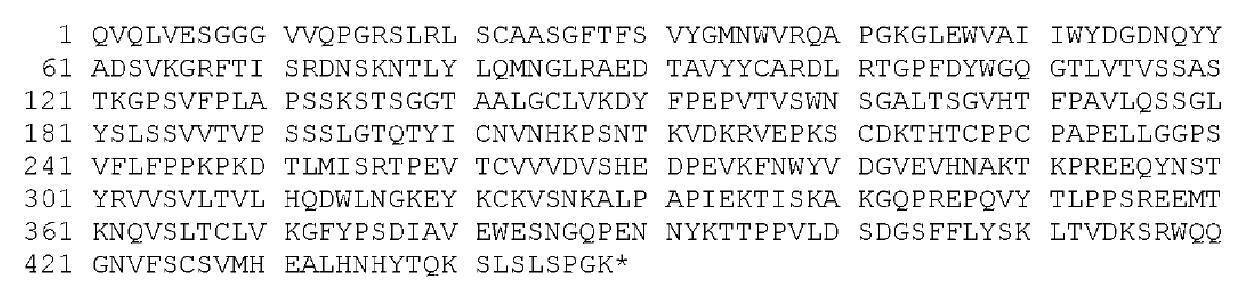
INN番号9310下で規定される、本明細書で使用されるカナキヌマブは、以下の配
列:
重鎖(heavy chain/chaine lourde/cadena pesa
da)
As used herein, canakinumab, defined under INN number 9310, has the following sequence:
Heavy chain (heavy chain/chain lorde/cadena pesa
da)

ra)
ra)

本明細書で使用される抗体とは、抗体の、天然の生物学的形態を有する抗体を指す。こ
のような抗体は、糖タンパク質であり、4つのポリペプチド(「Y」字型分子を形成する
ように接続された、2つの同一な重鎖および2つの同一な軽鎖)からなる。各重鎖は、重
鎖可変領域(VH)と、重鎖定常領域とから構成される。重鎖定常領域は、3つまたは4
つの定常ドメイン(抗体のクラスまたはアイソタイプに応じる、CH1、CH2、CH3
、およびCH4)から構成される。各軽鎖は、軽鎖可変領域(VL)と、1つのドメイン
であるCLを有する、軽鎖定常領域とから構成される。タンパク質分解性酵素であるパパ
インは、「Y」字型を、2つの、いわゆる「Fab」断片(Fab=fragment
antigen binding)と、1つの、いわゆる「Fc」断片(Fc=frag
ment crystallizable)との、3つの個別の分子へと分割する。Fa
b断片は、軽鎖の全体と、重鎖の一部とからなる。VL領域およびVH領域は、「Y」字
型抗体分子の先端に位置する。VLおよびVHは、各々、3つずつの相補性決定領域(C
DR)を有する。
As used herein, an antibody refers to an antibody that has the native biological form of an antibody. Such antibodies are glycoproteins and consist of four polypeptides, two identical heavy chains and two identical light chains connected to form a "Y"-shaped molecule. Each heavy chain is composed of a heavy chain variable region (VH) and a heavy chain constant region. The heavy chain constant region has 3 or 4
three constant domains (CH1, CH2, CH3, depending on antibody class or isotype)
, and CH4). Each light chain is composed of a light chain variable region (VL) and a light chain constant region with one domain, CL. Papain, a proteolytic enzyme, divides the 'Y' into two so-called 'Fab' fragments.
antigen binding) and one so-called "Fc" fragment (Fc = flag
It splits into three separate molecules, with the ment crystallizable). Fa
The b fragment consists of the entire light chain and part of the heavy chain. The VL and VH regions are located at the ends of the "Y" shaped antibody molecule. VL and VH each contain three complementarity determining regions (C
DR).
「IL-1β結合性抗体」とは、IL-1βに、特異的に結合し、結果として、IL-
1βの、その受容体への結合を阻害またはモジュレートし、さらに結果として、IL-1
βの機能を阻害することが可能な、任意の抗体を意味する。好ましくは、IL-1β結合
性抗体は、IL-1αに結合しない。
An "IL-1β binding antibody" specifically binds to IL-1β, and as a result, IL-1β
inhibits or modulates the binding of 1β to its receptor and, as a result, IL-1
It means any antibody capable of inhibiting the function of β. Preferably, the IL-1β binding antibody does not bind IL-1α.
好ましくは、IL-1β結合性抗体は、
(1)アミノ酸配列RASQSIGSSLH(配列番号1)、ASQSFS(配列番号
2)、およびHQSSSLP(配列番号3)を有する、3つのVL CDR、ならびにア
ミノ酸配列VYGMN(配列番号5)、IIWYDGDNQYYADSVKG(配列番号
6)、およびDLRTGP(配列番号7)を有する、3つのVH CDRを含む抗体;
(2)アミノ酸配列RASQDISNYLS(配列番号9)、YTSKLHS(配列番
号10)、およびLQGKMLPWT(配列番号11)を有する、3つのVL CDR、
ならびにアミノ酸配列TSGMGVG(配列番号13)、HIWWDGDESYNPSL
K(配列番号14)、およびNRYDPPWFVD(配列番号15)を有する、3つのV
H CDRを含む抗体;ならびに
(3)(1)または(2)に記載された、6つのCDRを含み、CDR配列のうちの1
または複数、好ましくは、CDRのうちの最大で2つ、好ましくは、CDRのうちの1つ
だけが、(1)または(2)に記載された、対応する配列のそれぞれと、1つのアミノ酸
異なる抗体
を含む。
Preferably, the IL-1β binding antibody is
(1) three VL CDRs with amino acid sequences RASQSIGSSLH (SEQ ID NO: 1), ASQSFS (SEQ ID NO: 2), and HQSSSLP (SEQ ID NO: 3), and amino acid sequences VYGMN (SEQ ID NO: 5), IIWYDGDNQYYADSVKG (SEQ ID NO: 6); , and DLRTGP (SEQ ID NO:7), an antibody comprising three VH CDRs;
(2) three VL CDRs with amino acid sequences RASQDISNYLS (SEQ ID NO: 9), YTSKLHS (SEQ ID NO: 10), and LQGKMLPWT (SEQ ID NO: 11);
and the amino acid sequence TSGMGVG (SEQ ID NO: 13), HIWWDGDESYNPSL
three Vs, with K (SEQ ID NO: 14), and NRYDPPWFVD (SEQ ID NO: 15)
and (3) an antibody comprising 6 CDRs and one of the CDR sequences described in (1) or (2)
or a plurality, preferably at most two of the CDRs, preferably only one of the CDRs, differ from each of the corresponding sequences described in (1) or (2) by one amino acid Contains antibodies.
好ましくは、IL-1β結合性抗体は、
(1)アミノ酸配列RASQSIGSSLH(配列番号1)、ASQSFS(配列番号
2)、およびHQSSSLP(配列番号3)を有する、3つのVL CDRを含み、配列
番号8で指定されたアミノ酸配列を有するVHを含む抗体;
(2)配列番号4で指定されたアミノ酸配列を有するVLを含み、アミノ酸配列VYG
MN(配列番号5)、IIWYDGDNQYYADSVKG(配列番号6)、およびDL
RTGP(配列番号7)を有する、3つのVH CDRを含む抗体;
(3)アミノ酸配列RASQDISNYLS(配列番号9)、YTSKLHS(配列番
号10)、およびLQGKMLPWT(配列番号11)を有する、3つのVL CDRを
含み、配列番号16で指定されたアミノ酸配列を有するVHを含む抗体;
(4)配列番号12で指定されたアミノ酸を有するVLを含み、アミノ酸配列TSGM
GVG(配列番号13)、HIWWDGDESYNPSLK(配列番号14)、およびN
RYDPPWFVD(配列番号15)を有する、3つのVH CDRを含む抗体;
(5)(1)または(3)に記載された、3つのVL CDRおよびVH配列を含み、
VL CDR配列のうちの1または複数、好ましくは、CDRのうちの最大で2つ、好ま
しくは、CDRのうちの1つだけが、(1)または(3)に記載された対応する配列のそ
れぞれと、1つのアミノ酸異なり、VH配列が、(1)または(3)に記載された対応す
る配列のそれぞれと、少なくとも90%同一である抗体;ならびに
(6)(2)または(4)に記載された、VL配列および3つのVH CDRを含み、
VL配列が、(2)または(4)に記載された対応する配列のそれぞれと、少なくとも9
0%同一であり、VH CDR配列のうちの1または複数、好ましくは、CDRのうちの
最大で2つ、好ましくは、CDRのうちの1つだけが、(2)または(4)に記載された
対応する配列のそれぞれと、1つのアミノ酸異なる抗体
を含む。
Preferably, the IL-1β binding antibody is
(1) a VH comprising three VL CDRs having the amino acid sequences RASQSIGSSLH (SEQ ID NO: 1), ASQSFS (SEQ ID NO: 2), and HQSSSLP (SEQ ID NO: 3) and having the amino acid sequence designated in SEQ ID NO: 8; antibody;
(2) comprising a VL having the amino acid sequence designated by SEQ ID NO: 4, wherein the amino acid sequence VYG
MN (SEQ ID NO:5), IIWYDGDNQYYADSVKG (SEQ ID NO:6), and DL
an antibody containing three VH CDRs with RTGP (SEQ ID NO: 7);
(3) a VH comprising three VL CDRs having the amino acid sequences RASQDISNYLS (SEQ ID NO: 9), YTSKLHS (SEQ ID NO: 10), and LQGKMLPWT (SEQ ID NO: 11) and having the amino acid sequence designated in SEQ ID NO: 16; antibody;
(4) comprising a VL having the amino acid designated in SEQ ID NO: 12, wherein the amino acid sequence TSGM
GVG (SEQ ID NO: 13), HIWWDGDESYNPSLK (SEQ ID NO: 14), and N
an antibody containing 3 VH CDRs with RYDPPWFVD (SEQ ID NO: 15);
(5) comprising the three VL CDR and VH sequences described in (1) or (3);
one or more of the VL CDR sequences, preferably at most two of the CDRs, preferably only one of the CDRs, each of the corresponding sequences described in (1) or (3) and an antibody that differs by one amino acid and whose VH sequence is at least 90% identical to the corresponding sequence described in (1) or (3), respectively; and (6) described in (2) or (4). comprising a VL sequence and three VH CDRs,
each of the corresponding sequences described in (2) or (4) and at least 9
0% identical and one or more of the VH CDR sequences, preferably up to two of the CDRs, preferably only one of the CDRs are described in (2) or (4) and antibodies that differ by one amino acid from each of the corresponding sequences.
好ましくは、IL-1β結合性抗体は、
(1)配列番号4で指定されたアミノ酸配列を有するVLを含み、配列番号8で指定さ
れたアミノ酸配列を有するVHを含む抗体;
(2)配列番号12で指定されたアミノ酸を有するVLを含み、配列番号16で指定さ
れたアミノ酸配列を有するVHを含む抗体;ならびに
(3)(1)または(2)に記載された抗体であって、重鎖の定常領域、軽鎖の定常領
域、またはこれらの両方が、カナキヌマブまたはゲボキズマブと比較して、異なるアイソ
タイプへと変化している抗体
を含む。
Preferably, the IL-1β binding antibody is
(1) an antibody comprising a VL having the amino acid sequence designated by SEQ ID NO:4 and a VH having the amino acid sequence designated by SEQ ID NO:8;
(2) an antibody comprising a VL having an amino acid designated by SEQ ID NO: 12 and a VH having an amino acid sequence designated by SEQ ID NO: 16; and (3) an antibody according to (1) or (2) and in which the heavy chain constant region, the light chain constant region, or both are altered to a different isotype compared to canakinumab or gevokizumab.
好ましくは、IL-1β結合性抗体は、
(1)カナキヌマブ(配列番号17および18);および
(2)ゲボキズマブ(配列番号19および20)
を含む。
Preferably, the IL-1β binding antibody is
(1) canakinumab (SEQ ID NOs: 17 and 18); and (2) gevokizumab (SEQ ID NOs: 19 and 20)
including.
上記で規定されたIL-1β結合性抗体は、カナキヌマブまたはゲボキズマブのCDR
配列と、実質的に同一であるか、または同一なCDR配列を有する。したがって、上記で
規定されたIL-1β結合性抗体は、IL-1β上の同じエピトープに結合し、カナキヌ
マブまたはゲボキズマブと同様の結合アフィニティーを有する。がん、とりわけ、少なく
とも部分的な炎症ベースを有するがんの処置において、治療的に有効なものとして、カナ
キヌマブまたはゲボキズマブについて確立されている、臨床的に関与性の用量および投与
レジメンであれば、他のIL-1β結合性抗体にも適用可能であろう。
The IL-1β binding antibody as defined above comprises the CDRs of canakinumab or gevokizumab
sequences that are substantially identical to or have identical CDR sequences. Thus, the IL-1β binding antibodies defined above bind to the same epitope on IL-1β and have similar binding affinity as canakinumab or gevokizumab. Clinically relevant doses and dosing regimens established for canakinumab or gevokizumab as being therapeutically effective in the treatment of cancers, particularly cancers that have an at least partial inflammatory basis, It would also be applicable to other IL-1β binding antibodies.
加えて、または、代替的に、IL-1β抗体とは、カナキヌマブまたはゲボキズマブと
同様の範囲のアフィニティーで、IL-1βに、特異的に結合することが可能な抗体を指
す。国際公開第2007/050607号パンフレットでは、カナキヌマブについてのK
dが、30.5pMと言及される一方、ゲボキズマブについてのKdは、0.3pMであ
る。したがって、同様の範囲のアフィニティーとは、約0.05pM~300pMの間、
好ましくは、0.1pM~100pMの間を指す。いずれも、IL-1βに結合するが、
カナキヌマブが、IL-1受容体への結合を、直接阻害するのに対し、ゲボキズマブは、
アロステリック阻害剤である。アロステリック阻害剤は、IL-1βが、受容体に結合す
ることは防止しないが、受容体の活性化は防止する。好ましくは、IL-1β抗体は、カ
ナキヌマブと同様の範囲、好ましくは、1pM~300pMの範囲、好ましくは、10p
M~100pMの範囲の結合アフィニティーを有するが、この場合、好ましくは、前記抗
体は、結合を直接阻害する。好ましくは、IL-1β抗体は、ゲボキズマブと同様の範囲
、好ましくは、0.05pM~3pMの範囲、好ましくは、0.1pM~1pMの範囲の
結合アフィニティーを有するが、この場合、好ましくは、前記抗体は、アロステリック阻
害剤である。
Additionally or alternatively, an IL-1β antibody refers to an antibody capable of specifically binding IL-1β with an affinity range similar to that of canakinumab or gevokizumab. In WO2007/050607 K for canakinumab
The Kd for gevokizumab is 0.3 pM, while d is mentioned as 30.5 pM. Thus, a similar range of affinities is between about 0.05 pM and 300 pM,
Preferably, it refers to between 0.1 pM and 100 pM. Both bind IL-1β, but
Canakinumab directly inhibits binding to the IL-1 receptor, whereas gevokizumab
It is an allosteric inhibitor. Allosteric inhibitors do not prevent IL-1β from binding to the receptor, but they do prevent receptor activation. Preferably, the IL-1β antibody is in the same range as canakinumab, preferably in the range of 1 pM to 300 pM, preferably 10 pM
With binding affinities in the range of M-100 pM, where preferably the antibody directly inhibits binding. Preferably, the IL-1β antibody has a binding affinity in the same range as Gevokizumab, preferably in the range of 0.05 pM to 3 pM, preferably in the range of 0.1 pM to 1 pM, wherein preferably the Antibodies are allosteric inhibitors.
本明細書で使用される、抗体の「機能的断片」という用語は、抗原(例えば、IL-1
β)に特異的に結合する能力を保持する、抗体の部分または断片を指す。抗体の「機能的
断片」という用語の中に包摂される結合性断片の例は、単鎖Fv(scFv)、Fab断
片、VLドメイン、VHドメイン、CLドメイン、およびCH1ドメインからなる一価断
片;ヒンジ領域において、ジスルフィド架橋により連結された、2つのFab断片を含む
二価断片である、F(ab)2断片;VHドメインおよびCH1ドメインからなるFd断
片;抗体の単一のアームのVLドメインおよびVHドメインからなるFv断片;VHドメ
インからなるdAb断片(Ward et al., 1989);および単離された相補性決定領域(C
DR);ならびにペプチド足場上に配置された、1または複数のCDRであって、典型的
な抗体より、小型の場合もあり、大型の場合もあり、これと異なる形でフォールディング
する場合もあるCDRを含む。
As used herein, the term "functional fragment" of an antibody refers to an antigen (eg, IL-1
β) refers to a portion or fragment of an antibody that retains the ability to specifically bind to β). Examples of binding fragments encompassed within the term "functional fragment" of an antibody are single-chain Fvs ( scFv ), Fab fragments, monovalent Fragment; F(ab)2 fragment, which is a bivalent fragment comprising two Fab fragments linked by disulfide bridges at the hinge region; Fd fragment, consisting of VH and CH1 domains; an Fv fragment consisting of the VL and VH domains; a dAb fragment consisting of the VH domain (Ward et al., 1989); and an isolated complementarity determining region (C
DR); and one or more CDRs placed on a peptide scaffold that can be smaller, larger, or fold differently than typical antibodies. including.
「機能的断片」という用語はまた、以下のうちの1つも指す場合がある。
・二特異性短鎖Fv二量体(PCT/US92/09965号)
・遺伝子融合により構築された「ダイアボディー」または「トリアボディー」、多価断
片または多特異性断片(Tomlinson I & Hollinger P (2000) Methods Enzymol. 326: 461
-79; W094113804; Holliger P et al., (1993) Proc. Natl. Acad. Sci. USA, 90: 6444-
48)
・同じ抗体または異なる抗体へと遺伝子融合させたscFv(Coloma MJ & Morrison S
L (1997) Nature Biotechnology, 15(2): 159-163)
・Fc領域へと融合させた、scFv、ダイアボディー、またはドメイン抗体
・同じ抗体または異なる抗体へと遺伝子融合させたscFv
・Fv分子、scFv分子、またはダイアボディー分子は、VHおよびVLドメインを
連結するジスルフィド架橋の組込みにより安定化させうる(Reiter, Y. et al, (1996) N
ature Biotech, 14, 1239-1245)。
・CH3ドメインへと接続されたscFvを含むミニボディーもまた、作り出すことが
できる(Hu, S. et al, (1996) Cancer Res., 56, 3055-3061)。
・結合性断片の他の例は、重鎖CH1ドメインのカルボキシル末端における少数の残基
であって、抗体のヒンジ領域に由来する、1または複数のシステインを含む残基の付加に
より、Fab断片と異なるFab’、および定常ドメインのシステイン残基が、遊離チオ
ール基を保有するFab’断片である、Fab’-SHである。
The term "functional fragment" may also refer to one of the following:
- Bispecific short chain Fv dimers (PCT/US92/09965)
"Diabodies" or "triabodies", multivalent or multispecific fragments constructed by gene fusion (Tomlinson I & Hollinger P (2000) Methods Enzymol. 326: 461
-79; W094113804; Holliger P et al., (1993) Proc. Natl. Acad.
48)
- scFvs genetically fused to the same or different antibodies (Coloma MJ & Morrison S
L (1997) Nature Biotechnology, 15(2): 159-163)
- scFv, diabodies, or domain antibodies fused to an Fc region - scFv genetically fused to the same antibody or a different antibody
• Fv, scFv, or diabody molecules can be stabilized by the incorporation of disulfide bridges linking the VH and VL domains (Reiter, Y. et al, (1996) N
Nature Biotech, 14, 1239-1245).
• Minibodies containing scFvs attached to a CH3 domain can also be generated (Hu, S. et al, (1996) Cancer Res., 56, 3055-3061).
- Another example of a binding fragment is the addition of a few residues at the carboxyl terminus of the heavy chain CH1 domain, derived from the hinge region of the antibody, including one or more cysteines, to form a Fab fragment. A different Fab' and a cysteine residue in the constant domain is a Fab' fragment which carries a free thiol group, Fab'-SH.
典型的に、かつ、好ましくは、IL-1β結合性抗体の機能的断片は、上記で規定され
た「IL-1β結合性抗体」の部分または断片である。
Typically and preferably a functional fragment of an IL-1β binding antibody is a part or fragment of an "IL-1β binding antibody" as defined above.
本発明の、他の特徴、目的、および利点は、明細書および図面、ならびに特許請求の範
囲から明らかとなるであろう。
Other features, objects, and advantages of the invention will become apparent from the specification and drawings, and from the claims.
以下の実施例は、上記で記載した本発明を例示するが、これらは、いかなる形であれ、
本発明の範囲を限定することを意図するものではない。
The following examples, which illustrate the invention described above, are in any way
It is not intended to limit the scope of the invention.
下記の実施例は、本発明の理解の一助となるように明示されるものであり、いかなる形
であれ、その範囲を限定することを意図するものではなく、そのように解釈すべきでもな
い。
The following examples are set forth to aid in understanding the invention and are not intended, nor should they be construed, to limit its scope in any way.
[実施例1]
病期II~IIIAおよびIIIB(T>5cm N2)の、完全切除(R0)非小細胞
肺がん(NSCLC)を伴う成人対象におけるアジュバント療法としての、カナキヌマブ
の有効性および安全性を、プラセボと対比して査定する、フェーズIII、多施設、無作
為化、二重盲検、プラセボ対照研究
このプロスペクティブ、多施設、無作為化、二重盲検、プラセボ対照フェーズIII研
究の目的は、AJCC/UICC v.8による病期II~IIIAおよび病期IIIB
(T>5cm N2)の、完全切除(R0)NSCLC対象のための標準治療に続くアジ
ュバント療法としてのカナキヌマブの有効性および安全性を査定することである。
[Example 1]
To evaluate the efficacy and safety of canakinumab versus placebo as adjuvant therapy in adult subjects with completely resected (R0) non-small cell lung cancer (NSCLC), stages II-IIIA and IIIB (T>5 cm N2). Phase III, Multicenter, Randomized, Double-Blind, Placebo-Controlled Study v. Stages II-IIIA and IIIB according to 8
To assess the efficacy and safety of canakinumab as adjuvant therapy following standard of care for completely resected (R0) NSCLC subjects with (T>5 cm N2).
研究デザイン
このフェーズIII研究である、CACZ885T2301は、完全切除(R0)NS
CLCのAJCC/UICC v.8による病期II~IIIAおよびIIIB(T>5
cmおよびN2)の疾患を伴う成人対象を登録する。対象は、それらのNSCLCのため
の、標準治療のアジュバント処置であって、シスプラチンベースの化学療法および縦隔放
射線療法(適切な場合)を含むアジュバント処置を完了してから、本研究のために、スク
リーニングまたは無作為化される。対象は、それらのNSCLCの、手術による完全な切
除を受け、R0状態(病理学的再検査における断端陰性)を確認した後で、適切な場合、
アジュバントである、シスプラチンベースのダブレット化学療法(および、適切な場合、
病期IIIA N2またはIIIB N2の疾患のための放射線療法)を完了した後で、
かつ、全ての参加基準が満たされた後でスクリーニングされうる。R0状態を達成するの
に、対象に、手術前のネオアジュバント化学療法または放射線療法を施していてはならな
い。約1500例の対象を、カナキヌマブまたは対応するプラセボへと、1:1に無作為
化する。
Study Design This phase III study, CACZ885T2301, is a complete resection (R0) NS
CLC's AJCC/UICC v. 8 stages II-IIIA and IIIB (T>5
cm and N2) are enrolled in adult subjects. Subjects completed standard-of-care adjuvant treatment for their NSCLC, including cisplatin-based chemotherapy and mediastinal radiotherapy (if appropriate), before undergoing the study: Screened or randomized. After undergoing complete surgical resection of their NSCLC and confirming R0 status (negative margins on pathologic review), if appropriate:
Adjuvant cisplatin-based doublet chemotherapy (and, if appropriate,
after completing radiation therapy for stage IIIA N2 or IIIB N2 disease)
and can be screened after all entry criteria have been met. To achieve R0 status, subjects must not have received neoadjuvant chemotherapy or radiotherapy prior to surgery. Approximately 1500 subjects will be randomized 1:1 to canakinumab or matching placebo.
投与レジメン
研究は、二重盲検である。全ての適格対象を、以下の2つの処置アーム:
・18サイクルにわたる、21日ごとのサイクルの1日目の、s.c.における、20
0mgのカナキヌマブ
・18サイクルにわたる、21日ごとのサイクルの1日目の、s.c.におけるプラセ
ボ
のうちの1つへと、1:1の比で無作為化する。
Dosing regimen The study is double-blind. All eligible subjects will be enrolled in the following two treatment arms:
• s.c. on
0 mg canakinumab on

無作為化は、AJCC/UICC v.8による病期:T>5cm、N2疾患を伴う、
IIA対IIB対IIIA対IIIB;組織構造:扁平上皮対非扁平上皮;ならびに地域
:西欧および北米対東アジア対世界の他の地域(RoW)により層別化する。対象は、そ
れらが、18サイクルを完了するか、あるいはいずれが最初に生じるのであれ、以下:治
験責任医師により決定される疾患の再発、さらなる処置を不可能にする、許容不可能な毒
性、治験責任医師もしくは対象の裁量による処置の中止、または死もしくは追跡からの離
脱のうちのいずれか1つを経るまで、割り当てられた処置を継続する。アジュバント処置
の1年間の持続は、疾患の再発を起こす中程度または高度の危険性を有する対象において
、許容可能な有益性をもたらすことを前提とする。疾患の再発が、処置フェーズ中に観察
されない場合、対象は、疾患の再発、対象による同意の取り下げ、対象の、追跡からの離
脱、死、または治験依頼者による、最長で5年間にわたる研究の打ち切りまで追跡される
。研究による処置を中止する全ての対象は、最終の全生存(OS)解析もしくは死、追跡
からの離脱、または生存追跡についての同意の取り下げまで、12週間ごとに、生存につ
いて追跡される。
Randomization will be performed according to the AJCC/UICC v. Stage according to 8: T>5 cm, with N2 disease;
Stratify by IIA vs. IIB vs. IIIA vs. IIIB; histology: squamous vs. non-squamous; and region: Western Europe and North America vs. East Asia vs. rest of the world (RoW). Subjects will be required to complete 18 cycles, or whichever occurs first, as determined by the investigator: disease recurrence, precluding further treatment, unacceptable toxicity, study The assigned treatment will continue until either discontinuation of treatment at the discretion of the attending physician or the subject, or death or withdrawal from follow-up. A one-year duration of adjuvant treatment is assumed to confer acceptable benefit in subjects at moderate or high risk of disease recurrence. If disease recurrence is not observed during the treatment phase, the subject will be subject to disease recurrence, withdrawal of consent by the subject, withdrawal of the subject from follow-up, death, or discontinuation of the study by the sponsor for up to 5 years. tracked to. All subjects who discontinue study treatment will be followed for survival every 12 weeks until final overall survival (OS) analysis or death, withdrawal from follow-up, or withdrawal of consent for survival follow-up.
標準治療は、がんを含まない断端を伴うNSCLCの完全な切除を含む。全ての病期I
IB~IIIAおよびIIIB(T>5cm N2)の疾患対象には、4サイクルにわた
るシスプラチンベースのダブレット化学療法が要請される(忍容されない場合であって、
少なくとも2サイクルにわたるアジュバント化学療法が要請される場合を除く)が、T(
>4~5cm)を伴う病期IIAには、化学療法が、推奨されるが、必須ではない。全て
の病期IIIA N2およびIIIB(T>5cm N2)の疾患対象には、縦隔リンパ
節への放射線療法が、示唆されるが、要請されない。全ての対象は、研究への参加に適格
であるのに、NSCLCの、手術による完全な切除がなされていなければならず、断端は
、病理学的に再検査され、陰性と記録されなければならない。比較は、有効性:DFS、
OS、LCSS、および生活の質についての尺度(EQ-5D-5LおよびEORTC
QLQ-C30/LC13)ならびに安全性について、アームの間で行う。
Standard treatment includes complete resection of NSCLC with cancer-free margins. Any stage I disease
Cisplatin-based doublet chemotherapy for 4 cycles is indicated for IB-IIIA and IIIB (T>5 cm N2) disease subjects (if not tolerated,
unless adjuvant chemotherapy for at least 2 cycles is requested) is T(
>4-5 cm), chemotherapy is recommended but not required. Radiation therapy to mediastinal lymph nodes is suggested, but not required, for all stage IIIA N2 and IIIB (T>5 cm N2) disease subjects. All subjects were eligible to participate in the study but had to have a complete surgical resection of NSCLC and margins had to be pathologically reexamined and documented as negative. not. The comparison was based on efficacy: DFS,
Scales for OS, LCSS, and quality of life (EQ-5D-5L and EORTC
QLQ-C30/LC13) as well as safety will be performed between the arms.
初回の疾患の再発の検出は、身体検査と、治験責任医師により決定される、放射線によ
る腫瘍の測定とを含む臨床査定により行う。放射線エビデンスが決定的でない場合は、生
検を実施して、再発を確認するものとする。スクリーニング/ベースラインでは、以下の
評価:臨床的に適応である場合、胸部、腹部、および骨盤のCTまたはMRI、脳のMR
Iおよび全身骨の走査が要請される。その後におけるイメージング評価は、1年目の12
週間ごと(±7日間)(処置フェーズ)に続き、2および3年目において、サイクル1の
1日目に、次いで、26週間ごと、ならびに4および5年目(処置後監視フェーズ)にお
いて、毎年行う。全ての研究フェーズにわたる、イメージング評価の間の間隔は、サイク
ル18の1日目における、最終回の規定用量の投与の前に、研究による処置を、一時的に
中断するのか、恒久的に中止するのか、規定外の評価を実施するのかに関わらず、上記で
記載した通りに尊重されるものとする。対象が、再発以外の理由で、研究による処置を中
止する場合も、再発の評価は、疾患の再発、対象による同意の取り下げ、対象の、追跡か
らの離脱、死、または治験依頼者による研究の打ち切りまで、規定の来院に従い継続する
ものとする。
Detection of primary disease recurrence is by clinical assessment including physical examination and radiological tumor measurements as determined by the investigator. If radiological evidence is inconclusive, a biopsy should be performed to confirm recurrence. At screening/baseline, the following assessments: CT or MRI of chest, abdomen, and pelvis, MR of brain, if clinically indicated
I and whole body bone scans are requested. Subsequent imaging evaluations were performed at
Weekly (± 7 days) (Treatment Phase), then annually on
主要目的および鍵となる副次的目的:
主要目的
主要目的は、地域の治験責任医師評価により決定される、カナキヌマブアームにおける
無病生存(DFS)を、プラセボアームにおけるDFSと対比して比較することである。
Primary Objectives and Key Secondary Objectives:
Primary Objective The primary objective is to compare disease-free survival (DFS) in the canakinumab arm versus DFS in the placebo arm as determined by local investigator assessment.
統計学的仮説、モデル、および解析法
DFSについての比例ハザードモデルを仮定し、以下の統計学的仮説:
Ha1(対立仮説):Θ1<0と対比させた、H01(帰無仮説):Θ1≧0
[仮説中、Θ1は、プラセボ(対照)アームと対比させた、カナキヌマブ(被験)アーム
の、DFSについての対数によるハザード比である]
を検定して、有効性についての主要目的に取り組む。
Statistical Hypotheses, Models, and Methods of Analysis Assuming a proportional hazards model for DFS, the following statistical hypotheses:
H01 (null hypothesis): Θ1≧0, contrasted with Ha1 (alternative hypothesis): Θ1<0
[where Θ1 is the log hazard ratio for DFS of the canakinumab (test) arm versus the placebo (control) arm]
to address the primary objective of effectiveness.
この仮説を検定し、2つの処置群を比較する主要有効性解析は、2.5%の全体的片側
有意水準の、層別化されたログランク検定からなる。層別化は、以下の無作為化層別化因
子:T>5cm N2疾患を伴う、AJCC/UICC v.8による病期IIA対II
B対IIIA対IIIB;組織構造:扁平上皮対非扁平上皮;ならびに地域:西欧および
北米対東アジア対世界の他の地域(RoW)に基づく。DFSについてのハザード比は、
ログランク検定と同じ層別化因子を使用して、層別化Coxモデルから、その95%信頼
区間と共に計算される。
The primary efficacy analysis testing this hypothesis and comparing the two treatment groups consisted of a stratified log-rank test with an overall one-sided significance level of 2.5%. Stratification was performed according to the following randomization stratification factors: AJCC/UICC v. with T>5 cm N2 disease. Stage IIA vs. II by 8
Based on B vs. IIIA vs. IIIB; histology: squamous vs. non-squamous; and region: Western Europe and North America vs. East Asia vs. rest of the world (RoW). The hazard ratio for DFS is
It is calculated from the stratified Cox model with its 95% confidence interval using the same stratification factor as the log-rank test.
鍵となる副次的目的
鍵となる副次的目的は、カナキヌマブによる処置が、プラセボアームと比較して、全生
存であるOSを延長するのかどうかを決定することである。OSは、無作為化日から、任
意の原因に起因する死亡の日までの時間として規定される。対象が、死亡したことが知ら
れていない場合、OSは、対象が生きていることが知られていた最後の日付(カットオフ
当日付またはカットオフ日の前)で打ち切られる。OSについての比例ハザードモデルを
仮定し、DFSが、統計学的に有意である場合に限り、以下の統計学的仮説:
Ha2(対立仮説):Θ2<0と対比させた、H02(帰無仮説):Θ2≧0
[仮説中、Θ2は、プラセボ(対照)アームと対比させた、カナキヌマブ(被験)アーム
の、OSについての対数によるハザード比である]
を検定する。これらの仮説を検定する解析は、2.5%の全体的片側有意水準の、層別化
されたログランク検定からなる。層別化は、以下の無作為化層別化因子:T>5cm N
2疾患を伴う、AJCC/UICC v.8による病期IIA対IIB対IIIA対II
IB;組織構造:扁平上皮対非扁平上皮;ならびに地域:西欧および北米対東アジア対世
界の他の地域(RoW)に基づく。
Key Secondary Objective A key secondary objective is to determine whether treatment with canakinumab prolongs overall survival OS compared to the placebo arm. OS is defined as the time from the date of randomization to the date of death from any cause. If the subject is not known to have died, OS is censored at the last date the subject was known to be alive (on or before the cutoff date). Assuming a proportional hazards model for OS, and only if DFS is statistically significant, the following statistical hypotheses:
Ha2 (alternative hypothesis): Θ2 < 0 contrasted with H02 (null hypothesis): Θ2 ≥ 0
[where Θ2 is the log hazard ratio for OS of the canakinumab (test) arm versus the placebo (control) arm]
to test. Analyzes testing these hypotheses consisted of a stratified log-rank test with an overall one-sided significance level of 2.5%. Stratification was based on the following randomization stratification factor: T>5 cm N
2 disease, AJCC/UICC v. Stage IIA vs. IIB vs. IIIA vs. II by 8
Based on IB; histology: squamous vs. non-squamous; and region: Western Europe and North America vs. East Asia vs. rest of the world (RoW).
OSの分布は、カプラン-マイヤー法を使用して推定され、カプラン-マイヤー曲線、
中央値、および中央値の95%信頼区間が、各処置群について提示される。OSについて
のハザード比は、層別化Coxモデルを使用して、その95%信頼区間と共に、計算され
る。
The distribution of OS was estimated using the Kaplan-Meier method, the Kaplan-Meier curve,
Median values and 95% confidence intervals for median values are presented for each treatment group. Hazard ratios for OS are calculated with their 95% confidence intervals using a stratified Cox model.
副次的目的
1.肺がん特異的生存を、プラセボアームと対比したカナキヌマブアームにおいて比較
すること:
肺がん特異的生存(LCSS)は、無作為化日から、肺がんに起因する死亡の日まで
の時間として規定される。解析は、無作為化された処置群と、無作為化において割り当て
られた層とに従うFAS集団に基づく。LCSSの分布は、カプラン-マイヤー法を使用
して推定され、カプラン-マイヤー曲線、中央値、および中央値の95%信頼区間が、各
処置群について提示される。LCSSについてのハザード比は、層別化Coxモデルを使
用して、その95%信頼区間と共に、計算される。
2.カナキヌマブの安全性プロファイルを特徴付けること
AE、ECG、および検査値異常の頻度
3.カナキヌマブ療法の薬物動態を特徴付けること
カナキヌマブの血清濃度-時間プロファイル、および集団PKモデルに基づく、適切
な個別のPKパラメータ
4.カナキヌマブの免疫原性(抗薬物抗体、ADA)の、罹患率および発生率を特徴付
けること
抗カナキヌマブ抗体の血清濃度
5.カナキヌマブ対プラセボの、PROに対する効果であって、機能および健康に関連
する生活の質を含む効果を評価すること(QLQ-LC13を組み込んだEORTC Q
LQ-C30およびEQ-5D)
QLQ-LC13の問診票に従う、疼痛、咳、および呼吸困難についての、決定的な
増悪症状スコアが、10ポイントとなるまでの時間は、目的の主要PRO変数である。E
Q-5D-5Lから導出される有用性と併せた、QLQ-C30に従う、全般的な健康状
態/QoL、息切れ、および疼痛における、決定的な増悪までの時間は、目的の副次的P
RO変数である。
European Organization for Research and
Treatment of Cancerによる、コアとなる、生活の質についての問
診票である、EORTC-QLQC30(version 3.0)、およびその肺がん
特異的モジュールである、QLQLC13(version 1.0)は、対象の機能、
疾患に関連する症状、健康に関連する生活の質、および健康状態についてのデータを収集
するのに使用される。EQ-5D-5Lは、医療経済学研究において使用しうる有用性の
算定を目的として使用される。EORTC QLQ-C30/LC13ならびにEQ-5
D-5Lは、肺がんを伴う対象についての臨床試験において、頻繁に使用され、アジュバ
ント状況(Bezjak et al 2008)において、既に使用されている、信頼でき、かつ、妥当
な尺度である。
Lung cancer specific survival (LCSS) is defined as the time from the date of randomization to the date of death due to lung cancer. Analyzes are based on the FAS population according to randomized treatment groups and strata assigned at randomization. The distribution of LCSS was estimated using the Kaplan-Meier method, and the Kaplan-Meier curve, median, and 95% confidence interval of the median are presented for each treatment group. Hazard ratios for LCSS are calculated with their 95% confidence intervals using a stratified Cox model.
2. To characterize the safety profile of canakinumab Frequency of AEs, ECG, and
LQ-C30 and EQ-5D)
Time to 10 point definitive worsening symptom score for pain, cough, and dyspnea according to the QLQ-LC13 questionnaire is the primary PRO variable of interest. E.
Time to definitive progression in global health/QoL, shortness of breath, and pain according to QLQ-C30, combined with the utility derived from Q-5D-5L, was the secondary P of interest
It is an RO variable.
European Organization for Research and
The core Quality of Life Questionnaire, EORTC-QLQC30 (version 3.0), and its lung cancer-specific module, QLQLC13 (version 1.0), by Treatment of Cancer, are based on the features of interest ,
It is used to collect data on disease-related symptoms, health-related quality of life, and health status. EQ-5D-5L are used for purposes of utility estimates that can be used in health economics studies. EORTC QLQ-C30/LC13 and EQ-5
D-5L is a reliable and valid measure that is frequently used in clinical trials for subjects with lung cancer and has already been used in an adjuvant setting (Bezjak et al 2008).
[実施例2A]
IL-1βシグナル伝達の遮断は、骨微小環境内の血管を変更する
背景:本発明者らは、近年、インターロイキン1β(IL-1β)を、乳がん患者が骨
転移を発症する危険性を増大させていること予測するための潜在的なバイオマーカーとし
て同定した。加えて、本発明者らは、IL-1β活性の遮断が、骨内に播種された乳がん
細胞からの骨転移の発症を阻害し、腫瘍内血管新生を低減することを示した。本発明者ら
は、IL-1βとIL-1Rとの間の相互作用もまた、骨微小環境内の新血管の形成を促
進し、この部位における転移の発症を刺激することを仮定する。
[Example 2A]
Blocking IL-1β signaling alters blood vessels within the bone microenvironment Background: We recently discovered that interleukin-1β (IL-1β) increases the risk of breast cancer patients developing bone metastases. It was identified as a potential biomarker for predicting that In addition, we have shown that blocking IL-1β activity inhibits the development of bone metastases from breast cancer cells seeded in bone and reduces intratumoral angiogenesis. We hypothesize that the interaction between IL-1β and IL-1R also promotes the formation of new blood vessels within the bone microenvironment and stimulates the development of metastasis at this site.
目的:IL-1β活性を遮断することの、骨内の血管形成に対する効果を探索する。 Objective: To explore the effect of blocking IL-1β activity on angiogenesis in bone.
方法:IL-1R阻害の、骨梁内の血管系に対する効果を、1mg/kgのIL-1R
アンタゴニスト(アナキンラ)で、21/31日間にわたり処置されたマウス、IL-1
β抗体であるカナキヌマブ(イラリス)で、0~96時間にわたり処置されたマウス、ま
たは遺伝子操作されたIL-1R1ノックアウト(KO)マウスにおいて決定した。CD
34およびエンドムチンについての免疫組織化学の後で、血管系を視覚化し、血管内皮増
殖因子(VEGF)およびエンドセリン1の、血清中濃度および/または骨髄中濃度を、
ELISAにより決定した。骨体積に対する効果を、マイクロコンピュータ断層法(uC
T)により測定した。
Methods: The effect of IL-1R inhibition on intratrabecular vasculature was
Mice treated with antagonist (Anakinra) for 21/31 days, IL-1
It was determined in mice treated with the beta antibody canakinumab (Ilaris) for 0-96 hours or in genetically engineered IL-1R1 knockout (KO) mice. CDs
After immunohistochemistry for 34 and Endomucin, the vasculature was visualized and serum and/or bone marrow concentrations of vascular endothelial growth factor (VEGF) and endothelin-1 were determined.
Determined by ELISA. Effects on bone volume were evaluated by microcomputed tomography (uC
T).
結果:カナキヌマブ(イラリス)は、新血管の長さの、0.09mm(対照)から、0
.06mm(24時間にわたるイラリス)への有意な減少(P=0.0319)を引き起
こした。IL-1R1 KOマウスおよびアナキンラで処置されたマウスは、平均新血管
長の減少傾向を裏付けた。IL-1Rの阻害は、骨梁体積の増大を結果としてもたらした
。アナキンラは、31日間にわたり処置されたマウスにおける、エンドセリン1濃度の6
9%の低下(P=0.0269)、および21日間にわたり処置されたマウスにおける、
VEGF濃度の22%の低下(P=0.0104)を引き起こした。カナキヌマブ(イラ
リス)は、96時間にわたり処置されたマウスにおける、VEGF濃度の46%の低減、
およびエンドセリン1濃度の47%の低減を引き起こした。
Results: Canakinumab (Ilaris) decreased neovessel length from 0.09 mm (control) to 0
. caused a significant reduction (P=0.0319) to 06 mm (iraris over 24 hours). IL-1R1 KO mice and anakinra-treated mice supported a trend toward decreased mean neovessel length. Inhibition of IL-1R resulted in increased trabecular bone volume. Anakinra increased
9% reduction (P=0.0269), and in mice treated over 21 days,
It caused a 22% decrease in VEGF concentration (P=0.0104). Canakinumab (Ilaris) reduced VEGF levels by 46% in mice treated for 96 hours,
and caused a 47% reduction in
結論:これらのデータは、IL-1R活性が、骨内の新血管系の形成において、重要な
役割を果たし、その活性の薬理学的な阻害が、乳がん骨転移のための新規の処置としての
潜在的可能性を有することを裏付ける。
Conclusion: These data suggest that IL-1R activity plays an important role in the formation of neovasculature within bone and that pharmacological inhibition of its activity may be a novel treatment for breast cancer bone metastasis. Confirm that it has potential.
[実施例2B]
IL-1Bシグナル伝達は、乳がんの骨転移を調節する
乳がんの骨転移は、不治であり、患者における予後不良と関連する。骨へのホーミング
および定着の後、乳がん細胞は、微小環境からのシグナルが、播種されたこれらの細胞の
増殖を刺激して、明白な転移を形成するまで、依然として休眠している。本発明者らは、
近年、インターロイキン1β(IL-1β)を、乳がん患者が転移を発症する危険性を増
大させていること予測するための潜在的なバイオマーカーとして同定し、骨内の腫瘍細胞
の休眠時における、IL-1シグナル伝達の役割を確立した。本発明者らは、腫瘍に由来
し、微小環境に依存的なIL-1Bが、乳がんの転移および骨内の増殖において、大きな
役割を果たすことを仮定する。
[Example 2B]
IL-1B Signaling Regulates Breast Cancer Bone Metastasis Breast cancer bone metastasis is incurable and is associated with a poor prognosis in patients. After homing and colonization to bone, breast cancer cells remain dormant until signals from the microenvironment stimulate proliferation of these seeded cells to form overt metastases. The inventors
Recently, we identified interleukin-1β (IL-1β) as a potential biomarker for predicting that breast cancer patients have an increased risk of developing metastasis, A role for IL-1 signaling was established. We hypothesize that tumor-derived, microenvironment-dependent IL-1B plays a major role in breast cancer metastasis and proliferation within bone.
ここでは、本発明者らは、乳がんの骨転移における、IL-1Bシグナル伝達の役割に
ついての、本発明者らの発見を報告する:ヒト乳がんの、ヒト骨への自発的な転移につい
てのマウスモデルを使用して、本発明者らは、臨床的に利用可能な抗IL-1Bモノクロ
ーナル抗体であるイラリスの投与が、骨転移を著明に低減する一方、原発腫瘍の増殖を増
大させることを見出した。これに対し、受容体アンタゴニストの組換え形態であるアナキ
ンラを使用するIL1R1の遮断は、原発乳がんの発症に影響を及ぼさずに、ヒト骨内の
乳がんの転移の発生を遅延させた。これらの発見は、IL1シグナル伝達が、乳がんの進
行において、原発部位と、転移部位とで、異なる機能を果たしうることを示唆する。本発
明者らのデータは、腫瘍細胞の播種および骨内の増殖における、腫瘍由来のIL-1シグ
ナル伝達および微小環境に由来するIL-1シグナル伝達の両方に対する役割:IL-1
B/IL-1R1の、イラリスまたはアナキンラによる阻害が、骨回転および新血管形成
を低減し、骨の微小環境の、乳がん細胞の増殖に対する許容性を低下させることをさらに
強調する。加えて、ヒト乳がん細胞内の、IL1BまたはIL1Rの過剰発現は、in
vivoの循環へと直接注入された腫瘍細胞からの骨転移を増大させた。これらのデータ
は、IL-1B/IL-1R1シグナル伝達が、骨転移の形成において、重要な役割を果
たし、その活性を薬理学的に阻害することが、乳がんの骨転移のための新規の処置として
の潜在的可能性を有することを裏付ける。
Here, we report our findings on the role of IL-1B signaling in breast cancer bone metastasis: mouse on spontaneous metastasis of human breast cancer to human bone. Using models, we found that administration of Ilaris, a clinically available anti-IL-1B monoclonal antibody, markedly reduced bone metastasis while increasing primary tumor growth. Found it. In contrast, blockade of IL1R1 using the recombinant form of the receptor antagonist, anakinra, delayed the development of breast cancer metastasis within human bone without affecting the development of primary breast cancer. These findings suggest that IL1 signaling may serve different functions in breast cancer progression at primary and metastatic sites. Our data suggest a role for both tumor- and microenvironment-derived IL-1 signaling in tumor cell dissemination and proliferation in bone: IL-1
We further emphasize that inhibition of B/IL-1R1 by ilaris or anakinra reduces bone turnover and neovascularization, making the bone microenvironment less permissive for breast cancer cell proliferation. In addition, overexpression of IL1B or IL1R in human breast cancer cells was associated with in
Increased bone metastasis from tumor cells injected directly into the vivo circulation. These data suggest that IL-1B/IL-1R1 signaling plays an important role in the formation of bone metastases and that pharmacological inhibition of its activity may be a novel treatment for breast cancer bone metastases. It confirms that it has potential as a
[実施例2C]
IL1b-Wntシグナル伝達のターゲティングは、骨微小環境内の乳がんの定着を防止
する
腫瘍細胞の、骨髄への播種は、乳がんにおける初期事象であるが、これらの細胞は、最
終的な定着の前に、骨環境内で、多年にわたり休眠したままの場合がある。骨転移のため
の処置は、治癒的ではないので、播種された細胞が、転移性病変となることを防止する、
新たなアジュバント治療が、臨床転帰を改善するのに有効な治療選択肢でありうる。乳腺
腫瘍内のがん幹細胞(CSC)は、転移が可能な細胞であるというエビデンスが存在する
が、どの骨髄由来因子が、休眠CSCの生存および最終的な定着を支援するのかについて
は、ほとんど知られていない。初代ヒト骨髄細胞および患者由来乳がん細胞のin vi
tro培養物、ならびにマウスへと植え込まれたヒト乳がん細胞のin vivo転移モ
デルを使用して、本発明者らは、骨内の、CSCコロニー形成を調節するシグナル伝達経
路について探索した。
[Example 2C]
Targeting of IL1b-Wnt Signaling Prevents Colonization of Breast Cancer within the Bone Microenvironment Although dissemination of tumor cells into the bone marrow is an early event in breast cancer, these cells are precluded prior to definitive colonization. , may remain dormant for many years within the bone environment. Treatments for bone metastasis are not curative, thus preventing the disseminated cells from becoming metastatic lesions.
New adjuvant treatments may be effective treatment options to improve clinical outcomes. Although there is evidence that cancer stem cells (CSCs) within breast tumors are cells capable of metastasizing, little is known about which bone marrow-derived factors support the survival and eventual colonization of dormant CSCs. Not done. Primary human bone marrow cells and patient-derived breast cancer cells in vitro
Using tro cultures, as well as an in vivo metastasis model of human breast cancer cells implanted in mice, we explored signaling pathways that regulate CSC colonization within bone.
本発明者らは、骨微小環境への曝露が、in vitroの、17例の患者由来初期乳
がん中15例において、乳腺CSCコロニー形成を刺激し、in vivoにおいて、大
腿骨内に輸注された乳がん細胞のコロニー形成の、3~4倍の増大を促進する(p<0.
05)ことを裏付ける。さらに、本発明者らは、ヒト骨髄により分泌されるIL1bが、
Wntの分泌を誘導する、細胞内NFkBシグナル伝達を介して、乳腺CSCコロニー形
成を誘導することを確立する。重要なことであるが、本発明者らは、IL1bシグナル伝
達(IL1b中和抗体またはIL1Rアンタゴニストであるアナキンラを使用して)、ま
たはWntシグナル伝達(Frizzled受容体5/10に結合する治療様抗体である
、バンチクツマブを使用して)を阻害することが、in vitroにおける、骨髄によ
る、CSC活性の誘導(アナキンラ;p<0.0001、バンチクツマブ;p<0.01
)を反転させ、およびin vivoにおける自発的な骨転移を防止する(IL1b中和
抗体;p<0.02、バンチクツマブ;p<0.01)ことを示す。これらのデータは、
IL-1b-Wnt阻害剤が、播種されたCSCが、骨内で、転移性コロニーとなること
を防止し、乳がんにおける、魅力的なアジュバント療法の機会を表すことを指し示す。I
L-1b(アナキンラおよびカナキヌマブ)をターゲティングする薬物は、他の適応のた
めに、FDAで承認されており、抗Wnt処置(バンチクツマブ)は、がんを対象とする
臨床試験中であることは、これを、乳がん患者における、実現可能な治療的標的としてい
る。
We found that exposure to the bone microenvironment stimulated mammary CSC colonization in 15 of 17 patient-derived early-stage breast cancers in vitro, and in vivo in breast cancers transfused into the femur. Promotes a 3-4 fold increase in colony formation of cells (p<0.
05). Furthermore, the inventors have shown that IL1b secreted by human bone marrow is
We establish that mammary gland CSC colonization is induced via intracellular NFkB signaling, which induces Wnt secretion. Importantly, we investigated IL1b signaling (using IL1b neutralizing antibodies or the IL1R antagonist anakinra), or Wnt signaling (therapeutic antibodies that bind to
) and prevent spontaneous bone metastasis in vivo (IL1b neutralizing antibody; p<0.02, Bantikutumab; p<0.01). These data are
IL-1b-Wnt inhibitors prevent disseminated CSCs from becoming metastatic colonies in bone, indicating an attractive adjuvant therapeutic opportunity in breast cancer. I
Drugs targeting L-1b (anakinra and canakinumab) are FDA-approved for other indications, and an anti-Wnt treatment (banticutumab) is in clinical trials in cancer. This makes it a viable therapeutic target in breast cancer patients.
[実施例2C]
骨微小環境内の乳がんの定着を防止する、IL1β-Wntシグナル伝達のターゲティン
グ
腫瘍細胞の、骨髄への播種は、乳がんにおける初期事象であるが、これらの細胞は、臨
床的な骨転移の発症の前に、骨環境内で、多年にわたり休眠したままの場合がある。乳腺
腫瘍内のがん幹細胞(CSC)は、転移が可能な細胞であるというエビデンスが存在する
が、骨環境の、CSCの調節に対する効果については探索されていない。本発明者らは、
2つのモデル:初代ヒト骨髄細胞および患者由来乳がん細胞のin vitro培養物、
ならびにルシフェラーゼ/tdTomato標識化乳がん細胞の、免疫不全マウスへの、
in vivo大腿骨内輸注を使用して、これを研究した。骨環境から単離された後のC
SC活性は、腫瘍様塊のコロニー形成を使用して測定した。
[Example 2C]
Targeting IL1β-Wnt signaling to prevent colonization of breast cancer within the bone microenvironment Although dissemination of tumor cells into the bone marrow is an early event in breast cancer, these cells are critical for the development of clinical bone metastasis. Previously, it may remain dormant for many years within the bone environment. Although there is evidence that cancer stem cells (CSCs) within mammary tumors are cells capable of metastasis, the effect of the bone environment on CSC regulation has not been explored. The inventors
Two models: in vitro cultures of primary human bone marrow cells and patient-derived breast cancer cells;
and luciferase/tdTomato-labeled breast cancer cells into immunodeficient mice.
This was studied using in vivo intrafemoral infusion. C after isolation from the bone environment
SC activity was measured using colonization of tumor-like masses.
本発明者らは、骨微小環境への曝露が、in vitroの、17例の患者由来初期乳
がん中15例において、乳腺CSCコロニー形成を刺激し、in vivoにおいて、マ
ウス大腿骨の骨髄へと輸注された乳がん細胞のコロニー形成の、3~4倍の増大を促進す
る(p<0.05)ことを裏付ける。さらに、本発明者らは、ヒト骨髄により分泌される
IL1bが、乳がん細胞内のWntシグナル伝達の誘導を介して、乳腺CSCコロニー形
成を誘導することを確立する。本発明者らは、IL1βシグナル伝達(IL1β中和抗体
またはIL1Rアンタゴニストであるアナキンラを使用して)、またはWntシグナル伝
達(Frizzled受容体5/10に結合する治療様抗体である、バンチクツマブを使
用して)を阻害することが、in vitroにおける、骨髄による、CSC活性の誘導
(アナキンラ;p<0.0001、バンチクツマブ;p<0.01)を反転させ、および
in vivoにおける自発的な骨転移を防止する(IL1β中和抗体;p<0.02、
バンチクツマブ;p<0.01)ことを示す。
We found that exposure to the bone microenvironment stimulated mammary CSC colonization in 15 of 17 patient-derived early breast cancers in vitro and infused into the bone marrow of mouse femurs in vivo. It supports a 3- to 4-fold increase (p<0.05) in colony formation of breast cancer cells that have undergone cancer treatment. Furthermore, we establish that IL1b secreted by human bone marrow induces mammary CSC colonization via induction of Wnt signaling within breast cancer cells. We used Banticutumab, a therapeutic antibody that binds to IL1β signaling (using IL1β neutralizing antibody or IL1R antagonist anakinra) or Wnt signaling (
Bantikutumab; p<0.01).
これらのデータは、IL-1β-Wnt阻害剤が、播種されたCSCが、骨内で、転移
性コロニーとなることを防止することが可能であり、乳がんにおける、アジュバント療法
の機会と考えられるべきであることを指し示す。IL-1β(アナキンラおよびカナキヌ
マブ)に対して、臨床的に利用可能な薬物は、他の適応のために、認可を受けており、抗
Wnt処置(バンチクツマブ)は、臨床試験中であることは、この経路を、乳がん患者に
おける、実現可能な治療的標的としている。
These data suggest that IL-1β-Wnt inhibitors can prevent disseminated CSCs from becoming metastatic colonies in bone and should be considered an opportunity for adjuvant therapy in breast cancer. indicates that it is Clinically available drugs against IL-1β (anakinra and canakinumab) have been approved for other indications, and an anti-Wnt treatment (banticutumab) is in clinical trials. This pathway is a viable therapeutic target in breast cancer patients.
[実施例2D]
抗IL1B治療および標準治療剤:乳がんの骨転移を止めるための諸刃の刃
乳がんの骨転移は、不治であり、患者における予後不良と関連する。骨へのホーミング
および定着の後、乳がん細胞は、微小環境からのシグナルが、播種されたこれらの細胞の
増殖を刺激して、明白な転移を形成するまで、依然として休眠している。本発明者らは、
近年、インターロイキン1β(IL-1β)を、乳がん患者が転移を発症する危険性を増
大させていること予測するための潜在的なバイオマーカーとして同定し、骨内の腫瘍細胞
の休眠時における、IL-1シグナル伝達の役割を確立した。本発明者らは、腫瘍に由来
し、微小環境に依存的なIL-1Bが、乳がんの転移および骨内の増殖において、大きな
役割を果たすことを仮定する。
[Example 2D]
Anti-IL1B Therapies and Standard of Care Agents: A Double-edged Blade to Stop Breast Cancer Bone Metastasis Bone metastasis of breast cancer is incurable and is associated with a poor prognosis in patients. After homing and colonization to bone, breast cancer cells remain dormant until signals from the microenvironment stimulate proliferation of these seeded cells to form overt metastases. The inventors
Recently, we identified interleukin-1β (IL-1β) as a potential biomarker for predicting that breast cancer patients have an increased risk of developing metastasis, A role for IL-1 signaling was established. We hypothesize that tumor-derived, microenvironment-dependent IL-1B plays a major role in breast cancer metastasis and intraosseous growth.
ここでは、本発明者らは、乳がんの骨転移における、IL-1Bシグナル伝達の役割に
ついての、本発明者らの発見を報告する。ヒト乳がんの、ヒト骨への自発的な転移につい
てのマウスモデルを使用して、本発明者らは、臨床的に利用可能な抗IL-1Bモノクロ
ーナル抗体であるイラリス、または受容体アンタゴニストの、臨床的に利用可能な組換え
形態であるアナキンラの投与が、骨転移を低減すること(1秒間当たりの光子数の平均値
:プラセボの3.60×10⁶、アナキンラの4.83×10⁴、イラリスの6.01×
104)を見出した。ヒト乳がん細胞内のIL-1BまたはIL-1R1の過剰発現が、
骨内の、腫瘍細胞の播種および増殖の増強を結果としてもたらしたことは、この発見と符
合する(対照、IL-1B過剰発現細胞、およびIL-1R過剰発現細胞のそれぞれにお
いて、12.5、75および50%の、骨内に腫瘍を伴う動物がもたらされた)。標準治
療剤および/または骨吸収抑制薬の使用は、乳がんに罹患した患者のための処置戦略であ
る。ここでは、本発明者らは、乳がん転移の同系モデルにおいて、抗IL1B処置(アナ
キンラ)を、標準治療剤(ドキソルビシン)および/または骨吸収抑制剤(ゾレドロン酸
)と組み合わせる。本発明者らの実験は、三元処置が、乳がんの転移を著明に弱めること
を示す(p=0.0084)。
Here we report our findings on the role of IL-1B signaling in breast cancer bone metastasis. Using a mouse model for spontaneous metastasis of human breast cancer to human bone, the present inventors demonstrated the clinical efficacy of the clinically available anti-IL-1B monoclonal antibody, Ilaris, or a receptor antagonist. Administration of anakinra, a publicly available recombinant form, reduced bone metastasis (mean photons per second: 3.60×10 6 for placebo, 4.83×10 4 for anakinra, Ilaris 6.01x
10 4 ) were found. overexpression of IL-1B or IL-1R1 in human breast cancer cells
Consistent with this finding, which resulted in enhanced dissemination and proliferation of tumor cells within the bone (12.5, 75 and 50% of animals with intraosseous tumors were produced). The use of standard of care agents and/or antiresorptive agents is a treatment strategy for patients with breast cancer. Here, we combine anti-IL1B treatment (anakinra) with standard of care (doxorubicin) and/or antiresorptive agents (zoledronic acid) in a syngeneic model of breast cancer metastasis. Our experiments show that ternary treatment significantly attenuates breast cancer metastasis (p=0.0084).
結論として述べると、これらのデータは、IL-1B/IL-1R1シグナル伝達が、
骨転移の形成において、重要な役割を果たし、単独で、または標準治療と組み合わせて、
その活性を薬理学的に阻害することが、骨転移のための新規の処置としての潜在的可能性
を有することを裏付ける。
In conclusion, these data suggest that IL-1B/IL-1R1 signaling
Plays an important role in the formation of bone metastases, alone or in combination with standard therapy,
Pharmacological inhibition of its activity supports its potential as a novel treatment for bone metastasis.
[実施例3]
腫瘍由来IL-1βは、転移において、示差的な腫瘍促進機構を誘導する
材料および方法
細胞培養物
ヒト乳がんMDA-MB-231-Luc2-TdTomato(Calliper
Life Sciences、Manchester UK)、MDA-MB-231(
親)MCF7、T47D(European Collection of Authe
nticated Cell Cultures(ECACC))、MDA-MB-23
1-IV(Nutter et al., 2014)のほか、骨髄HS5(ECACC)およびヒト初代骨
芽細胞OB1を、DMEM+10%FCS(Gibco、Invitrogen、Pai
sley、UK)中で培養した。全ての細胞株を、5%C02下の加湿インキュベーター
内で培養し、>20の小継代で使用した。
[Example 3]
Tumor-Derived IL-1β Induces Differential Tumor-Promoting Mechanisms in Metastasis Materials and Methods Cell Culture Human Breast Cancer MDA-MB-231-Luc2-TdTomato (Calliper
Life Sciences, Manchester UK), MDA-MB-231 (
Parent) MCF7, T47D (European Collection of Auth
Indicated Cell Cultures (ECACC)), MDA-MB-23
1-IV (Nutter et al., 2014), as well as bone marrow HS5 (ECACC) and human primary osteoblasts OB1 were transformed with DMEM + 10% FCS (Gibco, Invitrogen, Pai
sley, UK). All cell lines were cultured in a humidified incubator under 5% C02 and used at >20 sub-passages.
腫瘍細胞のトランスフェクション:
ヒトIL1BまたはヒトIL1R1を、C末端のGFPタグ(OriGene Tec
hnologies Inc.、Rockville MD)と共に含有するORFプラ
スミド(それぞれ、受託番号:NM_000576およびNM_0008777.2)を
形質導入されたコンピテント大腸菌(E.Coli)から精製されたプラスミドDNAを
使用して、遺伝子であるIL1BまたはIL1R1を過剰発現するように、ヒトMDA-
MB-231細胞、MCF7細胞、およびT47D細胞に、安定的にトランスフェクトし
た。プラスミドDNAの精製は、PureLink(商標)HiPure Plasmi
d Miniprep Kit(ThemoFisher)を使用して実施し、ヒト細胞
へと導入する前に、Lipofectamine II(ThermoFisher)を
一助として、UV分光法により、DNAを定量化した。対照細胞には、IL-1Bまたは
IL-1R1をコードする配列を伴わない、同じプラスミドから単離されたDNAをトラ
ンスフェクトした。
Transfection of tumor cells:
Human IL1B or human IL1R1 was tagged with C-terminal GFP (OriGene Tec
Hnologies Inc. Genes IL1B or Human MDA-
MB-231, MCF7 and T47D cells were stably transfected. Purification of plasmid DNA was performed using the PureLink™ HiPure Plasmi
d DNA was quantified by UV spectroscopy with the aid of Lipofectamine II (ThermoFisher), performed using a Miniprep Kit (ThemoFisher), prior to introduction into human cells. Control cells were transfected with DNA isolated from the same plasmid without sequences encoding IL-1B or IL-1R1.
in vitro研究
in vitro研究は、0~5ng/mlの組換えIL-1β(R&D syste
ms、Wiesbaden、Germany)±50μMのIL-1Ra(Amgen、
Cambridge、UK)の追加を伴い、かつ、これを伴わずに実行した。
In Vitro Studies In vitro studies were carried out using 0-5 ng/ml recombinant IL-1β (R&D system
ms, Wiesbaden, Germany) ± 50 μM IL-1Ra (Amgen,
Cambridge, UK) were run with and without addition.
細胞を、10%または1%のFCSを伴う新鮮な培地へと移した。細胞の増殖は、1/
400mm2血球計(Hawkley、Lancing UK)を使用する、手作業によ
る細胞のカウンティングを介して、24時間ごとに、最大で、120時間にわたり、また
はXcelligence RTCA DP Instrument(Acea Bio
sciences,Inc)を使用して、72時間を超えてモニタリングした。腫瘍細胞
の浸潤は、基底膜(20% Matrigel;Invitrogen)を伴うか、また
は伴わない、小孔サイズを8μmとする、6mmのtranswellプレート(Cor
ning Inc)を使用して評価した。腫瘍細胞を、内側チャンバーへと、DMEM+
1%FCS中に、親細胞ならびにMDA-MB-231派生細胞について、2.5×10
5個の密度で播種し、T47D細胞について、5×10⁵個の密度で播種し、5%のFC
Sを補充された、5×10⁵個のOB1骨芽細胞を、外側チャンバーへと添加した。播種
の24時間後および48時間後に、細胞を、膜の上面から取り出し、小孔を通じて浸潤し
た細胞を、ヘマトキシリンおよびエオシン(H&E)で染色してから、Leica DM
7900光学顕微鏡上でイメージングし、手作業でカウントした。
Cells were transferred to fresh medium with 10% or 1% FCS. Cell proliferation is 1/
Via manual cell counting using a 400mm 2 hemocytometer (Hawkley, Lancing UK) every 24 hours for up to 120 hours or with the Xcelligence RTCA DP Instrument (Acea Bio
Sciences, Inc.) was used to monitor over 72 hours. Tumor cell infiltration was performed in 6 mm transwell plates (Cor
ning Inc). Tumor cells into the inner chamber, DMEM+
2.5×10 for parental as well as MDA-MB-231 derived cells in 1% FCS
Seeded at a density of 5 , for T47D cells, seeded at a density of 5
5×10 5 OB1 osteoblasts supplemented with S were added to the outer chamber. Twenty-four and forty-eight hours after seeding, cells were removed from the top surface of the membrane and cells that had invaded through the pores were stained with hematoxylin and eosin (H&E) before staining with Leica DM.
Imaged on a 7900 light microscope and manually counted.
細胞の遊走は、創傷閉鎖を解析することにより探索した:細胞を、6ウェル組織培養プ
レート(Costar;Corning,Inc)内の、0.2%のゼラチン上へと播種
し、コンフルエンシーに達したら、10μg/mlのマイトマイシンCを添加して、細胞
の増殖を阻害し、単層を横切って、50μmのスクラッチを施した。創傷閉鎖の百分率は
、CTR7000倒立顕微鏡およびLAS-AF v2.1.1ソフトウェア(Leic
a Applications Suite;Leica Microsystems、
Wetzlar、Germany)を使用して、24時間後および48時間後に測定した
。全ての増殖、浸潤、および遊走の実験は、Xcelligence RTCA DP測
定器およびRCTA Software(Acea Biosystems,Inc)を
使用して繰り返した。
Cell migration was explored by analyzing wound closure: cells were seeded onto 0.2% gelatin in 6-well tissue culture plates (Costar; Corning, Inc) and allowed to reach confluency. , 10 μg/ml mitomycin C was added to inhibit cell proliferation and a 50 μm scratch was applied across the monolayer. Percentage of wound closure was determined using a CTR7000 inverted microscope and LAS-AF v2.1.1 software (Leic
a Applications Suite;
Wetzlar, Germany) were measured after 24 and 48 hours. All proliferation, invasion and migration experiments were repeated using the Xcelligence RTCA DP instrument and RCTA Software (Acea Biosystems, Inc).
ヒト骨との共培養研究のために、5×10⁵個のMDA-MB-231細胞またはT4
7D細胞を、組織培養プレート上、または0.5cm3のヒト骨ディスクへと、24時間
にわたり播種した。培地を除去し、IL-1βの濃度について、ELISAにより解析し
た。HS5細胞またはOB1細胞との共培養のために、1×10⁵個のMDA-MB-2
31細胞またはT47D細胞を、2×10⁵個のHS5細胞またはOB1細胞と共に、プ
レート上で培養した。24時間後に、細胞を、FACSにより分取し、カウントし、IL
-1β濃度を解析するために、溶解させた。細胞を、24時間ごとに、120時間にわた
り、回収、分取、およびカウントした。
For co-culture studies with human bone, 5×10 5 MDA-MB-231 cells or T4
7D cells were seeded on tissue culture plates or onto 0.5 cm 3 human bone discs for 24 hours. Media was removed and analyzed for IL-1β concentration by ELISA. 1×10 5 MDA-MB-2 for co-culture with HS5 or OB1 cells
31 or T47D cells were plated with 2×10 5 HS5 or OB1 cells. After 24 hours, cells were sorted by FACS, counted and IL
It was lysed for analysis of -1β concentration. Cells were harvested, sorted and counted every 24 hours for 120 hours.
動物
ヒト骨移植片を使用する実験は、10週齢の雌NOD SCIDマウスにおいて実行し
た。IL-1β/IL-1R1過剰発現下の骨ホーミング実験では、6~8週齢の雌BA
LB/cヌードマウスを使用した。IL-1βの、骨微小環境に対する効果を探索するた
めに、10週齢の雌C57BL/6マウス(Charles River、Kent、U
K)またはIL-1R1-/-マウス(Abdulaal et al., 2016)を使用した。マウスを
、不断給餌および不断給水を伴う、12時間:12時間の明/暗期に維持した。実験は、
University of Sheffield、UKによる、プロジェクトライセン
ス40/3531号下で、英国本国の当局による承認を受けて実行した。
Animals Experiments using human bone grafts were performed in 10-week-old female NOD SCID mice. In bone homing experiments under IL-1β/IL-1R1 overexpression, 6- to 8-week-old female BA
LB/c nude mice were used. To explore the effects of IL-1β on the bone microenvironment, 10-week-old female C57BL/6 mice (Charles River, Kent, U.S.A.
K) or IL-1R1 −/− mice (Abdulaal et al., 2016) were used. Mice were maintained on a 12:12 hour light/dark phase with ad libitum food and water. The experiment
Executed under Project License No. 40/3531 by the University of Sheffield, UK, with approval by the UK Home Authority.
患者の同意、および骨ディスクの調製
全ての患者は、本研究への参加の前に、説明同意文書を提出した。ヒト骨試料は、Sh
effield Musculoskeletal Biobank、Universi
ty of Sheffield、UKによる、HTAライセンス12182号下で回収
した。骨梁コアは、Isomat 4000 Precision saw(Buehl
er)を、Precision diamond wafering blade(Bu
ehler)と共に使用して、股関節置換術を受ける女性患者の大腿骨頭から調製した。
その後、骨穿孔器を使用して、直径5mmのディスクを切り出してから、周囲温度の滅菌
PBS中に保存した。
Patient Consent and Bone Disc Preparation All patients provided informed consent prior to participation in the study. Human bone samples were obtained from Sh
effield Musculoskeletal Biobank, University
Recovered under HTA License No. 12182 by ty of Sheffield, UK. The trabecular core was cut with an
er) to a Precision diamond wafering blade (Bu
ehler) were prepared from femoral heads of female patients undergoing hip replacement surgery.
5 mm diameter discs were then cut using a bone punch and then stored in sterile PBS at ambient temperature.
in vivo研究
ヒト乳がんの、ヒト骨インプラントへの転移をモデル化するために、イソフルオラン麻
酔剤下で、2つのヒト骨ディスクを、10週齢の雌NOD SCIDマウス(群1つ当た
りのn=10)の皮下へと植え込んだ。骨の植込みに続き、マウスに、飲用水へと添加さ
れた、0.003mg vetergesicおよびSeptrinの注射液を、1週間
にわたり施した。マウスを、4週間にわたり放置してから、20%のMartigel/
79%のPBS/1%のトルエンブルー中に1×105個のMDA-MB-231 Lu
c2-TdTomato細胞、MCF7 Luc2細胞、またはT47D Luc2細胞
を、2つの後部乳腺脂肪体へと注入した。原発腫瘍の増殖および転移の発生は、30mg
/mlのD-ルシフェリン(Invitrogen)の皮下注射に続き、IVIS(ルミ
ノール)システム(Caliper Life Sciences)を使用して、毎週モ
ニタリングした。実験の終了時に、乳腺腫瘍、循環腫瘍細胞、血清、および骨転移を切除
した。既に記載されている通り、RNAを、リアルタイムPCRによる後段の解析のため
に処理し、細胞溶解物を、タンパク質解析のために採取し、全組織を、組織学のために採
取した(Nutter et al., 2014;Ottewell et al., 2014a)。
In vivo studies To model the metastasis of human breast cancer to human bone implants, two human bone discs were placed in 10-week-old female NOD SCID mice (n=10 per group) under isofluorane anesthetic. ) was implanted subcutaneously. Following bone implantation, mice received an injection of 0.003 mg vetergesic and Septrin added to the drinking water for one week. Mice were left alone for 4 weeks and then treated with 20% Martigel/
1×10 5 MDA-MB-231 Lu in 79% PBS/1% toluene blue
c2-TdTomato cells, MCF7 Luc2 cells, or T47D Luc2 cells were injected into the two posterior mammary fat pads. Primary tumor growth and development of metastases was at 30 mg
Subcutaneous injection of D-luciferin (Invitrogen) at 1/ml followed by weekly monitoring using the IVIS (luminol) system (Caliper Life Sciences). At the end of the experiment, mammary tumors, circulating tumor cells, serum, and bone metastases were excised. RNA was processed for subsequent analysis by real-time PCR, cell lysates were collected for protein analysis, and whole tissues were collected for histology, as previously described (Nutter et al. ., 2014; Ottewell et al., 2014a).
NOD SCIDマウスにおける治療研究のために、プラセボ(対照)、毎日1mg/
kgのIL-1Ra(アナキンラ(登録商標))、または14日ごとに10mg/kgの
皮下カナキヌマブを、腫瘍細胞の注入の7日後から投与した。BALB/cマウスおよび
C57BL/6マウスにおいて、1mg/kgのIL-1Raを、毎日、21もしくは3
1日間にわたり投与するか、または10mg/kgのカナキヌマブを、単回の皮下注射と
して投与した。その後、腫瘍細胞、血清、および骨を、後段の解析のために取り出した。
For therapeutic studies in NOD SCID mice, placebo (control), 1 mg/day
kg of IL-1Ra (Anakinra®) or 10 mg/kg subcutaneous canakinumab every 14 days were administered starting 7 days after tumor cell injection. BALB/c and C57BL/6 mice received 1 mg/kg IL-1Ra daily for 21 or 3 days.
Dosed over 1 day or 10 mg/kg canakinumab was administered as a single subcutaneous injection. Tumor cells, serum, and bone were then removed for later analysis.
5×10⁵個のMDA-MB-231 GFP(対照)細胞、MDA-MB-231-
IV細胞、MDA-MB-231-IL-1B陽性細胞、または MDA-MB-231
-IL-1R1陽性細胞の、6~8週齢の雌BALB/cヌードマウス(群1つ当たりの
n=12)の側脈への注入に続き、骨転移について探索した。骨内および肺内の腫瘍の増
殖は、生存動物におけるGFPイメージングにより、毎週モニタリングした。腫瘍細胞を
注入した28日後に、マウスを殺処分し、この時点で、後肢、肺、および血清を、取り出
し、記載される通り、マイクロコンピュータ断層法(μCT)、組織学、ならびに骨回転
マーカーおよび循環サイトカインのためのELISA解析のために処理した(Holen et a
l., 2016)。
5×10 5 MDA-MB-231 GFP (control) cells, MDA-MB-231-
IV cells, MDA-MB-231-IL-1B positive cells, or MDA-MB-231
- IL-1R1 positive cells were searched for bone metastases following lateral vein injection of 6-8 week old female BALB/c nude mice (n=12 per group). Intrabone and intrapulmonary tumor growth was monitored weekly by GFP imaging in surviving animals. Mice were sacrificed 28 days after tumor cell injection, at which time hindlimbs, lungs, and serum were removed and subjected to microcomputed tomography (μCT), histology, and bone turnover markers and bone rotation markers, as described. processed for ELISA analysis for circulating cytokines (Holen et al.
l., 2016).
循環腫瘍細胞の単離
全血液を、10,000gで、5分間にわたり遠心分離し、ELISAアッセイのため
に、血清を取り出した。細胞ペレットを、5mlのFSM溶解液(Sigma-Aldr
ich、Pool、UK)中に再懸濁させて、赤血球を溶解させた。残りの細胞を、再ペ
レット化させ、PBS中で、3回にわたり洗浄し、PBS/10%FCSによる溶液中に
再懸濁させた。群1つ当たり10匹ずつのマウスに由来する試料をプールしてから、Mo
Flow High performance cell sorter(Beckma
n Coulter、Cambridge UK)を、470nM laser lin
e from Coherent I-90C tenable argon ion(
Coherent、Santa Clara、CA)と共に使用して、TdTomato
陽性腫瘍細胞を単離した。TdTomato蛍光は、555LPダイクロイックロングパ
スフィルターおよび580/30nmバンドパスフィルターにより検出した。細胞の回収
および解析は、Summit 4.3ソフトウェアを使用して実施した。分取の後、細胞
を、速やかに、RNA保護細胞試薬(Ambion、Paisley、Renfrew、
UK)中に入れ、RNA抽出の前に、-80℃で保存した。
Isolation of Circulating Tumor Cells Whole blood was centrifuged at 10,000 g for 5 minutes and serum was removed for ELISA assay. The cell pellet was dissolved in 5 ml of FSM lysate (Sigma-Aldr
ich, Pool, UK) to lyse red blood cells. The remaining cells were re-pelleted, washed three times in PBS, and resuspended in a solution of PBS/10% FCS. Samples from 10 mice per group were pooled before Mo
Flow High performance cell sorter (Beckma
n Coulter, Cambridge UK) was added to 470 nM laser lin
e from Coherent I-90C tenable argon ion (
Coherent, Santa Clara, Calif.) to use TdTomato
Positive tumor cells were isolated. TdTomato fluorescence was detected with a 555LP dichroic longpass filter and a 580/30 nm bandpass filter. Cell harvesting and analysis were performed using Summit 4.3 software. After sorting, cells were immediately washed with RNA-protective cell reagent (Ambion, Paisley, Renfrew,
UK) and stored at −80° C. prior to RNA extraction.
マイクロコンピュータ断層法によるイメージング:
マイクロコンピュータ断層法(μCT)による解析は、x線管(電圧:49kV;電流
:200uA)および0.5mmのアルミニウムフィルターを装備したSkyscan
1172 x-ray-computed μCT scanner(Skyscan、
Aartselar、Belgium)を使用して実行した。既に記載されている通り、
ピクセルサイズを、5.86μmへと設定し、近位脛骨の上部から、走査を開始した(Ot
tewell et al., 2008a;Ottewell et al., 2008b)。
Imaging by micro-computed tomography:
Analysis by microcomputed tomography (μCT) was performed on a Skyscan equipped with an x-ray tube (voltage: 49 kV; current: 200 uA) and a 0.5 mm aluminum filter.
1172 x-ray-computed μCT scanner (Skyscan,
Aartselar, Belgium). As already mentioned,
The pixel size was set to 5.86 μm and the scan started from the top of the proximal tibia (Ot
Tewell et al., 2008a; Ottewell et al., 2008b).
骨組織学および腫瘍体積の測定:
骨腫瘍面積を、既に記載されている通り、Leica RMRB正立顕微鏡およびOs
teomeasureソフトウェア(Osteometrics,Inc.、Decau
ter、USA)およびコンピュータ化された画像解析システムを使用して、マウス1匹
当たり、3つずつの、非連続で、H&E染色された、5μmの脱灰脛骨の組織学的切片上
で測定した(Ottewell et al., 2008a)。
Measurement of bone histology and tumor volume:
Bone tumor area was measured with a Leica RMRB upright microscope and Os
teomeasure software (Osteometrics, Inc., Decau
ter, USA) and a computerized image analysis system were used to measure on three non-consecutive, H&E-stained, 5-μm demineralized tibia histological sections per mouse. (Ottewell et al., 2008a).
ウェスタンブロット法:
哺乳動物細胞溶解キット(Sigma-Aldrich、Poole、UK)を使用し
て、タンパク質を抽出した。30μgのタンパク質を、4~15%のプレキャストポリア
クリルアミドゲル(BioRad、Watford、UK)上に泳動させ、Immobi
lonニトロセルロース膜(Milsoipore)へと転写した。1%カゼイン(Ve
ctor Laboratories)で、非特異的結合をブロッキングしてから、希釈
率を1:1000とするヒトN-カドヘリンに対するウサギモノクローナル抗体(D4R
1H)、希釈率を1:500とするE-カドヘリンに対するウサギモノクローナル抗体(
24E10)、もしくは希釈率を1:500とするガンマ-カテニンに対するウサギモノ
クローナル抗体(2303)(Cell Signaling)、または希釈率を1:1
000とするマウスモノクローナルGAPDH(ab8245)(AbCam、Camb
ridge UK)を伴う、4℃で、16時間にわたるインキュベーションを行った。二
次抗体は、抗ウサギ西洋ワサビペルオキシダーゼまたは抗マウス西洋ワサビペルオキシダ
ーゼ(HRP;1:15,000)であり、HRPは、Supersignal化学発光
検出キット(Pierce)により検出した。バンドの定量化は、Quantity O
nceソフトウェア(BioRad)を使用して実行し、GAPDHに照らして正規化し
た。
Western blotting:
Proteins were extracted using a mammalian cell lysis kit (Sigma-Aldrich, Poole, UK). 30 μg of protein was run on a 4-15% precast polyacrylamide gel (BioRad, Watford, UK) and
Transferred to lon nitrocellulose membrane (Milsoipore). 1% casein (Ve
after blocking non-specific binding with a rabbit monoclonal antibody to human N-cadherin (D4R) at a dilution of 1:1000.
1H), a rabbit monoclonal antibody against E-cadherin at a dilution of 1:500 (
24E10), or rabbit monoclonal antibody against gamma-catenin (2303) (Cell Signaling) at a dilution of 1:500, or at a dilution of 1:1
000 mouse monoclonal GAPDH (ab8245) (AbCam, Camb
Incubation was carried out for 16 hours at 4° C. with septum ridge UK). Secondary antibodies were anti-rabbit horseradish peroxidase or anti-mouse horseradish peroxidase (HRP; 1:15,000) and HRP was detected by Supersignal chemiluminescence detection kit (Pierce). Quantification of the bands is done using Quantity O
were performed using nce software (BioRad) and normalized against GAPDH.
遺伝子解析
RNeasyキット(Qiagen)を使用して、全RNAを抽出し、Supersc
ript III(Invitrogen AB)を使用して、cDNAへと逆転写した
。IL-1B(Hs02786624)、IL-1R1(Hs00174097)、CA
SP(カスパーゼ1)(Hs00354836)、IL1RN(Hs00893626)
、JUP(ジャンクションプラコグロビン/ガンマ-カテニン)(Hs00984034
)、N-カドヘリン(Hs01566408)、およびE-カドヘリン(Hs10139
33)の相対mRNA発現を、ハウスキーピング遺伝子である、グリセルアルデヒド-3
-三リン酸デヒドロゲナーゼ(GAPDH;Hs02786624)と比較し、ABI
7900 PCRSystem(Perkin Elmer、Foster City、
CA)およびTaqman universal master mix(Thermo
fisher、UK)を使用して評価した。CT値を、Data Assist V3.
01ソフトウェア(Applied Biosystems)へと挿入することにより、
処置群間の遺伝子発現の変化倍数を解析し、CT値が≦25である遺伝子だけについて、
遺伝子発現の変化を解析した。
Genetic Analysis Total RNA was extracted using the RNeasy kit (Qiagen) and analyzed by Supersc.
Reverse transcribed into cDNA using ript III (Invitrogen AB). IL-1B (Hs02786624), IL-1R1 (Hs00174097), CA
SP (caspase 1) (Hs00354836), IL1RN (Hs00893626)
, JUP (junction plakoglobin/gamma-catenin) (Hs00984034)
), N-cadherin (Hs01566408), and E-cadherin (Hs10139
33) relative mRNA expression of the housekeeping gene, glyceraldehyde-3
- compared to triphosphate dehydrogenase (GAPDH; Hs02786624), ABI
7900 PCR System (Perkin Elmer, Foster City,
CA) and Taqman universal master mix (Thermo
Fisher, UK). The CT value was measured using Data Assist V3.
01 software (Applied Biosystems),
Analyze the fold change in gene expression between treatment groups, and only for genes with a CT value ≤25
Gene expression changes were analyzed.
乳がん患者に由来する腫瘍内の、IL-1βおよびIL-1R1についての評価
IL-1βおよびIL-1R1発現を、臨床試験であるAZUREに組み入れられた1
,300例の患者から採取された、原発性乳腺腫瘍のコアを含有する組織マイクロアレイ
(TMA)上で評価した(Coleman et al 2011)。試料は、転移のエビデンスを伴わない
、病期IIおよびIIIの乳がんを伴う患者から、処置前に採取した。その後、患者を、
10年間にわたり、ゾレドロン酸の追加を伴うか、または伴わない、標準的アジュバント
療法へと無作為化した(Coleman et al 2011)。TMAを、IL-1β(ab2105、
1:200の希釈率、Abcam)およびIL-1R1(ab59995、1:25の希
釈率、Abcam)について染色し、組織病理学者の指示の下、腫瘍細胞内または関連す
る間質内のIL-1β/IL-1R1について、盲検的に評定した。次いで、腫瘍内また
は間質内のIL-1β、またはIL-1R1を、疾患の再発(任意の部位)、または、特
異的に、骨中(±他の部位)における疾患の再発へと連関させた。
Evaluation of IL-1β and IL-1R1 in Tumors from Breast Cancer Patients IL-1β and IL-1R1 expression was included in the clinical trial AZURE1
, was evaluated on tissue microarrays (TMA) containing cores of primary breast tumors taken from 300 patients (Coleman et al 2011). Samples were taken prior to treatment from patients with stage II and III breast cancer without evidence of metastasis. Then the patient
Patients were randomized to standard adjuvant therapy with or without the addition of zoledronic acid for 10 years (Coleman et al 2011). IL-1β (ab2105,
1:200 dilution, Abcam) and IL-1R1 (ab59995, 1:25 dilution, Abcam) and IL-1β in tumor cells or associated stroma at the direction of histopathologist /IL-1R1 was assessed in a blinded fashion. Intratumoral or intrastromal IL-1β or IL-1R1 is then linked to disease recurrence (any site) or, specifically, to disease recurrence in bone (±other sites). rice field.
IL-1β経路は、ヒト乳がんの、ヒト骨への転移過程において、上方調節される
ヒト乳がんの、ヒト骨インプラントへの自発的な転移についてのマウスモデルを使用し
て、IL-1β経路が、異なる転移段階を通じて、どのように変化するのかを探索した。
このモデルを使用したところ、トリプルネガティブ(MDA-MB-231)乳がん細胞
およびエストロゲン受容体陽性(ER陽性)(T47D)乳がん細胞のいずれにおいても
、IL-1β経路と関連する遺伝子の発現レベルが、転移過程の各段階において、段階的
に上昇した:IL-1βシグナル伝達経路(IL-1B、IL-1R1、CASP(カス
パーゼ1)、およびIL-1Ra)と関連する遺伝子は、in vitroにおいて増殖
させた、MDA-MB-231細胞およびT47D細胞のいずれにおいても、極めて低レ
ベルで発現し、これらの遺伝子の発現は、in vivoにおいて転移しなかった同じ細
胞に由来する原発性乳腺腫瘍内でも変更されなかった(図7a)。
The IL-1β pathway is upregulated during metastasis of human breast cancer to human bone Using a mouse model for spontaneous metastasis of human breast cancer to human bone implants, IL-1β pathway We explored how it changes through different metastatic stages.
Using this model, expression levels of genes associated with the IL-1β pathway in both triple-negative (MDA-MB-231) and estrogen receptor-positive (ER-positive) (T47D) breast cancer cells were Genes associated with the IL-1β signaling pathway (IL-1B, IL-1R1, CASP (caspase 1), and IL-1Ra) were elevated stepwise at each stage of the metastatic process. They were also expressed at very low levels in both MDA-MB-231 and T47D cells, and expression of these genes was also altered in primary mammary tumors derived from the same cells that did not metastasize in vivo. (Fig. 7a).
IL-1B、IL-1R1、およびCASPは、全て、その後、ヒト骨へと転移した乳
腺腫瘍内で、転移しなかった乳腺腫瘍内と比較して、有意に増大し(いずれの細胞株につ
いても、p<0.01)、活性の17kD IL-1βについてのELISAにより示さ
れる通り、IL-1βシグナル伝達の活性化をもたらした(図7b;図8)。IL-1B
遺伝子の発現は、循環腫瘍細胞内で、転移性乳腺腫瘍と比較して増大し(いずれの細胞株
についても、p<0.01)、IL-1B(p<0.001)、IL-1R1(p<0.
01)、CASP(p<0.001)、およびIL-1Ra(p<0.01)は、ヒト骨
への転移から単離された腫瘍細胞内で、それらの対応する乳腺腫瘍と比較して、さらに増
大し、IL-1βタンパク質のさらなる活性化をもたらした(図7;図8)。これらのデ
ータは、IL-1βシグナル伝達が、原発部位からの転移の誘発、ならびに乳がんの、骨
への転移の発生の両方を促進することを示唆する。
IL-1B, IL-1R1 and CASP were all significantly elevated in mammary tumors that subsequently metastasized to human bone compared to mammary tumors that did not metastasize (for both cell lines , p<0.01), resulting in activation of IL-1β signaling, as shown by ELISA for active 17 kD IL-1β (FIG. 7b; FIG. 8). IL-1B
Gene expression was increased in circulating tumor cells compared to metastatic mammary tumors (p<0.01 for both cell lines), IL-1B (p<0.001), IL-1R1 (p<0.
01), CASP (p<0.001), and IL-1Ra (p<0.01) in tumor cells isolated from human bone metastases compared to their corresponding mammary tumors , further increased, resulting in further activation of the IL-1β protein (Fig. 7; Fig. 8). These data suggest that IL-1β signaling promotes both the induction of metastasis from the primary site as well as the development of breast cancer metastasis to bone.
腫瘍に由来するIL-1βは、EMTおよび乳がんの転移を促進する
腫瘍細胞の接着および上皮間葉転換(EMT)と関連する遺伝子の発現レベルは、骨へ
と転移した原発腫瘍において、転移しなかった腫瘍と比較して、著明に変更された(図7
c)。IL-1β過剰発現細胞を作出して(MDA-MB-231-IL-1B+、T4
7D-IL-1B+、およびMCF7-IL-1B+)、腫瘍由来IL-1βが、EMT
および骨転移の誘導の一因であるのかどうかを探索した。全てのIL-1β+細胞株は、
上皮から間葉への表現型の形状の変化を呈示するEMTの増大(図9a)のほか、E-カ
ドヘリンおよびJUP(ジャンクションプラコグロビン/ガンマ-カテニン)の発現の低
減、ならびにN-カドヘリンの遺伝子およびタンパク質の発現の増大(図9b)を裏付け
た。創傷閉鎖(MDA-MB-231-IL-1β+におけるp<0.0001(図9d
);MCF7-IL-1β+およびT47D-IL-1β+におけるp<0.001)、
ならびにマトリゲルを通した、骨芽細胞への遊走および浸潤は、腫瘍細胞内で、IL-1
βシグナル伝達の増大と共に、それらのそれぞれの対照と比較して増大した(MDA-M
B-231-IL-1β+におけるp<0.0001(図9c);MCF7-IL-1β
+およびT47D-IL-1β+におけるp<0.001)。in vivoにおいて、
ヒト骨インプラントへと自発的に転移した、ER陽性乳がん細胞内およびER陰性乳がん
細胞内では、非転移性乳がん細胞と比較して、IL-1β産生の増大が見られた(図7)
。AZURE研究に登録された、病期IIおよびIIIの乳がんを伴う患者であって、1
0年間にわたり、がんの再燃を経た患者に由来する原発腫瘍試料中でも、IL-1βと転
移との同じ連関がもたらされた(Coleman et al., 2011)。AZURE患者に由来する原
発腫瘍内のIL-1βの発現が、骨中の再燃および任意の部位における再燃の両方と相関
したことから、このサイトカインの存在は、転移一般において役割を果たす可能性が高い
ことが指し示される。乳がん細胞の遺伝子操作であって、IL-1βを、人工的に過剰発
現させる遺伝子操作が、in vitroにおける乳がん細胞の遊走能および浸潤能を増
大させたことは、これと符合する(図9)。
Tumor-derived IL-1β promotes EMT and breast cancer metastasis Expression levels of genes associated with tumor cell adhesion and epithelial-mesenchymal transition (EMT) are non-metastatic in primary tumors that metastasize to bone significantly altered compared to normal tumors (Fig. 7).
c). Generate IL-1β overexpressing cells (MDA-MB-231-IL-1B+, T4
7D-IL-1B+, and MCF7-IL-1B+), tumor-derived IL-1β is associated with EMT
and whether it contributes to the induction of bone metastasis. All IL-1β+ cell lines were
Increased EMT exhibiting a change in phenotypic shape from epithelial to mesenchymal (Fig. 9a), as well as reduced expression of E-cadherin and JUP (junction plakoglobin/gamma-catenin), and genes for N-cadherin and an increase in protein expression (Fig. 9b). Wound closure (p<0.0001 in MDA-MB-231-IL-1β+ (Fig. 9d
); p<0.001 in MCF7-IL-1β+ and T47D-IL-1β+),
As well as migration and invasion of osteoblasts through Matrigel, IL-1
increased relative to their respective controls (MDA-M
p<0.0001 in B-231-IL-1β+ (Fig. 9c); MCF7-IL-1β
+ and p<0.001 in T47D-IL-1β+). in vivo,
Increased IL-1β production was found in ER-positive and ER-negative breast cancer cells that spontaneously metastasized to human bone implants compared to non-metastatic breast cancer cells (Fig. 7).
. Patients with stage II and III breast cancer enrolled in the AZURE study who:
The same association between IL-1β and metastasis was also produced in primary tumor samples from patients who underwent cancer relapse over a period of 0 years (Coleman et al., 2011). Expression of IL-1β in primary tumors from AZURE patients correlated with both relapse in bone and relapse at any site, suggesting that the presence of this cytokine likely plays a role in metastasis in general. is pointed out. Consistent with this, genetic manipulation of breast cancer cells to artificially overexpress IL-1β increased the migratory and invasive abilities of breast cancer cells in vitro (Fig. 9). .
IL-1βシグナル伝達の阻害は、ヒト骨への自発的な転移を低減する
腫瘍に由来するIL-1βは、EMTの誘導を介して、転移の発生を促進するので、I
L-1Ra(アナキンラ)またはヒト抗IL-1β結合性抗体(カナキヌマブ)により、
IL-1βシグナル伝達を阻害することの、ヒト骨インプラントへの自発的な転移に対す
る効果について探索した:IL-1Raおよびカナキヌマブのいずれも、ヒト骨への転移
を軽減した:ヒト骨インプラント内で転移が検出されたのは、対照マウス10例中7例で
あったが、IL-1Raで処置されたマウス10例中4例、およびカナキヌマブで処置さ
れたマウス10例中1例だけであった。IL-1Ra処置群およびカナキヌマブ処置群に
よる骨転移はまた、対照群内で検出された骨転移より小規模であった(図10a)。カナ
キヌマブまたはIL-1Raで処置されたマウスの循環中で検出された細胞の数は、プラ
セボ処置群内で検出された細胞の数より有意に少なかった:カナキヌマブで処置されたマ
ウスおよびアナキンラで処置されたマウスのそれぞれに由来する全血液中で、1ml当た
りの腫瘍細胞3および3個がカウントされ、プラセボ処置マウスに由来する血液でカウン
トされる、1ml当たりの腫瘍細胞108個と比較された(図10b)ことから、IL-
1シグナル伝達の阻害が、腫瘍細胞の、原発部位から、循環への流出を防止することが示
唆される。こうして、抗IL-1β抗体であるカナキヌマブによるIL-1βシグナル伝
達の阻害、またはIL-1R1の阻害は、循環へと流出する乳がん細胞の数を低減し、ヒ
ト骨インプラントへの転移を低減した(図10)。
Inhibition of IL-1β Signaling Reduces Spontaneous Metastasis to Human Bone Since tumor-derived IL-1β promotes metastasis development through induction of EMT, I
L-1Ra (anakinra) or human anti-IL-1β binding antibody (canakinumab)
We explored the effect of inhibiting IL-1β signaling on spontaneous metastasis to human bone implants: both IL-1Ra and canakinumab attenuated metastasis to human bone: Metastasis in human bone implants was detected in 7 of 10 control mice, but only in 4 of 10 mice treated with IL-1Ra and 1 of 10 mice treated with canakinumab. Bone metastases by the IL-1Ra- and canakinumab-treated groups were also smaller than those detected in the control group (Fig. 10a). The number of cells detected in the circulation of mice treated with canakinumab or IL-1Ra was significantly lower than the number of cells detected within the placebo-treated group: mice treated with canakinumab and mice treated with anakinra. 3 and 3 tumor cells per ml were counted in whole blood from each of the mice treated with mice compared to 108 tumor cells per ml counted in blood from placebo-treated mice (Fig. 10b), it follows that IL-
It is suggested that inhibition of 1 signaling prevents the efflux of tumor cells from the primary site into the circulation. Thus, inhibition of IL-1β signaling by the anti-IL-1β antibody, canakinumab, or inhibition of IL-1R1 reduced the number of breast cancer cells shed into circulation and reduced metastasis to human bone implants ( Figure 10).
腫瘍に由来するIL-1Bは、乳がん細胞の、骨へのホーミングおよび定着を促進する
乳がん細胞の、マウスの尾静脈への輸注は通例、腫瘍細胞が、肺毛細血管内にトラップ
されるために、肺転移を結果としてもたらす。静脈内注入の後、骨微小環境へと、優先的
にホーミングする乳がん細胞は、高レベルのIL-1βを発現することが既に示されたこ
とから、このサイトカインは、乳がん細胞の、骨への組織特異的ホーミングに関与するこ
とが示唆される。本研究では、MDA-MB-231-IL-1β+細胞の、BALB/
cヌードマウスへの静脈内注入は、骨転移を発症する動物の数(75%)の、対照細胞(
12%)と比較した有意な増大を結果としてもたらした(p<0.001)(図11a)
。MDA-MB-231-IL-1β+腫瘍は、マウス骨内で、対照細胞と比較して、有
意に大型の溶骨性病変の発生を引き起こし(p=0.03;図11b)、MDA-MB-
231-IL-1β+細胞を注入されたマウスでは、対照細胞と比較して、肺転移への傾
向が小さかった(p=0.16;図11c)。これらのデータは、内因性IL-1βが、
腫瘍細胞の、骨環境へのホーミング、およびこの部位における転移の発生を促進しうるこ
とを示唆する。
Tumor-derived IL-1B Promotes Bone Homing and Colonization of Breast Cancer Cells Infusion of breast cancer cells into the tail vein of mice is customary because tumor cells become trapped within pulmonary capillaries. , resulting in lung metastasis. Breast cancer cells that preferentially home to the bone microenvironment after intravenous infusion were previously shown to express high levels of IL-1β, suggesting that this cytokine may be an important factor in breast cancer cell migration to bone. Suggested to be involved in tissue-specific homing. In this study, BALB/
c Intravenous injection into nude mice increased the number of animals that developed bone metastases (75%) with control cells (
12%) resulted in a significant increase (p<0.001) (Fig. 11a)
. MDA-MB-231-IL-1β+ tumors caused the development of significantly larger osteolytic lesions in mouse bone compared to control cells (p=0.03; FIG. 11b), MDA-MB -
Mice injected with 231-IL-1β+ cells were less prone to lung metastases compared to control cells (p=0.16; FIG. 11c). These data suggest that endogenous IL-1β
It suggests that tumor cells may promote homing to the bone environment and the development of metastasis at this site.
腫瘍細胞-骨細胞間相互作用は、IL-1Bをさらに誘導し、明白な転移の発生を促進す
る
ヒト乳がんの、ヒト骨インプラントへの転移についてのマウスモデルからの遺伝子解析
データは、乳がん細胞が、骨環境内で増殖する場合に、原発部位内または循環内の転移性
細胞と比較して、IL-1β経路は、さらに増大することを示唆した(図7a)。したが
って、IL-1βの産生は、腫瘍細胞が、骨細胞と接触する場合に、どのように変化する
のかについて探索し、IL-1βが、骨微小環境を、どのように変更して、腫瘍の増殖に
影響を及ぼすのかについて探索した(図12)。ヒト乳がん細胞の、全ヒト骨片への、4
8時間にわたる培養は、IL-1βの、培地への分泌の増大を結果としてもたらした(M
DA-MB-231細胞およびT47D細胞について、p<0.0001;図12a)。
ヒトHS5骨髄細胞との共培養は、がん細胞(p<0.001)および骨髄細胞(p<0
.001)の両方に由来するIL-1β濃度の増大であって、共培養後に、腫瘍細胞に由
来するIL-1βが、約1000倍となり、HS5細胞に由来するIL-1Bが、約10
0倍となる増大を明らかにした(図12b)。
Tumor cell-bone cell interactions further induce IL-1B and promote the development of overt metastases Genetic analysis data from a mouse model of human breast cancer metastasis to human bone implants suggest that , suggested that the IL-1β pathway is further enhanced when grown in a bone environment compared to metastatic cells in the primary site or in circulation (Fig. 7a). We therefore explored how IL-1β production is altered when tumor cells contact bone cells, and how IL-1β alters the bone microenvironment to promote tumor growth. We explored whether it affects proliferation (Fig. 12). of human breast cancer cells into whole human bone fragments, 4
Culturing for 8 hours resulted in increased secretion of IL-1β into the medium (M
p<0.0001 for DA-MB-231 and T47D cells; FIG. 12a).
Co-culture with human HS5 myeloid cells was associated with cancer cells (p<0.001) and myeloid cells (p<0.001).
. 001), with approximately 1000-fold increase in IL-1β from tumor cells and approximately 10-fold increase in IL-1B from HS5 cells after co-culture.
A 0-fold increase was revealed (Fig. 12b).
外因性IL-1βは、IL-1R1を過剰発現する細胞内であってもなお、腫瘍細胞の
増殖を増大させなかった。代わりに、IL-1βは、骨髄細胞、骨芽細胞、および血管の
増殖を刺激し、これが、腫瘍細胞の増殖を誘導した(図11)。したがって、高濃度のI
L-1βを発現する腫瘍細胞の到来が、転移性ニッチの構成要素の拡大を刺激し、IL-
1βを発現する腫瘍細胞と、骨芽細胞/血管との接触が、腫瘍の、骨への定着を駆動する
可能性が高い。外因性IL-1βならびに腫瘍細胞に由来するIL-1βの、腫瘍細胞、
骨芽細胞、骨髄細胞、およびCD34+血管の増殖に対する効果について探索した:HS
5骨髄細胞またはOB1初代骨芽細胞の、乳がん細胞との共培養は、全ての細胞型の増殖
の増大を引き起こした(HS5、MDA-MB-231、またはT47Dについて、P<
0.001;図12c)(OB1、MDA-MB-231、またはT47Dについて、P
<0.001;図12d)。腫瘍細胞、一次ヒト骨試料、骨髄細胞、または骨芽細胞の間
の直接的接触は、IL-1βの、腫瘍細胞および骨細胞の両方からの放出を促進した(図
12)。さらに、IL-1βの投与は、HS5細胞またはOB1細胞の増殖は増大させた
が、乳がん細胞の増殖は増大させなかった(図13aおよび13b)ことから、腫瘍細胞
-骨細胞間相互作用は、ニッチの拡大を駆動し、明白な転移の形成を刺激することが可能
なIL-1βの産生を促進することが示唆される。
Exogenous IL-1β did not increase tumor cell proliferation, even in cells overexpressing IL-1R1. Instead, IL-1β stimulated proliferation of myeloid cells, osteoblasts, and blood vessels, which induced tumor cell proliferation (FIG. 11). Therefore, high concentrations of I
The arrival of tumor cells expressing L-1β stimulates the expansion of components of the metastatic niche, and IL-
Contact between 1β-expressing tumor cells and osteoblasts/vessels likely drives tumor colonization to bone. exogenous IL-1β as well as IL-1β derived from tumor cells, tumor cells;
We explored the effects on the proliferation of osteoblasts, myeloid cells, and CD34 + blood vessels: HS
Co-culture of 5 bone marrow cells or OB1 primary osteoblasts with breast cancer cells caused increased proliferation of all cell types (P<
0.001; FIG. 12c) (for OB1, MDA-MB-231, or T47D, P
<0.001; Fig. 12d). Direct contact between tumor cells, primary human bone samples, bone marrow cells, or osteoblasts enhanced the release of IL-1β from both tumor cells and bone cells (Figure 12). Furthermore, administration of IL-1β increased proliferation of HS5 or OB1 cells, but not breast cancer cells (FIGS. 13a and 13b), suggesting that tumor cell-bone cell interactions It is suggested to promote the production of IL-1β, which can drive niche expansion and stimulate the formation of overt metastases.
IL-1βシグナル伝達はまた、骨微小血管系に対して、深甚な影響を及ぼすことも見
出された:抗IL-1β結合性抗体であるカナキヌマブを投与することを介して、IL-
1R1をノックアウトすること、IL-1Rの、IL-1Raによる薬理学的遮断、また
はIL-1βの循環濃度を低減することにより、骨内のIL-1βシグナル伝達を防止す
ることは、腫瘍の定着が生じる、骨梁内のCD34+血管の平均長を低減した(IL-1
Raおよびカナキヌマブで処置されたマウスについて、p<0.01)(図13c)。こ
れらの発見は、IL-1βシグナル伝達が破断されると、骨内の血管の数ならびに血管の
長さの減少を示す、エンドムチン染色により確認された。エンドセリン1およびVEGF
についてのELISA解析は、骨髄内の、これらの内皮細胞マーカーの両方の濃度の低減
であって、IL-1R1-/-マウス(エンドセリン1について、p<0.001;VE
GFについて、p<0.001)、およびIL-1Rアンタゴニスト(エンドセリン1に
ついて、p<0.01;VEGFについて、p<0.01)、またはカナキヌマブ(エン
ドセリン1について、p<0.01;VEGFについて、p<0.001)で処置したマ
ウスについて、対照と比較した低減を示した(図14)。これらのデータは、腫瘍細胞-
骨細胞に関連するIL-1βの増大と、腫瘍細胞内の、高レベルのIL-1βとはまた、
血管新生も促進することが可能であり、さらに、転移を刺激しうることを示唆する。
IL-1β signaling was also found to have profound effects on the bone microvasculature: via administration of the anti-IL-1β binding antibody canakinumab, IL-1β
Preventing IL-1β signaling in bone by knocking out 1R1, pharmacological blockade of IL-1R, by IL-1Ra, or by reducing circulating concentrations of IL-1β may contribute to tumor establishment. reduced the average length of CD34 + vessels within the trabecular bone (IL-1
p<0.01 for mice treated with Ra and canakinumab) (Fig. 13c). These findings were confirmed by Endomucin staining, which showed a decrease in the number of blood vessels within the bone as well as the length of blood vessels when IL-1β signaling was disrupted.
ELISA analysis for the reduction in the concentration of both of these endothelial cell markers in the bone marrow, IL-1R1 −/− mice (p<0.001 for
p<0.001 for GF) and IL-1R antagonists (p<0.01 for
Increased IL-1β associated with bone cells and high levels of IL-1β in tumor cells also
Angiogenesis can also be promoted, suggesting that it may also stimulate metastasis.
腫瘍に由来するIL-1βは、患者素材の骨内および他の臓器内の将来における、乳がん
の再燃を予測する
発見の関与性を、臨床状況において確立するために、患者試料中の、IL-1βと、そ
の受容体であるIL-1R1との相関について探索した。病期II/IIIの乳がんを伴
うが、転移のエビデンスを伴わない患者からの、約1300例の原発腫瘍試料(AZUR
E研究による(Coleman et al., 2011))を、IL-1R1またはIL-1βの活性(1
7kD)形態について染色し、生検を、腫瘍細胞内および腫瘍と関連する間質内のこれら
の分子の発現について、個別に評定した。患者を、生検後、10年間にわたり追跡し、多
変量Coxモデルを使用して、IL-1β/IL-1R1の発現と、遠隔の骨内の再発ま
たは再燃との相関について評価した。腫瘍細胞内のIL-1βは、任意の部位における遠
隔の再発(p=0.0016)、骨内だけの再発(p=0.017)、または任意の時点
における骨内の再発(p=0.0387)と強く相関した(図15)。それらの腫瘍細胞
内で、IL-1βを有し、腫瘍と関連する間質内で、IL-1R1を有した患者は、それ
らの腫瘍細胞内で、IL-1βを有さなかった患者と比較して、遠隔部位における将来の
再燃を経る可能性が高かった(p=0.042)ことから、腫瘍に由来するIL-1βは
、転移を、直接促進しうるだけでなく、また、間質内のIL-1R1と相互作用して、こ
の過程を促進する場合もあることが指し示される。したがって、IL-1βは、乳がん再
燃の危険性を予測するのに使用しうる、新規のバイオマーカーである。
Tumor-derived IL-1β predicts future breast cancer relapse in bone and other organs of patient material. We explored the correlation between 1β and its receptor, IL-1R1. Approximately 1300 primary tumor samples (AZUR
E study (Coleman et al., 2011)) was compared with the activity of IL-1R1 or IL-1β (1
7 kD) stained for morphology, biopsies were scored separately for expression of these molecules in tumor cells and tumor-associated stroma. Patients were followed for 10 years after biopsy and evaluated for correlation of IL-1β/IL-1R1 expression with distant intraosseous relapse or relapse using a multivariate Cox model. IL-1β in tumor cells was significantly affected by distant recurrence at any site (p=0.0016), recurrence only in bone (p=0.017), or recurrence in bone at any time point (p=0). .0387) (Fig. 15). Patients who had IL-1β in their tumor cells and IL-1R1 in tumor-associated stroma compared to patients who did not have IL-1β in their tumor cells As a result, they were more likely to undergo future relapses at distant sites (p=0.042), suggesting that tumor-derived IL-1β can not only directly promote metastasis, but also interstitial It is suggested that it may also interact with IL-1R1 within the cytoplasm to promote this process. IL-1β is therefore a novel biomarker that can be used to predict the risk of breast cancer relapse.
[実施例4]
肺がん患者についての、カナキヌマブのPKプロファイルおよびhsCRPプロファイル
のシミュレーション
モデルを作出して、CANTOS研究からのデータに基づき、カナキヌマブの薬物動態
(PK)と、hsCRPとの関係を特徴付けた。
[Example 4]
A simulation model of canakinumab PK and hsCRP profiles for lung cancer patients was generated to characterize the relationship between canakinumab pharmacokinetics (PK) and hsCRP based on data from the CANTOS study.
本研究では、以下の方法を使用した:モデルの構築は、相互作用法による一階条件の推
定を使用して実施した。モデルは、
Y(tij)=y0,i+yeff(tij)
[式中、y0,iは、定常状態の値であり、yeff(tij)は、処置の効果について
記載し、全身曝露量に依存する]として時間分解されたhsCRPの対数について記載し
た。処置効果は、Emax型モデル
In this study, the following methods were used: Model building was performed using first-order conditional estimation by the interaction method. The model is
Y(tij)=y0 ,i + yeff (tij)
We described the time-resolved logarithm of hsCRP as [where y 0,i is the steady-state value and y eff (tij) describes the effect of the treatment and is dependent on systemic exposure]. Treatment effects were evaluated using an Emax-type model.

最大半量の応答が得られるときの濃度である]により記載した。
is the concentration at which a half-maximal response is obtained].
個別のパラメータである、Emax,iおよびy0,iおよびIC50iの対数は、典
型的な値の合計として推定し、共変量効果は、covpar×coviとして推定し、通
常、対象のばらつきの間に分配した。共変量効果についての用語では、covparとは
、推定される共変量効果パラメータを指し、coviとは、対象iの共変量の値である。
組み入れられる共変量は、イータプロットの、共変量と対比した検討に基づき選択した。
残差は、比例項と、付加項との組合せとして記載した。
The logarithms of the individual parameters, E max,i and y 0,i and IC50 i , are estimated as the sum of typical values, covariate effects are estimated as covpar×cov i , usually subject variability distributed between In terms of covariate effects, covpar refers to the estimated covariate effect parameter and cov i is the value of the covariate for subject i.
Covariates to be included were selected based on examination of eta plots versus covariates.
Residuals were described as a combination of a proportional term and an additive term.
ベースラインhsCRPの対数は、3つのパラメータ(Emax,i、y0,i、およ
びIC50i)全てに対する共変量として組み入れた。他の共変量は、モデルへと組み入
れなかった。全てのパラメータは、良好な精度で推定された。ベースラインhsCRPの
対数の、定常状態値に対する効果は、1未満であった(0.67と等しかった)。これは
、ベースラインhsCRPが、定常状態値についての不完全な尺度であり、定常状態値が
、ベースライン値と比べて、平均値への回帰を顕示することを指し示す。ベースラインh
sCRPの対数の、IC50およびEmaxに対する効果は、いずれも負であった。した
がって、ベースラインにおけるhsCRPが高値の患者は、IC50値が小さく、低減の
最大値が大きいことが予測される。一般に、モデルによる診断法は、モデルによる、利用
可能なhsCRPデータについての記載は、良好であることを確認した。
The logarithm of baseline hsCRP was included as a covariate for all three parameters (E max,i , y 0,i , and IC50 i ). No other covariates were incorporated into the model. All parameters were estimated with good accuracy. The effect of the logarithm of baseline hsCRP on steady-state values was less than 1 (equal to 0.67). This indicates that baseline hsCRP is an imperfect measure for steady-state values, and that steady-state values exhibit regression toward the mean compared to baseline values. baseline h
The effects of the logarithm of sCRP on IC50 and Emax were both negative. Therefore, patients with high hsCRP at baseline would be expected to have lower IC50 values and greater maximal reduction. In general, the model diagnostic method confirmed that the model describes the available hsCRP data well.
次いで、モデルを使用して、肺がん患者集団における、異なる投与レジメンの選択に対
して予測されるhsCRP応答をシミュレートした。ブートストラッピングを適用して、
潜在的な肺がん患者集団を表す、意図された組入れ/除外基準により、集団を構築した。
ベースラインのhsCRP分布単独により記載された、3つの異なる肺がん患者集団:全
てのCANTOS患者(シナリオ1)、確認された肺がん患者(シナリオ2)、および進
行性肺がん患者(シナリオ3)について探索した。
The model was then used to simulate the predicted hsCRP response to different dosing regimen choices in a lung cancer patient population. apply bootstrapping to
Populations were constructed with intended inclusion/exclusion criteria to represent a potential lung cancer patient population.
Three different lung cancer patient populations, described by baseline hsCRP distribution alone, were explored: all CANTOS patients (scenario 1), confirmed lung cancer patients (scenario 2), and advanced lung cancer patients (scenario 3).
モデルの、集団についてのパラメータおよび患者間のばらつきは、3つのシナリオ全て
について同じであると仮定した。全CANTOS集団内で観察される、hsCRPにおけ
るPK/PD関係は、肺がん患者について代表的であると仮定した。
The model's population-wise parameters and inter-patient variability were assumed to be the same for all three scenarios. We hypothesized that the PK/PD relationship in hsCRP observed within the entire CANTOS population was representative for lung cancer patients.
目的の推定子は、3カ月目の終了時におけるhsCRPが、2mg/Lまたは1.8m
g/Lでありうるカットオフ点未満である確率であった。1.8mg/Lは、CANTO
S研究の3カ月目の終了時における、hsCRPレベルの中央値であった。ベースライン
のhsCRP>2mg/Lは、組入れ基準のうちの1つであったので、3カ月目の終了時
におけるhsCRPレベルが、2mg/L未満となるのかどうかについて探索することに
は意味がある。
The target estimator was hsCRP at the end of
The probability of being below the cutoff point could be g/L. 1.8 mg/L is CANTO
S was the median hsCRP level at the end of the 3rd month of the study. Since baseline hsCRP >2 mg/L was one of the inclusion criteria, it would be meaningful to explore whether hsCRP levels at the end of
CANTOS PKデータのために、1階の吸収および排出を伴う、1コンパートメン
トモデルを確立した。モデルは、常微分方程式として表し、個々のPKパラメータを踏ま
え、RxODEを使用して、カナキヌマブ濃度の時間経過をシミュレートした。目的の皮
下カナキヌマブ投与レジメンは、300mgのQ12W、200mgのQ3W、および3
00mgのQ4Wであった。選択された異なる時間にわたる、Cmin、Cmax、AU
Cを含む曝露量計量、および定常状態における平均濃度であるCaveは、シミュレート
された濃度時間プロファイルから導出した。
A one-compartment model was established for the CANTOS PK data, with first-order absorption and elimination. The model was expressed as an ordinary differential equation to simulate the time course of canakinumab concentration using RxODE given individual PK parameters. The intended subcutaneous canakinumab dosing regimen is 300 mg Q12W, 200 mg Q3W, and 3
00 mg Q4W. Cmin, Cmax, AU over different selected times
Exposure metrics, including C, and mean concentration at steady state, Cave, were derived from simulated concentration-time profiles.
シナリオ1におけるシミュレーションは、下記の情報に基づいた:
RxODEを使用してシミュレートされた、個々のカナキヌマブ曝露量
y0,i、Emax,i、およびIC50iの構成要素である、PDパラメータ:典型的
な値(シータ(3)、シータ(5)、シータ(6))、covpar(シータ(4)、シ
ータ(7)、シータ(8))、および対象間のばらつき(イータ(1)、イータ(2)、
イータ(3))
10,059例のCANTOS研究の患者全てに由来する、ベースラインhsCRP(ベ
ースラインのhsCRP:平均値6.18mg/L、平均値の標準誤差(SEM)=0.
10mg/L)
まず、集団PK/PDモデルから推定される、一定の平均値および標準的偏差を伴う正規
分布からの、1000のシータ(3)~(8)を、無作為にサンプリングすることにより
、目的の推定子の予測区間を作り出し、次いで、シータ(3)~(8)の各セットについ
て、全てのCANTOS患者に由来する、2000のPK曝露量、PDパラメータである
イータ(1)~(3)、およびベースラインのhsCRPを、ブートストラッピングする
。1000の推定値の、2.5%、50%、および97.5%百分位数を、点推定子のほ
か、95%予測区間として報告した。
The simulation in
PD parameters: typical values (theta( 3 ) , theta (5 ), theta(6)), covpar(theta(4), theta(7), theta(8)), and between-subject variability (eta(1), eta(2),
Eta (3))
Baseline hsCRP from all 10,059 CANTOS study patients (baseline hsCRP: mean 6.18 mg/L, standard error of the mean (SEM) = 0.18 mg/L).
10 mg/L)
First, by randomly sampling 1000 theta (3)-(8) from a normal distribution with constant mean and standard deviation estimated from the population PK/PD model, the
シナリオ2におけるシミュレーションは、下記の情報に基づいた:
RxODEを使用してシミュレートされた、個々のカナキヌマブのPK曝露量
PDパラメータである、シータ(3)~(8)およびイータ(1)~(3)
確認された肺がんを伴う、116例のCANTOS患者全てに由来する、ベースラインh
sCRP(ベースラインのhsCRP:平均値=9.75mg/L、SEM=1.14m
g/L)
まず、集団PKPDモデルから推定される、一定の平均値および標準的偏差を伴う正規分
布からの、1000のシータ(3)~(8)を、無作為にサンプリングすることにより、
目的の推定子の予測区間を作り出し、次いで、シータ(3)~(8)の各セットについて
、全てのCANTOS患者に由来する、2000のPK曝露量、PDパラメータであるイ
ータ(1)~(3)を、ブートストラッピングし、確認された肺がんを伴う、116例の
CANTOS患者に由来する、2000のベースラインhsCRPをブートストラッピン
グする。1000の推定値の、2.5%、50%、および97.5%百分位数を、点推定
子のほか、95%予測区間として報告した。
The simulation in
Individual canakinumab PK exposure PD parameters theta(3)-(8) and eta(1)-(3) simulated using RxODE
Baseline h from all 116 CANTOS patients with confirmed lung cancer
sCRP (baseline hsCRP: mean = 9.75 mg/L, SEM = 1.14 m
g/L)
First, by randomly sampling 1000 theta (3)-(8) from a normal distribution with constant mean and standard deviation estimated from the population PKPD model,
2000 PK exposure, PD parameters eta (1)-(3 ) to bootstrap 2000 baseline hsCRP from 116 CANTOS patients with confirmed lung cancer. The 2.5%, 50% and 97.5% percentiles of the 1000 estimates were reported as point estimators as well as 95% prediction intervals.
シナリオ3では、シナリオ2と同様の形で、点推定子および95%予測区間を得た。唯
一の差違は、2000のベースラインhsCRP値を、進行性肺がん集団からブートスト
ラッピングすることであった。進行性肺がん集団内で、個々のベースラインのhsCRP
データは、公表されていない。進行性肺がんにおける、利用可能な集団レベル推定値は、
SEMを、1.93mg/Lとする、23.94mg/Lの、ベースラインのhsCRP
の平均値である[Vaguliene, 2011]。この推定値を使用し、平均値を23.94mg/
Lへと調整するのに、付加定数を使用して、確認された肺がんを伴う、116例のCAN
TOS患者から、進行性肺がん集団を導出した。
In
Data have not been published. Available population-level estimates in advanced lung cancer are:
Baseline hsCRP of 23.94 mg/L with SEM as 1.93 mg/L
is the mean of [Vaguliene, 2011]. Using this estimate, an average value of 23.94 mg/
116 cases of CAN with confirmed lung cancer using an additive constant to adjust to L
An advanced lung cancer population was derived from TOS patients.
シミュレートされたカナキヌマブPKが、線形であったことは、モデルと符合した。濃
度時間プロファイルの中央値および95%予測区間を、自然対数スケールにより、6カ月
間にわたりプロットし、図16aに示す。
The simulated canakinumab PK was linear, consistent with the model. The median and 95% prediction intervals of the concentration-time profiles were plotted over 6 months on a natural logarithmic scale and are shown in Figure 16a.
3カ月目のhsCRP応答が、1.8mg/Lおよび2mg/LのhsCRPカットオ
フ点未満である対象の比率についての、1000推定値の中央値および95%予測区間を
、図16bおよびcに報告する。シミュレーションデータから判断して、200mgのQ
3Wおよび300mgのQ4Wは、3カ月目におけるhsCRPの減殺に関して、300
mgのQ12W(CANTOSにおける、上限の投与レジメン)と同様に機能し、これよ
り良好に機能する。シナリオ1~シナリオ3から、より重度の肺がん患者へと移行すると
、高いベースラインのhsCRPレベルが仮定され、結果として、3カ月目におけるhs
CRPが、カットオフ点未満である確率の低下がもたらされる。図16dは、中央値hs
CRP濃度が、3つの異なる用量について、時間経過にわたり、どのように変化するのか
を示し、図16eは、単回投与の後における、ベースラインのhsCRPからの低減パー
セントを示す。
The median of 1000 estimates and 95% prediction intervals for the proportion of subjects with hsCRP responses at 3 months below the hsCRP cutoff points of 1.8 mg/L and 2 mg/L are reported in Figures 16b and c. do. Judging from the simulation data, a Q of 200 mg
3W and 300 mg Q4W were associated with 300
Performs as well as and better than mg Q12W (the upper limit dosing regimen in CANTOS). Moving from Scenarios 1-3 to more severe lung cancer patients assumed higher baseline hsCRP levels, resulting in hs
A reduction in the probability that CRP is below the cutoff point is provided. Figure 16d shows the median hs
Figure 16e shows how CRP concentrations change over time for three different doses, and Figure 16e shows the percent reduction from baseline hsCRP after a single dose.
[実施例5A]
PDR001+カナキヌマブ処置は、結腸直腸腫瘍において、エフェクター好中球を増大
させる
RNAシーケンシングを使用して、がんにおける、カナキヌマブ(ACZ885)の作
用機構に対する洞察を得た。CPDR001X2102およびCPDR001X2103
臨床試験は、さらなる治療と組み合わせた、スパルタリズマブ(PDR001)の安全性
、忍容性、および薬力学を査定する。各患者について、腫瘍生検を、処置前のほか、処置
のサイクル3においても得た。略述すると、RNAの抽出、リボソームRNAの枯渇、ラ
イブラリーの構築、およびシーケンシングにより、試料を処理した。配列リードを、ST
ARにより、hg19参照ゲノムに照らしてアライメントし、Refseq参照トランス
クリプトーム、遺伝子レベルカウントを、HTSeqにより集成し、M値のトリミング平
均値を使用する、試料レベルの正規化を、edgeRにより実施した。
[Example 5A]
PDR001 + Canakinumab Treatment Increases Effector Neutrophils in Colorectal Tumors RNA sequencing was used to gain insight into the mechanism of action of canakinumab (ACZ885) in cancer. CPDR001X2102 and CPDR001X2103
Clinical trials will assess the safety, tolerability, and pharmacodynamics of spartalizumab (PDR001) in combination with additional treatments. For each patient, a tumor biopsy was obtained before treatment as well as at
Aligned against the hg19 reference genome by AR, Refseq reference transcriptomes, gene-level counts were assembled by HTSeq, and sample-level normalization using trimmed mean M-values was performed by edgeR.
図17は、PDR001+カナキヌマブ(ACZ885)で処置された結腸直腸腫瘍内
では、平均で増大したが、PDR001+エベロリムス(RAD001)で処置された結
腸直腸腫瘍内では平均で増大しなかった、21の遺伝子を示す。PDR001+カナキヌ
マブによる処置は、IL1Bならびにこの受容体である、IL1R2のRNAレベルを上
昇させた。この観察は、腫瘍による、オン標的の、補償性フィードバックであって、IL
-1βタンパク質の遮断に応答して、IL1B RNAレベルを上昇させるフィードバッ
クを示唆する。
FIG. 17 shows 21 genes that were on average increased in colorectal tumors treated with PDR001 + canakinumab (ACZ885) but not in colorectal tumors treated with PDR001 + everolimus (RAD001). show. Treatment with PDR001 plus canakinumab increased RNA levels of IL1B as well as its receptor, IL1R2. This observation suggests an on-target, compensatory feedback by the tumor that IL
This suggests a feedback that elevates IL1B RNA levels in response to -1β protein blockade.
PDR001+カナキヌマブ時に、FCGR3B、CXCR2、FFAR2、OSM、
およびG0S2を含む、いくつかの好中球特異的遺伝子が増大したことは、注目に値する
(図17において、ボックスで表示される)。FCGR3B遺伝子は、CD16タンパク
質の好中球特異的アイソフォームである。FCGR3Bによりコードされるタンパク質は
、免疫複合体に応答する、反応性酸素分子種の分泌において、エフェクター好中球の機能
と符合する、中枢的役割を果たす(Fossati G 2002 Arthritis Rheum 46: 1351)。CX
CR2に結合するケモカインは、好中球を、骨髄から、末梢部位へと移動させる。加えて
、PDR001+カナキヌマブによる処置時には、CCL3 RNAの増大も観察される
。CCL3は、好中球の化学誘引物質である(Reichel CA 2012 Blood 120: 880)。
On PDR001 + canakinumab, FCGR3B, CXCR2, FFAR2, OSM,
It is noteworthy that several neutrophil-specific genes were increased, including G0S2 and G0S2 (indicated by boxes in FIG. 17). The FCGR3B gene is the neutrophil-specific isoform of the CD16 protein. The protein encoded by FCGR3B plays a pivotal role in the secretion of reactive oxygen species in response to immune complexes, consistent with the function of effector neutrophils (Fossati G 2002 Arthritis Rheum 46: 1351). CX
Chemokines that bind to CR2 cause neutrophils to migrate from the bone marrow to peripheral sites. In addition, an increase in CCL3 RNA is also observed upon treatment with PDR001+canakinumab. CCL3 is a chemoattractant for neutrophils (Reichel CA 2012 Blood 120: 880).
まとめると、RNA-seqデータを使用する成分分析のこの寄与は、PDR001+
カナキヌマブ処置が、結腸直腸腫瘍内のエフェクター好中球を増大させ、この増大が、P
DR001+エベロリムス処置によっては観察されなかったことを裏付ける。
Taken together, this contribution of component analysis using RNA-seq data suggests that PDR001+
Canakinumab treatment increased effector neutrophils within colorectal tumors, and this increase was associated with P
This confirms that this was not observed with DR001 + everolimus treatment.
[実施例5B]
がんの処置において、スパルタリズマブ(PDR001)と組み合わせた、カナキヌマブ
(ACZ885)の有効性
患者5002-004は、当初、2012年6月に診断され、既往のレジメンで処置さ
れた、上行結腸の、病期IIC、マイクロサテライト安定性の、中分化腺癌(MSS-C
RC)を伴った56歳の男性である。
[Example 5B]
Efficacy of canakinumab (ACZ885) in combination with spartalizumab (PDR001) in the treatment of cancer , stage IIC, microsatellite-stable, moderately differentiated adenocarcinoma (MSS-C
RC), a 56-year-old male.
既往の処置レジメンは、
1.アジュバント状況における、フォリン酸/5-フルオロウラシル/オキサリプラチ
ン
2.カペシタビンを伴う化学放射線療法(転移性状況)
3.5-フルオロウラシル/ベバシズマブ/フォリン酸/イリノテカン
4.トリフルリジンおよびチピラシル
5.イリノテカン
6.オキサリプラチン/5-フルオロウラシル
7.5-フルオロウラシル/ベバシズマブ/ロイコボリン
8.5-フルオロウラシル
を含んだ。
研究参加時において、患者は、多発性肝転移および両側肺転移、ならびに傍食道リンパ節
、後腹膜、および腹膜における疾患を含む、広範な転移性疾患を有した。
Previous treatment regimens include:
1. Folinic acid/5-fluorouracil/oxaliplatin in
3. 5-fluorouracil/bevacizumab/folinic acid/
At study entry, the patient had extensive metastatic disease, including multiple liver and bilateral lung metastases, and disease in the paraesophageal lymph nodes, retroperitoneum, and peritoneum.
患者を、4週間ごとに(Q4W)、400mgのPDR001+8週間ごとに(Q8W
)、100mgのACZ885で処置した。患者は、6カ月間の治療にわたり、安定であ
り、次いで、実質的な疾患の軽減を示し、10カ月後において、処置に対する、RECI
STによる部分奏効を確認した。患者は、その後、進行性疾患を発症したので、用量を、
300mgへと増大させ、次いで、600mgへと増大させた。
Patients were treated with 400 mg PDR001 every 4 weeks (Q4W) and every 8 weeks (Q8W
), treated with 100 mg ACZ885. The patient was stable over 6 months of therapy, then showed substantial disease remission, and 10 months later, the RECI
Partial response by ST was confirmed. The patient subsequently developed progressive disease and the dose was reduced to
Increased to 300 mg, then increased to 600 mg.
[実施例6]
がん患者のために、ゲボキズマブの用量を選択するための計算
少なくとも部分的な炎症ベースを有するがんの処置における、ゲボキズマブのための用
量の選択は、ゲボキズマブ(約2~5pMのIC50)が、カナキヌマブ(約42±3.
4pMのIC50)と比較して、約10倍のin virto効力を示すことを考慮に入
れて、ゲボキズマブの利用可能なPKデータと組み合わせて、CANTOS試験により明
らかにされた臨床有効用量に基づく。ゲボキズマブの、0.3mg/kg(約20mg)
で、Q4Wの上限用量であって、hsCRPの低減を示した上限用量は、2型糖尿病患者
において、hsCRPを、最大で、45%低減することができた(図18aを参照された
い)。
[Example 6]
Calculations for Selecting Dose of Gevokizumab for Cancer Patients Dose selection for gevokizumab in the treatment of cancers that have at least a partial inflammatory basis is canakinumab (approximately 42±3.
Based on the clinically effective dose demonstrated by the CANTOS trial in combination with available PK data for gevokizumab, taking into account that it exhibits approximately 10-fold greater in vitro potency compared to an IC50 of 4 pM). 0.3 mg/kg (approximately 20 mg) of gevokizumab
, the upper dose of Q4W, which was shown to reduce hsCRP, was able to reduce hsCRP by up to 45% in patients with
次に、ファーマコメトリクスモデルを使用して、hsCRP曝露-応答関係について探
索し、臨床データを、高量範囲へと外挿した。臨床データは、hsCRP濃度と、ゲボキ
ズマブの濃度と(いずれも、対数空間内)の線形相関を示すので、線形モデルを使用した
。結果を、図18bに示す。このシミュレーションに基づくと、10000ng/mL~
25000ng/mLの間のゲボキズマブ濃度が、この範囲では、hsCRPは、大きく
低減しており、ゲボキズマブ濃度が15000ng/mLを上回ると、リターンは小さく
なる一方であるため、最適である。しかし、4000ng/mL~10000ng/mL
の間のゲボキズマブ濃度も、この範囲では、hsCRPが、既に著明に低減しているので
、有効であることが予測される。
Pharmacometric models were then used to explore hsCRP exposure-response relationships and clinical data were extrapolated to the high dose range. A linear model was used because clinical data show a linear correlation between hsCRP and gevokizumab concentrations (both in logarithmic space). The results are shown in Figure 18b. Based on this simulation, from 10000 ng/mL
Gevokizumab concentrations between 25000 ng/mL are optimal as in this range hsCRP is greatly reduced and returns become smaller and smaller at gevokizumab concentrations above 15000 ng/mL. However, 4000 ng/mL to 10000 ng/mL
Gevokizumab concentrations between 1 and 2 are also expected to be effective, as hsCRP is already significantly reduced in this range.
臨床データは、ゲボキズマブの薬物動態が、皮下投与の後に、1回の吸収を伴う、線形
2コンパートメントモデルに従うことを示した。ゲボキズマブのバイオアベイラビリティ
ーは、皮下投与された場合、約56%である。複数回投与のゲボキズマブ(SC)につい
てのシミュレーションは、4週間ごとに、100mg(図18cを参照されたい)、およ
び4週間ごとに、200mg(図18dを参照されたい)について実行した。シミュレー
ションは、4週間ごとに施された、100mgのゲボキズマブのトラフ濃度が、約107
00ng/mLであることを示した。ゲボキズマブの半減期は、約35日間である。4週
間ごとに施された、200mgのゲボキズマブのトラフ濃度は、約21500ng/mL
である。
Clinical data showed that the pharmacokinetics of gevokizumab followed a linear two-compartment model with single absorption after subcutaneous administration. The bioavailability of gevokizumab is approximately 56% when administered subcutaneously. Simulations for multiple dose gevokizumab (SC) were performed for 100 mg every 4 weeks (see Figure 18c) and 200 mg every 4 weeks (see Figure 18d). The simulation showed that trough concentrations of 100 mg gevokizumab administered every 4 weeks were approximately 107
00 ng/mL. The half-life of gevokizumab is approximately 35 days. The trough concentration of 200 mg gevokizumab administered every 4 weeks was approximately 21500 ng/mL
is.
[実施例7]
抗IL-1ベータ処置の効果についての前臨床データ
抗IL-1βヒトIgG1抗体であるカナキヌマブは、マウスIL-1βと交差反応し
ないという事実のために、がんについてのマウスモデルにおいて、直接査定することがで
きない。サロゲートのマウス抗IL-1β抗体が開発され、がんのマウスモデルにおいて
、IL-1βを遮断する効果を査定するのに使用されている。このサロゲート抗体のアイ
ソタイプは、IgG2aであり、これは、ヒトIgG1と近縁である。
[Example 7]
Preclinical data on the efficacy of anti-IL-1beta treatment The anti-IL-1β human IgG1 antibody, canakinumab, is assessed directly in a mouse model for cancer due to the fact that it does not cross-react with mouse IL-1β. I can't. A surrogate mouse anti-IL-1β antibody has been developed and used to assess the efficacy of blocking IL-1β in mouse models of cancer. The isotype of this surrogate antibody is IgG2a, which is closely related to human IgG1.
結腸がんについてのMC38マウスモデルでは、抗IL-1β抗体の単回投与後に、腫
瘍浸潤リンパ球(TIL)のモジュレーションを見ることができる(図19a~19c)
。MC38腫瘍を、C57BL/6マウスの脇腹の皮下に植え込み、腫瘍が、100~1
50mm3の間となったら、マウスを、アイソタイプ抗体または抗IL-1β抗体の単回
投与で処置した。次いで、投与の5日後に、腫瘍を採取し、処理して、免疫細胞の単一細
胞懸濁液を得た。次いで、細胞を、ex vivoにおいて染色し、フローサイトメトリ
ーを介して解析した。IL-1β遮断抗体の単回投与の後、腫瘍に浸潤するCD4+T細
胞の増大が見られ、また、CD8+T細胞のわずかな増大も見られた(図19a)。CD
8+T細胞の増大は、わずかであるが、組合せ療法により、潜在的に増強されうる、腫瘍
微小環境内の、活性の免疫応答の増大を示唆しうる。CD4+T細胞を、FoxP3+調
節性T細胞(Treg)へとさらに細分したところ、このサブセットは、IL-1βの遮
断の後に減少する(図19b)。骨髄性細胞集団の中で、IL-1βの遮断は、好中球お
よびマクロファージのM2サブセットであるTAM2の減少を結果としてもたらす(図1
9c)。好中球およびM2マクロファージのいずれも、活性化T細胞など、他の免疫細胞
に対して抑制性でありうる(Pillay et al, 2013;Hao et al, 2013;Oishi et al 2016
)。まとめると、IL-1βの遮断後における、MC38腫瘍の微小環境内の、Treg
、好中球、およびM2マクロファージの減少は、腫瘍の微小環境が、免疫抑制性でなくな
りつつあることの根拠を示す。
In the MC38 mouse model for colon cancer, modulation of tumor infiltrating lymphocytes (TILs) can be seen after a single dose of anti-IL-1β antibody (FIGS. 19a-19c).
. MC38 tumors were implanted subcutaneously in the flank of C57BL/6 mice and tumors were
Once between 50 mm3, mice were treated with a single dose of isotype antibody or anti-IL-1β antibody. Tumors were then harvested 5 days after dosing and processed to obtain single cell suspensions of immune cells. Cells were then stained ex vivo and analyzed via flow cytometry. There was an increase in tumor infiltrating CD4+ T cells and a slight increase in CD8+ T cells after a single dose of IL-1β blocking antibody (Fig. 19a). CDs
The expansion of 8+ T cells, although modest, may suggest an increased active immune response within the tumor microenvironment that could potentially be enhanced by combination therapy. CD4+ T cells were further subdivided into FoxP3+ regulatory T cells (Treg) and this subset decreased after IL-1β blockade (Fig. 19b). Among myeloid cell populations, blockade of IL-1β results in a decrease in TAM2, an M2 subset of neutrophils and macrophages (Fig. 1).
9c). Both neutrophils and M2 macrophages can be suppressive to other immune cells, such as activated T cells (Pillay et al, 2013; Hao et al, 2013; Oishi et al 2016).
). Taken together, Tregs within the microenvironment of MC38 tumors after IL-1β blockade
, neutrophils, and M2 macrophages indicate evidence that the tumor microenvironment is becoming less immunosuppressive.
肺がんについてのLL2マウスモデルでも、抗IL-1β抗体の単回投与の後において
、抑制性でない免疫微小環境への同様の傾向を見ることができる(図19d~f)。LL
2腫瘍を、C57BL/6マウスの脇腹の皮下に植え込み、腫瘍が、100~150mm
3の間となったら、マウスを、アイソタイプ抗体または抗IL-1β抗体の単回投与で処
置した。次いで、投与の5日後に、腫瘍を採取し、処理して、免疫細胞の単一細胞懸濁液
を得た。次いで、細胞を、ex vivoにおいて染色し、フローサイトメトリーを介し
て解析した。FoxP3およびHeliosの発現により査定される通り、Treg集団
の減少が見られる(図19d)。FoxP3およびHeliosはいずれも、調節性T細
胞のマーカーとして使用されるが、Tregの異なるサブセットを規定しうる(Thornton
et al, 2016)。MC38モデルと同様に、IL-1βの後で、好中球およびM2マクロ
ファージ(TAM2)の両方の減少が見られる(図19e)。これに加えて、このモデル
では、抗体処置の後で、骨髄由来サプレッサー細胞(MDSC)集団の変化も査定した。
顆粒球性MDSCまたは多形核球性(PMN)MDSCは、抗IL-1β処置の後におい
て、低減数で見出された(図19f)。MDSCは、アルギナーゼの産生、反応性酸素分
子種(ROS)および一酸化窒素(NO)の放出を含む、いくつかの機構を通じて、T細
胞応答を能動的に抑制しうる、骨髄性由来細胞の混合集団である(Kumar et al, 2016;U
mansky et al, 2016)。LL2モデルにおいてもまた、IL-1βの遮断後における、T
reg、好中球、M2マクロファージ、およびPMN MDSCの減少は、腫瘍の微小環
境が、免疫抑制性でなくなりつつあることの根拠を示す。
A similar trend toward a non-suppressive immune microenvironment can be seen in the LL2 mouse model for lung cancer after a single dose of anti-IL-1β antibody (FIGS. 19d-f). LL
2 tumors were implanted subcutaneously in the flank of C57BL/6 mice and tumors were 100-150 mm
When between 3, mice were treated with a single dose of isotype antibody or anti-IL-1β antibody. Five days after dosing, tumors were then harvested and processed to obtain single cell suspensions of immune cells. Cells were then stained ex vivo and analyzed via flow cytometry. There is a decrease in the Treg population as assessed by FoxP3 and Helios expression (Fig. 19d). Both FoxP3 and Helios are used as markers of regulatory T cells, but can define different subsets of Tregs (Thornton et al.
et al, 2016). Similar to the MC38 model, there is a decrease in both neutrophils and M2 macrophages (TAM2) after IL-1β (Fig. 19e). In addition, this model also assessed changes in the myeloid-derived suppressor cell (MDSC) population following antibody treatment.
Granulocytic or polymorphonucleocytic (PMN) MDSCs were found in reduced numbers after anti-IL-1β treatment (Fig. 19f). MDSCs are a mixture of myeloid-derived cells that can actively suppress T-cell responses through several mechanisms, including production of arginase, release of reactive oxygen species (ROS) and nitric oxide (NO). population (Kumar et al, 2016; U
mansky et al., 2016). Also in the LL2 model, T
Decreases in regs, neutrophils, M2 macrophages, and PMN MDSCs provide evidence that the tumor microenvironment is becoming less immunosuppressive.
4T1トリプルネガティブ乳がんモデルにおけるTILもまた、マウスサロゲート抗I
L-1β抗体の単回投与の後において、抑制性でない免疫微小環境への傾向を示す(図1
9g~j)。4T1腫瘍を、Balb/cマウスの脇腹の皮下に植え込み、腫瘍が、10
0~150mm3の間となったら、マウスを、アイソタイプ抗体または抗IL-1β抗体
の単回投与で処置した。次いで、投与の5日後に、腫瘍を採取し、処理して、免疫細胞の
単一細胞懸濁液を得た。次いで、細胞を、ex vivoにおいて染色し、フローサイト
メトリーを介して解析した。抗IL-1β抗体の単回投与の後、CD4+T細胞の減少が
見られ(図19g)、CD4+T細胞集団内では、FoxP3+Tregの減少が見られ
る(図19h)。さらに、腫瘍保有マウスの処置の後、TAM2集団および好中球集団の
両方の減少も見られる(図19i)。これらのデータの全ては、併せて、4T1乳がんマ
ウスモデルにおいてもまた、IL-1βの遮断が、抑制性でない免疫微小環境をもたらす
ことの根拠を示す。これに加えて、このモデルでは、抗体処置の後で、MDSC集団も査
定した。顆粒球性(PMN)MDSCおよび単球性MDSCは、抗IL-1β処置の後に
おいて、低減数で見出された(図19j)。Treg集団内、M2マクロファージ集団内
、および好中球集団内の変化と組み合わせた、これらの発見は、4T1腫瘍モデルにおけ
る、免疫抑制性の腫瘍微小環境の減殺について記載する。
TILs in the 4T1 triple-negative breast cancer model were also affected by mouse surrogate anti-I
Shows a trend toward a non-suppressive immune microenvironment after a single dose of L-1β antibody (Fig. 1).
9g-j). 4T1 tumors were implanted subcutaneously in the flanks of Balb/c mice and tumors were
Once between 0 and 150 mm3, mice were treated with a single dose of isotype antibody or anti-IL-1β antibody. Five days after dosing, tumors were then harvested and processed to obtain single cell suspensions of immune cells. Cells were then stained ex vivo and analyzed via flow cytometry. After a single administration of anti-IL-1β antibody, a decrease in CD4+ T cells is seen (FIG. 19g) and within the CD4+ T cell population, a decrease in FoxP3+ Tregs (FIG. 19h). In addition, a decrease in both TAM2 and neutrophil populations is also seen after treatment of tumor-bearing mice (Fig. 19i). All of these data together provide evidence that blocking IL-1β results in a non-suppressive immune microenvironment also in the 4T1 breast cancer mouse model. In addition to this, the model also assessed the MDSC population after antibody treatment. Granulocytic (PMN) MDSCs and monocytic MDSCs were found in reduced numbers after anti-IL-1β treatment (FIG. 19j). These findings, combined with changes within the Treg, M2 macrophage, and neutrophil populations, describe the attenuation of the immunosuppressive tumor microenvironment in the 4T1 tumor model.
これらのデータは、結腸、肺、および乳がんについてのモデルに由来するが、データは
、他の種類のがんへも外挿することができる。これらのモデルは、同じ種類のヒトがんと
、完全に相関するわけではないが、MC38モデルは、特に、超突然変異型/MSI(マ
イクロサテライト不安定性)結腸直腸がん(CRC)についての、良好なサロゲートモデ
ルである。MC38細胞株についてのトランスクリプトームの特徴付けに基づくと、この
細胞株内の駆動性突然変異のうちの4つは、異なる位置にあるが、ヒトCRC内の公知の
ホットスポットに対応する(Efremova et al, 2018)。これは、MC38マウスモデルを
、ヒトCRCと同一とはしないが、MC38が、ヒトMSI CRCについての、関与性
のモデルでありうることを意味する。一般に、マウスモデルは、ヒトにおけるがんの由来
と対比した、マウスにおけるがんの由来の遺伝子的差違のために、ヒトにおける同じ種類
のがんと、常に相関するわけではない。しかし、浸潤性の免疫細胞について検討すると、
免疫細胞が、より関与性であるので、がんの種類は、常に重要なわけではない。この場合
、3つの異なるマウスモデルは、腫瘍の抑制性微小環境の、同様の減殺を示すので、IL
-1βを遮断することは、抑制性でない腫瘍微小環境をもたらすと考えられる。複数の細
胞型(Treg、TAM、好中球)による免疫抑制の変化の範囲は、複数の腫瘍内のアイ
ソタイプ対照と比較した減殺を示しているので、同系マウスによる腫瘍モデルは、がんに
ついてのマウスモデルにおける、IL-1βの遮断についての新規の発見である。サプレ
ッサー細胞の減少は、以前にも見られたが、各モデルにおける複数の細胞型は、新規の発
見である。加えて、4T1モデルおよびルイス肺癌(LL2)モデルにおける、MDSC
集団への変化は、IL-1βの下流で見られているが、LL2モデルにおける発見であっ
て、IL-1βの遮断が、MDSCの低減をもたらしうるという発見は、本研究およびカ
ナキヌマブのマウスによるサロゲートにとって新規である(Elkabets et al, 2010)。
These data are derived from models for colon, lung, and breast cancer, but the data can be extrapolated to other types of cancer. Although these models do not perfectly correlate with the same types of human cancers, the MC38 model is particularly useful for hypermutation/MSI (microsatellite instability) colorectal cancer (CRC). It is a good surrogate model. Based on transcriptome characterization for the MC38 cell line, four of the driving mutations in this cell line are at different locations but correspond to known hotspots within human CRC (Efremova et al, 2018). This does not make the MC38 mouse model identical to human CRC, but it does mean that MC38 may be a model of commitment for human MSI CRC. In general, mouse models do not always correlate with the same type of cancer in humans due to genetic differences in the origin of cancer in mice versus those in humans. However, when considering infiltrating immune cells,
The type of cancer is not always important as immune cells are more involved. In this case, IL
Blocking -1β is thought to result in a non-suppressive tumor microenvironment. Syngeneic murine tumor models are useful for cancer because the range of immunosuppressive changes by multiple cell types (Tregs, TAMs, neutrophils) shows attenuation compared to isotype controls in multiple tumors. A novel finding of IL-1β blockade in a mouse model. A reduction in suppressor cells has been seen before, but the multiple cell types in each model is a novel finding. In addition, MDSCs in the 4T1 and Lewis lung carcinoma (LL2) models
Although changes to populations have been seen downstream of IL-1β, the finding in the LL2 model that blockade of IL-1β can lead to a reduction in MDSCs is the result of this study and canakinumab mice. novel to surrogates (Elkabets et al, 2010).
これらのモデルは、同じ種類のヒトがんと、完全に相関するわけではないが、MC38
モデルは、特に、超突然変異型/MSI(マイクロサテライト不安定性)結腸直腸がん(
CRC)についての、良好なサロゲートモデルである。MC38細胞株についてのトラン
スクリプトームの特徴付けに基づくと、この細胞株内の駆動性突然変異のうちの4つは、
異なる位置にあるが、ヒトCRC内の公知のホットスポットに対応する(Efremova et al
, 2018)。これは、MC38マウスモデルを、ヒトCRCと同一とはしないが、MC38
が、ヒトMSI CRCについての、関与性のモデルでありうることを意味する(Efremo
va M, et al. Nature Communications 2018; 9: 32)。
These models do not perfectly correlate with the same type of human cancer, but MC38
Models are particularly useful for hypermutation/MSI (microsatellite instability) colorectal cancer (
CRC) is a good surrogate model. Based on transcriptome characterization for the MC38 cell line, four of the driving mutations in this cell line are
Different locations, but corresponding to known hotspots within human CRC (Efremova et al.
2018). Although this does not make the MC38 mouse model identical to human CRC, MC38
may be a model of involvement for human MSI CRC (Efremo
va M, et al. Nature Communications 2018; 9: 32).
[実施例8]
PD-L1阻害剤および白金ベースの化学療法で既に処置された、非小細胞肺がん(NS
CLC)を伴う患者における、ドセタキセルと組み合わせたプラセボと対比した、ドセタ
キセルと組み合わせたカナキヌマブの有効性および安全性を査定する、無作為化、二重盲
検、プラセボ対照研究
これは、二部構成の研究である。
[Example 8]
Non-small cell lung cancer (NS
CLC), a randomized, double-blind, placebo-controlled study assessing the efficacy and safety of canakinumab in combination with docetaxel versus placebo in combination with docetaxel. Research.
第1部:安全性導入
研究の無作為化部分の前に、カナキヌマブと、ドセタキセルとの組合せについての、R
ecommended フェーズ 3 Regimen(RP3R)を確認するように、
安全性導入を行う。
Part 1: Safety Introduction Prior to the randomization portion of the study, R
To confirm the recommended
Introduce safety.
最少で6例の対象を、各21日間のサイクルの1日目において、ドセタキセルおよびカ
ナキヌマブの用量レベル1(DL1):200mgを皮下投与されるカナキヌマブ(s.
c.)+75mg/m2を静脈内投与されるドセタキセル(i.v.)の全用量で処置す
る。
A minimum of 6 subjects will receive docetaxel and canakinumab dose level 1 (DL1): 200 mg subcutaneously of canakinumab (s.c.) on
c. ) plus a full dose of docetaxel (iv) administered intravenously at 75 mg/m 2 .
対象を、安全性査定(DLT:用量制限毒性)のために、少なくとも2つの完全な処置
サイクル(サイクル1つ当たり21日間;のべ42日間)について評価して、RP3Rを
規定する。この用量およびスケジュールが確認されたら、研究の無作為化部が始まる。
Subjects are evaluated for at least two complete treatment cycles (21 days per cycle; 42 days total) for safety assessment (DLT: dose limiting toxicity) to define RP3R. Once this dose and schedule are confirmed, the randomization portion of the study will begin.
必要であると判断される場合は、用量レベル1(DL1)コホートに、さらなる患者を
登録することもでき、用量レベルマイナス1(DL-1)への漸減であって、カナキヌマ
ブの用量を維持し、ドセタキセルの用量およびスケジュールを維持しながら、カナキヌマ
ブ投与の間隔を、Q3Wから、Q6Wへと増大させる漸減もまた、考えることができるで
あろう。
Additional patients may also be enrolled in the dose level 1 (DL1) cohort, if deemed necessary, to be tapered to dose level minus 1 (DL-1) to maintain the canakinumab dose. , tapering increasing the interval between canakinumab doses from Q3W to Q6W while maintaining the docetaxel dose and schedule could also be considered.
第2部:二重盲検、無作為化、プラセボ比較部
安全性導入フェーズで、RP3Rが決定されたら、試験の主要部が始まる。対象が、全
ての参加基準を満たした後で、対象を、群1つ当たり、以下の2つの処置アーム:カナキ
ヌマブを伴うドセタキセルまたはプラセボを伴うドセタキセルのうちの1つへと、1:1
の比で無作為化する。
・アームA:
・各21日間サイクルの1日目(Q3W)の、RP3Rで、s.cによるカナキヌマ
ブ+75mg/m2で、i.v.によるドセタキセル
・アームB:
・Q3Wの、RP3Rで、s.c.によるプラセボ+75mg/m2で、i.v.に
よるドセタキセル
Part 2: Double-Blind, Randomized, Placebo-Controlled Part Once the RP3R has been determined in the lead-in safety phase, the main part of the study begins. After subjects met all entry criteria, subjects were enrolled 1:1 into one of the following two treatment arms: docetaxel with canakinumab or docetaxel with placebo per arm.
Randomize by the ratio of
・Arm A:
• On Day 1 (Q3W) of each 21-day cycle, RP3R, s. canakinumab + 75 mg/m 2 by i.c. v. Docetaxel Arm B by:
• In Q3W, in RP3R, s. c. placebo + 75 mg/m 2 by i. v. docetaxel by
処置フェーズ:
研究による処置は、サイクル1の1日目において、研究による処置の初回投与により始
まる。対象は、治験責任医師の評価により記録される、RECIST 1.1による疾患
の進行、さらなる処置を不可能にする、許容不可能な毒性、新たな抗新生物治療の開始、
対象による同意の取り下げ、医師による妊娠の決定、追跡からの離脱、死、または治験依
頼者による研究の打ち切りまで、処置を継続する。
Treatment phase:
Study treatment begins on
Treatment will continue until subject withdraws consent, physician decision to become pregnant, withdrawal from follow-up, death, or study termination by sponsor.
各処置サイクルは、21日間(21日間のサイクルの長さは、ドセタキセルおよび/ま
たはカナキヌマブの投与が中止されるのかどうかに関わらず、固定される)である。
Each treatment cycle is 21 days (the length of the 21-day cycle is fixed regardless of whether docetaxel and/or canakinumab are discontinued).
組入れ基準
1.組織学的に確認された、局所進行性/転移性(AJCC/IASLC v.8に従
う、病期IIIBまたはIV)のNSCLC
2.対象は、局所進行性疾患または転移性疾患のための、1つの既往の白金ベースの化
学療法および1つの既往のPD-L1阻害剤療法を施されている:
・対象は、進行性疾患または転移性疾患のための、白金ベースの化学療法、およびP
D-L1阻害剤を、併せて(同じラインの処置において)施され、次いで、進行した場合
もあり、逐次的に(2つの異なるラインの処置において)施され、次いで、進行した場合
もある;
・維持法としてのPD-L1阻害剤(白金ダブレット化学療法中の進行は見られない
)を施され、PD-L1時に進行した対象は、適格である;
・治療の完了時または治療が完了して12カ月以内に、アジュバントまたはネオアジ
ュバントの白金ダブレット化学療法(手術および/または放射線療法の後の)およびPD
-L1阻害剤を施され、再発性疾患または転移性疾患を発症した対象は、適格である;
・アジュバントまたはネオアジュバントの、白金ベースの化学療法の>12カ月後に
おいて、再発性疾患を伴い、その後もまた、白金ダブレットレジメンおよびPD-L1阻
害剤(再発を処置するように、併せて、または逐次的に施される)時に、またはこの後で
進行した対象は、適格である。
2. Subject has received 1 prior platinum-based chemotherapy and 1 prior PD-L1 inhibitor therapy for locally advanced or metastatic disease:
Subjects will receive platinum-based chemotherapy for advanced or metastatic disease and P
D-L1 inhibitors may have been administered together (in the same line of treatment) and then progressed, or sequentially (in two different lines of treatment) and then progressed;
Subjects who received a PD-L1 inhibitor as maintenance regimen (no progression during platinum doublet chemotherapy) and progressed at PD-L1 are eligible;
- Adjuvant or neoadjuvant platinum doublet chemotherapy (following surgery and/or radiotherapy) and PD at completion of treatment or within 12 months of completion of treatment
- Subjects who have received an L1 inhibitor and have developed recurrent or metastatic disease are eligible;
>12 months after adjuvant or neoadjuvant platinum-based chemotherapy with recurrent disease and also thereafter with a platinum doublet regimen and a PD-L1 inhibitor (to treat relapse, or Subjects who progressed at or after this time (administered sequentially) are eligible.
除外基準
以下の基準のうちのいずれかを満たす対象は、本研究への組入れに適格ではない。
1.1つの白金ベースの化学療法および1つの既往のPD-L1阻害剤以外に、それら
の局所進行性NSCLCまたは転移性NSCLCのために、ドセタキセル、カナキヌマブ
(または別のIL-1β阻害剤)、または他の任意の全身療法を既に施された患者;
・注:完了時または完了の12カ月以内に、再燃が生じない限りにおいて、既往のネ
オアジュバントまたはアジュバントの全身療法は、進行性NSCLCのための全身療法の
ラインとしてカウントしない;
2.地域の検査室検査により、EGFRを感作する突然変異および/またはALK再配
列を伴う対象;
・注:公知のBRAF V600突然変異を伴う患者またはROS1陽性患者は、除
外される;
・注:純粋な扁平上皮組織構造のNSCLCを伴う患者は、EGFRまたはALKの
検査または結果を伴わずに、処置を開始しうる。
Exclusion Criteria Subjects meeting any of the following criteria are not eligible for inclusion in the study.
1. Docetaxel, canakinumab (or another IL-1β inhibitor), for those with locally advanced NSCLC or metastatic NSCLC, other than 1 platinum-based chemotherapy and 1 prior PD-L1 inhibitor, or patients who have already received any other systemic therapy;
Note: Prior neoadjuvant or adjuvant systemic therapy does not count as a line of systemic therapy for advanced NSCLC unless relapse occurs at or within 12 months of completion;
2. Subjects with EGFR-sensitizing mutations and/or ALK rearrangements by local laboratory testing;
• Note: Patients with known BRAF V600 mutations or ROS1 positive patients are excluded;
• Note: Patients with NSCLC of pure squamous histology may begin treatment without EGFR or ALK testing or results.
主要評価項目についての解析
安全性導入部
主要評価項目は、ドセタキセルと組み合わせたカナキヌマブの投与と関連する、最初の
42日間にわたる投与における、用量制限毒性の発生であり、したがって、無作為化部の
ために、カナキヌマブと、ドセタキセルとの組合せについての、Recommended
フェーズ 3 Regimen(RP3R)を決定することである。
Analysis of the Primary Endpoint Safety Introduction The primary endpoint was the incidence of dose-limiting toxicity during the first 42 days of administration associated with administration of In addition, Recommended for the combination of canakinumab and docetaxel
フェーズIIIの無作為化部
主要目的は、ドセタキセル+カナキヌマブアームにおける全生存(OS)を、ドセタキ
セル+プラセボアームにおけるOSと対比して比較することである。OSは、無作為化日
/処置の開始日から、任意の原因に起因する死亡の日までの時間規定される。
Phase III Randomization Portion The primary objective is to compare overall survival (OS) in the docetaxel + canakinumab arm versus OS in the docetaxel + placebo arm. OS is defined as the time from the date of randomization/start of treatment to the date of death from any cause.
利用可能なデータ(Herbst et al 2016、Rittmeyer et al 2017)に基づくと、ドセタ
キセル+プラセボアームにおける中央値全生存(OS)は、約8カ月間であることが予測
される。ドセタキセル+カナキヌマブによる処置は、OSについてのハザード率の、43
%の低減を結果としてもたらす、すなわち、0.57の予測ハザード比を有する(これは
、指数モデルによる仮定下における中央値OSの、14カ月間への延長に対応する)こと
が予測される。
Based on available data (Herbst et al 2016, Rittmeyer et al 2017), median overall survival (OS) in the docetaxel plus placebo arm is expected to be approximately 8 months. Treatment with docetaxel + canakinumab reduced the hazard rate for OS to 43
% reduction, ie, with a predicted hazard ratio of 0.57, which corresponds to an extension of median OS to 14 months under the exponential model assumption.
[実施例9]
ファーストおよびセカンドラインの転移性結腸直腸がん(mCRC)、セカンドライン転
移性胃食道癌、および進行ライン転移性腎細胞癌(mRCC)を伴う患者における、標準
治療と組み合わせたゲボキズマブについてのフェーズ1b研究
研究集団は、4つのコホート内の患者を含む。
[Example 9]
A
コホート1;ファーストラインmCRC:患者は、転移を意図した、既往の全身処置を
施されたことがなく、既往のアジュバント療法(放射線増感剤としてのアジュバント療法
を除く)も施されたことがない。
コホート2;セカンドラインmCRC:患者は、転移性疾患状況における、1つの前の
ラインの化学療法中に、進行したか、またはこれに対して非忍容性であった。前のライン
の化学療法は、少なくとも、フルオロピリミジンおよびオキサリプラチンを含まなくては
ならない。維持療法は、別個のラインの治療としてカウントされる。オキサリプラチンに
よる再投薬試験は、許容され、転移性疾患のためのファーストラインレジメンの一部と考
えられる。初回のオキサリプラチン処置および後続の再投薬試験のいずれも、1つのレジ
メンと考えられる。患者は、かつて、イリノテカンへと曝露されなかった。患者は、ギル
バート症候群の既往歴も、以下の遺伝子型:UGT1A1*6/*6、UGT1A1*2
8/*28、またはUGT1A1*6/*28のうちのいずれも有さない。
8/ * 28, or
コホート3;セカンドライン転移性胃食道がん:患者は、アントラサイクリン(エピル
ビシンまたはドキソルビシン)を伴うか、または伴わない、任意の白金/フルオロピリミ
ジンダブレットを伴うファーストライン全身療法中に、進行したか、またはこれに対して
非忍容性であった、局所進行性、切除不能、または転移性の胃腺癌または胃食道接合部腺
癌(扁平上皮胃がんまたは未分化胃がんではない)を有する。患者は、他の化学療法を施
されていない。患者は、VEGFシグナル伝達経路またはVEGFRシグナル伝達経路を
ターゲティングする、任意の既往の全身療法を施されていない。無作為化の前に、少なく
とも28日間中止された場合は、他の既往のターゲティング療法も許容される。拡大コホ
ートへの組入れのためには、血清hsCRPレベルは、≧10mg/Lでなければならな
い。
コホート4;進行ラインmRCC:患者は、明細胞の構成要素を伴うmRCCを有し、
mRCCのための、1つまたは2つのラインの処置を施されている。少なくとも1つのラ
インの処置は、少なくとも4週間にわたる抗血管新生治療(単剤または組合せ)を含まな
ければならず、このラインの処置中に、放射線により、進行が示される。患者は、いまだ
、カボザンチニブを施されていない。患者は、mRCCの処置のための、≧3ラインの全
身療法を施されていない。拡大コホートへの組入れのためには、血清hsCRPレベルは
、≧10mg/Lでなければならない。
One or two lines of treatment are given for mRCC. At least one line of treatment must include anti-angiogenic therapy (single agent or combination) for at least 4 weeks, with radiation indicating progression during this line of treatment. The patient has not yet received cabozantinib. The patient has not received >3 lines of systemic therapy for the treatment of mRCC. Serum hsCRP levels must be ≧10 mg/L for inclusion in the expansion cohort.
安全性導入フェーズ
試験は、フェーズ 1b研究の開始の前に、安全性導入を含む。患者コホート1つ当た
り、用量レベル1つ当たり、最少で6例の患者を登録する。全てのコホートにおいて、ゲ
ボキズマブは、28日ごとに1回、120mgのIV注入で投与される。出発用量が、忍
容されない場合は、28日ごとに1回、90mgのIV投与、60mgのIV投与、また
は30mgのIV投与も、最少で6例の追加の患者により査定する。患者は、ゲボキズマ
ブの、少なくとも1回の注入を施されているか、組合せパートナーの計画用量のうちの、
少なくとも50%を施されているか、最短で8週間にわたる安全性評価を受けているか、
または最初の8週間において、用量制限毒性を被っている場合、拡大フェーズのための用
量決定に査定可能と考えられる。
The safety run-in phase trial includes a safety run-in prior to initiation of the
have received at least 50% or have undergone a minimum 8-week safety assessment;
Or, if in the first 8 weeks, suffer dose-limiting toxicities, then considered assessable for titration for the expansion phase.
ゲボキズマブの安全用量を、Recommended フェーズ 1b Regime
n(RP1bR)として決定し、拡大フェーズにおいて使用する。
A safe dose of gevokizumab was determined in the
n(RP1bR) and used in the expansion phase.
組合せパートナーを、以下の通りに投与する。 Combination partners are administered as follows.
コホート1;ゲボキズマブ+FOLFOX+ベバシズマブ:28日サイクルの1および
15日目に、5mg/kgで、IV投与されるベバシズマブ。改変FOLFOX6:28
日サイクルの1および15日目に、85mg/m2で、IV投与されるオキサリプラチン
、400mg/m2で、IV投与されるロイコボリン(フォリン酸)、および400mg
/m2で、IV投与されるボーラス5-フルオロウラシルに続く、2400mg/m2で
、46時間にわたる連続注入としてのボーラス5-フルオロウラシル。
Oxaliplatin administered IV at 85 mg/m2, leucovorin (folinic acid) administered IV at 400 mg/m2, and 400 mg on
bolus 5-fluorouracil administered IV at 2400 mg/m2 followed by bolus 5-fluorouracil as a continuous infusion over 46 hours.
コホート2;ゲボキズマブ+FOLFIRI+ベバシズマブ:28日サイクルの1およ
び15日目に、5mg/kgで、IV投与されるベバシズマブ。FOLFIRI:28日
サイクルの1および15日目に、180mg/m2で、IV投与されるイリノテカン、4
00mg/m2で、IV投与されるロイコボリン(フォリン酸)、および400mg/m
2で、IV投与されるボーラス5-フルオロウラシルに続く、2400mg/m2で、4
6時間にわたる連続注入としてのボーラス5-フルオロウラシル。
Leucovorin (folinic acid) administered IV at 00 mg/m2, and 400 mg/m2
bolus 5-fluorouracil administered IV at 2 followed by 2400 mg/m2 at 4
Bolus 5-fluorouracil as a continuous infusion over 6 hours.
コホート3;ゲボキズマブ+パクリタキセル+ラムシルマブ:28日サイクルの1およ
び15日目に、8mg/kgで、IV投与されるラムシルマブ。28日サイクルの1、8
、および15日目に、80mg/m2で、IV投与されるパクリタキセル。
, and on
コホート4;ゲボキズマブ+カボザンチニブ:28日サイクルにおいて、毎日1回、6
0mgで、経口投与されるカボザンチニブ。
Cabozantinib administered orally at 0 mg.
拡大フェーズ
拡大フェーズの目的は、各コホート内で、組合せ療法の予備的な有効性および安全性を
評価することである。指定された月数後において、RECIST v1.1に従い評価さ
れる無進行生存(PFS)率が、主要目的となる。PFSは、研究による処置の、1回目
の投与日から、放射線により記録される最初の進行、または任意の原因に起因する死亡の
日までの時間として規定される。コホート1については、16カ月後に評価し、コホート
2については、10カ月後に、コホート3については、6.5カ月後に評価し、コホート
4については、10カ月後に評価する。全奏効率(ORR)、疾患コントロール率(DC
R)、奏効の持続期間応答(DOR)、および全生存(OS)が、4つのコホート全ての
ための副次的目的であるほか、組合せの安全性および忍容性、ならびに組合せレジメン内
のゲボキズマブの免疫原性およびPKも評価する。
Expansion Phase The purpose of the expansion phase is to evaluate the preliminary efficacy and safety of combination therapy within each cohort. Progression-free survival (PFS) rate assessed according to RECIST v1.1 after the specified number of months will be the primary objective. PFS is defined as the time from the first dose of study treatment to the date of first radiological documented progression or death from any cause.
R), duration of response (DOR), and overall survival (OS) are secondary objectives for all four cohorts, as well as safety and tolerability of the combination and gevokizumab within the combination regimen are also evaluated for immunogenicity and PK.
拡大フェーズは、コホート1およびコホート2(各々)において、少なくとも40例の
処置患者(20例の高CRP患者および20例の低CRP患者)、ならびにコホート3お
よびコホート4(各々)において、少なくとも20例の処置患者(高CRP患者)を達成
する。推奨用量レベルで処置された、安全性導入フェーズにおける患者を、拡大フェーズ
におけるコホート数に対してカウントする。したがって、研究では、のべ、少なくとも1
20例の処置患者を処置する。
The expansion phase consisted of at least 40 treated patients (20 high CRP patients and 20 low CRP patients) in
20 treatment patients are treated.
用量は、安全性導入の結果に基づく。拡大フェーズでは、コホート1およびコホート2
における患者を、それらのベースラインhsCRPレベルに基づき層別化する(<10m
g/Lとして規定される低CRP、および≧10mg/Lとして規定される高CRP)。
拡大フェーズでは、コホート3およびコホート4における患者を、≧10mg/Lである
、それらのベースラインhsCRPレベルに基づき選択する。
Dose is based on the results of the safety induction. In the expansion phase,
stratify based on their baseline hsCRP levels (<10m
low CRP, defined as g/L, and high CRP, defined as ≧10 mg/L).
In the expansion phase, patients in
患者は、RECIST 1.1に従う、疾患の進行まで、または任意の理由による、研
究の中止まで、研究による処置を施され続け、評価スケジュールに従い、追跡される。
Patients remain on study treatment and are followed according to the evaluation schedule until disease progression or discontinuation of the study for any reason, per RECIST 1.1.
[実施例10]
局所進行性または転移性の、非扁平上皮非小細胞肺がんおよび扁平上皮非小細胞肺がんの
対象のためのファーストライン治療としての、カナキヌマブを伴うか、または伴わない、
ペンブロリズマブ+白金ベースの化学療法についての、無作為化、二重盲検フェーズII
I研究
研究集団は、EGFR突然変異またはALK転座を伴わない、ファーストライン、局所
進行性、病期IIIB(根治的化学-放射線療法に不適格)または病期IVの、転移性非
小細胞肺がん(NSCLC)を伴う成人患者を含む。ネオアジュバント療法またはアジュ
バント療法(この治療の終了時から12カ月を超えて、再燃が生じた場合)を除き、全身
抗がん治療で未だ処置されていない患者だけを組み入れる。加えて、対象は、公知のB-
RAF突然変異またはROS-1遺伝子異常を伴わないものとする。
[Example 10]
with or without canakinumab as first-line therapy for subjects with locally advanced or metastatic non-squamous non-small cell lung cancer and squamous non-small cell lung cancer;
Randomized, Double-Blind Phase II for Pembrolizumab + Platinum-Based Chemotherapy
I Study The study population will have first-line, locally advanced, stage IIIB (ineligible for definitive chemo-radiation) or stage IV metastatic non-small cell lung cancer without EGFR mutations or ALK translocations Includes adult patients with (NSCLC). Only patients not previously treated with systemic anticancer therapy are included, except for neoadjuvant or adjuvant therapy (if relapse occurs >12 months after the end of this therapy). In addition, the subject has a known B-
Must not be associated with RAF mutations or ROS-1 genetic aberrations.
フェーズIII研究を開始する前における安全性導入
研究の、非無作為化安全性導入部分は、ペンブロリズマブ、ならびに3つの白金ベース
のダブレット化学療法:カルボプラチン+ペメトレキセド(非扁平上皮腫瘍を伴う患者)
、シスプラチン+ペメトレキセド(非扁平上皮腫瘍を伴う患者)、およびカルボプラチン
+パクリタキセル(扁平上皮腫瘍または非扁平上皮腫瘍を伴う患者)と組み合わせたカナ
キヌマブにより行う。安全性導入において、パクリタキセル-カルボプラチンを、ペンブ
ロリズマブと共に施され、安定(SD)または改善を達成する、非扁平上皮腫瘍の組織構
造の対象には、誘導を完了した後で、ペメトレキセド維持法を施す。カナキヌマブ用量は
、3週間ごとに、200mg(Q3W)で始める。
Safety Run-in Prior to Phase III Study Start The non-randomized safety run-in portion of the study included pembrolizumab and 3 platinum-based doublet chemotherapy: carboplatin + pemetrexed (patients with non-squamous tumors)
, cisplatin + pemetrexed (patients with nonsquamous tumors), and carboplatin + paclitaxel (patients with squamous or nonsquamous tumors). Subjects with non-squamous tumor histology who receive paclitaxel-carboplatin with pembrolizumab in the safety lead-in and achieve stable disease (SD) or improvement will receive pemetrexed maintenance regimen after induction is complete. Canakinumab doses begin at 200 mg (Q3W) every 3 weeks.
主要目的は、ペンブロリズマブおよび化学療法と組み合わせた、カナキヌマブの、推奨
フェーズIII投与レジメン(RP3R)を決定することである。副次的目的は、安全性
および忍容性、薬物動態、免疫原性を特徴付け、予備的な臨床抗腫瘍活性を評価すること
である。
The primary objective is to determine the recommended Phase III dosing regimen (RP3R) for canakinumab in combination with pembrolizumab and chemotherapy. Secondary objectives are to characterize safety and tolerability, pharmacokinetics, immunogenicity, and evaluate preliminary clinical anti-tumor activity.
RP3Rを確立するように、3つの処置コホートの各々における、少なくとも6例ずつ
の査定可能な患者を、出発用量レベルで、少なくとも42日間にわたり、用量制限毒性(
DLT)について観察したら、推奨フェーズIII投与レジメン(RP3R)を決定する
解析を行う。査定可能な患者は、以下の通りに規定される。
・200mgの全用量ペンブロリズマブを、少なくとも2サイクル(21日=1サイク
ル)にわたり、IVで施されており、かつ、計画用量の少なくとも75%の、2サイクル
にわたる化学療法を施されている患者;
・200mgの用量のカナキヌマブを、3週間ごと、または6週間ごとに、少なくとも
2回にわたり、s.c.で施されている患者;
・有害事象について、少なくとも42日間にわたり追跡されている患者。
To establish RP3R, at least 6 assessable patients in each of the 3 treatment cohorts were tested at the starting dose level for at least 42 days for dose-limiting toxicity (
DLT) will be analyzed to determine the recommended Phase III dosing regimen (RP3R). Evaluable patients are defined as follows.
- Patients who have received 200 mg full-dose pembrolizumab IV for at least 2 cycles (21 days = 1 cycle) AND received chemotherapy at least 75% of planned dose for 2 cycles;
- Canakinumab at a dose of 200 mg s.c. every 3 weeks or every 6 weeks for at least 2 doses. c. Patients being treated in;
• Patients who have been followed for at least 42 days for adverse events.
用量漸減が必要である場合は、さらなる患者を、他の用量レベル(用量レベルマイナス
1、例えば、他の構成要素の用量は維持するが、カナキヌマブの投与間の間隔を、6週間
へと増大させる)で登録することもできる。白金ベースのダブレットと組み合わせて施さ
れるカナキヌマブのRP3Rは、本研究の安全性導入に基づき確立される。
If dose tapering is necessary, add additional patients to another dose level (dose level minus 1, e.g., maintain other component doses but increase the interval between administrations of canakinumab to 6 weeks. ) can also be registered. The RP3R of canakinumab given in combination with a platinum-based doublet is established based on the safety introduction of this study.
研究の無作為化フェーズIII部
約600例の患者を、最大で、4サイクルにわたり投与される、白金ベースの誘導化学
療法(非扁平上皮組織構造のための白金+ペメトレキセド、および扁平上皮組織構造のた
めの白金+タキサンベースの化学療法)+ペンブロリズマブと組み合わせた、カナキヌマ
ブまたは対応するプラセボに続き、ペンブロリズマブ維持法(非扁平上皮組織構造を伴う
患者はまた、維持法中に、化学療法も施される)と組み合わせた、カナキヌマブまたは対
応するプラセボを施されるように無作為化する。
Randomized Phase III Part of the Study Approximately 600 patients will receive up to 4 cycles of platinum-based induction chemotherapy (platinum + pemetrexed for nonsquamous histology and squamous histology). canakinumab or matching placebo in combination with platinum + taxane-based chemotherapy for ) + pembrolizumab followed by pembrolizumab maintenance regimen (patients with non-squamous histology will also receive chemotherapy during maintenance regimen) ) in combination with canakinumab or matching placebo.
主要目的は、RECIST 1.1に従い、無進行生存(PFS)および全生存(OS
)を、2つの処置アーム(カナキヌマブ対プラセボ)の間で比較することである。副次的
目的は、全奏効率(ORR)、疾患コントロール率(DCR)、奏効までの時間、奏効の
持続期間、安全性プロファイル、薬物動態、免疫原性、患者により報告された転帰を評価
することである。
Primary objectives were progression-free survival (PFS) and overall survival (OS) according to RECIST 1.1
) between the two treatment arms (canakinumab vs. placebo). Secondary objectives will assess overall response rate (ORR), disease control rate (DCR), time to response, duration of response, safety profile, pharmacokinetics, immunogenicity, patient-reported outcome That is.
PFSは、無作為化日から、RECIST 1.1に従い、治験責任医師の評価に基づ
き記録される最初の疾患の進行、または任意の原因に起因する死亡の日付までの時間とし
て規定される。OSは、無作為化日から、任意の原因に起因する死亡の日までの時間とし
て規定される。PFS2は、無作為化日から、いずれが最初に生じるのであれ、次のライ
ンの治療時に記録される最初の疾患の進行、または任意の原因による死亡の日までの時間
として規定される。ORRは、完全奏効または部分奏効からなる全奏効が最良である対象
の比率として規定される。
PFS is defined as the time from the date of randomization to the date of first recorded disease progression or death from any cause according to RECIST 1.1, based on the investigator's assessment. OS is defined as the time from the date of randomization to the date of death from any cause. PFS2 is defined as the time from the date of randomization to the date of first disease progression or death from any cause recorded at the next line of therapy, whichever occurs first. ORR is defined as the proportion of subjects with the best overall response consisting of complete or partial response.
処置は、疾患の進行または任意の原因に起因する処置の中止が記録されるまで継続され
る。しかし、臨床的に安定であり、臨床的有益性を引き出しており、免疫応答基準(iR
ECISTによるiCPD)によるPDを示し、処置を忍容している患者には、RECI
ST 1.1に従う疾患の進行以後も、処置を継続することができる。
Treatment is continued until disease progression or discontinuation of treatment due to any cause is documented. However, it is clinically stable, elicits clinical benefit, and has immune response criteria (iR
Patients exhibiting PD by ECIST (iCPD by ECIST) and tolerating treatment will receive RECI
Treatment can be continued after disease progression according to ST 1.1.
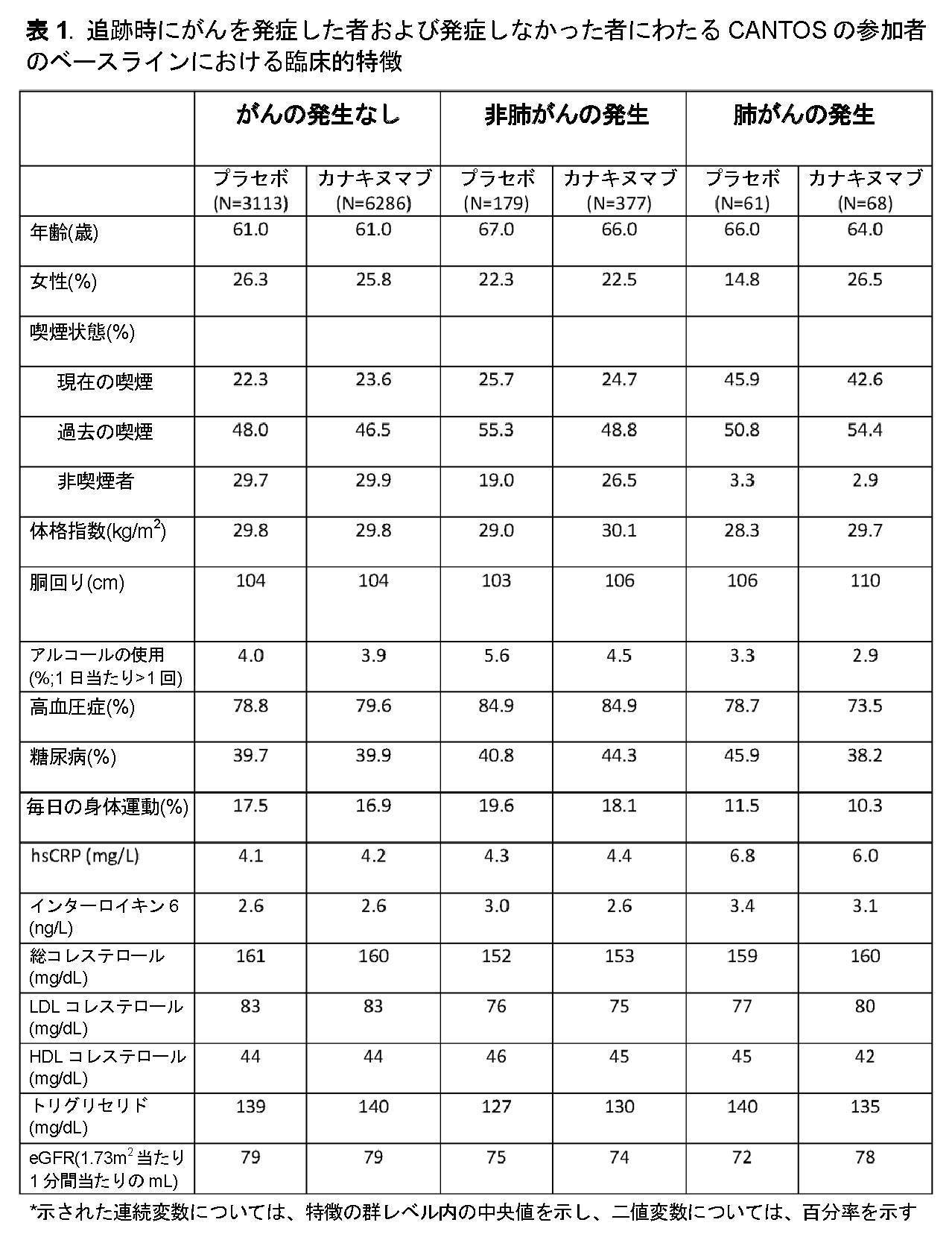


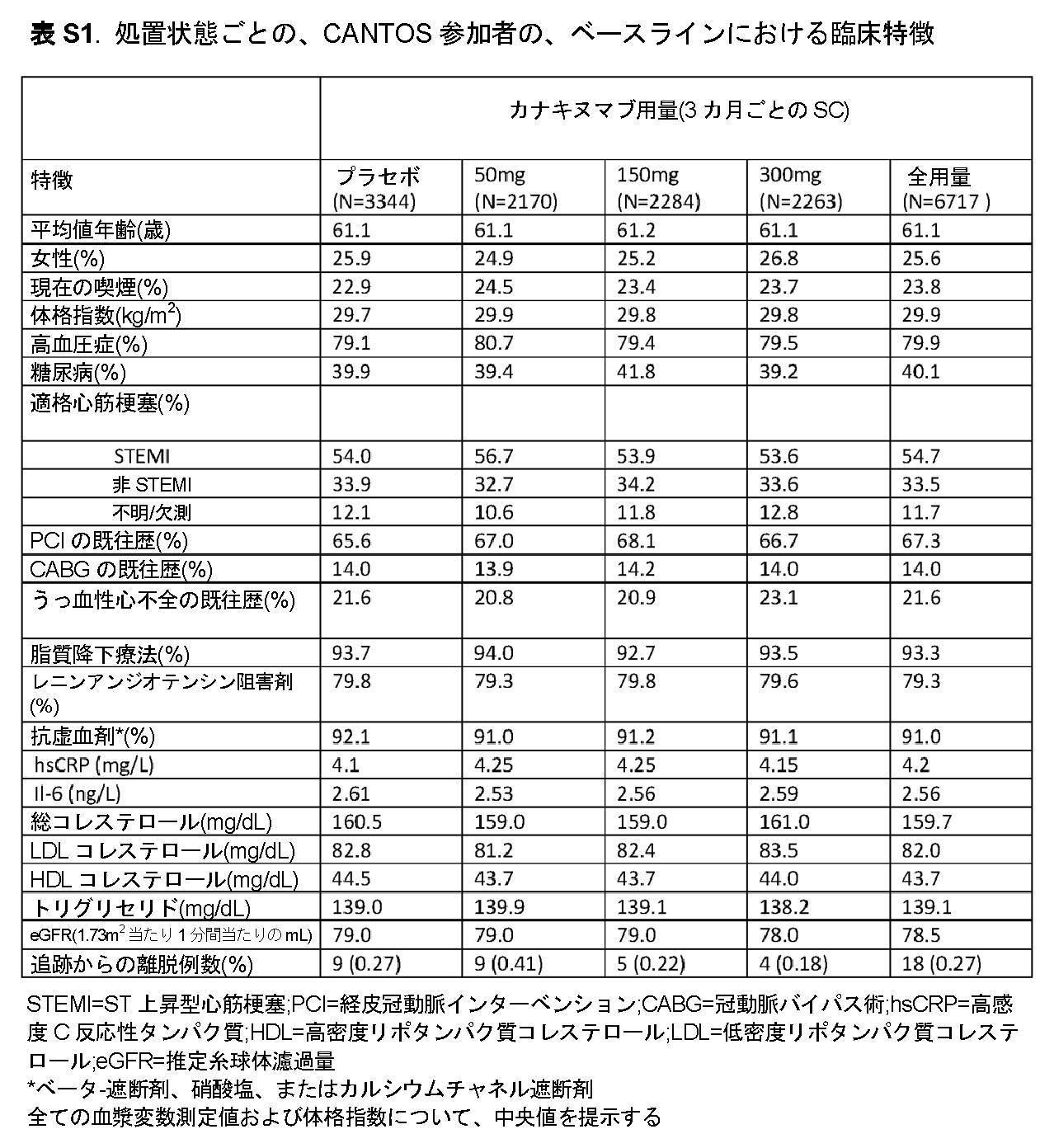


参考文献 References

以下の態様を包含し得る。The following aspects may be included.
[1] それを必要とする患者において、少なくとも部分的な炎症ベースを有するがんの処置および/または防止における使用のための、IL-1β結合性抗体またはこの機能的な断片。[1] An IL-1β binding antibody or functional fragment thereof for use in the treatment and/or prevention of at least partially inflammatory-based cancers in patients in need thereof.
[2] それを必要とする患者において、少なくとも部分的な炎症ベースを有するがんの処置における使用のための、IL-1β結合性抗体またはこの機能的な断片であって、処置1回当たり約30mg~約450mgの用量で投与される、IL-1β結合性抗体またはこの機能的な断片。[2] an IL-1β binding antibody or functional fragment thereof for use in the treatment of at least partially inflammatory-based cancer in a patient in need thereof, comprising about An IL-1β binding antibody or functional fragment thereof administered at a dose of 30 mg to about 450 mg.
[3] 前記少なくとも部分的な炎症ベースを有するがんが、肺がん、とりわけ、非小細胞肺がん(NSCLC)、結腸直腸がん(CRC)、黒色腫、胃がん(食道がんを含む)、腎細胞癌(RCC)、乳がん、前立腺がん、頭頸部がん、膀胱がん、肝細胞癌(HCC)、卵巣がん、子宮頸がん、子宮内膜がん、膵臓がん、神経内分泌がん、多発性骨髄腫、急性骨髄芽球性白血病(AML)、および胆道がんからなるリストから選択される、上記[1]または[2]に記載の使用。[3] said at least partially inflammatory-based cancer is lung cancer, especially non-small cell lung cancer (NSCLC), colorectal cancer (CRC), melanoma, gastric cancer (including esophageal cancer), renal cell cancer (RCC), breast cancer, prostate cancer, head and neck cancer, bladder cancer, hepatocellular carcinoma (HCC), ovarian cancer, cervical cancer, endometrial cancer, pancreatic cancer, neuroendocrine cancer , multiple myeloma, acute myeloblastic leukemia (AML), and biliary tract cancer.
[4] 前記少なくとも部分的な炎症ベースを有するがんが、肺がん、とりわけ、非小細胞肺がん(NSCLC)、結腸直腸がん(CRC)、黒色腫、胃がん(食道がんを含む)、腎細胞癌(RCC)、乳がん、肝細胞癌(HCC)、前立腺がん、膀胱がん、急性骨髄芽球性白血病(AML)、多発性骨髄腫、および膵臓がんからなるリストから選択される、上記[1]または[2]に記載の使用。[4] said at least partially inflammatory-based cancer is lung cancer, especially non-small cell lung cancer (NSCLC), colorectal cancer (CRC), melanoma, gastric cancer (including esophageal cancer), renal cell selected from the list consisting of cancer (RCC), breast cancer, hepatocellular carcinoma (HCC), prostate cancer, bladder cancer, acute myeloblastic leukemia (AML), multiple myeloma, and pancreatic cancer, as above Use according to [1] or [2].
[5] 前記少なくとも部分的な炎症ベースを有するがんが、結腸直腸がん(CRC)である、上記[1]または[2]に記載の使用。[5] The use according to [1] or [2] above, wherein the at least partially inflammatory-based cancer is colorectal cancer (CRC).
[6] 前記少なくとも部分的な炎症ベースを有するがんが、腎細胞癌(RCC)である、上記[1]または[2]に記載の使用。[6] The use according to [1] or [2] above, wherein the at least partially inflammatory-based cancer is renal cell carcinoma (RCC).
[7] 前記少なくとも部分的な炎症ベースを有するがんが、乳がんである、上記[1]または[2]に記載の使用。[7] The use according to [1] or [2] above, wherein the at least partially inflammatory-based cancer is breast cancer.
[8] 前記少なくとも部分的な炎症ベースを有するがんが、肺がん、好ましくは、非小細胞肺がん(NSCLC)である、上記[1]または[2]に記載の使用。[8] The use according to [1] or [2] above, wherein the at least partially inflammatory-based cancer is lung cancer, preferably non-small cell lung cancer (NSCLC).
[9] 前記患者が、前記IL-1β結合性抗体またはこの機能的な断片の初回投与の前に、約2mg/L以上の高感度C反応性タンパク質(hsCRP)を有する、上記[1]から[8]のいずれか一項に記載の使用。[9] from [1] above, wherein the patient has a high-sensitivity C-reactive protein (hsCRP) of about 2 mg/L or more prior to the first administration of the IL-1β binding antibody or functional fragment thereof; Use according to any one of [8].
[10] 前記患者が、前記IL-1β結合性抗体またはこの機能的な断片の初回投与の前に、4mg/L以上または10mg/L以上の高感度C反応性タンパク質(hsCRP)を有する、上記[1]から[9]のいずれか一項に記載の使用。[10] The above, wherein the patient has a high-sensitivity C-reactive protein (hsCRP) of 4 mg/L or more or 10 mg/L or more before the first administration of the IL-1β binding antibody or functional fragment thereof. Use according to any one of [1] to [9].
[11] 前記IL-1β結合性抗体またはこの機能的な断片の初回投与の少なくとも約3カ月後に評価された、前記患者の高感度C反応性タンパク質(hsCRP)レベルが、約5mg/L未満、3.5mg/L、2.3mg/L、好ましくは、約2mg/L未満、好ましくは、約1.8mg/L未満へと低減している、上記[1]から[10]のいずれか一項に記載の使用。[11] said patient has a high-sensitivity C-reactive protein (hsCRP) level of less than about 5 mg/L, assessed at least about 3 months after first administration of said IL-1β binding antibody or functional fragment thereof; Any one of the above [1] to [10], which is reduced to 3.5 mg/L, 2.3 mg/L, preferably less than about 2 mg/L, preferably less than about 1.8 mg/L Use as described in section.
[12] 前記IL-1β結合性抗体またはこの機能的な断片の初回投与の少なくとも約3カ月後に評価された、前記患者の高感度C反応性タンパク質(hsCRP)レベルが、ベースラインと比較して、少なくとも20%低減している、上記[1]から[11]のいずれか一項に記載の使用。[12] the patient's high-sensitivity C-reactive protein (hsCRP) levels, assessed at least about 3 months after the first dose of said IL-1β binding antibody or functional fragment thereof, compared to baseline; , is reduced by at least 20%.
[13] 前記IL-1β結合性抗体またはこの機能的な断片の初回投与の少なくとも約3カ月後に評価された、前記患者のインターロイキン6(IL-6)レベルが、ベースラインと比較して、少なくとも20%低減している、上記[1]から[12]のいずれか一項に記載の使用。[13] said patient's interleukin-6 (IL-6) levels, assessed at least about 3 months after the first administration of said IL-1β binding antibody or functional fragment thereof, compared to baseline, Use according to any one of the above [1] to [12], which is reduced by at least 20%.
[14] 前記IL-1β結合性抗体またはこの機能的な断片を、2週間ごとに、3週間ごとに、または4週間ごとに(毎月)投与することを含む、上記[1]から[13]のいずれか一項に記載の使用。[14] [1] to [13] above, comprising administering said IL-1β binding antibody or functional fragment thereof every 2 weeks, every 3 weeks, or every 4 weeks (monthly) Use according to any one of
[15] 前記IL-1β結合性抗体が、カナキヌマブである、上記[1]から[14]のいずれか一項に記載の使用。[15] The use according to any one of [1] to [14] above, wherein the IL-1β binding antibody is canakinumab.
[16] 処置1回当たり約200mg~約450mgのカナキヌマブを、前記患者へと投与することを含む、上記[1]から[15]のいずれか一項に記載の使用。[16] The use of any one of [1] to [15] above, comprising administering to the patient about 200 mg to about 450 mg of canakinumab per treatment.
[17] 処置1回当たり約200mgのカナキヌマブを、前記患者へと投与することを含む、上記[16]に記載の使用。[17] The use of [16] above, comprising administering to the patient about 200 mg of canakinumab per treatment.
[18] カナキヌマブが、3週間ごとに投与される、上記[15]から[17]のいずれか一項に記載の使用。[18] The use according to any one of [15] to [17] above, wherein canakinumab is administered every three weeks.
[19] カナキヌマブが、4週間ごとに(毎月)投与される、上記[15]から[17]のいずれか一項に記載の使用。[19] The use of any one of [15] to [17] above, wherein canakinumab is administered every 4 weeks (monthly).
[20] カナキヌマブが、皮下投与される、上記[15]から[19]のいずれか一項に記載の使用。[20] The use according to any one of [15] to [19] above, wherein canakinumab is administered subcutaneously.
[21] カナキヌマブが、静脈内投与される、上記[15]から[19]のいずれか一項に記載の使用。[21] The use according to any one of [15] to [19] above, wherein canakinumab is administered intravenously.
[22] それを必要とする患者において、少なくとも部分的な炎症ベースを有するがん、好ましくは、肺がんの処置における使用のためのカナキヌマブであって、前記使用が、200mgの用量のカナキヌマブを、3週間ごとに皮下投与することを含む、カナキヌマブ。[22] canakinumab for use in the treatment of cancer having at least a partial inflammatory basis, preferably lung cancer, in a patient in need thereof, said use comprising a dose of 200 mg of canakinumab; Canakinumab, including weekly subcutaneous administration.
[23] 前記IL-1β結合性抗体が、ゲボキズマブ(XOMA-052)である、上記[1]から[14]のいずれか一項に記載の使用。[23] The use according to any one of [1] to [14] above, wherein the IL-1β binding antibody is gevokizumab (XOMA-052).
[24] 処置1回当たり30mg~90mgのゲボキズマブを、前記患者へと投与することを含む、上記[23]に記載の使用。[24] The use of [23] above, comprising administering 30 mg to 90 mg of gevokizumab per treatment to the patient.
[25] 処置1回当たり約90mg~約120mgのゲボキズマブを、前記患者へと投与することを含む、上記[23]に記載の使用。[25] The use of [23] above, comprising administering to said patient from about 90 mg to about 120 mg of gevokizumab per treatment.
[26] ゲボキズマブが、3週間ごとに投与される、上記[23]から[25]のいずれか一項に記載の使用。[26] The use of any one of [23] to [25] above, wherein gevokizumab is administered every three weeks.
[27] ゲボキズマブが、4週間ごとに(毎月)投与される、上記[23]から[25]のいずれか一項に記載の使用。[27] The use of any one of [23] to [25] above, wherein gevokizumab is administered every 4 weeks (monthly).
[28] ゲボキズマブが、皮下投与される、上記[23]から[27]のいずれか一項に記載の使用。[28] The use of any one of [23] to [27] above, wherein gevokizumab is administered subcutaneously.
[29] ゲボキズマブが、静脈内投与される、上記[23]から[27]のいずれか一項に記載の使用。[29] The use of any one of [23] to [27] above, wherein gevokizumab is administered intravenously.
[30] それを必要とする患者において、少なくとも部分的な炎症ベースを有するがんの処置における使用のためのゲボキズマブであって、前記使用が、30mg~120mgの用量のゲボキズマブを、4週間ごとに(毎月)静脈内投与することを含む、ゲボキズマブ。[30] Gevokizumab for use in the treatment of cancer having at least a partial inflammatory basis in a patient in need thereof, said use comprising administering gevokizumab at a dose of 30 mg to 120 mg every 4 weeks Gevokizumab, including intravenous (monthly) administration.
[31] 前記少なくとも部分的な炎症ベースを有するがんが、肺がん、とりわけ、非小細胞肺がん(NSCLC)、結腸直腸がん(CRC)、黒色腫、胃がん(食道がんを含む)、腎細胞癌(RCC)、乳がん、肝細胞癌(HCC)、前立腺がん、膀胱がん、急性骨髄芽球性白血病(AML)、多発性骨髄腫、および膵臓がんからなるリストから選択される、上記[30]に記載の使用。[31] said at least partially inflammatory-based cancer is lung cancer, especially non-small cell lung cancer (NSCLC), colorectal cancer (CRC), melanoma, gastric cancer (including esophageal cancer), renal cell selected from the list consisting of cancer (RCC), breast cancer, hepatocellular carcinoma (HCC), prostate cancer, bladder cancer, acute myeloblastic leukemia (AML), multiple myeloma, and pancreatic cancer, as above Use according to [30].
[32] 前記IL-1β結合性抗体またはこの機能的な断片が、1または複数の治療剤、例えば、化学療法剤と組み合わせて投与され、好ましくは、前記IL-1β結合性抗体またはこの機能的な断片が、カナキヌマブまたはゲボキズマブである、上記[1]から[31]のいずれか一項に記載の使用。[32] The IL-1β binding antibody or functional fragment thereof is administered in combination with one or more therapeutic agents, such as chemotherapeutic agents, preferably the IL-1β binding antibody or functional fragment thereof The use according to any one of [1] to [31] above, wherein the fragment is canakinumab or gevokizumab.
[33] 前記1または複数の治療剤、例えば、化学療法剤が、前記がんのための標準治療剤である、上記[32]に記載の使用。[33] The use of [32] above, wherein said one or more therapeutic agents, such as chemotherapeutic agents, is a standard therapeutic agent for said cancer.
[34] 前記1または複数の治療剤、例えば、化学療法剤が、肺がん、とりわけ、NSCLCのための標準治療剤である、上記[32]から[33]のいずれか一項に記載の使用。[34] The use of any one of [32] to [33] above, wherein said one or more therapeutic agents, eg, chemotherapeutic agents, is a standard of care for lung cancer, especially NSCLC.
[35] 前記1または複数の治療剤が、白金ベースの化学療法、白金ベースのダブレット化学療法(PT-DC)、チロシンキナーゼ阻害剤、またはチェックポイント阻害剤から選択される、上記[32]から[34]のいずれか一項に記載の使用。[35] from above [32], wherein said one or more therapeutic agents are selected from platinum-based chemotherapy, platinum-based doublet chemotherapy (PT-DC), tyrosine kinase inhibitors, or checkpoint inhibitors Use according to any one of [34].
[36] 前記1または複数の治療剤、例えば、化学療法剤が、好ましくは、ニボルマブ、ペンブロリズマブ、アテゾリズマブ、デュルバルマブ、アベルマブ、およびスパルタリズマブ(PDR-001)からなる群から選択される、PD-1阻害剤またはPD-L1阻害剤である、上記[32]から[35]のいずれか一項に記載の使用。[36] PD-, wherein said one or more therapeutic agents, e.g., chemotherapeutic agents, are preferably selected from the group consisting of nivolumab, pembrolizumab, atezolizumab, durvalumab, avelumab, and spartalizumab (PDR-001) The use according to any one of [32] to [35] above, which is a PD-L1 inhibitor or a PD-L1 inhibitor.
[37] 前記IL-1β結合性抗体またはこの機能的な断片が、少なくとも部分的な炎症ベースを有するがんを手術により除去した後の対象における、前記がんの再発または再燃の防止において、単独で、または好ましくは組合せで使用される、上記[1]から[36]のいずれか一項に記載の使用。[37] The IL-1β binding antibody or functional fragment thereof alone in preventing recurrence or relapse of a cancer having at least a partial inflammatory basis in a subject after surgical removal of the cancer or preferably in combination.
[38] 部分的な炎症ベースを伴う前記がんが、肺がんである、上記[37]に記載の使用。[38] The use of [37] above, wherein the cancer with a partial inflammatory basis is lung cancer.
[39] 前記IL-1β結合性抗体またはこの機能的な断片が、肺がん、とりわけ、非小細胞肺がん(NSCLC)のファースト、セカンド、またはサードライン処置として、単独で、または好ましくは組合せで使用される、上記[1]から[38]のいずれか一項に記載の使用。[39] Said IL-1β binding antibody or functional fragment thereof is used alone or preferably in combination as a first, second or third line treatment of lung cancer, especially non-small cell lung cancer (NSCLC). The use according to any one of [1] to [38] above.
[40] 患者の肺がんの防止における使用のための、IL-1β結合性抗体またはこの機能的な断片であって、前記患者が、2mg/L以上または4mg/L以上の高感度C反応性タンパク質(hsCRP)レベルを有する、IL-1β結合性抗体またはこの機能的な断片。[40] An IL-1β binding antibody or functional fragment thereof for use in preventing lung cancer in a patient, wherein said patient has 2 mg/L or more or 4 mg/L or more of high-sensitivity C-reactive protein (hsCRP) levels, IL-1β binding antibodies or functional fragments thereof.
[41] 前記IL-1β結合性抗体またはこの機能的な断片が、カナキヌマブもしくはこの機能的な断片、またはゲボキズマブもしくはこの機能的な断片である、上記[40]に記載の使用。[41] The use of [40] above, wherein the IL-1β binding antibody or functional fragment thereof is canakinumab or a functional fragment thereof, or gevokizumab or a functional fragment thereof.
[42] ゲボキズマブまたはこの機能的な断片が、1または複数の治療剤、例えば、化学療法剤と組み合わせて投与される、上記[1]から[41]のいずれか一項に記載の使用。[42] The use of any one of [1] to [41] above, wherein gevokizumab or a functional fragment thereof is administered in combination with one or more therapeutic agents, such as chemotherapeutic agents.
[43] 前記1または複数の治療剤、例えば、化学療法剤が、結腸直腸がん(CRC)のための標準治療剤である、上記[32]または[42]に記載の使用。[43] The use of [32] or [42] above, wherein said one or more therapeutic agents, eg, chemotherapeutic agents, is a standard of care for colorectal cancer (CRC).
[44] 前記1または複数の治療剤、例えば、化学療法剤が、一般的な細胞傷害剤であり、好ましくは、前記一般的な細胞傷害剤が、FOLFOX、FOLFIRI、カペシタビン、5-フルオロウラシル、イリノテカン、およびオキサリプラチンからなるリストから選択される、上記[42]または[43]に記載の使用。[44] The one or more therapeutic agents, e.g., chemotherapeutic agents, are general cytotoxic agents, preferably the general cytotoxic agent is FOLFOX, FOLFIRI, capecitabine, 5-fluorouracil, irinotecan , and oxaliplatin.
[45] 前記1または複数の治療剤、例えば、化学療法剤が、VEGF阻害剤であり、好ましくは、前記VEGF阻害剤が、ベバシズマブ、ラムシルマブ、およびziv-アフリベルセプトからなるリストから選択される、上記[42]から[44]のいずれか一項に記載の使用。[45] said one or more therapeutic agents, e.g., chemotherapeutic agents, is a VEGF inhibitor, preferably said VEGF inhibitor is selected from the list consisting of bevacizumab, ramucirumab, and ziv-aflibercept , the use according to any one of [42] to [44] above.
[46] ゲボキズマブまたはこの機能的な断片が、FOLFIRI+ベバシズマブ、またはFOLFOX+ベバシズマブと組み合わせて投与される、上記[42]から[45]のいずれか一項に記載の使用。[46] The use of any one of [42] to [45] above, wherein gevokizumab or a functional fragment thereof is administered in combination with FOLFIRI + bevacizumab, or FOLFOX + bevacizumab.
[47] 前記1または複数の治療剤、例えば、化学療法剤が、チェックポイント阻害剤である、上記[42]から[46]のいずれか一項に記載の使用。[47] The use of any one of [42] to [46] above, wherein the one or more therapeutic agents, eg, chemotherapeutic agents, is a checkpoint inhibitor.
[48] 前記1または複数の治療剤、例えば、化学療法剤が、好ましくは、ニボルマブ、ペンブロリズマブ、アテゾリズマブ、アベルマブ、デュルバルマブ、およびスパルタリズマブ(PDR-001)からなる群から選択される、PD-1阻害剤またはPD-L1阻害剤である、上記[42]から[47]のいずれか一項に記載の使用。[48] PD-, wherein said one or more therapeutic agents, e.g., chemotherapeutic agents, are preferably selected from the group consisting of nivolumab, pembrolizumab, atezolizumab, avelumab, durvalumab, and spartalizumab (PDR-001) The use according to any one of [42] to [47] above, which is a PD-L1 inhibitor or a PD-L1 inhibitor.
[49] ゲボキズマブまたはこの機能的な断片が、結腸直腸がんを手術により除去した後の患者における、前記がんの再発または再燃の防止において、単独で、または好ましくは組合せで使用される、上記[32]および[42]から[48]のいずれか一項に記載の使用。[49] Gevokizumab or a functional fragment thereof is used alone or preferably in combination in preventing recurrence or recurrence of colorectal cancer in patients after the surgical removal of said cancer. Use according to any one of [32] and [42] to [48].
[50] ゲボキズマブまたはこの機能的な断片が、結腸直腸がんのファーストライン、セカンドライン、またはサードライン処置として、単独で、または好ましくは組合せで使用される、上記[42]から[49]のいずれか一項に記載の使用。[50] of [42] to [49] above, wherein gevokizumab or a functional fragment thereof is used alone or preferably in combination as a first-line, second-line, or third-line treatment for colorectal cancer Use according to any one of the paragraphs.
[51] 前記1または複数の治療剤、例えば、化学療法剤が、腎細胞癌(RCC)のための標準治療剤である、上記[32]または[42]に記載の使用。[51] The use of [32] or [42] above, wherein said one or more therapeutic agents, eg, chemotherapeutic agents, is a standard of care for renal cell carcinoma (RCC).
[52] 前記1または複数の治療剤、例えば、化学療法剤が、CTLA-4チェックポイント阻害剤であり、好ましくは、前記CTLA-4チェックポイント阻害剤が、イピリムマブである、上記[51]に記載の使用。[52] The above [51], wherein the one or more therapeutic agents, such as chemotherapeutic agents, is a CTLA-4 checkpoint inhibitor, preferably the CTLA-4 checkpoint inhibitor is ipilimumab Use as indicated.
[53] 前記1または複数の治療剤、例えば、化学療法剤が、エベロリムスである、上記[51]または[52]に記載の使用。[53] The use of [51] or [52] above, wherein the one or more therapeutic agents, eg, chemotherapeutic agents, is everolimus.
[54] 前記1または複数の治療剤、例えば、化学療法剤が、チェックポイント阻害剤である、上記[51]から[53]のいずれか一項に記載の使用。[54] The use of any one of [51] to [53] above, wherein said one or more therapeutic agents, eg, chemotherapeutic agents, is a checkpoint inhibitor.
[55] 前記1または複数の治療剤、例えば、化学療法剤が、好ましくは、ニボルマブ、ペンブロリズマブ、アテゾリズマブ、アベルマブ、デュルバルマブ、およびスパルタリズマブ(PDR-001)からなる群から選択される、PD-1阻害剤またはPD-L1阻害剤である、上記[51]から[54]のいずれか一項に記載の使用。[55] PD-, wherein said one or more therapeutic agents, e.g., chemotherapeutic agents, are preferably selected from the group consisting of nivolumab, pembrolizumab, atezolizumab, avelumab, durvalumab, and spartalizumab (PDR-001) The use according to any one of [51] to [54] above, which is a PD-L1 inhibitor or a PD-L1 inhibitor.
[56] 前記1または複数の治療剤、例えば、化学療法剤が、ニボルマブである、上記[51]から[55]のいずれか一項に記載の使用。[56] The use of any one of [51] to [55] above, wherein said one or more therapeutic agents, eg, chemotherapeutic agents, is nivolumab.
[57] 前記1または複数の治療剤、例えば、化学療法剤が、ニボルマブ+イピリムマブである、上記[51]から[56]のいずれか一項に記載の使用。[57] The use of any one of [51] to [56] above, wherein said one or more therapeutic agents, eg, chemotherapeutic agents, is nivolumab + ipilimumab.
[58] 前記1または複数の治療剤、例えば、化学療法剤が、カボザンチニブである、上記[51]から[57]のいずれか一項に記載の使用。[58] The use of any one of [51] to [57] above, wherein said one or more therapeutic agents, eg, chemotherapeutic agents, is cabozantinib.
[59] ゲボキズマブまたはこの機能的な断片が、腎細胞癌(RCC)を手術により除去した後の患者における、前記がんの再発または再燃の防止において、単独で、または好ましくは組合せで使用される、上記[32]、[42]、[51]から[58]のいずれか一項に記載の使用。[59] Gevokizumab or a functional fragment thereof is used alone or preferably in combination in the prevention of recurrence or relapse of renal cell carcinoma (RCC) in patients following surgical removal of said cancer , the use according to any one of the above [32], [42], [51] to [58].
[60] ゲボキズマブまたはこの機能的な断片が、腎細胞癌(RCC)のファーストライン、セカンドライン、またはサードラインとして、単独で、または好ましくは組合せで使用される、上記[32]、[42]、[51]から[59]のいずれか一項に記載の使用。[60] Gevokizumab or a functional fragment thereof is used as first-line, second-line, or third-line renal cell carcinoma (RCC), alone or preferably in combination, above [32], [42] , [51] to [59].
[61] 前記1または複数の治療剤、例えば、化学療法剤が、胃がん(食道がんを含む)のための標準治療剤である、上記[32]または[42]に記載の使用。[61] The use of [32] or [42] above, wherein the one or more therapeutic agents, such as chemotherapeutic agents, are standard therapeutic agents for gastric cancer (including esophageal cancer).
[62] 前記1または複数の治療剤、例えば、化学療法剤が、有糸分裂阻害剤、好ましくは、タキサンであり、好ましくは、前記タキサンが、パクリタキセルおよびドセタキセルから選択される、上記[61]に記載の使用。[62] The one or more therapeutic agents, e.g., chemotherapeutic agents, is an antimitotic agent, preferably a taxane, preferably the taxane is selected from paclitaxel and docetaxel, above [61] Use as described.
[63] 前記1または複数の治療剤、例えば、化学療法剤が、パクリタキセルおよびラムシルマブである、上記[61]から[62]のいずれか一項に記載の使用。[63] The use of any one of [61] to [62] above, wherein the one or more therapeutic agents, eg, chemotherapeutic agents, are paclitaxel and ramucirumab.
[64] 前記1または複数の化学療法剤が、チェックポイント阻害剤である、上記[61]から[63]のいずれか一項に記載の使用。[64] The use of any one of [61] to [63] above, wherein the one or more chemotherapeutic agents is a checkpoint inhibitor.
[65] 前記1または複数の治療剤、例えば、化学療法剤が、好ましくは、ニボルマブ、ペンブロリズマブ、アテゾリズマブ、デュルバルマブ、アベルマブ、およびスパルタリズマブ(PDR-001)からなる群から選択される、PD-1阻害剤またはPD-L1阻害剤である、上記[61]から[64]のいずれか一項に記載の使用。[65] PD-, wherein said one or more therapeutic agents, e.g., chemotherapeutic agents, are preferably selected from the group consisting of nivolumab, pembrolizumab, atezolizumab, durvalumab, avelumab, and spartalizumab (PDR-001) The use of any one of [61] to [64] above, which is a PD-L1 inhibitor or a PD-L1 inhibitor.
[66] 前記1または複数の治療剤、例えば、化学療法剤が、ニボルマブである、上記[61]から[65]のいずれか一項に記載の使用。[66] The use of any one of [61] to [65] above, wherein said one or more therapeutic agents, eg, chemotherapeutic agents, is nivolumab.
[67] 前記1または複数の治療剤、例えば、化学療法剤が、ニボルマブおよびイピリムマブである、上記[61]から[66]のいずれか一項に記載の使用。[67] The use of any one of [61] to [66] above, wherein said one or more therapeutic agents, eg, chemotherapeutic agents, are nivolumab and ipilimumab.
[68] ゲボキズマブまたはこの機能的な断片が、胃がん(食道がんを含む)を手術により除去した後の患者における、前記がんの再発または再燃の防止において、単独で、または好ましくは組合せで使用される、上記[32]、[42]、または[61]から[67]のいずれか一項に記載の使用。[68] Use of gevokizumab or a functional fragment thereof, alone or preferably in combination, in the prevention of recurrence or recurrence of gastric cancer (including esophageal cancer) in patients following surgical removal of said cancer The use of any one of [32], [42], or [61] to [67] above, wherein
[69] ゲボキズマブまたはこの機能的な断片が、胃がん(食道がんを含む)のファースト、セカンドライン、またはサードラインとして、単独で、または好ましくは組合せで使用される、上記[32]、[42]、または[61]から[68]のいずれか一項に記載の使用。[69] Gevokizumab or a functional fragment thereof is used as first, second or third line gastric cancer (including esophageal cancer), alone or preferably in combination, above [32], [42 ], or the use according to any one of [61] to [68].
Claims (69)
よび/または防止における使用のための、IL-1β結合性抗体またはこの機能的な断片
。 An IL-1β binding antibody or functional fragment thereof for use in the treatment and/or prevention of at least partially inflammatory-based cancers in patients in need thereof.
おける使用のための、IL-1β結合性抗体またはこの機能的な断片であって、処置1回
当たり約30mg~約450mgの用量で投与される、IL-1β結合性抗体またはこの
機能的な断片。 IL-1β binding antibody or functional fragment thereof for use in the treatment of at least partially inflammatory-based cancer in a patient in need thereof, comprising about 30 mg to about 30 mg per treatment An IL-1β binding antibody or functional fragment thereof administered at a dose of 450 mg.
ん(NSCLC)、結腸直腸がん(CRC)、黒色腫、胃がん(食道がんを含む)、腎細
胞癌(RCC)、乳がん、前立腺がん、頭頸部がん、膀胱がん、肝細胞癌(HCC)、卵
巣がん、子宮頸がん、子宮内膜がん、膵臓がん、神経内分泌がん、多発性骨髄腫、急性骨
髄芽球性白血病(AML)、および胆道がんからなるリストから選択される、請求項1ま
たは2に記載の使用。 said cancer having at least a partial inflammatory basis is lung cancer, especially non-small cell lung cancer (NSCLC), colorectal cancer (CRC), melanoma, gastric cancer (including esophageal cancer), renal cell carcinoma (RCC) ), breast cancer, prostate cancer, head and neck cancer, bladder cancer, hepatocellular carcinoma (HCC), ovarian cancer, cervical cancer, endometrial cancer, pancreatic cancer, neuroendocrine cancer, multiple 3. Use according to claim 1 or 2, selected from the list consisting of myeloma, acute myeloblastic leukemia (AML) and biliary tract cancer.
ん(NSCLC)、結腸直腸がん(CRC)、黒色腫、胃がん(食道がんを含む)、腎細
胞癌(RCC)、乳がん、肝細胞癌(HCC)、前立腺がん、膀胱がん、急性骨髄芽球性
白血病(AML)、多発性骨髄腫、および膵臓がんからなるリストから選択される、請求
項1または2に記載の使用。 said cancer having at least a partial inflammatory basis is lung cancer, especially non-small cell lung cancer (NSCLC), colorectal cancer (CRC), melanoma, gastric cancer (including esophageal cancer), renal cell carcinoma (RCC) ), breast cancer, hepatocellular carcinoma (HCC), prostate cancer, bladder cancer, acute myeloblastic leukemia (AML), multiple myeloma, and pancreatic cancer. 2. Use as described.
請求項1または2に記載の使用。 said at least partially inflammatory-based cancer is colorectal cancer (CRC);
Use according to claim 1 or 2.
項1または2に記載の使用。 3. Use according to claim 1 or 2, wherein said at least partially inflammatory-based cancer is renal cell carcinoma (RCC).
に記載の使用。 3. The at least partially inflammatory-based cancer is breast cancer.
Use as described.
がん(NSCLC)である、請求項1または2に記載の使用。 3. Use according to claim 1 or 2, wherein said at least partially inflammatory-based cancer is lung cancer, preferably non-small cell lung cancer (NSCLC).
2mg/L以上の高感度C反応性タンパク質(hsCRP)を有する、請求項1から8の
いずれか一項に記載の使用。 9. Any of claims 1-8, wherein the patient has a high sensitivity C-reactive protein (hsCRP) of about 2 mg/L or greater prior to the first administration of the IL-1β binding antibody or functional fragment thereof. Use as set forth in paragraph 1.
mg/L以上または10mg/L以上の高感度C反応性タンパク質(hsCRP)を有す
る、請求項1から9のいずれか一項に記載の使用。 4 prior to the first administration of the IL-1β binding antibody or functional fragment thereof, wherein the patient
10. Use according to any one of claims 1 to 9, having a high sensitivity C-reactive protein (hsCRP) of ≧mg/L or ≧10 mg/L.
に評価された、前記患者の高感度C反応性タンパク質(hsCRP)レベルが、約5mg
/L未満、3.5mg/L、2.3mg/L、好ましくは、約2mg/L未満、好ましく
は、約1.8mg/L未満へと低減している、請求項1から10のいずれか一項に記載の
使用。 said patient has a high-sensitivity C-reactive protein (hsCRP) level of about 5 mg, assessed at least about 3 months after first administration of said IL-1β binding antibody or functional fragment thereof;
/L, 3.5 mg/L, 2.3 mg/L, preferably less than about 2 mg/L, preferably less than about 1.8 mg/L. Use as set forth in paragraph 1.
に評価された、前記患者の高感度C反応性タンパク質(hsCRP)レベルが、ベースラ
インと比較して、少なくとも20%低減している、請求項1から11のいずれか一項に記
載の使用。 said patient's high-sensitivity C-reactive protein (hsCRP) levels, assessed at least about 3 months after the first administration of said IL-1β binding antibody or functional fragment thereof, compared to baseline, by at least 20 % is reduced.
に評価された、前記患者のインターロイキン6(IL-6)レベルが、ベースラインと比
較して、少なくとも20%低減している、請求項1から12のいずれか一項に記載の使用
。 said patient's interleukin-6 (IL-6) levels, assessed at least about 3 months after the first dose of said IL-1β binding antibody or functional fragment thereof, compared to baseline by at least 20%; 13. Use according to any one of claims 1 to 12, which is reduced.
または4週間ごとに(毎月)投与することを含む、請求項1から13のいずれか一項に記
載の使用。 said IL-1β binding antibody or functional fragment thereof every 2 weeks, every 3 weeks,
or every 4 weeks (monthly) administration.
に記載の使用。 Use according to any one of claims 1 to 14, wherein said IL-1β binding antibody is canakinumab.
ことを含む、請求項1から15のいずれか一項に記載の使用。 16. The use of any one of claims 1-15, comprising administering to said patient from about 200 mg to about 450 mg of canakinumab per treatment.
求項16に記載の使用。 17. The use of claim 16, comprising administering to said patient about 200 mg of canakinumab per treatment.
の使用。 18. Use according to any one of claims 15-17, wherein canakinumab is administered every three weeks.
項に記載の使用。 18. Use according to any one of claims 15 to 17, wherein canakinumab is administered every 4 weeks (monthly).
。 20. Use according to any one of claims 15-19, wherein canakinumab is administered intravenously.
くは、肺がんの処置における使用のためのカナキヌマブであって、前記使用が、200m
gの用量のカナキヌマブを、3週間ごとに皮下投与することを含む、カナキヌマブ。 Canakinumab for use in the treatment of cancer with at least a partial inflammatory basis, preferably lung cancer, in a patient in need thereof, said use comprising 200 m
canakinumab, comprising subcutaneously administering a dose of g of canakinumab every 3 weeks.
ら14のいずれか一項に記載の使用。 Use according to any one of claims 1 to 14, wherein said IL-1β binding antibody is gevokizumab (XOMA-052).
む、請求項23に記載の使用。 24. Use according to claim 23, comprising administering 30 mg to 90 mg of gevokizumab per treatment to said patient.
とを含む、請求項23に記載の使用。 24. The use of claim 23, comprising administering to said patient from about 90 mg to about 120 mg of gevokizumab per treatment.
の使用。 26. Use according to any one of claims 23-25, wherein gevokizumab is administered every three weeks.
項に記載の使用。 26. Use according to any one of claims 23 to 25, wherein gevokizumab is administered every 4 weeks (monthly).
。 28. Use according to any one of claims 23-27, wherein gevokizumab is administered intravenously.
おける使用のためのゲボキズマブであって、前記使用が、30mg~120mgの用量の
ゲボキズマブを、4週間ごとに(毎月)静脈内投与することを含む、ゲボキズマブ。 Gevokizumab for use in the treatment of cancer having at least a partial inflammatory basis in a patient in need thereof, said use comprising administering gevokizumab at a dose of 30 mg to 120 mg every 4 weeks (monthly) Gevokizumab, including intravenously.
ん(NSCLC)、結腸直腸がん(CRC)、黒色腫、胃がん(食道がんを含む)、腎細
胞癌(RCC)、乳がん、肝細胞癌(HCC)、前立腺がん、膀胱がん、急性骨髄芽球性
白血病(AML)、多発性骨髄腫、および膵臓がんからなるリストから選択される、請求
項30に記載の使用。 said cancer having at least a partial inflammatory basis is lung cancer, especially non-small cell lung cancer (NSCLC), colorectal cancer (CRC), melanoma, gastric cancer (including esophageal cancer), renal cell carcinoma (RCC) ), breast cancer, hepatocellular carcinoma (HCC), prostate cancer, bladder cancer, acute myeloblastic leukemia (AML), multiple myeloma, and pancreatic cancer. Use as indicated.
、化学療法剤と組み合わせて投与され、好ましくは、前記IL-1β結合性抗体またはこ
の機能的な断片が、カナキヌマブまたはゲボキズマブである、請求項1から31のいずれ
か一項に記載の使用。 Said IL-1β binding antibody or functional fragment thereof is administered in combination with one or more therapeutic agents such as chemotherapeutic agents, preferably said IL-1β binding antibody or functional fragment thereof is , canakinumab or gevokizumab.
る、請求項32に記載の使用。 33. Use according to claim 32, wherein said one or more therapeutic agents, such as chemotherapeutic agents, are standard therapeutic agents for said cancer.
ための標準治療剤である、請求項32から33のいずれか一項に記載の使用。 34. Use according to any one of claims 32-33, wherein said one or more therapeutic agents, e.g. chemotherapeutic agents, are standard therapeutic agents for lung cancer, especially NSCLC.
法(PT-DC)、チロシンキナーゼ阻害剤、またはチェックポイント阻害剤から選択さ
れる、請求項32から34のいずれか一項に記載の使用。 35. Any of claims 32-34, wherein said one or more therapeutic agents are selected from platinum-based chemotherapy, platinum-based doublet chemotherapy (PT-DC), tyrosine kinase inhibitors, or checkpoint inhibitors. Use as set forth in paragraph 1.
ロリズマブ、アテゾリズマブ、デュルバルマブ、アベルマブ、およびスパルタリズマブ(
PDR-001)からなる群から選択される、PD-1阻害剤またはPD-L1阻害剤で
ある、請求項32から35のいずれか一項に記載の使用。 Said one or more therapeutic agents, e.g.
36. Use according to any one of claims 32 to 35, which is a PD-1 inhibitor or a PD-L1 inhibitor selected from the group consisting of PDR-001).
を有するがんを手術により除去した後の対象における、前記がんの再発または再燃の防止
において、単独で、または好ましくは組合せで使用される、請求項1から36のいずれか
一項に記載の使用。 said IL-1β binding antibody or functional fragment thereof alone or in preventing recurrence or relapse of a cancer having at least a partial inflammatory basis in a subject after surgical removal of said cancer; 37. Use according to any one of claims 1 to 36, preferably used in combination.
がん(NSCLC)のファースト、セカンド、またはサードライン処置として、単独で、
または好ましくは組合せで使用される、請求項1から38のいずれか一項に記載の使用。 said IL-1β binding antibody or functional fragment thereof alone as a first, second or third line treatment of lung cancer, especially non-small cell lung cancer (NSCLC),
39. Use according to any one of claims 1 to 38, or preferably used in combination.
断片であって、前記患者が、2mg/L以上または4mg/L以上の高感度C反応性タン
パク質(hsCRP)レベルを有する、IL-1β結合性抗体またはこの機能的な断片。 An IL-1β binding antibody or functional fragment thereof for use in preventing lung cancer in a patient, wherein said patient has 2 mg/L or more or 4 mg/L or more of high-sensitivity C-reactive protein (hsCRP) IL-1β binding antibody or functional fragment thereof, with levels.
的な断片、またはゲボキズマブもしくはこの機能的な断片である、請求項40に記載の使
用。 41. Use according to claim 40, wherein said IL-1β binding antibody or functional fragment thereof is canakinumab or a functional fragment thereof or gevokizumab or a functional fragment thereof.
と組み合わせて投与される、請求項1から41のいずれか一項に記載の使用。 42. Use according to any one of claims 1 to 41, wherein gevokizumab or a functional fragment thereof is administered in combination with one or more therapeutic agents, such as chemotherapeutic agents.
標準治療剤である、請求項32または42に記載の使用。 43. Use according to claim 32 or 42, wherein said one or more therapeutic agents, such as chemotherapeutic agents, are standard therapeutic agents for colorectal cancer (CRC).
しくは、前記一般的な細胞傷害剤が、FOLFOX、FOLFIRI、カペシタビン、5
-フルオロウラシル、イリノテカン、およびオキサリプラチンからなるリストから選択さ
れる、請求項42または43に記載の使用。 Said one or more therapeutic agents, e.g. chemotherapeutic agents, is a general cytotoxic agent, preferably said general cytotoxic agent is FOLFOX, FOLFIRI, capecitabine, 5
44. Use according to claim 42 or 43, selected from the list consisting of - fluorouracil, irinotecan, and oxaliplatin.
は、前記VEGF阻害剤が、ベバシズマブ、ラムシルマブ、およびziv-アフリベルセ
プトからなるリストから選択される、請求項42から44のいずれか一項に記載の使用。 3. The claim wherein said one or more therapeutic agents, such as chemotherapeutic agents, is a VEGF inhibitor, preferably said VEGF inhibitor is selected from the list consisting of bevacizumab, ramucirumab, and ziv-aflibercept. 45. Use according to any one of 42-44.
LFOX+ベバシズマブと組み合わせて投与される、請求項42から45のいずれか一項
に記載の使用。 gevokizumab or a functional fragment thereof FOLFIRI + bevacizumab, or FO
46. Use according to any one of claims 42-45, administered in combination with LFOX + bevacizumab.
請求項42から46のいずれか一項に記載の使用。 wherein said one or more therapeutic agents, e.g., chemotherapeutic agents, are checkpoint inhibitors;
47. Use according to any one of claims 42-46.
ロリズマブ、アテゾリズマブ、アベルマブ、デュルバルマブ、およびスパルタリズマブ(
PDR-001)からなる群から選択される、PD-1阻害剤またはPD-L1阻害剤で
ある、請求項42から47のいずれか一項に記載の使用。 Said one or more therapeutic agents, e.g.
48. Use according to any one of claims 42 to 47, which is a PD-1 inhibitor or a PD-L1 inhibitor selected from the group consisting of PDR-001).
における、前記がんの再発または再燃の防止において、単独で、または好ましくは組合せ
で使用される、請求項32および42から48のいずれか一項に記載の使用。 32, wherein gevokizumab or a functional fragment thereof is used alone or preferably in combination in preventing recurrence or relapse of colorectal cancer in patients after surgical removal of said cancer; and 49. Use according to any one of 42-48.
ライン、またはサードライン処置として、単独で、または好ましくは組合せで使用される
、請求項42から49のいずれか一項に記載の使用。 50. Any one of claims 42 to 49, wherein gevokizumab or a functional fragment thereof is used alone or preferably in combination as first line, second line or third line treatment of colorectal cancer. Use of.
治療剤である、請求項32または42に記載の使用。 43. Use according to claim 32 or 42, wherein said one or more therapeutic agents, e.g. chemotherapeutic agents, are standard therapeutic agents for renal cell carcinoma (RCC).
害剤であり、好ましくは、前記CTLA-4チェックポイント阻害剤が、イピリムマブで
ある、請求項51に記載の使用。 52. Use according to claim 51, wherein said one or more therapeutic agents, eg chemotherapeutic agents, is a CTLA-4 checkpoint inhibitor, preferably said CTLA-4 checkpoint inhibitor is ipilimumab.
または52に記載の使用。 51. The one or more therapeutic agents, e.g., chemotherapeutic agents, is everolimus.
or the use according to 52.
請求項51から53のいずれか一項に記載の使用。 wherein said one or more therapeutic agents, e.g., chemotherapeutic agents, are checkpoint inhibitors;
54. Use according to any one of claims 51-53.
ロリズマブ、アテゾリズマブ、アベルマブ、デュルバルマブ、およびスパルタリズマブ(
PDR-001)からなる群から選択される、PD-1阻害剤またはPD-L1阻害剤で
ある、請求項51から54のいずれか一項に記載の使用。 Said one or more therapeutic agents, e.g.
55. Use according to any one of claims 51 to 54, which is a PD-1 inhibitor or a PD-L1 inhibitor selected from the group consisting of PDR-001).
ら55のいずれか一項に記載の使用。 56. Use according to any one of claims 51 to 55, wherein said one or more therapeutic agents, such as chemotherapeutic agents, is nivolumab.
、請求項51から56のいずれか一項に記載の使用。 57. Use according to any one of claims 51-56, wherein said one or more therapeutic agents, e.g. chemotherapeutic agents, is nivolumab + ipilimumab.
1から57のいずれか一項に記載の使用。 5. The one or more therapeutic agents, e.g., chemotherapeutic agents, is cabozantinib.
58. Use according to any one of 1 to 57.
の患者における、前記がんの再発または再燃の防止において、単独で、または好ましくは
組合せで使用される、請求項32、42、51から58のいずれか一項に記載の使用。 12. Gevokizumab or a functional fragment thereof is used alone or preferably in combination in preventing recurrence or relapse of renal cell carcinoma (RCC) in patients after surgical removal of said cancer. 59. Use according to any one of clauses 32, 42, 51-58.
カンドライン、またはサードラインとして、単独で、または好ましくは組合せで使用され
る、請求項32、42、51から59のいずれか一項に記載の使用。 60. Any of claims 32, 42, 51 to 59, wherein gevokizumab or a functional fragment thereof is used alone or preferably in combination as first line, second line or third line of renal cell carcinoma (RCC) or the use described in paragraph 1.
の標準治療剤である、請求項32または42に記載の使用。 43. Use according to claim 32 or 42, wherein said one or more therapeutic agents, such as chemotherapeutic agents, are standard therapeutic agents for gastric cancer (including esophageal cancer).
キサンであり、好ましくは、前記タキサンが、パクリタキセルおよびドセタキセルから選
択される、請求項61に記載の使用。 62. Use according to claim 61, wherein said one or more therapeutic agents, e.g. chemotherapeutic agents, is an antimitotic agent, preferably a taxane, preferably said taxane is selected from paclitaxel and docetaxel. .
ブである、請求項61から62のいずれか一項に記載の使用。 63. Use according to any one of claims 61-62, wherein said one or more therapeutic agents, such as chemotherapeutic agents, are paclitaxel and ramucirumab.
3のいずれか一項に記載の使用。 61-6, wherein said one or more chemotherapeutic agents is a checkpoint inhibitor
4. Use according to any one of clause 3.
ロリズマブ、アテゾリズマブ、デュルバルマブ、アベルマブ、およびスパルタリズマブ(
PDR-001)からなる群から選択される、PD-1阻害剤またはPD-L1阻害剤で
ある、請求項61から64のいずれか一項に記載の使用。 Said one or more therapeutic agents, e.g.
65. Use according to any one of claims 61 to 64, which is a PD-1 inhibitor or a PD-L1 inhibitor selected from the group consisting of PDR-001).
ら65のいずれか一項に記載の使用。 66. Use according to any one of claims 61 to 65, wherein said one or more therapeutic agents, such as chemotherapeutic agents, is nivolumab.
ある、請求項61から66のいずれか一項に記載の使用。 67. Use according to any one of claims 61-66, wherein said one or more therapeutic agents, such as chemotherapeutic agents, are nivolumab and ipilimumab.
した後の患者における、前記がんの再発または再燃の防止において、単独で、または好ま
しくは組合せで使用される、請求項32、42、または61から67のいずれか一項に記
載の使用。 gevokizumab or a functional fragment thereof is used alone or preferably in combination in the prevention of recurrence or relapse of gastric cancer (including esophageal cancer) in patients following surgical removal of said cancer, 68. Use according to any one of claims 32, 42 or 61-67.
カンドライン、またはサードラインとして、単独で、または好ましくは組合せで使用され
る、請求項32、42、または61から68のいずれか一項に記載の使用。
32, 42, or 61 to 68, wherein gevokizumab or a functional fragment thereof is used alone or preferably in combination as first, second or third line gastric cancer (including esophageal cancer) Use according to any one of
Applications Claiming Priority (20)
| Application Number | Priority Date | Filing Date | Title |
|---|---|---|---|
| US201762523458P | 2017-06-22 | 2017-06-22 | |
| US62/523,458 | 2017-06-22 | ||
| US201762529515P | 2017-07-07 | 2017-07-07 | |
| US62/529,515 | 2017-07-07 | ||
| US201762550307P | 2017-08-25 | 2017-08-25 | |
| US201762550325P | 2017-08-25 | 2017-08-25 | |
| US62/550,325 | 2017-08-25 | ||
| US62/550,307 | 2017-08-25 | ||
| US201762596054P | 2017-12-07 | 2017-12-07 | |
| US62/596,054 | 2017-12-07 | ||
| US201862649631P | 2018-03-29 | 2018-03-29 | |
| US62/649,631 | 2018-03-29 | ||
| TW107115136 | 2018-05-03 | ||
| US15/970,542 | 2018-05-03 | ||
| US15/970,542 US20190048072A1 (en) | 2017-06-22 | 2018-05-03 | USE OF IL-1beta BINDING ANTIBODIES |
| TW107115136A TW201904993A (en) | 2017-06-22 | 2018-05-03 | Use of IL-1[beta] binding antibodies |
| PCT/IB2018/053096 WO2018234879A1 (en) | 2017-06-22 | 2018-05-03 | Il-1beta binding antibodies for use in treating cancer |
| IBPCT/IB2018/053096 | 2018-05-03 | ||
| PCT/IB2018/054637 WO2018235056A1 (en) | 2017-06-22 | 2018-06-22 | IL-1BETA BINDING ANTIBODIES FOR USE IN THE TREATMENT OF CANCER |
| JP2019571038A JP2020524698A (en) | 2017-06-22 | 2018-06-22 | IL-1β binding antibodies for use in the treatment of cancer |
Related Parent Applications (1)
| Application Number | Title | Priority Date | Filing Date |
|---|---|---|---|
| JP2019571038A Division JP2020524698A (en) | 2017-06-22 | 2018-06-22 | IL-1β binding antibodies for use in the treatment of cancer |
Publications (1)
| Publication Number | Publication Date |
|---|---|
| JP2023071657A true JP2023071657A (en) | 2023-05-23 |
Family
ID=62530267
Family Applications (4)
| Application Number | Title | Priority Date | Filing Date |
|---|---|---|---|
| JP2019570897A Withdrawn JP2020524694A (en) | 2017-06-22 | 2018-05-03 | IL-1β binding antibodies for use in the treatment of cancer |
| JP2019571038A Withdrawn JP2020524698A (en) | 2017-06-22 | 2018-06-22 | IL-1β binding antibodies for use in the treatment of cancer |
| JP2022146790A Pending JP2022181214A (en) | 2017-06-22 | 2022-09-15 | IL-1β binding antibody for use in treating cancer |
| JP2023014125A Withdrawn JP2023071657A (en) | 2017-06-22 | 2023-02-01 | IL-1β binding antibody for use in treating cancer |
Family Applications Before (3)
| Application Number | Title | Priority Date | Filing Date |
|---|---|---|---|
| JP2019570897A Withdrawn JP2020524694A (en) | 2017-06-22 | 2018-05-03 | IL-1β binding antibodies for use in the treatment of cancer |
| JP2019571038A Withdrawn JP2020524698A (en) | 2017-06-22 | 2018-06-22 | IL-1β binding antibodies for use in the treatment of cancer |
| JP2022146790A Pending JP2022181214A (en) | 2017-06-22 | 2022-09-15 | IL-1β binding antibody for use in treating cancer |
Country Status (18)
| Country | Link |
|---|---|
| US (3) | US20190048072A1 (en) |
| EP (1) | EP3642234A1 (en) |
| JP (4) | JP2020524694A (en) |
| KR (2) | KR20200019865A (en) |
| CN (1) | CN110831967A (en) |
| AU (4) | AU2018287519B2 (en) |
| BR (1) | BR112019027558A2 (en) |
| CA (2) | CA3061874A1 (en) |
| CL (1) | CL2019003799A1 (en) |
| CO (1) | CO2019014433A2 (en) |
| IL (1) | IL271221A (en) |
| JO (1) | JOP20190292A1 (en) |
| MX (1) | MX2019015516A (en) |
| PH (1) | PH12019502857A1 (en) |
| RU (1) | RU2020102237A (en) |
| SG (1) | SG11201911283UA (en) |
| TW (3) | TW201904993A (en) |
| WO (1) | WO2018234879A1 (en) |
Families Citing this family (19)
| Publication number | Priority date | Publication date | Assignee | Title |
|---|---|---|---|---|
| SG11201404850SA (en) | 2012-02-13 | 2014-09-26 | Agency Science Tech & Res | IL-1β NEUTRALIZING HUMAN MONOCLONAL ANTIBODIES |
| KR20200019865A (en) * | 2017-06-22 | 2020-02-25 | 노파르티스 아게 | IL-1beta binding antibody for use in cancer treatment |
| JP2021523894A (en) * | 2018-05-09 | 2021-09-09 | ノバルティス アーゲー | Use of canakinumab |
| CA3119582A1 (en) * | 2018-12-21 | 2020-06-25 | Novartis Ag | Use of il-1.beta. binding antibodies |
| EP3947449A4 (en) * | 2019-04-01 | 2022-09-07 | Immetas Therapeutics, Inc. | B-SPECIFIC BINDING MOLECULES TARGETING THE TUMOR MICROENVIRONMENT AND AN IMMUNE CHECKPOINT PROTEIN |
| WO2020245402A1 (en) * | 2019-06-06 | 2020-12-10 | Cardioforecast Ltd | Compositions and methods for treating lung, colorectal and breast cancer |
| TW202120544A (en) * | 2019-07-09 | 2021-06-01 | 中國大陸商拓維創新生物科技(香港)有限公司 | Bispecific antibodies to tnf-alpha and il-1beta and uses thereof |
| EP4119156A4 (en) * | 2020-03-12 | 2024-05-08 | Toray Industries, Inc. | Medicament for treatment and/or prevention of cancer |
| RU2745814C1 (en) * | 2020-06-05 | 2021-04-01 | Закрытое Акционерное Общество "Биокад" | Aqueous pharmaceutical composition of levilimab and the use thereof |
| EP3970727A1 (en) * | 2020-09-16 | 2022-03-23 | Johann Wolfgang Goethe-Universität Frankfurt | Means for reducing radiotherapy resistance and adverse effects |
| JP7679038B2 (en) | 2020-10-30 | 2025-05-19 | 国立研究開発法人国立循環器病研究センター | Peripartum cardiomyopathy treatment |
| WO2022167916A1 (en) * | 2021-02-03 | 2022-08-11 | Novartis Ag | Use of il-1b binding antibodies for treating neuroinflammatory disorders |
| WO2023038619A1 (en) * | 2021-09-08 | 2023-03-16 | Board Of Regents, The University Of Texas System | USE OF IL-1β BINDING ANTIBODIES |
| CN115125303B (en) * | 2022-06-07 | 2023-02-24 | 北京大学第一医院 | Application of Apatinib Drug Sensitivity Markers and Related Reagents |
| CN116139268A (en) * | 2023-03-13 | 2023-05-23 | 上海交通大学医学院附属仁济医院 | Use of antibody targeting IL-1β in the preparation and treatment of castration-resistant prostate cancer |
| CN116688130A (en) * | 2023-06-08 | 2023-09-05 | 桂林医学院附属医院 | The application of antagonists targeting IL-1β/IL-1R1 pathway in inhibiting the pre-metastatic microenvironment or lung metastasis of liver cancer |
| WO2024258943A1 (en) * | 2023-06-13 | 2024-12-19 | Merck Sharp & Dohme Llc | Methods of using cyclic peptides for trapping interleukin-1 beta |
| WO2025235276A1 (en) * | 2024-05-06 | 2025-11-13 | Icahn School Of Medicine At Mount Sinai | Combination of il-1 receptor inhibitors, anti pd-1, and il-4 inhibitors in the treatment of cancer |
| WO2025242806A1 (en) | 2024-05-23 | 2025-11-27 | Universität Duisburg-Essen | A METHOD FOR PREDICTING THE RESPONSE OF A PATIENT WITH DLBCL TO ANTI-IL-1ß THERAPY |
Family Cites Families (82)
| Publication number | Priority date | Publication date | Assignee | Title |
|---|---|---|---|---|
| CA3016482A1 (en) | 1999-11-30 | 2001-06-07 | Mayo Foundation For Medical Education And Research | B7-h1, a novel immunoregulatory molecule |
| GB0020685D0 (en) | 2000-08-22 | 2000-10-11 | Novartis Ag | Organic compounds |
| US6995162B2 (en) | 2001-01-12 | 2006-02-07 | Amgen Inc. | Substituted alkylamine derivatives and methods of use |
| EP2206517B1 (en) | 2002-07-03 | 2023-08-02 | Ono Pharmaceutical Co., Ltd. | Immunopotentiating compositions comprising anti-PD-L1 antibodies |
| JP4511943B2 (en) | 2002-12-23 | 2010-07-28 | ワイス エルエルシー | Antibody against PD-1 and use thereof |
| CA2602777C (en) | 2005-03-25 | 2018-12-11 | Tolerrx, Inc. | Gitr binding molecules and uses therefor |
| ES2335232T3 (en) | 2005-06-21 | 2010-03-23 | Xoma Technology Ltd. | ANTIBODIES AND FRAGMENTS OF THE SAME THAT JOIN THE IL-1 BETA. |
| CN104356236B (en) | 2005-07-01 | 2020-07-03 | E.R.施贵宝&圣斯有限责任公司 | Human monoclonal antibody against programmed death ligand 1 (PD-L1) |
| JP5411430B2 (en) | 2005-07-04 | 2014-02-12 | 株式会社 ニコンビジョン | Ranging device |
| WO2007084342A2 (en) | 2006-01-13 | 2007-07-26 | The Government Of The United States, As Represented By The Secretary Of The Department Of Health And Human Services, National Institutes Of Health | Codon optimi zed il- 15 and il- 15r-alpha genes for expression in mammalian cells |
| MX2008014804A (en) | 2006-06-02 | 2009-01-27 | Regeneron Pharma | High affinity antibodies to human il-6 receptor. |
| EP1987839A1 (en) | 2007-04-30 | 2008-11-05 | I.N.S.E.R.M. Institut National de la Sante et de la Recherche Medicale | Cytotoxic anti-LAG-3 monoclonal antibody and its use in the treatment or prevention of organ transplant rejection and autoimmune disease |
| US9244059B2 (en) | 2007-04-30 | 2016-01-26 | Immutep Parc Club Orsay | Cytotoxic anti-LAG-3 monoclonal antibody and its use in the treatment or prevention of organ transplant rejection and autoimmune disease |
| CN101743249B (en) | 2007-05-11 | 2017-08-08 | 阿尔托生物科学有限公司 | Fusion molecules and IL‑15 variants |
| EP2044949A1 (en) | 2007-10-05 | 2009-04-08 | Immutep | Use of recombinant lag-3 or the derivatives thereof for eliciting monocyte immune response |
| US20090258020A1 (en) * | 2008-01-07 | 2009-10-15 | Patrys Limited | Antibody designated barb3, barb3 related antibodies, and methods of making and using same |
| AR072999A1 (en) | 2008-08-11 | 2010-10-06 | Medarex Inc | HUMAN ANTIBODIES THAT JOIN GEN 3 OF LYMPHOCYTARY ACTIVATION (LAG-3) AND THE USES OF THESE |
| EP2328919A2 (en) | 2008-08-25 | 2011-06-08 | Amplimmune, Inc. | Pd-i antagonists and methods for treating infectious disease |
| CA2736829C (en) | 2008-09-12 | 2018-02-27 | Isis Innovation Limited | Pd-1 specific antibodies and uses thereof |
| CA2998281C (en) | 2008-09-26 | 2022-08-16 | Dana-Farber Cancer Institute, Inc. | Human anti-pd-1 antobodies and uses therefor |
| EP4331604B9 (en) | 2008-12-09 | 2025-07-23 | F. Hoffmann-La Roche AG | Anti-pd-l1 antibodies and their use to enhance t-cell function |
| EP2196476A1 (en) * | 2008-12-10 | 2010-06-16 | Novartis Ag | Antibody formulation |
| CA2772613C (en) | 2009-09-03 | 2020-03-10 | Schering Corporation | Anti-gitr antibodies |
| US20130017199A1 (en) | 2009-11-24 | 2013-01-17 | AMPLIMMUNE ,Inc. a corporation | Simultaneous inhibition of pd-l1/pd-l2 |
| CA2778714C (en) | 2009-11-24 | 2018-02-27 | Medimmune Limited | Targeted binding agents against b7-h1 |
| US8993731B2 (en) | 2010-03-11 | 2015-03-31 | Ucb Biopharma Sprl | PD-1 antibody |
| JP6158511B2 (en) | 2010-06-11 | 2017-07-05 | 協和発酵キリン株式会社 | Anti-TIM-3 antibody |
| CA2802344C (en) | 2010-06-18 | 2023-06-13 | The Brigham And Women's Hospital, Inc. | Bi-specific antibodies against tim-3 and pd-1 for immunotherapy in chronic immune conditions |
| US8907053B2 (en) | 2010-06-25 | 2014-12-09 | Aurigene Discovery Technologies Limited | Immunosuppression modulating compounds |
| CN103502274B (en) | 2011-03-03 | 2016-01-06 | 埃派斯进有限公司 | Anti-IL-6 receptor antibodies and methods of use thereof |
| WO2012121679A1 (en) * | 2011-03-09 | 2012-09-13 | Agency For Science, Technology And Research | Method of modulating phenotype of a renal cell cancer-associated monocyte or macrophage |
| PT2699264T (en) | 2011-04-20 | 2018-05-23 | Medimmune Llc | ANTIBODIES AND OTHER MOLECULES CONNECTING B7-H1 AND PD-1 |
| EP2537933A1 (en) | 2011-06-24 | 2012-12-26 | Institut National de la Santé et de la Recherche Médicale (INSERM) | An IL-15 and IL-15Ralpha sushi domain based immunocytokines |
| WO2013006490A2 (en) | 2011-07-01 | 2013-01-10 | Cellerant Therapeutics, Inc. | Antibodies that specifically bind to tim3 |
| ES2808152T3 (en) | 2011-11-28 | 2021-02-25 | Merck Patent Gmbh | Anti-PD-L1 antibodies and their uses |
| SG11201404850SA (en) * | 2012-02-13 | 2014-09-26 | Agency Science Tech & Res | IL-1β NEUTRALIZING HUMAN MONOCLONAL ANTIBODIES |
| JP2015519375A (en) | 2012-05-31 | 2015-07-09 | ソレント・セラピューティクス・インコーポレイテッドSorrento Therapeutics, Inc. | Antigen binding protein that binds to PD-L1 |
| JO3300B1 (en) | 2012-06-06 | 2018-09-16 | Novartis Ag | Compounds and compositions for modulating egfr activity |
| UY34887A (en) | 2012-07-02 | 2013-12-31 | Bristol Myers Squibb Company Una Corporacion Del Estado De Delaware | OPTIMIZATION OF ANTIBODIES THAT FIX THE LYMPHOCYTE ACTIVATION GEN 3 (LAG-3) AND ITS USES |
| WO2014022758A1 (en) | 2012-08-03 | 2014-02-06 | Dana-Farber Cancer Institute, Inc. | Single agent anti-pd-l1 and pd-l2 dual binding antibodies and methods of use |
| CN114507282B (en) | 2012-10-04 | 2025-05-16 | 达纳-法伯癌症研究所公司 | Human monoclonal anti-PD-L1 antibodies and methods of use |
| NZ630790A (en) | 2012-10-24 | 2016-11-25 | Admune Therapeutics Llc | Il-15r alpha forms, cells expressing il-15r alpha forms, and therapeutic uses of il-15r alpha and il-15/il-15r alpha complexes |
| AR093984A1 (en) | 2012-12-21 | 2015-07-01 | Merck Sharp & Dohme | ANTIBODIES THAT JOIN LEGEND 1 OF SCHEDULED DEATH (PD-L1) HUMAN |
| ES2808654T3 (en) | 2013-03-15 | 2021-03-01 | Glaxosmithkline Ip Dev Ltd | Anti-LAG-3 binding proteins |
| HUE053069T2 (en) | 2013-05-02 | 2021-06-28 | Anaptysbio Inc | Antibodies to programmed death-1 (PD-1) |
| CA2913977C (en) | 2013-05-31 | 2022-11-29 | Sorrento Therapeutics, Inc. | Antigen binding proteins that bind pd-1 |
| WO2014209804A1 (en) | 2013-06-24 | 2014-12-31 | Biomed Valley Discoveries, Inc. | Bispecific antibodies |
| AR097306A1 (en) | 2013-08-20 | 2016-03-02 | Merck Sharp & Dohme | MODULATION OF TUMOR IMMUNITY |
| TW201605896A (en) | 2013-08-30 | 2016-02-16 | 安美基股份有限公司 | GITR antigen binding proteins |
| PT3702373T (en) | 2013-09-13 | 2022-09-27 | Beigene Switzerland Gmbh | Anti-pd1 antibodies and their use as therapeutics and diagnostics |
| US10202454B2 (en) | 2013-10-25 | 2019-02-12 | Dana-Farber Cancer Institute, Inc. | Anti-PD-L1 monoclonal antibodies and fragments thereof |
| WO2015081158A1 (en) | 2013-11-26 | 2015-06-04 | Bristol-Myers Squibb Company | Method of treating hiv by disrupting pd-1/pd-l1 signaling |
| WO2015083120A1 (en) * | 2013-12-04 | 2015-06-11 | Novartis Ag | USE OF IL-1β BINDING ANTIBODIES |
| SG10201804945WA (en) | 2013-12-12 | 2018-07-30 | Shanghai hengrui pharmaceutical co ltd | Pd-1 antibody, antigen-binding fragment thereof, and medical application thereof |
| US10407502B2 (en) | 2014-01-15 | 2019-09-10 | Kadmon Corporation, Llc | Immunomodulatory agents |
| TWI680138B (en) | 2014-01-23 | 2019-12-21 | 美商再生元醫藥公司 | Human antibodies to pd-l1 |
| TWI681969B (en) | 2014-01-23 | 2020-01-11 | 美商再生元醫藥公司 | Human antibodies to pd-1 |
| JOP20200094A1 (en) | 2014-01-24 | 2017-06-16 | Dana Farber Cancer Inst Inc | Antibody molecules to pd-1 and uses thereof |
| KR20160106762A (en) | 2014-01-28 | 2016-09-12 | 브리스톨-마이어스 스큅 컴퍼니 | Anti-lag-3 antibodies to treat hematological malignancies |
| JOP20200096A1 (en) | 2014-01-31 | 2017-06-16 | Children’S Medical Center Corp | TIM-3 Antibody Molecules and Their Uses |
| LT3116909T (en) | 2014-03-14 | 2020-02-10 | Novartis Ag | ANTI-BODY MOLECULES AGAINST LAG-3 AND THEIR USE |
| SMT202100116T1 (en) | 2014-05-28 | 2021-05-07 | Agenus Inc | Anti-gitr antibodies and methods of use thereof |
| EP3149042B1 (en) | 2014-05-29 | 2019-08-28 | Spring Bioscience Corporation | Pd-l1 antibodies and uses thereof |
| PT3151921T (en) | 2014-06-06 | 2019-11-21 | Bristol Myers Squibb Co | ANTIBODIES AGAINST GLUCOCORTICOID-INDUCED TUMOR NECROSIS FACTOR RECEIVER AND USES OF THE SAME |
| WO2015195163A1 (en) | 2014-06-20 | 2015-12-23 | R-Pharm Overseas, Inc. | Pd-l1 antagonist fully human antibody |
| TWI693232B (en) | 2014-06-26 | 2020-05-11 | 美商宏觀基因股份有限公司 | Covalently bonded diabodies having immunoreactivity with pd-1 and lag-3, and methods of use thereof |
| CN110156892B (en) | 2014-07-03 | 2023-05-16 | 百济神州有限公司 | anti-PD-L1 antibodies and their use as therapeutic and diagnostic agents |
| JO3663B1 (en) | 2014-08-19 | 2020-08-27 | Merck Sharp & Dohme | Anti-lag3 antibodies and antigen-binding fragments |
| MX2017004311A (en) | 2014-10-03 | 2017-12-07 | Dana Farber Cancer Inst Inc | Glucocorticoid-induced tumor necrosis factor receptor (gitr) antibodies and methods of use thereof. |
| MA41044A (en) | 2014-10-08 | 2017-08-15 | Novartis Ag | COMPOSITIONS AND METHODS OF USE FOR INCREASED IMMUNE RESPONSE AND CANCER TREATMENT |
| JP6877339B2 (en) | 2014-10-14 | 2021-05-26 | ノバルティス アーゲー | Antibody molecule against PD-L1 and its use |
| CA2964830C (en) | 2014-11-06 | 2024-01-02 | F. Hoffmann-La Roche Ag | Anti-tim3 antibodies and methods of use |
| TWI595006B (en) | 2014-12-09 | 2017-08-11 | 禮納特神經系統科學公司 | Anti-PD-1 antibodies and methods of using same |
| WO2016111947A2 (en) | 2015-01-05 | 2016-07-14 | Jounce Therapeutics, Inc. | Antibodies that inhibit tim-3:lilrb2 interactions and uses thereof |
| TW201639888A (en) | 2015-03-06 | 2016-11-16 | 索倫多醫療公司 | Antibody therapeutics that bind TIM3 |
| SMT202400420T1 (en) | 2015-04-01 | 2024-11-15 | Anaptysbio Inc | Antibodies directed against t cell immunoglobulin and mucin protein 3 (tim-3) |
| EP3294301A4 (en) * | 2015-05-12 | 2019-01-09 | Drexel University | COMPOUNDS AND COMPOSITIONS USEFUL IN TREATING OR PREVENTING CANCER METASTASES, AND METHODS IN WHICH THEY ARE EMPLOYED |
| BR112017025297A2 (en) | 2015-06-03 | 2018-08-14 | Bristol-Myers Squibb Company | anti-gitr antibodies for cancer diagnosis |
| US10093742B2 (en) | 2015-07-23 | 2018-10-09 | Inhibrx, Inc. | Multispecific GITR-binding fusion proteins and methods of use thereof |
| WO2017019896A1 (en) * | 2015-07-29 | 2017-02-02 | Novartis Ag | Combination therapies comprising antibody molecules to pd-1 |
| CA2994346A1 (en) | 2015-08-12 | 2017-02-16 | Medimmune Limited | Gitrl fusion proteins and uses thereof |
| KR20200019865A (en) * | 2017-06-22 | 2020-02-25 | 노파르티스 아게 | IL-1beta binding antibody for use in cancer treatment |
-
2018
- 2018-05-03 KR KR1020197035726A patent/KR20200019865A/en not_active Ceased
- 2018-05-03 AU AU2018287519A patent/AU2018287519B2/en not_active Ceased
- 2018-05-03 WO PCT/IB2018/053096 patent/WO2018234879A1/en not_active Ceased
- 2018-05-03 TW TW107115136A patent/TW201904993A/en unknown
- 2018-05-03 US US15/970,542 patent/US20190048072A1/en not_active Abandoned
- 2018-05-03 JP JP2019570897A patent/JP2020524694A/en not_active Withdrawn
- 2018-05-03 CA CA3061874A patent/CA3061874A1/en active Pending
- 2018-06-22 MX MX2019015516A patent/MX2019015516A/en unknown
- 2018-06-22 CA CA3066045A patent/CA3066045A1/en active Pending
- 2018-06-22 PH PH1/2019/502857A patent/PH12019502857A1/en unknown
- 2018-06-22 BR BR112019027558-4A patent/BR112019027558A2/en not_active Application Discontinuation
- 2018-06-22 TW TW112108903A patent/TW202400641A/en unknown
- 2018-06-22 AU AU2018288060A patent/AU2018288060B2/en not_active Ceased
- 2018-06-22 CN CN201880041546.8A patent/CN110831967A/en active Pending
- 2018-06-22 SG SG11201911283UA patent/SG11201911283UA/en unknown
- 2018-06-22 EP EP18749503.1A patent/EP3642234A1/en not_active Withdrawn
- 2018-06-22 TW TW107121619A patent/TW201904995A/en unknown
- 2018-06-22 KR KR1020207001676A patent/KR20200021086A/en not_active Ceased
- 2018-06-22 JP JP2019571038A patent/JP2020524698A/en not_active Withdrawn
- 2018-06-22 US US16/624,130 patent/US20230220063A1/en not_active Abandoned
- 2018-06-22 RU RU2020102237A patent/RU2020102237A/en unknown
- 2018-12-22 JO JOP/2019/0292A patent/JOP20190292A1/en unknown
-
2019
- 2019-12-05 IL IL271221A patent/IL271221A/en unknown
- 2019-12-19 CO CONC2019/0014433A patent/CO2019014433A2/en unknown
- 2019-12-20 CL CL2019003799A patent/CL2019003799A1/en unknown
-
2021
- 2021-10-07 AU AU2021245184A patent/AU2021245184A1/en not_active Abandoned
- 2021-10-19 AU AU2021254559A patent/AU2021254559A1/en not_active Abandoned
-
2022
- 2022-01-10 US US17/572,228 patent/US20220389090A1/en not_active Abandoned
- 2022-09-15 JP JP2022146790A patent/JP2022181214A/en active Pending
-
2023
- 2023-02-01 JP JP2023014125A patent/JP2023071657A/en not_active Withdrawn
Also Published As
Similar Documents
| Publication | Publication Date | Title |
|---|---|---|
| JP2023071657A (en) | IL-1β binding antibody for use in treating cancer | |
| US20230088070A1 (en) | Use of il-1beta binding antibodies | |
| JP2024028805A (en) | Combination therapy using anti-IL-8 and anti-PD-1 antibodies for cancer treatment | |
| US20220056123A1 (en) | Use of il-1beta binding antibodies | |
| US20220025036A1 (en) | Use of il-1beta binding antibodies | |
| WO2018235056A1 (en) | IL-1BETA BINDING ANTIBODIES FOR USE IN THE TREATMENT OF CANCER | |
| WO2020128637A1 (en) | Use of il-1 binding antibodies in the treatment of a msi-h cancer | |
| US20240317884A1 (en) | Method for allowing immune cells infiltration in tumors |
Legal Events
| Date | Code | Title | Description |
|---|---|---|---|
| A521 | Request for written amendment filed |
Free format text: JAPANESE INTERMEDIATE CODE: A523 Effective date: 20230302 |
|
| A621 | Written request for application examination |
Free format text: JAPANESE INTERMEDIATE CODE: A621 Effective date: 20230302 |
|
| A761 | Written withdrawal of application |
Free format text: JAPANESE INTERMEDIATE CODE: A761 Effective date: 20240105 |