JP2013215200A - Conserved neisserial antigen - Google Patents
Conserved neisserial antigen Download PDFInfo
- Publication number
- JP2013215200A JP2013215200A JP2013124476A JP2013124476A JP2013215200A JP 2013215200 A JP2013215200 A JP 2013215200A JP 2013124476 A JP2013124476 A JP 2013124476A JP 2013124476 A JP2013124476 A JP 2013124476A JP 2013215200 A JP2013215200 A JP 2013215200A
- Authority
- JP
- Japan
- Prior art keywords
- protein
- sequence
- expression
- gene
- boxshade
- Prior art date
- Legal status (The legal status is an assumption and is not a legal conclusion. Google has not performed a legal analysis and makes no representation as to the accuracy of the status listed.)
- Pending
Links
- 241001212279 Neisseriales Species 0.000 title claims 2
- 239000000427 antigen Substances 0.000 title description 22
- 108091007433 antigens Proteins 0.000 title description 22
- 102000036639 antigens Human genes 0.000 title description 22
- 108090000623 proteins and genes Proteins 0.000 claims abstract description 300
- 102000004169 proteins and genes Human genes 0.000 claims abstract description 210
- 150000001413 amino acids Chemical class 0.000 claims abstract description 95
- 241000588653 Neisseria Species 0.000 claims abstract description 54
- 239000012634 fragment Substances 0.000 claims abstract description 52
- 125000003275 alpha amino acid group Chemical group 0.000 claims abstract description 18
- 150000007523 nucleic acids Chemical class 0.000 claims description 47
- 102000039446 nucleic acids Human genes 0.000 claims description 42
- 108020004707 nucleic acids Proteins 0.000 claims description 42
- 239000003153 chemical reaction reagent Substances 0.000 claims description 14
- 238000004519 manufacturing process Methods 0.000 claims description 11
- 239000003814 drug Substances 0.000 claims description 10
- 208000015181 infectious disease Diseases 0.000 claims description 7
- 230000000890 antigenic effect Effects 0.000 claims description 4
- 230000009257 reactivity Effects 0.000 abstract description 2
- 235000018102 proteins Nutrition 0.000 description 187
- 239000013598 vector Substances 0.000 description 101
- 230000014509 gene expression Effects 0.000 description 100
- 210000004027 cell Anatomy 0.000 description 99
- 235000001014 amino acid Nutrition 0.000 description 97
- 229940024606 amino acid Drugs 0.000 description 96
- 108020004414 DNA Proteins 0.000 description 48
- 238000000034 method Methods 0.000 description 48
- 240000004808 Saccharomyces cerevisiae Species 0.000 description 46
- 235000014680 Saccharomyces cerevisiae Nutrition 0.000 description 43
- 239000000203 mixture Substances 0.000 description 39
- 108091028043 Nucleic acid sequence Proteins 0.000 description 37
- 241000700605 Viruses Species 0.000 description 33
- 241000196324 Embryophyta Species 0.000 description 32
- 108090000765 processed proteins & peptides Proteins 0.000 description 31
- 102000004196 processed proteins & peptides Human genes 0.000 description 29
- 229920001184 polypeptide Polymers 0.000 description 27
- 241000701447 unidentified baculovirus Species 0.000 description 26
- 230000001580 bacterial effect Effects 0.000 description 25
- 102000040430 polynucleotide Human genes 0.000 description 25
- 108091033319 polynucleotide Proteins 0.000 description 25
- 239000002157 polynucleotide Substances 0.000 description 25
- 102100031725 Cortactin-binding protein 2 Human genes 0.000 description 24
- 101710197985 Probable protein Rev Proteins 0.000 description 24
- 108091026890 Coding region Proteins 0.000 description 23
- 239000013612 plasmid Substances 0.000 description 23
- 230000001105 regulatory effect Effects 0.000 description 23
- 229960005486 vaccine Drugs 0.000 description 23
- 239000002502 liposome Substances 0.000 description 22
- 241000588650 Neisseria meningitidis Species 0.000 description 21
- 230000035897 transcription Effects 0.000 description 21
- 238000013518 transcription Methods 0.000 description 21
- 230000027455 binding Effects 0.000 description 19
- 108010076504 Protein Sorting Signals Proteins 0.000 description 18
- 238000010367 cloning Methods 0.000 description 18
- 238000009396 hybridization Methods 0.000 description 18
- 108090001030 Lipoproteins Proteins 0.000 description 17
- 102000004895 Lipoproteins Human genes 0.000 description 17
- 239000003795 chemical substances by application Substances 0.000 description 17
- 239000002773 nucleotide Substances 0.000 description 17
- 125000003729 nucleotide group Chemical group 0.000 description 17
- 241000894006 Bacteria Species 0.000 description 16
- 108090000790 Enzymes Proteins 0.000 description 16
- 238000001415 gene therapy Methods 0.000 description 16
- 239000000523 sample Substances 0.000 description 16
- 102000004190 Enzymes Human genes 0.000 description 15
- 241000238631 Hexapoda Species 0.000 description 15
- 229940088598 enzyme Drugs 0.000 description 15
- 238000000338 in vitro Methods 0.000 description 15
- 150000002632 lipids Chemical class 0.000 description 15
- 230000010076 replication Effects 0.000 description 15
- 238000012546 transfer Methods 0.000 description 15
- 230000009466 transformation Effects 0.000 description 15
- 230000028327 secretion Effects 0.000 description 14
- 239000003981 vehicle Substances 0.000 description 14
- 241000588724 Escherichia coli Species 0.000 description 13
- 239000002245 particle Substances 0.000 description 13
- 102000004163 DNA-directed RNA polymerases Human genes 0.000 description 12
- 239000002671 adjuvant Substances 0.000 description 12
- 102000037865 fusion proteins Human genes 0.000 description 12
- 108020001507 fusion proteins Proteins 0.000 description 12
- 101150075249 ORF40 gene Proteins 0.000 description 11
- 101100156835 Paenarthrobacter nicotinovorans xdh gene Proteins 0.000 description 11
- 239000013604 expression vector Substances 0.000 description 11
- 210000004962 mammalian cell Anatomy 0.000 description 11
- 230000001177 retroviral effect Effects 0.000 description 11
- 230000005030 transcription termination Effects 0.000 description 11
- 230000003612 virological effect Effects 0.000 description 11
- 108010083590 Apoproteins Proteins 0.000 description 10
- 108090000626 DNA-directed RNA polymerases Proteins 0.000 description 10
- 238000013459 approach Methods 0.000 description 10
- 239000003623 enhancer Substances 0.000 description 10
- 230000004927 fusion Effects 0.000 description 10
- 230000010354 integration Effects 0.000 description 10
- 108020004999 messenger RNA Proteins 0.000 description 10
- 241000894007 species Species 0.000 description 10
- 102000006410 Apoproteins Human genes 0.000 description 9
- 238000003556 assay Methods 0.000 description 9
- 239000003937 drug carrier Substances 0.000 description 9
- 230000000694 effects Effects 0.000 description 9
- 238000001727 in vivo Methods 0.000 description 9
- 239000000047 product Substances 0.000 description 9
- 210000001519 tissue Anatomy 0.000 description 9
- ZHNUHDYFZUAESO-UHFFFAOYSA-N Formamide Chemical compound NC=O ZHNUHDYFZUAESO-UHFFFAOYSA-N 0.000 description 8
- 241000699666 Mus <mouse, genus> Species 0.000 description 8
- 101710182846 Polyhedrin Proteins 0.000 description 8
- 108091081024 Start codon Proteins 0.000 description 8
- 238000001476 gene delivery Methods 0.000 description 8
- 150000004676 glycans Chemical class 0.000 description 8
- 230000002163 immunogen Effects 0.000 description 8
- 239000000463 material Substances 0.000 description 8
- 229920001282 polysaccharide Polymers 0.000 description 8
- 239000005017 polysaccharide Substances 0.000 description 8
- 230000008569 process Effects 0.000 description 8
- 238000012545 processing Methods 0.000 description 8
- 210000001938 protoplast Anatomy 0.000 description 8
- 150000003839 salts Chemical class 0.000 description 8
- 230000005026 transcription initiation Effects 0.000 description 8
- 238000011144 upstream manufacturing Methods 0.000 description 8
- 102000053602 DNA Human genes 0.000 description 7
- 108010008281 Recombinant Fusion Proteins Proteins 0.000 description 7
- 102000007056 Recombinant Fusion Proteins Human genes 0.000 description 7
- IXKSXJFAGXLQOQ-XISFHERQSA-N WHWLQLKPGQPMY Chemical compound C([C@@H](C(=O)N[C@@H](CC=1C2=CC=CC=C2NC=1)C(=O)N[C@@H](CC(C)C)C(=O)N[C@@H](CCC(N)=O)C(=O)N[C@@H](CC(C)C)C(=O)N1CCC[C@H]1C(=O)NCC(=O)N[C@@H](CCC(N)=O)C(=O)N[C@@H](CC(O)=O)C(=O)N1CCC[C@H]1C(=O)N[C@@H](CCSC)C(=O)N[C@@H](CC=1C=CC(O)=CC=1)C(O)=O)NC(=O)[C@@H](N)CC=1C2=CC=CC=C2NC=1)C1=CNC=N1 IXKSXJFAGXLQOQ-XISFHERQSA-N 0.000 description 7
- 229940039227 diagnostic agent Drugs 0.000 description 7
- 239000000032 diagnostic agent Substances 0.000 description 7
- 238000002347 injection Methods 0.000 description 7
- 239000007924 injection Substances 0.000 description 7
- 238000003780 insertion Methods 0.000 description 7
- 230000037431 insertion Effects 0.000 description 7
- 239000002609 medium Substances 0.000 description 7
- 239000012528 membrane Substances 0.000 description 7
- 210000004379 membrane Anatomy 0.000 description 7
- 229930182817 methionine Natural products 0.000 description 7
- 238000001262 western blot Methods 0.000 description 7
- YBJHBAHKTGYVGT-ZKWXMUAHSA-N (+)-Biotin Chemical compound N1C(=O)N[C@@H]2[C@H](CCCCC(=O)O)SC[C@@H]21 YBJHBAHKTGYVGT-ZKWXMUAHSA-N 0.000 description 6
- 241000710929 Alphavirus Species 0.000 description 6
- LFQSCWFLJHTTHZ-UHFFFAOYSA-N Ethanol Chemical compound CCO LFQSCWFLJHTTHZ-UHFFFAOYSA-N 0.000 description 6
- PEDCQBHIVMGVHV-UHFFFAOYSA-N Glycerine Chemical compound OCC(O)CO PEDCQBHIVMGVHV-UHFFFAOYSA-N 0.000 description 6
- -1 LEU2 Proteins 0.000 description 6
- 108090000848 Ubiquitin Proteins 0.000 description 6
- 102000044159 Ubiquitin Human genes 0.000 description 6
- 239000000969 carrier Substances 0.000 description 6
- 238000007796 conventional method Methods 0.000 description 6
- 230000003053 immunization Effects 0.000 description 6
- 238000003018 immunoassay Methods 0.000 description 6
- 230000000977 initiatory effect Effects 0.000 description 6
- 239000003446 ligand Substances 0.000 description 6
- 230000001404 mediated effect Effects 0.000 description 6
- 239000008194 pharmaceutical composition Substances 0.000 description 6
- 210000002966 serum Anatomy 0.000 description 6
- 239000000243 solution Substances 0.000 description 6
- 238000003860 storage Methods 0.000 description 6
- 239000000126 substance Substances 0.000 description 6
- 238000001890 transfection Methods 0.000 description 6
- 238000011282 treatment Methods 0.000 description 6
- 241001515965 unidentified phage Species 0.000 description 6
- 241001430294 unidentified retrovirus Species 0.000 description 6
- 239000013603 viral vector Substances 0.000 description 6
- 108091032973 (ribonucleotides)n+m Proteins 0.000 description 5
- 239000013607 AAV vector Substances 0.000 description 5
- 229920002307 Dextran Polymers 0.000 description 5
- 102000014150 Interferons Human genes 0.000 description 5
- 108010050904 Interferons Proteins 0.000 description 5
- 241001465754 Metazoa Species 0.000 description 5
- 206010028980 Neoplasm Diseases 0.000 description 5
- 108700009124 Transcription Initiation Site Proteins 0.000 description 5
- 101000626900 Trieres chinensis Uncharacterized 5.5 kDa protein in ccsA-rps6 intergenic region Proteins 0.000 description 5
- 238000004458 analytical method Methods 0.000 description 5
- 239000011324 bead Substances 0.000 description 5
- 230000001851 biosynthetic effect Effects 0.000 description 5
- 230000015572 biosynthetic process Effects 0.000 description 5
- 238000004113 cell culture Methods 0.000 description 5
- 229960002086 dextran Drugs 0.000 description 5
- 238000004520 electroporation Methods 0.000 description 5
- 238000005516 engineering process Methods 0.000 description 5
- 230000006870 function Effects 0.000 description 5
- 239000001963 growth medium Substances 0.000 description 5
- 239000005556 hormone Substances 0.000 description 5
- 229940088597 hormone Drugs 0.000 description 5
- 230000002209 hydrophobic effect Effects 0.000 description 5
- 238000011534 incubation Methods 0.000 description 5
- 230000001939 inductive effect Effects 0.000 description 5
- 229940079322 interferon Drugs 0.000 description 5
- 238000010369 molecular cloning Methods 0.000 description 5
- 230000001717 pathogenic effect Effects 0.000 description 5
- 230000008488 polyadenylation Effects 0.000 description 5
- OXCMYAYHXIHQOA-UHFFFAOYSA-N potassium;[2-butyl-5-chloro-3-[[4-[2-(1,2,4-triaza-3-azanidacyclopenta-1,4-dien-5-yl)phenyl]phenyl]methyl]imidazol-4-yl]methanol Chemical compound [K+].CCCCC1=NC(Cl)=C(CO)N1CC1=CC=C(C=2C(=CC=CC=2)C2=N[N-]N=N2)C=C1 OXCMYAYHXIHQOA-UHFFFAOYSA-N 0.000 description 5
- 238000002360 preparation method Methods 0.000 description 5
- 239000007787 solid Substances 0.000 description 5
- 239000000725 suspension Substances 0.000 description 5
- 238000003786 synthesis reaction Methods 0.000 description 5
- 230000001225 therapeutic effect Effects 0.000 description 5
- 108090001008 Avidin Proteins 0.000 description 4
- 241000193830 Bacillus <bacterium> Species 0.000 description 4
- 241000208175 Daucus Species 0.000 description 4
- 101000947627 Escherichia coli Uncharacterized 5.3 kDa protein Proteins 0.000 description 4
- FFEARJCKVFRZRR-BYPYZUCNSA-N L-methionine Chemical compound CSCC[C@H](N)C(O)=O FFEARJCKVFRZRR-BYPYZUCNSA-N 0.000 description 4
- 108010046938 Macrophage Colony-Stimulating Factor Proteins 0.000 description 4
- 102000007651 Macrophage Colony-Stimulating Factor Human genes 0.000 description 4
- 108091005461 Nucleic proteins Proteins 0.000 description 4
- 102000007327 Protamines Human genes 0.000 description 4
- 108010007568 Protamines Proteins 0.000 description 4
- FAPWRFPIFSIZLT-UHFFFAOYSA-M Sodium chloride Chemical compound [Na+].[Cl-] FAPWRFPIFSIZLT-UHFFFAOYSA-M 0.000 description 4
- 108700026226 TATA Box Proteins 0.000 description 4
- 108091023040 Transcription factor Proteins 0.000 description 4
- 230000003321 amplification Effects 0.000 description 4
- 239000002585 base Substances 0.000 description 4
- 125000002091 cationic group Chemical group 0.000 description 4
- 150000001768 cations Chemical class 0.000 description 4
- HVYWMOMLDIMFJA-DPAQBDIFSA-N cholesterol Chemical compound C1C=C2C[C@@H](O)CC[C@]2(C)[C@@H]2[C@@H]1[C@@H]1CC[C@H]([C@H](C)CCCC(C)C)[C@@]1(C)CC2 HVYWMOMLDIMFJA-DPAQBDIFSA-N 0.000 description 4
- 210000000349 chromosome Anatomy 0.000 description 4
- 238000010276 construction Methods 0.000 description 4
- ATDGTVJJHBUTRL-UHFFFAOYSA-N cyanogen bromide Chemical compound BrC#N ATDGTVJJHBUTRL-UHFFFAOYSA-N 0.000 description 4
- MWRBNPKJOOWZPW-CLFAGFIQSA-N dioleoyl phosphatidylethanolamine Chemical compound CCCCCCCC\C=C/CCCCCCCC(=O)OCC(COP(O)(=O)OCCN)OC(=O)CCCCCCC\C=C/CCCCCCCC MWRBNPKJOOWZPW-CLFAGFIQSA-N 0.000 description 4
- 210000002257 embryonic structure Anatomy 0.000 description 4
- 238000002474 experimental method Methods 0.000 description 4
- 238000009472 formulation Methods 0.000 description 4
- 230000002068 genetic effect Effects 0.000 description 4
- 238000002649 immunization Methods 0.000 description 4
- 230000003308 immunostimulating effect Effects 0.000 description 4
- NOESYZHRGYRDHS-UHFFFAOYSA-N insulin Chemical compound N1C(=O)C(NC(=O)C(CCC(N)=O)NC(=O)C(CCC(O)=O)NC(=O)C(C(C)C)NC(=O)C(NC(=O)CN)C(C)CC)CSSCC(C(NC(CO)C(=O)NC(CC(C)C)C(=O)NC(CC=2C=CC(O)=CC=2)C(=O)NC(CCC(N)=O)C(=O)NC(CC(C)C)C(=O)NC(CCC(O)=O)C(=O)NC(CC(N)=O)C(=O)NC(CC=2C=CC(O)=CC=2)C(=O)NC(CSSCC(NC(=O)C(C(C)C)NC(=O)C(CC(C)C)NC(=O)C(CC=2C=CC(O)=CC=2)NC(=O)C(CC(C)C)NC(=O)C(C)NC(=O)C(CCC(O)=O)NC(=O)C(C(C)C)NC(=O)C(CC(C)C)NC(=O)C(CC=2NC=NC=2)NC(=O)C(CO)NC(=O)CNC2=O)C(=O)NCC(=O)NC(CCC(O)=O)C(=O)NC(CCCNC(N)=N)C(=O)NCC(=O)NC(CC=3C=CC=CC=3)C(=O)NC(CC=3C=CC=CC=3)C(=O)NC(CC=3C=CC(O)=CC=3)C(=O)NC(C(C)O)C(=O)N3C(CCC3)C(=O)NC(CCCCN)C(=O)NC(C)C(O)=O)C(=O)NC(CC(N)=O)C(O)=O)=O)NC(=O)C(C(C)CC)NC(=O)C(CO)NC(=O)C(C(C)O)NC(=O)C1CSSCC2NC(=O)C(CC(C)C)NC(=O)C(NC(=O)C(CCC(N)=O)NC(=O)C(CC(N)=O)NC(=O)C(NC(=O)C(N)CC=1C=CC=CC=1)C(C)C)CC1=CN=CN1 NOESYZHRGYRDHS-UHFFFAOYSA-N 0.000 description 4
- 239000003550 marker Substances 0.000 description 4
- MYWUZJCMWCOHBA-VIFPVBQESA-N methamphetamine Chemical compound CN[C@@H](C)CC1=CC=CC=C1 MYWUZJCMWCOHBA-VIFPVBQESA-N 0.000 description 4
- 238000003199 nucleic acid amplification method Methods 0.000 description 4
- 238000004806 packaging method and process Methods 0.000 description 4
- 230000006798 recombination Effects 0.000 description 4
- 238000005215 recombination Methods 0.000 description 4
- 239000011780 sodium chloride Substances 0.000 description 4
- 229940124597 therapeutic agent Drugs 0.000 description 4
- 238000013519 translation Methods 0.000 description 4
- 230000032258 transport Effects 0.000 description 4
- 241000701161 unidentified adenovirus Species 0.000 description 4
- YYGNTYWPHWGJRM-UHFFFAOYSA-N (6E,10E,14E,18E)-2,6,10,15,19,23-hexamethyltetracosa-2,6,10,14,18,22-hexaene Chemical compound CC(C)=CCCC(C)=CCCC(C)=CCCC=C(C)CCC=C(C)CCC=C(C)C YYGNTYWPHWGJRM-UHFFFAOYSA-N 0.000 description 3
- KSXTUUUQYQYKCR-LQDDAWAPSA-M 2,3-bis[[(z)-octadec-9-enoyl]oxy]propyl-trimethylazanium;chloride Chemical compound [Cl-].CCCCCCCC\C=C/CCCCCCCC(=O)OCC(C[N+](C)(C)C)OC(=O)CCCCCCC\C=C/CCCCCCCC KSXTUUUQYQYKCR-LQDDAWAPSA-M 0.000 description 3
- 108010088751 Albumins Proteins 0.000 description 3
- 102000009027 Albumins Human genes 0.000 description 3
- 102000007698 Alcohol dehydrogenase Human genes 0.000 description 3
- 108010021809 Alcohol dehydrogenase Proteins 0.000 description 3
- GUBGYTABKSRVRQ-XLOQQCSPSA-N Alpha-Lactose Chemical compound O[C@@H]1[C@@H](O)[C@@H](O)[C@@H](CO)O[C@H]1O[C@@H]1[C@@H](CO)O[C@H](O)[C@H](O)[C@H]1O GUBGYTABKSRVRQ-XLOQQCSPSA-N 0.000 description 3
- 108010039939 Cell Wall Skeleton Proteins 0.000 description 3
- 108020004705 Codon Proteins 0.000 description 3
- IAZDPXIOMUYVGZ-UHFFFAOYSA-N Dimethylsulphoxide Chemical compound CS(C)=O IAZDPXIOMUYVGZ-UHFFFAOYSA-N 0.000 description 3
- 229920000209 Hexadimethrine bromide Polymers 0.000 description 3
- 206010020649 Hyperkeratosis Diseases 0.000 description 3
- GUBGYTABKSRVRQ-QKKXKWKRSA-N Lactose Natural products OC[C@H]1O[C@@H](O[C@H]2[C@H](O)[C@@H](O)C(O)O[C@@H]2CO)[C@H](O)[C@@H](O)[C@H]1O GUBGYTABKSRVRQ-QKKXKWKRSA-N 0.000 description 3
- 241000124008 Mammalia Species 0.000 description 3
- 241000588652 Neisseria gonorrhoeae Species 0.000 description 3
- 101710116435 Outer membrane protein Proteins 0.000 description 3
- 241000235648 Pichia Species 0.000 description 3
- 239000002202 Polyethylene glycol Substances 0.000 description 3
- 108010039918 Polylysine Proteins 0.000 description 3
- 102000013009 Pyruvate Kinase Human genes 0.000 description 3
- 108020005115 Pyruvate Kinase Proteins 0.000 description 3
- 241000714474 Rous sarcoma virus Species 0.000 description 3
- MTCFGRXMJLQNBG-UHFFFAOYSA-N Serine Natural products OCC(N)C(O)=O MTCFGRXMJLQNBG-UHFFFAOYSA-N 0.000 description 3
- BHEOSNUKNHRBNM-UHFFFAOYSA-N Tetramethylsqualene Natural products CC(=C)C(C)CCC(=C)C(C)CCC(C)=CCCC=C(C)CCC(C)C(=C)CCC(C)C(C)=C BHEOSNUKNHRBNM-UHFFFAOYSA-N 0.000 description 3
- 102000040945 Transcription factor Human genes 0.000 description 3
- 102000004338 Transferrin Human genes 0.000 description 3
- 108090000901 Transferrin Proteins 0.000 description 3
- 108700005077 Viral Genes Proteins 0.000 description 3
- WQZGKKKJIJFFOK-PHYPRBDBSA-N alpha-D-galactose Chemical compound OC[C@H]1O[C@H](O)[C@H](O)[C@@H](O)[C@H]1O WQZGKKKJIJFFOK-PHYPRBDBSA-N 0.000 description 3
- 125000000539 amino acid group Chemical group 0.000 description 3
- 229960000723 ampicillin Drugs 0.000 description 3
- AVKUERGKIZMTKX-NJBDSQKTSA-N ampicillin Chemical compound C1([C@@H](N)C(=O)N[C@H]2[C@H]3SC([C@@H](N3C2=O)C(O)=O)(C)C)=CC=CC=C1 AVKUERGKIZMTKX-NJBDSQKTSA-N 0.000 description 3
- 108010084541 asialoorosomucoid Proteins 0.000 description 3
- 239000012472 biological sample Substances 0.000 description 3
- 229960002685 biotin Drugs 0.000 description 3
- 235000020958 biotin Nutrition 0.000 description 3
- 239000011616 biotin Substances 0.000 description 3
- 239000000872 buffer Substances 0.000 description 3
- 201000011510 cancer Diseases 0.000 description 3
- 210000004520 cell wall skeleton Anatomy 0.000 description 3
- 238000006243 chemical reaction Methods 0.000 description 3
- 238000003776 cleavage reaction Methods 0.000 description 3
- 150000001875 compounds Chemical class 0.000 description 3
- 230000003247 decreasing effect Effects 0.000 description 3
- 238000002716 delivery method Methods 0.000 description 3
- 238000013461 design Methods 0.000 description 3
- PRAKJMSDJKAYCZ-UHFFFAOYSA-N dodecahydrosqualene Natural products CC(C)CCCC(C)CCCC(C)CCCCC(C)CCCC(C)CCCC(C)C PRAKJMSDJKAYCZ-UHFFFAOYSA-N 0.000 description 3
- 239000000839 emulsion Substances 0.000 description 3
- 238000005538 encapsulation Methods 0.000 description 3
- 229930182830 galactose Natural products 0.000 description 3
- 238000002744 homologous recombination Methods 0.000 description 3
- 230000006801 homologous recombination Effects 0.000 description 3
- 210000004408 hybridoma Anatomy 0.000 description 3
- 229960001438 immunostimulant agent Drugs 0.000 description 3
- 239000003022 immunostimulating agent Substances 0.000 description 3
- 230000001976 improved effect Effects 0.000 description 3
- 239000008101 lactose Substances 0.000 description 3
- 239000007788 liquid Substances 0.000 description 3
- 230000037353 metabolic pathway Effects 0.000 description 3
- 125000001360 methionine group Chemical group N[C@@H](CCSC)C(=O)* 0.000 description 3
- 238000007899 nucleic acid hybridization Methods 0.000 description 3
- 210000004940 nucleus Anatomy 0.000 description 3
- 235000015097 nutrients Nutrition 0.000 description 3
- 244000052769 pathogen Species 0.000 description 3
- 229920001223 polyethylene glycol Polymers 0.000 description 3
- 229920000656 polylysine Polymers 0.000 description 3
- 229920000642 polymer Polymers 0.000 description 3
- 235000010482 polyoxyethylene sorbitan monooleate Nutrition 0.000 description 3
- 229920000053 polysorbate 80 Polymers 0.000 description 3
- 229940048914 protamine Drugs 0.000 description 3
- 230000002685 pulmonary effect Effects 0.000 description 3
- 230000002285 radioactive effect Effects 0.000 description 3
- 230000002829 reductive effect Effects 0.000 description 3
- 230000008929 regeneration Effects 0.000 description 3
- 238000011069 regeneration method Methods 0.000 description 3
- 230000007017 scission Effects 0.000 description 3
- 230000009870 specific binding Effects 0.000 description 3
- 229940031439 squalene Drugs 0.000 description 3
- TUHBEKDERLKLEC-UHFFFAOYSA-N squalene Natural products CC(=CCCC(=CCCC(=CCCC=C(/C)CCC=C(/C)CC=C(C)C)C)C)C TUHBEKDERLKLEC-UHFFFAOYSA-N 0.000 description 3
- 238000010561 standard procedure Methods 0.000 description 3
- 239000000829 suppository Substances 0.000 description 3
- 230000008685 targeting Effects 0.000 description 3
- 239000012581 transferrin Substances 0.000 description 3
- 238000005406 washing Methods 0.000 description 3
- SNKAWJBJQDLSFF-NVKMUCNASA-N 1,2-dioleoyl-sn-glycero-3-phosphocholine Chemical compound CCCCCCCC\C=C/CCCCCCCC(=O)OC[C@H](COP([O-])(=O)OCC[N+](C)(C)C)OC(=O)CCCCCCC\C=C/CCCCCCCC SNKAWJBJQDLSFF-NVKMUCNASA-N 0.000 description 2
- LDGWQMRUWMSZIU-LQDDAWAPSA-M 2,3-bis[(z)-octadec-9-enoxy]propyl-trimethylazanium;chloride Chemical compound [Cl-].CCCCCCCC\C=C/CCCCCCCCOCC(C[N+](C)(C)C)OCCCCCCCC\C=C/CCCCCCCC LDGWQMRUWMSZIU-LQDDAWAPSA-M 0.000 description 2
- 108010032595 Antibody Binding Sites Proteins 0.000 description 2
- 241000714230 Avian leukemia virus Species 0.000 description 2
- 108010077805 Bacterial Proteins Proteins 0.000 description 2
- 108020004513 Bacterial RNA Proteins 0.000 description 2
- 241000283707 Capra Species 0.000 description 2
- 241000711573 Coronaviridae Species 0.000 description 2
- 230000004568 DNA-binding Effects 0.000 description 2
- 241000702421 Dependoparvovirus Species 0.000 description 2
- ULGZDMOVFRHVEP-RWJQBGPGSA-N Erythromycin Chemical compound O([C@@H]1[C@@H](C)C(=O)O[C@@H]([C@@]([C@H](O)[C@@H](C)C(=O)[C@H](C)C[C@@](C)(O)[C@H](O[C@H]2[C@@H]([C@H](C[C@@H](C)O2)N(C)C)O)[C@H]1C)(C)O)CC)[C@H]1C[C@@](C)(OC)[C@@H](O)[C@H](C)O1 ULGZDMOVFRHVEP-RWJQBGPGSA-N 0.000 description 2
- 206010015719 Exsanguination Diseases 0.000 description 2
- 108010058643 Fungal Proteins Proteins 0.000 description 2
- 102100039556 Galectin-4 Human genes 0.000 description 2
- 108700028146 Genetic Enhancer Elements Proteins 0.000 description 2
- 239000005980 Gibberellic acid Substances 0.000 description 2
- DHMQDGOQFOQNFH-UHFFFAOYSA-N Glycine Chemical compound NCC(O)=O DHMQDGOQFOQNFH-UHFFFAOYSA-N 0.000 description 2
- 108010017080 Granulocyte Colony-Stimulating Factor Proteins 0.000 description 2
- 102000004269 Granulocyte Colony-Stimulating Factor Human genes 0.000 description 2
- 101000608765 Homo sapiens Galectin-4 Proteins 0.000 description 2
- 240000005979 Hordeum vulgare Species 0.000 description 2
- 235000007340 Hordeum vulgare Nutrition 0.000 description 2
- 108010060231 Insect Proteins Proteins 0.000 description 2
- 102000004877 Insulin Human genes 0.000 description 2
- 108090001061 Insulin Proteins 0.000 description 2
- 102100034349 Integrase Human genes 0.000 description 2
- 108010063738 Interleukins Proteins 0.000 description 2
- 102000015696 Interleukins Human genes 0.000 description 2
- QIVBCDIJIAJPQS-VIFPVBQESA-N L-tryptophane Chemical compound C1=CC=C2C(C[C@H](N)C(O)=O)=CNC2=C1 QIVBCDIJIAJPQS-VIFPVBQESA-N 0.000 description 2
- 108010007622 LDL Lipoproteins Proteins 0.000 description 2
- 241000219823 Medicago Species 0.000 description 2
- 108091061960 Naked DNA Proteins 0.000 description 2
- 241000772415 Neovison vison Species 0.000 description 2
- 241000283973 Oryctolagus cuniculus Species 0.000 description 2
- 101150012394 PHO5 gene Proteins 0.000 description 2
- 108091093037 Peptide nucleic acid Proteins 0.000 description 2
- 108700001094 Plant Genes Proteins 0.000 description 2
- 229920000954 Polyglycolide Polymers 0.000 description 2
- 108010076039 Polyproteins Proteins 0.000 description 2
- 241000745900 Psychrobacter meningitidis Species 0.000 description 2
- 230000006819 RNA synthesis Effects 0.000 description 2
- 241000700159 Rattus Species 0.000 description 2
- 108020004511 Recombinant DNA Proteins 0.000 description 2
- 108020005091 Replication Origin Proteins 0.000 description 2
- 206010039491 Sarcoma Diseases 0.000 description 2
- 241000700584 Simplexvirus Species 0.000 description 2
- 241000710960 Sindbis virus Species 0.000 description 2
- 241000194017 Streptococcus Species 0.000 description 2
- 102000019197 Superoxide Dismutase Human genes 0.000 description 2
- 108010012715 Superoxide dismutase Proteins 0.000 description 2
- 108700005078 Synthetic Genes Proteins 0.000 description 2
- 239000004098 Tetracycline Substances 0.000 description 2
- IQFYYKKMVGJFEH-XLPZGREQSA-N Thymidine Chemical compound O=C1NC(=O)C(C)=CN1[C@@H]1O[C@H](CO)[C@@H](O)C1 IQFYYKKMVGJFEH-XLPZGREQSA-N 0.000 description 2
- 102100023132 Transcription factor Jun Human genes 0.000 description 2
- QIVBCDIJIAJPQS-UHFFFAOYSA-N Tryptophan Natural products C1=CC=C2C(CC(N)C(O)=O)=CNC2=C1 QIVBCDIJIAJPQS-UHFFFAOYSA-N 0.000 description 2
- 108060008682 Tumor Necrosis Factor Proteins 0.000 description 2
- 208000036142 Viral infection Diseases 0.000 description 2
- DSNRWDQKZIEDDB-GCMPNPAFSA-N [(2r)-3-[2,3-dihydroxypropoxy(hydroxy)phosphoryl]oxy-2-[(z)-octadec-9-enoyl]oxypropyl] (z)-octadec-9-enoate Chemical compound CCCCCCCC\C=C/CCCCCCCC(=O)OC[C@H](COP(O)(=O)OCC(O)CO)OC(=O)CCCCCCC\C=C/CCCCCCCC DSNRWDQKZIEDDB-GCMPNPAFSA-N 0.000 description 2
- HMNZFMSWFCAGGW-XPWSMXQVSA-N [3-[hydroxy(2-hydroxyethoxy)phosphoryl]oxy-2-[(e)-octadec-9-enoyl]oxypropyl] (e)-octadec-9-enoate Chemical compound CCCCCCCC\C=C\CCCCCCCC(=O)OCC(COP(O)(=O)OCCO)OC(=O)CCCCCCC\C=C\CCCCCCCC HMNZFMSWFCAGGW-XPWSMXQVSA-N 0.000 description 2
- 239000002253 acid Substances 0.000 description 2
- 150000007513 acids Chemical class 0.000 description 2
- 230000004913 activation Effects 0.000 description 2
- 108091006088 activator proteins Proteins 0.000 description 2
- 238000001042 affinity chromatography Methods 0.000 description 2
- NWMHDZMRVUOQGL-CZEIJOLGSA-N almurtide Chemical compound OC(=O)CC[C@H](C(N)=O)NC(=O)[C@H](C)NC(=O)CO[C@@H]([C@H](O)[C@H](O)CO)[C@@H](NC(C)=O)C=O NWMHDZMRVUOQGL-CZEIJOLGSA-N 0.000 description 2
- 229940037003 alum Drugs 0.000 description 2
- 125000000129 anionic group Chemical group 0.000 description 2
- 210000003719 b-lymphocyte Anatomy 0.000 description 2
- 210000003578 bacterial chromosome Anatomy 0.000 description 2
- 230000033228 biological regulation Effects 0.000 description 2
- 210000004369 blood Anatomy 0.000 description 2
- 239000008280 blood Substances 0.000 description 2
- 229910000389 calcium phosphate Inorganic materials 0.000 description 2
- 239000001506 calcium phosphate Substances 0.000 description 2
- 235000011010 calcium phosphates Nutrition 0.000 description 2
- 210000002421 cell wall Anatomy 0.000 description 2
- 235000012000 cholesterol Nutrition 0.000 description 2
- 230000000295 complement effect Effects 0.000 description 2
- 229920001577 copolymer Polymers 0.000 description 2
- 238000012217 deletion Methods 0.000 description 2
- 230000037430 deletion Effects 0.000 description 2
- 230000008021 deposition Effects 0.000 description 2
- 229960000633 dextran sulfate Drugs 0.000 description 2
- 208000037265 diseases, disorders, signs and symptoms Diseases 0.000 description 2
- 239000003995 emulsifying agent Substances 0.000 description 2
- 206010014599 encephalitis Diseases 0.000 description 2
- 210000003527 eukaryotic cell Anatomy 0.000 description 2
- OVBPIULPVIDEAO-LBPRGKRZSA-N folic acid Chemical compound C=1N=C2NC(N)=NC(=O)C2=NC=1CNC1=CC=C(C(=O)N[C@@H](CCC(O)=O)C(O)=O)C=C1 OVBPIULPVIDEAO-LBPRGKRZSA-N 0.000 description 2
- 238000010353 genetic engineering Methods 0.000 description 2
- IXORZMNAPKEEDV-UHFFFAOYSA-N gibberellic acid GA3 Natural products OC(=O)C1C2(C3)CC(=C)C3(O)CCC2C2(C=CC3O)C1C3(C)C(=O)O2 IXORZMNAPKEEDV-UHFFFAOYSA-N 0.000 description 2
- IXORZMNAPKEEDV-OBDJNFEBSA-N gibberellin A3 Chemical compound C([C@@]1(O)C(=C)C[C@@]2(C1)[C@H]1C(O)=O)C[C@H]2[C@]2(C=C[C@@H]3O)[C@H]1[C@]3(C)C(=O)O2 IXORZMNAPKEEDV-OBDJNFEBSA-N 0.000 description 2
- 108020004445 glyceraldehyde-3-phosphate dehydrogenase Proteins 0.000 description 2
- 230000002414 glycolytic effect Effects 0.000 description 2
- 230000036541 health Effects 0.000 description 2
- 239000000017 hydrogel Substances 0.000 description 2
- 229910052739 hydrogen Inorganic materials 0.000 description 2
- 239000001257 hydrogen Substances 0.000 description 2
- FDGQSTZJBFJUBT-UHFFFAOYSA-N hypoxanthine Chemical compound O=C1NC=NC2=C1NC=N2 FDGQSTZJBFJUBT-UHFFFAOYSA-N 0.000 description 2
- 229940125396 insulin Drugs 0.000 description 2
- 230000003834 intracellular effect Effects 0.000 description 2
- 230000005865 ionizing radiation Effects 0.000 description 2
- 210000003734 kidney Anatomy 0.000 description 2
- 238000002372 labelling Methods 0.000 description 2
- 239000004816 latex Substances 0.000 description 2
- 229920000126 latex Polymers 0.000 description 2
- 230000003902 lesion Effects 0.000 description 2
- 208000032839 leukemia Diseases 0.000 description 2
- 239000006193 liquid solution Substances 0.000 description 2
- 239000006194 liquid suspension Substances 0.000 description 2
- 101150095079 menB gene Proteins 0.000 description 2
- 238000000520 microinjection Methods 0.000 description 2
- 239000011859 microparticle Substances 0.000 description 2
- 230000004048 modification Effects 0.000 description 2
- 238000012986 modification Methods 0.000 description 2
- 125000001446 muramyl group Chemical group N[C@@H](C=O)[C@@H](O[C@@H](C(=O)*)C)[C@H](O)[C@H](O)CO 0.000 description 2
- 230000007935 neutral effect Effects 0.000 description 2
- 239000006179 pH buffering agent Substances 0.000 description 2
- 229920000747 poly(lactic acid) Polymers 0.000 description 2
- 229920001515 polyalkylene glycol Polymers 0.000 description 2
- 239000004633 polyglycolic acid Substances 0.000 description 2
- 239000004626 polylactic acid Substances 0.000 description 2
- 230000029279 positive regulation of transcription, DNA-dependent Effects 0.000 description 2
- 238000001556 precipitation Methods 0.000 description 2
- 230000000069 prophylactic effect Effects 0.000 description 2
- 238000001742 protein purification Methods 0.000 description 2
- 238000000746 purification Methods 0.000 description 2
- KIDHWZJUCRJVML-UHFFFAOYSA-N putrescine Chemical compound NCCCCN KIDHWZJUCRJVML-UHFFFAOYSA-N 0.000 description 2
- 238000003259 recombinant expression Methods 0.000 description 2
- 108091008146 restriction endonucleases Proteins 0.000 description 2
- 230000000717 retained effect Effects 0.000 description 2
- 230000002441 reversible effect Effects 0.000 description 2
- 238000012552 review Methods 0.000 description 2
- 239000013605 shuttle vector Substances 0.000 description 2
- ATHGHQPFGPMSJY-UHFFFAOYSA-N spermidine Chemical compound NCCCCNCCCN ATHGHQPFGPMSJY-UHFFFAOYSA-N 0.000 description 2
- PFNFFQXMRSDOHW-UHFFFAOYSA-N spermine Chemical compound NCCCNCCCCNCCCN PFNFFQXMRSDOHW-UHFFFAOYSA-N 0.000 description 2
- 210000004989 spleen cell Anatomy 0.000 description 2
- 210000000130 stem cell Anatomy 0.000 description 2
- 229960002180 tetracycline Drugs 0.000 description 2
- 229930101283 tetracycline Natural products 0.000 description 2
- 235000019364 tetracycline Nutrition 0.000 description 2
- 150000003522 tetracyclines Chemical class 0.000 description 2
- XETCRXVKJHBPMK-MJSODCSWSA-N trehalose 6,6'-dimycolate Chemical compound C([C@@H]1[C@H]([C@H](O)[C@@H](O)[C@@H](O[C@@H]2[C@@H]([C@@H](O)[C@H](O)[C@@H](COC(=O)C(CCCCCCCCCCC3C(C3)CCCCCCCCCCCCCCCCCC)C(O)CCCCCCCCCCCCCCCCCCCCCCCCC)O2)O)O1)O)OC(=O)C(C(O)CCCCCCCCCCCCCCCCCCCCCCCCC)CCCCCCCCCCC1CC1CCCCCCCCCCCCCCCCCC XETCRXVKJHBPMK-MJSODCSWSA-N 0.000 description 2
- 150000003626 triacylglycerols Chemical class 0.000 description 2
- QORWJWZARLRLPR-UHFFFAOYSA-H tricalcium bis(phosphate) Chemical compound [Ca+2].[Ca+2].[Ca+2].[O-]P([O-])([O-])=O.[O-]P([O-])([O-])=O QORWJWZARLRLPR-UHFFFAOYSA-H 0.000 description 2
- 102000003390 tumor necrosis factor Human genes 0.000 description 2
- 108010016264 ubiquitin-Nalpha-protein hydrolase Proteins 0.000 description 2
- 230000009385 viral infection Effects 0.000 description 2
- 239000011782 vitamin Substances 0.000 description 2
- 235000013343 vitamin Nutrition 0.000 description 2
- 229940088594 vitamin Drugs 0.000 description 2
- 229930003231 vitamin Natural products 0.000 description 2
- XLYOFNOQVPJJNP-UHFFFAOYSA-N water Substances O XLYOFNOQVPJJNP-UHFFFAOYSA-N 0.000 description 2
- 238000009736 wetting Methods 0.000 description 2
- 239000000080 wetting agent Substances 0.000 description 2
- 210000005253 yeast cell Anatomy 0.000 description 2
- YHQZWWDVLJPRIF-JLHRHDQISA-N (4R)-4-[[(2S,3R)-2-[acetyl-[(3R,4R,5S,6R)-3-amino-4-[(1R)-1-carboxyethoxy]-5-hydroxy-6-(hydroxymethyl)oxan-2-yl]amino]-3-hydroxybutanoyl]amino]-5-amino-5-oxopentanoic acid Chemical compound C(C)(=O)N([C@@H]([C@H](O)C)C(=O)N[C@H](CCC(=O)O)C(N)=O)C1[C@H](N)[C@@H](O[C@@H](C(=O)O)C)[C@H](O)[C@H](O1)CO YHQZWWDVLJPRIF-JLHRHDQISA-N 0.000 description 1
- GZCWLCBFPRFLKL-UHFFFAOYSA-N 1-prop-2-ynoxypropan-2-ol Chemical compound CC(O)COCC#C GZCWLCBFPRFLKL-UHFFFAOYSA-N 0.000 description 1
- OWEGMIWEEQEYGQ-UHFFFAOYSA-N 100676-05-9 Natural products OC1C(O)C(O)C(CO)OC1OCC1C(O)C(O)C(O)C(OC2C(OC(O)C(O)C2O)CO)O1 OWEGMIWEEQEYGQ-UHFFFAOYSA-N 0.000 description 1
- 108020004465 16S ribosomal RNA Proteins 0.000 description 1
- RYOFERRMXDATKG-YEUCEMRASA-N 2,3-bis[(z)-octadec-9-enoxy]propyl-trimethylazanium Chemical compound CCCCCCCC\C=C/CCCCCCCCOCC(C[N+](C)(C)C)OCCCCCCCC\C=C/CCCCCCCC RYOFERRMXDATKG-YEUCEMRASA-N 0.000 description 1
- BFSVOASYOCHEOV-UHFFFAOYSA-N 2-diethylaminoethanol Chemical compound CCN(CC)CCO BFSVOASYOCHEOV-UHFFFAOYSA-N 0.000 description 1
- UAIUNKRWKOVEES-UHFFFAOYSA-N 3,3',5,5'-tetramethylbenzidine Chemical compound CC1=C(N)C(C)=CC(C=2C=C(C)C(N)=C(C)C=2)=C1 UAIUNKRWKOVEES-UHFFFAOYSA-N 0.000 description 1
- OSJPPGNTCRNQQC-UWTATZPHSA-N 3-phospho-D-glyceric acid Chemical compound OC(=O)[C@H](O)COP(O)(O)=O OSJPPGNTCRNQQC-UWTATZPHSA-N 0.000 description 1
- TVZGACDUOSZQKY-LBPRGKRZSA-N 4-aminofolic acid Chemical compound C1=NC2=NC(N)=NC(N)=C2N=C1CNC1=CC=C(C(=O)N[C@@H](CCC(O)=O)C(O)=O)C=C1 TVZGACDUOSZQKY-LBPRGKRZSA-N 0.000 description 1
- QTBSBXVTEAMEQO-UHFFFAOYSA-M Acetate Chemical compound CC([O-])=O QTBSBXVTEAMEQO-UHFFFAOYSA-M 0.000 description 1
- 102000013563 Acid Phosphatase Human genes 0.000 description 1
- 108010051457 Acid Phosphatase Proteins 0.000 description 1
- 101000787133 Acidithiobacillus ferridurans Uncharacterized 12.3 kDa protein in mobL 3'region Proteins 0.000 description 1
- 101100295756 Acinetobacter baumannii (strain ATCC 19606 / DSM 30007 / JCM 6841 / CCUG 19606 / CIP 70.34 / NBRC 109757 / NCIMB 12457 / NCTC 12156 / 81) omp38 gene Proteins 0.000 description 1
- 244000179819 Aechmea magdalenae Species 0.000 description 1
- 235000001291 Aechmea magdalenae Nutrition 0.000 description 1
- 241000256118 Aedes aegypti Species 0.000 description 1
- 241000589158 Agrobacterium Species 0.000 description 1
- 102000002260 Alkaline Phosphatase Human genes 0.000 description 1
- 108020004774 Alkaline Phosphatase Proteins 0.000 description 1
- 102100034044 All-trans-retinol dehydrogenase [NAD(+)] ADH1B Human genes 0.000 description 1
- 101710193111 All-trans-retinol dehydrogenase [NAD(+)] ADH4 Proteins 0.000 description 1
- 244000144725 Amygdalus communis Species 0.000 description 1
- 206010003445 Ascites Diseases 0.000 description 1
- 108010002913 Asialoglycoproteins Proteins 0.000 description 1
- 241001106067 Atropa Species 0.000 description 1
- 241000178568 Aura virus Species 0.000 description 1
- 241001203868 Autographa californica Species 0.000 description 1
- 229930192334 Auxin Natural products 0.000 description 1
- 102000019260 B-Cell Antigen Receptors Human genes 0.000 description 1
- 108010012919 B-Cell Antigen Receptors Proteins 0.000 description 1
- 241000304886 Bacilli Species 0.000 description 1
- 101000827603 Bacillus phage SPP1 Uncharacterized 10.2 kDa protein in GP2-GP6 intergenic region Proteins 0.000 description 1
- 244000063299 Bacillus subtilis Species 0.000 description 1
- 235000014469 Bacillus subtilis Nutrition 0.000 description 1
- 241000219310 Beta vulgaris subsp. vulgaris Species 0.000 description 1
- DWRXFEITVBNRMK-UHFFFAOYSA-N Beta-D-1-Arabinofuranosylthymine Natural products O=C1NC(=O)C(C)=CN1C1C(O)C(O)C(CO)O1 DWRXFEITVBNRMK-UHFFFAOYSA-N 0.000 description 1
- 241000255789 Bombyx mori Species 0.000 description 1
- 241000714266 Bovine leukemia virus Species 0.000 description 1
- 241000701822 Bovine papillomavirus Species 0.000 description 1
- 102100034808 CCAAT/enhancer-binding protein alpha Human genes 0.000 description 1
- 101100327917 Caenorhabditis elegans chup-1 gene Proteins 0.000 description 1
- 101100408682 Caenorhabditis elegans pmt-2 gene Proteins 0.000 description 1
- 241000589876 Campylobacter Species 0.000 description 1
- 241000178270 Canarypox virus Species 0.000 description 1
- 241000222120 Candida <Saccharomycetales> Species 0.000 description 1
- 241000222122 Candida albicans Species 0.000 description 1
- 241000222128 Candida maltosa Species 0.000 description 1
- 235000002566 Capsicum Nutrition 0.000 description 1
- 240000008574 Capsicum frutescens Species 0.000 description 1
- 101710132601 Capsid protein Proteins 0.000 description 1
- 241000282693 Cercopithecidae Species 0.000 description 1
- 241001502567 Chikungunya virus Species 0.000 description 1
- 229920001661 Chitosan Polymers 0.000 description 1
- 206010008631 Cholera Diseases 0.000 description 1
- 241000207199 Citrus Species 0.000 description 1
- 101710094648 Coat protein Proteins 0.000 description 1
- 208000035473 Communicable disease Diseases 0.000 description 1
- 229920000742 Cotton Polymers 0.000 description 1
- 241000699800 Cricetinae Species 0.000 description 1
- 241000699802 Cricetulus griseus Species 0.000 description 1
- JPVYNHNXODAKFH-UHFFFAOYSA-N Cu2+ Chemical compound [Cu+2] JPVYNHNXODAKFH-UHFFFAOYSA-N 0.000 description 1
- 244000024469 Cucumis prophetarum Species 0.000 description 1
- 235000010071 Cucumis prophetarum Nutrition 0.000 description 1
- YVGGHNCTFXOJCH-UHFFFAOYSA-N DDT Chemical compound C1=CC(Cl)=CC=C1C(C(Cl)(Cl)Cl)C1=CC=C(Cl)C=C1 YVGGHNCTFXOJCH-UHFFFAOYSA-N 0.000 description 1
- 108010041986 DNA Vaccines Proteins 0.000 description 1
- 238000011238 DNA vaccination Methods 0.000 description 1
- 241000450599 DNA viruses Species 0.000 description 1
- 102000052510 DNA-Binding Proteins Human genes 0.000 description 1
- 108700020911 DNA-Binding Proteins Proteins 0.000 description 1
- 241000208296 Datura Species 0.000 description 1
- 240000001879 Digitalis lutea Species 0.000 description 1
- 241000255601 Drosophila melanogaster Species 0.000 description 1
- 241000991587 Enterovirus C Species 0.000 description 1
- 101710091045 Envelope protein Proteins 0.000 description 1
- 206010066919 Epidemic polyarthritis Diseases 0.000 description 1
- 102000003951 Erythropoietin Human genes 0.000 description 1
- 108090000394 Erythropoietin Proteins 0.000 description 1
- 241000588722 Escherichia Species 0.000 description 1
- 101000686777 Escherichia phage T7 T7 RNA polymerase Proteins 0.000 description 1
- 241000701959 Escherichia virus Lambda Species 0.000 description 1
- 108091029865 Exogenous DNA Proteins 0.000 description 1
- 108010074860 Factor Xa Proteins 0.000 description 1
- 102000008857 Ferritin Human genes 0.000 description 1
- 108050000784 Ferritin Proteins 0.000 description 1
- 238000008416 Ferritin Methods 0.000 description 1
- 241000192125 Firmicutes Species 0.000 description 1
- 241000231322 Fort Morgan virus Species 0.000 description 1
- 241000220223 Fragaria Species 0.000 description 1
- 101150038242 GAL10 gene Proteins 0.000 description 1
- 102100024637 Galectin-10 Human genes 0.000 description 1
- 108700039691 Genetic Promoter Regions Proteins 0.000 description 1
- 241000208152 Geranium Species 0.000 description 1
- 102000030595 Glucokinase Human genes 0.000 description 1
- 108010021582 Glucokinase Proteins 0.000 description 1
- 108010070600 Glucose-6-phosphate isomerase Proteins 0.000 description 1
- 102100031132 Glucose-6-phosphate isomerase Human genes 0.000 description 1
- WHUUTDBJXJRKMK-UHFFFAOYSA-N Glutamic acid Natural products OC(=O)C(N)CCC(O)=O WHUUTDBJXJRKMK-UHFFFAOYSA-N 0.000 description 1
- 102100031181 Glyceraldehyde-3-phosphate dehydrogenase Human genes 0.000 description 1
- JZNWSCPGTDBMEW-UHFFFAOYSA-N Glycerophosphorylethanolamin Natural products NCCOP(O)(=O)OCC(O)CO JZNWSCPGTDBMEW-UHFFFAOYSA-N 0.000 description 1
- 239000004471 Glycine Substances 0.000 description 1
- 244000068988 Glycine max Species 0.000 description 1
- 235000010469 Glycine max Nutrition 0.000 description 1
- 102100021181 Golgi phosphoprotein 3 Human genes 0.000 description 1
- 241000219146 Gossypium Species 0.000 description 1
- 108010017213 Granulocyte-Macrophage Colony-Stimulating Factor Proteins 0.000 description 1
- 102100039620 Granulocyte-macrophage colony-stimulating factor Human genes 0.000 description 1
- 101150069554 HIS4 gene Proteins 0.000 description 1
- 241000208818 Helianthus Species 0.000 description 1
- 208000009889 Herpes Simplex Diseases 0.000 description 1
- 102000005548 Hexokinase Human genes 0.000 description 1
- 108700040460 Hexokinases Proteins 0.000 description 1
- 108010033040 Histones Proteins 0.000 description 1
- 102000006947 Histones Human genes 0.000 description 1
- 241000282412 Homo Species 0.000 description 1
- 101000945515 Homo sapiens CCAAT/enhancer-binding protein alpha Proteins 0.000 description 1
- 101001071515 Homo sapiens Gastrin-releasing peptide Proteins 0.000 description 1
- 101001002657 Homo sapiens Interleukin-2 Proteins 0.000 description 1
- 101001050288 Homo sapiens Transcription factor Jun Proteins 0.000 description 1
- 101001033034 Homo sapiens UDP-N-acetylglucosamine-dolichyl-phosphate N-acetylglucosaminephosphotransferase Proteins 0.000 description 1
- 108010001336 Horseradish Peroxidase Proteins 0.000 description 1
- 102000008100 Human Serum Albumin Human genes 0.000 description 1
- 108091006905 Human Serum Albumin Proteins 0.000 description 1
- 241000701024 Human betaherpesvirus 5 Species 0.000 description 1
- 241000701044 Human gammaherpesvirus 4 Species 0.000 description 1
- VEXZGXHMUGYJMC-UHFFFAOYSA-N Hydrochloric acid Chemical compound Cl VEXZGXHMUGYJMC-UHFFFAOYSA-N 0.000 description 1
- CPELXLSAUQHCOX-UHFFFAOYSA-N Hydrogen bromide Chemical compound Br CPELXLSAUQHCOX-UHFFFAOYSA-N 0.000 description 1
- UGQMRVRMYYASKQ-UHFFFAOYSA-N Hypoxanthine nucleoside Natural products OC1C(O)C(CO)OC1N1C(NC=NC2=O)=C2N=C1 UGQMRVRMYYASKQ-UHFFFAOYSA-N 0.000 description 1
- XQFRJNBWHJMXHO-RRKCRQDMSA-N IDUR Chemical compound C1[C@H](O)[C@@H](CO)O[C@H]1N1C(=O)NC(=O)C(I)=C1 XQFRJNBWHJMXHO-RRKCRQDMSA-N 0.000 description 1
- 108010021625 Immunoglobulin Fragments Proteins 0.000 description 1
- 102000008394 Immunoglobulin Fragments Human genes 0.000 description 1
- 108700001097 Insect Genes Proteins 0.000 description 1
- 108010061833 Integrases Proteins 0.000 description 1
- 102000006992 Interferon-alpha Human genes 0.000 description 1
- 108010047761 Interferon-alpha Proteins 0.000 description 1
- 102000008070 Interferon-gamma Human genes 0.000 description 1
- 108010074328 Interferon-gamma Proteins 0.000 description 1
- 108010002352 Interleukin-1 Proteins 0.000 description 1
- 108010065805 Interleukin-12 Proteins 0.000 description 1
- 108090000978 Interleukin-4 Proteins 0.000 description 1
- 108010002616 Interleukin-5 Proteins 0.000 description 1
- 108090001005 Interleukin-6 Proteins 0.000 description 1
- 108010002586 Interleukin-7 Proteins 0.000 description 1
- 108091092195 Intron Proteins 0.000 description 1
- 241000274177 Juniperus sabina Species 0.000 description 1
- 241000235649 Kluyveromyces Species 0.000 description 1
- 244000285963 Kluyveromyces fragilis Species 0.000 description 1
- 235000014663 Kluyveromyces fragilis Nutrition 0.000 description 1
- 241001138401 Kluyveromyces lactis Species 0.000 description 1
- 241000235058 Komagataella pastoris Species 0.000 description 1
- ONIBWKKTOPOVIA-BYPYZUCNSA-N L-Proline Chemical compound OC(=O)[C@@H]1CCCN1 ONIBWKKTOPOVIA-BYPYZUCNSA-N 0.000 description 1
- WHUUTDBJXJRKMK-VKHMYHEASA-N L-glutamic acid Chemical compound OC(=O)[C@@H](N)CCC(O)=O WHUUTDBJXJRKMK-VKHMYHEASA-N 0.000 description 1
- HNDVDQJCIGZPNO-YFKPBYRVSA-N L-histidine Chemical compound OC(=O)[C@@H](N)CC1=CN=CN1 HNDVDQJCIGZPNO-YFKPBYRVSA-N 0.000 description 1
- AGPKZVBTJJNPAG-WHFBIAKZSA-N L-isoleucine Chemical compound CC[C@H](C)[C@H](N)C(O)=O AGPKZVBTJJNPAG-WHFBIAKZSA-N 0.000 description 1
- ROHFNLRQFUQHCH-YFKPBYRVSA-N L-leucine Chemical compound CC(C)C[C@H](N)C(O)=O ROHFNLRQFUQHCH-YFKPBYRVSA-N 0.000 description 1
- 108010054278 Lac Repressors Proteins 0.000 description 1
- 241000186660 Lactobacillus Species 0.000 description 1
- 241000194034 Lactococcus lactis subsp. cremoris Species 0.000 description 1
- 241000208822 Lactuca Species 0.000 description 1
- 108091026898 Leader sequence (mRNA) Proteins 0.000 description 1
- 241000713666 Lentivirus Species 0.000 description 1
- ROHFNLRQFUQHCH-UHFFFAOYSA-N Leucine Natural products CC(C)CC(N)C(O)=O ROHFNLRQFUQHCH-UHFFFAOYSA-N 0.000 description 1
- 241000208204 Linum Species 0.000 description 1
- 102000011965 Lipoprotein Receptors Human genes 0.000 description 1
- 108010061306 Lipoprotein Receptors Proteins 0.000 description 1
- 241000209082 Lolium Species 0.000 description 1
- 101000977786 Lymantria dispar multicapsid nuclear polyhedrosis virus Uncharacterized 9.7 kDa protein in PE 3'region Proteins 0.000 description 1
- 101710125418 Major capsid protein Proteins 0.000 description 1
- 241000121629 Majorana Species 0.000 description 1
- OFOBLEOULBTSOW-UHFFFAOYSA-L Malonate Chemical compound [O-]C(=O)CC([O-])=O OFOBLEOULBTSOW-UHFFFAOYSA-L 0.000 description 1
- GUBGYTABKSRVRQ-PICCSMPSSA-N Maltose Natural products O[C@@H]1[C@@H](O)[C@H](O)[C@@H](CO)O[C@@H]1O[C@@H]1[C@@H](CO)OC(O)[C@H](O)[C@H]1O GUBGYTABKSRVRQ-PICCSMPSSA-N 0.000 description 1
- 240000003183 Manihot esculenta Species 0.000 description 1
- 108091027974 Mature messenger RNA Proteins 0.000 description 1
- 241000608292 Mayaro virus Species 0.000 description 1
- 241000712079 Measles morbillivirus Species 0.000 description 1
- 235000017587 Medicago sativa ssp. sativa Nutrition 0.000 description 1
- 108090000157 Metallothionein Proteins 0.000 description 1
- 241000710949 Middelburg virus Species 0.000 description 1
- 241000713869 Moloney murine leukemia virus Species 0.000 description 1
- 241000713862 Moloney murine sarcoma virus Species 0.000 description 1
- 241000714177 Murine leukemia virus Species 0.000 description 1
- 101001033276 Mus musculus Interleukin-3 Proteins 0.000 description 1
- 241000699670 Mus sp. Species 0.000 description 1
- OVBPIULPVIDEAO-UHFFFAOYSA-N N-Pteroyl-L-glutaminsaeure Natural products C=1N=C2NC(N)=NC(=O)C2=NC=1CNC1=CC=C(C(=O)NC(CCC(O)=O)C(O)=O)C=C1 OVBPIULPVIDEAO-UHFFFAOYSA-N 0.000 description 1
- SQVRNKJHWKZAKO-PFQGKNLYSA-N N-acetyl-beta-neuraminic acid Chemical compound CC(=O)N[C@@H]1[C@@H](O)C[C@@](O)(C(O)=O)O[C@H]1[C@H](O)[C@H](O)CO SQVRNKJHWKZAKO-PFQGKNLYSA-N 0.000 description 1
- 108700015872 N-acetyl-nor-muramyl-L-alanyl-D-isoglutamine Proteins 0.000 description 1
- 108700020354 N-acetylmuramyl-threonyl-isoglutamine Proteins 0.000 description 1
- 240000002853 Nelumbo nucifera Species 0.000 description 1
- 235000006508 Nelumbo nucifera Nutrition 0.000 description 1
- 235000006510 Nelumbo pentapetala Nutrition 0.000 description 1
- 241001162910 Nemesia <spider> Species 0.000 description 1
- 229930193140 Neomycin Natural products 0.000 description 1
- 108700019961 Neoplasm Genes Proteins 0.000 description 1
- 102000048850 Neoplasm Genes Human genes 0.000 description 1
- 241000208125 Nicotiana Species 0.000 description 1
- 102000006570 Non-Histone Chromosomal Proteins Human genes 0.000 description 1
- 108010008964 Non-Histone Chromosomal Proteins Proteins 0.000 description 1
- 108700020497 Nucleopolyhedrovirus polyhedrin Proteins 0.000 description 1
- 101710141454 Nucleoprotein Proteins 0.000 description 1
- 241000320412 Ogataea angusta Species 0.000 description 1
- 241000219830 Onobrychis Species 0.000 description 1
- 229910019142 PO4 Inorganic materials 0.000 description 1
- 102100035593 POU domain, class 2, transcription factor 1 Human genes 0.000 description 1
- 101710084414 POU domain, class 2, transcription factor 1 Proteins 0.000 description 1
- 102100035591 POU domain, class 2, transcription factor 2 Human genes 0.000 description 1
- 101710084411 POU domain, class 2, transcription factor 2 Proteins 0.000 description 1
- 241000209117 Panicum Species 0.000 description 1
- 235000006443 Panicum miliaceum subsp. miliaceum Nutrition 0.000 description 1
- 235000009037 Panicum miliaceum subsp. ruderale Nutrition 0.000 description 1
- 241000208181 Pelargonium Species 0.000 description 1
- 241000209046 Pennisetum Species 0.000 description 1
- 108091005804 Peptidases Proteins 0.000 description 1
- 102000035195 Peptidases Human genes 0.000 description 1
- 102000007079 Peptide Fragments Human genes 0.000 description 1
- 240000007377 Petunia x hybrida Species 0.000 description 1
- 102000001105 Phosphofructokinases Human genes 0.000 description 1
- 108010069341 Phosphofructokinases Proteins 0.000 description 1
- 102000012288 Phosphopyruvate Hydratase Human genes 0.000 description 1
- 108010022181 Phosphopyruvate Hydratase Proteins 0.000 description 1
- 235000014676 Phragmites communis Nutrition 0.000 description 1
- 241000709664 Picornaviridae Species 0.000 description 1
- 108010064851 Plant Proteins Proteins 0.000 description 1
- 206010035226 Plasma cell myeloma Diseases 0.000 description 1
- 241000223960 Plasmodium falciparum Species 0.000 description 1
- UTPGJEROJZHISI-UHFFFAOYSA-N Pleniradin-acetat Natural products C1=C(C)C2C(OC(=O)C)CC(C)(O)C2CC2C(=C)C(=O)OC21 UTPGJEROJZHISI-UHFFFAOYSA-N 0.000 description 1
- 241000276498 Pollachius virens Species 0.000 description 1
- 239000004698 Polyethylene Substances 0.000 description 1
- 241001505332 Polyomavirus sp. Species 0.000 description 1
- 101100028161 Porcine circovirus 2 ORF4 gene Proteins 0.000 description 1
- 102000017033 Porins Human genes 0.000 description 1
- 108010013381 Porins Proteins 0.000 description 1
- 241000288906 Primates Species 0.000 description 1
- 101710083689 Probable capsid protein Proteins 0.000 description 1
- ONIBWKKTOPOVIA-UHFFFAOYSA-N Proline Natural products OC(=O)C1CCCN1 ONIBWKKTOPOVIA-UHFFFAOYSA-N 0.000 description 1
- XBDQKXXYIPTUBI-UHFFFAOYSA-M Propionate Chemical compound CCC([O-])=O XBDQKXXYIPTUBI-UHFFFAOYSA-M 0.000 description 1
- 101710188315 Protein X Proteins 0.000 description 1
- 102100027584 Protein c-Fos Human genes 0.000 description 1
- 108010071563 Proto-Oncogene Proteins c-fos Proteins 0.000 description 1
- 241000125945 Protoparvovirus Species 0.000 description 1
- 241000589516 Pseudomonas Species 0.000 description 1
- 101100084022 Pseudomonas aeruginosa (strain ATCC 15692 / DSM 22644 / CIP 104116 / JCM 14847 / LMG 12228 / 1C / PRS 101 / PAO1) lapA gene Proteins 0.000 description 1
- 101100408135 Pseudomonas aeruginosa (strain ATCC 15692 / DSM 22644 / CIP 104116 / JCM 14847 / LMG 12228 / 1C / PRS 101 / PAO1) phnA gene Proteins 0.000 description 1
- 239000005700 Putrescine Substances 0.000 description 1
- 108010009460 RNA Polymerase II Proteins 0.000 description 1
- 102000009572 RNA Polymerase II Human genes 0.000 description 1
- 241000218206 Ranunculus Species 0.000 description 1
- 108700005075 Regulator Genes Proteins 0.000 description 1
- 108010034634 Repressor Proteins Proteins 0.000 description 1
- 101001113905 Rice tungro bacilliform virus (isolate Philippines) Protein P4 Proteins 0.000 description 1
- 241000710942 Ross River virus Species 0.000 description 1
- 241000235070 Saccharomyces Species 0.000 description 1
- 240000000111 Saccharum officinarum Species 0.000 description 1
- 235000007201 Saccharum officinarum Nutrition 0.000 description 1
- 101000650578 Salmonella phage P22 Regulatory protein C3 Proteins 0.000 description 1
- 241001106018 Salpiglossis Species 0.000 description 1
- 241000235347 Schizosaccharomyces pombe Species 0.000 description 1
- 241000710961 Semliki Forest virus Species 0.000 description 1
- 241000780602 Senecio Species 0.000 description 1
- 241000220261 Sinapis Species 0.000 description 1
- 108010003723 Single-Domain Antibodies Proteins 0.000 description 1
- 241000207763 Solanum Species 0.000 description 1
- 235000002634 Solanum Nutrition 0.000 description 1
- PRXRUNOAOLTIEF-ADSICKODSA-N Sorbitan trioleate Chemical compound CCCCCCCC\C=C/CCCCCCCC(=O)OC[C@@H](OC(=O)CCCCCCC\C=C/CCCCCCCC)[C@H]1OC[C@H](O)[C@H]1OC(=O)CCCCCCC\C=C/CCCCCCCC PRXRUNOAOLTIEF-ADSICKODSA-N 0.000 description 1
- 240000006394 Sorghum bicolor Species 0.000 description 1
- 235000011684 Sorghum saccharatum Nutrition 0.000 description 1
- 238000002105 Southern blotting Methods 0.000 description 1
- 241000256251 Spodoptera frugiperda Species 0.000 description 1
- 241000713675 Spumavirus Species 0.000 description 1
- 241000191940 Staphylococcus Species 0.000 description 1
- 108010090804 Streptavidin Proteins 0.000 description 1
- 235000014962 Streptococcus cremoris Nutrition 0.000 description 1
- 244000057717 Streptococcus lactis Species 0.000 description 1
- 235000014897 Streptococcus lactis Nutrition 0.000 description 1
- 241000187747 Streptomyces Species 0.000 description 1
- 235000021536 Sugar beet Nutrition 0.000 description 1
- QAOWNCQODCNURD-UHFFFAOYSA-L Sulfate Chemical compound [O-]S([O-])(=O)=O QAOWNCQODCNURD-UHFFFAOYSA-L 0.000 description 1
- 102100040296 TATA-box-binding protein Human genes 0.000 description 1
- 206010043376 Tetanus Diseases 0.000 description 1
- 108091036066 Three prime untranslated region Proteins 0.000 description 1
- 102000006601 Thymidine Kinase Human genes 0.000 description 1
- 108020004440 Thymidine kinase Proteins 0.000 description 1
- 241000868137 Tonate virus Species 0.000 description 1
- 108010018242 Transcription Factor AP-1 Proteins 0.000 description 1
- 108010083268 Transcription Factor TFIID Proteins 0.000 description 1
- 102100022972 Transcription factor AP-2-alpha Human genes 0.000 description 1
- 101710189834 Transcription factor AP-2-alpha Proteins 0.000 description 1
- 108020004566 Transfer RNA Proteins 0.000 description 1
- 102000010912 Transferrin-Binding Proteins Human genes 0.000 description 1
- 108010062476 Transferrin-Binding Proteins Proteins 0.000 description 1
- 241000255993 Trichoplusia ni Species 0.000 description 1
- 241000219793 Trifolium Species 0.000 description 1
- 241001312519 Trigonella Species 0.000 description 1
- 241000209140 Triticum Species 0.000 description 1
- 235000021307 Triticum Nutrition 0.000 description 1
- 101001040920 Triticum aestivum Alpha-amylase inhibitor 0.28 Proteins 0.000 description 1
- YJQCOFNZVFGCAF-UHFFFAOYSA-N Tunicamycin II Natural products O1C(CC(O)C2C(C(O)C(O2)N2C(NC(=O)C=C2)=O)O)C(O)C(O)C(NC(=O)C=CCCCCCCCCC(C)C)C1OC1OC(CO)C(O)C(O)C1NC(C)=O YJQCOFNZVFGCAF-UHFFFAOYSA-N 0.000 description 1
- 102100038413 UDP-N-acetylglucosamine-dolichyl-phosphate N-acetylglucosaminephosphotransferase Human genes 0.000 description 1
- 241000608278 Una virus Species 0.000 description 1
- 241000700618 Vaccinia virus Species 0.000 description 1
- 241000710959 Venezuelan equine encephalitis virus Species 0.000 description 1
- 241000251539 Vertebrata <Metazoa> Species 0.000 description 1
- 241000219977 Vigna Species 0.000 description 1
- 241000235013 Yarrowia Species 0.000 description 1
- 241000235015 Yarrowia lipolytica Species 0.000 description 1
- 241000209149 Zea Species 0.000 description 1
- 240000008042 Zea mays Species 0.000 description 1
- 235000005824 Zea mays ssp. parviglumis Nutrition 0.000 description 1
- 235000002017 Zea mays subsp mays Nutrition 0.000 description 1
- 108010022164 acetyl-LDL Proteins 0.000 description 1
- 239000012190 activator Substances 0.000 description 1
- 230000001464 adherent effect Effects 0.000 description 1
- 230000000240 adjuvant effect Effects 0.000 description 1
- 238000013019 agitation Methods 0.000 description 1
- 108010050181 aleurone Proteins 0.000 description 1
- 239000003513 alkali Substances 0.000 description 1
- 108090000637 alpha-Amylases Proteins 0.000 description 1
- AZDRQVAHHNSJOQ-UHFFFAOYSA-N alumane Chemical class [AlH3] AZDRQVAHHNSJOQ-UHFFFAOYSA-N 0.000 description 1
- WNROFYMDJYEPJX-UHFFFAOYSA-K aluminium hydroxide Chemical compound [OH-].[OH-].[OH-].[Al+3] WNROFYMDJYEPJX-UHFFFAOYSA-K 0.000 description 1
- ILRRQNADMUWWFW-UHFFFAOYSA-K aluminium phosphate Chemical compound O1[Al]2OP1(=O)O2 ILRRQNADMUWWFW-UHFFFAOYSA-K 0.000 description 1
- DIZPMCHEQGEION-UHFFFAOYSA-H aluminium sulfate (anhydrous) Chemical compound [Al+3].[Al+3].[O-]S([O-])(=O)=O.[O-]S([O-])(=O)=O.[O-]S([O-])(=O)=O DIZPMCHEQGEION-UHFFFAOYSA-H 0.000 description 1
- 229960003896 aminopterin Drugs 0.000 description 1
- 239000003098 androgen Substances 0.000 description 1
- 229940030486 androgens Drugs 0.000 description 1
- 210000004102 animal cell Anatomy 0.000 description 1
- 239000003242 anti bacterial agent Substances 0.000 description 1
- 230000000844 anti-bacterial effect Effects 0.000 description 1
- 230000001745 anti-biotin effect Effects 0.000 description 1
- 230000000692 anti-sense effect Effects 0.000 description 1
- 229940088710 antibiotic agent Drugs 0.000 description 1
- 101150042295 arfA gene Proteins 0.000 description 1
- 244000309743 astrovirus Species 0.000 description 1
- QVGXLLKOCUKJST-UHFFFAOYSA-N atomic oxygen Chemical compound [O] QVGXLLKOCUKJST-UHFFFAOYSA-N 0.000 description 1
- 230000003416 augmentation Effects 0.000 description 1
- 238000000376 autoradiography Methods 0.000 description 1
- 239000002363 auxin Substances 0.000 description 1
- 230000008901 benefit Effects 0.000 description 1
- WPYMKLBDIGXBTP-UHFFFAOYSA-N benzoic acid Chemical compound OC(=O)C1=CC=CC=C1 WPYMKLBDIGXBTP-UHFFFAOYSA-N 0.000 description 1
- 108010051210 beta-Fructofuranosidase Proteins 0.000 description 1
- IQFYYKKMVGJFEH-UHFFFAOYSA-N beta-L-thymidine Natural products O=C1NC(=O)C(C)=CN1C1OC(CO)C(O)C1 IQFYYKKMVGJFEH-UHFFFAOYSA-N 0.000 description 1
- SQVRNKJHWKZAKO-UHFFFAOYSA-N beta-N-Acetyl-D-neuraminic acid Natural products CC(=O)NC1C(O)CC(O)(C(O)=O)OC1C(O)C(O)CO SQVRNKJHWKZAKO-UHFFFAOYSA-N 0.000 description 1
- 230000003115 biocidal effect Effects 0.000 description 1
- 230000006696 biosynthetic metabolic pathway Effects 0.000 description 1
- 239000001055 blue pigment Substances 0.000 description 1
- 230000036760 body temperature Effects 0.000 description 1
- 201000008275 breast carcinoma Diseases 0.000 description 1
- 229940095731 candida albicans Drugs 0.000 description 1
- 239000001390 capsicum minimum Substances 0.000 description 1
- 239000006143 cell culture medium Substances 0.000 description 1
- 238000012832 cell culture technique Methods 0.000 description 1
- 210000003850 cellular structure Anatomy 0.000 description 1
- 238000005119 centrifugation Methods 0.000 description 1
- 230000008859 change Effects 0.000 description 1
- 230000005591 charge neutralization Effects 0.000 description 1
- 229960005091 chloramphenicol Drugs 0.000 description 1
- WIIZWVCIJKGZOK-RKDXNWHRSA-N chloramphenicol Chemical compound ClC(Cl)C(=O)N[C@H](CO)[C@H](O)C1=CC=C([N+]([O-])=O)C=C1 WIIZWVCIJKGZOK-RKDXNWHRSA-N 0.000 description 1
- 238000004587 chromatography analysis Methods 0.000 description 1
- 230000002759 chromosomal effect Effects 0.000 description 1
- 235000020971 citrus fruits Nutrition 0.000 description 1
- 239000011248 coating agent Substances 0.000 description 1
- 238000000576 coating method Methods 0.000 description 1
- 238000012875 competitive assay Methods 0.000 description 1
- 239000002299 complementary DNA Substances 0.000 description 1
- 238000009833 condensation Methods 0.000 description 1
- 230000005494 condensation Effects 0.000 description 1
- 108091036078 conserved sequence Proteins 0.000 description 1
- 229910001431 copper ion Inorganic materials 0.000 description 1
- 235000005822 corn Nutrition 0.000 description 1
- 230000009260 cross reactivity Effects 0.000 description 1
- 210000004748 cultured cell Anatomy 0.000 description 1
- 238000012258 culturing Methods 0.000 description 1
- UQHKFADEQIVWID-UHFFFAOYSA-N cytokinin Natural products C1=NC=2C(NCC=C(CO)C)=NC=NC=2N1C1CC(O)C(CO)O1 UQHKFADEQIVWID-UHFFFAOYSA-N 0.000 description 1
- 239000004062 cytokinin Substances 0.000 description 1
- 230000009089 cytolysis Effects 0.000 description 1
- 210000000805 cytoplasm Anatomy 0.000 description 1
- 231100000135 cytotoxicity Toxicity 0.000 description 1
- 230000003013 cytotoxicity Effects 0.000 description 1
- 230000002950 deficient Effects 0.000 description 1
- 210000004443 dendritic cell Anatomy 0.000 description 1
- 238000000432 density-gradient centrifugation Methods 0.000 description 1
- 238000001514 detection method Methods 0.000 description 1
- 230000001627 detrimental effect Effects 0.000 description 1
- 238000011161 development Methods 0.000 description 1
- 230000018109 developmental process Effects 0.000 description 1
- 238000002405 diagnostic procedure Methods 0.000 description 1
- UMGXUWVIJIQANV-UHFFFAOYSA-M didecyl(dimethyl)azanium;bromide Chemical compound [Br-].CCCCCCCCCC[N+](C)(C)CCCCCCCCCC UMGXUWVIJIQANV-UHFFFAOYSA-M 0.000 description 1
- 239000003085 diluting agent Substances 0.000 description 1
- 238000010790 dilution Methods 0.000 description 1
- 239000012895 dilution Substances 0.000 description 1
- 206010013023 diphtheria Diseases 0.000 description 1
- 150000002016 disaccharides Chemical class 0.000 description 1
- 201000010099 disease Diseases 0.000 description 1
- 238000009826 distribution Methods 0.000 description 1
- 229940079593 drug Drugs 0.000 description 1
- 235000013399 edible fruits Nutrition 0.000 description 1
- 230000005684 electric field Effects 0.000 description 1
- 238000001962 electrophoresis Methods 0.000 description 1
- 230000013020 embryo development Effects 0.000 description 1
- 230000001804 emulsifying effect Effects 0.000 description 1
- 230000012202 endocytosis Effects 0.000 description 1
- 210000002472 endoplasmic reticulum Anatomy 0.000 description 1
- 210000001163 endosome Anatomy 0.000 description 1
- 230000002708 enhancing effect Effects 0.000 description 1
- 230000007613 environmental effect Effects 0.000 description 1
- 210000005081 epithelial layer Anatomy 0.000 description 1
- 229960003276 erythromycin Drugs 0.000 description 1
- 229940105423 erythropoietin Drugs 0.000 description 1
- 150000002148 esters Chemical class 0.000 description 1
- 239000000262 estrogen Substances 0.000 description 1
- 229940011871 estrogen Drugs 0.000 description 1
- 230000001747 exhibiting effect Effects 0.000 description 1
- 230000002349 favourable effect Effects 0.000 description 1
- 229960000304 folic acid Drugs 0.000 description 1
- 235000019152 folic acid Nutrition 0.000 description 1
- 239000011724 folic acid Substances 0.000 description 1
- 229940044627 gamma-interferon Drugs 0.000 description 1
- 230000035784 germination Effects 0.000 description 1
- 239000011521 glass Substances 0.000 description 1
- 239000003862 glucocorticoid Substances 0.000 description 1
- 235000013922 glutamic acid Nutrition 0.000 description 1
- 239000004220 glutamic acid Substances 0.000 description 1
- 102000006602 glyceraldehyde-3-phosphate dehydrogenase Human genes 0.000 description 1
- 210000003958 hematopoietic stem cell Anatomy 0.000 description 1
- 206010073071 hepatocellular carcinoma Diseases 0.000 description 1
- 231100000844 hepatocellular carcinoma Toxicity 0.000 description 1
- 238000004128 high performance liquid chromatography Methods 0.000 description 1
- HNDVDQJCIGZPNO-UHFFFAOYSA-N histidine Natural products OC(=O)C(N)CC1=CN=CN1 HNDVDQJCIGZPNO-UHFFFAOYSA-N 0.000 description 1
- 239000012510 hollow fiber Substances 0.000 description 1
- 210000001822 immobilized cell Anatomy 0.000 description 1
- 210000000987 immune system Anatomy 0.000 description 1
- 230000000984 immunochemical effect Effects 0.000 description 1
- 238000001114 immunoprecipitation Methods 0.000 description 1
- 230000004957 immunoregulator effect Effects 0.000 description 1
- 230000002779 inactivation Effects 0.000 description 1
- SEOVTRFCIGRIMH-UHFFFAOYSA-N indole-3-acetic acid Chemical compound C1=CC=C2C(CC(=O)O)=CNC2=C1 SEOVTRFCIGRIMH-UHFFFAOYSA-N 0.000 description 1
- 239000000411 inducer Substances 0.000 description 1
- 230000002458 infectious effect Effects 0.000 description 1
- 206010022000 influenza Diseases 0.000 description 1
- 229910052500 inorganic mineral Inorganic materials 0.000 description 1
- 230000003993 interaction Effects 0.000 description 1
- 229940047122 interleukins Drugs 0.000 description 1
- 238000004255 ion exchange chromatography Methods 0.000 description 1
- 150000002500 ions Chemical class 0.000 description 1
- 238000002955 isolation Methods 0.000 description 1
- AGPKZVBTJJNPAG-UHFFFAOYSA-N isoleucine Natural products CCC(C)C(N)C(O)=O AGPKZVBTJJNPAG-UHFFFAOYSA-N 0.000 description 1
- 229960000310 isoleucine Drugs 0.000 description 1
- 238000005304 joining Methods 0.000 description 1
- 229960000318 kanamycin Drugs 0.000 description 1
- 229930027917 kanamycin Natural products 0.000 description 1
- SBUJHOSQTJFQJX-NOAMYHISSA-N kanamycin Chemical compound O[C@@H]1[C@@H](O)[C@H](O)[C@@H](CN)O[C@@H]1O[C@H]1[C@H](O)[C@@H](O[C@@H]2[C@@H]([C@@H](N)[C@H](O)[C@@H](CO)O2)O)[C@H](N)C[C@@H]1N SBUJHOSQTJFQJX-NOAMYHISSA-N 0.000 description 1
- 229930182823 kanamycin A Natural products 0.000 description 1
- 230000002147 killing effect Effects 0.000 description 1
- 101150066555 lacZ gene Proteins 0.000 description 1
- 229940039696 lactobacillus Drugs 0.000 description 1
- 235000021374 legumes Nutrition 0.000 description 1
- 230000000670 limiting effect Effects 0.000 description 1
- 239000007791 liquid phase Substances 0.000 description 1
- 210000004185 liver Anatomy 0.000 description 1
- 210000001165 lymph node Anatomy 0.000 description 1
- 210000004698 lymphocyte Anatomy 0.000 description 1
- 210000003712 lysosome Anatomy 0.000 description 1
- 230000001868 lysosomic effect Effects 0.000 description 1
- 229920002521 macromolecule Polymers 0.000 description 1
- 210000002540 macrophage Anatomy 0.000 description 1
- 238000012423 maintenance Methods 0.000 description 1
- 235000005739 manihot Nutrition 0.000 description 1
- 239000011159 matrix material Substances 0.000 description 1
- 230000007246 mechanism Effects 0.000 description 1
- 238000002844 melting Methods 0.000 description 1
- 230000008018 melting Effects 0.000 description 1
- 229940014135 meningitis vaccine Drugs 0.000 description 1
- 229940124731 meningococcal vaccine Drugs 0.000 description 1
- 230000002503 metabolic effect Effects 0.000 description 1
- 230000004060 metabolic process Effects 0.000 description 1
- 229910052751 metal Inorganic materials 0.000 description 1
- 239000002184 metal Substances 0.000 description 1
- 229910021645 metal ion Inorganic materials 0.000 description 1
- 150000002739 metals Chemical class 0.000 description 1
- 229960005225 mifamurtide Drugs 0.000 description 1
- JMUHBNWAORSSBD-WKYWBUFDSA-N mifamurtide Chemical compound CCCCCCCCCCCCCCCC(=O)OC[C@@H](OC(=O)CCCCCCCCCCCCCCC)COP(O)(=O)OCCNC(=O)[C@H](C)NC(=O)CC[C@H](C(N)=O)NC(=O)[C@H](C)NC(=O)[C@@H](C)O[C@H]1[C@H](O)[C@@H](CO)OC(O)[C@@H]1NC(C)=O JMUHBNWAORSSBD-WKYWBUFDSA-N 0.000 description 1
- 239000011707 mineral Substances 0.000 description 1
- 238000002156 mixing Methods 0.000 description 1
- 239000000178 monomer Substances 0.000 description 1
- 150000002772 monosaccharides Chemical class 0.000 description 1
- 238000002887 multiple sequence alignment Methods 0.000 description 1
- 229940031348 multivalent vaccine Drugs 0.000 description 1
- 230000035772 mutation Effects 0.000 description 1
- 201000000050 myeloid neoplasm Diseases 0.000 description 1
- 210000004897 n-terminal region Anatomy 0.000 description 1
- 229960004927 neomycin Drugs 0.000 description 1
- 108091027963 non-coding RNA Proteins 0.000 description 1
- 102000042567 non-coding RNA Human genes 0.000 description 1
- 230000004942 nuclear accumulation Effects 0.000 description 1
- 239000007764 o/w emulsion Substances 0.000 description 1
- 238000002515 oligonucleotide synthesis Methods 0.000 description 1
- 101150087557 omcB gene Proteins 0.000 description 1
- 101150115693 ompA gene Proteins 0.000 description 1
- 230000003287 optical effect Effects 0.000 description 1
- 210000001672 ovary Anatomy 0.000 description 1
- 229910052760 oxygen Inorganic materials 0.000 description 1
- 239000001301 oxygen Substances 0.000 description 1
- 238000012856 packing Methods 0.000 description 1
- 230000035515 penetration Effects 0.000 description 1
- 230000007030 peptide scission Effects 0.000 description 1
- 210000001322 periplasm Anatomy 0.000 description 1
- 239000000546 pharmaceutical excipient Substances 0.000 description 1
- 239000000825 pharmaceutical preparation Substances 0.000 description 1
- 229940127557 pharmaceutical product Drugs 0.000 description 1
- 101150009573 phoA gene Proteins 0.000 description 1
- NBIIXXVUZAFLBC-UHFFFAOYSA-K phosphate Chemical compound [O-]P([O-])([O-])=O NBIIXXVUZAFLBC-UHFFFAOYSA-K 0.000 description 1
- 239000010452 phosphate Substances 0.000 description 1
- WTJKGGKOPKCXLL-RRHRGVEJSA-N phosphatidylcholine Chemical compound CCCCCCCCCCCCCCCC(=O)OC[C@H](COP([O-])(=O)OCC[N+](C)(C)C)OC(=O)CCCCCCCC=CCCCCCCCC WTJKGGKOPKCXLL-RRHRGVEJSA-N 0.000 description 1
- 150000008104 phosphatidylethanolamines Chemical class 0.000 description 1
- 150000003904 phospholipids Chemical class 0.000 description 1
- 230000026731 phosphorylation Effects 0.000 description 1
- 238000006366 phosphorylation reaction Methods 0.000 description 1
- 238000013081 phylogenetic analysis Methods 0.000 description 1
- 230000000704 physical effect Effects 0.000 description 1
- 239000003375 plant hormone Substances 0.000 description 1
- 230000037039 plant physiology Effects 0.000 description 1
- 235000021118 plant-derived protein Nutrition 0.000 description 1
- 239000004033 plastic Substances 0.000 description 1
- 229920003023 plastic Polymers 0.000 description 1
- 229920001983 poloxamer Polymers 0.000 description 1
- 229920000724 poly(L-arginine) polymer Polymers 0.000 description 1
- 229920001281 polyalkylene Polymers 0.000 description 1
- 108010011110 polyarginine Proteins 0.000 description 1
- 108010055896 polyornithine Proteins 0.000 description 1
- 229920002714 polyornithine Polymers 0.000 description 1
- 229940031937 polysaccharide vaccine Drugs 0.000 description 1
- 230000004481 post-translational protein modification Effects 0.000 description 1
- 230000001124 posttranscriptional effect Effects 0.000 description 1
- 239000002243 precursor Substances 0.000 description 1
- 238000004321 preservation Methods 0.000 description 1
- 230000002265 prevention Effects 0.000 description 1
- 125000001436 propyl group Chemical group [H]C([*])([H])C([H])([H])C([H])([H])[H] 0.000 description 1
- 229940070353 protamines Drugs 0.000 description 1
- 235000019833 protease Nutrition 0.000 description 1
- 238000000164 protein isolation Methods 0.000 description 1
- 229940023143 protein vaccine Drugs 0.000 description 1
- 230000006337 proteolytic cleavage Effects 0.000 description 1
- 235000021251 pulses Nutrition 0.000 description 1
- 239000001397 quillaja saponaria molina bark Substances 0.000 description 1
- 108020003175 receptors Proteins 0.000 description 1
- 102000005962 receptors Human genes 0.000 description 1
- 238000010188 recombinant method Methods 0.000 description 1
- 238000011084 recovery Methods 0.000 description 1
- 230000003362 replicative effect Effects 0.000 description 1
- 238000011160 research Methods 0.000 description 1
- 239000012266 salt solution Substances 0.000 description 1
- 229930182490 saponin Natural products 0.000 description 1
- 150000007949 saponins Chemical class 0.000 description 1
- 230000003248 secreting effect Effects 0.000 description 1
- 239000006152 selective media Substances 0.000 description 1
- 239000002356 single layer Substances 0.000 description 1
- 238000002741 site-directed mutagenesis Methods 0.000 description 1
- 239000002904 solvent Substances 0.000 description 1
- 238000000638 solvent extraction Methods 0.000 description 1
- 210000001082 somatic cell Anatomy 0.000 description 1
- 229940063673 spermidine Drugs 0.000 description 1
- 229940063675 spermine Drugs 0.000 description 1
- 210000000952 spleen Anatomy 0.000 description 1
- 210000001324 spliceosome Anatomy 0.000 description 1
- 210000003046 sporozoite Anatomy 0.000 description 1
- 239000007858 starting material Substances 0.000 description 1
- 150000003431 steroids Chemical class 0.000 description 1
- 238000006467 substitution reaction Methods 0.000 description 1
- 239000006228 supernatant Substances 0.000 description 1
- 208000024891 symptom Diseases 0.000 description 1
- 229940037128 systemic glucocorticoids Drugs 0.000 description 1
- 238000002560 therapeutic procedure Methods 0.000 description 1
- 229940104230 thymidine Drugs 0.000 description 1
- 229940036555 thyroid hormone Drugs 0.000 description 1
- 239000005495 thyroid hormone Substances 0.000 description 1
- 231100000167 toxic agent Toxicity 0.000 description 1
- 231100000419 toxicity Toxicity 0.000 description 1
- 230000001988 toxicity Effects 0.000 description 1
- 230000009261 transgenic effect Effects 0.000 description 1
- 230000014621 translational initiation Effects 0.000 description 1
- 101150035767 trp gene Proteins 0.000 description 1
- 101150044170 trpE gene Proteins 0.000 description 1
- 210000004881 tumor cell Anatomy 0.000 description 1
- ZHSGGJXRNHWHRS-VIDYELAYSA-N tunicamycin Chemical compound O([C@H]1[C@@H]([C@H]([C@@H](O)[C@@H](CC(O)[C@@H]2[C@H]([C@@H](O)[C@@H](O2)N2C(NC(=O)C=C2)=O)O)O1)O)NC(=O)/C=C/CC(C)C)[C@H]1O[C@H](CO)[C@@H](O)[C@H](O)[C@H]1NC(C)=O ZHSGGJXRNHWHRS-VIDYELAYSA-N 0.000 description 1
- MEYZYGMYMLNUHJ-UHFFFAOYSA-N tunicamycin Natural products CC(C)CCCCCCCCCC=CC(=O)NC1C(O)C(O)C(CC(O)C2OC(C(O)C2O)N3C=CC(=O)NC3=O)OC1OC4OC(CO)C(O)C(O)C4NC(=O)C MEYZYGMYMLNUHJ-UHFFFAOYSA-N 0.000 description 1
- 238000005199 ultracentrifugation Methods 0.000 description 1
- 241001529453 unidentified herpesvirus Species 0.000 description 1
- 241000712461 unidentified influenza virus Species 0.000 description 1
- 230000003827 upregulation Effects 0.000 description 1
- 238000002255 vaccination Methods 0.000 description 1
- 235000013311 vegetables Nutrition 0.000 description 1
- 230000000007 visual effect Effects 0.000 description 1
Images


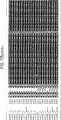


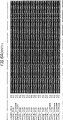


Classifications
-
- C—CHEMISTRY; METALLURGY
- C07—ORGANIC CHEMISTRY
- C07K—PEPTIDES
- C07K14/00—Peptides having more than 20 amino acids; Gastrins; Somatostatins; Melanotropins; Derivatives thereof
- C07K14/195—Peptides having more than 20 amino acids; Gastrins; Somatostatins; Melanotropins; Derivatives thereof from bacteria
- C07K14/22—Peptides having more than 20 amino acids; Gastrins; Somatostatins; Melanotropins; Derivatives thereof from bacteria from Neisseriaceae (F)
-
- A—HUMAN NECESSITIES
- A61—MEDICAL OR VETERINARY SCIENCE; HYGIENE
- A61K—PREPARATIONS FOR MEDICAL, DENTAL OR TOILETRY PURPOSES
- A61K39/00—Medicinal preparations containing antigens or antibodies
- A61K39/02—Bacterial antigens
- A61K39/095—Neisseria
-
- A—HUMAN NECESSITIES
- A61—MEDICAL OR VETERINARY SCIENCE; HYGIENE
- A61P—SPECIFIC THERAPEUTIC ACTIVITY OF CHEMICAL COMPOUNDS OR MEDICINAL PREPARATIONS
- A61P31/00—Antiinfectives, i.e. antibiotics, antiseptics, chemotherapeutics
-
- A—HUMAN NECESSITIES
- A61—MEDICAL OR VETERINARY SCIENCE; HYGIENE
- A61P—SPECIFIC THERAPEUTIC ACTIVITY OF CHEMICAL COMPOUNDS OR MEDICINAL PREPARATIONS
- A61P31/00—Antiinfectives, i.e. antibiotics, antiseptics, chemotherapeutics
- A61P31/04—Antibacterial agents
-
- A—HUMAN NECESSITIES
- A61—MEDICAL OR VETERINARY SCIENCE; HYGIENE
- A61P—SPECIFIC THERAPEUTIC ACTIVITY OF CHEMICAL COMPOUNDS OR MEDICINAL PREPARATIONS
- A61P35/00—Antineoplastic agents
-
- A—HUMAN NECESSITIES
- A61—MEDICAL OR VETERINARY SCIENCE; HYGIENE
- A61P—SPECIFIC THERAPEUTIC ACTIVITY OF CHEMICAL COMPOUNDS OR MEDICINAL PREPARATIONS
- A61P37/00—Drugs for immunological or allergic disorders
- A61P37/02—Immunomodulators
- A61P37/04—Immunostimulants
-
- A—HUMAN NECESSITIES
- A61—MEDICAL OR VETERINARY SCIENCE; HYGIENE
- A61P—SPECIFIC THERAPEUTIC ACTIVITY OF CHEMICAL COMPOUNDS OR MEDICINAL PREPARATIONS
- A61P43/00—Drugs for specific purposes, not provided for in groups A61P1/00-A61P41/00
-
- A—HUMAN NECESSITIES
- A61—MEDICAL OR VETERINARY SCIENCE; HYGIENE
- A61K—PREPARATIONS FOR MEDICAL, DENTAL OR TOILETRY PURPOSES
- A61K39/00—Medicinal preparations containing antigens or antibodies
Landscapes
- Health & Medical Sciences (AREA)
- Chemical & Material Sciences (AREA)
- Life Sciences & Earth Sciences (AREA)
- Organic Chemistry (AREA)
- General Health & Medical Sciences (AREA)
- Medicinal Chemistry (AREA)
- Animal Behavior & Ethology (AREA)
- Pharmacology & Pharmacy (AREA)
- Public Health (AREA)
- Veterinary Medicine (AREA)
- Nuclear Medicine, Radiotherapy & Molecular Imaging (AREA)
- Chemical Kinetics & Catalysis (AREA)
- General Chemical & Material Sciences (AREA)
- Immunology (AREA)
- Genetics & Genomics (AREA)
- Gastroenterology & Hepatology (AREA)
- Proteomics, Peptides & Aminoacids (AREA)
- Molecular Biology (AREA)
- Biophysics (AREA)
- Biochemistry (AREA)
- Engineering & Computer Science (AREA)
- Bioinformatics & Cheminformatics (AREA)
- Oncology (AREA)
- Communicable Diseases (AREA)
- Mycology (AREA)
- Microbiology (AREA)
- Epidemiology (AREA)
- Medicines Containing Antibodies Or Antigens For Use As Internal Diagnostic Agents (AREA)
- Peptides Or Proteins (AREA)
- Medicines That Contain Protein Lipid Enzymes And Other Medicines (AREA)
- Measuring Or Testing Involving Enzymes Or Micro-Organisms (AREA)
- Investigating Or Analysing Biological Materials (AREA)
- Pharmaceuticals Containing Other Organic And Inorganic Compounds (AREA)
- Micro-Organisms Or Cultivation Processes Thereof (AREA)
Abstract
【課題】大部分のナイセリア属、特に、N.meningitidisおよびN.gonorrhoeaeに共有されるアミノ酸配列の伸長物を含むタンパク質を提供すること。
【解決手段】最大の株間認識および反応性を確実にするために、異なるナイセリア種、血清群および株の間で保存されるタンパク質の領域が、使用され得る。本発明は、大部分のナイセリア属、特に、N.meningitidisおよびN.gonorrhoeaeに共有されるアミノ酸配列の伸長物を含むタンパク質を提供する。ナイセリアタンパク質のフラグメントを含むタンパク質であって、ここでこのフラグメントが、7以上の連続した保存されたアミノ酸から構成され、但し、このタンパク質は、全長ナイセリアタンパク質ではない。
【選択図】なしThe majority of the genus Neisseria, especially N. cerevisiae. meningitidis and N.M. To provide a protein comprising an extension of an amino acid sequence shared by gonorrhoeae.
To ensure maximum inter-strain recognition and reactivity, regions of proteins that are conserved among different Neisseria species, serogroups and strains can be used. The present invention relates to most Neisseria species, in particular N. cerevisiae. meningitidis and N.M. Provided is a protein comprising an extension of an amino acid sequence shared by gonorrhoeae. A protein comprising a fragment of a Neisseria protein, wherein the fragment is composed of 7 or more consecutive conserved amino acids, provided that the protein is not a full-length Neisseria protein.
[Selection figure] None
Description
本明細書中に引用する全ての文書の内容は、その全体が参考として援用される。 The contents of all documents cited herein are incorporated by reference in their entirety.
(発明の分野)
本発明は、Neisseria細菌由来の保存された抗原に関する。
(Field of Invention)
The present invention relates to conserved antigens derived from Neisseria bacteria.
(背景技術)
Neisseria meningitidisおよびNeisseria gonorrhoeaeは、非運動性のグラム陰性双球菌であり、ヒトにおいて病原体である。
(Background technology)
Neisseria meningitidis and Neisseria gonorrhoeae are non-motile gram-negative bacilli and are pathogens in humans.
生物の被膜多糖類に基づいて、N.meningitidisの12の血清群が同定されている。A群は、サハラアフリカ周縁での伝染病において最も頻繁に関与している病原体である。血清群B群および血清群C群は、米国および大部分の先進国における症例の大部分の原因である。血清群W135およびYは、米国および先進国における症例の残りの原因である。 Based on biological coating polysaccharides, N.I. Twelve serogroups of meningitidis have been identified. Group A is the pathogen most frequently involved in infectious diseases around Saharan Africa. Serogroup B and serogroup C are responsible for the majority of cases in the United States and most developed countries. Serogroups W135 and Y are the remaining cause of cases in the United States and developed countries.
現在使用される髄膜炎ワクチンは、血清群A、C、Y、およびW135で構成される4価の多糖類ワクチンである。しかし、このアプローチは、髄膜炎菌Bには使用され得ない。なぜならばmenB被膜多糖類は、哺乳動物組織にもまた存在するα(2−8)−連結
N−アセチルノイラミン酸のポリマーであるからである。menBワクチンに対する1つのアプローチは、外膜タンパク質(OMP)の混合物を使用する。抗原変異性を克服するために、9つまでの異なるポリンを含む多価ワクチンが構築されている(例えば、Poolman(1992)Development of a meningococcal vaccine.Infect.Agents Dis.4:13−28)。外膜ワクチンで使用されるさらなるタンパク質は、opaタンパク質およびopcタンパク質であったが、これらのアプローチは、いずれも抗原変異性を克服し得なかった(例えば、Ala’AldeenおよびBorriello(1996)The meningococcal tranferrin−binding proteins 1 and 2
are both surface exposed and generate bactericidal antibodies capable of killing homologous and heterologous strains.Vaccine 14(1):49−53)。
The currently used meningitis vaccine is a tetravalent polysaccharide vaccine composed of serogroups A, C, Y, and W135. However, this approach cannot be used for Neisseria meningitidis B. This is because menB-coated polysaccharide is a polymer of α (2-8) -linked N-acetylneuraminic acid that is also present in mammalian tissues. One approach to the menB vaccine uses a mixture of outer membrane proteins (OMP). In order to overcome antigen variability, multivalent vaccines containing up to nine different porins have been constructed (eg, Poolman (1992) Development of a meningococcal vaccine. Infect. Agents Dis. 4: 13-28). Additional proteins used in outer membrane vaccines were the opa and opc proteins, but neither of these approaches could overcome antigenic variability (eg Ala'Aldeen and Borriello (1996) The meningococcal transferrin-binding
are both surface exposed and generated bacterial antibacterial capsable of killing homologous and heterologous strains. Vaccine 14 (1): 49-53).
多数のナイセリアタンパク質およびヌクレオチド配列が、WO99/24578、WO99/36544、WO99/57280およびWO00/22430に開示されている。これら4つの出願の内容は、本明細書中に参考として援用される。株MC58由来の保存された配列のデータは、Tettelinら[Science(2000)287:1809−1815]に開示され、この内容もまた、本明細書中に参考として援用される。 A number of Neisseria proteins and nucleotide sequences are disclosed in WO99 / 24578, WO99 / 36544, WO99 / 57280 and WO00 / 22430. The contents of these four applications are incorporated herein by reference. Conserved sequence data from strain MC58 is disclosed in Tettelin et al. [Science (2000) 287: 1809-1815], the contents of which are also incorporated herein by reference.
本発明は例えば、以下の項目を提供する。
(項目1)ナイセリアタンパク質のフラグメントを含むタンパク質であって、ここで該フラグメントが、7以上の連続した保存されたアミノ酸から構成され、但し、該タンパク質は、全長ナイセリアタンパク質ではない、タンパク質。
(項目2)前記フラグメントが、20以上の連続した保存されたアミノ酸から構成される、項目1に記載のタンパク質。
(項目3)前記保存されたアミノ酸が、少なくとも50%以上のナイセリア属参照集団において見出される、項目1または2に記載のタンパク質。
(項目4)前記参照集団が、複数の異なるナイセリア種を含み、好ましくは、N.meningitidisおよびN.gonorrhoeaeを含む、項目3に記載のタンパク質。
(項目5)前記参照集団が、複数の異なるN.meningitidisの血清群を含む、項目4に記載のタンパク質。
(項目6)前記参照集団が、N.meningitidis A、株Z2491;N.meningitidis B、株NG6/88;N.meningitidis W、株A22;およびN.gonorrhoeae、株Ng F62を含む、項目3または4に記載のタンパク質。
(項目7)前記参照集団が、N.meningitidis A、株Z2491;N.meningitidis B、株NG6/88;およびN.meningitidis W、株A22を含む、項目5に記載のタンパク質。
(項目8)WO99/24578、WO99/36544、WO99/57280またはWO00/22430に開示されるタンパク質のフラグメントを含む、項目1〜7のいずれかに記載のタンパク質。
(項目9)ORF4、ORF40、ORF46、タンパク質225、タンパク質235、タンパク質287、タンパク質519、タンパク質726、タンパク質919およびタンパク質953のうちの1つ以上のフラグメントを含む、項目8に記載のタンパク質。
(項目10)Tettelinら[Science(2000)287:1809−1815]に開示されるタンパク質のフラグメントを含む、項目1〜7のいずれか1項に記載のタンパク質。
(項目11)項目1〜10のいずれかに記載のタンパク質をコードする、核酸。
(項目12)医薬品としての使用のための、項目1〜10のいずれか1項に記載のタンパク質または項目11に記載の核酸。
(項目13)ナイセリア細菌に起因する感染を処置または予防するための医薬品の製造における、項目1〜10のいずれか1項に記載のタンパク質または項目11に記載の核酸の使用。
(項目14)多特異的診断試薬の製造における、項目1〜10のいずれか1項に記載のタンパク質または項目11に記載の核酸の使用。
(項目15)以下のアミノ酸配列:

(本発明の記載)
最大の株間認識および反応性を確実にするために、異なるナイセリア種、血清群および株の間で保存されるタンパク質の領域が、使用され得る。従って、本発明は、大部分のナイセリア属、特に、N.meningitidisおよびN.gonorrhoeaeに共有されるアミノ酸配列の伸長物を含むタンパク質を提供する。
For example, the present invention provides the following items.
(Item 1) A protein comprising a fragment of a Neisseria protein, wherein the fragment is composed of 7 or more consecutive conserved amino acids, provided that the protein is not a full-length Neisseria protein.
(Item 2) The protein according to
(Item 3) The protein according to
(Item 4) The reference population comprises a plurality of different Neisseria species; meningitidis and N.M.
(Item 5) The reference population includes a plurality of different N.P. 5. The protein according to
(Item 6) The reference population is N.P. meningitidis A, strain Z2491; meningitidis B, strain NG6 / 88; meningitidis W, strain A22; 5. The protein according to
(Item 7) The reference population is N.P. meningitidis A, strain Z2491; meningitidis B, strain NG6 / 88; 6. The protein according to
(Item 8) The protein according to any one of
(Item 9) The protein according to
(Item 10) The protein according to any one of
(Item 11) A nucleic acid encoding the protein according to any one of
(Item 12) The protein according to any one of
(Item 13) Use of the protein according to any one of
(Item 14) Use of the protein according to any one of
(Item 15) The following amino acid sequences:
(Description of the present invention)
To ensure maximum inter-strain recognition and reactivity, regions of proteins that are conserved among different Neisseria species, serogroups and strains can be used. Thus, the present invention relates to the majority of Neisseria, especially N. cerevisiae. meningitidis and N.M. Provided is a protein comprising an extension of an amino acid sequence shared by gonorrhoeae.
本発明は、ナイセリアタンパク質のフラグメントを含むタンパク質を提供し、ここで、このフラグメントは、n個の連続した保存されたアミノ酸から構成され、但し、本発明は、その範囲に全長ナイセリアタンパク質を含まない。特定のタンパク質に依存して、nは7以上である(例えば、8、10、12、14、16、18、20以上)。フラグメントは、好ましくは、ナイセリアタンパク質の抗原性領域または免疫原性領域を含む。 The present invention provides a protein comprising a fragment of a Neisseria protein, wherein the fragment is composed of n consecutive conserved amino acids, provided that the invention does not include the full-length Neisseria protein in its scope . Depending on the particular protein, n is 7 or more (eg, 8, 10, 12, 14, 16, 18, 20 or more). The fragment preferably comprises the antigenic or immunogenic region of a Neisseria protein.
「保存された」アミノ酸とは、Neisseriaにおいて少なくともx%で特定のナイセリアタンパク質に存在する、アミノ酸である。xの値は、50%以上であり得、例えば、66%、75%、80%、90%、95%、または100%(すなわち、アミノ酸が全Neisseriaにおいて問題のタンパク質中に見出される)でさえあり得る。 A “conserved” amino acid is an amino acid that is present in a particular Neisseria protein in Neisseria at least x%. The value of x can be 50% or more, for example 66%, 75%, 80%, 90%, 95%, or even 100% (ie amino acids are found in the protein in question in all Neisseria) possible.
アミノ酸が特定のナイセリアタンパク質に「保存されて」いるか否かを決定するためには、複数の異なるNeisseria由来の問題のタンパク質の配列(「参照集団」)におけるアミノ酸残基を比較することが、必要である。参照集団は、多数の異なるNeisseria種(特に、N.meningitidisおよびN.gonorrhoeae)を含み得るか、または単一の種を含み得る。参照集団は、特定の種の多数の異なる血清群(例えば、N.meningitidisの血清群A、B、C、W135、X、Y、Zおよび29E)または単一の血清群を含み得る。参照集団はまた、特定の血清群(例えば、N.meningitidis Bの株NG6/88、BZ198、NG3/88、297−0、BZ147、BZ169、528、BZ133、NGE31、NGH38、NGH15、BZ232、BZ83、および44/76)由来の多数の異なる株を含み得る。好ましい参照集団は、N.meningitidisの5つの最も通常の株および/またはN.gonorrhoeaeの5つの最も通常の株から構成される。 In order to determine whether an amino acid is “conserved” in a particular Neisseria protein, it is necessary to compare the amino acid residues in the sequence of the protein in question (“reference population”) from multiple different Neisseria It is. The reference population can include a number of different Neisseria species (particularly N. meningitidis and N. gonorrhoeae) or can include a single species. The reference population may include a number of different serogroups of a particular species (eg, N. meningitidis serogroups A, B, C, W135, X, Y, Z and 29E) or a single serogroup. Reference populations also include specific serogroups (eg, N. meningitidis B strains NG6 / 88, BZ198, NG3 / 88, 297-0, BZ147, BZ169, 528, BZ133, NGE31, NGH38, NGH15, BZ232, BZ83, And 44/76) can be included. A preferred reference population is N. 5 most common strains of meningitidis and / or N. meningitidis. Consists of the five most common strains of gonorrhoeae.
参照集団は、好ましくは、適切な系統樹(例えば、(a)Niら(1992)Epidemiol Infect 109:227−239(b)Wolffら(1992)Nucleic Acids Res 20:4657(c)BygravesおよびMaiden(1992)J.Gen.Microbiol.138:523−531(d)Caugantら(1987)J.Bacteriol.69:2781−2792に開示されるもの)のk個の異なる分枝から取られるκ個の株を含む。使用され得る別の系統樹を、本明細書中の図8に示し、そして別のものを図9bに示す。 The reference population is preferably a suitable phylogenetic tree (eg, (a) Ni et al. (1992) Epidemiol Infect 109: 227-239 (b) Wolff et al. (1992) Nucleic Acids Res 20: 4657 (c) Bygraves and Maiden ( 1992) J. Gen. Microbiol.138: 523-531 (d) Cauvant et al. (1987) J. Bacteriol.69: 2781-2792) k strains taken from k different branches. including. Another phylogenetic tree that can be used is shown in FIG. 8 herein, and another is shown in FIG. 9b.
特定の種、血清群または株は、問題のアミノ酸が位置するタンパク質をコードする場合にのみ、参照集団に含まれるべきであることが、理解される。例えば、以下に記載するORF40内のアミノ酸の場合には、参照集団は、N.gonorrhoeaeを含むべきではない。なぜなら、この種はORF40を含まないからである。
It is understood that a particular species, serogroup or strain should be included in the reference population only if it encodes the protein in which the amino acid in question is located. For example, in the case of amino acids within
従って、N.meningitidisとN.gonorrhoeaeとの両方に見られるタンパク質について、好ましい参照集団は、以下を含む:
・N.meningitidis A、株Z2941
・N.meningitidis B、株NG6/88
・N.meningitidis W、株A22
・N.gonorrhoeae、株Ng F62。
Therefore, N.I. meningitidis and N.M. For proteins found both in gonorrhoeae, preferred reference populations include:
・ N. meningitidis A, strain Z2941
・ N. meningitidis B, strain NG6 / 88
・ N. meningitidis W, strain A22
・ N. gonorrhoeae, strain Ng F62.
これらは、(a)Seiler A.ら(1996)Mol.Microbiol.19(4):841−856(b)Maidenら(1998)Proc.Natl.Acad.Sci.USA 95:3140−3145(c)Virjiら(1992)Mol.Microbiol.6:1271−1279(d)Dempseyら(1991)J.Bacteriol.173:5476−5486に記載される。 These are: (a) Seiler A. (1996) Mol. Microbiol. 19 (4): 841-856 (b) Maiden et al. (1998) Proc. Natl. Acad. Sci. USA 95: 3140-3145 (c) Virji et al. (1992) Mol. Microbiol. 6: 1271-1279 (d) Dempsey et al. (1991) J. MoI. Bacteriol. 173: 5476-5486.
しかし、N.meningitidisのみに見られるタンパク質については、好ましい参照集団は、以下を含む:
・N.meningitidis A、株Z2941
・N.meningitidis B、株NG6/88
・N.meningitidis W、株A22。
However, N.I. For proteins found only in meningitidis, preferred reference populations include:
・ N. meningitidis A, strain Z2941
・ N. meningitidis B, strain NG6 / 88
・ N. meningitidis W, strain A22.
異なるNeissieriaeのアミノ酸配列を、コンピューターを使用して容易に比較し得る。これは、代表的に、CLUSTAL[Thompsonら(1994)Nucleic Acids Res 22:4673−4680;Trends Biochem Sci(1998)23:403−405]、または好ましくは、PILEUP[GCG Wisconsinパッケージの一部であり、好ましくは第9.0版]のようなアルゴリズムを使用する、多数の配列の整列を包含する。 The amino acid sequences of different Neisseriae can be easily compared using a computer. This is typically CLUSTAL [Thompson et al. (1994) Nucleic Acids Res 22: 4673-4680; Trends Biochem Sci (1998) 23: 403-405], or preferably part of the PILEUP [GCG Wisconsin package. , Preferably version 9.0], including alignment of multiple sequences.
保存されたアミノ酸は、複数の配列の整列により、容易に明らかとなる。すなわち、問題のアミノ酸位置において、整列した配列の大部分が、特定のアミノ酸を含む。保存されたアミノ酸は、BOXSHADE[例えば、NIHにおいてオンラインで利用可能]、PRETTYBOX[GCG Wisconsin、第10版]またはJALVIEW[EBIにおいてオンラインで利用可能]のようなプログラムを使用することにより、より視覚的に明らかにされ得る。 Conserved amino acids are readily revealed by multiple sequence alignments. That is, the majority of the aligned sequence contains a specific amino acid at the amino acid position in question. Conserved amino acids are made more visible by using programs such as BOXSHADE [eg available online at NIH], PRETTYBOX [GCG Wisconsin, 10th edition] or JALVIEW [available online at EBI]. Can be revealed.
タンパク質は、好ましくは、WO99/24578、WO99/36544、WO99/57280またはWO00/22430に開示されるタンパク質のうちの1つのフラグメント、あるいはTettelinら[Science(2000)287:1809−1815]に開示される2158ORFに内の1つのフラグメントを含む。より特定すると、タンパク質は、好ましくは、これらに開示されるORF4、ORF40、ORF46、タンパク質225、タンパク質235、タンパク質287、タンパク質519、タンパク質726、タンパク質919およびタンパク質953の1つ以上のフラグメントを含む(本明細書中の実施例を参照のこと)。代表的に、本発明のタンパク質は、WO99/24578、WO99/36544、WO99/57280、WO00/22430、またはTettelinらにまさに開示されるタンパク質配列を含まない。
The protein is preferably a fragment of one of the proteins disclosed in WO99 / 24578, WO99 / 36544, WO99 / 57280 or WO00 / 22430, or disclosed in Tettelin et al. [Science (2000) 287: 1809-1815]. One 2158 ORF contains one fragment. More particularly, the protein preferably comprises one or more fragments of ORF4, ORF40, ORF46,
本発明はまた、図に示される配列のうちの1つを含むタンパク質を提供する。 The present invention also provides a protein comprising one of the sequences shown in the figure.
本発明のタンパク質は、当然ながら、種々の手段(例えば、組換え発現、ネイティブ発現、細胞培養物からの精製、化学合成など)によって、そして種々の形態(例えば、ネイティブ、融合など)に調製され得る。本発明のタンパク質は、好ましくは、実質的に純粋な形態(すなわち、他のナイセリアタンパク質または宿主細胞タンパク質を実質的に含まない)に調製される。 The proteins of the invention are of course prepared by various means (eg, recombinant expression, native expression, purification from cell culture, chemical synthesis, etc.) and in various forms (eg, native, fusion, etc.). obtain. The proteins of the invention are preferably prepared in a substantially pure form (ie substantially free of other Neisseria proteins or host cell proteins).
さらなる局面に従って、本発明は、これらのタンパク質に結合する抗体を提供する。この抗体は、ポリクローナルまたはモノクローナルであり得、そして任意の適切な手段によって生成され得る。 According to a further aspect, the present invention provides antibodies that bind to these proteins. The antibody can be polyclonal or monoclonal and can be generated by any suitable means.
さらなる局面に従って、本発明は、本発明のタンパク質をコードする核酸を提供する。本発明が、これらの核酸に相補的な配列を含む核酸を提供することがまた認識されるべきである(例えば、アンチセンスの目的またはプローブの目的のために)。 According to a further aspect, the present invention provides a nucleic acid encoding the protein of the present invention. It should also be recognized that the present invention provides nucleic acids comprising sequences complementary to these nucleic acids (eg, for antisense purposes or probe purposes).
さらに、本発明は、実施例において開示され、好ましくは「高ストリンジェンシー」条件下(例えば、0.1×SSC、0.5% SDS溶液中で、65℃)でN.meningitidis核酸にハイブリダイズし得る核酸を提供する。 Further, the present invention is disclosed in the examples, preferably under the conditions of “high stringency” (eg, 0.1 × SSC, 0.5% SDS solution, 65 ° C.) with N. Nucleic acids that can hybridize to a Meningitidis nucleic acid are provided.
本発明に従う核酸は、当然ながら、多くの様式(例えば、化学合成により、ゲノムライブラリーまたはcDNAライブラリーから、生物自体からなど)で調製され得、そして種々の形態(例えば、一本鎖、二本鎖、ベクター、プローブなど)をとり得る。 Nucleic acids according to the invention can of course be prepared in many ways (eg by chemical synthesis, from genomic or cDNA libraries, from the organism itself, etc.) and in various forms (eg single-stranded, double-stranded). A single chain, a vector, a probe, etc.).
さらに、用語「核酸」は、DNAおよびRNA、ならびに、またそれらのアナログ(例えば、改変された骨格を含むDNAおよびRNA)、ならびにまた、ペプチド核酸(PNA)などを含む。 Furthermore, the term “nucleic acid” includes DNA and RNA, as well as analogs thereof (eg, DNA and RNA containing a modified backbone), and also peptide nucleic acids (PNA) and the like.
さらなる局面に従って、本発明は、本発明のヌクレオチド配列を含むベクター(例えば、発現ベクター)およびこのようなベクターで形質転換した宿主細胞を提供する。 In accordance with further aspects, the present invention provides vectors (eg, expression vectors) comprising the nucleotide sequences of the present invention and host cells transformed with such vectors.
さらなる局面に従って、本発明は、本発明に従うタンパク質、抗体および/または核酸を含む組成物を提供する。これらの組成物は、ワクチンとして、例えば、または診断試薬として、あるいは免疫原性組成物として適切であり得る。 According to a further aspect, the present invention provides a composition comprising a protein, antibody and / or nucleic acid according to the present invention. These compositions may be suitable as vaccines, for example, or as diagnostic reagents, or as immunogenic compositions.
本発明はまた、医薬として(例えば、ワクチンとして)または診断試薬としての使用のための本発明に従う核酸、タンパク質または抗体を提供する。これはまた、以下の製造における本発明に従う核酸、タンパク質または抗体の使用を提供する:(i)ナイセリア菌による感染を処置または予防するための医薬;(ii)ナイセリア菌の存在、またはナイセリア菌に対して惹起された抗体の存在を検出するための診断試薬;および/あるいは(iii)ナイセリア菌に対する抗体を惹起し得る試薬。この使用は、好ましくは、Neisseriaのすべての種に適用可能である。 The invention also provides a nucleic acid, protein or antibody according to the invention for use as a medicament (eg as a vaccine) or as a diagnostic reagent. This also provides the use of a nucleic acid, protein or antibody according to the invention in the following production: (i) a medicament for treating or preventing infection by Neisseria; (ii) the presence of Neisseria, or Neisseria A diagnostic reagent for detecting the presence of antibodies raised against; and / or (iii) a reagent capable of raising antibodies against Neisseria. This use is preferably applicable to all species of Neisseria.
ナイセリアタンパク質が、q%を超える保存アミノ酸を含む場合、本発明は、多くの種、血清群および系統間で交叉反応を示す非系統特異的タンパク質としてのナイセリアタンパク質、またはそのフラグメントの使用を提供する。q値は、50%、60%、75%、80%、90%、95%または100%でさえあり得る。 Where the Neisseria protein contains more than q% of conserved amino acids, the present invention provides for the use of Neisseria protein, or a fragment thereof, as a non-lineage specific protein that exhibits cross-reactivity between many species, serogroups and strains . The q value can be 50%, 60%, 75%, 80%, 90%, 95% or even 100%.
本発明はまた、患者を処置する方法を提供する。この方法は、本発明に従う核酸、タンパク質および/または抗体の治療上有効な量を患者に投与する工程を包含する。 The present invention also provides a method of treating a patient. This method comprises administering to a patient a therapeutically effective amount of a nucleic acid, protein and / or antibody according to the present invention.
さらなる局面に従って、本発明は、種々のプロセスを提供する。 In accordance with further aspects, the present invention provides various processes.
本発明のタンパク質を産生するためのプロセスが提供され、このプロセスは、本発明に従う宿主細胞を、タンパク質発現を誘導する条件下で培養する工程を包含する。 A process for producing a protein of the invention is provided, which process comprises culturing a host cell according to the invention under conditions that induce protein expression.
本発明のタンパク質または核酸を産生するためのプロセスが提供され、ここで、このタンパク質または核酸が、化学的手段を使用して、一部または全体が合成される。 A process is provided for producing a protein or nucleic acid of the invention, wherein the protein or nucleic acid is synthesized in part or in whole using chemical means.
本発明のポリヌクレオチドを検出するためのプロセスが提供され、このプロセスは、以下:(a)本発明に従う核プローブを、二重鎖を形成するハイブリダイズの条件下で生物学的サンプルと接触させる工程;および(b)上記の二重鎖を検出する工程を包含する。 There is provided a process for detecting a polynucleotide of the present invention, which process comprises: (a) contacting a nuclear probe according to the present invention with a biological sample under conditions of hybridization to form a duplex. And (b) detecting the duplex described above.
本発明のタンパク質を検出するためのプロセスが提供され、このプロセスは、(a)本発明に従う抗体を、抗体−抗原複合体の形成に適した条件下で生物学的サンプルと接触させる工程;および(b)上記の複合体を検出する工程を包含する。 There is provided a process for detecting a protein of the invention, comprising: (a) contacting an antibody according to the invention with a biological sample under conditions suitable for the formation of an antibody-antigen complex; (B) The process of detecting said composite_body | complex is included.
本発明を実施するために(例えば、ワクチン接種または診断目的のために、開示された配列を利用するために)利用され得る、標準的な技術および手順の概要は、以下の通りである。この概要は、本発明に対する限定ではないが、むしろ、使用され得るが必要とはされない例を提供する。 A summary of standard techniques and procedures that can be utilized to practice the invention (eg, to utilize the disclosed sequences for vaccination or diagnostic purposes) is as follows. This summary is not a limitation on the invention, but rather provides examples that may be used but not required.
(概論)
本発明の実施は、他に示されなければ、分子生物+学、微生物学、組換えDNA、および免疫学の従来技術を使用し、これらは当該分野の技術の範囲内である。このような技術は以下の文献で十分説明されている(例えば、Sambrook Molecular Cloning:A Laboratory Manual 第2版(1989);DNA Cloning,第I巻および第ii巻(D.N Glover編 1985);Oligonucleotide Synthesis(M.J.Gait編 1984);Nucleic Acid Hybridization(B.D.HamesおよびS.J.Higgins編 1984);Transcription and Translation(B.D.HamesおよびS.J.Higgins編 1984);Animal Cell Culture(R.I.Freshney編 1986);Immobilized Cells and Enzymes(IRL Press,1986);B.Perbal,A Practical Guide to Molecular Cloning(1984);the Methods in Enzymologyシリーズ(Academic Press,Inc.),特に第154巻および第155巻;Gene Transfer Vectors for Mammalian Cells(J.H.MillerおよびM.P.Calos編 1987,Cold Spring Harbor Laboratory);MayerおよびWalker,編(1987),Immunochemical Methods in Cell and Molecular Biology(Academic Press,London);Scopes,(1987)Protein Purification:Principles and Practice,第2版(Springer−Verlag,N.Y.)、およびHandbook of Experimental Immunology,第I巻−第IV巻(D.M.WeirおよびC.C.Blackwell編 1986)。
(Introduction)
The practice of the present invention uses conventional techniques of molecular biology + science, microbiology, recombinant DNA, and immunology, unless otherwise indicated, and these are within the skill of the art. Such techniques are fully described in the following literature (eg, Sambrook Molecular Cloning: A Laboratory Manual 2nd edition (1989); DNA Cloning, Volume I and Volume ii (D.N Glover ed. 1985)); Oligonucleotide Synthesis (MJ Gait ed. 1984); Nucleic Acid Hybridization (BD Hames and SJ Higgins ed. 1984); Transcribion and Trans. Ed. H. g. Animal Cell Culture (Edited by RI Freshney 1986); Immobilized Cells an Enzymes (IRL Press, 1986); B. Perbal, A Practical Guide to Molecular Cloning (1984); the Methods in Enzymology Series (Academic Press, Inc.), Volume 154, Vol. (J. Miller and MP Calos ed. 1987, Cold Spring Harbor Laboratory); Mayer and Walker, ed. (1987), Immunochemical Methods in Cell and Molecular Biology (Acade); es, (1987) Protein Purification: Principles and Practice, Second Edition (Springer-Verlag, NY), and Handbook of Experimental Immunology, Volume I-Vol. IV and (D.M.We. Blackwell ed. 1986).
ヌクレオチドおよびアミノ酸についての標準的な略語が、本明細書において使用される。 Standard abbreviations for nucleotides and amino acids are used herein.
本明細書中で引用される全ての刊行物、特許、および特許出願は参考としてその全体が援用される。特に、国際特許出願WO99/24578、WO99/36544、WO99/57280およびWO00/22430の内容が、本明細書中で援用される。 All publications, patents, and patent applications cited herein are incorporated by reference in their entirety. In particular, the contents of international patent applications WO 99/24578, WO 99/36544, WO 99/57280 and WO 00/22430 are incorporated herein.
(定義)
Xを含む組成物は、組成物中の全X+Yの少なくとも85重量%がXであるとき、Yを「実質的に含まない」。好ましくは、Xは、組成物中の全X+Yの少なくとも約90重量%を、さらに好ましくは少なくとも約95重量%または99重量%さえをも含む。
(Definition)
A composition comprising X is “substantially free” when Y is at least 85% by weight of the total X + Y in the composition. Preferably, X comprises at least about 90% by weight of the total X + Y in the composition, more preferably at least about 95% or even 99% by weight.
用語「含む(comprising)」は、「含む(including)」ならびに「なる(consisting)」を意味し、例えば、Xを「含む(comprising)」組成物は、独占的にXからなり得るか、またはXにさらなる何かを含み(include)得る(例えば、X+Y)。 The term “comprising” means “including” as well as “consisting”, for example, a composition “comprising” X may consist exclusively of X, or X can include something further (eg, X + Y).
用語「異種」とは、天然では共に見られない2つの生物学的成分をいう。この成分は、宿主細胞、遺伝子、または調節領域(例えば、プロモーター)であり得る。異種成分は天然では共に見られないが、遺伝子に対して異種のプロモーターがその遺伝子に作動可能に連結されるような場合、それらは共に機能し得る。別の例は、ナイセリア配列がマウス宿主細胞に対して異種であることである。さらなる例は、天然では見られない配列で単一のタンパク質にアセンブルする、同じタンパク質または異なるタンパク質由来の2つのエピトープである。 The term “heterologous” refers to two biological components that are not found together in nature. This component can be a host cell, a gene, or a regulatory region (eg, a promoter). Heterologous components are not found together in nature, but they can function together if a heterologous promoter is operably linked to the gene. Another example is that the Neisseria sequence is heterologous to the mouse host cell. A further example is two epitopes from the same or different proteins that assemble into a single protein with a sequence not found in nature.
「複製起点」とは、発現ベクターのような、ポリヌクレオチドの複製を開始および調節するポリヌクレオチド配列である。複製起点は、細胞内でのポリヌクレオチド複製の自律性ユニットとして振る舞い、それ自体の制御下で複製し得る。複製起点は、ベクターが特定の宿主細胞において複製するために必要であり得る。特定の複製起点を有せば、発現ベクターは、細胞内の適切なタンパク質の存在下で高いコピー数で再生され得る。起点の例は、酵母において有効な自律性複製配列;およびCOS−7細胞で有効であるウイルスT抗原である。 A “replication origin” is a polynucleotide sequence that initiates and regulates the replication of a polynucleotide, such as an expression vector. The origin of replication behaves as an autonomous unit of polynucleotide replication within the cell and can replicate under its own control. An origin of replication may be necessary for the vector to replicate in a particular host cell. With a specific origin of replication, the expression vector can be regenerated with a high copy number in the presence of the appropriate protein in the cell. Examples of origins are autonomously replicating sequences that are effective in yeast; and viral T antigens that are effective in COS-7 cells.
「変異」配列は、天然の配列または開示された配列とは異なるが配列同一性を有するDNA配列、RNA配列またはアミノ酸配列として規定される。特定の配列に依存して、天然の配列または開示された配列と変異配列との間の配列同一性の程度は、好ましくは50%より大きい(例えば、上記のようなSmith−Watermanアルゴリズムを使用して算出された、60%、70%、80%、90%、95%、99%またはそれより大きい)。本明細書中で使用される場合、本明細書で核酸配列が提供される核酸分子、または領域の「対立遺伝子改変体」は、別のもしくは2番目の単離体のゲノム中の本質的に同じ遺伝子座で生ずる核酸分子または領域であり、そしてこれは、例えば、変異または組換えにより生ずる天然変化に起因して、類似するが、しかし同一でない核酸配列を有する。コード領域の対立遺伝子改変体は、代表的には、比較される遺伝子によってコードされるタンパク質の活性と類似した活性を有するタンパク質をコードする。対立遺伝子改変体はまた、遺伝子の5’または3’非翻訳領域(例えば、調節制御領域)での変化を含み得る(例えば、米国特許第5,753,235号を参照のこと)。 A “variant” sequence is defined as a DNA sequence, RNA sequence or amino acid sequence that differs from the native sequence or the disclosed sequence but has sequence identity. Depending on the particular sequence, the degree of sequence identity between the native or disclosed sequence and the variant sequence is preferably greater than 50% (eg, using the Smith-Waterman algorithm as described above). Calculated at 60%, 70%, 80%, 90%, 95%, 99% or greater). As used herein, a nucleic acid molecule, or “allelic variant” of a region, for which a nucleic acid sequence is provided herein, is essentially in the genome of another or second isolate. A nucleic acid molecule or region that occurs at the same locus and has a nucleic acid sequence that is similar but not identical due to, for example, natural changes caused by mutation or recombination. An allelic variant of a coding region typically encodes a protein having activity similar to that of the protein encoded by the gene being compared. Allelic variants can also include changes in the 5 'or 3' untranslated regions (eg, regulatory control regions) of the gene (see, eg, US Pat. No. 5,753,235).
(発現系)
ナイセリアヌクレオチド配列は、種々の異なる発現系;例えば、哺乳動物細胞、バキュロウイルス、植物、細菌、および酵母と共に使用される発現系において発現され得る。
(Expression system)
Neisseria nucleotide sequences can be expressed in a variety of different expression systems; for example, expression systems used with mammalian cells, baculoviruses, plants, bacteria, and yeast.
(i.哺乳動物系)
哺乳動物発現系は当該分野において公知である。哺乳動物プロモーターは、哺乳動物RNAポリメラーゼを結合し得、そしてコード配列(例えば、構造遺伝子)のmRNAへの下流(3’)転写を開始し得る任意のDNA配列である。プロモーターは、転写開始領域(これはコード配列の5’末端の近位に通常位置する)およびTATAボックス(転写開始部位の25〜30塩基対(bp)上流に通常位置する)を有する。TATAボックスは、その正しい部位においてRNAポリメラーゼIIにRNA合成を開始させるよう指示すると考えられている。哺乳動物プロモーターはまた、TATAボックスの100〜200bp上流以内に通常位置する上流プロモーターエレメントを含む。上流プロモーターエレメントは、転写が開始され、そしていずれかの方向において作用し得る割合を決定する(Sambrookら(1989)「Expression of Cloned Genes in Mammalian Cells」 Molecular Cloning:A Laboratory Manual、第2版)。
(I. Mammalian system)
Mammalian expression systems are known in the art. A mammalian promoter is any DNA sequence capable of binding mammalian RNA polymerase and initiating downstream (3 ′) transcription of a coding sequence (eg, a structural gene) into mRNA. A promoter has a transcription initiation region (which is usually located proximal to the 5 ′ end of the coding sequence) and a TATA box (usually located 25-30 base pairs (bp) upstream of the transcription initiation site). The TATA box is thought to direct RNA polymerase II to initiate RNA synthesis at its correct site. Mammalian promoters also contain upstream promoter elements that are usually located within 100-200 bp upstream of the TATA box. Upstream promoter elements determine the rate at which transcription is initiated and can act in either direction (Sambrook et al. (1989) “Expression of Cloned Genes in Mammalian Cells” Molecular Cloning: A Laboratory Manual, 2nd edition).
哺乳動物ウイルス遺伝子は、しばしば高度に発現され、そして広範な宿主範囲を有する;従って、哺乳動物ウイルス遺伝子をコードする配列は、特に有用なプロモーター配列を提供する。例は、SV40初期プロモーター、マウス乳腺癌ウイルスLTRプロモーター、アデノウイルス主要後期プロモーター(Ad MLP)、および単純疱疹ウイルスプロモーターを含む。さらに、マウスのメタロチオネイン遺伝子のような非ウイルス性遺伝子に由来する配列もまた、有用なプロモーター配列を提供する。発現は、構成性であるかまたは調節される(誘導可能)かのいずれかであり得、プロモーターに依存して、ホルモン応答性細胞においてグルココルチコイドを用いて誘導され得る。 Mammalian viral genes are often highly expressed and have a broad host range; therefore, sequences encoding mammalian viral genes provide particularly useful promoter sequences. Examples include the SV40 early promoter, mouse mammary carcinoma virus LTR promoter, adenovirus major late promoter (Ad MLP), and herpes simplex virus promoter. In addition, sequences derived from non-viral genes such as the mouse metallothionein gene also provide useful promoter sequences. Expression can be either constitutive or regulated (inducible) and can be induced with glucocorticoids in hormone-responsive cells, depending on the promoter.
上記のプロモーターエレメントと組み合わされるエンハンサーエレメント(エンハンサー)の存在は、通常発現レベルを増大させる。エンハンサーは、同種プロモーターまたは異種プロモーターに連結される場合、転写を1000倍まで刺激し得る調節DNA配列であり、合成は、通常のRNA開始部位で開始する。エンハンサーはまた、それらが、通常方向もしくは逆の(flipped)方向のいずれかで転写開始部位より上流もしくは下流に、またはプロモーターから1000ヌクレオチドを超える距離で位置される場合、活性である(Maniatisら(1987)Science 236:1237;Albertsら(1989)Molecular Biology of the Cell,第2版)。ウイルス由来のエンハンサーエレメントは、それらが通常、より広い宿主範囲を有するので、特に有用であり得る。例は、SV40初期遺伝子エンハンサー(Dijkemaら(1985)EMBO J.4:761)およびラウス肉腫ウイルスの長末端反復(LTR)に由来するエンハンサー/プロモーター(Gormanら(1982b)Proc.Natl.Acad.Sci.79:6777)およびヒトサイトメガウイルスに由来するエンハンサー/プロモーター(Boshartら(1985)Cell 41:521)を包含する。さらに、いくつかのエンハンサーは調節可能であり、そしてホルモンまたは金属イオンのような誘導因子の存在下のみで活性になる(Sassone−CorsiおよびBorelli(1986)Trends Genet.2:215;Maniatisら(1987)Science 236:1237)。 The presence of enhancer elements (enhancers) in combination with the above promoter elements usually increases the expression level. An enhancer is a regulatory DNA sequence that can stimulate transcription up to 1000-fold when linked to a homologous or heterologous promoter, and synthesis begins at the normal RNA start site. Enhancers are also active when they are located either upstream or downstream of the transcription start site in either the normal or flipped direction, or at a distance greater than 1000 nucleotides from the promoter (Maniatis et al. ( 1987) Science 236: 1237; Alberts et al. (1989) Molecular Biology of the Cell, 2nd edition). Viral-derived enhancer elements can be particularly useful because they usually have a broader host range. Examples are the SV40 early gene enhancer (Dijkema et al. (1985) EMBO J. 4: 761) and the enhancer / promoter derived from the long terminal repeat (LTR) of Rous sarcoma virus (Gorman et al. (1982b) Proc. Natl. Acad. Sci. 79: 6777) and enhancers / promoters derived from human cytomegalovirus (Boshart et al. (1985) Cell 41: 521). In addition, some enhancers are regulatable and become active only in the presence of inducers such as hormones or metal ions (Sassone-Corsi and Borelli (1986) Trends Genet. 2: 215; Maniatis et al. (1987). ) Science 236: 1237).
DNA分子は、哺乳動物細胞において細胞内で発現され得る。プロモーター配列は、組換えタンパク質のN末端における最初のアミノ酸が常にATG開始コドンによりコードされるメチオニンである場合、DNA分子と直接連結され得る。所望される場合、N末端は、臭化シアンとのインビトロでのインキュベーションによりタンパク質から切断され得る。 DNA molecules can be expressed intracellularly in mammalian cells. A promoter sequence can be directly linked to a DNA molecule if the first amino acid at the N-terminus of the recombinant protein is always the methionine encoded by the ATG start codon. If desired, the N-terminus can be cleaved from the protein by in vitro incubation with cyanogen bromide.
あるいは、外来タンパク質もまた、哺乳動物細胞において外来タンパク質の分泌を提供するリーダー配列フラグメントから構成される融合タンパク質をコードするキメラDNA分子を作製することにより、細胞から増殖培地へ分泌され得る。好ましくは、インビボまたはインビトロのいずれかにおいて切断され得る、リーダーフラグメントと外来遺伝子との間にコードされるプロセシング部位が存在する。リーダー配列フラグメントは通常、細胞からのタンパク質の分泌を指示する疎水性アミノ酸から構成される単一のペプチドをコードする。アデノウイルス3分割(tripartite)リーダーは、哺乳動物細胞において外来タンパク質の分泌を提供するリーダー配列の例である。 Alternatively, foreign proteins can also be secreted from the cells into the growth medium by creating a chimeric DNA molecule that encodes a fusion protein composed of leader sequence fragments that provide for secretion of the foreign protein in mammalian cells. Preferably, there are processing sites encoded between the leader fragment and the foreign gene that can be cleaved either in vivo or in vitro. The leader sequence fragment usually encodes a single peptide composed of hydrophobic amino acids that direct secretion of the protein from the cell. An adenovirus tripartite leader is an example of a leader sequence that provides for secretion of a foreign protein in mammalian cells.
通常、哺乳動物細胞によって認識される転写終結配列およびポリアデニル化配列は、翻訳終止コドンの3’側に位置する調節領域であり、従って、プロモーターエレメントと共に、コード配列に隣接する。成熟mRNAの3’末端は、部位特異的な転写後切断およびポリアデニル化により形成される(Birnstielら(1985)Cell 41:349;ProudfootおよびWhitelaw(1988)「Termination and 3’end processing of eukaryotic RNA.」Transcription and splicing(B.D.HamesおよびD.M.Glover編);Proudfoot(1989)Trends Biochem.Sci.14:105)。これらの配列は、mRNAの転写を方向づけ、そのmRNAは、そのDNAにコードされるポリペプチドに翻訳され得る。転写ターミネーター/ポリアデニル化シグナルの例としては、SV40由来のシグナルが挙げられる(Sambrookら(1989)「Expression of cloned genes
in cultured mammalian cells.」Molecular Cloning:A Laboratory Manual)。
Usually, transcription termination and polyadenylation sequences recognized by mammalian cells are regulatory regions located 3 ′ to the translation stop codon and thus, together with the promoter element, flank the coding sequence. The 3 ′ end of the mature mRNA is formed by site-specific post-transcriptional cleavage and polyadenylation (Birnstieel et al. (1985) Cell 41: 349; Proudfoot and Whitelaw (1988) “Termination and 3 ′ end processing of eukaryotic RNA. Transcribion and splicing (ed. By BD Hames and DM Glover); Proudfoot (1989) Trends Biochem. Sci. 14: 105). These sequences direct the transcription of the mRNA, which can be translated into a polypeptide encoded by the DNA. Examples of transcription terminator / polyadenylation signals include SV40-derived signals (Sambrook et al. (1989) “Expression of cloned genes”.
in cultured mammarian cells. "Molecular Cloning: A Laboratory Manual).
通常、プロモーター、ポリアデニル化シグナル、および転写終結配列を含む上記の構成要素は、発現構築物内に共に導入される。エンハンサー、機能的なスプライスドナー部位およびアクセプター部位を有するイントロン、ならびにリーダー配列もまた、所望される場合、発現構築物内に含まれ得る。発現構築物はしばしば、哺乳動物細胞または細菌のような宿主内で安定的に維持され得る染色体外エレメント(例えば、プラスミド)のような、レプリコン内で維持される。哺乳動物複製系としては、複製にトランス作用性の因子を必要とする、動物ウイルス由来の複製系が挙げられる。例えば、SV40(Gluzman(1981)Cell 23:175)、あるいはポリオーマウイルスのようなパポバウイルスの複製系を含むプラスミドは、適切なウイルスのT抗原の存在下で極めて高いコピー数まで複製する。哺乳動物レプリコンのさらなる例としては、ウシパピローマウイルスおよびエプスタイン−バーウイルス由来のレプリコンが挙げられる。さらに、このレプリコンは、二つの複製系を有し得、従って、例えば、発現用の哺乳動物細胞内で、ならびにクローニングおよび増幅用の原核生物の宿主内で、そのレプリコンを維持することが可能である。このような哺乳動物−細菌シャトルベクターの例としては、pMT2(Kaufmanら、(1989)Mol.Cell.Biol.9:946)およびpHEBO(Shimizuら、(1986)Mol.Cell.Biol.6:1074)が挙げられる。 Usually, the above components, including promoter, polyadenylation signal, and transcription termination sequence are introduced together in the expression construct. Enhancers, introns with functional splice donor and acceptor sites, and leader sequences can also be included in the expression construct, if desired. Expression constructs are often maintained in a replicon, such as an extrachromosomal element (eg, a plasmid) that can be stably maintained in a host such as a mammalian cell or bacterium. Mammalian replication systems include animal virus-derived replication systems that require trans-acting factors for replication. For example, plasmids containing SV40 (Gluzman (1981) Cell 23: 175), or a papovavirus replication system such as polyomavirus, replicate to very high copy numbers in the presence of the appropriate viral T antigen. Additional examples of mammalian replicons include bovine papillomavirus and Epstein-Barr virus-derived replicons. In addition, this replicon may have two replication systems, so that it can be maintained, for example, in mammalian cells for expression and in prokaryotic hosts for cloning and amplification. is there. Examples of such mammalian-bacterial shuttle vectors include pMT2 (Kaufman et al., (1989) Mol. Cell. Biol. 9: 946) and pHEBO (Shimizu et al., (1986) Mol. Cell. Biol. 6: 1074. ).
使用される形質転換の手順は、形質転換される宿主に依存する。異種のポリヌクレオチドの哺乳動物細胞への導入方法は、当該分野で公知であり、その方法としては、デキストラン媒介トランスフェクション、リン酸カルシウム沈殿、ポリブレン媒介トランスフェクション、プロトプラスト融合、エレクトロポレーション、リポソーム内でのポリヌクレオチドのカプセル化、およびDNAの核内への直接微量注入が挙げられる。 The transformation procedure used depends on the host to be transformed. Methods for introducing heterologous polynucleotides into mammalian cells are known in the art and include dextran-mediated transfection, calcium phosphate precipitation, polybrene-mediated transfection, protoplast fusion, electroporation, in liposomes. Polynucleotide encapsulation and direct microinjection of DNA into the nucleus.
発現用宿主として利用可能な哺乳動物細胞株は、当該分野で公知であり、そのような細胞株としては、チャイニーズハムスター卵巣(CHO)細胞、HeLa細胞、乳仔ハムスター腎臓(BHK)細胞、サル腎臓細胞(COS)、ヒト肝細胞癌細胞(例えば、Hep
G2)および多くの他の細胞株を含むが、これらに限定されない、American Type Culture Collection(ATCC)から入手可能な多くの不死化細胞株が含まれる。
Mammalian cell lines that can be used as expression hosts are known in the art, and such cell lines include Chinese hamster ovary (CHO) cells, HeLa cells, baby hamster kidney (BHK) cells, monkey kidneys. Cells (COS), human hepatocellular carcinoma cells (eg, Hep
Many immortalized cell lines available from the American Type Culture Collection (ATCC) include, but are not limited to, G2) and many other cell lines.
(ii バキュロウイルス系)
タンパク質をコードしているポリヌクレオチドはまた、適切な昆虫の発現ベクター内に挿入され得、そしてそのベクター内で、制御エレメントに作動可能に連結される。ベクターの構築には、当該分野で公知の技術を使用する。一般に、その発現系の構成要素として、以下を含む:バキュロウイルスゲノムのフラグメント、および発現させる異種遺伝子の挿入用の簡便な制限部位の両方を有する転移ベクター(通常は細菌ベクター);転移ベクター内のバキュロウイルスに特異的なフラグメントに相同性のある配列を有する野生型バキュロウイルス(これは、バキュロウイルスゲノム内への異種遺伝子の相同組換えを可能にする);ならびに適切な昆虫宿主細胞および生育培地。
(Ii Baculovirus system)
The polynucleotide encoding the protein can also be inserted into an appropriate insect expression vector and operably linked to control elements within the vector. For the construction of the vector, techniques known in the art are used. In general, the components of the expression system include the following: a transfer vector (usually a bacterial vector) having both a fragment of the baculovirus genome and a convenient restriction site for insertion of the heterologous gene to be expressed; Wild-type baculovirus having a sequence homologous to a baculovirus-specific fragment (which allows homologous recombination of heterologous genes into the baculovirus genome); and appropriate insect host cells and growth media .
転移ベクターにタンパク質をコードするDNA配列を挿入した後、そのベクターおよび野生型ウイルスゲノムを、昆虫宿主細胞にトランスフェクトし、そこでベクターとウイルスゲノムを組換え可能にする。パッケージングされた組換えウイルスは発現され、そして組換えプラークが同定されそして精製される。バキュロウイルス/昆虫細胞発現系の材料および方法は、特に、Invitrogen、San Diego CAからキット形態(「MaxBac」キット)で市販される。これらの技術は、一般に当業者に公知であり、そしてSummersおよびSmith,Texas Agricultural Experiment Station Bulletin No.1555(1987)(以下、「SummersおよびSmith」)に十分に記載されている。 After inserting the DNA sequence encoding the protein into the transfer vector, the vector and wild type viral genome are transfected into an insect host cell where the vector and viral genome are allowed to recombine. The packaged recombinant virus is expressed and recombinant plaques are identified and purified. Materials and methods for baculovirus / insect cell expression systems are commercially available in kit form ("MaxBac" kit), especially from Invitrogen, San Diego CA. These techniques are generally known to those skilled in the art and are described in Summers and Smith, Texas Agricultural Experiment Station Bulletin No. 1555 (1987) (hereinafter “Summers and Smith”).
タンパク質をコードするDNA配列をバキュロウイルスゲノムに挿入するのに先立って、プロモーター配列、リーダー配列(所望される場合は)、目的のコード配列、および転写終結配列を含む上記の構成要素を、通常、中間転移構築物(転移ベクター)に構築する。この構築物は、単一の遺伝子および作動可能に連結された調節エレメント;操作可能に連結された調節エレメントのセットを各々が所有する複数の遺伝子;あるいは同じ調節エレメントのセットにより調節される複数の遺伝子を含み得る。中間転移構築物は、しばしば、細菌のような宿主内で安定的に維持し得る染色体外エレメント(例えば、プラスミド)のような、レプリコン内で維持される。レプリコンは、複製系を有しており、従って、それはクローニングおよび増幅用の適切な宿主内で維持され得る。 Prior to inserting the DNA sequence encoding the protein into the baculovirus genome, the above-described components, including the promoter sequence, leader sequence (if desired), the coding sequence of interest, and the transcription termination sequence are usually It is constructed in an intermediate transfer construct (transfer vector). The construct comprises a single gene and operably linked regulatory elements; multiple genes each possessing a set of operably linked regulatory elements; or multiple genes that are regulated by the same set of regulatory elements Can be included. Intermediate transfer constructs are often maintained in a replicon, such as an extrachromosomal element (eg, a plasmid) that can be stably maintained in a host such as a bacterium. The replicon has a replication system so it can be maintained in a suitable host for cloning and amplification.
現在、外来遺伝子のAcNPVへの導入のために最も一般に使用される転移ベクターは、pAc373である。当業者に公知の多くの他のベクターもまた設計され、これらのものとして、例えば、pVL985(ポリへドリンの開始コドンをATGからATTに変化させ、そしてそのATTから32塩基対下流に、BamHIクローニング部位を導入する;LuckowおよびSummers,Virology(1989)17:31)が挙げられる。
Currently, the most commonly used transfer vector for introduction of foreign genes into AcNPV is pAc373. Many other vectors known to those skilled in the art have also been designed, such as pVL985 (changing the polyhedrin start codon from ATG to ATT and
そのプラスミドも通常、ポリへドリンポリアデニル化シグナル(Millerら、(1988)Ann.Rev.Microbiol.,42:177)、および原核生物のアンピシリン耐性(amp)遺伝子、および大腸菌においての選抜ならびに増殖のための複製起点を有する。 The plasmids are also commonly used for polyhedrin polyadenylation signals (Miller et al. (1988) Ann. Rev. Microbiol., 42: 177), and prokaryotic ampicillin resistance (amp) genes, and for selection and propagation in E. coli. With a replication origin.
バキュロウイルス転移ベクターは通常、バキュロウイルスプロモーターを有する。バキュロウイルスプロモーターは、バキュロウイルスRNAポリメラーゼに結合し、そしてコード配列(例えば、構造遺伝子)のmRNAへの下流(5’から3’)方向の転写を開始し得る任意のDNA配列である。プロモーターは、通常、コード配列の5’末端に近接して存在する転写開始領域を有している。この転写開始領域は通常、RNAポリメラーゼ結合部位および転写開始点を含む。バキュロウイルス転移ベクターは、またエンハンサーと呼ばれる第二のドメインを有し得、存在する場合は、通常、構造遺伝子に対し遠位にある。発現は調節され得るか、あるいは構成的であり得る。 A baculovirus transfer vector usually has a baculovirus promoter. A baculovirus promoter is any DNA sequence that can bind to baculovirus RNA polymerase and initiate transcription in the downstream (5 'to 3') direction of a coding sequence (eg, a structural gene) into mRNA. A promoter will have a transcription initiation region which is usually placed proximal to the 5 'end of the coding sequence. This transcription initiation region usually includes an RNA polymerase binding site and a transcription initiation site. A baculovirus transfer vector may also have a second domain called an enhancer, and if present is usually distal to the structural gene. Expression can be regulated or constitutive.
ウイルスの感染周期の後期で大量に転写される構造遺伝子は、特に有用なプロモーター配列を提供する。例としては、ウイルス多面体タンパク質をコードする遺伝子(Friesenら、(1986)「The Regulation of Baculovirus Gene Expression,」:The Molecular Biology of Baculoviruses(Walter Doerfler編);EPO公開番号127839および155476;ならびにp10タンパク質をコードする遺伝子(Vlakら,(1988),J.Gen.Virol.69:765)由来の配列が挙げられる。 Structural genes that are transcribed in large quantities late in the viral infection cycle provide particularly useful promoter sequences. Examples include the genes encoding viral polyhedral proteins (Friesen et al., (1986) “The Regulation of Baculovirus Gene Expression,”: The Molecular Biology of Baculoviruses and Walter Doe 39; Ed. Examples include sequences derived from the gene to be encoded (Vlak et al., (1988), J. Gen. Virol. 69: 765).
適切なシグナル配列をコードするDNAは、分泌昆虫タンパク質、あるいはバキュロウイルスポリへドリン遺伝子(Carbonellら,(1998)Gene,73:409)のような、分泌バキュロウイルスタンパク質の遺伝子から由来し得る。あるいは、哺乳動物細胞の翻訳後修飾(シグナルペプチド切断、タンパク質分解性切断、およびリン酸化のような)のシグナルは、昆虫細胞に認識されると思われ、そして分泌および核蓄積に必要なシグナルはまた、無脊椎動物細胞および脊椎動物細胞間で保存されると思われるために、ヒトインターフェロンα(Maedaら,(1985),Nature 315:592);ヒトガストリン放出ペプチド(Lebacq−Verheydenら,(1988),Molec.Cell.Biol.8:3129);ヒトIL−2(Smithら,(1985)Proc.Nat’l Acad.Sci.USA、82:8404);マウスIL−3(Miyajimaら,(1987)Gene 58:273);およびヒトグルコセレブロシダーゼ(Martinら,(1988)DNA、7:99)をコードする遺伝子由来のような、非昆虫起源のリーダーも、昆虫での分泌を与えるために使用され得る。 DNA encoding the appropriate signal sequence can be derived from secreted insect proteins or genes of secreted baculovirus proteins such as the baculovirus polyhedrin gene (Carbonell et al. (1998) Gene, 73: 409). Alternatively, signals for post-translational modifications of mammalian cells (such as signal peptide cleavage, proteolytic cleavage, and phosphorylation) appear to be recognized by insect cells, and signals required for secretion and nuclear accumulation are In addition, human interferon alpha (Maeda et al., (1985), Nature 315: 592); human gastrin-releasing peptide (Lebacq-Verheyden et al., (1988) ), Molec.Cell.Biol.8: 3129); human IL-2 (Smith et al., (1985) Proc. Nat'l Acad. Sci. USA, 82: 8404); mouse IL-3 (Miyajima et al., (1987). ) Gene 58: 273); and human glucosele. Roshidaze (Martin et al., (1988) DNA, 7: 99), such as from a gene encoding, also of non-insect origin leader, may be used to provide for secretion in insects.
組換えポリペプチドあるいは組換えポリタンパク質は、細胞内に発現され得るか、あるいは適切な調節配列と共に発現される場合、これらは、分泌され得る。非融合性の外来タンパク質の優れた細胞内発現には通常、ATG開始シグナルに先行する適切な翻訳開始シグナルを含む短いリーダー配列を理想的には有する異種遺伝子が必要である。所望であれば、N末端のメチオニンは、臭化シアンとのインビトロインキュベーションにより、成熟タンパク質から切断され得る。 Recombinant polypeptides or recombinant polyproteins can be expressed intracellularly or, if expressed with appropriate regulatory sequences, they can be secreted. Excellent intracellular expression of a non-fusion foreign protein usually requires a heterologous gene that ideally has a short leader sequence containing an appropriate translation initiation signal preceding the ATG initiation signal. If desired, the N-terminal methionine can be cleaved from the mature protein by in vitro incubation with cyanogen bromide.
あるいは、自然に分泌されない組換えポリタンパク質あるいは組換えタンパク質は、昆虫において外来タンパク質の分泌を与えるリーダー配列フラグメントを含む、融合タンパク質をコードするキメラDNA分子を作製することにより、昆虫細胞から分泌され得る。リーダー配列フラグメントは通常、タンパク質の小胞体内への輸送を指示する疎水性アミノ酸からなるシグナルペプチドをコードしている。 Alternatively, a recombinant polyprotein or recombinant protein that is not naturally secreted can be secreted from insect cells by creating a chimeric DNA molecule that encodes a fusion protein containing a leader sequence fragment that confers secretion of the foreign protein in insects. . The leader sequence fragment usually encodes a signal peptide consisting of hydrophobic amino acids that direct the transport of the protein into the endoplasmic reticulum.
タンパク質の発現産物前駆体をコードするDNA配列および/または遺伝子の挿入後、昆虫細胞宿主に、転移ベクターの異種DNAおよび野生型バキュロウイルスのゲノムDNAを同時形質転換(通常は、同時トランスフェクションによって)する。構築物のプロモーターおよび転写終結配列は、通常バキュロウイルスゲノムの2〜5kbの区域を含む。バキュロウイルスウイルスの望ましい部位に異種DNAを導入する方法は、当該分野で公知である(SummersおよびSmith、上記;Juら(1987);Smithら,Mol.Cell.Biol.(1983)3:2156;ならびにLuckowおよびSummers(1989)を参照のこと)。例えば、その挿入は、相同二重交差組換え(homologous double crossover reconvination)により、ポリへドリン遺伝子のような遺伝子内であり得;挿入はまた、所望のバキュロウイルス遺伝子に操作された制限酵素部位内であり得る。Millerら、(1989)、Bioessays 4;91。発現ベクター内のポリへドリン遺伝子の代わりにクローン化される場合、そのDNA配列は、ポリへドリン特異的配列により5’および3’の両側で隣接され、そしてポリへドリンプロモーターの下流に位置される。
After insertion of the DNA sequence and / or gene encoding the protein expression product precursor, the insect cell host is cotransformed (usually by cotransfection) with the heterologous DNA of the transfer vector and the genomic DNA of the wild type baculovirus. To do. The promoter and transcription termination sequence of the construct usually contains a 2-5 kb segment of the baculovirus genome. Methods for introducing heterologous DNA into the desired site of a baculovirus virus are known in the art (Summers and Smith, supra; Ju et al. (1987); Smith et al., Mol. Cell. Biol. (1983) 3: 2156; And Luckow and Summers (1989)). For example, the insertion can be within a gene such as a polyhedrin gene by homologous double crossover recombination; the insertion can also be within a restriction enzyme site engineered into the desired baculovirus gene. It can be. Miller et al. (1989),
新規に形成されたバキュロウイルス発現ベクターは、引き続いて、感染性の組換えバキュロウイルス内にパッケージされる。相同組換えは、低い頻度で起こる(約1%〜約5%の間);それゆえ、同時トランスフェクション後に産生されたウイルスの大半は、依然野生型ウイルスである。従って、方法には、組換えウイルスの同定が必要となる。この発現系の利点は、組換えウイルスを区別させ得る可視的スクリーニングである。ネイティブのウイルスにより産生されるポリへドリンタンパク質は、ウイルス感染後の後期で、その感染された細胞の核内で非常に高いレベルで産生される。蓄積されたポリへドリンタンパク質は、閉塞体を形成し、これがまた、包理された粒子を含む。これらの閉塞体は、最大15μmの大きさで、高度に屈折し、明るく輝く外見を与え、容易に光学顕微鏡下で可視化される。組換えウイルスに感染された細胞は、閉塞体を欠く。組換えウイルスと野生型ウイルスを区別するために、トランスフェクションの上清を、当業者に公知の技術により昆虫細胞の単層上にプラーク形成させた。すなわち、プラークを、光学顕微鏡下で閉塞体の存在(野生型ウイルスを示す)または非存在(組換えウイルスを示す)についてスクリーニングする。「Current Protocols in Microbiology」2巻(Ausubelら編)16.8(増補10、1990);SummersおよびSmith、上記;Millerら(1989)。
The newly formed baculovirus expression vector is subsequently packaged into an infectious recombinant baculovirus. Homologous recombination occurs at a low frequency (between about 1% and about 5%); therefore, most of the virus produced after cotransfection is still wild-type virus. Therefore, the method requires the identification of a recombinant virus. The advantage of this expression system is a visual screen that can differentiate recombinant viruses. The polyhedrin protein produced by the native virus is produced at very high levels in the nucleus of the infected cell late in the viral infection. Accumulated polyhedrin protein forms an occlusive body that also contains encapsulated particles. These occlusion bodies are up to 15 μm in size, highly refracted, give a bright and shiny appearance and are easily visualized under an optical microscope. Cells infected with the recombinant virus lack occlusion bodies. In order to distinguish between recombinant virus and wild type virus, the transfection supernatant was plaqued onto a monolayer of insect cells by techniques known to those skilled in the art. That is, plaques are screened for the presence of occlusion bodies (indicating wild type virus) or absence (indicating recombinant virus) under a light microscope. "Current Protocols in Microbiology", Volume 2 (Edited by Ausubel et al.) 16.8 (
組換えバキュロウイルス発現ベクターは、いくつかの昆虫細胞への感染用に開発された。例えば、組換えバキュロウイルスは、特に以下に示すもののために開発された:Aedes aegypti、Autographa californica、Bombyx
mori、Drosophila melanogaster、Spodoptera
frugiperda、およびTrichoplusia ni(WO89/046699;Carbonellら,(1985)J.Virol.56:153;Wright(1986)Nature 321:718;Smithら,(1983)Mol.Cell.Biol.3:2156;およびFraserら,(1989)In Vitro Cell.Dev.Biol.25:225を一般に参照のこと)。
Recombinant baculovirus expression vectors have been developed for infection of several insect cells. For example, recombinant baculoviruses have been developed specifically for: Aedes aegypti, Autographa californica, Bombyx
mori, Drosophila melanogaster, Spodoptera
frugiperda, and Trichoplusia ni (WO 89/046699; Carbonell et al., (1985) J. Virol. 56: 153; Wright (1986) Nature 321: 718; Smith et al., (1983) Mol. Cell. Biol. 3: 2156; (See generally Fraser et al., (1989) In Vitro Cell. Dev. Biol. 25: 225).
細胞および細胞培養培地は、バキュロウイルス/発現系における異種ポリペプチドの直接発現および融合発現の両方のために市販される;細胞培養技術は、一般に当業者に公知である。例えば、上記SummersおよびSmithを参照のこと。 Cells and cell culture media are commercially available for both direct and fusion expression of heterologous polypeptides in baculovirus / expression systems; cell culture techniques are generally known to those skilled in the art. See, for example, Summers and Smith above.
次いで、改変した昆虫細胞を、適切な栄養培地で増殖し、これは、その改変した昆虫宿主内で存在するプラスミドの安定的維持を可能にする。発現産物の遺伝子が、誘導性の制御下にある場合、宿主は高密度で増殖され得、そして発現が、誘導され得る。あるいは、発現が構成的である場合、その産物は培地中に連続的に発現され、そして栄養培地を連続的に循環し、目的産物を取り出し、そして枯渇した栄養を補給する必要がある。その産物は、クロマトグラフィー(例えば、HPLC、アフィニティークロマトグラフィー、イオン交換クロマトグラフィーなど);電気泳動;密度勾配遠心;溶媒抽出などのような技術により精製し得る。適切には、その産物をさらに精製し、必要ならば、培地中に分泌されるか、または昆虫細胞の溶解を生じる任意の昆虫タンパク質を実質的に除去し、宿主細片(例えば、タンパク質、脂質および多糖類)を少なくとも実質的に含まない産物を供給する。 The modified insect cells are then grown in a suitable nutrient medium, which allows for stable maintenance of the plasmid present in the modified insect host. If the gene of the expression product is under inducible control, the host can be grown at high density and expression can be induced. Alternatively, if expression is constitutive, the product must be continuously expressed in the medium and continuously circulated through the nutrient medium to remove the desired product and replenish depleted nutrients. The product can be purified by techniques such as chromatography (eg, HPLC, affinity chromatography, ion exchange chromatography, etc.); electrophoresis; density gradient centrifugation; solvent extraction and the like. Suitably, the product is further purified, if necessary, to substantially remove any insect proteins that are secreted into the medium or that cause lysis of the insect cells, and host debris (eg, proteins, lipids) And a product that is at least substantially free of polysaccharide).
タンパク質の発現を得るために、形質転換体に由来する組換え宿主細胞は、組換えタンパク質をコードする配列の発現を可能にする条件下でインキュベートされる。これらの条件は、選択された宿主細胞に依存して変動する。しかし、その条件は、当該分野で公知の条件に基づいて、当業者に容易に確かめられる。 To obtain protein expression, recombinant host cells derived from the transformants are incubated under conditions that allow expression of the recombinant protein-encoding sequence. These conditions will vary depending on the host cell selected. However, the conditions are readily ascertainable by those skilled in the art based on conditions known in the art.
(iii 植物系)
当該分野で公知の多くの植物細胞培養物および全植物の遺伝子発現系が存在する。例示的な植物細胞遺伝子発現系としては、米国特許第5,693,506号;米国特許第5,659,122号;米国特許第5,608,143号のような特許に記載されるものが挙げられる。植物細胞培養物における遺伝子発現の別の例は、Zenk,Phytochemistry 30:3861−3863(1991)に記載されている。植物タンパク質のシグナルペプチドの記載は、上記の参考文献に加え、以下に示すものの中においても確認される;Vaulcombeら,Mol.Gen.Genet.209:33−40(1987);Chandlerら,Plant Molecular Biology
3:407−418(1984);Rogers,J.Biol.Chem.260:3731−3738(1985);Rothsteinら,Gene 55:353−356(1987);Whittierら,Nucleic Acids Research 15:2515−2535(1987);Wirselら,Molecular Microbiology 3:3−14(1989);Yuら,Gene 122:247−253(1992)。植物ホルモン(ジベレリン酸およびジベレリン酸により誘導される分泌酵素)による植物遺伝子発現の調節の記載は、R.L.JonesおよびJ.MacMillin,Gibberellins:Advanced Plant Physiology,Malcolm B.Wilkins編 1984 Pitman Publishing Limited,London,21−52頁の中に確認され得る。他の代謝調節性遺伝子が記載される参考文献は、以下である;Sheen,Plant
Cell,2:1027−1038(1990);Maasら,EMBO J.9:3447−3452(1990);BenkelおよびHickey、Proc.Natl.Acad.Sci.84:1337−1339(1987)。
(Iii plant system)
There are many plant cell cultures and whole plant gene expression systems known in the art. Exemplary plant cell gene expression systems include those described in patents such as US Pat. No. 5,693,506; US Pat. No. 5,659,122; US Pat. No. 5,608,143. Can be mentioned. Another example of gene expression in plant cell cultures is described in Zenk, Phytochemistry 30: 3861-3863 (1991). In addition to the above references, descriptions of signal peptides for plant proteins are also confirmed in the following: Vaulcombe et al., Mol. Gen. Genet. 209: 33-40 (1987); Chandler et al., Plant Molecular Biology
3: 407-418 (1984); Rogers, J. et al. Biol. Chem. 260: 3731-3738 (1985); Rothstein et al., Gene 55: 353-356 (1987); Whittier et al., Nucleic Acids Research 15: 2515-1535 (1987); Wirsel et al., Molecular Microbiology 9: 3-14 (198). Yu et al., Gene 122: 247-253 (1992). The description of the regulation of plant gene expression by plant hormones (gibberellic acid and secreted enzymes induced by gibberellic acid) is described in R.C. L. Jones and J.M. MacMillin, Gibbellellins: Advanced Plant Physiology, Malcolm B .; Edited by Wilkins, 1984 Pitman Publishing Limited, London, pages 21-52. References in which other metabolic regulatory genes are described are: Sheen, Plant
Cell, 2: 1027-1038 (1990); Maas et al., EMBO J. et al. 9: 3447-3452 (1990); Benkel and Hickey, Proc. Natl. Acad. Sci. 84: 1337-1339 (1987).
代表的に、当該分野で公知の技術を使用して、所望のポリヌクレオチド配列は、植物内で操作するために設計された遺伝子調節エレメントを含む発現カセットの中に挿入される。その発現カセットは、植物宿主内での発現に適切な発現カセットの上流および下流にコンパニオン(companion)配列を有する、望ましい発現ベクターの中に挿入される。そのコンパニオン配列は、プラスミドまたはウイルス起源のものであり、そしてそのベクターを、細菌のような元々のクローニング宿主から、所望の植物宿主へDNAを移動させるために必要とされる特徴を、ベクターに提供する。基本的な細菌/植物ベクター構築物は、好ましくは、広い宿主範囲の原核生物の複製起点;原核生物の選択マーカー;および、アグロバクテリウムの形質転換については、植物染色体へのアグロバクテリウム媒介転移のためのT DNA配列を提供する。異種遺伝子が容易に検出に従順しない場合は、好ましくは、その構築物はまた、植物細胞が形質転換されたかどうかを決定するために適した選択マーカー遺伝子を有する。適切なマーカーの一般的な総説は、例えば、イネ科については、WilminkおよびDons,1993,Plant Mol.Biol.Reptr,11(2):165−185に見られる。 Typically, using techniques known in the art, the desired polynucleotide sequence is inserted into an expression cassette containing gene regulatory elements designed for manipulation in plants. The expression cassette is inserted into a desired expression vector having companion sequences upstream and downstream of the appropriate expression cassette for expression in the plant host. The companion sequence is of plasmid or viral origin and provides the vector with the features required to transfer the vector from the original cloning host, such as a bacterium, to the desired plant host. To do. The basic bacterial / plant vector construct is preferably a broad host range prokaryotic origin of replication; a prokaryotic selectable marker; and for Agrobacterium transformation, T DNA sequences for are provided. If the heterologous gene is not readily amenable to detection, preferably the construct also has a selectable marker gene suitable for determining whether the plant cell has been transformed. A general review of suitable markers can be found in, for example, Wilmink and Dons, 1993, Plant Mol. Biol. Reptr, 11 (2): 165-185.
植物ゲノムへの異種配列の組み込みを可能にするために適した配列もまた、推奨される。これらは、植物ゲノム内へ異種発現カセットのランダム挿入を可能にする、相同組換え用のためのトランスポゾン配列など、およびTi配列を含み得る。適切な原核生物選択マーカーとしては、アンピシリンまたはテトラサイクリンのような抗生物質に対する耐性が挙げられる。さらなる機能をコードしている他のDNA配列もまた、そのベクターの中に存在し得、当該分野で公知である。 Suitable sequences are also recommended to allow integration of heterologous sequences into the plant genome. These may include Ti sequences, such as transposon sequences for homologous recombination, allowing random insertion of heterologous expression cassettes into the plant genome. Suitable prokaryotic selectable markers include resistance to antibiotics such as ampicillin or tetracycline. Other DNA sequences encoding additional functions may also be present in the vector and are known in the art.
本発明の核酸分子は、目的のタンパク質の発現用の発現カセットに含まれ得る。2つ以上も可能であるが、通常はただ一つの発現カセットである。組換え発現カセットは、異種タンパクのコード配列に加え、以下のエレメントを含む;プロモーター領域、植物5’非翻訳配列、開始コドン(構造遺伝子が開始コドンを備えているかどうかに依存して)、ならびに転写および翻訳終結配列。そのカセットの5’および3’末端の固有の制限酵素部位は、既存のベクター内への容易な挿入を可能にする。 The nucleic acid molecule of the present invention can be contained in an expression cassette for expression of the protein of interest. Two or more are possible, but usually only one expression cassette. The recombinant expression cassette contains the following elements in addition to the coding sequence of the heterologous protein; promoter region, plant 5 'untranslated sequence, start codon (depending on whether the structural gene is equipped with a start codon), and Transcription and translation termination sequences. Unique restriction enzyme sites at the 5 'and 3' ends of the cassette allow easy insertion into existing vectors.
異種コード配列は、本発明に関係する任意のタンパク質についての配列であり得る。目的のタンパクをコードする配列は、そのタンパク質の適切なプロセッシングおよび輸送を可能にするシグナルペプチドをコードし、そして通常、本発明の所望のタンパク質の膜への結合を生じ得るいかなるの配列をも欠いている。大部分については、この転写開始領域は、発芽中に発現および輸送される遺伝子のためのものであるから、輸送を与えるシグナルペプチドを使用することにより、目的のタンパク質の輸送をまた提供し得る。この方法で、目的のタンパク質は、それらが発現される細胞から輸送され、そして効率的に回収され得る。代表的には、種子における分泌は、種子の胚乳内へ、アリューロン層あるいは胚盤上皮層を通過する。タンパク質が産生された細胞から、このタンパク質が分泌される必要がなくとも、このことは組換えタンパク質の分離および精製を容易にする。 The heterologous coding sequence can be for any protein related to the present invention. The sequence encoding the protein of interest encodes a signal peptide that allows for proper processing and transport of the protein and usually lacks any sequence that can result in binding of the desired protein of the invention to the membrane. ing. For the most part, this transcription initiation region is for genes that are expressed and transported during germination, so the use of a signal peptide that confers transport can also provide transport of the protein of interest. In this way, the proteins of interest can be transported from the cells in which they are expressed and efficiently recovered. Typically, secretion in the seed passes through the aleurone or scutellal epithelial layer into the endosperm of the seed. This facilitates the isolation and purification of the recombinant protein, even if the protein does not need to be secreted from the cell in which it was produced.
所望の遺伝子産物の最終的な発現が、真核生物細胞におけるものであるために、クローン化した遺伝子の任意の部分が、イントロンのように、宿主のスプライセオソーム(splicosome)機構よりプロセッシングされる配列を含むかどうかを決定することが望ましい。そのような場合、この「イントロン」領域の部位特異的変異誘発が、偽イントロンコードとしての遺伝的情報の一部の欠失を防ぐために実施され得る。ReedおよびManiatis、Cell 41:95−105(1985)。 Since the final expression of the desired gene product is in eukaryotic cells, any part of the cloned gene is processed by the host spliceosome mechanism, like an intron. It is desirable to determine whether to include a sequence. In such cases, site-directed mutagenesis of this “intron” region can be performed to prevent deletion of some of the genetic information as a pseudo-intron code. Reed and Maniatis, Cell 41: 95-105 (1985).
ベクターは、組換えDNAを機械的に移入するために、マイクロピペットを用いて植物細胞内に直接的に微量注入され得る(Crossway、Mol.Gen.Genet,202:179−185、1985)。この遺伝子物質はまた、ポリエチレングリコールを用いて植物細胞内に移入され得る(Krensら、Nature,296、72−74、1982)。核酸セグメントの導入の別の方法は、小さいビーズまたは微粒子のマトリックスの内部あるいは表面のいずれかに核酸を有する、小さな微粒子による高速バリスティック(ballistic)穿通法である(Kleinら,Nature,327,70−73,1987ならびにKnudsenおよびMuller,1991,Planta,185:330−336(大麦胚乳の粒子照射(bombardment)によりトランスジェニック大麦を作製することを教示している))。さらに別の導入方法は、他の実体、いずれかのミニ細胞、細胞、リソソームあるいは他の融合可能な脂肪表面体とのプロトプラストの融合である(Fraleyら、Proc.Natl.Acad.Sci.USA,79,1859−1863,1982)。 The vector can be microinjected directly into plant cells using a micropipette to mechanically transfer the recombinant DNA (Crossway, Mol. Gen. Genet, 202: 179-185, 1985). This genetic material can also be transferred into plant cells using polyethylene glycol (Krens et al., Nature, 296, 72-74, 1982). Another method of introducing nucleic acid segments is the high speed ballistic penetration method with small microparticles having nucleic acids either inside or on the surface of a matrix of small beads or microparticles (Klein et al., Nature, 327, 70). -73, 1987 and Knudsen and Muller, 1991, Planta, 185: 330-336 (teaching the production of transgenic barley by particle irradiation of barley endosperm). Yet another method of introduction is protoplast fusion with other entities, either minicells, cells, lysosomes or other fusible fatty surface bodies (Fraley et al., Proc. Natl. Acad. Sci. USA, 79, 1859-1863, 1982).
ベクターはまた、エレクトロポレーションにより植物細胞内に導入され得る(Frommら、Proc.Nati.Acad.Sci.USA 82:5824,1985)。この技術において、植物プロトプラストは、遺伝子構築物を含むプラスミドの存在中でエレクトロポレートされる。高い電界の強さの電気パルスにより、生体膜を可逆的に通過できるようにし、プラスミドの導入を可能にする。エレクトロポレートされた植物プロトプラストは細胞壁を再形成し、分裂し、植物カルス形成する。 Vectors can also be introduced into plant cells by electroporation (Fromm et al., Proc. Nati. Acad. Sci. USA 82: 5824, 1985). In this technique, plant protoplasts are electroporated in the presence of a plasmid containing the gene construct. High electric field strength electrical pulses allow reversible passage through biological membranes and allow plasmid introduction. Electroporated plant protoplasts reform the cell wall, divide and form plant callus.
プロトプラストが単離され得、そして培養されて完全な再生植物を与え得る全ての植物は、本発明により形質転換され得、移入遺伝子を保持する完全な植物が再生される。実際に、全ての植物は、さとうきび、甜菜、綿、果実および他の樹木、マメ科植物および野菜の全ての主要な種を含むがそれらに限定されない培養細胞あるいは組織から再生され得る。いくつかの適応した植物としては、例えば、以下の属由来の種が挙げられる;Fragaria,Lotus,Medicago,Onobrychis,Trifolium,Trigonella,Vigna,Citrus,Linum,Geranium,Manihot,Daucus,Arabidopsis,Brassica,Raphanus,Sinapis,Atropa,Capsicum,Datura,Hyoscyamus,Lycopersion,Nicotiana,Solanum,Petunia,Digitalis,Majorana,Cichorium,Helianthus,Lactuca,Bromus,Asparagus,Antirrhinum,Hererocallis,Nemesia,Pelargonium,Panicum,Pennisetum,Ranunculus,Senecio,Salpiglossis,Cucumis,Browaalia,Glycine,Lolium,Zea,Triticum,Sorghum,およびDatura。 All plants from which protoplasts can be isolated and cultured to give a fully regenerated plant can be transformed according to the present invention to regenerate a complete plant carrying the transferred gene. Indeed, all plants can be regenerated from cultured cells or tissues including, but not limited to, all major species of sugar cane, sugar beet, cotton, fruits and other trees, legumes and vegetables. Some adapted plants include, for example, species from the following genera: Fragaria, Lotus, Medicago, Onobrychis, Trifolium, Trigonella, Vigna, Citrus, Linum, Geranium, Manihots, Daucus, Daucus, Daucus, Daucus, , Sinapis, Atropa, Capsicum, Dataura, Hyoscymus, Lycopersion, Nicotiana, Solanum, Petunia, Digitalis, Majorana, Cichorum, Helianthus, Lactuca, Brazil Nemesia, Pelargonium, Panicum, Pennisetum, Ranunculus, Senecio, Salpiglossis, Cucumis, Browaalia, Glycine, Lolium, Zea, Triticum, Sorghum, and Datura.
再生のための手段は、植物の種によって変化するが、一般に異種遺伝子のコピーを含む形質転換されたプロトプラストの懸濁液が最初に提供される。カルス組織が形成され、そしてシュートがカルスから誘導され得、続いて発根され得る。あるいは、胚形成がプロトプラスト懸濁液から誘導され得る。これらの胚は、天然の胚として発芽し、植物を形成する。培養培地は、一般に、種々のアミノ酸、ならびにオーキシンおよびサイトカイニンのようなホルモンを含有する。またグルタミン酸およびプロリンを培地に添加することは、特に、コーンおよびアルファルファのような種にとって有利である。シュートおよび根は、通常、同時に発生する。効果的な再生は、培地、遺伝子型、および培養遍歴に依存する。これらの3つの変数が制御されるならば、再生は十分に再現性がありそして反復可能である。 The means for regeneration will vary depending on the plant species, but generally a suspension of transformed protoplasts containing a copy of the heterologous gene is first provided. Callus tissue is formed and shoots can be derived from the callus and subsequently rooted. Alternatively, embryogenesis can be derived from a protoplast suspension. These embryos germinate as natural embryos to form plants. The culture medium generally contains various amino acids and hormones such as auxin and cytokinin. It is also particularly advantageous for species such as corn and alfalfa to add glutamic acid and proline to the medium. Shoots and roots usually occur simultaneously. Effective regeneration depends on media, genotype, and culture history. If these three variables are controlled, regeneration is sufficiently reproducible and repeatable.
いくつかの植物細胞培養系において、本発明の所望のタンパク質は分泌されるか、またはこのタンパク質は全植物体から抽出され得る。本発明の所望のタンパク質が培地内に分泌される場合、これを回収し得る。あるいは、胚および胚を有さない不完全な種子または他の植物組織を機械的に破壊して、細胞と組織と間の任意の分泌タンパク質を放出させ得る。その混合物を緩衝液に懸濁して、可溶性タンパク質を回収し得る。次いで、慣用的なタンパク質の単離方法および精製方法を使用して、組換えタンパク質を精製する。時間、温度、pH、酸素、および容量のパラメーターを慣用的な方法により調整して、異種タンパク質の発現および回収を最適化する。 In some plant cell culture systems, the desired protein of the invention is secreted or the protein can be extracted from the whole plant. If the desired protein of the invention is secreted into the medium, it can be recovered. Alternatively, embryos and imperfect seeds or other plant tissues that do not have embryos can be mechanically disrupted to release any secreted proteins between cells and tissues. The mixture can be suspended in a buffer to recover soluble protein. The recombinant protein is then purified using conventional protein isolation and purification methods. Time, temperature, pH, oxygen, and volume parameters are adjusted by conventional methods to optimize heterologous protein expression and recovery.
(iv.細菌系)
細菌の発現技術は、当該分野で公知である。細菌のプロモーターは、細菌のRNAポリメラーゼに結合し得、そしてコード配列(例えば、構造遺伝子)の下流方向(3’方向)へのmRNAへの転写を開始し得る任意のDNA配列である。プロモーターは、通常、コード配列の5’末端に近接して配置される転写開始領域を有する。この転写開始領域は、通常、RNAポリメラーゼ結合部位および転写開始部位を含む。細菌のプロモーターはまた、オペレーターと呼ばれる第二のドメインを有し得、これはRNA合成が始まる近接のRNAポリメラーゼ結合部位と重複し得る。オペレーターは、遺伝子リプレッサータンパク質が、オペレーターに結合し、そのため特定の遺伝子の転写を阻害し得るような、負の調節された(誘導性の)転写を可能にする。構成的発現は、オペレーターのような負の調節エレメントの非存在下で起こり得る。さらに、正の調節は、遺伝子アクチベータータンパク質結合配列により達成され得、その配列は、存在する場合には通常、RNAポリメラーゼ結合配列の(5’)側に近接している。遺伝子アクチベータータンパク質の例としては、カタボライト活性化タンパク質(CAP)があり、それはEscherichia coli(E.coli)におけるlacオペロンの転写の開始を補助する(Raibaudら(1984)Annu.Rev.Genet.18:173)。従って、調節される発現は、正または負のいずれかであり、それによって転写を増強するかまたは低下し得る。
(Iv. Bacterial system)
Bacterial expression techniques are known in the art. A bacterial promoter is any DNA sequence capable of binding bacterial RNA polymerase and initiating transcription into mRNA downstream (3 ′ direction) of a coding sequence (eg, a structural gene). A promoter will have a transcription initiation region which is usually placed proximal to the 5 ′ end of the coding sequence. This transcription initiation region usually includes an RNA polymerase binding site and a transcription initiation site. Bacterial promoters can also have a second domain called the operator, which can overlap with an adjacent RNA polymerase binding site where RNA synthesis begins. The operator allows negative regulated (inducible) transcription such that a gene repressor protein can bind to the operator and thus inhibit transcription of a particular gene. Constitutive expression can occur in the absence of negative regulatory elements such as operators. Furthermore, positive regulation can be achieved by gene activator protein binding sequences, which, when present, are usually close to the (5 ′) side of the RNA polymerase binding sequence. An example of a gene activator protein is the catabolite-activating protein (CAP), which aids in the initiation of transcription of the lac operon in Escherichia coli (E. coli) (Raibaud et al. (1984) Annu. Rev. Genet. 18 : 173). Thus, regulated expression can be either positive or negative, thereby enhancing or decreasing transcription.
代謝経路の酵素をコードする配列は、特に有用なプロモーター配列を提供する。例としては、ガラクトース、ラクトース(lac)(Changら.(1997)Nature
198:1056)、およびマルトースのような糖代謝の酵素由来のプロモーター配列が挙げられる。さらなる例としては、トリプトファン(trp)(Goeddelら(1980)Nuc.Acids Res.8:4057;Yelvertonら(1981)Nucl.Acids Res.9:731;米国特許第4,738,921号;EPO公開番号0 036 776および121 775)のような生合成酵素由来のプロモーター配列が挙げられる。g−ラクタマーゼ(bla)プロモーター系(Weissmann(1981)「The cloning of interferon and other mistakes.」Interferon 3(I.Gresser編))、バクテリオファージλPL(Shimatakeら(1981)Nature 292:128)およびT5(米国特許第4,689,406号)プロモーター系もまた有用なプロモーター配列を提供する。
Sequences encoding metabolic pathway enzymes provide particularly useful promoter sequences. Examples include galactose, lactose (lac) (Chang et al. (1997) Nature.
198: 1056), and promoter sequences derived from enzymes of sugar metabolism such as maltose. Further examples include tryptophan (trp) (Goeddel et al. (1980) Nuc. Acids Res. 8: 4057; Yelverton et al. (1981) Nucl. Acids Res. 9: 731; US Pat. No. 4,738,921; And promoter sequences derived from biosynthetic enzymes such as Nos. 0 036 776 and 121 775). g-lactamase (bla) promoter system (Weissmann (1981) “The cloning of interferon and other mistakes”, Interferon 3 (I. Gresser ed.)), bacteriophage λPL (Shimatake et al. (1981) 529 (US Pat. No. 4,689,406) The promoter system also provides useful promoter sequences.
さらに、天然に存在しない合成プロモーターもまた、細菌のプロモーターとして機能する。例えば、ある細菌あるいはバクテリオファージプロモーターの転写活性化配列は、別の細菌あるいはバクテリオファージプロモーターのオペロン配列と結合し得、合成ハイブリッドプロモーターを作製する(米国特許第4,551,433号)。例えば、tacプロモーターは、trpプロモーター配列およびlacリプレッサーにより調節されるlacオペロン配列の両方から構成される、ハイブリッドtrp−lacプロモーターである(Amannら(1983)Gene 25:167;de Boerら(1983)Proc.Natl.Acad.Sci.80:21)。さらに、細菌のプロモーターは、細菌のRNAポリメラーゼに結合し、そして転写を開始させる能力を有する非細菌起源の天然に存在するプロモーターを含み得る。非細菌起源の天然に存在するプロモーターはまた、原核生物内でいくつかの遺伝子の高いレベルでの発現をもたらすために、適合性のあるRNAポリメラーゼと結合され得る。バクテリオファージT7 RNAポリメラーゼ/プロモーター系は、連結したプロモーター系の例である(Studierら(1986)J.Mol.Biol.189:113;Taborら(1985)Proc Natl.Acad.Sci.82:1074)。さらに、ハイブリッドプロモーターはまた、バクテリオファージプロモーターおよびE.coliオペレーター領域から構成され得る(EPO公開番号0 267 851)。
In addition, non-naturally occurring synthetic promoters also function as bacterial promoters. For example, the transcriptional activation sequence of one bacterial or bacteriophage promoter can be combined with the operon sequence of another bacterial or bacteriophage promoter, creating a synthetic hybrid promoter (US Pat. No. 4,551,433). For example, the tac promoter is a hybrid trp-lac promoter composed of both a trp promoter sequence and a lac operon sequence regulated by a lac repressor (Amann et al. (1983) Gene 25: 167; de Boer et al. (1983). Proc. Natl. Acad. Sci. 80:21). In addition, bacterial promoters can include naturally occurring promoters of non-bacterial origin that have the ability to bind bacterial RNA polymerase and initiate transcription. Naturally occurring promoters of non-bacterial origin can also be combined with a compatible RNA polymerase to effect high level expression of several genes in prokaryotes. The bacteriophage T7 RNA polymerase / promoter system is an example of a linked promoter system (Studier et al. (1986) J. Mol. Biol. 189: 113; Tabor et al. (1985) Proc Natl. Acad. Sci. 82: 1074). . In addition, hybrid promoters also include bacteriophage promoters and E. coli. It can consist of the E. coli operator region (
機能性のプロモーター配列に加え、効果的なリボソーム結合部位はまた、原核生物における外来遺伝子の発現に有用である。E.coliにおいて、リボソーム結合部位は、シャイン−ダルガルノ(SD)配列と呼ばれ、そして開始コドン(ATG)および開始コドンの3〜11ヌクレオチド上流に位置する長さ3〜9ヌクレオチドの配列を含む(Shineら(1975)Nature 254:34)。SD配列は、SD配列とE.coliの16S rRNAの3’末端との間の塩基対形成によりリボソームへのmRNAの結合を促進すると考えられている(Steitzら(1979)「Genetic signals and nucleotide sequences in messenger RNA.」Biological Regulation and Development:Gene Expression(R.F.Goldberger編))。弱いリボソーム結合部位を有する真核生物遺伝子および原核生物遺伝子の発現のためには(Sambrookら(1989)「Expression of cloned genes in Escherichia coli.」Molecular Cloning:A Laboratory Manual)。 In addition to a functional promoter sequence, an effective ribosome binding site is also useful for the expression of foreign genes in prokaryotes. E. In E. coli, the ribosome binding site is called the Shine-Dalgarno (SD) sequence and includes a sequence of 3-9 nucleotides in length located 3-11 nucleotides upstream of the start codon (ATG) and the start codon (Shine et al. (1975) Nature 254: 34). The SD sequence is composed of the SD sequence and It is believed to promote mRNA binding to the ribosome by base pairing with the 3 ′ end of E. coli 16S rRNA (Steitz et al. (1979) “Genetic signals and nucleotide sequences in messenger RNA.” : Gene Expression (edited by RF Goldberger)). For the expression of eukaryotic and prokaryotic genes with weak ribosome binding sites (Sambrook et al. (1989) “Expression of cloned genes in Escherichia coli.” Molecular Cloning: A Laboratory Manual).
DNA分子は、細胞内で発現され得る。プロモーター配列は、直接的にそのDNA分子と連結され得、この場合、N末端の最初のアミノ酸は、常に、ATG開始コドンによりコードされるメチオニンである。所望される場合、N末端のメチオニンは、臭化シアンとのインビトロインキュベーション、あるいは細菌のメチオニンN末端ペプチダーゼとのインビボまたはインビトロのインキュベーションのいずれかによりタンパク質から切断され得る(EPO公開番号0 219 237)。 DNA molecules can be expressed intracellularly. The promoter sequence can be linked directly to the DNA molecule, in which case the first amino acid at the N-terminus is always the methionine encoded by the ATG start codon. If desired, the N-terminal methionine can be cleaved from the protein either by in vitro incubation with cyanogen bromide or by in vivo or in vitro incubation with bacterial methionine N-terminal peptidase (EPO Publication No. 0 219 237). .
融合タンパク質は、直接的発現に対する代替物を提供する。通常、内在性の細菌のタンパク質、あるいは他の安定なタンパク質のN末端部分をコードするDNA配列は、異種のコード配列の5’末端と融合される。発現の際に、この構築物は、2つのアミノ酸配列の融合を提供する。例えば、バクテリオファージλ細胞遺伝子は、外来遺伝子の5’末端と連結され得、そして細菌において発現され得る。生じた融合タンパク質は、好ましくは、外来遺伝子由来のバクテリオファージタンパク質を切断するためのプロセシング酵素(第Xa因子)用の部位を保持する(Nagaiら(1984)Nature 309:810)。融合タンパク質はまた、lacZ(Jiaら(1987)Gene 60:197)、trpE(Allenら(1987)J.Biotechnol.5:93;Makoffら(1989)J.Gen.Microbiol.135:11)、およびChey(EPO公開番号0 324 647)遺伝子由来の配列を用いて作製され得る。2つのアミノ酸配列の接合部でのDNA配列は、切断部位をコードしてもよいし、あるいはコードしなくてもよい。別の例は、ユビキチン融合タンパク質である。そのような融合タンパク質は、好ましくは、外来タンパク質からユビキチンを切断するためのプロセシング酵素(例えば、ユビキチン特異的プロセシングプロテアーゼ)用の部位を保持するユビキチン領域と共に作製され得る。この方法を通して、ネイティブの外来タンパク質は単離され得る(Millerら(1989)Bio/Technology 7:698)。
Fusion proteins provide an alternative to direct expression. Usually, a DNA sequence encoding the N-terminal portion of an endogenous bacterial protein, or other stable protein, is fused to the 5 'end of a heterologous coding sequence. Upon expression, this construct provides a fusion of the two amino acid sequences. For example, the bacteriophage lambda cell gene can be linked to the 5 'end of a foreign gene and expressed in bacteria. The resulting fusion protein preferably retains a site for a processing enzyme (factor Xa) to cleave a bacteriophage protein from a foreign gene (Nagai et al. (1984) Nature 309: 810). Fusion proteins also include lacZ (Jia et al. (1987) Gene 60: 197), trpE (Allen et al. (1987) J. Biotechnol. 5:93; Makoff et al. (1989) J. Gen. Microbiol. 135: 11), and It can be made using sequences from the Chey (
あるいは、外来タンパク質はまた、細菌における外来タンパク質の分泌を提供するシグナルペプチド配列フラグメントから構成される、融合タンパク質をコードするキメラDNA分子を作製することによって、細胞から分泌され得る(米国特許第4,336,336
号)。シグナル配列フラグメントは、通常、細胞からのタンパク質の分泌を指向する、疎水性アミノ酸から構成されるシグナルペプチドをコードする。このタンパク質は、増殖培地(グラム陽性細菌)、または細胞の内膜と外膜との間に位置するペリプラズム腔(グラム陰性細菌)のいずれかへ分泌される。好ましくは、インビボまたはインビトロのいずれかで切断され得る、このシグナルペプチドフラグメントと外来遺伝子との間にコードされるプロセシング部位がある。
Alternatively, the foreign protein can also be secreted from the cell by creating a chimeric DNA molecule that encodes a fusion protein composed of signal peptide sequence fragments that provide for secretion of the foreign protein in bacteria (US Pat. 336,336
issue). A signal sequence fragment usually encodes a signal peptide composed of hydrophobic amino acids that directs secretion of the protein from the cell. This protein is secreted into either the growth medium (gram positive bacteria) or the periplasmic space (gram negative bacteria) located between the inner and outer membranes of the cell. There is preferably a processing site encoded between the signal peptide fragment and the foreign gene that can be cleaved either in vivo or in vitro.
適切なシグナル配列をコードするDNAは、E.coli外膜タンパク質遺伝子(ompA)(Masuiら(1983)、Experimetal Manipulation of Gene Expression;Ghrayebら、(1984)EMBO
J.3:2437)およびE.coliアルカリホスファターゼシグナル配列(phoA)(Okaら(1985)Proc.Natl.Acad.Sci.82:7212)のような、分泌性細菌タンパク質についての遺伝子に由来し得る。さらなる例として、種々のBacillus株由来のα−アミラーゼ遺伝子のシグナル配列は、B.subtilis由来の異種タンパク質を分泌するために使用され得る(Palvaら(1982)Proc.Natl.Acad.Sci.USA 79:5582;EPO公開番号0 244 042)。
DNA encoding the appropriate signal sequence is described in E.C. E. coli outer membrane protein gene (ompA) (Masui et al. (1983), Experimental Manufacture of Gene Expression; Grayray et al., (1984) EMBO
J. et al. 3: 2437) and E.I. E. coli alkaline phosphatase signal sequence (phoA) (Oka et al. (1985) Proc. Natl. Acad. Sci. 82: 7212) can be derived from genes for secreted bacterial proteins. As a further example, the signal sequence of α-amylase genes from various Bacillus strains is It can be used to secrete heterologous proteins from subtilis (Palva et al. (1982) Proc. Natl. Acad. Sci. USA 79: 5582;
通常、細菌によって認識される転写終結配列は、翻訳終止コドンの3’側に位置する調節領域であり、そして従って、プロモーターとともに、コード配列に隣接する。これらの配列は、そのDNAによってコードされるポリペプチドへと翻訳され得るmRNAの転写を指向する。転写終結配列は、頻繁に、転写の終結を補助するステムループ構造を形成し得る、約50ヌクレオチドのDNA配列を含む。例としては、強力なプロモーターを有する遺伝子(例えば、E.coliのtrp遺伝子および他の生合成遺伝子)由来の転写終結配列が挙げられる。 Usually, a transcription termination sequence recognized by bacteria is a regulatory region located 3 'to the translation stop codon and is therefore adjacent to the coding sequence together with the promoter. These sequences direct the transcription of mRNA that can be translated into the polypeptide encoded by the DNA. Transcription termination sequences frequently include DNA sequences of about 50 nucleotides that can form a stem loop structure that aids in termination of transcription. Examples include transcription termination sequences from genes with strong promoters (eg, the E. coli trp gene and other biosynthetic genes).
通常、上記の構成要素(プロモーター、シグナル配列(もし所望ならば)、目的のコード配列、および転写終結配列を含む)は、組み立てられて発現構築物となる。発現構築物は、しばしば、宿主(例えば細菌)において安定に維持し得る染色体外エレメント(例えばプラスミド)のような、レプリコンに維持される。このレプリコンは複製系を有し、従って、発現またはクローニングおよび増幅のいずれかのために、レプリコンが原核生物宿主において保持されることを可能にする。さらに、レプリコンは、高コピー数プラスミドまたは低コピー数プラスミドのいずれかであり得る。高コピー数プラスミドは、一般に約5〜約200、そして通常約10〜約150の範囲のコピー数を有する。高コピー数プラスミドを含む宿主は、好ましくは少なくとも約10個、そしてより好ましくは少なくとも約20個のプラスミドを含む。高コピー数ベクターまたは低コピー数ベクターのいずれかが選択され得、それは、宿主に対するベクターおよび外来タンパク質の効果に依存する。 Usually, the above components (including a promoter, a signal sequence (if desired), a coding sequence of interest, and a transcription termination sequence) are assembled into an expression construct. Expression constructs are often maintained in a replicon, such as an extrachromosomal element (eg, a plasmid) that can be stably maintained in a host (eg, a bacterium). This replicon has a replication system, thus allowing the replicon to be maintained in a prokaryotic host for either expression or cloning and amplification. Further, the replicon can be either a high copy number plasmid or a low copy number plasmid. High copy number plasmids generally have copy numbers in the range of about 5 to about 200, and usually about 10 to about 150. Hosts containing high copy number plasmids preferably contain at least about 10 and more preferably at least about 20 plasmids. Either a high copy number vector or a low copy number vector can be selected, which depends on the effect of the vector and the foreign protein on the host.
あるいは、発現構築物は、組み込みベクターを用いて、細菌のゲノムへ組み込まれ得る。組み込みベクターは、通常、ベクターが組み込むのを可能にする、細菌の染色体と相同な少なくとも1つの配列を含む。組み込みは、ベクターにおける相同なDNAと細菌の染色体との間の組換えから生じるようである。例えば、種々のBacillus株からのDNAによって構築される組み込みベクターは、Bacillus染色体に組み込まれる(欧州特許公開番号0 127 328)。組み込みベクターはまた、バクテリオファージまたはトランスポゾン配列から構成され得る。 Alternatively, the expression construct can be integrated into the bacterial genome using an integration vector. Integrating vectors usually contain at least one sequence homologous to the bacterial chromosome that allows the vector to integrate. Integration appears to result from recombination between the homologous DNA in the vector and the bacterial chromosome. For example, integration vectors constructed with DNA from various Bacillus strains integrate into the Bacillus chromosome (European Patent Publication No. 0 127 328). Integrating vectors can also be composed of bacteriophage or transposon sequences.
通常、染色体外発現構築物および組み込み発現構築物は、選択マーカーを含んで、形質転換された細菌株の選択を可能にし得る。選択マーカーは、細菌宿主において発現され得、そして細菌が薬物(例えば、アンピシリン、クロラムフェニコール、エリスロマイシン、カナマイシン(ネオマイシン)、およびテトラサイクリン)に耐性になるようにする遺伝子を含み得る(Daviesら(1978)Annu.Rev.Microbiol.32:469)。選択マーカーはまた、ヒスチジン、トリプトファン、およびロイシンの生合成経路における生合成遺伝子のような、生合成遺伝子を含み得る。 In general, extrachromosomal and integrative expression constructs may include a selectable marker to allow selection of transformed bacterial strains. Selectable markers can be expressed in bacterial hosts and include genes that allow bacteria to become resistant to drugs such as ampicillin, chloramphenicol, erythromycin, kanamycin (neomycin), and tetracycline (Davies et al. ( 1978) Annu.Rev.Microbiol.32: 469). Selectable markers can also include biosynthetic genes, such as biosynthetic genes in the histidine, tryptophan, and leucine biosynthetic pathways.
あるいは、上記の成分のいくつかは、形質転換ベクターにおいて組み立てられ得る。形質転換ベクターは、通常、上記のように、レプリコンにおいて維持されるか、または組み込みベクターへと開発されるかのいずれかの選択マーカー(market)から構成される。 Alternatively, some of the above components can be assembled in a transformation vector. Transformation vectors are usually composed of selectable markers, either maintained in a replicon or developed into an integrating vector, as described above.
発現ベクターおよび形質転換ベクターは、染色体外レプリコンまたは組み込みベクターのいずれも、多くの細菌への形質転換のために開発されてきた。例えば、発現ベクターは、とりわけ、以下の細菌のために開発されてきた:Bacillus subtilis(Palvaら(1982)Proc.Natl.Acad.Sci.USA 79:5582;欧州特許公開番号0 036 259および欧州特許公開番号0 063 953;PCT公開番号WO 84/04541)、Escherichia coli(Shimatakeら(1981)Nature 292:128;Amannら(1985)Gene 40:183;Studierら(1986)J.Mol.Biol.189:113;欧州特許公開番号0 036 776、欧州特許公開番号0 136 829および欧州特許公開番号0 136 907)、Streptococcus cremoris(Powellら(1988)Appl.Environ.Microbiol.54:655);Streptococcus lividans(Powellら(1988)Appl.Environ.Microbiol.54:655)、Streptomyces lividans(米国特許第4,745,056号)。
Expression and transformation vectors, either extrachromosomal replicons or integration vectors, have been developed for transformation into many bacteria. For example, expression vectors have been developed for, inter alia, the following bacteria: Bacillus subtilis (Palva et al. (1982) Proc. Natl. Acad. Sci. USA 79: 5582; European Patent Publication No. 0 036 259 and European Patents PCT Publication Number WO 84/04541), Escherichia coli (Shimatake et al. (1981) Nature 292: 128; Amann et al. (1985) Gene 40: 183; Studio et al. (1986) J. Mol. : 113; European Patent Publication No. 0 036 776, European Patent Publication No. 0 136 829 and European Patent Publication No. 0 136 907), Streptococcus cremoris (P Owell et al. (1988) Appl. Environ. Microbiol. 54: 655); Streptococcus lividans (Powell et al. (1988) Appl. Environ. Microbiol. 54: 655),
外因性DNAを細菌宿主へ導入する方法は、当該分野において周知であり、そして通常、CaCl2または他の薬剤(例えば、2価の陽イオンおよびDMSO)のいずれかで処
理された細菌の形質転換を含む。DNAはまた、エレクトロポレーションによって、細菌細胞へ導入され得る。形質転換の手順は、通常、形質転換される細菌の種によって変化する。例えば以下を参照のこと:[Massonら(1989)FEMS Microbiol.Lett.60:273;Palvaら(1982)Proc.Natl.Acad.Sci.USA 79:5582;欧州特許公開番号0 036 259および欧州特許公開番号0 063 953;PCT公開番号WO 84/04541:Bacillus]、[Millerら(1988)Proc.Natl.Acad.Sci.85:856;Wangら(1990)J.Bacteriol.172:949:Campylobacter]、[Cohenら(1973)Proc.Natl.Acad.Sci.69:2110;Dowerら(1988)Nucleic Acids Res.16:6127;Kushner(1978)「An improved method for transformation of Escherichia coli
with ColE1−derived plasmids」Genetic Engineering:Proceedings of the International Symposium on Genetic Engineering(H.W.BoyerおよびS.Nicosia編);Mandelら(1970)J.Mol.Biol.53:159;Taketo(1988)Biochim.Biophys.Acta 949:318:Escherichia]、[Chassyら(1987)FEMS Microbiol.Lett.44:173:Lactobacillus]、[Fiedlerら(1988)Anal.Biochem 170:38:Pseudomonas]、[Augustinら(1990)FEMS Microbiol.Lett.66:203:Staphylococcus]、[Baranyら(1980)J.Bacteriol.144:698;Harlander(1987)「Transformation of Streptococcus lactis by electroporation」Streptococcal Genetics(J.FerrettiおよびR.Curtiss III編);Perryら(1981)Infect.Immun.32:1295;Powellら(1988)Appl.Environ.Microbiol.54:655;Somkutiら(1987)Proc.4th Evr.Cong.Biotechnology 1:412:Streptococcus]。
Methods for introducing exogenous DNA into bacterial hosts are well known in the art and usually transform bacteria treated with either CaCl 2 or other agents such as divalent cations and DMSO. including. DNA can also be introduced into bacterial cells by electroporation. Transformation procedures usually vary with the bacterial species to be transformed. For example, see: [Masson et al. (1989) FEMS Microbiol. Lett. 60: 273; Palva et al. (1982) Proc. Natl. Acad. Sci. USA 79: 5582; European Patent Publication No. 0 036 259 and European Patent Publication No. 0 063 953; PCT Publication No. WO 84/04541: Bacillus], [Miller et al. (1988) Proc. Natl. Acad. Sci. 85: 856; Wang et al. (1990) J. MoI. Bacteriol. 172: 949: Campylobacter], [Cohen et al. (1973) Proc. Natl. Acad. Sci. 69: 2110; Dower et al. (1988) Nucleic Acids Res. 16: 6127; Kushner (1978) "An improved method for transformation of Escherichia coli.
with ColEl-derived plasmids "Genetic Engineering: Proceedings of the International Symposium on Genetic Engineering (HW Boyer and S. Nicosia et al.), Mandel. Mol. Biol. 53: 159; Taketo (1988) Biochim. Biophys. Acta 949: 318: Escherichia], [Chassiy et al. (1987) FEMS Microbiol. Lett. 44: 173: Lactobacillus], [Fiedler et al. (1988) Anal. Biochem 170: 38: Pseudomonas], [Augustin et al. (1990) FEMS Microbiol. Lett. 66: 203: Staphylococcus], [Barany et al. (1980) J. MoI. Bacteriol. 144: 698; Harlander (1987) “Transformation of Streptococcus lactis by electroporation”, Streptococcal Genetics (J. Ferretti and R. Curtiss III); Perry et al. (1981) Infect. Immun. 32: 1295; Powell et al. (1988) Appl. Environ. Microbiol. 54: 655; Somkuti et al. (1987) Proc. 4th Evr. Cong. Biotechnology 1: 412: Streptococcus].
(v.酵母発現)
酵母発現系もまた、当業者に公知である。酵母プロモーターは、酵母RNAポリメラーゼに結合可能であり、そしてコード配列(例えば、構造遺伝子)からmRNAへの下流の(3’側の)転写を開始し得る、任意のDNA配列である。プロモーターは、通常、コード配列の5’末端の近位に位置する転写開始領域を有する。この転写開始領域は、通常、RNAポリメラーゼ結合部位(「TATAボックス」)および転写開始部位を含む。酵母プロモーターはまた、上流アクチベーター配列(UAS)と呼ばれる第2のドメインを有し得、これは、もし存在するならば、通常、構造遺伝子とは遠位である。このUASは、調節される(誘導できる)発現を可能にする。構成的発現は、UASの非存在下で生じる。調節される発現は、正または負のいずれかであり得、それによって転写を増加させるかまたは減少させるかのいずれかであり得る。
(V. Yeast expression)
Yeast expression systems are also known to those skilled in the art. A yeast promoter is any DNA sequence capable of binding yeast RNA polymerase and initiating downstream (3 ′) transcription from a coding sequence (eg, a structural gene) to mRNA. A promoter will have a transcription initiation region which is usually placed proximal to the 5 'end of the coding sequence. This transcription initiation region usually includes an RNA polymerase binding site (“TATA box”) and a transcription initiation site. Yeast promoters can also have a second domain called the upstream activator sequence (UAS), which, if present, is usually distal to the structural gene. This UAS allows regulated (inducible) expression. Constitutive expression occurs in the absence of UAS. Regulated expression can be either positive or negative, thereby either increasing or decreasing transcription.
酵母は、活性な代謝経路を有する発酵性生物であり、従って、代謝経路における酵素をコードする配列は、特に有用なプロモーター配列を提供する。例としては、以下が挙げられる:アルコールデヒドロゲナーゼ(ADH)(欧州特許公開番号0 284 044)、エノラーゼ、グルコキナーゼ、グルコース−6−リン酸イソメラーゼ、グリセルアルデヒド−3−リン酸デヒドロゲナーゼ(GAPまたはGAPDH)、ヘキソキナーゼ、ホスホフルクトキナーゼ、3−ホスホグリセリン酸ムターゼ、およびピルビン酸キナーゼ(PyK)(欧州特許公開番号0 329 203)。酸性ホスファターゼをコードする酵母PHO5遺伝子もまた、有用なプロモーター配列を提供する(Myanoharaら(1983)Proc.Natl.Acad.Sci.USA 80:1)。 Yeast is a fermenting organism with an active metabolic pathway, therefore sequences encoding enzymes in the metabolic pathway provide particularly useful promoter sequences. Examples include: alcohol dehydrogenase (ADH) (European Patent Publication No. 0 284 044), enolase, glucokinase, glucose-6-phosphate isomerase, glyceraldehyde-3-phosphate dehydrogenase (GAP or GAPDH) ), Hexokinase, phosphofructokinase, 3-phosphoglycerate mutase, and pyruvate kinase (PyK) (European Patent Publication No. 0 329 203). The yeast PHO5 gene encoding acid phosphatase also provides useful promoter sequences (Myanohara et al. (1983) Proc. Natl. Acad. Sci. USA 80: 1).
さらに、天然には生じない合成プロモーターもまた、酵母のプロモーターとして機能する。例えば、ある1つの酵母プロモーターのUAS配列は、別の酵母プロモーターの転写活性化領域と連結され得、合成ハイブリッドプロモーターを生成し得る。このようなハイブリッドプロモーターの例は、GAP転写活性化領域と連結されるADH調節配列(米国特許第4,876,197号および同第4,880,734号)を含む。ハイブリッドプロモーターの他の例は、GAPまたはPyKのような解糖酵素遺伝子の転写活性化領域に結合された、ADH2、GAL4、GAL10、またはPHO5遺伝子のいずれかの調節配列からなるプロモーターを含む(欧州特許公開番号0 164 556)。さらに、酵母プロモーターは、酵母RNAポリメラーゼと結合し、そして転写を開始する能力を有する、天然に生じる非酵母起源のプロモーターを含み得る。このようなプロモーターの例としては、とりわけ、以下が挙げられる:(Cohenら、(1980)Proc.Natl.Acad.Sci.USA 77:1078;Henikoffら(1981)Nature 283:835;Hollenbergら(1981)Curr.Topics Microbiol.Immunol.96:119;Hollenbergら(1979)「The Expression of Bacterial Antibiotic Resistance Genes in the Yeast Saccharomyces cerevisiae」、Plasmids of Medical,Environmental and Commercial Importance(K.N.TimmisおよびA.Puhler編);Mercerau−Puigalonら(1980)Gene 11:163;Panthierら(1980)Curr.Genet.2:109;)。
In addition, synthetic promoters that do not occur in nature also function as yeast promoters. For example, the UAS sequence of one yeast promoter can be linked to the transcription activation region of another yeast promoter to generate a synthetic hybrid promoter. Examples of such hybrid promoters include ADH regulatory sequences (US Pat. Nos. 4,876,197 and 4,880,734) linked to the GAP transcription activation region. Other examples of hybrid promoters include promoters consisting of regulatory sequences of any of the ADH2, GAL4, GAL10, or PHO5 genes linked to the transcriptional activation region of glycolytic enzyme genes such as GAP or PyK (European)
DNA分子は、酵母において、細胞内で発現され得る。プロモーター配列は、DNA分子と直接連結され得、その場合、組換えタンパク質のN末端にある最初のアミノ酸は常にATG開始コドンによってコードされているメチオニンである。もし所望ならば、N末端のメチオニンは、臭化シアンとのインビトロインキュベーションによって、タンパク質から切断され得る。 DNA molecules can be expressed intracellularly in yeast. The promoter sequence can be directly linked to the DNA molecule, in which case the first amino acid at the N-terminus of the recombinant protein is always the methionine encoded by the ATG start codon. If desired, the N-terminal methionine can be cleaved from the protein by in vitro incubation with cyanogen bromide.
融合タンパク質は、酵母発現系について、ならびに哺乳動物、バキュロウイルス、および細菌の発現系において、代替物を提供する。通常、内因性酵母タンパク質、または他の安定なタンパク質のN末端部分をコードするDNA配列は、異種コード配列の5’末端に融合される。発現において、この構築物は、2つのアミノ酸配列の融合物を提供する。例えば、酵母またはヒトのスーパーオキシドジスムターゼ(SOD)遺伝子は、外来遺伝子の5’末端に連結され、そして酵母において発現し得る。2つのアミノ酸配列の連結部にあるDNA配列は、切断部位をコードしてもよいし、コードしなくてもよい。例えば、欧州特許公開番号0 196 056を参照のこと。別の例はユビキチン融合タンパク質である。このような融合タンパク質は、外来タンパク質からユビキチンを切断するプロセシング酵素(例えば、ユビキチン特異的プロセシングプロテアーゼ)のための部位を好ましくは保持する、ユビキチン領域を伴って作製される。従って、この方法を通じて、ネイティブな外来タンパク質は、単離され得る(例えば、WO88/024066)。 Fusion proteins provide an alternative for yeast expression systems and in mammalian, baculovirus, and bacterial expression systems. Usually, a DNA sequence encoding the N-terminal portion of an endogenous yeast protein, or other stable protein, is fused to the 5 'end of a heterologous coding sequence. In expression, this construct provides a fusion of two amino acid sequences. For example, a yeast or human superoxide dismutase (SOD) gene can be linked to the 5 'end of a foreign gene and expressed in yeast. The DNA sequence at the junction of two amino acid sequences may or may not encode a cleavage site. See, for example, European Patent Publication No. 0 196 056. Another example is a ubiquitin fusion protein. Such fusion proteins are made with a ubiquitin region that preferably retains a site for a processing enzyme (eg, ubiquitin-specific processing protease) that cleaves ubiquitin from a foreign protein. Thus, through this method, native foreign protein can be isolated (eg, WO 88/024066).
あるいは、外来タンパク質はまた、酵母における外来タンパク質の分泌を提供する、リーダー配列フラグメントから構成される融合タンパク質をコードする、キメラDNA分子を作製することによって、細胞から増殖培地へ分泌され得る。好ましくは、インビボまたはインビトロのいずれかで切断され得る、リーダーフラグメントと外来遺伝子との間にコードされるプロセシング部位が存在する。リーダー配列フラグメントは、細胞からのタンパク質の分泌を指向する、疎水性アミノ酸から構成されるシグナルペプチドを、通常コードする。 Alternatively, the foreign protein can also be secreted from the cell into the growth medium by creating a chimeric DNA molecule that encodes a fusion protein composed of leader sequence fragments that provides for secretion of the foreign protein in yeast. Preferably, there are processing sites encoded between the leader fragment and the foreign gene that can be cleaved either in vivo or in vitro. The leader sequence fragment usually encodes a signal peptide composed of hydrophobic amino acids that directs secretion of the protein from the cell.
適切なシグナル配列をコードするDNAは、分泌性酵母タンパク質に関する遺伝子由来であり得、その遺伝子は例えば、酵母インベルターゼ遺伝子(欧州特許公開番号0 012 873;日本国公開公報62,096,086)およびA因子遺伝子(米国特許4,588,684)である。あるいは、インターフェロンリーダーのような、酵母における分泌もまた提供する、非酵母起源のリーダーが存在する(欧州特許公開番号0 060 057)。 The DNA encoding the appropriate signal sequence may be derived from a gene for a secreted yeast protein, such as the yeast invertase gene (European Patent Publication No. 0 012 873; Japanese Patent Publication No. 62,096,086) and A It is a factor gene (US Pat. No. 4,588,684). Alternatively, there are leaders of non-yeast origin that also provide secretion in yeast, such as interferon leaders (European Patent Publication No. 0 060 057).
好ましいクラスの分泌リーダーは、酵母α因子遺伝子のフラグメントを使用するリーダーであり、これは「プレ」シグナル配列、および「プロ」領域の両方を含む。用いられ得るこの型のα因子フラグメントは、完全長の、プレ−プロα因子リーダー(約83アミノ
酸残基)および短縮されたα因子リーダー(通常約25〜約50アミノ酸残基)を含む(米国特許第4,546,083号および同第4,870,008号;欧州特許公開番号0
324 274)。分泌を提供するα因子リーダーフラグメントを使用するさらなるリーダーは、第1の酵母のプレ配列および第2の酵母α因子からのプロ領域を用いて作製される、ハイブリッドα因子リーダーを含む(例えば、PCT公開番号WO89/02463を参照のこと)。
A preferred class of secretion leaders are those that use fragments of the yeast alpha factor gene, which contain both a “pre” signal sequence and a “pro” region. This type of alpha factor fragment that can be used includes a full length pre-pro alpha factor leader (about 83 amino acid residues) and a truncated alpha factor leader (usually about 25 to about 50 amino acid residues) (US) Patents 4,546,083 and 4,870,008; European Patent Publication No. 0
324 274). Additional leaders using alpha factor leader fragments that provide secretion include hybrid alpha factor leaders that are made using a pre-sequence of a first yeast and a pro region from a second yeast alpha factor (eg, PCT See publication number WO 89/02463).
通常、酵母に認識される転写終結配列は、翻訳終止コドンの3’側に位置する調節領域であり、そして従って、プロモーターと共にコード配列に隣接する。これらの配列は、そのDNAにコードされるポリペプチドへと翻訳され得る、mRNAの転写を指向する。転写終結配列および他の酵母に認識される終結配列の例は、例えば、解糖酵素をコードする配列である。 Usually, the transcription termination sequence recognized by yeast is a regulatory region located 3 'to the translation stop codon and is therefore adjacent to the coding sequence together with the promoter. These sequences direct the transcription of mRNA that can be translated into the polypeptide encoded by the DNA. Examples of transcription termination sequences and other termination sequences recognized by yeast are, for example, sequences encoding glycolytic enzymes.
通常、上記の成分(プロモーター、リーダー(もし所望ならば)、目的のコード配列、および転写終結配列を含む)は、組み立てられて発現構築物になる。発現構築物は、宿主(例えば、酵母または細菌)において安定に保持され得る染色体外エレメント(例えば、プラスミド)のような、レプリコンにおいてしばしば維持される。このレプリコンは、2つの複製系を有し得、従って、このことが、例えば、発現のために酵母において、ならびにクローニングおよび増幅のために原核生物宿主において維持されることを可能にする。このような酵母−細菌シャトルベクターの例としては、以下が挙げられる:YEp24(Botsteinら(1979)Gene 8:17〜24)、pCl/1(Brakeら(1984)Proc.Natl.Acad.Sci.USA 81:4642〜4646)、およびYRp17(Stinchcombら(1982)J.Mol.Biol.158:157)。さらに、レプリコンは、高コピー数プラスミドまたは低コピー数プラスミドのいずれかであり得る。高コピー数プラスミドは、一般に約5〜約200、そして通常約10〜約150の範囲のコピー数を有する。高コピー数プラスミドを含む宿主は、好ましくは少なくとも約10個、そしてより好ましくは少なくとも約20個を有する。高コピー数ベクターまたは低コピー数ベクターのいずれかが選択され得、それは、宿主に対するベクターおよび外来タンパク質の効果に依存する。例えば、Brakeら、前出を参照のこと。 Usually, the above components (including promoter, leader (if desired), coding sequence of interest, and transcription termination sequence) are assembled into an expression construct. Expression constructs are often maintained in replicons, such as extrachromosomal elements (eg, plasmids) that can be stably maintained in a host (eg, yeast or bacteria). This replicon may have two replication systems, thus allowing it to be maintained in yeast for expression and in prokaryotic hosts for cloning and amplification, for example. Examples of such yeast-bacteria shuttle vectors include: YEp24 (Botstein et al. (1979) Gene 8: 17-24), pCl / 1 (Brake et al. (1984) Proc. Natl. Acad. Sci. USA 81: 4642-4646), and YRp17 (Stinchcomb et al. (1982) J. Mol. Biol. 158: 157). Further, the replicon can be either a high copy number plasmid or a low copy number plasmid. High copy number plasmids generally have copy numbers in the range of about 5 to about 200, and usually about 10 to about 150. Hosts containing high copy number plasmids preferably have at least about 10, and more preferably at least about 20. Either a high copy number vector or a low copy number vector can be selected, which depends on the effect of the vector and the foreign protein on the host. See, for example, Brake et al., Supra.
あるいは、発現構築物は、組み込みベクターを用いて、酵母のゲノムへ組み込まれ得る。組み込みベクターは、通常、ベクターが組み込むのを可能にする、酵母の染色体と相同な少なくとも1つの配列を含み、そして好ましくは、発現構築物に隣接する2つの相同配列を含む。組み込みは、ベクターにおける相同なDNAと酵母の染色体との間の組換えから生じるようである(Orr−Weaverら(1983)Methods in Enzymol.101:228〜245)。組み込みベクターは、そのベクター中に含有するために適切な相同配列を選択することによって、酵母における特定の遺伝子座を指向され得る。Orr−Weaverら、前出を参照のこと。1つ以上の発現構築物が組み込まれ得、おそらく産生される組換えタンパク質のレベルに影響を与え得る(Rineら(1983)Proc.Natl.Acad.Sci.USA 80:6750)。ベクターに含まれる染色体配列は、ベクターにおける単一セグメント(ベクター全体の組み込みを生じる)、または染色体における隣接セグメントに相同でかつベクターにおける発現構築物に隣接する2つのセグメント(発現構築物のみの安定した組み込みを生じ得る)のいずれかとして生じ得る。 Alternatively, the expression construct can be integrated into the yeast genome using an integration vector. Integrating vectors usually contain at least one sequence homologous to the yeast chromosome that allows the vector to integrate, and preferably contain two homologous sequences flanking the expression construct. Integration appears to result from recombination between homologous DNA and yeast chromosomes in the vector (Orr-Weaver et al. (1983) Methods in Enzymol. 101: 228-245). An integrating vector can be directed to a specific locus in yeast by selecting the appropriate homologous sequence for inclusion in the vector. See Orr-Weaver et al., Supra. One or more expression constructs can be incorporated, possibly affecting the level of recombinant protein produced (Rine et al. (1983) Proc. Natl. Acad. Sci. USA 80: 6750). The chromosomal sequence contained in the vector can be a single segment in the vector (resulting in integration of the entire vector) or two segments that are homologous to the adjacent segment in the chromosome and adjacent to the expression construct in the vector (stable integration of the expression construct only). Can occur as any of the above).
通常、染色体外発現構築物および組み込み発現構築物は、選択マーカーを含み得、形質転換された酵母株の選択を可能にする。選択マーカーは、酵母宿主において発現され得る生合成遺伝子を含み得、それは例えば、ADE2、HIS4、LEU2、TRP1、およびALG7、ならびにG418耐性遺伝子であり、それぞれ、酵母細胞がツニカマイシンおよびG418に耐性になるようにする。さらに、適切な選択マーカーはまた、金属のような毒性化合物の存在下において増殖する能力を、酵母に提供し得る。例えば、CUP1の存在は、酵母が、銅イオンの存在下において増殖することを可能にする(Buttら(1987)Microbiol.Rev.51:351)
あるいは、上記成分のうちのいくつかは、組み立てられて形質転換ベクターになり得る。形質転換ベクターは、通常、上記のように、レプリコンにおいて保持されるか、または組み込みベクターに開発されるかのいずれかである、選択マーカーから構成される。
Usually, extrachromosomal and integrative expression constructs may contain a selectable marker, allowing selection of transformed yeast strains. Selectable markers can include biosynthetic genes that can be expressed in yeast hosts, such as ADE2, HIS4, LEU2, TRP1, and ALG7, and the G418 resistance gene, where yeast cells become resistant to tunicamycin and G418, respectively. Like that. Furthermore, suitable selectable markers can also provide yeast with the ability to grow in the presence of toxic compounds such as metals. For example, the presence of CUP1 allows yeast to grow in the presence of copper ions (Butt et al. (1987) Microbiol. Rev. 51: 351).
Alternatively, some of the above components can be assembled into a transformation vector. Transformation vectors are usually composed of selectable markers that are either retained in the replicon or developed into an integrating vector, as described above.
発現ベクターおよび形質転換ベクターは、染色体外レプリコンまたは組み込みベクターのいずれかであり、多くの酵母への形質転換のために開発されてきた。例えば、発現ベクターは、とりわけ、以下の酵母のために開発されてきた:Candida albicans(Kurtzら(1986)Mol.Cell.Biol.6:142)、Candida maltosa(Kunzeら(1985)J.Basic Microbio
l.25:141)。Hansenula polymorpha(Gleesonら(1986)J.Gen.Microbiol.132:3459;Roggenkampら(1986)Mol.Gen.Genet.202:302)、Kluyveromyces fragilis(Dasら(1984)J.Bacteriol.158:1165)、Kluyveromyces lactis(De Louvencourtら(1983)J.Bacteriol.154:737;Van den Bergら(1990)Bio/Technology 8:135)、Pichia guillerimondii(Kunzeら(1985)J.Basic Microbiol.25:141)、Pichia pastoris(Creggら(1985)Mol.Cell.Biol.5:3376;米国特許第4,837,148号および同第4,929,555号)、Saccharomyces cerevisiae(Hinnenら(1978)Proc.Natl.Acad.Sci.USA 75:1929;Itoら(1983)J.Bacteriol.153:163)、Schizosaccharomyces pombe(BeachおよびNurse(1981)Nature
300:706)、およびYarrowia lipolytica(Davidowら(1985)Curr.Genet.10:380471;Gaillardinら(1985)Curr.Genet.10:49)。
Expression and transformation vectors are either extrachromosomal replicons or integrative vectors and have been developed for transformation into many yeasts. For example, expression vectors have been developed, inter alia, for the following yeasts: Candida albicans (Kurtz et al. (1986) Mol. Cell. Biol. 6: 142), Candida maltosa (Kunze et al. (1985) J. Basic Microbio.
l. 25: 141). Hansenula polymorpha (Gleeson et al. (1986) J. Gen. Microbiol. 132: 3459; Roggenkamp et al. (1986) Mol. Gen. Genet. 202: 302), Kluyveromyces fragilis (Das et al. (1984) J. Bol. Kluyveromyces lactis (De Louvencourt et al. (1983) J. Bacteriol. 154: 737; Van den Berg et al. (1990) Bio / Technology 8: 135), Pichia guillerimoni (25). Pichia pastoris (Cregg et al. (1985) Mol. Cell. Biol.5: 3376; US Pat. Nos. 4,837,148 and 4,929,555), Saccharomyces cerevisiae (Hinn et al. (1978) Proc. Natl. Acad. Sci. USA. 75: 1929; Ito et al. (1983) J. Bacteriol. 153: 163), Schizosaccharomyces pombe (Beach and Nurse (1981) Nature.
300: 706), and Yarrowia lipolytica (Davidow et al. (1985) Curr. Genet. 10: 380471; Gallardin et al. (1985) Curr. Genet. 10:49).
酵母宿主中に外来DNAを導入する方法は当該分野で周知であり、そして通常スフェロプラストまたはアルカリカチオンで処理されたインタクトな酵母細胞のいずれかの形質転換を含む。形質転換手順は、通常、形質転換されるべき酵母の種で変動する。例えば、[Kurtzら(1986)Mol.Cell.Biol.6:142;Kunzeら(1985)J.Basic Microbiol.25:141;Candida];[Gleesonら(1986)J.Gen.Microbiol.132:3459;Roggenkampら(1986)Mol.Gen.Genet.202:302;Hansenula];[Dasら(1984)J.Bacteriol.158:1165;De Louvencourtら(1983)J.Bacteriol.154:1165;Van den Bergら(1990)Bio/Technology 8:135;Kluyveromyces];[Crggら(1985)Mol.Cell.Biol.5:3376;Kunzeら(1985)J.こBasic Microbiol.25:141;米国特許第4,837,148号および第4,929,555号;Pichia];[Hinnenら(1978)Proc.Natl.Acad.Sci.USA 75;1929;Iotら(1983)J.Bacteriol.153:163 Saccharomyces];[BeachおよびNurse(1981)Nature 300:706;Schizosacchromyces];[Davidowら(1985)Curr.Genet.10:39;Gaillardinら(1985)Curr.Genet.10:49;Yarrowia]。
Methods for introducing foreign DNA into yeast hosts are well known in the art and usually involve transformation of either intact spheroplasts or intact yeast cells treated with alkali cations. Transformation procedures usually vary with the yeast species to be transformed. For example, [Kurtz et al. (1986) Mol. Cell. Biol. 6: 142; Kunze et al. (1985) J. MoI. Basic Microbiol. 25: 141; Candida]; [Gleeson et al. (1986) J. MoI. Gen. Microbiol. 132: 3459; Roggenkamp et al. (1986) Mol. Gen. Genet. 202: 302; Hansenula]; [Das et al. (1984) J. MoI. Bacteriol. 158: 1165; De Louvencourt et al. (1983) J. MoI. Bacteriol. 154: 1165; Van den Berg et al. (1990) Bio / Technology 8: 135; Kluyveromyces]; [Crgg et al. (1985) Mol. Cell. Biol. 5: 3376; Kunze et al. (1985) J. MoI. This Basic Microbiol. 25: 141; U.S. Pat. Nos. 4,837,148 and 4,929,555; Pichia]; [Hinn et al. (1978) Proc. Natl.
(抗体)
本明細書で用いるとき、用語「抗体」は、少なくとも1つの抗体結合部位を含むポリペプチドまたは一群のポリペプチドをいう。「抗体結合部位」は、抗体の抗原との結合を可能にする抗原のエピトープに相補的な内部表面形状および荷電分布をもつ三次元結合空間である。「抗体」は、例えば、脊椎動物抗体、ハイブリッド抗体、キメラ抗体、ヒト化抗体、改変抗体、一価抗体、Fabタンパク質、および単一ドメイン抗体を含む。
(antibody)
As used herein, the term “antibody” refers to a polypeptide or group of polypeptides comprising at least one antibody binding site. An “antibody binding site” is a three-dimensional binding space with an internal surface shape and charge distribution that is complementary to an epitope of an antigen that allows the antibody to bind to an antigen. “Antibodies” include, for example, vertebrate antibodies, hybrid antibodies, chimeric antibodies, humanized antibodies, modified antibodies, monovalent antibodies, Fab proteins, and single domain antibodies.
本発明のタンパク質に対する抗体は、アフィニティークロマトグラフィー、イムノアッセイ、および識別/同定ナイセリアタンパク質に有用である。 Antibodies against the proteins of the present invention are useful for affinity chromatography, immunoassay, and identification / identification Neisseria proteins.
本発明のタンパク質に対する抗体(ポリクローナルおよびモノクローナルの両方)は、従来法により調製され得る。一般に、タンパク質はまず、適切な動物、好ましくは、マウス、ラット、ウサギまたはヤギを免疫するために用いられる。ウサキおよびヤギが、得られ得る血清の容積に起因するポリクローナル血清の調製、および標識された抗ウサギおよび抗ヤギ抗体の利用可能性のために好適である。一般に、免疫化は、タンパク質を、生理食塩水中、好ましくはフロイントの完全アジュバントのようなアジュバント中に混合またはエマルジョン化すること、およびこの混合物またはエマルジョンを非経口的(一般に皮下または筋肉内)に注射することにより実施される。代表的には、50−200μg/注射の用量が十分である。一般に、免疫化は、好ましくはフロイントの不完全アジュバントを用いて、生理食塩水中のタンパク質の1回以上の注射により2−6週後ブーストされる。あるいは、当該分野で公知の方法を用いるインビトロ免疫化により抗体を生成し得、これは、本発明の目的には、インビボ免疫化に等価であると考えられる。ポリクローナル抗血清は、免疫した動物をガラスまたはプラスチック容器中に放血すること、この血液を25℃で1時間インキュベートすること、次いで4℃で2−18時間インキュベートすることにより得られる。血清は遠心分離(例えば、1,000g10分間)により回収される。放血あたり約20−50mlがウサギから得られ得る。 Antibodies (both polyclonal and monoclonal) against the proteins of the invention can be prepared by conventional methods. In general, the protein is first used to immunize a suitable animal, preferably a mouse, rat, rabbit or goat. Usagi and goats are preferred for the preparation of polyclonal sera due to the volume of serum that can be obtained and the availability of labeled anti-rabbit and anti-goat antibodies. In general, immunization involves mixing or emulsifying the protein in saline, preferably in an adjuvant such as Freund's complete adjuvant, and injecting the mixture or emulsion parenterally (generally subcutaneously or intramuscularly). It is carried out by doing. Typically, a dose of 50-200 μg / injection is sufficient. In general, immunization is boosted 2-6 weeks later by one or more injections of protein in saline, preferably using Freund's incomplete adjuvant. Alternatively, antibodies can be generated by in vitro immunization using methods known in the art, which are considered equivalent to in vivo immunization for the purposes of the present invention. Polyclonal antisera is obtained by exsanguination of immunized animals into glass or plastic containers, incubating the blood at 25 ° C. for 1 hour, and then at 4 ° C. for 2-18 hours. Serum is collected by centrifugation (eg, 1,000 g for 10 minutes). About 20-50 ml per exsanguination can be obtained from rabbits.
モノクローナル抗体は、Kohler&Milstein[Nature(1975)256:495−96]の標準的な方法またはその改変法を用いて調製される。代表的には、マウスまたはラットは上記のように免疫される。しかし、血清を抽出するために動物を放血するより、脾臓(および必要に応じていくつかの大リンパ節)を摘出し、そして単一細胞に解離する。所望であれば、脾臓細胞は、(非特異的接着細胞の除去後)細胞をタンパク質抗原でコートされたプレートまたはウェルに付与することによりスクリーニングされ得る。この抗原に特異的な膜結合免疫グロブリンを発現するB細胞は、プレートに結合し、そして懸濁液の残りですすがれない。得られるB細胞、またはすべての解離脾臓細胞は、次いで誘導されて骨髄腫細胞と融合してハイブリドーマを形成し、そして選択培地(例えばヒポキサンチン、アミノプテリン、チミジン培地、「HAT」)中で培養される。得られるハイブリドーマは、制限希釈によりプレートに入れられ、そして免疫化抗原に特異的に結合する(そして非関連抗原に結合しない)抗体の産生についてアッセイされる。次いで、選択されたMAbを分泌するハイブリドーマは、インビトロ(例えば、組織培養瓶または中空繊維リアクター中)またはインビボ(マウス中の腹水として)のいずれかで培養される。 Monoclonal antibodies are prepared using the standard method of Kohler & Milstein [Nature (1975) 256: 495-96] or a modification thereof. Typically, mice or rats are immunized as described above. However, rather than exsanguinating the animals to extract serum, the spleen (and several large lymph nodes if necessary) is removed and dissociated into single cells. If desired, spleen cells can be screened (after removal of non-specific adherent cells) by applying the cells to plates or wells coated with protein antigens. B cells expressing membrane-bound immunoglobulin specific for this antigen bind to the plate and cannot be rinsed with the rest of the suspension. The resulting B cells, or all dissociated spleen cells, are then induced to fuse with myeloma cells to form hybridomas and cultured in a selective medium (eg, hypoxanthine, aminopterin, thymidine medium, “HAT”). Is done. The resulting hybridomas are plated into plates by limiting dilution and assayed for production of antibodies that specifically bind to the immunized antigen (and do not bind to unrelated antigens). The hybridoma secreting the selected MAb is then cultured either in vitro (eg, in a tissue culture bottle or hollow fiber reactor) or in vivo (as ascites in a mouse).
所望であれば、抗体(ポリクローナルまたはモノクローナル)は従来技法を用いて標識され得る。適切な標識は、蛍光発色団、発色団、放射活性元素(特に32Pおよび125I)
、電子密度試薬、酵素、および特異的結合バートナーを有するリガンドを含む。代表的には、酵素は、それらの活性により検出される。例えば、西洋ワサビペルオキシダーゼは、通常、3,3’,5,5’−テトラメチルベンジジン(TMB)を、分光光度計で定量可能な青色色素に変換するその能力により検出される。「特異的結合パートナー」は、例えば、抗原およびそれに特異的になモノクローナル抗体の場合のような、高特異性でリガンド分子を結合し得るタンパク質をいう。その他の特異的結合パートナーは、ビオチンおよびアビジンまたはストレプトアビジン、IgGおよびプロテインAを含み、そして多くのレセプター−リガンド対が当該分野で公知である。上記の記述は、種々の標識を別のクラスにカテゴリー分けすることを意味せず、同じ標識がいくつかの異なる様式で供され得ると理解されるべきである。例えば、125Iは、放射活性標識として供され得るか、または
電子密度試薬として供され得る。HRPは、MAbに対する酵素まは抗原として供され得る。さらに、所望の効果のために種々の標識を組み合わせ得る。例えば、MAbおよびアビジンはまた、本発明の実施における標識を必要とし:従って、MAbをビオチンで標識し得、そしてその存在を125Iで標識されたアビジンで検出するか、またはHRPで標識
された抗ビオチンMAbで標識し得る。その他の順列および可能性は、当業者に容易に明らかであり、そして本発明の範囲内で等価であると考えられる。
If desired, the antibody (polyclonal or monoclonal) can be labeled using conventional techniques. Suitable labels are fluorescent chromophores, chromophores, radioactive elements (especially 32 P and 125 I)
A ligand having an electron density reagent, an enzyme, and a specific binding bar toner. Typically, enzymes are detected by their activity. For example, horseradish peroxidase is usually detected by its ability to convert 3,3 ′, 5,5′-tetramethylbenzidine (TMB) into a blue pigment quantifiable with a spectrophotometer. “Specific binding partner” refers to a protein that can bind a ligand molecule with high specificity, such as in the case of antigens and monoclonal antibodies specific thereto. Other specific binding partners include biotin and avidin or streptavidin, IgG and protein A, and many receptor-ligand pairs are known in the art. The above description is not meant to categorize the various labels into different classes, and it should be understood that the same label can be provided in several different ways. For example, 125 I can be provided as a radioactive label or can be provided as an electron density reagent. HRP can serve as an enzyme or antigen for MAbs. In addition, various labels may be combined for the desired effect. For example, MAbs and avidins also require labeling in the practice of the invention: thus MAbs can be labeled with biotin and their presence detected with 125 I-labeled avidin or labeled with HRP. Label with anti-biotin MAb. Other permutations and possibilities will be readily apparent to those skilled in the art and are considered equivalent within the scope of the present invention.
(薬学的組成物)
薬学的組成物は、本発明のポリペプチド、抗体または核酸のいずれかを含み得る。薬学的組成物は、請求項に記載された発明のポリペプチド、抗体、またはポリヌクレオチドのいずれかの治療的有効量を含む。
(Pharmaceutical composition)
The pharmaceutical composition may comprise any of the polypeptides, antibodies or nucleic acids of the present invention. A pharmaceutical composition comprises a therapeutically effective amount of any of the claimed polypeptides, antibodies, or polynucleotides.
本明細書で用いる用語「治療的有効量」は、所望の疾患または状態を処置、軽減、または防ぐため、または検出可能な治療的もしくは予防的効果を示すための治療剤の量をいう。この効果は、例えば、化学的マーカーまたは抗原レベルにより検出され得る。治療的効果はまた、低下した体温のような肉体的症状における減少を含む。被験体の正確な有効量は、被験体のサイズおよび健康、状態の性質および程度、ならびに投与のために選択された治療または治療の組み合わせに依存する。従って、事前に正確な有効量を特定することは有効ではない。しかし、所定の状況に対する有効量は、慣用的な実験により決定することができ、そして臨床医の判断内にある。 The term “therapeutically effective amount” as used herein refers to the amount of a therapeutic agent for treating, reducing or preventing a desired disease or condition, or for exhibiting a detectable therapeutic or prophylactic effect. This effect can be detected, for example, by chemical markers or antigen levels. The therapeutic effect also includes a decrease in physical symptoms such as reduced body temperature. The exact effective amount of the subject will depend on the size and health of the subject, the nature and extent of the condition, and the treatment or combination of treatments selected for administration. Therefore, it is not effective to specify an exact effective amount in advance. However, the effective amount for a given situation can be determined by routine experimentation and is within the judgment of the clinician.
本発明の目的には、有効用量は、投与される個体中、約0.01mg/kg〜50mg/kgまたは0.05mg/kg〜約10mg/kgのDNA構築物であり得る。 For purposes of the present invention, an effective dose can be about 0.01 mg / kg to 50 mg / kg or 0.05 mg / kg to about 10 mg / kg DNA construct in the administered individual.
薬学的組成物はまた、薬学的に受容可能なキャリアを含み得る。用語「薬学的に受容可能なキャリア」は、抗体またはポリペプチド、遺伝子、およびその他の治療剤のような治療剤の投与のためのキャリアをいう。この用語は、この組成物を受けた個体に有害な抗体の産生をそれ自身が誘導しない任意の薬学的キャリアをいい、そして過度の毒性なくして投与され得る。適切なキャリアは、タンパク質、多糖、ポリ乳酸、ポリグリコール酸、ポリマーアミノ酸、アミノ酸コポリマー、および不活性ウイルス粒子のような、大きく、ゆっくりと代謝される高分子であり得る。このようなキャリアは当業者に周知である。 The pharmaceutical composition may also include a pharmaceutically acceptable carrier. The term “pharmaceutically acceptable carrier” refers to a carrier for administration of a therapeutic agent, such as antibodies or polypeptides, genes, and other therapeutic agents. The term refers to any pharmaceutical carrier that does not itself induce the production of antibodies that are detrimental to an individual receiving the composition and can be administered without undue toxicity. Suitable carriers can be large, slowly metabolized macromolecules such as proteins, polysaccharides, polylactic acid, polyglycolic acid, polymeric amino acids, amino acid copolymers, and inactive virus particles. Such carriers are well known to those skilled in the art.
薬学的に受容可能な塩類、例えば、塩化水素酸塩、臭化水素酸塩、リン酸塩、硫酸塩などのような鉱酸塩類;酢酸塩、プロピオン酸塩,マロン酸塩、安息香酸塩などのような有機酸の塩類がその中で用いられ得る。薬学的に受容可能な賦形剤の完全な説明は、Remington’s Pharmaceutical Sciences(Mack Pub.Co.,N.J.1991)中で入手可能である。 Pharmaceutically acceptable salts, for example mineral salts such as hydrochloride, hydrobromide, phosphate, sulfate, etc .; acetate, propionate, malonate, benzoate, etc. Organic acid salts such as can be used therein. A complete description of pharmaceutically acceptable excipients is available in Remington's Pharmaceutical Sciences (Mack Pub. Co., NJ 1991).
治療組成物中の薬学的に受容可能なキャリアは、水、生理食塩水、グリセロールおよびエタノールのような液体を含み得る。さらに、湿潤剤または乳化剤、pH緩衝化物質などのような補助物質が、このようなビヒクル中に存在し得る。代表的には、治療組成物は、液体溶液または懸濁液いずかのような注射物として調製される;注射の前の液体ビヒクル中の溶液または懸濁物にある溶液に適切な固体形態もまた調製され得る。リポソームは、薬学的に受容可能なキャリアの定義内に含まれる。 Pharmaceutically acceptable carriers in therapeutic compositions can include liquids such as water, saline, glycerol and ethanol. In addition, auxiliary substances such as wetting or emulsifying agents, pH buffering substances and the like may be present in such vehicles. Typically, the therapeutic composition is prepared as an injection, such as either a liquid solution or suspension; a solid form suitable for solution in solution or suspension in a liquid vehicle prior to injection. Can also be prepared. Liposomes are included within the definition of a pharmaceutically acceptable carrier.
(送達方法)
一旦処方されると、本発明の組成物は被験体に直接投与され得る。処置されるべき被験体は動物であり得;特に、ヒト被験体が処置され得る。
(Delivery method)
Once formulated, the compositions of the invention can be administered directly to the subject. The subject to be treated can be an animal; in particular, a human subject can be treated.
組成物の直接送達は、一般に、皮下、腹腔内、静脈内または筋肉内のいずれかにより達成されるか、または組織の間質内空間に送達される。組成物はまた、病変中に投与され得る。投与のその他の様式は、口腔および肺投与、坐剤、および経真皮または経皮(transdermalまたはtranscutaneous)適用、ニードル、および遺伝子銃またはハイポスプレーを含む(例えば、WO98/20734を参照のこと)。用量処置は単回用量スケジュールまたは複数用量スケジュールであり得る。 Direct delivery of the composition is generally accomplished either subcutaneously, intraperitoneally, intravenously or intramuscularly, or delivered into the interstitial space of the tissue. The composition can also be administered during a lesion. Other modes of administration include buccal and pulmonary administration, suppositories, and transdermal or transcutaneous applications, needles, and gene guns or hyposprays (see, eg, WO 98/20734). Dose treatment can be a single dose schedule or a multiple dose schedule.
(ワクチン)
本発明によるワクチンは、予防的(すなわち感染を防ぐ)または治療的(すなわち感染後疾患を処置する)のいずれかであり得る。
(vaccine)
A vaccine according to the present invention can be either prophylactic (ie prevent infection) or therapeutic (ie treat post-infection disease).
このようなワクチンは、免疫化抗原(単数または複数)、免疫原(単数または複数)、ポリペプチド(単数または複数)、タンパク質(単数または複数)または核酸を、通常、組成物を受ける個体に有害な抗体の産生をそれ自身誘導しない任意のキャリアを含む「薬学的に受容可能なキャリア」と組み合わせて含む。適切なキャリアは、代表的には、タンパク質、多糖、ポリ乳酸、ポリグリコール酸、ポリマーアミノ酸、アミノ酸コポリマー、(油滴またはリポソームのような)脂質凝集体、および不活性ウイルス粒子のような、大きな、ゆっくり代謝される高分子である。こうのようなキャリアは当業者に周知である。さらに、これらのキャリアは、免疫刺激剤(「アジュバント」)として機能し得る。さらに、抗原または免疫原は、ジフテリア、破傷風、コレラ、H.pyloriなど病原体からのトキソイドのような細菌トキソイドに結合され得る。 Such vaccines are usually harmful to the individual receiving the composition, immunizing antigen (s), immunogen (s), polypeptide (s), protein (s) or nucleic acid. In combination with a “pharmaceutically acceptable carrier” including any carrier that does not itself induce the production of such antibodies. Suitable carriers are typically large, such as proteins, polysaccharides, polylactic acid, polyglycolic acid, polymeric amino acids, amino acid copolymers, lipid aggregates (such as oil droplets or liposomes), and inactive virus particles. It is a polymer that is slowly metabolized. Such carriers are well known to those skilled in the art. In addition, these carriers can function as immunostimulants (“adjuvants”). In addition, antigens or immunogens may be diphtheria, tetanus, cholera, H. It can be bound to bacterial toxoids such as toxoids from pathogens such as pylori.
組成物の有効性を増加するための好適なアジュバントは、制限されずに以下を含む:(1)水酸化アルミニウム、リン酸アルミニウム、硫酸アルミニウムなどのようなアルミニウム塩(ミョウバン);(2)例えば、(a)Model 110Yマイクロフルイダイザー(Microfluidics、Newton、MA)のようなマイクロフルイダイザーを用いて、サブミクロン粒子に処方される、5%スクァレン、0.5%Tween 80、および0.5%Span85(必要ではないけれども、必要に応じて種々の量のMTP−PE(以下を参照のこと)を含む)を含む、MF59TM(WO 90/14837;Vaccine design 第10章:サブユニットおよびアジュバントアプローチ、Powell&Newman編、Plenum Press 1995)、(b)10%スクァレン、0.4%Tween 80、5%プルロニックブロックポリマーL121、およびサブミクロンエマルジョンに微小流動化されたかボルテックス処理されて大粒子サイズエマルジョンを生成されたかのいずれかのMDP(以下を参照のこと)を含むSAF、および(c)2%スクァレン、0.2%Tween80、およびモノホスホリリピドA(MPL)、トレハロースジミコレート(TDM)、および細胞壁骨格(CWS)、好ましくはMPL+CWS(DetoxTM)からなる群からの1つ以上の細菌細胞成分を含むRibiTMアジュバントシステム(RAS)、(Ribi Immunochem、Hamilton、MT)のような、(ムラミルペプチド(以下を参照のこと)または細菌細胞壁成分のようなその他の特定の免疫刺激剤とともにまたはなしの)水中油形エマルジョン処方物;(3)サポニンアジュバント、例えば、SimulonTM(Cambridge Bioscicence、Worcester、MA)が用いられ得るか、またはISCOM(免疫刺激複合体)のようなそれから生成される粒子;(4)完全フロイントアジュバント(CFA)および不完全フロイントアジュバント(IFA);(5)インターロイキン(例えば、IL−1、IL−2、IL−4、IL−5、IL−6、IL−7、IL−12など)、インターフェロン(例えば、γインターフェロン)、マクロファージコロニー刺激因子(M−CSF)、腫瘍壊死因子(TNF)など;および(6)組成物の有効性を増大する免疫刺激剤として作用するその物質。ミョウバンおよびMF59TMが好適である。
Suitable adjuvants for increasing the effectiveness of the composition include, but are not limited to: (1) aluminum salts (alum) such as aluminum hydroxide, aluminum phosphate, aluminum sulfate, etc .; (2) for example (A) 5% squalene, 0.5
上記のように、ムラミルペプチドは、制限されずに、N−アセチル−ムラミル−L−スレオニル−D−イソグルタミン(thr−MDP)、N−アセチル−ノルムラミル−L−アラニル−D−イソグルタミン(nor−MDP)、N−アセチルムラミル−L−アラニル−D−イソグルタミニル−L−アラニン−2−(1’−2’−ジパルミトイル−sn−グリセロ−3−ヒドロキシホスホリルオキシ)−エチルアミン(MTP−PE)などを含む。 As described above, the muramyl peptide is not limited, and N-acetyl-muramyl-L-threonyl-D-isoglutamine (thr-MDP), N-acetyl-normuramyl-L-alanyl-D-isoglutamine ( nor-MDP), N-acetylmuramyl-L-alanyl-D-isoglutaminyl-L-alanine-2- (1′-2′-dipalmitoyl-sn-glycero-3-hydroxyphosphoryloxy) -ethylamine (MTP−) PE) and the like.
代表的には、免疫原性組成物(例えば、免疫化抗原/免疫原/ポリペプチド/タンパク質/核酸、薬学的に受容可能なキャリア、およびアジュバント)は、水,生理食塩水、グリセロール、エタノールなどのような希釈剤を含む。さらに、湿潤剤または乳化剤、pH緩衝化物質などのような補助剤がこのようなビヒクル中に存在し得る。 Typically, the immunogenic composition (eg, immunizing antigen / immunogen / polypeptide / protein / nucleic acid, pharmaceutically acceptable carrier, and adjuvant) is water, saline, glycerol, ethanol, etc. A diluent such as In addition, adjuvants such as wetting or emulsifying agents, pH buffering substances and the like may be present in such vehicles.
代表的には、免疫原性組成物は、液体溶液または懸濁液いずかのような注射物として調製される;注射の前の液体ビヒクル中の溶液または懸濁物にある溶液に適切な固体形態もまた調製され得る。調製物はまた、上記の薬学的に受容可能なキャリアの下で論議されたように、増大されたアジュバント効果のためにリポソーム中にエマルジョン化またはカプセル化され得る。 Typically, the immunogenic composition is prepared as an injection, such as either a liquid solution or suspension; suitable for solutions in solution or suspension in a liquid vehicle prior to injection. Solid forms can also be prepared. The preparation can also be emulsified or encapsulated in liposomes for enhanced adjuvant effect as discussed under the pharmaceutically acceptable carriers described above.
ワクチンとして用いられる免疫原性組成物は、免疫学的に有効な量の抗原性または免疫性ポリペプチド、および必要に応じて任意のその他の上記成分を含む。「免疫学的に有効な量」は、単回用量であるか、または一連の部分としてのいずれかで個体へのその量の投与が、処置または予防に効果的であることを意味する。この量は、処置される個体の健康および肉体的状態、処置される個体の分類学的群(例えば、非ヒト霊長類、霊長類)、抗体を合成する個体の免疫系の能力、所望される保護の程度、ワクチンの処方物、医療状況の処置医の評価,およびその他の関係する因子に依存して変動する。この量は、慣用的な試行により決定され得る、比較的広い範囲にあると予期される。 An immunogenic composition used as a vaccine comprises an immunologically effective amount of an antigenic or immune polypeptide, and optionally any other above-mentioned components. An “immunologically effective amount” means that administration of that amount to an individual, either in a single dose or as a series of parts, is effective for treatment or prevention. This amount depends on the health and physical state of the individual being treated, the taxonomic group of individuals being treated (eg, non-human primates, primates), the ability of the individual's immune system to synthesize antibodies, desired Varies depending on the degree of protection, the formulation of the vaccine, the physician's assessment of the medical situation, and other relevant factors. This amount is expected to be in a relatively broad range that can be determined by routine trials.
免疫原性組成物は、通常、非経口的、すなわち、皮下、筋肉内、または経真皮/経皮下的(例えばWO98/20734)いずれかの注射により投与される。他の様式の投与に適切なさらなる処方物は、経口および肺処方物、坐剤、および経費適用を含む。投与量処置は、単回用量または複数用量スケジュールであり得る。ワクチンは、他の免疫調節剤と組み合わせて投与され得る。 The immunogenic composition is usually administered parenterally, ie by injection, either subcutaneously, intramuscularly or transdermally / subcutaneously (eg WO 98/20734). Additional formulations suitable for other modes of administration include oral and pulmonary formulations, suppositories, and cost applications. Dosage treatment can be a single dose or a multiple dose schedule. The vaccine can be administered in combination with other immunoregulatory agents.
タンパク質をベースにしたワクチンの代替として、DNAワクチン接種が採用され得る[例えば、Robinson&Torres(1997)Seminars in Immunology 9:271−283;Donnellyら(1997)Annu Rev Immunol 15:617−648;本明細書の後半を参照のこと]。 As an alternative to protein-based vaccines, DNA vaccination may be employed [eg, Robinson & Torres (1997) Seminars in Immunology 9: 271-283; Donnelly et al. (1997) Annu Rev Immunol 15: 617-648; See the second half].
(遺伝子送達ビビクル)
哺乳動物中の発現のためにこの哺乳動物に送達される、本発明の治療剤のコード配列を含む構築物の送達のための遺伝子治療ビヒクルは、局所的または全身的のいずれかで送達され得る。これらの構築物は、インビボまたはエキソビボ様式のウイルスまたは非ウイルスベクターアプローチを利用し得る。このようなコード配列の発現は、内因性哺乳動物プロモーターまたは異質プロモーターを用いて誘導され得る。インビボにおけるコード配列の発現は、構成的または調節されるかのいずれかであり得る。
(Gene delivery vehicle)
A gene therapy vehicle for delivery of a construct comprising a coding sequence of a therapeutic agent of the invention that is delivered to the mammal for expression in the mammal can be delivered either locally or systemically. These constructs may utilize in vivo or ex vivo viral or non-viral vector approaches. Expression of such coding sequences can be induced using endogenous mammalian promoters or foreign promoters. Expression of the coding sequence in vivo can be either constitutive or regulated.
本発明は、意図される核酸配列を発現し得る遺伝子送達ビヒクルを含む。好ましくは、この遺伝子送達ビヒクルはウイルスベクター、より好ましくはレトロウイルスベクター、アデノ随伴ウイルス(AAV)ベクター、ヘルペスウイルスベクター、またはアルファウイルスベクターである。このウイルスベクターはまた、アストロウイルス、コロナウイルス、オルトミキソウイルス、パポバウイルス、パラミキソウイルス、パルボウイルス、ピコルナウイルス、ポックスウイルスまたはタガウイルスベクターであり得る。一般に、Jolly(1994)Cancer Gene Therapy 1:51−64;Kimura(1994)Human Gene Therapy 5:845−852;Connelly(1995)Human Gene Therapy 6:185−193;およびKaplitt(1994)Nature Genetics 6:148−153を参照こと。 The present invention includes gene delivery vehicles capable of expressing the intended nucleic acid sequence. Preferably, the gene delivery vehicle is a viral vector, more preferably a retroviral vector, an adeno-associated virus (AAV) vector, a herpes virus vector, or an alphavirus vector. The viral vector can also be an astrovirus, coronavirus, orthomyxovirus, papovavirus, paramyxovirus, parvovirus, picornavirus, poxvirus or tagavirus vector. In general, Jolly (1994) Cancer Gene Therapy 1: 51-64; Kimura (1994) Human Gene Therapy 5: 845-852; Connelly (1995) Human Gene Therapy 6: 185-193; See 148-153.
レトロウイルスベクターは当該分野で周知であり、そして本発明者らは、B、CおよびD型レトロウイルス、異種栄養性レトロウイルス(例えば、NZB−X1、NZB−X2およびNZB9−1(O’Neill(1985)J.Virol.53:160)、多種栄養性レトロウイルス、例えば、MCFおよびMCF−MLV(Kelly(1983)J.Virol.45:291を参照のこと)、スプマウイルスおよびレンチウイルスを含む任意のレトロウルイス遺伝子治療ベクターが本発明で採用可能であることを意図する。RNA Tumor Viruses、第2版、Cold Spring Harbor Laboratory、1985を参照のこと。 Retroviral vectors are well known in the art, and we have developed B, C and D type retroviruses, heterotrophic retroviruses (eg, NZB-X1, NZB-X2 and NZB9-1 (O'Neill (1985) J. Virol. 53: 160), multitrophic retroviruses such as MCF and MCF-MLV (see Kelly (1983) J. Virol. 45: 291), any including spumaviruses and lentiviruses Retroviral gene therapy vectors are contemplated for use in the present invention, see RNA Tumor Viruses, 2nd Edition, Cold Spring Harbor Laboratory, 1985.
レトロウイルス遺伝子治療ベクターの部分は、異なるレトロウイルスに由来し得る。例えば、レトロウイルスLTRは、マウス肉腫ウイルス、ラウス肉腫ウイルスからのtRNA結合部位、マウス白血病ウイルスからのパッケージングシグナル、およびトリ白血病ウイルスからの第2鎖合成の起点に由来し得る。 The portions of the retroviral gene therapy vector can be derived from different retroviruses. For example, the retroviral LTR can be derived from mouse sarcoma virus, tRNA binding site from Rous sarcoma virus, packaging signal from mouse leukemia virus, and origin of second strand synthesis from avian leukemia virus.
これらの組換えレトロウイルスベクターを用い、これらを適切なパッケージング細胞株中に導入することにより形質導入コンピテントレトロウイルスベクター粒子を生成し得る(米国特許第5,591,624号を参照のこと)。レトロウルスベクターは、レトロウイルス粒子中へのキメラインテグラーゼ酵素の導入により、宿主細胞DNA中への部位特異的組込みのために構築され得る(WO96/37626を参照のこと)。組換えウイルスベクターは複製欠陥組換えウイルスであることが好ましい。 These recombinant retroviral vectors can be used to generate transduced competent retroviral vector particles by introducing them into an appropriate packaging cell line (see US Pat. No. 5,591,624). ). A retrourus vector can be constructed for site-specific integration into host cell DNA by introduction of a chimeric integrase enzyme into the retroviral particle (see WO96 / 37626). The recombinant viral vector is preferably a replication defective recombinant virus.
上記のレトロウイルスベクターとの使用に適切なパッケージング細胞株は当該分野で周知であり、そして容易に調製され(WO95/30763およびWO92/05266を参照のこと)、そして組換えベクター粒子の産生のための生産体細胞株(ベクター細胞株または「VCL」とも称される)を作製するために用いられ得る。好ましくは、パッケージング細胞株は、ヒト血清における不活性化を排除する、ヒト親細胞(例えば、HT1080細胞)またはミンク親細胞株から作製される。 Suitable packaging cell lines for use with the retroviral vectors described above are well known in the art and are readily prepared (see WO95 / 30763 and WO92 / 05266) and used to produce recombinant vector particles. Can be used to create a production somatic cell line (also referred to as a vector cell line or “VCL”). Preferably, the packaging cell line is made from a human parental cell (eg, HT1080 cell) or a mink parental cell line that eliminates inactivation in human serum.
レトロウイルス遺伝子治療ベクターの構築のための好適なレトロウイルスは、トリ白血病ウイルス、ウシ白血病ウイルス、マウス白血病ウイルス、ミンク細胞病巣誘導性ウイルス、マウス肉腫ウイルス、網内症ウイルスおよびラウス肉腫ウイルスを含む。特に好適なのは、4070Aおよび1504A0(HartleyおよびRowe(1976)J Virol 19:19−25)、アベルソン(ATCC番号VR−999)、フレンド(ATCC番号VR−245)、グラフィー、グロス(ATCC番号VR−590)、キルステン、ハーベイ肉腫ウイルスおよびラウシャー(ATCC番号VR−998)およびモロニーマウス白血病ウイルス(ATCC番号VR−190)含むマウス白血病ウイルスを含む。このようなレトロウイルスは、Rockville、MarylandにあるAmerican Type Culture Collection(「ATCC」)のような寄託機関またはコレクションから得られ得るか、または従来の技法を用いて既知の供給源から単離され得る。 Suitable retroviruses for the construction of retroviral gene therapy vectors include avian leukemia virus, bovine leukemia virus, murine leukemia virus, mink cell focus-inducing virus, murine sarcoma virus, reticulovirus and rous sarcoma virus. Particularly preferred are 4070A and 1504A0 (Hartley and Rowe (1976) J Virol 19: 19-25), Abelson (ATCC number VR-999), Friend (ATCC number VR-245), Graf, Gross (ATCC number VR-590). ), Mouse leukemia viruses including Kirsten, Harvey sarcoma virus and Raucher (ATCC number VR-998) and Moloney murine leukemia virus (ATCC number VR-190). Such retroviruses can be obtained from depository agencies or collections such as the American Type Culture Collection ("ATCC") in Rockville, Maryland, or can be isolated from known sources using conventional techniques. .
本発明で採用可能な例示の公知のレトロウイルス遺伝子治療ベクターは、特許出願GB2200651、EP0415731、EP0345242、EP0334301、WO89/02468;WO89/05349、WO89/09271、WO90/02806、WO90/07936、WO94/03622、WO93/25698、WO93/25234、WO93/11230、WO93/10218、WO91/02805、WO91/02825、WO95/07994、米国特許第5,219,740号、米国特許第4,405,712号、米国特許第4,861,719号、米国特許第4,980,289号、米国特許第4,4777,127号、米国特許第5,591,624号に記載のようなベクターを含む。Vile(1993)Cancer Res 53:3860−3864;Vile(1993)Cancer Res 53:962−967;Ram(1993)Cancer Res 53(1993)83−88;Takamiya(1992)J Neurosci Res 33:493−503;Baba(1993)J Neurosurg 79:729−735;Mann(1993)Cell 33:153;Cane(1984)Proc Natl Acad Sci 81:6349;およびMiller(1990)Human Gene Therapy1もまた参照のこと。
Exemplary known retroviral gene therapy vectors that can be employed in the present invention include patent applications GB2200651, EP0415731, EP0345242, EP0334301, WO89 / 02468; WO89 / 05349, WO89 / 09271, WO90 / 02806, WO90 / 07936, WO94 / 03622. , WO93 / 25698, WO93 / 25234, WO93 / 11230, WO93 / 10218, WO91 / 02805, WO91 / 02825, WO95 / 07994, US Pat. No. 5,219,740, US Pat. No. 4,405,712, US Vectors such as those described in Patent No. 4,861,719, US Pat. No. 4,980,289, US Pat. No. 4,4777,127, US Pat. No. 5,591,624 are included. Vile (1993) Cancer Res 53: 3860-3864; Vile (1993) Cancer Res 53: 962-967; Ram (1993) Cancer Res 53 (1993) 83-88; Takamiya (1992) J Neurosci Res 33: 493-503. See also Baba (1993) J Neurosurg 79: 729-735; Mann (1993) Cell 33: 153; Cane (1984) Proc Natl Acad Sci 81: 6349; and Miller (1990)
ヒトアデノウイルス遺伝子治療ベクターもまた当該分野で公知であり、そして本発明で採用可能である。例えば、Berkner(1988)Biotechnique 6:616およびRosenfeld(1991)Science 252:431、およびWO93/07283、WO93/06223、およびWO93/07282を参照のこと。本発明で採用可能な例示の公知のアデノウイルス遺伝子治療ベクターは、上記の参照文献中、およびWO94/12649、WO93/03769、WO93/19191、WO94/28938、WO95/11984、WO95/00655、WO95/27071、WO95/29993、WO95/34671、WO96/05320、WO94/08026、WO94/11506、WO93/06223、WO94/24299、WO95/14102、WO95/24297、WO95/02697、WO94/28152、WO94/24299、WO95/09241、WO95/25807、WO95/05835、WO94/18922およびWO95/09654中に記載のベクターを含む。あるいは、Curiel(1992)Hum.Gene Ther.3:147−154中に記載のような死滅させたアデノウイルスに連結されたDNAの投与が採用され得る。本発明の遺伝子送達ビヒクルはまた、アデノ随伴ウイルス(AVV)ベクターを含む。本発明における使用のための優れたおよび好適な例は、Srivastava、WO93/09239に記載される、AAV−2を基礎にしたベクターである。最も好適なAAVベクターは、2つのAAV逆末端反復を含み、その中でネイティブなD配列が、少なくとも5のネイティブヌクレオチドであって18までのネイティブなヌクレオチド、好ましくは少なくとも10のネイティブヌクレオチドであって18までのネイティブヌクレオチド、最も好ましくは10のネイティブなヌクレオチドが保持され、そしてD配列の残りのヌクレオチドが欠失しているか、またはネイティブでないヌクレオチドで置換されているように、ヌクレオチドの置換により改変されている。このAAV逆末端反復のネイティブなD配列は、HP形成には関与していない、各AAV逆末端反復(すなわち、各末端に1つの配列がある)中の20の連続ヌクレオチドの配列である。このネイティブでない置換ヌクレオチドは、同じ位置にあるネイティブD配列中に見出されるヌクレオチド以外の任意のヌクレオチドであり得る。その他の採用し得る例示のAAVベクターは、pWP−19、pWN−1であり、その両方は、Nahreini(1993)Gene 124:257−262中に開示されている。このようなAAVベクターの別の例は、psub201である(Samulski(1987)J.Virol.61:3096を参照のこと)。別の例示のAAVベクターは、ダブル−D ITRベクターである。ダブル−D ITRベクターの構築は、米国特許第5,478,745号に記載されている。なお別のベクターは、Carterの米国特許第4,797,368号およびMuzyczkaの米国特許第5,139,941号、Chartejeeの米国特許第5,474,935号、およびKotinのWO94/288157号に記載されているベクターである。本発明に採用可能なAAVベクターのなおさらなる例は、SSV9AFABTKneoであり、これは、AFPエンハンサーおよびアルブミンプロモーターを含み、そして肝臓で優先的に発現する。その構造および構築は、Su(1996)Human Gene
Therapy 7:463−470に記載されている。さらなるAAV遺伝子治療ベクターは、米国特許第5,354,678号、米国特許第5,137,414号、米国特許第5,139,941号、および米国特許第5,252,479号に記載されている。
Human adenoviral gene therapy vectors are also known in the art and can be employed in the present invention. See, for example, Berkner (1988) Biotechnique 6: 616 and Rosenfeld (1991) Science 252: 431, and WO93 / 07283, WO93 / 06223, and WO93 / 07282. Exemplary known adenoviral gene therapy vectors that can be employed in the present invention are described in the above references and in WO94 / 12649, WO93 / 03769, WO93 / 19191, WO94 / 28938, WO95 / 11984, WO95 / 00655, WO95 / 27071, WO95 / 29993, WO95 / 34671, WO96 / 05320, WO94 / 08026, WO94 / 11506, WO93 / 06223, WO94 / 24299, WO95 / 14102, WO95 / 24297, WO95 / 02697, WO94 / 28152, WO94 / 24299, The vectors described in WO95 / 09241, WO95 / 25807, WO95 / 05835, WO94 / 18922 and WO95 / 09654 are included. Alternatively, Curiel (1992) Hum. Gene Ther. 3: Administration of DNA linked to killed adenovirus as described in 147-154 can be employed. The gene delivery vehicles of the present invention also include adeno-associated virus (AVV) vectors. An excellent and preferred example for use in the present invention is the AAV-2 based vector described in Srivastava, WO 93/09239. The most preferred AAV vector comprises two AAV inverted terminal repeats in which the native D sequence is at least 5 native nucleotides and up to 18 native nucleotides, preferably at least 10 native nucleotides Up to 18 native nucleotides, most preferably 10 native nucleotides are retained and modified by nucleotide substitutions such that the remaining nucleotides of the D sequence are missing or replaced with non-native nucleotides ing. The native D sequence of this AAV inverted terminal repeat is a sequence of 20 contiguous nucleotides in each AAV inverted terminal repeat (ie, one sequence at each end) that is not involved in HP formation. The non-native substituted nucleotide can be any nucleotide other than the nucleotide found in the native D sequence at the same position. Other exemplary AAV vectors that may be employed are pWP-19, pWN-1, both of which are disclosed in Nahrini (1993) Gene 124: 257-262. Another example of such an AAV vector is psub201 (see Samulski (1987) J. Virol. 61: 3096). Another exemplary AAV vector is a double-D ITR vector. Construction of double-D ITR vectors is described in US Pat. No. 5,478,745. Still other vectors are disclosed in Carter US Pat. No. 4,797,368 and Muzyczka US Pat. No. 5,139,941, Chartejee US Pat. No. 5,474,935, and Kotin WO 94/288157. The described vector. A still further example of an AAV vector that can be employed in the present invention is SSV9AFABTKneo, which contains an AFP enhancer and an albumin promoter and is preferentially expressed in the liver. Its structure and construction is described in Su (1996) Human Gene.
Therapy 7: 463-470. Additional AAV gene therapy vectors are described in US Pat. No. 5,354,678, US Pat. No. 5,137,414, US Pat. No. 5,139,941, and US Pat. No. 5,252,479. ing.
本発明の遺伝子治療ベクターはまたヘルペスベクターを含む。優れたおよび好適な例は、米国特許第5,288,641号およびEP0176170(Roizman)に開示されるようなチミジンキナーゼポリペプチドをコードする配列を含む単純ヘルペスベクターである。さらなる例示の単純ヘルペスウイルスベクターは、WO95/04139(Wistar Institute)に開示のHFEM/ICP6−LacZ、Geller(1988)Science 241:1667−1669中ならびにWO90/09441およびWO92/07945中に記載のpHSVlac、Fink(1992)Human Gene Therapy 3:11−19に記載のHSV Us3::pgC−lacZおよびEP0453242(Breakfield)中に記載のHSV7134,2RH105およびGAL4、ならびに受託番号ATCC VR−977およびATCC VR−260としてATCCに寄託されたベクターを含む。本発明で採用され得るベクターにαウイルス遺伝子治療ベクターもまた意図される。好適なαウイルスベクターは、シンドビスウイルスベクター、トガウイルス、セムリキフォレストウイルス(ATCC VR−67;ATCC VR−1247)、ミドルバーグウイルス(ATCC VR−370)、ロスリバーウイルス(ATCC VR−373;ATCC VR−1246)、ベネズエラウマ脳脊髄炎ウイルス(ATCC VR923;ATCC VR−1250;ATCC VR−1249;ATCC VR−532)、および米国特許第5,091,309号、同第5,217,879号、およびWO92/10578に記載のベクターである。より詳細には、1995年3月15日に出願された米国特許出願第08/405,627号、WO94/21792、WO92/10578、WO95/07994、米国特許第5,091,309号および米国特許第5,217,879号に記載のようなαウイルスベクターが採用可能である。このようなαウイルスベクターは、RockvilleにあるATCCのような寄託機関またはコレクションから得られ得るか、または一般に利用可能な技法を用いて公知の供給源から単離され得る。好ましくは、低減された細胞傷害性をもつαウイルスベクターが用いられる(米国特許出願第08/679640号を参照のこと)。 The gene therapy vectors of the present invention also include herpes vectors. An excellent and preferred example is a herpes simplex vector comprising a sequence encoding a thymidine kinase polypeptide as disclosed in US Pat. No. 5,288,641 and EP0176170 (Roizman). Further exemplary herpes simplex virus vectors are HFEM / ICP6-LacZ, disclosed in WO95 / 04139 (Wistar Institute), in Geller (1988) Science 241: 1667-1669 and in pH90lacc as described in WO90 / 09441 and WO92 / 07945, HSV Us3 :: pgC-lacZ as described in Fink (1992) Human Gene Therapy 3: 11-19 and HSV7134, 2RH105 and GAL4 as described in EP 0453242 (Breakfield), and accession numbers ATCC VR-977 and AT60 V Includes vectors deposited with the ATCC. Also contemplated as vectors that can be employed in the present invention are alpha virus gene therapy vectors. Suitable alphavirus vectors include Sindbis virus vectors, Togavirus, Semliki Forest virus (ATCC VR-67; ATCC VR-1247), Middleburg virus (ATCC VR-370), Ross River virus (ATCC VR-373; ATCC VR-1246), Venezuelan equine encephalomyelitis virus (ATCC VR923; ATCC VR-1250; ATCC VR-1249; ATCC VR-532), and US Pat. Nos. 5,091,309, 5,217,879. No. and the vector described in WO92 / 10578. More specifically, US patent application Ser. No. 08 / 405,627 filed Mar. 15, 1995, WO 94/21792, WO 92/10578, WO 95/07994, US Pat. No. 5,091,309 and US Pat. An α virus vector as described in US Pat. No. 5,217,879 can be employed. Such alphavirus vectors can be obtained from a depository or collection such as ATCC in Rockville, or can be isolated from known sources using commonly available techniques. Preferably alphavirus vectors with reduced cytotoxicity are used (see US patent application Ser. No. 08/679640).
真核生物層状発現系のようなDNAベクター系もまた、本発明の核酸を発現するために有用である。真核生物層状発現系の詳細な記載についてはWO95/07994を参照のこと。好ましくは、本発明の真核生物層状発現系は、αウイルスベクターから、そして最も好ましくはシンドビスウイルスベクターに由来する。 DNA vector systems such as eukaryotic layered expression systems are also useful for expressing the nucleic acids of the invention. See WO95 / 07994 for a detailed description of eukaryotic layered expression systems. Preferably, the eukaryotic layered expression system of the present invention is derived from an alphavirus vector and most preferably from a Sindbis virus vector.
本発明における使用に適切なその他のウイルスベクターは、例えば、ATCC VR−58およびEans、Nature 339(1989)385およびSabin(1973)J.Biol.Standardization 1:115に記載のようなポリオウイルス;例えば、ATCC VR−1110およびArnold(1990)J Cell Biochem L401に記載のようなリノウイルス;例えば、ATCC VR−111およびATCC VR−2010およびFisher−Hoch(1989)Proc Natl Acad Sci 86:317;Flexner(1989)Ann NY Acad Sci 569:86、Flexner(1990)Vaccine 8:17;米国特許第4,603,112号および米国特許第4,769,330号およびWO89/01973中に記載のような、カナリーポックスウイルスのようなポックスウイルスまたはワクチニアウイルス;例えば、ATCC VR−305およびMulligan(1979)Nature 277:108およびMadzak(1992)J Gen Virol 73:1533に記載のようなSV40ウイルス;例えば、ATCC VR−797および米国特許第5,166,057号中およびEnami(1990)Proc Natl Acad Sci 87:3802−3805;Enami&Palese(1991)J Virol 65:2711−2713およびLuytjes(1989)Cell 59:110(McMechael(1983)NEJ
Med 309:13、およびYap(1978)Nature 273:238およびNature(1979)277:108もまた参照のこと)中に記載のような逆遺伝子技法を採用して作製された組換えインフルエンザウイルスのインフルエンザウイルス;EP−0386882およびBuchschacher(1992)J.Virol.66:2731に記載のようなヒト免疫不全ウイルス;例えば、ATCC VR−67およびVR−1247およびEP−0440219に記載のような麻疹ウイルス;例えば、ATCC VR−368であるアウラウイルス;例えば、ATCC VR−600およびATCC VR−1240であるベバルウイルス;例えば、ATCC VR−922であるカバスウイルス;例えばATCC VR−64およびATCC VR−1241であるチクングニヤウイルス;例えば、ATCC VR−924であるフォートモルガンウイルス;例えば、ATCC VR−369およびATCC VR−1243であるゲタウイルス;例えば、ATCC VR−927であるキジラガクウイルス;例えば、ATCC VR−66であるマヤロウイルス;例えば、ATCC VR−580およびATCC VR−1244であるムカンボウイルス;例えば、ATCC VR−371であるヌジュムウイルス;例えば、ATCC VR−372およびATCC VR−1245であるピクスナウイルス;例えば、ATCC VR−925であるトナテウイルス;例えば、ATCC VR−469であるトリニチウイルス;例えば、ATCC VR−374であるウナウイルス;例えば,ATCC VR−926であるワタロナウイルス;例えば、ATCC VR−375であるY−62−33ウイルス;例えば、ATCC VR−65およびATCC VR−1242であるオニョンオニョンウイルス、東部脳炎ウイルス;例えば、ATCC VR−70、ATCC VR−1251、ATCC VR−622およびATCC
VR−1252である西部脳炎ウイルス;ならびに、例えば、ATCC VR−740およびHamre(1966)Proc Soc Exp Biol Med 121:190に記載のようなコロナウイルスを含む。
Other viral vectors suitable for use in the present invention are described, for example, in ATCC VR-58 and Eans, Nature 339 (1989) 385 and Sabin (1973) J. MoI. Biol. Polioviruses as described in Standardization 1: 115; for example, renoviruses as described in ATCC VR-1110 and Arnold (1990) J Cell Biochem L401; such as ATCC VR-111 and ATCC VR-2010 and Fisher-Hoch (1989) Proc Natl Acad Sci 86: 317; Flexner (1989) Ann NY Acad Sci 569: 86, Flexner (1990) Vaccine 8:17; U.S. Pat. No. 4,603,112 and U.S. Pat. No. 4,769,330. And poxviruses such as canary poxvirus or vaccinia virus as described in US 89/01973; eg ATCC VR-30 And the SV40 virus as described in Mulligan (1979) Nature 277: 108 and Madzak (1992) J Gen Virol 73: 1533; for example, ATCC VR-797 and US Pat. No. 5,166,057 and Enami (1990) Proc Natl Acad Sci 87: 3802-3805; Enami & Palace (1991) J Virol 65: 2711-2713 and Luytjes (1989) Cell 59: 110 (McMechael (1983) NEJ
Med 309: 13, and Yap (1978) Nature 273: 238 and also Nature (1979) 277: 108)). Recombinant influenza virus influenza produced using reverse gene techniques as described in Virus; EP-0386882 and Buchschacher (1992) Virol. 66: 2731; human measles virus as described in, for example, ATCC VR-67 and VR-1247 and EP-0440219; auravirus, which is as ATCC VR-368, for example, ATCC VR Beval virus that is -600 and ATCC VR-1240; for example, Kabas virus that is ATCC VR-922; for example, Chikungunya virus that is ATCC VR-64 and ATCC VR-1241; for example, Fort Morgan virus that is ATCC VR-924; , ATCC VR-369 and ATCC VR-1243 Getavirus; for example, ATCC VR-927, Kujiragaku virus; eg, ATCC VR-66, Mayarovirus; Mucanboviruses that are C VR-580 and ATCC VR-1244; for example, Nujuum virus that is ATCC VR-371; for example, Pixnavirus that is ATCC VR-372 and ATCC VR-1245; for example, ATCC VR-925 Tonate virus, eg, ATCC VR-469, Trinity virus; eg, ATCC VR-374, unavirus; eg, ATCC VR-926, Wataronavirus; eg, ATCC VR-375, Y- 62-33 viruses; eg, Onyon Onyon virus, eastern encephalitis virus which is ATCC VR-65 and ATCC VR-1242; eg, ATCC VR-70, ATCC VR-1251, ATCC VR-622 and ATCC
Western encephalitis virus that is VR-1252; and coronaviruses such as those described, for example, in ATCC VR-740 and Hamre (1966) Proc Soc Exp Biol Med 121: 190.
本発明の組成物の細胞への送達は、上記に言及したウイルスベクターに限定されない。他の送達方法および媒体が使用され得る(例えば、核酸発現ベクター、殺傷したアデノウイルスに連結したポリカチオン性縮合DNAかまたは連結してないポリカチオン性縮合DNA単独(例えば、米国特許出願番号08/366,787(1994年12月30日出願)およびCuriel(1992)Hum Gene Ther 3:147−154を参照のこと)、リガンド連結DNA(例えば、Wu(1989)J Biol Chem 264:16985−16987を参照のこと)、真核生物細胞送達ビヒクル細胞(例えば、米国特許出願番号08/240,030(1994年5月9日出願)および米国特許出願番号08/404,796を参照のこと)、光重合化ヒドロゲル物質の沈着、手動の遺伝子送達粒子銃(米国特許第5,149,655号に記載されるような)、米国特許第5,206,152号およびWO92/11033に記載されるような電離放射線、核電荷中和または細胞膜との融合)。さらなるアプローチは、Philip(1994)Mol Cell Biol 14:2411−2418およびWoffendin(1994)Proc Natl Acad Sci 91:1581−1585に記載される。 Delivery of the compositions of the present invention to cells is not limited to the viral vectors referred to above. Other delivery methods and vehicles can be used (eg, nucleic acid expression vectors, polycationic condensed DNA linked to killed adenovirus or unlinked polycationic condensed DNA alone (eg, US patent application Ser. 366,787 (filed December 30, 1994) and Curiel (1992) Hum Gene Ther 3: 147-154), ligand-ligated DNA (eg, Wu (1989) J Biol Chem 264: 16985-16987). See e.g., eukaryotic cell delivery vehicle cells (see, e.g., U.S. Patent Application No. 08 / 240,030 (filed May 9, 1994) and U.S. Patent Application No. 08 / 404,796), light. Deposition of polymerized hydrogel material, manual gene delivery particle gun (US patent) As described in EP 5,149,655), U.S. ionizing radiation as described in Patent No. 5,206,152 and WO92 / 11033, fusion with nuclear charge neutralization or membrane). Further approaches are described in Philip (1994) Mol Cell Biol 14: 2411-2418 and Woffendin (1994) Proc Natl Acad Sci 91: 1581-1585.
粒子媒介遺伝子移入が使用され得る(例えば、米国特許出願60/023,867号を参照のこと)。手短には、配列を、高レベル発現のための従来の制御配列を含む従来のベクターに挿入し得、次いで細胞標的化リガンド(例えば、アシアロオロソムコイド(WuおよびWu(1987)J.Biol.Chem.262:4429−4432に記載されるような)、Hucked(1990)Biochem Pharmacol 40:253−263に記載されるようなインスリン、Plank(1992)Bioconjugate Chem 3:533−539に記載されるようなガラクトース、ラクトースまたはトランスフェリン)に連結された合成遺伝子移入分子(例えば、ポリリジン、プロタミンおよびアルブミン、のような重合DNA結合カチオン)とともにインキュベートされ得る。 Particle-mediated gene transfer can be used (see, eg, US Patent Application No. 60 / 023,867). Briefly, the sequence can be inserted into a conventional vector containing conventional control sequences for high-level expression and then cell targeting ligands (eg, asialo-orosomucoid (Wu and Wu (1987) J. Biol. Chem). 262: 4429-4432), insulin as described in Hucked (1990) Biochem Pharmacol 40: 253-263, as described in Plank (1992) Bioconjugate Chem 3: 533-539. Incubated with synthetic gene transfer molecules (eg, polymerized DNA-binding cations such as polylysine, protamine and albumin) linked to galactose, lactose or transferrin).
裸のDNAもまた、宿主細胞を形質転換するために使用され得る。例示的な裸のDNA導入方法は、WO90/11092および米国特許第5,580,859号に記載される。取り込み効率は、生分解性のラテックスビーズを用いて改良され得る。DNAコートラテックスビーズは、ビーズによるエンドサイトーシス開始の後に効率よく細胞へと輸送される。この方法は、ビーズを処理して疎水性を高め、それによってエンドソームの破壊および細胞質へのDNAの放出を容易にすることによってさらに改良され得る。 Naked DNA can also be used to transform host cells. Exemplary naked DNA introduction methods are described in WO 90/11092 and US Pat. No. 5,580,859. Uptake efficiency can be improved using biodegradable latex beads. DNA-coated latex beads are efficiently transported to cells after initiation of endocytosis by the beads. This method can be further improved by treating the beads to increase hydrophobicity, thereby facilitating disruption of the endosome and release of the DNA into the cytoplasm.
遺伝子送達ビヒクルとして作用し得るリポソームは、米国特許第5,422,120号、WO95/13796、WO94/23697、WO91/14445、およびEP−524,968に記載される。米国特許出願60/023,867に記載されるように、非ウイルス性送達において、ポリペプチドをコードする核酸配列は、高レベル発現のための従来の制御配列を含む従来のベクターへと挿入され得、次いで細胞標的化リガンド(例えば、アシアロオロソムコイド、インスリン、ガラクトース、ラクトースまたはトランスフェリン)に連結された、重合性DNA結合カチオン(例えば、ポリリジン、プロタミン、およびアルブミン)のような合成遺伝子移入分子とともにインキュベートされ得る。他の送達系は、種々の組織特異的または普遍的作用性のプロモーターの制御下に遺伝子を含むDNAをカプセル化するためのリポソームの使用を含む。さらに、使用に適切な非ウイルス送達は、機械的送達系(例えば、Woffendinら(1994)Proc.Natl.Acad.Sci.USA 91(24):11581−11585に記載されるアプローチを含む。さらに、コード配列およびそのようなものの発現産物は、光重合化ヒドロゲル物質の沈着を介して送達され得る。コード配列の送達について使用され得る、遺伝子送達のための他の従来の方法としては、例えば、手動の遺伝子移入粒子銃(米国特許第5,149,655号に記載されるような);移入された遺伝子を活性化するための電離放射線の使用(米国特許第5,206,152号およびWO92/11033に記載されるような)が挙げられる。
Liposomes that can act as gene delivery vehicles are described in US Pat. No. 5,422,120, WO 95/13796, WO 94/23697, WO 91/14445, and EP-524,968. As described in
例示的なリポソームおよびポリカチオン性遺伝子送達ビヒクルは、米国特許第5,422,120号および同4,762,915号;WO95/13796;WO94/23697;およびWO91/14445;EP−0524968;およびStryer、Biochemistry、236−240頁(1975)、W.H.Freeman、San Francisco;Szoka(1980)Biochem Biophys Acta 600:1;Bayer(1979) Biochem Biophys Acta 550:464;Rivnay(1987)Meth Enzymol 149:119;Wang(1987)Proc Natl Acad Sci 84:7851;Plant(1989)Anal Biochem 176:420に記載されるものである。 Exemplary liposomes and polycationic gene delivery vehicles are described in US Pat. Nos. 5,422,120 and 4,762,915; WO95 / 13796; WO94 / 23697; and WO91 / 14445; EP-0524968; and Stryer. Biochemistry, 236-240 (1975), W.M. H. Freeman, San Francisco; Szoka (1980) Biochem Biophys Acta 600: 1; Bayer (1979) Biochem Biophys Acta 550: 464; (1989) Anal Biochem 176: 420.
ポリヌクレオチド組成物は、治療有効量の遺伝子治療ビヒクル(この用語は上記に定義されるとおりである)を含み得る。本発明の目的のために、有効用量は、投与される個体において、約0.01mg/kg〜50mg/kgまたは0.05mg/kg〜約10mg/kgのDNA構築物である。 The polynucleotide composition may comprise a therapeutically effective amount of a gene therapy vehicle (the term is as defined above). For purposes of the present invention, an effective dose is about 0.01 mg / kg to 50 mg / kg or 0.05 mg / kg to about 10 mg / kg DNA construct in the administered individual.
(送達方法)
一旦処方されると、本発明のポリヌクレオチド組成物は、(1)被験体に直接);(2)エキソビボで被験体由来の細胞に送達されて;または(3)組換えタンパク質の発現のためにインビトロで、投与され得る。処置される被験体は、哺乳動物または鳥類であり得る。ヒト被験体もまた処置され得る。
(Delivery method)
Once formulated, the polynucleotide compositions of the invention can be (1) directly to the subject); (2) delivered ex vivo to cells from the subject; or (3) for expression of the recombinant protein. Can be administered in vitro. The subject to be treated can be a mammal or a bird. Human subjects can also be treated.
この組成物の直接送達は、皮下、腹腔内、経皮的(transdermally)もしくは経皮的(transcutaneously)、静脈内、または筋肉内の注射によって、あるいは組織の間質空間への送達のいずれかによって一般的に達成される。この組成物はまた、腫瘍または病巣へ投与され得る。他の投与様式は、経口投与および肺投与、坐剤、ならびに経皮適用、針、および遺伝子銃またはハイポスプレーを含む。投薬治療は、単回用量スケジュールまたは多数回用量スケジュールであり得る。WO98/20734を参照のこと。 Direct delivery of the composition can be either subcutaneously, intraperitoneally, transdermally or transcutaneously, intravenously, intramuscularly injected, or delivered to the interstitial space of the tissue. Generally achieved. The composition can also be administered to a tumor or lesion. Other modes of administration include oral and pulmonary administration, suppositories, and transdermal applications, needles, and gene guns or hyposprays. Dosage treatment can be a single dose schedule or a multiple dose schedule. See WO 98/20734.
エキソビボ送達および被験体への形質転換細胞の再移植のための方法は、当該分野で公知であり、そして例えばWO93/14778に記載されている。エキソビボ適用に有用である細胞の例としては、例えば、幹細胞、特に、造血細胞、リンパ細胞、マクロファージ、樹状細胞または腫瘍細胞が挙げられる。 Methods for ex vivo delivery and reimplantation of transformed cells into a subject are known in the art and are described, for example, in WO 93/14778. Examples of cells that are useful for ex vivo applications include, for example, stem cells, particularly hematopoietic cells, lymphocytes, macrophages, dendritic cells or tumor cells.
一般的に、エキソビボ適用およびインビトロ適用の両方のための核酸の送達は、以下の手順:例えば、デキストラン媒介トランスフェクション、リン酸カルシウム沈降、ポリブレン媒介トランスフェクション、原形質融合、エレクトロポレーション、ポリヌクレオチドのリポソーム内へのカプセル化、およびDNAの核への直接の微量注入(これらはすべて当該分野で周知である)で達成され得る。 In general, nucleic acid delivery for both ex vivo and in vitro applications involves the following procedures: eg, dextran mediated transfection, calcium phosphate precipitation, polybrene mediated transfection, protoplast fusion, electroporation, polynucleotide liposomes Encapsulation within and direct microinjection of DNA into the nucleus, all of which are well known in the art.
(ポリヌクレオチドおよびポリペプチドの薬学的組成物)
上記に記載の薬学的に受容可能なキャリアおよび塩に加えて、以下のさらなる薬剤がポリヌクレオチド組成物および/またはポリペプチド組成物とともに使用され得る。
(Pharmaceutical compositions of polynucleotides and polypeptides)
In addition to the pharmaceutically acceptable carriers and salts described above, the following additional agents can be used with the polynucleotide and / or polypeptide compositions.
(A.ポリペプチド)
1つの例は、限定することなく以下を包含するポリペプチドである:アシアロオロソムコイド(ASOR);トランスフェリン;アシアロ糖タンパク質;抗体;抗体フラグメント;フェリチン;インターロイキン;インターフェロン;顆粒球マクロファージコロニー刺激因子(GM−CSF)、顆粒球コロニー刺激因子(G−CSF)、マクロファージコロニー刺激因子(M−CSF)、幹細胞因子およびエリスロポエチン。ウイルス抗原(例えば、エンベロープタンパク質)もまた、使用され得る。また、他の侵襲性生物由来のタンパク質(例えば、RIIとして知られるPlasmodium falciparumの環境スポロゾイト(circumsporozoite)タンパク質由来の17アミノ酸ペプチド)。
(A. Polypeptide)
One example is a polypeptide that includes, but is not limited to: asialo-orosomucoid (ASOR); transferrin; asialoglycoprotein; antibody; antibody fragment; ferritin; interleukin; interferon; GM-CSF), granulocyte colony stimulating factor (G-CSF), macrophage colony stimulating factor (M-CSF), stem cell factor and erythropoietin. Viral antigens (eg, envelope proteins) can also be used. Also, proteins from other invasive organisms (e.g., 17 amino acid peptides from the plasma sporozoite protein of Plasmodium falciparum known as RII).
(B.ホルモン、ビタミンなど)
薬学的組成物に包含され得る他の群は、例えば、ホルモン、ステロイド、アンドロゲン、エストロゲン、甲状腺ホルモン、またはビタミン、葉酸である。
(B. Hormones, vitamins, etc.)
Other groups that can be included in the pharmaceutical composition are, for example, hormones, steroids, androgens, estrogens, thyroid hormones, or vitamins, folic acid.
(C.ポリアルキレン、ポリサッカリドなど)
また、ポリアルキレングリコールが、所望のポリヌクレオチド/ポリペプチドとともに薬学的化合物に含有され得る。好ましい実施態様において、ポリアルキレングリコールは、ポリエチレングリコールである。さらに、モノサッカリド、ジサッカリド、またはポリサッカリドが含有され得る。この局面の好ましい実施態様において、このポリサッカリドは、デキストランまたはDEAEデキストランである。また、キトサンおよびポリ(乳酸−コ−グリコリド)が、薬学的化合物中に含有され得る。
(C. polyalkylene, polysaccharide, etc.)
Polyalkylene glycols can also be included in the pharmaceutical compound along with the desired polynucleotide / polypeptide. In a preferred embodiment, the polyalkylene glycol is polyethylene glycol. In addition, monosaccharides, disaccharides, or polysaccharides may be included. In a preferred embodiment of this aspect, the polysaccharide is dextran or DEAE dextran. Chitosan and poly (lactic-co-glycolide) can also be included in the pharmaceutical compound.
(D.脂質およびリポソーム)
所望のポリヌクレオチド/ポリペプチドはまた、被験体またはそれに由来する細胞への送達の前に、脂質中にカプセル化され得るか、またはリポソーム中にパッケージングされ得る。
(D. Lipids and liposomes)
The desired polynucleotide / polypeptide can also be encapsulated in lipids or packaged in liposomes prior to delivery to a subject or cells derived therefrom.
脂質カプセル化は、一般的に核酸もしくはタンパク質に安定に結合し得るか、または核酸を捕捉および維持し得るリポソームを用いて達成される。縮合ポリヌクレオチドの脂質調製物に対する比は、変動し得るが、一般的に約1:1(mgDNA:マイクロモル脂質)であるか、またはより多くの脂質である。核酸の送達のためのキャリアとしてリポソーム使用の概説については、HugおよびSleight(1991)Biochim.Biophys.Acta.1097:1−17;Straubinger(1983)Meth.Enzymol.101:512−527を参照のこと。 Lipid encapsulation is generally accomplished using liposomes that can stably bind to nucleic acids or proteins, or that can capture and maintain nucleic acids. The ratio of condensed polynucleotide to lipid preparation can vary, but is generally about 1: 1 (mg DNA: micromolar lipid) or more lipid. For a review of the use of liposomes as carriers for delivery of nucleic acids, see Hug and Sleight (1991) Biochim. Biophys. Acta. 1097: 1-17; Straubinger (1983) Meth. Enzymol. 101: 512-527.
本発明における使用のためのリポソーム調製物は、カチオン性(正に荷電した)アニオン性(負に荷電した)および中性の調製物を包含する。カチオン性リポソームは、機能的な形態で、プラスミドDNA(Felgner(1987)Proc.Natl.Acad.Sci.USA 84:7413−7416);mRNA(Malone(1989)Proc.Natl.Acad.Sci.USA 86:6077−6081;および精製した転写因子(Debs(1990)J.Biol.Chem.265:10189−10192)の細胞内送達を媒介することが示されている。 Liposome preparations for use in the present invention include cationic (positively charged) anionic (negatively charged) and neutral preparations. Cationic liposomes are functional forms of plasmid DNA (Felner (1987) Proc. Natl. Acad. Sci. USA 84: 7413-7416); mRNA (Malone (1989) Proc. Natl. Acad. Sci. USA 86. : 6077-6081; and purified transcription factors (Debs (1990) J. Biol. Chem. 265: 10189-10192) have been shown to mediate intracellular delivery.
カチオン性リポソームは容易に入手可能である。例えば、N[1−2,3−ジオレイルオキシ)プロピル]−N,N,N−トリエチルアンモニウム(DOTMA)リポソームは、GIBCO BRL、Grand Island、NYからの商標リポフェクチン(Lipofectin)の下で入手可能である(Fegner前出もまた参照のこと)。他の市販されているリポソームは、トランスフェクテース(transfectace)(DDAB/DOPE)およびDOTAP/DOPE(Boerhinger)を含む。他のカチオン性リポソームは、当該分野で周知の技法を使用する容易に利用可能な物質から調製され得る。例えば、DOTAP(1,2−ビス(オレイルオキシ)−3−(トリメチルアンモニオ)プロパン)リポソームの合成の記載について、Szoka(1978)Proc.Natl.Acad.Sci.USA 75:4194−4198;WO90/11092を参照のこと。 Cationic liposomes are readily available. For example, N [1-2,3-dioleyloxy) propyl] -N, N, N-triethylammonium (DOTMA) liposomes are available under the trademark Lipofectin from GIBCO BRL, Grand Island, NY (See also Fegner supra). Other commercially available liposomes include transfections (DDAB / DOPE) and DOTAP / DOPE (Boerhinger). Other cationic liposomes can be prepared from readily available materials using techniques well known in the art. See, for example, the description of the synthesis of DOTAP (1,2-bis (oleyloxy) -3- (trimethylammonio) propane) liposomes in Szoka (1978) Proc. Natl. Acad. Sci. USA 75: 4194-4198; see WO 90/11092.
同様に、アニオン性および中性リポソームは、例えば、Avanti Polar Lipids(Birmingham,AL)から容易に入手可能であるか、または容易に入手可能な物質を使用してたやすく調製され得る。このような物質には、とりわけ、ホスファチジルコリン、コレステロール、ホスファチジルエタノールアミン、ジオレオイルホスファチジルコリン(DOPC)、ジオレオイルホスファチジルグリセロール(DOPG)、ジオレオイルホスファチジルエタノールアミン(DOPE)などが含まれる。これらの物質はまた、適切な比率のDOTMAおよびDOTAPの出発物質と混合され得る。これらの物質を使用してリポソームを作製する方法は、当該分野で周知である。 Similarly, anionic and neutral liposomes are readily available from, for example, Avanti Polar Lipids (Birmingham, AL) or can be readily prepared using readily available materials. Such materials include phosphatidylcholine, cholesterol, phosphatidylethanolamine, dioleoylphosphatidylcholine (DOPC), dioleoylphosphatidylglycerol (DOPG), dioleoylphosphatidylethanolamine (DOPE), among others. These materials can also be mixed with the appropriate ratio of DOTMA and DOTAP starting materials. Methods for making liposomes using these substances are well known in the art.
このリポソームは、多重膜のベシクル(MLV)、小さな単一膜ベシクル(SUV)、または大きな単一膜のベシクル(LUV)を含み得る。種々のリポソーム−核酸複合体は当該分野で公知の方法を使用して調製され得る。例えば、Straubinger(1983)Meth.Immunol.101:512−527;Szoka(1978)Proc.Natl.Acad.Sci.USA 75:4194−4198;Papahadjopoulos(1975)Biochim.Biophys.Acta 392:483;Wilson(1979)Cell 17:77);DeamerおよびBangham(1976)Biochim.Biophys.Acta 443:629;Ostro(1977)Biochem.Biophys.Res.Commun.76:836;Fraley(1979)Proc.Natl.Acad.Sci.USA 76:3348);EnochおよびStrittmatter(1979)Proc.Natl.Acad.Sci.USA 76:145;Fraley(1980)J.Biol.Chem.(1980)255:10431;SzokaおよびPapahadjopoulos(1978)Proc.Natl.Acad.Sci.USA 75:145;ならびにSchaefer−Ridder(1982)Science 215:166を参照のこと。 The liposomes can include multilamellar vesicles (MLV), small single membrane vesicles (SUV), or large single membrane vesicles (LUV). Various liposome-nucleic acid complexes can be prepared using methods known in the art. For example, Straubinger (1983) Meth. Immunol. 101: 512-527; Szoka (1978) Proc. Natl. Acad. Sci. USA 75: 4194-4198; Papahadjopoulos (1975) Biochim. Biophys. Acta 392: 483; Wilson (1979) Cell 17:77); Deamer and Bangham (1976) Biochim. Biophys. Acta 443: 629; Ostro (1977) Biochem. Biophys. Res. Commun. 76: 836; Fraley (1979) Proc. Natl. Acad. Sci. USA 76: 3348); Enoch and Strittmatter (1979) Proc. Natl. Acad. Sci. USA 76: 145; Fraley (1980) J. MoI. Biol. Chem. (1980) 255: 10431; Szoka and Papahadjopoulos (1978) Proc. Natl. Acad. Sci. USA 75: 145; and Schaefer-Ridder (1982) Science 215: 166.
(E.リポタンパク質)
さらに、リポタンパク質が、送達されるポリヌクレオチド/ポリペプチドと共に含まれ得る。利用されるリポタンパク質の例としては、キロミクロン、HDL、IDL、LDL、およびVLDLが挙げられる。これらのタンパク質の変異体、フラグメント、または融合物もまた、使用され得る。また、天然に存在するリポタンパク質の改変体(例えば、アセチル化されたLDL)が使用され得る。これらのリポタンパク質は、リポタンパク質レセプターを発現する細胞へのポリヌクレオチドの送達を標的化し得る。好ましくは、リポタンパク質が、送達されるポリヌクレオチドと共に含まれる場合、他の標的化リガンドはその組成物中には含まれない。
(E. Lipoprotein)
In addition, lipoproteins can be included with the delivered polynucleotide / polypeptide. Examples of lipoproteins utilized include kilomicrons, HDL, IDL, LDL, and VLDL. Mutants, fragments, or fusions of these proteins can also be used. Also, naturally occurring lipoprotein variants (eg, acetylated LDL) can be used. These lipoproteins can target the delivery of polynucleotides to cells that express lipoprotein receptors. Preferably, when a lipoprotein is included with the polynucleotide to be delivered, no other targeting ligand is included in the composition.
天然に存在するリポタンパク質は、脂質部分およびタンパク質部分を含む。このタンパク質部分は、アポタンパク質として知られる。現在では、アポタンパク質A、B、C、D、およびEが単離および同定されている。少なくともこれらの2つはいくつかのタンパク質を含み、ローマ数字、AI、AII、AIV;CI、CII、CIIIによって命名されている。 Naturally-occurring lipoproteins include a lipid portion and a protein portion. This protein portion is known as an apoprotein. Currently, apoproteins A, B, C, D, and E have been isolated and identified. At least two of these contain several proteins and are named by Roman numerals, AI, AII, AIV; CI, CII, CIII.
1つのリポタンパク質は、1を超えるアポタンパク質を含み得る。例えば、天然に存在するキロミクロンはA、B、C、およびEからなり、時間が経てばこれらのリポタンパク質はAを欠失し、そしてCおよびEアポタンパク質を獲得する。VLDLは、A、B、C、およびEアポタンパク質を含み、LDLはアポタンパク質Bを含み;そしてHDLはアポタンパク質A、C、およびEを含む。 A lipoprotein can contain more than one apoprotein. For example, naturally occurring kilomicrons consist of A, B, C, and E, and over time these lipoproteins delete A and acquire C and E apoproteins. VLDL includes A, B, C, and E apoproteins, LDL includes apoprotein B; and HDL includes apoproteins A, C, and E.
これらのアポタンパク質のアミノ酸は公知であり、そして例えば、Breslow(1985)Annu Rev.Biochem 54:699;Law(1986)Adv.Exp.Med.Biol.151:162;Chen(1986)J Biol Chem 261:12918;Kane(1980)Proc Natl Acad Sci USA 77:2465;およびUtermann(1984)Hum Genet 65:232に記載されている。 The amino acids of these apoproteins are known and are described, for example, in Breslow (1985) Annu Rev. Biochem 54: 699; Law (1986) Adv. Exp. Med. Biol. 151: 162; Chen (1986) J Biol Chem 261: 12918; Kane (1980) Proc Natl Acad Sci USA 77: 2465; and Utermann (1984) Hum Genet 65: 232.
リポタンパク質は、トリグリセリド、コレステロール(遊離およびエステル)、およびリン脂質を含む、種々の脂質を含む。この脂質の組成は、天然に存在するリポタンパク質において変化する。例えば、キロミクロンは主としてトリグリセリドを含む。天然に存在するリポタンパク質の脂質含有物のより詳細な記載は、例えば、Meth.Enzymol.128(1986)に見いだされ得る。この脂質の組成は、レセプター結合活性についてアポタンパク質の立体構造において補助するために選択される。脂質組成はまた、ポリヌクレオチド結合分子との疎水性相互作用および会合を容易にするように選択され得る。 Lipoproteins contain a variety of lipids, including triglycerides, cholesterol (free and esters), and phospholipids. The composition of this lipid varies in naturally occurring lipoproteins. For example, kilomicrons contain primarily triglycerides. A more detailed description of the lipid content of naturally occurring lipoproteins is given, for example, in Meth. Enzymol. 128 (1986). This lipid composition is selected to assist in the apoprotein conformation for receptor binding activity. The lipid composition can also be selected to facilitate hydrophobic interaction and association with the polynucleotide binding molecule.
天然に存在するリポタンパク質は、例えば、血清から超遠心分離によって単離され得る。そのような方法は、Meth.Enzymol.(前出);Pitas(1980)J.Biochem.253:5454−5460およびMahey(1979)J Clin.Invest 64:743−750に記載される。リポタンパク質はまた、インビトロまたは所望の宿主細胞中のアポタンパク質遺伝子の発現による組換え方法によって産生され得る。例えば、Atkinson(1986)Annu Rev Biophys Chem 15:403およびRadding(1958)Biochim Biophys Acta 30:443を参照のこと。リポタンパク質はまた、Biomedical Techniologies,Inc.,Stoughton,Massachusetts,USAのような商業的な供給者から購入され得る。さらなるリポタンパク質の記載は、WO98/06437に見い出され得る。 Naturally occurring lipoproteins can be isolated from serum, for example, by ultracentrifugation. Such a method is described in Meth. Enzymol. (Supra); Pitas (1980) J. MoI. Biochem. 253: 5454-5460 and Mahey (1979) J Clin. Invest 64: 743-750. Lipoproteins can also be produced by recombinant methods by expression of apoprotein genes in vitro or in desired host cells. See, for example, Atkinson (1986) Ann Rev Biophys Chem 15: 403 and Radding (1958) Biochim Biophys Acta 30: 443. Lipoproteins are also available from Biomedical Technologies, Inc. , Stoughton, Massachusetts, USA. Further descriptions of lipoproteins can be found in WO 98/06437.
(F.ポリカチオン性薬剤)
ポリカチオン性薬剤は、送達される所望のポリヌクレオチド/ポリペプチドを有する組成物中に、リポタンパク質を伴って、またはリポタンパク質を伴わずに含まれ得る。
(F. Polycationic agent)
The polycationic agent can be included in the composition having the desired polynucleotide / polypeptide to be delivered with or without lipoproteins.
ポリカチオン性薬剤は、代表的には、生理的に適切なpHにおいて正味の正電荷を示し、そして所望の位置への送達を容易にするための核酸の電荷を中和し得る。これらの薬剤は、インビトロ、エキソビボ、およびインビボ適用のいずれも有する。ポリカチオン性薬剤は、生きている被験体に、筋肉内、皮下などのいずれかで核酸を送達するために使用され得る。 Polycationic agents typically exhibit a net positive charge at physiologically relevant pH and can neutralize the charge of the nucleic acid to facilitate delivery to a desired location. These agents have both in vitro, ex vivo, and in vivo applications. Polycationic agents can be used to deliver nucleic acids to living subjects either intramuscularly, subcutaneously, and the like.
以下は、ポリカチオン性薬剤としての有用なポリペプチドの例である:ポリリジン、ポリアルギニン、ポリオルニチン、およびプロタミン。他の例は、ヒストン、プロタミン、ヒト血清アルブミン、DNA結合タンパク質、非ヒストン染色体タンパク質、DNAウイルス由来のコートタンパク質(例えば、X174)を含む。転写因子もまた、DNAに結合するドメインを含み、従って核酸縮合薬剤として有用であり得る。手短に言えば、転写因子(例えば、C/CEBP、c−jun、c−fos、AP−1、AP−2、AP−3、CPF、Prot−1、Sp−1、Oct−1、Oct−2、CREP、およびTFIID)は、DNA配列に結合する塩基性ドメインを含む。 The following are examples of useful polypeptides as polycationic agents: polylysine, polyarginine, polyornithine, and protamine. Other examples include histones, protamines, human serum albumin, DNA binding proteins, non-histone chromosomal proteins, coat proteins from DNA viruses (eg, X174). Transcription factors also contain domains that bind to DNA and can therefore be useful as nucleic acid condensation agents. In short, transcription factors (eg, C / CEBP, c-jun, c-fos, AP-1, AP-2, AP-3, CPF, Prot-1, Sp-1, Oct-1, Oct- 2, CREP, and TFIID) contain basic domains that bind to DNA sequences.
有機ポリカチオン性薬剤は、スペルミン、スペルミジン、およびプトレシン(purtrescine)を含む。 Organic polycationic agents include spermine, spermidine, and putrescine.
ポリカチオン性薬剤の大きさおよびその物理的特性は、上記の表から外挿されて、他のポリペプチドポリカチオン性薬剤が構築され得るか、または合成ポリカチオン性薬剤が産生され得る。 The size of the polycationic agent and its physical properties can be extrapolated from the table above to construct other polypeptide polycationic agents or to produce synthetic polycationic agents.
有用な合成ポリカチオン性薬剤は、例えば、DEAE−デキストラン、ポリブレンを含む。LipofectinTM、およびlipofectAMINETMは、ポリヌクレオチド/ポリペプチドと組み合わせた場合にポリカチオン性複合体を形成するモノマーである。 Useful synthetic polycationic agents include, for example, DEAE-dextran, polybrene. Lipofectin ™ and lipofectAMINE ™ are monomers that form polycationic complexes when combined with polynucleotides / polypeptides.
(免疫診断アッセイ)
本発明のNeisseria抗原は、抗体レベルを検出するためのイムノアッセイにおいて使用され得る(または、逆に抗Neisseria抗体は抗原レベルを検出するために使用され得る)。充分に規定された組換え抗原に基づくイムノアッセイは、侵襲性の診断方法と置き換えるために開発され得る。生物学的サンプル(例えば、血液サンプルまたは血清サンプルを含む)内のNeisseriaタンパク質に対する抗体が検出され得る。このイムノアッセイの設計は、多くのバリエーションの対象であり、そして種々のこれらは当該分野で公知である。イムノアッセイのプロトコルは、例えば、競合アッセイ、または直接反応アッセイ、またはサンドイッチ型アッセイに基づき得る。プロトコルはまた、例えば、固体支持体を使用し得るか、または免疫沈降であり得る。ほとんどのアッセイは、標識された抗体またはポリペプチドの使用を含み、その標識は、例えば、蛍光分子、化学発光分子、放射性分子、または色素分子であり得る。プローブからのシグナルを増幅するアッセイはまた公知であり;これらの例は、ビオチンおよびアビジンを利用するアッセイ、ならびに酵素標識および酵素媒介イムノアッセイ(例えば、ELASAアッセイ)である。
(Immunodiagnostic assay)
The Neisseria antigens of the invention can be used in immunoassays to detect antibody levels (or conversely, anti-Neisseria antibodies can be used to detect antigen levels). Immunoassays based on well-defined recombinant antigens can be developed to replace invasive diagnostic methods. Antibodies against a Neisseria protein in a biological sample (eg, including a blood sample or serum sample) can be detected. The design of this immunoassay is subject to many variations, and a variety of these are known in the art. Immunoassay protocols can be based on, for example, competitive assays, or direct reaction assays, or sandwich-type assays. The protocol can also use, for example, a solid support or can be immunoprecipitation. Most assays involve the use of labeled antibodies or polypeptides, which can be, for example, fluorescent molecules, chemiluminescent molecules, radioactive molecules, or dye molecules. Assays that amplify the signal from the probe are also known; examples of these are assays that utilize biotin and avidin, as well as enzyme labels and enzyme-mediated immunoassays (eg, ELASA assays).
免疫診断に適切でありそして適切な標識試薬を備えるキットは、適切な容器中に、アッセイの実行に必要とされる残りの試薬および物質(例えば、適切な緩衝液、塩溶液など)ならびにアッセイの説明書の適切なセットと共に、本発明の組成物を含む適切な物質を詰めることによって構築される。 Kits that are suitable for immunodiagnostic and equipped with appropriate labeling reagents, in a suitable container, the remaining reagents and substances required for performing the assay (eg, appropriate buffers, salt solutions, etc.) and the assay Constructed by packing the appropriate material containing the composition of the present invention with the appropriate set of instructions.
(核酸ハイブリダイゼーション)
「ハイブリダイゼーション」とは、水素結合による2つの核酸配列の互いの会合をいう。代表的には、一方の配列は、固体支持体に固定され、そして他方は溶液中で遊離している。次いで、この2つの配列は水素結合に好ましい条件下で互いに接触して配置される。この結合に影響を与える因子は以下を含む:溶媒のタイプおよび容量;反応温度;ハイブリダイゼーションの時間;撹拌;液相の配列の固体支持体への非特異的な付着をブロックする薬剤(Denhardt試薬またはBLOTTO);配列の濃度;配列の会合の速度を増大させる化合物(硫酸デキストランまたはポリエチレングリコール)の使用;およびハイブリダイゼーション後の洗浄条件のストリンジェンシー。Sambrookら(前出)第2巻、第9章、9.47〜9.57頁を参照のこと。
(Nucleic acid hybridization)
“Hybridization” refers to the association of two nucleic acid sequences with each other by hydrogen bonding. Typically, one array is fixed to a solid support and the other is free in solution. The two sequences are then placed in contact with each other under conditions favorable for hydrogen bonding. Factors affecting this binding include: solvent type and volume; reaction temperature; time of hybridization; agitation; agents that block non-specific attachment of a liquid phase array to a solid support (Denhardt's reagent) Or concentration of sequences; use of compounds that increase the rate of association of sequences (dextran sulfate or polyethylene glycol); and stringency of wash conditions after hybridization. See Sambrook et al. (Supra)
「ストリンジェンシー」とは、異なる配列よりも非常に類似する配列の会合に好ましいハイブリダイゼーション反応における条件をいう。例えば、研究中のハイブリッドの計算されたTmより約120〜200℃低い温度および塩濃度の組み合わせが選択されるべきである。温度および塩条件はしばしば、フィルターに固定したゲノムDNAのサンプルが目的の配列にハイブリダイズし、次いで異なるストリンジェンシーの条件下で洗浄される、予備的な実験において経験的に決定され得る。Sambrookら、9.50頁を参照のこと。 “Stringency” refers to conditions in a hybridization reaction that favor the association of sequences that are much more similar than different sequences. For example, a combination of temperature and salt concentration about 120-200 ° C. lower than the calculated Tm of the hybrid under study should be selected. Temperature and salt conditions can often be determined empirically in preliminary experiments in which a sample of genomic DNA immobilized on a filter is hybridized to the sequence of interest and then washed under conditions of different stringency. See Sambrook et al., Page 9.50.
例えば、サザンブロットを行う場合、考慮する変数は、(1)ブロットされるDNAの複雑さ、および(2)プローブと検出される配列との間の相同性である。研究されるフラグメントの総量は、プラスミドまたはファージ消化物については0.1〜1μg、高度に複雑な真核生物ゲノム中の単一コピーの遺伝子については10-9〜10-8gまで、10倍変化し得る。より低い複雑さのポリヌクレオチドについては、実質的により短いブロッティング、ハイブリダイゼーション、および曝露回数、より少量の出発ポリヌクレオチド、およびより低い比活性のプローブが使用され得る。例えば、単一コピーの酵母遺伝子は、1μgの酵母DNAで開始し、2時間ブロットし、そして108cpm/μgのプローブ
を用いて4〜8時間ハイブリダイズして、わずか1時間の曝露時間を用いて検出され得る。単一コピーの哺乳動物遺伝子について、保存性のアプローチは、10μgのDNAで開始し、一晩ブロットし、そして108cpm/μgより多いプローブを用いて10%硫酸
デキストランの存在下で一晩ハイブリダイズし、約24時間曝露時間を生じる。
For example, when performing a Southern blot, variables to consider are (1) the complexity of the DNA being blotted and (2) the homology between the probe and the sequence being detected. The total amount of fragments studied is 10-fold up to 0.1-1 μg for plasmid or phage digests and 10 −9 to 10 −8 g for single copy genes in highly complex eukaryotic genomes. Can change. For lower complexity polynucleotides, substantially shorter blotting, hybridization, and number of exposures, lower starting polynucleotides, and lower specific activity probes can be used. For example, a single copy yeast gene starts with 1 μg yeast DNA, blots for 2 hours, and hybridizes with a probe of 10 8 cpm / μg for 4-8 hours, resulting in an exposure time of only 1 hour. Can be detected. For single copy mammalian genes, the conservative approach starts with 10 μg of DNA, blots overnight, and hybridizes overnight in the presence of 10% dextran sulfate with more than 10 8 cpm / μg probe. Soybeans produce an exposure time of about 24 hours.
いくつかの因子が、プローブと目的のフラグメントとの間のDNA−DNAハイブリッドの融解温度(Tm)、ならびに、結果として、ハイブリダイゼーションおよび洗浄についての適切な条件に影響を与え得る。多くの場合において、そのプローブはそのフラグメントに対して100%相同なわけではない。他の通常直面する変数としては、ハイブリダイズする配列の長さおよび総G+C含量、ならびにハイブリダイゼーション緩衝液のイオン強度およびホルムアミド含量が挙げられる。これらのすべての因子の効果は、一つの式によって近似され得る:
Tm=81+16.6(log10Ci)+0.4[%(G+C)]−0.6(%ホルムアミド)−600/n−1.5(%ミスマッチ)。
ここでCiは塩濃度(一価イオン)であり、そしてnは塩基対内のハイブリッドの長さである(MeinkothおよびWahl(1984)Anal.Biochem.138:267−284からわずかに改変した)。
Several factors can affect the melting temperature (Tm) of the DNA-DNA hybrid between the probe and the fragment of interest, and consequently the appropriate conditions for hybridization and washing. In many cases, the probe is not 100% homologous to the fragment. Other commonly encountered variables include the length and total G + C content of the hybridizing sequences, and the ionic strength and formamide content of the hybridization buffer. The effects of all these factors can be approximated by one equation:
Tm = 81 + 16.6 (log 10 Ci) +0.4 [% (G + C)]-0.6 (% formamide) -600 / n-1.5 (% mismatch).
Where Ci is the salt concentration (monovalent ion) and n is the length of the hybrid within the base pair (slightly modified from Meinkoth and Wahl (1984) Anal. Biochem. 138: 267-284).
ハイブリダイゼーション実験の設計において、核酸ハイブリダイゼーションに影響を与えるいくつかの因子が簡便に変更され得る。ハイブリダイゼーションおよび洗浄の温度ならびに洗浄時の塩濃度を調整するのが最も単純である。ハイブリダイゼーション温度(すなわち、ストリンジェンシー)が上昇するにつれて、非相同的な鎖の間で起こるハイブリダイゼーションは起こりにくくなるようであり、結果として、バックグラウンドが減少する。放射標識したプローブが固定化されたフラグメントと完全に相同ではない場合(遺伝子ファミリーおよび種間のハイブリダイゼーション実験における場合で頻繁であるように)、ハイブリダイゼーション温度は低下されなければならず、そしてバックグラウンドが増大する。洗浄の温度は、類似の様式で、ハイブリダイゼーションバンドの強度、およびバックグラウンドの程度に影響を与える。洗浄のストリンジェンシーはまた、塩濃度の減少につれて増大する。
一般的に、50%ホルミアミドの存在下で都合よいハイブリダイゼーション温度は、標的フラグメントに95%〜100%相同であるプローブについて42℃、90%〜95%相同性では37℃、85%〜90%相同性については32℃である。より低い相同性については、ホルムアミド含量が低くされ、そして上記の式を用いてそれに応じて温度が調整されるべきである。プローブと標的フラグメントとの間の相同性が未知である場合、最も単純なアプローチは、いずれもストリンジェントではないハイブリダイゼーション条件および洗浄条件で開始することである。オートラジオグラフィー後に非特異的バンドまたは高いバックグラウンドが観察される場合、フィルターは高ストリンジェンシーで洗浄され得、そして再び曝露され得る。曝露のために必要な時間がこのアプローチを非実用的にする場合、いくつかのハイブリダイゼーションおよび/または洗浄ストリンジェンシーが並行して試験されるべきである。
In the design of hybridization experiments, several factors that affect nucleic acid hybridization can be easily changed. It is simplest to adjust the temperature of hybridization and washing and the salt concentration during washing. As the hybridization temperature (ie, stringency) increases, hybridization that occurs between non-homologous strands appears less likely, resulting in a decrease in background. If the radiolabeled probe is not completely homologous to the immobilized fragment (as is often the case in hybridization experiments between gene families and species), the hybridization temperature must be reduced and back The ground increases. The temperature of the wash affects the intensity of the hybridization band and the degree of background in a similar manner. Wash stringency also increases with decreasing salt concentration.
In general, a convenient hybridization temperature in the presence of 50% formamide is 42 ° C. for probes that are 95% to 100% homologous to the target fragment, 37 ° C. for 90% to 95% homology, 85% to 90%. The homology is 32 ° C. For lower homologies, the formamide content should be lowered and the temperature adjusted accordingly using the above formula. If the homology between the probe and the target fragment is unknown, the simplest approach is to start with hybridization and wash conditions, both of which are not stringent. If non-specific bands or high background are observed after autoradiography, the filter can be washed with high stringency and exposed again. If the time required for exposure makes this approach impractical, several hybridization and / or wash stringencies should be tested in parallel.
(実施例)
(実施例1)
WO99/36544の実施例1は、「ORF40」といわれるナイセリアタンパク質のクローニングおよび発現を開示する。A血清型およびB血清型のN.meningitidis由来のタンパク質およびDNA配列が開示され、そして完全なタンパク質配列は、601アミノ酸(aa)の重複部分にわたり83.7%の同一性を示す。
(Example)
Example 1
Example 1 of WO99 / 36544 discloses the cloning and expression of a Neisseria protein referred to as “ORF40”. A and B serotypes Meningitidis derived protein and DNA sequences are disclosed, and the complete protein sequence shows 83.7% identity over an overlap of 601 amino acids (aa).
ORF40をN.meningitidisの21個の株の参照集団について配列決定した。 ORF40 to N.I. The reference population of 21 strains of meningitidis was sequenced.
本実施例において同定された保存領域は、全長ORF40タンパク質のフラグメントが、多特異性ワクチンまたは診断薬として適切であることを確認する。 The conserved region identified in this example confirms that the full-length ORF40 protein fragment is suitable as a multispecific vaccine or diagnostic agent.
ORF40を、合計で31個の株について再配列決定し、そしてこの配列を整列させた。この結果を図11に示す。 ORF40 was resequenced for a total of 31 strains and the sequences were aligned. The result is shown in FIG.
特に興味深い保存領域は以下である: Particularly interesting storage areas are:
WO99/24578の実施例26は、「ORF4」といわれるナイセリアタンパク質のクローニングおよび発現を開示する。A血清型およびB血清型のN.meningitidis由来のタンパク質およびDNA配列が、N.gonorrhoeae由来の配列と共に開示される。アミノ酸レベルでの配列の間の同一性は以下である:
Example 26 of WO 99/24578 discloses the cloning and expression of a Neisseria protein referred to as “ORF4”. A and B serotypes proteins and DNA sequences from N. meningitidis are Disclosed with sequences from gonorrhoeae. The identity between sequences at the amino acid level is:
本実施例において同定された保存領域は、全長ORF4タンパク質のフラグメントが、多特異性ワクチンまたは診断薬として適切であることを確認する。 The conserved region identified in this example confirms that the full-length ORF4 protein fragment is suitable as a multispecific vaccine or diagnostic agent.
ORF4を、合計で35個の株について再配列決定し、そしてこの配列を整列させた。この結果を図10に示す。 ORF4 was resequenced for a total of 35 strains and the sequences were aligned. The result is shown in FIG.
特に興味深い保存領域は以下である: Particularly interesting storage areas are:
WO99/57280の実施例16は、「225」といわれるナイセリアタンパク質のクローニングおよび発現を開示する。A血清型およびB血清型のN.meningitidis由来のタンパク質およびDNA配列が、N.gonorrhoeae由来の配列と共に開示される。
Example 16 of WO 99/57280 discloses the cloning and expression of a Neisseria protein referred to as “225”. A and B serotypes proteins and DNA sequences from N. meningitidis are Disclosed with sequences from gonorrhoeae.
225を、ここで、Neisseriaの34個の株の参照集団について配列決定した: 225 was now sequenced for a reference population of 34 strains of Neisseria:
本実施例において同定された保存領域は、全長225タンパク質のフラグメントが、多特異性ワクチンまたは診断薬として適切であることを確認する。
The conserved region identified in this example confirms that the full-
(実施例4)
WO99/57280の実施例16は、「235」といわれるナイセリアタンパク質のクローニングおよび発現を開示する。A血清型およびB血清型のN.meningitidis由来のタンパク質およびDNA配列が、N.gonorrhoeae由来の配列と共に開示される。
Example 4
Example 16 of WO 99/57280 discloses the cloning and expression of a Neisseria protein referred to as “235”. A and B serotypes proteins and DNA sequences from N. meningitidis are Disclosed with sequences from gonorrhoeae.
235を、ここで、Neisseriaの31個の株の参照集団について配列決定した: 235 was now sequenced for a reference population of 31 strains of Neisseria:
本実施例において同定された保存領域は、全長235タンパク質のフラグメントが、多特異性ワクチンまたは診断薬として適切であることを確認する。
The conserved region identified in this example confirms that the full-
235を、合計で35個の株について再配列決定し、そしてこの配列を整列させた。この結果を図14に示す。 235 was resequenced for a total of 35 strains and the sequences were aligned. The result is shown in FIG.
(実施例5)
WO99/57280の実施例16は、「287」といわれるナイセリアタンパク質のクローニングおよび発現を開示する。A血清型およびB血清型のN.meningitidis由来のタンパク質およびDNA配列が、N.gonorrhoeae由来の配列と共に開示される。
(Example 5)
Example 16 of WO 99/57280 discloses the cloning and expression of a Neisseria protein referred to as “287”. A and B serotypes proteins and DNA sequences from N. meningitidis are Disclosed with sequences from gonorrhoeae.
287を、ここで、Neisseriaの6個の株の参照集団について配列決定した: 287 was now sequenced for a reference population of 6 strains of Neisseria:
本実施例において同定された保存領域は、全長287タンパク質のフラグメントが、多特異性ワクチンまたは診断薬として適切であることを確認する。
The conserved region identified in this example confirms that the
287を、合計で35個の株(C11(C血清型のN.meningitidis株)を含む)について再配列決定し、そしてこの配列を整列させた。この結果を図15に示す。 287 was resequenced for a total of 35 strains (including C11 (C serotype N. meningitidis strain)) and the sequences were aligned. The result is shown in FIG.
特に興味深い保存領域は以下である: Particularly interesting storage areas are:
WO99/57280の実施例16は、「519」といわれるナイセリアタンパク質のクローニングおよび発現を開示する。A血清型およびB血清型のN.meningitidis由来のタンパク質およびDNA配列が、N.gonorrhoeae由来の配列と共に開示される。
Example 16 of WO 99/57280 discloses the cloning and expression of a Neisseria protein referred to as “519”. A and B serotypes proteins and DNA sequences from N. meningitidis are Disclosed with sequences from gonorrhoeae.
519をNeisseriaの22個の株の参照集団について配列決定した: 519 was sequenced against a reference population of 22 strains of Neisseria:
本実施例において同定された保存領域は、全長519タンパク質のフラグメントが、多特異性ワクチンまたは診断薬として適切であることを確認する。
The conserved region identified in this example confirms that the full-
519を、合計で33個の株について再配列決定し、そしてこの配列を整列させた。この結果を図16に示す。 519 was resequenced for a total of 33 strains and the sequences were aligned. The result is shown in FIG.
特に興味深い保存領域は以下である: Particularly interesting storage areas are:
WO99/57280の実施例16は、「919」といわれるナイセリアタンパク質のクローニングおよび発現を開示する。A血清型およびB血清型のN.meningitidis由来のタンパク質およびDNA配列が、N.gonorrhoeae由来の配列と共に開示される。
Example 16 of WO 99/57280 discloses the cloning and expression of a Neisseria protein referred to as “919”. A and B serotypes proteins and DNA sequences from N. meningitidis are Disclosed with sequences from gonorrhoeae.
919を、ここで、Neisseriaの35個の株の参照集団について配列決定した: 919 was now sequenced for a reference population of 35 strains of Neisseria:
本実施例において同定された保存領域は、全長919タンパク質のフラグメントが、多特異性ワクチンまたは診断薬として適切であることを確認する。
The conserved region identified in this example confirms that the full-
特に興味深い保存領域は以下である: Particularly interesting storage areas are:
WO99/23578の実施例55は、「ORF46」といわれるNeisserialタンパク質のクローニングおよび発現を開示する。血清型AおよびB N.meningitidis由来のタンパク質およびDNA配列を、N.gonorrhoeae由来の配列と一緒に開示する。
Example 55 of WO 99/23578 discloses the cloning and expression of a Neissial protein referred to as “ORF46”. Serotypes A and B proteins and DNA sequences from N. meningitidis are Disclosed along with sequences from gonorrhoeae.
全長ORF46を、血清型Bの6つの菌株の参照集団について配列決定した。これらの配列の整列を図12に示し、これから保存性アミノ酸の伸展が明らかである。 Full-length ORF46 was sequenced against a reference population of 6 strains of serotype B. The alignment of these sequences is shown in FIG. 12, from which the extension of conserved amino acids is evident.
目的の特定の保存領域は以下である: The specific storage areas of interest are:
(実施例9)
WO99/57280は、「726」といわれるNeisserialタンパク質のクローニングおよび発現を開示する。血清型AおよびB N.meningitidis由来のタンパク質およびDNA配列を開示する。
Example 9
WO 99/57280 discloses the cloning and expression of a Neissial protein referred to as “726”. Serotypes A and B Disclosed are proteins and DNA sequences from meningitidis.
726を、血清型A、BおよびCにおける7つのN.meningitidis菌株の参照集団について配列決定した。これらの配列の整列を図17に示し、これから保存性アミノ酸の伸展が明らかである。 726 with 7 N. serotypes in serotypes A, B and C. A reference population of meningitidis strain was sequenced. The alignment of these sequences is shown in FIG. 17, from which the extension of conserved amino acids is evident.
目的の特定の保存性領域は以下である: The specific conservation areas of interest are:
(実施例10)
WO99/57280は、「953」といわれるNeisserialタンパク質のクローニングおよび発現を開示する。血清型AおよびB N.meningitidis由来のタンパク質およびDNA配列を、N.gonorrhoeae由来の配列と一緒に開示する。
(Example 10)
WO 99/57280 discloses the cloning and expression of a Neissserial protein referred to as “953”. Serotypes A and B proteins and DNA sequences from N. meningitidis are Disclosed along with sequences from gonorrhoeae.
953を、N.meningitidis血清型A、BおよびCの8つの菌株の参照集団について配列決定した。これらの配列の整列を図19に示し、これから保存性アミノ酸の伸展が明らかである。このタンパク質は、十分に保存性である。 953. The reference populations of 8 strains of meningitidis serotypes A, B and C were sequenced. The alignment of these sequences is shown in FIG. 19, from which the extension of conserved amino acids is evident. This protein is sufficiently conserved.
目的の特定の保存性領域は以下である: The specific conservation areas of interest are:
(系統樹)
図8は、6つの遺伝子フラグメントのMLST[Maidenら(1998)PNAS
USA 95:3140から採用]に基づく、107のN.meningitidis菌株の間の遺伝的関係を示す樹状図である。この樹状図は、meningococcus血清型B(矢印)の代表的な菌株を選択するために使用され得る。5つの付加的な菌株(これについて、高度に病原性の系統に対する遺伝的指示(genetic assignment)が、Wangら[J.Infect.Dis(1993)167:1320]、Seilerら[Mol.Microbiol.(1996)19:841]、およびVirjiら[Mol.Microbiol.(1992)6:1271]によって独立して決定される)を、この樹状図上に上書きし、そしてアスタリスクによって示す。MenBの22の菌株に加えて、MenAの3つの菌株、MenCの2つの菌株、およびMen Y、X、ZおよびW135の各菌株の1つを使用した。これらを、名前の前に太字の文字で示した。系統発生データが入手できない場合、菌株を樹の外側に示した。高度に病原性の菌株ET−5、ET−37およびIV−1を示した。
(Phylogenetic tree)
FIG. 8 shows MLST of six gene fragments [Maiden et al. (1998) PNAS.
USA 95: 3140]], 107 N.P. FIG. 2 is a dendrogram showing the genetic relationship between meningitidis strains. This dendrogram can be used to select representative strains of meningococcus serotype B (arrow). Five additional strains (in this regard, genetic assignment for highly pathogenic strains are described in Wang et al. [J. Infect. Dis (1993) 167: 1320], Seiler et al. [Mol. Microbiol. ( 1996) 19: 841], and Virji et al. (Independently determined by Mol. Microbiol. (1992) 6: 1271)) are overwritten on this dendrogram and indicated by asterisks. In addition to 22 strains of MenB, 3 strains of MenA, 2 strains of MenC, and one of each strain of Men Y, X, Z and W135 were used. These are shown in bold letters in front of the name. If phylogenetic data was not available, strains were indicated outside the tree. Highly pathogenic strains ET-5, ET-37 and IV-1 were shown.
(配列の可変性)
図9aは、N.meningitidisの、タンパク質225、235、287、519、919、ORF4およびORF40についてのアミノ酸配列の可変性の概略表示である。横軸は、MC58の配列を表す。MenB菌株内のアミノ酸の差異を、横軸の上の垂直の線によって示す;血清型A、C、Y、X、ZおよびW135内の差異を、この軸の下の線によって示す。この垂直の線の高さは、アミノ酸の差異を有する菌株の数を表す。従って、ピークは可変領域を示す。225および287の下のバンドは、いくつかの菌株から欠けている配列セグメントを表す。
(Sequence variability)
FIG. FIG. 4 is a schematic representation of amino acid sequence variability for
図9bは、同様の7つのタンパク質を使用して得られたN.meningitidis菌株の樹状図である。これらの遺伝子に基づく発生系統分析は、図8に従って高度に病原性の菌株をクラスター化する樹状図を提供する。棒は、MLST分析に従って100%のブートストラップサポートをクラスター化する菌株を示す。各節の底部にある数字は、ブートストラップスコア(80%より大きなものだけを示す)である。異なる菌株由来の遺伝子配列を、GCGパッケージからのプログラムPILEUPで整列した。この系統発生分析を、PHYLIPパッケージのNEIGHBORプログラムにおいて実行される隣接接合アルゴリズム(neighbour−joining algorithm)[Saitou & Nei(1987)Mol.Biol.Evol.4:406]を使用して行った。対合させた距離を、Kimura−2パラメータ[Kimura(1980)J.Mol.Evol.16:111]を、31のN.meningitidis菌株上で使用して計算した。ORF40のN末端領域、287全体、および255の直列の反復を、分析から排除した。合計1000のブートストラップ複製物を、サポートのレベルについて評価した。高度に病原性の菌株のクラスター化を、最大節減分析(maximum
parsimony analysis)によって確認した。
FIG. 9b shows N. cerevisiae obtained using similar seven proteins. It is a dendrogram of a Meningitidis strain. Developmental lineage analysis based on these genes provides a dendrogram that clusters highly pathogenic strains according to FIG. Bars indicate
(parsimony analysis).
(ウエスタンブロット)
抗原ORF4、225、235、519および919を、種々の菌株についてウエスタンブロットによって分析した。その結果を図20に示す。225の場合、このブロットは異なる菌株における異なるサイズのフラグメントを示し、矢印は正確なサイズのバンドを示す。225は、規定された反復の欠失および挿入の領域を含み、そしてこのブロット上のフラグメントのサイズは、遺伝子可変性データに一致する。
(Western blot)
図20について使用した菌株は、以下である: The strains used for FIG. 20 are:
Claims (7)
Applications Claiming Priority (4)
| Application Number | Priority Date | Filing Date | Title |
|---|---|---|---|
| GB9910168.5 | 1999-04-30 | ||
| GBGB9910168.5A GB9910168D0 (en) | 1999-04-30 | 1999-04-30 | Conserved antigens |
| GB0005728.1 | 2000-03-09 | ||
| GB0005728A GB0005728D0 (en) | 2000-03-09 | 2000-03-09 | Conserved antigens |
Related Parent Applications (1)
| Application Number | Title | Priority Date | Filing Date |
|---|---|---|---|
| JP2010108832A Division JP2010187700A (en) | 1999-04-30 | 2010-05-10 | Conserved neisserial antigen |
Publications (1)
| Publication Number | Publication Date |
|---|---|
| JP2013215200A true JP2013215200A (en) | 2013-10-24 |
Family
ID=26243831
Family Applications (3)
| Application Number | Title | Priority Date | Filing Date |
|---|---|---|---|
| JP2000615764A Withdrawn JP2003518363A (en) | 1999-04-30 | 2000-04-28 | Conserved Neisseria antigen |
| JP2010108832A Withdrawn JP2010187700A (en) | 1999-04-30 | 2010-05-10 | Conserved neisserial antigen |
| JP2013124476A Pending JP2013215200A (en) | 1999-04-30 | 2013-06-13 | Conserved neisserial antigen |
Family Applications Before (2)
| Application Number | Title | Priority Date | Filing Date |
|---|---|---|---|
| JP2000615764A Withdrawn JP2003518363A (en) | 1999-04-30 | 2000-04-28 | Conserved Neisseria antigen |
| JP2010108832A Withdrawn JP2010187700A (en) | 1999-04-30 | 2010-05-10 | Conserved neisserial antigen |
Country Status (15)
| Country | Link |
|---|---|
| US (3) | US7368261B1 (en) |
| EP (3) | EP2290083B1 (en) |
| JP (3) | JP2003518363A (en) |
| CN (1) | CN100392082C (en) |
| AU (1) | AU4309600A (en) |
| BR (1) | BR0010130A (en) |
| CA (1) | CA2372235A1 (en) |
| CY (1) | CY1113650T1 (en) |
| DK (1) | DK1228217T3 (en) |
| ES (3) | ES2397918T3 (en) |
| MX (1) | MXPA01010924A (en) |
| NZ (3) | NZ571167A (en) |
| PT (1) | PT1228217E (en) |
| RU (1) | RU2245366C2 (en) |
| WO (1) | WO2000066741A2 (en) |
Families Citing this family (57)
| Publication number | Priority date | Publication date | Assignee | Title |
|---|---|---|---|---|
| CA2266656A1 (en) | 1996-09-17 | 1998-03-26 | Chiron Corporation | Compositions and methods for treating intracellular diseases |
| CA2317815A1 (en) * | 1998-01-14 | 1999-07-22 | Chiron S.P.A. | Neisseria meningitidis antigens |
| PT1944371E (en) * | 1998-05-01 | 2015-07-13 | Novartis Ag | Neisseria meningitidis antigens and compositions |
| GB9810276D0 (en) * | 1998-05-13 | 1998-07-15 | Smithkline Beecham Biolog | Novel compounds |
| ATE279943T1 (en) * | 1999-02-26 | 2004-11-15 | Chiron Srl | IMPROVEMENT OF BACTERICIDAL ACTIVITY OF NEISSERIA ANTIGENS WITH OLIGONUCLEOTIDES CONTAINING CG |
| EP2290083B1 (en) * | 1999-04-30 | 2014-08-20 | Novartis Vaccines and Diagnostics S.r.l. | Conserved neisserial antigens |
| EP1860191A3 (en) * | 1999-05-19 | 2008-02-13 | Novartis Vaccines and Diagnostics S.r.l. | Combination neisserial compositions |
| GB9916529D0 (en) * | 1999-07-14 | 1999-09-15 | Chiron Spa | Antigenic peptides |
| GB9928196D0 (en) | 1999-11-29 | 2000-01-26 | Chiron Spa | Combinations of B, C and other antigens |
| JP2003520248A (en) | 2000-01-17 | 2003-07-02 | カイロン エセ.ピー.アー. | N. Outer Membrane Vesicle (OMV) Vaccine Comprising MENINGITIDIS Serotype B Outer Membrane Protein |
| BR0107857A (en) | 2000-01-25 | 2002-10-29 | Univ Queensland | Proteins comprising conserved regions of neisseria meningitidis surface antigen |
| EP1790660B1 (en) | 2000-02-28 | 2012-06-20 | Novartis Vaccines and Diagnostics S.r.l. | Heterologous expression of neisserial proteins |
| CN1306956C (en) * | 2001-04-17 | 2007-03-28 | 希龙公司 | Molecular mimics of meningococcal B epitopes that induce functionally active antibodies |
| WO2003010194A2 (en) | 2001-07-27 | 2003-02-06 | Chiron Srl. | Meningococcus adhesins nada, app and orf 40 |
| GB0121591D0 (en) | 2001-09-06 | 2001-10-24 | Chiron Spa | Hybrid and tandem expression of neisserial proteins |
| AU2002334844B2 (en) * | 2001-10-03 | 2007-08-02 | Novartis Vaccines And Diagnostics, Inc. | Adjuvanted meningococcus compositions |
| MX339524B (en) | 2001-10-11 | 2016-05-30 | Wyeth Corp | NEW IMMUNOGENIC COMPOSITIONS FOR THE PREVENTION AND TREATMENT OF MENINGOCOCICAL DISEASE. |
| CA2493977A1 (en) * | 2002-08-02 | 2004-02-19 | Glaxosmithkline Biologicals Sa | Vaccine composition comprising lipooligosaccharide with reduced phase variability |
| GB0220194D0 (en) | 2002-08-30 | 2002-10-09 | Chiron Spa | Improved vesicles |
| EP2351579B1 (en) | 2002-10-11 | 2016-09-21 | Novartis Vaccines and Diagnostics S.r.l. | Polypeptide vaccines for broad protection against hypervirulent meningococcal lineages |
| JP4738339B2 (en) | 2003-10-02 | 2011-08-03 | ノバルティス ヴァクシンズ アンド ダイアグノスティクス エスアールエル | Liquid vaccine for multiple meningococcal serogroups |
| GB0408977D0 (en) | 2004-04-22 | 2004-05-26 | Chiron Srl | Immunising against meningococcal serogroup Y using proteins |
| GB0409748D0 (en) | 2004-04-30 | 2004-06-09 | Chiron Srl | Lactoferrin cleavage |
| AR064642A1 (en) | 2006-12-22 | 2009-04-15 | Wyeth Corp | POLINUCLEOTIDE VECTOR THAT INCLUDES IT RECOMBINATING CELL THAT UNDERSTANDS THE VECTOR POLYPEPTIDE, ANTIBODY, COMPOSITION THAT UNDERSTANDS THE POLINUCLEOTIDE, VECTOR, RECOMBINATING CELL POLYPEPTIDE OR ANTIBODY, USE OF THE COMPOSITION AND A COMPOSITION AND A METHOD |
| GB0700562D0 (en) | 2007-01-11 | 2007-02-21 | Novartis Vaccines & Diagnostic | Modified Saccharides |
| EP2297578A2 (en) * | 2008-05-19 | 2011-03-23 | Novartis AG | Vaccine assays |
| JP2012512240A (en) | 2008-12-17 | 2012-05-31 | ノバルティス アーゲー | Meningococcal vaccine containing hemoglobin receptor |
| WO2010109324A1 (en) | 2009-03-24 | 2010-09-30 | Novartis Ag | Combinations of meningococcal factor h binding protein and pneumococcal saccharide conjugates |
| NZ595234A (en) | 2009-03-24 | 2013-12-20 | Novartis Ag | Adjuvanting meningococcal factor h binding protein |
| WO2011008400A2 (en) | 2009-06-16 | 2011-01-20 | Novartis Ag | High-throughput complement-mediated antibody-dependent and opsonic bactericidal assays |
| EP2470204B1 (en) | 2009-08-27 | 2015-12-16 | GlaxoSmithKline Biologicals SA | Hybrid polypeptides including meningococcal fhbp sequences |
| US8858958B2 (en) | 2009-08-27 | 2014-10-14 | Novartis Ag | Adjuvant comprising aluminum, oligonucleotide and polycation |
| AU2010302344A1 (en) | 2009-09-30 | 2012-04-26 | Novartis Ag | Expression of meningococcal fhbp polypeptides |
| MX2012010609A (en) | 2010-03-18 | 2012-10-03 | Novartis Ag | Adjuvanted vaccines for serogroup b meningococcus. |
| US10478483B2 (en) | 2010-06-25 | 2019-11-19 | Glaxosmithkline Biologicals Sa | Combinations of meningococcal factor H binding proteins |
| MX350142B (en) | 2010-08-23 | 2017-08-28 | Wyeth Llc * | STABLE FORMULATIONS OF NEISSERIA MENINGITIDIS rLP2086 ANTIGENS. |
| SG187912A1 (en) | 2010-09-10 | 2013-04-30 | Wyeth Llc | Non-lipidated variants of neisseria meningitidis orf2086 antigens |
| US9259462B2 (en) | 2010-09-10 | 2016-02-16 | Glaxosmithkline Biologicals Sa | Developments in meningococcal outer membrane vesicles |
| US20150147356A1 (en) | 2011-05-12 | 2015-05-28 | Alan Kimura | Antipyretics to enhance tolerability of vesicle-based vaccines |
| BR112014016223A8 (en) | 2011-12-29 | 2017-07-04 | Novartis Ag | adjuvant combinations of meningococcal h-factor binding proteins |
| WO2013113917A1 (en) | 2012-02-02 | 2013-08-08 | Novartis Ag | Promoters for increased protein expression in meningococcus |
| WO2013132040A2 (en) | 2012-03-08 | 2013-09-12 | Novartis Ag | In vitro potency assay for protein-based meningococcal vaccines |
| KR101763625B1 (en) | 2012-03-09 | 2017-08-01 | 화이자 인코포레이티드 | Neisseria meningitidis compositions and methods thereof |
| SA115360586B1 (en) | 2012-03-09 | 2017-04-12 | فايزر انك | Neisseria meningitidis compositions and methods thereof |
| JP2015521595A (en) | 2012-06-14 | 2015-07-30 | ノバルティス アーゲー | Vaccine for serogroup X meningococcus |
| US10000545B2 (en) | 2012-07-27 | 2018-06-19 | Institut National De La Sante Et De La Recherche Medicale | CD147 as receptor for pilus-mediated adhesion of Meningococci to vascular endothelia |
| EP2892553A1 (en) | 2012-09-06 | 2015-07-15 | Novartis AG | Combination vaccines with serogroup b meningococcus and d/t/p |
| WO2014136064A2 (en) | 2013-03-08 | 2014-09-12 | Pfizer Inc. | Immunogenic fusion polypeptides |
| CA2923129C (en) | 2013-09-08 | 2020-06-09 | Pfizer Inc. | Neisseria meningitidis compositions and methods thereof |
| MX373277B (en) | 2014-02-28 | 2020-05-20 | Glaxosmithkline Biologicals Sa | MODIFIED MENINGOCOCCAL FHBP POLYPEPTIDES. |
| CN107249626A (en) | 2015-02-19 | 2017-10-13 | 辉瑞大药厂 | Neisseria meningitidis compositions and methods thereof |
| EP3263695A1 (en) | 2016-06-29 | 2018-01-03 | GlaxoSmithKline Biologicals SA | Immunogenic compositions |
| WO2018042015A1 (en) | 2016-09-02 | 2018-03-08 | Glaxosmithkline Biologicals Sa | Vaccines for neisseria gonorrhoeae |
| JP7100031B2 (en) | 2016-11-25 | 2022-07-12 | グラクソスミスクライン バイオロジカルズ ソシエテ アノニム | Immunogenic conjugates and their use |
| MX2019006105A (en) | 2016-11-25 | 2019-08-21 | Glaxosmithkline Biologicals Sa | nOMV-ANTIGEN CONJUGATES AND USE THEREOF. |
| PE20191107A1 (en) | 2017-01-31 | 2019-08-26 | Pfizer | COMPOSITIONS OF NEISSERIA MENINGITIDIS AND RESPECTIVE METHODS |
| CA3155669A1 (en) | 2019-09-27 | 2021-04-01 | Pfizer Inc. | Neisseria meningitidis compositions and methods thereof |
Citations (1)
| Publication number | Priority date | Publication date | Assignee | Title |
|---|---|---|---|---|
| WO1999057280A2 (en) * | 1998-05-01 | 1999-11-11 | Chiron Corporation | Neisseria meningitidis antigens and compositions |
Family Cites Families (174)
| Publication number | Priority date | Publication date | Assignee | Title |
|---|---|---|---|---|
| US2386796A (en) | 1942-08-05 | 1945-10-16 | Bond Crown & Cork Co | Extruding device |
| DE2855719A1 (en) | 1978-12-22 | 1980-07-10 | Siemens Ag | DENTAL HANDPIECE ARRANGEMENT |
| US4336336A (en) | 1979-01-12 | 1982-06-22 | President And Fellows Of Harvard College | Fused gene and method of making and using same |
| US4239749A (en) * | 1979-09-27 | 1980-12-16 | United States Of America | Neisseria gonorrhoeae vaccine |
| AU545912B2 (en) | 1980-03-10 | 1985-08-08 | Cetus Corporation | Cloned heterologous jive products in bacillies |
| ZA811368B (en) | 1980-03-24 | 1982-04-28 | Genentech Inc | Bacterial polypedtide expression employing tryptophan promoter-operator |
| NZ199722A (en) | 1981-02-25 | 1985-12-13 | Genentech Inc | Dna transfer vector for expression of exogenous polypeptide in yeast;transformed yeast strain |
| DK188582A (en) | 1981-04-29 | 1982-10-30 | Biogen Nv | BACILLUS CLONING VECTORS RECOMBINATION DNA MOLECULES BACILLUS VALUES TRANSFORMED THEREOF, AND PROCEDURES FOR EXPRESSION OF PROCESSED DNA SEQUENCES AND PREPARATION OF POLYPEPTIDES CODED THEREOF |
| US4551433A (en) | 1981-05-18 | 1985-11-05 | Genentech, Inc. | Microbial hybrid promoters |
| US4405712A (en) | 1981-07-01 | 1983-09-20 | The United States Of America As Represented By The Department Of Health And Human Services | LTR-Vectors |
| US4603112A (en) | 1981-12-24 | 1986-07-29 | Health Research, Incorporated | Modified vaccinia virus |
| US4769330A (en) | 1981-12-24 | 1988-09-06 | Health Research, Incorporated | Modified vaccinia virus and methods for making and using the same |
| CA1341116C (en) | 1983-02-22 | 2000-10-17 | Rae Lyn Burke | Yeast expression systems with vectors having gapdh or pyk promoters and synthesis or foreign protein |
| US4876197A (en) | 1983-02-22 | 1989-10-24 | Chiron Corporation | Eukaryotic regulatable transcription |
| JPS59166086A (en) | 1983-03-09 | 1984-09-19 | Teruhiko Beppu | Novel expression plasmids and their use to express the calf prochymosin gene in E. coli |
| US4546083A (en) | 1983-04-22 | 1985-10-08 | Stolle Research & Development Corporation | Method and device for cell culture growth |
| US4588684A (en) | 1983-04-26 | 1986-05-13 | Chiron Corporation | a-Factor and its processing signals |
| JPS59205983A (en) | 1983-04-28 | 1984-11-21 | ジエネツクス・コ−ポレイシヨン | Development of different kind gene by procaryotic microorganism |
| US4663280A (en) | 1983-05-19 | 1987-05-05 | Public Health Research Institute Of The City Of New York | Expression and secretion vectors and method of constructing vectors |
| ATE78293T1 (en) | 1983-05-27 | 1992-08-15 | Texas A & M Univ Sys | METHOD OF GENERATING A RECOMBINANT BACULOVIRUS EXPRESSION VECTOR. |
| US4689406A (en) | 1983-08-10 | 1987-08-25 | Amgen | Enhancement of microbial expression of polypeptides |
| US4870008A (en) | 1983-08-12 | 1989-09-26 | Chiron Corporation | Secretory expression in eukaryotes |
| JPS6054685A (en) | 1983-09-02 | 1985-03-29 | Suntory Ltd | Improved manifestation vector and its use |
| EP0136907A3 (en) | 1983-10-03 | 1986-12-30 | Genentech, Inc. | A xenogeneic expression control system, a method of using it, expression vectors containing it, cells transformed thereby and heterologous proteins produced therefrom |
| DK518384A (en) | 1984-01-31 | 1985-07-01 | Idaho Res Found | VECTOR FOR THE MANUFACTURE OF A GENE PRODUCT IN INSECT CELLS, PROCEDURE FOR ITS MANUFACTURING AND ITS USE |
| EP0480480A3 (en) | 1984-05-11 | 1992-06-10 | Chiron Corporation | Enhanced yeast transcription employing hybrid promoter region constructs |
| US4880734A (en) | 1984-05-11 | 1989-11-14 | Chiron Corporation | Eukaryotic regulatable transcription |
| CA1282721C (en) | 1984-06-04 | 1991-04-09 | Bernard Roizman | Herpes simplex virus as a vector |
| US5288641A (en) | 1984-06-04 | 1994-02-22 | Arch Development Corporation | Herpes Simplex virus as a vector |
| US4738921A (en) | 1984-09-27 | 1988-04-19 | Eli Lilly And Company | Derivative of the tryptophan operon for expression of fused gene products |
| US4745056A (en) | 1984-10-23 | 1988-05-17 | Biotechnica International, Inc. | Streptomyces secretion vector |
| US4837148A (en) | 1984-10-30 | 1989-06-06 | Phillips Petroleum Company | Autonomous replication sequences for yeast strains of the genus pichia |
| US4762915A (en) | 1985-01-18 | 1988-08-09 | Liposome Technology, Inc. | Protein-liposome conjugates |
| US4797368A (en) | 1985-03-15 | 1989-01-10 | The United States Of America As Represented By The Department Of Health And Human Services | Adeno-associated virus as eukaryotic expression vector |
| EP0196056B1 (en) | 1985-03-28 | 1991-05-22 | Chiron Corporation | Improved expression using fused genes providing for protein product |
| US4865974A (en) | 1985-09-20 | 1989-09-12 | Cetus Corporation | Bacterial methionine N-terminal peptidase |
| US4777127A (en) | 1985-09-30 | 1988-10-11 | Labsystems Oy | Human retrovirus-related products and methods of diagnosing and treating conditions associated with said retrovirus |
| JPS6296086A (en) | 1985-10-21 | 1987-05-02 | Agency Of Ind Science & Technol | Composite plasmid |
| US5139941A (en) | 1985-10-31 | 1992-08-18 | University Of Florida Research Foundation, Inc. | AAV transduction vectors |
| US5091309A (en) | 1986-01-16 | 1992-02-25 | Washington University | Sindbis virus vectors |
| US4861719A (en) | 1986-04-25 | 1989-08-29 | Fred Hutchinson Cancer Research Center | DNA constructs for retrovirus packaging cell lines |
| FI871919A7 (en) | 1986-05-02 | 1987-11-03 | Gist Brocades Nv | Secretion signal selection vectors for extracellular protein synthesis in Bacillus bacteria |
| ATE247708T1 (en) | 1986-10-02 | 2003-09-15 | Massachusetts Inst Technology | METHOD FOR REGULATING THE METABOLIC STABILITY OF PROTEINS |
| EP0273116A3 (en) * | 1986-10-09 | 1990-05-02 | Max-Planck-Gesellschaft zur Förderung der Wissenschaften e.V. | Gonococcal and meningococcal polypeptides, vaccines and diagnostics |
| JPS63123383A (en) | 1986-11-11 | 1988-05-27 | Mitsubishi Kasei Corp | Hybrid promoter, expression control DNA sequence and expression vector |
| GB8702816D0 (en) | 1987-02-07 | 1987-03-11 | Al Sumidaie A M K | Obtaining retrovirus-containing fraction |
| US5219740A (en) | 1987-02-13 | 1993-06-15 | Fred Hutchinson Cancer Research Center | Retroviral gene transfer into diploid fibroblasts for gene therapy |
| EP0284044B1 (en) | 1987-03-23 | 1994-03-23 | Zymogenetics, Inc. | High level expression in yeast |
| US4980289A (en) | 1987-04-27 | 1990-12-25 | Wisconsin Alumni Research Foundation | Promoter deficient retroviral vector |
| WO1989001973A2 (en) | 1987-09-02 | 1989-03-09 | Applied Biotechnology, Inc. | Recombinant pox virus for immunization against tumor-associated antigens |
| DK463887D0 (en) | 1987-09-07 | 1987-09-07 | Novo Industri As | GAERLEADER |
| JP3015383B2 (en) | 1987-09-11 | 2000-03-06 | ホワイトヘツド・インスチチユート・フオー・バイオメデイカル・リサーチ | Transduced fibroblasts and their use |
| US4929555A (en) | 1987-10-19 | 1990-05-29 | Phillips Petroleum Company | Pichia transformation |
| CN1049686C (en) | 1987-11-18 | 2000-02-23 | 希龙股份有限公司 | Diagnosis and vaccines for non-A and non-B hepatitis viruses |
| WO1989005349A1 (en) | 1987-12-09 | 1989-06-15 | The Australian National University | Method of combating viral infections |
| CA1340772C (en) | 1987-12-30 | 1999-09-28 | Patricia Tekamp-Olson | Expression and secretion of heterologous protiens in yeast employing truncated alpha-factor leader sequences |
| US4973551A (en) | 1988-01-15 | 1990-11-27 | Merck & Co., Inc. | Vector for the expression of fusion proteins and protein immunogens |
| CN1038306A (en) | 1988-03-21 | 1989-12-27 | 维吉恩公司 | Recombinant retroviruses |
| US5662896A (en) | 1988-03-21 | 1997-09-02 | Chiron Viagene, Inc. | Compositions and methods for cancer immunotherapy |
| US5591624A (en) | 1988-03-21 | 1997-01-07 | Chiron Viagene, Inc. | Retroviral packaging cell lines |
| US5206152A (en) | 1988-04-08 | 1993-04-27 | Arch Development Corporation | Cloning and expression of early growth regulatory protein genes |
| US5422120A (en) | 1988-05-30 | 1995-06-06 | Depotech Corporation | Heterovesicular liposomes |
| AP129A (en) | 1988-06-03 | 1991-04-17 | Smithkline Biologicals S A | Expression of retrovirus gag protein eukaryotic cells |
| JP3082204B2 (en) | 1988-09-01 | 2000-08-28 | ホワイトヘッド・インスティチュート・フォー・バイオメディカル・リサーチ | Recombinant retrovirus with an amphotropic and ecotropic host range |
| EP0449958B9 (en) | 1988-12-19 | 2003-05-28 | American Cyanamid Company | Meningococcal class 1 outer-membrane protein vaccine |
| NL8803111A (en) | 1988-12-19 | 1990-07-16 | Nederlanden Staat | Meningococcus class 1 outer-membrane protein vaccine - useful to immunise against meningococcal disease |
| US5217879A (en) | 1989-01-12 | 1993-06-08 | Washington University | Infectious Sindbis virus vectors |
| JP2752788B2 (en) | 1989-01-23 | 1998-05-18 | カイロン コーポレイション | Recombinant therapy for infection and hyperproliferative disorders |
| CA2045129A1 (en) | 1989-02-01 | 1990-08-02 | Alfred I. Geller | Herpes simplex virus type i expression vector |
| JP3140757B2 (en) | 1989-02-06 | 2001-03-05 | デイナ・フアーバー・キヤンサー・インステイテユート | Packaging defective HIV provirus, cell lines and uses thereof |
| KR920701453A (en) | 1989-03-17 | 1992-08-11 | 미리엄 디. 멕코나헤이 | External regulation of gene expression |
| US5703055A (en) | 1989-03-21 | 1997-12-30 | Wisconsin Alumni Research Foundation | Generation of antibodies through lipid mediated DNA delivery |
| EP1026253B2 (en) | 1989-03-21 | 2012-12-19 | Vical Incorporated | Expression of exogenous polynucleotide sequences in a vertebrate |
| HU212924B (en) | 1989-05-25 | 1996-12-30 | Chiron Corp | Adjuvant formulation comprising a submicron oil droplet emulsion |
| CA2064718A1 (en) | 1989-08-15 | 1991-02-16 | Mark Ian Hoschke | Absorption of zinc vapour in molten lead |
| AU648261B2 (en) | 1989-08-18 | 1994-04-21 | Novartis Vaccines And Diagnostics, Inc. | Recombinant retroviruses delivering vector constructs to target cells |
| US5585362A (en) | 1989-08-22 | 1996-12-17 | The Regents Of The University Of Michigan | Adenovirus vectors for gene therapy |
| US5166057A (en) | 1989-08-28 | 1992-11-24 | The Mount Sinai School Of Medicine Of The City University Of New York | Recombinant negative strand rna virus expression-systems |
| GB8919607D0 (en) | 1989-08-30 | 1989-10-11 | Wellcome Found | Novel entities for cancer therapy |
| AU7007491A (en) | 1990-02-02 | 1991-08-08 | Schweiz. Serum- & Impfinstitut Bern | Cdna corresponding to the genome of negative-strand rna viruses, and process for the production of infectious negative-strand rna viruses |
| NZ237464A (en) | 1990-03-21 | 1995-02-24 | Depotech Corp | Liposomes with at least two separate chambers encapsulating two separate biologically active substances |
| CA2039921A1 (en) | 1990-04-16 | 1991-10-17 | Xandra O. Breakefield | Transfer and expression of gene sequences into central nervous system cells using herpes simplex virus mutants with deletions in genes for viral replication |
| WO1991018088A1 (en) | 1990-05-23 | 1991-11-28 | The United States Of America, Represented By The Secretary, United States Department Of Commerce | Adeno-associated virus (aav)-based eucaryotic vectors |
| US5149655A (en) | 1990-06-21 | 1992-09-22 | Agracetus, Inc. | Apparatus for genetic transformation |
| IE912559A1 (en) | 1990-07-19 | 1992-01-29 | Merck & Co Inc | The class ii protein of the outer membrane of neisseria¹meningitidis, and vaccines containing same |
| EP1285967A3 (en) | 1990-09-21 | 2005-03-02 | Chiron Corporation | Human retroviral packaging cell line |
| US5173414A (en) | 1990-10-30 | 1992-12-22 | Applied Immune Sciences, Inc. | Production of recombinant adeno-associated virus vectors |
| WO1992007945A1 (en) | 1990-10-30 | 1992-05-14 | Dana Farber Cancer Institute | Cell type specific alteration of levels of gene products in neural cells |
| SE9003978D0 (en) | 1990-12-13 | 1990-12-13 | Henrik Garoff | DNA EXPRESSION SYSTEM BASED ON A VIRUS REPLICATION |
| ES2144414T3 (en) | 1990-12-20 | 2000-06-16 | Arch Dev Corp The University O | CONTROL OF THE EXPRESSION OF A GENE THROUGH IONIZING RADIATION. |
| ATE174625T1 (en) | 1991-03-14 | 1999-01-15 | Imclone Systems Inc | RECOMBINANT HYBRID PORINEPITOPES |
| AU663725B2 (en) | 1991-08-20 | 1995-10-19 | United States Of America, Represented By The Secretary, Department Of Health And Human Services, The | Adenovirus mediated transfer of genes to the gastrointestinal tract |
| FR2681786A1 (en) | 1991-09-27 | 1993-04-02 | Centre Nat Rech Scient | RECOMBINANT VECTORS OF VIRAL ORIGIN, PROCESS FOR OBTAINING SAME AND THEIR USE FOR THE EXPRESSION OF POLYPEPTIDES IN MUSCLE CELLS. |
| IL103059A0 (en) | 1991-09-30 | 1993-02-21 | Boehringer Ingelheim Int | Conjugates for introducing nucleic acid into higher eucaryotic cells |
| NZ244306A (en) | 1991-09-30 | 1995-07-26 | Boehringer Ingelheim Int | Composition for introducing nucleic acid complexes into eucaryotic cells, complex containing nucleic acid and endosomolytic agent, peptide with endosomolytic domain and nucleic acid binding domain and preparation |
| US5252479A (en) | 1991-11-08 | 1993-10-12 | Research Corporation Technologies, Inc. | Safe vector for gene therapy |
| WO1993010218A1 (en) | 1991-11-14 | 1993-05-27 | The United States Government As Represented By The Secretary Of The Department Of Health And Human Services | Vectors including foreign genes and negative selective markers |
| GB9125623D0 (en) | 1991-12-02 | 1992-01-29 | Dynal As | Cell modification |
| WO1993014778A1 (en) | 1992-01-23 | 1993-08-05 | Vical, Inc. | Ex vivo gene transfer |
| FR2688514A1 (en) | 1992-03-16 | 1993-09-17 | Centre Nat Rech Scient | Defective recombinant adenoviruses expressing cytokines and antitumour drugs containing them |
| WO1993025234A1 (en) | 1992-06-08 | 1993-12-23 | The Regents Of The University Of California | Methods and compositions for targeting specific tissue |
| JPH09507741A (en) | 1992-06-10 | 1997-08-12 | アメリカ合衆国 | Vector particles resistant to inactivation by human serum |
| FR2692592B1 (en) | 1992-06-19 | 1995-03-31 | Pasteur Merieux Serums Vacc | DNA fragments encoding the Neisseria meningitidis transferrin receptor subunits and methods of expressing them. |
| GB2269175A (en) | 1992-07-31 | 1994-02-02 | Imperial College | Retroviral vectors |
| DE69334238D1 (en) | 1992-09-25 | 2008-09-25 | Aventis Pharma Sa | ADENOVIRUS VECTORS FOR THE TRANSMISSION OF FOREIGN GENES IN CELLS OF THE CENTRAL NERVOUS SYSTEM, ESPECIALLY IN THE BRAIN |
| CA2149771A1 (en) | 1992-11-18 | 1994-05-26 | Jeffrey M. Leiden | Adenovirus-mediated gene transfer to cardiac and vascular smooth muscle |
| EP1024198A3 (en) | 1992-12-03 | 2002-05-29 | Genzyme Corporation | Pseudo-adenoviral vectors for the gene therapy of haemophiliae |
| US5478745A (en) | 1992-12-04 | 1995-12-26 | University Of Pittsburgh | Recombinant viral vector system |
| US5348358A (en) | 1993-02-22 | 1994-09-20 | Selick David A | Contact lens insertion tool |
| DE4311651A1 (en) | 1993-04-08 | 1994-10-13 | Boehringer Ingelheim Int | Virus for the transport of foreign DNA into higher eukaryotic cells |
| WO1994023697A1 (en) | 1993-04-22 | 1994-10-27 | Depotech Corporation | Cyclodextrin liposomes encapsulating pharmacologic compounds and methods for their use |
| JPH09501309A (en) | 1993-05-26 | 1997-02-10 | アメリカ合衆国 | Adeno-associated viral rep protein and bacterial protein-containing fusion protein |
| FR2705686B1 (en) | 1993-05-28 | 1995-08-18 | Transgene Sa | New defective adenoviruses and corresponding complementation lines. |
| DE69434486T2 (en) | 1993-06-24 | 2006-07-06 | Advec Inc. | ADENOVIRUS VECTORS FOR GENE THERAPY |
| KR100356615B1 (en) | 1993-07-13 | 2003-04-03 | 아방티 파르마 소시에테 아노님 | Defective Adenovirus Vectors and Their Use in Gene Therapy |
| US5439808A (en) | 1993-07-23 | 1995-08-08 | North American Vaccine, Inc. | Method for the high level expression, purification and refolding of the outer membrane group B porin proteins from Neisseria meningitidis |
| CA2167706A1 (en) | 1993-07-27 | 1995-02-09 | Nigel Fraser | Modified dna virus vectors and uses therefor |
| US5631236A (en) | 1993-08-26 | 1997-05-20 | Baylor College Of Medicine | Gene therapy for solid tumors, using a DNA sequence encoding HSV-Tk or VZV-Tk |
| US5362865A (en) | 1993-09-02 | 1994-11-08 | Monsanto Company | Enhanced expression in plants using non-translated leader sequences |
| CA2523216C (en) | 1993-09-15 | 2010-11-16 | Chiron Corporation | Recombinant alphavirus vectors |
| FR2710536B1 (en) | 1993-09-29 | 1995-12-22 | Transgene Sa | Anti-cancer use of a viral vector comprising a gene which modulates the immune and / or inflammatory response. |
| WO1995009654A1 (en) | 1993-10-01 | 1995-04-13 | The Government Of The United States Of America, Represented By The Secretary, Department Of Health And Human Services | Gene therapy of the nervous system |
| ATE314482T1 (en) | 1993-10-25 | 2006-01-15 | Canji Inc | RECOMBINANT ADENOVIRUS VECTOR AND METHOD OF USE |
| US5693506A (en) | 1993-11-16 | 1997-12-02 | The Regents Of The University Of California | Process for protein production in plants |
| RO116341B1 (en) | 1993-11-16 | 2001-01-30 | Depotech Corp La Jolia | Multivesicle liposome and process for producing the same |
| FR2712603B1 (en) | 1993-11-18 | 1996-02-09 | Centre Nat Rech Scient | Recombinant viruses, preparation and use in gene therapy. |
| JPH07241786A (en) | 1994-03-08 | 1995-09-19 | Fanuc Ltd | Control device for industrial robot |
| US6780406B1 (en) | 1994-03-21 | 2004-08-24 | The Regents Of The University Of Michigan | Inhibition of vascular smooth muscle cell proliferation administering a thymidine kinase gene |
| US7252989B1 (en) | 1994-04-04 | 2007-08-07 | Board Of Regents, The University Of Texas System | Adenovirus supervector system |
| WO1995029993A1 (en) | 1994-04-28 | 1995-11-09 | The University Of Michigan | Gene delivery vector using plasmid dna packaged into an adenovirus and a packaging cell line |
| AU2585395A (en) | 1994-05-09 | 1995-11-29 | Chiron Corporation | Retroviral vectors having a reduced recombination rate |
| FR2720408B1 (en) | 1994-05-31 | 1996-08-14 | Pasteur Merieux Serums Vacc | Fragments Tbp2 of Neisseria meningitidis. |
| EP1548118A2 (en) | 1994-06-10 | 2005-06-29 | Genvec, Inc. | Complementary adenoviral vector systems and cell lines |
| FR2723588B1 (en) | 1994-08-12 | 1996-09-20 | Rhone Poulenc Rorer Sa | ADENOVIRUS COMPRISING A GENE ENCODING GLUTATHIONE PEROXYDASE |
| IL117483A (en) * | 1995-03-17 | 2008-03-20 | Bernard Brodeur | Proteinase k resistant surface protein of neisseria meningitidis |
| AU5741996A (en) | 1995-05-22 | 1996-12-11 | Chiron Corporation | Position-specific integration of vector constructs into eukaryotic genomes mediated by a chimeric integrase protein |
| ES2217325T5 (en) | 1995-09-18 | 2009-04-01 | United States Army Medical Research Materiel Command (Usamrmc) | IMPROVED METHODS FOR THE PRODUCTION OF VACCINES FROM MULTIVALENT SUBUNITIES OF NON-COVALENTLY COMPUTER PROTEOSOMES. |
| FR2739624B1 (en) | 1995-10-10 | 1997-12-05 | Pasteur Merieux Serums Vacc | NEW NEISSERIA MENINGITIDIS TBP2 SUBUNIT |
| JP2001508758A (en) | 1996-02-01 | 2001-07-03 | ノース・アメリカン・バクシーン・インコーポレイテッド | Group B Expression of Neisseria meningitidis outer membrane (MB3) protein from yeast and vaccine |
| US5753235A (en) | 1996-02-15 | 1998-05-19 | Heska Corporation | Recombinant canine herpesviruses |
| WO1998006437A2 (en) | 1996-08-13 | 1998-02-19 | Chiron Corporation | Compositions and methods for polynucleotide delivery |
| US5980898A (en) | 1996-11-14 | 1999-11-09 | The United States Of America As Represented By The U.S. Army Medical Research & Material Command | Adjuvant for transcutaneous immunization |
| AU9363798A (en) | 1997-11-06 | 1999-05-31 | Chiron S.P.A. | Neisserial antigens |
| US6914131B1 (en) | 1998-10-09 | 2005-07-05 | Chiron S.R.L. | Neisserial antigens |
| GB9726398D0 (en) | 1997-12-12 | 1998-02-11 | Isis Innovation | Polypeptide and coding sequences |
| CA2317815A1 (en) | 1998-01-14 | 1999-07-22 | Chiron S.P.A. | Neisseria meningitidis antigens |
| US6551795B1 (en) * | 1998-02-18 | 2003-04-22 | Genome Therapeutics Corporation | Nucleic acid and amino acid sequences relating to pseudomonas aeruginosa for diagnostics and therapeutics |
| WO2001031019A2 (en) | 1999-10-29 | 2001-05-03 | Chiron Spa | Neisserial antigenic peptides |
| US6248329B1 (en) | 1998-06-01 | 2001-06-19 | Ramaswamy Chandrashekar | Parasitic helminth cuticlin nucleic acid molecules and uses thereof |
| CA2346713A1 (en) * | 1998-10-09 | 2000-04-20 | Chiron Corporation | Neisseria genomic sequences and methods of their use |
| ATE279943T1 (en) | 1999-02-26 | 2004-11-15 | Chiron Srl | IMPROVEMENT OF BACTERICIDAL ACTIVITY OF NEISSERIA ANTIGENS WITH OLIGONUCLEOTIDES CONTAINING CG |
| CA2371032A1 (en) | 1999-04-30 | 2000-11-09 | Chiron Corporation | Neisseria genomic sequences and methods of their use |
| EP2290083B1 (en) * | 1999-04-30 | 2014-08-20 | Novartis Vaccines and Diagnostics S.r.l. | Conserved neisserial antigens |
| EP1860191A3 (en) | 1999-05-19 | 2008-02-13 | Novartis Vaccines and Diagnostics S.r.l. | Combination neisserial compositions |
| GB9911683D0 (en) | 1999-05-19 | 1999-07-21 | Chiron Spa | Antigenic peptides |
| JP2003520248A (en) | 2000-01-17 | 2003-07-02 | カイロン エセ.ピー.アー. | N. Outer Membrane Vesicle (OMV) Vaccine Comprising MENINGITIDIS Serotype B Outer Membrane Protein |
| BR0107857A (en) * | 2000-01-25 | 2002-10-29 | Univ Queensland | Proteins comprising conserved regions of neisseria meningitidis surface antigen |
| EP1790660B1 (en) | 2000-02-28 | 2012-06-20 | Novartis Vaccines and Diagnostics S.r.l. | Heterologous expression of neisserial proteins |
| GB0103424D0 (en) * | 2001-02-12 | 2001-03-28 | Chiron Spa | Gonococcus proteins |
| WO2003009869A1 (en) | 2001-07-26 | 2003-02-06 | Chiron Srl. | Vaccines comprising aluminium adjuvants and histidine |
| GB0118249D0 (en) | 2001-07-26 | 2001-09-19 | Chiron Spa | Histidine vaccines |
| GB0121591D0 (en) | 2001-09-06 | 2001-10-24 | Chiron Spa | Hybrid and tandem expression of neisserial proteins |
| WO2003010194A2 (en) | 2001-07-27 | 2003-02-06 | Chiron Srl. | Meningococcus adhesins nada, app and orf 40 |
| CA2493977A1 (en) | 2002-08-02 | 2004-02-19 | Glaxosmithkline Biologicals Sa | Vaccine composition comprising lipooligosaccharide with reduced phase variability |
| EP2351579B1 (en) | 2002-10-11 | 2016-09-21 | Novartis Vaccines and Diagnostics S.r.l. | Polypeptide vaccines for broad protection against hypervirulent meningococcal lineages |
| GB0227346D0 (en) | 2002-11-22 | 2002-12-31 | Chiron Spa | 741 |
| CN101926988B (en) | 2003-01-30 | 2014-06-04 | 诺华疫苗和诊断有限公司 | Injectable vaccines against multiple meningococcal serogroups |
| GB0315021D0 (en) | 2003-06-26 | 2003-07-30 | Chiron Srl | Immunogenic gonococcal compositions |
| JP4738339B2 (en) | 2003-10-02 | 2011-08-03 | ノバルティス ヴァクシンズ アンド ダイアグノスティクス エスアールエル | Liquid vaccine for multiple meningococcal serogroups |
| GB0323103D0 (en) | 2003-10-02 | 2003-11-05 | Chiron Srl | De-acetylated saccharides |
| GB0408977D0 (en) | 2004-04-22 | 2004-05-26 | Chiron Srl | Immunising against meningococcal serogroup Y using proteins |
| GB0409748D0 (en) | 2004-04-30 | 2004-06-09 | Chiron Srl | Lactoferrin cleavage |
| MX2008016280A (en) | 2006-06-29 | 2009-03-26 | Novartis Ag | Polypeptides from neisseria meningitidis. |
| US9259462B2 (en) | 2010-09-10 | 2016-02-16 | Glaxosmithkline Biologicals Sa | Developments in meningococcal outer membrane vesicles |
-
2000
- 2000-04-28 EP EP10180438.3A patent/EP2290083B1/en not_active Expired - Lifetime
- 2000-04-28 PT PT922818T patent/PT1228217E/en unknown
- 2000-04-28 ES ES00922818T patent/ES2397918T3/en not_active Expired - Lifetime
- 2000-04-28 CA CA002372235A patent/CA2372235A1/en not_active Abandoned
- 2000-04-28 BR BR0010130-3A patent/BR0010130A/en not_active Application Discontinuation
- 2000-04-28 JP JP2000615764A patent/JP2003518363A/en not_active Withdrawn
- 2000-04-28 EP EP00922818A patent/EP1228217B1/en not_active Expired - Lifetime
- 2000-04-28 NZ NZ571167A patent/NZ571167A/en not_active IP Right Cessation
- 2000-04-28 DK DK00922818.0T patent/DK1228217T3/en active
- 2000-04-28 US US09/980,602 patent/US7368261B1/en not_active Expired - Fee Related
- 2000-04-28 AU AU43096/00A patent/AU4309600A/en not_active Abandoned
- 2000-04-28 NZ NZ530640A patent/NZ530640A/en not_active IP Right Cessation
- 2000-04-28 ES ES10180438.3T patent/ES2522667T3/en not_active Expired - Lifetime
- 2000-04-28 WO PCT/IB2000/000642 patent/WO2000066741A2/en not_active Ceased
- 2000-04-28 CN CNB008096244A patent/CN100392082C/en not_active Expired - Fee Related
- 2000-04-28 NZ NZ581940A patent/NZ581940A/en not_active IP Right Cessation
- 2000-04-28 EP EP10179801.5A patent/EP2278007B1/en not_active Expired - Lifetime
- 2000-04-28 MX MXPA01010924A patent/MXPA01010924A/en active IP Right Grant
- 2000-04-28 RU RU2001132331/13A patent/RU2245366C2/en not_active IP Right Cessation
- 2000-04-28 ES ES10179801.5T patent/ES2477194T3/en not_active Expired - Lifetime
-
2007
- 2007-05-02 US US11/800,090 patent/US7604810B2/en not_active Expired - Fee Related
-
2009
- 2009-10-19 US US12/589,218 patent/US9169301B2/en not_active Expired - Fee Related
-
2010
- 2010-05-10 JP JP2010108832A patent/JP2010187700A/en not_active Withdrawn
-
2013
- 2013-02-08 CY CY20131100120T patent/CY1113650T1/en unknown
- 2013-06-13 JP JP2013124476A patent/JP2013215200A/en active Pending
Patent Citations (1)
| Publication number | Priority date | Publication date | Assignee | Title |
|---|---|---|---|---|
| WO1999057280A2 (en) * | 1998-05-01 | 1999-11-11 | Chiron Corporation | Neisseria meningitidis antigens and compositions |
Also Published As
| Publication number | Publication date |
|---|---|
| US20100041868A1 (en) | 2010-02-18 |
| EP2290083A1 (en) | 2011-03-02 |
| NZ530640A (en) | 2006-06-30 |
| ES2397918T3 (en) | 2013-03-12 |
| JP2003518363A (en) | 2003-06-10 |
| NZ581940A (en) | 2011-07-29 |
| US9169301B2 (en) | 2015-10-27 |
| CN100392082C (en) | 2008-06-04 |
| RU2245366C2 (en) | 2005-01-27 |
| US7368261B1 (en) | 2008-05-06 |
| EP1228217B1 (en) | 2012-11-21 |
| EP2290083B1 (en) | 2014-08-20 |
| MXPA01010924A (en) | 2002-05-06 |
| NZ571167A (en) | 2010-05-28 |
| RU2001132331A (en) | 2005-01-27 |
| DK1228217T3 (en) | 2013-02-25 |
| CA2372235A1 (en) | 2000-11-09 |
| PT1228217E (en) | 2013-01-28 |
| US20080132448A1 (en) | 2008-06-05 |
| US7604810B2 (en) | 2009-10-20 |
| BR0010130A (en) | 2002-06-04 |
| WO2000066741A3 (en) | 2002-06-13 |
| ES2522667T3 (en) | 2014-11-17 |
| WO2000066741A2 (en) | 2000-11-09 |
| EP2278007A1 (en) | 2011-01-26 |
| CY1113650T1 (en) | 2016-06-22 |
| AU4309600A (en) | 2000-11-17 |
| CN1451046A (en) | 2003-10-22 |
| JP2010187700A (en) | 2010-09-02 |
| EP2278007B1 (en) | 2014-04-16 |
| EP1228217A2 (en) | 2002-08-07 |
| ES2477194T3 (en) | 2014-07-16 |
Similar Documents
| Publication | Publication Date | Title |
|---|---|---|
| US7604810B2 (en) | Conserved Neisserial antigens | |
| ES2278920T3 (en) | GONOCOCIC PROTEINS AND NUCLEIC ACIDS. | |
| RU2284332C2 (en) | Neisseria antigenic peptides | |
| US20120219578A1 (en) | Neisserial antigenic peptides | |
| JP2013078340A (en) | Antigenic meningococcal peptide | |
| AU2008249139B2 (en) | Conserved Neisserial antigens |
Legal Events
| Date | Code | Title | Description |
|---|---|---|---|
| A131 | Notification of reasons for refusal |
Free format text: JAPANESE INTERMEDIATE CODE: A131 Effective date: 20141027 |
|
| A521 | Request for written amendment filed |
Free format text: JAPANESE INTERMEDIATE CODE: A523 Effective date: 20141229 |
|
| A02 | Decision of refusal |
Free format text: JAPANESE INTERMEDIATE CODE: A02 Effective date: 20150602 |
|
| A521 | Request for written amendment filed |
Free format text: JAPANESE INTERMEDIATE CODE: A523 Effective date: 20151001 |
|
| A911 | Transfer to examiner for re-examination before appeal (zenchi) |
Free format text: JAPANESE INTERMEDIATE CODE: A911 Effective date: 20151029 |
|
| A912 | Re-examination (zenchi) completed and case transferred to appeal board |
Free format text: JAPANESE INTERMEDIATE CODE: A912 Effective date: 20160108 |
|
| A601 | Written request for extension of time |
Free format text: JAPANESE INTERMEDIATE CODE: A601 Effective date: 20161226 |
|
| A601 | Written request for extension of time |
Free format text: JAPANESE INTERMEDIATE CODE: A601 Effective date: 20170126 |
|
| A601 | Written request for extension of time |
Free format text: JAPANESE INTERMEDIATE CODE: A601 Effective date: 20170224 |