JP2010537300A - Method and apparatus for transmitting data about a target to a mobile device - Google Patents
Method and apparatus for transmitting data about a target to a mobile device Download PDFInfo
- Publication number
- JP2010537300A JP2010537300A JP2010521502A JP2010521502A JP2010537300A JP 2010537300 A JP2010537300 A JP 2010537300A JP 2010521502 A JP2010521502 A JP 2010521502A JP 2010521502 A JP2010521502 A JP 2010521502A JP 2010537300 A JP2010537300 A JP 2010537300A
- Authority
- JP
- Japan
- Prior art keywords
- target
- mobile device
- data
- server
- vector
- Prior art date
- Legal status (The legal status is an assumption and is not a legal conclusion. Google has not performed a legal analysis and makes no representation as to the accuracy of the status listed.)
- Pending
Links
Images


Classifications
-
- G—PHYSICS
- G06—COMPUTING OR CALCULATING; COUNTING
- G06F—ELECTRIC DIGITAL DATA PROCESSING
- G06F3/00—Input arrangements for transferring data to be processed into a form capable of being handled by the computer; Output arrangements for transferring data from processing unit to output unit, e.g. interface arrangements
- G06F3/01—Input arrangements or combined input and output arrangements for interaction between user and computer
- G06F3/011—Arrangements for interaction with the human body, e.g. for user immersion in virtual reality
- G06F3/014—Hand-worn input/output arrangements, e.g. data gloves
-
- H—ELECTRICITY
- H04—ELECTRIC COMMUNICATION TECHNIQUE
- H04L—TRANSMISSION OF DIGITAL INFORMATION, e.g. TELEGRAPHIC COMMUNICATION
- H04L67/00—Network arrangements or protocols for supporting network services or applications
- H04L67/50—Network services
- H04L67/52—Network services specially adapted for the location of the user terminal
-
- G—PHYSICS
- G06—COMPUTING OR CALCULATING; COUNTING
- G06F—ELECTRIC DIGITAL DATA PROCESSING
- G06F3/00—Input arrangements for transferring data to be processed into a form capable of being handled by the computer; Output arrangements for transferring data from processing unit to output unit, e.g. interface arrangements
- G06F3/01—Input arrangements or combined input and output arrangements for interaction between user and computer
- G06F3/017—Gesture based interaction, e.g. based on a set of recognized hand gestures
-
- G—PHYSICS
- G06—COMPUTING OR CALCULATING; COUNTING
- G06F—ELECTRIC DIGITAL DATA PROCESSING
- G06F3/00—Input arrangements for transferring data to be processed into a form capable of being handled by the computer; Output arrangements for transferring data from processing unit to output unit, e.g. interface arrangements
- G06F3/01—Input arrangements or combined input and output arrangements for interaction between user and computer
- G06F3/03—Arrangements for converting the position or the displacement of a member into a coded form
- G06F3/033—Pointing devices displaced or positioned by the user, e.g. mice, trackballs, pens or joysticks; Accessories therefor
- G06F3/0338—Pointing devices displaced or positioned by the user, e.g. mice, trackballs, pens or joysticks; Accessories therefor with detection of limited linear or angular displacement of an operating part of the device from a neutral position, e.g. isotonic or isometric joysticks
-
- G—PHYSICS
- G06—COMPUTING OR CALCULATING; COUNTING
- G06F—ELECTRIC DIGITAL DATA PROCESSING
- G06F3/00—Input arrangements for transferring data to be processed into a form capable of being handled by the computer; Output arrangements for transferring data from processing unit to output unit, e.g. interface arrangements
- G06F3/01—Input arrangements or combined input and output arrangements for interaction between user and computer
- G06F3/03—Arrangements for converting the position or the displacement of a member into a coded form
- G06F3/033—Pointing devices displaced or positioned by the user, e.g. mice, trackballs, pens or joysticks; Accessories therefor
- G06F3/0346—Pointing devices displaced or positioned by the user, e.g. mice, trackballs, pens or joysticks; Accessories therefor with detection of the device orientation or free movement in a 3D space, e.g. 3D mice, 6-DOF [six degrees of freedom] pointers using gyroscopes, accelerometers or tilt-sensors
-
- H—ELECTRICITY
- H04—ELECTRIC COMMUNICATION TECHNIQUE
- H04W—WIRELESS COMMUNICATION NETWORKS
- H04W4/00—Services specially adapted for wireless communication networks; Facilities therefor
- H04W4/02—Services making use of location information
-
- H—ELECTRICITY
- H04—ELECTRIC COMMUNICATION TECHNIQUE
- H04W—WIRELESS COMMUNICATION NETWORKS
- H04W4/00—Services specially adapted for wireless communication networks; Facilities therefor
- H04W4/02—Services making use of location information
- H04W4/029—Location-based management or tracking services
-
- H—ELECTRICITY
- H04—ELECTRIC COMMUNICATION TECHNIQUE
- H04W—WIRELESS COMMUNICATION NETWORKS
- H04W4/00—Services specially adapted for wireless communication networks; Facilities therefor
- H04W4/20—Services signaling; Auxiliary data signalling, i.e. transmitting data via a non-traffic channel
- H04W4/21—Services signaling; Auxiliary data signalling, i.e. transmitting data via a non-traffic channel for social networking applications
Landscapes
- Engineering & Computer Science (AREA)
- General Engineering & Computer Science (AREA)
- Theoretical Computer Science (AREA)
- Human Computer Interaction (AREA)
- Physics & Mathematics (AREA)
- General Physics & Mathematics (AREA)
- Computer Networks & Wireless Communication (AREA)
- Signal Processing (AREA)
- User Interface Of Digital Computer (AREA)
- Telephone Function (AREA)
- Mobile Radio Communication Systems (AREA)
- Position Input By Displaying (AREA)
Abstract
本発明は、ターゲットに関するデータを移動体装置へ送信する方法に関する。移動体装置を動かして、ターゲットを示した上で、始点が移動体装置にあって方向がターゲットに向かうベクトルを計算する。ベクトルは、ターゲットを識別するためにサーバへ送信する。ターゲットに関するデータは移動体装置へ送信する。移動体装置は、位置決定装置と、その運動を測定する運動測定システムと、ベクトルを計算するロジックモジュールと、サーバとデータの交換を行う第1および第2の通信モジュールとを有することが好ましい。サーバは、移動体装置とデータの交換を行う第1および第2の通信モジュールと、ベクトルとターゲットの位置とを用いてターゲットを識別するロジックモジュールとを有する。
【選択図】図19The present invention relates to a method of transmitting data about a target to a mobile device. The mobile device is moved to show the target, and a vector whose starting point is on the mobile device and whose direction is directed to the target is calculated. The vector is sent to the server to identify the target. Data regarding the target is sent to the mobile device. The mobile device preferably comprises a positioning device, a motion measurement system for measuring its movement, a logic module for calculating the vectors, and first and second communication modules for exchanging data with the server. The server has first and second communication modules that exchange data with the mobile device, and a logic module that identifies the target using the vector and the location of the target.
[Selected figure] Figure 19
Description
本発明は、電子機器における運動測定に関し、より具体的には、移動体装置へのターゲットに関するデータの送信を開始する方法および装置に関する。 The present invention relates to motion measurement in electronic devices, and more particularly to a method and apparatus for initiating transmission of data regarding a target to a mobile device.
今日における無線の世界では、携帯電話、ノート型パーソナルコンピュータ、ハンドヘルドなどの装置を用いて情報を伝搬して、伝達を行う。このような装置では、マイクロフォン、キーボード、マウスやその他の周辺機器などのインタフェースを用いて、音声情報、文書情報、画像情報を伝達する。伝達技術が高いレベルまで発展したのに対し、非言語ボディランゲージについては、個人またはグループ同士の情報伝達に有史以前から用いてきたものであるというのに、あまり注目されていない。 In the wireless world today, devices such as mobile phones, laptops, handhelds, etc. are used to propagate and communicate information. Such an apparatus communicates voice information, document information, and image information using an interface such as a microphone, a keyboard, a mouse, and other peripheral devices. While transfer technology has developed to a high level, non-verbal body language has not received much attention as it has been used for pre-historic communication of individuals or groups.
世界中の各文化において、伝達における総合的な役割をジェスチャが担っている。ジェスチャは言葉と同じくらい効果的な伝達が可能であり、また状況によっては言葉よりも効果的でさえある。ジェスチャランゲージの例としては、交通整理の警察官、露天商、車両運転手、講演者、楽団の指揮者、いちゃつくカップル、レストランの常連客とウエイタ、アスリートとコーチなどにおいて見られる。身体が表現力豊かに伝達できるものや、観た者の心がいかに簡単にこのジェスチャの語彙をほぼ直感的に処理できるかについては、驚くべきものである。 In each culture around the world, gestures play an integral role in communication. Gesture can be transmitted as effectively as words, and in some situations even more effective than words. Examples of gesture language are found in traffic control police officers, street vendors, vehicle drivers, speakers, conductor of orchestra, flirting couples, restaurant patrons and waiters, athletes and coaches. It is amazing how the body can express expressively and how easily the viewer's mind can handle the vocabulary of this gesture almost intuitively.
本出願人の発明のような先行技術は存在しないとはいえ、米国特許出願公開第20060017692号明細書が一般的に本発明の分野に関するものである。この米国刊行物は、加速度計に基づいて携帯装置のオペレーションを行う方法および装置について説明している。この発明の一実施形態によれば、携帯装置に取り付けられた加速度計が携帯装置の運動を検出する。それに応じて、機械が実行可能なコードが携帯装置において実行され、ユーザが設定可能な1または2以上の所定のオペレーションが行われる。しかしながら、この刊行物は、ターゲットに関するデータを移動体装置へ送信することについて教示するには至っていない。 Although there is no prior art like Applicants' invention, US Patent Application Publication No. 20060017692 relates generally to the field of the invention. This US publication describes a method and apparatus for operating a portable device based on an accelerometer. According to one embodiment of the present invention, an accelerometer attached to the mobile device detects movement of the mobile device. In response, machine executable code is executed on the mobile device to perform one or more predetermined operations that can be set by the user. However, this publication does not teach about transmitting data about the target to the mobile device.
米国特許出願公開第20070149210も本発明の分野に対していくらか関連性を有している。この刊行物は、要求する移動体加入者に対して位置に基づくサービスを提供する無線ネットワーク、移動体装置、その関連方法について説明している。この位置に基づくサービスによって、要求する移動体加入者が、ユーザ近傍や別の指定領域などの地理的領域における他の移動体加入者を識別することが可能になる。しかしながら、この刊行物は、電子機器における運動測定について教示するには至っていない。 US Patent Application Publication 20070149210 is also somewhat relevant to the field of the present invention. This publication describes wireless networks, mobile devices, and related methods that provide location-based services to requesting mobile subscribers. This location-based service allows the requesting mobile subscriber to identify other mobile subscribers in a geographical area, such as a user neighborhood or another designated area. However, this publication does not teach about motion measurement in electronic devices.
身体表現による伝達は、人間の伝達の大半を占めると言われているのに対し、現行の伝達技術はこの強力な表現形態をほとんど利用していないのである。 While transmission by body expression is said to account for the majority of human transmission, current transmission techniques hardly use this powerful form of expression.
先行技術においては、移動体装置へのターゲットに関するデータの送信を開始する電子機器において測定される運動の利用を可能とするものはない。 In the prior art, none has made it possible to take advantage of the movement measured at the electronics which initiates the transmission of data concerning the target to the mobile device.
「含む(comprisesおよびcomprising)」という言葉を本明細書で用いる場合は、言明した特徴、整数、ステップ、またはコンポーネントの存在を指定するためにとっているが、かかる言葉を用いることで、1または2以上の他の特徴、整数、ステップ、コンポーネント、またはその組合せの存在または追加について排除するものではないということを強調しておく。 Where the term "comprises and comprising" is used herein to indicate the presence of claimed features, integers, steps or components, one or more of such terms may be used to It is emphasized that it does not exclude the presence or addition of other features, integers, steps, components or combinations thereof.
本発明の一観点によれば、ターゲットに関するデータを移動体装置で受信する方法が以下のステップを含む。第1のステップは、移動体装置を動かして、ターゲットを示すことからなる。続いて、移動体装置の移動に応じて、視点が移動体装置にあって方向がターゲットに向かうベクトルを計算するステップと、ベクトルと、ターゲットに関するデータの要求とを移動体装置からサーバへ送信し、ターゲットを識別し、ターゲットに関するデータを受信するステップと、ターゲットに関するデータを移動体装置で受信するステップとを行う。 According to one aspect of the invention, a method of receiving data about a target at a mobile device includes the following steps. The first step consists of moving the mobile device to indicate the target. Subsequently, in response to the movement of the mobile device, the mobile device transmits to the server a step of calculating a vector in which the viewpoint is in the mobile device and the direction is directed to the target, the vector, and data concerning the target. Identifying the target, receiving data on the target, and receiving data on the target at the mobile device.
本発明の別の観点によれば、サーバから移動体装置へのターゲットに関するデータの送信を開始する方法が以下のステップを含む。第1に、始点が移動体装置にあって方向がターゲットに向かうベクトルと、ターゲットに関するデータの要求とを移動体装置から受信するステップがあり、ベクトルとターゲットの位置とを用いてターゲットを識別し、最終的にサーバから移動体装置へのターゲットに関するデータの送信を開始するステップが続く。 According to another aspect of the invention, a method of initiating transmission of data regarding a target from a server to a mobile device includes the following steps. First, there is the step of receiving from the mobile device a vector whose start point is in the mobile device and the direction is in the direction of the target, and a request for data about the target, identifying the target using the vector and the position of the target There is a step of finally initiating the transmission of data regarding the target from the server to the mobile device.
本発明の別の観点によれば、移動体装置が、移動体装置の位置を検出する位置検出装置を備える。移動体装置は、移動体装置の運動を測定する運動測定システムと、移動体装置の運動に応じて、始点が移動体装置の位置にあって方向がターゲットに向かうベクトルを計算するロジックモジュールとをさらに有する。移動体装置は、ターゲットを識別するためのベクトルと、ターゲットに関するデータの要求とをサーバへ送信する第1の通信モジュールと、ターゲットに関するデータを受信する第2の通信モジュールとをさらに有する。 According to another aspect of the present invention, a mobile device includes a position detection device that detects the position of the mobile device. The mobile device includes a motion measurement system that measures the motion of the mobile device, and a logic module that calculates a vector whose direction is toward the target with the start point at the position of the mobile device according to the motion of the mobile device. Furthermore, it has. The mobile device further comprises a first communication module for transmitting to the server a vector for identifying the target, a request for data on the target, and a second communication module for receiving data on the target.
本発明の別の観点によれば、サーバが、始点が移動体装置にあって方向がターゲットに向かうベクトルと、ターゲットに関するデータの要求とを移動体装置から受信する第1の通信モジュールを備える。サーバは、第1の通信モジュールからベクトルを受信し、ベクトルとターゲットの位置とを用いてターゲットを識別するロジックモジュールと、論理モジュールによって識別されたターゲットに関連するデータの移動体装置への送信を開始する第2の通信モジュールとをさらに有する。 According to another aspect of the invention, the server comprises a first communication module for receiving from the mobile device a vector whose starting point is at the mobile device and the direction to the target and a request for data concerning the target. The server receives the vector from the first communication module, and the logic module identifies the target using the vector and the location of the target, and transmits to the mobile device data associated with the target identified by the logic module. And a second communication module to initiate.
本発明の目的および効果については、図面と併せて、以下の発明を実施するための形態を読むことで理解されよう。 The objects and advantages of the present invention will be understood by reading the following detailed description in conjunction with the drawings.
図を参照しながら、本発明の様々な特徴をここで説明することとする。以下では、本発明の理解を容易にするため、かかる様々な観点について多くの実施形態例と関連させながらより詳しく説明するが、かかる実施形態に限定されるものと解釈されるべきではない。むしろ、かかる実施形態は、本開示が徹底的で完全なものとなるように提供されるものであり、当業者に対して、本発明の範囲を完全に伝えるものとなろう。 Various features of the present invention will now be described with reference to the figures. In the following, to facilitate understanding of the present invention, such various aspects will be described in more detail in connection with a number of example embodiments, but should not be construed as being limited to such embodiments. Rather, such embodiments are provided so that this disclosure will be thorough and complete, and will fully convey the scope of the invention to those skilled in the art.
本発明の多くの観点については、コンピュータシステムのエレメント、またはプログラムされた命令を実行可能な他のハードウェアが行うアクションのシーケンスについて説明する。各実施形態において、特殊回路(例えば、特殊機能を行うために相互接続された離散ロジックゲート)、1または2以上の処理部が実行するプログラム命令、またはその組合せによって、様々なアクションを行うことが可能であるということを認識されたい。さらに加えて、本発明は、ここで説明する技術をプロセッサに実行させる適当なコンピュータ命令セットを含む固体メモリ、磁気ディスク、光ディスク、搬送波(無線周波数搬送波、音声周波数搬送波、光周波数搬送波など)などのコンピュータ読出可能キャリアのいずれかの形態で全体的に実施されると考えることもできる。このように、本発明の様々な観点は様々な多くの形態で実施可能であり、かかる形態は全て本発明の範囲内に付されるものである。 Many aspects of the invention describe sequences of actions taken by elements of a computer system or other hardware capable of executing programmed instructions. In each embodiment, various actions may be taken depending on special circuits (for example, discrete logic gates interconnected to perform special functions), program instructions executed by one or more processing units, or a combination thereof. It should be recognized that it is possible. In addition, the present invention also includes solid-state memory, magnetic disks, optical disks, carriers (such as radio frequency carriers, audio frequency carriers, optical frequency carriers, etc.) containing appropriate computer instruction sets that cause the processor to perform the techniques described herein. It can also be considered to be implemented entirely in any form of computer readable carrier. Thus, the various aspects of the present invention may be embodied in many different forms, and all such forms are within the scope of the present invention.
本発明に対する実施形態の観点において、ジェスチャランゲージは、無線ネットワークにおける伝達の新しい手法として用いられる。実施形態の一例としては、ジェスチャ動作を用いて、命令の識別を行うこと、および/または無線ネットワークにおける1または2以上のターゲットの制御を行うことが挙げられる。例えば、無線ネットワークは1または2以上の無線ユニットを含むものとすることが可能であり、無線ユニットは、別の無線ユニットが伝搬するボディランゲージに基づく命令または他の情報を受け取る。他の実施形態例としては、ジェスチャ識別や、無線ネットワークにおけるターゲット装置の制御が挙げられる。 In the context of an embodiment to the invention, gesture language is used as a new approach of communication in wireless networks. An example embodiment may include using gesture operations to identify instructions and / or control one or more targets in a wireless network. For example, a wireless network may include one or more wireless units, and the wireless units receive body language based instructions or other information that another wireless unit propagates. Other example implementations include gesture identification and control of target devices in a wireless network.
本発明に係る実施形態については、方法、移動体ユニット、コンピュータプログラムプロダクトのブロック図および/またはオペレーション図を参照して説明する。ブロック図および/またはオペレーション図の各ブロック、ブロック図および/またはオペレーション図のブロックグループは、無線周波数、アナログハードウェアおよび/またはデジタルハードウェア、および/またはコンピュータプログラム命令によって実施可能であるということを理解されたい。このコンピュータプログラム命令は、汎用コンピュータ、特定用途向けコンピュータ、ASIC、および/または他のプログラム可能データ処理装置の処理回路に提供することが可能であり、コンピュータおよび/または他のプログラム可能データ処理装置のプロセッサによって実行する命令は、ブロック図および/またはオペレーションブロックに指定した機能/動作を実施する手段を作成する。代替的な実施形態によっては、ブロックに示した機能/動作は、オペレーション図に示した順番どおりに発生しない場合もある。例えば、関与する機能/動作に応じて、連続して示した2つのブロックが、実際には、実質的に同時に実行されることもあれば、時にブロックが逆順で実行されることもある。 Embodiments in accordance with the present invention are described with reference to methods, mobile units, block diagrams and / or operation diagrams of computer program products. Each block of the block diagram and / or the operation diagram, the block group of the block diagram and / or the operation diagram may be implemented by radio frequency, analog hardware and / or digital hardware, and / or computer program instructions. I want you to understand. The computer program instructions may be provided to processing circuitry of a general purpose computer, an application specific computer, an ASIC, and / or other programmable data processing device, such as a computer and / or other programmable data processing device. The instructions executed by the processor create means for performing the functions / actions specified in the block diagram and / or the operation block. In some alternative embodiments, the functions / acts noted in the blocks may not occur in the order shown in the operational diagrams. For example, depending on the functions / acts involved, the two blocks shown may in fact be executed substantially simultaneously or sometimes the blocks may be executed in the reverse order.
「移動体ユニット(mobile unit)」または「移動体装置(mobile device)」をここで用いた場合は、例えばセルラネットワーク、ワイドエリアネットワーク、無線ローカルエリアネットワーク(WLAN)、GPSシステム、および/または別のRF通信装置から無線インタフェースを介して通信信号を受信する構成を有する装置を含むが、上記に限られない。移動体ユニットのグループが、セルラアクセスネットワークや他のアクセスネットワークを介してインターネットなどの他のネットワークと集積したネットワーク構造を形成することもあれば、移動体ユニットが1または2以上の信号ホップによって互いに直接通信を行う(例えばピアツーピア)スタンドアローンアドホックネットワークとしてのネットワーク構造を形成することもあるし、あるいは上記の組合せもあり得る。アドホックネットワークの例としては、モバイルアドホックネットワーク(MANET)、モバイルメッシュアドホックネットワーク(MMAN)、ブルートゥースに基づくネットワークが挙げられるが、他種のアドホックネットワークも使用可能である。移動体端末の例としては、セルラ移動体端末、GPS位置決定受信部、セルラ移動体端末にデータ処理能力とデータ通信能力とを組合せ可能な個人通信端末、1または2以上の無線送信部および/または無線受信部、ポケットベル、インターネット/イントラネットアクセス、ローカルエリアネットワークインターフェース、ワイドエリアネットワークインターフェース、ウェブブラウザ、オーガナイザ、および/またはカレンダを備えられる携帯情報端末(PDA)、1または2以上の無線送信部または無線受信部を備える移動体コンピュータやその他の装置が挙げられるが、上記に限られない。 Where "mobile unit" or "mobile device" is used herein, for example, a cellular network, a wide area network, a wireless local area network (WLAN), a GPS system, and / or another A device having a configuration for receiving a communication signal from the RF communication device via the wireless interface, but is not limited to the above. A group of mobile units may form a network structure integrated with other networks, such as the Internet, via a cellular access network or other access network, or the mobile units may communicate with each other by one or more signal hops. It may form a network structure as a stand-alone ad hoc network (for example, peer-to-peer) in direct communication (eg, peer-to-peer), or there may be a combination of the above. Examples of ad hoc networks include mobile ad hoc networks (MANETs), mobile mesh ad hoc networks (MMANs), networks based on Bluetooth, but other types of ad hoc networks can also be used. Examples of mobile terminals include cellular mobile terminals, GPS positioning reception units, personal communication terminals capable of combining data processing capabilities and data communication capabilities with cellular mobile terminals, one or more wireless transmission units, and / or Or a personal digital assistant (PDA) equipped with a wireless receiver, pager, internet / intranet access, local area network interface, wide area network interface, web browser, organizer, and / or calendar, one or more wireless transmitters Or a mobile computer or other device equipped with a wireless receiver, but is not limited to the above.
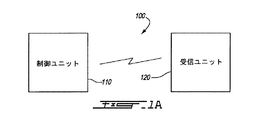
図1aは、本発明の一実施形態に係る無線ネットワークシステム100の図である。無線ネットワークシステム100は、制御ユニット110と、制御ユニット110から離れた位置にある受信ユニット140とを含むものとすることができる。ある実施形態では、制御ユニット110を、制御ユニット110の全体または一部の運動や制御ユニットのユーザが行うジェスチャなどの一連の運動を検出し、ターゲットとされた受信ユニット120をそれぞれ識別する第1の運動イベントと第2の運動イベントとを区別し、識別した受信ユニット120に命令して動作を行わせることが可能な少なくとも1つのセンサを設けた移動体ユニットとすることができる。他の実施形態では、制御ユニット110は、有線ネットワークまたは無線ネットワークのノードに位置した固定ネットワーク装置(例えばコンピュータ)とすることが可能であり、直接、またはアクセスシステム(例えばセルラネットワーク、WLANネットワーク、メッシュネットワークなど)を通して、受信ユニット120と無線で伝達を行い、当該ユニットを識別し、制御することができる。
FIG. 1a is a diagram of a
図1bは、本発明の一実施形態に係る制御ユニット110の概略ブロック図である。制御ユニット110は運動感知回路112を備えるものとし、運動感知回路112はランゲージ解釈ユニット114に有線接続または無線リンクで接続されるものとすることができる。ランゲージ解釈ユニット114は、プロセッサに命令して受信ユニット120を識別する第1の運動に対応するイベントを決定させるプログラム、または受信ユニット120に送信する命令を含むものとすることができる。とはいえ、検出および決定の機能のうち全てまたはいくつかはハードウェアによって行う可能性もあるが。
FIG. 1 b is a schematic block diagram of a
ランゲージ解釈ユニット114は、ネットワークシステム100の所定のジェスチャランゲージセットのエレメントに対応する運動、または複数のエレメントに対応する運動の組合せを識別するものとすることができる。ジェスチャランゲージセットには、わずかに1つの識別運動および/または1つの命令運動しか含まれないこともあれば、ランゲージ解釈ユニット114が区別および解釈可能なだけ多くの運動が含まれることもある。一般に、ジェスチャランゲージセットの精度は、運動の感知およびその運動の信頼できる解釈に必要な精度に対応する。
受信ユニット120は、固定装置とすることもできるし、制御ユニット110と同様の別の移動体ユニットとすることもできる。受信ユニット120は受信部を備える。受信部は、直接、またはローカルネットワーク(例えば、いくつかのWLAN、ブルートゥース(BT:Bluetooth)、MANET)における1または2以上のホップを通して、および/または、グローバルスタンダードフォーモバイル(GSM:Global Standard for Mobil)コミュニケーションベースステーションシステム(BSS:Base Station System)、ジェネラルパケットラジオサービス(GPRS:General Packet Radio Services)、GSM発展型用拡張データレート(EDGE:enhanced data rates for GSM evolution)、符号分割多元アクセス(CDMA:code division multiple access)、広帯域CDMA(WCDMA:wideband‐CDMA)などのプロトコルを用いた無線ネットワークアクセスなどの無線アクセスポイント(例えばWLANやセルラ、メッシュ)を通して制御ユニットから送信された信号を受信するものとすることが可能であるが、他の無線プロトコルを用いることもできる。
The receiving
運動感知回路112は、加速度計、ジャイロスコープ、タッチパッド、および/またはフレックスセンサなどの1または2以上のセンサを備えるものとすることが可能であるが、運動を検出可能な他のセンサを用いることもできる。かかるセンサは、制御ユニット110内に集積されたものとしてもよいし、制御ユニット110の周辺に設けることもできる。しかしながら、「感知回路」をここで用いた場合、センサを1つだけしか含まないこともあれば、複数のセンサと運動情報を提供するための分散型配列の関連回路網とを含み、個別にまたは組み合わせて用いてジェスチャランゲージセットのエレメントの検出および解釈を行うこともあるということを理解されたい。ある実施形態では、移動体ユニットのユーザが、連続して提供された複数の運動ランゲージエレメントを感知回路112が受け取る運動イベントを開始することができる。ここで、複数の運動ランゲージエレメントは、受信ユニット120を識別し、受信ユニット120に対して命令するものである。このような場合、処理部は、運動イベントを別々のランゲージエレメントへ分析し、エレメントの連続処理を行うものとしてもよい。他の実施形態では、制御ユニット110は、識別した受信ユニット120から確認応答を受信した後にだけ命令運動を受け入れるというモードでオペレーションを行うものとすることも可能である。
本発明の実施形態は、第1の運動に関する方向を測定してある特定の受信ユニット120を識別するセンサを備えるものとすることができる。この追加要素は、2以上の受信ユニット120が制御ユニット110の近傍に位置している場合に特に有用なものである。かかる実施形態は、図2にブロック形態で示した感知ユニット200を備えるものとすることができる。感知回路200は、運動感知回路210と、方向感知回路220と、位置決定ユニット230とを備える。運動感知回路210は、加速度計やジャイロスコープなどの1または2以上の慣性測定ユニットを備えるものとすることが可能であるが、他の感性センサを用いることもできる。方向感知回路220は、電子コンパスなどの方向感知装置を備えて、制御ユニット110のユーザが行った運動の向きを提供し、ある特定の受信ユニット120を識別するものとすることが可能である。位置決定ユニット230は、グローバルポジショニングシステム(GPS:Global Positioning System)受信部などの位置決定装置を備える。
Embodiments of the present invention may comprise a sensor that measures the direction for the first movement and identifies a
実施形態例では、受信ユニット120の方向に制御ユニット110を向けることで、向き情報を得ることができる。「向ける」というのをここで用いた場合、装置(例えばPDA、携帯電話)の単一外部筐体内に設けた方向センサを制御ユニット110が有しており、装置全体を動かしてターゲットに向けるということを含んでいる。あるいは、方向感知装置は、制御装置110の他のコンポーネントの周辺に設け(例えば、衣服の1つ、ユーザの身体の一部、ハンドヘルドポインティングデバイス、その他の操作可能エレメントに取り付ける)、運動を行って、ターゲットユニットに対して、方向センサを向けると同時に命令を提供する処理を開始することもできる。例えば、一実施形態としては、運動を感知することでターゲットを識別するものがあり、腕を外側へいっぱいに広げると、腕、袖、指、手袋に取り付けられ、広げた腕の長軸に沿う方向に向かう方向センサが、広げた腕の相対方向を感知する。ある実施形態では、向きを読み取るということは、身体の一部を動かして身体の別部分を指すことや、一連の運動を行う(例えば、方向センサをターゲットへ向けた後にジェスチャを行う)ことを含むものとすることができる。しかしながら、運動によっては、方向センサを用いることなく、無線ネットワークにおける全受信装置に対する命令のブロードキャストを開始するジェスチャランゲージセットで定義することも可能である。
In the example embodiment, by pointing the
以下で詳細に説明するように、方向センサのエレメントの方向によって、センサの方向に関する向きの計算を可能とする情報が提供されるものとすることができる。計算した受信ユニット120への向きと、制御ユニット110および受信ユニット120の位置情報(例えばGPSで決定)とを用いて、受信ユニット120を潜在的ターゲットとして識別することができる。
As will be described in detail below, the orientation of the elements of the orientation sensor may provide information enabling calculation of the orientation with respect to the orientation of the sensor. The calculated orientation to the receiving
GPSとは、地球の周りを回って全世界にマイクロ波帯域無線周波数を伝送する24個の衛星の配置を用いるものである。GPS受信部は、衛星の信号のうち少なくとも4つをキャプチャし、信号到達時刻の違いを用いて、受信部の位置を三角法により決定する。この位置情報は、昔ながらの緯度(南北)座標および経度(東西)座標で提供されるもので、度、分、秒で与えられる。ここでは本発明の様々な実施形態についてGPS衛星を参考にして説明したが、本発明の様々な実施形態は、疑似衛星を用いる位置決定システムや、衛星と疑似衛星を組み合わせて用いる位置決定システムにも適用可能であることを理解されたい。疑似衛星とは、L帯域キャリア信号に変調を行った従来の衛星発GPS信号と同様の信号のブロードキャストを行う地上の伝送部であり、一般的にはGPS時間と同期されている。疑似衛星は、トンネル、鉱坑、建物、その他囲まれた領域など、GPS衛星からはGPS信号が入手不可能という状況で有用なものとなることがある。「衛星」という言葉をここで用いた場合、疑似衛星や疑似衛星の均等物を含むものとして意図しており、GPS信号という言葉をここで用いた場合、疑似衛星や疑似衛星の均等物からのGPS信号のような信号を含むものとして意図してある。また、以下の議論では米国のGPSシステムを参考としているが、ここでの様々な実施形態は、GLONASSシステムやGALILEOシステムなど、同様の衛星位置決定システムに適用可能なものとすることができる。「GPS」という言葉をここで用いた場合、GLONASSシステムやGALILEOシステムなどの上記代替的衛星位置決定システムを含んでいる。したがって、「GPS信号」という言葉は、かかる代替的衛星位置決定システムからの信号を含むものとすることができる。 GPS uses an arrangement of 24 satellites that transmit microwave band radio frequencies around the earth to the whole world. The GPS receiver captures at least four of the satellite signals and uses the difference in signal arrival times to triangulate the position of the receiver. This position information is provided in the traditional latitude (north-south) coordinates and longitude (east-west) coordinates, and is given in degrees, minutes, and seconds. Although various embodiments of the present invention are described herein with reference to GPS satellites, various embodiments of the present invention may be used in position determination systems using pseudo satellites, or in combination using satellites and pseudo satellites. It should be understood that is also applicable. A pseudo-satellite is a transmission unit on the ground that broadcasts a signal similar to a conventional satellite-generated GPS signal modulated to an L-band carrier signal, and is generally synchronized with GPS time. Pseudolites may be useful in situations where GPS signals are not available from GPS satellites, such as tunnels, mines, buildings and other enclosed areas. When the term "satellite" is used herein, it is intended to include pseudolites or equivalents of pseudolites, and when the term GPS signal is used here, from pseudolites or equivalents of pseudolites. It is intended to include signals such as GPS signals. Also, although the following discussion refers to the US GPS system, various embodiments herein may be applicable to similar satellite positioning systems, such as the GLONASS system and the GALILEO system. The term "GPS", as used herein, includes such alternative satellite positioning systems such as the GLONASS system and the GALILEO system. Thus, the term "GPS signals" may include signals from such alternative satellite positioning systems.
方向は、2軸電子コンパスで感知するものとすることができる。2軸電子コンパスとは、水平平面にあるが互いに直交する2つのセンサエレメントを用いて、地球の磁場の水平ベクトル成分を測定するものである。このように直交するセンサは、それぞれの感知軸における磁場を測定するものであり、X軸センサおよびY軸センサと呼ぶ。アークタンジェントY/Xは、X軸に対するコンパスの向きを与える。2軸コンパスは、センサが水平である、つまり重力(下向き)ベクトルに直交する限り正確であるとしてもよい。ある移動体実施形態では、ジンバル構造によって2軸コンパスを水平に保ち、精度を保証することができる。他の実施形態としては3軸磁気コンパスが挙げられる。3軸磁気コンパスは、電子コンパスアセンブリの直交ベクトル全てに対する磁気センサを有し、地球の磁場の水平成分および垂直成分をキャプチャする。この種のコンパスに対して電子的にジンバルを行う(水平に保つ)ため、3つの磁気センサを傾斜感知エレメントで補って、重力方向の測定を行うことも可能である。傾斜センサは、コンパスアセンブリの傾斜の2軸測定を行うものであり、この2軸をピッチ軸およびロール軸という。センサ入力の5軸を組み合わせて、X軸磁気ベクトルおよびY軸磁気ベクトルの「傾斜補償」したものを作成すると、傾斜補償された向きが計算できる。 The direction may be sensed by a two-axis electronic compass. The two-axis electronic compass measures the horizontal vector component of the earth's magnetic field using two sensor elements that lie in a horizontal plane but are orthogonal to each other. Such orthogonal sensors measure the magnetic field in each sensing axis, and are called X-axis sensor and Y-axis sensor. Arctangent Y / X gives the compass's orientation to the X axis. The two-axis compass may be accurate as long as the sensor is horizontal, ie orthogonal to the gravity (downward) vector. In certain mobile embodiments, the gimbal structure can keep the two-axis compass horizontal to ensure accuracy. Another embodiment includes a three-axis magnetic compass. A three-axis magnetic compass has magnetic sensors for all orthogonal vectors of the electronic compass assembly and captures horizontal and vertical components of the Earth's magnetic field. It is also possible to compensate for the three magnetic sensors by means of tilt sensing elements and to make a measurement of the direction of gravity, in order to electronically gimbalize this compass (hold it horizontal). The tilt sensor performs two-axis measurement of the tilt of the compass assembly, which is referred to as a pitch axis and a roll axis. If the five axes of the sensor input are combined to create a "tilt compensated" version of the X and Y axis magnetic vectors, then the tilt compensated orientation can be calculated.
図3は、前腕の末端部における参照フレームBを示す図である。センサを前腕に設けて、腕の運動を検出し、追跡することが可能である。例えば、腕が上下左右に動くと、袖口領域上にまたは袖口領域を覆うように設けたジャイロスコープ装置が腕の角運動と同じ運動で動く。ジャイロスコープは、1軸設計の場合もあれば、2軸設計の場合もある。同様に、1軸、2軸、または3軸の加速度センサ(例えば加速度計)を腕の上または周辺に配置して、解釈に関する運動の判定に有用な加速度データを得ることも可能である。しかしながら、考慮すべきは、絶対参照フレームの欠如、および数秒よりも長期間の固定フレームに関する方向の追跡の難しさである。したがって、本発明の実施形態によっては、電子コンパスを身体に取り付けて、参照フレームを提供することも可能である。 FIG. 3 shows a reference frame B at the end of the forearm. A sensor may be provided on the forearm to detect and track arm movement. For example, as the arm moves up, down, left, and right, a gyroscope device provided over the cuff area or covering the cuff area moves in the same motion as the arm's angular movement. Gyroscopes may be single- or dual-axis designs. Similarly, one, two, or three axis accelerometers (e.g., accelerometers) may be placed on or around the arm to provide acceleration data useful for determining motion for interpretation. However, one should consider the lack of an absolute reference frame and the difficulty of tracking the direction with respect to the fixed frame for more than a few seconds. Thus, in some embodiments of the present invention, an electronic compass can be attached to the body to provide a reference frame.
運動センサ、電子コンパス、GPS受信部からの情報出力を分析して、ユーザが1または2以上のジェスチャを行ったかどうか判定し、無線ネットワークにおけるターゲットに対する識別および命令を行うことが可能である。例えば、図4は、ローカル無線ネットワークにおいてジェスチャに基づくランゲージをどのように用いると、移動体ユニットについて個別にターゲットとし、命令することができるかを示す。図4に示すように、移動体ユニットAは、移動体ユニットBの方を向き、Bに「前進せよ」(例えば手による方向指示)と命令するジェスチャを行う。B(または他の移動体ターゲットでもよい)が受け取った命令は、音声メッセージおよび/文書メッセージとして再生されるものとすることもできる。移動体ユニットBのみが、このメッセージを受け取り、処理する。次に、移動体ユニットAは、移動体ユニットDの方を向き、Dに「後退せよ」と命令する。やはり、移動体ユニットDのみが、この情報を受け取ることとなる。次に移動体ユニットAは、移動体ユニットCの方を向き、Cに「前進せよ」と命令する。移動体ユニットB、C、Dの運動全てを収集することが可能であり、移動体ユニットAは新たな位置全てについて通知を受ける。 The information output from the motion sensor, electronic compass, GPS receiver may be analyzed to determine if the user has made one or more gestures, and to identify and command targets in the wireless network. For example, FIG. 4 shows how using gesture-based language in a local wireless network can be individually targeted and commanded for mobile units. As shown in FIG. 4, the mobile unit A makes a gesture that points toward the mobile unit B and instructs B to “go forward” (for example, turn by hand). The instructions received by B (or other mobile targets) may also be played back as voice and / or document messages. Only mobile unit B receives and processes this message. Next, the mobile unit A turns to the mobile unit D and instructs D to "set back". Again, only mobile unit D will receive this information. Next, mobile unit A turns to mobile unit C and instructs C to "advance". It is possible to collect all the movements of mobile units B, C, D, and mobile unit A is informed about all the new positions.
図5は、「向く」運動によって、ターゲット(例えば受信移動体ユニット)をどのように識別することができるかを示す一実施形態の図である。説明のため、図5はグリッド510を含んでいる。グリッド510は経度および緯度の増加を表すものであってもよいし、何か他の空間値の増加を表すものであってもよい。実施形態によっては、エレメント520、530、540、550が無線ネットワークにおける位置にある移動体ユニット(例えば制御ユニットや受信ユニット)を表すことができるのだが、識別可能なターゲットの位置はある特定の位置に固定される場合がある。移動体ユニット520は、制御ユニットモードでオペレーションを行って移動体ユニット540に対する識別および命令を行うものとし、上述の運動感知回路と、方向感知回路と、位置決定ユニットとを備えるものとすることができる。また、移動体無線ユニット520は、移動体ユニット530、540、550の位置を視覚的に認知するものとしてもよいし、それぞれの位置の画面表示を参照して認知するものとすることもできる。例えば、移動体ユニットの各々が、位置データ(例えばGPSより決定)をサーバに定期的にアップロードするものとする。移動体ユニット520は、データを定期的にダウンロードし、各移動体ユニット530、540、550の位置を示すレイヤを含むローカルマップを参照しながら、移動体ユニットの運動を追跡するものとする。この情報は、マップ表示として提供するものであってもよいし、別の種類のグラフィカルオブジェクトとして提供するものとすることもできる。
FIG. 5 is an illustration of an embodiment showing how a target (eg, a receiving mobile unit) can be identified by a “turning” motion. For purposes of illustration, FIG. 5 includes a
移動体ユニット540の識別を開始するため、移動体装置520のユーザが、移動体ユニット540の方向に方向センサ(例えば電子コンパス)を向けるとする。方向センサが与える向きは矢印560で示す。電子コンパスを受信ユニットへ向けることは、ユーザによる不正確な方向推定を含むため、実施形態によっては、向きに対して最も近い移動体ユニットを発見し、識別することができる。また、候補の検討は、例えば向き560をほぼその中心とした角度φの区域のように、向きに対して局所的な領域に限られる場合がある。実施形態によっては、感知した向きに基づくと、例えばユニット550および540の両方に近い向きなど、2以上の潜在的候補を識別することもある。例えば、移動体ユニット550および540の両方が、移動体ユニット520からターゲット要求を受信し、(ネットワークサーバを介して、またはローカルネットワーク内の移動体ユニット間の通信リンクを介して)ターゲット位置決定情報を移動体ユニット520に返信するものとする。そうすると、移動体ユニット520は、グラフィカル位置を選択したり、運動を行って潜在候補の中から選択したりするなど、移動体ユニット550および540から受信した位置情報に基づいて移動体ユニット550または540のどちらかを選択することによって、求めるターゲットを識別することができる。
To initiate identification of
デジタルコンパスは、2軸または3軸を有するものとすることが好ましい。3軸磁気コンパスアセンブリは、3つの直交ベクトル全てを配列した磁気センサを有し、地球の磁場の水平成分および垂直成分をキャプチャすることが好ましい。コンパスに対して電子的にジンバルを行うため、傾斜感知エレメントで重力方向を測定して、3つの磁気センサを補うことが好ましい。傾斜センサは、ピッチ軸およびロール軸という、コンパスアセンブリの傾斜の2軸の測定値を与えるものであることが好ましい。センサ入力の5軸を組み合わせて、軸磁気ベクトルの「傾斜補償」したものを作成する。そうすると、傾斜補償したベクトルまたは方向測定値を計算することができる。 Preferably, the digital compass has two or three axes. The three-axis magnetic compass assembly preferably has a magnetic sensor arranged with all three orthogonal vectors to capture the horizontal and vertical components of the Earth's magnetic field. In order to electronically gimbal the compass, it is preferable to measure the direction of gravity with the tilt sensing element to supplement the three magnetic sensors. Preferably, the tilt sensor provides a two axis measurement of tilt of the compass assembly, the pitch and roll axes. The five axes of the sensor input are combined to create a "tilt compensated" version of the axial magnetic vector. The slope compensated vector or direction measurement can then be calculated.
識別した移動体ユニット540を指揮するため、移動体ユニット520のユーザは、移動体ユニット540を識別する運動に続いて、ある運動(例えば身体ジェスチャおよび/または手ジェスチャ)を行う。移動体ユニット520は、後続の運動を解釈し、無線ネットワークによる(例えば、ローカルネットワーク、セルラネットワークや、その他のネットワーク資源を通した)移動体ユニット540との通信を確立し、方向情報やその他の情報を移動体ユニット540へ送信する。ゆえに、移動体ユニットには意図した受領体が見えなくとも(例えば、意図した受領体が障害物で遮られているなど)、ローカル無線ネットワークグループのメンバが、当該移動体ユニットを識別し、指揮する。
To direct the identified
図6は、移動体ユニット600を含む無線通信システムの一例の概略ブロック図である。図6に示すように、移動体ユニット600は、セルラ基地局610、GPS衛星612、ジェスチャおよび感知ユニット620から無線通信信号を受信する。セルラ基地局610は、他のネットワーク(例えばPSTNやインターネット)に接続されたものとすることも可能である。移動体端末600は、ある通信プロトコルを用いて、アドホックネットワーク616および/または無線LAN618と通信するものとすることができる。通信プロトコルとしては、802.11a、802.11b、802.11e、802.11g、802.11i、ブルートゥース(BT)、MMAN、MANET、NWR、および/または他の無線ローカルエリアネットワークが挙げられるが、上記に限定されない。無線LAN618は、他のネットワーク(例えばインターネット)に接続されたものとすることも可能である。
FIG. 6 is a schematic block diagram of an example of a wireless communication system including a
本発明のある実施形態では、ジェスチャ感知ユニット620は、1または2以上の加速度測定センサ(例えば加速度計)、ジャイロスコープ、ベンド/フレックスセンサとすることが可能なセンサ622‐1〜622‐nと、当該実施形態では電子コンパスである方向センサ624とを備える。図6の実施形態では複数のセンサ622を図示してあるが、運動センサを1つだけ備えるものとすることも可能である。センサおよび電子コンパス624は制御部626に接続される。制御部626は、有線リンクまたはRF無線リンクを介して、処理部630と通信するものとすることができる。また処理部に接続されるのが、それぞれアンテナ633、635、637を有するGPS受信部632、セルラ送受信部634、ローカルネットワーク送受信部636と、メモリ640と、ヘルスセンサ650(例えば脈拍や体温など)と、表示部660と、入力インタフェース670(例えばキーパッド、タッチスクリーン、マイクロフォンなど(図示せず))と、任意のスピーカ680とである。GPS受信部632は、アンテナ633を介して受信したGPS信号に基づいて、位置を決定することができる。ローカルネットワーク送受信部636は、アンテナ637を介して、無線LAN618および/またはアドホックネットワーク616と通信することができる。
In one embodiment of the present invention, the
記憶部640は、処理部630が実行するソフトウェアを記憶するものであり、1または2以上の消去可能プログラム可能読出専用メモリ(EPROM:erasable programmable read‐only memoriesまたはフラッシュEPROM)、バッテリ支援のランダムアクセスメモリ(RAM:random access memory)磁気格納装置、光格納装置、その他のデジタル格納装置が挙げられ、処理部630とは独立、または少なくとも部分的に処理部630内にあるものである。処理部630は、例えば汎用処理部とデジタル信号処理部のように、2以上の処理部を備えるものとすることも可能であり、これら処理部は共通の筐体に含まれるものとしてもよく、互いに別々で独立したものとすることもできる。
The
セルラ送受信部634は、2方向通信を可能とするため送信部(TX)と受信部(RX)とを備えるのが典型であるが、本発明はかかる装置に限定されず、ここで用いる「送受信部」は受信部のみを備えるものとすることもできる。それによって、移動体ユニット600は、無線周波数信号を用いて基地局610と通信を行うことが可能であり、無線周波数信号はアンテナ635を通して通信するものとすることができる。例えば、移動体ユニット600は、1または2以上のセルラ通信プロトコルを用いて、セルラ送受信部634を介して通信を行う構成とすることが可能であり、セルラ通信プロトコルとしては、アドバンストモバイルフォンサービス(AMPS:Advanced Mobile Phone Service)、ANSI‐136、グローバルスタンダードフォーモバイル(GSM)コミュニケーション、ジェネラルパケットラジオサービス(GPRS)、GSM発展型用拡張データレート(EDGE)符号分割多元アクセス(CDMA)、広帯域CDMA、CDMA2000、ユニバーサルモバイルテレコミュニケーションシステム(UMTS:Universal Mobile Telecommunication System)が挙げられる。ここで用いる通信プロトコルは、通信する情報、タイミング、周波数、変調、および/または通信接続のセットアップおよび/またはメンテナンスのオペレーションを指定するものとすることができる。実施形態によっては、アンテナ633および635を単一のアンテナとすることも可能である。
Although the cellular transmission /
他の実子形態では、ジェスチャ感知ユニット620は、装身具(例えば1または2以上の指輪や腕時計など)に設けてもよいし、身体によって取り付け(例えば接着剤やストラップで)、着用、所持、または操作可能な装置または筐体とともに備えることもできる。
In other embodiments,
図6に戻るが、ジェスチャ感知ユニット620は無線感知装置として表してあるとはいえ、他の実施形態ではジェスチャ感知ユニットは処理部に有線接続したものとすることも可能であることを理解されたい。例えば、ジェスチャ感知ユニットを、スーツ、手袋、装身具、またはその他の装置または筐体内に位置する処理部に有線接続してもよいし(例えばジェスチャ感知ユニットおよび処理部の双方がPDAなどのハンドヘルド装置筐体またはケーシング内に位置するものとするなど)、処理部を、ジェスチャ感知ユニットと、処理部とジェスチャ感知ユニットとの間の配線とに対して遠隔に(例えば、ジェスチャ感知ユニットを備えたマウスと、処理部を備えたコンピュータとの間に)配置することもできる。
Returning to FIG. 6, it should be understood that although the
また、図1aに示す制御ユニット110の実施形態としては、固定位置を有する装置も挙げられる。例えば、制御ユニット110は、ネットワーク(例えばWAN、LAN、WLANなど)におけるノードのいずれかに位置するコンピュータとすることができる。制御ユニット110のオペレータは、表示部(例えば、コンピュータディスプレイ、PDAディスプレイ、テーブルトップディスプレイ、ゴーグルタイプディスプレイ)上のターゲットの視覚的表現に基づいて、1または2以上の遠隔無線ターゲットに対する識別および命令を行う。実施形態によっては、運動を感知して遠隔配置の無線ターゲットに対する識別および/または命令を行うことは、表示部との交信を含むものとすることが可能である。表示部としては、表示された遠隔無線ターゲットに対応する位置において操作可能なタッチスクリーンディスプレイがある。他の実施形態では、ジェスチャ感知ユニットが感知するオペレータのジェスチャの参照フレームを、表示された遠隔無線ターゲットの参照フレームに平行移動させ、オペレータが仮想的に遠隔無線ターゲットの近くに位置しているようにすることが可能である。ゆえに、実施形態としては、コンピュータオペレータが画面を見ながら運動感知ユニット(例えば手袋、ディスプレイ、ハンドヘルド装置)を操作し、オペレータから遠く離れた位置の1または2以上の移動体無線ターゲット装置および/または固定型無線ターゲット装置に対する識別および命令を行うことが挙げられる。
An embodiment of the
図7は、加速度計および/またはジャイロスコープなどの運動感知装置を少なくとも1つ備えたスーツやシャツ、ジャケット、あるいはその他の衣服700をユーザが着用している一実施形態の上面図を示している。図7は、ユーザの肩から出た向きの広がりの一例も示しており、衣服700の袖口上に設けた方向センサが感知可能な指示方向を表している。
FIG. 7 shows a top view of an embodiment where a user is wearing a suit, shirt, jacket or
図8は、実施形態の一例に係る手袋800の図である。手袋800は、図6に示した実施形態の一例において図示したジェスチャ感知ユニット620に相当するものである。手袋800は、ジェスチャランゲージセットの判定可能な命令の精度および量を大きく上昇させることができる。例えば、ジェスチャランゲージセットとしては、図9に示す一部の軍用信号のリストのような「手信号」が挙げられる。手袋800を用いて、米国手話(ASL:American Sign Language)や英国手話(BSL:British Sign Language)などの「手話」を解釈することも可能である。
FIG. 8 is a view of a
手袋800は、各指および親指に設けた1または2以上の運動センサ820‐1〜820‐5を備え、個々の指、指のグループ、および/または手袋全体の角運動および平行運動を感知することができる。追加運動情報を提供するため、手袋800の手の甲やどこかに少なくとも1つの運動センサ820‐6を設けてもよく、かかるセンサは手袋の他の位置に設けることも可能である。運動センサ820‐1〜820‐6としては、上述のような加速度計、ジャイロスコープ、および/またはフレックスセンサが挙げられる。手袋800は、電子コンパスなどの方向センサ装置830も備える。方向センサ装置830は、ターゲット識別および/またはジェスチャ検出・解釈の効率が良くなるような向きに合わせるものとする。フレキシブルリンクを与えて、運動センサ820‐1〜820‐6および方向センサ830を制御部840へ接続することも可能であり、制御部840はRF送信部850に対して連続出力を(例えばBTプロトコルによって)提供するが、制御部840からの出力は有線リンクまたは無線リンクを介して処理部(例えば図6の処理部630)へ送信するものとすることもできる。手袋800上のセンサは、身体に対する手および指の運動、方向、配置から信号を生成する。この信号を処理部で解析し、指および手の軌道の位置を見出し、行われたジェスチャ、あるいはジェスチャの連続がジェスチャランゲージセットのエレメントに対応するかどうか判定する。
The
図10は、実施形態の一例にかかるネットワークに基づく応用を示す概略図である。図10は、ここで説明するジェスチャ運動によって識別および制御可能な装置セットの一例1010を示している。移動体ユニットセット1020も示してあり、その各々は、ピアツーピアに基づく無線ローカルネットワークのメンバとすることができる。無線ローカルネットワークとしては、WLAN、モバイルメッシュアドホックネットワーク(MMAN:Mobile Mesh Ad‐Hoc network)、モバイルアドホックネットワーク(MANET:Mobile Ad‐Hoc network)、ブルートゥースに基づくネットワークが挙げられる。無線制御可能装置1010は、ローカル無線ネットワーク内の移動体ユニット1020とローカル通信を行うものとすることも可能である。装置1010および移動体ユニット1020は、基地局1030を通したネットワークサービス1040へのアクセスを有するものとすることができる。
FIG. 10 is a schematic diagram illustrating a network based application according to an example embodiment. FIG. 10 shows an example 1010 of a set of devices that can be identified and controlled by the gesture motion described herein. Also shown are mobile unit sets 1020, each of which may be a member of a peer-to-peer based wireless local network. Wireless local networks include WLAN, Mobile Mesh Ad-Hoc Network (MMAN), Mobile Ad-Hoc Network (MANET), and Bluetooth based networks. Wireless-
簡潔にするため、図10には、本発明の実施形態によって可能となる応用およびネットワークサービスの例について少しだけ示してある。この例としては、装置1010および/または移動体ユニット1020が情報を送受信可能なサーバ1050およびデータベース1060、マップおよび座標平行移動のサービスを提供可能な平行移動サービス1070(例えばGISサーバ)、移動体ユニットのヘルスの追跡および/または表示可能情報の提供が可能なヘルス監視サービス1080、ローカル無線ネットワークにおける移動体ユニットの位置を追跡し、移動体ユニット、または無線ネットワークから離れた他の位置(例えばコマンドセンタ)へグラフィック図(例えば局所的地形図上に表示した位置)を提供する移動体ユニット位置決定アプリケーション1090が挙げられる。
For the sake of brevity, FIG. 10 shows only a few examples of applications and network services enabled by embodiments of the present invention. In this example,
ジェスチャに基づく無線通信は様々な用途に適用することができる。例えば、警察官が手およびまたは腕のジェスチャを用い、ジェスチャにしたがって交通信号機を変化させて、交通信号機を遠隔制御することができる。別の実施形態では、消防士の制御部が、各消防士の位置を表示部上に受信し、個々に対する的確な命令を与える。軍小隊、特殊部隊、SWATチーム、探索隊および/または救助隊が、ローカル無線ネットワークに配置され、隊間において、または無線ネットワークに接続可能な他の装置(例えばロボットやその他の機械)と選択的通信を行い、生命位置データ、ヘルスデータ、指示をネットワークメンバに提供することも可能である。グループやチームにおける他の応用としては、プレーヤがローカル無線ネットワークに配置され、選択したプレーヤ間で通信および命令を行うレクリエーション的な戦略ゲームが挙げられる。 Wireless communication based on gestures can be applied to a variety of applications. For example, a police officer may use hand and / or arm gestures to change traffic lights according to the gestures to remotely control traffic lights. In another embodiment, the firefighter's control receives the location of each firefighter on the display and gives precise instructions to the individual. Military platoons, special forces, SWAT teams, search teams and / or rescue teams are located in the local wireless network and selectively with other units (eg robots or other machines) that can connect to or from the wireless network It is also possible to communicate and provide network location data, health data, instructions to the network members. Other applications in groups and teams include recreational strategic games where players are located in the local wireless network and communicate and command between selected players.
他にも多くの応用があり得る。実施形態によっては、空間的に固定の機器の選択および制御(例えば、多くの画面から1つの画面を選択して、その画面に関するカメラを制御して、パンしたり、ズームイン/ズームアウトしたりするなど)、固定機器の設定(例えば、ステレオのボリューム、ボイラの圧力、証明制御、セキュリティ機構、エンジン/モータのrpm)の調整などを含む。 Many other applications are possible. In some embodiments, selection and control of spatially fixed equipment (e.g., selecting one screen from many screens and controlling a camera for that screen to pan and zoom in / out) Etc.), adjustment of fixed equipment settings (eg stereo volume, boiler pressure, certification control, security mechanism, engine / motor rpm) etc.
応用の一例としては、運動センサ、位置判定装置、方向センサを備え、マルチメディアアプリケーションの制御を行う携帯電話やその他の携帯装置も挙げられる。例えば、かかる携帯装置の指向および指示機能は、ビデオゲームコンソールとして実施可能であり、またビデオ表示に表示されたアイコンを選択して、アイコンを立ち上げるのに用いることも可能である。一実施形態では、携帯装置を用いて、カジノゲームにおいて命令の制御および送信を行う(例えば、仮想的に画面上のホイールをまわす、レベルを引く、命令を送ってコンティニュ、リプライなど)ことも可能である。 Examples of applications include mobile phones and other mobile devices that include motion sensors, position determination devices, direction sensors, and control of multimedia applications. For example, such mobile device pointing and pointing functions can be implemented as a video game console and can also be used to launch an icon by selecting the icon displayed on the video display. In one embodiment, a portable device may be used to control and transmit instructions in a casino game (eg, virtually rotate a wheel on the screen, draw levels, send instructions to continue, reply, etc.) It is possible.
図11は、他の実施形態による遠隔ターゲットへ少なくとも1つの命令を与えるオペレーションを示すフローチャートである。オペレーションは処理ブロック1100より始まり、装置に1回目の運動をさせ、遠隔ターゲットを識別する。例えば、方向感知装置を遠隔ターゲットに向けることで、遠隔ターゲットを識別することができる。実施形態によっては、第1の運動が識別指示に相当するかどうかという判定を含むこともある。例えば、第1の運動が、指向運動に相当すると判定されることもあれば、所定のジェスチャランゲージセットで定義された他のジェスチャに相当すると判定されることもある。処理1110では、判定した第1の運動に基づいてターゲットを識別する。処理1120において装置に2回目の運動をさせる。処理1130は、第2の運動が、命令に関する少なくとも1つの運動特性に相当するかどうか判定する。第2の運動が、命令に関する少なくとも1つの運動特性に対して整合する、あるいは相当すると認識されると、処理1140において、識別したターゲットへ命令を送信する。例えば、ジェスチャサンプルをデータベースに格納し、命令にリンクさせることができる。ジェスチャを認識する方法としては、感知した運動と格納サンプルデータとの間の相関が十分な量存在するとき、ジェスチャを識別するアルゴリズムを整合することや、トレーニングを受けた神経ネットワークなどの他の方法が挙げられる。偶発運動に関する信号や、運動ノイズの他の原因についてフィルタリングを行い、(例えば歩行)の完全ジェスチャ認識の作動を防止することも可能である。
FIG. 11 is a flowchart illustrating an operation of providing at least one instruction to a remote target according to another embodiment. Operation begins at
図12は、ターゲットに関するデータを移動体ユニットまたは移動体装置で受信する方法を示す。当該方法は以下のステップを含む。第1に、ユーザが移動体装置を動かして、ターゲットを示す、ステップ2000。移動体装置としては、携帯電話、PDA(portable digital assistant:携帯情報端末)、携帯コンピュータ、ジョイスティック、眼鏡、手袋、時計、ゲームコントローラなどが挙げられる。次に、移動体装置の運動に応じて、装置は、始点が移動体装置の位置であって方向がターゲットに向かうベクトルを計算する、ステップ2002。次に、このベクトルとターゲットに関するデータの要求とを、好ましくは通信ネットワークで移動体装置からサーバへ送信し、ターゲットを識別し、ターゲットに関するデータを受信する、ステップ2004。ベクトルは、サーバなど、移動体装置と通信を行う別の装置で計算するものとすることも可能である。次に、移動体装置は、好ましくはサーバから、ターゲットに関するデータを受信する、ステップ2006。ベクトルの計算は、上述の多くの手法で行うことが可能であり、以下でさらに詳細に説明することにする。
FIG. 12 illustrates a method of receiving data about a target at a mobile unit or device. The method comprises the following steps. First, the user moves the mobile device to indicate the target,
要求に応じて、ターゲットに関する多くの種類のデータを移動体装置へ送信することが可能であり、データの種類の例としては、ターゲットを所有する個人または法人の情報、またはターゲットを所有する個人または法人のウェブサイトの情報が挙げられる。例えば、個人とは自然人であり、法人とは、会社、政府、地方自治体、公的サービスまたは個人サービスなどであるとすることができる。さらに、ターゲットがターゲット移動体装置である場合、ターゲットに関するデータは、ターゲット移動体装置が発信し受信する音声データと、ターゲット移動体装置の位置とを含むものとすることができる。 On request, many types of data about the target can be sent to the mobile device, and examples of types of data include the information of the person or entity that owns the target, or the person or individuals who own the target Information on corporate websites can be mentioned. For example, an individual may be a natural person, and a corporation may be a company, a government, a local government, a public service or a personal service. Furthermore, if the target is a target mobile device, the data relating to the target may include voice data transmitted and received by the target mobile device and the location of the target mobile device.
図13は、ターゲットに関するデータをサーバから移動体装置へ送信する方法を示す。第1に、サーバが、始点が移動体装置の位置であって方向がターゲットに向かうベクトルと、ターゲットに関するデータの要求とを移動体装置から受け取る、ステップ2020。次に、サーバは、ベクトルと潜在的ターゲットの位置と用いて、ターゲットを識別する、ステップ2022。サーバは、潜在的ターゲットの位置へのアクセスを有しており、潜在的ターゲットの中で、移動体装置から受信したベクトルに最適なものを検索することが好ましい。最後に、サーバは、移動体装置へのターゲットに関するデータの送信を開始する、ステップ2024。
FIG. 13 illustrates a method of transmitting data about a target from a server to a mobile device. First, the server receives from the mobile device a vector whose origin is the location of the mobile device and the direction is to the target and a request for data about the target,
図14は、図13に示す方法においてステップ2022およびステップ2024を拡張したものを示している。追加ステップでは、サーバが、ベクトルと、潜在的移動体装置ターゲットの位置または物理体の位置とにしたがって、潜在的ターゲットのリストを生成する、ステップ2030。物理体とは、建物、モニュメント、ボート、飛行機、星または正座、車、地形、公園、家など、指向可能であればいかなるものであってもよい。次に、サーバは、潜在的ターゲットのリストを移動体装置へ送信し、ステップ2032、かわりにターゲットの選択を移動体装置から受信する、ステップ2034。移動体装置における当該選択は、名前、アドレス、電話番号、写真などのリストで構成されるものとしてもよく、移動体装置のユーザに対して表示されることが好ましい。さらに図14に示したように、要求されたデータがサーバから入手可能か否かに応じて、以降のステップは、ターゲットに関するデータをサーバから移動体装置へ送信するステップ2038となるか、あるいは、別のサーバから移動体装置へのターゲットに関するデータの送信を開始するステップ2039となる。例えば、データが、ターゲットとした移動体装置が行う音声通信や、必ずしもサーバから入手可能ではない他のデータからなる場合には、別のサーバによるデータの送信を要求することが好ましいこともある。
FIG. 14 shows an extension of
同様に、ターゲットに関する多くの種類のデータを、サーバから、または別のサーバから、データを要求する移動体装置へ送信することが可能である。データの種類の例としては、ターゲットを所有する個人または法人の情報、またはターゲットを所有する個人または法人のウェブサイトの情報が挙げられる。例えば、個人とは自然人であり、法人とは、会社、政府、地方自治体、公的サービスまたは個人サービスなどであるとすることができる。さらに、ターゲットがターゲット移動体装置である場合、ターゲットに関するデータは、ターゲット移動体装置が発信し受信する音声データと、ターゲット移動体装置の位置とを含むものとすることができる。 Similarly, many types of data about a target can be sent from a server or from another server to a mobile device requesting data. Examples of types of data include information of an individual or legal entity that owns the target, or information of an individual or legal entity's website that owns the target. For example, an individual may be a natural person, and a corporation may be a company, a government, a local government, a public service or a personal service. Furthermore, if the target is a target mobile device, the data relating to the target may include voice data transmitted and received by the target mobile device and the location of the target mobile device.
図15は、少なくとも2つの移動体装置間に通信を確立する方法を示しており、ある移動体装置を動かして、ターゲット移動体装置を示す。当該方法は以下のステップを含む。第1に、サーバが、ベクトルと、ターゲットに関するデータの要求とを移動体装置から受け取る。ベクトルは、サーバなどの移動体装置と通信を行う別の装置で計算することも可能である。ベクトルは、始点が移動体装置の位置であって、方向がターゲットに向かうものであるステップ2040。次に、サーバは、ベクトルとターゲット移動体装置の位置と用いて、ターゲット移動体装置を識別する、ステップ2042。同様に、サーバは、潜在的ターゲットの位置へのアクセスを有しており、潜在的ターゲットの中で、移動体装置から受信したベクトルに最適なものを検索することが好ましい。最後に、サーバがデータの送信を開始するのだが、データは、移動体装置とターゲット移動体装置との間で確立された音声通信からの音声データである、ステップ2044。ステップ2042については、上述のとおり、以下のステップを追加して拡張することも可能である。第1に、サーバが、ベクトルと、潜在的ターゲット移動体装置の位置とにしたがって、潜在的ターゲット移動体装置のリストを生成する。次に、サーバは、潜在的ターゲット移動体装置のリストを移動体装置へ送信し、ターゲット移動体装置の選択を移動体装置から受信する。
FIG. 15 illustrates a method of establishing communication between at least two mobile devices, moving one mobile device to show a target mobile device. The method comprises the following steps. First, the server receives a vector and a request for data on the target from the mobile device. The vector can also be calculated by another device in communication with the mobile device, such as a server. The vector starts at the position of the mobile device and the direction is at the
図16は、移動体装置2500のコンポーネントを示している。コンポーネントは、移動体装置2500の位置の検出に用いるGPS装置2060を備えることが好ましい。セルラネットワークを用いた三角法など、移動体装置は色々な手法で配置することが可能であるため、上記に限定されない。コンポーネントは、移動体装置2500の運動の測定に用いる運動測定システム2062も備える。ロジックモジュール2064は、始点が移動体装置の位置であって方向がターゲットに向かうベクトルの計算に用いるコンポーネントであり、ベクトルは移動体装置の運動に応じて計算する。GPSデータをベクトルの視点に用いることが好ましい。加速度計やジャイロスコープなどの他のコンポーネントからのデータをロジックモジュールへ送信し、運動を解析し、ベクトルの方向を抽出する。移動体装置は、ターゲットを識別するベクトルとターゲットに関するデータの要求のサーバへの送信に用いる第1の通信モジュール2066をさらに有する。移動体装置は、ターゲットに関するデータの受信に用いる第2の通信モジュール2068をさらに有する。
FIG. 16 shows the components of the
もちろん、移動体装置は、潜在的ターゲットのリストを受信する第3の通信モジュール、移動体装置のユーザに対して潜在的ターゲットのリストを表示するディスプレイ2061など、他にもいくつかコンポーネントを備えることが可能である。潜在的ターゲットのリストは、名前、単語、電話番号、アドレス、写真、絵、ウェブページ、3dモデルなどのリストの形態をとることができる。移動体装置は、移動体装置のユーザがリストの潜在的ターゲットの中からターゲットの選択を行うことを可能とする選択モジュールと、ターゲットの選択をサーバへ送信する第4の通信モジュールとをさらに備えることが可能である。
Of course, the mobile device comprises several other components, such as a third communication module for receiving the list of potential targets, a
図17は、電子コンパス2084、加速度計2082、ジャイロスコープ2080など、測定システム2062が備えることが可能なコンポーネントをいくつか示している。かかるコンポーネントやその均等コンポーネントのいくつかを有することが好ましく、各コンポーネントも2以上有することも好ましいが、上記に限られないということを理解されたい。
FIG. 17 illustrates some of the components that a
例えば、好ましくはGPS装置を備える移動体装置は、空間における自身の位置を計算可能とするために、電子コンパスと3つの加速度計とをさらに有するものとすることも可能である。しかしながら、本発明は、色々な技術を含む移動体装置の多くの実施形態をカバーするように意図したものであり、実施形態の一例に限定すべきものではないということを理解されたい。装置やセンサ、コンポーネントの他の組合せで、空間における移動体装置の位置を提供することも可能である。 For example, a mobile device, which preferably comprises a GPS device, may also have an electronic compass and three accelerometers in order to be able to calculate its position in space. However, it should be understood that the present invention is intended to cover many embodiments of mobile devices including various technologies, and should not be limited to the example embodiments. It is also possible to provide the position of the mobile device in space by other combinations of devices, sensors and components.
装置やセンサ、コンポーネントが提供するデータを処理し、少なくとも1つのベクトルを計算可能であることが好ましい。ベクトルは、始点が移動体装置の位置であり、方向がターゲットに向かうものであり、また、移動体装置で行った運動から計算されるものであることが好ましい。ここで、1つのベクトルは、1または複数のベクトルの意味も意図している。単一のベクトルについては、いくつかの例において計算することがあり、多くのベクトルについては、装置で行った運動が単なるターゲットに向かう運動ではなく、例えば、指向中に装置で円を描いてターゲットのグループを識別するような場合に計算することがある。他にも装置で行い得る運動は多いが、1または複数のベクトルに帰着することだろう。 Preferably, the data provided by the device, sensor or component can be processed and at least one vector can be calculated. Preferably, the vector is such that the starting point is the position of the mobile device, the direction is towards the target, and it is calculated from the motion performed by the mobile device. Here, one vector is also intended to mean one or more vectors. For a single vector, it may be calculated in some instances, and for many vectors, the motion performed by the device is not just a motion towards the target, for example, the target draws a circle with the device while pointing It may be calculated when identifying a group of There are many other exercises that can be performed by the device, but will result in one or more vectors.
ベクトル処理中、GPS位置決定情報を用いて、移動体装置に対する位置決定を行い、加速度計やジャイロスコープセンサから感知したデータで、東西南北など、装置の向きの情報を計算することが可能であることが好ましい。装置の向きの情報を用いて、ベクトルの方向を計算することが可能である。装置の運動の他の情報も、加速度計やジャイロスコープセンサで感知したデータから抽出することが可能である。例えば、ユーザが単一のターゲットを指向することもできれば、上述のように、円を描く運動を行って多くのターゲットを示すこともできる。次に、例えば、入手可能な無線アクセスネットワークを用いて、コア移動体ネットワークへエアインタフェースによってベクトルを送信することが可能である。 During vector processing, it is possible to use the GPS positioning information to determine the position of the mobile device, and to use the data sensed from the accelerometer or gyroscope sensor to calculate information on the device orientation, such as north, south, east, west, etc. Is preferred. The orientation of the device can be used to calculate the orientation of the vector. Other information on the motion of the device can also be extracted from data sensed by accelerometers and gyroscope sensors. For example, the user can point to a single target, or, as described above, a circular motion can be performed to indicate many targets. It is then possible to transmit the vector over the air interface to the core mobile network, for example using an available radio access network.
図18はサーバ2525を示している。第1に、サーバは、始点が移動体装置にあって方向がターゲットに向かうベクトルと、ターゲットに関するデータの要求との移動体装置からの受信に用いる第1の通信モジュール2070を有する。第1の通信モジュールからのベクトルの受信、ベクトルとターゲットの位置とを用いたターゲットの識別に用いるロジックモジュール2024を、サーバはさらに有する。サーバ2525は、ロジックモジュールが識別したターゲットに関するデータの移動体装置への送信の開始に用いる第2の通信モジュール2072をさらに有する。また、第2の通信モジュール2072は、データがサーバで入手可能であれば、サーバから移動体装置へのターゲットに関するデータの送信を開始することが可能で、ネットワークのサーバでは情報が入手不可能であるがネットワークの1または複数の他のコンポーネント、システム、またはサーバからすることが可能である。言うまでもなく、サーバは、潜在的ターゲットの識別子と対応の位置エントリとを含むデータベース2076、データベースの位置エントリにしたがった潜在的ターゲットの識別子の選択に用いるベクトル処理モジュール2078など、他のコンポーネントをいくつか備えることも可能である。ある実施形態の一例では、サーバは、ゲームコンソール、コンピュータなど、信号を処理可能な装置とすることが可能である。
FIG. 18 shows the
さらに、本発明を用いて、多くの種類のターゲットを示すことができる。固定ランドマークをターゲットとして識別し、情報を得たり、利用可能な関連サービスに関する交信を行ったりすることが可能である。建物やランドマークに向かう道に本発明を用いたものを、シティブラウジング技術またはミックスリアリティ技術という。これにより、移動体装置のユーザが、いずれかのランドマークに対応する情報を得ることが可能となる。様々なアイテム、家具、建物、道、公園、インフラストラクチャなど、情報を得られるのであればいかなるものであれ、それらに対する指向を仮想的に可能とすることによって、環境を手に入れるのである。 Additionally, the present invention can be used to indicate many types of targets. It is possible to identify fixed landmarks as targets, to obtain information, and to communicate regarding available related services. What used the present invention on the way to a building or a landmark is called city browsing technology or mixed reality technology. This enables the user of the mobile device to obtain information corresponding to any one of the landmarks. The environment is obtained by virtually enabling pointing to various items, furniture, buildings, roads, parks, infrastructure, etc. whatever information can be obtained.
今や何年にもわたり、人々は、インターネット上で情報元から離れたところから情報をブラウジングしている。提案する発明によれば、正しい時間、正しい場所に、正しい情報を提示することができる。本発明を用いると、ユーザが、ユーザの移動体装置を動かしてターゲットを示すだけで、移動体装置に情報を得ることができる。都市、州、国の情報は、道1本1本に対して、または位置に基づく形で入手可能であり、例えば店、レストラン、ホテル、博物館など、何かを探しているユーザにとって効果的な情報取得法を提供することが好ましい。 For many years now, people are browsing information from the source on the Internet from remote sources. According to the proposed invention, the correct information can be presented at the correct time and at the correct place. Using the present invention, the user can obtain information on the mobile device simply by moving the user's mobile device to indicate the target. City, state, and country information is available for each road or based on location and is effective for users looking for something, such as a store, restaurant, hotel, museum, etc. It is preferred to provide an information acquisition method.
さらに、ターゲットが別の移動体装置である場合、データを要求する移動体装置へ多くの種類のデータを送信することが可能である。例えば、ターゲットが発信または受信した音声データやターゲット移動体装置の位置を、データを要求する移動体装置へ送信することができる。これについて、以下でさらに説明することにする。 Furthermore, if the target is another mobile device, it is possible to transmit many types of data to mobile devices requesting data. For example, voice data transmitted or received by the target or the location of the target mobile device may be transmitted to the mobile device requesting data. This will be further described below.
図19は、サーバ2525がランドマークサーバ(LMS:Land Mark Server)である本発明の一実施形態を示している。例えば、所定のサービスまたは所与のランドマークの情報について、ランドマークサーバのような無線ネットワークサーバコンポーネントに対して取調べを行うことが可能である。
FIG. 19 shows an embodiment of the present invention in which the
本発明の一実施形態において、ランドマークサーバは、ビジネス、公共建物2550、住居、対象、モニュメントなどについて、その物理的位置に基づいて中央データベースに情報を含むことが可能であるのが好ましい。そうすると、この情報は、上述の方法によって移動体装置2500でそのような位置を指すユーザに利用可能とすることができる。
In one embodiment of the present invention, the landmark server is preferably capable of including information in a central database based on its physical location for businesses,
図19に示す本発明の実施形態では、無線アクセスネットワーク2600が、ノード2102によって移動体装置2500と通信を行うエアインタフェースを提供することが好ましい。ネットワーク2600を用いて、いずれかの無線周波数技術によって無線でデータ通信を維持することが好ましい。認証昨日、位置登録機能、ビリング機能などへのアクセスを提供する応用および基礎コアモバイルネットワークへのアクセスも、ランドマークサーバへのアクセスも提供される。コアモバイルネットワークは、ランドマークサーバにおける要求および応答全てのルーティングを行う。
In the embodiment of the invention shown in FIG. 19, it is preferable for the
ランドマークサーバは、移動体装置の運動によって生成されたベクトルに基づいて、移動体装置からの情報の要求に応答することが好ましい。ランドマークサーバは、ベクトル処理のため、データベースとソフトウェアとを備えることが好ましい。ソフトウェアは、データベースにおける潜在的ターゲットに対して計算および識別を行う。ランドマークサーバは、エンドユーザが選択可能で交信可能なターゲットのリストの形態で、移動体装置へ情報を提供するものとすることができる。ターゲットのリストは、名前、単語、電話番号、アドレス、写真、絵、ウェブページ、3dモデルなどのリストの形態をとることが可能であり、移動体装置で表示することが好ましい。 Preferably, the landmark server responds to the request for information from the mobile device based on the vector generated by the motion of the mobile device. The landmark server preferably comprises a database and software for vector processing. The software performs calculations and identification on potential targets in the database. The landmark server may provide information to the mobile device in the form of a list of end user selectable and interactable targets. The list of targets may take the form of a list of names, words, phone numbers, addresses, pictures, pictures, web pages, 3d models, etc. and is preferably displayed on a mobile device.
データベースは、ユーザのリストや位置のリストなど、装置、人々、対象物、位置、建物などの情報を含むに有用であればいかなるリストでも含むことが好ましい。データベースにおける各位置は、名前または題名、位置データエントリを有することが好ましく、位置データエントリはGPSに基づくものとすることができる。データベースは、移動体装置の位置が変化した際には更新することができる。さらに、データベースの各エントリは、エンドユーザが交信可能なウェブページサービスや、グラフィックに基づく他の広告を参照することもできる。したがって、本発明の一実施形態を広告プラットフォームとして用いることで、商用的ランドマークとして、顧客にたどり着く新たな手法を期待することも可能である。 The database preferably includes any list that is useful for including information about devices, people, objects, locations, buildings, etc., such as a list of users and a list of locations. Each location in the database preferably has a name or title, a location data entry, which may be GPS based. The database can be updated when the location of the mobile device changes. In addition, each entry in the database can reference a web page service that the end user can contact, or other advertisements based on graphics. Therefore, by using one embodiment of the present invention as an advertising platform, it is possible to expect a new approach to reach customers as a commercial landmark.
図20および図21が示す本発明の一実施形態では、サーバが、移動体装置位置およびデータ交換を監視するターゲット遠隔監視サーバであり、ターゲットは、自然人または会社が所持する移動体装置である。10年間、移動体装置は法執行エージェントが監視してきた。ギャングやテロリストなどのような、あるグループは、その移動体装置を交換して監視を防止するさまざまな方法を用いている。警察、軍、法廷などの州当局は、より大きな保護を公共に提供し得る本発明の一実施形態を用いて、治安の維持に役立てることができよう。監視ということになれば、法執行エージェントにとっては人々のIDが有用である。犯罪組織の増加に伴い、犯罪者同士の移動体装置の交換を知る適当な人間を追跡するのがより困難になる。本発明の一観点は、人々がその移動体装置を交換するとしても、移動体装置をターゲットに向けるだけで、人々を監視する新たな手法を提案することである。 In one embodiment of the present invention shown in FIGS. 20 and 21, the server is a target telemonitoring server monitoring mobile device location and data exchange, and the target is a mobile device owned by a natural person or company. For ten years, mobile devices have been monitored by law enforcement agents. Some groups, such as gangsters and terrorists, use various methods to replace their mobile devices and prevent surveillance. State authorities such as police, military, court, etc. could help maintain security by using one embodiment of the present invention that can provide greater protection to the public. People's IDs are useful for law enforcement agents when it comes to surveillance. With the increase of criminal organizations, it becomes more difficult to track suitable people who know the exchange of mobile devices between criminals. One aspect of the present invention is to propose a new approach to monitoring people by simply targeting mobile devices, even if they replace their mobile devices.
本発明を用いると、電子コンパスとGPSと組み合わせた少なくとも1つの加速度計で、身体の一部が行う位置および運動の変化の大きさを検出および測定可能である。このように、移動体装置で、GPS装置や一検出装置を設けた別の移動体装置を持っている個人を指し、移動体装置でベクトルを計算し、このベクトルをサーバに送信して識別を行うと、移動体装置のユーザが、ターゲットとした移動体装置に対応するユーザプロファイルを取得可能とすることができる。したがって、移動体装置を使用する法執行人が、受け取ったプロファイルを、移動体装置を所持するターゲットとした人物と比較することができる。さらに、ターゲットとした移動体装置が監視用に設定されていない場合でも、遠隔で作動させて、追跡したり、盗聴したりすることもできる。 Using the present invention, at least one accelerometer in combination with an electronic compass and GPS can detect and measure the magnitude of changes in position and movement performed by a part of the body. Thus, a mobile device refers to an individual who has another mobile device provided with a GPS device or one detection device, the mobile device calculates a vector, and sends this vector to the server for identification When this is done, the user of the mobile device can obtain the user profile corresponding to the target mobile device. Thus, a law enforcement person using the mobile device can compare the received profile with a target person who possesses the mobile device. In addition, even if the targeted mobile device is not configured for monitoring, it can be remotely activated for tracking and eavesdropping.
図20および図21に示すターゲット遠隔監視システム(TRMS:Target Remote Monitoring System)2525は、個人の移動体装置2550をターゲットとした後はその個人を追跡可能なリアルタイム監視システムことが好ましい。移動体装置2500をターゲット2550に向けた後、ベクトル2510を計算し、ノード2102を介してネットワークにおけるTRMSサーバ2525へ送信する。次に、TRMSサーバ2525は、図21に示すように、ベクトルの近傍の既知の装置全ての位置をデータベースから取り出し、ベクトル2510の近傍の装置に対応するユーザプロファイルを収集し、リストを作成する。いくつかの潜在的ターゲットが識別された場合には、ターゲットの位置や、移動体装置とターゲットとの間の距離などの情報を計算し、ターゲット2550の選択のためのリストの形態で移動体装置へ返信することが可能である。ターゲットを選択すると、移動体装置は、ターゲットの選択をTRMSへ送信する。多くのターゲットを選択することも可能である。次に、TRMSは、名前、アドレス、絵など、ターゲット装置を所有する個人の既知のデータ全てを収集し、この情報を移動体装置へ返信するものとすることが可能であり、応じて移動体装置は、移動体装置2500の表示部上にこの情報を表示するものとすることができる。そして、移動体装置2500が、ターゲットとした移動体装置についての音声会話を再生したり、ターゲットとした移動体装置が交換するデータを表示したりすることが可能となる。
A Target Remote Monitoring System (TRMS) 2525 shown in FIGS. 20 and 21 is preferably a real time monitoring system capable of tracking an individual after targeting the
このTRMSは、直接監視および迅速な情報共有を提供可能であり、ターゲットとした装置があるアクションやオペレーションを行った場合には警告や警報を送信することが可能なものとすることが好ましい。TRMSが提供可能なサービスの例としては、ターゲットとした装置いくつかの監視、ターゲットとした装置が移動する方向や位置の変化の際の情報位置の提供、ターゲットとした移動体装置の情報の収集および移動体装置2500への当該情報の返信のための移動体装置に対するホームロケーションレジスタやネットワークにおける他のノードへのアクセス許可などが挙げられる。TRMSは、ターゲットとした移動体装置の運動を計算し、ターゲットとした移動体装置がどこへ向かっているか予測するものとすることができる。最後に、TRMSは、移動体装置に対して特定の命令や指示を発令するものとすることができる。TRMSに、全ユーザへリアルタイムでスキャンステータス情報を送信する能力を持たせて、移動体装置が表示するということもある。
The TRMS is preferably capable of providing direct monitoring and prompt information sharing, and preferably capable of transmitting a warning or alert when the targeted device performs a certain action or operation. Examples of services that can be provided by TRMS include the monitoring of some targeted devices, the provision of information locations when the targeted devices move and the change in position, and the collection of targeted mobile device information And a home location register for the mobile device for the return of the information to the
移動体装置2500は、GPS装置と、電子コンパスと、加速度計とを備えることが好ましい。移動体装置2500は、TRMSサービスにアクセスして、ターゲットの詳細を知る得るものとすることができる。移動体装置は、距離または範囲測定装置を用いて、ターゲットを識別する情報をさらに提供するものとすることができる。これにより、特定の距離に照準を合わせることで、検索の削減が可能となり、対処遅延を最小化することができる。移動体装置は、ターゲットとした装置の監視を遠隔で作動させて、ターゲットとした装置によるデータおよび音声会話を受信するものとすることもできる。
図22は、移動局(MS:Mobile Station)と呼ぶことも可能な、法執行エージェントが用い得る移動体装置2500を示している。当該エージェントとしては、その移動体装置においてバーチャルタッピングイクイップメント(VTE:Virtual Tapping Equipment)の機能を作動可能とすることが好ましく、それにより、向いているターゲット(移動体装置やノート型パーソナルコンピュータなど)の情報を得ることが可能となる。移動体装置位置、ターゲットが向いている方向に基づいて、ネットワークによってモバイルスイッチングセンタ(MSC:Mobile Switching Center)へ向けてターゲットの座標を送信し、モバイルスイッチングセンタがMC(モニタリングセンタ)へリダイレクトすることが可能である。
FIG. 22 illustrates a
図21に示すように、当該エージェントがターゲットに向いて、運動がベクトル2510を形成することが好ましい。なお、ベクトルとともに、当該エージェントの移動体装置の位置のGPSデータをMCに送信可能とすることも好ましい。なお、MCが、そのアルゴリズム、およびMSC/VCR(Visitor Location Register:ビジタロケーションレジスタ)またはHLRの取調べに基づいて、当該エージェントの位置の近くの機器のGPS位置を得ることも好ましい。
Preferably, as shown in FIG. 21, the agent is directed to the target and the motion forms a
多くのターゲットを発見すること可能であるが、MCアルゴリズムにしたがって、ターゲットのみ、あるいはベクトルの方向における他の移動体装置を処理して識別することが好ましい。当該エージェントは、識別した移動体装置全てに対応した、所有者の写真を含む情報を受信し、監視すべき1または2以上の移動体装置を選択することも可能である。当該エージェントが行う命令およびアクションに基づいて、かかる命令をMCが受信し、MCは、選択したターゲットの監視を開始するものとすることができる。他の命令としては、監視すべき潜在的ターゲットの選択、監視するターゲットとした装置の音声会話/データ全てを受信するモードにエージェント移動体装置の配置、ターゲット装置へのコールの遮断、MCが監視すべきターゲットとした装置のリストからのターゲットとした移動体装置の追加または削除などが挙げられる。例えば、移動体装置を携行する個人や、GPS装置や別の位置検出装置を有する車両に追跡を行うものとすることが可能であり、本発明は、オリンピックや抗議デモなどの大きなイベントの間、人々を監視することにおいて有用となり得る。本発明は、刑務所から新たに釈放されたばかりであったり、警察に定期的に報告を行う必要があったりするような、暴力的振舞いを有する人々を追跡することにおいても有用となり得る。 Although it is possible to find many targets, it is preferable to process and identify only targets or other mobile devices in the direction of the vector according to the MC algorithm. The agent may also receive information, including the owner's picture, corresponding to all identified mobile devices and select one or more mobile devices to be monitored. Based on the instructions and actions performed by the agent, the MC may receive such instructions, and the MC may initiate monitoring of the selected target. Other instructions include selection of potential targets to be monitored, placement of agent mobile devices in a mode to receive all voice conversations / data of targeted devices to be monitored, blocking of calls to target devices, MC monitoring For example, addition or deletion of a target mobile device from the list of target devices should be performed. For example, individuals carrying mobile devices, or vehicles having GPS devices or other position detection devices may be tracked, and the present invention may be used during large events such as the Olympics and protests, etc. It can be useful in monitoring people. The invention may also be useful in tracking down people with violent behavior that have just been released from prison or need to report regularly to the police.
具体的な実施形態を参照しながら、本発明を説明した。しかしながら、上述の実施形態以外の特定の形態でも本発明が実施可能であるということは、当業者には容易に明らかなものとなろう。上述の実施形態は、単なる例示的なものであり、決して限定的なものとして考慮すべきものではない。本発明の範囲は、前述の説明よりも、添付の特許請求の範囲によって与えられるものであり、特許請求の範囲に含まれる変更例や均等物はすべて、本発明に含まれるものとして意図している。 The invention has been described with reference to specific embodiments. However, it will be readily apparent to one skilled in the art that the present invention can be practiced in particular forms other than those described above. The embodiments described above are merely exemplary and should not be considered as limiting in any way. The scope of the present invention is given by the appended claims rather than the foregoing description, and all the modifications and equivalents included in the claims are intended to be included in the present invention. There is.
Claims (25)
a)前記移動体装置を動かして、前記ターゲットを示すステップと、
b)前記移動体装置の移動に応じて、始点が前記移動体装置にあって方向が前記ターゲットに向かうベクトルを計算するステップと、
c)前記ベクトルと、前記ターゲットに関するデータの要求とを前記移動体装置からサーバへ送信し、前記ターゲットを識別し、前記ターゲットに関するデータを受信するステップと、
d)前記移動体装置において前記ターゲットに関するデータを受信するステップと
を含む方法。 A method of receiving data about a target on a mobile device, comprising:
a) moving the mobile device to indicate the target;
b) calculating, according to the movement of the mobile device, a vector whose starting point is in the mobile device and whose direction is directed to the target;
c) sending the vector and a request for data regarding the target from the mobile device to a server, identifying the target, and receiving data regarding the target;
d) receiving data about the target at the mobile device.
a)ベクトルと、前記ターゲットに関するデータの要求とを前記移動体装置から受信するステップであって、前記ベクトルは、始点が前記移動体装置にあって方向が前記ターゲットに向かうものであるステップと、
b)前記ベクトルと、前記ターゲットの位置とを用いて、前記ターゲットを識別するステップと、
c)前記サーバから前記移動体装置への前記ターゲットに関するデータの送信を開始するステップと
を含む方法。 A method of initiating transmission of data regarding a target from a server to a mobile device, the method comprising:
a) receiving from the mobile device a vector and a request for data relating to the target, wherein the vector has a start point in the mobile device and a direction towards the target;
b) identifying the target using the vector and the position of the target;
c) initiating transmission of data regarding the target from the server to the mobile device.
i)前記ベクトルと潜在的移動体装置ターゲットの位置とにしたがって潜在的ターゲットのリストを生成するステップと、
ii)前記移動体装置へ前記潜在的ターゲットのリストを送信するステップと、
iii)前記移動体装置から前記ターゲットの選択を受信するステップと
を含む、請求項7に記載の方法。 Step b)
i) generating a list of potential targets according to the vector and the position of the potential mobile device target;
ii) sending the list of potential targets to the mobile device;
iii) receiving the selection of the target from the mobile device.
i)前記ベクトルと物理体の位置とにしたがって潜在的ターゲットのリストを生成するステップと、
ii)前記移動体装置へ前記潜在的ターゲットのリストを送信するステップと、
iii)前記移動体装置から前記ターゲットの選択を受信するステップと
を含む、請求項7に記載の方法。 Step b)
i) generating a list of potential targets according to the vector and the physical location;
ii) sending the list of potential targets to the mobile device;
iii) receiving the selection of the target from the mobile device.
前記移動体装置の運動を測定する運動測定システムと、
前記移動体装置の運動に応じて、始点が移動体装置にあって方向がターゲットに向かうベクトルを計算するロジックモジュールと、
前記ターゲットを識別するためのベクトルと、前記ターゲットに関するデータの要求とをサーバへ送信する第1の通信モジュールと、
前記ターゲットに関するデータを受信する第2の通信モジュールと
を備える移動体装置。 A position detection device for detecting the position of the mobile device;
A motion measurement system for measuring the motion of the mobile device;
A logic module for calculating a vector whose starting point is in the mobile device and whose direction is directed to the target, according to the movement of the mobile device;
A first communication module for transmitting to the server a vector for identifying the target and a request for data regarding the target;
A second communication module for receiving data related to the target.
前記潜在的ターゲットのリストを表示する表示部と、
前記ターゲットの選択を行う選択モジュールと、
前記ターゲットの選択を前記サーバへ送信する第4の通信モジュールと
をさらに備える、請求項18に記載の移動体装置。 A third communication module for receiving the list of potential targets;
A display for displaying the list of potential targets;
A selection module for selecting the target;
The mobile device according to claim 18, further comprising: a fourth communication module that transmits the selection of the target to the server.
前記運動測定システムは、
電子コンパスと、
加速度計と、
ジャイロスコープと
のうち少なくとも1つを備える、
請求項18に記載の移動体端末。 The positioning device is a GPS (Global Positioning System) device,
The motion measurement system
An electronic compass,
An accelerometer,
Comprising at least one of a gyroscope and
A mobile terminal according to claim 18.
前記第1の通信モジュールから前記ベクトルを受信し、前記ベクトルと前記ターゲットの位置とを用いて前記ターゲットを識別するロジックモジュールと、
前記ロジックモジュールによって識別された前記ターゲットに関するデータの前記移動体装置への送信を開始する第2の通信モジュールと
を備えるサーバ。 A first communications module for receiving from a mobile device a vector and a request for data regarding a target, the vector having a start point at the mobile device and a direction towards the target. Communication module,
A logic module that receives the vector from the first communication module and identifies the target using the vector and the position of the target;
A second communication module that initiates transmission of data about the target identified by the logic module to the mobile device.
潜在的ターゲットの識別子と、対応する位置エントリとを含むデータベースと、
前記データベースの前記位置エントリにしたがって、前記潜在的ターゲットの識別子を選択するベクトル処理モジュールと
をさらに備える、請求項21に記載のサーバ。 The server is a landmark server, and
A database containing potential target identifiers and corresponding location entries;
22. The server of claim 21, further comprising: a vector processing module that selects an identifier of the potential target according to the location entry of the database.
Applications Claiming Priority (3)
| Application Number | Priority Date | Filing Date | Title |
|---|---|---|---|
| US11/843,966 US20090054067A1 (en) | 2007-08-23 | 2007-08-23 | System and method for gesture-based command and control of targets in wireless network |
| US11/949,359 US20090054077A1 (en) | 2007-08-23 | 2007-12-03 | Method and apparatus for sending data relating to a target to a mobile device |
| PCT/IB2008/052829 WO2009024882A1 (en) | 2007-08-23 | 2008-07-14 | Method and apparatus for sending data relating to a target to a mobile device |
Publications (1)
| Publication Number | Publication Date |
|---|---|
| JP2010537300A true JP2010537300A (en) | 2010-12-02 |
Family
ID=40227835
Family Applications (1)
| Application Number | Title | Priority Date | Filing Date |
|---|---|---|---|
| JP2010521502A Pending JP2010537300A (en) | 2007-08-23 | 2008-07-14 | Method and apparatus for transmitting data about a target to a mobile device |
Country Status (5)
| Country | Link |
|---|---|
| US (1) | US20090054077A1 (en) |
| EP (1) | EP2191349A1 (en) |
| JP (1) | JP2010537300A (en) |
| CA (1) | CA2697060A1 (en) |
| WO (1) | WO2009024882A1 (en) |
Cited By (5)
| Publication number | Priority date | Publication date | Assignee | Title |
|---|---|---|---|---|
| JP2012095265A (en) * | 2010-09-29 | 2012-05-17 | Brother Ind Ltd | Program of portable device, portable device, and control method of portable device |
| JP2013162411A (en) * | 2012-02-07 | 2013-08-19 | Fujitsu Frontech Ltd | Portable terminal and personal information display system |
| JP2015033111A (en) * | 2013-08-07 | 2015-02-16 | 日本電信電話株式会社 | Device, method and program for information transmission |
| JP2017513126A (en) * | 2014-04-01 | 2017-05-25 | アップル インコーポレイテッド | Apparatus and method for a ring computing device |
| JP2020187764A (en) * | 2015-11-11 | 2020-11-19 | ソニー株式会社 | Client and program |
Families Citing this family (55)
| Publication number | Priority date | Publication date | Assignee | Title |
|---|---|---|---|---|
| DE102007037180A1 (en) * | 2007-08-07 | 2009-02-19 | Peiker Acustic Gmbh & Co. Kg | Wireless tracking and monitoring system |
| US8761751B2 (en) * | 2008-03-14 | 2014-06-24 | William J. Johnson | System and method for targeting data processing system(s) with data |
| US8634796B2 (en) | 2008-03-14 | 2014-01-21 | William J. Johnson | System and method for location based exchanges of data facilitating distributed location applications |
| US8600341B2 (en) | 2008-03-14 | 2013-12-03 | William J. Johnson | System and method for location based exchanges of data facilitating distributed locational applications |
| US8566839B2 (en) | 2008-03-14 | 2013-10-22 | William J. Johnson | System and method for automated content presentation objects |
| US8280732B2 (en) * | 2008-03-27 | 2012-10-02 | Wolfgang Richter | System and method for multidimensional gesture analysis |
| US20090315766A1 (en) | 2008-06-19 | 2009-12-24 | Microsoft Corporation | Source switching for devices supporting dynamic direction information |
| US8467991B2 (en) | 2008-06-20 | 2013-06-18 | Microsoft Corporation | Data services based on gesture and location information of device |
| US20100134327A1 (en) * | 2008-11-28 | 2010-06-03 | Dinh Vincent Vinh | Wireless haptic glove for language and information transference |
| US8537003B2 (en) * | 2009-05-20 | 2013-09-17 | Microsoft Corporation | Geographic reminders |
| FR2946824B1 (en) * | 2009-06-15 | 2015-11-13 | Oberthur Technologies | ELECTRONIC ENTITY AND MICROCIRCUIT CARD FOR ELECTRONIC ENTITY. |
| US8872767B2 (en) * | 2009-07-07 | 2014-10-28 | Microsoft Corporation | System and method for converting gestures into digital graffiti |
| IL200065A (en) * | 2009-07-26 | 2013-11-28 | Verint Systems Ltd | Systems and methods for video-and position-based identification |
| US8457651B2 (en) * | 2009-10-02 | 2013-06-04 | Qualcomm Incorporated | Device movement user interface gestures for file sharing functionality |
| US8290434B2 (en) * | 2009-10-21 | 2012-10-16 | Apple Inc. | Method and apparatus for triggering network device discovery |
| US8451853B2 (en) * | 2009-10-30 | 2013-05-28 | Nokia Corporation | Method and apparatus for selecting a receiver in an electronic device |
| US8279091B1 (en) * | 2009-11-03 | 2012-10-02 | The United States Of America As Represented By The Secretary Of The Navy | RFID system for gesture recognition, information coding, and processing |
| US8897741B2 (en) | 2009-11-13 | 2014-11-25 | William J. Johnson | System and method for mobile device usability by locational conditions |
| US9378223B2 (en) * | 2010-01-13 | 2016-06-28 | Qualcomm Incorporation | State driven mobile search |
| US8655344B2 (en) | 2010-05-03 | 2014-02-18 | Interdigital Patent Holdings, Inc. | Addressing wireless nodes |
| WO2011142700A1 (en) | 2010-05-12 | 2011-11-17 | Telefonaktiebolaget L M Ericsson (Publ) | Method, computer program and apparatus for determining an object in sight |
| JP5817196B2 (en) | 2010-09-29 | 2015-11-18 | ブラザー工業株式会社 | Portable device program and portable device control method |
| US8810661B2 (en) | 2010-09-29 | 2014-08-19 | Brother Kogyo Kabushiki Kaisha | Program of mobile device, mobile device, and method for controlling mobile device |
| JP5768361B2 (en) * | 2010-11-22 | 2015-08-26 | ソニー株式会社 | Transmission device, reception device, and content transmission / reception system |
| US8957847B1 (en) | 2010-12-28 | 2015-02-17 | Amazon Technologies, Inc. | Low distraction interfaces |
| EP2479958B1 (en) * | 2011-01-14 | 2017-10-25 | Vodafone GmbH | Registration device for handling information on the status of a location, system and method for managing the status and method for handling the status |
| EP2673999B1 (en) * | 2011-02-09 | 2014-11-26 | Andrew LLC | Method for improving the location determination using proximity information |
| US8843346B2 (en) * | 2011-05-13 | 2014-09-23 | Amazon Technologies, Inc. | Using spatial information with device interaction |
| US8914037B2 (en) | 2011-08-11 | 2014-12-16 | Qualcomm Incorporated | Numerically stable computation of heading without a reference axis |
| US9924907B2 (en) | 2011-09-30 | 2018-03-27 | Google Technology Holdings LLC | Method and system for identifying location of a touched body part |
| US9162144B2 (en) | 2011-12-05 | 2015-10-20 | Microsoft Technology Licensing, Llc | Portable device pairing with a tracking system |
| EP2732887B1 (en) | 2012-11-15 | 2015-07-15 | S.VE.D.A. S.R.L. Società Veneta Depuratori e Affini | Process for treating heavy ash or slag in general |
| EP2744198B1 (en) * | 2012-12-17 | 2017-03-15 | Alcatel Lucent | Video surveillance system using mobile terminals |
| KR101469593B1 (en) * | 2013-02-20 | 2014-12-05 | 서용창 | Method for detecting synchronized terminal posed similar to a base pose data, method for sending a message and computer readable recording medium storing program for the same |
| US9438543B2 (en) * | 2013-03-04 | 2016-09-06 | Google Technology Holdings LLC | Gesture-based content sharing |
| US9894489B2 (en) | 2013-09-30 | 2018-02-13 | William J. Johnson | System and method for situational proximity observation alerting privileged recipients |
| DE102013220305B4 (en) * | 2013-10-08 | 2025-08-14 | Bayerische Motoren Werke Aktiengesellschaft | Device and method for recognizing instructions from authorized persons in road traffic |
| US10319257B2 (en) * | 2013-11-07 | 2019-06-11 | Harun Bavunoglu | System of converting hand and finger movements into text and audio |
| US20150241976A1 (en) * | 2014-02-21 | 2015-08-27 | Nvidia Corporation | Wearable finger ring input device and controller |
| WO2015147670A1 (en) | 2014-03-24 | 2015-10-01 | Motorola Solutions, Inc. | Method and apparatus for dynamic location-based group formation for a movable incident scene |
| WO2015147671A1 (en) | 2014-03-24 | 2015-10-01 | Motorola Solutions, Inc. | Method and apparatus for dynamic location-based group formation using variable distance parameters |
| US9584961B2 (en) * | 2014-05-12 | 2017-02-28 | Comcast Cable Communications, Llc | Methods and systems for service transfer |
| US9652038B2 (en) | 2015-02-20 | 2017-05-16 | Sony Interactive Entertainment Inc. | Magnetic tracking of glove fingertips |
| US9728071B2 (en) * | 2015-03-12 | 2017-08-08 | Honeywell International Inc. | Method of performing sensor operations based on their relative location with respect to a user |
| US9826364B2 (en) * | 2015-04-03 | 2017-11-21 | Qualcomm Incorporated | Systems and methods for location-based tuning |
| FR3035238B1 (en) * | 2015-04-20 | 2018-07-20 | Sebastien Koenig | MOBILE ENTRY / POINTAGE TOUCH DEVICE NOT REQUIRED TO BE USED AND ERGONOMICALLY ADAPTABLE |
| US10129530B2 (en) * | 2015-09-25 | 2018-11-13 | Intel Corporation | Video feature tagging |
| EP3173821B1 (en) * | 2015-11-30 | 2023-04-19 | Signify Holding B.V. | Distinguishing devices having positions and directions |
| FR3046261B1 (en) * | 2015-12-24 | 2018-08-31 | Starbreeze Paris | HYBRID MOBILE ELEMENT, METHOD AND DEVICE FOR INTERFACING A PLURALITY OF HYBRID MOBILE ELEMENTS WITH A COMPUTER SYSTEM, AND ASSEMBLY FOR A VIRTUAL OR INCREASED REALITY SYSTEM |
| US10151606B1 (en) | 2016-02-24 | 2018-12-11 | Ommo Technologies, Inc. | Tracking position and movement using a magnetic field |
| US10382929B2 (en) * | 2016-04-17 | 2019-08-13 | Sonular Ltd. | Communication management and communicating between a mobile communication device and another device |
| JP6540637B2 (en) * | 2016-08-31 | 2019-07-10 | 京セラドキュメントソリューションズ株式会社 | Communication system, communication apparatus, communication method |
| US10041800B2 (en) | 2016-09-23 | 2018-08-07 | Qualcomm Incorporated | Pedestrian sensor assistance in a mobile device during typical device motions |
| US10276289B1 (en) | 2018-06-01 | 2019-04-30 | Ommo Technologies, Inc. | Rotating a permanent magnet in a position detection system |
| CN110728158B (en) * | 2018-07-17 | 2024-05-03 | 手持产品公司 | Device and system for triggering a mobile scanning device |
Citations (1)
| Publication number | Priority date | Publication date | Assignee | Title |
|---|---|---|---|---|
| JP2004096627A (en) * | 2002-09-03 | 2004-03-25 | Matsushita Electric Ind Co Ltd | Portable terminal device and recognition target object guidance system and method |
Family Cites Families (15)
| Publication number | Priority date | Publication date | Assignee | Title |
|---|---|---|---|---|
| US20050026589A1 (en) * | 1999-07-29 | 2005-02-03 | Bryan Holland | Remote locator system using A E911-enabled wireless system |
| US7688306B2 (en) * | 2000-10-02 | 2010-03-30 | Apple Inc. | Methods and apparatuses for operating a portable device based on an accelerometer |
| US7031875B2 (en) * | 2001-01-24 | 2006-04-18 | Geo Vector Corporation | Pointing systems for addressing objects |
| US20040198376A1 (en) * | 2002-07-30 | 2004-10-07 | Ravinder Chandhok | Method and apparatus for supporting group communications based on location vector |
| KR100580648B1 (en) * | 2004-04-10 | 2006-05-16 | 삼성전자주식회사 | 3D pointing device control method and device |
| US7460872B2 (en) * | 2004-07-06 | 2008-12-02 | International Business Machines Corporation | Method and application for automatic tracking of mobile devices for computer network processor systems |
| US20060084422A1 (en) * | 2004-10-20 | 2006-04-20 | Tonic Fitness Technology, Inc. | Control glove |
| US7720436B2 (en) * | 2006-01-09 | 2010-05-18 | Nokia Corporation | Displaying network objects in mobile devices based on geolocation |
| US9451219B2 (en) * | 2004-12-31 | 2016-09-20 | Nokia Technologies Oy | Provision of target specific information |
| US8339363B2 (en) * | 2005-05-13 | 2012-12-25 | Robert Bosch Gmbh | Sensor-initiated exchange of information between devices |
| US20060276205A1 (en) * | 2005-06-01 | 2006-12-07 | Henrik Bengtsson | Wireless communication terminals and methods that display relative positions of other wireless communication terminals |
| US7653400B2 (en) * | 2005-06-28 | 2010-01-26 | Research In Motion Limited | Probabilistic location prediction for a mobile station |
| KR100746995B1 (en) * | 2005-09-22 | 2007-08-08 | 한국과학기술원 | System and Identification Method and Communication Method according to Intuitive Real-Spatial Aim |
| US20070149210A1 (en) * | 2005-12-23 | 2007-06-28 | Lucent Technologies Inc. | Location-based services in wireless networks |
| US20090075677A1 (en) * | 2007-09-14 | 2009-03-19 | Sony Ericsson Mobile Communications Ab | Dynamically Updated Proximity Warning |
-
2007
- 2007-12-03 US US11/949,359 patent/US20090054077A1/en not_active Abandoned
-
2008
- 2008-07-14 CA CA2697060A patent/CA2697060A1/en not_active Abandoned
- 2008-07-14 WO PCT/IB2008/052829 patent/WO2009024882A1/en not_active Ceased
- 2008-07-14 JP JP2010521502A patent/JP2010537300A/en active Pending
- 2008-07-14 EP EP08789302A patent/EP2191349A1/en not_active Withdrawn
Patent Citations (1)
| Publication number | Priority date | Publication date | Assignee | Title |
|---|---|---|---|---|
| JP2004096627A (en) * | 2002-09-03 | 2004-03-25 | Matsushita Electric Ind Co Ltd | Portable terminal device and recognition target object guidance system and method |
Cited By (8)
| Publication number | Priority date | Publication date | Assignee | Title |
|---|---|---|---|---|
| JP2012095265A (en) * | 2010-09-29 | 2012-05-17 | Brother Ind Ltd | Program of portable device, portable device, and control method of portable device |
| JP2013162411A (en) * | 2012-02-07 | 2013-08-19 | Fujitsu Frontech Ltd | Portable terminal and personal information display system |
| JP2015033111A (en) * | 2013-08-07 | 2015-02-16 | 日本電信電話株式会社 | Device, method and program for information transmission |
| JP2017513126A (en) * | 2014-04-01 | 2017-05-25 | アップル インコーポレイテッド | Apparatus and method for a ring computing device |
| US10444834B2 (en) | 2014-04-01 | 2019-10-15 | Apple Inc. | Devices, methods, and user interfaces for a wearable electronic ring computing device |
| US10627902B2 (en) | 2014-04-01 | 2020-04-21 | Apple Inc. | Devices, methods, and graphical user interfaces for a wearable electronic ring computing device |
| JP2020187764A (en) * | 2015-11-11 | 2020-11-19 | ソニー株式会社 | Client and program |
| US11449148B2 (en) | 2015-11-11 | 2022-09-20 | Sony Corporation | Communication system, server, storage medium, and communication control method |
Also Published As
| Publication number | Publication date |
|---|---|
| CA2697060A1 (en) | 2009-02-26 |
| EP2191349A1 (en) | 2010-06-02 |
| WO2009024882A1 (en) | 2009-02-26 |
| US20090054077A1 (en) | 2009-02-26 |
Similar Documents
| Publication | Publication Date | Title |
|---|---|---|
| JP2010537300A (en) | Method and apparatus for transmitting data about a target to a mobile device | |
| US20090054067A1 (en) | System and method for gesture-based command and control of targets in wireless network | |
| EP2676501B1 (en) | Methods, apparatuses and computer program products for providing a private and efficient geolocation system | |
| JP4880782B2 (en) | Wireless communication terminal and method for displaying relative direction and distance between wireless communication terminals according to acceleration data | |
| US8531514B2 (en) | Image providing system and image providing method | |
| US8239132B2 (en) | Systems, apparatus and methods for delivery of location-oriented information | |
| KR20120088800A (en) | Method, apparatus and computer program to perform location specific information retrieval using a gesture-controlled handheld mobile device | |
| WO2013125306A1 (en) | Wireless communication device, wireless communication system, and location estimation method | |
| WO2015125210A1 (en) | Information display device and information display program | |
| Qadeer et al. | Design and implementation of location awareness and sharing system using GPS and 3G/GPRS | |
| KR20160105628A (en) | Distance and position measurement method with beacon and acceleration sensor and indoor positioning system using the same | |
| WO2021011836A1 (en) | Universal pointing and interacting device | |
| CN108917766B (en) | Navigation method and mobile terminal | |
| EP3701224B1 (en) | Orientation determination device and corresponding method, rendering device and corresponding method | |
| US20160252365A1 (en) | Directional location system for a portable electronic device | |
| KR20130068463A (en) | System for providing history information using location based information service and the method | |
| KR100886835B1 (en) | Initial mode setting method for providing a navigation service, navigation system and terminal therefor | |
| CN112153588B (en) | Positioning method and positioning equipment | |
| EP1808673B1 (en) | Directional location system for a portable electronic device | |
| JP2011239339A (en) | Position estimation apparatus, position estimation method, and position estimation program | |
| Lo et al. | Using intelligent mobile devices for indoor wireless location tracking, navigation, and mobile augmented reality | |
| JP4800869B2 (en) | Face-to-face guidance device, face-to-face guidance system, and face-to-face guidance method | |
| KR101193237B1 (en) | System and Method for Providing Geographic/Environmental Information | |
| KR101346144B1 (en) | User movement state estimation system and method for user movement state estimation | |
| Pettinari | Context detection and abstraction in smart environments |
Legal Events
| Date | Code | Title | Description |
|---|---|---|---|
| A621 | Written request for application examination |
Free format text: JAPANESE INTERMEDIATE CODE: A621 Effective date: 20110506 |
|
| A977 | Report on retrieval |
Free format text: JAPANESE INTERMEDIATE CODE: A971007 Effective date: 20121018 |
|
| A131 | Notification of reasons for refusal |
Free format text: JAPANESE INTERMEDIATE CODE: A131 Effective date: 20121120 |
|
| A02 | Decision of refusal |
Free format text: JAPANESE INTERMEDIATE CODE: A02 Effective date: 20130416 |