EP4003532B1 - Crystalline forms of 7-chloro-2-(4-(3-methoxyazetidin-1-yl)cyclohexyl)-2,4-dimethyl-n-((6-methyl-4-(methylthio)-2-oxo-1,2-dihydropyridin-3-yl)methyl)benzo[d][1,3]dioxole-5-carboxamide - Google Patents
Crystalline forms of 7-chloro-2-(4-(3-methoxyazetidin-1-yl)cyclohexyl)-2,4-dimethyl-n-((6-methyl-4-(methylthio)-2-oxo-1,2-dihydropyridin-3-yl)methyl)benzo[d][1,3]dioxole-5-carboxamide Download PDFInfo
- Publication number
- EP4003532B1 EP4003532B1 EP20754482.6A EP20754482A EP4003532B1 EP 4003532 B1 EP4003532 B1 EP 4003532B1 EP 20754482 A EP20754482 A EP 20754482A EP 4003532 B1 EP4003532 B1 EP 4003532B1
- Authority
- EP
- European Patent Office
- Prior art keywords
- crystalline form
- cancer
- methyl
- compound
- powder diffraction
- Prior art date
- Legal status (The legal status is an assumption and is not a legal conclusion. Google has not performed a legal analysis and makes no representation as to the accuracy of the status listed.)
- Active
Links
Images


Classifications
-
- C—CHEMISTRY; METALLURGY
- C07—ORGANIC CHEMISTRY
- C07D—HETEROCYCLIC COMPOUNDS
- C07D405/00—Heterocyclic compounds containing both one or more hetero rings having oxygen atoms as the only ring hetero atoms, and one or more rings having nitrogen as the only ring hetero atom
- C07D405/14—Heterocyclic compounds containing both one or more hetero rings having oxygen atoms as the only ring hetero atoms, and one or more rings having nitrogen as the only ring hetero atom containing three or more hetero rings
-
- A—HUMAN NECESSITIES
- A61—MEDICAL OR VETERINARY SCIENCE; HYGIENE
- A61K—PREPARATIONS FOR MEDICAL, DENTAL OR TOILETRY PURPOSES
- A61K31/00—Medicinal preparations containing organic active ingredients
- A61K31/33—Heterocyclic compounds
- A61K31/395—Heterocyclic compounds having nitrogen as a ring hetero atom, e.g. guanethidine or rifamycins
- A61K31/435—Heterocyclic compounds having nitrogen as a ring hetero atom, e.g. guanethidine or rifamycins having six-membered rings with one nitrogen as the only ring hetero atom
- A61K31/44—Non condensed pyridines; Hydrogenated derivatives thereof
- A61K31/4427—Non condensed pyridines; Hydrogenated derivatives thereof containing further heterocyclic ring systems
- A61K31/443—Non condensed pyridines; Hydrogenated derivatives thereof containing further heterocyclic ring systems containing a five-membered ring with oxygen as a ring hetero atom
-
- A—HUMAN NECESSITIES
- A61—MEDICAL OR VETERINARY SCIENCE; HYGIENE
- A61P—SPECIFIC THERAPEUTIC ACTIVITY OF CHEMICAL COMPOUNDS OR MEDICINAL PREPARATIONS
- A61P35/00—Antineoplastic agents
-
- C—CHEMISTRY; METALLURGY
- C07—ORGANIC CHEMISTRY
- C07B—GENERAL METHODS OF ORGANIC CHEMISTRY; APPARATUS THEREFOR
- C07B2200/00—Indexing scheme relating to specific properties of organic compounds
- C07B2200/13—Crystalline forms, e.g. polymorphs
Definitions
- Eukaryotic chromatin is composed of macromolecular complexes called nucleosomes.
- a nucleosome has 147 base pairs of DNA wrapped around a protein octamer having two subunits of each of histone protein H2A, H2B, H3, and H4.
- Histone proteins are subject to post-translational modifications which in turn affect chromatin structure and gene expression.
- One type of post-translational modification found on histones is methylation of lysine and arginine residues.
- Histone methylation plays a critical role in the regulation of gene expression in eukaryotes. Methylation affects chromatin structure and has been linked to both activation and repression of transcription ( Zhang and Reinberg, Genes Dev. 15:2343-2360, 2001 ).
- Enzymes that catalyze attachment and removal of methyl groups from histones are implicated in gene silencing, embryonic development, cell proliferation, and other processes.
- Enhancer of Zeste Trithorax (SET) domain, comprising about 130 amino acids.
- Enhancer of Zeste Homolog 2 (EZH2) is an example of a human SET-domain containing methylase.
- EZH2 associates with EED (Embryonic Ectoderm Development) and SUZ12 (suppressor of zeste 12 homolog) to form a complex known as PRC2 (Polycomb GroupRepressive Complex 2) having the ability to tri-methylate histone H3 at lysine 27 ( Cao and Zhang, Mol. Cell 15:57-67, 2004 ).
- PRC2 complexes can also include RBAP46 and RBAP48 subunits. Another example is the related methylase EZH1.
- EZH2 The oncogenic activities of EZH2 have been shown by a number of studies. In cell line experiments, over-expression of EZH2 induces cell invasion, growth in soft agar, and motility while knockdown of EZH2 inhibits cell proliferation and cell invasion ( Kleer et al., 2003, Proc. Nat. Acad. Sci. USA 100:11606-11611 ; Varambally et al., (2002), "The polycomb group protein EZH2 is involved in progression of prostate cancer," Nature 419, 624-629 ). It has been shown that EZH2 represses the expression of several tumor suppressors, including E-cadherin, DAB2IP and RUNX3 among others.
- EZH2 knockdown inhibits tumor growth and metastasis. Recently, it has been shown that down modulation of EZH2 in murine models blocks prostate cancer metastasis ( Min et al., "An oncogene-tumor suppressor cascade drives metastatic prostate cancer by coordinately activating Ras and nuclear factor- kappaB," Nat Med. 2010 Mar; 16(3):286-94 ). EZH2 overexpression is associated with aggressiveness of certain cancers such as breast cancer ( Kleer et al., Proc. Nat. Acad. Sci. USA 100:11606-11611, 2003 ).
- Compound 1 7-chloro-2-(4-(3-methoxyazetidin-1-yl)cyclohexyl)-2,4-dimethyl-N-((6-methyl-4-(methylthio)-2-oxo-1,2-dihydropyridin-3-yl)methyl)benzo[d][1,3]dioxole-5-carboxamide is a small molecule inhibitor of EZH2 showing great therapeutic potential for treating a variety of conditions associated with a methyl modifying enzyme, e.g., in treating proliferative disorders such as cancer.
- Compound 1 is exemplified in U.S. Provisional Application No. 62/659,408 , and in WO2019/204490 and has the structure
- compositions comprising the crystalline Form 1 of Compound 1 .
- crystalline Form 1 of Compound 1 for use in the treatment of diseases or disorders responsive to inhibition of EZH2, e.g., cancer.
- crystalline refers to a solid form of a compound wherein there exists long-range atomic order in the positions of the atoms. The crystalline nature of a solid can be confirmed, for example, by examination of the X-ray powder diffraction pattern.
- the crystalline forms (Form 1 , Form 2 , and Form 3 ) of Compound 1 are each single crystalline forms.
- a "single crystalline form" means that the recited compound, i.e., Compound 1 , is present as a single crystal or a plurality of crystals in which each crystal has the same crystal form (e.g., Form 1 , 2 or 3 ). Percent by weight of a particular crystal form is determined by the weight of the particular crystal form divided by the sum weight of the particular crystal, plus the weight of the other crystal forms present plus the weight of amorphous form present multiplied by 100%.
- Chemical purity refers to extent by which the disclosed form is free from materials having different chemical structures. Chemical purity of the compound in the disclosed crystal forms means the weight of the compound divided by the sum of the weight of the compound plus materials/impurities having different chemical structures multiplied by 100%, i.e., percent by weight.
- amorphous refers to a solid that is present in a non-crystalline state or form. Amorphous solids are disordered arrangements of molecules and therefore possess no distinguishable crystal lattice or unit cell and consequently have no definable long range ordering. Solid state ordering of solids may be determined by standard techniques known in the art, e.g., by X-ray powder diffraction (XRPD) or differential scanning calorimetry (DSC).
- XRPD X-ray powder diffraction
- DSC differential scanning calorimetry
- anhydrous and “anhydrate” are used interchangeably and mean that the referenced crystalline form has substantially no water in the crystal lattice, e.g., less than 1% by weight as determined by Karl Fisher analysis
- the 2-theta values of the X-ray powder diffraction patterns for the crystalline forms described herein may vary slightly from one instrument to another and also depending on variations in sample preparation and batch to batch variation due to factors such as temperature variation, sample displacement, and the presence or absence of an internal standard. Therefore, unless otherwise defined, the XRPD patterns / assignments recited herein are not to be construed as absolute and can vary ⁇ 0.2 degrees. It is well known in the art that this variability will account for the above factors without hindering the unequivocal identification of a crystal form. Unless otherwise specified, the 2-theta values provided herein were obtained using Cu K ⁇ 1 radiation.
- Temperature values, e.g., for DSC peaks herein may vary slightly from one instrument to another and also depending on variations in sample preparation, batch to batch variation, and environmental factors. Therefore, unless otherwise defined, temperature values recited herein are not to be construed as absolute and can vary ⁇ 5 degrees or ⁇ 2 degrees.
- the amount of one crystalline form relative to another crystalline form in a sample can be assessed by preparing a series of mixtures of the two crystalline forms with known weight ratios and obtaining an XRPD spectrum for each.
- the relative amounts of crystalline Form 1 and Form 2 in a sample can be assessed by selecting one or more characteristic peaks of crystalline Form 1 and Form 2 depicted in FIG. 1 and FIG. 3 , respectively, and correlating their relative intensities in the sample XRPD to their relative intensities in the mixture XRPDs.
- the terms "subject” and “patient” may be used interchangeably, and means a mammal in need of treatment, e.g. , companion animals (e.g. , dogs, cats, and the like), farm animals (e.g. , cows, pigs, horses, sheep, goats and the like) and laboratory animals (e.g. , rats, mice, guinea pigs and the like).
- the subject is a human in need of treatment.
- pharmaceutically acceptable carrier refers to a non-toxic carrier, adjuvant, or vehicle that does not adversely affect the pharmacological activity of the compound with which it is formulated, and which is also safe for human use.
- Pharmaceutically acceptable carriers, adjuvants or vehicles that may be used in the compositions of this disclosure include, but are not limited to, ion exchangers, alumina, aluminum stearate, magnesium stearate, lecithin, serum proteins, such as human serum albumin, buffer substances such as phosphates, glycine, sorbic acid, potassium sorbate, partial glyceride mixtures of saturated vegetable fatty acids, water, salts or electrolytes, such as protamine sulfate, disodium hydrogen phosphate, dicalcium phosphate, potassium hydrogen phosphate, sodium chloride, zinc salts, colloidal silica, magnesium trisilicate, polyvinyl pyrrolidone, polyvinylpyrrolidone-vinyl acetate, cellulose
- treatment refers to reversing, alleviating, reducing the likelihood of developing, or inhibiting the progress of a disease or disorder, or one or more symptoms thereof, as described herein.
- treatment may be administered after one or more symptoms have developed, i.e., therapeutic treatment.
- treatment may be administered in the absence of symptoms.
- treatment may be administered to a susceptible individual prior to the onset of symptoms (e.g., in light of a history of symptoms and/or in light of genetic or other susceptibility factors), i.e., prophylactic treatment. Treatment may also be continued after symptoms have resolved, for example to prevent or delay their recurrence.
- an effective amount or “therapeutically effective amount” includes an amount of a compound described herein that will elicit a biological or medical response of a subject, e.g., a dosage of between 0.001 - 100 mg/kg body weight/day of Compound 1 .
- crystalline Form 1 is characterized by at least three X-ray powder diffraction peaks at 2 ⁇ angles selected from 10.0°, 13.3°, 14.9°, 20.2°, 20.8°, 22.2°, and 22.5°.
- crystalline Form 1 is characterized by at least four X-ray powder diffraction peaks at 2 ⁇ angles selected from 10.0°, 13.3°, 14.9°, 20.2°, 20.8°, 22.2°, and 22.5°.
- crystalline Form 1 is characterized by at least five X-ray powder diffraction peaks at 2 ⁇ angles selected from 10.0°, 13.3°, 14.9°, 20.2°, 20.8°, 22.2°, and 22.5°.
- crystalline Form 1 is characterized by at least six X-ray powder diffraction peaks at 2 ⁇ angles selected from 10.0°, 13.3°, 14.9°, 20.2°, 20.8°, 22.2°, and 22.5°.
- crystalline Form 1 is characterized by X-ray powder diffraction peaks at 2 ⁇ angles selected from 10.0°, 13.3°, 14.9°, 20.2°, 20.8°, 22.2°, and 22.5°.
- crystalline Form 1 is characterized by X-ray powder diffraction peaks at 2 ⁇ angles selected from 10.0°, 10.2°, 12.3°, 12.7°, 13.3°, 14.9°, 15.3°, 20.2°, 20.8°, 21.3°, 22.2°, 22.5°, and 23.8°.
- crystalline Form 1 is characterized by X-ray powder diffraction peaks at 2 ⁇ angles selected from 10.0°, 10.2°, 11.0°, 11.4°, 11.8°, 12.3°, 12.7°, 13.3°, 14.9°, 15.3°, 16.1°, 17.4°, 20.2°, 20.8°, 21.3°, 22.2°, 22.5°, and 23.8°.
- crystalline Form 1 is characterized by x-ray powder diffraction peaks at 2 ⁇ angles selected from 14.9°, 20.2°, and 20.8°.
- crystalline Form 1 is characterized by x-ray powder diffraction peaks at 2 ⁇ angles selected from 10.0°, 14.9°, 20.2°, and 20.8°. In another alternative, as part of a second aspect, crystalline Form 1 is characterized by x-ray powder diffraction peaks at 2 ⁇ angles selected from 10.0°, 14.9°, 20.2°, 20.8°, and 22.2°. In another alternative, as part of a second aspect, crystalline Form 1 is characterized by x-ray powder diffraction peaks at 2 ⁇ angles selected from 10.0°, 13.3°, 14.9°, 20.2°, 20.8°, and 22.2°. In another alternative, as part of a second aspect, crystalline Form 1 is characterized by an XRPD (x-ray powder diffraction) substantially similar to FIG. 1 .
- XRPD x-ray powder diffraction
- crystalline Form 1 is anhydrous, wherein the crystalline Form 1 may also comprise XRPD peaks at 2 ⁇ angles selected from any of those described in the second aspect, and/or the TGA or DSC values or figures recited in the third aspect.
- crystalline Form 2 is characterized by an XRPD (x-ray powder diffraction) substantially similar to FIG. 3 .
- crystalline Form 2 is characterized by a Thermogravimetric analysis (TGA) of a 3.48% weight loss between 46 and 114 °C as well as a 0.97% weight loss between 114 and 156 °C, or Differential Scanning Calorimetry (DSC) with two endotherms at 34.2 °C and 122.6 °C (onset temperatures), or both, wherein the crystalline Form 2 may also comprise XRPD peaks at 2 ⁇ angles substantially similar to FIG. 3 .
- crystalline Form 2 is characterized by a Thermogravimetric analysis (TGA) or Differential Scanning Calorimetry (DSC) substantially similar to FIG. 4 , wherein the crystalline Form 2 may also comprise XRPD peaks at 2 ⁇ angles substantially similar to FIG. 3 .
- crystalline Form 2 as described herein is at least 60% a single crystalline form, at least 70% a single crystalline form, at least 80% a single crystalline form, at least 90% a single crystalline form, at least 95% a single crystalline form, or at least 99% a single crystalline form by weight.
- crystalline Form 2 as described herein has a chemical purity of at least 60%, at least 70%, at least 80%, at least 90%, at least 95%, or at least 99% by weight.
- crystalline Form 3 is characterized by an XRPD (x-ray powder diffraction) substantially similar to FIG. 5 .
- crystalline Form 3 is characterized by a Thermogravimetric analysis (TGA) of a 5.93% weight loss between 43 and 143 °C, or Differential Scanning Calorimetry (DSC) with two endotherms at 34.5 °C and 107.0 °C (onset temperatures) and one exotherm at 249.0 °C (onset temperature), or both, wherein the crystalline Form 3 may also comprise XRPD peaks at 2 ⁇ angles substantially similar to FIG. 5 .
- crystalline Form 3 is characterized by a Thermogravimetric analysis (TGA) or Differential Scanning Calorimetry (DSC) substantially similar to FIG. 6 , wherein the crystalline Form 3 may also comprise XRPD peaks at 2 ⁇ angles substantially similar to FIG. 5 .
- crystalline Form 3 as described herein is at least 60% a single crystalline form, at least 70% a single crystalline form, at least 80% a single crystalline form, at least 90% a single crystalline form, at least 95% a single crystalline form, or at least 99% a single crystalline form by weight.
- crystalline Form 3 as described herein has a chemical purity of at least 60%, at least 70%, at least 80%, at least 90%, at least 95%, or at least 99% by weight.
- the crystalline Form 1 as described herein e.g., as in the first, second, third, fourth, or fifth aspect
- the crystalline Form 2 as described herein e.g., as in the seventh, eighth, ninth, tenth, or eleventh aspect
- the or crystalline Form 3 e.g., as in the twelfth, thirteenth, fourteenth, fifteenth, or sixteenth aspect
- the crystalline Form 1 as described herein e.g., as in the first, second, third, fourth, or fifth aspect
- the crystalline Form 2 as described herein e.g., as in the seventh, eighth, ninth, tenth, or eleventh aspect
- the or crystalline Form 3 e.g., as in the twelfth, thirteenth, fourteenth, fifteenth, or sixteenth aspect
- the crystalline Form 1 as described herein e.g., as in the first, second, third, fourth, or fifth aspect
- the crystalline Form 2 as described herein e.g., as in the seventh, eighth
- the crystalline forms described herein and compositions thereof are useful for treating diseases or disorders responsive to inhibition of EZH2. Such diseases and disordes include those associated with cellular proliferation. In some embodiments, the crystalline forms and compositions thereof described herein are useful in treating diseases and/or disorders associated with misregulation of cell cycle or DNA repair. In some embodiments, the crystalline forms and compositions thereof described herein are useful in treating cancer.
- Exemplary types of cancer include e.g., adrenal cancer, acinic cell carcinoma, acoustic neuroma, acral lentiginous melanoma, acrospiroma, acute eosinophilic leukemia, acute erythroid leukemia, acute lymphoblastic leukemia, acute megakaryoblastic leukemia, acute monocytic leukemia, acute promyelocytic leukemia, adenocarcinoma, adenoid cystic carcinoma, adenoma, adenomatoid odontogenic tumor, adenosquamous carcinoma, adipose tissue neoplasm, adrenocortical carcinoma, adult T-cell leukemia/lymphoma, aggressive NK-cell leukemia, AIDS-related lymphoma, alveolar rhabdomyosarcoma, alveolar soft part sarcoma, ameloblastic fibroma, anaplastic large cell lymph
- the cancer treated by the crystalline forms and compositions thereof described herein is selected from breast cancer, prostate cancer, colon cancer, renal cell carcinoma, glioblastoma multiforme cancer, bladder cancer, melanoma, bronchial cancer, lymphoma, liver cancer, multiple myeloma, lymphoma, ovarian cancer, NSCL, pancreatic cancers, malignant rhabdoid tumor, synovial sarcoma, and glioma.
- Another aspect of the present disclosure is the use of one or more of the crystalline forms as described herein in the manufacture of a medicament for use in the treatment of a disorder or disease herein.
- Another object of the present disclosure is one or more of the crystalline forms or composition described herein for use in the treatment of a disorder or disease herein.
- compositions comprising one or more of the disclosed crystalline forms; and a pharmaceutically acceptable carrier.
- compositions described herein may be administered orally, parenterally, by inhalation spray, topically, rectally, nasally, buccally, vaginally or via an implanted reservoir.
- parenteral as used herein includes subcutaneous, intravenous, intramuscular, intra-articular, intra-synovial, intrasternal, intrathecal, intrahepatic, intralesional and intracranial injection or infusion techniques.
- compositions may be formulated such that a dosage of between 0.001 - 100 mg/kg body weight/day of the inhibitor can be administered to a patient receiving these compositions.
- a specific dosage and treatment regimen for any particular patient will depend upon a variety of factors, including age, body weight, general health, sex, diet, time of administration, rate of excretion, drug combination, the judgment of the treating physician, and the severity of the particular disease being treated.
- the amount of a provided crystalline form in the composition will also depend upon the particular compound in the composition.
- the amorphous form of Compound 1 was prepared as a single enantiomer, single geometric isomer, using the following procedure below.
- the XRPD pattern of the amorphous product from this procedure is shown in FIG. 7 .
- Step 2 Synthesis of methyl 7-chloro-2,4-dimethyl-2-(4-oxocyclohexyl)-2H-1,3-benzodioxole-5-carboxylate
- Step 3 Separation of methyl (R)-7-chloro-2,4-dimethyl-2-(4-oxocyclohexyl)benzo[d][1,3]dioxole-5-carboxylate and methyl (S)-7-chloro-2,4-dimethyl-2-(4-oxocyclohexyl)benzo[d][1,3]dioxole-5-carboxylate
- Step 1 Synthesis of methyl 7-chloro-2-(4-(3-methoxyazetidin-1-yl)cyclohexyl)-2,4-dimethylbenzo[d][1,3]dioxole-5-carboxylate
- 3-methoxyazetidine hydrochloride salt 8 g, 64.75 mmol
- N,N-diisopropylethylamine (12 mL, 68.9 mmol
- methanol methanol
- reaction mixture was stirred at room temperature for 1 h then cooled to -70 °C.
- Lithium borohydride 500 mg, 22.96 mmol was added and the reaction stirred at -70 °C for 30 min [or until complete consumption of the starting material was observed by TLC, ethyl acetate/methanol 5:1].
- two batches of the reaction were combined and quenched with a saturated aqueous solution of ammonium chloride (120 mL) at 0 °C and the desired product was extracted with dichloromethane (200 mL ⁇ 3). The combined organic layers were dried over sodium sulfate, filtered and concentrated to dryness under reduced pressure.
- Step 2 Synthesis of 7-chloro-2-(4-(3-methoxyazetidin-1-yl)cyclohexyl)-2,4-dimethylbenzo[d][1,3]dioxole-5-carboxylic acid
- the XRPD pattern of the amorphous product from this procedure is shown in FIG. 7 .
- List of Abbreviations Acronym Meaning % w/w Percentage weight 1 H-NMR Proton Nuclear magnetic Resonance DMF dimethyl formamide DMSO dimethylsulfoxide DSC Differential Scanning Calorimetry DVS Dynamic Vapour Sorption EtOAc ethyl acetate EtOH ethanol GVS Gravimetric Vapour Sorption H 2 O water HPLC High Performance Liquid Chromatography HCl Hydrochloric acid IC Ion Chromatography IPA propan-2-ol KF Karl Fischer MAS Magic Angle Spinning MDSC Modulated Differential Scanning Calorimetry MEK methyl ethyl ketone MeOH methanol N/A Not Applicable PLM Polarised Light Microscopy RH Relative Humidity RT Room Temperature SCXRD Single Crystal X-Ray Diffraction SEM Scanning Electron Microscope TFA tri-fluor
- XRPD diffractograms were collected on a Bruker AXS C2 GADDS, Bruker AXS D8 Advance, or PANalytical Empyrean as detailed below.
- XRPD using the Bruker AXS C2 GADDS diffractometer was performed using Cu K ⁇ radiation (40 kV, 40 mA), an automated XYZ stage, a laser video microscope for auto-sample positioning and a V ⁇ ntec-500 2-dimensional area detector.
- X-ray optics consisted of a single Göbel multilayer mirror coupled with a pinhole collimator of 0.3 mm. The beam divergence, i.e. the effective size of the X-ray beam on the sample, was approximately 4 mm.
- a ⁇ - ⁇ continuous scan mode was employed with a sample - detector distance of 20 cm which gives an effective 2 ⁇ range of 1.5°-32.5°. Typically, the sample was exposed to the X-ray beam for 120 seconds.
- the software used for data collection and analysis was GADDS for Win7/XP and Diffrac Plus EVA, respectively._Samples run under ambient conditions were prepared as flat plate specimens using powder as received without grinding. Samples were prepared and analyzed on either a glass slide or glass frit. Samples were lightly pressed onto a glass slide to obtain a flat surface for analysis. A glass frit filter block was used to isolate and analyze solids from suspensions by adding a small amount of suspension directly to the glass frit before filtration under a light vacuum. For variable temperature (VT) experiments samples were mounted on an Anton Paar DHS 900 hot stage under ambient conditions. The sample was then heated to the appropriate temperature at 10 °C/min and subsequently held isothermally for 1 minute before data collection was initiated. Samples were prepared and analyzed on a silicon wafer mounted to the hot stage using a heat-conducting compound.
- VT variable temperature
- XRPD using the Bruker D8 diffractometer was performed using Cu K ⁇ radiation (40 kV, 40 mA) and a ⁇ -2 ⁇ goniometer fitted with a Ge monochromator.
- the incident beam passes through a 2.0 mm divergence slit followed by a 0.2 mm anti-scatter slit and knife edge.
- the diffracted beam passes through an 8.0 mm receiving slit with 2.5° Soller slits followed by the Lynxeye Detector.
- the software used for data collection and analysis was Diffrac Plus XRD Commander and Diffrac Plus EVA, respectively. Samples were run under ambient conditions as flat plate specimens using powder as received. The sample was prepared on a polished, zero-background (510) silicon wafer by gently pressing onto the flat surface or packed into a cut cavity. The sample was rotated in its own plane.
- XRPD using the PANalytical Empyrean diffractometer was performed using Cu K ⁇ radiation (45 kV, 40 mA) in transmission geometry.
- a 0.5° slit, 4 mm mask and 0.04 rad Seller slits with a focusing mirror were used on the incident beam.
- the software used for data collection was X'Pert Data Collector using X'Pert Operator Interface. The data were analyzed and presented using Diffrac Plus EVA or HighScore Plus. Samples were prepared and analyzed in either a metal or Millipore 96 well-plate in transmission mode.
- X-ray transparent film was used between the metal sheets on the metal well-plate and powders (approximately 1-2 mg) were used as received.
- the Millipore plate was used to isolate and analyze solids from suspensions by adding a small amount of suspension directly to the plate before filtration under a light vacuum.
- DSC data were collected on a TA Instruments Q2000 equipped with a 50 position auto-sampler. Typically, 0.5-3 mg of each sample, in a pin-holed aluminium pan, was heated at 10 °C/min from 25 °C up to 300 °C. A purge of dry nitrogen at 50 ml/min was maintained over the sample. Modulated temperature DSC was carried out using an underlying heating rate of 2 °C/min and temperature modulation parameters of ⁇ 0.318 °C (amplitude) every 60 seconds (period). The instrument control software was Advantage for Q Series and Thermal Advantage and the data were analyzed using Universal Analysis or TRIOS.
- DSC data were also collected on a TA Instruments Discovery DSC equipped with a 50 position auto-sampler. Typically, 0.5-3 mg of each sample, in a pin-holed aluminium pan, was heated at 10 °C/min from 25 °C up to 300 °C. A purge of dry nitrogen at 50 ml/min was maintained over the sample.
- the instrument control software was TRIOS and the data were analyzed using TRIOS or Universal Analysis.
- TGA data were collected on a TA Instruments Q500 TGA, equipped with a 16 position auto-sampler. Typically, 5-10 mg of each sample was loaded onto a pre-tared aluminum DSC pan and heated at 10 °C/min from ambient temperature to 300 °C. A nitrogen purge at 60 ml/min was maintained over the sample.
- the instrument control software was Advantage for Q Series and Thermal Advantage and the data were analyzed using Universal Analysis or TRIOS.
- TGA data were also collected on a TA Instruments Discovery TGA, equipped with a 25 position auto-sampler. Typically, 5-10 mg of each sample was loaded onto a pre-tared aluminium DSC pan and heated at 10 °C/min from ambient temperature to 300 °C. A nitrogen purge at 25 ml/min was maintained over the sample.
- the instrument control software was TRIOS and the data were analyzed using TRIOS or Universal Analysis.
- Form 1 was the most abundant form, which was obtained from multiple solvent systems.
- Form 3 was only observed once from the solvent 2-butanol.
- the polymorph screening using the amorphous form of Compound 1 with 97.6% purity yielded Form 1 and Form 2 , but not Form 3 ( Table 3 ).
- Form 1 was more abundant than Form 2.
- the characterizations of Forms 1-3 are presented below. Table 1 .
- Forms 1 and 2 were selected for further analysis as XRPD for Form 3 revealed a poorly crystalline phase.
- Form 1 the sample obtained from acetone had the highest purity (97.4 %) and contained only trace solvent. Scale-up experiments on Form 1 were performed accordingly as described below.
- Form 2 the sample obtained from MEK had a higher purity (97.2 %) and contained only a small amount of residual MEK. Scale-up experiments on Form 1 were performed accordingly as described below.
- Form 1 scale-up the solid sample was confirmed to be crystalline Form 1 by XRPD ( Table 4 and FIG. 1 ). The purity was determined to be 96.6 % by HPLC. The sample matched the amorphous form of Compound 1 reference material by 1 H NMR with a small amount of residual acetone (0.04 eq) remained in the sample. Thermal analysis showed a small weight loss of 1.0 % w/w (which equates to 0.32 eq of water), consistent with the KF data. DSC analysis showed a sharp endotherm at 179.5 °C (onset) ( FIG. 2 ).
- Form 1 was determined to be anhydrous. See also Table 5 for Form 1 property summaries.
- Form 2 scale-up, the solid sample was confirmed to be crystalline Form 2 by XRPD ( FIG. 3 ). However, further characterizations suggested that Form 2 was a less stable crystalline form than Form 1 . For example, unlike Form 1 retaining its original crystalline form, the XRPD analysis showed that Form 2 became amorphous after GVS analysis or stored for 5 days at elevated RH conditions. Unlike Form 1 exhibiting a sharp endotherm ( FIG. 2 ), Form 2 exhibited two endotherm events in the DSC analysis ( FIG. 4 ). Form 2 also exhibited a higher overall weight loss than Form 1 in the TGA analysis. Form 1 was observed more frequently than Form 2 both during polymorph screening and in competitive slurry experiments, further supporting that Form 1 was more stable than Form 2 . Table 7.
Landscapes
- Chemical & Material Sciences (AREA)
- Organic Chemistry (AREA)
- Health & Medical Sciences (AREA)
- Life Sciences & Earth Sciences (AREA)
- Medicinal Chemistry (AREA)
- Pharmacology & Pharmacy (AREA)
- Animal Behavior & Ethology (AREA)
- General Health & Medical Sciences (AREA)
- Public Health (AREA)
- Veterinary Medicine (AREA)
- Nuclear Medicine, Radiotherapy & Molecular Imaging (AREA)
- General Chemical & Material Sciences (AREA)
- Chemical Kinetics & Catalysis (AREA)
- Epidemiology (AREA)
- Pharmaceuticals Containing Other Organic And Inorganic Compounds (AREA)
- Plural Heterocyclic Compounds (AREA)
Description
- This application claims priority to
U.S. Provisional Application No. 62/878,012, filed July 24, 2019 - Eukaryotic chromatin is composed of macromolecular complexes called nucleosomes. A nucleosome has 147 base pairs of DNA wrapped around a protein octamer having two subunits of each of histone protein H2A, H2B, H3, and H4. Histone proteins are subject to post-translational modifications which in turn affect chromatin structure and gene expression. One type of post-translational modification found on histones is methylation of lysine and arginine residues. Histone methylation plays a critical role in the regulation of gene expression in eukaryotes. Methylation affects chromatin structure and has been linked to both activation and repression of transcription (Zhang and Reinberg, Genes Dev. 15:2343-2360, 2001). Enzymes that catalyze attachment and removal of methyl groups from histones are implicated in gene silencing, embryonic development, cell proliferation, and other processes.
- One class of histone methylases is characterized by the presence of a Suppressor of Variegation Enhancer of Zeste Trithorax (SET) domain, comprising about 130 amino acids. Enhancer of Zeste Homolog 2 (EZH2) is an example of a human SET-domain containing methylase. EZH2 associates with EED (Embryonic Ectoderm Development) and SUZ12 (suppressor of zeste 12 homolog) to form a complex known as PRC2 (Polycomb GroupRepressive Complex 2) having the ability to tri-methylate histone H3 at lysine 27 (Cao and Zhang, Mol. Cell 15:57-67, 2004). PRC2 complexes can also include RBAP46 and RBAP48 subunits. Another example is the related methylase EZH1.
- The oncogenic activities of EZH2 have been shown by a number of studies. In cell line experiments, over-expression of EZH2 induces cell invasion, growth in soft agar, and motility while knockdown of EZH2 inhibits cell proliferation and cell invasion (Kleer et al., 2003, Proc. Nat. Acad. Sci. USA 100:11606-11611; Varambally et al., (2002), "The polycomb group protein EZH2 is involved in progression of prostate cancer," Nature 419, 624-629). It has been shown that EZH2 represses the expression of several tumor suppressors, including E-cadherin, DAB2IP and RUNX3 among others. In xenograft models, EZH2 knockdown inhibits tumor growth and metastasis. Recently, it has been shown that down modulation of EZH2 in murine models blocks prostate cancer metastasis (Min et al., "An oncogene-tumor suppressor cascade drives metastatic prostate cancer by coordinately activating Ras and nuclear factor- kappaB," Nat Med. 2010 Mar; 16(3):286-94). EZH2 overexpression is associated with aggressiveness of certain cancers such as breast cancer (Kleer et al., Proc. Nat. Acad. Sci. USA 100:11606-11611, 2003). Recent studies also suggest that prostate cancer specific oncogenic fusion gene TMPRSS2-ERG induces repressive epigenetic programs via direct activation of EZH2 (Yu et al., "An Integrated Network of Androgen Receptor, Polycomb, and TMPRSS2-ERG Gene Fusions in Prostate Cancer Progression," Cancer Cell. 2010 May 18;17(5):443-454).
- Compound 1, 7-chloro-2-(4-(3-methoxyazetidin-1-yl)cyclohexyl)-2,4-dimethyl-N-((6-methyl-4-(methylthio)-2-oxo-1,2-dihydropyridin-3-yl)methyl)benzo[d][1,3]dioxole-5-carboxamide is a small molecule inhibitor of EZH2 showing great therapeutic potential for treating a variety of conditions associated with a methyl modifying enzyme, e.g., in treating proliferative disorders such as cancer. Compound 1 is exemplified in
U.S. Provisional Application No. 62/659,408 WO2019/204490 and has the structure
- The development of alternative forms of Compound 1 represents an attractive area to further the treatment of diseases or disorders responsive to inhibition of EZH2. EZH2 inhibitors are described for example in
EP3121175 . - Provided herein is crystalline Form 1, according to claim 1, of Compound 1.
- Also provided herein are pharmaceutical compositions comprising the crystalline Form 1 of Compound 1.
- Further provided is the crystalline Form 1 of Compound 1 for use in the treatment of diseases or disorders responsive to inhibition of EZH2, e.g., cancer.
-
-
FIG. 1 depicts an X-ray powder diffraction pattern (XRPD) for crystalline Form 1 of Compound 1. -
FIG. 2 depicts an exemplary differential scanning calorimetry (DSC) thermogram for Form 1 of Compound 1. -
FIG. 3 depicts an X-ray powder diffraction pattern (XRPD) forcrystalline Form 2 of Compound 1. -
FIG. 4 depicts the combined thermogravimetric analysis (TGA) thermogram and differential scanning calorimetry (DSC) thermogram forForm 2 of Compound 1. -
FIG. 5 depicts an X-ray powder diffraction pattern (XRPD) forcrystalline Form 3 of Compound 1. -
FIG. 6 depicts the combined thermogravimetric analysis (TGA) thermogram and differential scanning calorimetry (DSC) thermogram forForm 3 of Compound 1. -
FIG. 7 depicts an X-ray powder diffraction pattern (XRPD) for the amorphous Form of Compound 1 as prepared from the procedures set forth in Example 17 ofU.S. Provisional Application No. 62/659,408 - As used herein, "crystalline" refers to a solid form of a compound wherein there exists long-range atomic order in the positions of the atoms. The crystalline nature of a solid can be confirmed, for example, by examination of the X-ray powder diffraction pattern.
- Unless otherwise specified, the crystalline forms (Form 1,
Form 2, and Form 3) of Compound 1 are each single crystalline forms. A "single crystalline form" means that the recited compound, i.e., Compound 1, is present as a single crystal or a plurality of crystals in which each crystal has the same crystal form (e.g.,Form 1, 2 or 3). Percent by weight of a particular crystal form is determined by the weight of the particular crystal form divided by the sum weight of the particular crystal, plus the weight of the other crystal forms present plus the weight of amorphous form present multiplied by 100%. - "Form 1", "crystalline Form 1", or "single crystalline Form 1" are used interchangeably. "
Form 2", "crystalline Form 2", or "singlecrystalline Form 2" are used interchangeably. "Form 3", "crystalline Form 3", or "singlecrystalline Form 3" are used interchangeably. - Chemical purity refers to extent by which the disclosed form is free from materials having different chemical structures. Chemical purity of the compound in the disclosed crystal forms means the weight of the compound divided by the sum of the weight of the compound plus materials/impurities having different chemical structures multiplied by 100%, i.e., percent by weight.
- The term "amorphous" refers to a solid that is present in a non-crystalline state or form. Amorphous solids are disordered arrangements of molecules and therefore possess no distinguishable crystal lattice or unit cell and consequently have no definable long range ordering. Solid state ordering of solids may be determined by standard techniques known in the art, e.g., by X-ray powder diffraction (XRPD) or differential scanning calorimetry (DSC).
- The term "anhydrous" and "anhydrate" are used interchangeably and mean that the referenced crystalline form has substantially no water in the crystal lattice, e.g., less than 1% by weight as determined by Karl Fisher analysis
- The 2-theta values of the X-ray powder diffraction patterns for the crystalline forms described herein may vary slightly from one instrument to another and also depending on variations in sample preparation and batch to batch variation due to factors such as temperature variation, sample displacement, and the presence or absence of an internal standard. Therefore, unless otherwise defined, the XRPD patterns / assignments recited herein are not to be construed as absolute and can vary ± 0.2 degrees. It is well known in the art that this variability will account for the above factors without hindering the unequivocal identification of a crystal form. Unless otherwise specified, the 2-theta values provided herein were obtained using Cu Kα1 radiation.
- Temperature values, e.g., for DSC peaks herein may vary slightly from one instrument to another and also depending on variations in sample preparation, batch to batch variation, and environmental factors. Therefore, unless otherwise defined, temperature values recited herein are not to be construed as absolute and can vary ± 5 degrees or ± 2 degrees.
- "Substantially the same XRPD pattern" or "an X-ray powder diffraction pattern substantially similar to" a defined figure means that for comparison purposes, at least 90% of the peaks shown are present. It is to be further understood that for comparison purposes some variability in peak intensities from those shown are allowed, such as ± 0.2 degrees.
- The amount of one crystalline form relative to another crystalline form in a sample can be assessed by preparing a series of mixtures of the two crystalline forms with known weight ratios and obtaining an XRPD spectrum for each. For example, the relative amounts of crystalline Form 1 and
Form 2 in a sample can be assessed by selecting one or more characteristic peaks of crystalline Form 1 andForm 2 depicted inFIG. 1 andFIG. 3 , respectively, and correlating their relative intensities in the sample XRPD to their relative intensities in the mixture XRPDs. - As used herein the terms "subject" and "patient" may be used interchangeably, and means a mammal in need of treatment, e.g., companion animals (e.g., dogs, cats, and the like), farm animals (e.g., cows, pigs, horses, sheep, goats and the like) and laboratory animals (e.g., rats, mice, guinea pigs and the like). Typically, the subject is a human in need of treatment.
- The term "pharmaceutically acceptable carrier" refers to a non-toxic carrier, adjuvant, or vehicle that does not adversely affect the pharmacological activity of the compound with which it is formulated, and which is also safe for human use. Pharmaceutically acceptable carriers, adjuvants or vehicles that may be used in the compositions of this disclosure include, but are not limited to, ion exchangers, alumina, aluminum stearate, magnesium stearate, lecithin, serum proteins, such as human serum albumin, buffer substances such as phosphates, glycine, sorbic acid, potassium sorbate, partial glyceride mixtures of saturated vegetable fatty acids, water, salts or electrolytes, such as protamine sulfate, disodium hydrogen phosphate, dicalcium phosphate, potassium hydrogen phosphate, sodium chloride, zinc salts, colloidal silica, magnesium trisilicate, polyvinyl pyrrolidone, polyvinylpyrrolidone-vinyl acetate, cellulose-based substances (e.g., microcrystalline cellulose, hydroxypropyl methylcellulose, hydroxypropyl methylcellulose acetate succinate, hydroxypropyl methylcellulose Phthalate), starch, lactose monohydrate, mannitol, sodium lauryl sulfate, and crosscarmellose sodium, polyethylene glycol, sodium carboxymethylcellulose, polyacrylates, polymethacrylate, waxes, polyethylene-polyoxypropylene-block polymers, polyethylene glycol and wool fat.
- The terms "treatment," "treat," and "treating" refer to reversing, alleviating, reducing the likelihood of developing, or inhibiting the progress of a disease or disorder, or one or more symptoms thereof, as described herein. In some embodiments, treatment may be administered after one or more symptoms have developed, i.e., therapeutic treatment. In other embodiments, treatment may be administered in the absence of symptoms. For example, treatment may be administered to a susceptible individual prior to the onset of symptoms (e.g., in light of a history of symptoms and/or in light of genetic or other susceptibility factors), i.e., prophylactic treatment. Treatment may also be continued after symptoms have resolved, for example to prevent or delay their recurrence.
- The term "effective amount" or "therapeutically effective amount" includes an amount of a compound described herein that will elicit a biological or medical response of a subject, e.g., a dosage of between 0.001 - 100 mg/kg body weight/day of Compound 1.
- The scope of the invention is defined by the claims. In a first aspect, provided herein is a crystalline Form 1 of a compound having the structural formula:

- In a second aspect (which is included in the first aspect), crystalline Form 1 is characterized by at least three X-ray powder diffraction peaks at 2Θ angles selected from 10.0°, 13.3°, 14.9°, 20.2°, 20.8°, 22.2°, and 22.5°. Alternatively, as part of a second aspect, crystalline Form 1 is characterized by at least four X-ray powder diffraction peaks at 2Θ angles selected from 10.0°, 13.3°, 14.9°, 20.2°, 20.8°, 22.2°, and 22.5°. In another alternative, as part of a second aspect, crystalline Form 1 is characterized by at least five X-ray powder diffraction peaks at 2Θ angles selected from 10.0°, 13.3°, 14.9°, 20.2°, 20.8°, 22.2°, and 22.5°. In another alternative, as part of a second aspect, crystalline Form 1 is characterized by at least six X-ray powder diffraction peaks at 2Θ angles selected from 10.0°, 13.3°, 14.9°, 20.2°, 20.8°, 22.2°, and 22.5°. In another alternative, as part of a second aspect, crystalline Form 1 is characterized by X-ray powder diffraction peaks at 2Θ angles selected from 10.0°, 13.3°, 14.9°, 20.2°, 20.8°, 22.2°, and 22.5°. In another alternative, as part of a second aspect, crystalline Form 1 is characterized by X-ray powder diffraction peaks at 2Θ angles selected from 10.0°, 10.2°, 12.3°, 12.7°, 13.3°, 14.9°, 15.3°, 20.2°, 20.8°, 21.3°, 22.2°, 22.5°, and 23.8°. In another alternative, as part of a second aspect, crystalline Form 1 is characterized by X-ray powder diffraction peaks at 2Θ angles selected from 10.0°, 10.2°, 11.0°, 11.4°, 11.8°, 12.3°, 12.7°, 13.3°, 14.9°, 15.3°, 16.1°, 17.4°, 20.2°, 20.8°, 21.3°, 22.2°, 22.5°, and 23.8°. In another alternative, as part of a second aspect, crystalline Form 1 is characterized by x-ray powder diffraction peaks at 2Θ angles selected from 14.9°, 20.2°, and 20.8°. In another alternative, as part of a second aspect, crystalline Form 1 is characterized by x-ray powder diffraction peaks at 2Θ angles selected from 10.0°, 14.9°, 20.2°, and 20.8°. In another alternative, as part of a second aspect, crystalline Form 1 is characterized by x-ray powder diffraction peaks at 2Θ angles selected from 10.0°, 14.9°, 20.2°, 20.8°, and 22.2°. In another alternative, as part of a second aspect, crystalline Form 1 is characterized by x-ray powder diffraction peaks at 2Θ angles selected from 10.0°, 13.3°, 14.9°, 20.2°, 20.8°, and 22.2°. In another alternative, as part of a second aspect, crystalline Form 1 is characterized by an XRPD (x-ray powder diffraction) substantially similar to
FIG. 1 . - In a third aspect, crystalline Form 1 is characterized by a Differential Scanning Calorimetry (DSC) with a sharp endotherm at 179.5 °C (onset temperature), or Thermogravimetric analysis (TGA) of a 1.0% weight loss between 36 and 179 °C, or both, wherein the crystalline Form 1 may also comprise XRPD peaks at 2Θ angles selected from any of those described in the second aspect. In other aspects, crystalline Form 1 is characterized by a Differential Scanning Calorimetry (DSC) substantially similar to
FIG. 2 , wherein the crystalline Form 1 may also comprise XRPD peaks at 2Θ angles selected from any of those described in the second aspect. - In a fourth aspect, crystalline Form 1 is anhydrous, wherein the crystalline Form 1 may also comprise XRPD peaks at 2Θ angles selected from any of those described in the second aspect, and/or the TGA or DSC values or figures recited in the third aspect.
- In a fifth aspect, crystalline Form 1 as described herein (e.g., as in the first, second, third, or fourth aspects) is at least 60% a single crystalline form, at least 70% a single crystalline form, at least 80% a single crystalline form, at least 90% a single crystalline form, at least 95% a single crystalline form, or at least 99% a single crystalline form by weight.
- In a sixth aspect, crystalline Form 1 as described herein (e.g., as in the first, second, third, fourth, or fifth aspect) has a chemical purity of at least 60%, at least 70%, at least 80%, at least 90%, at least 95%, or at least 99% by weight. Following aspects seventh to sixteenth and seventeenth in relation to
Forms - Also disclosed herein, in a seventh aspect is
crystalline Form 2 of a compound having the structural formula:
- In an eighth aspect,
crystalline Form 2 is characterized by an XRPD (x-ray powder diffraction) substantially similar toFIG. 3 . - In an ninth aspect,
crystalline Form 2 is characterized by a Thermogravimetric analysis (TGA) of a 3.48% weight loss between 46 and 114 °C as well as a 0.97% weight loss between 114 and 156 °C, or Differential Scanning Calorimetry (DSC) with two endotherms at 34.2 °C and 122.6 °C (onset temperatures), or both, wherein thecrystalline Form 2 may also comprise XRPD peaks at 2Θ angles substantially similar toFIG. 3 . Alternatively, as part of a ninth aspect,crystalline Form 2 is characterized by a Thermogravimetric analysis (TGA) or Differential Scanning Calorimetry (DSC) substantially similar toFIG. 4 , wherein thecrystalline Form 2 may also comprise XRPD peaks at 2Θ angles substantially similar toFIG. 3 . - In a tenth aspect,
crystalline Form 2 as described herein (e.g., as in the seventh eighth, or ninth aspect) is at least 60% a single crystalline form, at least 70% a single crystalline form, at least 80% a single crystalline form, at least 90% a single crystalline form, at least 95% a single crystalline form, or at least 99% a single crystalline form by weight. - In an eleventh aspect,
crystalline Form 2 as described herein (e.g., as in the seventh, eighth, ninth, or tenth aspect) has a chemical purity of at least 60%, at least 70%, at least 80%, at least 90%, at least 95%, or at least 99% by weight. - Also disclosed herein, in a twelfth aspect, is
crystalline Form 3 of a compound having the structural formula: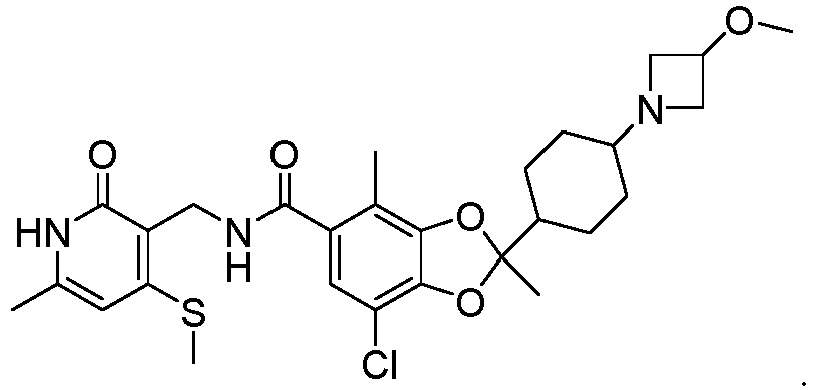
- In a thirteenth aspect,
crystalline Form 3 is characterized by an XRPD (x-ray powder diffraction) substantially similar toFIG. 5 . - In a fourteenth aspect,
crystalline Form 3 is characterized by a Thermogravimetric analysis (TGA) of a 5.93% weight loss between 43 and 143 °C, or Differential Scanning Calorimetry (DSC) with two endotherms at 34.5 °C and 107.0 °C (onset temperatures) and one exotherm at 249.0 °C (onset temperature), or both, wherein thecrystalline Form 3 may also comprise XRPD peaks at 2Θ angles substantially similar toFIG. 5 . Alternatively, as part of a fourteenth aspect,crystalline Form 3 is characterized by a Thermogravimetric analysis (TGA) or Differential Scanning Calorimetry (DSC) substantially similar toFIG. 6 , wherein thecrystalline Form 3 may also comprise XRPD peaks at 2Θ angles substantially similar toFIG. 5 . - In a fifteenth aspect,
crystalline Form 3 as described herein (e.g., as in the twelfth thirteenth, or fourteenth aspect) is at least 60% a single crystalline form, at least 70% a single crystalline form, at least 80% a single crystalline form, at least 90% a single crystalline form, at least 95% a single crystalline form, or at least 99% a single crystalline form by weight. - In a sixteenth aspect,
crystalline Form 3 as described herein (e.g., as in the twelfth, thirteenth, fourteenth, or fifteenth aspects) has a chemical purity of at least 60%, at least 70%, at least 80%, at least 90%, at least 95%, or at least 99% by weight. - In a seventeenth aspect, the crystalline Form 1 as described herein (e.g., as in the first, second, third, fourth, or fifth aspect), the crystalline Form 2 as described herein (e.g., as in the seventh, eighth, ninth, tenth, or eleventh aspect), the or crystalline Form 3 (e.g., as in the twelfth, thirteenth, fourteenth, fifteenth, or sixteenth aspect) is represented by the following structural formula:


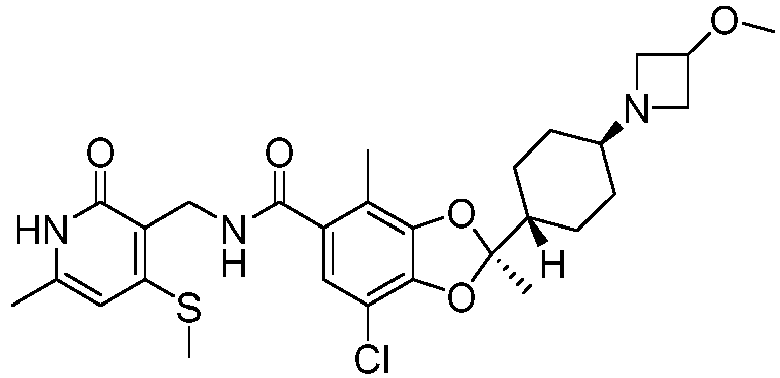
- The crystalline forms described herein and compositions thereof are useful for treating diseases or disorders responsive to inhibition of EZH2. Such diseases and disordes include those associated with cellular proliferation. In some embodiments, the crystalline forms and compositions thereof described herein are useful in treating diseases and/or disorders associated with misregulation of cell cycle or DNA repair. In some embodiments, the crystalline forms and compositions thereof described herein are useful in treating cancer. Exemplary types of cancer include e.g., adrenal cancer, acinic cell carcinoma, acoustic neuroma, acral lentiginous melanoma, acrospiroma, acute eosinophilic leukemia, acute erythroid leukemia, acute lymphoblastic leukemia, acute megakaryoblastic leukemia, acute monocytic leukemia, acute promyelocytic leukemia, adenocarcinoma, adenoid cystic carcinoma, adenoma, adenomatoid odontogenic tumor, adenosquamous carcinoma, adipose tissue neoplasm, adrenocortical carcinoma, adult T-cell leukemia/lymphoma, aggressive NK-cell leukemia, AIDS-related lymphoma, alveolar rhabdomyosarcoma, alveolar soft part sarcoma, ameloblastic fibroma, anaplastic large cell lymphoma, anaplastic thyroid cancer, angioimmunoblastic T-cell lymphoma, angiomyolipoma, angiosarcoma, astrocytoma, atypical teratoid rhabdoid tumor, B-cell chronic lymphocytic leukemia, B-cell prolymphocytic leukemia, B-cell lymphoma, basal cell carcinoma, biliary tract cancer, bladder cancer, blastoma, bone cancer, Brenner tumor, Brown tumor, Burkitt's lymphoma, breast cancer, brain cancer, carcinoma, carcinoma in situ, carcinosarcoma, cartilage tumor, cementoma, myeloid sarcoma, chondroma, chordoma, choriocarcinoma, choroid plexus papilloma, clear-cell sarcoma of the kidney, craniopharyngioma, cutaneous T-cell lymphoma, cervical cancer, colorectal cancer, Degos disease, desmoplastic small round cell tumor, diffuse large B-cell lymphoma, dysembryoplastic neuroepithelial tumor, dysgerminoma, embryonal carcinoma, endocrine gland neoplasm, endodermal sinus tumor, enteropathy-associated T-cell lymphoma, esophageal cancer, fetus in fetu, fibroma, fibrosarcoma, follicular lymphoma, follicular thyroid cancer, ganglioneuroma, gastrointestinal cancer, germ cell tumor, gestational choriocarcinoma, giant cell fibroblastoma, giant cell tumor of the bone, glial tumor, glioblastoma multiforme, glioma, gliomatosis cerebri, glucagonoma, gonadoblastoma, granulosa cell tumor, gynandroblastoma, gallbladder cancer, gastric cancer, hairy cell leukemia, hemangioblastoma, head and neck cancer, hemangiopericytoma, hematological malignancy, hepatoblastoma, hepatosplenic T-cell lymphoma, Hodgkin's lymphoma, non-Hodgkin's lymphoma, invasive lobular carcinoma, intestinal cancer, kidney cancer, laryngeal cancer, lentigo maligna, lethal midline carcinoma, leukemia, leydig cell tumor, liposarcoma, lung cancer, lymphangioma, lymphangiosarcoma, lymphoepithelioma, lymphoma, acute lymphocytic leukemia, acute myelogenous leukemia, chronic lymphocytic leukemia, liver cancer, small cell lung cancer, non-small cell lung cancer, MALT lymphoma, malignant fibrous histiocytoma, malignant peripheral nerve sheath tumor, malignant triton tumor, mantle cell lymphoma, marginal zone B-cell lymphoma, mast cell leukemia, mediastinal germ cell tumor, medullary carcinoma of the breast, medullary thyroid cancer, medulloblastoma, melanoma, meningioma, merkel cell cancer, mesothelioma, metastatic urothelial carcinoma, mixed Mullerian tumor, mucinous tumor, multiple myeloma, muscle tissue neoplasm, mycosis fungoides, myxoid liposarcoma, myxoma, myxosarcoma, nasopharyngeal carcinoma, neurinoma, neuroblastoma, neurofibroma, neuroma, nodular melanoma, ocular cancer, oligoastrocytoma, oligodendroglioma, oncocytoma, optic nerve sheath meningioma, optic nerve tumor, oral cancer, osteosarcoma, ovarian cancer, Pancoast tumor, papillary thyroid cancer, paraganglioma, pinealoblastoma, pineocytoma, pituicytoma, pituitary adenoma, pituitary tumor, plasmacytoma, polyembryoma, precursor T-lymphoblastic lymphoma, primary central nervous system lymphoma, primary effusion lymphoma, primary peritoneal cancer, prostate cancer, pancreatic cancer, pharyngeal cancer, pseudomyxoma peritonei, renal cell carcinoma, renal medullary carcinoma, retinoblastoma, rhabdomyoma, rhabdomyosarcoma, Richter's transformation, rectal cancer, sarcoma, Schwannomatosis, seminoma, Sertoli cell tumor, sex cord-gonadal stromal tumor, signet ring cell carcinoma, skin cancer, small blue round cell tumors, small cell carcinoma, soft tissue sarcoma, somatostatinoma, soot wart, spinal tumor, splenic marginal zone lymphoma, squamous cell carcinoma, synovial sarcoma, Sezary's disease, small intestine cancer, squamous carcinoma, stomach cancer, T-cell lymphoma, testicular cancer, thecoma, thyroid cancer, transitional cell carcinoma, throat cancer, urachal cancer, urogenital cancer, urothelial carcinoma, uveal melanoma, uterine cancer, verrucous carcinoma, visual pathway glioma, vulvar cancer, vaginal cancer, Waldenstrom's macroglobulinemia, Warthin's tumor, and Wilms' tumor.
- In one aspect, the cancer treated by the crystalline forms and compositions thereof described herein is selected from breast cancer, prostate cancer, colon cancer, renal cell carcinoma, glioblastoma multiforme cancer, bladder cancer, melanoma, bronchial cancer, lymphoma, liver cancer, multiple myeloma, lymphoma, ovarian cancer, NSCL, pancreatic cancers, malignant rhabdoid tumor, synovial sarcoma, and glioma.
- Another aspect of the present disclosure is the use of one or more of the crystalline forms as described herein in the manufacture of a medicament for use in the treatment of a disorder or disease herein. Another object of the present disclosure is one or more of the crystalline forms or composition described herein for use in the treatment of a disorder or disease herein.
- Also provided are pharmaceutical compositions comprising one or more of the disclosed crystalline forms; and a pharmaceutically acceptable carrier.
- Compositions described herein may be administered orally, parenterally, by inhalation spray, topically, rectally, nasally, buccally, vaginally or via an implanted reservoir. The term "parenteral" as used herein includes subcutaneous, intravenous, intramuscular, intra-articular, intra-synovial, intrasternal, intrathecal, intrahepatic, intralesional and intracranial injection or infusion techniques.
- The amount of provided crystalline form that may be combined with carrier materials to produce a composition in a single dosage form will vary depending upon the patient to be treated and the particular mode of administration. Provided compositions may be formulated such that a dosage of between 0.001 - 100 mg/kg body weight/day of the inhibitor can be administered to a patient receiving these compositions.
- It should also be understood that a specific dosage and treatment regimen for any particular patient will depend upon a variety of factors, including age, body weight, general health, sex, diet, time of administration, rate of excretion, drug combination, the judgment of the treating physician, and the severity of the particular disease being treated. The amount of a provided crystalline form in the composition will also depend upon the particular compound in the composition.
- As depicted in the Examples below, crystalline forms were prepared according to the following general procedures.
- The amorphous form of Compound 1 was prepared as a single enantiomer, single geometric isomer, using the following procedure below. The XRPD pattern of the amorphous product from this procedure is shown in
FIG. 7 . -

- To a solution of
methyl 3,4-dihydroxy-2-methylbenzoate (5.11 g, 27.9 mmol) in tetrahydrofuran (199 mL) at -20 °C was added sulfuryl chloride (2.45 mL, 30.6 mmol) dropwise. The reaction mixture was stirred at -20 °C for 3 h then quenched with a saturated aqueous solution of ammonium chloride (50 mL). The desired product was extracted with ethyl acetate (25 mL × 3). The combined organic layers were washed with brine (25 mL), dried over sodium sulfate, filtered, and concentrated to dryness under reduced pressure. The residue was purified by flash chromatography (silica gel,gradient 0% to 60% ethyl acetate in heptane) to give the title compound (4.117 g, 68% yield) as a beige solid. LCMS [M+H]+ m/z: calc'd 217.0; found 217.1 (Cl isotope pattern). - A mixture of methyl 5-chloro-3,4-dihydroxy-2-methylbenzoate (1.2 g, 5.53 mmol), triruthenium dodecacarbonyl (176 mg, 276 µmοl), and triphenylphosphine (145 mg, 553 µmol) was degassed under vacuum and purged with nitrogen (3 cycles). Toluene (8.1 mL) was added and the reaction mixture was heated to reflux for 30 min. A solution of 4-ethynylcyclohexan-1-one (1.34 g, 11.0 mmol) in toluene (17 mL) was then added dropwise and the reaction stirred for 23 h at reflux. Finally, the reaction mixture was cooled to room temperature and concentrated to dryness under reduced pressure. The residue was purified by flash chromatography (silica gel,
gradient 0 to 60% ethyl acetate in heptane) to give the title compound (1.327 g, 70% yield) as a yellow oil. LCMS [M+Na]+ m/z: calc'd 361.1; found 361.1 (Cl isotope pattern). - The racemic mixture of methyl-7-chloro-2,4-dimethyl-2-(4-oxocyclohexyl)benzo[d][1,3]dioxole-5-carboxylate (4.4 g, 13 mmol) was resolved by preparative SFC [Column: ChiralPak AY from Daicel chemical industries (250mm×50mm I.D., 10µm). Mobile phase A: CO2 / Mobile phase B: 0.1% NH4OH in methanol. Isocratic (85% mobile phase A and 15% mobile phase B). Flow rate: 80 mL/min. Column temperature: 40°C]. Intermediate 1 (Peak 1) (undesired enantiomer/distomer): Retention time = 6.2 min. Recovery = 1.4 g, 4.05 mmol, 31% yield, 90% ee, 98% purity (yellow solid). 1H NMR (400 MHz, Chloroform-d) δ 7.48 (s, 1H), 3.78 (s, 3H), 2.44 - 2.36 (m, 2H), 2.35 - 2.25 (m, 6H), 2.19 (tdd, J = 2.8, 5.6, 13.1 Hz, 2H), 1.70 - 1.57 (m, 5H). Intermediate 1 (Peak 2) (desired enantiomer/eutomer): Retention time = 7.0 min. Recovery = 1.1 g, 3.08 mmol, 23.75% yield, 99% ee, 95% purity (yellow solid). 1H NMR (400 MHz, Chloroform-d) δ 7.49 (s, 1H), 3.78 (s, 3H), 2.44 - 2.36 (m, 2H), 2.36 - 2.25 (m, 6H), 2.20 (tdd, J = 2.8, 5.6, 13.1 Hz, 2H), 1.72 - 1.59 (m, 5H). SFC analytical method: [Column: ChiralPak AY-3 (150×4.6mm I.D., 3µm). Mobile phase A: CO2 / Mobile phase B: 0.05% Et2NH in iPrOH. Gradient: from 5 to 40% of mobile phase B (over 5.5 min). Flow rate: 2.5 mL/min. Column temperature: 40 °C]. Intermediate 1 (Peak 1 - undesired enantiomer/ distomer): Retention time = 2.853 min. Intermediate 1 (Peak 2 - desired enantiomer/eutomer): Retention time = 2.979 min.
-

- Step 1: Synthesis of methyl 7-chloro-2-(4-(3-methoxyazetidin-1-yl)cyclohexyl)-2,4-dimethylbenzo[d][1,3]dioxole-5-carboxylate A solution of 3-methoxyazetidine hydrochloride salt (8 g, 64.75 mmol) and N,N-diisopropylethylamine (12 mL, 68.9 mmol) in methanol (30 mL) was stirred at room temperature for 30 min before a solution of another solution of methyl 7-chloro-2,4-dimethyl-2-(4-oxocyclohexyl)-1,3-benzodioxole-5-carboxylate (Intermediate 1 - Peak 2) (4.1 g, 12.10 mmol) in tetrahydrofuran (30 mL) was added. The reaction mixture was stirred at room temperature for 1 h then cooled to -70 °C. Lithium borohydride (500 mg, 22.96 mmol) was added and the reaction stirred at -70 °C for 30 min [or until complete consumption of the starting material was observed by TLC, ethyl acetate/methanol 5:1]. Next, two batches of the reaction were combined and quenched with a saturated aqueous solution of ammonium chloride (120 mL) at 0 °C and the desired product was extracted with dichloromethane (200 mL × 3). The combined organic layers were dried over sodium sulfate, filtered and concentrated to dryness under reduced pressure. The residue was purified by flash chromatography (silica gel,
gradient 0 to 14% methanol in dichloromethane) to give title compound (8.05 g, 67% yield, 83% purity) as a light yellow oil. A sample (50 mg) was purified further by preparative thin layer chromatography (silica gel, ethyl acetate methanol 15:1). LCMS [M+H]+ m/z: calc'd. 410.2; found 410.1. 1H NMR (400 MHz, Methanol-d4 ) δ 7.39 (s, 1H), 3.95 - 3.91 (m, 1H), 3.73 (s, 3H), 3.59 - 3.51 (m, 2H), 3.16 (s, 3H), 2.97 (br dd, J = 6.4, 8.0 Hz, 2H), 2.26 (s, 3H), 2.11 - 2.02 (m, 1H), 1.91 - 1.73 (m, 5H), 1.54 (s, 3H), 1.22 - 1.12 (m, 2H), 0.98 - 0.86 (m, 2H). - To a solution of methyl 7-chloro-2-(4-(3-methoxyazetidin-1-yl)cyclohexyl)-2,4-dimethylbenzo[d][1,3]dioxole-5-carboxylate (4 g, 9.75 mmol) in methanol (48 mL) was added a solution of lithium hydroxide hydrate (4.03 g, 96.06 mmol) in water (12 mL). The reaction was stirred at 70 °C for 2 h then two batches were combined and concentrated under reduced pressure. Water (50 mL) was added and the pH adjusted to 6 with a saturated aqueous citric acid solution at 0°C. The desired product was extracted with a 3:1 mixture of dichloromethane and isopropanol (300 mL × 5). The combined organic layers were dried over sodium sulfate, filtered and concentrated to dryness under reduced pressure to give the title compound (6.1g, crude) as a off-white solid, which was used in the next step without further purification. LCMS [M+H]+ m/z: calc'd. 396.2; found 396.1. 1H NMR (400 MHz, Methanol-d4 ) δ 7.07 (s, 1H), 4.05 - 4.10 (m, 2H), 3.76 - 3.88 (m, 1H), 3.67 (br dd, J= 10, 3.6 Hz, 2H), 3.22 (s, 3H), 2.71 - 2.81 (m, 1H), 2.19 (s, 3H), 1.91 - 1.99 (m, 4H), 1.75 - 1.85 (m, 1H), 1.52 (s, 3H), 1.18 - 1.28 (m, 2H), 1.06 - 1.14 (m, 2H).

- To a solution of 7-chloro-2-(4-(3-methoxyazetidin-1-yl)cyclohexyl)-2,4-dimethylbenzo[d][1,3]dioxole-5-carboxylic acid (Intermediate 2 - single enantiomer and geometric isomer) (5 g, 12.63 mmol) in N,N-dimethylformamide (50 mL) were added O-(7-azabenzotriazol-1-yl)-N,N,N',N'-tetramethyluronium hexafluorophosphate (5.7 g, 14.99 mmol) and N,N-diisopropylethylamine (11 mL, 63.15 mmol). The mixture was stirred at 20 °C for 30 min before 3-(aminomethyl)-6-methyl-4-(methylthio)pyridin-2(1H)-one hydrochloride salt (Intermediate 1) (4.2 g, 19.03 mmol) was added. The reaction mixture was stirred at room temperature for an additional 1.5 h then filtered. The filtrate was purified by preparative HPLC [Column: Phenomenex Gemini C18 (250mm×50mm, 10µm). Mobile phase A: water (0.04% ammonia hydroxide v/v and 10 mM ammonium bicarbonate) / Mobile phase B: acetonitrile. Gradient (75 to 44% mobile phase A / 25 to 56% mobile phase B, over 23 min). Column temperature: 30 °C] to give the title compound (4.4 g, 60% yield, 96% purity as a white solid. LCMS [M+H]+ m/z: calc'd.562.2; found 562.2. 1H NMR (400 MHz, Methanol-d4 ) δ 6.91 (s, 1H), 6.29 (s, 1H), 4.50 (s, 2H), 4.01 (quin, J = 6 Hz, 1H), 3.58 (dd, J = 8.8, 6.4 Hz, 2H), 3.26 (s, 3H), 2.92 - 3.02 (m, 2H), 2.54 (s, 3H), 2.31 (s, 3H), 2.21 (s, 3H), 2.01 - 2.11 (m, 1H), 1.79 - 2.00 (m, 5H), 1.62 (s, 3H), 1.19 - 1.34 (m, 2H), 0.91 - 1.08 (m, 2H). The XRPD pattern of the amorphous product from this procedure is shown in
FIG. 7 .List of Abbreviations Acronym Meaning % w/w Percentage weight 1H-NMR Proton Nuclear magnetic Resonance DMF dimethyl formamide DMSO dimethylsulfoxide DSC Differential Scanning Calorimetry DVS Dynamic Vapour Sorption EtOAc ethyl acetate EtOH ethanol GVS Gravimetric Vapour Sorption H2O water HPLC High Performance Liquid Chromatography HCl Hydrochloric acid IC Ion Chromatography IPA propan-2-ol KF Karl Fischer MAS Magic Angle Spinning MDSC Modulated Differential Scanning Calorimetry MEK methyl ethyl ketone MeOH methanol N/A Not Applicable PLM Polarised Light Microscopy RH Relative Humidity RT Room Temperature SCXRD Single Crystal X-Ray Diffraction SEM Scanning Electron Microscope TFA tri-fluoro acetic acid Tg Glass transition TGA Thermal Gravimetric Analysis THF tetrahydrofuran UV UltraViolet VT-XRPD Variable Temperature X-Ray Powder Diffraction XRPD X-Ray Powder Diffraction - XRPD diffractograms were collected on a Bruker AXS C2 GADDS, Bruker AXS D8 Advance, or PANalytical Empyrean as detailed below.
- XRPD using the Bruker AXS C2 GADDS diffractometer was performed using Cu Kα radiation (40 kV, 40 mA), an automated XYZ stage, a laser video microscope for auto-sample positioning and a Våntec-500 2-dimensional area detector. X-ray optics consisted of a single Göbel multilayer mirror coupled with a pinhole collimator of 0.3 mm. The beam divergence, i.e. the effective size of the X-ray beam on the sample, was approximately 4 mm. A θ-θ continuous scan mode was employed with a sample - detector distance of 20 cm which gives an effective 2θ range of 1.5°-32.5°. Typically, the sample was exposed to the X-ray beam for 120 seconds. The software used for data collection and analysis was GADDS for Win7/XP and Diffrac Plus EVA, respectively._Samples run under ambient conditions were prepared as flat plate specimens using powder as received without grinding. Samples were prepared and analyzed on either a glass slide or glass frit. Samples were lightly pressed onto a glass slide to obtain a flat surface for analysis. A glass frit filter block was used to isolate and analyze solids from suspensions by adding a small amount of suspension directly to the glass frit before filtration under a light vacuum. For variable temperature (VT) experiments samples were mounted on an Anton Paar DHS 900 hot stage under ambient conditions. The sample was then heated to the appropriate temperature at 10 °C/min and subsequently held isothermally for 1 minute before data collection was initiated. Samples were prepared and analyzed on a silicon wafer mounted to the hot stage using a heat-conducting compound.
- XRPD using the Bruker D8 diffractometer was performed using Cu Kα radiation (40 kV, 40 mA) and a θ-2θ goniometer fitted with a Ge monochromator. The incident beam passes through a 2.0 mm divergence slit followed by a 0.2 mm anti-scatter slit and knife edge. The diffracted beam passes through an 8.0 mm receiving slit with 2.5° Soller slits followed by the Lynxeye Detector. The software used for data collection and analysis was Diffrac Plus XRD Commander and Diffrac Plus EVA, respectively. Samples were run under ambient conditions as flat plate specimens using powder as received. The sample was prepared on a polished, zero-background (510) silicon wafer by gently pressing onto the flat surface or packed into a cut cavity. The sample was rotated in its own plane.
- XRPD using the PANalytical Empyrean diffractometer was performed using Cu Kα radiation (45 kV, 40 mA) in transmission geometry. A 0.5° slit, 4 mm mask and 0.04 rad Seller slits with a focusing mirror were used on the incident beam. A PIXcel3D detector, placed on the diffracted beam, was fitted with a receiving slit and 0.04 rad Seller slits. The software used for data collection was X'Pert Data Collector using X'Pert Operator Interface. The data were analyzed and presented using Diffrac Plus EVA or HighScore Plus. Samples were prepared and analyzed in either a metal or
Millipore 96 well-plate in transmission mode. X-ray transparent film was used between the metal sheets on the metal well-plate and powders (approximately 1-2 mg) were used as received. The Millipore plate was used to isolate and analyze solids from suspensions by adding a small amount of suspension directly to the plate before filtration under a light vacuum. - DSC data were collected on a TA Instruments Q2000 equipped with a 50 position auto-sampler. Typically, 0.5-3 mg of each sample, in a pin-holed aluminium pan, was heated at 10 °C/min from 25 °C up to 300 °C. A purge of dry nitrogen at 50 ml/min was maintained over the sample. Modulated temperature DSC was carried out using an underlying heating rate of 2 °C/min and temperature modulation parameters of ±0.318 °C (amplitude) every 60 seconds (period). The instrument control software was Advantage for Q Series and Thermal Advantage and the data were analyzed using Universal Analysis or TRIOS.
- DSC data were also collected on a TA Instruments Discovery DSC equipped with a 50 position auto-sampler. Typically, 0.5-3 mg of each sample, in a pin-holed aluminium pan, was heated at 10 °C/min from 25 °C up to 300 °C. A purge of dry nitrogen at 50 ml/min was maintained over the sample. The instrument control software was TRIOS and the data were analyzed using TRIOS or Universal Analysis.
- TGA data were collected on a TA Instruments Q500 TGA, equipped with a 16 position auto-sampler. Typically, 5-10 mg of each sample was loaded onto a pre-tared aluminum DSC pan and heated at 10 °C/min from ambient temperature to 300 °C. A nitrogen purge at 60 ml/min was maintained over the sample. The instrument control software was Advantage for Q Series and Thermal Advantage and the data were analyzed using Universal Analysis or TRIOS.
- TGA data were also collected on a TA Instruments Discovery TGA, equipped with a 25 position auto-sampler. Typically, 5-10 mg of each sample was loaded onto a pre-tared aluminium DSC pan and heated at 10 °C/min from ambient temperature to 300 °C. A nitrogen purge at 25 ml/min was maintained over the sample. The instrument control software was TRIOS and the data were analyzed using TRIOS or Universal Analysis.
- Screening methods for crystallization are outlined in methods described below.
- In Maturation Chamber: Suspensions for maturation were placed in a platform shaker incubator (Heidolph Titramax / Incubator 1000,
Figure 2 ) and subjected to a series of heat-cool cycles from ambient to approximately 50 °C. This was achieved by switching the heating on or off every 4 hours. Shaking was maintained throughout. - In Polar Bear: Suspensions were stirred (500 rpm) in a Polar Bear (Cambridge Reactor Design) for varying lengths of time at 50 °C. The samples were then cooled to 25 °C at 0.1 °C/min and stirred for a further four hours. After this time the samples were heated back to 50 °C at 0.1 °C/min. The cycle was then repeated.
- Solutions were cooled to 5 °C at 0.1 °C/min in a Polar Bear and stirred at this temperature for varying lengths of time. All solids were filtered and dried under suction for 10 min and initially analyzed by XRPD. The solutions were further cooled to -20 °C for 16 h and any new solids were then treated as previously. Any remaining solutions were evaporated (see
Method 3 below). - Solutions placed in vials were evaporated at ambient conditions by removing the lids of the vials or by inserting a needle into the septum cap of the vials. The samples were allowed to slowly evaporate to dryness or until a solid appeared at ambient conditions.
- Solutions were treated with anti-solvent dropwise at 50 °C until it became cloudy. The samples were then cooled to 5 °C at 0.1 °C/min and held isothermally. Where required, additional anti-solvent was added to the suspensions. The solids were filtered and dried under suction for 10 min and the residues were initially analyzed by XRPD.
- The amorphous form of Compound 1 samples with different purities, one with 95.2% purity (30 mg) and another with 97.6% purity (20 mg), were each suspended or dissolved in 10-30 vol of a given solvent at RT. After 5 min equilibration at RT, all samples (solutions and suspensions) were heated to 50 °C for 10 minutes and the resulting samples were treated as follows: Suspensions were matured between 60 and 5 °C for 72 hrs (4 hrs at each temperature). Solutions were cooled from 50 to 5 °C at 0.1 °C/min and maintained at 5 °C for 72 hrs. If no solid was obtained, the solutions were allowed to evaporate at RT. All the recovered solids were analyzed by XRPD and subsequently by the appropriate techniques. See Tables 1-3 for screening procedures and analytical results.
- Based on the XRPD analysis, the polymorph screening using the amorphous form of Compound 1 with 95.2% purity yielded three crystalline forms, denoted herein as Form 1,
Form 2, and Form 3 (Tables 1 and 2). Form 1 was the most abundant form, which was obtained from multiple solvent systems.Form 3 was only observed once from the solvent 2-butanol. The polymorph screening using the amorphous form of Compound 1 with 97.6% purity yielded Form 1 andForm 2, but not Form 3 (Table 3). Form 1 was more abundant thanForm 2. The characterizations of Forms 1-3 are presented below.Table 1. Polymorph screening using the amorphous form of Compound 1 with 95.2% purity (30 mg) Solvent 10 vol 20 vol 30 vol Observation at 50 °C Treatment Evaporation at RT XRPD n-Heptane x x x Suspension Maturation 60/5 °C N/P Form 1 Acetone ✔ - Solution Cooling at 5 °C N/P Form 1 2-Propanol ✔ - Solution Cooling at 5 °C Glass/Gum N/P Ethanol ✔ - Solution Cooling at 5 °C Glass/Gum N/P Ethyl Acetate x - Suspension Maturation 60/5 °C N/ P Form 2 Isopropyl Acetate x ✔ x Suspension Maturation 60/5 °C N/P Form 1 tert-Butylmethyl Ether x ✔ x Suspension Maturation 60/5 °C N/P Form 1 Methylisobutyl Ketone x x Suspension Maturation 60/5 °C N/P Form 1 Dimethyl Sulfoxide ✔ - Solution Cooling at 5 °C Solid Amorphous Anisole ✔ - Solution Cooling at 5 °C Glass/Gum N/P Methanol ✔ - Solution Cooling at 5 °C Solid Amorphous Toluene x ✔ x ✔ x Suspension Maturation 60/5 °C N/ P Form 2 Key: ✔= Clear solution; ✔x = turbid; x = suspension; N/P = not performed Table 2. Polymorph screening using the amorphous form of Compound 1 with 95.2% purity (30 mg) Solvent 10 vol 20 vol 30 vol Observation at 50 °C Treatment Observation post treatment (72 hrs) Evaporation at RT XRPD Tetrahydrofuran ✔ - - Solution Cooling at 5 °C Solution Glass/Gum N/P Dichloromethane ✔ - - Solution Cooling at 5 °C Solution Glass/Gum N/P Acetonitrile ✔ - - Suspension Maturation 60/5 °C Suspension N/P Form 1 10% Water / EtOH ✔ - - Solution Cooling at 5 °C Solution Glass/Gum N/P 10% Water / IPA ✔ - - Solution Cooling at 5 °C Solution Glass/Gum N/P 10% Water / THF ✔ - - Solution Cooling at 5 °C Solution Glass/Gum N/P MEK x ✔ - Solution Cooling at 5 °C Suspension N/P Form 2 Water x x x Gummy suspension Maturation 60/5 °C Suspension N/P Form 1 2-Butanol ✔ - - Solution Cooling at 5 °C Suspension N/P Form 3 Isobutyl acetate x x ✔ x Thin suspension Maturation 60/5 °C Suspension N/P Form 1 Cyclohexane x x x Suspension Maturation 60/5 °C Suspension N/P Form 1 + two additional peaks 1,4-Dioxane ✔ - - Solution Cooling at 5 °C Solution Solid Amorphous Key: ✔= Clear solution; ✔x = turbid; x = suspension; N/P = not performed Table 3. Polymorph screening using the amorphous form of Compound 1 with 97.6% purity (20 mg) Solvent 10 vol 20 vol 30 vol Observation at 50 °C Treatment Observation post treatment (72 hrs) Evaporation at RT XRPD n-Heptane x x x Suspension Maturation 60/5 °C Suspension N/P Form 1 Acetone x ✔ x ✔ Suspension Maturation 60/5 °C Suspension N/P Form 1 2-Propanol ✔ - - Solution Cooling at 5 °C Solution Glass/ gum N/P Ethanol ✔ - - Solution Cooling at 5 °C Solution Glass/ gum N/P Ethyl Acetate x x x Suspension Maturation 60/5 °C Suspension N/P Form 1 Isopropyl Acetate x x x Suspension Maturation 60/5 °C Suspension N/P Form 1 tert-Butylmethyl Ether x x x Suspension Maturation 60/5 °C Suspension N/P Form 1 MEK ✔ - - Solution Cooling at 5 °C Suspension N/P Form 1 Toluene ✔ - - Solution Cooling at 5 °C Solution Solid Similar to Form 2 Tetrahydrofuran ✔ - - Solution Cooling at 5 °C Solution Solid Similar to Form 2 Acetonitrile x x x Suspension Maturation 60/5 °C Suspension N/P Form 1 10% Water / IPA - - - Solution Cooling at 5 °C Solution Glass/ gum N/P Key: ✔= Clear solution; ✔x = turbid; x = suspension; N/P = not performed -
Forms 1 and 2 were selected for further analysis as XRPD forForm 3 revealed a poorly crystalline phase. For Form 1, the sample obtained from acetone had the highest purity (97.4 %) and contained only trace solvent. Scale-up experiments on Form 1 were performed accordingly as described below. ForForm 2, the sample obtained from MEK had a higher purity (97.2 %) and contained only a small amount of residual MEK. Scale-up experiments on Form 1 were performed accordingly as described below. - Scale-up experiments for Form 1 in acetone and
Form 2 in MEK were each conducted according to the following procedure. The amorphous form of Compound 1 prepared following the methods inU.S. 62/659,408 FIG. 1-4 ). Yields were also calculated from the solids recovered. - For Form 1 scale-up, the solid sample was confirmed to be crystalline Form 1 by XRPD (Table 4 and
FIG. 1 ). The purity was determined to be 96.6 % by HPLC. The sample matched the amorphous form of Compound 1 reference material by 1H NMR with a small amount of residual acetone (0.04 eq) remained in the sample. Thermal analysis showed a small weight loss of 1.0 % w/w (which equates to 0.32 eq of water), consistent with the KF data. DSC analysis showed a sharp endotherm at 179.5 °C (onset) (FIG. 2 ). GVS analysis found the material to be slightly hygroscopic, with an uptake of 1.7 % w/w water between 0 and 90 % RH. The sample remained Form 1 after GVS analysis or stored for 5 days at elevated RH conditions. The morphology of Form 1 by PLM and SEM was agglomerates of small crystalline particles. These agglomerates can vary in size and shape (between 20 and 650 µm), and the crystalline particles are small and irregular (up to 20 µm). Overall, Form 1 was determined to be anhydrous. See also Table 5 for Form 1 property summaries. - For
Form 2 scale-up, the solid sample was confirmed to becrystalline Form 2 by XRPD (FIG. 3 ). However, further characterizations suggested thatForm 2 was a less stable crystalline form than Form 1. For example, unlike Form 1 retaining its original crystalline form, the XRPD analysis showed thatForm 2 became amorphous after GVS analysis or stored for 5 days at elevated RH conditions. Unlike Form 1 exhibiting a sharp endotherm (FIG. 2 ),Form 2 exhibited two endotherm events in the DSC analysis (FIG. 4 ).Form 2 also exhibited a higher overall weight loss than Form 1 in the TGA analysis. Form 1 was observed more frequently thanForm 2 both during polymorph screening and in competitive slurry experiments, further supporting that Form 1 was more stable thanForm 2.Table 7. XRPD of crystalline Form 1 Angle 2-Theta ° Intensity % 10.0 61.1 10.2 37.5 11.0 21.9 11.4 23.9 11.8 20.4 12.3 24.7 12.7 27.6 13.3 52.8 14.9 85.3 15.3 24.8 16.1 22.5 17.4 18.5 20.2 100.0 20.8 63.9 21.3 43.1 22.2 52.9 22.5 49.2 23.8 28.4 Table 8. Characterization of crystalline Form 1 Analysis Scale-up Production of Form 1 XRPD Crystalline Form 1 (free base) 1H-NMR Consistent with reference material. 0.04 eq of residual acetone HPLC 96.6 % TGA Weight loss of 1.0 % between 36 and 179 °C (equates to 0.32 eq water) DSC Endotherm at 179.5 °C (onset, 61 J/g). KF 1.0 % w/w (0.32 eq water). GVS Uptake of ~1.7 % w/w water between 0 and 90 % RH. No hysteresis. XRPD post GVS showed the material remained Pattern 1. Yield 54.1 % (some material passed through filter. Actual yield should be Analysis Scale-up Production of Form 1 significantly higher). Static stability 40 °C / 75 % RH (5 days)XRPD: Slight reduction in crystallinity, remained pattern 1 HPLC: 96.5 %. Static stability 25 °C / 97 % RH (5 days) XRPD: Slight reduction in crystallinity, remained pattern 1 HPLC: 96.8 %. PLM Agglomerates of small crystalline particles. Agglomerates vary greatly in size and shape between 20 µ and 650 µ in length. Crystalline particles up to 20 µ in length of irregular shape. SEM Agglomerates of various size comprised of small crystalline irregular shaped particles. - While have described a number of embodiments of this, it is apparent that our basic examples may be altered to provide other embodiments that utilize the compounds and methods of this disclosure. Therefore, it will be appreciated that the scope of this disclosure is to be defined by the appended claims rather than by the specific embodiments that have been represented by way of example.
- Unless otherwise defined, all technical and scientific terms used herein are accorded the meaning commonly known to one with ordinary skill in the art.
Claims (15)
- A crystalline Form 1 of a compound having the structural formula:

- The crystalline Form 1 of Claim 1, wherein the crystalline form is characterized by at least four x-ray powder diffraction peaks at 2Θ angles using Cu Kα1 radiation selected from 10.0°, 13.3°, 14.9°, 20.2°, 20.8°, 22.2°, and 22.5°.
- The crystalline Form 1 of Claim 1 or 2, wherein the crystalline form is characterized by at least five x-ray powder diffraction peaks at 2Θ angles using Cu Kα1 radiation selected from 10.0°, 13.3°, 14.9°, 20.2°, 20.8°, 22.2°, and 22.5°.
- The crystalline Form 1 of any one of Claims 1 to 3, wherein the crystalline form is characterized by at least six x-ray powder diffraction peaks at 2Θ angles using Cu Kα1 radiation selected from 10.0°, 13.3°, 14.9°, 20.2°, 20.8°, 22.2°, and 22.5°.
- The crystalline Form 1 of any one of Claims 1 to 4, wherein the crystalline form is characterized by x-ray powder diffraction peaks at 2Θ angles using Cu Kα1 radiation selected from 10.0°, 13.3°, 14.9°, 20.2°, 20.8°, 22.2°, and 22.5°.
- The crystalline Form 1 of any one of Claims 1 to 5, wherein the crystalline form is characterized by x-ray powder diffraction peaks at 2Θ angles using Cu Kα1 radiation selected from 10.0°, 10.2°, 12.3°, 12.7°, 13.3°, 14.9°, 15.3°, 20.2°, 20.8°, 21.3°, 22.2°, 22.5°, and 23.8°.
- The crystalline Form 1 of any one of Claims 1 to 6, wherein the crystalline form is characterized by x-ray powder diffraction peaks at 2Θ angles using Cu Kα1 radiation selected from 10.0°, 10.2°, 11.0°, 11.4°, 11.8°, 12.3°, 12.7°, 13.3°, 14.9°, 15.3°, 16.1°, 17.4°, 20.2°, 20.8°, 21.3°, 22.2°, 22.5°, and 23.8°.
- The crystalline Form 1 of Claim 1, wherein the crystalline form is characterized by x-ray powder diffraction peaks at 2Θ angles using Cu Kα1 radiation selected from 14.9°, 20.2°, and 20.8°, or selected from 10.0°, 14.9°, 20.2°, and 20.8°, or selected from 10.0°, 14.9°, 20.2°, 20.8°, and 22.2°, or selected from 10.0°, 13.3°, 14.9°, 20.2°, 20.8°, and 22.2°.
- The crystalline Form 1 of any one of Claims 1 to 8, wherein the crystalline form is anhydrous.
- The crystalline Form 1 of any one of Claims 1 to 9, wherein the crystalline Form 1 is at least 90% a single crystalline form by weight or at least 95% a single crystalline form by weight.
- The crystalline Form 1 of any one of Claims 1 to 10, wherein the compound has a chemical purity of at least 90% by weight, at least 95% by weight, or at least 99% by weight.
- The crystalline Form 1 of any one of Claims 1 to 11, wherein the compound has the structural formula:

- A pharmaceutical composition comprising the crystalline form of any one of Claims 1 to 12, and a pharmaceutically acceptable carrier or diluent.
- The crystalline form of any one of Claims 1 to 12, or the pharmaceutical composition of Claim 13, for use in treating a disease or disorder associated with cellular proliferation.
- The crystalline form for use or the pharmaceutical composition for use of Claim 14, wherein the disease is cancer.
Priority Applications (6)
| Application Number | Priority Date | Filing Date | Title |
|---|---|---|---|
| SI202030528T SI4003532T1 (en) | 2019-07-24 | 2020-07-23 | Crystalline forms of 7-chloro-2-(4-(3-methoxyazetidin-1-yl)cyclohexyl)-2,4-dimethyl-n-((6-methyl-4-(methylthio)-2-oxo-1,2-dihydropyridin-3-yl)methyl)benzo[d][1,3]dioxole-5-carboxamide |
| MA56661A MA56661B1 (en) | 2019-07-24 | 2020-07-23 | CRYSTALLINE FORMS OF 7-CHLORO-2-(4-(3-METHOXYAZETIDIN-1-YL))CYCLOHEXYL) 2,4-DIMETHYL-N-((6-METHYL-4-(METHYLTHIO)-2-OXO-1,2-DIHYDROPYRIDIN-3-YL) METHYL)BENZO[D][1,3]DIOXOLE-5-CARBOXAMIDE |
| EP24182094.3A EP4442261A3 (en) | 2019-07-24 | 2020-07-23 | Crystalline forms of 7-chloro-2-(4-(3-methoxyazetidin-1-yl)cyclohexyl)-2,4-dimethyl-n-((6-methyl-4-(methylthio)-2-oxo-1,2-dihydropyridin-3-yl)methyl)benzo[d][1,3]dioxole-5-carboxamide |
| SM20240485T SMT202400485T1 (en) | 2019-07-24 | 2020-07-23 | Crystalline forms of 7-chloro-2-(4-(3-methoxyazetidin-1-yl)cyclohexyl)-2,4-dimethyl-n-((6-methyl-4-(methylthio)-2-oxo-1,2-dihydropyridin-3-yl)methyl)benzo[d][1,3]dioxole-5-carboxamide |
| HRP20241443TT HRP20241443T1 (en) | 2019-07-24 | 2020-07-23 | CRYSTAL FORMS 7-CHLORO-2-(4-(3-METHOXYAZETIDIN-1-YL)CYCLOHEXYL)-2,4-DIMETHYL-N-((6-METHYL-4-(METHYLTHIO)-2-OXO-1,2 -DIHYDROPYRIDIN-3-YL)METHYL)BENZO[D][1,3]DIOXOLE-5-CARBOXAMIDE |
| RS20241327A RS66244B1 (en) | 2019-07-24 | 2020-07-23 | Crystalline forms of 7-chloro-2-(4-(3-methoxyazetidin-1-yl)cyclohexyl)-2,4-dimethyl-n-((6-methyl-4-(methylthio)-2-oxo-1,2-dihydropyridin-3-yl)methyl)benzo[d][1,3]dioxole-5-carboxamide |
Applications Claiming Priority (2)
| Application Number | Priority Date | Filing Date | Title |
|---|---|---|---|
| US201962878012P | 2019-07-24 | 2019-07-24 | |
| PCT/US2020/043178 WO2021016414A1 (en) | 2019-07-24 | 2020-07-23 | Crystalline forms of 7-chloro-2-(4-(3-methoxyazetidin-1-yl)cyclohexyl)-2,4-dimethyl-n-((6-methyl-4-(methylthio)-2-oxo-1,2-dihydropyridin-3-yl)methyl)benzo[d][1,3]dioxole-5-carboxamide |
Related Child Applications (2)
| Application Number | Title | Priority Date | Filing Date |
|---|---|---|---|
| EP24182094.3A Division EP4442261A3 (en) | 2019-07-24 | 2020-07-23 | Crystalline forms of 7-chloro-2-(4-(3-methoxyazetidin-1-yl)cyclohexyl)-2,4-dimethyl-n-((6-methyl-4-(methylthio)-2-oxo-1,2-dihydropyridin-3-yl)methyl)benzo[d][1,3]dioxole-5-carboxamide |
| EP24182094.3A Division-Into EP4442261A3 (en) | 2019-07-24 | 2020-07-23 | Crystalline forms of 7-chloro-2-(4-(3-methoxyazetidin-1-yl)cyclohexyl)-2,4-dimethyl-n-((6-methyl-4-(methylthio)-2-oxo-1,2-dihydropyridin-3-yl)methyl)benzo[d][1,3]dioxole-5-carboxamide |
Publications (2)
| Publication Number | Publication Date |
|---|---|
| EP4003532A1 EP4003532A1 (en) | 2022-06-01 |
| EP4003532B1 true EP4003532B1 (en) | 2024-09-04 |
Family
ID=72047059
Family Applications (2)
| Application Number | Title | Priority Date | Filing Date |
|---|---|---|---|
| EP20754482.6A Active EP4003532B1 (en) | 2019-07-24 | 2020-07-23 | Crystalline forms of 7-chloro-2-(4-(3-methoxyazetidin-1-yl)cyclohexyl)-2,4-dimethyl-n-((6-methyl-4-(methylthio)-2-oxo-1,2-dihydropyridin-3-yl)methyl)benzo[d][1,3]dioxole-5-carboxamide |
| EP24182094.3A Pending EP4442261A3 (en) | 2019-07-24 | 2020-07-23 | Crystalline forms of 7-chloro-2-(4-(3-methoxyazetidin-1-yl)cyclohexyl)-2,4-dimethyl-n-((6-methyl-4-(methylthio)-2-oxo-1,2-dihydropyridin-3-yl)methyl)benzo[d][1,3]dioxole-5-carboxamide |
Family Applications After (1)
| Application Number | Title | Priority Date | Filing Date |
|---|---|---|---|
| EP24182094.3A Pending EP4442261A3 (en) | 2019-07-24 | 2020-07-23 | Crystalline forms of 7-chloro-2-(4-(3-methoxyazetidin-1-yl)cyclohexyl)-2,4-dimethyl-n-((6-methyl-4-(methylthio)-2-oxo-1,2-dihydropyridin-3-yl)methyl)benzo[d][1,3]dioxole-5-carboxamide |
Country Status (29)
| Country | Link |
|---|---|
| US (1) | US12516040B2 (en) |
| EP (2) | EP4003532B1 (en) |
| JP (2) | JP7603653B2 (en) |
| KR (1) | KR20220041129A (en) |
| CN (2) | CN114450279B (en) |
| AU (1) | AU2020316073A1 (en) |
| BR (1) | BR112022001161A2 (en) |
| CA (1) | CA3148447A1 (en) |
| CL (1) | CL2022000175A1 (en) |
| CO (1) | CO2022001482A2 (en) |
| DK (1) | DK4003532T3 (en) |
| ES (1) | ES2997972T3 (en) |
| FI (1) | FI4003532T3 (en) |
| HR (1) | HRP20241443T1 (en) |
| HU (1) | HUE069127T2 (en) |
| IL (1) | IL289972A (en) |
| LT (1) | LT4003532T (en) |
| MA (1) | MA56661B1 (en) |
| MD (1) | MD4003532T2 (en) |
| MX (2) | MX2022000931A (en) |
| MY (1) | MY207951A (en) |
| PE (1) | PE20220562A1 (en) |
| PH (1) | PH12022550188A1 (en) |
| PL (1) | PL4003532T3 (en) |
| PT (1) | PT4003532T (en) |
| RS (1) | RS66244B1 (en) |
| SI (1) | SI4003532T1 (en) |
| SM (1) | SMT202400485T1 (en) |
| WO (1) | WO2021016414A1 (en) |
Families Citing this family (8)
| Publication number | Priority date | Publication date | Assignee | Title |
|---|---|---|---|---|
| EP3797108B1 (en) | 2018-05-21 | 2022-07-20 | Constellation Pharmaceuticals, Inc. | Modulators of methyl modifying enzymes, compositions and uses thereof |
| US20250059180A1 (en) * | 2022-01-14 | 2025-02-20 | Dong Wha Pharm. Co., Ltd. | 1,3-benzodioxole derivative compound and pharmaceutical composition comprising same |
| KR20250023481A (en) | 2022-06-13 | 2025-02-18 | 트리라인 바이오사이언시스, 인크. | 1,8-naphthyridin-2-one heterobifunctional BCL6 degrader |
| CA3258325A1 (en) | 2022-06-13 | 2023-12-21 | Treeline Biosciences, Inc. | Quinolone bcl6 bifunctional degraders |
| JP2025523114A (en) | 2022-07-15 | 2025-07-17 | コンステレーション・ファーマシューティカルズ・インコーポレイテッド | EZH2 Inhibition Therapy for Treating AT-Rich Interaction Domain-Containing Protein 1A (ARID1A) Mutant Cancers |
| CN115403040B (en) * | 2022-08-11 | 2023-08-01 | 中国地质大学(北京) | Azobenzene polymer surface-modified diamond nano particle capable of regulating and controlling heat conductivity coefficient through optical radiation and preparation method thereof |
| JP2025528837A (en) | 2022-08-17 | 2025-09-02 | インサイト・コーポレイション | Therapies Comprising Anti-CD19 Antibodies and EZH2 Modulators |
| WO2024076663A1 (en) | 2022-10-06 | 2024-04-11 | Constellation Pharmaceuticals, Inc. | Ezh2 inhibition therapies for the treatment of brca1-associated protein (bap1) mutated cancers |
Family Cites Families (151)
| Publication number | Priority date | Publication date | Assignee | Title |
|---|---|---|---|---|
| JPS6317850A (en) | 1986-07-11 | 1988-01-25 | Fuji Photo Film Co Ltd | Production of 3-phenoxycatechols |
| DK611489A (en) | 1988-12-08 | 1990-06-09 | Duphar Int Res | ANXIOLYTIC ACTIVE PIPERAZINE DERIVATIVES AND PHARMACEUTICAL PREPARATIONS CONTAINING SUCH COMPOUNDS |
| JPH02255673A (en) | 1989-03-27 | 1990-10-16 | Fuji Photo Film Co Ltd | 4-aryloxy-1,3-benzodioxoles and production thereof |
| JPH02255674A (en) | 1989-03-27 | 1990-10-16 | Fuji Photo Film Co Ltd | 4-aryloxy-1,3-benzodioxoles and production thereof |
| JPH02269352A (en) | 1989-04-10 | 1990-11-02 | Fuji Photo Film Co Ltd | Photosensitive material |
| JP2537682B2 (en) | 1989-04-21 | 1996-09-25 | 富士写真フイルム株式会社 | Method for producing 3-aryloxycatechols |
| US5296497A (en) | 1989-05-16 | 1994-03-22 | Duphar International Research B.V. | 3,4-dehydropiperidine derivatives having psychotropic activity |
| JPH03130280A (en) | 1989-10-17 | 1991-06-04 | Fuji Photo Film Co Ltd | Production of 4-aryloxy-1,3-bonzodioxole |
| JP2816492B2 (en) | 1990-05-23 | 1998-10-27 | コニカ株式会社 | Silver halide photographic material |
| JPH0446175A (en) | 1990-06-14 | 1992-02-17 | Fuji Photo Film Co Ltd | Production of 5-hydroxy-3,4-methylenedioxybenzoic acid derivative |
| JPH0641038A (en) | 1992-07-17 | 1994-02-15 | Mitsubishi Kasei Corp | Carboxylic acid derivative |
| DE4326151A1 (en) | 1993-08-04 | 1995-02-09 | Hoechst Ag | Aromatic compounds and their use in liquid crystalline mixtures |
| US5629200A (en) | 1993-11-18 | 1997-05-13 | Daicel Chemical Industries, Ltd. | Production of optically active 2-amino-1-phenylethanol derivatives by asymetrical assimilation |
| US5514505A (en) | 1995-05-15 | 1996-05-07 | Xerox Corporation | Method for obtaining improved image contrast in migration imaging members |
| NZ331549A (en) | 1996-01-29 | 2000-09-29 | Univ California | Compounds useful in treating sexual dysfunction |
| HUP9902088A2 (en) | 1996-05-14 | 2001-04-28 | American Home Products Corporation | Substituted 1,3-benzodioxole derivatives, pharmaceutical preparations containing them and a process for their production |
| US5968929A (en) | 1996-10-30 | 1999-10-19 | Schering Corporation | Piperazino derivatives as neurokinin antagonists |
| JPH10287654A (en) | 1997-04-11 | 1998-10-27 | Nissan Chem Ind Ltd | Pyrazolone derivative, and herbicide |
| DK1026950T3 (en) | 1997-10-27 | 2006-06-26 | Univ California | Treatment of schizophrenia with ampakines and neuroleptics |
| WO2000018761A1 (en) | 1998-09-29 | 2000-04-06 | American Cyanamid Company | Substituted 3-cyanoquinolines as protein tyrosine kinases inhibitors |
| EP1384713B1 (en) | 1998-12-23 | 2008-10-15 | SmithKline Beecham Corporation | 4-amino-azepan-3-one derivatives as protease inhibitors |
| US7977333B2 (en) | 2000-04-20 | 2011-07-12 | Bayer Healthcare Llc | Substituted pyridines and pyridazines with angiogenesis inhibiting activity |
| US6451814B1 (en) | 2000-07-17 | 2002-09-17 | Wyeth | Heterocyclic β-3 adrenergic receptor agonists |
| CA2419301C (en) | 2000-08-21 | 2009-12-08 | Astrazeneca Ab | Quinazoline derivatives |
| WO2002016327A1 (en) | 2000-08-23 | 2002-02-28 | The Procter & Gamble Company | Benzimidazoles and analogues and their use as neutrophil inhibitors |
| EP1334091B1 (en) | 2000-08-24 | 2012-09-19 | University of Pittsburgh - Of the Commonwealth System of Higher Education | Thioflavin derivatives and their use in diagnosis and therapy of alzheimer's disease |
| AUPR255401A0 (en) | 2001-01-16 | 2001-02-08 | Novogen Research Pty Ltd | Regulation of lipids and/or bone density and compositions therefor |
| JP4256679B2 (en) | 2001-03-16 | 2009-04-22 | ノボゲン リサーチ ピーティーワイ リミテッド | How to treat restenosis |
| DE60216747T2 (en) | 2001-04-09 | 2007-10-04 | Novartis Vaccines and Diagnostics, Inc., Emeryville | GUANIDINE COMPOUNDS AS MELANOCORTIN-4-RECEPTOR (MC4-R) AGONISTS |
| WO2002085895A1 (en) | 2001-04-19 | 2002-10-31 | Astrazeneca Ab | Quinazoline derivatives |
| DE10148618B4 (en) | 2001-09-25 | 2007-05-03 | Schering Ag | Substituted N- (1,4,5,6-tetrahydro-cyclopentapyrazol-3-yl) derivatives, their preparation and use as medicaments |
| DE10148617A1 (en) | 2001-09-25 | 2003-04-24 | Schering Ag | New 3-acylamino-cyclopentanopyrazole derivatives, useful for treating e.g. cancer and viral infections, inhibit cyclin-dependent kinase |
| AUPR846401A0 (en) | 2001-10-25 | 2001-11-15 | Novogen Research Pty Ltd | 6-Hydroxy isoflavones, derivatives and medicaments involving same |
| EP1503986B1 (en) | 2001-12-21 | 2015-09-30 | Cytokinetics, Inc. | Compositions and methods for treating heart failure |
| US7524883B2 (en) | 2002-01-08 | 2009-04-28 | Eisai R&D Management Co., Ltd. | Eponemycin and epoxomicin analogs and uses thereof |
| JP2005519915A (en) | 2002-01-18 | 2005-07-07 | セレテック・リミテッド・ライアビリティ・カンパニー | Method for treating symptoms associated with Edg receptors |
| US7196108B2 (en) | 2002-03-08 | 2007-03-27 | Incyte San Diego Inc. | Bicyclic heterocycles for the treatment of diabetes and other diseases |
| US20060167083A1 (en) | 2002-04-09 | 2006-07-27 | Kelly Graham E | Therapeutic methods and compositions involving isoflav-3-ene and isoflavan structures |
| DE10219294A1 (en) | 2002-04-25 | 2003-11-13 | Schering Ag | New substituted N-(1,4,5,6-tetrahydro-cyclopentapyrazol-3-yl) derivatives, useful as cyclin-dependent kinase inhibitors for treating e.g. cancer, autoimmune diseases, cardiovascular diseases and neurodegenerative diseases |
| ES2301833T3 (en) | 2002-07-29 | 2008-07-01 | Hoffmann La Roche | DERIVATIVES OF BENZODIOXOL. |
| AU2002951271A0 (en) | 2002-09-06 | 2002-09-19 | Novogen Research Pty Ltd | Repair of dna mutagenic damage |
| US20060153782A1 (en) | 2002-09-23 | 2006-07-13 | Novogen Research Pty Ltd | Skin photoageing and actinic damage treatment |
| US7129239B2 (en) | 2002-10-28 | 2006-10-31 | Pfizer Inc. | Purine compounds and uses thereof |
| ES2328146T3 (en) | 2003-07-28 | 2009-11-10 | Merck Serono Sa | 2-IMINO-4- (UNCLE) OXO-5-POLYCYCLEVINYLOLINES FOR USE AS INHIBITORS OF P13 KINASES. |
| WO2005030705A1 (en) | 2003-09-24 | 2005-04-07 | Methylgene, Inc. | Inhibitors of histone deacetylase |
| CA2546643A1 (en) | 2003-11-18 | 2005-06-02 | Novogen Research Pty Ltd | Isoflavonoid prodrugs, compositions thereof and therapeutic methods involving same |
| WO2005049008A1 (en) | 2003-11-19 | 2005-06-02 | Novogen Research Pty Ltd | Combinational radiotherapy and chemotherapy compositions and methods |
| TW200526219A (en) | 2004-01-16 | 2005-08-16 | Wyeth Corp | Quinoline intermediates of receptor tyrosine kinase inhibitors and the synthesis thereof |
| WO2005100321A1 (en) | 2004-04-07 | 2005-10-27 | Millennium Pharmaceuticals, Inc. | Pgd2 receptor antagonists for the treatment of inflammatory diseases |
| US20050245529A1 (en) | 2004-04-14 | 2005-11-03 | Boehringer Ingelheim International Gmbh | Alkyne compounds with MCH antagonistic activity and medicaments comprising these compounds |
| EP1751124A4 (en) | 2004-05-07 | 2010-04-14 | Exelixis Inc | Raf modulators and methods of use |
| WO2005110410A2 (en) | 2004-05-14 | 2005-11-24 | Abbott Laboratories | Kinase inhibitors as therapeutic agents |
| ITMI20041347A1 (en) | 2004-07-05 | 2004-10-05 | Italfarmaco Spa | ALPHA-AMINO ACID DERIVATIVES FOR ANTI-INFLAMMATORY ACTIVITIES |
| SE0401971D0 (en) | 2004-08-02 | 2004-08-02 | Astrazeneca Ab | Piperidne derivatives |
| BRPI0517416A (en) | 2004-10-12 | 2008-10-07 | Serono Lab | gamma pi3 kinase inhibitors for treatment of anemia |
| SE0402635D0 (en) | 2004-10-29 | 2004-10-29 | Astrazeneca Ab | Chemical compounds |
| JP2006145294A (en) | 2004-11-17 | 2006-06-08 | Univ Nagoya | LABELING REAGENT FOR Fluorescent Labeling, MANUFACTURING METHOD FOR SUBSTRATE WITH LIGAND ON SURFACE AND MEASURING METHOD USING LABELING REAGENT |
| US7524870B2 (en) | 2004-12-03 | 2009-04-28 | Hoffmann-La Roche Inc. | Biaryloxymethylarenecarboxylic acids as glycogen synthase activators |
| SI1859793T1 (en) | 2005-02-28 | 2011-08-31 | Eisai R&D Man Co Ltd | Novel combinational use of a sulfonamide compound in the treatment of cancer |
| WO2006096807A1 (en) | 2005-03-08 | 2006-09-14 | Janssen Pharmaceutica N.V. | Aza-bridged-bicyclic amino acid derivatives as alpha 4 integrin antagonists |
| WO2006103449A2 (en) | 2005-03-31 | 2006-10-05 | Astrazeneca Ab | Saminopyrimidine derivates with tie2 inhibiting activity |
| KR20070120182A (en) | 2005-04-08 | 2007-12-21 | 바이엘 파마슈티칼스 코포레이션 | Pyrimidine Derivatives and Uses thereof in the Treatment of Cancer |
| PT1881823E (en) | 2005-05-17 | 2015-03-02 | Sarcode Bioscience Inc | COMPOSITIONS AND METHODS FOR THE TREATMENT OF EYE DISORDERS |
| AU2006249598A1 (en) | 2005-05-25 | 2006-11-30 | Wyeth | Methods of preparing 3-cyano-quinolines and intermediates made thereby |
| JPWO2006129609A1 (en) | 2005-05-30 | 2009-01-08 | 塩野義製薬株式会社 | 2-Naphthylimino-5,5-disubstituted-1,3-thiazine derivatives |
| JP2008545744A (en) | 2005-06-02 | 2008-12-18 | バイエル・クロツプサイエンス・アクチエンゲゼルシヤフト | Phenylalkyl-substituted heteroaryl derivatives |
| WO2006138418A2 (en) | 2005-06-14 | 2006-12-28 | President And Fellows Of Harvard College | Improvement of cognitive performance with sirtuin activators |
| JP5258561B2 (en) | 2005-07-15 | 2013-08-07 | アルバニー モレキュラー リサーチ, インコーポレイテッド | Aryl and heteroaryl substituted tetrahydrobenzazepines and their use to block reuptake of norepinephrine, dopamine and serotonin |
| CA2616224A1 (en) | 2005-07-21 | 2007-02-01 | Paratek Pharmaceuticals, Inc. | 10-substituted tetracyclines and methods of use thereof |
| KR101353268B1 (en) | 2005-08-04 | 2014-02-06 | 얀센 파마슈티카 엔.브이. | Pyrimidine compounds as serotonin receptor modulators |
| JPWO2007020936A1 (en) | 2005-08-17 | 2009-02-26 | 第一三共株式会社 | Antifungal bicyclic heterocyclic compound |
| WO2007081630A2 (en) | 2005-12-21 | 2007-07-19 | Janssen Pharmaceutica, N.V. | Substituted pyrimidinyl kinase inhibitors |
| CN101007798B (en) | 2006-01-24 | 2011-01-26 | 中国人民解放军军事医学科学院毒物药物研究所 | Benzodioxole derivatives and their preparation method and medicinal uses |
| JP2009531322A (en) | 2006-03-23 | 2009-09-03 | プロリシス リミテッド | Antibacterial agent |
| AU2007267175A1 (en) | 2006-05-30 | 2007-12-06 | Neurosearch A/S | Novel 1,4-diaza-bicyclo[3.2.2]nonyl oxadiazolyl derivatives and their medical use |
| WO2008027648A2 (en) | 2006-06-26 | 2008-03-06 | Case Western Reserve University | Methods and compositions for treating pathologies associated with bdnf signaling |
| WO2008029168A2 (en) | 2006-09-08 | 2008-03-13 | Summit Corporation Plc | Treatment of duchenne muscular dystrophy |
| EP2084141A4 (en) | 2006-10-30 | 2010-07-21 | Novogen Res Pty Ltd | PREVENTION AND INVERSION OF PERIPHERAL NEUROPATHY INDUCED BY CHEMOTHERAPY |
| RU2333211C1 (en) | 2006-11-01 | 2008-09-10 | Институт физиологически активных веществ Российской Академии наук | N,n'-substituted 3,7-diazabicyclo[3,3,1]nonanes with pharmacological effect, pharmacological compositions on their base, and application method |
| NZ580801A (en) | 2007-05-10 | 2012-09-28 | Bristol Myers Squibb Co | Aryl- and heteroaryl-substituted tetrahydrobenzo-1,4-diazepines and use thereof to block reuptake of norepinephrine, dopamine, and serotonin |
| BRPI0704074B8 (en) | 2007-08-29 | 2021-05-25 | Univ Estadual Paulista Julio De Mesquita Filho Unesp | piperidine derivatives of (-)-cassin and (-)-spectaline, pharmaceutical compositions containing them and processes for their preparation |
| MX2010004281A (en) | 2007-10-19 | 2010-09-10 | Sarcode Corp | Compositions and methods for treatment of diabetic retinopathy. |
| SG165655A1 (en) | 2008-04-16 | 2010-11-29 | Portola Pharm Inc | 2, 6-diamino- pyrimidin- 5-yl-carboxamides as syk or JAK kinases inhibitors |
| CN102131777B (en) | 2008-06-23 | 2014-03-19 | 詹森药业有限公司 | Piperidyl acrylamide antogonists of CCR2 |
| KR20110063739A (en) | 2008-08-14 | 2011-06-14 | 더 가번먼트 오브 더 유나이티드 스테이츠 오브 아메리카, 레프리젠티드 바이 더 세크러터리, 디파트먼트 오브 헬쓰 앤드 휴먼 서비스즈 | Oxadiazole-2-oxide as an antihypertensive |
| JP2010254629A (en) | 2009-04-27 | 2010-11-11 | Bayer Cropscience Ag | Optically active azoline derivative |
| TW201109327A (en) | 2009-05-28 | 2011-03-16 | Otsuka Pharma Co Ltd | Heterocyclic compound |
| AU2010270153A1 (en) | 2009-07-10 | 2012-02-02 | Vivalis | Substituted pyrrolidinone as inhibitors of hepatitis C NS5B polymerase, the pharmaceutical composition thereof and their therapeutic use |
| RU2417082C2 (en) | 2009-07-14 | 2011-04-27 | Учреждение Российской Академии Наук Институт Физиологически Активных Веществ Ран (Ифав Ран) | N, n '-substituted 3, 7-diazabicyclo[3,3,1]nonane drug for memory regeneration in health and disease in patients of all age groups, based pharmaceutical composition and method of application thereof |
| CA2784746A1 (en) | 2009-12-17 | 2011-07-14 | The Lubrizol Corporation | Lubricating composition containing an aromatic compound |
| CN102140100B (en) | 2010-01-27 | 2014-06-11 | 爱博新药研发(上海)有限公司 | Polycyclic compound for inhibiting hepatitis C virus efficiently, preparation method thereof and application thereof |
| CN101851218B (en) | 2010-04-27 | 2014-10-15 | 沈阳药科大学 | 4,5-disubstituted aryl isoselenazol derivative and application thereof |
| EP2566327B1 (en) | 2010-05-07 | 2017-03-29 | Glaxosmithkline LLC | Indoles |
| US20130338153A1 (en) | 2010-06-10 | 2013-12-19 | Afraxis, Inc. | 8-(2'-heterocycyl)pyrido[2.3-d]pyrimidin-7(8h)-ones for the treatment of cns disorders |
| JP5746334B2 (en) | 2010-06-16 | 2015-07-08 | シマベイ セラピューティクス, インコーポレーテッド | GPR120 receptor agonist and use thereof |
| PT2585469T (en) | 2010-06-24 | 2016-08-29 | Leo Pharma As | Benzodioxole or benzodioxepine heterocyclic compounds as phosphodiesterase inhibitors |
| US20130123367A1 (en) | 2010-07-28 | 2013-05-16 | Medizinische Universitat Wien | Vinylogous chalcone derivatives and their medical use |
| US9132136B2 (en) | 2010-08-02 | 2015-09-15 | Hoffmann-La Roche Inc. | Pharmaceutical combination |
| EP2617715A4 (en) | 2010-09-17 | 2014-02-26 | Taisho Pharmaceutical Co Ltd | GLYCINE TRANSPORTER INHIBITOR |
| WO2012045196A1 (en) | 2010-10-09 | 2012-04-12 | Abbott Laboratories | Phosphoglycerate kinase inhibitors |
| EP2681216B1 (en) | 2011-02-28 | 2017-09-27 | Epizyme, Inc. | Substituted 6,5-fused bicyclic heteroaryl compounds |
| US8802673B2 (en) | 2011-03-24 | 2014-08-12 | Hoffmann-La Roche Inc | Heterocyclic amine derivatives |
| JO3438B1 (en) | 2011-04-13 | 2019-10-20 | Epizyme Inc | Aryl- or heteroaryl-substituted benzene compounds |
| WO2013025484A1 (en) | 2011-08-12 | 2013-02-21 | Lapchak Paul A | Polyphenol analogs to treat ischemia |
| US8791108B2 (en) | 2011-08-18 | 2014-07-29 | Bristol-Myers Squibb Company | Inhibitors of human immunodeficiency virus replication |
| EP2774917A4 (en) | 2011-11-04 | 2015-05-06 | Ajinomoto Kk | Pharmaceutical composition for treating diabetes |
| PL2806859T3 (en) * | 2012-01-25 | 2019-11-29 | Vertex Pharma | Formulations of 3- (6- (1- (2,2-difluorobenzo [d] [1,3] dioxol-5-yl) cyclopropanecarboxamido) -3-methylpyridin-2-yl) benzoic acid |
| CA2862289C (en) | 2012-02-10 | 2019-11-26 | Constellation Pharmaceuticals, Inc. | Modulators of methyl modifying enzymes, compositions and uses thereof |
| WO2013142712A1 (en) | 2012-03-21 | 2013-09-26 | Rutgers, The State University Of New Jersey | Antimicrobial agents |
| MX367793B (en) | 2012-04-13 | 2019-09-06 | Epizyme Inc | Combination therapy for treating cancer. |
| BR112014025508B1 (en) | 2012-04-13 | 2020-11-17 | Eisai R&D Management Co., Ltd. | salt form of a human ezh2 histone methyltransferase inhibitor |
| US9562041B2 (en) | 2012-05-16 | 2017-02-07 | Glaxosmithkline Llc | Enhancer of zeste homolog 2 inhibitors |
| RU2509770C2 (en) | 2012-06-22 | 2014-03-20 | Общество с ограниченной ответственностью "Молекулярные Технологии" | Novel chemical compounds - 2,4-diamino-1,3,5-triazine derivatives for preventing and treating human and animal diseases |
| MX2015002555A (en) | 2012-08-30 | 2015-06-23 | Nippon Shinyaku Co Ltd | Pyridine derivative and medicine. |
| CN104870452B (en) | 2012-10-22 | 2018-04-13 | 希望之城 | Etp derivatives |
| JP2016503009A (en) | 2012-12-13 | 2016-02-01 | グラクソスミスクライン・リミテッド・ライアビリティ・カンパニーGlaxoSmithKline LLC | ZESTE homolog 2 enhancer inhibitor |
| PL2953941T3 (en) | 2013-02-11 | 2017-11-30 | Constellation Pharmaceuticals, Inc. | Modulators of methyl modifying enzymes, compositions and uses thereof |
| WO2014160401A1 (en) | 2013-03-13 | 2014-10-02 | Boston Biomedical, Inc. | 3-(aryl or heteroaryl) methyleneindolin-2-one derivatives as inhibitors of cancer stem cell pathway kinases for the treatment of cancer |
| WO2014177464A2 (en) | 2013-04-30 | 2014-11-06 | Heinrich-Heine-Universität Düsseldorf | Inhibitors of nhr2 and/or runx1/eto-tetramerization |
| KR20150027922A (en) | 2013-09-04 | 2015-03-13 | 주식회사 대웅제약 | Novel antifungal pyridinylhydrazide derivatives |
| WO2015032272A1 (en) | 2013-09-09 | 2015-03-12 | 江苏豪森药业股份有限公司 | C-aryl glucoside derivative, preparation method for same, and medical applications thereof |
| WO2015069110A1 (en) | 2013-11-07 | 2015-05-14 | Aapa B.V. | Multiple d2 a(nta)gonists/h3 antagonists for treatment of cns-related disorders |
| RS60022B1 (en) * | 2014-03-17 | 2020-04-30 | Daiichi Sankyo Co Ltd | 1,3-benzodioxole derivatives as ezh1 and/or ezh2 inhibitors |
| BR112016029612B1 (en) | 2014-06-17 | 2021-01-19 | Pfizer Inc. | substituted dihydroisoquinolinone compounds |
| WO2016038540A1 (en) | 2014-09-11 | 2016-03-17 | Piramal Enterprises Limited | Fused heterocyclic compounds as gpr120 agonists |
| CN107148419A (en) | 2014-10-28 | 2017-09-08 | 葛兰素史密斯克莱知识产权(第2 号)有限公司 | The inhibitor of ZESTE enhancers homologue 2 |
| AR102767A1 (en) | 2014-12-05 | 2017-03-22 | Lilly Co Eli | EZH2 INHIBITORS |
| WO2016130396A1 (en) | 2015-02-13 | 2016-08-18 | Constellation Pharmaceuticals, Inc. | Modulators of methyl modifying enzymes, compositions and uses thereof |
| WO2016172199A1 (en) | 2015-04-20 | 2016-10-27 | Epizyme, Inc. | Combination therapy for treating cancer |
| KR102578297B1 (en) | 2015-07-30 | 2023-09-13 | 다이이찌 산쿄 가부시키가이샤 | Therapeutic and/or prophylactic agent for adult t cell leukemia/lymphoma |
| CA2994394A1 (en) | 2015-08-03 | 2017-02-09 | Constellation Pharmaceuticals, Inc. | Ezh2 inhibitors and modulation of regulatory t-cell function |
| WO2017040190A1 (en) * | 2015-08-28 | 2017-03-09 | Constellation Pharmaceuticals, Inc. | Crystalline forms of (r)-n-((4-methoxy-6-methyl-2-oxo-1,2-dihydropyridin-3-yl)methyl)-2-methyl-1-(1-(1-(2,2,2-trifluoroethyl)piperidin-4-yl)ethyl)-1h-indole-3-carboxamide |
| BR112018014303B1 (en) | 2016-01-13 | 2023-10-03 | Grünenthal GmbH | 3-((HETERO-)ARYL)-ALKYL-8-AMINO-2-OXO-1,3-DIAZA-SPIRO-[4.5]-DECAN DERIVATIVES |
| EP3414224B1 (en) | 2016-02-09 | 2022-03-23 | InventisBio LLC | Inhibitor of indoleamine-2,3-dioxygenase (ido) |
| US20170355708A1 (en) | 2016-06-09 | 2017-12-14 | Cadent Therapeutics, Inc. | Potassium channel modulators |
| MA45669A (en) | 2016-07-14 | 2019-05-22 | Incyte Corp | HETEROCYCLIC COMPOUNDS USED AS IMMUNOMODULATORS |
| CN106727549A (en) | 2016-11-26 | 2017-05-31 | 李�荣 | A kind of medicine for treating depression |
| CN108314677B (en) | 2017-01-17 | 2020-06-30 | 安徽中科拓苒药物科学研究有限公司 | EZH2 inhibitor and application thereof |
| EP3572095A4 (en) * | 2017-01-19 | 2020-11-18 | Daiichi Sankyo Company, Limited | PHARMACEUTICAL COMPOSITION FOR THE TREATMENT OF HTLV-1 ASSOCIATED MYELOPATHIA |
| WO2018170513A1 (en) | 2017-03-17 | 2018-09-20 | Cornell University | Compounds and compositions for inhibition and elimination of zika infection and uses for same |
| US10745385B2 (en) | 2017-05-25 | 2020-08-18 | Araxes Pharma Llc | Covalent inhibitors of KRAS |
| EP3700527A4 (en) | 2017-10-25 | 2021-03-10 | Children's Medical Center Corporation | PAPD5 INHIBITORS AND THEIR METHODS OF USE |
| GB201718285D0 (en) | 2017-11-03 | 2017-12-20 | Discuva Ltd | Antibacterial Compounds |
| JP2021035913A (en) | 2017-12-21 | 2021-03-04 | 石原産業株式会社 | N-methoxyamide compound or salt thereof, and agricultural and horticultural fungicide containing the same |
| US12128018B2 (en) | 2018-01-12 | 2024-10-29 | KDAc Therapeutics, Inc. | Combination of a selective histone deacetylase 3 (HDAC3) inhibitor and an immunotherapy agent for the treatment of cancer |
| JP2019168611A (en) | 2018-03-23 | 2019-10-03 | 株式会社Adeka | Optical filter |
| WO2019191558A1 (en) | 2018-03-30 | 2019-10-03 | San Diego State University (SDSU) Foundation, dba San Diego State University Research Foundation | Methods for mitigating and preventing proteostasis-based injuries |
| AU2019255310B2 (en) | 2018-04-18 | 2022-11-24 | Constellation Pharmaceuticals, Inc. | Modulators of methyl modifying enzymes, compositions and uses thereof |
| EP3797108B1 (en) | 2018-05-21 | 2022-07-20 | Constellation Pharmaceuticals, Inc. | Modulators of methyl modifying enzymes, compositions and uses thereof |
| KR102689665B1 (en) | 2019-02-19 | 2024-07-31 | 한미약품 주식회사 | Novel heterotricyclic derivatives and use thereof |
| CN114423426B (en) | 2019-07-24 | 2024-04-05 | 星座制药公司 | EZH2 inhibition combination therapy for the treatment of cancer |
-
2020
- 2020-07-23 EP EP20754482.6A patent/EP4003532B1/en active Active
- 2020-07-23 ES ES20754482T patent/ES2997972T3/en active Active
- 2020-07-23 KR KR1020227005690A patent/KR20220041129A/en active Pending
- 2020-07-23 JP JP2022504532A patent/JP7603653B2/en active Active
- 2020-07-23 PE PE2022000116A patent/PE20220562A1/en unknown
- 2020-07-23 LT LTEPPCT/US2020/043178T patent/LT4003532T/en unknown
- 2020-07-23 SI SI202030528T patent/SI4003532T1/en unknown
- 2020-07-23 CA CA3148447A patent/CA3148447A1/en active Pending
- 2020-07-23 MX MX2022000931A patent/MX2022000931A/en unknown
- 2020-07-23 EP EP24182094.3A patent/EP4442261A3/en active Pending
- 2020-07-23 MY MYPI2022000428A patent/MY207951A/en unknown
- 2020-07-23 PL PL20754482.6T patent/PL4003532T3/en unknown
- 2020-07-23 AU AU2020316073A patent/AU2020316073A1/en active Pending
- 2020-07-23 CN CN202080066219.5A patent/CN114450279B/en active Active
- 2020-07-23 HR HRP20241443TT patent/HRP20241443T1/en unknown
- 2020-07-23 RS RS20241327A patent/RS66244B1/en unknown
- 2020-07-23 MD MDE20220601T patent/MD4003532T2/en unknown
- 2020-07-23 US US17/628,947 patent/US12516040B2/en active Active
- 2020-07-23 HU HUE20754482A patent/HUE069127T2/en unknown
- 2020-07-23 PH PH1/2022/550188A patent/PH12022550188A1/en unknown
- 2020-07-23 CN CN202410901775.XA patent/CN118852139A/en active Pending
- 2020-07-23 FI FIEP20754482.6T patent/FI4003532T3/en active
- 2020-07-23 PT PT207544826T patent/PT4003532T/en unknown
- 2020-07-23 DK DK20754482.6T patent/DK4003532T3/en active
- 2020-07-23 SM SM20240485T patent/SMT202400485T1/en unknown
- 2020-07-23 MA MA56661A patent/MA56661B1/en unknown
- 2020-07-23 WO PCT/US2020/043178 patent/WO2021016414A1/en not_active Ceased
- 2020-07-23 BR BR112022001161A patent/BR112022001161A2/en unknown
-
2022
- 2022-01-19 IL IL289972A patent/IL289972A/en unknown
- 2022-01-21 MX MX2025004573A patent/MX2025004573A/en unknown
- 2022-01-24 CL CL2022000175A patent/CL2022000175A1/en unknown
- 2022-02-15 CO CONC2022/0001482A patent/CO2022001482A2/en unknown
-
2024
- 2024-12-09 JP JP2024214565A patent/JP7692524B2/en active Active
Also Published As
Similar Documents
| Publication | Publication Date | Title |
|---|---|---|
| EP4003532B1 (en) | Crystalline forms of 7-chloro-2-(4-(3-methoxyazetidin-1-yl)cyclohexyl)-2,4-dimethyl-n-((6-methyl-4-(methylthio)-2-oxo-1,2-dihydropyridin-3-yl)methyl)benzo[d][1,3]dioxole-5-carboxamide | |
| KR101927083B1 (en) | Crystalline forms of a purine derivative | |
| KR101787784B1 (en) | Crystalline forms of 3-(2,6-dichloro-3,5-dimethoxy-phenyl)-1-{6-[4-(4-ethyl-piperazin-1-yl)-phenylamino]-pyrimidin-4-yl}-1-methyl-urea and salts thereof | |
| US10626116B2 (en) | Crystalline form of BTK kinase inhibitor and preparation method thereof | |
| EP3436463B1 (en) | Crystalline forms of 2-[(2s)-1-azabicyclo[2.2.2]oct-2-yl]-6-(3-methyl-1h- pyrazol-4-yl)thieno[3,2-d]pyrimidin-4(3h)-one hemihydrate | |
| KR102342776B1 (en) | (S)-2-((2-((S)-4-(difluoromethyl)-2-oxooxazolidin-3-yl)-5,6-dihydrobenzo[f]imidazo[1 Polymorphic and solid forms of ,2-d][1,4]oxazepin-9-yl)amino)propanamide, and processes for their preparation | |
| JP2015180679A (en) | Crystalline forms of sodium 4-{[9-chloro-7-(2-fluoro-6-methoxyphenyl)-5h-pyrimido[5,4-d][2]benzazepin-2-yl]amino}-2-methoxybenzoate | |
| EP3303306B1 (en) | Crystalline forms of a histone deacetylase inhibitor | |
| US10577350B2 (en) | Crystalline forms of (R)-N-((4-methoxy-6-methyl-2-oxo-1,2-dihydropyridin-3-yl)methyl)-2-methyl-1-(1-(1-(2,2,2-trifluoroethyl)piperidin-4-yl)ethyl)-1H-indole-3-carboxamide | |
| KR20240141719A (en) | Acid salt or crystal form of nitrogen-containing fused ring derivative inhibitor and method for preparing same and use thereof | |
| HK40118805A (en) | Crystalline forms of 7-chloro-2-(4-(3-methoxyazetidin-1-yl)cyclohexyl)-2,4-dimethyl-n-((6-methyl-4-(methylthio)-2-oxo-1,2-dihydropyridin-3-yl)methyl)benzo[d][1,3]dioxole-5-carboxamide | |
| HK40075037A (en) | Crystalline forms of 7-chloro-2-(4-(3-methoxyazetidin-1-yl)cyclohexyl)-2,4-dimethyl-n-((6-methyl-4-(methylthio)-2-oxo-1,2-dihydropyridin-3-yl)methyl)benzo[d][1,3]dioxole-5-carboxamide | |
| HK40075037B (en) | Crystalline forms of 7-chloro-2-(4-(3-methoxyazetidin-1-yl)cyclohexyl)-2,4-dimethyl-n-((6-methyl-4-(methylthio)-2-oxo-1,2-dihydropyridin-3-yl)methyl)benzo[d][1,3]dioxole-5-carboxamide | |
| CN114401720A (en) | Crystal form of polytyrosine kinase inhibitor, preparation method and application thereof | |
| EP3743067A1 (en) | Combination treatment of acute myeloid leukemia | |
| EA043785B1 (en) | CRYSTAL FORMS 7-CHLORO-2-(4-(3-METHOXYAZETIDIN-1-YL)CYCLOHEXYL)-2,4-DIMETHYL-N-((6-METHYL-4-(METHYLTHIO)-2-OXO-1,2 -DIHYDROPYRIDIN-3-YL)METHYL)BENZO[D][1,3]DIOXOL-5-CARBOXAMIDE | |
| WO2017114735A1 (en) | Process for making crystalline form a of gefitinib | |
| HK40064763A (en) | Crystalline form of a multi-tyrosine kinase inhibitor, method of preparation, and use thereof | |
| WO2025240706A1 (en) | Crystalline forms of kras g12d inhibitor and uses thereof |
Legal Events
| Date | Code | Title | Description |
|---|---|---|---|
| REG | Reference to a national code |
Ref country code: HR Ref legal event code: TUEP Ref document number: P20241443T Country of ref document: HR |
|
| STAA | Information on the status of an ep patent application or granted ep patent |
Free format text: STATUS: UNKNOWN |
|
| STAA | Information on the status of an ep patent application or granted ep patent |
Free format text: STATUS: THE INTERNATIONAL PUBLICATION HAS BEEN MADE |
|
| PUAI | Public reference made under article 153(3) epc to a published international application that has entered the european phase |
Free format text: ORIGINAL CODE: 0009012 |
|
| STAA | Information on the status of an ep patent application or granted ep patent |
Free format text: STATUS: REQUEST FOR EXAMINATION WAS MADE |
|
| 17P | Request for examination filed |
Effective date: 20220223 |
|
| AK | Designated contracting states |
Kind code of ref document: A1 Designated state(s): AL AT BE BG CH CY CZ DE DK EE ES FI FR GB GR HR HU IE IS IT LI LT LU LV MC MK MT NL NO PL PT RO RS SE SI SK SM TR |
|
| REG | Reference to a national code |
Ref country code: HK Ref legal event code: DE Ref document number: 40075037 Country of ref document: HK |
|
| P01 | Opt-out of the competence of the unified patent court (upc) registered |
Effective date: 20230523 |
|
| GRAP | Despatch of communication of intention to grant a patent |
Free format text: ORIGINAL CODE: EPIDOSNIGR1 |
|
| STAA | Information on the status of an ep patent application or granted ep patent |
Free format text: STATUS: GRANT OF PATENT IS INTENDED |
|
| INTG | Intention to grant announced |
Effective date: 20230925 |
|
| RAP3 | Party data changed (applicant data changed or rights of an application transferred) |
Owner name: CONSTELLATION PHARMACEUTICALS, INC. |
|
| GRAJ | Information related to disapproval of communication of intention to grant by the applicant or resumption of examination proceedings by the epo deleted |
Free format text: ORIGINAL CODE: EPIDOSDIGR1 |
|
| STAA | Information on the status of an ep patent application or granted ep patent |
Free format text: STATUS: REQUEST FOR EXAMINATION WAS MADE |
|
| GRAP | Despatch of communication of intention to grant a patent |
Free format text: ORIGINAL CODE: EPIDOSNIGR1 |
|
| STAA | Information on the status of an ep patent application or granted ep patent |
Free format text: STATUS: GRANT OF PATENT IS INTENDED |
|
| INTC | Intention to grant announced (deleted) | ||
| INTG | Intention to grant announced |
Effective date: 20240214 |
|
| GRAS | Grant fee paid |
Free format text: ORIGINAL CODE: EPIDOSNIGR3 |
|
| GRAA | (expected) grant |
Free format text: ORIGINAL CODE: 0009210 |
|
| STAA | Information on the status of an ep patent application or granted ep patent |
Free format text: STATUS: THE PATENT HAS BEEN GRANTED |
|
| AK | Designated contracting states |
Kind code of ref document: B1 Designated state(s): AL AT BE BG CH CY CZ DE DK EE ES FI FR GB GR HR HU IE IS IT LI LT LU LV MC MK MT NL NO PL PT RO RS SE SI SK SM TR |
|
| REG | Reference to a national code |
Ref country code: GB Ref legal event code: FG4D |
|
| REG | Reference to a national code |
Ref country code: CH Ref legal event code: EP |
|
| REG | Reference to a national code |
Ref country code: IE Ref legal event code: FG4D |
|
| REG | Reference to a national code |
Ref country code: DE Ref legal event code: R096 Ref document number: 602020037131 Country of ref document: DE |
|
| REG | Reference to a national code |
Ref country code: NL Ref legal event code: FP |
|
| REG | Reference to a national code |
Ref country code: PT Ref legal event code: SC4A Ref document number: 4003532 Country of ref document: PT Date of ref document: 20241202 Kind code of ref document: T Free format text: AVAILABILITY OF NATIONAL TRANSLATION Effective date: 20241125 Ref country code: DK Ref legal event code: T3 Effective date: 20241127 |
|
| REG | Reference to a national code |
Ref country code: FI Ref legal event code: FGE |
|
| REG | Reference to a national code |
Ref country code: HR Ref legal event code: T1PR Ref document number: P20241443 Country of ref document: HR |
|
| REG | Reference to a national code |
Ref country code: SE Ref legal event code: TRGR |
|
| REG | Reference to a national code |
Ref country code: EE Ref legal event code: FG4A Ref document number: E024761 Country of ref document: EE Effective date: 20241128 |
|
| REG | Reference to a national code |
Ref country code: SK Ref legal event code: T3 Ref document number: E 45452 Country of ref document: SK Ref country code: GR Ref legal event code: EP Ref document number: 20240402826 Country of ref document: GR Effective date: 20250120 |
|
| REG | Reference to a national code |
Ref country code: MA Ref legal event code: VAGR Ref document number: 56661 Country of ref document: MA Kind code of ref document: B1 Ref country code: MD Ref legal event code: VAGR Ref document number: 4003532 Country of ref document: MD Date of ref document: 20250131 Kind code of ref document: T2 |
|
| REG | Reference to a national code |
Ref country code: ES Ref legal event code: FG2A Ref document number: 2997972 Country of ref document: ES Kind code of ref document: T3 Effective date: 20250218 |
|
| REG | Reference to a national code |
Ref country code: HU Ref legal event code: AG4A Ref document number: E069127 Country of ref document: HU |
|
| REG | Reference to a national code |
Ref country code: DE Ref legal event code: R097 Ref document number: 602020037131 Country of ref document: DE |
|
| PGFP | Annual fee paid to national office [announced via postgrant information from national office to epo] |
Ref country code: SM Payment date: 20250630 Year of fee payment: 6 |
|
| PGFP | Annual fee paid to national office [announced via postgrant information from national office to epo] |
Ref country code: MC Payment date: 20250626 Year of fee payment: 6 |
|
| PGFP | Annual fee paid to national office [announced via postgrant information from national office to epo] |
Ref country code: PL Payment date: 20250626 Year of fee payment: 6 |
|
| PGFP | Annual fee paid to national office [announced via postgrant information from national office to epo] |
Ref country code: GB Payment date: 20250619 Year of fee payment: 6 |
|
| PGFP | Annual fee paid to national office [announced via postgrant information from national office to epo] |
Ref country code: LT Payment date: 20250618 Year of fee payment: 6 |
|
| PLBE | No opposition filed within time limit |
Free format text: ORIGINAL CODE: 0009261 |
|
| STAA | Information on the status of an ep patent application or granted ep patent |
Free format text: STATUS: NO OPPOSITION FILED WITHIN TIME LIMIT |
|
| PGFP | Annual fee paid to national office [announced via postgrant information from national office to epo] |
Ref country code: RS Payment date: 20250626 Year of fee payment: 6 |
|
| PGFP | Annual fee paid to national office [announced via postgrant information from national office to epo] |
Ref country code: NL Payment date: 20250627 Year of fee payment: 6 Ref country code: BE Payment date: 20250626 Year of fee payment: 6 |
|
| PGFP | Annual fee paid to national office [announced via postgrant information from national office to epo] |
Ref country code: LV Payment date: 20250619 Year of fee payment: 6 |
|
| PGFP | Annual fee paid to national office [announced via postgrant information from national office to epo] |
Ref country code: EE Payment date: 20250620 Year of fee payment: 6 Ref country code: FR Payment date: 20250623 Year of fee payment: 6 |
|
| PGFP | Annual fee paid to national office [announced via postgrant information from national office to epo] |
Ref country code: GR Payment date: 20250626 Year of fee payment: 6 Ref country code: BG Payment date: 20250627 Year of fee payment: 6 |
|
| PGFP | Annual fee paid to national office [announced via postgrant information from national office to epo] |
Ref country code: SK Payment date: 20250624 Year of fee payment: 6 |
|
| PGFP | Annual fee paid to national office [announced via postgrant information from national office to epo] |
Ref country code: IE Payment date: 20250624 Year of fee payment: 6 |
|
| PGFP | Annual fee paid to national office [announced via postgrant information from national office to epo] |
Ref country code: SE Payment date: 20250626 Year of fee payment: 6 Ref country code: SI Payment date: 20250624 Year of fee payment: 6 |
|
| PGFP | Annual fee paid to national office [announced via postgrant information from national office to epo] |
Ref country code: HU Payment date: 20250711 Year of fee payment: 6 |
|
| 26N | No opposition filed |
Effective date: 20250605 |
|
| PGFP | Annual fee paid to national office [announced via postgrant information from national office to epo] |
Ref country code: LU Payment date: 20250714 Year of fee payment: 6 |
|
| REG | Reference to a national code |
Ref country code: HR Ref legal event code: ODRP Ref document number: P20241443 Country of ref document: HR Payment date: 20250702 Year of fee payment: 6 |
|
| PGFP | Annual fee paid to national office [announced via postgrant information from national office to epo] |
Ref country code: FI Payment date: 20250715 Year of fee payment: 6 Ref country code: PT Payment date: 20250709 Year of fee payment: 6 Ref country code: ES Payment date: 20250807 Year of fee payment: 6 |
|
| PGFP | Annual fee paid to national office [announced via postgrant information from national office to epo] |
Ref country code: DE Payment date: 20250618 Year of fee payment: 6 Ref country code: DK Payment date: 20250714 Year of fee payment: 6 |
|
| PGFP | Annual fee paid to national office [announced via postgrant information from national office to epo] |
Ref country code: NO Payment date: 20250709 Year of fee payment: 6 |
|
| PGFP | Annual fee paid to national office [announced via postgrant information from national office to epo] |
Ref country code: TR Payment date: 20250709 Year of fee payment: 6 Ref country code: IT Payment date: 20250626 Year of fee payment: 6 |
|
| VSFP | Annual fee paid to validation state [announced via postgrant information from national office to epo] |
Ref country code: MD Payment date: 20250714 Year of fee payment: 6 |
|
| PGFP | Annual fee paid to national office [announced via postgrant information from national office to epo] |
Ref country code: HR Payment date: 20250702 Year of fee payment: 6 |
|
| PGFP | Annual fee paid to national office [announced via postgrant information from national office to epo] |
Ref country code: AL Payment date: 20250718 Year of fee payment: 6 Ref country code: AT Payment date: 20250625 Year of fee payment: 6 |
|
| PGFP | Annual fee paid to national office [announced via postgrant information from national office to epo] |
Ref country code: CH Payment date: 20250801 Year of fee payment: 6 Ref country code: MT Payment date: 20250721 Year of fee payment: 6 |
|
| PGFP | Annual fee paid to national office [announced via postgrant information from national office to epo] |
Ref country code: CZ Payment date: 20250701 Year of fee payment: 6 |
|
| PGFP | Annual fee paid to national office [announced via postgrant information from national office to epo] |
Ref country code: RO Payment date: 20250709 Year of fee payment: 6 |
|
| PGFP | Annual fee paid to national office [announced via postgrant information from national office to epo] |
Ref country code: IS Payment date: 20250718 Year of fee payment: 6 |
|
| PGFP | Annual fee paid to national office [announced via postgrant information from national office to epo] |
Ref country code: MK Payment date: 20250618 Year of fee payment: 6 |
|
| VSFP | Annual fee paid to validation state [announced via postgrant information from national office to epo] |
Ref country code: MA Payment date: 20250725 Year of fee payment: 6 |
|
| PGFP | Annual fee paid to national office [announced via postgrant information from national office to epo] |
Ref country code: CY Payment date: 20250624 Year of fee payment: 6 |