EP3611258B1 - System and method for genome editing - Google Patents
System and method for genome editing Download PDFInfo
- Publication number
- EP3611258B1 EP3611258B1 EP18783675.4A EP18783675A EP3611258B1 EP 3611258 B1 EP3611258 B1 EP 3611258B1 EP 18783675 A EP18783675 A EP 18783675A EP 3611258 B1 EP3611258 B1 EP 3611258B1
- Authority
- EP
- European Patent Office
- Prior art keywords
- seq
- sequence
- cell
- genome
- crrna
- Prior art date
- Legal status (The legal status is an assumption and is not a legal conclusion. Google has not performed a legal analysis and makes no representation as to the accuracy of the status listed.)
- Active
Links
Images


Classifications
-
- C—CHEMISTRY; METALLURGY
- C12—BIOCHEMISTRY; BEER; SPIRITS; WINE; VINEGAR; MICROBIOLOGY; ENZYMOLOGY; MUTATION OR GENETIC ENGINEERING
- C12N—MICROORGANISMS OR ENZYMES; COMPOSITIONS THEREOF; PROPAGATING, PRESERVING, OR MAINTAINING MICROORGANISMS; MUTATION OR GENETIC ENGINEERING; CULTURE MEDIA
- C12N15/00—Mutation or genetic engineering; DNA or RNA concerning genetic engineering, vectors, e.g. plasmids, or their isolation, preparation or purification; Use of hosts therefor
- C12N15/09—Recombinant DNA-technology
- C12N15/10—Processes for the isolation, preparation or purification of DNA or RNA
- C12N15/102—Mutagenizing nucleic acids
-
- A—HUMAN NECESSITIES
- A61—MEDICAL OR VETERINARY SCIENCE; HYGIENE
- A61K—PREPARATIONS FOR MEDICAL, DENTAL OR TOILETRY PURPOSES
- A61K48/00—Medicinal preparations containing genetic material which is inserted into cells of the living body to treat genetic diseases; Gene therapy
- A61K48/005—Medicinal preparations containing genetic material which is inserted into cells of the living body to treat genetic diseases; Gene therapy characterised by an aspect of the 'active' part of the composition delivered, i.e. the nucleic acid delivered
-
- A—HUMAN NECESSITIES
- A61—MEDICAL OR VETERINARY SCIENCE; HYGIENE
- A61P—SPECIFIC THERAPEUTIC ACTIVITY OF CHEMICAL COMPOUNDS OR MEDICINAL PREPARATIONS
- A61P25/00—Drugs for disorders of the nervous system
-
- A—HUMAN NECESSITIES
- A61—MEDICAL OR VETERINARY SCIENCE; HYGIENE
- A61P—SPECIFIC THERAPEUTIC ACTIVITY OF CHEMICAL COMPOUNDS OR MEDICINAL PREPARATIONS
- A61P25/00—Drugs for disorders of the nervous system
- A61P25/14—Drugs for disorders of the nervous system for treating abnormal movements, e.g. chorea, dyskinesia
- A61P25/16—Anti-Parkinson drugs
-
- A—HUMAN NECESSITIES
- A61—MEDICAL OR VETERINARY SCIENCE; HYGIENE
- A61P—SPECIFIC THERAPEUTIC ACTIVITY OF CHEMICAL COMPOUNDS OR MEDICINAL PREPARATIONS
- A61P25/00—Drugs for disorders of the nervous system
- A61P25/18—Antipsychotics, i.e. neuroleptics; Drugs for mania or schizophrenia
-
- A—HUMAN NECESSITIES
- A61—MEDICAL OR VETERINARY SCIENCE; HYGIENE
- A61P—SPECIFIC THERAPEUTIC ACTIVITY OF CHEMICAL COMPOUNDS OR MEDICINAL PREPARATIONS
- A61P25/00—Drugs for disorders of the nervous system
- A61P25/28—Drugs for disorders of the nervous system for treating neurodegenerative disorders of the central nervous system, e.g. nootropic agents, cognition enhancers, drugs for treating Alzheimer's disease or other forms of dementia
-
- A—HUMAN NECESSITIES
- A61—MEDICAL OR VETERINARY SCIENCE; HYGIENE
- A61P—SPECIFIC THERAPEUTIC ACTIVITY OF CHEMICAL COMPOUNDS OR MEDICINAL PREPARATIONS
- A61P25/00—Drugs for disorders of the nervous system
- A61P25/30—Drugs for disorders of the nervous system for treating abuse or dependence
-
- A—HUMAN NECESSITIES
- A61—MEDICAL OR VETERINARY SCIENCE; HYGIENE
- A61P—SPECIFIC THERAPEUTIC ACTIVITY OF CHEMICAL COMPOUNDS OR MEDICINAL PREPARATIONS
- A61P27/00—Drugs for disorders of the senses
- A61P27/02—Ophthalmic agents
-
- A—HUMAN NECESSITIES
- A61—MEDICAL OR VETERINARY SCIENCE; HYGIENE
- A61P—SPECIFIC THERAPEUTIC ACTIVITY OF CHEMICAL COMPOUNDS OR MEDICINAL PREPARATIONS
- A61P29/00—Non-central analgesic, antipyretic or antiinflammatory agents, e.g. antirheumatic agents; Non-steroidal antiinflammatory drugs [NSAID]
-
- A—HUMAN NECESSITIES
- A61—MEDICAL OR VETERINARY SCIENCE; HYGIENE
- A61P—SPECIFIC THERAPEUTIC ACTIVITY OF CHEMICAL COMPOUNDS OR MEDICINAL PREPARATIONS
- A61P35/00—Antineoplastic agents
-
- A—HUMAN NECESSITIES
- A61—MEDICAL OR VETERINARY SCIENCE; HYGIENE
- A61P—SPECIFIC THERAPEUTIC ACTIVITY OF CHEMICAL COMPOUNDS OR MEDICINAL PREPARATIONS
- A61P43/00—Drugs for specific purposes, not provided for in groups A61P1/00-A61P41/00
-
- A—HUMAN NECESSITIES
- A61—MEDICAL OR VETERINARY SCIENCE; HYGIENE
- A61P—SPECIFIC THERAPEUTIC ACTIVITY OF CHEMICAL COMPOUNDS OR MEDICINAL PREPARATIONS
- A61P9/00—Drugs for disorders of the cardiovascular system
-
- C—CHEMISTRY; METALLURGY
- C12—BIOCHEMISTRY; BEER; SPIRITS; WINE; VINEGAR; MICROBIOLOGY; ENZYMOLOGY; MUTATION OR GENETIC ENGINEERING
- C12N—MICROORGANISMS OR ENZYMES; COMPOSITIONS THEREOF; PROPAGATING, PRESERVING, OR MAINTAINING MICROORGANISMS; MUTATION OR GENETIC ENGINEERING; CULTURE MEDIA
- C12N15/00—Mutation or genetic engineering; DNA or RNA concerning genetic engineering, vectors, e.g. plasmids, or their isolation, preparation or purification; Use of hosts therefor
- C12N15/09—Recombinant DNA-technology
- C12N15/11—DNA or RNA fragments; Modified forms thereof; Non-coding nucleic acids having a biological activity
- C12N15/113—Non-coding nucleic acids modulating the expression of genes, e.g. antisense oligonucleotides; Antisense DNA or RNA; Triplex- forming oligonucleotides; Catalytic nucleic acids, e.g. ribozymes; Nucleic acids used in co-suppression or gene silencing
-
- C—CHEMISTRY; METALLURGY
- C12—BIOCHEMISTRY; BEER; SPIRITS; WINE; VINEGAR; MICROBIOLOGY; ENZYMOLOGY; MUTATION OR GENETIC ENGINEERING
- C12N—MICROORGANISMS OR ENZYMES; COMPOSITIONS THEREOF; PROPAGATING, PRESERVING, OR MAINTAINING MICROORGANISMS; MUTATION OR GENETIC ENGINEERING; CULTURE MEDIA
- C12N15/00—Mutation or genetic engineering; DNA or RNA concerning genetic engineering, vectors, e.g. plasmids, or their isolation, preparation or purification; Use of hosts therefor
- C12N15/09—Recombinant DNA-technology
- C12N15/63—Introduction of foreign genetic material using vectors; Vectors; Use of hosts therefor; Regulation of expression
-
- C—CHEMISTRY; METALLURGY
- C12—BIOCHEMISTRY; BEER; SPIRITS; WINE; VINEGAR; MICROBIOLOGY; ENZYMOLOGY; MUTATION OR GENETIC ENGINEERING
- C12N—MICROORGANISMS OR ENZYMES; COMPOSITIONS THEREOF; PROPAGATING, PRESERVING, OR MAINTAINING MICROORGANISMS; MUTATION OR GENETIC ENGINEERING; CULTURE MEDIA
- C12N15/00—Mutation or genetic engineering; DNA or RNA concerning genetic engineering, vectors, e.g. plasmids, or their isolation, preparation or purification; Use of hosts therefor
- C12N15/09—Recombinant DNA-technology
- C12N15/87—Introduction of foreign genetic material using processes not otherwise provided for, e.g. co-transformation
- C12N15/90—Stable introduction of foreign DNA into chromosome
-
- C—CHEMISTRY; METALLURGY
- C12—BIOCHEMISTRY; BEER; SPIRITS; WINE; VINEGAR; MICROBIOLOGY; ENZYMOLOGY; MUTATION OR GENETIC ENGINEERING
- C12N—MICROORGANISMS OR ENZYMES; COMPOSITIONS THEREOF; PROPAGATING, PRESERVING, OR MAINTAINING MICROORGANISMS; MUTATION OR GENETIC ENGINEERING; CULTURE MEDIA
- C12N15/00—Mutation or genetic engineering; DNA or RNA concerning genetic engineering, vectors, e.g. plasmids, or their isolation, preparation or purification; Use of hosts therefor
- C12N15/09—Recombinant DNA-technology
- C12N15/87—Introduction of foreign genetic material using processes not otherwise provided for, e.g. co-transformation
- C12N15/90—Stable introduction of foreign DNA into chromosome
- C12N15/902—Stable introduction of foreign DNA into chromosome using homologous recombination
- C12N15/907—Stable introduction of foreign DNA into chromosome using homologous recombination in mammalian cells
-
- C—CHEMISTRY; METALLURGY
- C12—BIOCHEMISTRY; BEER; SPIRITS; WINE; VINEGAR; MICROBIOLOGY; ENZYMOLOGY; MUTATION OR GENETIC ENGINEERING
- C12N—MICROORGANISMS OR ENZYMES; COMPOSITIONS THEREOF; PROPAGATING, PRESERVING, OR MAINTAINING MICROORGANISMS; MUTATION OR GENETIC ENGINEERING; CULTURE MEDIA
- C12N9/00—Enzymes; Proenzymes; Compositions thereof; Processes for preparing, activating, inhibiting, separating or purifying enzymes
- C12N9/14—Hydrolases (3)
- C12N9/16—Hydrolases (3) acting on ester bonds (3.1)
- C12N9/22—Ribonucleases [RNase]; Deoxyribonucleases [DNase]
-
- C—CHEMISTRY; METALLURGY
- C12—BIOCHEMISTRY; BEER; SPIRITS; WINE; VINEGAR; MICROBIOLOGY; ENZYMOLOGY; MUTATION OR GENETIC ENGINEERING
- C12N—MICROORGANISMS OR ENZYMES; COMPOSITIONS THEREOF; PROPAGATING, PRESERVING, OR MAINTAINING MICROORGANISMS; MUTATION OR GENETIC ENGINEERING; CULTURE MEDIA
- C12N2310/00—Structure or type of the nucleic acid
- C12N2310/10—Type of nucleic acid
-
- C—CHEMISTRY; METALLURGY
- C12—BIOCHEMISTRY; BEER; SPIRITS; WINE; VINEGAR; MICROBIOLOGY; ENZYMOLOGY; MUTATION OR GENETIC ENGINEERING
- C12N—MICROORGANISMS OR ENZYMES; COMPOSITIONS THEREOF; PROPAGATING, PRESERVING, OR MAINTAINING MICROORGANISMS; MUTATION OR GENETIC ENGINEERING; CULTURE MEDIA
- C12N2310/00—Structure or type of the nucleic acid
- C12N2310/10—Type of nucleic acid
- C12N2310/20—Type of nucleic acid involving clustered regularly interspaced short palindromic repeats [CRISPR]
-
- C—CHEMISTRY; METALLURGY
- C12—BIOCHEMISTRY; BEER; SPIRITS; WINE; VINEGAR; MICROBIOLOGY; ENZYMOLOGY; MUTATION OR GENETIC ENGINEERING
- C12N—MICROORGANISMS OR ENZYMES; COMPOSITIONS THEREOF; PROPAGATING, PRESERVING, OR MAINTAINING MICROORGANISMS; MUTATION OR GENETIC ENGINEERING; CULTURE MEDIA
- C12N2800/00—Nucleic acids vectors
- C12N2800/80—Vectors containing sites for inducing double-stranded breaks, e.g. meganuclease restriction sites
Definitions
- the invention relates to the field of genetic engineering.
- the present invention relates to a genome editing system for site-directed modification of a target sequence in the genome of a cell, comprising at least one of the following i) to v):
- the CRISPR (Clustered regular interspaced short palindromic repeats) system is an immune system that is generated during the evolution of bacteria to protect against foreign gene invasion.
- the type II CRISPR-Cas9 system is a system for DNA cleavage by a Cas9 protein mediated by two small RNAs (crRNA and tracrRNA) or an artificially synthetized small RNA (sgRNA), and is the simplest one of the three first discovered (Type I, II, III) CRISPR systems. Due to its ease of operation, the system was successfully engineered in 2013 and successfully achieved eukaryotic genome editing. The CRISPR/Cas9 system quickly became the most popular technology in life sciences.
- the present invention provides a genome editing system for site-directed modification of a target sequence in the genome of a cell, comprising at least one of the following i) to v):
- the present invention provides a method of modifying a target sequence in the genome of a plant cell, comprising introducing the genome editing system of the invention into the cell, whereby the guide RNA targets the Cpfl protein to the target sequence in the genome of the cell, resulting in substitution, deletion and/or addition of one or more nucleotides in the target sequence.
- the invention provides said genome editing system for use in treating a disease in a subject in need thereof, wherein the genome editing system is for modifying a gene related with the disease, by introducing said system into a cell, whereby the guide RNA targets the Cpfl protein to the target sequence in the genome of the cell, resulting in one or more nucleotide substitution, deletion or addition in the target sequence.
- the invention provides a pharmaceutical composition for use in treating a disease in a subject in need thereof, comprising the genome editing system of the invention and a pharmaceutically acceptable carrier, wherein the genome editing system is for modifying a gene related with the disease.
- the invention provides a crRNA, which comprises a crRNA scaffold sequence corresponding to any one of SEQ ID NOs: 25-33 or the coding sequence of which comprises a sequence set forth in any one of SEQ ID NOs: 25-33.
- Cpfl nuclease Cpfl protein
- Cpfl Cpfl
- Cpfl protein Cpfl
- Cpfl RNA-directed nuclease comprising a Cpfl protein or a fragment thereof.
- Cpfl is a component of the CRISPR-Cpfl genome editing system that targets and cleaves DNA target sequences to form DNA double-strand breaks (DSBs) under the guidance of a guide RNA (crRNA).
- crRNA guide RNA
- DSB can activate the intrinsic repair mechanism in the living cell, non-homologous end joining (NHEJ) and homologous recombination (HR), to repair DNA damage in the cell, during which site-directed editing is achieved to the specific DNA sequence.
- NHEJ non-homologous end joining
- HR homologous recombination
- guide RNA and "gRNA” can be used interchangeably herein.
- the guide RNA of the CRISPR-Cpfl genome editing system is typically composed only of crRNA molecules, wherein the crRNA comprises a sequence that is sufficiently identical to the target sequence to hybridize to the complement of the target sequence and direct the complex (Cpf1+crRNA) to sequence-specifically bind to the target sequence.
- Gene as used herein encompasses not only chromosomal DNA present in the nucleus, but also organellar DNA present in the subcellular components (e.g., mitochondria, plastids) of the cell.
- organism includes any organism that is suitable for genomic editing, eukaryotes are preferred. Examples of organisms include, but are not limited to, mammals such as human, mouse, rat, monkey, dog, pig, sheep, cattle, cat; poultry such as chicken, duck, goose; plants including monocots and dicots such as rice, corn, wheat, sorghum, barley, soybean, peanut, arabidopsis and the like.
- a “genetically modified organism” or “genetically modified cell” includes an organism or a cell which comprises within its genome an exogenous polynucleotide or a modified gene or expression regulatory sequence.
- the exogenous polynucleotide is stably integrated within the genome of the organism or the cell such that the polynucleotide is passed on to successive generations.
- the exogenous polynucleotide may be integrated into the genome alone or as part of a recombinant DNA construct.
- the modified gene or expression regulatory sequence means that, in the organism genome or the cell genome, said sequence comprises one or more nucleotide substitution, deletion, or addition.
- Exogenous in reference to a sequence means a sequence from a foreign species, or refers to a sequence in which significant changes in composition and/or locus occur from its native form through deliberate human intervention if from the same species.
- nucleic acid sequence is used interchangeably and are single-stranded or double-stranded RNA or DNA polymers, optionally containing synthetic, non-natural or altered nucleotide bases.
- Nucleotides are referred to by their single letter names as follows: “A” is adenosine or deoxyadenosine (corresponding to RNA or DNA, respectively), “C” means cytidine or deoxycytidine, “G” means guanosine or deoxyguanosine, “U” represents uridine, “T” means deoxythymidine, “R” means purine (A or G), “Y” means pyrimidine (C or T), “K” means G or T, “H” means A or C or T, “I” means inosine, and “N” means any nucleotide.
- Polypeptide “peptide,” and “protein” are used interchangeably in the present invention to refer to a polymer of amino acid residues.
- the terms apply to an amino acid polymer in which one or more amino acid residues is artificial chemical analogue of corresponding naturally occurring amino acid(s), as well as to a naturally occurring amino acid polymer.
- the terms "polypeptide,” “peptide,” “amino acid sequence,” and “protein” may also include modified forms including, but not limited to, glycosylation, lipid ligation, sulfation, ⁇ carboxylation of glutamic acid residues, and ADP-ribosylation.
- Sequence identity has recognized meaning in the art, and the percentage of sequence identity between two nucleic acids or polypeptide molecules or regions can be calculated using the disclosed techniques. Sequence identity can be measured along the entire length of a polynucleotide or polypeptide or along a region of the molecule.
- identity is well known to the skilled person ( Carrillo, H. & Lipman, D., SIAM J Applied Math 48: 1073 (1988 )).
- Suitable conserved amino acid replacements in peptides or proteins are known to those skilled in the art and can generally be carried out without altering the biological activity of the resulting molecule.
- one skilled in the art recognizes that a single amino acid replacement in a non-essential region of a polypeptide does not substantially alter biological activity (See, for example, Watson et al., Molecular Biology of the Gene, 4th Edition, 1987, The Benjamin/Cummings Pub. co., p.224 ).
- expression construct refers to a vector such as a recombinant vector that is suitable for expression of a nucleotide sequence of interest in an organism.
- “Expression” refers to the production of a functional product.
- expression of a nucleotide sequence may refer to the transcription of a nucleotide sequence (e.g., transcription to produce mRNA or functional RNA) and / or the translation of an RNA into a precursor or mature protein.
- the "expression construct" of the present invention may be a linear nucleic acid fragment, a circular plasmid, a viral vector or, in some embodiments, an RNA that is capable of translation (such as mRNA).
- the "expression construct" of the present invention may comprise regulatory sequences and nucleotide sequences of interest from different origins, or regulatory sequences and nucleotide sequences of interest from the same source but arranged in a manner different from that normally occurring in nature.
- regulatory sequence and “regulatory element” are used interchangeably to refer to a nucleotide sequence that is located upstream (5 'non-coding sequence), middle or downstream (3' non-coding sequence) of a coding sequence and affects the transcription, RNA processing or stability or translation of the relevant coding sequence. Regulatory sequences may include, but are not limited to, promoters, translation leaders, introns and polyadenylation recognition sequences.
- Promoter refers to a nucleic acid fragment capable of controlling the transcription of another nucleic acid fragment.
- the promoter is a promoter capable of controlling the transcription of a gene in a cell, whether or not it is derived from the cell.
- the promoter may be a constitutive promoter or tissue-specific promoter or developmentally-regulated promoter or inducible promoter.
- Constant promoter refers to a promoter that may in general cause the gene to be expressed in most cases in most cell types.
- tissue-specific promoter and “tissue-preferred promoter” are used interchangeably and mean that they are expressed primarily but not necessarily exclusively in one tissue or organ, but also in a specific cell or cell type.
- Developmentally-regulated promoter refers to a promoter whose activity is dictated by developmental events.
- inducible promoter selectively express operably linked DNA sequences in response to an endogenous or exogenous stimulus (environment, hormones, chemical signals, etc.).
- operably linked refers to the linkage of a regulatory element (e.g., but not limited to, a promoter sequence, a transcription termination sequence, etc.) to a nucleic acid sequence (e.g., a coding sequence or an open reading frame) such that transcription of the nucleotide sequence is controlled and regulated by the transcriptional regulatory element.
- a regulatory element e.g., but not limited to, a promoter sequence, a transcription termination sequence, etc.
- nucleic acid sequence e.g., a coding sequence or an open reading frame
- “Introduction" of a nucleic acid molecule (e.g., plasmid, linear nucleic acid fragment, RNA, etc.) or protein into an organism means that the nucleic acid or protein is used to transform an organism cell such that the nucleic acid or protein is capable of functioning in the cell.
- “transformation” includes both stable and transient transformations.
- “Stable transformation” refers to the introduction of exogenous nucleotide sequences into the genome, resulting in the stable inheritance of foreign genes. Once stably transformed, the exogenous nucleic acid sequence is stably integrated into the genome of the organism and any of its successive generations.
- Transient transformation refers to the introduction of a nucleic acid molecule or protein into a cell, performing a function without the stable inheritance of an exogenous gene. In transient transformation, the exogenous nucleic acid sequences are not integrated into the genome.
- Cpfl protein comprising amino acid sequences having at least 80%, at least 85%, at least 90%, at least 95%, at least 96%, at least 97%, at least 98%, at least 99%, even 100% sequence identity to one of SEQ ID NOs: 1-12 in eukaryotic genome editing.
- the present invention provides a genome editing system for site-directed modification of a target sequence in the genome of a cell, comprising at least one of the following i) to v):
- the guide RNA is a crRNA.
- the coding sequence of the crRNA comprises a crRNA scaffold sequence set forth in any one of SEQ ID NOs: 25-33.
- the crRNA scaffold sequence is SEQ ID NO:30.
- the coding sequence of the cRNA further comprises a sequence that specifically hybridizes to the complement of the target sequence (i.e., a spacer sequence) at 3' of the cRNA scaffold sequence.
- the crRNA is encoded by a nucleotide sequence selected from the group consisting of:
- the cell is a eukaryotic cell, preferably a mammalian cell.
- the Cpfl protein comprising an amino acid sequence having at least 80%, at least 85%, at least 90%, at least 95%, at least 96%, at least 97% of at least 98%, at least 99%, or even 100% sequence identity to one of SEQ ID NOs: 1-12.
- the Cpfl protein is capable of targeting and/or cleaving target sequences in the genome of the cell through a crRNA.
- the Cpfl protein comprising an amino acid sequence having one or more amino acid residue substitution, deletion or addition relative to one of SEQ ID NOs: 1-12.
- the Cpfl protein comprises an amino acid sequence having 1, 2, 3, 4, 5, 6, 7, 8, 9, 10 amino acid residues substitution, deletion or addition relative to one of SEQ ID NOs: 1-12.
- the amino acid substitution is a conservative substitution.
- the Cpfl protein is capable of targeting and/or cleaving target sequences in the cell genome through a crRNA.
- the Cpfl protein of the invention may be derived from a species selected from: Helcococcus kunzii, Proteocatella sphenisci, or Candidatus Dojkabacteria.
- the Cpfl protein being derived from Agathobacter rectalis (ArCpfl), Butyrivibrio sp. (BsCpfl), Lachnospira pectinoschiza (LpCpfl), Pseudobutyrivibrio ruminis (PrCpfl) or Pseudobutyrivibrio xylanivorans (PxCpfl).
- the Cpfl protein comprises an amino acid sequence selected from SEQ ID NO: 1, SEQ ID NO: 2, SEQ ID NO: 4, SEQ ID NO: 8, SEQ ID NO: 11, SEQ ID NO : 12.
- the Cpfl protein of the present invention further comprises a nuclear localization sequence (NLS).
- NLS nuclear localization sequence
- one or more NLSs in the Cpfl protein should have sufficient strength to drive the Cpfl protein in the nucleus of the cell to accumulate to an amount for achieving genome editing.
- the intensity of nuclear localization activity is determined by the number, location of the NLS, one or more specific NLSs used in the Cpfl protein, or a combination of these factors.
- the NLS of the Cpfl protein of the present invention may be located at the N-terminus and/or C-terminus.
- the Cpfl protein comprises about 1, 2, 3, 4, 5, 6, 7, 8, 9, 10 or more NLSs.
- the Cpfl protein comprises about 1, 2, 3, 4, 5, 6, 7, 8, 9, 10 or more NLS at or near the N-terminus.
- the Cpfl protein comprises about 1, 2, 3, 4, 5, 6, 7, 8, 9, 10 or more NLSs at or near the C-terminus.
- the Cpfl protein comprises a combination of these, such as comprises one or more NLSs at the N-terminus and one or more NLSs at the C-terminus. When there is more than one NLS, each can be selected to be independent of other NLSs. Disclosed herein, but not part of the invention is that the Cpfl protein comprises two NLSs, for example, the two NLSs are located at the N-terminus and the C-terminus, respectively.
- NLS consists of one or more short sequences of positively charged lysine or arginine exposed on the surface of the protein, but other types of NLS are also known.
- Non-limiting examples of NLS include: KKRKV (nucleotide sequence 5'-AAGAAGAGAAAGGTC-3'), PKKKRKV (nucleotide sequence 5'-CCCAAGAAGAAGAGGAAGGTG-3' or CCAAAGAAGAAGAGGAAGGTT), or SGGSPKKKRKV (nucleotide sequence 5'- TCGGGGGGGAGCCCAAAGAAGAAGCGGAAGGTG -3').
- the Cpfl proteins may also include other localization sequences, such as cytoplasm localization sequences, chloroplast localization sequences, mitochondrial localization sequences, and the like.
- the nucleotide sequence encoding the Cpfl protein may be codon optimized for the organism from which the cell to be genome edited is derived.
- Codon optimization refers to the replacement of at least one codon (e.g., about or more than about 1, 2, 3, 4, 5, 10, 15, 20, 25, 50 or more codons) of a native sequence by a codon that is used more frequently or most frequently in the gene of the host cell, modifying the nucleic acid sequence while maintaining the native amino acid sequence to enhance expression in the host cell of interest.
- codon preference differ in codon usage between organisms
- mRNA messenger RNA
- tRNA transfer RNA
- codon usage table can be easily obtained, for example, in the Codon Usage Database available at www.kazusa.orjp/codon/, and these tables can be adjusted in different ways. See, Nakamura Y. et. al "Codon usage tabulated from the international DNA sequence databases: status for the year 2000 Nucl.Acids Res, 28: 292 (2000 ).
- the organism from which the cell can be edited by the method of the present invention is derived preferably is eukaryote, including but not limited to mammals such as human, mouse, rat, monkey, dog, pig, sheep, cattle, cat; a poultry such as chicken, duck, goose; plants including monocots and dicots, such as rice, corn, wheat, sorghum, barley, soybean, peanut and arabidopsis thaliana and so on.
- mammals such as human, mouse, rat, monkey, dog, pig, sheep, cattle, cat
- a poultry such as chicken, duck, goose
- plants including monocots and dicots such as rice, corn, wheat, sorghum, barley, soybean, peanut and arabidopsis thaliana and so on.
- nucleotide sequence encoding the Cpfl protein may be codon optimized for human.
- codon-optimized nucleotide sequence encoding the Cpfl protein may be selected from SEQ ID NOs: 13-24.
- the nucleotide sequence encoding the Cpfl protein and/or the nucleotide sequence encoding the guide RNA is operably linked to an expression regulatory element such as a promoter.
- promoters examples include, but are not limited to, the polymerase (pol) I, pol II or pol III promoters.
- the pol I promoter examples include the gallus RNA pol I promoter.
- the pol II promoters include, but are not limited to, the immediate-early cytomegalovirus (CMV) promoter, the Rous sarcoma virus long terminal repeat (RSV-LTR) promoter, and the immediate-early simian virus 40 (SV40) promoter.
- pol III promoters include the U6 and H1 promoters.
- An inducible promoter such as a metallothionein promoter can be used.
- promoters include the T7 phage promoter, the T3 phage promoter, the ⁇ -galactosidase promoter, and the Sp6 phage promoter, and the like.
- Promoters that can be used in plants include, but are not limited to, cauliflower mosaic virus 35S promoter, maize Ubi-1 promoter, wheat U6 promoter, rice U3 promoter, maize U3 promoter, rice actin promoter.
- the invention provides a crRNA, comprises a crRNA scaffold sequence corresponding to any one of SEQ ID NOs: 25-33.
- the coding sequence of the crRNA comprises the crRNA scaffold sequence set forth in any one of SEQ ID NOs: 25-33.
- the crRNA scaffold sequence is SEQ ID NO:30.
- the coding sequence of the cRNA further comprises a sequence that specifically hybridizes to the complement of the target sequence (i.e., a spacer sequence) at 3' of the cRNA scaffold sequence.
- the crRNA is encoded by a nucleotide sequence selected from the group consisting of:
- the crRNAs of the invention are particularly suitable for use in combination with the Cpfl protein of the invention for genome editing, particularly for genome editing in eukaryotic cells.
- the present invention provides a method of modifying a target sequence in the genome of a plant cell, comprising introducing the genome editing system of the present invention into the cell, whereby the guide RNA targets the Cpfl protein to a target sequence in the genome of the cell, resulting in one or more nucleotide substitution, deletion and/or addition in the target sequence.
- the present invention provides a method of producing a genetically modified plant cell, comprising introducing the genome editing system of the present invention into the cell, whereby the guide RNA targets the Cpfl protein to a target sequence in the genome of the cell, resulting in one or more nucleotide substitution, deletion and/or addition in the target sequence.
- said method provides a genetically modified organism comprising a genetically modified cell produced by the method of the invention or a progeny cell thereof.
- target sequences or crRNA coding sequences that can be recognized and targeted by the Cpfl protein and guide RNA (i.e., crRNA) complex can be found, for example, in Zhang et al., Cell 163, 1-13, October 22, 2015 .
- the 5'-terminus of the target sequence targeted by the genome editing system of the present invention needs to include a protospacer adjacent motif (PAM) 5'-TTTN, 5'-TTN, 5'-CCN, 5'-TCCN, 5'-TCN or 5'-CTN, wherein N is independently selected from A, G, C and T.
- PAM protospacer adjacent motif
- the target sequence has the following structure: 5'-TYYN-Nx-3' or 5'-YYN-Nx-3', wherein N is independently selected from A, G, C and T, Y is selected from C and T; x is an integer of 15 ⁇ x ⁇ 35; Nx represents x consecutive nucleotides.
- the coding sequence of the crRNA comprises a crRNA scaffold sequence set forth in any one of SEQ ID NOs: 25-33.
- the crRNA scaffold sequence is SEQ ID NO:30.
- the coding sequence of the cRNA further comprises a sequence that specifically hybridizes to the complement of the target sequence (i.e., a spacer sequence) at 3' of the cRNA scaffold sequence.
- the crRNA is encoded by a nucleotide sequence selected from the group consisting of:
- the target sequence to be modified may be located at any location in the genome, for example, in a functional gene such as a protein-encoding gene, or may be, for example, located in a gene expression regulatory region such as a promoter region or an enhancer region, thereby modification of gene functional or modification of gene expression can be achieved.
- substitution, deletion and/or addition in the target sequence of the cell can be detected by T7EI, PCR/RE or sequencing methods.
- the genome editing system can be introduced into the cell by a variety of methods well known to those skilled in the art.
- Methods that can be used to introduce the genome editing system of the present invention into a cell include, but are not limited to, calcium phosphate transfection, protoplast fusion, electroporation, lipofection, microinjection, viral infection (e.g., baculovirus, vaccinia virus, adenovirus, adeno-associated virus, lentivirus and other viruses), gene gun method, PEG-mediated protoplast transformation, Agrobacterium-mediated transformation.
- viral infection e.g., baculovirus, vaccinia virus, adenovirus, adeno-associated virus, lentivirus and other viruses
- gene gun method e.g., baculovirus, vaccinia virus, adenovirus, adeno-associated virus, lentivirus and other viruses
- PEG-mediated protoplast transformation e.g., baculovirus, vaccinia virus, adenovirus, adeno-associated virus, lentivirus and other viruses
- a cell edited by said genome editing system for site-directed modification of a target sequence in the genome of a cell can be a cell of mammals such as human, mouse, rat, monkey, dog, pig, sheep, cattle, cat; a cell of poultry such as chicken, duck, goose; a cell of plants including monocots and dicots, such as rice, corn, wheat, sorghum, barley, soybean, peanut and Arabidopsis thaliana and so on.
- said genome editing system for site-directed modification of a target sequence in the genome of a cell may be employed for use in vitro.
- the cell is an isolated cell.
- the cell is a CAR-T cell.
- the cell is an induced embryonic stem cell.
- said genome editing system for site-directed modification of a target sequence in the genome of a cell may be employed for use in vivo.
- the cell is a cell within an organism, and the system of the present invention can be introduced into the cell in vivo.
- the cell can be a tumor cell in a patient.
- the invention also encompasses said genome editing system as described for use in treating a disease in a subject in need thereof, wherein the genome editing system is for modifying a gene related with the disease, by introducing said system into a cell, whereby the guide RNA targets the Cpfl protein to the target sequence in the genome of the cell, resulting in one or more nucleotide substitution, deletion or addition in the target sequence.
- the target sequence may be located in a protein coding region of the disease-related gene, or may be, for example, located in a gene expression regulatory region such as a promoter region or an enhancer region, thereby enabling functional modification of the disease-related gene or expression modification of the disease-related gene.
- a “disease-related" gene refers to any gene that produces a transcriptional or translational product at an abnormal level or in an abnormal form in a cell derived from a disease-affected tissue as compared to a non-disease control tissue or cell. When altered expression is related with the appearance and/or progression of a disease, it may be a gene that is expressed at an abnormally high level; or it may be a gene that is expressed at an abnormally low level.
- a disease-related gene also refers to a gene having one or more mutations or a genetic variation that is directly responsible for the disease or is genetic linkage with one or more genes responsible for the etiology of the disease. The transcribed or translated product may be known or unknown, and may be at normal or abnormal levels.
- the invention also provides a pharmaceutical composition for use in treating a disease in a subject in need thereof, comprising the genome editing system of the invention and a pharmaceutically acceptable carrier, wherein the genome editing system is for modifying a gene related with the disease.
- the subject is a mammal, such as a human.
- diseases include, but are not limited to, tumors, inflammation, Parkinson's disease, cardiovascular disease, Alzheimer's disease, autism, drug addiction, age-related macular degeneration, schizophrenia, hereditary diseases, and the like.
- kits comprising the genome editing system of the invention, and an instruction.
- the kit generally includes a label indicating the intended use and/or method for use of the contents of the kit.
- the term label includes any written or recorded material provided on or with the kit or otherwise provided with the kit.
- HEK293T HeLa cells were cultured in DMEM medium (Gibco) supplemented with 10% FBS (Gibco) and 100 U/ml penicillin and 100 ug/ml streptomycin, and mouse EpiSC cells were cultured in N2B27 medium supplemented with bFGF. 12 h before transfection, the cells were seeded in a 12-well plate at the density of 500,000 per well.
- GFP-positive cells were sorted by FACS, lysed with Buffer L+1/100V Protease K (Biotool) at 55 °C for 30 min, inactivated at 95 °C for 5 min, and directly used for PCR detection.
- Appropriate primers were designed near the Cpfl targeting site, and the amplified product was purified using DNA Clean & ConcentratorTM-5 kit (ZYMO Research). 200 ng of purified PCR product was added into 1 uL of NEBuffer2 (NEB) and diluted to 10 uL with ddH 2 O.
- heterodimers were formed by re-annealing according to the previously reported method ( Li, W., et al., Simultaneous generation and germline transmission of multiple gene mutations in rat using CRISPR-Cas systems. Nat Biotechnol, 2013. 31(8): p. 684-6 ).
- the reannealed product was added with 0.3 uL of T7EI endnucelease and 1/10 V NEBuffer2 (NEB), and digested at 37 °C for 1h 30min.
- Genotype analysis was performed by 3% TAE-Gel electrophoresis. Indels were calculated according to the method reported in the previous article ( Cong, L., et al., Multiplex genome engineering using CRISPR/Cas systems. Science, 2013. 339(6121): p. 819-23 ).
- the PCR product corresponding to the T7EI positive sample was ligated to the pEASY-T1 or pEASY-B (Transgen) vector, then transformed, plated, and incubated at 37 °C overnight. An appropriate amount of single colonies were picked for Sanger sequencing. Genotypes of mutants were determined by alignment with genotype of the wild-type.
- the Cpfl eukaryotic expression vector was transfected into HeLa cells for 48 hours and then fixed with 4% PFA for 10 min at room temperature; washed three times with PBST (PBS + 0.3% Triton X100), blocked with 2% BSA (+ 0.3% Triton X100) for 15 min at room temperature, incubated with primary antibody Rat anti-HA (Roche, 1:1000) overnight, washed three times with PBST, and incubated with Cy3-labeled fluorescent secondary antibody (Jackson ImmunoResearch, 1:1000) for 2 h at room temperature. Nucleus were stained with DAPI (Sigma, 1: 1000) for 10 min, and washed three times with PBST. The slides were mounted with Aqueous Mounting Medium (Abeam) and fixed. Zeiss LSM780 was used for observation.
- the Cpfl encoding gene was cloned into the prokaryotic expression vector BPK2103/2104.
- the 10xHis tag fused on C-terminal was used to purify the protein.
- the expression vector was transformed into BL21 (DE3) E. coli competent cells (Transgen). Clones in which IPTG induced high expression were selected and inoculated into 300 mL of CmR+ LB medium, cultured at 37 °C with shaking to OD600 ⁇ 0.4. IPTG was added at a final concentration of 1 mM to induce expression at 16 °C for 16 h. The culture was centrifuged at 8000 rpm at 4 °C for 10 min, and the bacterial pellet was collected.
- the bacteria were lysed in 40 mL NPI-10 (+1 ⁇ EDTA-free Protease Inhibitor Cocktail, Roche; + 5% glycerol) on ice bath with ultrasonication crushing: total time 15 min, ultrasonication 2 s, pause 5s, at the power of 100W. After crushing, centrifugation was performed at 8000 rpm at 4 °C for 10 min, and the supernatant was collected. 2 mL of His60 Ni Superflow Resin (Takara) was added to the supernatant, shaked at 4 °C for 1 h, purified by Polypropylene Colums (Qiagen).
- NPI-10 +1 ⁇ EDTA-free Protease Inhibitor Cocktail, Roche; + 5% glycerol
- the undesired proteins without the fused His10 tag was thoroughly washed away with 20 mL of NPI-20, 20 mL of NPI-40 and 10 mL of NPI-100, respectively.
- the Cpfl protein with fused His10 tag was eluted from the Ni column with 6 ⁇ 0.5 mL NPI-500.
- the eluted protein of interest was dialyzed overnight against a dialysate (50 mM Tris-HCl, 300 mM KCl, 1 mM DTT, 20% Glycerol).
- the protein solution after dialysis was concentrated with 100 kDa Amicon Ultra-4, PLHK Ultracel-PL ultrafiltration tube (Millipore). Protein concentration was determined using a Micro BCATM Protein Assay Kit (Thermo ScientificTM).
- crRNA template with a T7 promoter was synthesized (BGI) and the crRNA was transcribed in vitro using the HiScribe TM T7 Quick High Yield RNA Synthesis Kit (NEB) according to the protocol. After the transcription was completed, crRNA was purified by Oligo Clean & Concentrator TM (ZYMO Research), and measured with NanoDrop (Thermo Scientific TM ) for the concentration, and stored at -80 °C.
- the target sequences with different 5'PAM sequences were synthesized and cloned into pUC19 or p11-LacY-wtx1 vector, amplified with primers and purified. 200 ng of purified PCR product was reacted with 400 ng of crRNA and 50 nM of Cpfl protein in NEBUffer3 (NEB) reaction system for 1 h at 37 °C, respectively. It was then analyzed by electrophoresis on a 12% Urea-TBE-PAGE gel or 2.5% agarose gel.
- Target Sequence(5'-3') 5'PAM Human Dnmt1 Target site 1 CCTCACTCCTGCTCGGTGAATTT TTTC Human Dnmt1 Target site 2 AGGAGTGTTCAGTCTCCGTGAAC TTTG Human Dnmt1 Target site 3 CTGATGGTCCATGTCTGTTACTC TTTC Mouse MeCP2 Target site 1 CCTGCCTCTGCTGGCTCTGCAGA TTTG Mouse MeCP2 Target site 2 TGATGTTTCTGCTTTGCCTGCCT TTTC Mouse MeCP2 Target site 3 GGGGAAGCCGAGGCTTCTGGCAC TTTG Mouse MeCP2 Target site 4 GTGTCCAACCTTCAGGCAAGGTG TTTC Mouse MeCP2 Target site 5 GCCTGCCTCTGCTGGCTCTGCAG TTT Mouse MeCP2 Target site 6 CTGATGTTTCTGCTTTGCCTGCC TTT Mouse MeCP2 Target site 7 GGGGGAAGCCGAGGCTTCTGG
- CRISPR/Cpf1 Clustered Regularly Interspaced Short Palindromic Repeats from Prevotella and Francisella 1 is an acquired immune mechanism found in Prevotella and Francisella and successfully engineered for DNA editing ( Zetsche, B., et al., Cpfl is a single RNA-guided endonuclease of a class 2 CRISPR-Cas system. Cell, 2015. 163(3): p. 759-71 .). Unlike CRISPR/Cas9, Cpfl requires only one crRNA as a guide, no tracrRNA is required, and the Cpfl protein uses a T-rich PAM sequence.
- the present inventors performed a PSI-Blast search in the NCBI database using the already reported AsCpf1, LbCpf1 and FnCpf1, and selected 25 unreported Cpfl proteins, of which 21 Cpfl proteins possess a direct repeat (DR) sequence.
- DR direct repeat
- Candidate Cpfl Proteins Name Bacteria Source GenBank ID Amino Acid Sequence (SEQ ID NO) Codon optimization (human) nucleotide sequence (SEQ ID NO) ArCpf1 Agathobacter rectalis strain 2789STDY5834884 CZAJ0100000 1.1 1 13 LpCpf1 Lachnospira pectinoschiza strain 2789STDY5834886 CZAK010000 04.1 2 14 SaCpf1 Sneathia amnii strain SN3 CP011280.1 3 15 HkCpf1 Helcococcus kunzii ATCC 51366 JH601088.1/ AGEI0100002 2.1 4 16 AbCpf1 Arcobacter butzleri L348 JAIQ0100003 9.1 5 17 BoCpf1 Bacteroidetes oral taxon 274 NZ_GG774890.1 6 18 OsCpf1 Oribacterium sp.
- Codon optimization was performed for expression in humans and 12 selected protein coding sequences were synthesized (BGI), cloned into eukaryotic expression vectors (pCAG-2AeGFP-SV40 and pCAG-2AeGFP-SV40_v4) and prokaryotic expression vectors (BPK2103-ccdB and BPK2014-ccdB).
- BsCpfl was expressed in E. coli and purified by His tag ( FIG. 6A ).
- the purified BsCpfl protein and the corresponding crRNA and dsDNA fragment (human Dnmt1 target site 2) were incubated at 37 °C for 1 h, and then subjected to TBE denaturing PAGE gel electrophoresis, which proved that the PAM sequence of BsCpfl was 5'(T)TTN- ( Fig. 6B-E ).
- the PAM sequences of the remaining Cpfl proteins were identified by a similar method, and the results are shown in Fig.7 .
- the experimental results show that the selected Cpfl proteins all have in vitro enzymatic activity.
- the PAM sequence of 9 of the Cpfl proteins is 5'(T)TTN-.
- the PAM sequences of C6Cpf1, HkCpfl and PsCpfl are 5'(T)YYN-.
- HkCpfl vector was transfected into 293T cells with the targeted crRNA vector at 8 sites on the human AAVS1 gene, respectively.
- the experimental results show that ( Fig. 8 ), HkCpfl can edit 7 of the sites and generate mutations, and the PAM sequence is 5'(T)YYN- (underlined portion of Fig. 8B ).
- This example optimizes the cRNA scaffolds of the newly identified Cpfl proteins that can be used for mammalian genome editing so as to improve the genome editing efficiency of each Cpfl protein (Table 3).
- Figure 13A shows that cells were transfected with each Cpfl proteins and different crRNA plasmids, and by PCR and T7EI analysis, it demonstrated that different crRNA scaffolds affect the editing efficiency of Cpfl proteins.
- the inventors then established a library of crRNA mutants, transfected with BsCpfl or PrCpfl, respectively. Through PCR and T7EI analysis, crRNA mutants that enable Cpfl to efficiently edit mammalian genome were screened.
- crRNA31 mutant was significantly higher than that of the wild-type crRNA scaffold (crRNA2) derived from the genome of the strain.
- the cells were transfected with Cpfl, crRNA31, and crRNA2 plasmids, and it was confirmed by PCR and T7EI analysis that crRNA31 can increase the editing efficiency of five Cpfls of ArCpfl, BsCpfl, HkCpfl, PrCpfl, and PxCpfl at the site MeCP2-4 by two folds( Fig. 13B ).
- Figures 14A and B show that analysis of different target sites by T7EI confirms that the screened cRNA scaffolds can improve the editing efficiency of BsCpfl and PrCpfl.
- PrCpfl in addition to crRNA31 scaffold, crRNA77, crRNA129 and crRNA159 scaffolds can also significantly improve the editing efficiency at the site Nrl-1.
- Figure 14C shows analysis of intracellular GFP editing efficiency by flow cytometry.
- crRNA31 scaffold can improve the editing efficiency of BsCpfl and PrCpfl, and crRNA77 and crRNA159 can also significantly improve the editing efficiency of PrCpfl.
- Table 3 Identified cRNA Scaffold cRNA Scafflod crRNA Scafflod Sequence(5' - 3') SEQ ID NO crRNA 1 ATTTCTACtgttGTAGAT 25 crRNA2 ATTTCTACtattGTAGAT 26 crRNA3 ATTTCTACtactGTAGAT 27 crRNA4 ATTTCTACtttgGTAGAT 28 crRNA5 ATTTCTACtagttGTAGAT 29 crRNA31 ATTTCTACTATGGTAGAT 30 crRNA77 ATTTCTACTGTCGTAGAT 31 crRNA 129 ATTTCTACTTGTGTAGAT 32 crRNA159 ATTTCTACTGTGGTAGAT 33
Landscapes
- Health & Medical Sciences (AREA)
- Life Sciences & Earth Sciences (AREA)
- Engineering & Computer Science (AREA)
- Genetics & Genomics (AREA)
- Chemical & Material Sciences (AREA)
- Bioinformatics & Cheminformatics (AREA)
- Organic Chemistry (AREA)
- Biomedical Technology (AREA)
- General Health & Medical Sciences (AREA)
- Wood Science & Technology (AREA)
- Zoology (AREA)
- Biotechnology (AREA)
- General Engineering & Computer Science (AREA)
- Molecular Biology (AREA)
- Medicinal Chemistry (AREA)
- Animal Behavior & Ethology (AREA)
- Pharmacology & Pharmacy (AREA)
- Public Health (AREA)
- Veterinary Medicine (AREA)
- Nuclear Medicine, Radiotherapy & Molecular Imaging (AREA)
- General Chemical & Material Sciences (AREA)
- Chemical Kinetics & Catalysis (AREA)
- Biochemistry (AREA)
- Microbiology (AREA)
- Physics & Mathematics (AREA)
- Biophysics (AREA)
- Plant Pathology (AREA)
- Neurology (AREA)
- Neurosurgery (AREA)
- Psychiatry (AREA)
- Mycology (AREA)
- Rheumatology (AREA)
- Heart & Thoracic Surgery (AREA)
- Ophthalmology & Optometry (AREA)
- Hospice & Palliative Care (AREA)
- Psychology (AREA)
- Epidemiology (AREA)
- Cardiology (AREA)
- Pain & Pain Management (AREA)
- Cell Biology (AREA)
Description
- The invention relates to the field of genetic engineering. In particular, the present invention relates to a genome editing system for site-directed modification of a target sequence in the genome of a cell, comprising at least one of the following i) to v):
- i) a Cpfl protein, and a guide RNA;
- ii) an expression construct comprising a nucleotide sequence encoding a Cpfl protein, and a guide RNA;
- iii) a Cpfl protein, and an expression construct comprising a nucleotide sequence encoding a guide RNA;
- iv) an expression construct comprising a nucleotide sequence encoding a Cpfl protein, and an expression construct comprising a nucleotide sequence encoding a guide RNA;
- v) an expression construct comprising a nucleotide sequence encoding a Cpfl protein and a nucleotide sequence encoding a guide RNA;
- The CRISPR (Clustered regular interspaced short palindromic repeats) system is an immune system that is generated during the evolution of bacteria to protect against foreign gene invasion. Among them, the type II CRISPR-Cas9 system is a system for DNA cleavage by a Cas9 protein mediated by two small RNAs (crRNA and tracrRNA) or an artificially synthetized small RNA (sgRNA), and is the simplest one of the three first discovered (Type I, II, III) CRISPR systems. Due to its ease of operation, the system was successfully engineered in 2013 and successfully achieved eukaryotic genome editing. The CRISPR/Cas9 system quickly became the most popular technology in life sciences.
- In 2015, Zhang et al. discovered a new gene editing system through sequence alignment and systematic analysis, the CRISPR-Cpfl system, which is different from the CRISPR-Cas9 system. The system requires only one small RNA (crRNA) to mediate genome editing. There are thousands of CRISPR systems in nature, but only a few can successfully implement eukaryotic genome editing.
- There is still a need in the art for a CRISPR-Cpfl system that enables efficient eukaryotic genome editing.
- The invention is defined by the features of the independent claims.
- In one aspect, the present invention provides a genome editing system for site-directed modification of a target sequence in the genome of a cell, comprising at least one of the following i) to v):
- i) a Cpfl protein, and a guide RNA;
- ii) an expression construct comprising a nucleotide sequence encoding a Cpfl protein, and a guide RNA;
- iii) a Cpfl protein, and an expression construct comprising a nucleotide sequence encoding a guide RNA;
- iv) an expression construct comprising a nucleotide sequence encoding a Cpfl protein, and an expression construct comprising a nucleotide sequence encoding a guide RNA;
- v) an expression construct comprising a nucleotide sequence encoding a Cpfl protein and a nucleotide sequence encoding a guide RNA;
- In a second aspect, the present invention provides a method of modifying a target sequence in the genome of a plant cell, comprising introducing the genome editing system of the invention into the cell, whereby the guide RNA targets the Cpfl protein to the target sequence in the genome of the cell, resulting in substitution, deletion and/or addition of one or more nucleotides in the target sequence.
- In a third aspect, the invention provides said genome editing system for use in treating a disease in a subject in need thereof, wherein the genome editing system is for modifying a gene related with the disease, by introducing said system into a cell, whereby the guide RNA targets the Cpfl protein to the target sequence in the genome of the cell, resulting in one or more nucleotide substitution, deletion or addition in the target sequence.
- In a fourth aspect, the invention provides a pharmaceutical composition for use in treating a disease in a subject in need thereof, comprising the genome editing system of the invention and a pharmaceutically acceptable carrier, wherein the genome editing system is for modifying a gene related with the disease.
- In a fifth aspect, the invention provides a crRNA, which comprises a crRNA scaffold sequence corresponding to any one of SEQ ID NOs: 25-33 or the coding sequence of which comprises a sequence set forth in any one of SEQ ID NOs: 25-33.
-
-
Figure 1 . Alignment of direct repeat sequences (DR) from 25 new Cpfl family proteins. The stem duplexes of the 21 mature crRNAs with DR sequences are extremely conserved. -
Figure 2 . Immunofluorescence showing that the Cpfl proteins were localized in the nucleus. -
Figure 3 . shows the ability of the Cpfl proteins to edithuman Dnmtl site 3. A: T7EI assay shows that 8 of the 9 selected Cpfl proteins were able to achieve insertion/deletion (indel) athuman Dnmtl site 3 in 293T cells; B: sequencing results show representative indel inhuman Dnmt1 site 3. -
Figure 4 . shows the ability of the Cpfl proteins to edithuman Dnmtl site 1. A: The T7EI assay shows that four Cpfl proteins were clearly targeted tohuman Dnmtl site 1. B: Sequencing results show representative indels inhuman Dnmtl site 1, wherein 6 Cpfl proteins were capable of producing indels, although PsCpfl and SaCpfl had no significant bands in the enzyme digestion assay. -
Figure 5 . shows the ability of the Cpfl proteins to edithuman Dnmtl site 2. A: The T7EI assay shows that four Cpfl proteins were clearly targeted tohuman Dnmtl site 2. B: Sequencing results show representative indels inhuman Dnmtl site 2, wherein 5 Cpfl were capable of producing indels, although PsCpfl had no significant bands in the enzyme digestion assay. -
Figure 6 . In vitro assay of PAM sequences of BsCpfl. A: E. coli expression and purification of BsCpfl protein. B-E: Targeting BsCpfl using 5'-TTN PAM. -
Figure 7 . In vitro assay of PAM sequences of each Cpfl. "+" indicates in vitro digestion activity. -
Figure 8 . shows the ability of HkCpfl to edit 8 sites of the human AAVS1 gene. A: The results of T7EI assay. B: Sequencing results show that HkCpfl was able to generate mutations at seven sites, and the PAM sequence is 5'-YYN, which is consistent with the results inFigure 7 . -
Figures 9 ,10 and11 show that the four Cpfl proteins edited the mouse genome in EpiSC cells. -
Figure 12 . Further validation of the editing ability of ArCpfl, BsCpfl, HkCpfl, LpCpfl, PrCpfl and PxCpfl for different targets in mice. -
Figures 13-14 illustrate the optimization of the crRNA scaffold sequence. -
Figure 15 . shows the various vector maps as used. - In the present invention, the scientific and technical terms used herein have the meaning as commonly understood by a person skilled in the art unless otherwise specified. Also, the protein and nucleic acid chemistry, molecular biology, cell and tissue culture, microbiology, immunology related terms, and laboratory procedures used herein are terms and routine steps that are widely used in the corresponding field. For example, standard recombinant DNA and molecular cloning techniques used in the present invention are well known to those skilled in the art and are more fully described in the following document: Sambrook, J., Fritsch, E.F. and Maniatis, T., Molecular Cloning: A Laboratory Manual; Cold Spring Harbor Laboratory Press: Cold Spring Harbor, 1989 (hereinafter referred to as "Sambrook"). In the meantime, in order to better understand the present invention, definitions and explanations of related terms are provided below.
- "Cpfl nuclease", "Cpfl protein" and "Cpfl" are used interchangeably herein and refer to an RNA-directed nuclease comprising a Cpfl protein or a fragment thereof. Cpfl is a component of the CRISPR-Cpfl genome editing system that targets and cleaves DNA target sequences to form DNA double-strand breaks (DSBs) under the guidance of a guide RNA (crRNA). DSB can activate the intrinsic repair mechanism in the living cell, non-homologous end joining (NHEJ) and homologous recombination (HR), to repair DNA damage in the cell, during which site-directed editing is achieved to the specific DNA sequence.
- "guide RNA" and "gRNA" can be used interchangeably herein. The guide RNA of the CRISPR-Cpfl genome editing system is typically composed only of crRNA molecules, wherein the crRNA comprises a sequence that is sufficiently identical to the target sequence to hybridize to the complement of the target sequence and direct the complex (Cpf1+crRNA) to sequence-specifically bind to the target sequence.
- "Genome" as used herein encompasses not only chromosomal DNA present in the nucleus, but also organellar DNA present in the subcellular components (e.g., mitochondria, plastids) of the cell.
- As used herein, "organism" includes any organism that is suitable for genomic editing, eukaryotes are preferred. Examples of organisms include, but are not limited to, mammals such as human, mouse, rat, monkey, dog, pig, sheep, cattle, cat; poultry such as chicken, duck, goose; plants including monocots and dicots such as rice, corn, wheat, sorghum, barley, soybean, peanut, arabidopsis and the like.
- A "genetically modified organism" or "genetically modified cell" includes an organism or a cell which comprises within its genome an exogenous polynucleotide or a modified gene or expression regulatory sequence. For example, the exogenous polynucleotide is stably integrated within the genome of the organism or the cell such that the polynucleotide is passed on to successive generations. The exogenous polynucleotide may be integrated into the genome alone or as part of a recombinant DNA construct. The modified gene or expression regulatory sequence means that, in the organism genome or the cell genome, said sequence comprises one or more nucleotide substitution, deletion, or addition.
- "Exogenous" in reference to a sequence means a sequence from a foreign species, or refers to a sequence in which significant changes in composition and/or locus occur from its native form through deliberate human intervention if from the same species.
- "Polynucleotide", "nucleic acid sequence", "nucleotide sequence" or "nucleic acid fragment" are used interchangeably and are single-stranded or double-stranded RNA or DNA polymers, optionally containing synthetic, non-natural or altered nucleotide bases. Nucleotides are referred to by their single letter names as follows: "A" is adenosine or deoxyadenosine (corresponding to RNA or DNA, respectively), "C" means cytidine or deoxycytidine, "G" means guanosine or deoxyguanosine, "U" represents uridine, "T" means deoxythymidine, "R" means purine (A or G), "Y" means pyrimidine (C or T), "K" means G or T, "H" means A or C or T, "I" means inosine, and "N" means any nucleotide.
- "Polypeptide," "peptide," and "protein" are used interchangeably in the present invention to refer to a polymer of amino acid residues. The terms apply to an amino acid polymer in which one or more amino acid residues is artificial chemical analogue of corresponding naturally occurring amino acid(s), as well as to a naturally occurring amino acid polymer. The terms "polypeptide," "peptide," "amino acid sequence," and "protein" may also include modified forms including, but not limited to, glycosylation, lipid ligation, sulfation, γ carboxylation of glutamic acid residues, and ADP-ribosylation.
- Sequence "identity" has recognized meaning in the art, and the percentage of sequence identity between two nucleic acids or polypeptide molecules or regions can be calculated using the disclosed techniques. Sequence identity can be measured along the entire length of a polynucleotide or polypeptide or along a region of the molecule. (See, for example, Computational Molecular Biology, Lesk, A.M., ed., Oxford University Press, New York, 1988; Biocomputing: Informatics and Genome Projects, Smith, D.W., ed., Academic Press, New York, 1993; Computer Analysis of Sequence Data, Part I, Griffin, A.M., and Griffin, H.G., eds., Humana Press, New Jersey, 1994; Sequence Analysis in Molecular Biology, von Heinje, G., Academic Press, 1987; and Sequence Analysis Primer, Gribskov, M. and Devereux, J., eds., M Stockton Press, New York, 1991). Although there are many methods for measuring the identity between two polynucleotides or polypeptides, the term "identity" is well known to the skilled person (Carrillo, H. & Lipman, D., SIAM J Applied Math 48: 1073 (1988)).
- Suitable conserved amino acid replacements in peptides or proteins are known to those skilled in the art and can generally be carried out without altering the biological activity of the resulting molecule. In general, one skilled in the art recognizes that a single amino acid replacement in a non-essential region of a polypeptide does not substantially alter biological activity (See, for example, Watson et al., Molecular Biology of the Gene, 4th Edition, 1987, The Benjamin/Cummings Pub. co., p.224).
- As used in the present invention, "expression construct" refers to a vector such as a recombinant vector that is suitable for expression of a nucleotide sequence of interest in an organism. "Expression" refers to the production of a functional product. For example, expression of a nucleotide sequence may refer to the transcription of a nucleotide sequence (e.g., transcription to produce mRNA or functional RNA) and / or the translation of an RNA into a precursor or mature protein.
- The "expression construct" of the present invention may be a linear nucleic acid fragment, a circular plasmid, a viral vector or, in some embodiments, an RNA that is capable of translation (such as mRNA).
- The "expression construct" of the present invention may comprise regulatory sequences and nucleotide sequences of interest from different origins, or regulatory sequences and nucleotide sequences of interest from the same source but arranged in a manner different from that normally occurring in nature.
- "Regulatory sequence" and "regulatory element" are used interchangeably to refer to a nucleotide sequence that is located upstream (5 'non-coding sequence), middle or downstream (3' non-coding sequence) of a coding sequence and affects the transcription, RNA processing or stability or translation of the relevant coding sequence. Regulatory sequences may include, but are not limited to, promoters, translation leaders, introns and polyadenylation recognition sequences.
- "Promoter" refers to a nucleic acid fragment capable of controlling the transcription of another nucleic acid fragment. In some embodiments of the present invention, the promoter is a promoter capable of controlling the transcription of a gene in a cell, whether or not it is derived from the cell. The promoter may be a constitutive promoter or tissue-specific promoter or developmentally-regulated promoter or inducible promoter.
- "Constitutive promoter" refers to a promoter that may in general cause the gene to be expressed in most cases in most cell types. "Tissue-specific promoter" and "tissue-preferred promoter" are used interchangeably and mean that they are expressed primarily but not necessarily exclusively in one tissue or organ, but also in a specific cell or cell type. "Developmentally-regulated promoter" refers to a promoter whose activity is dictated by developmental events. "Inducible promoter" selectively express operably linked DNA sequences in response to an endogenous or exogenous stimulus (environment, hormones, chemical signals, etc.).
- As used herein, the term "operably linked" refers to the linkage of a regulatory element (e.g., but not limited to, a promoter sequence, a transcription termination sequence, etc.) to a nucleic acid sequence (e.g., a coding sequence or an open reading frame) such that transcription of the nucleotide sequence is controlled and regulated by the transcriptional regulatory element. Techniques for operably linking regulatory element regions to nucleic acid molecules are known in the art.
- "Introduction" of a nucleic acid molecule (e.g., plasmid, linear nucleic acid fragment, RNA, etc.) or protein into an organism means that the nucleic acid or protein is used to transform an organism cell such that the nucleic acid or protein is capable of functioning in the cell. As used in the present invention, "transformation" includes both stable and transient transformations.
- "Stable transformation" refers to the introduction of exogenous nucleotide sequences into the genome, resulting in the stable inheritance of foreign genes. Once stably transformed, the exogenous nucleic acid sequence is stably integrated into the genome of the organism and any of its successive generations.
- "Transient transformation" refers to the introduction of a nucleic acid molecule or protein into a cell, performing a function without the stable inheritance of an exogenous gene. In transient transformation, the exogenous nucleic acid sequences are not integrated into the genome.
- Disclosed herein, but not part of the invention is the use of the Cpfl protein comprising amino acid sequences having at least 80%, at least 85%, at least 90%, at least 95%, at least 96%, at least 97%, at least 98%, at least 99%, even 100% sequence identity to one of SEQ ID NOs: 1-12 in eukaryotic genome editing.
- In one aspect, the present invention provides a genome editing system for site-directed modification of a target sequence in the genome of a cell, comprising at least one of the following i) to v):
- i) a Cpfl protein, and a guide RNA;
- ii) an expression construct comprising a nucleotide sequence encoding a Cpfl protein, and a guide RNA;
- iii) a Cpfl protein, and an expression construct comprising a nucleotide sequence encoding a guide RNA;
- iv) an expression construct comprising a nucleotide sequence encoding a Cpfl protein, and an expression construct comprising a nucleotide sequence encoding a guide RNA;
- v) an expression construct comprising a nucleotide sequence encoding a Cpfl protein and a nucleotide sequence encoding a guide RNA;
- In some embodiments of the methods of the invention, the guide RNA is a crRNA. In some embodiments, the coding sequence of the crRNA comprises a crRNA scaffold sequence set forth in any one of SEQ ID NOs: 25-33. In some preferred embodiments, the crRNA scaffold sequence is SEQ ID NO:30. In some embodiments, the coding sequence of the cRNA further comprises a sequence that specifically hybridizes to the complement of the target sequence (i.e., a spacer sequence) at 3' of the cRNA scaffold sequence.
- In some embodiments, the crRNA is encoded by a nucleotide sequence selected from the group consisting of:
- i) 5'-ATTTCTACtgttGTAGAT(SEQ ID NO:25)-Nx-3';
- ii) 5'- ATTTCTACtattGTAGAT(SEQ ID NO:26)-Nx-3';
- iii) 5'- ATTTCTACtactGTAGAT(SEQ ID NO:27)-Nx-3';
- iv) 5'- ATTTCTACtttgGTAGAT(SEQ ID NO:28)-Nx-3';
- v) 5'- ATTTCTACtagttGTAGAT(SEQ ID NO:29)-Nx-3';
- vi) 5'- ATTTCTACTATGGTAGAT(SEQ ID NO:30)-Nx-3';
- vii) 5'- ATTTCTACTGTCGTAGAT(SEQ ID NO:31)-Nx-3';
- viii) 5'- ATTTCTACTTGTGTAGAT(SEQ ID NO:32)-Nx-3'; and
- ix) 5'- ATTTCTACTGTGGTAGAT(SEQ ID NO:33)-Nx-3',
- In some embodiments of the methods of the invention, the cell is a eukaryotic cell, preferably a mammalian cell.
- Disclosed herein, but not part of the invention is the Cpfl protein comprising an amino acid sequence having at least 80%, at least 85%, at least 90%, at least 95%, at least 96%, at least 97% of at least 98%, at least 99%, or even 100% sequence identity to one of SEQ ID NOs: 1-12. The Cpfl protein is capable of targeting and/or cleaving target sequences in the genome of the cell through a crRNA.
- Disclosed herein, but not part of the invention is the Cpfl protein comprising an amino acid sequence having one or more amino acid residue substitution, deletion or addition relative to one of SEQ ID NOs: 1-12. For example, the Cpfl protein comprises an amino acid sequence having 1, 2, 3, 4, 5, 6, 7, 8, 9, 10 amino acid residues substitution, deletion or addition relative to one of SEQ ID NOs: 1-12. Disclosed herein, but not part of the invention is that the amino acid substitution is a conservative substitution. The Cpfl protein is capable of targeting and/or cleaving target sequences in the cell genome through a crRNA.
- The Cpfl protein of the invention may be derived from a species selected from: Helcococcus kunzii, Proteocatella sphenisci, or Candidatus Dojkabacteria.
- Disclosed herein, but not part of the invention is the Cpfl protein being derived from Agathobacter rectalis (ArCpfl), Butyrivibrio sp. (BsCpfl), Lachnospira pectinoschiza (LpCpfl), Pseudobutyrivibrio ruminis (PrCpfl) or Pseudobutyrivibrio xylanivorans (PxCpfl). As disclosed herein, the Cpfl protein comprises an amino acid sequence selected from SEQ ID NO: 1, SEQ ID NO: 2, SEQ ID NO: 4, SEQ ID NO: 8, SEQ ID NO: 11, SEQ ID NO : 12.
- Disclosed herein, but not part of the invention is that the Cpfl protein of the present invention further comprises a nuclear localization sequence (NLS). In general, one or more NLSs in the Cpfl protein should have sufficient strength to drive the Cpfl protein in the nucleus of the cell to accumulate to an amount for achieving genome editing. In general, the intensity of nuclear localization activity is determined by the number, location of the NLS, one or more specific NLSs used in the Cpfl protein, or a combination of these factors.
- Disclosed herein, but not part of the invention is that the NLS of the Cpfl protein of the present invention may be located at the N-terminus and/or C-terminus. Disclosed herein, but not part of the invention is that the Cpfl protein comprises about 1, 2, 3, 4, 5, 6, 7, 8, 9, 10 or more NLSs. Disclosed herein, but not part of the invention is that the Cpfl protein comprises about 1, 2, 3, 4, 5, 6, 7, 8, 9, 10 or more NLS at or near the N-terminus. Disclosed herein, but not part of the invention is that the Cpfl protein comprises about 1, 2, 3, 4, 5, 6, 7, 8, 9, 10 or more NLSs at or near the C-terminus. Disclosed herein, but not part of the invention is that the Cpfl protein comprises a combination of these, such as comprises one or more NLSs at the N-terminus and one or more NLSs at the C-terminus. When there is more than one NLS, each can be selected to be independent of other NLSs. Disclosed herein, but not part of the invention is that the Cpfl protein comprises two NLSs, for example, the two NLSs are located at the N-terminus and the C-terminus, respectively.
- In general, NLS consists of one or more short sequences of positively charged lysine or arginine exposed on the surface of the protein, but other types of NLS are also known. Non-limiting examples of NLS include: KKRKV (nucleotide sequence 5'-AAGAAGAGAAAGGTC-3'), PKKKRKV (nucleotide sequence 5'-CCCAAGAAGAAGAGGAAGGTG-3' or CCAAAGAAGAAGAGGAAGGTT), or SGGSPKKKRKV (nucleotide sequence 5'- TCGGGGGGGAGCCCAAAGAAGAAGCGGAAGGTG -3').
- Furthermore, depending on the location of the DNA to be edited, the Cpfl proteins may also include other localization sequences, such as cytoplasm localization sequences, chloroplast localization sequences, mitochondrial localization sequences, and the like.
- To obtain efficient expression in the target cells, the nucleotide sequence encoding the Cpfl protein may be codon optimized for the organism from which the cell to be genome edited is derived.
- Codon optimization refers to the replacement of at least one codon (e.g., about or more than about 1, 2, 3, 4, 5, 10, 15, 20, 25, 50 or more codons) of a native sequence by a codon that is used more frequently or most frequently in the gene of the host cell, modifying the nucleic acid sequence while maintaining the native amino acid sequence to enhance expression in the host cell of interest. Different species show specific preferences for certain codons of a particular amino acid. Codon preference (difference in codon usage between organisms) is often associated with the efficiency of translation of messenger RNA (mRNA), which is believed to depend on the nature of the translated codon and the availability of specific transfer RNA (tRNA) molecules. The advantages of selected tRNAs within cells generally reflect the most frequently used codons for peptide synthesis. Therefore, genes can be customized to be best gene expressed in a given organism based on codon optimization. The codon usage table can be easily obtained, for example, in the Codon Usage Database available at www.kazusa.orjp/codon/, and these tables can be adjusted in different ways. See, Nakamura Y. et. al "Codon usage tabulated from the international DNA sequence databases: status for the ).
- The organism from which the cell can be edited by the method of the present invention is derived preferably is eukaryote, including but not limited to mammals such as human, mouse, rat, monkey, dog, pig, sheep, cattle, cat; a poultry such as chicken, duck, goose; plants including monocots and dicots, such as rice, corn, wheat, sorghum, barley, soybean, peanut and arabidopsis thaliana and so on.
- Disclosed herein, but not part of the invention is that the nucleotide sequence encoding the Cpfl protein may be codon optimized for human. Disclosed herein, but not part of the invention is that the codon-optimized nucleotide sequence encoding the Cpfl protein may be selected from SEQ ID NOs: 13-24.
- In some embodiments of the present invention, the nucleotide sequence encoding the Cpfl protein and/or the nucleotide sequence encoding the guide RNA is operably linked to an expression regulatory element such as a promoter.
- Examples of promoters that can be used in the present invention include, but are not limited to, the polymerase (pol) I, pol II or pol III promoters. Examples of the pol I promoter include the gallus RNA pol I promoter. Examples of the pol II promoters include, but are not limited to, the immediate-early cytomegalovirus (CMV) promoter, the Rous sarcoma virus long terminal repeat (RSV-LTR) promoter, and the immediate-early simian virus 40 (SV40) promoter. Examples of pol III promoters include the U6 and H1 promoters. An inducible promoter such as a metallothionein promoter can be used. Other examples of promoters include the T7 phage promoter, the T3 phage promoter, the β-galactosidase promoter, and the Sp6 phage promoter, and the like. Promoters that can be used in plants include, but are not limited to, cauliflower mosaic virus 35S promoter, maize Ubi-1 promoter, wheat U6 promoter, rice U3 promoter, maize U3 promoter, rice actin promoter.
- In another aspect, the invention provides a crRNA, comprises a crRNA scaffold sequence corresponding to any one of SEQ ID NOs: 25-33. In some embodiments, the coding sequence of the crRNA comprises the crRNA scaffold sequence set forth in any one of SEQ ID NOs: 25-33. In some preferred embodiments, the crRNA scaffold sequence is SEQ ID NO:30. In some embodiments, the coding sequence of the cRNA further comprises a sequence that specifically hybridizes to the complement of the target sequence (i.e., a spacer sequence) at 3' of the cRNA scaffold sequence.
- In some embodiments, the crRNA is encoded by a nucleotide sequence selected from the group consisting of:
- i) 5'-ATTTCTACtgttGTAGAT(SEQ ID NO:25)-Nx-3';
- ii) 5'- ATTTCTACtattGTAGAT(SEQ ID NO:26)-Nx-3';
- iii) 5'- ATTTCTACtactGTAGAT(SEQ ID NO:27)-Nx-3';
- iv) 5'- ATTTCTACtttgGTAGAT(SEQ ID NO:28)-Nx-3';
- v) 5'- ATTTCTACtagttGTAGAT(SEQ ID NO:29)-Nx-3';
- vi) 5'- ATTTCTACTATGGTAGAT(SEQ ID NO:30)-Nx-3';
- vii) 5'- ATTTCTACTGTCGTAGAT(SEQ ID NO:31)-Nx-3';
- viii) 5'- ATTTCTACTTGTGTAGAT(SEQ ID NO:32)-Nx-3'; and
- ix) 5'- ATTTCTACTGTGGTAGAT(SEQ ID NO:33)-Nx-3',
- In some embodiments, the crRNAs of the invention are particularly suitable for use in combination with the Cpfl protein of the invention for genome editing, particularly for genome editing in eukaryotic cells.
- In one aspect, the present invention provides a method of modifying a target sequence in the genome of a plant cell, comprising introducing the genome editing system of the present invention into the cell, whereby the guide RNA targets the Cpfl protein to a target sequence in the genome of the cell, resulting in one or more nucleotide substitution, deletion and/or addition in the target sequence.
- In another aspect, the present invention provides a method of producing a genetically modified plant cell, comprising introducing the genome editing system of the present invention into the cell, whereby the guide RNA targets the Cpfl protein to a target sequence in the genome of the cell, resulting in one or more nucleotide substitution, deletion and/or addition in the target sequence.
- Disclosed herein, but not part of the invention is that said method provides a genetically modified organism comprising a genetically modified cell produced by the method of the invention or a progeny cell thereof.
- The design of target sequences or crRNA coding sequences that can be recognized and targeted by the Cpfl protein and guide RNA (i.e., crRNA) complex can be found, for example, in Zhang et al., Cell 163, 1-13, October 22, 2015. In general, the 5'-terminus of the target sequence targeted by the genome editing system of the present invention needs to include a protospacer adjacent motif (PAM) 5'-TTTN, 5'-TTN, 5'-CCN, 5'-TCCN, 5'-TCN or 5'-CTN, wherein N is independently selected from A, G, C and T.
- For example, in some embodiments of the present invention, the target sequence has the following structure: 5'-TYYN-Nx-3' or 5'-YYN-Nx-3', wherein N is independently selected from A, G, C and T, Y is selected from C and T; x is an integer of 15 ≤ x ≤ 35; Nx represents x consecutive nucleotides.
- In some embodiments, the coding sequence of the crRNA comprises a crRNA scaffold sequence set forth in any one of SEQ ID NOs: 25-33. In some preferred embodiments, the crRNA scaffold sequence is SEQ ID NO:30. In some embodiments, the coding sequence of the cRNA further comprises a sequence that specifically hybridizes to the complement of the target sequence (i.e., a spacer sequence) at 3' of the cRNA scaffold sequence.
- In some embodiments, the crRNA is encoded by a nucleotide sequence selected from the group consisting of:
- i) 5'-ATTTCTACtgttGTAGAT(SEQ ID NO:25)-Nx-3';
- ii) 5'- ATTTCTACtattGTAGAT(SEQ ID NO:26)-Nx-3';
- iii) 5'- ATTTCTACtactGTAGAT(SEQ ID NO:27)-Nx-3';
- iv) 5'- ATTTCTACtttgGTAGAT(SEQ ID NO:28)-Nx-3';
- v) 5'-ATTTCTACtagttGTAGAT(SEQ ID NO:29)-Nx-3';
- vi) 5'- ATTTCTACTATGGTAGAT(SEQ ID NO:30)-Nx-3';
- vii) 5'- ATTTCTACTGTCGTAGAT(SEQ ID NO:31)-Nx-3';
- viii) 5'- ATTTCTACTTGTGTAGAT(SEQ ID NO:32)-Nx-3'; and
- ix) 5'- ATTTCTACTGTGGTAGAT(SEQ ID NO:33)-Nx-3',
- In the present invention, the target sequence to be modified may be located at any location in the genome, for example, in a functional gene such as a protein-encoding gene, or may be, for example, located in a gene expression regulatory region such as a promoter region or an enhancer region, thereby modification of gene functional or modification of gene expression can be achieved.
- The substitution, deletion and/or addition in the target sequence of the cell can be detected by T7EI, PCR/RE or sequencing methods.
- In the method of the present invention, the genome editing system can be introduced into the cell by a variety of methods well known to those skilled in the art.
- Methods that can be used to introduce the genome editing system of the present invention into a cell include, but are not limited to, calcium phosphate transfection, protoplast fusion, electroporation, lipofection, microinjection, viral infection (e.g., baculovirus, vaccinia virus, adenovirus, adeno-associated virus, lentivirus and other viruses), gene gun method, PEG-mediated protoplast transformation, Agrobacterium-mediated transformation.
- A cell edited by said genome editing system for site-directed modification of a target sequence in the genome of a cell can be a cell of mammals such as human, mouse, rat, monkey, dog, pig, sheep, cattle, cat; a cell of poultry such as chicken, duck, goose; a cell of plants including monocots and dicots, such as rice, corn, wheat, sorghum, barley, soybean, peanut and Arabidopsis thaliana and so on.
- In some embodiments, said genome editing system for site-directed modification of a target sequence in the genome of a cell may be employed for use in vitro. For example, the cell is an isolated cell. In some embodiments, the cell is a CAR-T cell. In some embodiments, the cell is an induced embryonic stem cell.
- In other embodiments, said genome editing system for site-directed modification of a target sequence in the genome of a cell may be employed for use in vivo. For example, the cell is a cell within an organism, and the system of the present invention can be introduced into the cell in vivo. For example, the cell can be a tumor cell in a patient.
- The invention also encompasses said genome editing system as described for use in treating a disease in a subject in need thereof, wherein the genome editing system is for modifying a gene related with the disease, by introducing said system into a cell, whereby the guide RNA targets the Cpfl protein to the target sequence in the genome of the cell, resulting in one or more nucleotide substitution, deletion or addition in the target sequence.
- By modifying a disease-related gene by the genome editing system of the present invention, it is possible to achieve up-regulation, down-regulation, inactivation, activation, or mutation correction of the disease-related gene, thereby achieving disease prevention and/or treatment. For example, the target sequence may be located in a protein coding region of the disease-related gene, or may be, for example, located in a gene expression regulatory region such as a promoter region or an enhancer region, thereby enabling functional modification of the disease-related gene or expression modification of the disease-related gene.
- A "disease-related" gene refers to any gene that produces a transcriptional or translational product at an abnormal level or in an abnormal form in a cell derived from a disease-affected tissue as compared to a non-disease control tissue or cell. When altered expression is related with the appearance and/or progression of a disease, it may be a gene that is expressed at an abnormally high level; or it may be a gene that is expressed at an abnormally low level. A disease-related gene also refers to a gene having one or more mutations or a genetic variation that is directly responsible for the disease or is genetic linkage with one or more genes responsible for the etiology of the disease. The transcribed or translated product may be known or unknown, and may be at normal or abnormal levels.
- The invention also provides a pharmaceutical composition for use in treating a disease in a subject in need thereof, comprising the genome editing system of the invention and a pharmaceutically acceptable carrier, wherein the genome editing system is for modifying a gene related with the disease.
- In some embodiments, the subject is a mammal, such as a human.
- Examples of such diseases include, but are not limited to, tumors, inflammation, Parkinson's disease, cardiovascular disease, Alzheimer's disease, autism, drug addiction, age-related macular degeneration, schizophrenia, hereditary diseases, and the like.
- Further examples of diseases and corresponding disease-related genes according to the invention can be found, for example, from Chinese patent application
CN201480045703.4 - Disclosed herein, but not part of the invention is a kit, comprising the genome editing system of the invention, and an instruction. The kit generally includes a label indicating the intended use and/or method for use of the contents of the kit. The term label includes any written or recorded material provided on or with the kit or otherwise provided with the kit.
- HEK293T, HeLa cells were cultured in DMEM medium (Gibco) supplemented with 10% FBS (Gibco) and 100 U/ml penicillin and 100 ug/ml streptomycin, and mouse EpiSC cells were cultured in N2B27 medium supplemented with bFGF. 12 h before transfection, the cells were seeded in a 12-well plate at the density of 500,000 per well. After 12 h, the density of the cells was about 60%-70%, and then 1.5 ug (Cpfl: crRNA = 2:1) plasmid was transfected into the cells using Lipofectamine LTX and PLUS reagents (Invitrogen), and the medium was replaced with serum-free opti-MEM medium (Gibco) before transfection. After transfection, it was replaced with serum-added DMED medium at 8-12 h after transfection. 48 h after transfection, GFP positive cells were sorted by FACS for genotyping.
- GFP-positive cells were sorted by FACS, lysed with Buffer L+1/100V Protease K (Biotool) at 55 °C for 30 min, inactivated at 95 °C for 5 min, and directly used for PCR detection. Appropriate primers were designed near the Cpfl targeting site, and the amplified product was purified using DNA Clean & ConcentratorTM-5 kit (ZYMO Research). 200 ng of purified PCR product was added into 1 uL of NEBuffer2 (NEB) and diluted to 10 uL with ddH2O. Then, heterodimers were formed by re-annealing according to the previously reported method (Li, W., et al., Simultaneous generation and germline transmission of multiple gene mutations in rat using CRISPR-Cas systems. Nat Biotechnol, 2013. 31(8): p. 684-6). The reannealed product was added with 0.3 uL of T7EI endnucelease and 1/10 V NEBuffer2 (NEB), and digested at 37 °C for 1h 30min. Genotype analysis was performed by 3% TAE-Gel electrophoresis. Indels were calculated according to the method reported in the previous article (Cong, L., et al., Multiplex genome engineering using CRISPR/Cas systems. Science, 2013. 339(6121): p. 819-23).
- The PCR product corresponding to the T7EI positive sample was ligated to the pEASY-T1 or pEASY-B (Transgen) vector, then transformed, plated, and incubated at 37 °C overnight. An appropriate amount of single colonies were picked for Sanger sequencing. Genotypes of mutants were determined by alignment with genotype of the wild-type.
- The Cpfl eukaryotic expression vector was transfected into HeLa cells for 48 hours and then fixed with 4% PFA for 10 min at room temperature; washed three times with PBST (PBS + 0.3% Triton X100), blocked with 2% BSA (+ 0.3% Triton X100) for 15 min at room temperature, incubated with primary antibody Rat anti-HA (Roche, 1:1000) overnight, washed three times with PBST, and incubated with Cy3-labeled fluorescent secondary antibody (Jackson ImmunoResearch, 1:1000) for 2 h at room temperature. Nucleus were stained with DAPI (Sigma, 1: 1000) for 10 min, and washed three times with PBST. The slides were mounted with Aqueous Mounting Medium (Abeam) and fixed. Zeiss LSM780 was used for observation.
- The Cpfl encoding gene was cloned into the prokaryotic expression vector BPK2103/2104. The 10xHis tag fused on C-terminal was used to purify the protein. The expression vector was transformed into BL21 (DE3) E. coli competent cells (Transgen). Clones in which IPTG induced high expression were selected and inoculated into 300 mL of CmR+ LB medium, cultured at 37 °C with shaking to OD600~0.4. IPTG was added at a final concentration of 1 mM to induce expression at 16 °C for 16 h. The culture was centrifuged at 8000 rpm at 4 °C for 10 min, and the bacterial pellet was collected. The bacteria were lysed in 40 mL NPI-10 (+1× EDTA-free Protease Inhibitor Cocktail, Roche; + 5% glycerol) on ice bath with ultrasonication crushing:
total time 15 min, ultrasonication 2 s, pause 5s, at the power of 100W. After crushing, centrifugation was performed at 8000 rpm at 4 °C for 10 min, and the supernatant was collected. 2 mL of His60 Ni Superflow Resin (Takara) was added to the supernatant, shaked at 4 °C for 1 h, purified by Polypropylene Colums (Qiagen). Using gravity flow, the undesired proteins without the fused His10 tag was thoroughly washed away with 20 mL of NPI-20, 20 mL of NPI-40 and 10 mL of NPI-100, respectively. Finally, the Cpfl protein with fused His10 tag was eluted from the Ni column with 6 × 0.5 mL NPI-500. The eluted protein of interest was dialyzed overnight against a dialysate (50 mM Tris-HCl, 300 mM KCl, 1 mM DTT, 20% Glycerol). The protein solution after dialysis was concentrated with 100 kDa Amicon Ultra-4, PLHK Ultracel-PL ultrafiltration tube (Millipore). Protein concentration was determined using a Micro BCATM Protein Assay Kit (Thermo ScientificTM). - An in vitro transcriptional crRNA template with a T7 promoter was synthesized (BGI) and the crRNA was transcribed in vitro using the HiScribe™ T7 Quick High Yield RNA Synthesis Kit (NEB) according to the protocol. After the transcription was completed, crRNA was purified by Oligo Clean & Concentrator™ (ZYMO Research), and measured with NanoDrop (Thermo Scientific™) for the concentration, and stored at -80 °C.
- The target sequences with different 5'PAM sequences were synthesized and cloned into pUC19 or p11-LacY-wtx1 vector, amplified with primers and purified. 200 ng of purified PCR product was reacted with 400 ng of crRNA and 50 nM of Cpfl protein in NEBUffer3 (NEB) reaction system for 1 h at 37 °C, respectively. It was then analyzed by electrophoresis on a 12% Urea-TBE-PAGE gel or 2.5% agarose gel.
- The target sequences used in the experiment are shown in Table 1 below:
Table 1 Target Sequence(5'-3') 5'PAM (5'-3') Human Dnmt1 Target site 1 CCTCACTCCTGCTCGGTGAATTT TTTC Human Dnmt1 Target site 2 AGGAGTGTTCAGTCTCCGTGAAC TTTG Human Dnmt1 Target site 3 CTGATGGTCCATGTCTGTTACTC TTTC Mouse MeCP2 Target site 1 CCTGCCTCTGCTGGCTCTGCAGA TTTG Mouse MeCP2 Target site 2 TGATGTTTCTGCTTTGCCTGCCT TTTC Mouse MeCP2 Target site 3 GGGGAAGCCGAGGCTTCTGGCAC TTTG Mouse MeCP2 Target site 4 GTGTCCAACCTTCAGGCAAGGTG TTTC Mouse MeCP2 Target site 5 GCCTGCCTCTGCTGGCTCTGCAG TTT Mouse MeCP2 Target site 6 CTGATGTTTCTGCTTTGCCTGCC TTT Mouse MeCP2 Target site 7 GGGGGAAGCCGAGGCTTCTGGCA TTT Mouse MeCP2 Target site 8 CGTGTCCAACCTTCAGGCAAGGT TTT Mouse Tet1 Target site 1 TCGGGTCAGCATCACTGGCTCAG TTTC Mouse Tet1 Target site 2 CTGGGAGCAGCCTGAGAACCCTG TTTG Mouse Tet1 Target site 3 ACATCAGCTGAGCCAGTGATGCT TTTG Mouse Tet1 Target site 4 GATTCTTGCAGTAGGTGCACTCC TTTC Mouse Tet1 Target site 5 CTCTTCTTACAGATCTGGTGGCT TTTC Mouse Tet1 Target site 6 CTCGGGTCAGCATCACTGGCTCA TTT Mouse Tet1 Target site 7 CACAGGCCAGTACCTCTTCTCCC TTA Mouse Tet1 Target site 8 CGATTCTTGCAGTAGGTGCACTC TTT Human AAVS 1 Target site 1 TGAGAATGGTGCGTCCTAGGTGT TTTG Human AAVS 1 Target site 2 GTGAGAATGGTGCGTCCTAGGTG TTT Human AAVS 1 Target site 3 ACCAGGTCGTGGCCGCCTCTACT TTC Human AAVS 1 Target site 4 TGTGGAAAACTCCCTTTGTGAGA CCG Human AAVS 1 Target site 5 CTACTCCCTTTCTCTTTCTCCAT CCT Human AAVS 1 Target site 6 TGTCCCCCTTCCTCGTCCACCAT CCC Human AAVS 1 Target site 7 CCTTTGTGAGAATGGTGCGTCCT CTC Human AAVS 1 Target site 8 CTACAGGGGTTCCTGGCTCTGCT TCC Mouse Apob Target site 12 GTGGGCCCATGGCGGATGGATGG TTTC Mouse Nrl Target site 1 CCTCCCAGTCCCTTGGCTATGGA TTTC Mouse Nrl Target site 7 GGCTCCACACCATACAGCTCGGT TTG - CRISPR/Cpf1 (Clustered Regularly Interspaced Short Palindromic Repeats from Prevotella and Francisella 1) is an acquired immune mechanism found in Prevotella and Francisella and successfully engineered for DNA editing (Zetsche, B., et al., Cpfl is a single RNA-guided endonuclease of a .). Unlike CRISPR/Cas9, Cpfl requires only one crRNA as a guide, no tracrRNA is required, and the Cpfl protein uses a T-rich PAM sequence.
- The present inventors performed a PSI-Blast search in the NCBI database using the already reported AsCpf1, LbCpf1 and FnCpf1, and selected 25 unreported Cpfl proteins, of which 21 Cpfl proteins possess a direct repeat (DR) sequence.
- By sequence alignment, the sequences and the RNA secondary structures of the 21 DR from different Cpfl proteins were found to be quite conserved (
Fig. 1 ). Based on the hypothesis that besides the conserved crRNA, the PAM sequences of all Cpfl proteins were also conserved (i.e., all using T-rich PAM sequences), 12 of the 25 Cpfl proteins were selected as candidates. The specific information of the selected 12 candidate Cpfl proteins is shown in Table 2 below:Table 2. Candidate Cpfl Proteins Name Bacteria Source GenBank ID Amino Acid Sequence (SEQ ID NO) Codon optimization (human) nucleotide sequence (SEQ ID NO) ArCpf1 Agathobacter rectalis strain 2789STDY5834884 CZAJ0100000 1.1 1 13 LpCpf1 Lachnospira pectinoschiza strain 2789STDY5834886 CZAK010000 04.1 2 14 SaCpf1 Sneathia amnii strain SN3 CP011280.1 3 15 HkCpf1 Helcococcus kunzii ATCC 51366 JH601088.1/ AGEI0100002 2.1 4 16 AbCpf1 Arcobacter butzleri L348 JAIQ0100003 9.1 5 17 BoCpf1 Bacteroidetes oral taxon 274NZ_GG774890.1 6 18 OsCpf1 Oribacterium sp. NK2B42 NZ_KE38419 0.1 7 19 BsCpfl Butyrivibrio sp. NC30 NZ_AUKC01 000013.1 8 20 PsCpfl Proteocatella sphenisci DSM 23131NZ_KE38402 8.1 9 21 C6Cpf1 Candidatus Dojkabacteria LBTH010000 07.1 10 22 PxCpfl Pseudobutyrivibrio xylanivorans strain DSM 10317 FMWK01000 002.1 11 23 PrCpfl Pseudobutyrivibrio ruminis NZ_KE38412 1.1 12 24 - Codon optimization was performed for expression in humans and 12 selected protein coding sequences were synthesized (BGI), cloned into eukaryotic expression vectors (pCAG-2AeGFP-SV40 and pCAG-2AeGFP-SV40_v4) and prokaryotic expression vectors (BPK2103-ccdB and BPK2014-ccdB).
- Through HeLa cell transfection experiments, we can find that the selected Cpfl proteins can be clearly expressed in the nucleus (
Fig. 2 ). - Next, by co-transfection with crRNA targeting human Dnmt1 gene into 293T cells and identification by PCR and T7EI digestion, 8 Cpfl proteins (Ab, Ar, Bo, Bs, Hk, Lp, Ps, Sa) were found to induce mutation at
site 3 of the Dnmt1 gene in 293T cells (Fig. 3A ). DNA sequencing further confirmed that the gene site did produce a genetic mutation (Fig. 3B ). - To further demonstrate that the identified Cpfl proteins can induce mutations in the mammalian genome, the above experiments were repeated using
sites Figs. 4A and5A ). DNA sequencing results showed that besides the above four proteins, PsCpfl and SaCpfl also caused mutations in the gene (Figs. 4B and5B ). - To determine the PAM sequence of the identified Cpfl proteins, first, the BsCpfl protein was selected for detailed study.
- BsCpfl was expressed in E. coli and purified by His tag (
Fig. 6A ). The purified BsCpfl protein and the corresponding crRNA and dsDNA fragment (human Dnmt1 target site 2) were incubated at 37 °C for 1 h, and then subjected to TBE denaturing PAGE gel electrophoresis, which proved that the PAM sequence of BsCpfl was 5'(T)TTN- (Fig. 6B-E ). - Then, the PAM sequences of the remaining Cpfl proteins were identified by a similar method, and the results are shown in
Fig.7 . The experimental results show that the selected Cpfl proteins all have in vitro enzymatic activity. The PAM sequence of 9 of the Cpfl proteins is 5'(T)TTN-. The PAM sequences of C6Cpf1, HkCpfl and PsCpfl are 5'(T)YYN-. - To confirm that the PAM sequence for in vivo editing of HkCpfl is 5'(T)YYN-, the HkCpfl vector was transfected into 293T cells with the targeted crRNA vector at 8 sites on the human AAVS1 gene, respectively. The experimental results show that (
Fig. 8 ), HkCpfl can edit 7 of the sites and generate mutations, and the PAM sequence is 5'(T)YYN- (underlined portion ofFig. 8B ). - To extend the applicability of these Cpfl proteins, a number of transfection experiments were performed in mouse EpiSC cell lines.
- First, we transfected EpiSC cells with the BsCpfl vector and the crRNA vectors (pUC19-crRNA) targeting eight sites on the mouse Tet1 gene, respectively. It was confirmed by T7EI digestion and DNA sequencing that BsCpfl caused gene mutations at
sites Fig. 9A ). The PAM sequence ofsite 7 was 5'TTA-, and the result was in agreement with the conclusion of Example 3. This indicates that the BsCpfl protein uses the 5' TTN-PAM sequence. - Next, the DNA editing ability of ArCpfl, BsCpfl, HkCpfl, and PxCpfl was repeatedly verified. Co-transfection was carried out with the crRNA vectors (pUC19-crRNA) targeting eight sites on the mouse MeCP2 gene. Using T7EI digestion and DNA sequencing, it was demonstrated that ArCpfl (
Fig. 10 D, E ), BsCpfl (Fig. 9B, C ), HkCpfl (Fig. 10 F, G ) and PxCpfl (Fig. 11 H, I ) can target and edit the genome of mouse. - In addition, the editing ability of ArCpfl, BsCpfl, HkCpfl, LpCpfl, PrCpfl and PxCpfl was further verified by
target site 12 of mouse Apob,target site 4 of mouse MeCP2,target site 1 of mouse Nrl andtarget site 7 of mouse Nrl. The results are shown inFigure 12 , and all six proteins can edit the genome. The PAM sequence of site Nrl-7 is 5'TTG, indicating that the PAM sequence of BsCpfl and PrCpfl is 5'TTN-. - The above experimental results demonstrate that the 12 Cpfl proteins found in the present invention all have DNA editing ability, wherein ArCpfl (SEQ ID NO: 1), BsCpfl (SEQ ID NO: 8), HkCpfl (SEQ ID NO: 4), PxCpfl (SEQ ID NO: 11), LpCpfl (SEQ ID NO: 2) and PrCpfl (SEQ ID NO: 12) enable efficient mammalian genome editing.
- This example optimizes the cRNA scaffolds of the newly identified Cpfl proteins that can be used for mammalian genome editing so as to improve the genome editing efficiency of each Cpfl protein (Table 3).
- The experimental results are shown in
Fig. 13. Figure 13A shows that cells were transfected with each Cpfl proteins and different crRNA plasmids, and by PCR and T7EI analysis, it demonstrated that different crRNA scaffolds affect the editing efficiency of Cpfl proteins. - The inventors then established a library of crRNA mutants, transfected with BsCpfl or PrCpfl, respectively. Through PCR and T7EI analysis, crRNA mutants that enable Cpfl to efficiently edit mammalian genome were screened.
- The editing efficiency of the crRNA31 mutant was significantly higher than that of the wild-type crRNA scaffold (crRNA2) derived from the genome of the strain. The cells were transfected with Cpfl, crRNA31, and crRNA2 plasmids, and it was confirmed by PCR and T7EI analysis that crRNA31 can increase the editing efficiency of five Cpfls of ArCpfl, BsCpfl, HkCpfl, PrCpfl, and PxCpfl at the site MeCP2-4 by two folds(
Fig. 13B ). -
Figures 14A andB show that analysis of different target sites by T7EI confirms that the screened cRNA scaffolds can improve the editing efficiency of BsCpfl and PrCpfl. For PrCpfl, in addition to crRNA31 scaffold, crRNA77, crRNA129 and crRNA159 scaffolds can also significantly improve the editing efficiency at the site Nrl-1. -
Figure 14C shows analysis of intracellular GFP editing efficiency by flow cytometry. crRNA31 scaffold can improve the editing efficiency of BsCpfl and PrCpfl, and crRNA77 and crRNA159 can also significantly improve the editing efficiency of PrCpfl.Table 3. Identified cRNA Scaffold cRNA Scafflod crRNA Scafflod Sequence(5' - 3') SEQ ID NO crRNA 1 ATTTCTACtgttGTAGAT 25 crRNA2 ATTTCTACtattGTAGAT 26 crRNA3 ATTTCTACtactGTAGAT 27 crRNA4 ATTTCTACtttgGTAGAT 28 crRNA5 ATTTCTACtagttGTAGAT 29 crRNA31 ATTTCTACTATGGTAGAT 30 crRNA77 ATTTCTACTGTCGTAGAT 31 crRNA 129 ATTTCTACTTGTGTAGAT 32 crRNA159 ATTTCTACTGTGGTAGAT 33 -
- >SEQ ID NO:1 ArCpf1

- >SEQ ID NO:2 LpCpf1

- >SEQ ID NO:3 SaCpf1

- >SEQ ID NO:4 HkCpfl

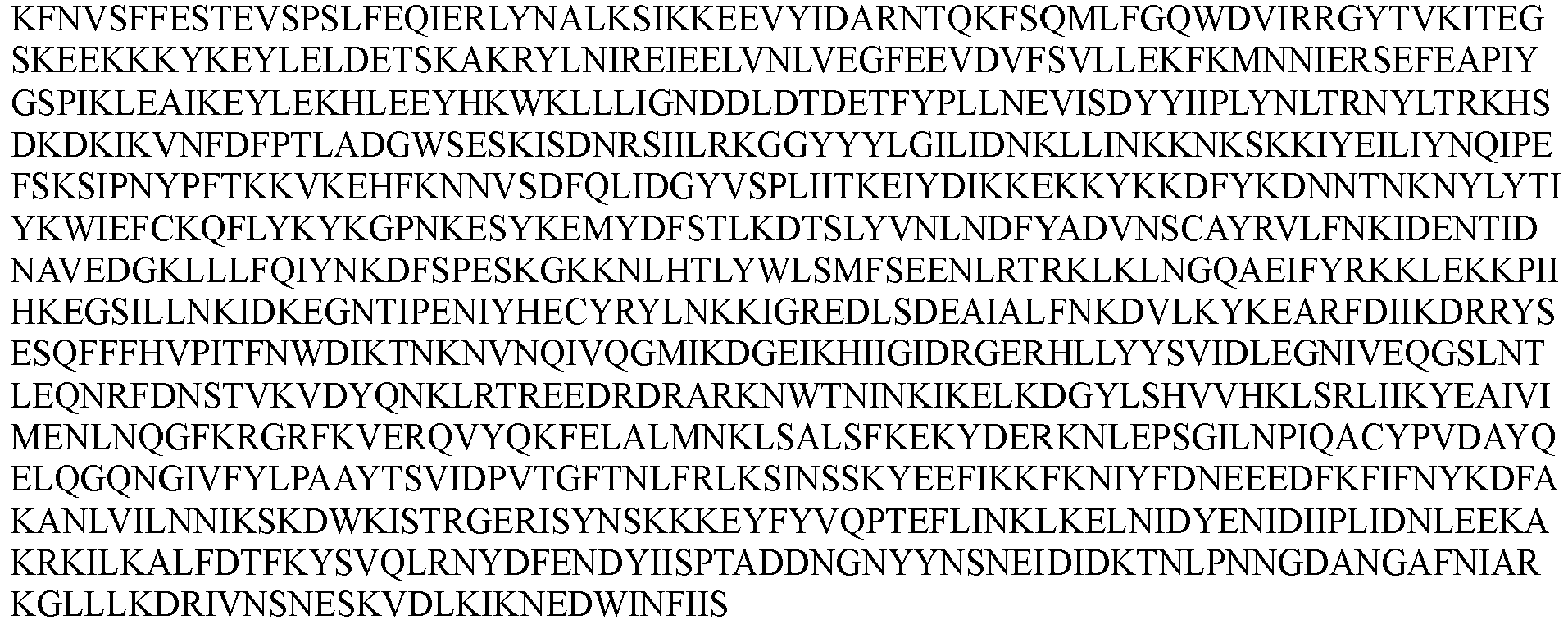
- >SEQ ID NO:5 AbCpf1
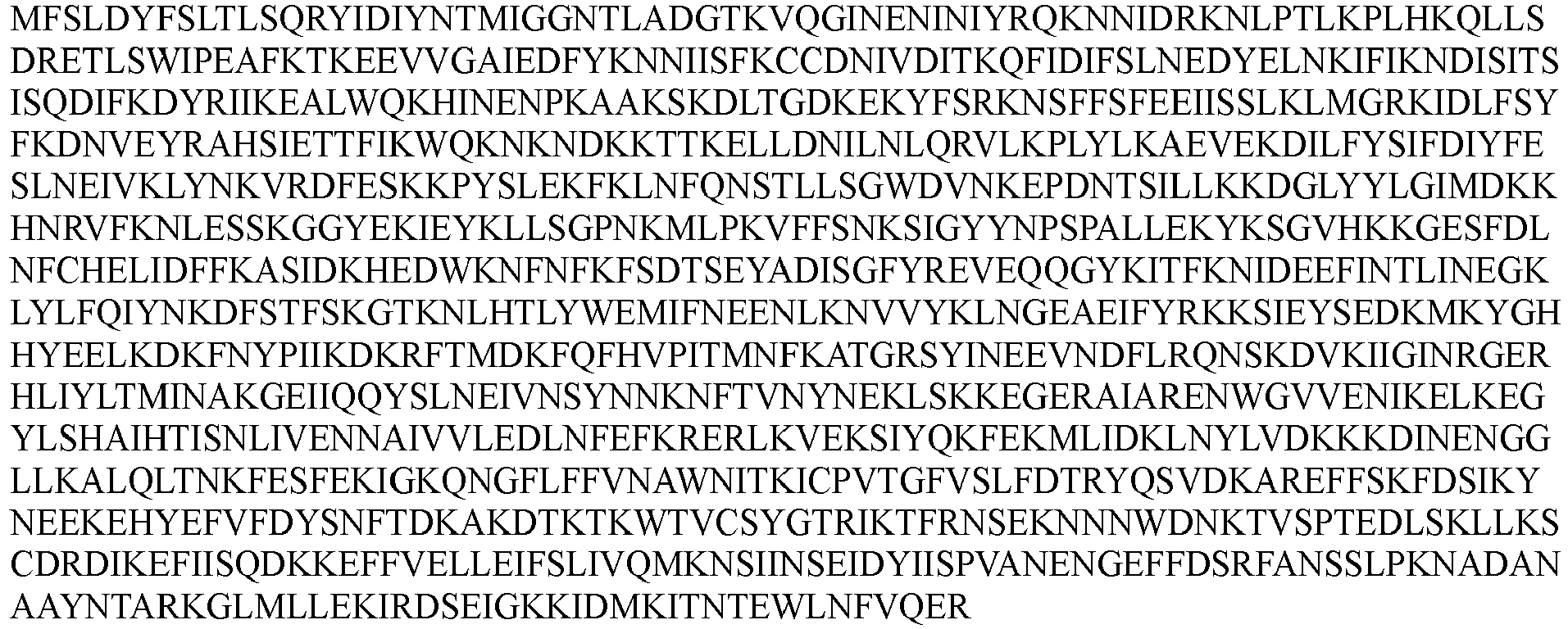
- >SEQ ID NO:6 BoCpf1

- >SEQ ID NO:7 OsCpf1


- >SEQ ID N0:8 BsCpf1

- >SEQ ID NO:9 PsCpfl

- >SEQ ID NO:10 C6Cpf1


- >SEQ ID NO:11 PxCpf1

- >SEQ ID NO:12 PrCpf1

- >SEQ ID NO:13 ArCpfl nucleotide sequence

- >SEQ ID NO:14 LpCpf1 nucleotide sequence


- >SEQ ID NO:15 SaCpfl nucleotide sequence

- >SEQ ID NO:16 HkCpf1 nucleotide sequence


- >SEQ ID NO:17 AbCpf1 nucleotide sequence


- >SEQ ID NO:18 BoCpf1 nucleotide sequence


- >SEQ ID NO:19 OsCpf1 nucleotide sequence


- >SEQ ID NO:20 BsCpfl nucleotide sequence


- >SEQ ID NO:21 PsCpf1 nucleotide sequence


- >SEQ ID NO:22 C6Cpf1 nucleotide sequence


- >SEQ ID NO:23 PxCpf1 nucleotide sequence


- >SEQ ID NO:24 PrCpf1 nucleotide sequence


- >SEQ ID NO:25 crRNA1 scaffold sequence
ATTTCTACtgttGTAGAT - >SEQ ID NO:26 crRNA2 scaffold sequence
ATTTCTACtattGTAGAT - >SEQ ID NO:27 crRNA3 scaffold sequence
ATTTCTACtactGTAGAT - >SEQ ID NO:28 crRNA4 scaffold sequence
ATTTCTACtttgGTAGAT - >SEQ ID NO:29 crRNA5 scaffold sequence
ATTTCTACtagttGTAGAT - >SEQ ID NO:30 crRNA31 scaffold sequence
ATTTCTACTATGGTAGAT - >SEQ ID NO:31 crRNA77 scaffold sequence
ATTTCTACTGTCGTAGAT - >SEQ ID NO:32 crRNA129 scaffold sequence
ATTTCTACTTGTGTAGAT - >SEQ ID NO:33 crRNA159 scaffold sequence
ATTTCTACTGTGGTAGAT
Claims (15)
- A genome editing system for site-directed modification of a target sequence in the genome of a cell, comprising at least one of the following i) to v):i) a Cpfl protein, and a guide RNA;ii) an expression construct comprising a nucleotide sequence encoding a Cpfl protein, and a guide RNA;iii) a Cpfl protein, and an expression construct comprising a nucleotide sequence encoding a guide RNA;iv) an expression construct comprising a nucleotide sequence encoding a Cpfl protein, and an expression construct comprising a nucleotide sequence encoding a guide RNA;v) an expression construct comprising a nucleotide sequence encoding a Cpfl protein and a nucleotide sequence encoding a guide RNA;wherein the Cpfl protein comprises an amino acid sequence of SEQ ID NO: 4, 9 or 10, the guide RNA capable of targeting the Cpfl protein to a target sequence in the genome of the cell.
- The system of claim 1, wherein the Cpfl protein is derived from Helcococcus kunzii, Proteocatella sphenisci, or Candidatus Dojkabacteria.
- The system of claim 1, wherein the guide RNA is a crRNA.
- The system of claim 3, wherein the coding sequence of the crRNA comprises a crRNA scaffold sequence set forth in any one of SEQ ID NOs: 25-33, preferably comprises a crRNA scaffold sequence set forth in SEQ ID NO:30.
- The system of claim 1, wherein the target sequence has the following structure: 5'-TYYN-Nx-3' or 5'-YYN-Nx-3', wherein N is independently selected from A, G, C and T, Y is selected from C and T; x is an integer of 15 ≤ x ≤ 35; Nx represents x consecutive nucleotides.
- The genome editing system of any one of claims 1-5 for use in treating a disease in a subject in need thereof, wherein the genome editing system is for modifying a gene related with the disease, by introducing said system into a cell, whereby the guide RNA targets the Cpfl protein to the target sequence in the genome of the cell, resulting in one or more nucleotide substitution, deletion or addition in the target sequence.
- The system of claim 6, wherein the cell is from a mammal such as human, mouse, rat, monkey, dog, pig, sheep, cattle, cat; a poultry such as chicken, duck, and goose.
- The system of any one of claims 6-7, wherein the system is introduced into the cell by the following methods: calcium phosphate transfection, protoplast fusion, electroporation, lipofection, microinjection, viral infection (e.g., baculovirus, vaccinia virus, adenovirus, adeno-associated virus, lentivirus and other viruses), gene gun method, PEG-mediated protoplast transformation, Agrobacterium-mediated transformation.
- A method of modifying a target sequence in the genome of a plant cell, comprising introducing the genome editing system of any one of claims 1-5 into the cell, whereby the guide RNA targets the Cpfl protein to the target sequence in the genome of the cell, resulting in one or more nucleotide substitution, deletion or addition in the target sequence.
- The method of claim 9, wherein the plant cell is selected from the group consisting of monocots and dicots, rice, corn, wheat, sorghum, barley, soybean, peanut and Arabidopsis thaliana.
- A pharmaceutical composition for use in treating a disease in a subject in need thereof, comprising the genome editing system of any one of claims 1-5 and a pharmaceutically acceptable carrier, wherein the genome editing system is for modifying a gene related with the disease.
- The composition of claim 11, wherein the subject is a mammal such as a human.
- The composition of claim 11, wherein the disease is selected from tumors, inflammation, Parkinson's disease, cardiovascular disease, Alzheimer's disease, autism, drug addiction, age-related macular degeneration, schizophrenia, hereditary diseases.
- A crRNA, which comprises a crRNA scaffold sequence corresponding to any one of SEQ ID NOs: 25-33, or the coding sequence of which comprises a sequence set forth in any one of SEQ ID NOs: 25-33.
- The crRNA of claim 14, wherein the crRNA is encoded by a nucleotide sequence selected from:i) 5'-ATTTCTACtgttGTAGAT(SEQ ID NO:25)-Nx-3';ii) 5'- ATTTCTACtattGTAGAT(SEQ ID NO:26)-Nx-3';iii) 5'- ATTTCTACtactGTAGAT(SEQ ID NO:27)-Nx-3';iv) 5'-ATTTCTACtttgGTAGAT(SEQ ID NO:28)-Nx-3';v) 5'- ATTTCTACtagttGTAGAT(SEQ ID NO:29)-Nx-3';vi) 5'-ATTTCTACTATGGTAGAT(SEQ ID NO:30)-Nx-3';vii) 5'- ATTTCTACTGTCGTAGAT(SEQ ID NO:31)-Nx-3';viii) 5'- ATTTCTACTTGTGTAGAT(SEQ ID NO:32)-Nx-3'; andix) 5'- ATTTCTACTGTGGTAGAT(SEQ ID NO:33)-Nx-3',wherein Nx represents nucleotide sequence that consists of x consecutive nucleotides, N is independently selected from A, G, C and T; x is an integer of 18 ≤ x ≤ 35, preferably, x=23.
Applications Claiming Priority (2)
| Application Number | Priority Date | Filing Date | Title |
|---|---|---|---|
| CN201710228595.XA CN108690845B (en) | 2017-04-10 | 2017-04-10 | Genome editing systems and methods |
| PCT/CN2018/082446 WO2018188571A1 (en) | 2017-04-10 | 2018-04-10 | System and method for genome editing |
Publications (3)
| Publication Number | Publication Date |
|---|---|
| EP3611258A1 EP3611258A1 (en) | 2020-02-19 |
| EP3611258A4 EP3611258A4 (en) | 2020-05-06 |
| EP3611258B1 true EP3611258B1 (en) | 2024-12-11 |
Family
ID=63793114
Family Applications (1)
| Application Number | Title | Priority Date | Filing Date |
|---|---|---|---|
| EP18783675.4A Active EP3611258B1 (en) | 2017-04-10 | 2018-04-10 | System and method for genome editing |
Country Status (5)
| Country | Link |
|---|---|
| US (1) | US11702643B2 (en) |
| EP (1) | EP3611258B1 (en) |
| JP (2) | JP7100057B2 (en) |
| CN (1) | CN108690845B (en) |
| WO (1) | WO2018188571A1 (en) |
Families Citing this family (22)
| Publication number | Priority date | Publication date | Assignee | Title |
|---|---|---|---|---|
| EP3204496A1 (en) | 2014-10-10 | 2017-08-16 | Editas Medicine, Inc. | Compositions and methods for promoting homology directed repair |
| WO2016073990A2 (en) | 2014-11-07 | 2016-05-12 | Editas Medicine, Inc. | Methods for improving crispr/cas-mediated genome-editing |
| US11390884B2 (en) | 2015-05-11 | 2022-07-19 | Editas Medicine, Inc. | Optimized CRISPR/cas9 systems and methods for gene editing in stem cells |
| JP7396783B2 (en) | 2015-06-09 | 2023-12-12 | エディタス・メディシン、インコーポレイテッド | CRISPR/CAS-related methods and compositions for improving implantation |
| US11667911B2 (en) | 2015-09-24 | 2023-06-06 | Editas Medicine, Inc. | Use of exonucleases to improve CRISPR/CAS-mediated genome editing |
| EP3433363A1 (en) | 2016-03-25 | 2019-01-30 | Editas Medicine, Inc. | Genome editing systems comprising repair-modulating enzyme molecules and methods of their use |
| WO2017180694A1 (en) | 2016-04-13 | 2017-10-19 | Editas Medicine, Inc. | Cas9 fusion molecules gene editing systems, and methods of use thereof |
| EP3555297A1 (en) | 2016-12-19 | 2019-10-23 | Editas Medicine, Inc. | Assessing nuclease cleavage |
| EP3557981A1 (en) * | 2016-12-22 | 2019-10-30 | Keygene N.V. | Method for targeted alteration of duplex dna |
| WO2018129368A2 (en) | 2017-01-06 | 2018-07-12 | Editas Medicine, Inc. | Methods of assessing nuclease cleavage |
| CN108690845B (en) * | 2017-04-10 | 2021-04-27 | 中国科学院动物研究所 | Genome editing systems and methods |
| US11499151B2 (en) | 2017-04-28 | 2022-11-15 | Editas Medicine, Inc. | Methods and systems for analyzing guide RNA molecules |
| KR102746733B1 (en) | 2017-06-09 | 2024-12-24 | 에디타스 메디신, 인코포레이티드 | Engineered CAS9 nuclease |
| US11866726B2 (en) | 2017-07-14 | 2024-01-09 | Editas Medicine, Inc. | Systems and methods for targeted integration and genome editing and detection thereof using integrated priming sites |
| WO2020006423A1 (en) | 2018-06-29 | 2020-01-02 | Editas Medicine, Inc. | Synthetic guide molecules, compositions and methods relating thereto |
| CN112301018B (en) * | 2019-05-14 | 2023-07-25 | 深圳华大生命科学研究院 | Novel Cas protein, crispr-Cas system and use thereof in the field of gene editing |
| CN111235130B (en) * | 2019-11-15 | 2022-11-25 | 武汉大学 | Class II type V CRISPR protein CeCas12a and its application in gene editing |
| WO2022061247A2 (en) * | 2020-09-18 | 2022-03-24 | Artisan Development Labs, Inc. | Constructs and uses thereof for efficient and specific genome editing |
| CN116601293A (en) * | 2020-12-07 | 2023-08-15 | 中国科学院动物研究所 | Engineered Cas effector proteins and methods of use thereof |
| WO2023029492A1 (en) * | 2021-09-03 | 2023-03-09 | 中国科学院动物研究所 | System and method for site-specific integration of exogenous genes |
| CN116751763B (en) * | 2023-05-08 | 2024-02-13 | 珠海舒桐医疗科技有限公司 | A Cpf1 protein, V-type gene editing system and its application |
| CN119264278B (en) * | 2024-12-09 | 2025-04-11 | 中国水产科学研究院南海水产研究所 | A fusion protein PmMAD7-NLS for gene editing of Penaeus monodon and its application |
Citations (5)
| Publication number | Priority date | Publication date | Assignee | Title |
|---|---|---|---|---|
| WO2016205711A1 (en) | 2015-06-18 | 2016-12-22 | The Broad Institute Inc. | Novel crispr enzymes and systems |
| WO2017004261A1 (en) | 2015-06-29 | 2017-01-05 | Ionis Pharmaceuticals, Inc. | Modified crispr rna and modified single crispr rna and uses thereof |
| WO2017015015A1 (en) | 2015-07-17 | 2017-01-26 | Emory University | Crispr-associated protein from francisella and uses related thereto |
| WO2017053312A1 (en) | 2015-09-21 | 2017-03-30 | The Regents Of The University Of California | Compositions and methods for target nucleic acid modification |
| WO2017152015A1 (en) | 2016-03-04 | 2017-09-08 | Editas Medicine, Inc. | Crispr-cpf1-related methods, compositions and components for cancer immunotherapy |
Family Cites Families (3)
| Publication number | Priority date | Publication date | Assignee | Title |
|---|---|---|---|---|
| WO2016186953A1 (en) | 2015-05-15 | 2016-11-24 | Pioneer Hi Bred International Inc | Guide rna/cas endonuclease systems |
| CN105907785B (en) * | 2016-05-05 | 2020-02-07 | 苏州吉玛基因股份有限公司 | Application of chemically synthesized crRNA in CRISPR/Cpf1 system in gene editing |
| CN108690845B (en) * | 2017-04-10 | 2021-04-27 | 中国科学院动物研究所 | Genome editing systems and methods |
-
2017
- 2017-04-10 CN CN201710228595.XA patent/CN108690845B/en active Active
-
2018
- 2018-04-10 EP EP18783675.4A patent/EP3611258B1/en active Active
- 2018-04-10 WO PCT/CN2018/082446 patent/WO2018188571A1/en not_active Ceased
- 2018-04-10 JP JP2019555026A patent/JP7100057B2/en active Active
- 2018-04-10 US US16/603,975 patent/US11702643B2/en active Active
-
2022
- 2022-04-07 JP JP2022064162A patent/JP7700079B2/en active Active
Patent Citations (5)
| Publication number | Priority date | Publication date | Assignee | Title |
|---|---|---|---|---|
| WO2016205711A1 (en) | 2015-06-18 | 2016-12-22 | The Broad Institute Inc. | Novel crispr enzymes and systems |
| WO2017004261A1 (en) | 2015-06-29 | 2017-01-05 | Ionis Pharmaceuticals, Inc. | Modified crispr rna and modified single crispr rna and uses thereof |
| WO2017015015A1 (en) | 2015-07-17 | 2017-01-26 | Emory University | Crispr-associated protein from francisella and uses related thereto |
| WO2017053312A1 (en) | 2015-09-21 | 2017-03-30 | The Regents Of The University Of California | Compositions and methods for target nucleic acid modification |
| WO2017152015A1 (en) | 2016-03-04 | 2017-09-08 | Editas Medicine, Inc. | Crispr-cpf1-related methods, compositions and components for cancer immunotherapy |
Non-Patent Citations (6)
| Title |
|---|
| BERND ZETSCHE, JONATHAN S. GOOTENBERG, OMAR O. ABUDAYYEH, IAN M. SLAYMAKER, KIRA S. MAKAROVA, PATRICK ESSLETZBICHLER, SARA E. VOLZ: "Cpf1 Is a Single RNA-Guided Endonuclease of a Class 2 CRISPR-Cas System", CELL, ELSEVIER, AMSTERDAM NL, vol. 163, no. 3, 1 October 2015 (2015-10-01), Amsterdam NL , pages 759 - 771, XP055267511, ISSN: 0092-8674, DOI: 10.1016/j.cell.2015.09.038 |
| BERND ZETSCHE, MATTHIAS HEIDENREICH, PRARTHANA MOHANRAJU, IANA FEDOROVA, JEROEN KNEPPERS, ELLEN M DEGENNARO, NERGES WINBLAD, SOURA: "Multiplex gene editing by CRISPR–Cpf1 using a single crRNA array", NATURE BIOTECHNOLOGY, NATURE PUBLISHING GROUP US, NEW YORK, vol. 35, no. 1, 5 December 2016 (2016-12-05), New York, pages 31 - 34, XP055512019, ISSN: 1087-0156, DOI: 10.1038/nbt.3737 |
| DATABASE PROTEIN 1 October 2015 (2015-10-01), XP093316752, Database accession no. WP_005398606.1 |
| DATABASE PROTEIN 1 October 2015 (2015-10-01), XP093316756, Database accession no. WP_028830240.1 |
| DATABASE PROTEIN 7 May 2015 (2015-05-07), XP093316757, Database accession no. KKQ36153.1 |
| INES FONFARA, RICHTER HAGEN, BRATOVIČ MAJDA, LE RHUN ANAÏS, CHARPENTIER EMMANUELLE: "The CRISPR-associated DNA-cleaving enzyme Cpf1 also processes precursor CRISPR RNA", NATURE, vol. 532, pages 517 - 521, XP055349049, DOI: 10.1038/nature17945 |
Also Published As
| Publication number | Publication date |
|---|---|
| CN108690845A (en) | 2018-10-23 |
| US11702643B2 (en) | 2023-07-18 |
| JP7100057B2 (en) | 2022-07-12 |
| JP7700079B2 (en) | 2025-06-30 |
| CN108690845B (en) | 2021-04-27 |
| US20200149021A1 (en) | 2020-05-14 |
| JP2022105015A (en) | 2022-07-12 |
| JP2020516255A (en) | 2020-06-11 |
| EP3611258A1 (en) | 2020-02-19 |
| EP3611258A4 (en) | 2020-05-06 |
| WO2018188571A1 (en) | 2018-10-18 |
Similar Documents
| Publication | Publication Date | Title |
|---|---|---|
| EP3611258B1 (en) | System and method for genome editing | |
| CN109689875B (en) | Genome editing systems and methods | |
| US20180030425A1 (en) | Variants of CRISPR from Prevotella and Francisella 1 (Cpf1) | |
| JP2020508046A (en) | Genome editing system and method | |
| CA3177828A1 (en) | Enzymes with ruvc domains | |
| WO2020224611A1 (en) | Improved gene editing system | |
| CN110300802A (en) | Compositions and base editing methods for base editing in animal embryos | |
| WO2019149239A1 (en) | Improved method for genome editing | |
| WO2023169454A1 (en) | Adenine deaminase and use thereof in base editing | |
| JP7361109B2 (en) | Systems and methods for C2c1 nuclease-based genome editing | |
| CN104560995A (en) | SgRNA (small guide ribonucleic acid) pair for specifically identifying porcine H11 locus, and coding DNA (deoxyribonucleic acid) and application thereof | |
| CN117264998A (en) | Dual-function genome editing system and use thereof | |
| CN113025597A (en) | Improved genome editing system | |
| CN112266418A (en) | Improved genome editing system and application thereof | |
| HK1261024A1 (en) | System and method for genome editing | |
| HK1261024B (en) | System and method for genome editing | |
| WO2021098709A1 (en) | Gene editing system derived from flavobacteria |
Legal Events
| Date | Code | Title | Description |
|---|---|---|---|
| STAA | Information on the status of an ep patent application or granted ep patent |
Free format text: STATUS: THE INTERNATIONAL PUBLICATION HAS BEEN MADE |
|
| PUAI | Public reference made under article 153(3) epc to a published international application that has entered the european phase |
Free format text: ORIGINAL CODE: 0009012 |
|
| STAA | Information on the status of an ep patent application or granted ep patent |
Free format text: STATUS: REQUEST FOR EXAMINATION WAS MADE |
|
| 17P | Request for examination filed |
Effective date: 20191107 |
|
| AK | Designated contracting states |
Kind code of ref document: A1 Designated state(s): AL AT BE BG CH CY CZ DE DK EE ES FI FR GB GR HR HU IE IS IT LI LT LU LV MC MK MT NL NO PL PT RO RS SE SI SK SM TR |
|
| AX | Request for extension of the european patent |
Extension state: BA ME |
|
| A4 | Supplementary search report drawn up and despatched |
Effective date: 20200406 |
|
| RIC1 | Information provided on ipc code assigned before grant |
Ipc: A61P 35/00 20060101ALN20200331BHEP Ipc: C12N 15/113 20100101ALI20200331BHEP Ipc: C12N 15/10 20060101ALI20200331BHEP Ipc: C12N 15/90 20060101ALI20200331BHEP Ipc: A61P 9/00 20060101ALN20200331BHEP Ipc: A61P 25/00 20060101ALN20200331BHEP Ipc: A61K 48/00 20060101ALI20200331BHEP Ipc: C12N 15/63 20060101ALI20200331BHEP Ipc: C12N 9/22 20060101AFI20200331BHEP |
|
| DAV | Request for validation of the european patent (deleted) | ||
| DAX | Request for extension of the european patent (deleted) | ||
| STAA | Information on the status of an ep patent application or granted ep patent |
Free format text: STATUS: EXAMINATION IS IN PROGRESS |
|
| 17Q | First examination report despatched |
Effective date: 20210312 |
|
| GRAJ | Information related to disapproval of communication of intention to grant by the applicant or resumption of examination proceedings by the epo deleted |
Free format text: ORIGINAL CODE: EPIDOSDIGR1 |
|
| GRAP | Despatch of communication of intention to grant a patent |
Free format text: ORIGINAL CODE: EPIDOSNIGR1 |
|
| RIC1 | Information provided on ipc code assigned before grant |
Ipc: A61P 35/00 20060101ALN20240307BHEP Ipc: A61P 25/00 20060101ALN20240307BHEP Ipc: A61P 9/00 20060101ALN20240307BHEP Ipc: A61K 48/00 20060101ALI20240307BHEP Ipc: C12N 15/10 20060101ALI20240307BHEP Ipc: C12N 15/90 20060101ALI20240307BHEP Ipc: C12N 15/113 20100101ALI20240307BHEP Ipc: C12N 15/63 20060101ALI20240307BHEP Ipc: C12N 9/22 20060101AFI20240307BHEP |
|
| GRAP | Despatch of communication of intention to grant a patent |
Free format text: ORIGINAL CODE: EPIDOSNIGR1 |
|
| STAA | Information on the status of an ep patent application or granted ep patent |
Free format text: STATUS: GRANT OF PATENT IS INTENDED |
|
| RIC1 | Information provided on ipc code assigned before grant |
Ipc: A61P 35/00 20060101ALN20240327BHEP Ipc: A61P 25/00 20060101ALN20240327BHEP Ipc: A61P 9/00 20060101ALN20240327BHEP Ipc: A61K 48/00 20060101ALI20240327BHEP Ipc: C12N 15/10 20060101ALI20240327BHEP Ipc: C12N 15/90 20060101ALI20240327BHEP Ipc: C12N 15/113 20100101ALI20240327BHEP Ipc: C12N 15/63 20060101ALI20240327BHEP Ipc: C12N 9/22 20060101AFI20240327BHEP |
|
| RIC1 | Information provided on ipc code assigned before grant |
Ipc: A61P 35/00 20060101ALN20240409BHEP Ipc: A61P 25/00 20060101ALN20240409BHEP Ipc: A61P 9/00 20060101ALN20240409BHEP Ipc: A61K 48/00 20060101ALI20240409BHEP Ipc: C12N 15/10 20060101ALI20240409BHEP Ipc: C12N 15/90 20060101ALI20240409BHEP Ipc: C12N 15/113 20100101ALI20240409BHEP Ipc: C12N 15/63 20060101ALI20240409BHEP Ipc: C12N 9/22 20060101AFI20240409BHEP |
|
| INTG | Intention to grant announced |
Effective date: 20240423 |
|
| RIC1 | Information provided on ipc code assigned before grant |
Ipc: A61P 35/00 20060101ALN20240415BHEP Ipc: A61P 25/00 20060101ALN20240415BHEP Ipc: A61P 9/00 20060101ALN20240415BHEP Ipc: A61K 48/00 20060101ALI20240415BHEP Ipc: C12N 15/10 20060101ALI20240415BHEP Ipc: C12N 15/90 20060101ALI20240415BHEP Ipc: C12N 15/113 20100101ALI20240415BHEP Ipc: C12N 15/63 20060101ALI20240415BHEP Ipc: C12N 9/22 20060101AFI20240415BHEP |
|
| GRAS | Grant fee paid |
Free format text: ORIGINAL CODE: EPIDOSNIGR3 |
|
| GRAJ | Information related to disapproval of communication of intention to grant by the applicant or resumption of examination proceedings by the epo deleted |
Free format text: ORIGINAL CODE: EPIDOSDIGR1 |
|
| GRAL | Information related to payment of fee for publishing/printing deleted |
Free format text: ORIGINAL CODE: EPIDOSDIGR3 |
|
| GRAP | Despatch of communication of intention to grant a patent |
Free format text: ORIGINAL CODE: EPIDOSNIGR1 |
|
| P01 | Opt-out of the competence of the unified patent court (upc) registered |
Free format text: CASE NUMBER: APP_45732/2024 Effective date: 20240807 |
|
| INTG | Intention to grant announced |
Effective date: 20240902 |
|
| GRAA | (expected) grant |
Free format text: ORIGINAL CODE: 0009210 |
|
| STAA | Information on the status of an ep patent application or granted ep patent |
Free format text: STATUS: THE PATENT HAS BEEN GRANTED |
|
| AK | Designated contracting states |
Kind code of ref document: B1 Designated state(s): AL AT BE BG CH CY CZ DE DK EE ES FI FR GB GR HR HU IE IS IT LI LT LU LV MC MK MT NL NO PL PT RO RS SE SI SK SM TR |
|
| REG | Reference to a national code |
Ref country code: GB Ref legal event code: FG4D |
|
| REG | Reference to a national code |
Ref country code: CH Ref legal event code: EP |
|
| REG | Reference to a national code |
Ref country code: DE Ref legal event code: R096 Ref document number: 602018077527 Country of ref document: DE |
|
| REG | Reference to a national code |
Ref country code: IE Ref legal event code: FG4D |
|
| REG | Reference to a national code |
Ref country code: LT Ref legal event code: MG9D |
|
| PG25 | Lapsed in a contracting state [announced via postgrant information from national office to epo] |
Ref country code: HR Free format text: LAPSE BECAUSE OF FAILURE TO SUBMIT A TRANSLATION OF THE DESCRIPTION OR TO PAY THE FEE WITHIN THE PRESCRIBED TIME-LIMIT Effective date: 20241211 |
|
| PG25 | Lapsed in a contracting state [announced via postgrant information from national office to epo] |
Ref country code: FI Free format text: LAPSE BECAUSE OF FAILURE TO SUBMIT A TRANSLATION OF THE DESCRIPTION OR TO PAY THE FEE WITHIN THE PRESCRIBED TIME-LIMIT Effective date: 20241211 |
|
| PG25 | Lapsed in a contracting state [announced via postgrant information from national office to epo] |
Ref country code: BG Free format text: LAPSE BECAUSE OF FAILURE TO SUBMIT A TRANSLATION OF THE DESCRIPTION OR TO PAY THE FEE WITHIN THE PRESCRIBED TIME-LIMIT Effective date: 20241211 |
|
| REG | Reference to a national code |
Ref country code: NL Ref legal event code: MP Effective date: 20241211 |
|
| PG25 | Lapsed in a contracting state [announced via postgrant information from national office to epo] |
Ref country code: ES Free format text: LAPSE BECAUSE OF FAILURE TO SUBMIT A TRANSLATION OF THE DESCRIPTION OR TO PAY THE FEE WITHIN THE PRESCRIBED TIME-LIMIT Effective date: 20241211 |
|
| PG25 | Lapsed in a contracting state [announced via postgrant information from national office to epo] |
Ref country code: NO Free format text: LAPSE BECAUSE OF FAILURE TO SUBMIT A TRANSLATION OF THE DESCRIPTION OR TO PAY THE FEE WITHIN THE PRESCRIBED TIME-LIMIT Effective date: 20250311 |
|
| PG25 | Lapsed in a contracting state [announced via postgrant information from national office to epo] |
Ref country code: LV Free format text: LAPSE BECAUSE OF FAILURE TO SUBMIT A TRANSLATION OF THE DESCRIPTION OR TO PAY THE FEE WITHIN THE PRESCRIBED TIME-LIMIT Effective date: 20241211 Ref country code: GR Free format text: LAPSE BECAUSE OF FAILURE TO SUBMIT A TRANSLATION OF THE DESCRIPTION OR TO PAY THE FEE WITHIN THE PRESCRIBED TIME-LIMIT Effective date: 20250312 |
|
| PGFP | Annual fee paid to national office [announced via postgrant information from national office to epo] |
Ref country code: FR Payment date: 20250314 Year of fee payment: 8 |
|
| PGFP | Annual fee paid to national office [announced via postgrant information from national office to epo] |
Ref country code: GB Payment date: 20250314 Year of fee payment: 8 |
|
| PG25 | Lapsed in a contracting state [announced via postgrant information from national office to epo] |
Ref country code: RS Free format text: LAPSE BECAUSE OF FAILURE TO SUBMIT A TRANSLATION OF THE DESCRIPTION OR TO PAY THE FEE WITHIN THE PRESCRIBED TIME-LIMIT Effective date: 20250311 |
|
| PG25 | Lapsed in a contracting state [announced via postgrant information from national office to epo] |
Ref country code: NL Free format text: LAPSE BECAUSE OF FAILURE TO SUBMIT A TRANSLATION OF THE DESCRIPTION OR TO PAY THE FEE WITHIN THE PRESCRIBED TIME-LIMIT Effective date: 20241211 |
|
| REG | Reference to a national code |
Ref country code: AT Ref legal event code: MK05 Ref document number: 1750401 Country of ref document: AT Kind code of ref document: T Effective date: 20241211 |
|
| PG25 | Lapsed in a contracting state [announced via postgrant information from national office to epo] |
Ref country code: SM Free format text: LAPSE BECAUSE OF FAILURE TO SUBMIT A TRANSLATION OF THE DESCRIPTION OR TO PAY THE FEE WITHIN THE PRESCRIBED TIME-LIMIT Effective date: 20241211 |
|
| PG25 | Lapsed in a contracting state [announced via postgrant information from national office to epo] |
Ref country code: PL Free format text: LAPSE BECAUSE OF FAILURE TO SUBMIT A TRANSLATION OF THE DESCRIPTION OR TO PAY THE FEE WITHIN THE PRESCRIBED TIME-LIMIT Effective date: 20241211 |
|
| PGFP | Annual fee paid to national office [announced via postgrant information from national office to epo] |
Ref country code: DE Payment date: 20250417 Year of fee payment: 8 |
|
| PG25 | Lapsed in a contracting state [announced via postgrant information from national office to epo] |
Ref country code: IS Free format text: LAPSE BECAUSE OF FAILURE TO SUBMIT A TRANSLATION OF THE DESCRIPTION OR TO PAY THE FEE WITHIN THE PRESCRIBED TIME-LIMIT Effective date: 20250411 |
|
| PG25 | Lapsed in a contracting state [announced via postgrant information from national office to epo] |
Ref country code: PT Free format text: LAPSE BECAUSE OF FAILURE TO SUBMIT A TRANSLATION OF THE DESCRIPTION OR TO PAY THE FEE WITHIN THE PRESCRIBED TIME-LIMIT Effective date: 20250411 |
|
| PG25 | Lapsed in a contracting state [announced via postgrant information from national office to epo] |
Ref country code: EE Free format text: LAPSE BECAUSE OF FAILURE TO SUBMIT A TRANSLATION OF THE DESCRIPTION OR TO PAY THE FEE WITHIN THE PRESCRIBED TIME-LIMIT Effective date: 20241211 |
|
| PGFP | Annual fee paid to national office [announced via postgrant information from national office to epo] |
Ref country code: CH Payment date: 20250501 Year of fee payment: 8 |
|
| PG25 | Lapsed in a contracting state [announced via postgrant information from national office to epo] |
Ref country code: AT Free format text: LAPSE BECAUSE OF FAILURE TO SUBMIT A TRANSLATION OF THE DESCRIPTION OR TO PAY THE FEE WITHIN THE PRESCRIBED TIME-LIMIT Effective date: 20241211 Ref country code: RO Free format text: LAPSE BECAUSE OF FAILURE TO SUBMIT A TRANSLATION OF THE DESCRIPTION OR TO PAY THE FEE WITHIN THE PRESCRIBED TIME-LIMIT Effective date: 20241211 |
|
| PG25 | Lapsed in a contracting state [announced via postgrant information from national office to epo] |
Ref country code: SK Free format text: LAPSE BECAUSE OF FAILURE TO SUBMIT A TRANSLATION OF THE DESCRIPTION OR TO PAY THE FEE WITHIN THE PRESCRIBED TIME-LIMIT Effective date: 20241211 |
|
| PG25 | Lapsed in a contracting state [announced via postgrant information from national office to epo] |
Ref country code: CZ Free format text: LAPSE BECAUSE OF FAILURE TO SUBMIT A TRANSLATION OF THE DESCRIPTION OR TO PAY THE FEE WITHIN THE PRESCRIBED TIME-LIMIT Effective date: 20241211 |
|
| PG25 | Lapsed in a contracting state [announced via postgrant information from national office to epo] |
Ref country code: IT Free format text: LAPSE BECAUSE OF FAILURE TO SUBMIT A TRANSLATION OF THE DESCRIPTION OR TO PAY THE FEE WITHIN THE PRESCRIBED TIME-LIMIT Effective date: 20241211 |
|
| PG25 | Lapsed in a contracting state [announced via postgrant information from national office to epo] |
Ref country code: SE Free format text: LAPSE BECAUSE OF FAILURE TO SUBMIT A TRANSLATION OF THE DESCRIPTION OR TO PAY THE FEE WITHIN THE PRESCRIBED TIME-LIMIT Effective date: 20241211 |
|
| REG | Reference to a national code |
Ref country code: DE Ref legal event code: R026 Ref document number: 602018077527 Country of ref document: DE |
|
| PLBI | Opposition filed |
Free format text: ORIGINAL CODE: 0009260 |
|
| PLAB | Opposition data, opponent's data or that of the opponent's representative modified |
Free format text: ORIGINAL CODE: 0009299OPPO |
|
| PLAX | Notice of opposition and request to file observation + time limit sent |
Free format text: ORIGINAL CODE: EPIDOSNOBS2 |
|
| PG25 | Lapsed in a contracting state [announced via postgrant information from national office to epo] |
Ref country code: DK Free format text: LAPSE BECAUSE OF FAILURE TO SUBMIT A TRANSLATION OF THE DESCRIPTION OR TO PAY THE FEE WITHIN THE PRESCRIBED TIME-LIMIT Effective date: 20241211 |
|
| 26 | Opposition filed |
Opponent name: STRAWMAN LIMITED Effective date: 20250911 |
|
| R26 | Opposition filed (corrected) |
Opponent name: STRAWMAN LIMITED Effective date: 20250911 |
|
| PG25 | Lapsed in a contracting state [announced via postgrant information from national office to epo] |
Ref country code: LU Free format text: LAPSE BECAUSE OF NON-PAYMENT OF DUE FEES Effective date: 20250410 |
|
| PG25 | Lapsed in a contracting state [announced via postgrant information from national office to epo] |
Ref country code: MC Free format text: LAPSE BECAUSE OF FAILURE TO SUBMIT A TRANSLATION OF THE DESCRIPTION OR TO PAY THE FEE WITHIN THE PRESCRIBED TIME-LIMIT Effective date: 20241211 |
|
| REG | Reference to a national code |
Ref country code: BE Ref legal event code: MM Effective date: 20250430 |
|
| PG25 | Lapsed in a contracting state [announced via postgrant information from national office to epo] |
Ref country code: BE Free format text: LAPSE BECAUSE OF NON-PAYMENT OF DUE FEES Effective date: 20250430 |
|
| PLBB | Reply of patent proprietor to notice(s) of opposition received |
Free format text: ORIGINAL CODE: EPIDOSNOBS3 |