EP3205720B1 - Car expression vector and car-expressing t cells - Google Patents
Car expression vector and car-expressing t cells Download PDFInfo
- Publication number
- EP3205720B1 EP3205720B1 EP15849416.1A EP15849416A EP3205720B1 EP 3205720 B1 EP3205720 B1 EP 3205720B1 EP 15849416 A EP15849416 A EP 15849416A EP 3205720 B1 EP3205720 B1 EP 3205720B1
- Authority
- EP
- European Patent Office
- Prior art keywords
- car
- cells
- expressing
- nucleic acid
- ccl19
- Prior art date
- Legal status (The legal status is an assumption and is not a legal conclusion. Google has not performed a legal analysis and makes no representation as to the accuracy of the status listed.)
- Active
Links
Images


Classifications
-
- A—HUMAN NECESSITIES
- A61—MEDICAL OR VETERINARY SCIENCE; HYGIENE
- A61P—SPECIFIC THERAPEUTIC ACTIVITY OF CHEMICAL COMPOUNDS OR MEDICINAL PREPARATIONS
- A61P35/00—Antineoplastic agents
-
- A—HUMAN NECESSITIES
- A61—MEDICAL OR VETERINARY SCIENCE; HYGIENE
- A61K—PREPARATIONS FOR MEDICAL, DENTAL OR TOILETRY PURPOSES
- A61K35/00—Medicinal preparations containing materials or reaction products thereof with undetermined constitution
- A61K35/12—Materials from mammals; Compositions comprising non-specified tissues or cells; Compositions comprising non-embryonic stem cells; Genetically modified cells
- A61K35/26—Lymph; Lymph nodes; Thymus; Spleen; Splenocytes; Thymocytes
-
- A—HUMAN NECESSITIES
- A61—MEDICAL OR VETERINARY SCIENCE; HYGIENE
- A61K—PREPARATIONS FOR MEDICAL, DENTAL OR TOILETRY PURPOSES
- A61K35/00—Medicinal preparations containing materials or reaction products thereof with undetermined constitution
- A61K35/66—Microorganisms or materials therefrom
- A61K35/76—Viruses; Subviral particles; Bacteriophages
-
- A—HUMAN NECESSITIES
- A61—MEDICAL OR VETERINARY SCIENCE; HYGIENE
- A61K—PREPARATIONS FOR MEDICAL, DENTAL OR TOILETRY PURPOSES
- A61K40/00—Cellular immunotherapy
- A61K40/10—Cellular immunotherapy characterised by the cell type used
- A61K40/11—T-cells, e.g. tumour infiltrating lymphocytes [TIL] or regulatory T [Treg] cells; Lymphokine-activated killer [LAK] cells
-
- A—HUMAN NECESSITIES
- A61—MEDICAL OR VETERINARY SCIENCE; HYGIENE
- A61K—PREPARATIONS FOR MEDICAL, DENTAL OR TOILETRY PURPOSES
- A61K40/00—Cellular immunotherapy
- A61K40/30—Cellular immunotherapy characterised by the recombinant expression of specific molecules in the cells of the immune system
- A61K40/31—Chimeric antigen receptors [CAR]
-
- A—HUMAN NECESSITIES
- A61—MEDICAL OR VETERINARY SCIENCE; HYGIENE
- A61K—PREPARATIONS FOR MEDICAL, DENTAL OR TOILETRY PURPOSES
- A61K40/00—Cellular immunotherapy
- A61K40/40—Cellular immunotherapy characterised by antigens that are targeted or presented by cells of the immune system
- A61K40/41—Vertebrate antigens
- A61K40/42—Cancer antigens
- A61K40/4202—Receptors, cell surface antigens or cell surface determinants
- A61K40/4221—CD20
-
- A—HUMAN NECESSITIES
- A61—MEDICAL OR VETERINARY SCIENCE; HYGIENE
- A61K—PREPARATIONS FOR MEDICAL, DENTAL OR TOILETRY PURPOSES
- A61K40/00—Cellular immunotherapy
- A61K40/40—Cellular immunotherapy characterised by antigens that are targeted or presented by cells of the immune system
- A61K40/41—Vertebrate antigens
- A61K40/42—Cancer antigens
- A61K40/4231—Cytokines
- A61K40/4234—Interleukins [IL]
-
- A—HUMAN NECESSITIES
- A61—MEDICAL OR VETERINARY SCIENCE; HYGIENE
- A61K—PREPARATIONS FOR MEDICAL, DENTAL OR TOILETRY PURPOSES
- A61K40/00—Cellular immunotherapy
- A61K40/40—Cellular immunotherapy characterised by antigens that are targeted or presented by cells of the immune system
- A61K40/41—Vertebrate antigens
- A61K40/42—Cancer antigens
- A61K40/4231—Cytokines
- A61K40/4236—Chemokines
-
- C—CHEMISTRY; METALLURGY
- C07—ORGANIC CHEMISTRY
- C07K—PEPTIDES
- C07K14/00—Peptides having more than 20 amino acids; Gastrins; Somatostatins; Melanotropins; Derivatives thereof
- C07K14/435—Peptides having more than 20 amino acids; Gastrins; Somatostatins; Melanotropins; Derivatives thereof from animals; from humans
- C07K14/46—Peptides having more than 20 amino acids; Gastrins; Somatostatins; Melanotropins; Derivatives thereof from animals; from humans from vertebrates
- C07K14/47—Peptides having more than 20 amino acids; Gastrins; Somatostatins; Melanotropins; Derivatives thereof from animals; from humans from vertebrates from mammals
-
- C—CHEMISTRY; METALLURGY
- C07—ORGANIC CHEMISTRY
- C07K—PEPTIDES
- C07K14/00—Peptides having more than 20 amino acids; Gastrins; Somatostatins; Melanotropins; Derivatives thereof
- C07K14/435—Peptides having more than 20 amino acids; Gastrins; Somatostatins; Melanotropins; Derivatives thereof from animals; from humans
- C07K14/52—Cytokines; Lymphokines; Interferons
- C07K14/521—Chemokines
-
- C—CHEMISTRY; METALLURGY
- C07—ORGANIC CHEMISTRY
- C07K—PEPTIDES
- C07K14/00—Peptides having more than 20 amino acids; Gastrins; Somatostatins; Melanotropins; Derivatives thereof
- C07K14/435—Peptides having more than 20 amino acids; Gastrins; Somatostatins; Melanotropins; Derivatives thereof from animals; from humans
- C07K14/52—Cytokines; Lymphokines; Interferons
- C07K14/54—Interleukins [IL]
- C07K14/5418—IL-7
-
- C—CHEMISTRY; METALLURGY
- C07—ORGANIC CHEMISTRY
- C07K—PEPTIDES
- C07K14/00—Peptides having more than 20 amino acids; Gastrins; Somatostatins; Melanotropins; Derivatives thereof
- C07K14/435—Peptides having more than 20 amino acids; Gastrins; Somatostatins; Melanotropins; Derivatives thereof from animals; from humans
- C07K14/705—Receptors; Cell surface antigens; Cell surface determinants
- C07K14/70503—Immunoglobulin superfamily
- C07K14/7051—T-cell receptor (TcR)-CD3 complex
-
- C—CHEMISTRY; METALLURGY
- C07—ORGANIC CHEMISTRY
- C07K—PEPTIDES
- C07K14/00—Peptides having more than 20 amino acids; Gastrins; Somatostatins; Melanotropins; Derivatives thereof
- C07K14/435—Peptides having more than 20 amino acids; Gastrins; Somatostatins; Melanotropins; Derivatives thereof from animals; from humans
- C07K14/705—Receptors; Cell surface antigens; Cell surface determinants
- C07K14/70503—Immunoglobulin superfamily
- C07K14/70517—CD8
-
- C—CHEMISTRY; METALLURGY
- C07—ORGANIC CHEMISTRY
- C07K—PEPTIDES
- C07K14/00—Peptides having more than 20 amino acids; Gastrins; Somatostatins; Melanotropins; Derivatives thereof
- C07K14/435—Peptides having more than 20 amino acids; Gastrins; Somatostatins; Melanotropins; Derivatives thereof from animals; from humans
- C07K14/705—Receptors; Cell surface antigens; Cell surface determinants
- C07K14/70503—Immunoglobulin superfamily
- C07K14/70521—CD28, CD152
-
- C—CHEMISTRY; METALLURGY
- C07—ORGANIC CHEMISTRY
- C07K—PEPTIDES
- C07K14/00—Peptides having more than 20 amino acids; Gastrins; Somatostatins; Melanotropins; Derivatives thereof
- C07K14/435—Peptides having more than 20 amino acids; Gastrins; Somatostatins; Melanotropins; Derivatives thereof from animals; from humans
- C07K14/705—Receptors; Cell surface antigens; Cell surface determinants
- C07K14/70578—NGF-receptor/TNF-receptor superfamily, e.g. CD27, CD30, CD40, CD95
-
- C—CHEMISTRY; METALLURGY
- C07—ORGANIC CHEMISTRY
- C07K—PEPTIDES
- C07K16/00—Immunoglobulins [IGs], e.g. monoclonal or polyclonal antibodies
- C07K16/18—Immunoglobulins [IGs], e.g. monoclonal or polyclonal antibodies against material from animals or humans
- C07K16/28—Immunoglobulins [IGs], e.g. monoclonal or polyclonal antibodies against material from animals or humans against receptors, cell surface antigens or cell surface determinants
- C07K16/2887—Immunoglobulins [IGs], e.g. monoclonal or polyclonal antibodies against material from animals or humans against receptors, cell surface antigens or cell surface determinants against CD20
-
- C—CHEMISTRY; METALLURGY
- C07—ORGANIC CHEMISTRY
- C07K—PEPTIDES
- C07K16/00—Immunoglobulins [IGs], e.g. monoclonal or polyclonal antibodies
- C07K16/44—Immunoglobulins [IGs], e.g. monoclonal or polyclonal antibodies against material not provided for elsewhere, e.g. haptens, metals, DNA, RNA, amino acids
-
- C—CHEMISTRY; METALLURGY
- C12—BIOCHEMISTRY; BEER; SPIRITS; WINE; VINEGAR; MICROBIOLOGY; ENZYMOLOGY; MUTATION OR GENETIC ENGINEERING
- C12N—MICROORGANISMS OR ENZYMES; COMPOSITIONS THEREOF; PROPAGATING, PRESERVING, OR MAINTAINING MICROORGANISMS; MUTATION OR GENETIC ENGINEERING; CULTURE MEDIA
- C12N15/00—Mutation or genetic engineering; DNA or RNA concerning genetic engineering, vectors, e.g. plasmids, or their isolation, preparation or purification; Use of hosts therefor
-
- C—CHEMISTRY; METALLURGY
- C12—BIOCHEMISTRY; BEER; SPIRITS; WINE; VINEGAR; MICROBIOLOGY; ENZYMOLOGY; MUTATION OR GENETIC ENGINEERING
- C12N—MICROORGANISMS OR ENZYMES; COMPOSITIONS THEREOF; PROPAGATING, PRESERVING, OR MAINTAINING MICROORGANISMS; MUTATION OR GENETIC ENGINEERING; CULTURE MEDIA
- C12N15/00—Mutation or genetic engineering; DNA or RNA concerning genetic engineering, vectors, e.g. plasmids, or their isolation, preparation or purification; Use of hosts therefor
- C12N15/09—Recombinant DNA-technology
-
- C—CHEMISTRY; METALLURGY
- C12—BIOCHEMISTRY; BEER; SPIRITS; WINE; VINEGAR; MICROBIOLOGY; ENZYMOLOGY; MUTATION OR GENETIC ENGINEERING
- C12N—MICROORGANISMS OR ENZYMES; COMPOSITIONS THEREOF; PROPAGATING, PRESERVING, OR MAINTAINING MICROORGANISMS; MUTATION OR GENETIC ENGINEERING; CULTURE MEDIA
- C12N15/00—Mutation or genetic engineering; DNA or RNA concerning genetic engineering, vectors, e.g. plasmids, or their isolation, preparation or purification; Use of hosts therefor
- C12N15/09—Recombinant DNA-technology
- C12N15/63—Introduction of foreign genetic material using vectors; Vectors; Use of hosts therefor; Regulation of expression
- C12N15/79—Vectors or expression systems specially adapted for eukaryotic hosts
- C12N15/85—Vectors or expression systems specially adapted for eukaryotic hosts for animal cells
-
- C—CHEMISTRY; METALLURGY
- C12—BIOCHEMISTRY; BEER; SPIRITS; WINE; VINEGAR; MICROBIOLOGY; ENZYMOLOGY; MUTATION OR GENETIC ENGINEERING
- C12N—MICROORGANISMS OR ENZYMES; COMPOSITIONS THEREOF; PROPAGATING, PRESERVING, OR MAINTAINING MICROORGANISMS; MUTATION OR GENETIC ENGINEERING; CULTURE MEDIA
- C12N5/00—Undifferentiated human, animal or plant cells, e.g. cell lines; Tissues; Cultivation or maintenance thereof; Culture media therefor
- C12N5/06—Animal cells or tissues; Human cells or tissues
- C12N5/0602—Vertebrate cells
- C12N5/0634—Cells from the blood or the immune system
- C12N5/0636—T lymphocytes
-
- C—CHEMISTRY; METALLURGY
- C12—BIOCHEMISTRY; BEER; SPIRITS; WINE; VINEGAR; MICROBIOLOGY; ENZYMOLOGY; MUTATION OR GENETIC ENGINEERING
- C12N—MICROORGANISMS OR ENZYMES; COMPOSITIONS THEREOF; PROPAGATING, PRESERVING, OR MAINTAINING MICROORGANISMS; MUTATION OR GENETIC ENGINEERING; CULTURE MEDIA
- C12N5/00—Undifferentiated human, animal or plant cells, e.g. cell lines; Tissues; Cultivation or maintenance thereof; Culture media therefor
- C12N5/10—Cells modified by introduction of foreign genetic material
-
- A—HUMAN NECESSITIES
- A61—MEDICAL OR VETERINARY SCIENCE; HYGIENE
- A61K—PREPARATIONS FOR MEDICAL, DENTAL OR TOILETRY PURPOSES
- A61K2239/00—Indexing codes associated with cellular immunotherapy of group A61K40/00
- A61K2239/31—Indexing codes associated with cellular immunotherapy of group A61K40/00 characterized by the route of administration
-
- A—HUMAN NECESSITIES
- A61—MEDICAL OR VETERINARY SCIENCE; HYGIENE
- A61K—PREPARATIONS FOR MEDICAL, DENTAL OR TOILETRY PURPOSES
- A61K2239/00—Indexing codes associated with cellular immunotherapy of group A61K40/00
- A61K2239/38—Indexing codes associated with cellular immunotherapy of group A61K40/00 characterised by the dose, timing or administration schedule
-
- A—HUMAN NECESSITIES
- A61—MEDICAL OR VETERINARY SCIENCE; HYGIENE
- A61K—PREPARATIONS FOR MEDICAL, DENTAL OR TOILETRY PURPOSES
- A61K2239/00—Indexing codes associated with cellular immunotherapy of group A61K40/00
- A61K2239/46—Indexing codes associated with cellular immunotherapy of group A61K40/00 characterised by the cancer treated
-
- C—CHEMISTRY; METALLURGY
- C07—ORGANIC CHEMISTRY
- C07K—PEPTIDES
- C07K14/00—Peptides having more than 20 amino acids; Gastrins; Somatostatins; Melanotropins; Derivatives thereof
- C07K14/435—Peptides having more than 20 amino acids; Gastrins; Somatostatins; Melanotropins; Derivatives thereof from animals; from humans
- C07K14/52—Cytokines; Lymphokines; Interferons
- C07K14/54—Interleukins [IL]
-
- C—CHEMISTRY; METALLURGY
- C07—ORGANIC CHEMISTRY
- C07K—PEPTIDES
- C07K19/00—Hybrid peptides, i.e. peptides covalently bound to nucleic acids, or non-covalently bound protein-protein complexes
-
- C—CHEMISTRY; METALLURGY
- C07—ORGANIC CHEMISTRY
- C07K—PEPTIDES
- C07K2317/00—Immunoglobulins specific features
- C07K2317/60—Immunoglobulins specific features characterized by non-natural combinations of immunoglobulin fragments
- C07K2317/62—Immunoglobulins specific features characterized by non-natural combinations of immunoglobulin fragments comprising only variable region components
- C07K2317/622—Single chain antibody (scFv)
-
- C—CHEMISTRY; METALLURGY
- C07—ORGANIC CHEMISTRY
- C07K—PEPTIDES
- C07K2319/00—Fusion polypeptide
- C07K2319/01—Fusion polypeptide containing a localisation/targetting motif
- C07K2319/03—Fusion polypeptide containing a localisation/targetting motif containing a transmembrane segment
-
- C—CHEMISTRY; METALLURGY
- C07—ORGANIC CHEMISTRY
- C07K—PEPTIDES
- C07K2319/00—Fusion polypeptide
- C07K2319/33—Fusion polypeptide fusions for targeting to specific cell types, e.g. tissue specific targeting, targeting of a bacterial subspecies
-
- C—CHEMISTRY; METALLURGY
- C07—ORGANIC CHEMISTRY
- C07K—PEPTIDES
- C07K2319/00—Fusion polypeptide
- C07K2319/70—Fusion polypeptide containing domain for protein-protein interaction
- C07K2319/74—Fusion polypeptide containing domain for protein-protein interaction containing a fusion for binding to a cell surface receptor
-
- C—CHEMISTRY; METALLURGY
- C07—ORGANIC CHEMISTRY
- C07K—PEPTIDES
- C07K2319/00—Fusion polypeptide
- C07K2319/95—Fusion polypeptide containing a motif/fusion for degradation (ubiquitin fusions, PEST sequence)
-
- C—CHEMISTRY; METALLURGY
- C12—BIOCHEMISTRY; BEER; SPIRITS; WINE; VINEGAR; MICROBIOLOGY; ENZYMOLOGY; MUTATION OR GENETIC ENGINEERING
- C12N—MICROORGANISMS OR ENZYMES; COMPOSITIONS THEREOF; PROPAGATING, PRESERVING, OR MAINTAINING MICROORGANISMS; MUTATION OR GENETIC ENGINEERING; CULTURE MEDIA
- C12N2501/00—Active agents used in cell culture processes, e.g. differentation
- C12N2501/20—Cytokines; Chemokines
- C12N2501/21—Chemokines, e.g. MIP-1, MIP-2, RANTES, MCP, PF-4
-
- C—CHEMISTRY; METALLURGY
- C12—BIOCHEMISTRY; BEER; SPIRITS; WINE; VINEGAR; MICROBIOLOGY; ENZYMOLOGY; MUTATION OR GENETIC ENGINEERING
- C12N—MICROORGANISMS OR ENZYMES; COMPOSITIONS THEREOF; PROPAGATING, PRESERVING, OR MAINTAINING MICROORGANISMS; MUTATION OR GENETIC ENGINEERING; CULTURE MEDIA
- C12N2501/00—Active agents used in cell culture processes, e.g. differentation
- C12N2501/20—Cytokines; Chemokines
- C12N2501/23—Interleukins [IL]
- C12N2501/2307—Interleukin-7 (IL-7)
-
- C—CHEMISTRY; METALLURGY
- C12—BIOCHEMISTRY; BEER; SPIRITS; WINE; VINEGAR; MICROBIOLOGY; ENZYMOLOGY; MUTATION OR GENETIC ENGINEERING
- C12N—MICROORGANISMS OR ENZYMES; COMPOSITIONS THEREOF; PROPAGATING, PRESERVING, OR MAINTAINING MICROORGANISMS; MUTATION OR GENETIC ENGINEERING; CULTURE MEDIA
- C12N2510/00—Genetically modified cells
-
- C—CHEMISTRY; METALLURGY
- C12—BIOCHEMISTRY; BEER; SPIRITS; WINE; VINEGAR; MICROBIOLOGY; ENZYMOLOGY; MUTATION OR GENETIC ENGINEERING
- C12N—MICROORGANISMS OR ENZYMES; COMPOSITIONS THEREOF; PROPAGATING, PRESERVING, OR MAINTAINING MICROORGANISMS; MUTATION OR GENETIC ENGINEERING; CULTURE MEDIA
- C12N2740/00—Reverse transcribing RNA viruses
- C12N2740/00011—Details
- C12N2740/10011—Retroviridae
- C12N2740/13011—Gammaretrovirus, e.g. murine leukeamia virus
- C12N2740/13041—Use of virus, viral particle or viral elements as a vector
- C12N2740/13043—Use of virus, viral particle or viral elements as a vector viral genome or elements thereof as genetic vector
Definitions
- the present invention relates to a CAR expression vector, a CAR-expressing T cell introduced with the CAR expression vector, and an anticancer agent comprising the CAR-expressing T cell.
- a chimeric antigen receptor (hereinafter, also referred to as "CAR") is an artificial chimeric protein in which a single chain antibody that recognizes a cell surface antigen on a cancer cell is fused with a signal transduction region that induces the activation of a T cell.
- CAR chimeric antigen receptor
- FIG. 1 the transfer of a gene encoding CAR to a non-tumor-reactive normal peripheral blood T cell (peripheral blood T lymphocyte) enables the large-scale preparation of a CAR-expressing T cell (hereinafter, also simply referred to as "CAR-T cell”) that are capable of expressing CAR.
- the CAR-T cell is tumor-reactive and can cause damage to a cancer cell without depending on interaction with a major histocompatibility complex (MHC).
- MHC major histocompatibility complex
- Cancer immunotherapy by the administration of the CAR-T cells more specifically, therapy which involves collecting T cells from a patient, transferring a gene encoding CAR to the T cells, and transferring the T cells again to the patient (see non-patent document 1) is currently under clinical trial around the world and has yielded results that indicate effectiveness for, for example, malignant tumor in the hematopoietic organ, such as leukemia or lymphoma.
- a pharmaceutical composition comprising modified autologous human T cells comprising a nucleic acid encoding CAR consisting of a CD19 antigen-binding region, a transmembrane region, a 4-1BB costimulatory signal region, and a CD3 ⁇ signal region
- one or more therapeutically effective anti-tag chimeric antigen receptor (AT-CAR)-expressing T cell populations which are administered to a subject concurrently with or separately from a formulation of one or more tagged proteins binding to cancer cells, wherein the AT-CAR-expressing T cell populations bind to the tagged proteins and induce cancer cell death
- cells comprising a nucleic acid encoding a chimeric antigen receptor comprising an antigen-binding domain of human antibody 139, an extracellular hinge domain, a transmembrane domain, and an intracellular T cell signal transduction domain
- cells comprising a nucleic acid encoding CAR consisting of a CD19 antigen-binding region, a transmembrane region, a 4-1
- Non-patent Document 1 Yozo Nakazawa, The Shinshu Medical Journal, 61 (4): 197-203 (2013 )
- an object of the present invention is to provide CAR-T cells that coexpress CAR and a T cell immune function-enhancing factor and have a high immunity-inducing effect and antitumor activity, and to provide a CAR expression vector for the preparation of the CAR-T cells.
- the inventors have attempted to improve CAR-T cells for the purpose of achieving a better immunity-inducing effect or antitumor activity in cancer immunotherapy using CAR-T cells.
- the inventors have focused on cytokines, chemokines, and signal regulatory proteins which are factors enhancing the immune functions of T cells, and constructed a vector for the coexpression of CAR and the factors enhancing the immune functions of T cells.
- cytokines, chemokines, and signal regulatory proteins which are factors enhancing the immune functions of T cells.
- the inventors have found that CAR-T cells superior in immunity-inducing effect and antitumor activity to the conventional CAR-T cells can be prepared, and thereby completed the present invention.
- the present invention is as disclosed below.
- CAR expression vector of the present invention enables the preparation of CAR-T cell having all of viability, the ability to accumulate lymphocytes, and cytotoxic activity against tumor cells, and CAR-T cell having resistance to immunosuppression in a cancer microenvironment.
- Immunotherapy for cancer patients using the CAR-T cell is expected to produce a strong therapeutic effect on cancer and can serve as cancer immunotherapy effective even for intractable or progressive cancer.
- the CAR expression vector of the present invention is not particularly limited as long as the CAR expression vector comprises a nucleic acid encoding a chimeric antigen receptor (CAR) and a nucleic acid encoding a T cell immune function-enhancing factor, wherein the nucleic acid encoding an immune function-enhancing factor is a nucleic acid encoding interleukin-7 and a nucleic acid encoding CCL19, a nucleic acid encoding a dominant negative mutant of SHP-1, or a nucleic acid encoding a dominant negative mutant of SHP-2.
- CAR chimeric antigen receptor
- the chimeric antigen receptor means an artificial chimeric protein in which a single chain antibody that recognizes a cell surface antigen on a cancer cell is fused with a signal transduction region that induces the activation of a T cell, via a transmembrane region.
- the nucleic acid encoding CAR is not particularly limited as long as the nucleic acid encodes a polypeptide constituting CAR.
- the nucleic acid encoding CAR comprises nucleic acids encoding polypeptides of a single chain antibody that recognizes a cell surface antigen on a cancer cell, a transmembrane region, and a signal transduction region that induces the activation of a T cell.
- the single chain antibody in CAR consists of a light chain variable region and a heavy chain variable region (scFv) derived from the antigen-binding site of a monoclonal antibody.
- scFv heavy chain variable region
- Examples thereof can include an oligopeptide or a polypeptide in which a linker peptide is positioned between the light chain variable region and the heavy chain variable region.
- the cell surface antigen on a cancer cell that is recognized by the single chain antibody can be a biological molecule specifically expressed on a cancer cell and a progenitor cell thereof, a biological molecule found to be newly expressed due to the malignant transformation of a cell, or a biological molecule whose expression level is increased in a cancer cell compared with a normal cell.
- Examples thereof can include CD20, EGFR, FITC, CD19, CD22, CD33, PSMA, GD2, EGFR variants, ROR1, c-Met, HER2, CEA, mesothelin, GM2, CD7, CD10, CD30, CD34, CD38, CD41, CD44, CD74, CD123 CD133, CD171, MUC16, MUC1, CS1(CD319), IL-13Ra2, BCMA, Lewis Y, IgG kappa chain, folate receptor-alpha, PSCA, and EpCAM.
- the T cell activation signal transduction region is a region that is capable of intracellularly transducing signals when the single chain antibody recognizes the cell surface antigen on a cancer cell.
- the T cell activation signal transduction region preferably comprises at least one or more polypeptides selected from polypeptides of CD28, 4-1BB (CD137), GITR, CD27, OX40, HVEM, CD3 ⁇ , and Fc receptor-associated ⁇ chain intracellular regions and more preferably comprises polypeptides of three intracellular regions of CD28, 4-1BB, and CD3 ⁇ .
- polypeptides of the intracellular regions may be linked via an oligopeptide linker or a polypeptide linker consisting of 2 to 10 amino acids.
- linker sequence can include glycine-serine consecutive sequences.
- transmembrane region can include polypeptides of transmembrane regions derived from CD8, T cell receptor ⁇ and ⁇ chains, CD28, CD3 ⁇ , CD45, CD4, CD5, CD8, CD9, CD16, CD22, CD33, CD37, CD64, CD80, CD86, CD134, CD137, CD154, and GITR and can preferably include a polypeptide of a human CD8 transmembrane region.
- CAR is anchored to the cell membranes of a T cell by this transmembrane region.
- the transmembrane region may comprise a hinge region that consists of an arbitrary oligopeptide or polypeptide and has a length of 1 to 100 amino acids, preferably 10 to 70 amino acids.
- Examples of the hinge region can include a human CD8 hinge region.
- a spacer region consisting of an arbitrary oligopeptide or polypeptide may be located between the single chain antibody that recognizes a cell surface antigen on a cancer cell and the transmembrane region or between the transmembrane region and the T cell activation signal transduction region.
- Examples of the length of the spacer region can include 1 to 100 amino acids, preferably 10 to 50 amino acids. Examples of such a spacer region can include glycine-serine consecutive sequences.
- the nucleic acid encoding a T cell function-enhancing factor is not particularly limited as long as the nucleic acid is a nucleic acid encoding IL-7 and a nucleic acid encoding CCL19 (hereinafter, also collectively referred to as "present nucleic acid 1"), a nucleic acid encoding a dominant negative mutant of SHP-1 (hereinafter, also referred to as “present nucleic acid 2”), or a nucleic acid encoding a dominant negative mutant of SHP-2 (hereinafter, also referred to as "present nucleic acid 3").
- the nucleic acid may comprise a plurality of nucleic acids selected from the present nucleic acids 1 to 3 and may specifically comprise the present nucleic acid 1 and the present nucleic acid 2, the present nucleic acid 1 and the present nucleic acid 3, the present nucleic acid 2 and the present nucleic acid 3, the present nucleic acid 1 and the present nucleic acid 2 and the present nucleic acid 3.
- the nucleic acid encoding IL-7 and the nucleic acid encoding CCL19 in the present nucleic acid 1 can comprise a nucleic acid encoding IL-7 and a nucleic acid encoding CCL19, and the nucleic acid encoding CCL19 may be located upstream or downstream of the nucleic acid encoding IL-7.
- the nucleic acid encoding a dominant negative mutant of SHP1 is not particularly limited as long as the nucleic acid encodes a SHP1 mutant that works dominantly over SHP1 and can inhibit the effect of SHP1.
- Examples thereof can include a nucleic acid encoding a mutant that consists of an amino acid sequence derived from the amino acid sequence of SHP1 by the substitution of at least one amino acid by another amino acid and can inhibit the effect of SHP1.
- the nucleic acid encoding a dominant negative mutant of SHP2 is not particularly limited as long as the nucleic acid encodes a SHP2 mutant that works dominantly over SHP2 and can inhibit the effect of SHP2.
- Examples thereof can include a nucleic acid encoding a mutant that consists of an amino acid sequence derived from the amino acid sequence of SHP2 by the substitution of at least one amino acid by another amino acid and can inhibit the effect of SHP2.
- the CAR expression vector of the present invention may comprise an arbitrary nucleic acid between the nucleic acid encoding a chimeric antigen receptor and the nucleic acid encoding a T cell immune function-enhancing factor, between a plurality of nucleic acids selected from the present nucleic acid 1, the present nucleic acid 2, and the present nucleic acid 3, or between the nucleic acid encoding IL-7 and the nucleic acid encoding CCL19 in the present nucleic acid 1 as long as each nucleic acid can be expressed.
- nucleic acids are preferably linked via a sequence encoding a self-cleaving peptide (2A peptide) or IRES (internal ribozyme entry site), preferably a sequence encoding 2A peptide.
- the linkage using this sequence enables the efficient expression of each nucleic acid.
- the 2A peptide is a virus-derived self-cleaving peptide and is characterized in that G-P (position of 1 residue from the C terminus) in the amino acid sequence represented by SEQ ID NO: 1 is cleaved in the endoplasmic reticulum ( Szymczak et al., Expert Opin. Biol. Ther. 5 (5): 627-638 (2005 )). Therefore, nucleic acids incorporated to flank the 2A peptide are intracellularly expressed independently from each other.
- the 2A peptide is preferably 2A peptide derived from picornavirus, rotavirus, insect virus, Aphthovirus , or Trypanosoma virus, more preferably picornavirus-derived 2A peptide (F2A) shown in SEQ ID NO: 2.
- the nucleic acid encoding a chimeric antigen receptor can be prepared by a technique known in the art, such as a chemical synthesis method or a PCR amplification method, on the basis of nucleotide sequences encoding the polypeptides of the single chain antibody against a cell surface antigen on a cancer cell, the transmembrane region, and the T cell activation signal transduction region. Selected codons for encoding amino acids may be modified in order to optimize nucleic acid expression in a host cell of interest.
- nucleotide sequences encoding the polypeptides of the single chain antibody against a cell surface antigen on a cancer cell, the transmembrane region, and the T cell activation signal transduction region can be appropriately obtained from documents known in the art or by database search of NCBI (http://www.ncbi.nlm.nih.gov/guide/) or the like.
- nucleotide sequences encoding polypeptides of CD28, 4-1BB, and CD3 ⁇ transmembrane regions in the T cell activation signal transduction region can be appropriately obtained by database search of NCBI or the like.
- Examples thereof can include sequences registered under GenBank No: NM_006139.2 (updated date: May 10, 2014) for human CD28, GenBank No: NM_001561.5 (updated date: March 16, 2014) for human 4-1BB, and GenBank No: NM_000734.3 (updated date: August 12, 2014) for human CD3 ⁇ .
- nucleotide sequence encoding a polypeptide of a human CD8 transmembrane region can be appropriately obtained by database search of NCBI or the like. Examples thereof can include a sequence registered under GenBank No: NM_001768.6 (updated date: May 10, 2014).
- Information on the nucleotide sequence encoding the polypeptide of the single chain antibody can also be obtained by preparing a monoclonal antibody that recognizes the target cell surface antigen, determining the amino acid sequence of the monoclonal antibody by a method known in the art such as the Edman method, and acquiring the information on the basis of the amino acid sequence.
- Examples of the method for preparing the monoclonal antibody can include a preparation method using hybridomas, a preparation method which involves transforming a host with an expression vector containing the antibody gene by a genetic engineering approach, and a preparation method which involves immunizing a transgenic animal with the desired antigen.
- the nucleic acid encoding a T cell immune function-enhancing factor i.e., the nucleic acid encoding IL-7 and the nucleic acid encoding CCL19, the nucleic acid encoding a dominant negative mutant of SHP-1, or the nucleic acid encoding a dominant negative mutant of SHP-2, can be prepared by a technique known in the art, such as a chemical synthesis method or a PCR amplification method, on the basis of their respective nucleotide sequences. Selected codons for encoding amino acids may be modified in order to optimize nucleic acid expression in a host cell of interest.
- nucleic acid encoding IL-7 and the nucleic acid encoding CCL19 can be appropriately obtained from documents known in the art or by database search of NCBI (http://www.ncbi.nlm.nih.gov/guide/) or the like.
- the nucleic acid encoding IL-7 can be appropriately selected according to the type of a cell to which the CAR expression vector of the present invention is transferred. Examples thereof can include a nucleic acid encoding the amino acid sequence (SEQ ID NO: 3) of human IL-7.
- SEQ ID NO: 3 a nucleic acid encoding the amino acid sequence of human IL-7.
- a nucleotide sequence having 80% or higher, preferably 85% or higher, more preferably 90% or higher, further preferably 95% or higher, most preferably 98% or higher identity to the nucleotide sequence shown in SEQ ID NO: 3 may be used as long as the cell proliferation rate-enhancing effect of IL-7 is maintained.
- the nucleic acid encoding CCL19 can be appropriately selected according to the type of a cell to which the CAR expression vector of the present invention is transferred. Examples thereof can include a nucleic acid encoding the amino acid sequence (SEQ ID NO: 4) of human CCL19.
- SEQ ID NO: 4 A nucleotide sequence having 80% or higher, preferably 85% or higher, more preferably 90% or higher, further preferably 95% or higher, most preferably 98% or higher identity to the nucleotide sequence shown in SEQ ID NO: 4 may be used as long as the chemoattractive effect of CCL19 on a T cell is maintained.
- the nucleic acid encoding a dominant negative mutant of SHP-1 can be appropriately selected according to the type of a cell to which the CAR expression vector of the present invention is transferred. Examples thereof can include a nucleic acid encoding the amino acid sequence (SEQ ID NO: 5) of a dominant negative mutant of human SHP-1.
- SEQ ID NO: 5 A nucleotide sequence having 80% or higher, preferably 85% or higher, more preferably 90% or higher, further preferably 95% or higher, most preferably 98% or higher identity to the nucleotide sequence shown in SEQ ID NO: 5 may be used as long as the dominant negative mutant of SHP-1 can inhibit the effect of SHP-1.
- serine at position 453 is a mutated site.
- the nucleic acid encoding a dominant negative mutant of SHP-2 can be appropriately selected according to the type of a cell to which the CAR expression vector of the present invention is transferred. Examples thereof can include a nucleic acid encoding the amino acid sequence (SEQ ID NO: 6) of a dominant negative mutant of human SHP-2.
- SEQ ID NO: 6 A nucleotide sequence having 80% or higher, preferably 85% or higher, more preferably 90% or higher, further preferably 95% or higher, most preferably 98% or higher identity to the nucleotide sequence shown in SEQ ID NO: 6 may be used as long as the dominant negative mutant of SHP-2 can inhibit the effect of SHP-2.
- serine at position 459 is a mutated site.
- the CAR expression vector of the present invention may be linear or circular and may be a non-viral vector such as a plasmid, a viral vector, or a vector based on a transposon.
- a vector may contain control sequences such as a promoter and a terminator, and a selective marker sequence such as a drug resistance gene or a reporter gene.
- the nucleic acid encoding CAR or the nucleic acid encoding a T cell immune function-enhancing factor is operably located downstream of the promoter sequence so that each nucleic acid can be efficiently transcribed. Furthermore, the expression of the nucleic acid encoding a chimeric antigen receptor can be easily confirmed owing to the marker gene contained therein.
- the CAR expression vector of the present invention may contain a nucleic acid encoding a suicide gene.
- the position of the suicide gene is not particularly limited, and the suicide gene may be located, via a sequence encoding 2A peptide or IRES, downstream of the promoter for the expression of the nucleic acid encoding IL-7, the nucleic acid encoding CCL19, the nucleic acid encoding a dominant negative mutant of SHP-1, or the nucleic acid encoding a dominant negative mutant of SHP-2 and upstream or downstream of each of these nucleic acids, or may be located downstream of an additional promoter.
- the CAR expression vector of the present invention containing the nucleic acid encoding a suicide gene enables the control of the number of a CAR-expressing T cell in vivo by administering a drug activating the functions of the suicide gene according to the course of treatment of cancer, for example, when tumor has disappeared.
- Examples of the suicide gene can include herpes simplex virus thymidine kinase (HSV-TK) and inducible caspase 9 genes described in documents given below.
- Examples of the drugs activating the functions of these genes can include ganciclovir for the former and a CID (chemical induction of dimerization) compound AP1903 for the latter ( Cooper LJ., et al., Cytotherapy. 2006; 8 (2): 105-17 ; Jensen M. C. et al., Biol Blood Marrow Transplant. 2010 Sep; 16 (9): 1245-56 ; Jones BS. Front Pharmacol. 2014 Nov 27; 5: 254 ; Minagawa K., Pharmaceuticals (Basel). 2015 May 8; 8 (2): 230-49 ; and Bole-Richard E., Front Pharmacol. 2015 Aug 25; 6: 174 ).
- the viral vector can include retrovirus vectors, lentivirus vectors, adenovirus vectors, and adeno-associated virus vectors and can preferably include retrovirus vectors, more preferably a pMSGV vector ( Tamada k et al., Clin Cancer Res 18: 6436-6445 (2002 )) and a pMSCV vector (manufactured by Takara Bio Inc.).
- retrovirus vectors more preferably a pMSGV vector ( Tamada k et al., Clin Cancer Res 18: 6436-6445 (2002 )
- a pMSCV vector manufactured by Takara Bio Inc.
- the CAR-expressing T cell of the present invention is not particularly limited as long as the CAR-expressing T cell is a T cell obtained by the transfer of (a) the CAR expression vector of the present invention or a T cell obtained by the transfer of (b) at least two vectors: a CAR expression vector containing a nucleic acid encoding CAR and a nucleic acid encoding interleukin-7 (CAR-IL-7 expression vector) and a CAR expression vector containing a nucleic acid encoding CAR and a nucleic acid encoding CCL19 (CAR-CCL19 expression vector).
- CAR-IL-7 expression vector interleukin-7
- CAR-CCL19 expression vector CAR-CCL19 expression vector
- Examples of the method for transferring the CAR expression vector of the present invention or the CAR-IL-7 expression vector and the CAR-CCL19 expression vector to a T cell can include, but are not particularly limited to, transfer methods by methods known in the art, such as a viral infection method, a calcium phosphate method, lipofection, microinjection, and electroporation and can preferably include a viral infection method.
- the CAR-IL-7 expression vector can contain the nucleic acid encoding CAR and the nucleic acid encoding interleukin-7.
- the CAR-CCL19 expression vector can contain the nucleic acid encoding CAR and the nucleic acid encoding CCL19.
- these expression vectors may each contain an additional nucleic acid such as a nucleic acid encoding 2A peptide, IRES, or a suicide gene as long as each nucleic acid can be expressed.
- Examples of the viral infection method can include a method which involves transfecting a packaging cell such as GP2-293 cell (manufactured by Takara Bio Inc.), Plat-GP cell (manufactured by Cosmo Bio Co., Ltd.), PG13 cell (ATCC CRL-10686), or PA317 cell (ATCC CRL-9078) with the CAR expression vector of the present invention and a packaging plasmid to prepare recombinant viruses and infecting a T cell with the recombinant viruses.
- the viral infection method may be performed using a commercially available kit such as Retrovirus packaging Kit Eco (manufactured by Takara Bio Inc.).
- the transfer of the CAR expression vector of the present invention to the T cell can be confirmed by examining the expression of CAR by flow cytometry, Northern blotting, Southern blotting, PCR such as RT-PCR, ELISA, or Western blotting, or examining the expression of a marker gene inserted in the vector.
- the T cell can include a human-derived T cell and a non-human mammal (e.g., dog, cat, pig, or mouse)-derived T cell.
- the T cell can be obtained by isolation and purification from a body fluid such as blood or bone marrow fluid, tissues of the spleen, the thymus, lymph nodes, or the like, or immunocytes infiltrating cancer tissues of primary tumor, metastatic tumor, cancerous ascites, or the like.
- Examples of such T cell can include ⁇ T cell, ⁇ T cell, CD8 + T cell, CD4 + T cell, tumor-infiltrating T cell, memory T cell, naive T cell, and NKT cell.
- the single chain antibody expressed by the CAR-expressing T cell of the present invention is extracellularly positioned.
- the CAR-expressing T cell having this single chain antibody is capable of recognizing a tumor-associated antigen (TAA) expressed on the surface of cancer cell.
- TAA tumor-associated antigen
- the CAR-expressing T cell of the present invention may harbor a vector containing a nucleic acid encoding a suicide gene in addition to the CAR expression vector of the present invention.
- the anticancer agent of the present invention is not particularly limited as long as the anticancer agent comprises the CAR-expressing T cell of the present invention and a pharmaceutically acceptable additive.
- the additive can include saline, buffered saline, cell culture media, dextrose, injectable water, glycerol, ethanol, and combinations thereof, stabilizers, solubilizers and surfactants, buffers and antiseptics, tonicity agents, fillers, and lubricants.
- the anticancer agent of the present invention can be administered to a test subject in need of treatment of cancer using a method known to those skilled in the art.
- the administration method can include intravenous, intratumoral, intracutaneous, subcutaneous, intramuscular, intraperitoneal, intraarterial, intramedullary, intracardiac, intraarticular, intrasynovial, intracranial, intrathecal, and subarachnoidal (spinal fluid) injection.
- the amount of the CAR-expressing T cell of the present invention contained in the anticancer agent to be administered can be appropriately adjusted according to the type, position, and severity of cancer, the age, body weight, and condition of the test subject to receive treatment, etc. Examples thereof can preferably include 1 ⁇ 10 4 to 1 ⁇ 10 10 cells, preferably 1 ⁇ 10 5 to 1 ⁇ 10 9 cells, more preferably 5 ⁇ 10 6 to 5 ⁇ 10 8 cells, in a single dose.
- the anticancer agent to be administered can be independently administered 4 times, 3 times, twice, or once a day, at a 1-day, 2-day, 3-day, 4-day, or 5-day interval, once a week, at a 7-day, 8-day, or 9-day interval, twice a week, once a month, or twice a month.
- cancers such as adenocarcinoma, squamous cell cancer, adenosquamous cancer, undifferentiated cancer, large-cell cancer, small-cell cancer, skin cancer, breast cancer, prostate cancer, urinary bladder cancer, vaginal cancer, neck cancer, uterine cancer, liver cancer, kidney cancer, pancreatic cancer, spleen cancer, lung cancer, tracheal cancer, bronchial cancer, colon cancer, small intestine cancer, stomach cancer, esophageal cancer, gallbladder cancer, testis cancer, and ovary cancer; cancers of bone tissues, cartilage tissues, fat tissues, muscle tissues, vascular tissues, and hematopoietic tissues; sarcomas such as chondrosarcoma, Ewing's sarcoma, malignant hemangioendothelioma, malignant schwannoma, osteosarcoma, and soft tissue
- the anticancer agent of the present invention can be used in combination with an additional anticancer agent.
- additional anticancer agent can include: alkylating agents such as cyclophosphamide, bendamustine, Ifosfamide, and dacarbazine; antimetabolites such as pentostatin, fludarabine, cladribine, methotrexate, 5-fluorouracil, 6-mercaptopurine, and enocitabine; molecular targeting drugs such as rituximab, cetuximab, and trastuzumab; kinase inhibitors such as imatinib, gefitinib, erlotinib, afatinib, dasatinib, sunitinib, and trametinib; proteasome inhibitors such as bortezomib; calcineurin inhibitors such as cyclosporine and tacrolimus; anticancer antibiotics such as idarubicin, doxorubic
- the method for "using the anticancer agent of the present invention in combination with the additional anticancer agent” can include a method using the additional anticancer agent in the treatment, followed by use of the anticancer agent of the present invention, a method concurrently using the anticancer agent of the present invention and the additional anticancer agent, and a method using the anticancer agent of the present invention in the treatment, followed by use of the additional anticancer agent and can preferably include a method using the additional anticancer agent in the treatment, followed by use of the anticancer agent of the present invention.
- the combined use of the anticancer agent of the present invention and the additional anticancer agent further improves therapeutic effects on cancer and can also reduce the adverse effects of each anticancer agent by decreasing the administration frequency or dose of the anticancer agent.
- the additional anticancer agent may be contained in the anticancer agent of the present invention.
- Examples of alternative aspect 1 of the present invention can include 1) a method for treating cancer, comprising administering the CAR-expressing T cell of the present invention to a patient in need of treatment of cancer, 2) the CAR-expressing T cell of the present invention for use as an anticancer agent, and 3) use of the CAR-expressing T cell of the present invention for the preparation of an anticancer agent.
- Examples of alternative aspect 2 of the present invention can include a kit for the preparation of CAR-expressing T cell, comprising the CAR expression vector of the present invention.
- the kit is not particularly limited as long as the kit comprises the CAR expression vector of the present invention.
- the kit may comprise an instruction manual for the preparation of CAR-expressing T cells, and a reagent for use in the transfer of the CAR expression vector of the present invention to T cells.
- IL-7 and CCL19 from among an enormous number of combinations on the basis of the previous findings or experiments, as control molecules for further enhancing the antitumor effect of CAR-T cells, and also selected the combination of these two molecules, i.e., the combination of IL-7 and CCL19, not each alone.
- the inventors prepared a vector for the coexpression of these T cell immune function-enhancing factors and CAR.
- the IL-7 is a cytokine essential for the survival of T cells and is produced by non-hematopoietic cells such as stromal cells of the bone marrow, the thymus, and lymphatic organs or tissues. On the other hand, T cells themselves are hardly found to have the ability to produce IL-7.
- the CCL19 is mainly produced from dendritic cells or macrophages of lymph nodes and has the function of evoking the migration of T cells, B cells, or matured dendritic cells via its receptor CCR7.
- An anti-FITC CAR DNA fragment (SEQ ID NO: 7) encoding anti-FITC CAR consisting of anti-FITC scFv, a mouse CD8 transmembrane region, and mouse CD28-4-1BB-CD3 ⁇ intracellular signal motifs, a F2A-MCS DNA fragment (SEQ ID NO: 8) encoding 2A peptide (F2A) shown in SEQ ID NO: 1 and a multicloning site (MCS) following the peptide, and an IL-7-F2A-CCL19 DNA fragment (SEQ ID NO: 9) encoding mouse IL-7 (without a stop codon) and F2A and mouse CCL19 following the mouse IL-7 were artificially synthesized.
- positions 1 to 819 represent a sequence encoding the polypeptide of the anti-FITC scFv
- positions 829 to 1074 represent a sequence encoding the polypeptide of the mouse CD8 transmembrane region
- positions 1075 to 1197 represent a sequence encoding the polypeptide of the mouse CD28 intracellular region
- positions 1198 to 1332 represent a sequence encoding the polypeptide of the 4-1BB intracellular region
- positions 1333 to 1674 represent a sequence encoding the polypeptide of the CD3 ⁇ intracellular region.
- positions 1 to 462 represent a sequence encoding the IL-7
- positions 463 to 537 represent a sequence encoding the F2A
- positions 538 to 864 represent a sequence encoding the CCL19.
- the anti-FITC CAR DNA fragment and the F2A-MCS DNA fragment were linked to prepare an anti-FITC CAR-F2A-MCS construct. Then, the prepared construct was cloned into a pMSGV retrovirus expression vector ( Tamada k et al., Clin Cancer Res 18: 6436-6445 (2002 )) to prepare a pMSGV vector containing anti-FITC CAR-F2A-MCS.
- the IL-7-F2A-CCL19 DNA fragment was inserted to the MCS of the pMSGV vector by restriction enzyme (NsiI and SalI) treatment and ligation to obtain a pMSGV vector containing anti-FITC CAR-F2A-IL-7-F2A-CCL19 (IL-7/CCL19 expression-anti-FITC CAR vector).
- the map of the obtained vector is shown in Figure 2 .
- the anti-FITC CAR DNA fragment was cloned into a pMSGV retrovirus expression vector to prepare a pMSGV vector containing anti-FITC CAR as a control (control anti-FITC CAR vector).
- retrovirus was prepared.
- a GP2-293 packaging cell line (manufactured by Takara Bio Inc.) was transfected with the aforementioned IL-7/CCL19 expression-anti-FITC CAR vector or control anti-FITC CAR vector and a pCL-Eco plasmid (manufactured by Imgenex Corp.) using Lipofectamine 2000 or 3000 (manufactured by Life Technologies Corp.) to prepare retrovirus harboring the IL-7/CCL19 expression-anti-FITC CAR vector or the control anti-FITC CAR vector. After 48 hours from the transfection, a supernatant containing the retrovirus was recovered.
- DMEM fetal calf serum
- RPMI-1640 supplemented with 10% FCS, 100 U/ml penicillin, 100 mg/ml streptomycin, 50 mM 2-mercaptoethanol, and 2 mM L-glutamine was used as a culture medium for T cells used in Examples mentioned later.
- mice T cells For the transduction of mouse T cells, 3 ⁇ 10 6 purified mouse T cells derived from the spleen and lymph nodes were activated for 48 hours with an immobilized anti-CD3 monoclonal antibody (3 ⁇ g/ml), anti-CD28 monoclonal antibody (1 ⁇ g/ml), and IL-2 (100 IU/ml). Then, the supernatant containing the thus-prepared retrovirus harboring the IL-7/CCL19 expression-anti-FITC CAR vector or the control anti-FITC CAR vector was mixed with the activated mouse T cells (1 ⁇ 10 6 cells/ml) in a plate coated with 25 ⁇ g/ml RetroNectin(R) (manufactured by Takara Bio Inc.).
- mice T cells After centrifugation at 1500 rpm for 2 hours, the cells were cultured for 6 hours in the presence of IL-2 (100 IU/ml). In order to remove the retrovirus from the culture medium, the mouse T cells were recovered, transferred to a fresh growth culture medium (RPMI) containing IL-2 (100 IU/ml), and further cultured for 42 hours to obtain mouse T cells harboring the IL-7/CCL19 expression-anti-FITC CAR vector (anti-FITC CAR-IL-7/CCL19-expressing T cells) or mouse T cells harboring the control anti-FITC CAR vector (anti-FITC CAR-expressing T cells).
- RPMI fresh growth culture medium
- a pMSGV vector containing anti-human CD20 CAR-F2AIL-7-F2A-CCL19 was prepared in the same way as in the preparation of the IL-7/CCL19 expression-anti-FITC CAR vector described above except that the sequence of the anti-FITC scFv region contained in the sequence represented by SEQ ID NO: 7 was replaced with a sequence of anti-human CD20 scFv (SEQ ID NO: 10) synthesized by Life Technologies Corp. on the basis of the sequence of rituximab.
- a pMSGV vector containing anti-human CD20 CAR (control anti-human CD20 CAR vector) was prepared in the same way as in the preparation of the control anti-FITC CAR vector described above except that the sequence of the anti-FITC scFv region contained in the sequence represented by SEQ ID NO: 7 was replaced with the sequence of anti-human CD20 scFv (SEQ ID NO: 10).
- the IL-7/CCL19 expression-anti-human CD20 CAR vector or the control anti-human CD20 CAR vector was transferred to mouse T cells in the same way as above to prepare anti-human CD20 CAR-IL-7/CCL19-expressing T cells or anti-human CD20 CAR-expressing T cells.
- the expression level of CAR recognizing FITC as a model antigen was analyzed by two-color flow cytometry.
- the prepared anti-FITC CAR-IL-7/CCL19-expressing T cells were cultured in the presence of FITC-bound dextran and an allophycocyanin (APC)-bound anti-CD8 monoclonal antibody (53-6.7 manufactured by Affymetrix, Inc.).
- APC allophycocyanin
- EC800 manufactured by Sony Corp. was used in the flow cytometry, and the data was analyzed using FlowJo software (manufactured by Tree Star, Inc.).
- the expression level of CAR recognizing human CD20 was also analyzed by two-color flow cytometry.
- the prepared anti-human CD20 CAR-IL-7/CCL19-expressing T cells were analyzed using biotinylated protein L and APC-bound streptavidin.
- FIG. 3 The results are shown in Figures 3 to 5 .
- the left graph depicts the results about an unstained CAR sample (FITC-bound dextran was not added) of the anti-FITC CAR-IL-7/CCL19-expressing T cells
- the right graph depicts the results about a stained CAR sample (FITC-bound dextran was added) of the anti-FITC CAR-IL-7/CCL19-expressing T cells.
- "transduction (-)" depicts the results about untransduced T cells
- Cont depicts the results about the anti-FITC CAR-expressing T cells
- “7 ⁇ 19” depicts the results about the anti-FITC CAR-IL-7/CCL19-expressing T cells.
- the prepared anti-FITC CAR-IL-7/CCL19-expressing T cells or anti-FITC CAR-expressing T cells were stimulated with 1 ⁇ g/ml immobilized FITC-bound trastuzumab and cultured for 3 days.
- the supernatant was recovered, and the concentrations of IL-7 and CCL19 were measured using a commercially available ELISA kit (manufactured by R&D systems, Inc.). The results are shown in Figure 6 .
- IL-7 was detected at 300 pg/ml or larger, and CCL19 was detected at 75 pg/ml or larger.
- the anti-FITC CAR-IL-7/CCL19-expressing T cells express IL-7 and CCL19; and the expressed IL-7 and CCL19 are secreted to the outside of the cells.
- IL-7 and CCL19 from the control anti-FITC CAR-expressing T cells both fell below the detection limit (Not detected).
- the concentrations of IL-7 and CCL-19 after culture for 3, 5, or 7 days with or without stimulation with immobilized FITC-bound trastuzumab or an anti-CD3 monoclonal antibody were measured using the ELISA kit.
- the results are shown in Figure 7 .
- the open column shows the results obtained without stimulation
- the gray column shows the results obtained with stimulation with FITC-bound trastuzumab
- the filled column shows the results obtained with stimulation with an anti-CD3 monoclonal antibody.
- Cont depicts the results about the anti-FITC CAR-expressing T cells
- “7 ⁇ 19” depicts the results about the anti-FITC CAR-IL-7/CCL19-expressing T cells.
- the anti-FITC CAR-IL-7/CCL19-expressing T cells were shown to secrete IL-7 and CCL-19 to the outside of the cells by culture not only for 3 days but for 5 days or 7 days.
- the concentrations of IL-7 and CCL-19 after culture for 3 days or 5 days with or without simulation with P815 mastocytoma treated with mitomycin C, P815 mastocytoma genetically recombined to express human CD20 (P815-hCD20), or an immobilized anti-CD3 monoclonal antibody were similarly measured using the ELISA kit. The results are shown in Figure 8 .
- the open column shows the results obtained without stimulation
- the diagonally shaded column shows the results obtained with stimulation with P815 treated with mitomycin C
- the filled column shows the results obtained with stimulation with P815-hCD20
- the gray column shows the results obtained with stimulation with an immobilized anti-CD3 monoclonal antibody.
- Const depicts the results about the anti-human CD20 CAR-expressing T cells
- 7 ⁇ 19 depicts the results about the anti-human CD20 CAR-IL-7/CCL19-expressing T cells.
- the anti-human CD20 CAR-IL-7/CCL19-expressing T cells were also shown to secrete IL-7 and CCL-19 to the outside of the cells.
- IL-7 or CCL19 produced by the anti-FITC CAR-IL-7/CCL19-expressing T cells would exert biological functions and exhibit an immunity-inducing effect.
- the prepared anti-FITC CAR-IL-7/CCL19-expressing T cells or anti-FITC CAR-expressing T cells were stimulated with 1 ⁇ g/ml immobilized FITC-bound trastuzumab and cultured for 3 days, 5 days, or 7 days, and the cells and the supernatant were recovered. The cell number and the survival rate were analyzed by trypan blue staining. The results are shown in Figures 9 and 10 .
- the filled column shows the results about the anti-FITC CAR-IL-7/CCL19-expressing T cells
- the open column shows the results about the anti-FITC CAR-expressing T cells
- the abscissa shows the number of culture days.
- Statistically significant difference was studied by the Student's t-test (* p ⁇ 0.05, ** p ⁇ 0.01, *** p ⁇ 0.005, ⁇ p ⁇ 0.001).
- a sample containing the anti-human CD20 CAR-IL-7/CCL19-expressing T cells (4 ⁇ 10 5 cells) was costimulated with mitomycin C and P815-hCD20 in the presence of a rat IgG2a isotype control, an anti-CD127 monoclonal neutralizing antibody, or an anti-CCR7 monoclonal neutralizing antibody.
- the cells were cultured for 5 days, and the absolute number of live cells was examined using trypan blue.
- CD127 is an IL-7 receptor
- CCR7 is a CCL19 receptor. The results are shown in Figure 11 .
- the cell number of the anti-human CD20 CAR-IL-7/CCL19-expressing T cells was also increased, and their cell proliferation rate was enhanced while the cell proliferation was inhibited by anti-CD127, demonstrating that the enhancement in cell proliferation rate works via the IL-7 receptor CD127.
- the chemoattractive effect of CCL19 was studied by a cell migration test using Transwell.
- the migration properties of responder T cells were measured by migration through a polycarbonate filter having a pore size of 5 ⁇ m using 96-well Transwell(R) chambers (Costar, manufactured by Corning, Inc.). Specifically, the anti-FITC CAR-IL-7/CCL19-expressing T cells or the anti-FITC CAR-expressing T cells were stimulated for 3 days with 1 ⁇ g/ml immobilized FITC-bound trastuzumab in the lower chamber.
- the responder T cells were prepared from the spleen or lymph nodes by negative selection using MACS(R) (manufactured by Miltenyi Biotec GmbH).
- the responder T cells were labeled with CytoTell blue (manufactured by AAT Bioquest, Inc.) and cultured for 3 hours in the upper layer. The migration from the upper chamber to the lower chamber was examined by flow cytometry. The results are shown in Figure 12 .
- the filled column shows the results about the anti-FITC CAR-IL-7/CCL19-expressing T cells
- the open column shows the results about the anti-FITC CAR-expressing T cells
- the ordinate shows the absolute number of responder T cells that migrated to the lower chamber (the same holds true for Figures 13 and 14 below).
- Statistically significant difference was studied by the Student's t-test (* p ⁇ 0.05).
- the anti-FITC CAR-IL-7/CCL19-expressing T cells allowed a larger number of T cells to migrate to the lower chamber as compared with the anti-FITC CAR-expressing T cells.
- lymphocyte e.g., CAR-expressing T cell
- lymphocytes having antitumor activity it is preferred not only to transfer lymphocytes having antitumor activity ab extra but to evoke the active interaction between the transferred T cells and the endogenous T cells by some approach so that the endogenous T cells are accumulated locally to cancer, from the viewpoint of enhancing immunotherapeutic effects.
- the anti-FITC CAR-IL-7/CCL19-expressing T cells had the ability to accumulate intrinsic T cells, demonstrating that the active interaction between the transferred T cells and the endogenous T cells can be induced.
- a sample containing the anti-FITC CAR-IL-7/CCL19-expressing T cells or the anti-FITC CAR-expressing T cells (5 ⁇ 10 5 cells) was stimulated with immobilized FITC-bound trastuzumab or an anti-CD3 monoclonal antibody in the lower chamber of Transwell.
- immobilized FITC-bound trastuzumab or an anti-CD3 monoclonal antibody in the lower chamber of Transwell.
- 4 ⁇ 10 5 T cells stained with CytoTell Blue were placed on the upper chamber and incubated for 3 hours or 5 hours.
- each sample was stimulated with immobilized FITC-bound trastuzumab.
- 4 ⁇ 10 5 dendritic cells stained with CytoTell Blue were placed on the upper chamber and incubated for 3 hours.
- the responder cells of each type that migrated from the upper chamber to the lower chamber were analyzed by flow cytometry.
- the results are shown in Figures 13 and 14 .
- the filled column shows the results about the anti-FITC CAR-IL-7/CCL19-expressing T cells
- the open column shows the results about the anti-FITC CAR-expressing T cells.
- each data was indicated by mean ⁇ standard deviation from 3 wells. *: P ⁇ 0.05, **: P ⁇ 0.01, ⁇ : P ⁇ 0.001, ⁇ : P ⁇ 0.00001, ⁇ : P ⁇ 5 ⁇ 10 -5 .
- a sample containing the anti-human CD20 CAR-IL-7/CCL19-expressing T cells (1 ⁇ 10 5 cells) was cocultured with P815-hCD20 treated with mitomycin C in the lower chamber of Transwell.
- 4 ⁇ 10 5 T cells stained with CytoTell Blue were placed on the upper chamber and incubated for 3 hours in the presence of a rat IgG2a isotype control, an anti-CD127 monoclonal antibody, or an anti-CCR7 monoclonal antibody.
- the responder T cells that migrated from the upper chamber to the lower chamber were analyzed by flow cytometry. The results are shown in Figure 15 .
- “Iso.Cntrl.” depicts the results obtained by the stimulation with P815-hCD20 in the presence of the rat IgG2a isotype control
- “anti-CD127” depicts the results obtained by the stimulation with P815-hCD20 in the presence of the anti-CD127 monoclonal neutralizing antibody
- “anti-CCR7” depicts the results obtained by the stimulation with P815-hCD20 in the presence of the anti-CCR7 monoclonal neutralizing antibody.
- the filled column shows the results about the anti-human CD20 CAR-IL-7/CCL19-expressing T cells
- the open column shows the results about the anti-human CD20 CAR-expressing T cells.
- the anti-human CD20 CAR-IL-7/CCL19-expressing T cells also had the high ability to accumulate intrinsic T cells, and the accumulation of the intrinsic T cells was inhibited by anti-CCR7, demonstrating that the accumulation of the intrinsic T cells works via the CCL19 receptor CCR7.
- a sample containing the anti-FITC CAR-IL-7/CCL19-expressing T cells or the control anti-FITC CAR-expressing T cells (5 ⁇ 10 5 cells) was stained with CytoTell Blue (manufactured by AAT Bioquest, Inc.), stimulated with immobilized FITC-bound trastuzumab, and then analyzed by flow cytometry.
- the results on day 5 after the start of the stimulation are shown in Figure 16
- the results on days 3 and 7 after the start of the stimulation are shown in Figure 17 .
- the numerical values on the histograms represent the number of cell division.
- the numerical values on the circle graphs represent the ratio of each gated fraction (0, 1, 2, 3, or 4 > the number of cell division) to a leukocyte population.
- Unstimulated spleen T cells (naive T cells), spleen T cells stimulated by culture for 2 days with an anti-CD3 monoclonal antibody, an anti-CD28 monoclonal antibody, and IL-2 (activated T cells), unstimulated spleen dendritic cells (dendritic cells), and anti-FITC CAR-expressing T cells (Cont.) and anti-FITC CAR-IL-7/CCL19-expressing T cells (7 ⁇ 19) prepared by activation in the same way as in "Transduction of mouse T cells" of Example 1 were analyzed by flow cytometry and examined for the expression of CD127 or CDR7.
- the T cells were a CD3 + CD19 - population
- the anti-FITC CAR-expressing T cells and the anti-FITC CAR-IL-7/CCL19-expressing T cells were populations positive to FITC-bound dextran beads
- the dendritic cells were a CD11c + population.
- the results of examining the CD127 expression are shown in Figure 18
- the results of examining the CCR7 expression are shown in Figure 19 .
- the numerical values represent % of positive cells, "Cont.” depicts the results about the anti-FITC CAR-expressing T cells
- “7 ⁇ 19” depicts the results about the anti-FITC CAR-IL-7/CCL19-expressing T cells.
- the expression of CD127 was evidently reduced in the activated T cells as compared with the naive T cells, but was shown to be larger in the anti-FITC CAR-IL-7/CCL19-expressing T cells than in the activated T cells and to be restored cover the naive T cells.
- the expression of CCR7 was reduced by activation in the anti-FITC CAR-IL-7/CCL19-expressing T cells, but was shown to be kept as high as approximately 67% of the expression in the naive T cells. It has heretofore been known that the expression of CD127 or CCR7 is reduced to approximately 1/2 to 1/3 by the activation of T cells.
- the results of examining change in the tumor volumes of the mice are shown in Figure 20
- the results of examining the survival rate of the mice are shown in Figure 21 .
- the open circle depicts the results obtained by the administration of the anti-human CD20 CAR-expressing T cells
- the filled circle depicts the results obtained by the administration of the anti-human CD20 CAR-IL-7/CCL19-expressing T cells
- the open rhomboid depicts the results obtained without administration of the CAR-expressing T cells in the no-treatment group.
- the abscissa shows days post-intravenous administration of the cells to the mice, and the ordinate shows the tumor volume (mm 3 ) .
- the abscissa shows weeks post-intravenous administration of the cells to the mice, and the ordinate shows the survival rate (%).
- the administration of the anti-human CD20 CAR-IL-7/CCL19-expressing T cells was confirmed to exhibit the effect of decreasing a tumor volume and improvement in survival rate (effect of prolonging a survival period) as compared with the administration of the anti-human CD20 CAR-expressing T cells or no administration of the CAR-expressing T cells.
- the anti-human CD20 CAR-IL-7/CCL19-expressing T cells were shown to have excellent antitumor activity.
- the abscissa shows days post-subcutaneous inoculation of P815-hCD20 (the date of subcutaneous inoculation of P815-hCD20 to the mice was defined as day 0), and the ordinate shows the survival rate ( Figure 22 ) or the tumor volume (Major axis of tumor ⁇ (Minor axis of tumor) 2 /2 (mm 3 )) ( Figures 23 and 24 ).
- No treatment depicts the results obtained in an untreated group
- CPA depicts the results obtained in a group given CPA alone
- CPA+Cont depicts the results obtained in the group given the anti-human CD20 CAR-expressing T cells after the CPA administration
- CPA+7 ⁇ 19 depicts the results obtained in the group given the anti-human CD20 CAR-IL-7/CCL19-expressing T cells after the CPA administration
- ⁇ depicts the death of a mouse.
- Figure 24 is a diagram showing 1/10 of numerical values on the ordinate of the graph of CPA+7 ⁇ 19 in Figure 23 .
- the combined use of the anti-human CD20 CAR-IL-7/CCL19-expressing T cells of the present invention and the anticancer agent was shown to attain a very high survival rate.
- the combined use of the anti-human CD20 CAR-IL-7/CCL19-expressing T cells of the present invention and the anticancer agent was shown to attain complete disappearance of tumor.
- the tumor volume was largest on day 10 post-subcutaneous inoculation of P815-hCD20.
- the minor axis was 4.86 mm to 7.25 mm
- the major axis was 5.92 mm to 8.39 mm
- the tumor volume was 69.91 mm 3 to 220.50 mm 3 with 140.02 mm 3 on average.
- the results described above also indicated that the tumor that proliferated temporarily disappeared by the treatment with the anti-human CD20 CAR-IL-7/CCL19-expressing T cells.
- the CAR-expressing T cells of the present invention in combination with an additional anticancer agent, it is preferred, for further enhancing the antitumor activity of the CAR-expressing T cells of the present invention, to first decrease a lymphocyte cell number by use of the additional anticancer agent and then administer the anti-human CD20 CAR-IL-7/CCL19-expressing T cells, as in the method described above.
- Such a method can potentiate the in vivo homeostasis of the CAR-expressing T cells.
- “no treatment” or “no treat.” depicts the results obtained in an untreated group
- “Cont.” depicts the results obtained in the group treated with the anti-human CD20 CAR-expressing T cells
- 7 ⁇ 19 depicts the group treated with the anti-human CD20 CAR-IL-7/CCL19-expressing T cells.
- FIG. 28 On day 10 post-administration, the major axis and the minor axis of tumor were measured, and the tumor volume (mm 3 ) was calculated in the same way as above. The results are shown in Figure 28 .
- “No treat” depicts the results obtained without the administration of the CAR-expressing T cells
- Control CAR depicts the results obtained by the administration of the anti-human CD20 CAR-expressing T cells
- IL-7 CAR depicts the results obtained by the administration of the anti-human CD20 CAR-IL-7-expressing T cells
- CCL19 CAR depicts the results obtained by the administration of the anti-human CD20 CAR-CCL19-expressing T cells
- IL-7/CCL19 CAR depicts the results obtained by the administration of the anti-human CD20 CAR-IL-7/CCL19-expressing T cells.
- the anti-human CD20 CAR-IL-7-expressing T cells were obtained by preparing a pMSGV vector containing anti-human CD20 CAR-F2A-IL-7 (IL-7 expression-anti-human CD20 CAR vector) and transferring this vector to mouse T cells in the same way as in "Transduction of mouse T cells" of Example 1.
- the anti-human CD20 CAR-CCL19-expressing T cells were obtained by preparing a pMSGV vector containing anti-human CD20 CAR-F2A-CCL19 (CCL19 expression-anti-human CD20 CAR vector) and transferring this vector to mouse T cells in the same way as in "Transduction of mouse T cells" of Example 1.
- each vector was performed according to the method of "Preparation of anti-FITC CAR expression vector for expression of IL-7 and CCL19" or "Preparation of anti-CD20 CAR expression vector for expression of IL-7 and CCL19" of Example 1.
- a sequence of positions 1 to 462 and a stop codon following these positions in SEQ ID NO: 9 was used as a sequence encoding IL-7.
- a sequence of positions 538 to 864 in SEQ ID NO: 9 was used as a sequence encoding CCL19. The results are shown in Figure 28 .
- the administration of the anti-human CD20 CAR-IL-7-expressing T cells or the anti-human CD20 CAR-CCL19-expressing T cells merely exhibited a tumor growth inhibitory effect equivalent to or slightly lower than that by the administration of the control anti-human CD20 CAR-expressing T cells, whereas the tumor almost disappeared by the administration of the anti-human CD20 CAR-IL-7/CCL19-expressing T cells.
- IL-7 or CCL19 alone hardly has a tumor growth inhibitory effect
- the combination of IL-7 and CCL19 was shown to produce a very high tumor growth inhibitory effect.
- inhibitory signals are transduced to immunocytes so that antitumor immune response is inhibited to thereby attenuate the effect of immunotherapy.
- the inhibitory signals to immunocytes are transduced by SHP-1 or SHP-2.
- SHP-1 or SHP-2 the antitumor effect can be potentiated by allowing T cells themselves to produce a dominant negative mutant that inhibits the effect of SHP-1 or SHP-2.
- a vector for the coexpression of a dominant negative mutant inhibiting the effects of SHP-1 or SHP-2, and CAR was prepared, and cytotoxic activity against tumor cells was examined.
- a DNA fragment encoding a dominant negative mutant of mouse SHP1 (SHP1DN) containing a mutation of a catalytic cysteine residue at position 453 to serine (C453S) was prepared by PCR-mediated site-directed mutagenesis.
- a DNA fragment encoding a dominant negative mutant of mouse SHP2 (SHP2DN) containing a mutation of a catalytic cysteine residue at position 459 to serine (C459S) was synthesized by Life Technologies Corp. and used.
- a nucleotide sequence encoding the mouse SHP1DN is shown in SEQ ID NO: 11
- a nucleotide sequence encoding the mouse SHP2DN is shown in SEQ ID NO: 12.
- the SHP1DN expression-anti-human CD20 CAR vector or the SHP2DN expression-anti-human CD20 CAR vector was transferred to mouse T cells in the same way as in Example 1 to obtain anti-human CD20 CAR-SHP1DN-expressing T cells and anti-human CD20 CAR-SHP2DN-expressing T cells, respectively.
- the anti-human CD20 CAR-expressing T cells prepared in Example 1 were used as a control.
- the cytotoxic activity of the CAR-expressing T cells against tumor was measured by the standard 4-hour 51 Cr release assay.
- P815 expressing human CD20 P815-hCD20 was used as target tumor cells.
- the tumor cells were collected, cultured at 37°C for 1 hour in the presence of 100 ⁇ Ci Na 2 51 CrO 4 , and then washed three times. Then, the tumor cells were cocultured with the anti-human CD20 CAR-expressing T cells, the anti-human CD20 CAR-SHP1DN-expressing T cells, or the anti-human CD20 CAR-SHP2DN-expressing T cells as effector T cells.
- the effector/target ratio was set to 0.6, 1.25, 2.5, 5, or 10.
- the maximum release and spontaneous release of the target cells were measured by culturing the cells in a culture medium containing 10% Triton-X (manufactured by Sigma-Aldrich Co. LLC.) or the culture medium alone.
- the 51 Cr release of the supernatant was measured using TopCount scintillation counter (manufactured by PerkinElmer, Inc.).
- the results are shown in Figure 30 .
- the open circle depicts the results about the anti-human CD20 CAR-expressing T cells
- the filled circle depicts the results about the anti-human CD20 CAR-SHP1DN-expressing T cells
- the open circle depicts the results about the anti-human CD20 CAR-expressing T cells
- the filled circle depicts the results about the anti-human CD20 CAR-SHP2DN-expressing T cells.
- the abscissa indicates the ratio between the effector (T cells) and the target (tumor cells) by an E/T ratio, and the ordinate shows the specific cytotoxicity (%). Statistically significant difference was studied by the Student's t-test (* p ⁇ 0.05).
- the anti-human CD20 CAR-SHP1DN-expressing T cells and the anti-human CD20 CAR-SHP2DN-expressing T cells were shown to have significantly higher cytotoxic activity against tumor cells than that of the anti-human CD20 CAR-expressing T cells.
- P815-hCD20 (1 ⁇ 10 4 cells/well) was mixed with the anti-FITC CAR-expressing T cells (Cont., circle) or the anti-FITC CAR-IL-7/CCL19-expressing T cells (7 ⁇ 19, square) at an effector/target (E/T) ratio of 0.15625, 0.3125, 0.625, 2.5, 5, or 10 in the presence of unlabeled (Ab, open) or FITC-bound (FITC-Ab, filled) rituximab.
- E/T effector/target
- the "filled circle” depicts the results obtained by the mixing with the anti-FITC CAR-expressing T cells in the presence of FITC-bound rituximab
- the "open circle” depicts the results obtained by the mixing with the anti-FITC CAR-expressing T cells in the presence of unlabeled rituximab
- the "filled square” depicts the results obtained by the mixing with the anti-FITC CAR-IL-7/CCL19-expressing T cells in the presence of FITC-bound rituximab
- the "open square” depicts the results obtained by the mixing with the anti-FITC CAR-IL-7/CCL19-expressing T cells in the presence of unlabeled rituximab.
- the anti-FITC CAR-IL-7/CCL19-expressing T cells were shown to maintain cytotoxic activity per cell against tumor cells at the same level as that of the anti-FITC CAR-expressing T cells.
- the anti-human CD20 CAR-IL-7/CCL19-expressing T cells were shown to maintain cytotoxic activity per cell against tumor cells at the same level as that of the anti-human CD20 CAR-expressing T cells.
- the results of analyzing CD4, CD8, CD44, and CD62L for the surface phenotypes of the leukocytes by flow cytometry are shown in Figure 33 .
- the spleen leukocytes were stimulated by culture for 4 days with P815-hCD20 treated with mitomycin C.
- the results of examining the proliferation of T cells by flow cytometry are shown in Figure 34 .
- the expression of CAR was confirmed using biotinylated protein L and APC-bound streptavidin.
- the numerals represent the ratios of the respective regions gated upon CD4 + T cells and CD8 + T cells (CD62L + CD44 - : naive T cells, CD62L + CD44 + : central memory T cells, CD62L - CD44 + : effector memory T cells).
- the numerals represent the ratio of protein L-positive T cells.
- Cont depicts the results about the anti-human CD20 CAR-expressing T cells
- “7 ⁇ 19” depicts the results about the anti-human CD20 CAR-IL-7/CCL19-expressing T cells.
- the CAR expression vector of the present invention enables the preparation of CAR-T cells having both of viability and the ability to accumulate lymphocytes, and CAR-T cells having resistance to immunosuppression in a cancer microenvironment. Therefore, the CAR expression vector of the present invention is applicable to the field of cancer immunotherapy.
Landscapes
- Health & Medical Sciences (AREA)
- Life Sciences & Earth Sciences (AREA)
- Chemical & Material Sciences (AREA)
- Organic Chemistry (AREA)
- General Health & Medical Sciences (AREA)
- Genetics & Genomics (AREA)
- Zoology (AREA)
- Engineering & Computer Science (AREA)
- Biochemistry (AREA)
- Immunology (AREA)
- Biomedical Technology (AREA)
- Medicinal Chemistry (AREA)
- Biophysics (AREA)
- Molecular Biology (AREA)
- Biotechnology (AREA)
- Veterinary Medicine (AREA)
- Animal Behavior & Ethology (AREA)
- Public Health (AREA)
- Epidemiology (AREA)
- Proteomics, Peptides & Aminoacids (AREA)
- Bioinformatics & Cheminformatics (AREA)
- Wood Science & Technology (AREA)
- Cell Biology (AREA)
- Toxicology (AREA)
- Gastroenterology & Hepatology (AREA)
- General Engineering & Computer Science (AREA)
- Microbiology (AREA)
- Pharmacology & Pharmacy (AREA)
- Plant Pathology (AREA)
- Physics & Mathematics (AREA)
- Virology (AREA)
- Hematology (AREA)
- Developmental Biology & Embryology (AREA)
- Mycology (AREA)
- Chemical Kinetics & Catalysis (AREA)
- General Chemical & Material Sciences (AREA)
- Nuclear Medicine, Radiotherapy & Molecular Imaging (AREA)
- Medicines Containing Material From Animals Or Micro-Organisms (AREA)
- Micro-Organisms Or Cultivation Processes Thereof (AREA)
- Medicines That Contain Protein Lipid Enzymes And Other Medicines (AREA)
Description
- The present invention relates to a CAR expression vector, a CAR-expressing T cell introduced with the CAR expression vector, and an anticancer agent comprising the CAR-expressing T cell.
- A chimeric antigen receptor (hereinafter, also referred to as "CAR") is an artificial chimeric protein in which a single chain antibody that recognizes a cell surface antigen on a cancer cell is fused with a signal transduction region that induces the activation of a T cell. As shown in
Figure 1 , the transfer of a gene encoding CAR to a non-tumor-reactive normal peripheral blood T cell (peripheral blood T lymphocyte) enables the large-scale preparation of a CAR-expressing T cell (hereinafter, also simply referred to as "CAR-T cell") that are capable of expressing CAR. The CAR-T cell is tumor-reactive and can cause damage to a cancer cell without depending on interaction with a major histocompatibility complex (MHC). - Cancer immunotherapy by the administration of the CAR-T cells, more specifically, therapy which involves collecting T cells from a patient, transferring a gene encoding CAR to the T cells, and transferring the T cells again to the patient (see non-patent document 1) is currently under clinical trial around the world and has yielded results that indicate effectiveness for, for example, malignant tumor in the hematopoietic organ, such as leukemia or lymphoma.
- In recent years, research has been made on various CAR-T cells. There have been proposed, for example, a pharmaceutical composition comprising modified autologous human T cells comprising a nucleic acid encoding CAR consisting of a CD19 antigen-binding region, a transmembrane region, a 4-1BB costimulatory signal region, and a CD3ζ signal region (see patent document 1), one or more therapeutically effective anti-tag chimeric antigen receptor (AT-CAR)-expressing T cell populations which are administered to a subject concurrently with or separately from a formulation of one or more tagged proteins binding to cancer cells, wherein the AT-CAR-expressing T cell populations bind to the tagged proteins and induce cancer cell death (see patent document 2), cells comprising a nucleic acid encoding a chimeric antigen receptor comprising an antigen-binding domain of human antibody 139, an extracellular hinge domain, a transmembrane domain, and an intracellular T cell signal transduction domain (see patent document 3), cells comprising a nucleic acid sequence encoding a chimeric antigen receptor, wherein the chimeric antigen receptor comprises a CD3ζ signal transduction domain comprising an antigen-binding domain, a transmembrane domain, a costimulatory signal transduction region, and the amino acid sequence of SEQ ID NO:24 (see patent document 4), genetically engineered CD19-specific T cells which express and retain a CD19-specific chimeric receptor on their cell surface membranes, wherein the chimeric receptor consists of an intracellular signaling domain for immunocyte effector functions, at least one transmembrane domain, and at least one extracellular domain, and the extracellular domain comprises a CD19-specific receptor (see patent document 5), and chimeric antigen receptor-expressing cells harboring a nucleic acid encoding a chimeric antigen receptor comprising, as an intracellular domain, an intracellular domain of a glucocorticoid-induced tumor necrosis factor receptor (GITR) (see patent document 6).
- However, none of the previous techniques have solved the problem of low survival efficiency of CAR-T cells in vivo or insufficient activation of endogenous T cells induced by CAR-T cells or insufficient local accumulation thereof to tumor, or the problems of immunosuppressive signals mediated by the PD-L1/PD-1 pathway which is the tumor immune escape mechanism of cancer cells, and the inhibition of the activity of CAR-T cells by immunosuppressive factors such as TGF-β or IL-10 secreted in a cancer microenvironment. Therefore, there exist cancer types or cases on which no sufficient therapeutic effect is confirmed. Thus, it has been desired to prepare more effective CAR-T cells, and an expression vector for the preparation of the CAR-T cells.
-
- Patent Document 1:
U.S. Patent Application Publication No. 2014/0106449 - Patent Document 2: Japanese unexamined Patent Application Publication (Translation of
PCT Application) No. 2014-504294 - Patent Document 3: Japanese unexamined Patent Application Publication (Translation of
PCT Application) No. 2014-516510 - Patent Document 4: Japanese unexamined Patent Application Publication (Translation of
PCT Application) No. 2014-507118 - Patent Document 5: Japanese unexamined Patent Application Publication No.
2011-004749 - Patent Document 6: International Publication No.
WO 2013/051718 - Non-patent Document 1: Yozo Nakazawa, The Shinshu Medical Journal, 61 (4): 197-203 (2013)
- Conventional CAR-T cells have been designed to enhance the ability to activate T cells by containing CD28, 4-1BB, CD3ζ, or the like in the signal transduction region of CAR. However, the conventional CAR-T cells do not sufficiently potentiate the immunity-inducing effect of the CAR-T cells on endogenous T cells or resistance to the immunosuppressive mechanism of a tumor microenvironment. Such CAR-T cells have not yet attained a therapeutic effect on solid cancer. Accordingly, an object of the present invention is to provide CAR-T cells that coexpress CAR and a T cell immune function-enhancing factor and have a high immunity-inducing effect and antitumor activity, and to provide a CAR expression vector for the preparation of the CAR-T cells.
- The inventors have attempted to improve CAR-T cells for the purpose of achieving a better immunity-inducing effect or antitumor activity in cancer immunotherapy using CAR-T cells. During the course thereof, the inventors have focused on cytokines, chemokines, and signal regulatory proteins which are factors enhancing the immune functions of T cells, and constructed a vector for the coexpression of CAR and the factors enhancing the immune functions of T cells. As a result of transferring this expression vector to T cells, the inventors have found that CAR-T cells superior in immunity-inducing effect and antitumor activity to the conventional CAR-T cells can be prepared, and thereby completed the present invention.
- Specifically, the present invention is as disclosed below.
- (1) A CAR expression vector comprising a nucleic acid encoding a chimeric antigen receptor (CAR) and a nucleic acid encoding a T cell immune function-enhancing factor, wherein the nucleic acid encoding an immune function-enhancing factor is a nucleic acid encoding interleukin-7 and a nucleic acid encoding CCL19, a nucleic acid encoding a dominant negative mutant of SHP-1, or a nucleic acid encoding a dominant negative mutant of SHP-2.
- (2) The CAR expression vector according to (1), wherein the nucleic acid encoding an immune function-enhancing factor is a nucleic acid encoding interleukin-7 and a nucleic acid encoding CCL19.
- (3) The CAR expression vector according to (2), wherein the nucleic acid encoding CAR and the nucleic acid encoding a T cell immune function-enhancing factor are linked via a sequence encoding a self-cleaving peptide.
- (4) The CAR expression vector according to (2) or (3), wherein the nucleic acid encoding interleukin-7 and the nucleic acid encoding CCL19 are linked via a sequence encoding a self-cleaving peptide.
- (5) The CAR expression vector according to any one of (1) to (4), wherein the nucleic acid encoding CAR contains a nucleic acid encoding a polypeptide of a single chain antibody that recognizes FITC or CD20.
- (6) The CAR expression vector according to any one of (1) to (5), wherein the nucleic acid encoding CAR contains a nucleic acid encoding a polypeptide of a CD8 transmembrane region.
- (7) The CAR expression vector according to any one of (1) to (6), wherein the nucleic acid encoding CAR contains nucleic acids encoding polypeptides of a CD28 intracellular region, a 4-1BB intracellular region, and a CD3ζ intracellular region.
- (8) A CAR-expressing T cell introduced with the following vector (a) or (b):
- (a) the CAR expression vector according to any one of (1) to (7);
- (b) a CAR expression vector containing a nucleic acid encoding CAR and a nucleic acid encoding interleukin-7, and a CAR expression vector containing a nucleic acid encoding CAR and a nucleic acid encoding CCL19.
- (9) An anticancer agent comprising the CAR-expressing T cell according to (8) and a pharmaceutically acceptable additive.
- Use of the CAR expression vector of the present invention enables the preparation of CAR-T cell having all of viability, the ability to accumulate lymphocytes, and cytotoxic activity against tumor cells, and CAR-T cell having resistance to immunosuppression in a cancer microenvironment. Immunotherapy for cancer patients using the CAR-T cell is expected to produce a strong therapeutic effect on cancer and can serve as cancer immunotherapy effective even for intractable or progressive cancer.
-
-
Figure 1 is a diagram showing the structure of CAR and the basic system of cancer immunotherapy using CAR-T cells. -
Figure 2 is a diagram showing a vector for the expression of CAR, interleukin-7 (IL-7), and CCL19. -
Figure 3 is a diagram showing results-1 of confirming the expression level of CAR in anti-FITC CAR-IL-7/CCL19-expressing T cells by flow cytometry. The left graph depicts an unstained CAR sample, and the right graph depicts a stained CAR sample. -
Figure 4 is a diagram showing results-2 of confirming the expression level of CAR in anti-FITC CAR-IL-7/CCL19-expressing T cells by flow cytometry. -
Figure 5 is a diagram showing results of confirming the expression level of CAR in anti-human CD20 CAR-IL-7/CCL19-expressing T cells by flow cytometry. -
Figure 6 is a diagram showing results-1 of measuring the concentrations of IL-7 and CCL19 in the cell supernatant of anti-FITC CAR-IL-7/CCL19-expressing T cells by ELISA. -
Figure 7 is a diagram showing results-2 of measuring the concentrations of IL-7 and CCL19 in the cell supernatant of anti-FITC CAR-IL-7/CCL19-expressing T cells by ELISA. -
Figure 8 is a diagram showing results of measuring the concentrations of IL-7 and CCL19 in the cell supernatant of anti-human CD20 CAR-IL-7/CCL19-expressing T cells by ELISA. -
Figure 9 is a diagram showing the cell number of anti-FITC CAR-IL-7/CCL19-expressing T cells stimulated and cultured for 3 days, 5 days, or 7 days. -
Figure 10 is a diagram showing the survival rate of the anti-FITC CAR-IL-7/CCL19-expressing T cells stimulated and cultured for 3 days, 5 days, or 7 days. -
Figure 11 is a diagram showing the cell number of anti-human CD20 CAR-IL-7/CCL19-expressing T cells stimulated and cultured for 5 days. -
Figure 12 is a diagram showing results-1 of a T cell migration test using anti-FITC CAR-IL-7/CCL19-expressing T cells. -
Figure 13 is a diagram showing results-2 of the T cell migration test using anti-FITC CAR-IL-7/CCL19-expressing T cells. -
Figure 14 is a diagram showing results of a dendritic cell migration test using anti-FITC CAR-IL-7/CCL19-expressing T cells. -
Figure 15 is a diagram showing results of a T cell migration test using anti-human CD20 CAR-IL-7/CCL19-expressing T cells. -
Figure 16 is a diagram showing results of examining the T cell proliferative potential of anti-FITC CAR-IL-7/CCL19-expressing T cells (day 5 post-stimulation). -
Figure 17 is a diagram showing results of examining the T cell proliferative potential of anti-FITC CAR-IL-7/CCL19-expressing T cells (days -
Figure 18 is a diagram showing results of examining the expression of CD127 in anti-FITC CAR-IL-7/CCL19-expressing T cells. -
Figure 19 is a diagram showing results of examining the expression of CCR7 in anti-FITC CAR-IL-7/CCL19-expressing T cells. -
Figure 20 is a diagram showing results of examining change in tumor volume when anti-human CD20 CAR-IL-7/CCL19-expressing T cells were administered to cancer-bearing mice. -
Figure 21 is a diagram showing results of examining a mouse survival rate when anti-human CD20 CAR-IL-7/CCL19-expressing T cells were administered to cancer-bearing mice. -
Figure 22 is a diagram showing results of examining a mouse survival rate when anti-human CD20 CAR-IL-7/CCL19-expressing T cells were administered to mice after subcutaneous inoculation of P815-hCD20 and subsequent administration of cyclophosphamide. -
Figure 23 is a diagram showing results of examining a mouse tumor volume when anti-human CD20 CAR-IL-7/CCL19-expressing T cells were administered to mice after subcutaneous inoculation of P815-hCD20 and subsequent administration of cyclophosphamide. -
Figure 24 is a diagram showing 1/10 of numerical values on the ordinate of the graph of CPA+7×19 inFigure 23 . -
Figure 25 is a diagram showing results of observing tumor tissues by H&E staining when anti-human CD20 CAR-IL-7/CCL19-expressing T cells were administered to mice after subcutaneous inoculation of P815-hCD20. -
Figure 26 is a diagram showing results of immunohistochemically analyzing tumor tissues when anti-human CD20 CAR-IL-7/CCL19-expressing T cells were administered to mice after subcutaneous inoculation of P815-hCD20. -
Figure 27 is a diagram showing results of quantifying the positive region labeled by fluorescent staining inFigure 26 . -
Figure 28 is a diagram showing results of examining a tumor volume when anti-human CD20 CAR-IL-7-expressing T cells, anti-human CD20 CAR-CCL19-expressing T cells, or anti-human CD20 CAR-IL-7/CCL19-expressing T cells were administered to mice after subcutaneous inoculation of P815-hCD20. -
Figure 29(a) is a diagram showing a vector for the expression of CAR and a dominant negative mutant of SHP1 (Src homology region 2 domain-containing phosphatase-1).Figure 29(b) is a diagram showing a vector for the expression of CAR and a dominant negative mutant of SHP2 (Src homology region 2 domain-containing phosphatase-2). -
Figure 30(a) is a diagram showing results of a cytotoxic activity test using anti-human CD20 CAR-SHP1DN-expressing T cells.Figure 30(b) is a diagram showing a cytotoxic activity test using anti-human CD20 CAR-SHP2DN-expressing T cells. -
Figure 31 is a diagram showing results of examining cytotoxic activity against tumor cells by mixing P815-hCD20 in the presence of anti-FITC CAR-IL-7/CCL19-expressing T cells and FITC-bound rituximab. -
Figure 32 is a diagram showing results of examining cytotoxic activity against tumor cells by mixing P815-hCD20 with anti-human CD20 CAR-IL-7/CCL19-expressing T cells. -
Figure 33 is a diagram showing results of analyzing CD4, CD8, CD44, and CD62L for the surface phenotypes of leukocytes by flow cytometry when anti-human CD20 CAR-IL-7/CCL19-expressing T cells were administered to mice after subcutaneous inoculation of P815-hCD20. -
Figure 34 is a diagram showing results of examining the proliferation of T cells by flow cytometry when spleen leukocytes were stimulated by culture for 4 days with P815-hCD20 treated with mitomycin C. - The CAR expression vector of the present invention is not particularly limited as long as the CAR expression vector comprises a nucleic acid encoding a chimeric antigen receptor (CAR) and a nucleic acid encoding a T cell immune function-enhancing factor, wherein the nucleic acid encoding an immune function-enhancing factor is a nucleic acid encoding interleukin-7 and a nucleic acid encoding CCL19, a nucleic acid encoding a dominant negative mutant of SHP-1, or a nucleic acid encoding a dominant negative mutant of SHP-2. The chimeric antigen receptor means an artificial chimeric protein in which a single chain antibody that recognizes a cell surface antigen on a cancer cell is fused with a signal transduction region that induces the activation of a T cell, via a transmembrane region.
- In the present invention, the nucleic acid encoding CAR is not particularly limited as long as the nucleic acid encodes a polypeptide constituting CAR. The nucleic acid encoding CAR comprises nucleic acids encoding polypeptides of a single chain antibody that recognizes a cell surface antigen on a cancer cell, a transmembrane region, and a signal transduction region that induces the activation of a T cell.
- The single chain antibody in CAR consists of a light chain variable region and a heavy chain variable region (scFv) derived from the antigen-binding site of a monoclonal antibody. Examples thereof can include an oligopeptide or a polypeptide in which a linker peptide is positioned between the light chain variable region and the heavy chain variable region.
- The cell surface antigen on a cancer cell that is recognized by the single chain antibody can be a biological molecule specifically expressed on a cancer cell and a progenitor cell thereof, a biological molecule found to be newly expressed due to the malignant transformation of a cell, or a biological molecule whose expression level is increased in a cancer cell compared with a normal cell. Examples thereof can include CD20, EGFR, FITC, CD19, CD22, CD33, PSMA, GD2, EGFR variants, ROR1, c-Met, HER2, CEA, mesothelin, GM2, CD7, CD10, CD30, CD34, CD38, CD41, CD44, CD74, CD123 CD133, CD171, MUC16, MUC1, CS1(CD319), IL-13Ra2, BCMA, Lewis Y, IgG kappa chain, folate receptor-alpha, PSCA, and EpCAM.
- The T cell activation signal transduction region is a region that is capable of intracellularly transducing signals when the single chain antibody recognizes the cell surface antigen on a cancer cell. The T cell activation signal transduction region preferably comprises at least one or more polypeptides selected from polypeptides of CD28, 4-1BB (CD137), GITR, CD27, OX40, HVEM, CD3ζ, and Fc receptor-associated γ chain intracellular regions and more preferably comprises polypeptides of three intracellular regions of CD28, 4-1BB, and CD3ζ.
- These polypeptides of the intracellular regions may be linked via an oligopeptide linker or a polypeptide linker consisting of 2 to 10 amino acids. Examples of such a linker sequence can include glycine-serine consecutive sequences.
- Examples of the transmembrane region according to the present invention can include polypeptides of transmembrane regions derived from CD8, T cell receptor α and β chains, CD28, CD3ε, CD45, CD4, CD5, CD8, CD9, CD16, CD22, CD33, CD37, CD64, CD80, CD86, CD134, CD137, CD154, and GITR and can preferably include a polypeptide of a human CD8 transmembrane region. CAR is anchored to the cell membranes of a T cell by this transmembrane region.
- The transmembrane region may comprise a hinge region that consists of an arbitrary oligopeptide or polypeptide and has a length of 1 to 100 amino acids, preferably 10 to 70 amino acids. Examples of the hinge region can include a human CD8 hinge region.
- A spacer region consisting of an arbitrary oligopeptide or polypeptide may be located between the single chain antibody that recognizes a cell surface antigen on a cancer cell and the transmembrane region or between the transmembrane region and the T cell activation signal transduction region. Examples of the length of the spacer region can include 1 to 100 amino acids, preferably 10 to 50 amino acids. Examples of such a spacer region can include glycine-serine consecutive sequences.
- In the present invention, the nucleic acid encoding a T cell function-enhancing factor is not particularly limited as long as the nucleic acid is a nucleic acid encoding IL-7 and a nucleic acid encoding CCL19 (hereinafter, also collectively referred to as "present
nucleic acid 1"), a nucleic acid encoding a dominant negative mutant of SHP-1 (hereinafter, also referred to as "presentnucleic acid 2"), or a nucleic acid encoding a dominant negative mutant of SHP-2 (hereinafter, also referred to as "presentnucleic acid 3"). The nucleic acid may comprise a plurality of nucleic acids selected from the presentnucleic acids 1 to 3 and may specifically comprise the presentnucleic acid 1 and the presentnucleic acid 2, the presentnucleic acid 1 and the presentnucleic acid 3, the presentnucleic acid 2 and the presentnucleic acid 3, the presentnucleic acid 1 and the presentnucleic acid 2 and the presentnucleic acid 3. - The nucleic acid encoding IL-7 and the nucleic acid encoding CCL19 in the present
nucleic acid 1 can comprise a nucleic acid encoding IL-7 and a nucleic acid encoding CCL19, and the nucleic acid encoding CCL19 may be located upstream or downstream of the nucleic acid encoding IL-7. - The nucleic acid encoding a dominant negative mutant of SHP1 is not particularly limited as long as the nucleic acid encodes a SHP1 mutant that works dominantly over SHP1 and can inhibit the effect of SHP1. Examples thereof can include a nucleic acid encoding a mutant that consists of an amino acid sequence derived from the amino acid sequence of SHP1 by the substitution of at least one amino acid by another amino acid and can inhibit the effect of SHP1. The nucleic acid encoding a dominant negative mutant of SHP2 is not particularly limited as long as the nucleic acid encodes a SHP2 mutant that works dominantly over SHP2 and can inhibit the effect of SHP2. Examples thereof can include a nucleic acid encoding a mutant that consists of an amino acid sequence derived from the amino acid sequence of SHP2 by the substitution of at least one amino acid by another amino acid and can inhibit the effect of SHP2.
- The CAR expression vector of the present invention may comprise an arbitrary nucleic acid between the nucleic acid encoding a chimeric antigen receptor and the nucleic acid encoding a T cell immune function-enhancing factor, between a plurality of nucleic acids selected from the present
nucleic acid 1, the presentnucleic acid 2, and the presentnucleic acid 3, or between the nucleic acid encoding IL-7 and the nucleic acid encoding CCL19 in the presentnucleic acid 1 as long as each nucleic acid can be expressed. These nucleic acids are preferably linked via a sequence encoding a self-cleaving peptide (2A peptide) or IRES (internal ribozyme entry site), preferably asequence encoding 2A peptide. The linkage using this sequence enables the efficient expression of each nucleic acid. - The 2A peptide is a virus-derived self-cleaving peptide and is characterized in that G-P (position of 1 residue from the C terminus) in the amino acid sequence represented by SEQ ID NO: 1 is cleaved in the endoplasmic reticulum (Szymczak et al., Expert Opin. Biol. Ther. 5 (5): 627-638 (2005)). Therefore, nucleic acids incorporated to flank the 2A peptide are intracellularly expressed independently from each other.
- The 2A peptide is preferably 2A peptide derived from picornavirus, rotavirus, insect virus, Aphthovirus, or Trypanosoma virus, more preferably picornavirus-derived 2A peptide (F2A) shown in SEQ ID NO: 2.
- The nucleic acid encoding a chimeric antigen receptor can be prepared by a technique known in the art, such as a chemical synthesis method or a PCR amplification method, on the basis of nucleotide sequences encoding the polypeptides of the single chain antibody against a cell surface antigen on a cancer cell, the transmembrane region, and the T cell activation signal transduction region. Selected codons for encoding amino acids may be modified in order to optimize nucleic acid expression in a host cell of interest.
- Information on the nucleotide sequences encoding the polypeptides of the single chain antibody against a cell surface antigen on a cancer cell, the transmembrane region, and the T cell activation signal transduction region can be appropriately obtained from documents known in the art or by database search of NCBI (http://www.ncbi.nlm.nih.gov/guide/) or the like.
- For example, information on nucleotide sequences encoding polypeptides of CD28, 4-1BB, and CD3ζ transmembrane regions in the T cell activation signal transduction region can be appropriately obtained by database search of NCBI or the like. Examples thereof can include sequences registered under GenBank No: NM_006139.2 (updated date: May 10, 2014) for human CD28, GenBank No: NM_001561.5 (updated date: March 16, 2014) for human 4-1BB, and GenBank No: NM_000734.3 (updated date: August 12, 2014) for human CD3ζ.
- Information on a nucleotide sequence encoding a polypeptide of a human CD8 transmembrane region can be appropriately obtained by database search of NCBI or the like. Examples thereof can include a sequence registered under GenBank No: NM_001768.6 (updated date: May 10, 2014).
- Information on the nucleotide sequence encoding the polypeptide of the single chain antibody can also be obtained by preparing a monoclonal antibody that recognizes the target cell surface antigen, determining the amino acid sequence of the monoclonal antibody by a method known in the art such as the Edman method, and acquiring the information on the basis of the amino acid sequence. Examples of the method for preparing the monoclonal antibody can include a preparation method using hybridomas, a preparation method which involves transforming a host with an expression vector containing the antibody gene by a genetic engineering approach, and a preparation method which involves immunizing a transgenic animal with the desired antigen.
- The nucleic acid encoding a T cell immune function-enhancing factor, i.e., the nucleic acid encoding IL-7 and the nucleic acid encoding CCL19, the nucleic acid encoding a dominant negative mutant of SHP-1, or the nucleic acid encoding a dominant negative mutant of SHP-2, can be prepared by a technique known in the art, such as a chemical synthesis method or a PCR amplification method, on the basis of their respective nucleotide sequences. Selected codons for encoding amino acids may be modified in order to optimize nucleic acid expression in a host cell of interest.
- Information on the nucleic acid encoding IL-7 and the nucleic acid encoding CCL19, the nucleic acid encoding a dominant negative mutant of SHP-1, or the nucleic acid encoding a dominant negative mutant of SHP-2 can be appropriately obtained from documents known in the art or by database search of NCBI (http://www.ncbi.nlm.nih.gov/guide/) or the like.
- The nucleic acid encoding IL-7 can be appropriately selected according to the type of a cell to which the CAR expression vector of the present invention is transferred. Examples thereof can include a nucleic acid encoding the amino acid sequence (SEQ ID NO: 3) of human IL-7. A nucleotide sequence having 80% or higher, preferably 85% or higher, more preferably 90% or higher, further preferably 95% or higher, most preferably 98% or higher identity to the nucleotide sequence shown in SEQ ID NO: 3 may be used as long as the cell proliferation rate-enhancing effect of IL-7 is maintained.
- The nucleic acid encoding CCL19 can be appropriately selected according to the type of a cell to which the CAR expression vector of the present invention is transferred. Examples thereof can include a nucleic acid encoding the amino acid sequence (SEQ ID NO: 4) of human CCL19. A nucleotide sequence having 80% or higher, preferably 85% or higher, more preferably 90% or higher, further preferably 95% or higher, most preferably 98% or higher identity to the nucleotide sequence shown in SEQ ID NO: 4 may be used as long as the chemoattractive effect of CCL19 on a T cell is maintained.
- The nucleic acid encoding a dominant negative mutant of SHP-1 can be appropriately selected according to the type of a cell to which the CAR expression vector of the present invention is transferred. Examples thereof can include a nucleic acid encoding the amino acid sequence (SEQ ID NO: 5) of a dominant negative mutant of human SHP-1. A nucleotide sequence having 80% or higher, preferably 85% or higher, more preferably 90% or higher, further preferably 95% or higher, most preferably 98% or higher identity to the nucleotide sequence shown in SEQ ID NO: 5 may be used as long as the dominant negative mutant of SHP-1 can inhibit the effect of SHP-1. In SEQ ID NO: 5, serine at position 453 is a mutated site.
- The nucleic acid encoding a dominant negative mutant of SHP-2 can be appropriately selected according to the type of a cell to which the CAR expression vector of the present invention is transferred. Examples thereof can include a nucleic acid encoding the amino acid sequence (SEQ ID NO: 6) of a dominant negative mutant of human SHP-2. A nucleotide sequence having 80% or higher, preferably 85% or higher, more preferably 90% or higher, further preferably 95% or higher, most preferably 98% or higher identity to the nucleotide sequence shown in SEQ ID NO: 6 may be used as long as the dominant negative mutant of SHP-2 can inhibit the effect of SHP-2. In SEQ ID NO: 6, serine at position 459 is a mutated site.
- The CAR expression vector of the present invention may be linear or circular and may be a non-viral vector such as a plasmid, a viral vector, or a vector based on a transposon. Such a vector may contain control sequences such as a promoter and a terminator, and a selective marker sequence such as a drug resistance gene or a reporter gene. The nucleic acid encoding CAR or the nucleic acid encoding a T cell immune function-enhancing factor is operably located downstream of the promoter sequence so that each nucleic acid can be efficiently transcribed. Furthermore, the expression of the nucleic acid encoding a chimeric antigen receptor can be easily confirmed owing to the marker gene contained therein.
- The CAR expression vector of the present invention may contain a nucleic acid encoding a suicide gene. The position of the suicide gene is not particularly limited, and the suicide gene may be located, via a
sequence encoding 2A peptide or IRES, downstream of the promoter for the expression of the nucleic acid encoding IL-7, the nucleic acid encoding CCL19, the nucleic acid encoding a dominant negative mutant of SHP-1, or the nucleic acid encoding a dominant negative mutant of SHP-2 and upstream or downstream of each of these nucleic acids, or may be located downstream of an additional promoter. The CAR expression vector of the present invention containing the nucleic acid encoding a suicide gene enables the control of the number of a CAR-expressing T cell in vivo by administering a drug activating the functions of the suicide gene according to the course of treatment of cancer, for example, when tumor has disappeared. - Examples of the suicide gene can include herpes simplex virus thymidine kinase (HSV-TK) and inducible caspase 9 genes described in documents given below. Examples of the drugs activating the functions of these genes can include ganciclovir for the former and a CID (chemical induction of dimerization) compound AP1903 for the latter (Cooper LJ., et al., Cytotherapy. 2006; 8 (2): 105-17; Jensen M. C. et al., Biol Blood Marrow Transplant. 2010 Sep; 16 (9): 1245-56; Jones BS. Front Pharmacol. 2014 Nov 27; 5: 254; Minagawa K., Pharmaceuticals (Basel). 2015 May 8; 8 (2): 230-49; and Bole-Richard E., Front Pharmacol. 2015 Aug 25; 6: 174).
- Examples of the viral vector can include retrovirus vectors, lentivirus vectors, adenovirus vectors, and adeno-associated virus vectors and can preferably include retrovirus vectors, more preferably a pMSGV vector (Tamada k et al., Clin Cancer Res 18: 6436-6445 (2002)) and a pMSCV vector (manufactured by Takara Bio Inc.). By use of a retrovirus vector, a transgene is integrated into the genomes of a host cell and can therefore be expressed stably for a long period.
- The CAR-expressing T cell of the present invention is not particularly limited as long as the CAR-expressing T cell is a T cell obtained by the transfer of (a) the CAR expression vector of the present invention or a T cell obtained by the transfer of (b) at least two vectors: a CAR expression vector containing a nucleic acid encoding CAR and a nucleic acid encoding interleukin-7 (CAR-IL-7 expression vector) and a CAR expression vector containing a nucleic acid encoding CAR and a nucleic acid encoding CCL19 (CAR-CCL19 expression vector). Examples of the method for transferring the CAR expression vector of the present invention or the CAR-IL-7 expression vector and the CAR-CCL19 expression vector to a T cell can include, but are not particularly limited to, transfer methods by methods known in the art, such as a viral infection method, a calcium phosphate method, lipofection, microinjection, and electroporation and can preferably include a viral infection method. The CAR-IL-7 expression vector can contain the nucleic acid encoding CAR and the nucleic acid encoding interleukin-7. The CAR-CCL19 expression vector can contain the nucleic acid encoding CAR and the nucleic acid encoding CCL19. As with the CAR expression vector of the present invention, these expression vectors may each contain an additional nucleic acid such as a
nucleic acid encoding 2A peptide, IRES, or a suicide gene as long as each nucleic acid can be expressed. - Examples of the viral infection method can include a method which involves transfecting a packaging cell such as GP2-293 cell (manufactured by Takara Bio Inc.), Plat-GP cell (manufactured by Cosmo Bio Co., Ltd.), PG13 cell (ATCC CRL-10686), or PA317 cell (ATCC CRL-9078) with the CAR expression vector of the present invention and a packaging plasmid to prepare recombinant viruses and infecting a T cell with the recombinant viruses. The viral infection method may be performed using a commercially available kit such as Retrovirus packaging Kit Eco (manufactured by Takara Bio Inc.).
- The transfer of the CAR expression vector of the present invention to the T cell can be confirmed by examining the expression of CAR by flow cytometry, Northern blotting, Southern blotting, PCR such as RT-PCR, ELISA, or Western blotting, or examining the expression of a marker gene inserted in the vector.
- Examples of the T cell can include a human-derived T cell and a non-human mammal (e.g., dog, cat, pig, or mouse)-derived T cell. Alternatively, the T cell can be obtained by isolation and purification from a body fluid such as blood or bone marrow fluid, tissues of the spleen, the thymus, lymph nodes, or the like, or immunocytes infiltrating cancer tissues of primary tumor, metastatic tumor, cancerous ascites, or the like. Examples of such T cell can include αβT cell, γδT cell, CD8+ T cell, CD4+ T cell, tumor-infiltrating T cell, memory T cell, naive T cell, and NKT cell.
- The single chain antibody expressed by the CAR-expressing T cell of the present invention is extracellularly positioned. The CAR-expressing T cell having this single chain antibody is capable of recognizing a tumor-associated antigen (TAA) expressed on the surface of cancer cell.
- The CAR-expressing T cell of the present invention may harbor a vector containing a nucleic acid encoding a suicide gene in addition to the CAR expression vector of the present invention.
- The anticancer agent of the present invention is not particularly limited as long as the anticancer agent comprises the CAR-expressing T cell of the present invention and a pharmaceutically acceptable additive. Examples of the additive can include saline, buffered saline, cell culture media, dextrose, injectable water, glycerol, ethanol, and combinations thereof, stabilizers, solubilizers and surfactants, buffers and antiseptics, tonicity agents, fillers, and lubricants.
- The anticancer agent of the present invention can be administered to a test subject in need of treatment of cancer using a method known to those skilled in the art. Examples of the administration method can include intravenous, intratumoral, intracutaneous, subcutaneous, intramuscular, intraperitoneal, intraarterial, intramedullary, intracardiac, intraarticular, intrasynovial, intracranial, intrathecal, and subarachnoidal (spinal fluid) injection.
- The amount of the CAR-expressing T cell of the present invention contained in the anticancer agent to be administered can be appropriately adjusted according to the type, position, and severity of cancer, the age, body weight, and condition of the test subject to receive treatment, etc. Examples thereof can preferably include 1 × 10⁴ to 1 × 10¹⁰ cells, preferably 1 × 10⁵ to 1 × 10⁹ cells, more preferably 5 × 10⁶ to 5 × 10⁸ cells, in a single dose.
- The anticancer agent to be administered can be independently administered 4 times, 3 times, twice, or once a day, at a 1-day, 2-day, 3-day, 4-day, or 5-day interval, once a week, at a 7-day, 8-day, or 9-day interval, twice a week, once a month, or twice a month.
- Examples of the cancer for the anticancer agent of the present invention or a method for treating cancer mentioned later can include: cancers such as adenocarcinoma, squamous cell cancer, adenosquamous cancer, undifferentiated cancer, large-cell cancer, small-cell cancer, skin cancer, breast cancer, prostate cancer, urinary bladder cancer, vaginal cancer, neck cancer, uterine cancer, liver cancer, kidney cancer, pancreatic cancer, spleen cancer, lung cancer, tracheal cancer, bronchial cancer, colon cancer, small intestine cancer, stomach cancer, esophageal cancer, gallbladder cancer, testis cancer, and ovary cancer; cancers of bone tissues, cartilage tissues, fat tissues, muscle tissues, vascular tissues, and hematopoietic tissues; sarcomas such as chondrosarcoma, Ewing's sarcoma, malignant hemangioendothelioma, malignant schwannoma, osteosarcoma, and soft tissue sarcoma; blastomas such as hepatoblastoma, medulloblastoma, nephroblastoma, neuroblastoma, pancreatoblastoma, pleuropulmonary blastoma, and retinoblastoma; embryonic cell tumor; lymphoma; and leukemia.
- The anticancer agent of the present invention can be used in combination with an additional anticancer agent. Examples of the additional anticancer agent can include: alkylating agents such as cyclophosphamide, bendamustine, Ifosfamide, and dacarbazine; antimetabolites such as pentostatin, fludarabine, cladribine, methotrexate, 5-fluorouracil, 6-mercaptopurine, and enocitabine; molecular targeting drugs such as rituximab, cetuximab, and trastuzumab; kinase inhibitors such as imatinib, gefitinib, erlotinib, afatinib, dasatinib, sunitinib, and trametinib; proteasome inhibitors such as bortezomib; calcineurin inhibitors such as cyclosporine and tacrolimus; anticancer antibiotics such as idarubicin, doxorubicin mitomycin C; vegetable alkaloids such as irinotecan and etoposide; platinum-containing drugs such as cisplatin, oxaliplatin, and carboplatin; hormone therapeutics such as tamoxifen and bicalutamide; and immunoregulatory drugs such as interferon, nivolumab, and pembrolizumab and can preferably include alkylating agents and antimetabolites, more preferably cyclophosphamide.
- The method for "using the anticancer agent of the present invention in combination with the additional anticancer agent" can include a method using the additional anticancer agent in the treatment, followed by use of the anticancer agent of the present invention, a method concurrently using the anticancer agent of the present invention and the additional anticancer agent, and a method using the anticancer agent of the present invention in the treatment, followed by use of the additional anticancer agent and can preferably include a method using the additional anticancer agent in the treatment, followed by use of the anticancer agent of the present invention. The combined use of the anticancer agent of the present invention and the additional anticancer agent further improves therapeutic effects on cancer and can also reduce the adverse effects of each anticancer agent by decreasing the administration frequency or dose of the anticancer agent. Also, the additional anticancer agent may be contained in the anticancer agent of the present invention.
- Examples of
alternative aspect 1 of the present invention can include 1) a method for treating cancer, comprising administering the CAR-expressing T cell of the present invention to a patient in need of treatment of cancer, 2) the CAR-expressing T cell of the present invention for use as an anticancer agent, and 3) use of the CAR-expressing T cell of the present invention for the preparation of an anticancer agent. - Examples of
alternative aspect 2 of the present invention can include a kit for the preparation of CAR-expressing T cell, comprising the CAR expression vector of the present invention. The kit is not particularly limited as long as the kit comprises the CAR expression vector of the present invention. The kit may comprise an instruction manual for the preparation of CAR-expressing T cells, and a reagent for use in the transfer of the CAR expression vector of the present invention to T cells. - At least several hundred different types of molecules that can control the functions of T cells are present in vivo. The inventors first selected IL-7 and CCL19 from among an enormous number of combinations on the basis of the previous findings or experiments, as control molecules for further enhancing the antitumor effect of CAR-T cells, and also selected the combination of these two molecules, i.e., the combination of IL-7 and CCL19, not each alone. The inventors prepared a vector for the coexpression of these T cell immune function-enhancing factors and CAR.
- The IL-7 is a cytokine essential for the survival of T cells and is produced by non-hematopoietic cells such as stromal cells of the bone marrow, the thymus, and lymphatic organs or tissues. On the other hand, T cells themselves are hardly found to have the ability to produce IL-7.
- The CCL19 is mainly produced from dendritic cells or macrophages of lymph nodes and has the function of evoking the migration of T cells, B cells, or matured dendritic cells via its receptor CCR7.
- An anti-FITC CAR DNA fragment (SEQ ID NO: 7) encoding anti-FITC CAR consisting of anti-FITC scFv, a mouse CD8 transmembrane region, and mouse CD28-4-1BB-CD3ζ intracellular signal motifs, a F2A-MCS DNA fragment (SEQ ID NO: 8)
encoding 2A peptide (F2A) shown in SEQ ID NO: 1 and a multicloning site (MCS) following the peptide, and an IL-7-F2A-CCL19 DNA fragment (SEQ ID NO: 9) encoding mouse IL-7 (without a stop codon) and F2A and mouse CCL19 following the mouse IL-7 were artificially synthesized. In SEQ ID NO: 7,positions 1 to 819 represent a sequence encoding the polypeptide of the anti-FITC scFv, positions 829 to 1074 represent a sequence encoding the polypeptide of the mouse CD8 transmembrane region, positions 1075 to 1197 represent a sequence encoding the polypeptide of the mouse CD28 intracellular region, positions 1198 to 1332 represent a sequence encoding the polypeptide of the 4-1BB intracellular region, and positions 1333 to 1674 represent a sequence encoding the polypeptide of the CD3ζ intracellular region. In SEQ ID NO: 9,positions 1 to 462 represent a sequence encoding the IL-7, positions 463 to 537 represent a sequence encoding the F2A, and positions 538 to 864 represent a sequence encoding the CCL19. - In order to prepare a CAR vector for the expression of CAR, IL-7, and CCL19, the anti-FITC CAR DNA fragment and the F2A-MCS DNA fragment were linked to prepare an anti-FITC CAR-F2A-MCS construct. Then, the prepared construct was cloned into a pMSGV retrovirus expression vector (Tamada k et al., Clin Cancer Res 18: 6436-6445 (2002)) to prepare a pMSGV vector containing anti-FITC CAR-F2A-MCS. The IL-7-F2A-CCL19 DNA fragment was inserted to the MCS of the pMSGV vector by restriction enzyme (NsiI and SalI) treatment and ligation to obtain a pMSGV vector containing anti-FITC CAR-F2A-IL-7-F2A-CCL19 (IL-7/CCL19 expression-anti-FITC CAR vector). The map of the obtained vector is shown in
Figure 2 . Also, the anti-FITC CAR DNA fragment was cloned into a pMSGV retrovirus expression vector to prepare a pMSGV vector containing anti-FITC CAR as a control (control anti-FITC CAR vector). - For the transduction of mouse T cells, retrovirus was prepared. A GP2-293 packaging cell line (manufactured by Takara Bio Inc.) was transfected with the aforementioned IL-7/CCL19 expression-anti-FITC CAR vector or control anti-FITC CAR vector and a pCL-Eco plasmid (manufactured by Imgenex Corp.) using
Lipofectamine 2000 or 3000 (manufactured by Life Technologies Corp.) to prepare retrovirus harboring the IL-7/CCL19 expression-anti-FITC CAR vector or the control anti-FITC CAR vector. After 48 hours from the transfection, a supernatant containing the retrovirus was recovered. - DMEM supplemented with 10% FCS, 100 U/ml penicillin, and 100 mg/ml streptomycin was used as a culture medium for the GP2-293 cells. RPMI-1640 supplemented with 10% FCS, 100 U/ml penicillin, 100 mg/ml streptomycin, 50 mM 2-mercaptoethanol, and 2 mM L-glutamine was used as a culture medium for T cells used in Examples mentioned later.
- For the transduction of mouse T cells, 3 × 10⁶ purified mouse T cells derived from the spleen and lymph nodes were activated for 48 hours with an immobilized anti-CD3 monoclonal antibody (3 µg/ml), anti-CD28 monoclonal antibody (1 µg/ml), and IL-2 (100 IU/ml). Then, the supernatant containing the thus-prepared retrovirus harboring the IL-7/CCL19 expression-anti-FITC CAR vector or the control anti-FITC CAR vector was mixed with the activated mouse T cells (1 × 10⁶ cells/ml) in a plate coated with 25 µg/ml RetroNectin(R) (manufactured by Takara Bio Inc.). After centrifugation at 1500 rpm for 2 hours, the cells were cultured for 6 hours in the presence of IL-2 (100 IU/ml). In order to remove the retrovirus from the culture medium, the mouse T cells were recovered, transferred to a fresh growth culture medium (RPMI) containing IL-2 (100 IU/ml), and further cultured for 42 hours to obtain mouse T cells harboring the IL-7/CCL19 expression-anti-FITC CAR vector (anti-FITC CAR-IL-7/CCL19-expressing T cells) or mouse T cells harboring the control anti-FITC CAR vector (anti-FITC CAR-expressing T cells).
- A pMSGV vector containing anti-human CD20 CAR-F2AIL-7-F2A-CCL19 (IL-7/CCL19 expression-anti-human CD20 CAR vector) was prepared in the same way as in the preparation of the IL-7/CCL19 expression-anti-FITC CAR vector described above except that the sequence of the anti-FITC scFv region contained in the sequence represented by SEQ ID NO: 7 was replaced with a sequence of anti-human CD20 scFv (SEQ ID NO: 10) synthesized by Life Technologies Corp. on the basis of the sequence of rituximab. Likewise, a pMSGV vector containing anti-human CD20 CAR (control anti-human CD20 CAR vector) was prepared in the same way as in the preparation of the control anti-FITC CAR vector described above except that the sequence of the anti-FITC scFv region contained in the sequence represented by SEQ ID NO: 7 was replaced with the sequence of anti-human CD20 scFv (SEQ ID NO: 10). The IL-7/CCL19 expression-anti-human CD20 CAR vector or the control anti-human CD20 CAR vector was transferred to mouse T cells in the same way as above to prepare anti-human CD20 CAR-IL-7/CCL19-expressing T cells or anti-human CD20 CAR-expressing T cells.
- The expression level of CAR recognizing FITC as a model antigen was analyzed by two-color flow cytometry. The prepared anti-FITC CAR-IL-7/CCL19-expressing T cells were cultured in the presence of FITC-bound dextran and an allophycocyanin (APC)-bound anti-CD8 monoclonal antibody (53-6.7 manufactured by Affymetrix, Inc.). EC800 (manufactured by Sony Corp.) was used in the flow cytometry, and the data was analyzed using FlowJo software (manufactured by Tree Star, Inc.).
- The expression level of CAR recognizing human CD20 was also analyzed by two-color flow cytometry. The prepared anti-human CD20 CAR-IL-7/CCL19-expressing T cells were analyzed using biotinylated protein L and APC-bound streptavidin.
- The results are shown in
Figures 3 to 5 . InFigure 3 , the left graph depicts the results about an unstained CAR sample (FITC-bound dextran was not added) of the anti-FITC CAR-IL-7/CCL19-expressing T cells, and the right graph depicts the results about a stained CAR sample (FITC-bound dextran was added) of the anti-FITC CAR-IL-7/CCL19-expressing T cells. InFigure 4 , "transduction (-)" depicts the results about untransduced T cells, "Cont." depicts the results about the anti-FITC CAR-expressing T cells, and "7×19" depicts the results about the anti-FITC CAR-IL-7/CCL19-expressing T cells. InFigure 5 , "transduction (-)" depicts the results about untransduced T cells, "Cont." depicts the results about the anti-human CD20 CAR-expressing T cells, and "7×19" depicts the results about the anti-human CD20 CAR-IL-7/CCL19-expressing T cells. The numerical values in these drawings represent the percentage of each population. As shown inFigures 3 to 5 , the expression of CAR was confirmed in the anti-FITC CAR-IL-7/CCL19-expressing T cells and the anti-human CD20 CAR-IL-7/CCL19-expressing T cells. - The prepared anti-FITC CAR-IL-7/CCL19-expressing T cells or anti-FITC CAR-expressing T cells were stimulated with 1 µg/ml immobilized FITC-bound trastuzumab and cultured for 3 days. The supernatant was recovered, and the concentrations of IL-7 and CCL19 were measured using a commercially available ELISA kit (manufactured by R&D systems, Inc.). The results are shown in
Figure 6 . - As shown in
Figure 6 , in the culture supernatant, IL-7 was detected at 300 pg/ml or larger, and CCL19 was detected at 75 pg/ml or larger. Thus, it was confirmed that: the anti-FITC CAR-IL-7/CCL19-expressing T cells express IL-7 and CCL19; and the expressed IL-7 and CCL19 are secreted to the outside of the cells. IL-7 and CCL19 from the control anti-FITC CAR-expressing T cells both fell below the detection limit (Not detected). - The concentrations of IL-7 and CCL-19 after culture for 3, 5, or 7 days with or without stimulation with immobilized FITC-bound trastuzumab or an anti-CD3 monoclonal antibody were measured using the ELISA kit. The results are shown in
Figure 7 . InFigure 7 , the open column shows the results obtained without stimulation, the gray column shows the results obtained with stimulation with FITC-bound trastuzumab, and the filled column shows the results obtained with stimulation with an anti-CD3 monoclonal antibody. "Cont." depicts the results about the anti-FITC CAR-expressing T cells, and "7×19" depicts the results about the anti-FITC CAR-IL-7/CCL19-expressing T cells. - As is evident from
Figure 7 , the anti-FITC CAR-IL-7/CCL19-expressing T cells were shown to secrete IL-7 and CCL-19 to the outside of the cells by culture not only for 3 days but for 5 days or 7 days. - As for the prepared anti-human CD20 CAR-IL-7/CCL19-expressing T cells or anti-human CD20 CAR-expressing T cells, the concentrations of IL-7 and CCL-19 after culture for 3 days or 5 days with or without simulation with P815 mastocytoma treated with mitomycin C, P815 mastocytoma genetically recombined to express human CD20 (P815-hCD20), or an immobilized anti-CD3 monoclonal antibody were similarly measured using the ELISA kit. The results are shown in
Figure 8 . InFigure 8 , the open column shows the results obtained without stimulation, the diagonally shaded column shows the results obtained with stimulation with P815 treated with mitomycin C, the filled column shows the results obtained with stimulation with P815-hCD20, and the gray column shows the results obtained with stimulation with an immobilized anti-CD3 monoclonal antibody. "Cont." depicts the results about the anti-human CD20 CAR-expressing T cells, and "7×19" depicts the results about the anti-human CD20 CAR-IL-7/CCL19-expressing T cells. - As is evident from
Figure 8 , the anti-human CD20 CAR-IL-7/CCL19-expressing T cells were also shown to secrete IL-7 and CCL-19 to the outside of the cells. - Study was conducted on whether IL-7 or CCL19 produced by the anti-FITC CAR-IL-7/CCL19-expressing T cells would exert biological functions and exhibit an immunity-inducing effect. The prepared anti-FITC CAR-IL-7/CCL19-expressing T cells or anti-FITC CAR-expressing T cells were stimulated with 1 µg/ml immobilized FITC-bound trastuzumab and cultured for 3 days, 5 days, or 7 days, and the cells and the supernatant were recovered. The cell number and the survival rate were analyzed by trypan blue staining. The results are shown in
Figures 9 and10 . InFigures 9 and10 , the filled column shows the results about the anti-FITC CAR-IL-7/CCL19-expressing T cells, the open column shows the results about the anti-FITC CAR-expressing T cells, and the abscissa shows the number of culture days. Statistically significant difference was studied by the Student's t-test (* p < 0.05, ** p < 0.01, *** p < 0.005, †p < 0.001). - As shown in
Figures 9 and10 , the cell proliferation and the survival rate of the anti-FITC CAR-IL-7/CCL19-expressing T cells were both enhanced, demonstrating that IL-7 and CCL19 produced by the anti-FITC CAR-IL-7/CCL19-expressing T cells exert biological functions. - A sample containing the anti-human CD20 CAR-IL-7/CCL19-expressing T cells (4 × 10⁵ cells) was costimulated with mitomycin C and P815-hCD20 in the presence of a rat IgG2a isotype control, an anti-CD127 monoclonal neutralizing antibody, or an anti-CCR7 monoclonal neutralizing antibody. The cells were cultured for 5 days, and the absolute number of live cells was examined using trypan blue. CD127 is an IL-7 receptor, and CCR7 is a CCL19 receptor. The results are shown in
Figure 11 . InFigure 11 , "Iso.Cntrl." depicts the results obtained by the stimulation with P815-hCD20 in the presence of the rat IgG2a isotype control, "anti-CD127" depicts the results obtained by the stimulation with P815-hCD20 in the presence of the anti-CD127 monoclonal neutralizing antibody, and "anti-CCR7" depicts the results obtained by the stimulation with P815-hCD20 in the presence of the anti-CCR7 monoclonal neutralizing antibody. InFigure 11 , the filled column shows the results about the anti-human CD20 CAR-IL-7/CCL19-expressing T cells, and the open column shows the results about the anti-human CD20 CAR-expressing T cells. Each data was indicated by mean ± standard deviation from 3 wells. *: P < 0.05, †: P < 0.001. - As shown in
Figure 11 , the cell number of the anti-human CD20 CAR-IL-7/CCL19-expressing T cells was also increased, and their cell proliferation rate was enhanced while the cell proliferation was inhibited by anti-CD127, demonstrating that the enhancement in cell proliferation rate works via the IL-7 receptor CD127. - The chemoattractive effect of CCL19 was studied by a cell migration test using Transwell. The migration properties of responder T cells were measured by migration through a polycarbonate filter having a pore size of 5 µm using 96-well Transwell(R) chambers (Costar, manufactured by Corning, Inc.). Specifically, the anti-FITC CAR-IL-7/CCL19-expressing T cells or the anti-FITC CAR-expressing T cells were stimulated for 3 days with 1 µg/ml immobilized FITC-bound trastuzumab in the lower chamber. The responder T cells were prepared from the spleen or lymph nodes by negative selection using MACS(R) (manufactured by Miltenyi Biotec GmbH). The responder T cells were labeled with CytoTell blue (manufactured by AAT Bioquest, Inc.) and cultured for 3 hours in the upper layer. The migration from the upper chamber to the lower chamber was examined by flow cytometry. The results are shown in
Figure 12 . InFigure 12 , the filled column shows the results about the anti-FITC CAR-IL-7/CCL19-expressing T cells, the open column shows the results about the anti-FITC CAR-expressing T cells, and the ordinate shows the absolute number of responder T cells that migrated to the lower chamber (the same holds true forFigures 13 and 14 below). Statistically significant difference was studied by the Student's t-test (* p < 0.05). - As shown in
Figure 12 , the anti-FITC CAR-IL-7/CCL19-expressing T cells allowed a larger number of T cells to migrate to the lower chamber as compared with the anti-FITC CAR-expressing T cells. In lymphocyte (e.g., CAR-expressing T cell) transfer therapy, damage to cancer cells by administered T cells is important as a matter of course, and in addition, it is important to activate endogenous T cells (= host's immunocytes) originally present in a cancer patient and thereby recruit these cells as cells attacking the cancer cells. For this purpose, it is preferred not only to transfer lymphocytes having antitumor activity ab extra but to evoke the active interaction between the transferred T cells and the endogenous T cells by some approach so that the endogenous T cells are accumulated locally to cancer, from the viewpoint of enhancing immunotherapeutic effects. As seen from the results ofFigure 12 , the anti-FITC CAR-IL-7/CCL19-expressing T cells had the ability to accumulate intrinsic T cells, demonstrating that the active interaction between the transferred T cells and the endogenous T cells can be induced. - A sample containing the anti-FITC CAR-IL-7/CCL19-expressing T cells or the anti-FITC CAR-expressing T cells (5 × 10⁵ cells) was stimulated with immobilized FITC-bound trastuzumab or an anti-CD3 monoclonal antibody in the lower chamber of Transwell. On
day day Figures 13 and 14 . InFigures 13 and 14 , the filled column shows the results about the anti-FITC CAR-IL-7/CCL19-expressing T cells, and the open column shows the results about the anti-FITC CAR-expressing T cells. InFigures 13 and 14 and Figure 15 mentioned later, each data was indicated by mean ± standard deviation from 3 wells. *: P < 0.05, **: P < 0.01, †: P < 0.001, ††: P < 0.00001, ‡: P < 5 × 10⁻⁵. - The results of
Figures 13 and 14 demonstrated that the anti-FITC CAR-IL-7/CCL19-expressing T cells have the high ability to accumulate intrinsic T cells and dendritic cells. - A sample containing the anti-human CD20 CAR-IL-7/CCL19-expressing T cells (1 × 10⁵ cells) was cocultured with P815-hCD20 treated with mitomycin C in the lower chamber of Transwell. On
day Figure 15 . InFigure 15 , "Iso.Cntrl." depicts the results obtained by the stimulation with P815-hCD20 in the presence of the rat IgG2a isotype control, "anti-CD127" depicts the results obtained by the stimulation with P815-hCD20 in the presence of the anti-CD127 monoclonal neutralizing antibody, and "anti-CCR7" depicts the results obtained by the stimulation with P815-hCD20 in the presence of the anti-CCR7 monoclonal neutralizing antibody. InFigure 15 , the filled column shows the results about the anti-human CD20 CAR-IL-7/CCL19-expressing T cells, and the open column shows the results about the anti-human CD20 CAR-expressing T cells. - As seen from the results of
Figure 15 , the anti-human CD20 CAR-IL-7/CCL19-expressing T cells also had the high ability to accumulate intrinsic T cells, and the accumulation of the intrinsic T cells was inhibited by anti-CCR7, demonstrating that the accumulation of the intrinsic T cells works via the CCL19 receptor CCR7. - The results of
Figures 9 to 15 demonstrated that the anti-FITC CAR-IL-7/CCL19-expressing T cells and the anti-human CD20 CAR-IL-7/CCL19-expressing T cells possess important effects, indispensable for the induction of immunity, of effectively proliferating by IL-7, having a high survival rate, and locally accumulating T cells or dendritic cells to cancer via CCL19, and have an excellent immunity-inducing effect. In short, the expression of the two control molecules, i.e., "IL-7" and "CCL19", in the CAR-expressing T cells was shown to enable improvement in the proliferative potential, the survival rate, and the immunity-inducing effect of the T cells. - A sample containing the anti-FITC CAR-IL-7/CCL19-expressing T cells or the control anti-FITC CAR-expressing T cells (5 × 10⁵ cells) was stained with CytoTell Blue (manufactured by AAT Bioquest, Inc.), stimulated with immobilized FITC-bound trastuzumab, and then analyzed by flow cytometry. The results on
day 5 after the start of the stimulation are shown inFigure 16 , and the results ondays Figure 17 . InFigure 16 , the numerical values on the histograms represent the number of cell division. InFigures 16 and 17 , the numerical values on the circle graphs represent the ratio of each gated fraction (0, 1, 2, 3, or 4 > the number of cell division) to a leukocyte population. - The results of
Figures 16 and 17 demonstrated that the proliferative potential of the anti-FITC CAR-IL-7/CCL19-expressing T cells is increased as compared with the anti-FITC CAR-expressing T cells. - Unstimulated spleen T cells (naive T cells), spleen T cells stimulated by culture for 2 days with an anti-CD3 monoclonal antibody, an anti-CD28 monoclonal antibody, and IL-2 (activated T cells), unstimulated spleen dendritic cells (dendritic cells), and anti-FITC CAR-expressing T cells (Cont.) and anti-FITC CAR-IL-7/CCL19-expressing T cells (7×19) prepared by activation in the same way as in "Transduction of mouse T cells" of Example 1 were analyzed by flow cytometry and examined for the expression of CD127 or CDR7. The T cells were a CD3+CD19- population, the anti-FITC CAR-expressing T cells and the anti-FITC CAR-IL-7/CCL19-expressing T cells were populations positive to FITC-bound dextran beads, and the dendritic cells were a CD11c+ population. The results of examining the CD127 expression are shown in
Figure 18 , and the results of examining the CCR7 expression are shown inFigure 19 . In these drawings, the numerical values represent % of positive cells, "Cont." depicts the results about the anti-FITC CAR-expressing T cells, and "7×19" depicts the results about the anti-FITC CAR-IL-7/CCL19-expressing T cells. - As shown in
Figure 18 , the expression of CD127 was evidently reduced in the activated T cells as compared with the naive T cells, but was shown to be larger in the anti-FITC CAR-IL-7/CCL19-expressing T cells than in the activated T cells and to be restored cover the naive T cells. As shown inFigure 19 , the expression of CCR7 was reduced by activation in the anti-FITC CAR-IL-7/CCL19-expressing T cells, but was shown to be kept as high as approximately 67% of the expression in the naive T cells. It has heretofore been known that the expression of CD127 or CCR7 is reduced to approximately 1/2 to 1/3 by the activation of T cells. Therefore, even if CAR-expressing T cells that express IL-7 or CCL19 are prepared, it is considered that the effects of IL-7 and CCL19 are reduced by the activation of the CAR-expressing T cells. Thus, usually, it may not be expected that the expression of IL-7 and CCL19 in CAR-expressing T cells enhances the immunity-inducing effect or the antitumor activity of the CAR-expressing T cells. In this test as well, it was able to be confirmed that the expression of CD127 or CCR7 was temporarily reduced onday 2 post-activation of the spleen T cells. Nonetheless, the expression of CD127 or CCR7 was shown to be restored onday 4 in the anti-FITC CAR-IL-7/CCL19-expressing T cells. This indicates that the expression of IL-7 and CCL19 in the CAR-expressing T cells is useful for potentiating their immunity-inducing effect or antitumor activity. - 5 × 10⁵ P815 mastocytoma cells genetically recombined to express human CD20 (P815-hCD20) were subcutaneously inoculated to each cancer-bearing mouse (DBA/2 mouse). After 3 days, 3 × 10⁶ anti-human CD20 CAR-IL-7/CCL19-expressing T cells or anti-human CD20 CAR-expressing T cells were intravenously administered to the mouse. A no-treatment group was established as a control by inoculating the P815 mastocytoma to each mouse and not conducting the subsequent treatment (without administration of the CAR-expressing T cells). The mouse tumor volume and survival rate were measured twice a week. In the tumor volume analysis, standard deviation was calculated for each experimental group. Statistically significant difference among the 3 groups was studied by the Student's t-test for the tumor volume analysis and the log-rank test for the survival rate examination (* P < 0.05, ** P < 0.01).
- The results of examining change in the tumor volumes of the mice are shown in
Figure 20 , and the results of examining the survival rate of the mice are shown inFigure 21 . InFigures 20 and 21 , the open circle depicts the results obtained by the administration of the anti-human CD20 CAR-expressing T cells, the filled circle depicts the results obtained by the administration of the anti-human CD20 CAR-IL-7/CCL19-expressing T cells, and the open rhomboid depicts the results obtained without administration of the CAR-expressing T cells in the no-treatment group. InFigure 20 , the abscissa shows days post-intravenous administration of the cells to the mice, and the ordinate shows the tumor volume (mm3) . InFigure 21 , the abscissa shows weeks post-intravenous administration of the cells to the mice, and the ordinate shows the survival rate (%). - As shown in
Figures 20 and 21 , the administration of the anti-human CD20 CAR-IL-7/CCL19-expressing T cells was confirmed to exhibit the effect of decreasing a tumor volume and improvement in survival rate (effect of prolonging a survival period) as compared with the administration of the anti-human CD20 CAR-expressing T cells or no administration of the CAR-expressing T cells. Thus, the anti-human CD20 CAR-IL-7/CCL19-expressing T cells were shown to have excellent antitumor activity. - 5 × 10⁵ P815-hCD20 cells were subcutaneously inoculated to each mouse. On
day 10 post-inoculation, an anticancer agent cyclophosphamide (CPA, 100 mg/kg) was intraperitoneally administered thereto, and onday Figure 22 , and the results of examining their tumor volumes are shown inFigures 23 and 24 . InFigures 22 to 24 , the abscissa shows days post-subcutaneous inoculation of P815-hCD20 (the date of subcutaneous inoculation of P815-hCD20 to the mice was defined as day 0), and the ordinate shows the survival rate (Figure 22 ) or the tumor volume (Major axis of tumor × (Minor axis of tumor)2 /2 (mm3)) (Figures 23 and 24 ). "no treatment" depicts the results obtained in an untreated group, "CPA" depicts the results obtained in a group given CPA alone, "CPA+Cont." depicts the results obtained in the group given the anti-human CD20 CAR-expressing T cells after the CPA administration, "CPA+7×19" depicts the results obtained in the group given the anti-human CD20 CAR-IL-7/CCL19-expressing T cells after the CPA administration, and † depicts the death of a mouse.Figure 24 is a diagram showing 1/10 of numerical values on the ordinate of the graph of CPA+7×19 inFigure 23 . - As shown in
Figure 22 , the combined use of the anti-human CD20 CAR-IL-7/CCL19-expressing T cells of the present invention and the anticancer agent was shown to attain a very high survival rate. As shown inFigures 23 and 24 , the combined use of the anti-human CD20 CAR-IL-7/CCL19-expressing T cells of the present invention and the anticancer agent was shown to attain complete disappearance of tumor. As shown inFigure 24 , the tumor volume was largest onday 10 post-subcutaneous inoculation of P815-hCD20. In this respect, the minor axis was 4.86 mm to 7.25 mm, the major axis was 5.92 mm to 8.39 mm, and the tumor volume was 69.91 mm3 to 220.50 mm3 with 140.02 mm3 on average. The results described above also indicated that the tumor that proliferated temporarily disappeared by the treatment with the anti-human CD20 CAR-IL-7/CCL19-expressing T cells. In the case of using the CAR-expressing T cells of the present invention in combination with an additional anticancer agent, it is preferred, for further enhancing the antitumor activity of the CAR-expressing T cells of the present invention, to first decrease a lymphocyte cell number by use of the additional anticancer agent and then administer the anti-human CD20 CAR-IL-7/CCL19-expressing T cells, as in the method described above. Such a method can potentiate the in vivo homeostasis of the CAR-expressing T cells. - 5 × 10⁵ P815-hCD20 cells were subcutaneously inoculated to each mouse. On
day 3 post-inoculation, 1 × 10⁶ anti-human CD20 CAR-IL-7/CCL19-expressing T cells were administered thereto. Onday 21 post-inoculation, tumor tissues were cut. The tissue of each mouse was divided into two portions. One of these two portions was stained with hematoxylin-eosin (H&E), and the other portion was used in immunohistochemical analysis. The immunohistochemical analysis was conducted using the combination of anti-CD4 and anti-CD8 monoclonal antibodies or the combination of anti-CD3 and anti-DEC205 monoclonal antibodies as primary antibodies. Alexa Fluor(R) 488-bound anti-rat IgG2a (green) and Alexa Fluor(R) 647-bound anti-rat IgG2b (red) were used as secondary antibodies. The nuclei of the cells were stained with DAPI (blue). The H&E-stained samples and the immunolabeled fragments were microscopically observed at a magnification of ×100 or ×200. CD4 and CD8 are markers for T cells, and DEC205 is a marker for dendritic cells. The results of the H&E staining are shown inFigure 25 , and the results of the immunohistochemical analysis are shown inFigures 26(a) and 26(b) . The results of quantifying the positive region labeled by each fluorescent staining (CD4 staining (red), CD8 staining (green), CD3 staining (red), DEC205 staining (green), and the coexistence of CD3 and DEC205 (yellow)) in the data ofFigures 26(a) and 26(b) using Hybrid Cell Count program (manufactured by Keyence Corp.) are shown inFigures 27(a) and 27(b) , respectively. InFigures 25 to 27 , "no treatment" or "no treat." depicts the results obtained in an untreated group, "Cont." depicts the results obtained in the group treated with the anti-human CD20 CAR-expressing T cells, and 7×19 depicts the group treated with the anti-human CD20 CAR-IL-7/CCL19-expressing T cells. - From the results of
Figure 25 , the treatment with the anti-human CD20 CAR-IL-7/CCL19-expressing T cells accelerated necrosis (regions indicated by the arrows), and regions where the nuclei disappeared were observed. The results ofFigures 26(a) and27(a) demonstrated that T cells infiltrate into cancer tissues by the treatment with the anti-human CD20 CAR-IL-7/CCL19-expressing T cells. The results ofFigures 26(b) and27(b) demonstrated that dendritic cells together with the T cells infiltrate into cancer tissues by the treatment with the anti-human CD20 CAR-IL-7/CCL19-expressing T cells. - 5 × 10⁵ P815-hCD20 cells were subcutaneously inoculated to each DBA/2 mouse. On
day 3 post-inoculation, 1 × 10⁶ anti-human CD20 CAR-expressing T cells, anti-human CD20 CAR-IL-7-expressing T cells which expressed IL-7 alone as the immune function-enhancing factor (not expressing CCL19), anti-human CD20 CAR-CCL19-expressing T cells which expressed CCL19 alone as the immune function-enhancing factor (not expressing IL-7), or anti-human CD20 CAR-IL-7/CCL19-expressing T cells which expressed IL-7 and CCL19 were intravenously administered thereto. A control mouse group was established without administration of CAR-expressing T cells which expressed neither IL-7 nor CCL19. Onday 10 post-administration, the major axis and the minor axis of tumor were measured, and the tumor volume (mm3) was calculated in the same way as above. The results are shown inFigure 28 . InFigure 28 , "No treat" depicts the results obtained without the administration of the CAR-expressing T cells, "Control CAR" depicts the results obtained by the administration of the anti-human CD20 CAR-expressing T cells, "IL-7 CAR" depicts the results obtained by the administration of the anti-human CD20 CAR-IL-7-expressing T cells, "CCL19 CAR" depicts the results obtained by the administration of the anti-human CD20 CAR-CCL19-expressing T cells, and "IL-7/CCL19 CAR" depicts the results obtained by the administration of the anti-human CD20 CAR-IL-7/CCL19-expressing T cells. - The anti-human CD20 CAR-IL-7-expressing T cells were obtained by preparing a pMSGV vector containing anti-human CD20 CAR-F2A-IL-7 (IL-7 expression-anti-human CD20 CAR vector) and transferring this vector to mouse T cells in the same way as in "Transduction of mouse T cells" of Example 1. Likewise, the anti-human CD20 CAR-CCL19-expressing T cells were obtained by preparing a pMSGV vector containing anti-human CD20 CAR-F2A-CCL19 (CCL19 expression-anti-human CD20 CAR vector) and transferring this vector to mouse T cells in the same way as in "Transduction of mouse T cells" of Example 1. The preparation of each vector was performed according to the method of "Preparation of anti-FITC CAR expression vector for expression of IL-7 and CCL19" or "Preparation of anti-CD20 CAR expression vector for expression of IL-7 and CCL19" of Example 1. A sequence of
positions 1 to 462 and a stop codon following these positions in SEQ ID NO: 9 was used as a sequence encoding IL-7. A sequence of positions 538 to 864 in SEQ ID NO: 9 was used as a sequence encoding CCL19. The results are shown inFigure 28 . - As shown in
Figure 28 , the administration of the anti-human CD20 CAR-IL-7-expressing T cells or the anti-human CD20 CAR-CCL19-expressing T cells merely exhibited a tumor growth inhibitory effect equivalent to or slightly lower than that by the administration of the control anti-human CD20 CAR-expressing T cells, whereas the tumor almost disappeared by the administration of the anti-human CD20 CAR-IL-7/CCL19-expressing T cells. Thus, although IL-7 or CCL19 alone hardly has a tumor growth inhibitory effect, the combination of IL-7 and CCL19 was shown to produce a very high tumor growth inhibitory effect. - In the microenvironment of cancer tissues, inhibitory signals are transduced to immunocytes so that antitumor immune response is inhibited to thereby attenuate the effect of immunotherapy. The inhibitory signals to immunocytes are transduced by SHP-1 or SHP-2. Thus, in the T cell therapy of cancer, the antitumor effect can be potentiated by allowing T cells themselves to produce a dominant negative mutant that inhibits the effect of SHP-1 or SHP-2. Accordingly, a vector for the coexpression of a dominant negative mutant inhibiting the effects of SHP-1 or SHP-2, and CAR was prepared, and cytotoxic activity against tumor cells was examined.
- A DNA fragment encoding a dominant negative mutant of mouse SHP1 (SHP1DN) containing a mutation of a catalytic cysteine residue at position 453 to serine (C453S) was prepared by PCR-mediated site-directed mutagenesis. A DNA fragment encoding a dominant negative mutant of mouse SHP2 (SHP2DN) containing a mutation of a catalytic cysteine residue at position 459 to serine (C459S) was synthesized by Life Technologies Corp. and used. A nucleotide sequence encoding the mouse SHP1DN is shown in SEQ ID NO: 11, and a nucleotide sequence encoding the mouse SHP2DN is shown in SEQ ID NO: 12. 3 bases at positions 1357 to 1359 in SEQ ID NO: 11 and at positions 1375 to 1377 in SEQ ID NO: 12 are mutated sites. The DNA fragment encoding SHP1DN or SHP2DN were inserted to the MCS of the pMSGV vector containing anti-human CD20 scFv CAR-F2A-MCS in the course of the preparation of the IL-7/CCL19 expression-anti-human CD20 CAR vector in Example 2 to obtain a SHP1DN expression-anti-human CD20 CAR vector and a SHP2DN expression-anti-human CD20 CAR vector, respectively. The maps of the obtained vectors are shown in
Figure 29 . - The SHP1DN expression-anti-human CD20 CAR vector or the SHP2DN expression-anti-human CD20 CAR vector was transferred to mouse T cells in the same way as in Example 1 to obtain anti-human CD20 CAR-SHP1DN-expressing T cells and anti-human CD20 CAR-SHP2DN-expressing T cells, respectively. The anti-human CD20 CAR-expressing T cells prepared in Example 1 were used as a control.
- The cytotoxic activity of the CAR-expressing T cells against tumor was measured by the standard 4-hour 51Cr release assay. P815 expressing human CD20 (P815-hCD20) was used as target tumor cells. The tumor cells were collected, cultured at 37°C for 1 hour in the presence of 100 µCi Na2 51CrO4, and then washed three times. Then, the tumor cells were cocultured with the anti-human CD20 CAR-expressing T cells, the anti-human CD20 CAR-SHP1DN-expressing T cells, or the anti-human CD20 CAR-SHP2DN-expressing T cells as effector T cells. The effector/target ratio was set to 0.6, 1.25, 2.5, 5, or 10. The maximum release and spontaneous release of the target cells were measured by culturing the cells in a culture medium containing 10% Triton-X (manufactured by Sigma-Aldrich Co. LLC.) or the culture medium alone. The 51Cr release of the supernatant was measured using TopCount scintillation counter (manufactured by PerkinElmer, Inc.). The percentage of specific cytotoxicity was calculated according to the equation: Specific cytotoxicity (%) = [(Test release - Spontaneous release) / (Maximum release - Spontaneous release)] × 100. The results are shown in
Figure 30 . InFigure 30(a) , the open circle depicts the results about the anti-human CD20 CAR-expressing T cells, and the filled circle depicts the results about the anti-human CD20 CAR-SHP1DN-expressing T cells. InFigure 30(b) , the open circle depicts the results about the anti-human CD20 CAR-expressing T cells, and the filled circle depicts the results about the anti-human CD20 CAR-SHP2DN-expressing T cells. The abscissa indicates the ratio between the effector (T cells) and the target (tumor cells) by an E/T ratio, and the ordinate shows the specific cytotoxicity (%). Statistically significant difference was studied by the Student's t-test (* p < 0.05). - As shown in
Figure 30 , the anti-human CD20 CAR-SHP1DN-expressing T cells and the anti-human CD20 CAR-SHP2DN-expressing T cells were shown to have significantly higher cytotoxic activity against tumor cells than that of the anti-human CD20 CAR-expressing T cells. - P815-hCD20 (1 × 10⁴ cells/well) was mixed with the anti-FITC CAR-expressing T cells (Cont., circle) or the anti-FITC CAR-IL-7/CCL19-expressing T cells (7×19, square) at an effector/target (E/T) ratio of 0.15625, 0.3125, 0.625, 2.5, 5, or 10 in the presence of unlabeled (Ab, open) or FITC-bound (FITC-Ab, filled) rituximab. In the same way as above, the 51Cr release of the supernatant was measured, and the percentage of cytotoxic activity was calculated. The results are shown in
Figure 31 . InFigure 31 , the "filled circle" depicts the results obtained by the mixing with the anti-FITC CAR-expressing T cells in the presence of FITC-bound rituximab, the "open circle" depicts the results obtained by the mixing with the anti-FITC CAR-expressing T cells in the presence of unlabeled rituximab, the "filled square" depicts the results obtained by the mixing with the anti-FITC CAR-IL-7/CCL19-expressing T cells in the presence of FITC-bound rituximab, and the "open square" depicts the results obtained by the mixing with the anti-FITC CAR-IL-7/CCL19-expressing T cells in the presence of unlabeled rituximab. - 815-hCD20 (1 × 10⁴ cells/well) was mixed with the anti-human CD20 CAR-expressing T cells or the anti-human CD20 CAR-IL-7/CCL19-expressing T cells at an effector/target (E/T) ratio of 0.3125, 0.625, 2.5, 5, 10, or 20. In the same way as above, the 51Cr release of the supernatant was measured, and the percentage of cytotoxic activity was calculated. The results are shown in
Figure 32 . InFigure 32 , the "filled circle" depicts the results obtained by the mixing with the anti-human CD20 CAR-IL-7/CCL19-expressing T cells, and the "open circle" depicts the results obtained by the mixing with the anti-human CD20 CAR-expressing T cells. - As shown in
Figures 31 and32 , the anti-FITC CAR-IL-7/CCL19-expressing T cells were shown to maintain cytotoxic activity per cell against tumor cells at the same level as that of the anti-FITC CAR-expressing T cells. Likewise, the anti-human CD20 CAR-IL-7/CCL19-expressing T cells were shown to maintain cytotoxic activity per cell against tumor cells at the same level as that of the anti-human CD20 CAR-expressing T cells. - 5 × 10⁵ P815-hCD20 cells were subcutaneously inoculated to each DBA/2 mouse. On
day 10 post-inoculation, an anticancer agent cyclophosphamide (CPA, 100 mg/kg) was intraperitoneally administered thereto, and onday day 21 post-administration of the CAR-expressing T cells, leukocytes were isolated from the spleen or regional lymph nodes of tumor (subaxillary area, upper arm, and groin). The results of analyzing CD4, CD8, CD44, and CD62L for the surface phenotypes of the leukocytes by flow cytometry are shown inFigure 33 . The spleen leukocytes were stimulated by culture for 4 days with P815-hCD20 treated with mitomycin C. The results of examining the proliferation of T cells by flow cytometry are shown inFigure 34 . The expression of CAR was confirmed using biotinylated protein L and APC-bound streptavidin. InFigure 33 , the numerals represent the ratios of the respective regions gated upon CD4+ T cells and CD8+ T cells (CD62L+CD44-: naive T cells, CD62L+CD44+: central memory T cells, CD62L-CD44+: effector memory T cells). InFigure 34 , the numerals represent the ratio of protein L-positive T cells. InFigures 33 and 34 , "Cont." depicts the results about the anti-human CD20 CAR-expressing T cells, and "7×19" depicts the results about the anti-human CD20 CAR-IL-7/CCL19-expressing T cells. - The results shown in
Figures 33 and 34 demonstrated that the memory T cells are increased in the spleens and lymph nodes of the mice given the anti-human CD20 CAR-IL-7/CCL19-expressing T cells, and the anti-human CD20 CAR-IL-7/CCL19-expressing T cells that survive in the mice proliferate strongly by coculture with the tumor cells expressing human CD20. Together with the results of the survival rate inFigures 21 and 22 , these results suggest that the CAR-expressing T cells of the present invention survive efficiently in vivo in a recipient and also have the ability to extinguish cancer cells and enhance a survival rate by becoming memory T cells, and indicated that the CAR-expressing T cells of the present invention are also effective for the prevention of cancer recurrence. - Use of the CAR expression vector of the present invention enables the preparation of CAR-T cells having both of viability and the ability to accumulate lymphocytes, and CAR-T cells having resistance to immunosuppression in a cancer microenvironment. Therefore, the CAR expression vector of the present invention is applicable to the field of cancer immunotherapy.
-
- <110> YAMAGUCHI UNIVERSITY
- <120> CAR-expressing vector and CAR-expressing T cells
- <130> FH26-030WO
- <150>
JP 2014-208200
<151> 2014-10-09 - <160> 12
- <170> PatentIn version 3.1
- <210> 1
<211> 8
<212> PRT
<213> artificial - <220>
<223> 2A peptide cleavage region - <220>
<223> Inventor: Tamada, Koji
Inventor: Sakoda, Yukimi
Inventor: Adachi, Keishi - <220>
<221> MISC_FEATURE
<222> (2)..(2)
<223> Val or Ile - <220>
<221> MISC_FEATURE
<222> (4)..(4)
<223> any amino acid - <400> 1

- <210> 2
<211> 25
<212> PRT
<213> artificial - <220>
<223> 2Apeptide(F2A) - <400> 2

- <210> 3
<211> 177
<212> PRT
<213> artificial - <220>
<223> human IL-7 - <400> 3

- <210> 4
<211> 98
<212> PRT
<213> artificial - <220>
<223> human CCL19 - <400> 4

- <210> 5
<211> 595
<212> PRT
<213> artificial - <220>
<223> human SHP1DN - <400> 5


- <210> 6
<211> 593
<212> PRT
<213> artificial - <220>
<223> human SHP2DN - <400> 6

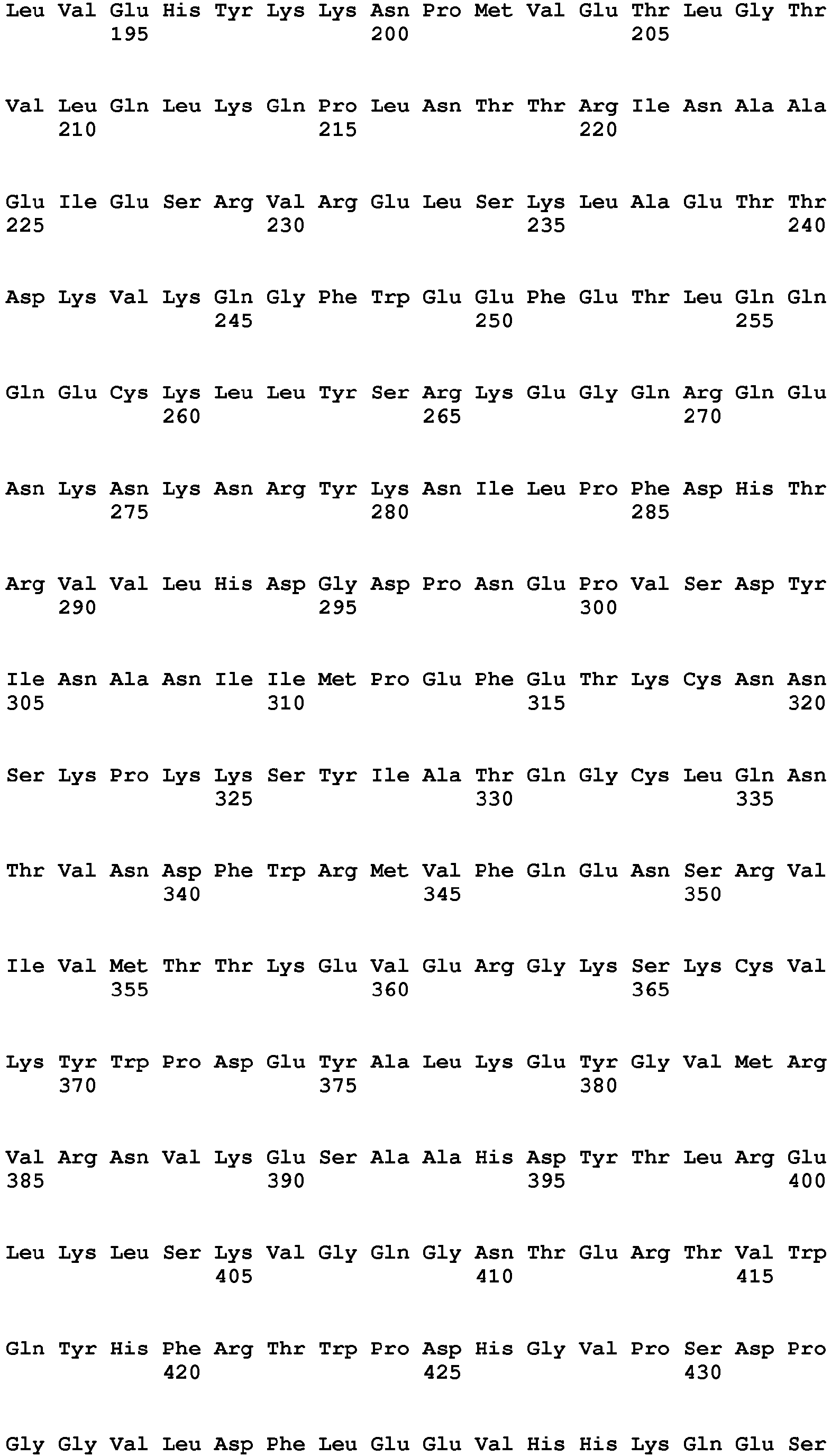
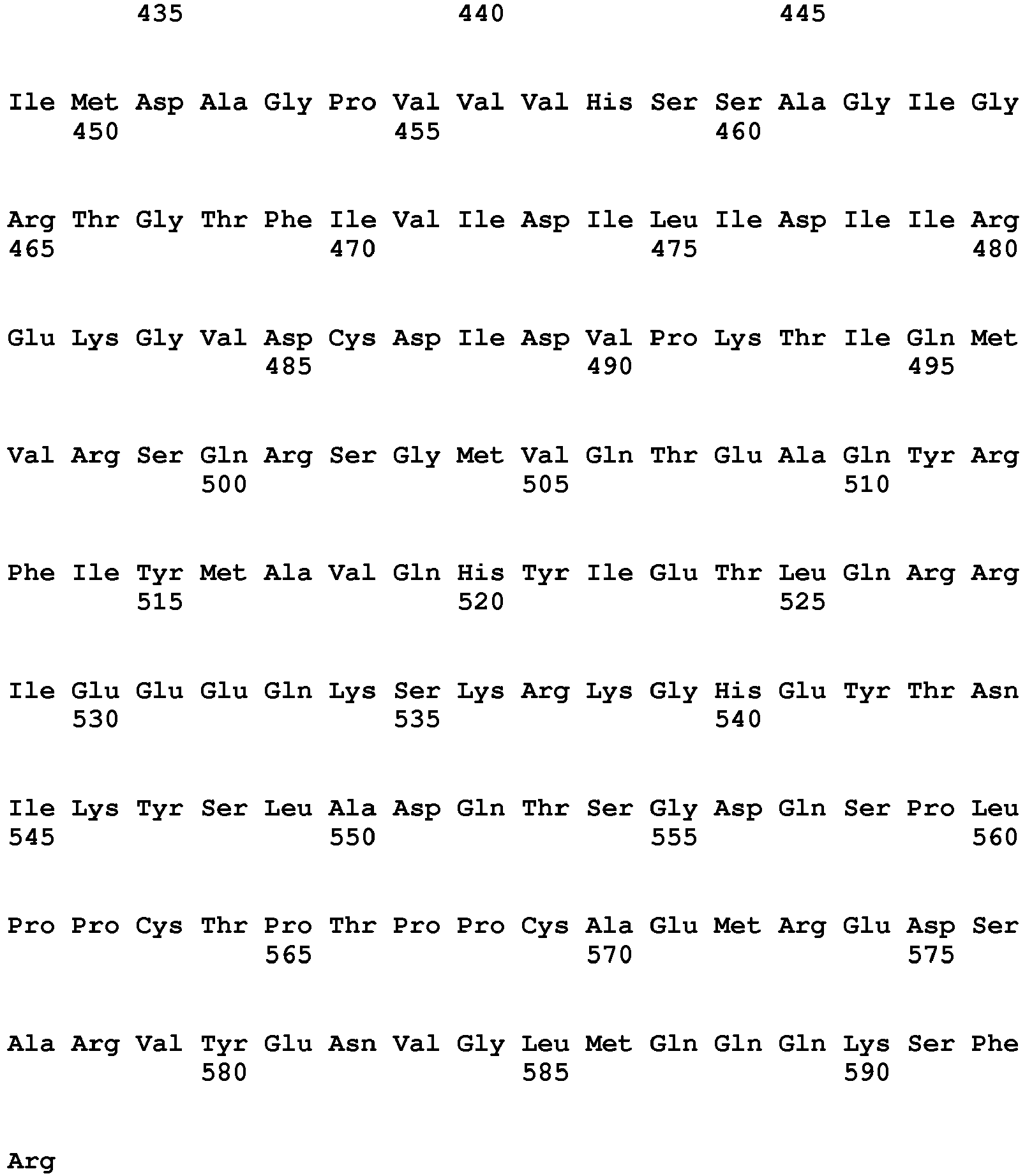
- <210> 7
<211> 1674
<212> DNA
<213> artificial - <220>
<223> anti-FITC CAR - <400> 7
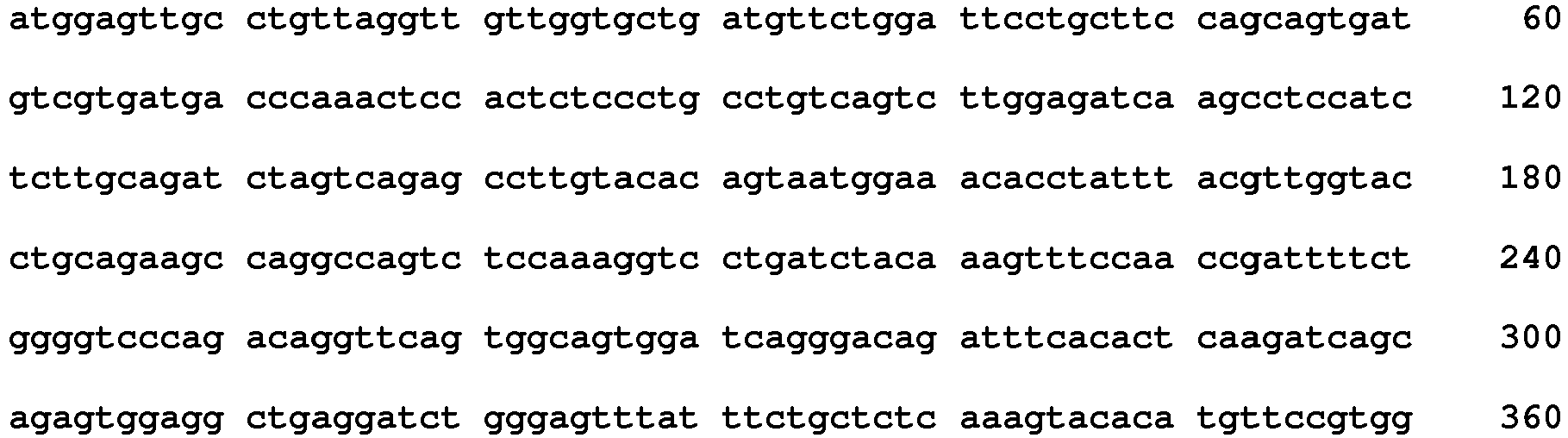
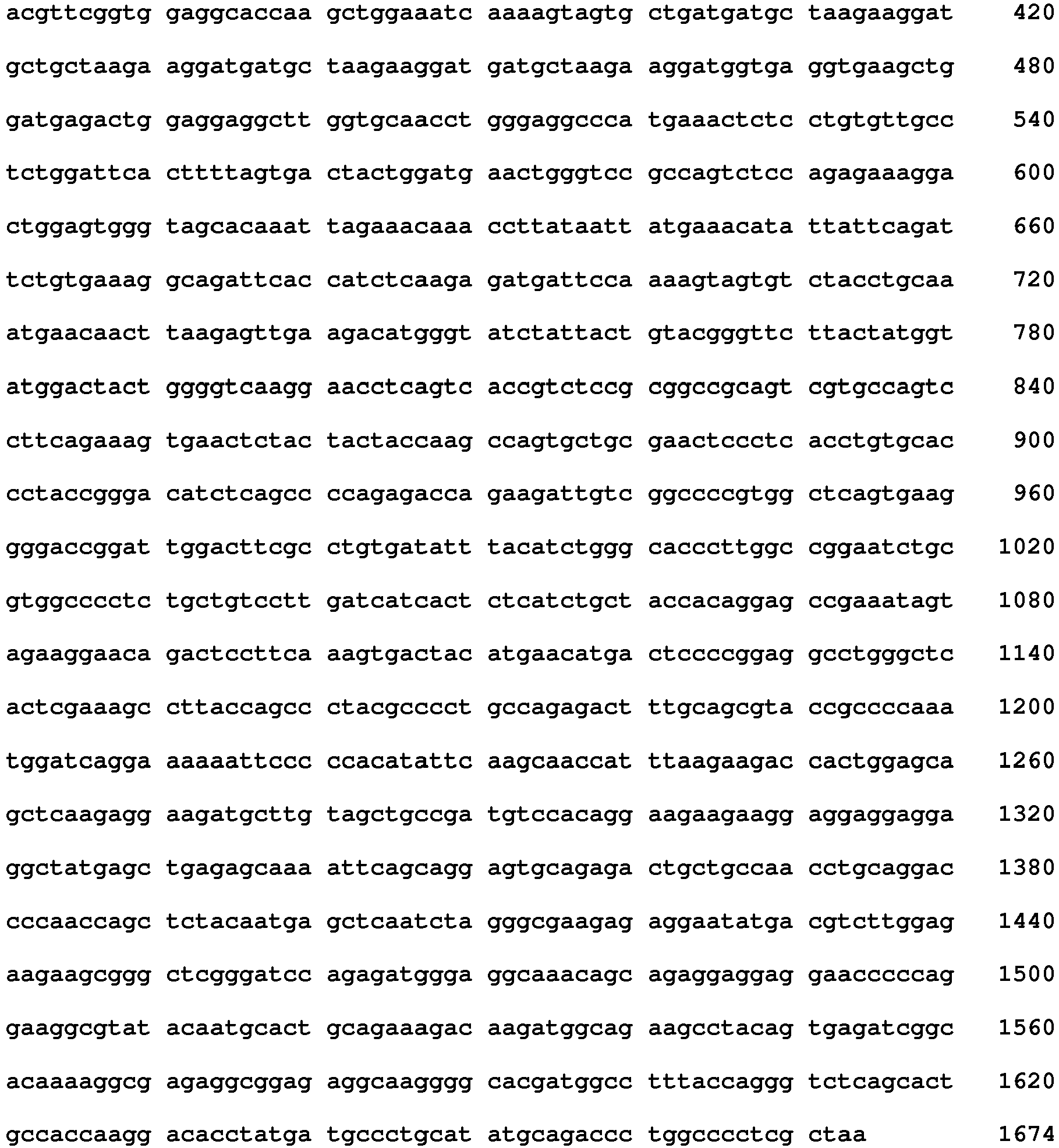
- <210> 8
<211> 146
<212> DNA
<213> artificial - <220>
<223> F2A-MCS - <400> 8

- <210> 9
<211> 864
<212> DNA
<213> artificial - <220>
<223> mouseIL-7-F2A-mouseCCL19 - <400> 9

- <210> 10
<211> 783
<212> DNA
<213> artificial - <220>
<223> anti-humanCD20 scFv - <400> 10

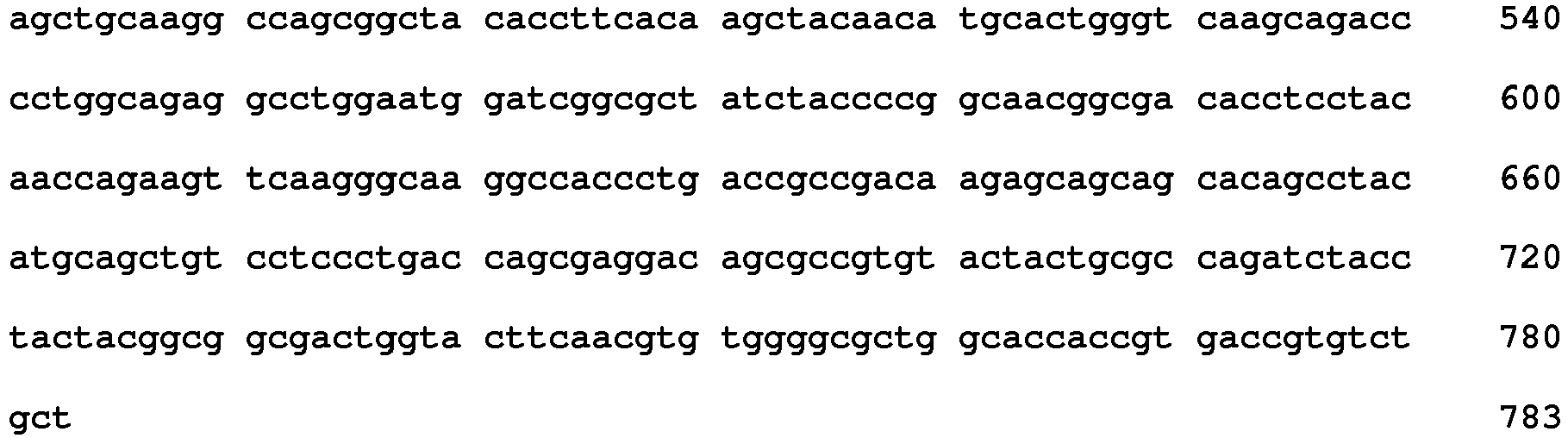
- <210> 11
<211> 1788
<212> DNA
<213> artificial - <220>
<223> mouse SHP1DN - <400> 11


- <210> 12
<211> 1782
<212> DNA
<213> artificial - <220>
<223> mouse SHP2DN - <400> 12


Claims (10)
- A CAR expression vector comprising a nucleic acid encoding a chimeric antigen receptor (CAR) and a nucleic acid encoding a T cell immune function-enhancing factor, wherein the nucleic acid encoding an immune function-enhancing factor is a nucleic acid encoding interleukin-7 and a nucleic acid encoding CCL19.
- The CAR expression vector according to claim 1, wherein the nucleic acid encoding CAR and the nucleic acid encoding a T cell immune function-enhancing factor are linked via a sequence encoding a self-cleaving peptide.
- The CAR expression vector according to claim 1 or 2, wherein the nucleic acid encoding interleukin-7 and the nucleic acid encoding CCL19 are linked via a sequence encoding a self-cleaving peptide.
- The CAR expression vector according to any one of claims 1 to 3, wherein the nucleic acid encoding CAR contains a nucleic acid encoding a polypeptide of a single chain antibody that recognizes FITC or CD20.
- The CAR expression vector according to any one of claims 1 to 4, wherein the nucleic acid encoding CAR contains a nucleic acid encoding a polypeptide of a CD8 transmembrane region.
- The CAR expression vector according to any one of claims 1 to 5, wherein the nucleic acid encoding CAR contains nucleic acids encoding polypeptides of a CD28 intracellular region, a 4-1BB intracellular region, and a CD3ζ intracellular region.
- A CAR-expressing T cell introduced with the following vector (a) or (b) :(a) the CAR expression vector according to any one of claims 1 to 6;(b) a CAR expression vector containing a nucleic acid encoding CAR and a nucleic acid encoding interleukin-7, and a CAR expression vector containing a nucleic acid encoding CAR and a nucleic acid encoding CCL19.
- An anticancer agent comprising the CAR-expressing T cell according to claim 7 and a pharmaceutically acceptable additive.
- A T cell expressing CAR, interleukin-7, and CCL19.
- An anticancer agent comprising the T cell according to claim 9 and a pharmaceutically acceptable additive.
Priority Applications (7)
| Application Number | Priority Date | Filing Date | Title |
|---|---|---|---|
| PL15849416T PL3205720T3 (en) | 2014-10-09 | 2015-10-06 | Car expression vector and car-expressing t cells |
| SM20190663T SMT201900663T1 (en) | 2014-10-09 | 2015-10-06 | Car expression vector and car-expressing t cells |
| SI201530950T SI3205720T1 (en) | 2014-10-09 | 2015-10-06 | CAR expression vector and CAR expression T cells |
| RSP20191315 RS59441B1 (en) | 2014-10-09 | 2015-10-06 | Car expression vector and car-expressing t cells |
| EP19196196.0A EP3597742B1 (en) | 2014-10-09 | 2015-10-06 | Car expression vector and car-expressing t cells |
| HRP20191839TT HRP20191839T1 (en) | 2014-10-09 | 2015-10-06 | CAR EXPRESSION VECTOR AND T STATIONS EXPRESSING CAR |
| DK19196196.0T DK3597742T3 (en) | 2014-10-09 | 2015-10-06 | CAR-EXPRESSING VECTOR AND CAR-EXPRESSING T CELLS |
Applications Claiming Priority (2)
| Application Number | Priority Date | Filing Date | Title |
|---|---|---|---|
| JP2014208200 | 2014-10-09 | ||
| PCT/JP2015/005080 WO2016056228A1 (en) | 2014-10-09 | 2015-10-06 | Car expression vector and car-expressing t cells |
Related Child Applications (1)
| Application Number | Title | Priority Date | Filing Date |
|---|---|---|---|
| EP19196196.0A Division EP3597742B1 (en) | 2014-10-09 | 2015-10-06 | Car expression vector and car-expressing t cells |
Publications (3)
| Publication Number | Publication Date |
|---|---|
| EP3205720A1 EP3205720A1 (en) | 2017-08-16 |
| EP3205720A4 EP3205720A4 (en) | 2018-07-04 |
| EP3205720B1 true EP3205720B1 (en) | 2019-09-11 |
Family
ID=55652864
Family Applications (2)
| Application Number | Title | Priority Date | Filing Date |
|---|---|---|---|
| EP15849416.1A Active EP3205720B1 (en) | 2014-10-09 | 2015-10-06 | Car expression vector and car-expressing t cells |
| EP19196196.0A Active EP3597742B1 (en) | 2014-10-09 | 2015-10-06 | Car expression vector and car-expressing t cells |
Family Applications After (1)
| Application Number | Title | Priority Date | Filing Date |
|---|---|---|---|
| EP19196196.0A Active EP3597742B1 (en) | 2014-10-09 | 2015-10-06 | Car expression vector and car-expressing t cells |
Country Status (29)
| Country | Link |
|---|---|
| US (3) | US10316102B2 (en) |
| EP (2) | EP3205720B1 (en) |
| JP (6) | JP6161098B2 (en) |
| KR (1) | KR101890638B1 (en) |
| CN (1) | CN107109421B (en) |
| AU (1) | AU2015329444B2 (en) |
| BR (1) | BR112017006710B1 (en) |
| CA (1) | CA2962375C (en) |
| CY (1) | CY1122324T1 (en) |
| DK (2) | DK3597742T3 (en) |
| ES (2) | ES2927366T3 (en) |
| HR (2) | HRP20191839T1 (en) |
| HU (2) | HUE046710T2 (en) |
| IL (1) | IL251504B (en) |
| LT (2) | LT3597742T (en) |
| MX (1) | MX358472B (en) |
| MY (1) | MY167722A (en) |
| NZ (1) | NZ730382A (en) |
| PH (1) | PH12017500596B1 (en) |
| PL (2) | PL3597742T3 (en) |
| PT (2) | PT3205720T (en) |
| RS (2) | RS59441B1 (en) |
| RU (1) | RU2670147C1 (en) |
| SG (1) | SG11201702391RA (en) |
| SI (2) | SI3205720T1 (en) |
| SM (1) | SMT201900663T1 (en) |
| TW (1) | TWI688651B (en) |
| WO (1) | WO2016056228A1 (en) |
| ZA (1) | ZA201701968B (en) |
Families Citing this family (54)
| Publication number | Priority date | Publication date | Assignee | Title |
|---|---|---|---|---|
| HRP20191839T1 (en) * | 2014-10-09 | 2020-01-24 | Yamaguchi University | CAR EXPRESSION VECTOR AND T STATIONS EXPRESSING CAR |
| GB201509413D0 (en) * | 2015-06-01 | 2015-07-15 | Ucl Business Plc | Fusion protein |
| CA3013479A1 (en) | 2016-02-16 | 2017-08-24 | Carl NOVINA | Immunotherapy compositions and methods |
| MY190565A (en) * | 2016-03-17 | 2022-04-27 | Univ Yamaguchi | Immunocompetent cell and expression vector expressing regulatory factors of immune function |
| CA3048312A1 (en) * | 2017-01-01 | 2018-07-05 | Chi-Yu Gregory Lee | Rp215 chimeric antigen receptor construct and methods of making and using same |
| US11718663B2 (en) | 2017-01-10 | 2023-08-08 | Yamaguchi University | Anti-GPC3 antibody |
| EP4495141A3 (en) | 2017-03-27 | 2025-04-23 | Noile-Immune Biotech, Inc. | Chimeric antigen receptor |
| CN108484777B (en) * | 2017-03-31 | 2022-07-12 | 李吉祐 | Chimeric antigen receptor construct of humanized RP215 monoclonal antibody, nucleic acid molecule and application |
| EP4265634A3 (en) * | 2017-10-10 | 2024-01-24 | National University Corporation Tottori University | Enhancer for t-cells or b-cells having memory function, malignant tumor recurrence inhibitor, and inducer for inducing memory function in t-cells or b-cells |
| US20200323920A1 (en) | 2017-12-24 | 2020-10-15 | Noile-Immune Biotech, Inc. | Immunocompetent cell that expresses a cell surface molecule specifically recognizing human mesothelin, il-7 and ccl19 |
| US20210052646A1 (en) * | 2017-12-27 | 2021-02-25 | Takeda Pharmaceutical Company Limited | Nucleic-acid containing lipid nano-particle and use thereof |
| CN108641001A (en) * | 2018-04-26 | 2018-10-12 | 上海怡豪生物科技有限公司 | The double target spot CAR-T therapy vectors and its construction method of colon cancer and application |
| CN108641000A (en) * | 2018-04-26 | 2018-10-12 | 上海怡豪生物科技有限公司 | The double target spot CAR-T therapy vectors and its construction method of liver cancer and application |
| CN108659133A (en) * | 2018-04-26 | 2018-10-16 | 上海怡豪生物科技有限公司 | The double target spot CAR-T therapy vectors and its construction method of lung cancer and application |
| CA3100446A1 (en) * | 2018-05-15 | 2019-11-21 | Carsgen Therapeutics Co., Ltd. | Genetically engineered cell and application thereof |
| KR20190141511A (en) * | 2018-06-14 | 2019-12-24 | 주식회사 녹십자랩셀 | New peptide, chemeric antigen receptor and immune cell expressing the same |
| CN108866004A (en) * | 2018-06-26 | 2018-11-23 | 奥妙生物技术(广州)有限公司 | The T cell and its construction method that SHP-1 is knocked out |
| WO2020006312A1 (en) | 2018-06-28 | 2020-01-02 | Dana-Farber Cancer Institute, Inc. | Targeting of multiple antigens with multiplex car t cells in solid and liquid malignancies |
| JPWO2020017479A1 (en) * | 2018-07-17 | 2021-08-02 | ノイルイミューン・バイオテック株式会社 | CAR containing anti-GPC3 single chain antibody |
| CN109055430A (en) * | 2018-08-14 | 2018-12-21 | 杭州荣泽生物科技有限公司 | A kind of preparation method for co-expressing IL18 and CCL19 albumen and targeting MUC1 gene C AR-T cell |
| JPWO2020045610A1 (en) * | 2018-08-31 | 2021-08-26 | ノイルイミューン・バイオテック株式会社 | CAR expression T cells and CAR expression vector |
| EP3848387A4 (en) * | 2018-09-05 | 2022-06-22 | Kong, Seogkyoung | CHEMERA ANTIGEN RECEPTOR FOR SOLID CANCER AND T LYMPHOCYTES EXPRESSING THIS CHEMERA ANTIGEN RECEPTOR |
| US20220096544A1 (en) * | 2018-09-20 | 2022-03-31 | Cafa Therapeutics Limited | Chemokine expressing cell and use thereof |
| EP3864142A4 (en) * | 2018-10-12 | 2023-07-19 | iCell Gene Therapeutics LLC | Chimeric antigen receptors (cars) compositions and methods of use thereof |
| CN109504660B (en) * | 2018-11-02 | 2021-08-06 | 温州启星生物技术有限公司 | Fourth-generation CAR-T cell and construction method and application thereof |
| CN113286813A (en) * | 2018-11-19 | 2021-08-20 | 得克萨斯大学体系董事会 | Modular polycistronic vectors for CAR and TCR transduction |
| CA3131839A1 (en) | 2019-03-08 | 2020-09-17 | Autolus Limited | Compositions and methods comprising engineered chimeric antigen receptor and modulator of car |
| JP7585228B2 (en) * | 2019-04-04 | 2024-11-18 | 上海医薬集団股▲フン▼有限公司 | Immune cells with tumor antigen-recognizing receptors and their applications |
| CN112080526A (en) * | 2019-06-14 | 2020-12-15 | 南京艾德免疫治疗研究院有限公司 | Expression vector for expressing IL-7 and CAR and immune cell |
| CN112080525A (en) * | 2019-06-14 | 2020-12-15 | 南京艾德免疫治疗研究院有限公司 | Preparation of improved chimeric antigen receptor T cells |
| JP7769325B2 (en) * | 2019-07-23 | 2025-11-13 | 株式会社東芝 | Method for producing CAR-T cells, nucleic acid transfer carrier and kit |
| JP7436056B2 (en) | 2019-10-28 | 2024-02-21 | ノイルイミューン・バイオテック株式会社 | Medicaments, combinations, pharmaceutical compositions, immunoresponsive cells, nucleic acid delivery vehicles, and products for treating cancer |
| CN110922490B (en) * | 2019-12-05 | 2023-03-03 | 浙江启新生物技术有限公司 | CAR expression vector secreting interleukin 7 and chemokine 21 and application thereof |
| US20230212254A1 (en) * | 2020-02-14 | 2023-07-06 | Beijing Yongtai Ruike Biotechnology Company Ltd | Immune cells overexpressing cell signaling regulatory factor introduced from outside and use thereof |
| JP2021142158A (en) * | 2020-03-12 | 2021-09-24 | 株式会社三洋物産 | Game machine |
| JP2021142159A (en) * | 2020-03-12 | 2021-09-24 | 株式会社三洋物産 | Game machine |
| JP2021142156A (en) * | 2020-03-12 | 2021-09-24 | 株式会社三洋物産 | Game machine |
| CN113528483B (en) * | 2020-04-22 | 2024-08-16 | 复星凯特生物科技有限公司 | SHP2-specific inactivated mutant protein and its application in CAR-T therapy |
| GB202006820D0 (en) * | 2020-05-07 | 2020-06-24 | Autolus Ltd | Cell |
| US20230257705A1 (en) | 2020-06-17 | 2023-08-17 | Kyoto University | Chimeric antigen receptor-expressing immunocompetent cells |
| KR102297396B1 (en) | 2020-07-29 | 2021-09-06 | (주)티카로스 | Immune Synapse-Stabilizing Chimeric Antigen Receptor(CAR) T Cell |
| US20250270320A1 (en) | 2020-12-10 | 2025-08-28 | Eutilex Co., Ltd. | Anti-pd-1 antibody and uses thereof |
| CN114717203B (en) * | 2020-12-22 | 2023-06-27 | 广东东阳光药业有限公司 | hIL7/hCCL19 double-gene recombinant oncolytic virus and preparation method and application thereof |
| CN114716548B (en) | 2021-01-05 | 2024-11-05 | (株)爱恩德生物 | Anti-FGFR 3 antibodies and uses thereof |
| CN112961248B (en) * | 2021-02-22 | 2022-03-18 | 广州百暨基因科技有限公司 | Chimeric antigen receptor fusion protein for coexpression of IL-7 and CCR2b and application thereof |
| WO2022245098A1 (en) | 2021-05-18 | 2022-11-24 | 주식회사 바이오솔루션 | Immune cells with improved extracellular vesicle secretion ability and immunotherapy utilizing same |
| WO2023007431A1 (en) | 2021-07-29 | 2023-02-02 | Takeda Pharmaceutical Company Limited | Engineered immune cell that specifically targets mesothelin and uses thereof |
| CN113913385A (en) * | 2021-09-01 | 2022-01-11 | 苏州璞惠卓越生物科技有限公司 | Immune cell modified by inhibitory protein blocking type chimeric antigen receptor and application thereof |
| CN113921082B (en) * | 2021-10-27 | 2023-04-07 | 云舟生物科技(广州)股份有限公司 | Gene search weight adjustment method, computer storage medium, and electronic device |
| US20250230215A1 (en) * | 2021-11-08 | 2025-07-17 | Memorial Sloan-Kettering Cancer Center | Immune cells expressing glucose transporter 5 (glut5) and compositions and methods including the same |
| WO2023223292A1 (en) * | 2022-05-20 | 2023-11-23 | Takeda Pharmaceutical Company Limited | Methods of producing engineered immune cells |
| US12006353B2 (en) | 2022-07-25 | 2024-06-11 | Long Chen | Application of SCFV protein, car gene expression vector, CAR-T cell and application thereof |
| IL318546A (en) | 2022-07-26 | 2025-03-01 | Aimed Bio Inc | Anti-ror1 antibody and use thereof |
| CN115505601B (en) * | 2022-10-17 | 2024-05-28 | 深圳市先康达生命科学有限公司 | A two-level SynNotch logic regulation structure and its application |
Family Cites Families (15)
| Publication number | Priority date | Publication date | Assignee | Title |
|---|---|---|---|---|
| JPS5857318A (en) * | 1981-10-01 | 1983-04-05 | Nippon Koutai Kenkyusho:Kk | Production of lymphocytes inhibiting cancer cells |
| CA2425862C (en) | 2000-11-07 | 2013-01-22 | City Of Hope | Cd19-specific redirected immune cells |
| KR20050118057A (en) * | 2004-04-24 | 2005-12-15 | 김상희 | Anti-cancer agent and health food containing acethyldiacylglycerole derivatives as an effective ingredient |
| TWI436775B (en) * | 2007-08-24 | 2014-05-11 | Oncotherapy Science Inc | Combination therapy for pancreatic cancer using an antigenic peptide and chemotherapeutic agent |
| KR101361416B1 (en) | 2008-10-08 | 2014-02-21 | 인트렉손 코포레이션 | Engineered cells expressing multiple immunomodulators and uses thereof |
| PH12013501201A1 (en) * | 2010-12-09 | 2013-07-29 | Univ Pennsylvania | Use of chimeric antigen receptor-modified t cells to treat cancer |
| CA2821080C (en) | 2010-12-14 | 2021-02-02 | University Of Maryland, Baltimore | Universal anti-tag chimeric antigen receptor-expressing t cells and methods of treating cancer |
| ES2872077T3 (en) | 2011-04-08 | 2021-11-02 | Us Health | Chimeric antigen receptor anti-variant III epidermal growth factor receptor and use of the same for the treatment of cancer |
| US20130071414A1 (en) * | 2011-04-27 | 2013-03-21 | Gianpietro Dotti | Engineered cd19-specific t lymphocytes that coexpress il-15 and an inducible caspase-9 based suicide gene for the treatment of b-cell malignancies |
| ES2795023T3 (en) * | 2011-09-16 | 2020-11-20 | Baylor College Medicine | Specific recognition of the tumor microenvironment using engineered NKT cells |
| WO2013051718A1 (en) | 2011-10-07 | 2013-04-11 | 国立大学法人三重大学 | Chimeric antigen receptor |
| JP6850528B2 (en) | 2012-02-13 | 2021-03-31 | シアトル チルドレンズ ホスピタル ドゥーイング ビジネス アズ シアトル チルドレンズ リサーチ インスティテュート | Bispecific chimeric antigen receptor and its therapeutic use |
| ES2959443T3 (en) | 2012-02-22 | 2024-02-26 | Univ Pennsylvania | Use of the CD2 signaling domain in second-generation chimeric antigen receptors |
| CN102625373A (en) | 2012-02-22 | 2012-08-01 | 中兴通讯股份有限公司 | Intelligent carrier management method and intelligent carrier management device |
| HRP20191839T1 (en) * | 2014-10-09 | 2020-01-24 | Yamaguchi University | CAR EXPRESSION VECTOR AND T STATIONS EXPRESSING CAR |
-
2015
- 2015-10-06 HR HRP20191839TT patent/HRP20191839T1/en unknown
- 2015-10-06 BR BR112017006710A patent/BR112017006710B1/en active IP Right Grant
- 2015-10-06 ES ES19196196T patent/ES2927366T3/en active Active
- 2015-10-06 JP JP2016552830A patent/JP6161098B2/en active Active
- 2015-10-06 HU HUE15849416A patent/HUE046710T2/en unknown
- 2015-10-06 HR HRP20221211TT patent/HRP20221211T1/en unknown
- 2015-10-06 DK DK19196196.0T patent/DK3597742T3/en active
- 2015-10-06 HU HUE19196196A patent/HUE060047T2/en unknown
- 2015-10-06 CN CN201580053922.1A patent/CN107109421B/en active Active
- 2015-10-06 SI SI201530950T patent/SI3205720T1/en unknown
- 2015-10-06 SM SM20190663T patent/SMT201900663T1/en unknown
- 2015-10-06 EP EP15849416.1A patent/EP3205720B1/en active Active
- 2015-10-06 CA CA2962375A patent/CA2962375C/en active Active
- 2015-10-06 AU AU2015329444A patent/AU2015329444B2/en active Active
- 2015-10-06 EP EP19196196.0A patent/EP3597742B1/en active Active
- 2015-10-06 KR KR1020177009895A patent/KR101890638B1/en active Active
- 2015-10-06 LT LTEP19196196.0T patent/LT3597742T/en unknown
- 2015-10-06 WO PCT/JP2015/005080 patent/WO2016056228A1/en not_active Ceased
- 2015-10-06 RU RU2017114545A patent/RU2670147C1/en active
- 2015-10-06 SG SG11201702391RA patent/SG11201702391RA/en unknown
- 2015-10-06 PL PL19196196.0T patent/PL3597742T3/en unknown
- 2015-10-06 US US15/513,870 patent/US10316102B2/en active Active
- 2015-10-06 DK DK15849416.1T patent/DK3205720T3/en active
- 2015-10-06 NZ NZ730382A patent/NZ730382A/en unknown
- 2015-10-06 PT PT158494161T patent/PT3205720T/en unknown
- 2015-10-06 RS RSP20191315 patent/RS59441B1/en unknown
- 2015-10-06 MX MX2017004393A patent/MX358472B/en active IP Right Grant
- 2015-10-06 LT LT15849416T patent/LT3205720T/en unknown
- 2015-10-06 SI SI201531887T patent/SI3597742T1/en unknown
- 2015-10-06 RS RS20220895A patent/RS63601B1/en unknown
- 2015-10-06 PL PL15849416T patent/PL3205720T3/en unknown
- 2015-10-06 ES ES15849416T patent/ES2751945T3/en active Active
- 2015-10-06 PT PT191961960T patent/PT3597742T/en unknown
- 2015-10-06 MY MYPI2017701137A patent/MY167722A/en unknown
- 2015-10-08 TW TW104133272A patent/TWI688651B/en active
-
2017
- 2017-03-22 ZA ZA2017/01968A patent/ZA201701968B/en unknown
- 2017-03-31 PH PH12017500596A patent/PH12017500596B1/en unknown
- 2017-04-02 IL IL251504A patent/IL251504B/en active IP Right Grant
- 2017-06-06 JP JP2017111736A patent/JP6683990B2/en active Active
-
2019
- 2019-05-06 US US16/404,165 patent/US10906984B2/en active Active
- 2019-11-26 CY CY20191101239T patent/CY1122324T1/en unknown
-
2020
- 2020-03-19 JP JP2020048623A patent/JP7008350B2/en active Active
- 2020-12-23 US US17/133,286 patent/US20210253726A1/en not_active Abandoned
-
2021
- 2021-12-28 JP JP2021213604A patent/JP7300763B2/en active Active
-
2023
- 2023-06-13 JP JP2023097065A patent/JP7527049B2/en active Active
-
2024
- 2024-07-16 JP JP2024113188A patent/JP7755890B2/en active Active
Non-Patent Citations (1)
| Title |
|---|
| None * |
Also Published As
Similar Documents
| Publication | Publication Date | Title |
|---|---|---|
| US10906984B2 (en) | CAR expression vector and CAR-expressing T cells | |
| US20240139248A1 (en) | Immunocompetent cell that expresses a cell surface molecule specifically recognizing human mesothelin, il-7 and ccl19 | |
| HK1235426B (en) | Car expression vector and car-expressing t cells | |
| HK1235426A1 (en) | Car expression vector and car-expressing t cells | |
| HK40030365A (en) | Immunocompetent cell that expresses a cell surface molecule specifically recognizing human mesothelin, il-7 and ccl19 |
Legal Events
| Date | Code | Title | Description |
|---|---|---|---|
| STAA | Information on the status of an ep patent application or granted ep patent |
Free format text: STATUS: THE INTERNATIONAL PUBLICATION HAS BEEN MADE |
|
| PUAI | Public reference made under article 153(3) epc to a published international application that has entered the european phase |
Free format text: ORIGINAL CODE: 0009012 |
|
| STAA | Information on the status of an ep patent application or granted ep patent |
Free format text: STATUS: REQUEST FOR EXAMINATION WAS MADE |
|
| 17P | Request for examination filed |
Effective date: 20170424 |
|
| AK | Designated contracting states |
Kind code of ref document: A1 Designated state(s): AL AT BE BG CH CY CZ DE DK EE ES FI FR GB GR HR HU IE IS IT LI LT LU LV MC MK MT NL NO PL PT RO RS SE SI SK SM TR |
|
| AX | Request for extension of the european patent |
Extension state: BA ME |
|
| DAV | Request for validation of the european patent (deleted) | ||
| DAX | Request for extension of the european patent (deleted) | ||
| REG | Reference to a national code |
Ref country code: HK Ref legal event code: DE Ref document number: 1235426 Country of ref document: HK |
|
| A4 | Supplementary search report drawn up and despatched |
Effective date: 20180605 |
|
| RIC1 | Information provided on ipc code assigned before grant |
Ipc: C12N 5/10 20060101ALI20180529BHEP Ipc: C07K 14/54 20060101ALI20180529BHEP Ipc: C07K 19/00 20060101ALI20180529BHEP Ipc: C07K 14/47 20060101ALI20180529BHEP Ipc: C12N 15/00 20060101AFI20180529BHEP Ipc: A61P 35/00 20060101ALI20180529BHEP Ipc: A61K 35/76 20150101ALI20180529BHEP Ipc: C12N 15/09 20060101ALI20180529BHEP Ipc: A61K 35/26 20150101ALI20180529BHEP |
|
| GRAP | Despatch of communication of intention to grant a patent |
Free format text: ORIGINAL CODE: EPIDOSNIGR1 |
|
| STAA | Information on the status of an ep patent application or granted ep patent |
Free format text: STATUS: GRANT OF PATENT IS INTENDED |
|
| INTG | Intention to grant announced |
Effective date: 20190322 |
|
| GRAS | Grant fee paid |
Free format text: ORIGINAL CODE: EPIDOSNIGR3 |
|
| GRAA | (expected) grant |
Free format text: ORIGINAL CODE: 0009210 |
|
| STAA | Information on the status of an ep patent application or granted ep patent |
Free format text: STATUS: THE PATENT HAS BEEN GRANTED |
|
| AK | Designated contracting states |
Kind code of ref document: B1 Designated state(s): AL AT BE BG CH CY CZ DE DK EE ES FI FR GB GR HR HU IE IS IT LI LT LU LV MC MK MT NL NO PL PT RO RS SE SI SK SM TR |
|
| REG | Reference to a national code |
Ref country code: GB Ref legal event code: FG4D |
|
| REG | Reference to a national code |
Ref country code: CH Ref legal event code: EP |
|
| REG | Reference to a national code |
Ref country code: AT Ref legal event code: REF Ref document number: 1178479 Country of ref document: AT Kind code of ref document: T Effective date: 20190915 |
|
| REG | Reference to a national code |
Ref country code: DE Ref legal event code: R096 Ref document number: 602015037985 Country of ref document: DE Ref country code: IE Ref legal event code: FG4D |
|
| REG | Reference to a national code |
Ref country code: DK Ref legal event code: T3 Effective date: 20191003 |
|
| REG | Reference to a national code |
Ref country code: HR Ref legal event code: TUEP Ref document number: P20191839T Country of ref document: HR |
|
| REG | Reference to a national code |
Ref country code: RO Ref legal event code: EPE |
|
| REG | Reference to a national code |
Ref country code: PT Ref legal event code: SC4A Ref document number: 3205720 Country of ref document: PT Date of ref document: 20191028 Kind code of ref document: T Free format text: AVAILABILITY OF NATIONAL TRANSLATION Effective date: 20191010 |
|
| REG | Reference to a national code |
Ref country code: SE Ref legal event code: TRGR |
|
| REG | Reference to a national code |
Ref country code: EE Ref legal event code: FG4A Ref document number: E018157 Country of ref document: EE Effective date: 20191002 |
|
| REG | Reference to a national code |
Ref country code: NO Ref legal event code: T2 Effective date: 20190911 |
|
| REG | Reference to a national code |
Ref country code: NL Ref legal event code: FP |
|
| REG | Reference to a national code |
Ref country code: HR Ref legal event code: ODRP Ref document number: P20191839T Country of ref document: HR Payment date: 20191111 Year of fee payment: 5 |
|
| REG | Reference to a national code |
Ref country code: SK Ref legal event code: T3 Ref document number: E 32538 Country of ref document: SK |
|
| REG | Reference to a national code |
Ref country code: HR Ref legal event code: T1PR Ref document number: P20191839 Country of ref document: HR |
|
| REG | Reference to a national code |
Ref country code: HU Ref legal event code: AG4A Ref document number: E046710 Country of ref document: HU |
|
| REG | Reference to a national code |
Ref country code: ES Ref legal event code: FG2A Ref document number: 2751945 Country of ref document: ES Kind code of ref document: T3 Effective date: 20200402 |
|
| REG | Reference to a national code |
Ref country code: GR Ref legal event code: EP Ref document number: 20190403650 Country of ref document: GR Effective date: 20200318 |
|
| REG | Reference to a national code |
Ref country code: AT Ref legal event code: UEP Ref document number: 1178479 Country of ref document: AT Kind code of ref document: T Effective date: 20190911 |
|
| REG | Reference to a national code |
Ref country code: DE Ref legal event code: R097 Ref document number: 602015037985 Country of ref document: DE |
|
| PLBE | No opposition filed within time limit |
Free format text: ORIGINAL CODE: 0009261 |
|
| STAA | Information on the status of an ep patent application or granted ep patent |
Free format text: STATUS: NO OPPOSITION FILED WITHIN TIME LIMIT |
|
| 26N | No opposition filed |
Effective date: 20200615 |
|
| REG | Reference to a national code |
Ref country code: HR Ref legal event code: ODRP Ref document number: P20191839 Country of ref document: HR Payment date: 20200929 Year of fee payment: 6 |
|
| REG | Reference to a national code |
Ref country code: HR Ref legal event code: ODRP Ref document number: P20191839 Country of ref document: HR Payment date: 20210924 Year of fee payment: 7 |
|
| REG | Reference to a national code |
Ref country code: HR Ref legal event code: ODRP Ref document number: P20191839 Country of ref document: HR Payment date: 20220923 Year of fee payment: 8 |
|
| P01 | Opt-out of the competence of the unified patent court (upc) registered |
Effective date: 20230321 |
|
| REG | Reference to a national code |
Ref country code: HR Ref legal event code: ODRP Ref document number: P20191839 Country of ref document: HR Payment date: 20230928 Year of fee payment: 9 |
|
| REG | Reference to a national code |
Ref country code: HR Ref legal event code: ODRP Ref document number: P20191839 Country of ref document: HR Payment date: 20240926 Year of fee payment: 10 |
|
| PGFP | Annual fee paid to national office [announced via postgrant information from national office to epo] |
Ref country code: SM Payment date: 20240926 Year of fee payment: 10 |
|
| PGFP | Annual fee paid to national office [announced via postgrant information from national office to epo] |
Ref country code: SK Payment date: 20240926 Year of fee payment: 10 |
|
| PGFP | Annual fee paid to national office [announced via postgrant information from national office to epo] |
Ref country code: RS Payment date: 20240926 Year of fee payment: 10 |
|
| PGFP | Annual fee paid to national office [announced via postgrant information from national office to epo] |
Ref country code: MT Payment date: 20240925 Year of fee payment: 10 |
|
| PGFP | Annual fee paid to national office [announced via postgrant information from national office to epo] |
Ref country code: BG Payment date: 20241024 Year of fee payment: 10 |
|
| PGFP | Annual fee paid to national office [announced via postgrant information from national office to epo] |
Ref country code: LV Payment date: 20241015 Year of fee payment: 10 Ref country code: EE Payment date: 20241015 Year of fee payment: 10 |
|
| PGFP | Annual fee paid to national office [announced via postgrant information from national office to epo] |
Ref country code: IS Payment date: 20241010 Year of fee payment: 10 |
|
| PGFP | Annual fee paid to national office [announced via postgrant information from national office to epo] |
Ref country code: AL Payment date: 20241026 Year of fee payment: 10 |
|
| PGFP | Annual fee paid to national office [announced via postgrant information from national office to epo] |
Ref country code: CY Payment date: 20241002 Year of fee payment: 10 |
|
| PGFP | Annual fee paid to national office [announced via postgrant information from national office to epo] |
Ref country code: PT Payment date: 20250925 Year of fee payment: 11 |
|
| PGFP | Annual fee paid to national office [announced via postgrant information from national office to epo] |
Ref country code: TR Payment date: 20250929 Year of fee payment: 11 Ref country code: PL Payment date: 20250926 Year of fee payment: 11 |
|
| PGFP | Annual fee paid to national office [announced via postgrant information from national office to epo] |
Ref country code: HR Payment date: 20250925 Year of fee payment: 11 |
|
| REG | Reference to a national code |
Ref country code: HR Ref legal event code: ODRP Ref document number: P20191839 Country of ref document: HR Payment date: 20250925 Year of fee payment: 11 |
|
| PGFP | Annual fee paid to national office [announced via postgrant information from national office to epo] |
Ref country code: SI Payment date: 20250925 Year of fee payment: 11 |
|
| REG | Reference to a national code |
Ref country code: CH Ref legal event code: U11 Free format text: ST27 STATUS EVENT CODE: U-0-0-U10-U11 (AS PROVIDED BY THE NATIONAL OFFICE) Effective date: 20251101 |
|
| PGFP | Annual fee paid to national office [announced via postgrant information from national office to epo] |
Ref country code: MK Payment date: 20240920 Year of fee payment: 10 |
|
| PGFP | Annual fee paid to national office [announced via postgrant information from national office to epo] |
Ref country code: HU Payment date: 20251027 Year of fee payment: 11 |
|
| PGFP | Annual fee paid to national office [announced via postgrant information from national office to epo] |
Ref country code: LU Payment date: 20251022 Year of fee payment: 11 Ref country code: NL Payment date: 20251021 Year of fee payment: 11 |
|
| PGFP | Annual fee paid to national office [announced via postgrant information from national office to epo] |
Ref country code: DE Payment date: 20251021 Year of fee payment: 11 |
|
| PGFP | Annual fee paid to national office [announced via postgrant information from national office to epo] |
Ref country code: LT Payment date: 20250929 Year of fee payment: 11 Ref country code: GB Payment date: 20251024 Year of fee payment: 11 |
|
| PGFP | Annual fee paid to national office [announced via postgrant information from national office to epo] |
Ref country code: NO Payment date: 20251024 Year of fee payment: 11 Ref country code: MC Payment date: 20251023 Year of fee payment: 11 |
|
| PGFP | Annual fee paid to national office [announced via postgrant information from national office to epo] |
Ref country code: AT Payment date: 20251022 Year of fee payment: 11 |
|
| PGFP | Annual fee paid to national office [announced via postgrant information from national office to epo] |
Ref country code: FI Payment date: 20251028 Year of fee payment: 11 Ref country code: DK Payment date: 20251027 Year of fee payment: 11 Ref country code: IT Payment date: 20251024 Year of fee payment: 11 |
|
| PGFP | Annual fee paid to national office [announced via postgrant information from national office to epo] |
Ref country code: FR Payment date: 20251030 Year of fee payment: 11 |
|
| PGFP | Annual fee paid to national office [announced via postgrant information from national office to epo] |
Ref country code: GR Payment date: 20251022 Year of fee payment: 11 Ref country code: BE Payment date: 20251021 Year of fee payment: 11 |
|
| PGFP | Annual fee paid to national office [announced via postgrant information from national office to epo] |
Ref country code: CH Payment date: 20251101 Year of fee payment: 11 Ref country code: SE Payment date: 20251021 Year of fee payment: 11 |
|
| PGFP | Annual fee paid to national office [announced via postgrant information from national office to epo] |
Ref country code: IE Payment date: 20251024 Year of fee payment: 11 Ref country code: CZ Payment date: 20250930 Year of fee payment: 11 |
|
| PGFP | Annual fee paid to national office [announced via postgrant information from national office to epo] |
Ref country code: RO Payment date: 20251001 Year of fee payment: 11 |
|
| PGFP | Annual fee paid to national office [announced via postgrant information from national office to epo] |
Ref country code: ES Payment date: 20251210 Year of fee payment: 11 |